A Kindergarten - 2nd Grade lesson exploring Smilodon (Saber-toothed cats) through video analysis, math-integrated craft (7-inch teeth), and role-playing predatory behaviors.
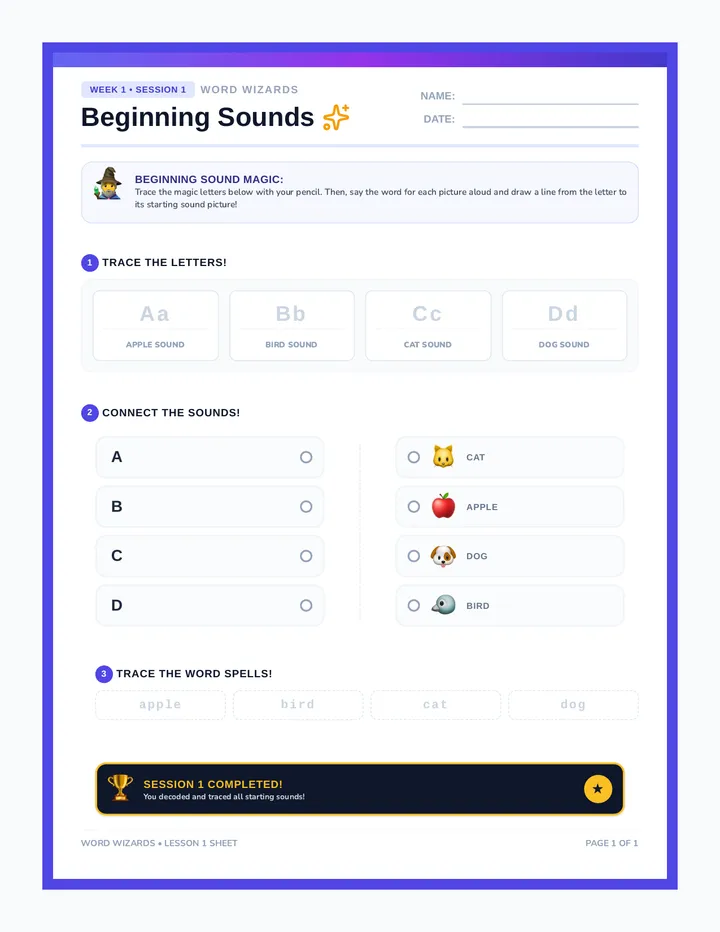
An engaging, high-impact 4-week literacy skills program for young learners. Features highly visual, fun printable worksheets focusing on beginning letter sounds, CVC phonics blending, sight word reading, and short stories.
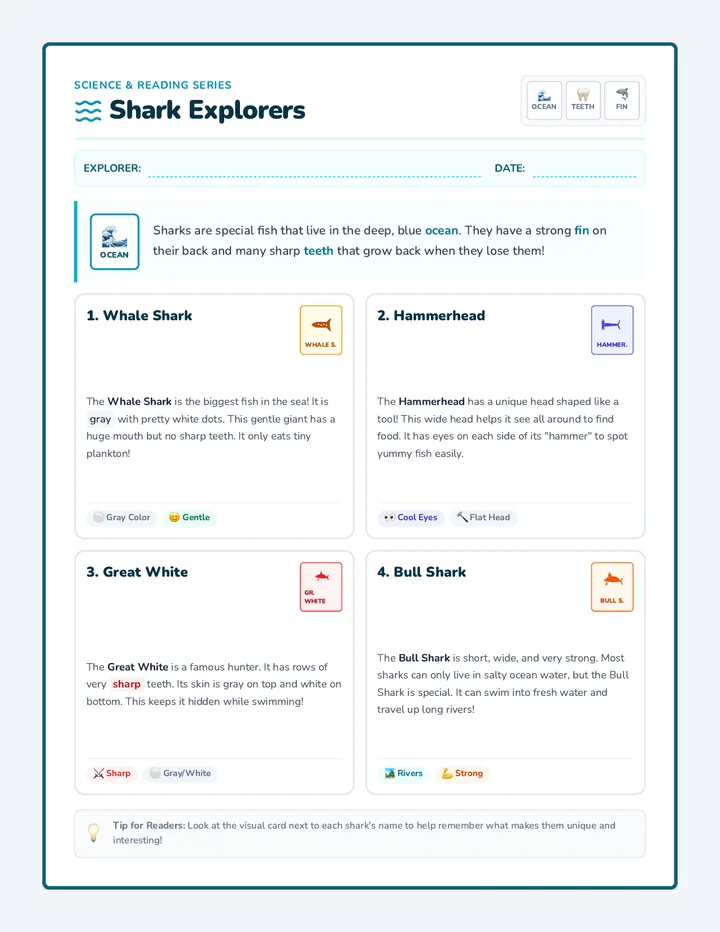
An introductory reading comprehension and science lesson about sharks for second-grade students, featuring PEC-style visual supports and a cooperative matching board game.
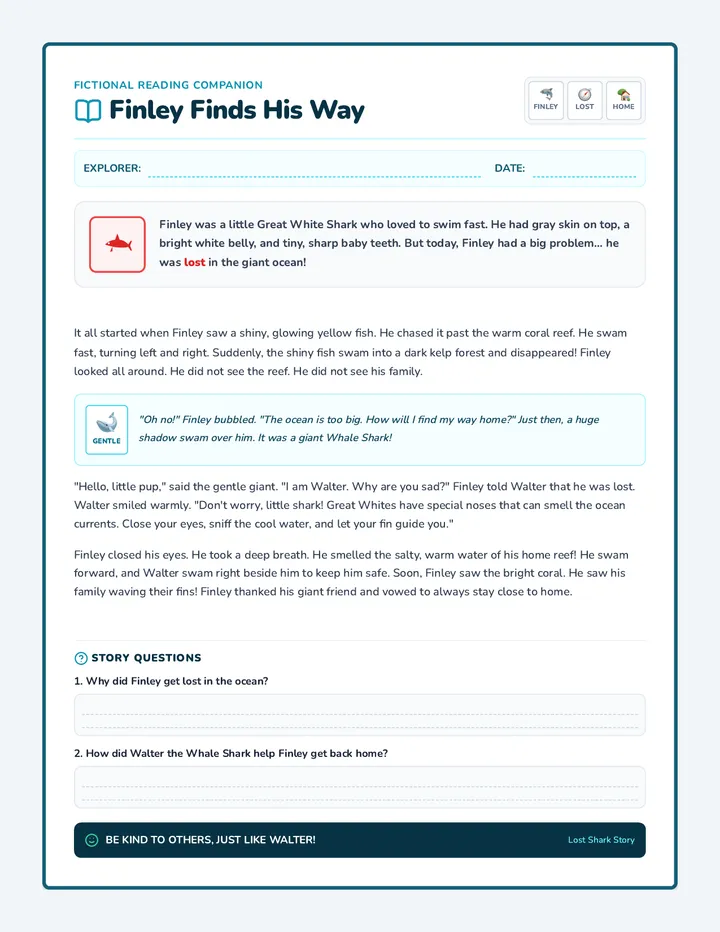
A 1-page fictional reading passage for second graders. Tells the story of Finley, a young Great White Shark who gets lost chasing a shiny fish and uses his ocean senses to find his family, supported by PEC graphics and reflection questions.
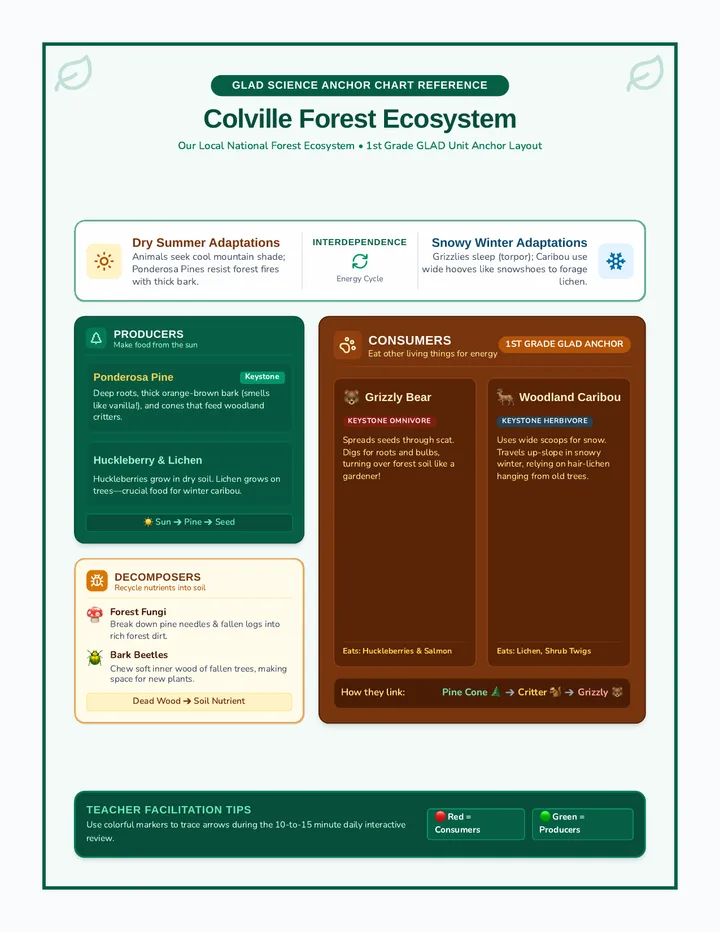
An immersive 1st-grade GLAD unit focused on the Colville National Forest ecosystem. Students explore food chains, interdependence, seasonal changes, and local keystone species through visual charts, rhythmic chants, and rewarding literacy achievements.
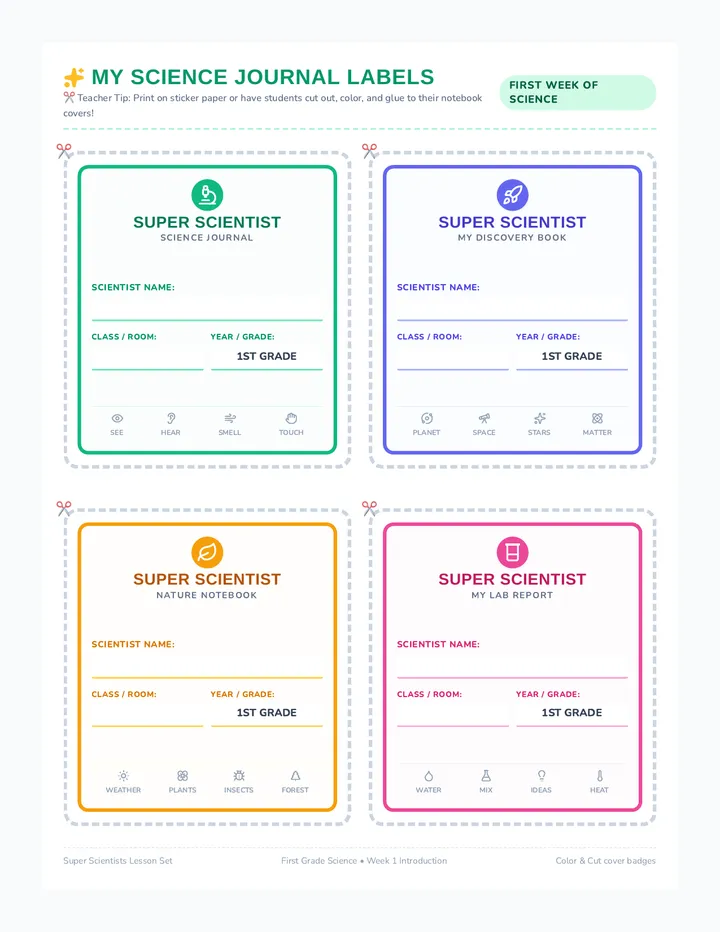
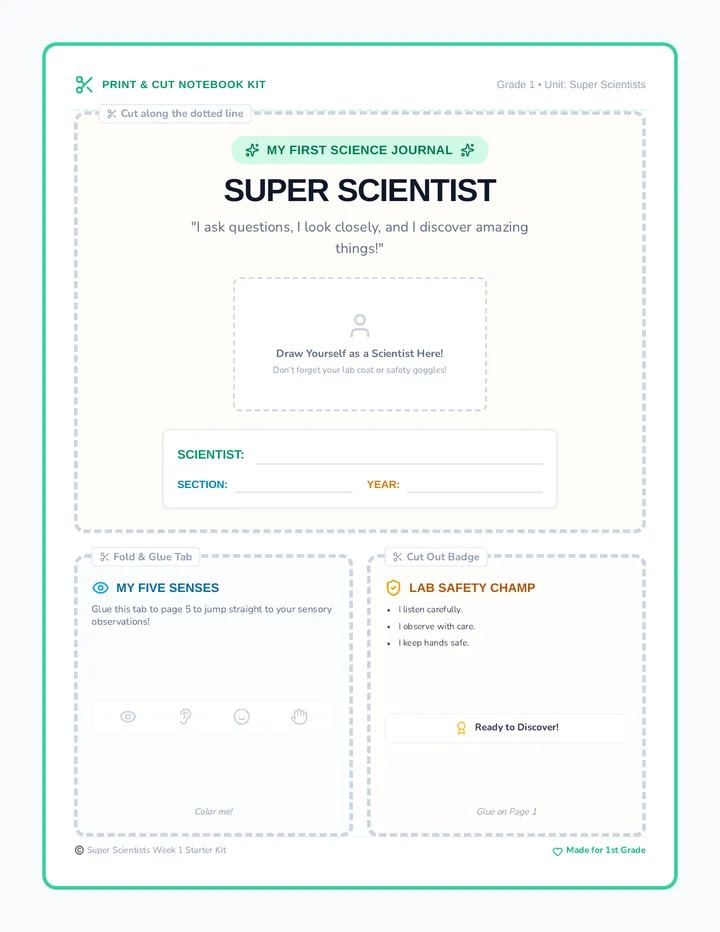
An introductory science lesson for first graders to establish their scientific identity, explore the five senses, and set up their very first Interactive Science Notebook.
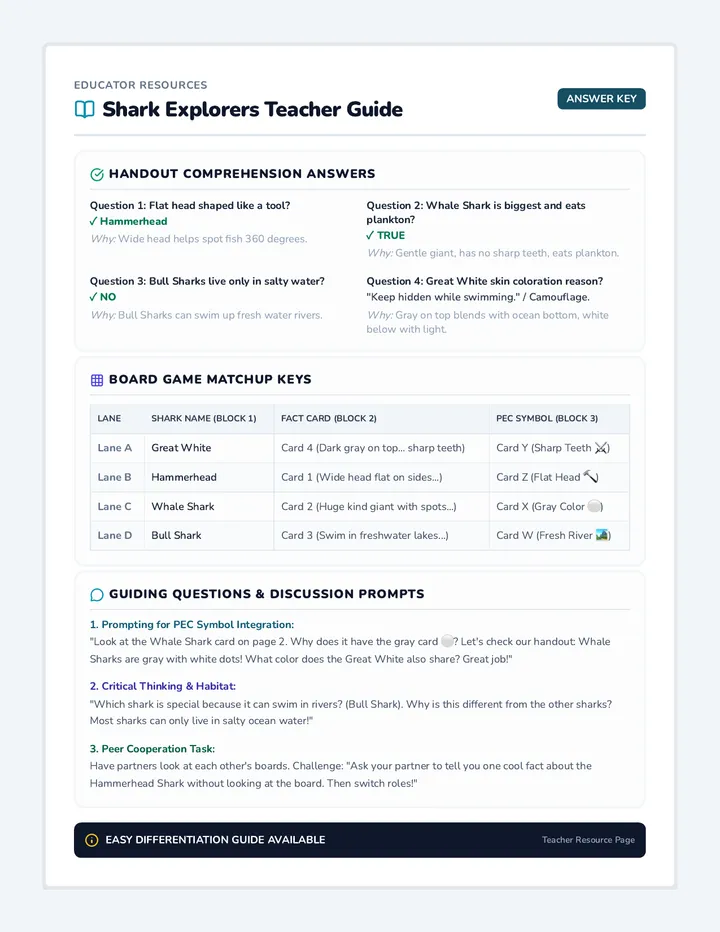
A 1-page teacher reference document containing the answer keys for the reading comprehension handout, correct solutions for the cut-and-paste board game, and guided speaking questions.
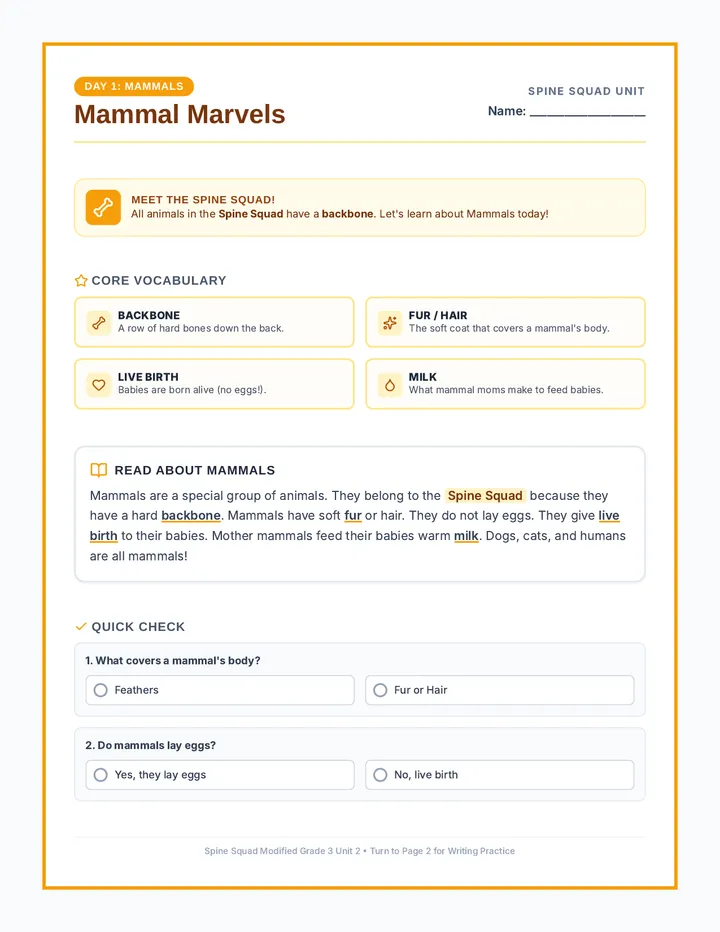
A five-day modified animal classification unit focusing on the five main vertebrate groups, designed with extensive visual support, sentence frames, and tracing options for modified learning.
An introductory first-week science unit for 1st graders to explore scientific identity, observation, and the five senses through interactive notebooks.
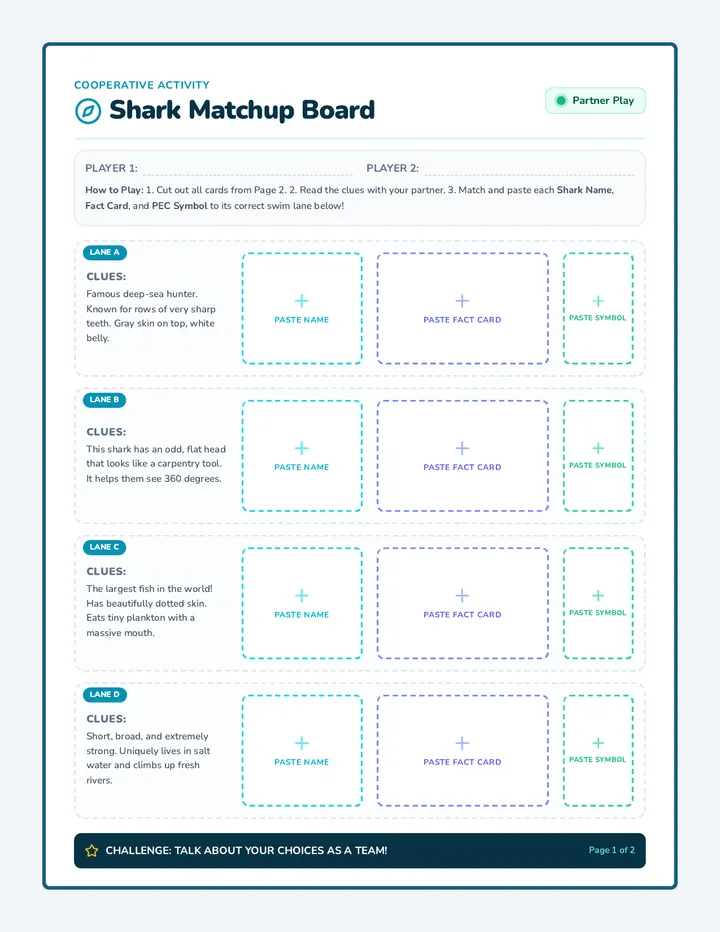
A 2-page cut-and-paste matching board game. Page 1 contains the beautiful, marine-themed game board with empty slots for partners to complete. Page 2 provides the illustrated, dotted-line cutout cards for names, characteristics, and PEC symbols.
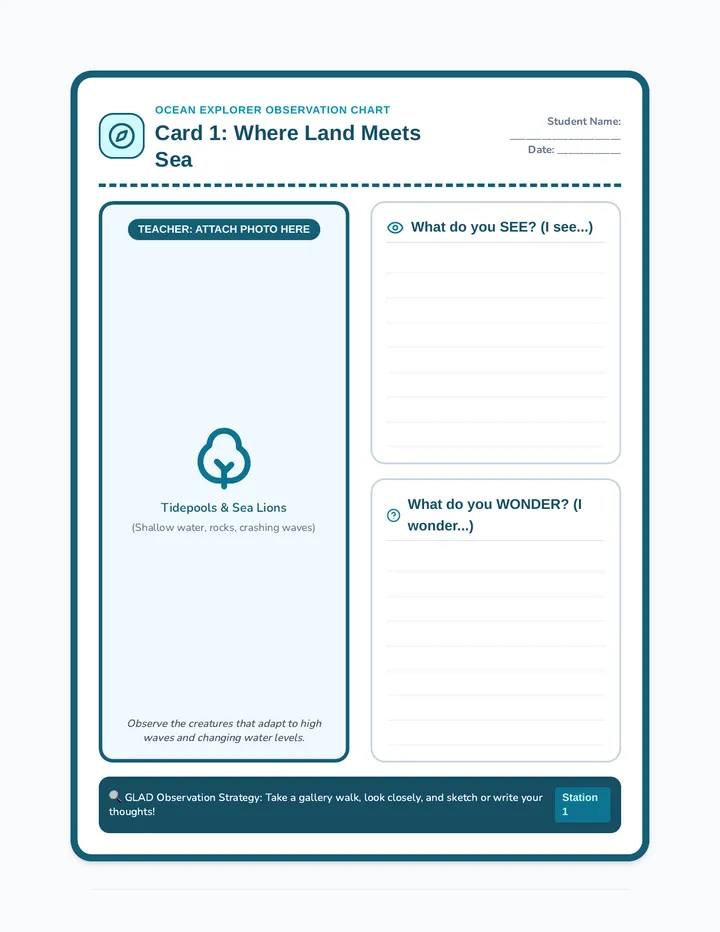
An immersive 1st-grade GLAD science and literacy sequence that guides young learners from the sunny surface to the deepest, darkest trenches, using cooperative learning, narrative inputs, and hands-on modeling.
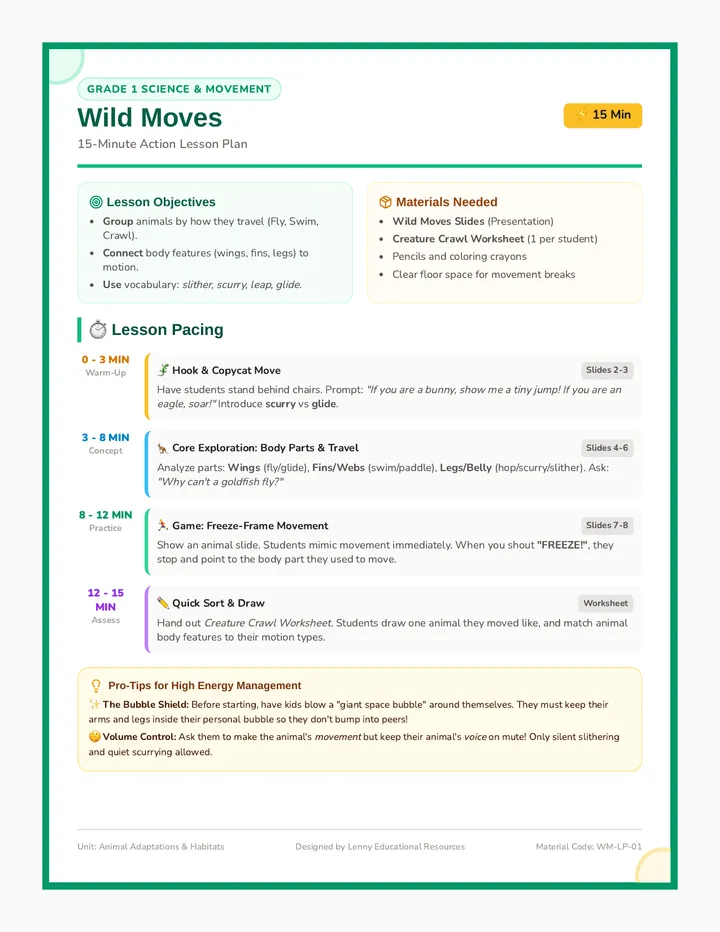
A high-energy, 15-minute introductory lesson for 1st graders to explore how animals move, categorize them by travel types (flying, swimming, crawling), and connect their physical body features to their motion.