Explores place value positions up to 1,000,000, including reading, writing, and identifying the value of digits in various forms.
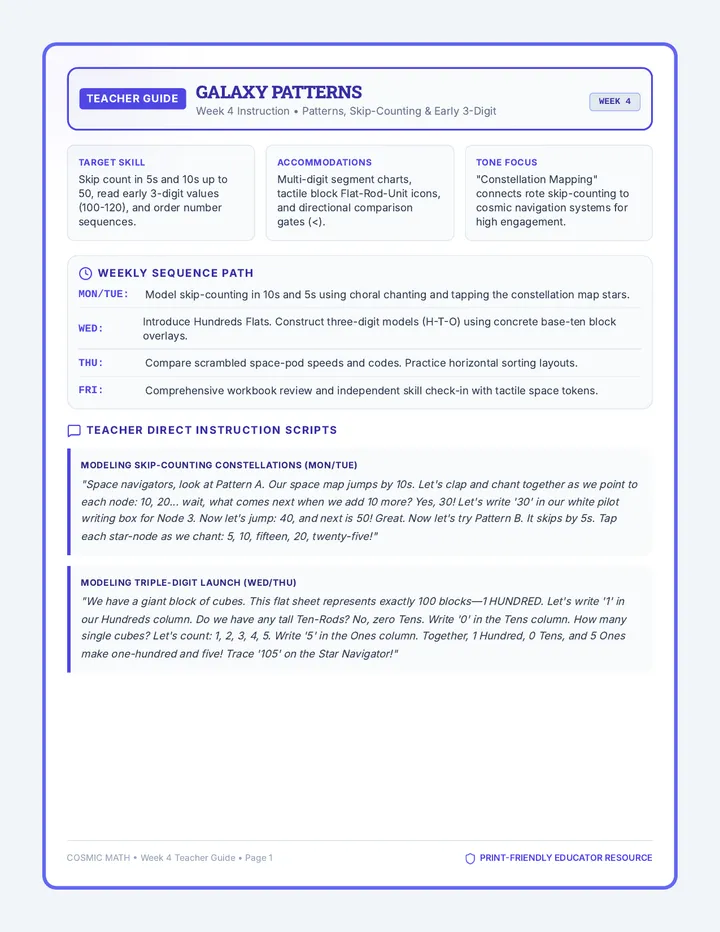
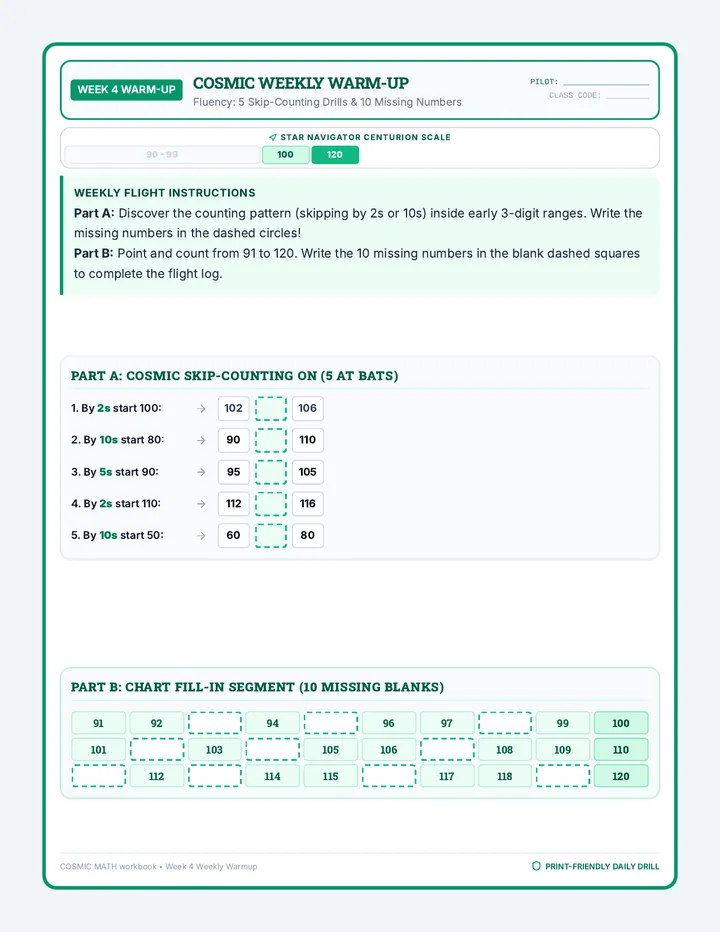
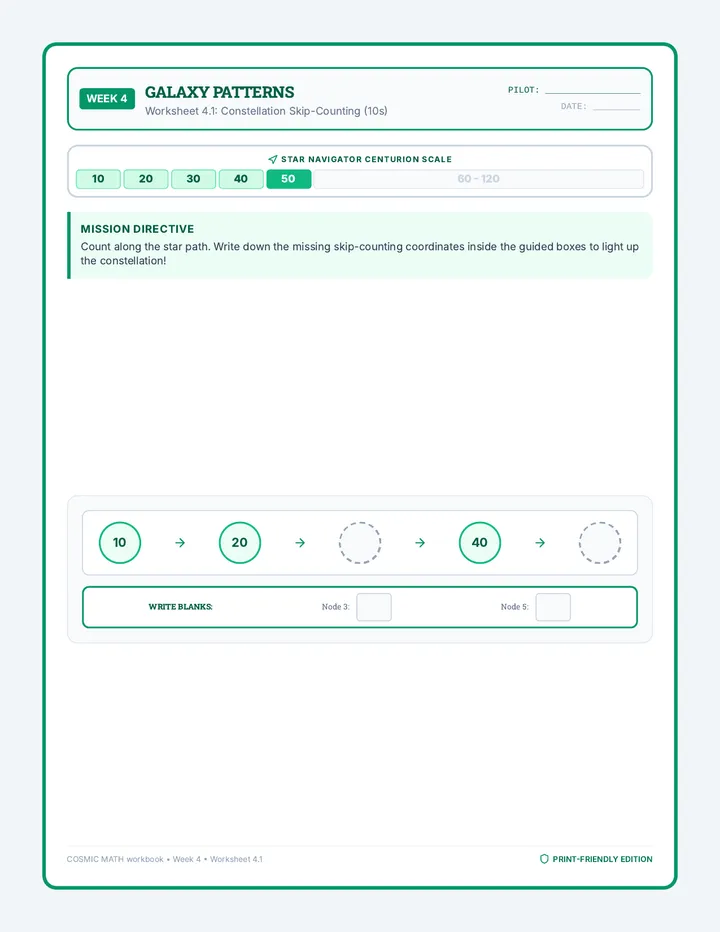
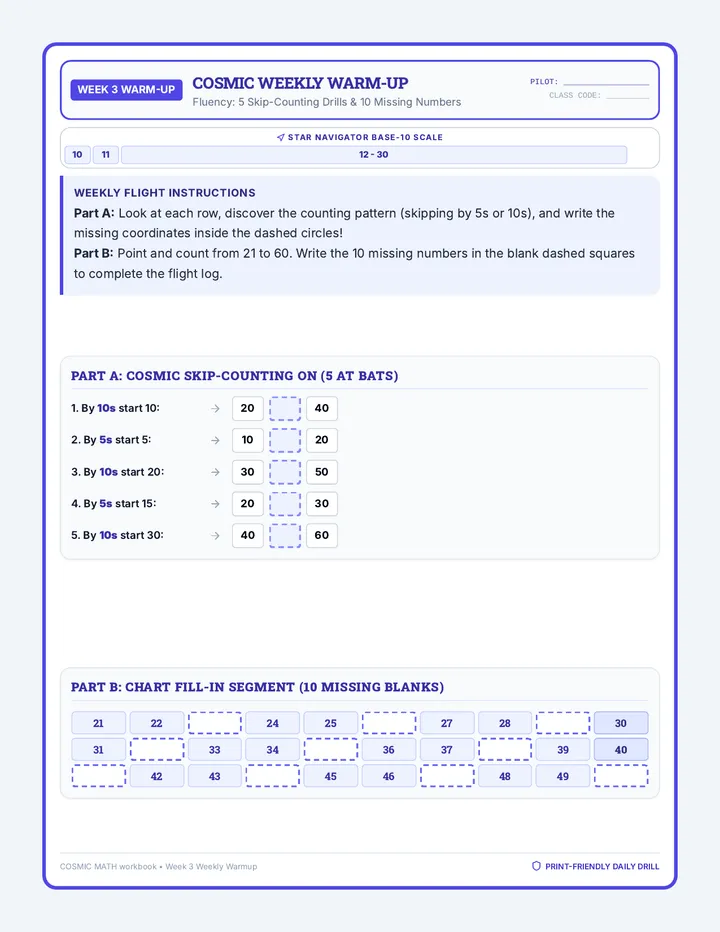
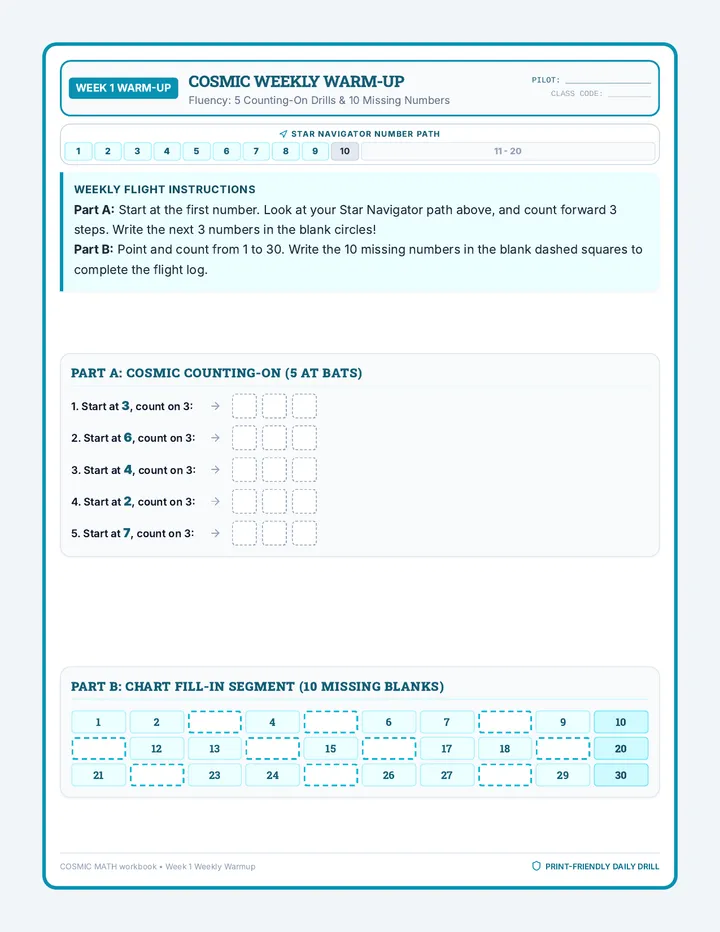
Introduces early 3-digit numbers (100-120), visual skip-counting (2s, 5s, 10s) using constellation maps, and ordering cosmic objects to build sequential logic.
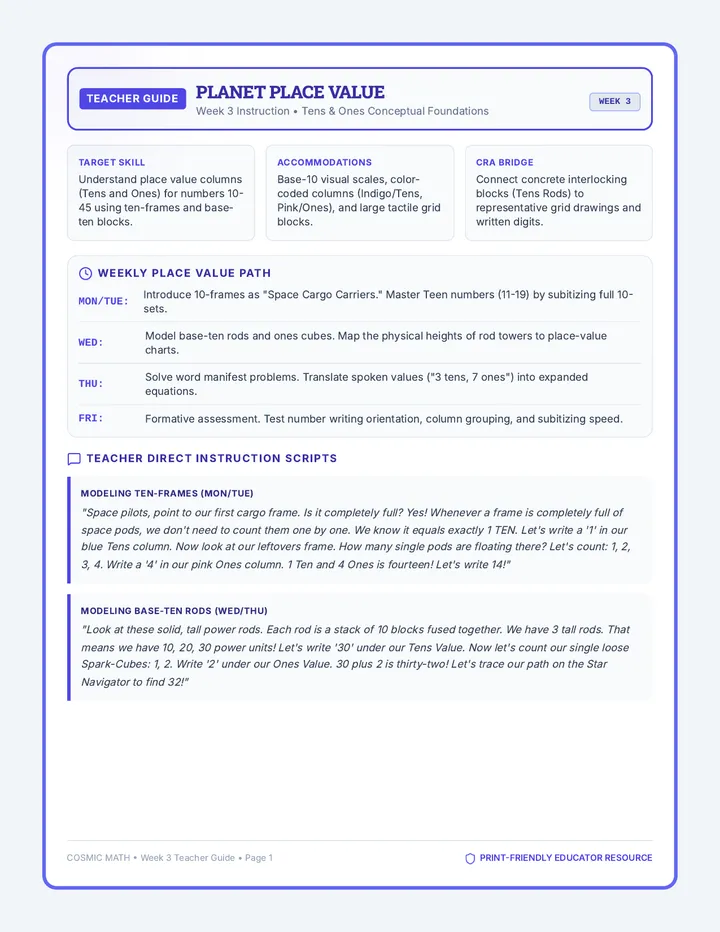
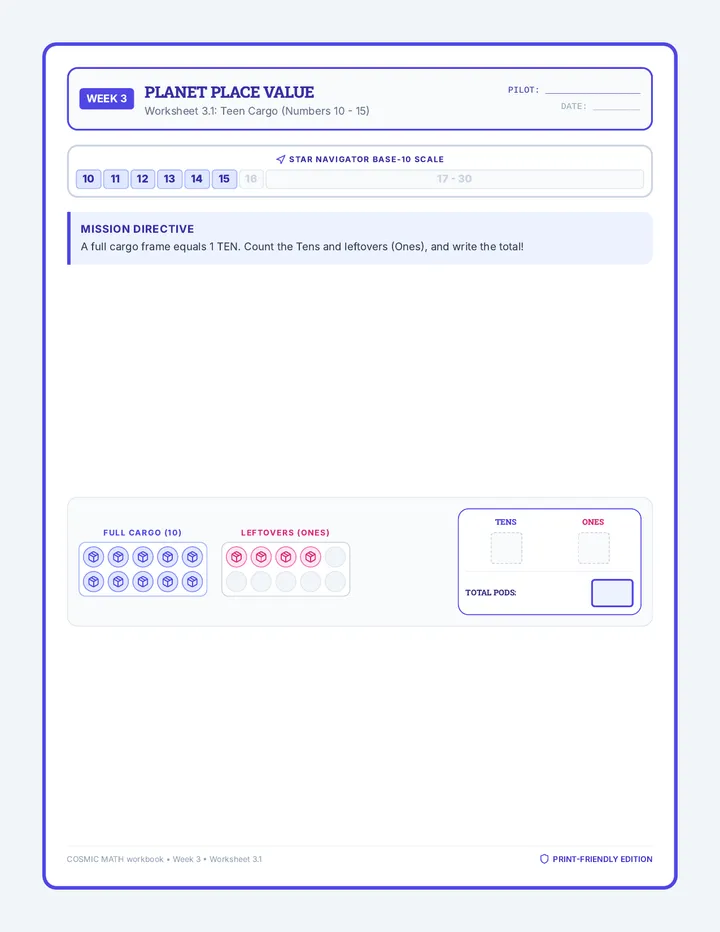
Focuses on identifying double-digit numbers (10-99), representing them using ten-frames and printable base-ten icons, and writing numbers in expanded place value charts (tens and ones) with clear physical boundaries.
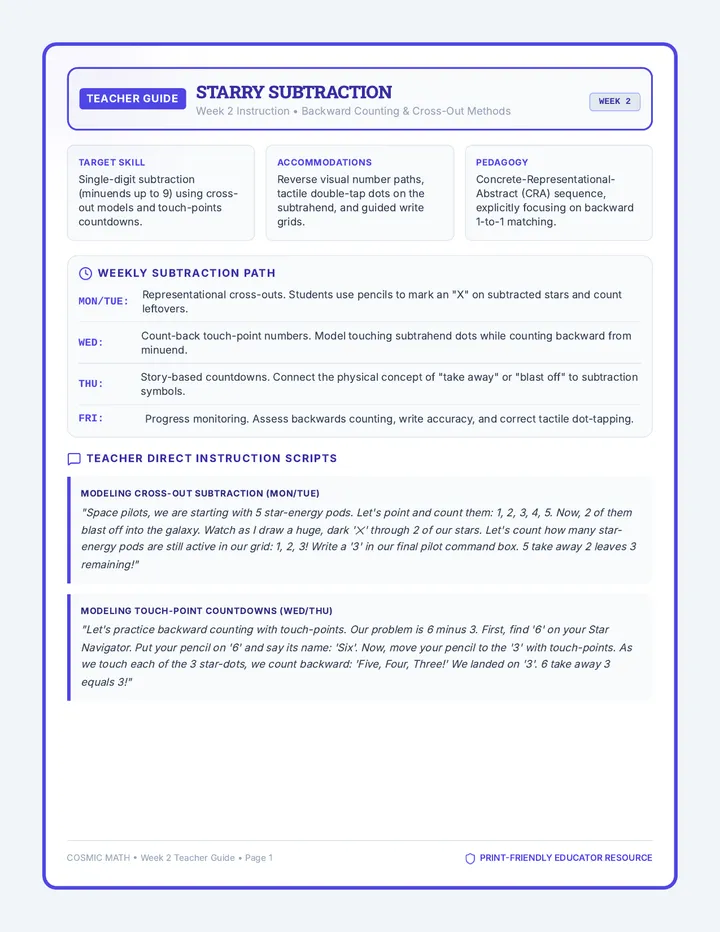
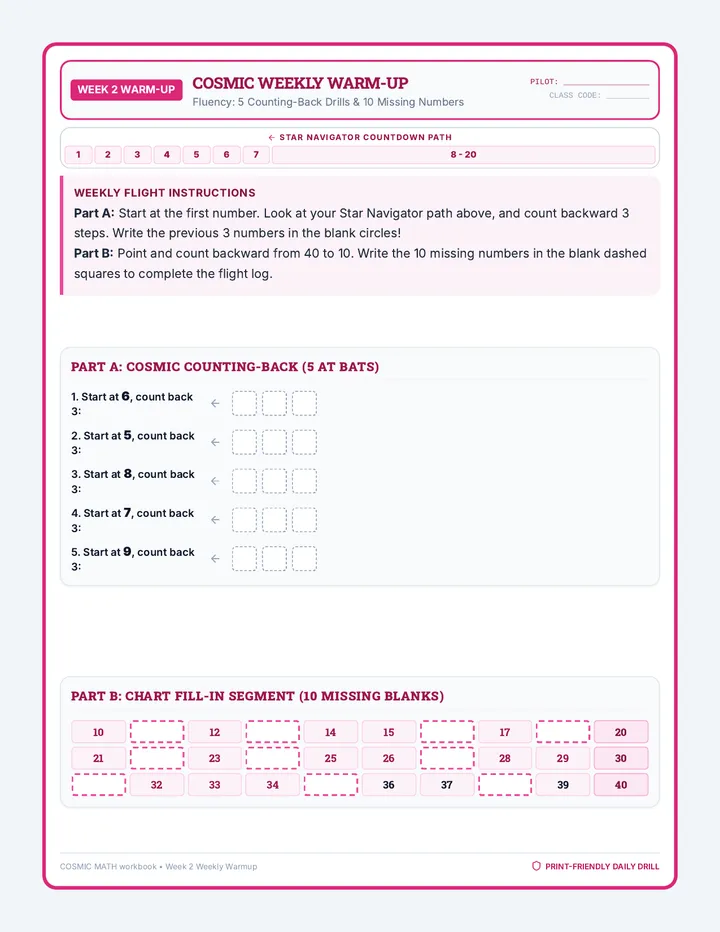
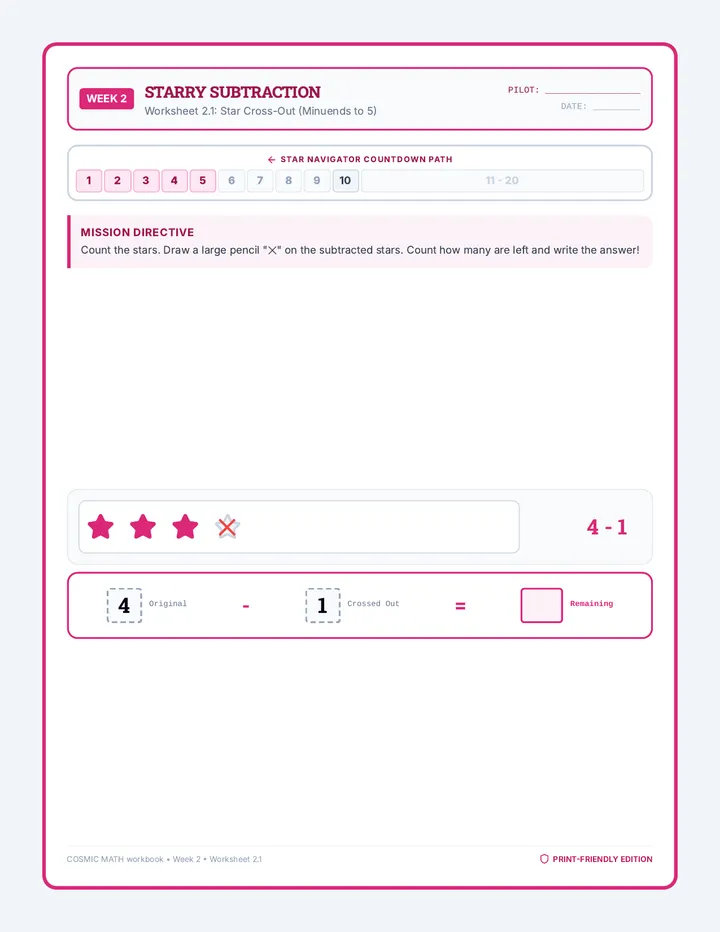
Covers single-digit subtraction (1-9) with cosmic countdowns, crossing-out stars or rocket fuel cells, embedded touch-points for backwards counting, and structured workspace templates.
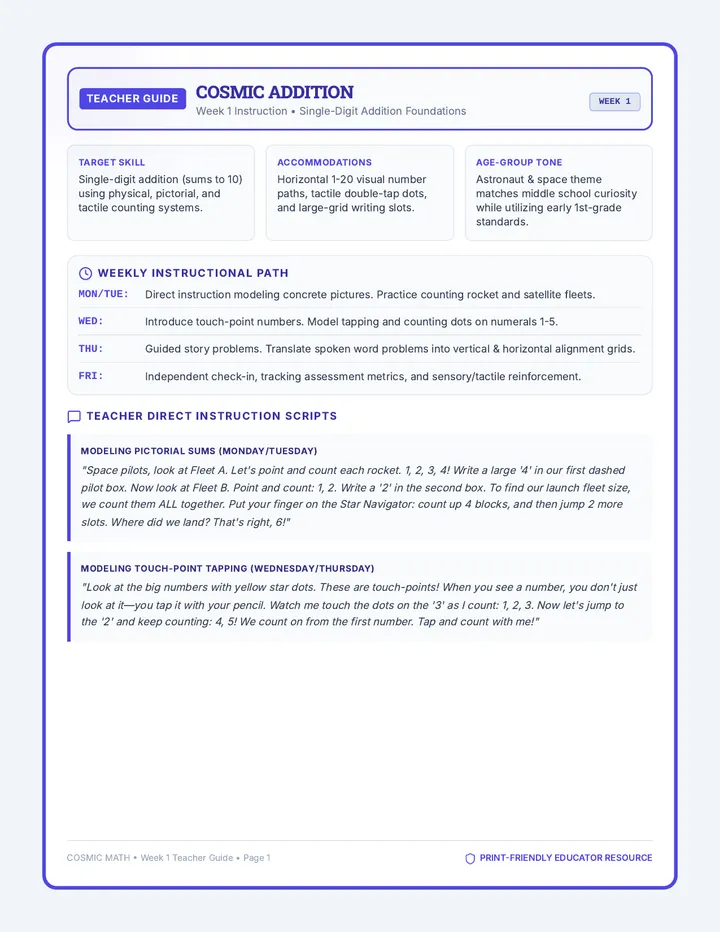
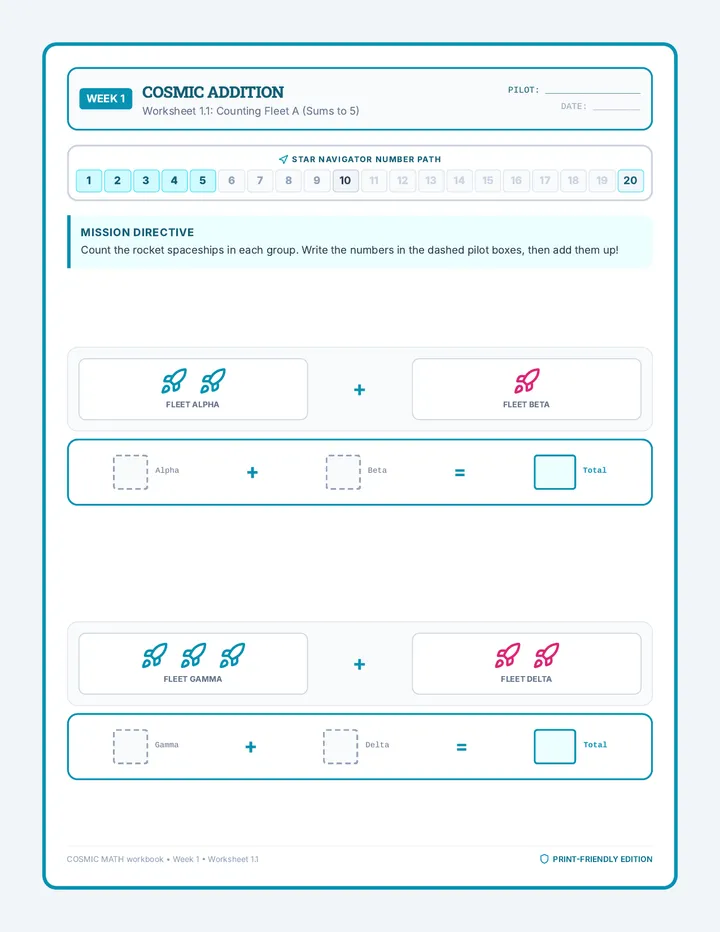
Focuses on single-digit addition (1-9) using embedded touch-point numbers, pictorial representations of spaceships and stars, a persistent 1-20 number path, and large guided workspace boxes for physical alignment.
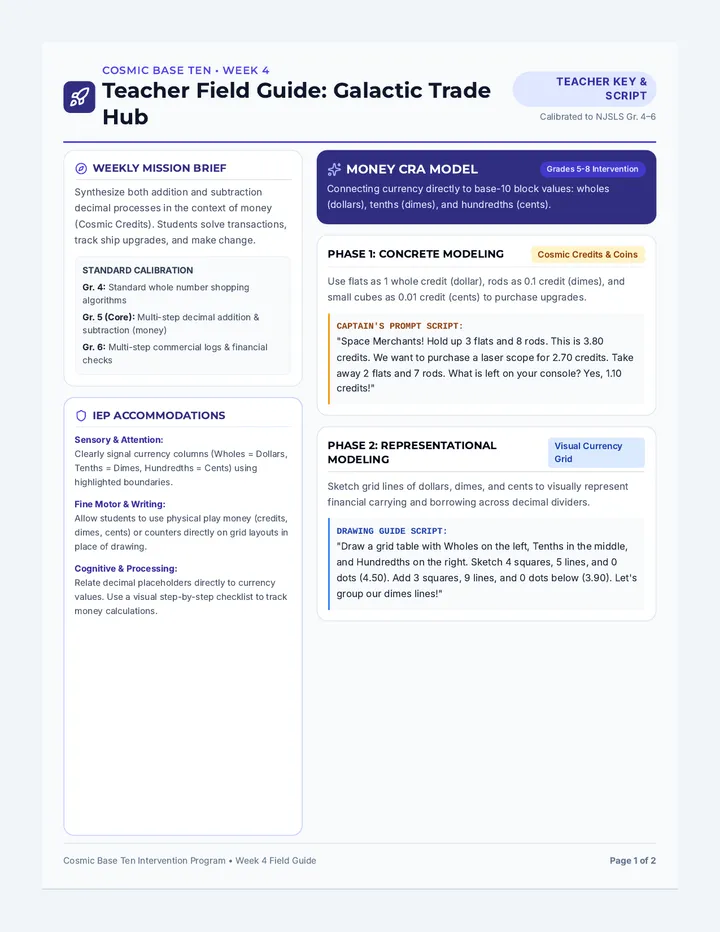
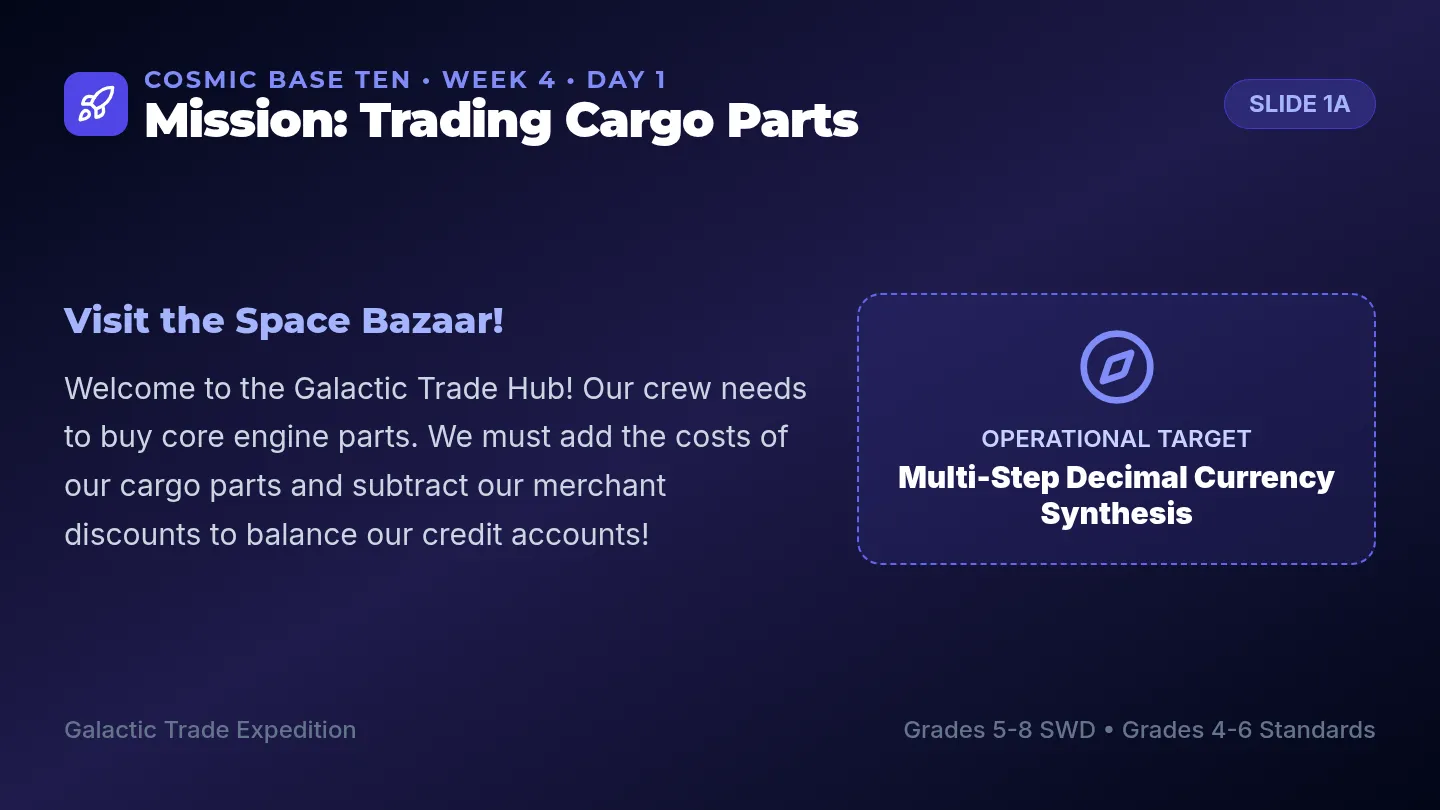
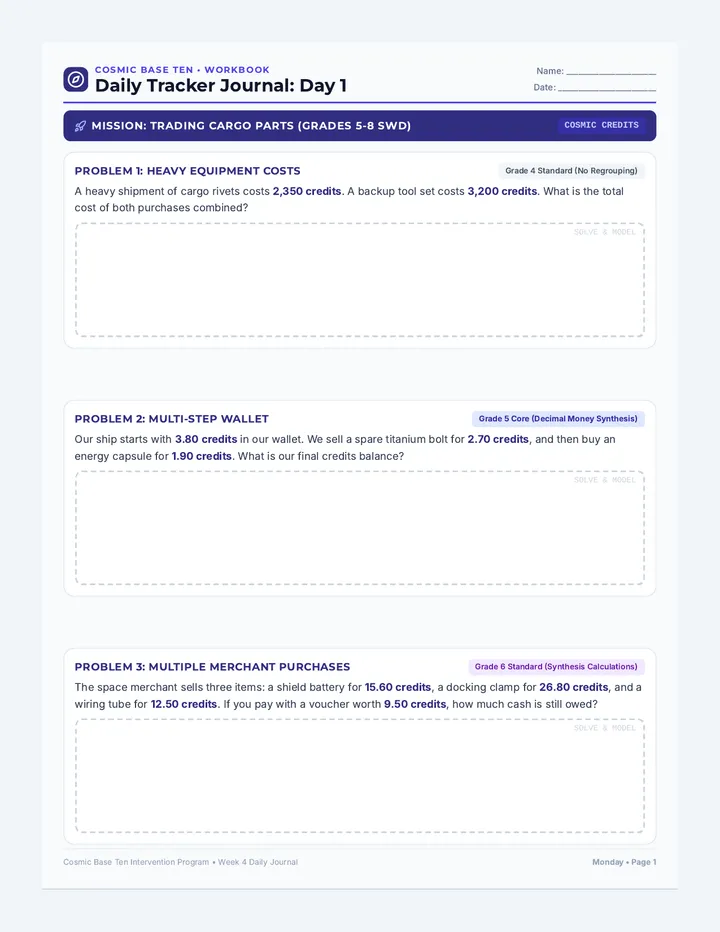
Week 4 is the capstone week where students synthesize their additive and subtractive decimal skills in the context of money. They solve multi-step commercial transactions, balance credit records, and purchase starship upgrades.
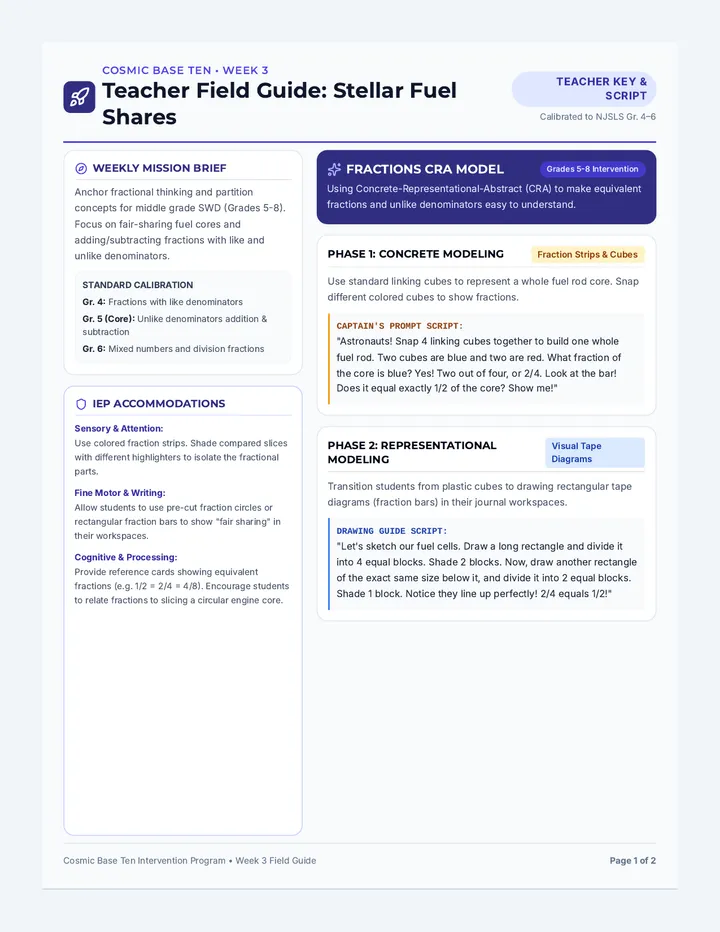
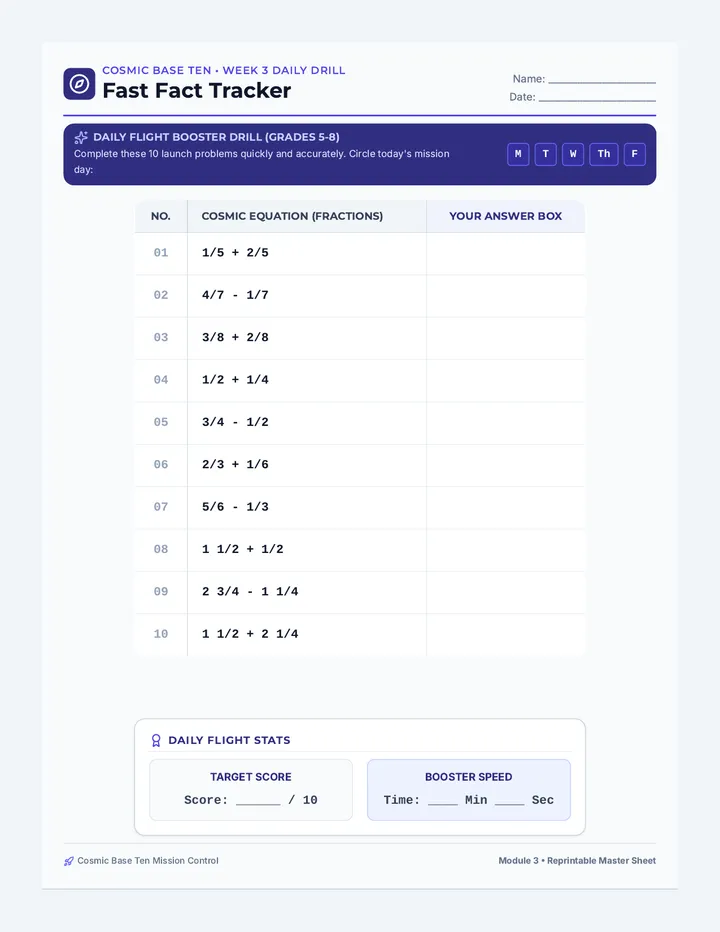
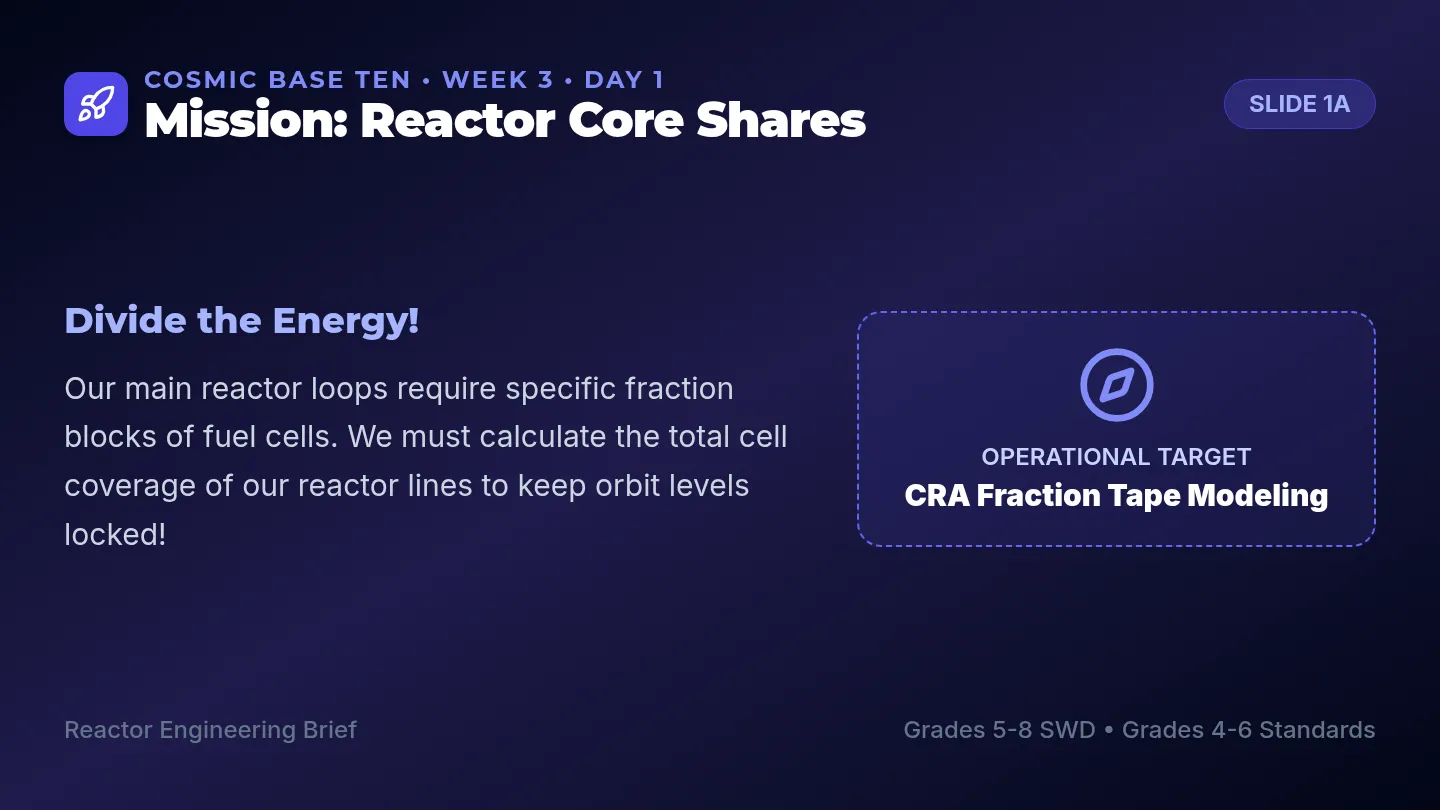
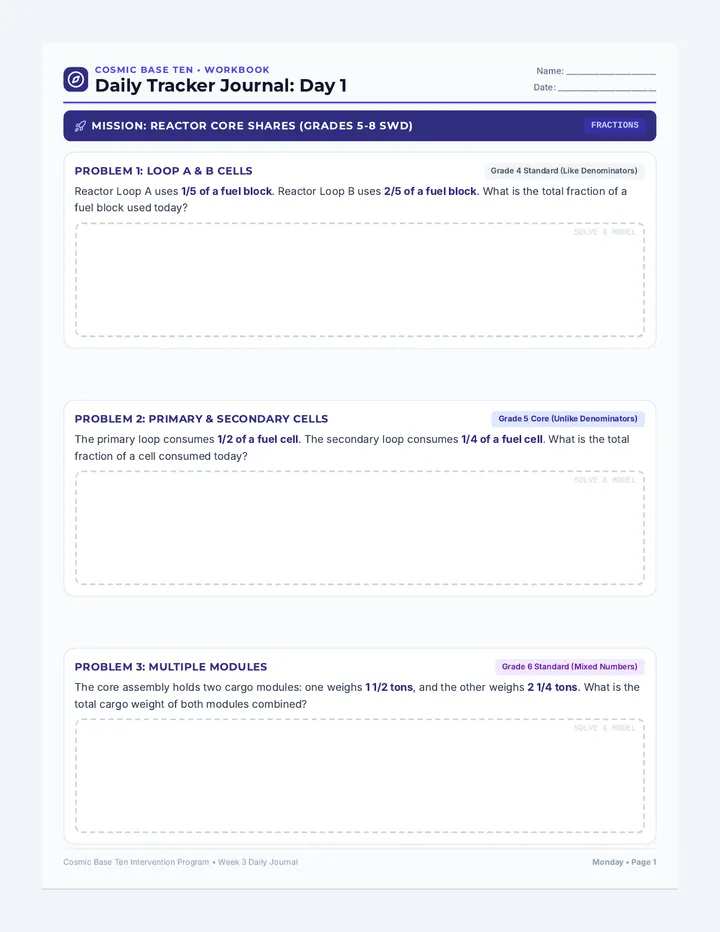
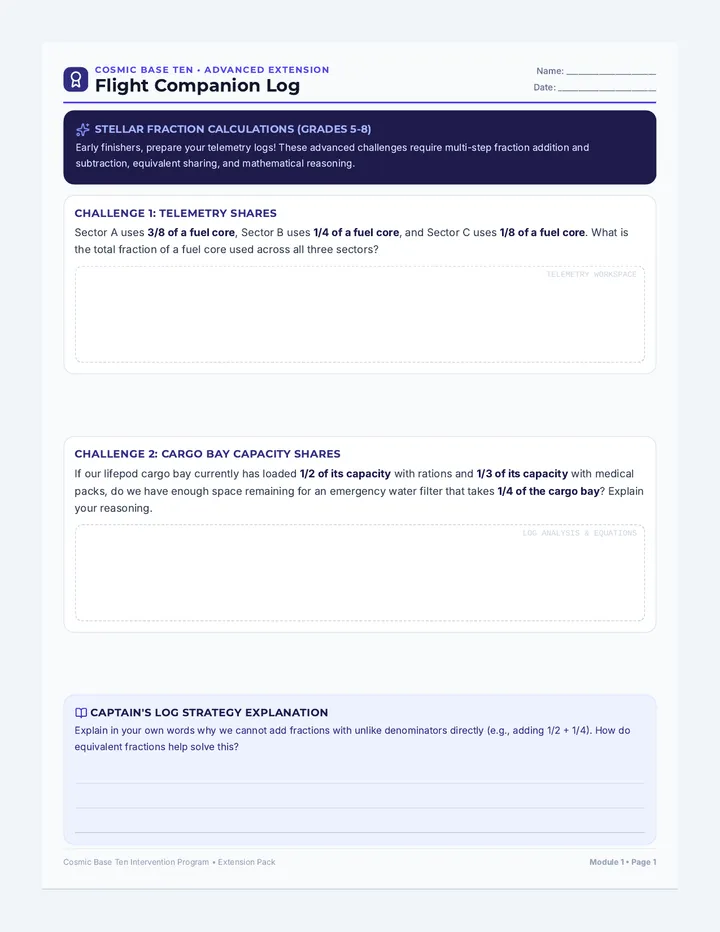
Week 3 focuses on partitioning, equivalent fractions, and adding or subtracting fractions with like and unlike denominators. Students practice fair-sharing reactor cores, dividing cargo weight, and mapping stellar orbits using fraction bars.
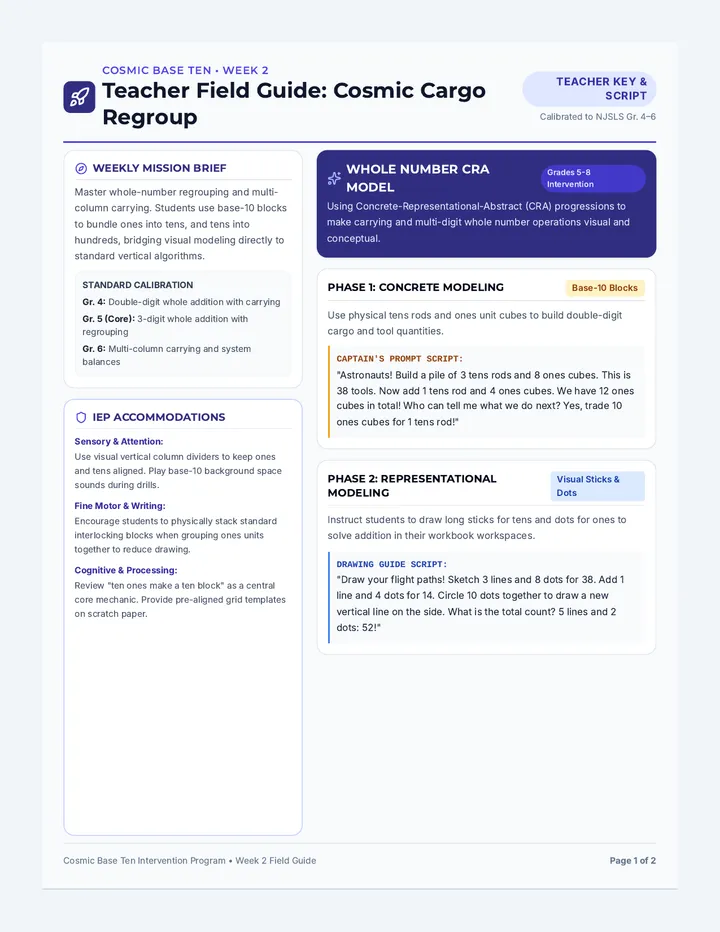
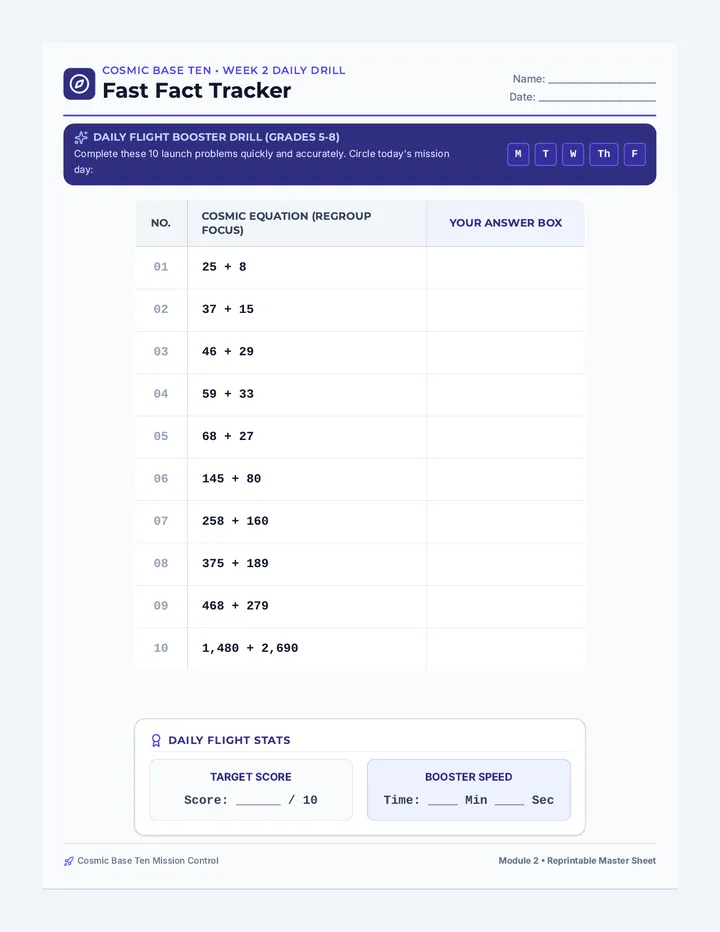
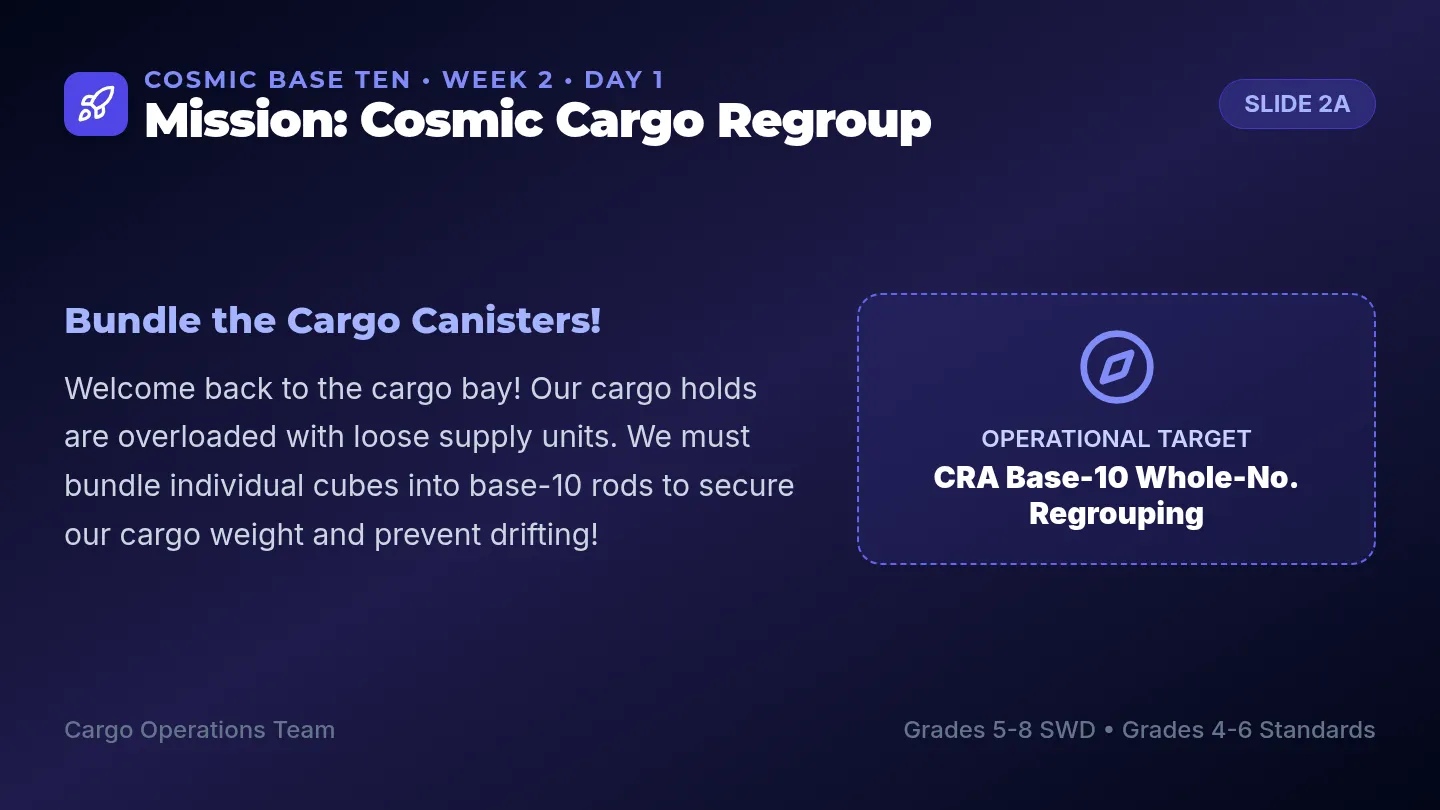
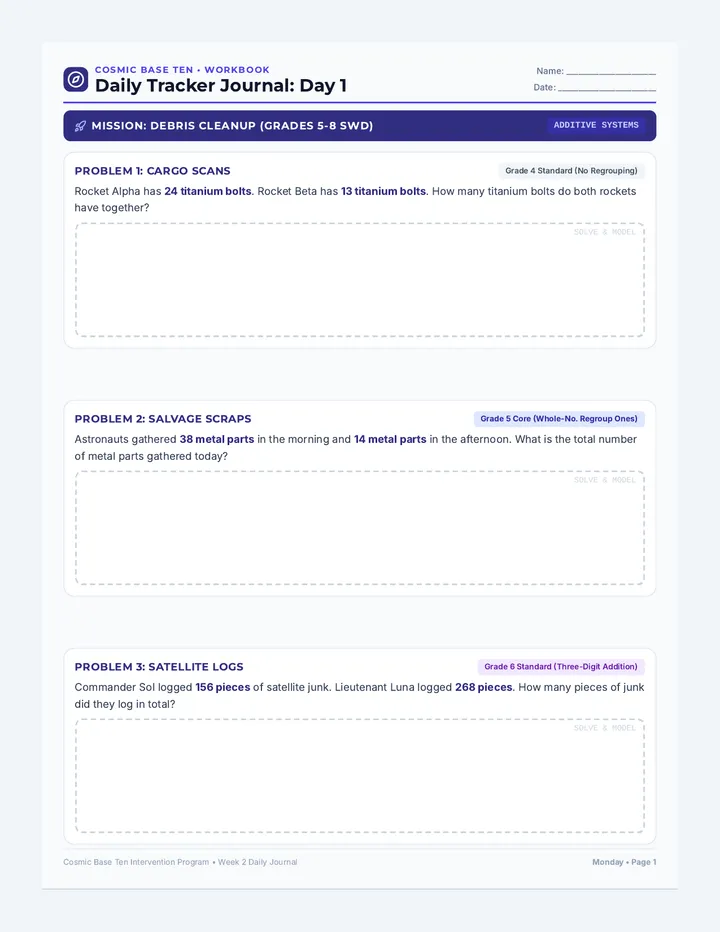
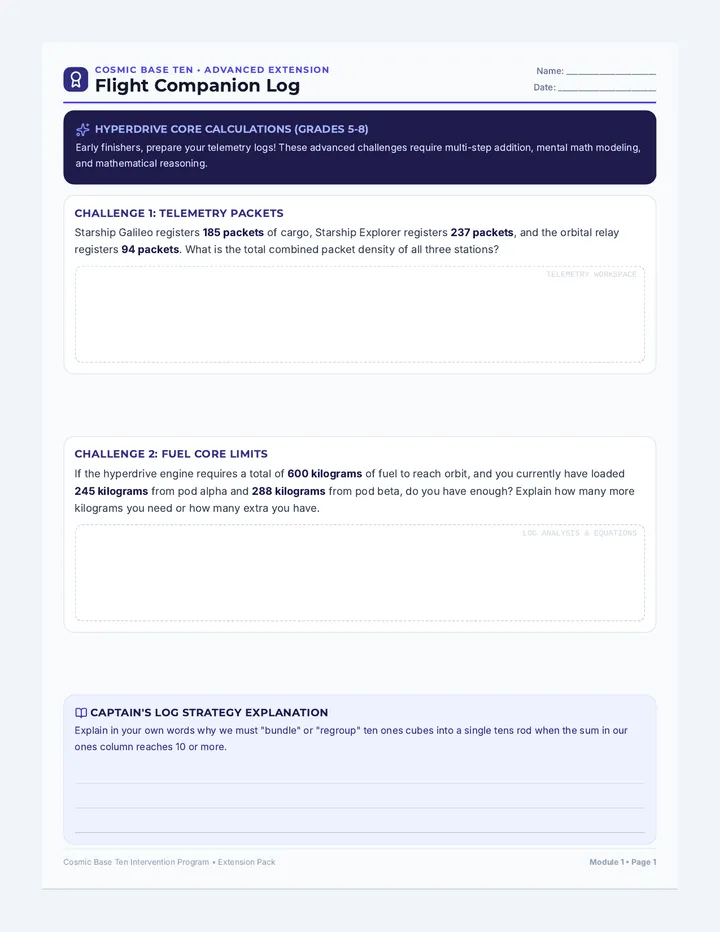
Week 2 focuses on mastering whole-number regrouping and multi-column carrying in the context of starship cargo inventories. Students use base-10 blocks to bundle ones into tens and tens into hundreds, bridging visual modeling directly to standard vertical algorithms.
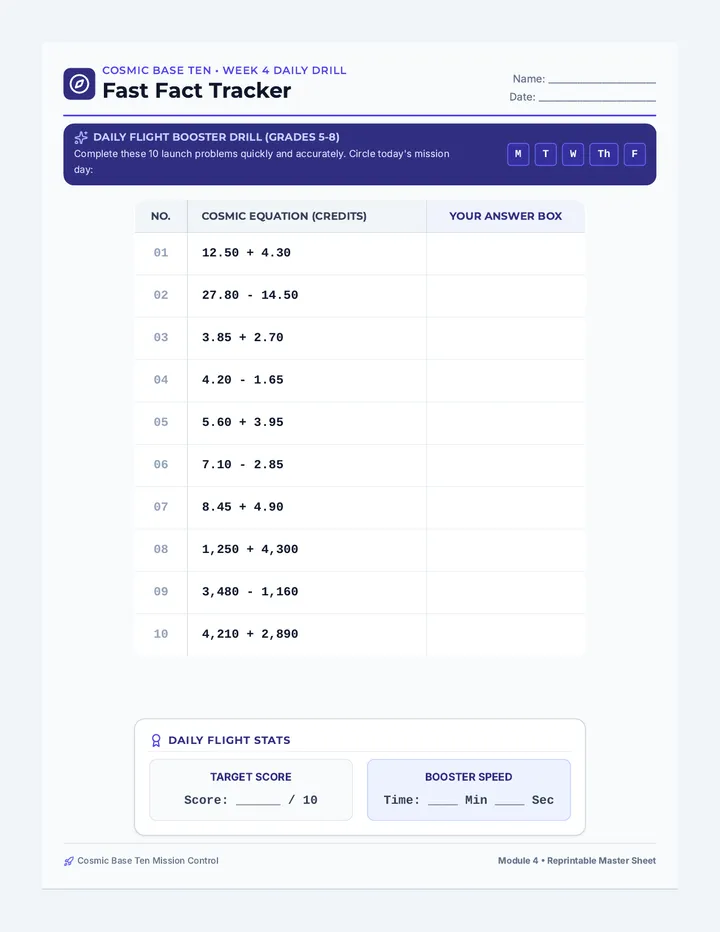
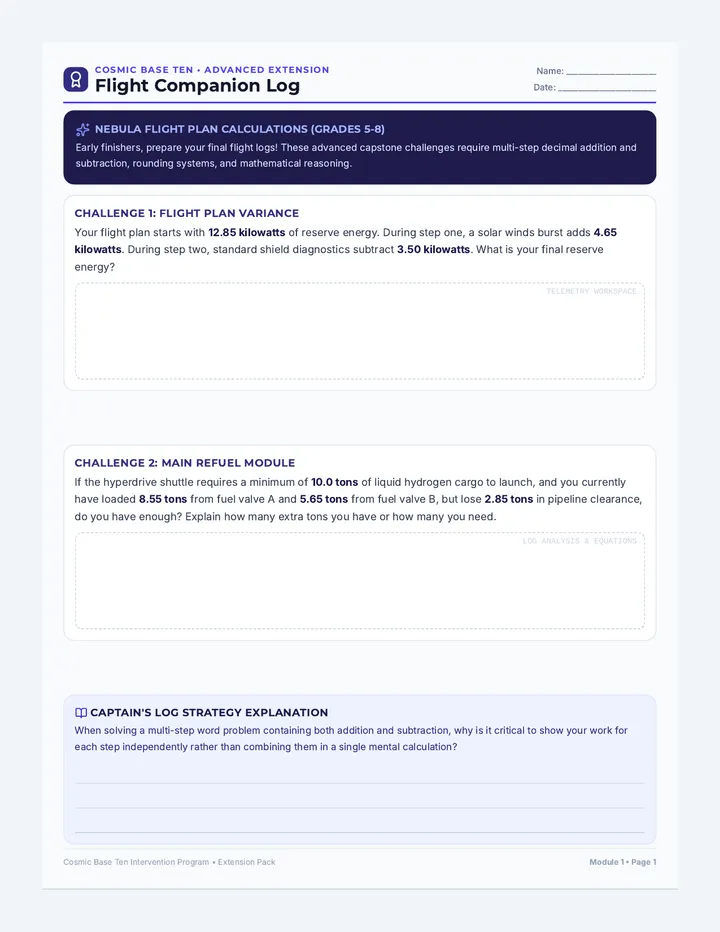
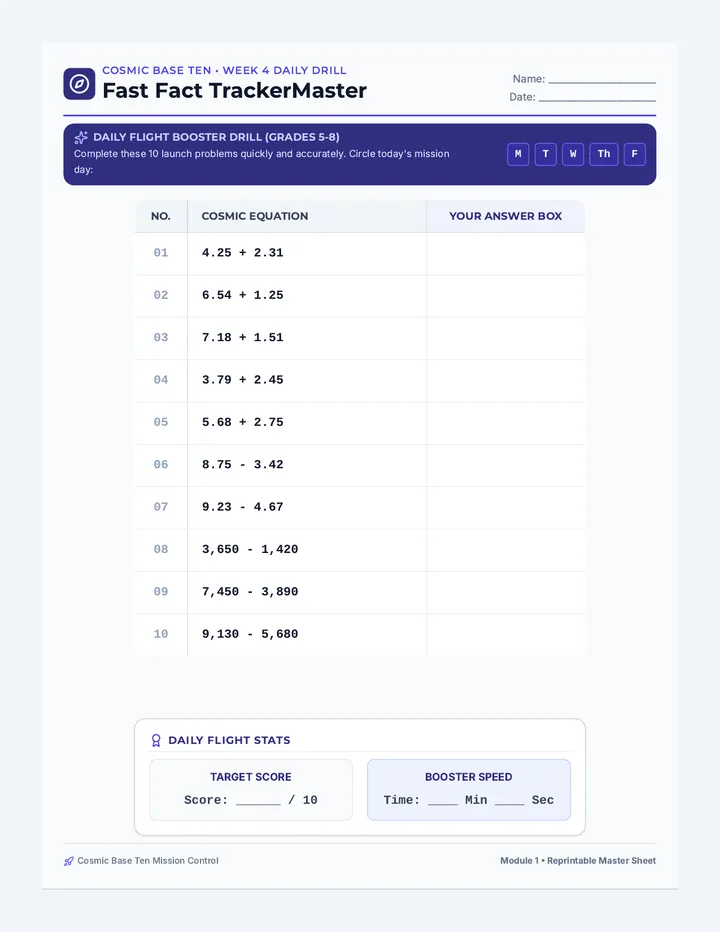
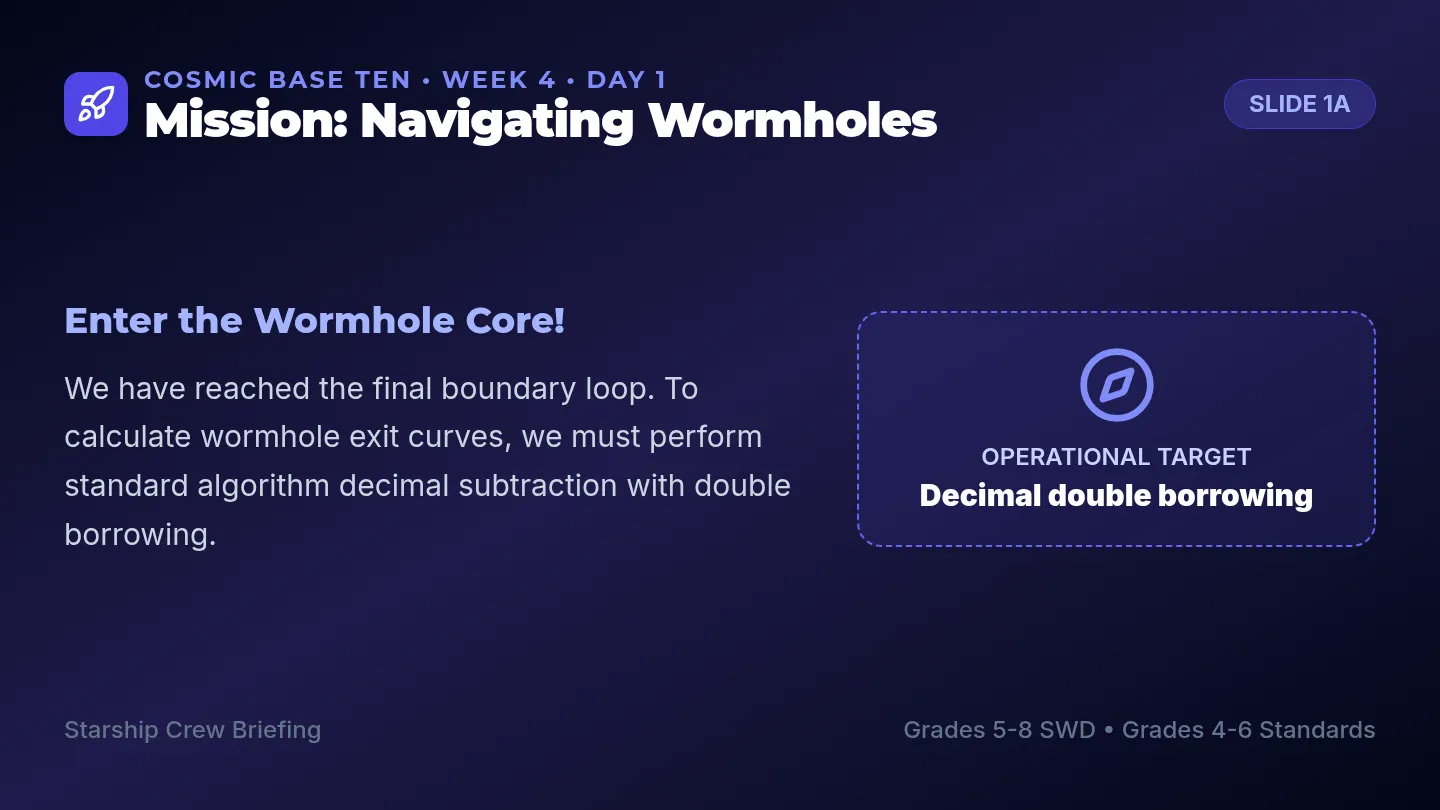
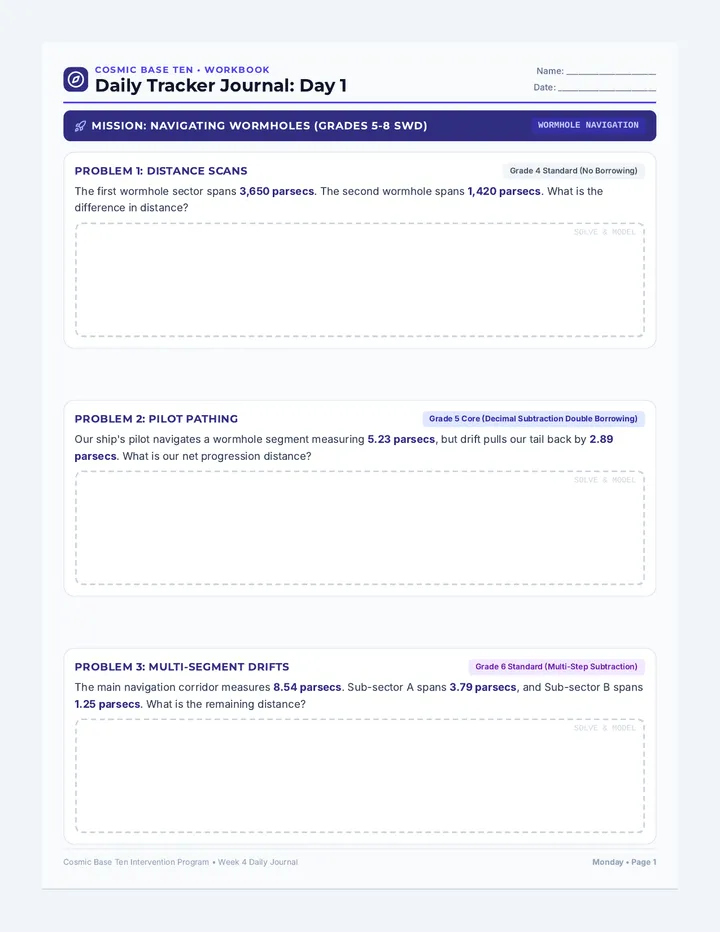
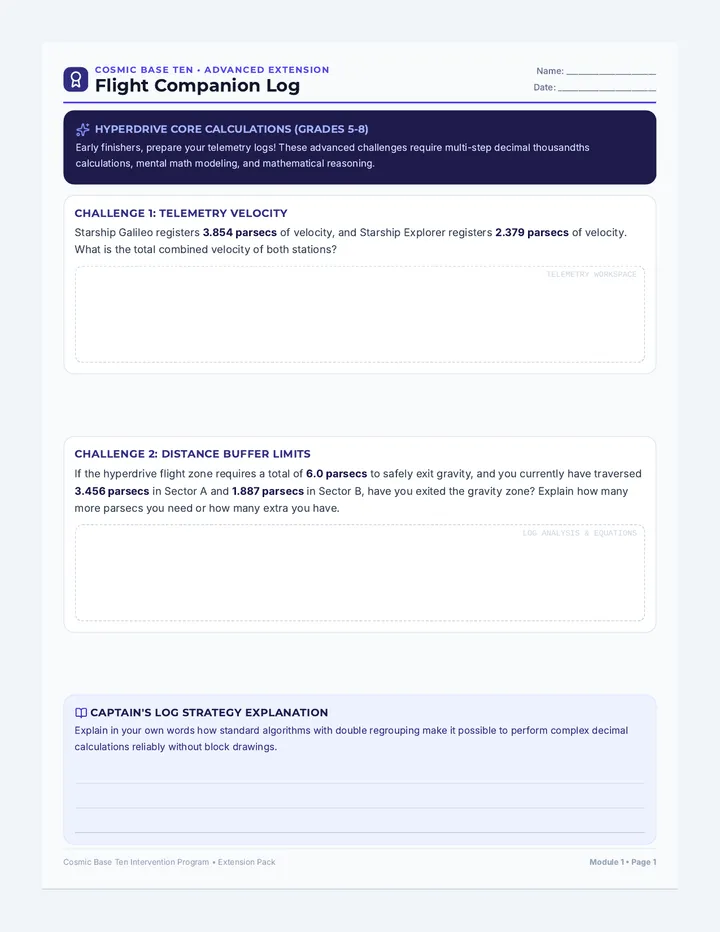
Week 4 focuses on standard algorithm decimal addition and subtraction, multi-step problem consolidation, and direct assessment of skills to confirm crew flight readiness.
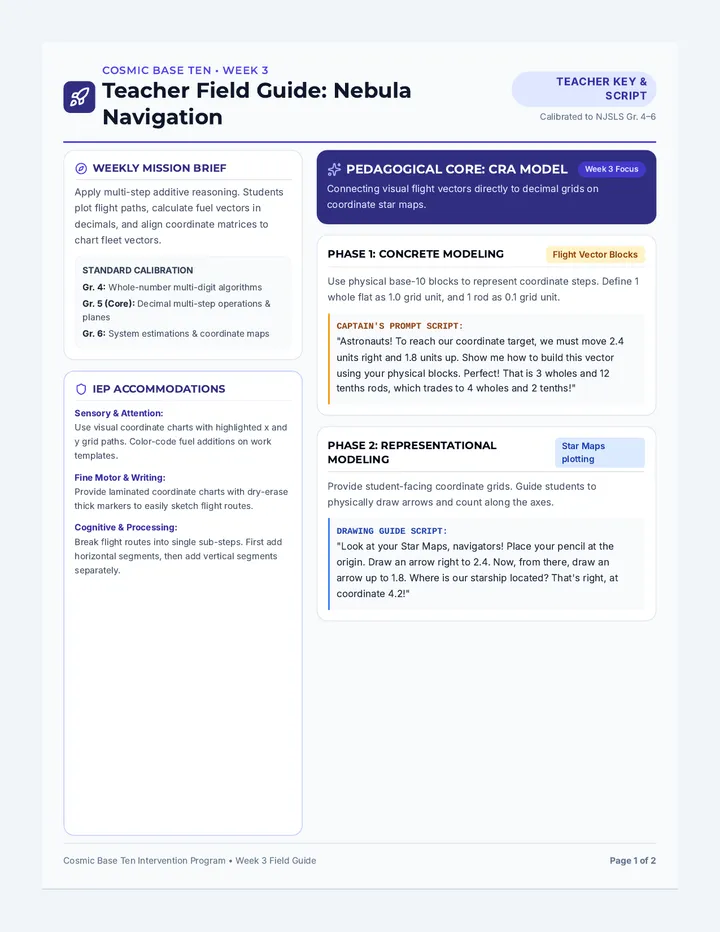
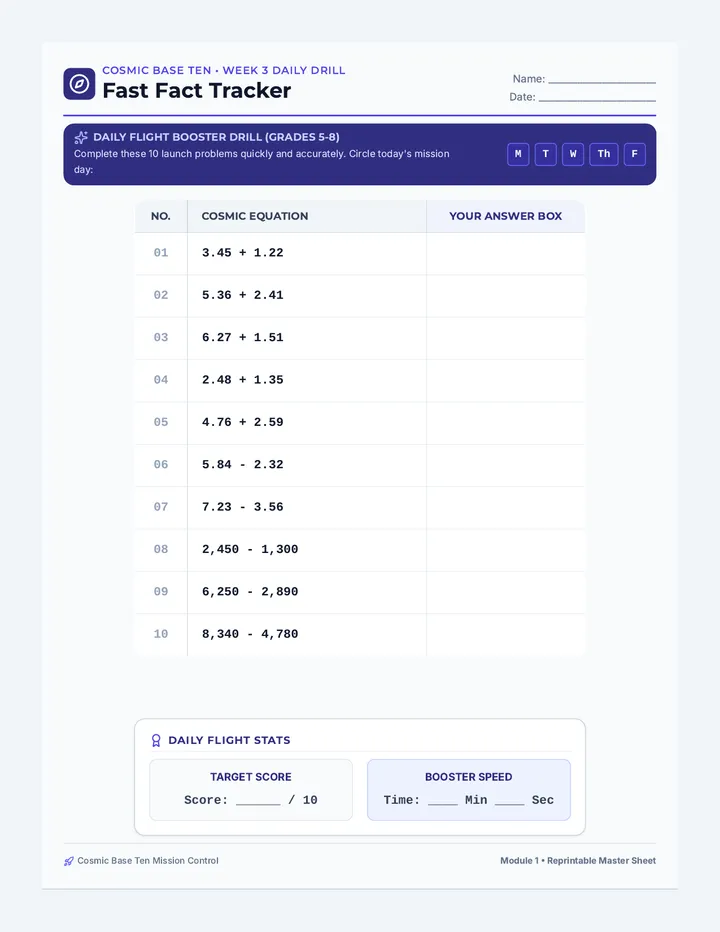
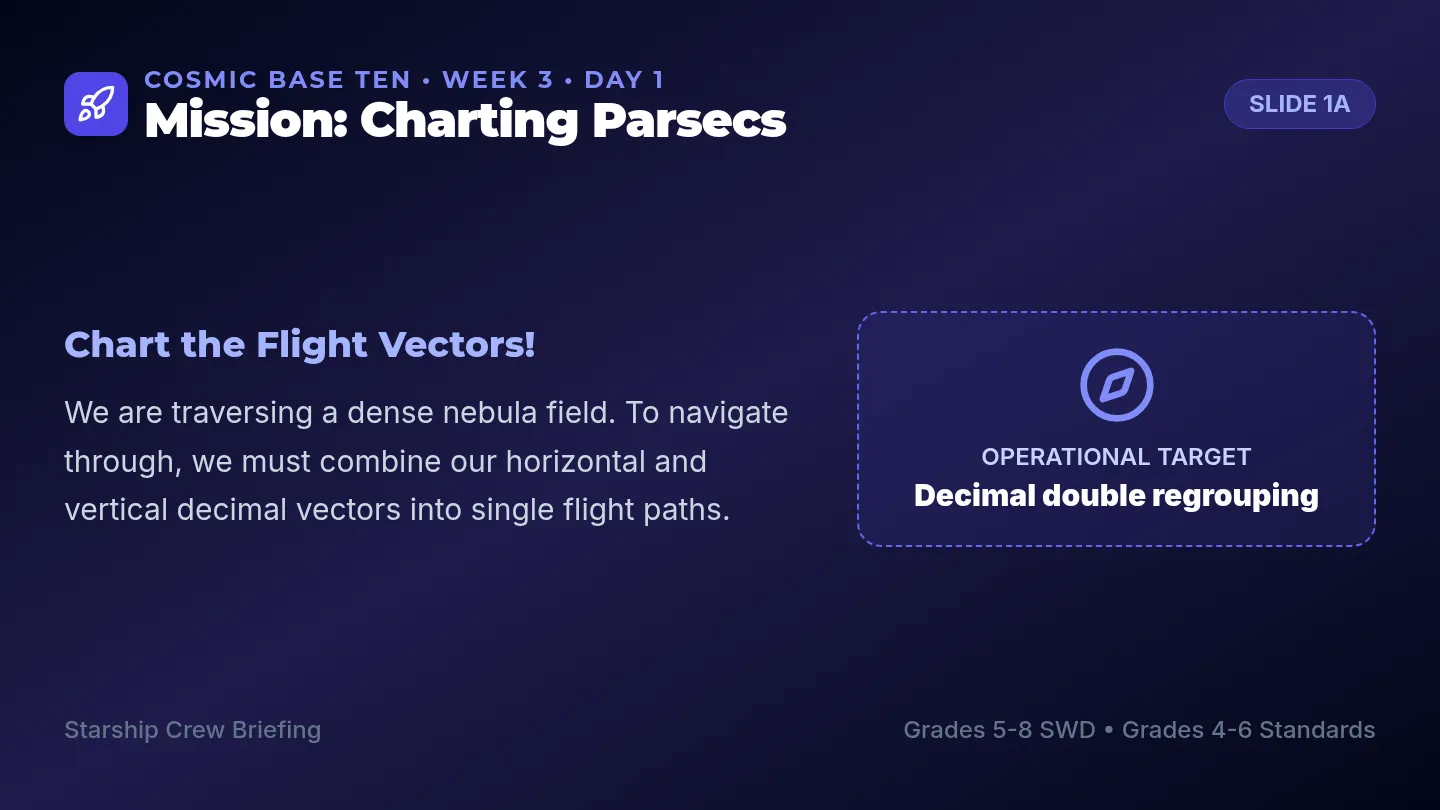
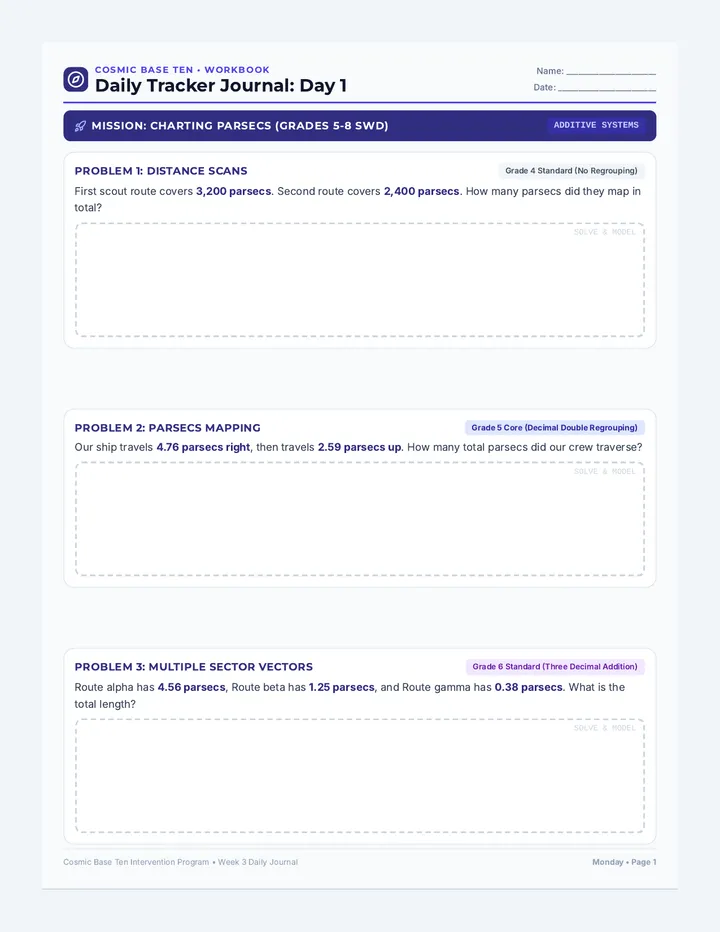
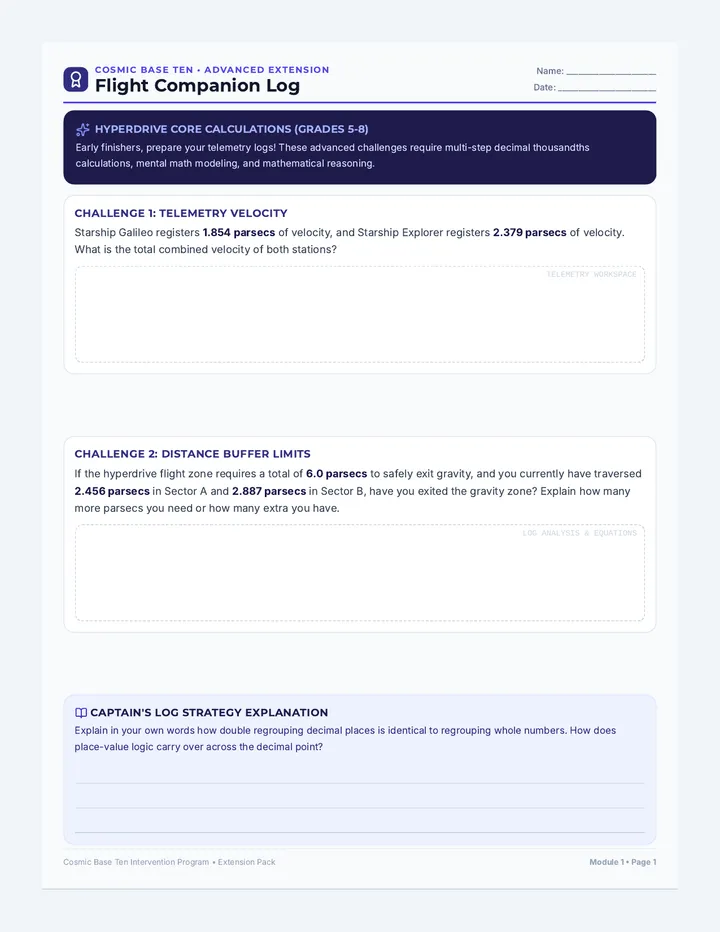
Week 3 focuses on multi-step additive reasoning, decimal subtraction, and aligning coordinates using star charts and compass tools to plan flight vectors for the fleet.
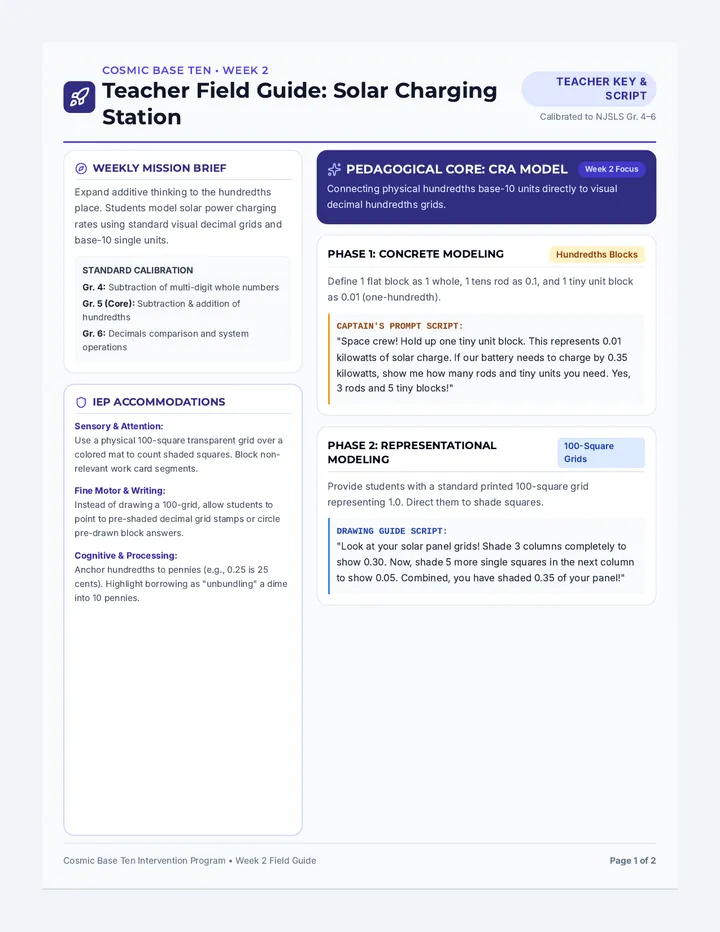
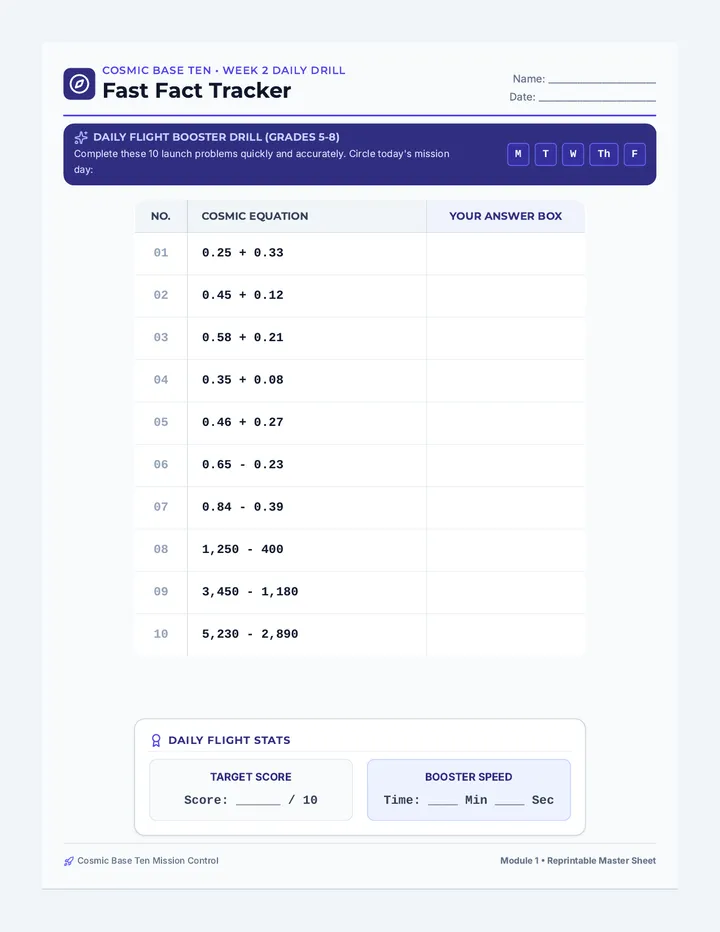
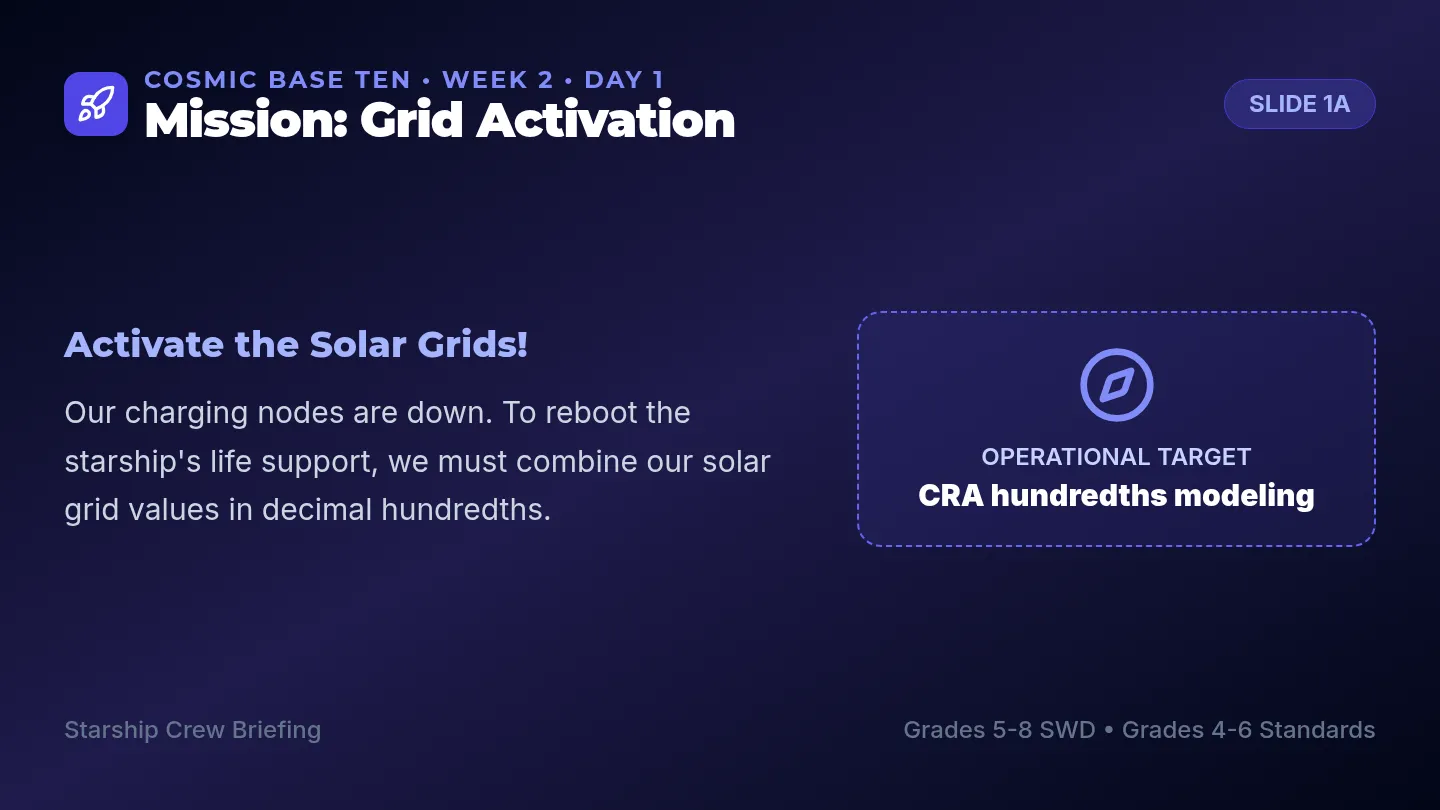
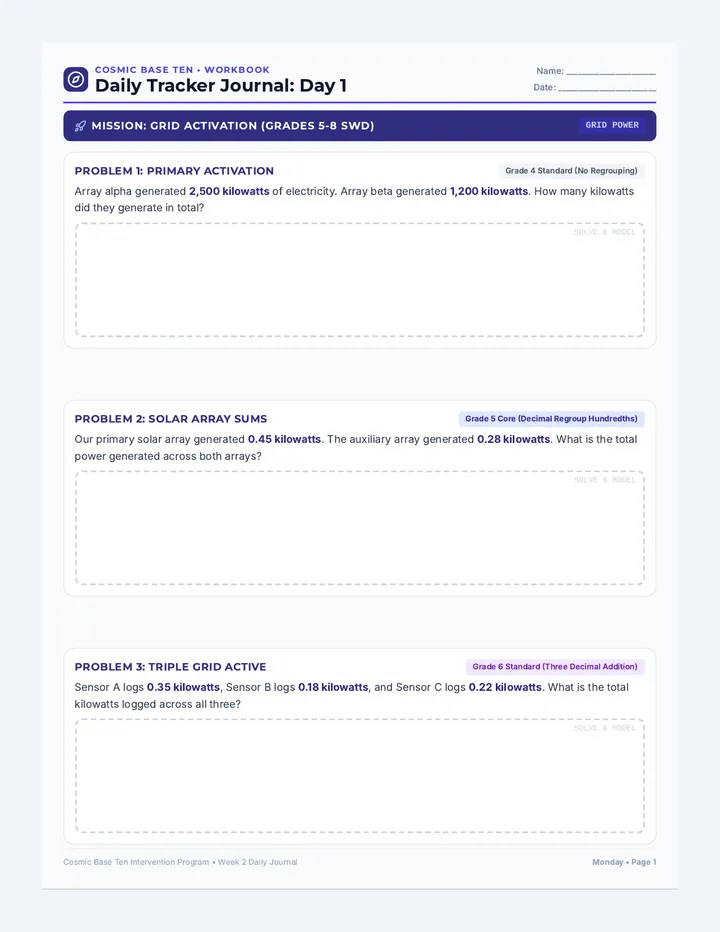
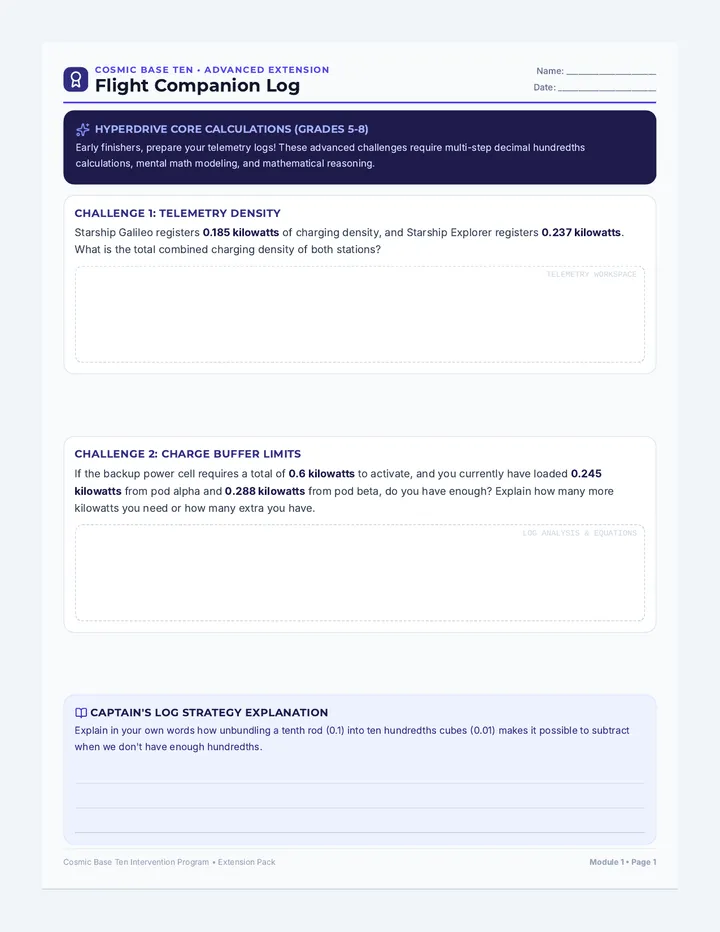
Week 2 focuses on decimal addition and subtraction with and without regrouping, using visual decimal grids and standard plastic base-10 blocks to represent tenths and hundredths in solar charging grid scenarios.