Students learn to seamlessly integrate partial quotes into their own writing through 'Quote Surgery,' analyzing Toni Morrison's Beloved as a case study and practicing with snippets from The Great Gatsby.
A multi-day literary analysis sequence on Ayn Rand's Anthem. Students track how totalitarian rules, linguistic controls, and symbolic motifs of light and dark construct the dystopian setting in Chapter 1, and analyze how individualist themes develop through plot, character relationships, and forbidden scientific discovery in Chapter 2.
A deep dive into characterization in Langston Hughes's classic short story 'Thank You, M'am' using the STEAL method. Students will analyze Roger and Mrs. Jones through collaborative stations, close reading, and presentation-led instruction.
A print-ready critical thinking and media literacy graphic organizer worksheet in landscape format (960x720px). It features an interactive layout with a tech investigator theme, guiding students through the C.H.E.C.K. framework to critically evaluate biased AI-generated content.
A 6-week literature unit for 9th grade English covering Ransom Riggs' 'Miss Peregrine's Home for Peculiar Children'. The unit explores characterization, identity, and peculiarity as a metaphor, culminating in a gothic atmosphere study and a novel-to-film comparative analysis of Tim Burton's adaptation.
A literary analysis lesson on Chapter 2 of Anthem, focusing on how individualist themes are developed through key plot events, character interactions (including the Golden One), and forbidden scientific discoveries. Students trace the spark of rebellion and analyze theme development.
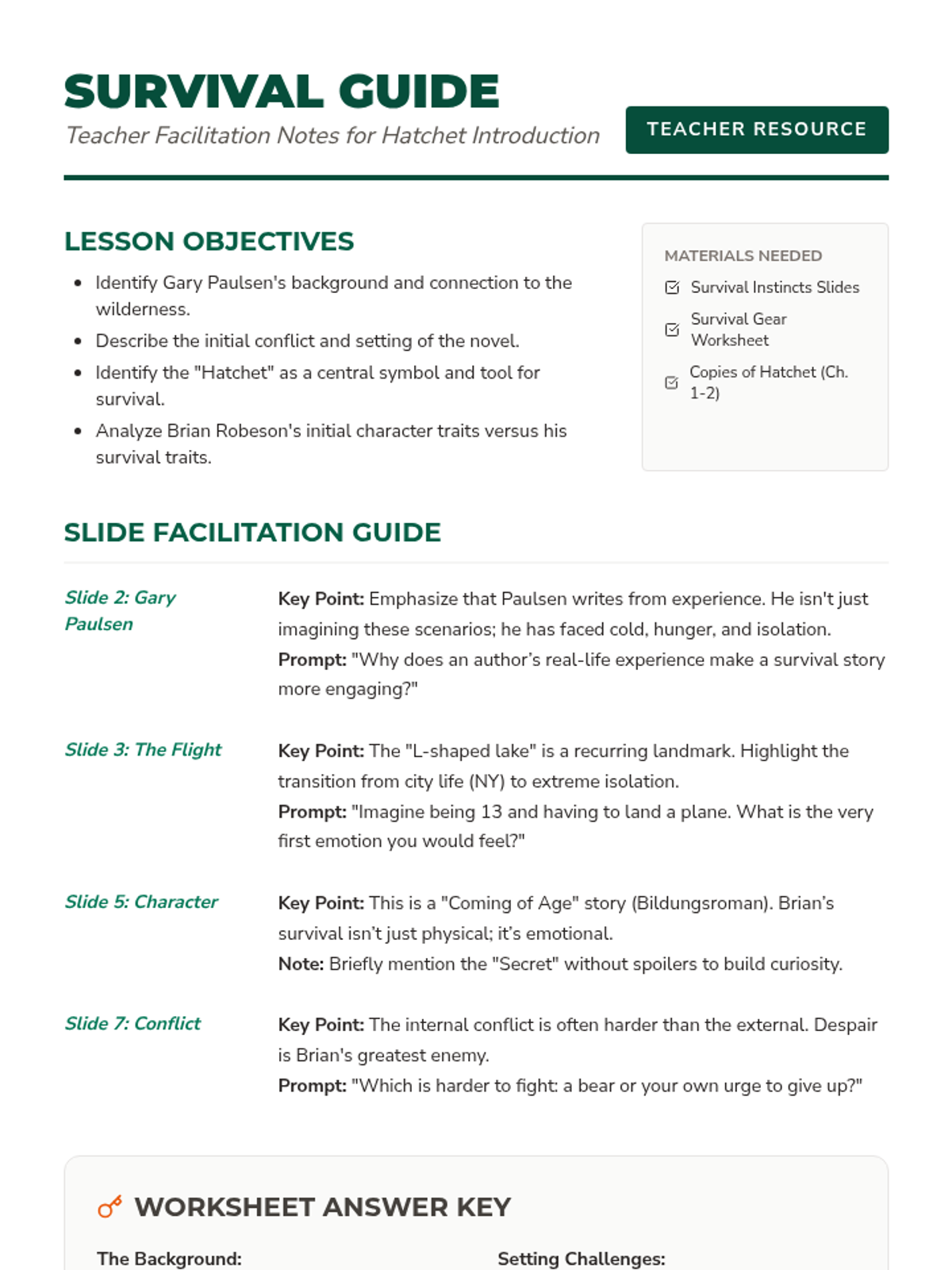
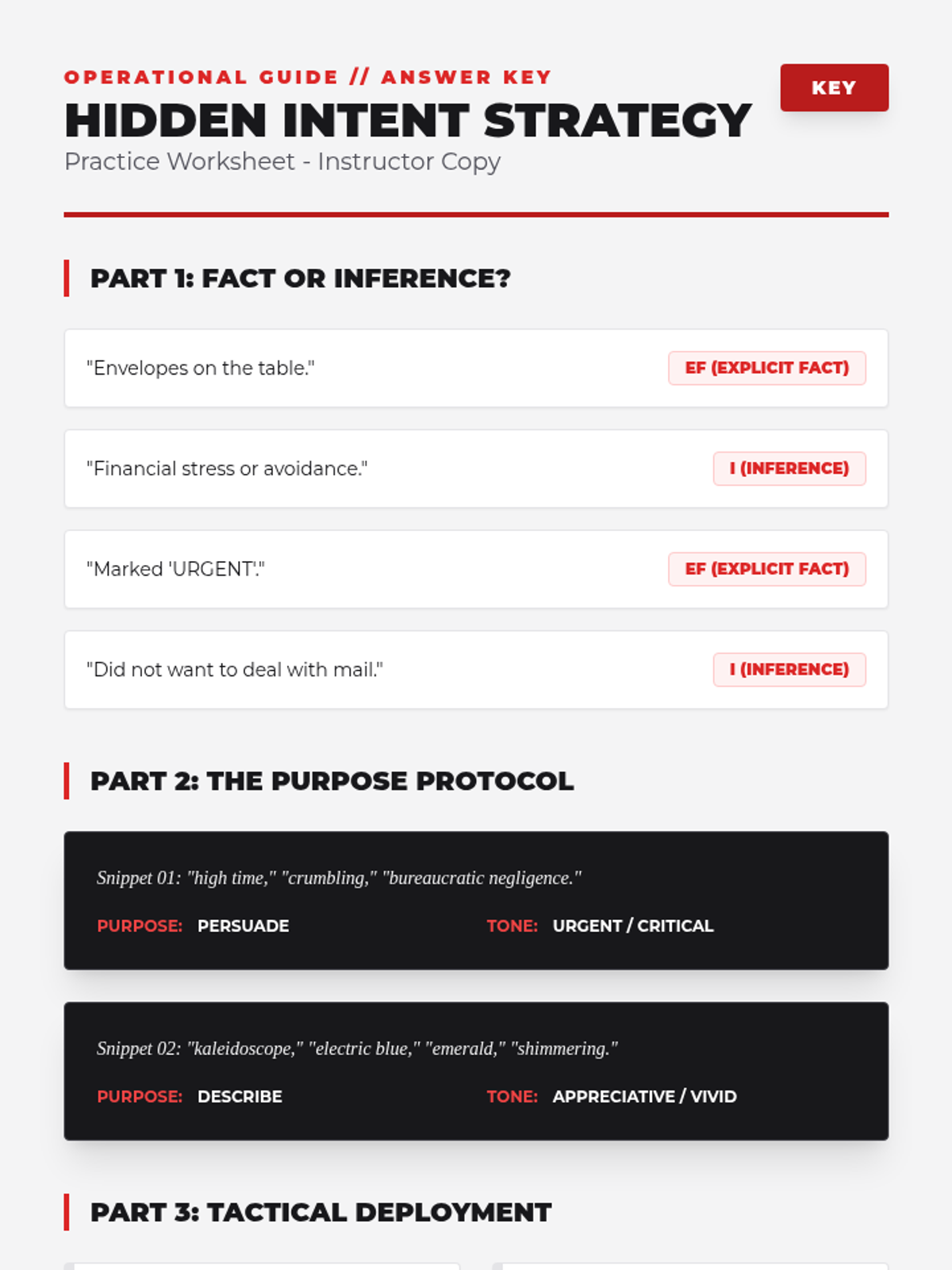
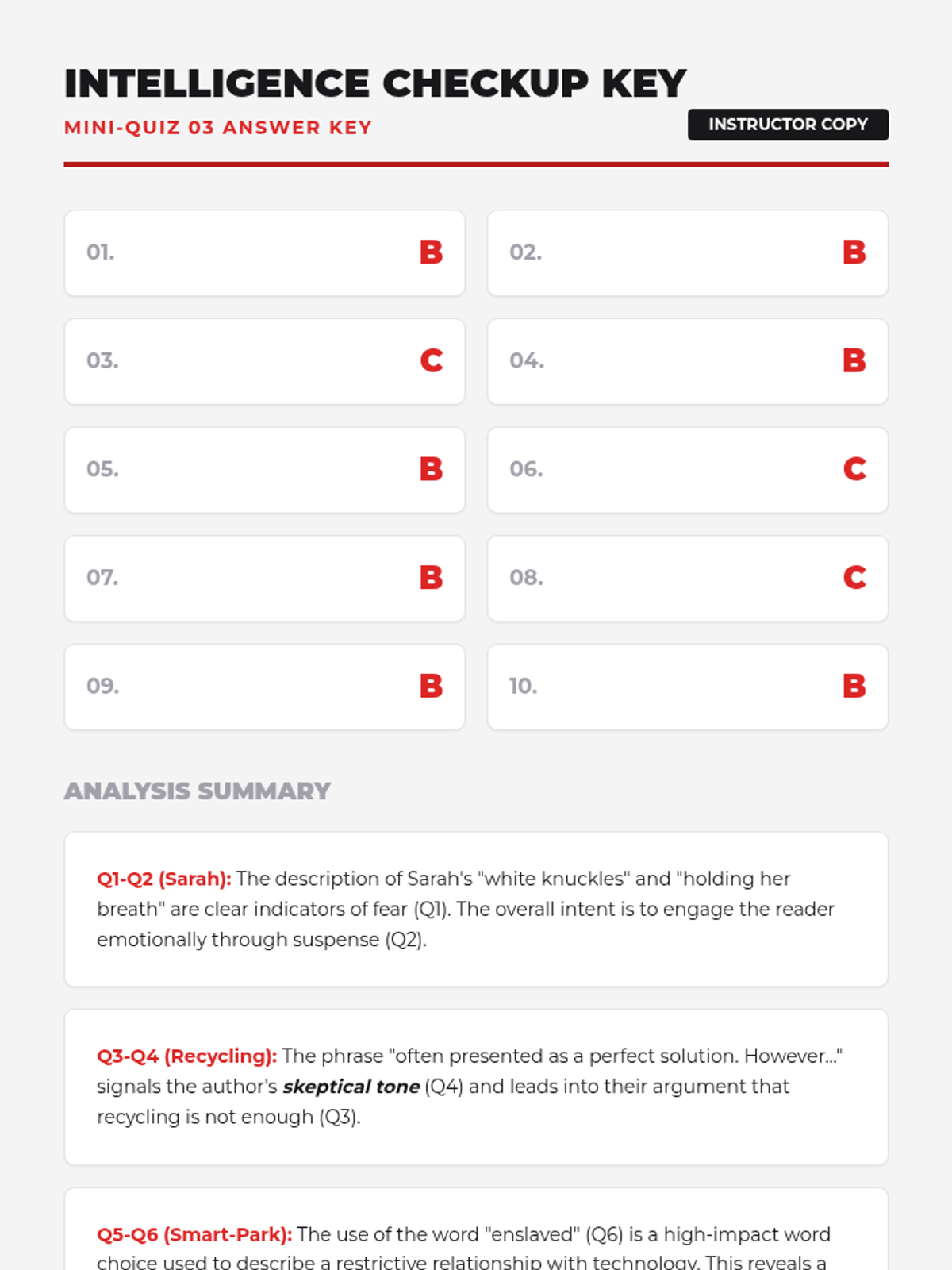
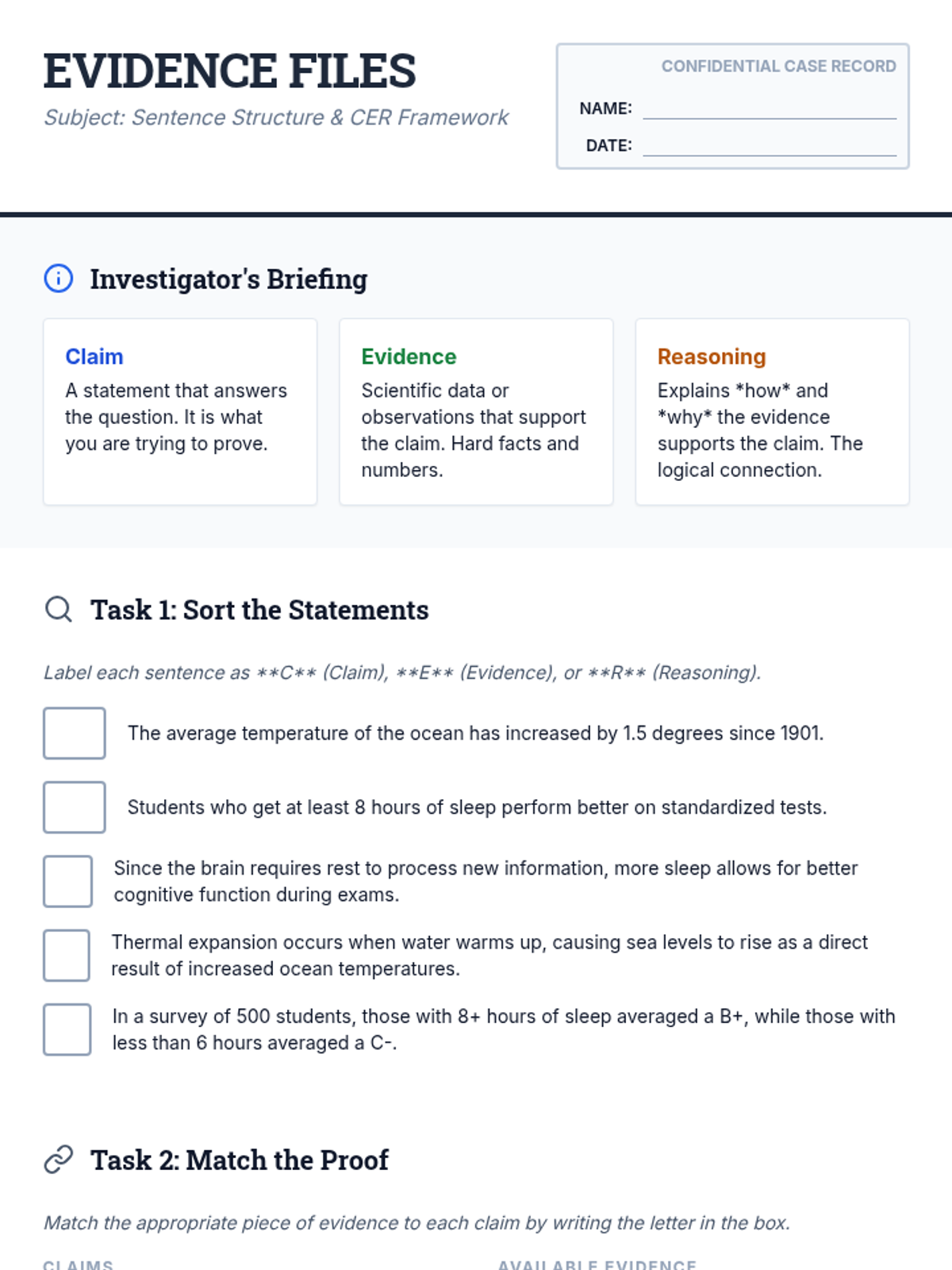
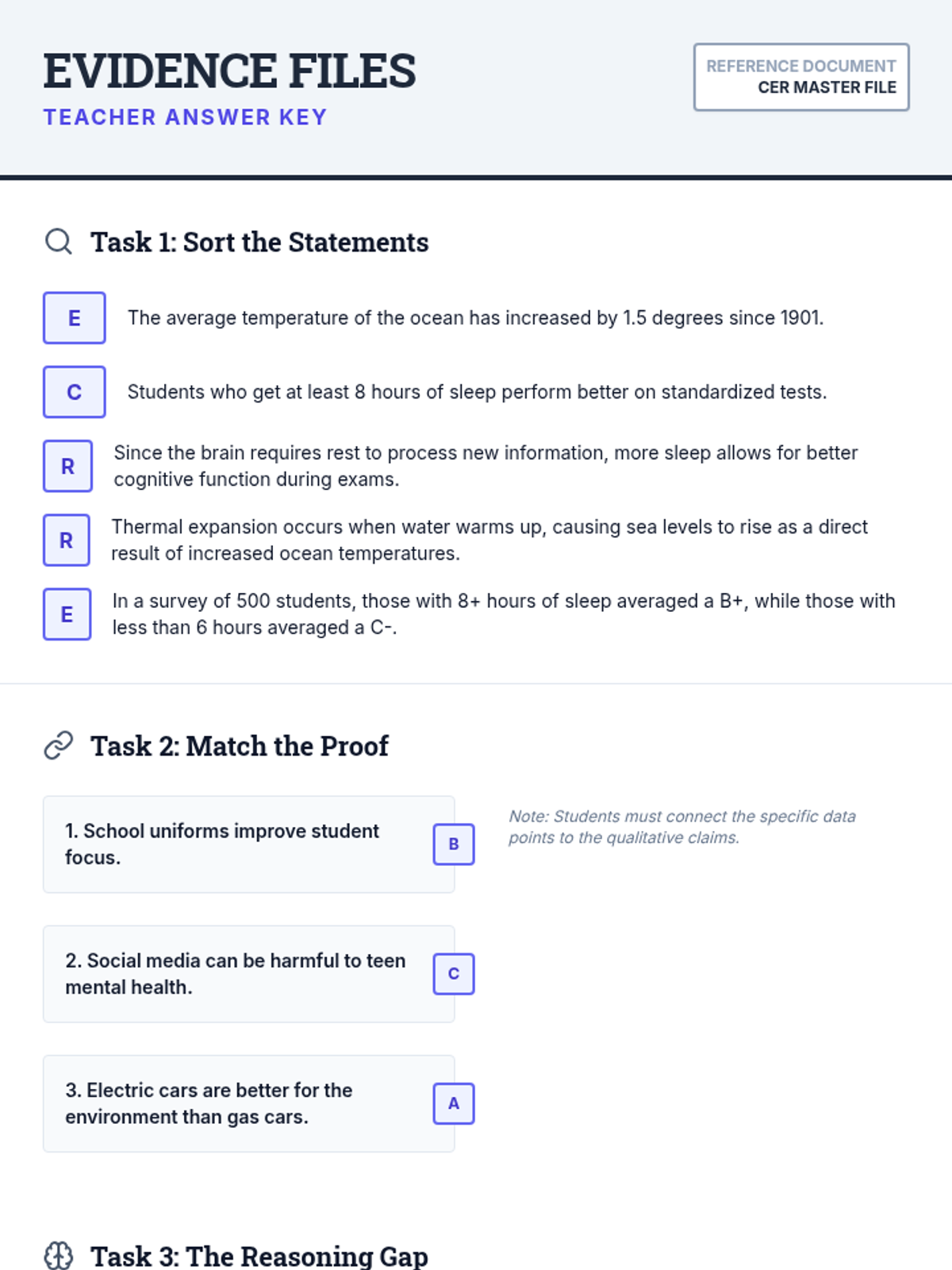
A two-page printable teacher guide containing lesson objectives, an instructional pacing guide, facilitation tips for the stations, and a complete answer key for the student worksheet.
A two-day, high-engagement orientation and language-building sequence designed for exactly two newcomer English learners in a public speaking and debate context. It balances relationship building, school orientation, sight-word games, and a low-anxiety introduction to the year-end debate goal.
A deep-dive textual analysis lesson on Chapter 1 of Ayn Rand's Anthem, focusing on inferring the collectivist rules and analyzing the symbolic contrast of light and darkness. Students learn to make logical inferential leaps using textual evidence and document their discoveries.
A 7-slide introductory presentation using a dark-themed cobalt and amber palette, exploring the STEAL method and guiding students through 'Thank You, M'am' analysis.
An Orton-Gillingham instructional sequence for an older student focusing on open syllables, multi-syllable pacing, final suffix spellings (-tion vs -sion), and consonant-le syllables. It incorporates sophisticated design elements and nonsense word application to reinforce linguistic rules.
Week 6 transitions to Tim Burton's 2016 film adaptation. Students compare the novel and film, analyzing major director choices (like swapping Emma and Olive's powers) and craft a comparative analytical essay.
Four printable station cards designed for collaborative student groups, focusing on key characterization details of Roger and Mrs. Jones using the STEAL method.