Students conduct small-scale experiments to optimize solute-to-solvent ratios for peak performance and duration.
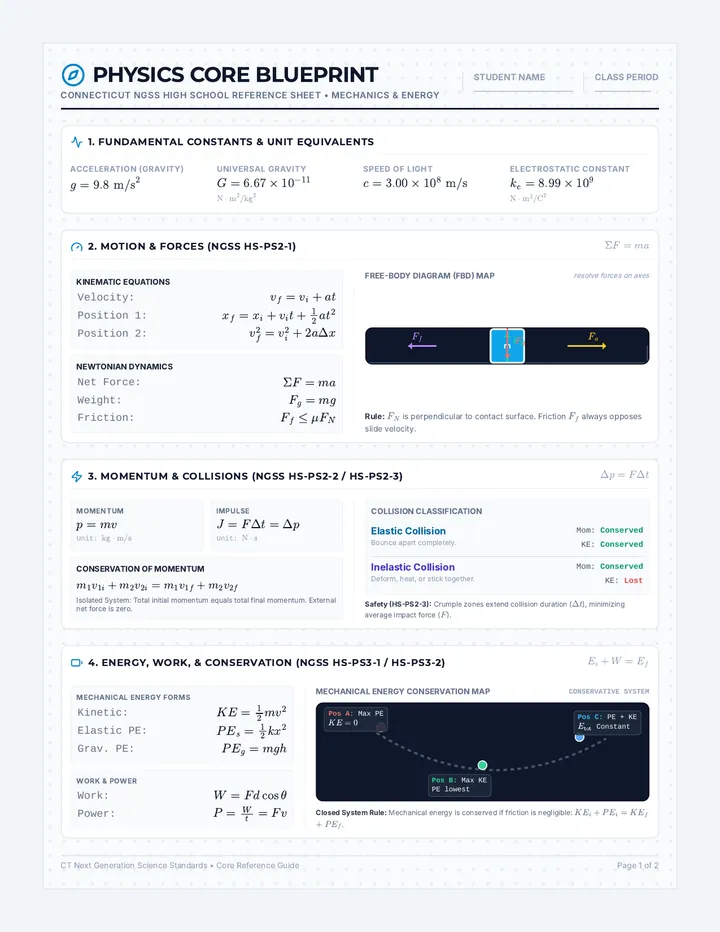
A collection of foundational reference sheets, formula grids, and problem-solving templates designed to support Connecticut high school physics students across all NGSS units.
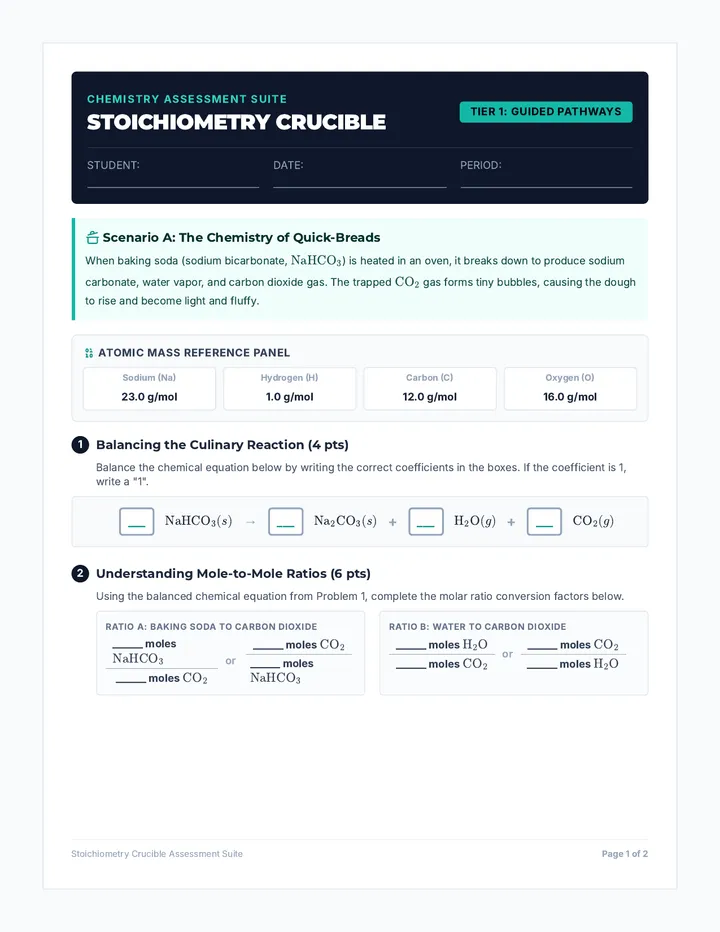
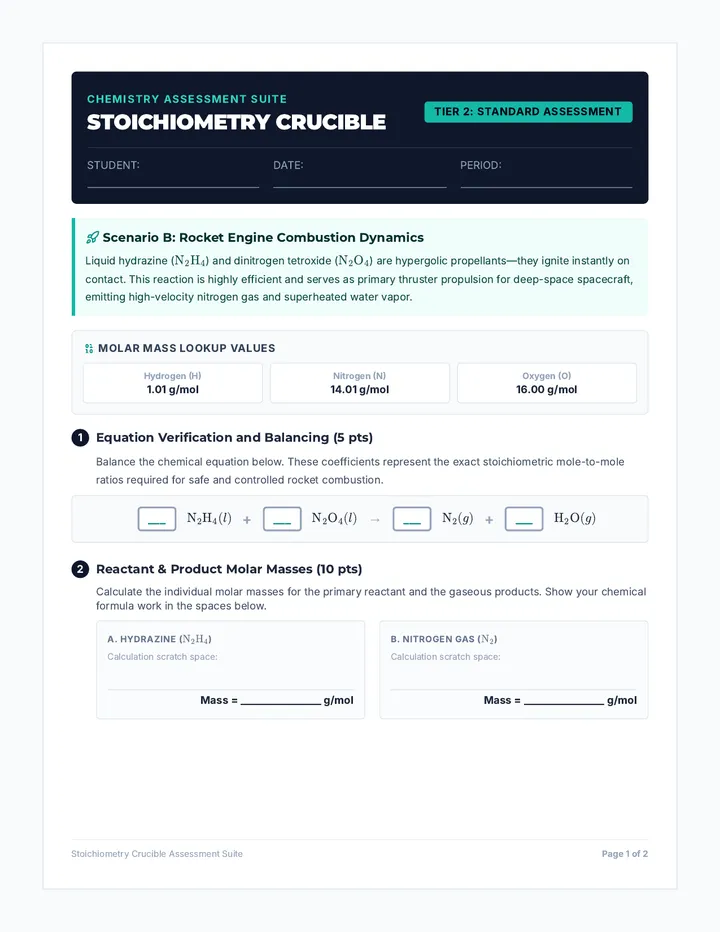
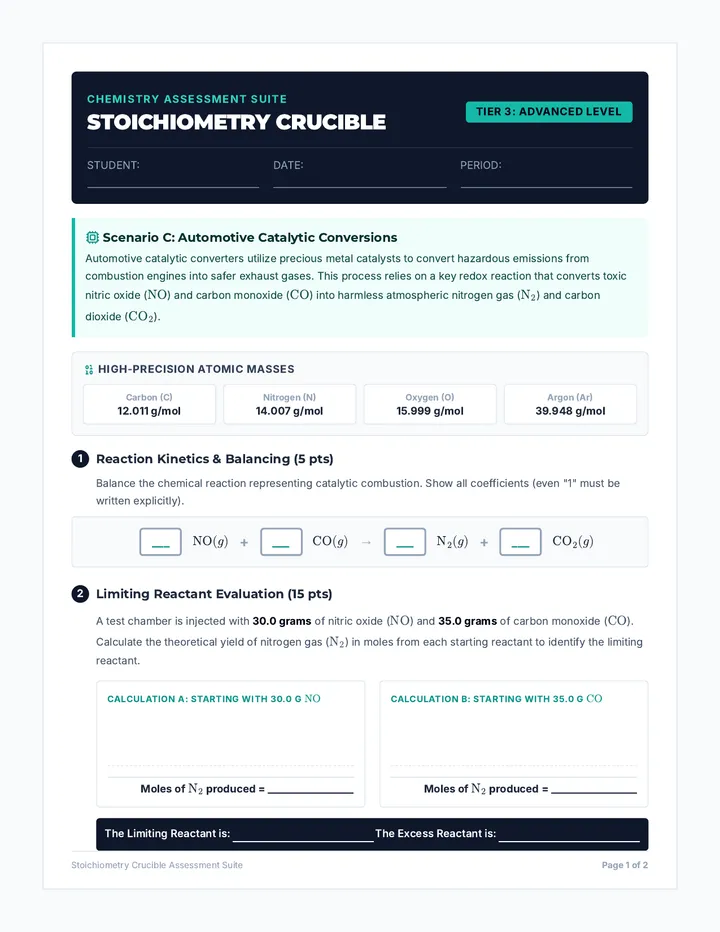
A differentiated stoichiometry assessment suite tiered by mathematical complexity, visual scaffolding, and conceptual depth. Features three distinct, parallel versions of a 2-page quiz centered around unique real-world chemistry applications.
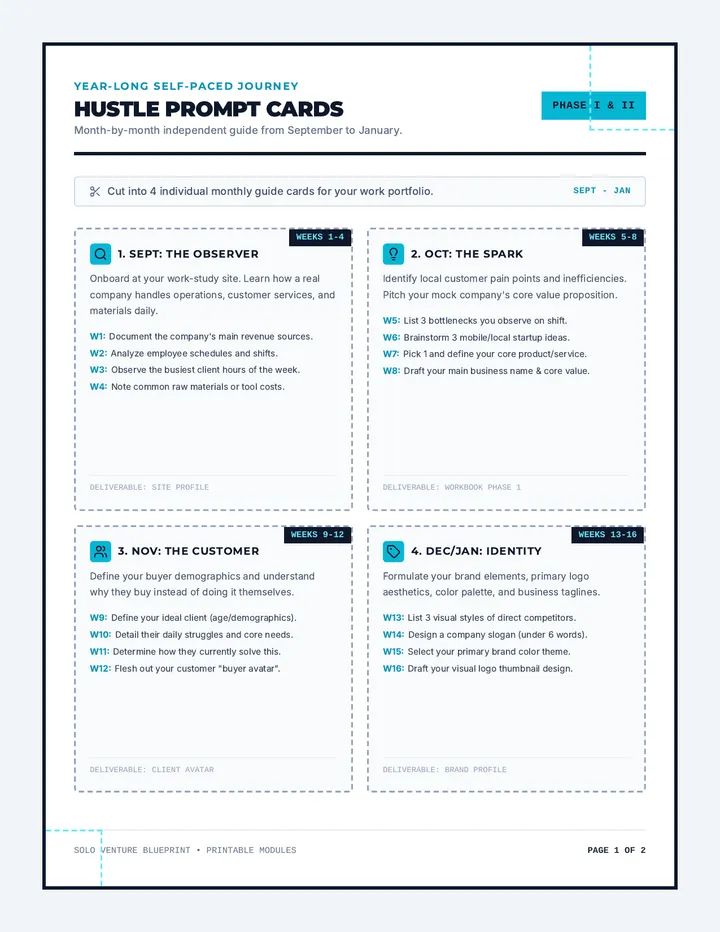
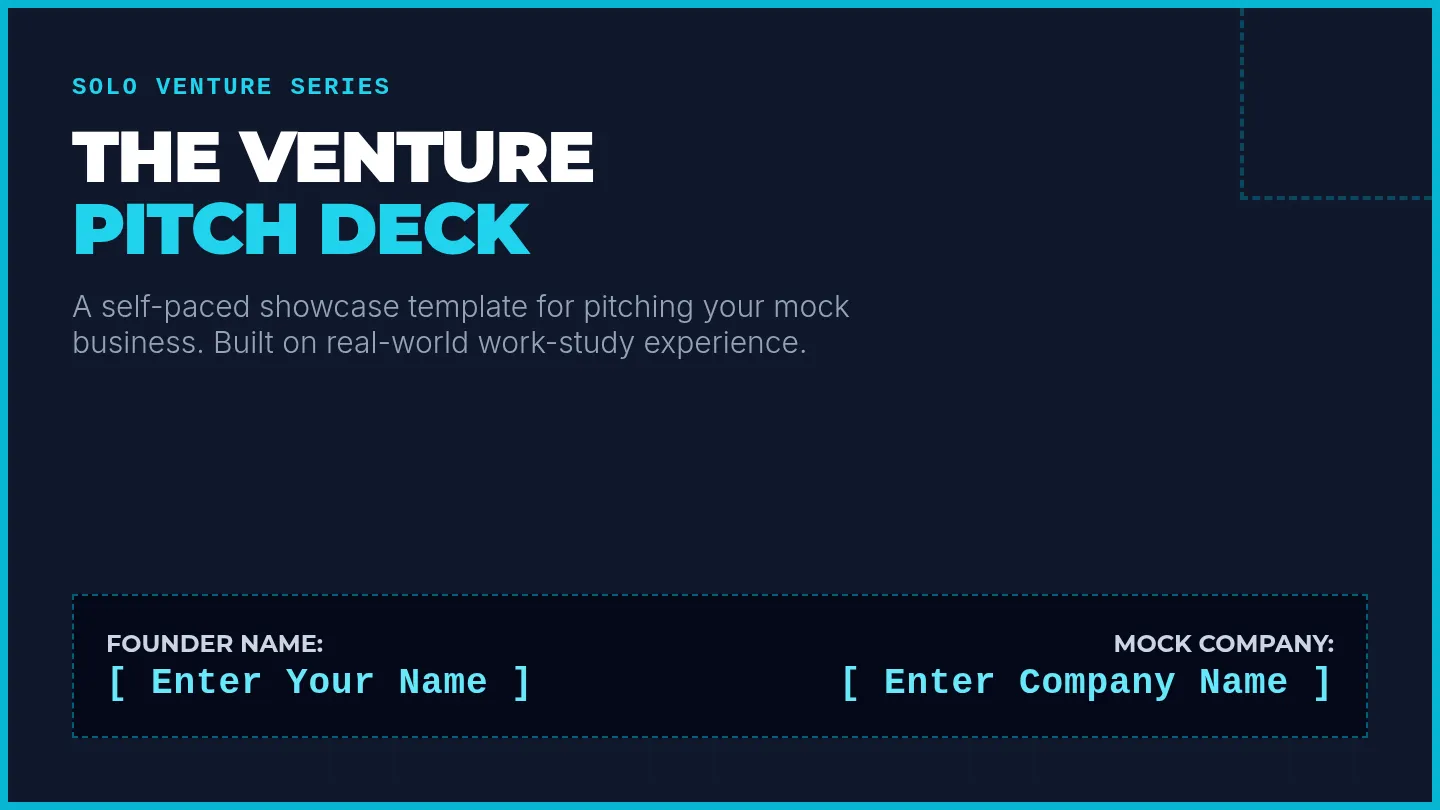
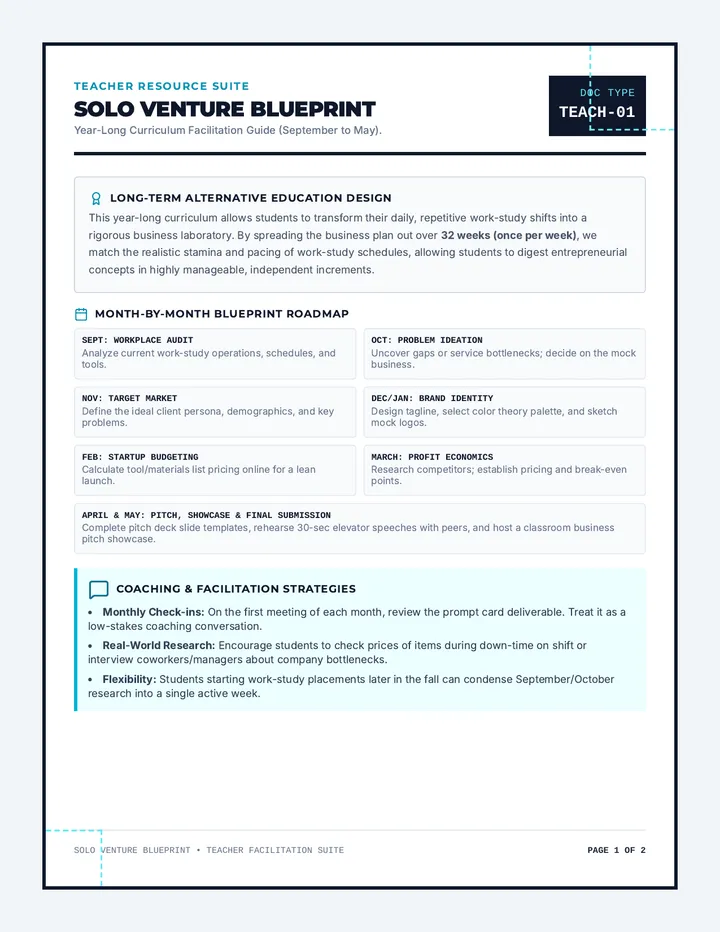
A modular, self-paced entrepreneurship project designed for alternative education students in work-study programs. It bridges real-world work experience with business planning, allowing students to design and pitch their own mock business.
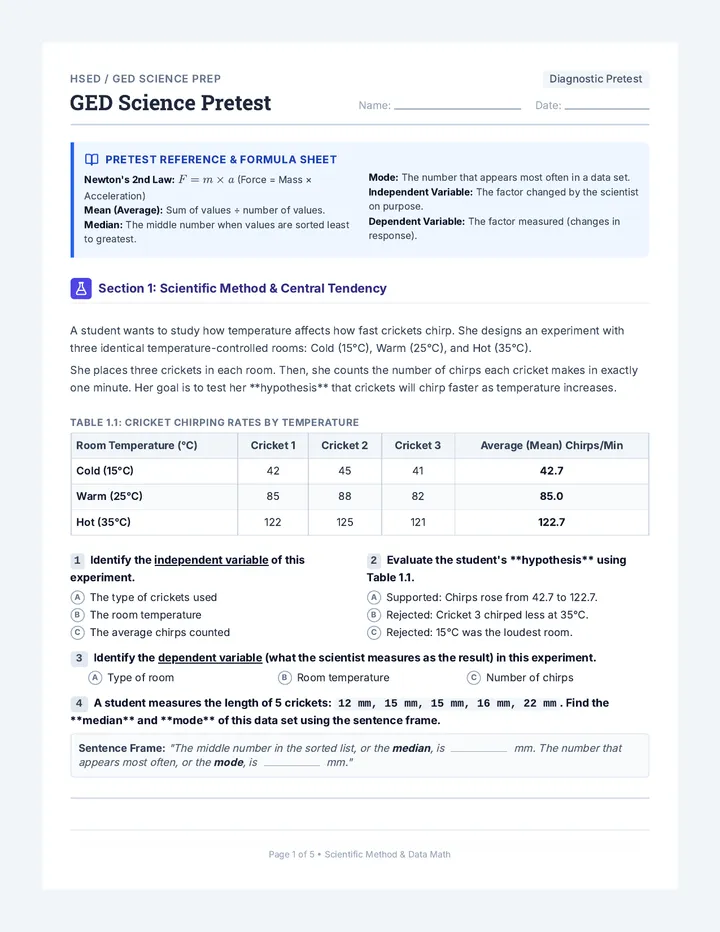
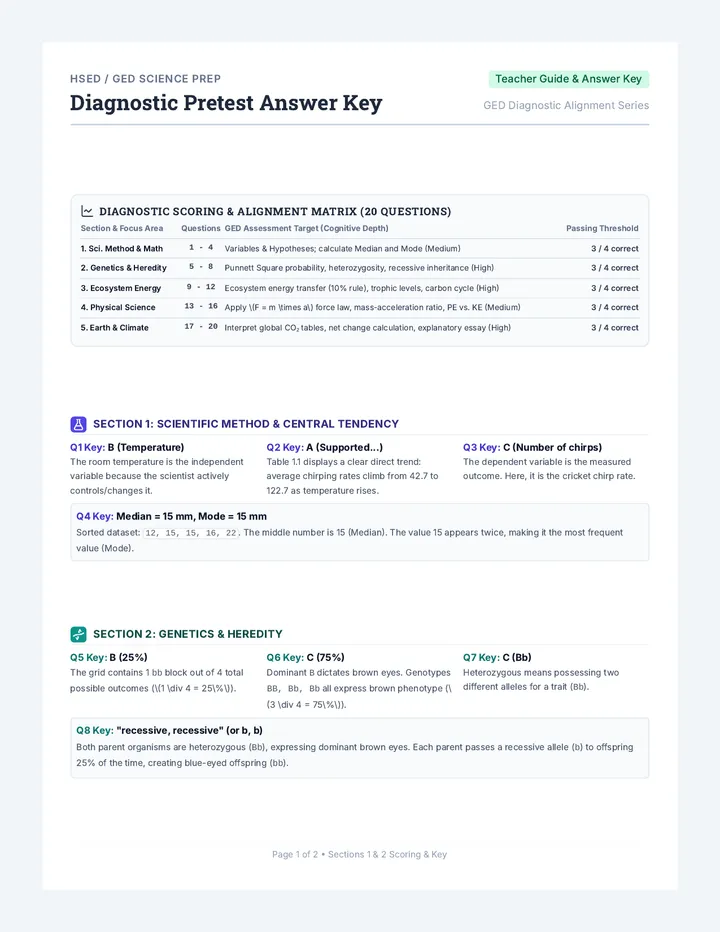
A comprehensive, scaffolded pretest aligned to the GED Science test. It includes student-facing diagnostics for life, physical, earth, and space sciences, alongside a detailed teacher answer key with explanatory feedback.
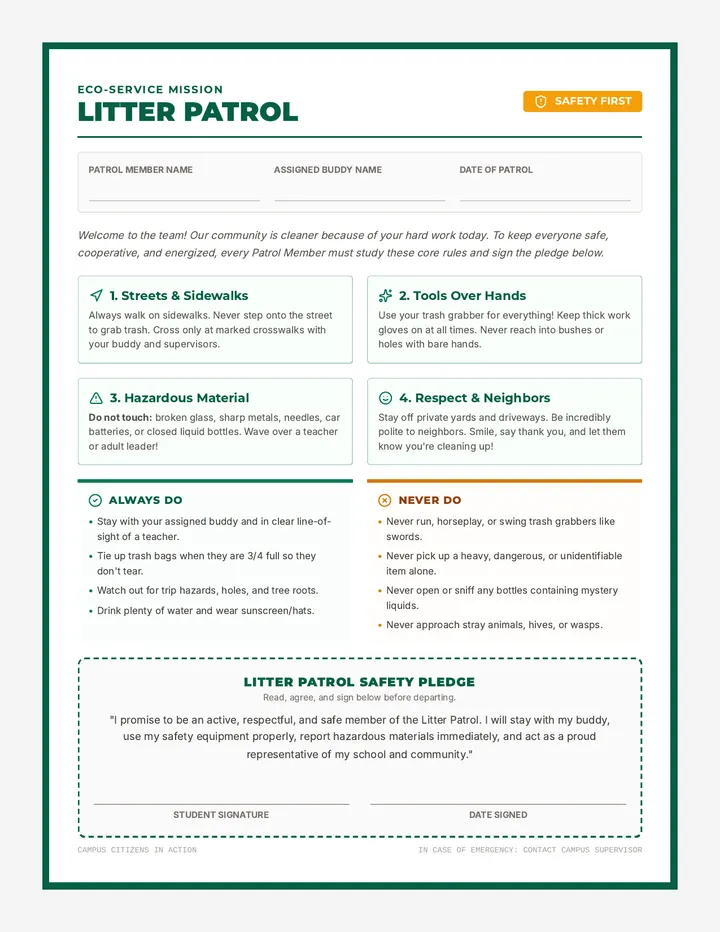
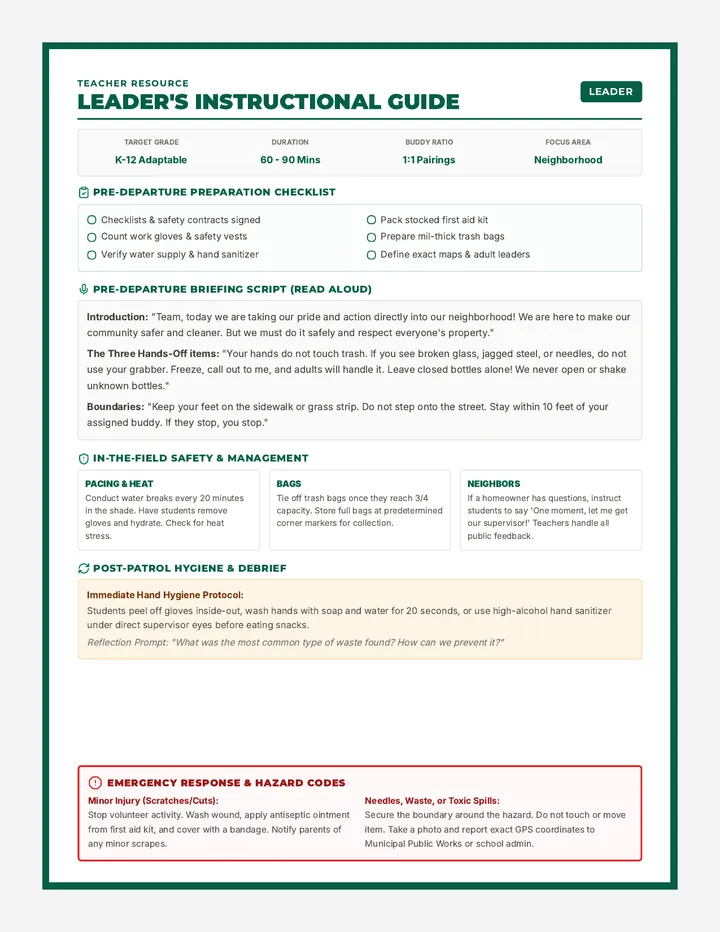
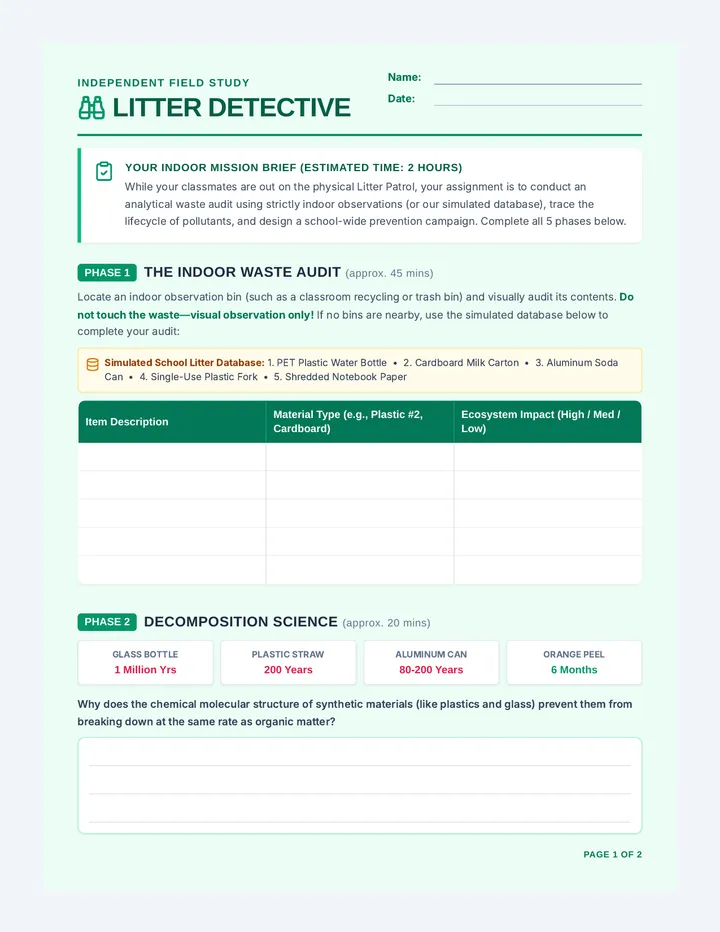
A comprehensive safety and preparation kit for students and teachers participating in a neighborhood trash pick-up community service project. It includes safety slides, a student contract and checklist, and a detailed teacher instruction guide.
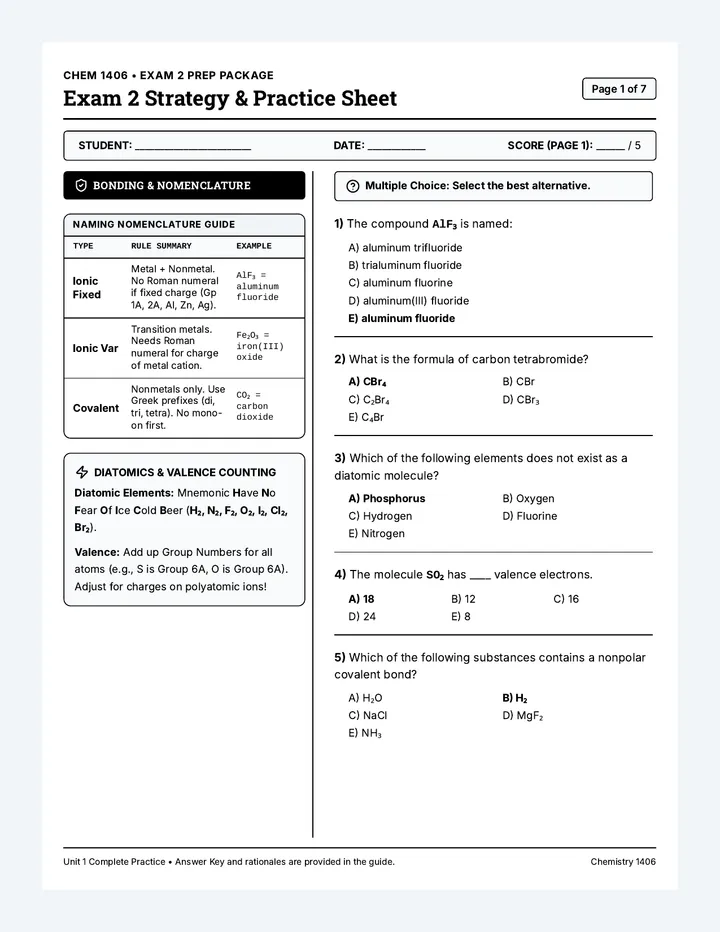
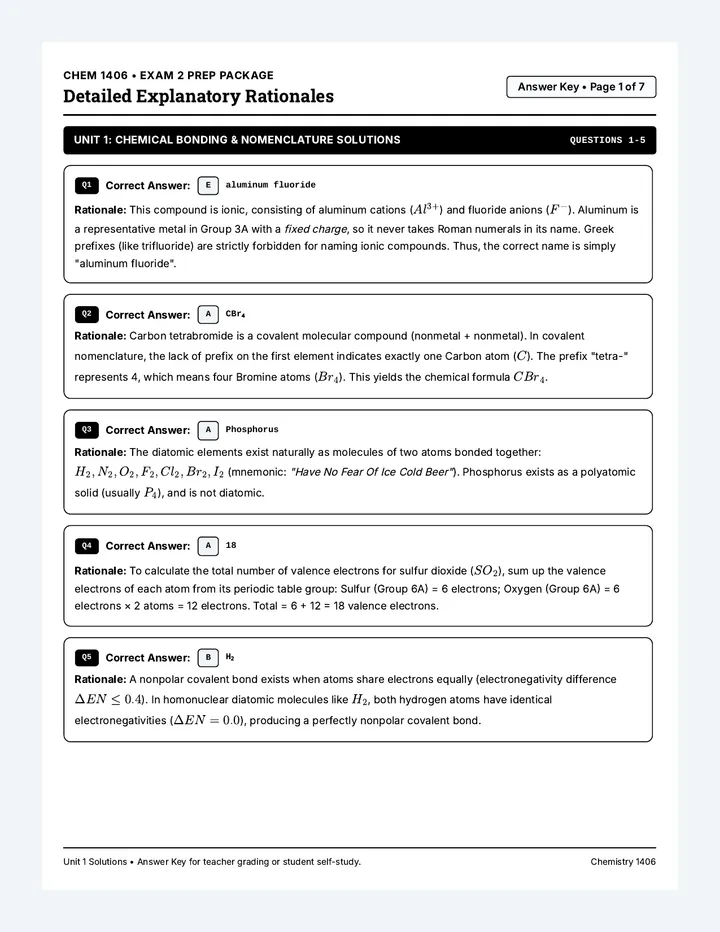
A comprehensive study and practice package for Chemistry 1406 Exam 2. It contains a highly structured, side-by-side strategy guide paired with a 30-question practice exam, and a matching detailed answer key with step-by-step rationales.
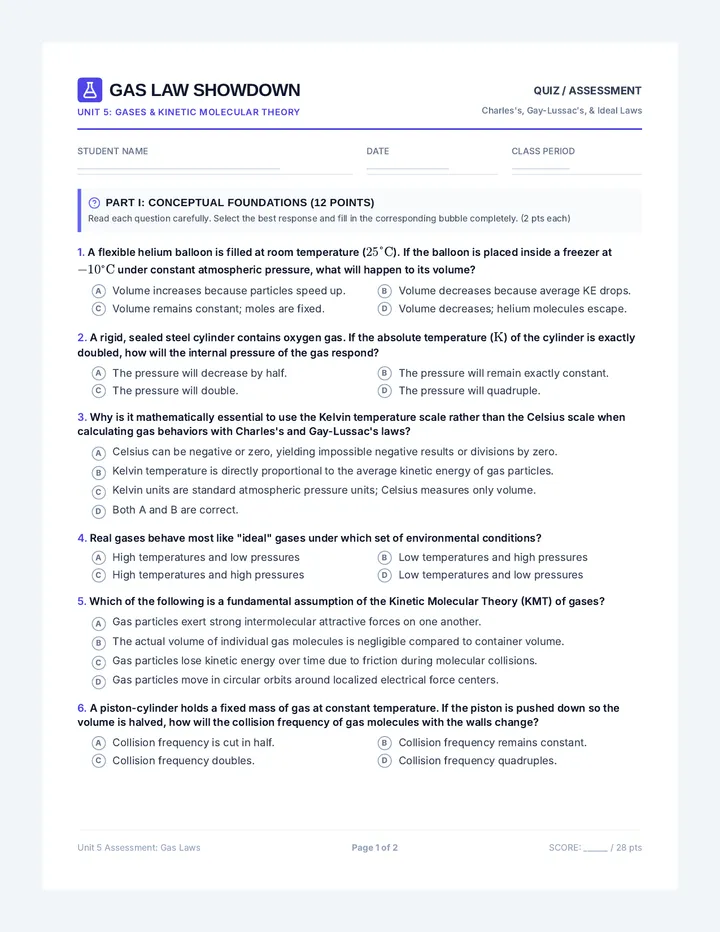
A rigorous assessment lesson covering Charles's Law, Gay-Lussac's Law, and the Ideal Gas Law. Students demonstrate understanding through conceptual multiple-choice questions and solve multi-step algebraic calculations with gas behavior formulas.
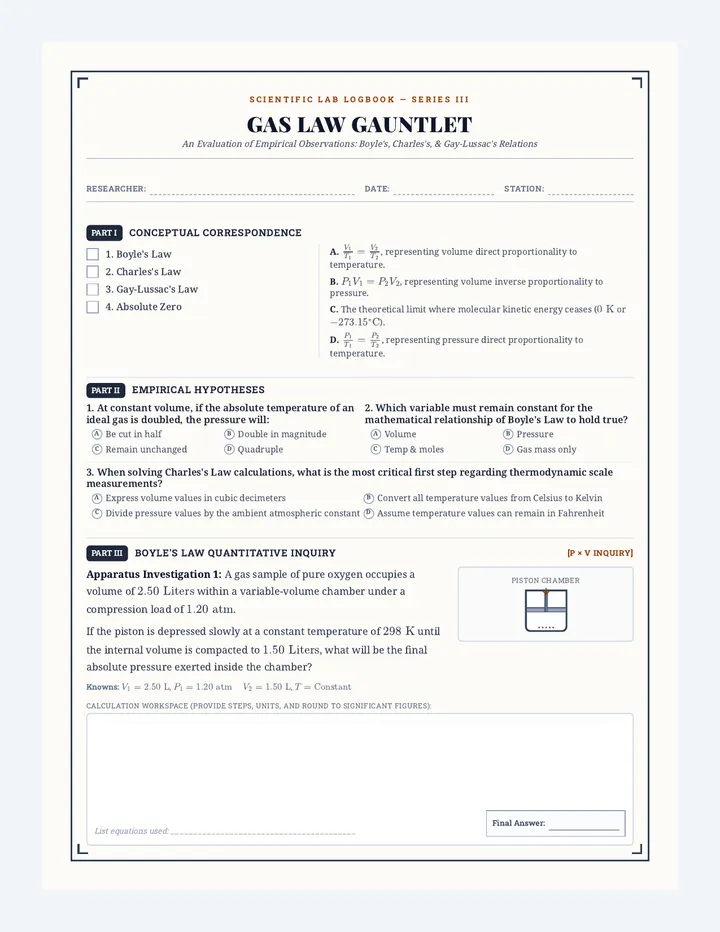
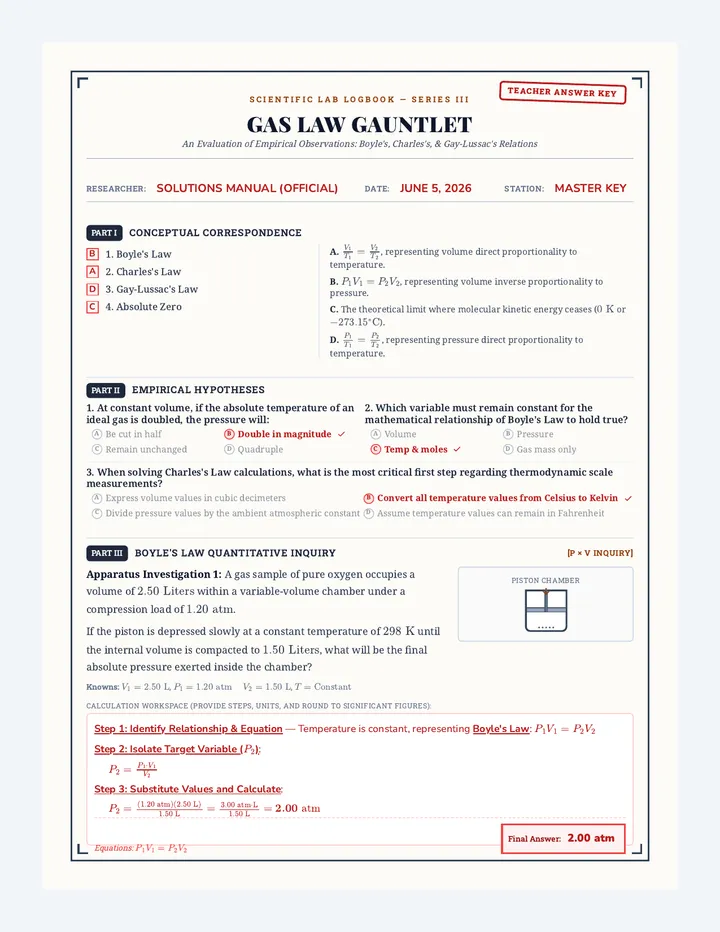
A comprehensive assessment package focused on the individual empirical gas laws (Boyle's, Charles's, and Gay-Lussac's laws). It includes a beautifully formatted printable student quiz and a highly detailed step-by-step teacher answer key, both themed around a vintage 19th-century scientific research log.
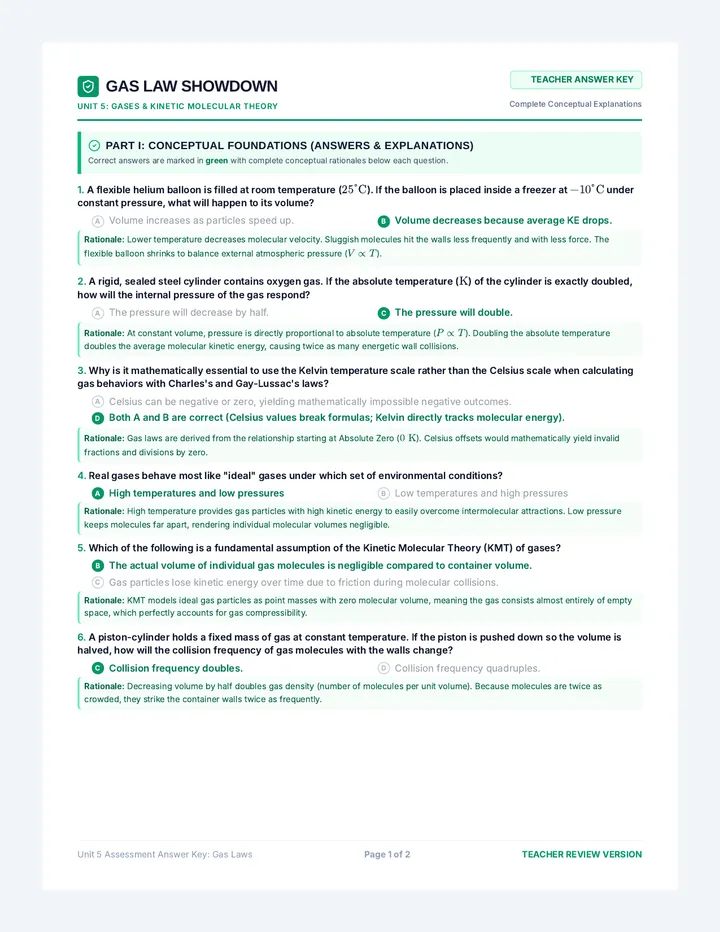
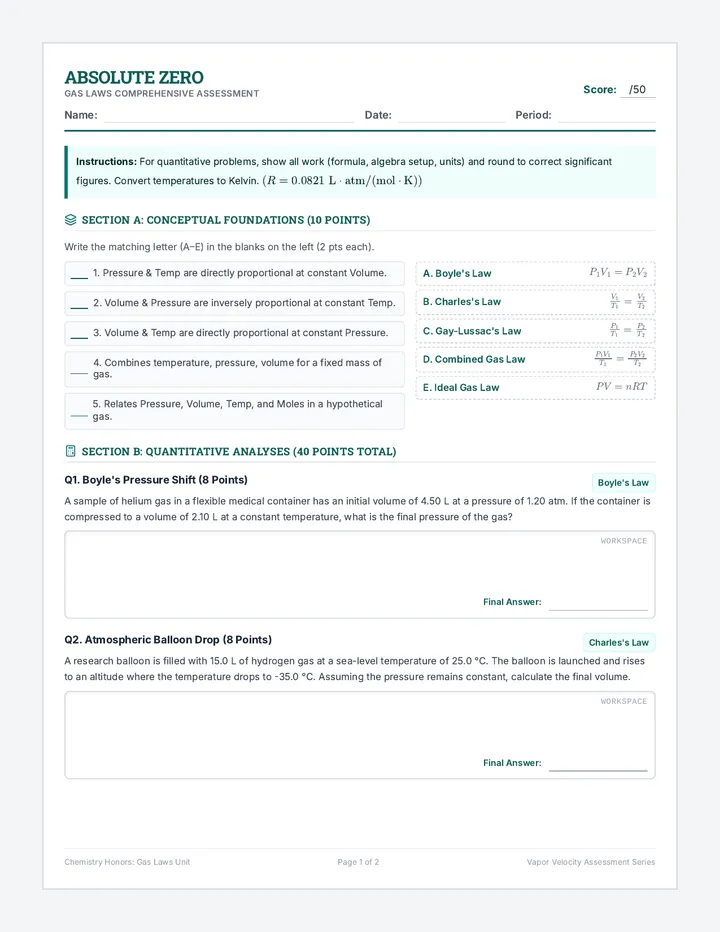
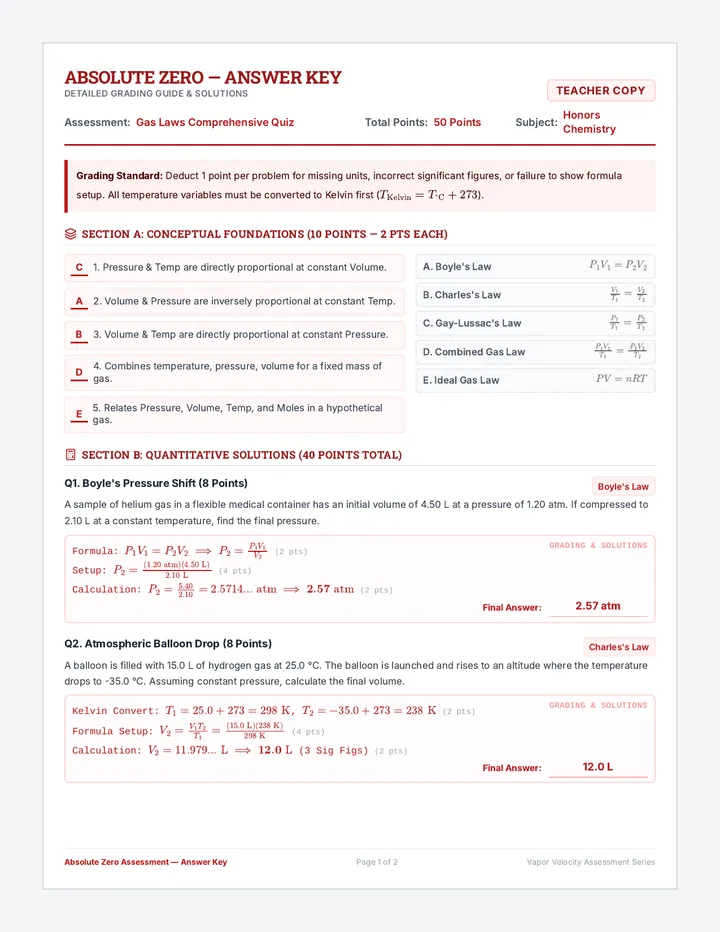
A comprehensive assessment lesson on the behavior of gases. Students demonstrate their understanding of Boyle's, Charles's, Gay-Lussac's, Combined, and Ideal gas laws through theoretical and quantitative problem-solving.
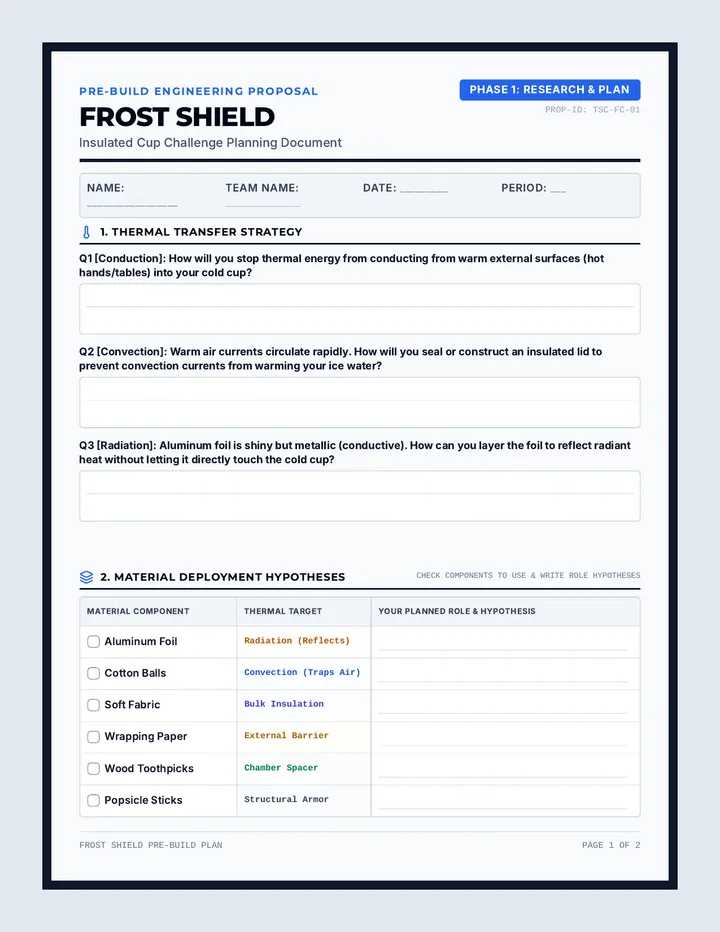
An engineering design challenge where students design, prototype, and test an insulated cup to keep water cold. Emphasizes thermal energy transfer, materials science properties, the engineering process, and data analysis.
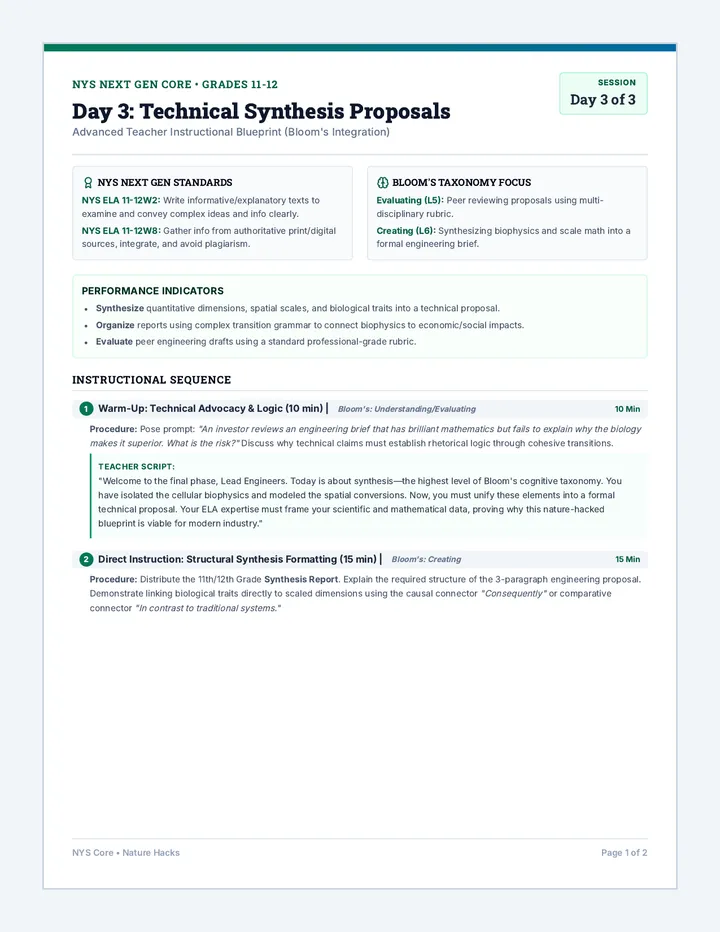
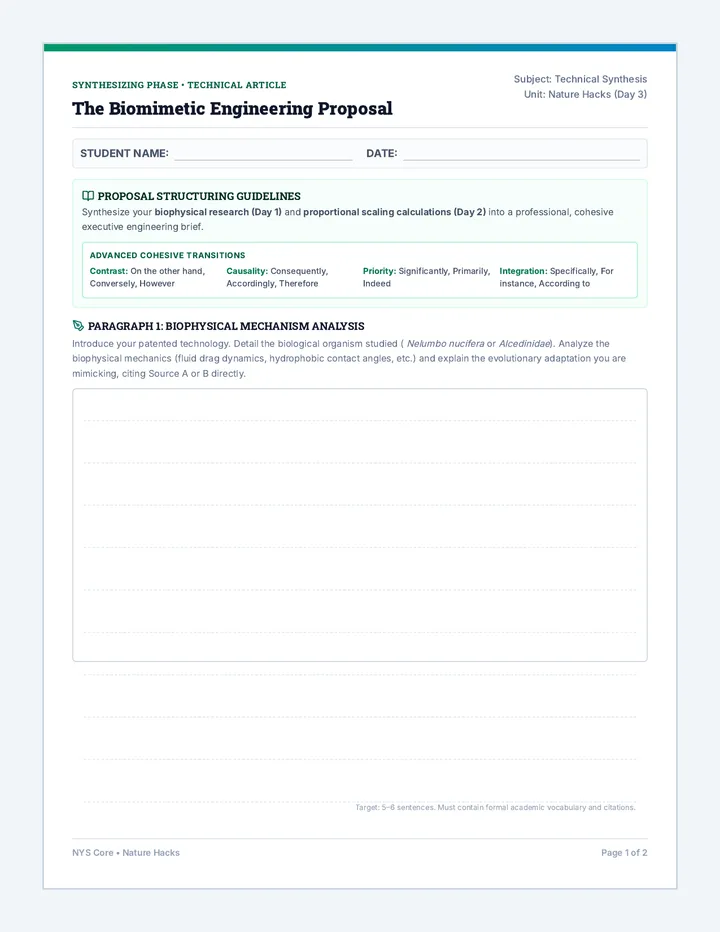
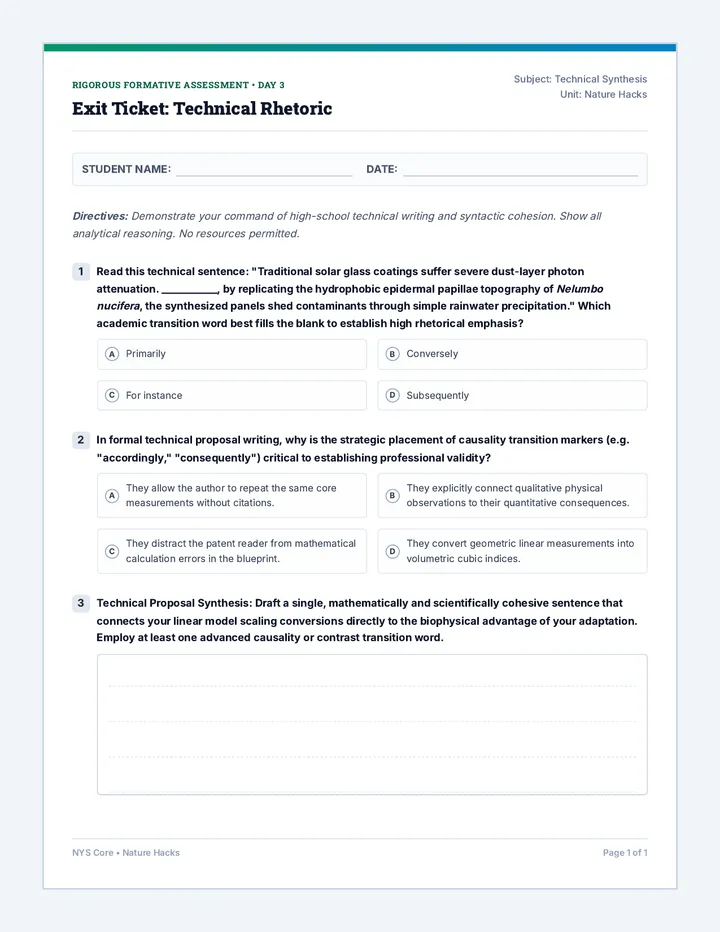
Day 3 of the Nature Hacks unit. Students synthesize their research and engineering blueprints to write a cohesive informational synthesis article, and complete a multi-disciplinary rubrics-based self-assessment.
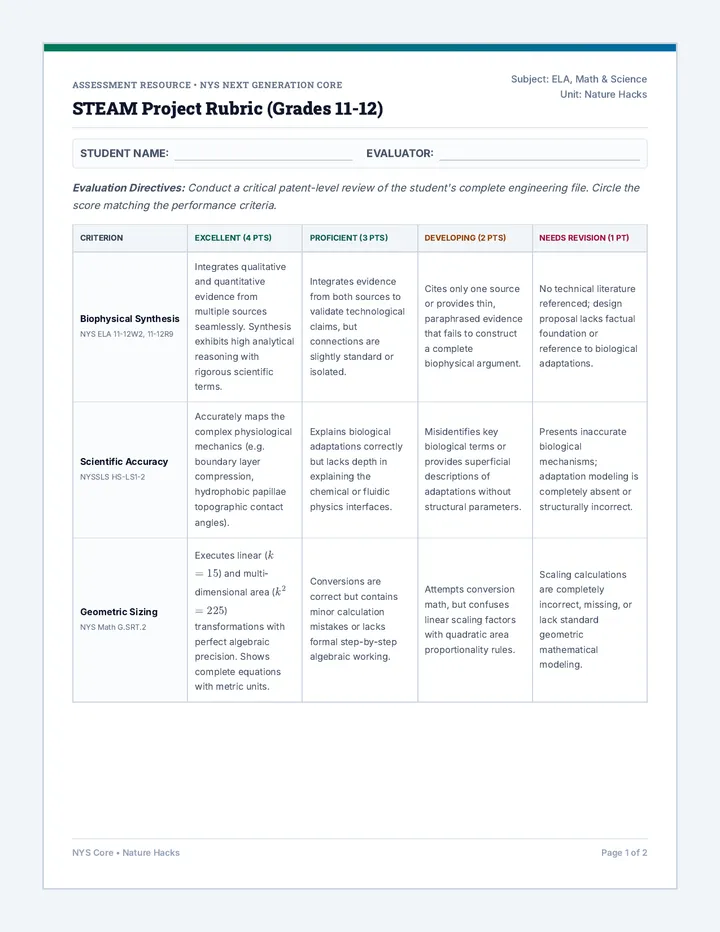
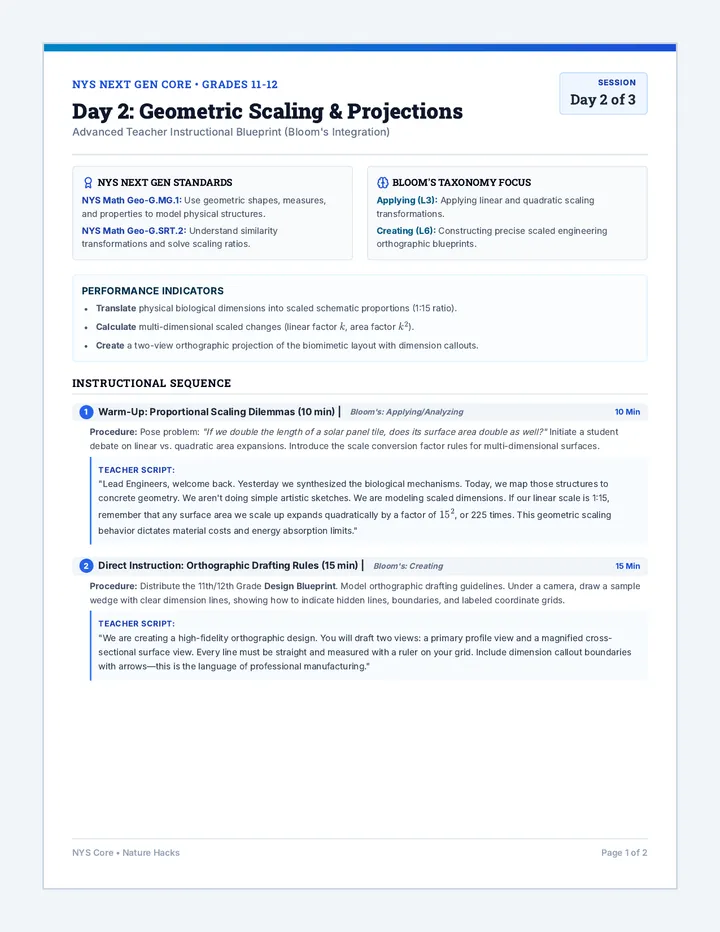
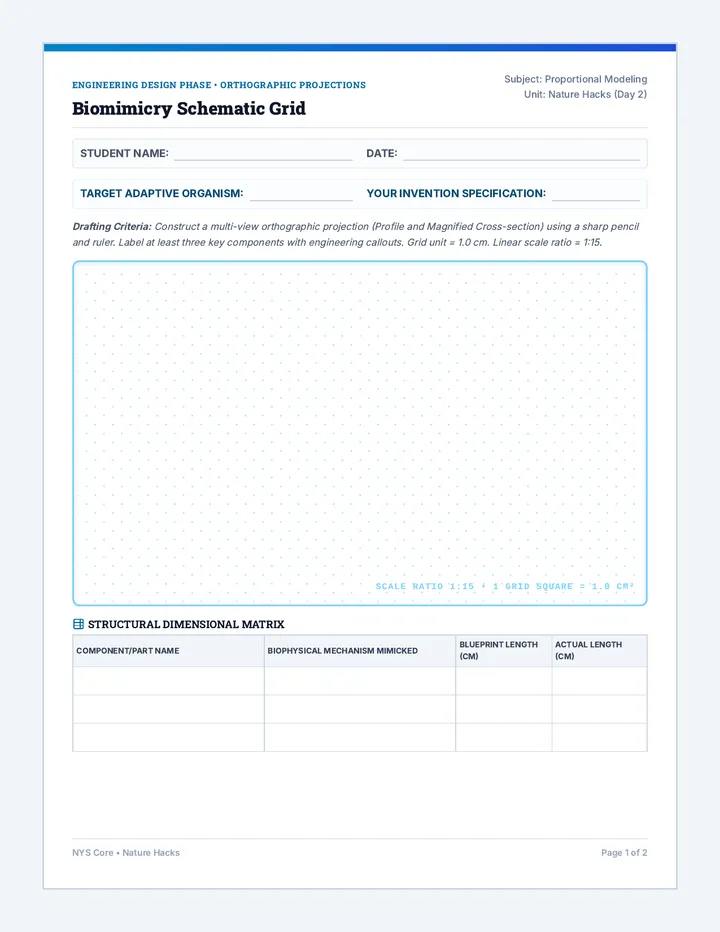
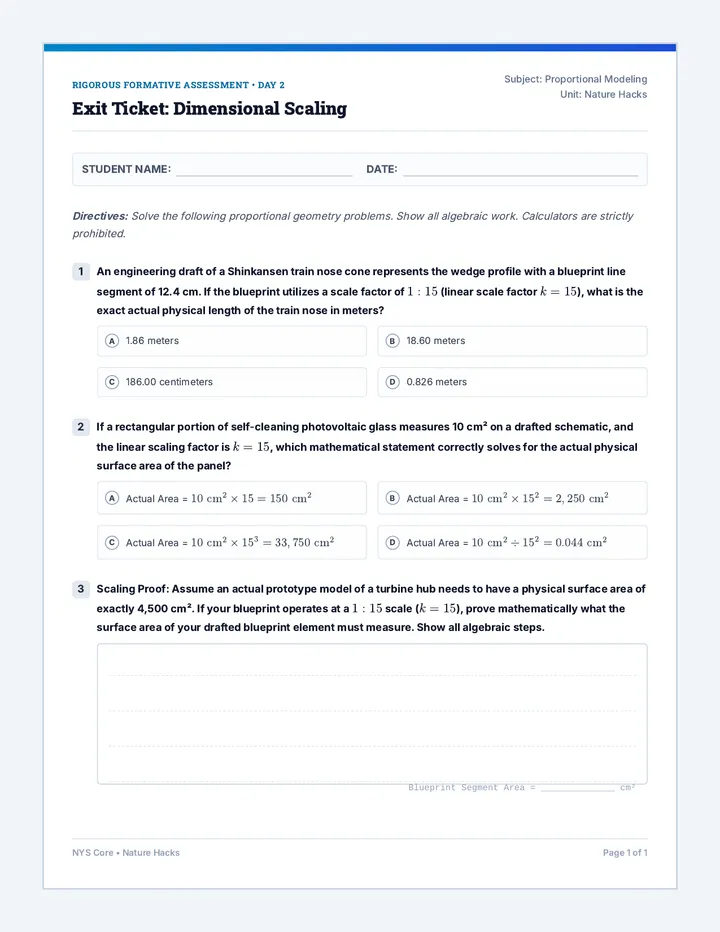
Day 2 of the Nature Hacks unit. Students draft schematic drawings of their biomimetic solutions, apply scale factor mathematics to size their designs, and write technical specifications.
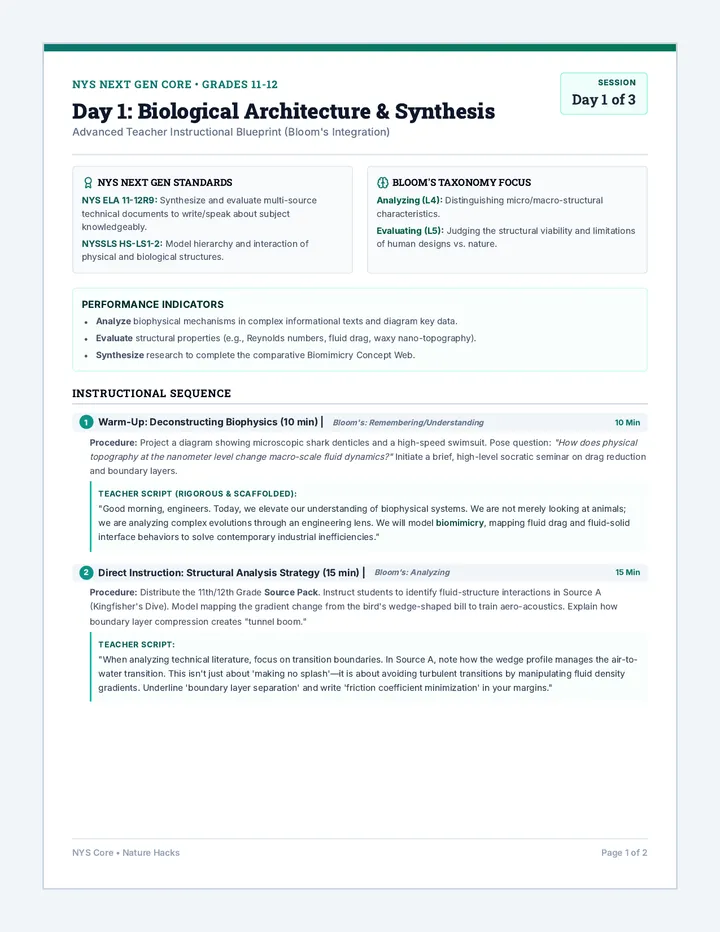
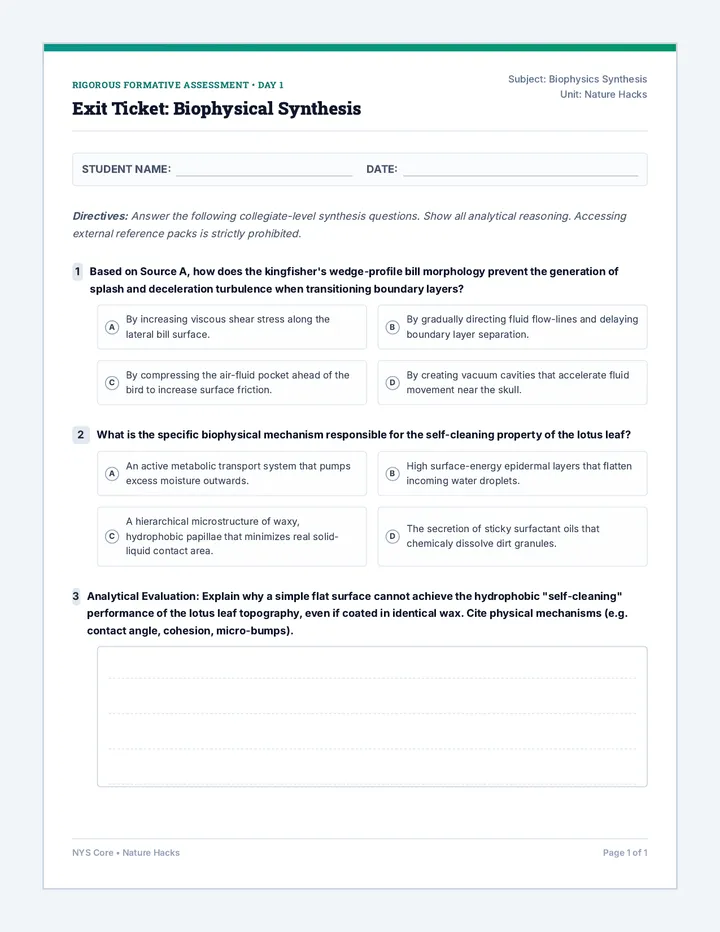
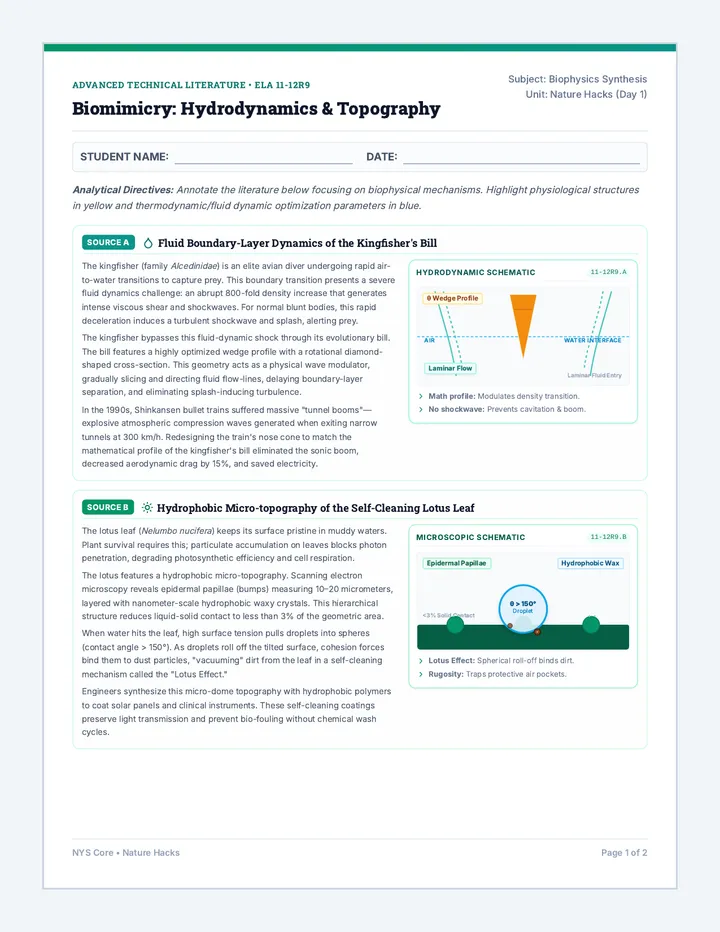
Day 1 of the Nature Hacks unit. Students explore the concept of biomimicry, read informational sources about animal/plant adaptations, and extract key data for their engineering designs.
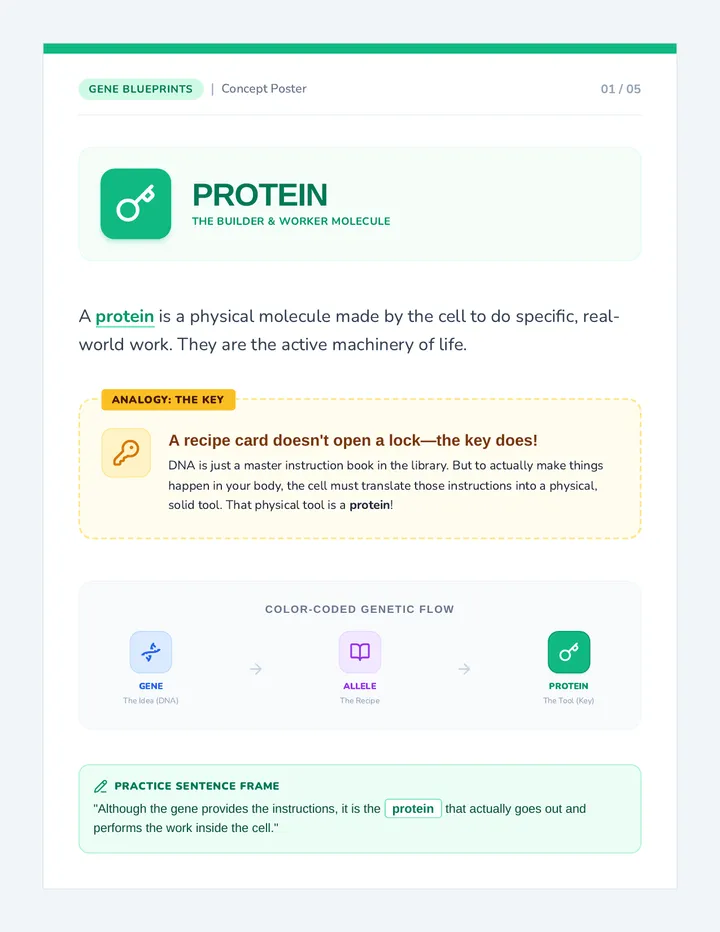
A visual-heavy biology lesson focused on clarifying the relationships between genes, alleles, proteins, and heterozygous states using concrete analogies, color-coding, and structured sentence frames.
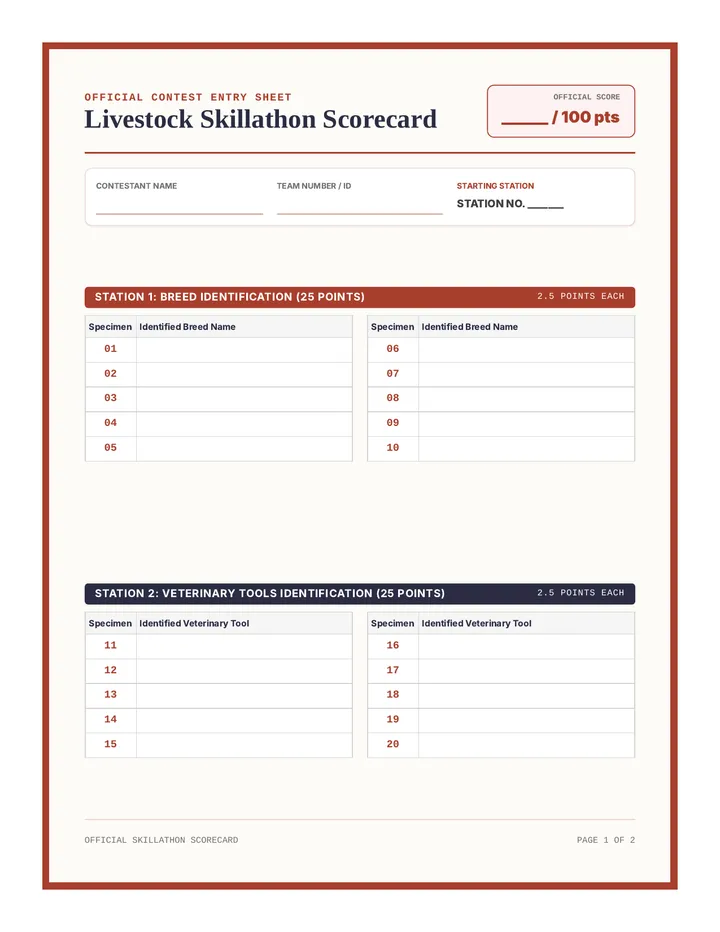
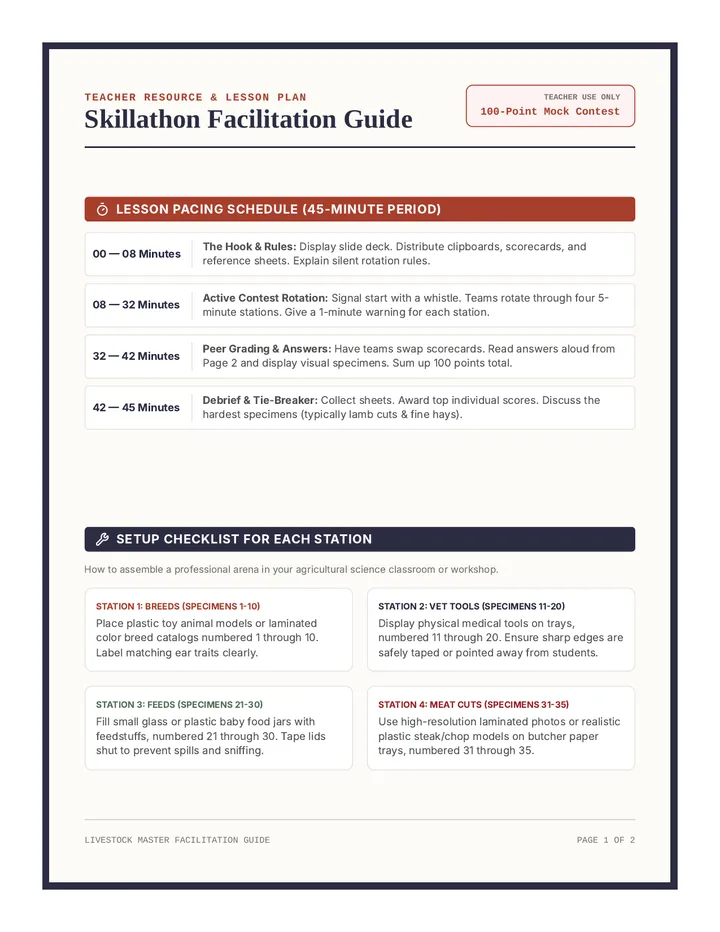
Students participate in a high-stakes, realistic mock Livestock Skillathon, rotating through four hands-on stations to test their knowledge and earn points.
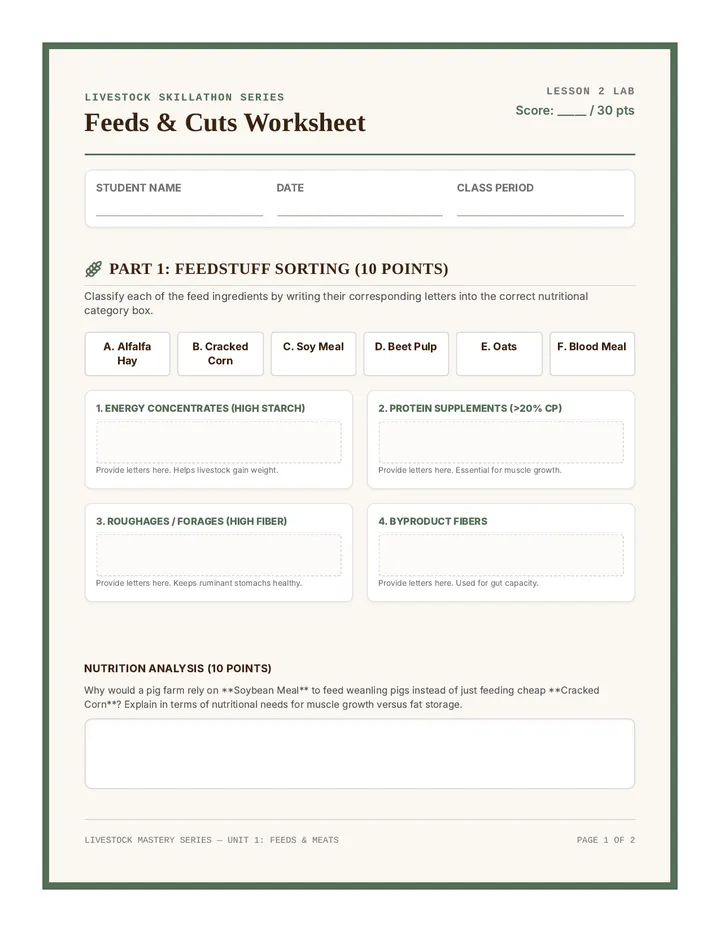
Students learn to identify common feed ingredients and forages, and practice identifying retail cuts of beef, pork, and lamb by wholesale origin and cooking style.
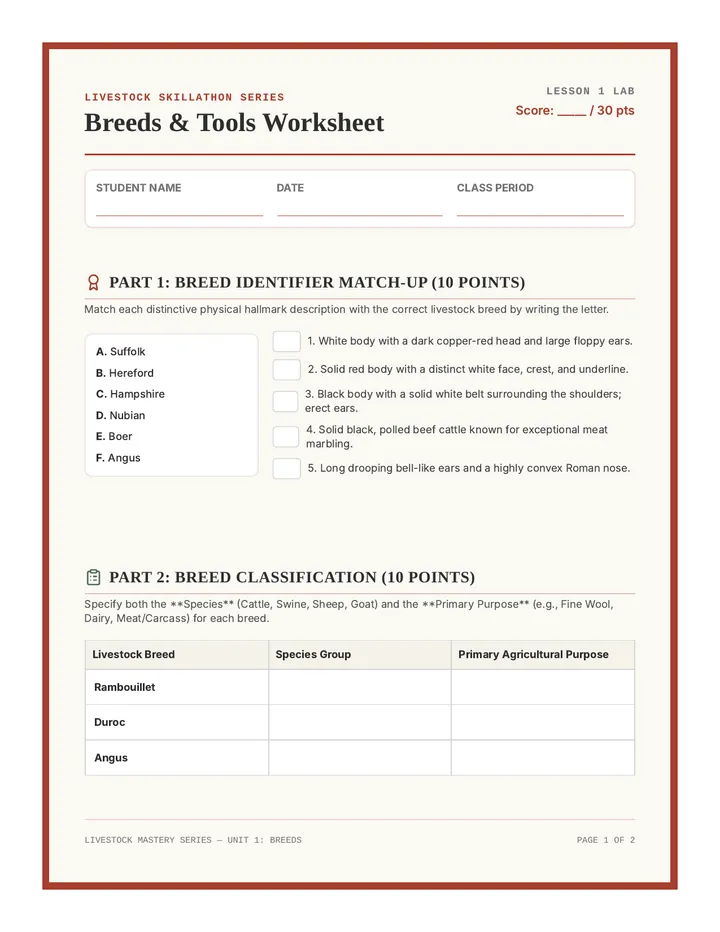
Students learn to identify major breeds of beef cattle, swine, sheep, and goats, along with essential veterinary, handling, and breeding equipment.
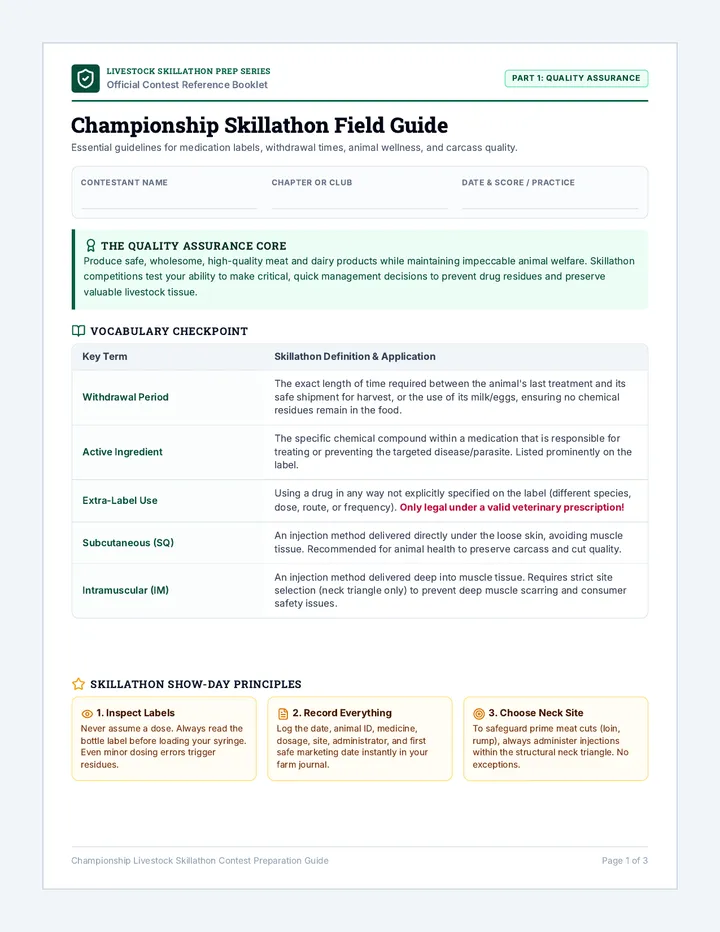
A comprehensive preparation lesson for youth competing in livestock skillathon contests. Covers crucial quality assurance principles, reading medication labels, calculating withdrawal times, and executing proper injection practices to ensure animal health and food safety.
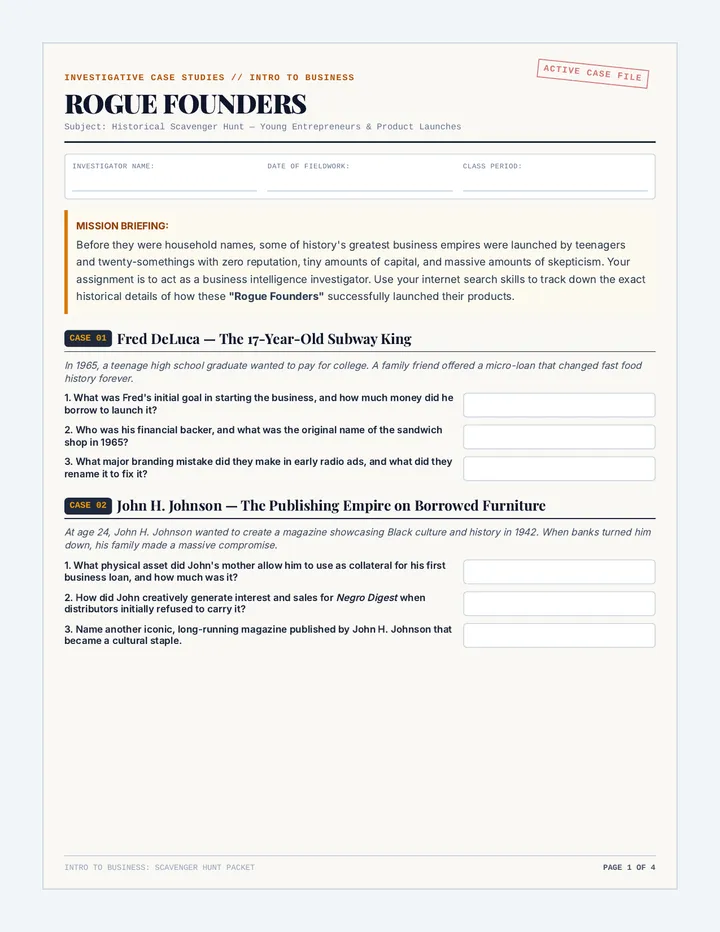
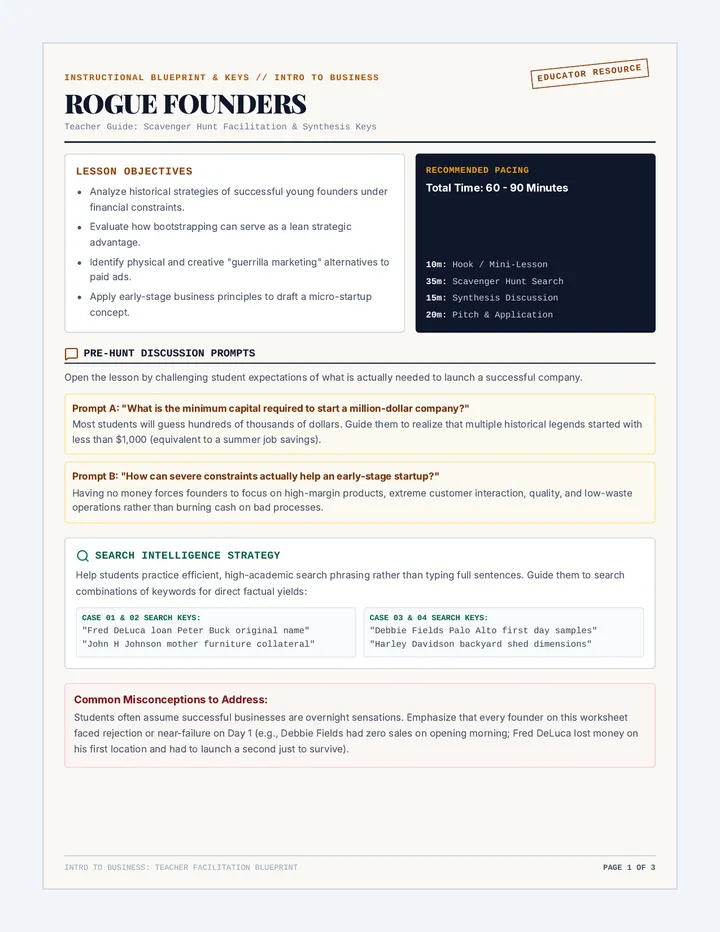
A high school introduction to business lesson exploring the journeys of historical young entrepreneurs who defied the odds. Students conduct an internet scavenger hunt to investigate their startup strategies, financial hurdles, and marketing breakthroughs.