Students apply exponent properties (Product, Quotient, Power) in a game-based setting to 'power up' their simplification skills. The lesson emphasizes strategic thinking and the rules of operations with fractional exponents.
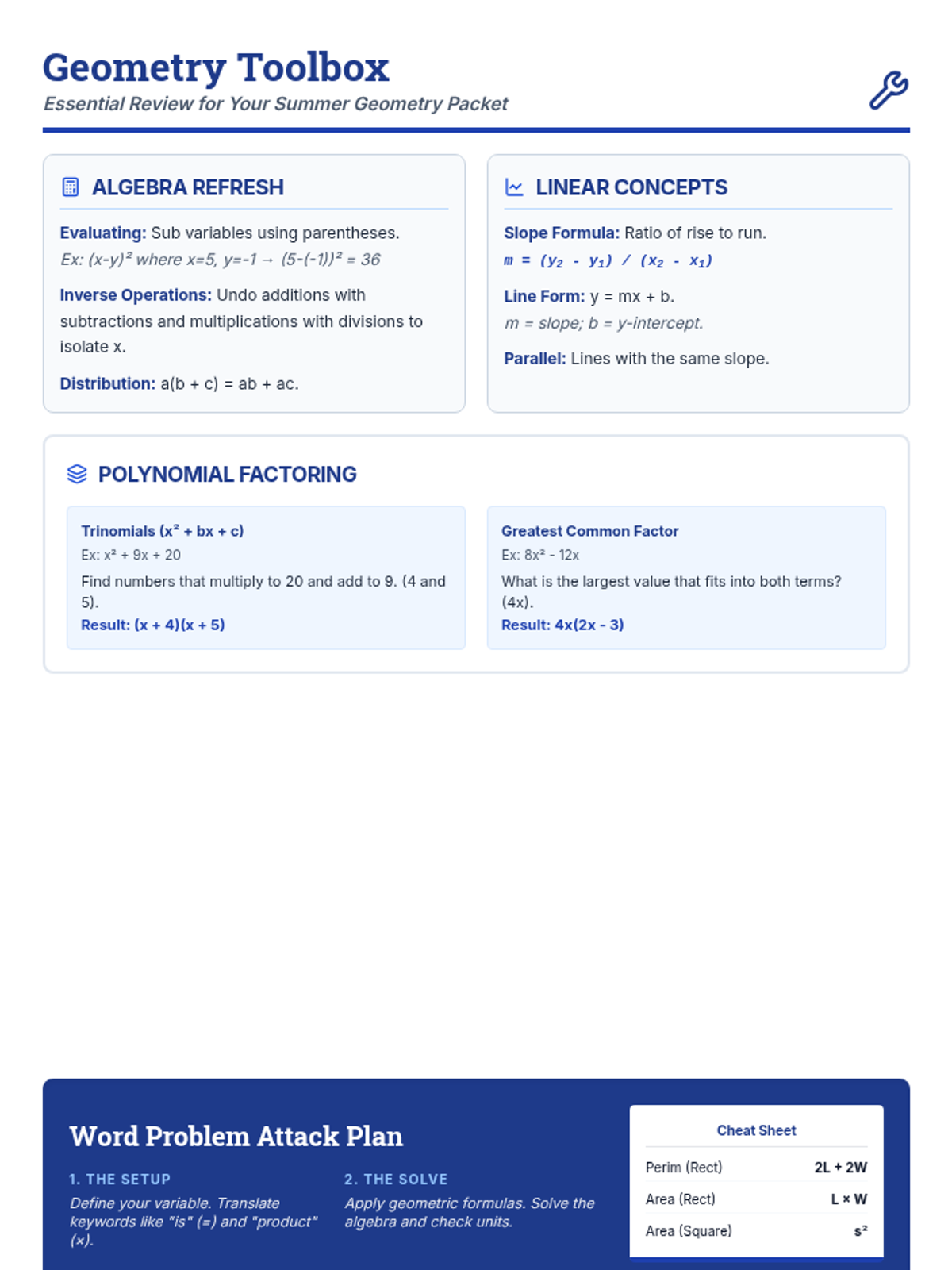
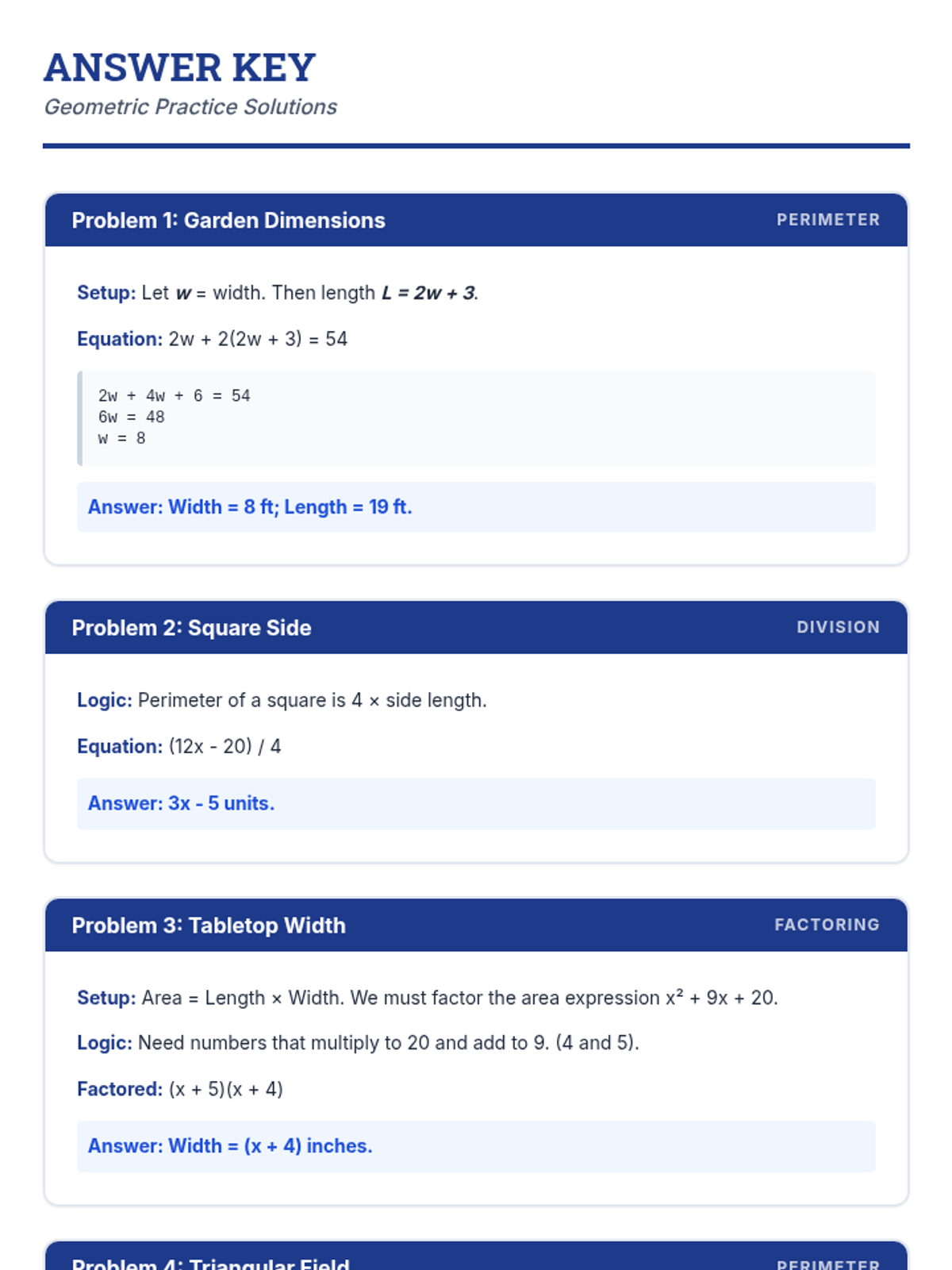
A collection of resources to support students completing their summer geometry packet, focusing on algebra foundations and geometric word problem applications.
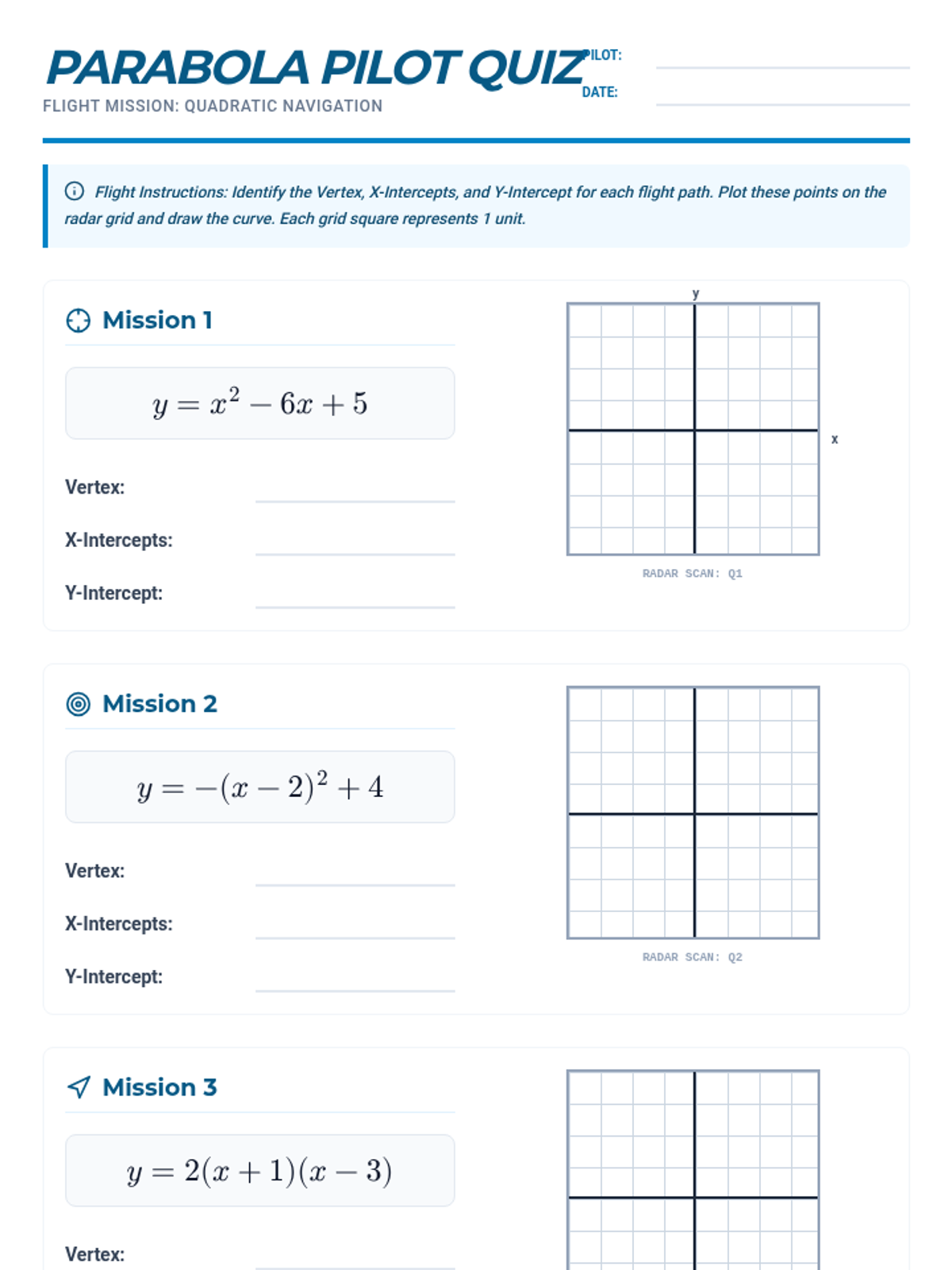
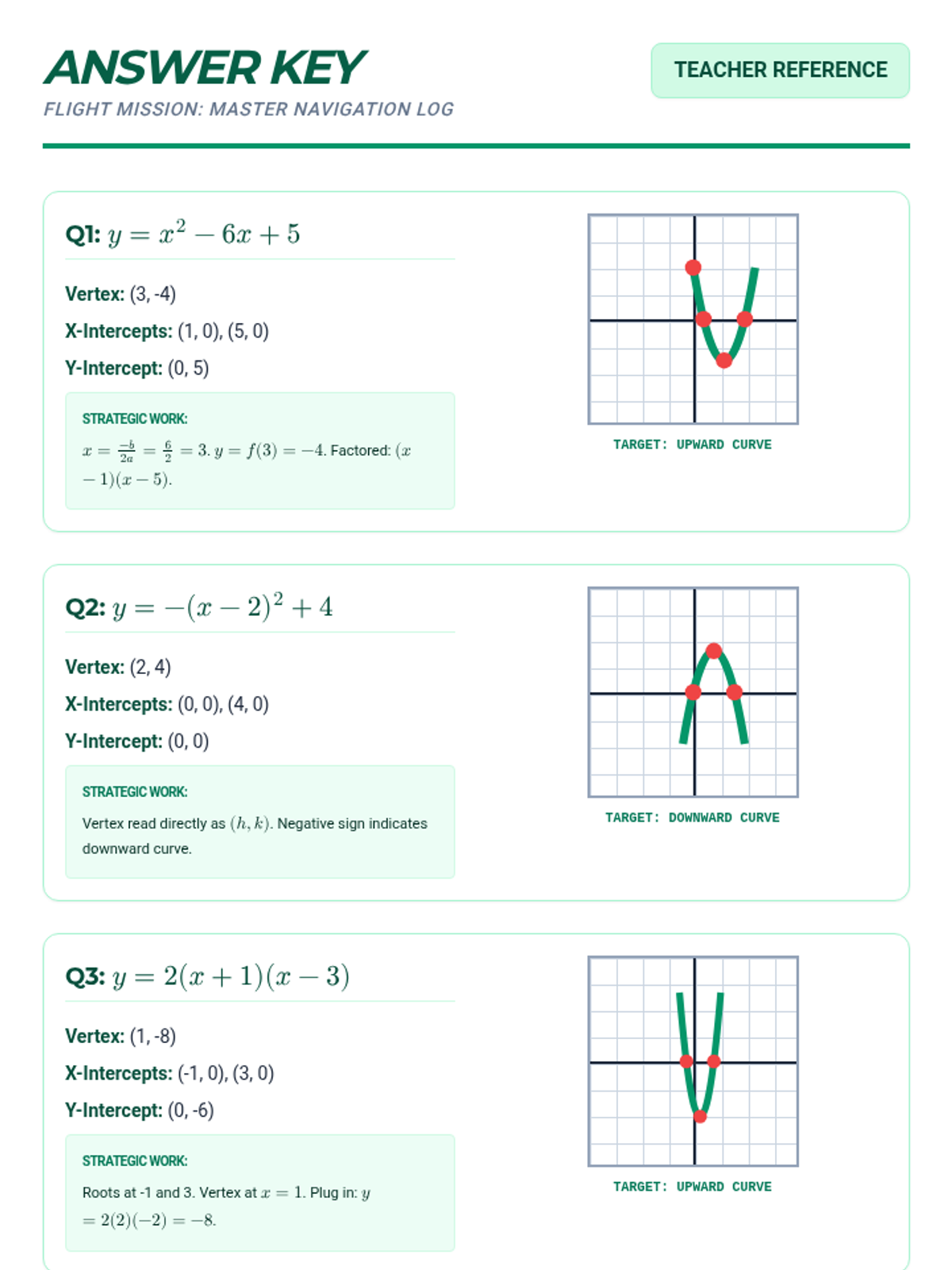
A lesson focused on identifying key features (vertex, intercepts) and graphing quadratic equations across standard, vertex, and factored forms.
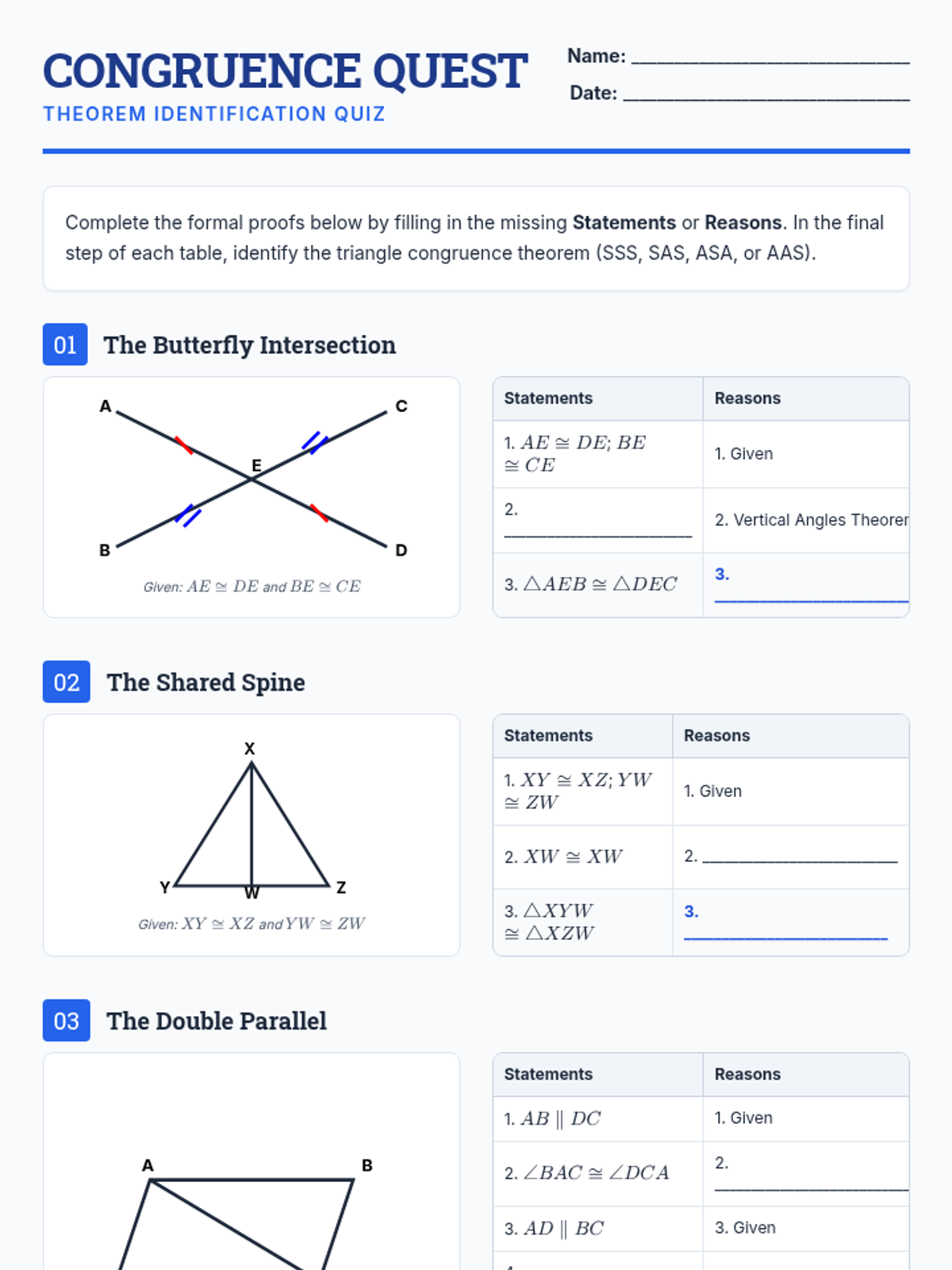
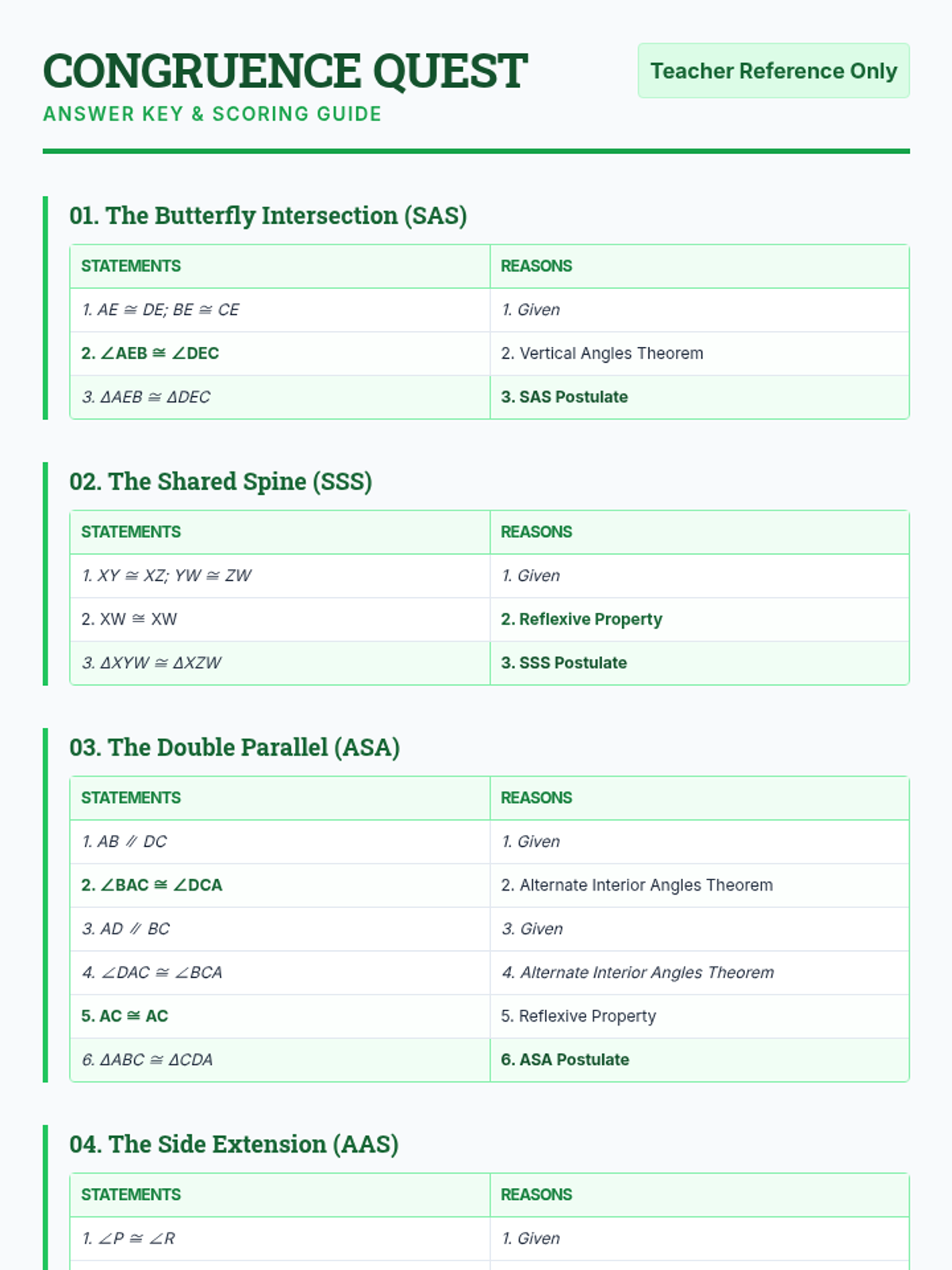
A focused challenge on identifying triangle congruence theorems through formal proofs, requiring students to complete statement-reason tables.
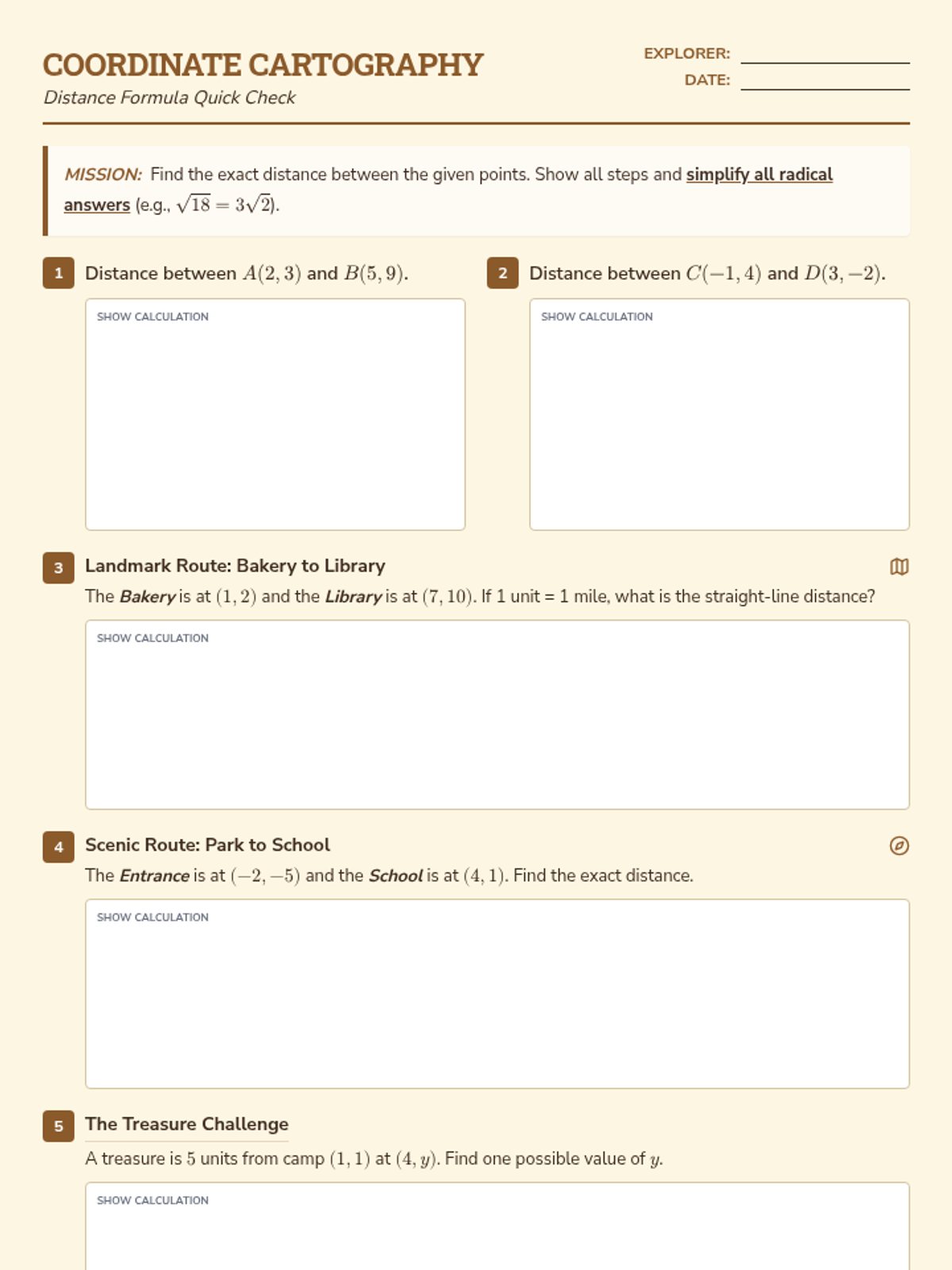
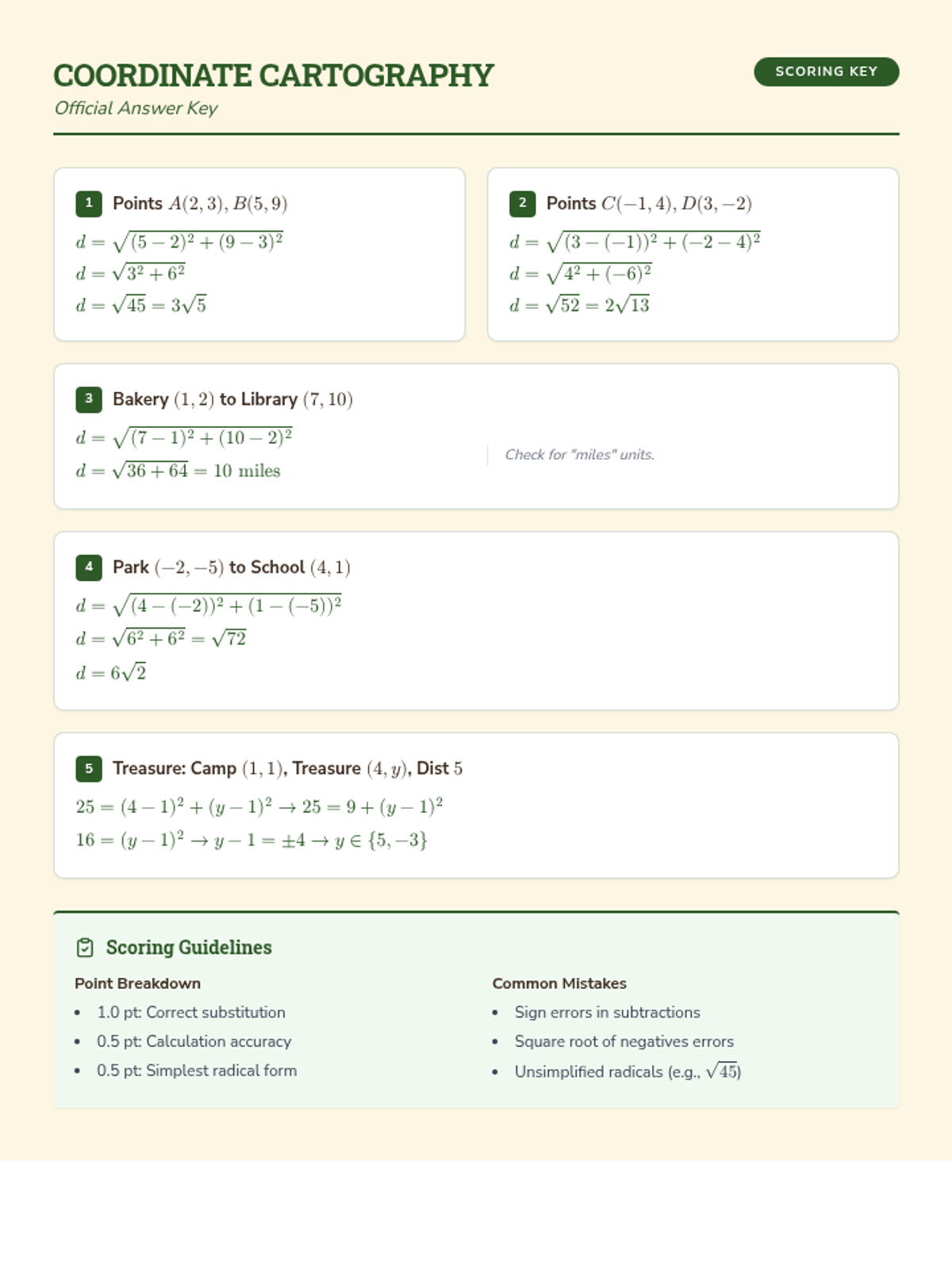
A focused lesson on applying the distance formula to coordinate geometry and real-world map scenarios, featuring radical simplification and spatial reasoning.
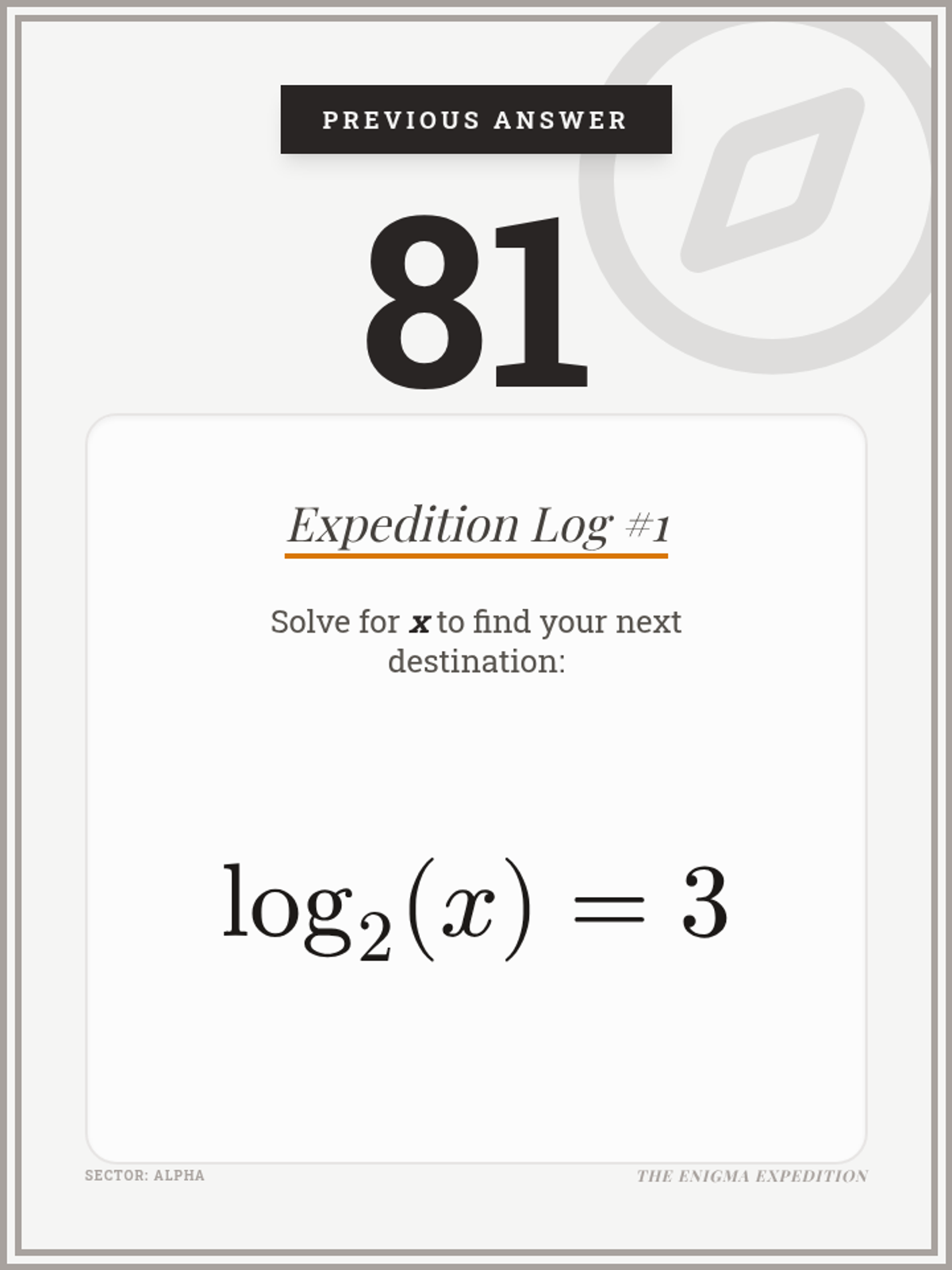
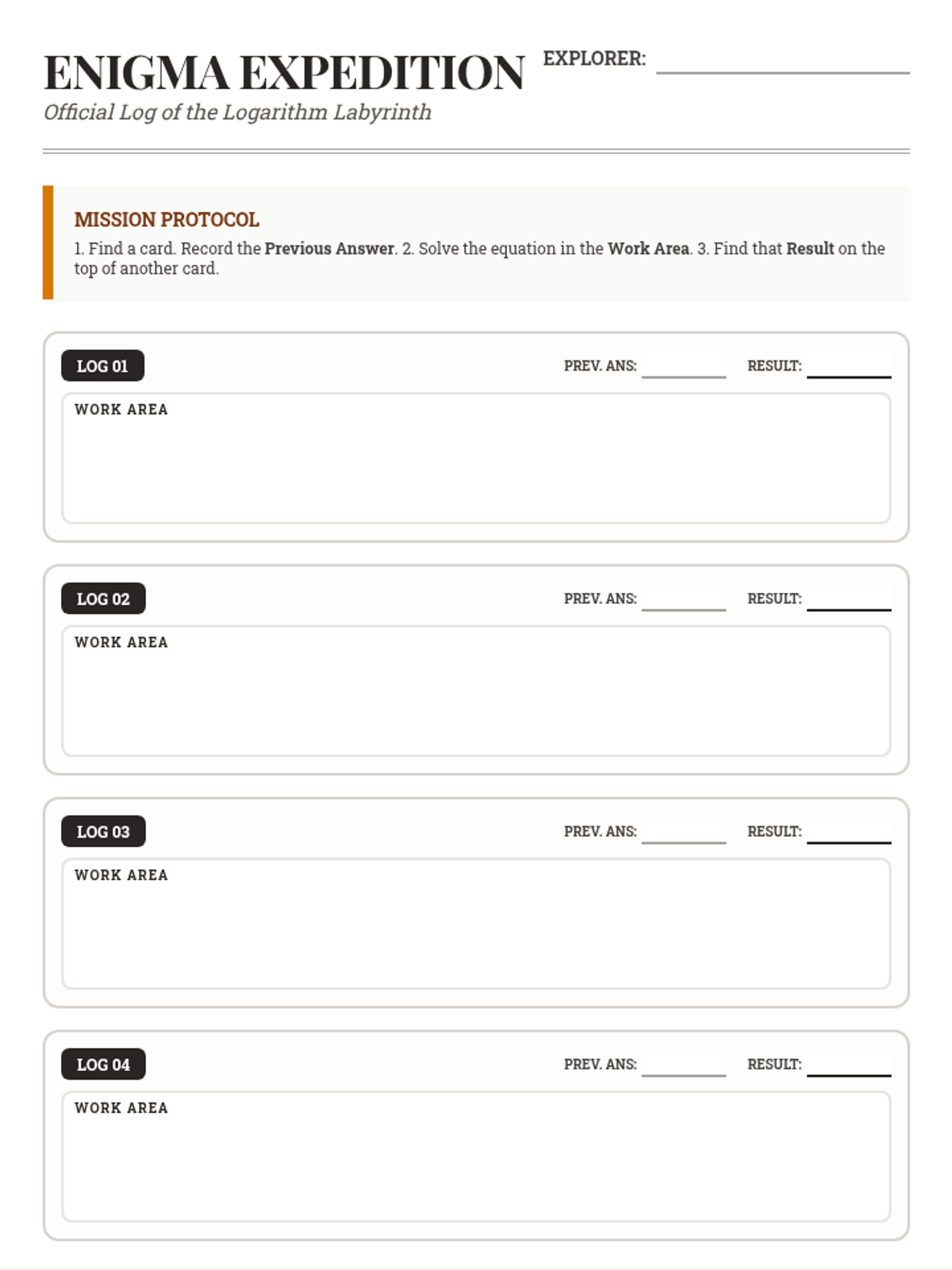
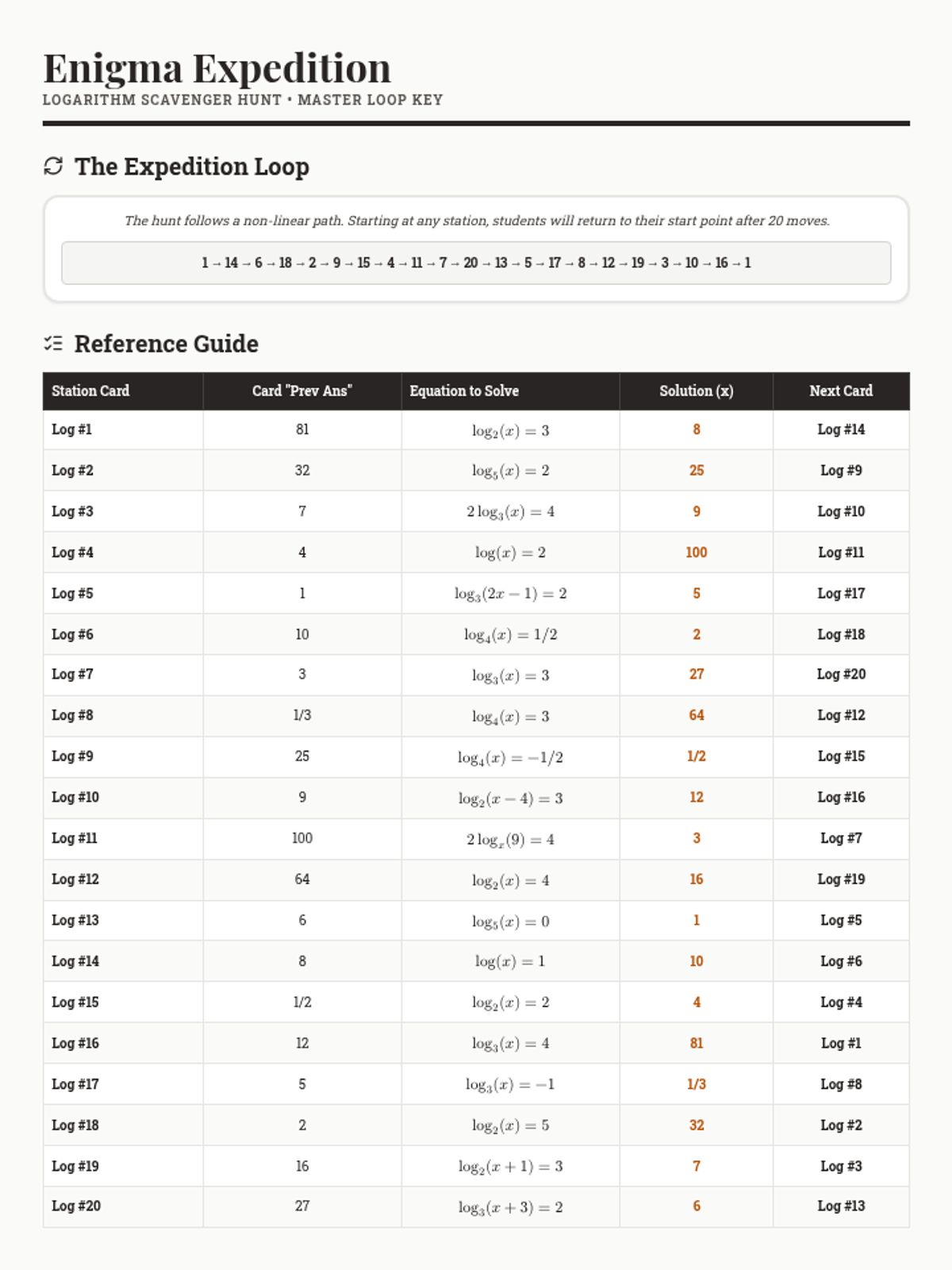
A self-checking scavenger hunt activity where students solve basic logarithmic equations involving conversions, isolations, and simple expressions. The activity is themed as an 'Enigma Expedition' through ancient ruins.
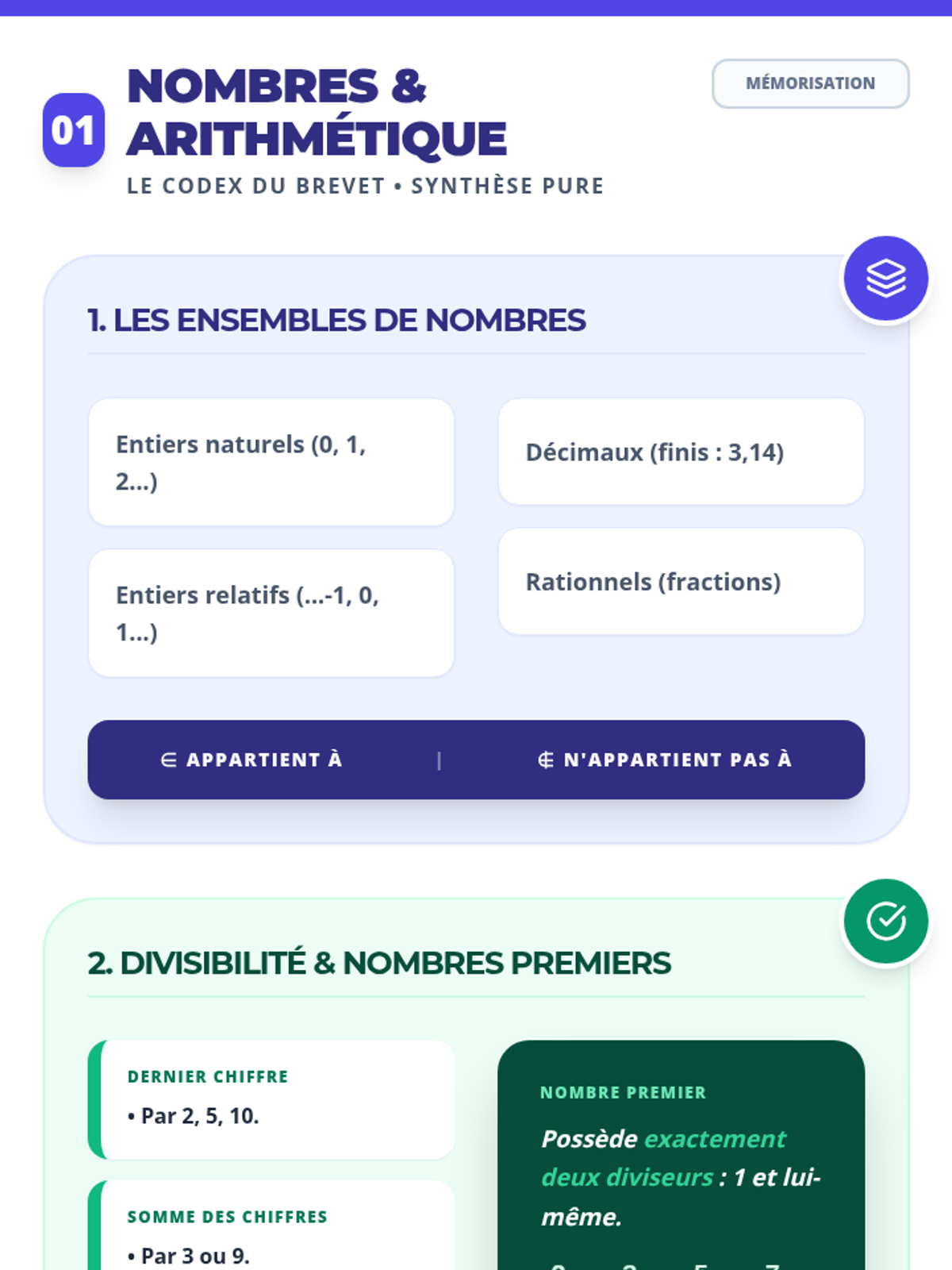
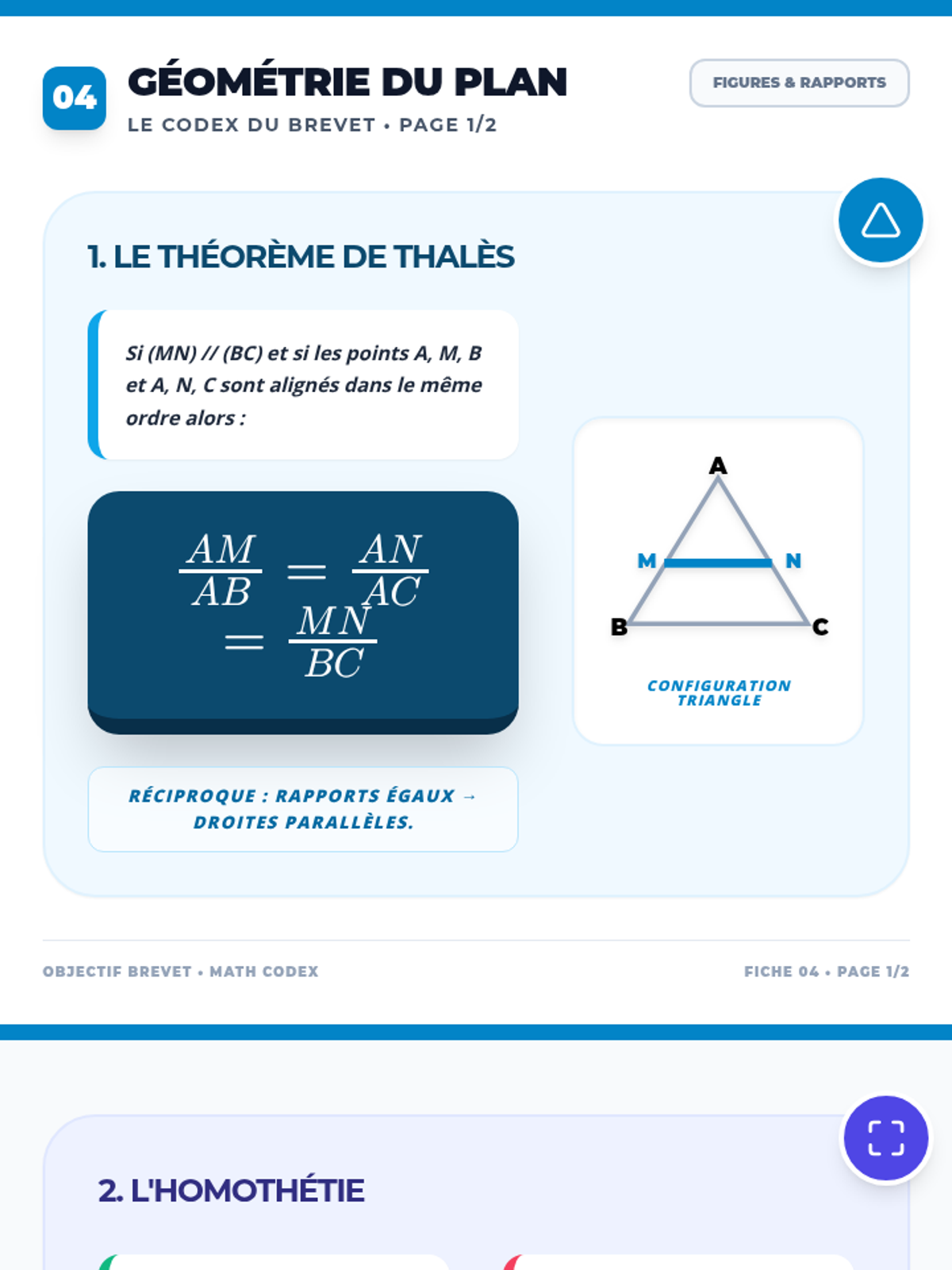
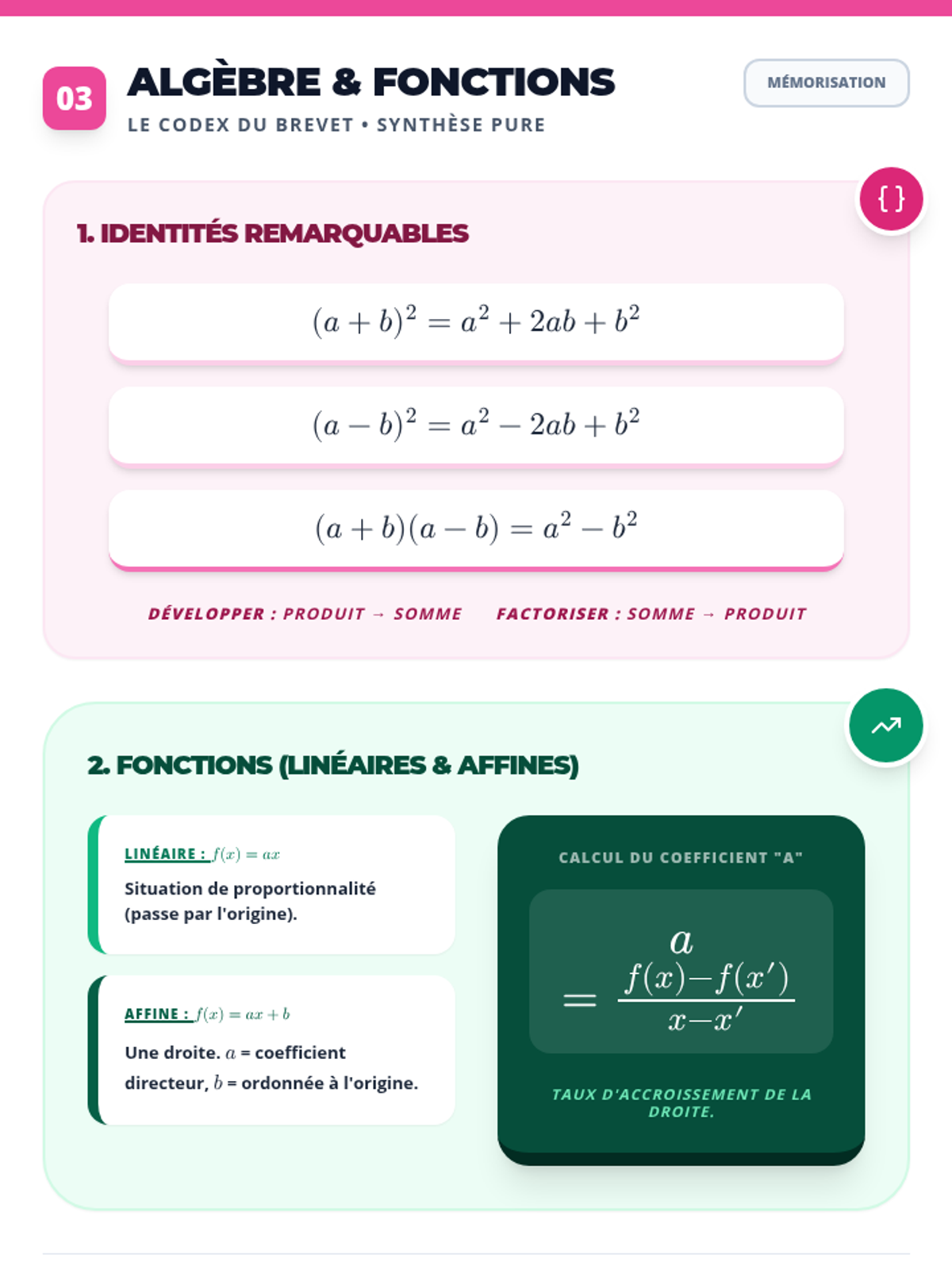
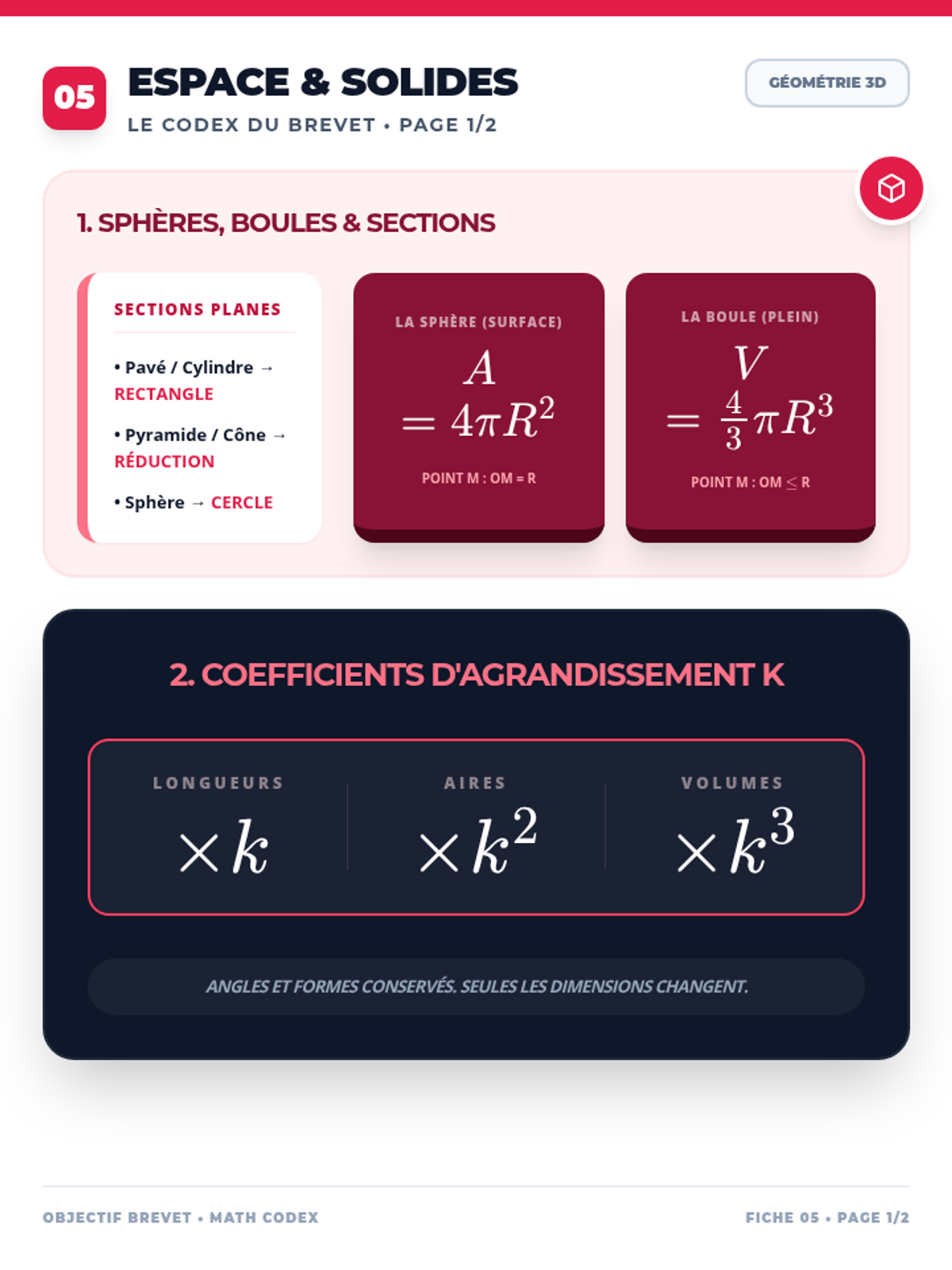
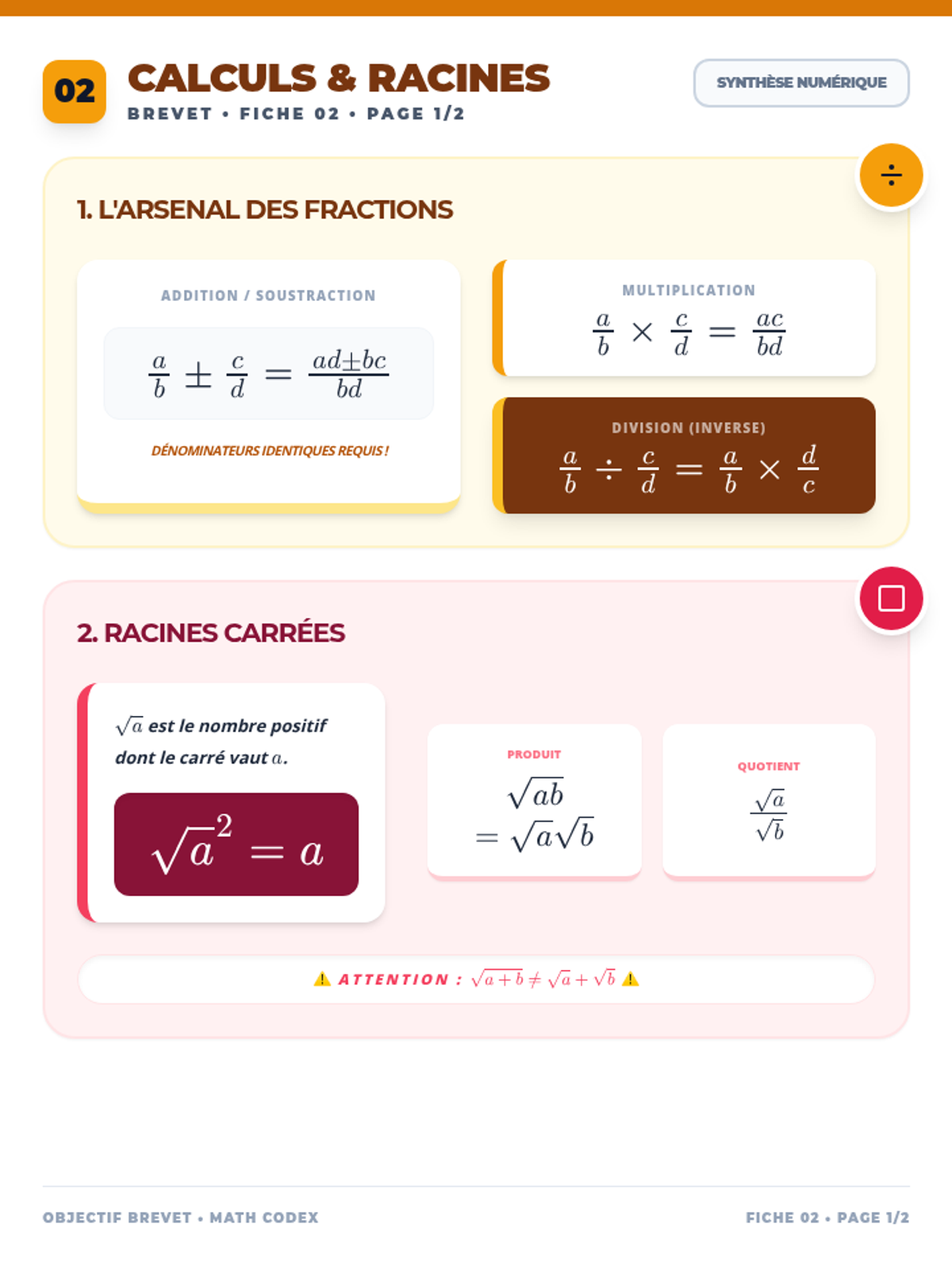
Une collection complète de fiches de révision et un diaporama dynamique pour maîtriser le programme de mathématiques de 3ème. Couvre l'arithmétique, l'algèbre, la géométrie et la trigonométrie avec des visuels clairs et modernes.
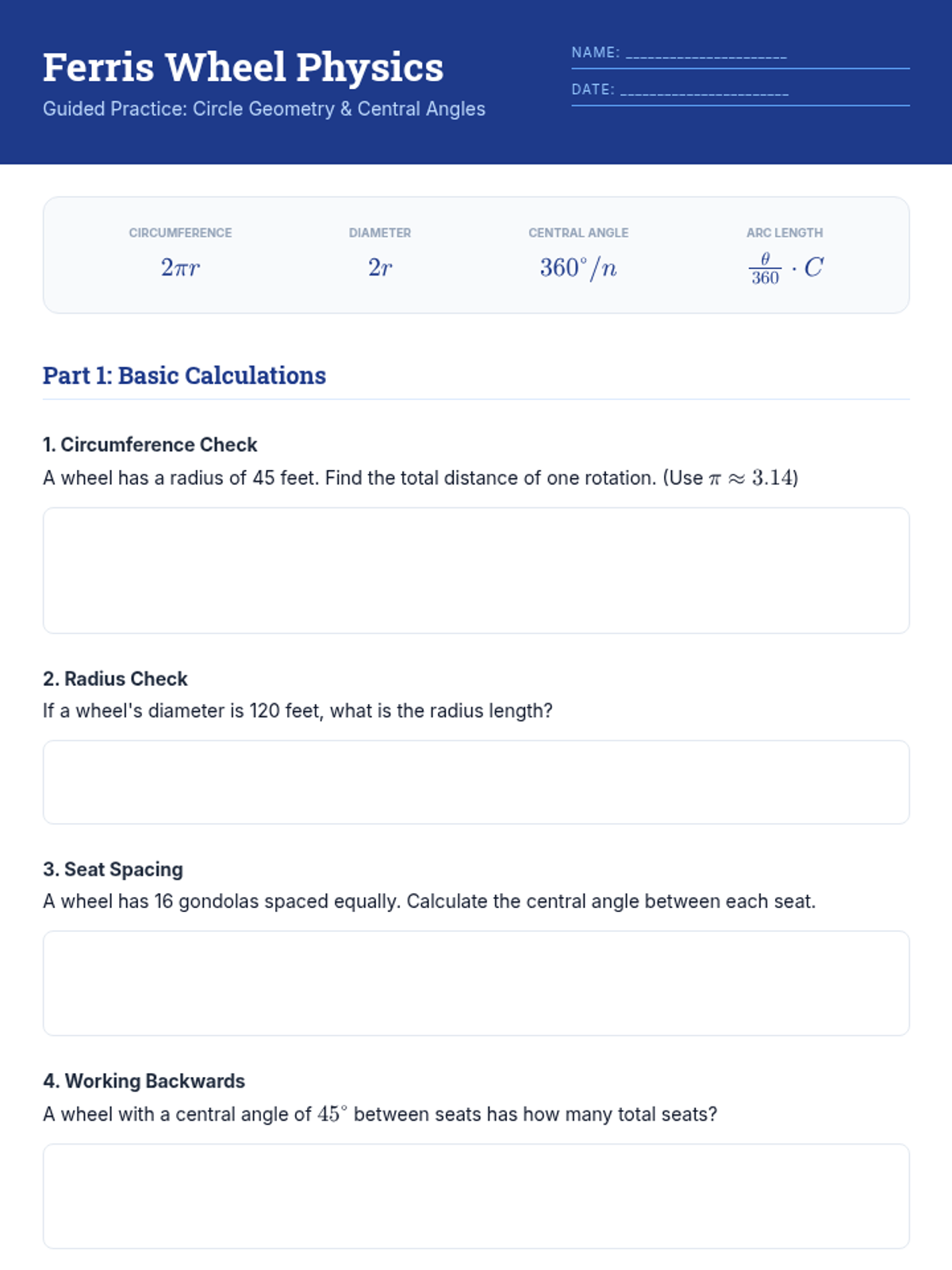
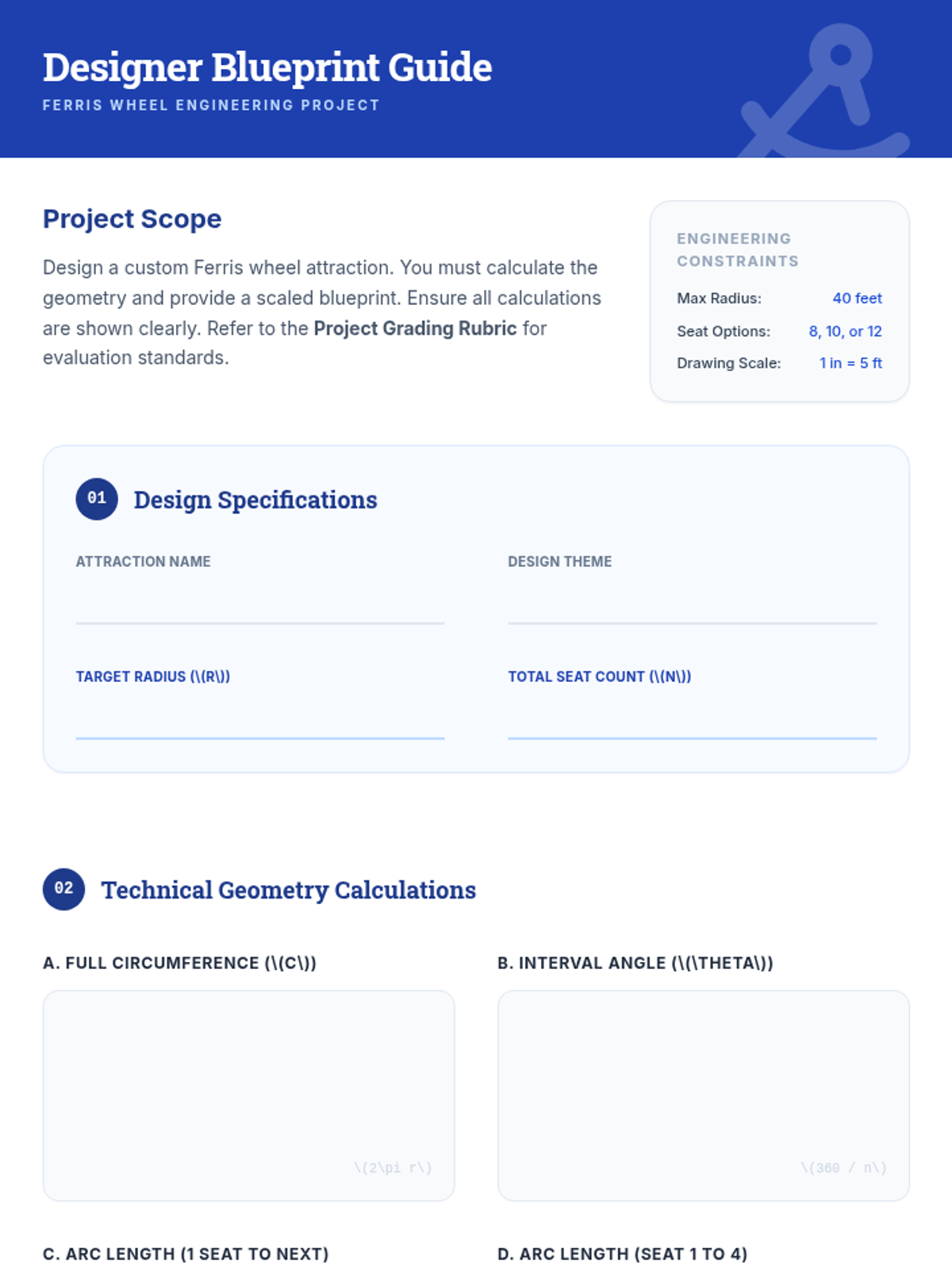
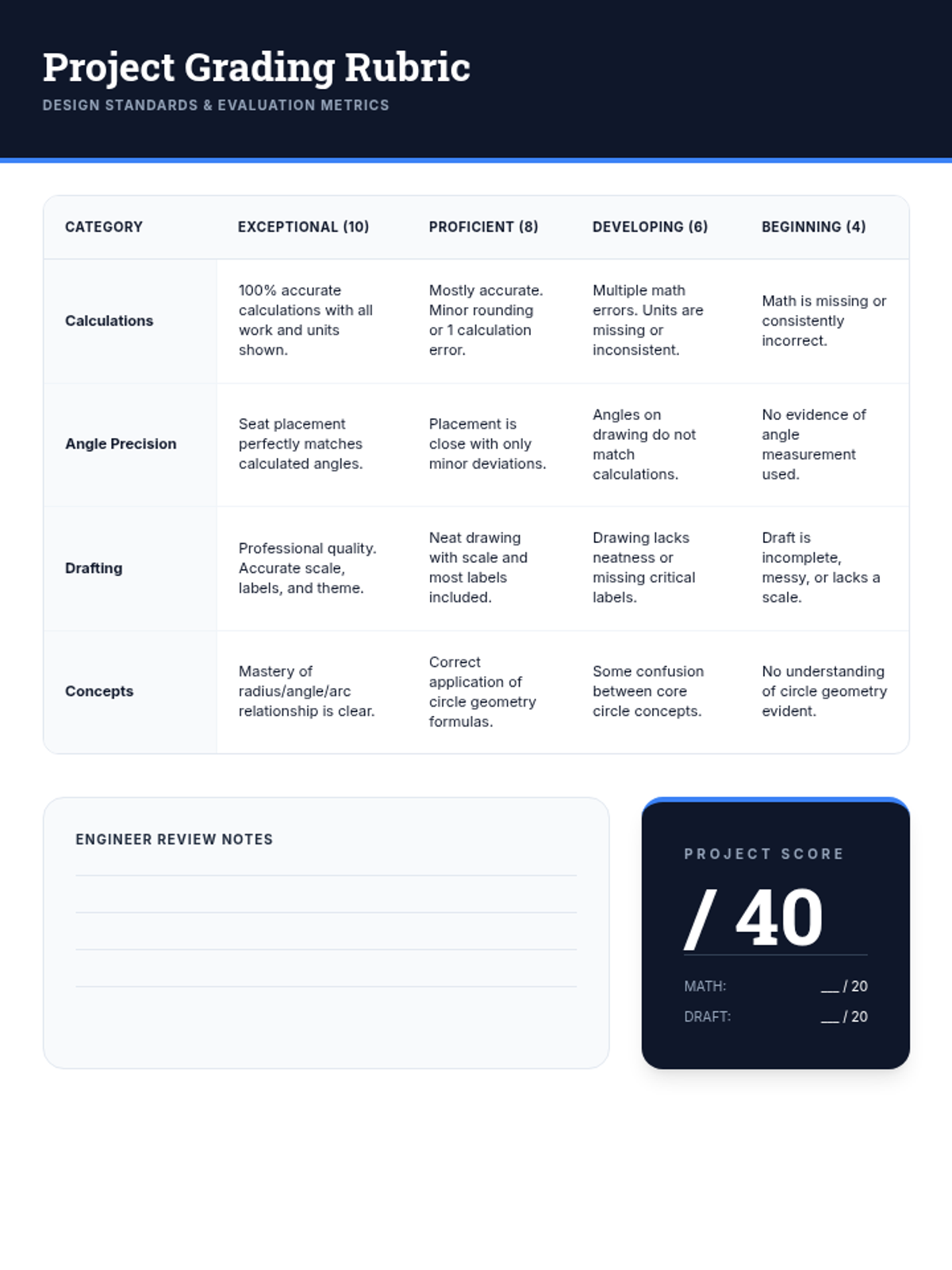
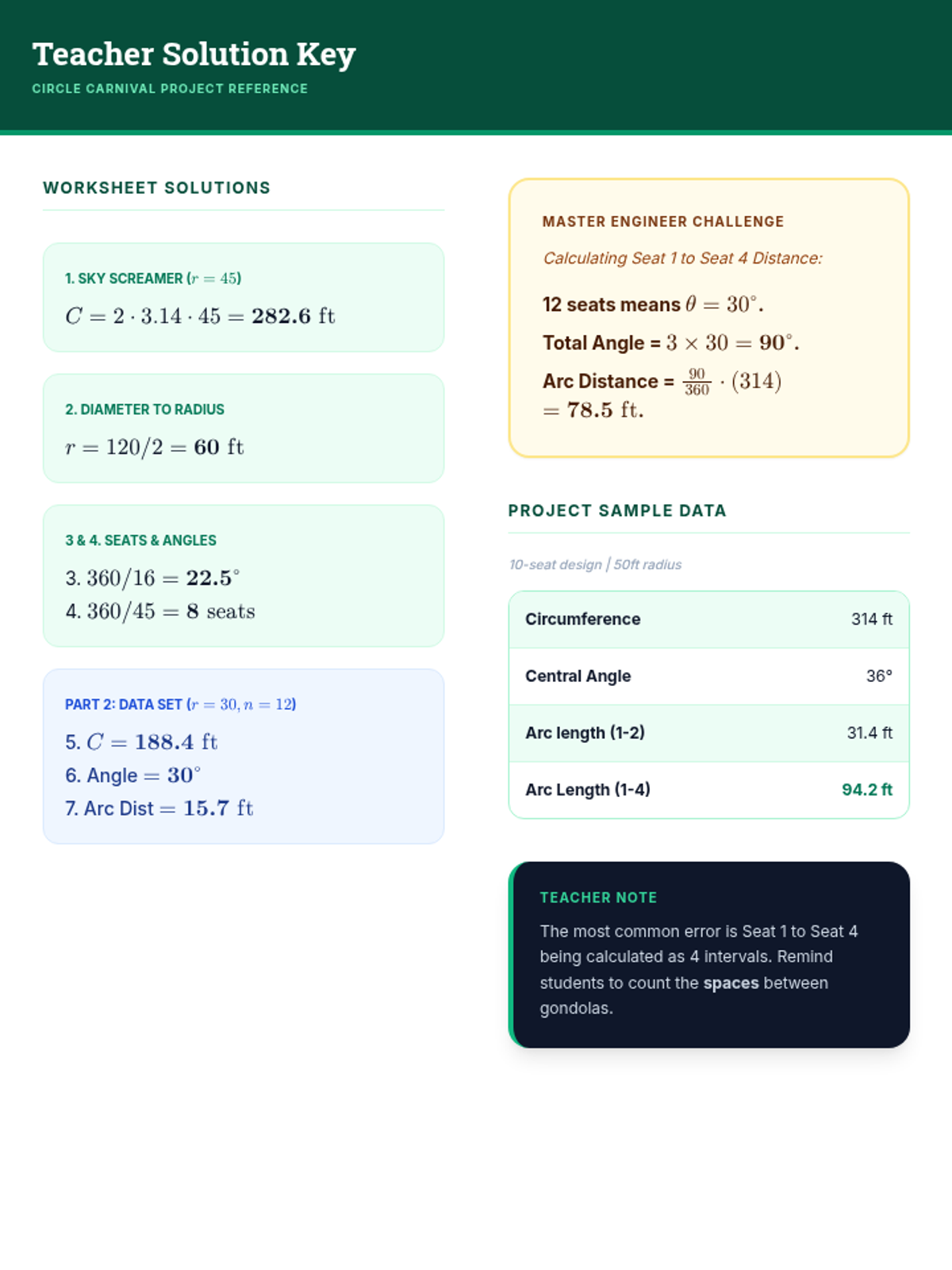
A middle school math project exploring circle geometry through the design and analysis of a Ferris wheel, focusing on central angles, radius, and arc length.
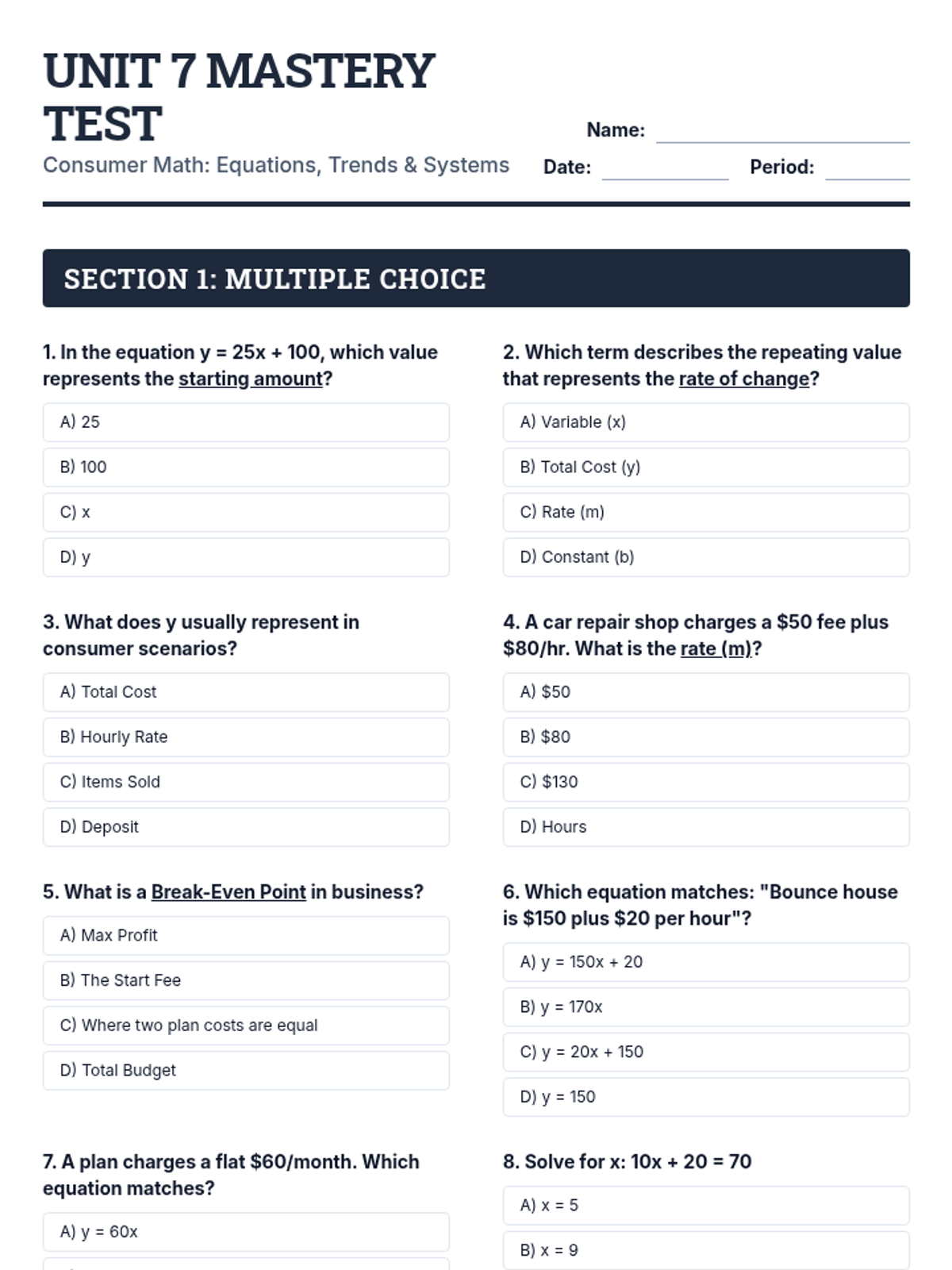
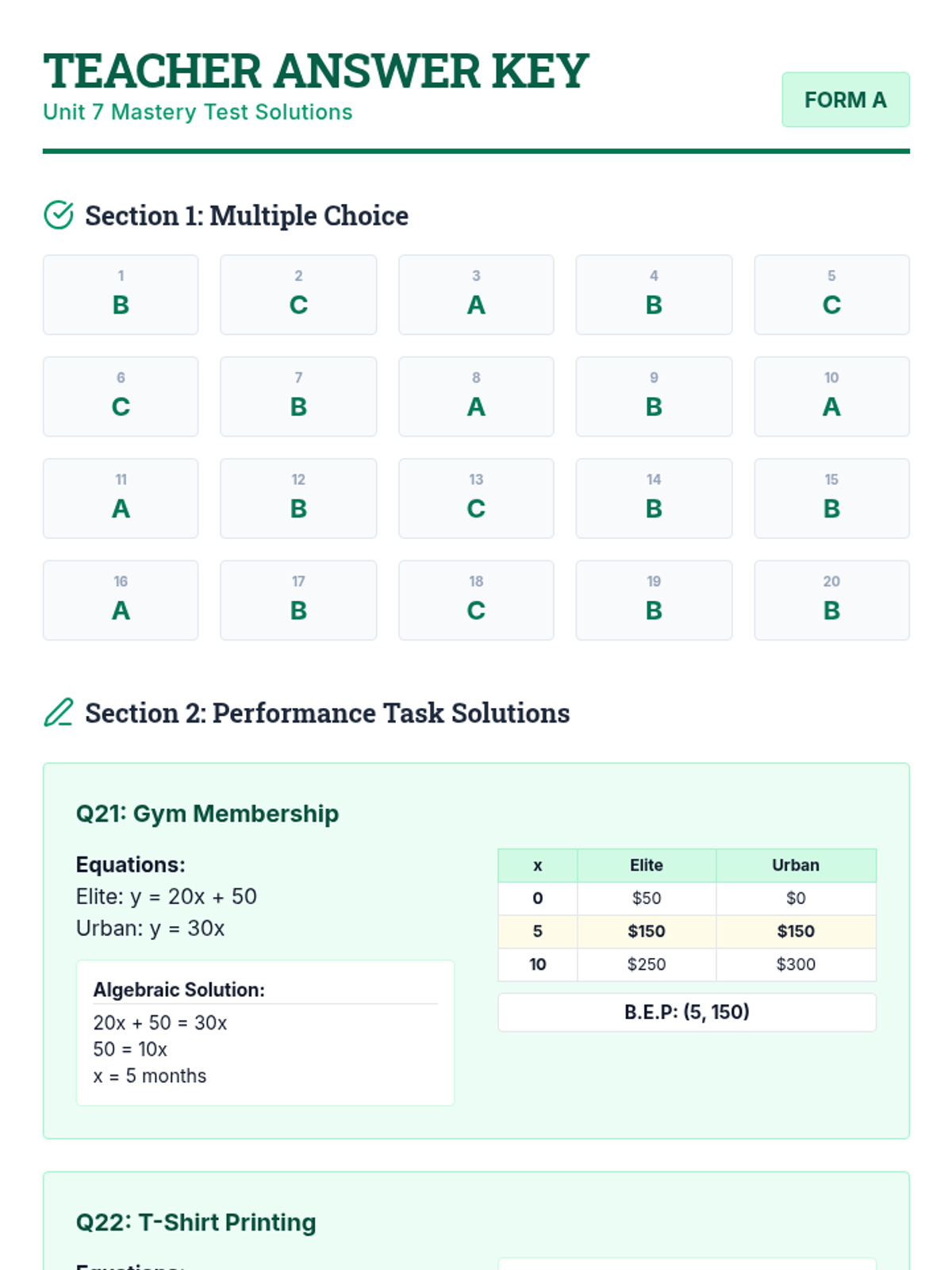
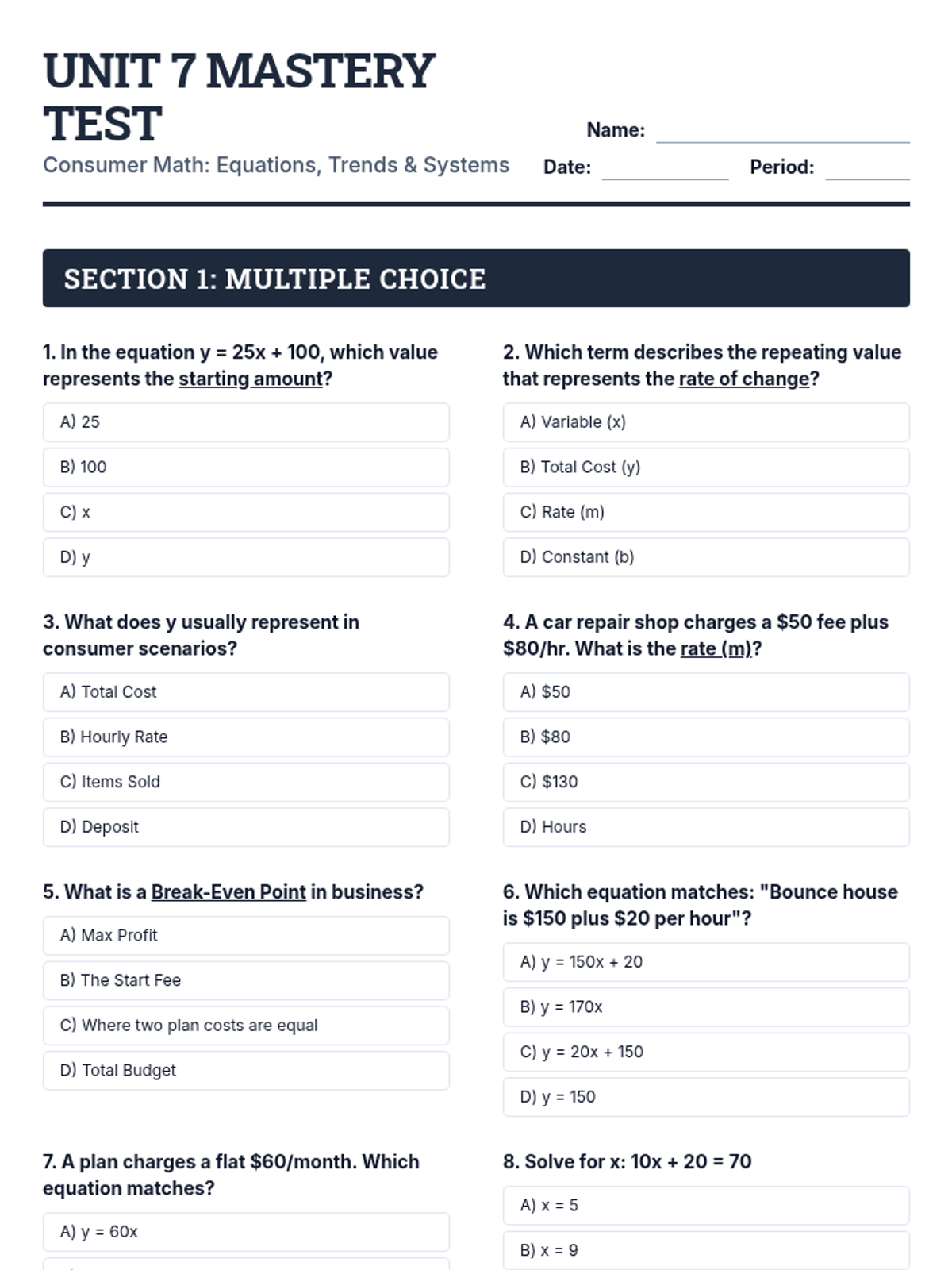
The final summative assessment for the Unit 7 Consumer Math curriculum, covering linear equation translation, table completion, graphing systems, and identifying break-even points.
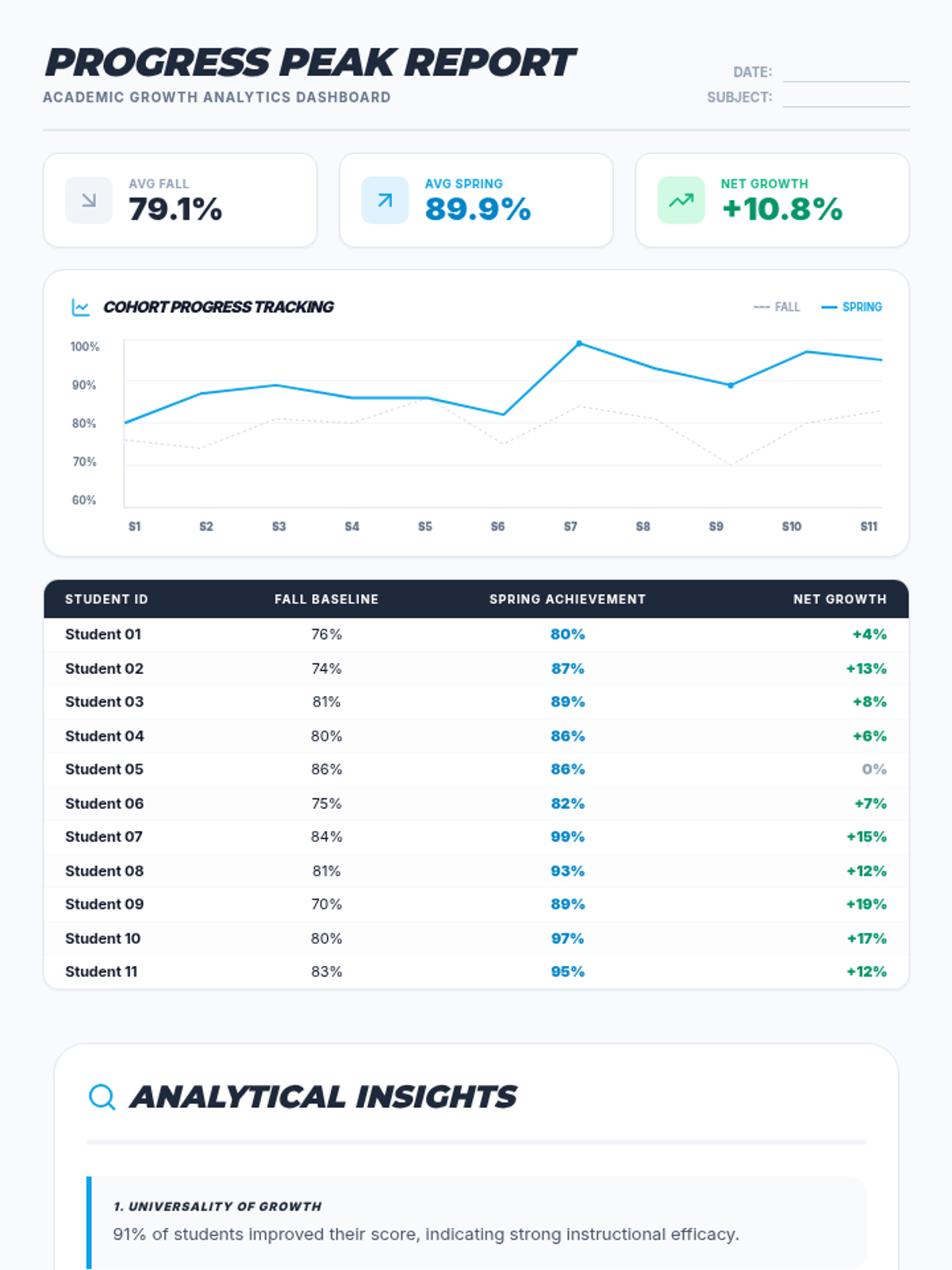
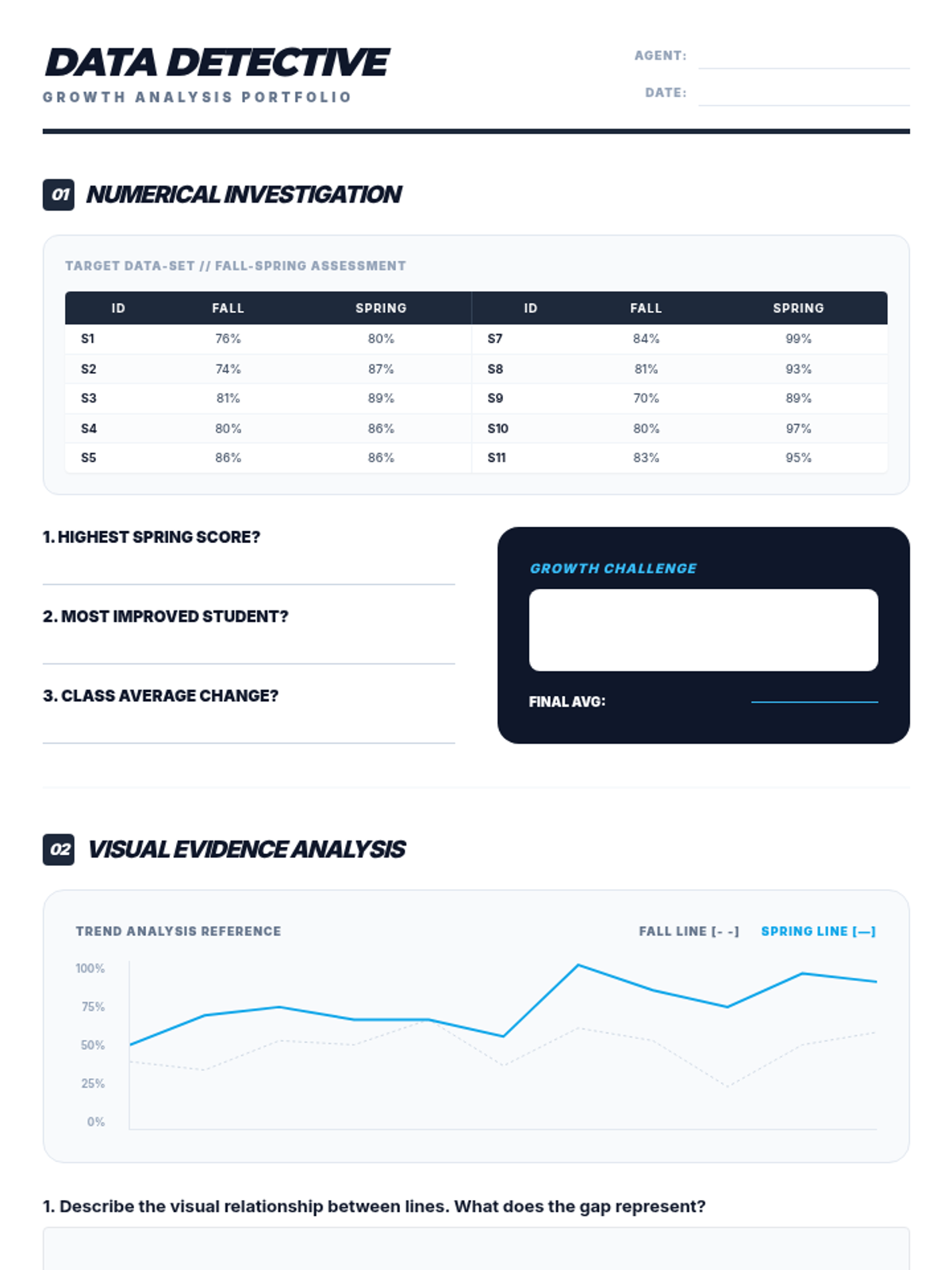
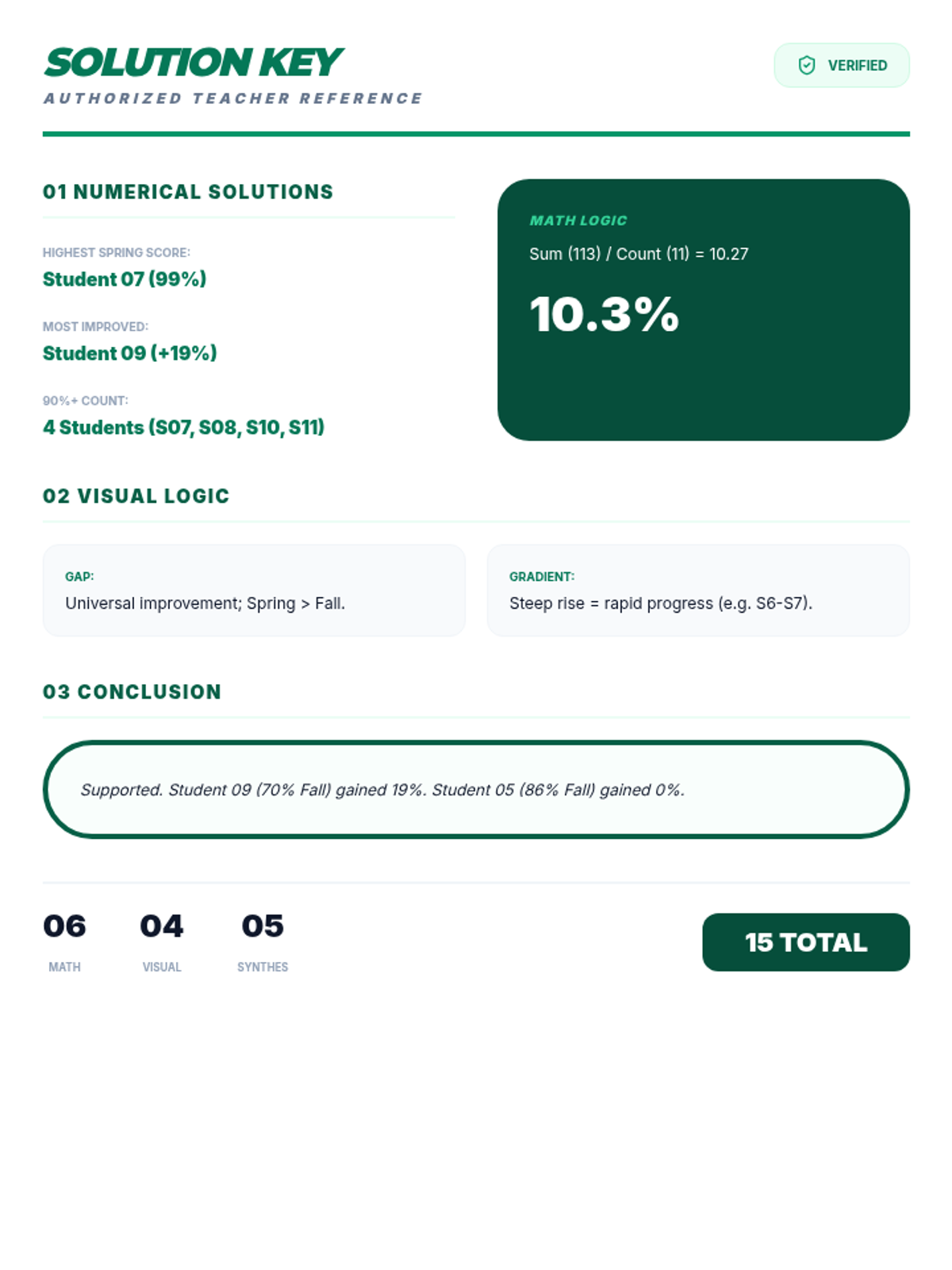
A lesson focused on visualizing academic progress data through line graphs and identifying key trends in student performance.
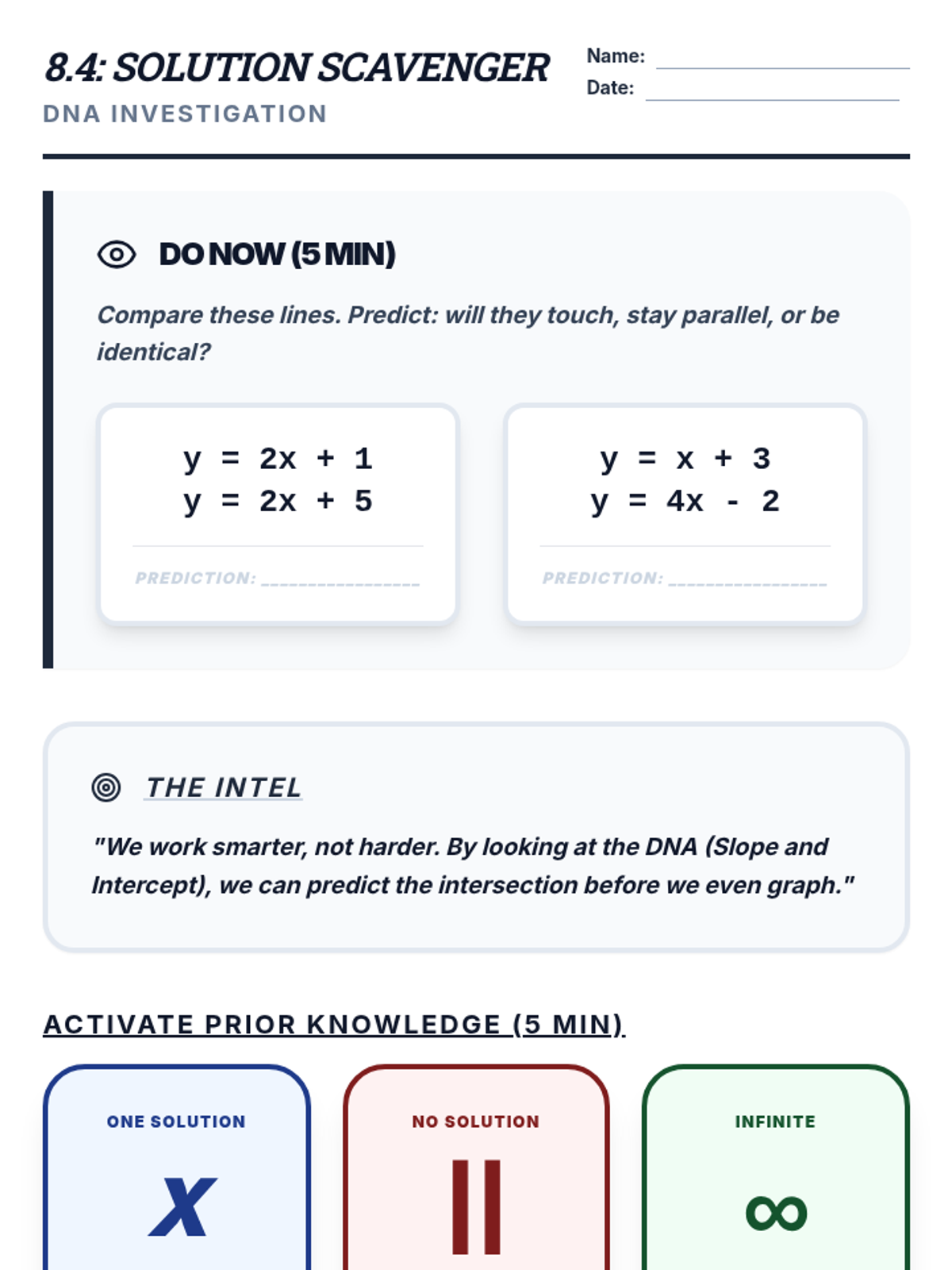
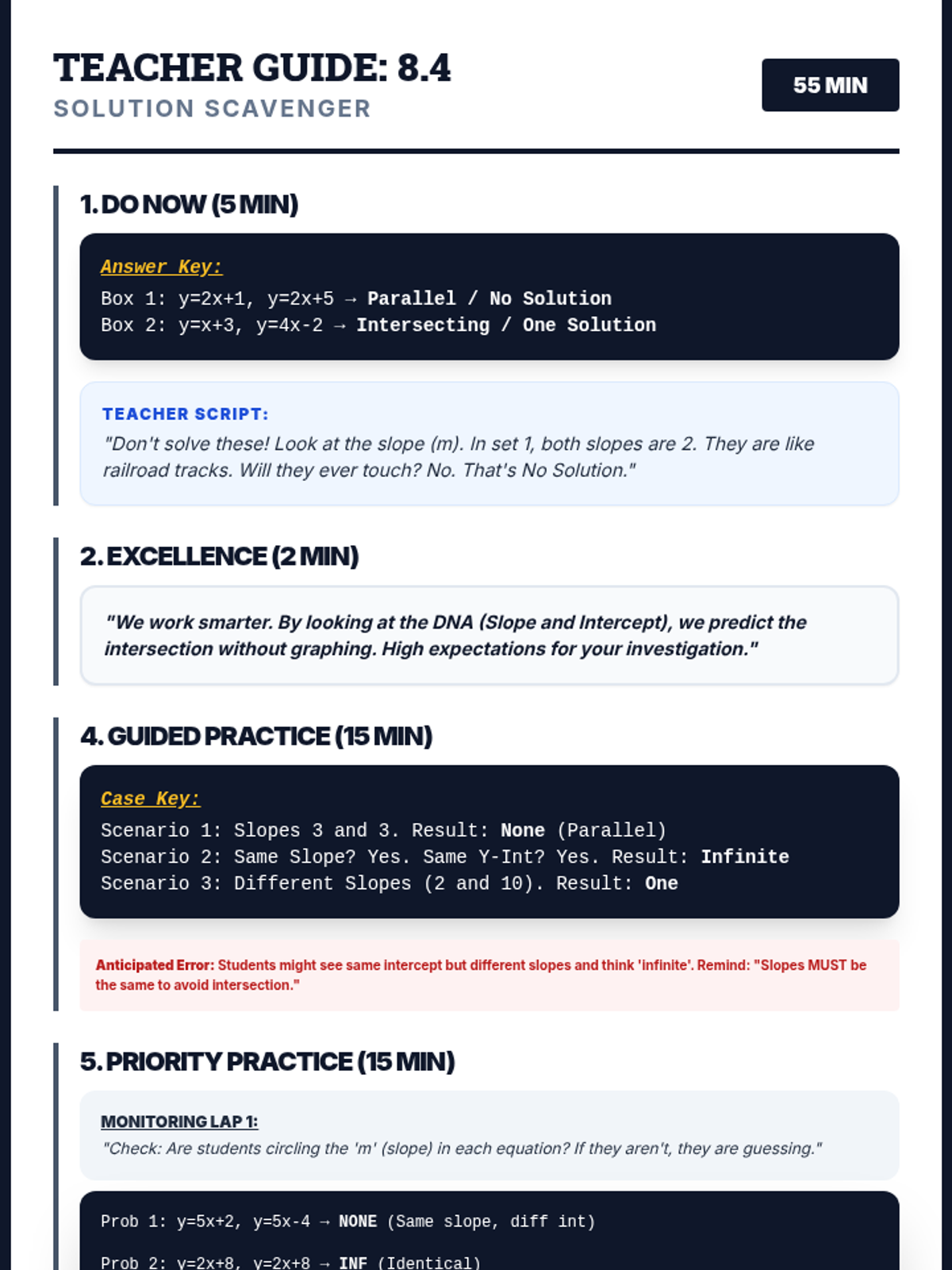
Students will analyze slopes and y-intercepts to determine if a system of equations has one solution, no solution, or infinitely many solutions.
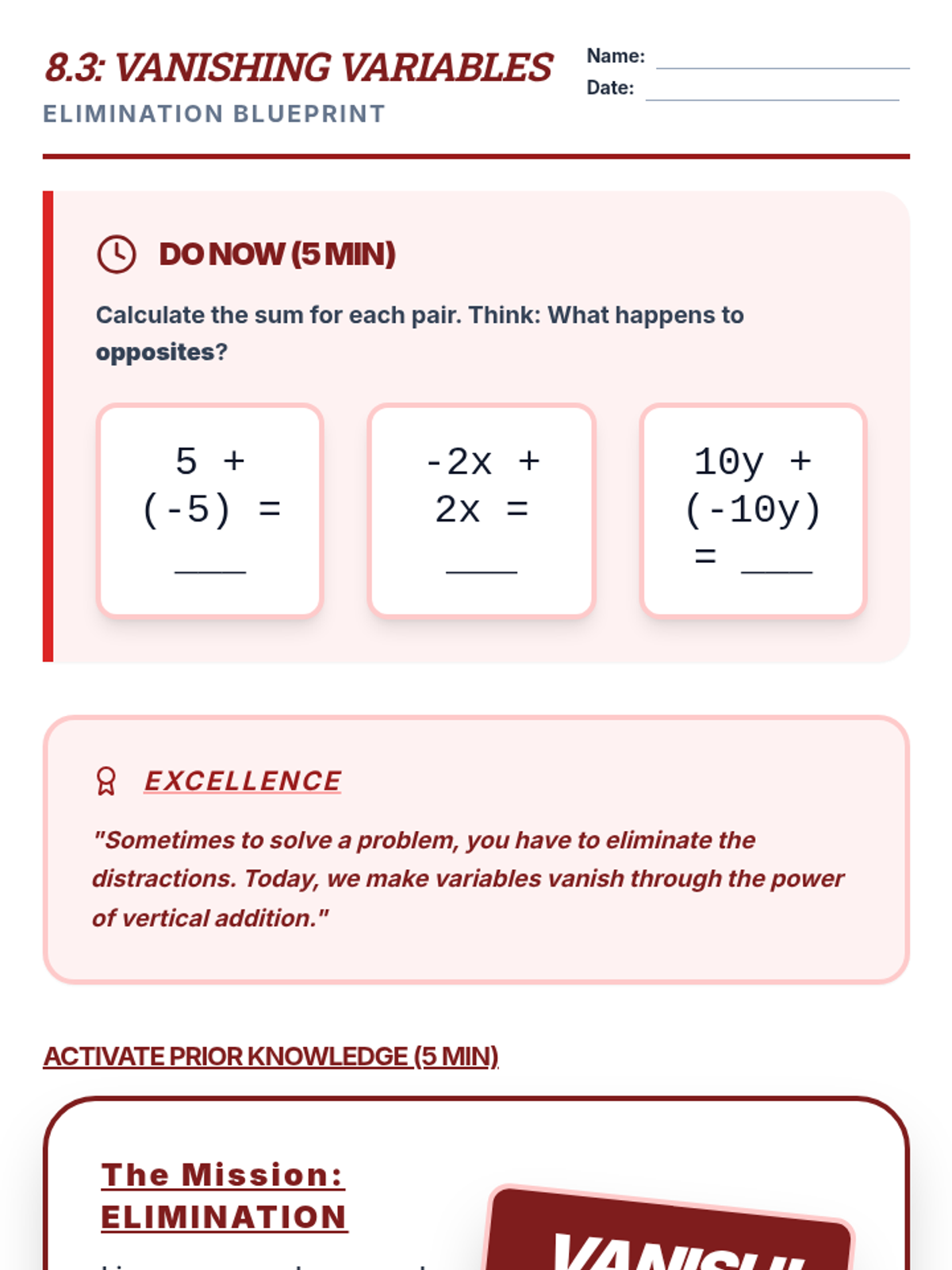
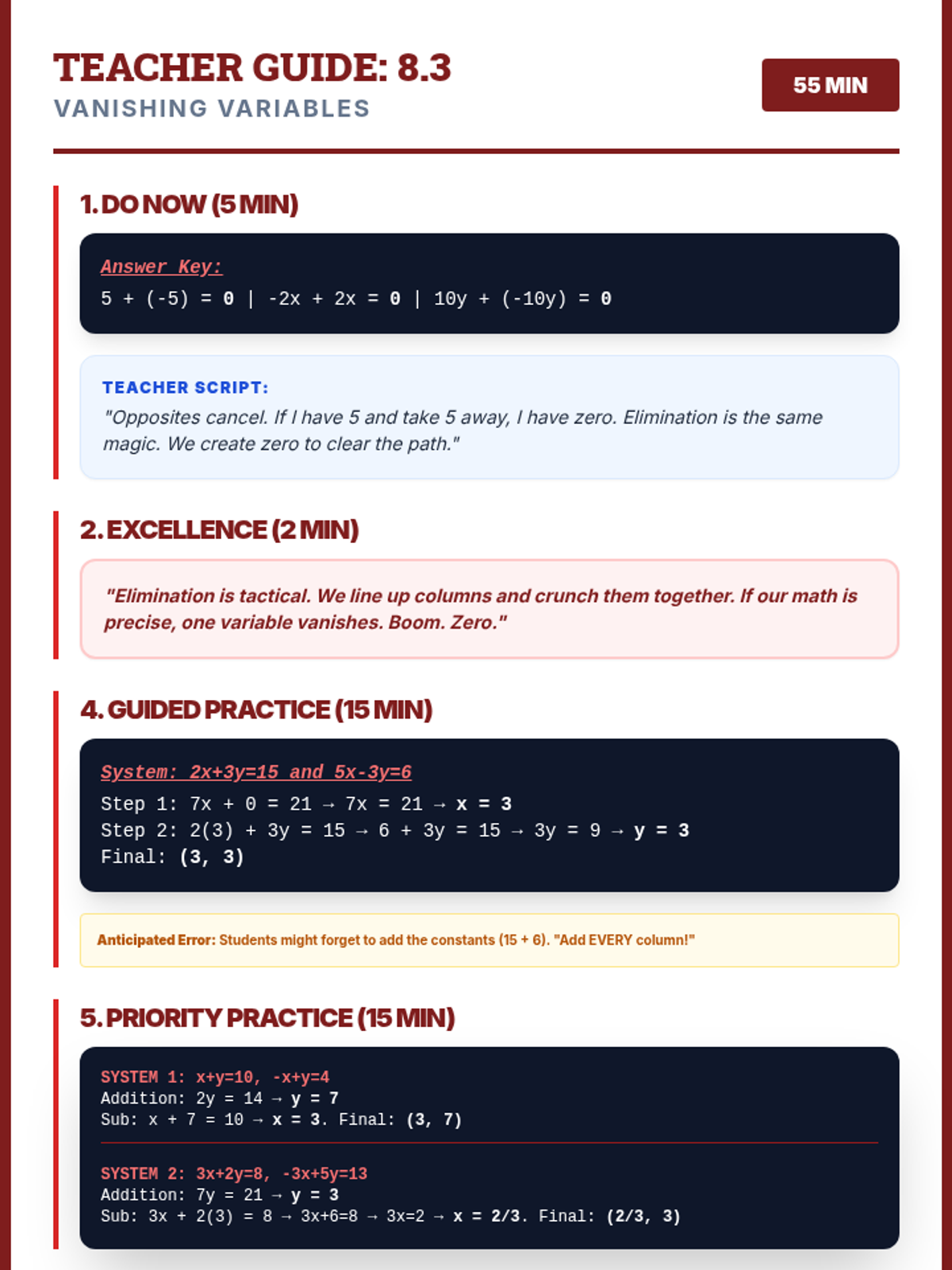
Students will use addition and subtraction to eliminate variables in a system of equations, simplifying complex problems into solvable single-variable equations.
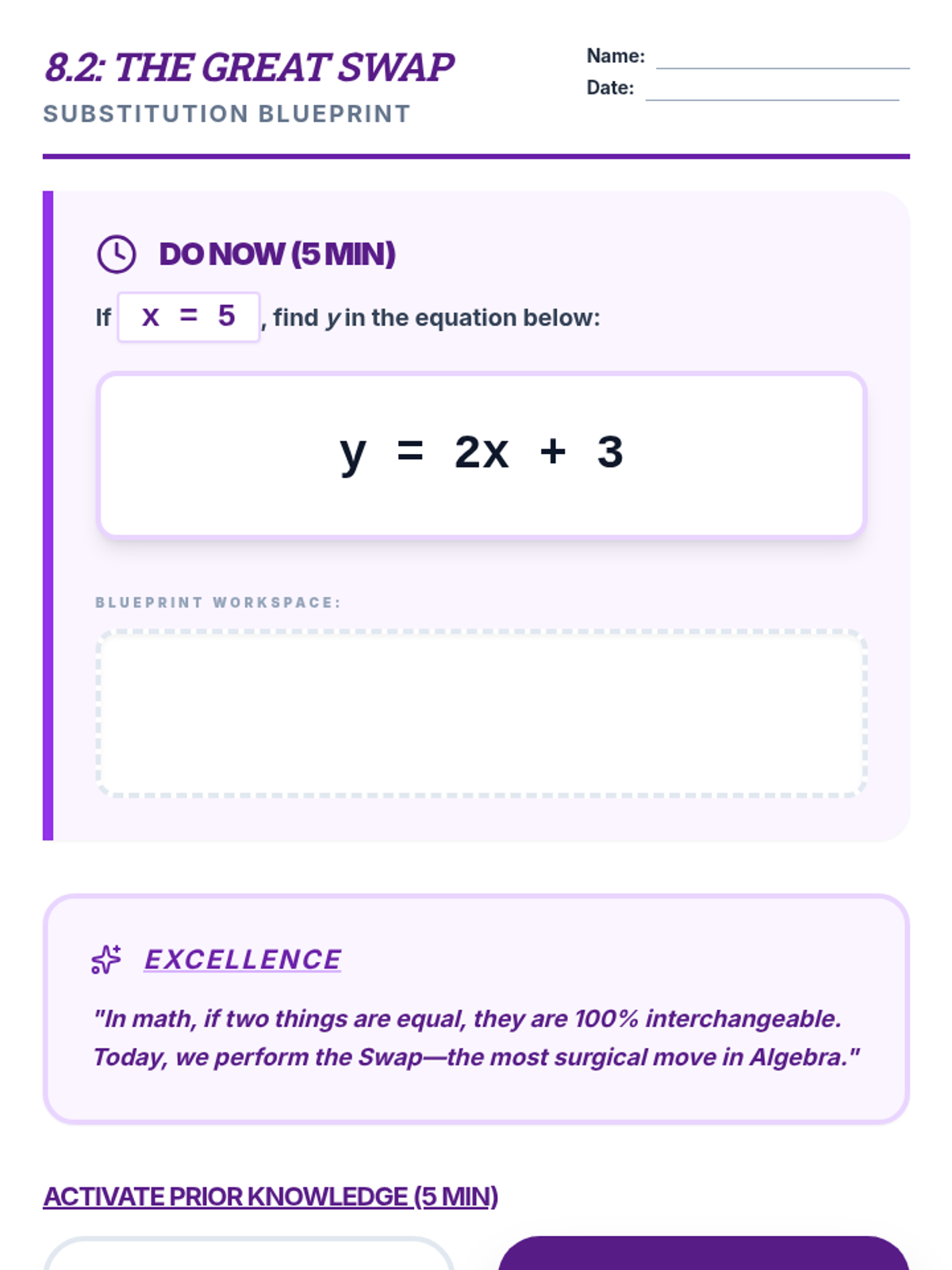
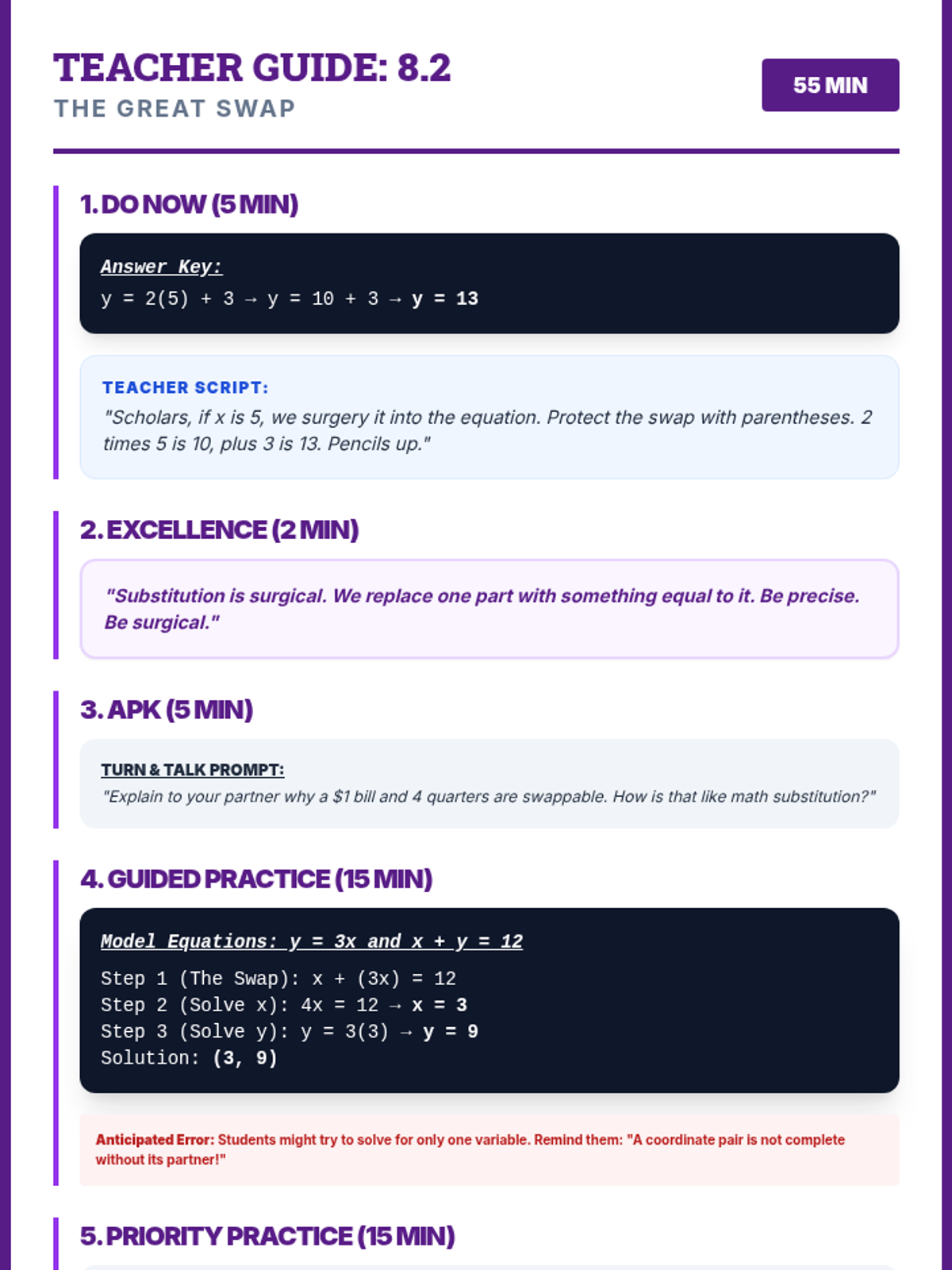
Students will master the substitution method for solving systems, learning to swap one variable for an equivalent expression to solve for unknowns.
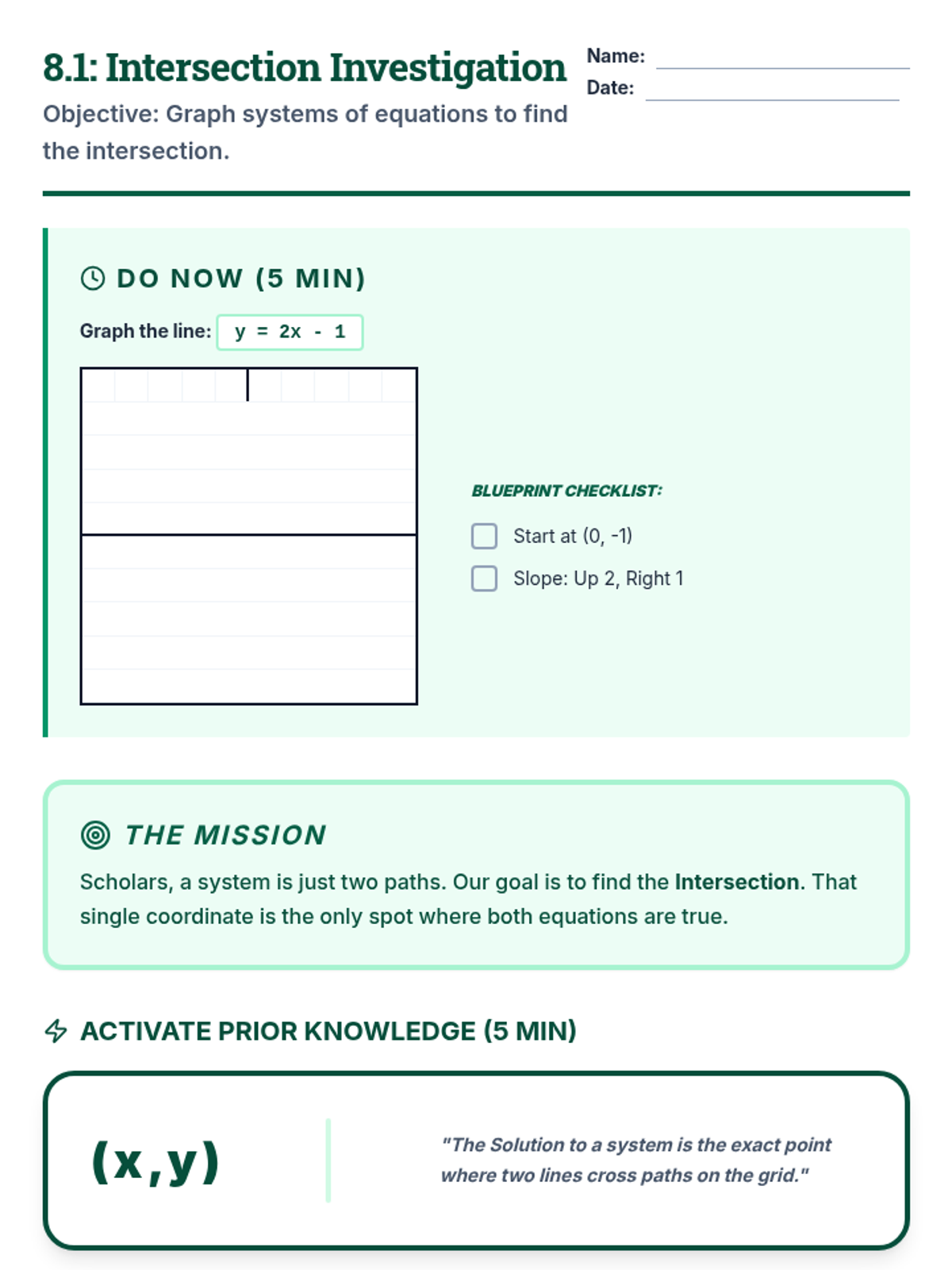
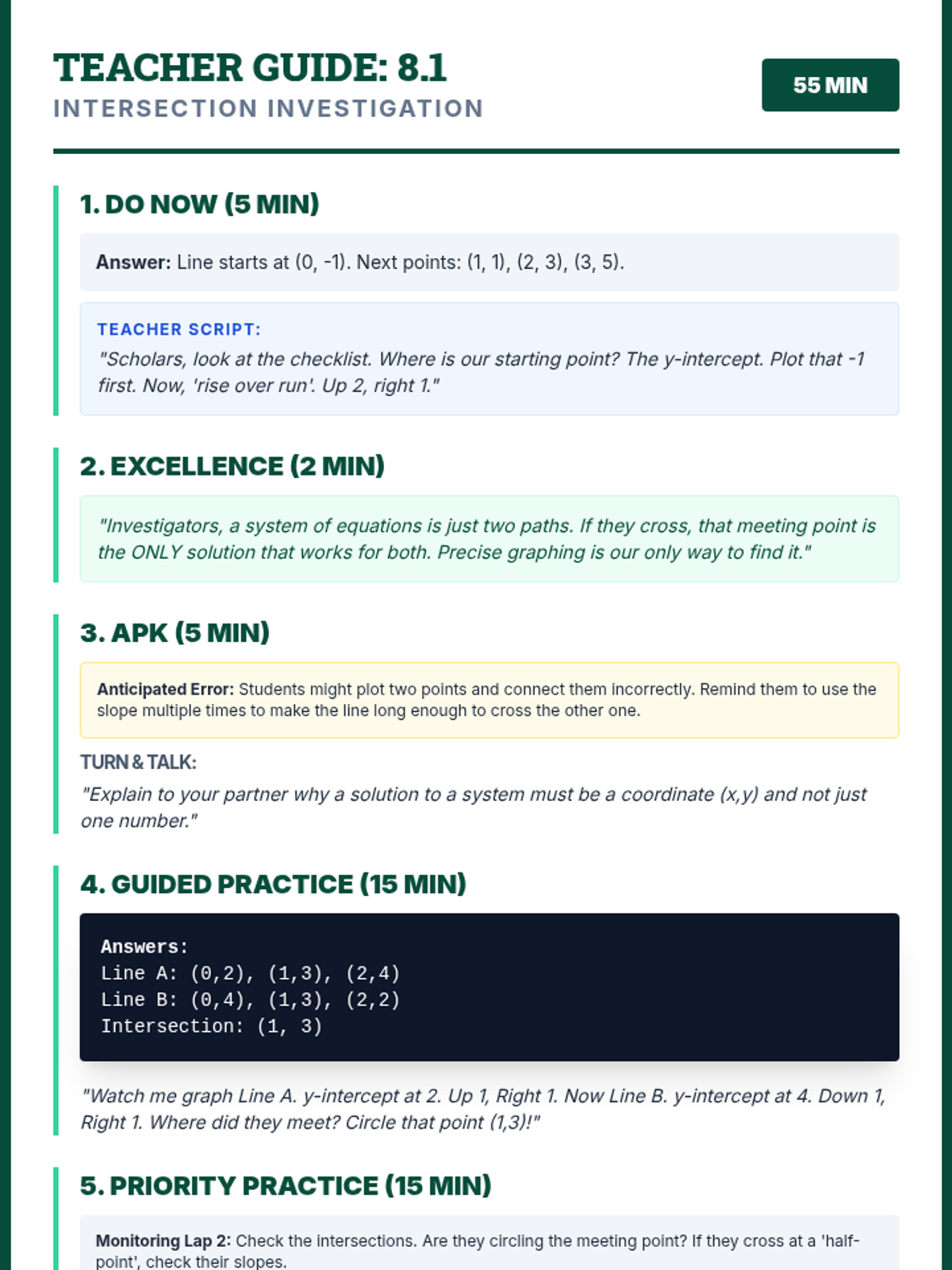
Students will solve systems of linear equations by graphing both lines and identifying the point where they cross as the unique solution.
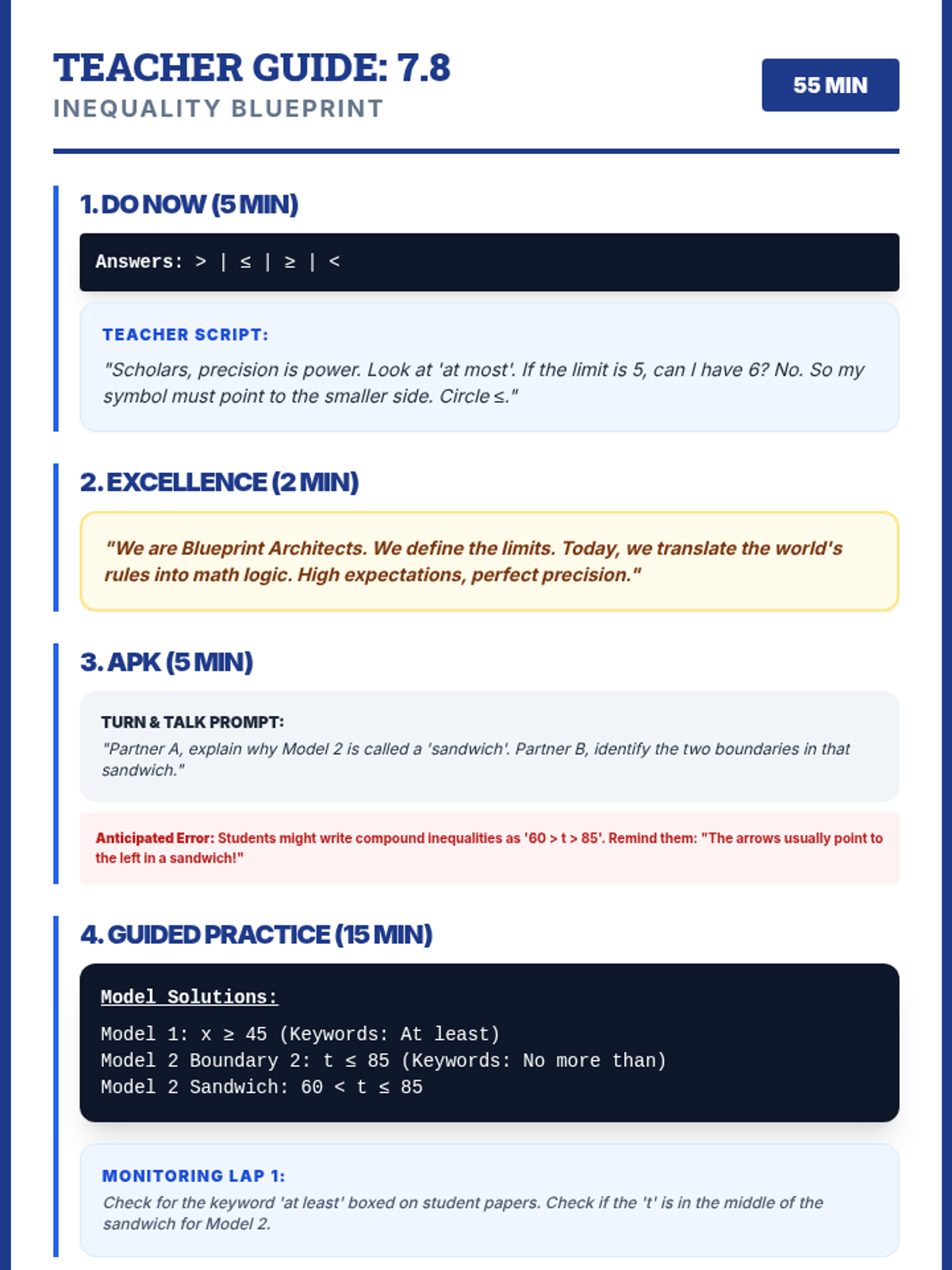
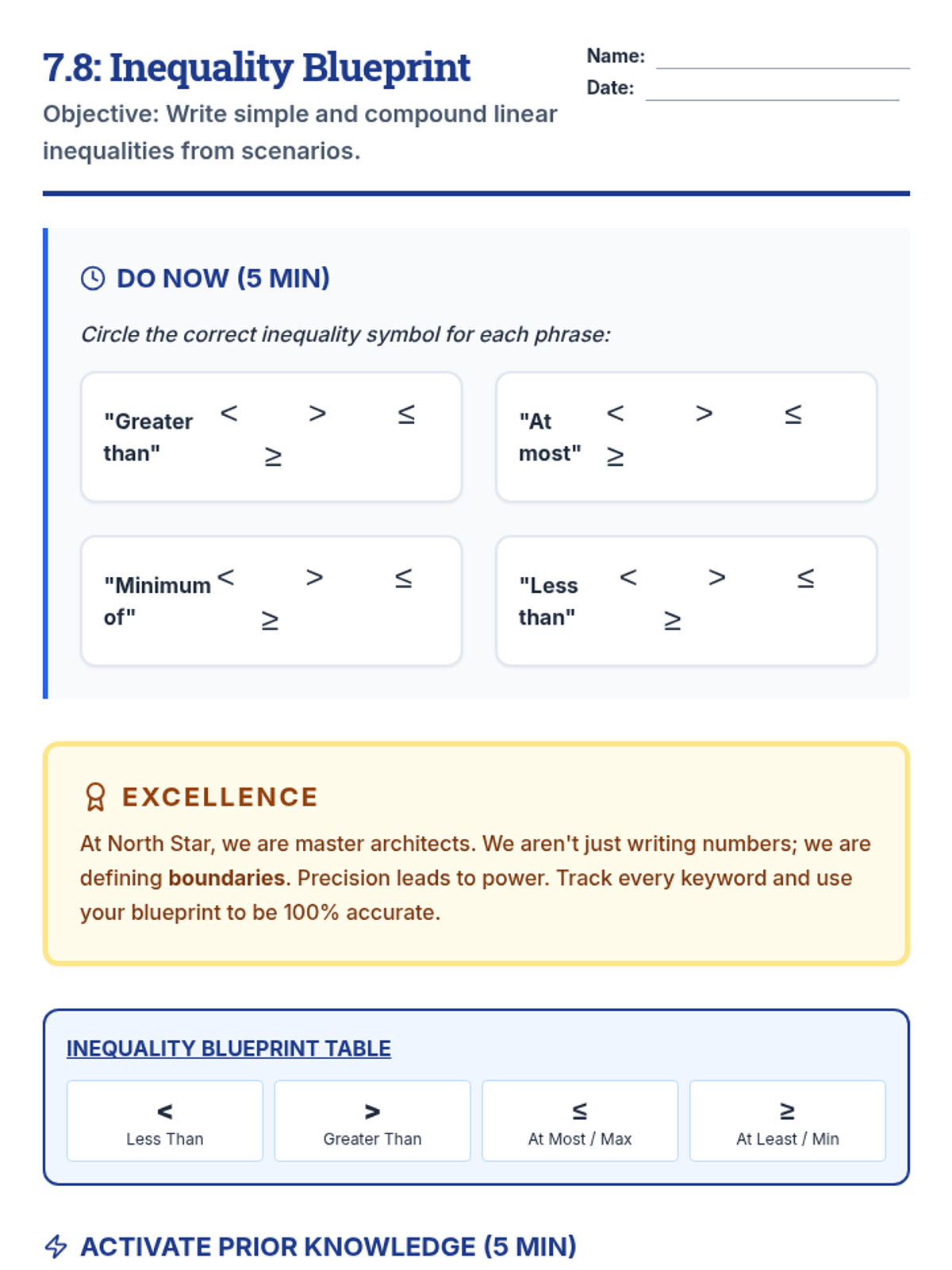
Students will learn to translate real-world scenarios into simple and compound linear inequalities, using keywords to determine the correct symbols and structures.
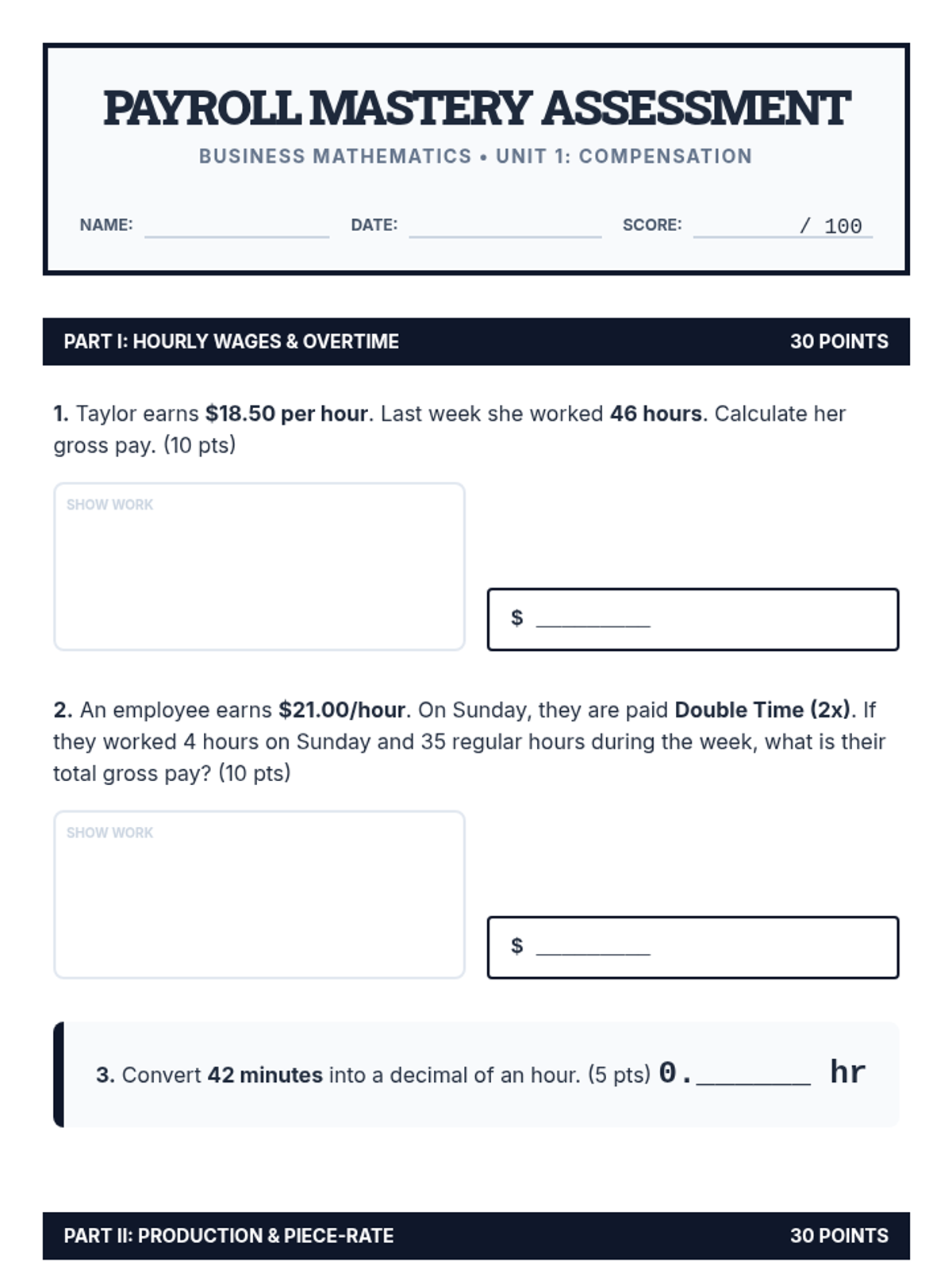
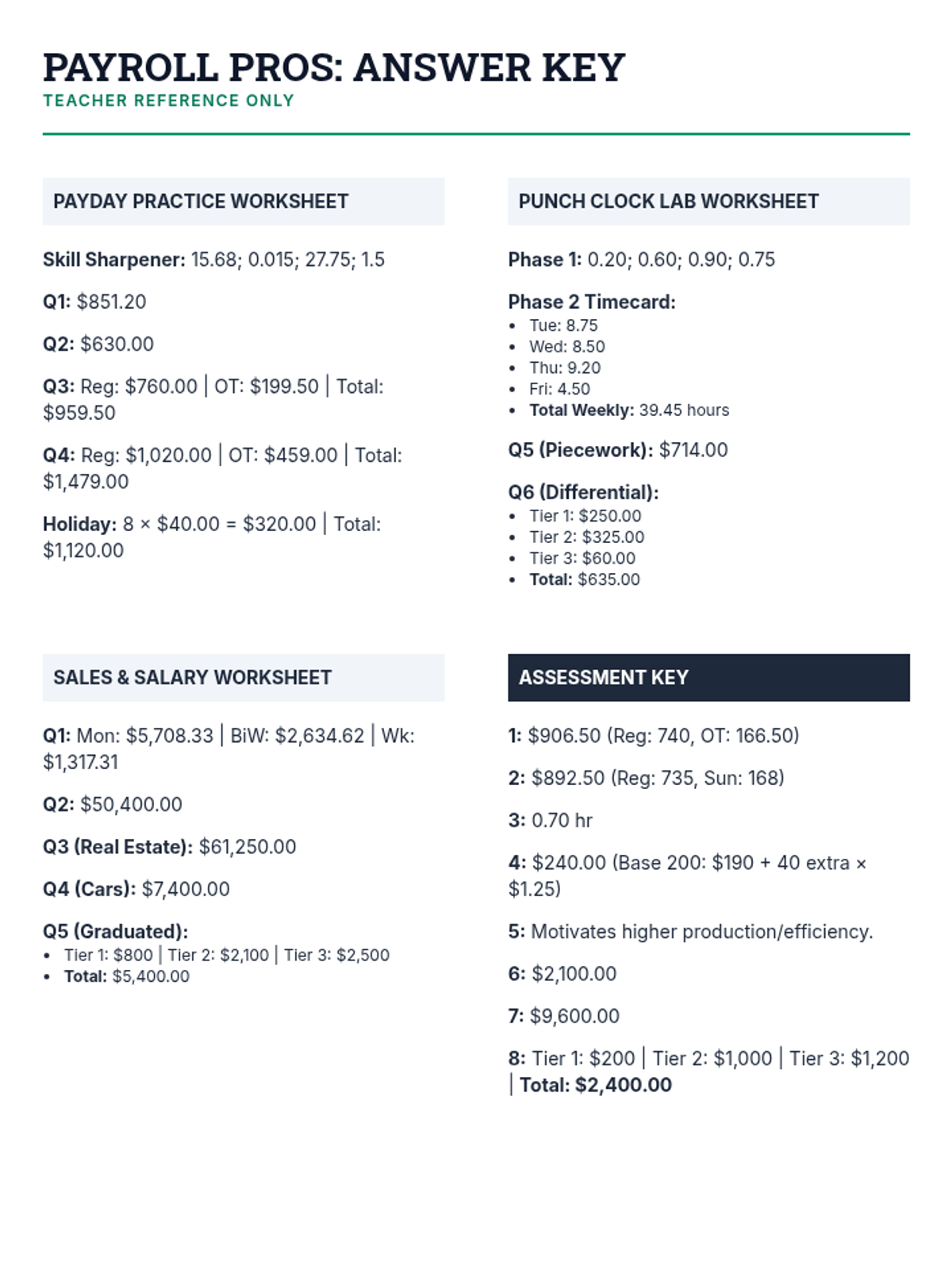
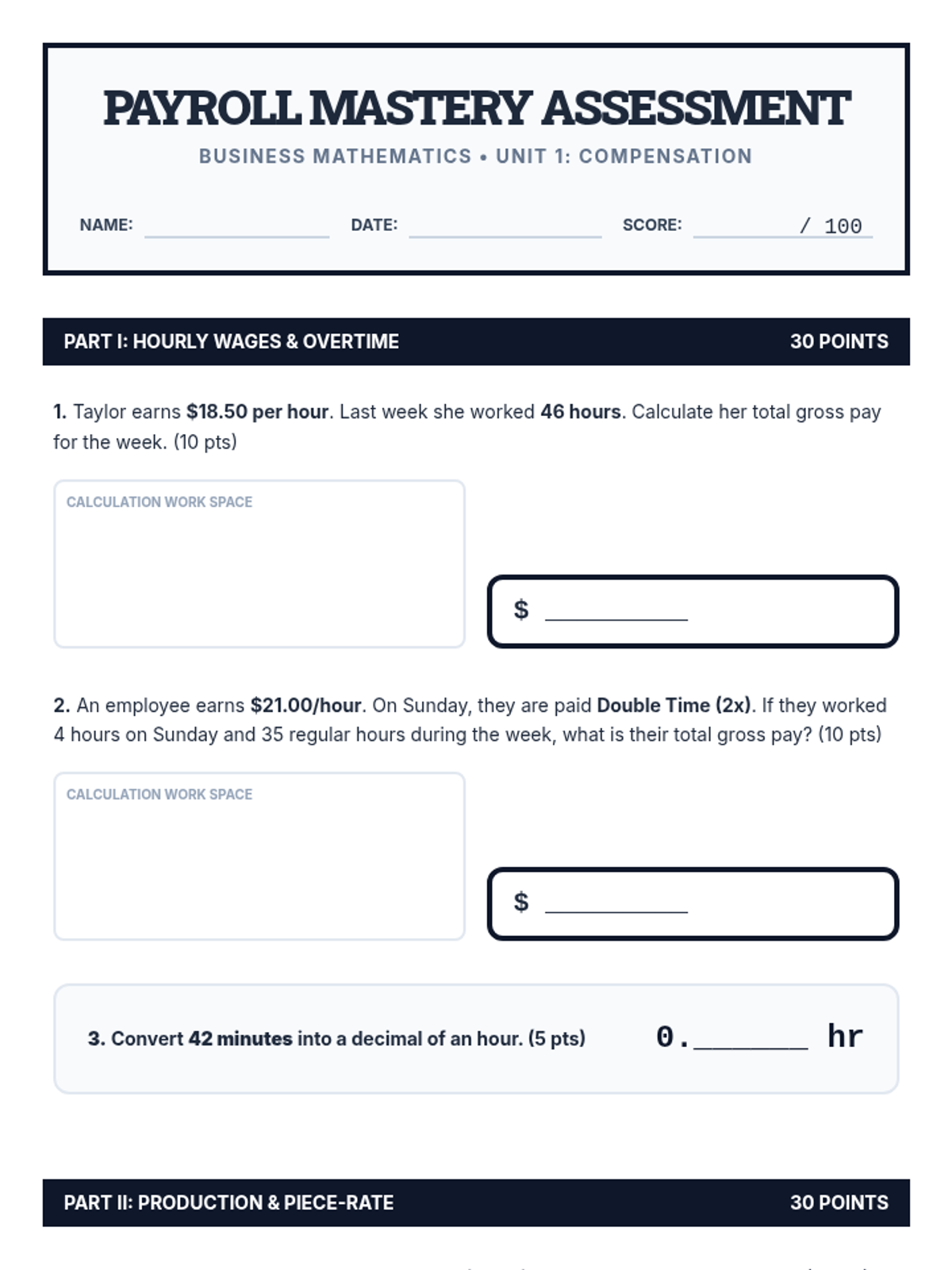
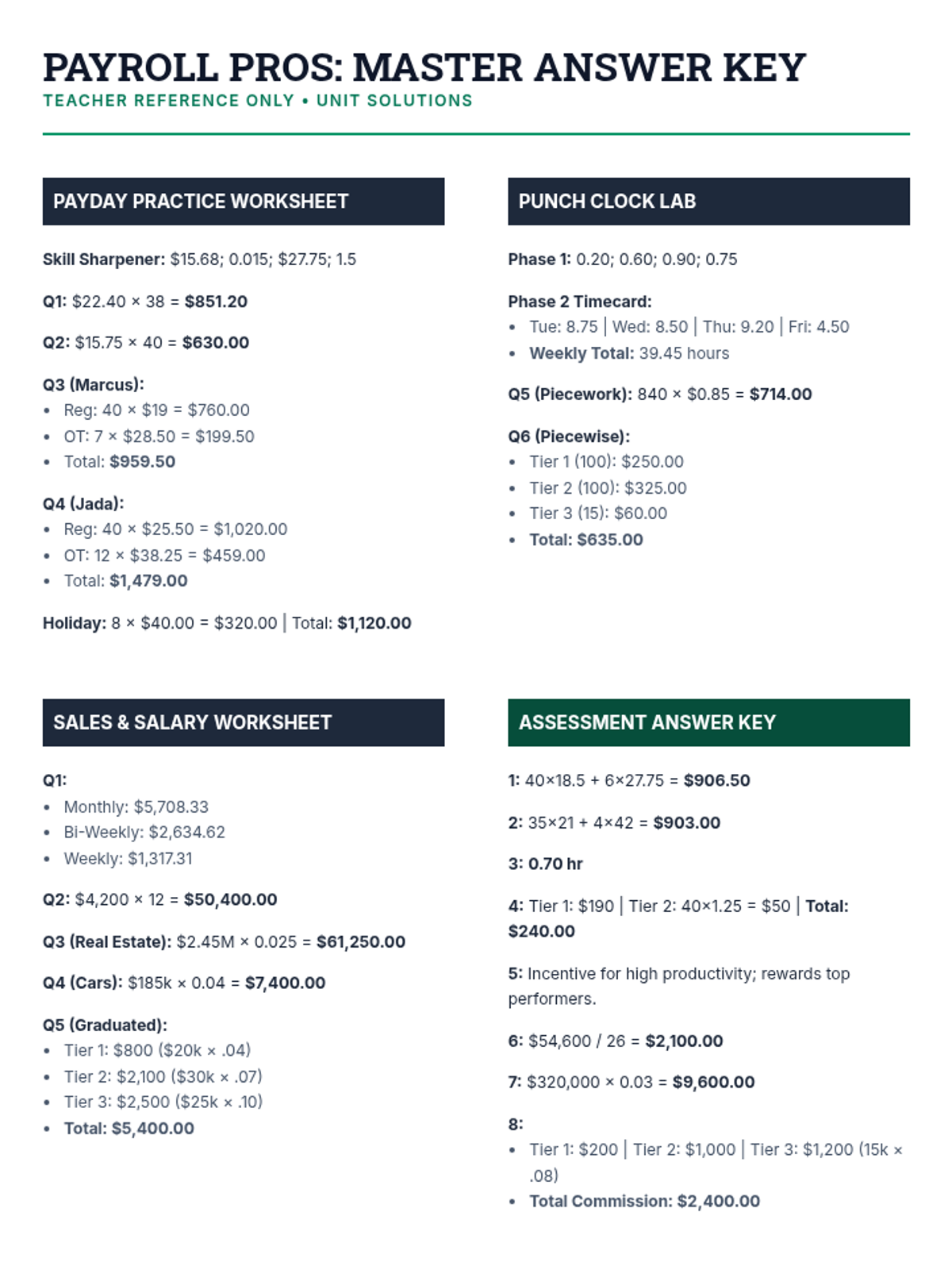
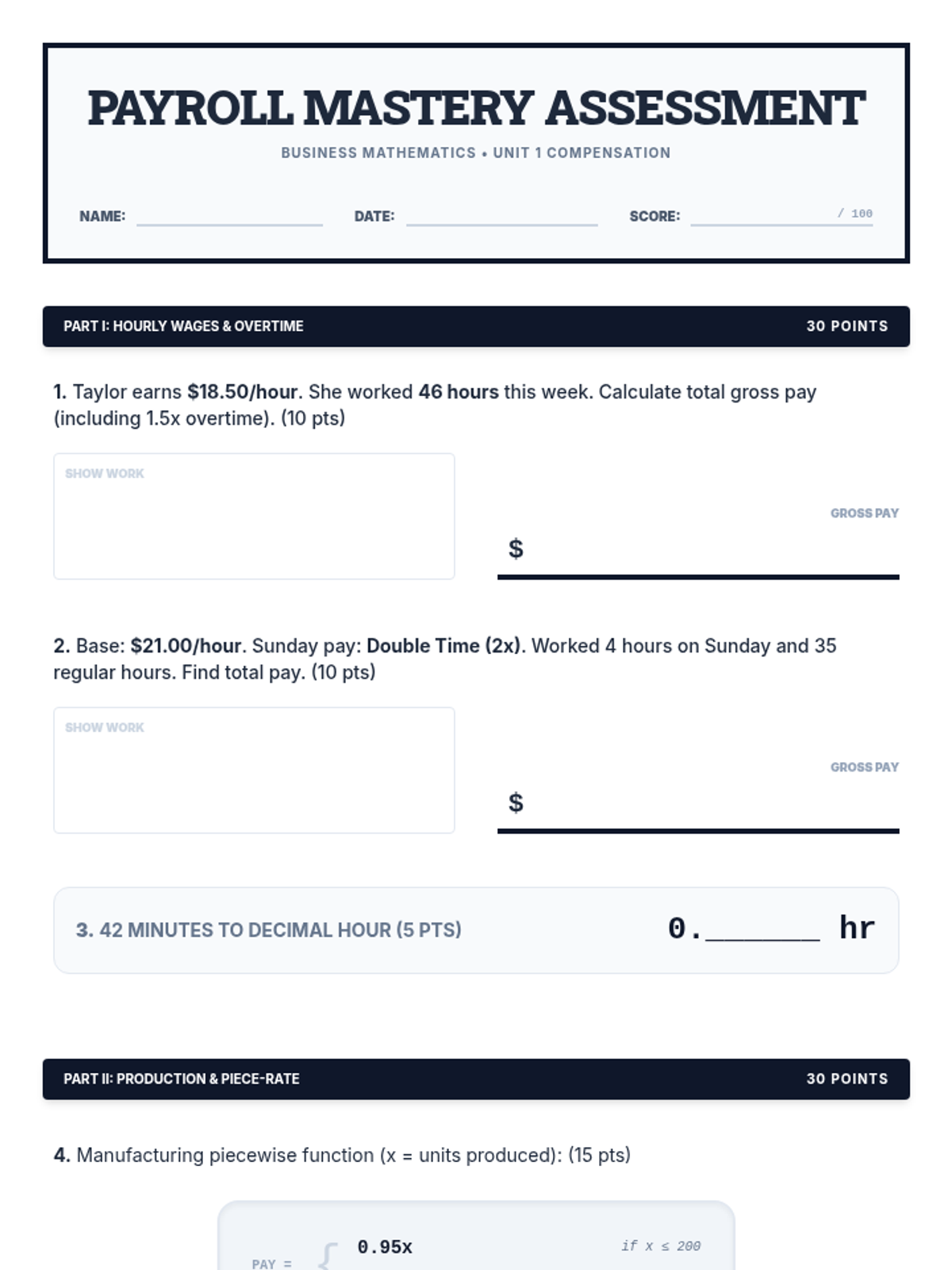
A cumulative review and final assessment covering all pay structures and business math skills taught in the unit.