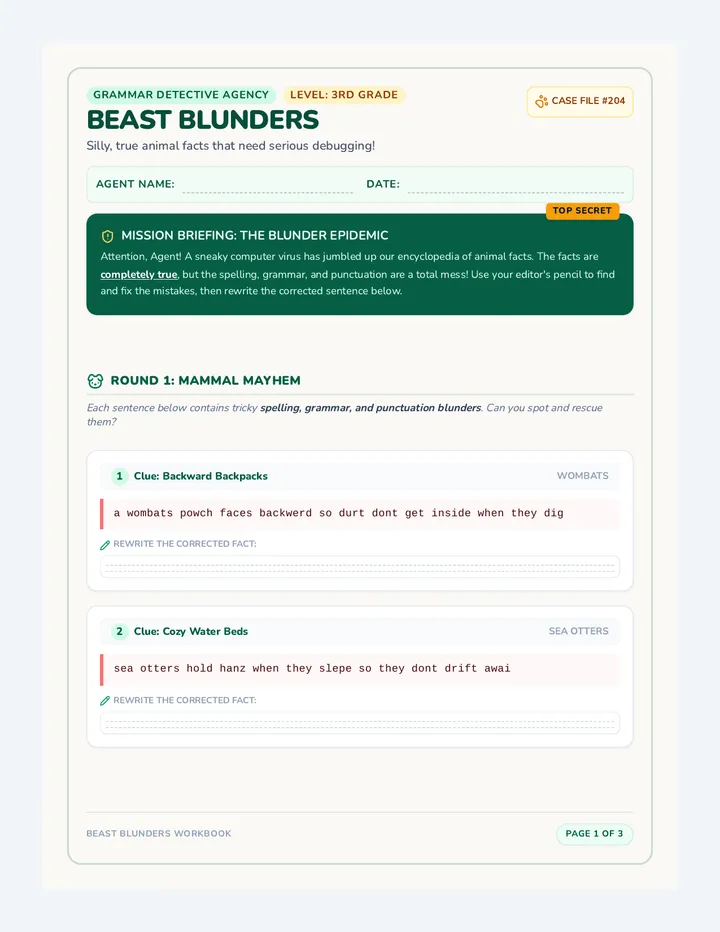
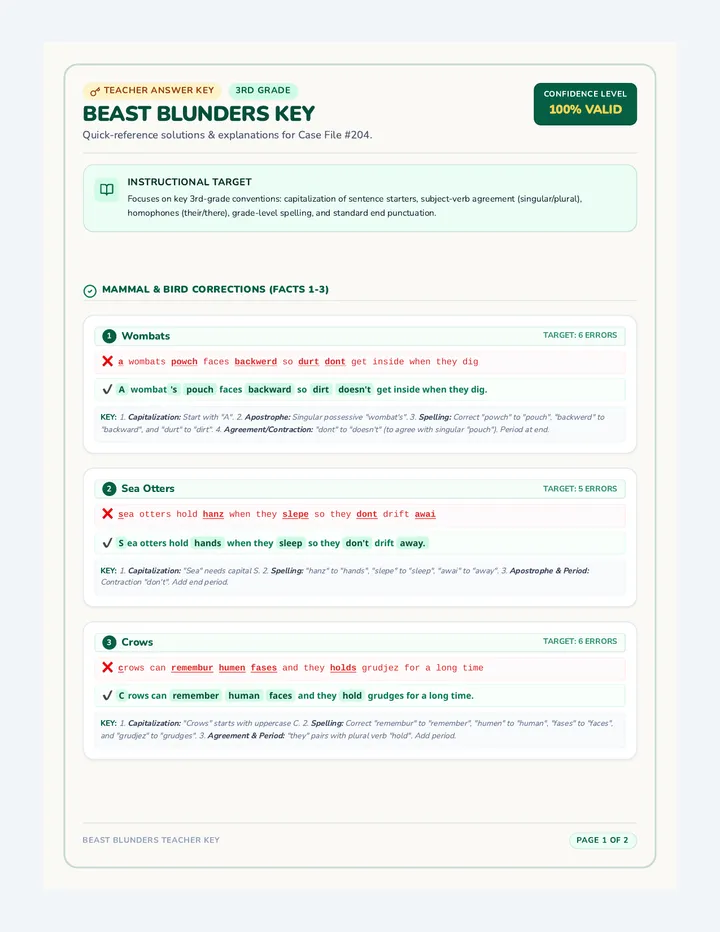
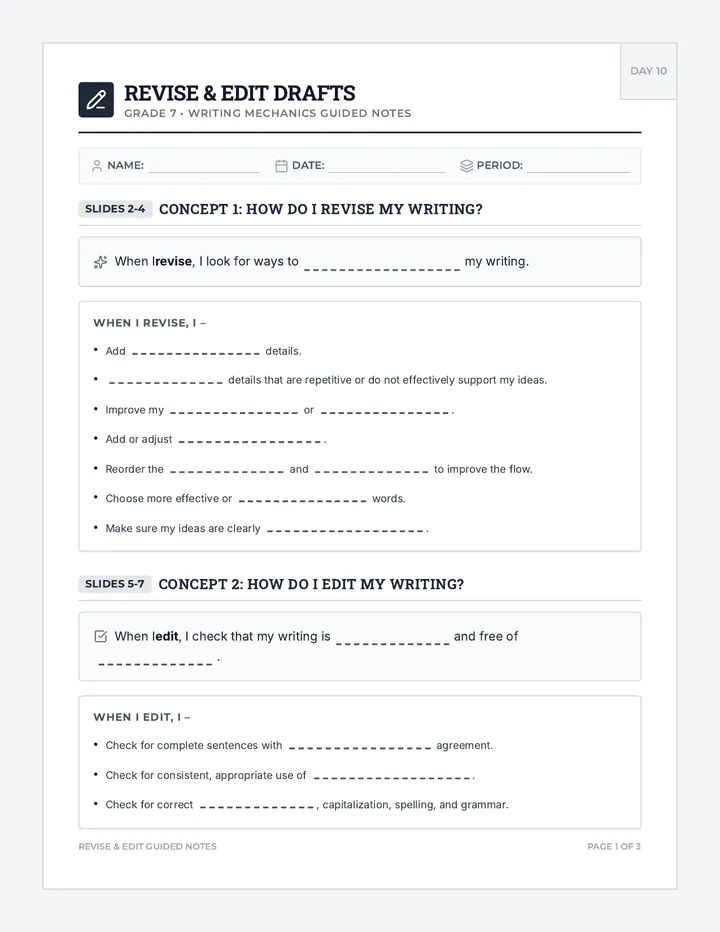
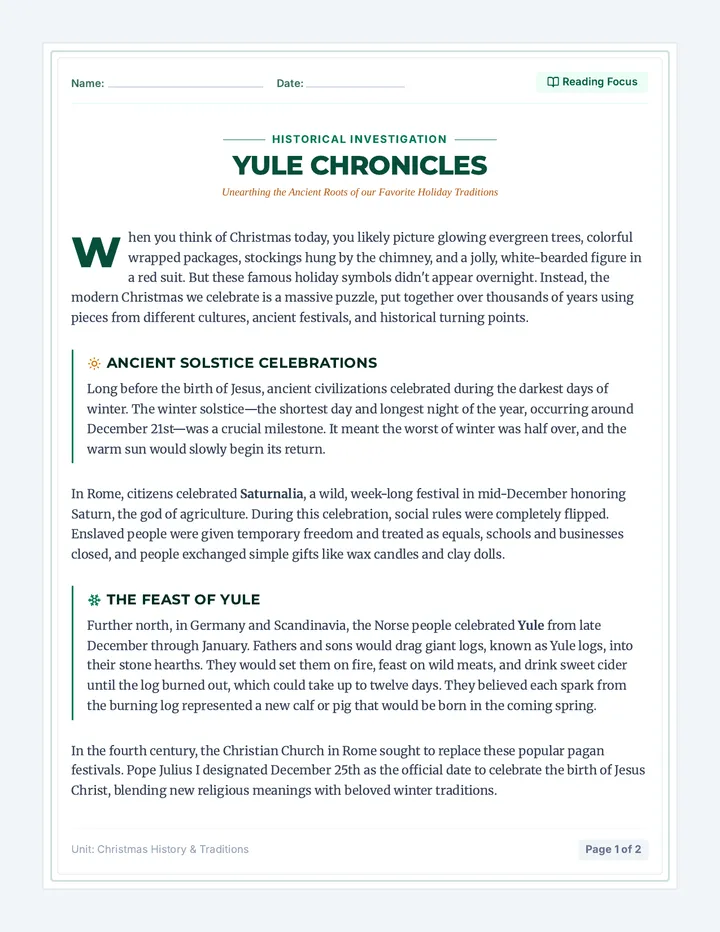
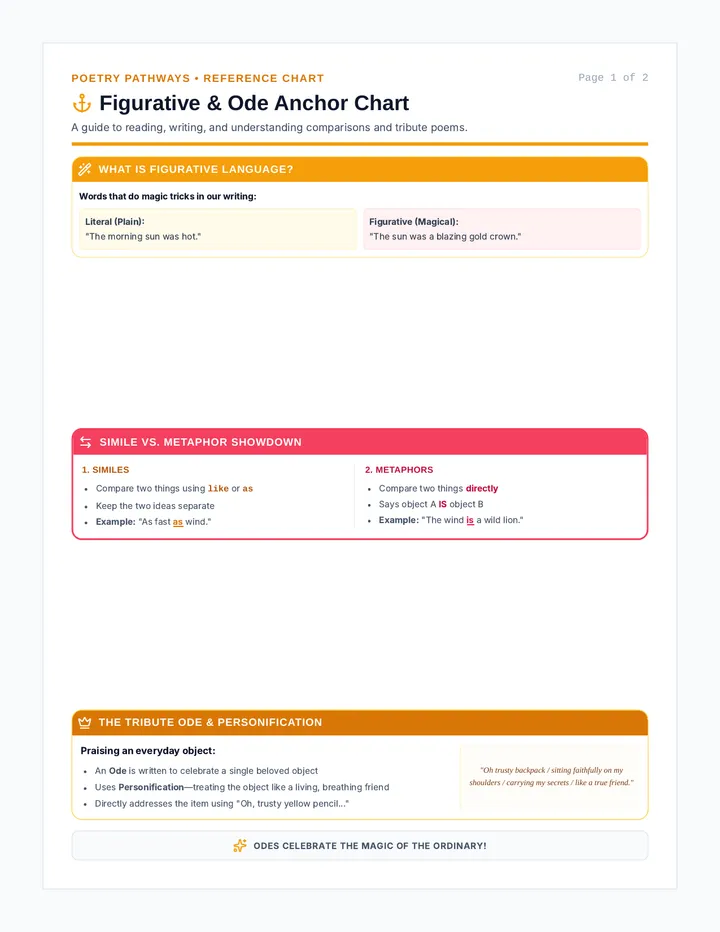
Students review proper noun capitalization and expand to titles of people, historical events, and languages using a 'Capitalization Catastrophe' hook.
A capstone challenge where students apply all their Mind Detective skills to solve a complex literacy mystery, demonstrating mastery of metacognition and reasoning.
Teaches students how to select the right 'Mind Tool' for different types of texts and challenges, reinforcing the metacognitive choice of strategies.
Focuses on monitoring comprehension. Students learn the 'Click or Clunk' strategy to identify when they've lost track of meaning and how to use 'fix-up' strategies.
Students learn to identify text patterns (cause/effect, sequence, compare/contrast) as 'blueprints' that help the brain organize information more efficiently.
Uses Arthur Evans' deductive reasoning approach. Students solve logic puzzles and text mysteries by eliminating impossibilities and following logical sequences.
Introduces the 'Reading Detective' approach to finding explicit evidence. Students learn to cite page numbers, lines, or specific phrases to prove their answers.
Focuses on synthesis—how our thinking evolves as we gather more information from a text. Students track their 'thinking changes' from the beginning to the end of a story.
Encourages curiosity by teaching students to ask 'Thick' (complex, inferential) and 'Thin' (literal, factual) questions before, during, and after reading.
Teaches students how to use their five senses to create 'mental movies' while reading. Focuses on how visualization deepens understanding and memory.
Students learn to combine text clues with their schema to make inferences. This lesson uses the 'Evidence + Schema = Inference' formula to ground abstract thinking in concrete steps.
Focuses on schema as a concrete concept (the 'Schema Suitcase'). Students practice activating prior knowledge before reading to set the stage for comprehension.
Introduces the concept of metacognition—thinking about thinking. Students learn to recognize the 'inner voice' that talks to them while they read and identify the difference between reading words and understanding meaning.
Showcase and graduation session for 'Reading Craft Mastery'. Students share their sketchbooks and receive their mastery certificates.
Introduction to the 'Reading Craft Mastery' mindset. Focuses on 'Monitoring for Meaning' by teaching kids to check if their 'mental movie' is clear or blurry using Click and Clunk logic.
Showcasing student work and awarding certificates for completing the Reading Masterpieces Academy.
Reviewing all 7 keys through a comprehensive reading and sketching challenge.
Applying 'Access Lenses' to analyze the mood and feelings within a text.
Combining information to form new thoughts and summaries of longer stories.
Distinguishing between interesting facts and essential information in science and history passages.
Formulating deep questions before, during, and after reading to spark curiosity.
Using clues from the text and images to 'read between the lines' about characters and settings.
Activating and building schema (background knowledge) to better understand informational texts.
Connecting personal experiences and world knowledge to Kuwaiti curriculum topics like travel and family.
Using the 'Art of Comprehension' techniques to sketch and visualize scenes from historical Kuwait.
Developing mental movies and using sensory images to understand descriptive texts about Kuwaiti life.
Developing the mindset of a reading craftsman. Introduction to monitoring meaning and the 'Check for Understanding' goal.