A hands-on, station-based lesson where students analyze primary source documents from Thurgood Marshall, Rosa Parks, and youth activists to understand the "blueprint" of the Civil Rights Movement.
A comprehensive lesson on the core principles of the U.S. Constitution, focusing on how power is limited, shared, and checked to prevent tyranny. Includes guided reading, interactive annotations, and a section review.
A comprehensive lesson on the ratification of the U.S. Constitution, focusing on the debates between Federalists and Antifederalists, the role of the Bill of Rights, and the contributions of key Founding Fathers.
This lesson covers the proceedings of the Constitutional Convention, focusing on the conflicting Virginia and New Jersey Plans and the crucial compromises (Great Compromise, Three-Fifths Compromise, and Commerce/Slave Trade) that shaped the U.S. government. Students will analyze the contributions of key Founding Fathers and evaluate how these debates led to the creation of the Constitution.
This lesson explores the motivations, methods, and consequences of 19th-century European imperialism in Africa and Asia. Students will analyze the impact of industrialization, technology, and social ideologies on global expansion.
An introductory lesson on the American Industrial Revolution, focusing on technological advances, the expansion of railroads, and the rise of industrial giants like Rockefeller, Carnegie, and Morgan. Students analyze primary sources to understand the shift from agrarian to industrial society.
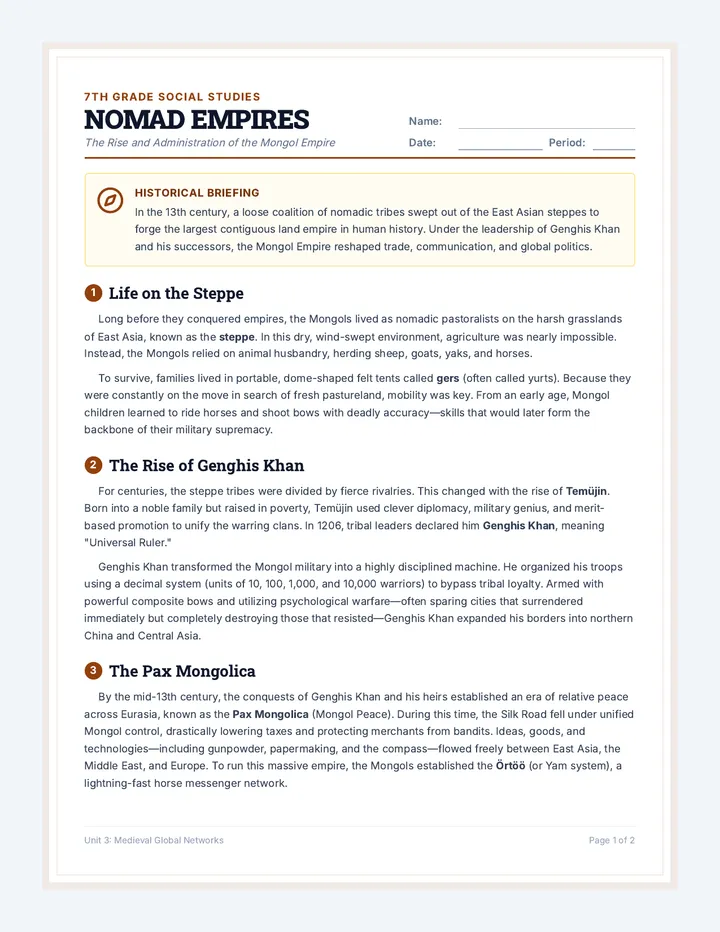
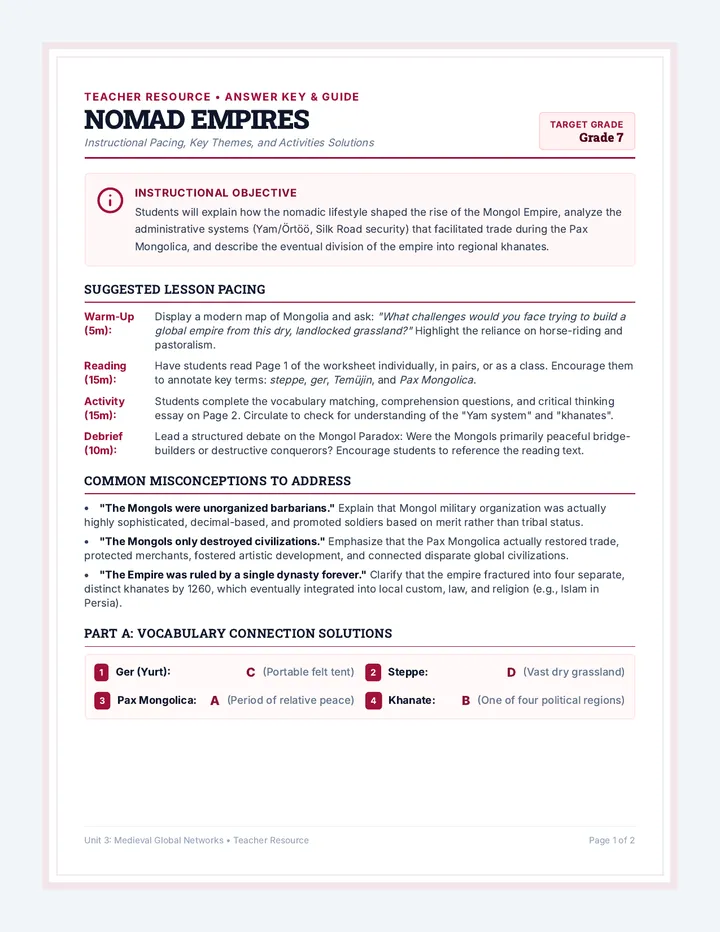
An exploration of the Aztec Empire's rapid expansion from a swampy island to a regional powerhouse, focusing on urban engineering, military conquest, and cultural expression through monumental sculpture.
A comprehensive lesson on identifying and mapping the states and capitals of the Southeast region of the United States. Students will explore geographic features, state locations, and regional identity through visual presentation and hands-on mapping.
A summative 50-minute lesson where students select one archival document to analyze in-depth and present as a "tactical advisor" to the Civil Rights Movement. Students practice public speaking and evidence-based argumentation.
A 10th-grade Social Studies lesson exploring how MLK, Nelson Mandela, and Mahatma Gandhi built trust and maintained nonviolent coalitions using SEL skills like mindfulness and validation.
A 50-minute exploration of pivotal Civil Rights leaders including Thurgood Marshall, Rosa Parks, and the influential role of youth activism in the movement. Students will analyze legal and grassroots strategies for social change.