A dynamic introduction to entrepreneurship where students learn to set prices using supply, demand, and scarcity. Students design a product and apply a 4-step pricing strategy inspired by real-world market factors.
This lesson explores the two foundational civilizations of the Greek Bronze Age, comparing their social structures, trade networks, and cultural legacies. Students will analyze how the Minoans and Mycenaeans shaped the future of Ancient Greek civilization.
Explore the monumental achievements of Ancient Rome in engineering, architecture, language, and science, and discover how they continue to influence our world today.
A guided review of chapters 9-13 of Prisoner B-3087, focusing on Yanek's transition to Plaszów Concentration Camp, the theme of survival, and the loss of identity.
A lesson exploring the presidency of Herbert Hoover and his support for Civil Rights during the Harlem Renaissance, designed for middle school students needing accessible text.
A comprehensive lesson on North Carolina's state symbols and government structure, designed to meet NC Social Studies and ELA standards with EOG-level rigor.
An in-depth exploration of the movie 'Remember the Titans', focusing on the T.C. Williams High School football team's journey toward unity and the social challenges of integration.
An inquiry-based workshop where students explore philosophical paradoxes and lateral thinking puzzles to sharpen critical reasoning skills.
A look into the lives, systems, and vocabulary of the thirteen original American colonies.
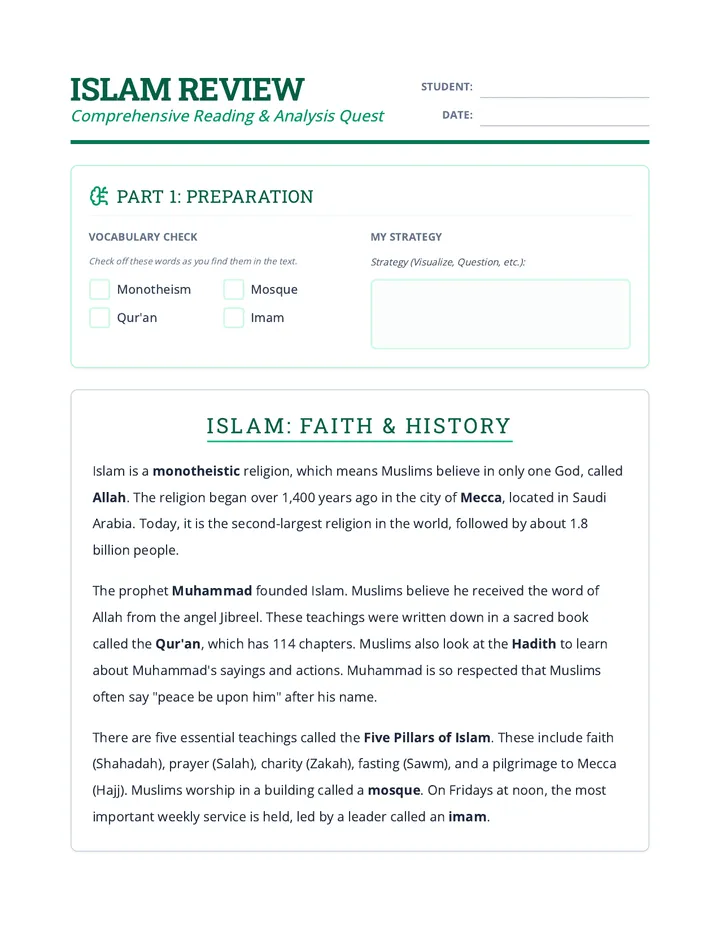
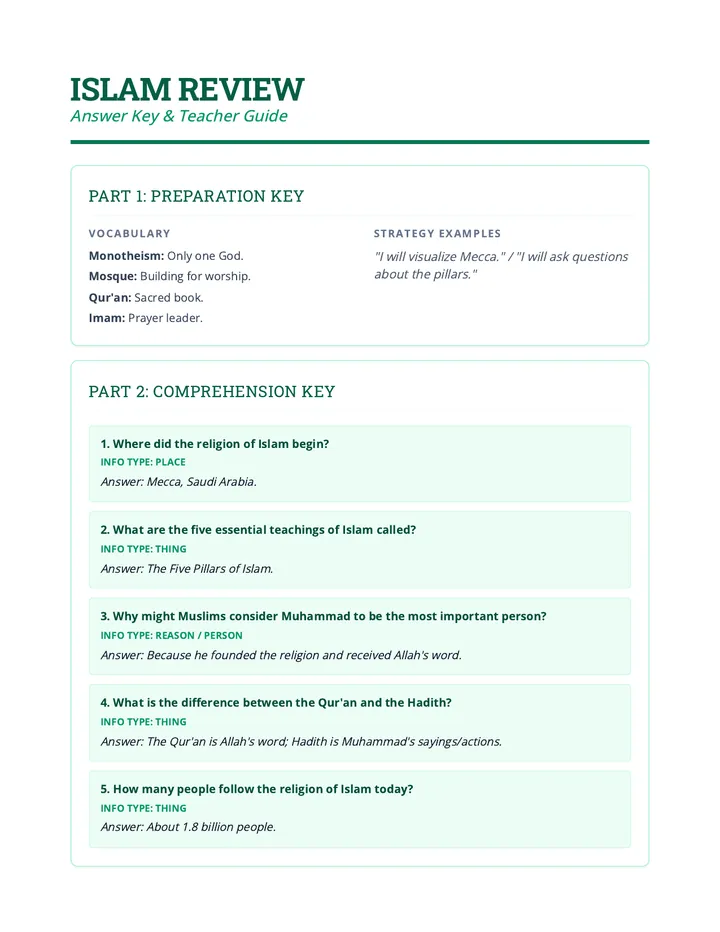
An immersive gallery walk exploring the core beliefs and historical influences of Hinduism, Buddhism, Judaism, Christianity, Islam, and Taoism. Students rotate through visual stations to build a comparative understanding of global spiritual traditions.
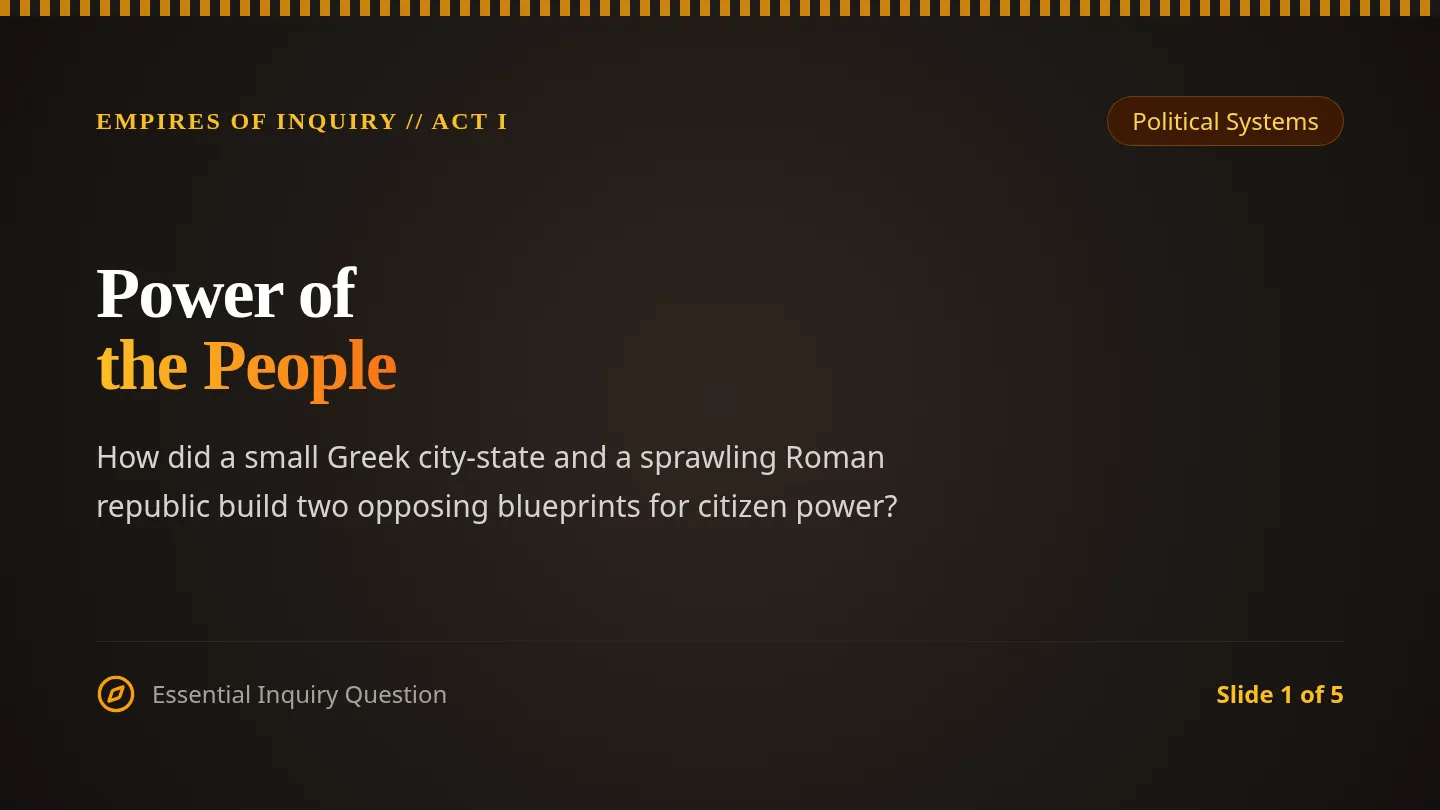
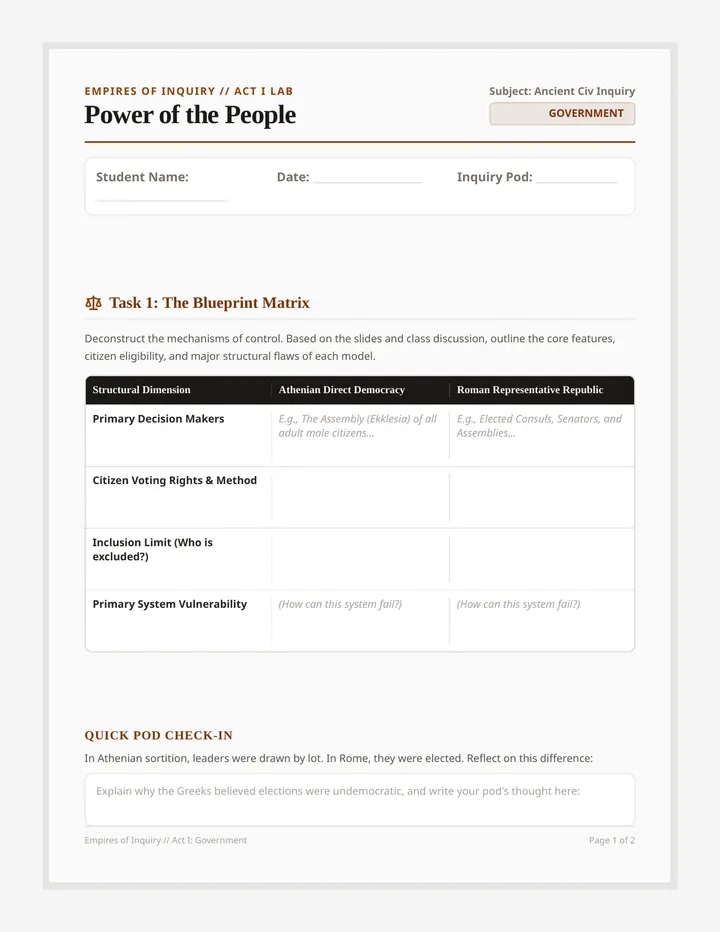
An exploration of the foundations of citizenship in ancient Athens, covering eligibility, rights, responsibilities, and the unique practice of ostracism.
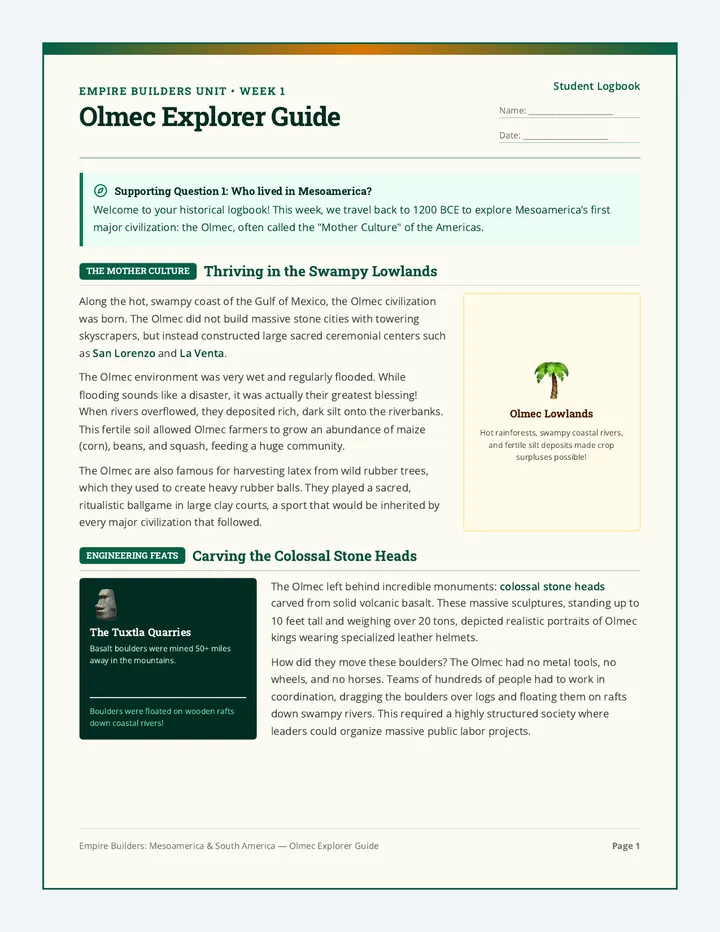
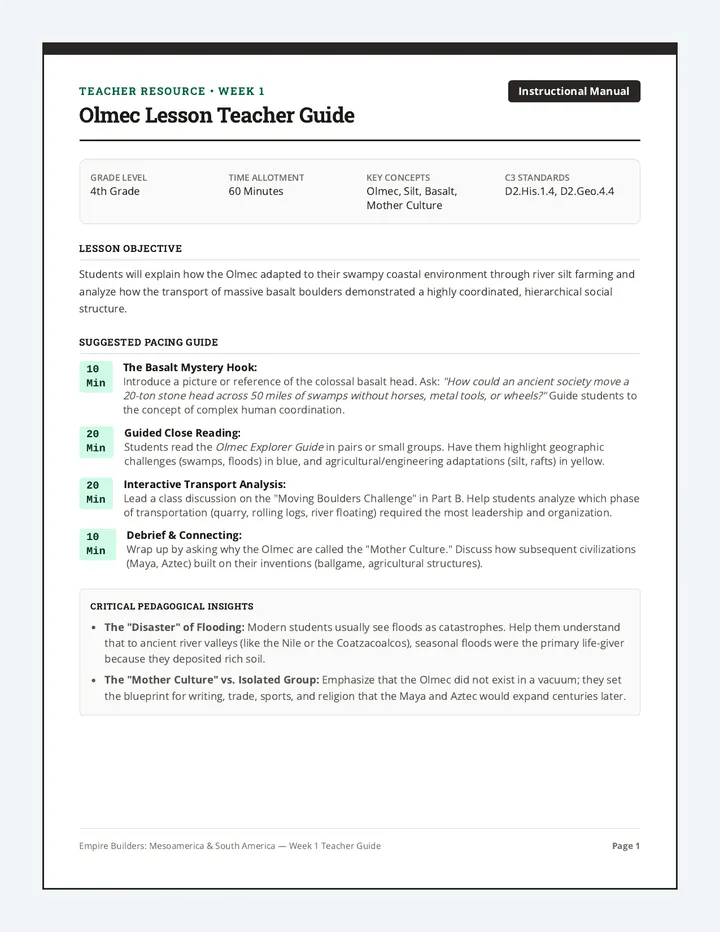
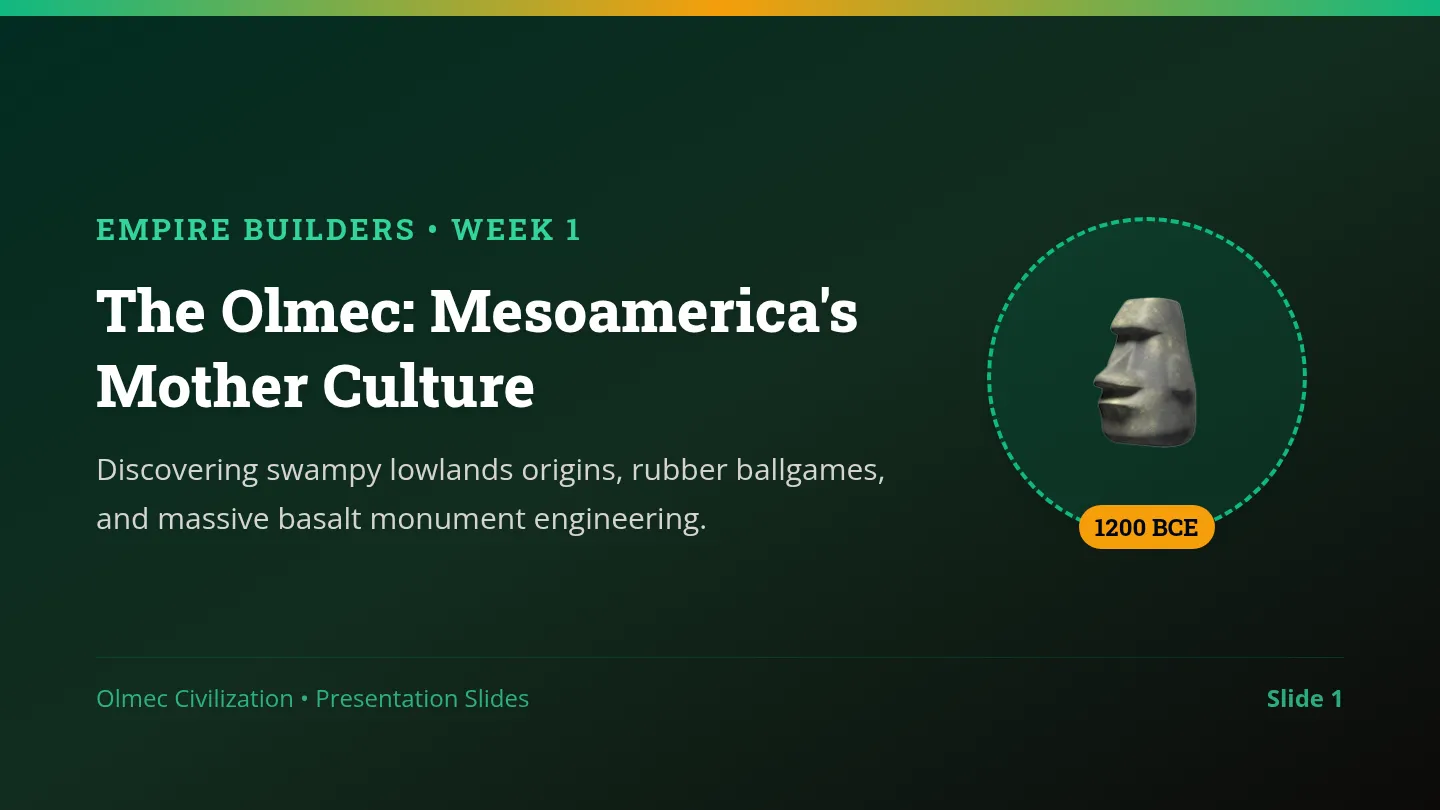
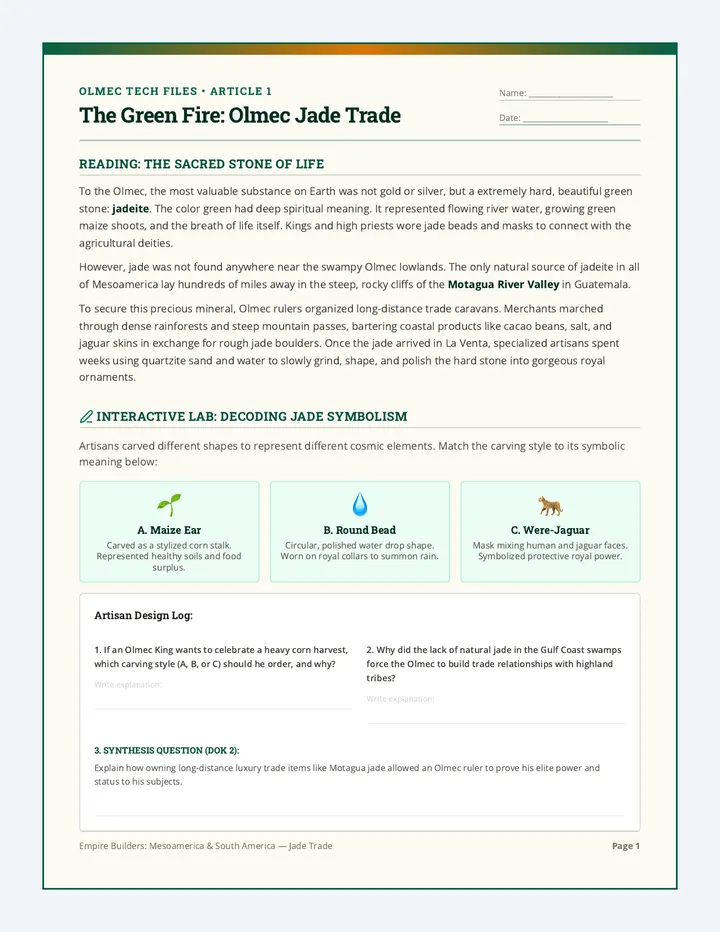
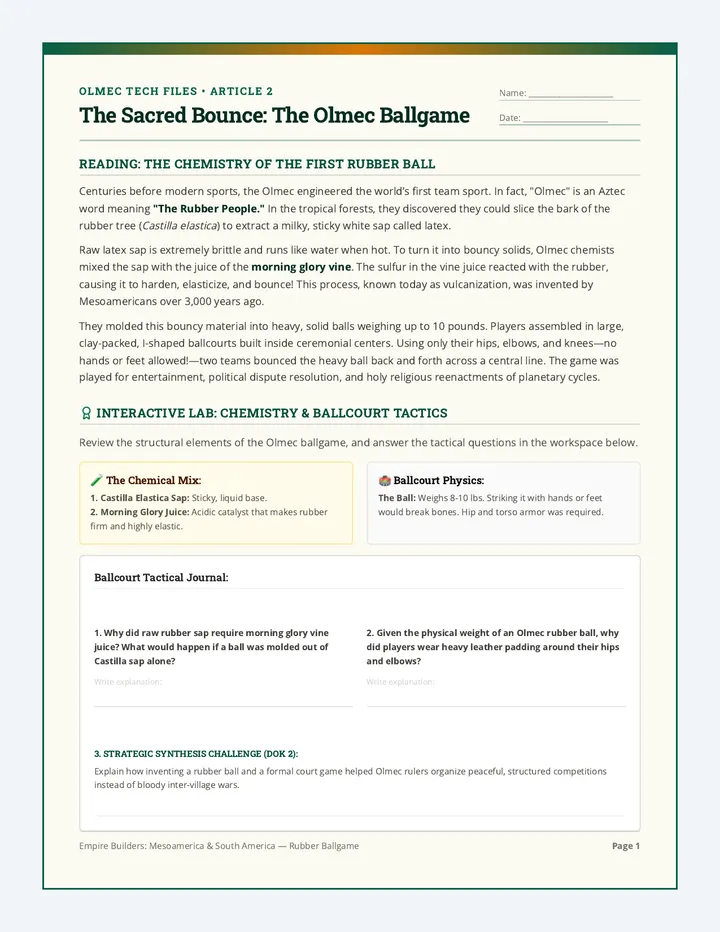
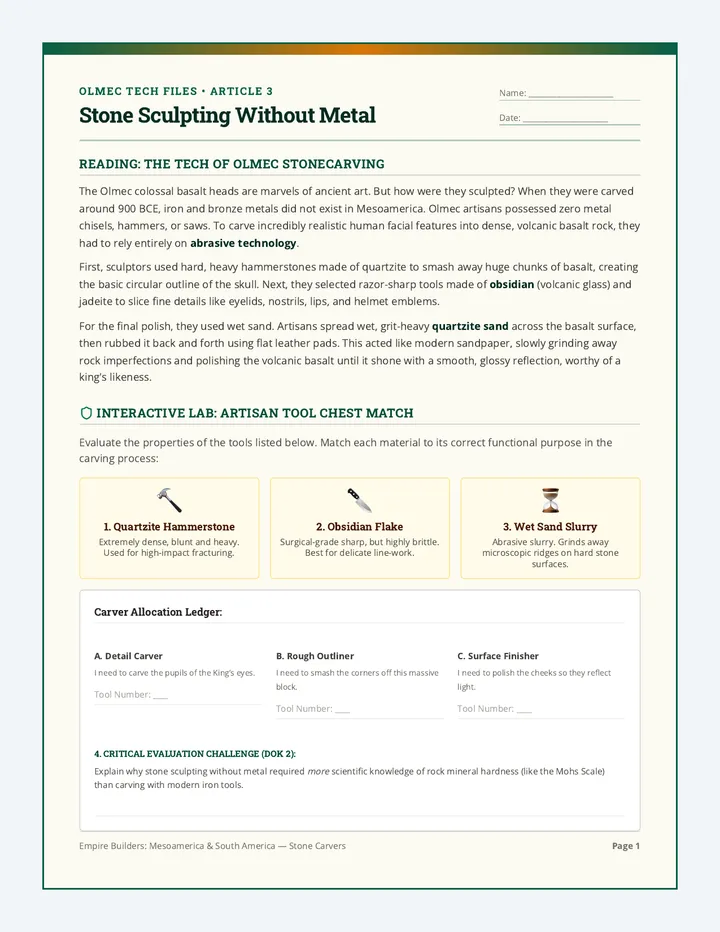
A lesson exploring the Olmec civilization through their iconic colossal heads, focusing on social hierarchy, political power, and their enduring legacy as Mesoamerica's 'Mother Culture'.
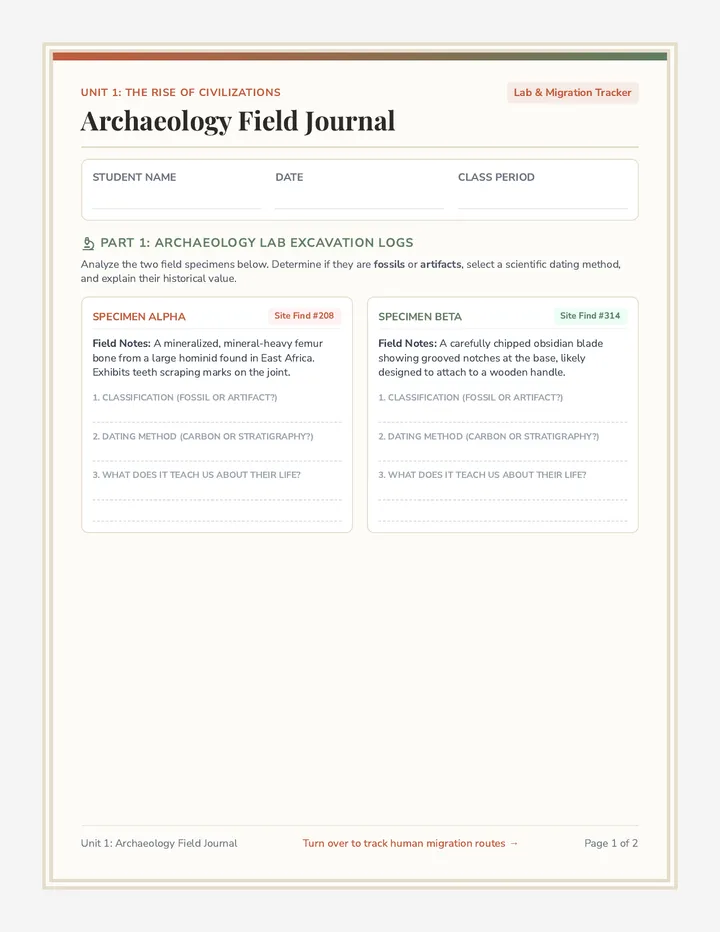
A final comparison of the four civilizations, focusing on shared characteristics like irrigation, social classes, and writing systems, culminating in a unit assessment.
Focusing on the Huang He (Yellow River), the early dynasties, the concept of the Mandate of Heaven, and the development of Confucianism and Taoism.
Investigating the advanced urban planning of Harappa and Mohenjo-Daro, the mystery of their undeciphered script, and their extensive trade networks.
An analysis of the Nile River's role in Egyptian life, the power of Pharaohs, the construction of pyramids, and the religious beliefs of the afterlife.
An exploration of the Tigris and Euphrates rivers, the development of city-states, the Code of Hammurabi, and the social hierarchy of Sumer.
A lesson exploring the Women's Suffrage Movement through the life and activism of Susan B. Anthony, featuring vocabulary building and historical sequencing.
A comprehensive look at the classic novel 'The Watsons Go to Birmingham – 1963', including a complete plot summary and a comparative analysis between the book and its film adaptation.
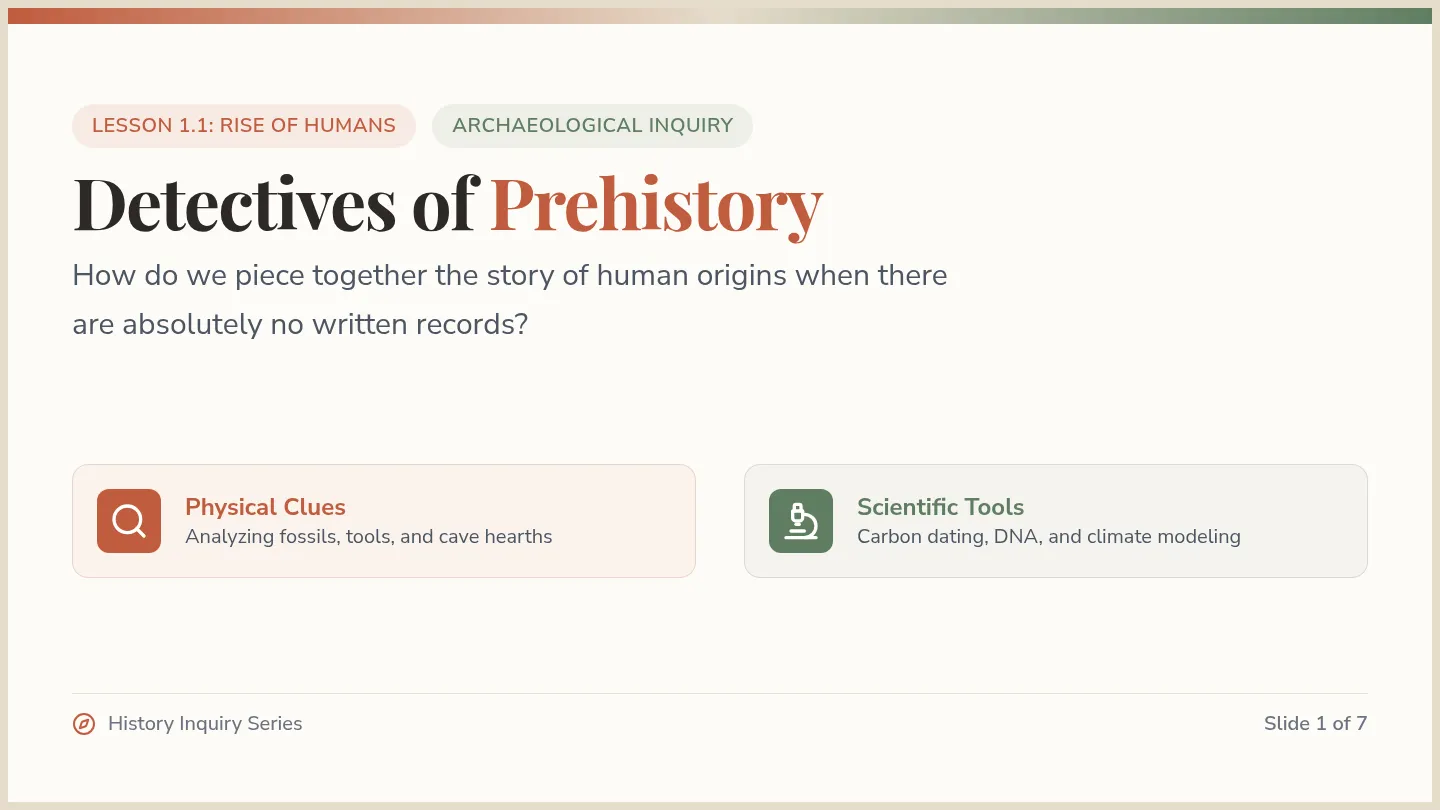
A Social Studies and Creative Writing lesson where students analyze modern cultural objects as future archaeological artifacts to evaluate societal values and legacy.
An exploration of Ancient Roman religion, from the polytheistic pantheon and state rituals to the historical transition toward Christianity.
An introductory preview of CKLA Unit 8 exploring Native American cultures, traditional myths, and the historical impact of European exploration.
A comprehensive biography project where fourth graders research influential Indiana figures, develop narrative writing skills, and prepare for a 'living museum' presentation. students learn to synthesize facts into first-person scripts and select representative artifacts.
A deep dive into the Age of Exploration, comparing the motivations, encounters, and global impact of famous maritime explorers from around the world.
A 40-minute introductory lesson exploring the geopolitical, military, and economic motivations behind the US involvement in the Panama Canal's construction and Panamanian independence.
A vibrant, interactive dive into the 1980s for 4th graders, covering technology, culture, fashion, and history through a virtual asynchronous lens.
A quick bell-ringer activity focused on identifying central ideas and summarizing key concepts about Ancient Mesopotamia.
An introductory lesson exploring the primary political and economic causes of the American Revolution, including the various tax acts and escalating tensions.
An introductory lesson exploring the major gods and goddesses of Greek mythology through interactive character profiles and comparison activities.
A comprehensive introduction to the geography, culture, and history of the Czech Republic, designed for middle school students.
Students will learn to navigate their local community by mastering map keys and symbols. This lesson includes instructional slides, a reading passage, and a hands-on mapping activity.
In this lesson, students research unsung heroes of social justice movements and create a 'Justice Journey Map' to visualize the spatial impact of historical change. They explore how geography and movement shape activism while developing research and empathy skills.
A unit assessment covering prominent African American leaders, their roles as agents of change, and the systemic barriers they worked to dismantle within their communities.
A collection of resources for an educational information booth about Peru at a cultural fair, including a fact sheet and interactive trivia cards.
A collection of reflective and creative activities for Memorial Day, including a poppy craft writing activity, a gratitude letter template, and acrostic poems to honor fallen heroes.
This lesson explores the Homestead Act of 1862 and the logistical realities of settling the American West, focusing on the grid system and survival challenges.
An introductory overview of all 50 states, focusing on visual identification, nomenclature, and basic facts.
A lesson introducing students to famous figures from Ohio and their contributions to history, science, and sports.
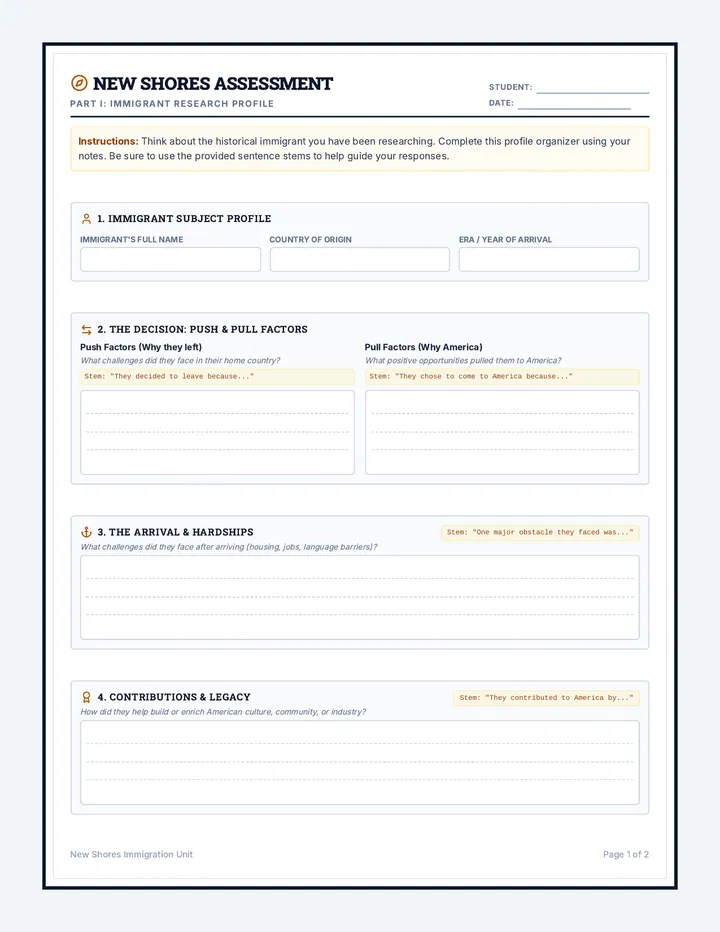
Una lección que explora la inmigración moderna en los EE. UU. a través de la lente histórica de la Ley de Exclusión China, diseñada con lenguaje simplificado y organizadores gráficos para estudiantes de educación especial.
Students explore the complex legacy of Alexander the Great through a guided reading and evidence-based analysis of his actions as either a hero or a villain.