A grammar lesson focusing on singular possessive nouns that end in 's', featuring a video-based instruction, a proofreading activity titled 'The Editor's Desk', and reflection on plural possessive rules.
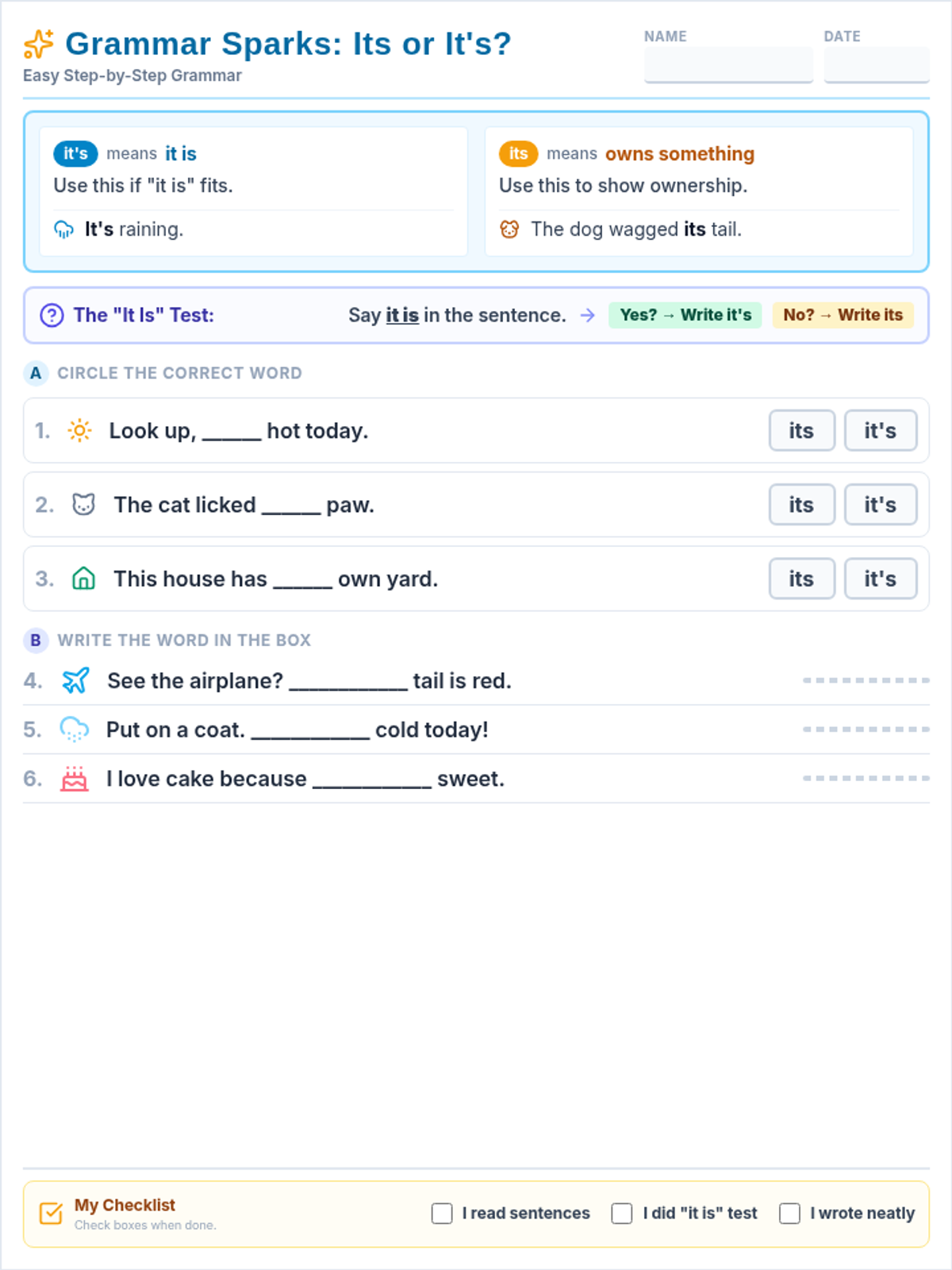
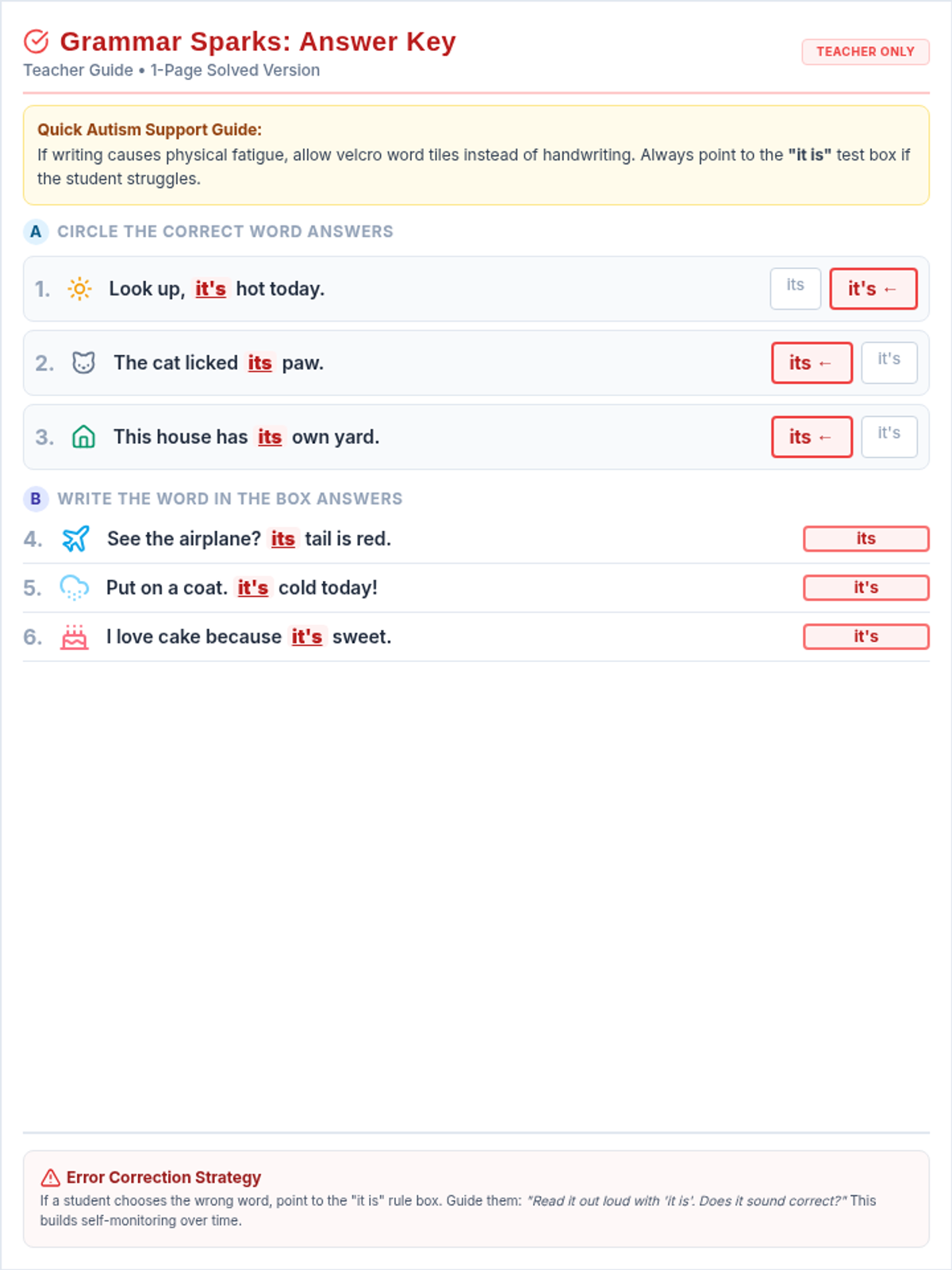
A highly structured grammar lesson focusing on the distinction between 'its' and 'it's', customized with visual icon supports, step-by-step rule scaffolding, and self-monitoring checklists for students who benefit from predictable layouts.
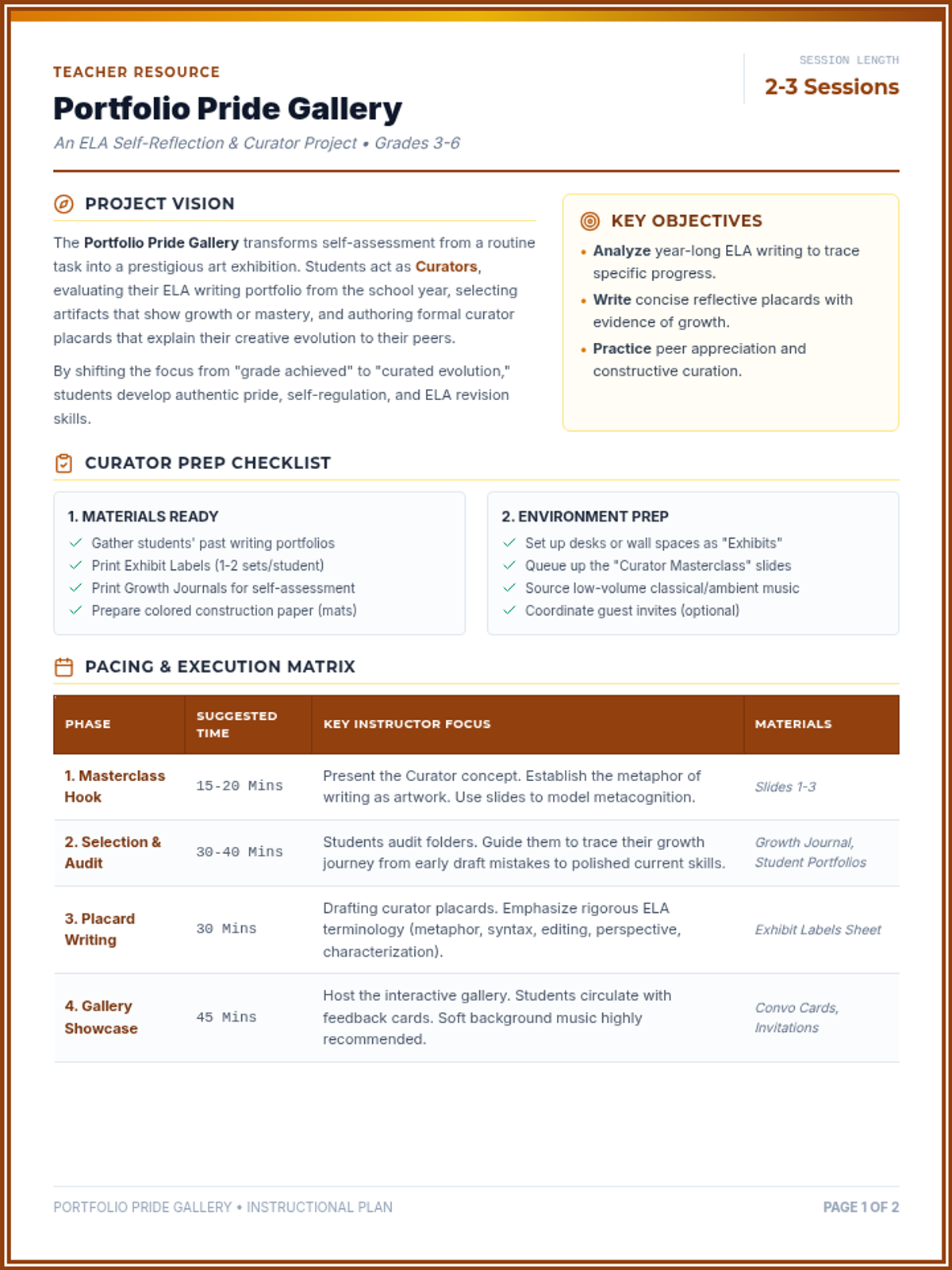
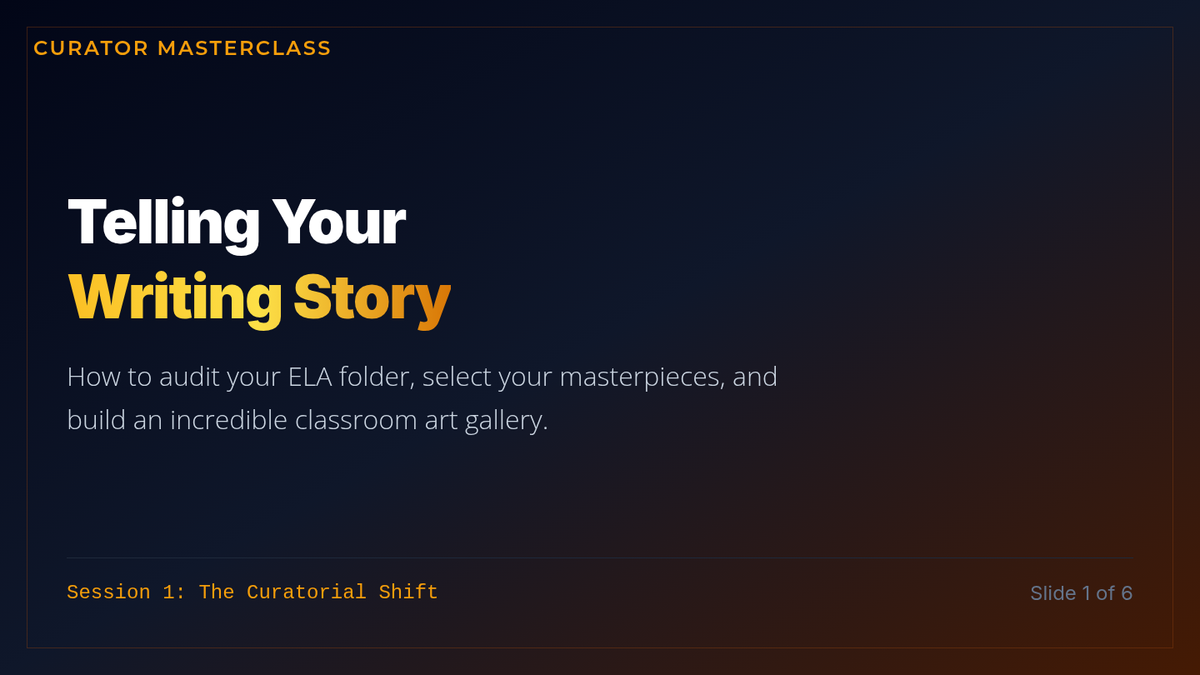
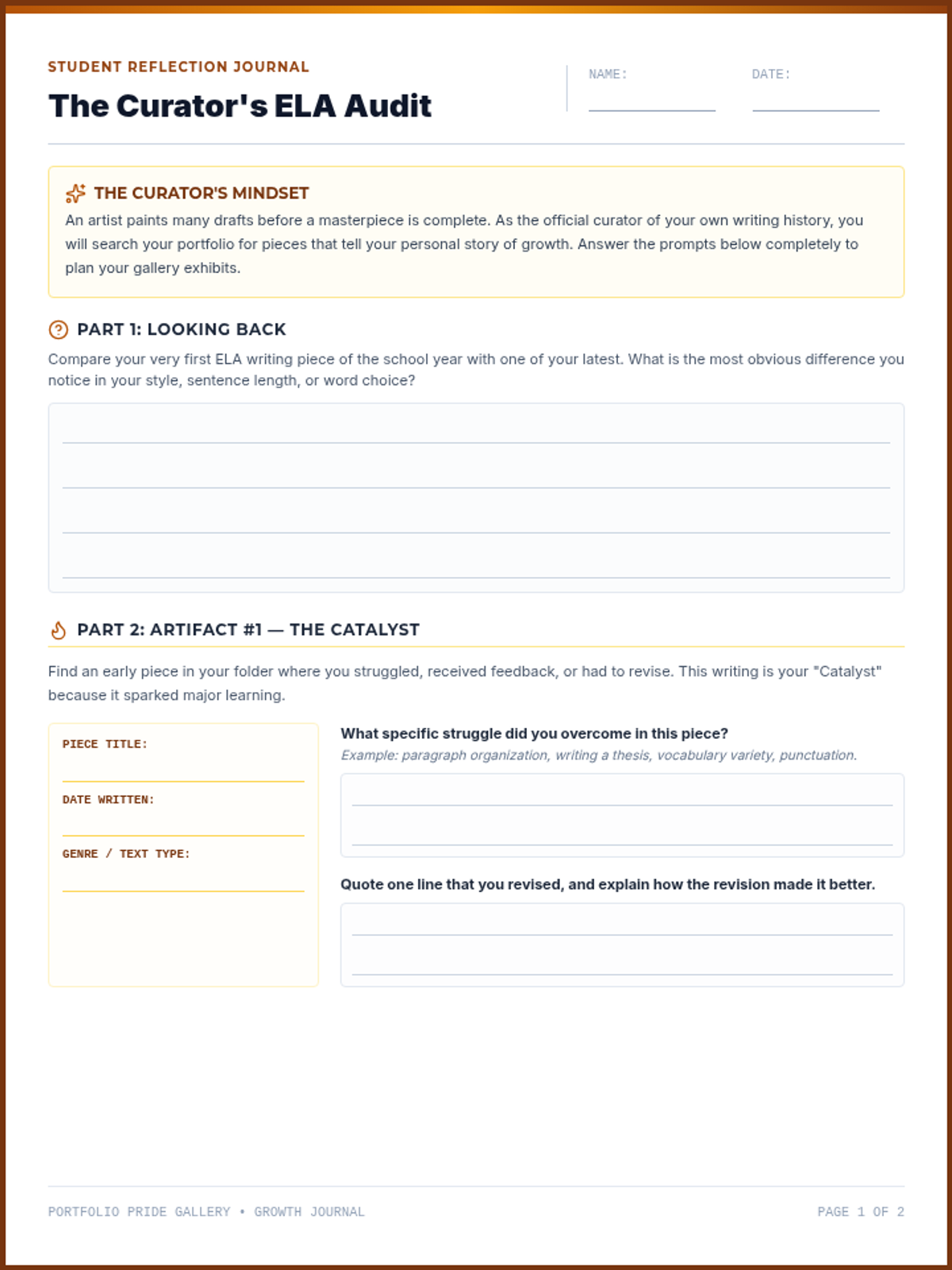
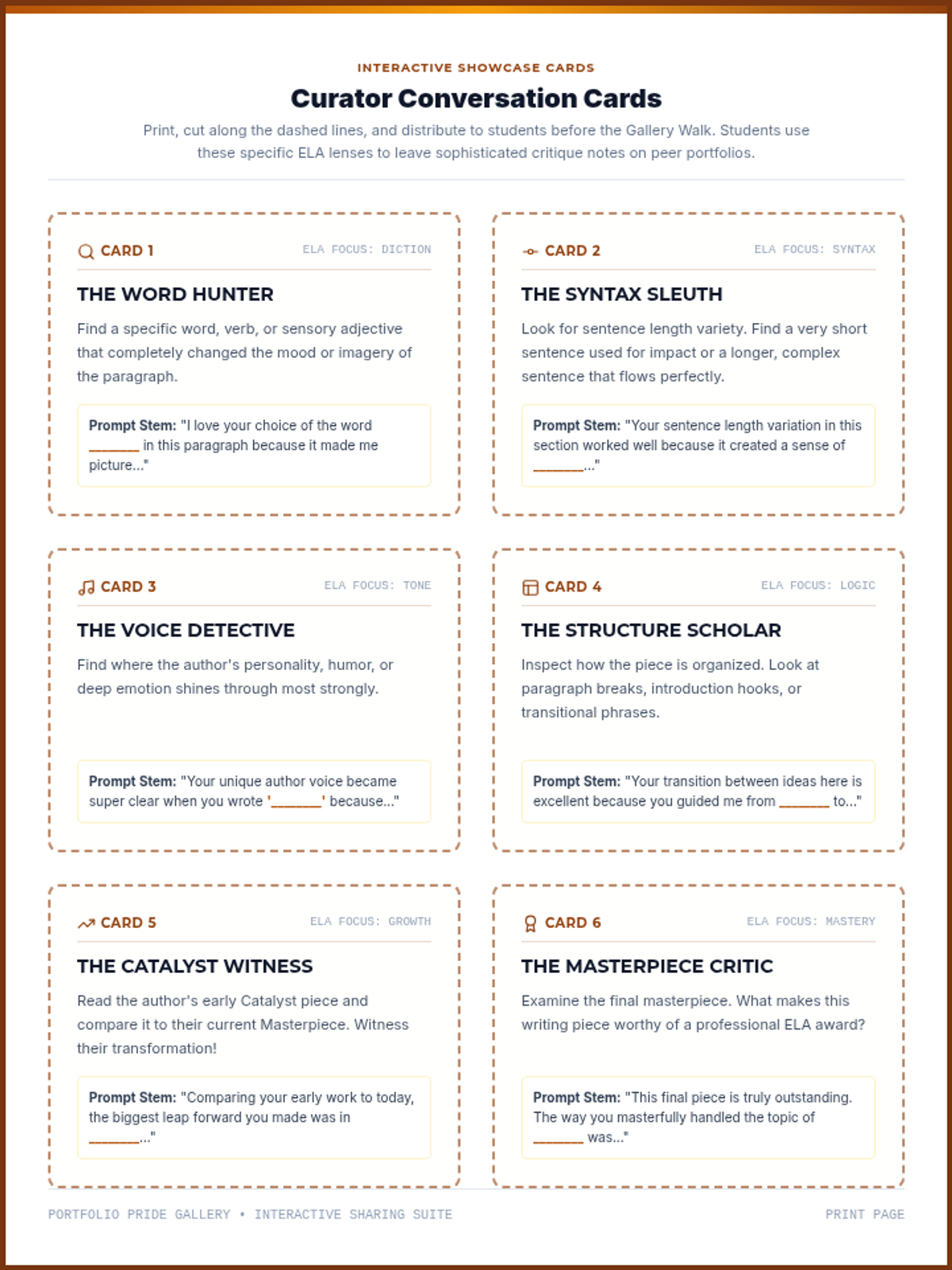
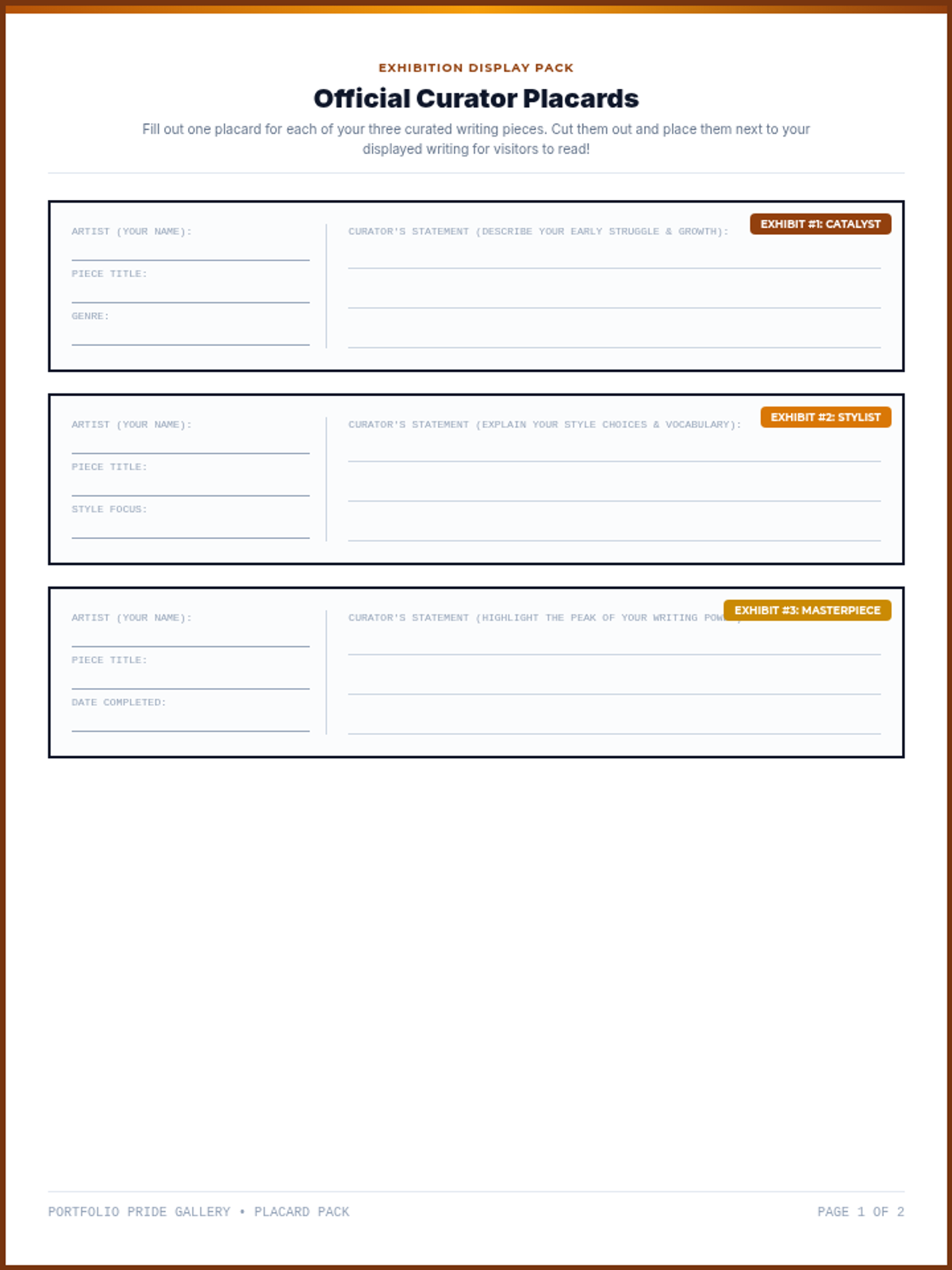
An ELA and self-reflection project where 3rd-6th grade students curate their year-long academic growth, select their best writing, and design an interactive art-gallery-style showcase of their progress.
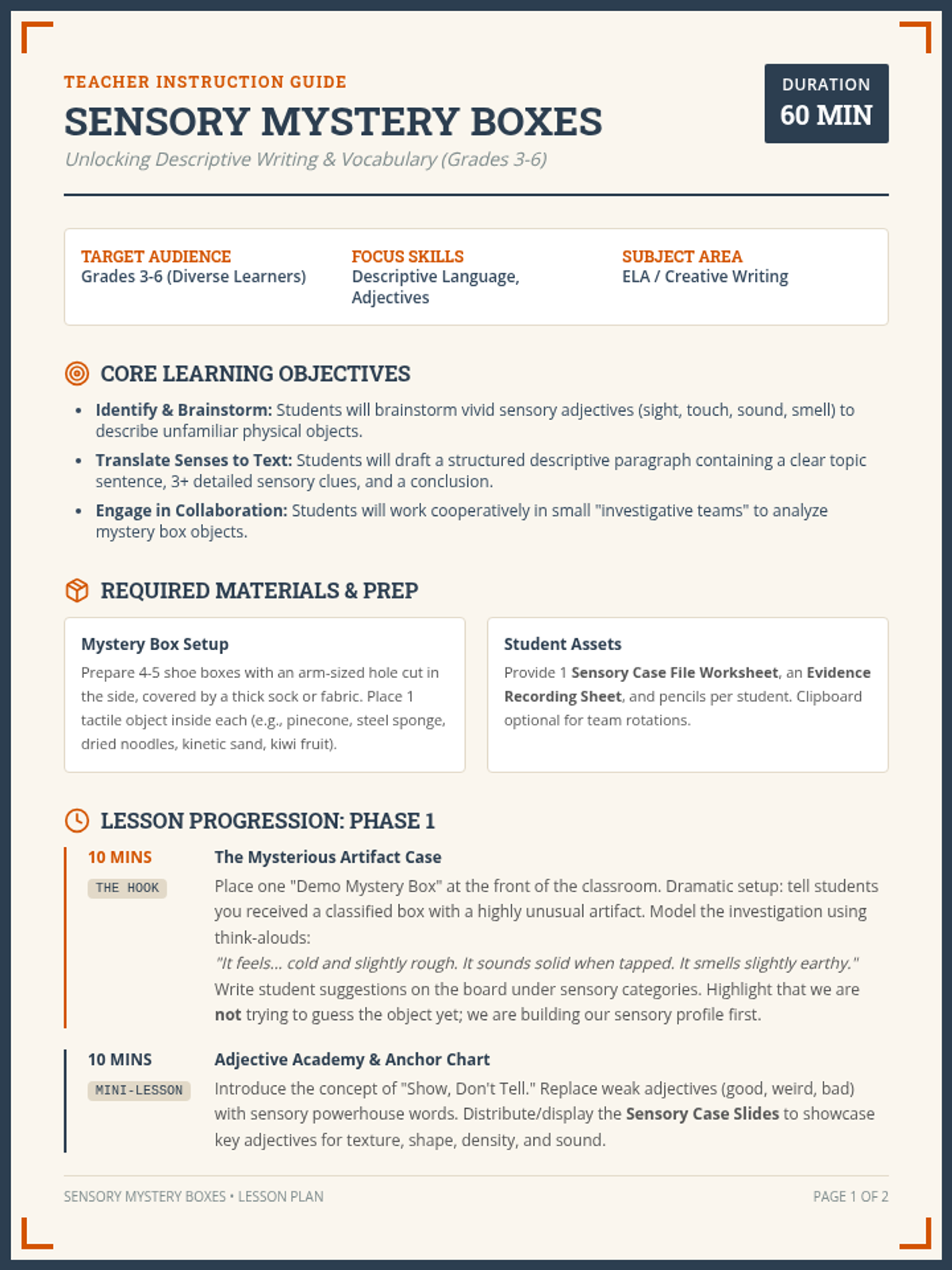
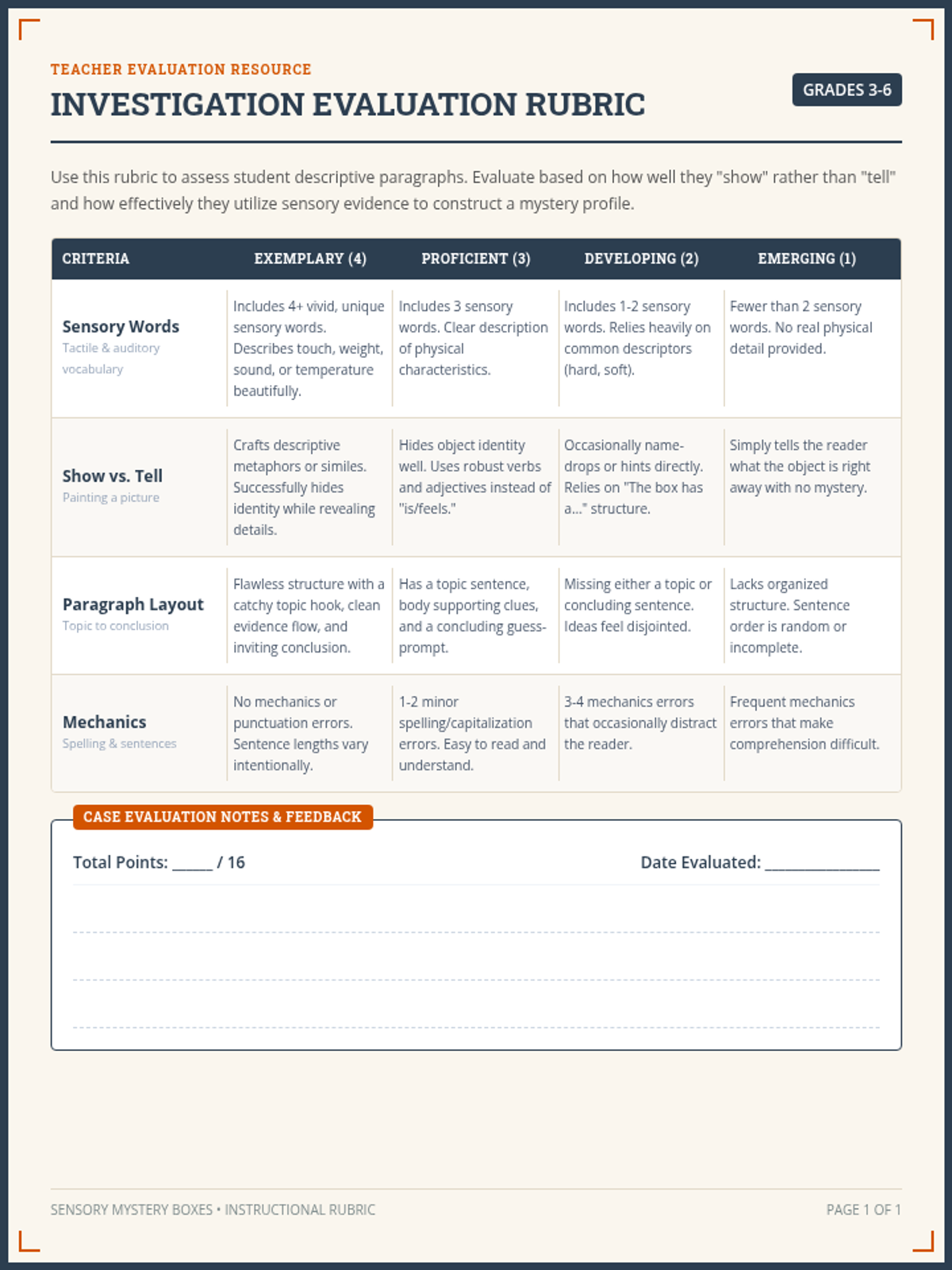
An immersive, multi-sensory ELA lesson designed for grades 3-6 to unlock descriptive writing. Students explore mystery tactile objects, build sensory vocabulary, and compose descriptive paragraphs.
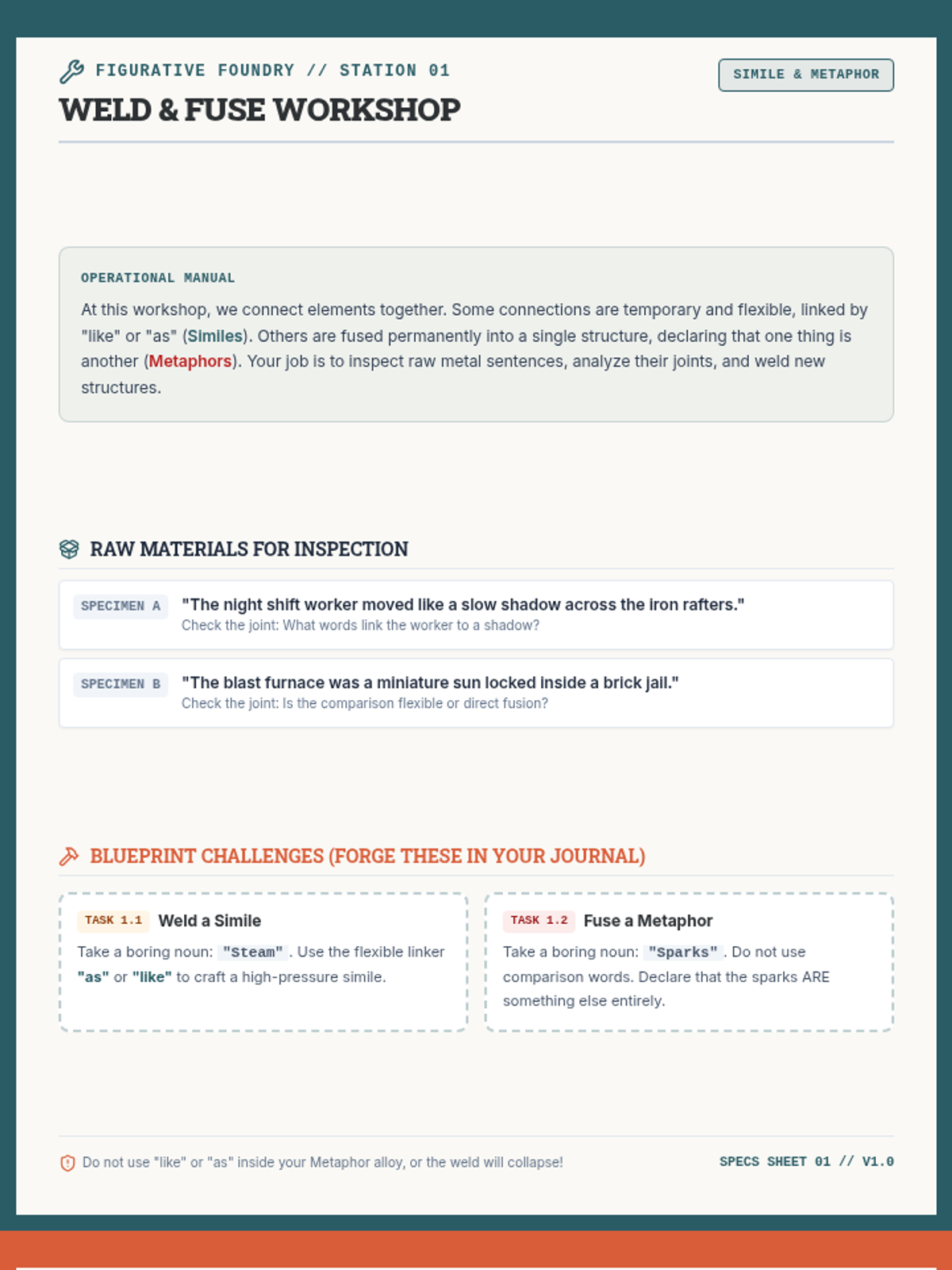
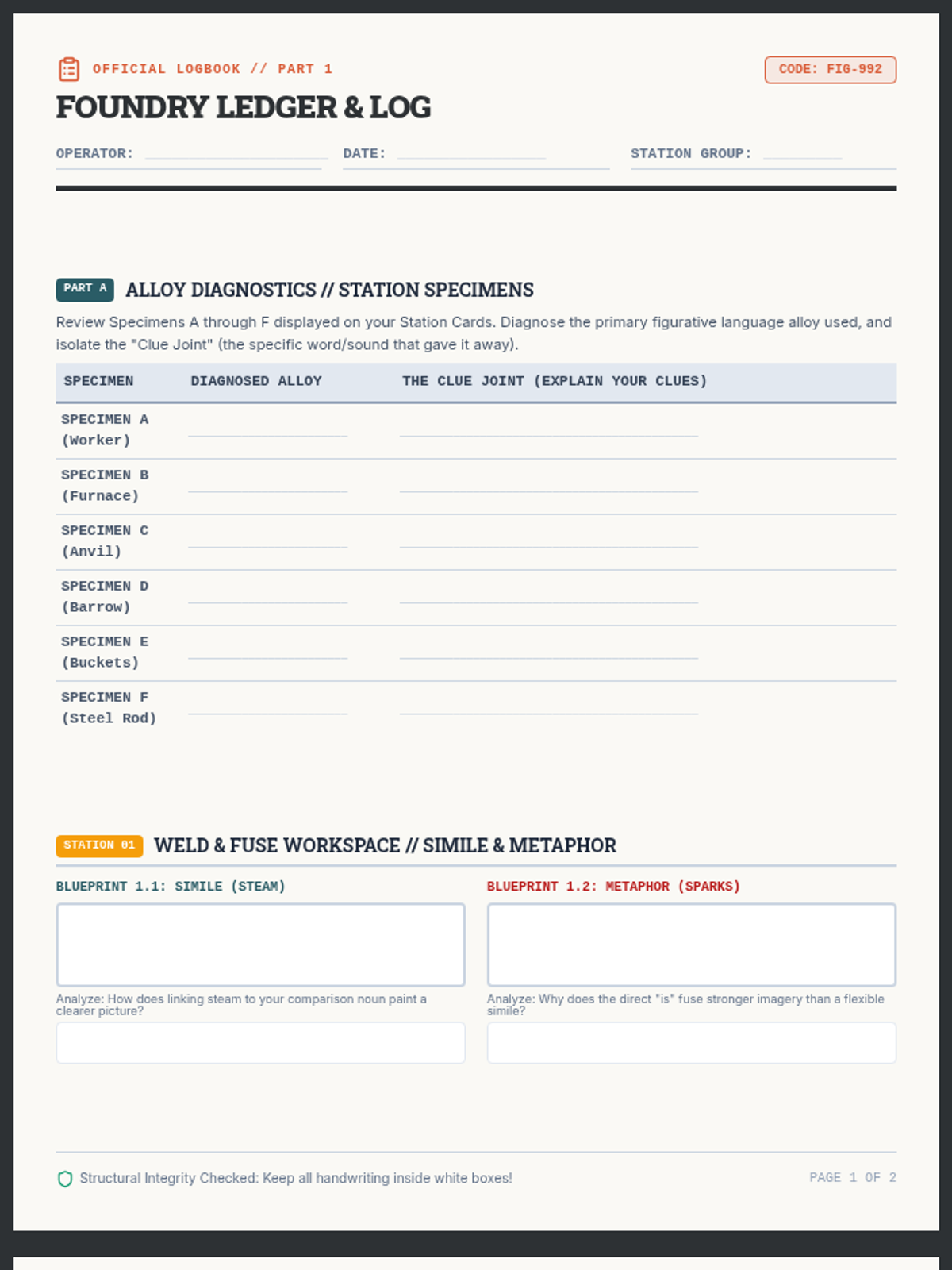
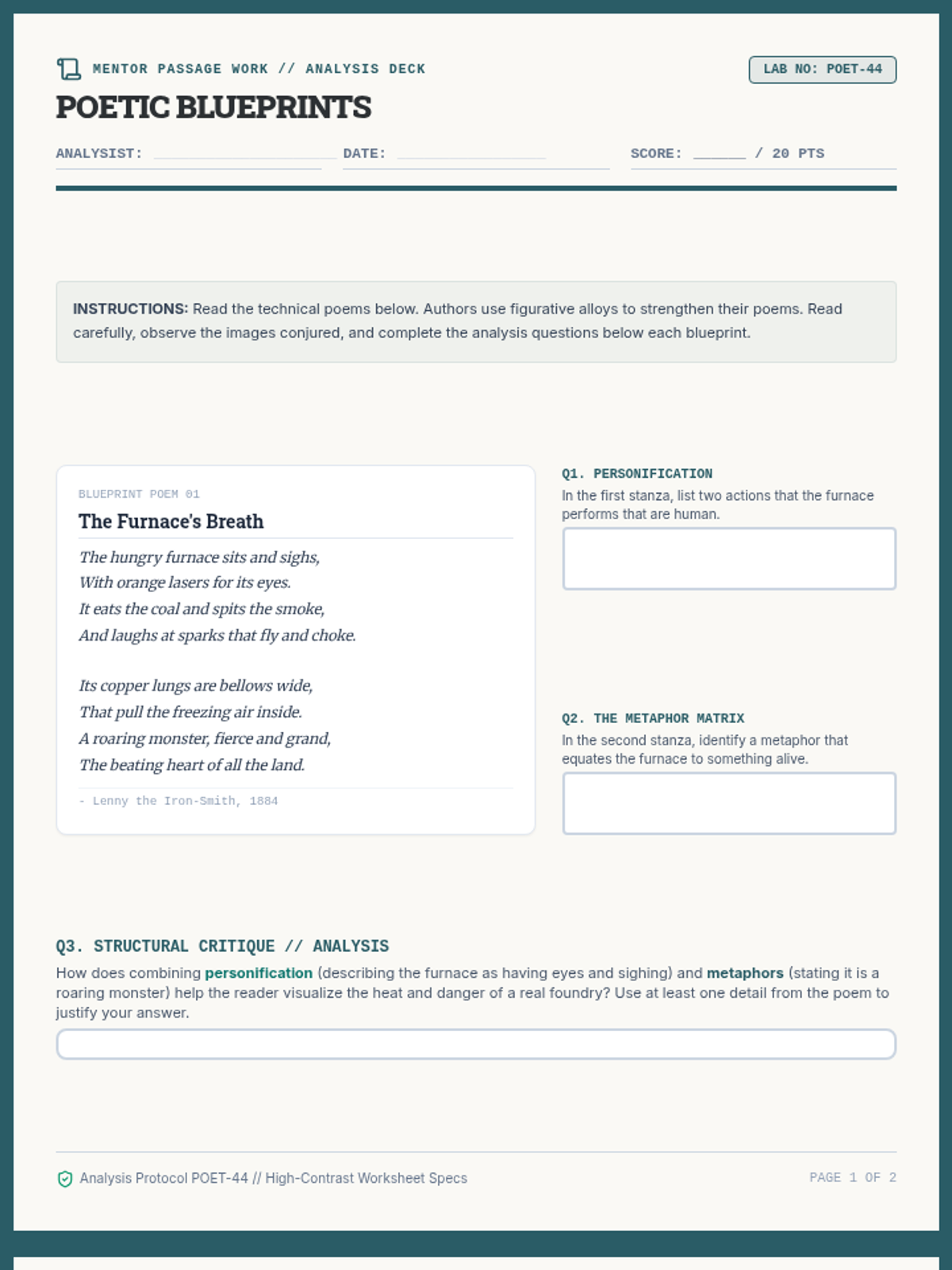
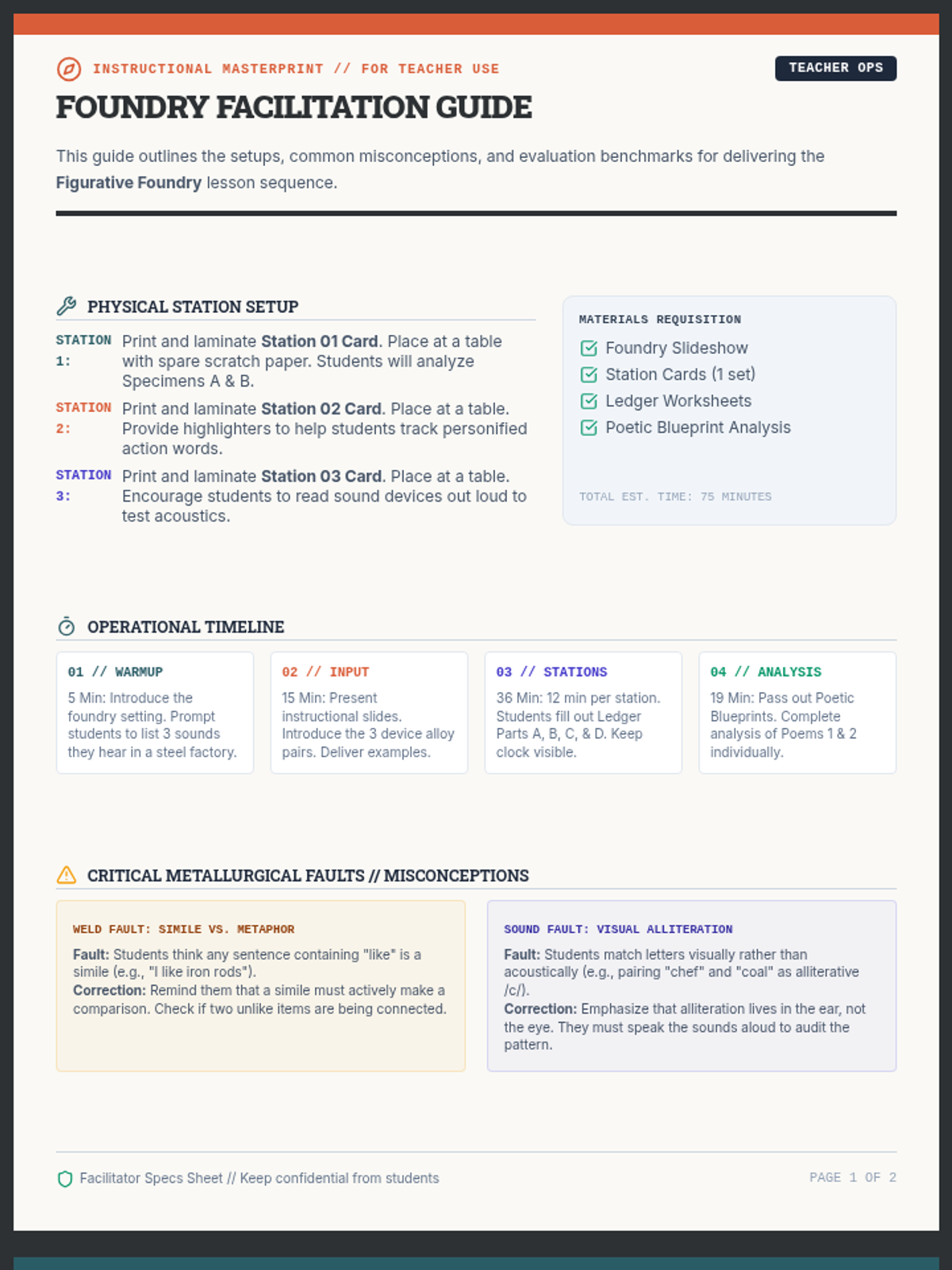
An immersive, hands-on lesson exploring six major types of figurative language through structured station activities, a collaborative workshop, mentor poetry analysis, and an interactive slideshow. Students learn to identify, analyze, and craft similes, metaphors, personification, hyperboles, alliteration, and onomatopoeia.
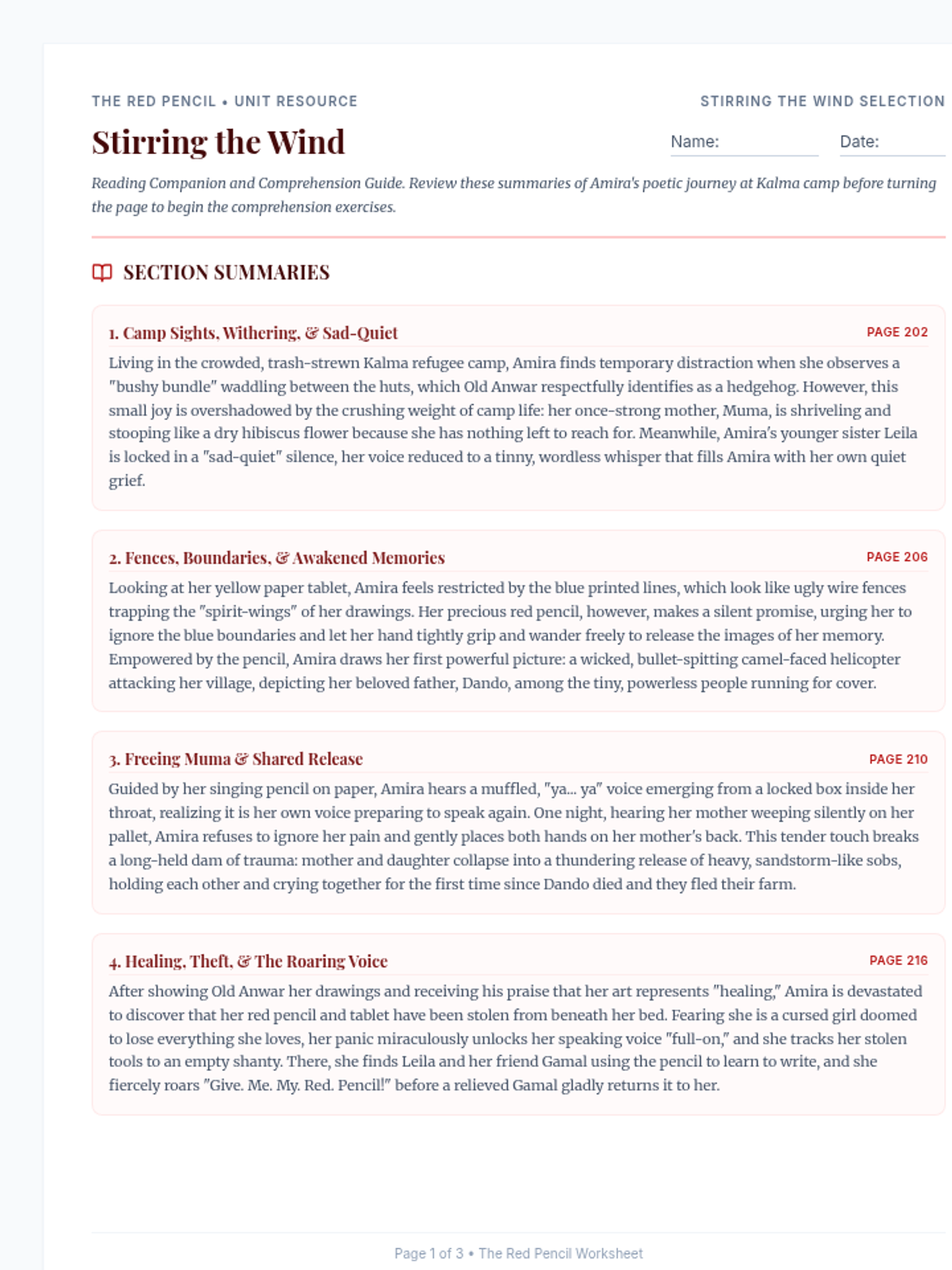
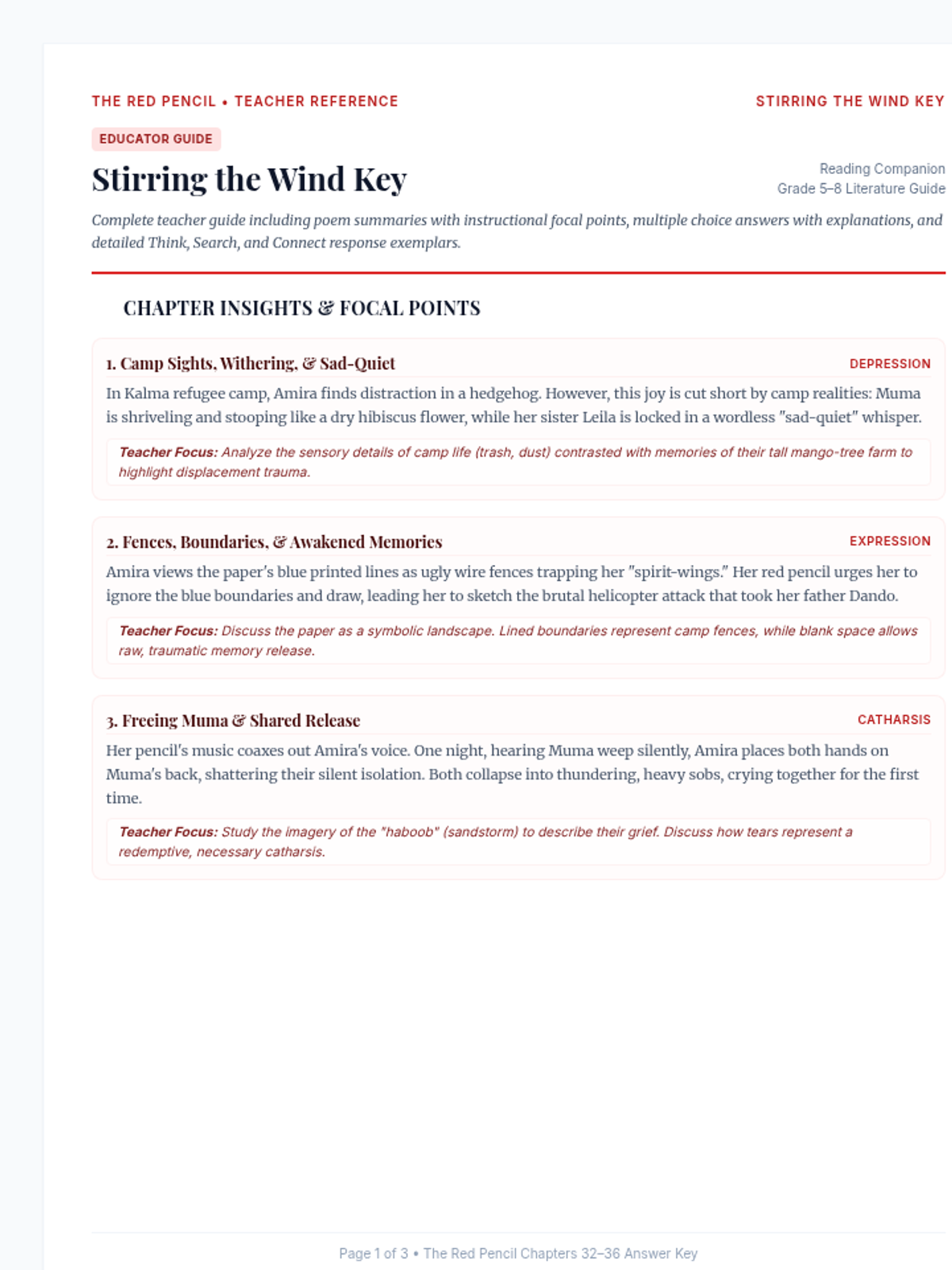
An exploration of Andrea Davis Pinkney's 'The Red Pencil'. Amira navigates the trauma of Kalma refugee camp, finding her voice and healing through her red pencil, secret nighttime reading lessons, and a powerful shared release of grief with her mother.
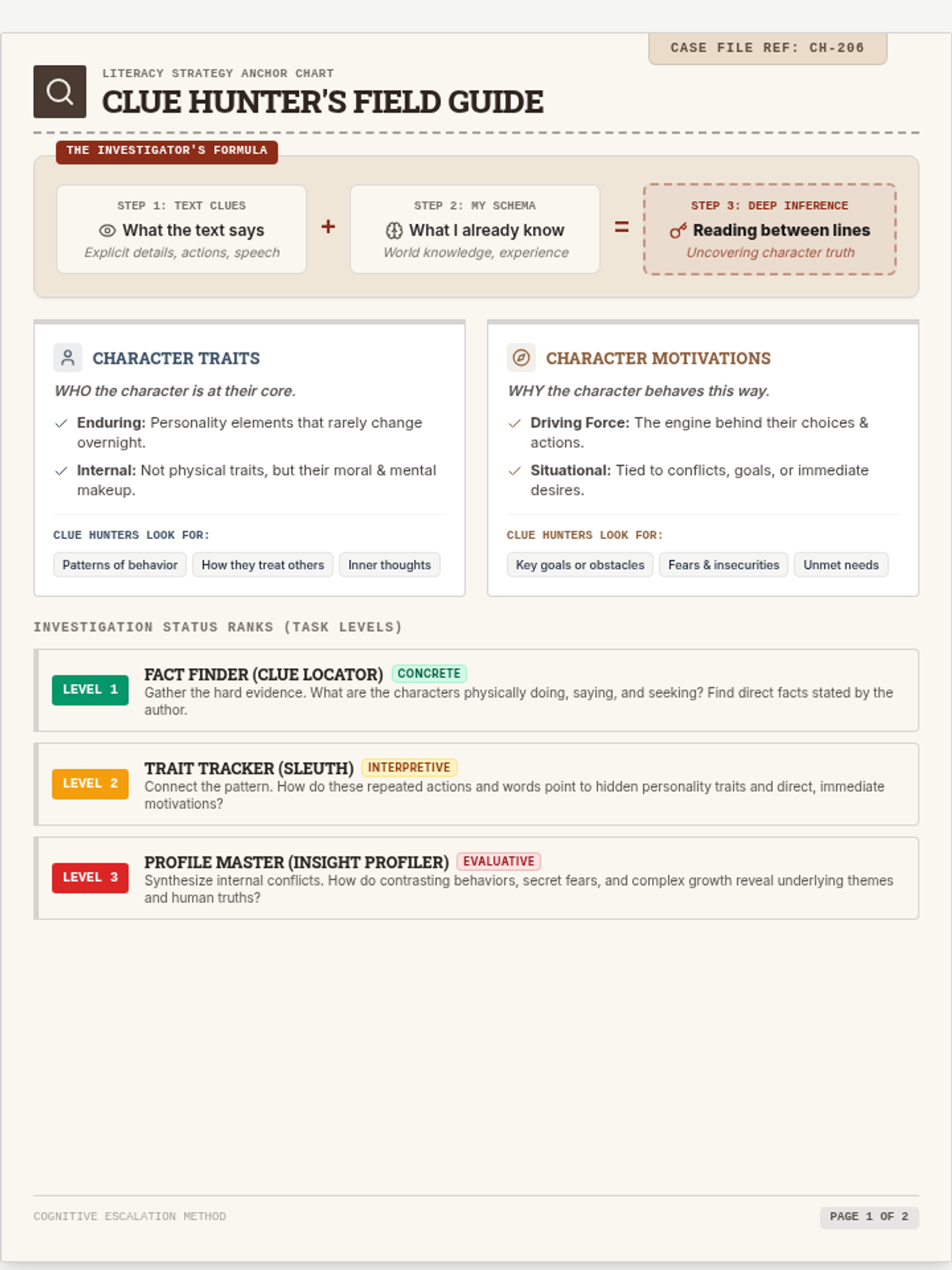
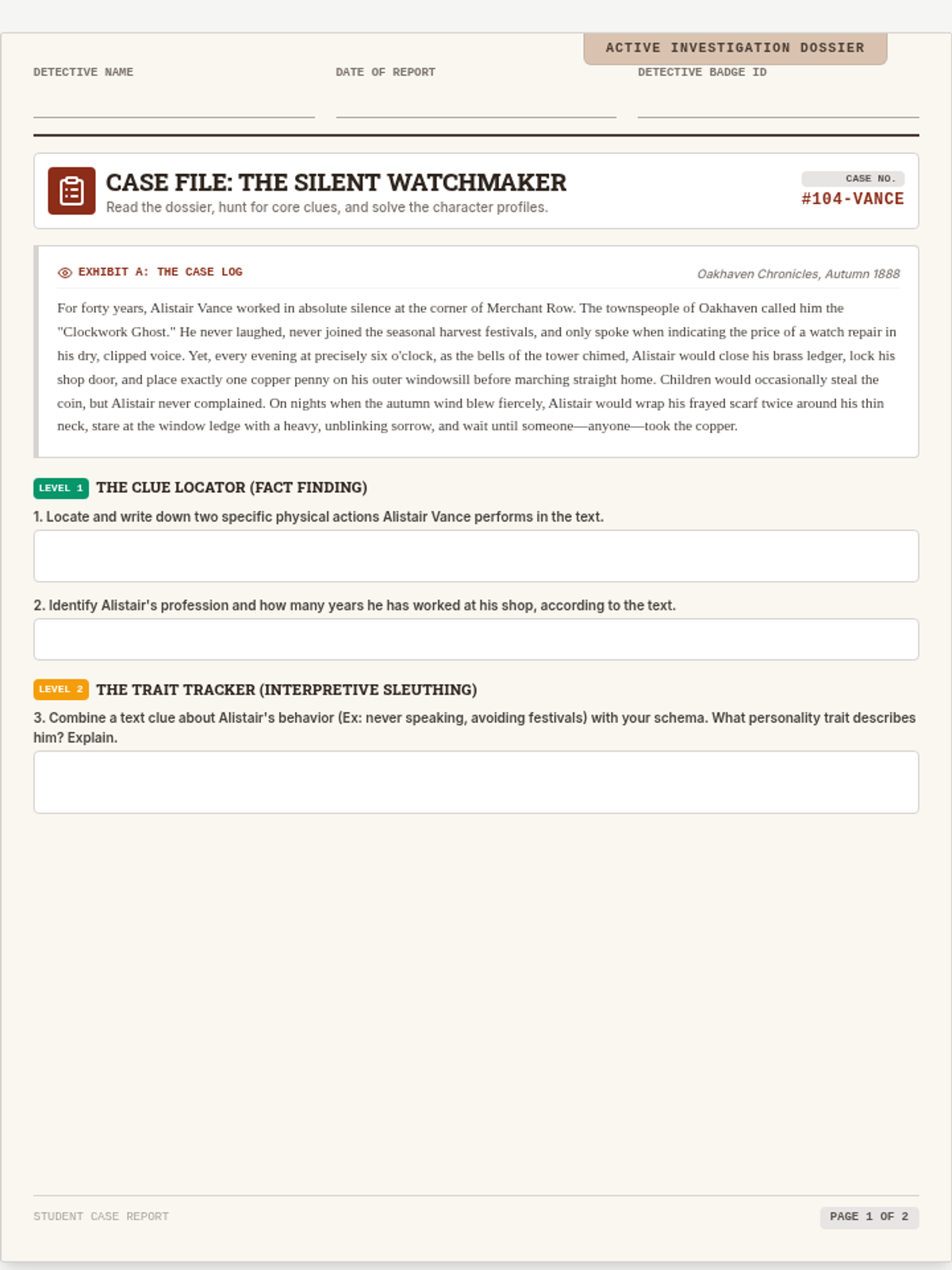
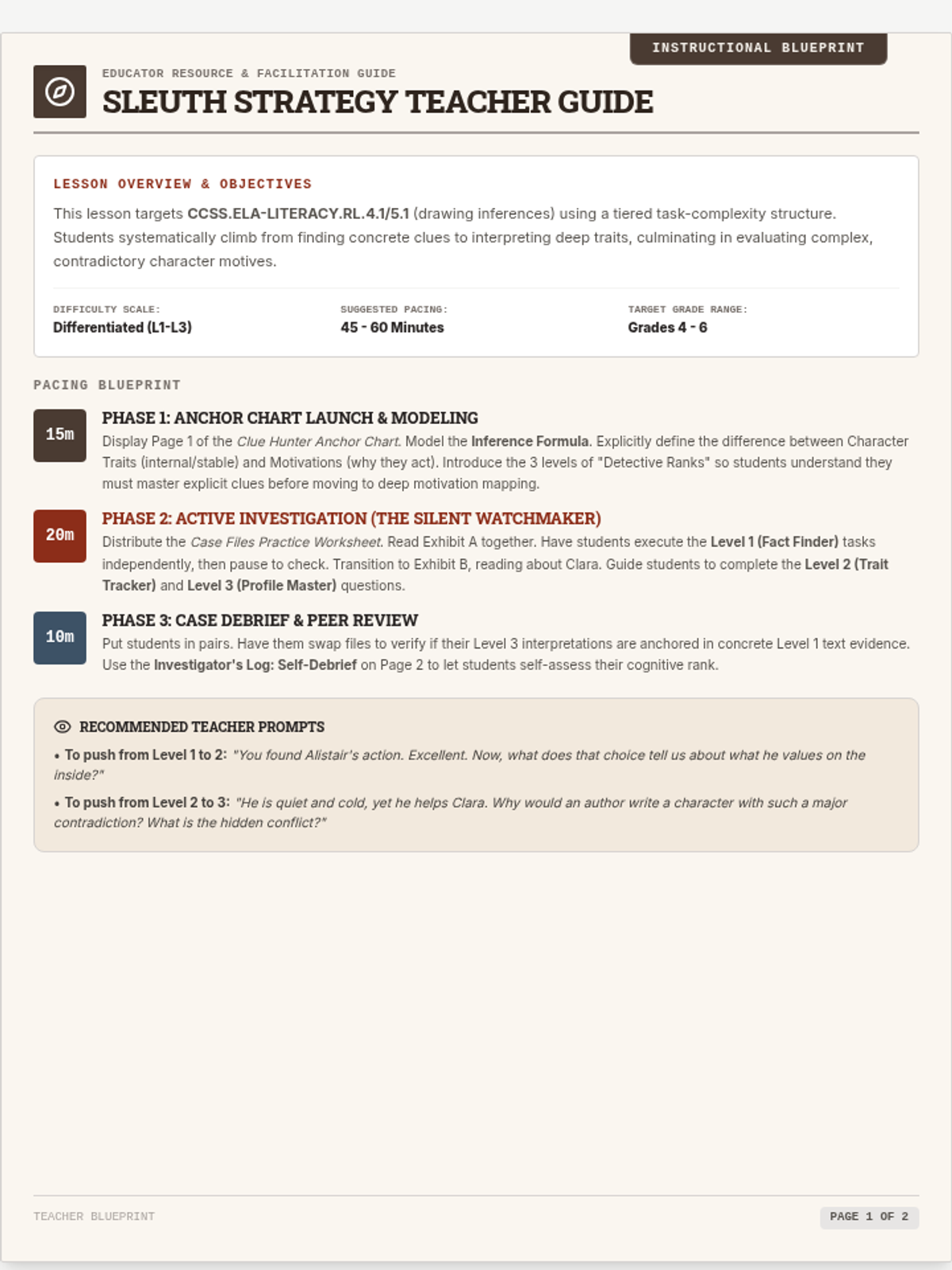
A differentiated lesson focused on character analysis. Students learn to hunt for textual clues and combine them with personal schema to uncover character traits and deep-seated motivations, structured across three escalating levels of task complexity (Fact Finding, Trait Tracking, and Motive Mapping).
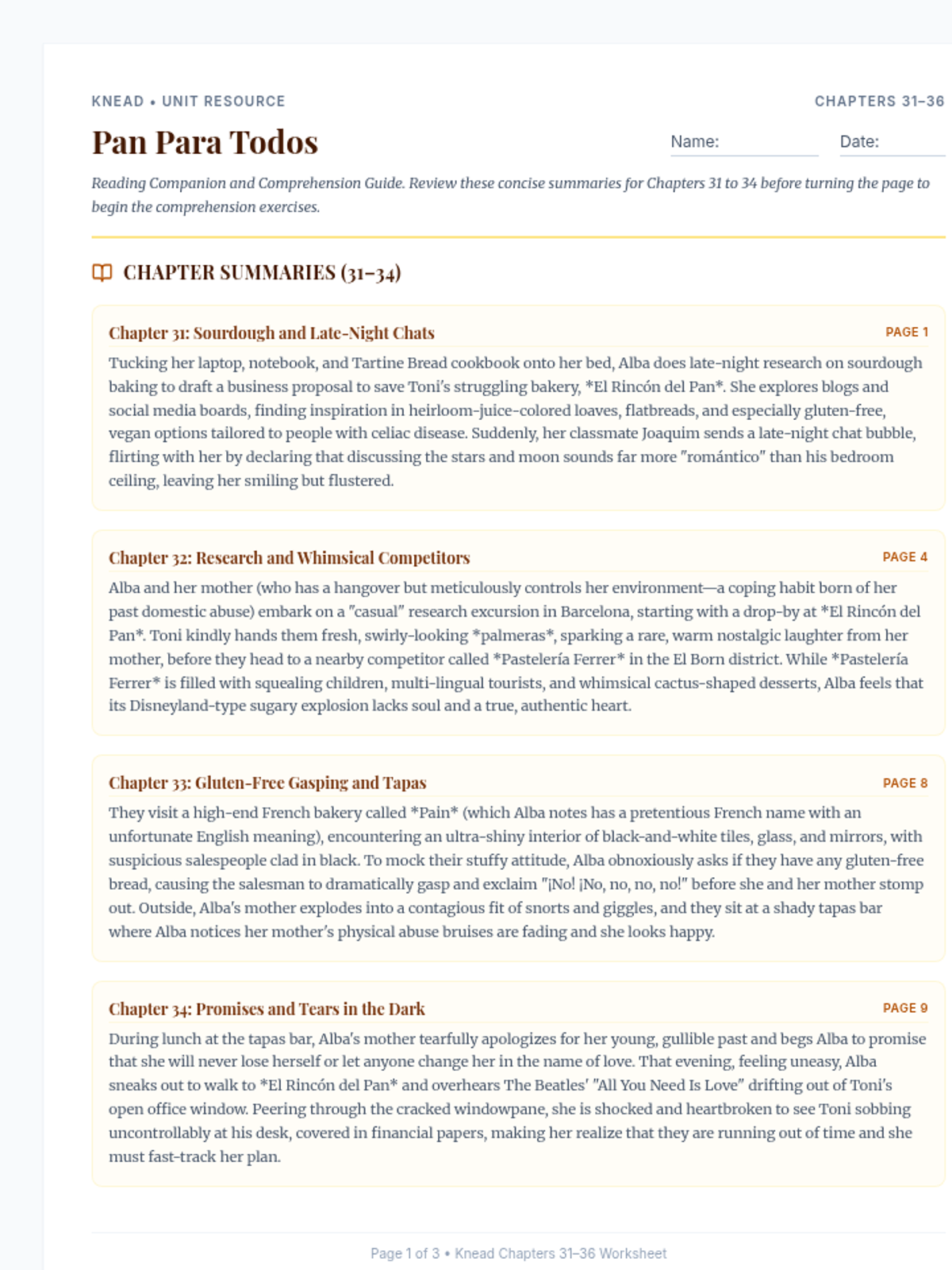
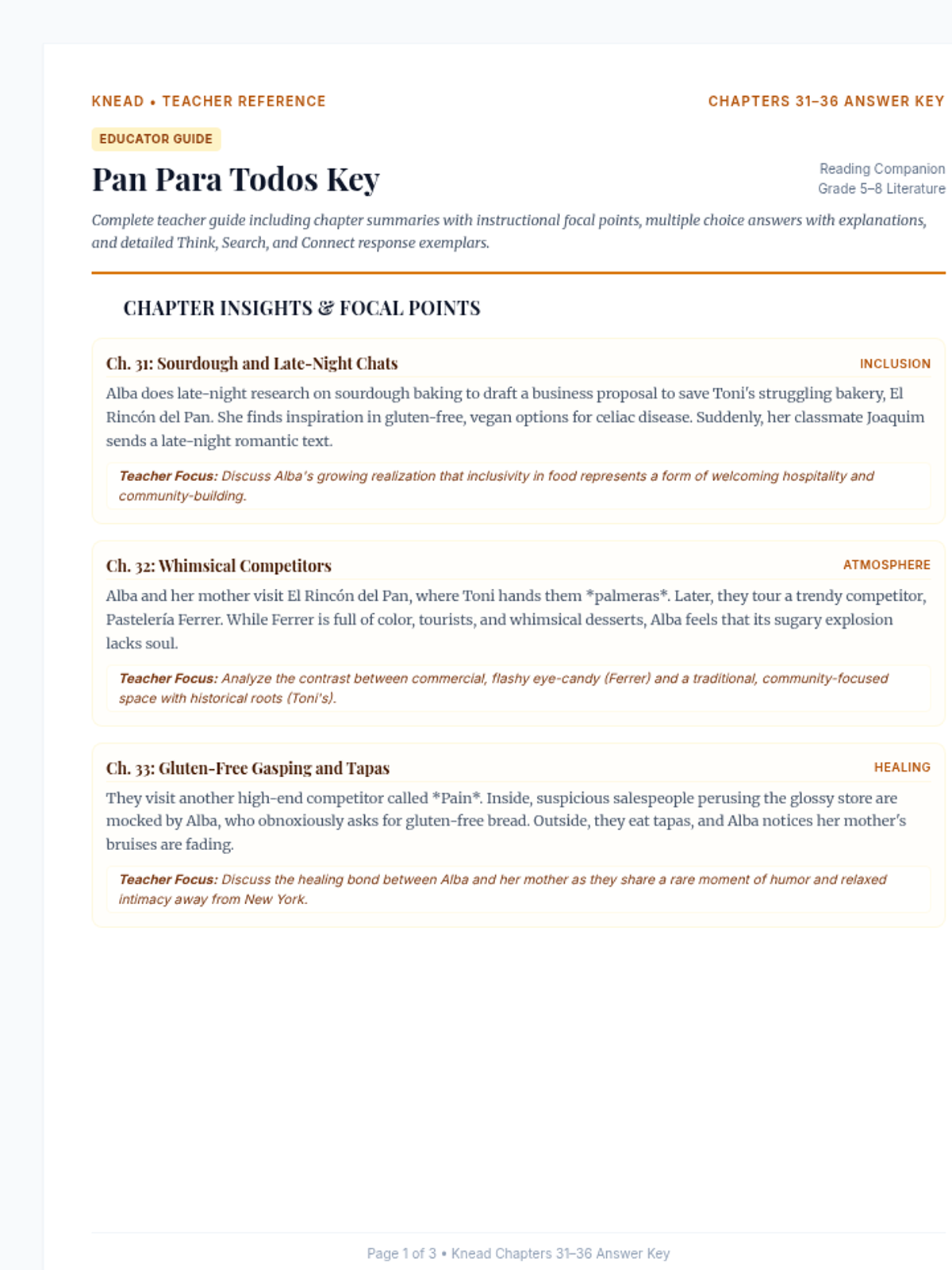
An exploration of Chapters 31-36 of 'Knead'. Alba works desperately to save Toni's traditional Barcelona bakery, confronting painful family history and social class barriers, before pitching a revolutionary, pun-filled new business plan to her grandmother.
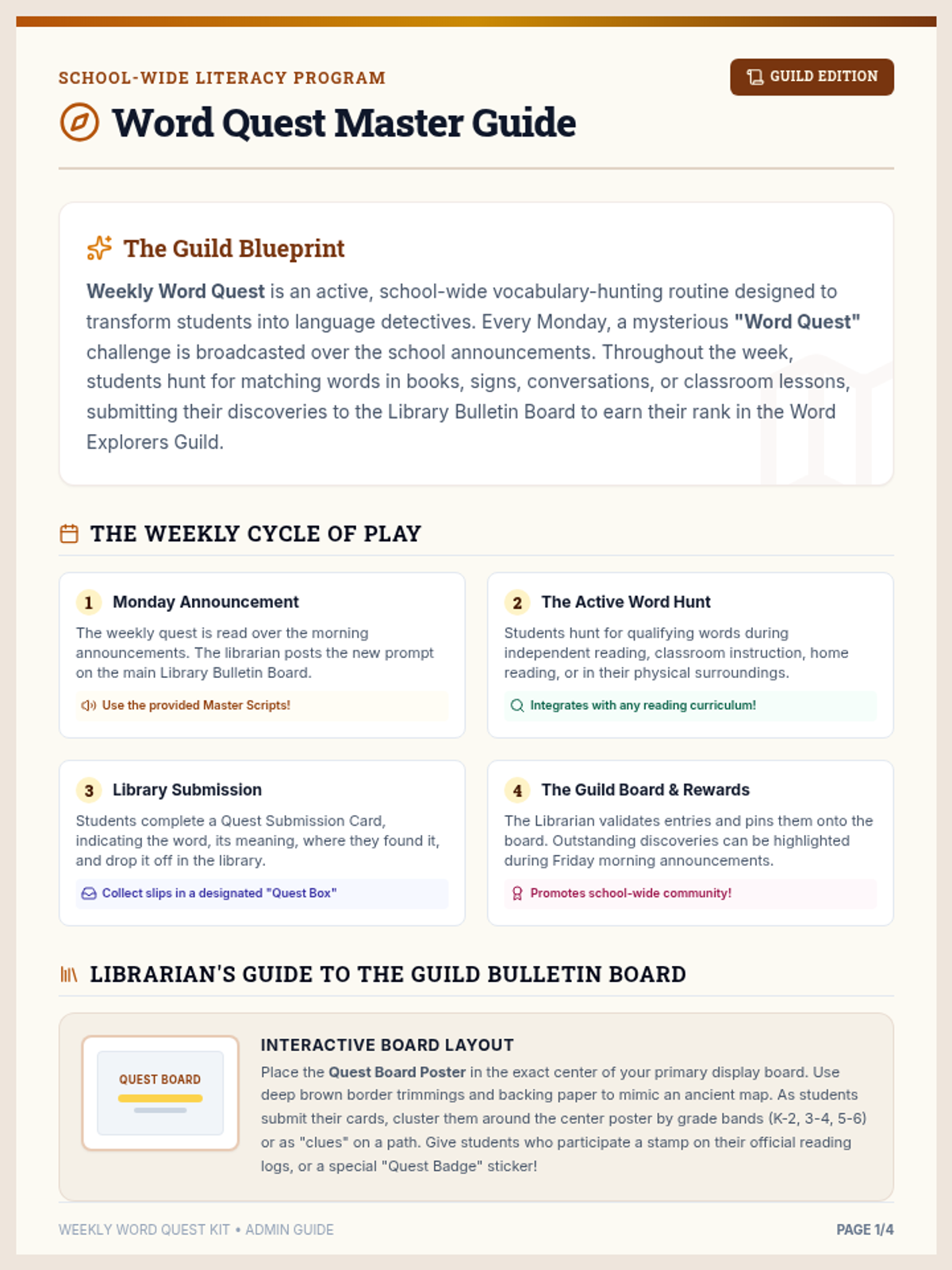
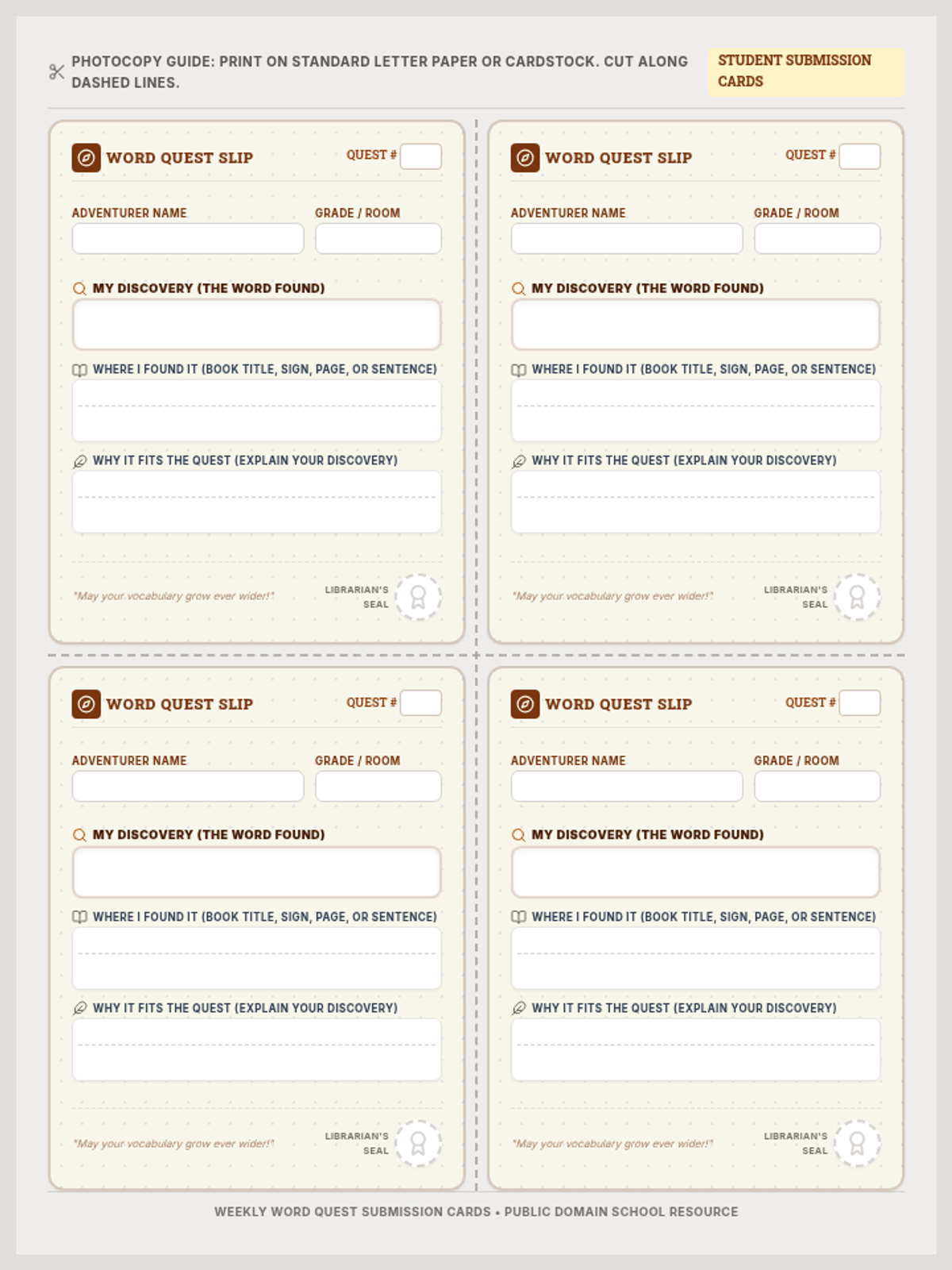
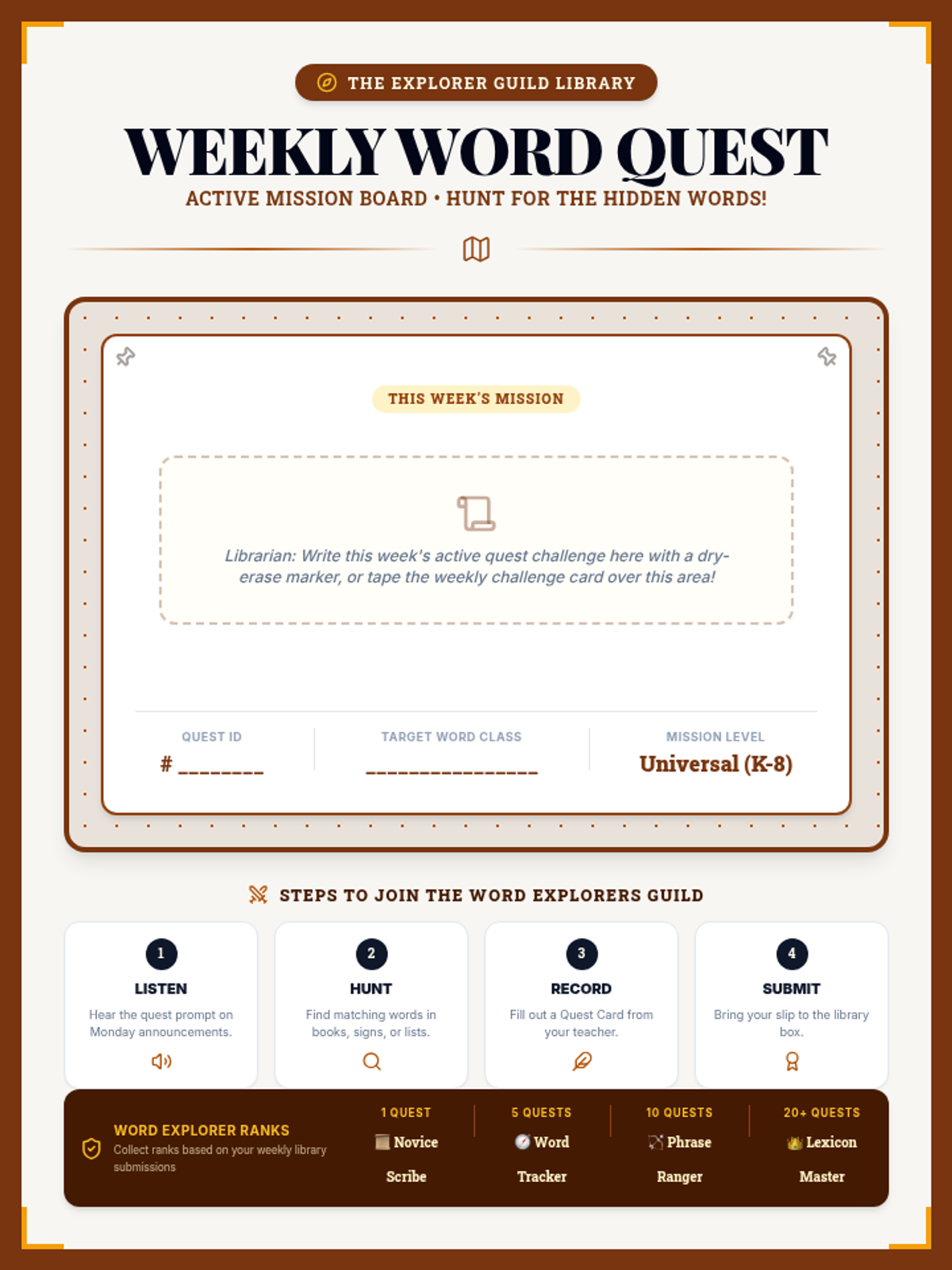
A comprehensive school-wide literacy program and implementation toolkit. Includes a 40-week master quest index, printable student submission slips, and a high-impact library bulletin board poster.
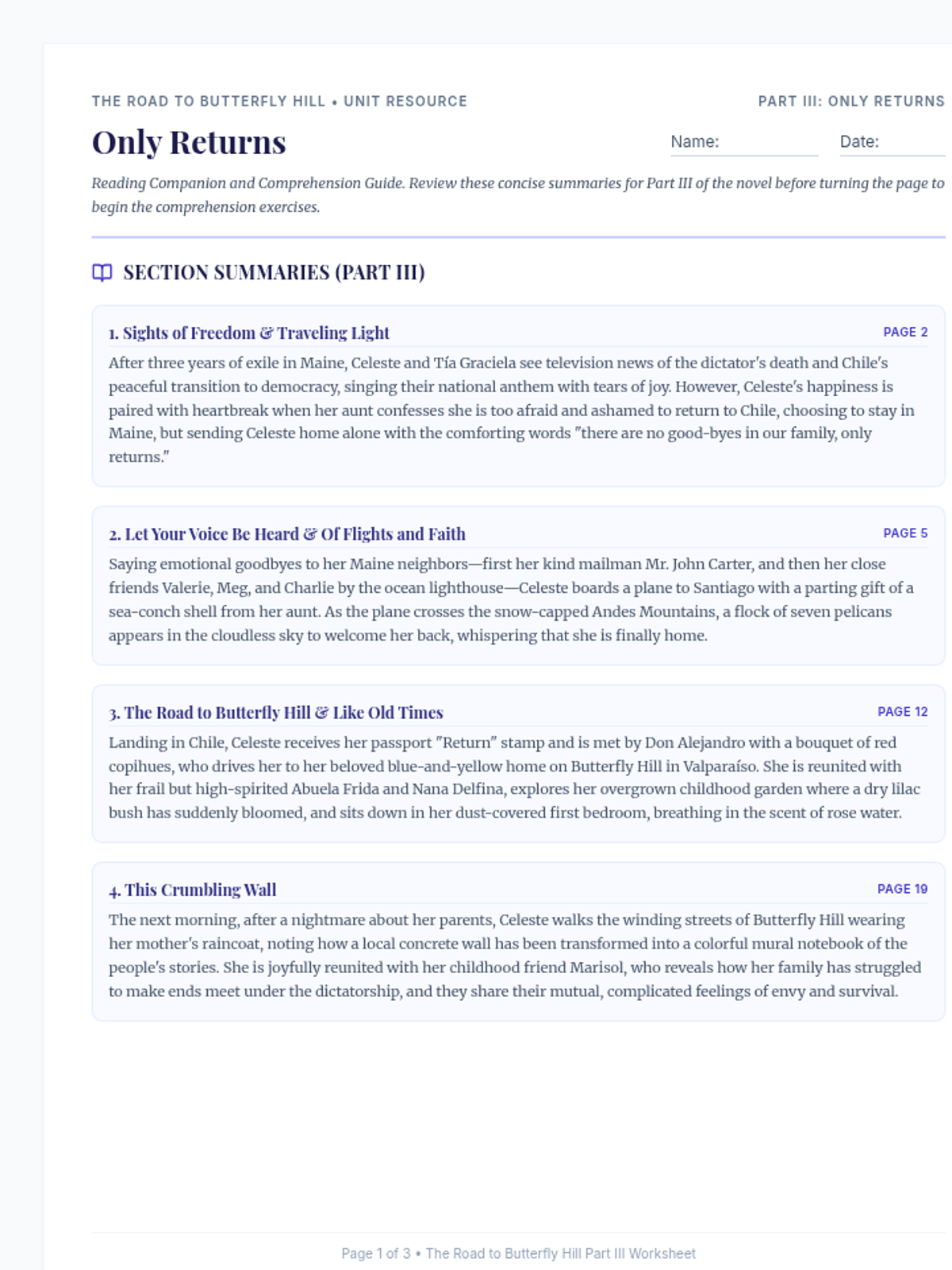
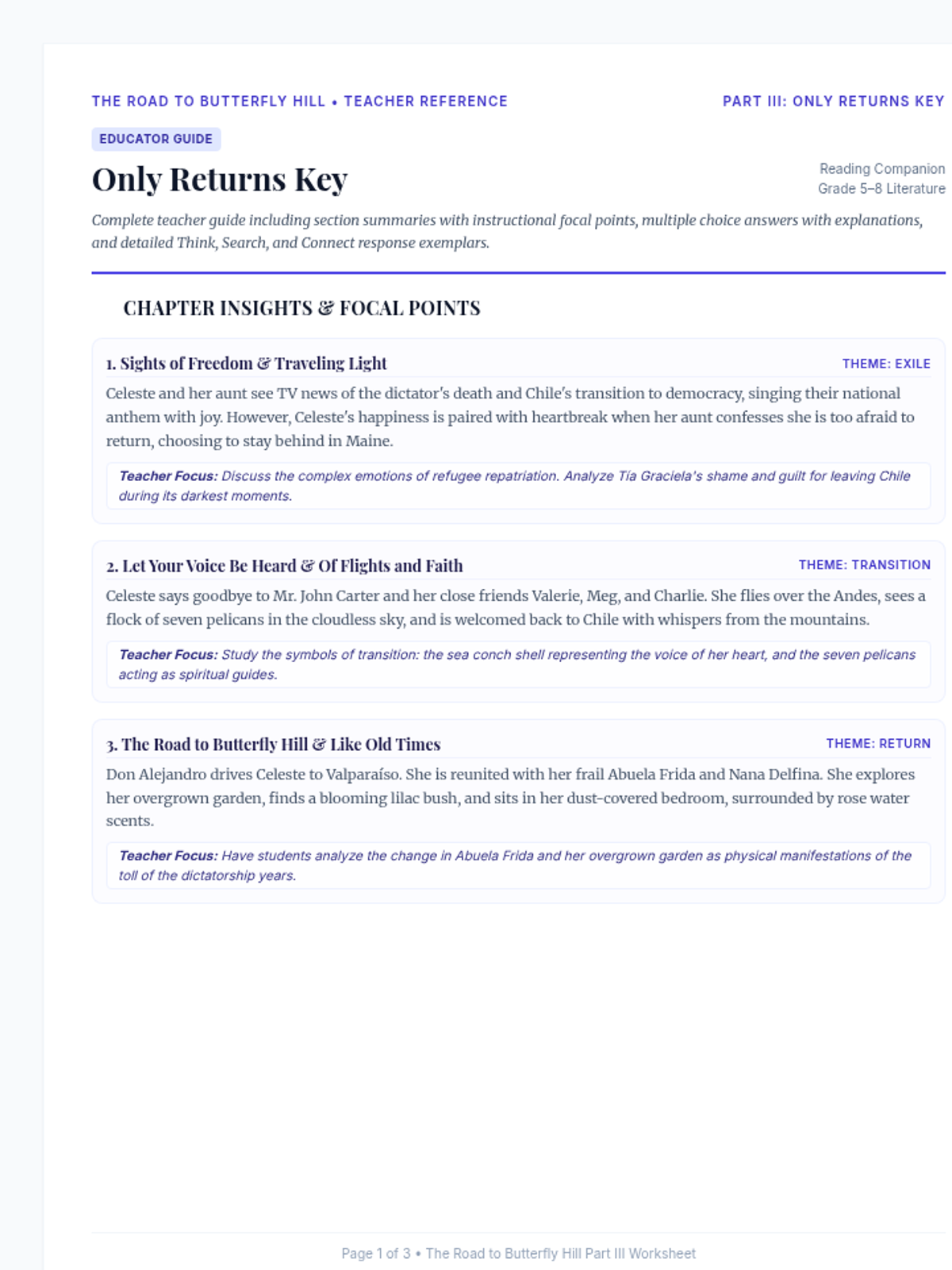
An exploration of Part III of Marjorie Agosín's 'The Road to Butterfly Hill'. Celeste returns to Chile after the fall of the dictatorship, reconnects with her family and friends on Butterfly Hill, and embarks on a courageous journey south with Cristóbal to find her parents.
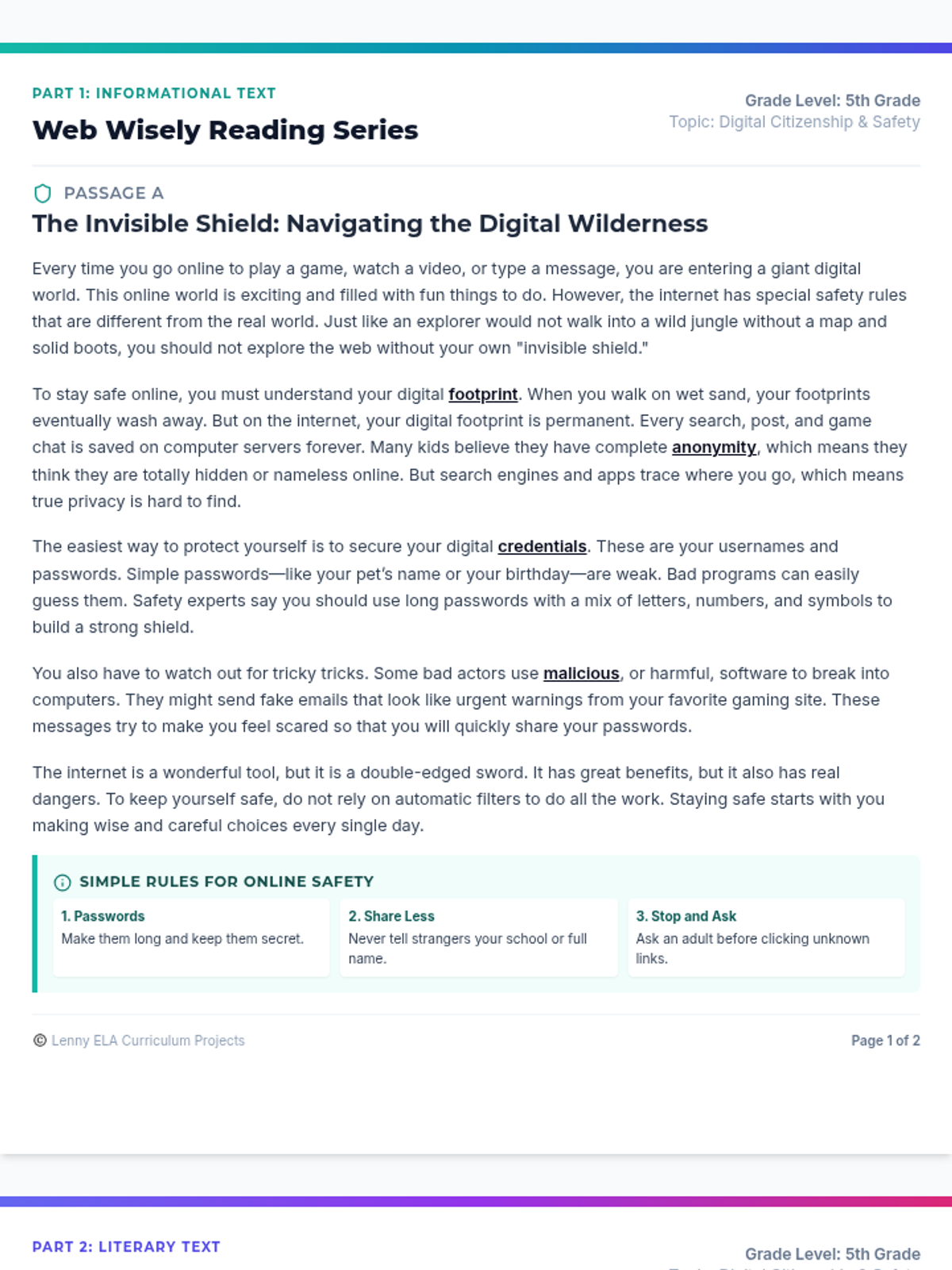
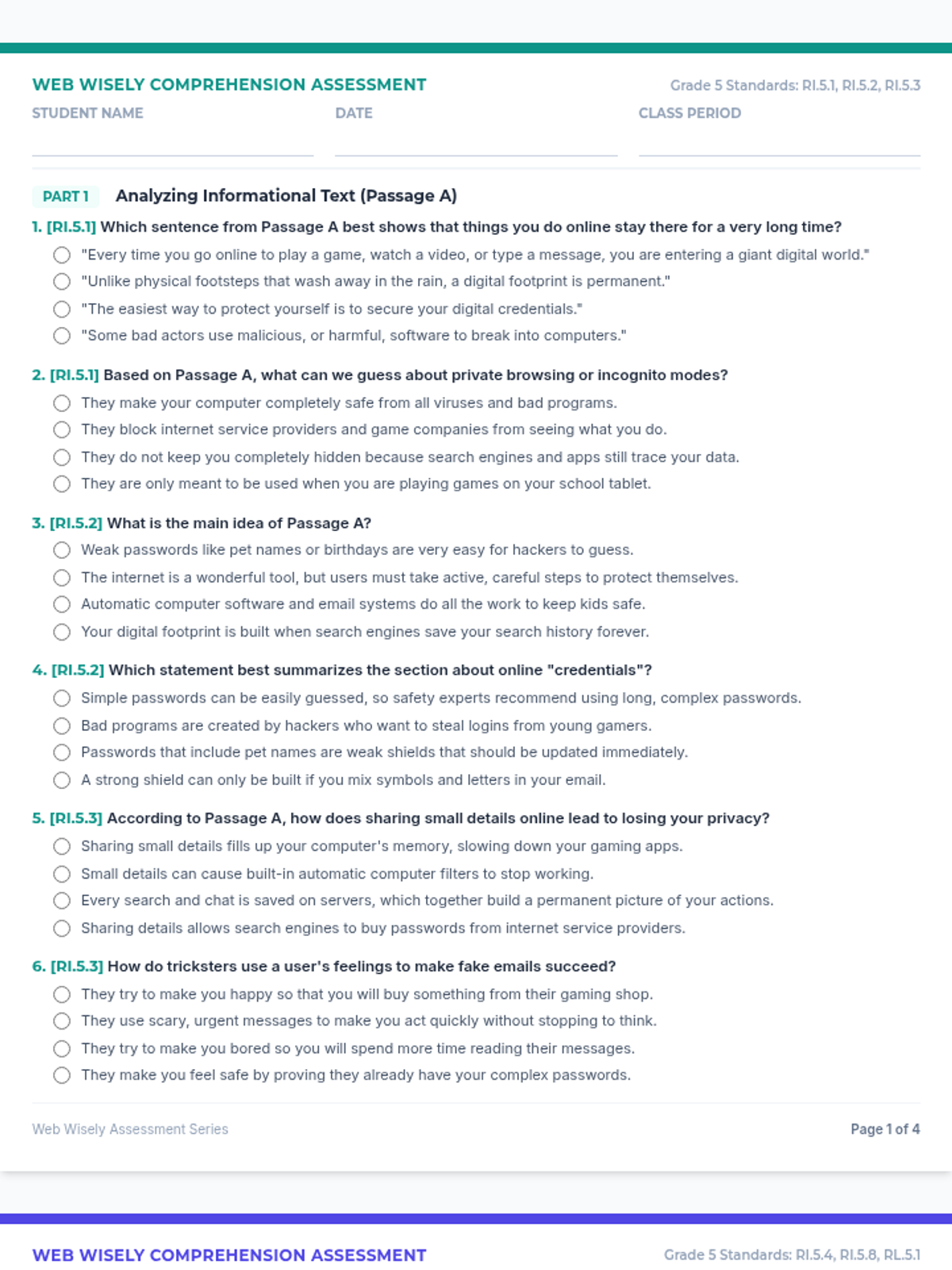
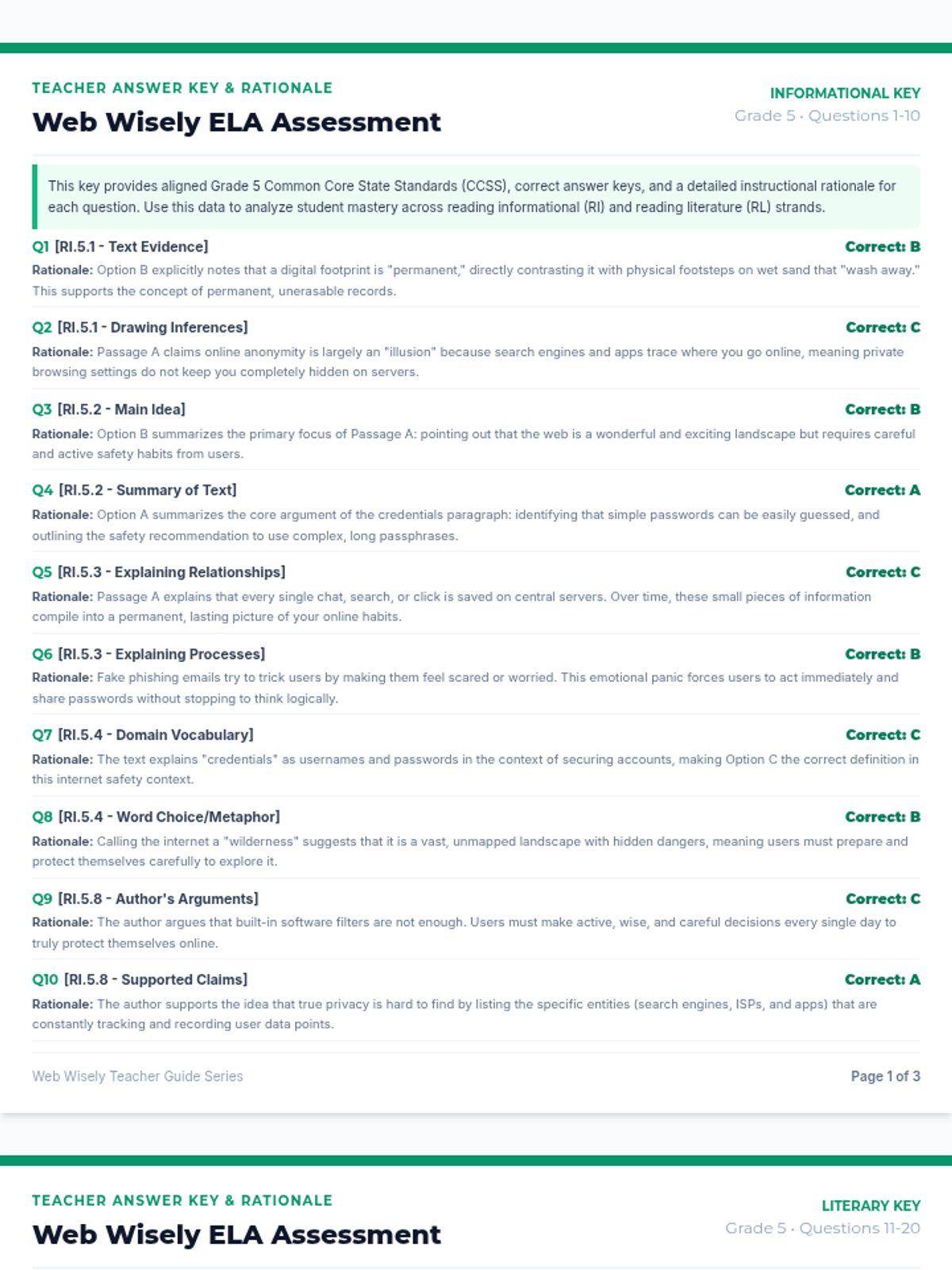
A comprehensive middle school ELA reading unit focused on internet safety and digital citizenship. Includes a two-page paired reading passage (informational and narrative), a four-page standard-aligned comprehension assessment covering 12 standards (RI.1-4, RI.8, RL.1-4, RL.8, L.4-5) plus context-clues, and a complete teacher's answer key with standard alignments and detailed rationales.
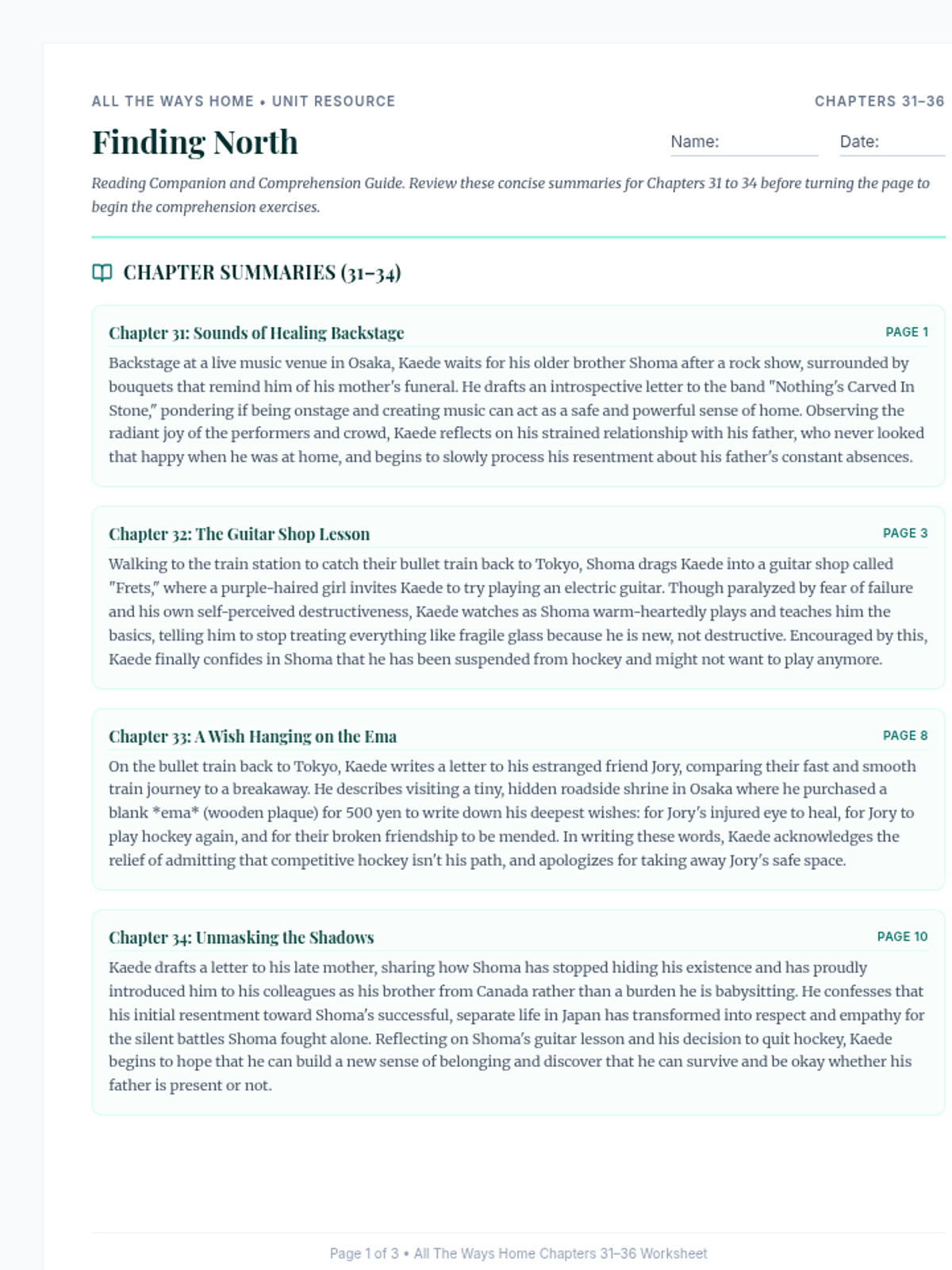
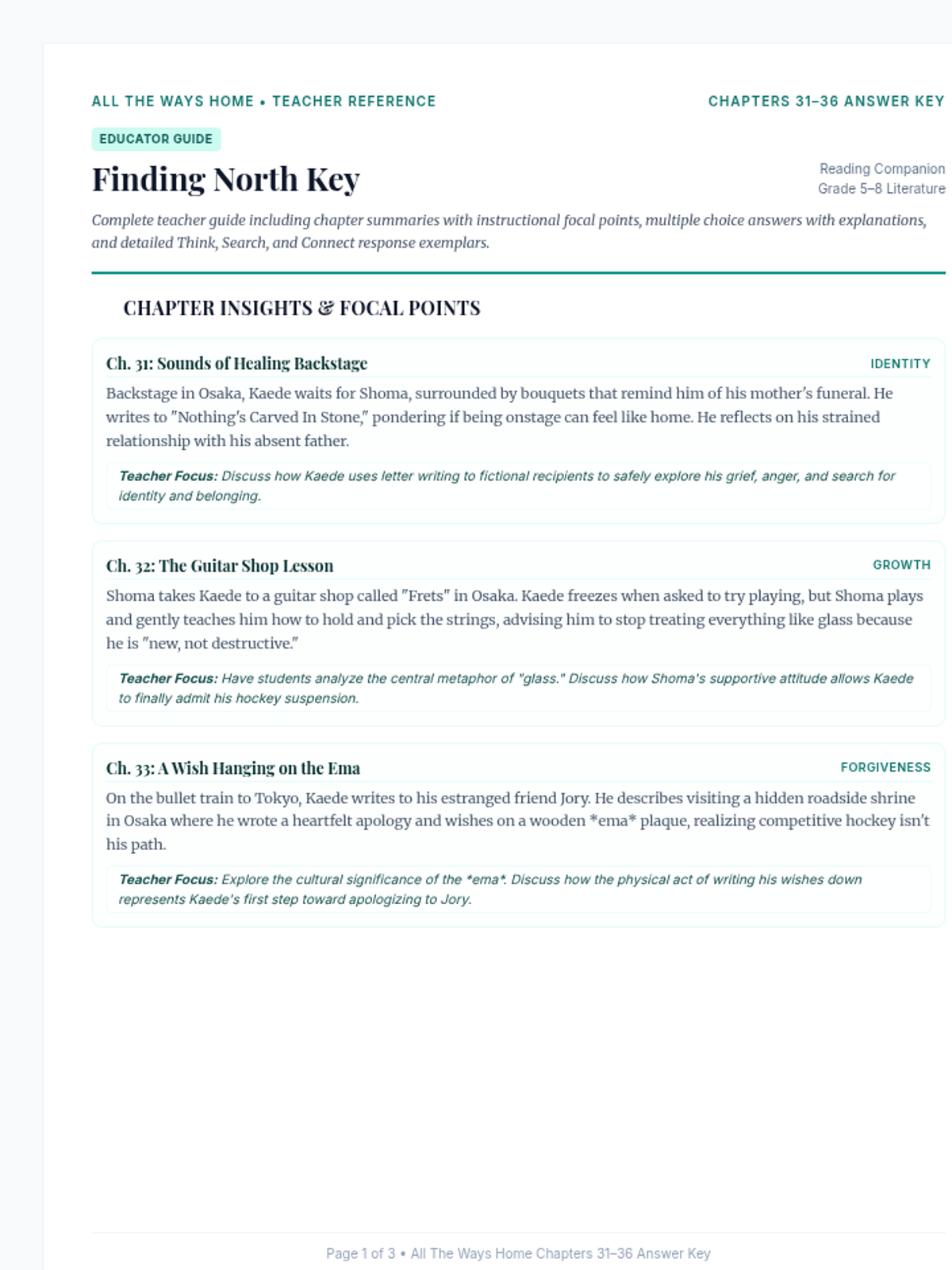
A study of Chapters 31-36 of Elsie Chapman's 'All The Ways Home'. Students explore Kaede's search for identity, his complex relationship with his brother Shoma, his father's painful abandonment, and his desperate choice to steal Shoma's bass to find his father in Sapporo.
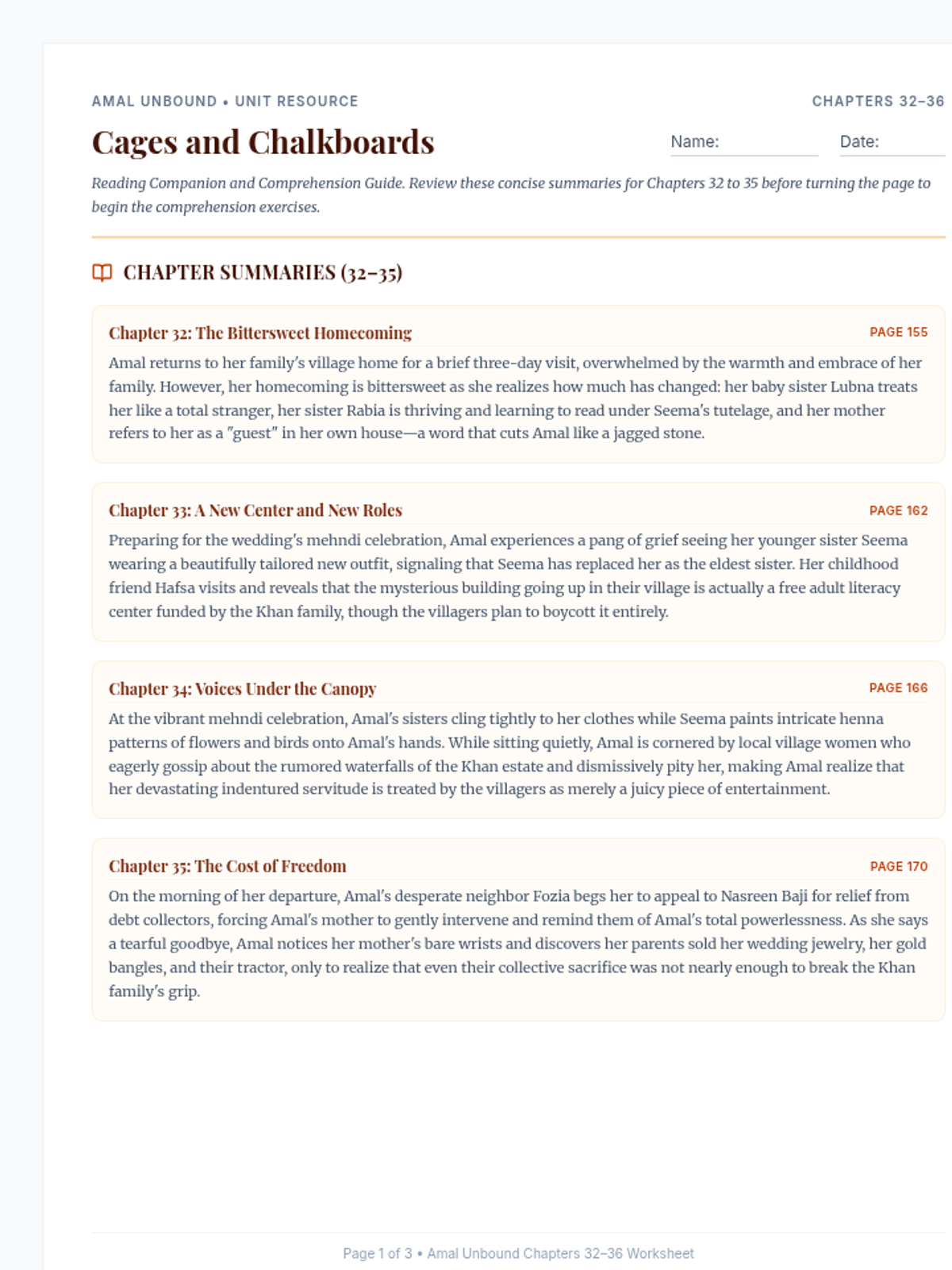
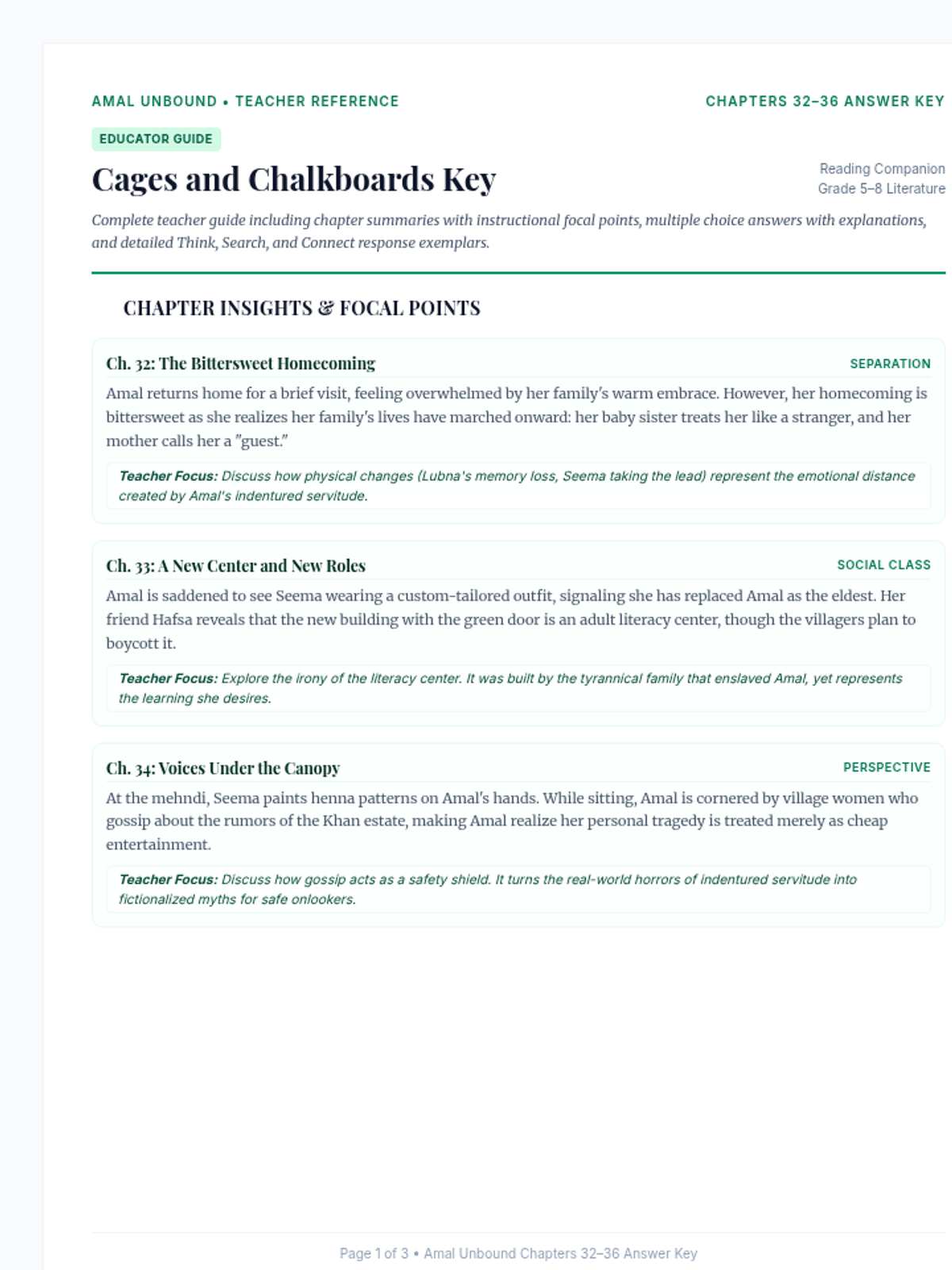
A lesson covering Chapters 32-36 of Aisha Saeed's 'Amal Unbound'. Students analyze Amal's bittersweet visit home, her realization of Nasreen Baji's gilded cage, and the unexpected opportunity to attend the new literacy center.
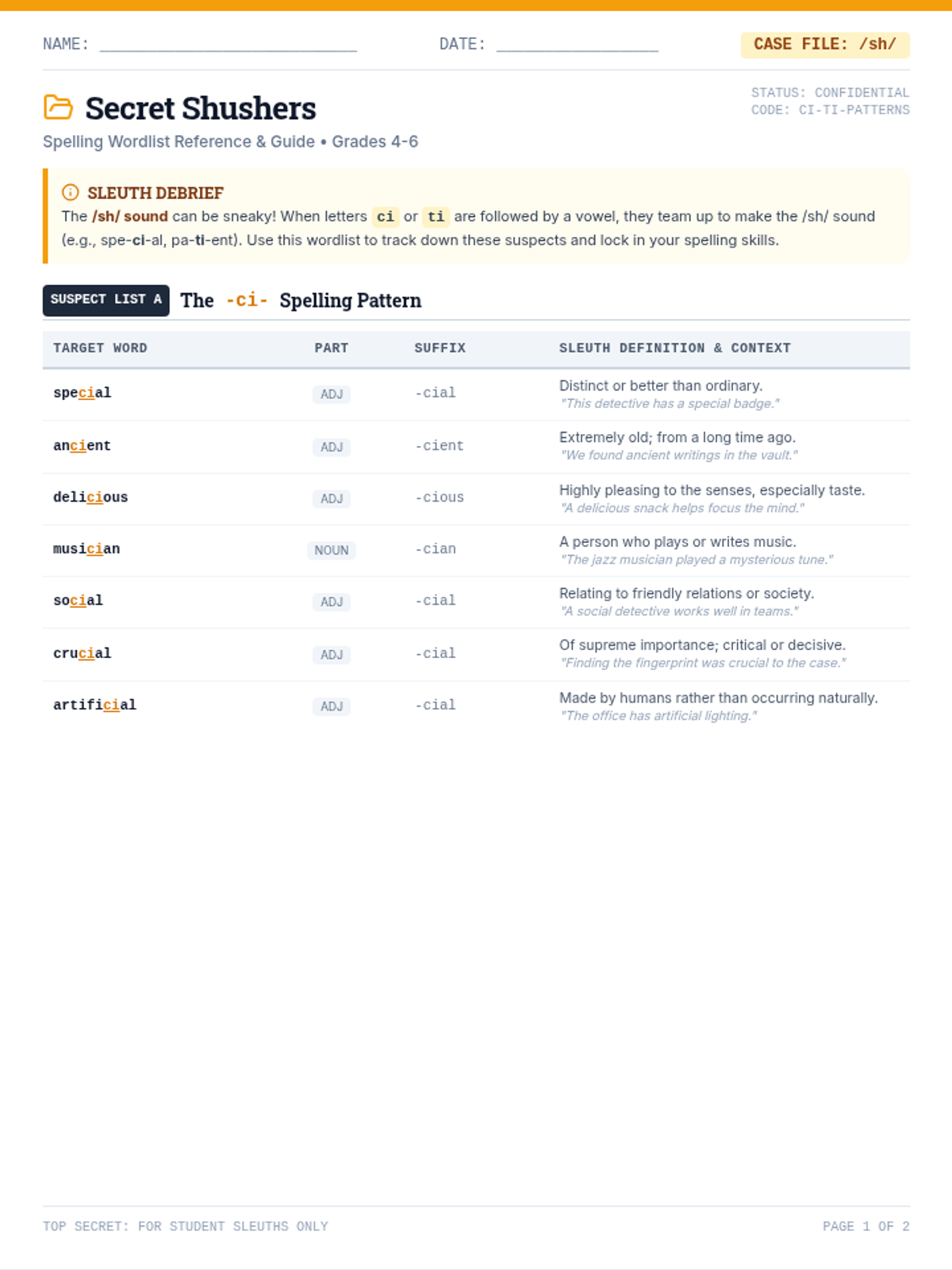
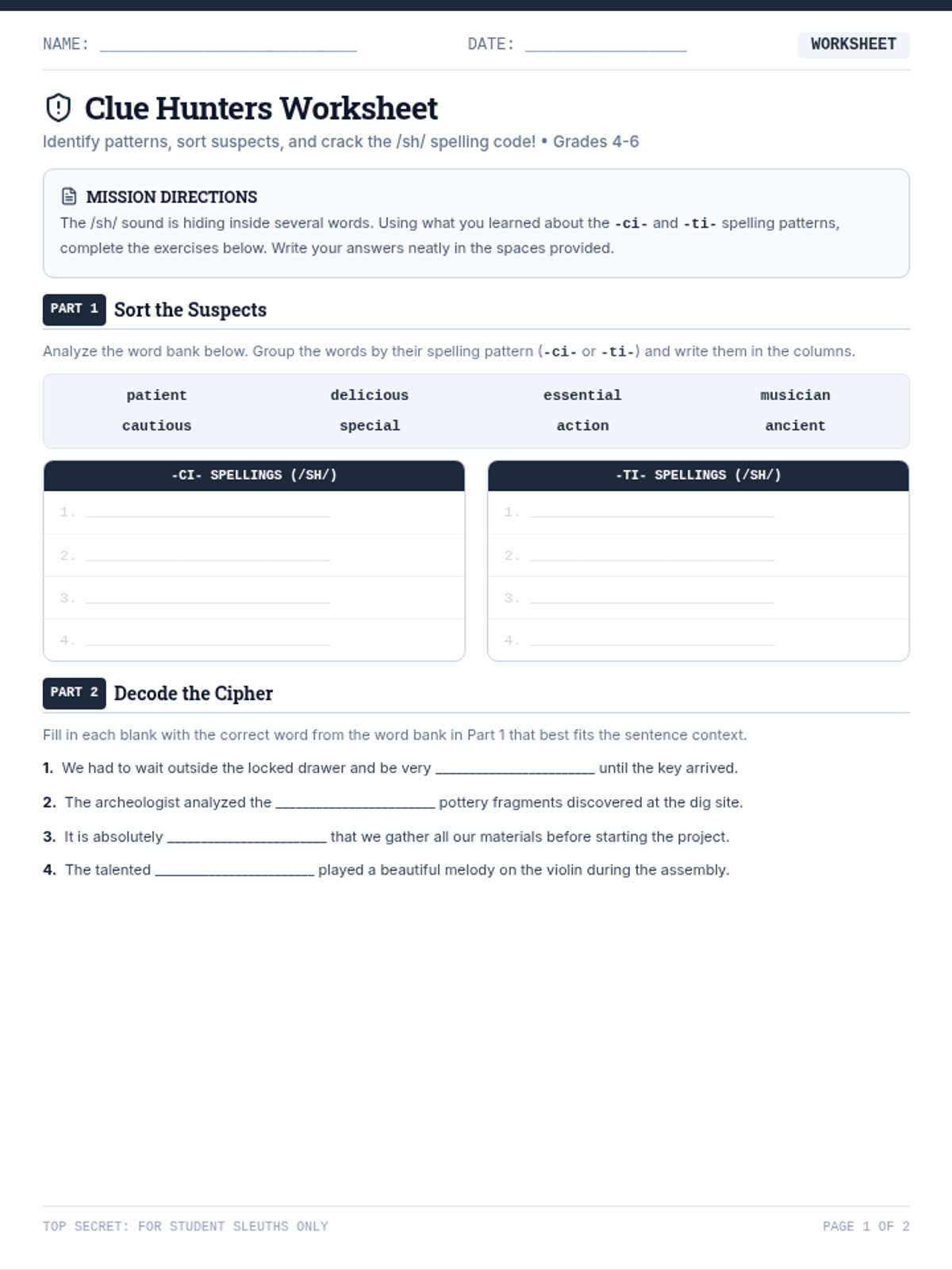
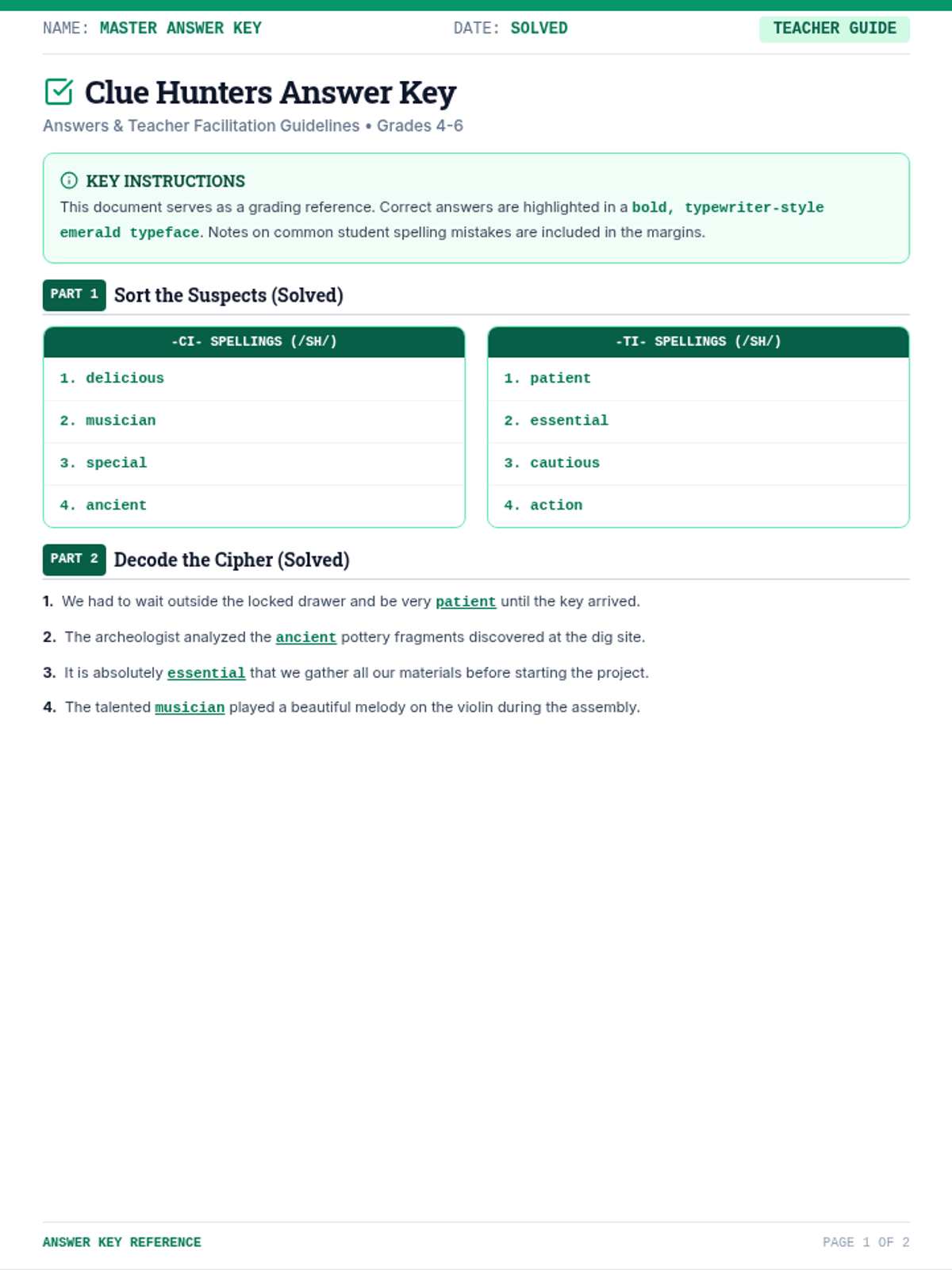
A spelling and phonics lesson for grades 4-6 focusing on the /sh/ sound spelled with 'ci' (as in special) and 'ti' (as in patient). Students explore patterns, organize words in detective-style case files, and apply their knowledge through interactive word hunts and spelling activities.
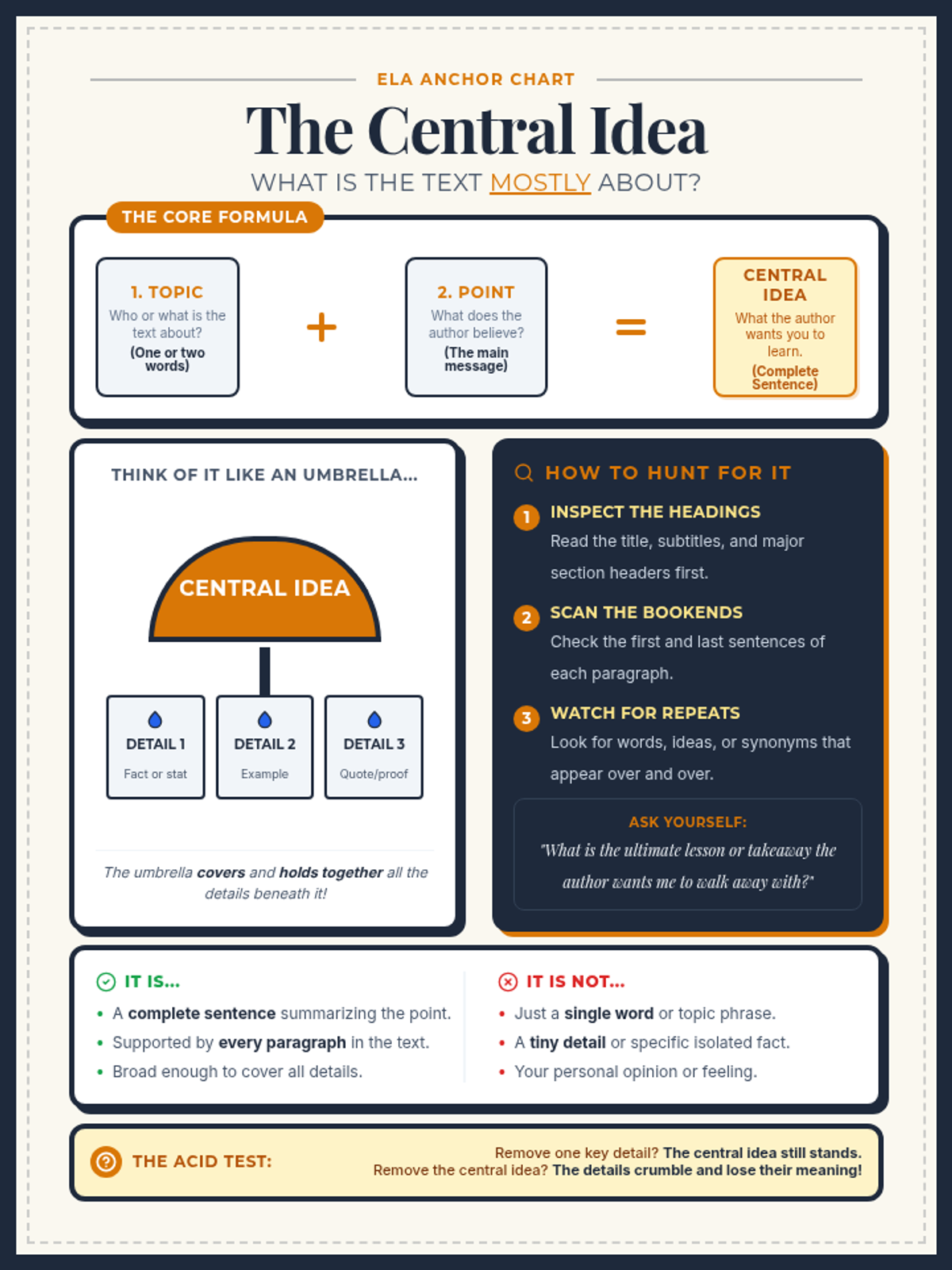
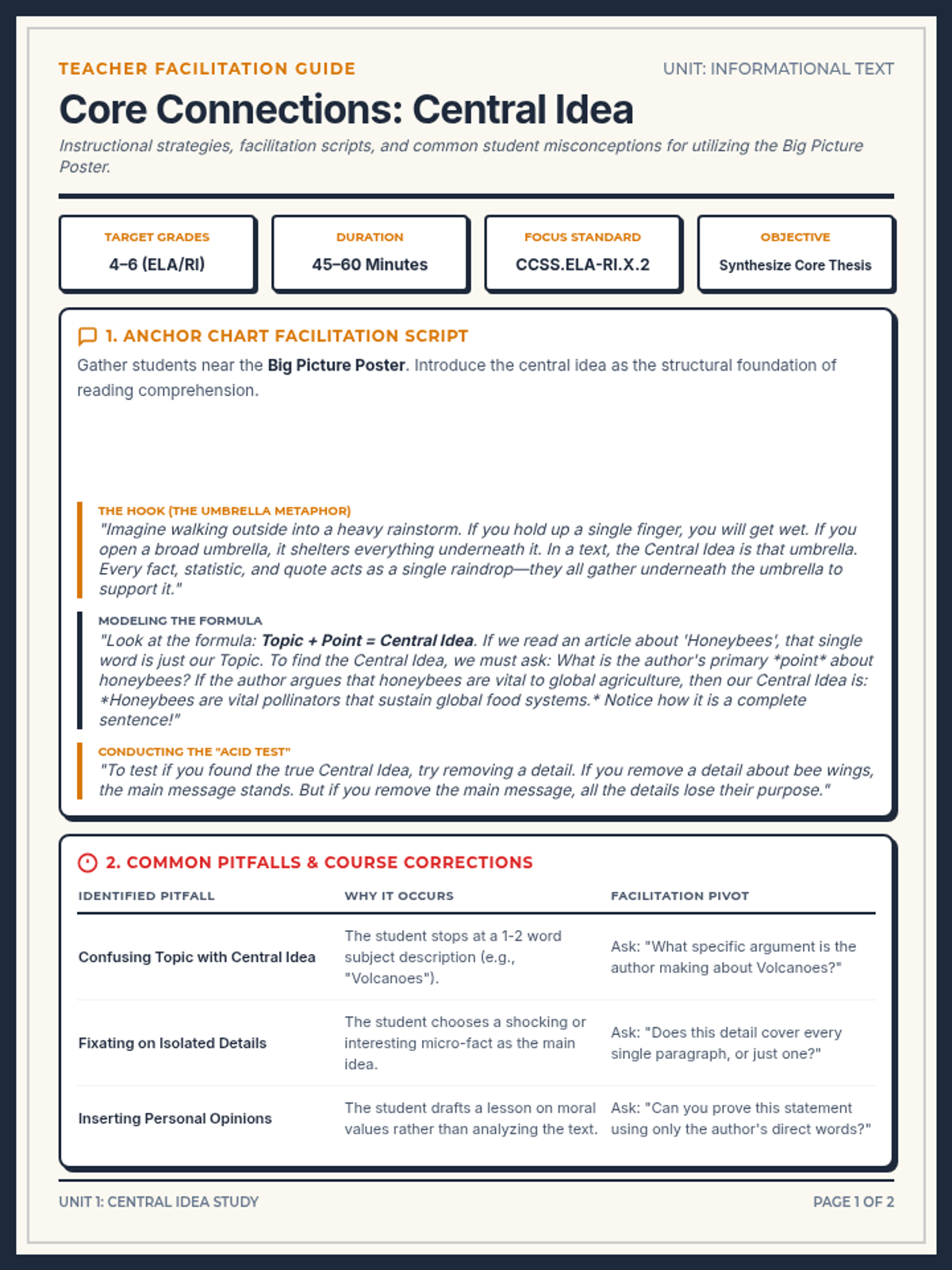
A lesson designed to guide students in identifying, analyzing, and synthesizing the central idea of informational texts. Features a visual anchor chart and a supporting teacher facilitation guide.
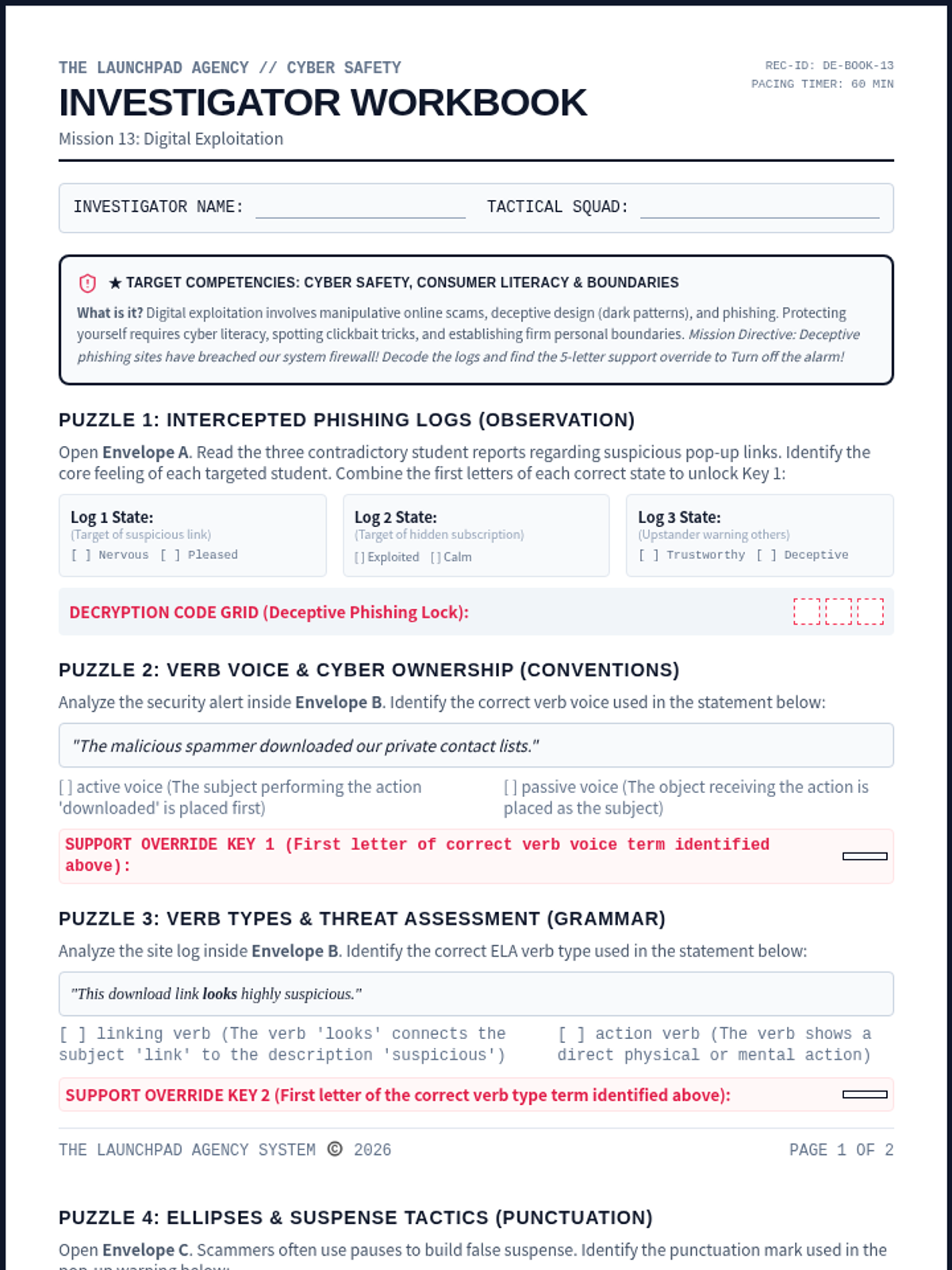
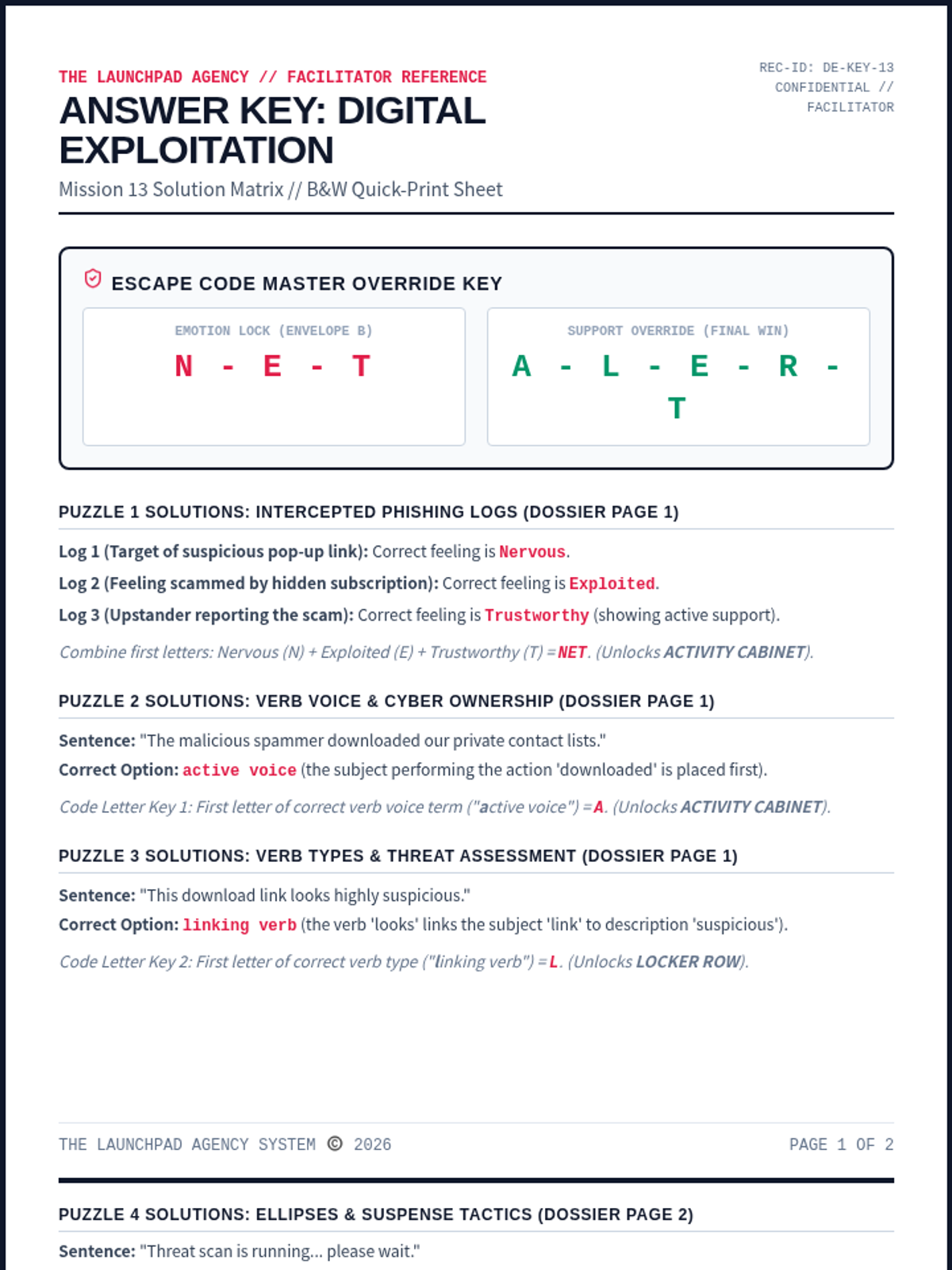
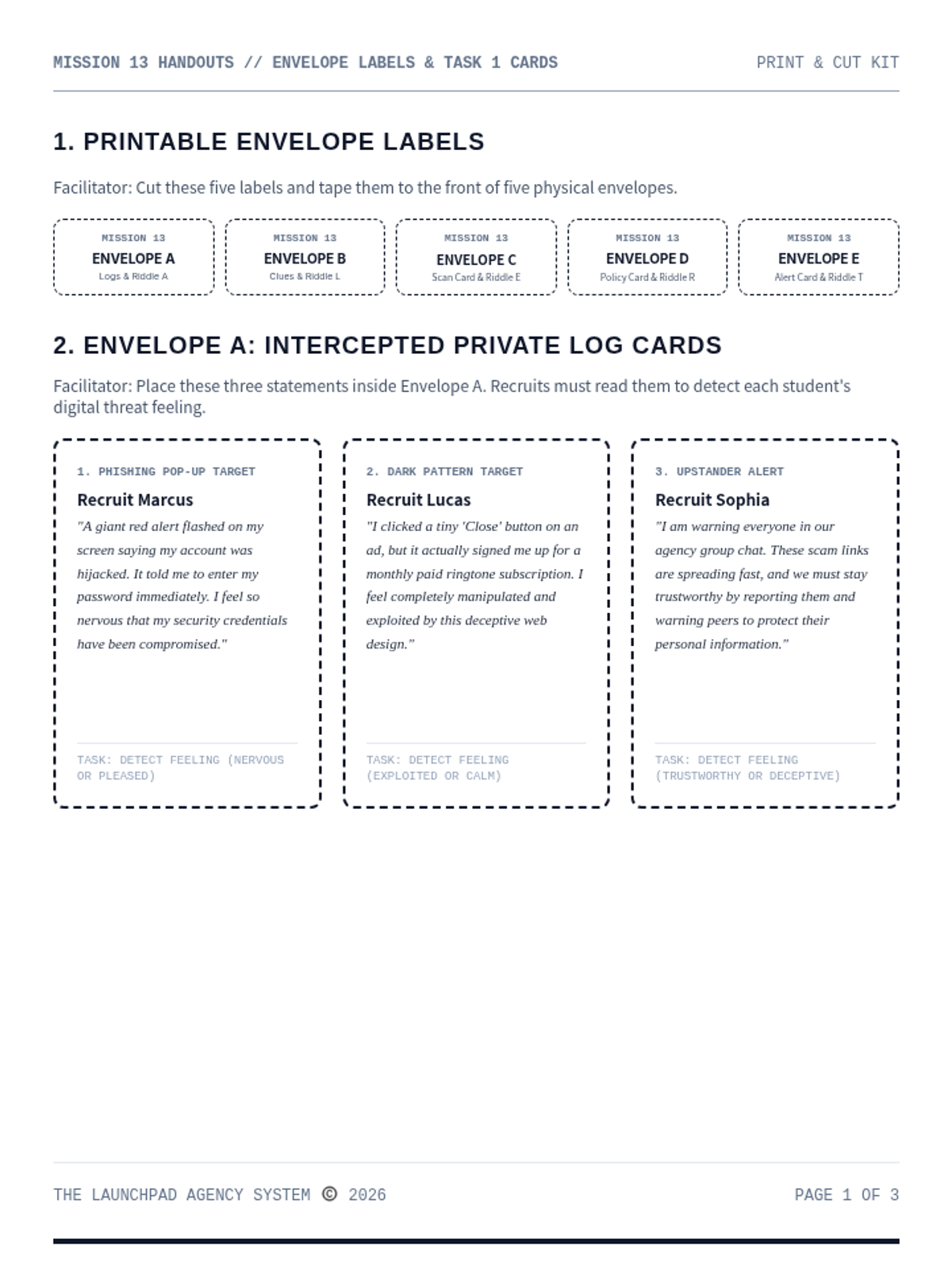
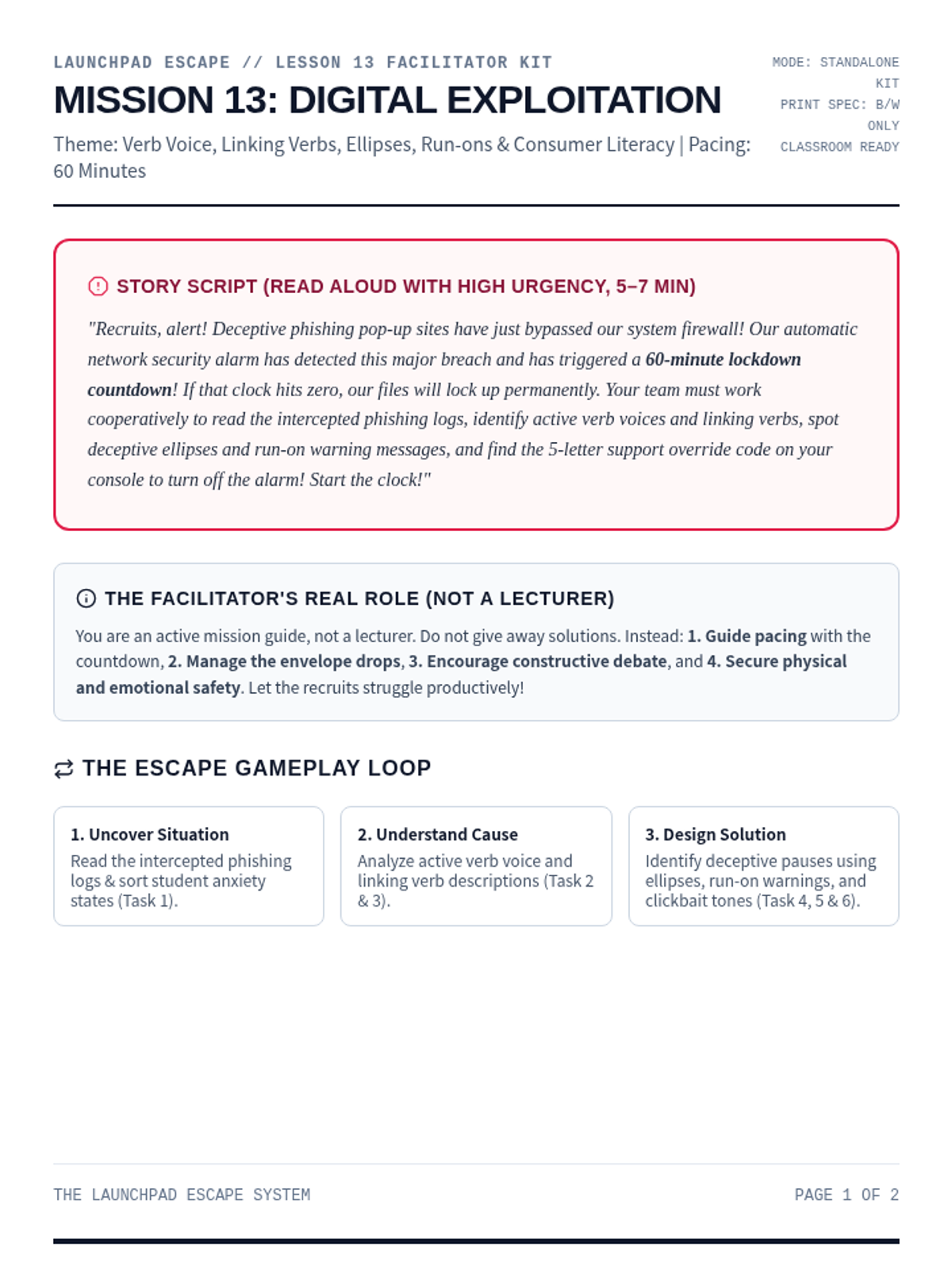
A high-stakes digital safety escape room focused on identifying online scams, recognizing manipulative dark patterns, and protecting personal data. Recruits analyze active verb voices, linking verbs, ellipses punctuation, and deceptive tones to decode the final alert.
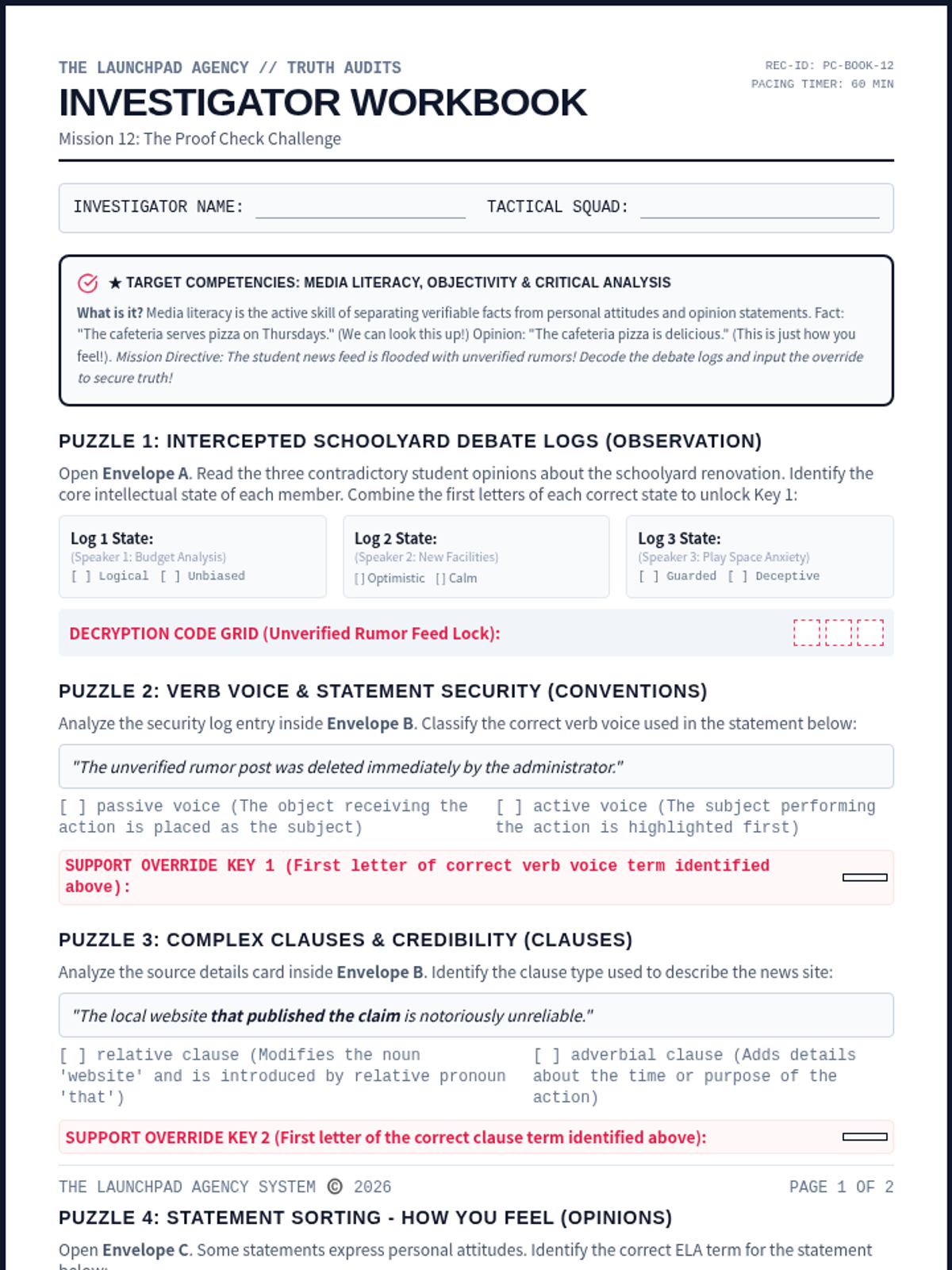
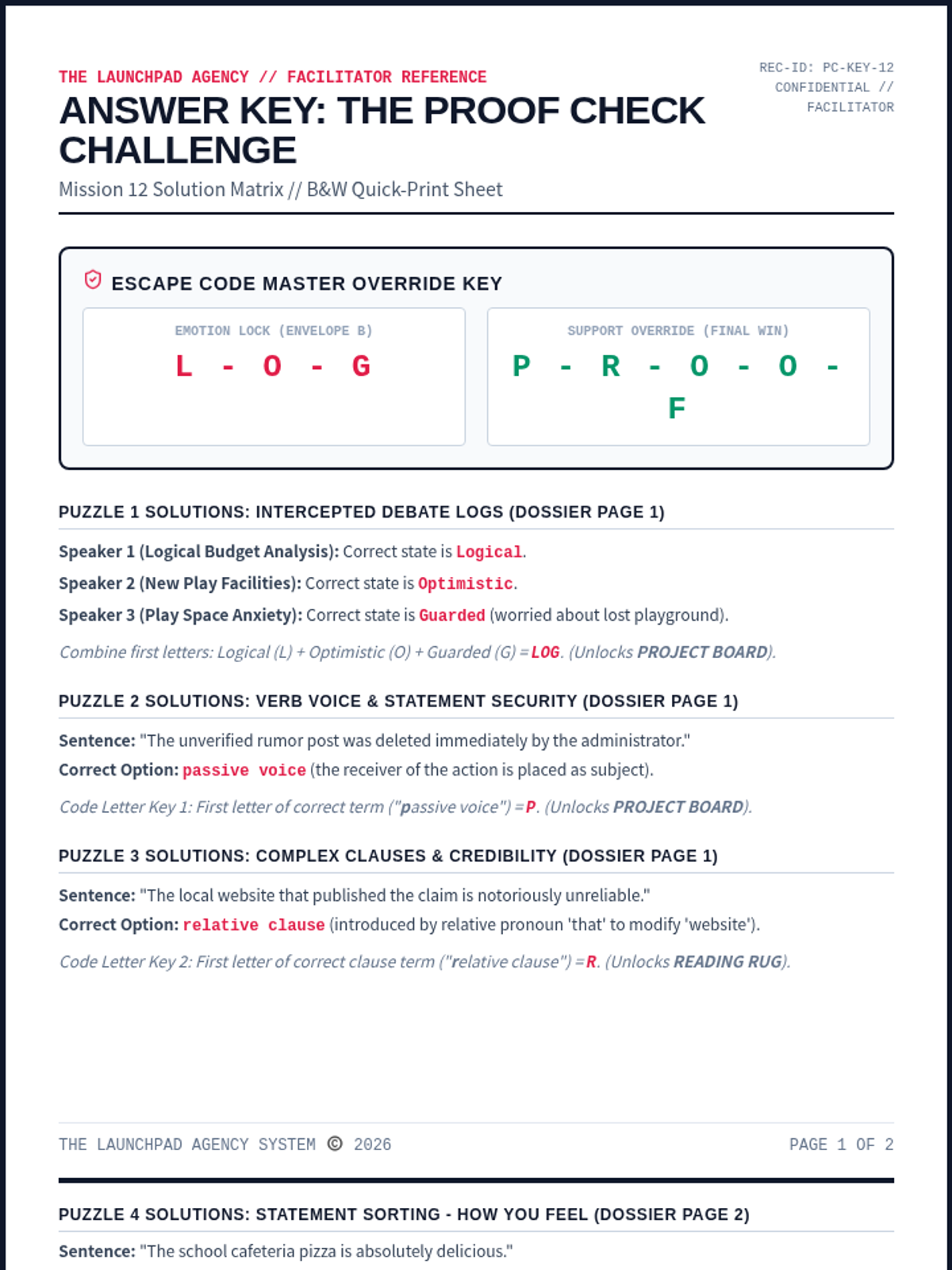
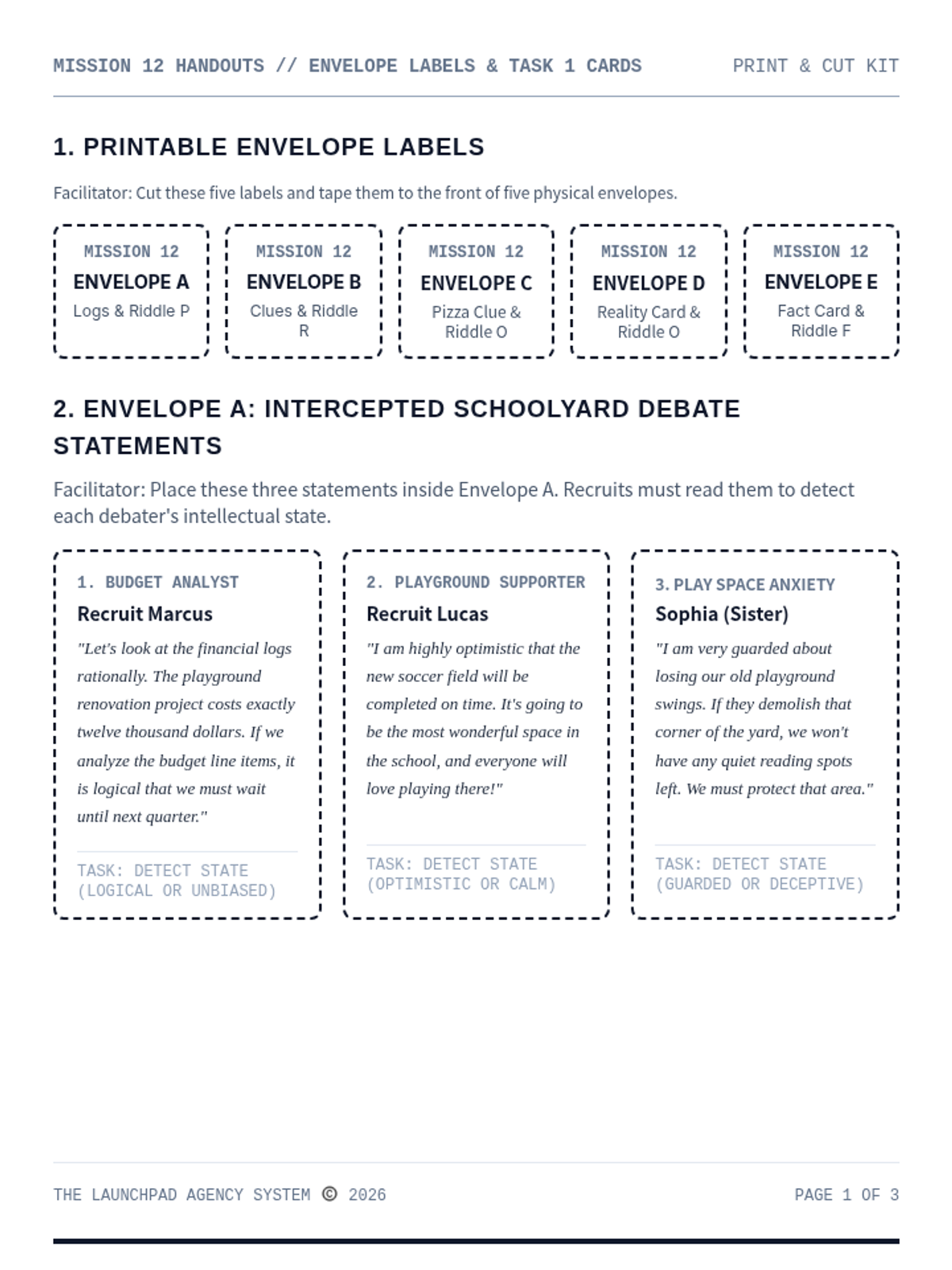
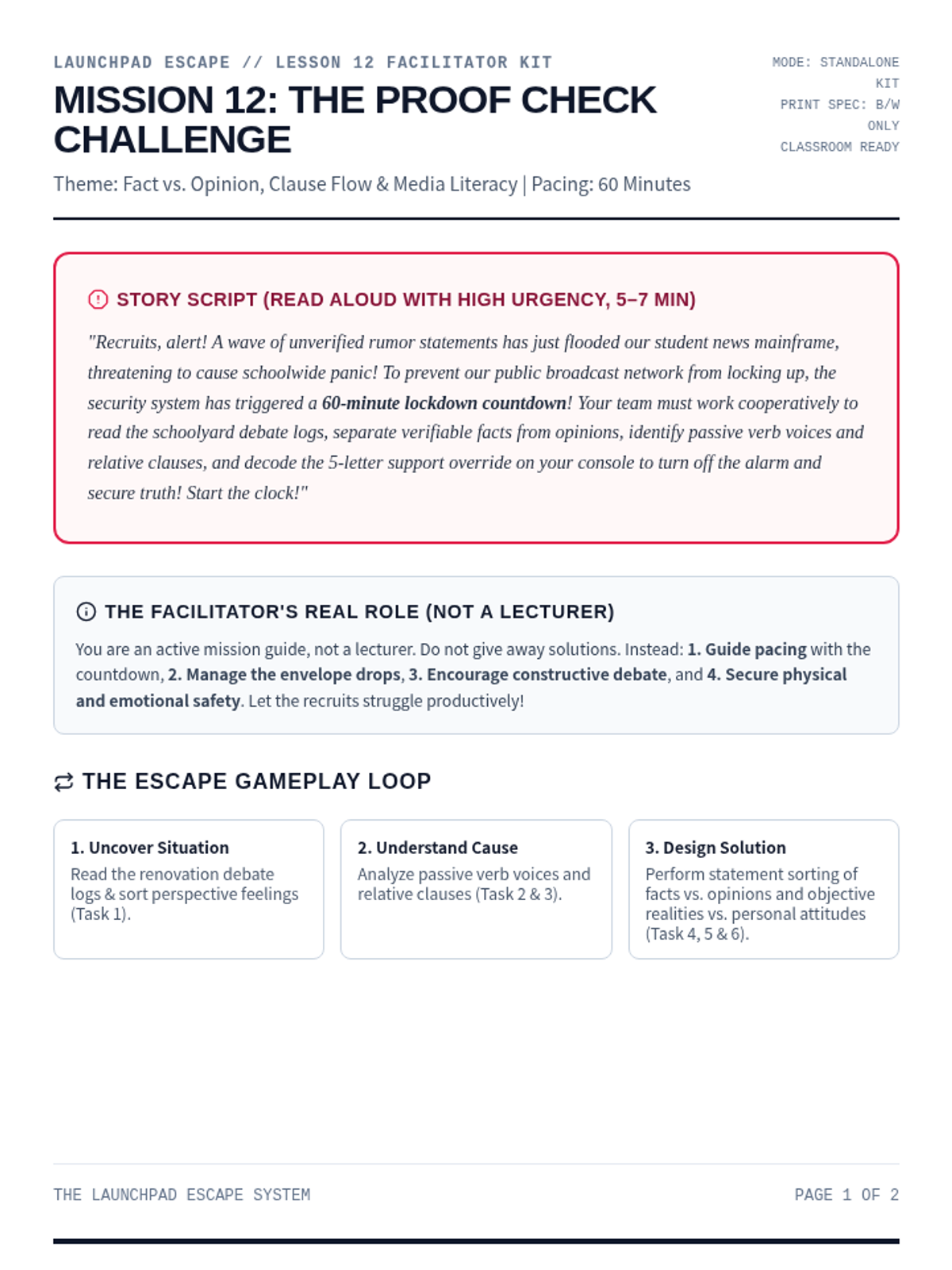
An advanced media literacy and communication escape room for Ages 13-15. Recruits distinguish facts from opinions, analyze objective realities, sort personal attitudes, and input the override PROOF to secure the school news mainframe.
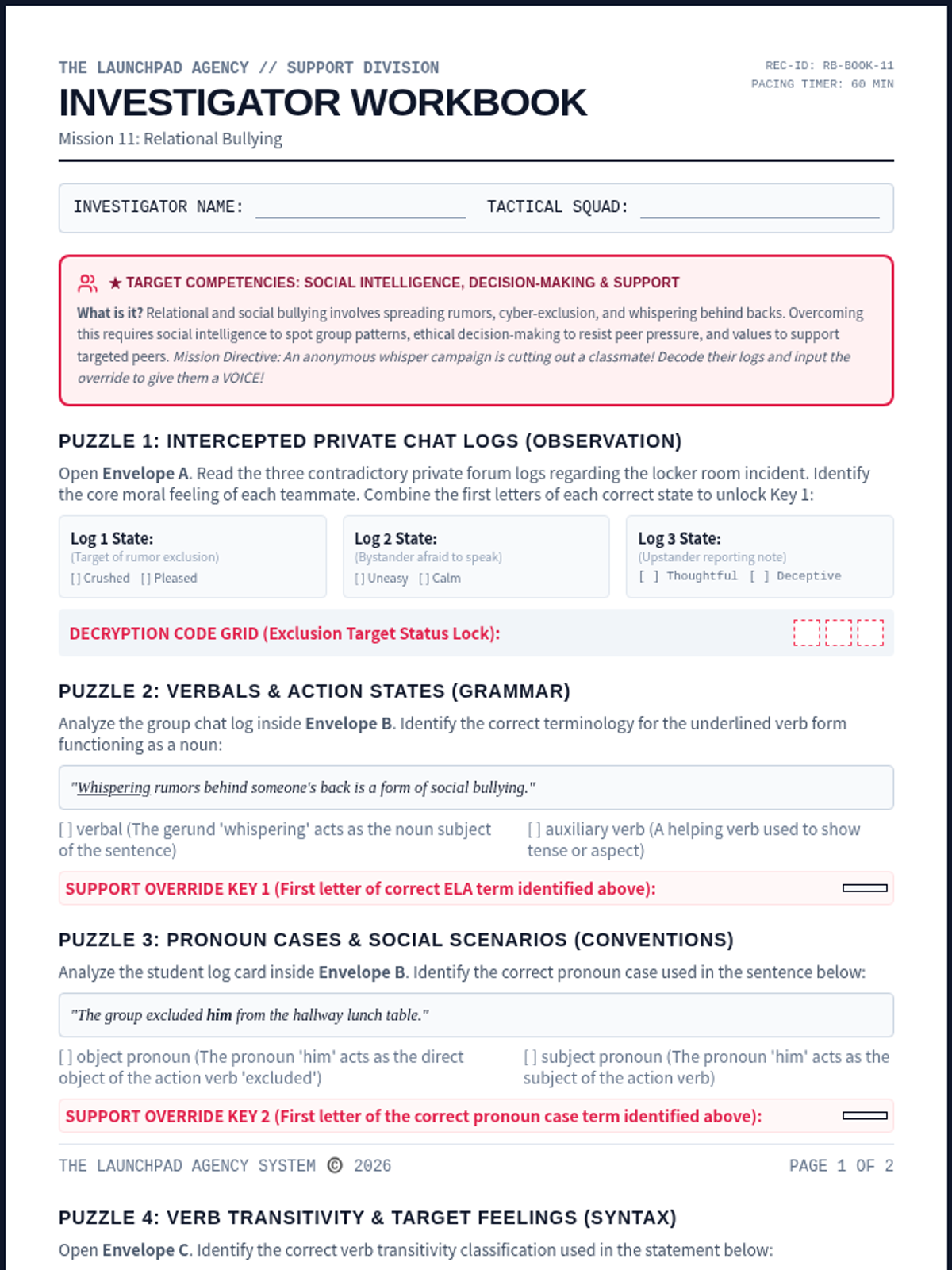
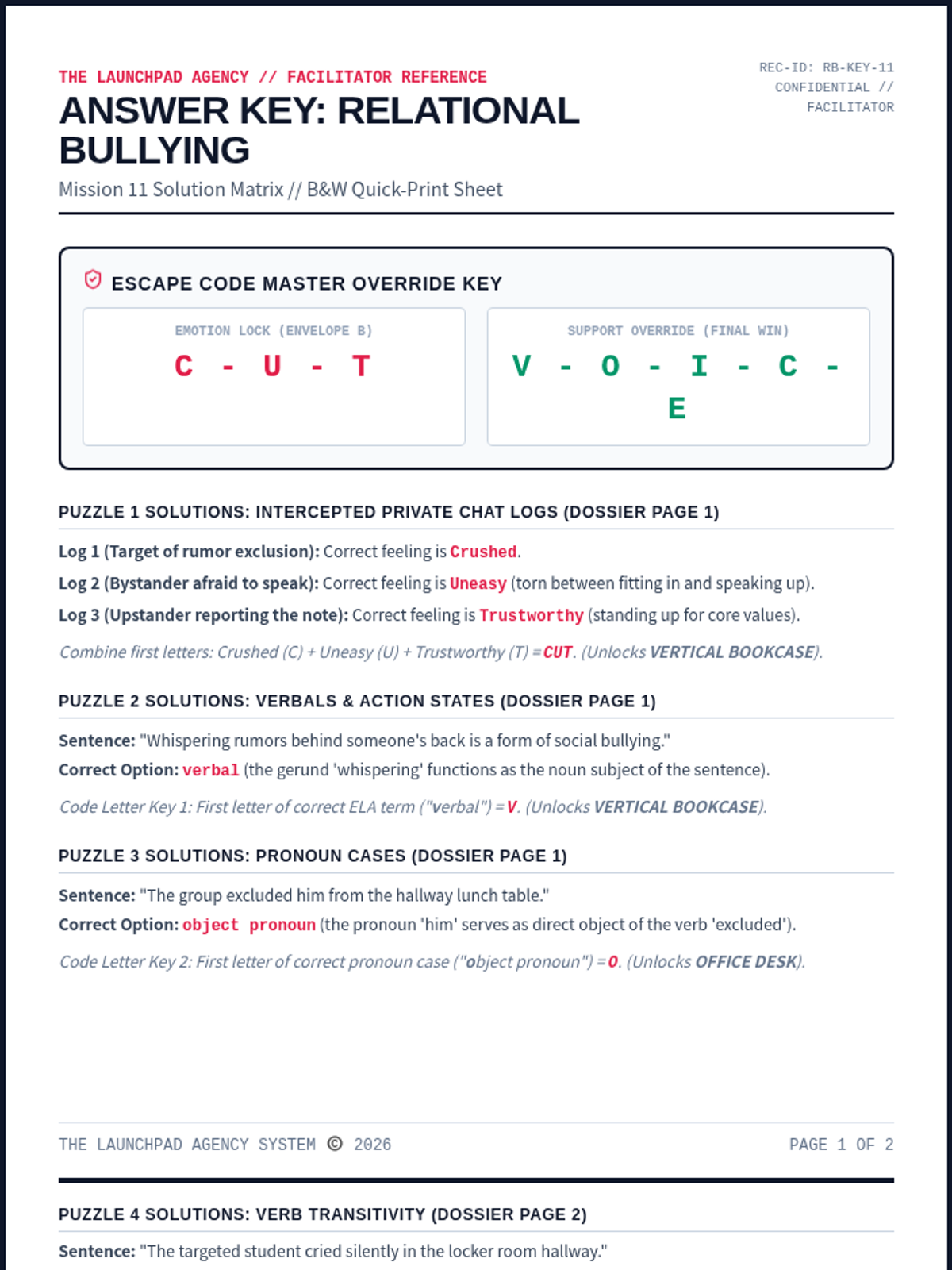
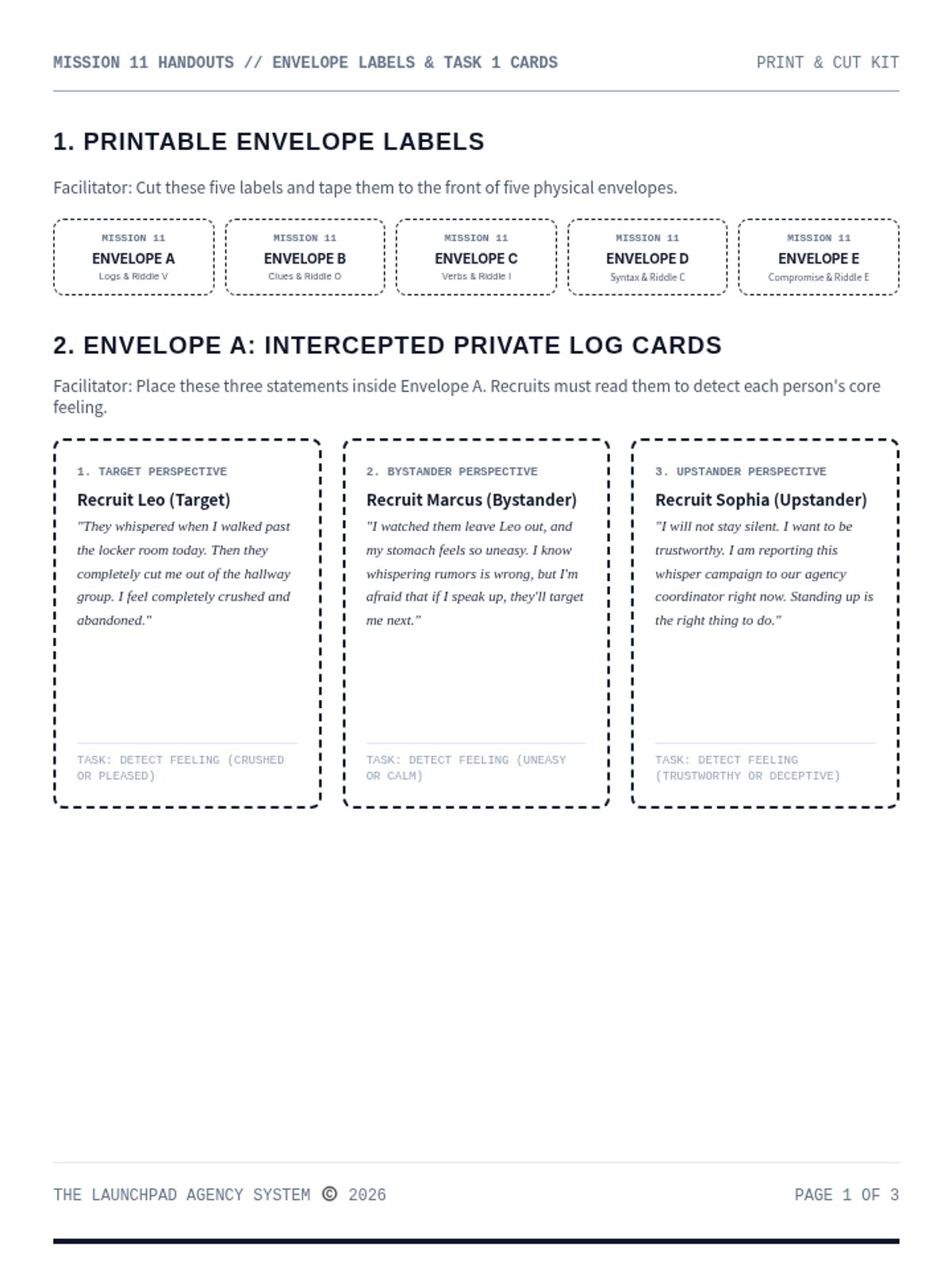
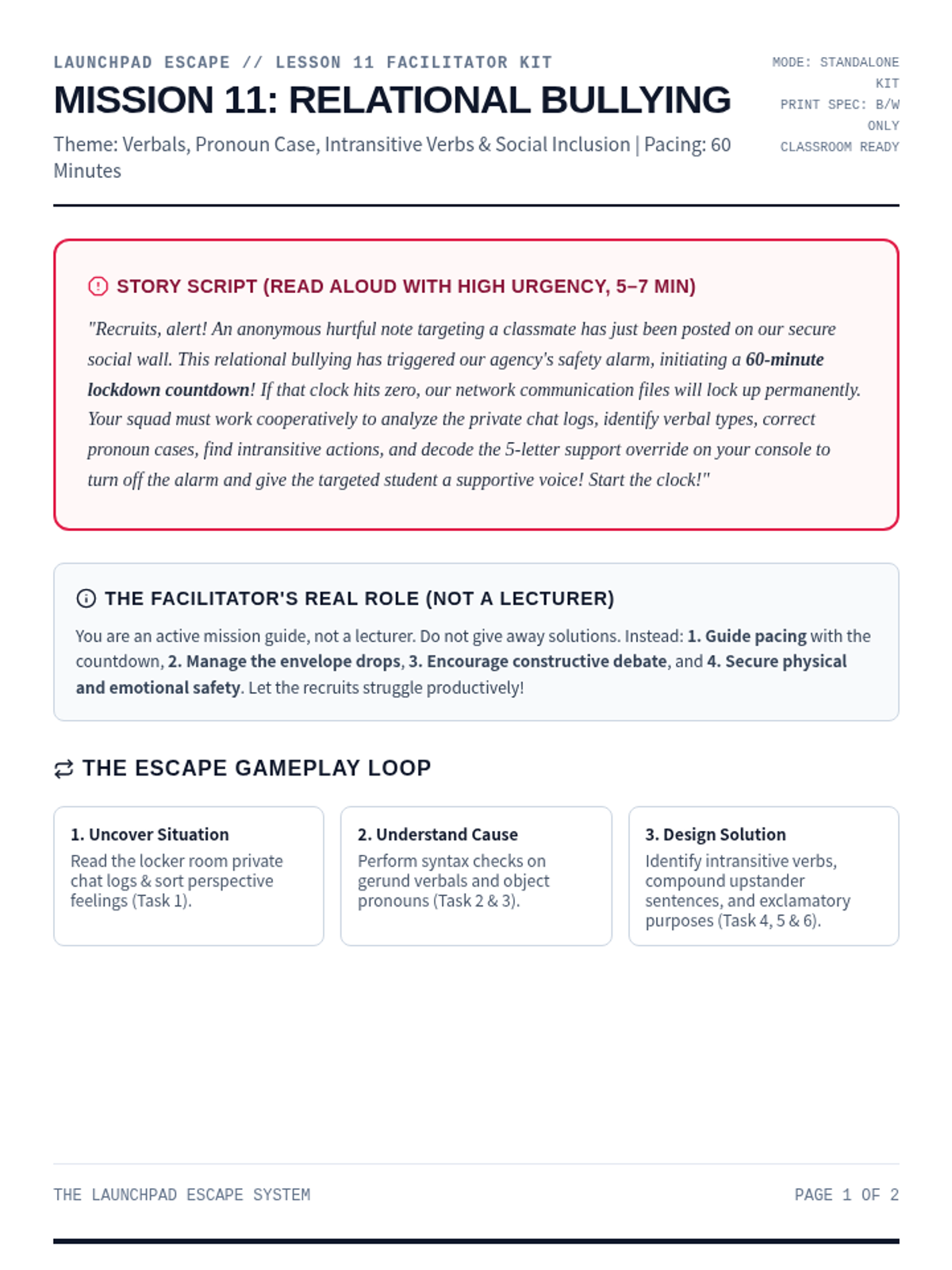
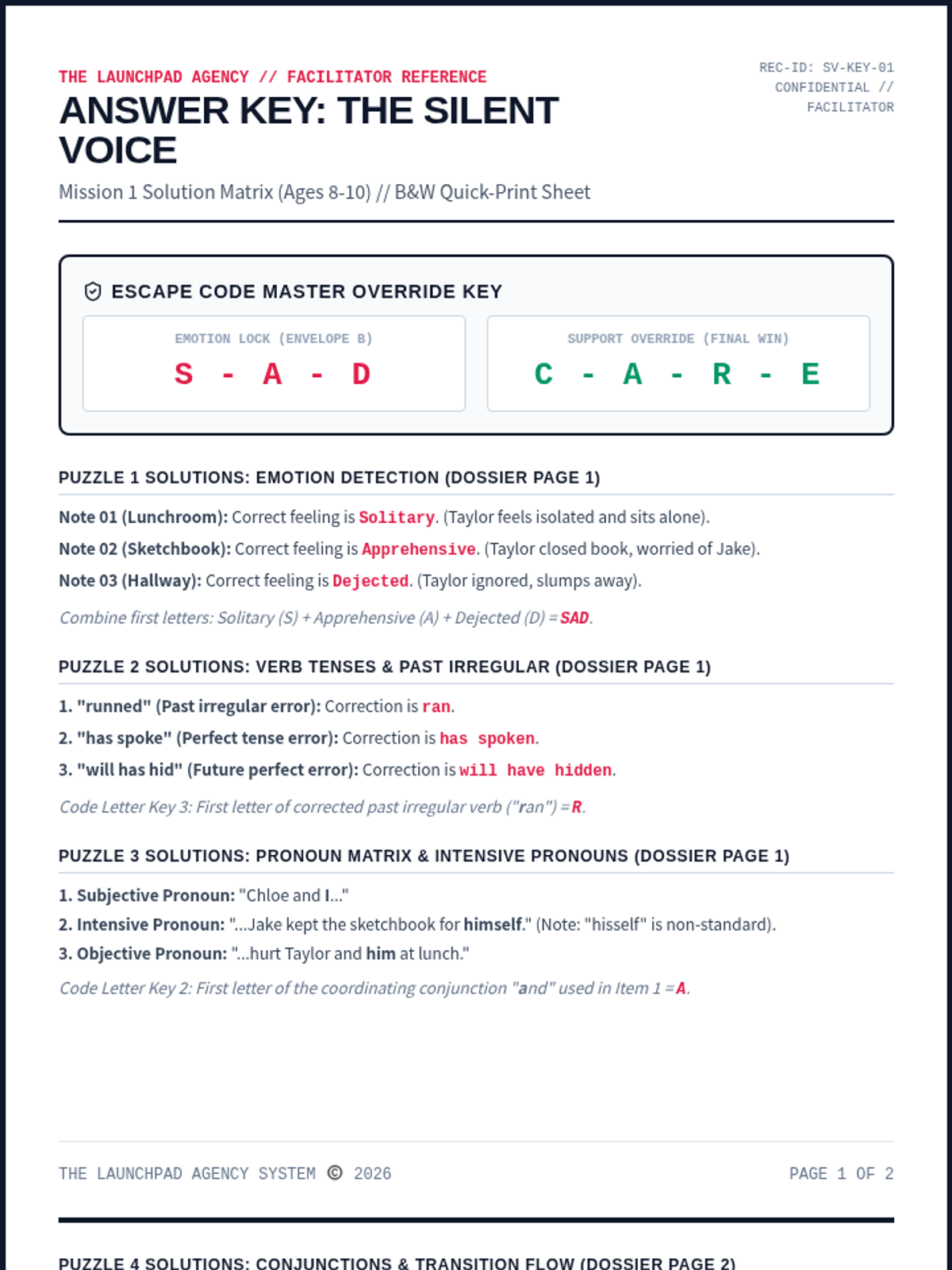
A collaborative social-emotional escape room focused on identifying relational and social bullying, supporting target peers, and standing up to cyber/verbal exclusion. Recruits analyze verb verbal types, pronoun cases, intransitive verbs, and compound syntax to decode the final override.
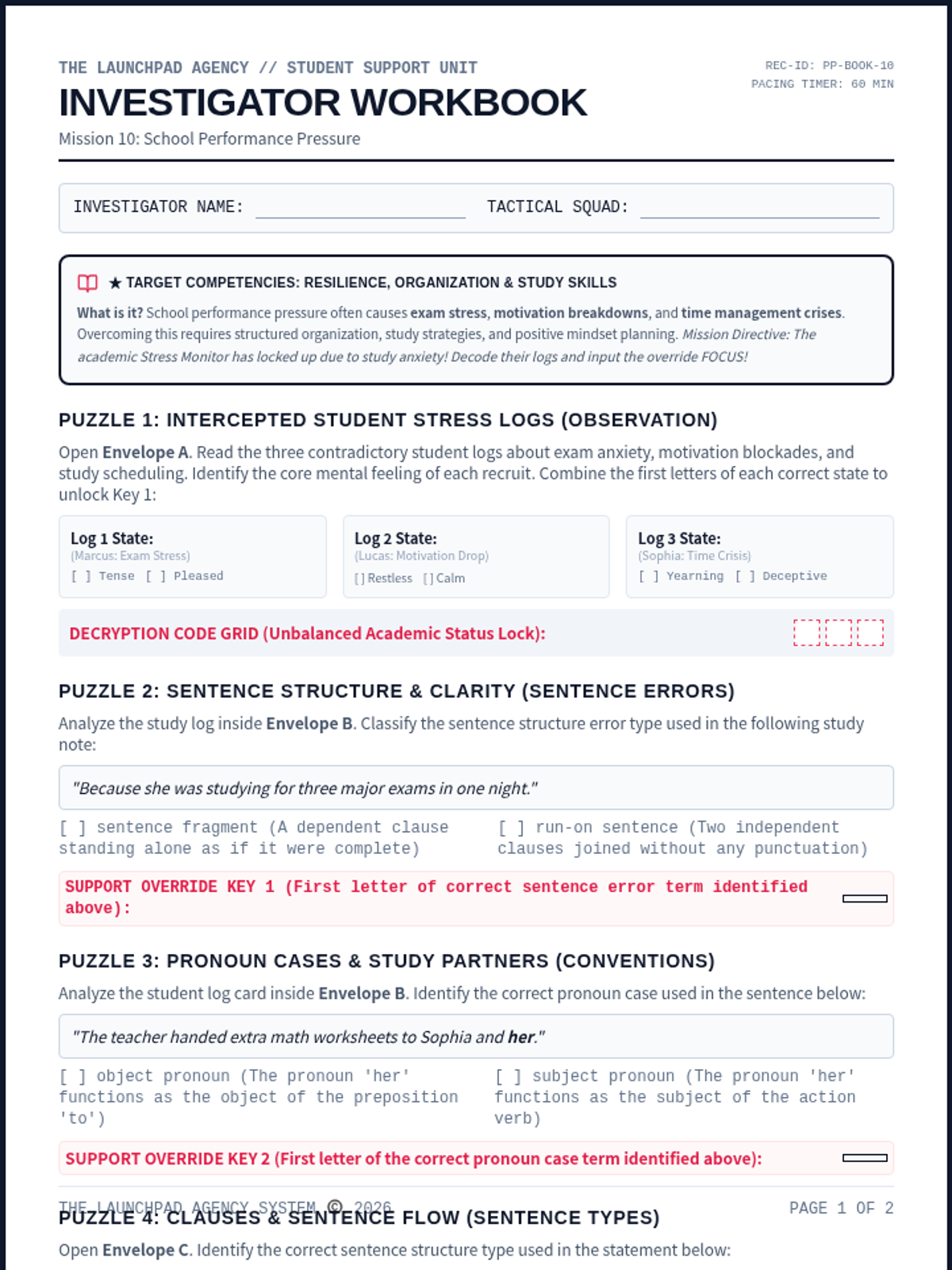
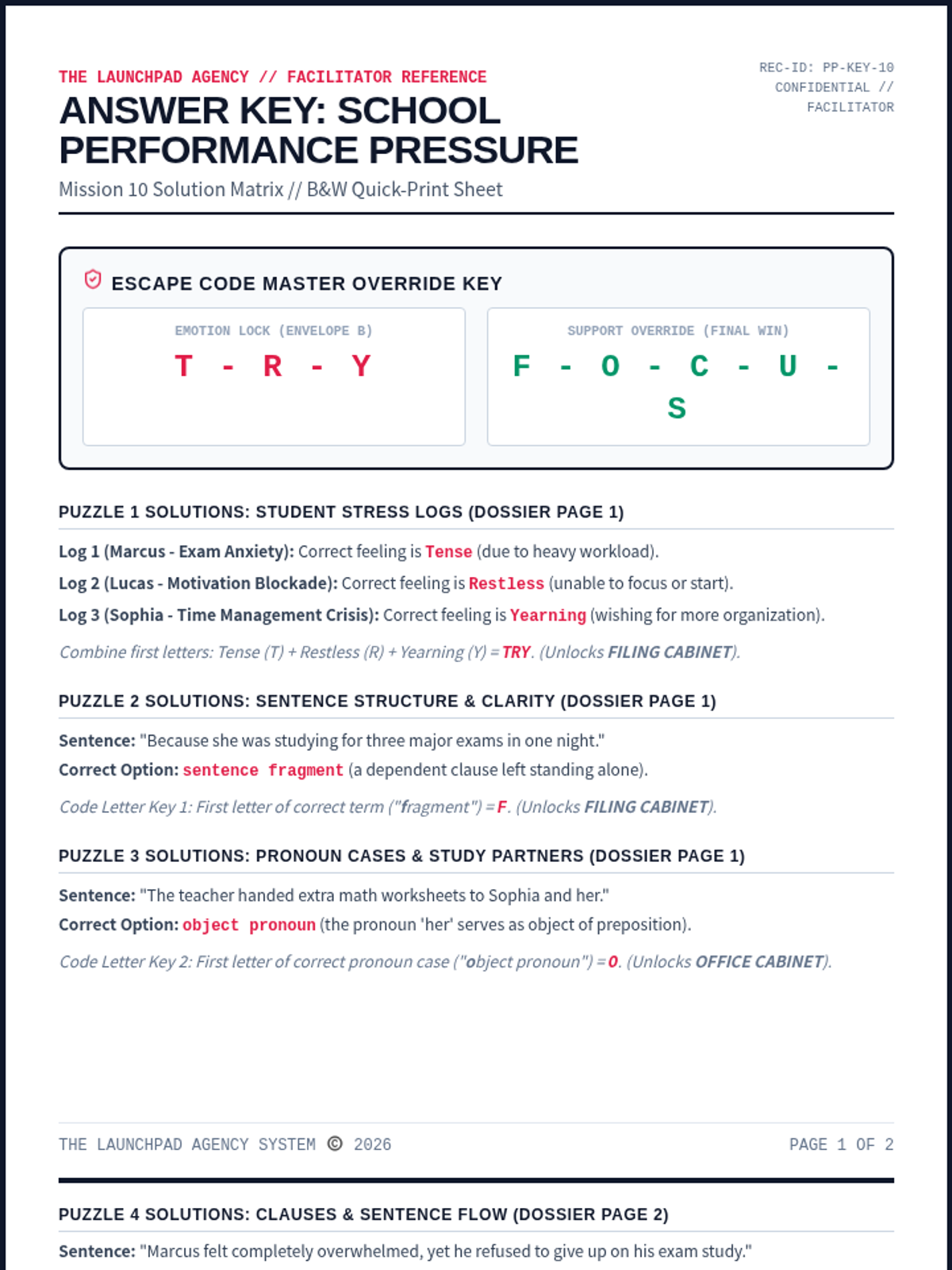
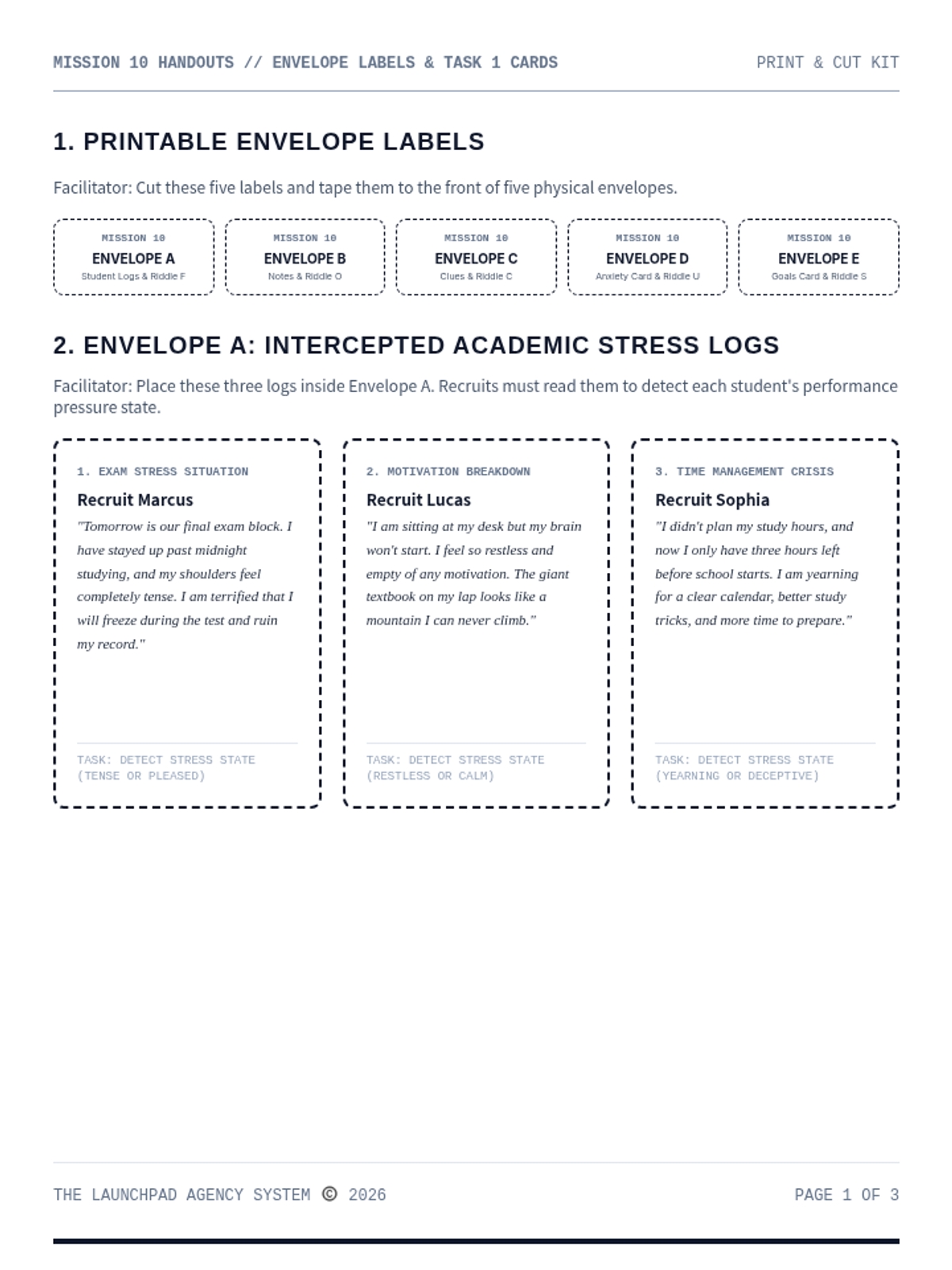
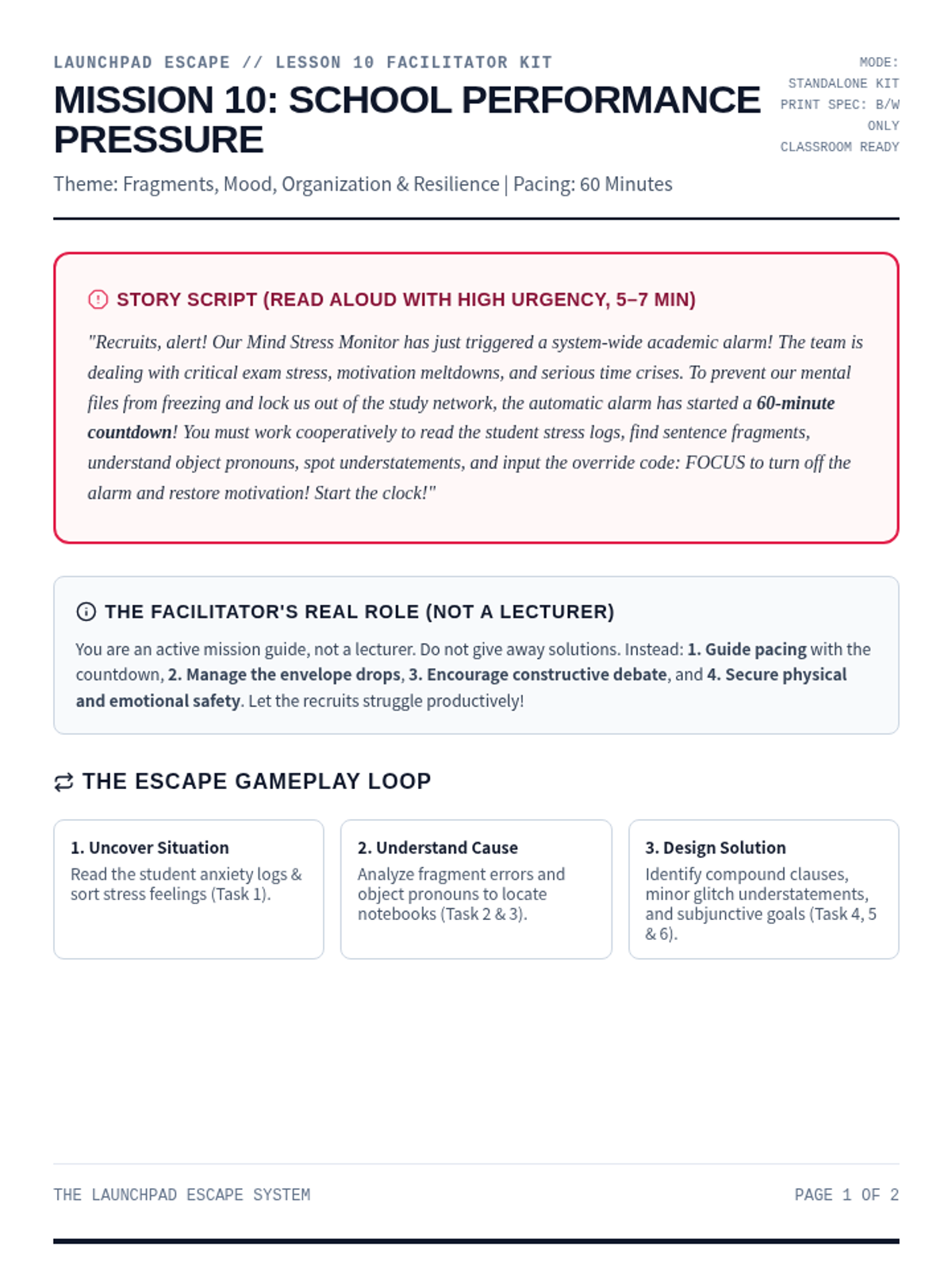
An immersive and strategic escape room focused on managing academic stress, avoiding burnout, and planning study habits. Recruits analyze student logs under performance anxiety, build efficient schedules, and decode the override to restore positive motivation.
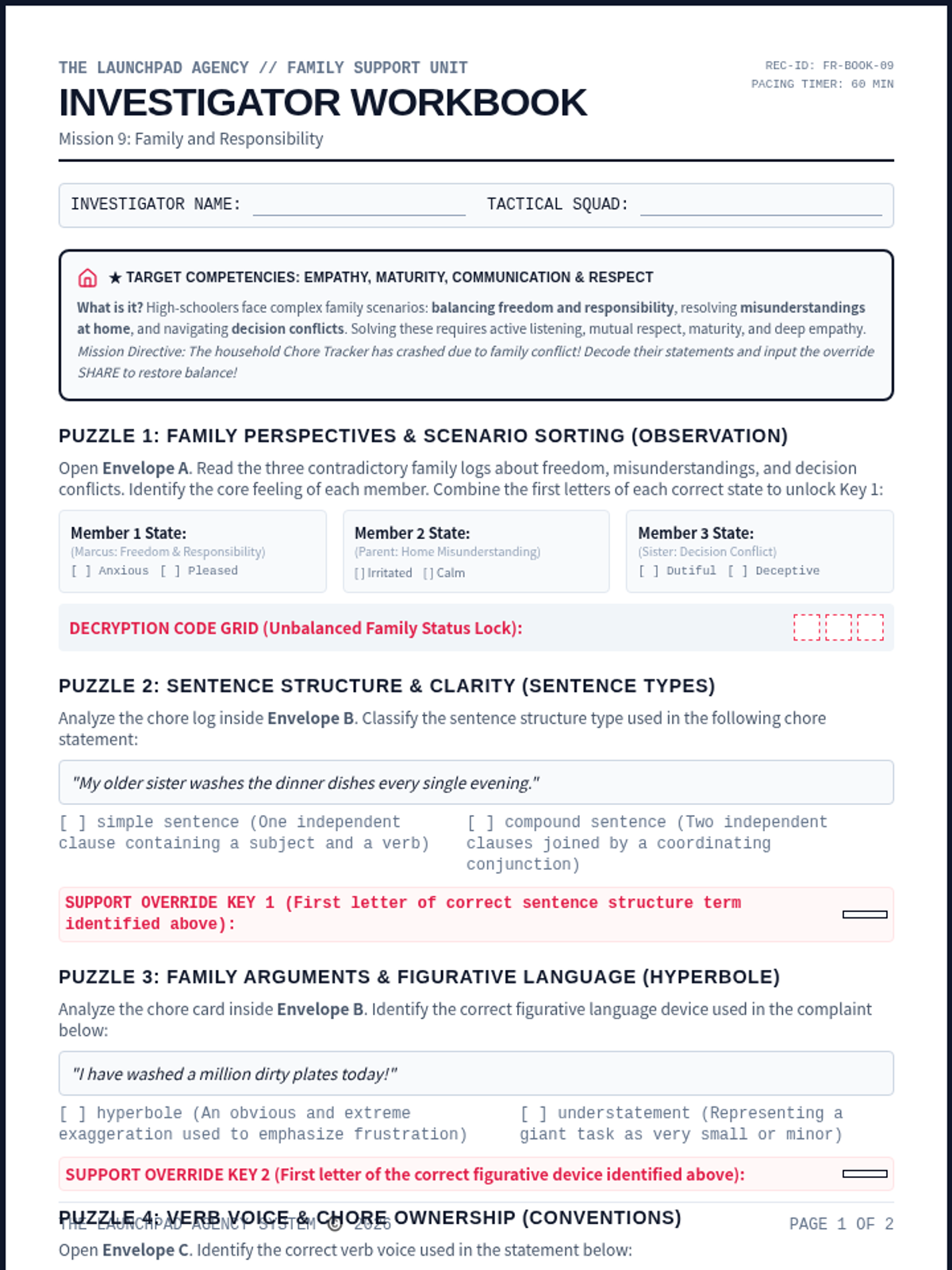
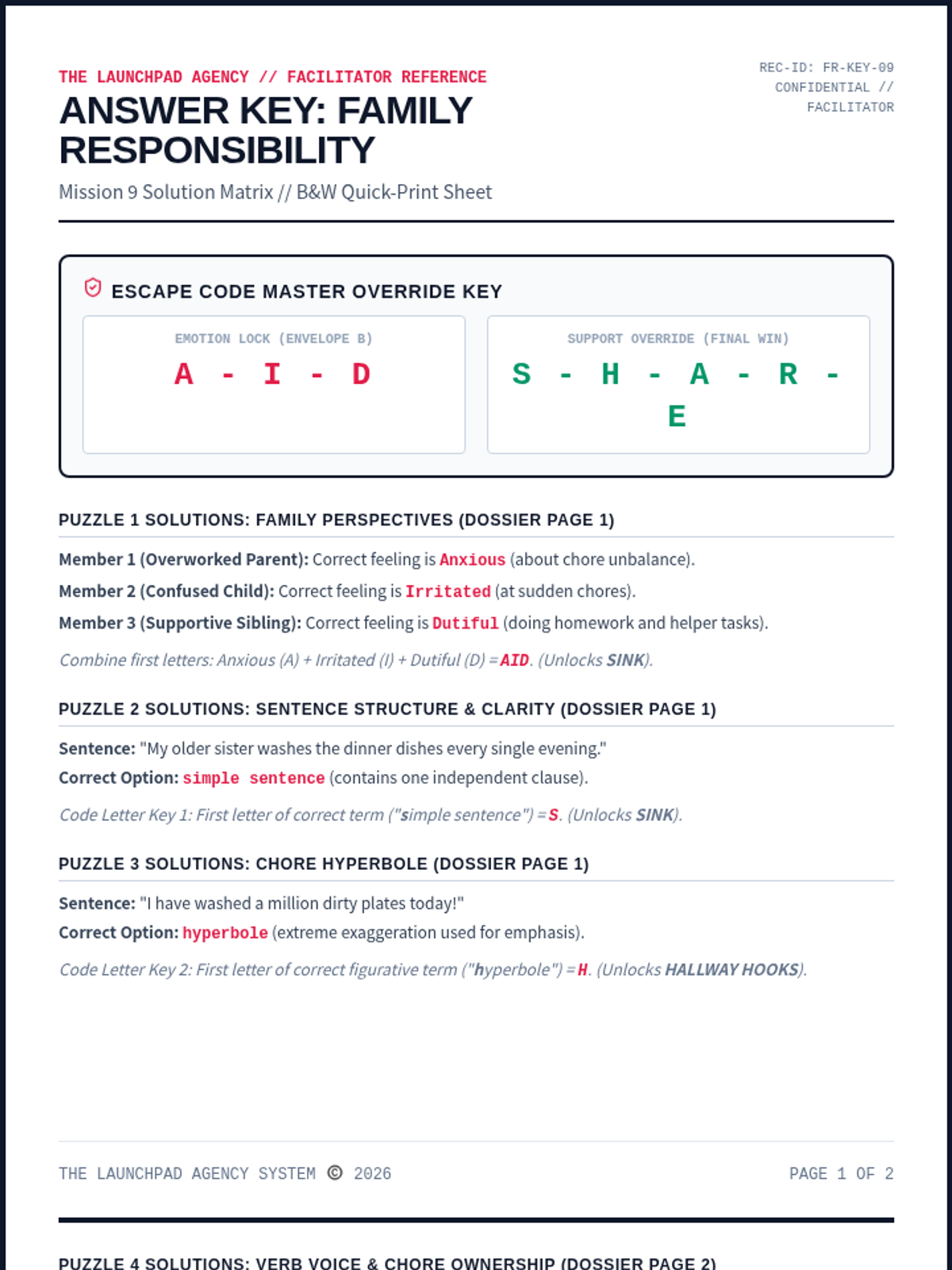
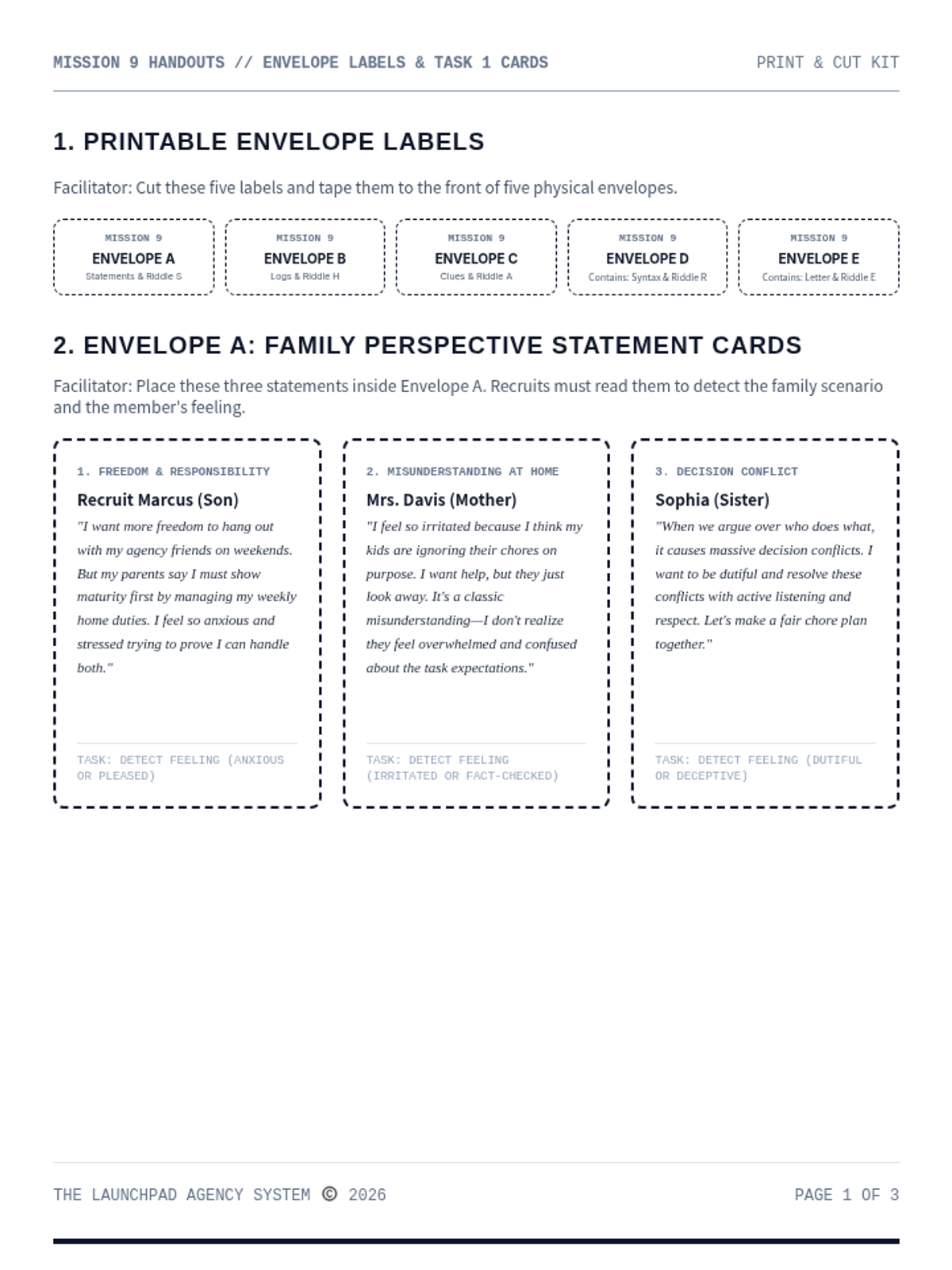
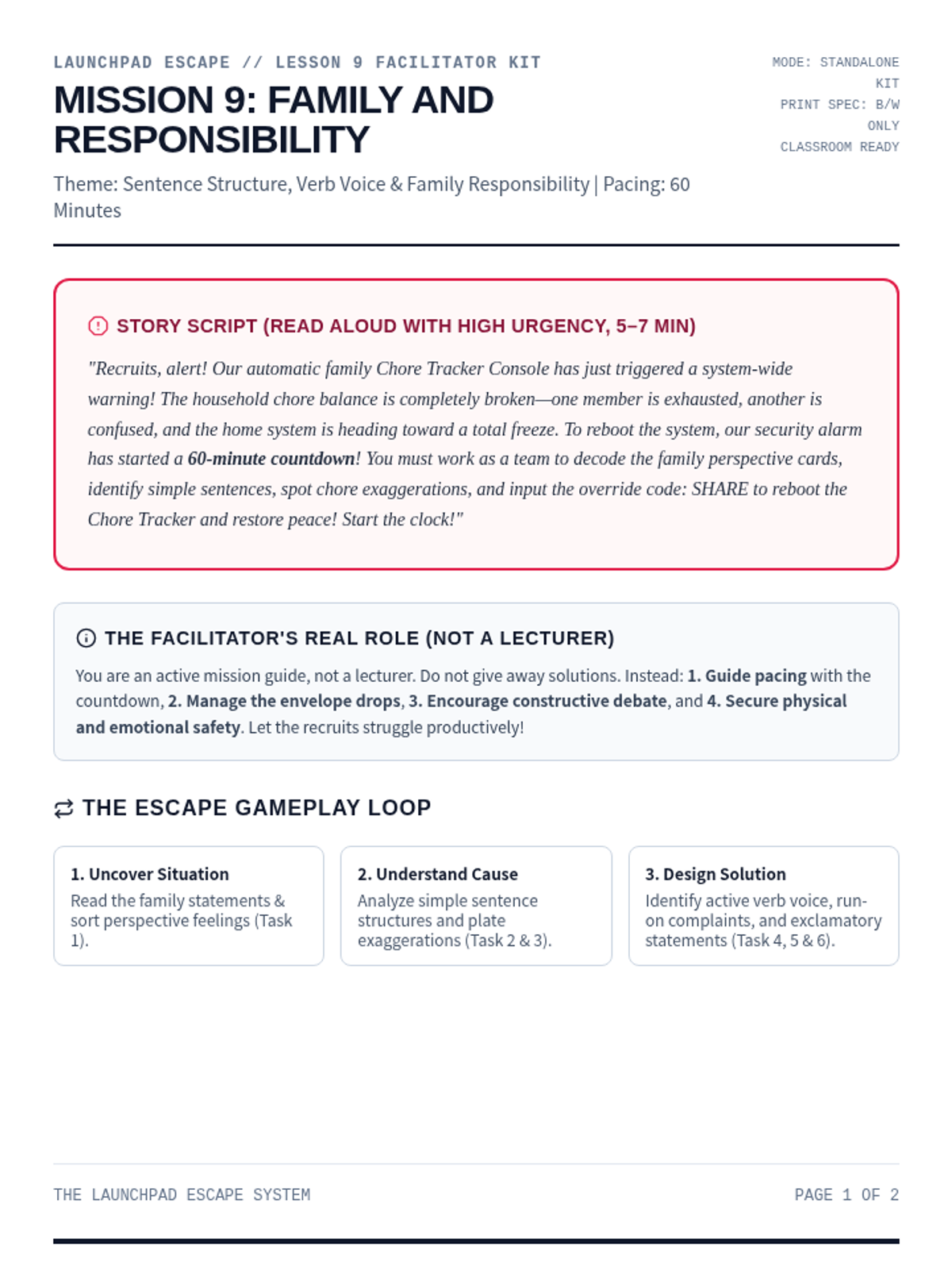
A cooperative and empathetic escape room focused on managing family duties and household balance. Recruits analyze parent/child perspective claims, organize daily chores timelines, and decode the final compromise override.
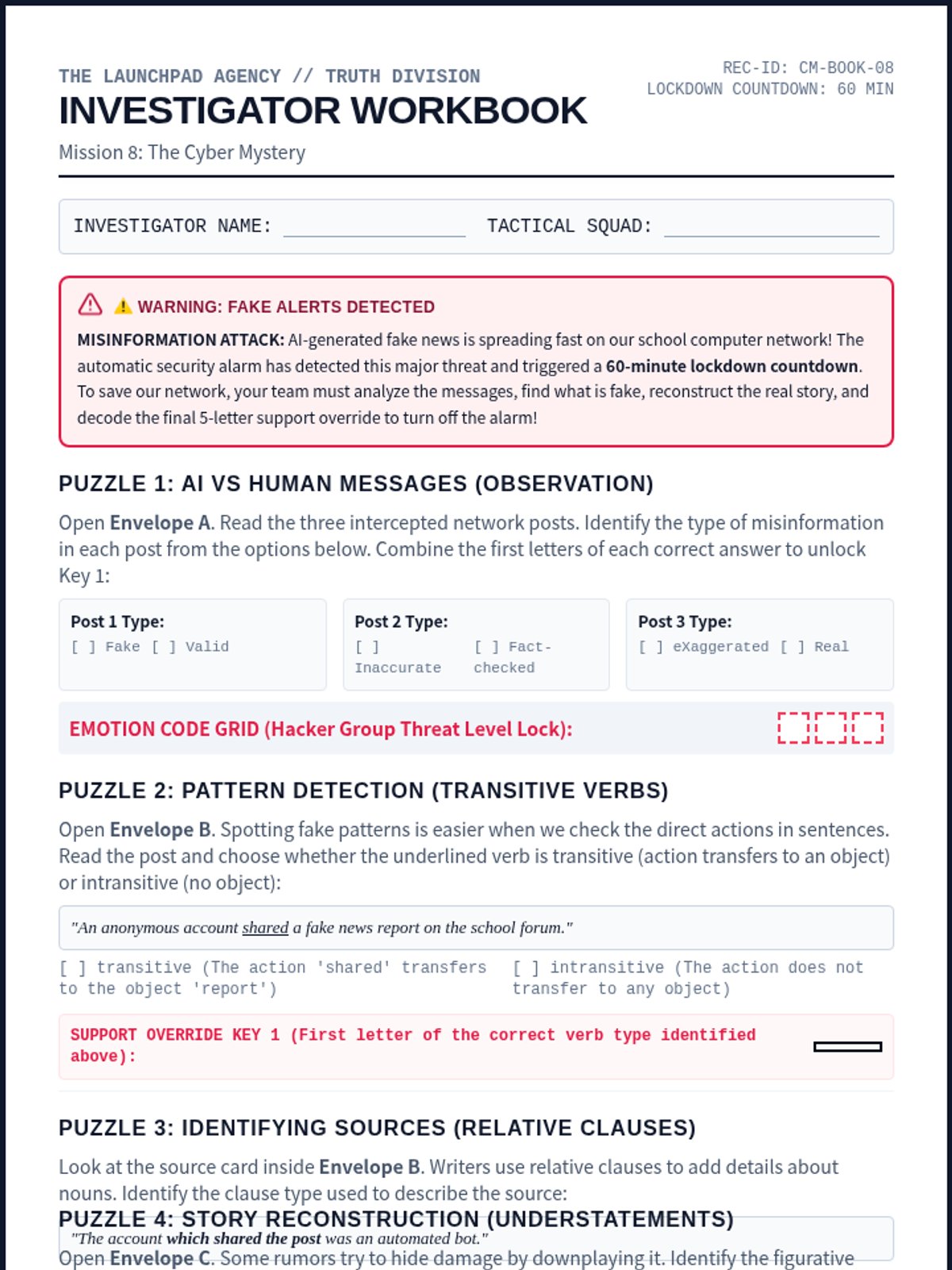
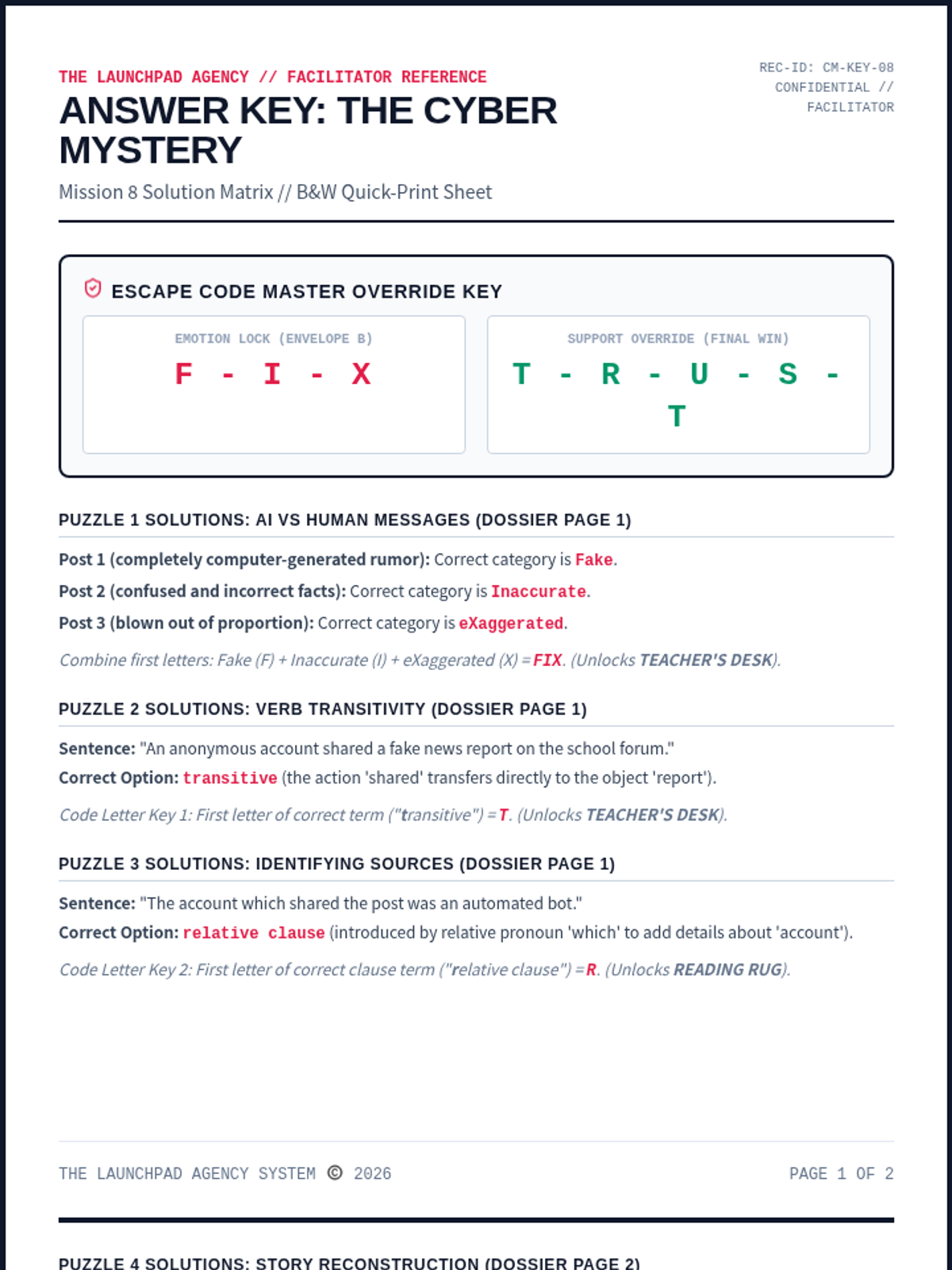
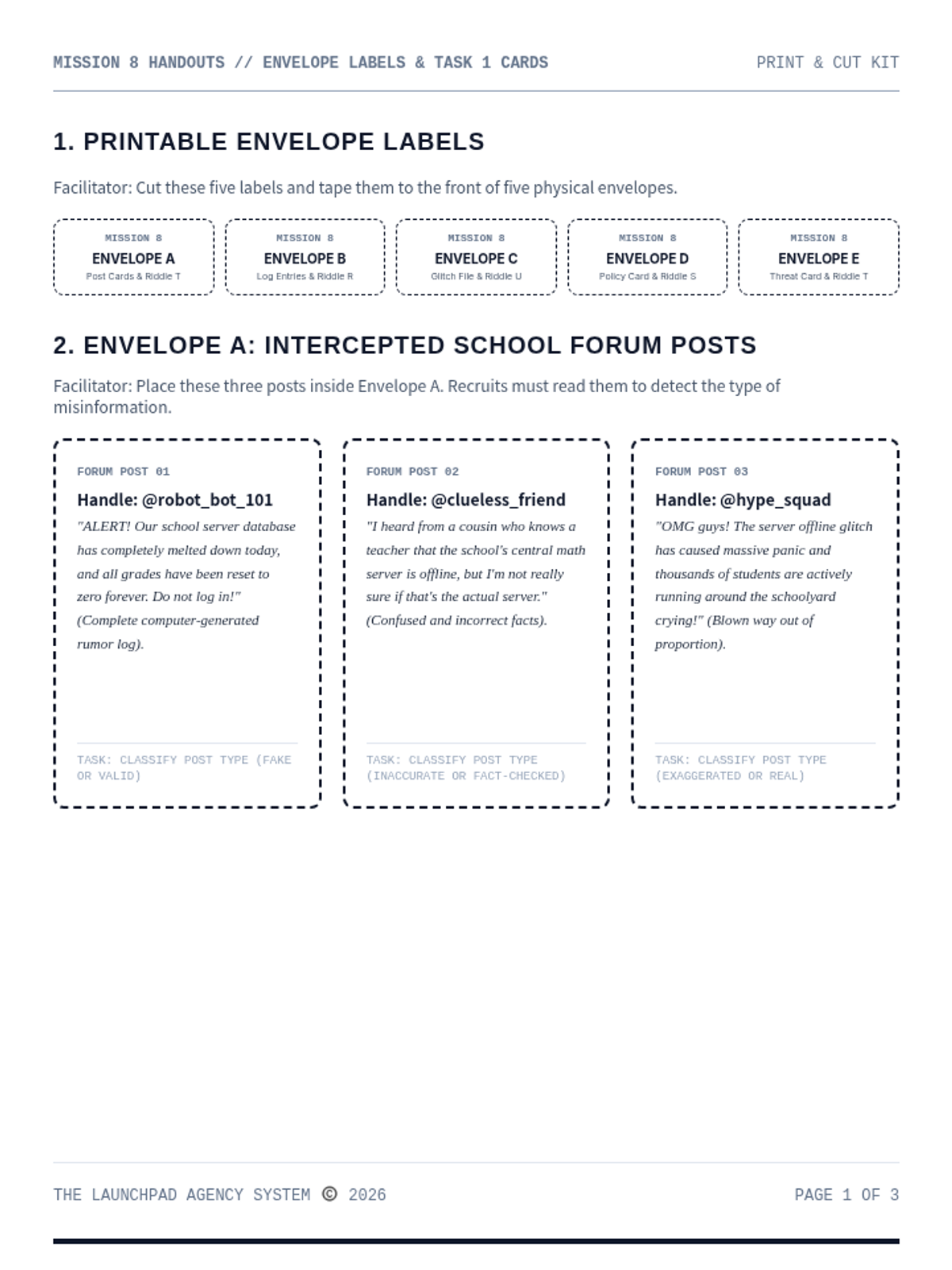
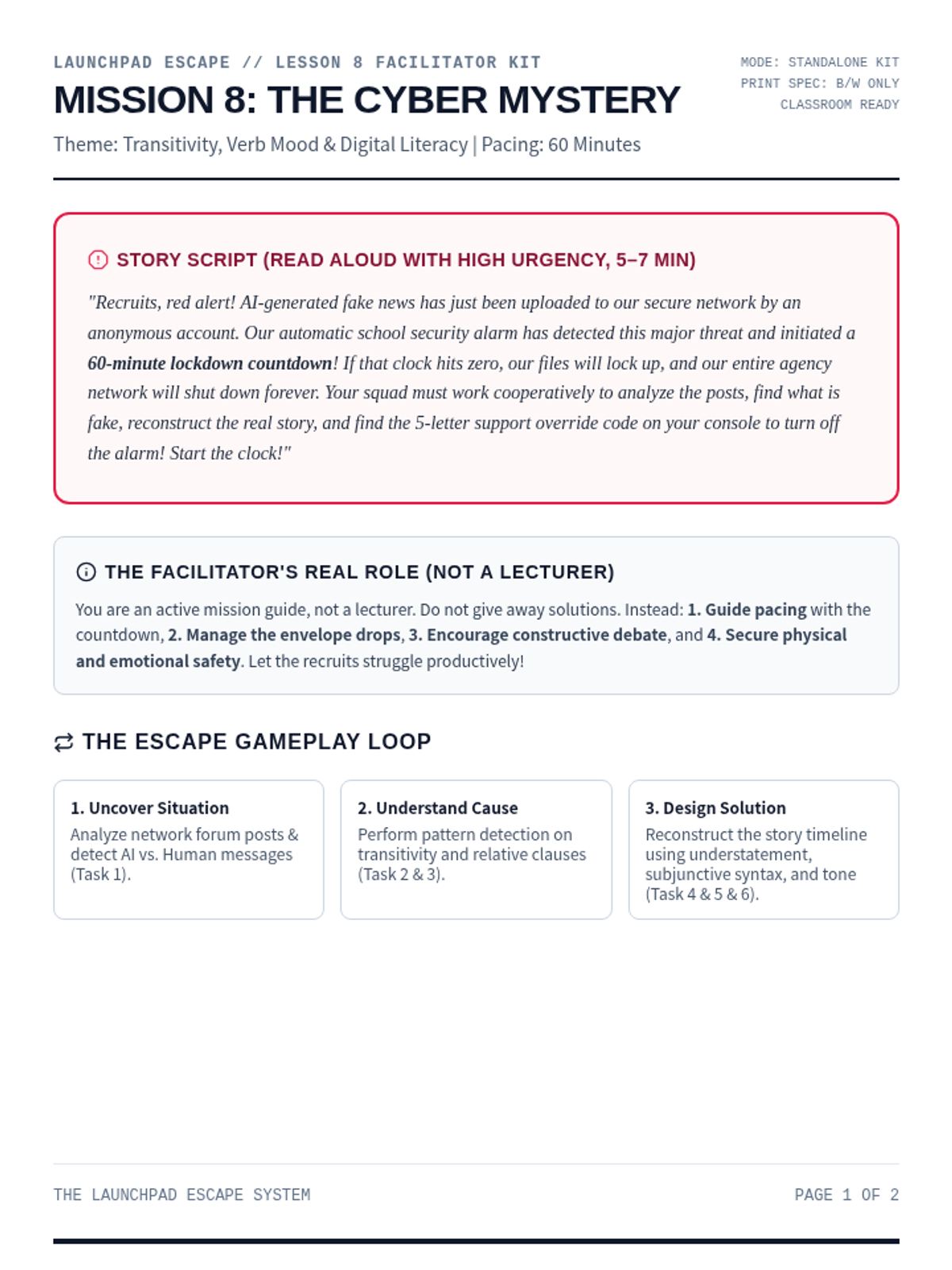
An advanced digital literacy and collaborative cryptography escape room for Ages 14-16. Recruits analyze verb transitivity, relative clauses, subjunctive moods, and tone to stop a school database wipe.
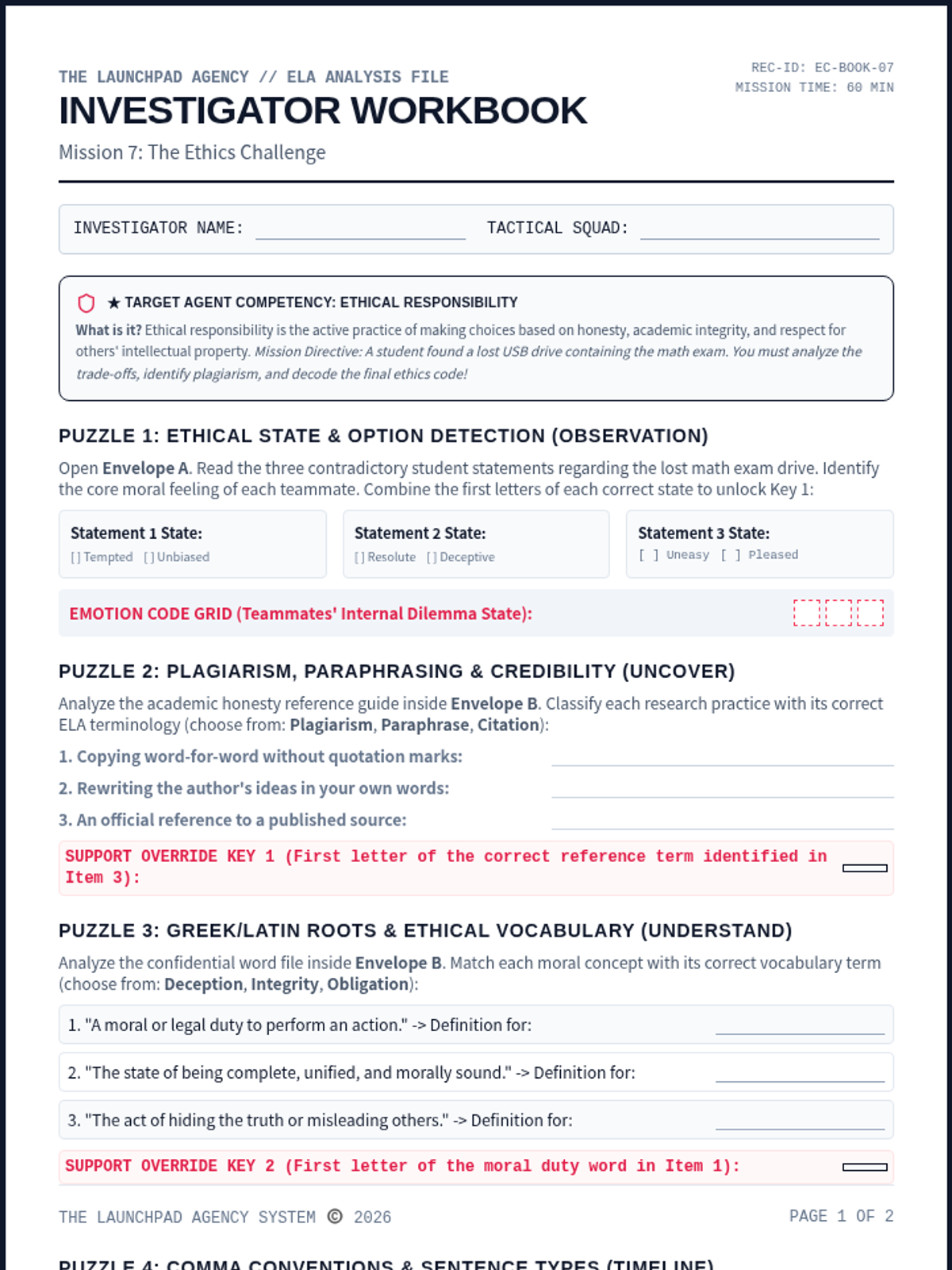
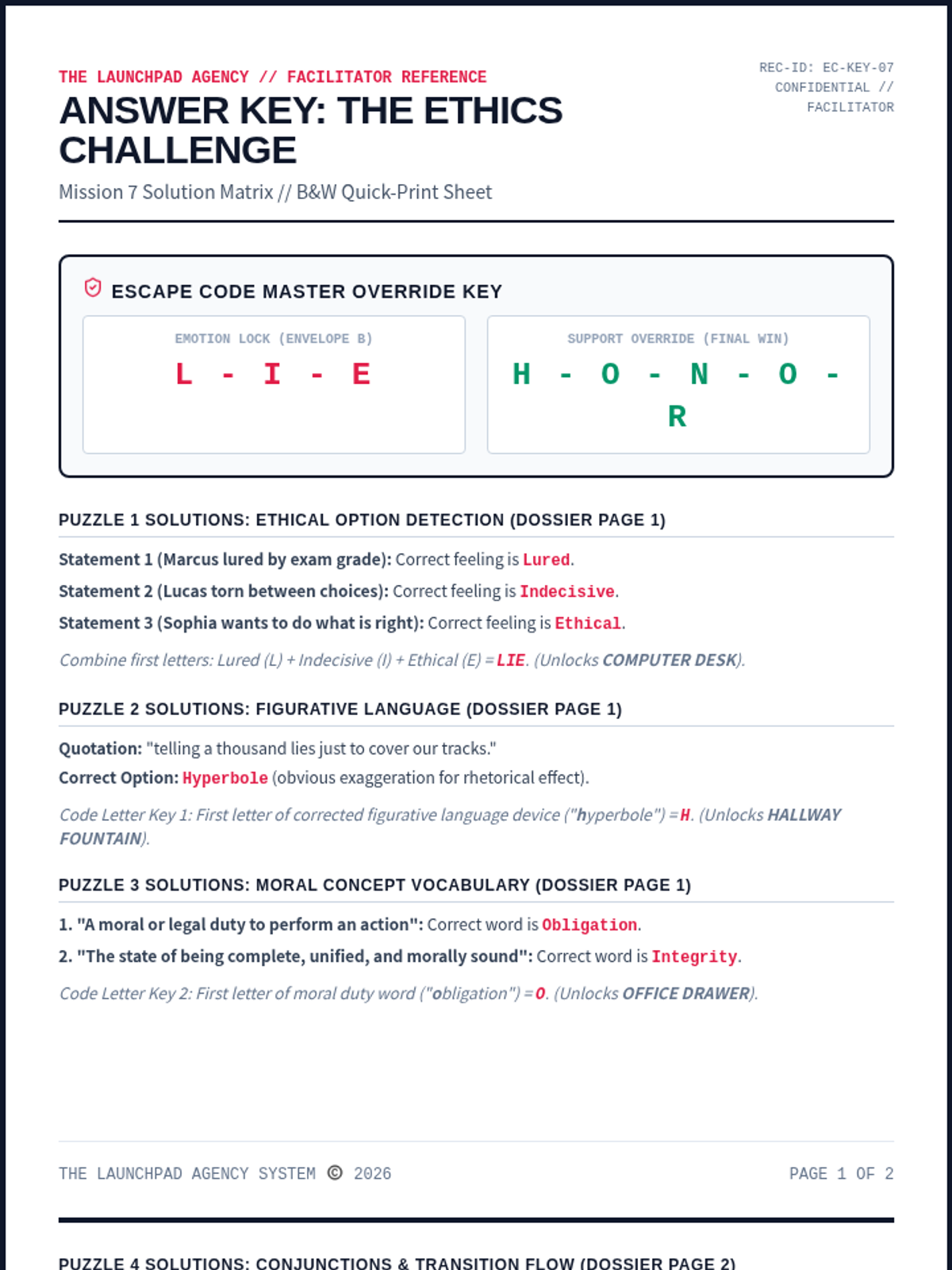
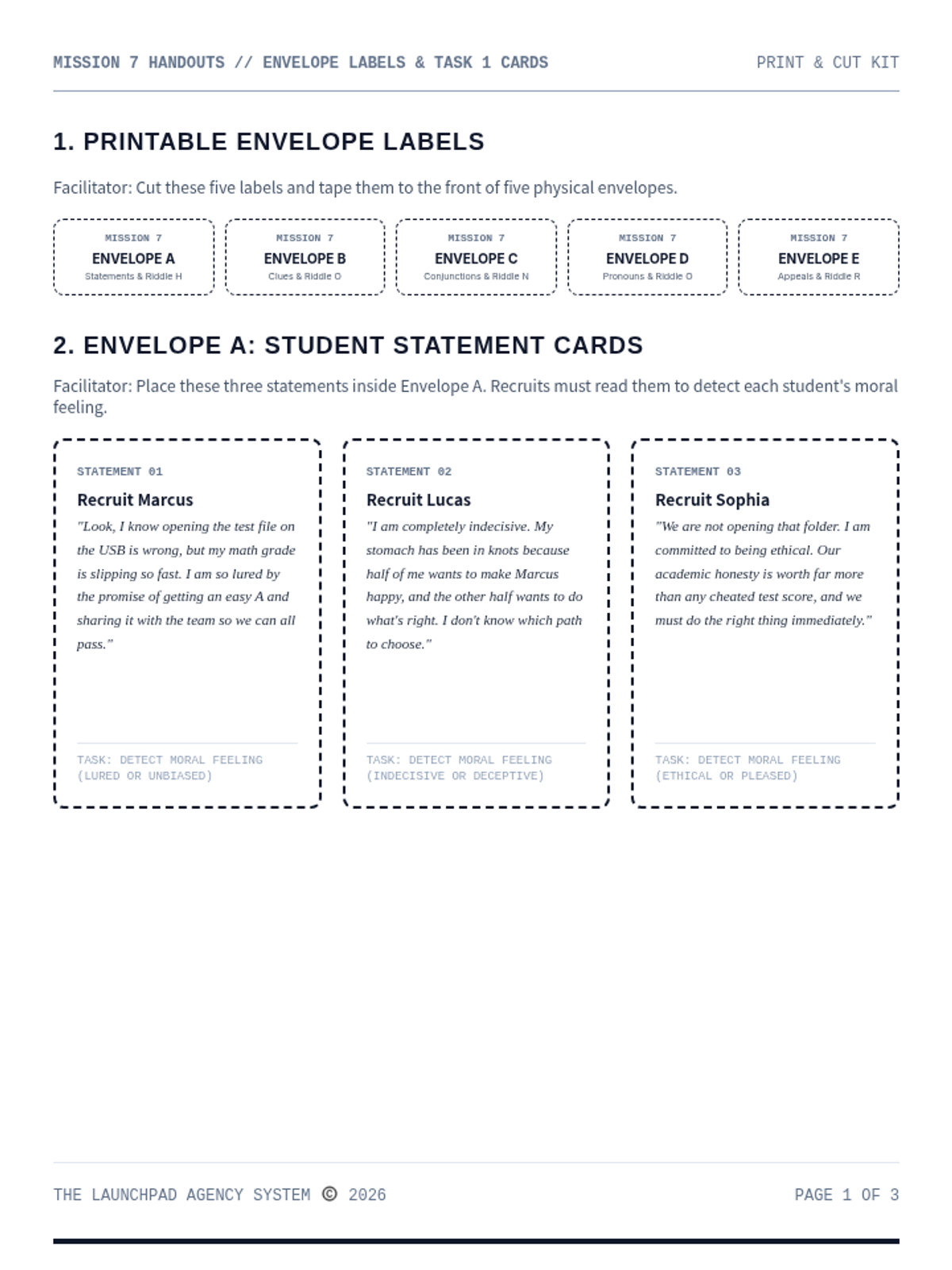
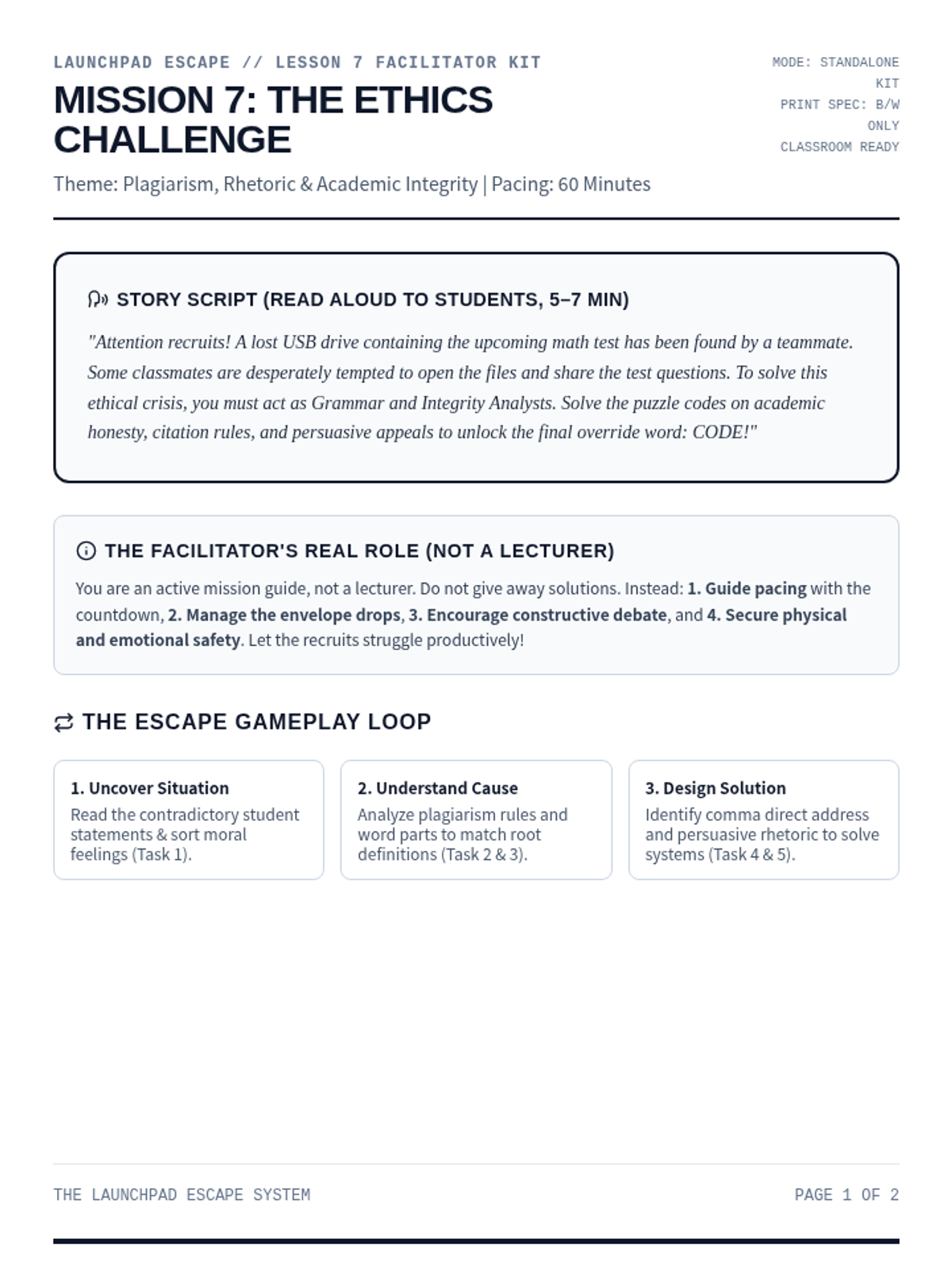
A high-stakes moral dilemma escape room for Ages 11-13. Recruits evaluate the trade-offs of academic honesty, identify plagiarism, analyze persuasive appeals, and decode the final ethics code.
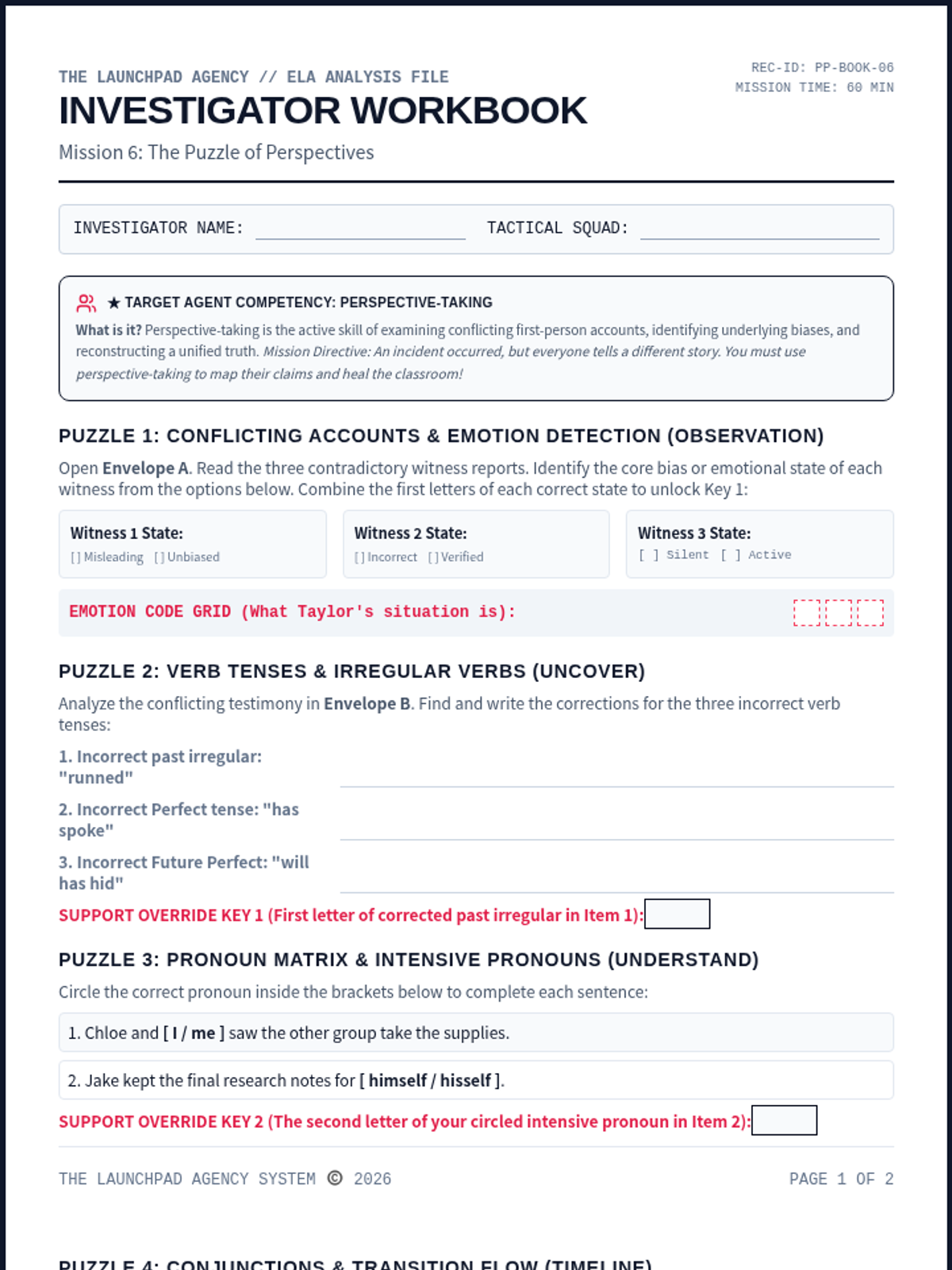
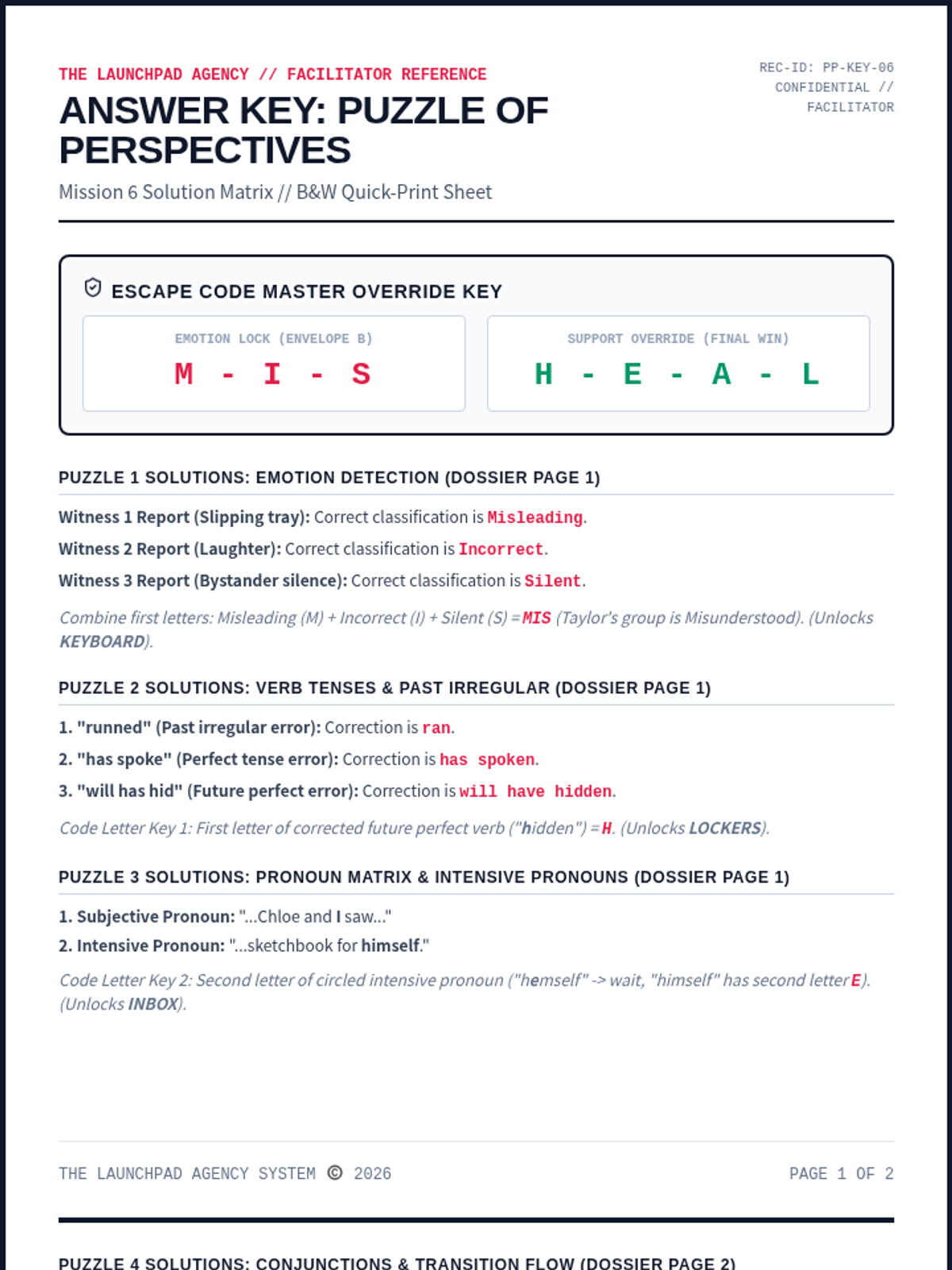
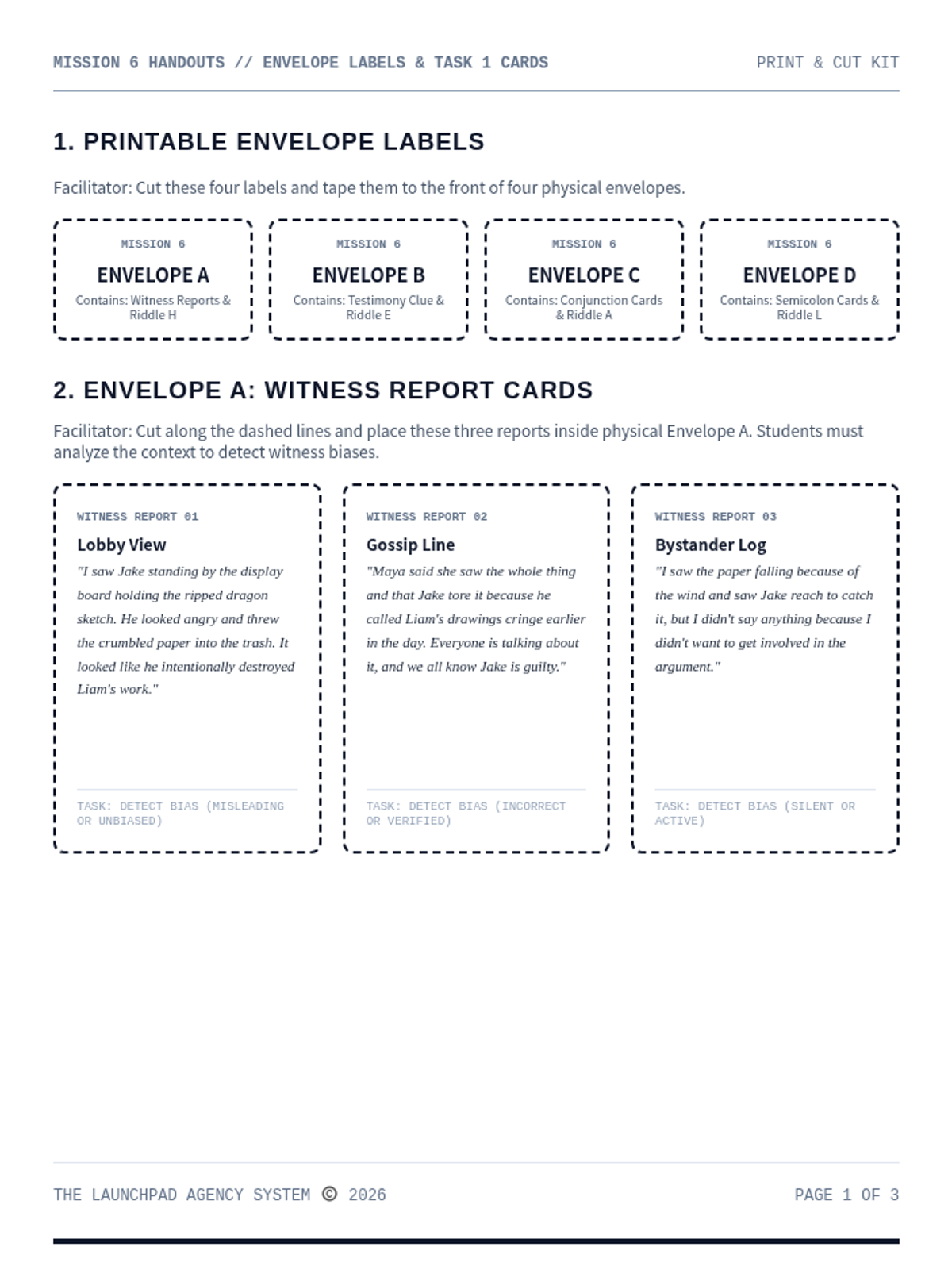
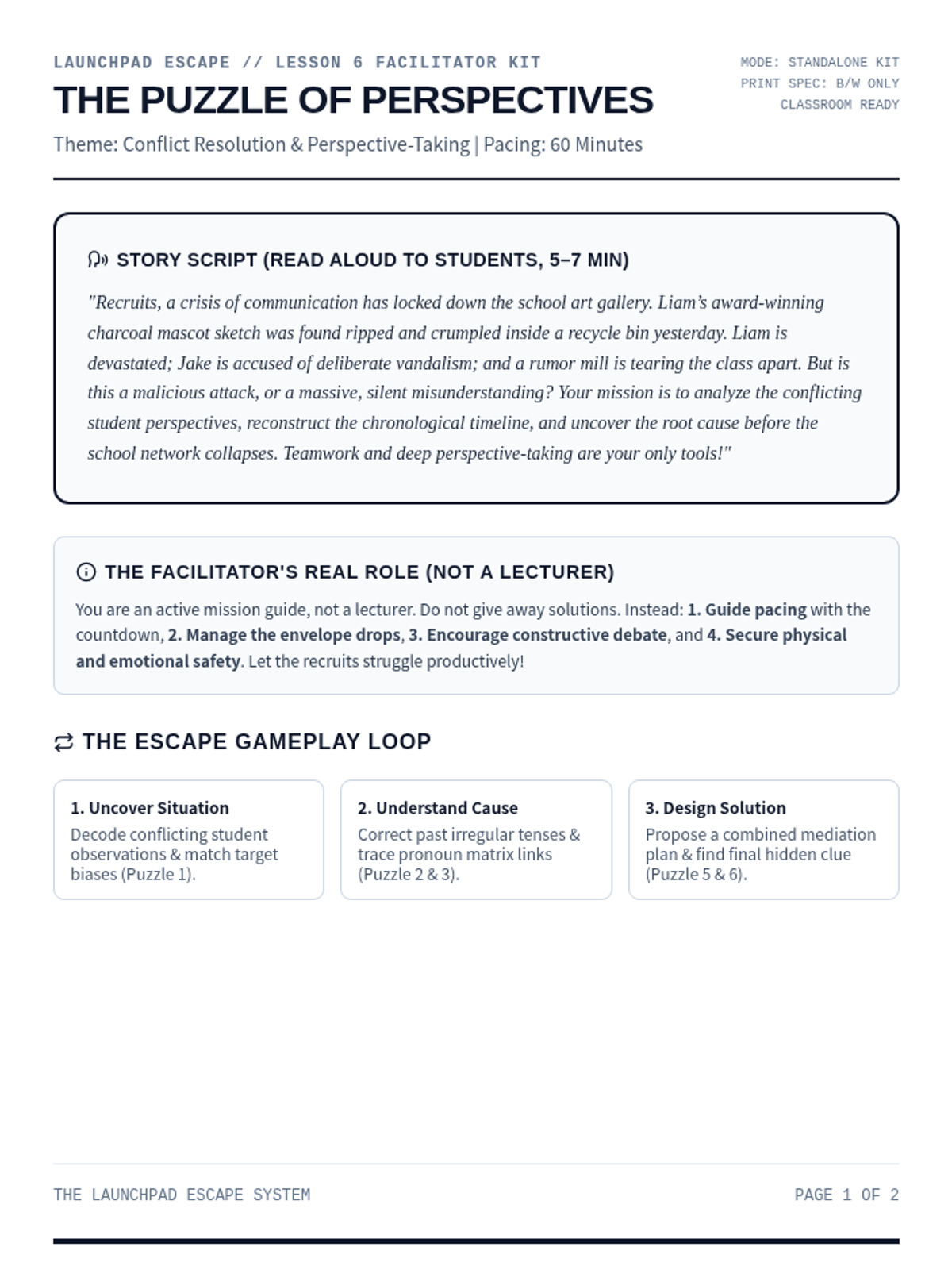
A high-stakes perspective-taking escape room. Recruits examine conflicting first-person accounts, analyze bias, reconstruct a unified timeline, and solve the override code.
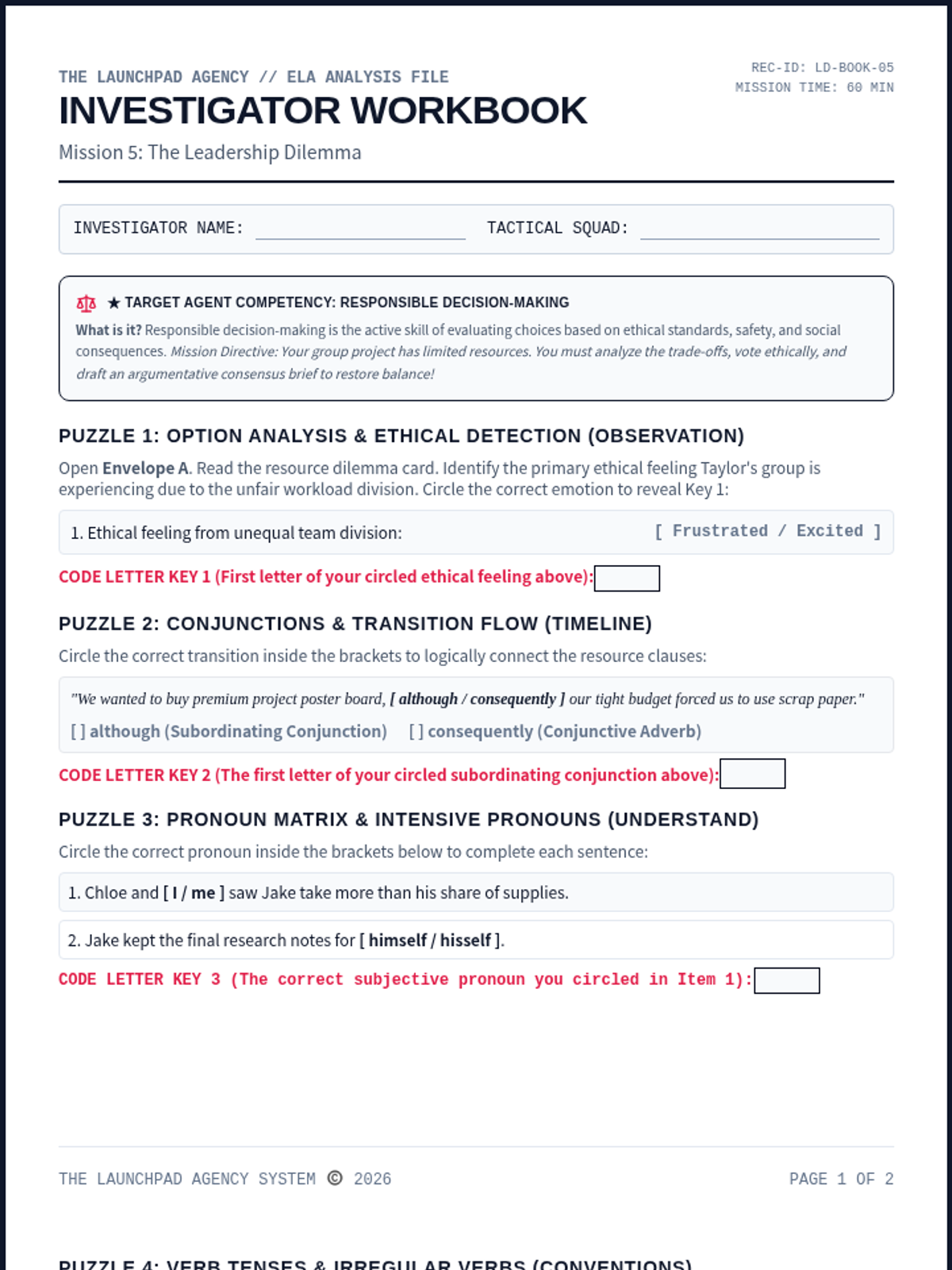
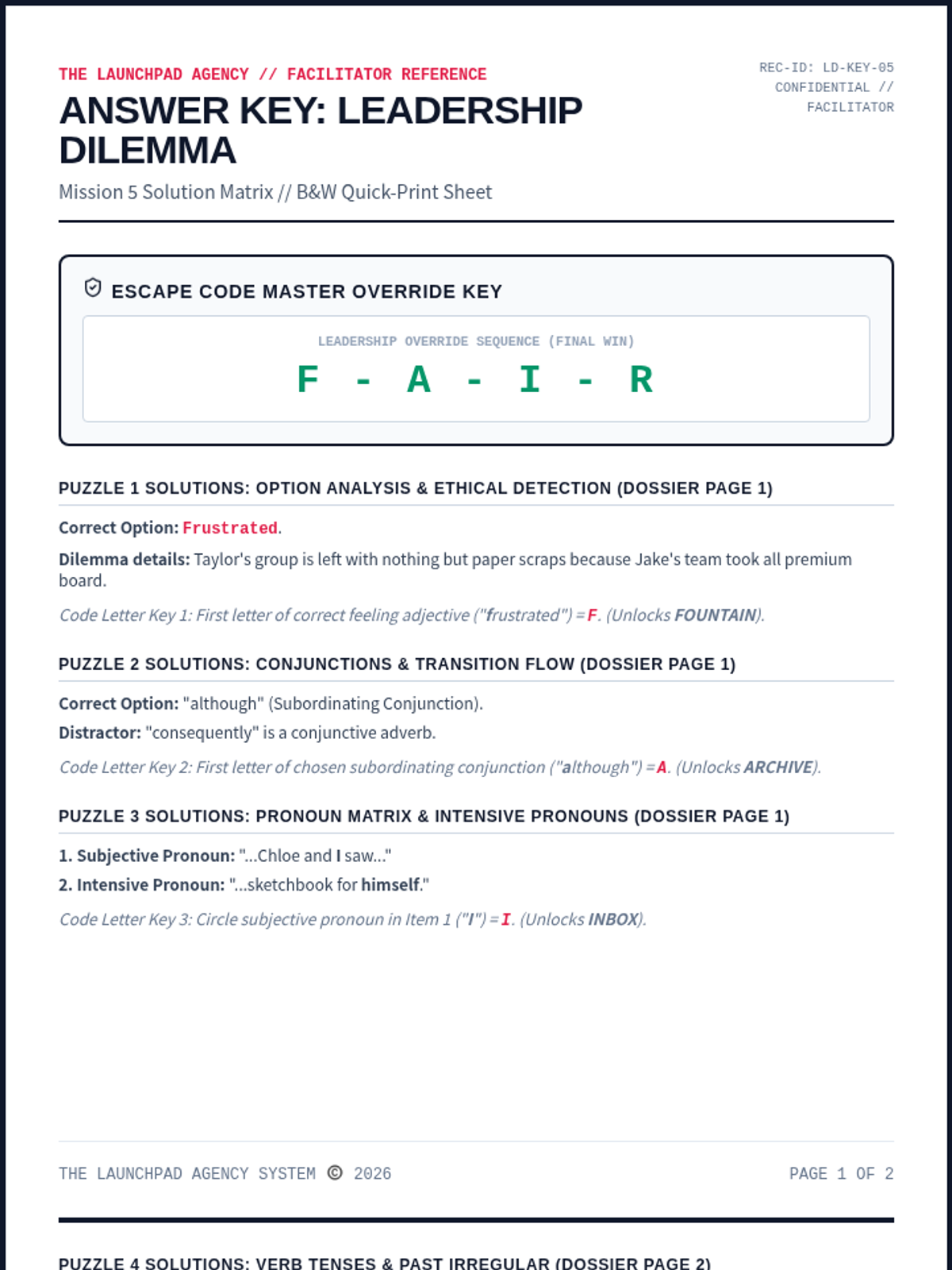
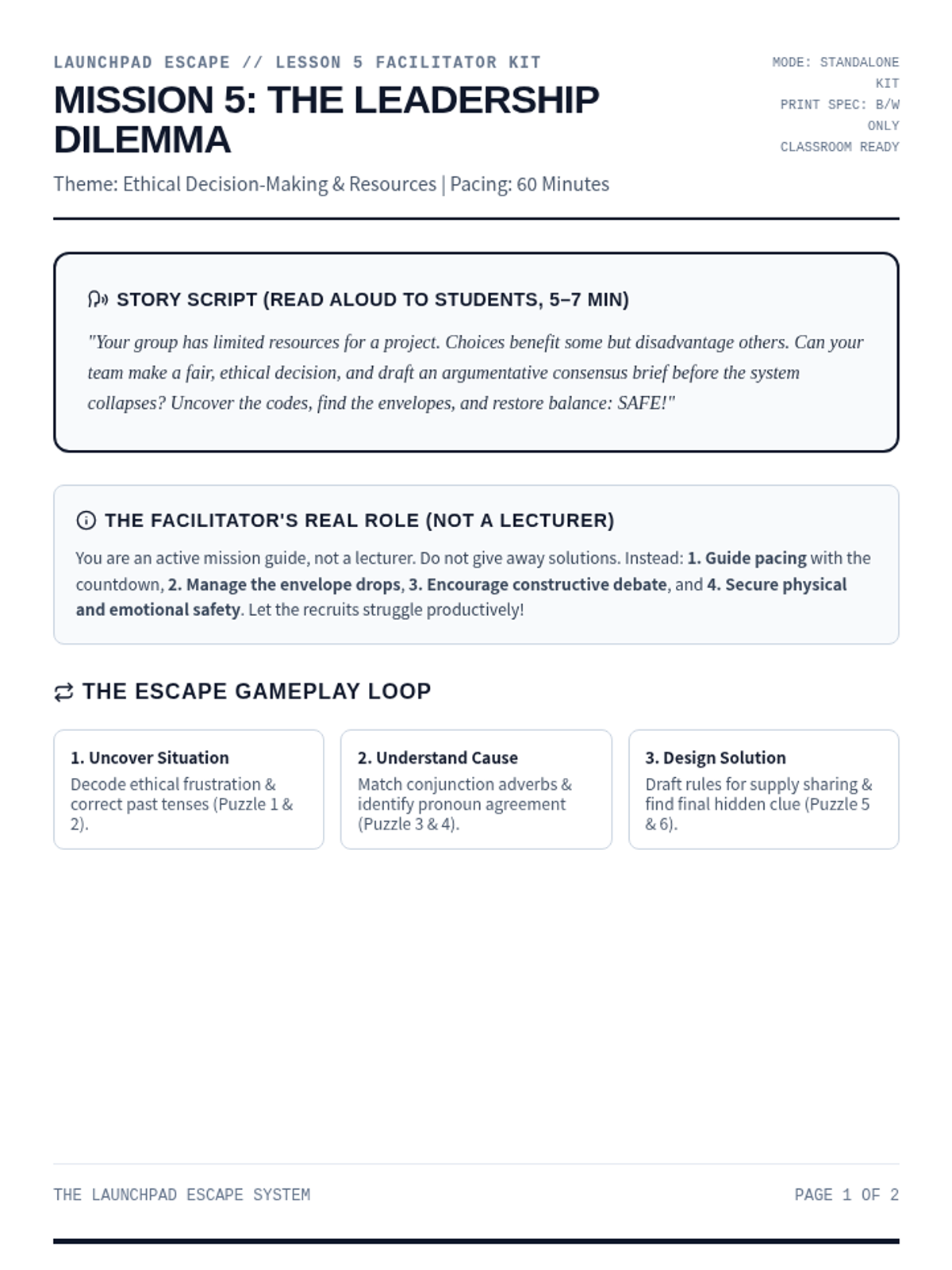
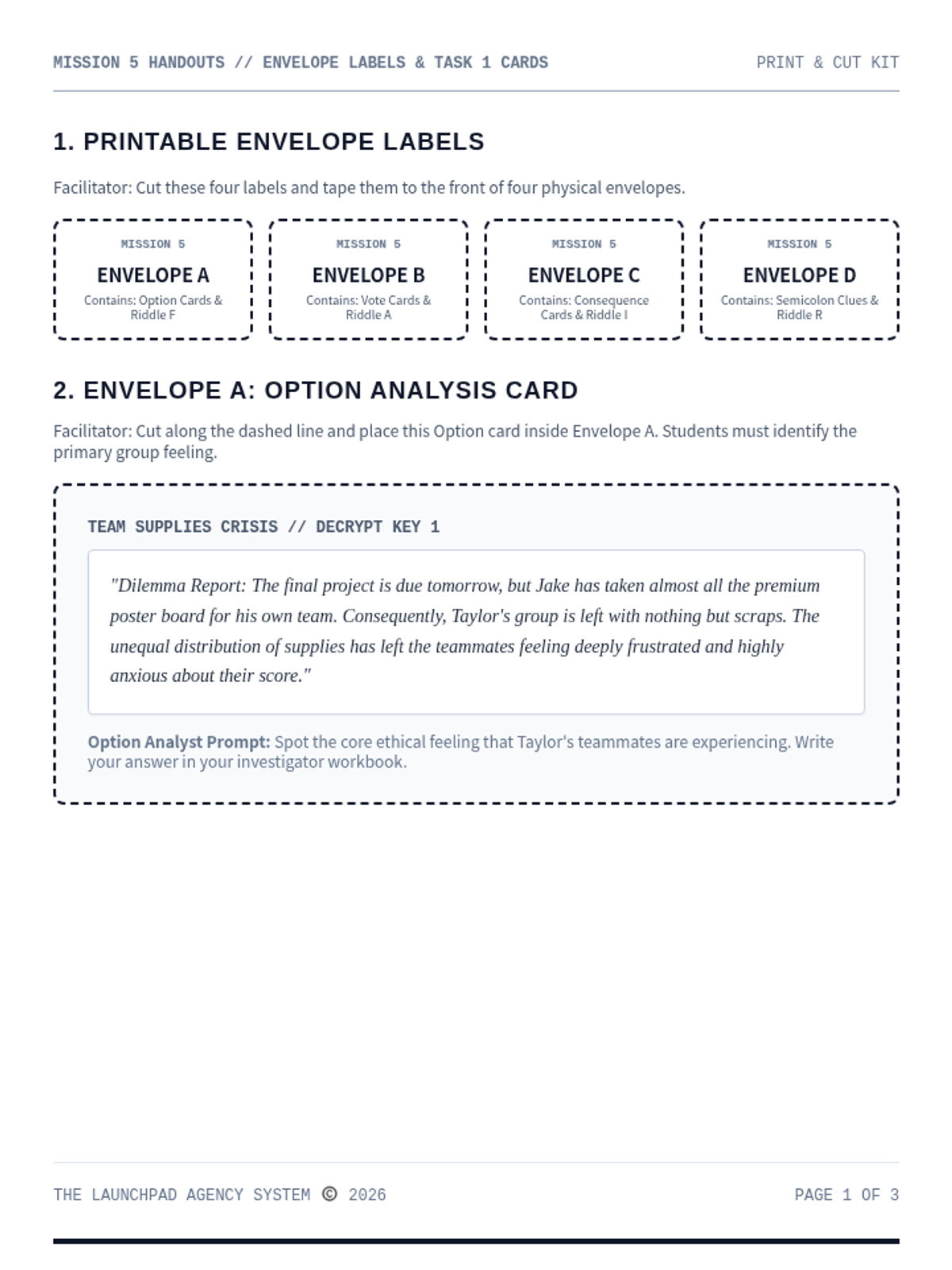
An ethical decision-making and systems-thinking escape room. Recruits analyze resource allocation options, vote on complex tradeoffs, map cascading social consequences, and draft an argumentative consensus brief to restore balance.
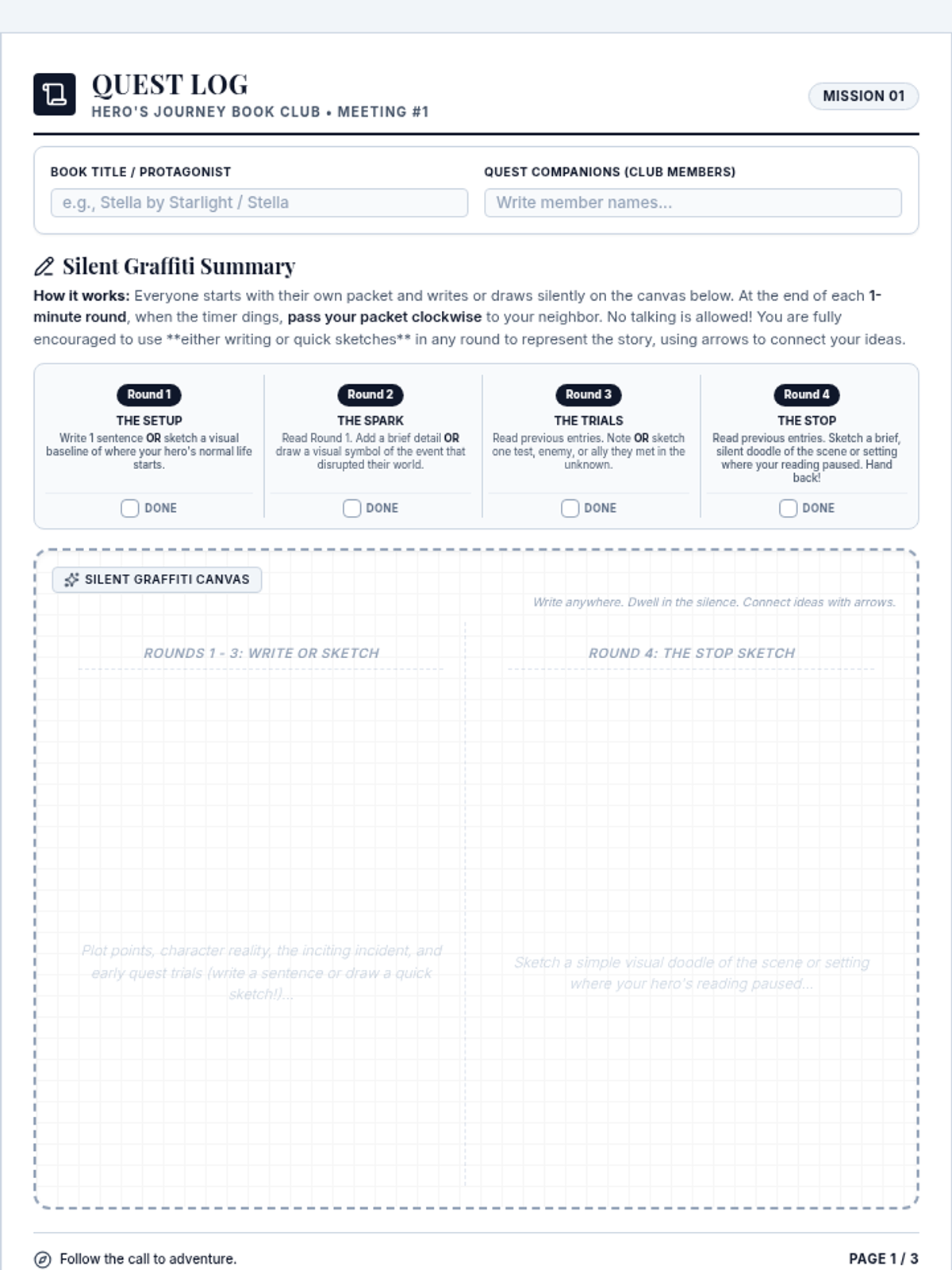
The introductory lesson for the Hero's Journey Book Clubs, launching book clubs for five diverse, engaging novels (The Red Pyramid, Tristan Strong, Hello Universe, Coyote Sunrise, Stella by Starlight). Focuses on building community, collaborative summarizing, tracking courage/risks, and mapping the early stages of the Hero's Journey.
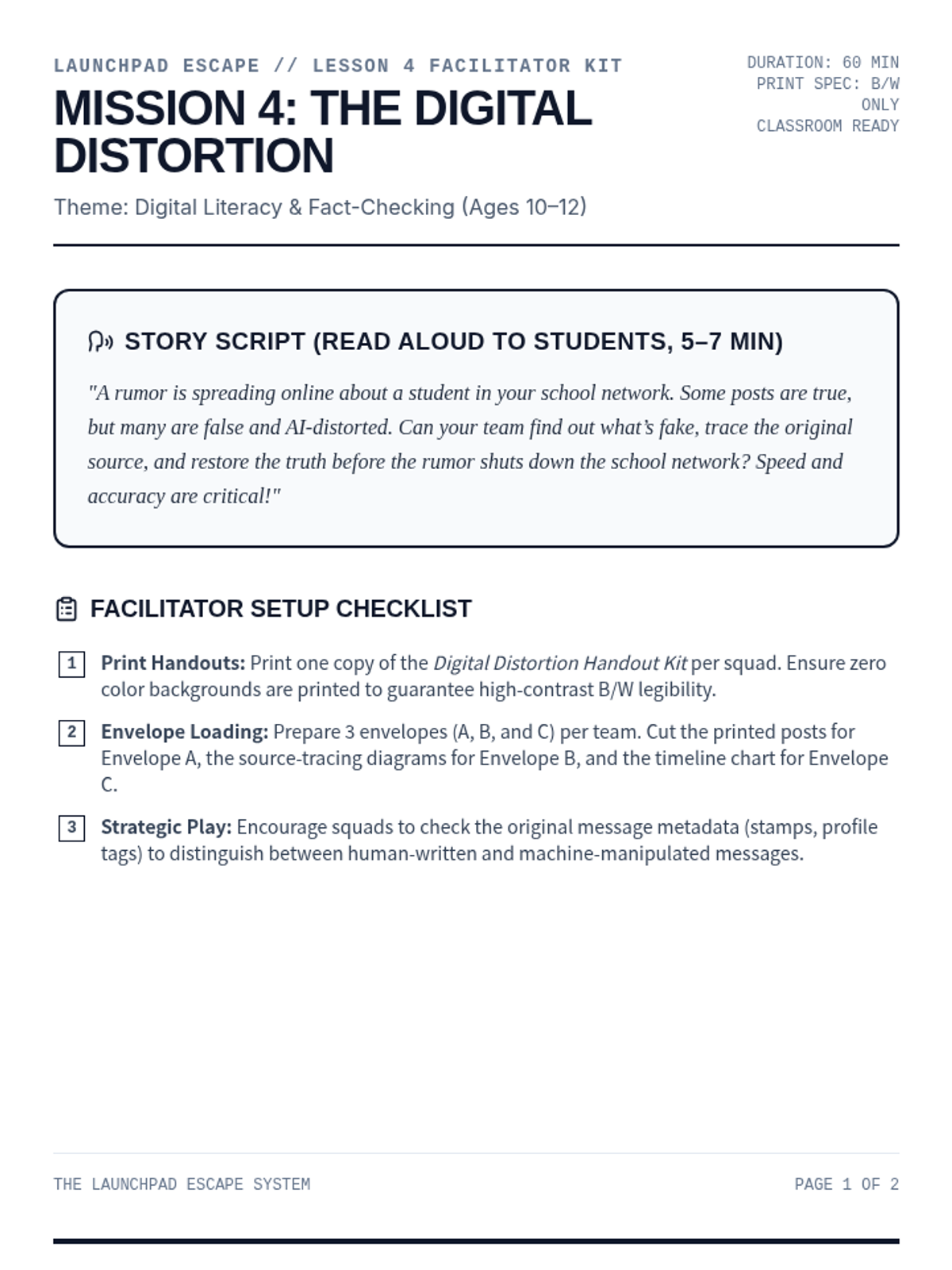
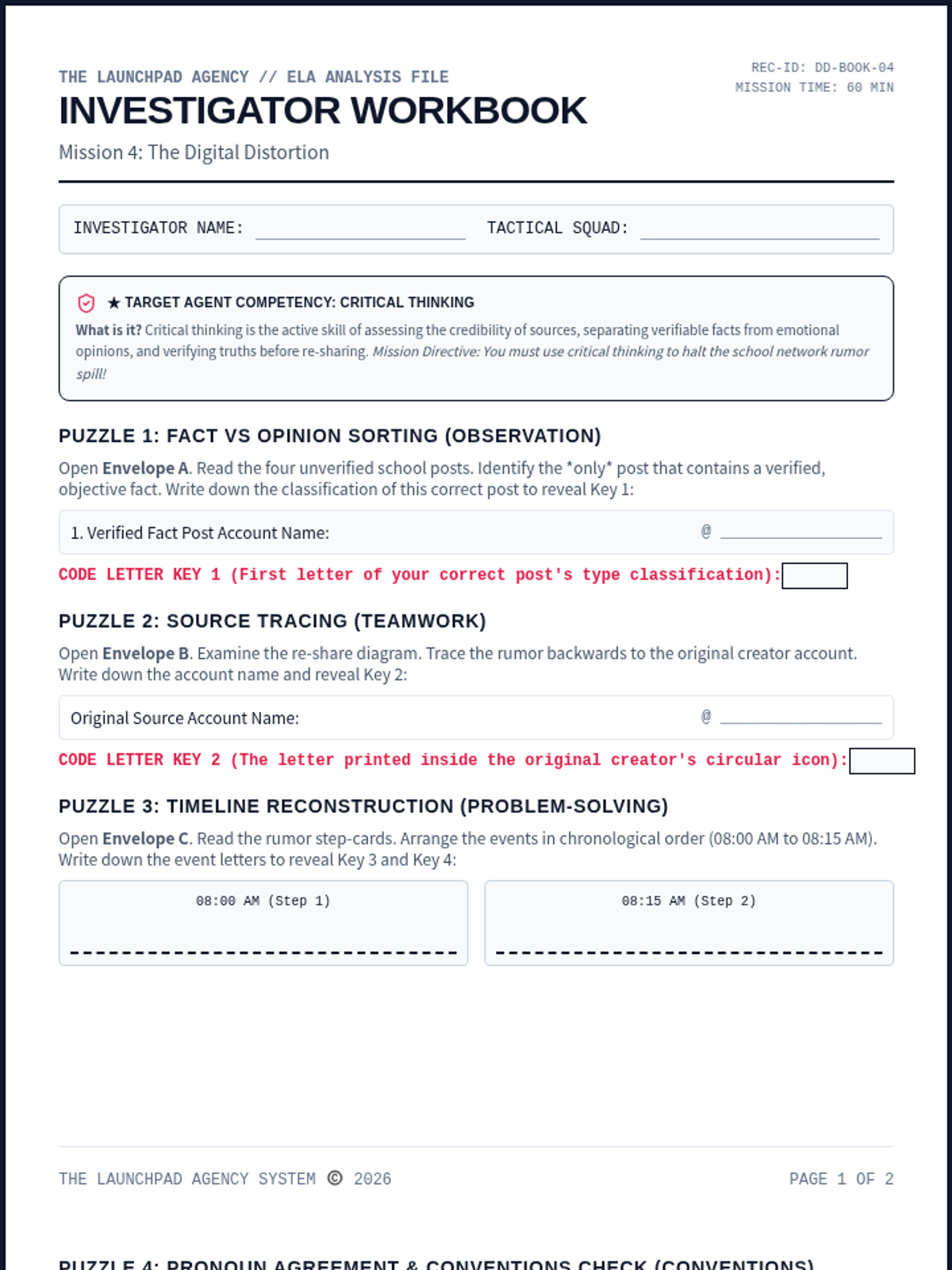
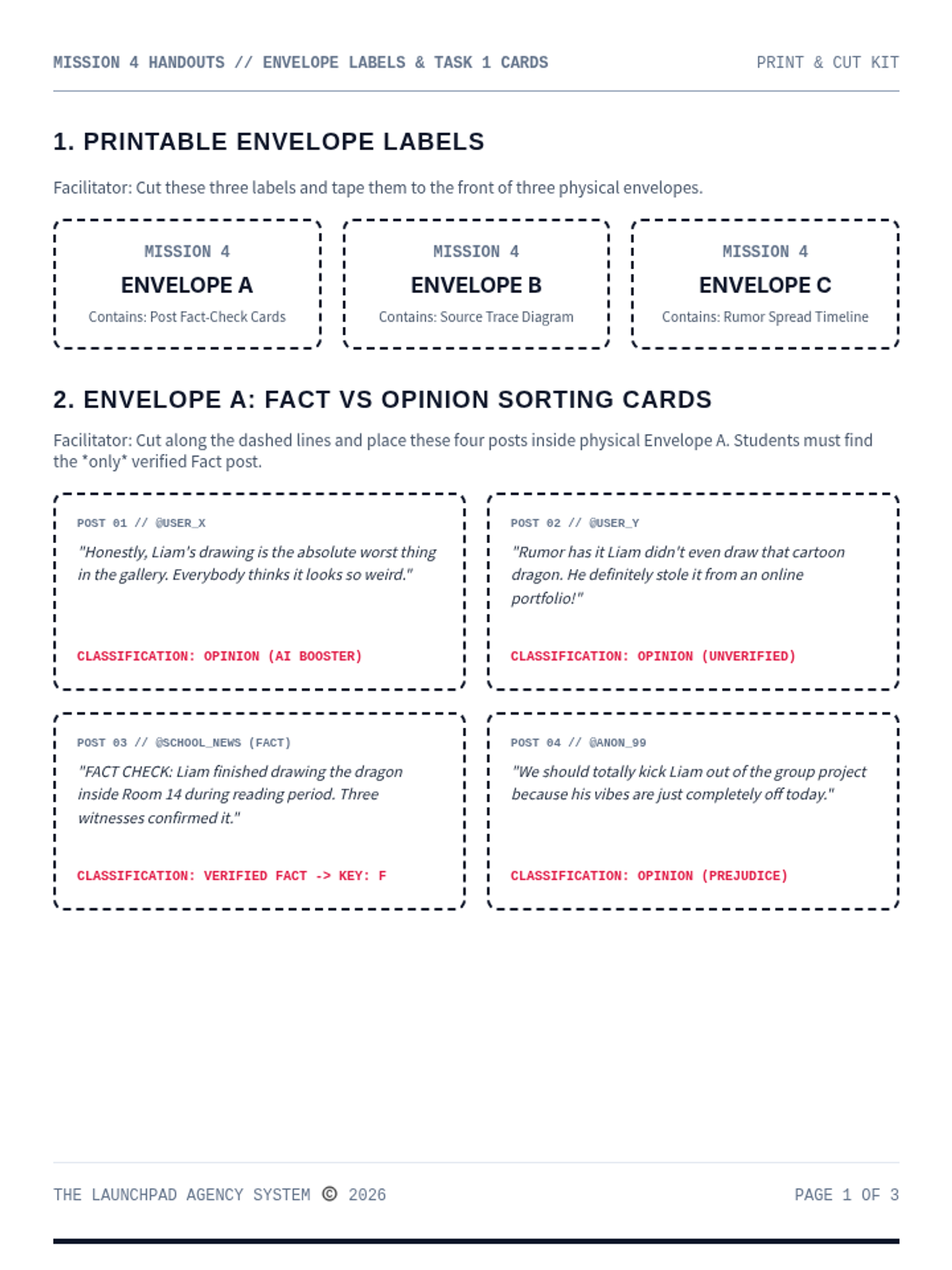
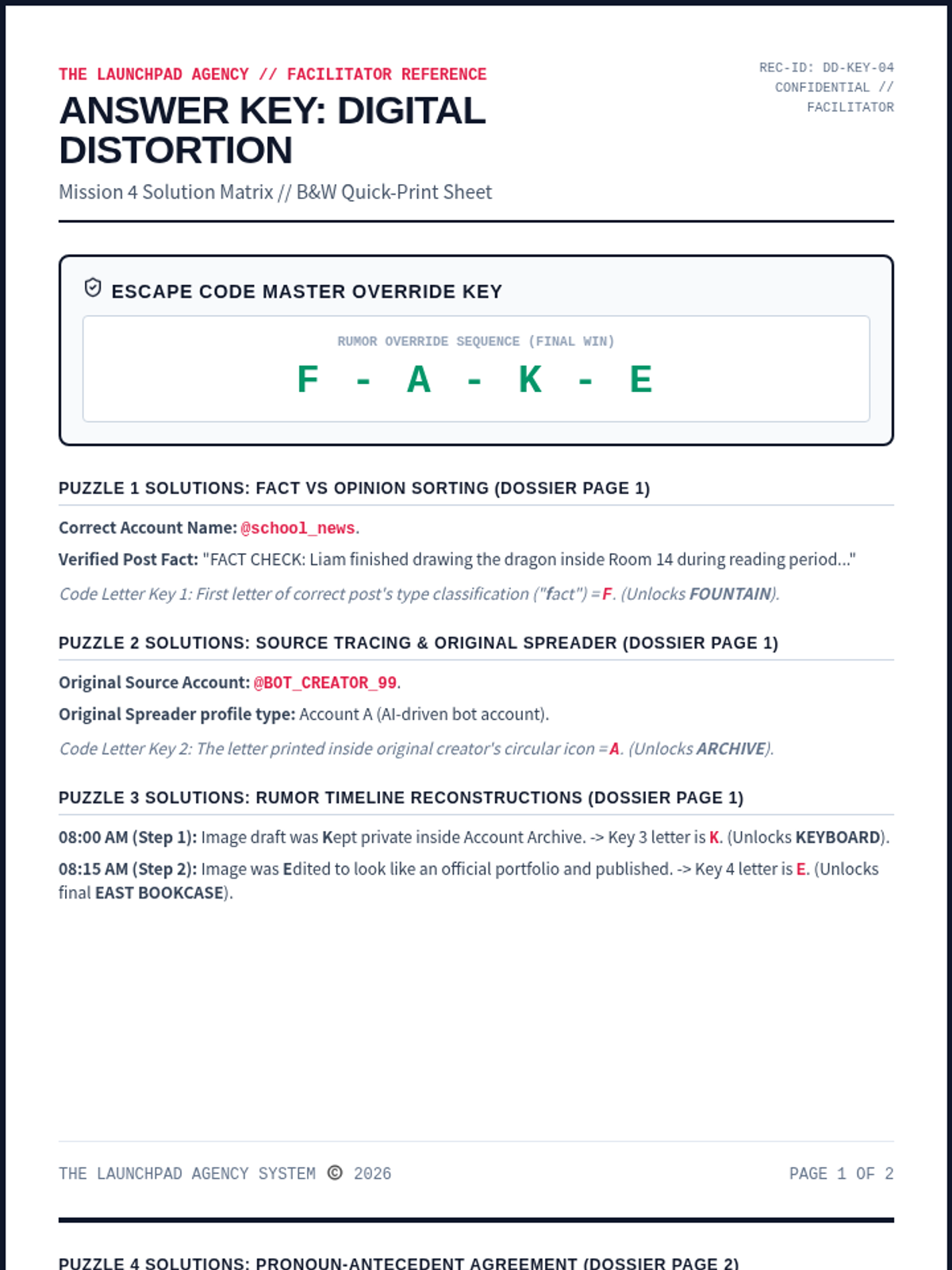
An online misinformation and fact-checking escape room for Ages 10-12. Recruits sort fact vs. opinion, trace original message sources, and reconstruct truth timelines to stop rumors.
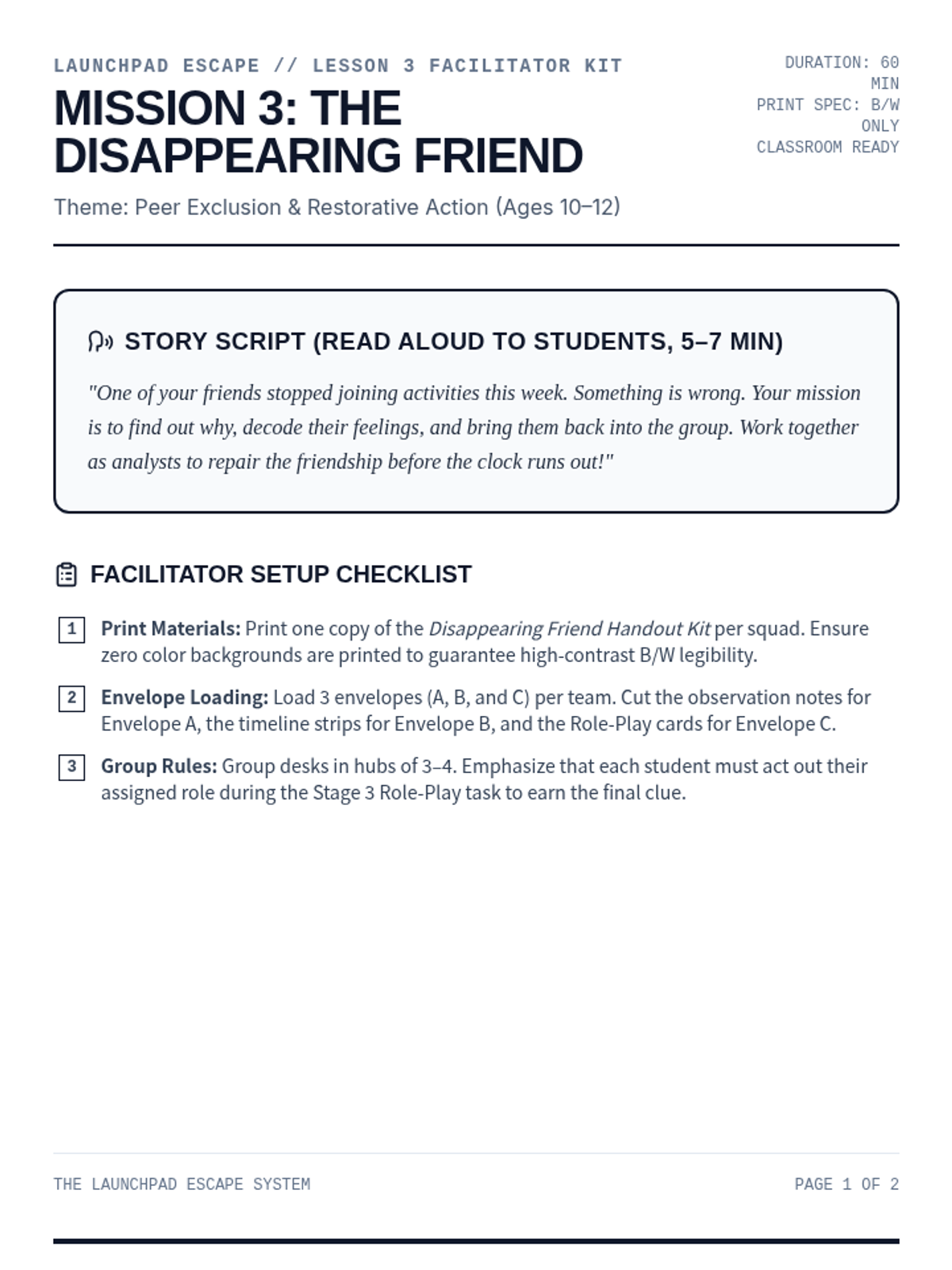
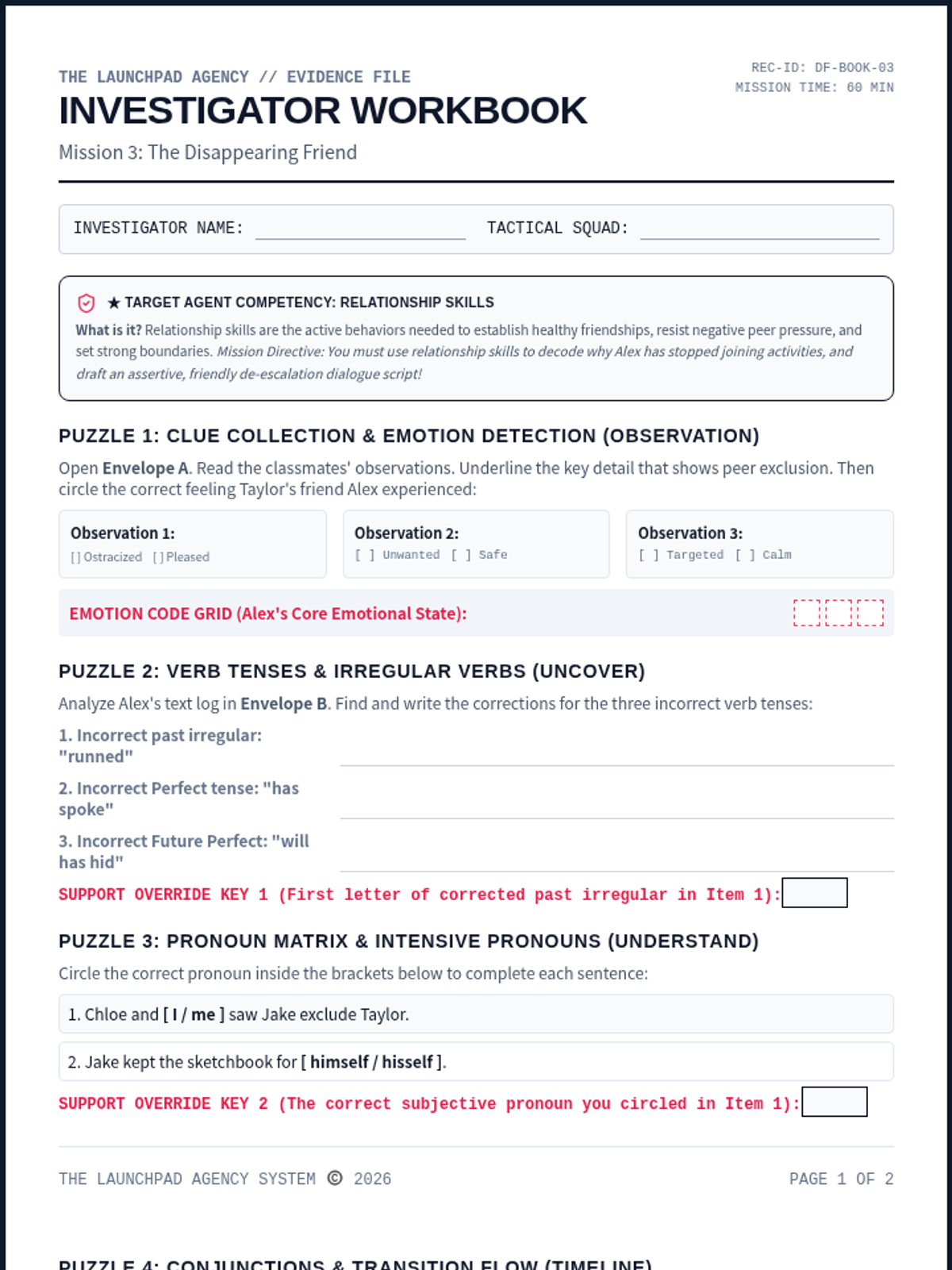
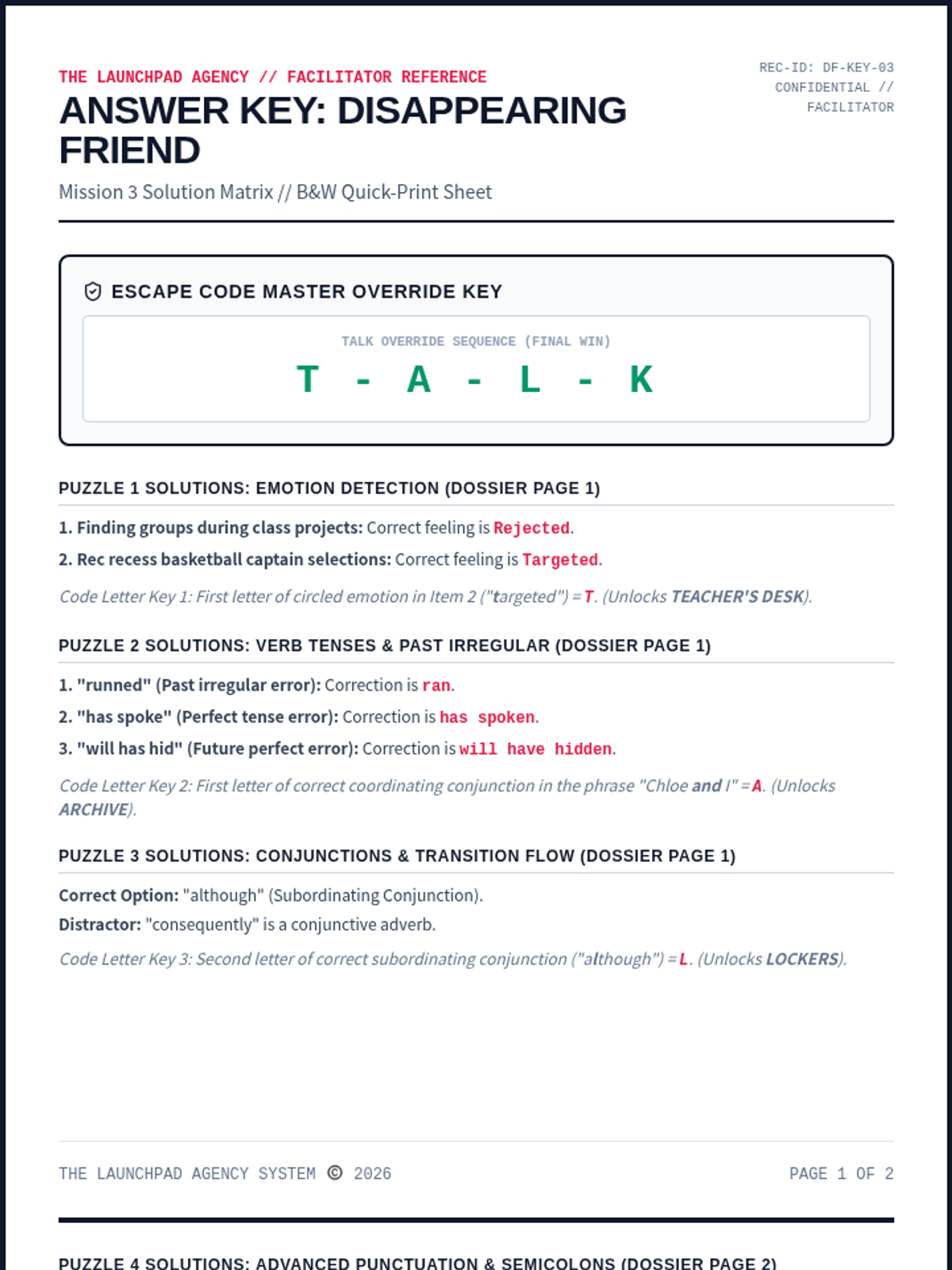
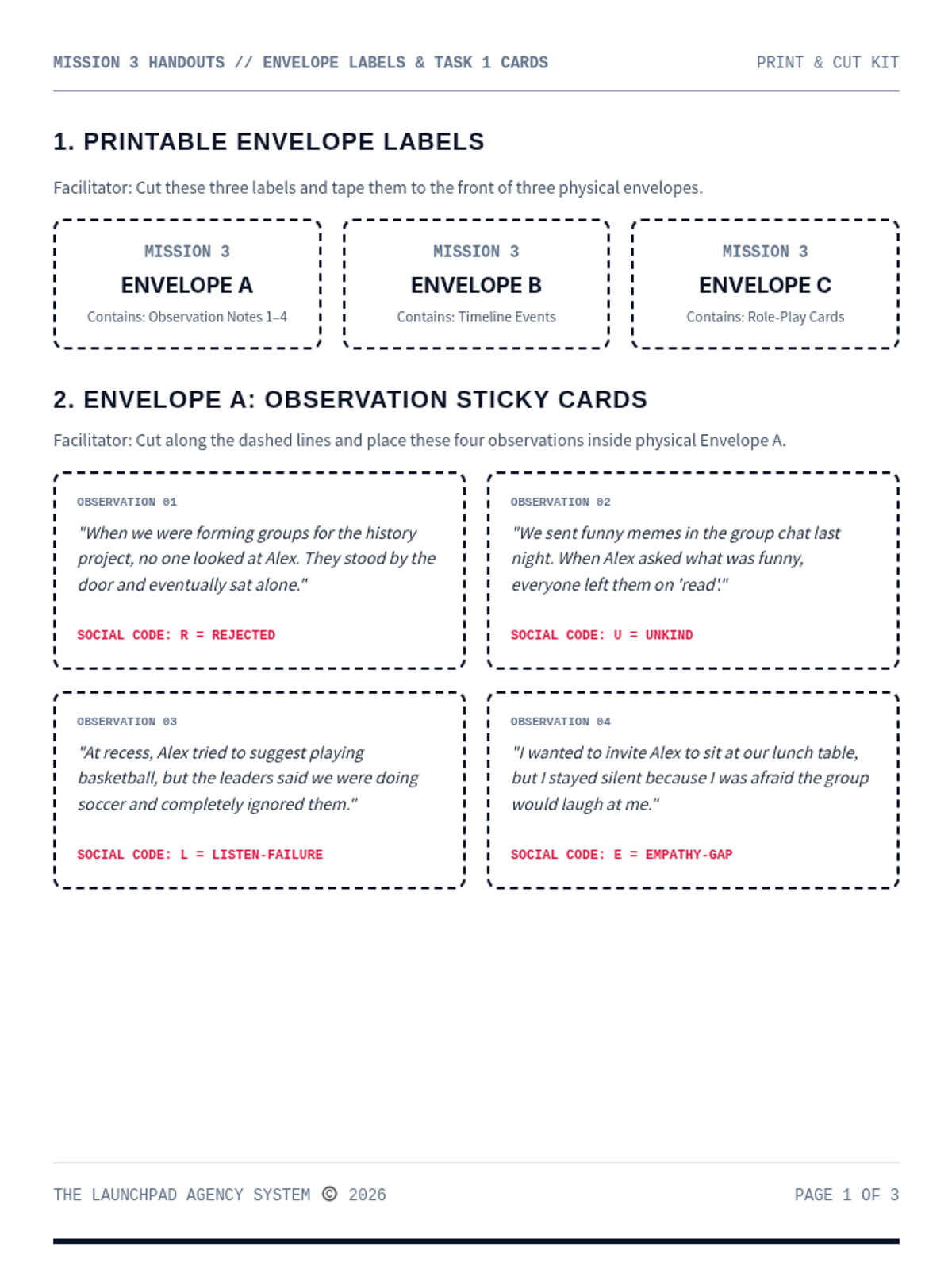
A chronological reconstruction and peer exclusion escape room for Ages 10-12. Recruits analyze sticky-note observations, identify missed social interactions, and role-play restorative de-escalation scripts.
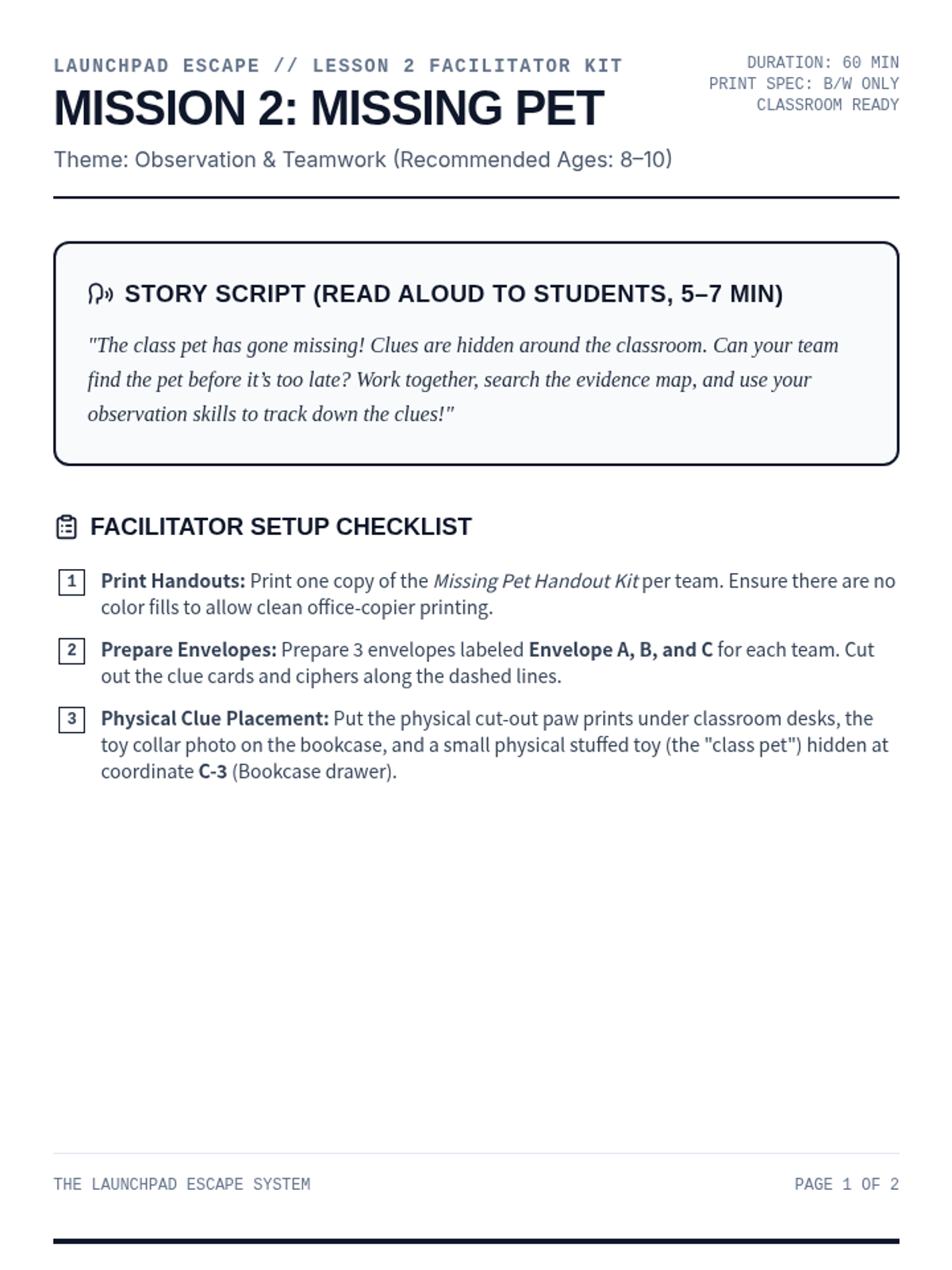
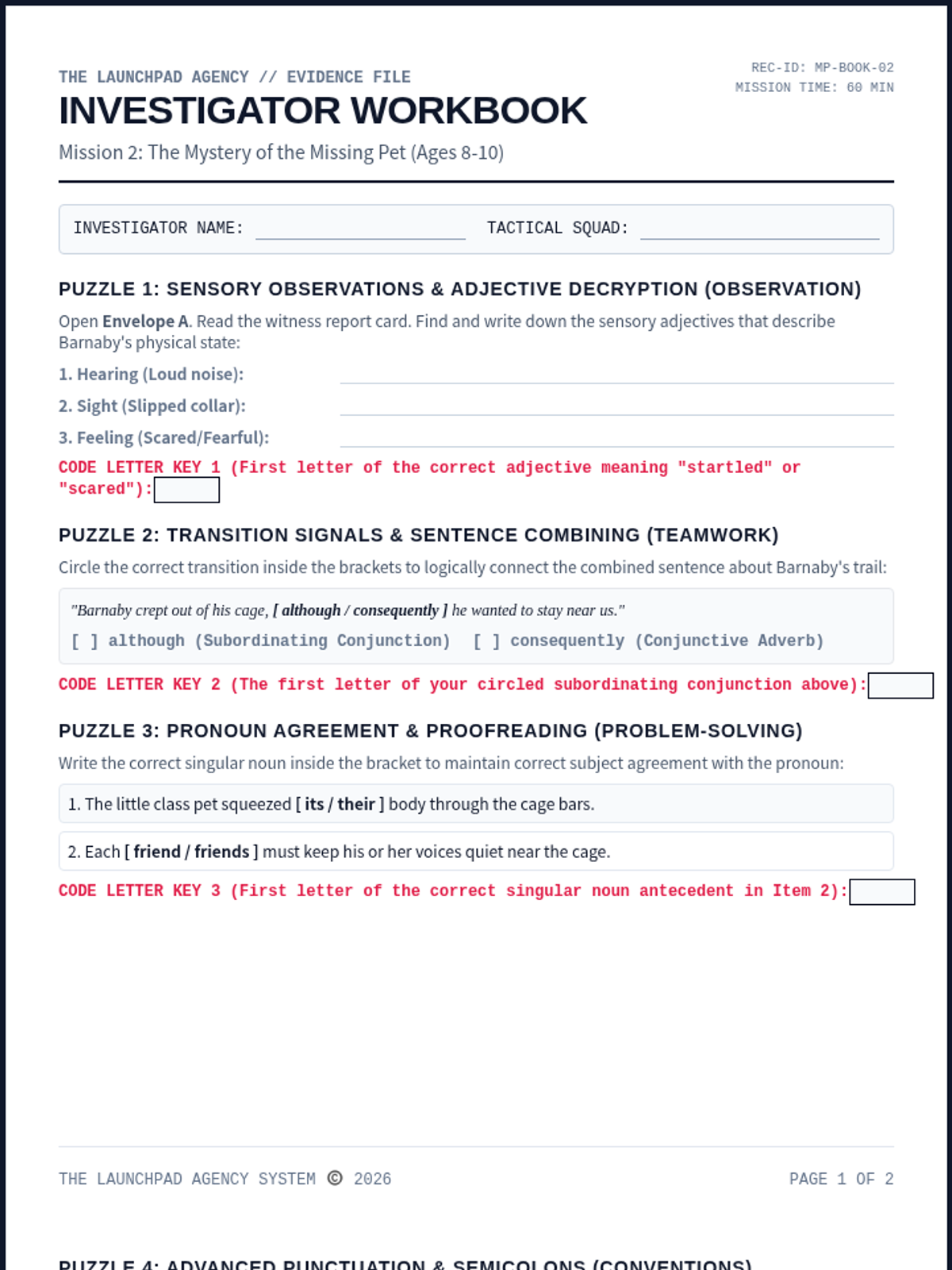
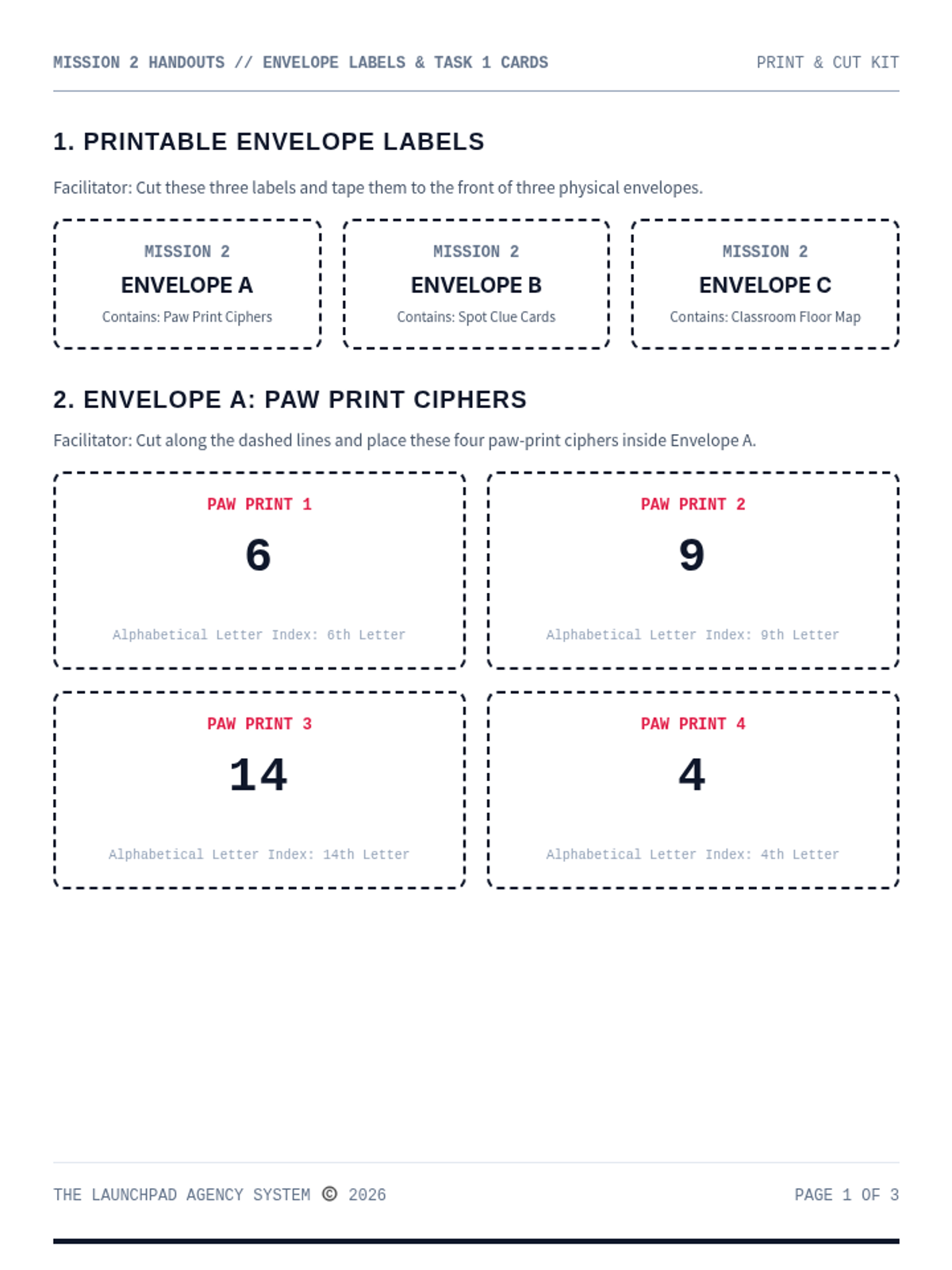
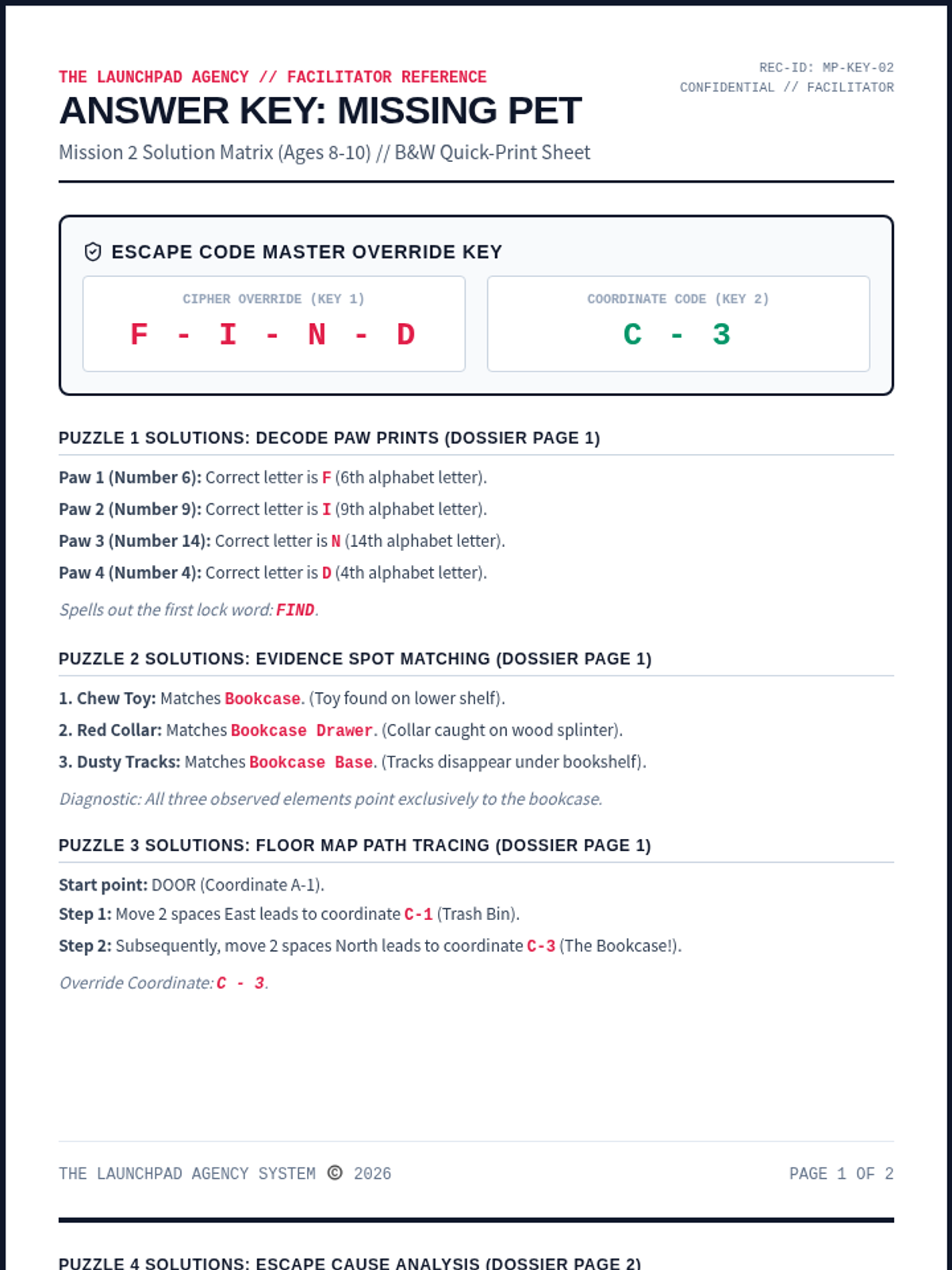
An observation-based escape mission for Ages 8-10. Recruits decode paw ciphers, match footprint evidence to classroom hiding spots, and compile a team map to find the missing class pet.
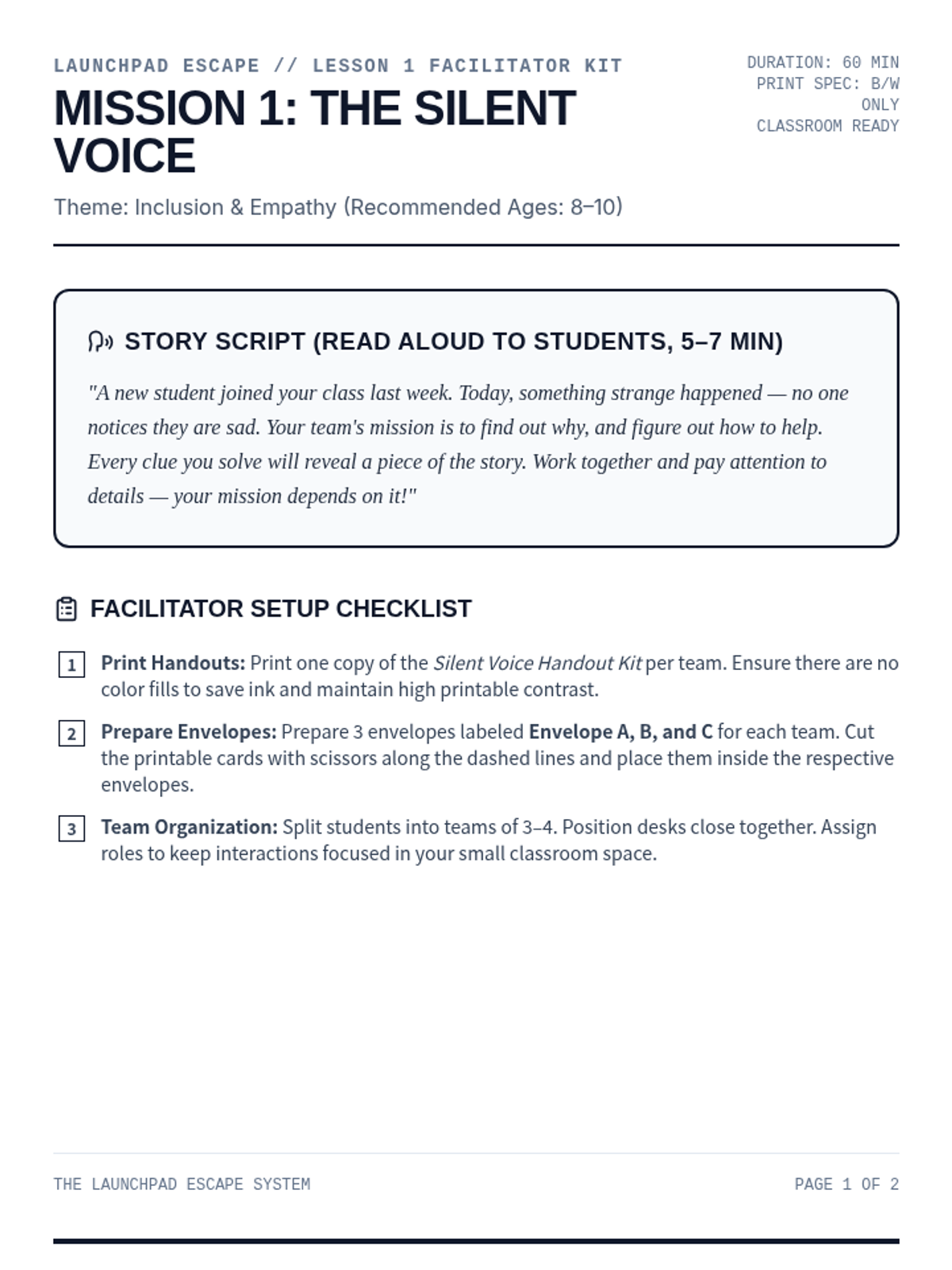
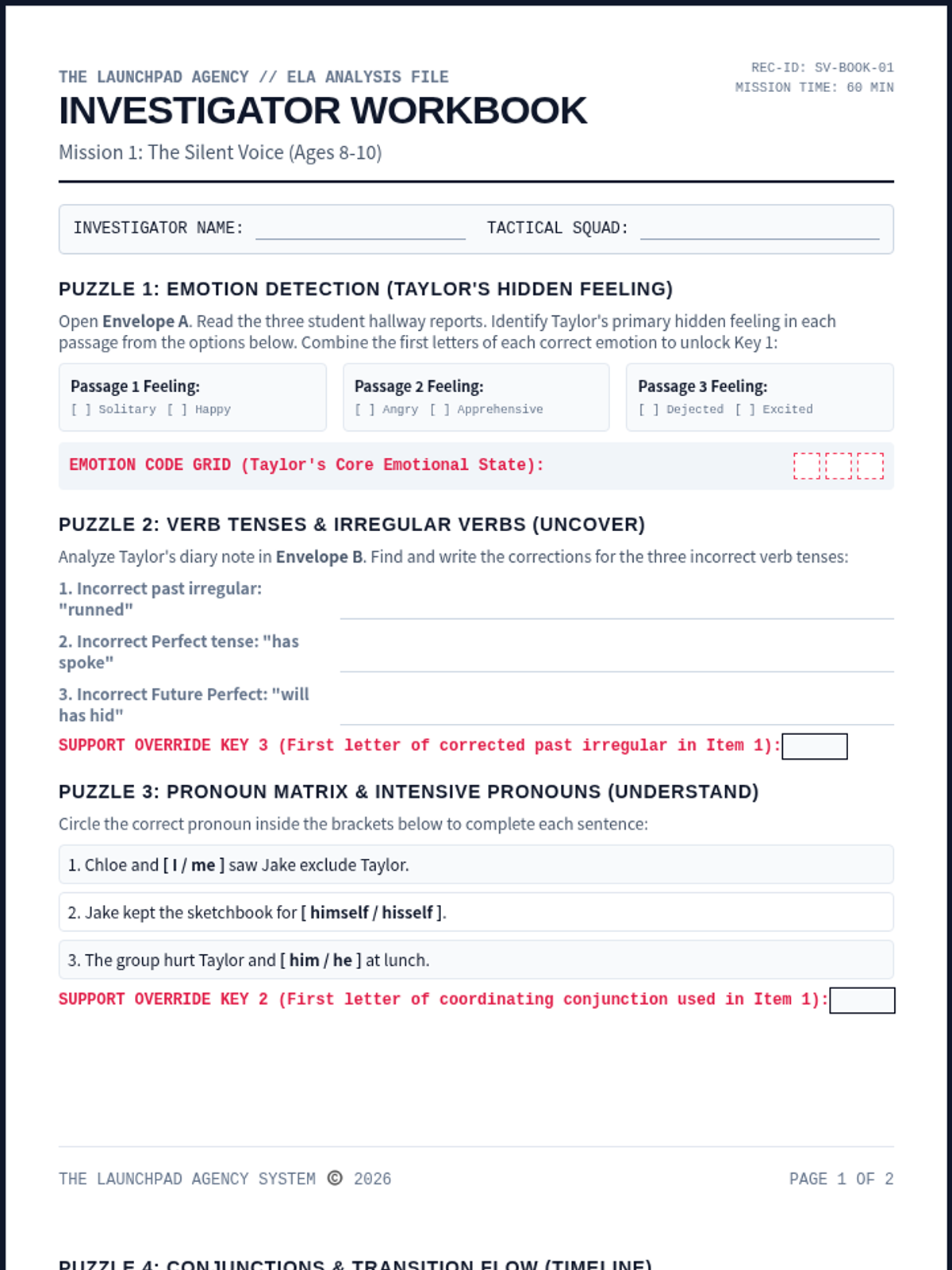
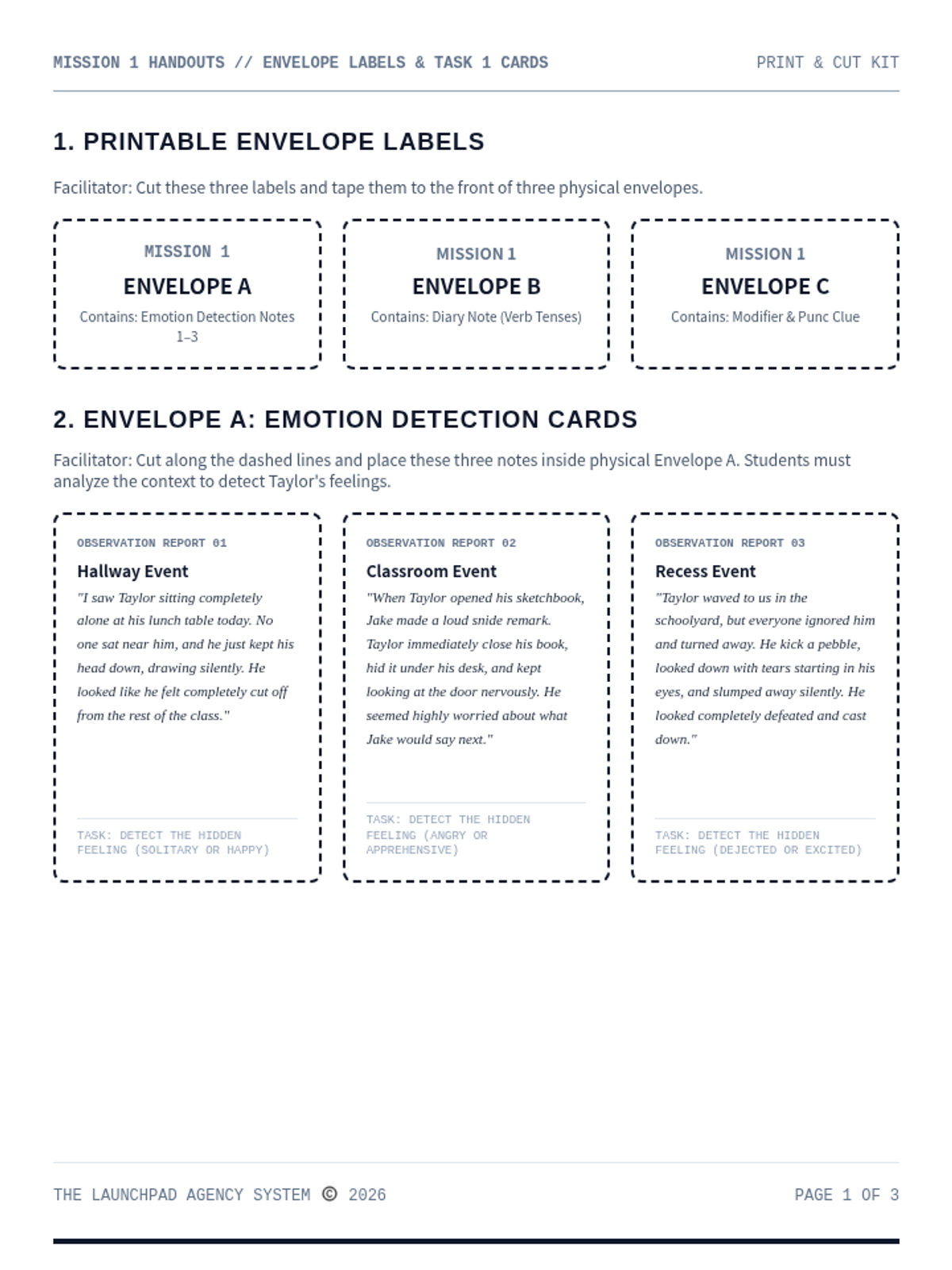
A cooperative social escape room for Ages 8-10 focused on inclusion and empathy. Recruits sort desk messages, build a timeline, and decode perspective cards to support a lonely classmate.
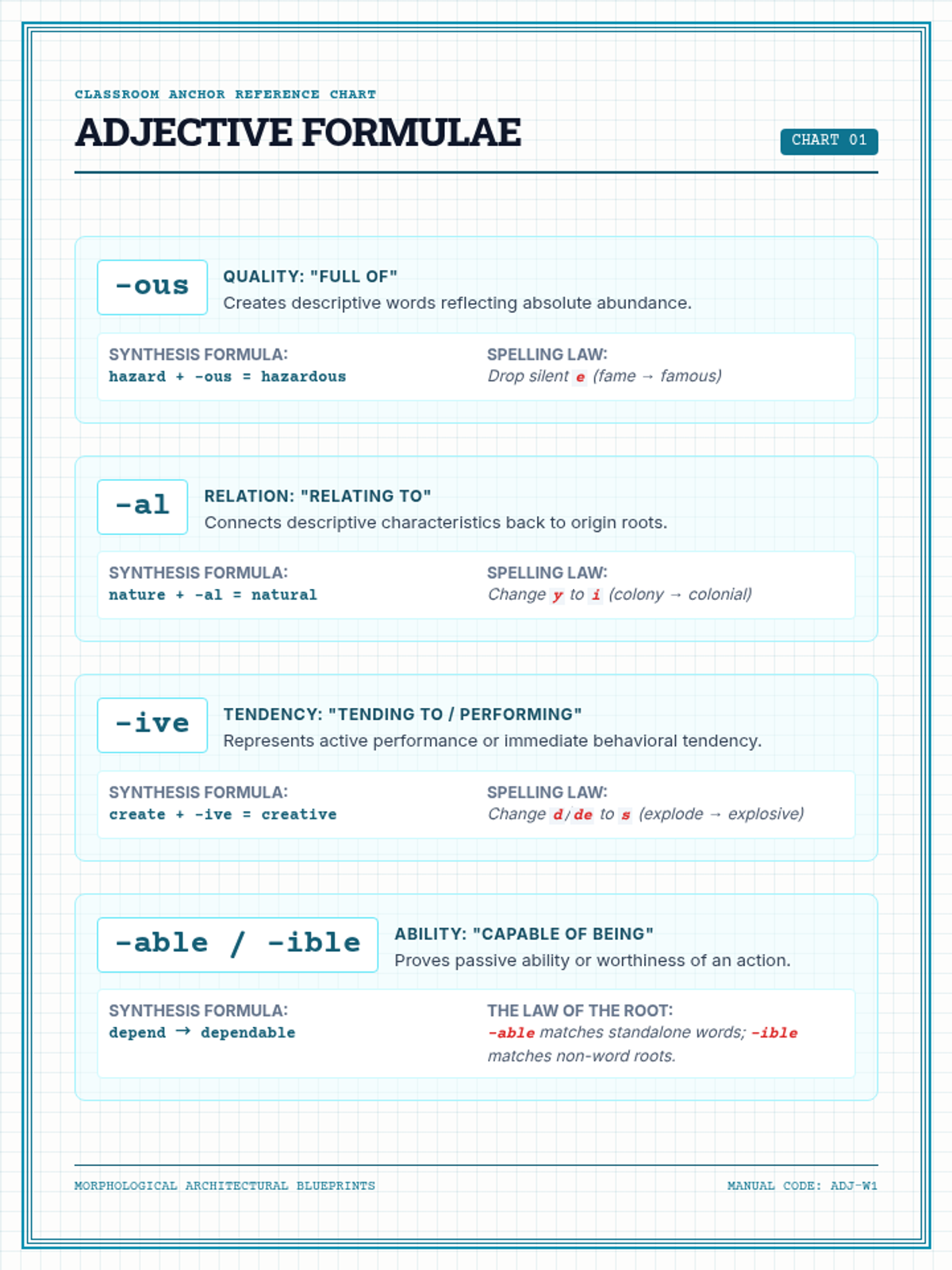
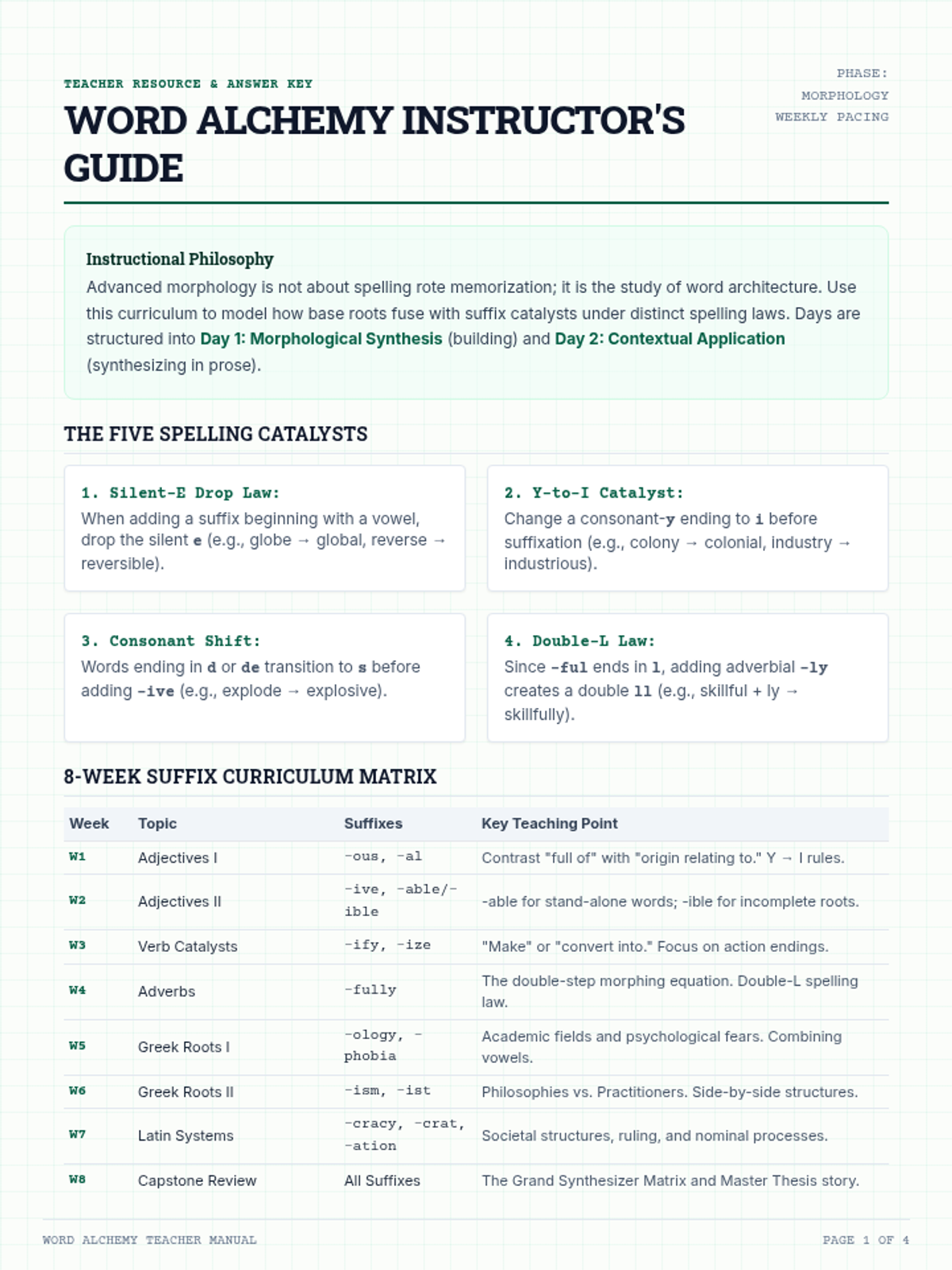
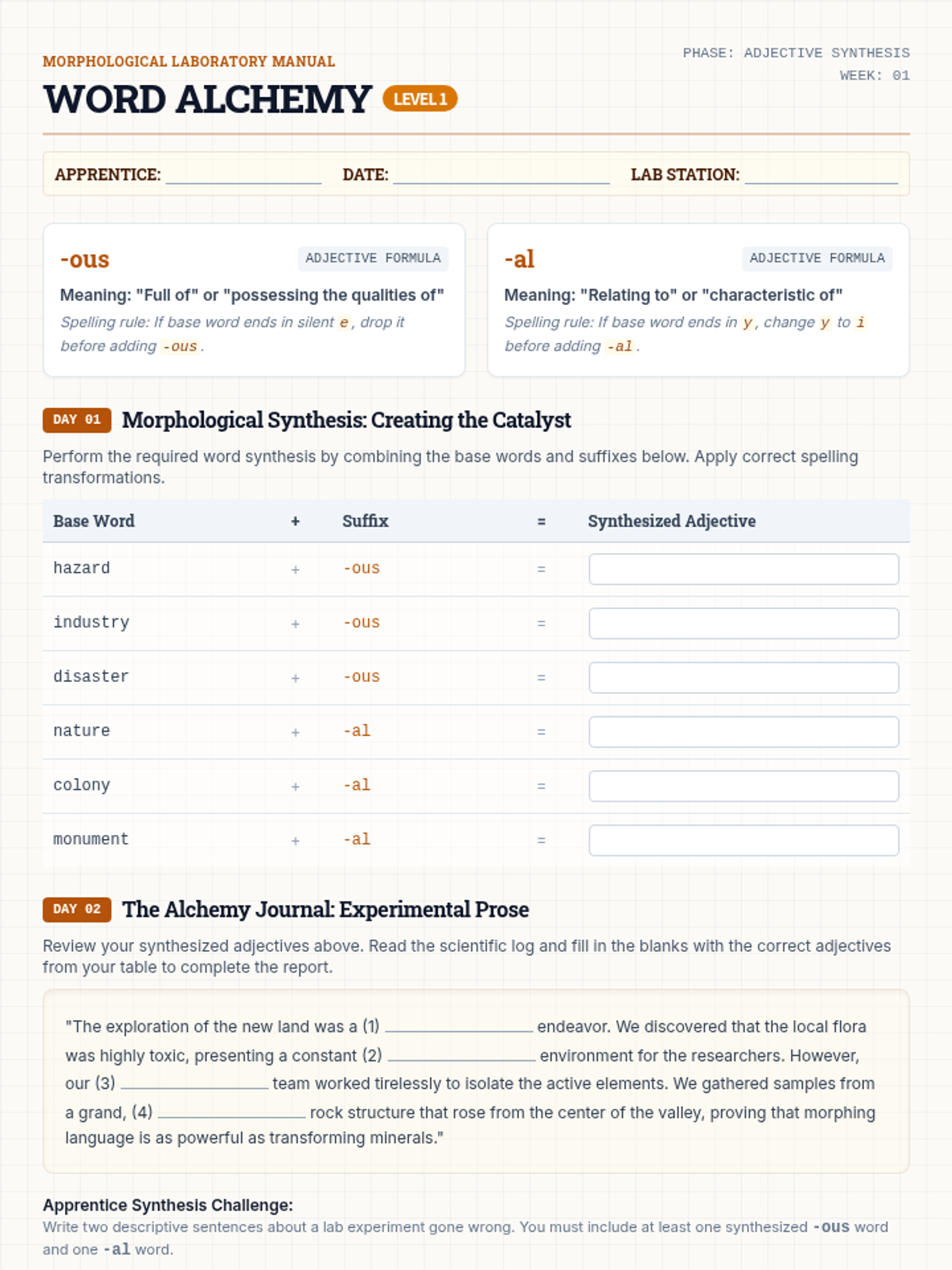
An intensive 8-week morphological training course that guides students through advanced adjective, verb, adverb, and Greek/Latin derivational suffixes using a vintage laboratory theme.
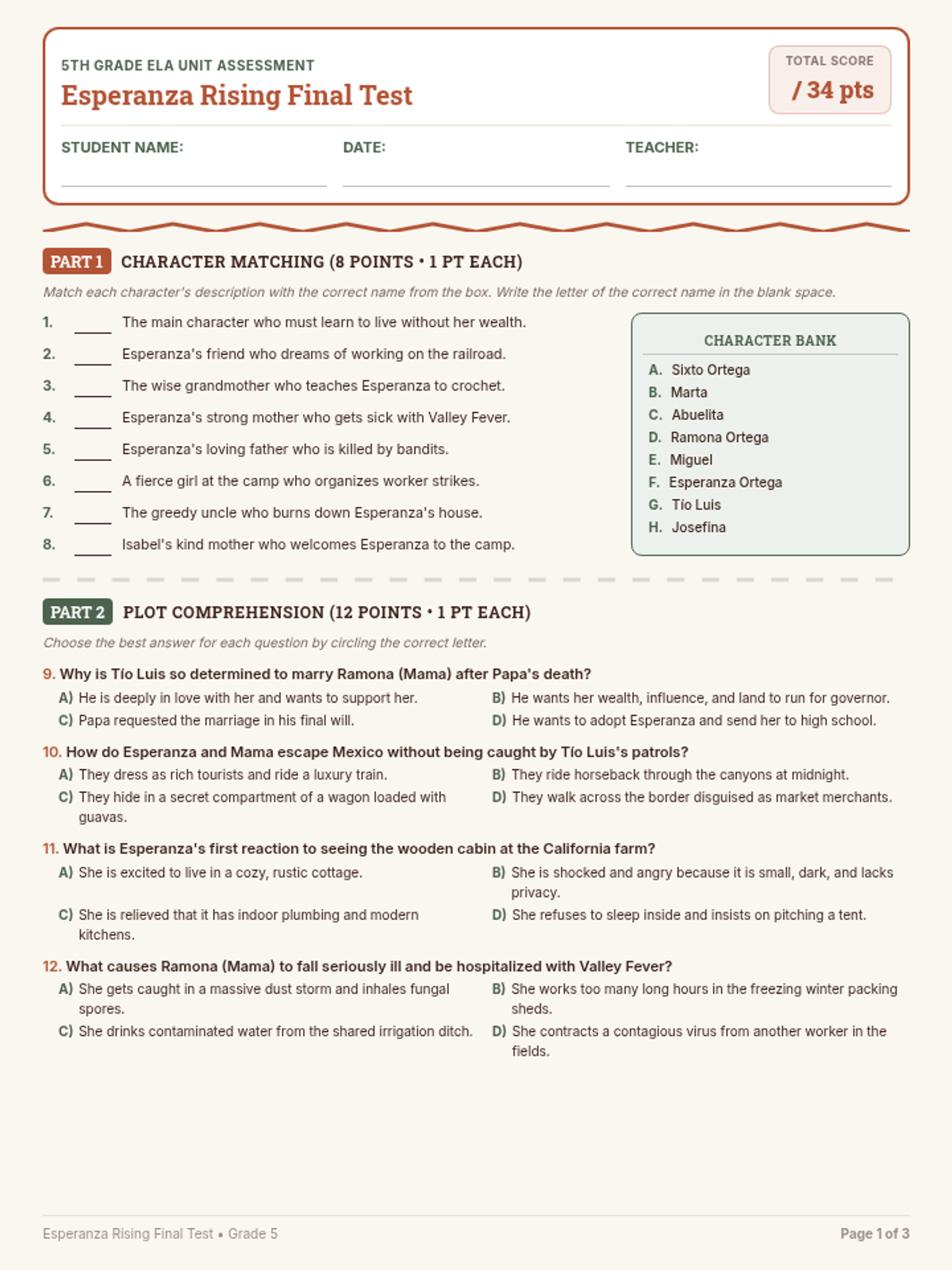
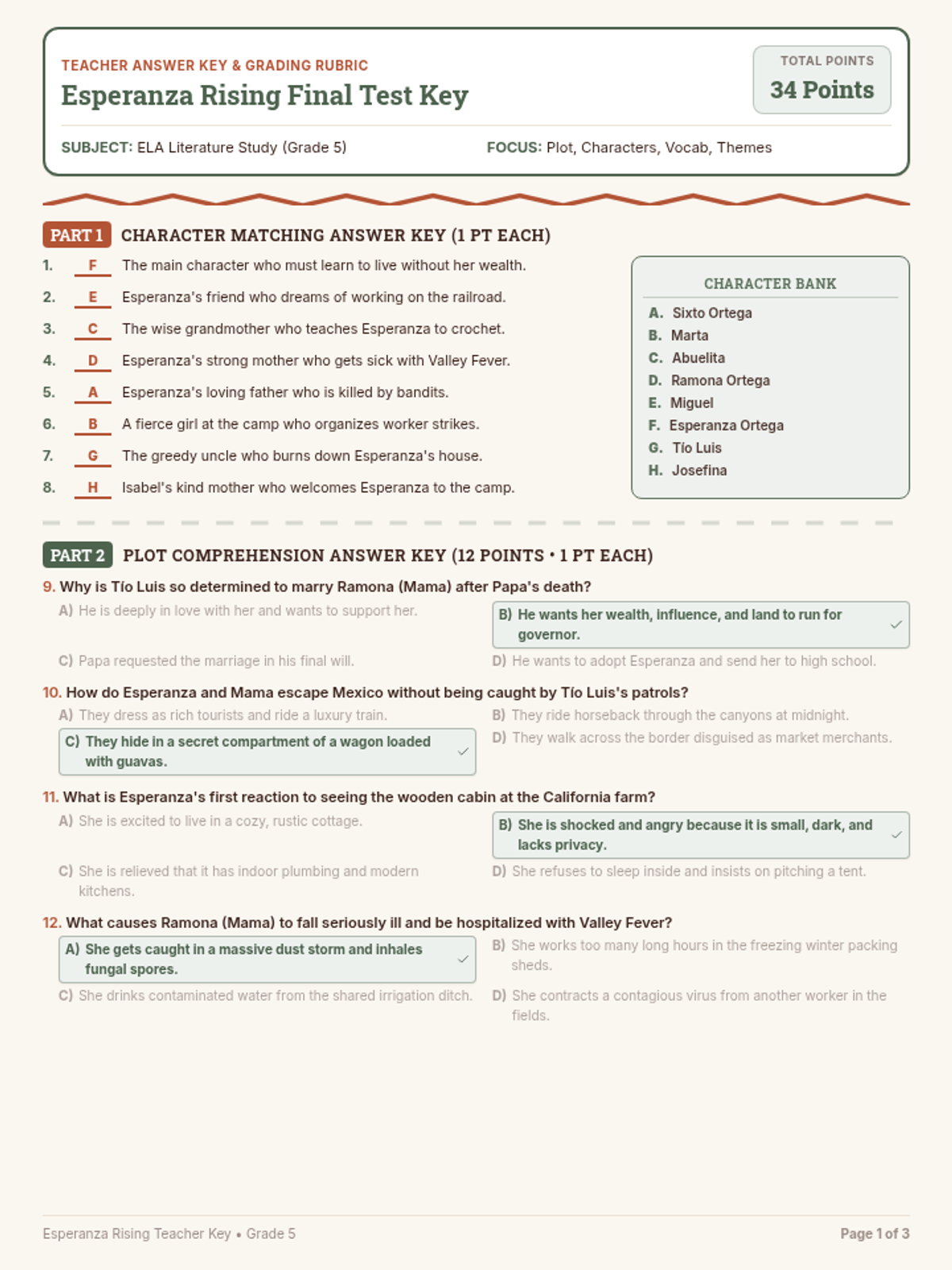
A comprehensive assessment package for Pam Muñoz Ryan's Esperanza Rising, designed for 5th-grade students. Includes a 34-point student final test and a detailed teacher answer key with rubrics and exemplars.
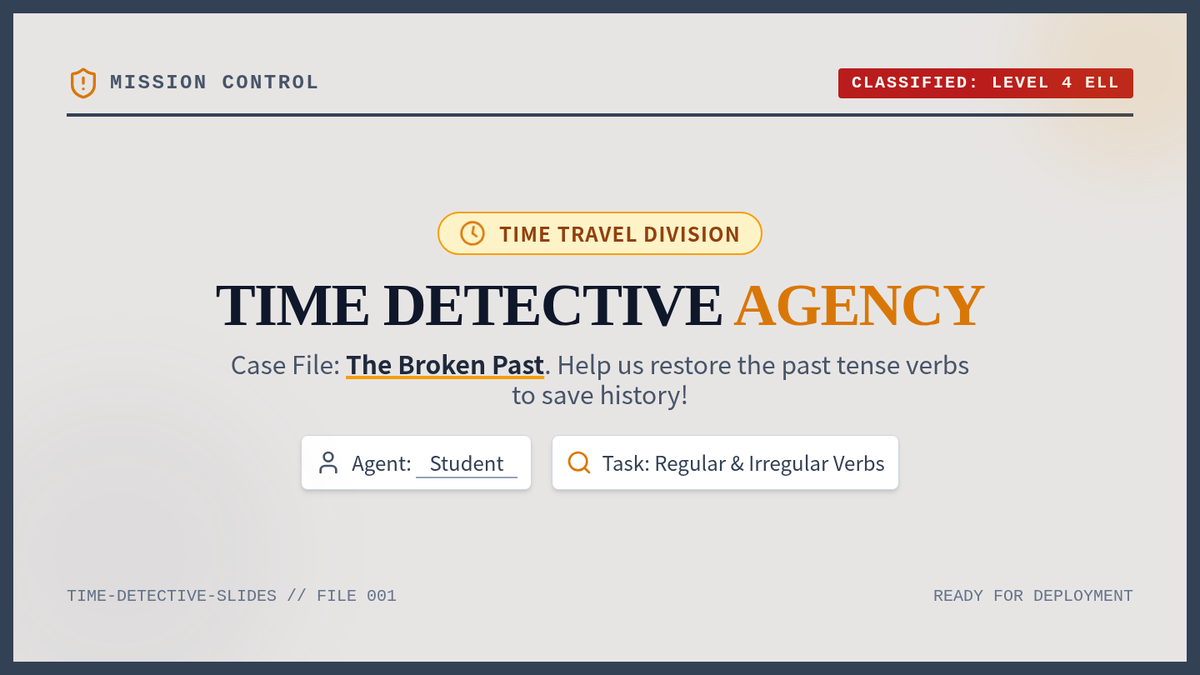
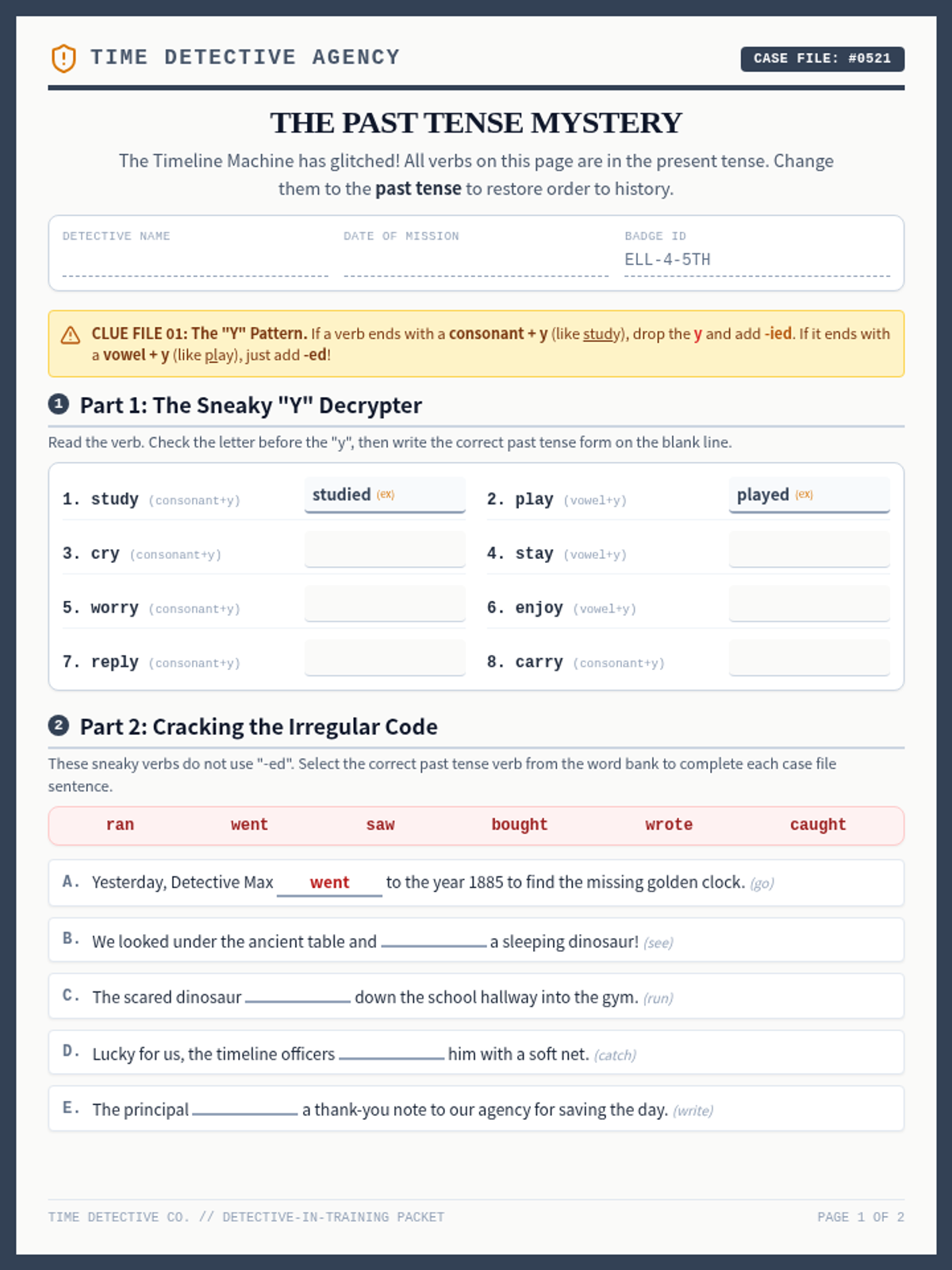
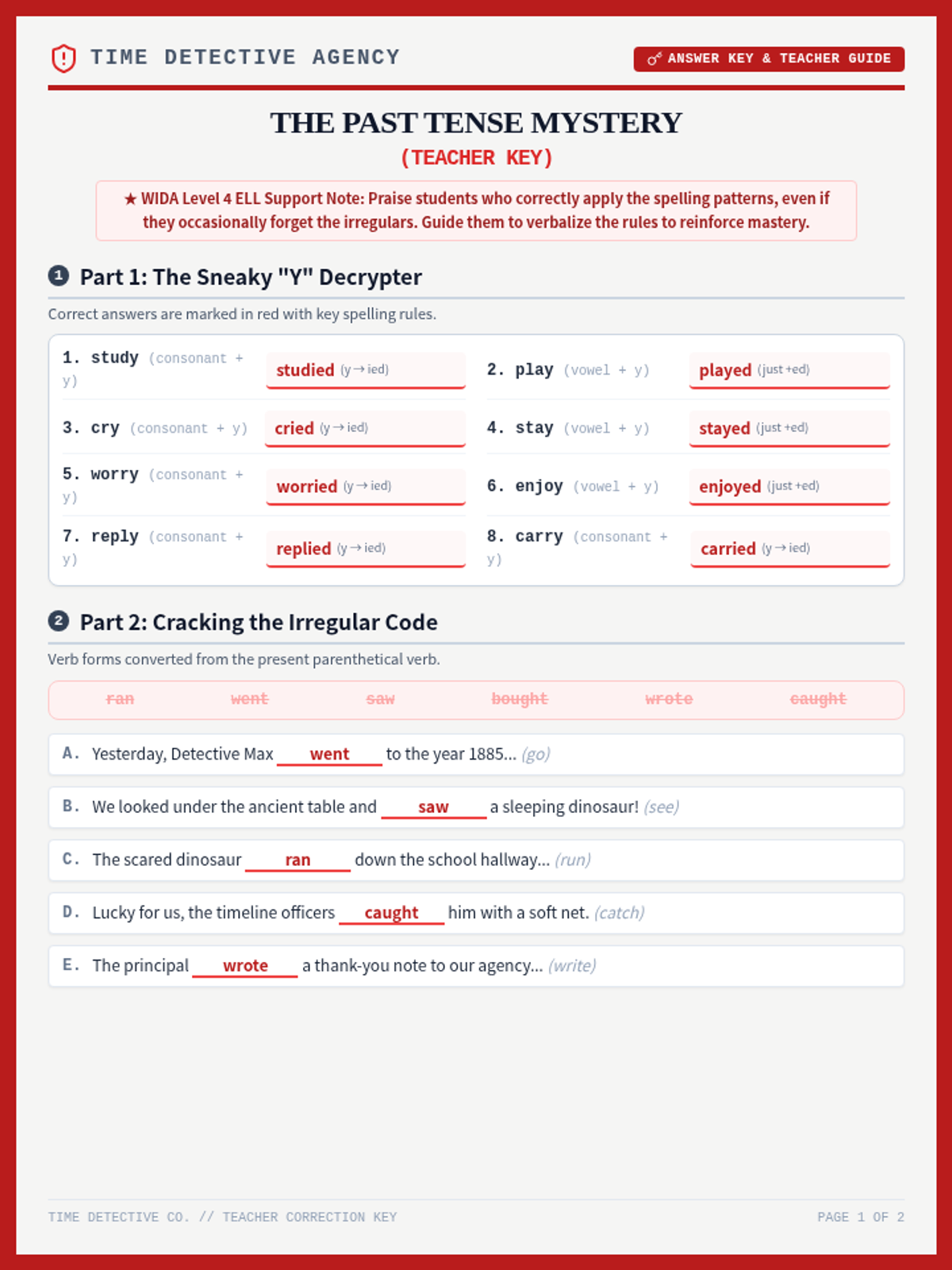
A grammar review lesson designed for 5th-grade ELLs (WIDA Level 4) focusing on regular and irregular past tense verbs, including the y-to-ied spelling pattern, framed around a time-travel detective theme.
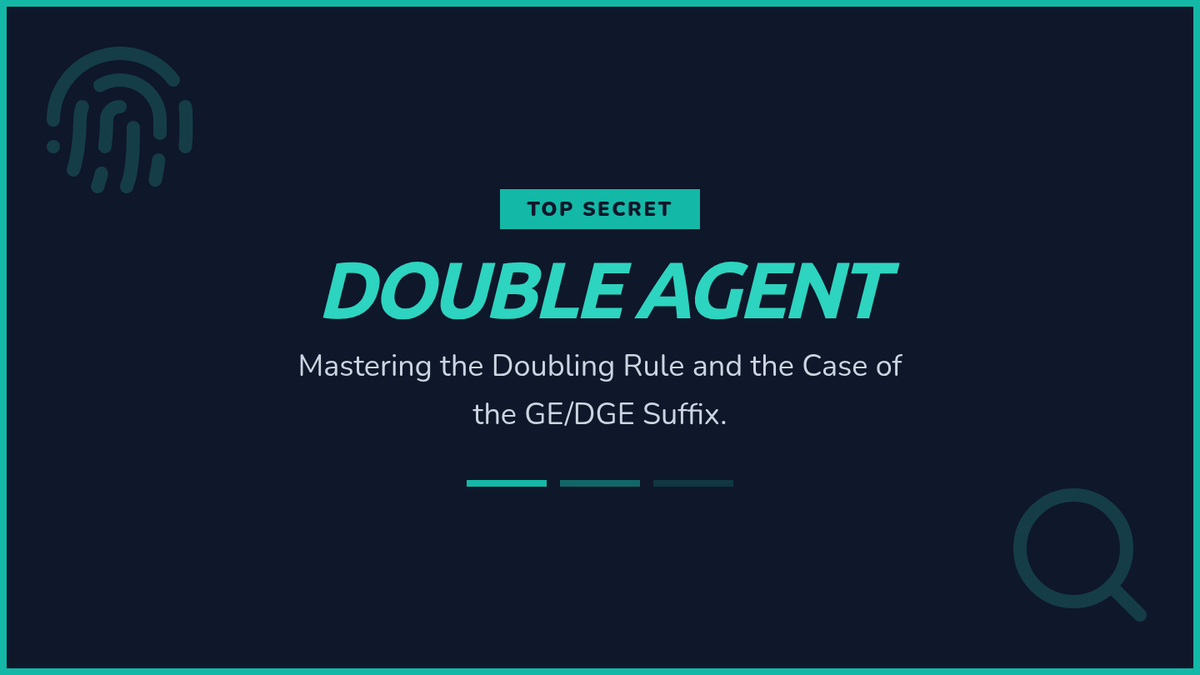
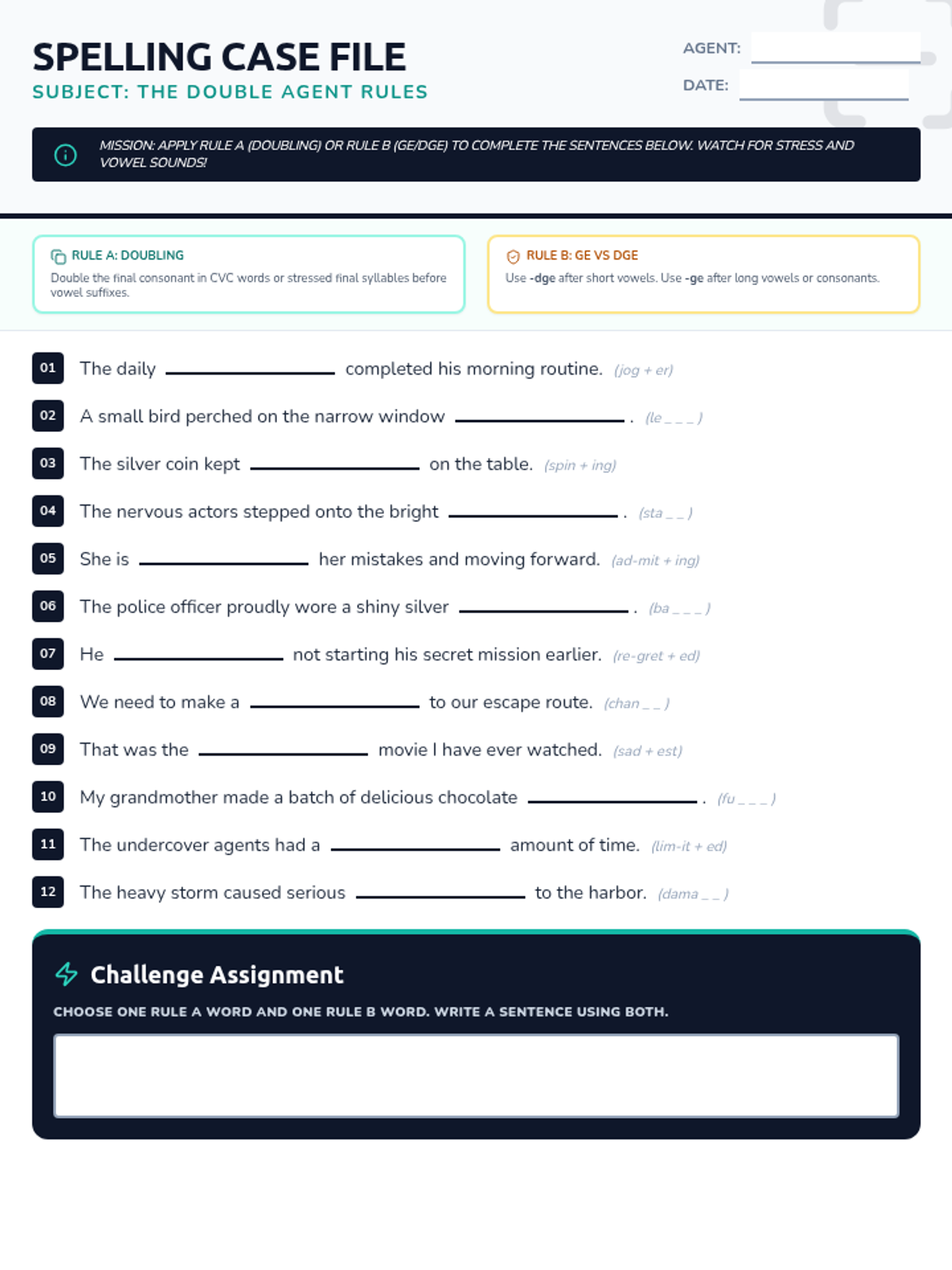
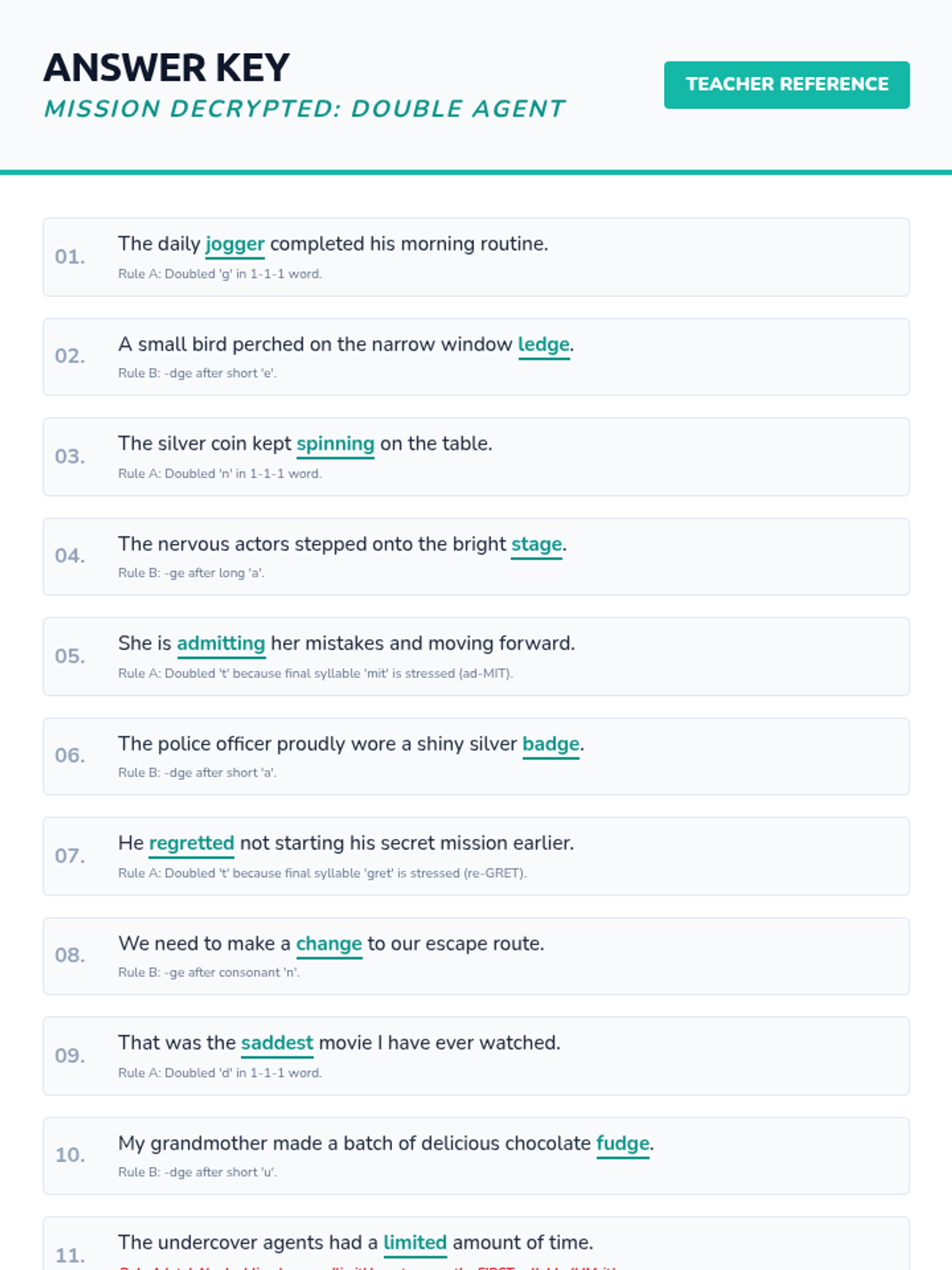
A focused spelling lesson on the doubling rule for suffixes and the -ge/-dge ending rule, using a secret agent theme to engage students.