Students examine the impact of city life on the environment through the lens of pollution and conduct a simple 'urban footprint' experiment.
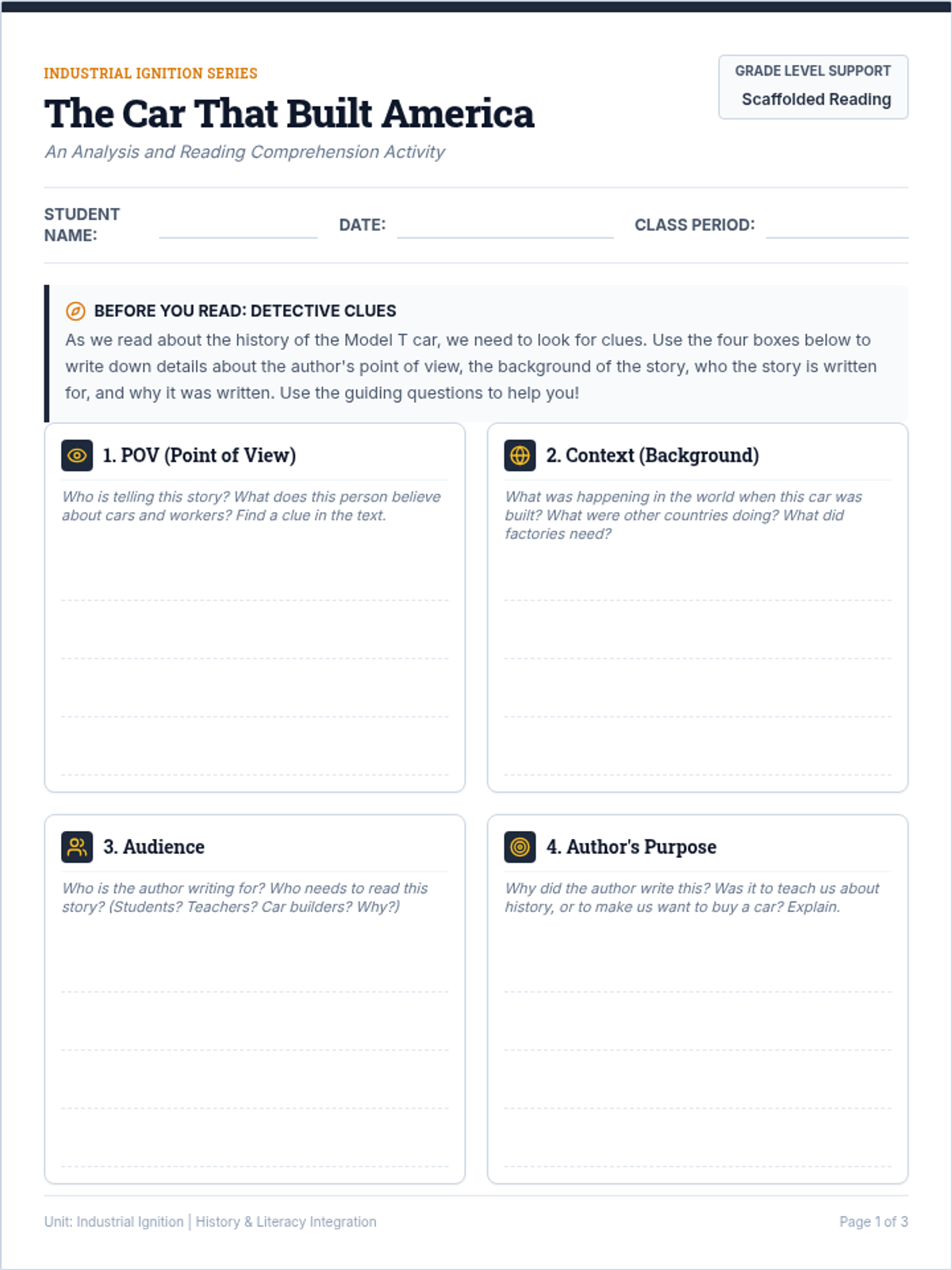
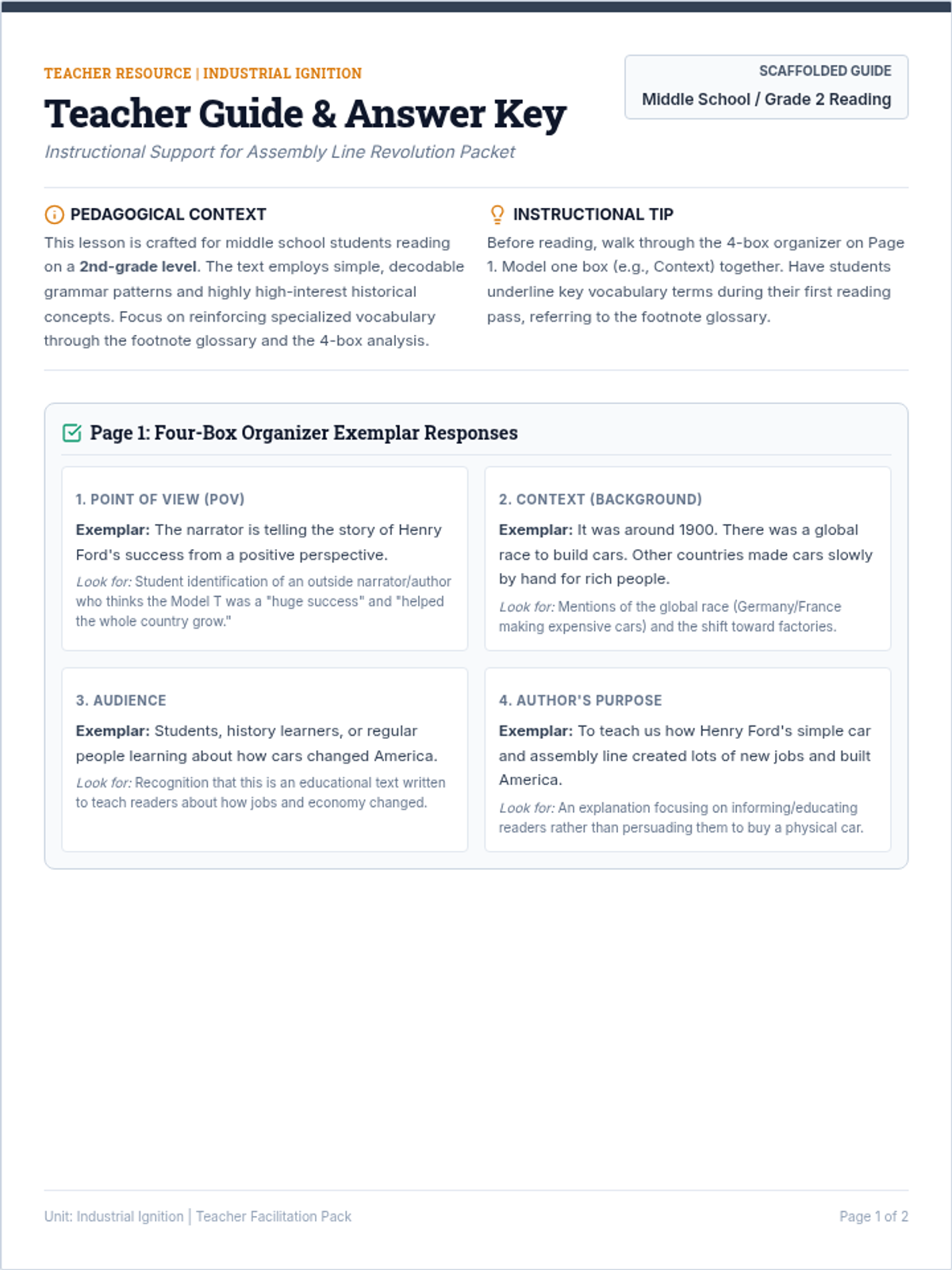
A history and reading comprehension lesson centered on how Henry Ford's Model T and industrial innovations transformed the American economy and labor market.
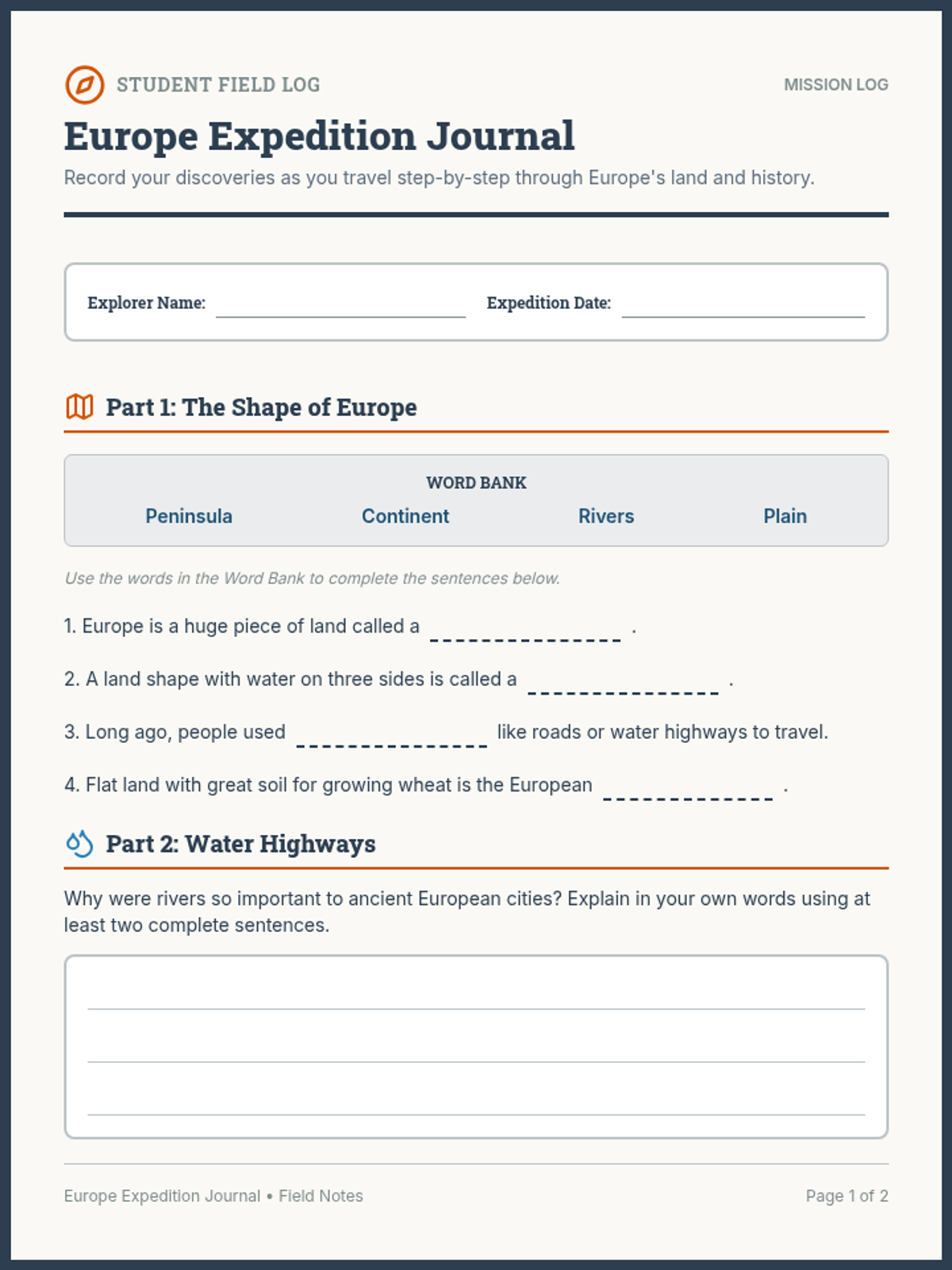
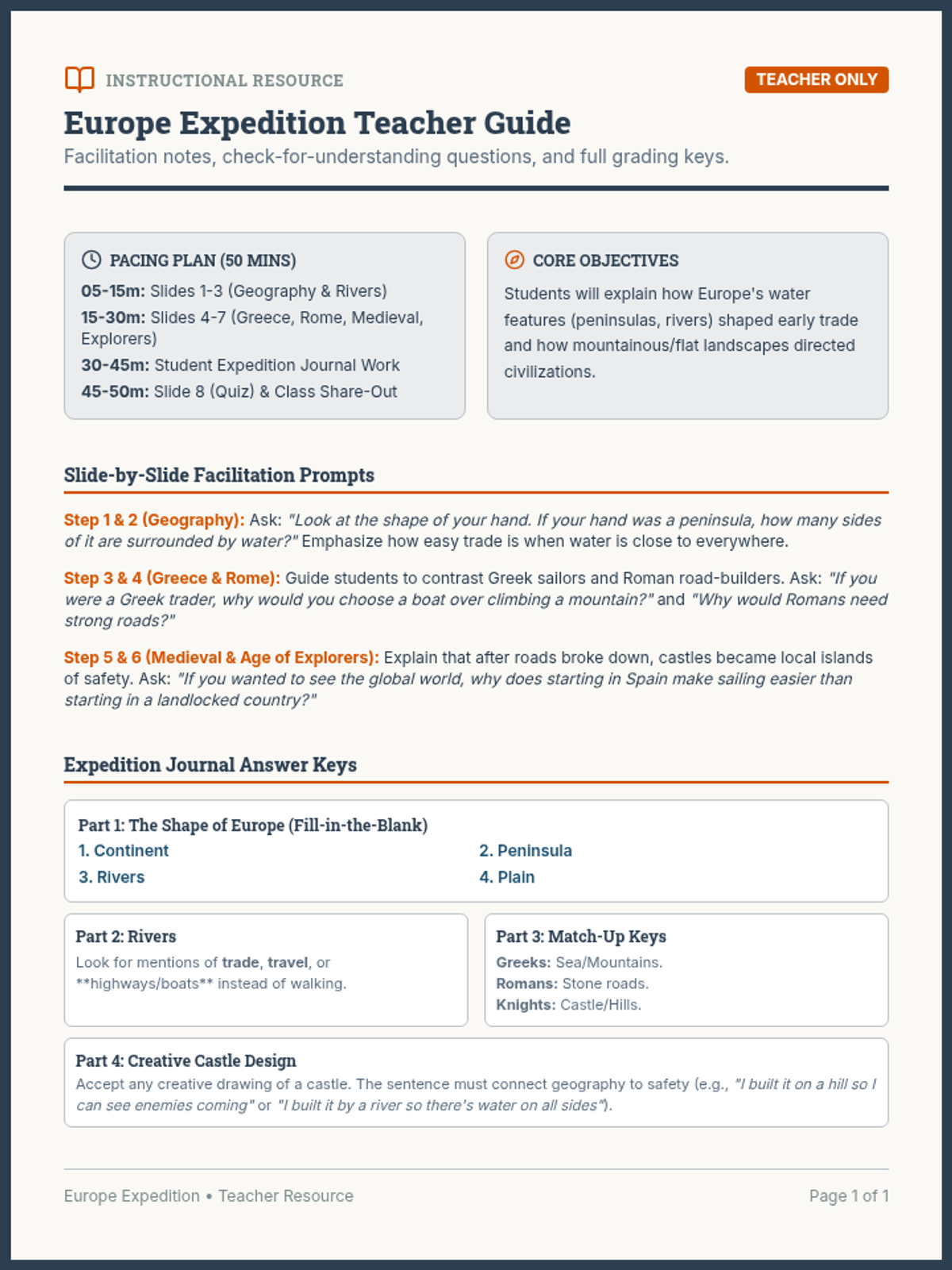
A step-by-step journey through Europe's unique geography and history, written at an accessible 600-700 Lexile level. Students explore how the physical landscape shaped historical civilizations from Ancient Greece to modern Europe.
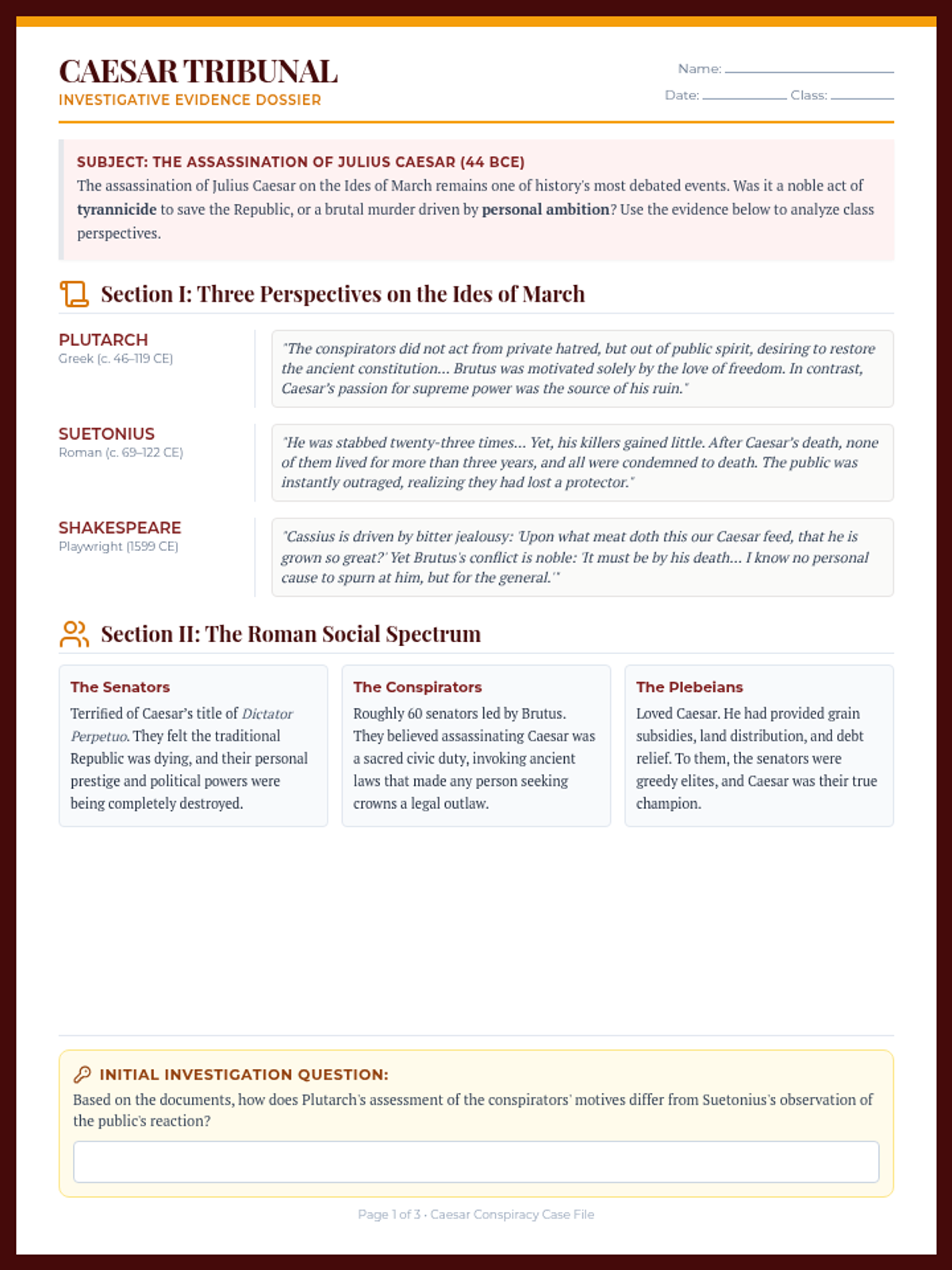
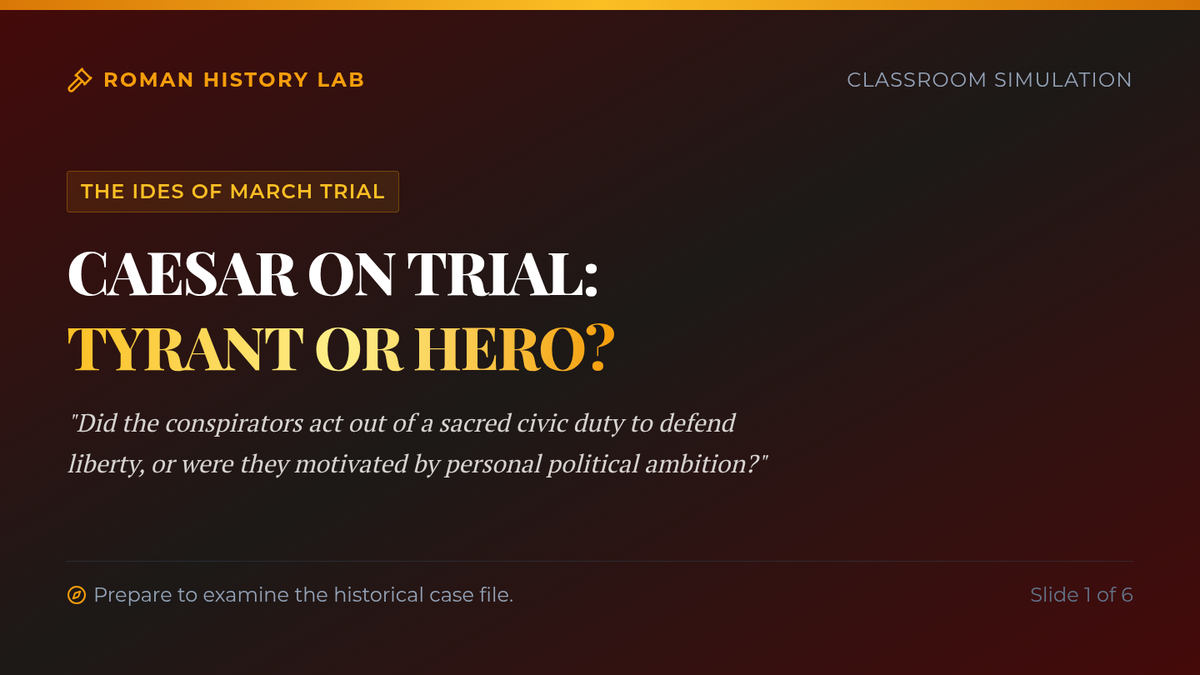
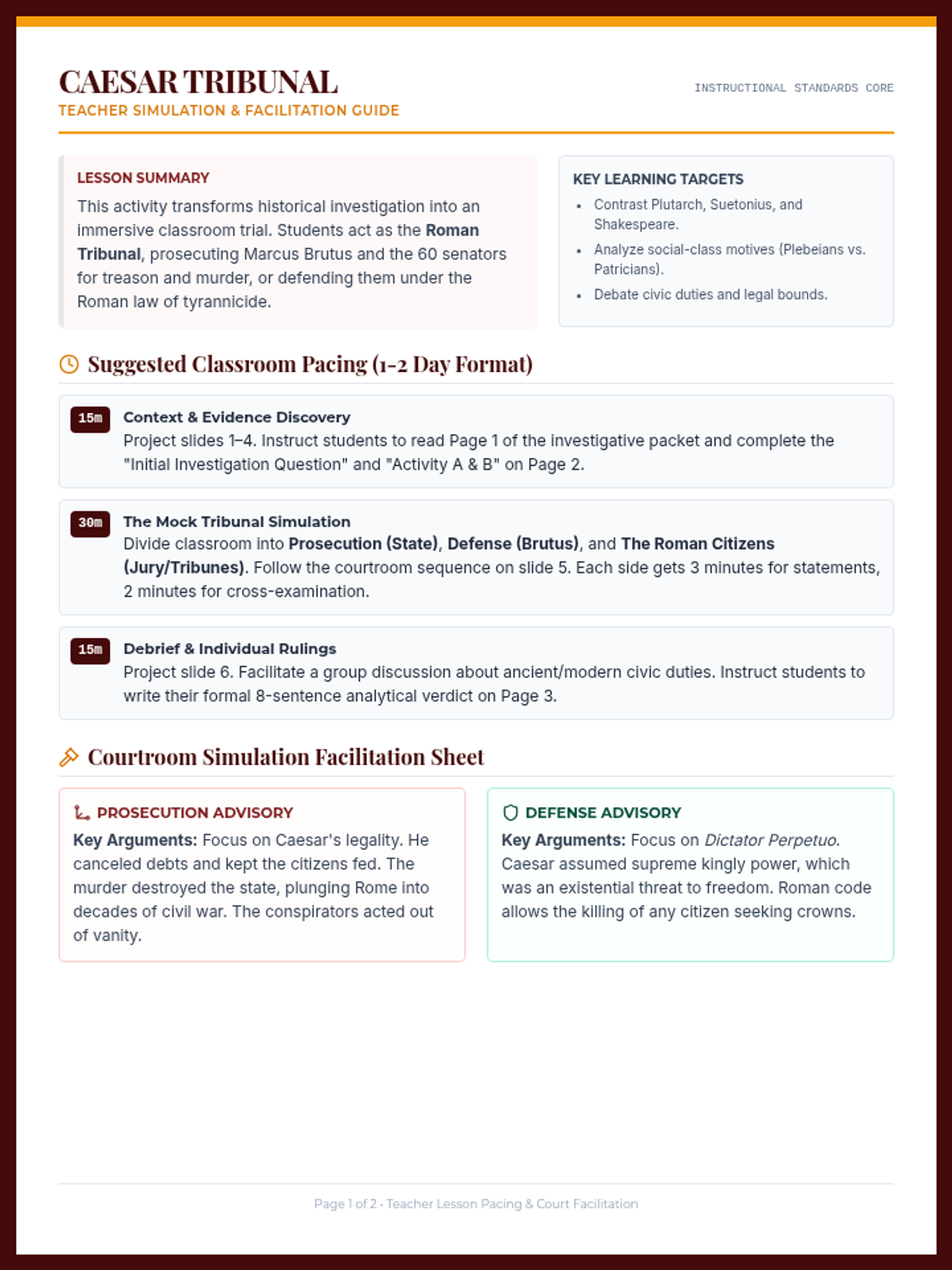
A comprehensive classroom simulation and analysis lesson about the assassination of Julius Caesar. Students examine historical perspectives, engage with primary sources, and debate civic duty through a mock trial and a three-page investigative document.
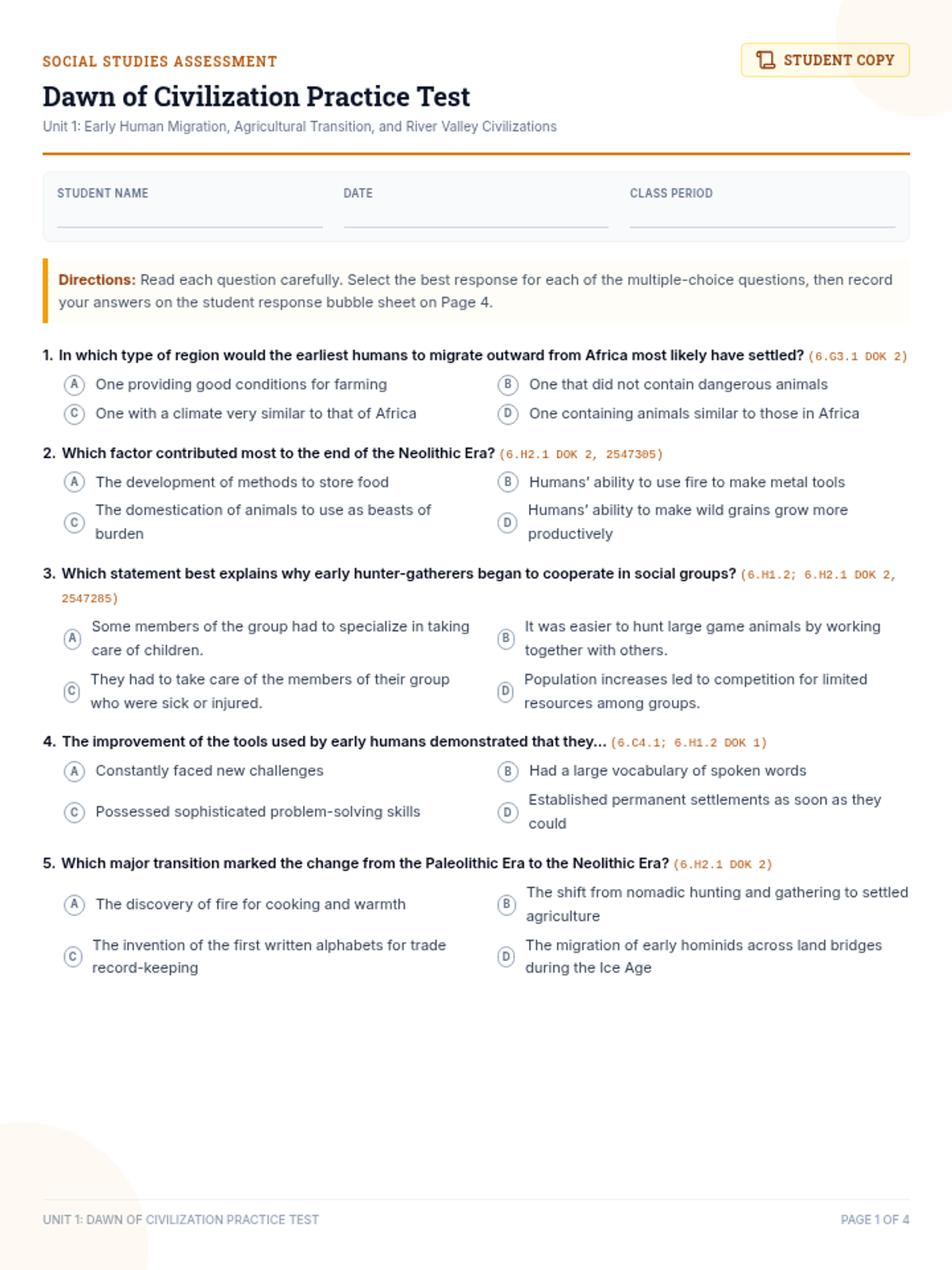
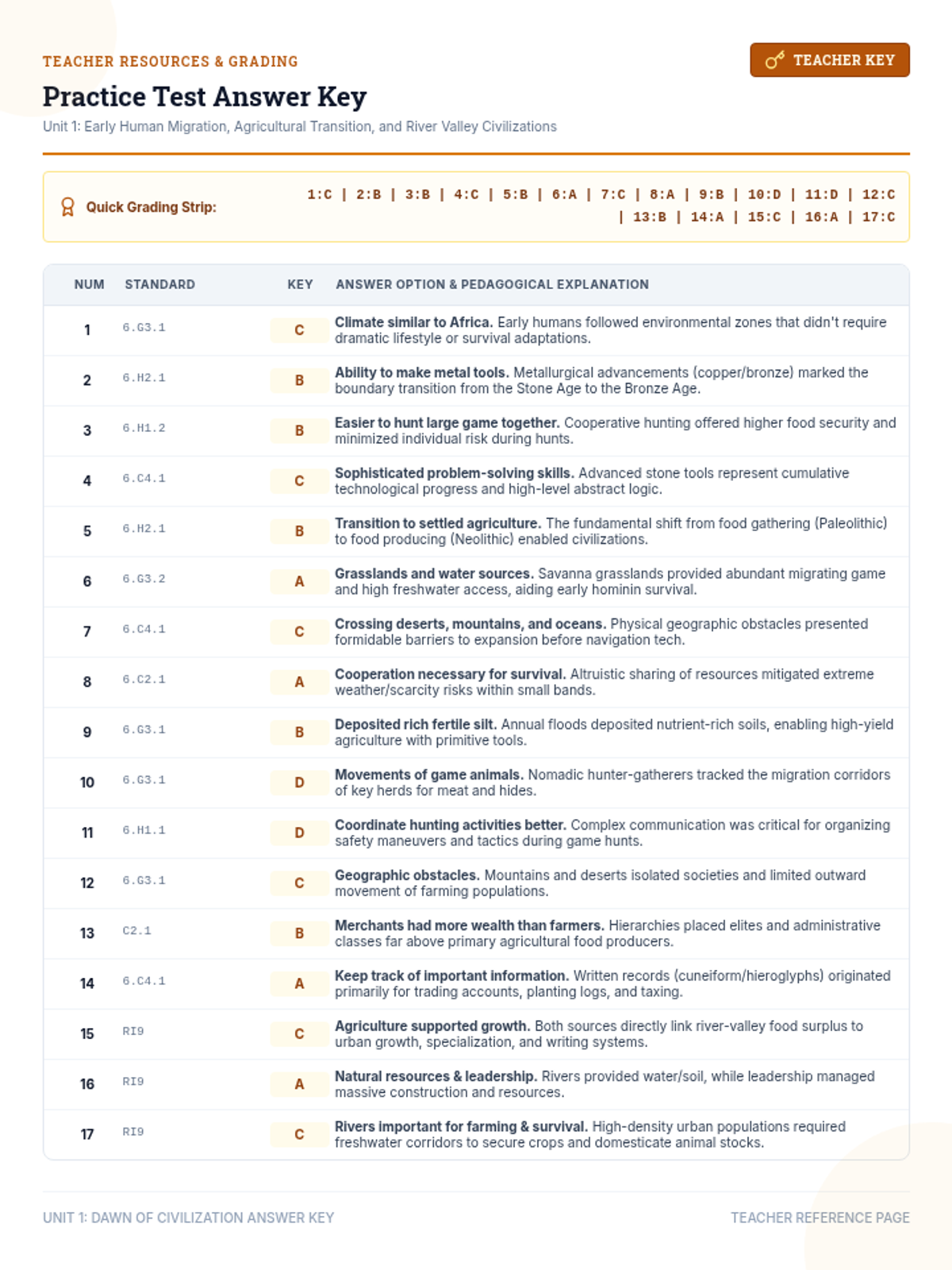
An exploration of early human migration, the transition from hunter-gatherers to agrarian societies, and the rise of the first river valley civilizations in Mesopotamia and ancient Egypt.
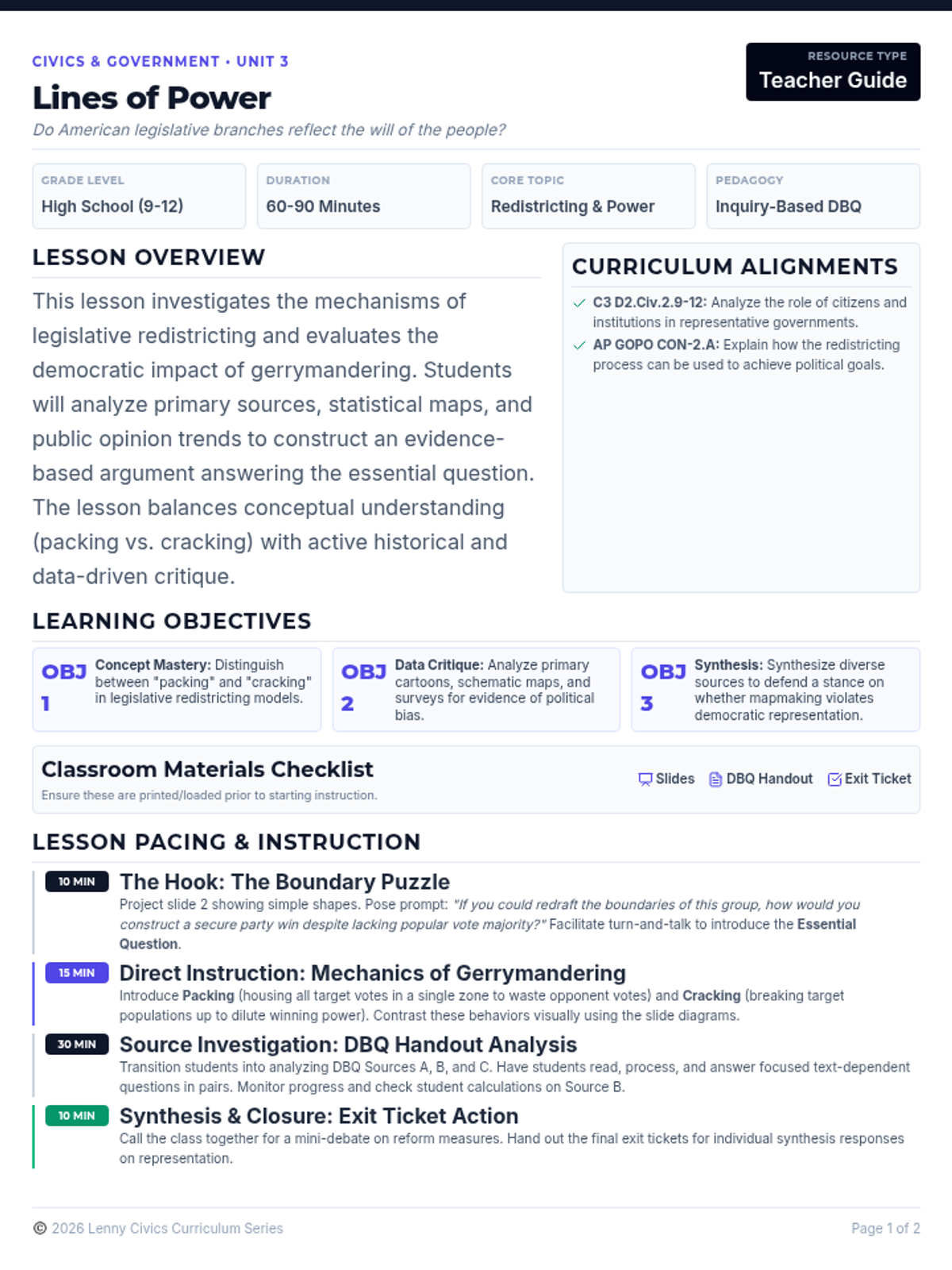
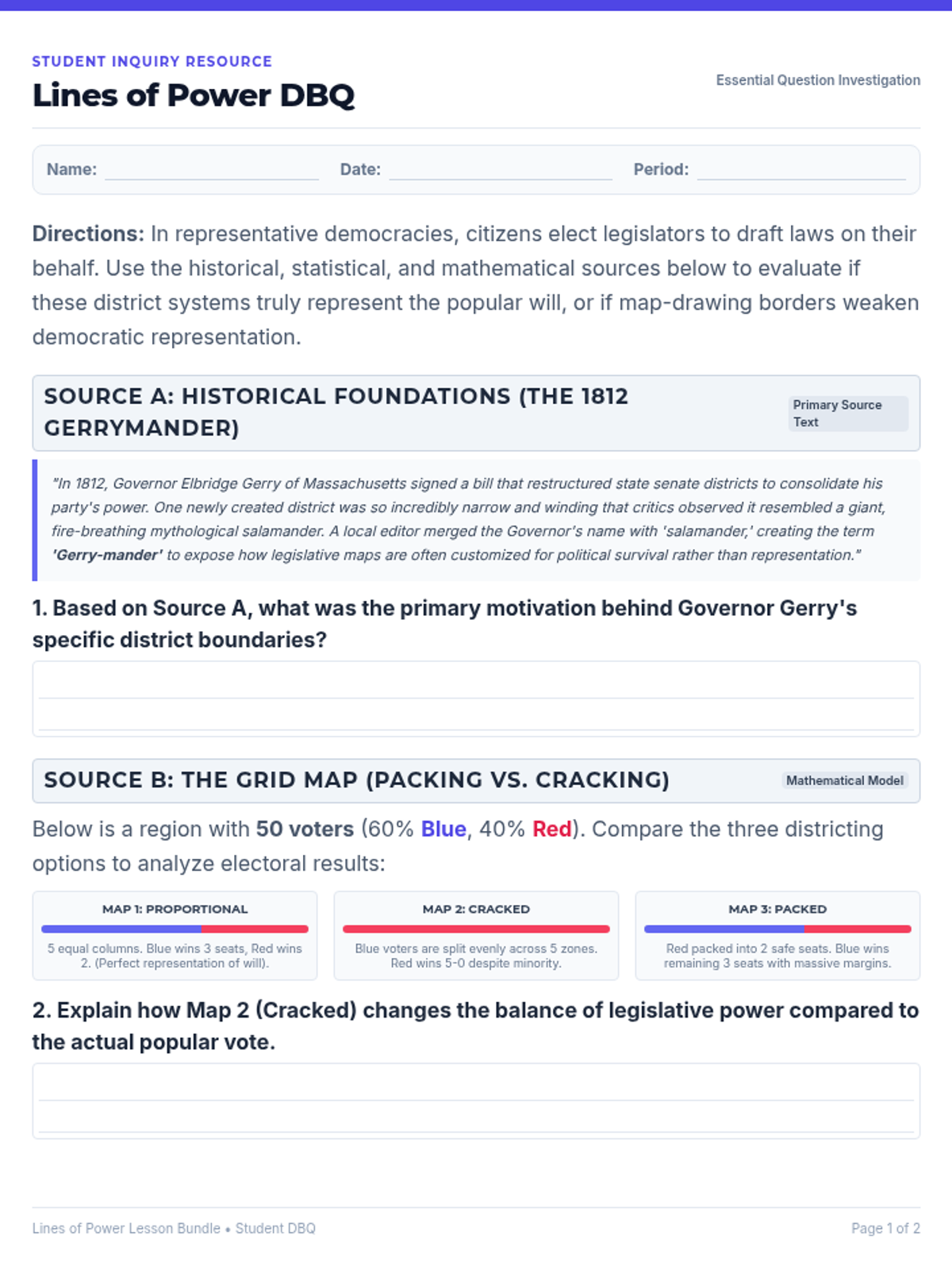
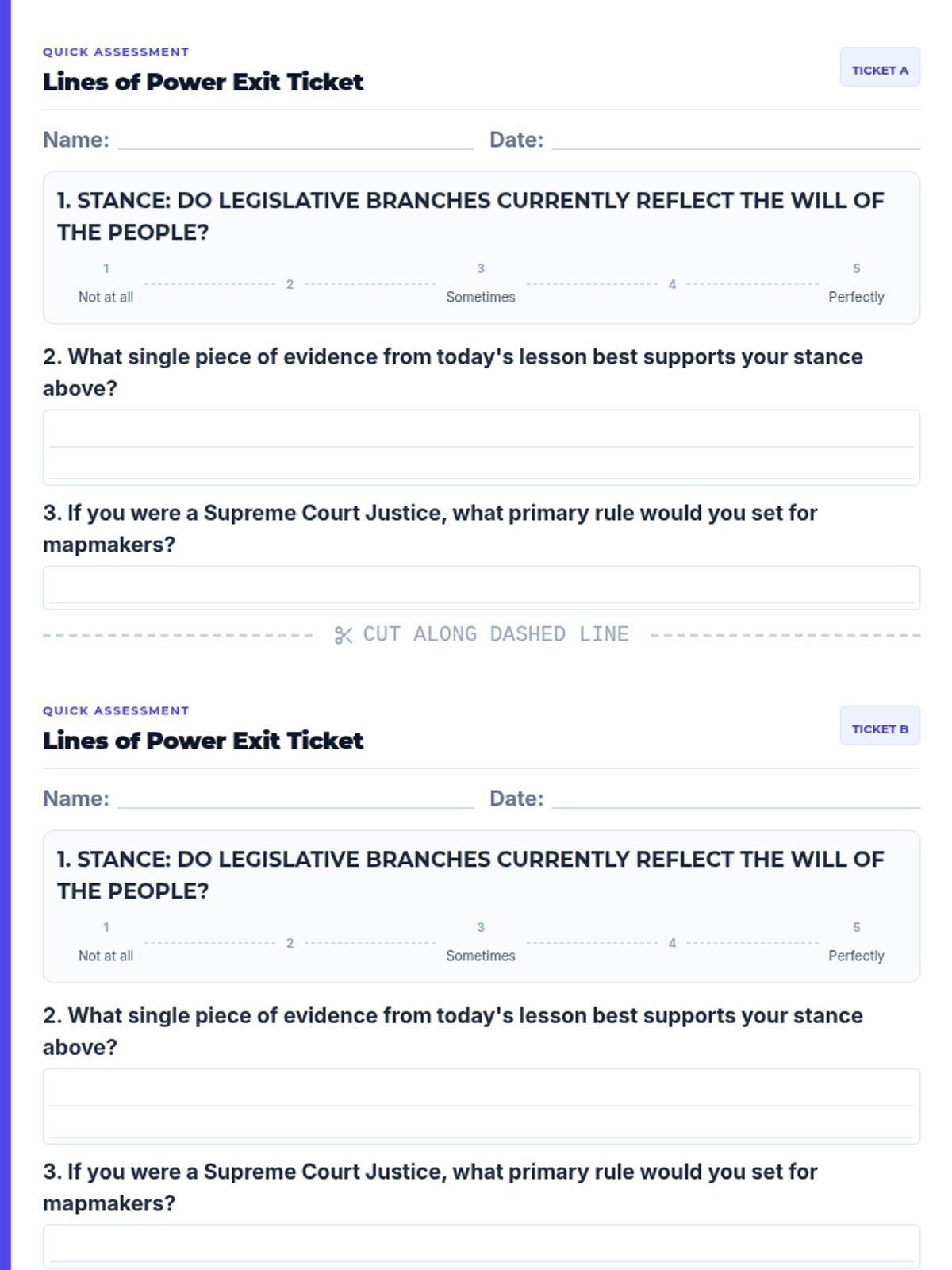
A comprehensive lesson investigating redistricting, packing, and cracking to evaluate if legislative branches truly represent the will of the people. Includes a slide deck, a structured DBQ worksheet, a professional teacher guide, and an interactive exit ticket.
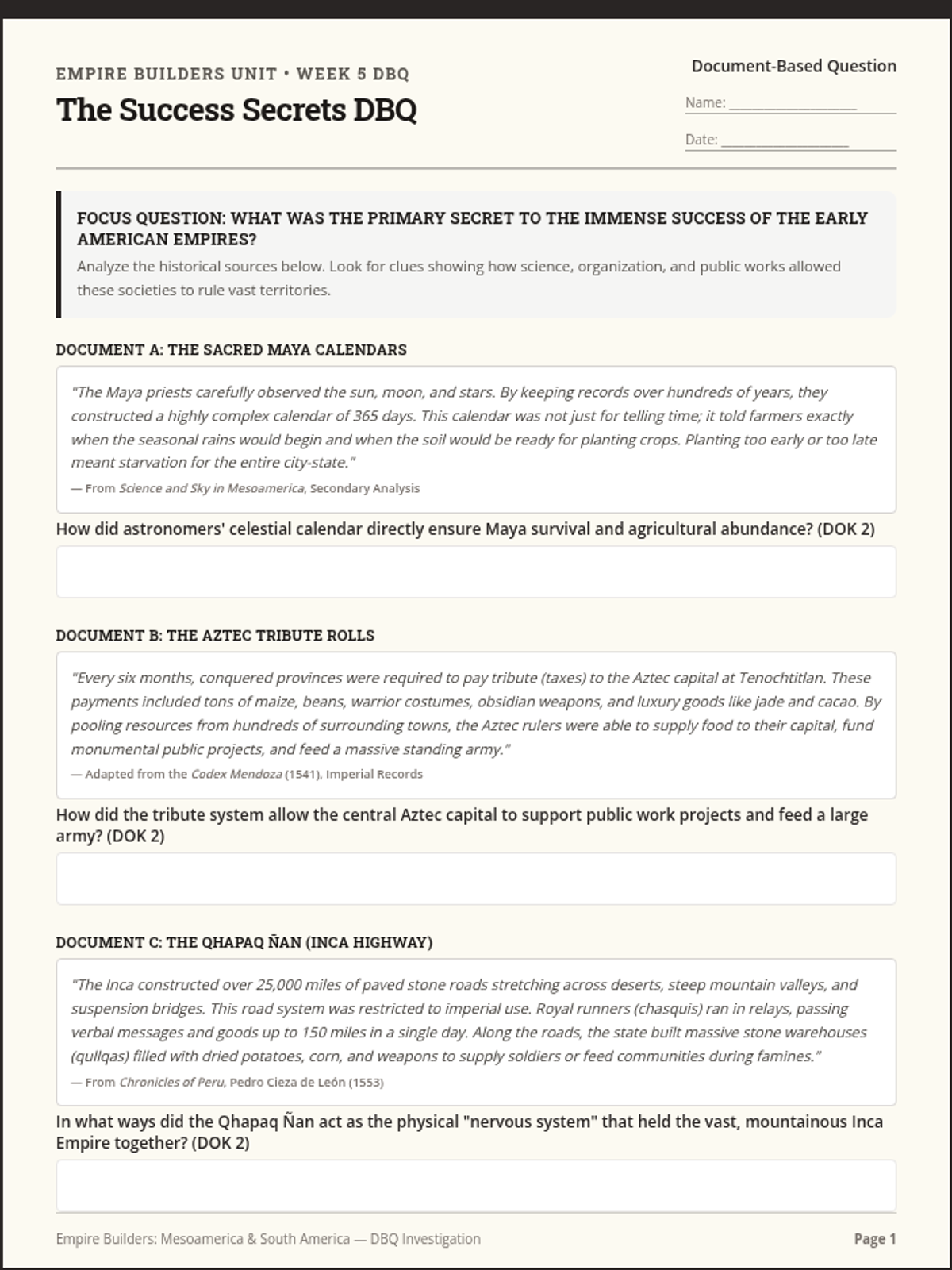
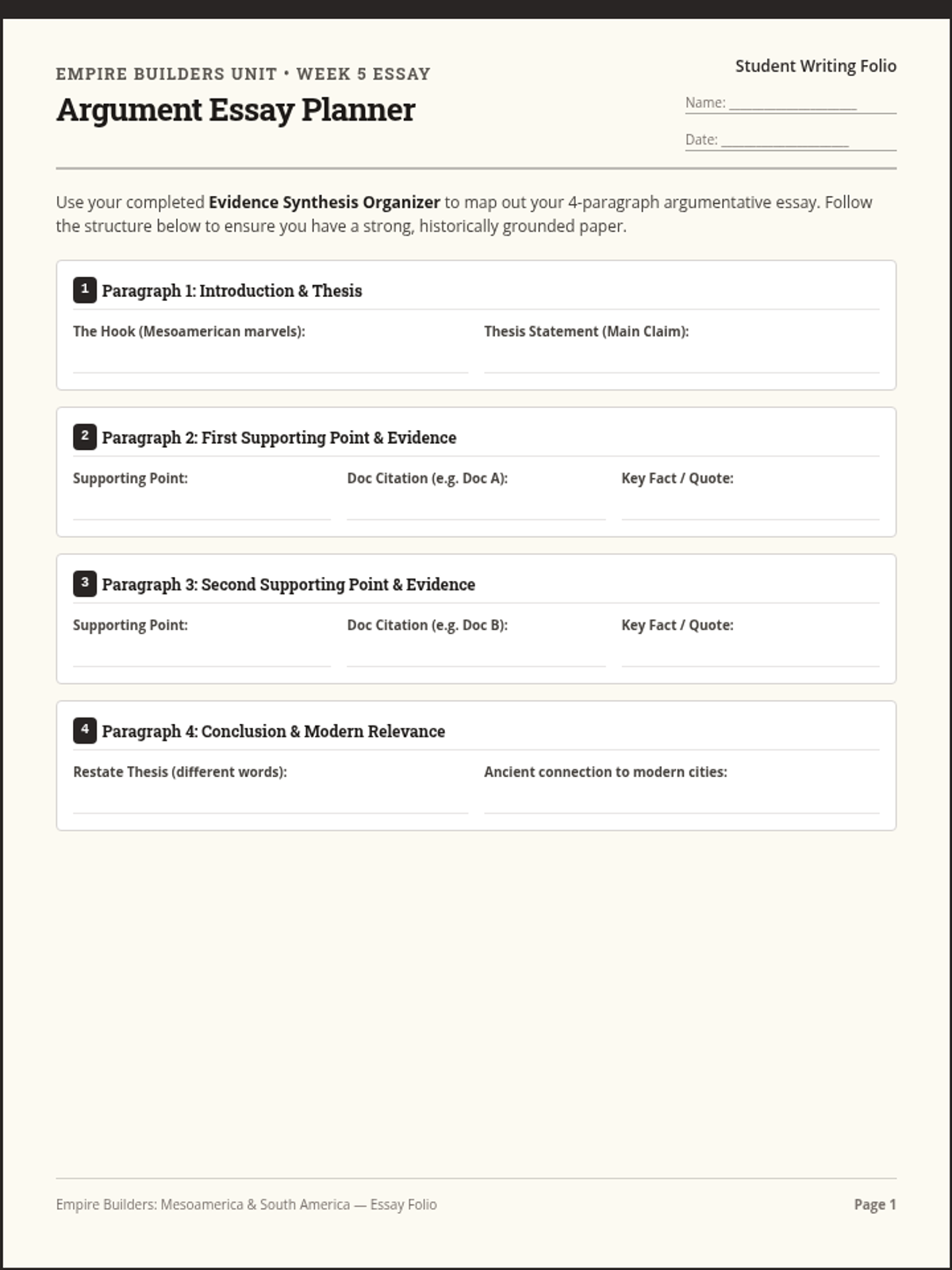
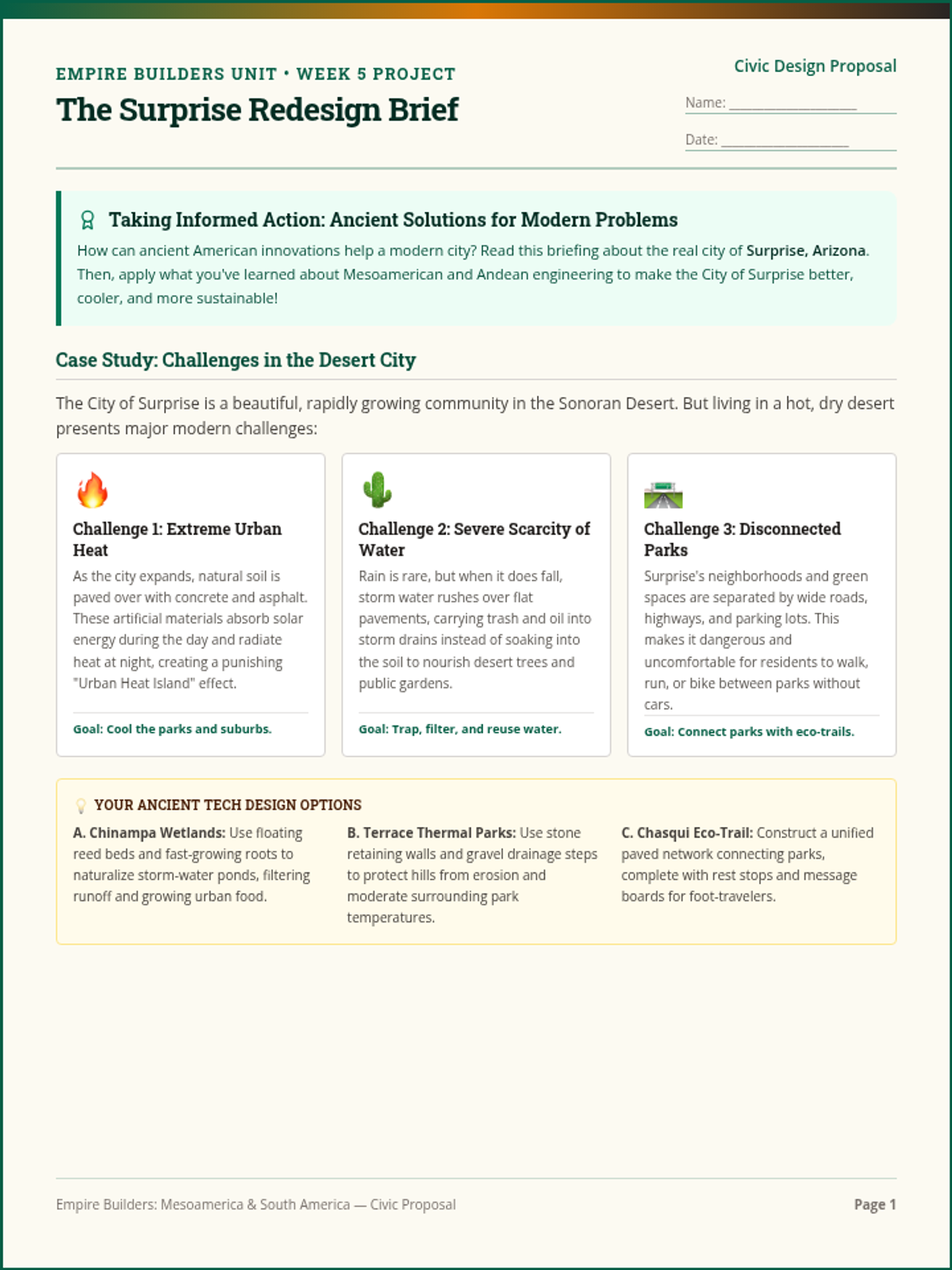
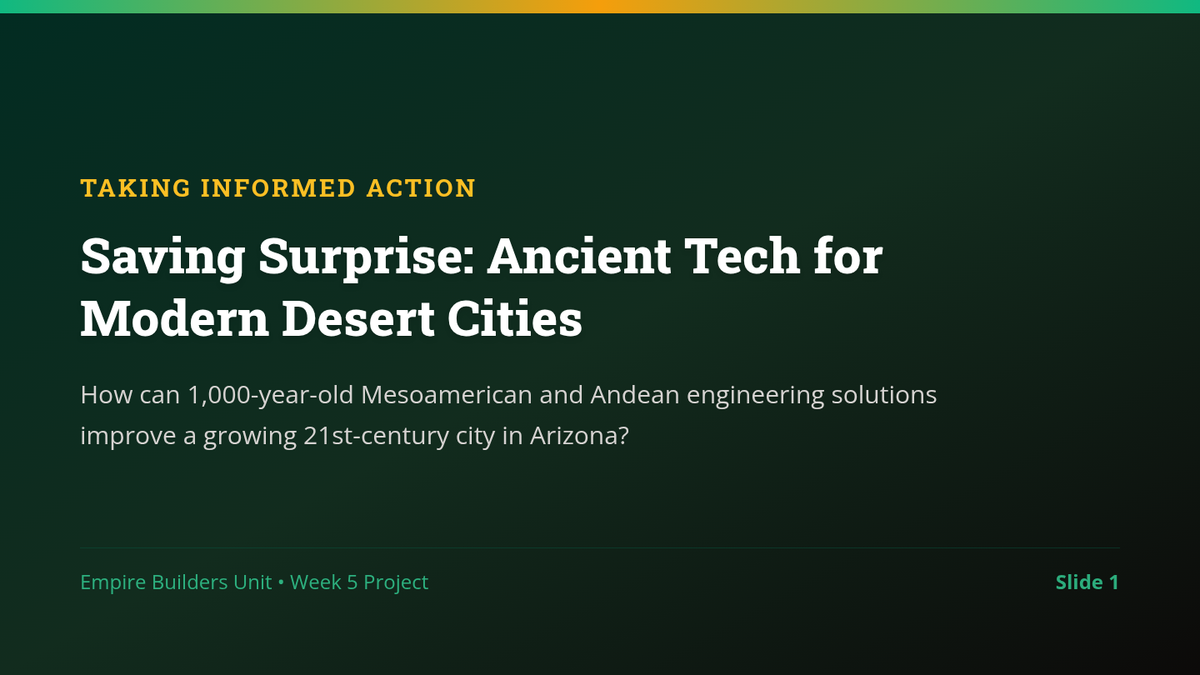
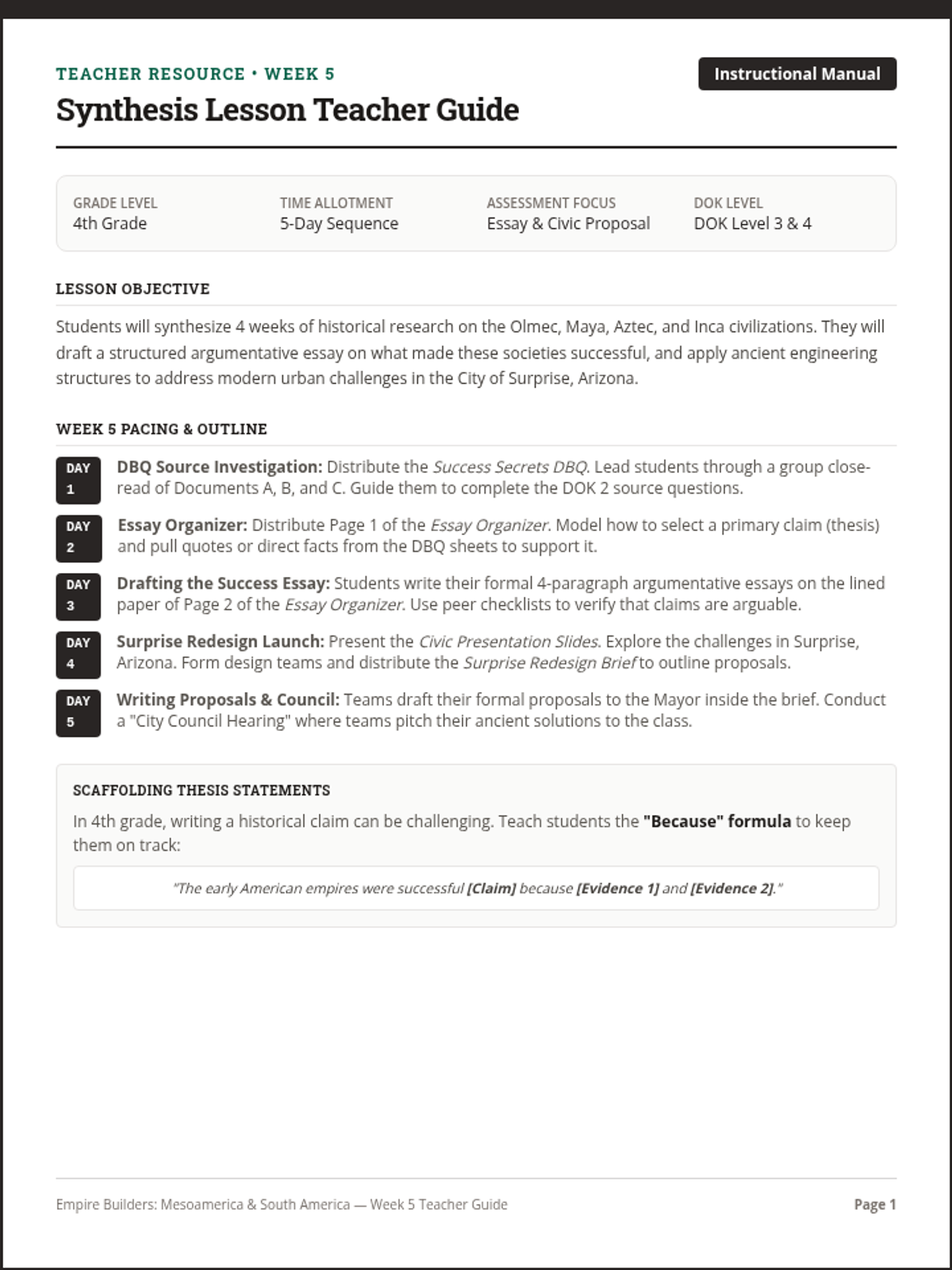
Students synthesize their knowledge across all four civilizations, completing a DBQ, writing an argumentative essay on success, and formulating a civic project for Surprise, AZ.
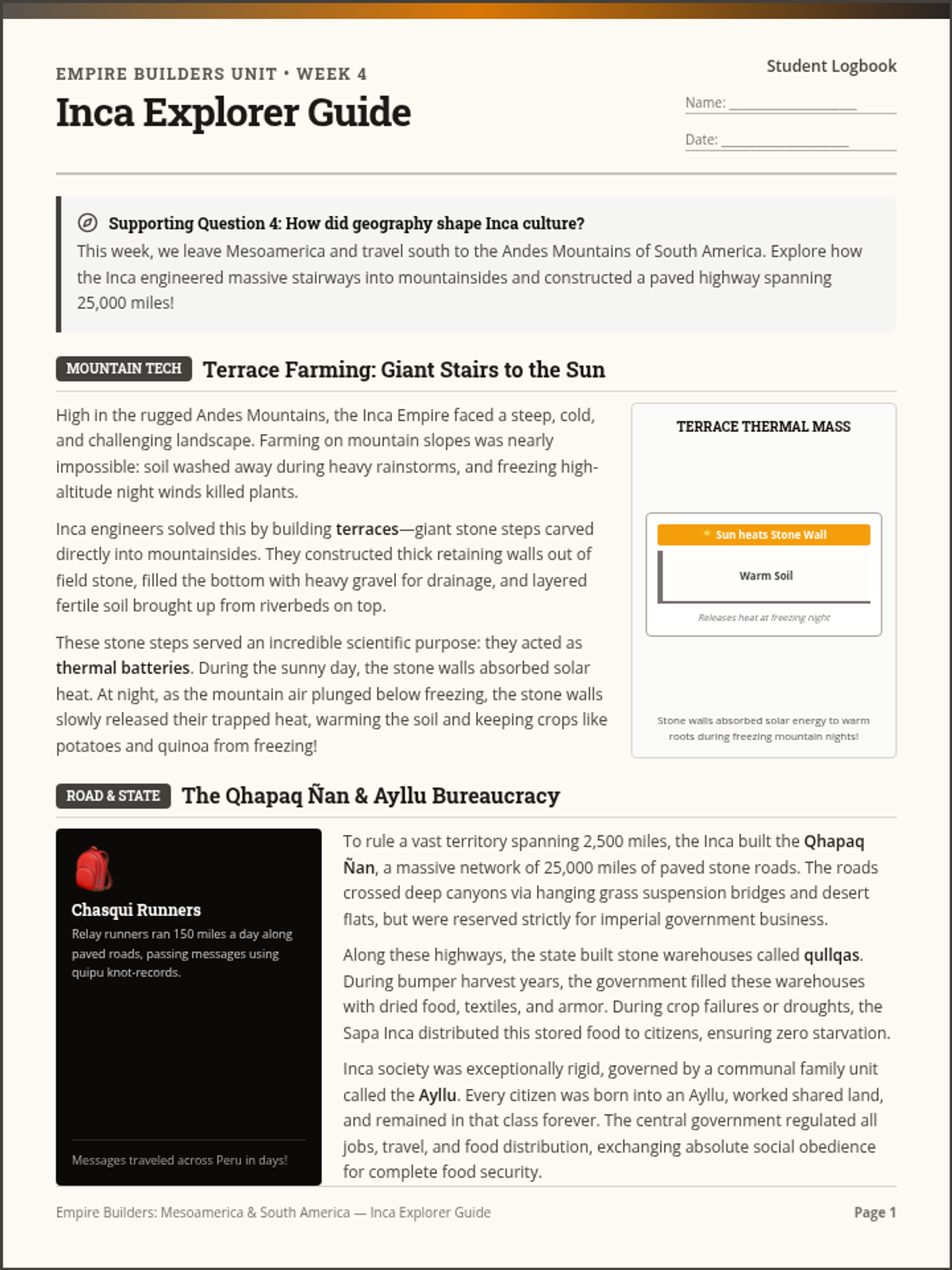
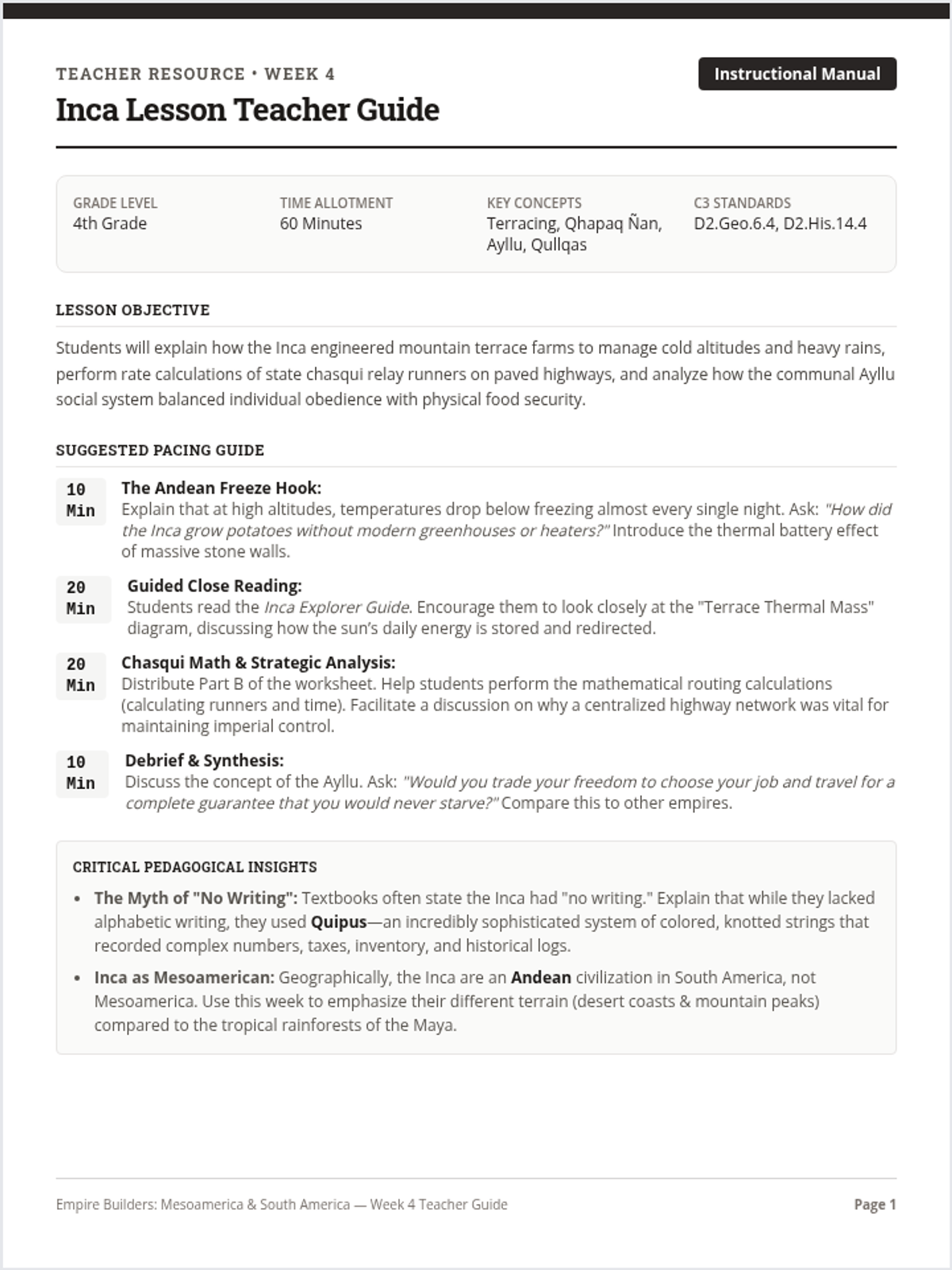
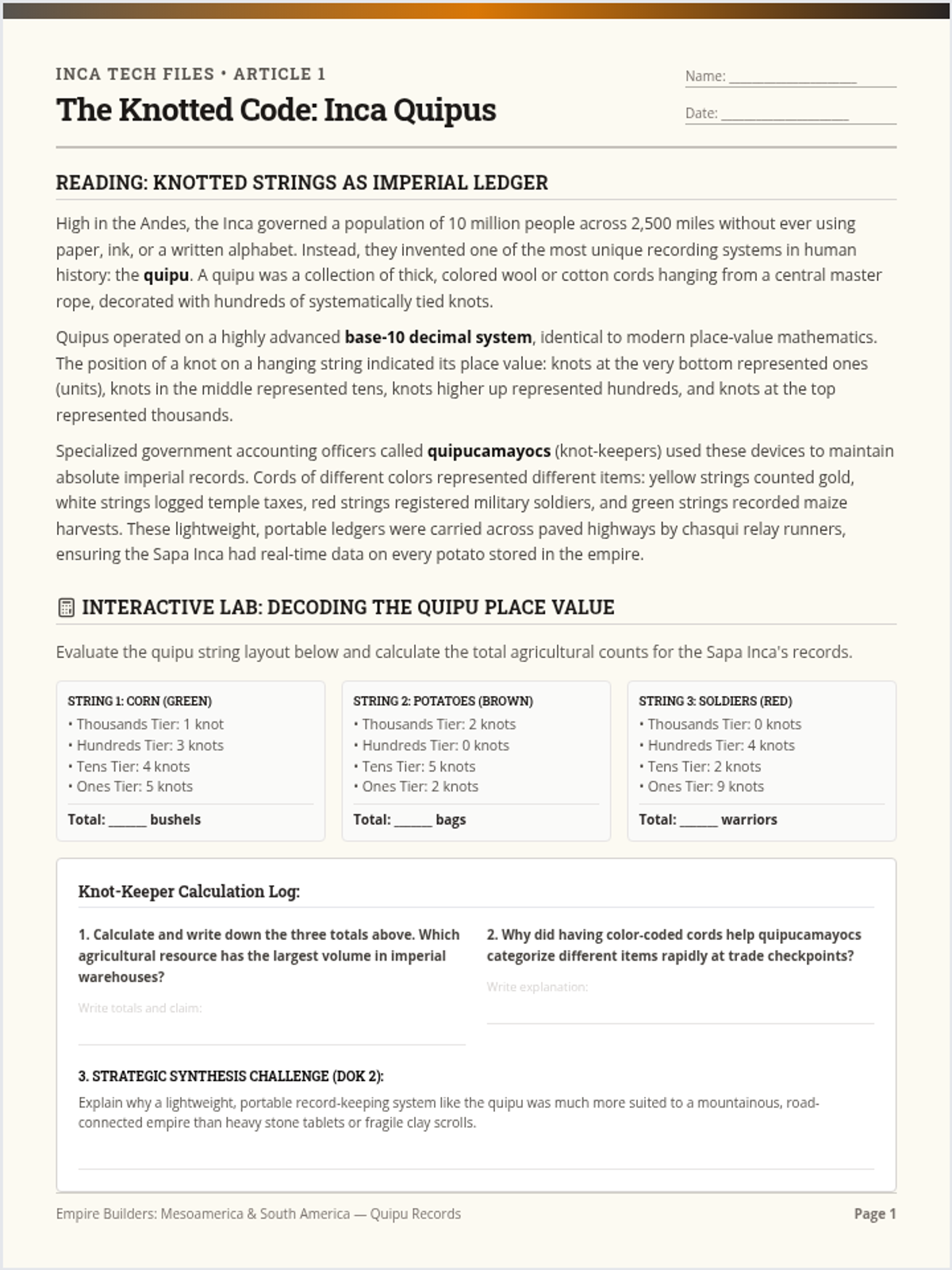
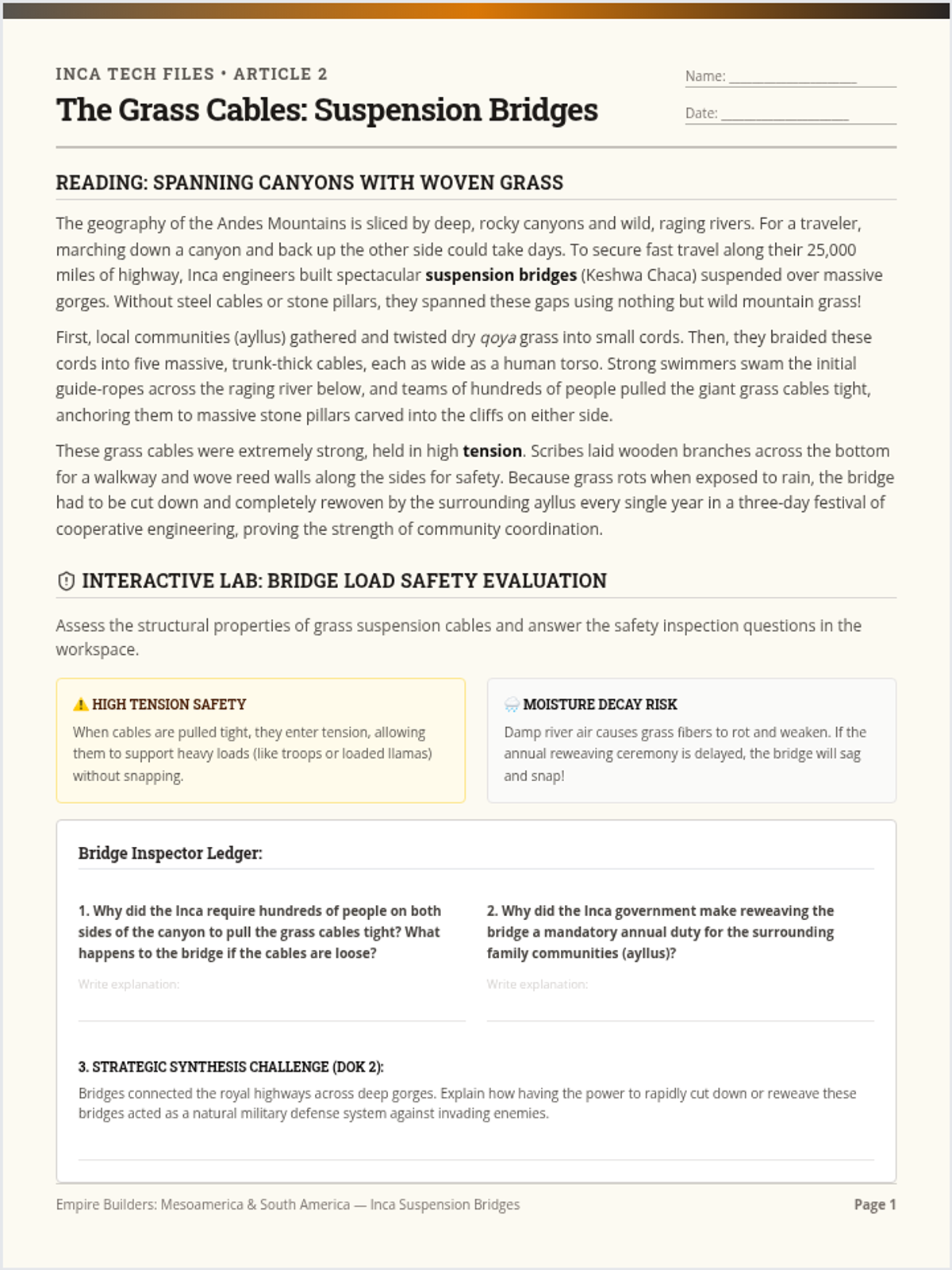
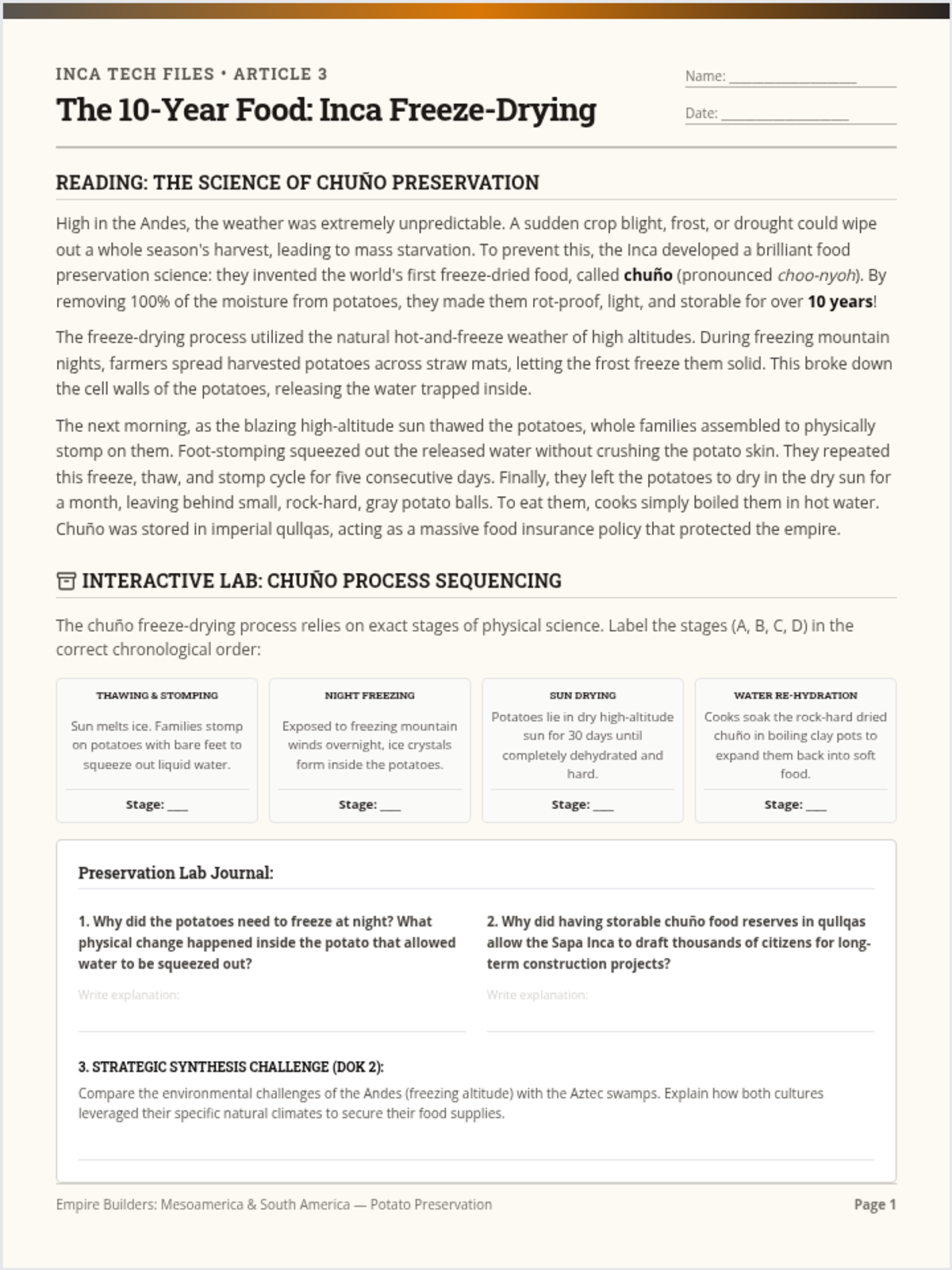
Students explore the Inca civilization, studying their steep mountain terracing, Qhapaq Ñan roads, and rigid Ayllu community hierarchy.
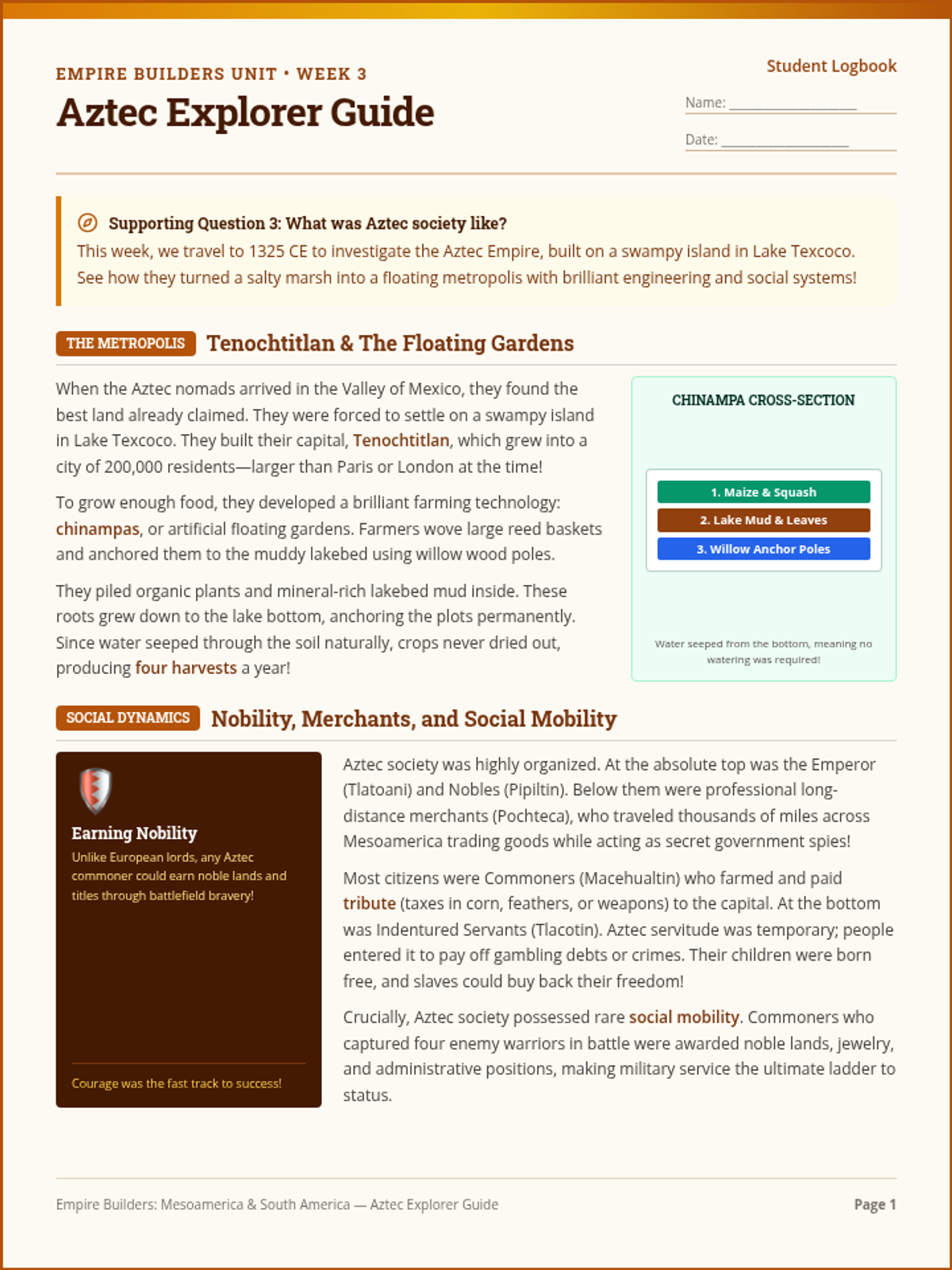
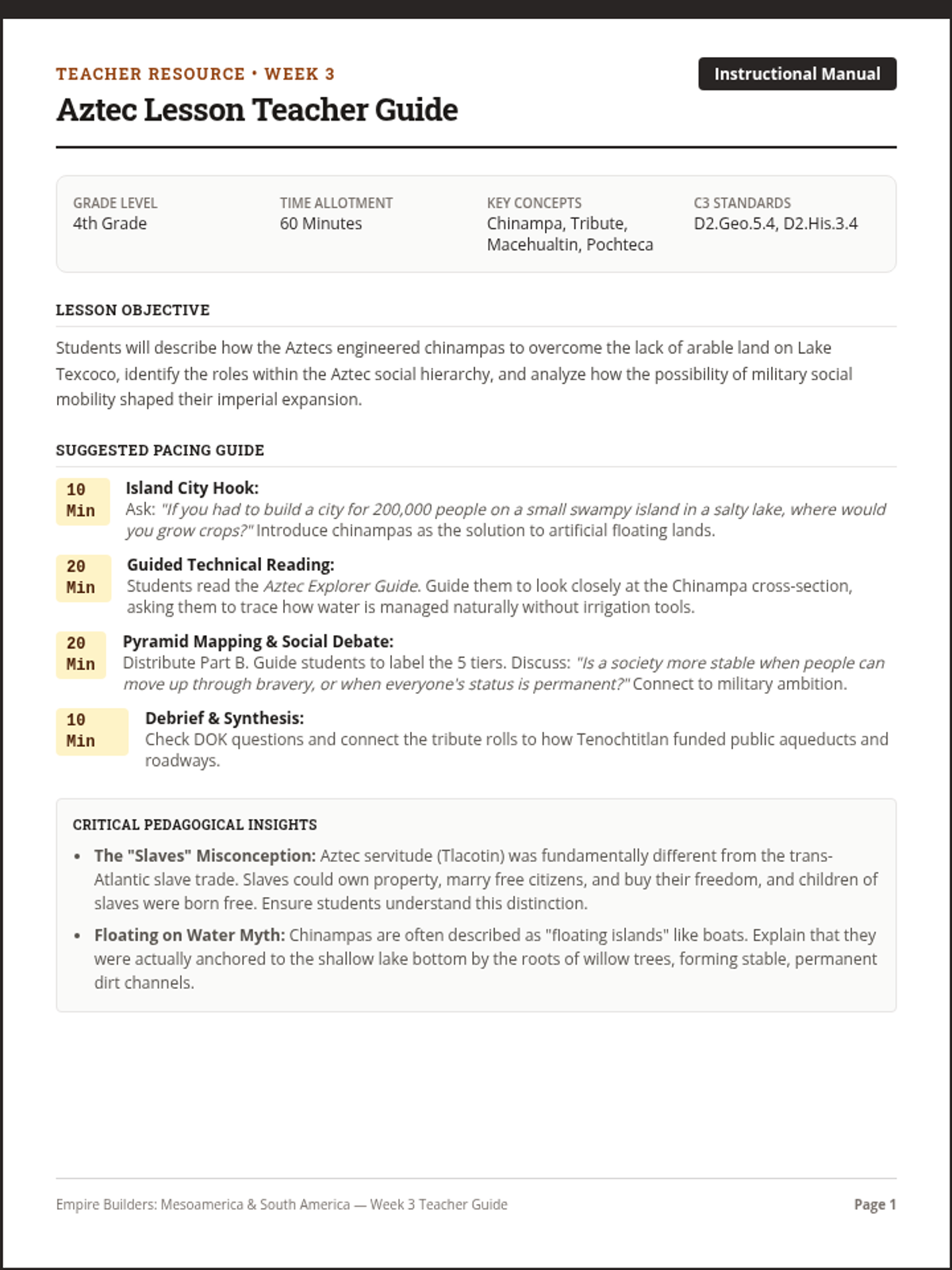
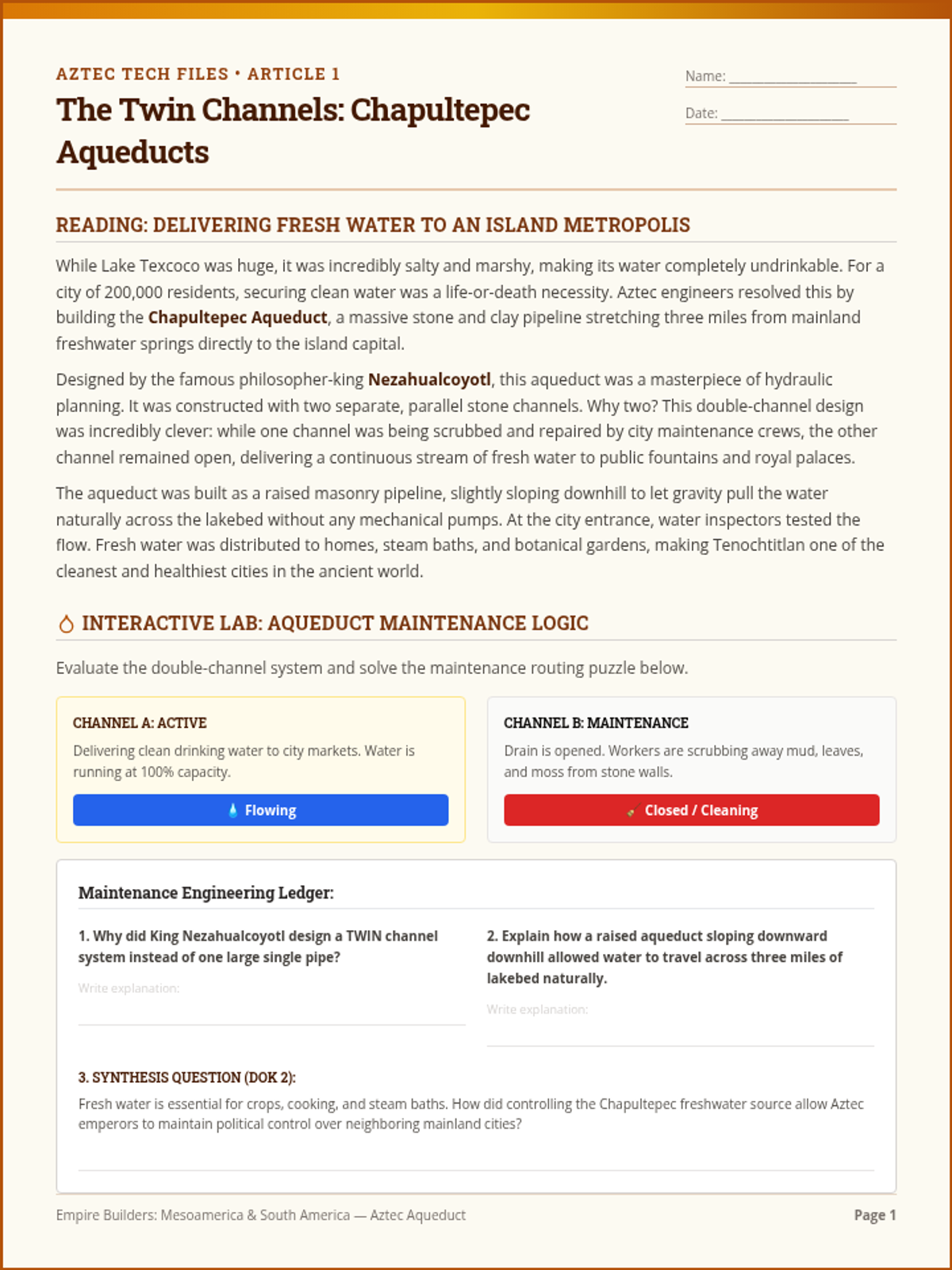
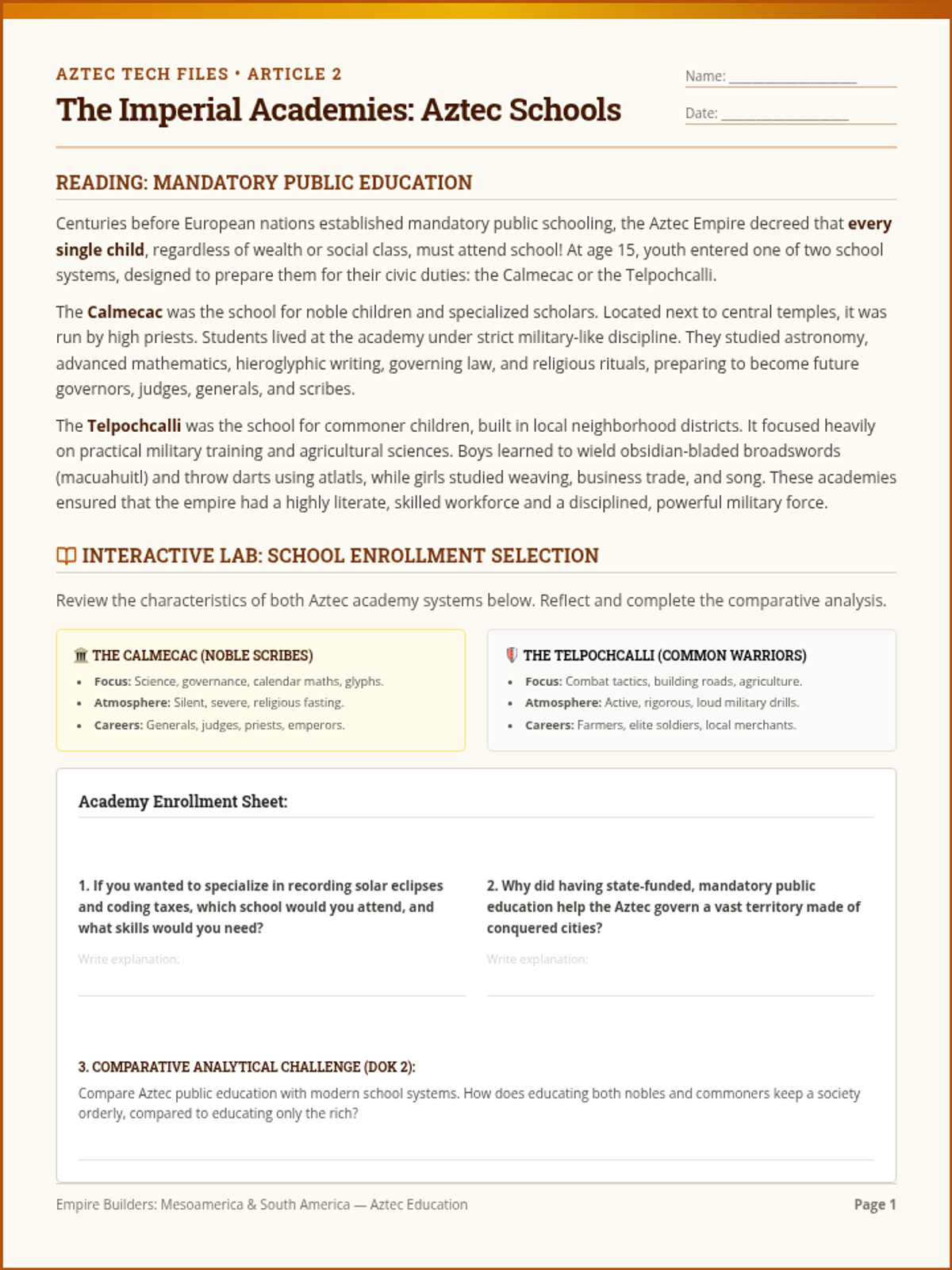
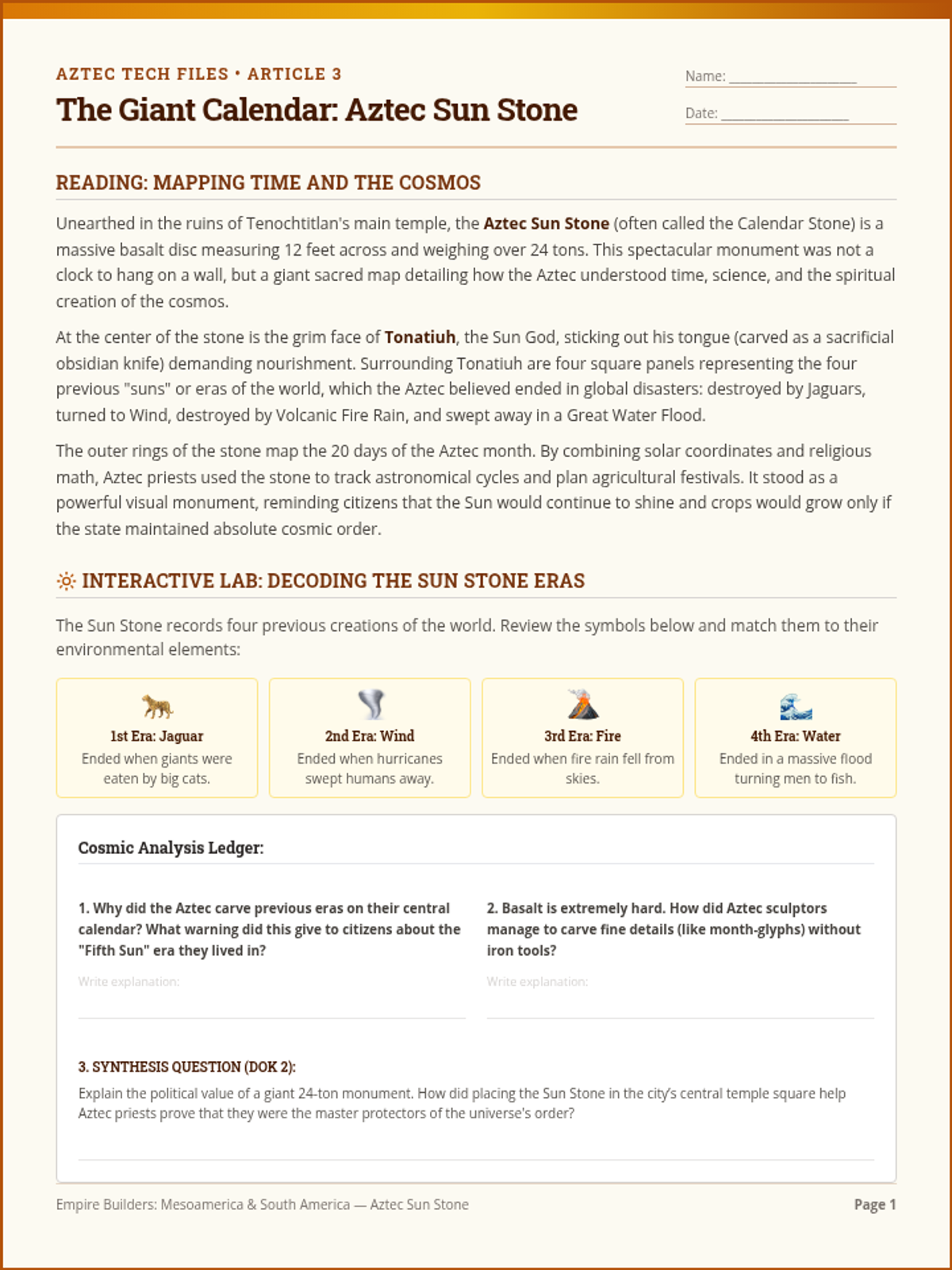
Students explore the Aztec civilization, studying their lake-basin city of Tenochtitlan, chinampa agriculture, and military social mobility.
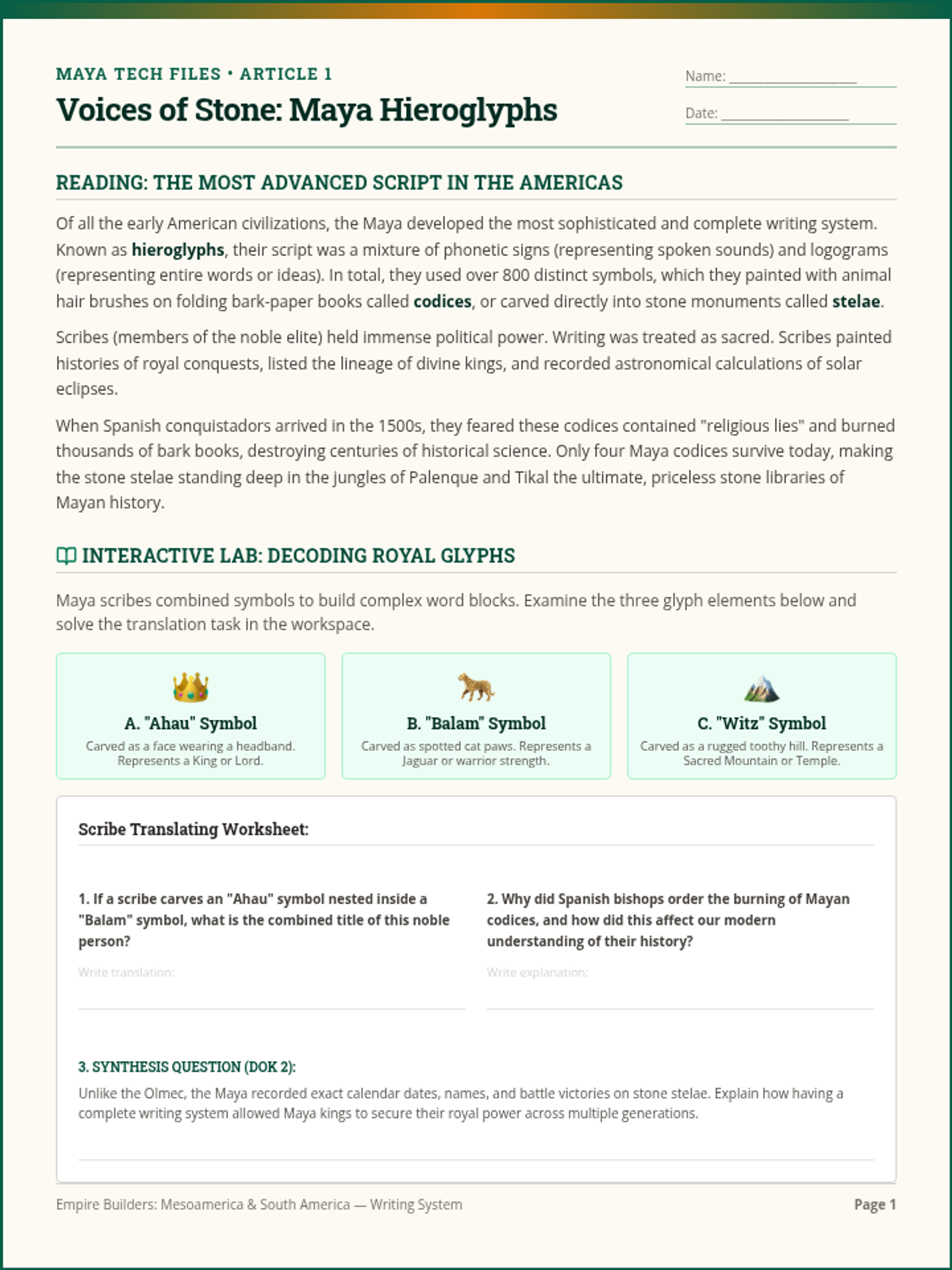
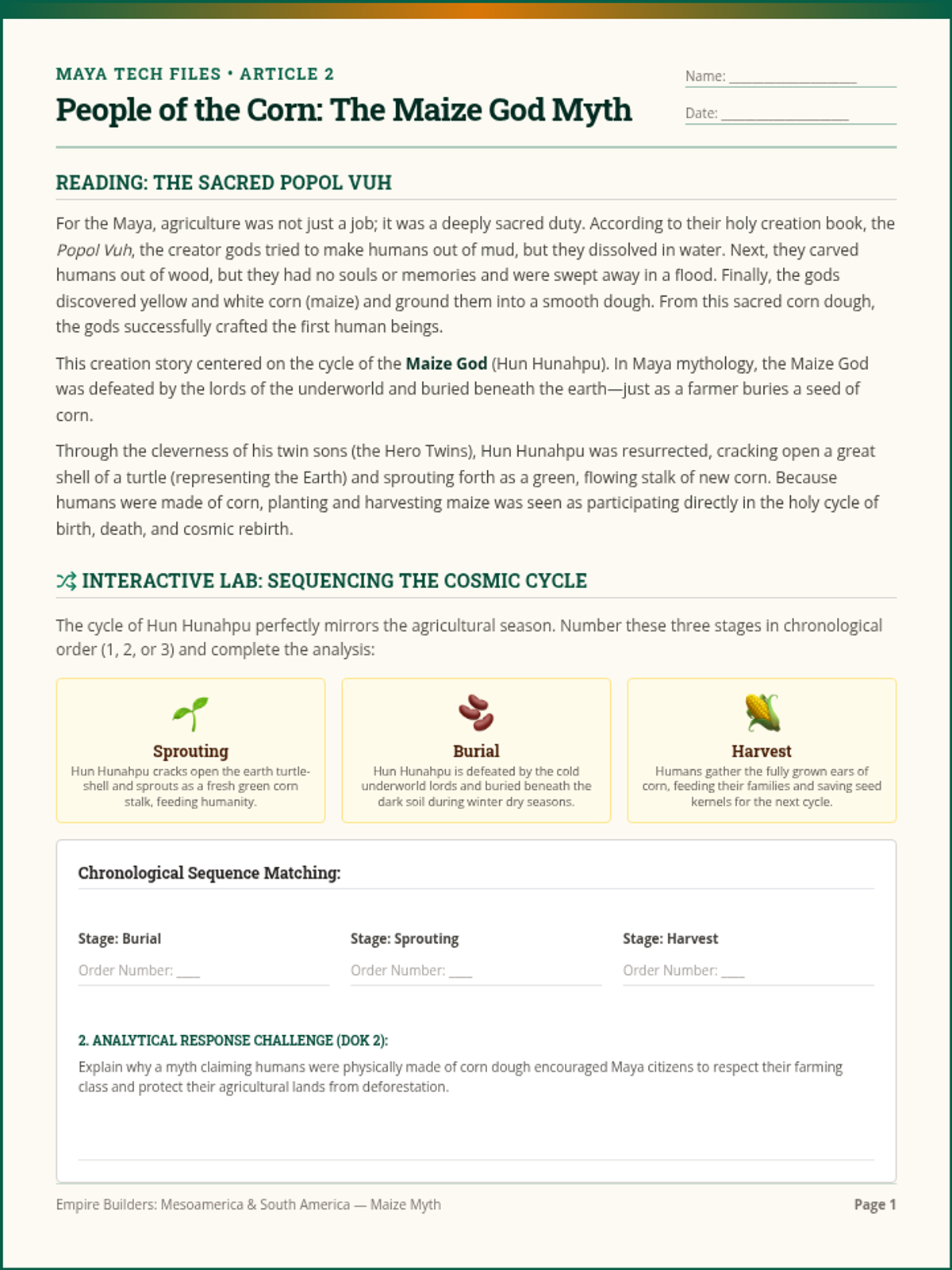
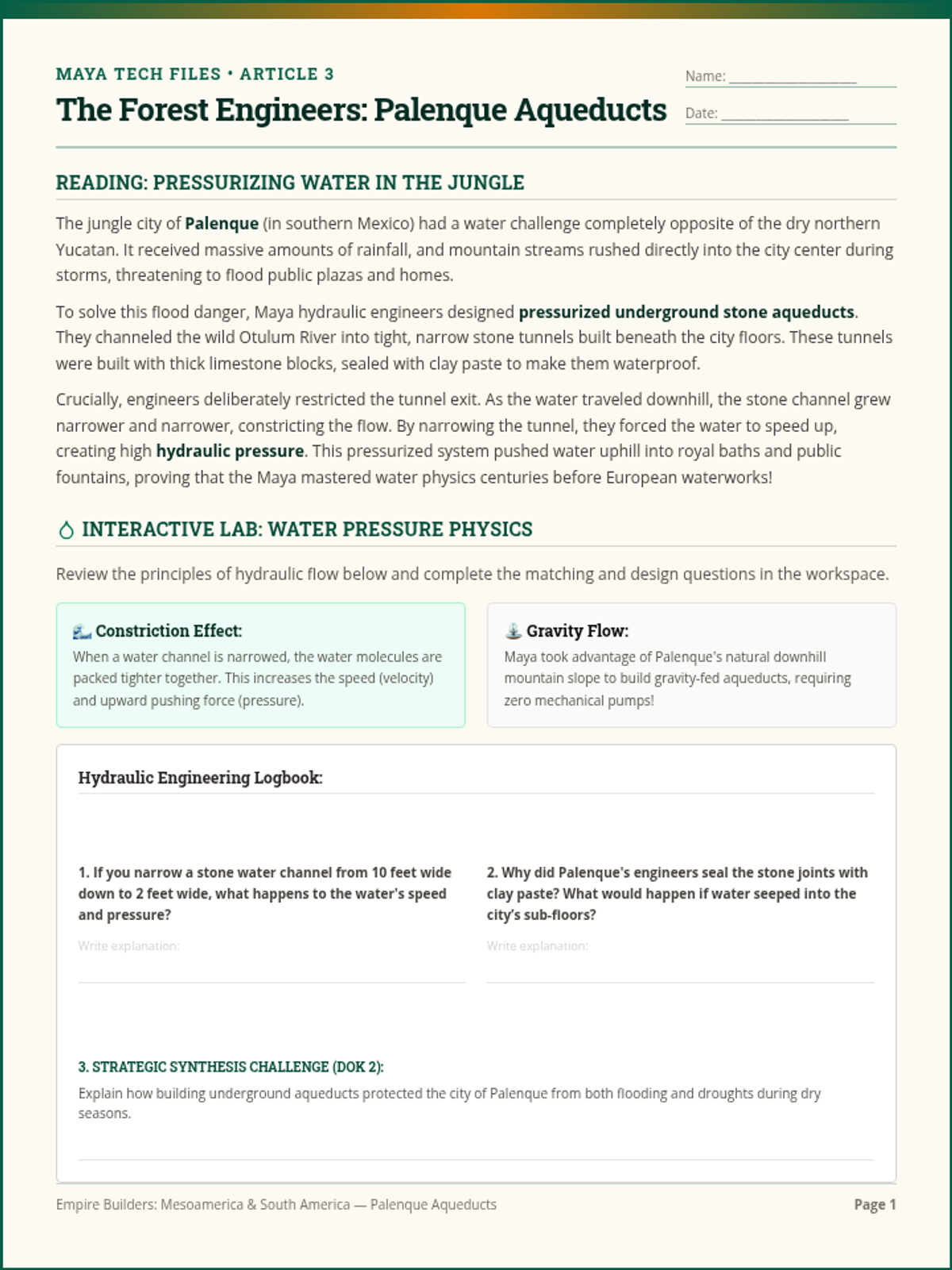
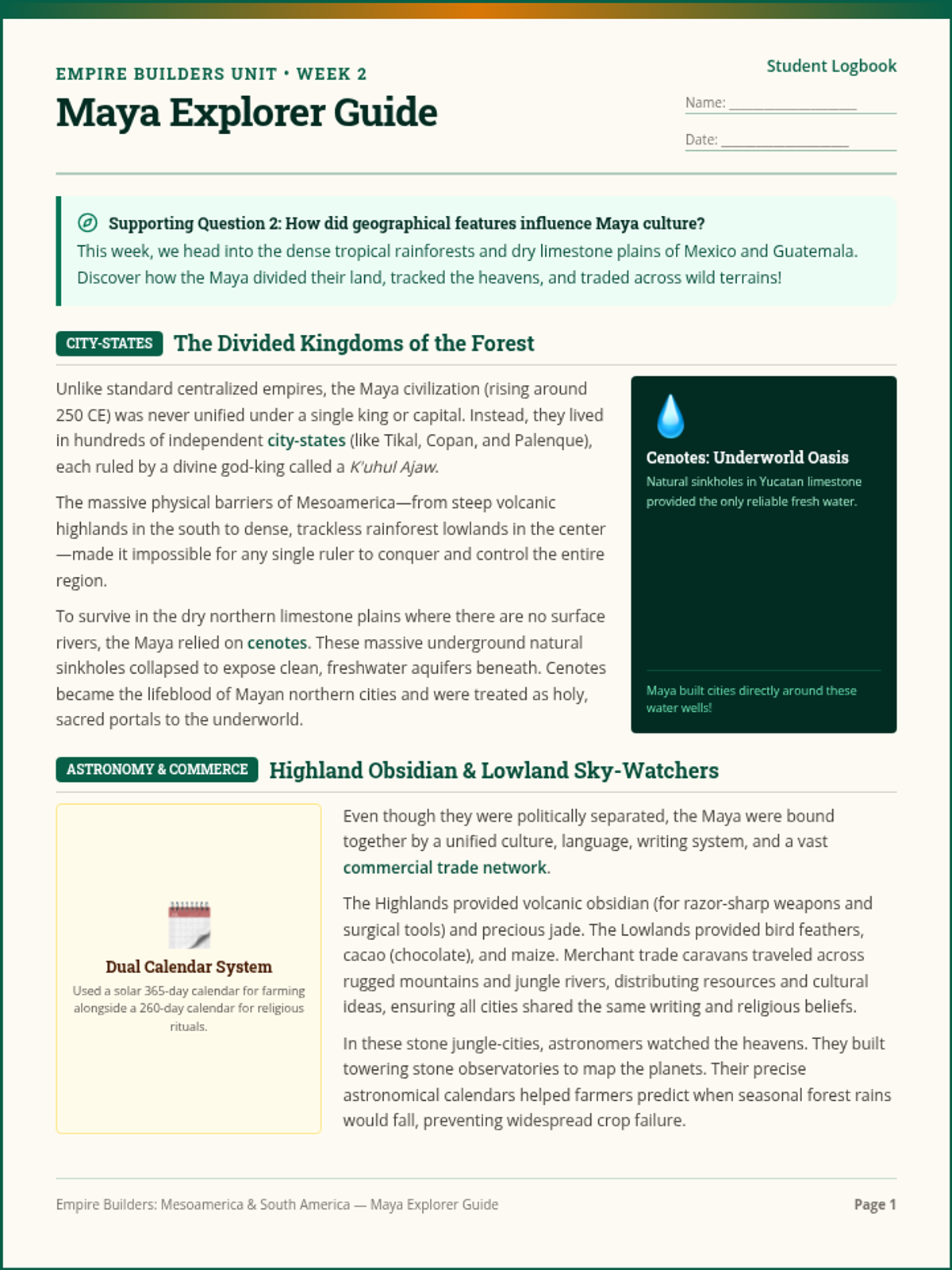
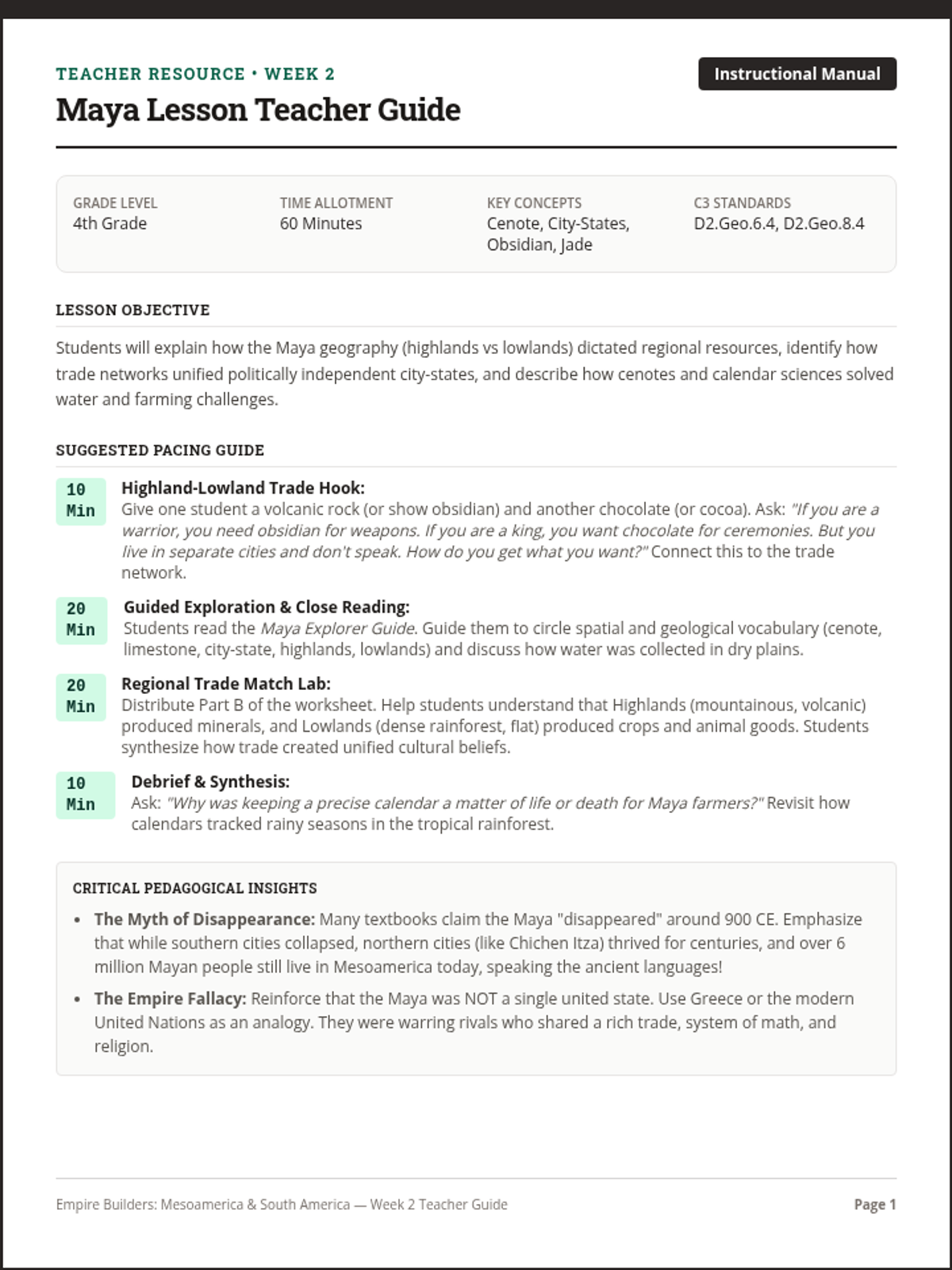
Students explore the Maya civilization, studying their rainforest terrain, calendar systems, and independent city-state hierarchy.
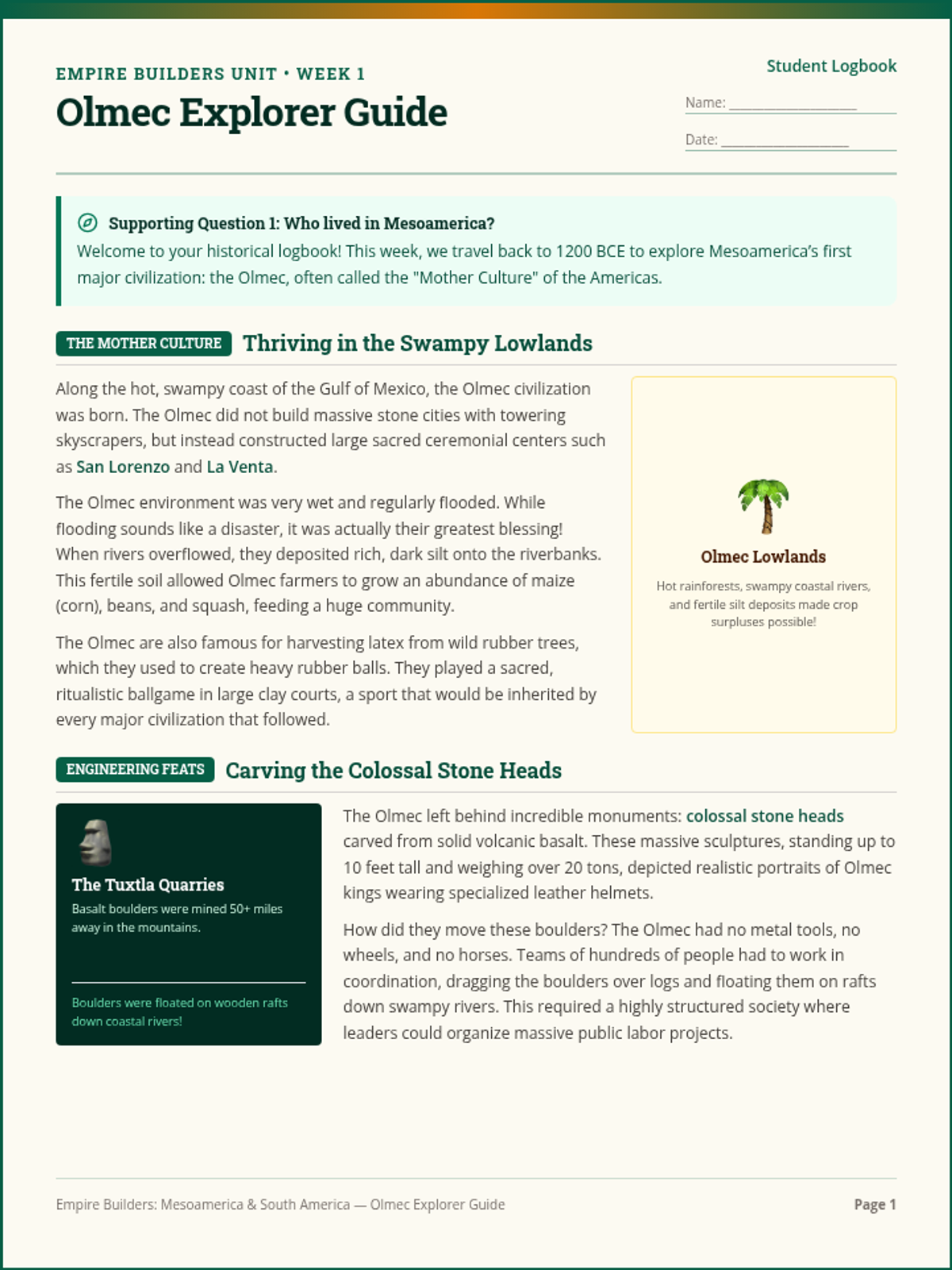
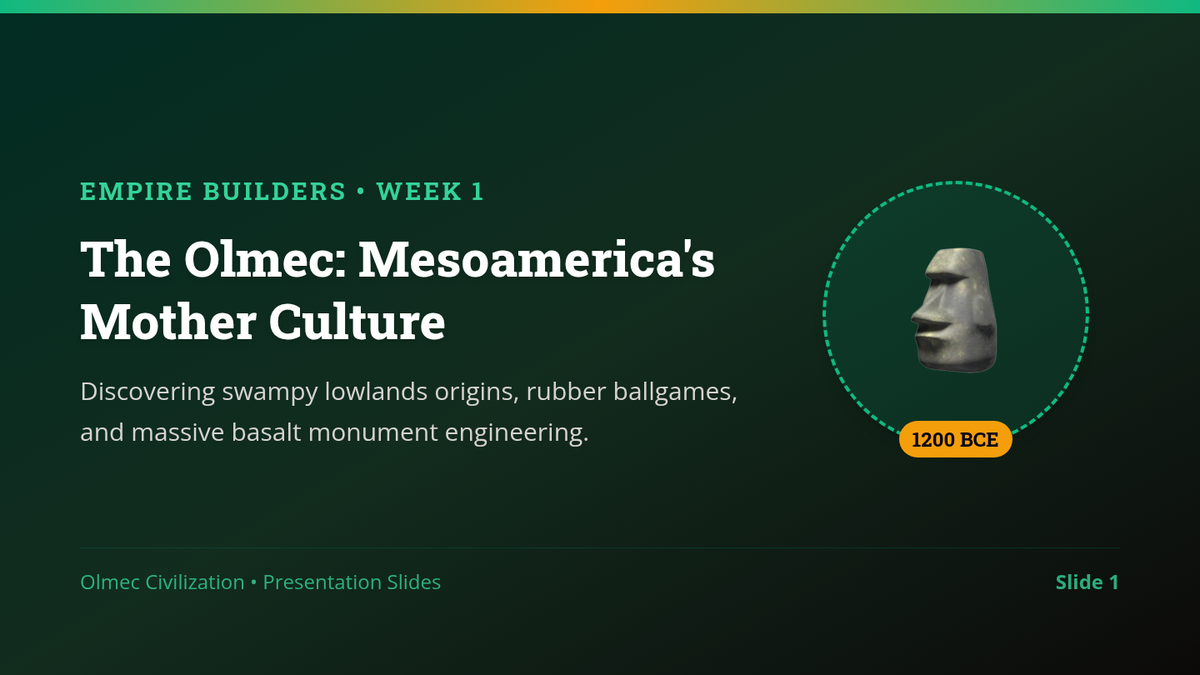
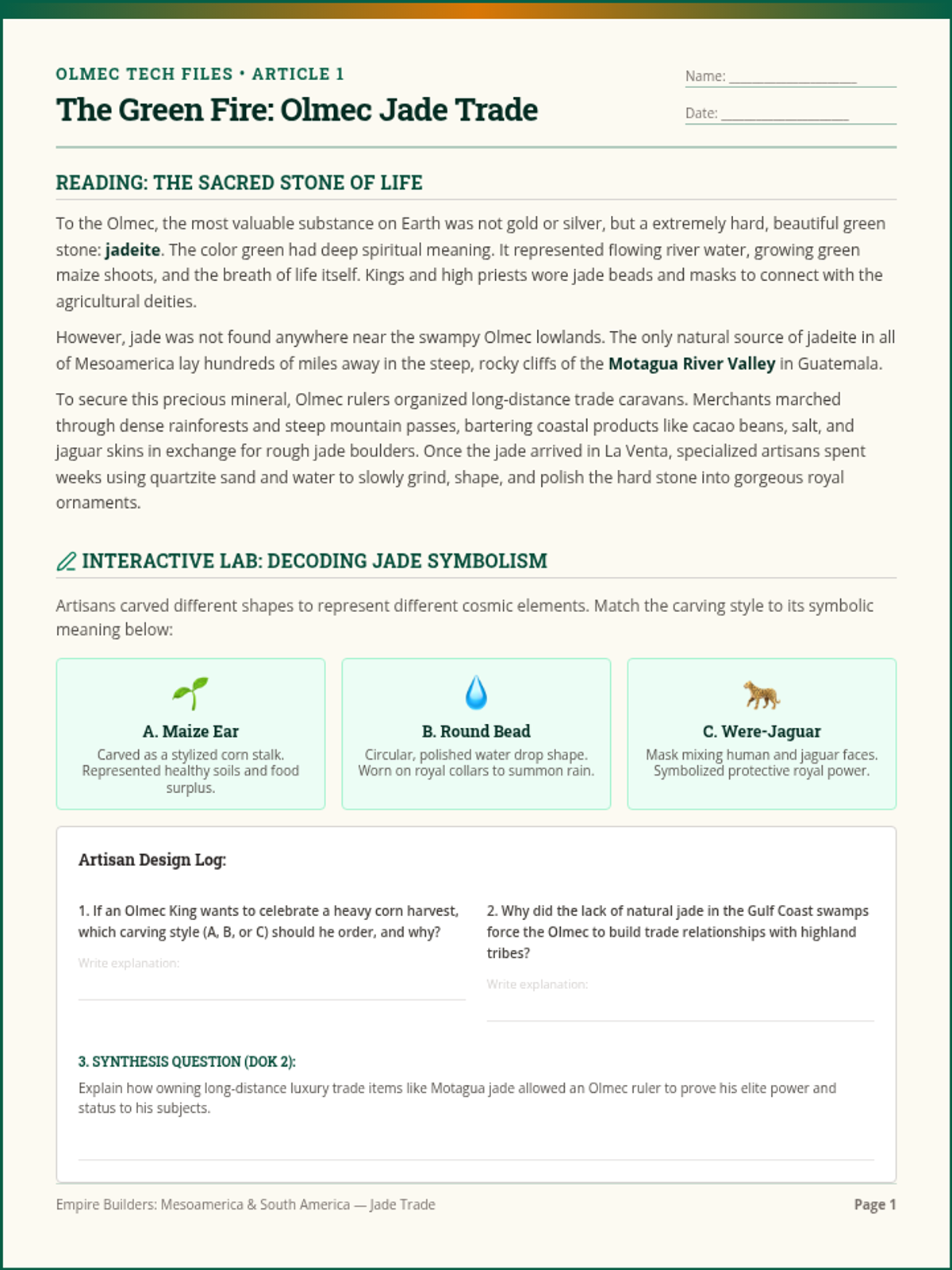
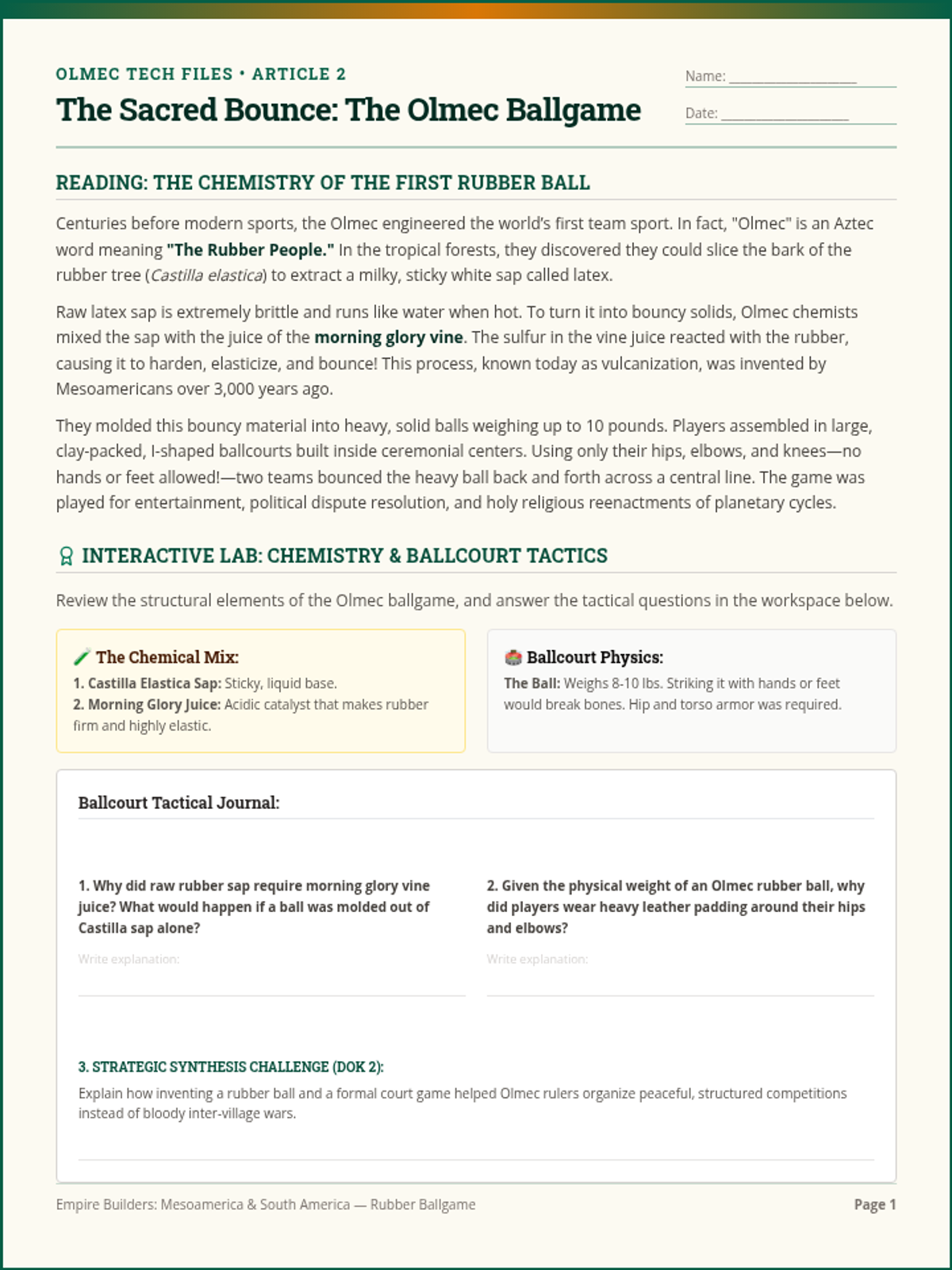
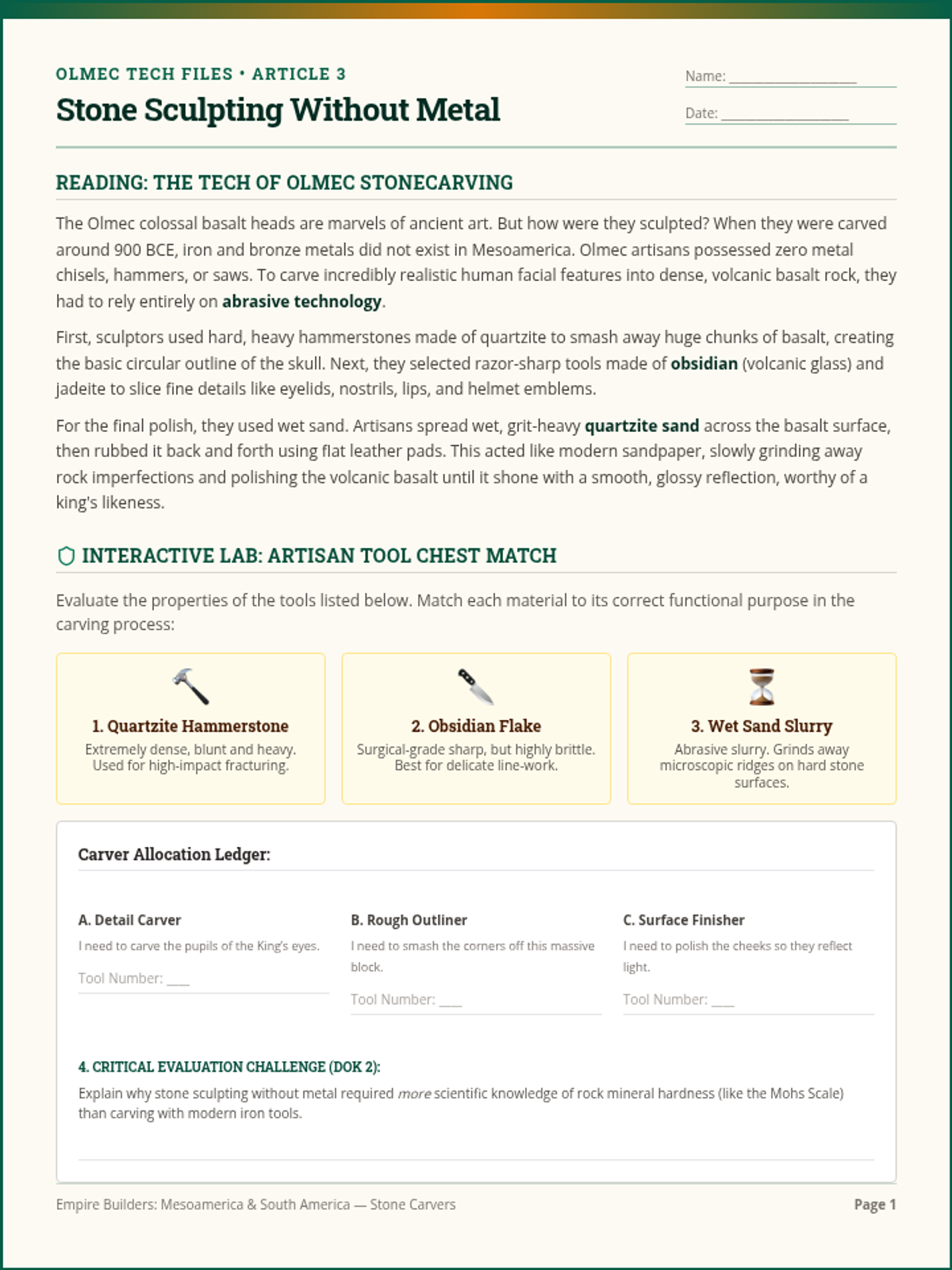
Students explore the Olmec civilization, investigating their swampy geography, monumental stone heads, and social structure.
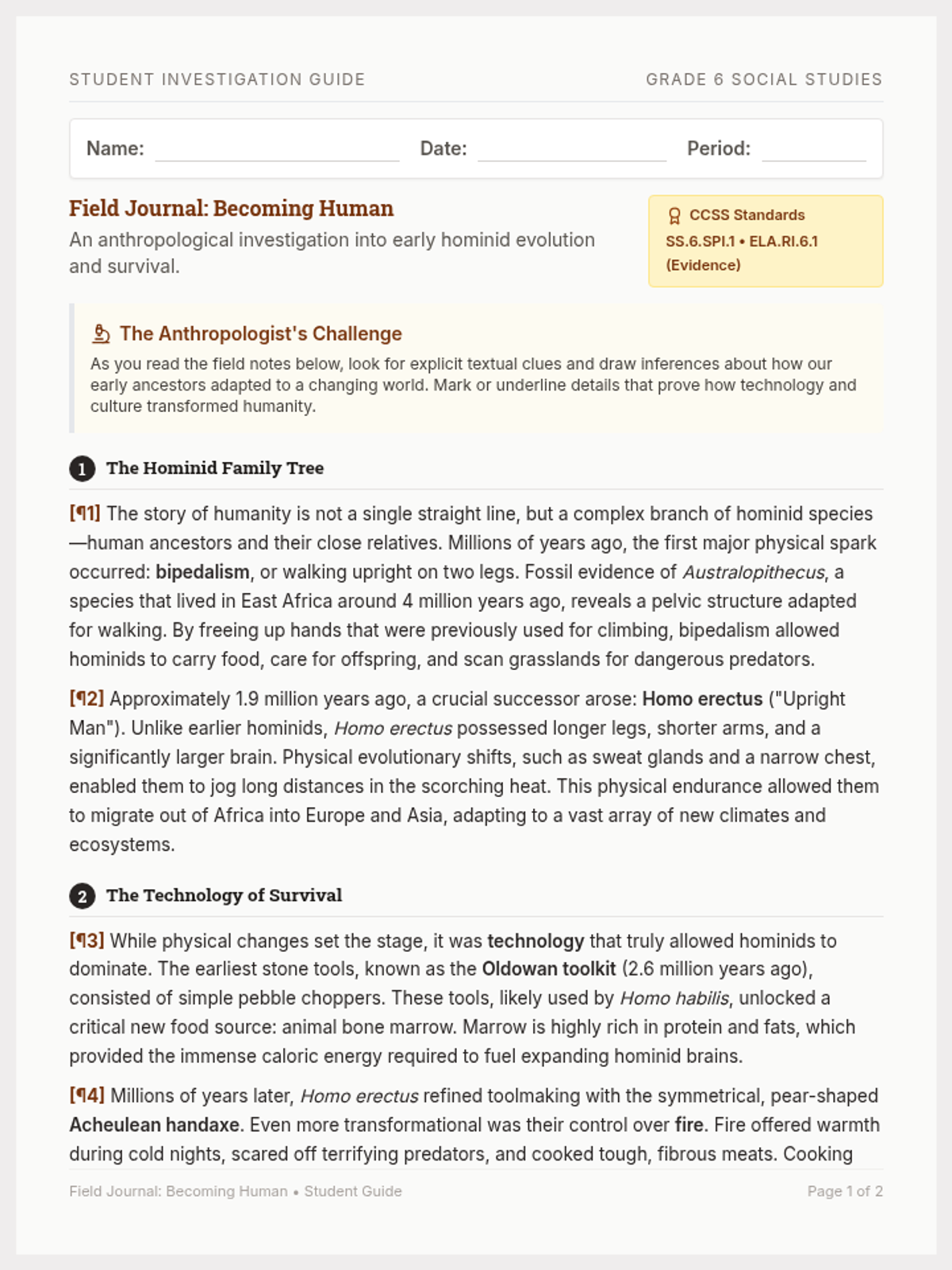
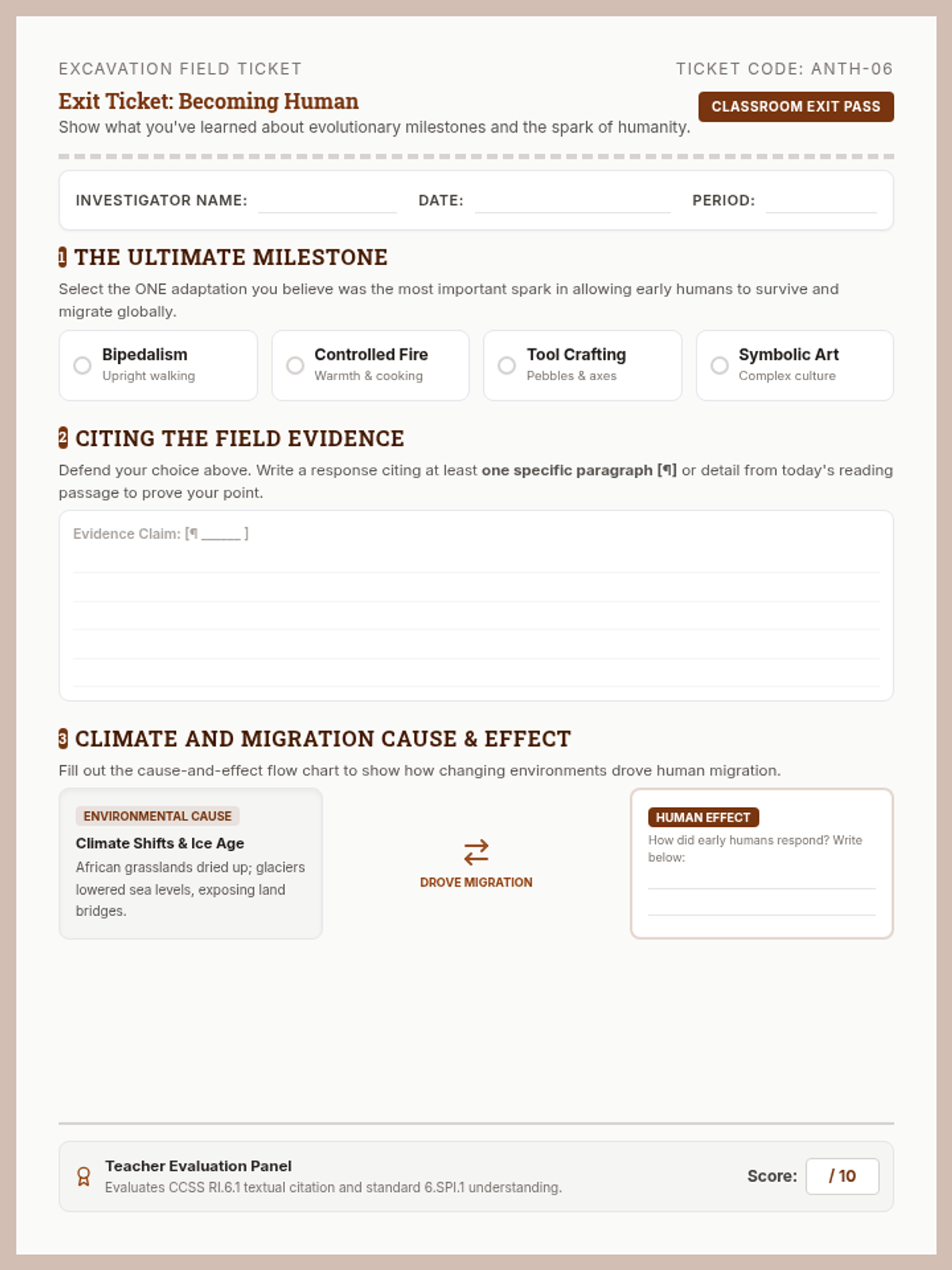
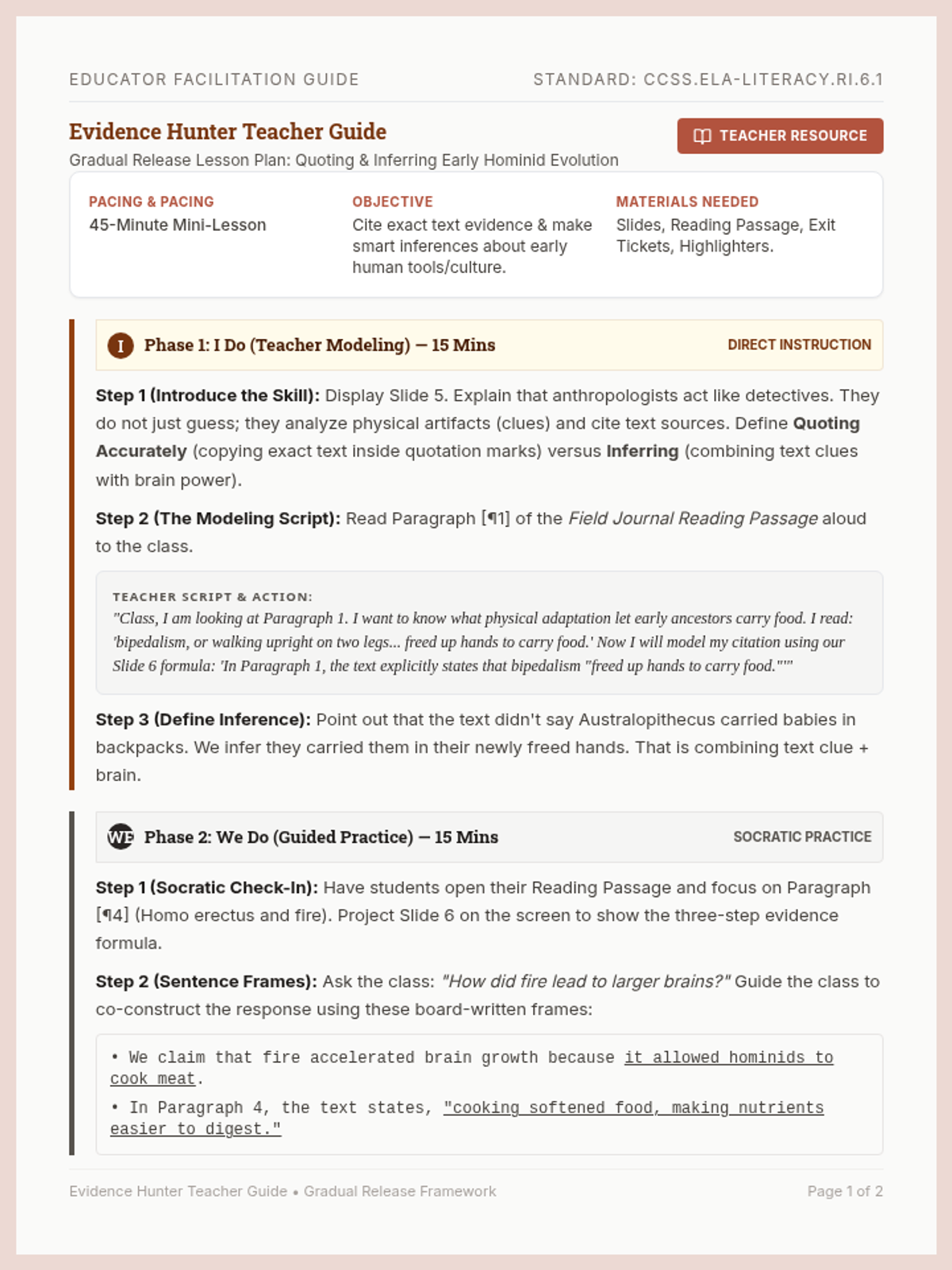
A 6th-grade social studies lesson investigating early human evolution, tool adaptations, cultural practices, and migration patterns, integrated with CCSS ELA-Literacy RI.6.1.
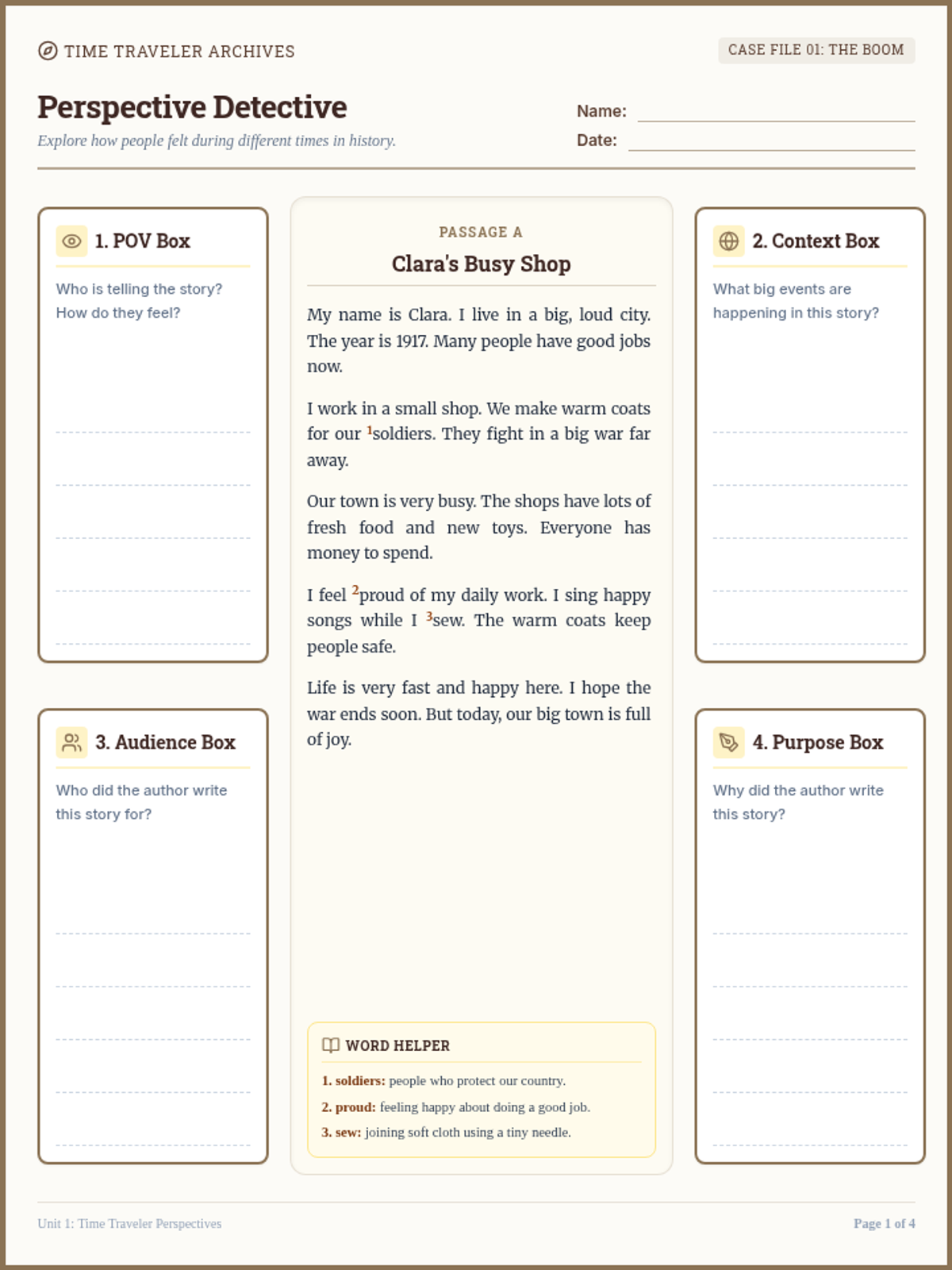
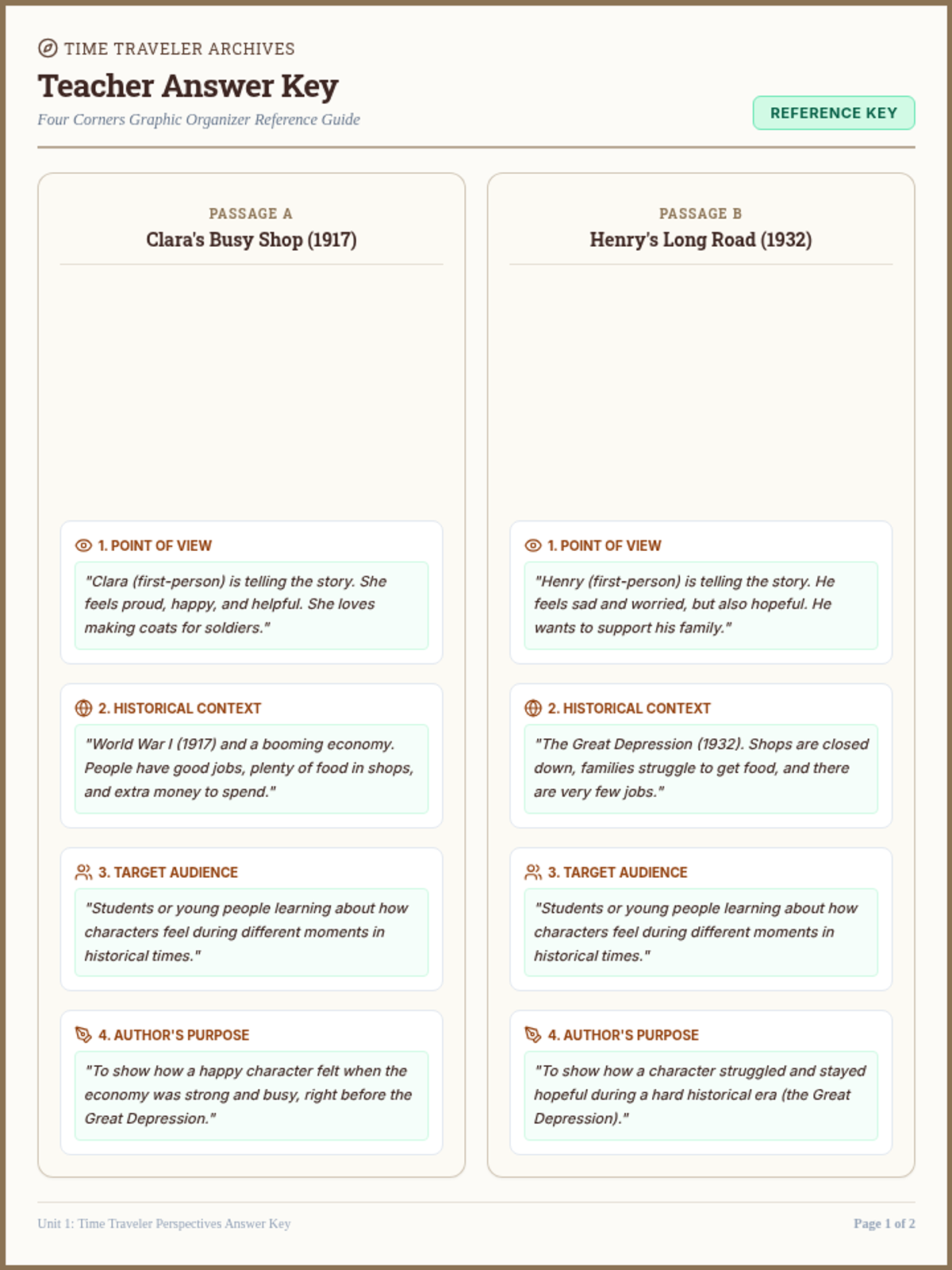
An independent reading unit focusing on perspective and point of view during two contrasting historical eras: World War I and the Great Depression. Students analyze character emotions and historical contexts using a 'four corners' layout.
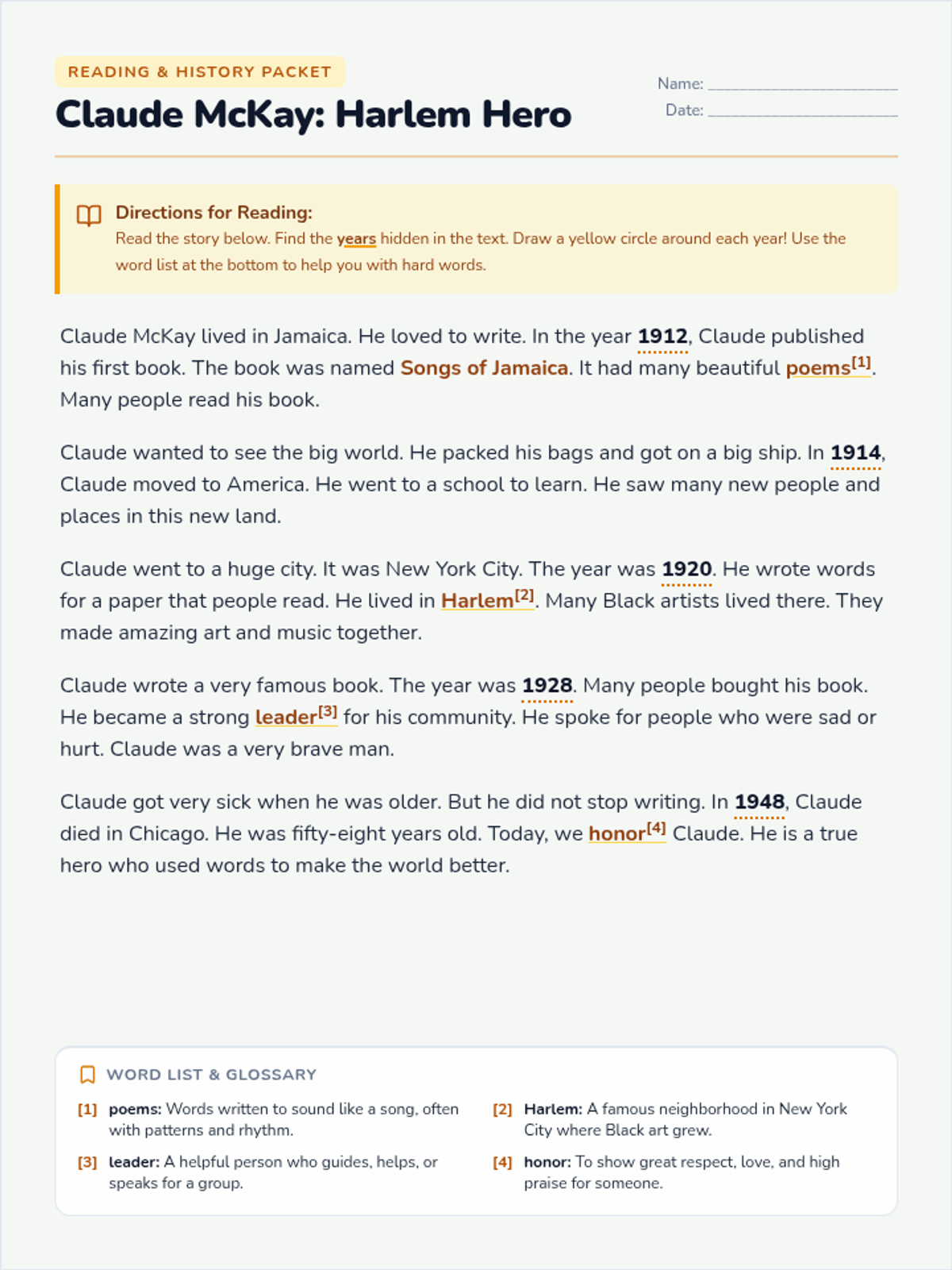
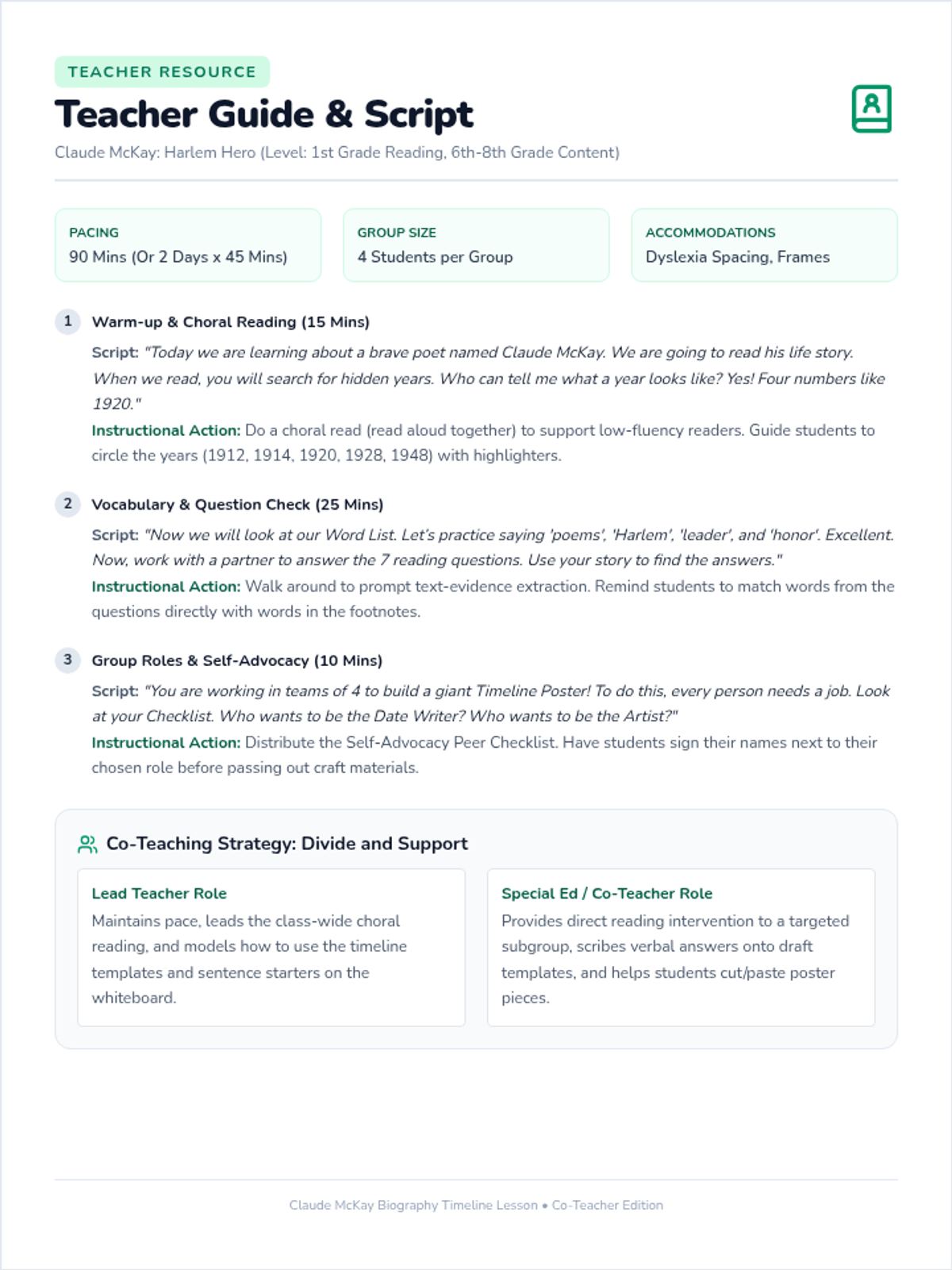
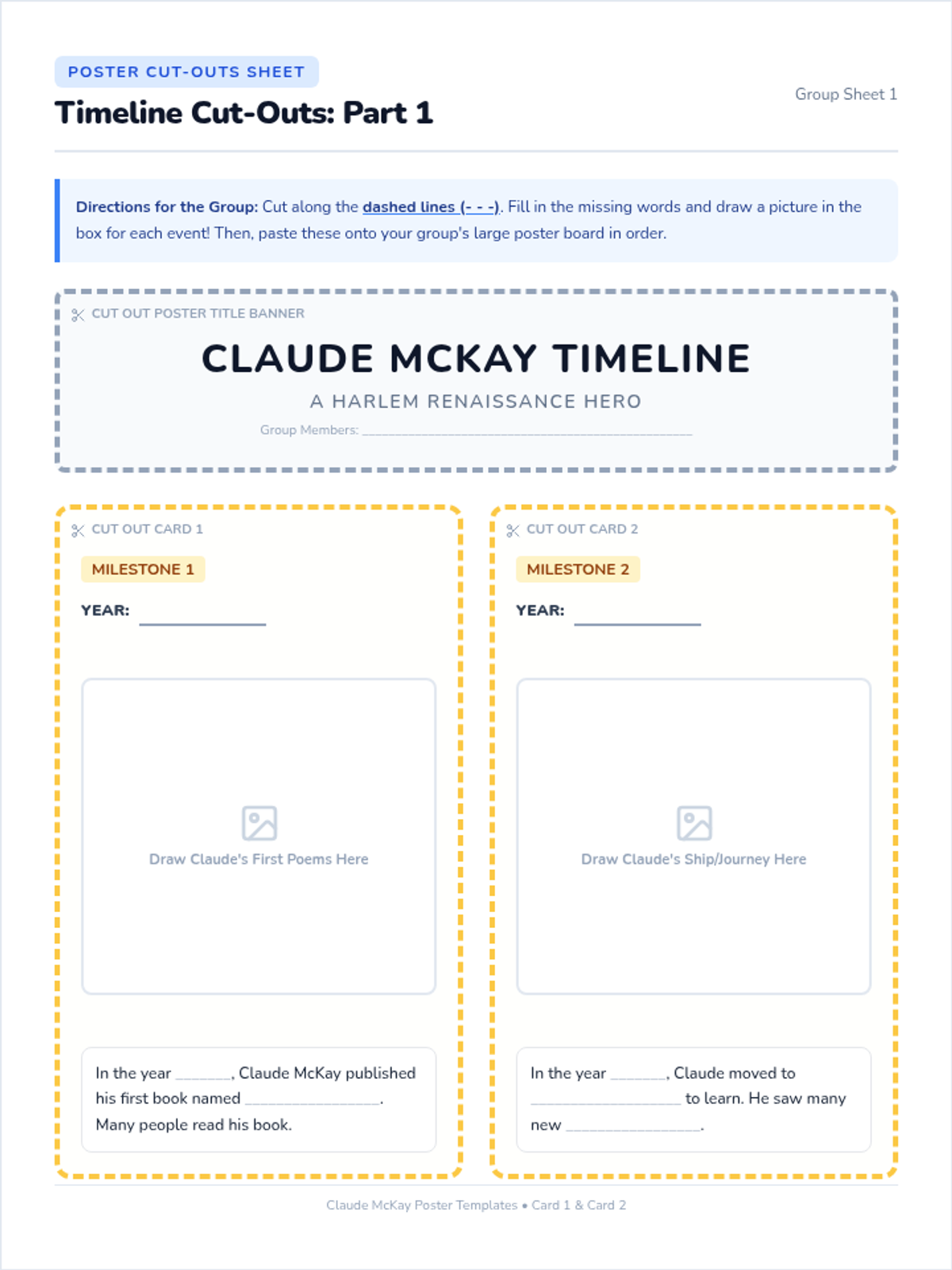
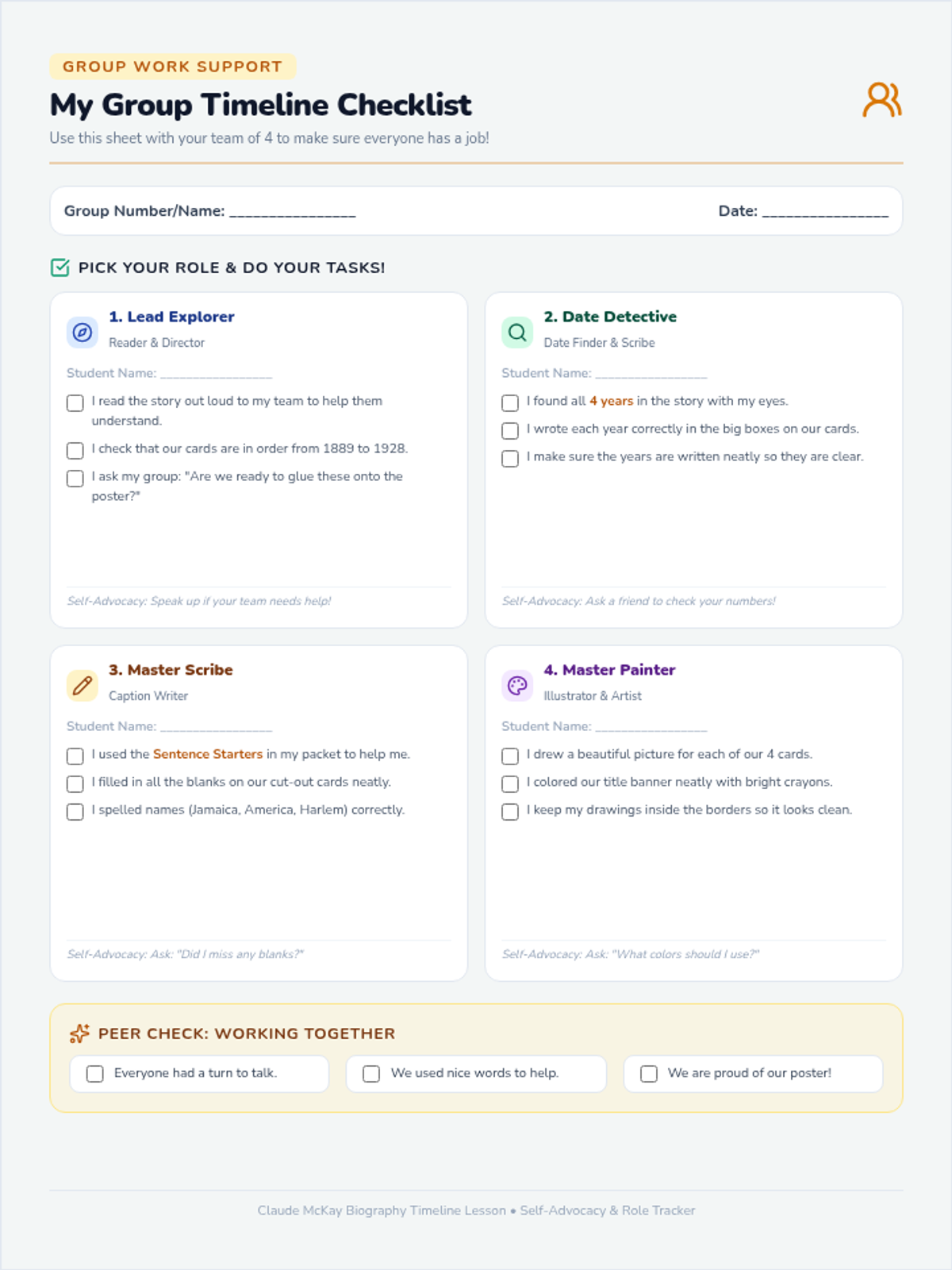
A highly scaffolded middle school lesson on Harlem Renaissance poet Claude McKay, adapted for a first-grade reading level. Includes a text analysis, footnote glossary, comprehension questions, a group timeline poster project, and support tools for co-teachers.