Day 1 of the logic academy focuses on the first step of Socratic questioning: defining terms to ensure everyone is playing on the same 'pitch'.
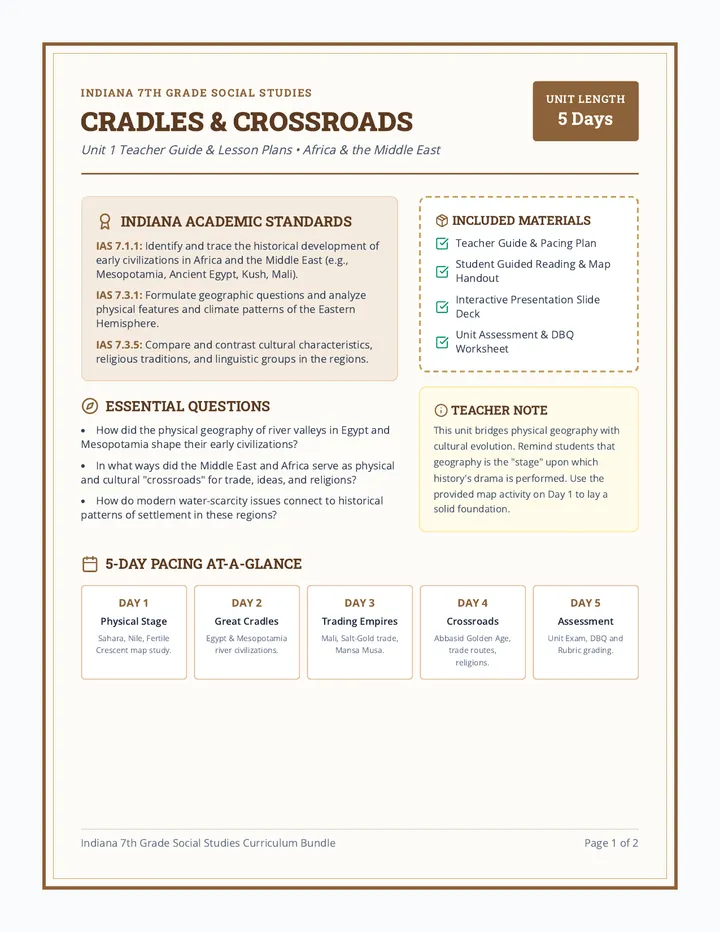
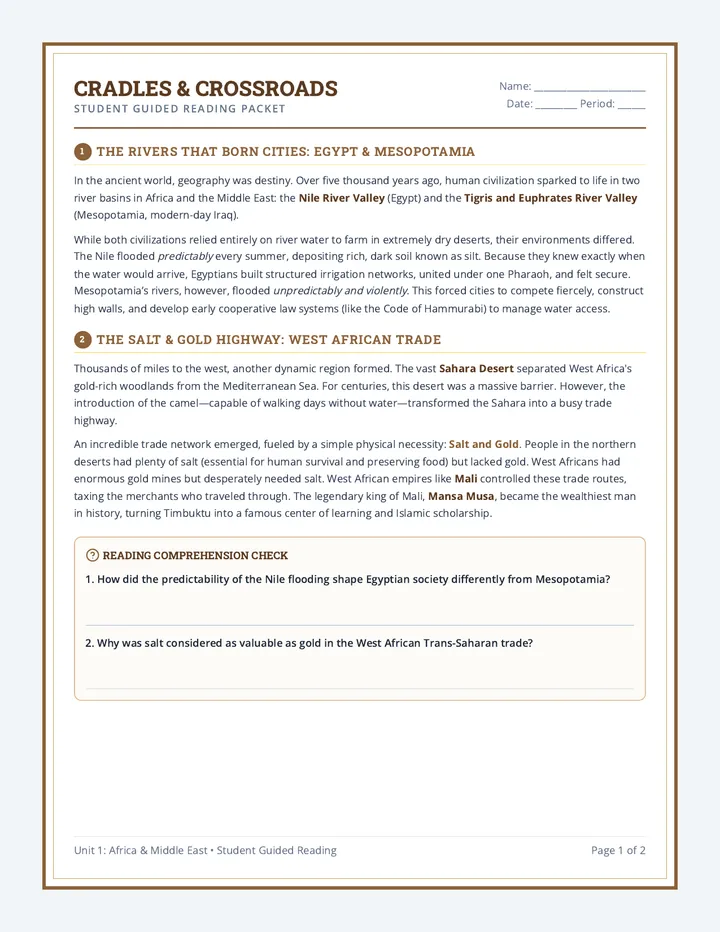
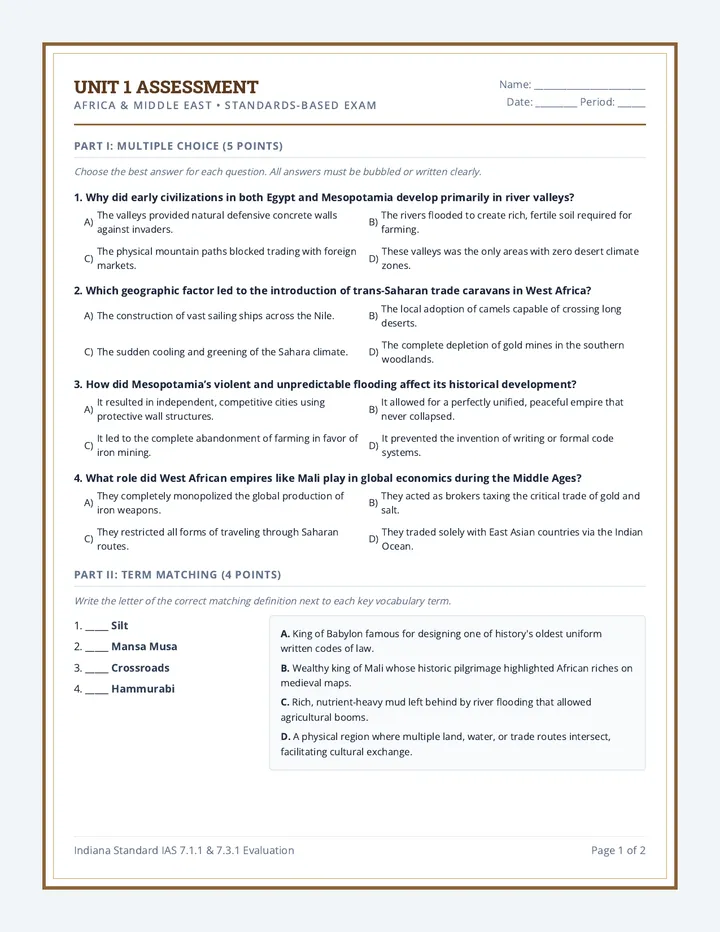
A comprehensive 7th-grade social studies curriculum sequence focused on the Eastern Hemisphere (Africa, Middle East, Asia, and the Pacific). This standards-aligned sequence includes detailed teacher lesson plans, student guided reading and worksheets, interactive presentation slides, and rigorous assessments with DBQs.
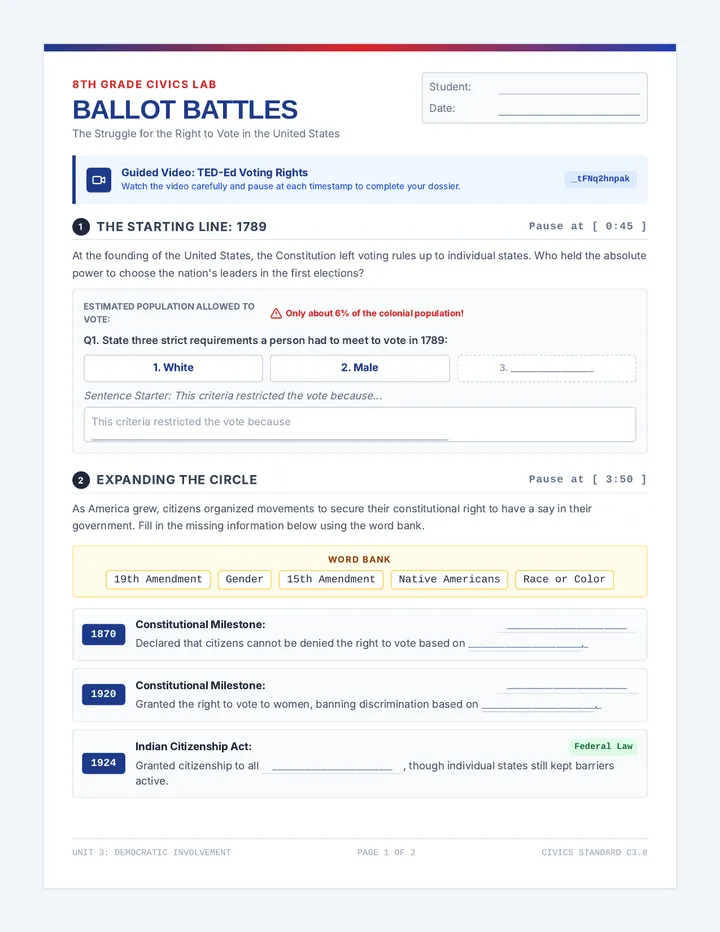
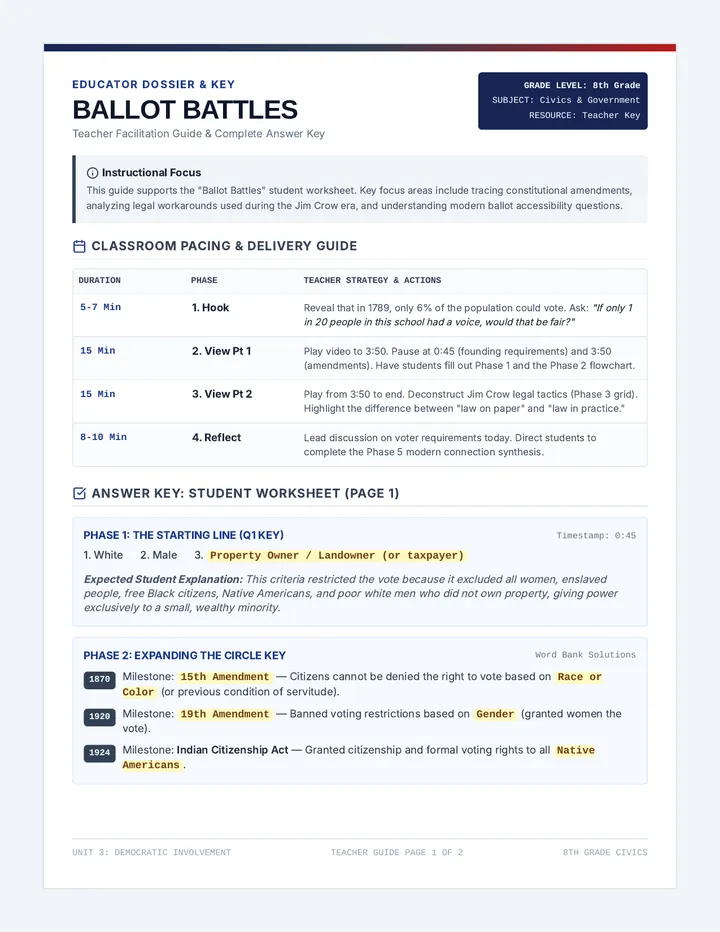
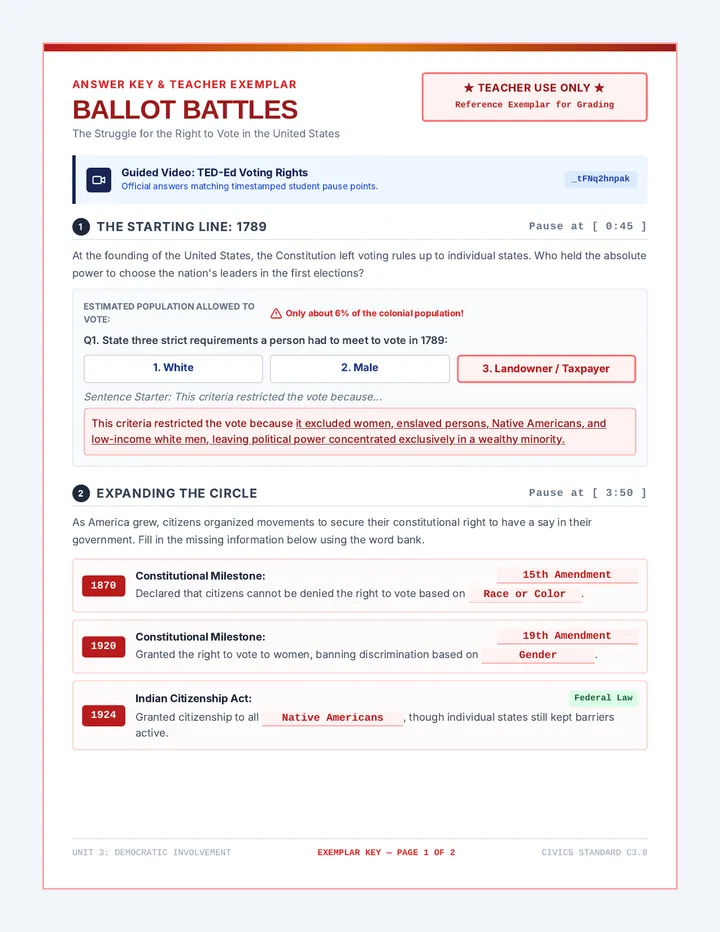
An 8th-grade civics lesson centered on the history of voting rights in the United States. Utilizing a guided viewing of the TED-Ed video, students trace the expansion of the electorate from the founding era to the modern day through structured graphic organizers, scaffolded questions with sentence frames, and real-world connection analysis.
A direct replica of the student worksheet with complete, highlighted answers filled in for rapid grading, classroom projection, or student self-assessment.
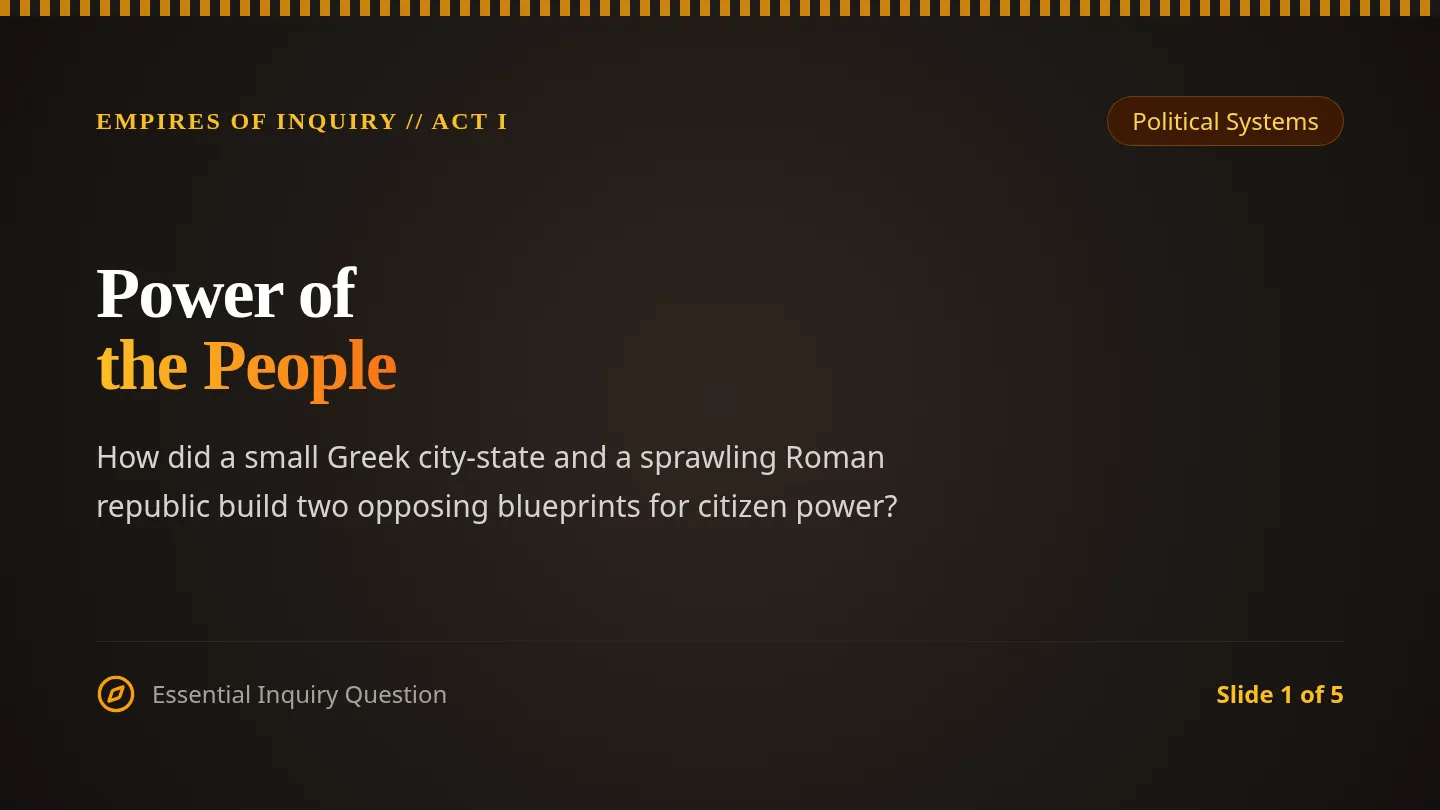
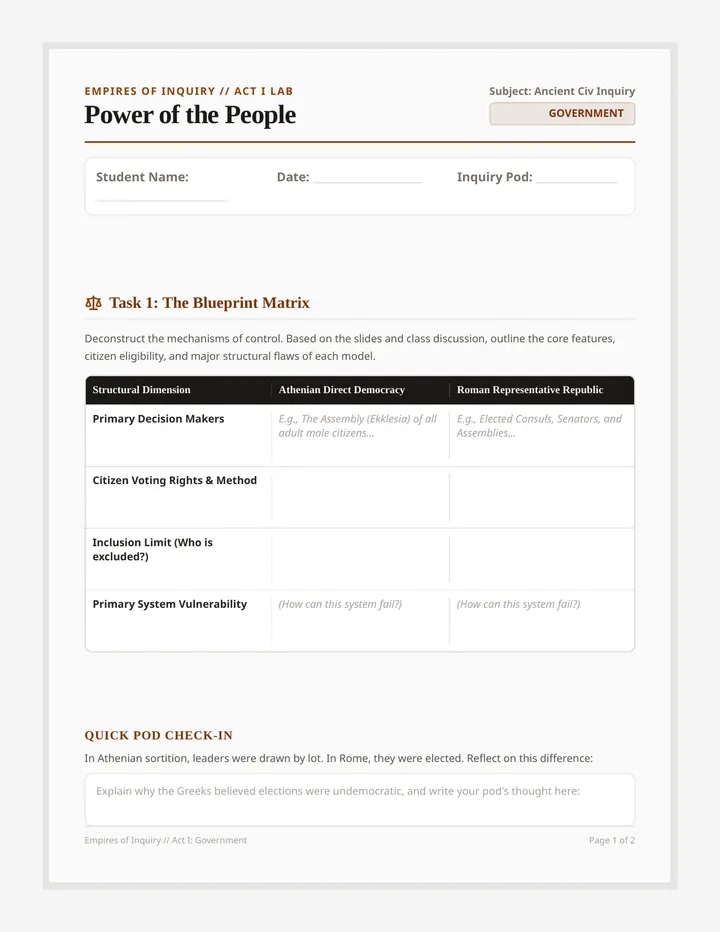
An inquiry-driven social studies sequence investigating Ancient Greece and Rome across four core pillars: government, philosophy, trade, and engineering. Students engage with primary sources, architectural achievements, and ethical dilemmas to construct arguments about classical legacies.
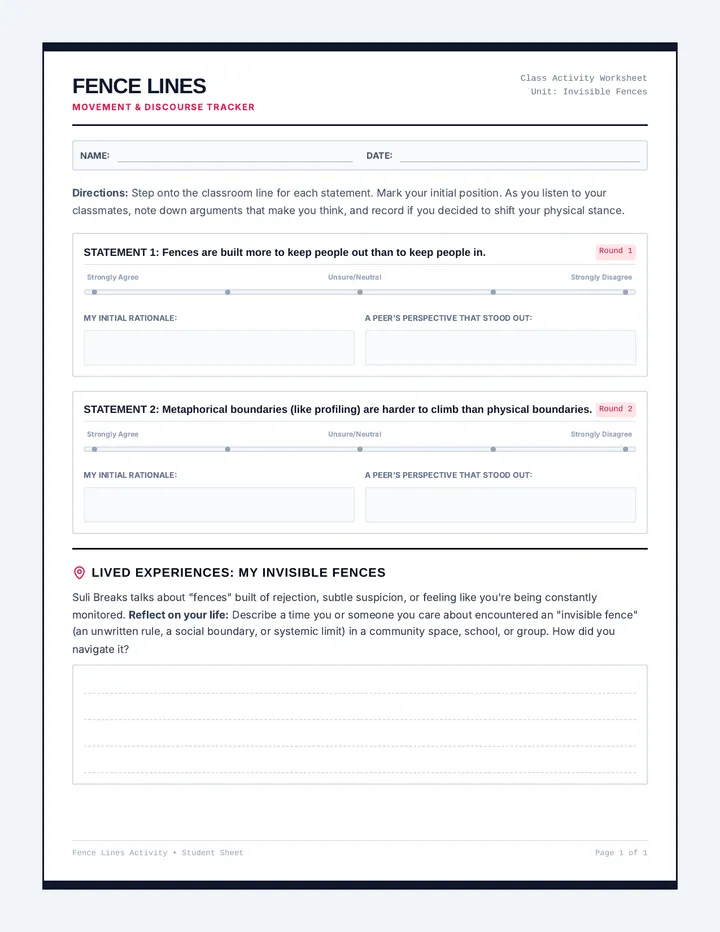
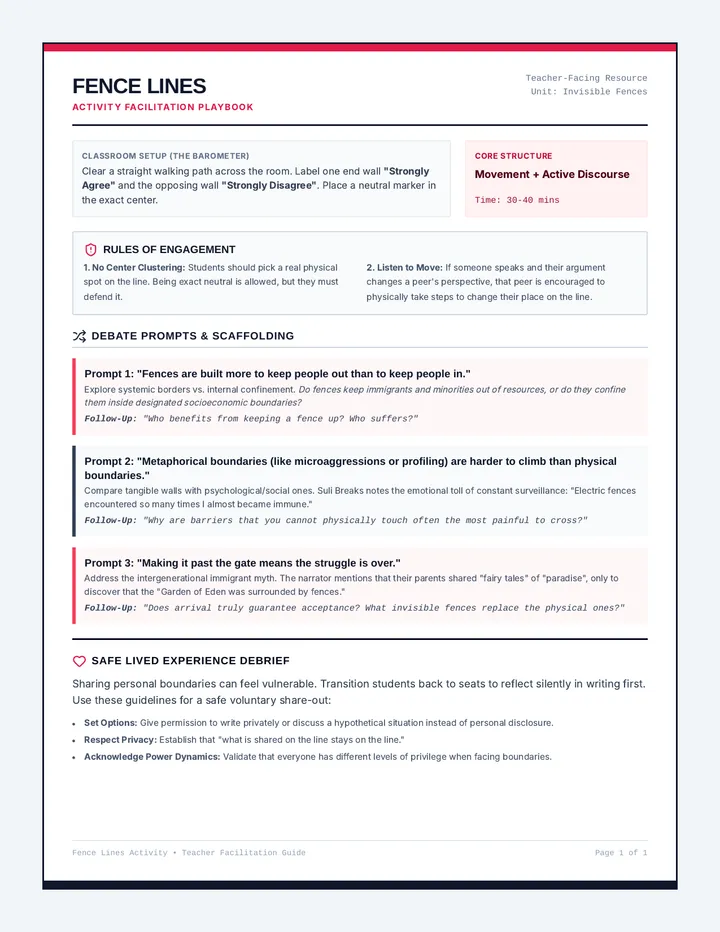
An introductory lesson exploring the immigrant experience and systemic barriers through Suli Breaks' spoken word poem 'Fences'. Students engage in a structured movement and discourse activity to analyze literal and metaphorical barriers, connecting themes to their own lived experiences.
A comprehensive teacher companion containing lesson plans, step-by-step facilitation prompts, historical background on voter discrimination, and complete answer keys with classroom pacing suggestions.
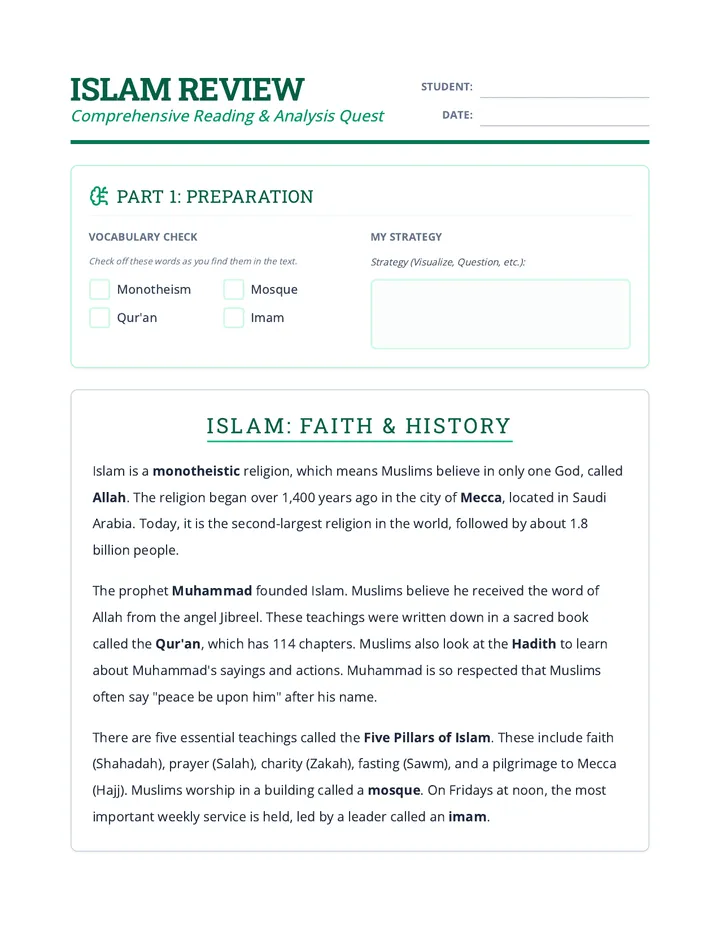
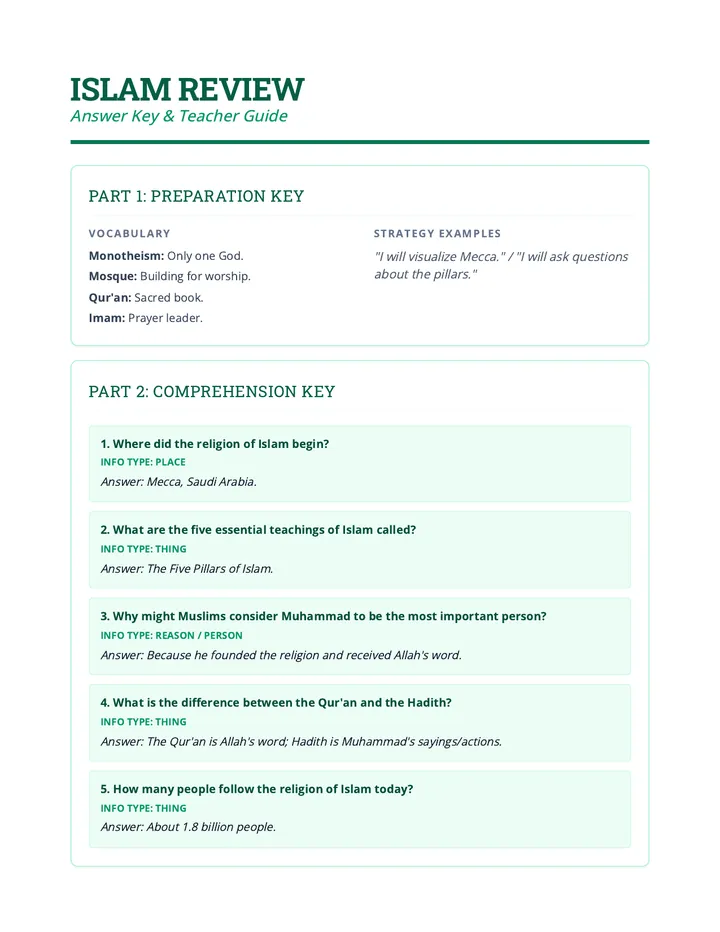
A comparative and deep-dive review sequence exploring foundational teachings, sacred texts, and cultural practices of major world religions.
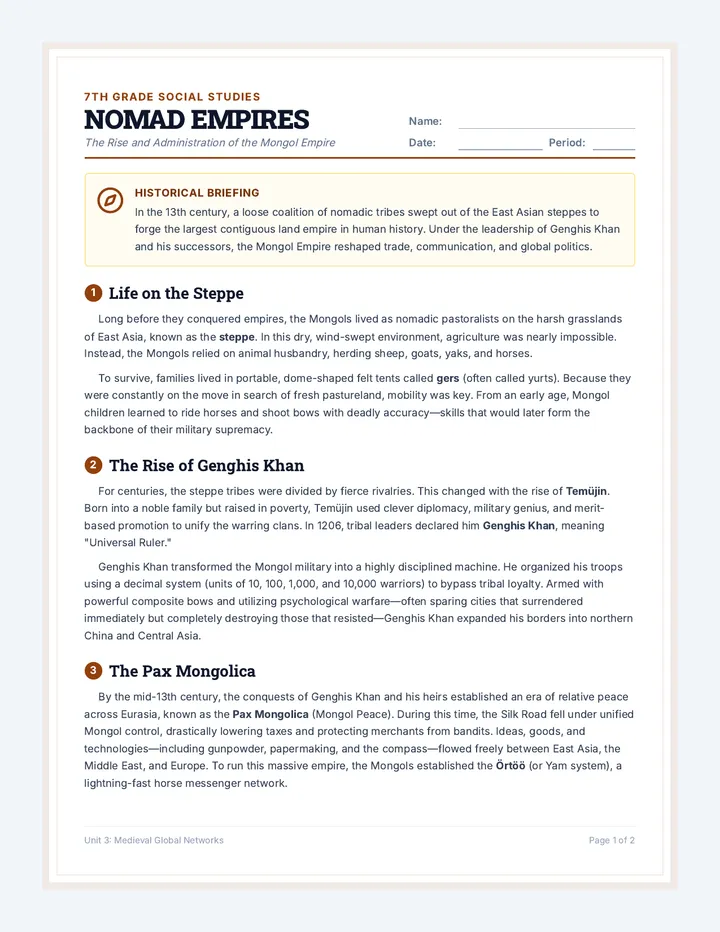
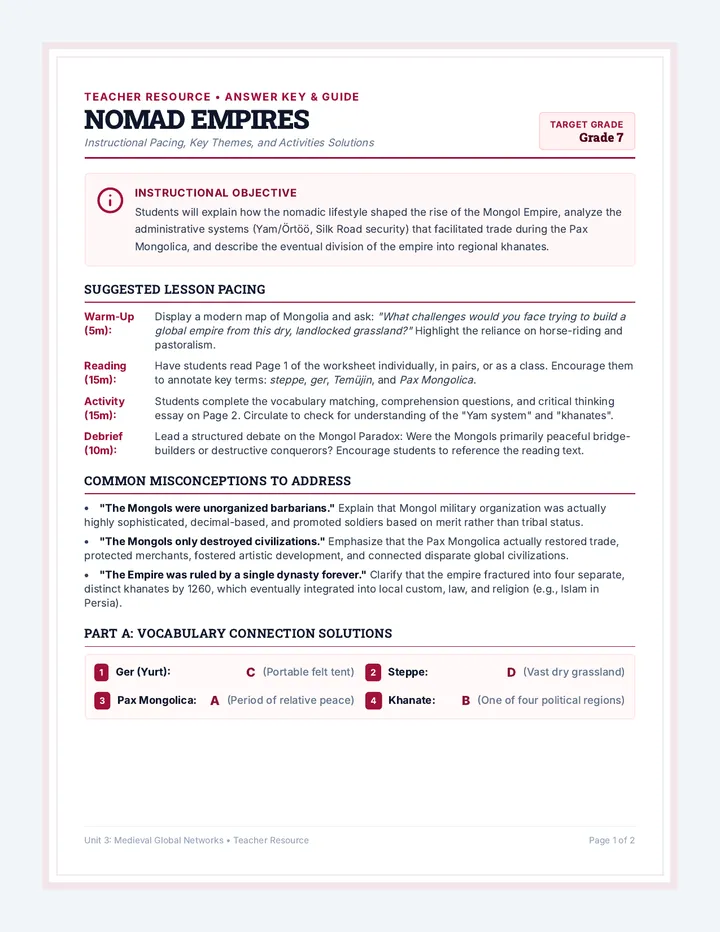
A comprehensive history lesson for 7th grade social studies exploring the rapid rise, administration, and ultimate division of the Mongol Empire. Includes a student reading worksheet and a corresponding teacher guide and answer key.
A structured, student-facing guided viewing worksheet featuring timestamped pause points, visual graphic organizers, and scaffolded sentence frames analyzing the expansion of voting rights.
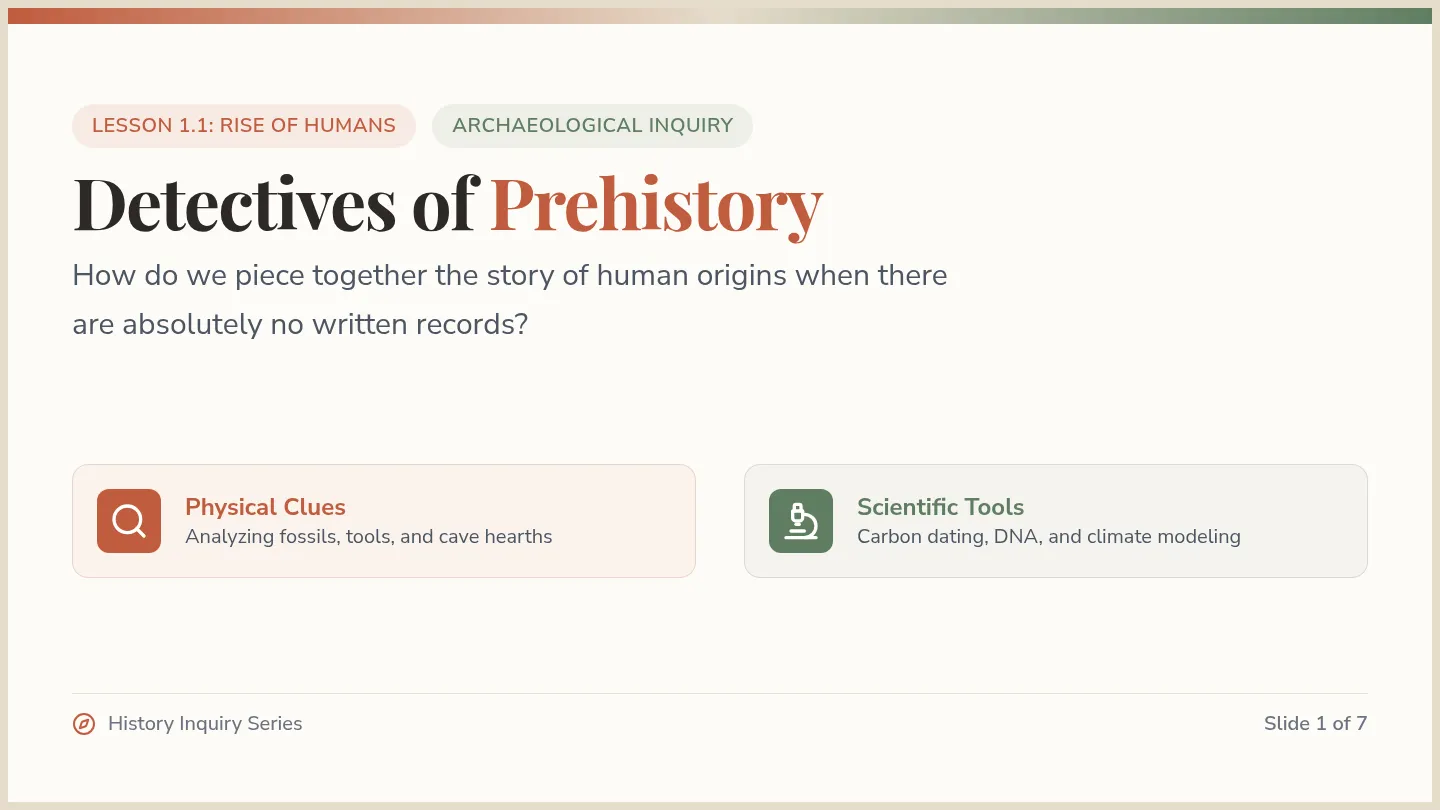
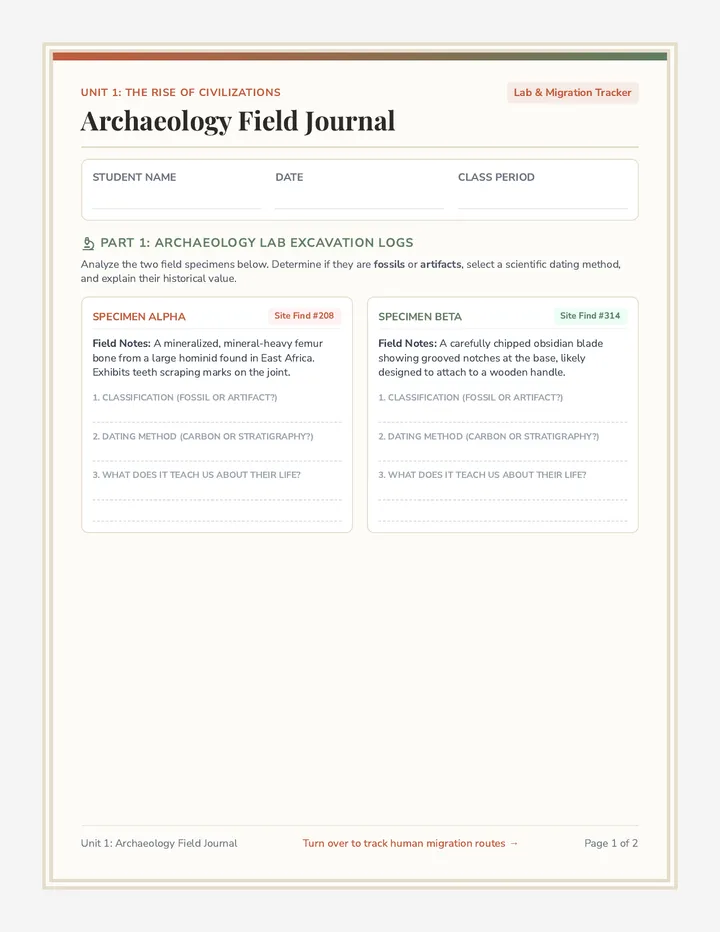
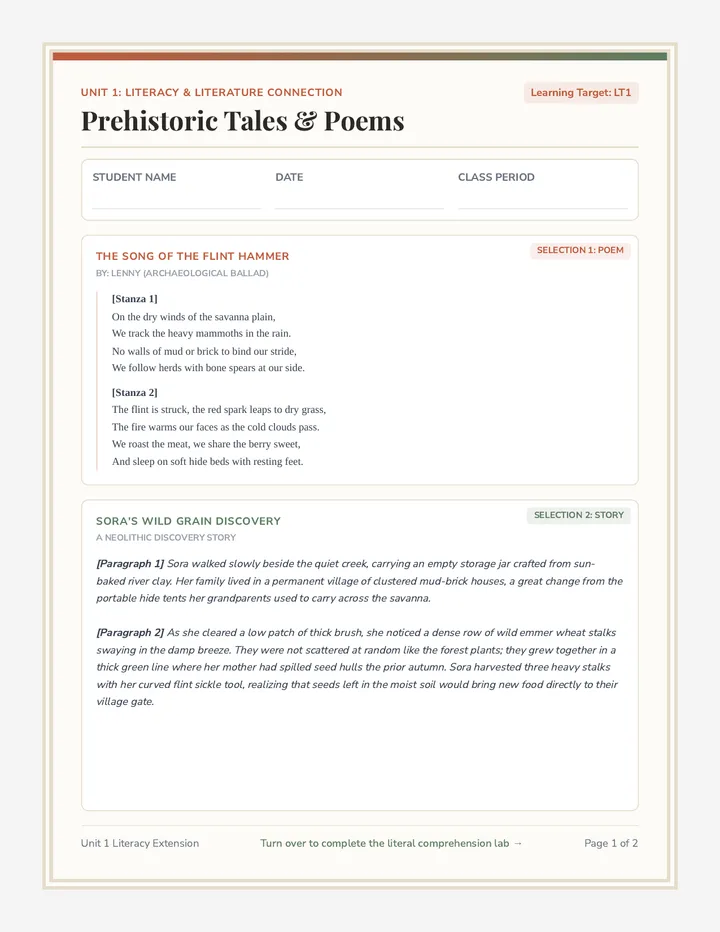
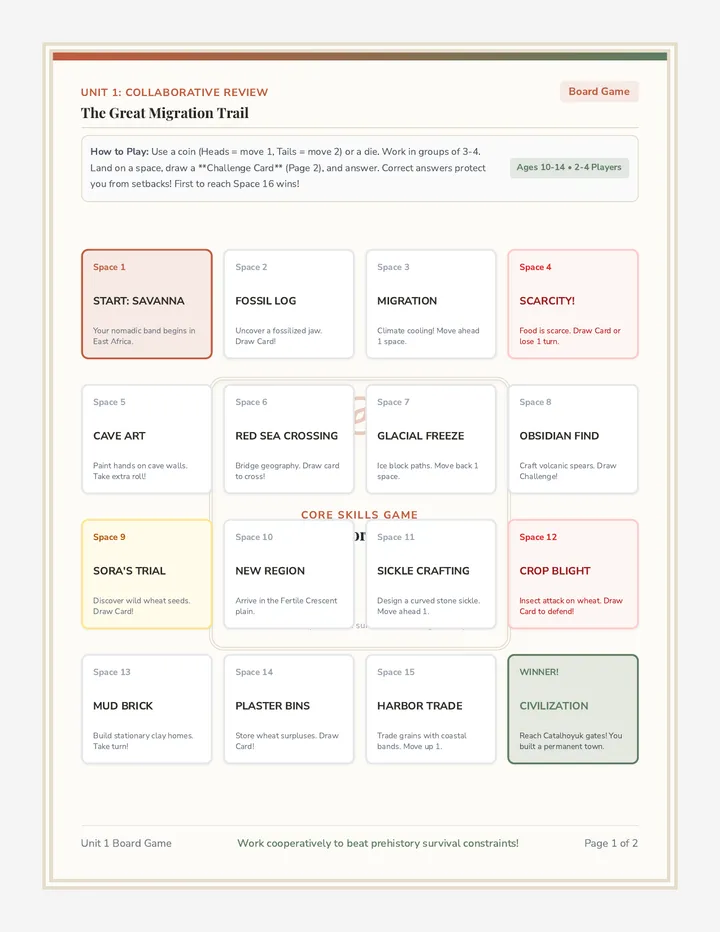
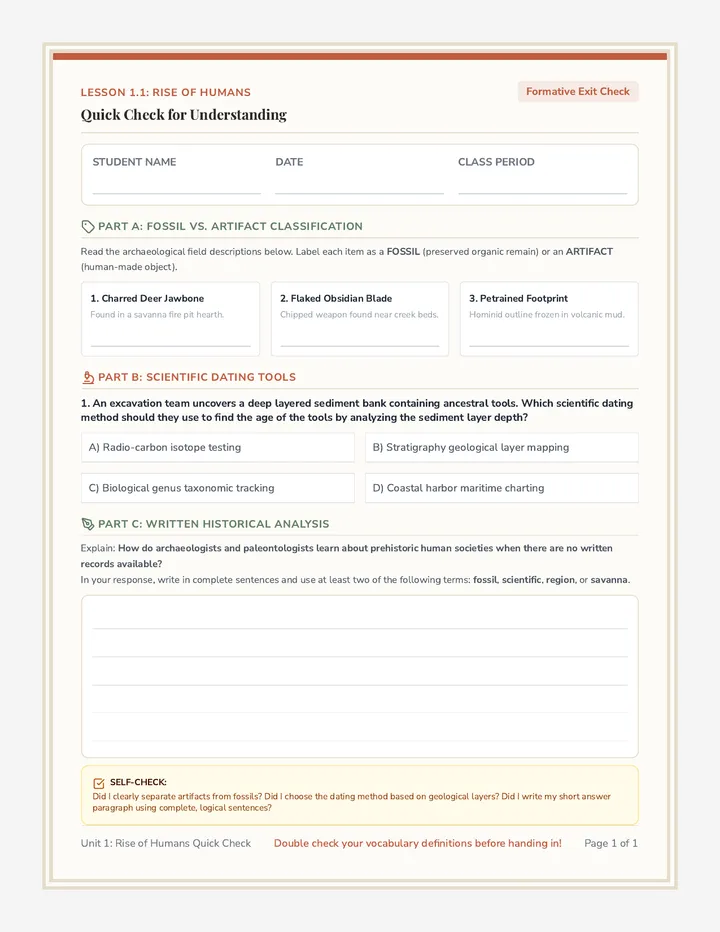
A middle-school history unit exploring the emergence of early humans, their prehistoric migrations, the radical transition of the agricultural revolution, and the foundations of early civilizations.
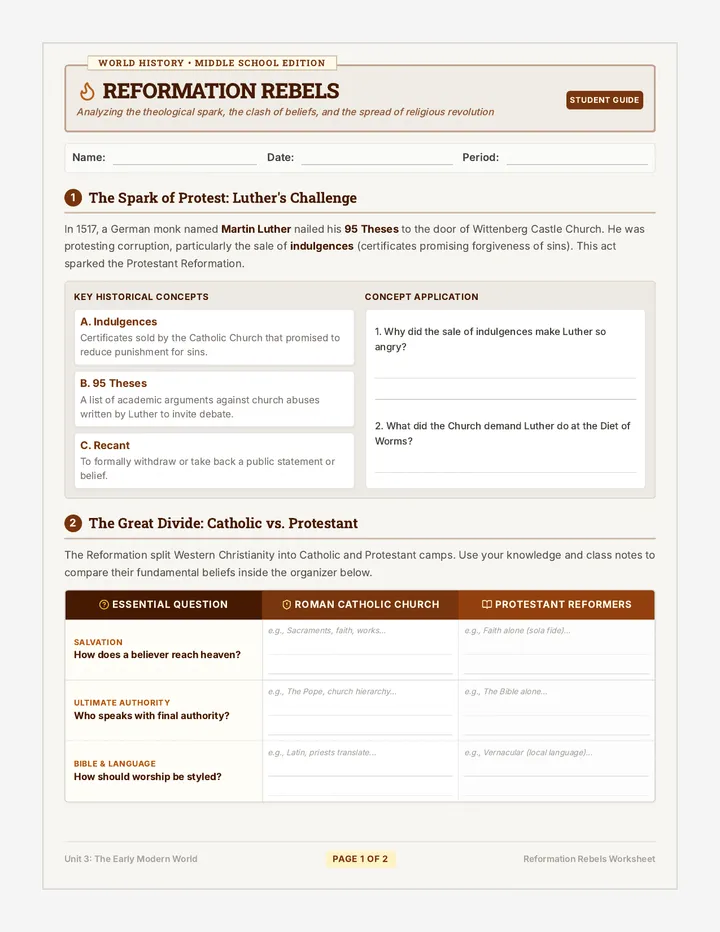
A middle school history lesson introducing the Protestant Reformation, focusing on Martin Luther's protest, the fundamental theological clashes, and the visual spread of Protestantism across Europe.
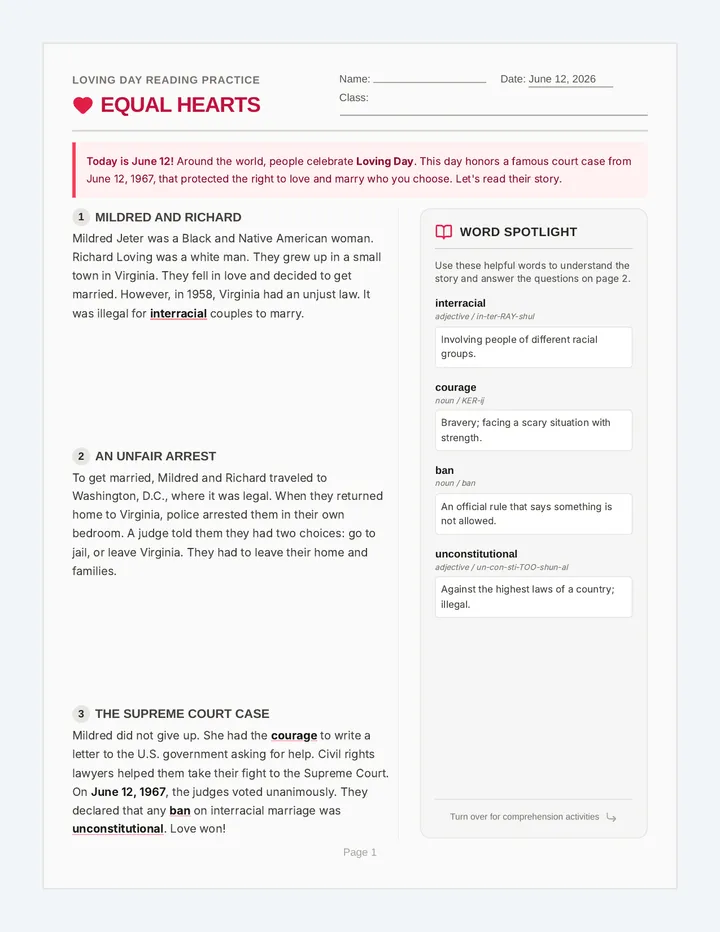
A standalone, double-sided printable reading worksheet designed for English Language Learners (ELL) focusing on Loving Day (June 12, 1967). Includes an accessible, scaffolded reading passage, a visual vocabulary spotlight, text-dependent comprehension questions with writing frames, and a creative reflection activity.