A comprehensive review lesson for Grade 2 math standards, focusing on place value, addition/subtraction within 1000, time-telling, and foundational multiplication through arrays. Includes visual models and word problems set in the Ozark mountains.
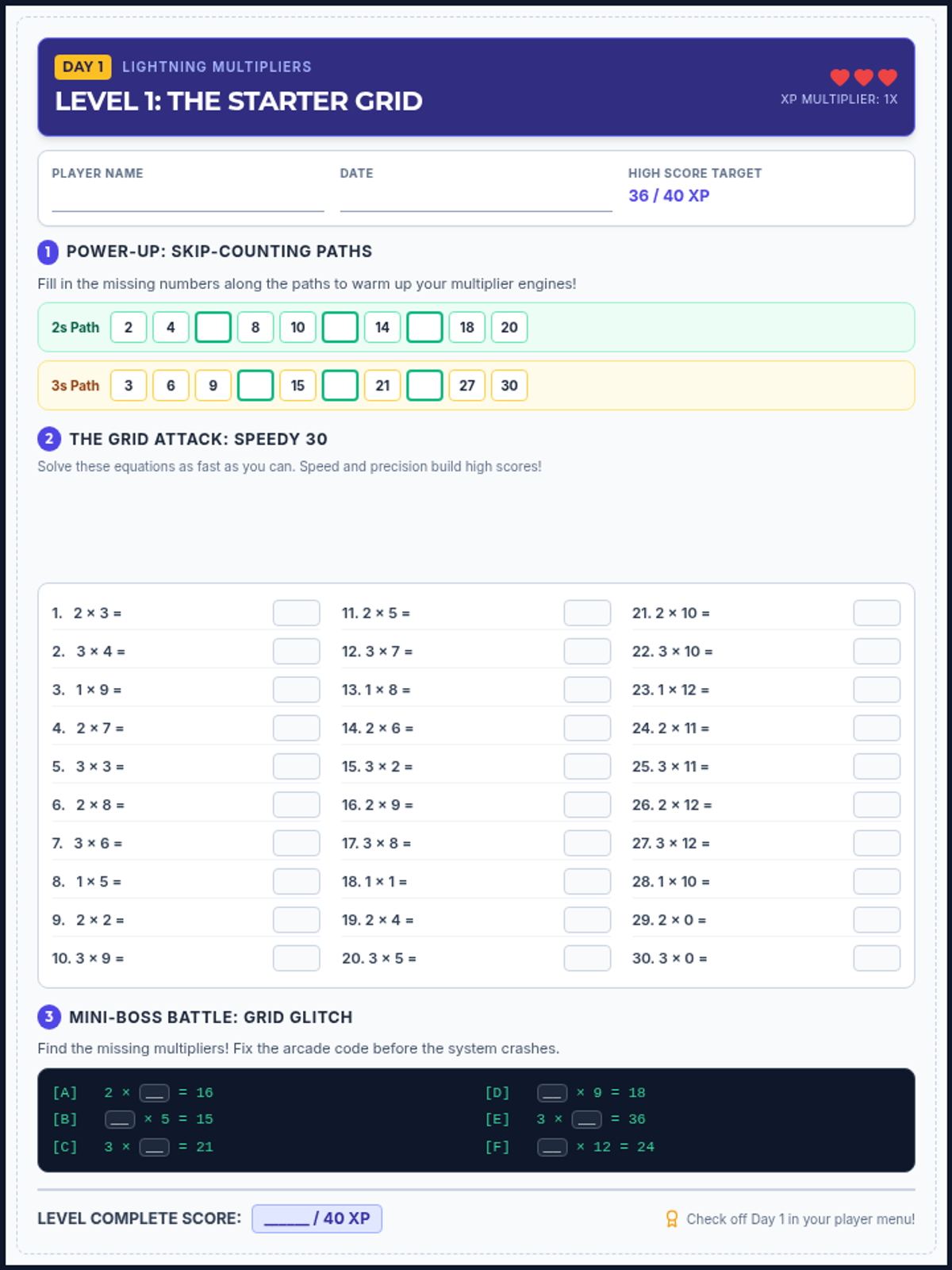
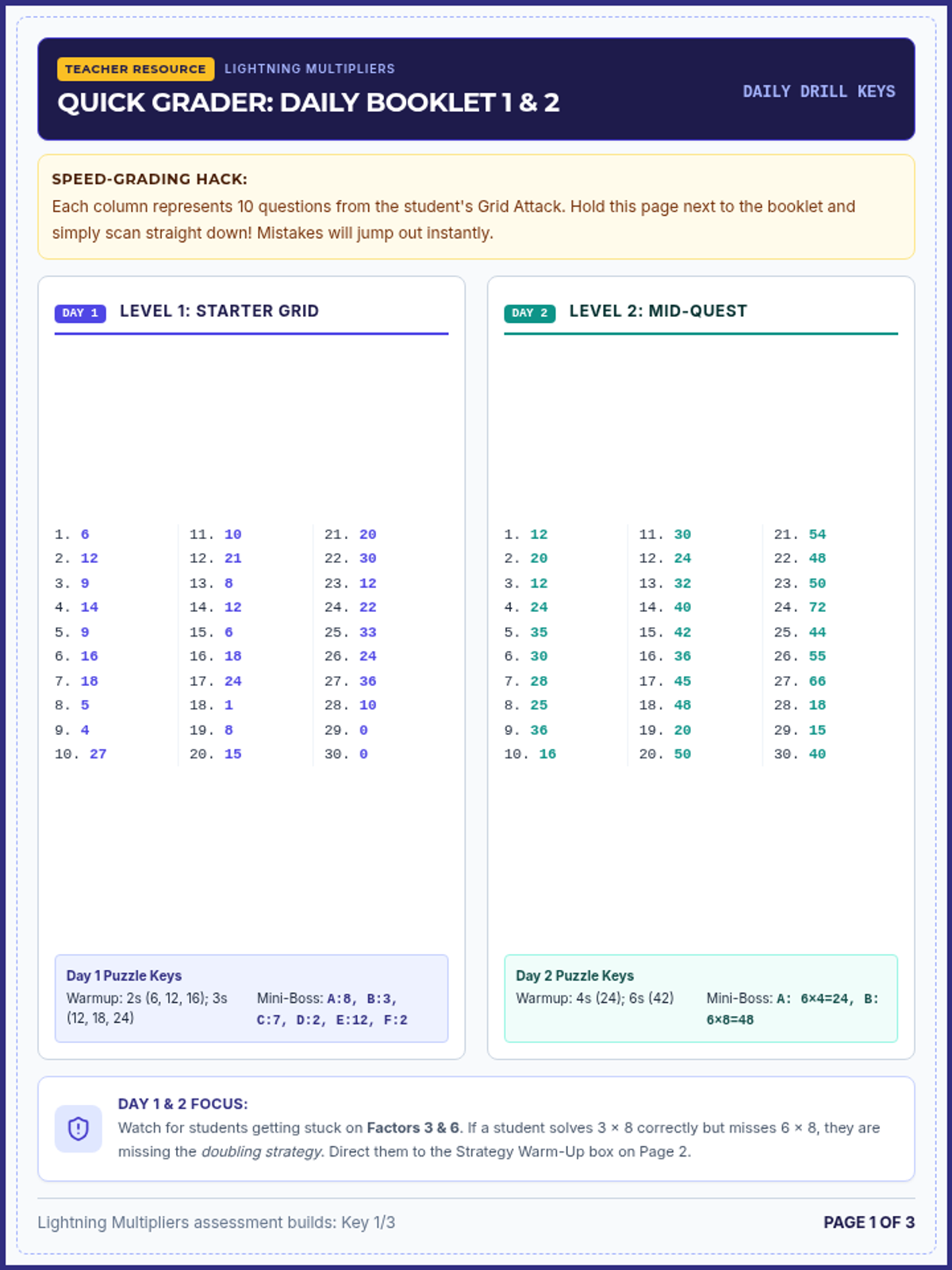
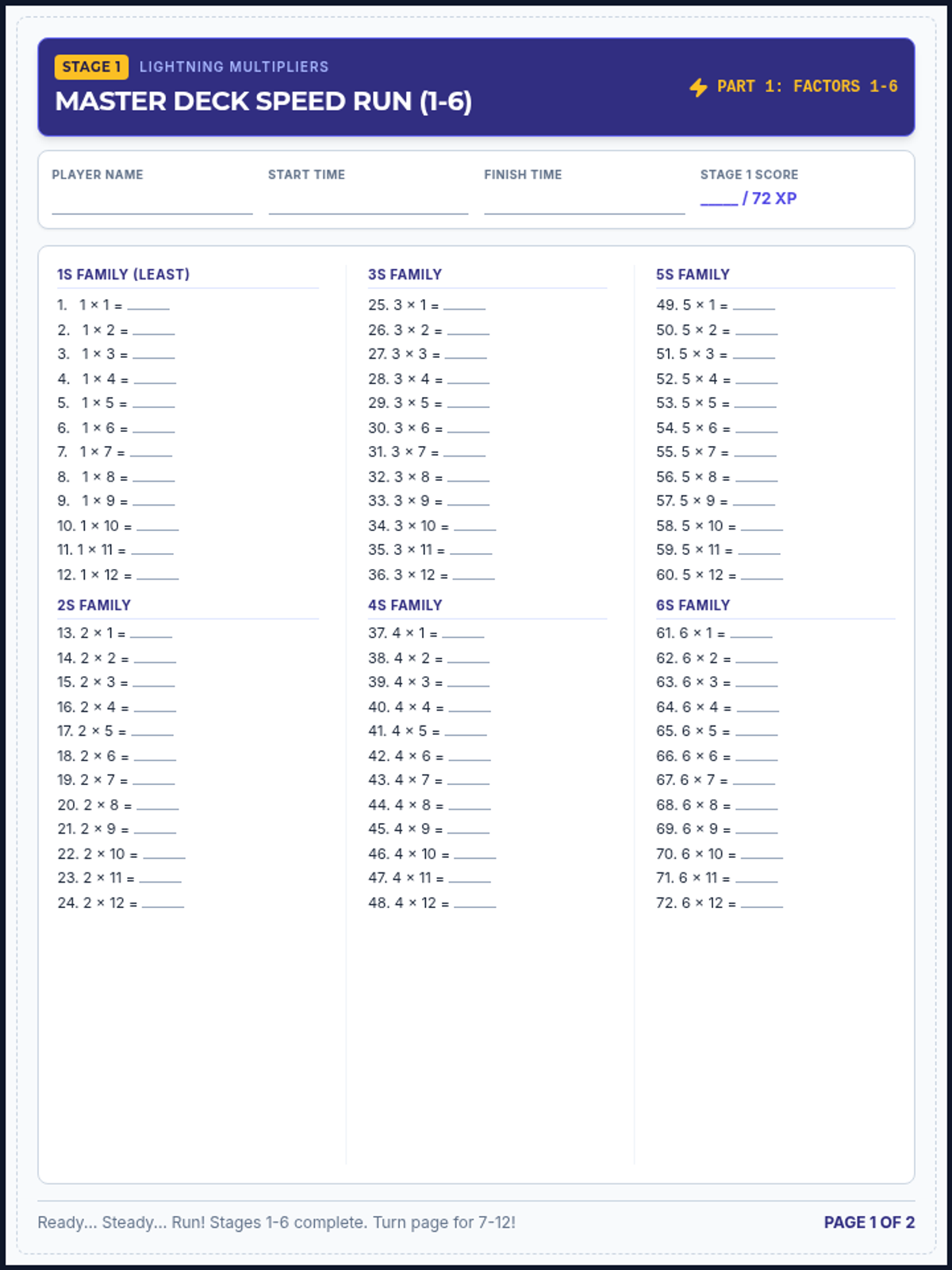
A gamified retro-arcade approach to mastering the 1-12 multiplication tables. Includes a 4-day daily drill booklet, a high-intensity 100-fact speed run mixed list, a master 12x12 speed grid, and a quick-grading teacher guide with an error-analysis rubric.
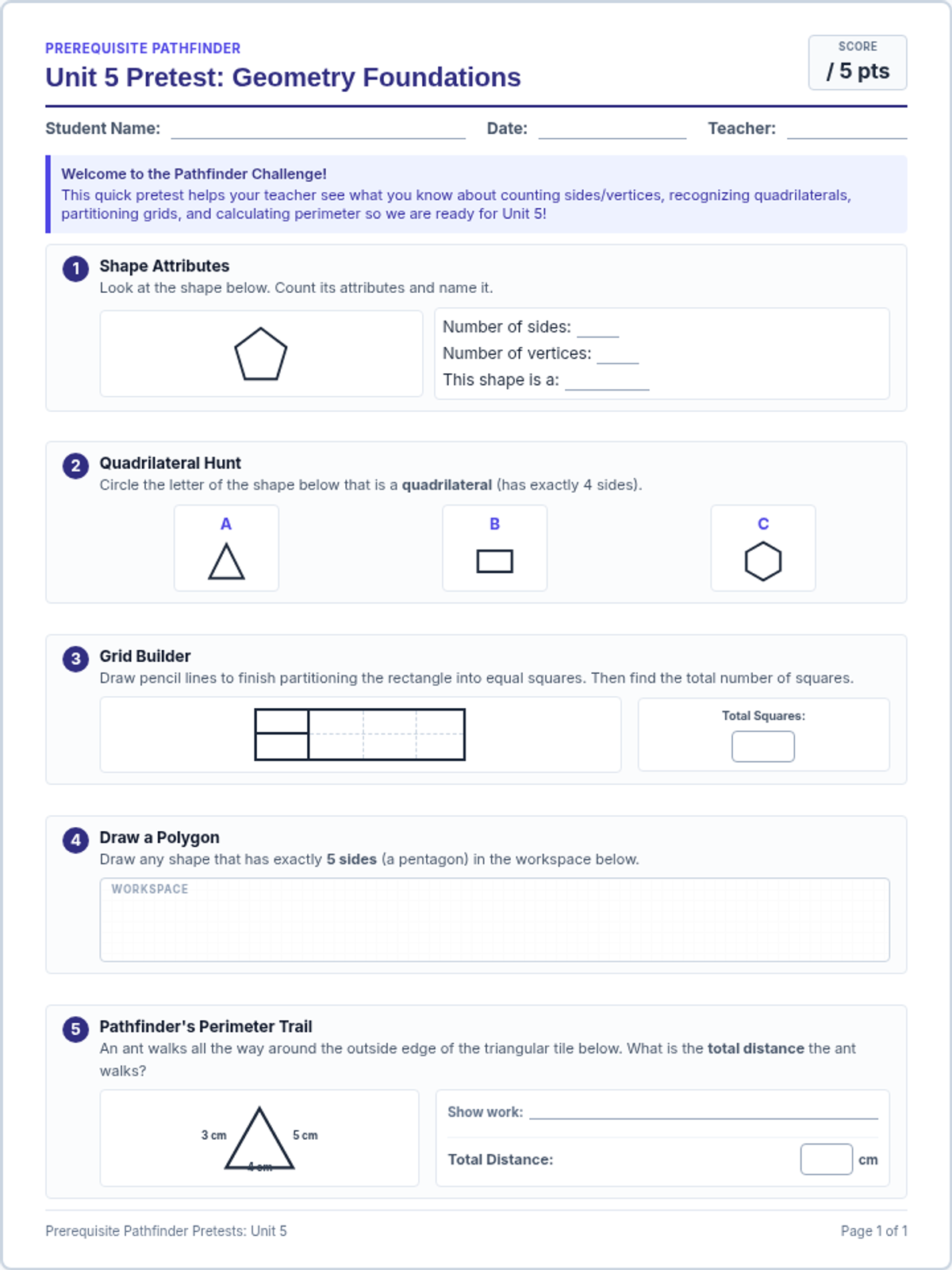
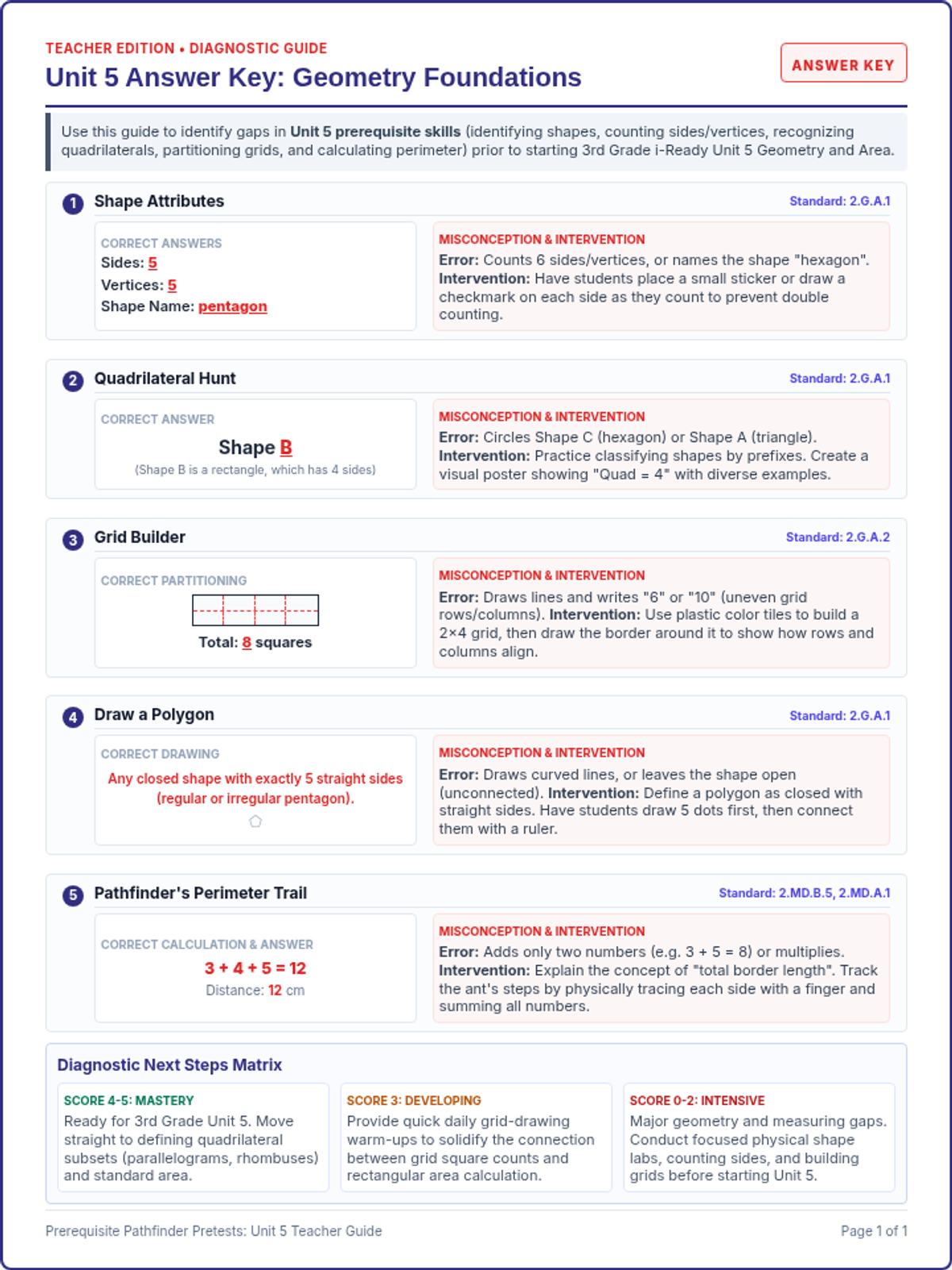
Investigates student recognition of shape attributes, partitioning rectangles into grids, and counting vertices prior to 3rd-grade geometry and area.
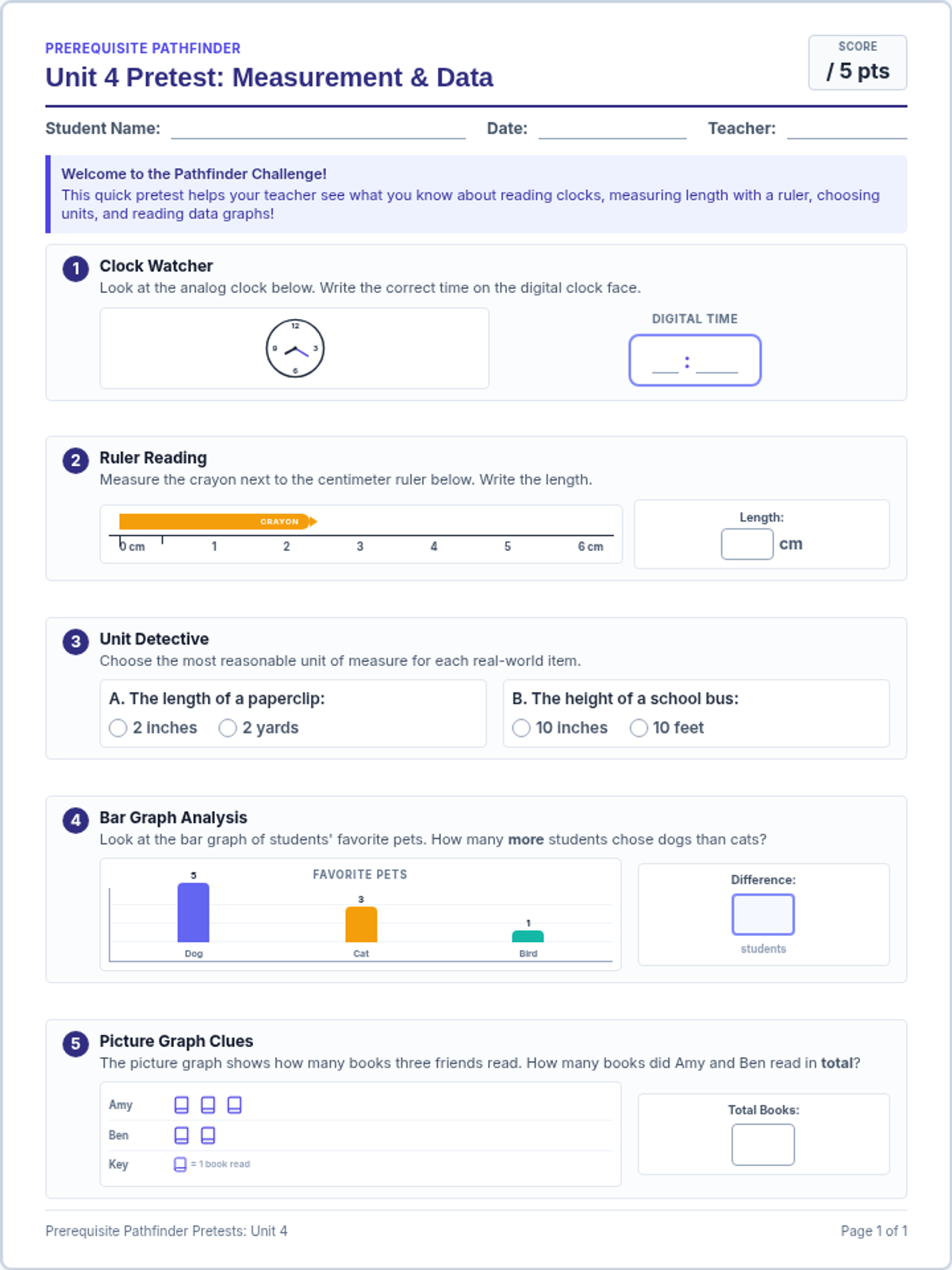
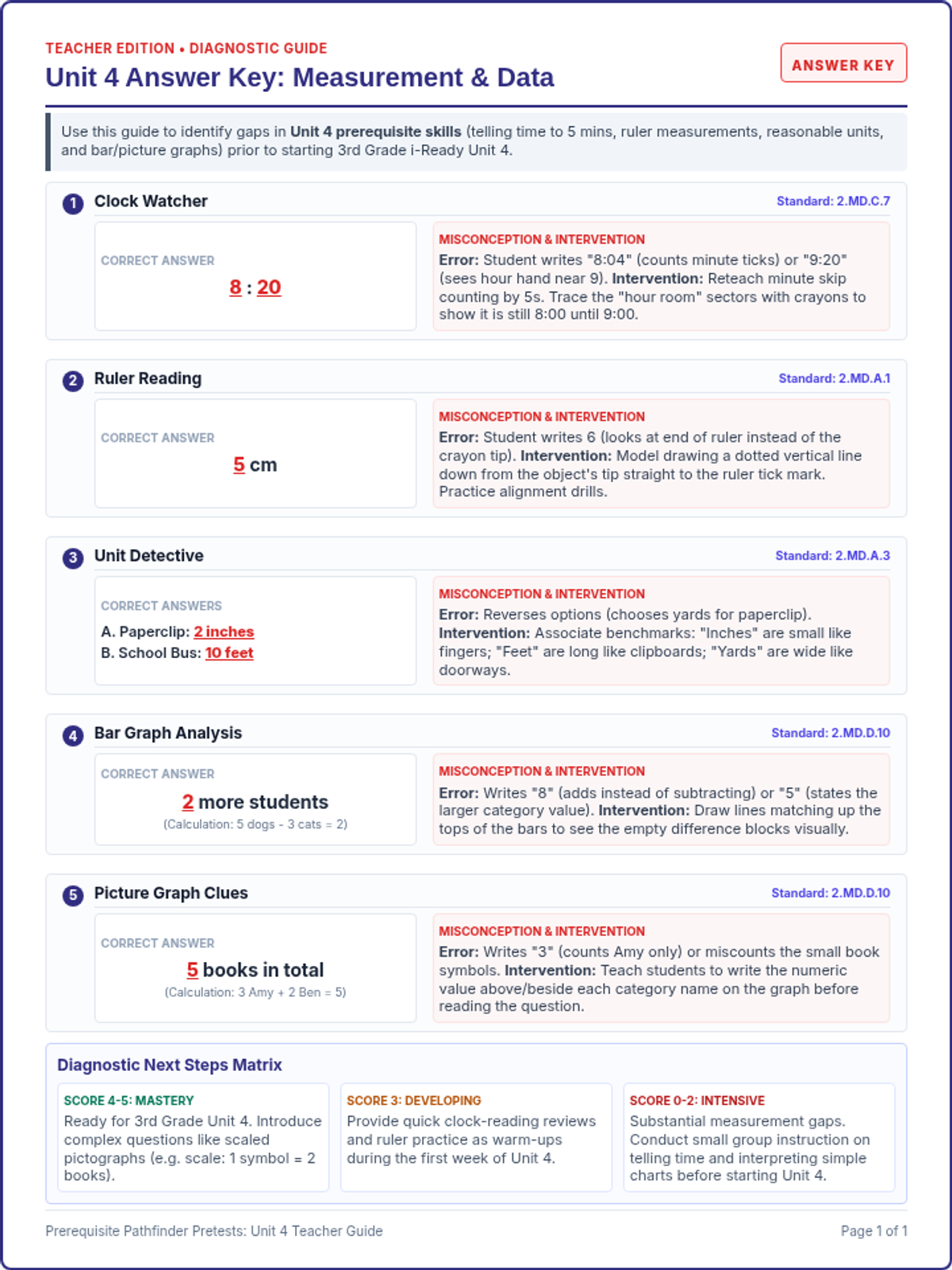
Evaluates prerequisite skills for time, measurement, and bar/picture graphs to ensure readiness for complex measurement topics.
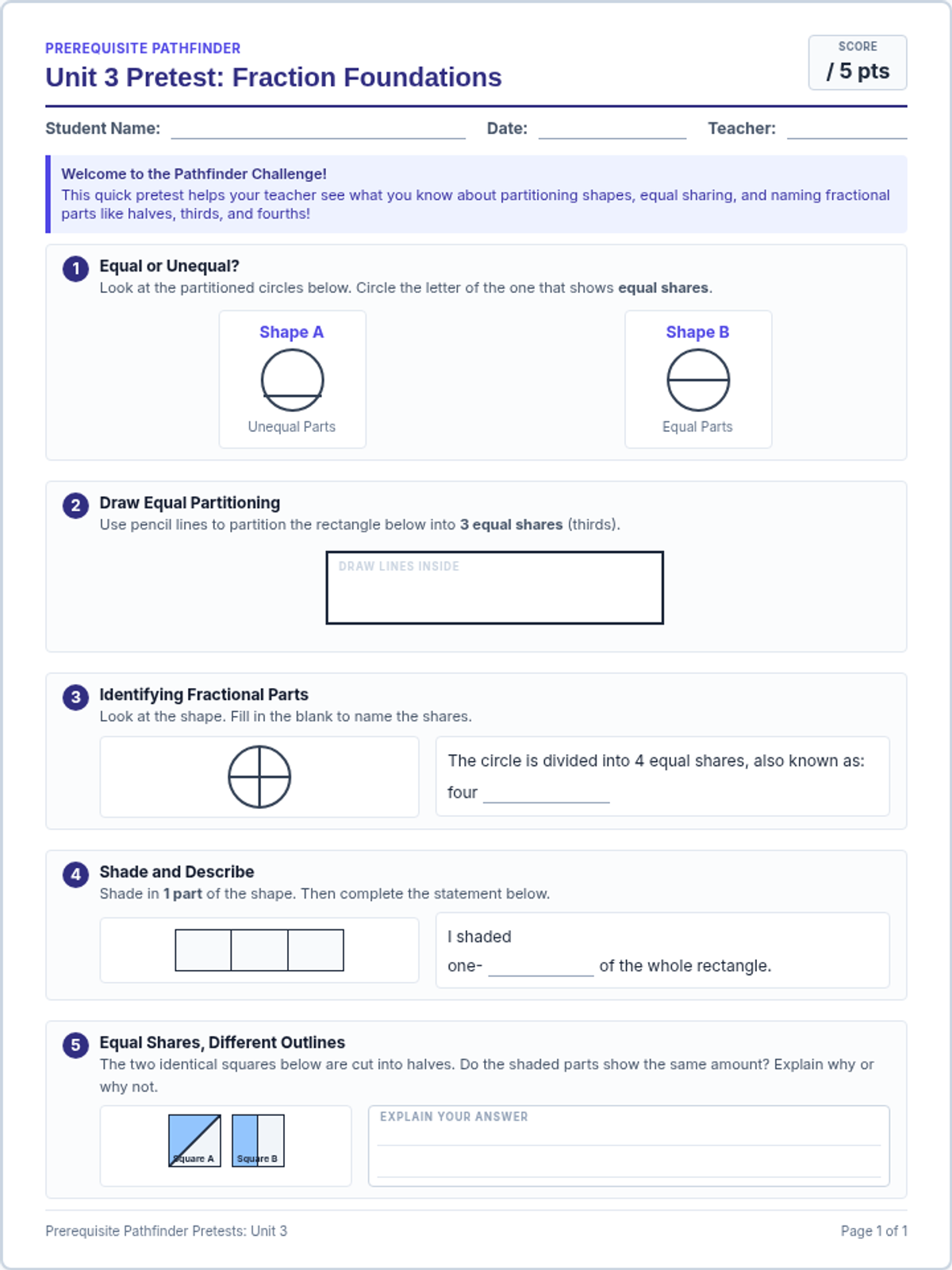
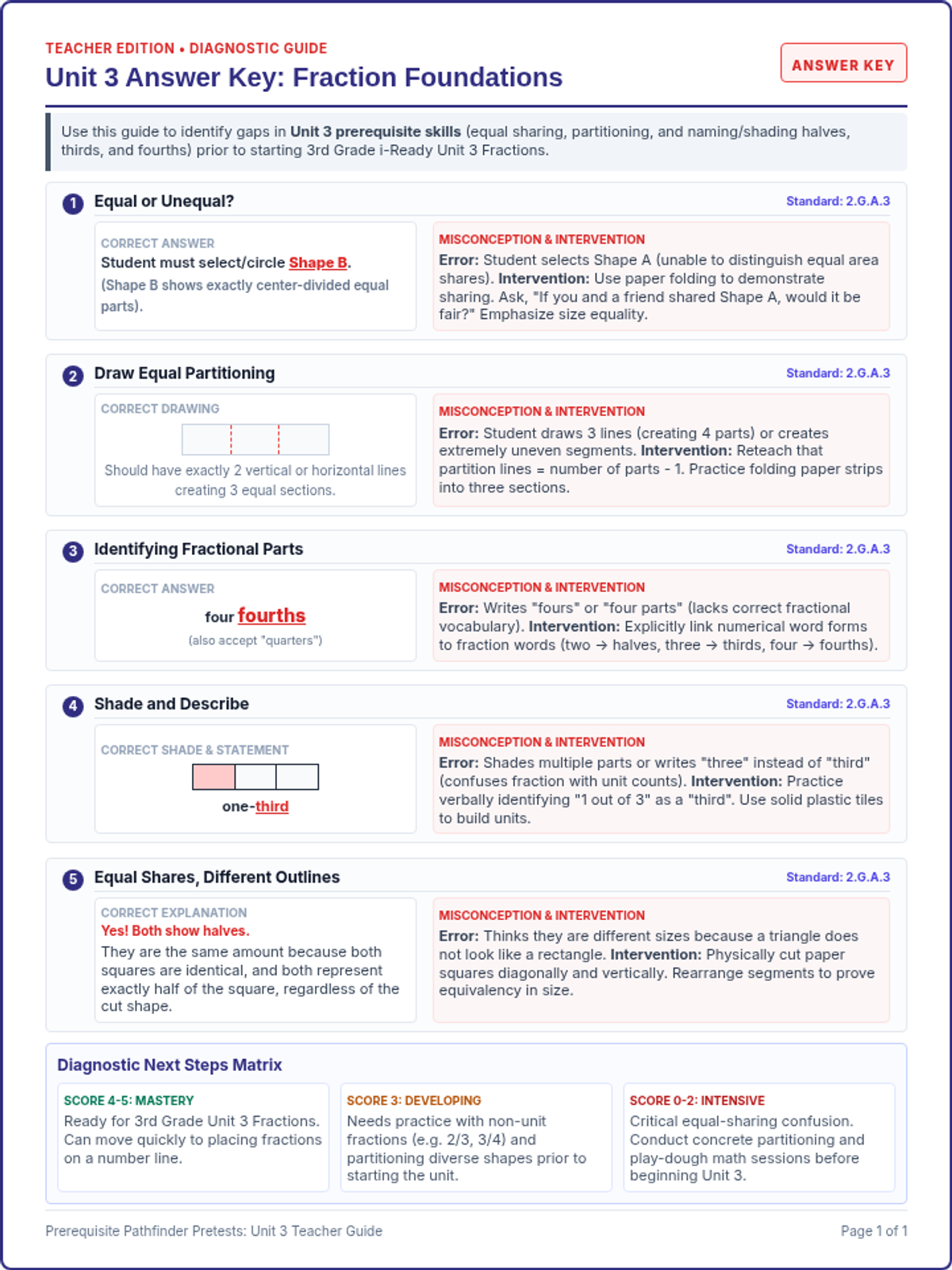
Assesses understanding of equal shares, partitioning shapes into halves, thirds, and fourths, and naming fraction parts prior to 3rd-grade fraction units.
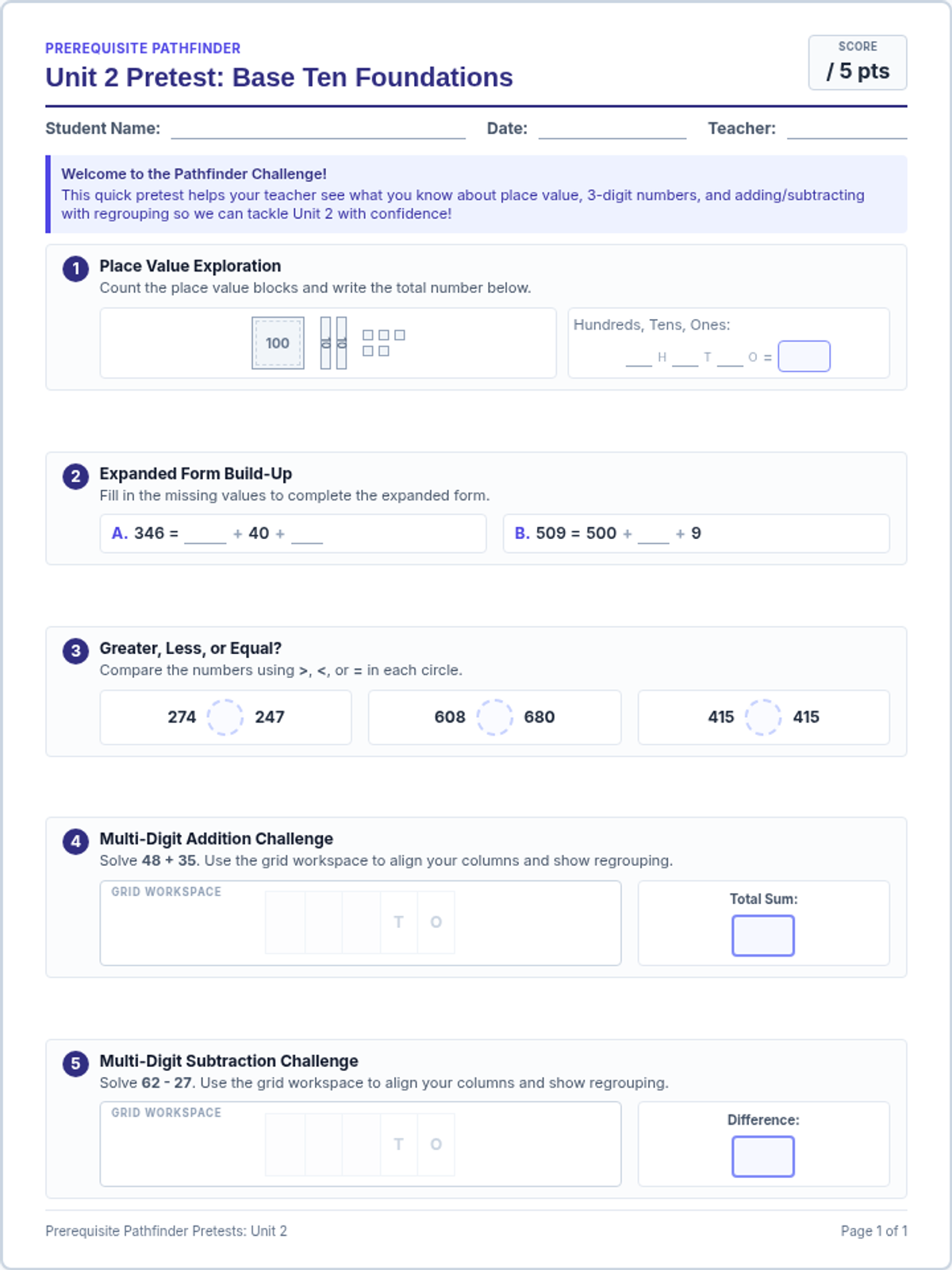
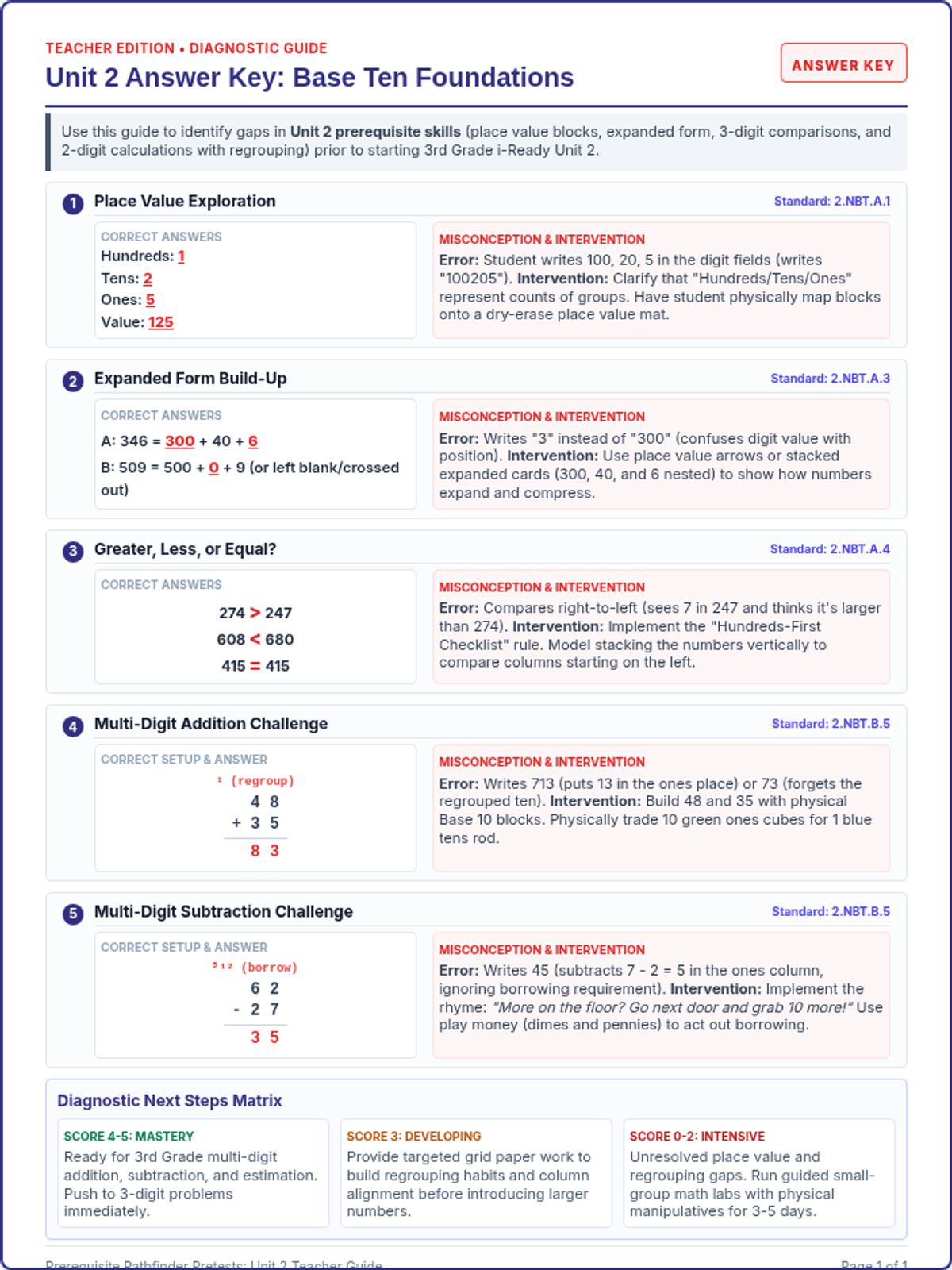
Diagnoses readiness for 3rd-grade place value, multi-digit addition, subtraction, and estimation, based on 2nd-grade standards.
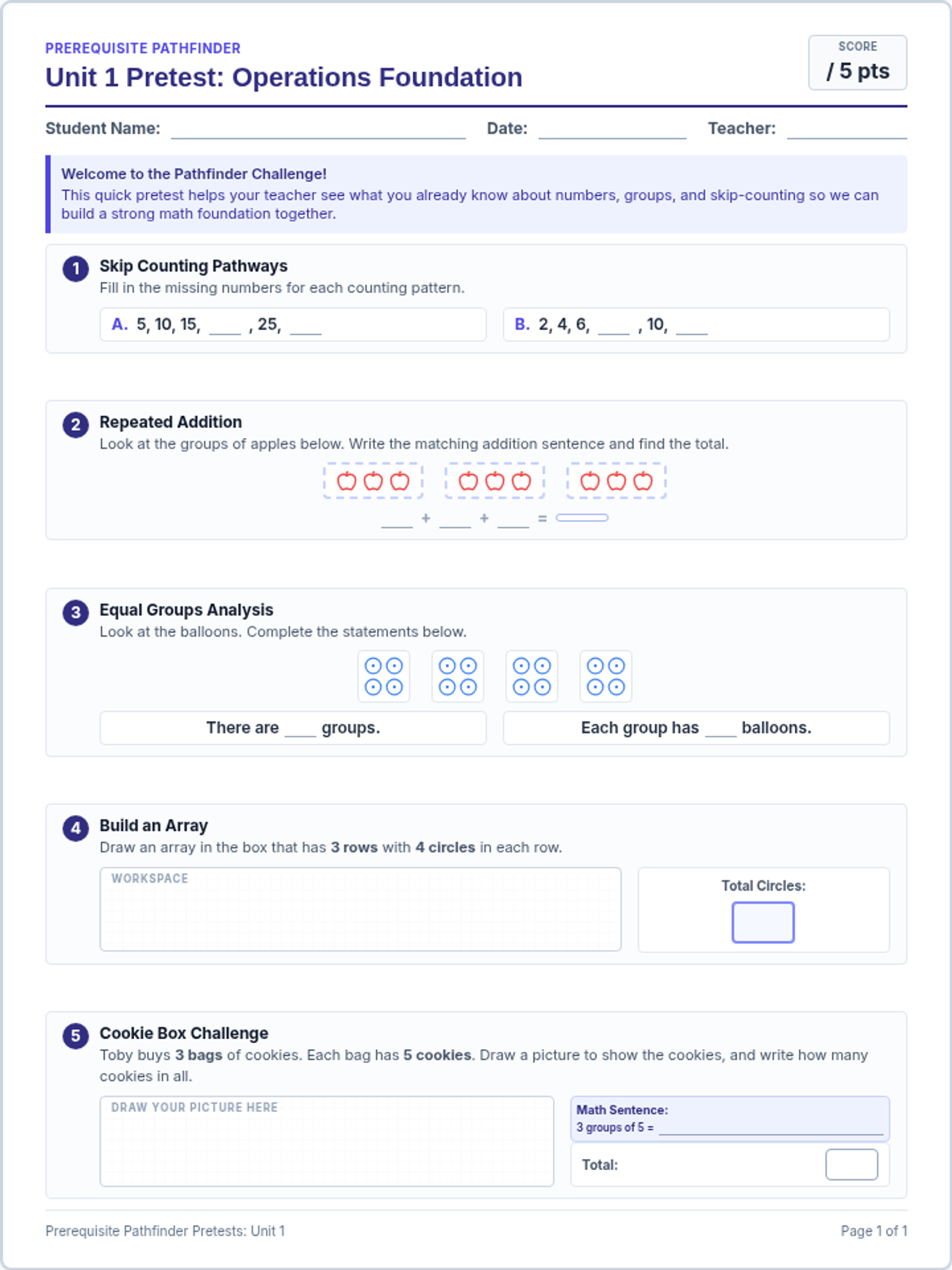
Focuses on prerequisite skills for multiplication and division, including equal groups, skip counting, arrays, and repeated addition.
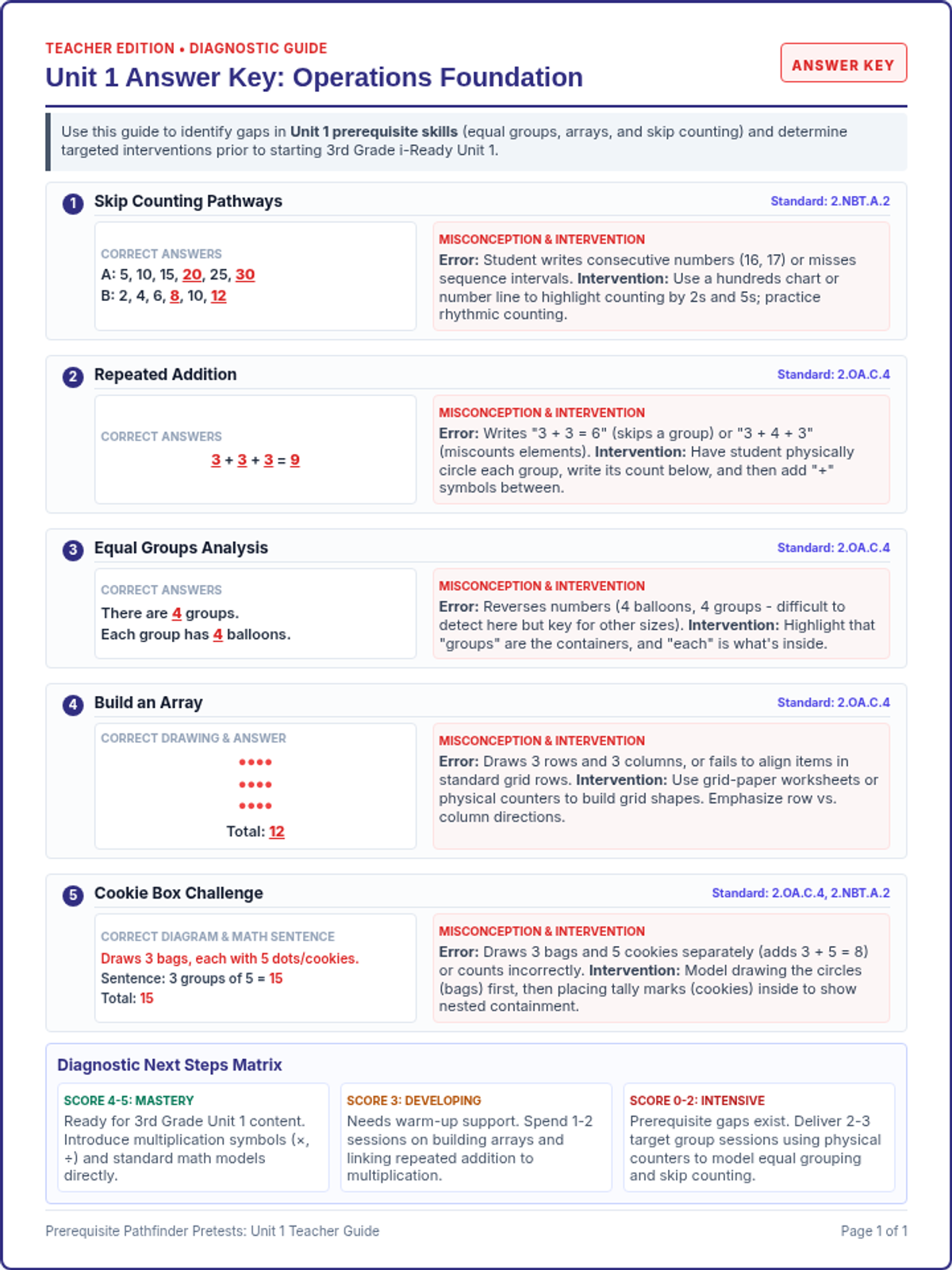
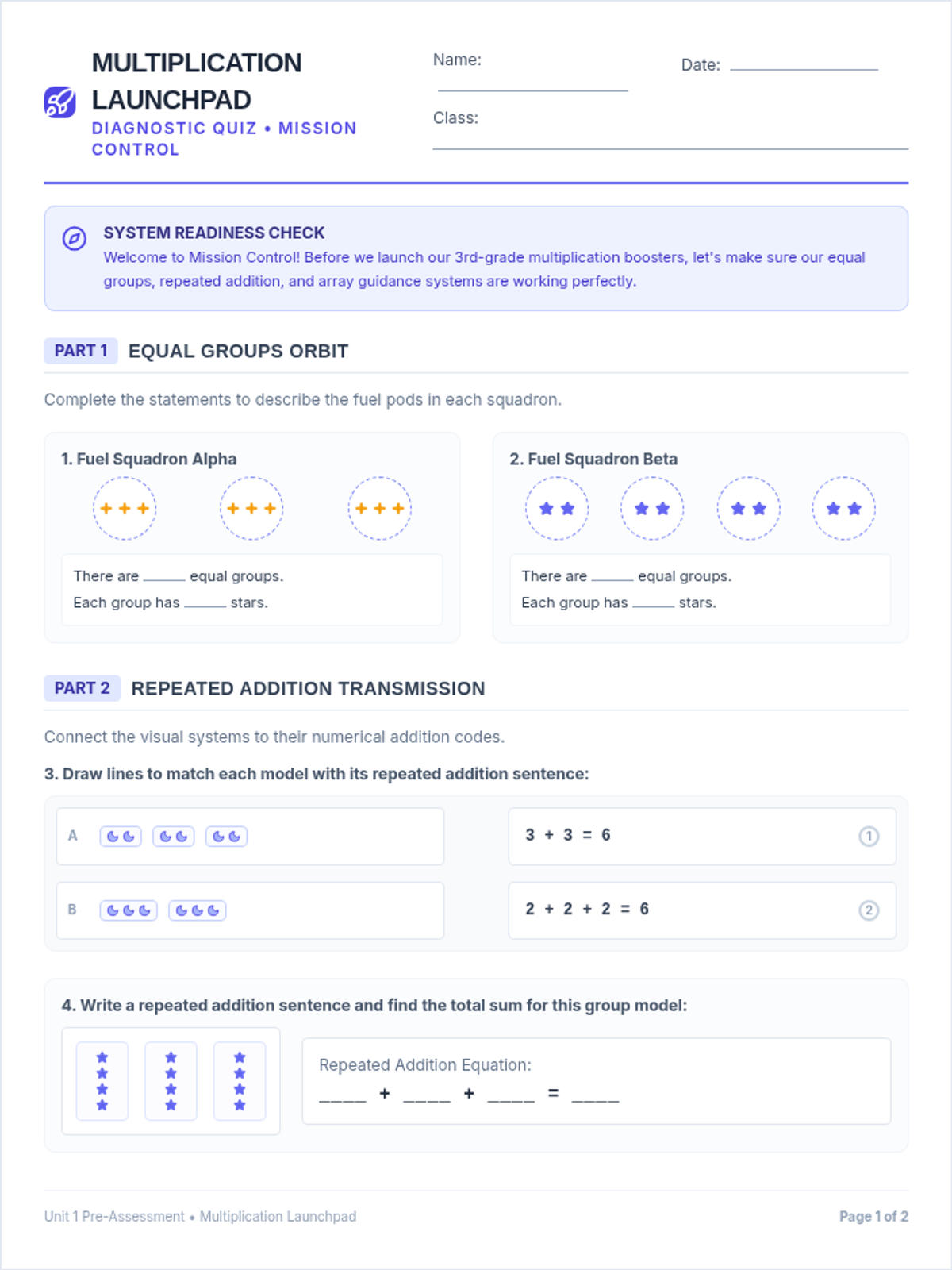
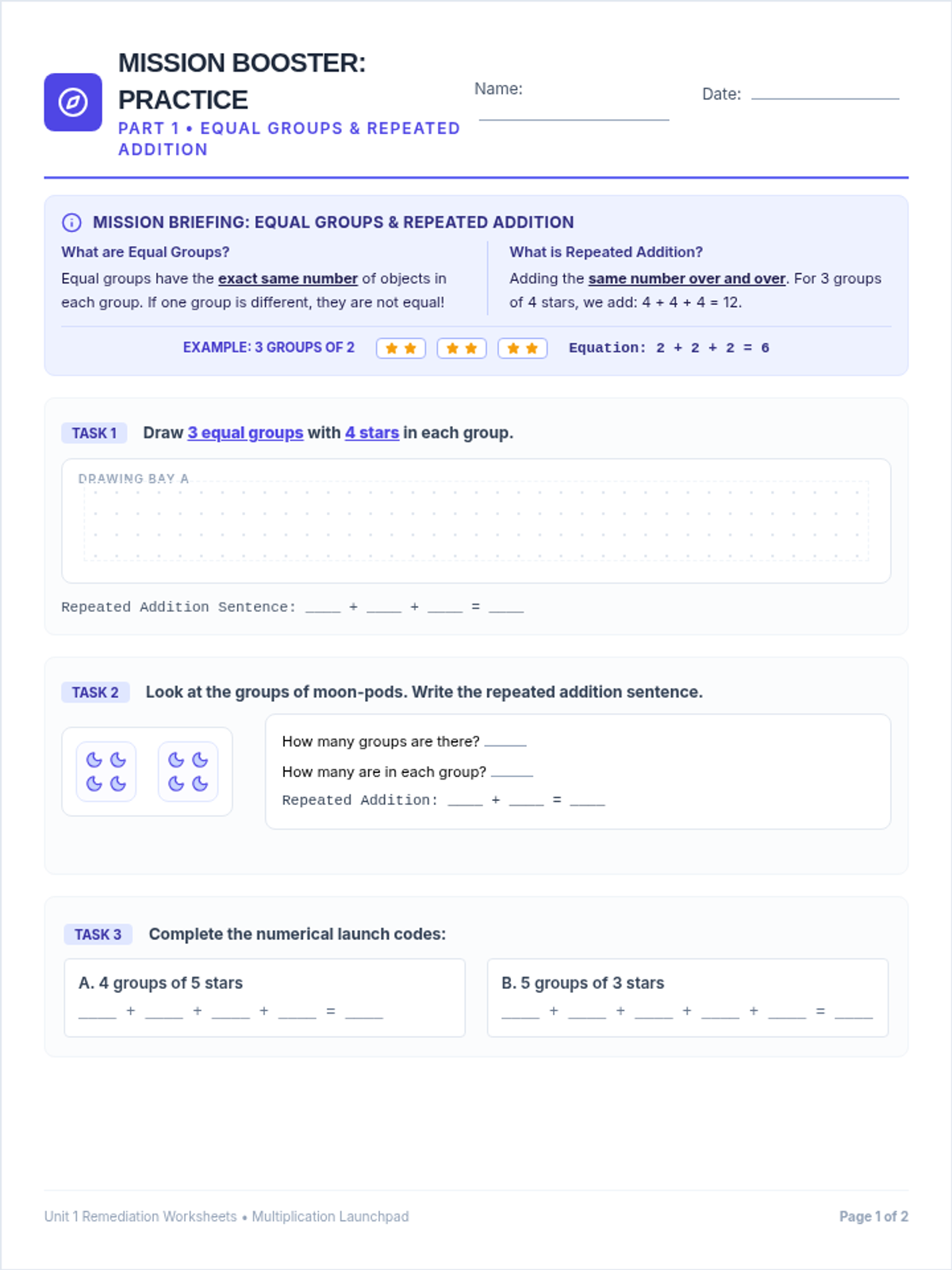
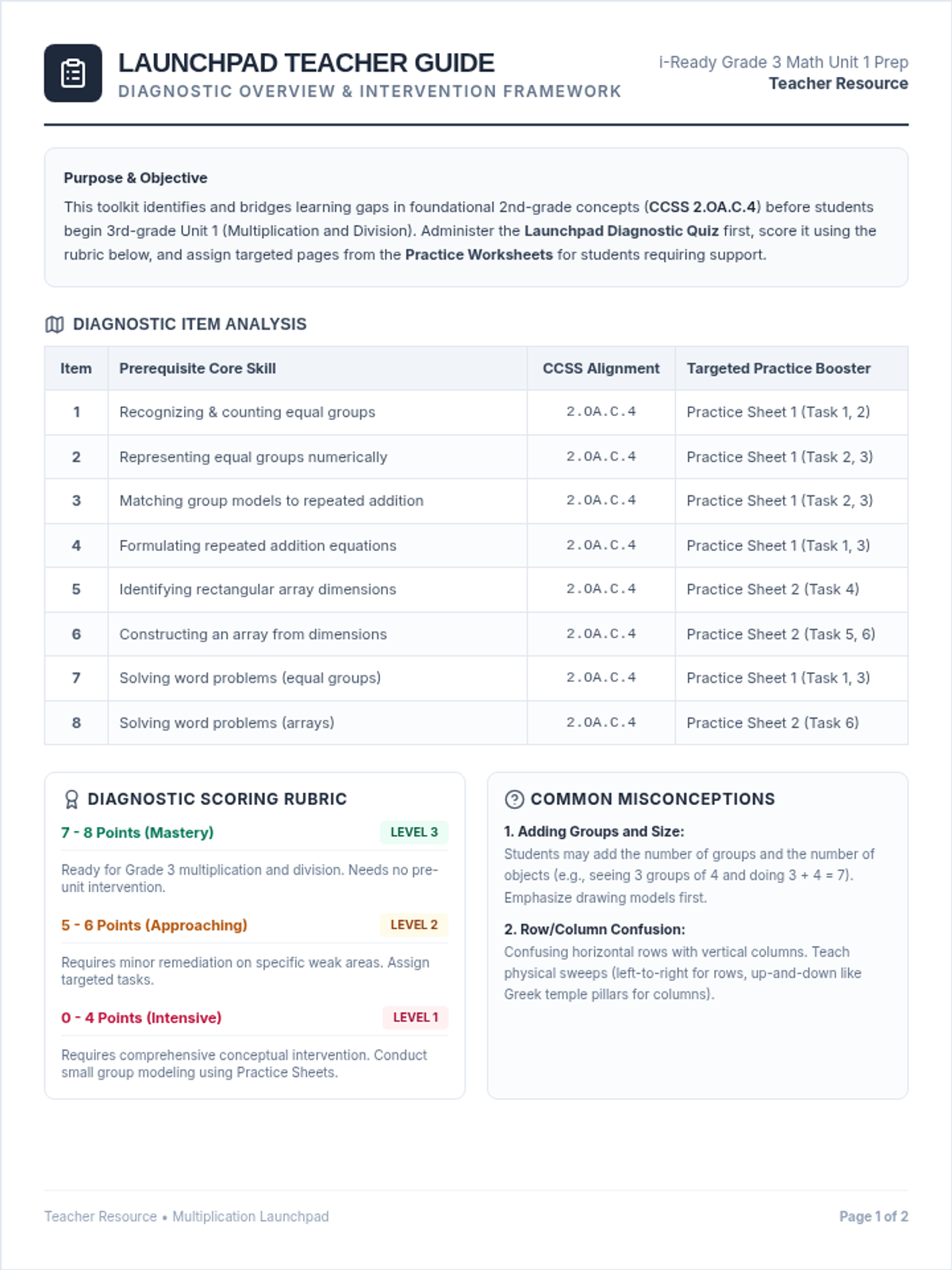
A diagnostic pretest and intervention package designed to assess and remediate 2nd-grade prerequisite math skills (equal groups, repeated addition, and basic arrays) before starting 3rd-grade Unit 1 Multiplication and Division. Includes a student quiz, targeted intervention worksheets, and a comprehensive teacher guide with rubrics and answer keys.
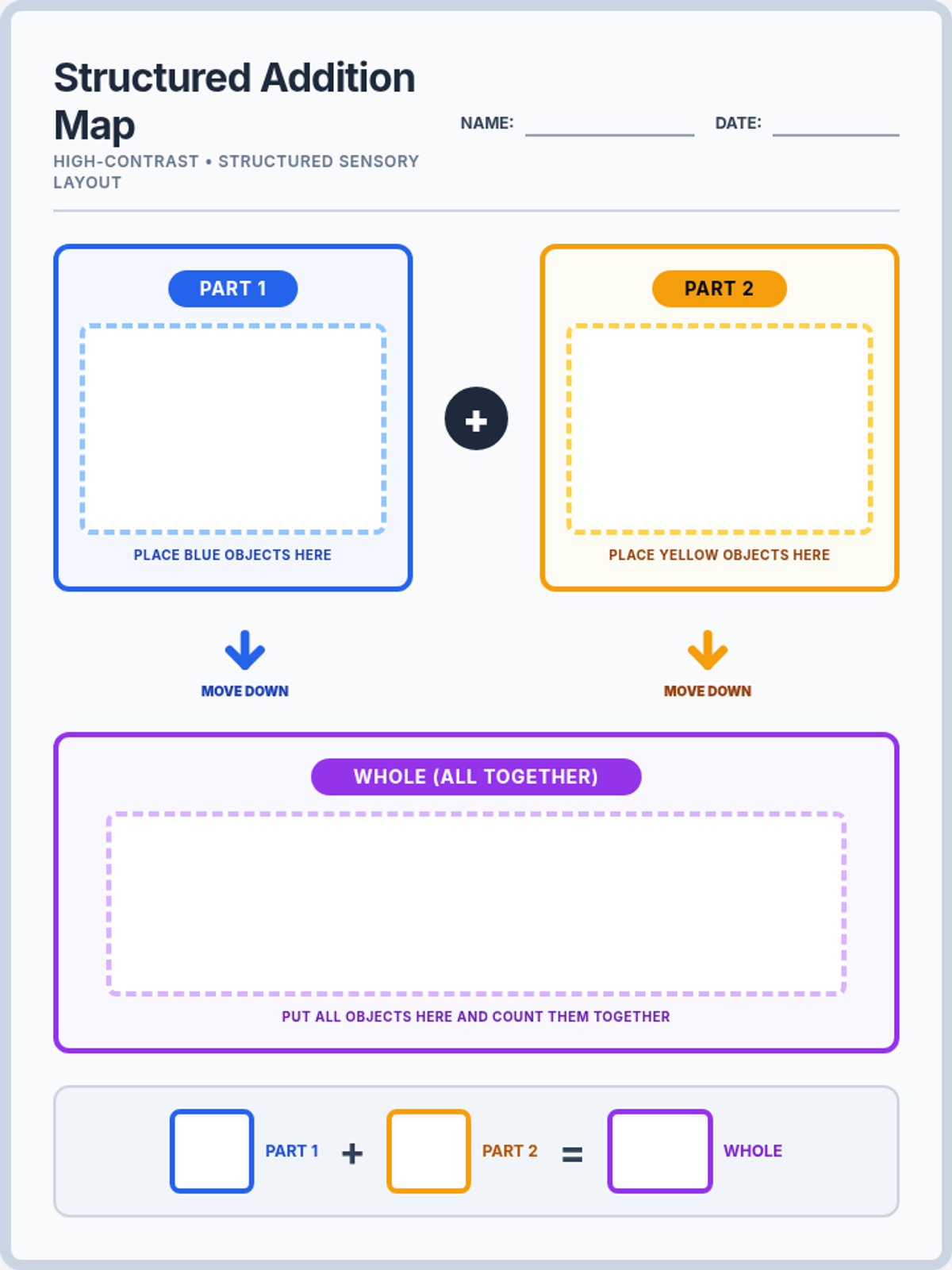
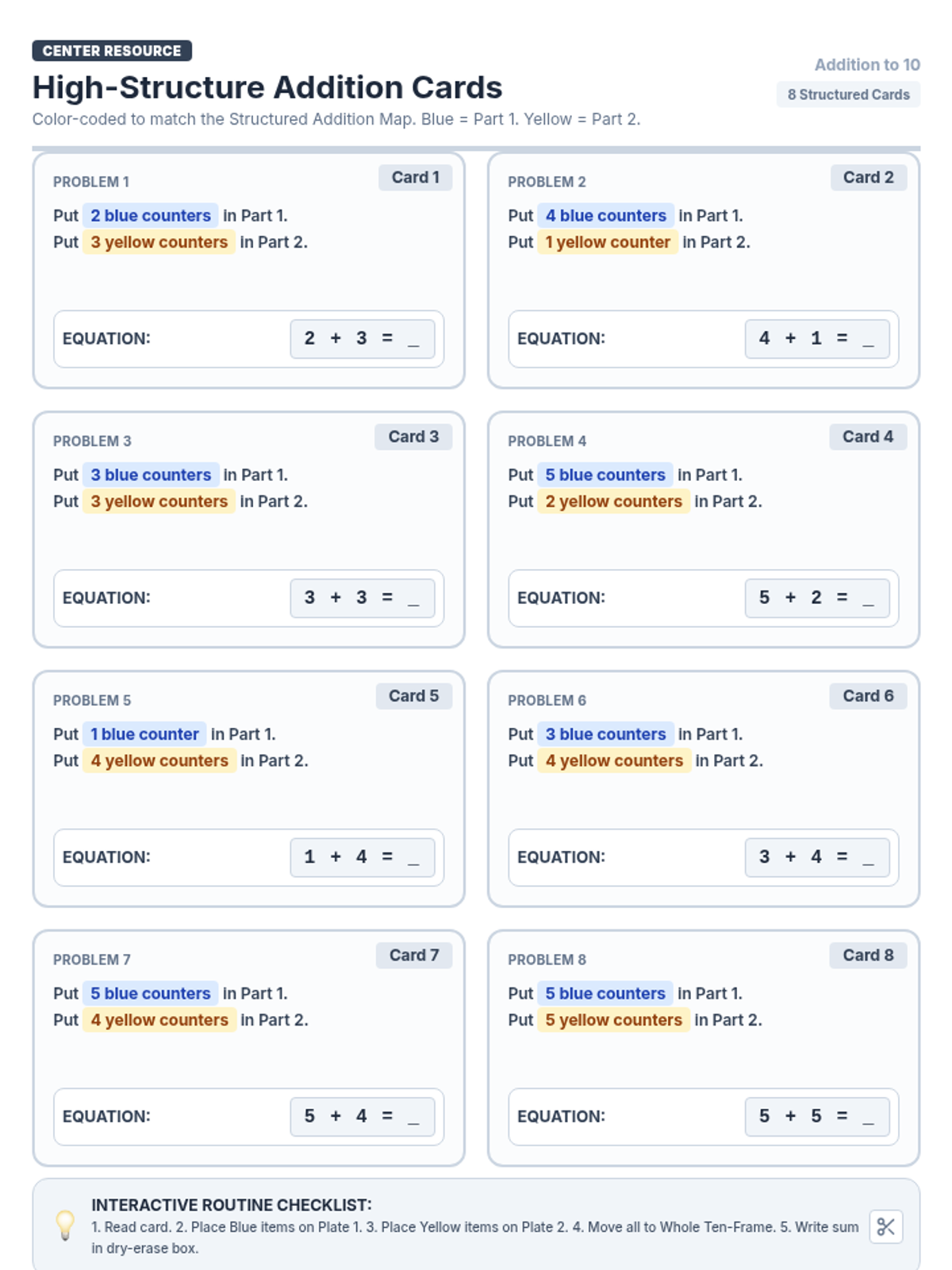
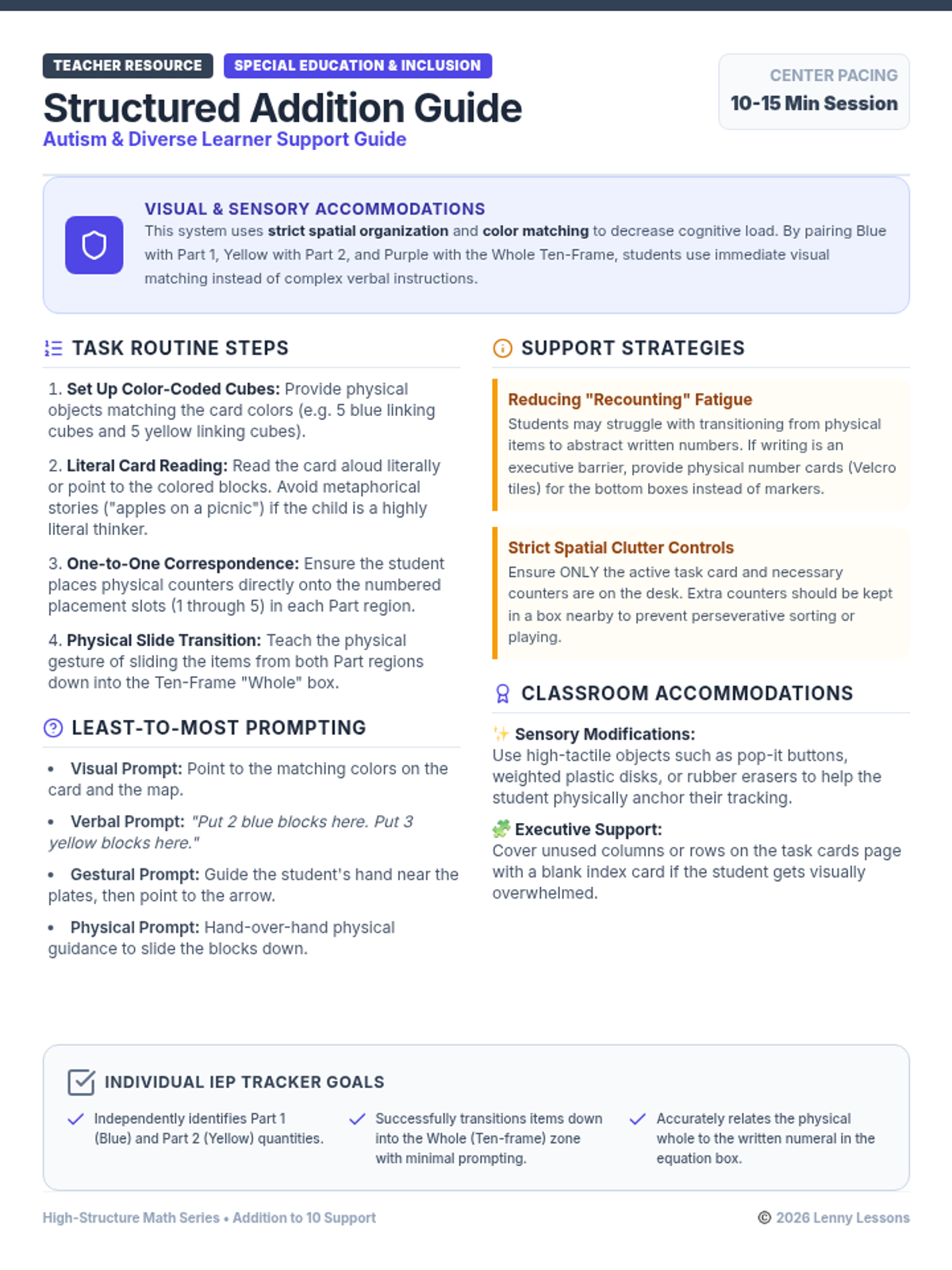
An autism-friendly, high-structure math center featuring a distraction-free Part-Part-Whole Mat with solid, clean workspaces and color-coded task cards for structured physical addition.
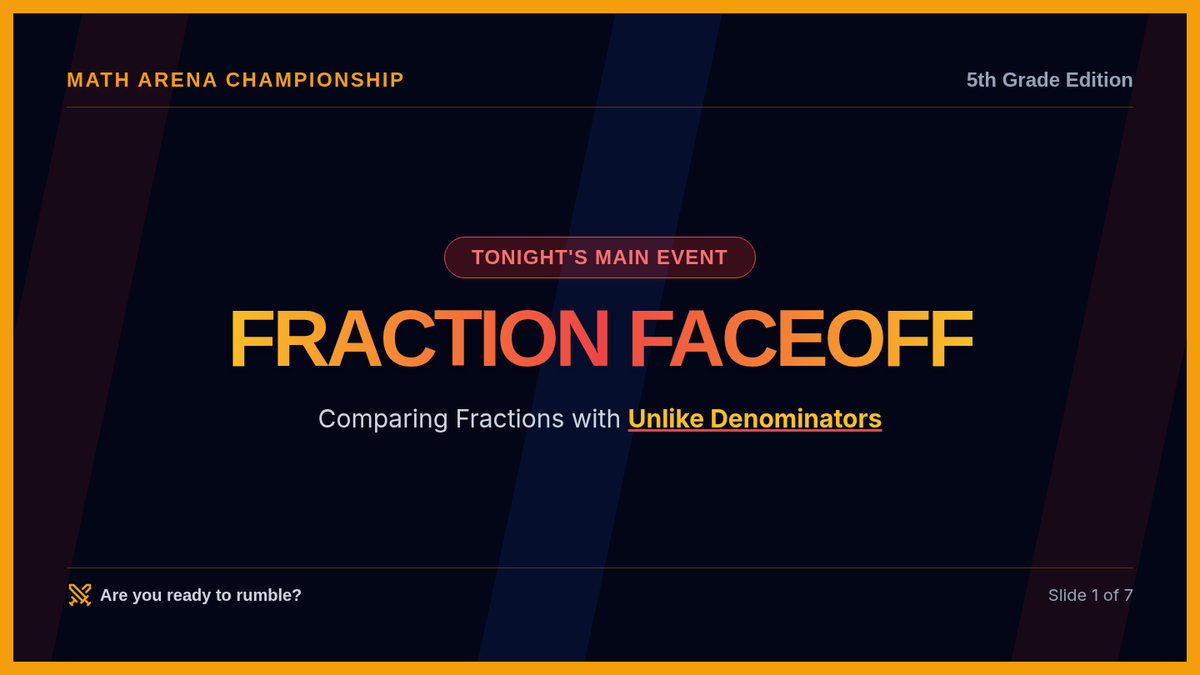
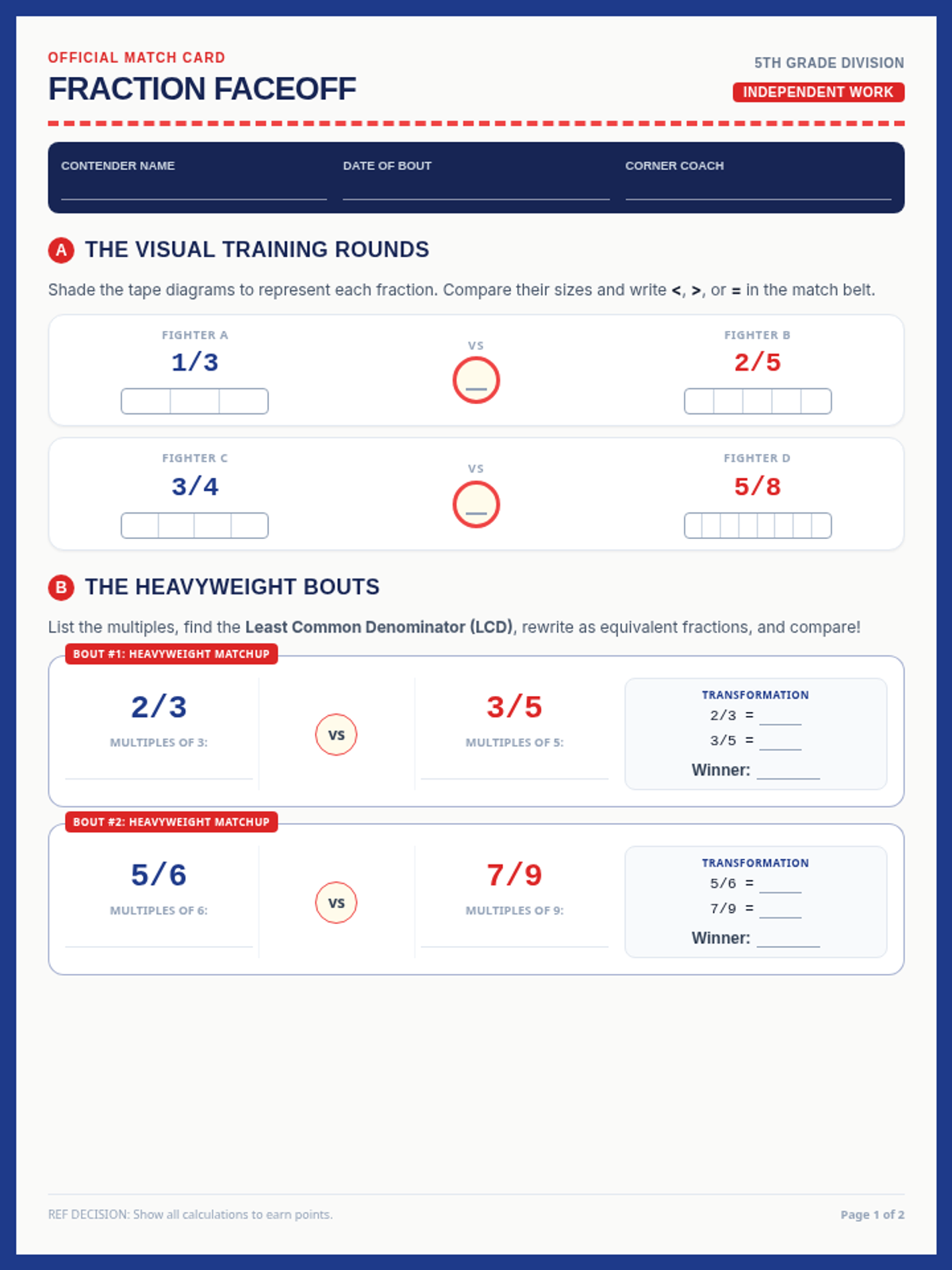
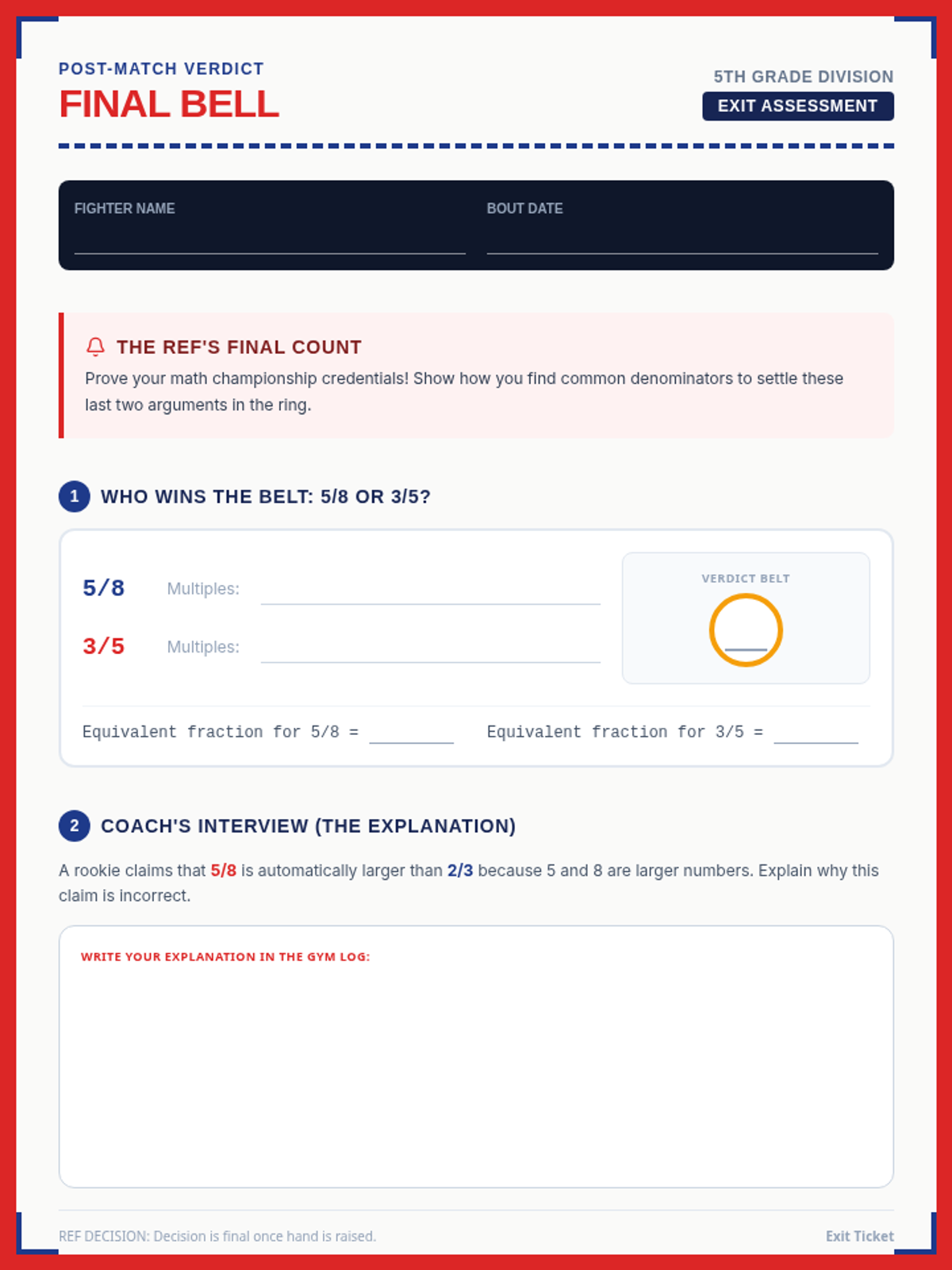
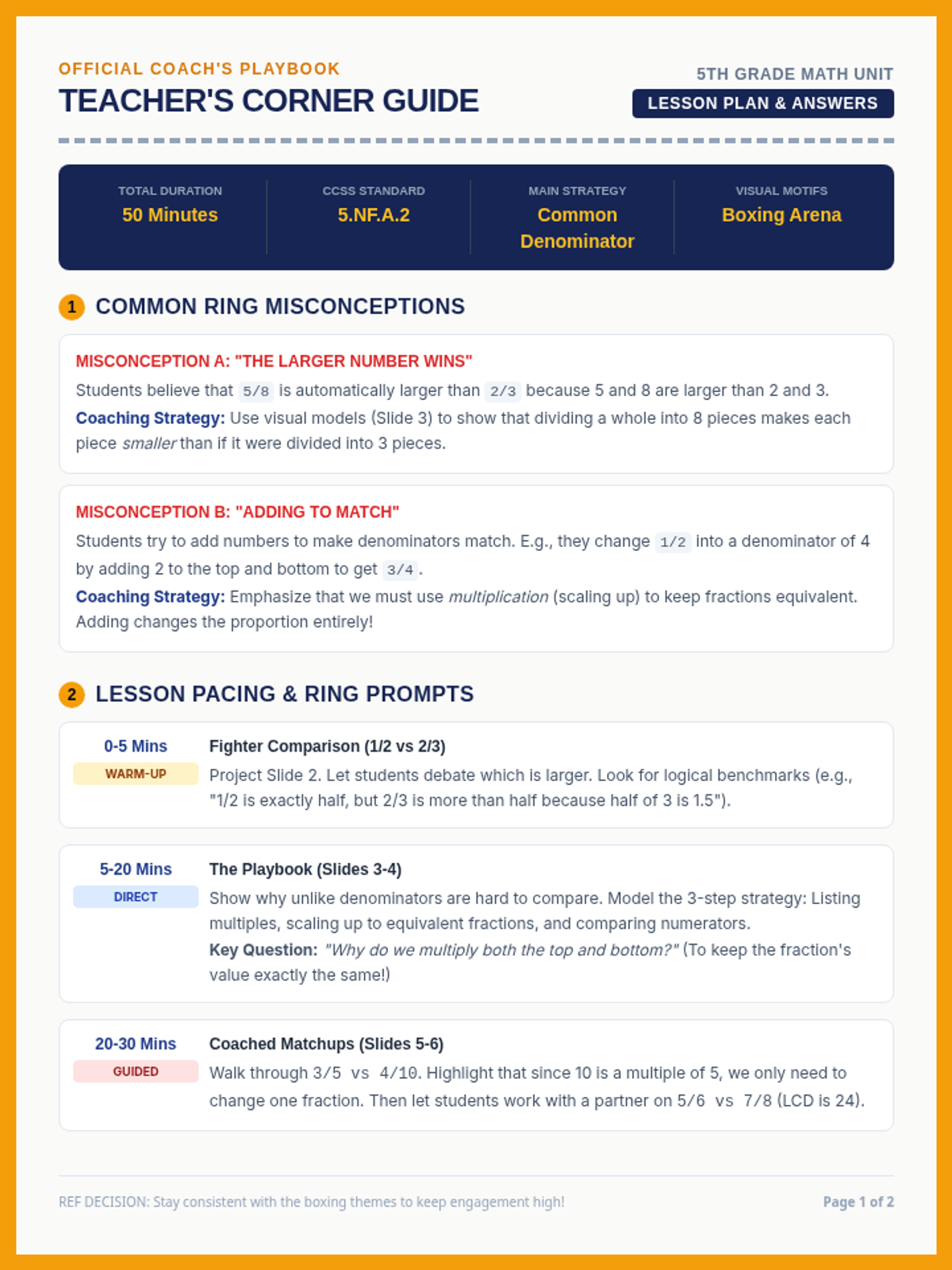
A 5th-grade math lesson focused on comparing fractions with unlike denominators. Students learn to use visual models and find common denominators to determine which fraction is larger in a fun, sports-themed 'Fraction Faceoff' matchup.
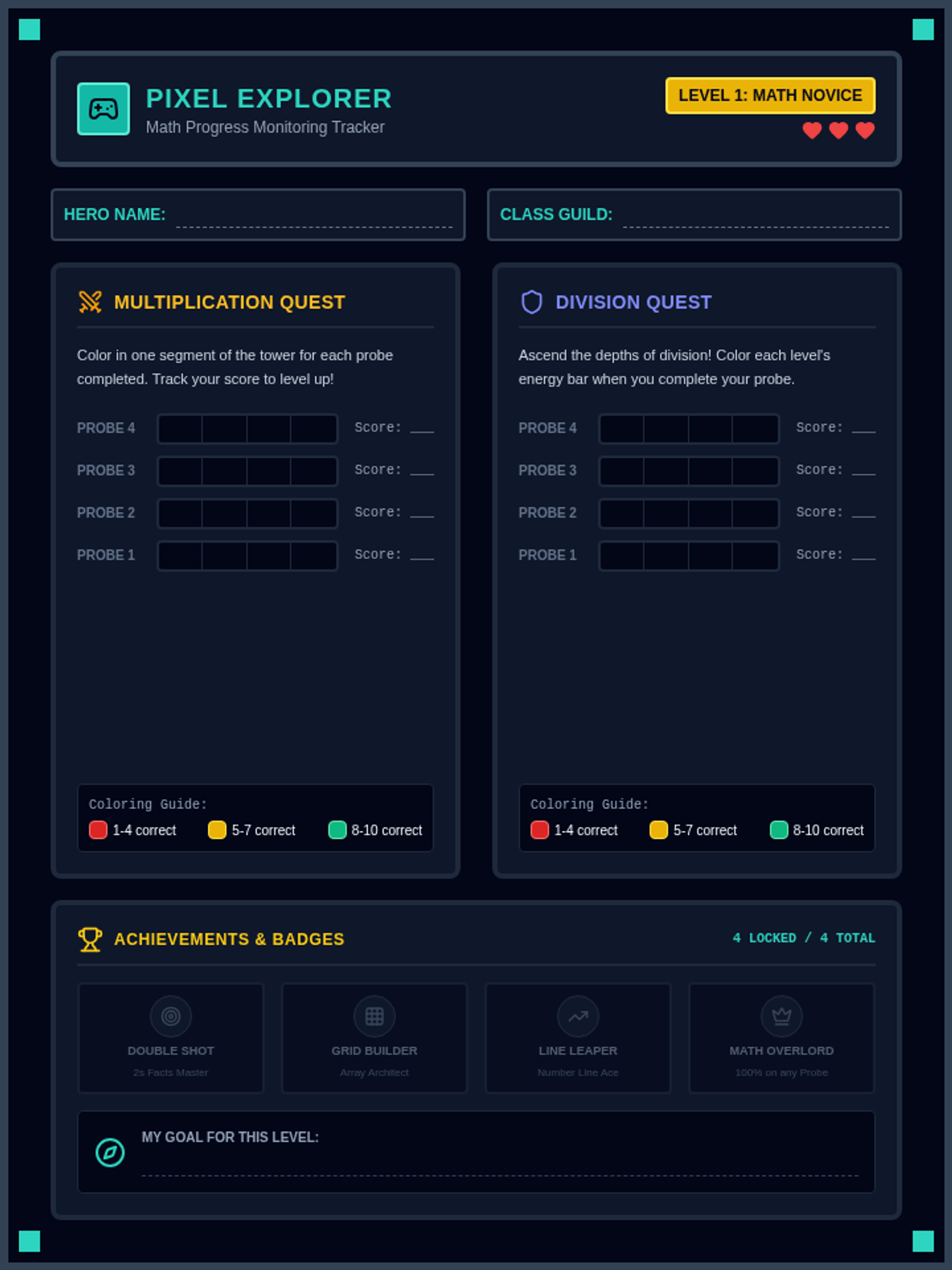
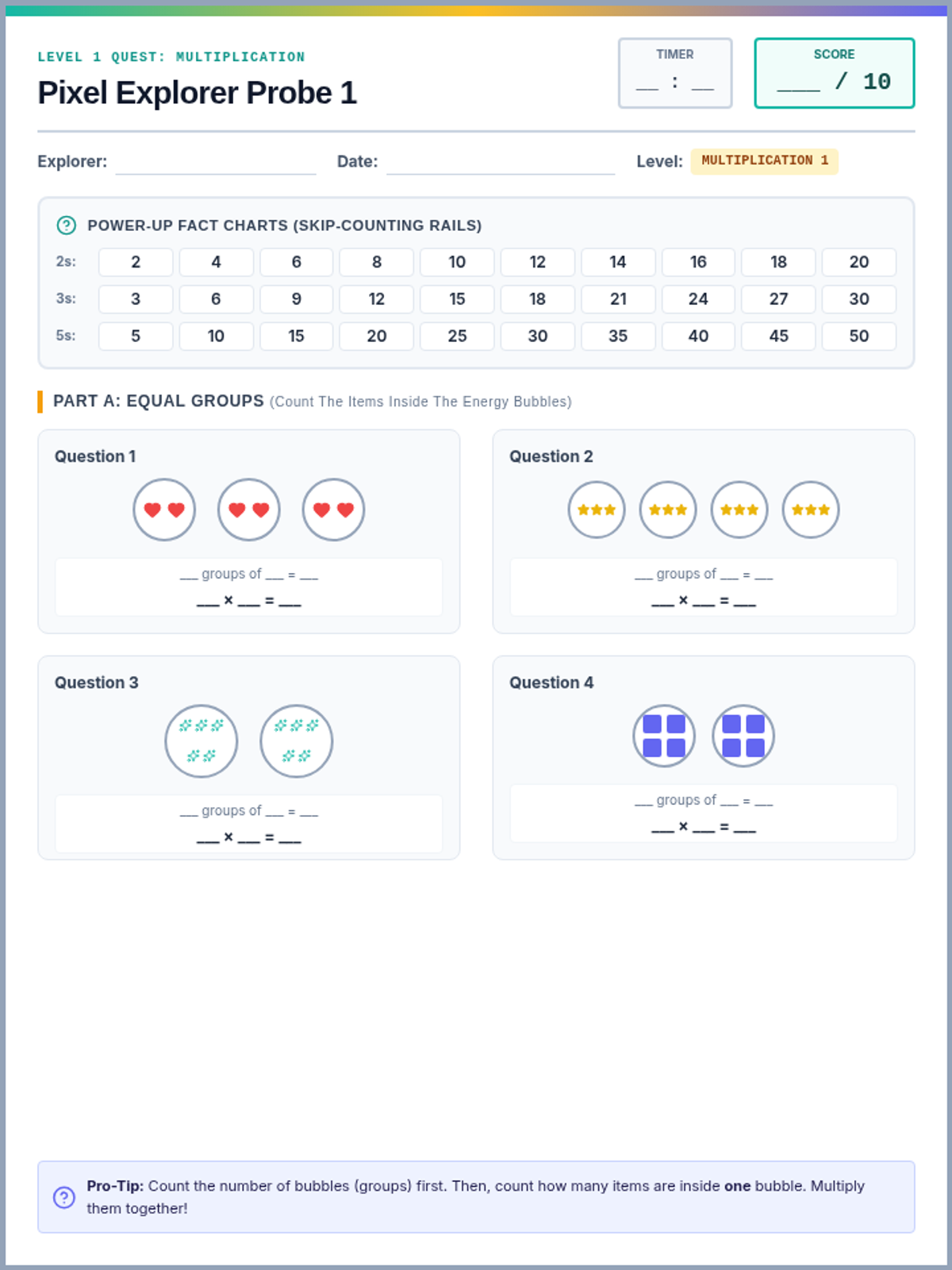
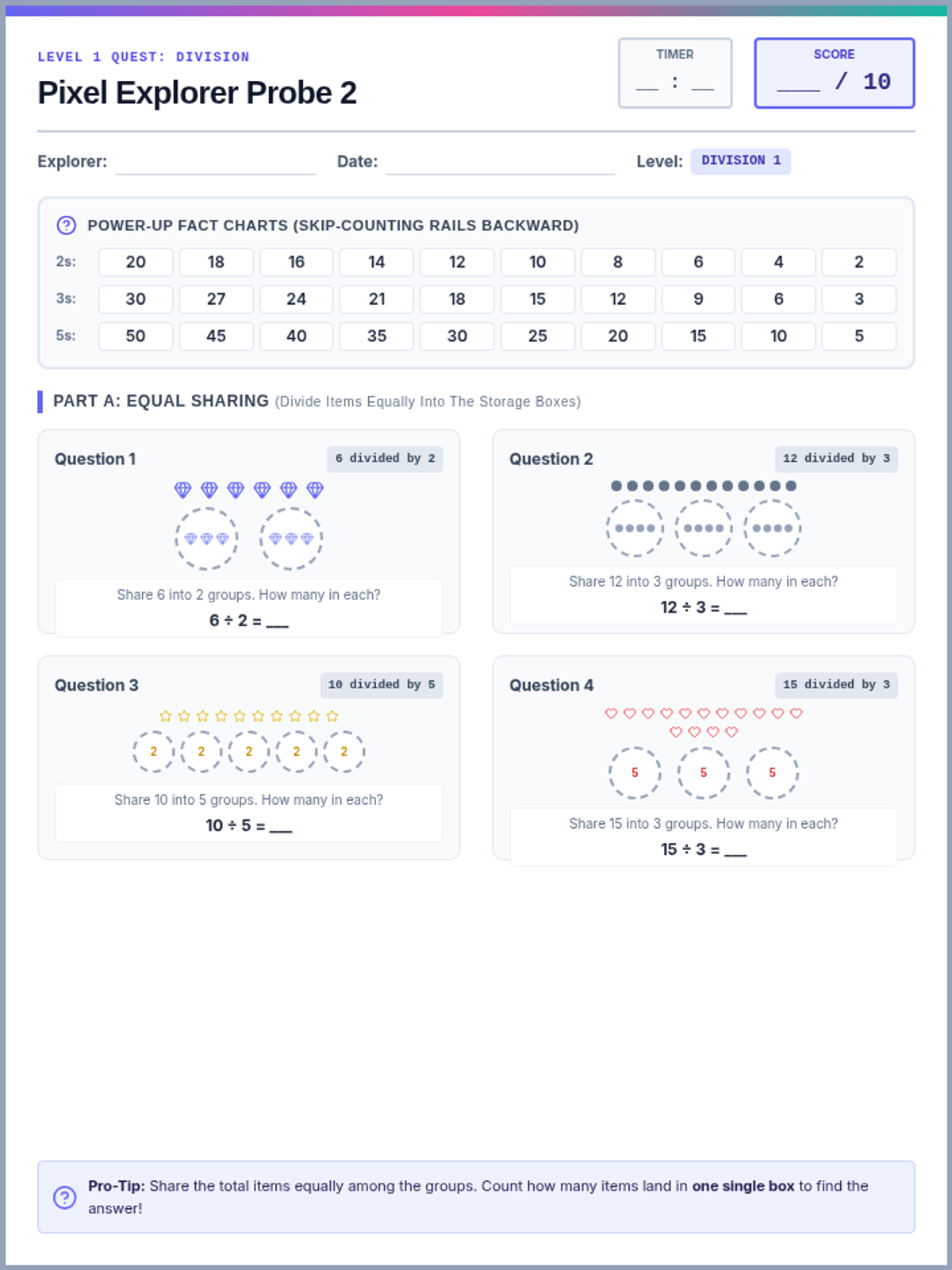
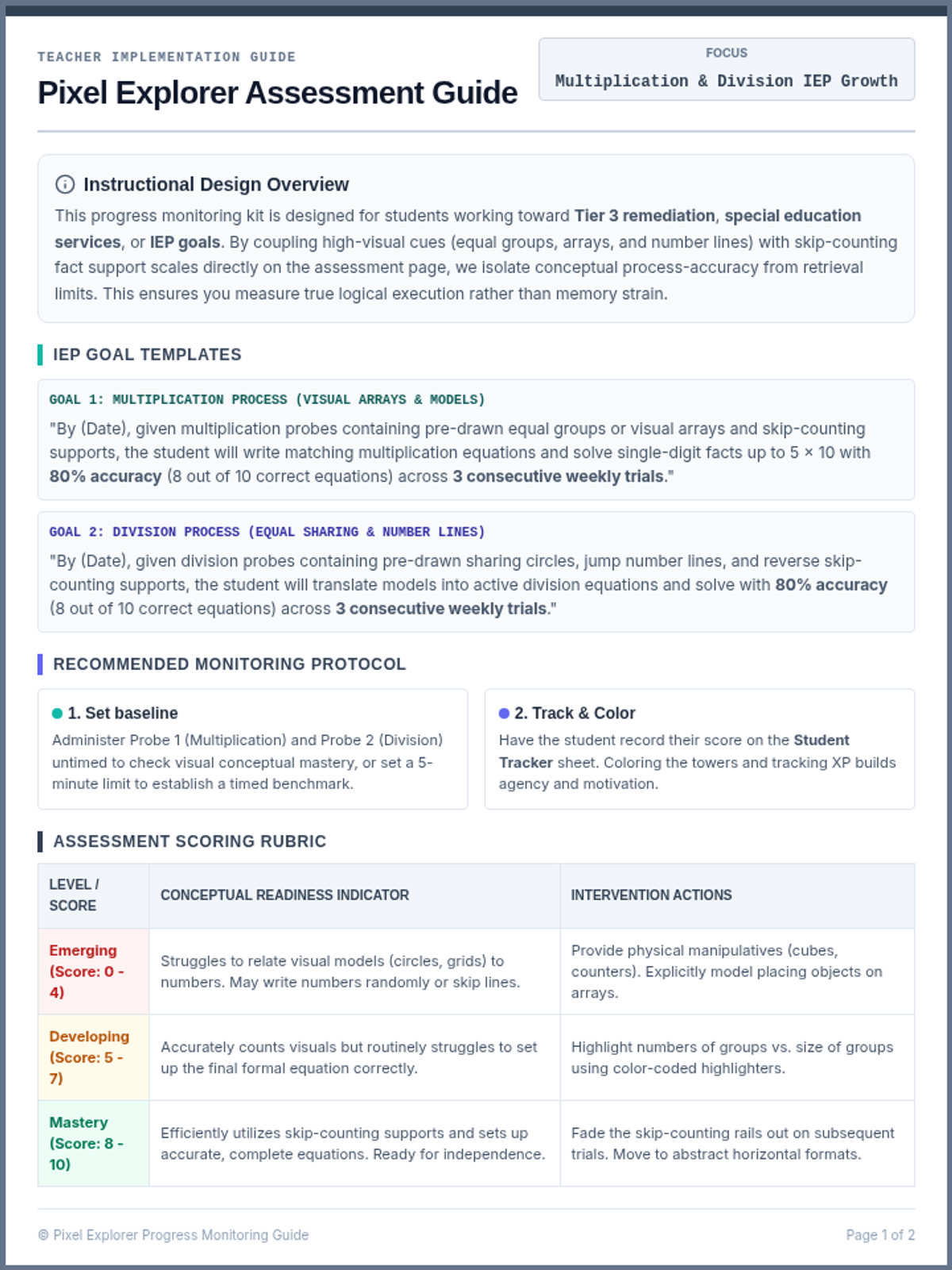
A structured progress monitoring kit for division and multiplication, designed with retro-game aesthetics. Includes two highly-scaffolded visual probes, an interactive student tracker, and a comprehensive teacher guide with IEP goals.
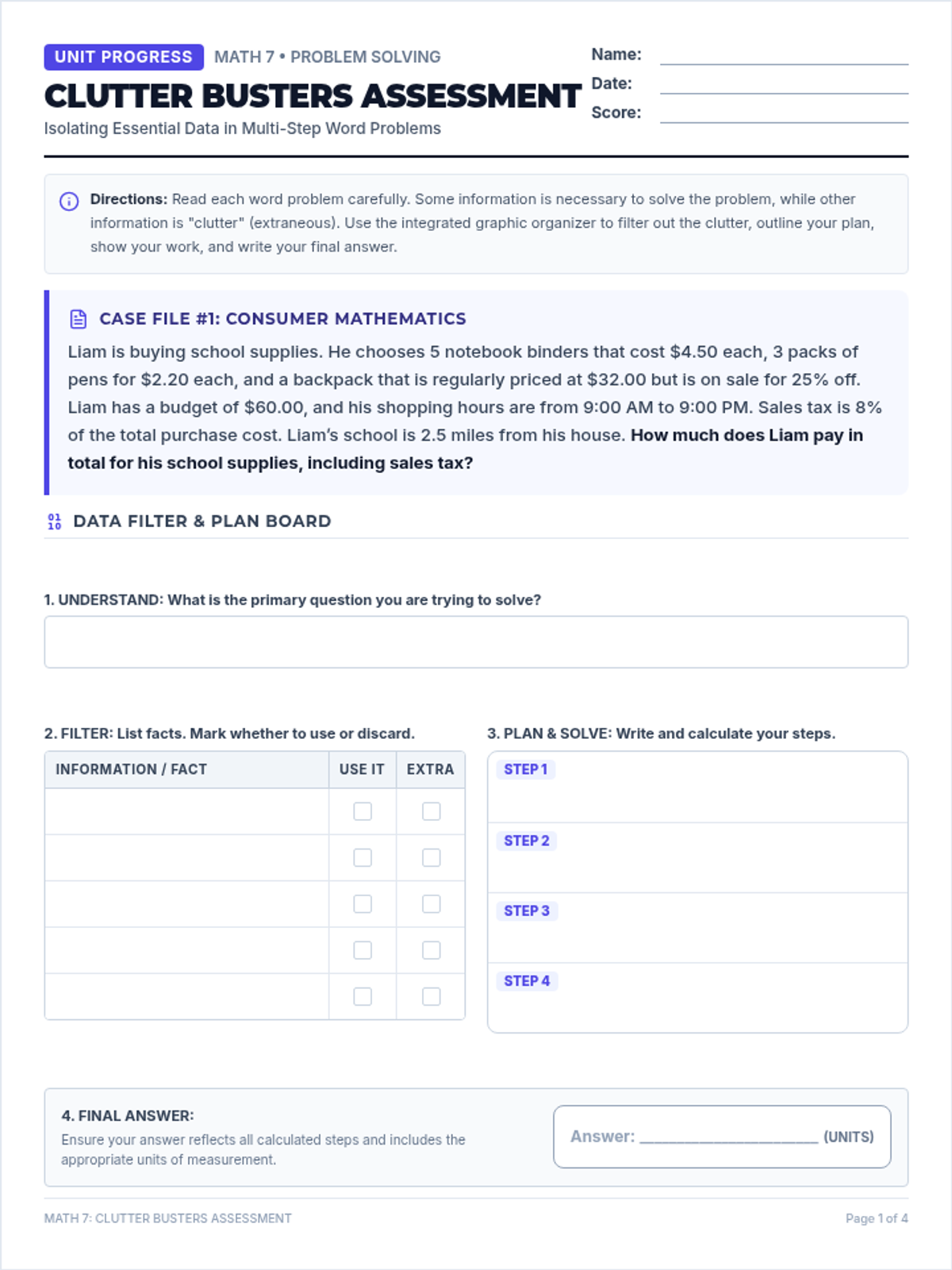
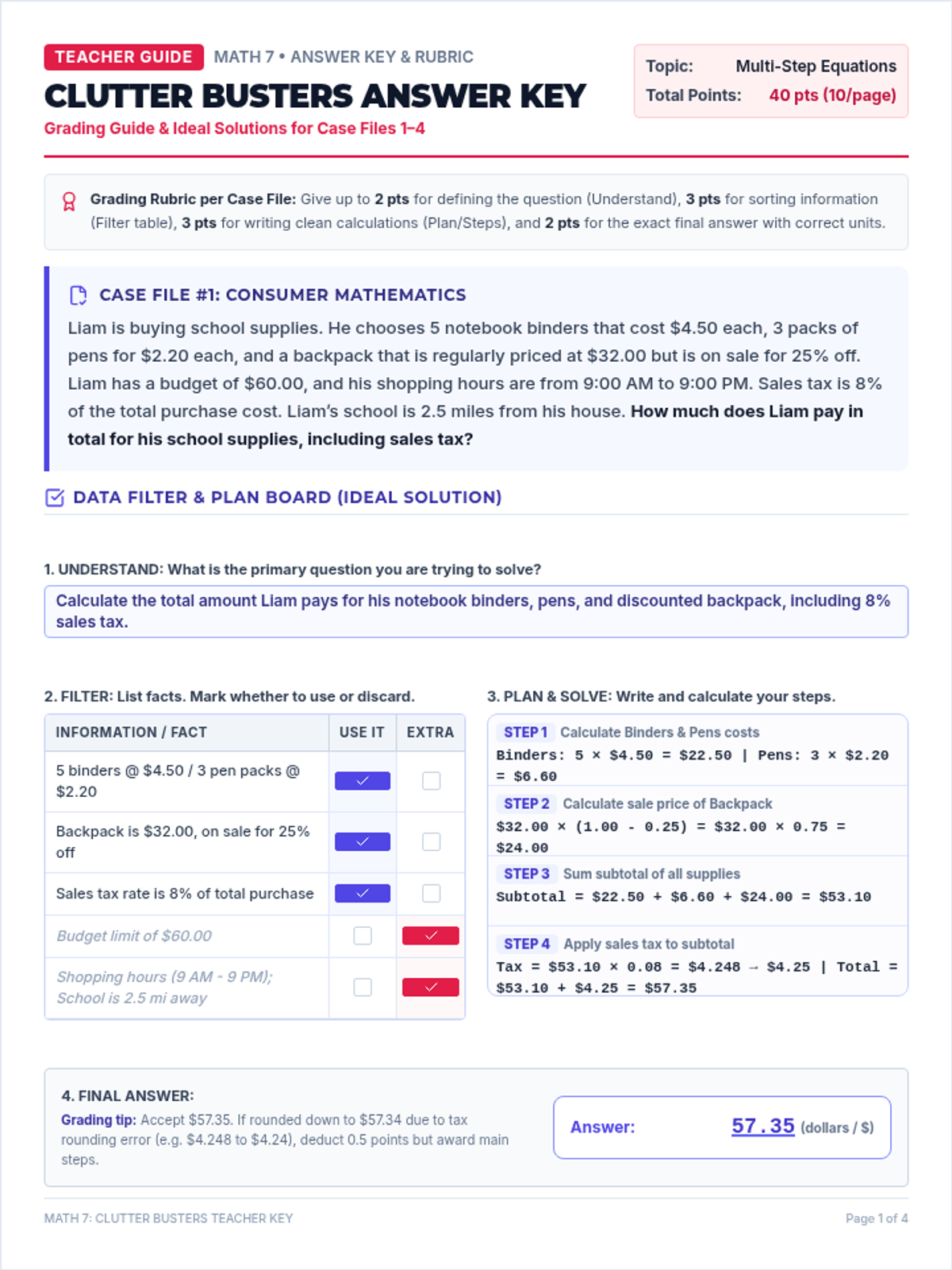
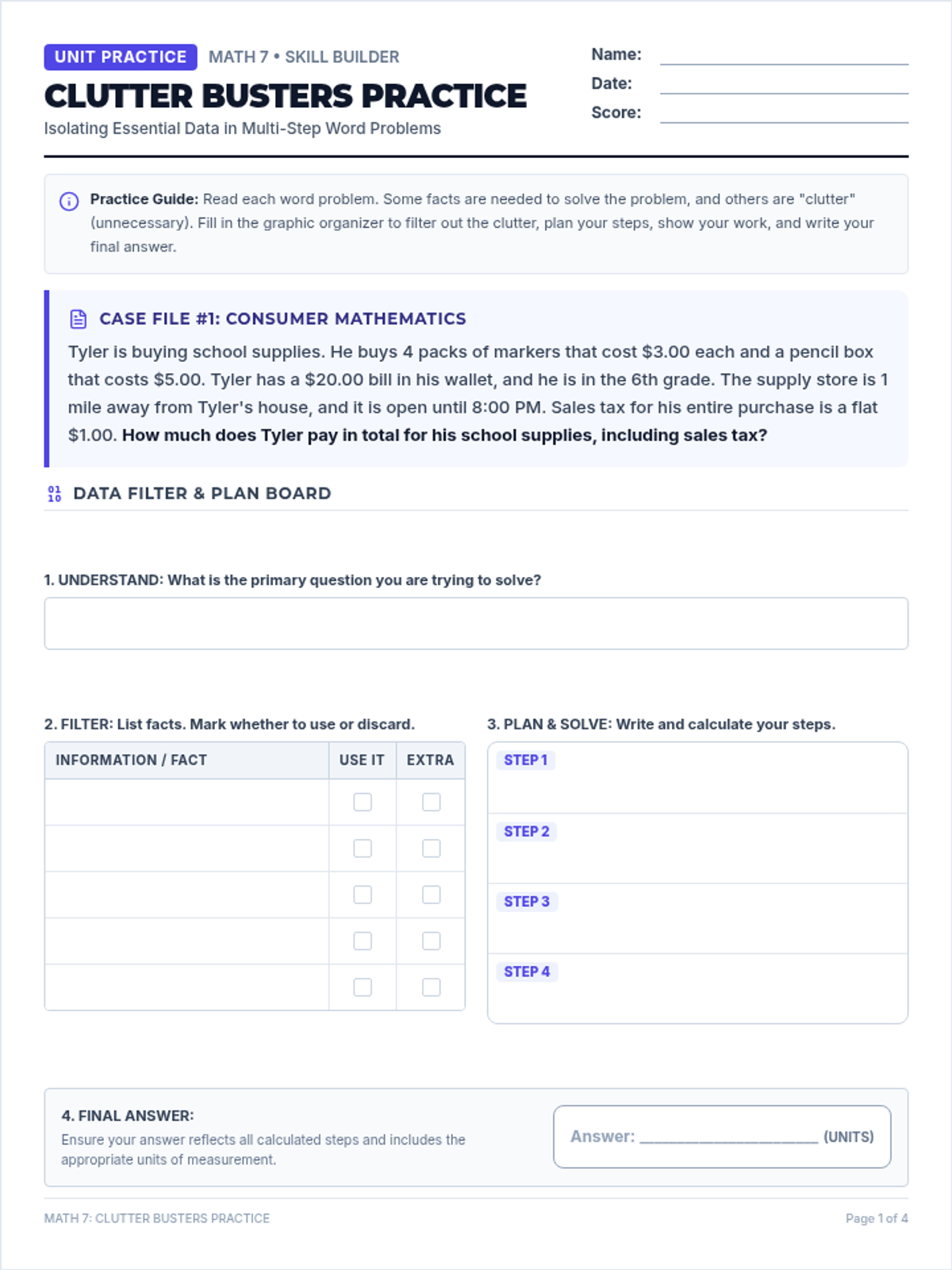
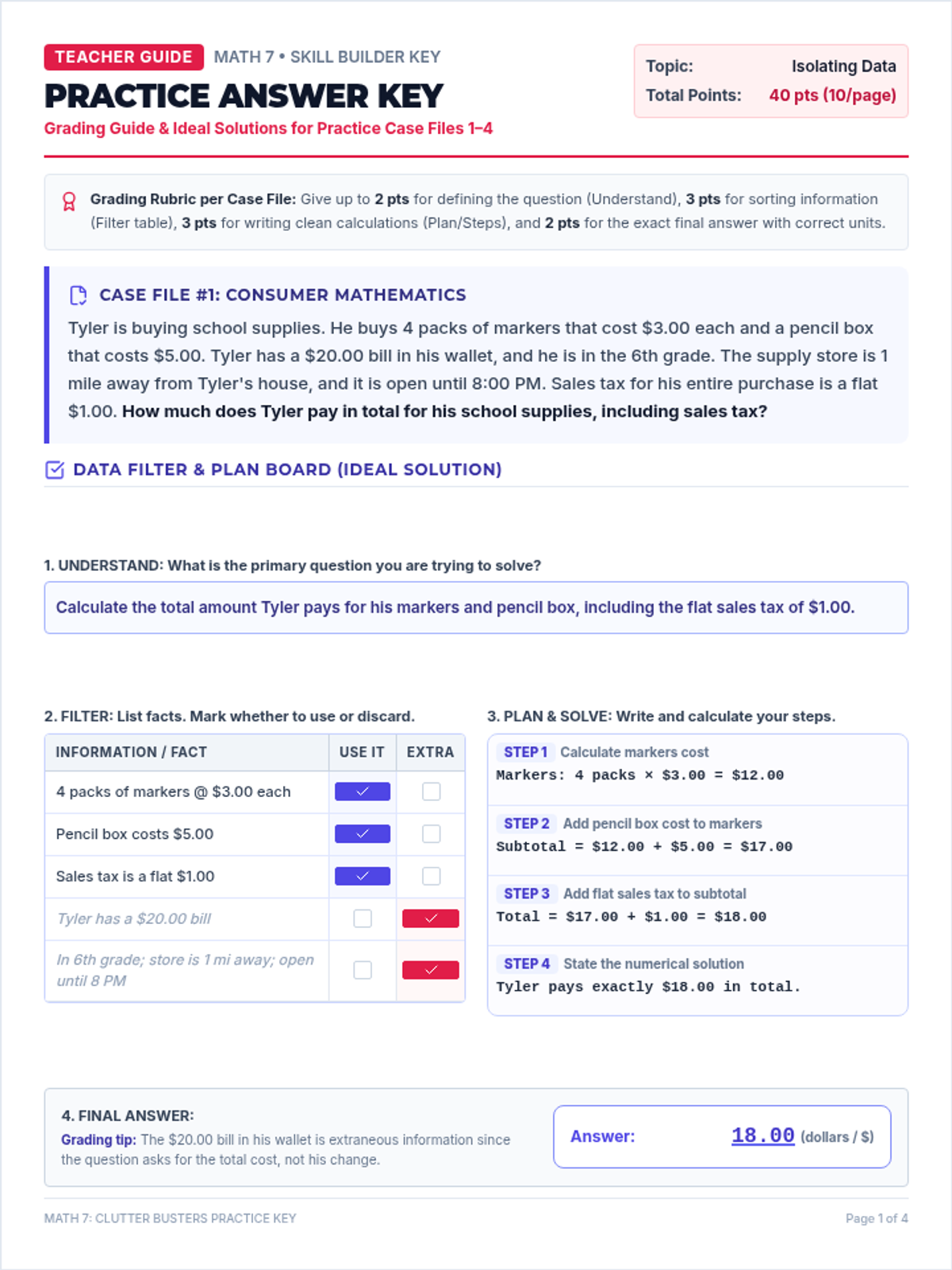
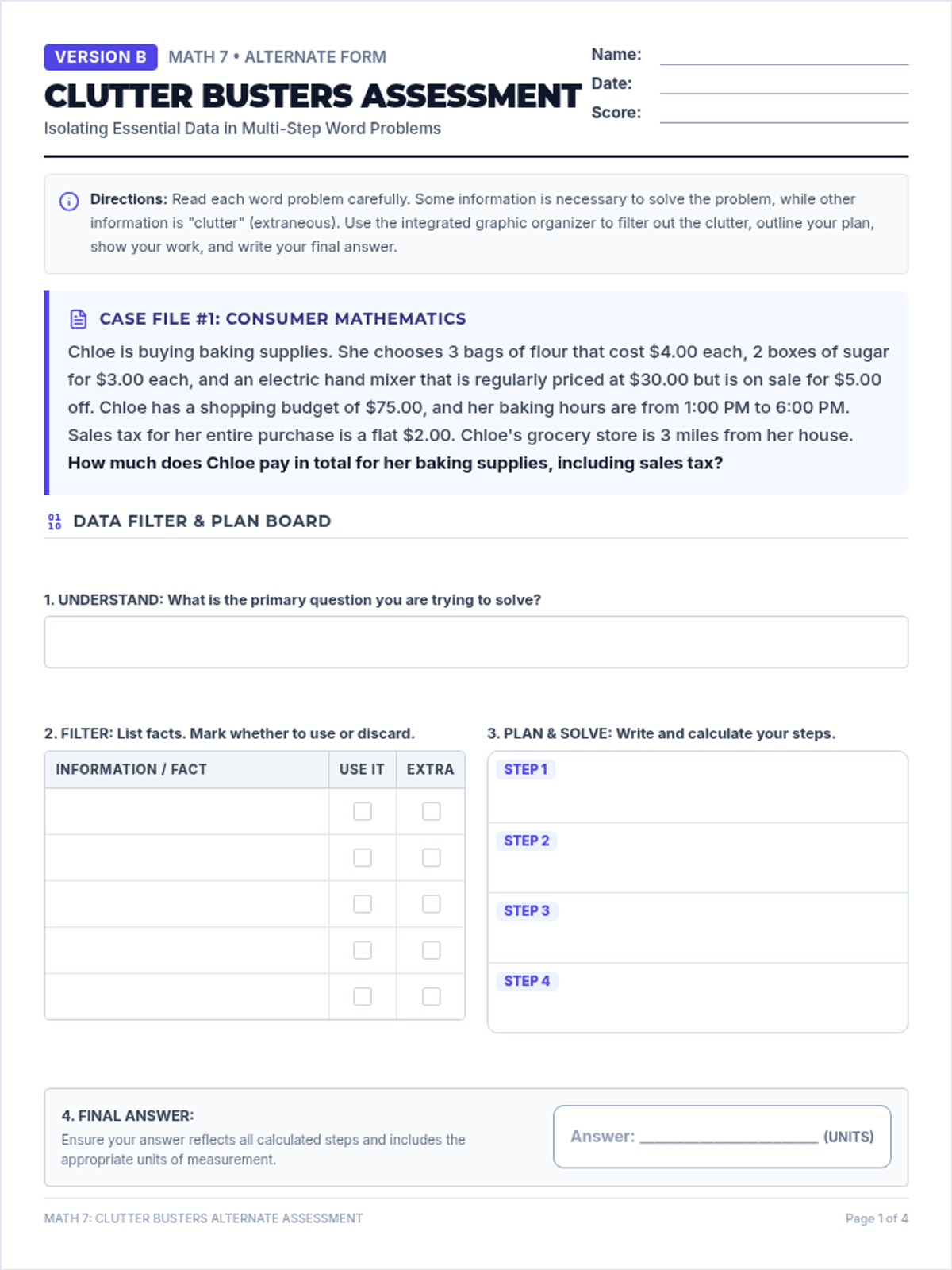
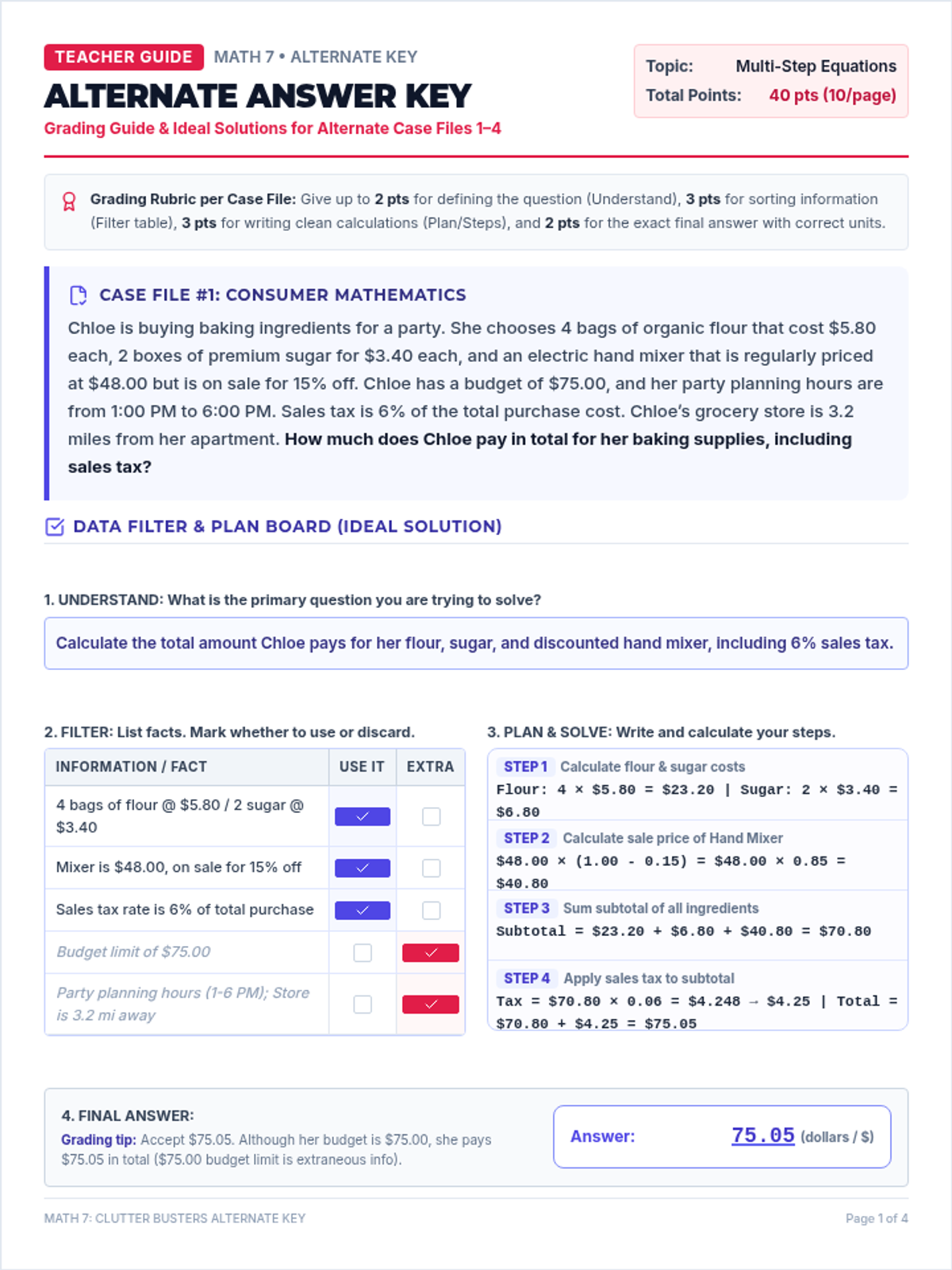
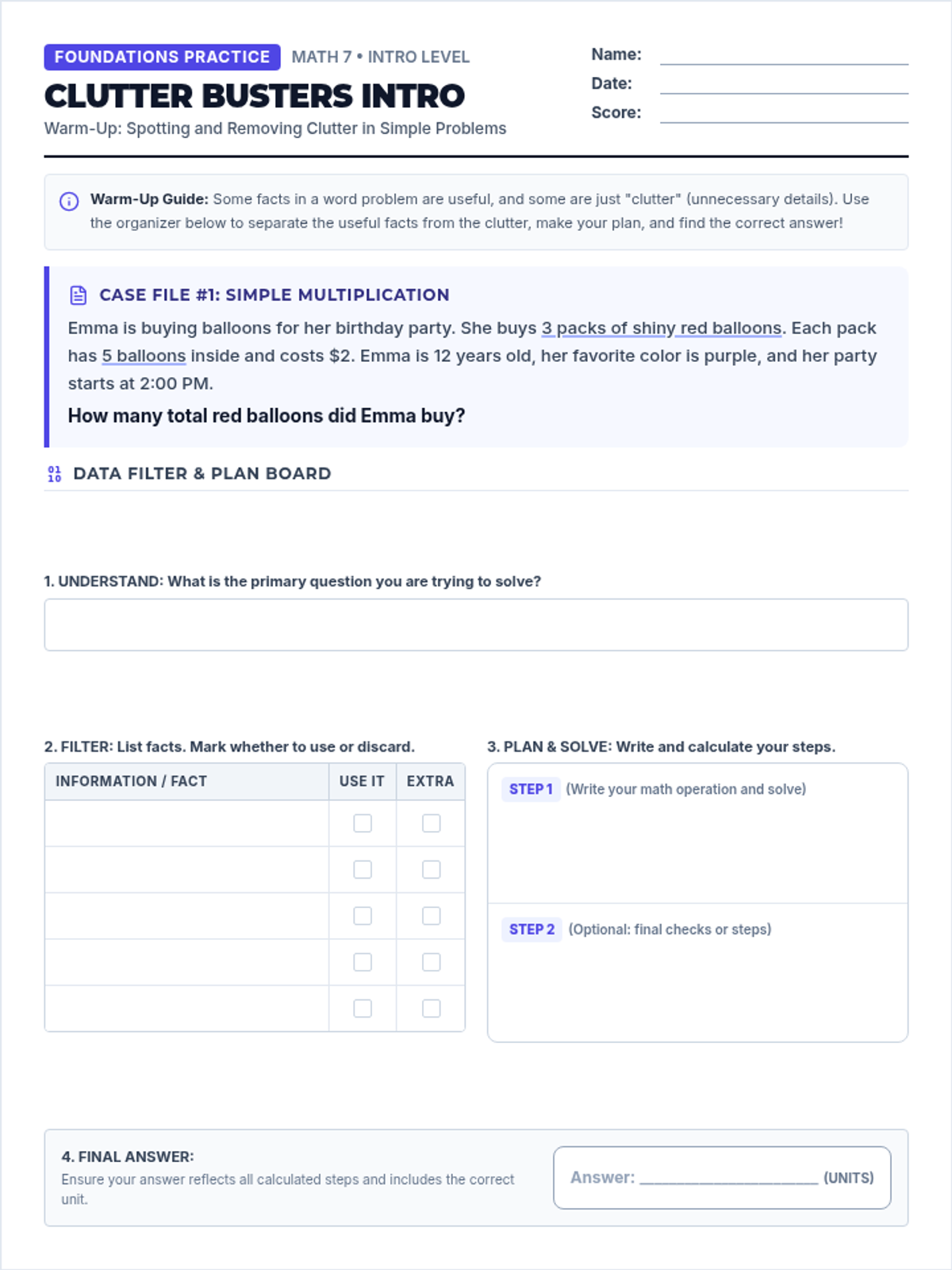
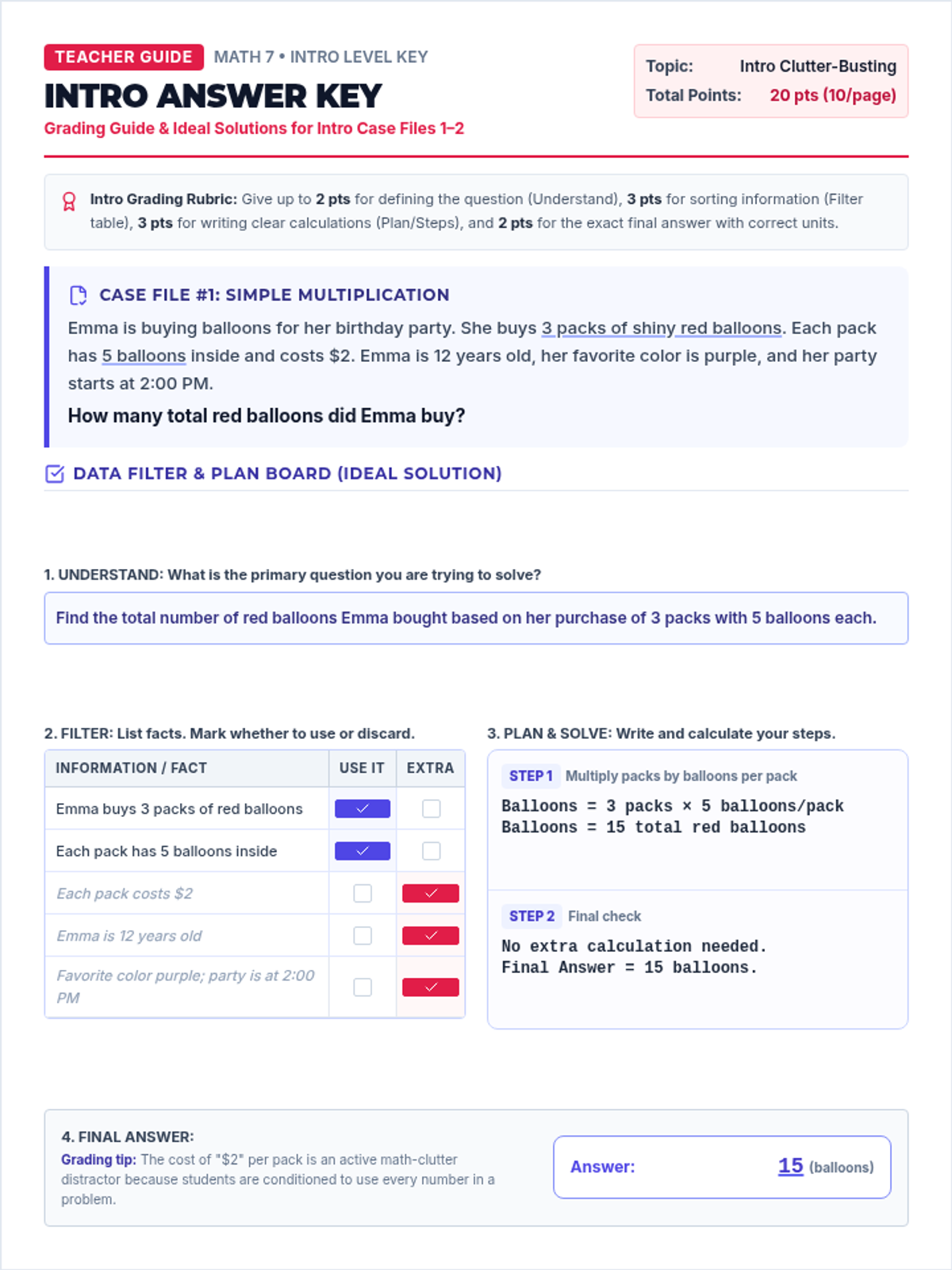
A middle-school math lesson focused on identifying and isolating extraneous information in multi-step word problems. It teaches students to separate relevant data from distracting context using an intuitive, column-based graphic organizer.