This lesson introduces 5th-grade students to the Order of Operations (PEMDAS) to solve mathematical expressions using a fun diner-themed approach. Understanding PEMDAS ensures consistent mathematical results and builds a foundation for algebra.
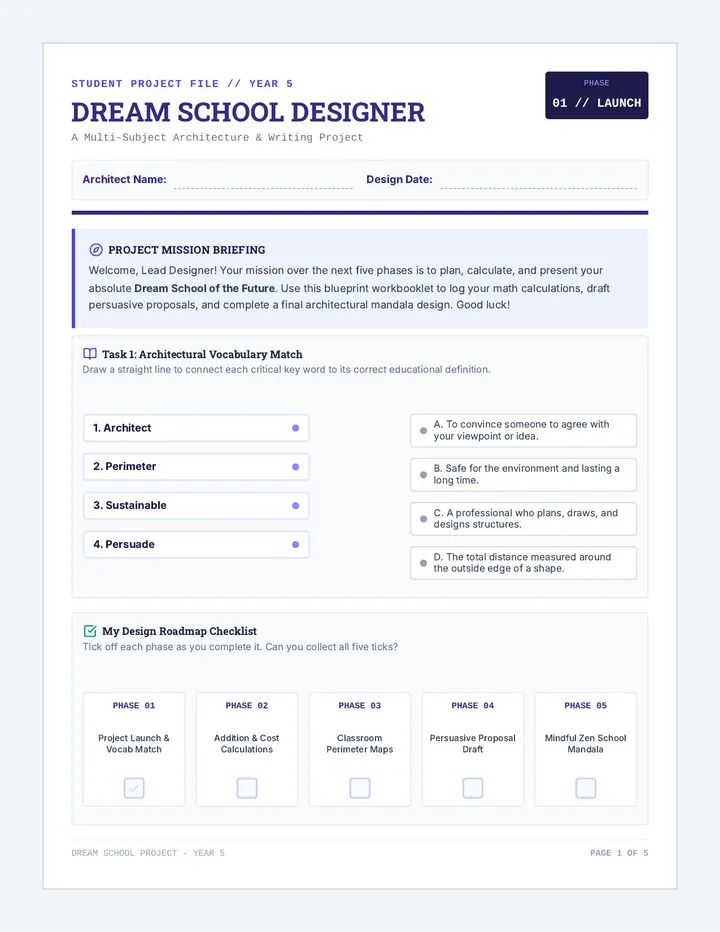
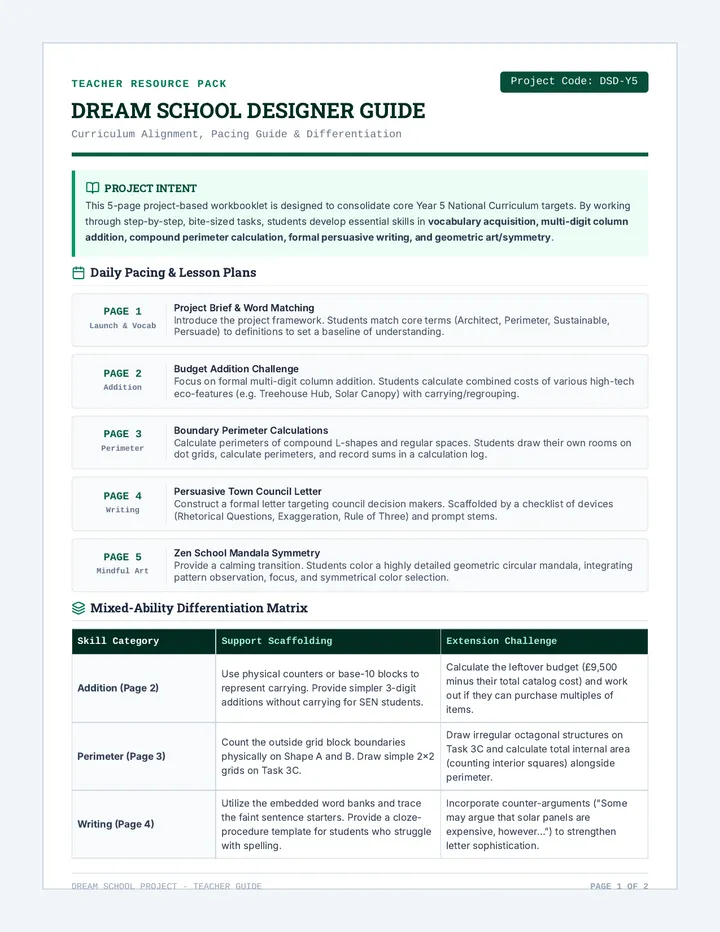
A project-based workbooklet and guide where Year 5 students design their ultimate future school. The project is broken down into structured, bite-sized daily steps integrating English, Maths, Science, Geography, and Art.
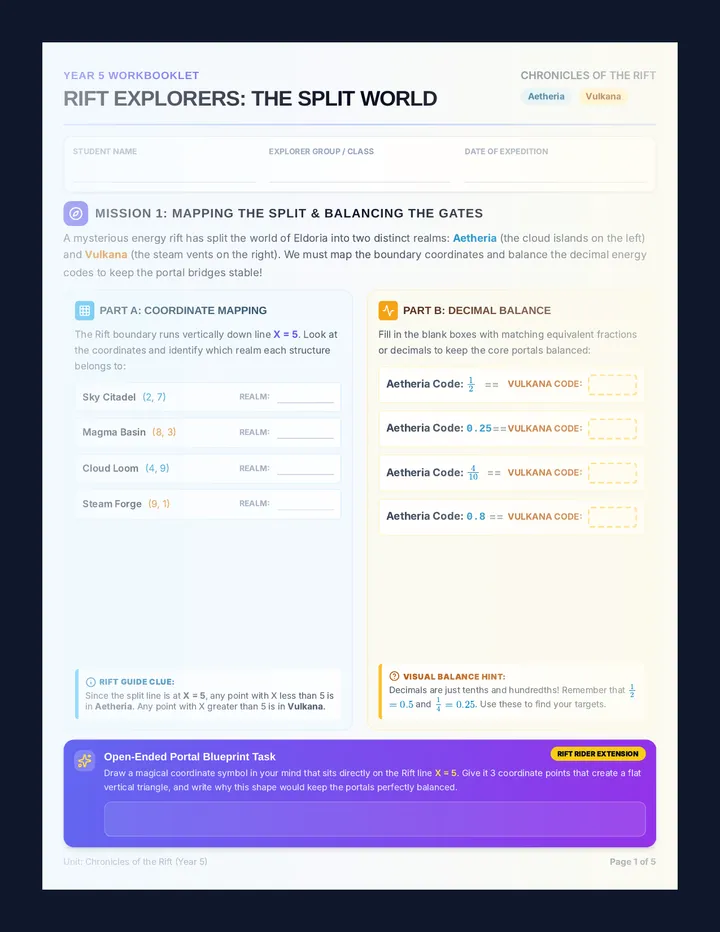
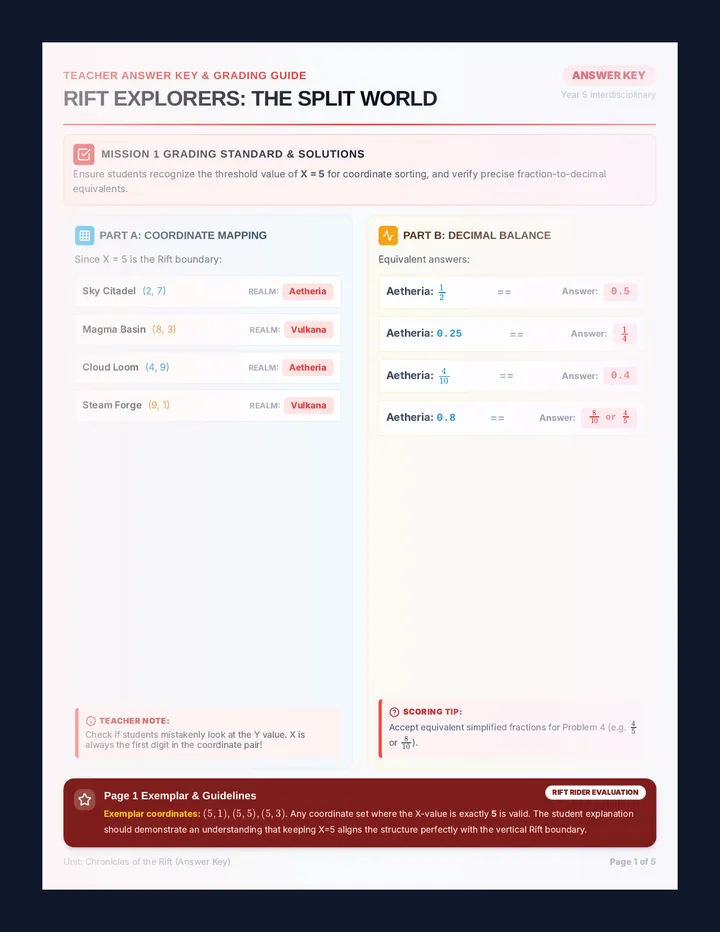
An immersive, five-part interdisciplinary workbook series where Year 5 students explore a world split in two. This booklet integrates mathematics, vocabulary, data handling, and science into a thrilling parallel-world narrative.
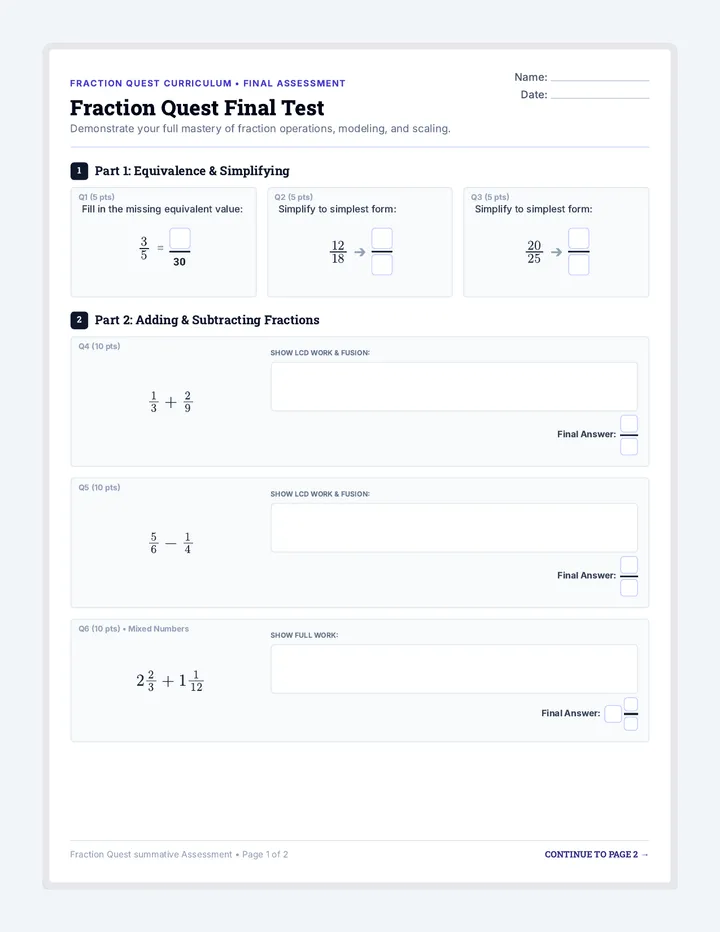
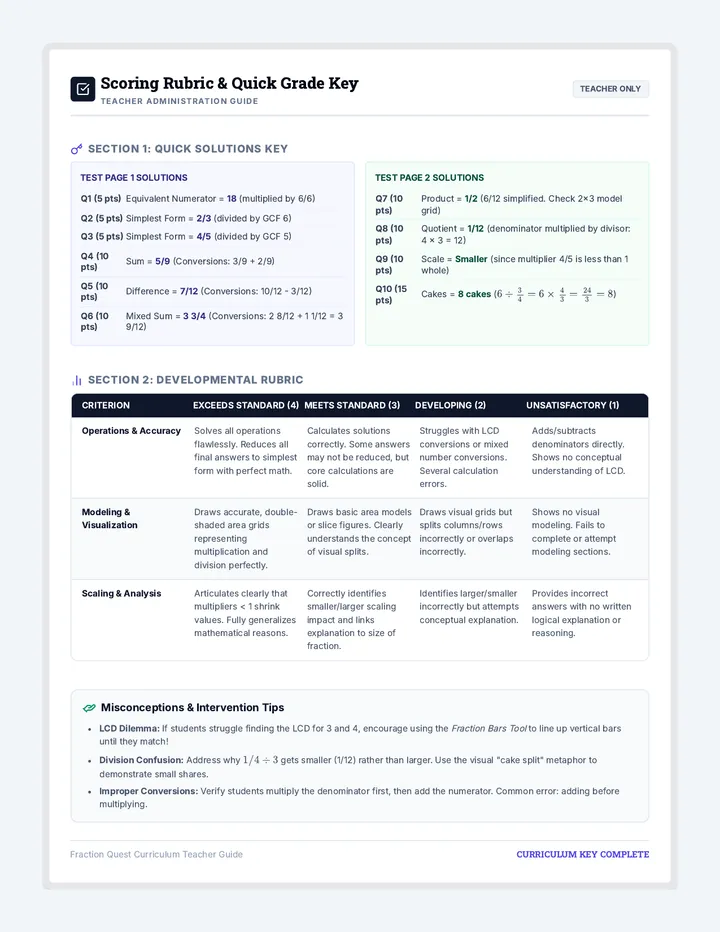
A comprehensive review and assessment of all four fraction operations. Students demonstrate their mastery through an interactive review, final unit assessment, and student reflection.
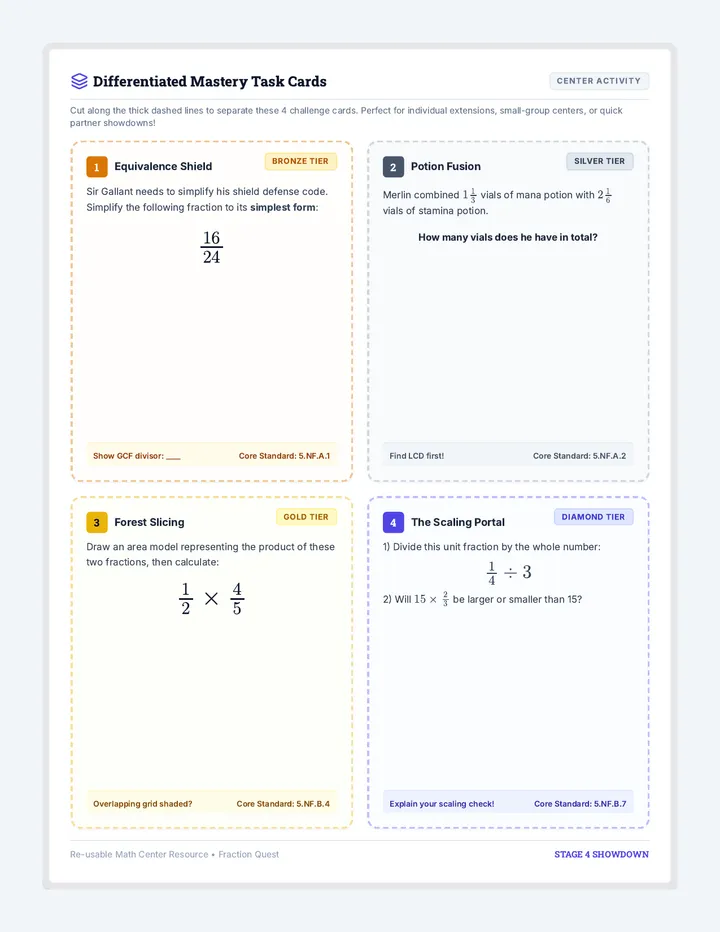
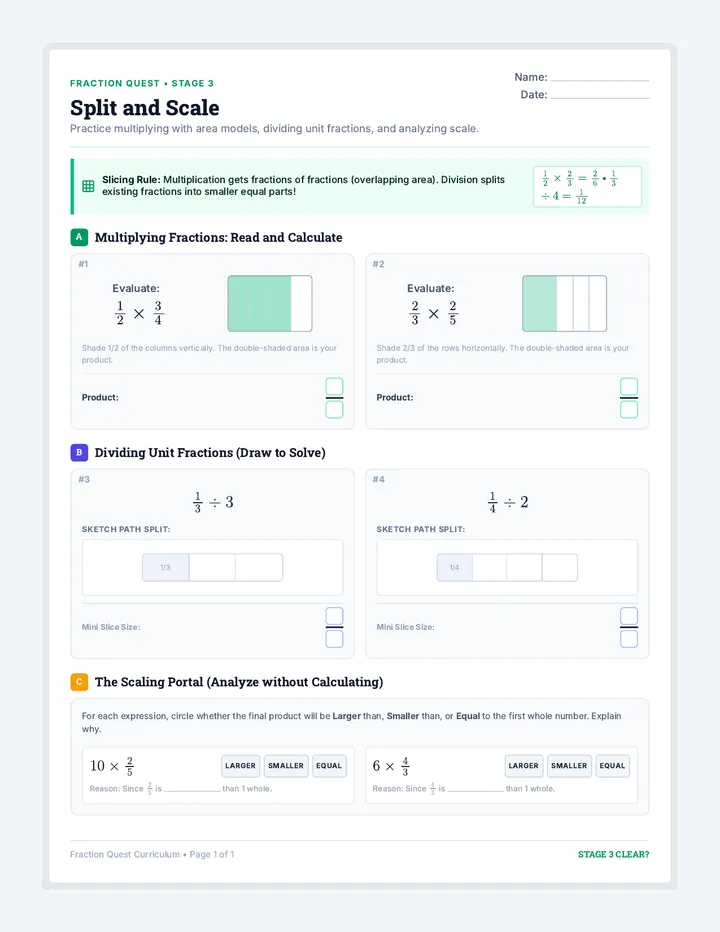
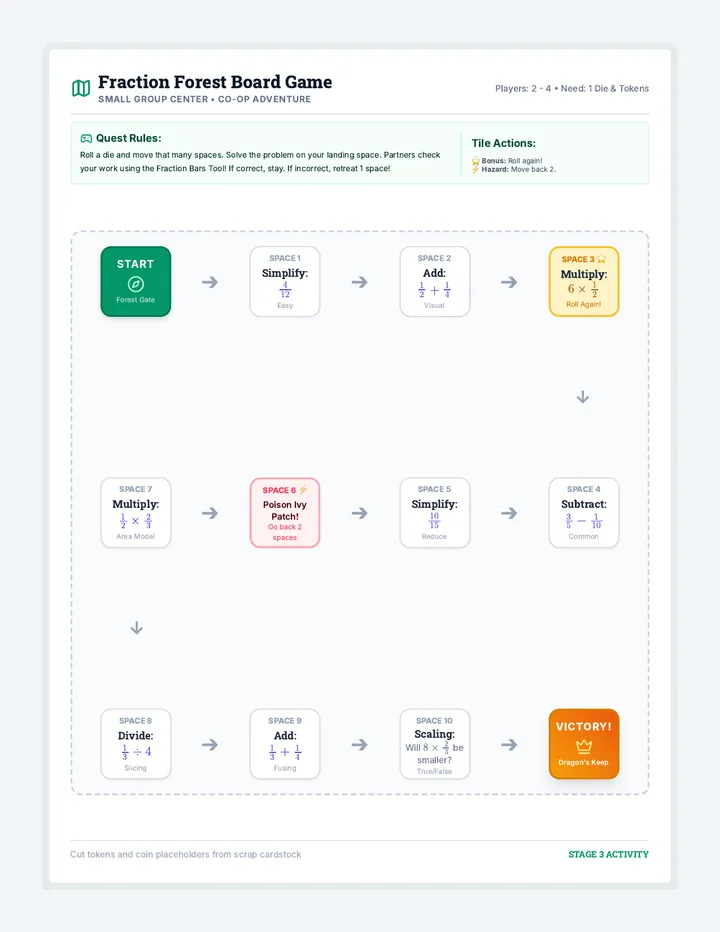
Multiplying and dividing fractions using area models, understanding scaling, and dividing unit fractions by whole numbers. Visual models help conceptualize these concepts.
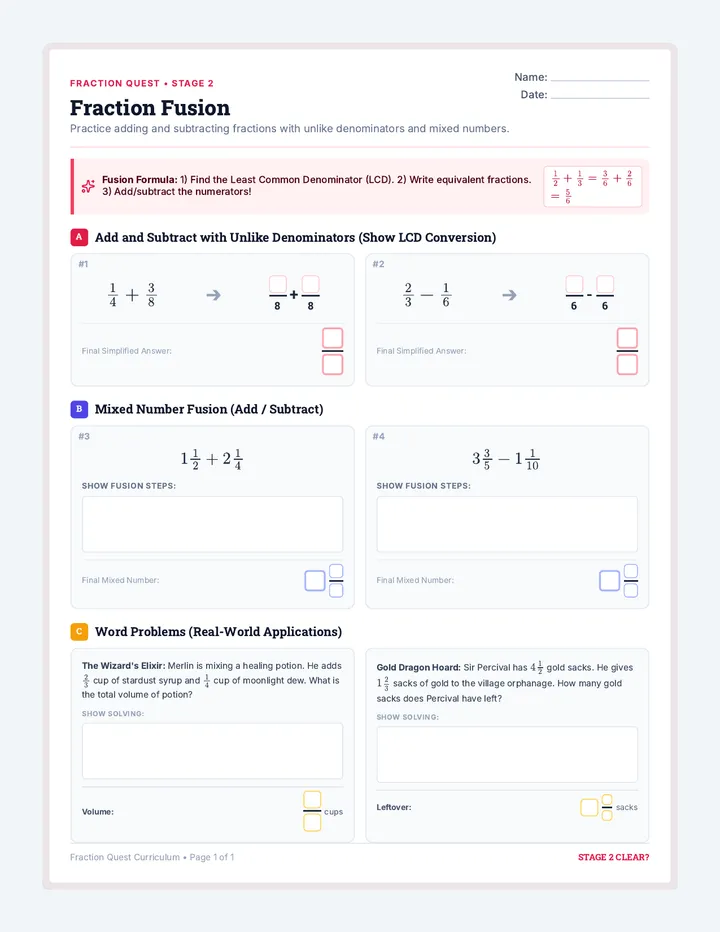
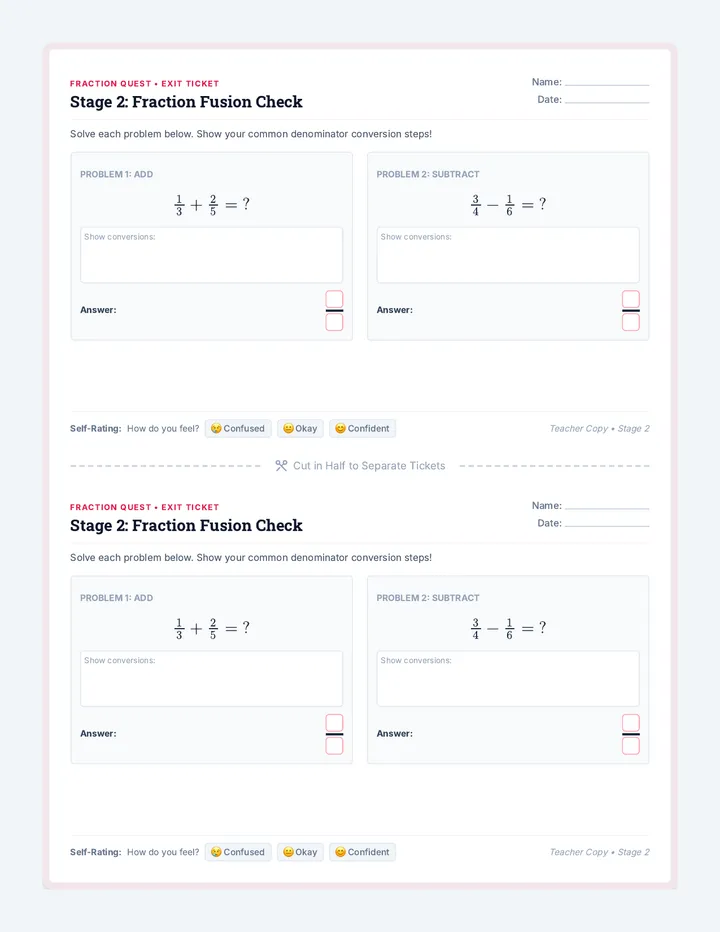
Adding and subtracting fractions with unlike denominators, including mixed numbers and standard real-world word problems. Students learn to find equivalent fractions with common denominators to add and subtract.
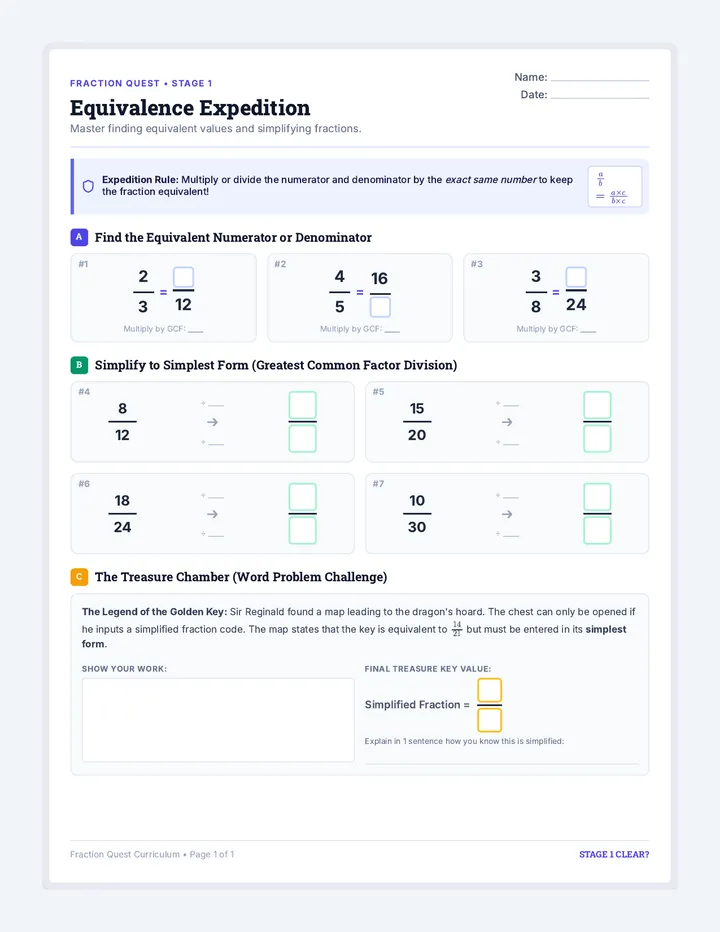
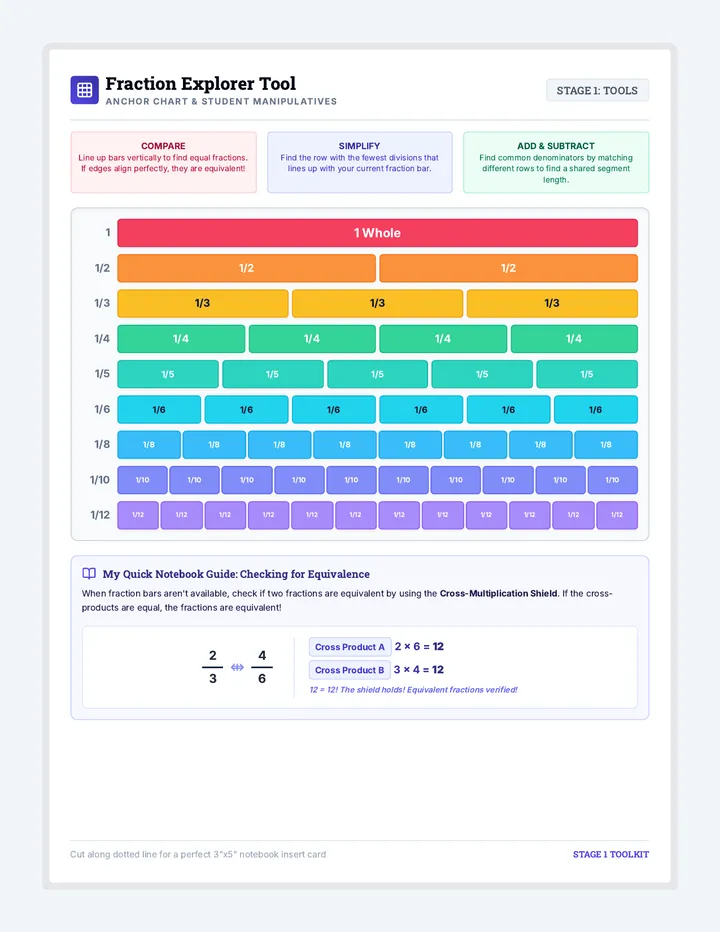
Mastering equivalent fractions and simplifying. Students discover visual equivalencies, identify common denominators, and reduce fractions to their simplest form using step-by-step mathematical reasoning.
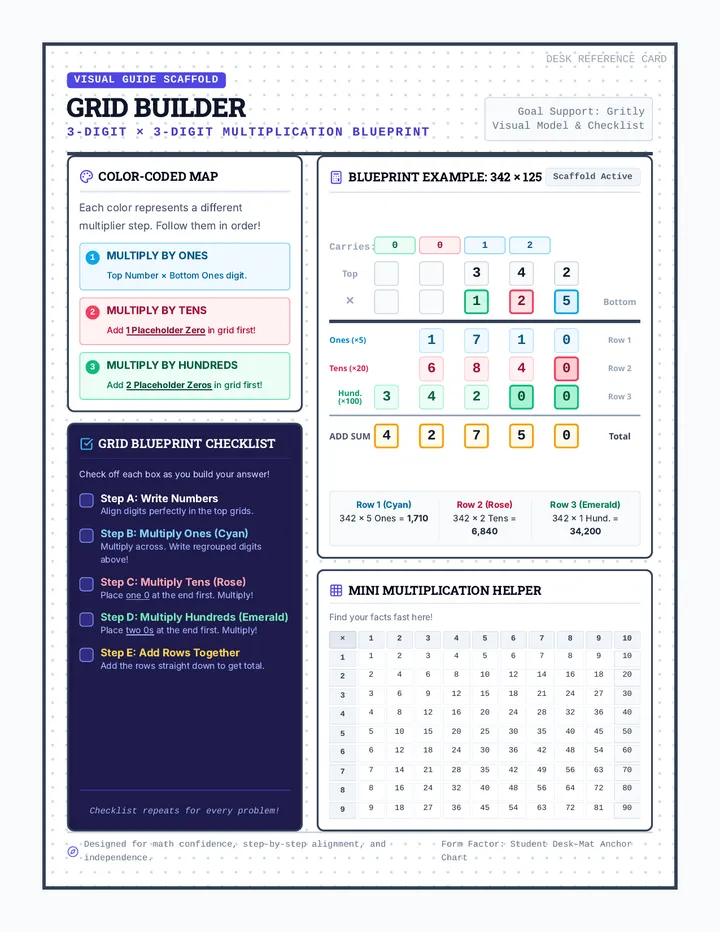
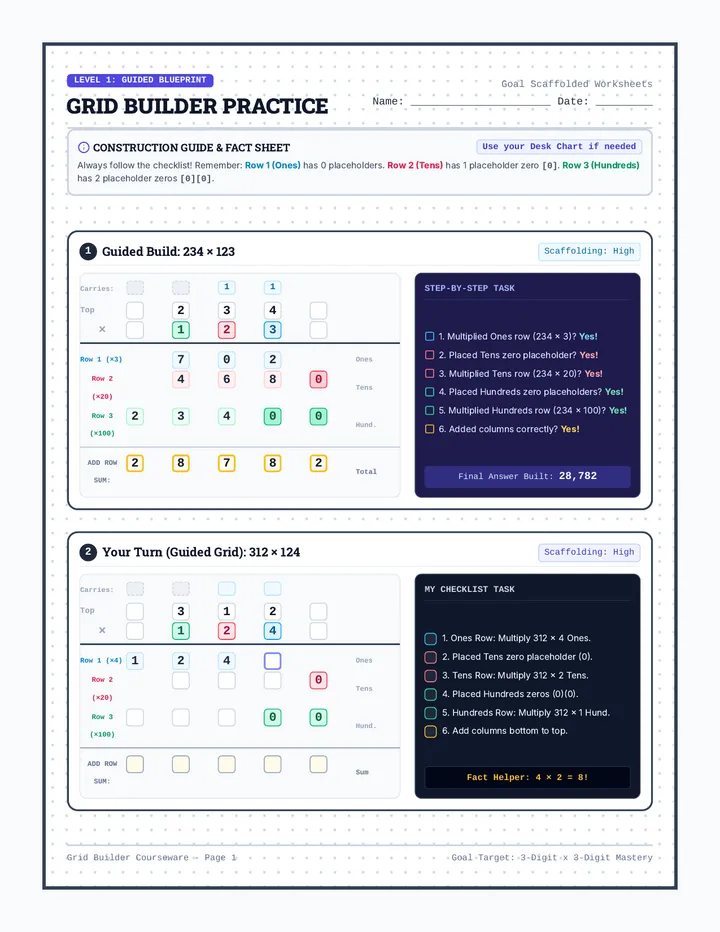
A highly structured, scaffolded lesson designed to help students master three-digit by three-digit multiplication using color-coded grids, a step-by-step task-analysis checklist, and sequential progress monitoring.
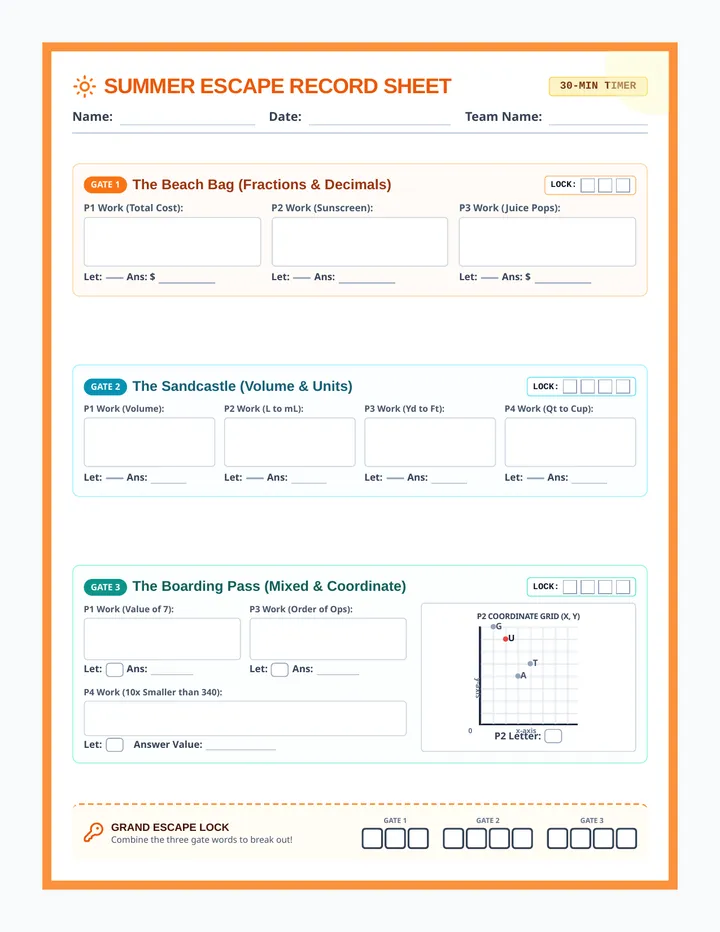
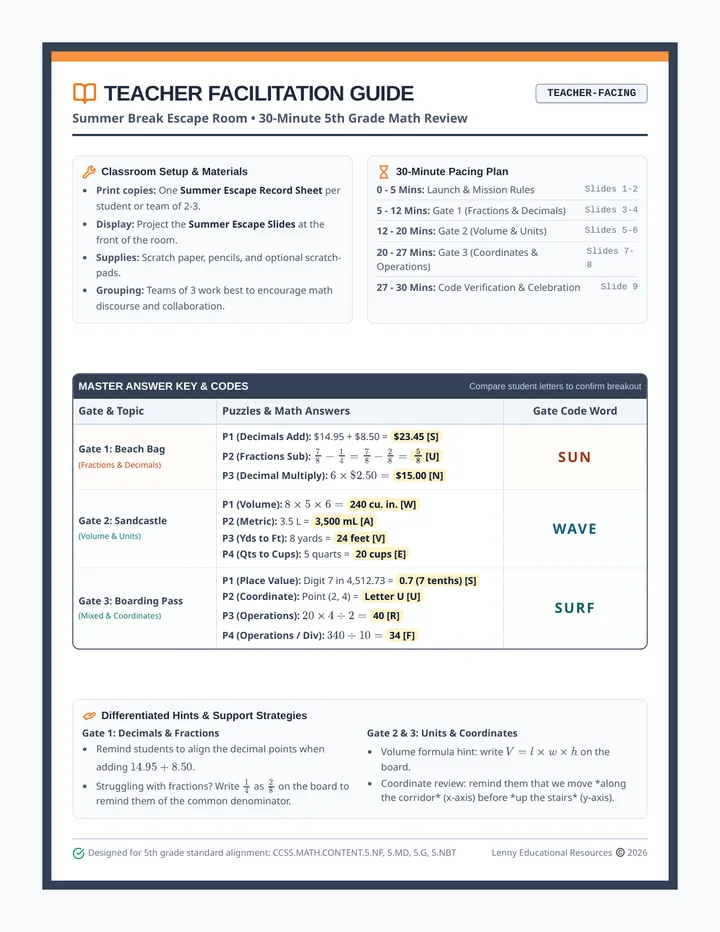
A 30-minute interactive math escape room lesson designed for 5th graders to review fractions, decimals, volume, measurement conversions, and coordinate graphing while racing against the clock to unlock 'Summer Break'.
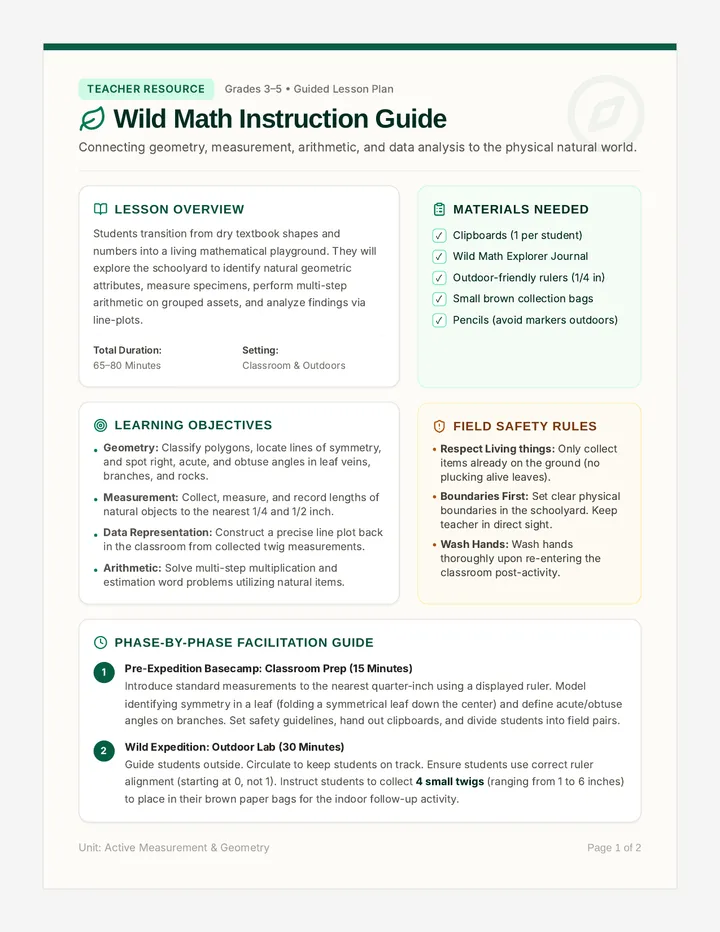
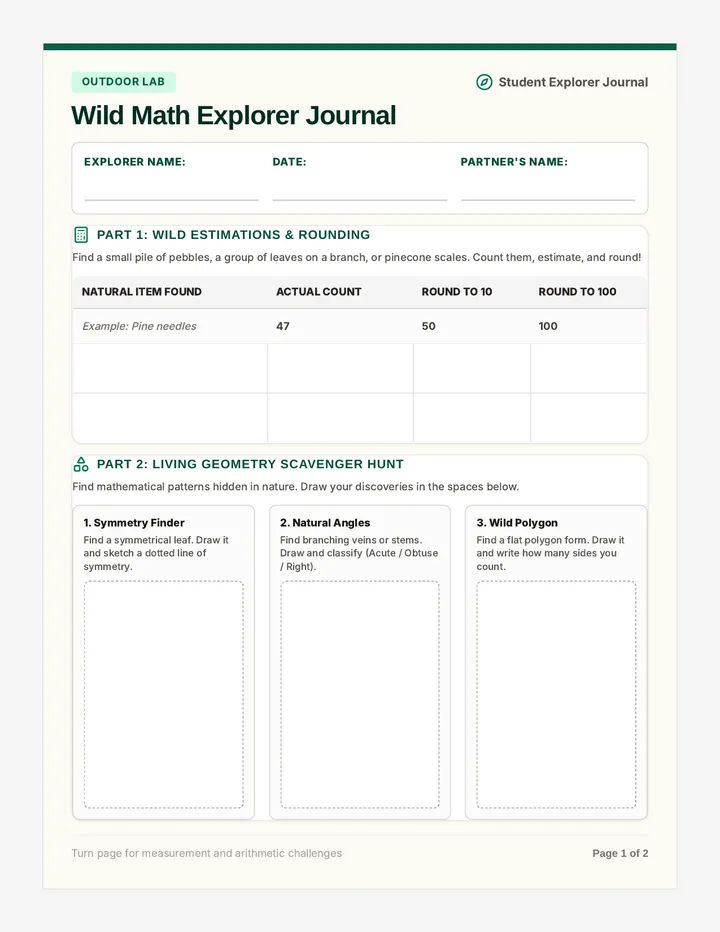
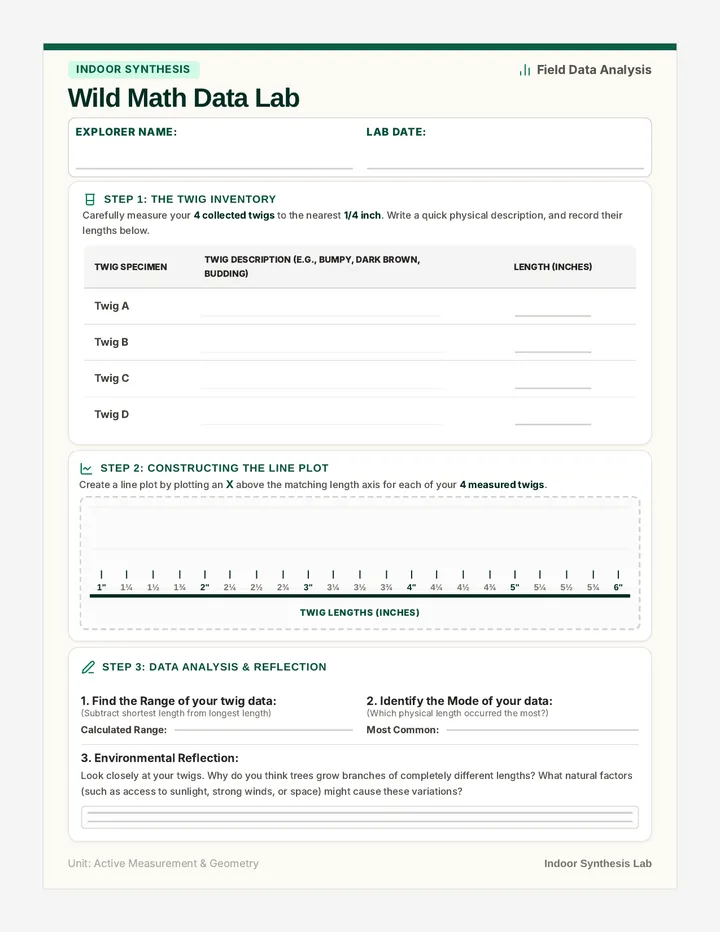
A complete outdoor learning experience where students explore mathematical concepts in the natural world. This lesson bundle connects geometry, measurement, estimation, and word problems directly to physical nature finds, followed by an indoor data-analysis session.
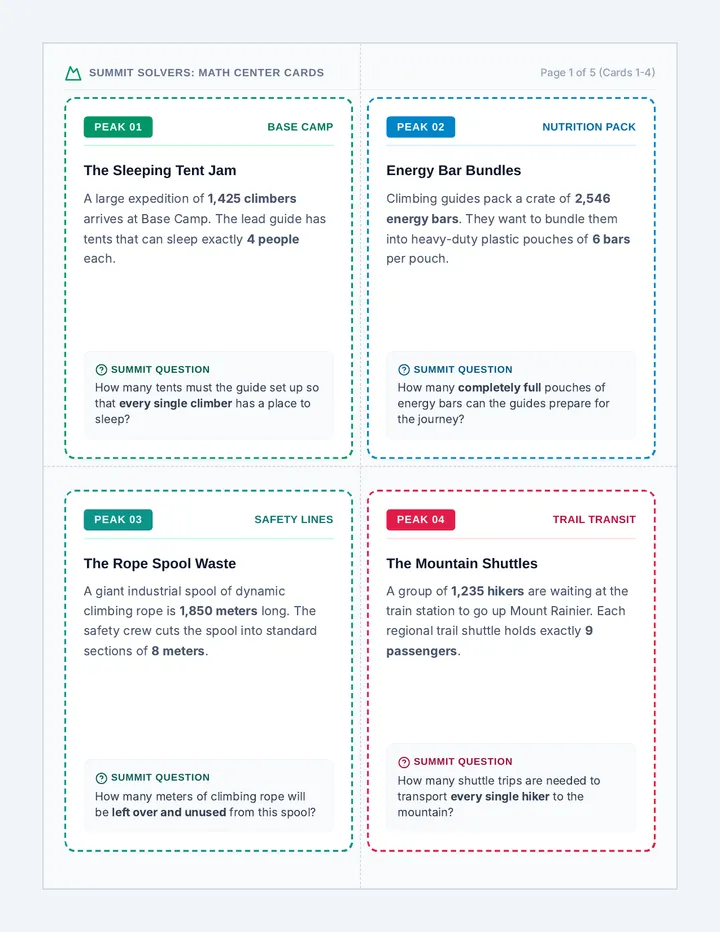
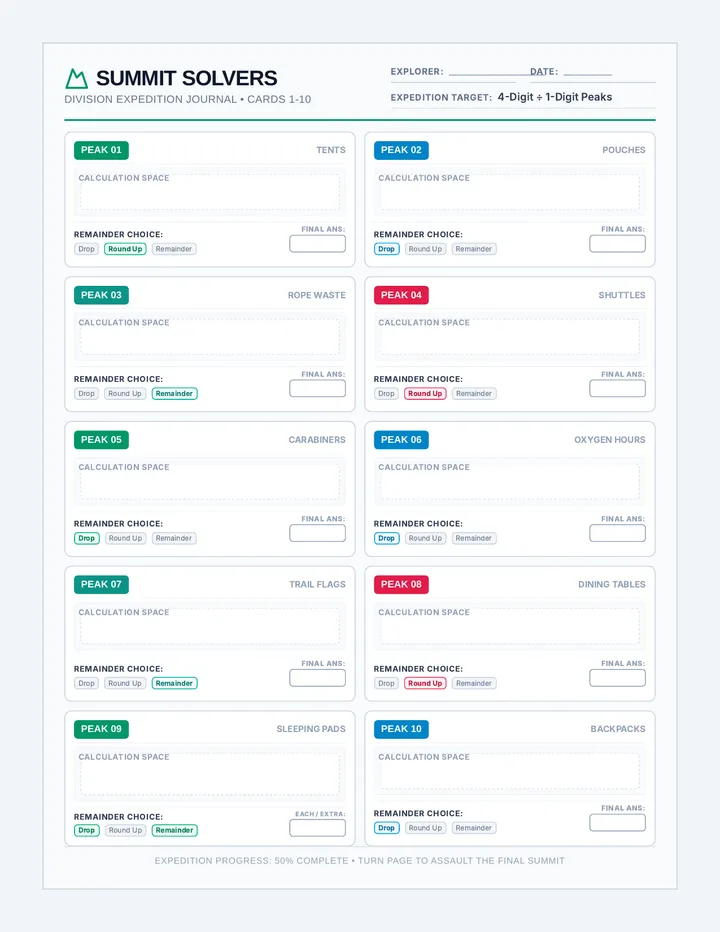
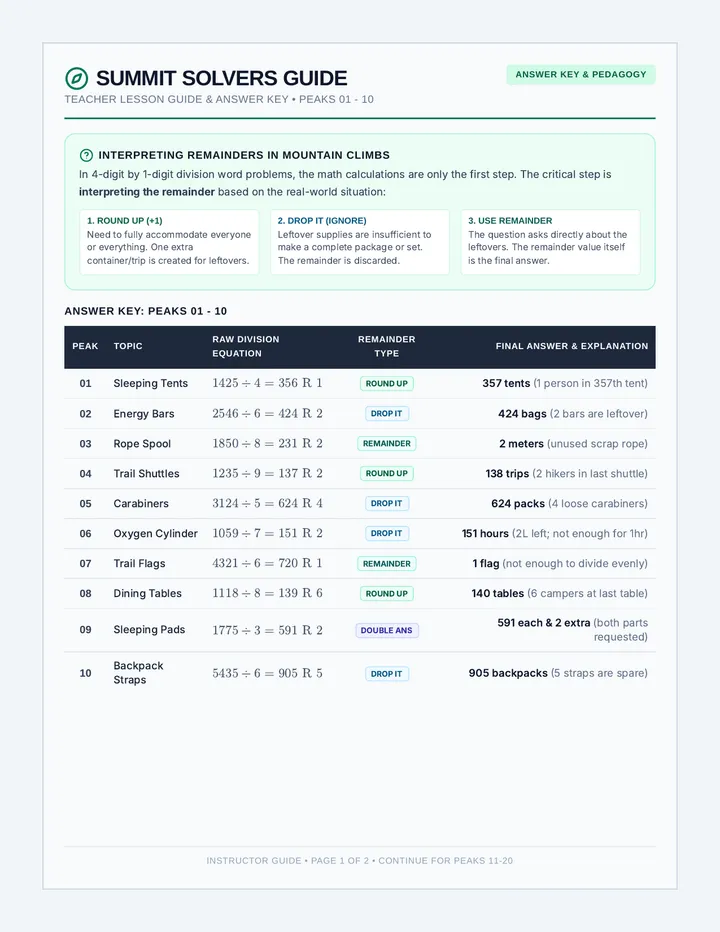
A math lesson focused on solving and interpreting 4-digit by 1-digit division word problems with remainders in a mountain climbing theme. Includes task cards, a recording sheet, and a detailed teacher answer guide.
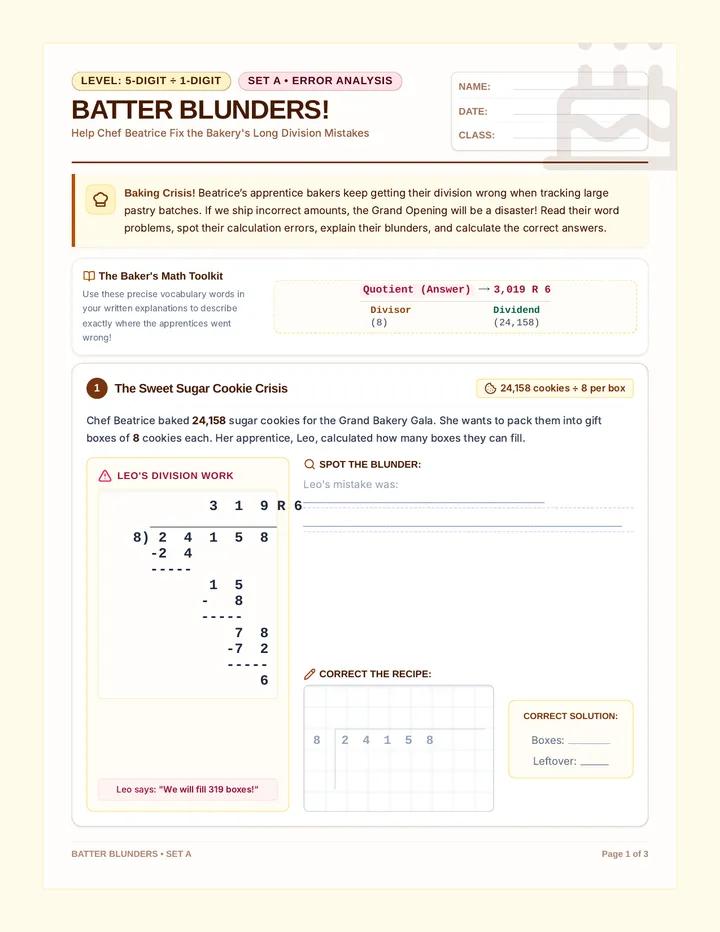
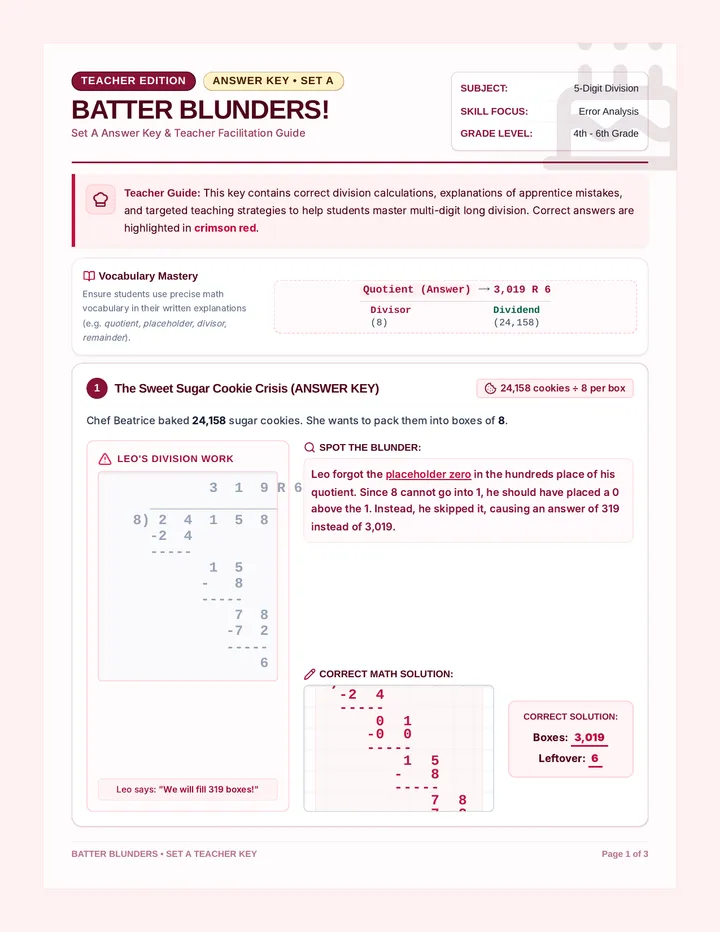
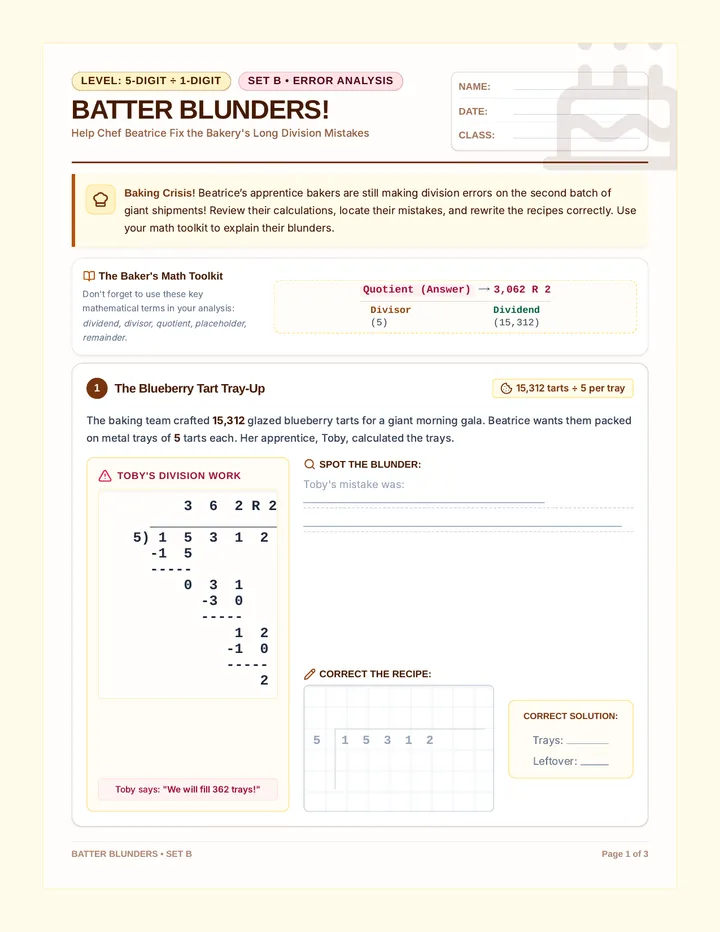
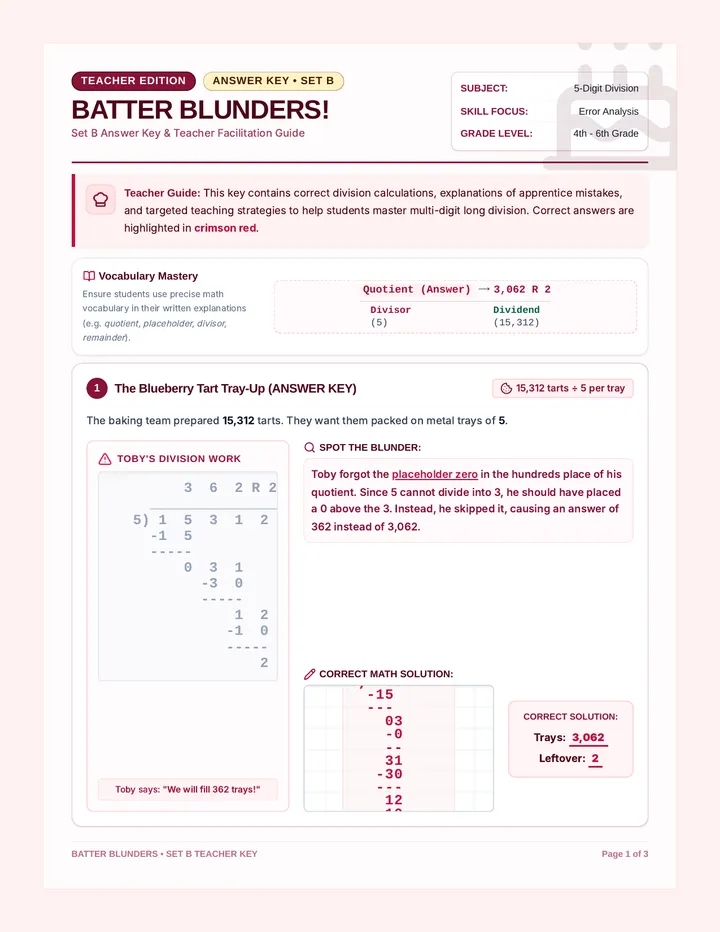
A sweet, bakery-themed math lesson where students analyze five-digit division problems to identify, explain, and correct common calculation mistakes.
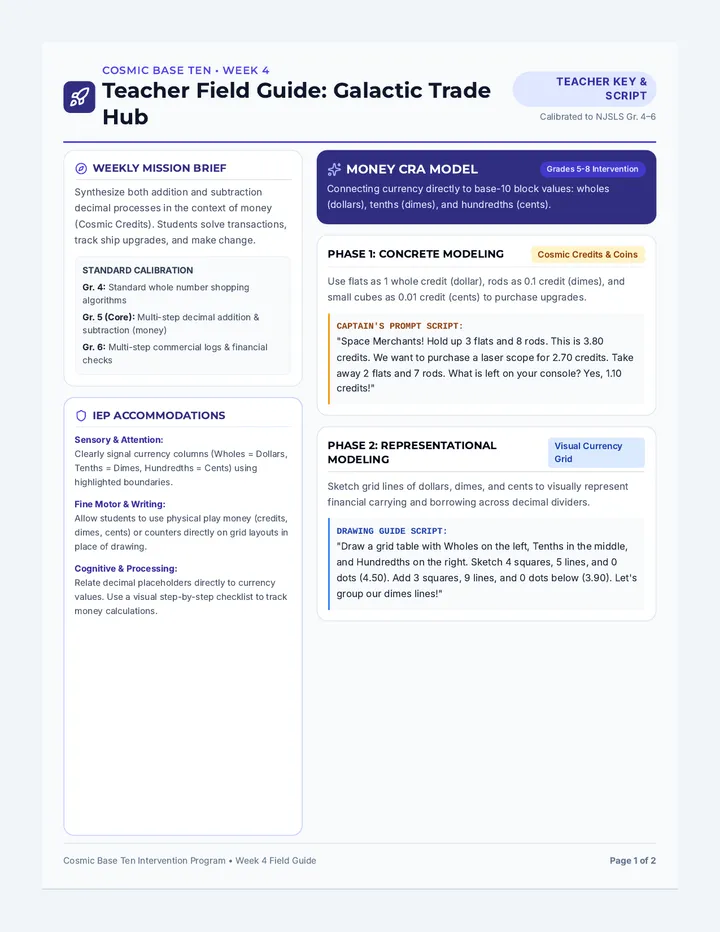
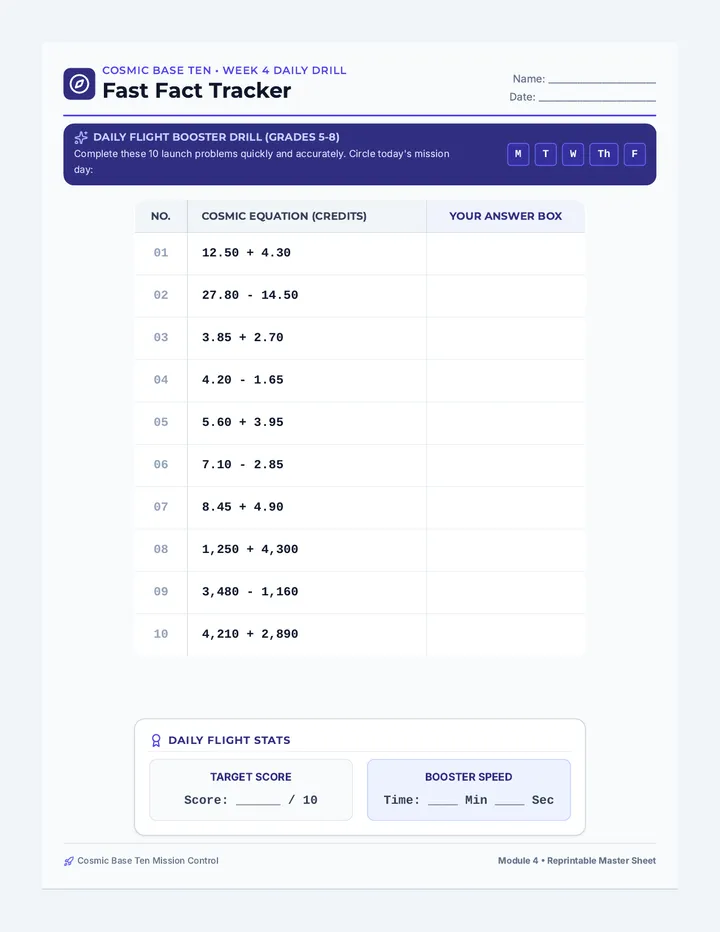
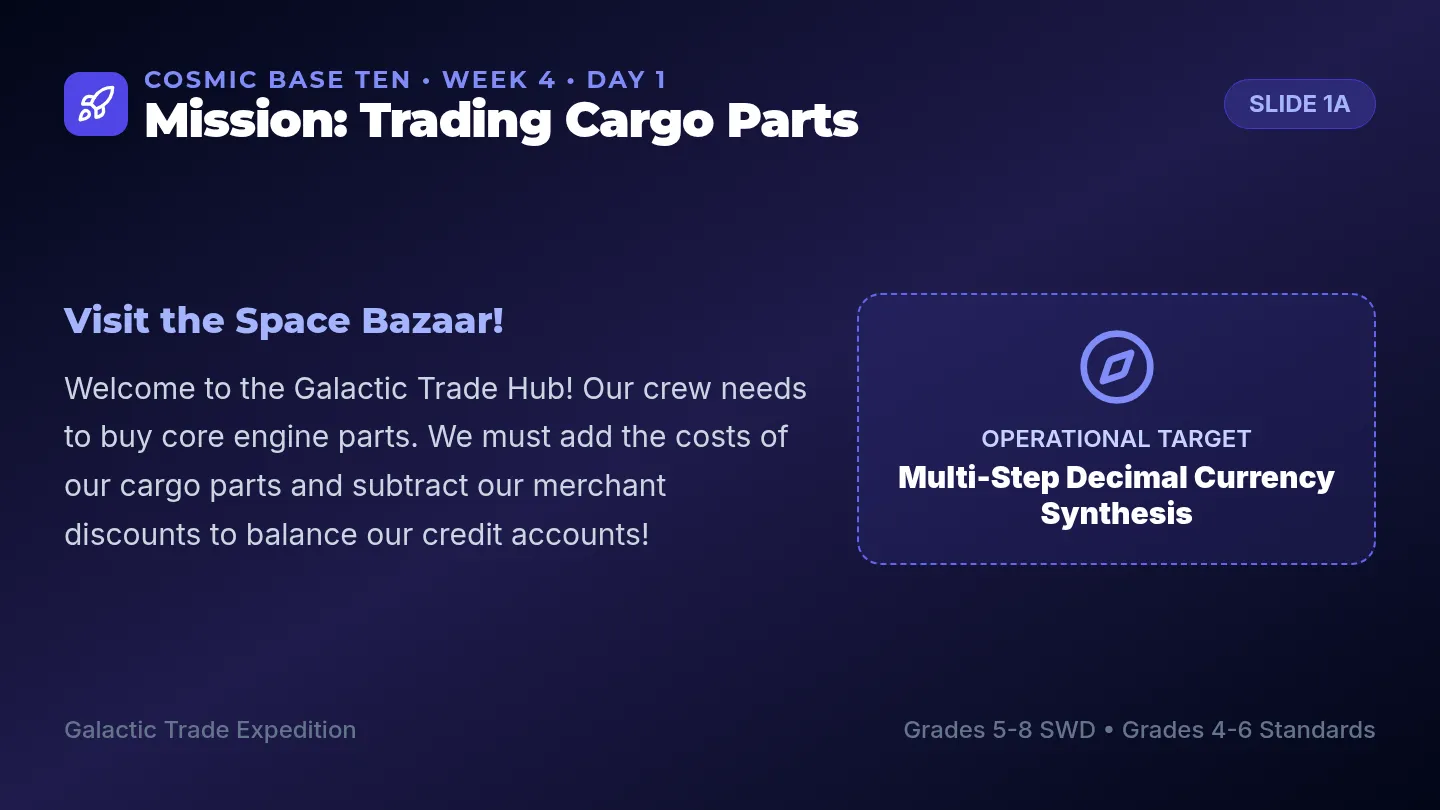
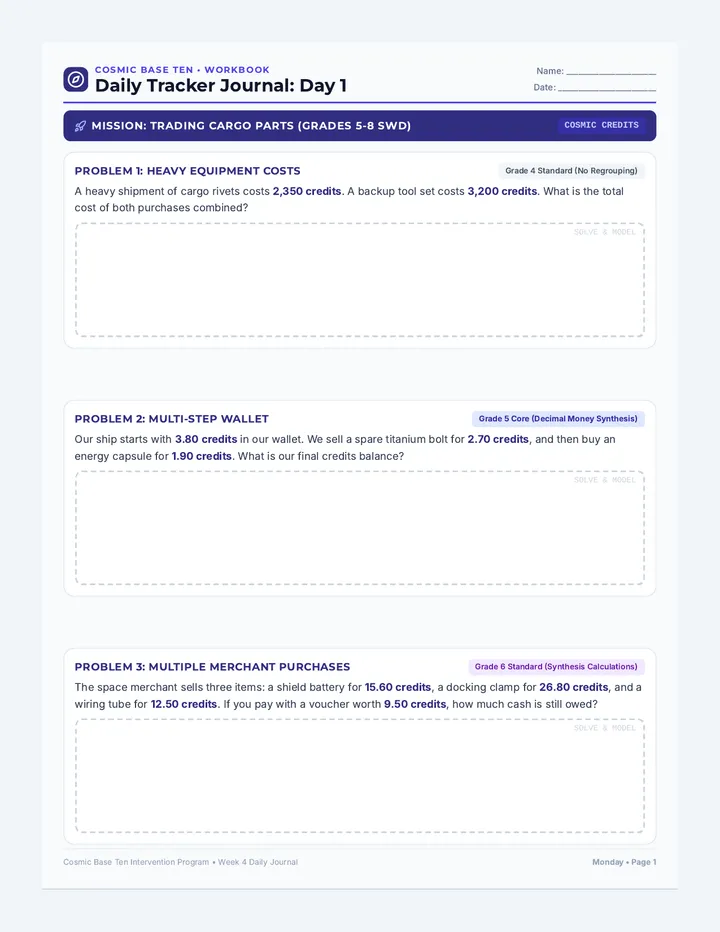
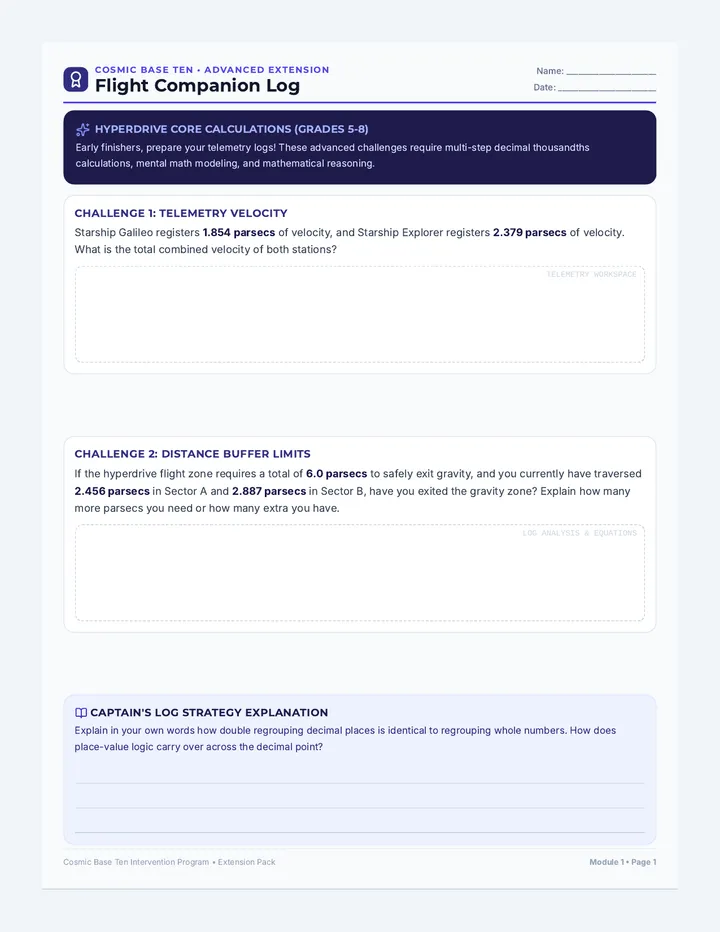
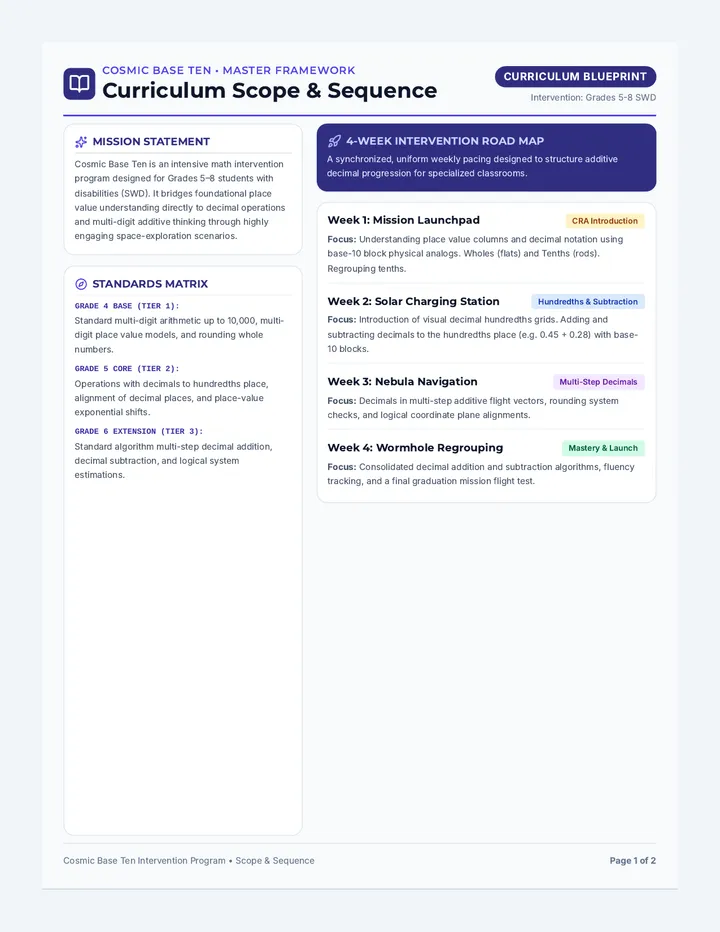
Week 4 is the capstone week where students synthesize their additive and subtractive decimal skills in the context of money. They solve multi-step commercial transactions, balance credit records, and purchase starship upgrades.
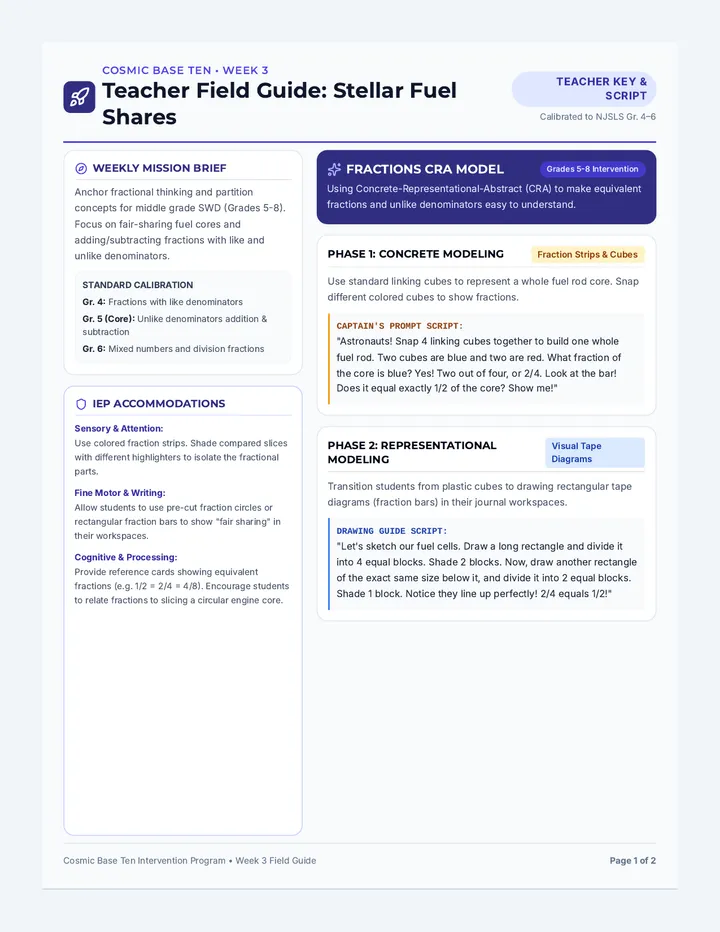
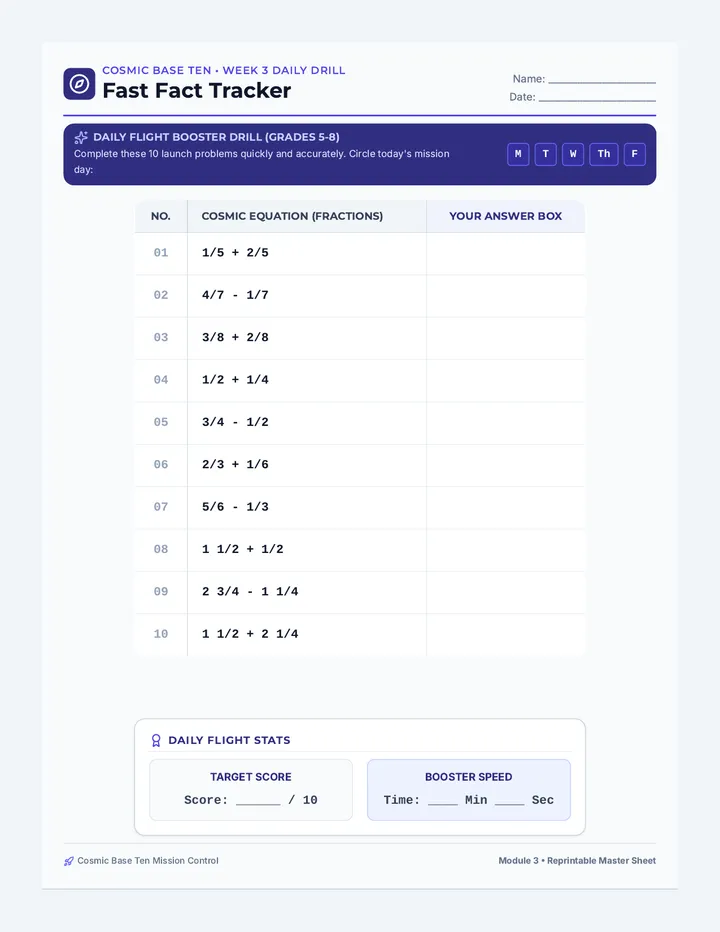
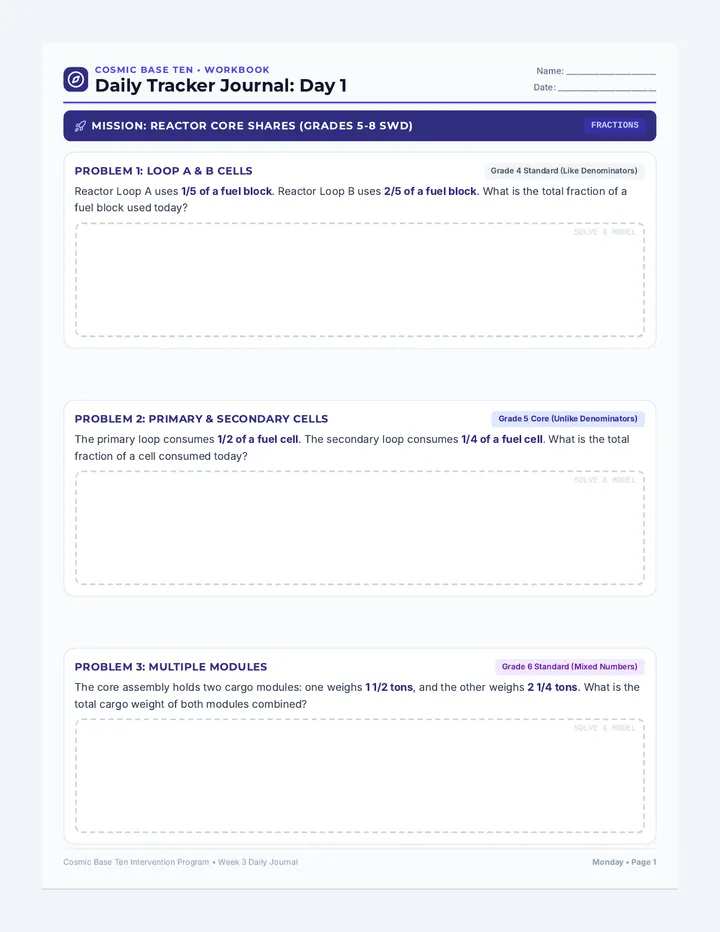
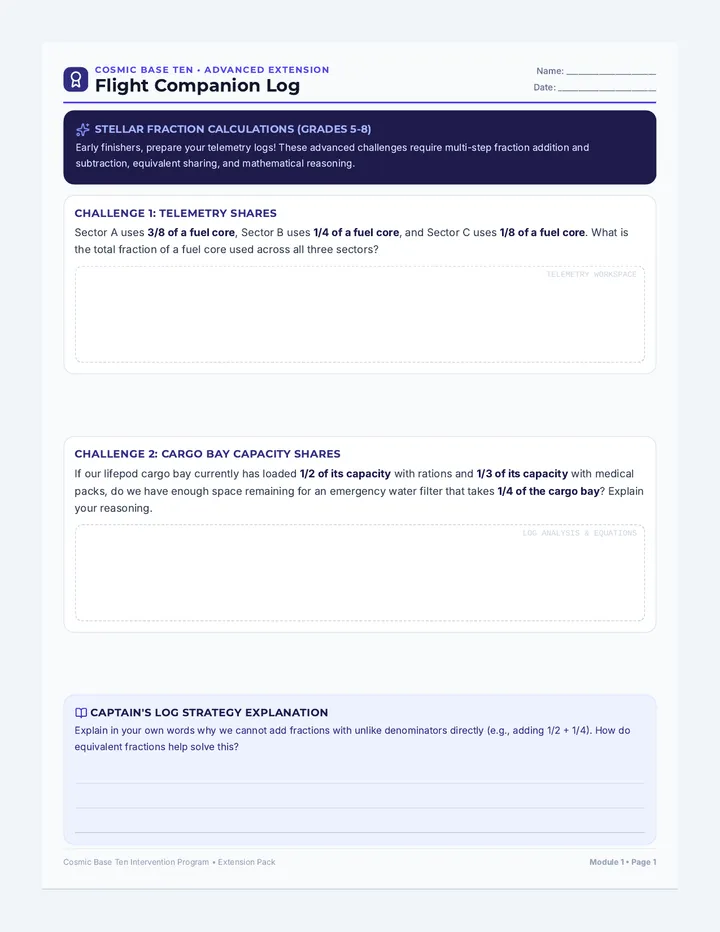
Week 3 focuses on partitioning, equivalent fractions, and adding or subtracting fractions with like and unlike denominators. Students practice fair-sharing reactor cores, dividing cargo weight, and mapping stellar orbits using fraction bars.
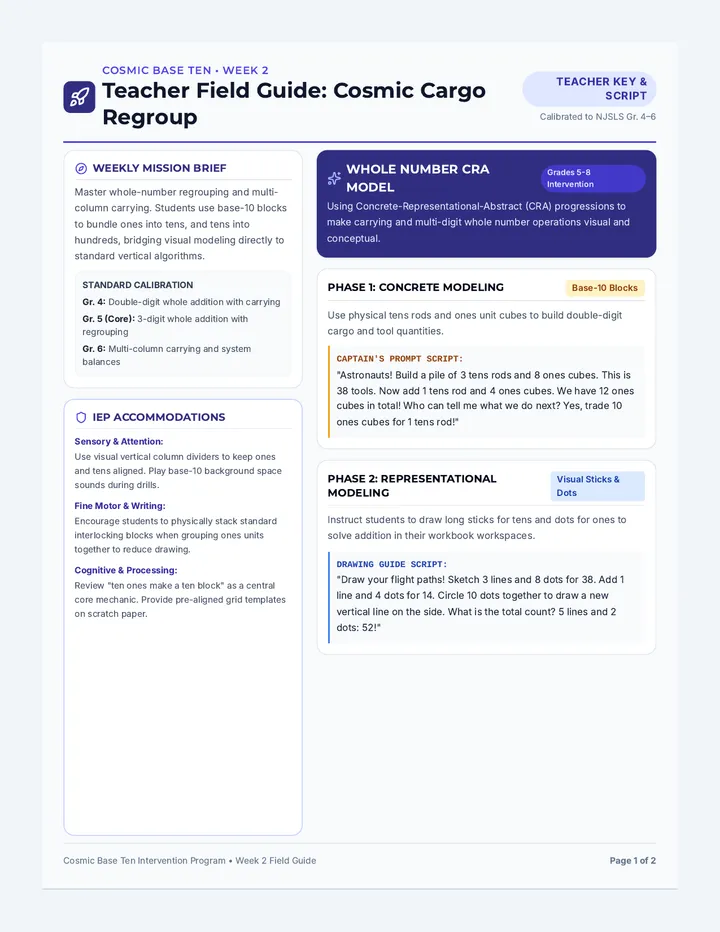
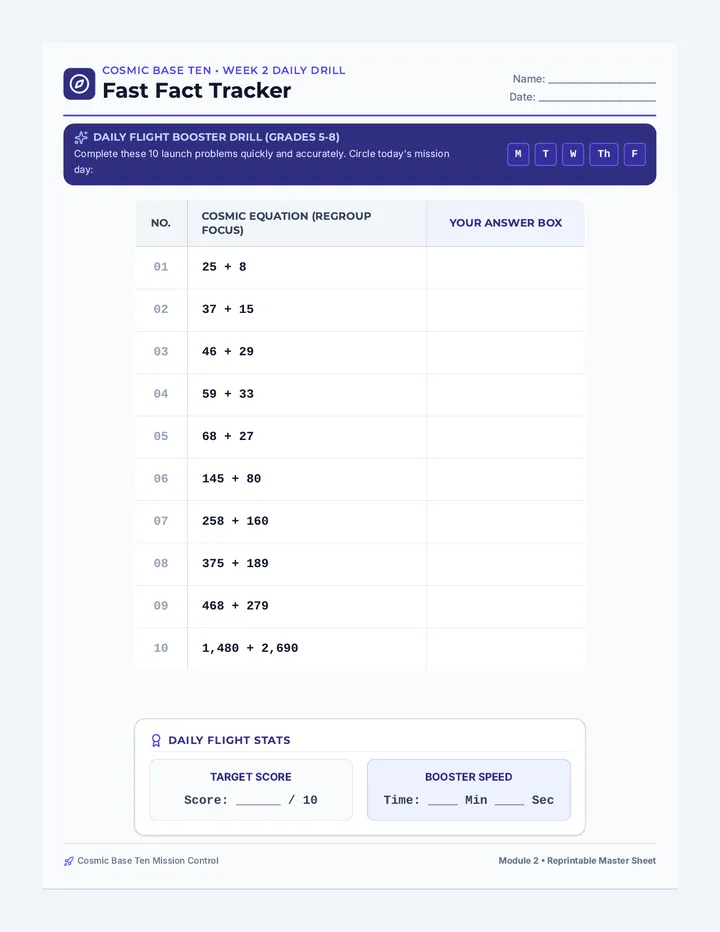
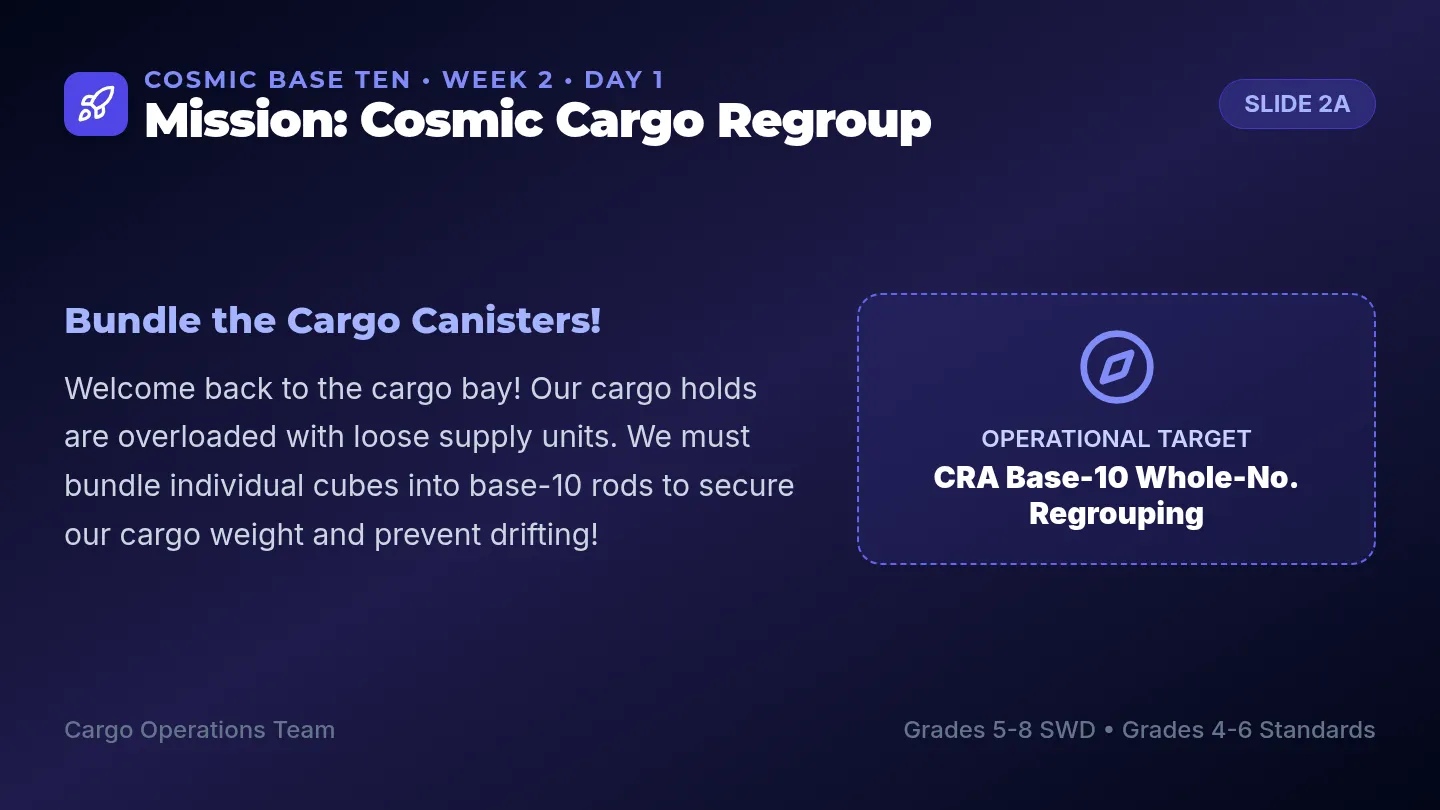
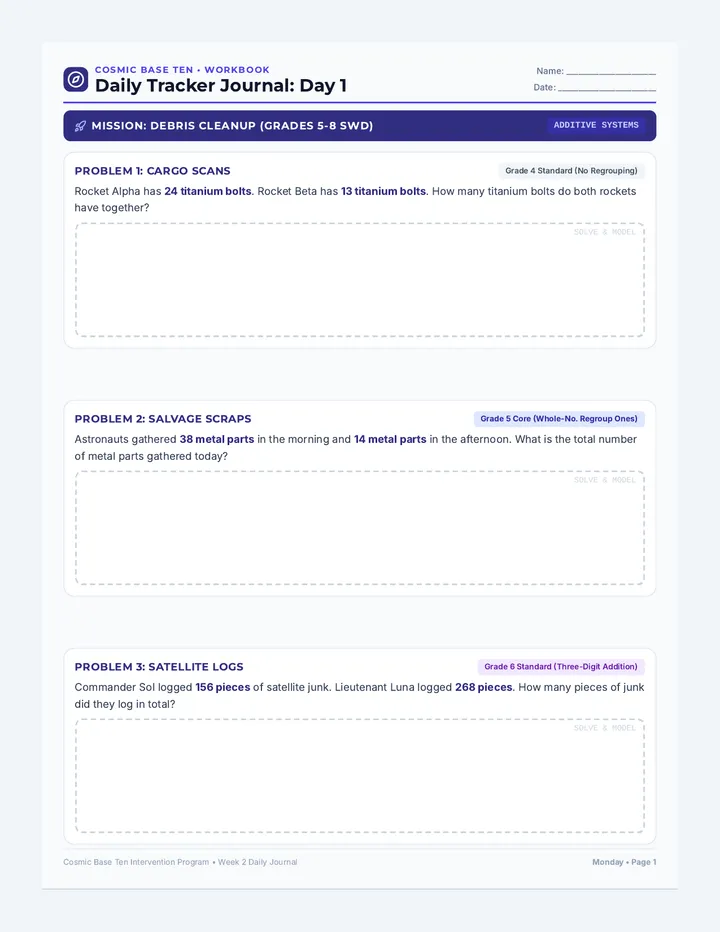
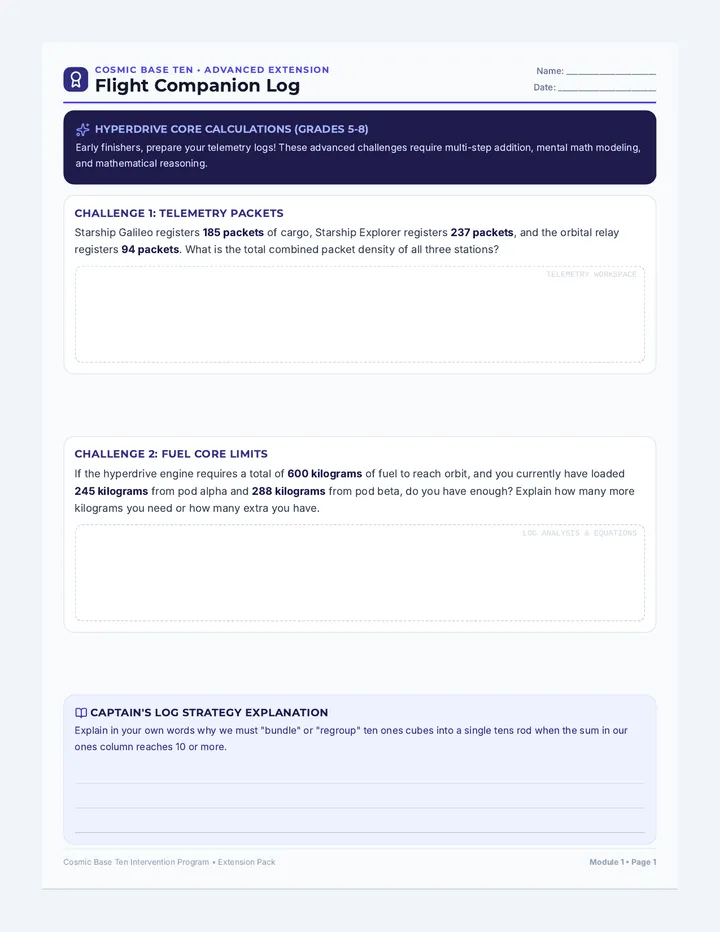
Week 2 focuses on mastering whole-number regrouping and multi-column carrying in the context of starship cargo inventories. Students use base-10 blocks to bundle ones into tens and tens into hundreds, bridging visual modeling directly to standard vertical algorithms.
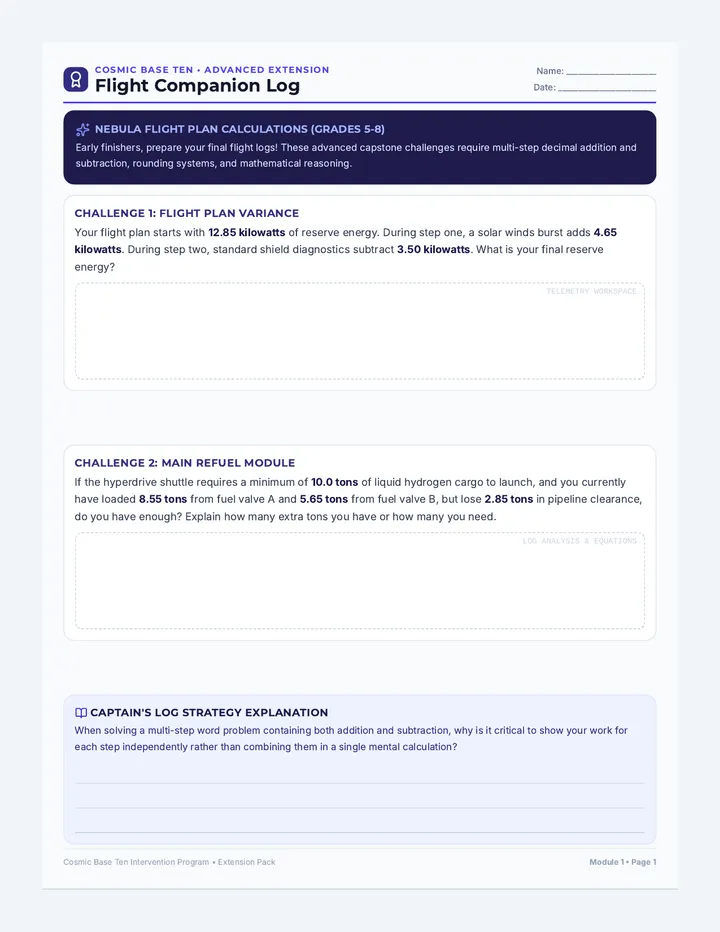
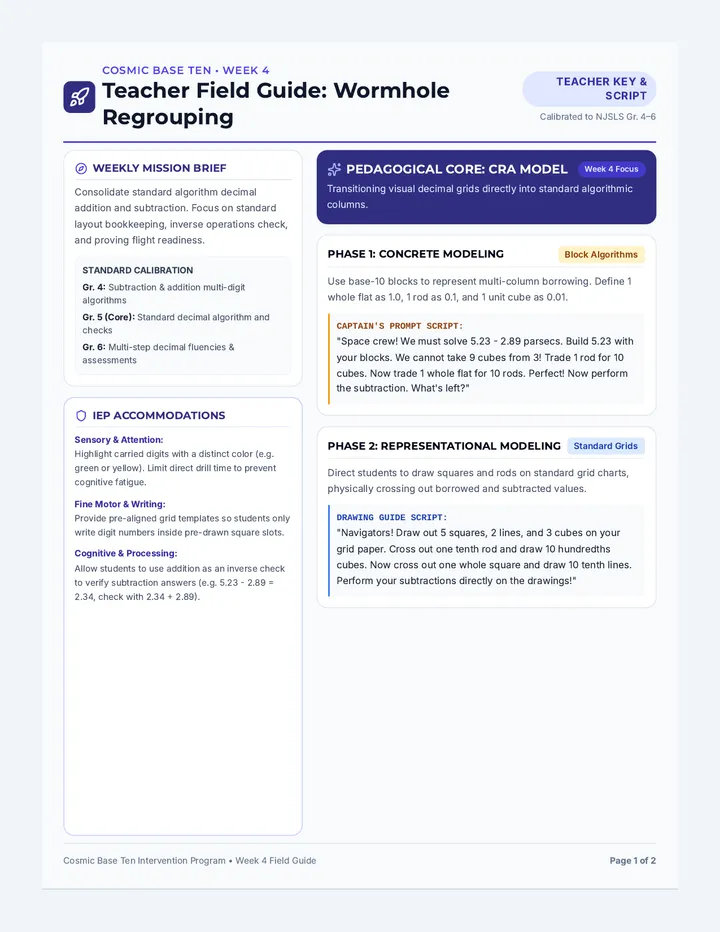
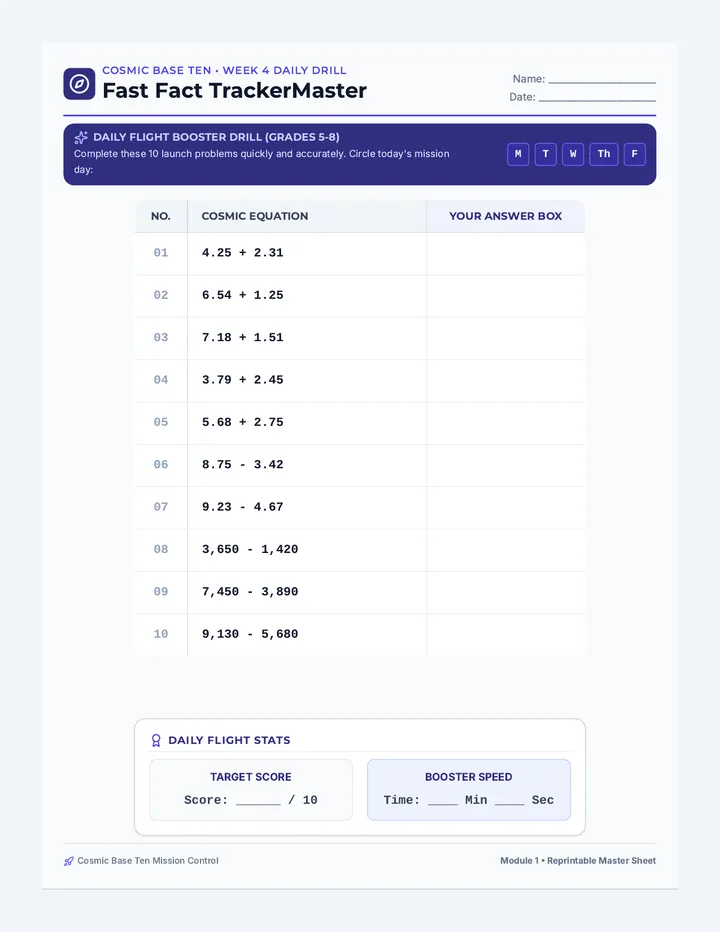
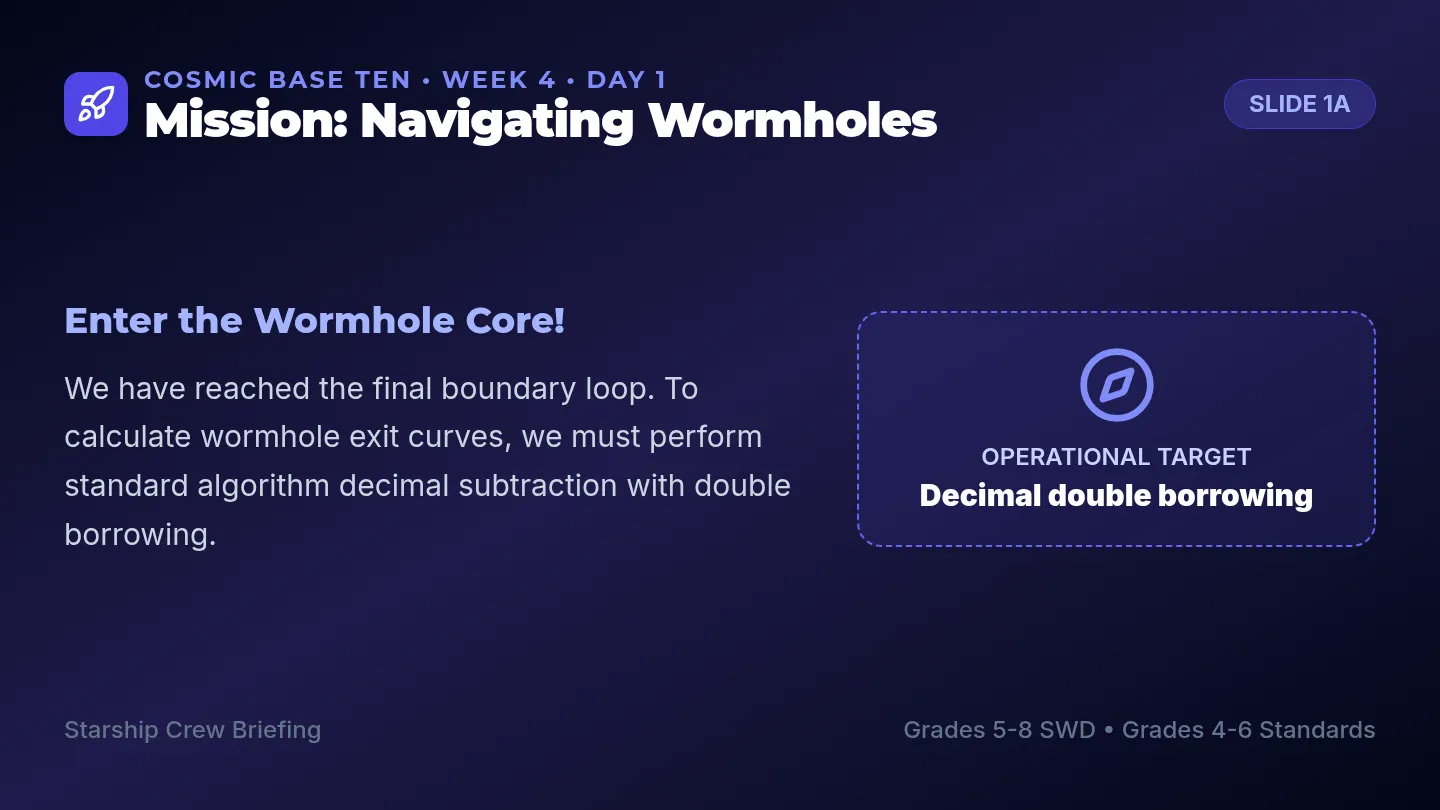
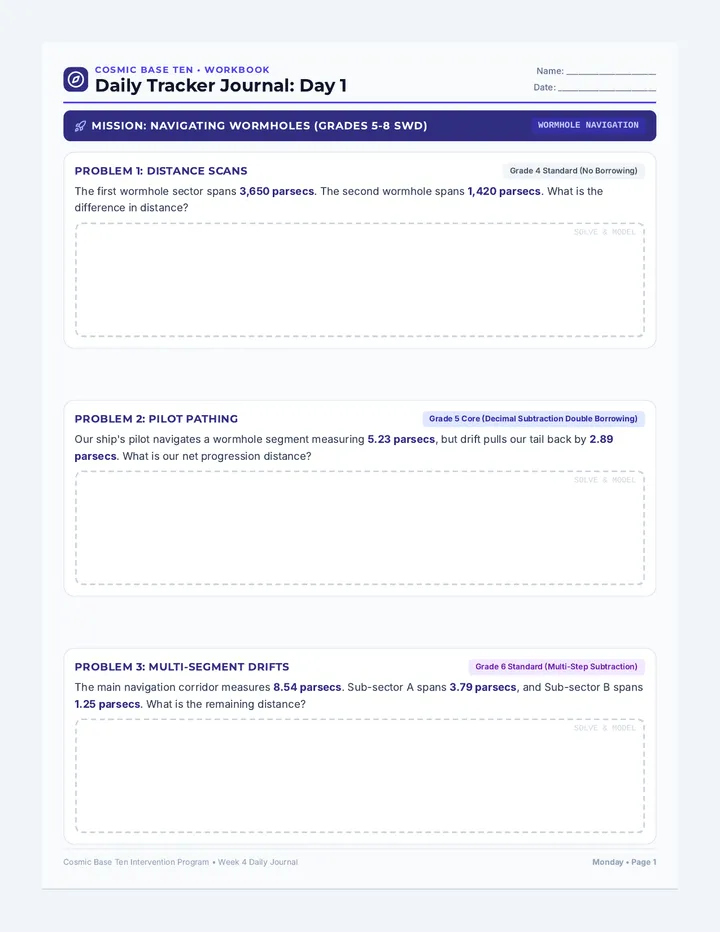
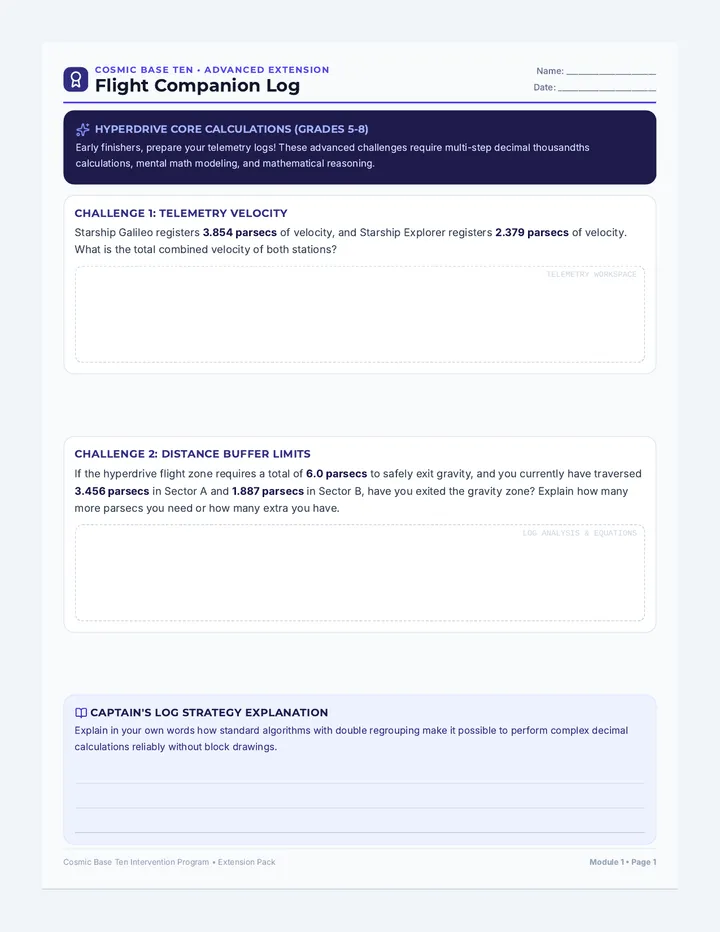
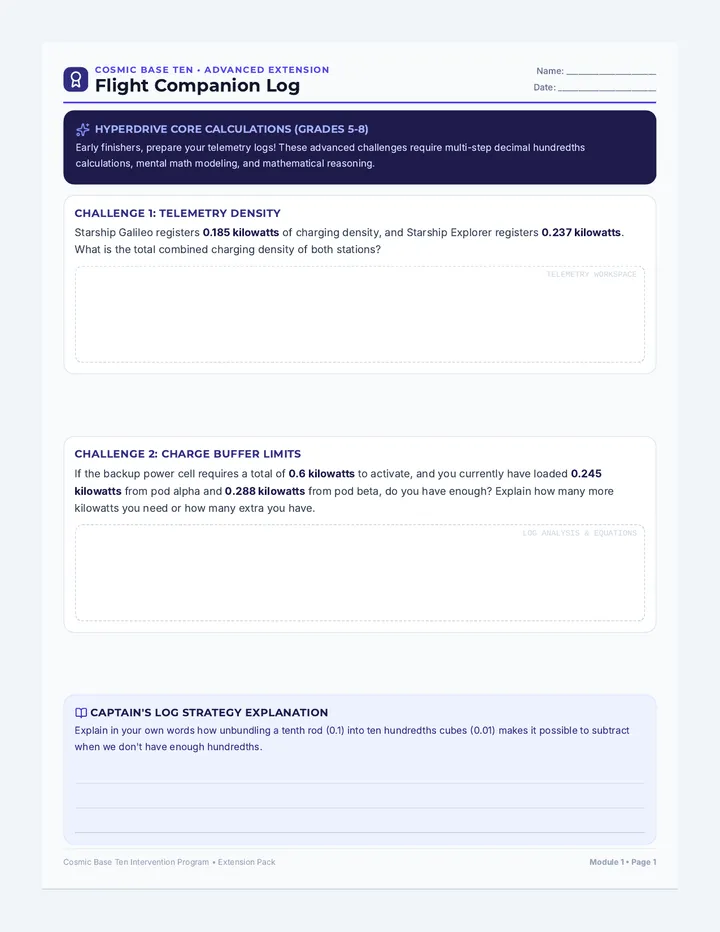
Week 4 focuses on standard algorithm decimal addition and subtraction, multi-step problem consolidation, and direct assessment of skills to confirm crew flight readiness.
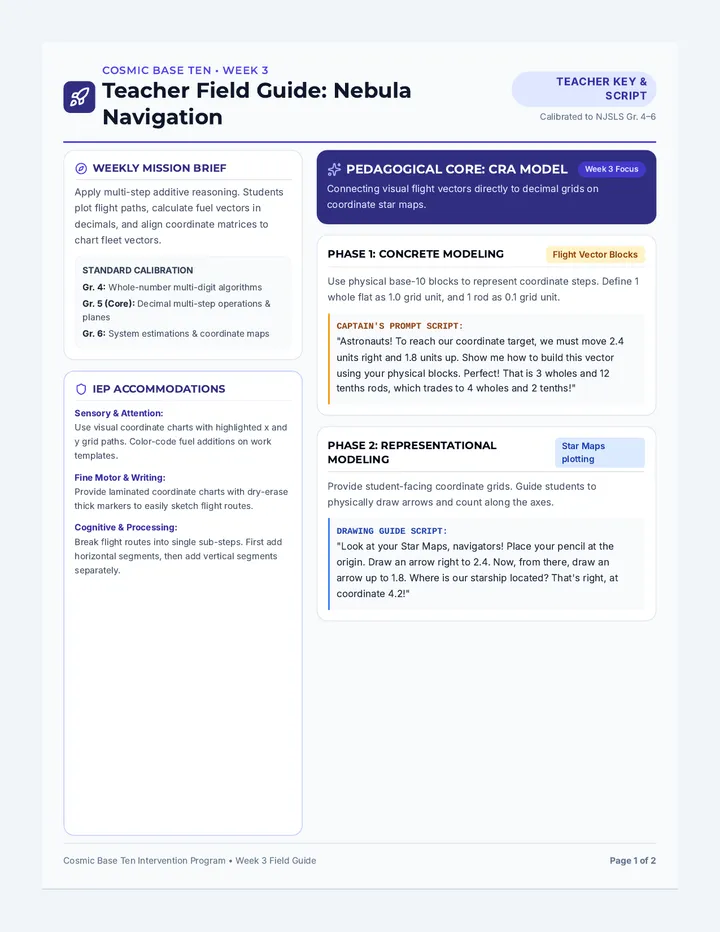
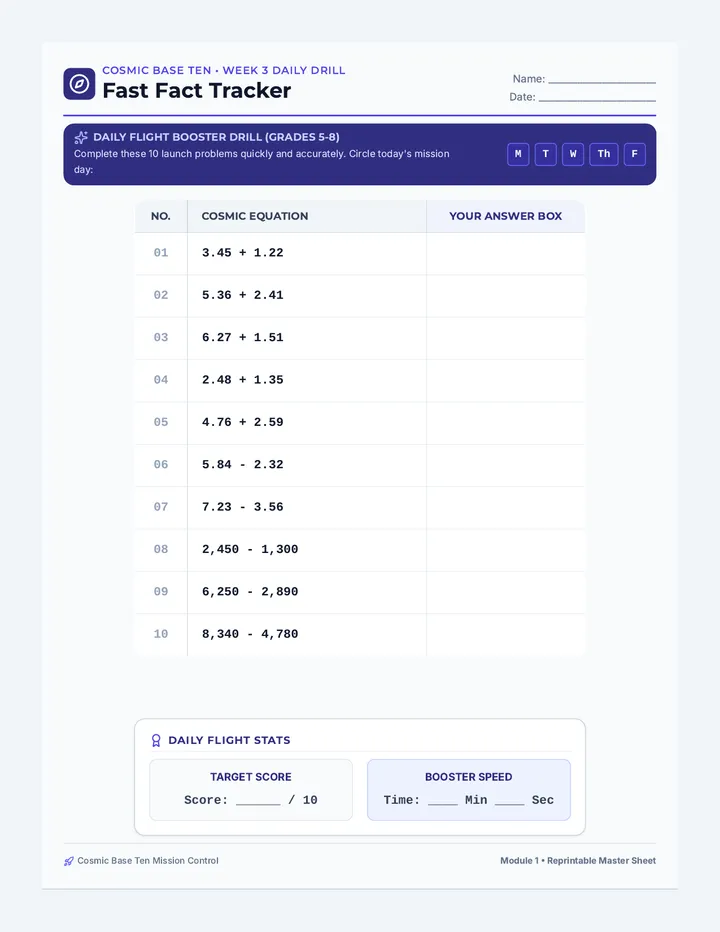
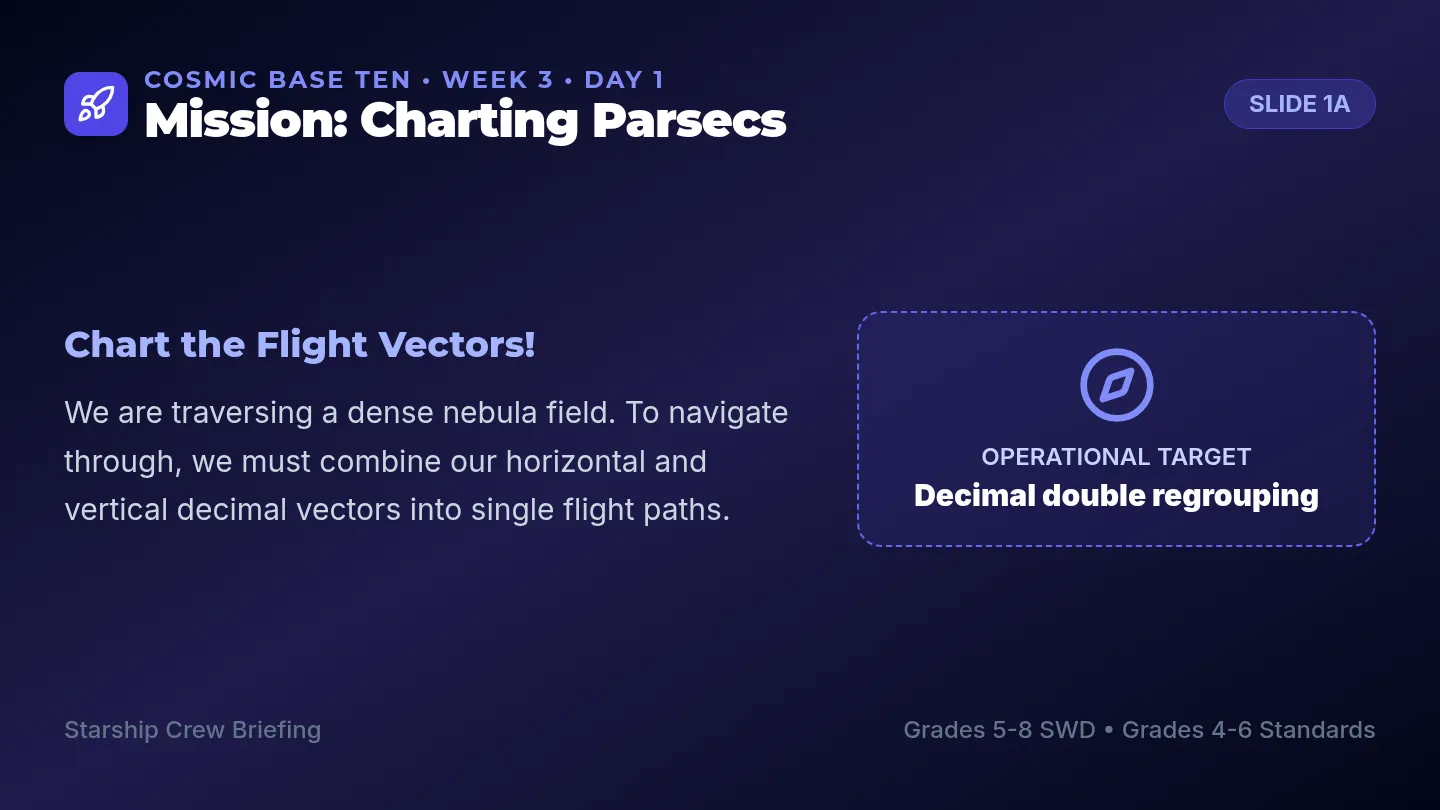
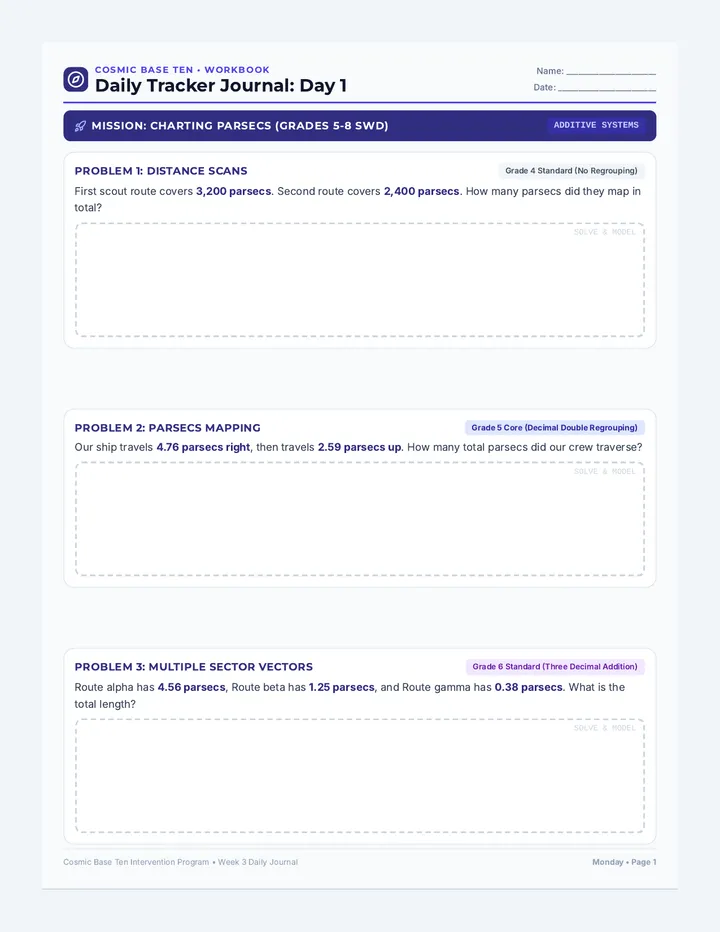
Week 3 focuses on multi-step additive reasoning, decimal subtraction, and aligning coordinates using star charts and compass tools to plan flight vectors for the fleet.
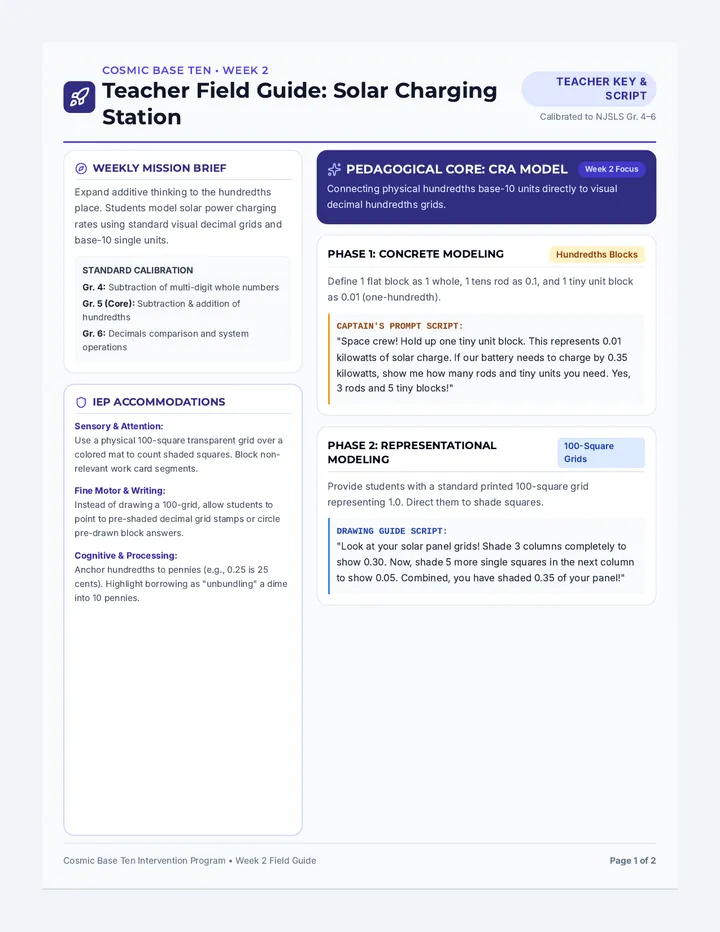
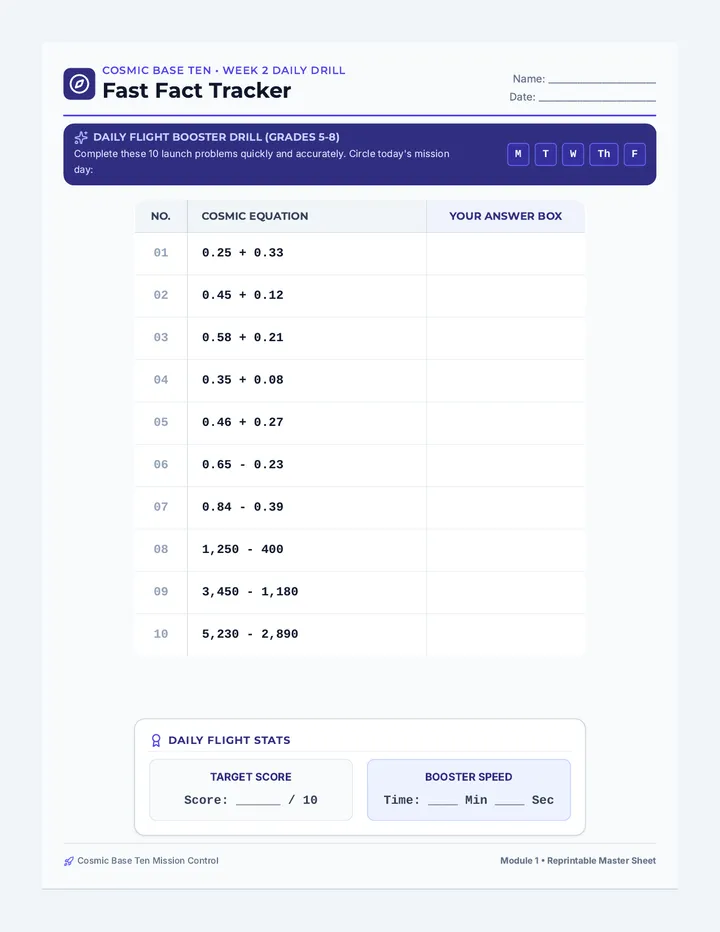
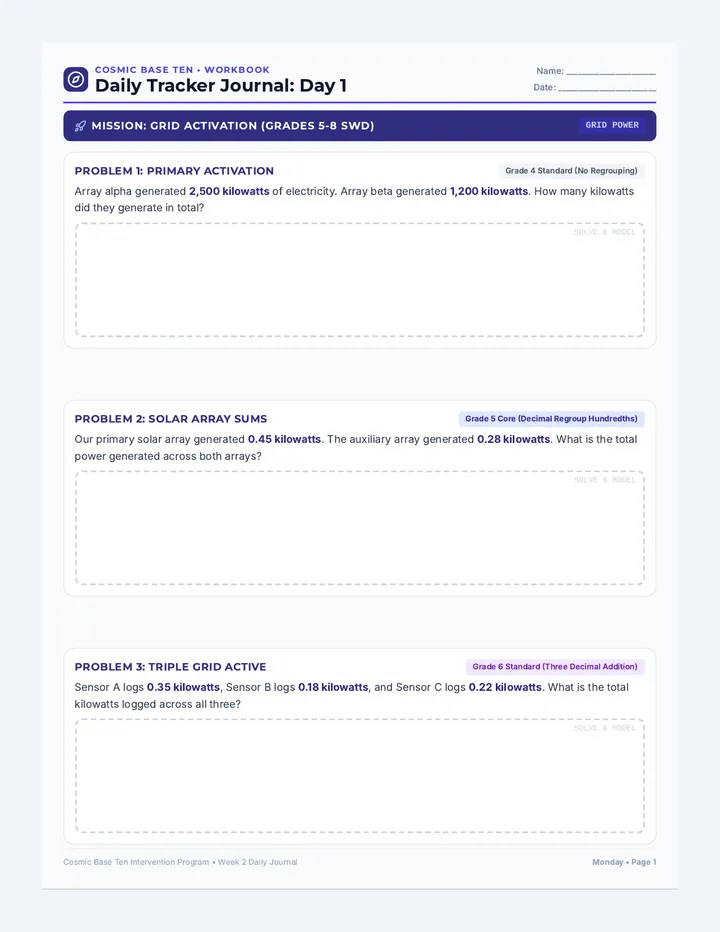
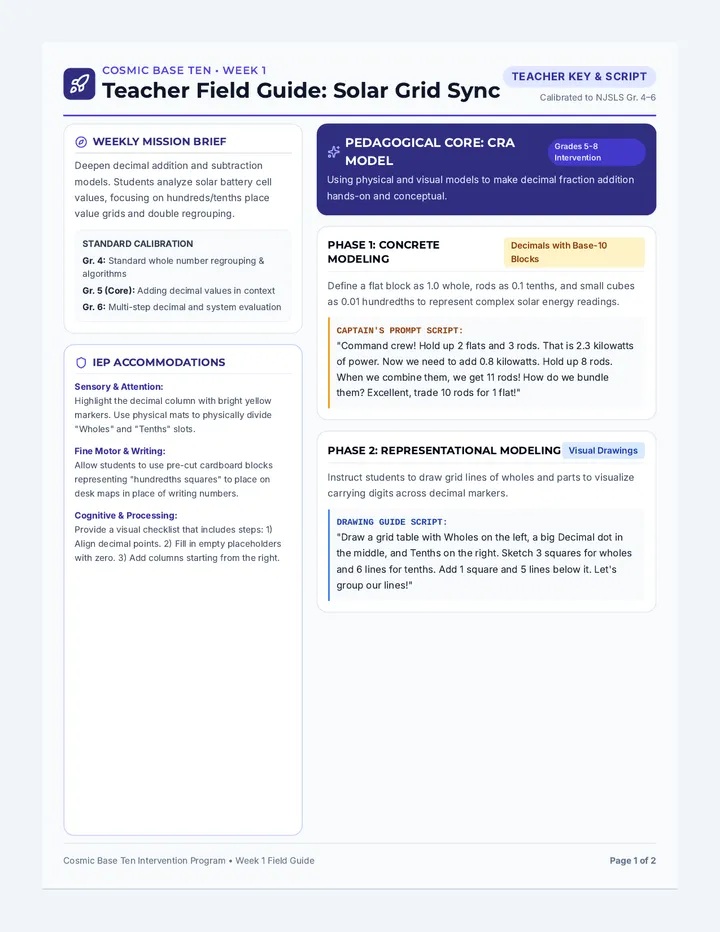
Week 2 focuses on decimal addition and subtraction with and without regrouping, using visual decimal grids and standard plastic base-10 blocks to represent tenths and hundredths in solar charging grid scenarios.
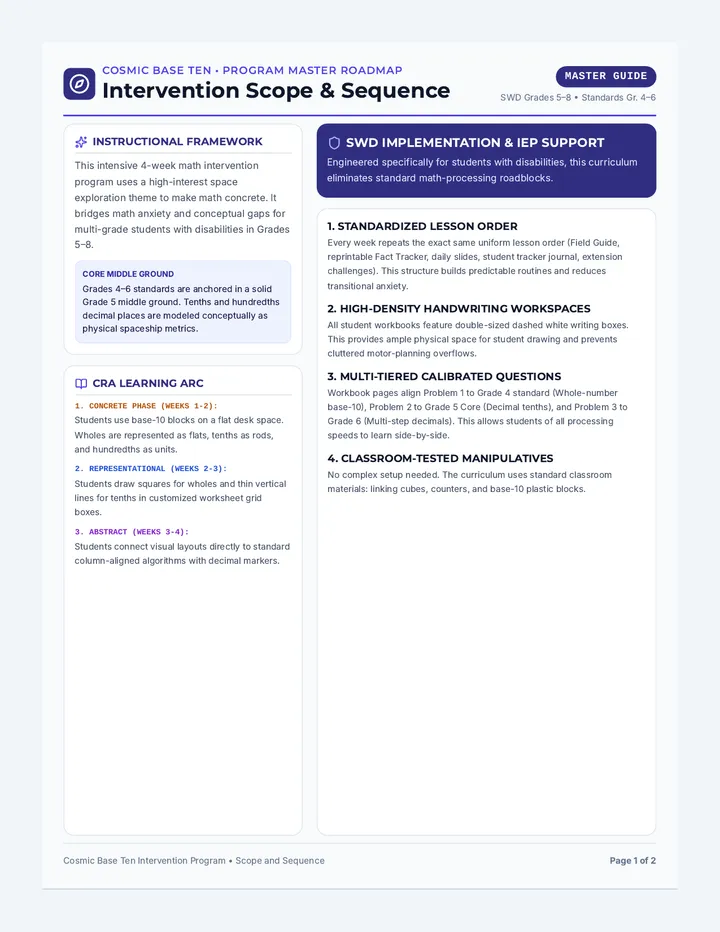
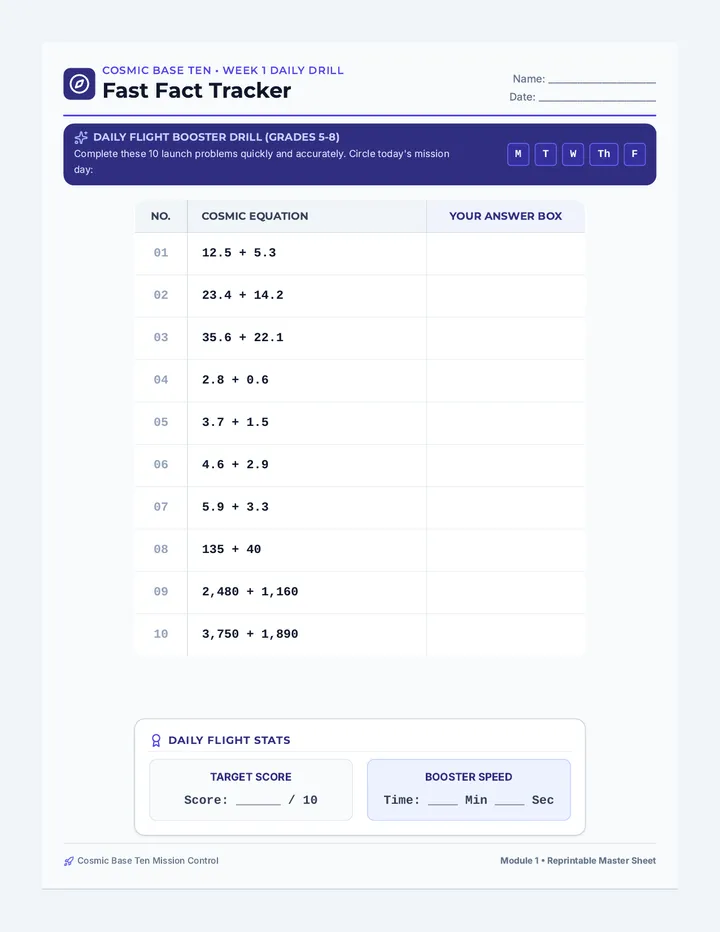
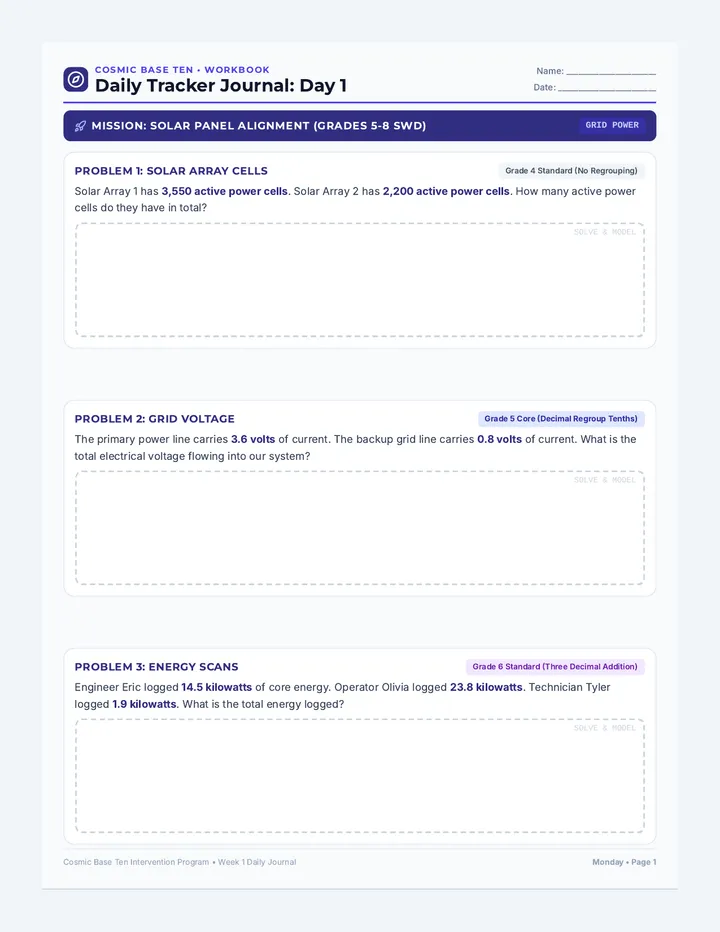
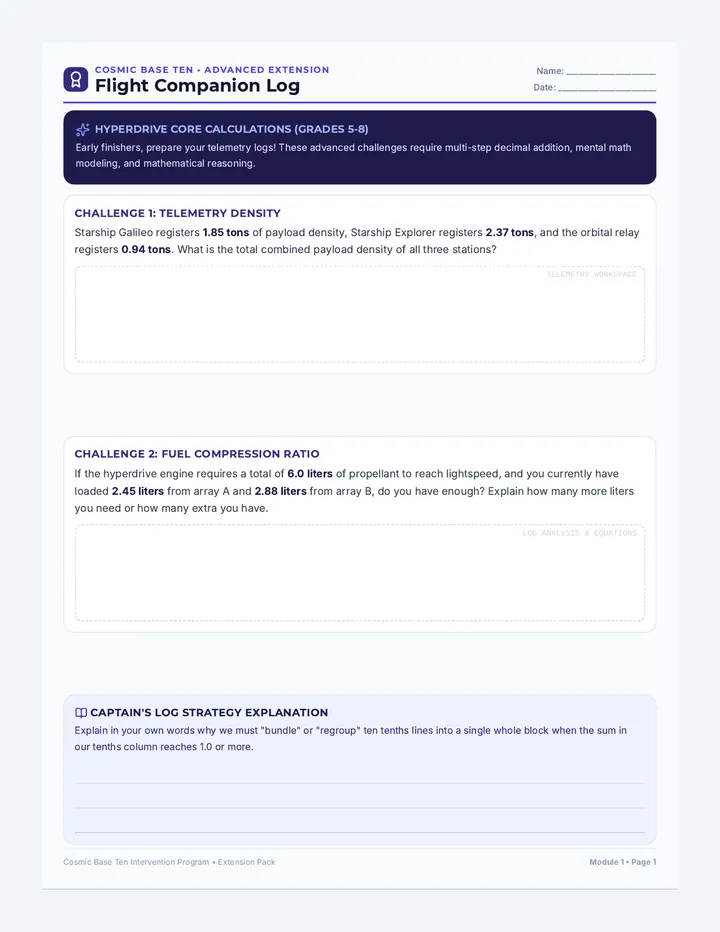
Week 1 focuses on deepening place value understanding and multi-step addition of decimals and whole numbers in space grid systems. Students practice regrouping tenths and wholes, balancing battery loads, and tracking fuel payload readings.
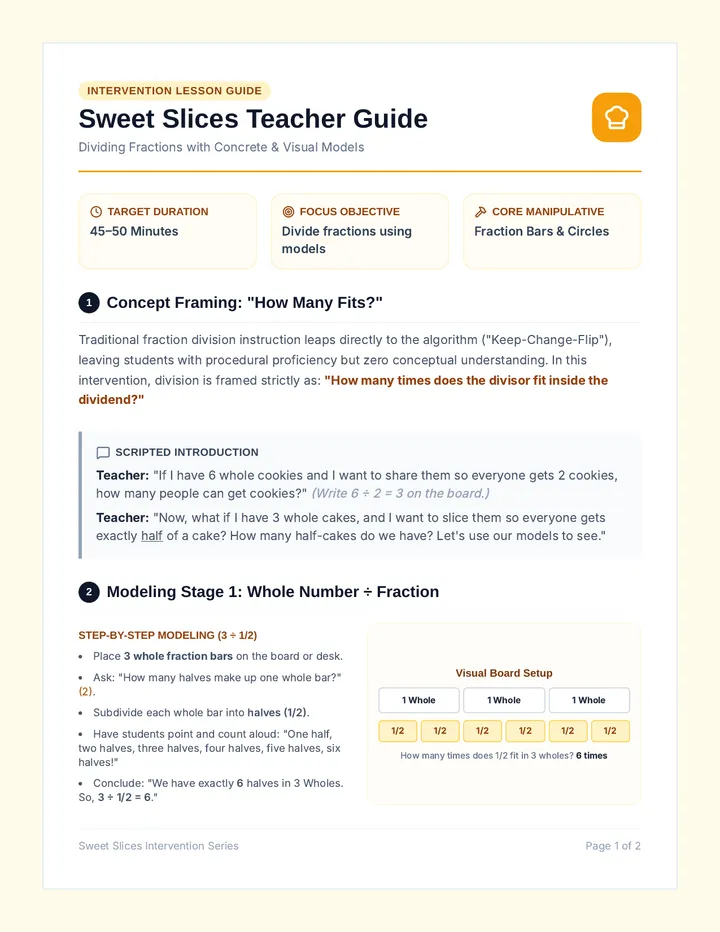
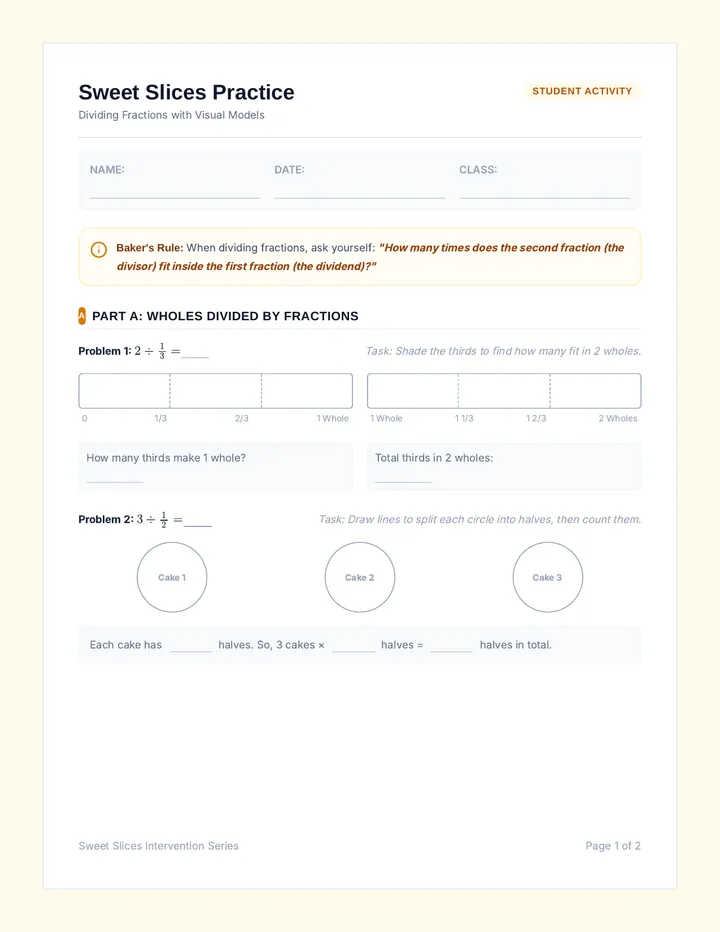
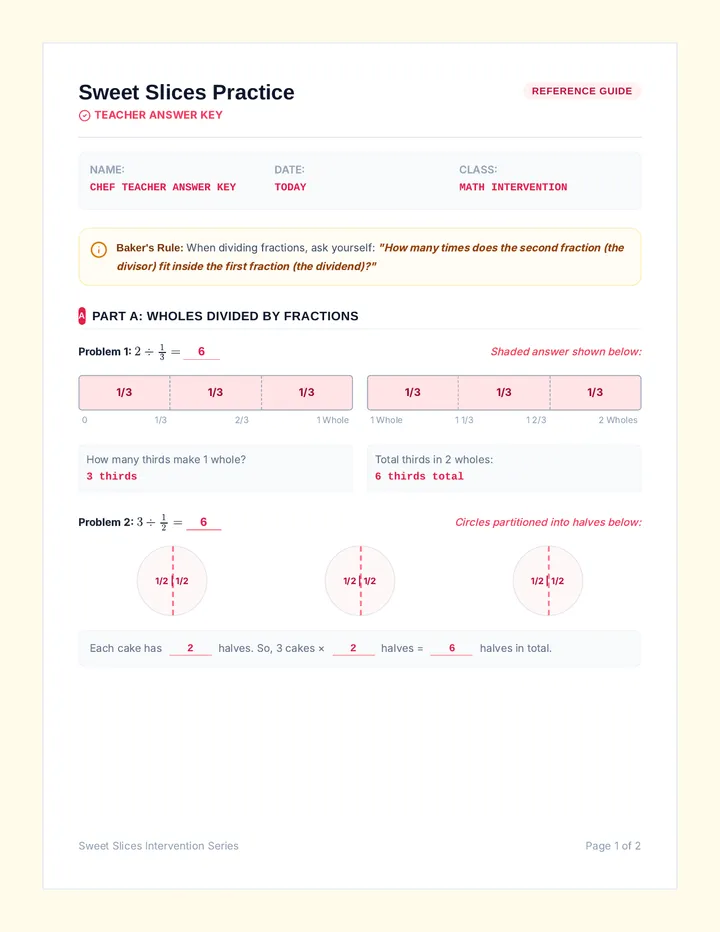
An intervention lesson on dividing fractions using concrete visual models (fraction bars and circles) to build conceptual understanding before moving to the standard algorithm.
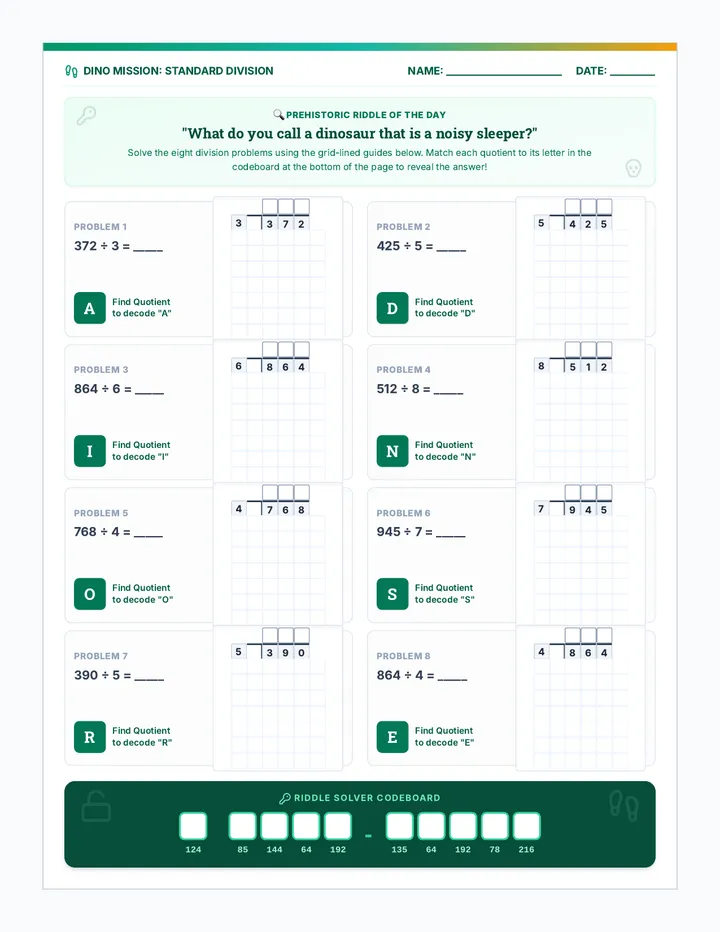
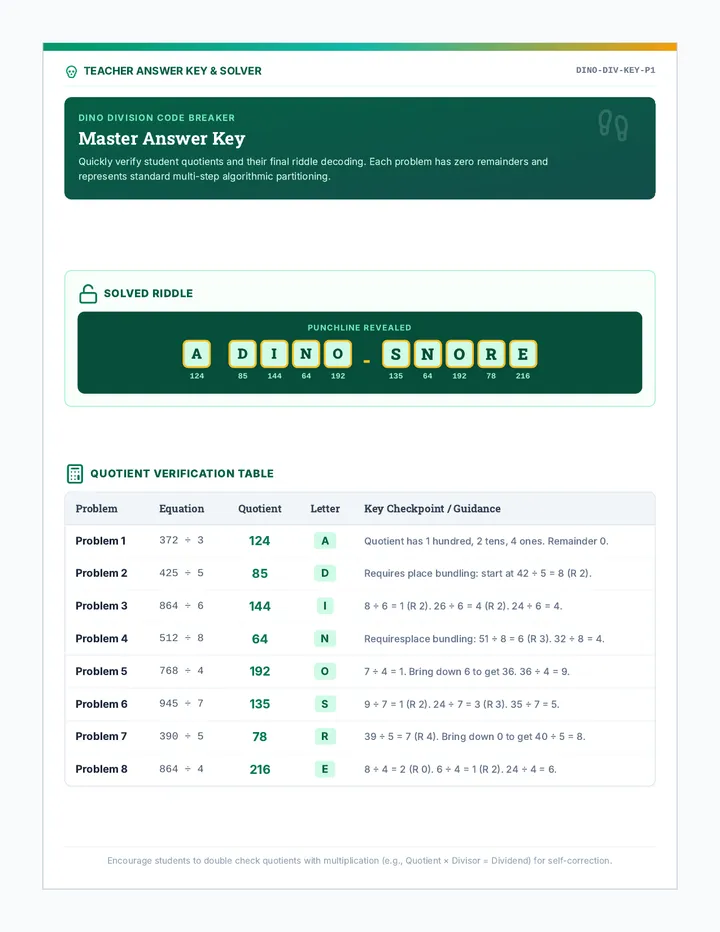
A standard division lesson where students solve 3-digit by 1-digit problems to decode a funny prehistoric riddle. Includes grid-aligned layout sheets for the standard algorithm.
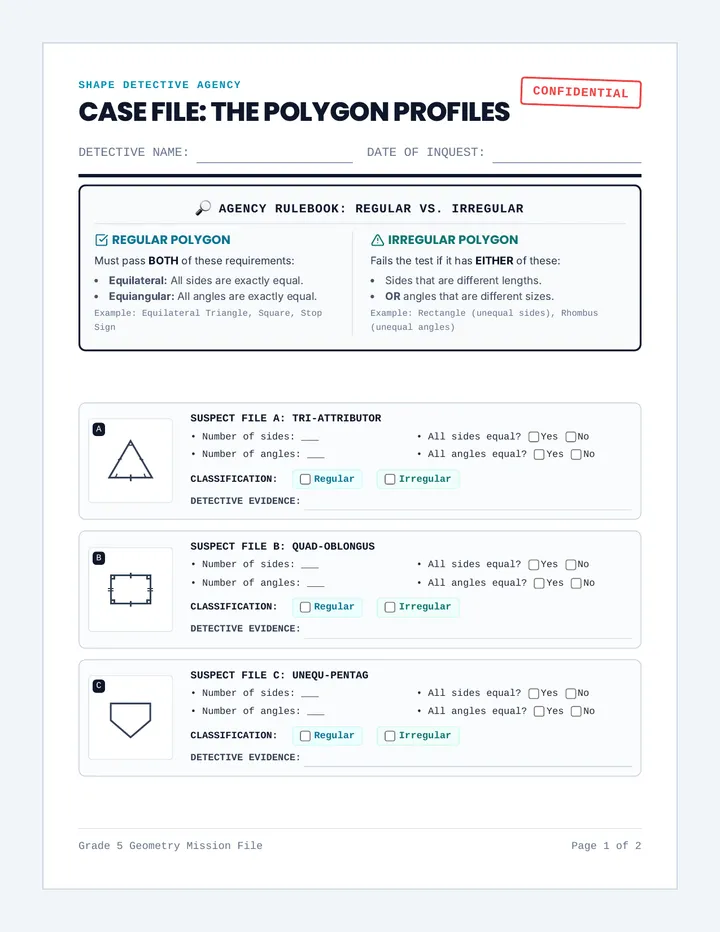
A complete lesson exploring regular vs. irregular polygons. Students investigate equal side lengths and congruent angles using visual slide decks, hands-on detective worksheets, and real-world mysteries like road signs and architectural masterpieces.
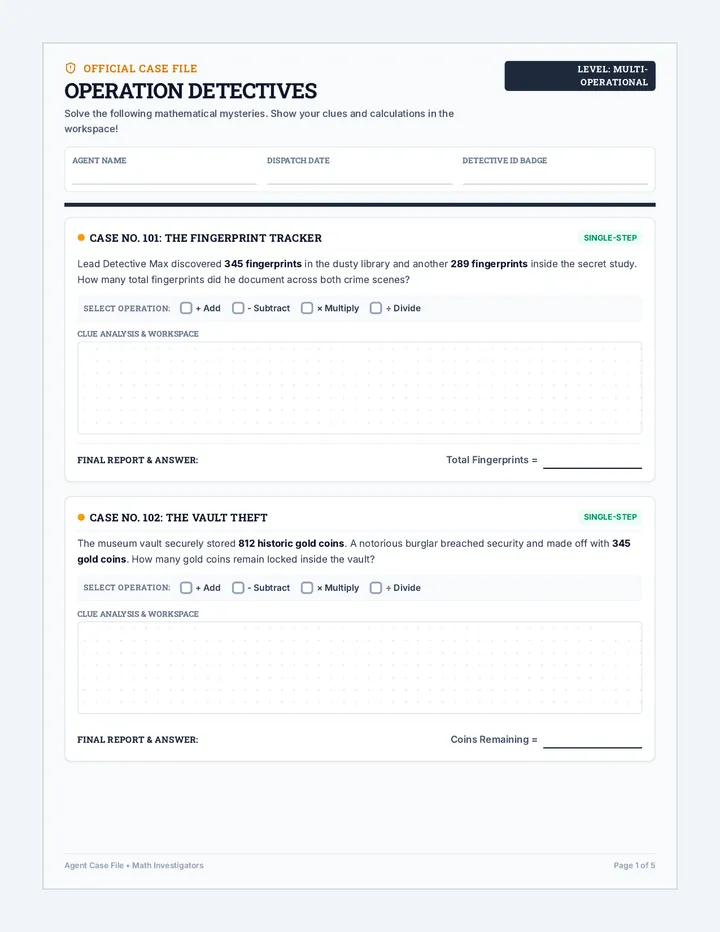
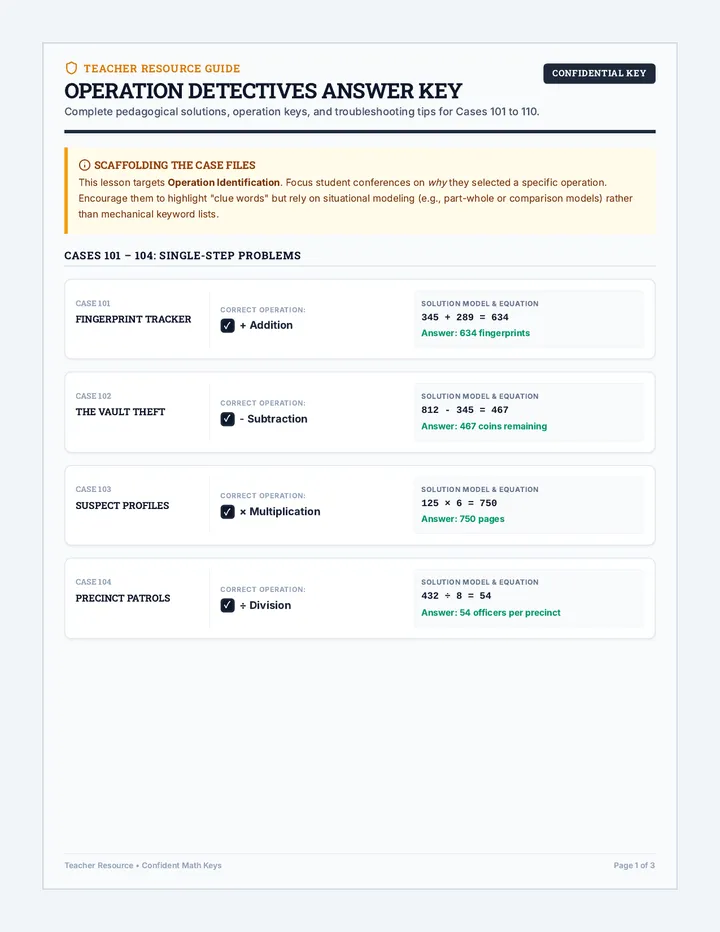
A rigorous math worksheet pack themed around solving detective cases. Students solve 10 single- and multi-step word problems involving 2-3 digit numbers across all four operations, using visual operation checkboxes and spacious dedicated workspaces.
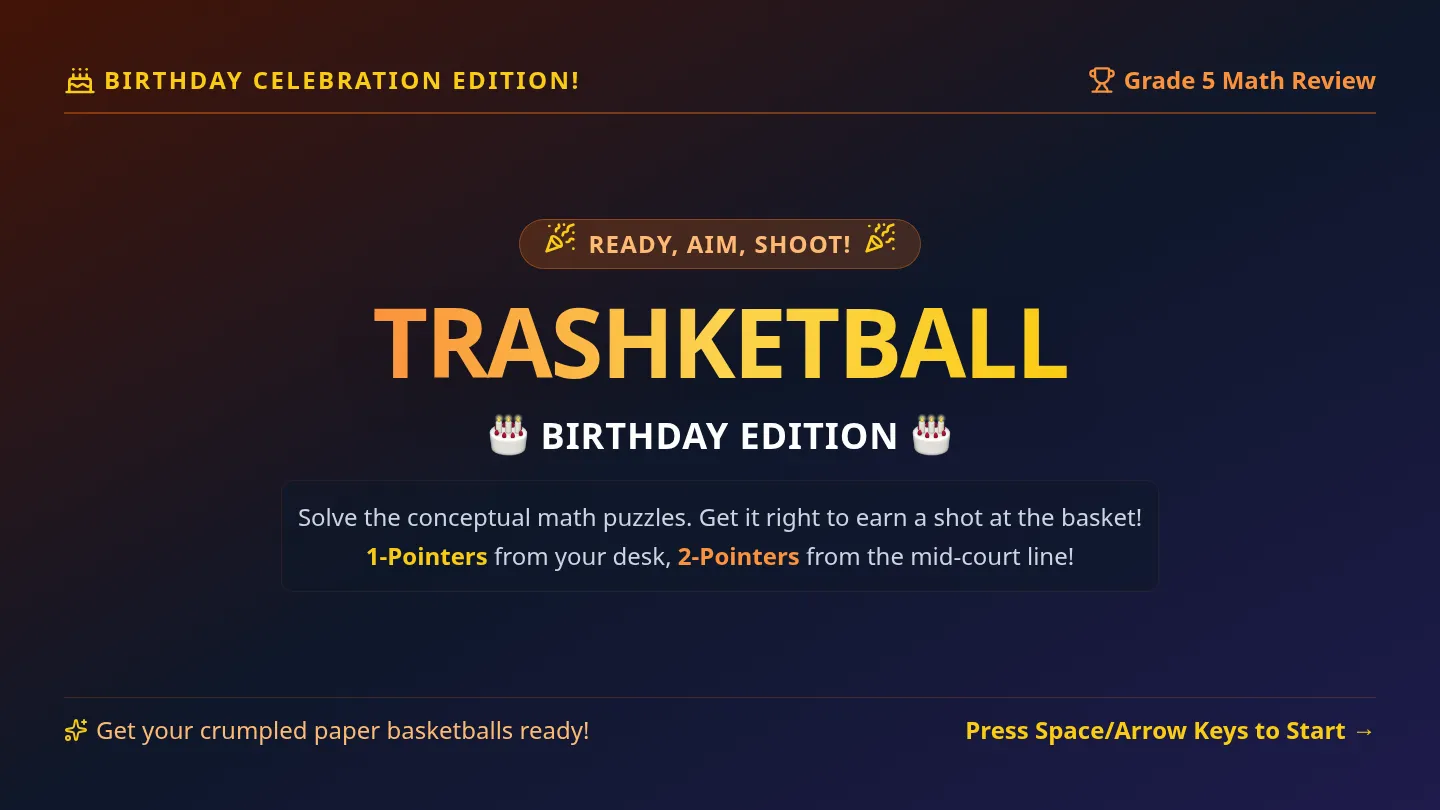
An energetic, basketball-themed trashketball game for fifth-grade math review, customized for a birthday celebration. Features alternating conceptual questions and answers.
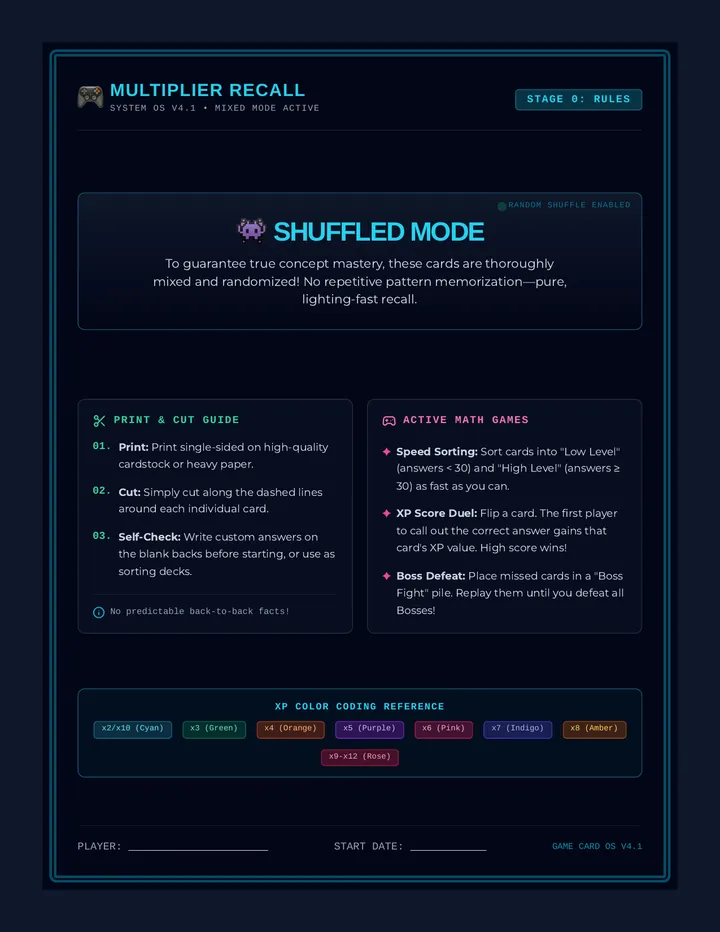
A comprehensive lesson containing high-yield, retro-themed multiplication flashcards for rapid mental recall. Features a fold-and-cut design that guarantees perfect double-sided alignment on any printer.
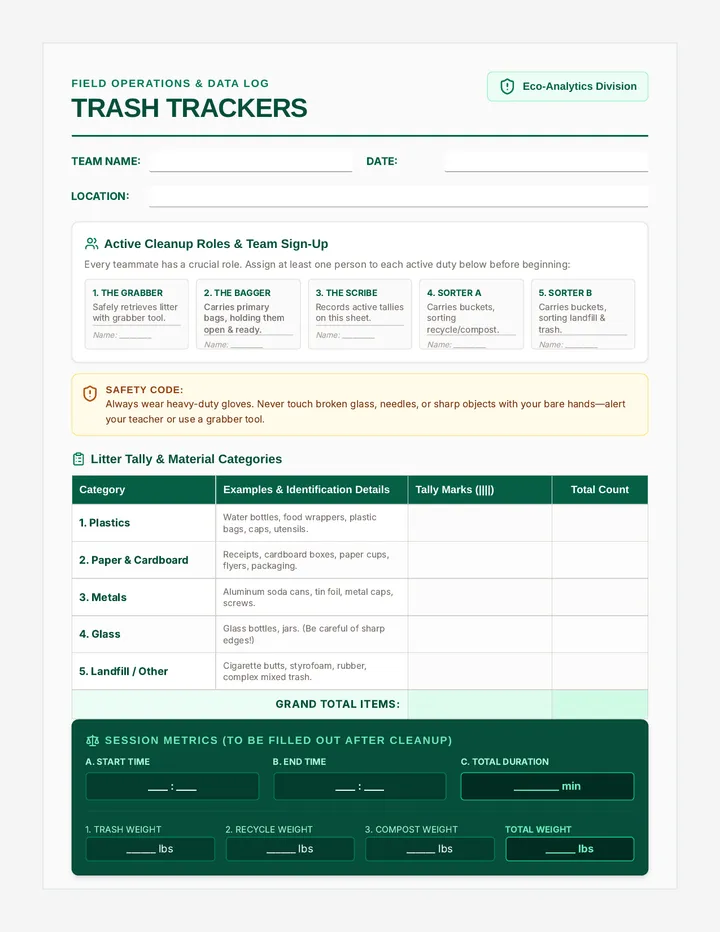
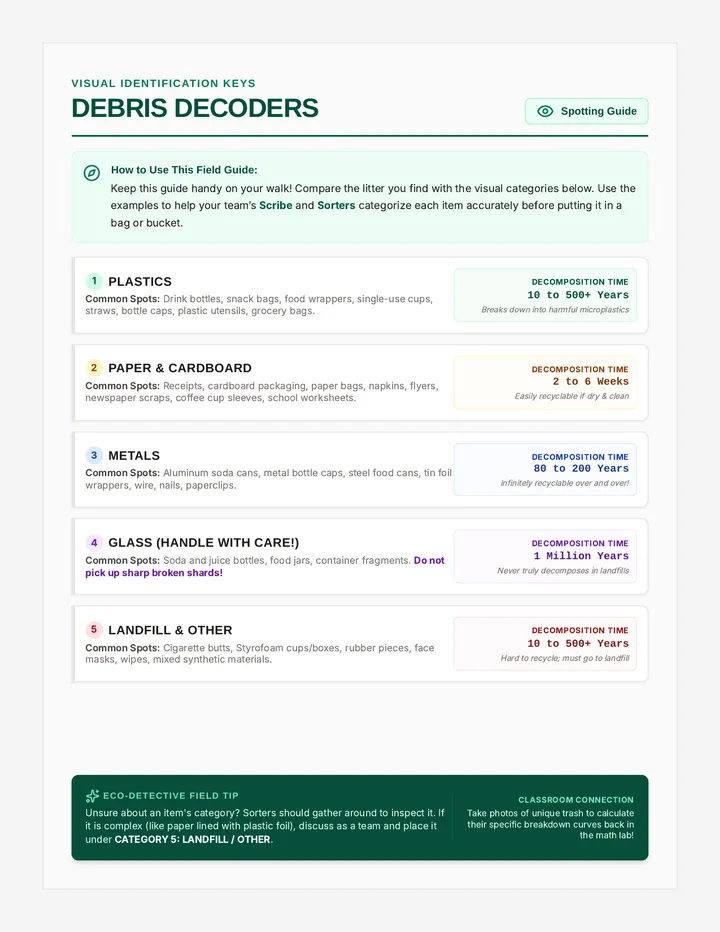
A hands-on, community-based mathematics and environmental science lesson. Students take on specific active roles during a community cleanup to collect, weigh, and analyze litter data, converting their real-world findings into rates, ratios, percentages, and visual graphs.
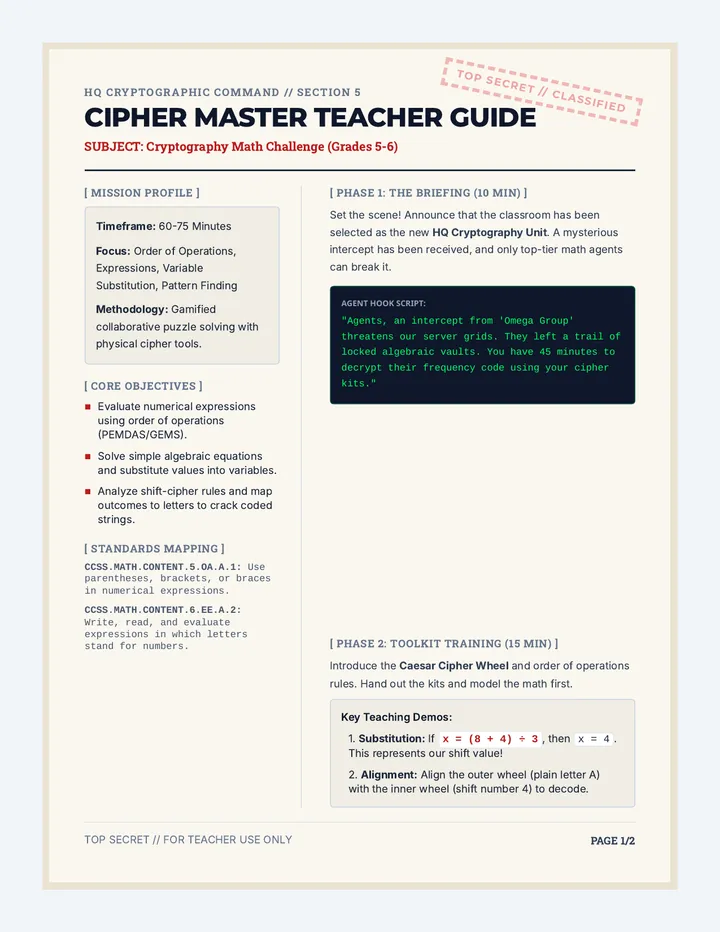
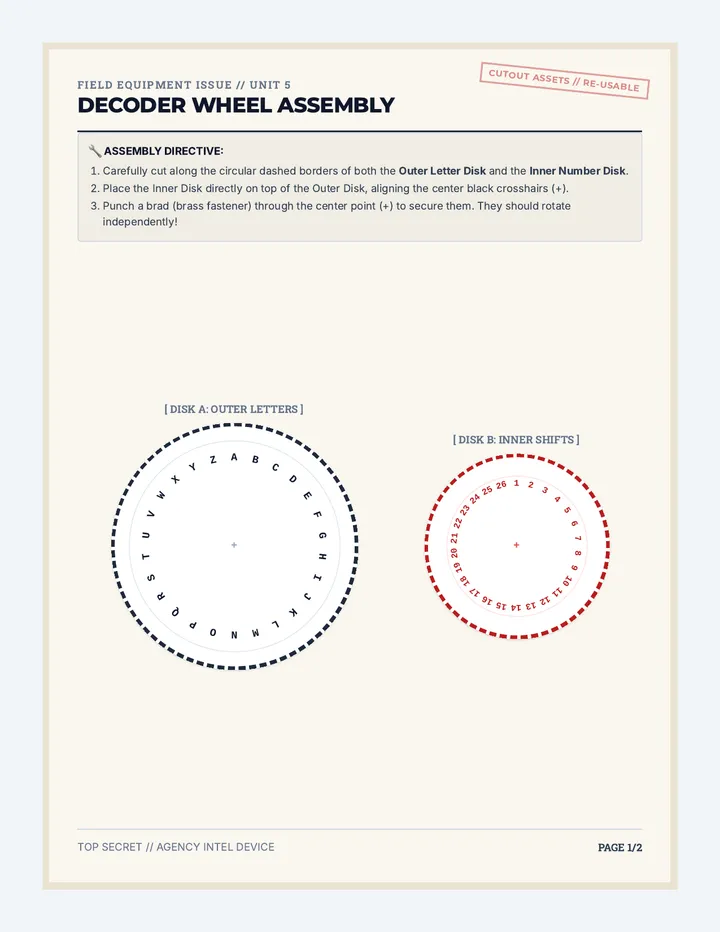
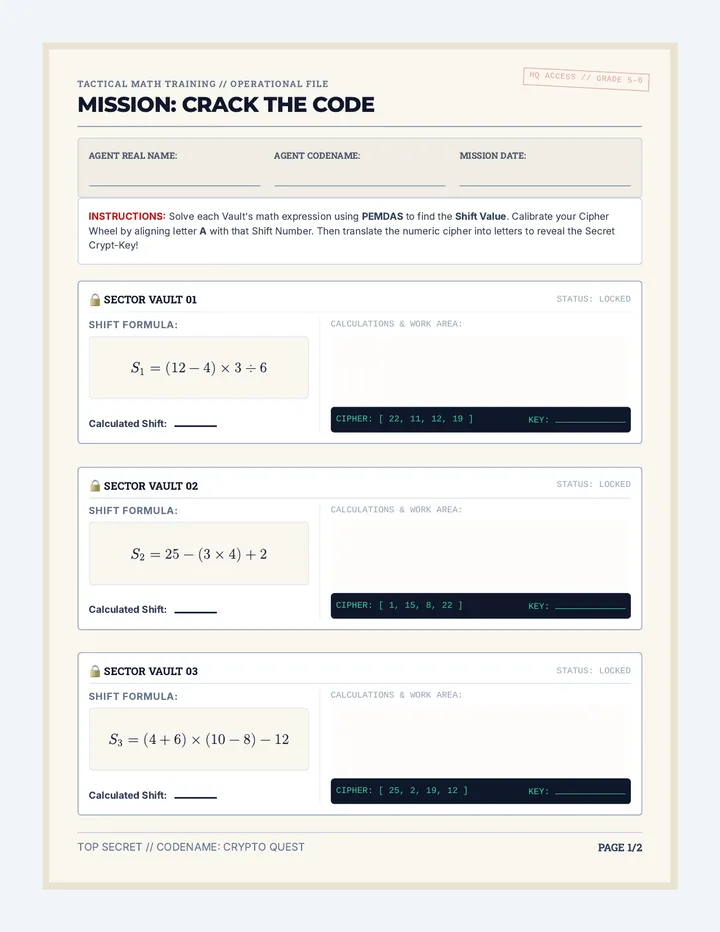
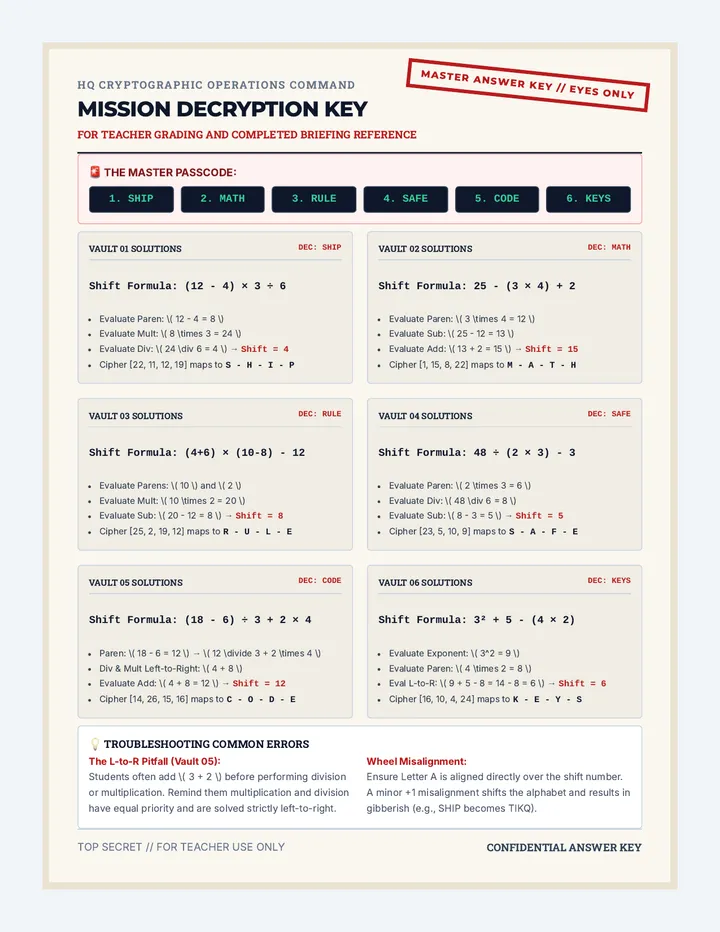
An immersive cryptography math lesson for 5th and 6th-grade students, integrating order of operations, algebraic thinking, and number patterns in a high-stakes spy briefing format.
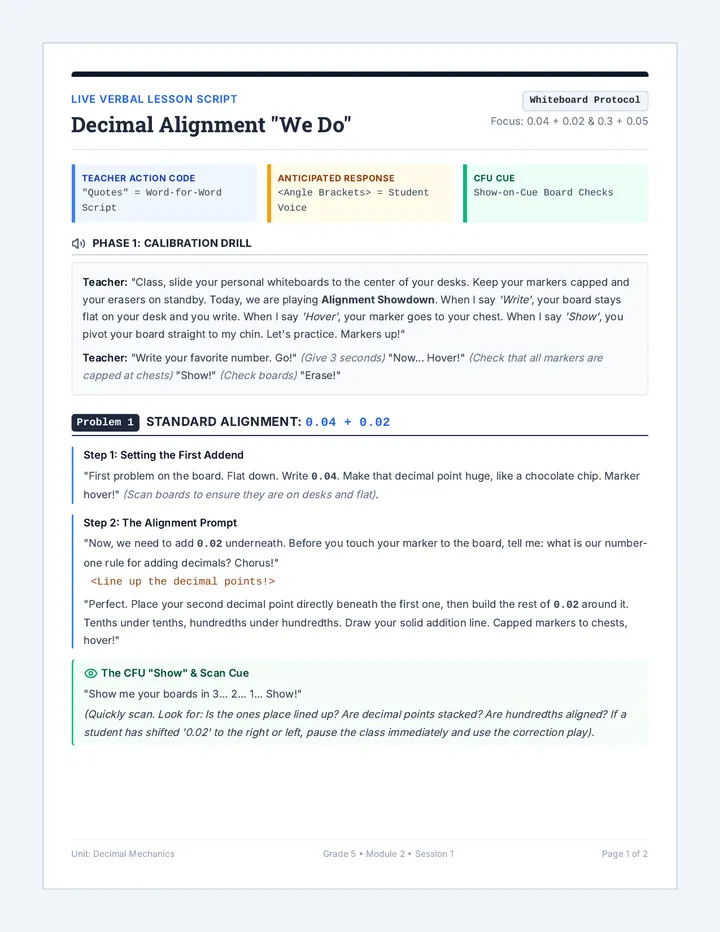
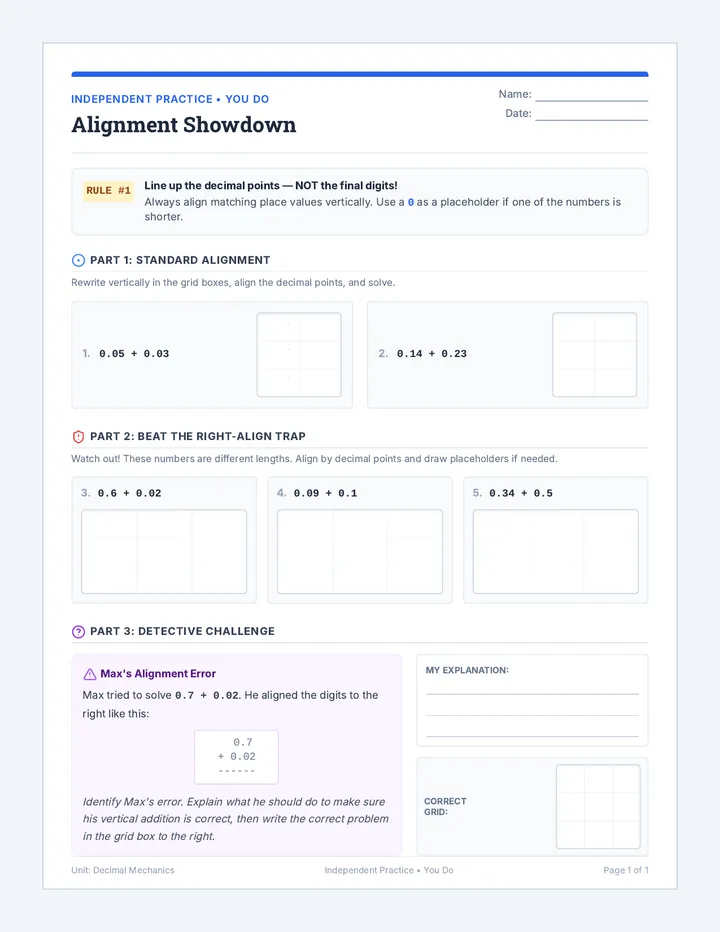
A focused lesson plan on standard algorithmic alignment for adding decimals. Students master lining up decimal points and place values, learning to avoid the common trap of right-aligning numbers of unequal length.
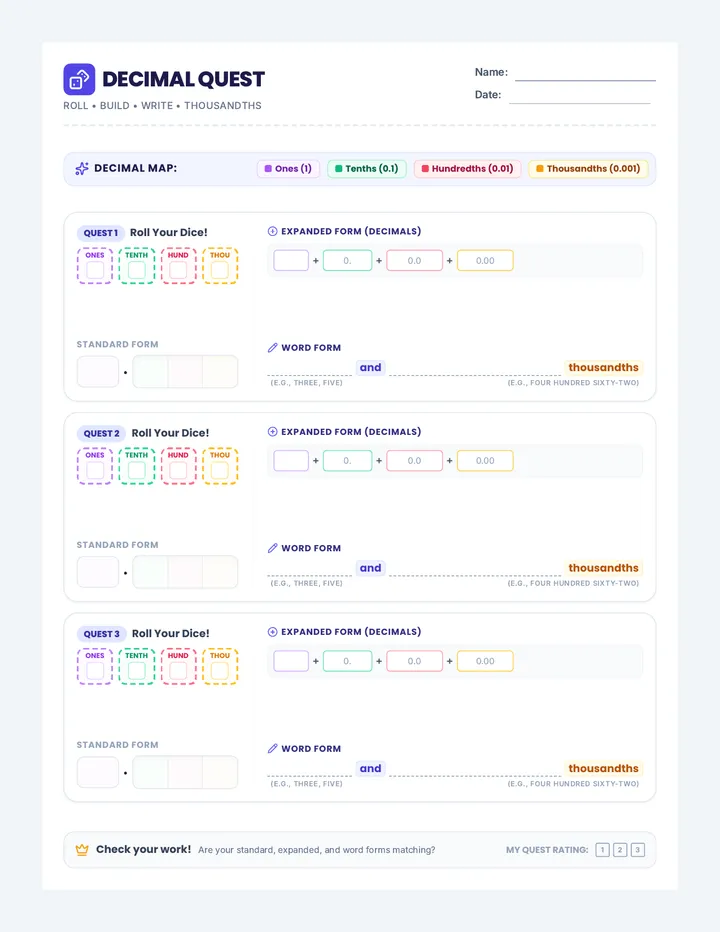
A hands-on, interactive math lesson designed to help students master three-digit place value (hundreds, tens, and ones). Students roll dice to generate numbers and practice translating them between standard, expanded, and word forms using structured, color-coded visual cues.