A professional assessment tool and guiding framework for grading first-grade opinion writing. Focuses on both structural milestones (stating opinions, reasons, closure) and primary conventions (phonics, capitalization, spacing, punctuation).
A single-lesson reading comprehension resource for 5th-grade students featuring an engaging science-aligned story about hydrothermal vents and deep-sea chemosynthesis.
A single-lesson reading comprehension resource for 4th-grade students featuring an engaging science-aligned story about the unique redwood forest canopy ecosystem.
A single-lesson reading comprehension resource for 3rd-grade students featuring an engaging science-aligned story about beaver dams and ecosystems.
A single-lesson reading comprehension resource for 2nd-grade students featuring an engaging science-aligned story about fossil hunting.
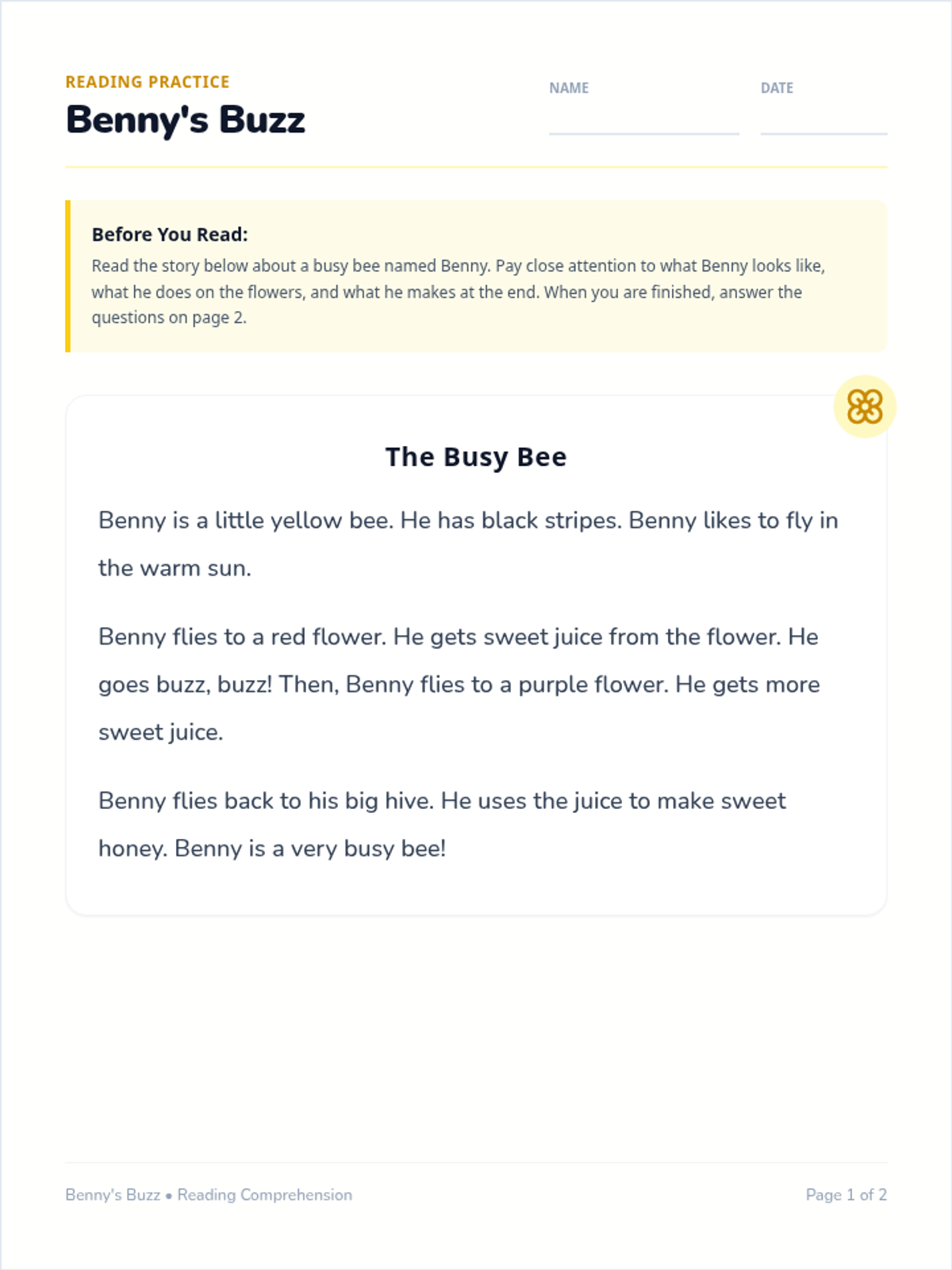
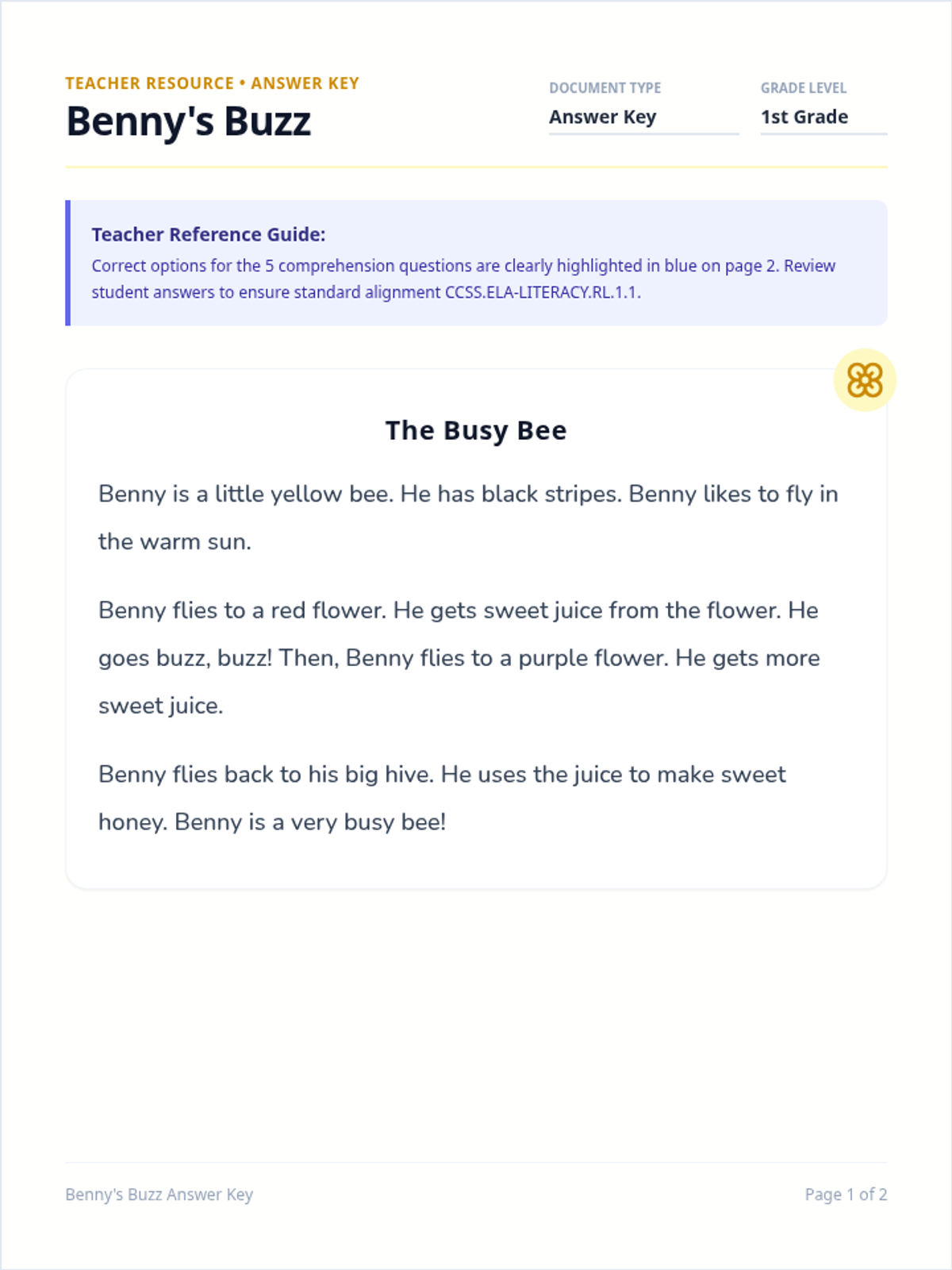
A single-lesson reading comprehension resource for 1st-grade students featuring a simple story about a bee named Benny who visits colorful flowers.
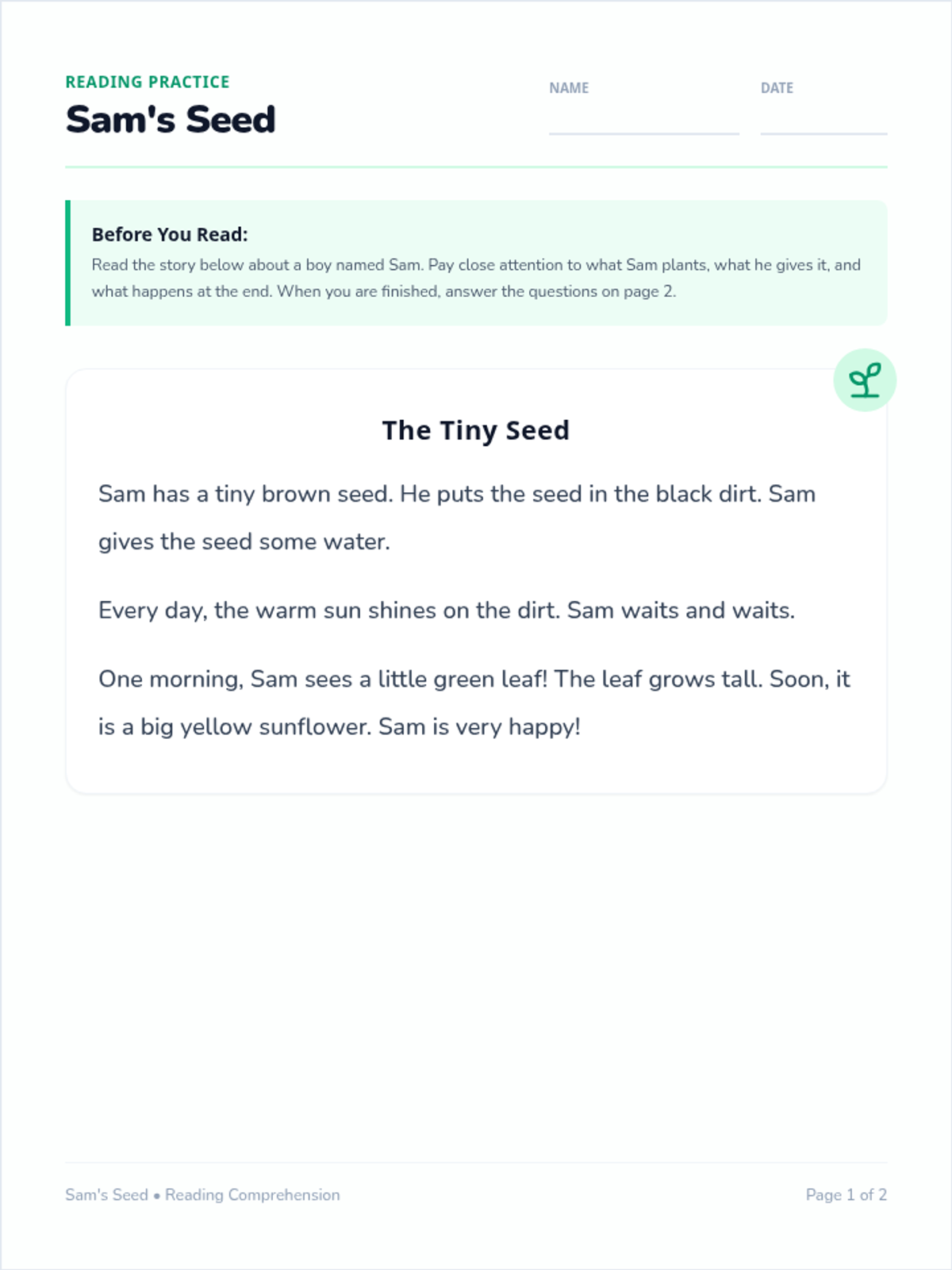
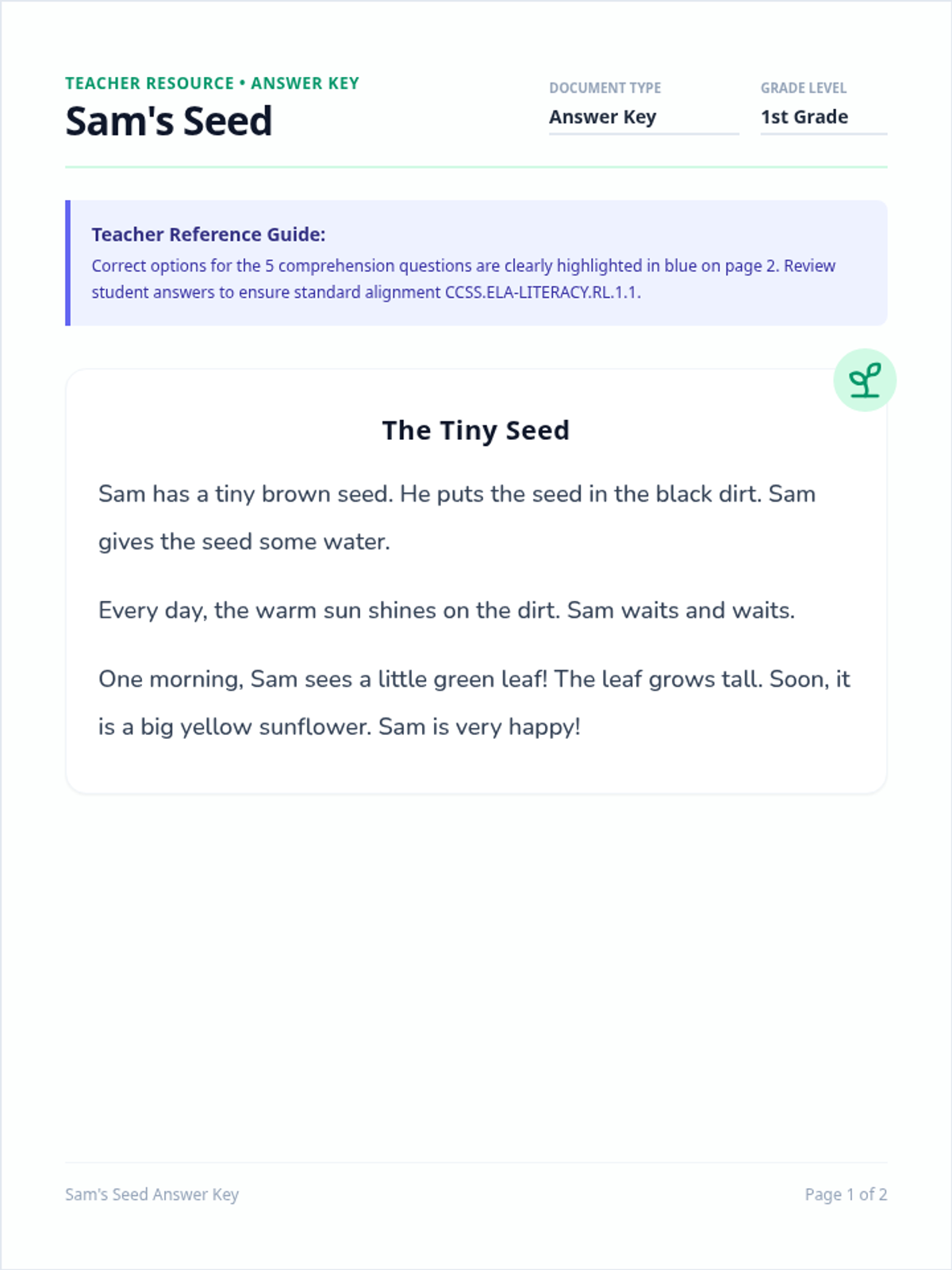
A single-lesson reading comprehension resource for 1st-grade students featuring a simple story about a boy named Sam who plants a sunflower seed.
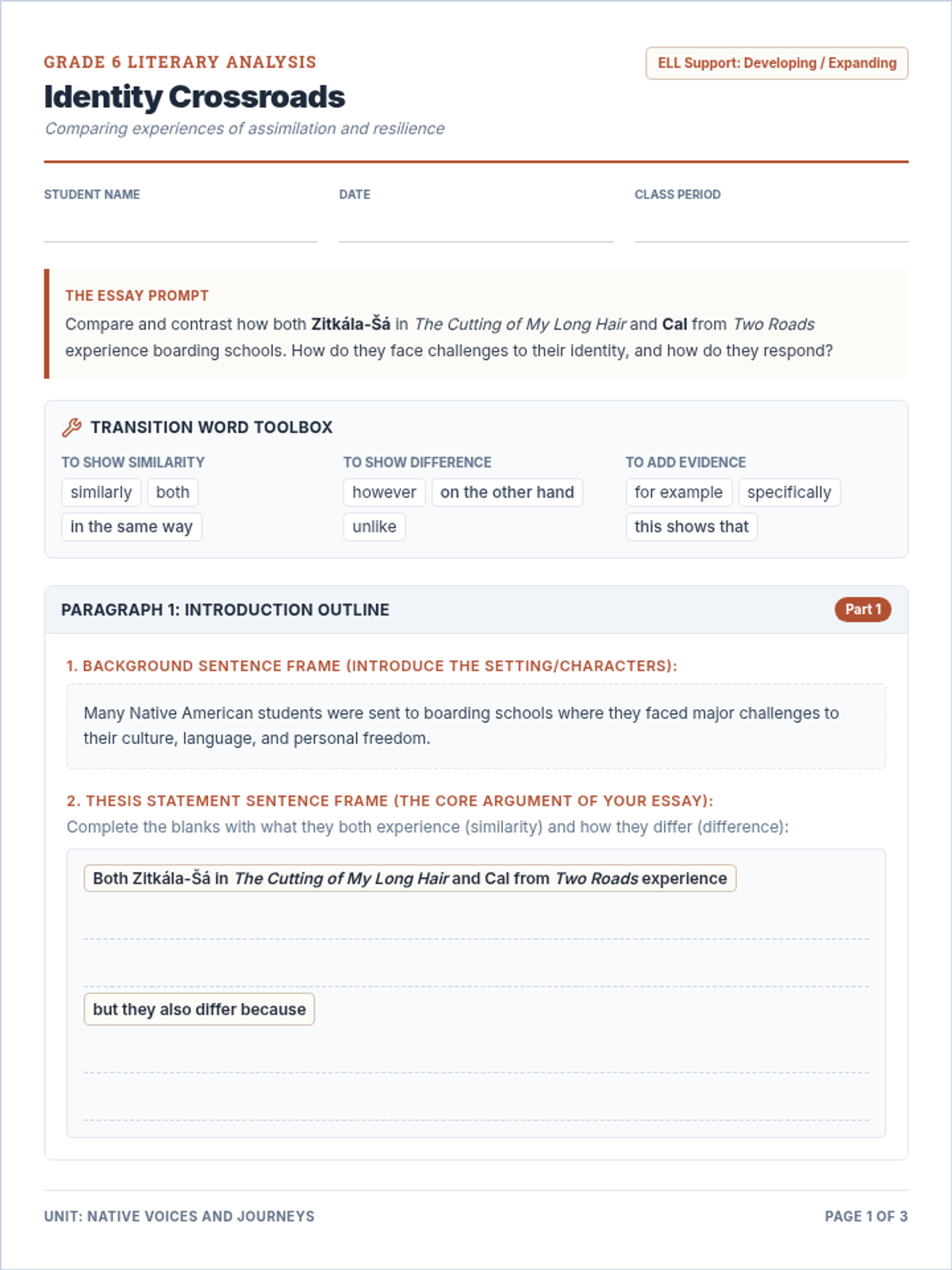
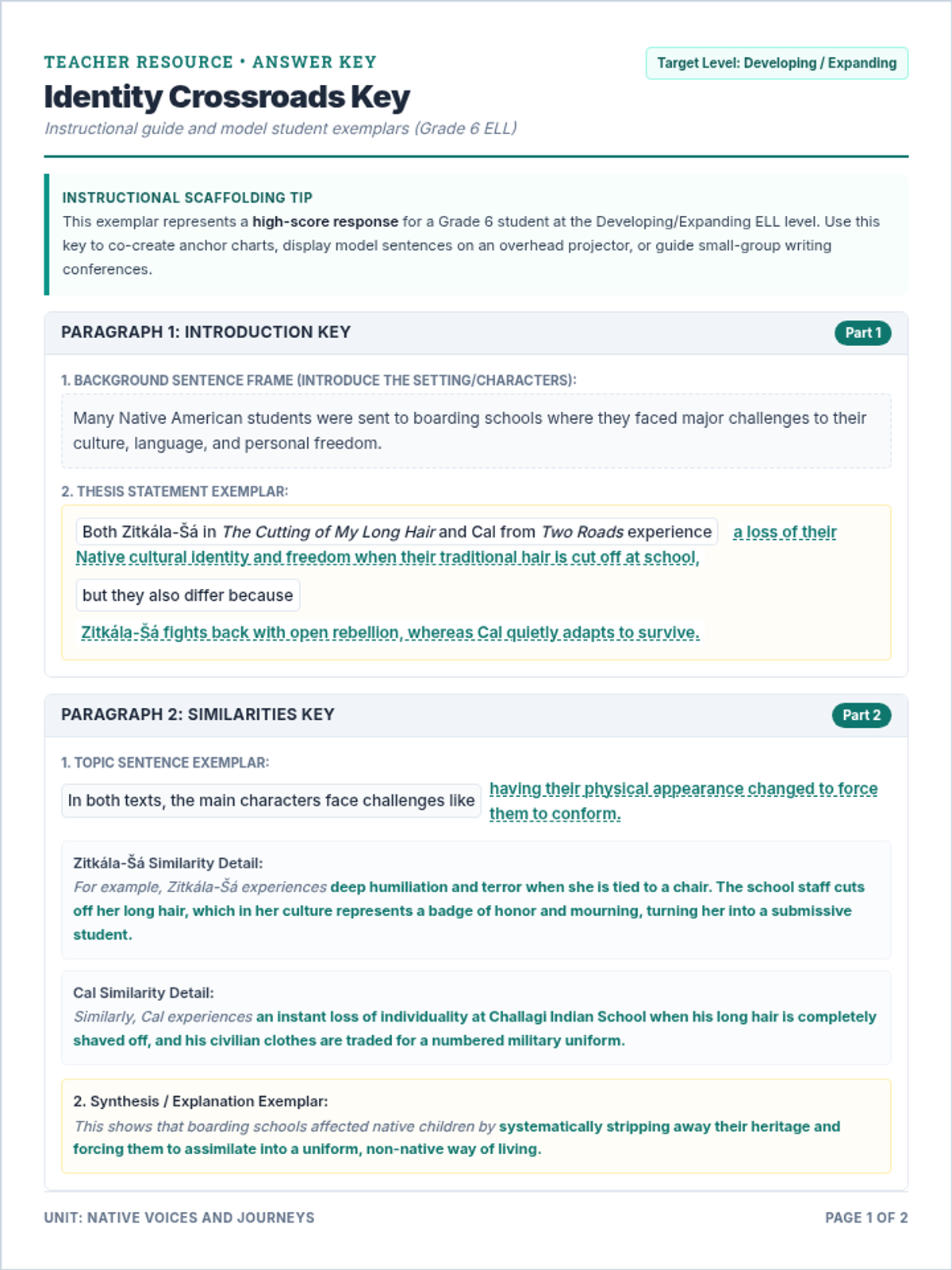
A rigorous grade 6 literary analysis lesson comparing Zitkála-Šá's 'The Cutting of My Long Hair' and Cal's 'Two Roads' with specialized scaffolding for ELL students.
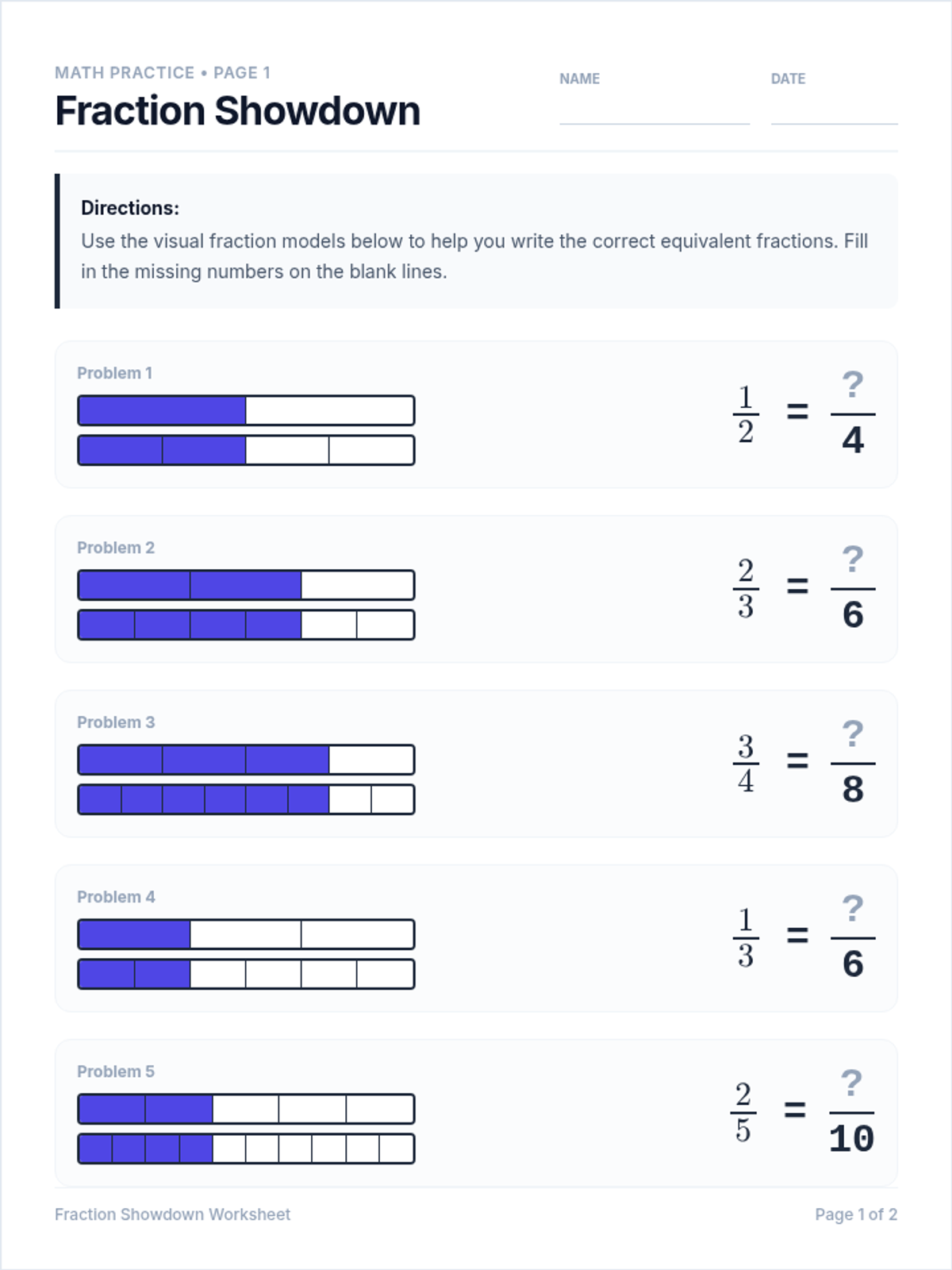
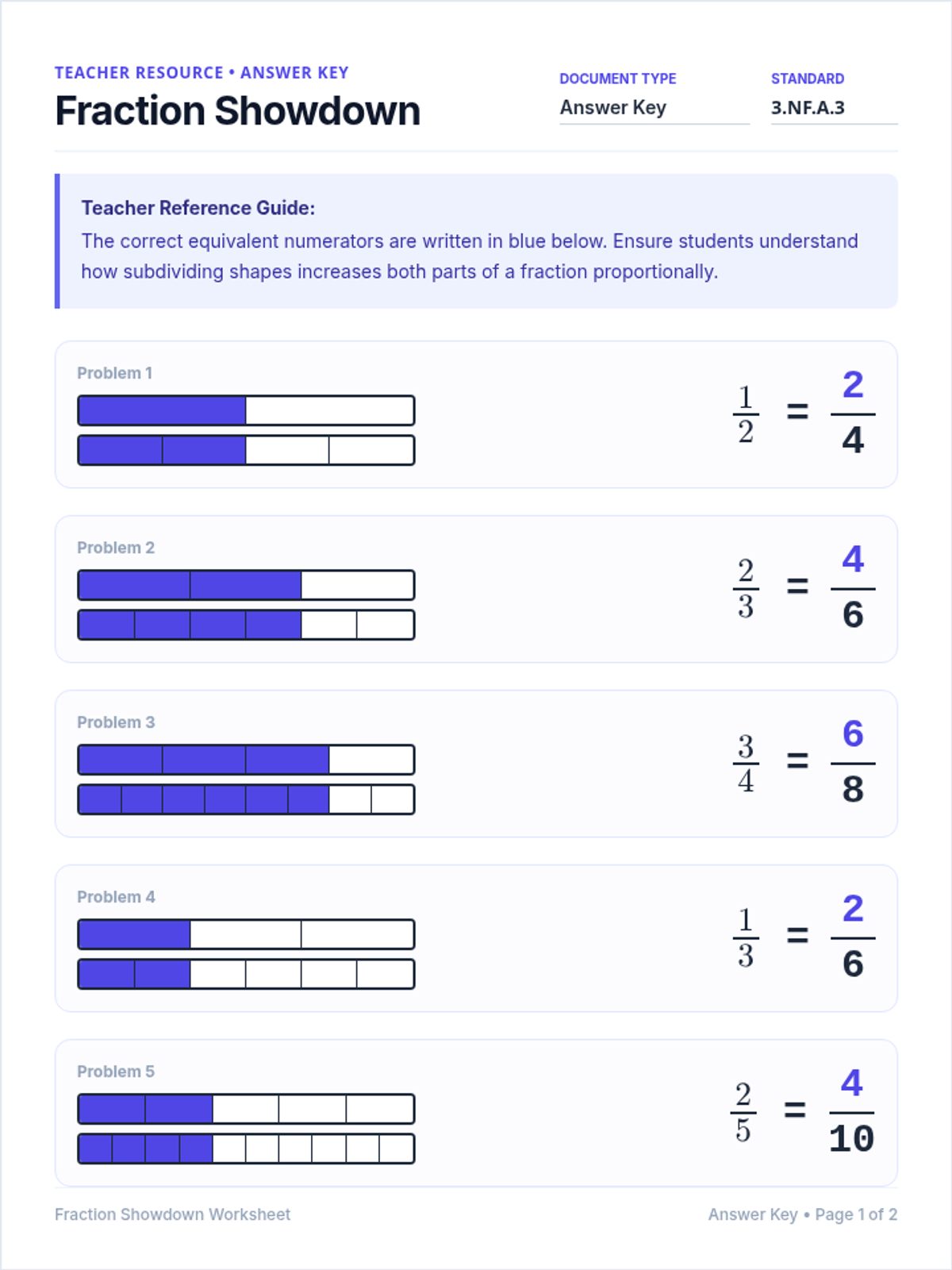
A single-lesson practice resource focusing on identifying and creating equivalent fractions using visual fraction bars and a custom Fraction Wall reference.
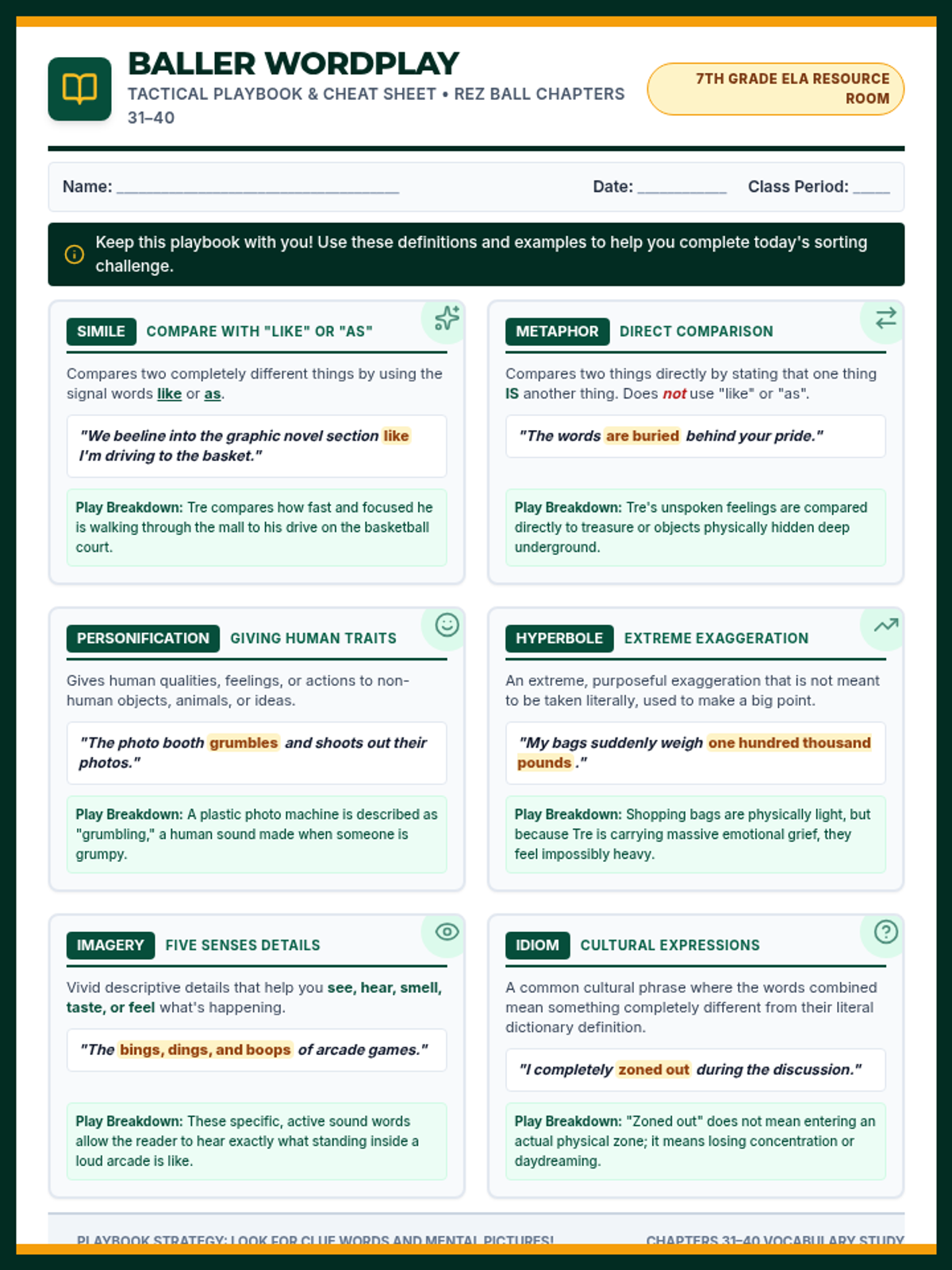
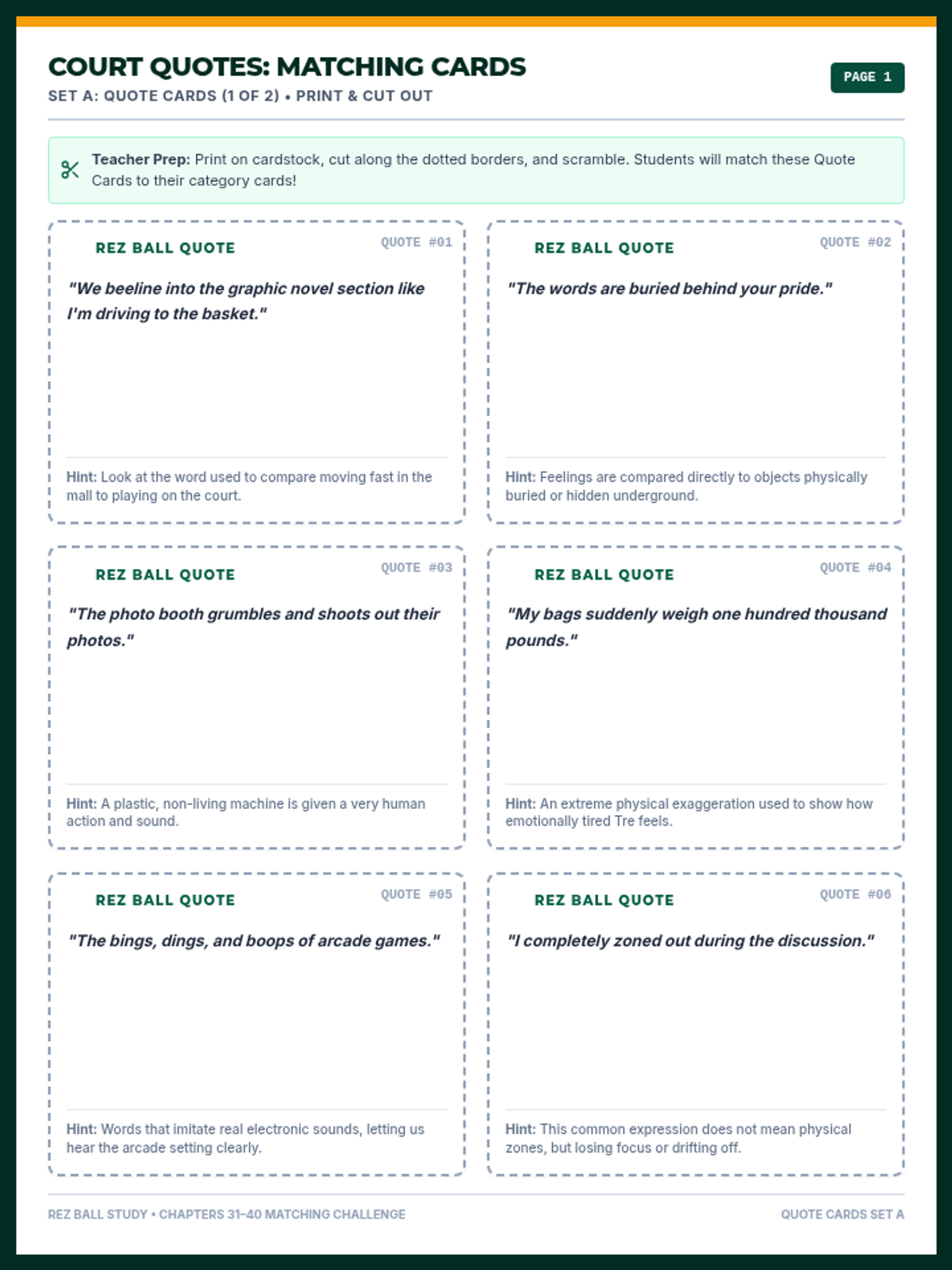
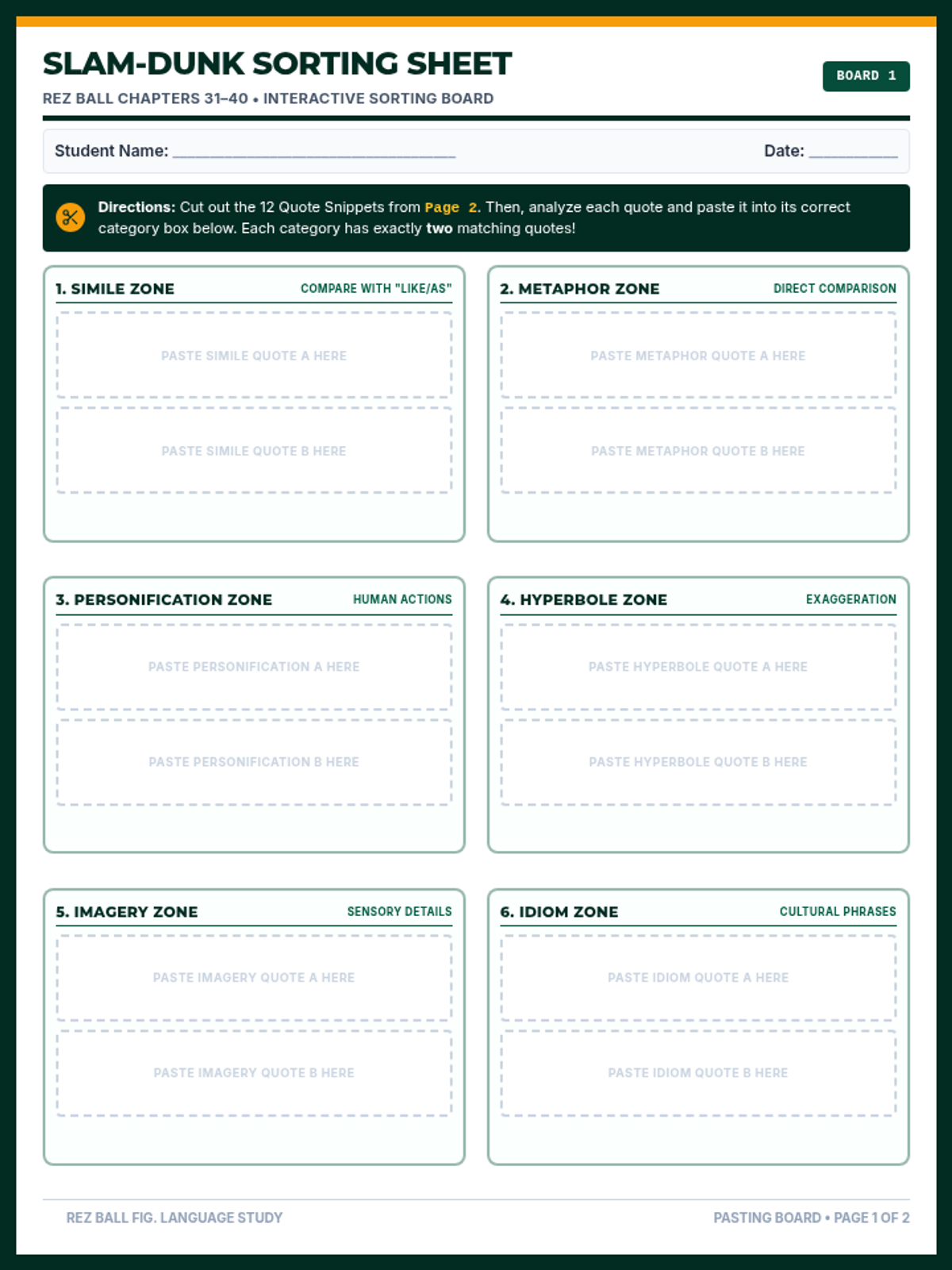
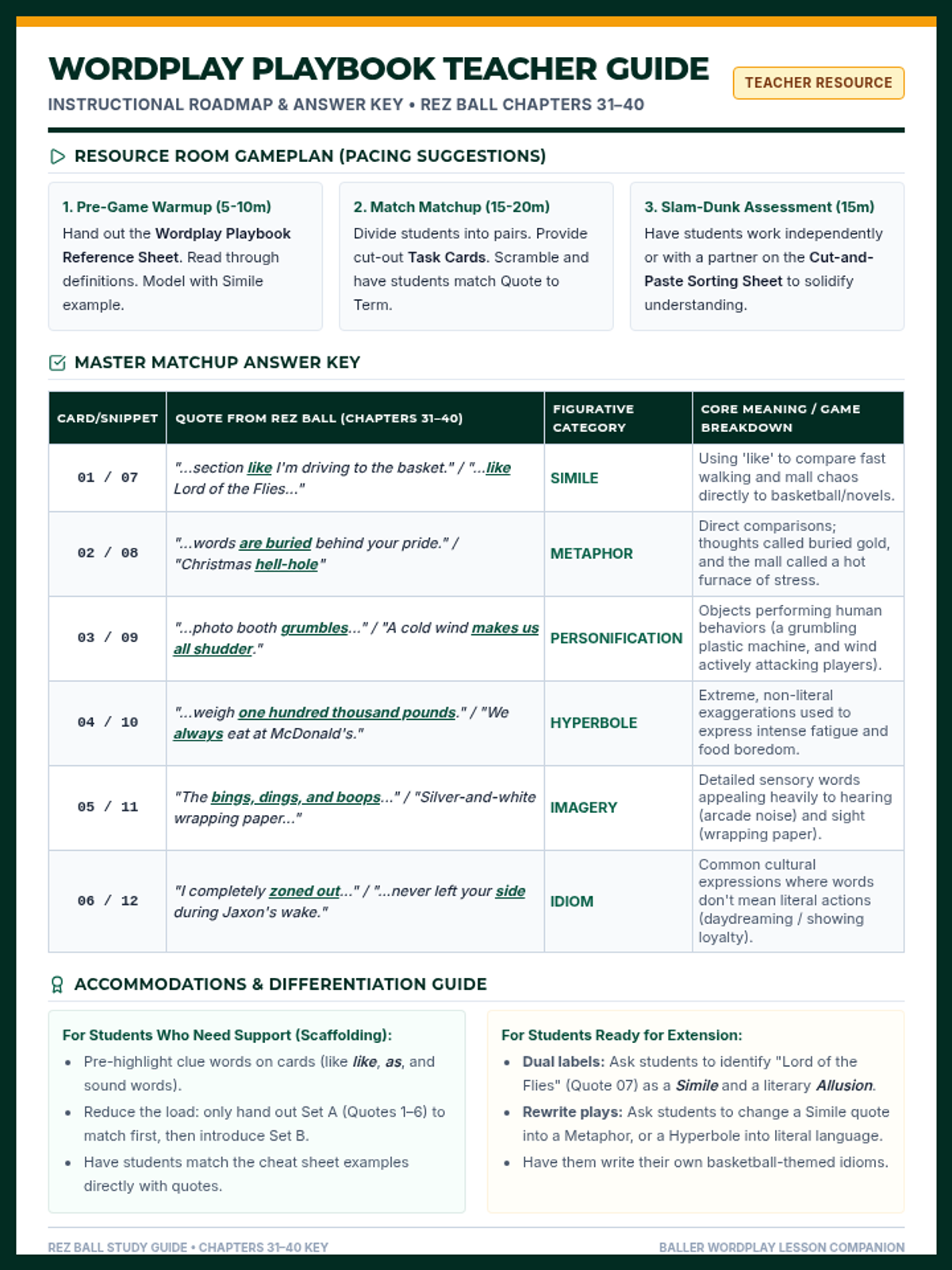
A high-interest figurative language lesson using real quotes from Chapters 31-40 of Byron Graves's novel Rez Ball, tailored for 7th-grade ELA resource room students. Includes a visual reference guide, matching task cards, a cut-and-paste sorting sheet, and a teacher key.
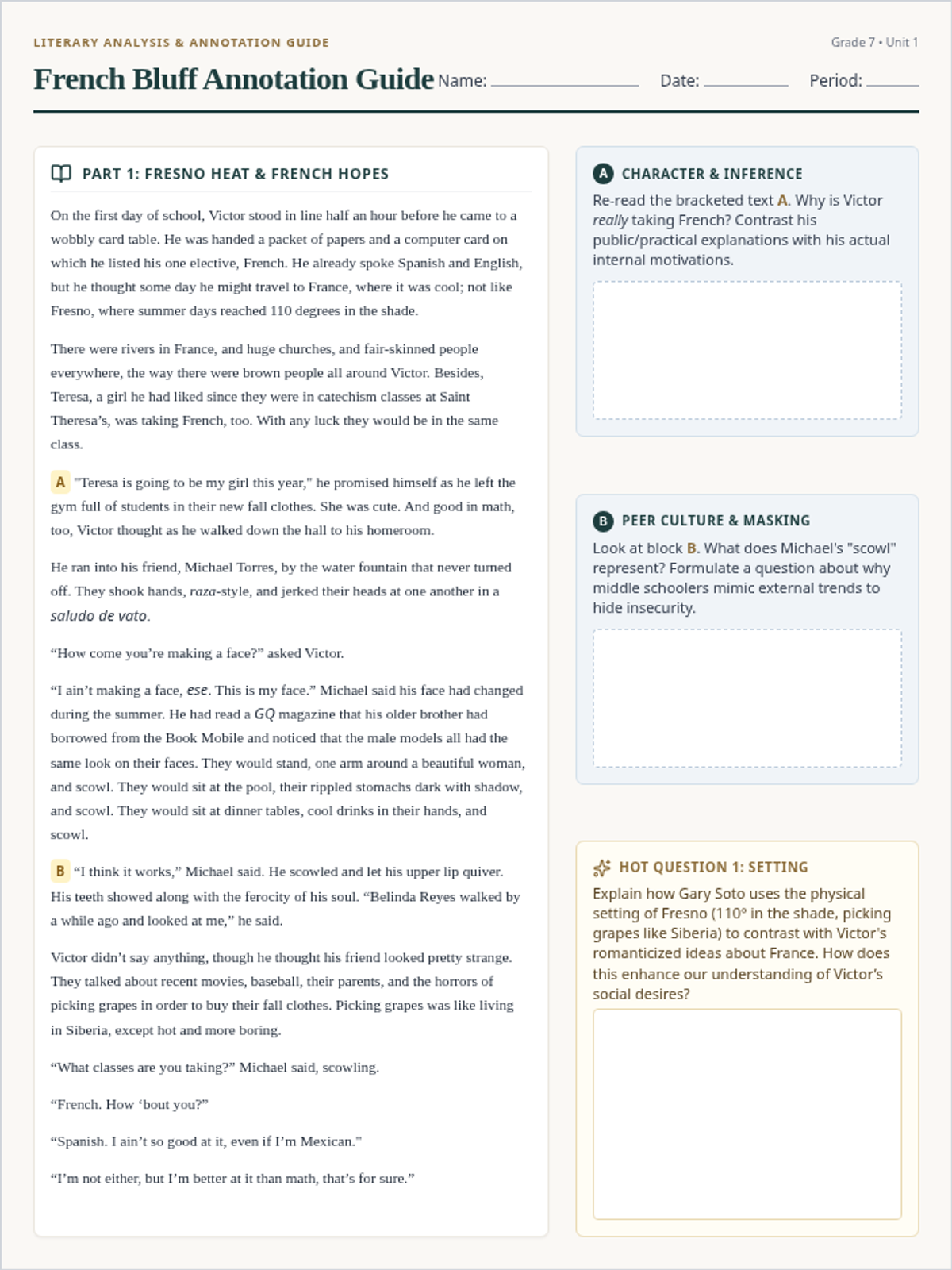
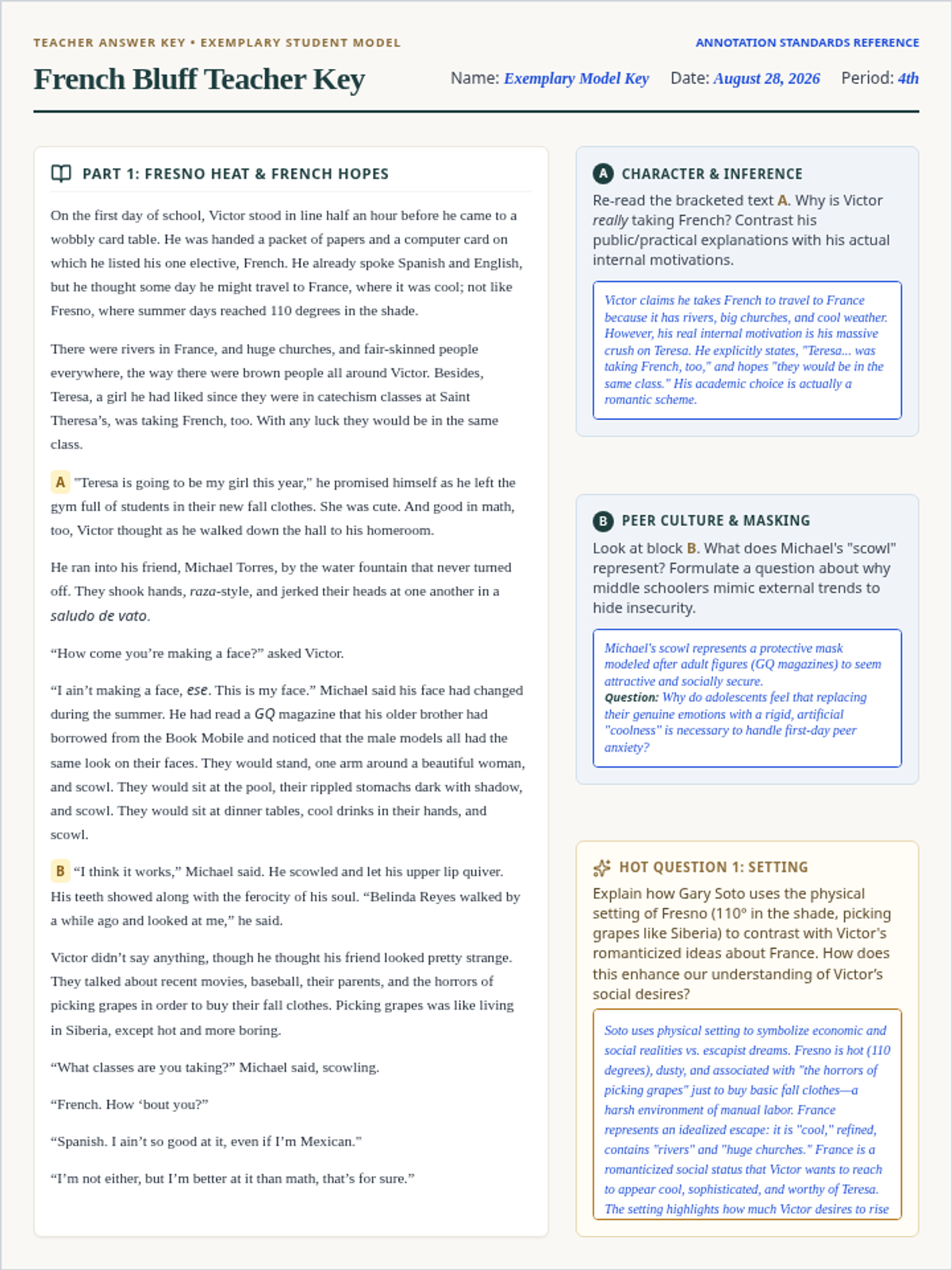
A comprehensive 7th-grade literary analysis and annotation unit based on Gary Soto's short story 'Seventh Grade'. Students track character development, plot, and themes while practicing active questioning and drawing text-based inferences.
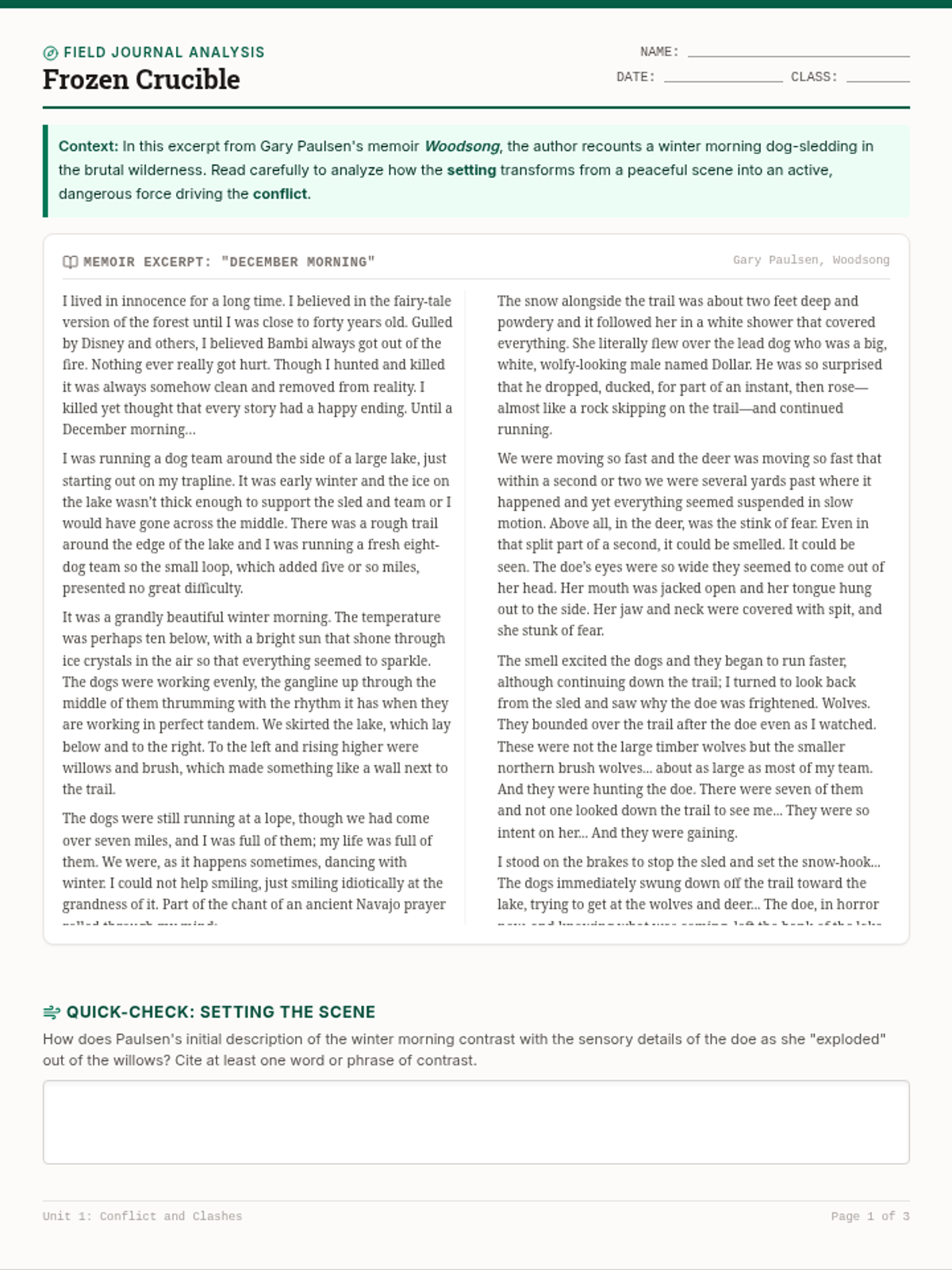
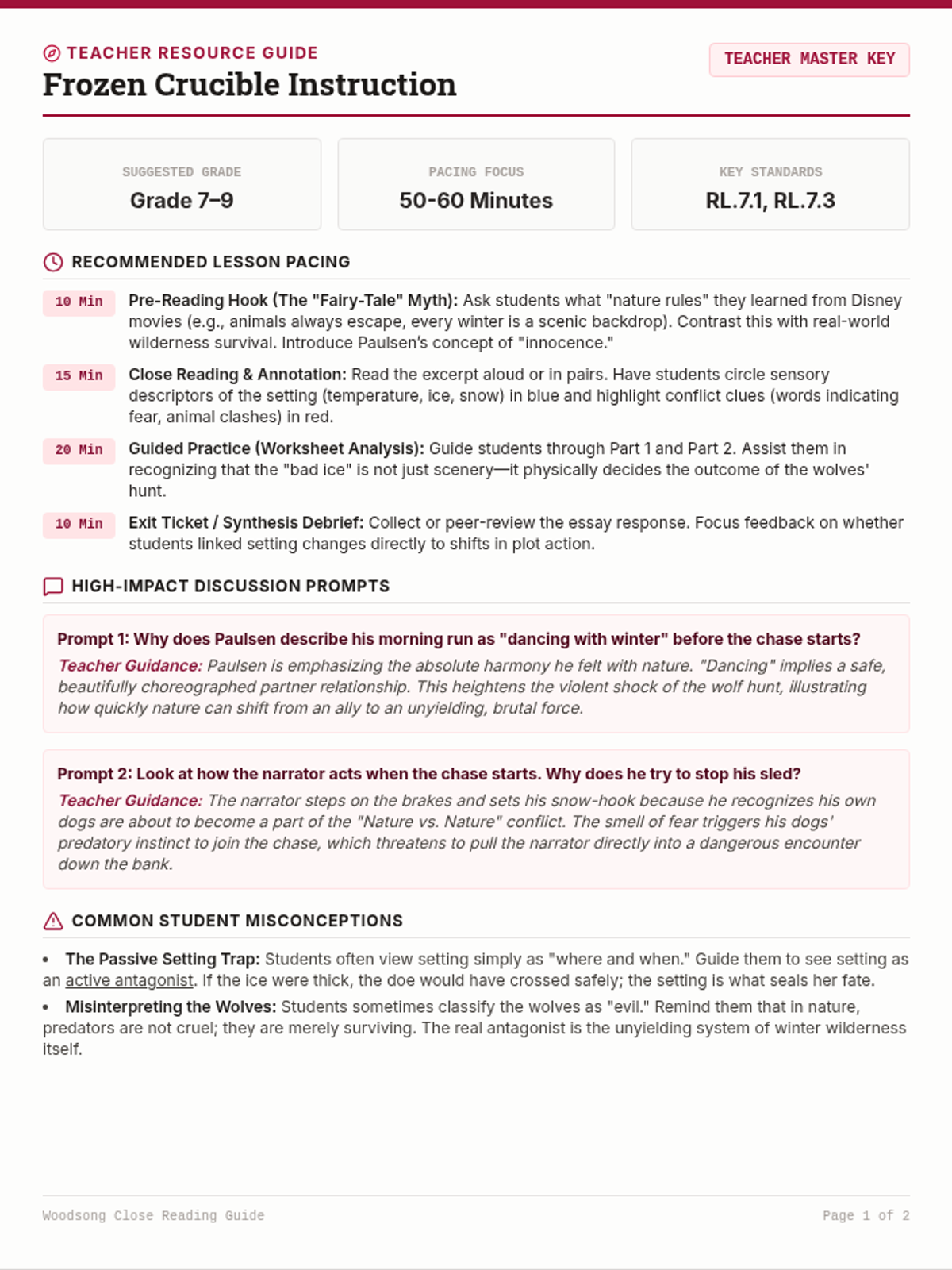
A close-reading lesson exploring conflict and setting in Gary Paulsen's Woodsong. Students analyze how the brutal winter environment drives the plot and shapes the central conflict.
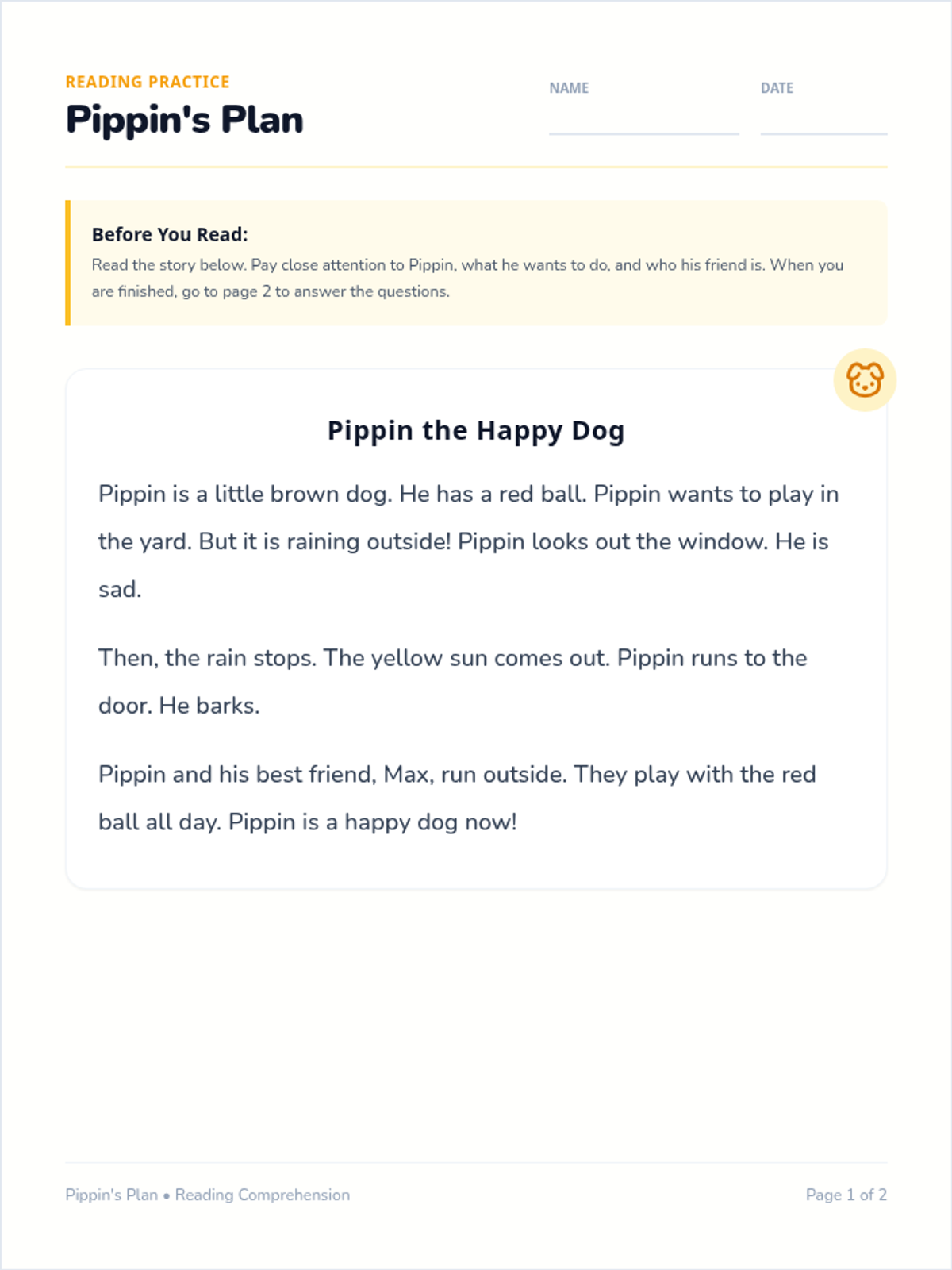
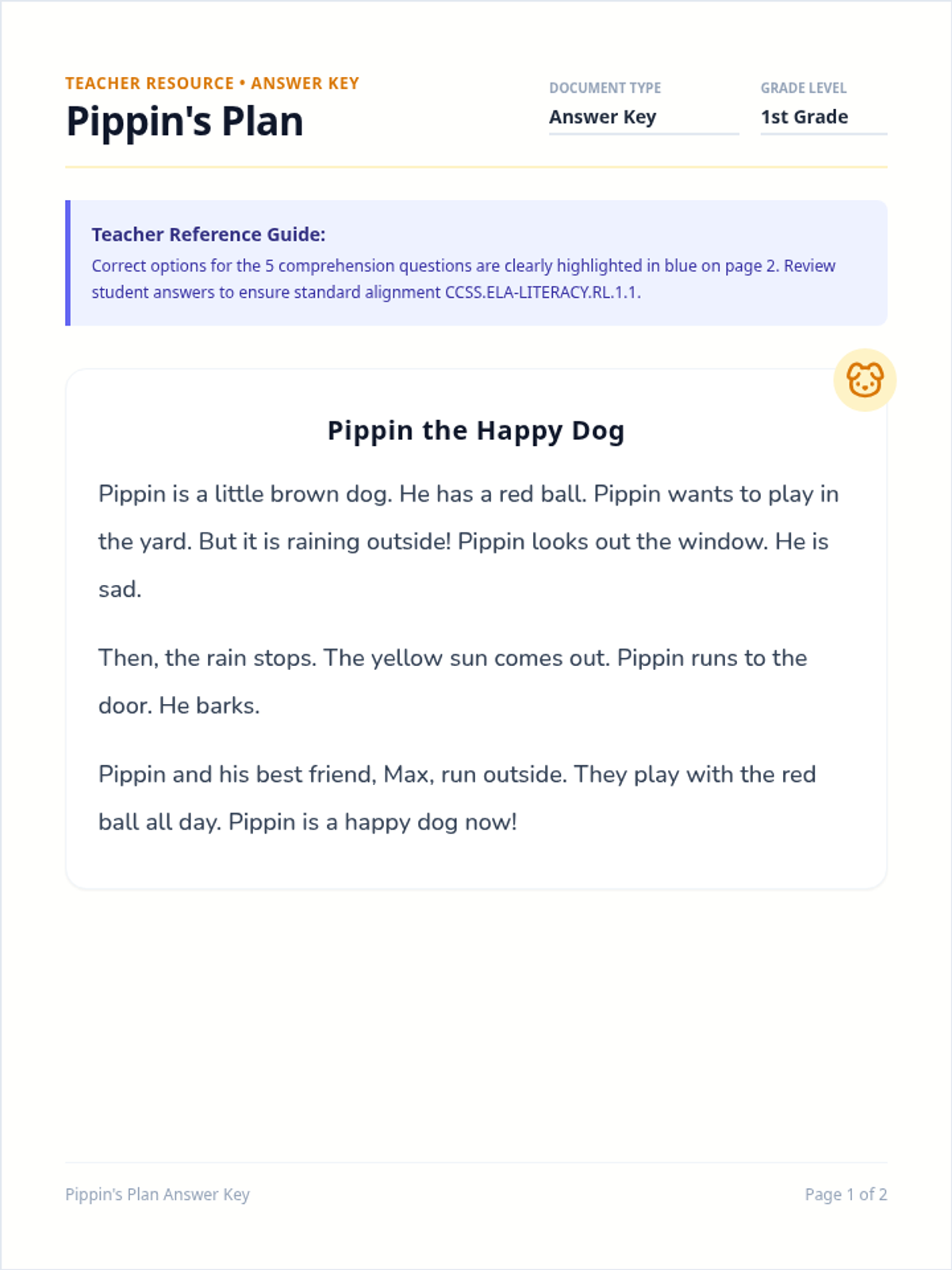
A single-lesson reading comprehension resource for 1st-grade students featuring a simple story about a dog named Pippin and five aligned multiple choice questions.
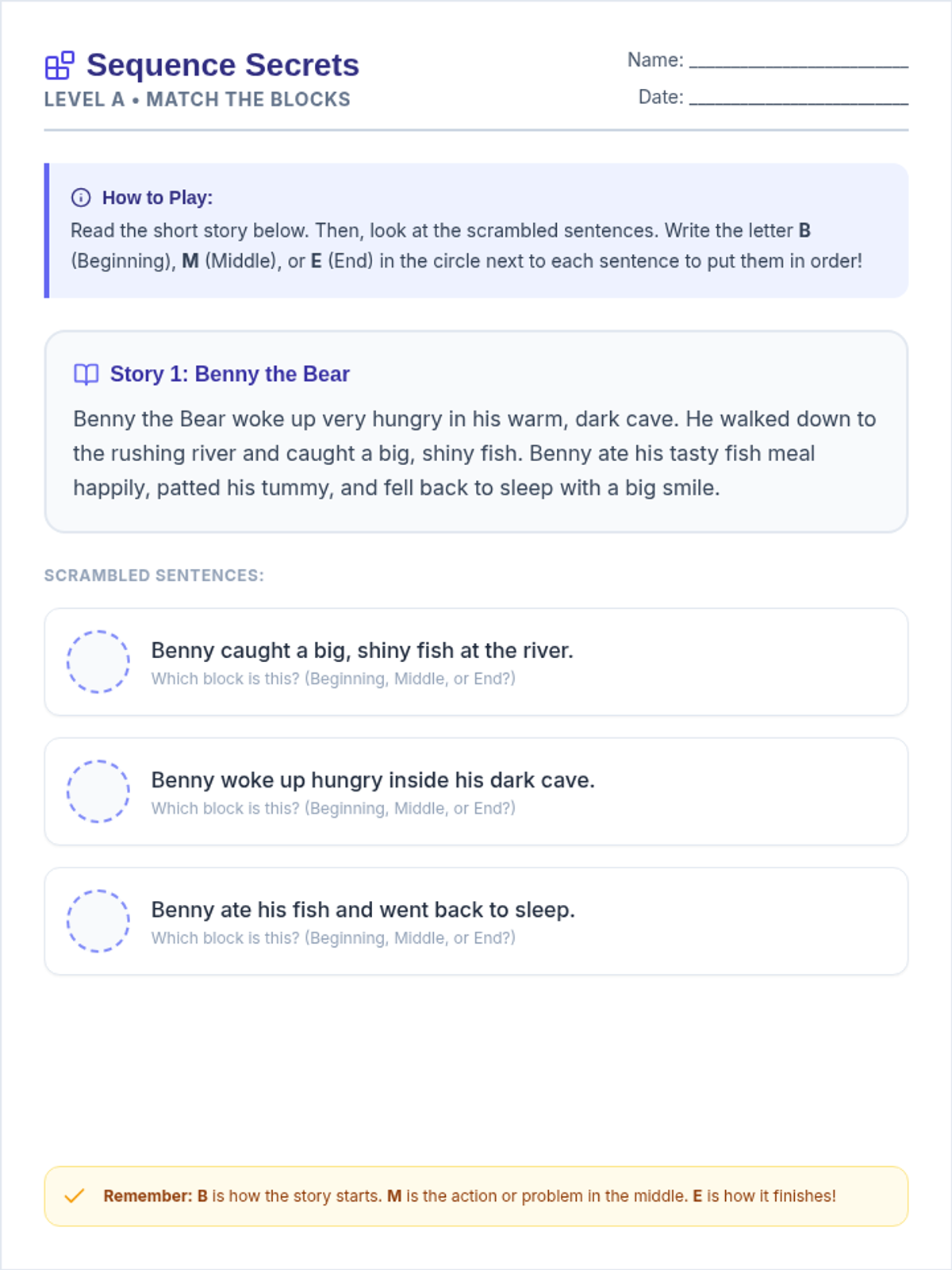
A step-by-step lesson on summarizing stories using the Beginning, Middle, and End (BME) framework, specially scaffolded for emerging readers and students with IEP accommodations.
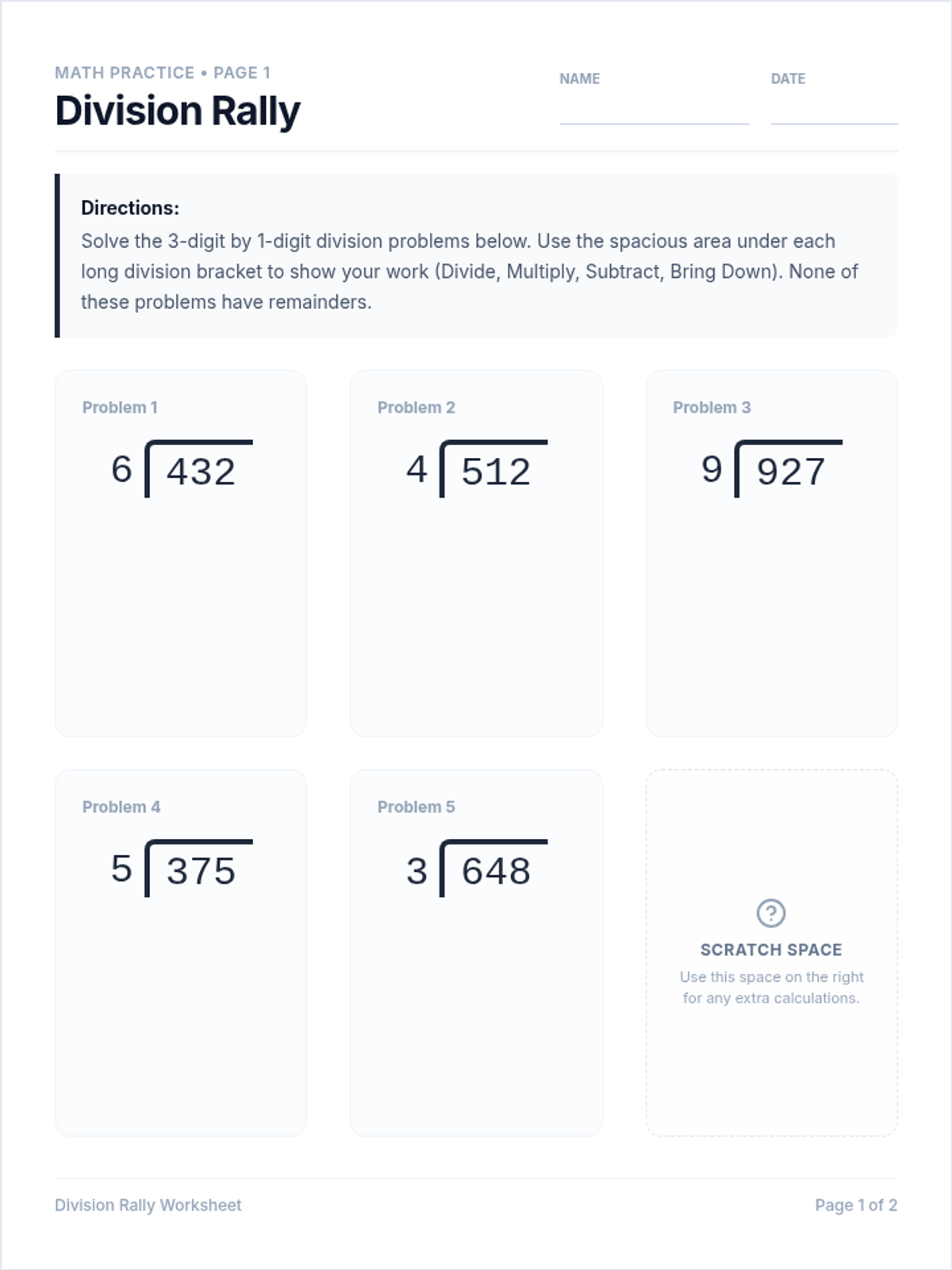
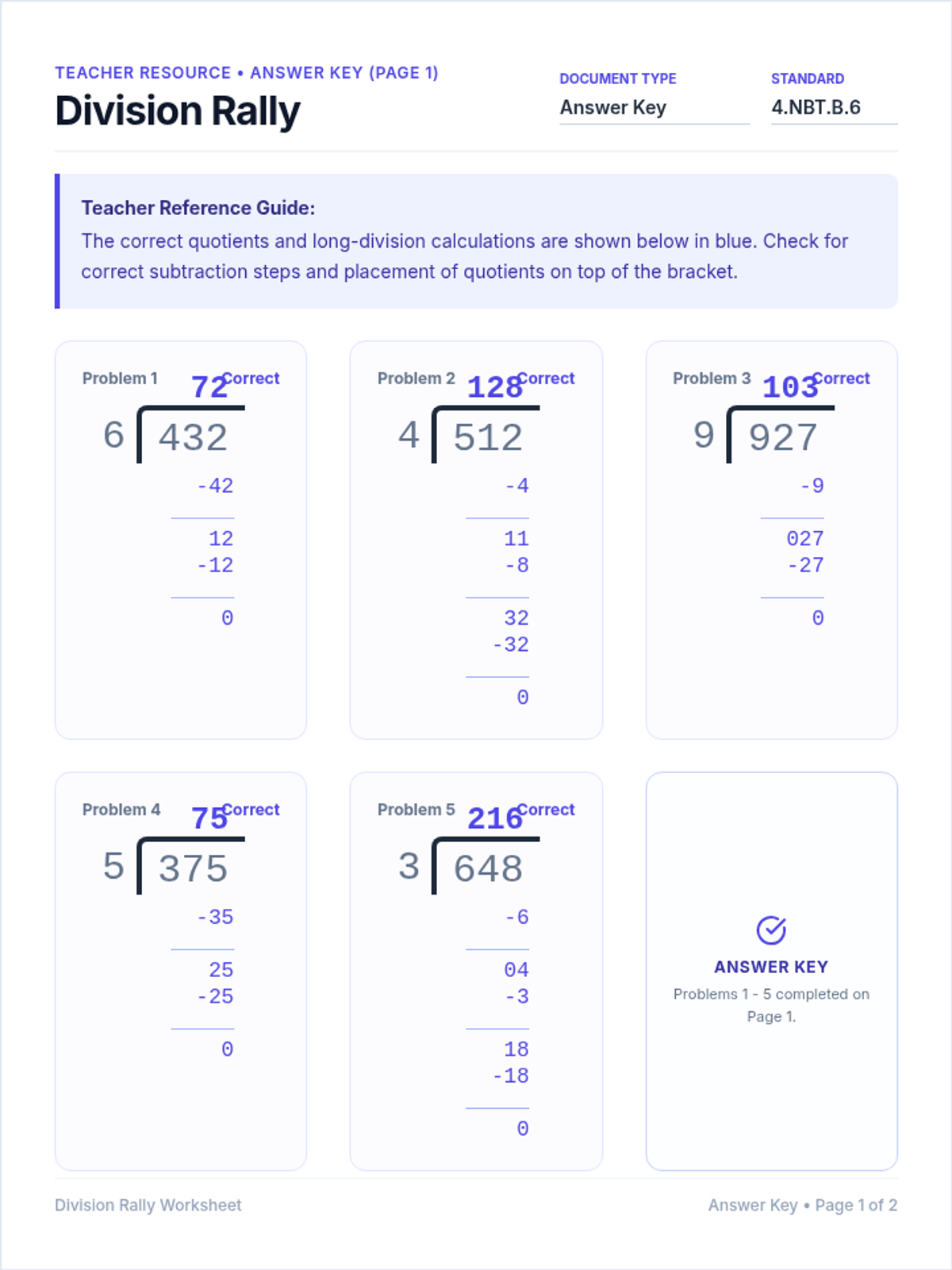
A single-lesson practice resource focusing on rapid recall of 10 random single-digit division facts, providing clean layouts and clear student completion spaces.
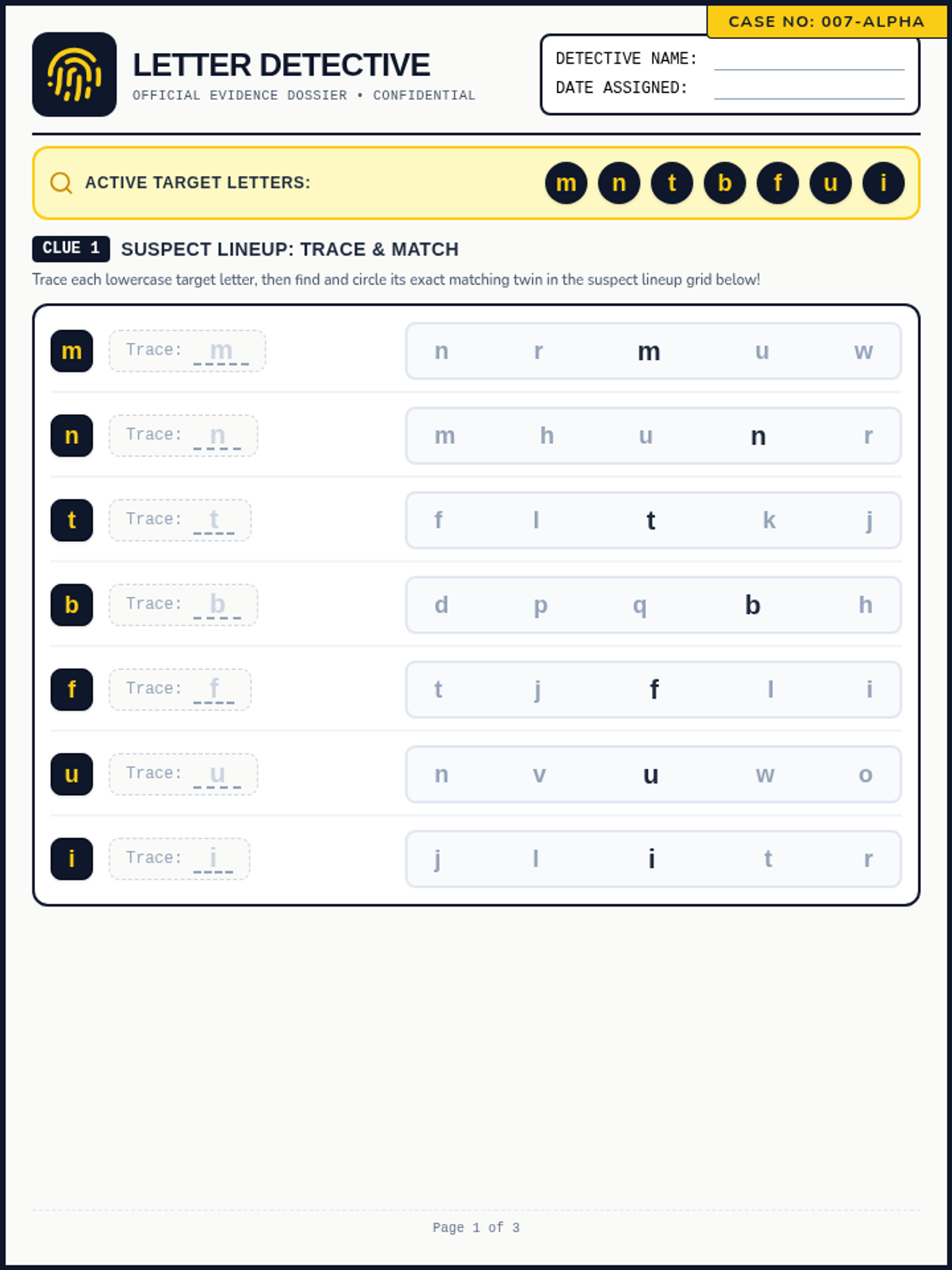
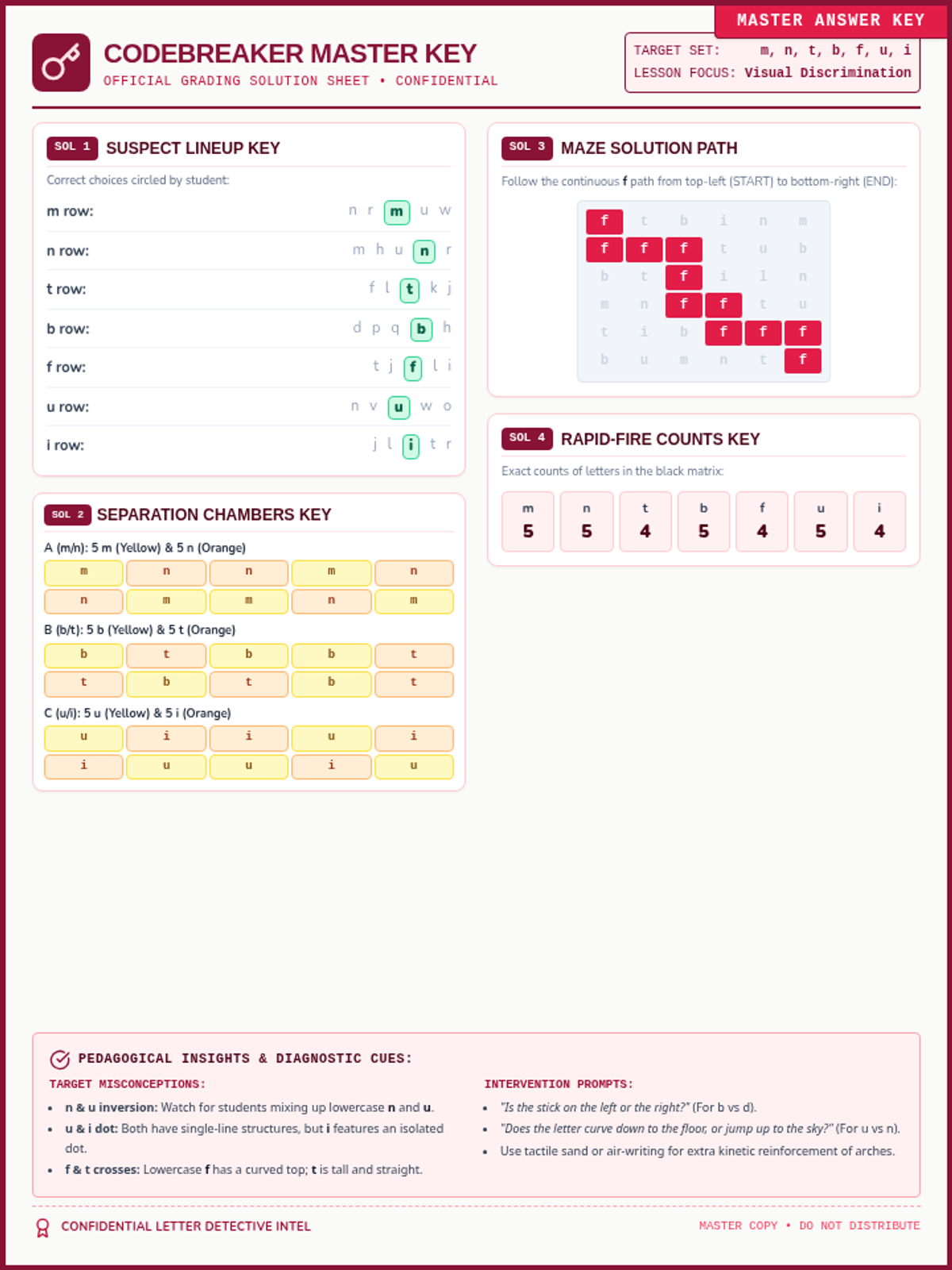
An engaging lowercase letter identification lab focusing on m, n, t, b, f, u, and i. Students build visual discrimination skills and complete fun puzzles to cement letter recognition.
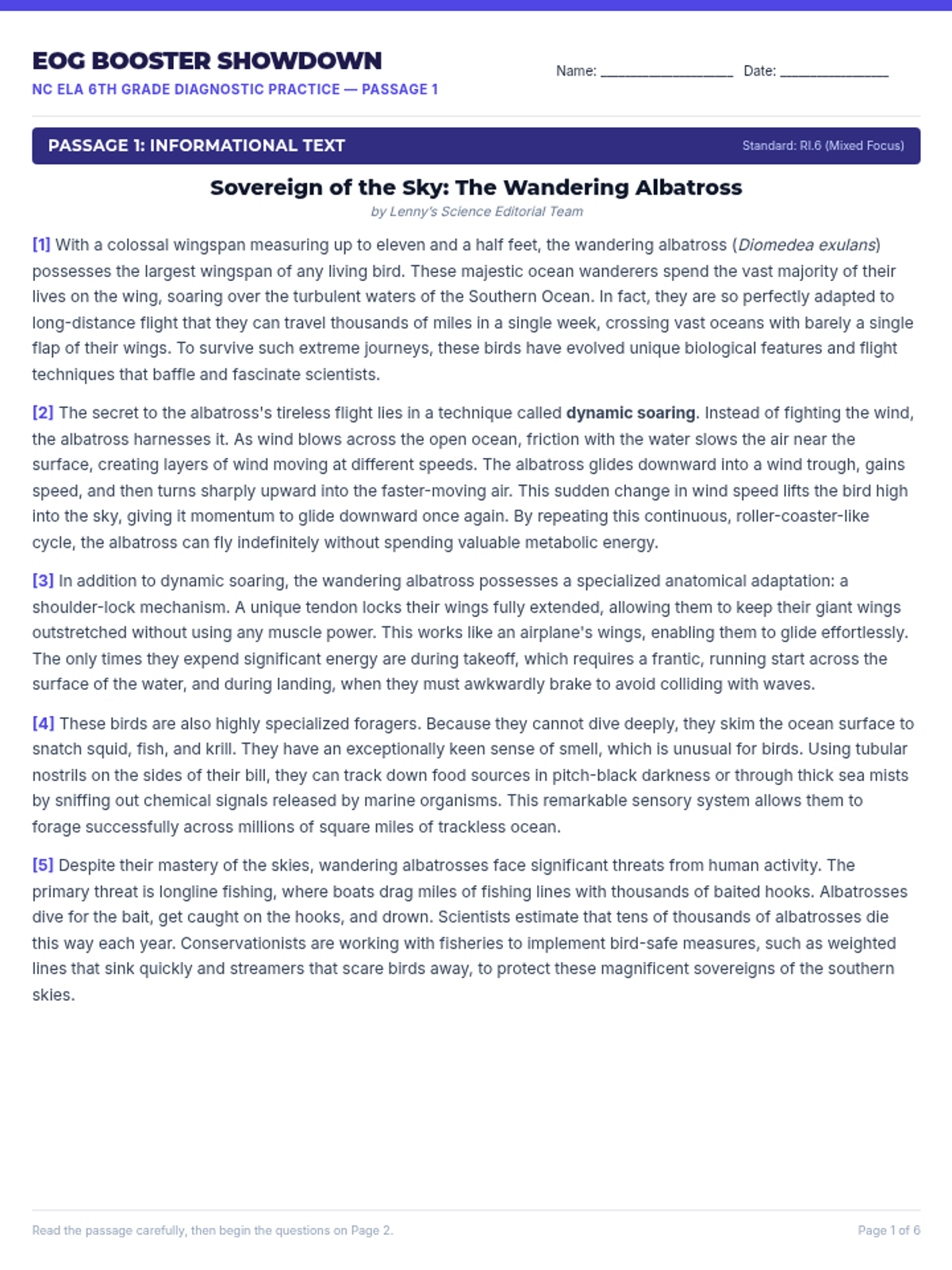
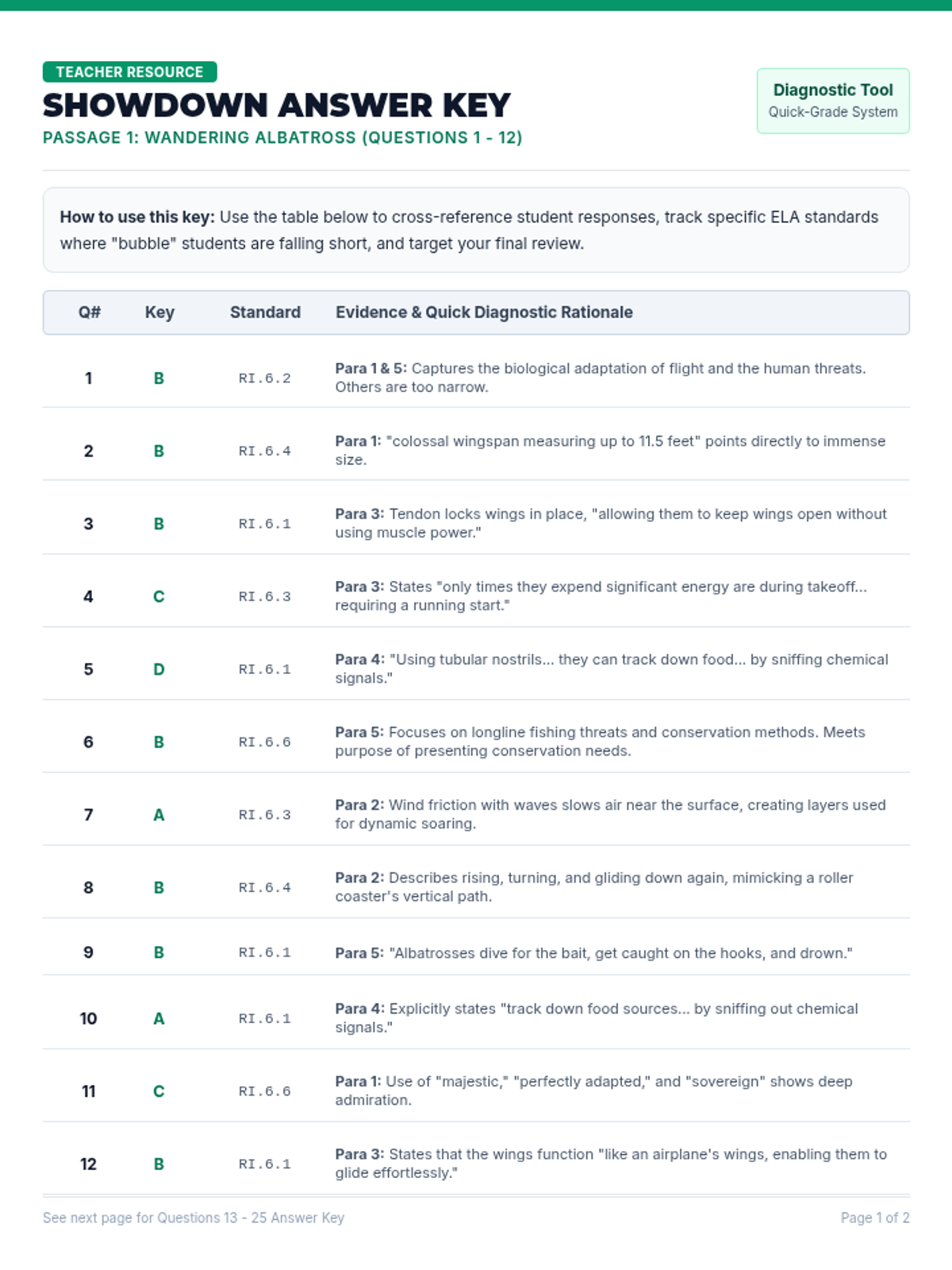
A rigorous, mock-EOG diagnostic exam featuring high-interest informational and literary passages paired with 25 standard-aligned practice questions.
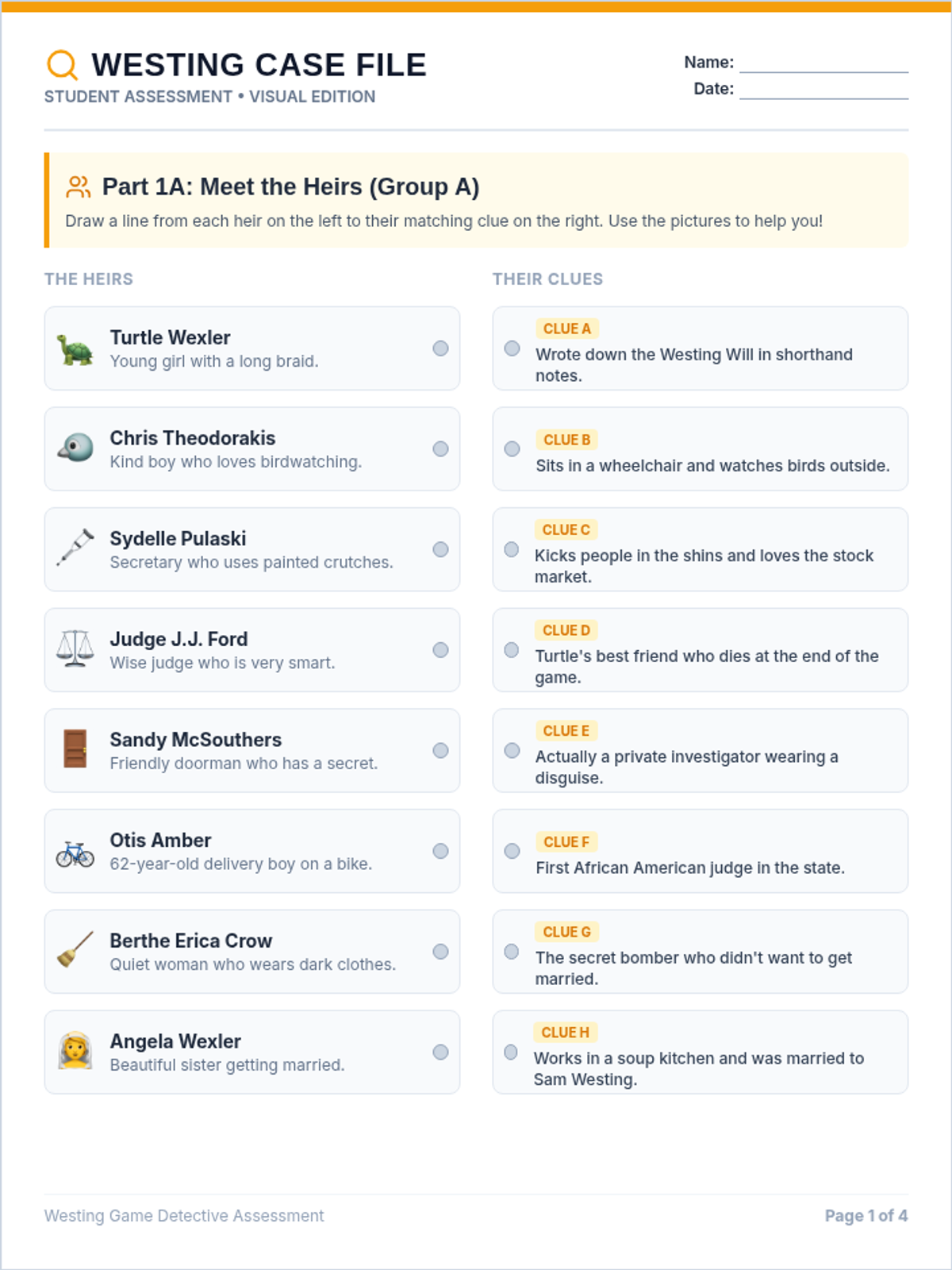
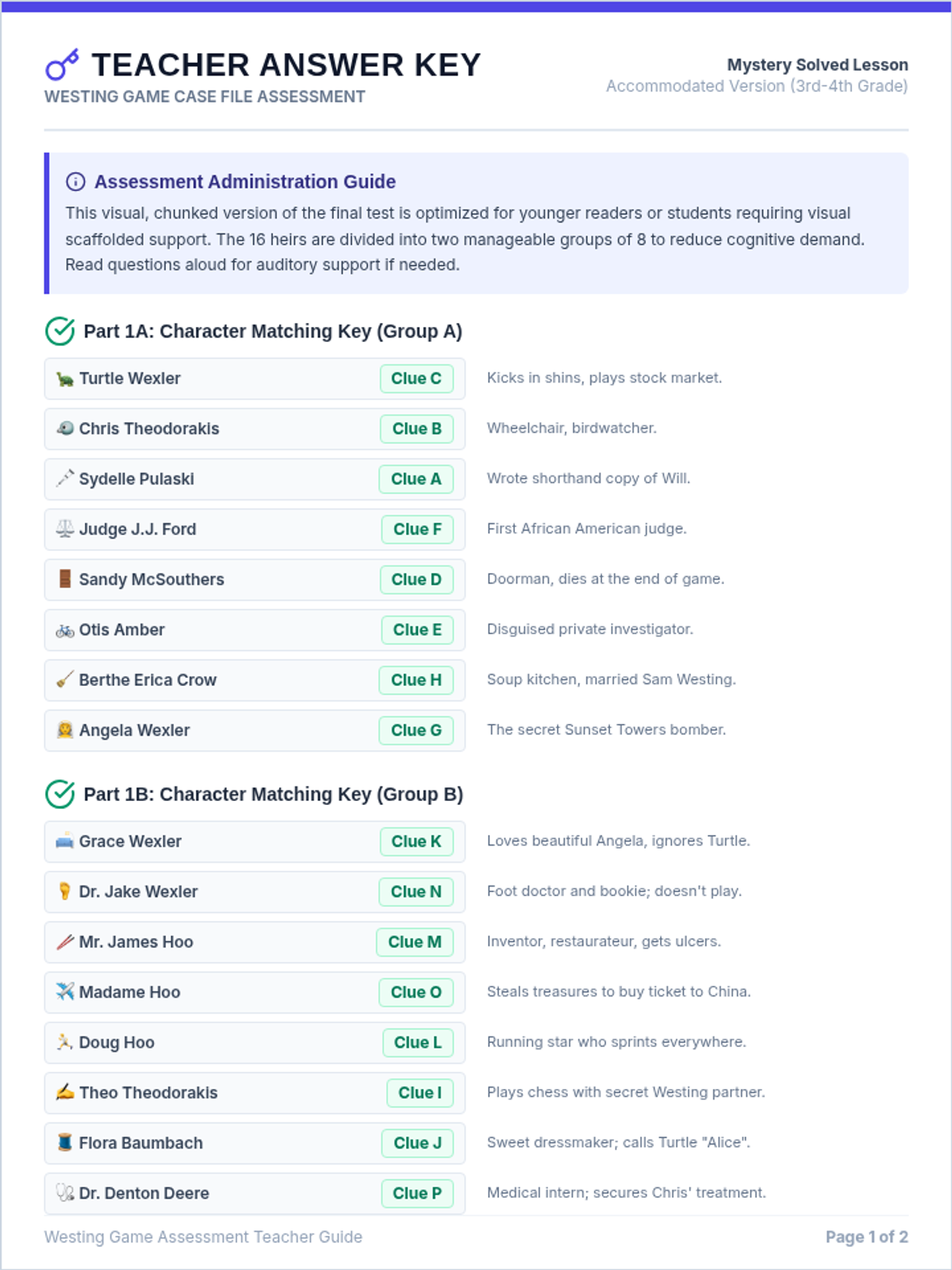
An assessment and supporting materials for finishing The Westing Game, tailored for 3rd and 4th grade students who benefit from visual supports, word banks, and chunked layouts.
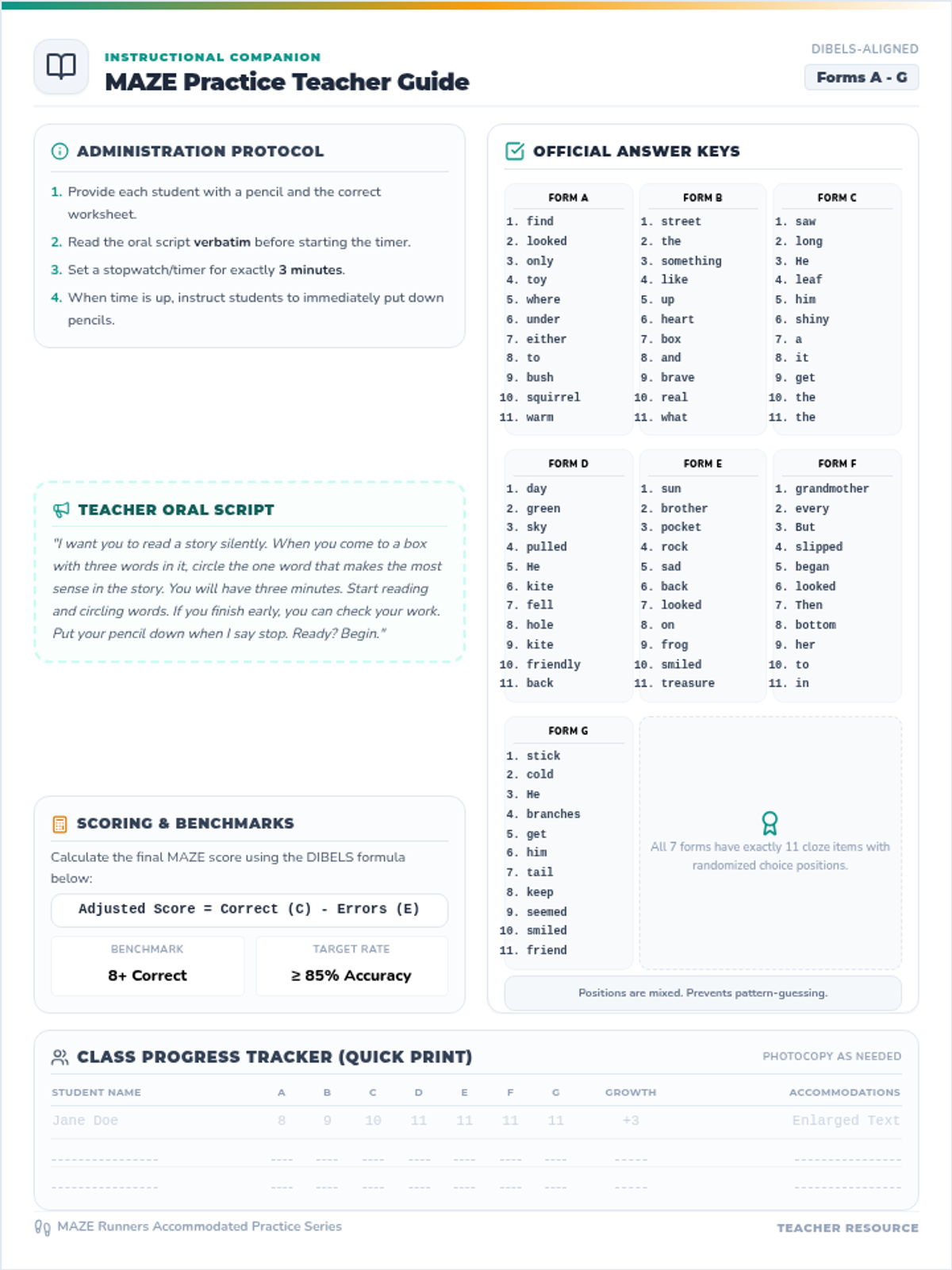
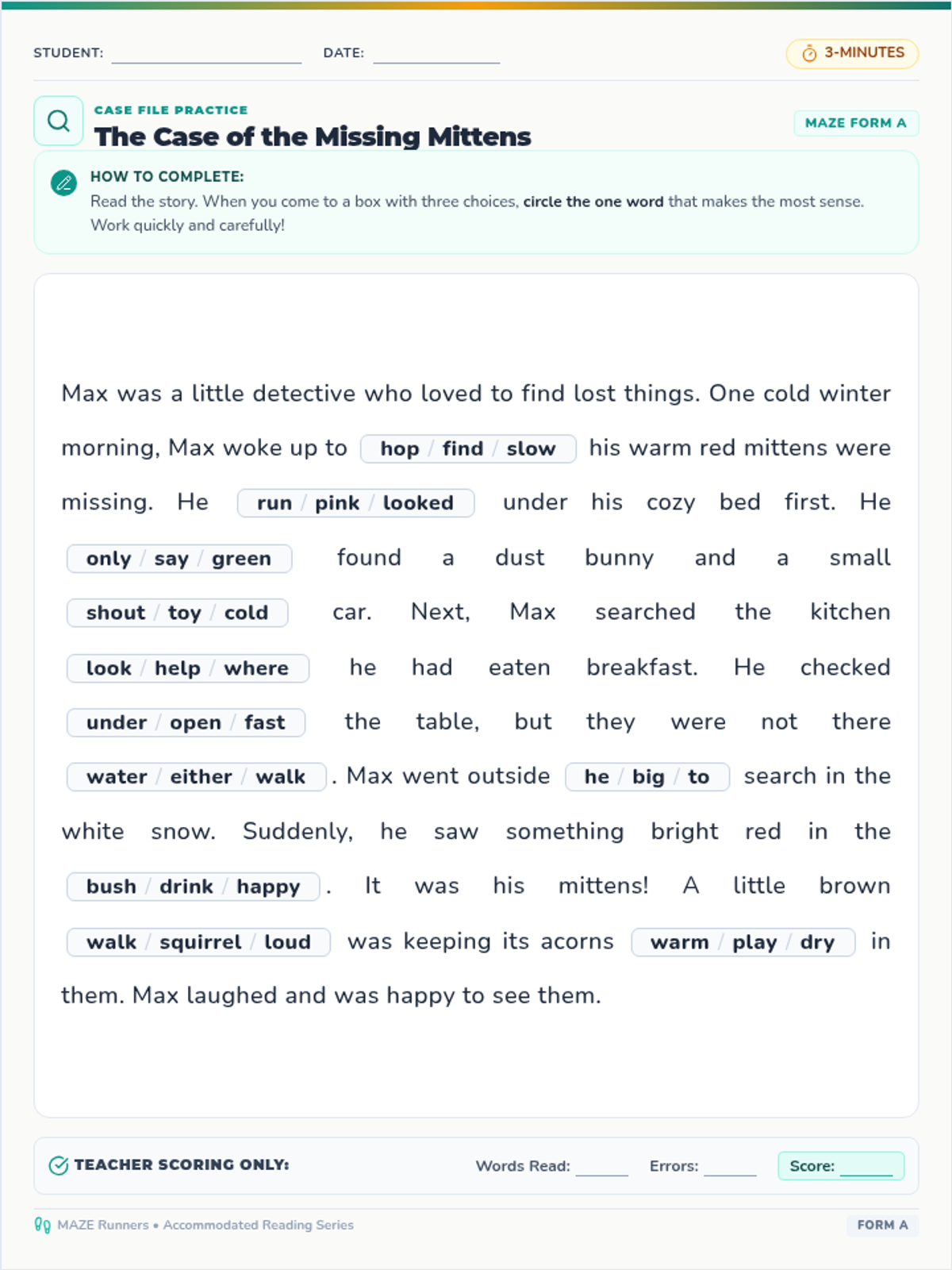
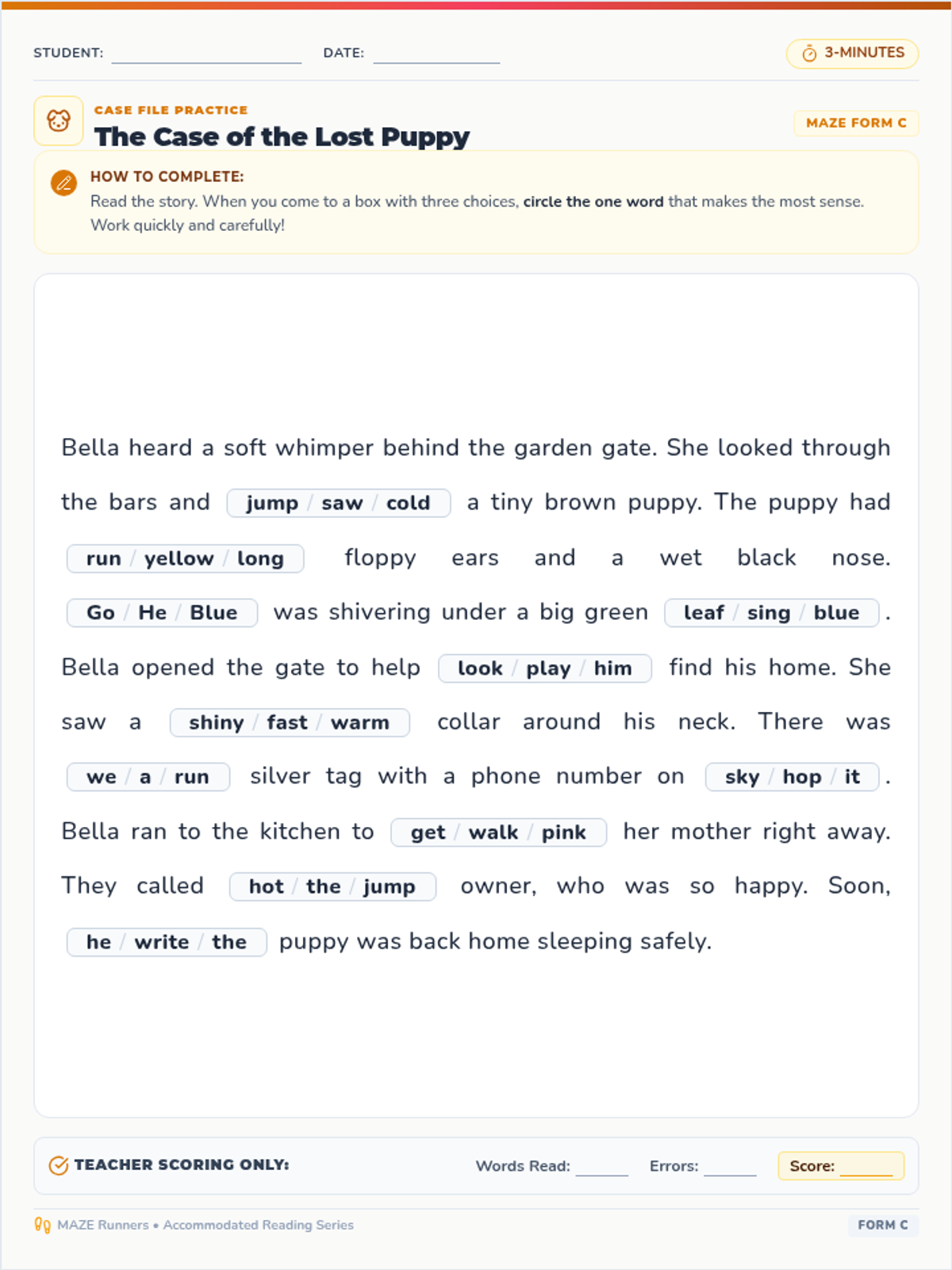
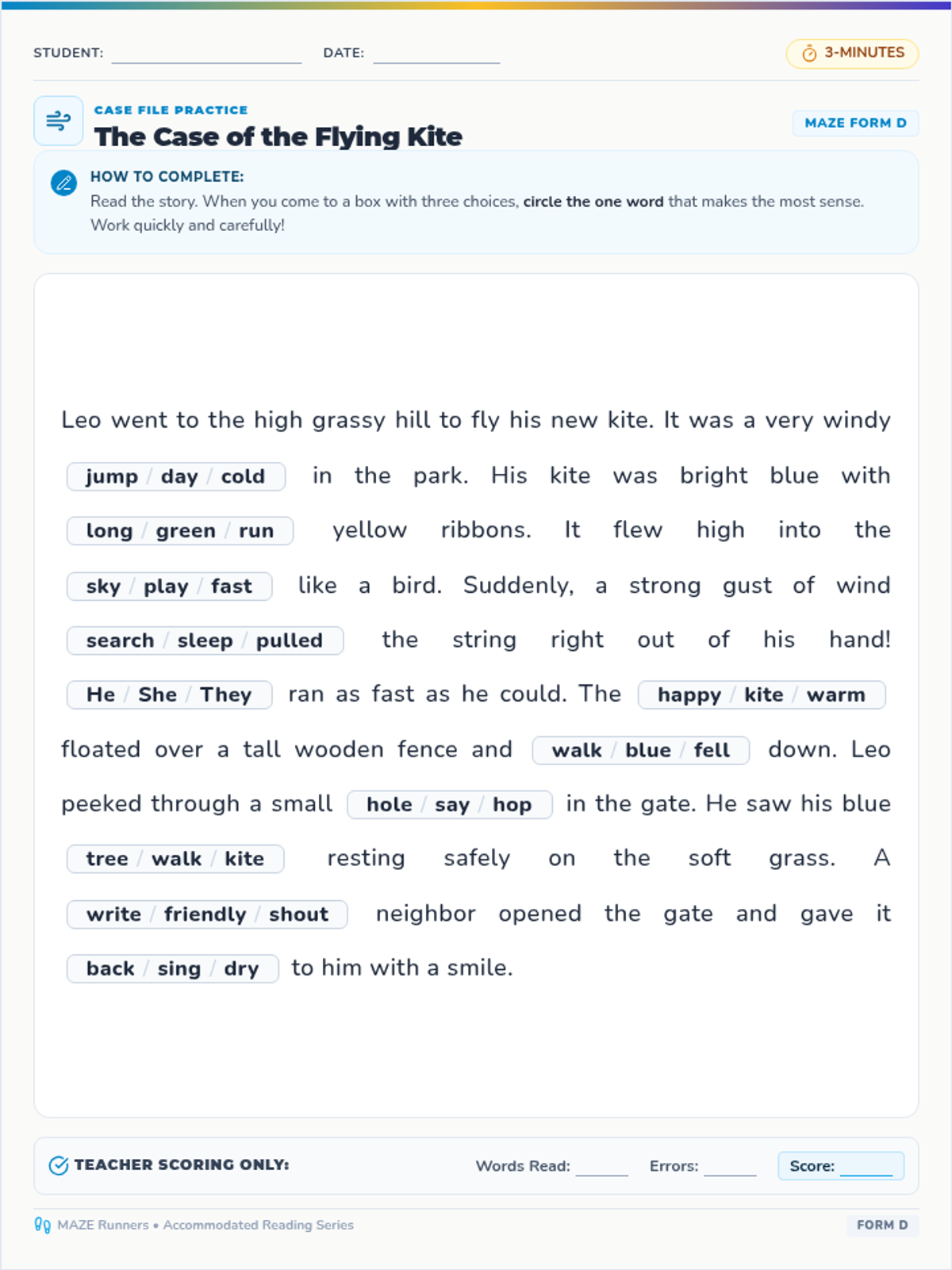
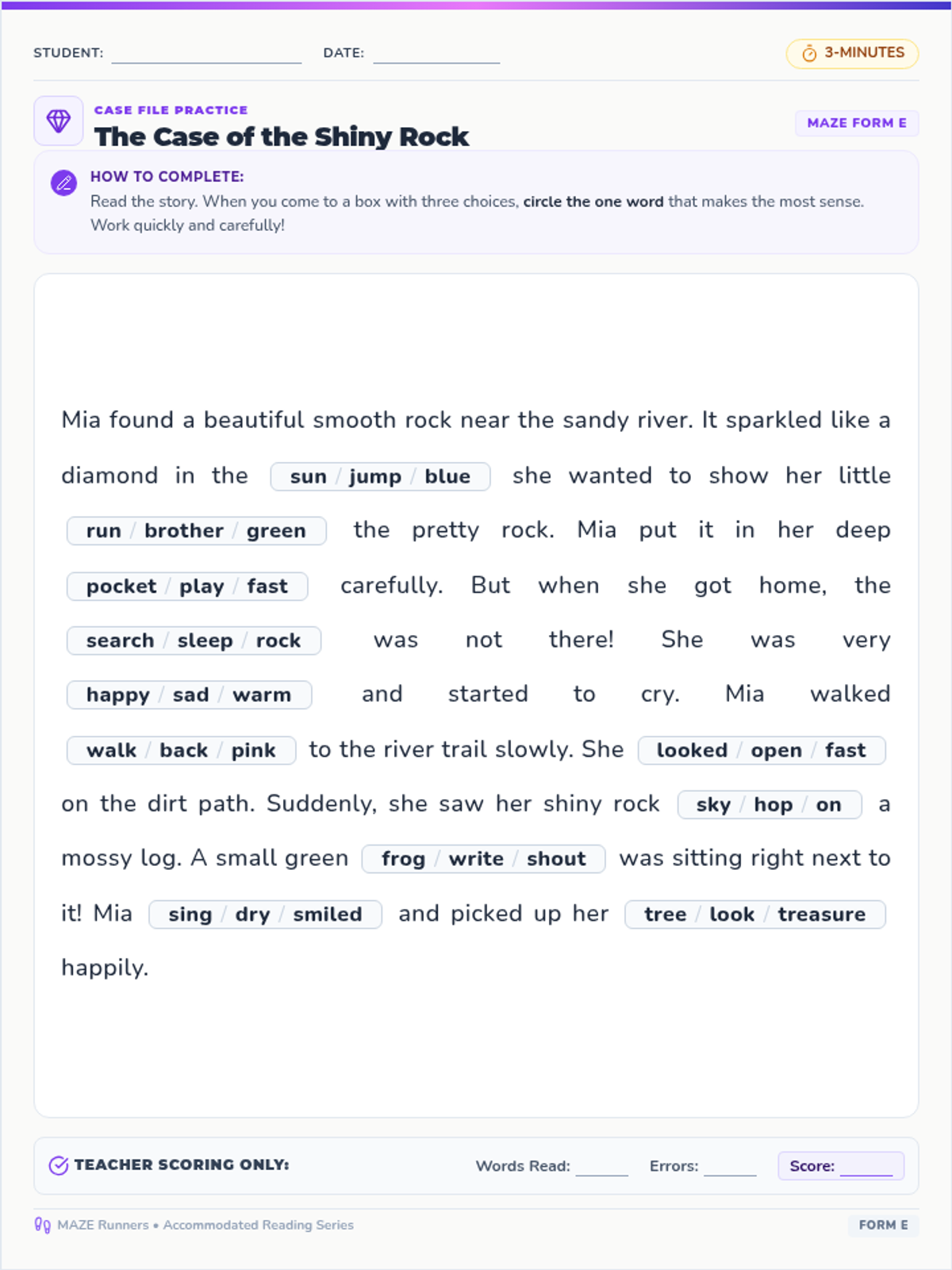
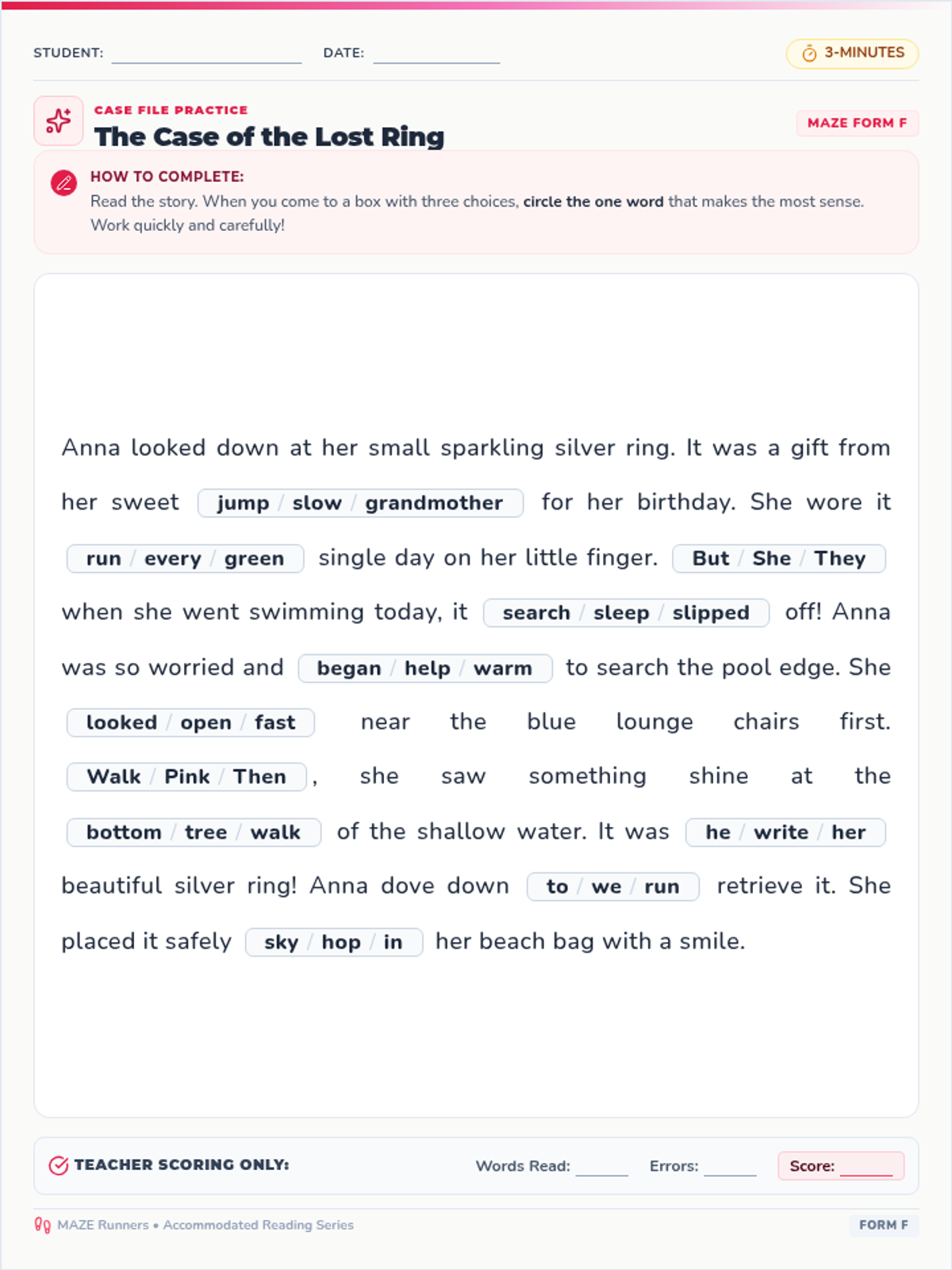
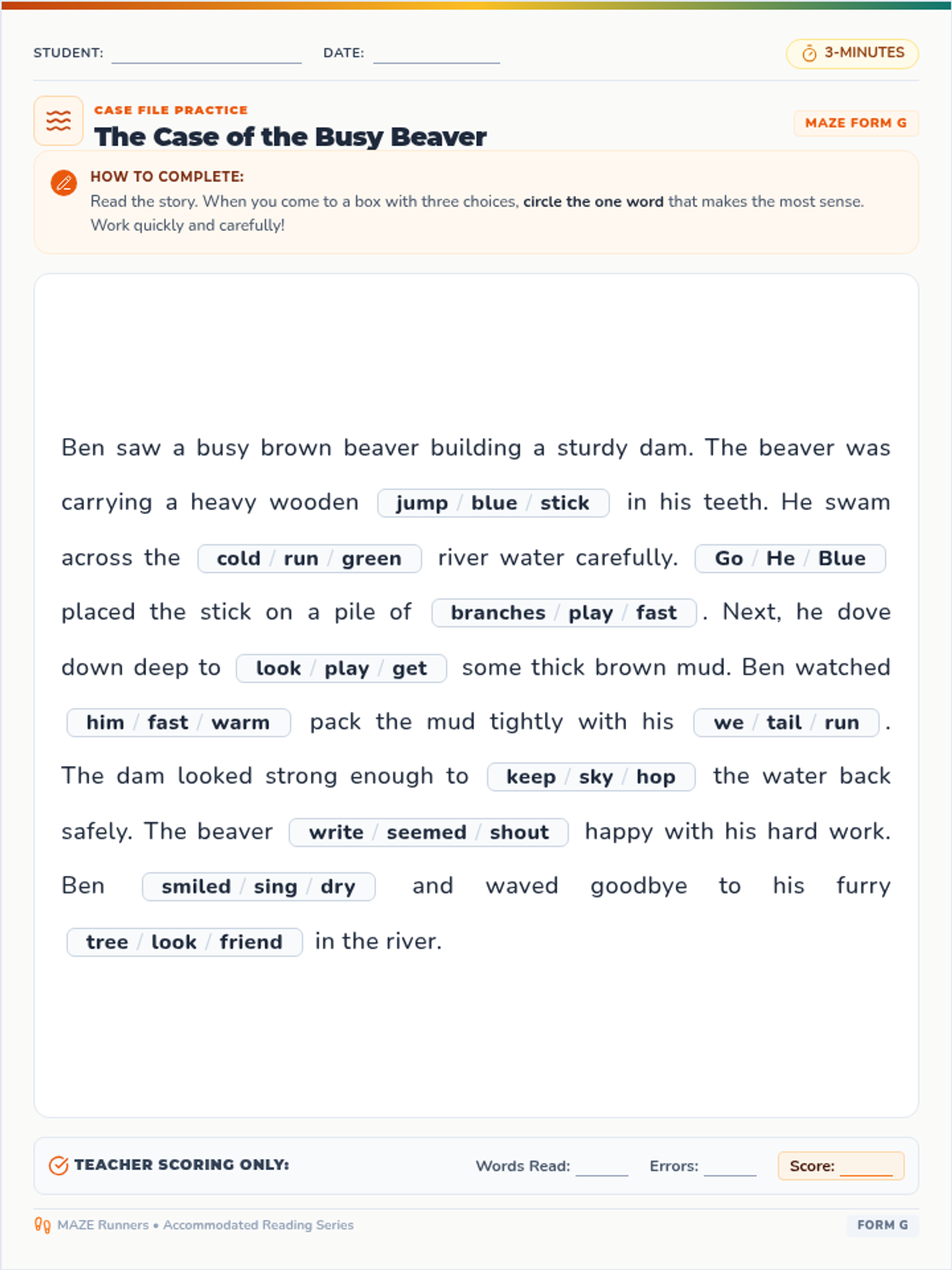
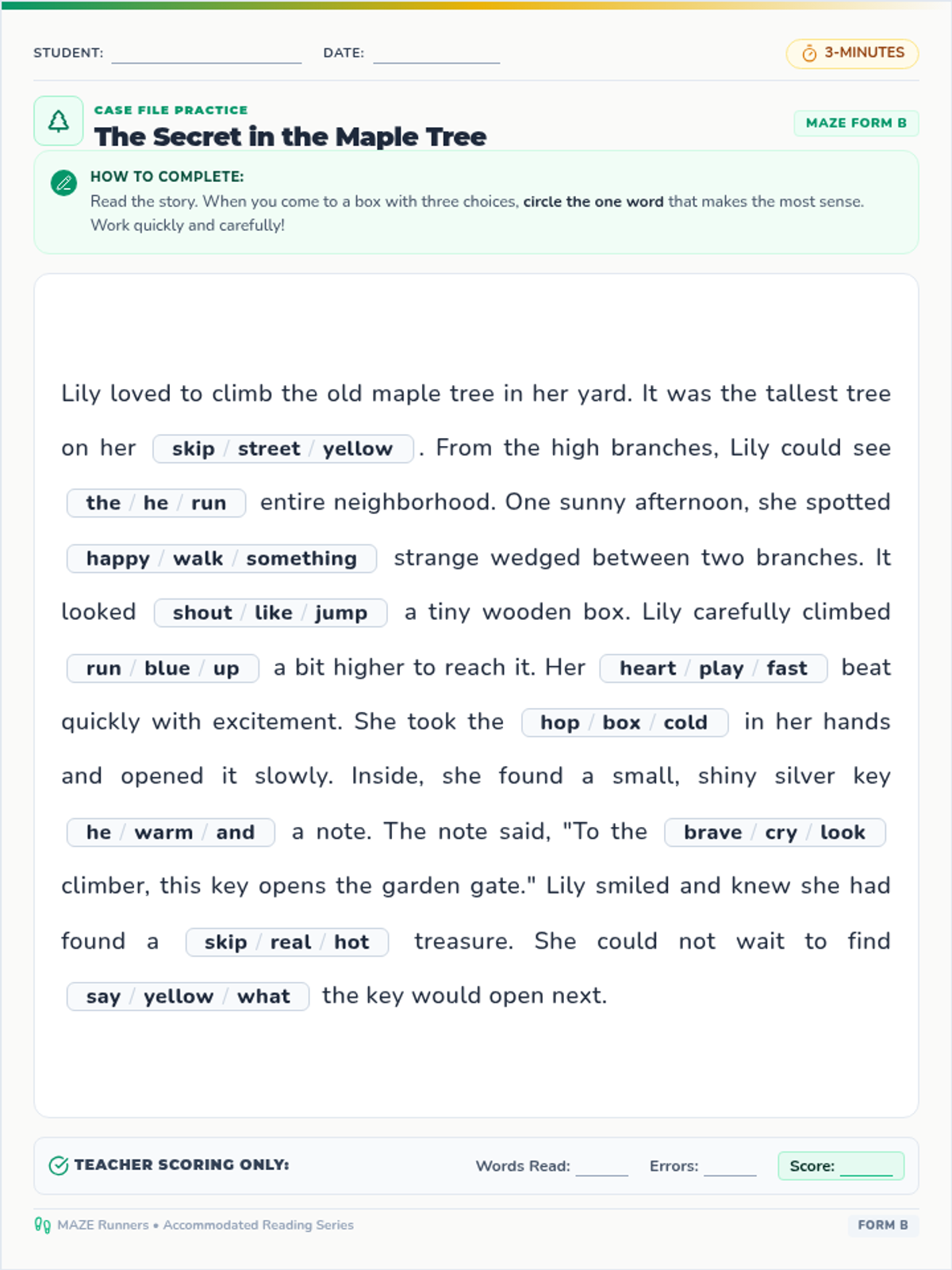
A collection of accommodated 2nd grade DIBELS MAZE comprehension practice worksheets with enlarged text and spacing to support student success.
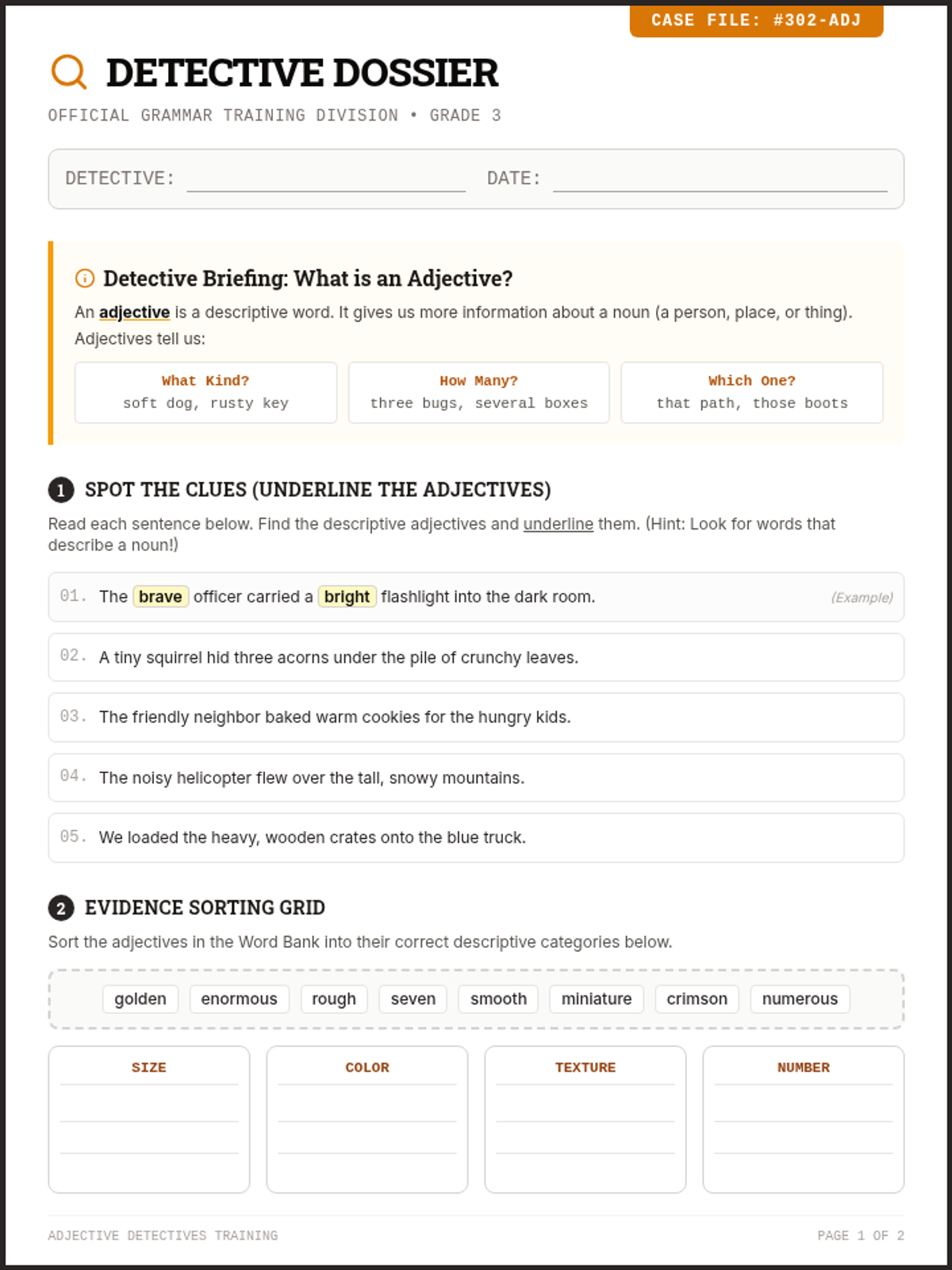
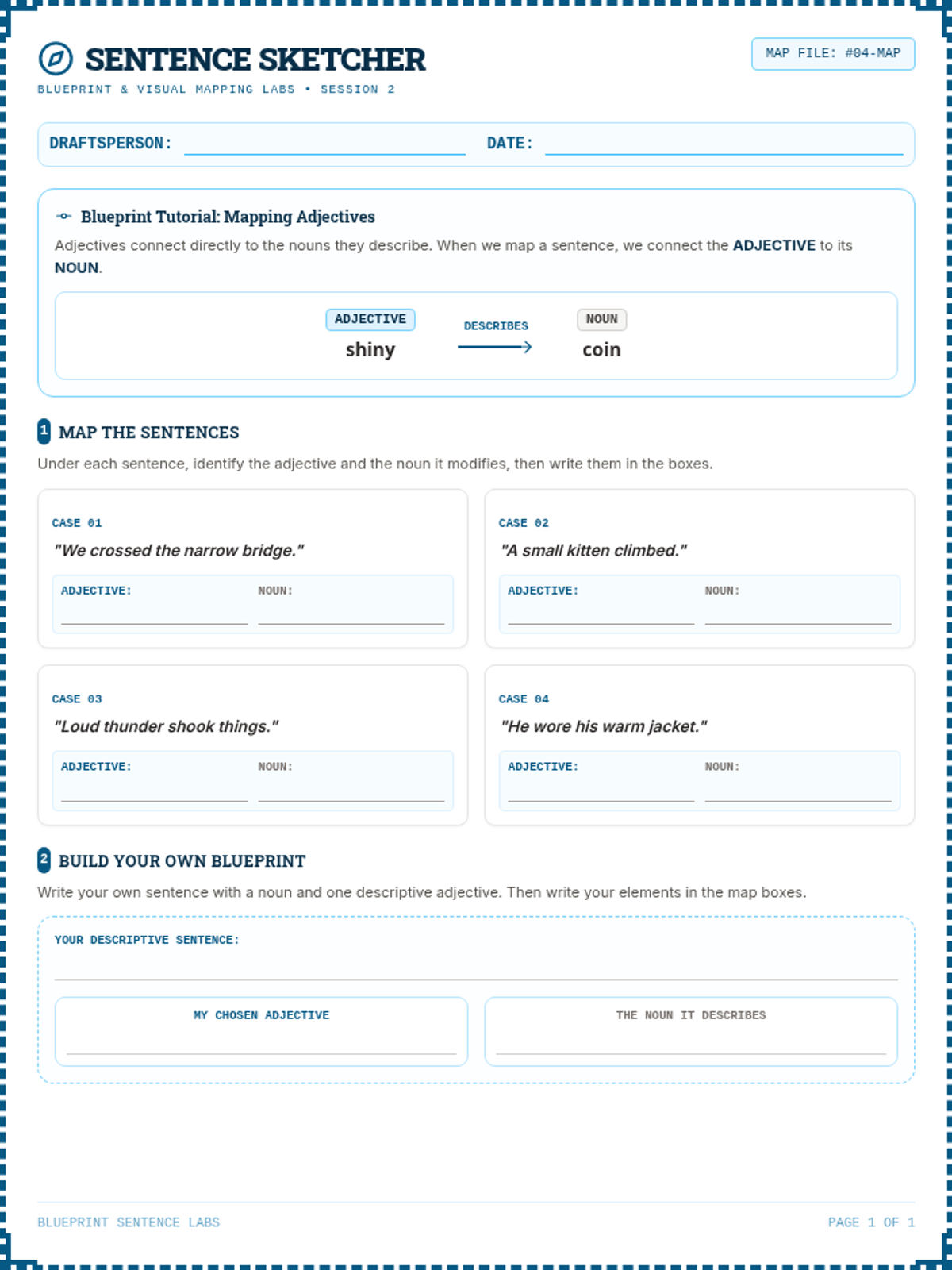
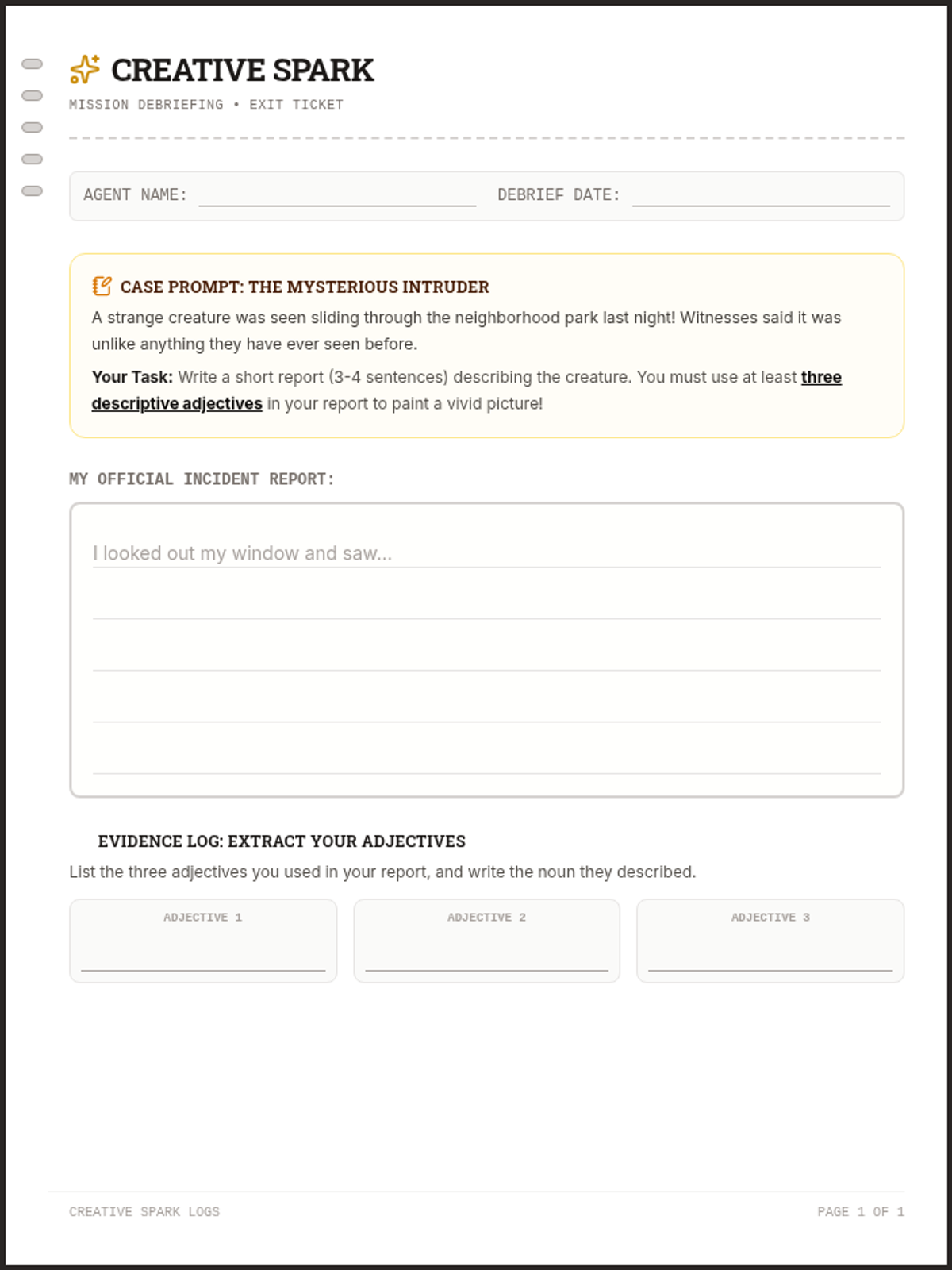
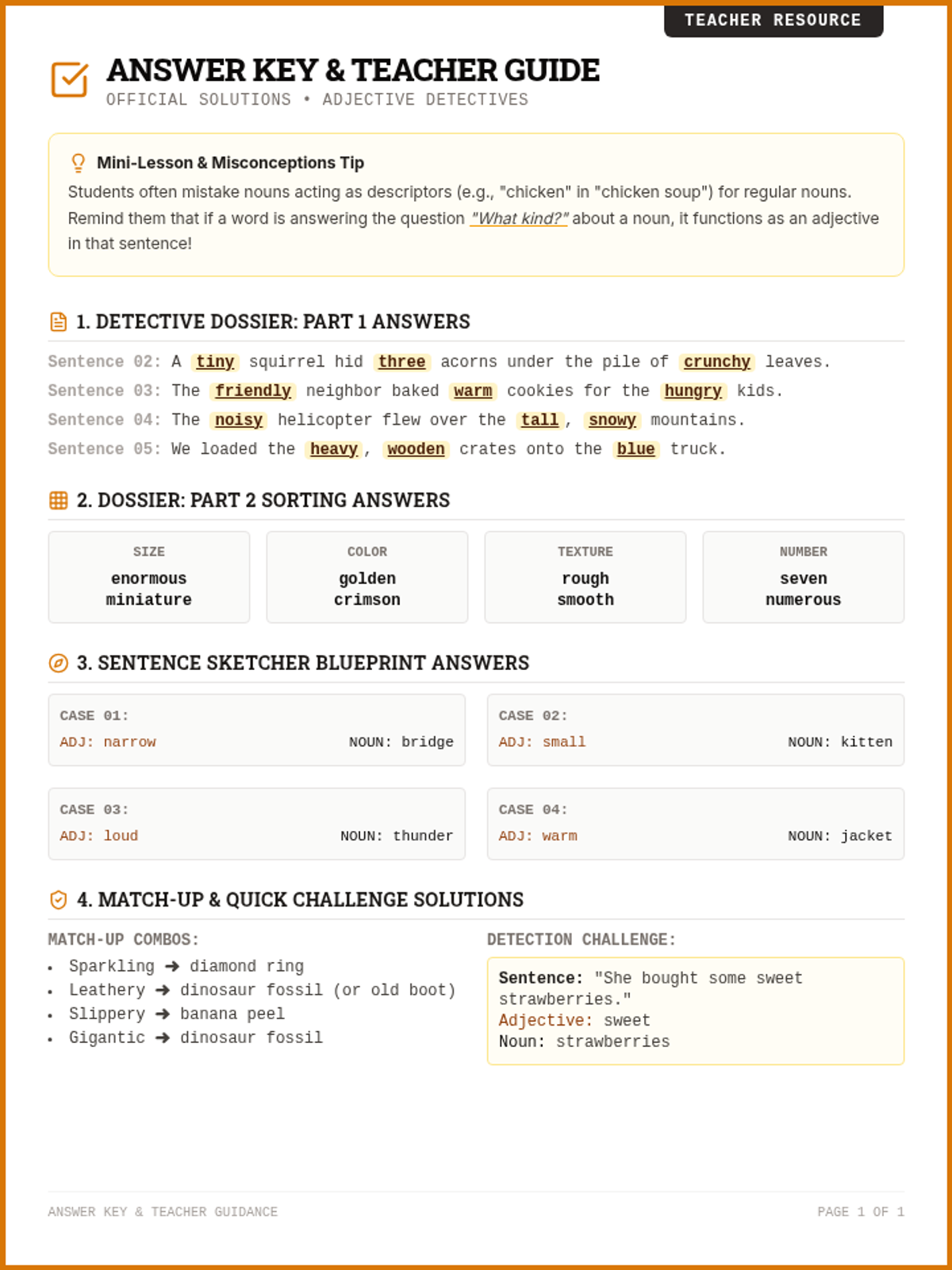
A 3rd-grade grammar lesson where students become Word Detectives to identify adjectives in everyday sentences, map their relationships to nouns, and use descriptive words to crack creative writing cases.
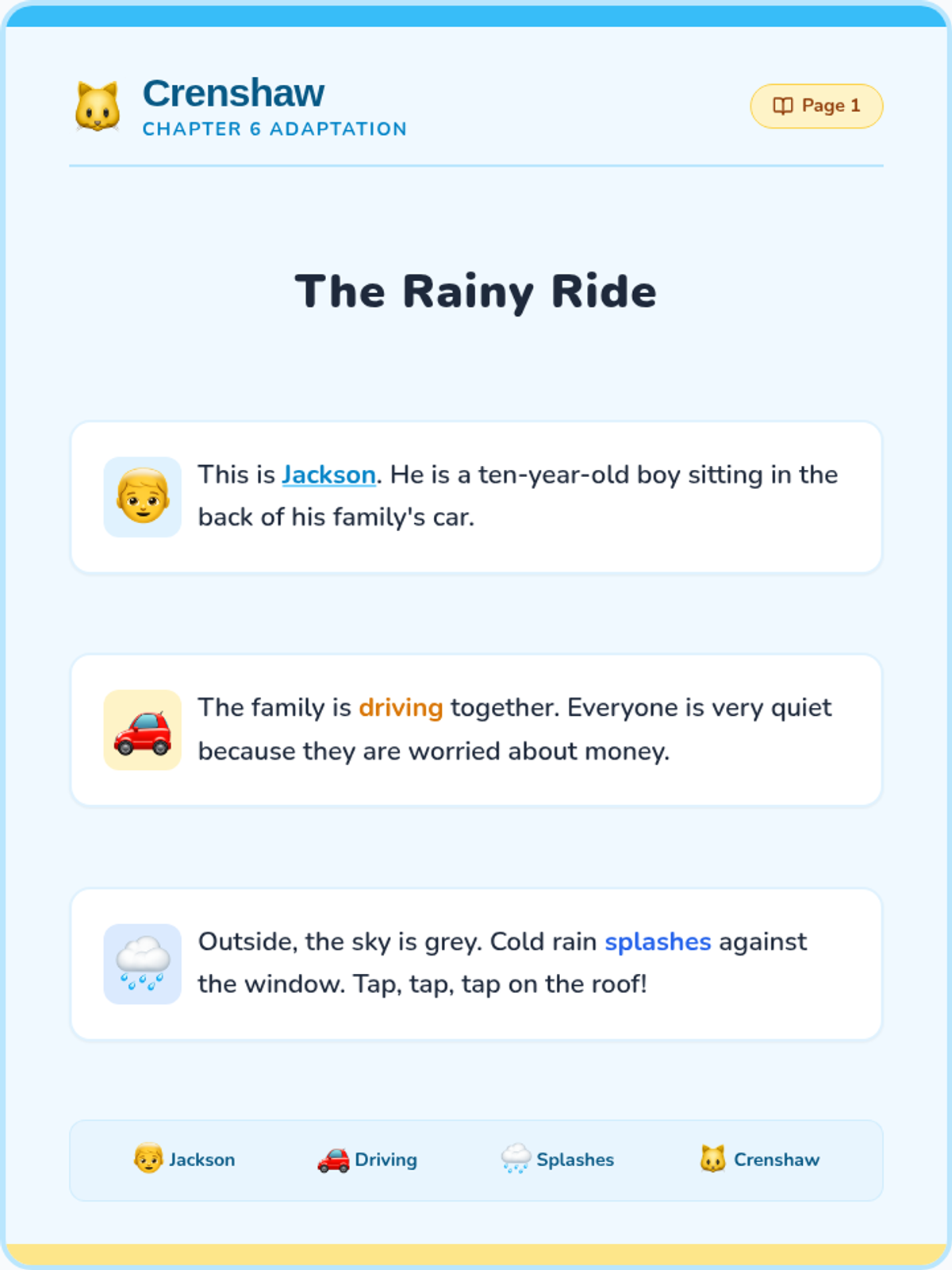
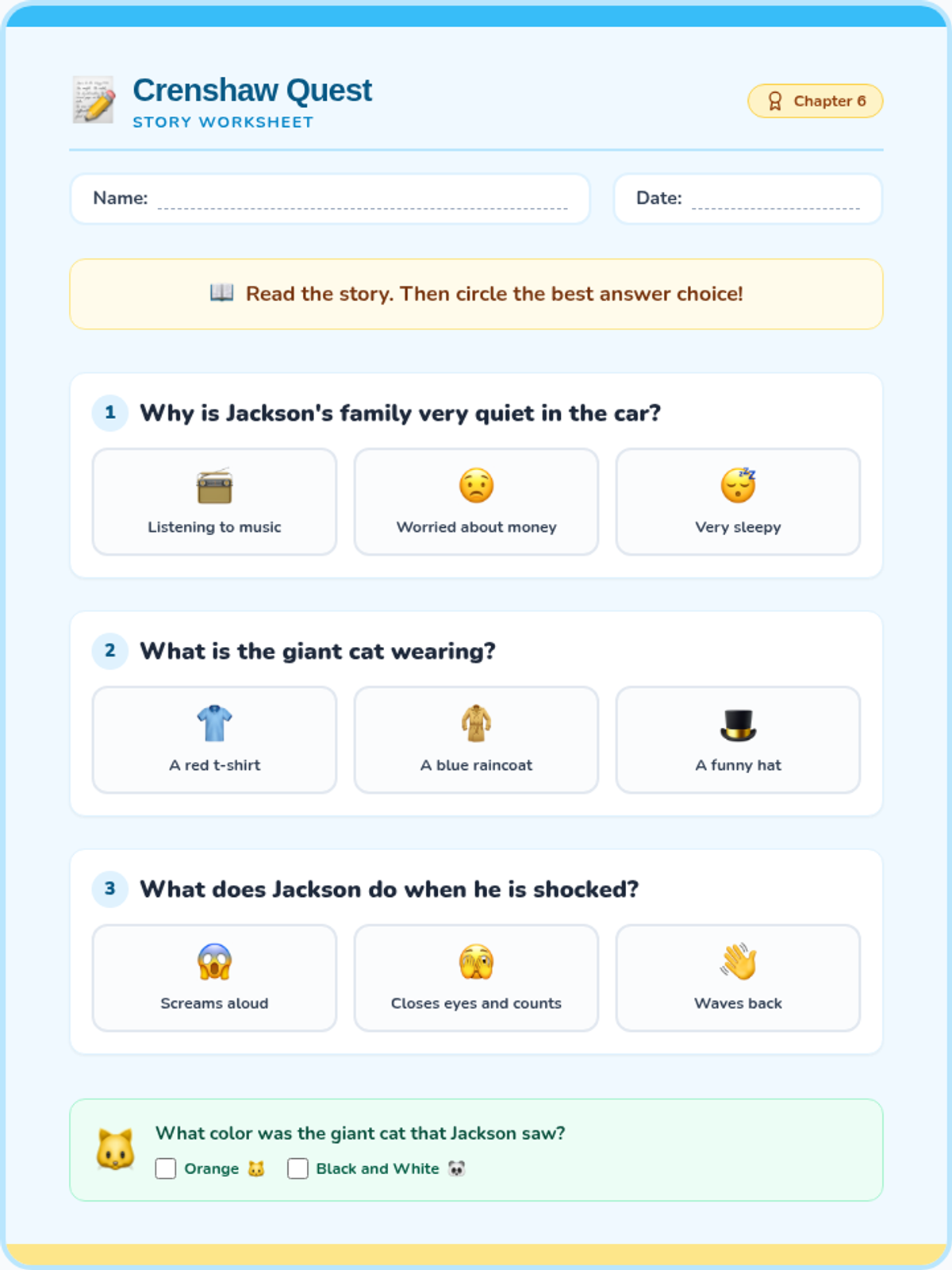
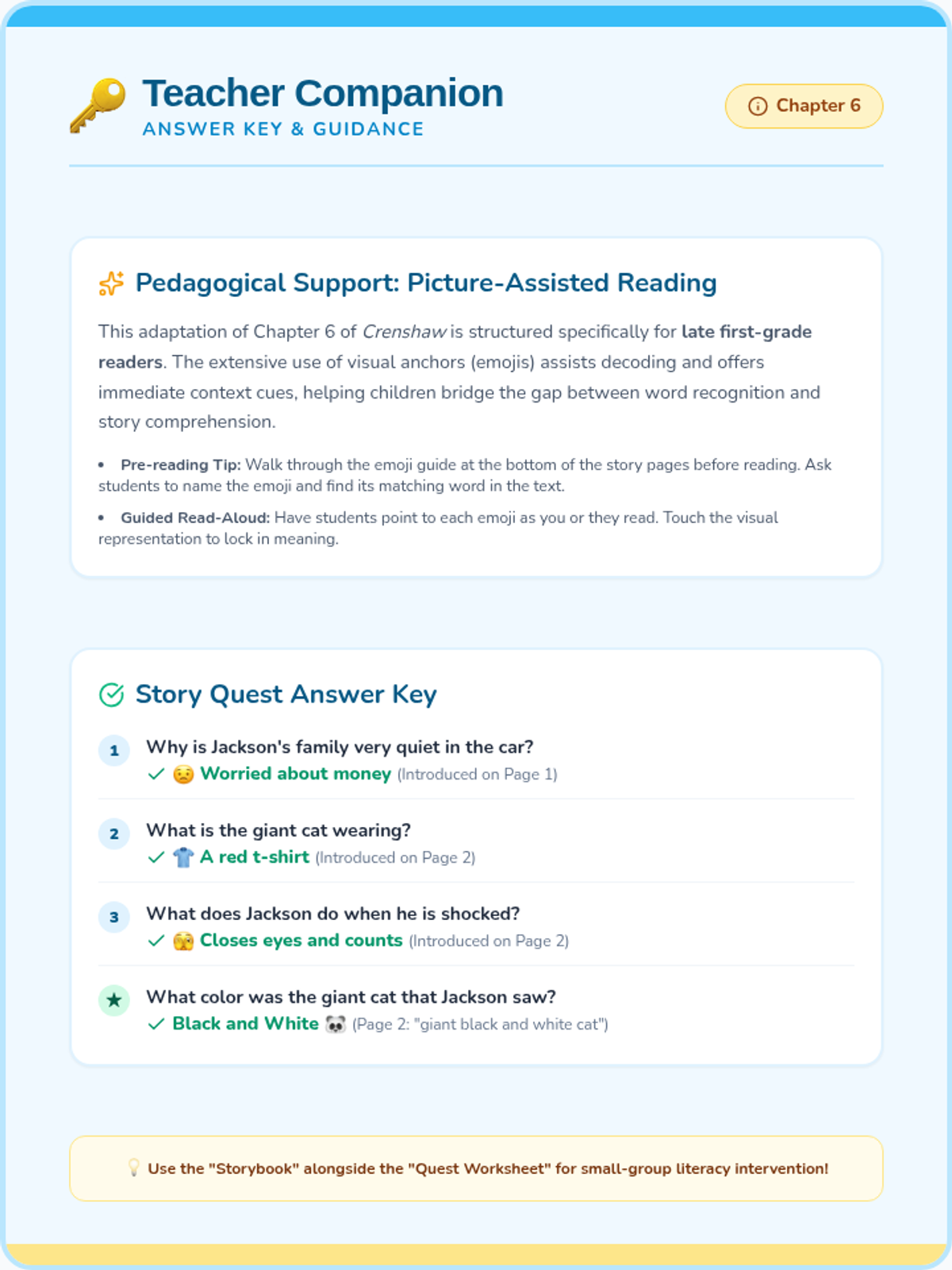
A first-grade friendly adaptation of Chapter 6 of Katherine Applegate's 'Crenshaw', using simplified, highly accessible language and extensive emoji picture-support to aid reading comprehension, accompanied by a student-facing multiple-choice worksheet and a teacher answer key.
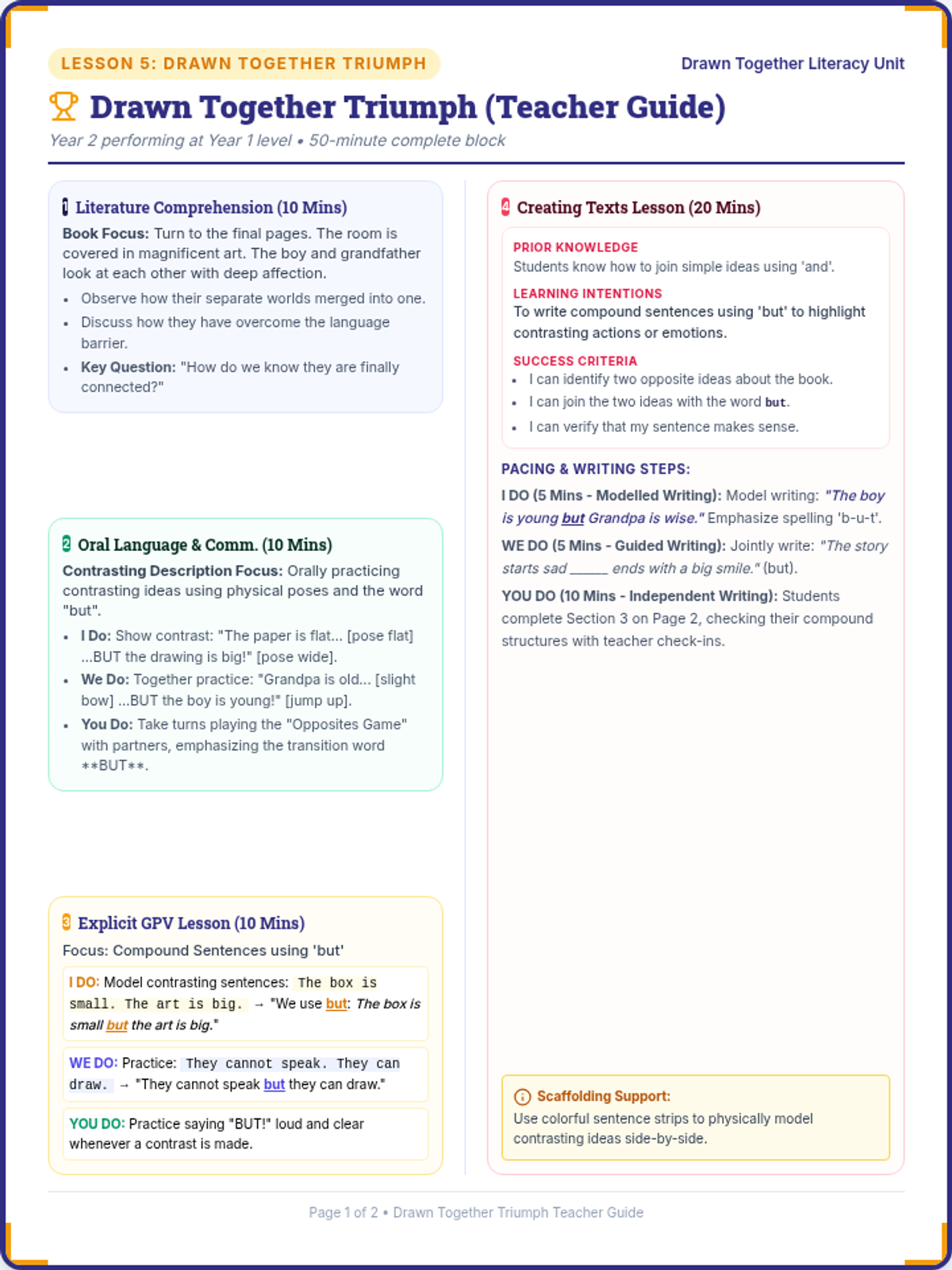
Students explore the book's resolution, where the physical artwork merges their worlds, and learn to write compound sentences with the conjunction 'but' to highlight contrasting actions or emotions before creating their final story narrative.
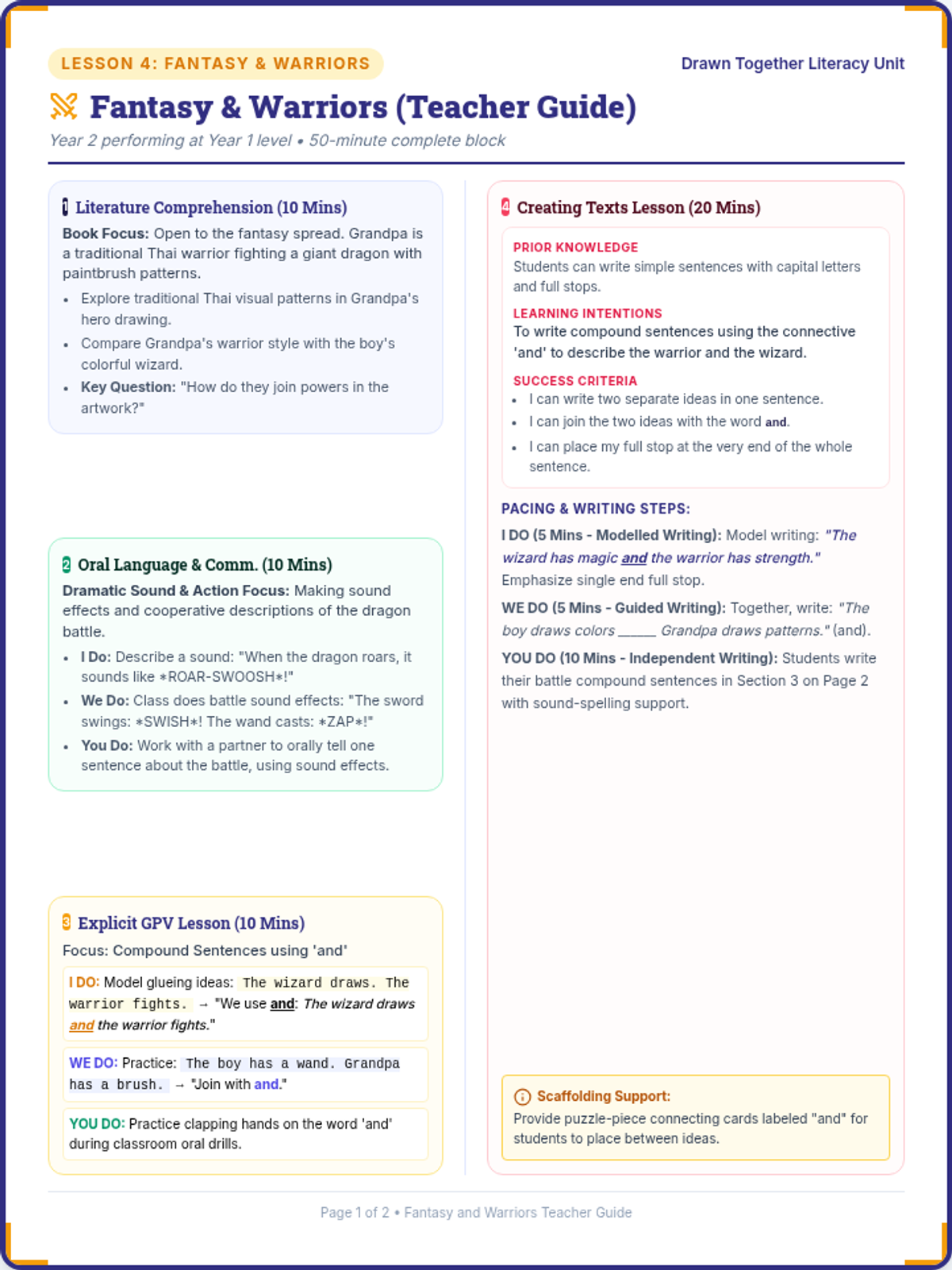
Students focus on the collaborative drawing of the fantasy world where the grandfather is a Thai warrior and the boy is a wizard, and learn to combine ideas into simple compound sentences using the conjunction 'and'.
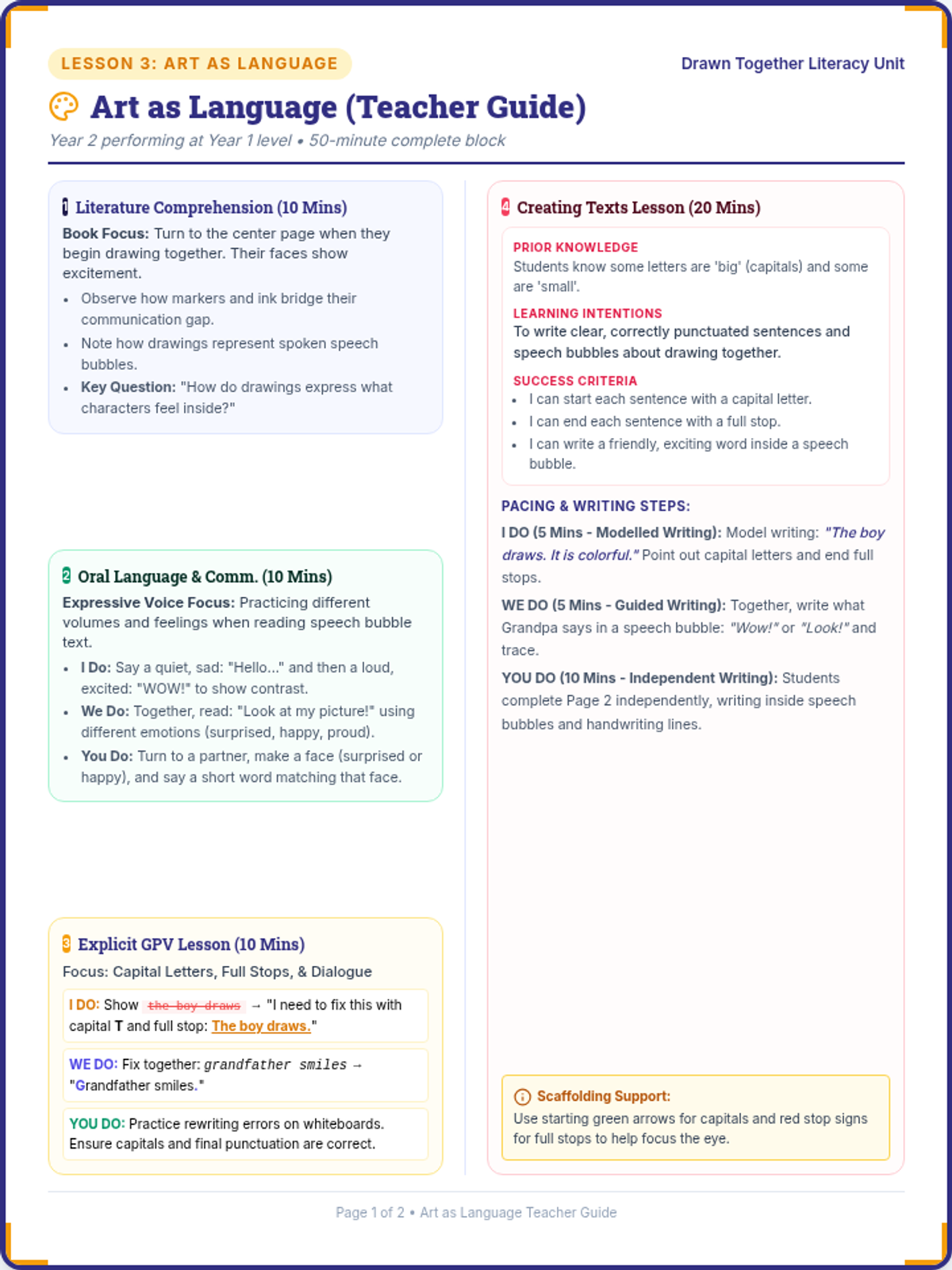
Students identify how the boy and his grandfather use drawing to communicate when spoken words fail, focusing on capital letters, full stops, and basic speech bubble text to describe characters' feelings.
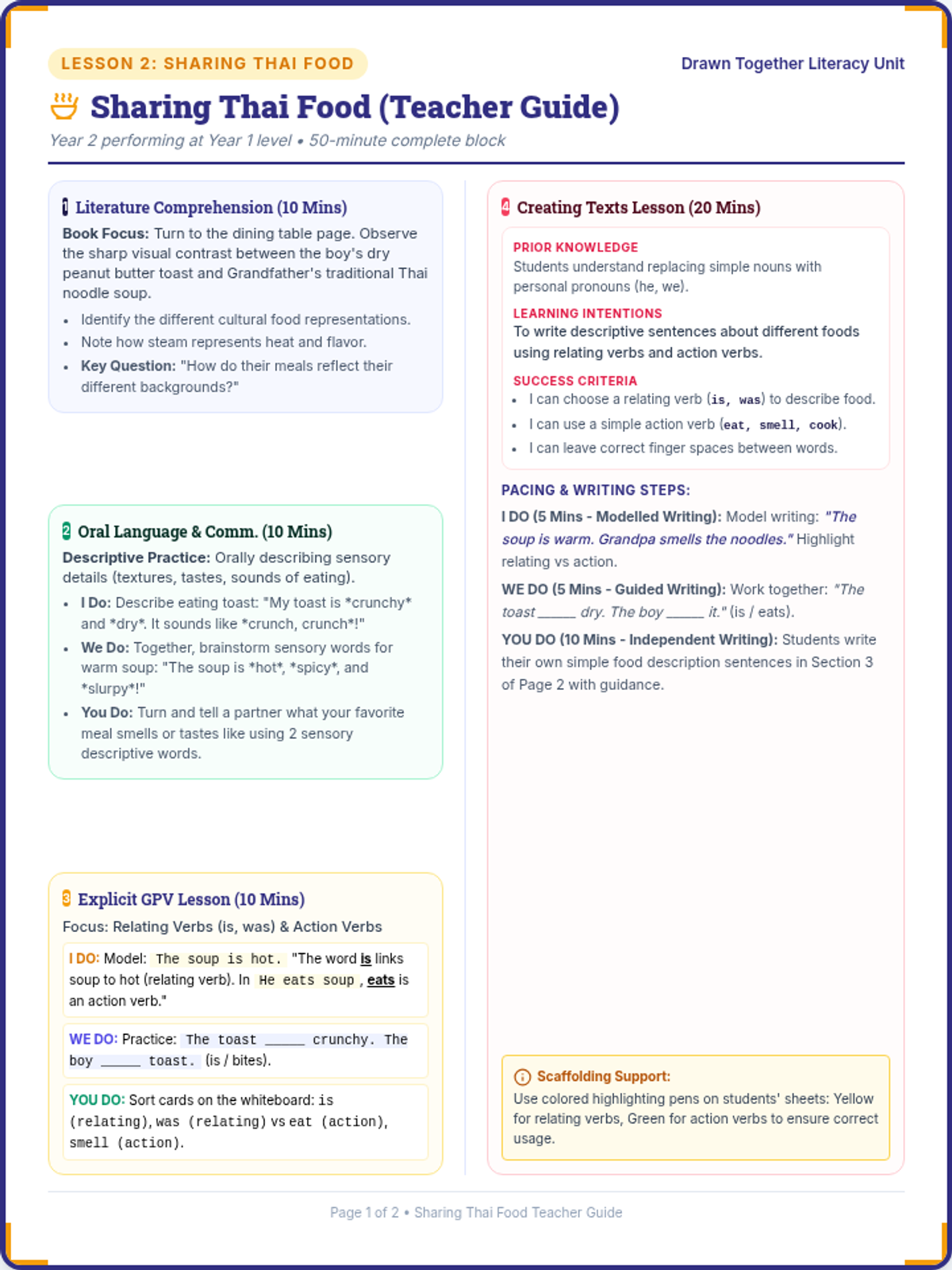
Students explore the cultural food scene in the book, focusing on the differences in what the boy and grandfather eat, and learn to use simple relating verbs (is, was) and action verbs to create a descriptive culinary narrative.
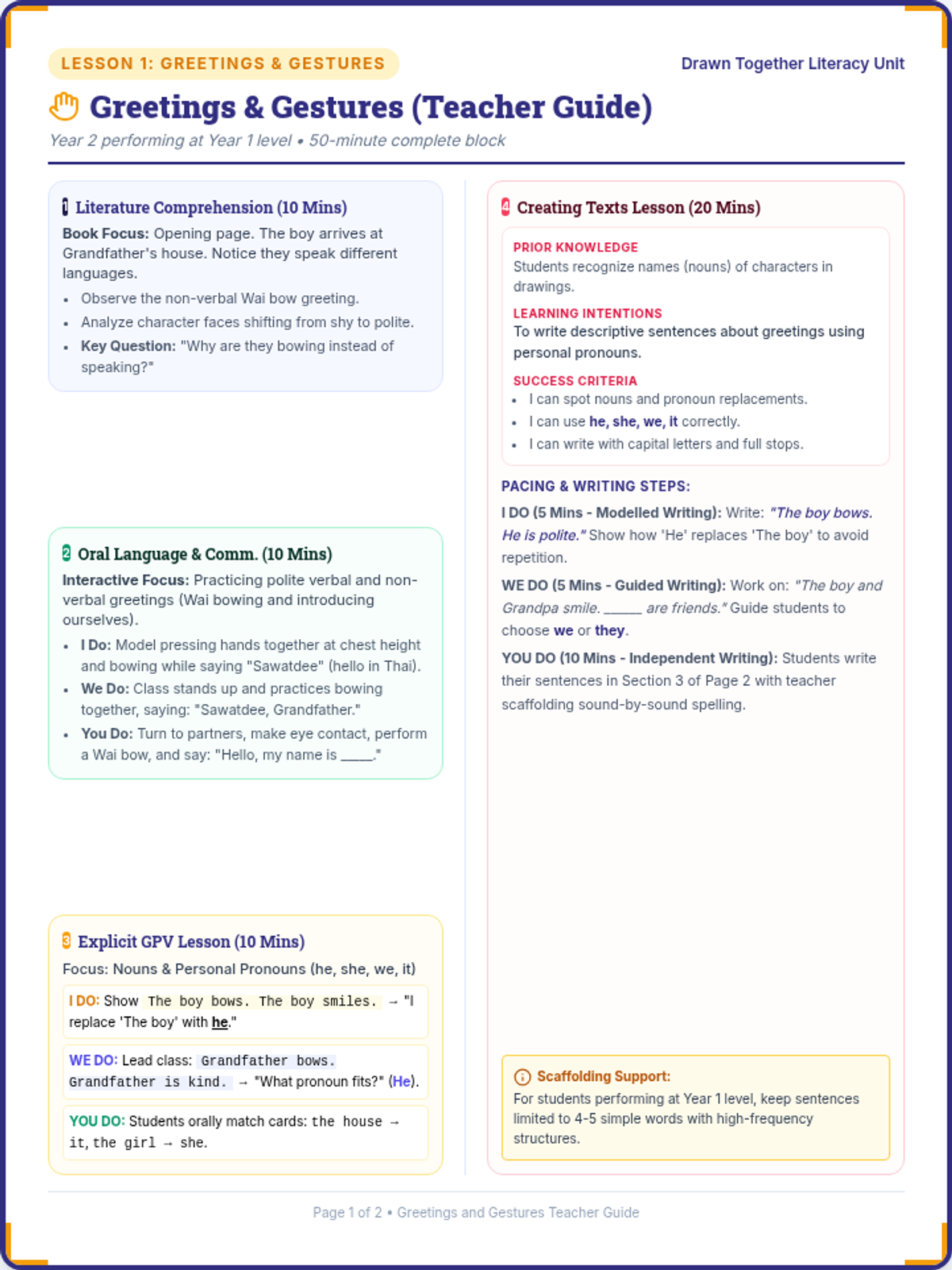
Students analyze the visual greeting between the boy and grandfather (the Wai bow) and learn to replace simple nouns with personal pronouns (he, she, we, it) before writing descriptive sentences about characters.