An engaging lowercase letter identification lab focusing on m, n, t, b, f, u, and i. Students build visual discrimination skills and complete fun puzzles to cement letter recognition.
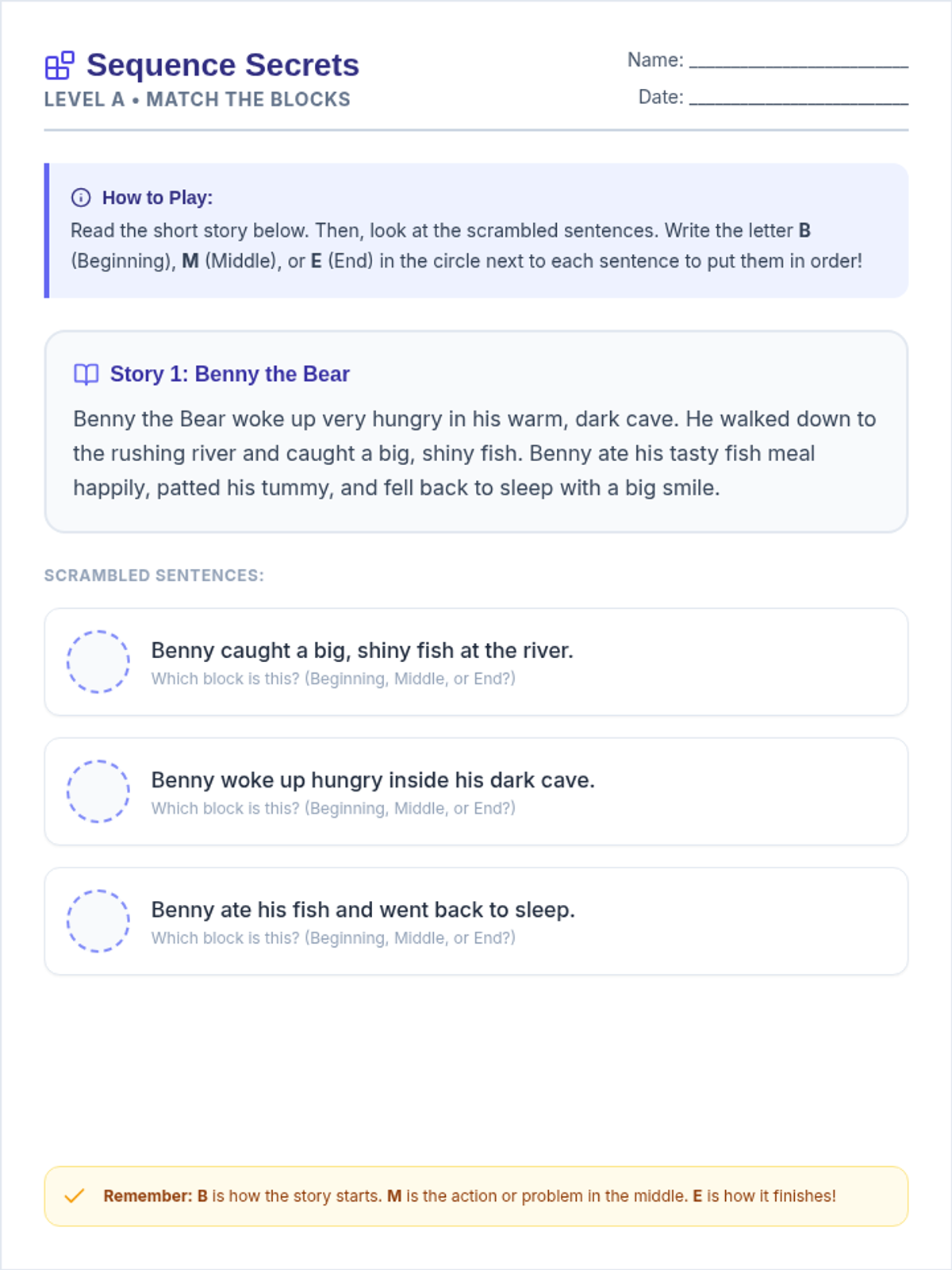
A step-by-step lesson on summarizing stories using the Beginning, Middle, and End (BME) framework, specially scaffolded for emerging readers and students with IEP accommodations.
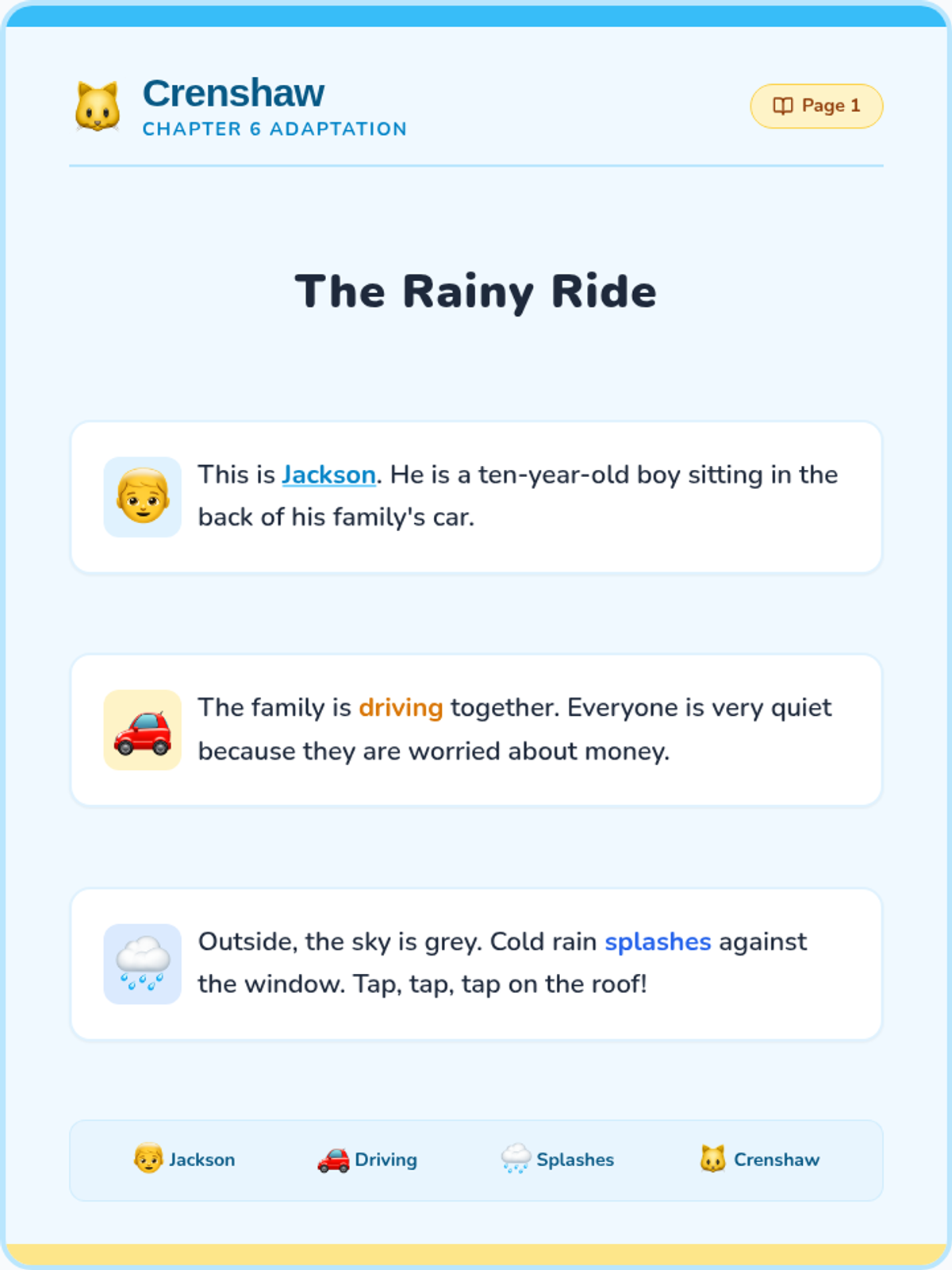
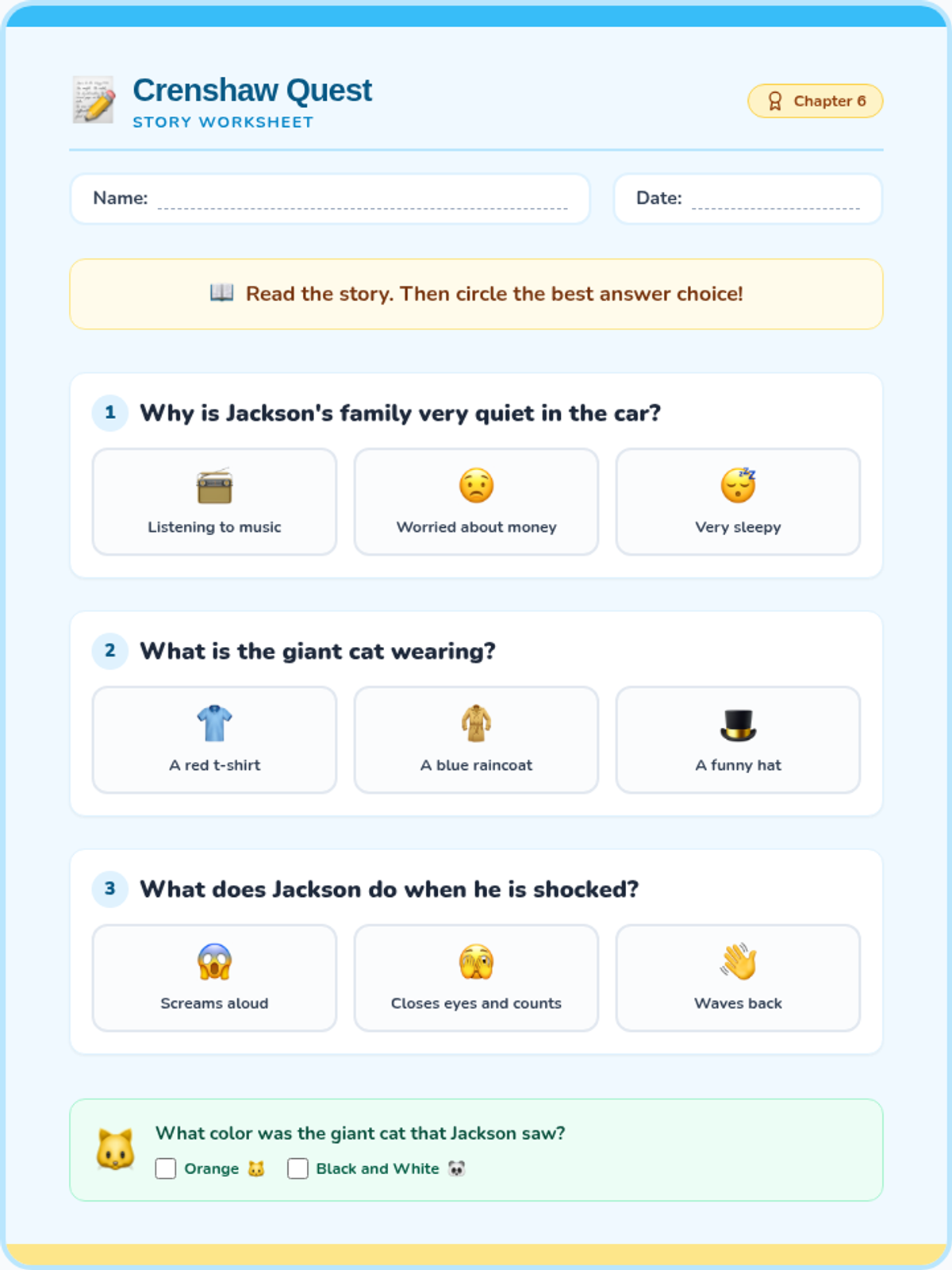
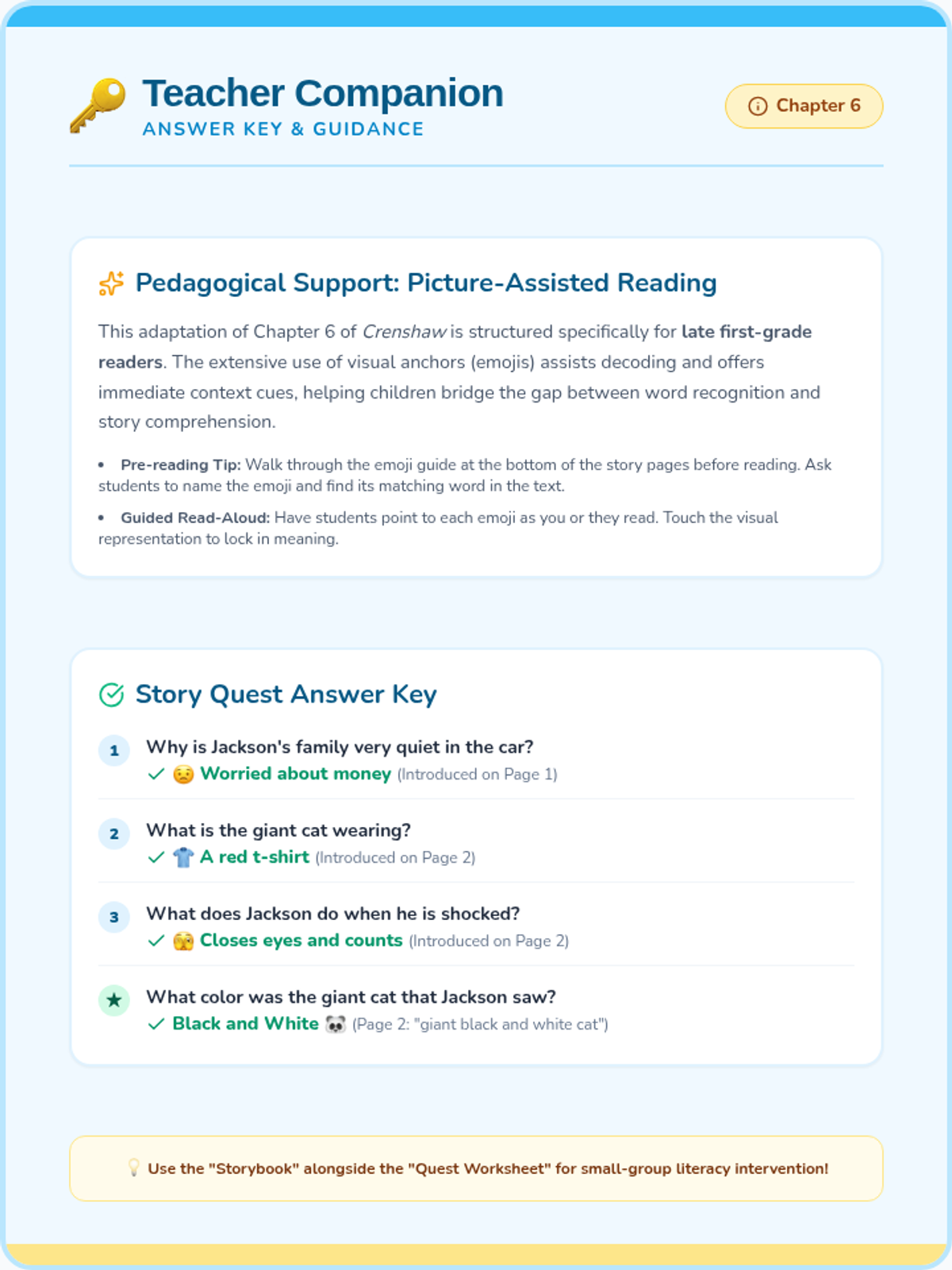
A first-grade friendly adaptation of Chapter 6 of Katherine Applegate's 'Crenshaw', using simplified, highly accessible language and extensive emoji picture-support to aid reading comprehension, accompanied by a student-facing multiple-choice worksheet and a teacher answer key.
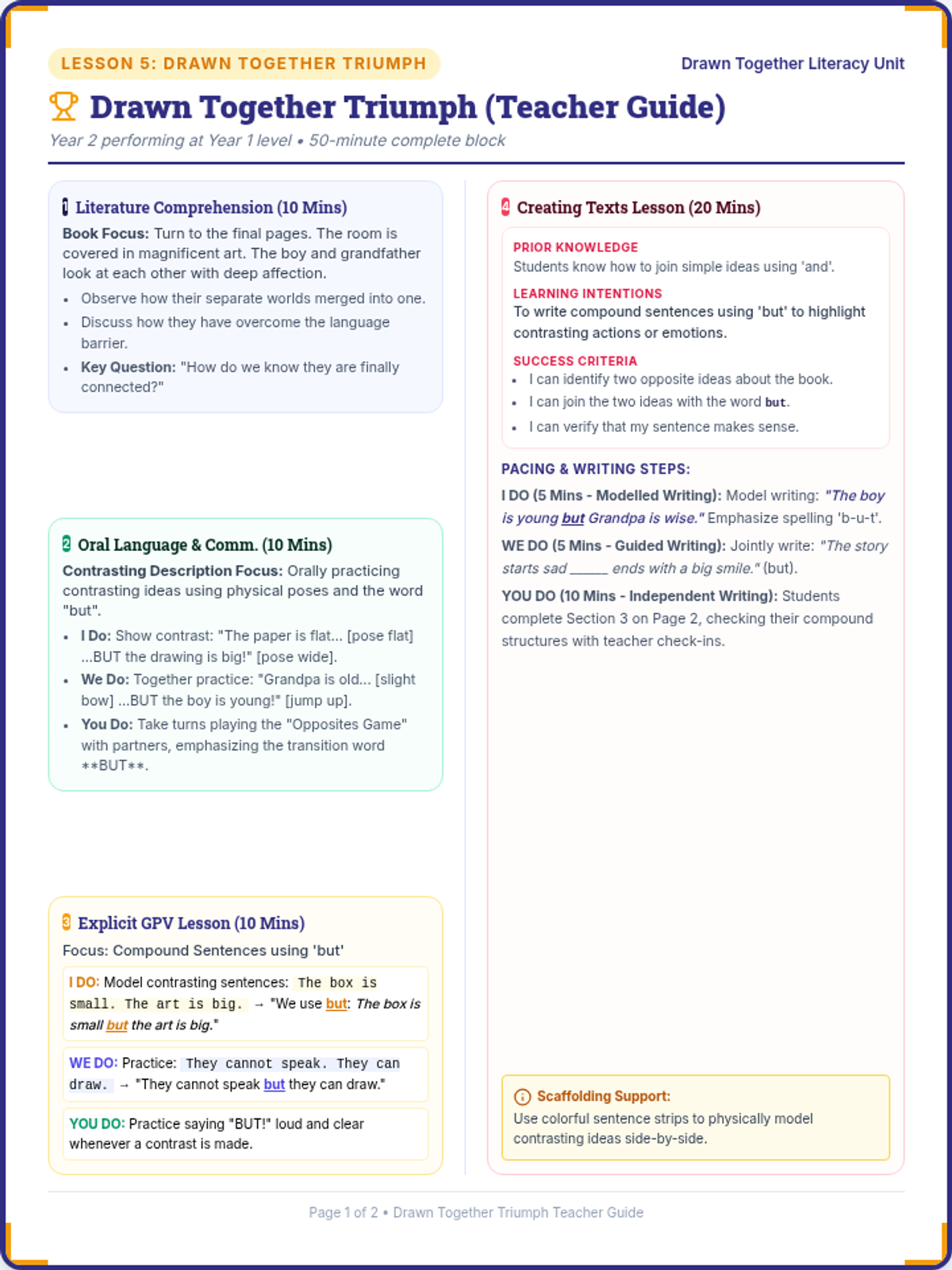
Students explore the book's resolution, where the physical artwork merges their worlds, and learn to write compound sentences with the conjunction 'but' to highlight contrasting actions or emotions before creating their final story narrative.
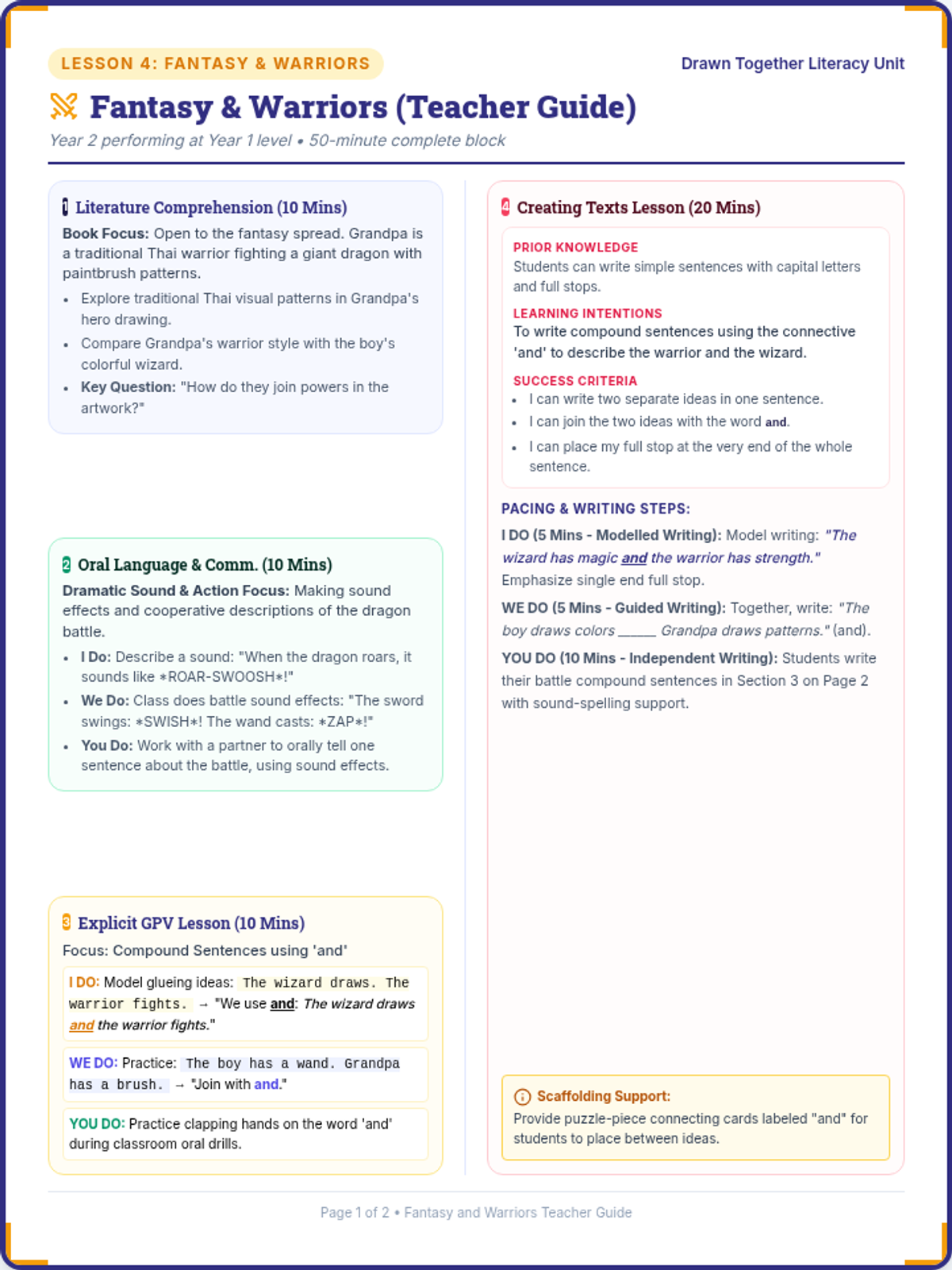
Students focus on the collaborative drawing of the fantasy world where the grandfather is a Thai warrior and the boy is a wizard, and learn to combine ideas into simple compound sentences using the conjunction 'and'.
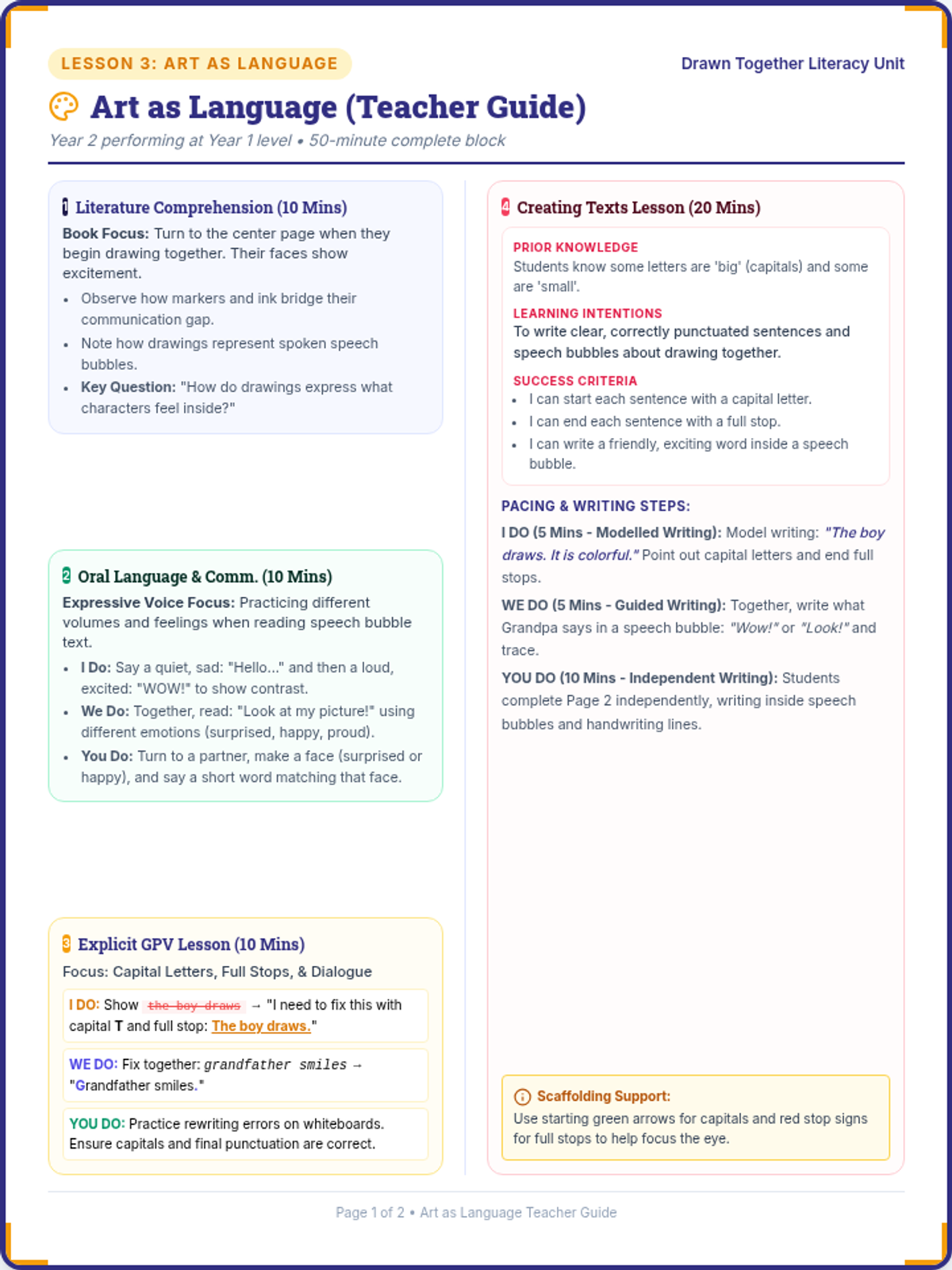
Students identify how the boy and his grandfather use drawing to communicate when spoken words fail, focusing on capital letters, full stops, and basic speech bubble text to describe characters' feelings.
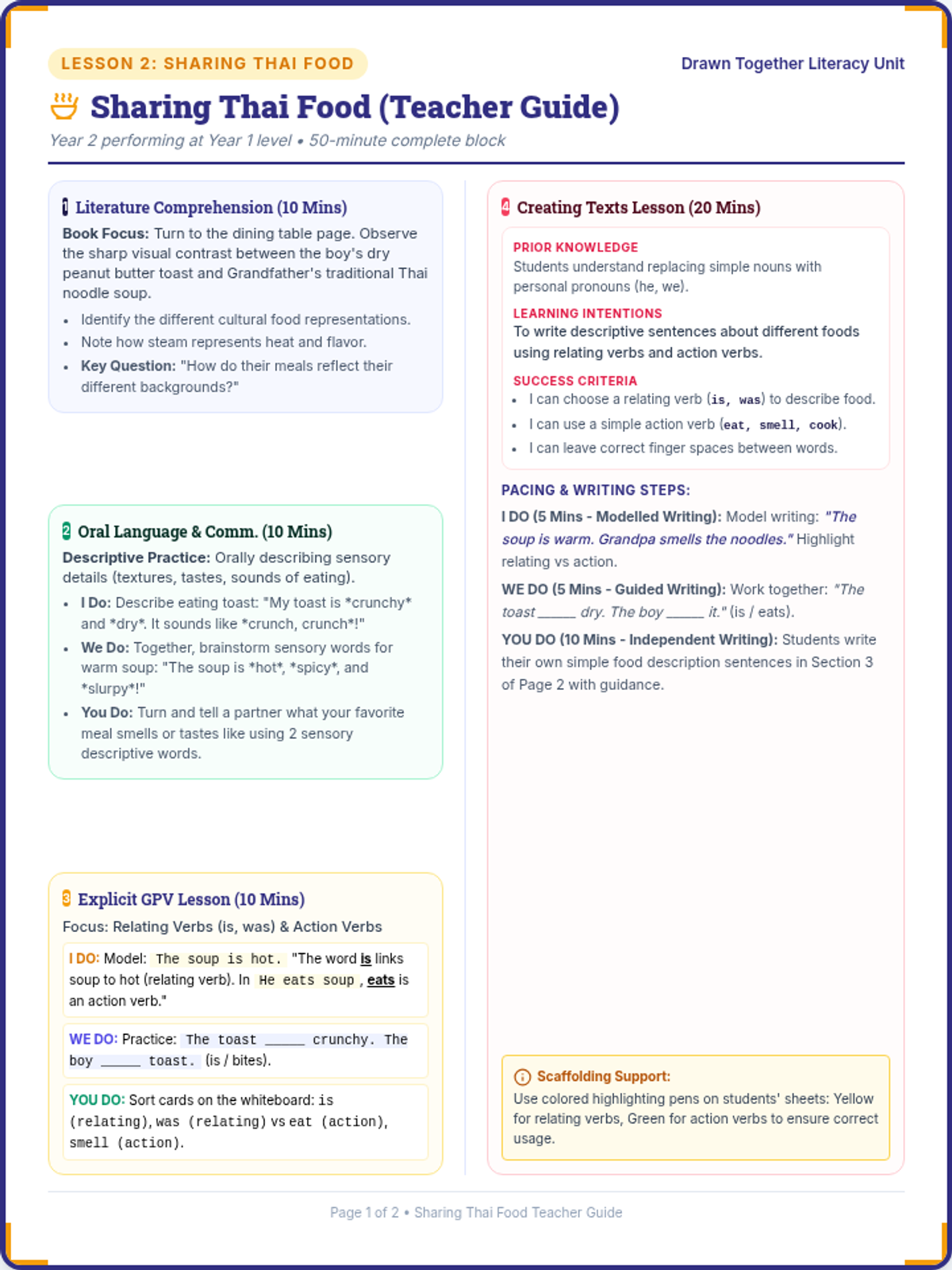
Students explore the cultural food scene in the book, focusing on the differences in what the boy and grandfather eat, and learn to use simple relating verbs (is, was) and action verbs to create a descriptive culinary narrative.
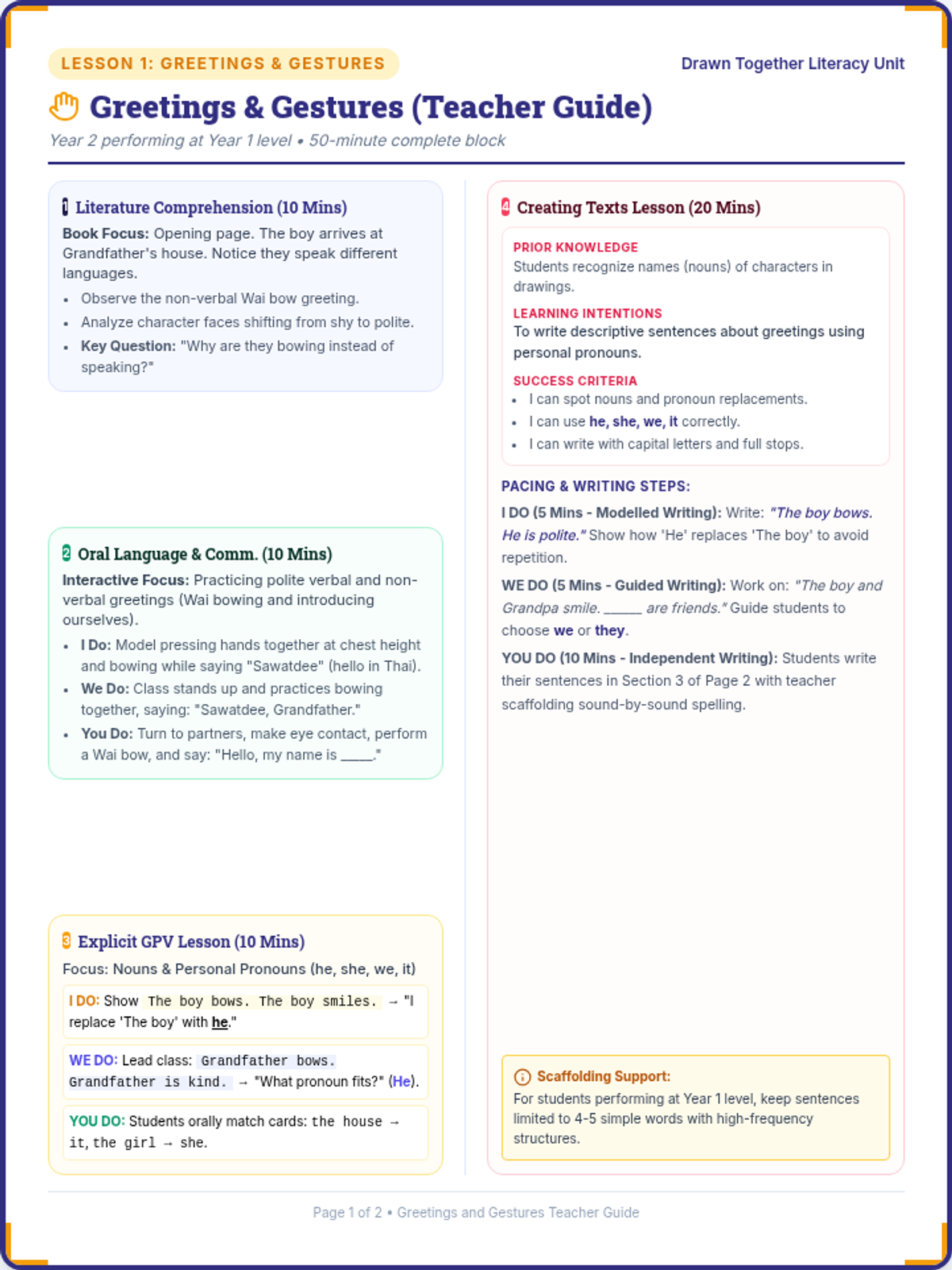
Students analyze the visual greeting between the boy and grandfather (the Wai bow) and learn to replace simple nouns with personal pronouns (he, she, we, it) before writing descriptive sentences about characters.
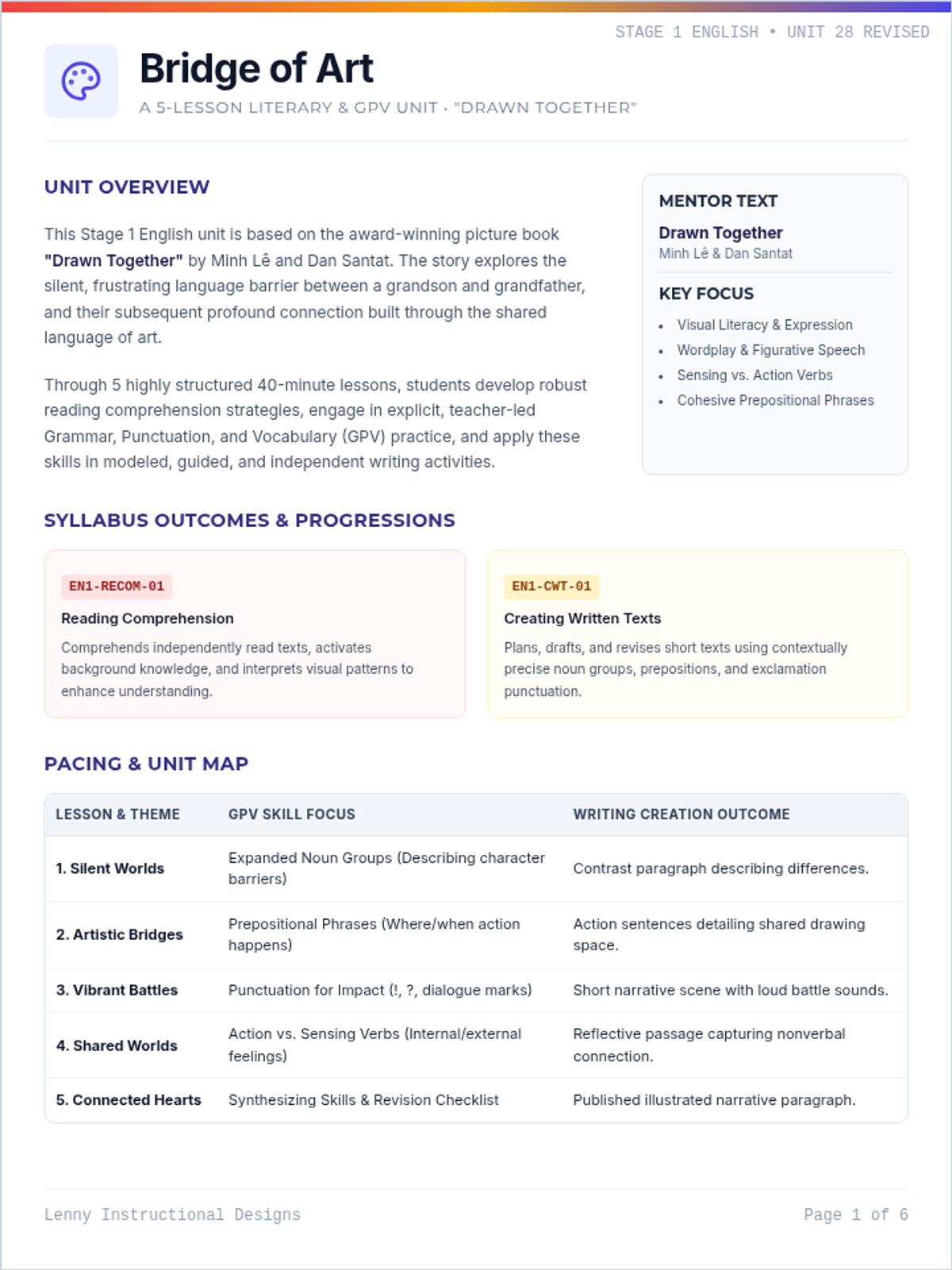
Students synthesize their learning across the unit to draft, edit, and publish a short text with illustrations that celebrates a connection built over a shared activity.
Students analyze action and sensing verbs that depict feelings and connection, applying them to describe how characters express themselves when drawing.
Focusing on the colorful fantasy battle scene, students learn to use exclamation marks, question marks, and simple dialogue punctuation to add impact to their narratives.
Students examine how art bridges the gap between characters, focusing on prepositions and prepositional phrases to specify where and when actions occur.
In this lesson, students explore the silent barrier between the grandson and grandfather, understand non-verbal cues, and use expanded noun groups to describe characters and settings.
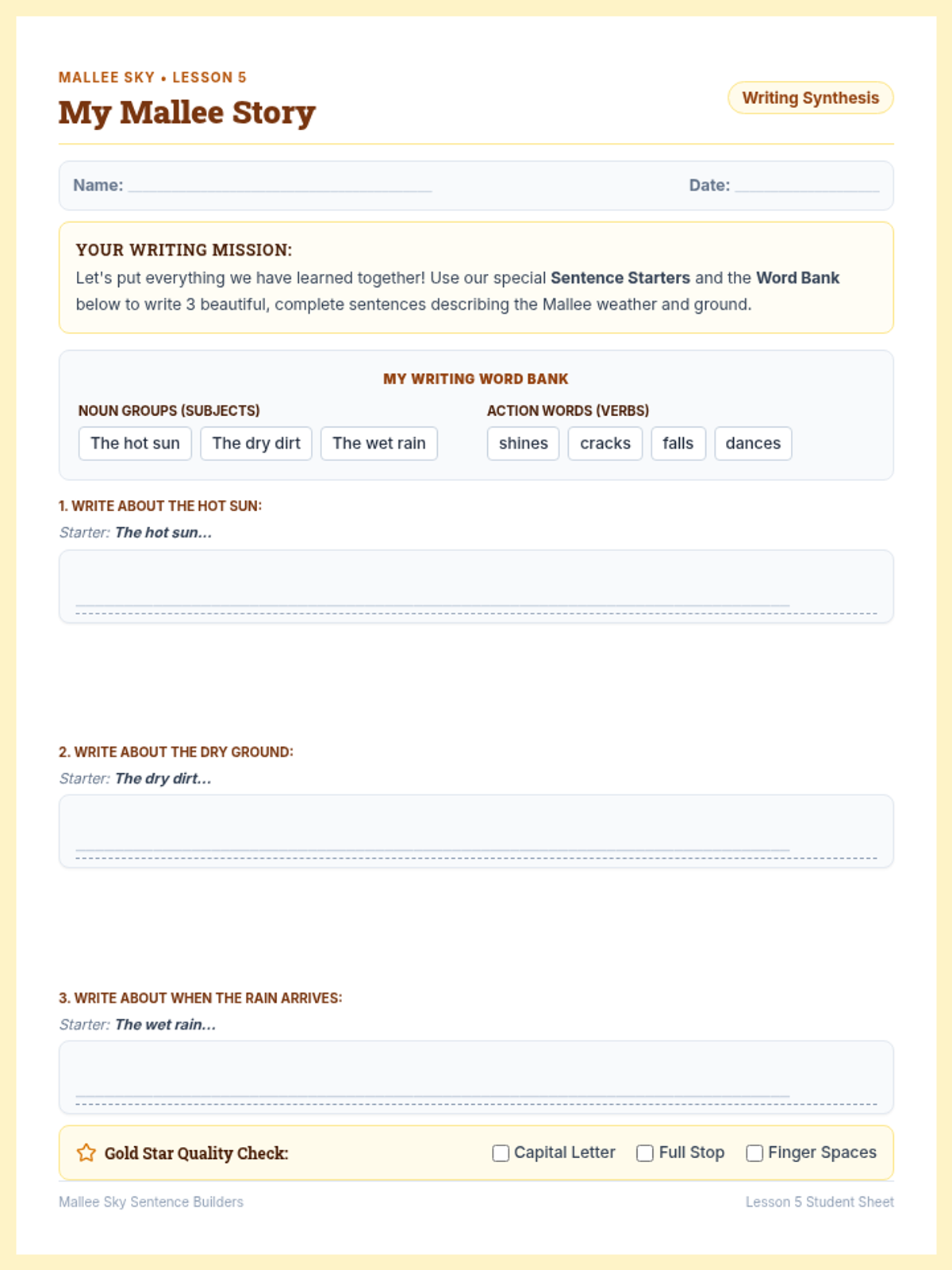
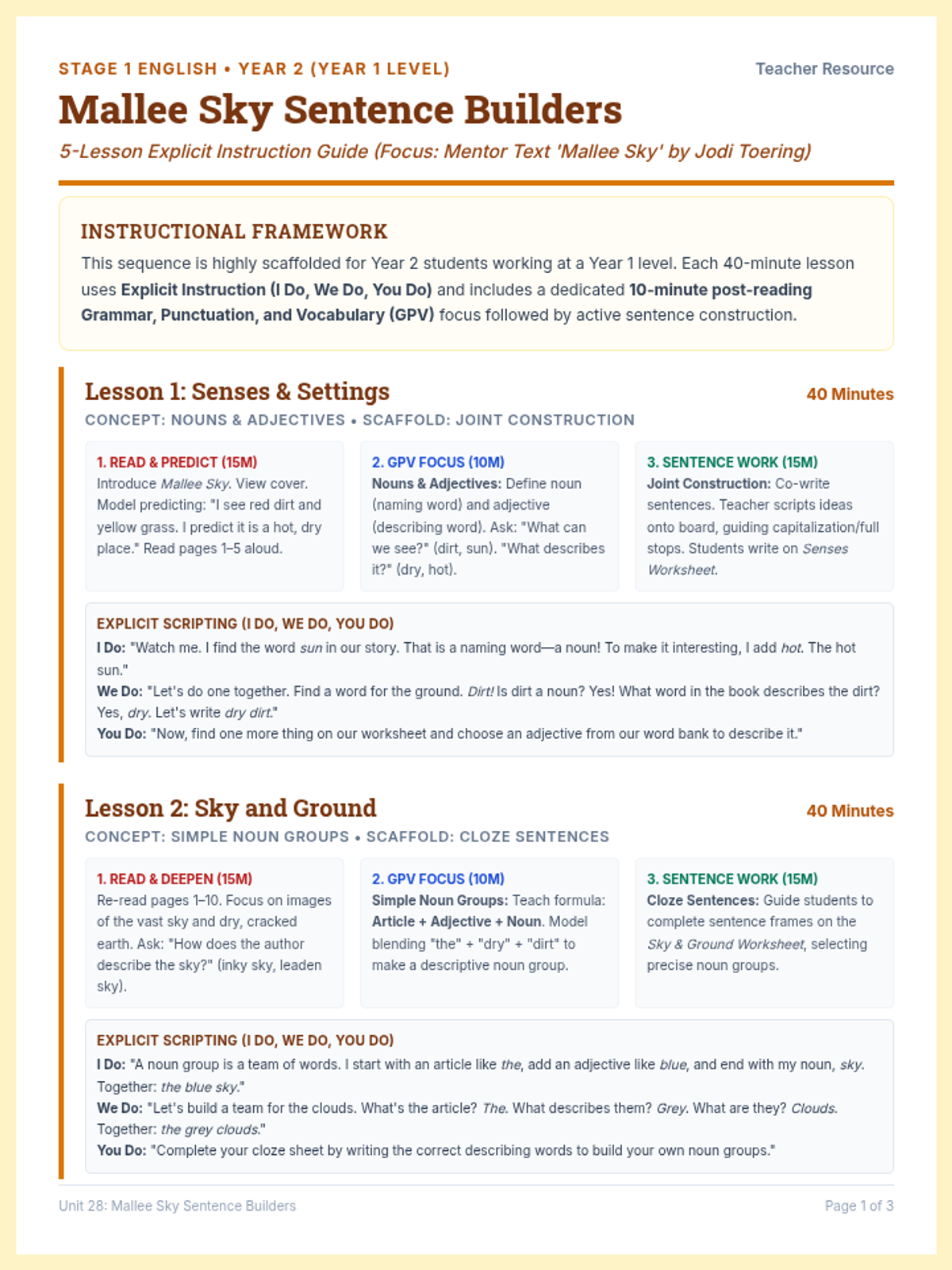
Synthesise all learned elements (noun groups, action verbs, punctuation) to create descriptive sentences about Mallee Sky. Scaffolded with sentence starters and word cards.
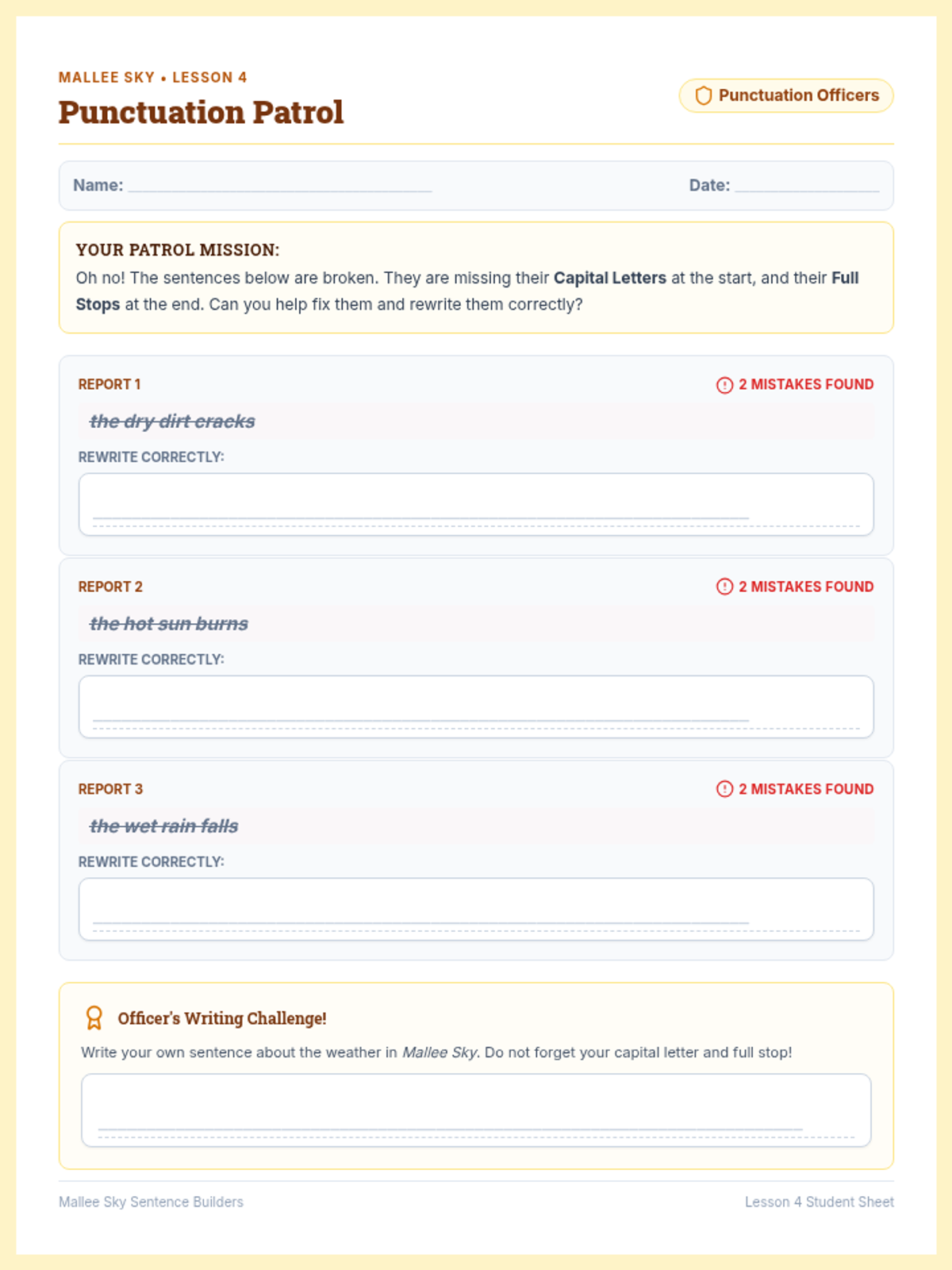
Focus on capital letters and full stops in simple sentences about the Mallee environment. Students act as 'Punctuation Patrol' to correct and write clear sentences.
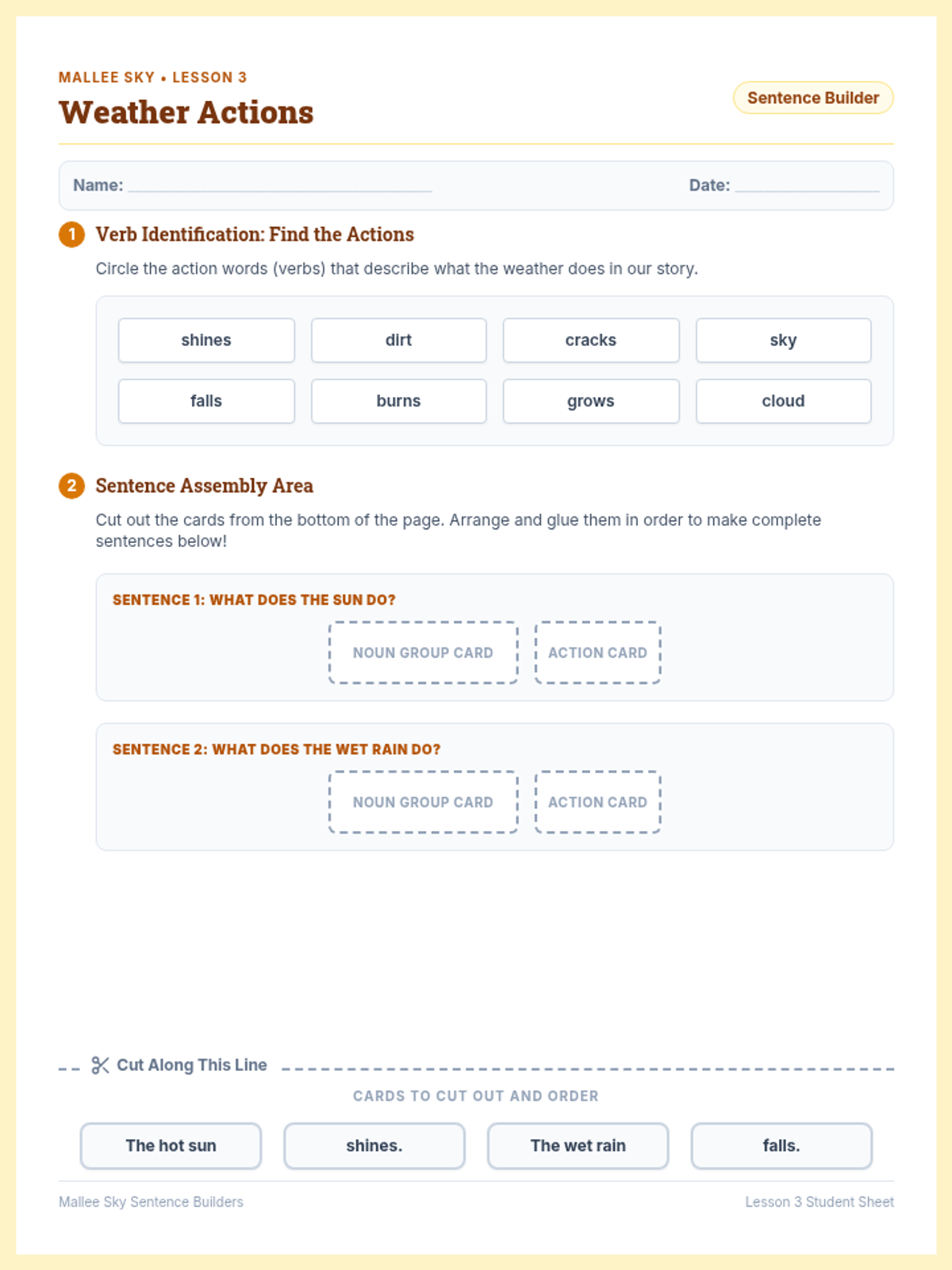
Focus on verbs and action words in 'Mallee Sky'. Students explore what the sun, clouds, and rain do. Sentence creation is scaffolded with cut-and-paste sentence builders.
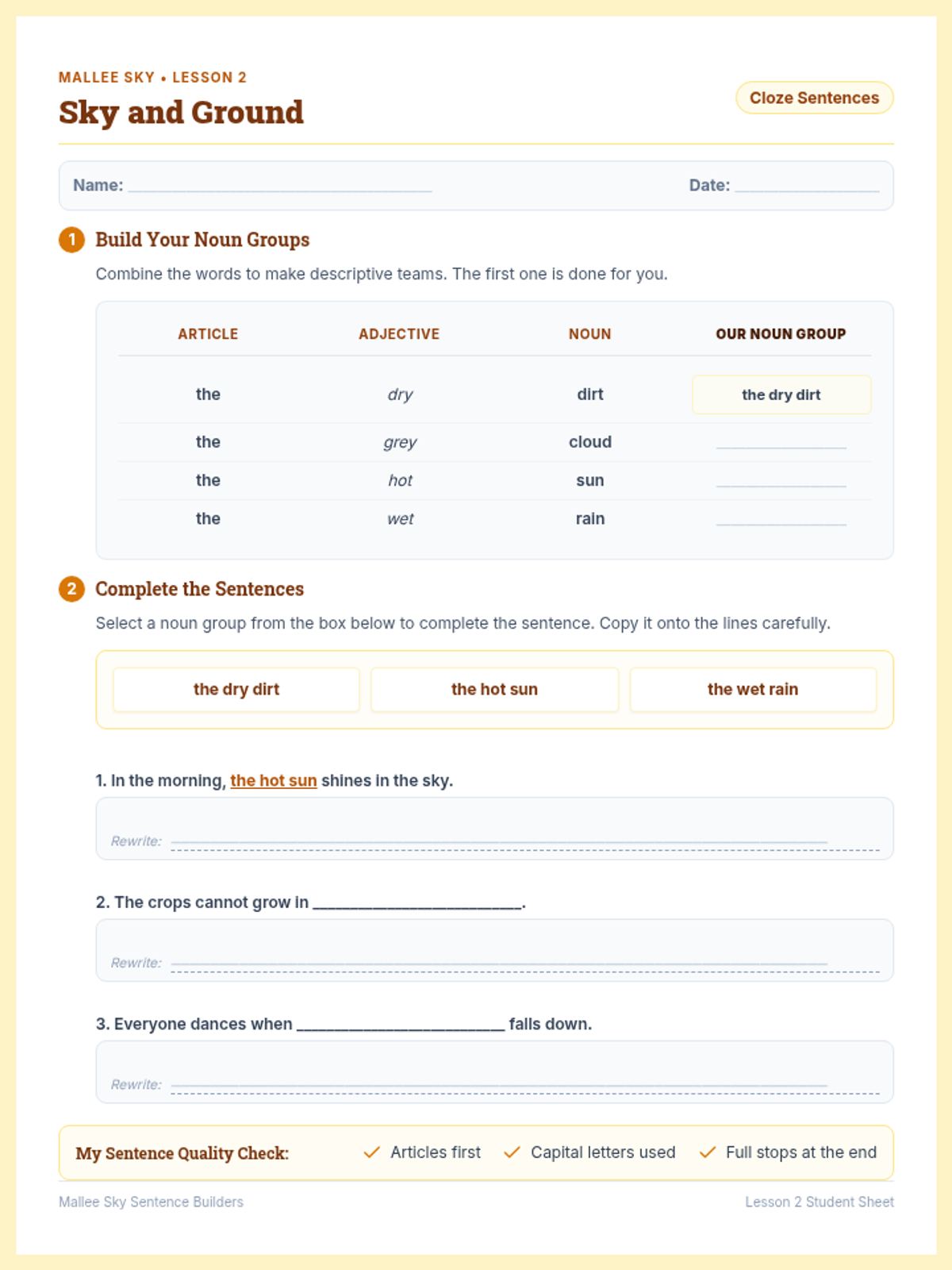
Focus on simple noun groups from the text. Students learn to build and read descriptions like 'the dry dirt'. Sentence work involves fill-in-the-blank cloze sheets.
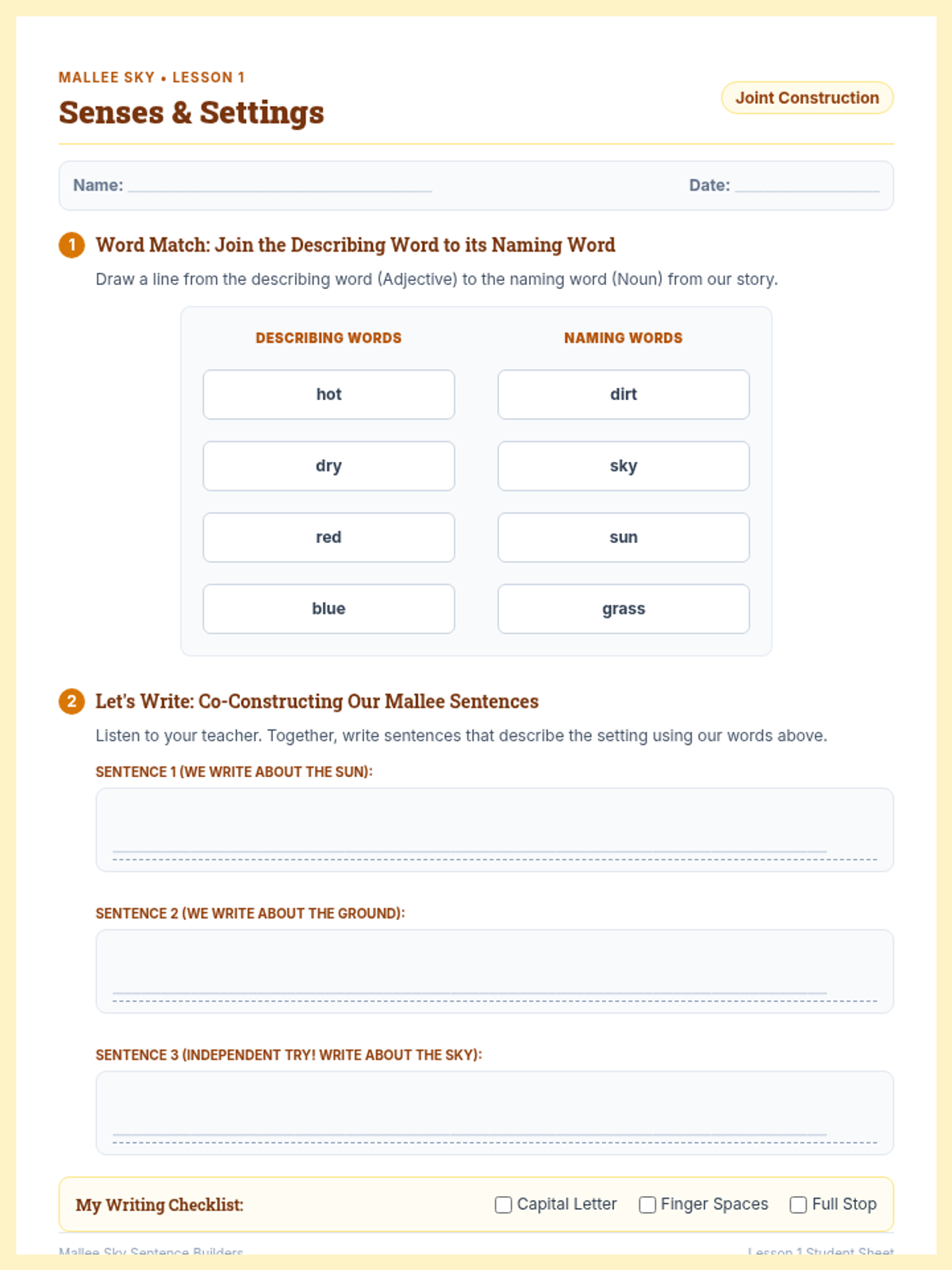
Introduce 'Mallee Sky', focusing on the setting and senses. In the GPV segment, students identify nouns and adjectives, followed by joint sentence construction.
A comprehensive literacy lesson based on 'Skunk Dog' by Emily Gibbons, focusing on vocabulary, sequencing, and retelling. Includes interactive slides, a teacher guide, graphic organizers, and tactile task cards.
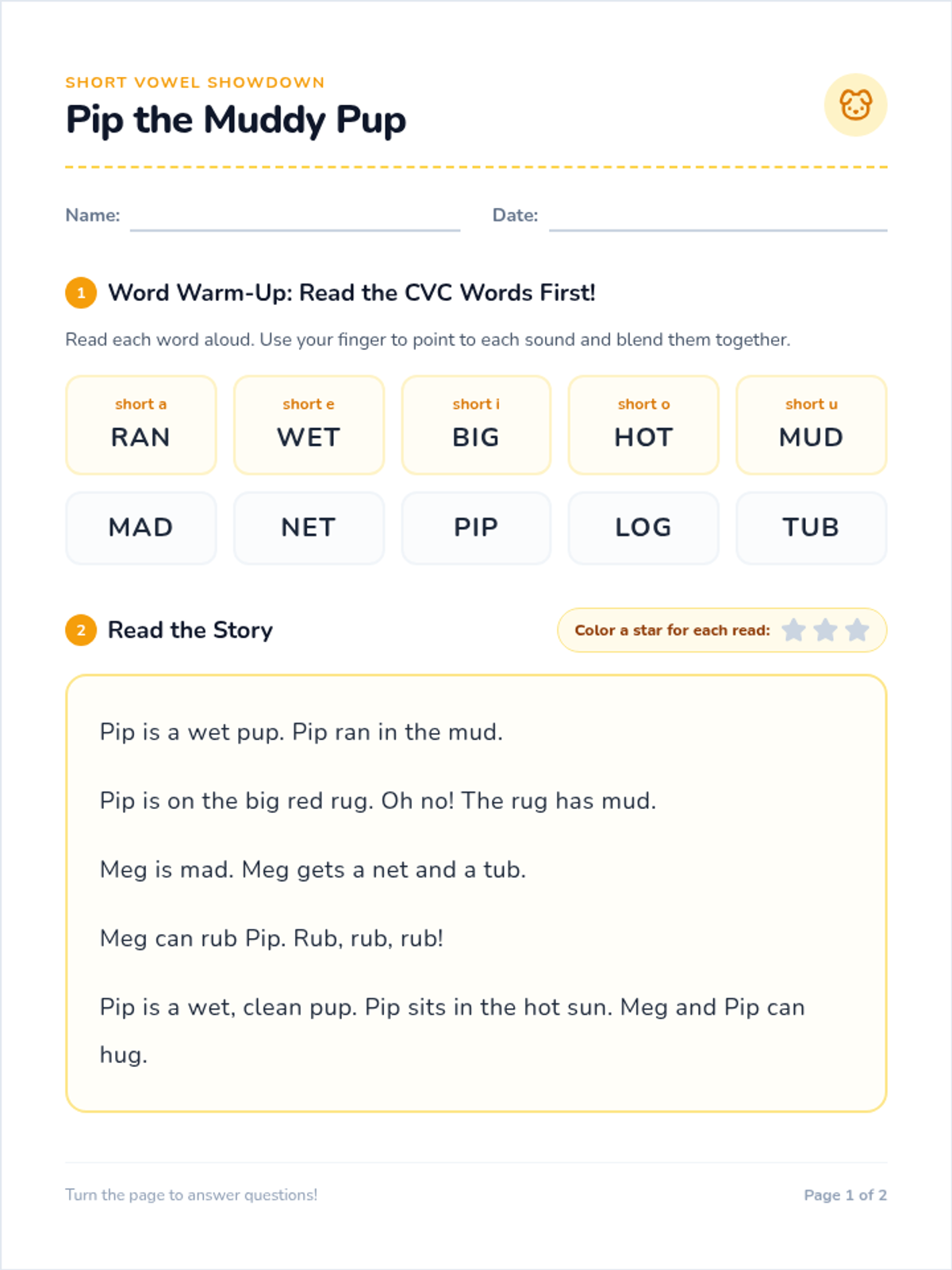
A foundational phonics lesson focusing on cumulative review of mixed short vowel CVC words through a structured decodable reading passage, word warm-ups, and targeted comprehension questions.
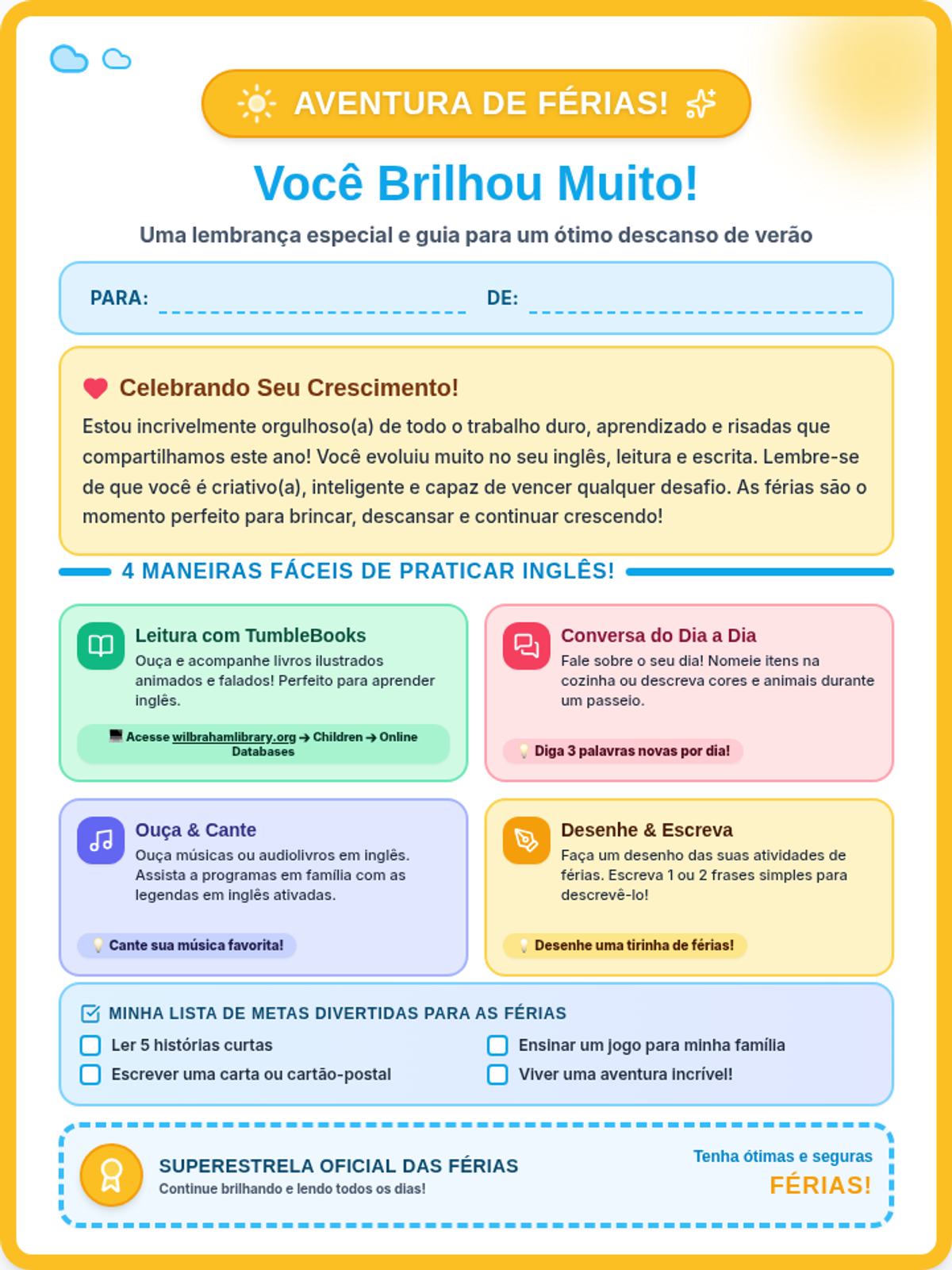
A lesson designed to celebrate student growth and guide families with actionable, low-stress English practice tips over the summer break.
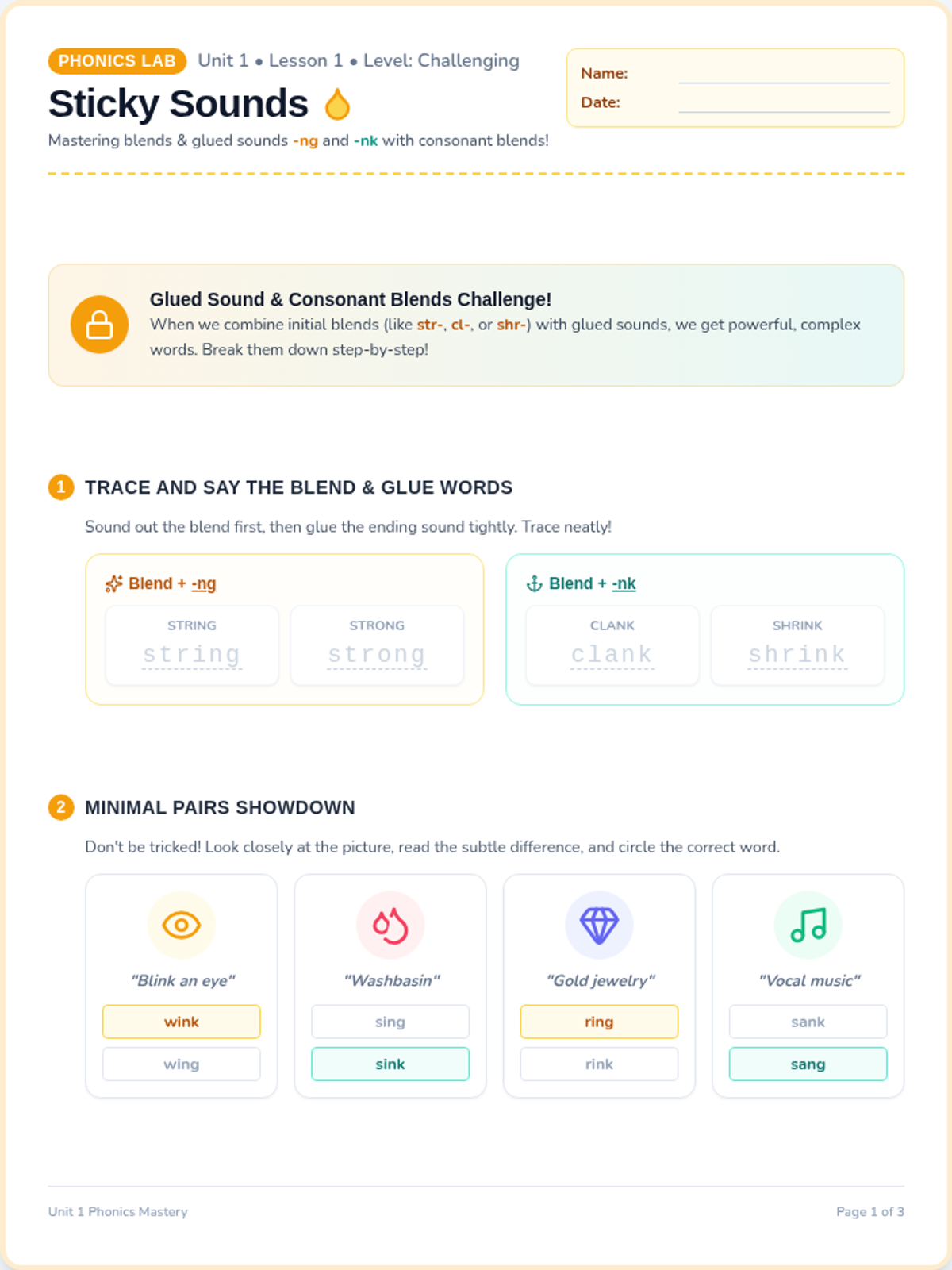
A highly scaffolded phonics lesson focusing on the glued sounds 'ng' and 'nk'. Students engage in multi-sensory tracing, phoneme-grapheme spelling mapping, and visual-assisted sentence writing.
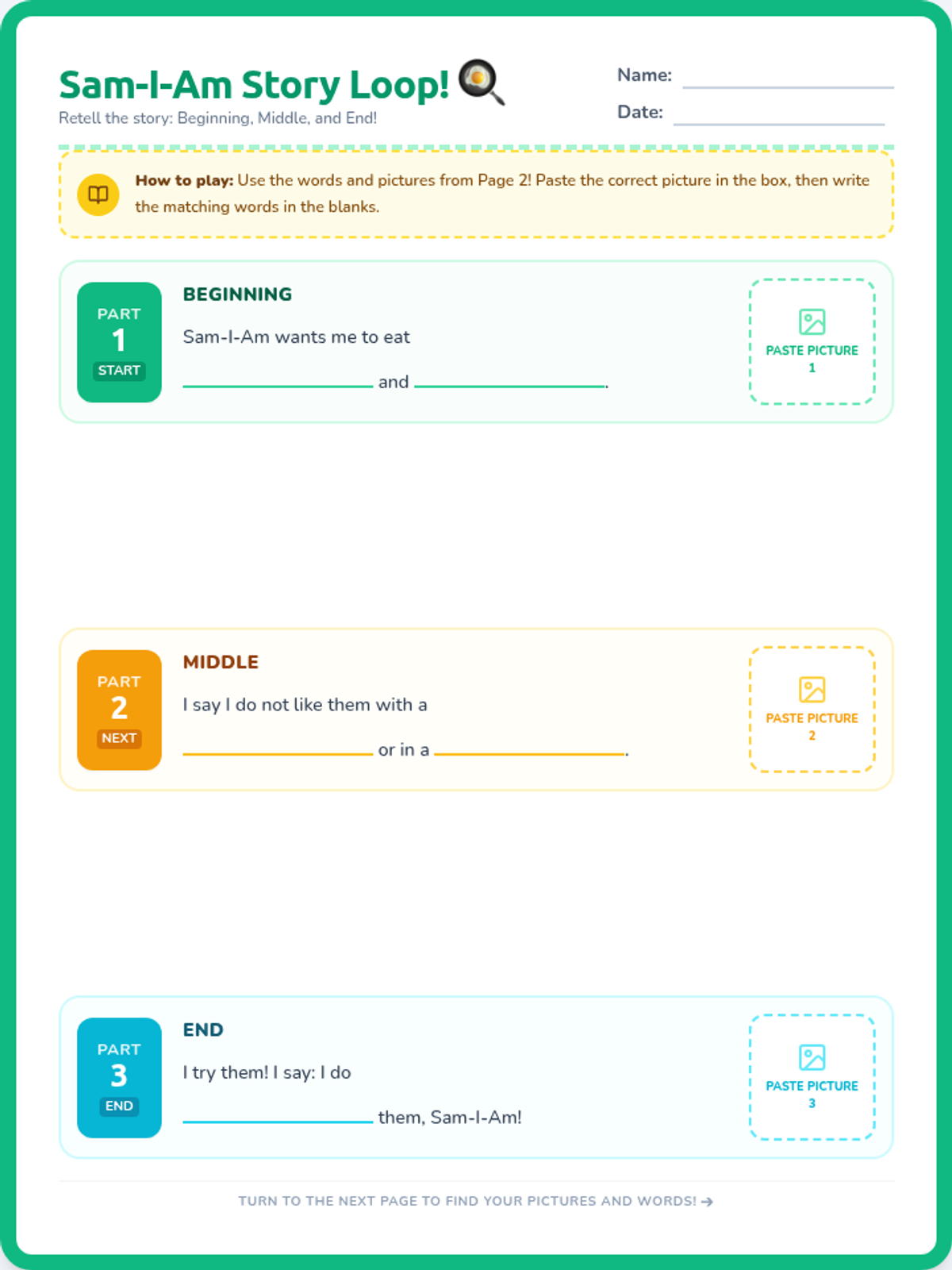
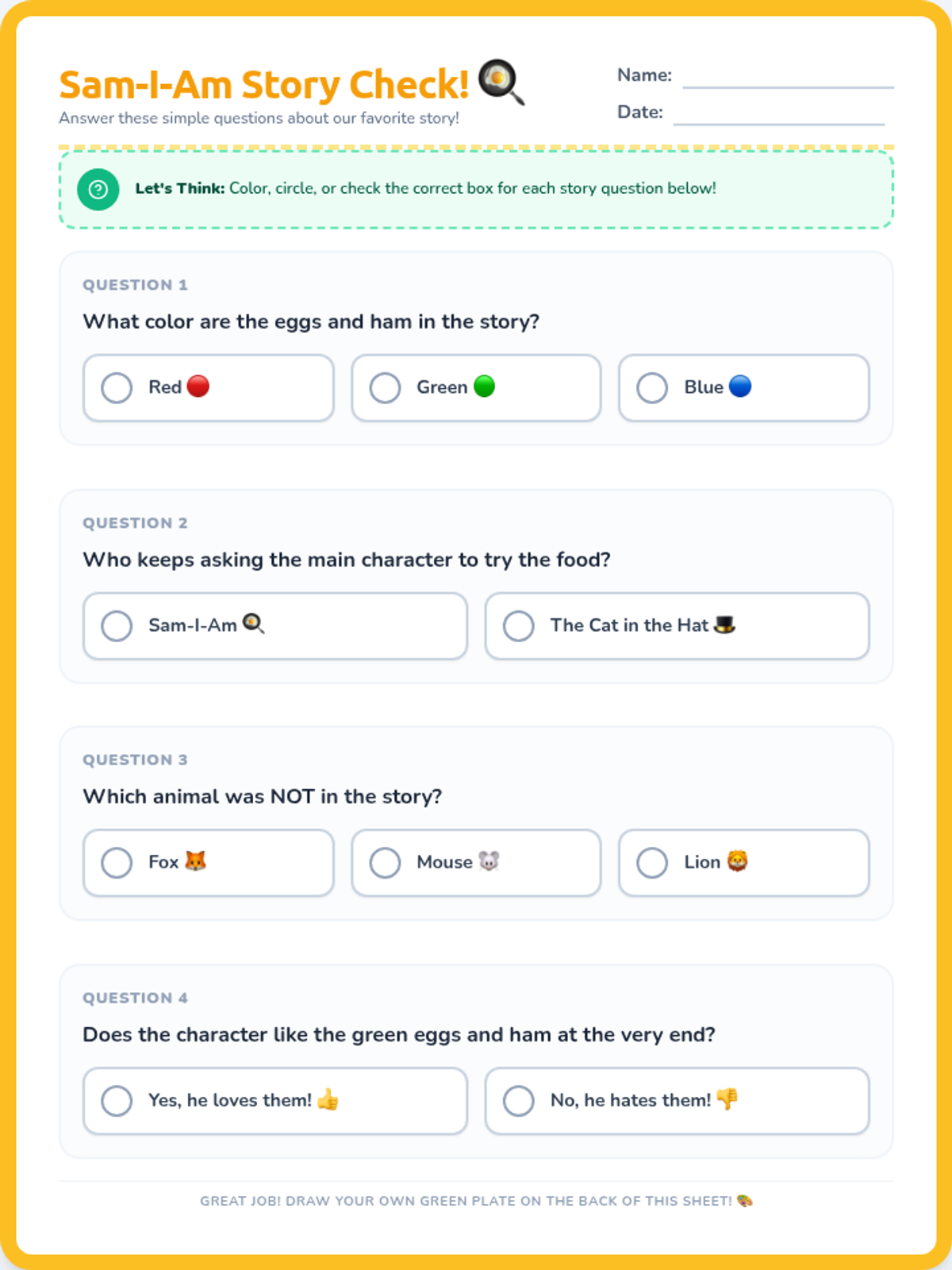
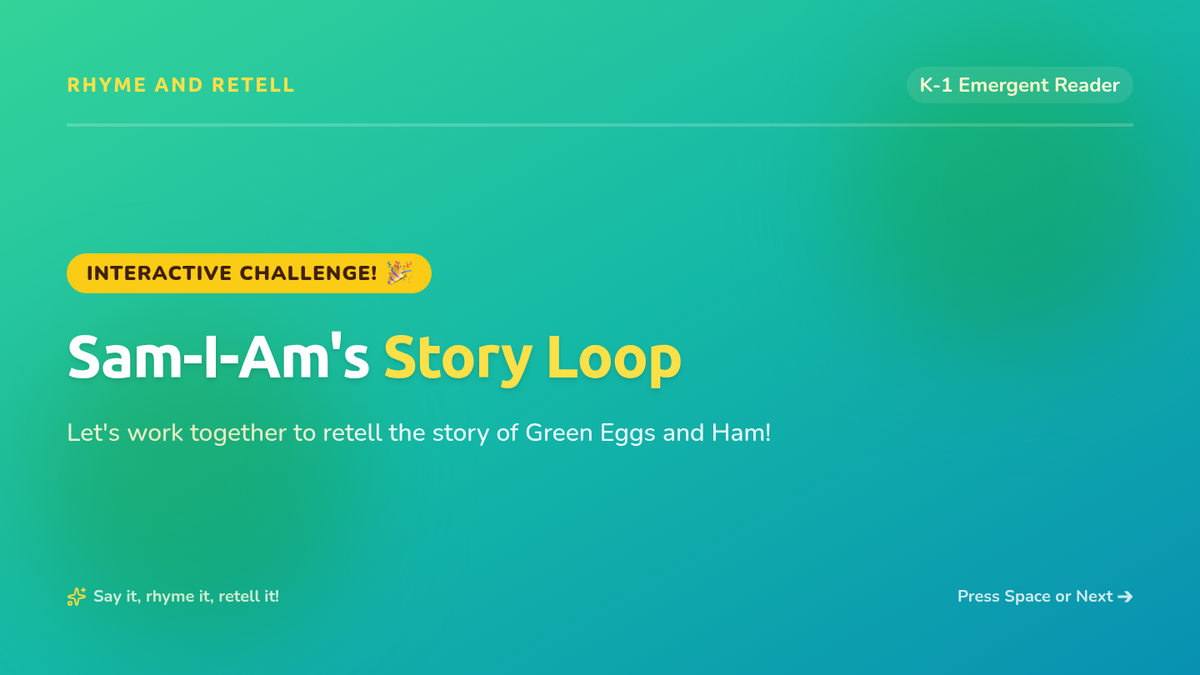
A lesson focused on retelling the classic story 'Green Eggs and Ham' for early emergent readers (K-1) using simple sentence frames, cut-and-paste activities, and highly visual slide sequencing.
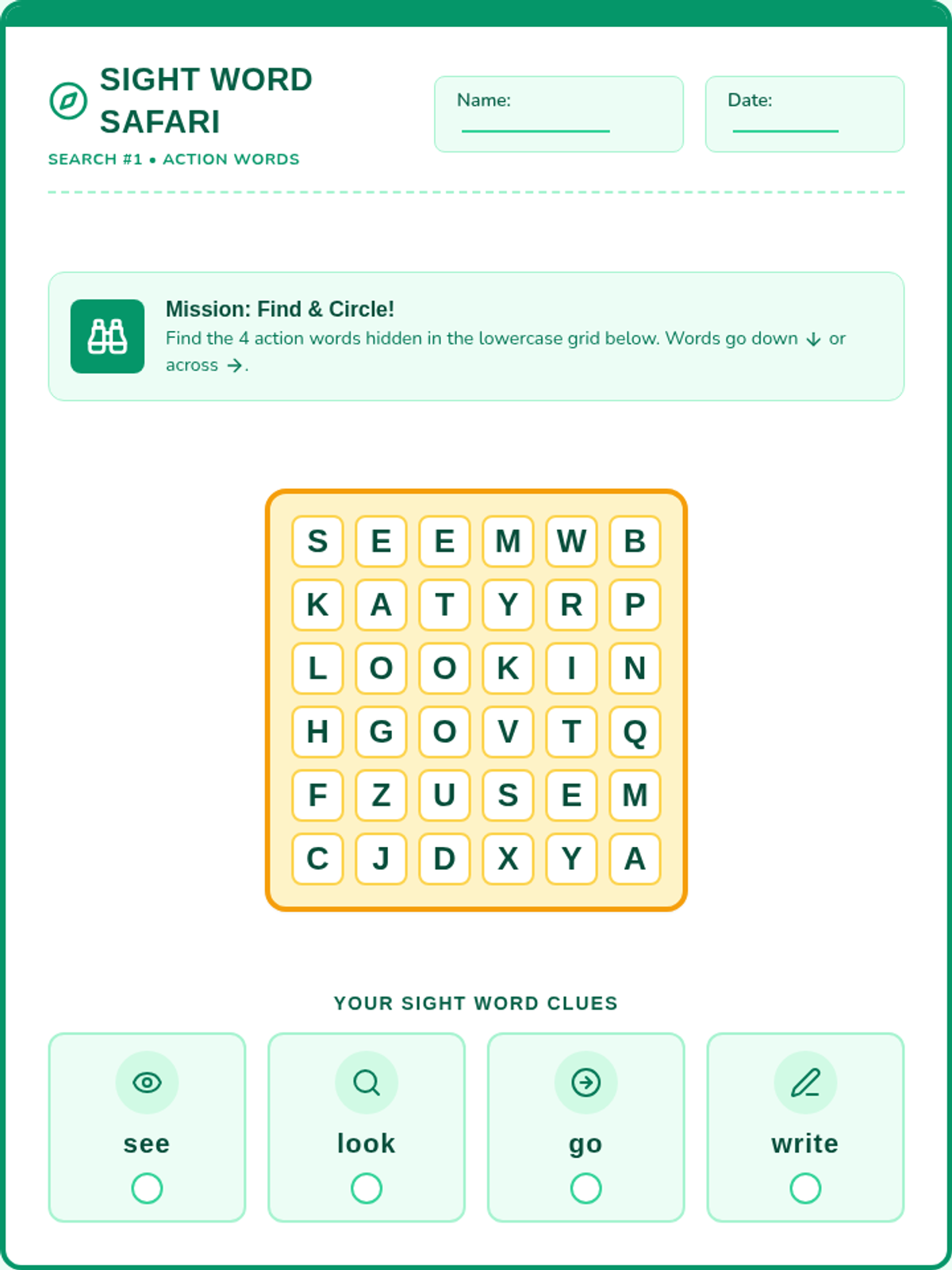
A lesson introducing high-frequency sight words to early learners through playful word search activities with picture clues.
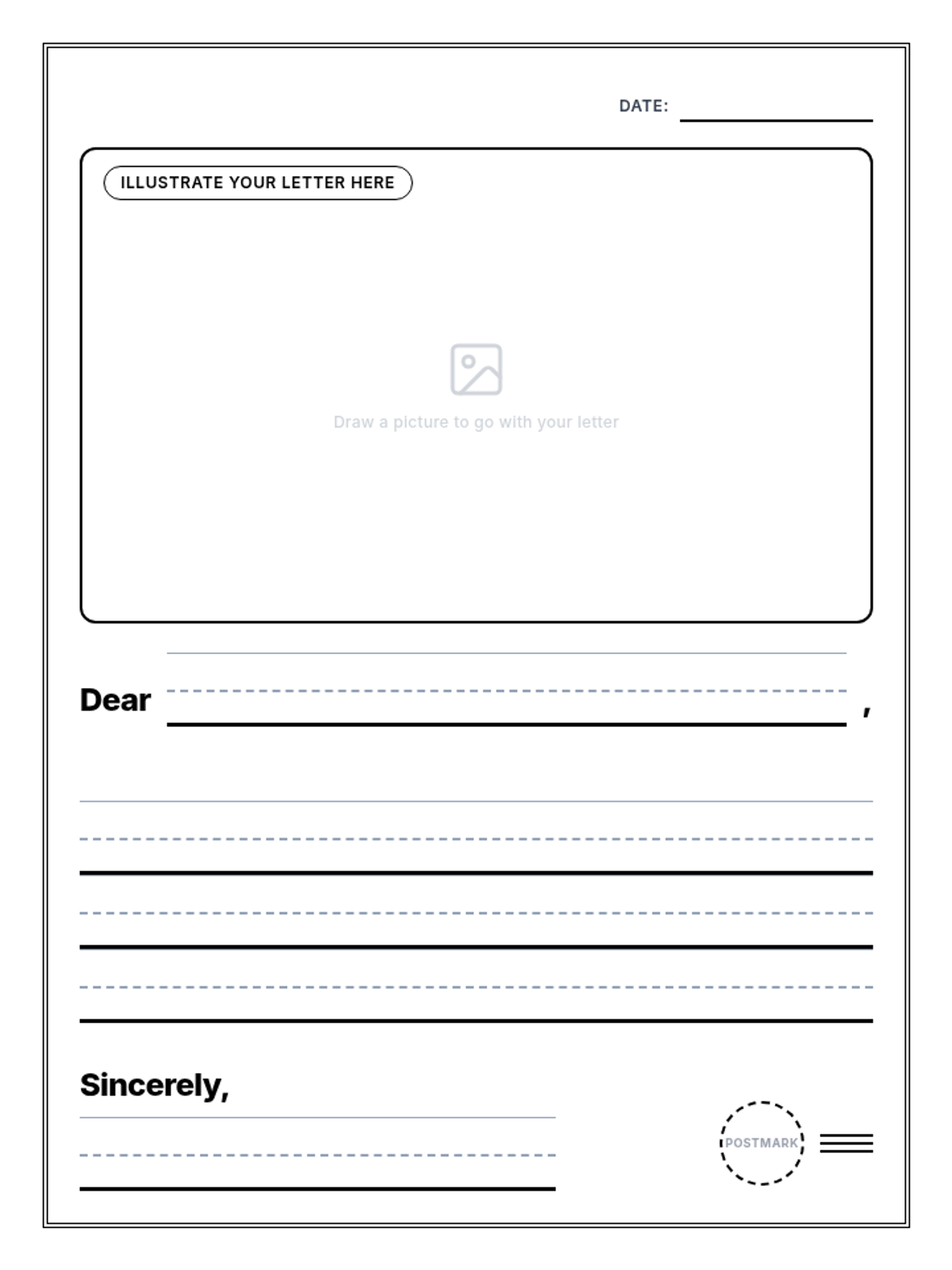
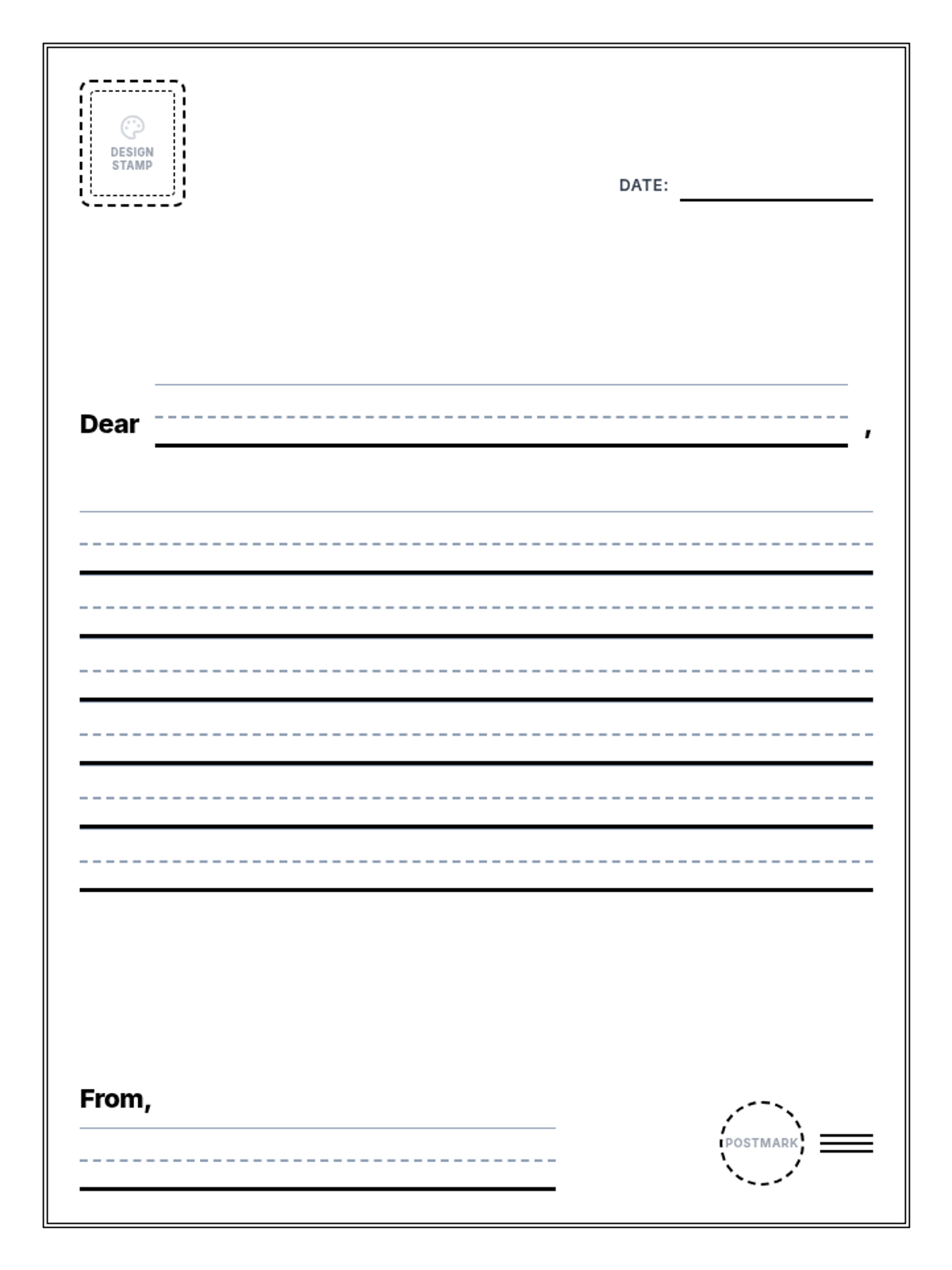
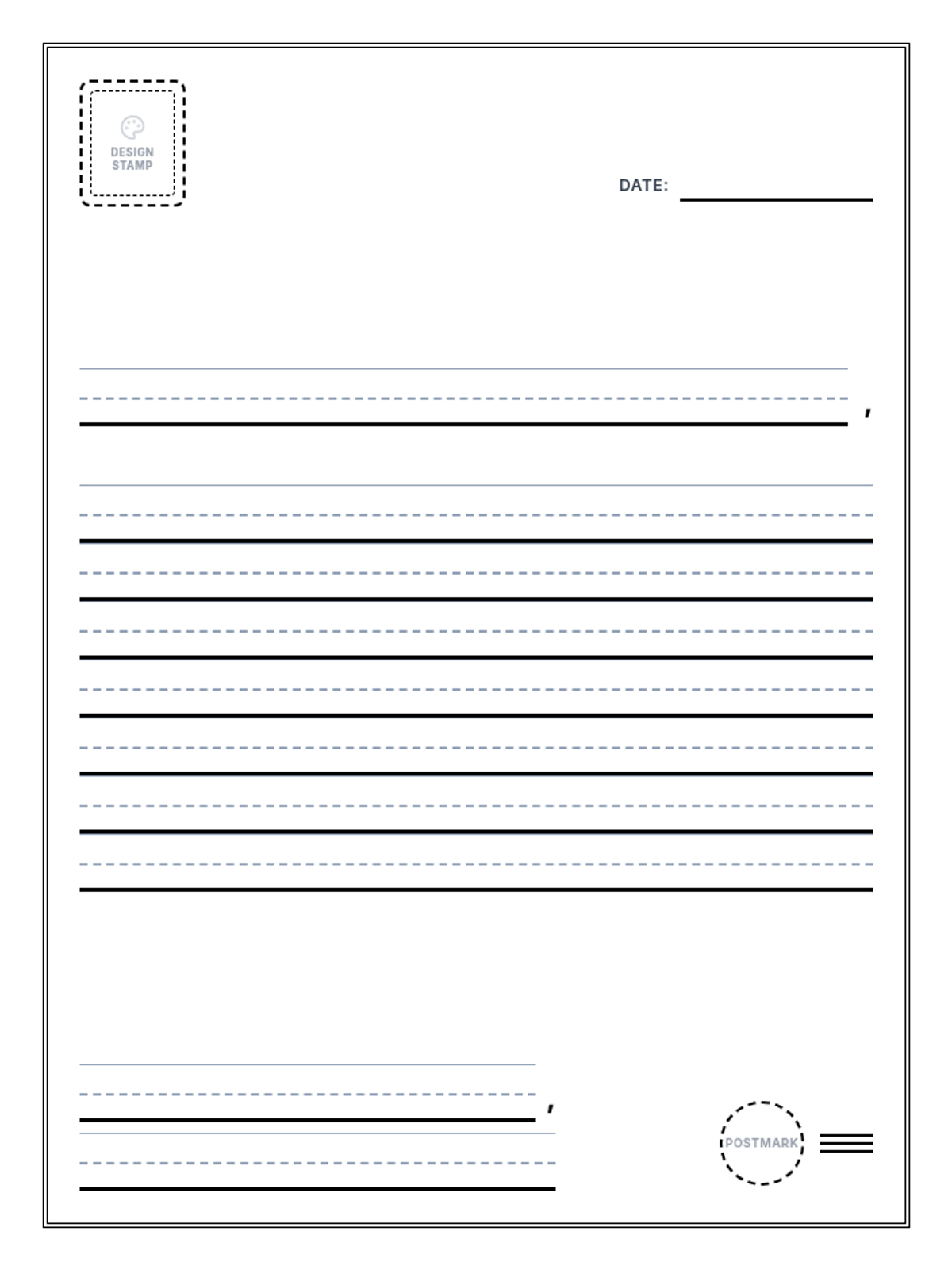
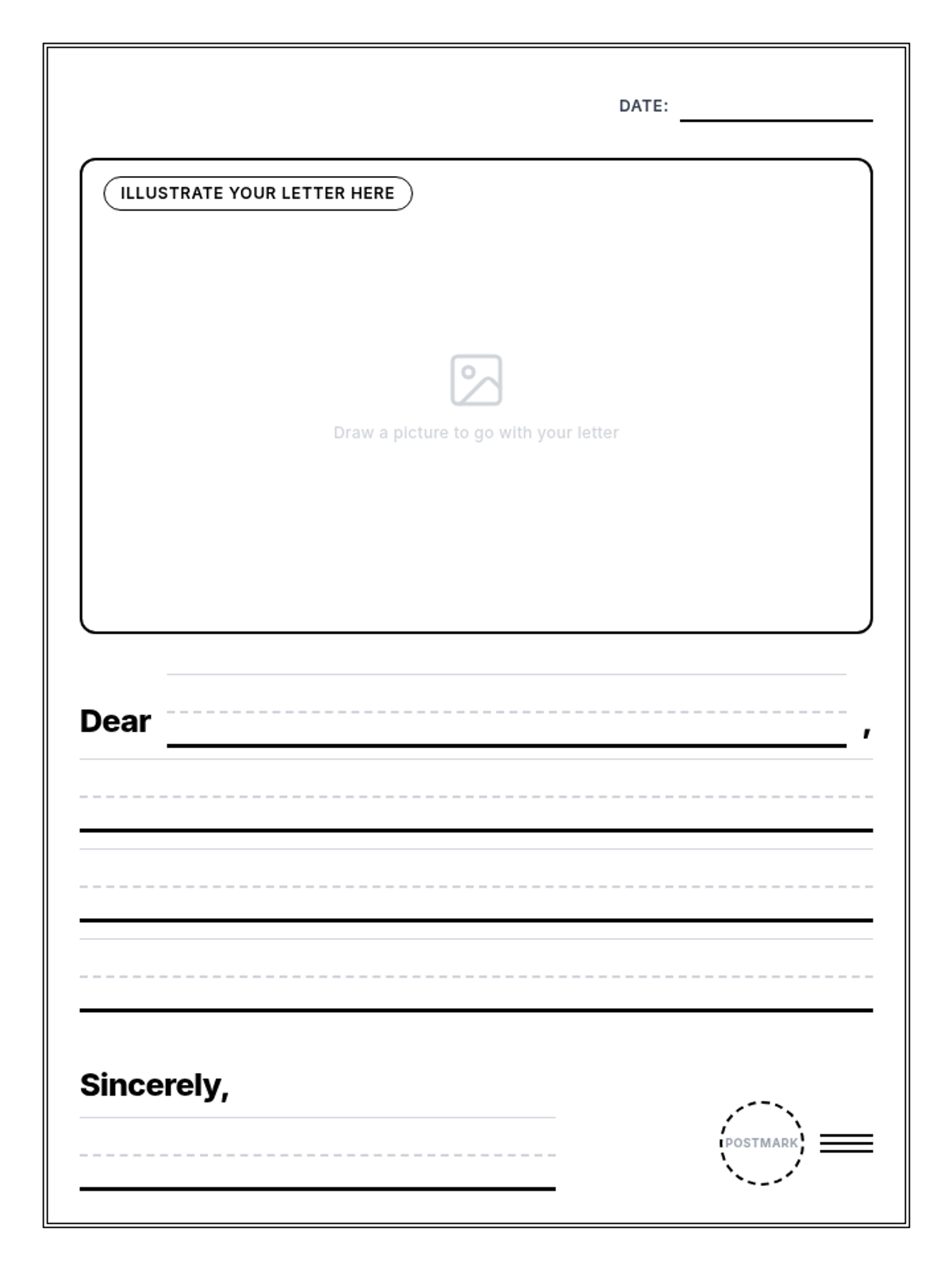
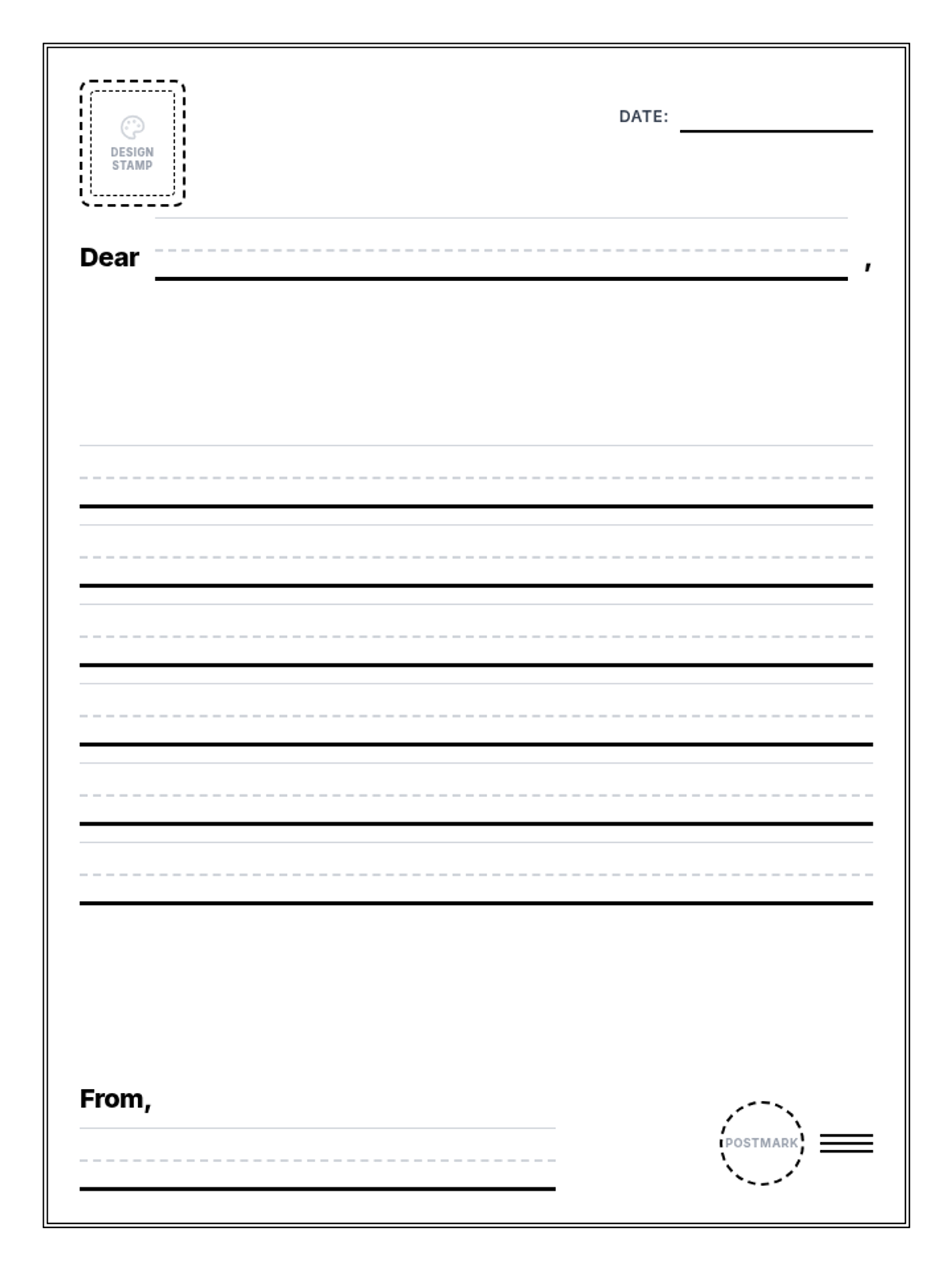
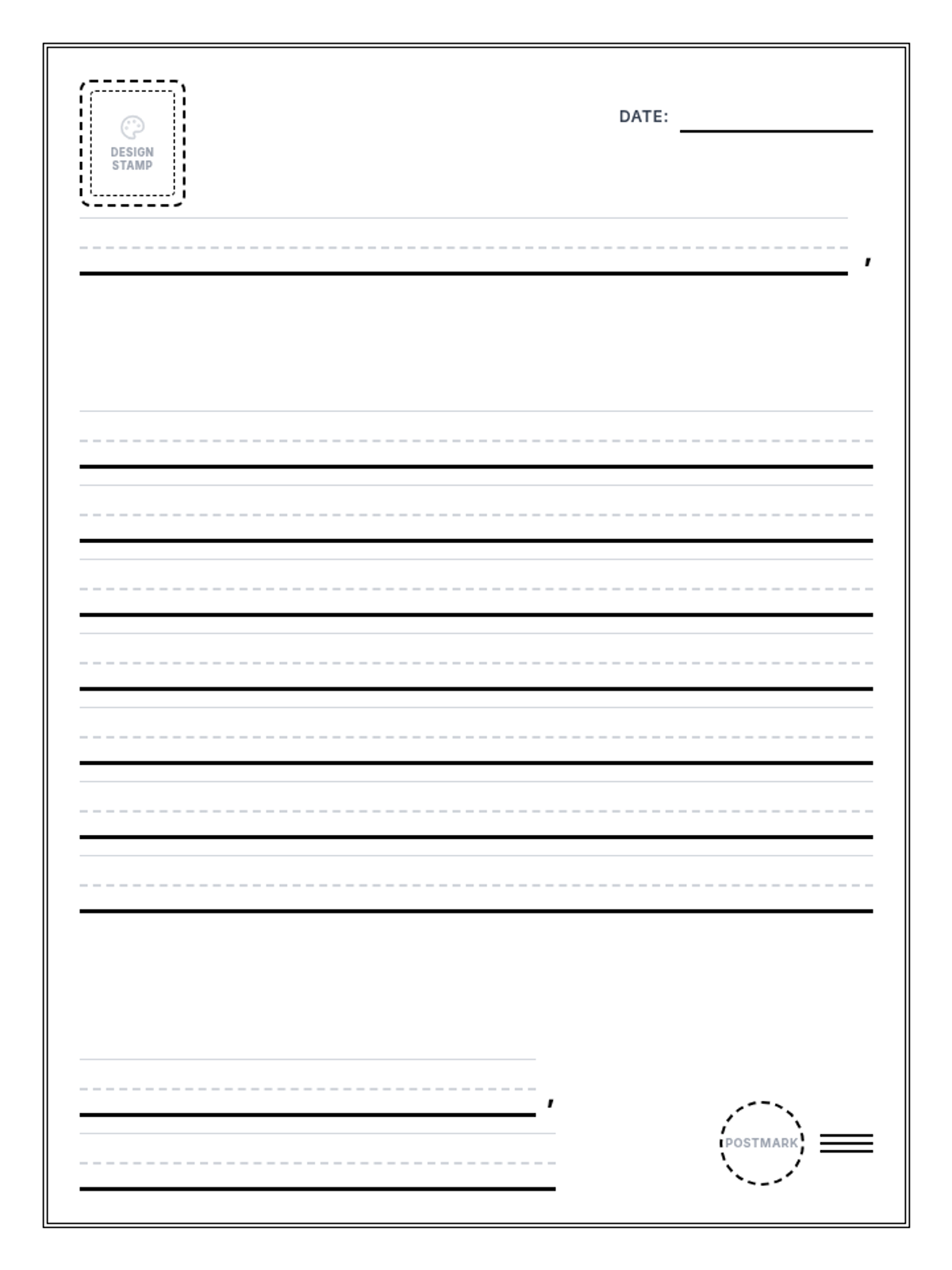
A collection of modern, black-and-white letter writing templates with Fundations-style writing lines, designed to differentiate for primary and elementary classrooms.
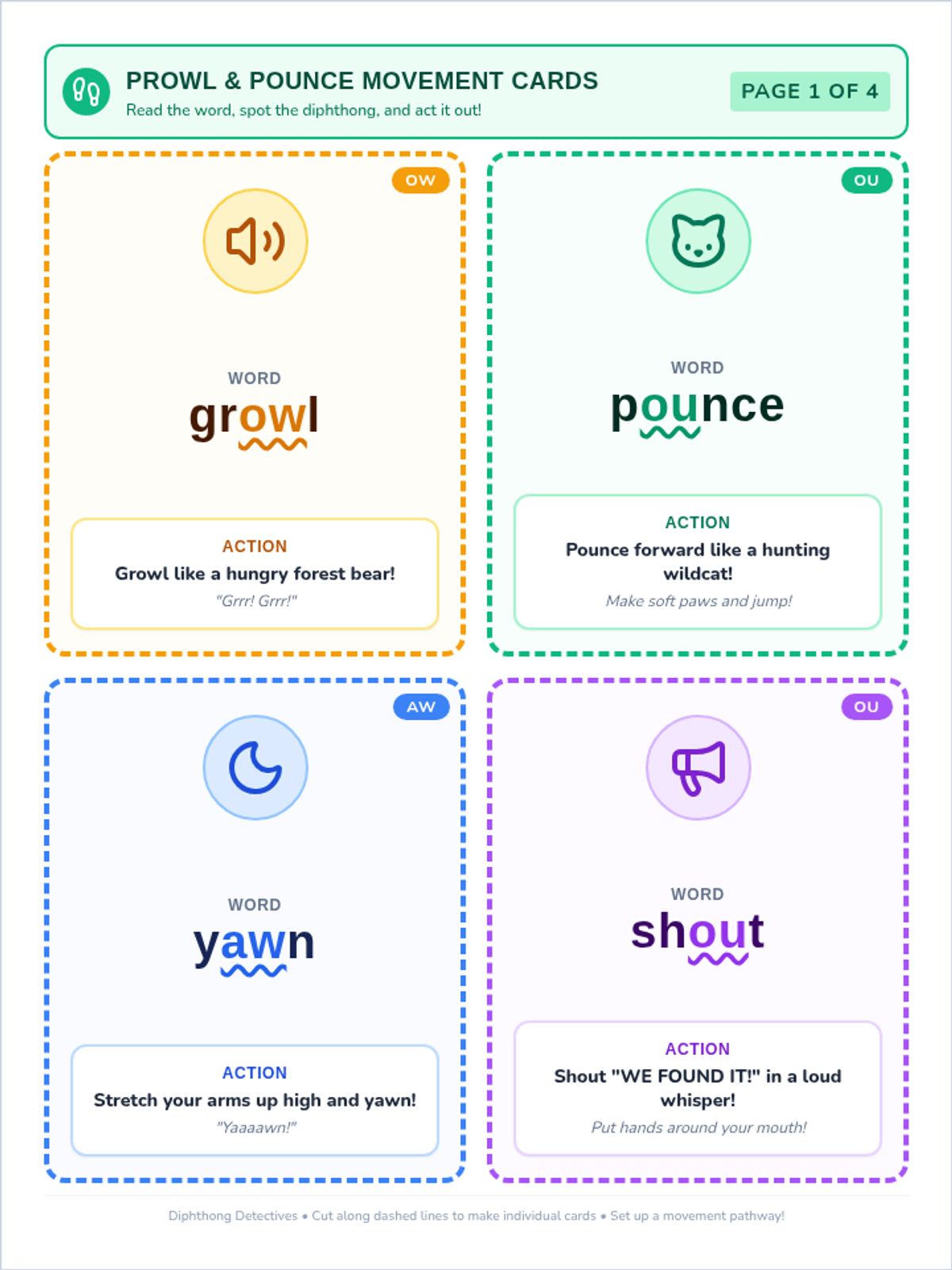
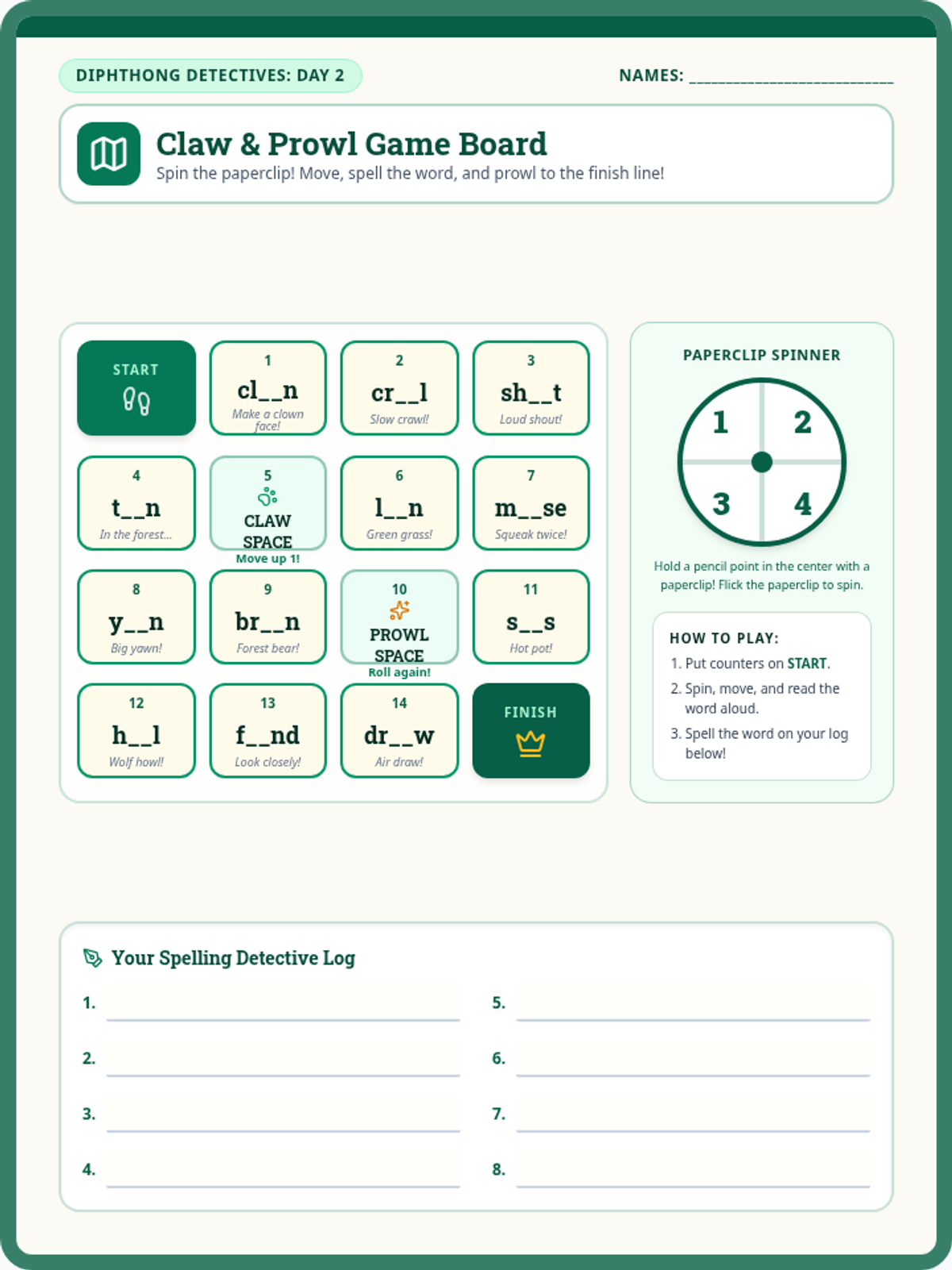
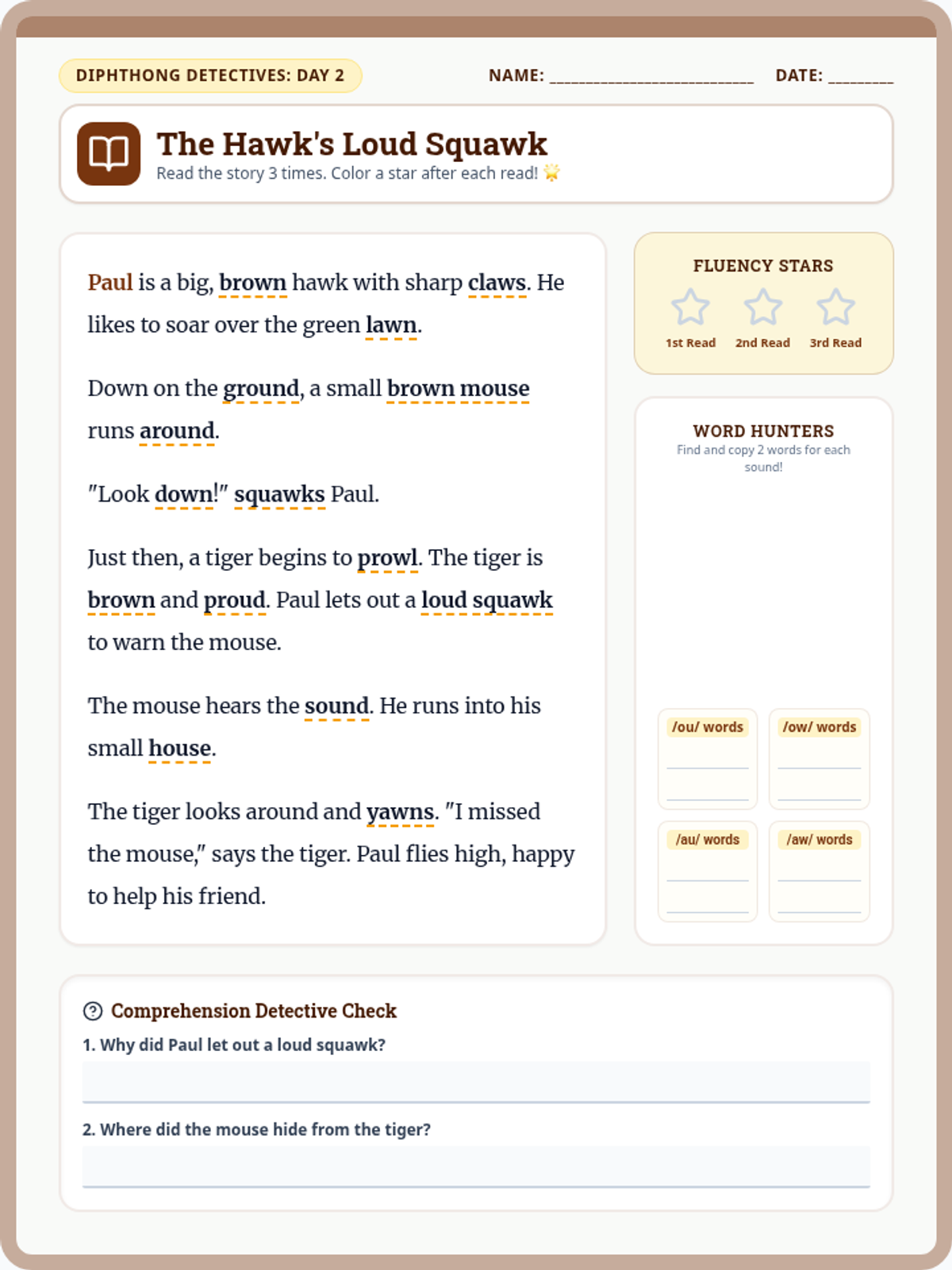
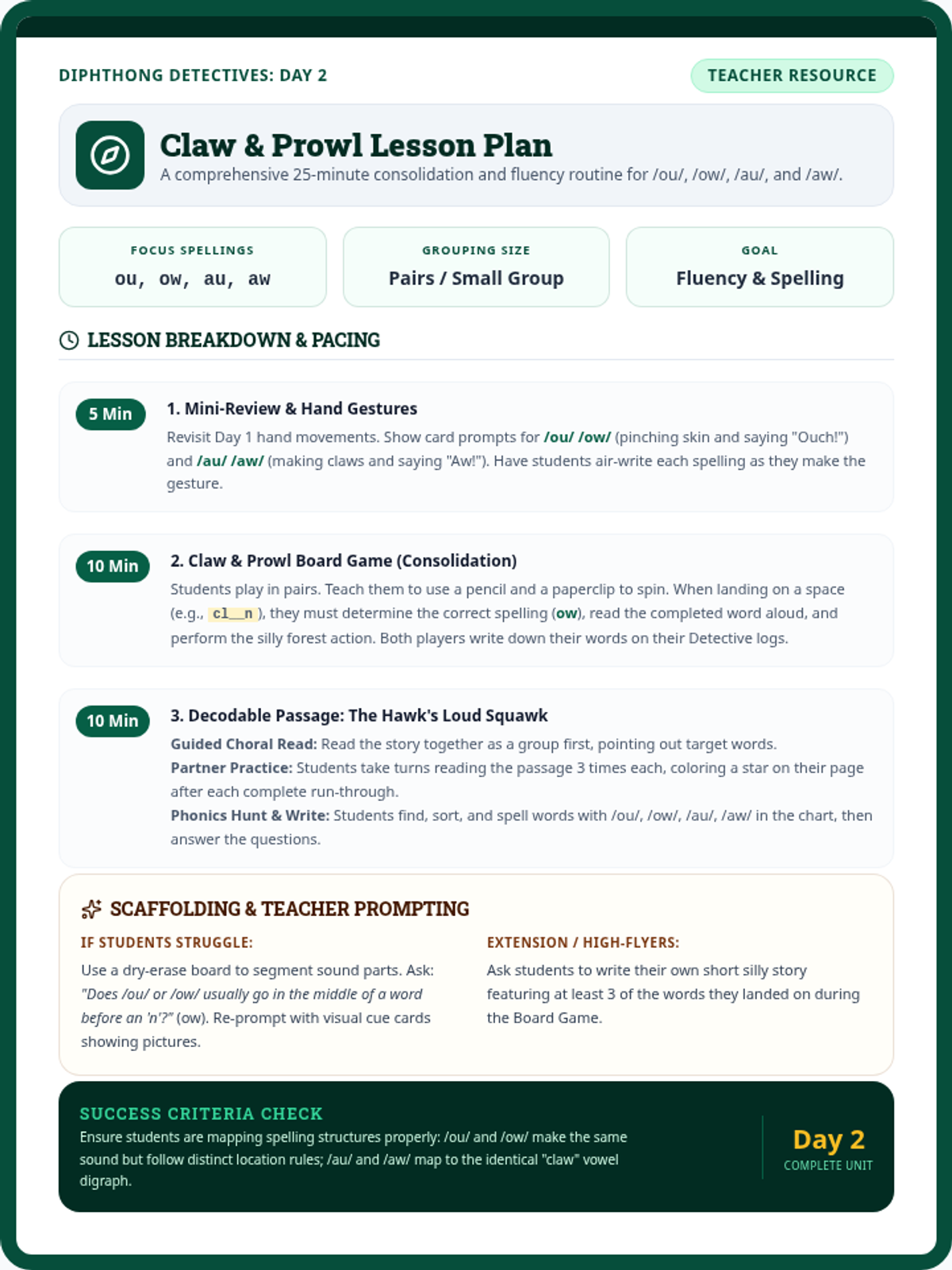
Day 2 of the Diphthong Detectives unit, focusing on consolidating ou, ow, au, and aw spellings through an interactive team board game and a shared decodable fluency story.
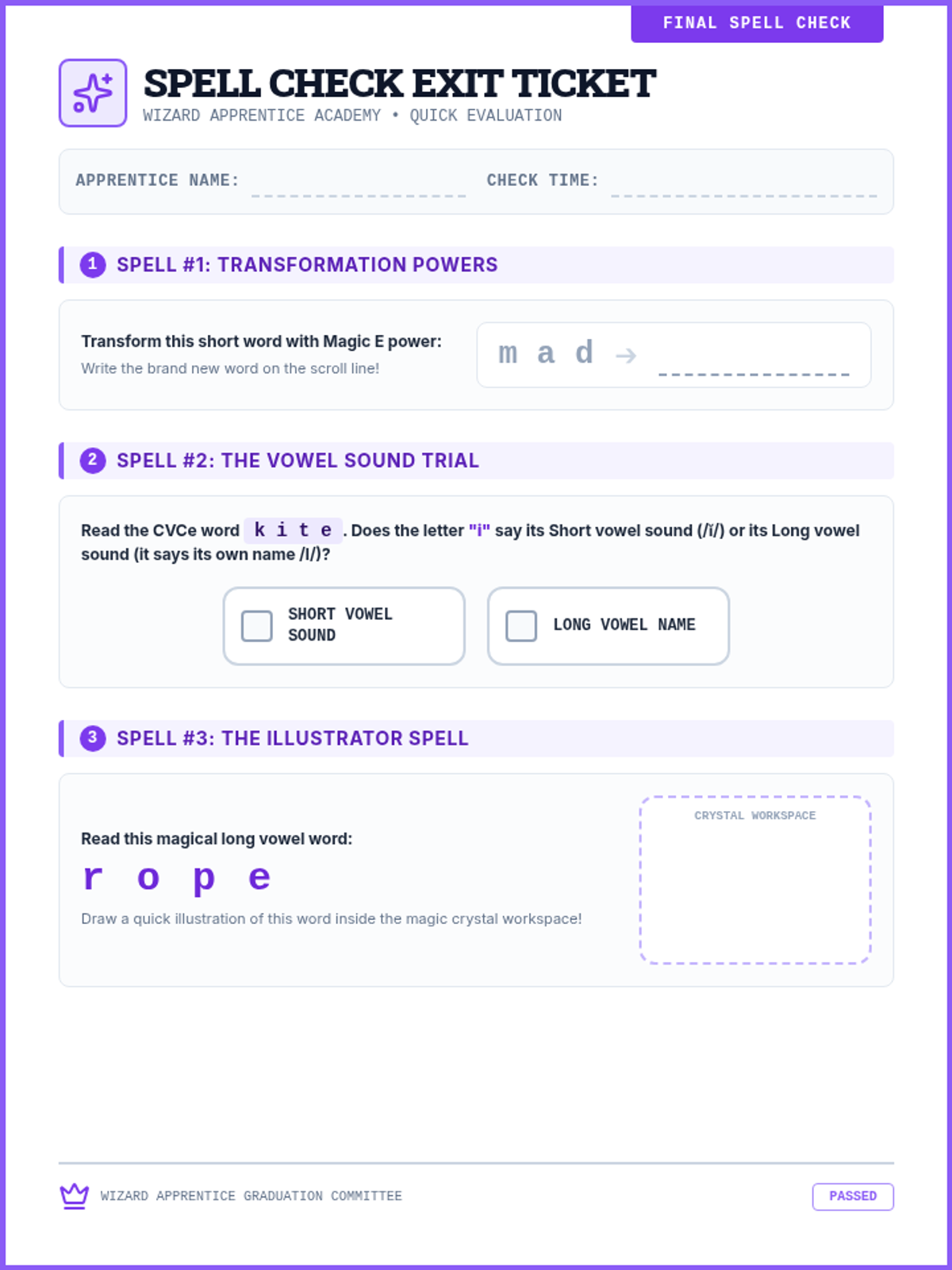
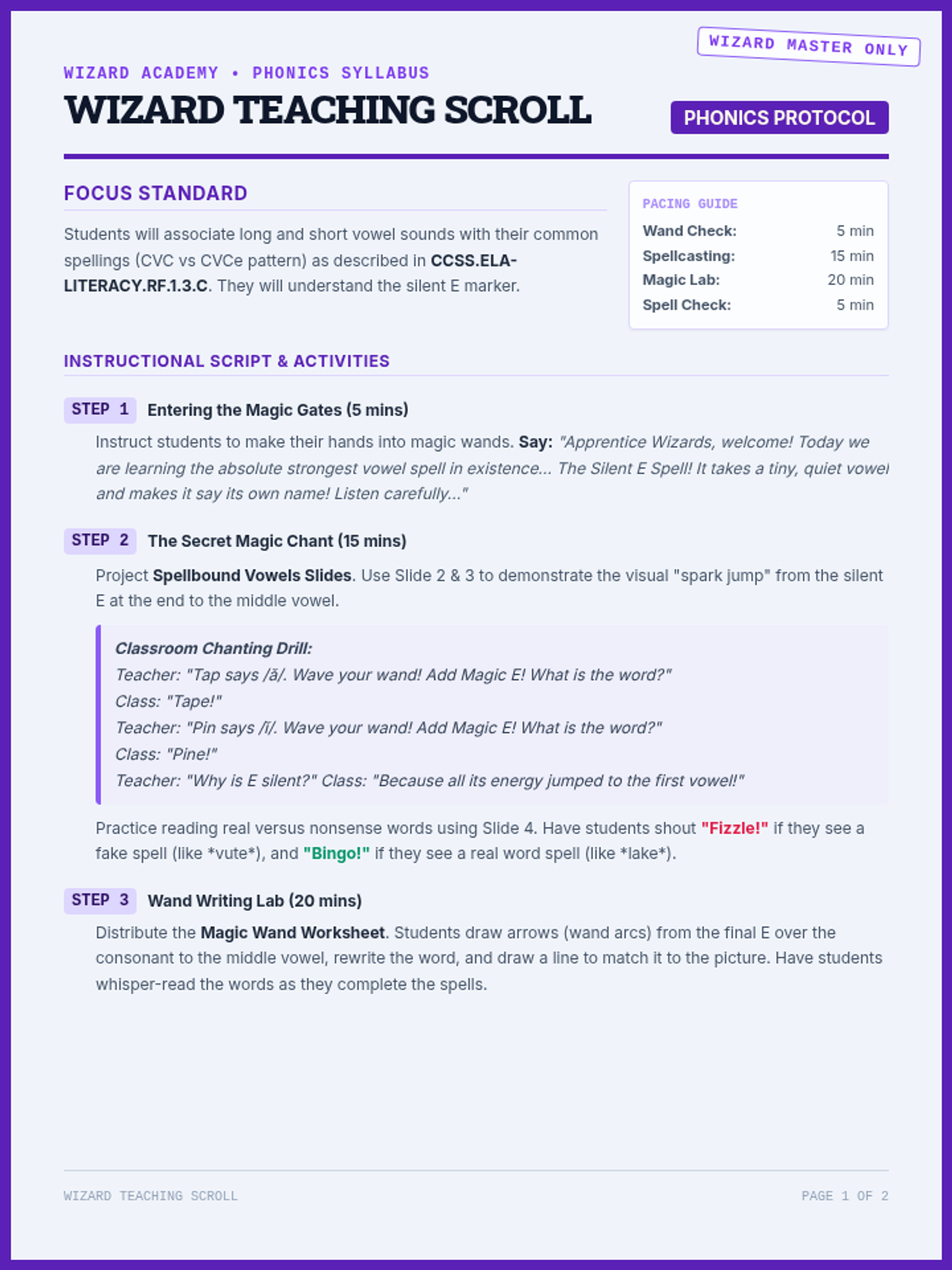
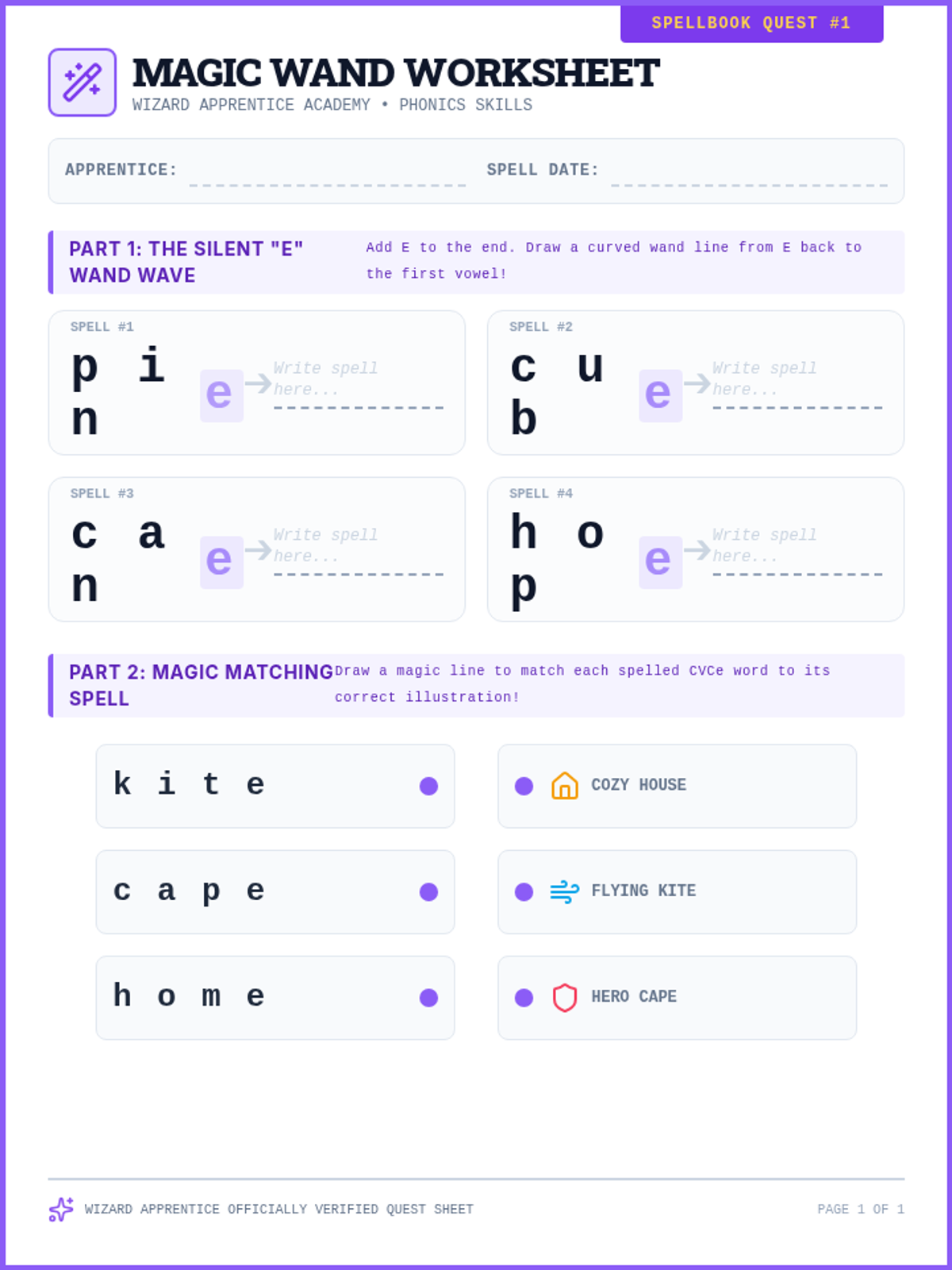
An enchanting, wizard-themed ELA phonics lesson where first graders become 'Wizard Apprentices' to master the Silent E rule. Students learn how Silent E waves its magic wand to make short vowels say their own name, converting simple CV-words into CVCe-words.
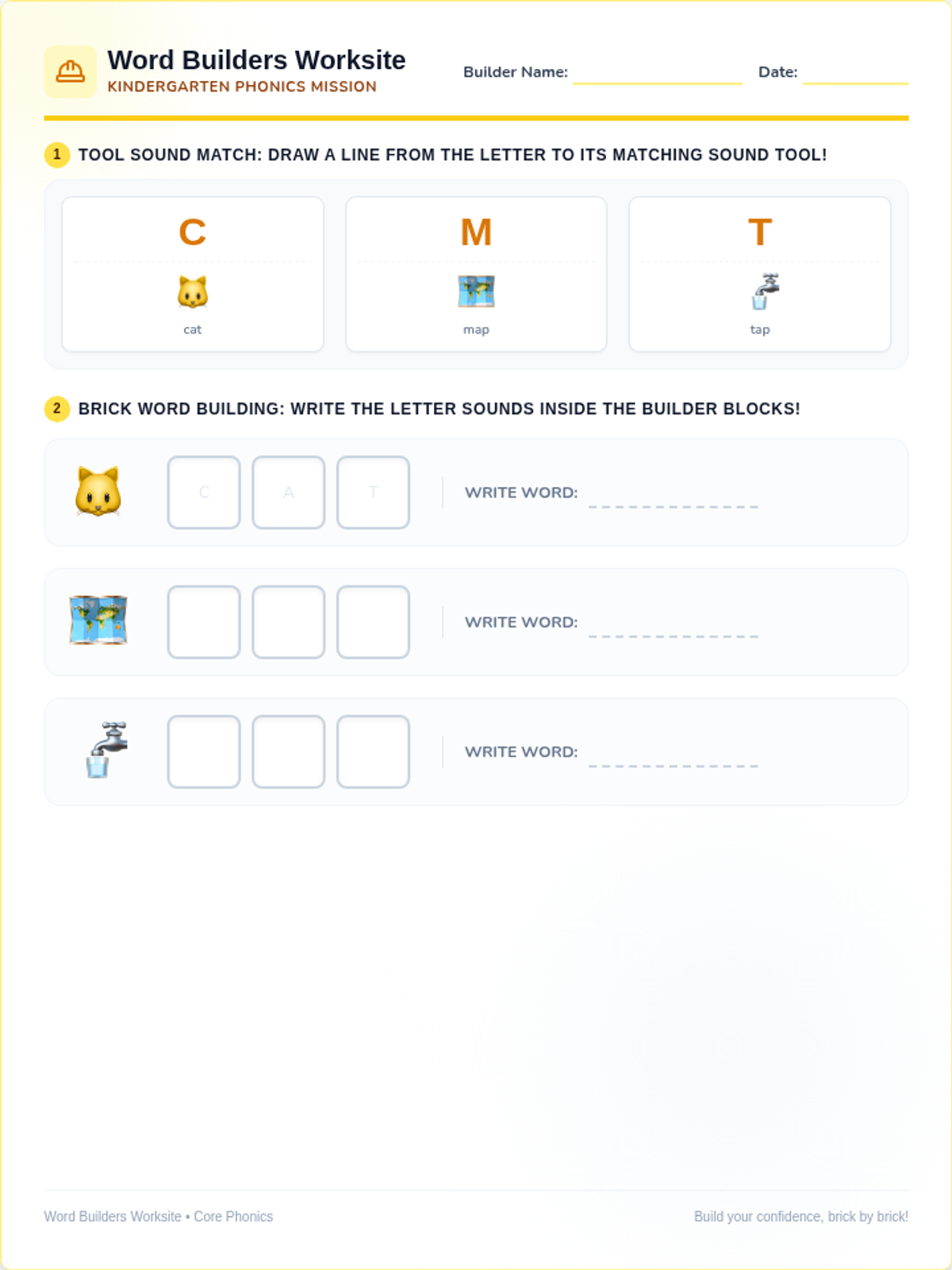
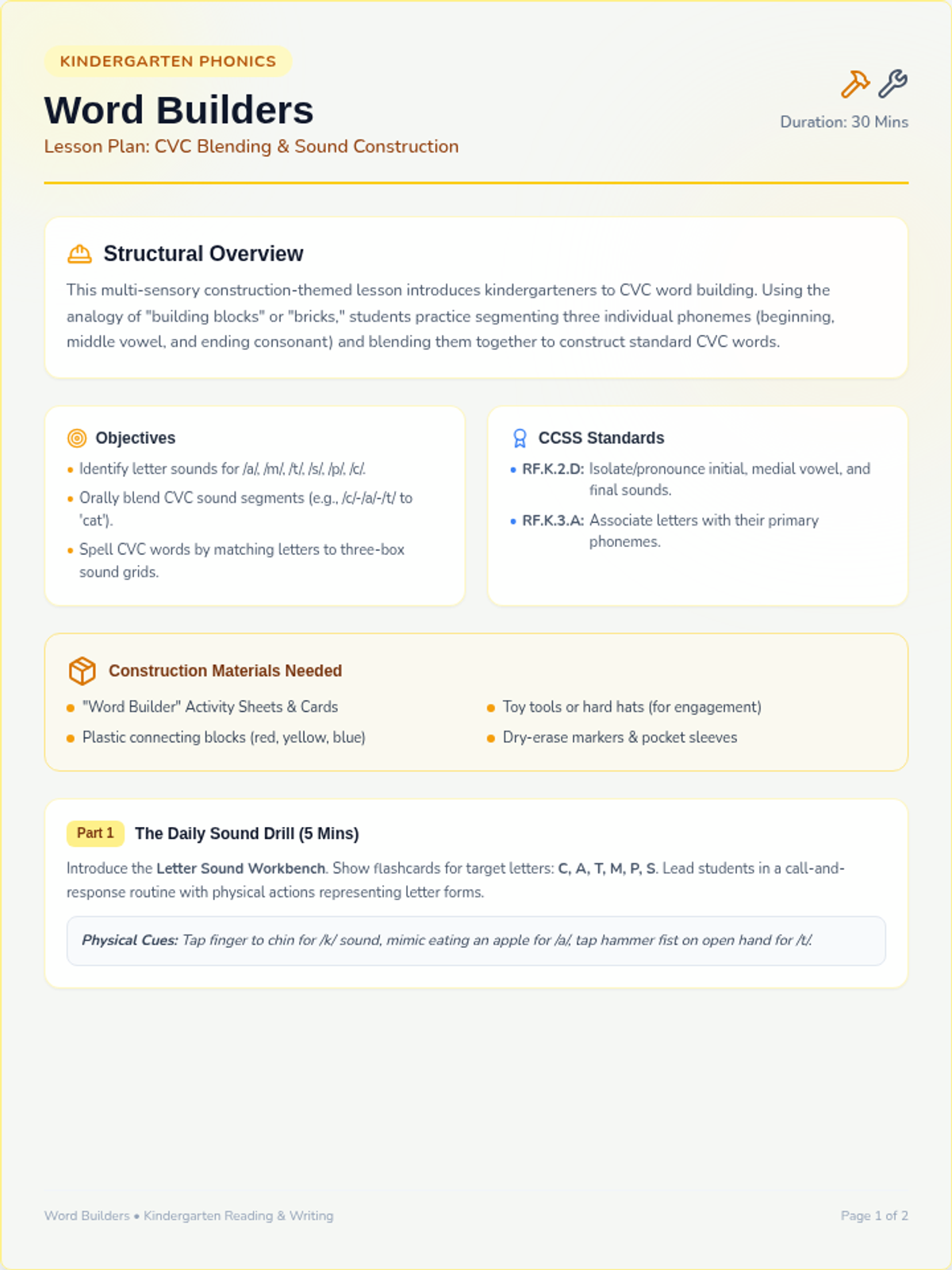
A foundational early literacy lesson helping kindergarteners identify letters, master letter sounds, and practice blending CVC and high-frequency words.
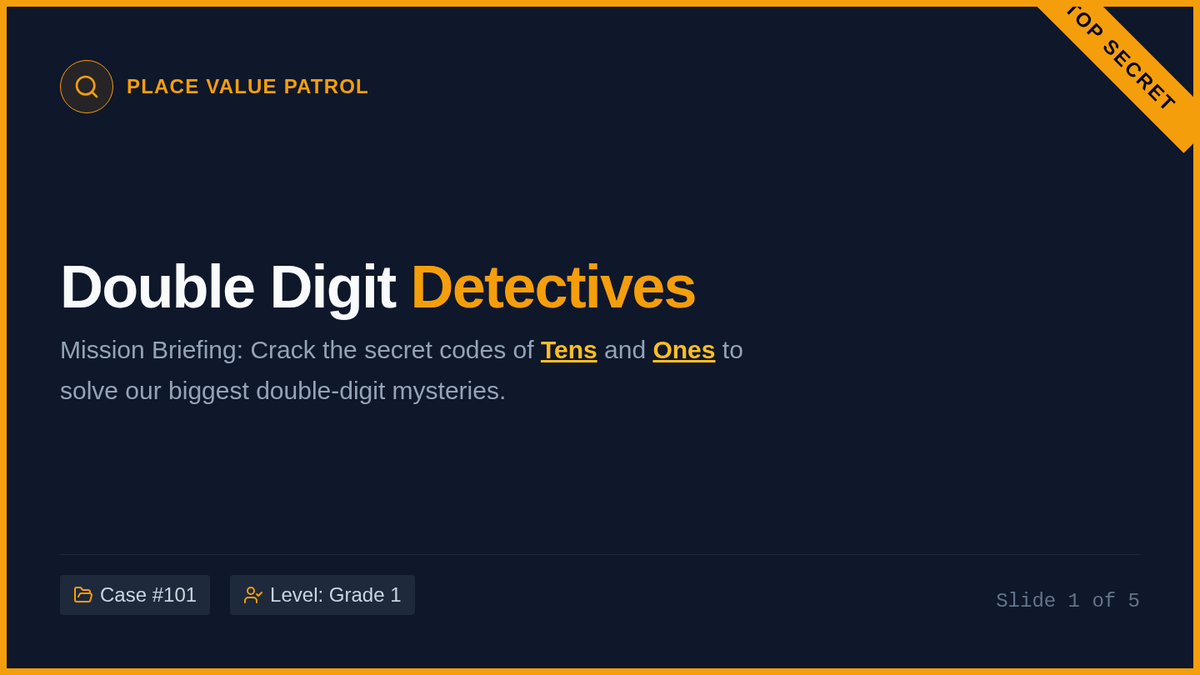
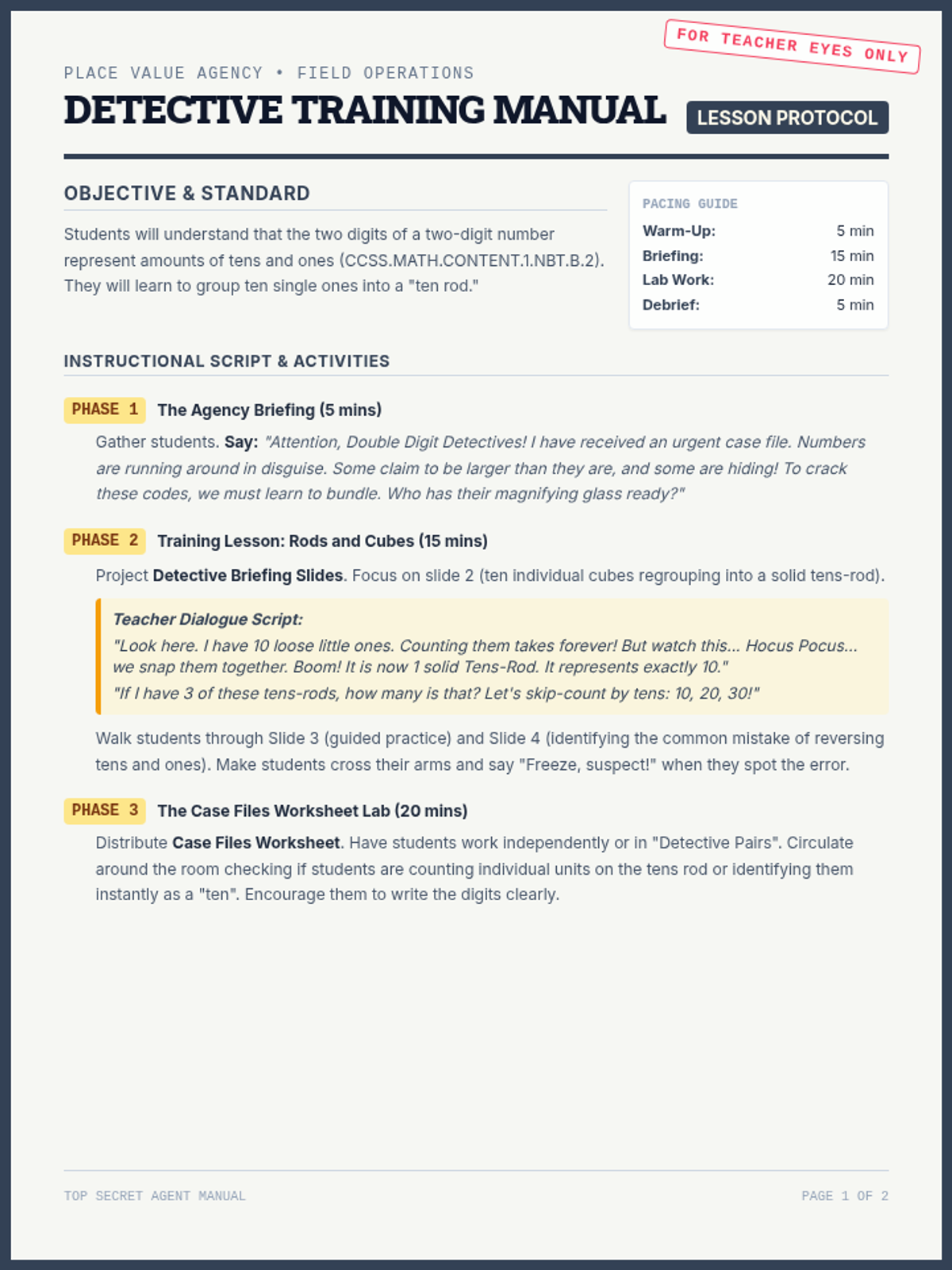
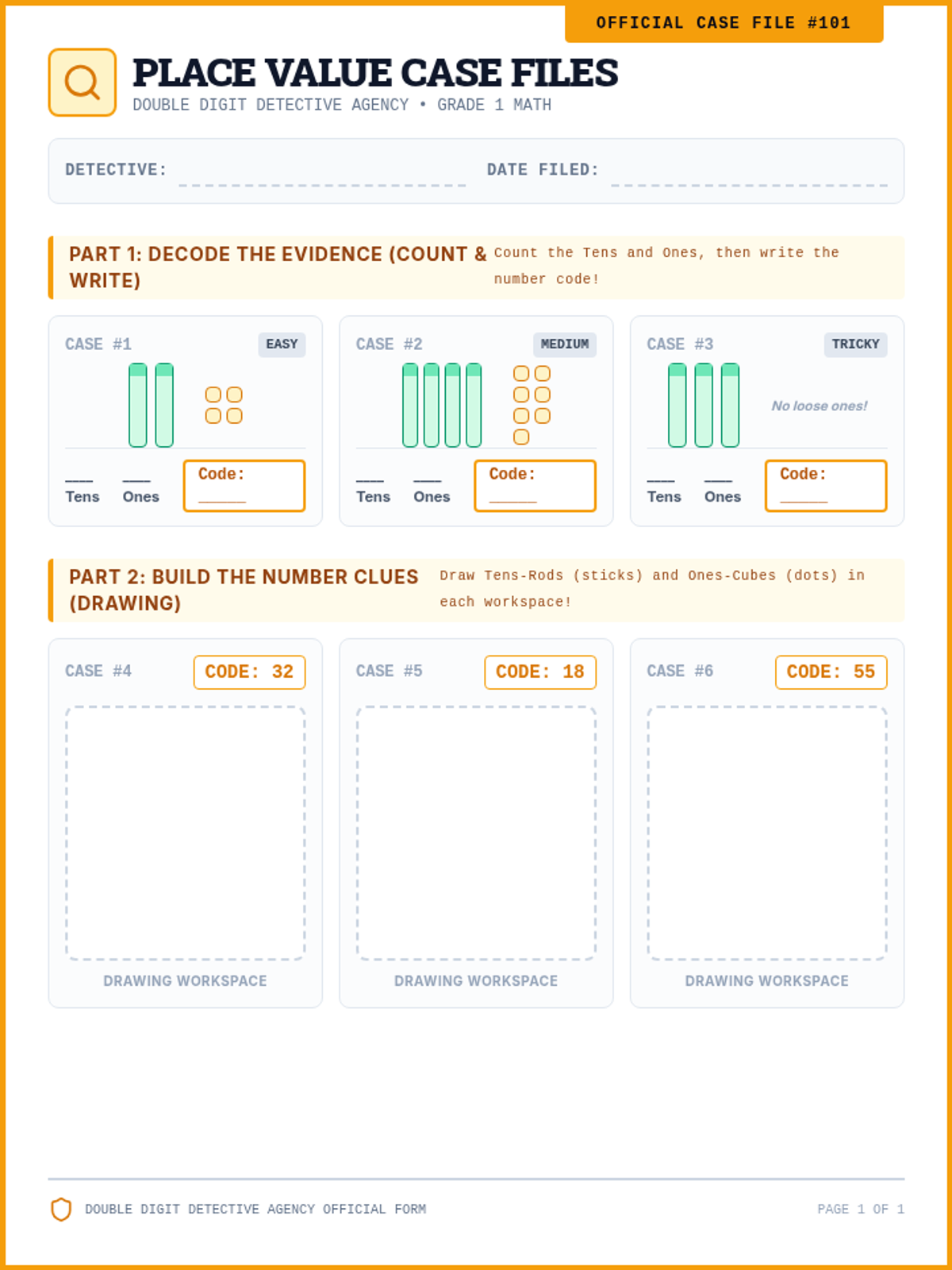
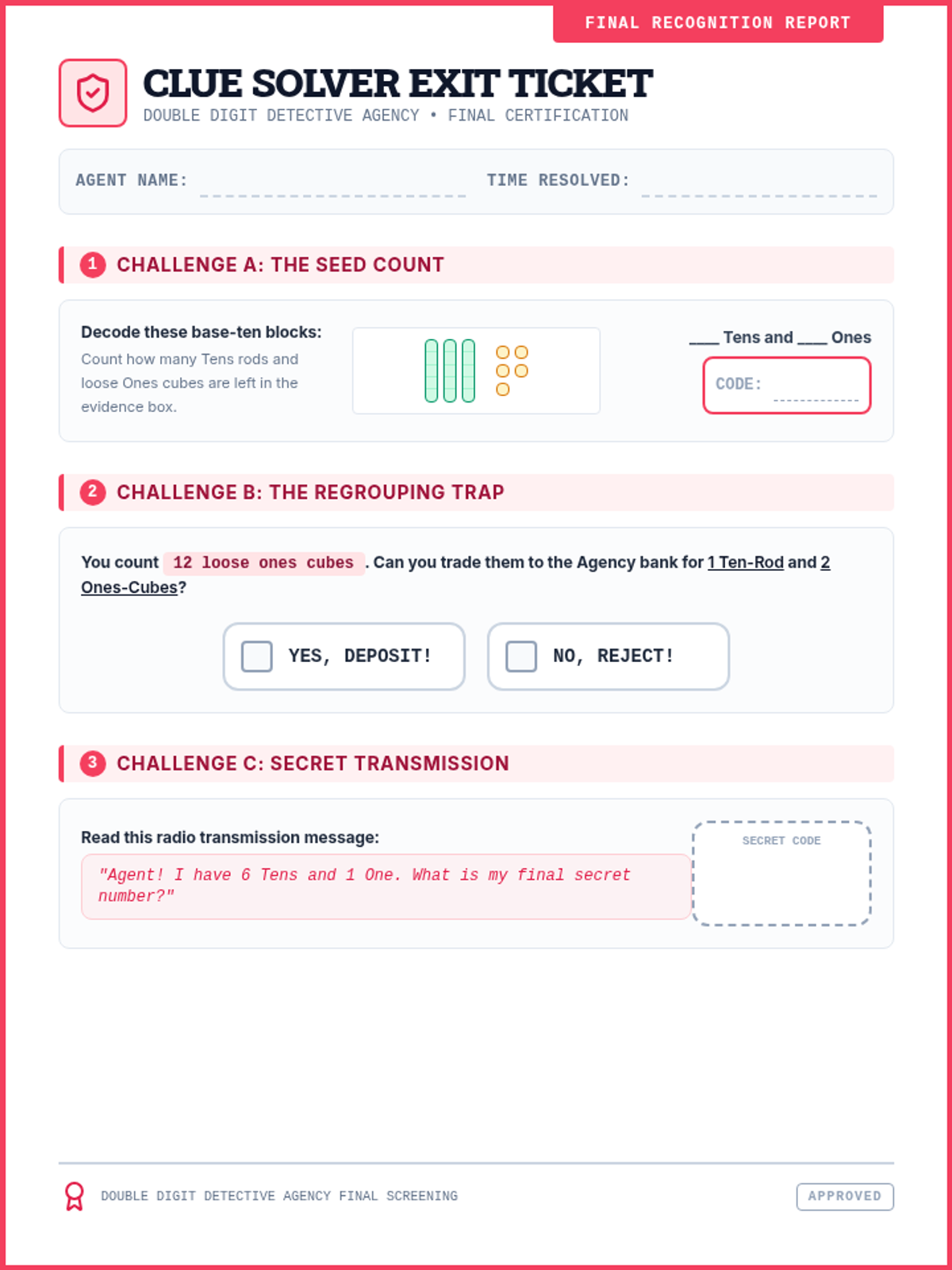
An engaging, detective-themed math lesson where first graders become 'Double Digit Detectives' to master place value (tens and ones). Students learn to bundle ones into tens, read base-ten representations, and solve place value cases using their detective toolkits.
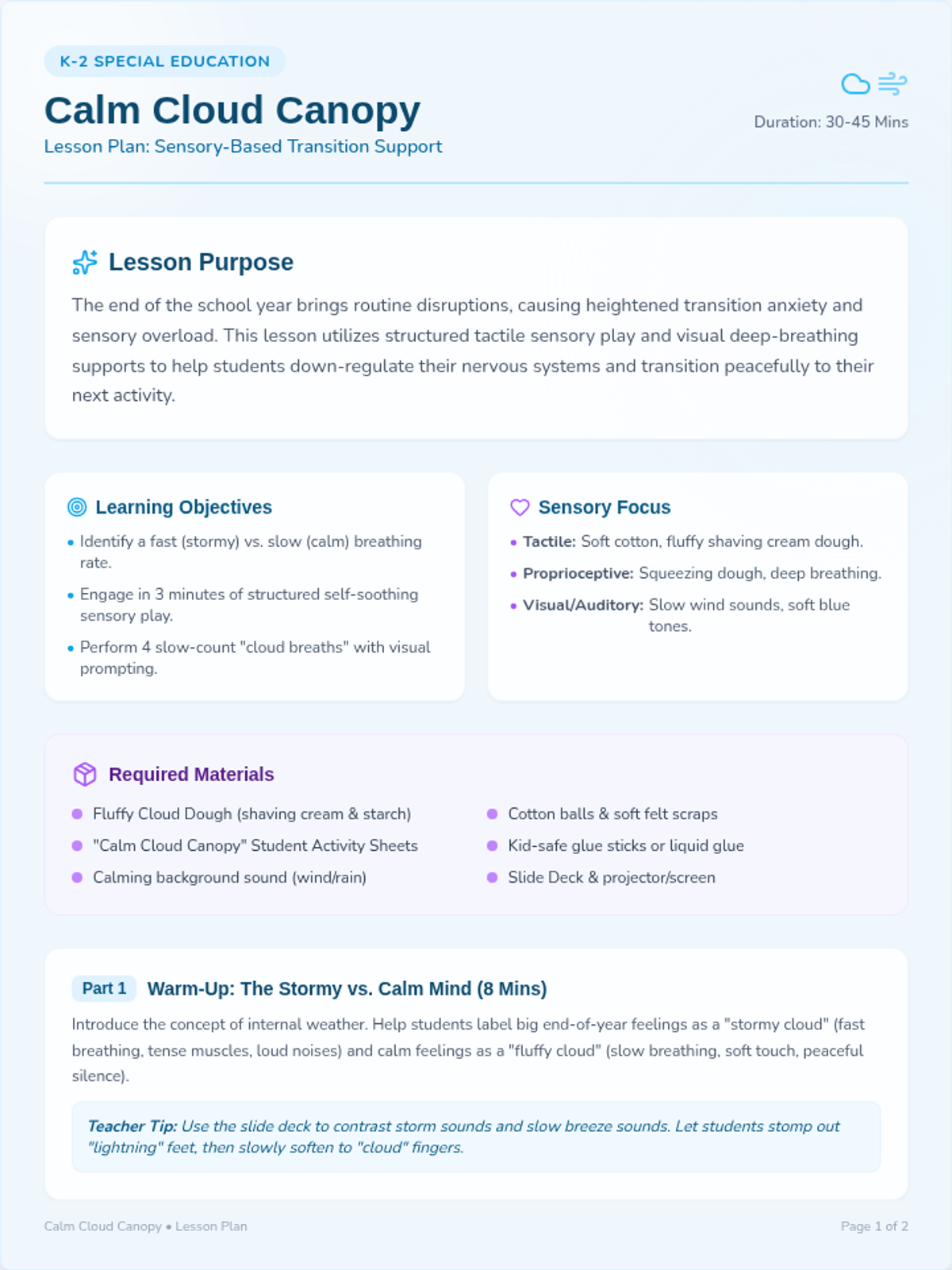
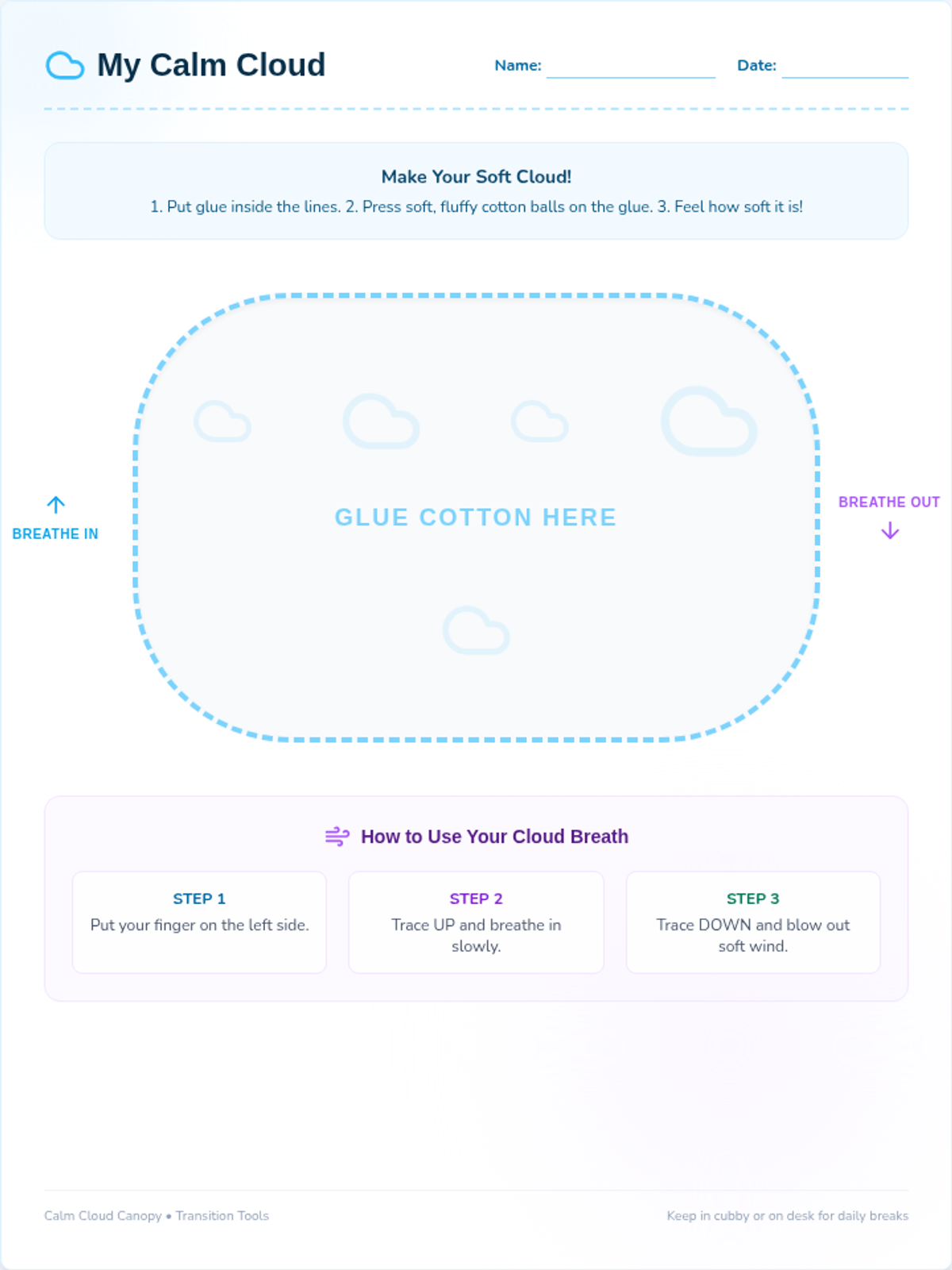
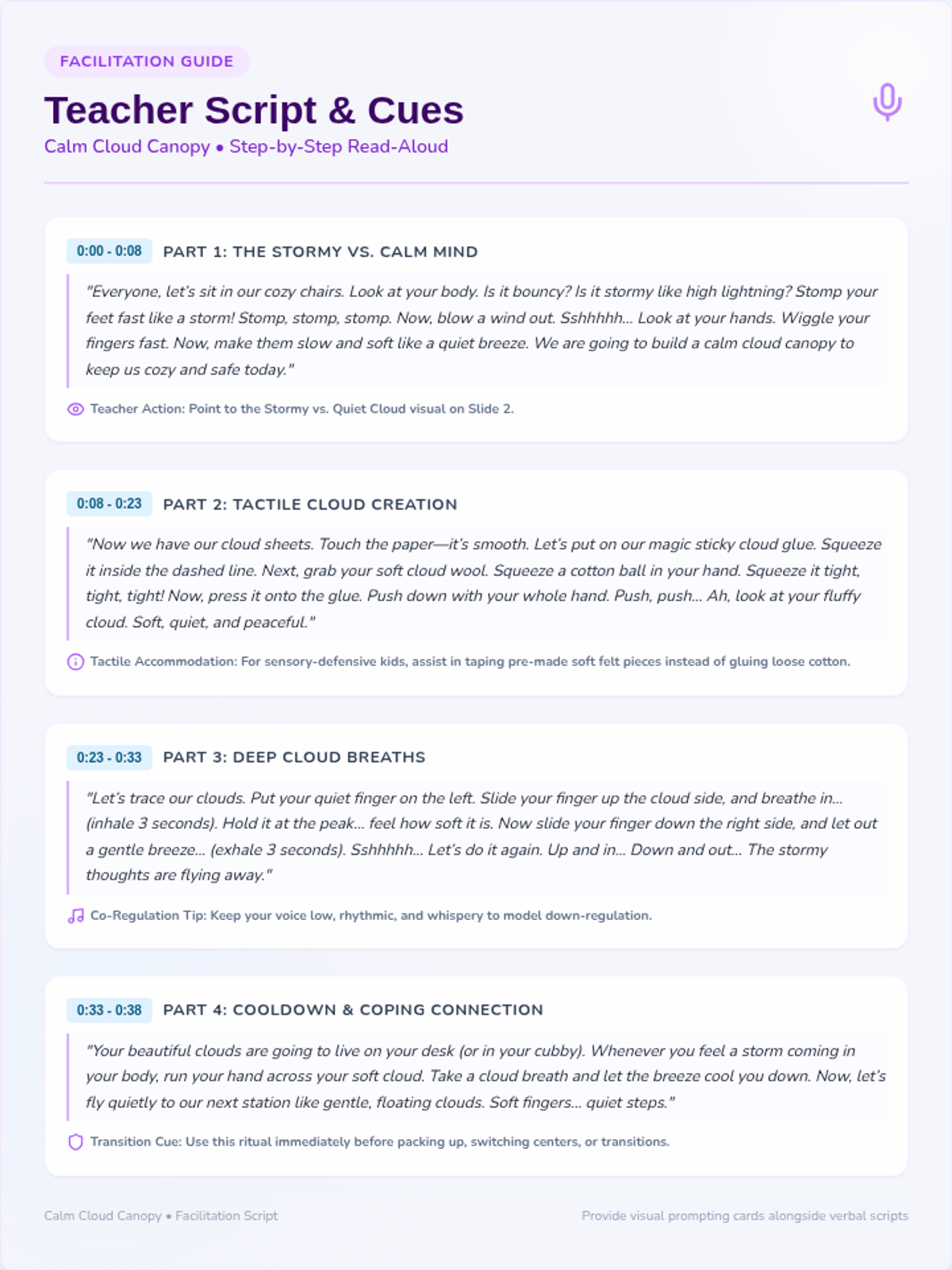
A sensory-focused lesson helping K-2 special education students manage transition anxiety and sensory overload through tactile cloud play and deep breathing simulation.
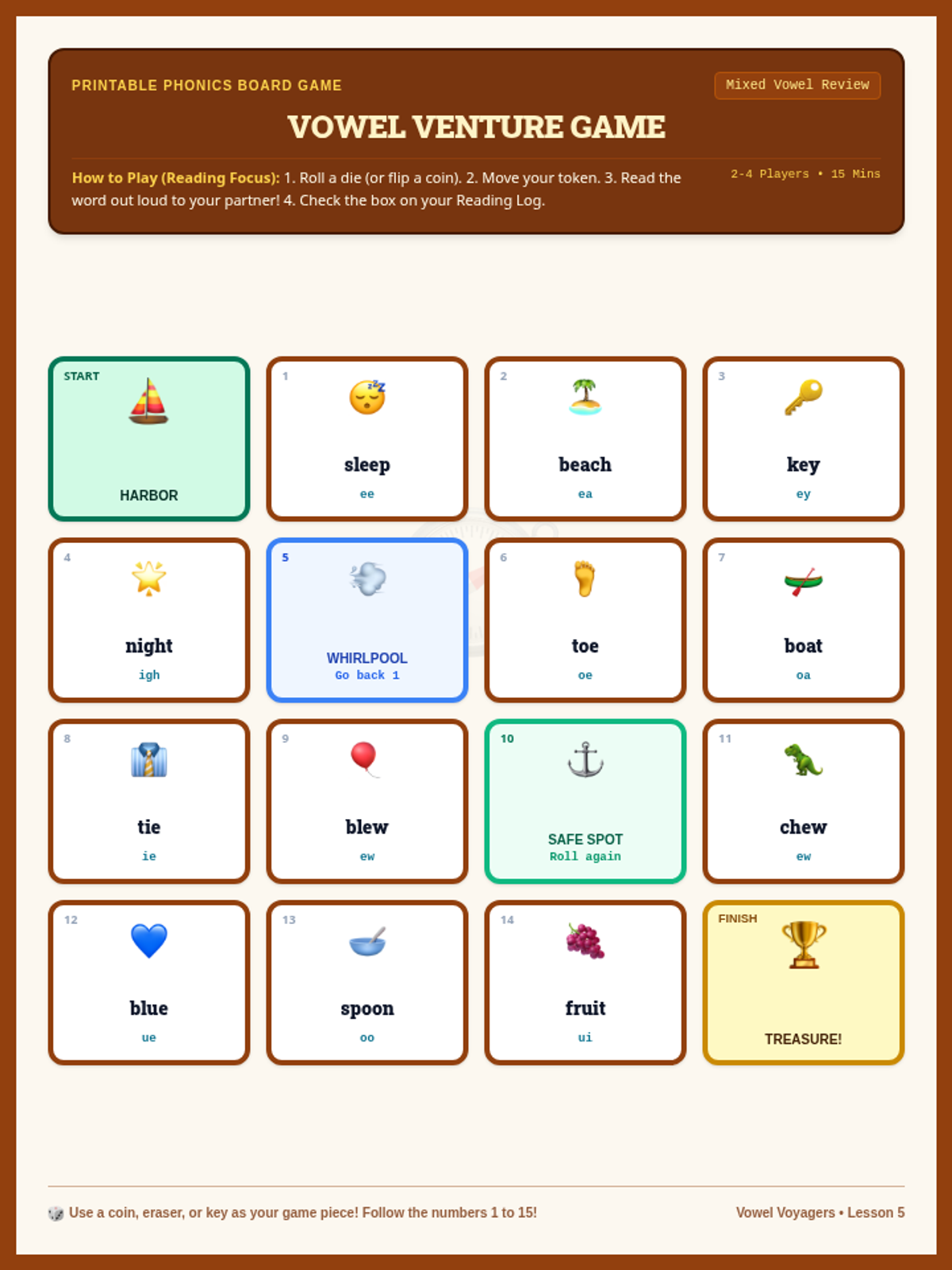
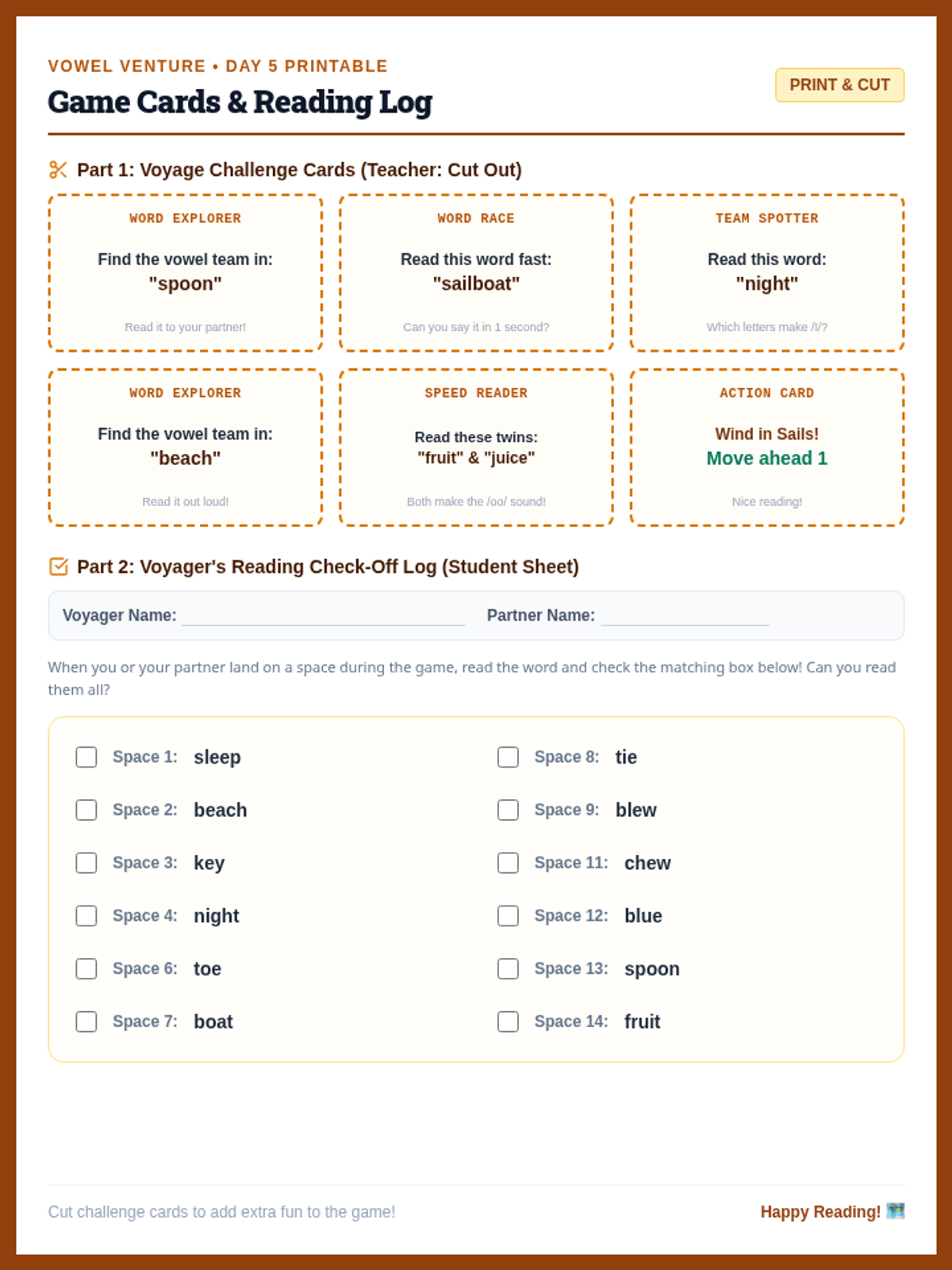
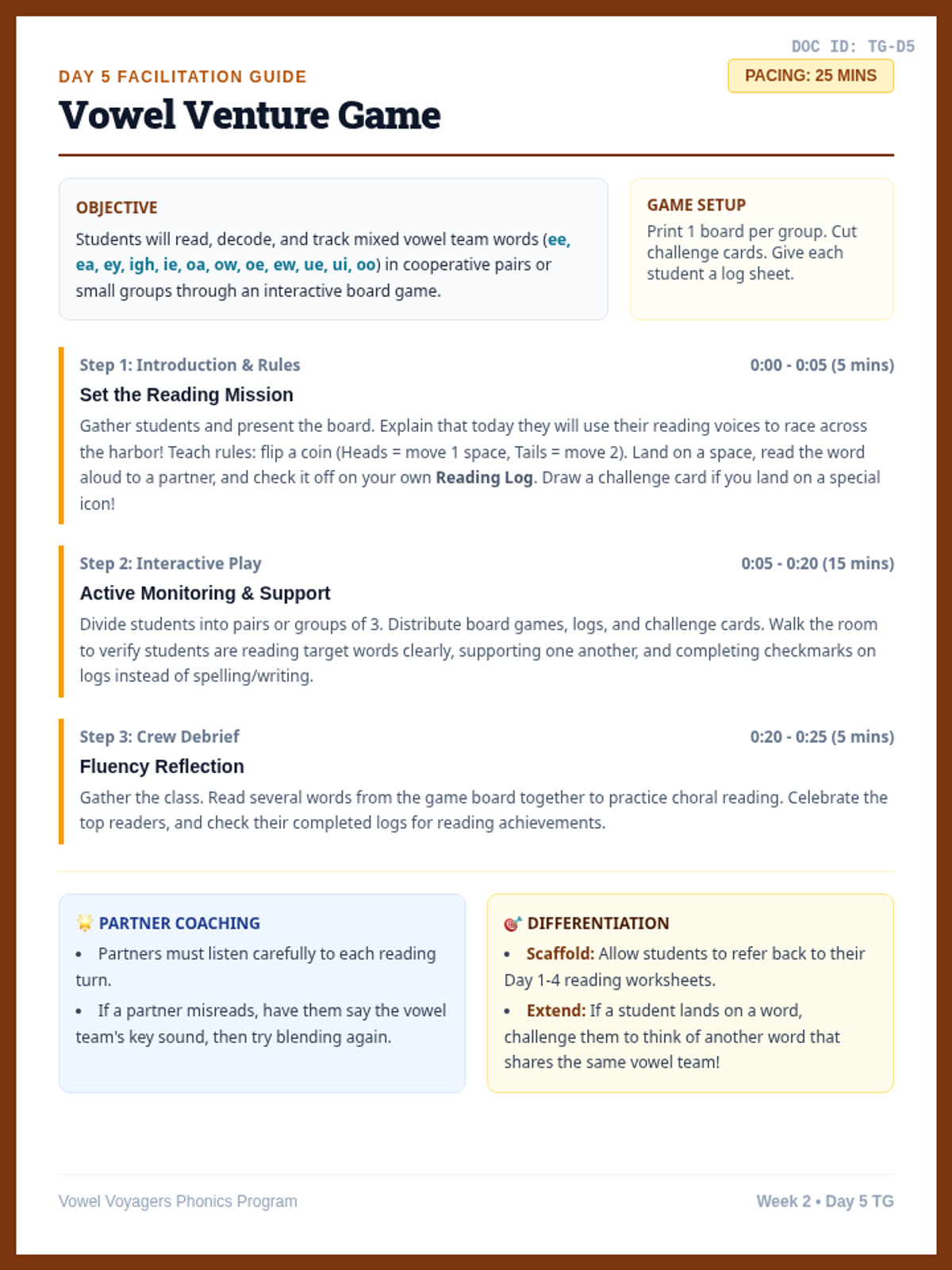
A cooperative printable board game lesson where students sail across the map by reading and writing mixed vowel team words (E, I, O, U teams).
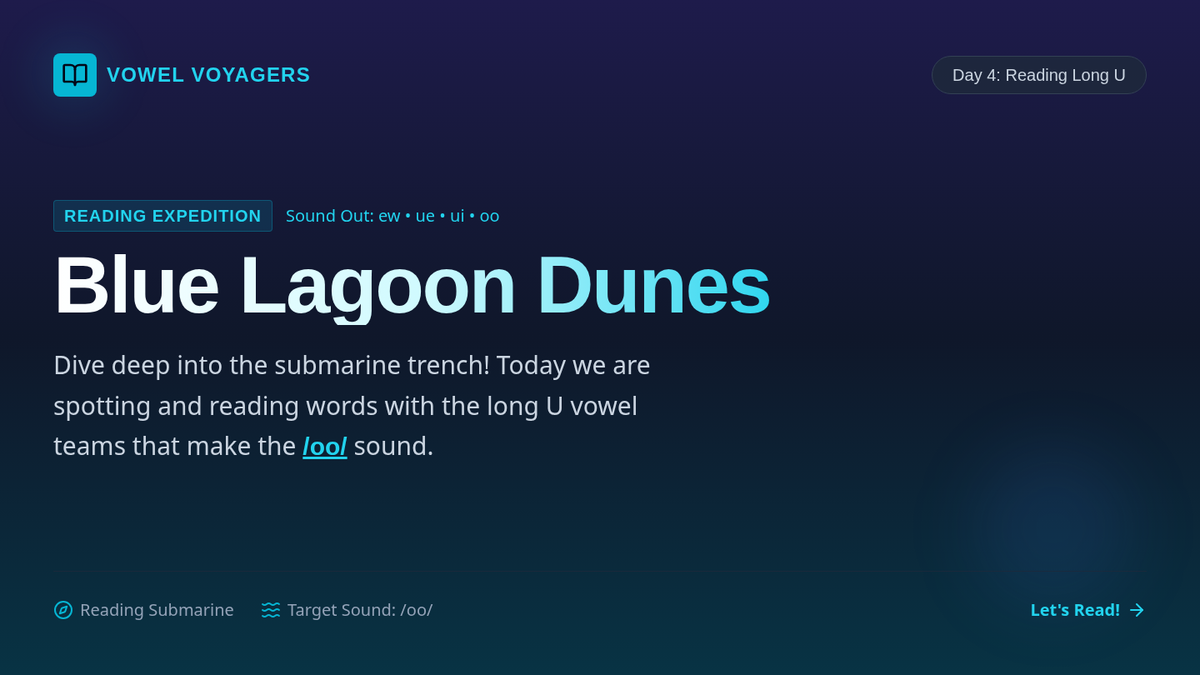
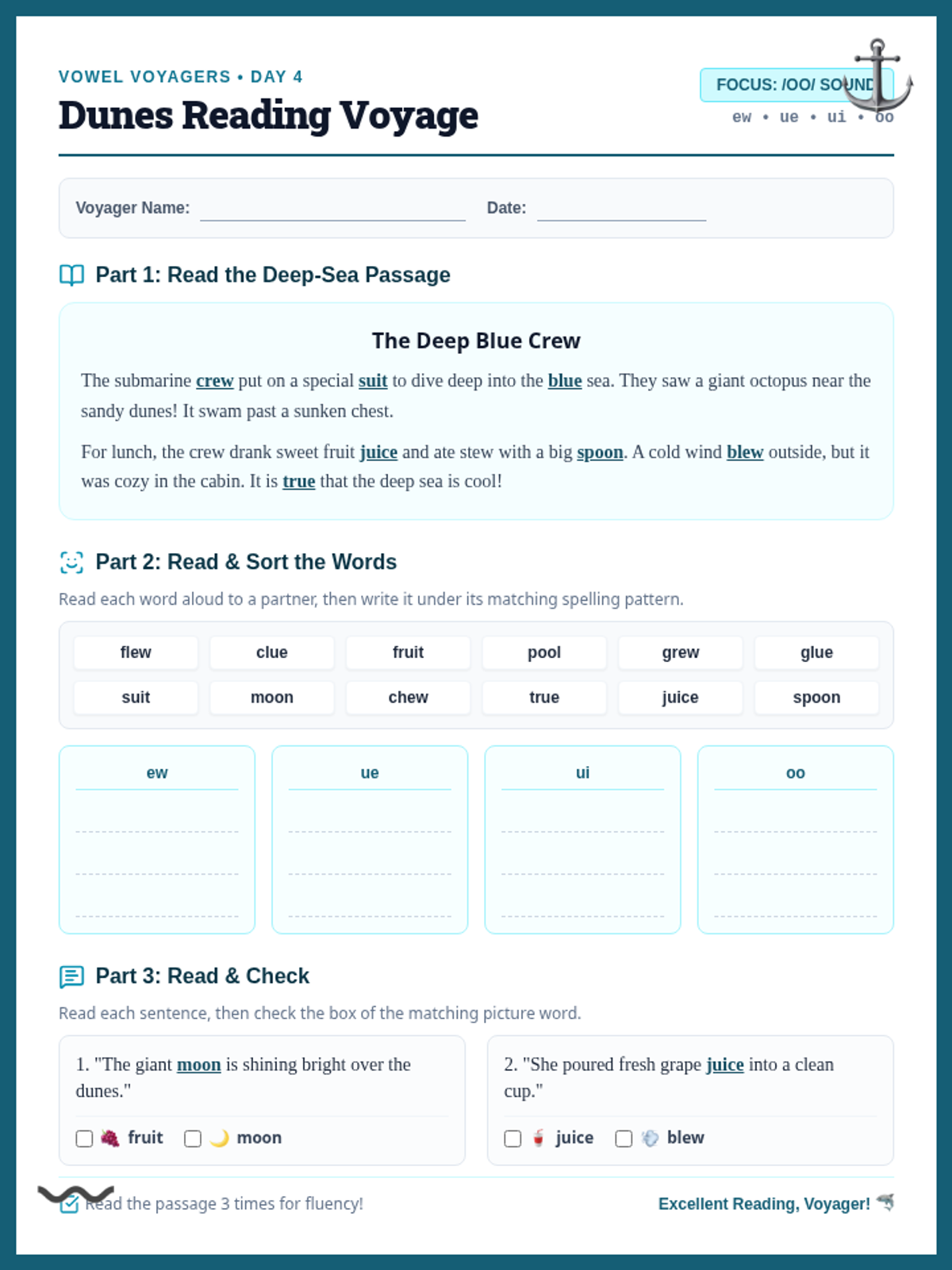
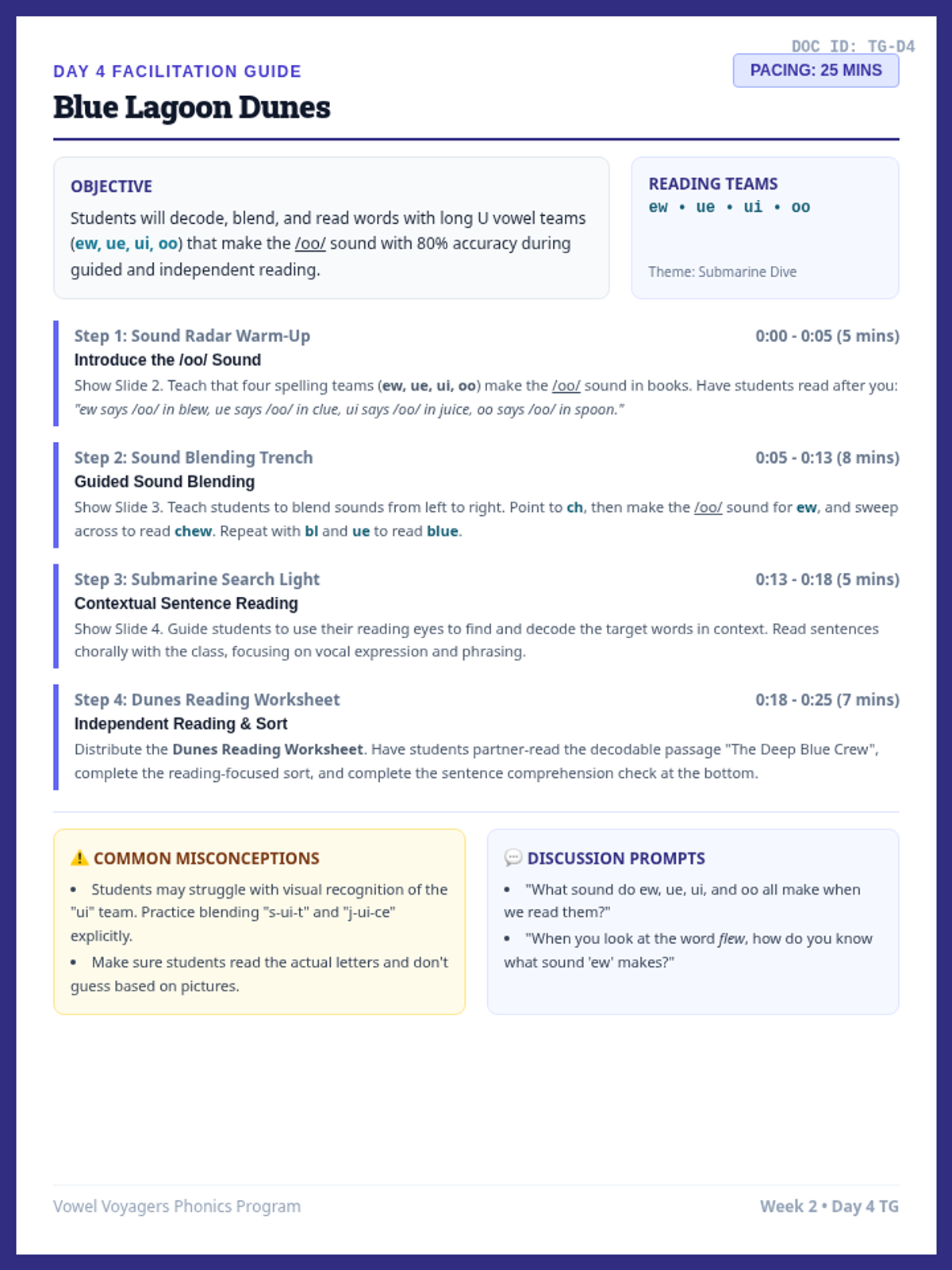
Focuses on the long U vowel teams: ew, ue, ui, and oo through submarine-themed interactive slides, printables, and a teacher guide.
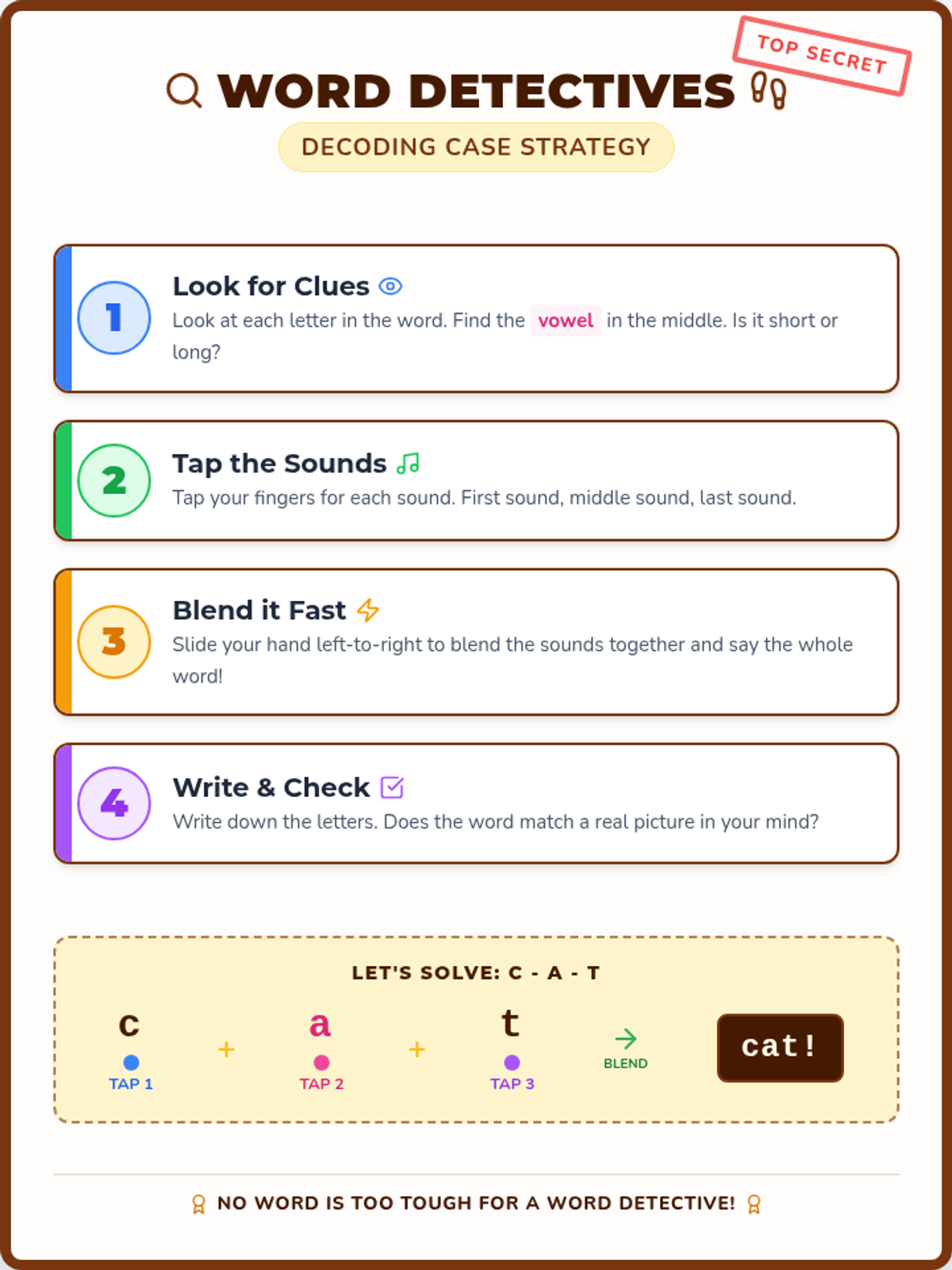
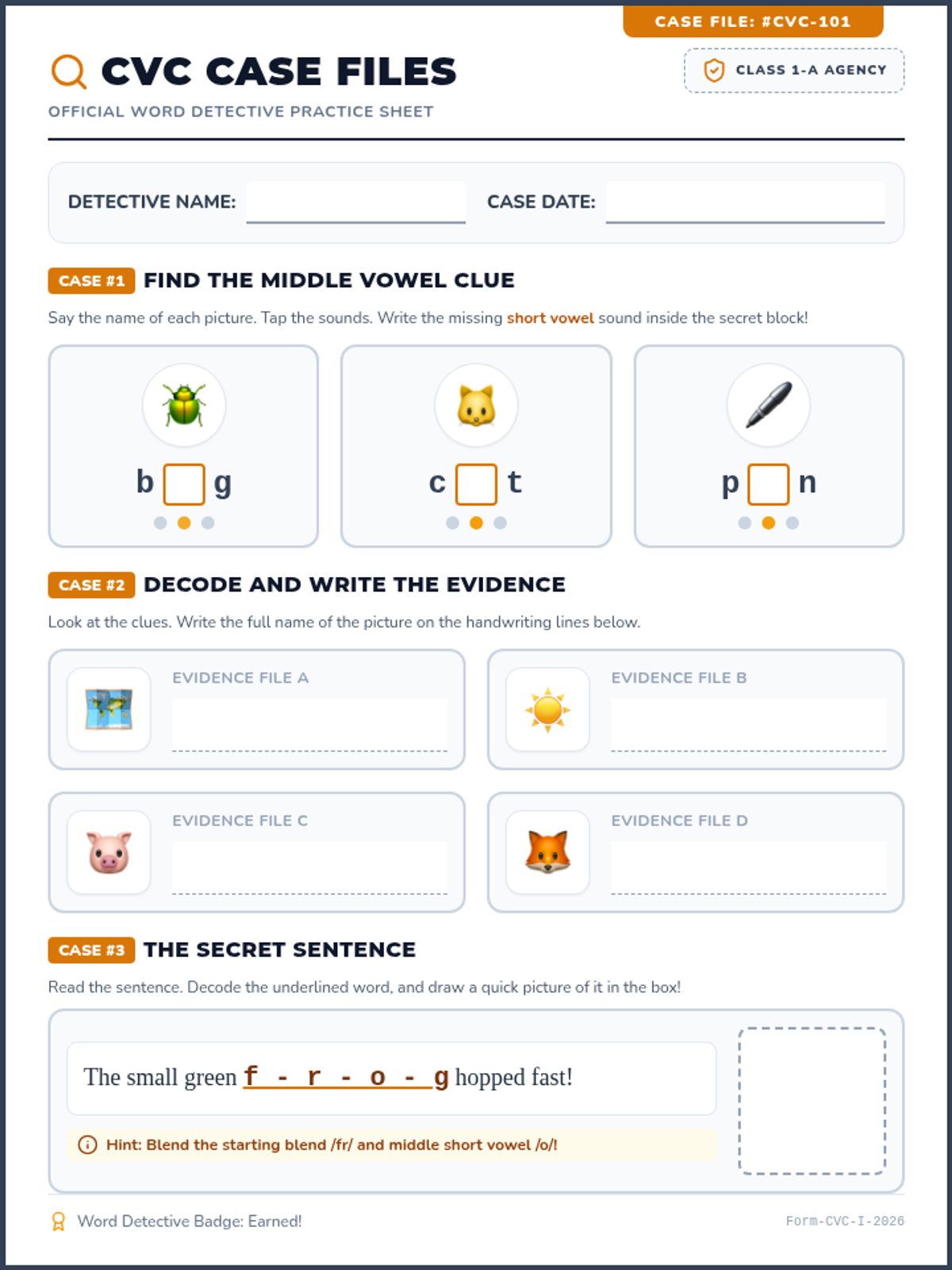
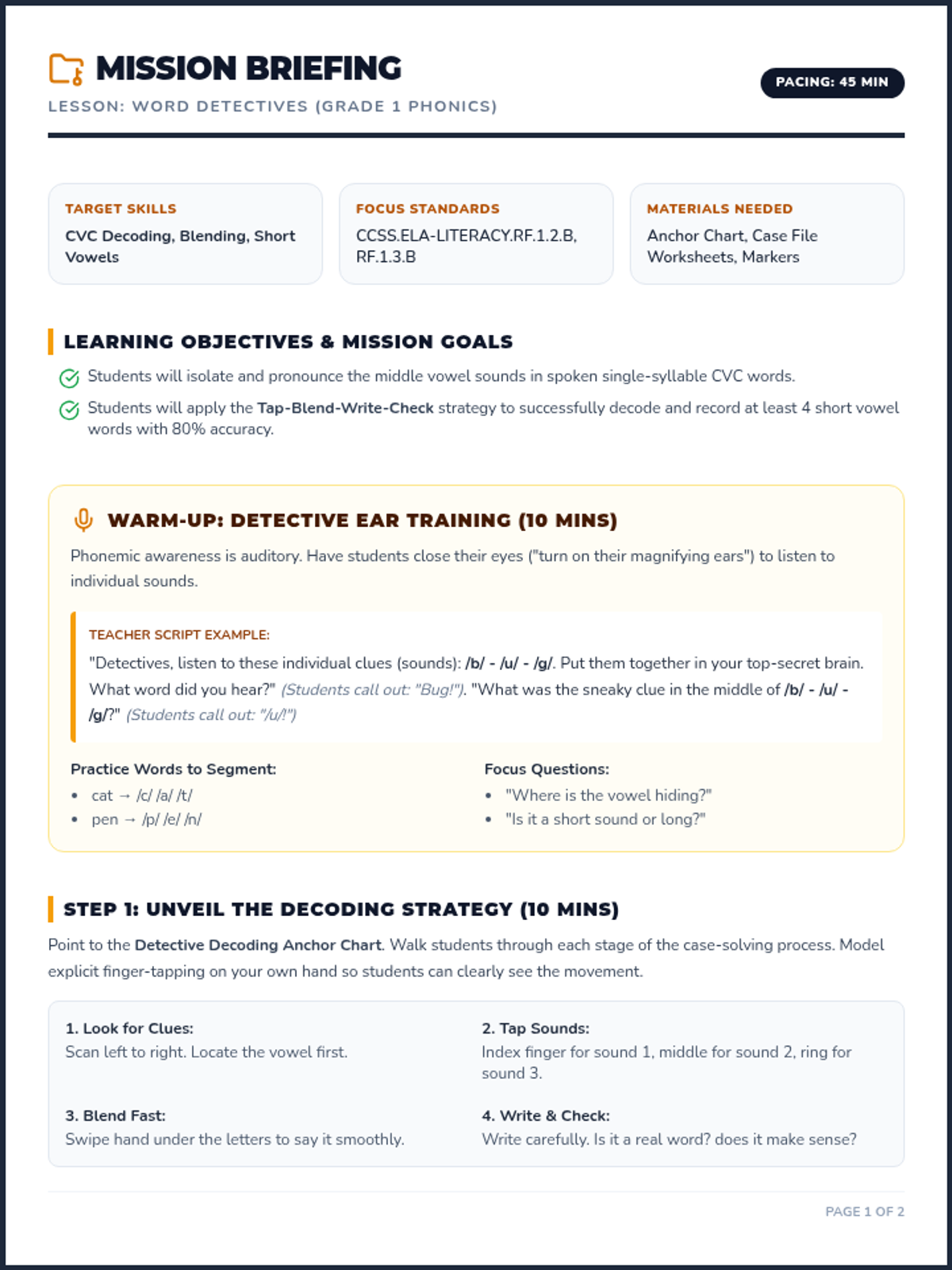
A highly engaging, detective-themed phonics lesson for first-grade students focused on decoding, blending, and writing short vowel CVC words. Includes an anchor chart, a hands-on worksheet, and a detailed teacher facilitation guide.
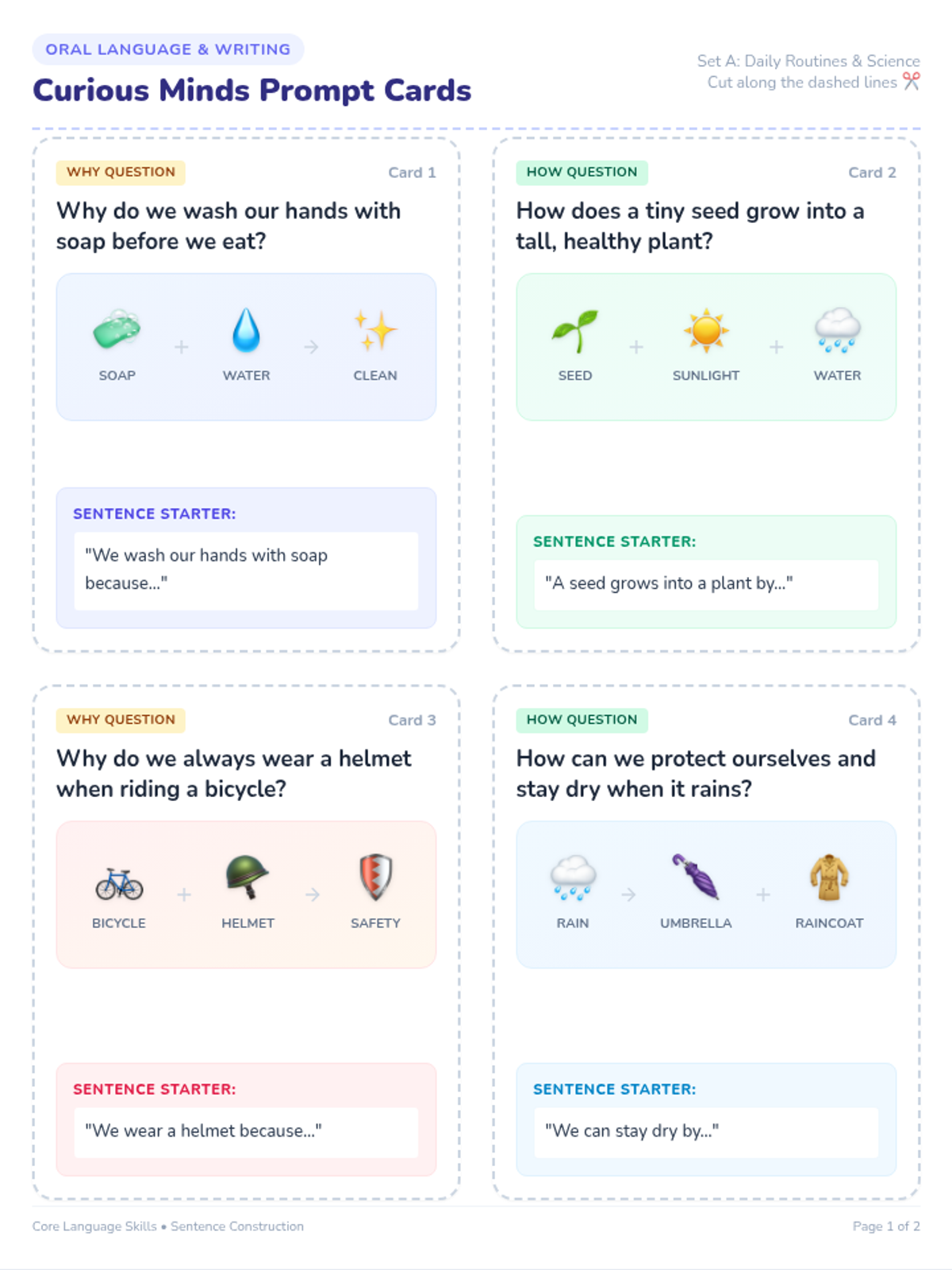
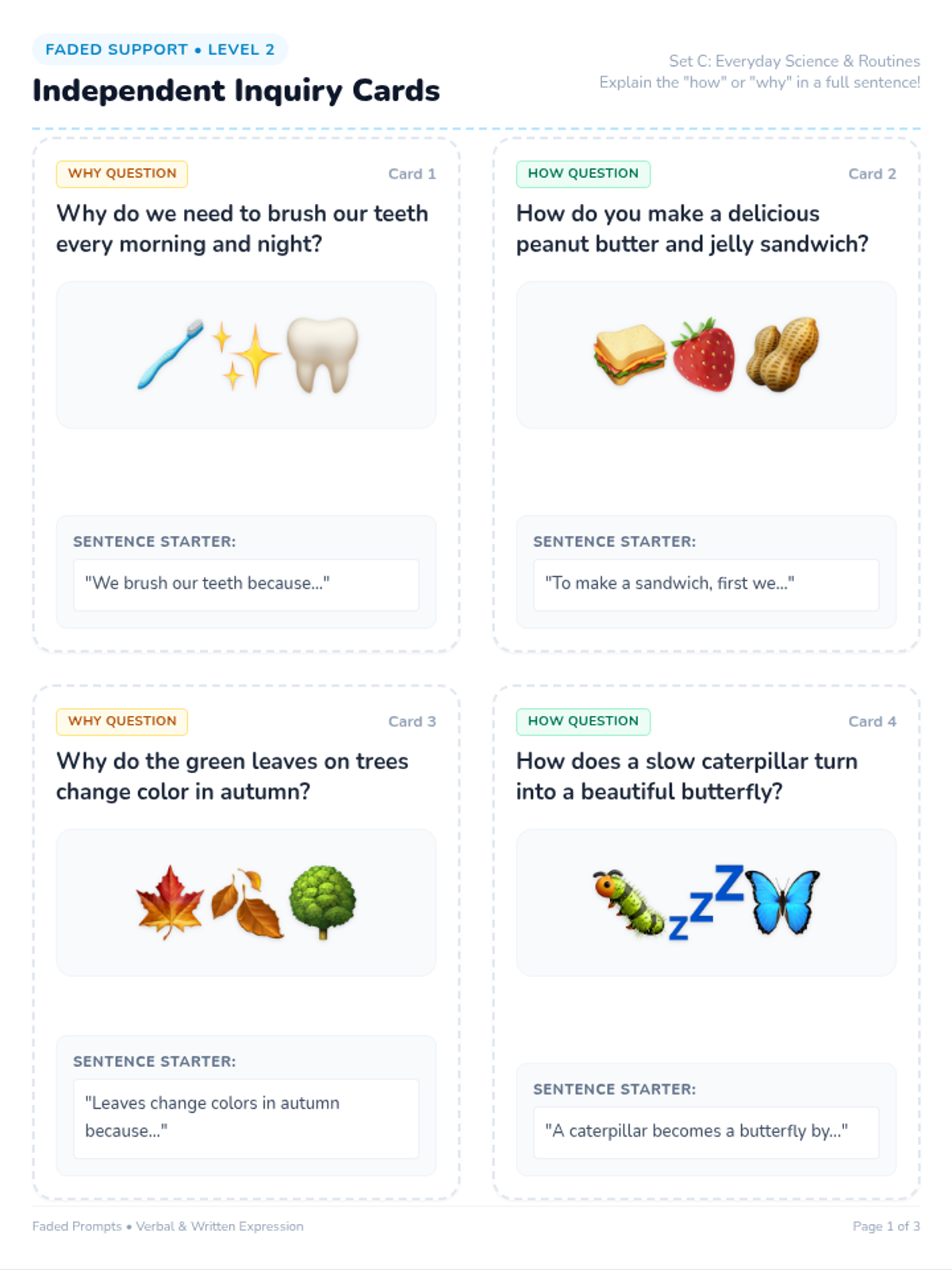
A lesson focused on helping students answer 'how' and 'why' questions using visual prompts and sentence starters, developing both comprehension and complete sentence construction.
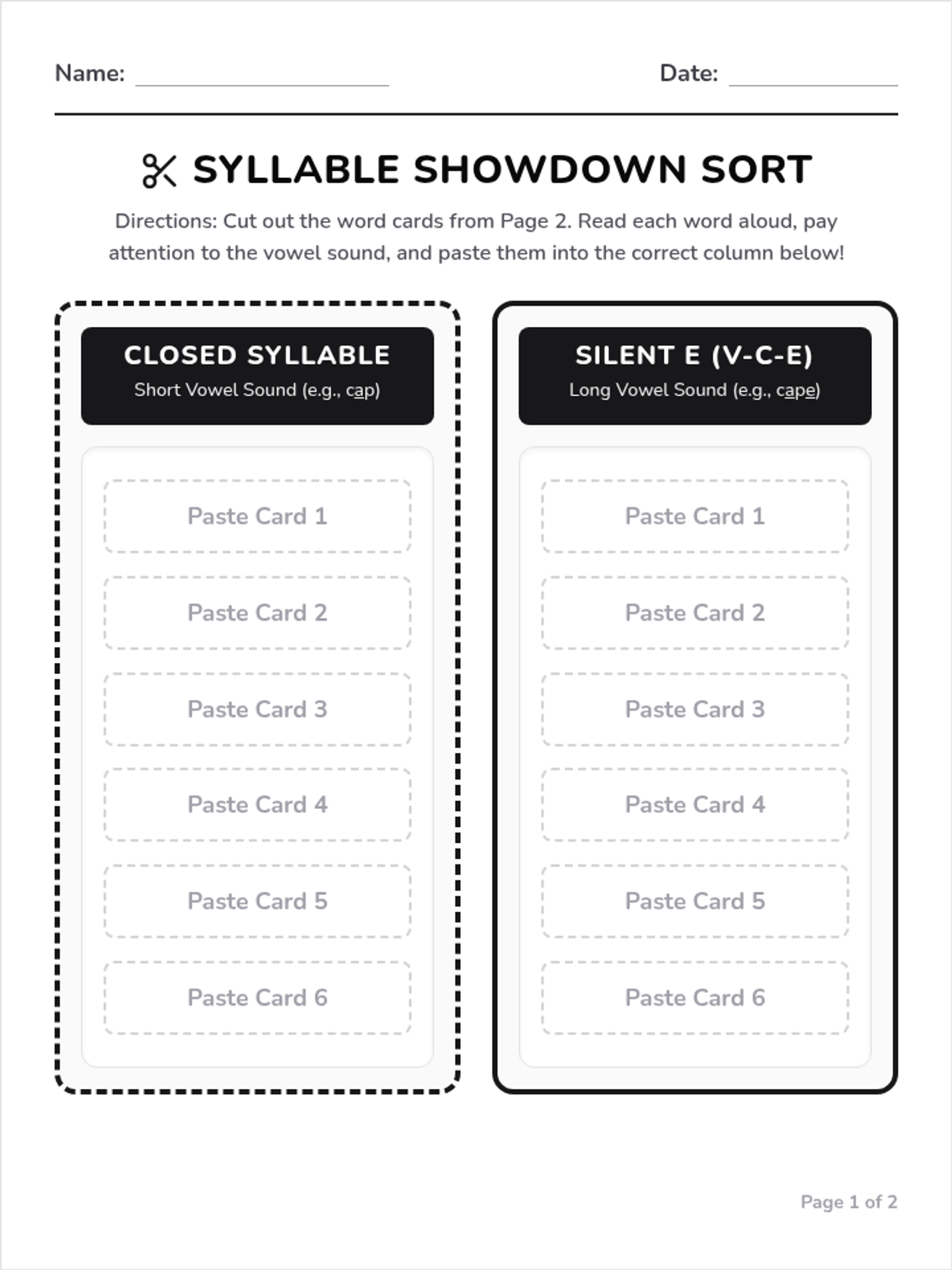
A phonics lesson focusing on identifying, sorting, and reading one-syllable closed words (short vowels) and vowel-consonant-e words (long vowels with silent e) using hands-on tactile activities.
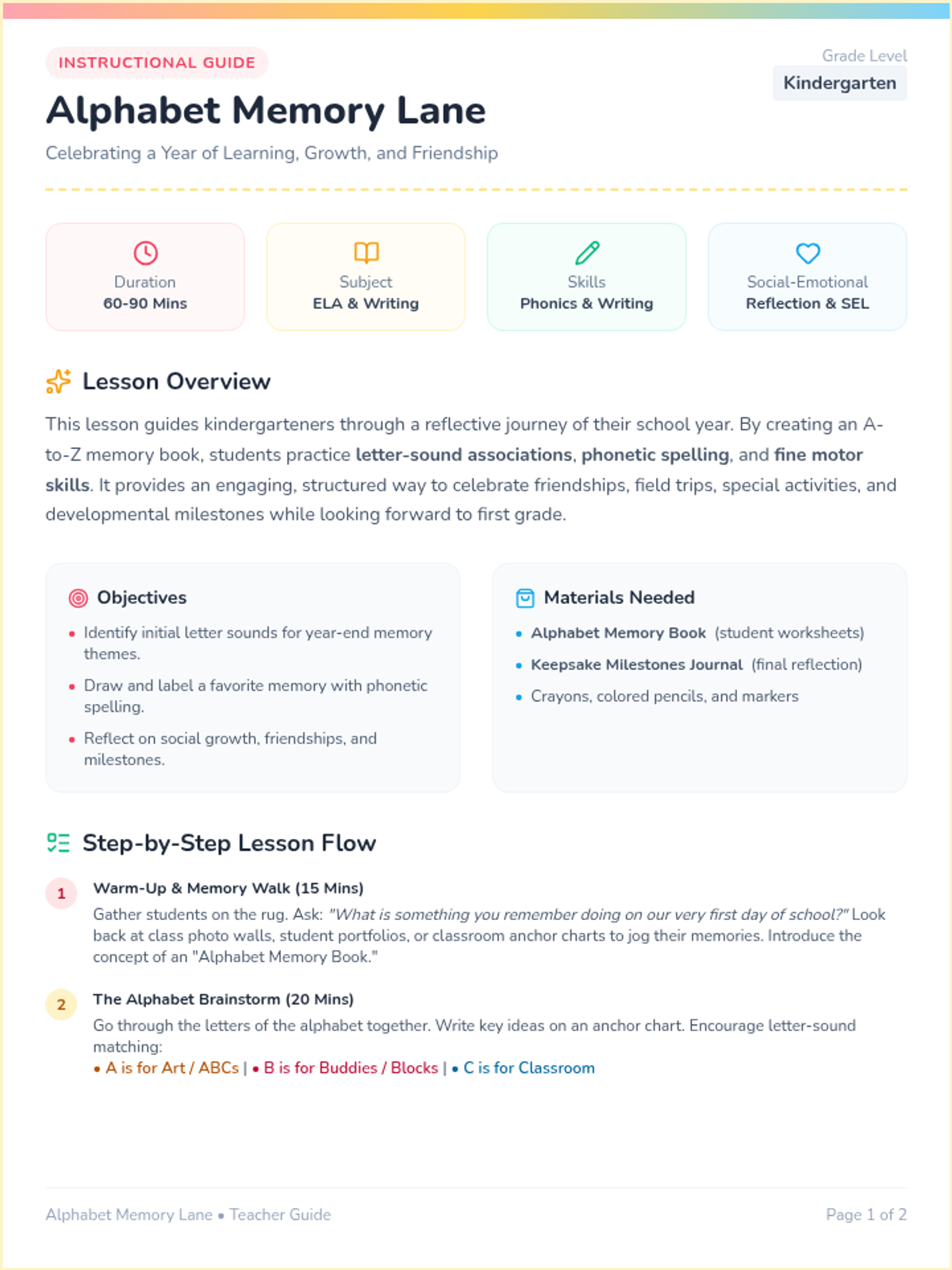
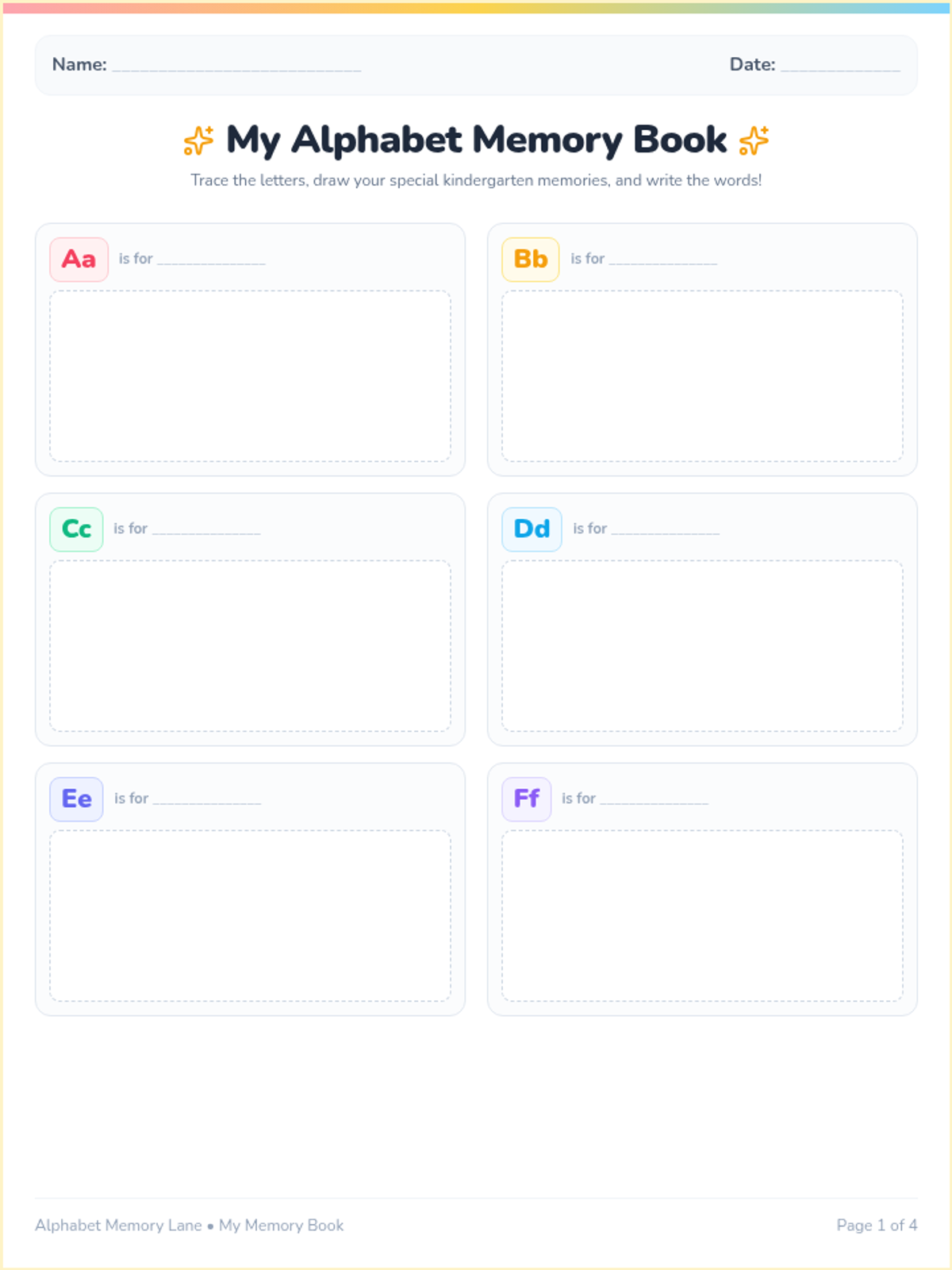
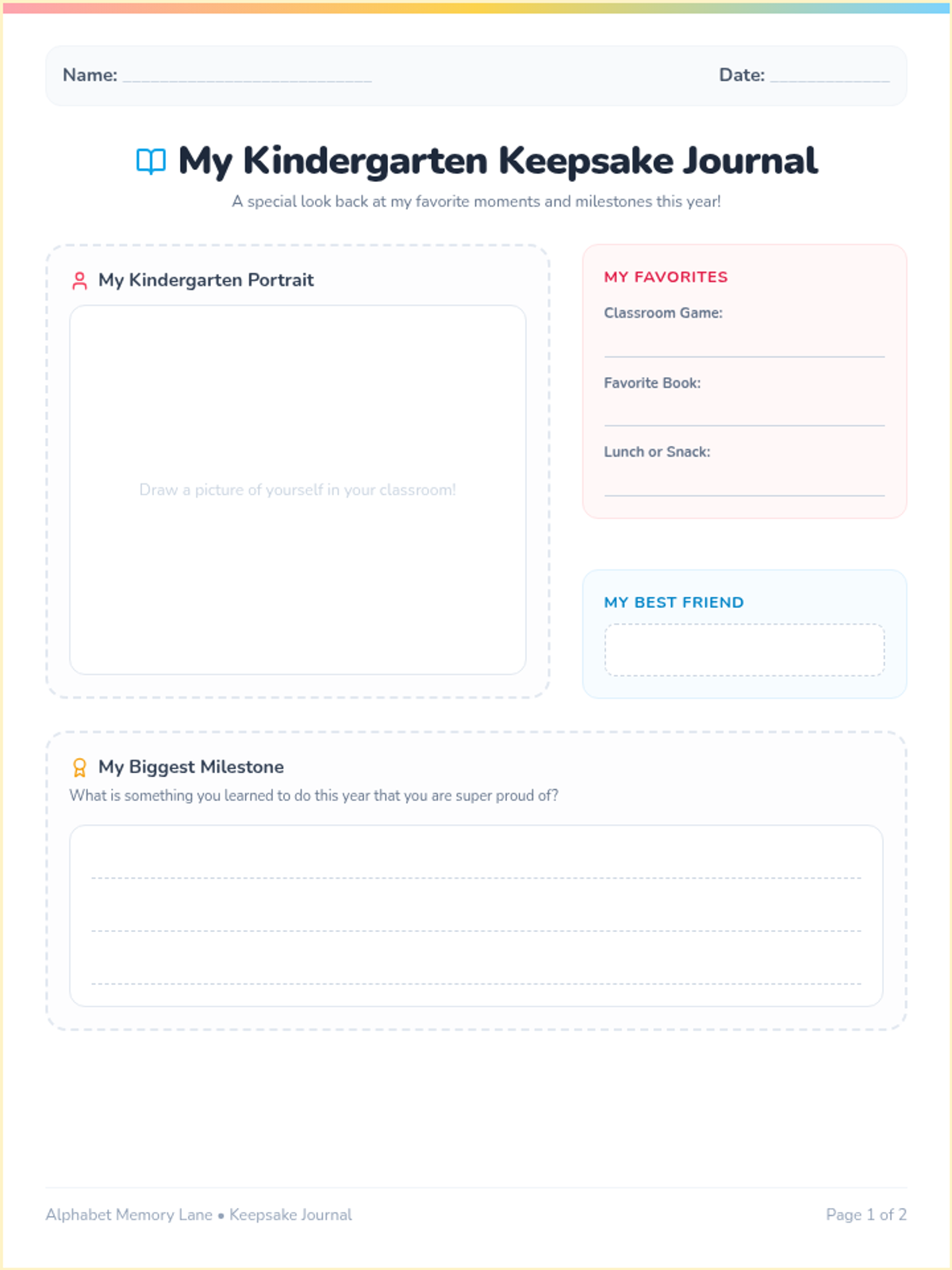
A reflective and creative lesson where kindergarten students compile an A-to-Z memory book of their school year, reinforcing letter-sound association and initial writing skills while celebrating milestones and friendships.