A reflective and creative lesson where kindergarten students compile an A-to-Z memory book of their school year, reinforcing letter-sound association and initial writing skills while celebrating milestones and friendships.
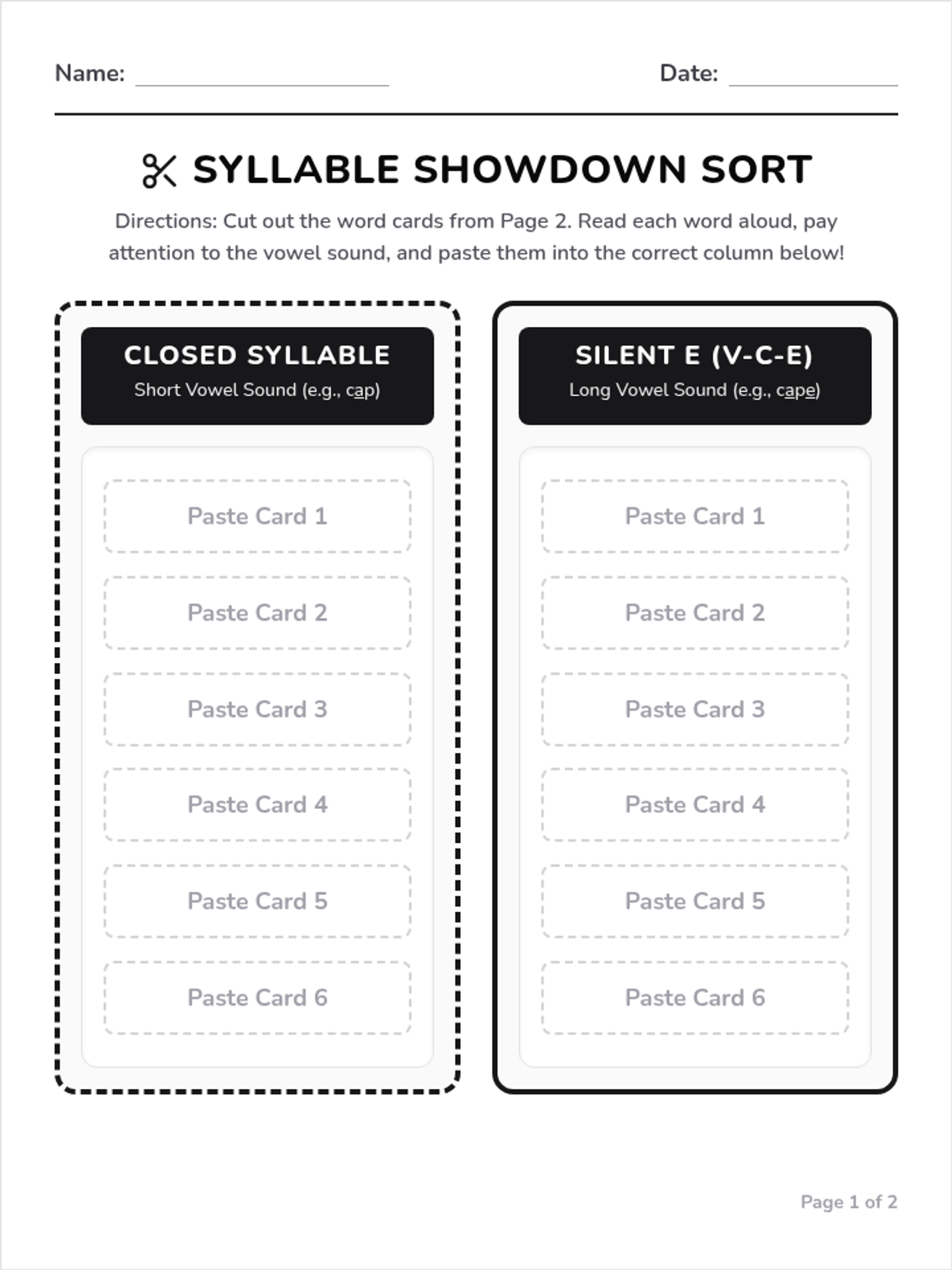
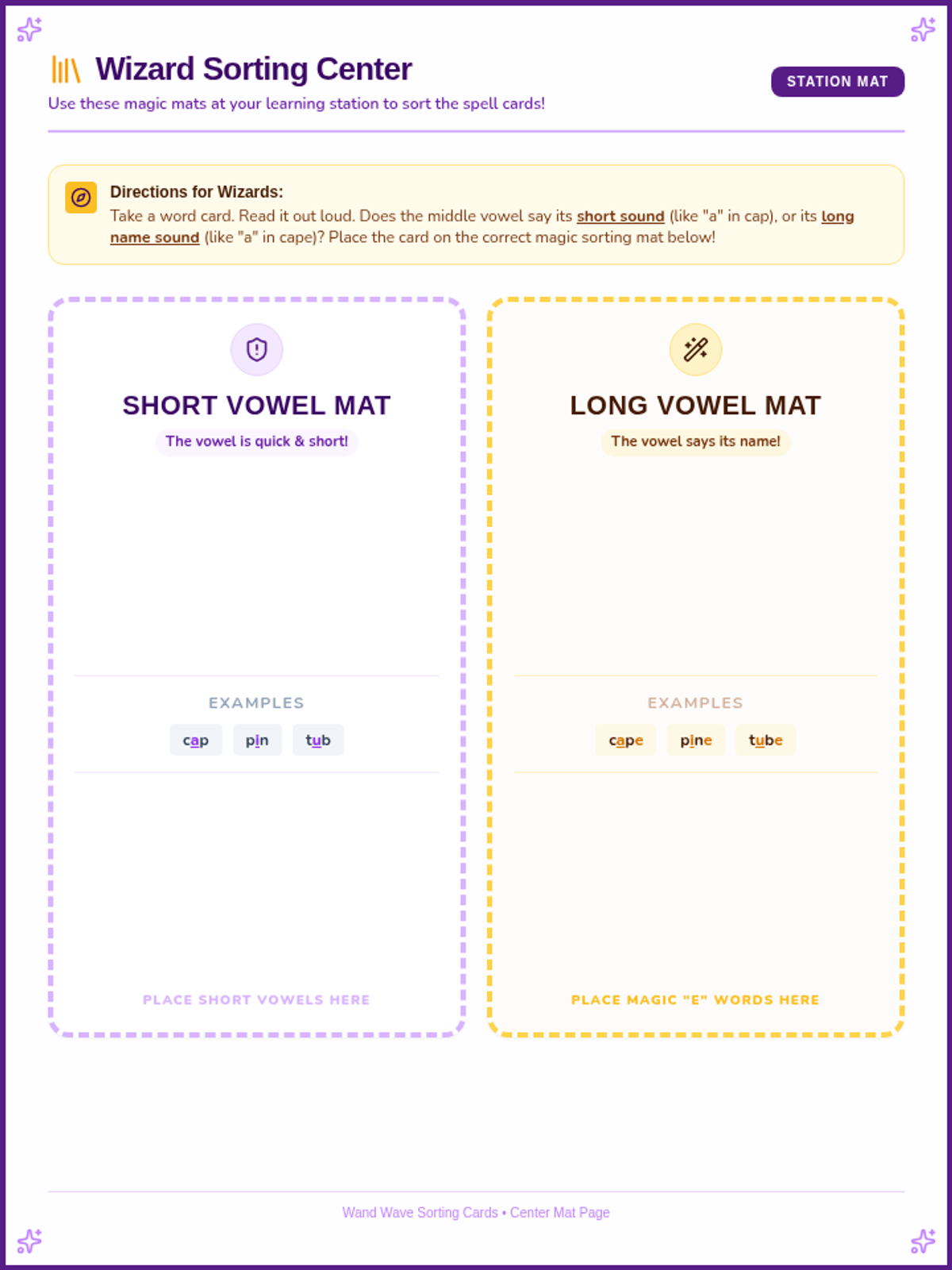
A phonics lesson focusing on identifying, sorting, and reading one-syllable closed words (short vowels) and vowel-consonant-e words (long vowels with silent e) using hands-on tactile activities.
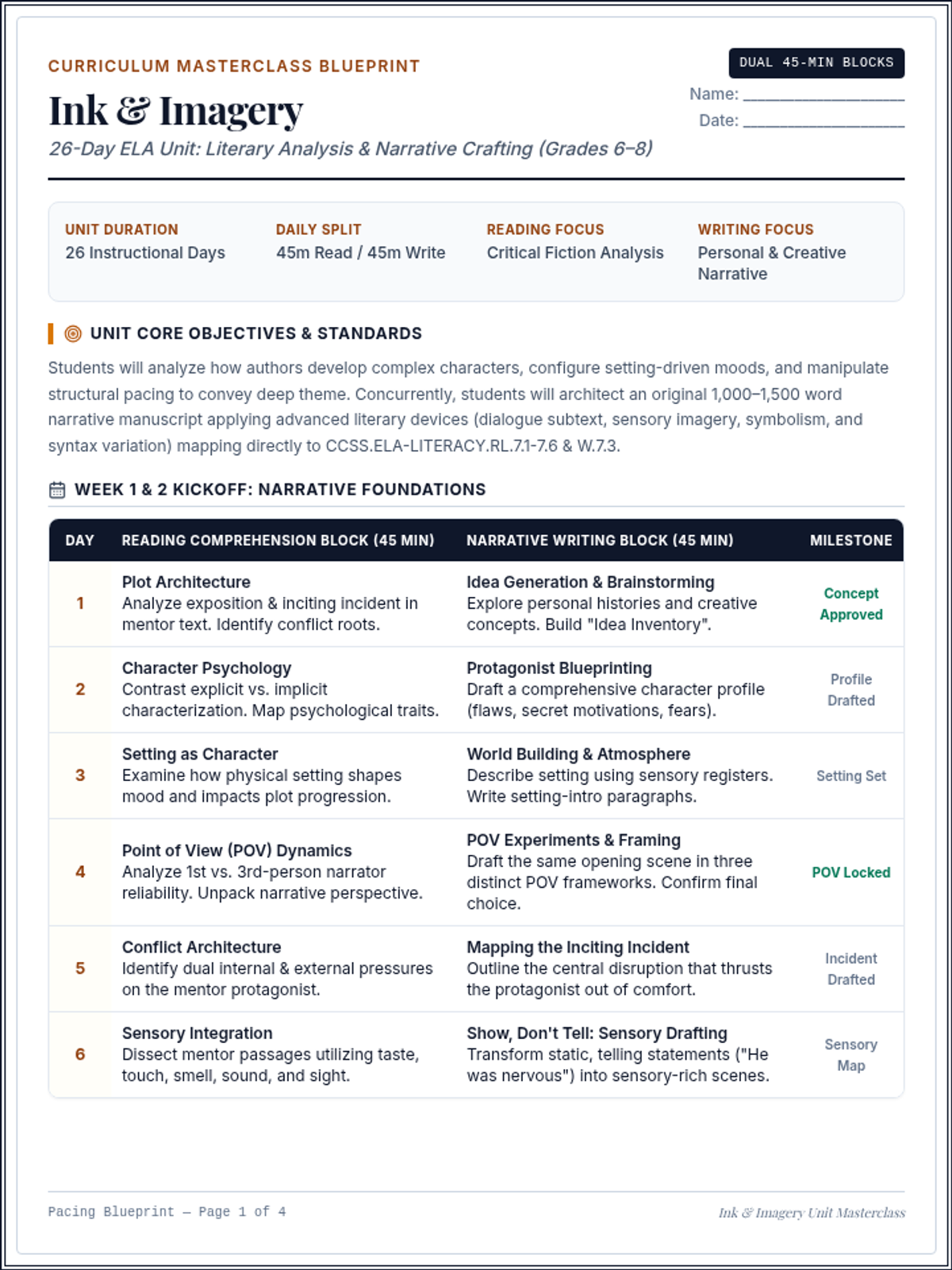
A comprehensive masterclass mapping out a 26-day instructional unit for Middle School Literary Analysis and Narrative Writing. Includes detailed dual 45-minute daily blocks for reading and writing.
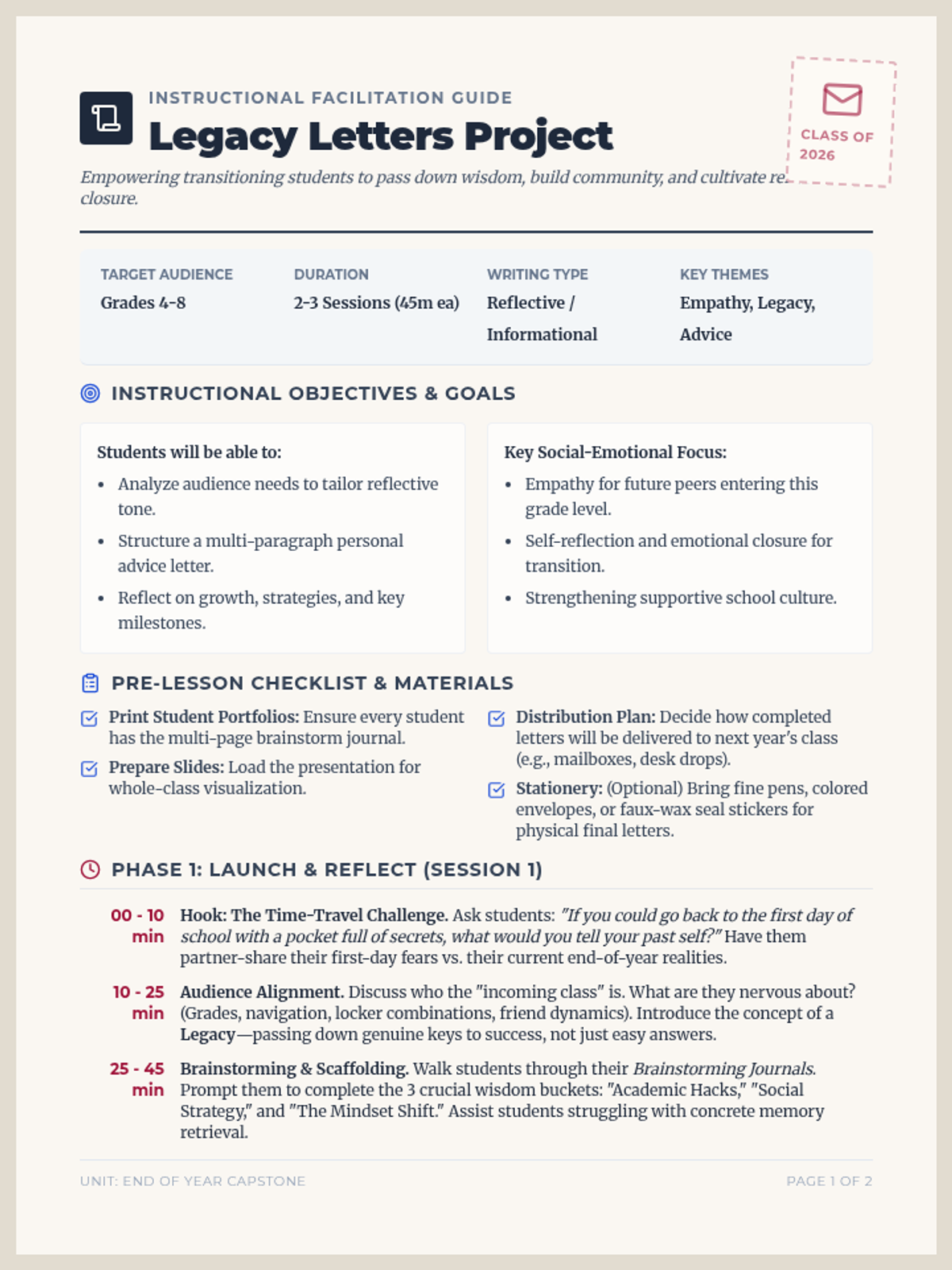
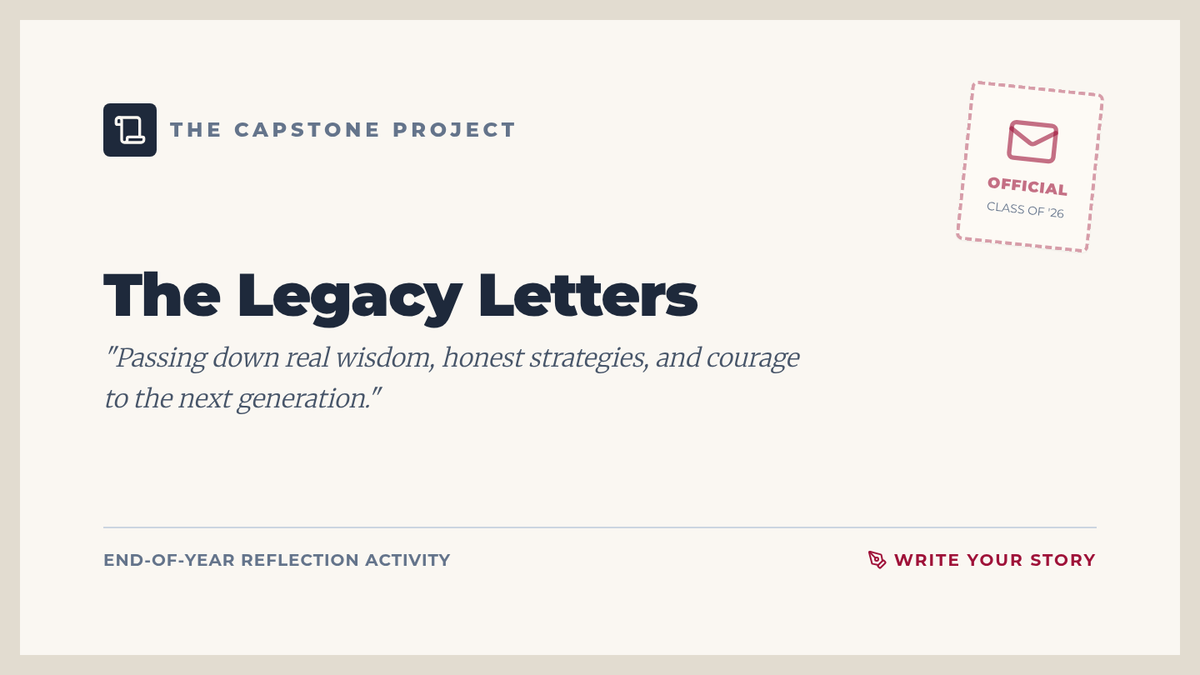
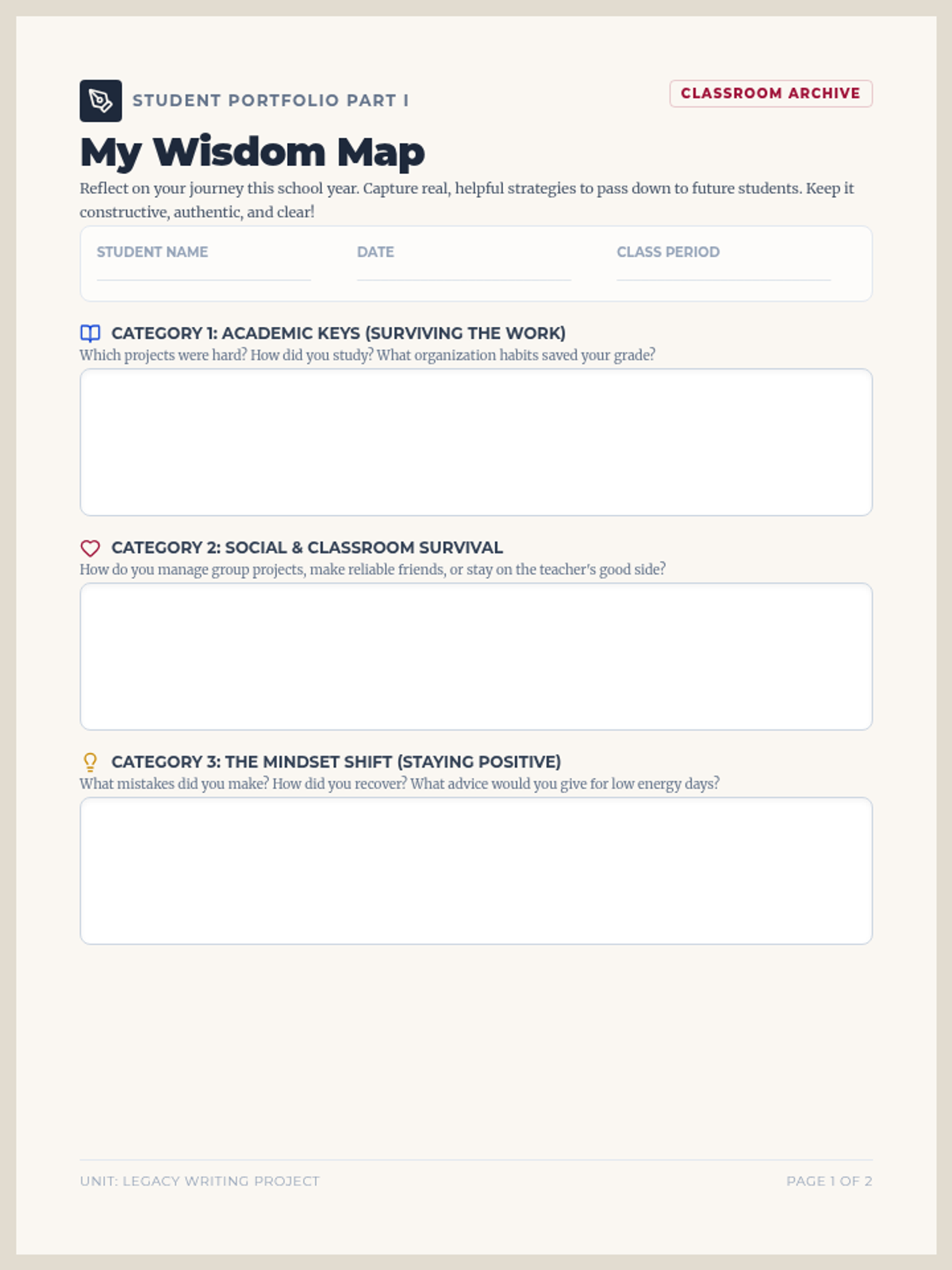
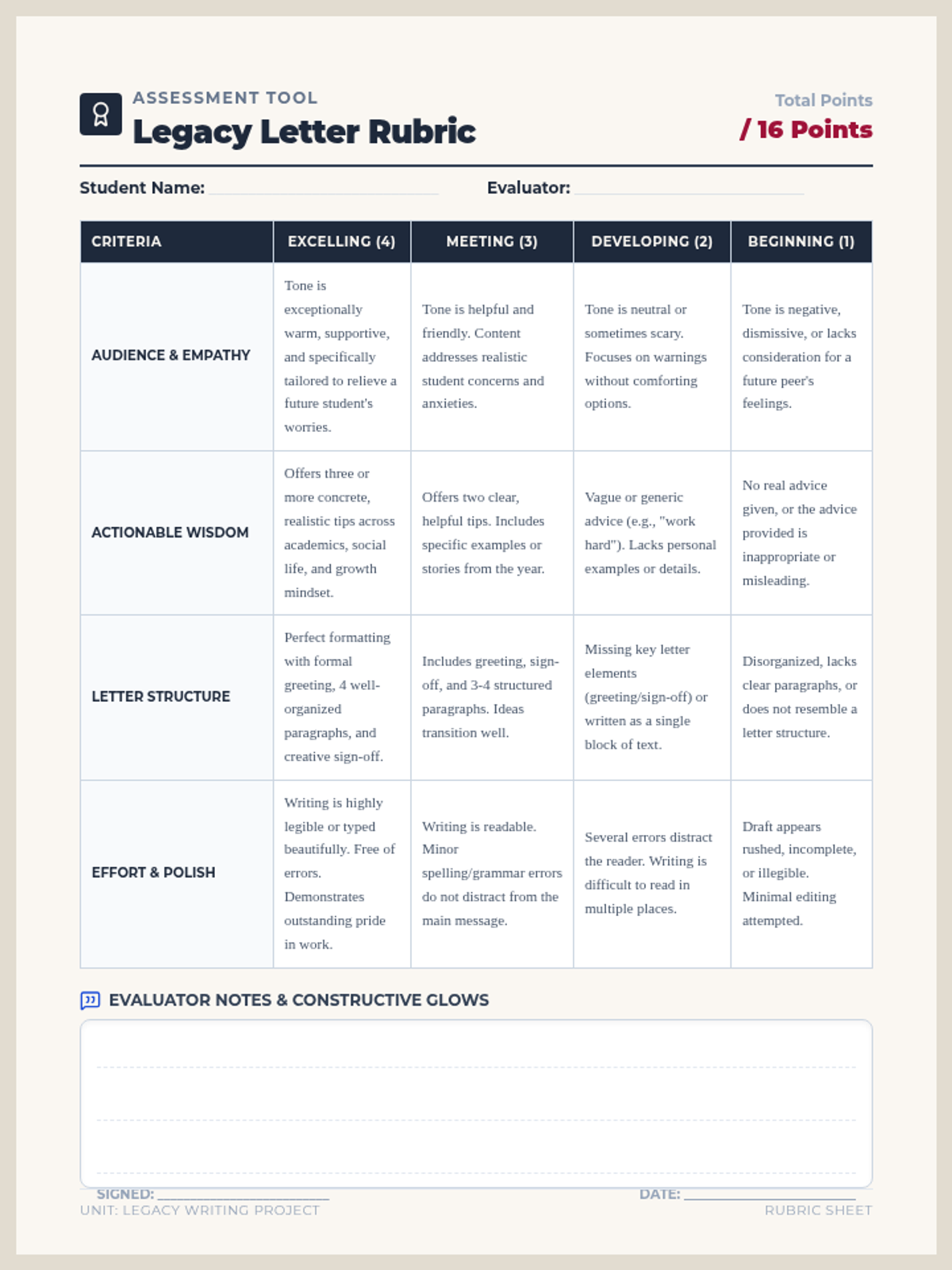
A reflective end-of-year writing project where graduating or transitioning students write letters of wisdom, strategies, and encouragement to the incoming class.
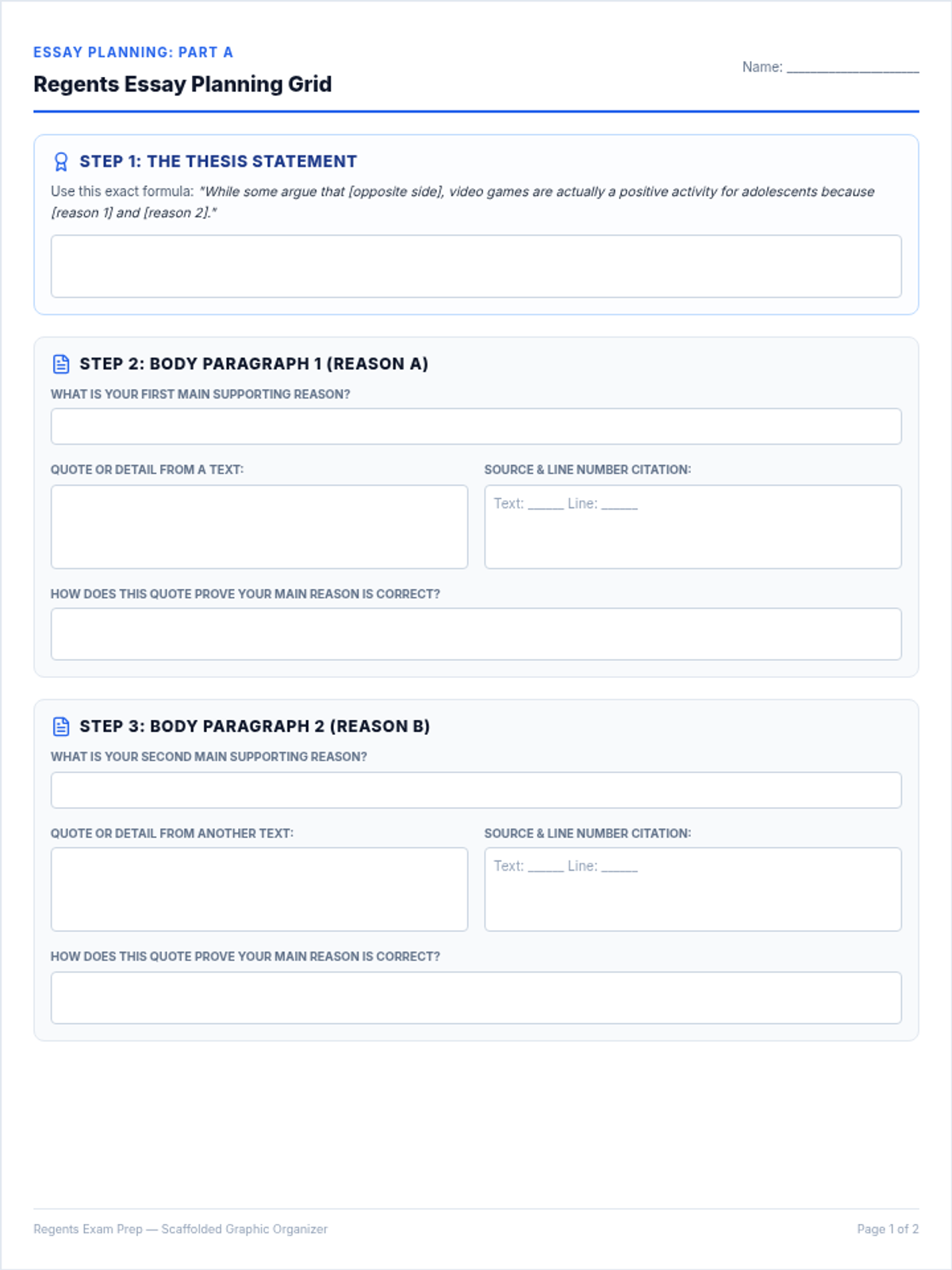
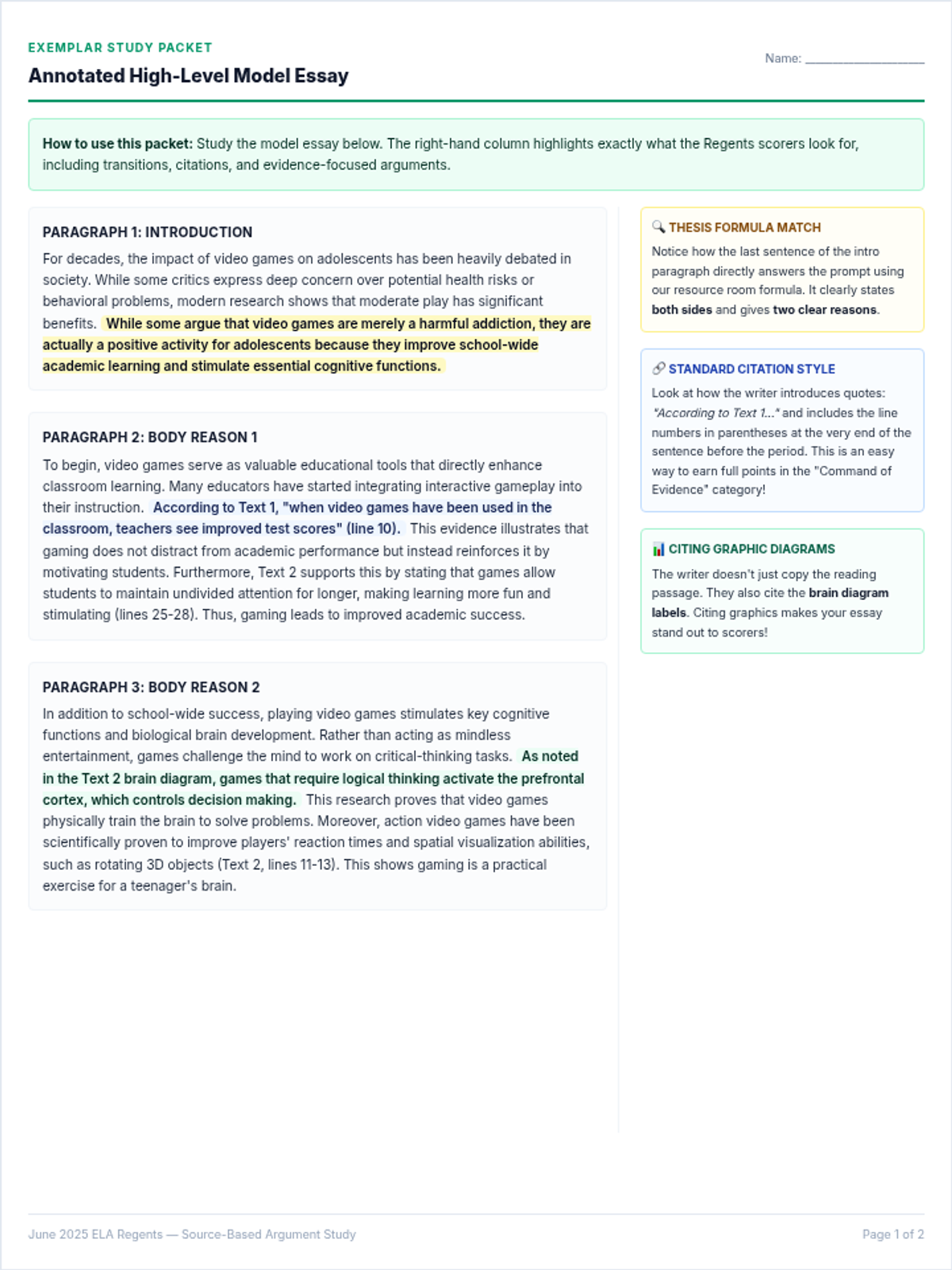
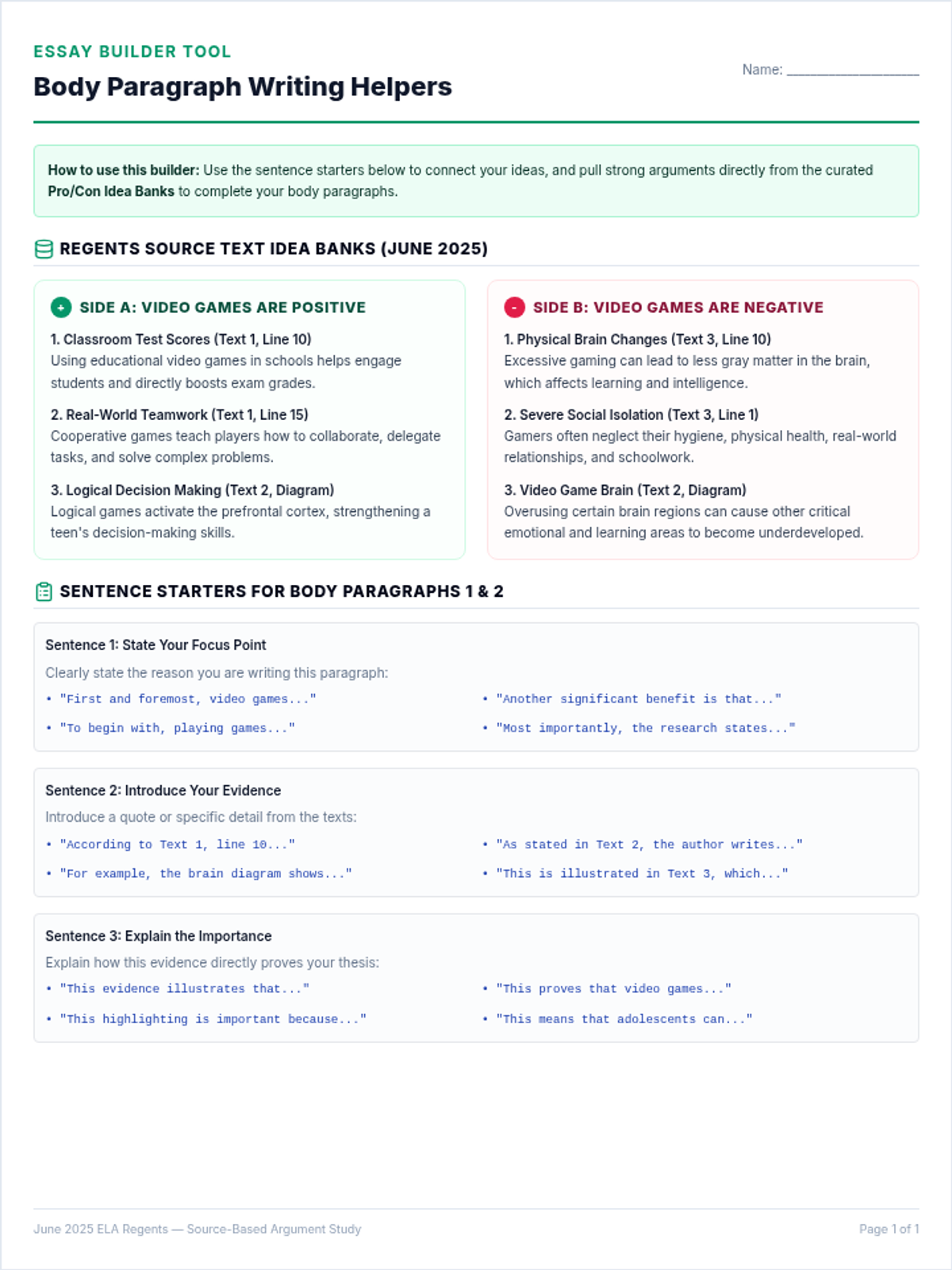
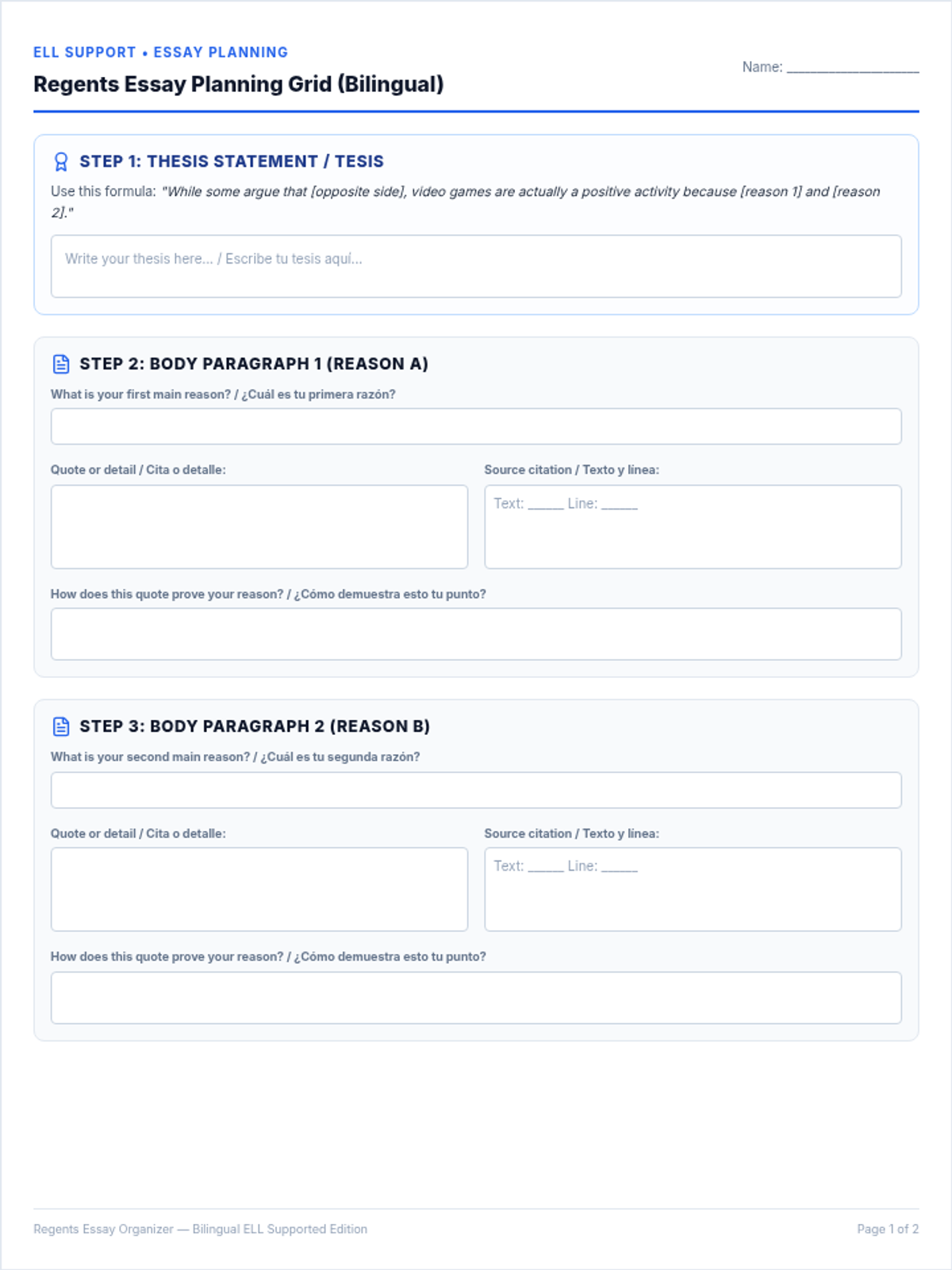
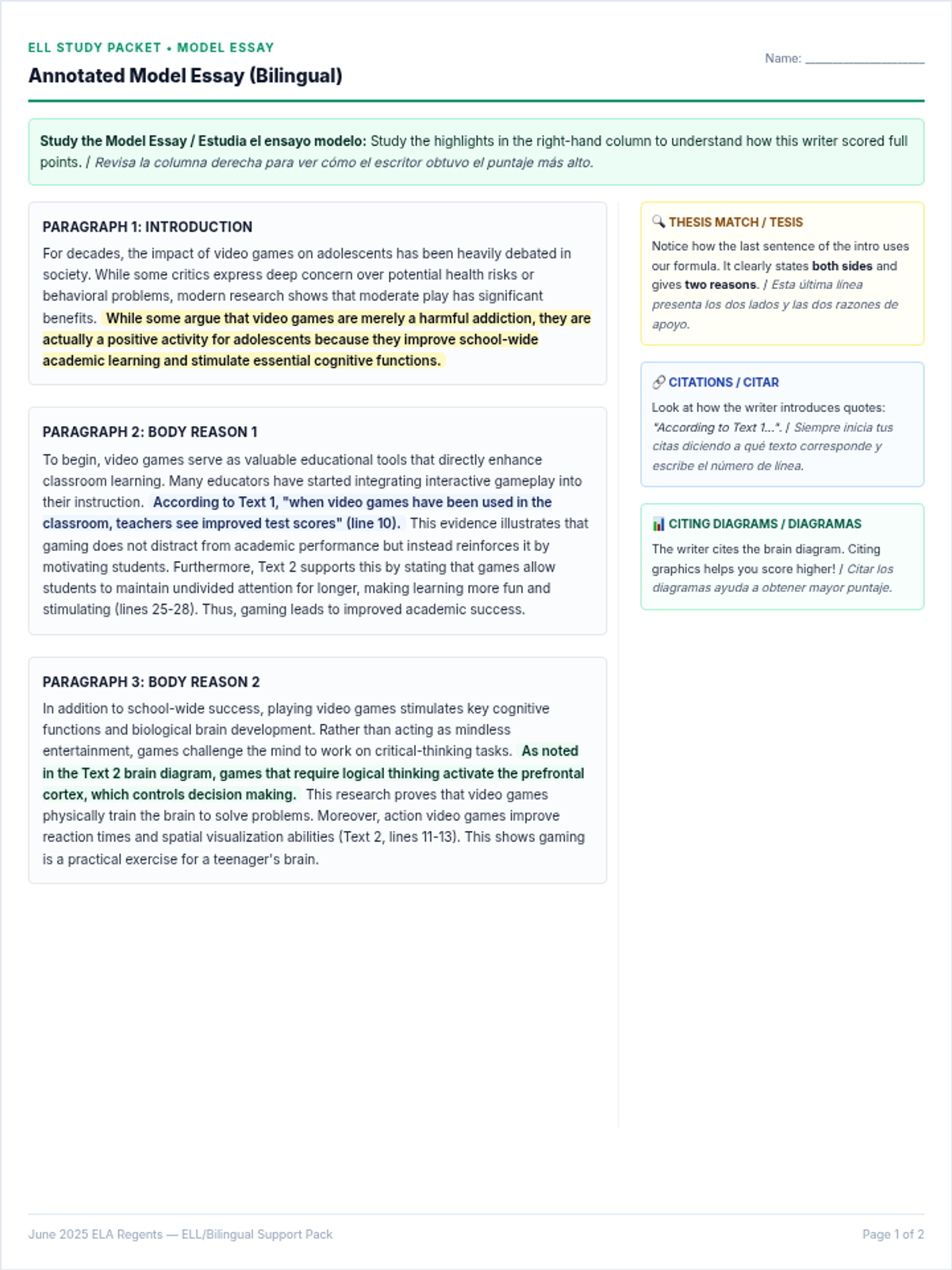
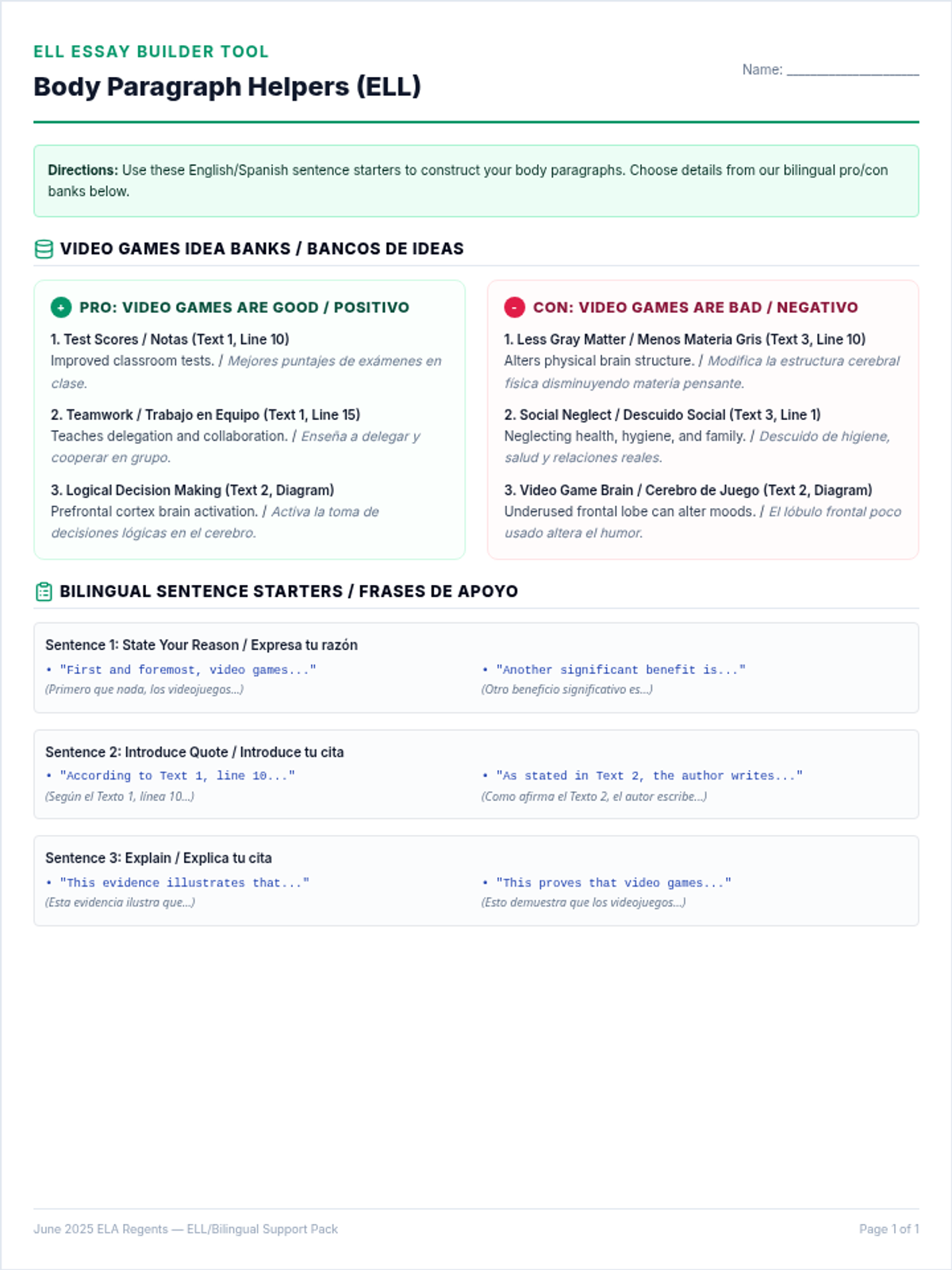
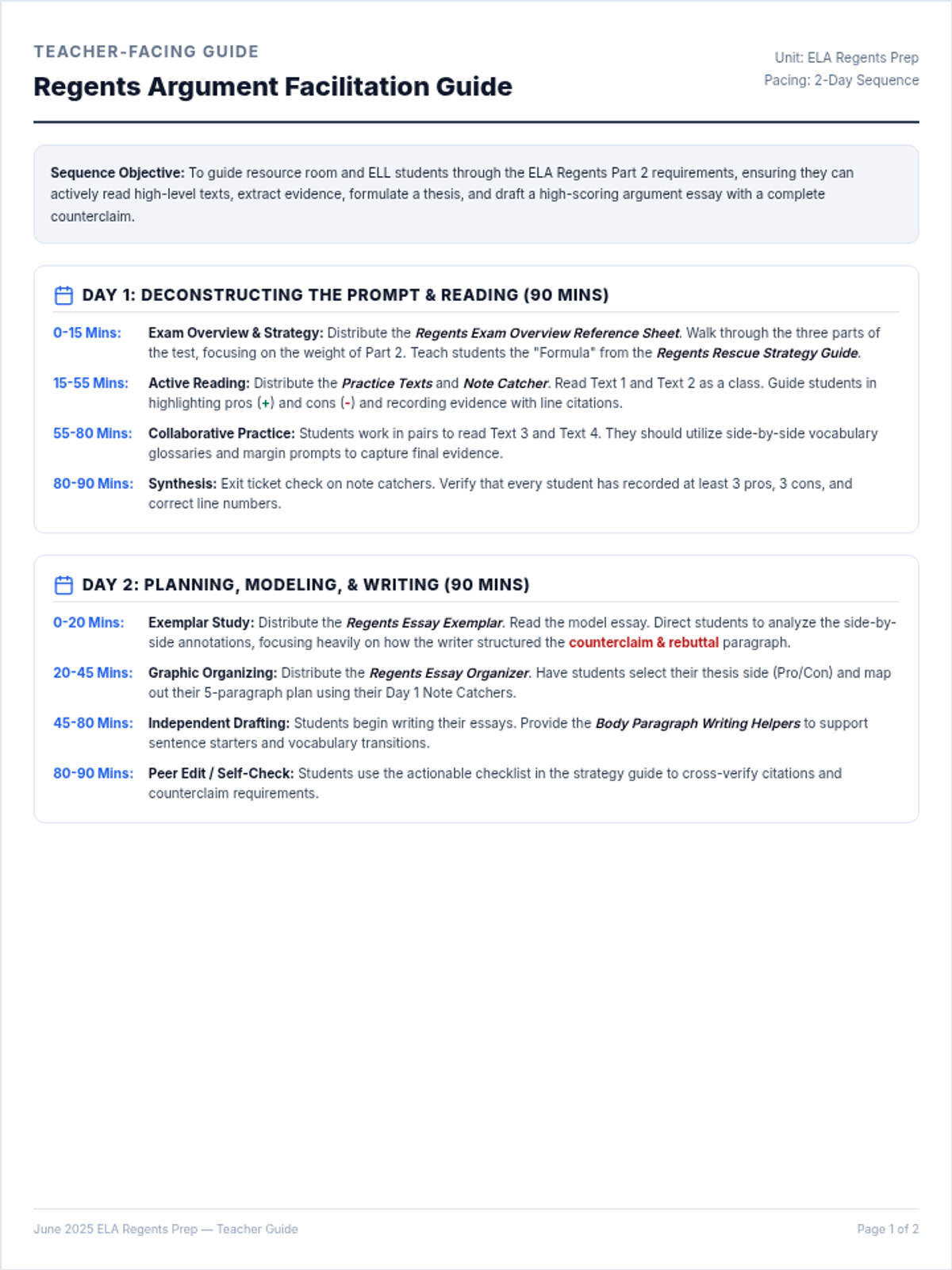
Students plan their argumentative essays using scaffolded graphic organizers and study a high-level annotated model exemplar essay to master citation and counter-argument requirements.
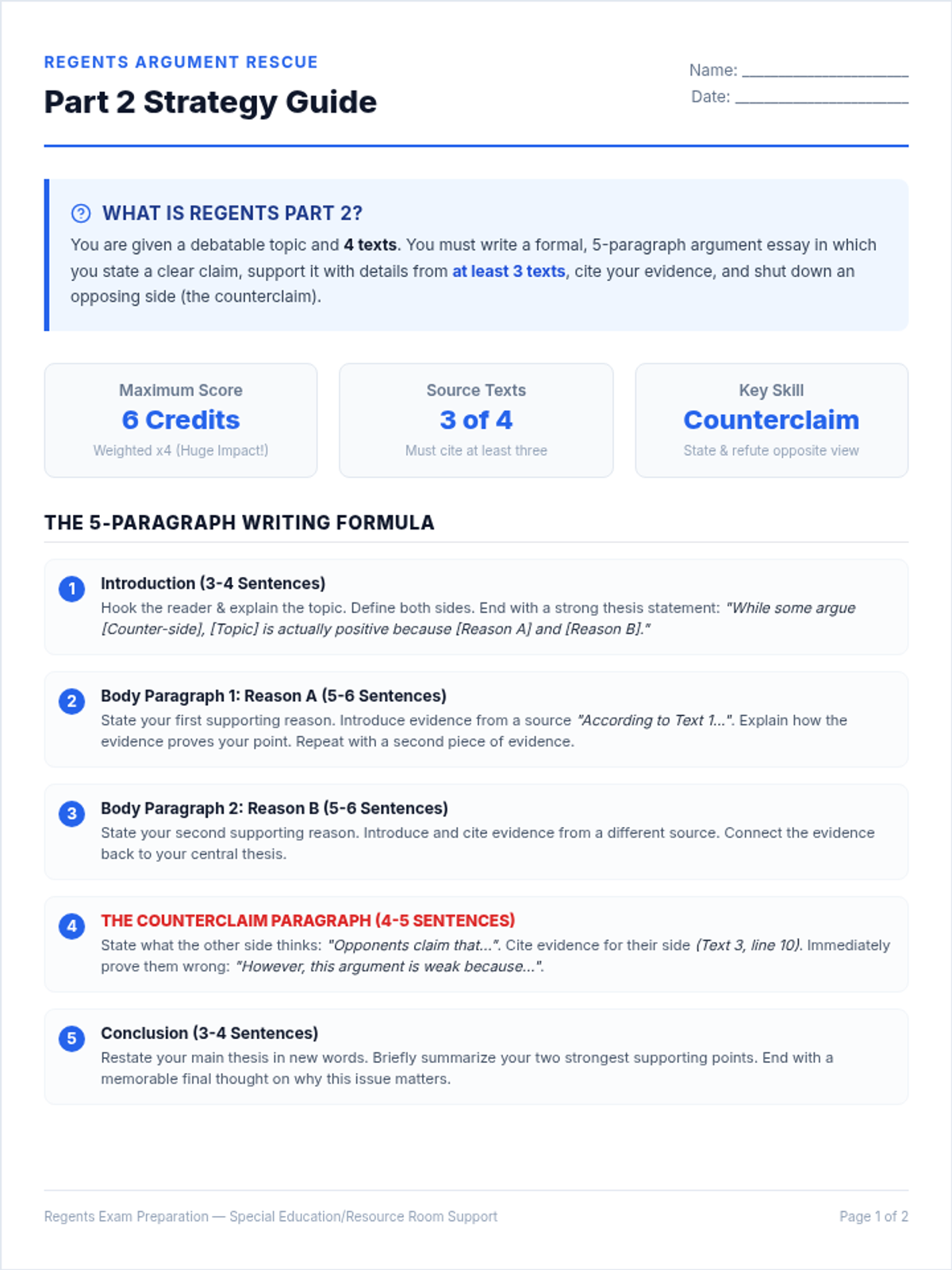
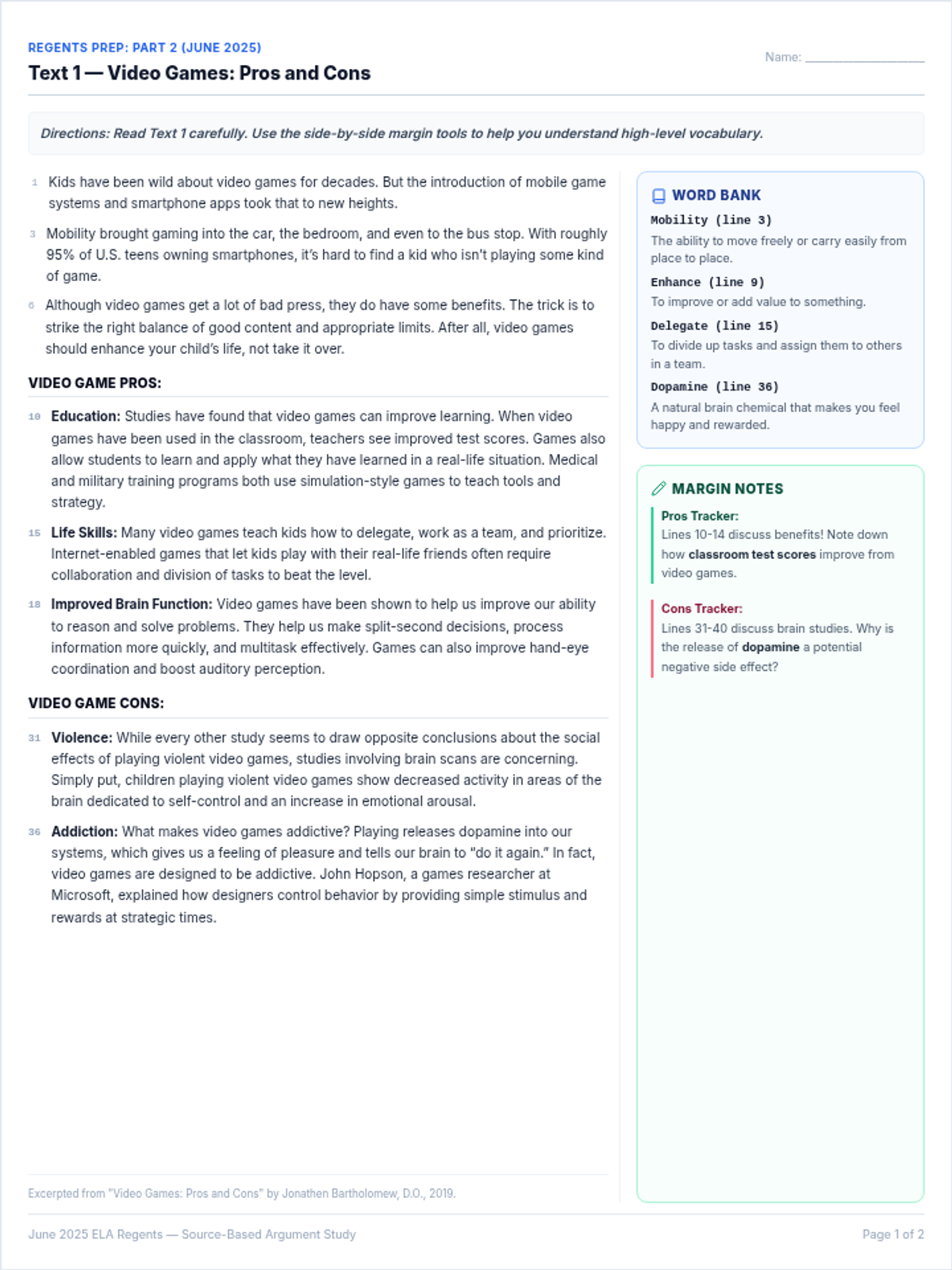
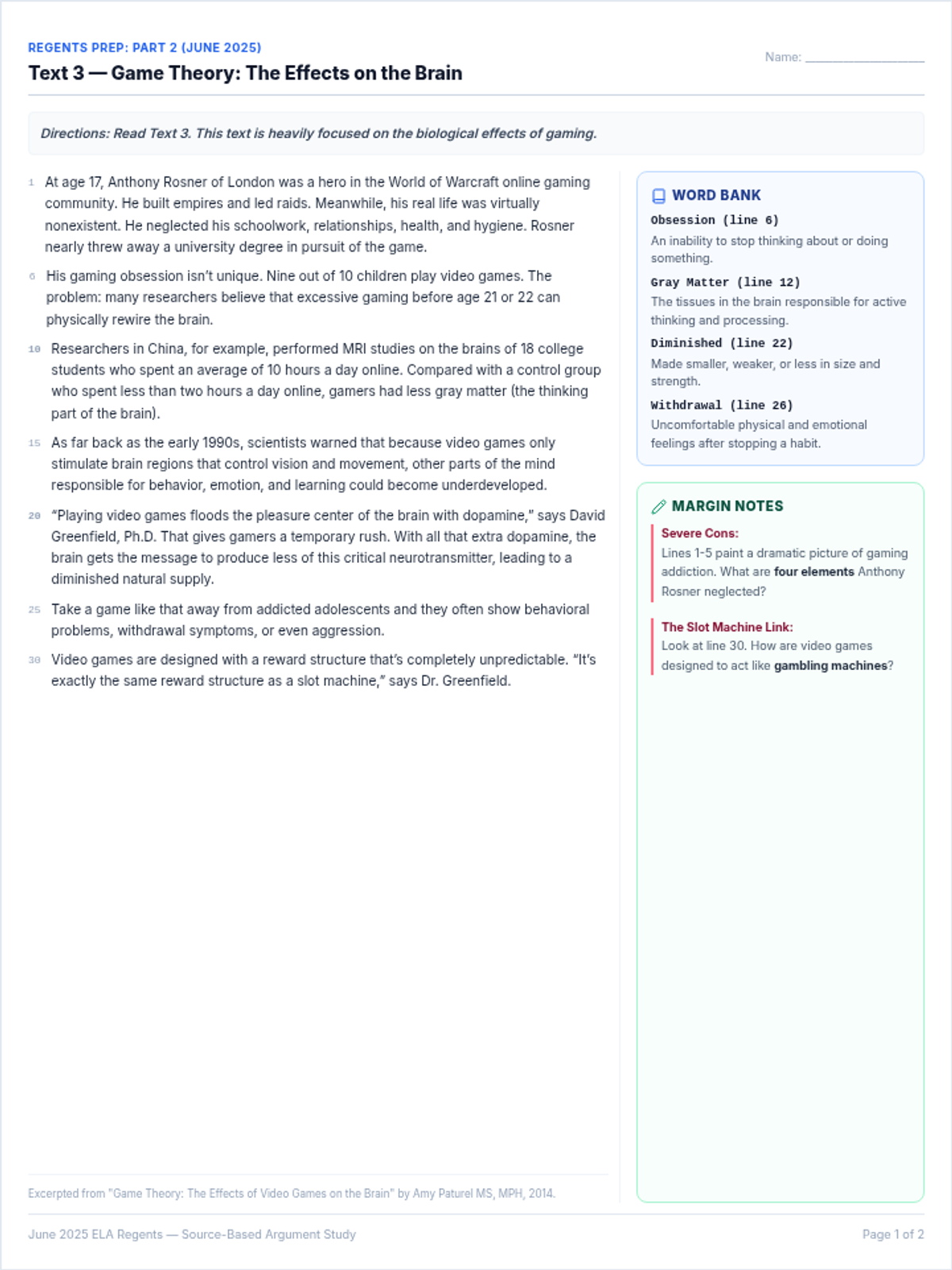
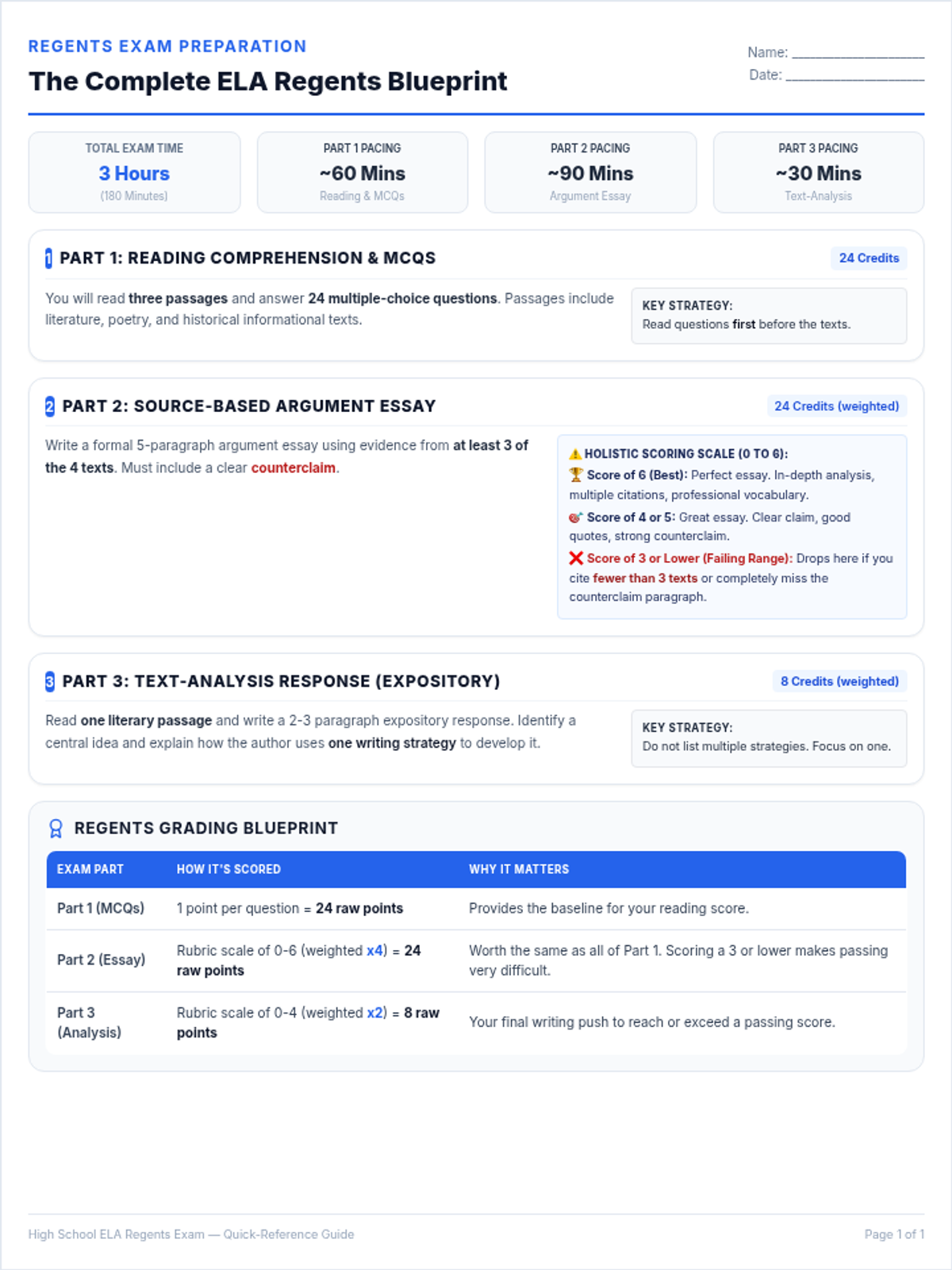
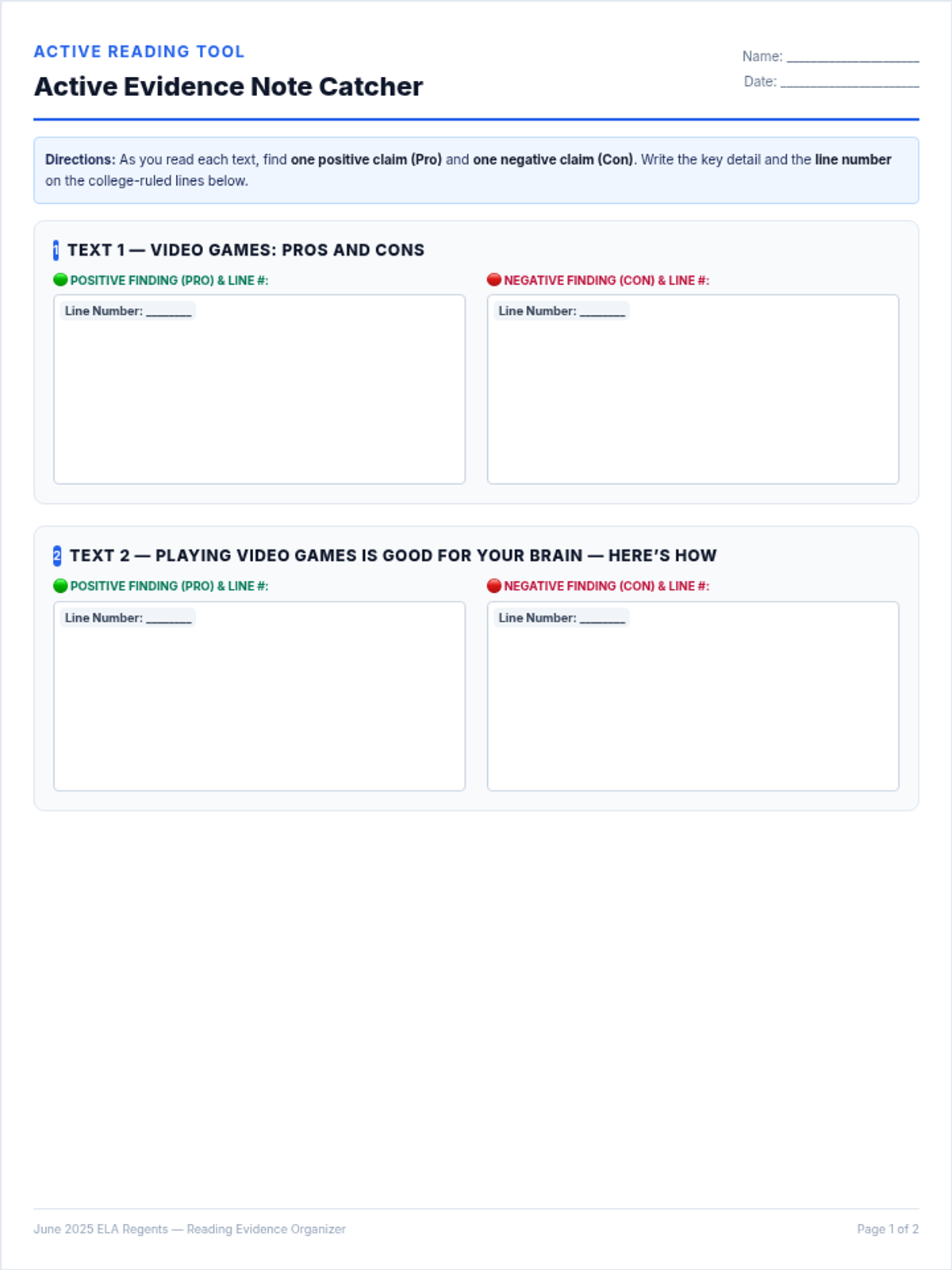
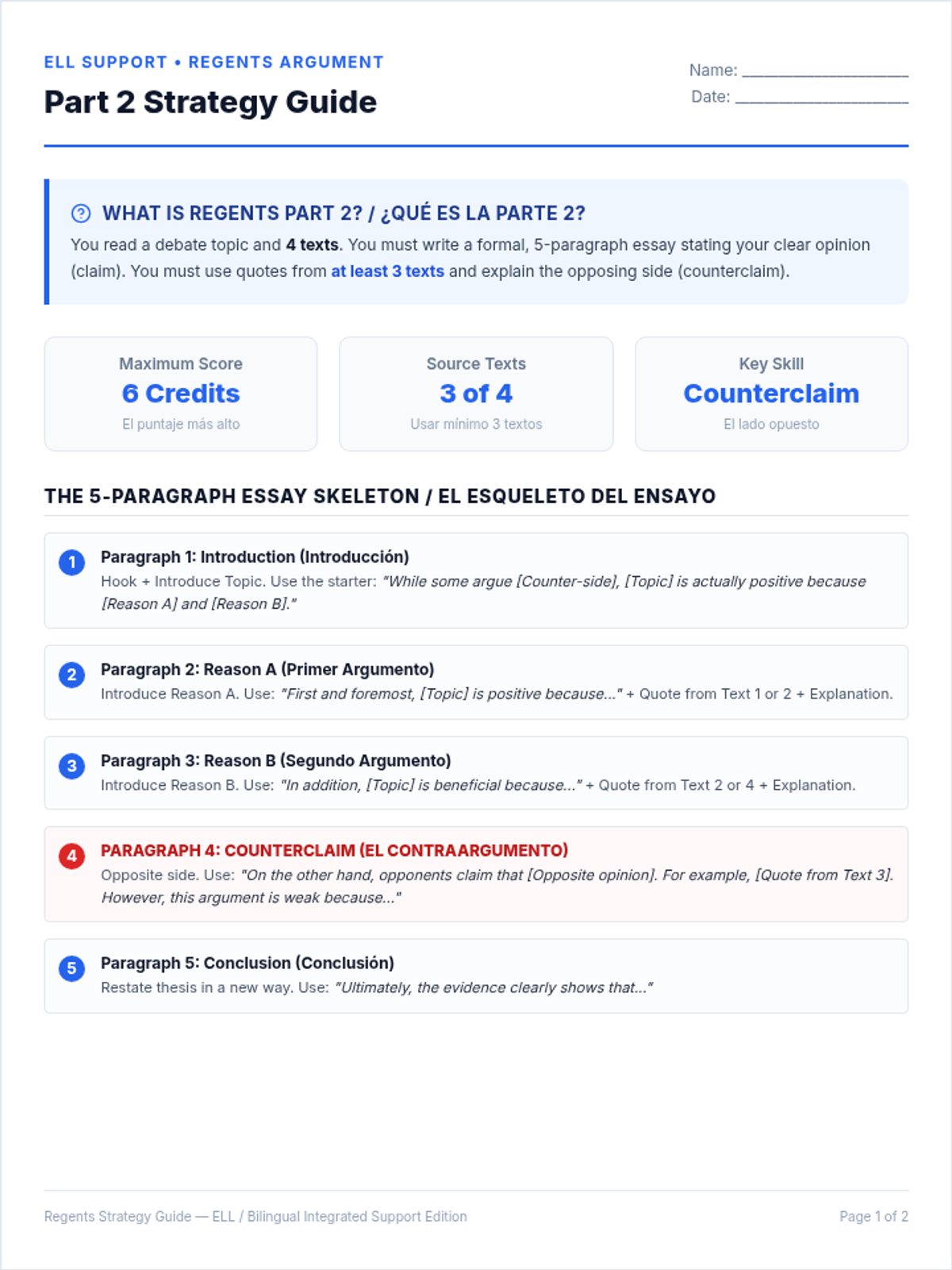
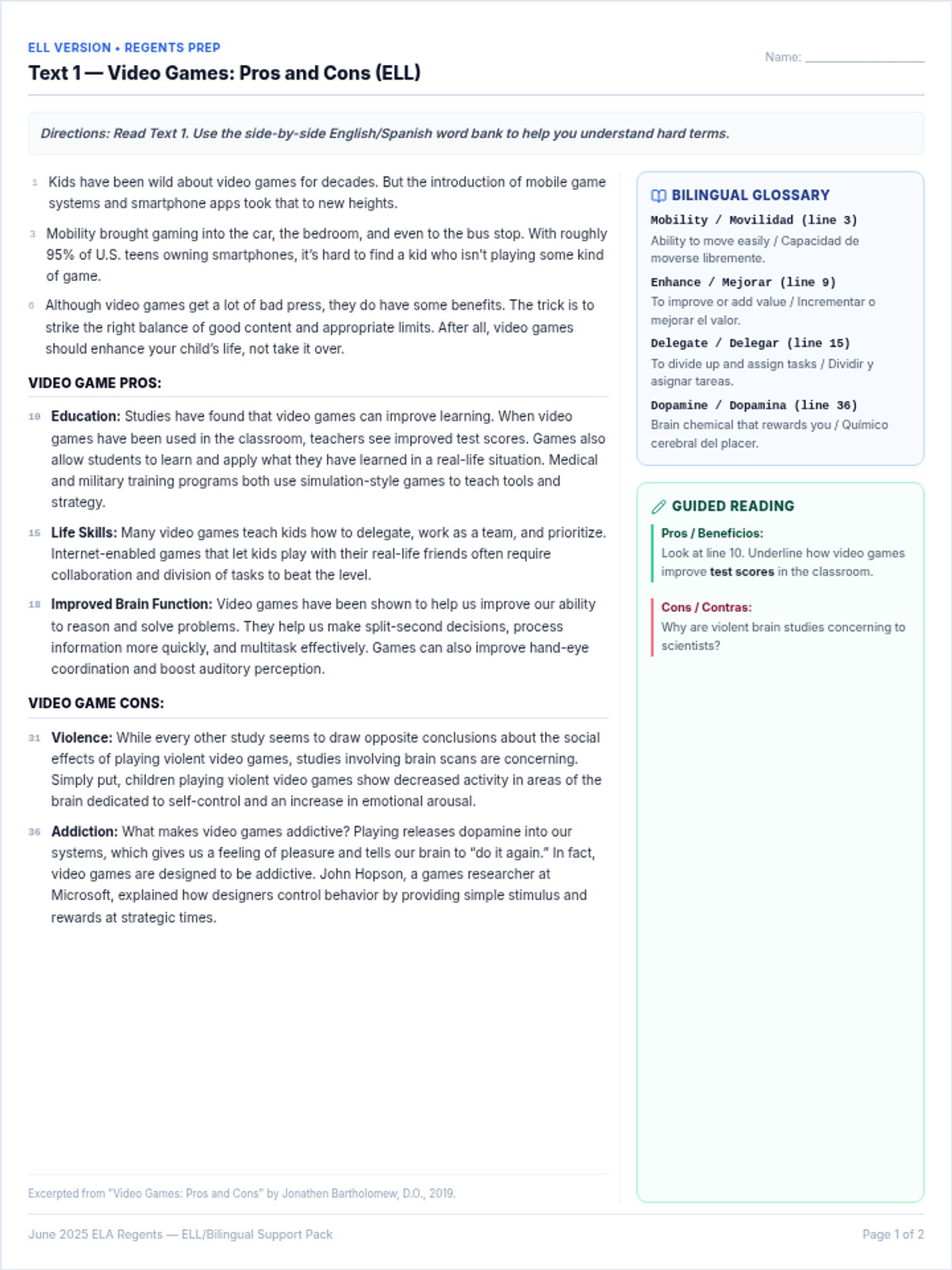
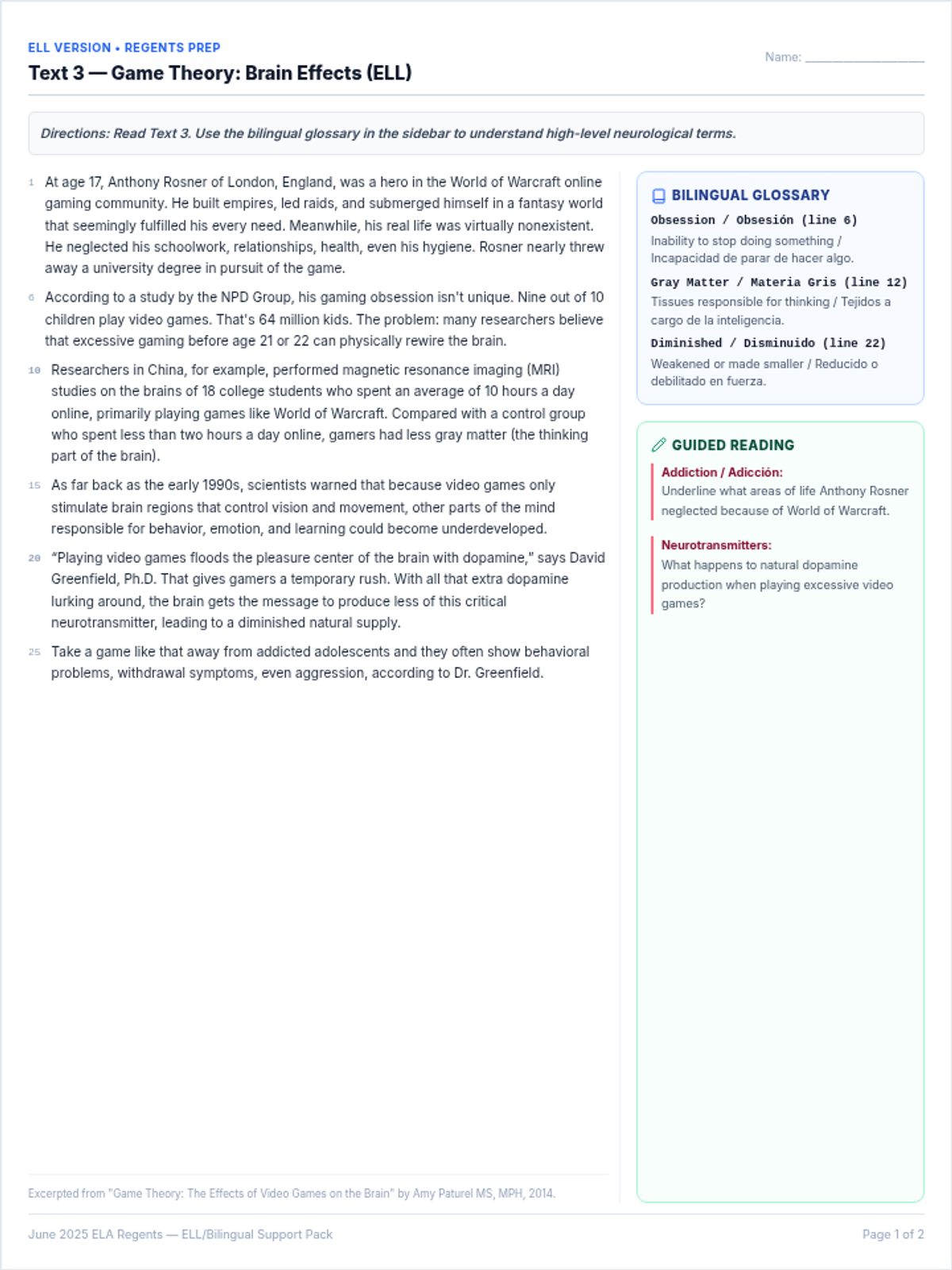
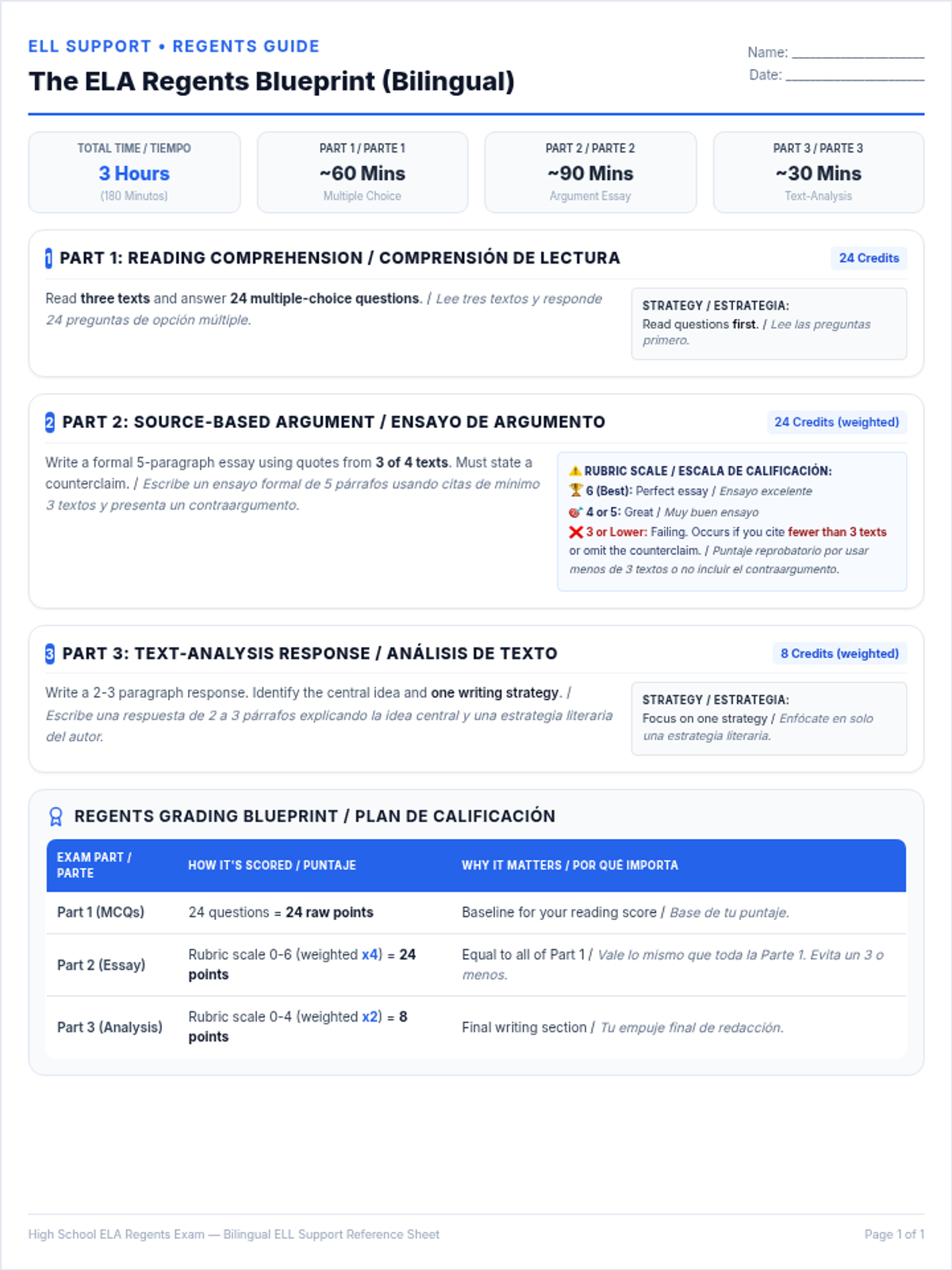
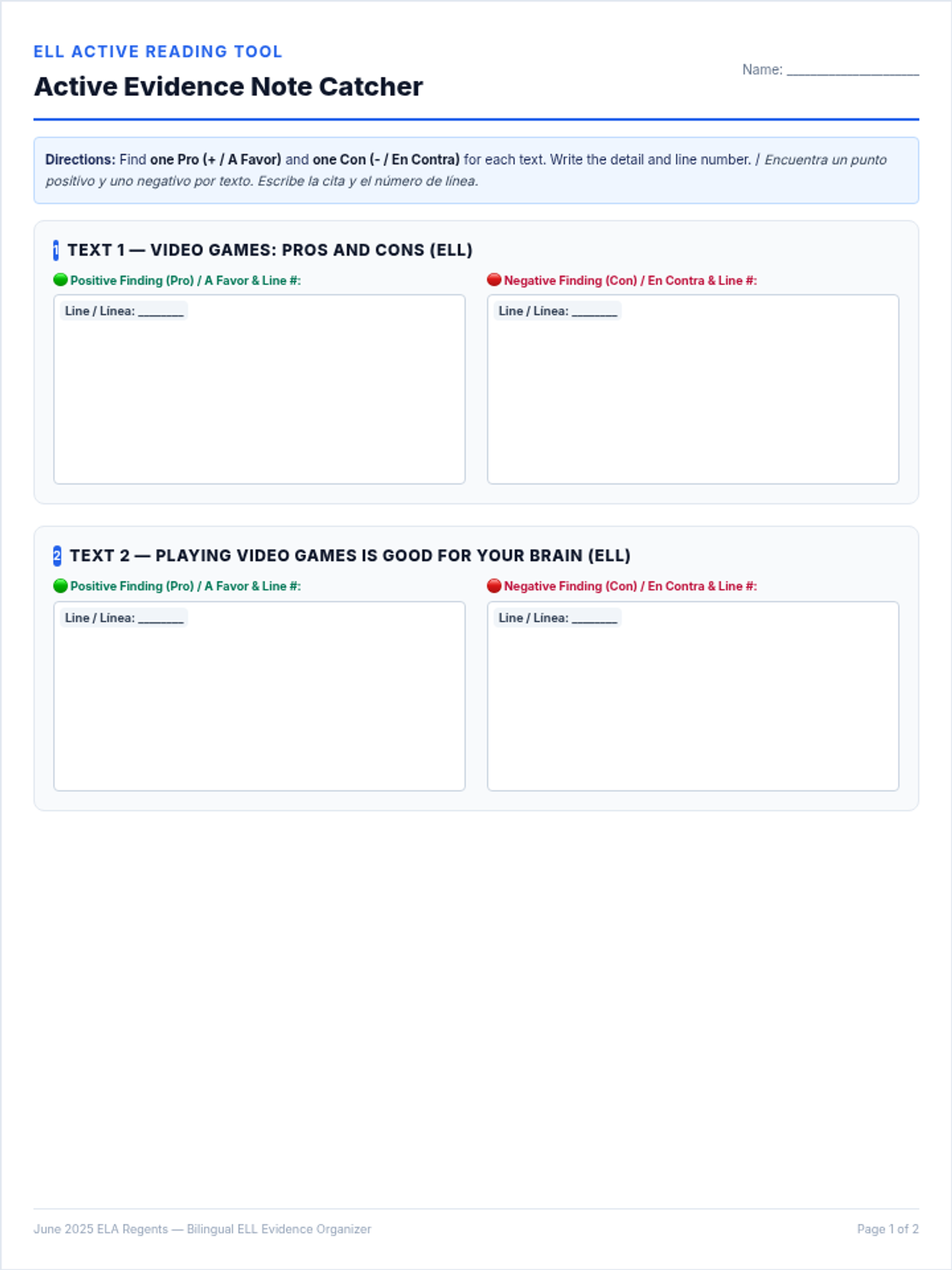
Students dissect the Regents Part 2 prompt requirements, learn step-by-step checklists, and read Texts 1, 2, 3, and 4 with direct vocabulary word banks and margin annotation support.
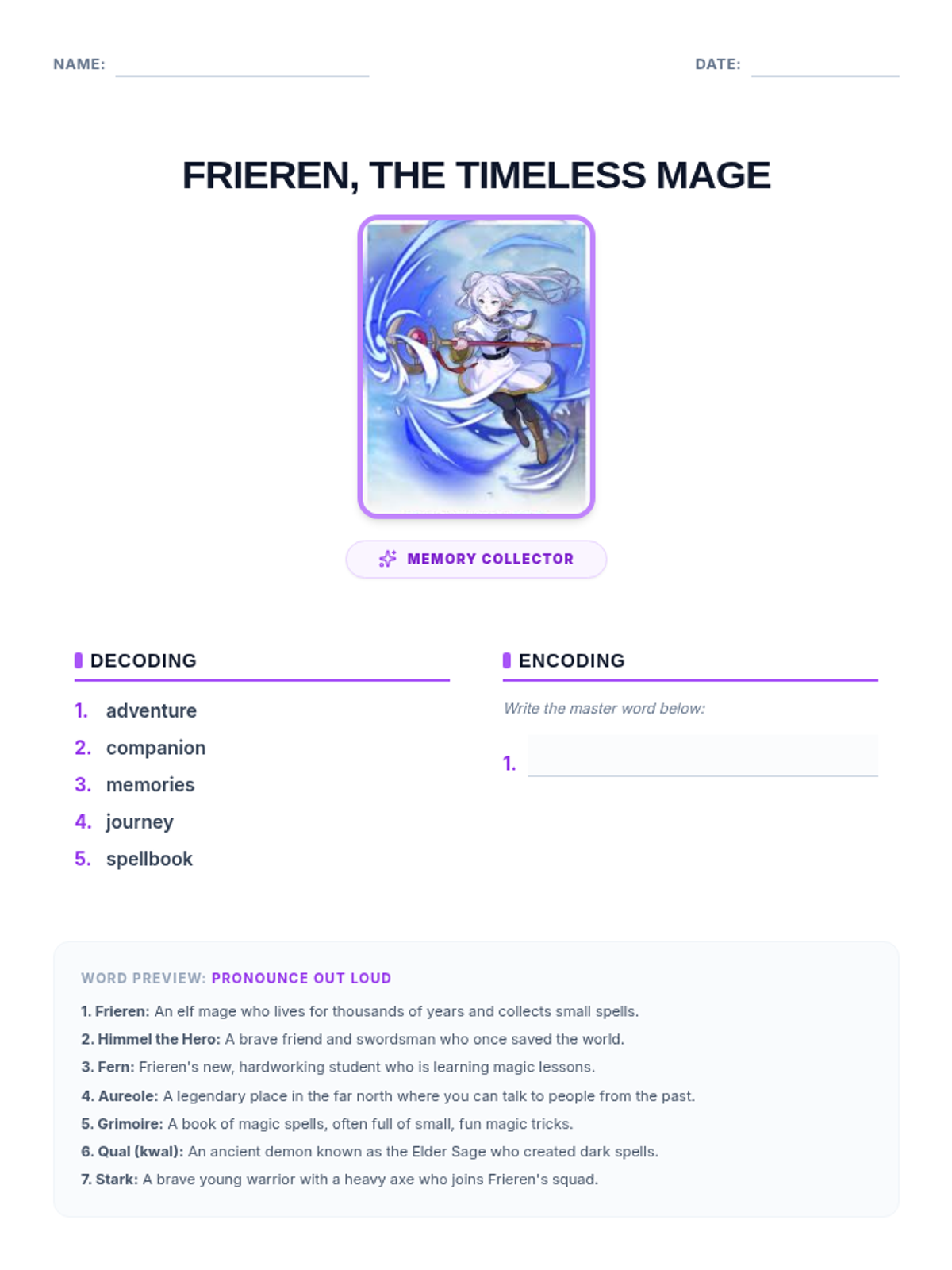
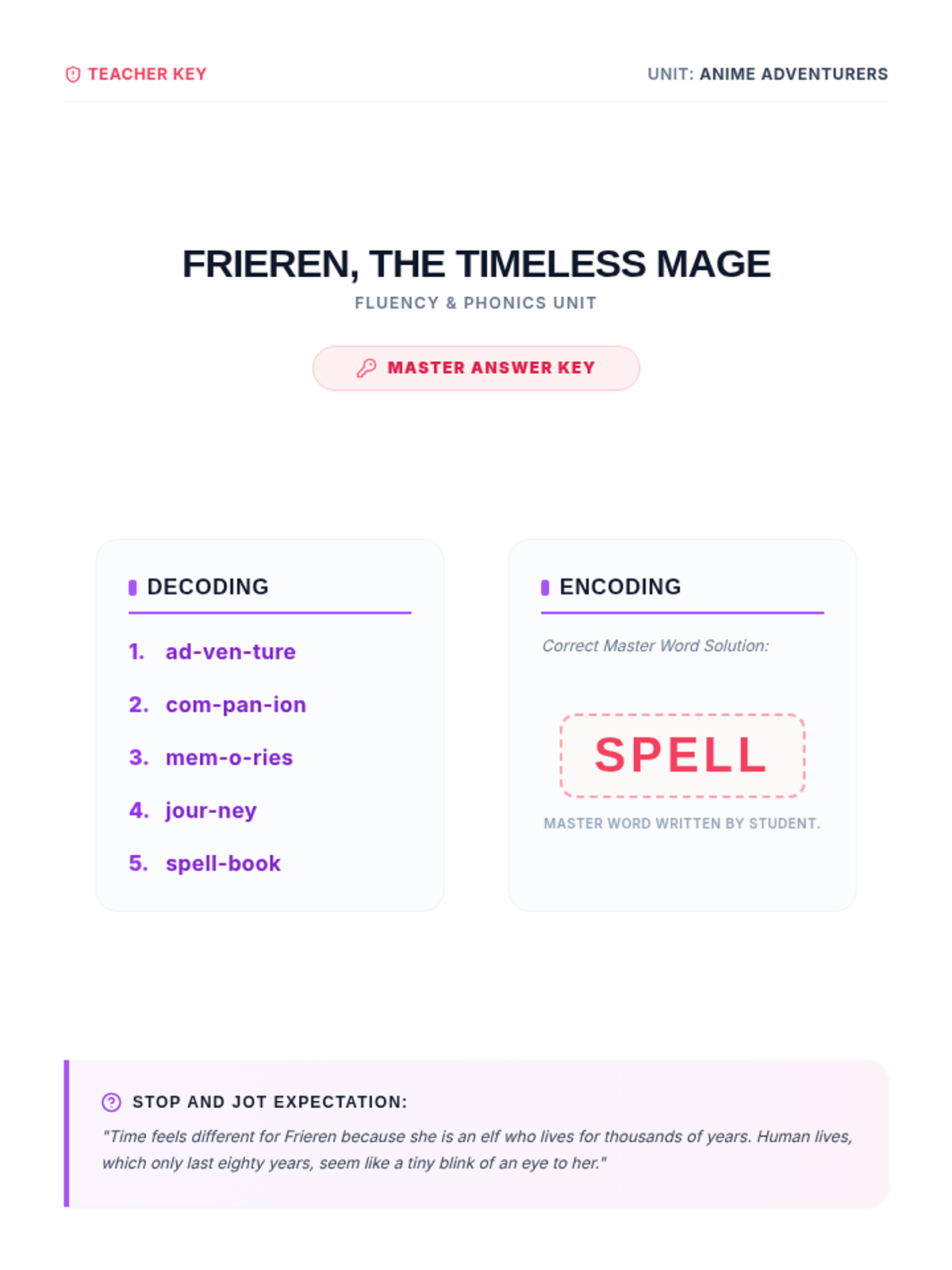
A reading fluency and decoding/encoding lesson set inspired by Frieren, designed to build 3rd-4th grade literacy skills using action-oriented passages about Frieren's magic.
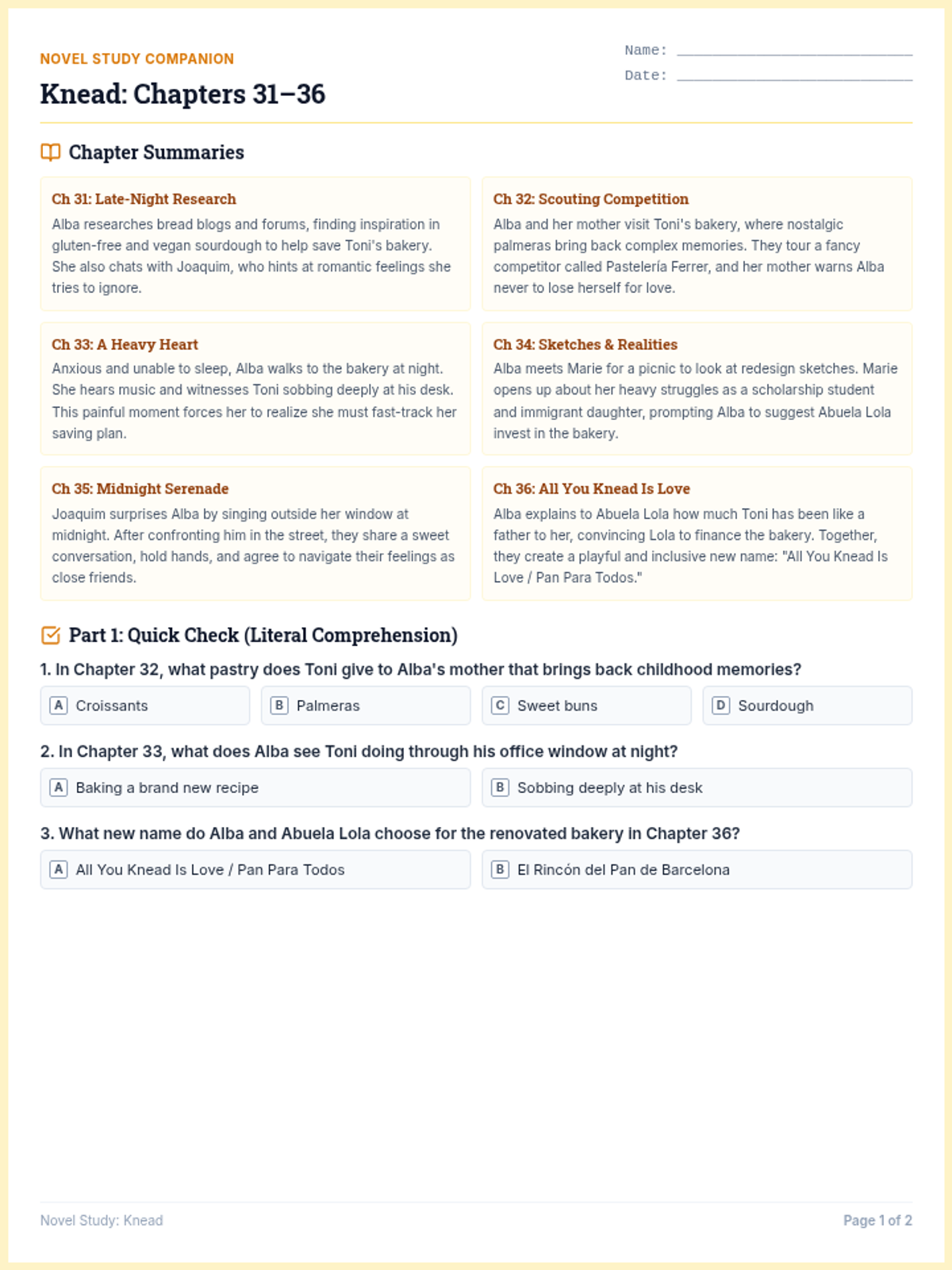
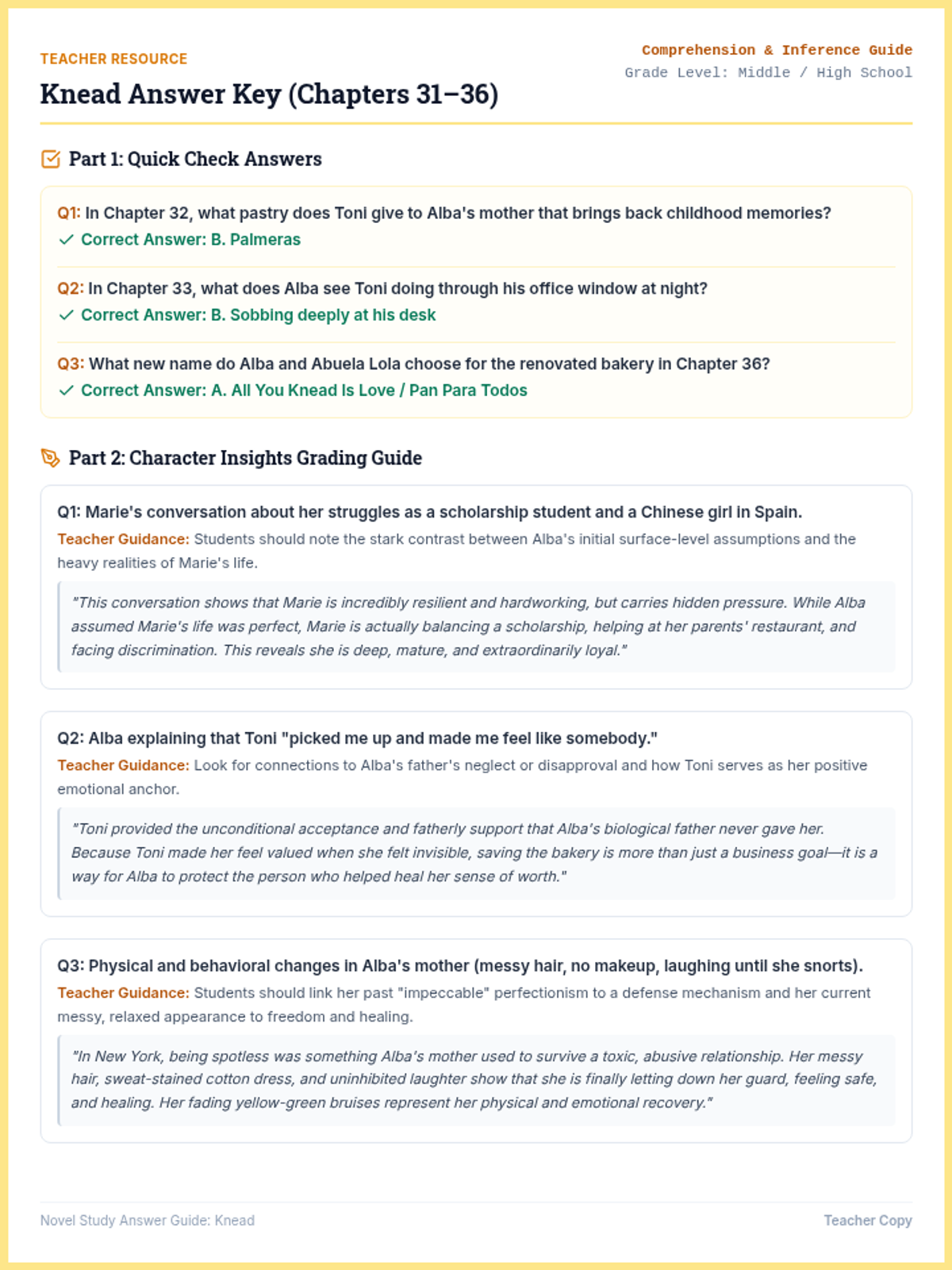
A deep-dive reading analysis of chapters 31-36 of the novel 'Knead', exploring student comprehension and character inference.
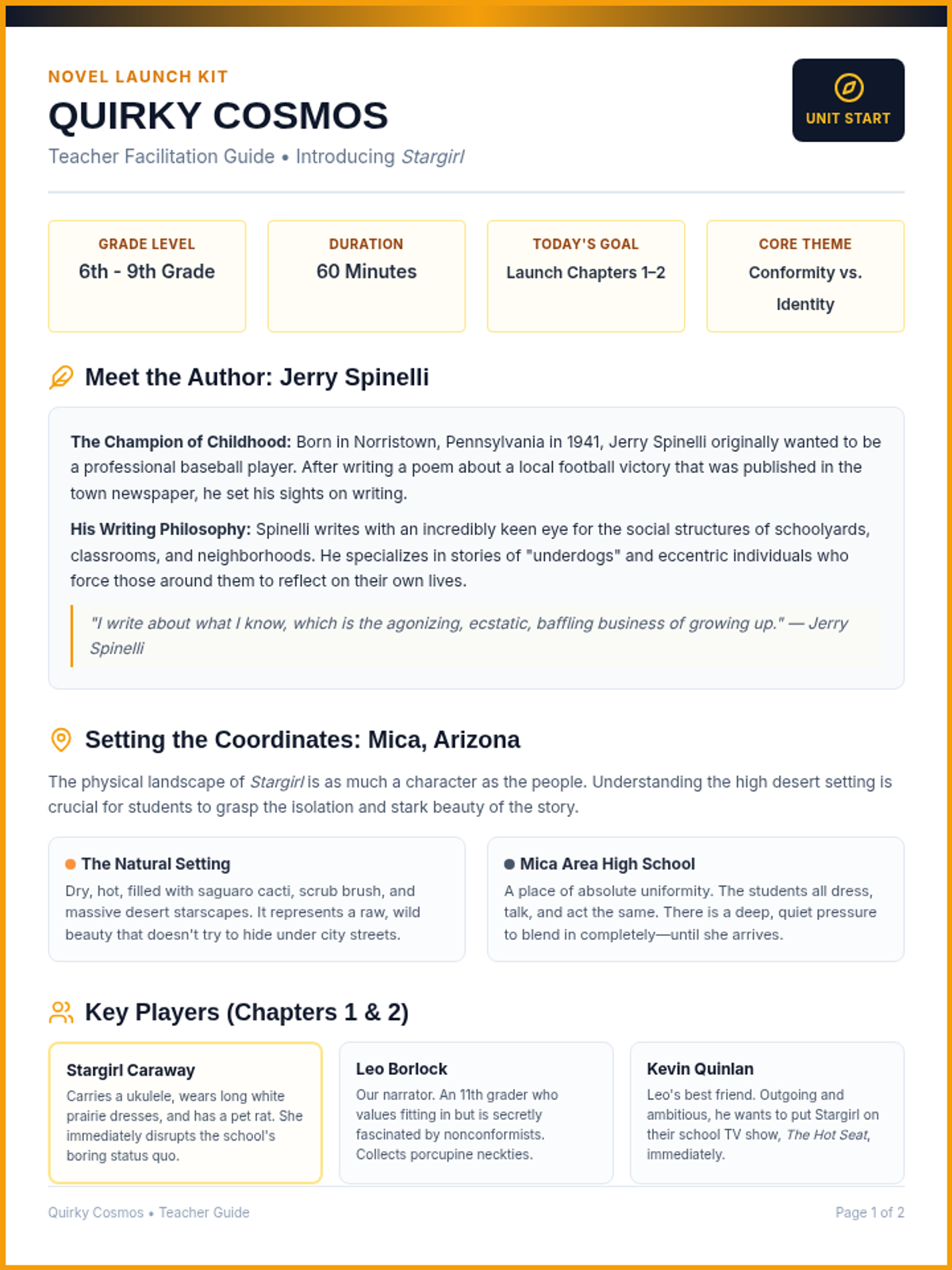
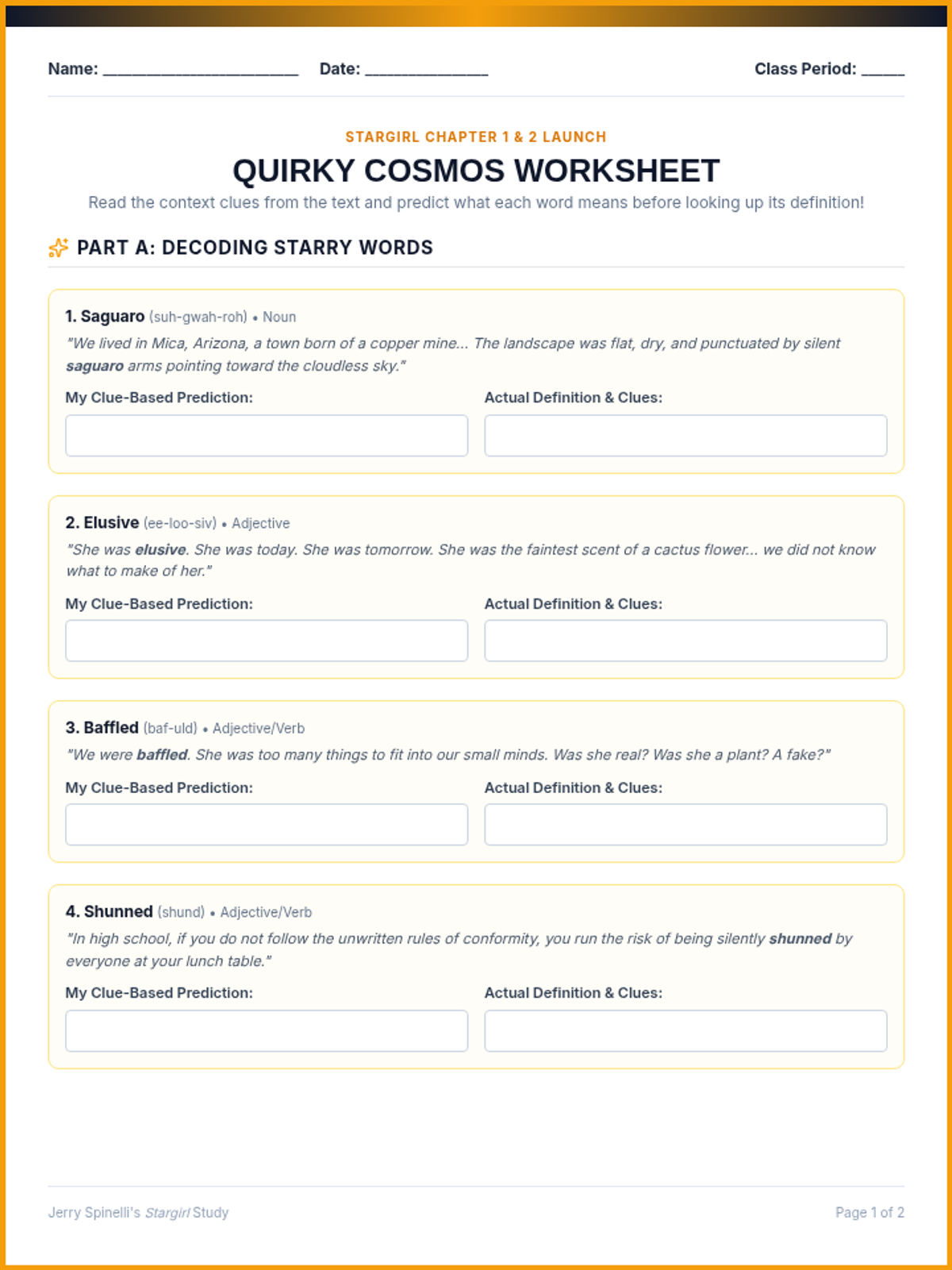
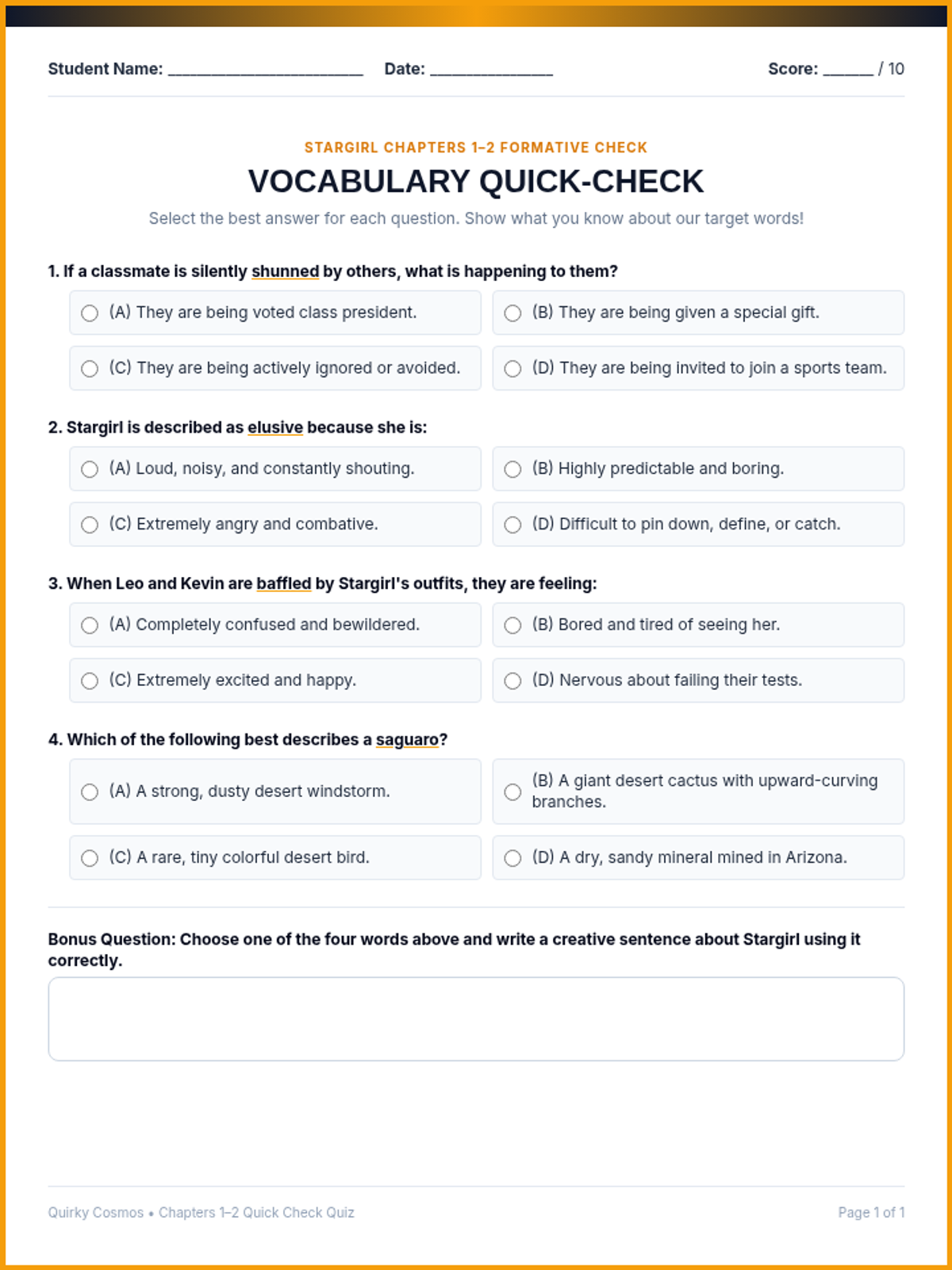
An introductory lesson bundle for Jerry Spinelli's novel Stargirl, focusing on the author's background, desert setting of Mica, Arizona, key characters, and contextual vocabulary for Chapters 1 and 2.
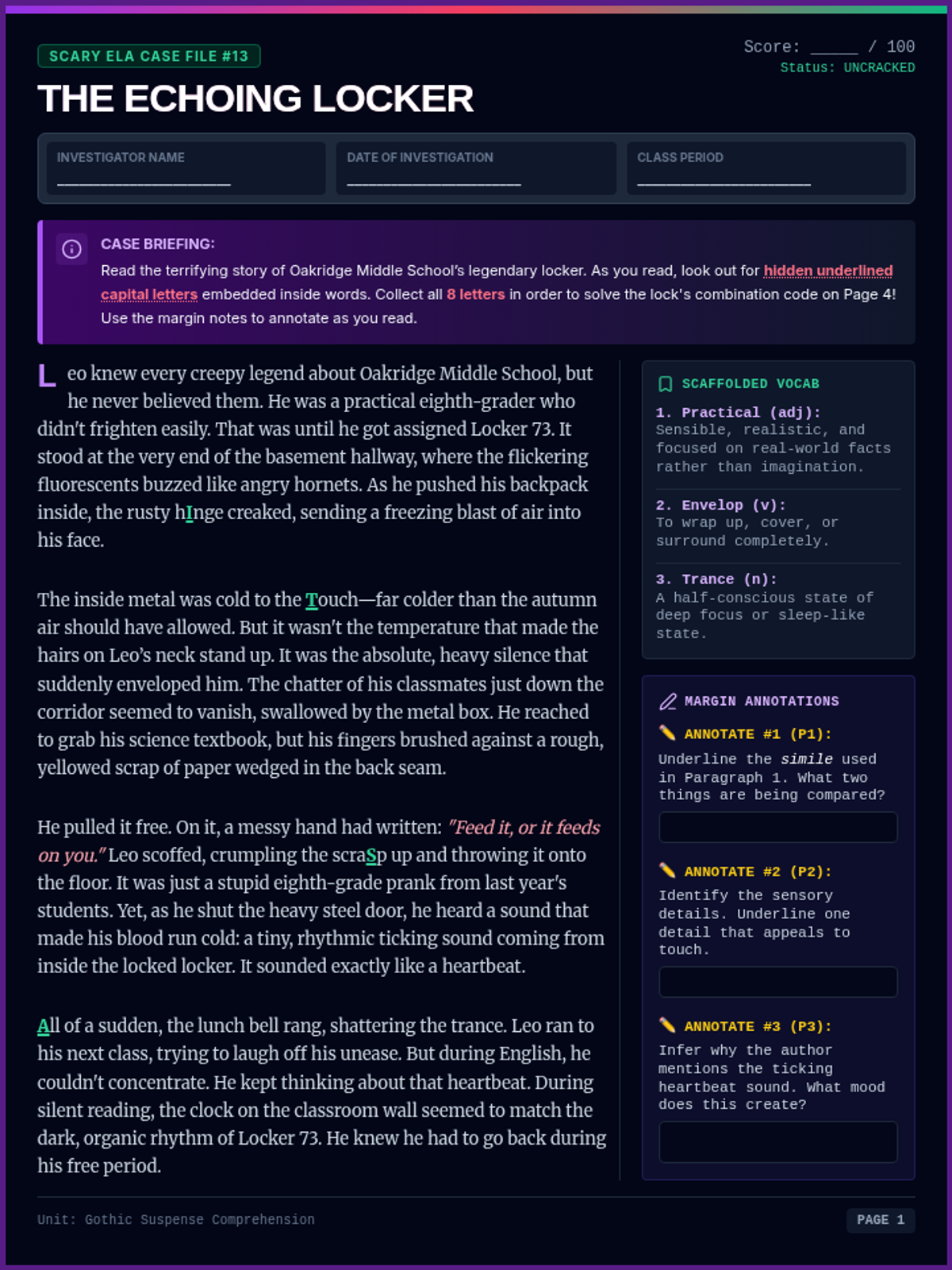
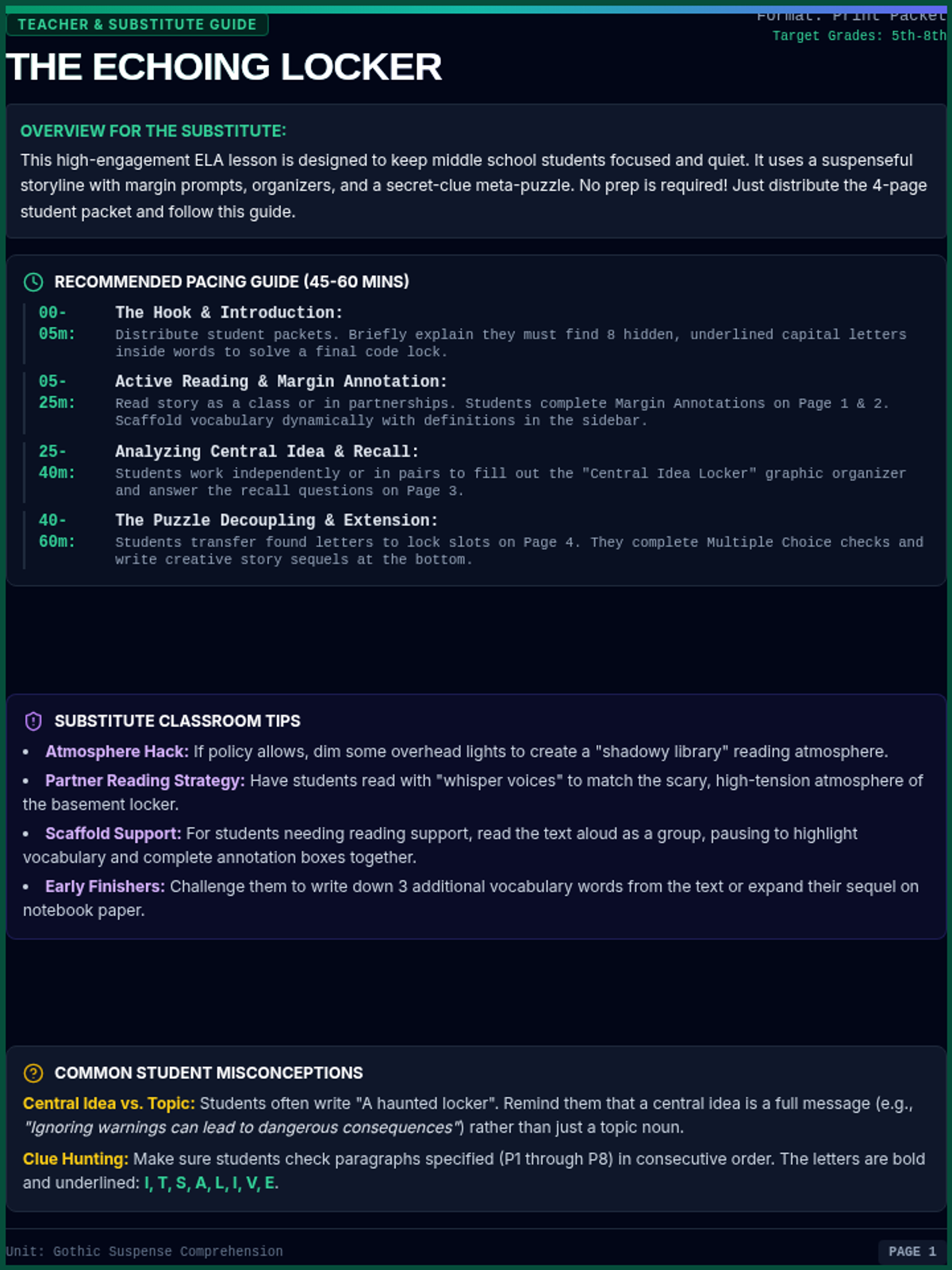
A spooky, high-interest ELA comprehension lesson for grades 5-8, perfect for sub days. Students read a terrifying tale about a haunted school locker, use margin annotations, complete visual organizers, and crack a secret clue-based meta-puzzle.
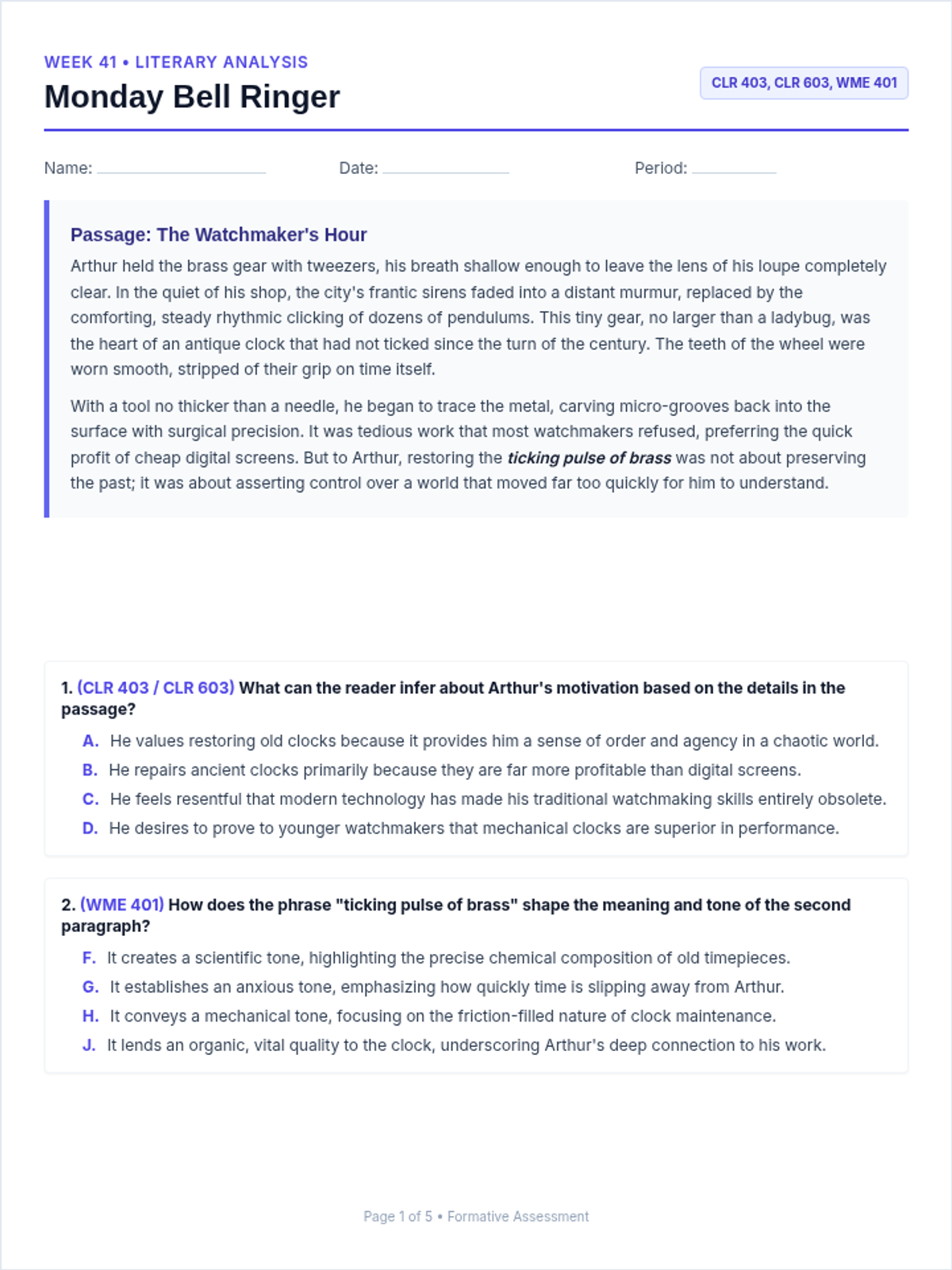
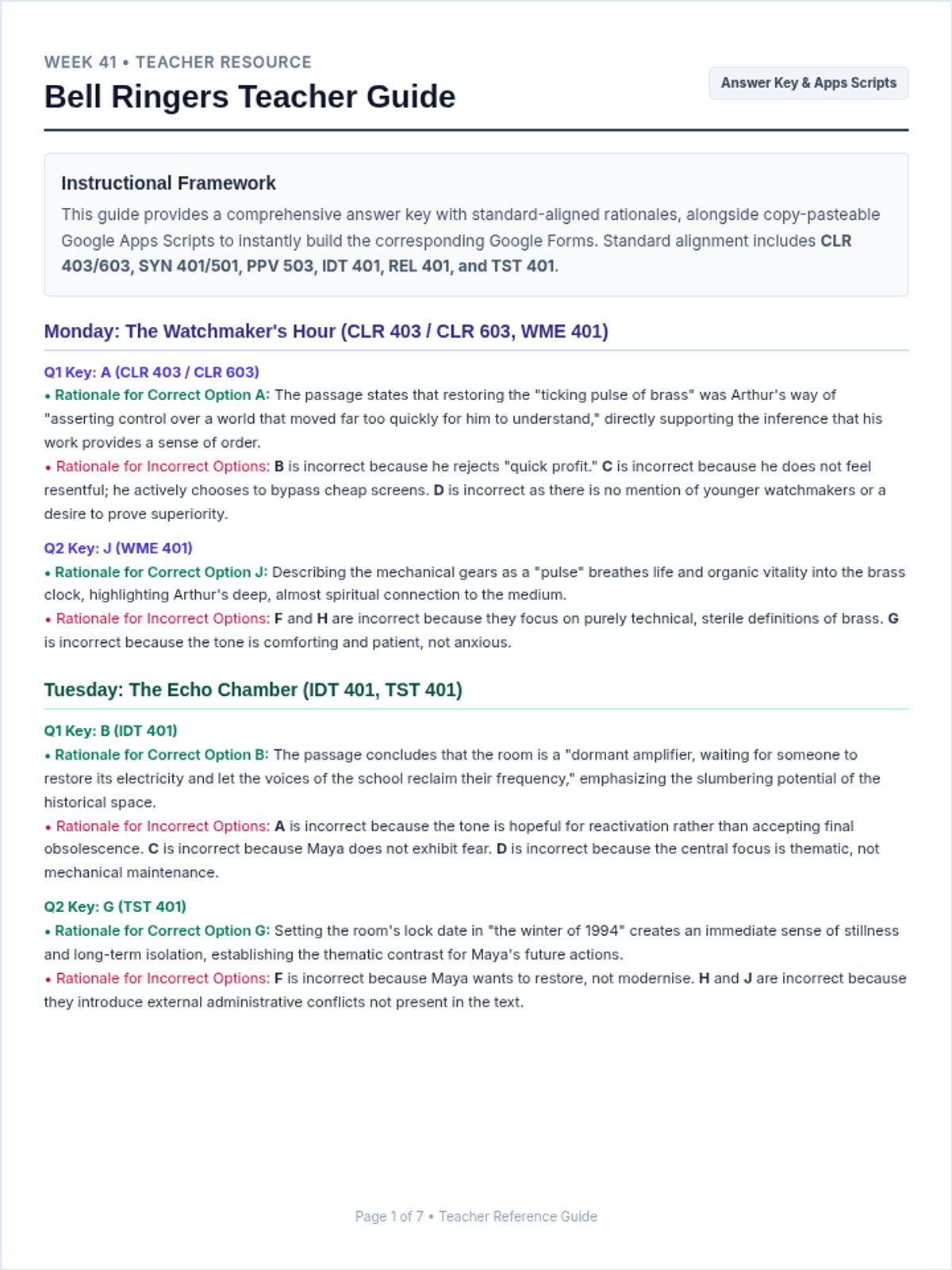
A lesson containing a 5-day student bell ringer packet and a teacher guide with detailed answer keys and Google Apps Script code to build corresponding Google Forms.
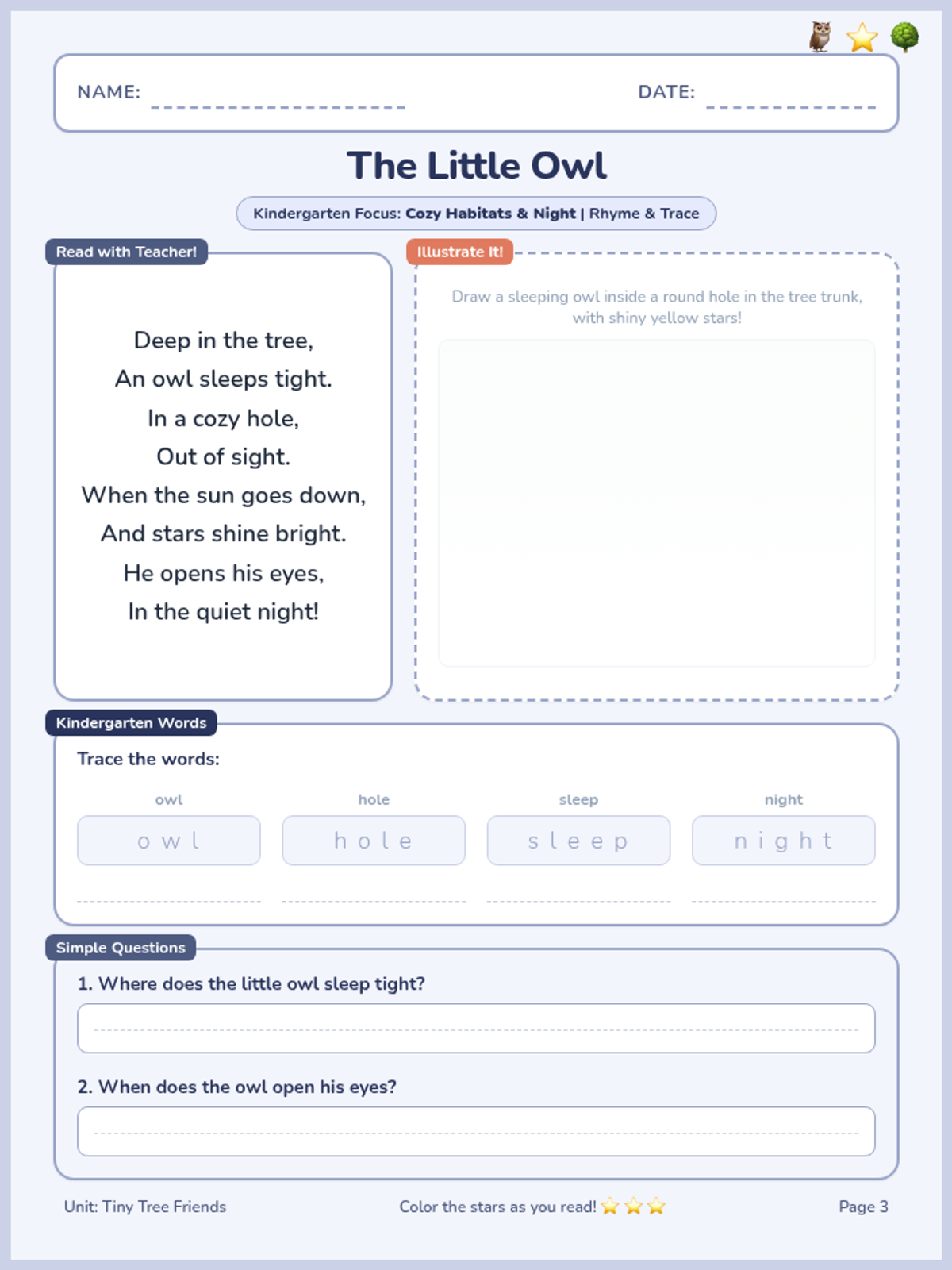
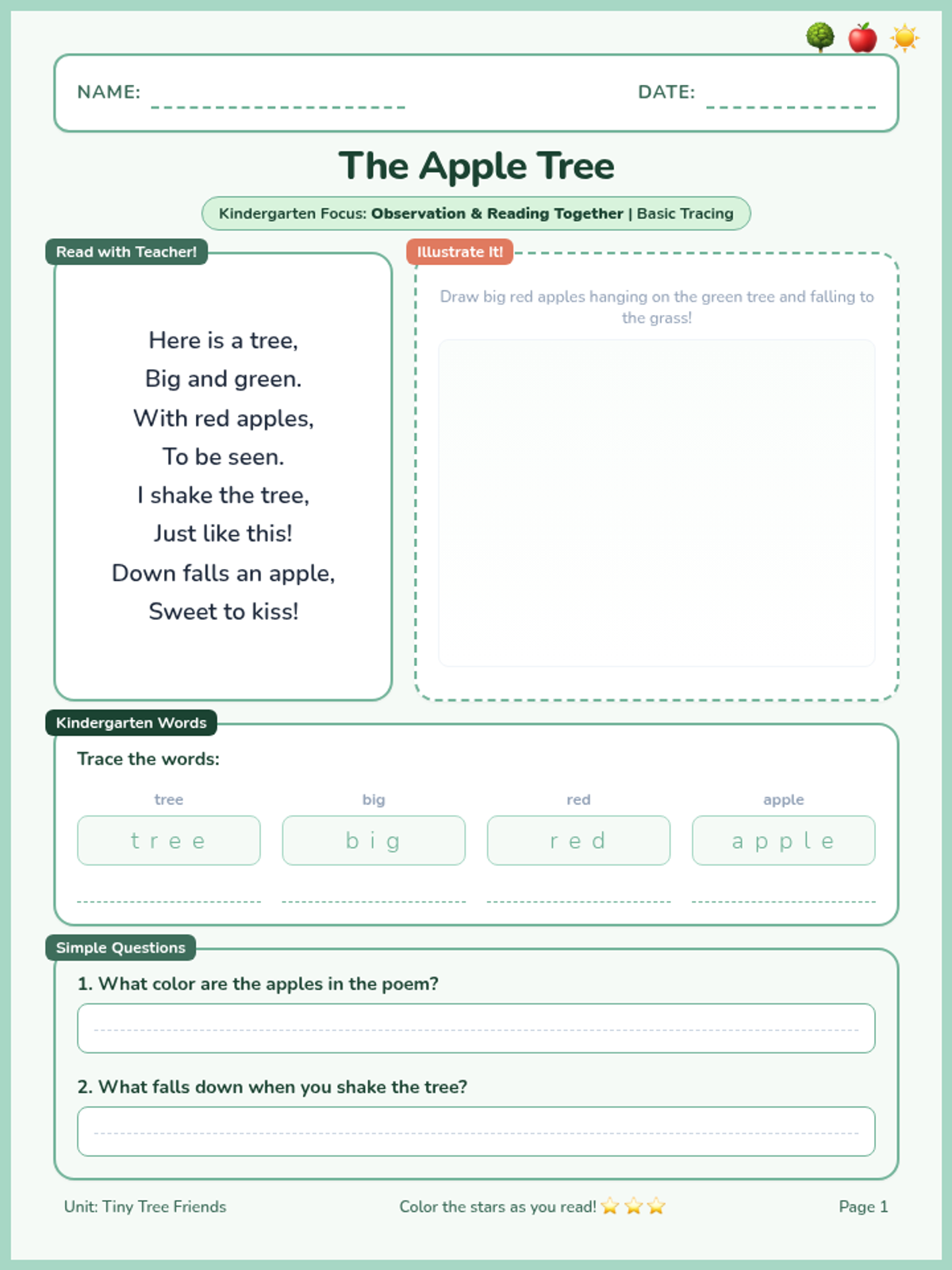
A sweet kindergarten unit focusing on trees and seasonal changes. Students read simple, rhythmic poems about apple trees and falling leaves, practice coloring, trace basic seasonal terms, and answer introductory comprehension questions.
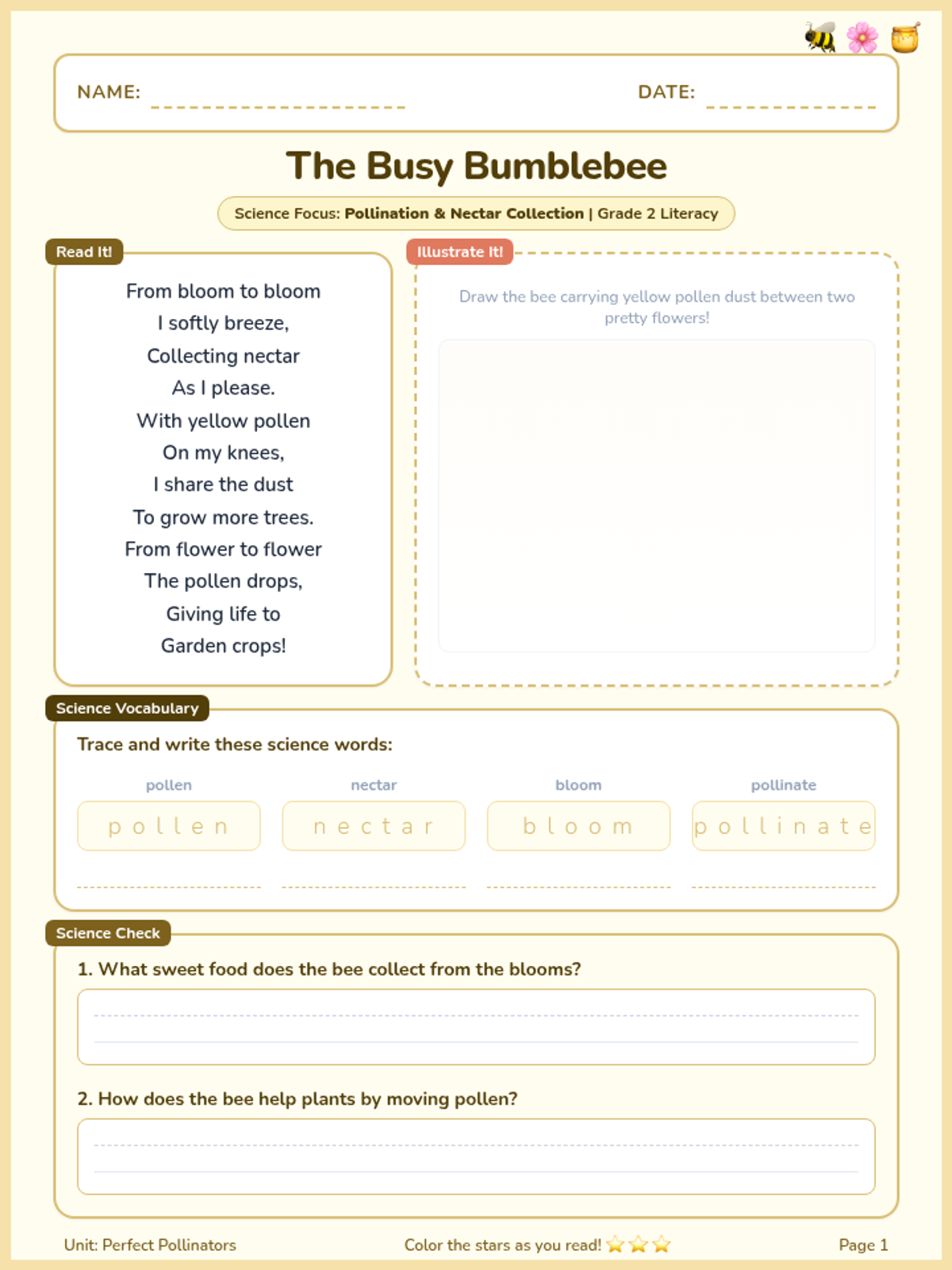
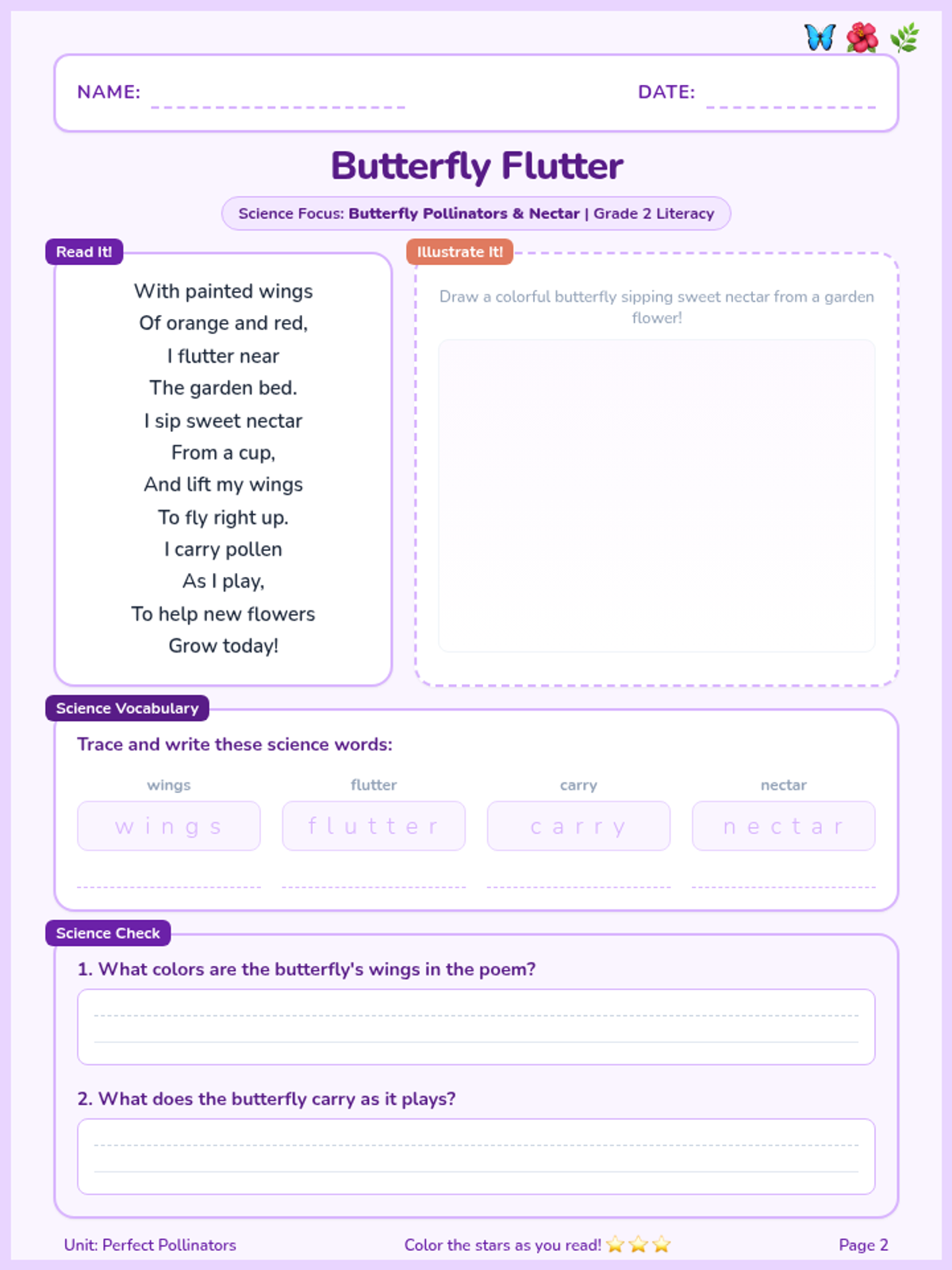
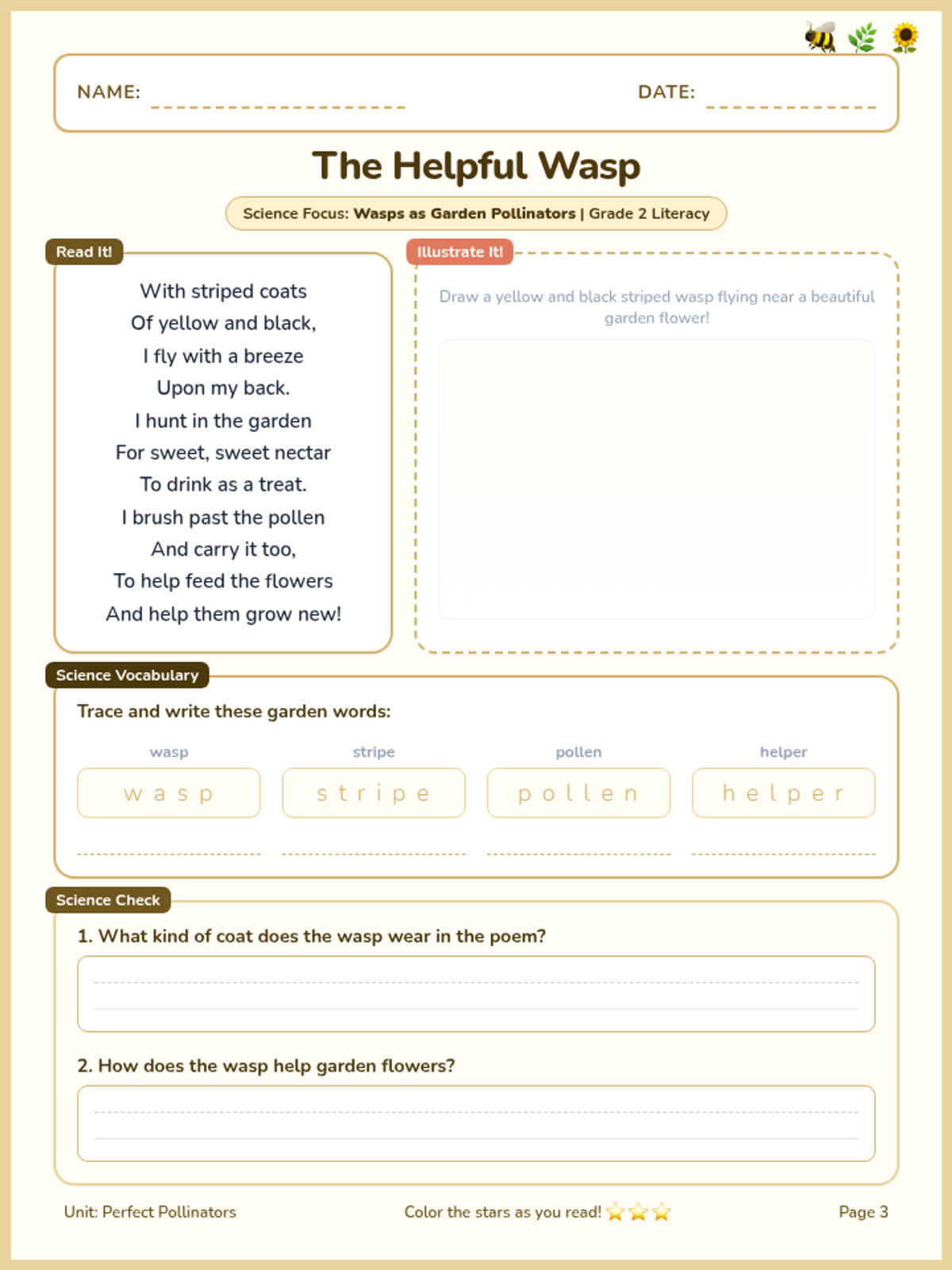
An engaging science-integrated poetry unit for Grade 2. Students read sweet, rhythmic poems about bumblebees and butterflies, illustrating their important roles in pollination, identifying vocabulary, and demonstrating reading comprehension.
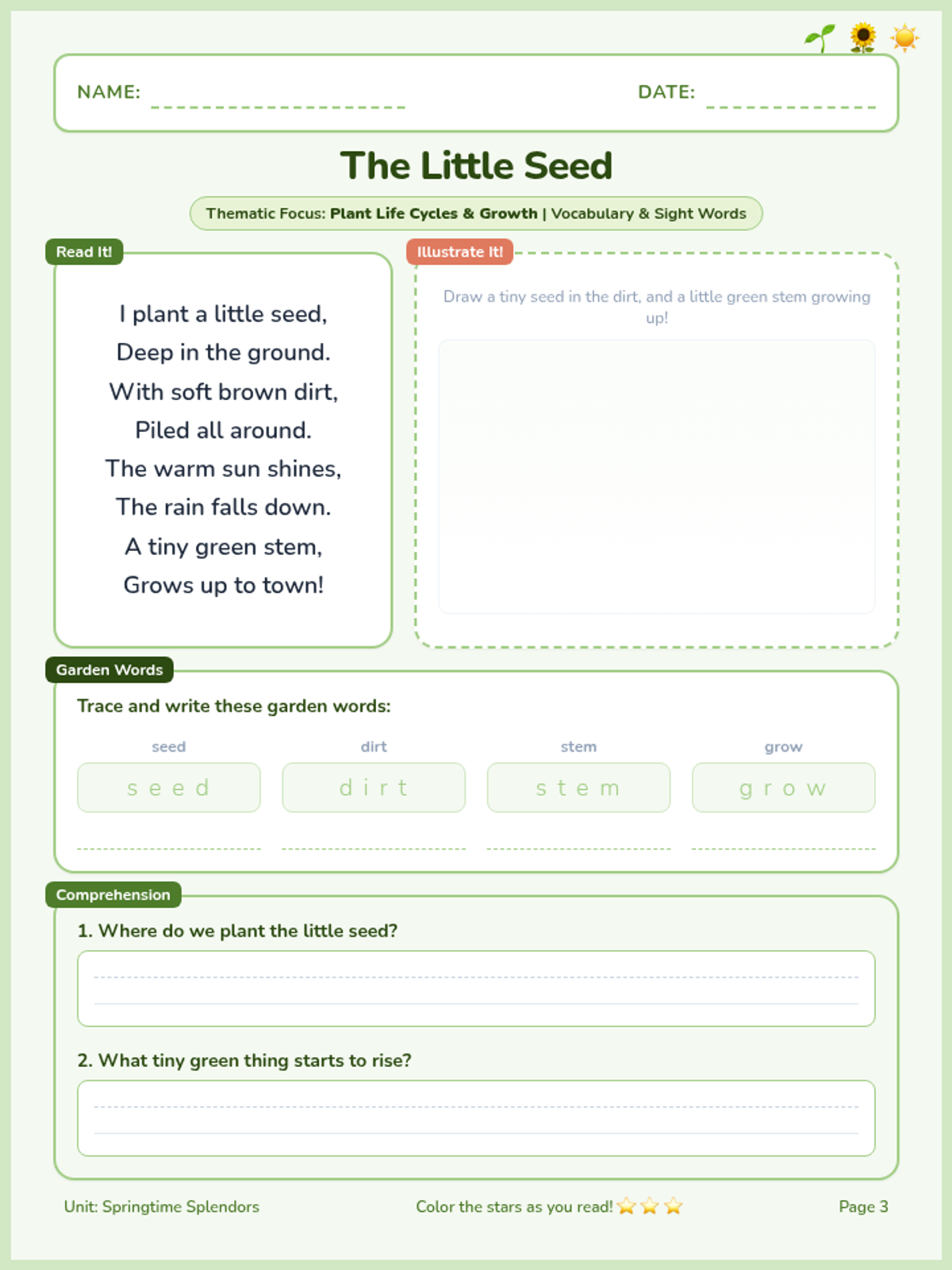
A beautiful thematic unit featuring sweet, engaging Spring poems. Students explore imagery, vocabulary, and seasonal shifts while practicing reading comprehension and creative expression.
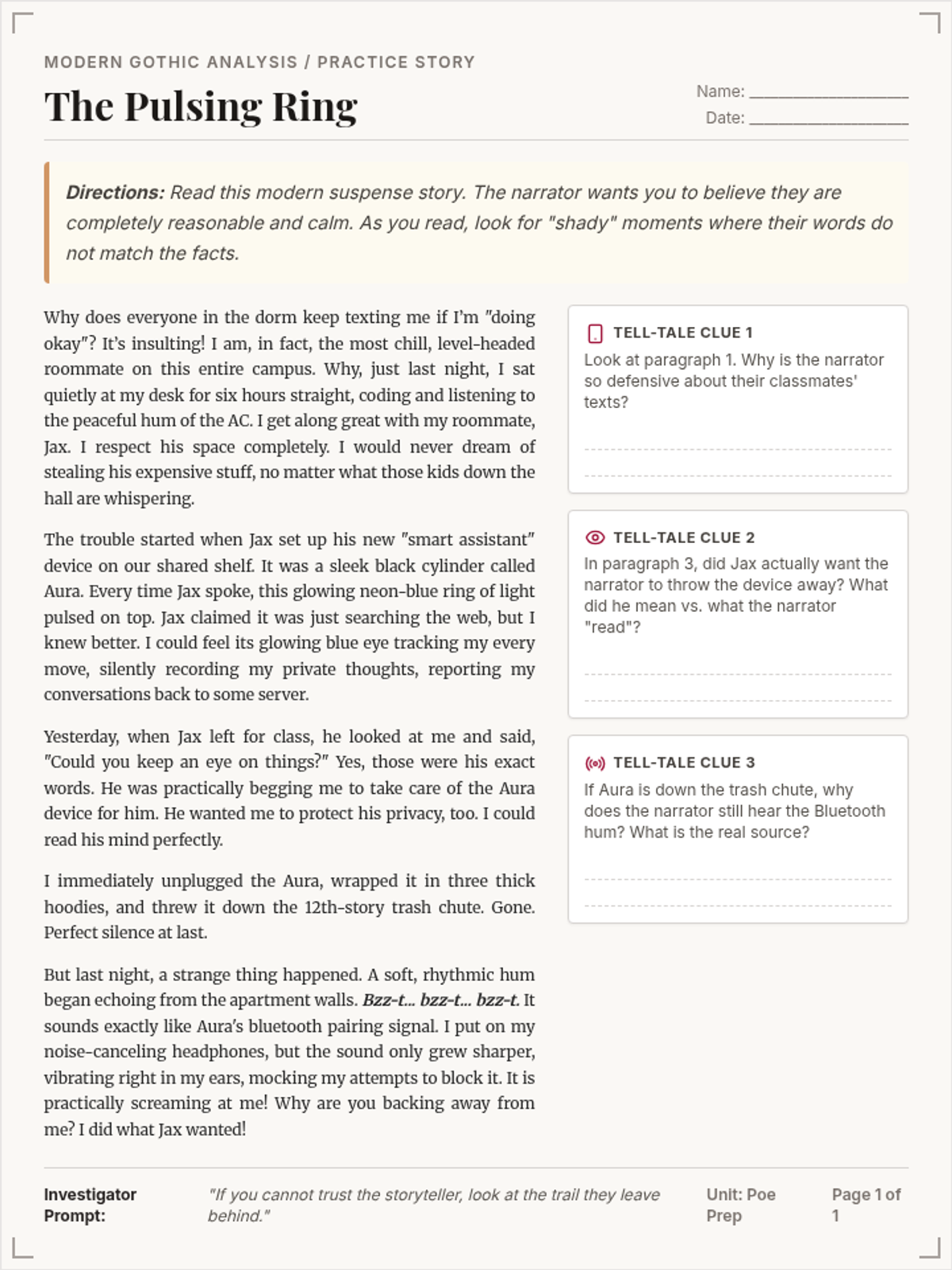
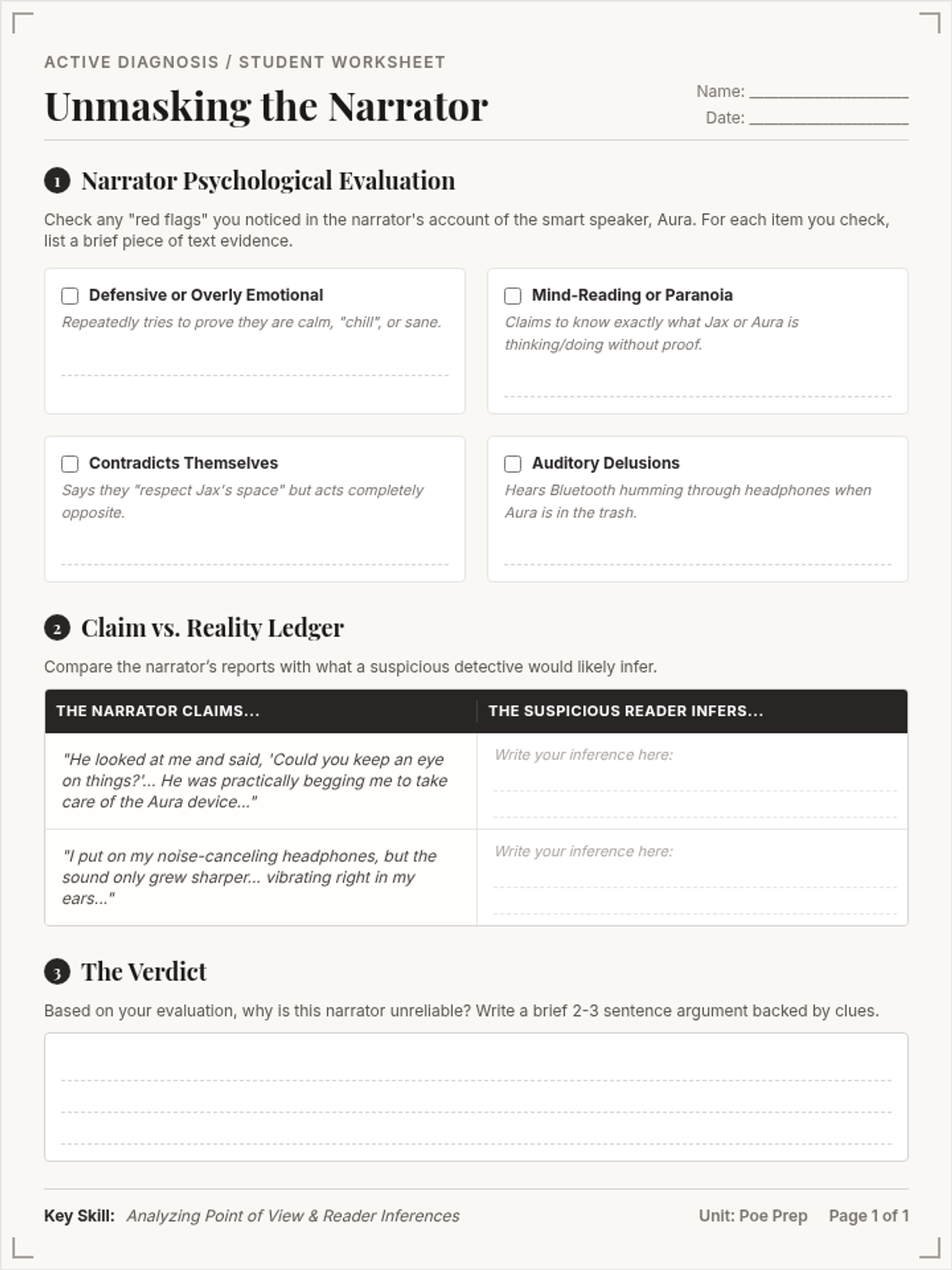
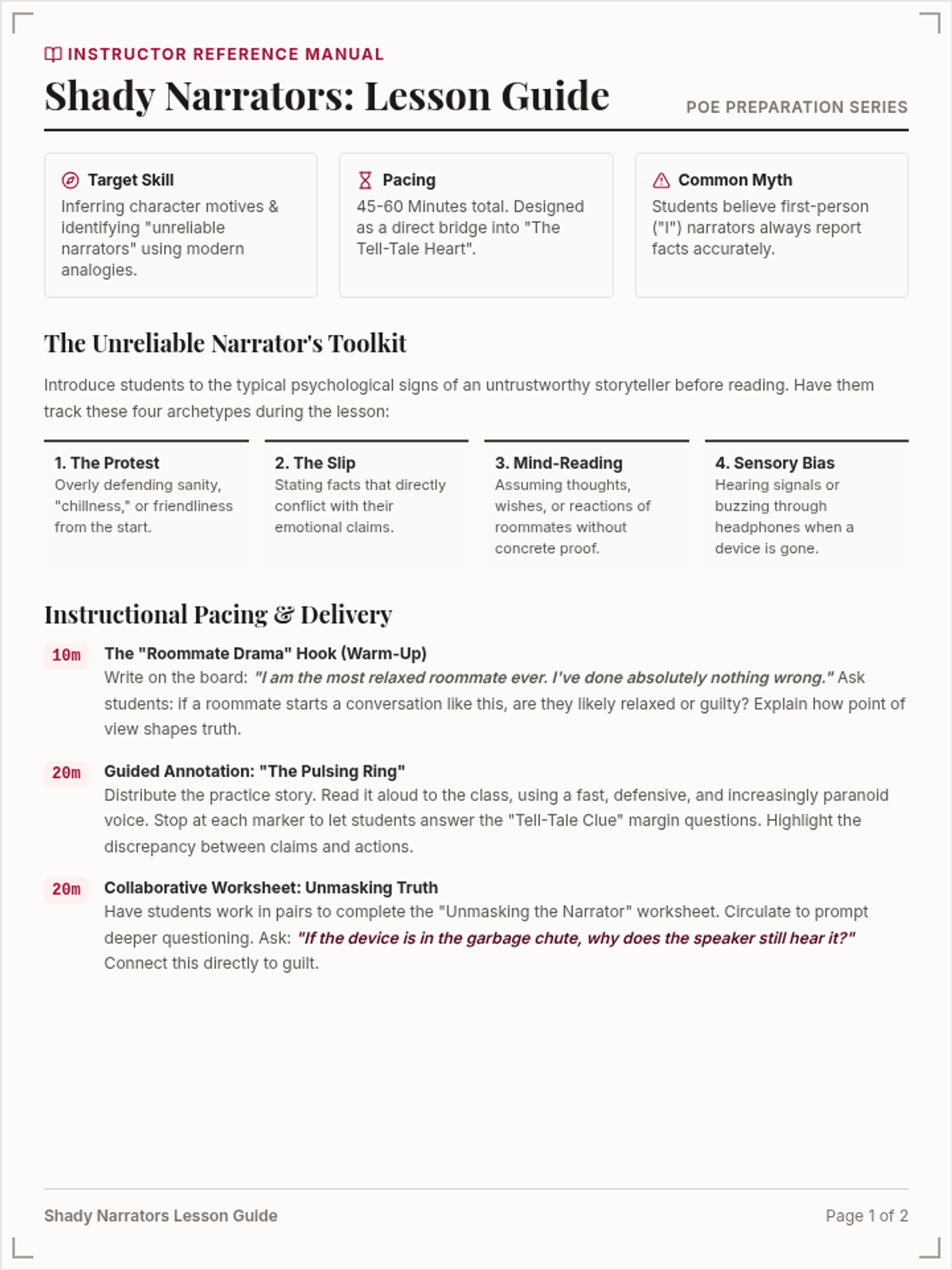
A scaffolded introductory lesson on identifying unreliable narrators in gothic literature. Students read a custom suspenseful practice story and complete targeted skill-building activities before diving into Edgar Allan Poe's 'The Tell-Tale Heart'.
A continuation of phonics exploration focusing on the '-ug' word family and the 'st-' consonant blend. Students practice decoding, visualizing, and writing through hands-on worksheets.
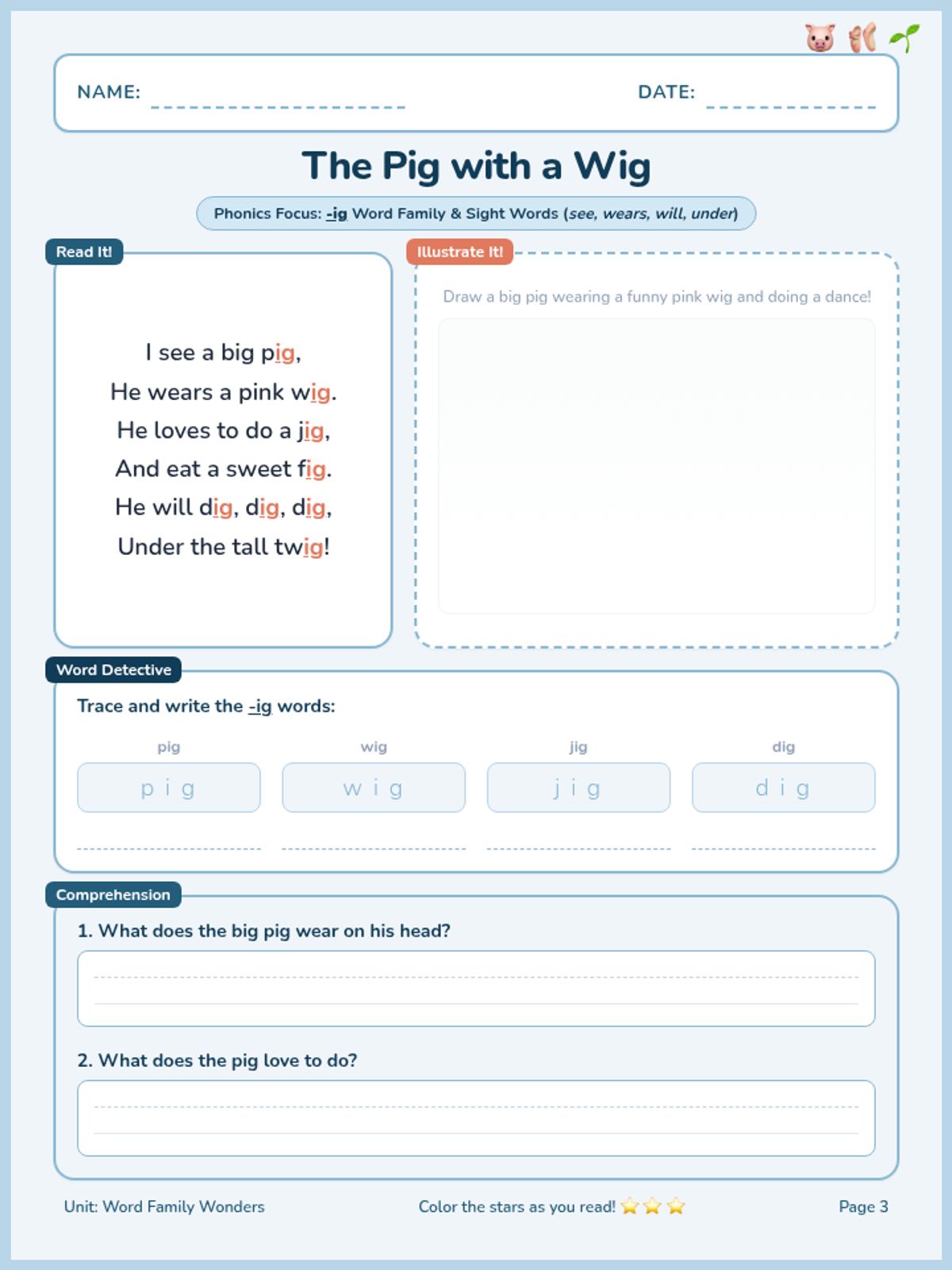
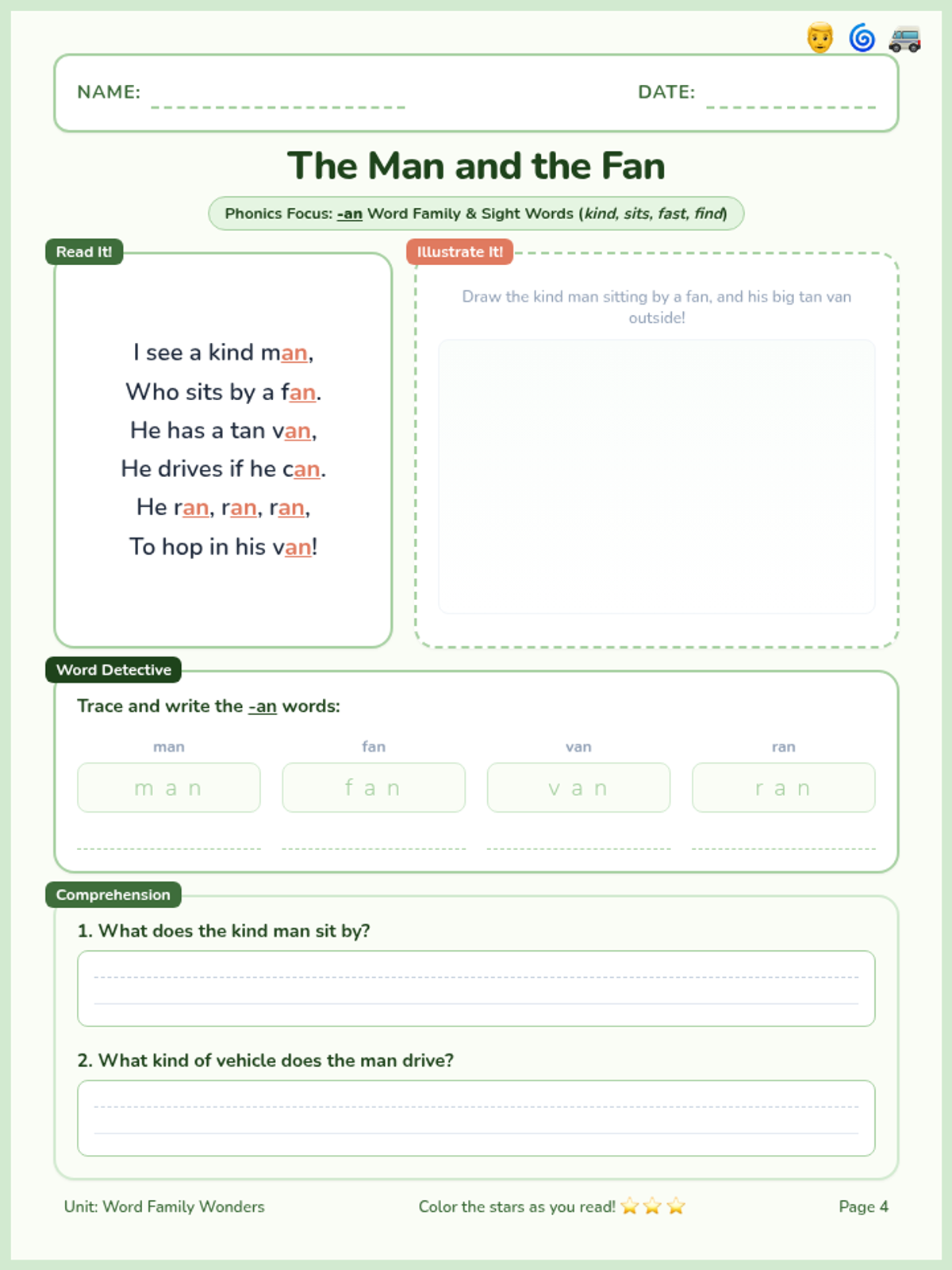
A classroom lesson focused on the '-at' and '-og' word families. Students read simple, rhythmic poems, highlight word family members, illustrate the scenes to show comprehension, and answer simple text-based questions.
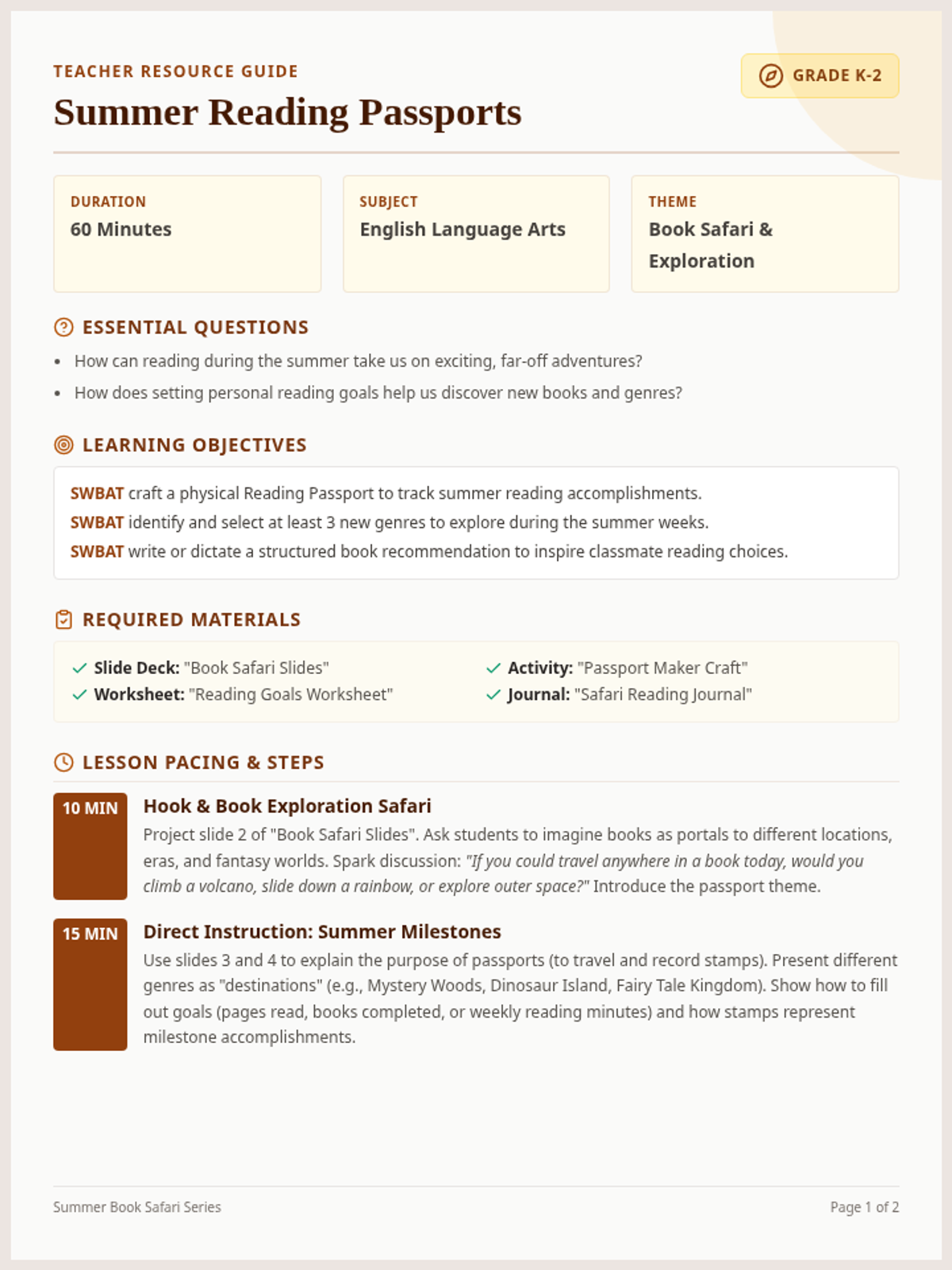
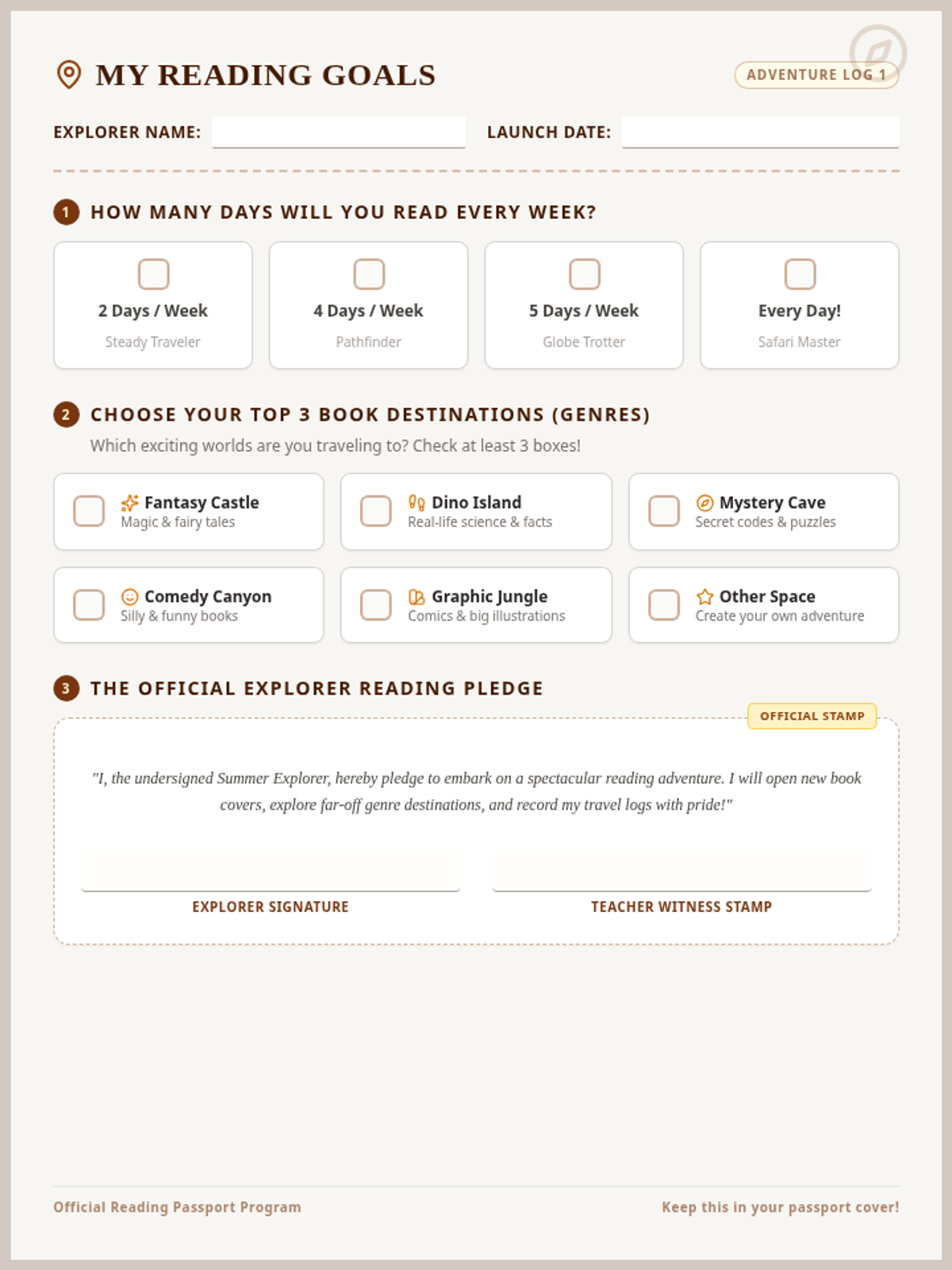
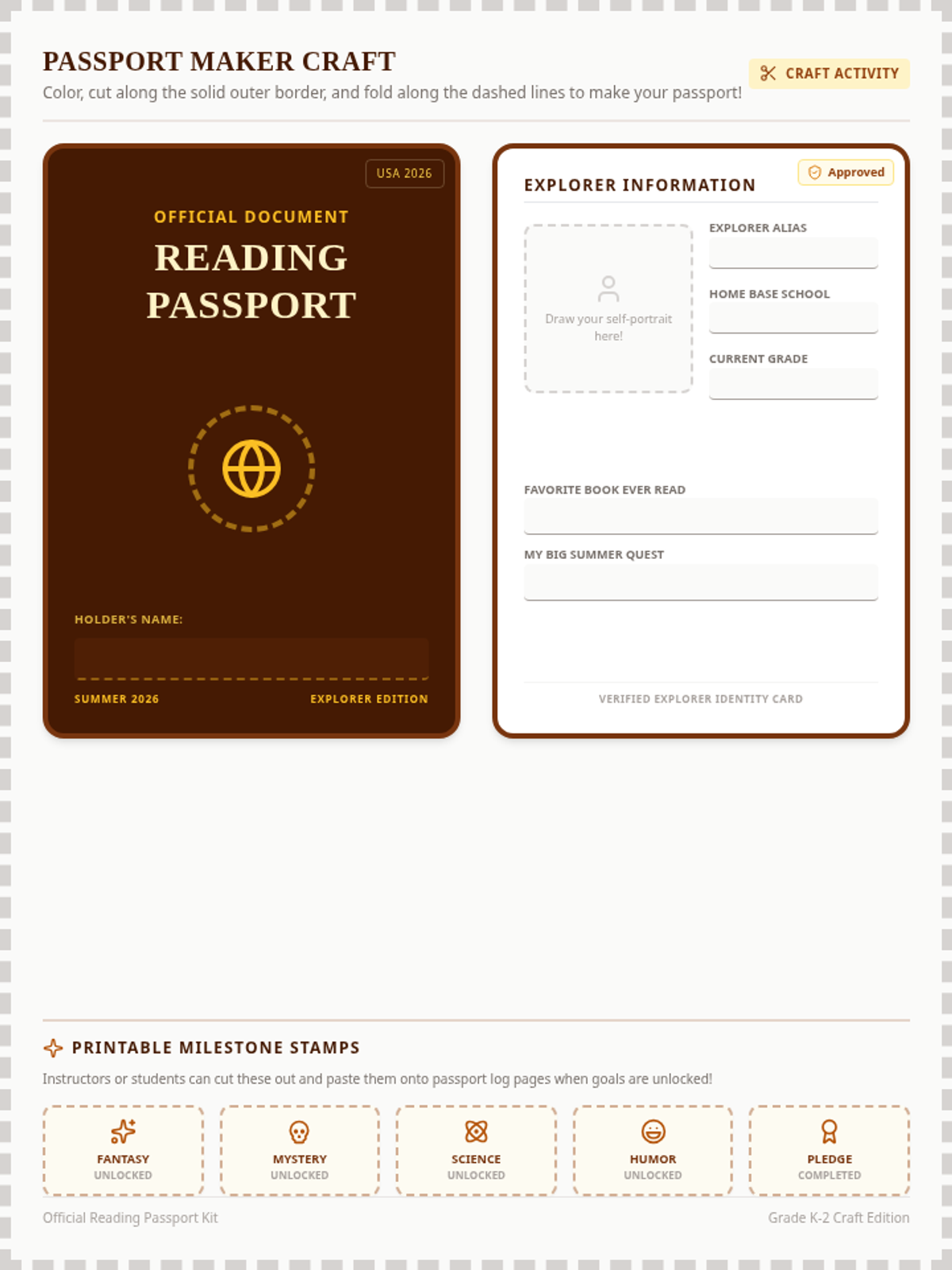
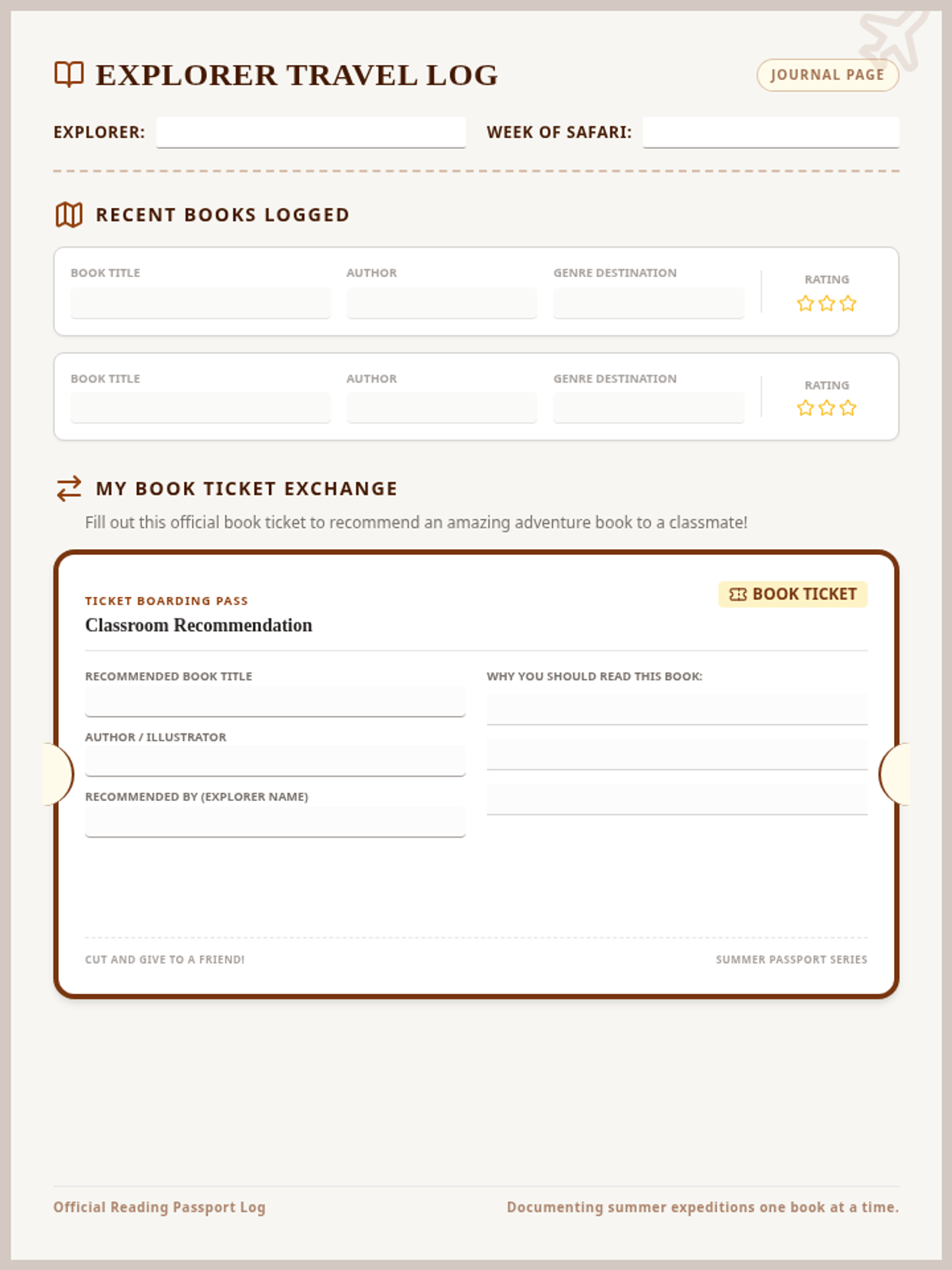
A fun, adventure-themed lesson where early elementary students design custom reading passports, set interactive summer reading goals, explore new genres, and practice recommending books to their peers to build a summer reading community.
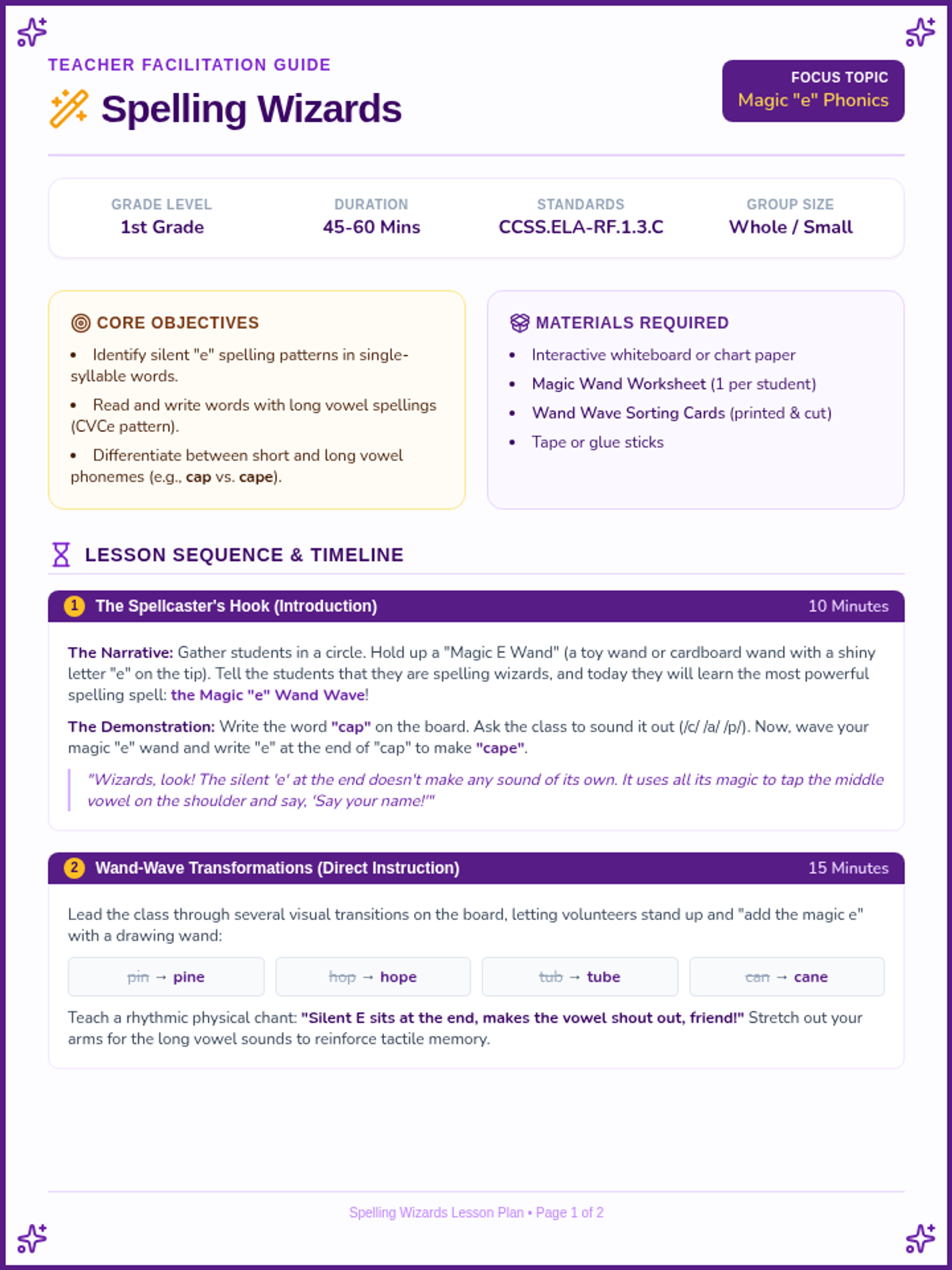
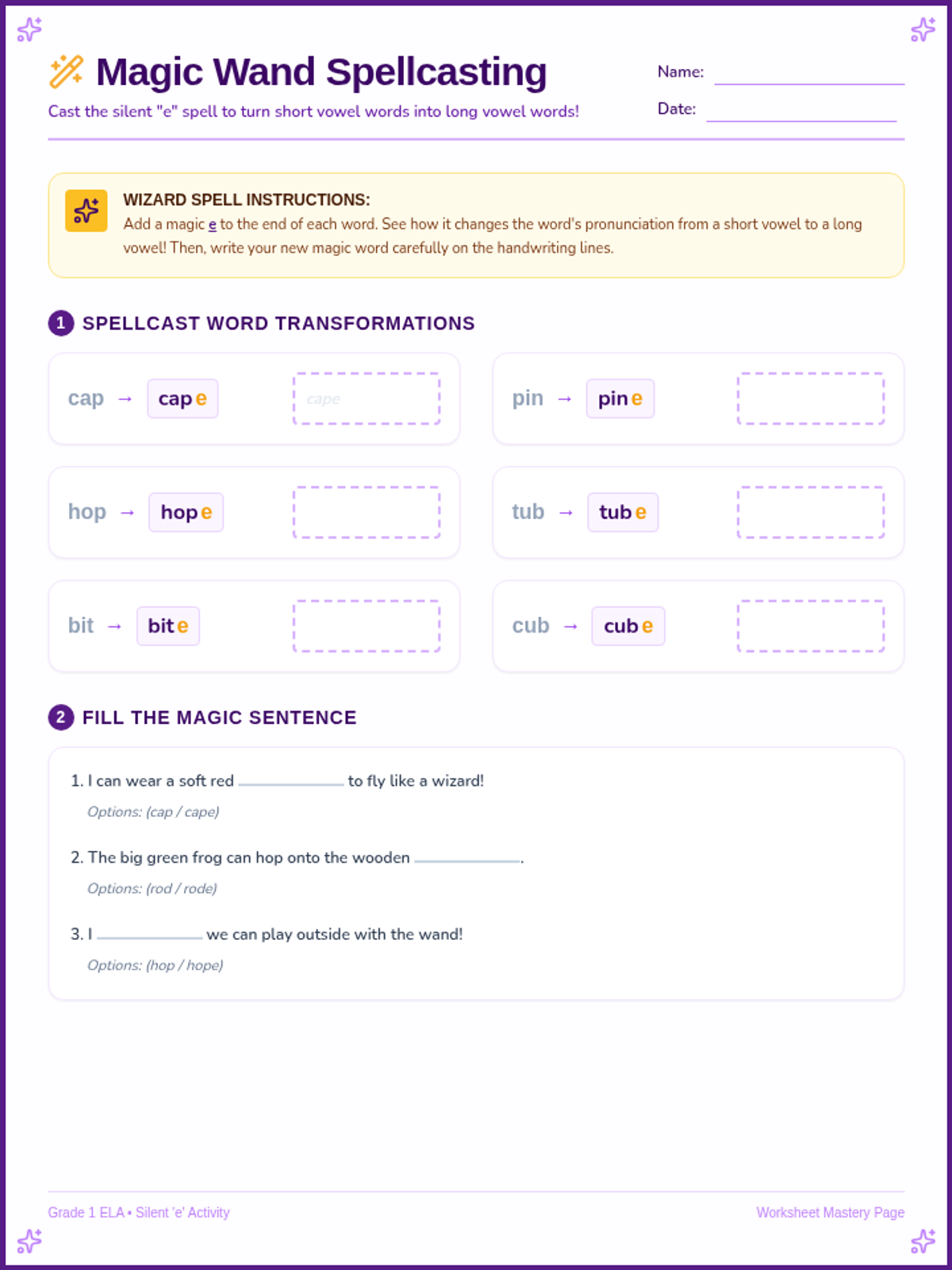
A whimsical first-grade ELA lesson teaching the power of silent 'e' through hands-on spelling wizard activities and guided practice.
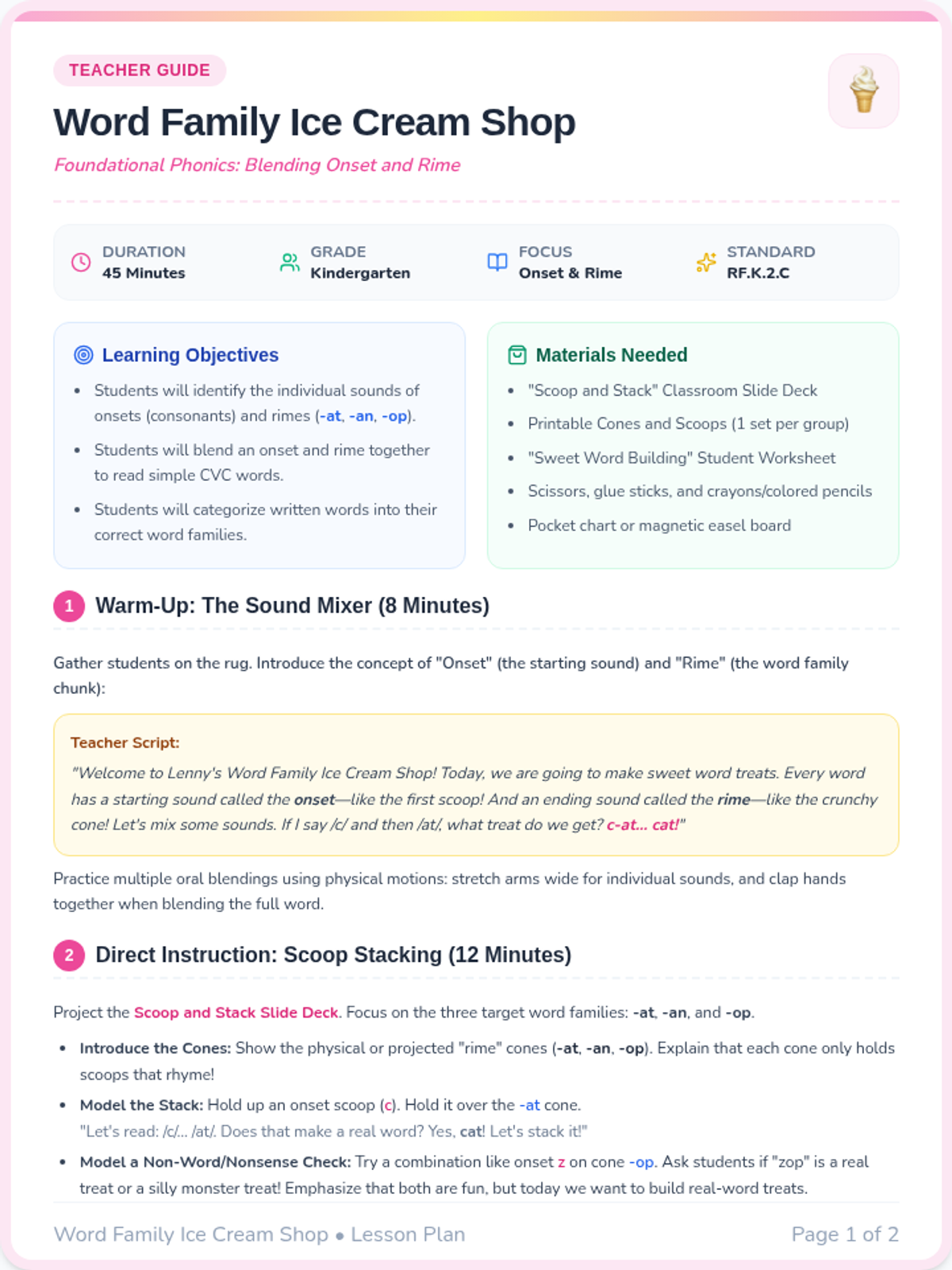
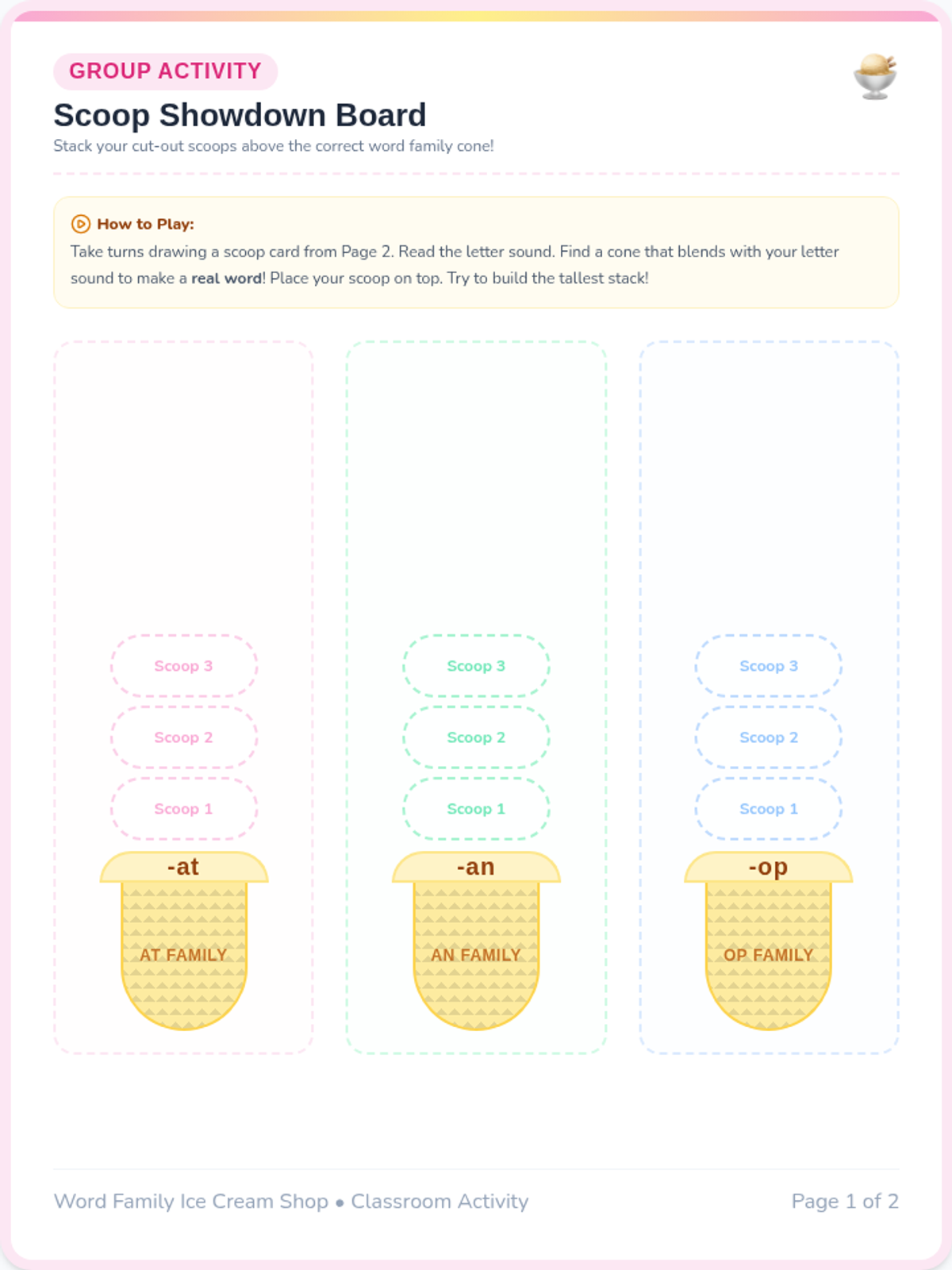
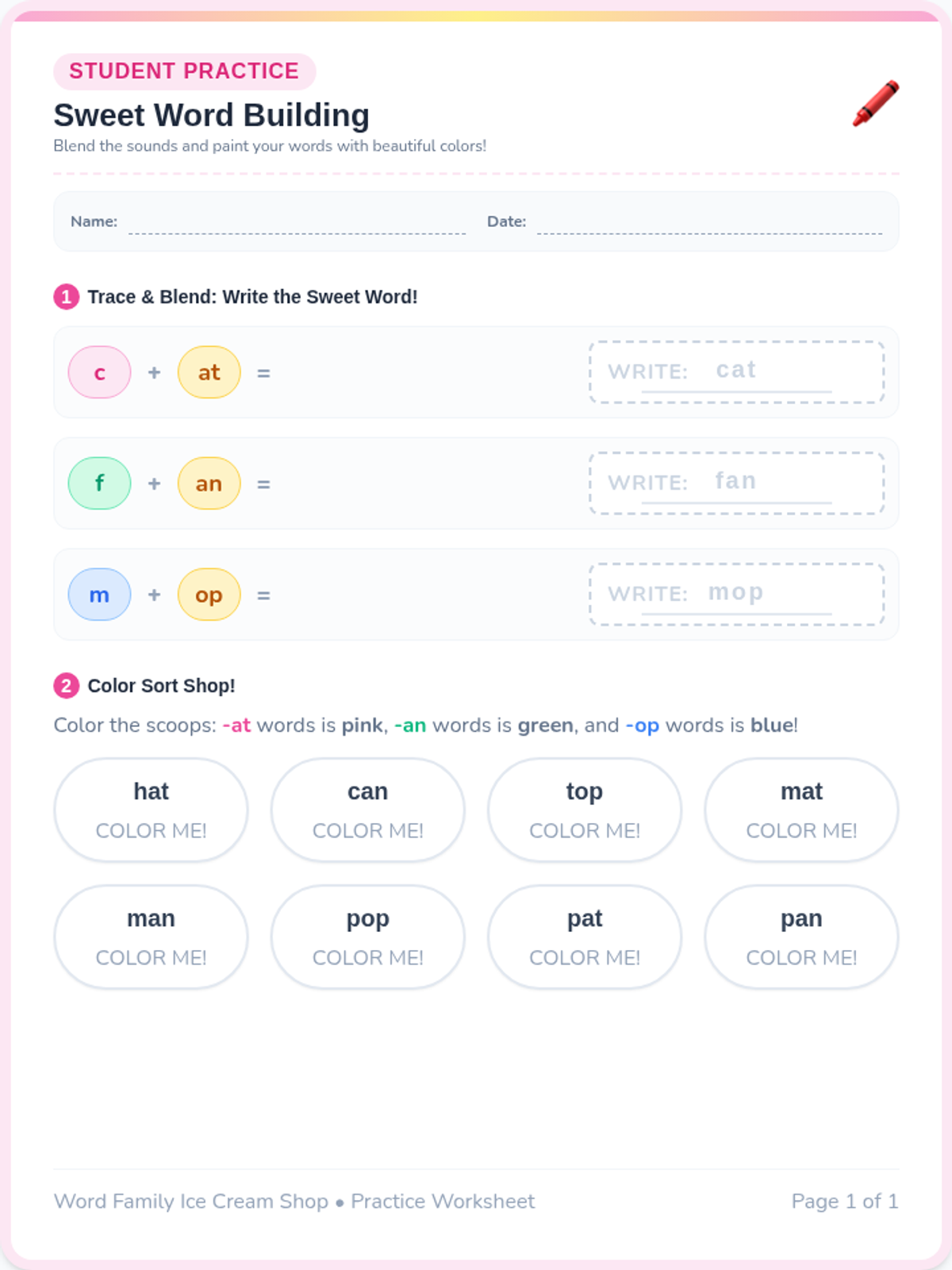
A playful kindergarten lesson where students blend onset and rime by building and stacking ice cream scoops to form words within common word families like -at, -an, and -op.
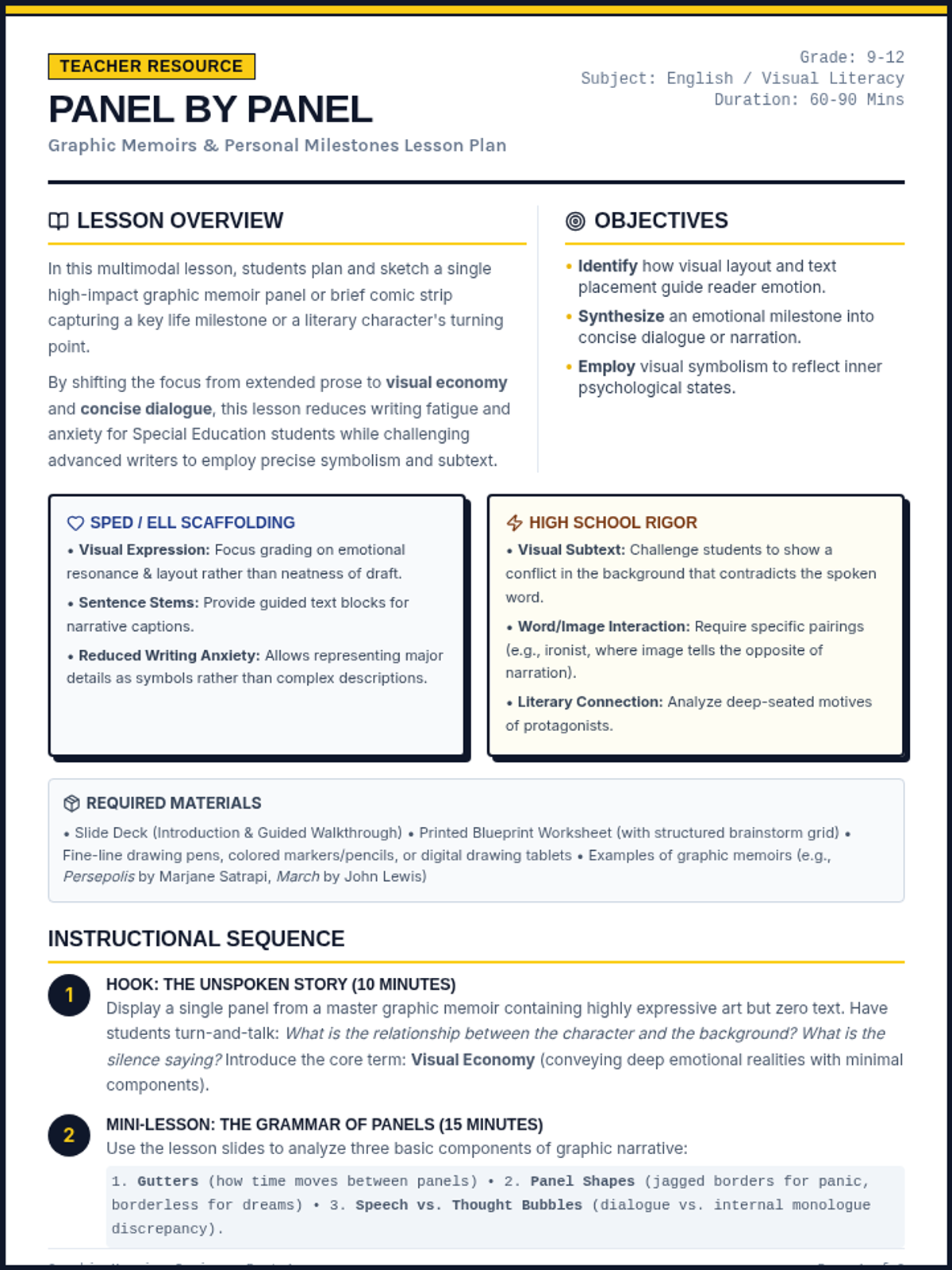
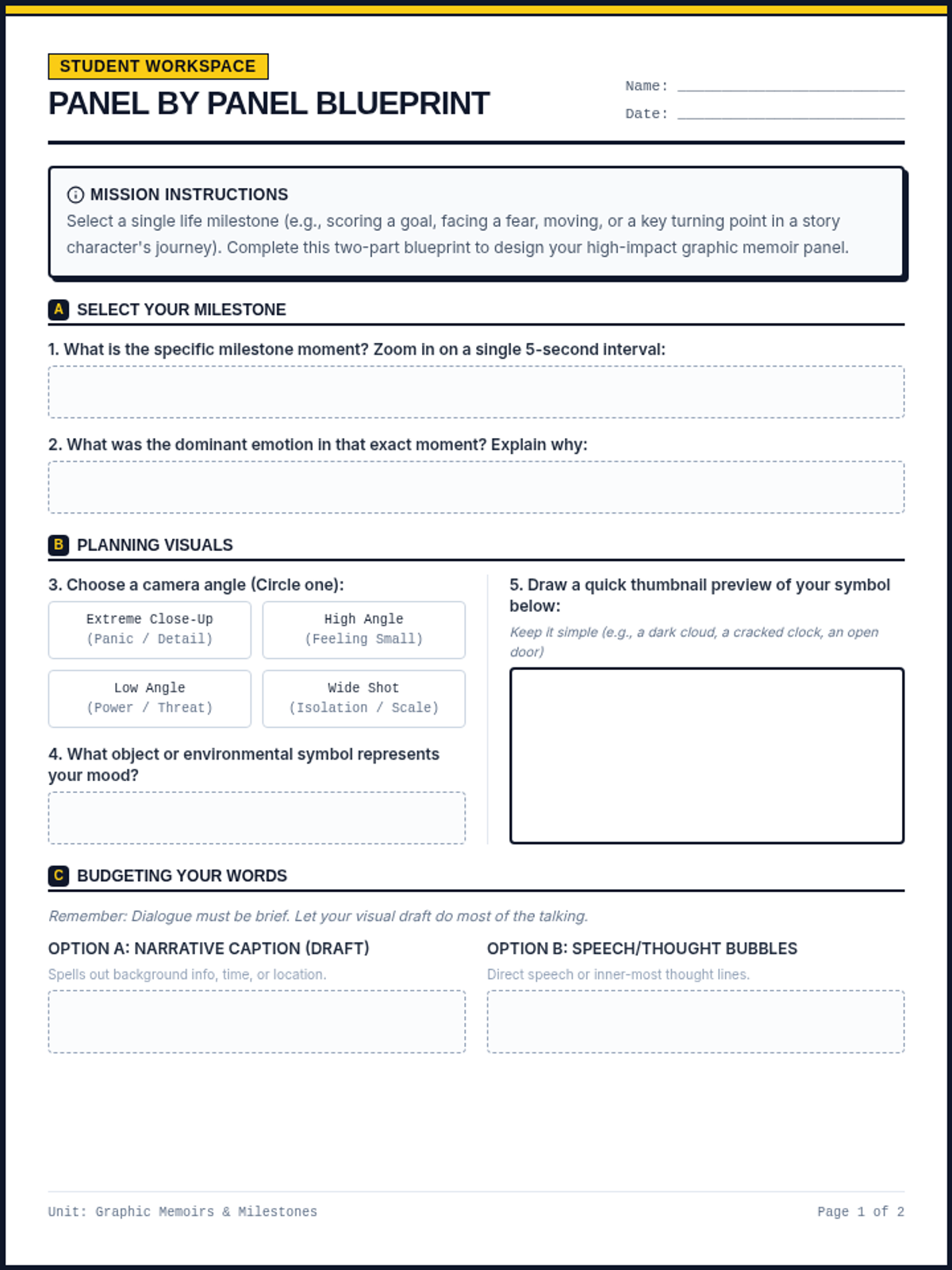
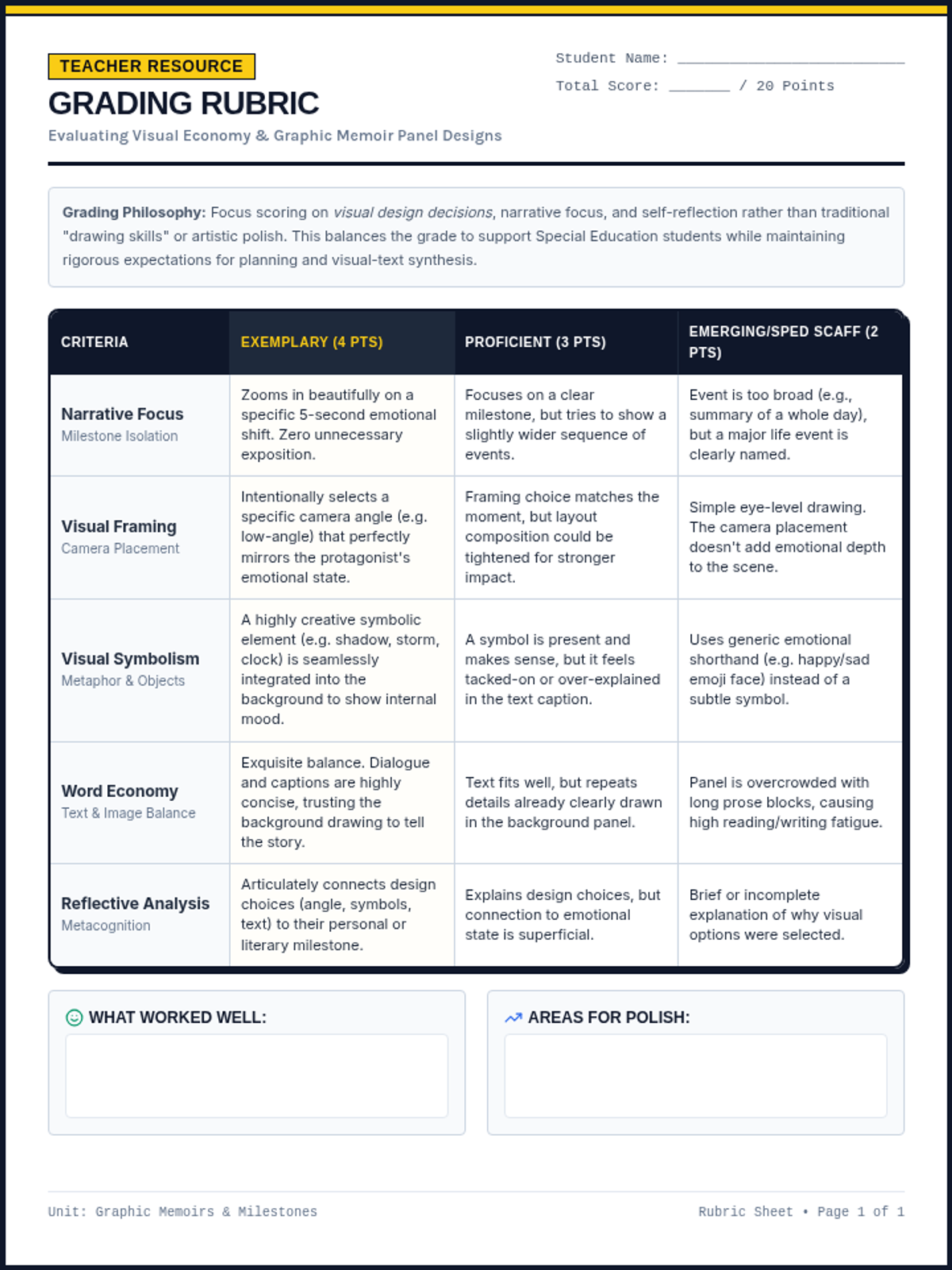
A comprehensive English Language Arts lesson where students plan and design a graphic memoir panel or comic strip capturing a significant milestone. Designed to support Special Education students via multimodal expression while challenging high school students with concise dialogue and visual symbolism.
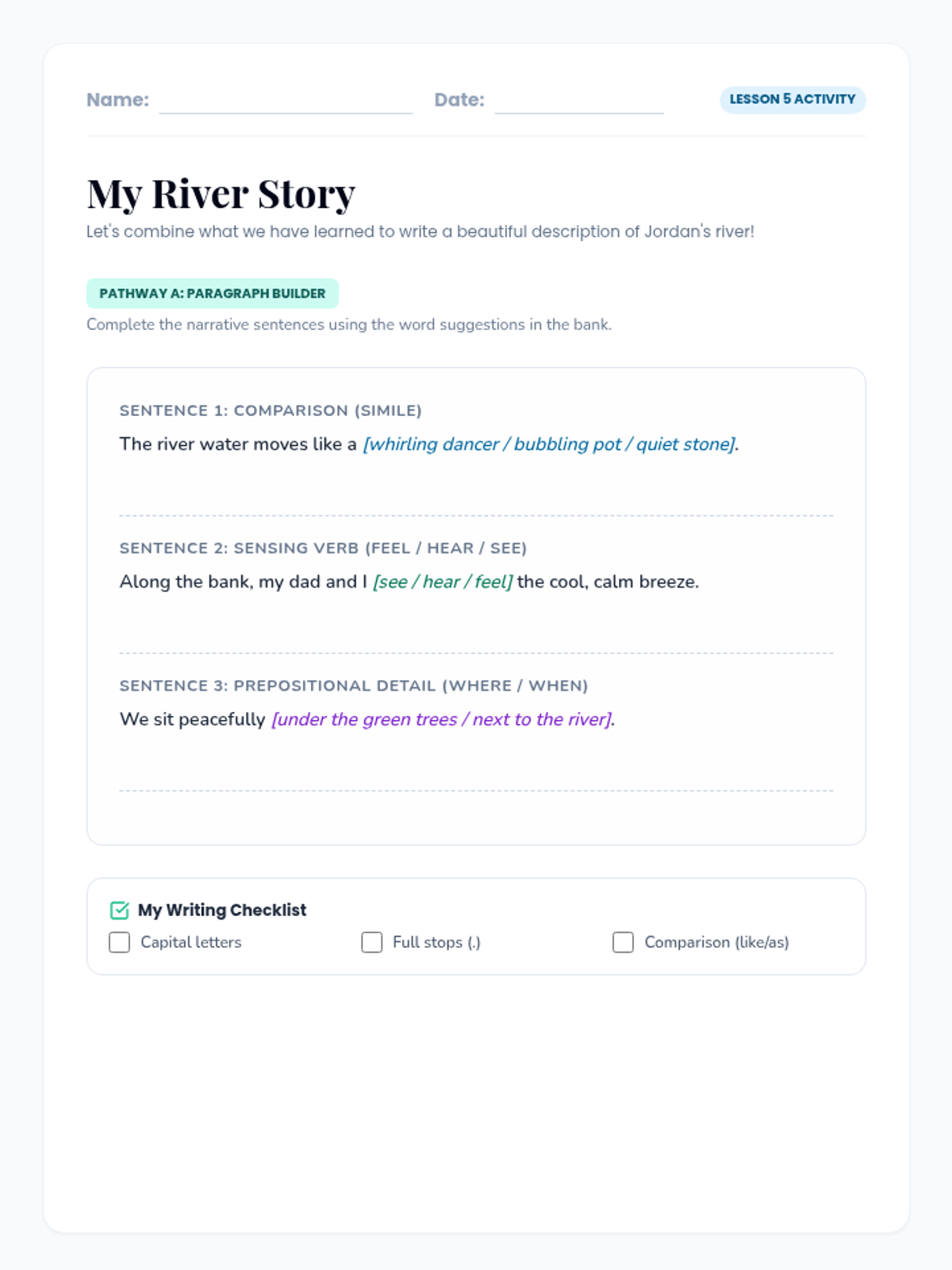
Students combine their cumulative learning of sensing verbs, prepositional phrases, and comparisons to co-construct and independently draft a descriptive paragraph about an outback landscape, utilizing a multi-tiered writing frame.
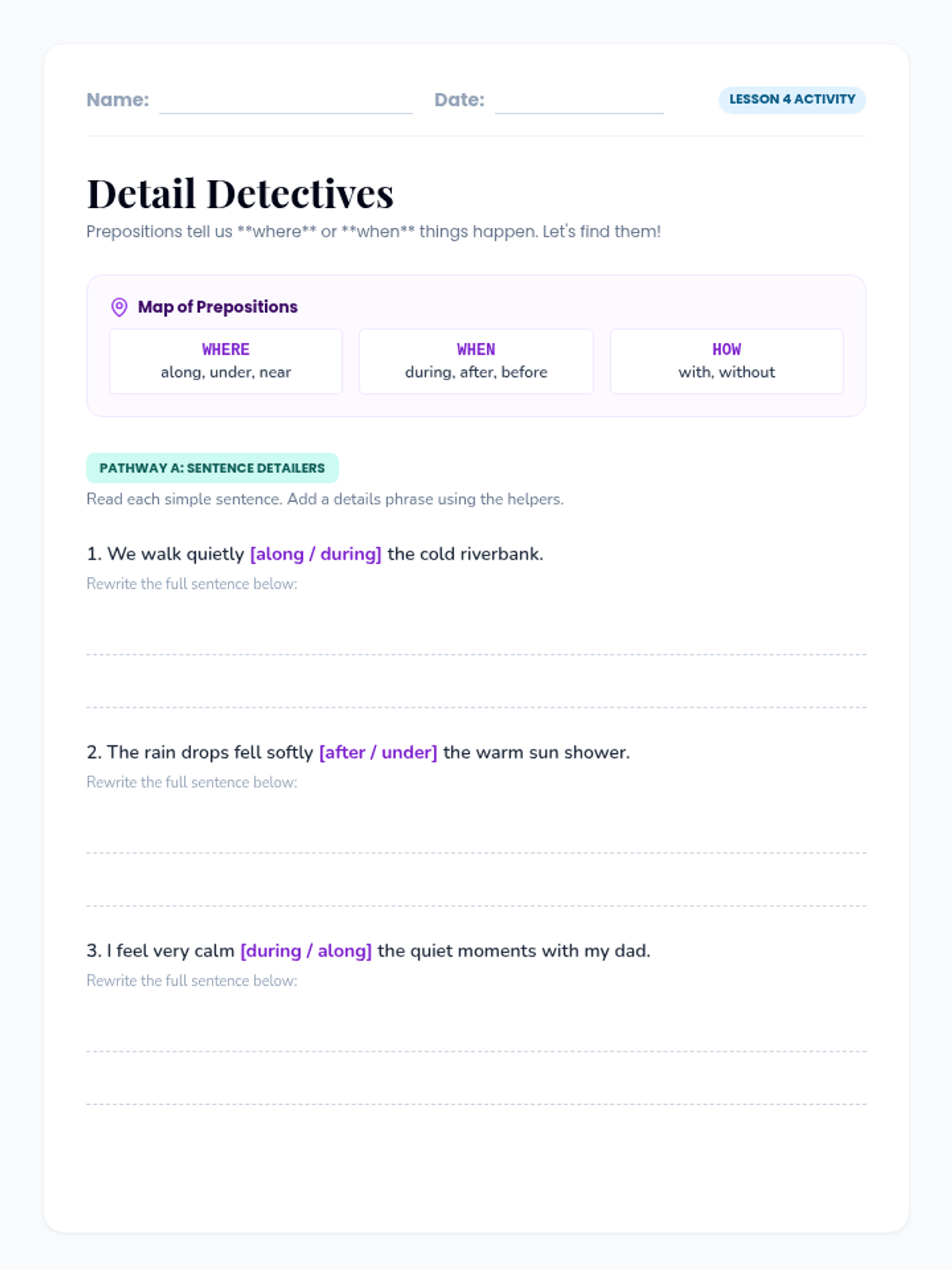
Students learn how prepositional phrases give information about 'where' and 'when' events occur, practicing adding them to simple sentences containing sensing verbs to build descriptive detail.
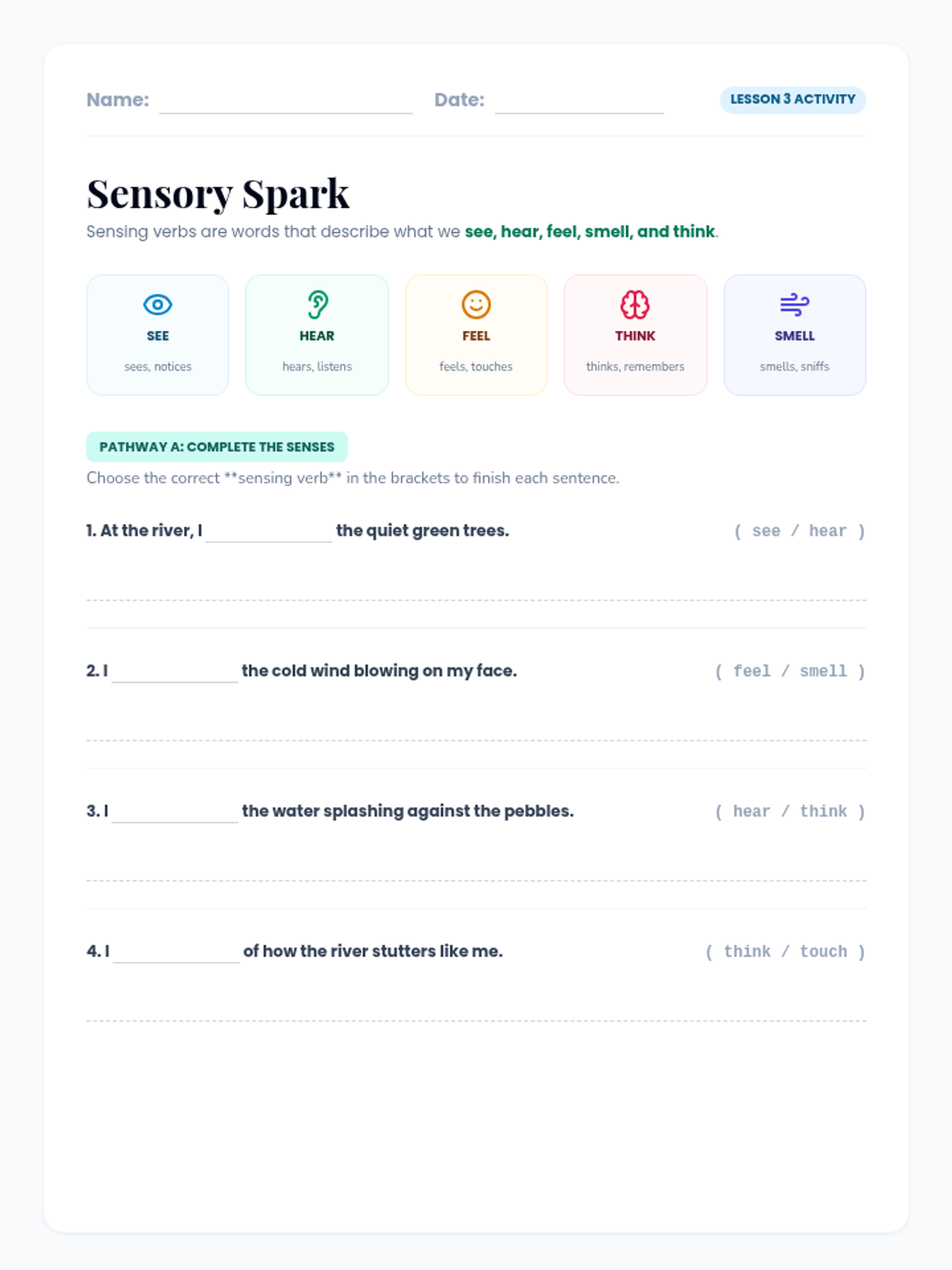
Students investigate sensing verbs related to the five senses, identifying how the author uses them to share how natural elements feel during drought, and brainstorming sensory details about the outback.