A comprehensive vocabulary and literary term study for Elie Wiesel's *Night*, focusing on language that captures the trauma, resilience, and dehumanization depicted in the memoir.
This lesson sharpens 10th graders' ability to analyze media messages for intent, bias, and underlying subtext through the deconstruction of advertisements and social media.
A comprehensive vocabulary unit focusing on twenty sophisticated literary terms, including altruistic, quarantine, conscientious, wizened, meek, reminisce, dissipate, solemn, assess, unison, agitated, defiance, grandeur, ailing, benediction, veritable, notorious, incentive, delude, and precede.
A 20-minute mini-lesson focused on TEKS 6.7B, exploring how character's internal and external responses drive the plot of a drama. Students will analyze a short script to see the 'cause and effect' of character choices.
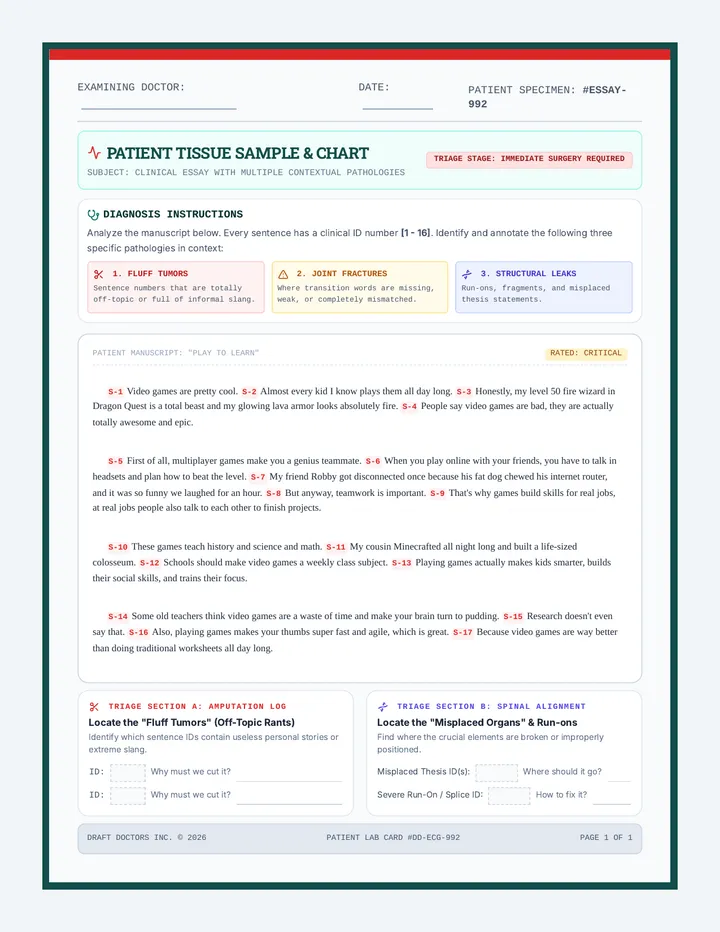
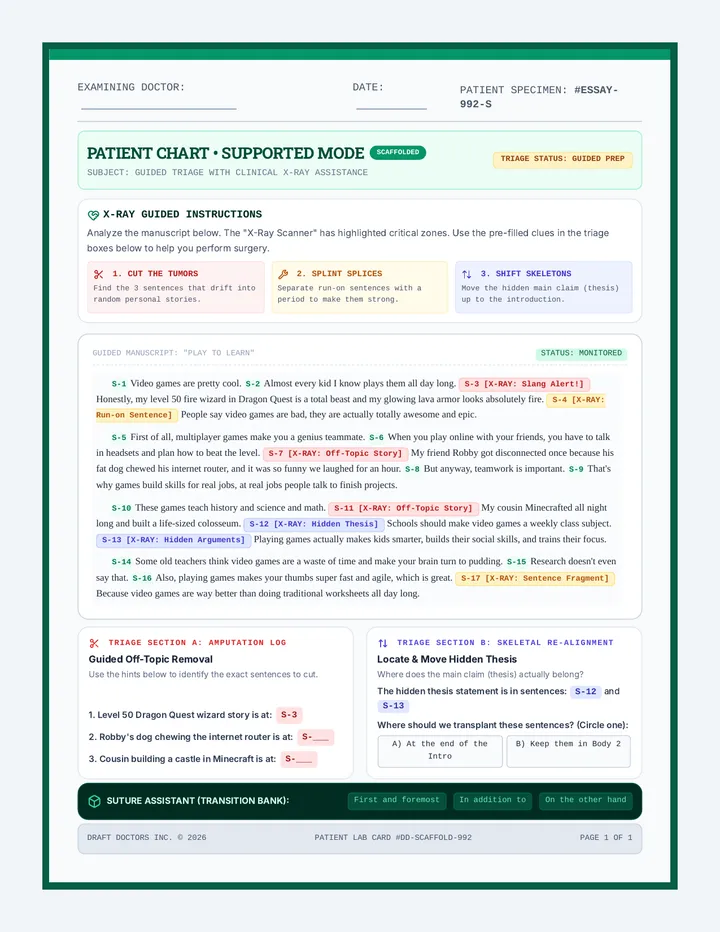
An introductory lesson on identifying and fixing sentence fragments and run-on sentences, themed around a 'Sentence Shop' repair garage.
A fast-paced, high-engagement lesson where students analyze Holocaust survivor narratives to create a visual tribute, focusing on personal resilience and historical context.
A high-energy lesson where students practice identifying main ideas and supporting details by watching 10 engaging videos. The lesson uses a travel-inspired 'Observation Deck' theme to turn analysis into a mission.
A specialized reteach lesson focused on analyzing how authors use narrative structures—like parallel plots and pacing—to create mystery, tension, and meaning.
Students synthesize all evidence and alibi analysis to build a persuasive case. The lesson culminates in a courtroom simulation where students present their final arguments.
Focuses on informational writing and active listening. Students learn how to structure a formal report and analyze multiple witness statements for contradictions.
Focuses on reading for detail and making inferences from visual and textual evidence. Students practice descriptive speaking by portraying witnesses and investigators.
A tiered persuasive writing lesson designed for mixed-grade or scaffolded classrooms (9th-11th). Core concepts like Ethos, Pathos, and Logos are taught alongside advanced techniques like Kairos and Steel Manning, allowing students of different levels to collaborate and learn from one another.
An advanced lesson for 11th graders that builds upon basic rhetorical foundations. Students explore Kairos (the opportune moment), identify logical fallacies, and tackle complex ethical and societal issues through a high-fidelity architectural blueprint organizer.
A comprehensive lesson for 9th graders on mastering the art of persuasion, focusing on rhetorical appeals, claim development, and addressing counterclaims. Students will use a structured graphic organizer to architect their own arguments on school-related topics.
A focused 45-minute remediation lesson for 11th grade students on how different literary elements (setting, imagery, irony) shape the author's portrayal of the plot, using World War I primary sources and poetry.
A comprehensive lesson on correctly formatting MLA citations within PowerPoint presentations, covering in-slide citations and Works Cited slides.
A hands-on grading lab where students evaluate five student-written argumentative essays on W.D. Wetherell's 'The Bass, the River, and Sheila Mant,' using a standardized rubric to develop their own writing and analysis skills.
A focused lesson on analyzing theme and internal conflict in 'The Bass, the River, and Sheila Mant', culminating in a thematic evidence-based exit ticket.