A focused 45-minute remediation lesson for 11th grade students on how different literary elements (setting, imagery, irony) shape the author's portrayal of the plot, using World War I primary sources and poetry.
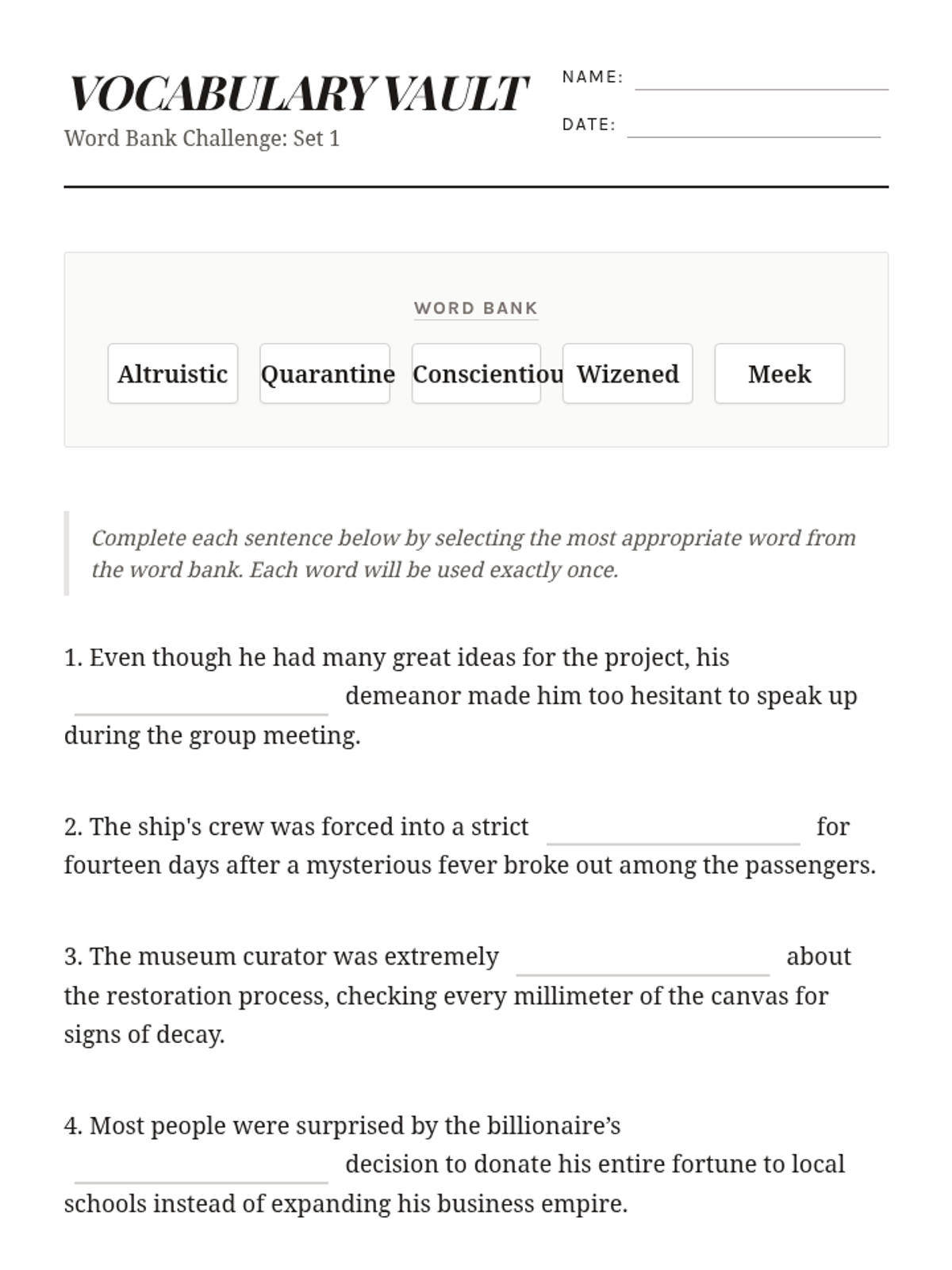
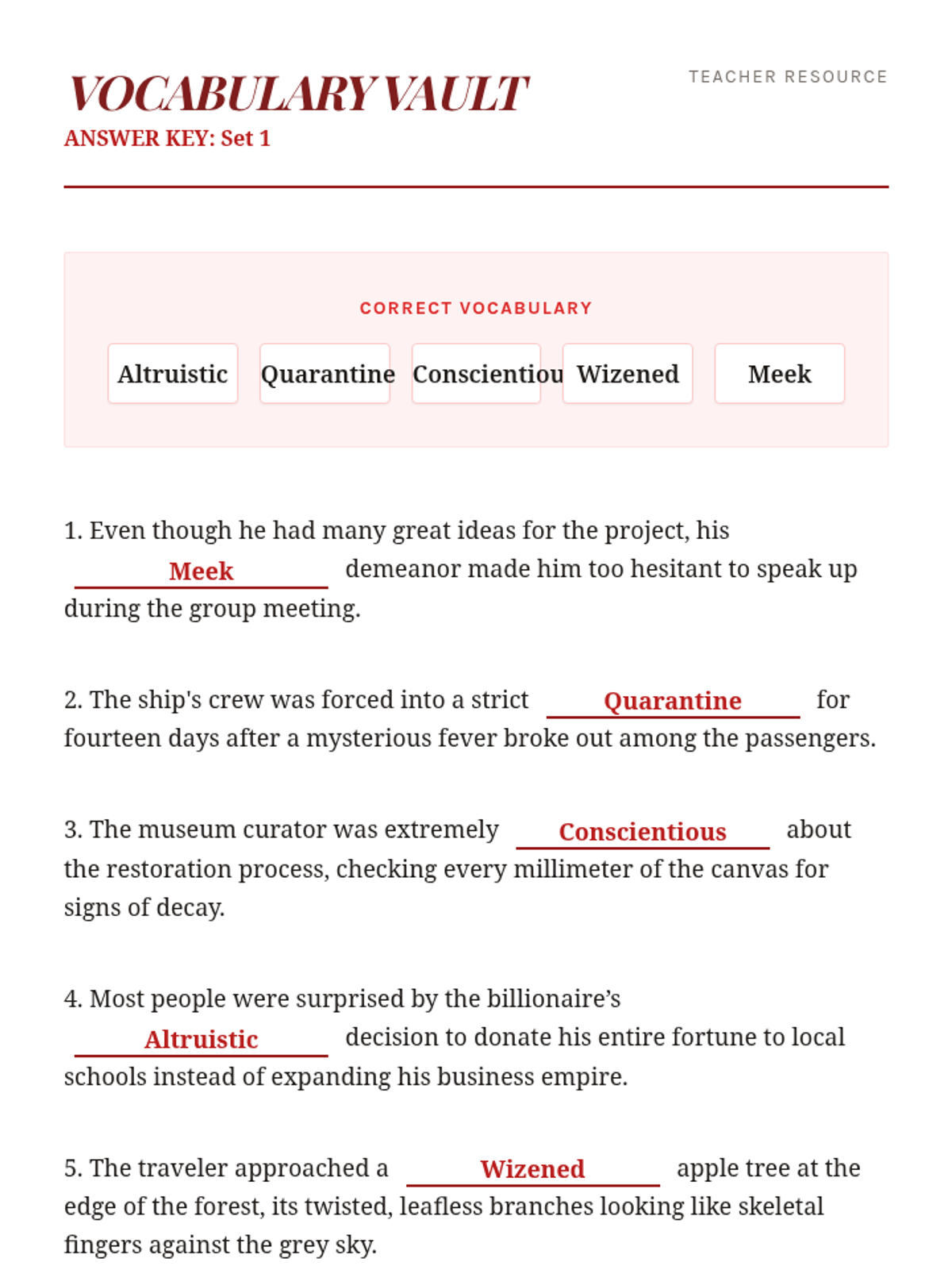
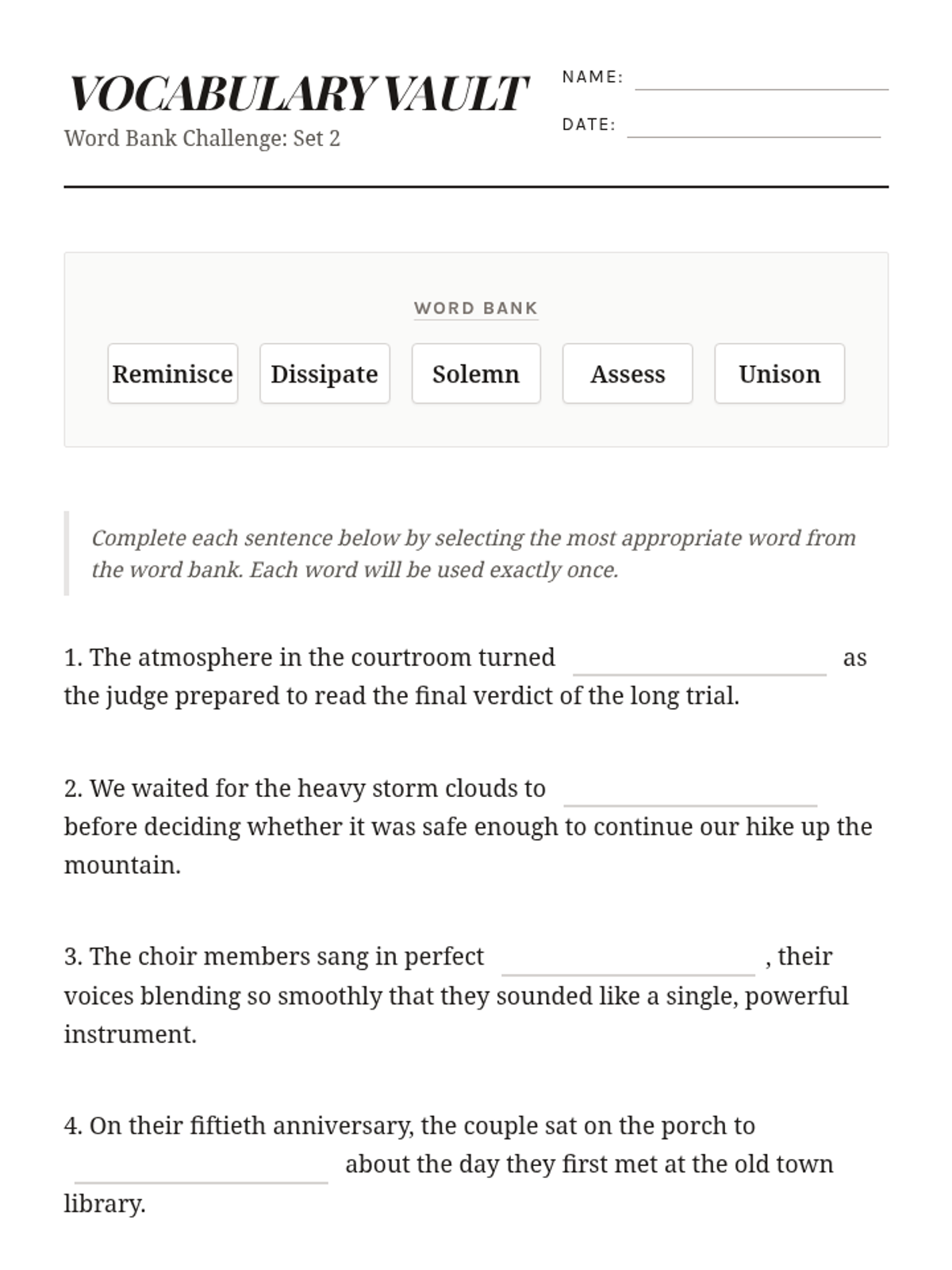
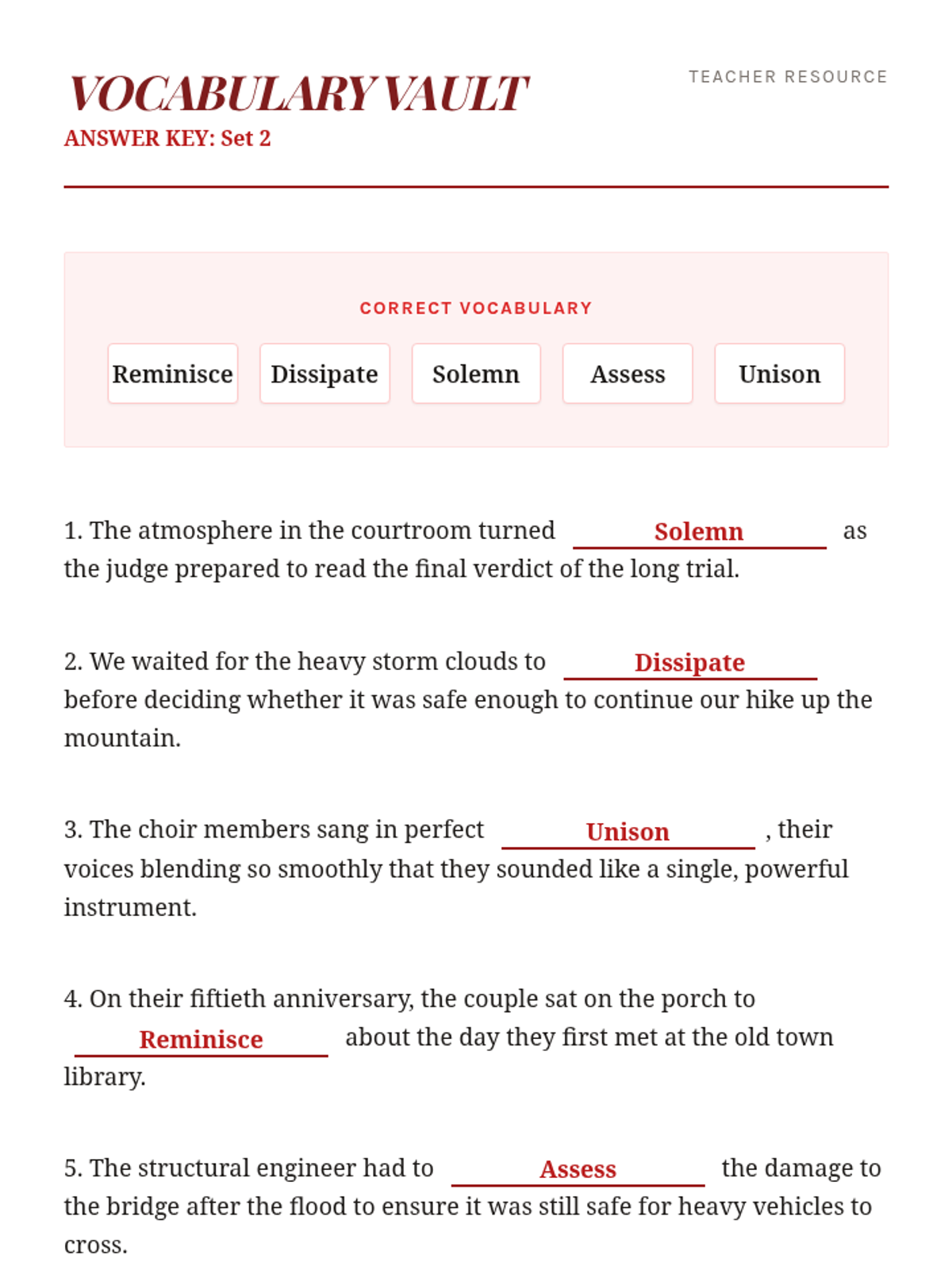
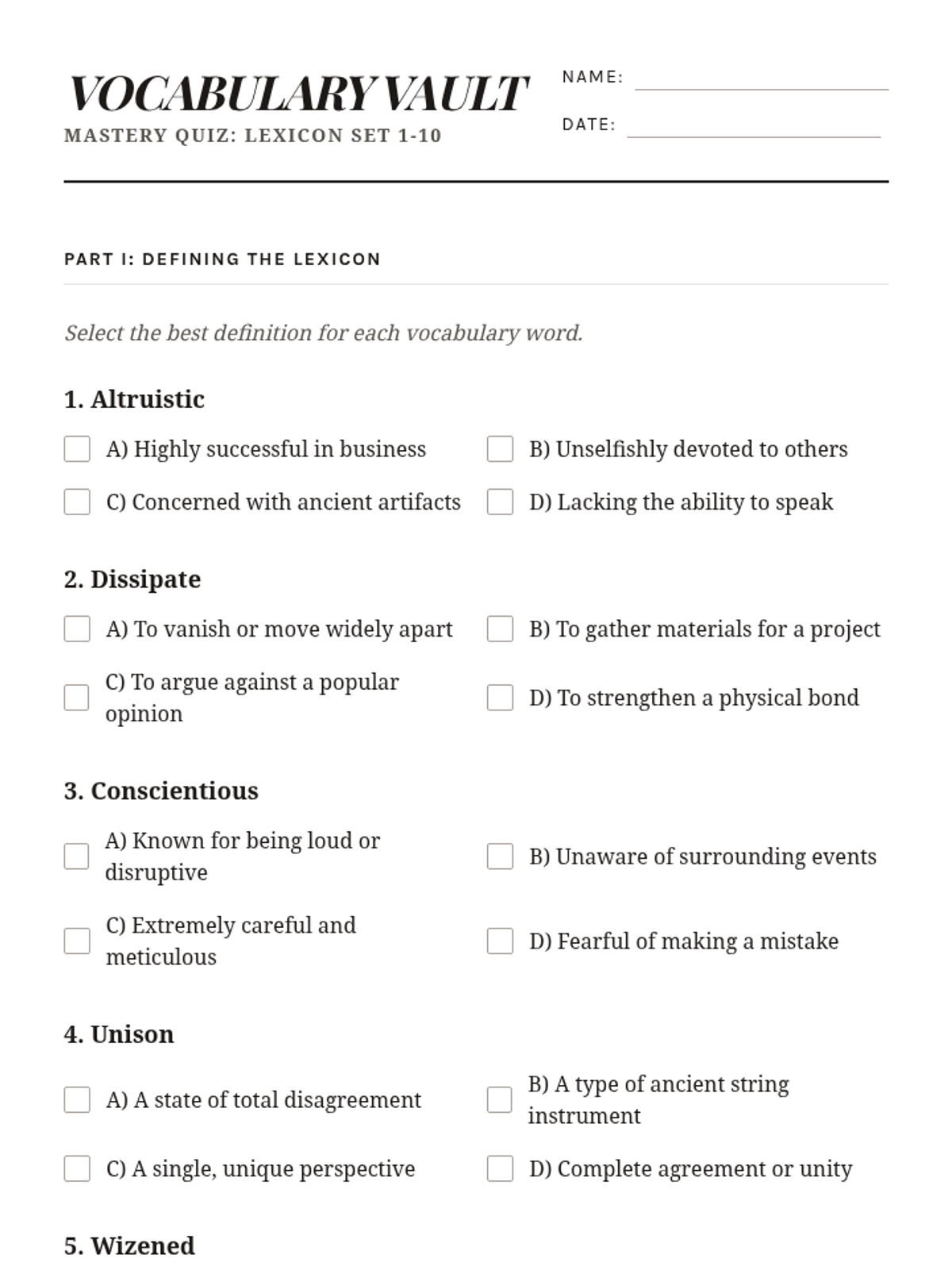
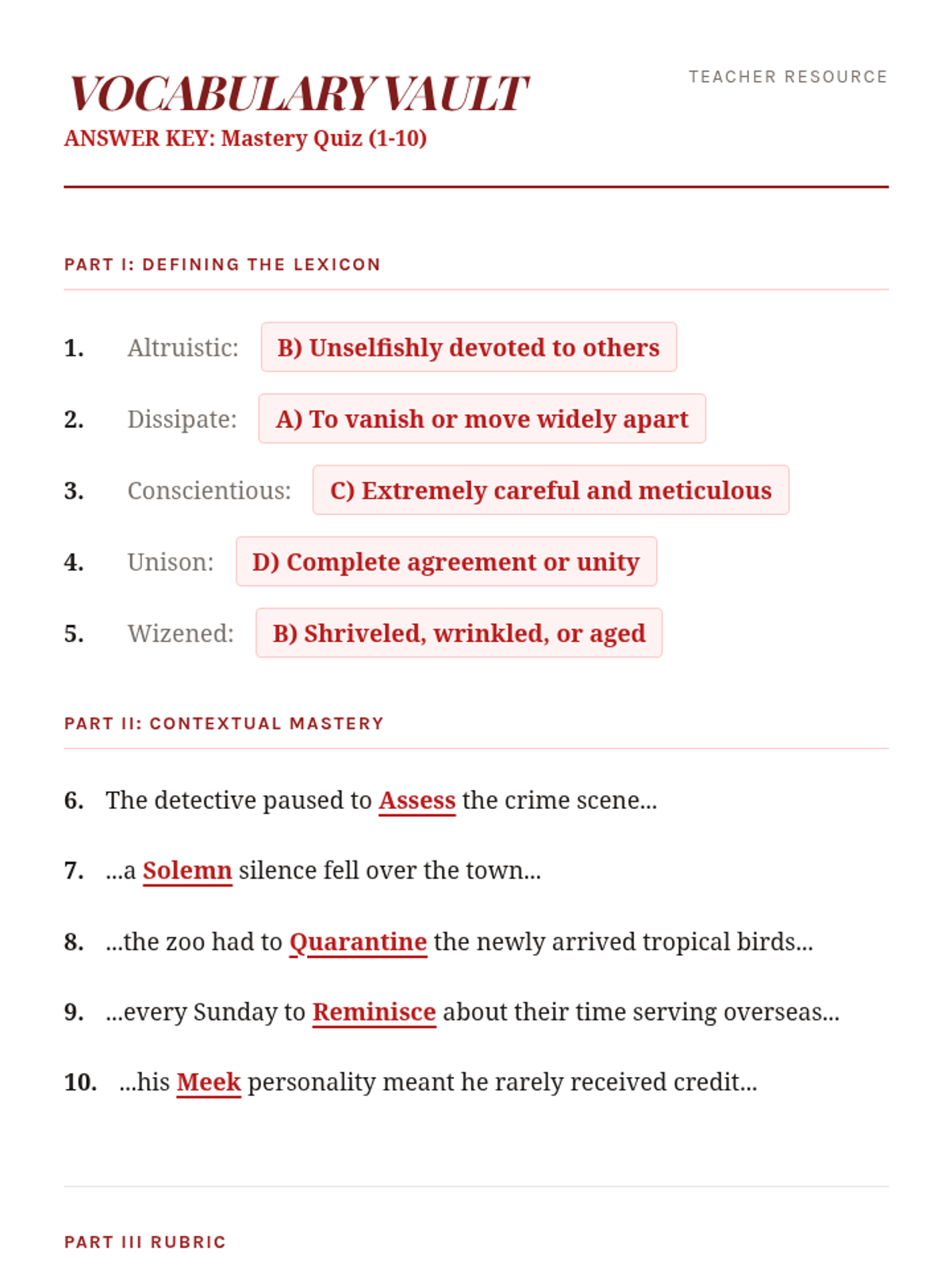
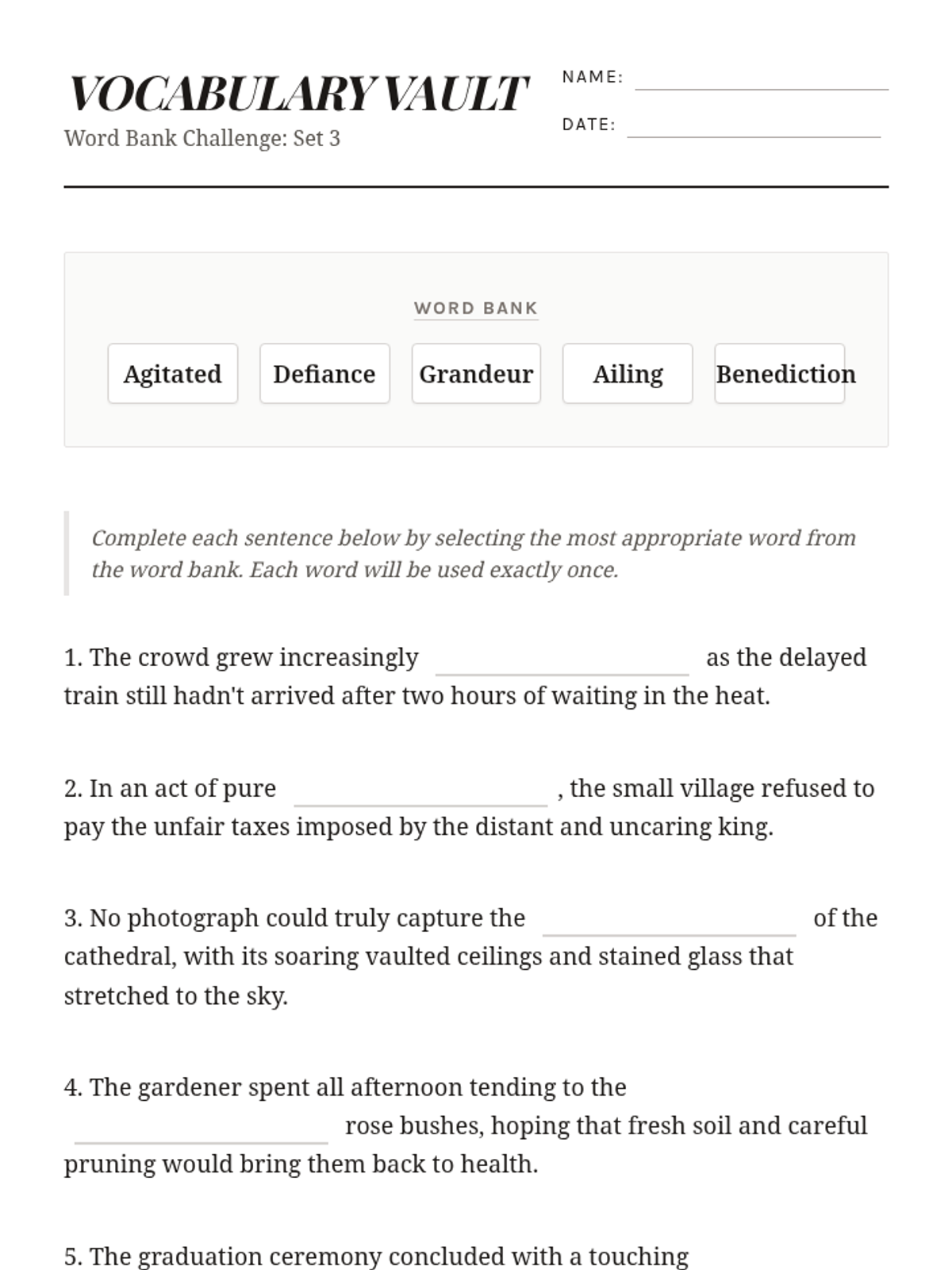
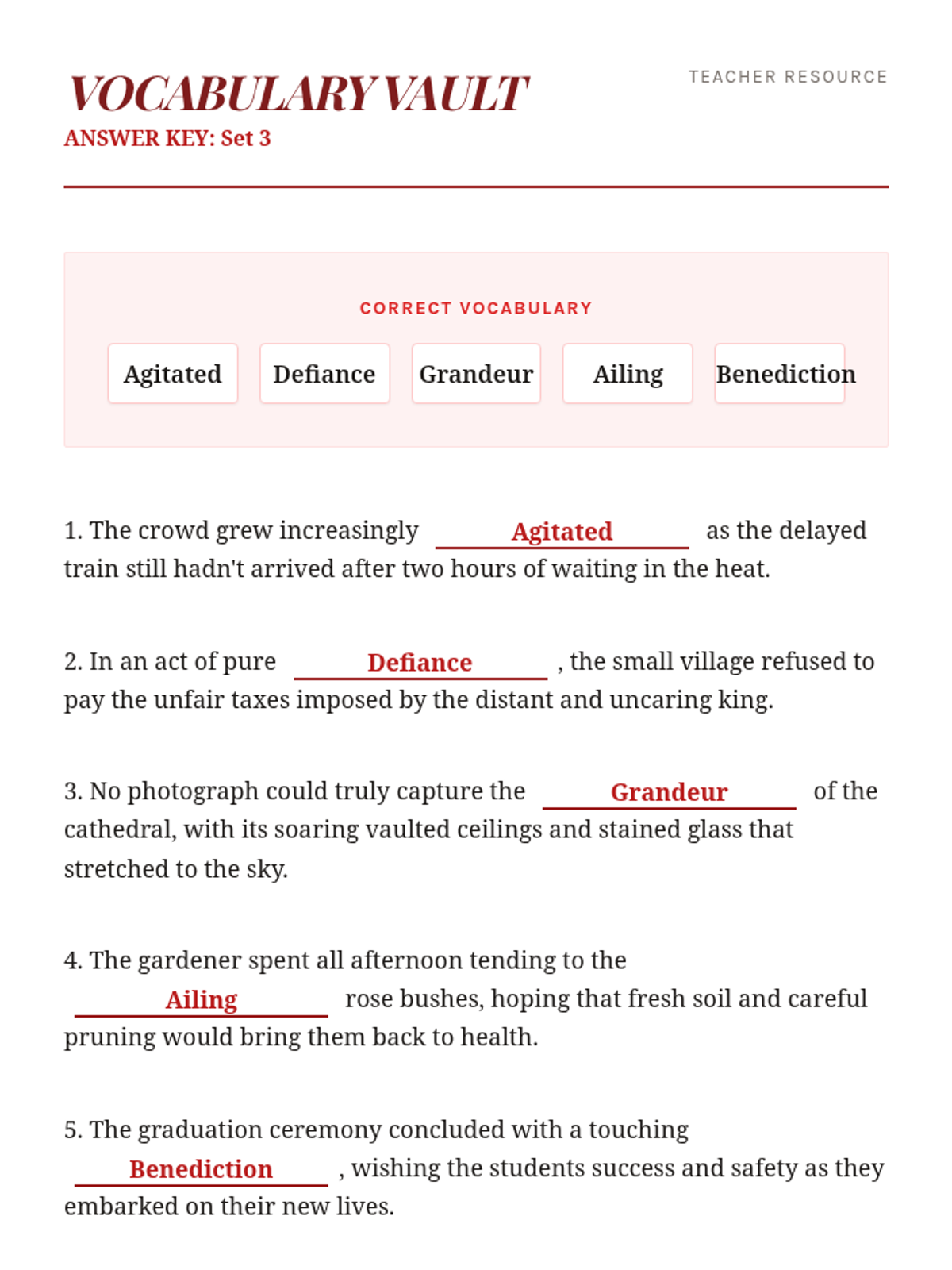
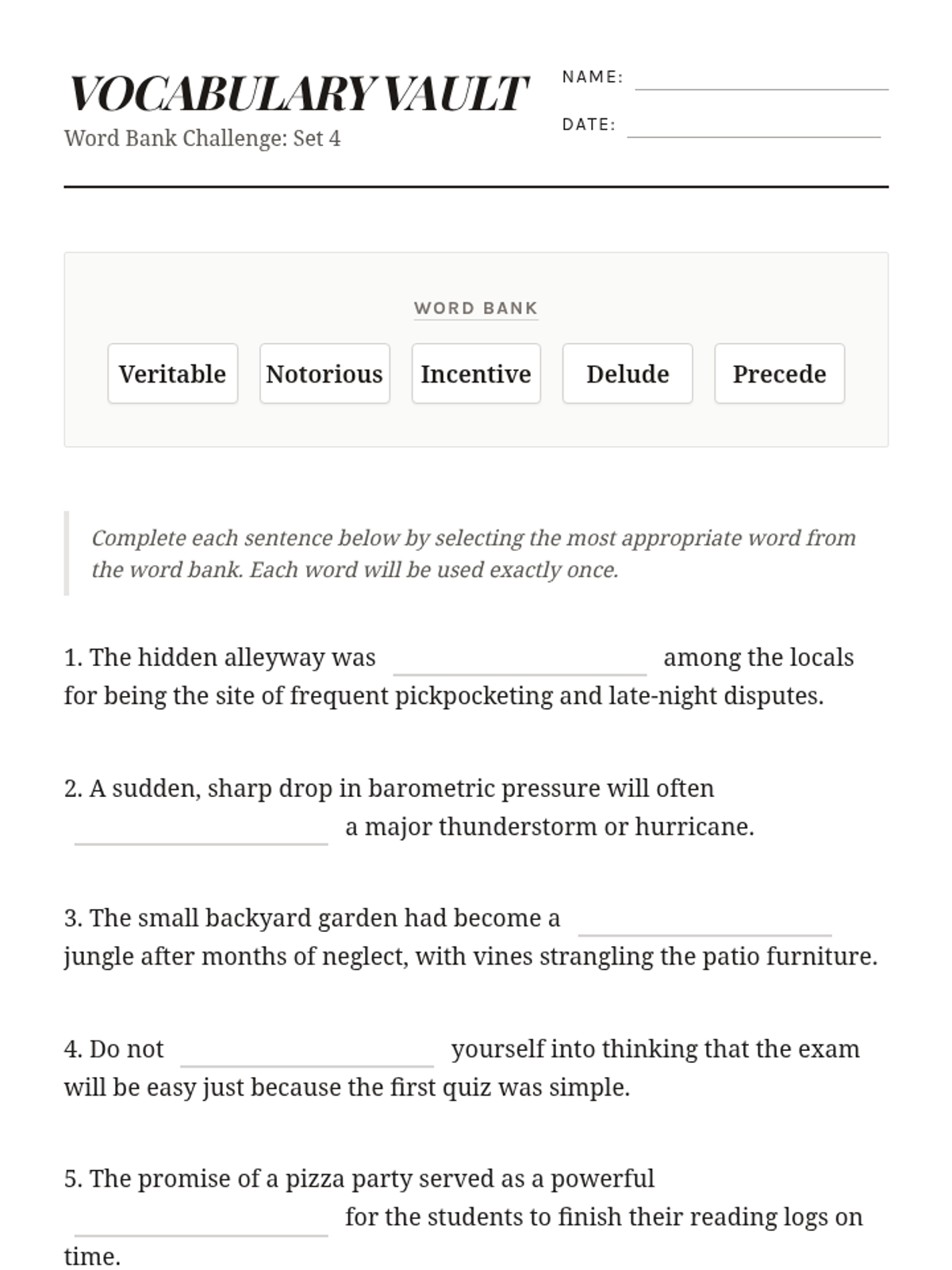
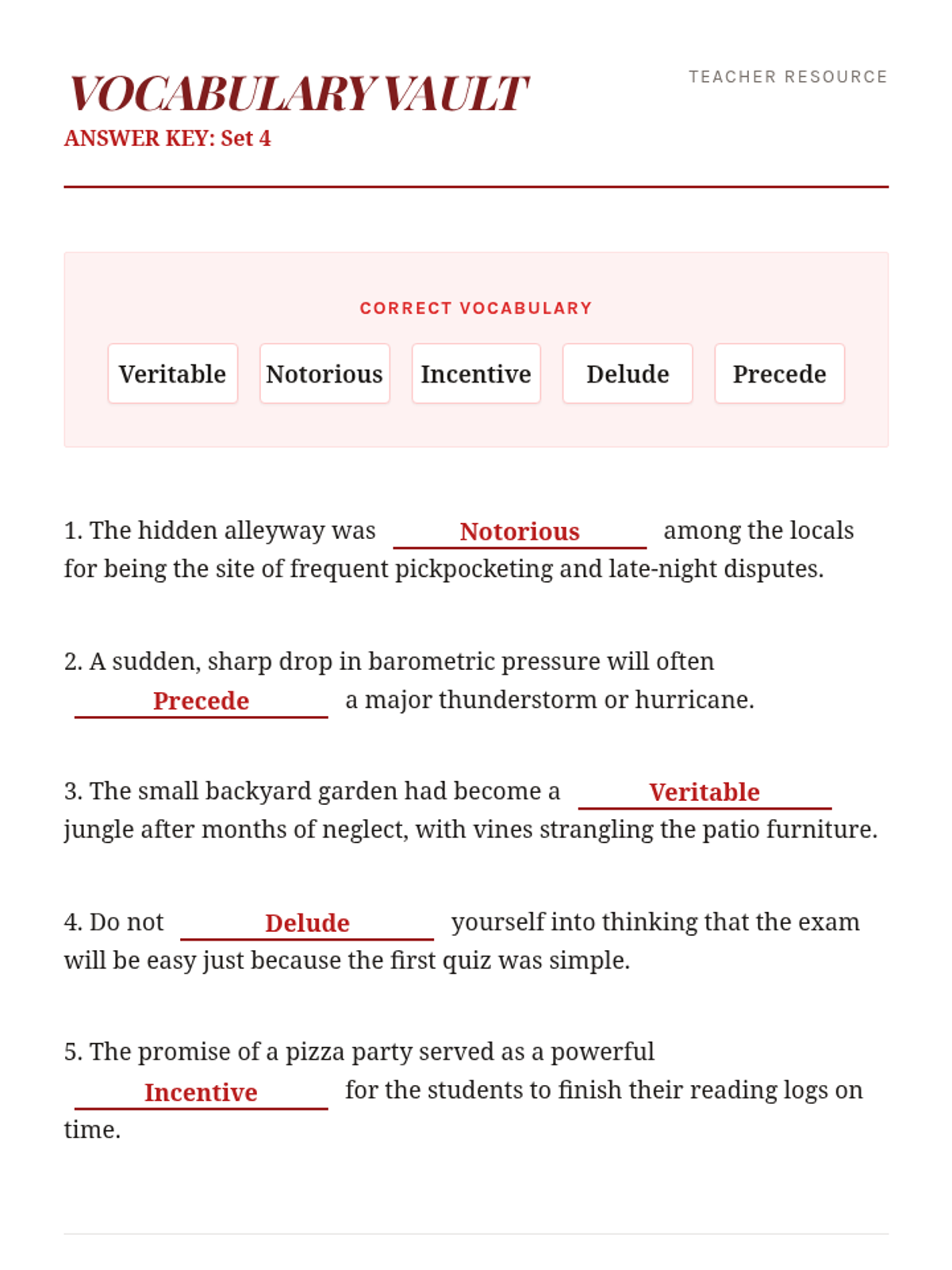
A comprehensive vocabulary unit focusing on twenty sophisticated literary terms, including altruistic, quarantine, conscientious, wizened, meek, reminisce, dissipate, solemn, assess, unison, agitated, defiance, grandeur, ailing, benediction, veritable, notorious, incentive, delude, and precede.
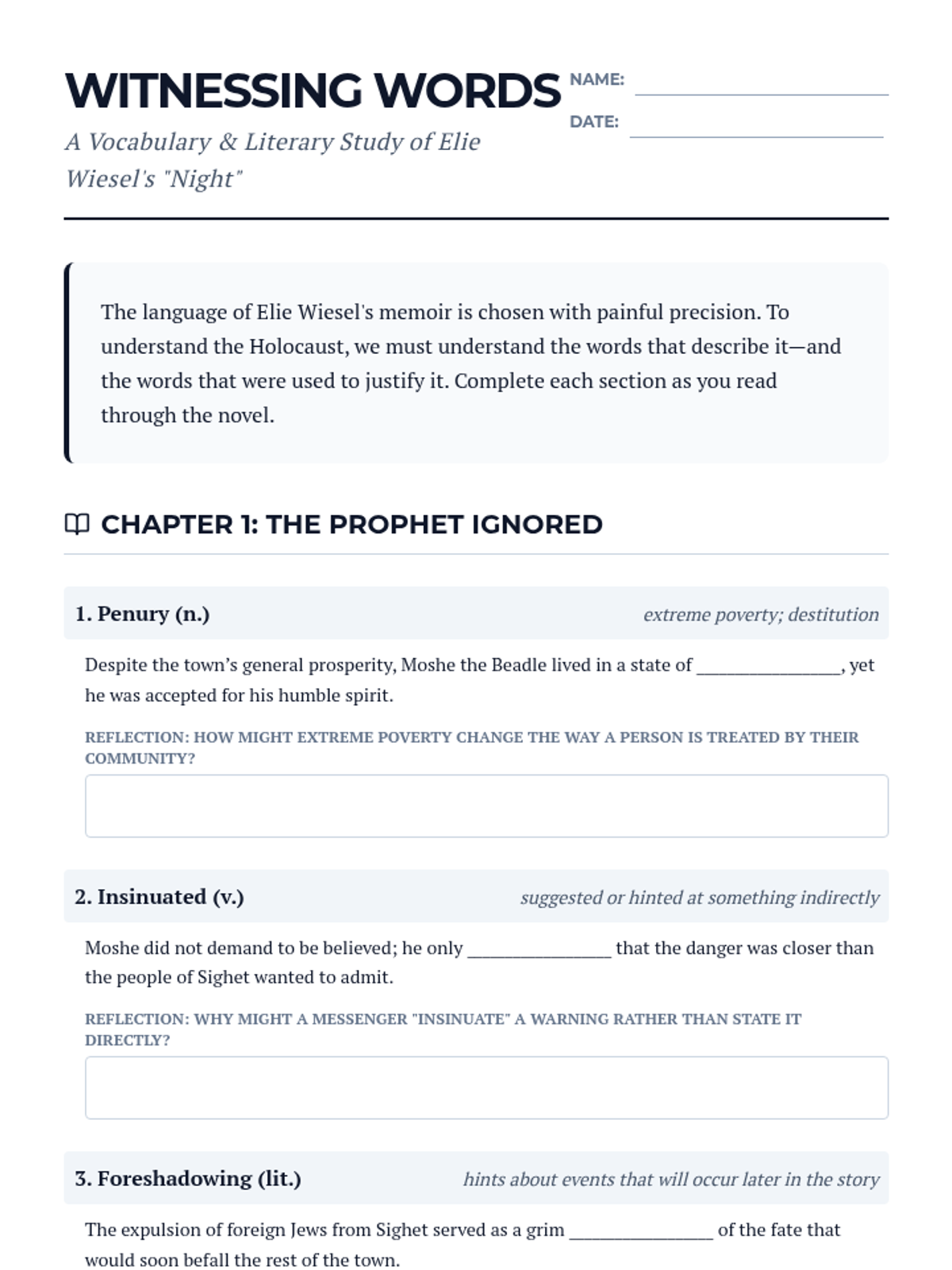
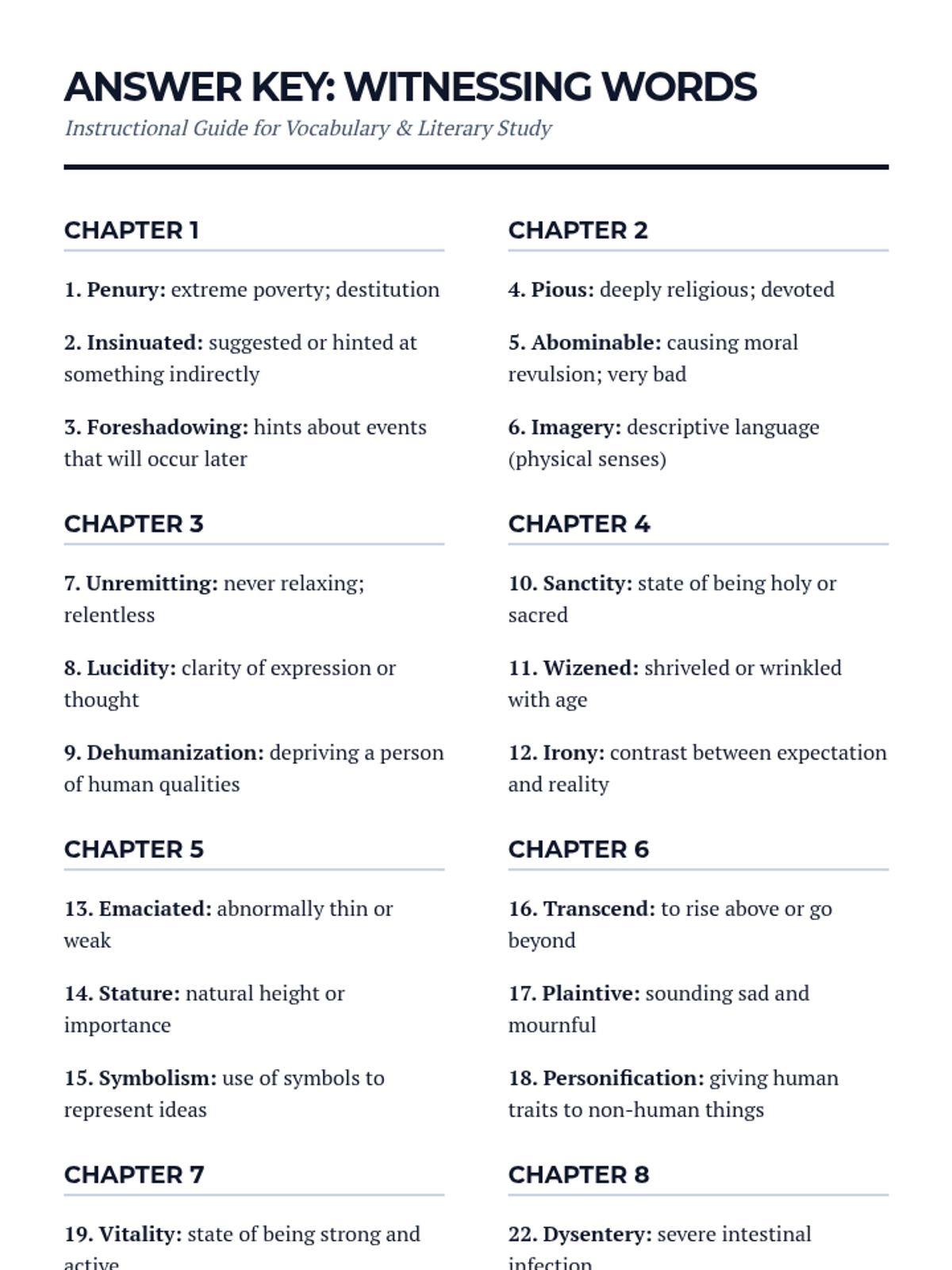
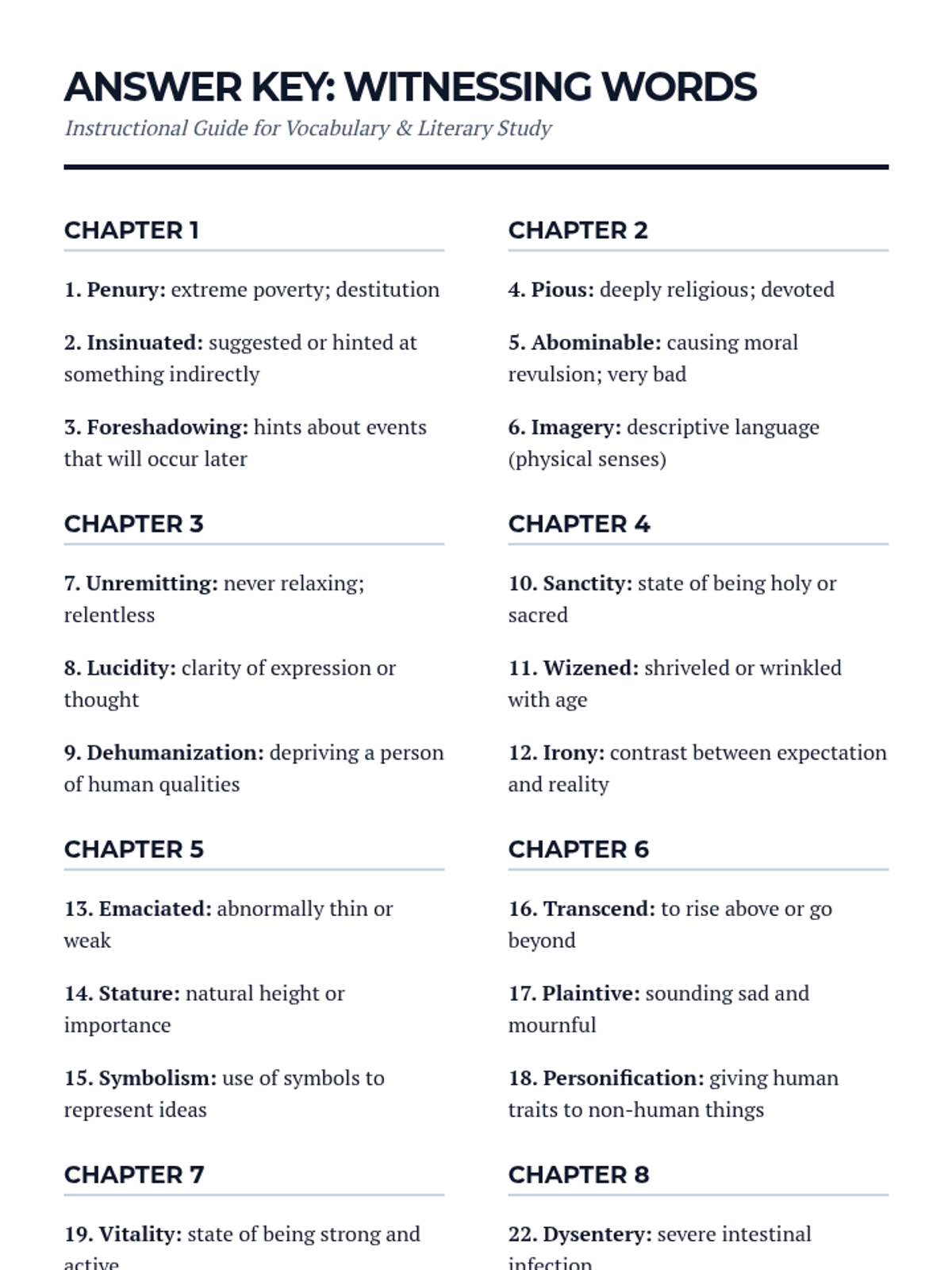
A comprehensive vocabulary and literary term study for Elie Wiesel's *Night*, focusing on language that captures the trauma, resilience, and dehumanization depicted in the memoir.
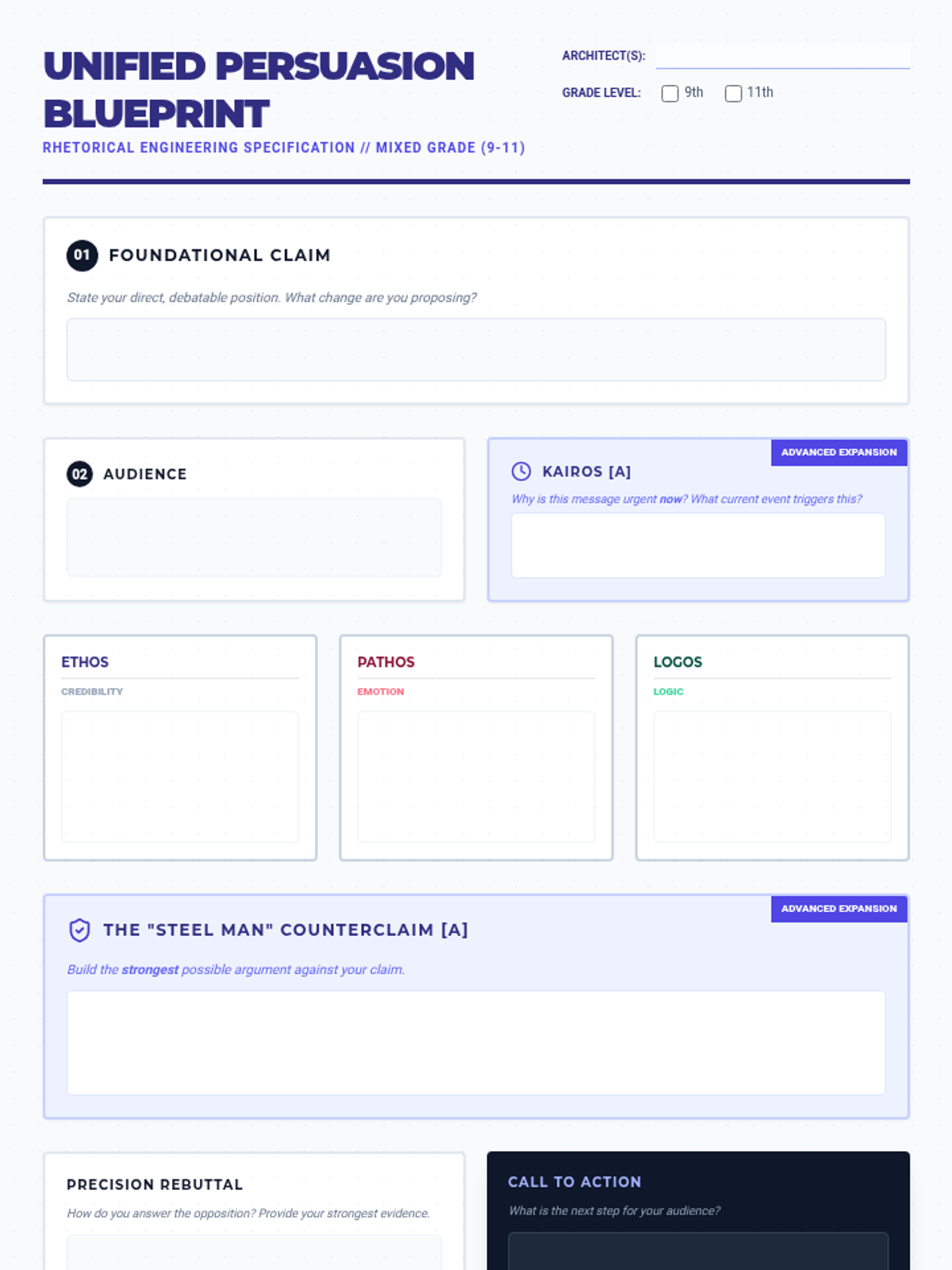
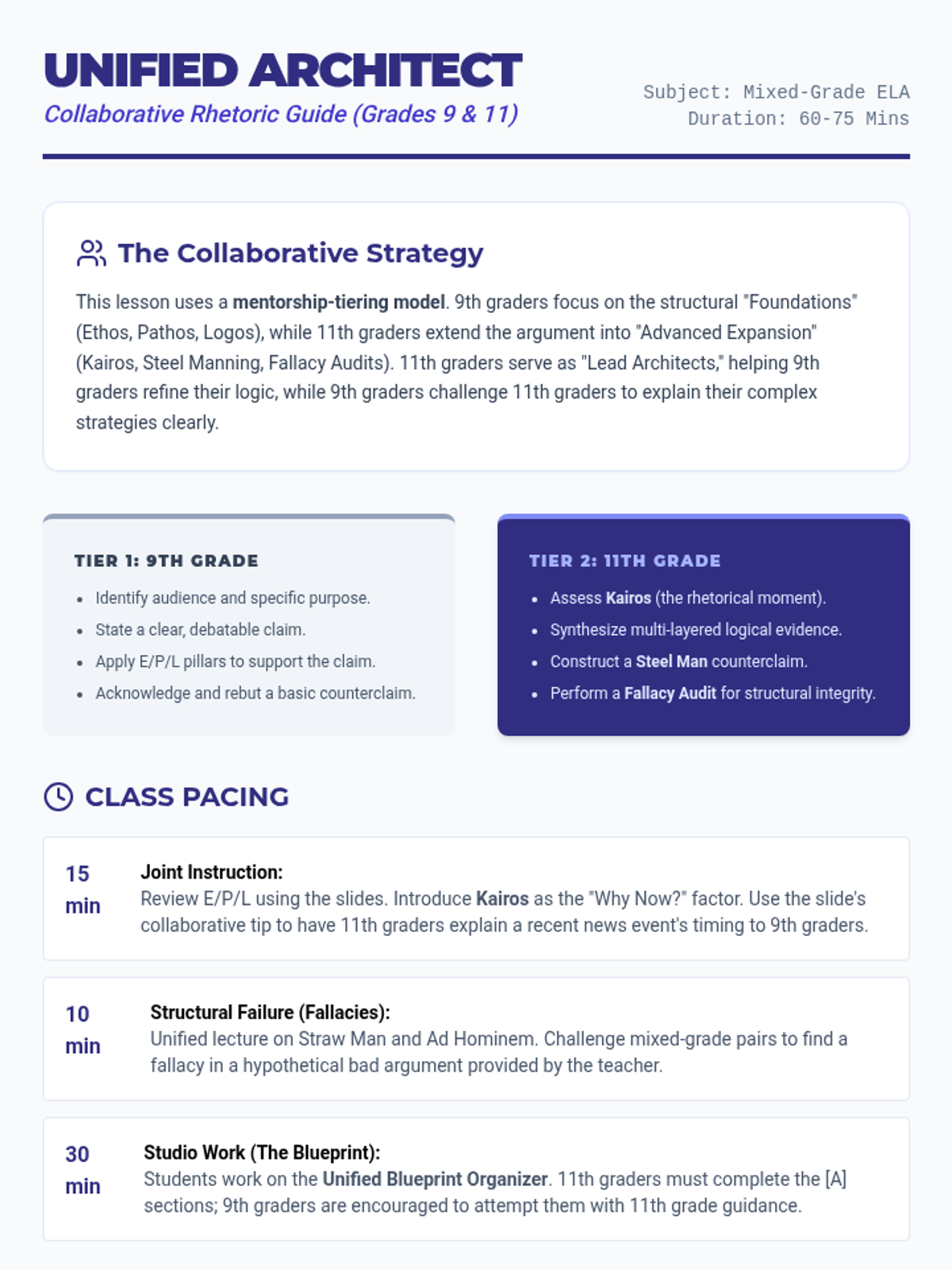
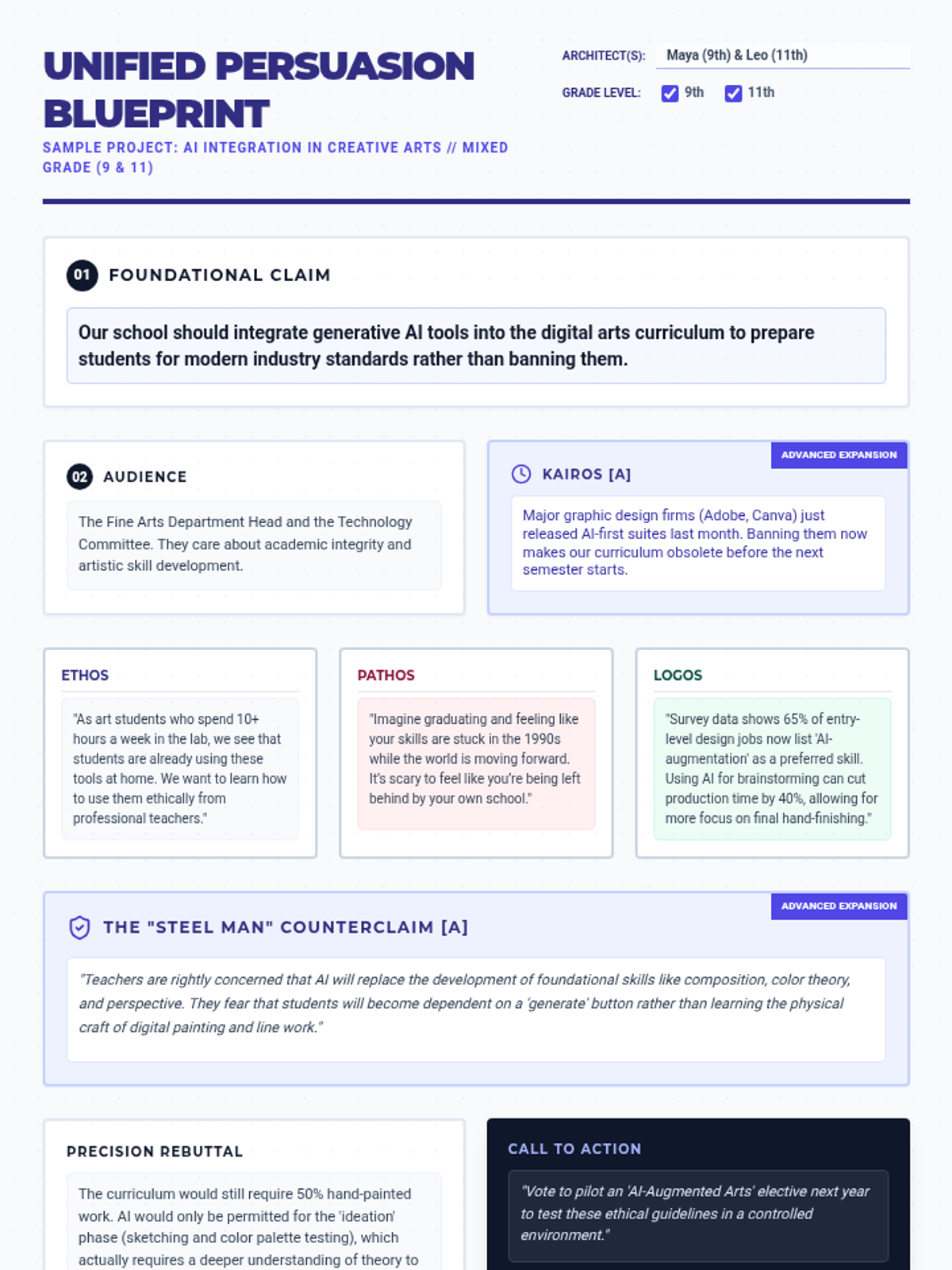
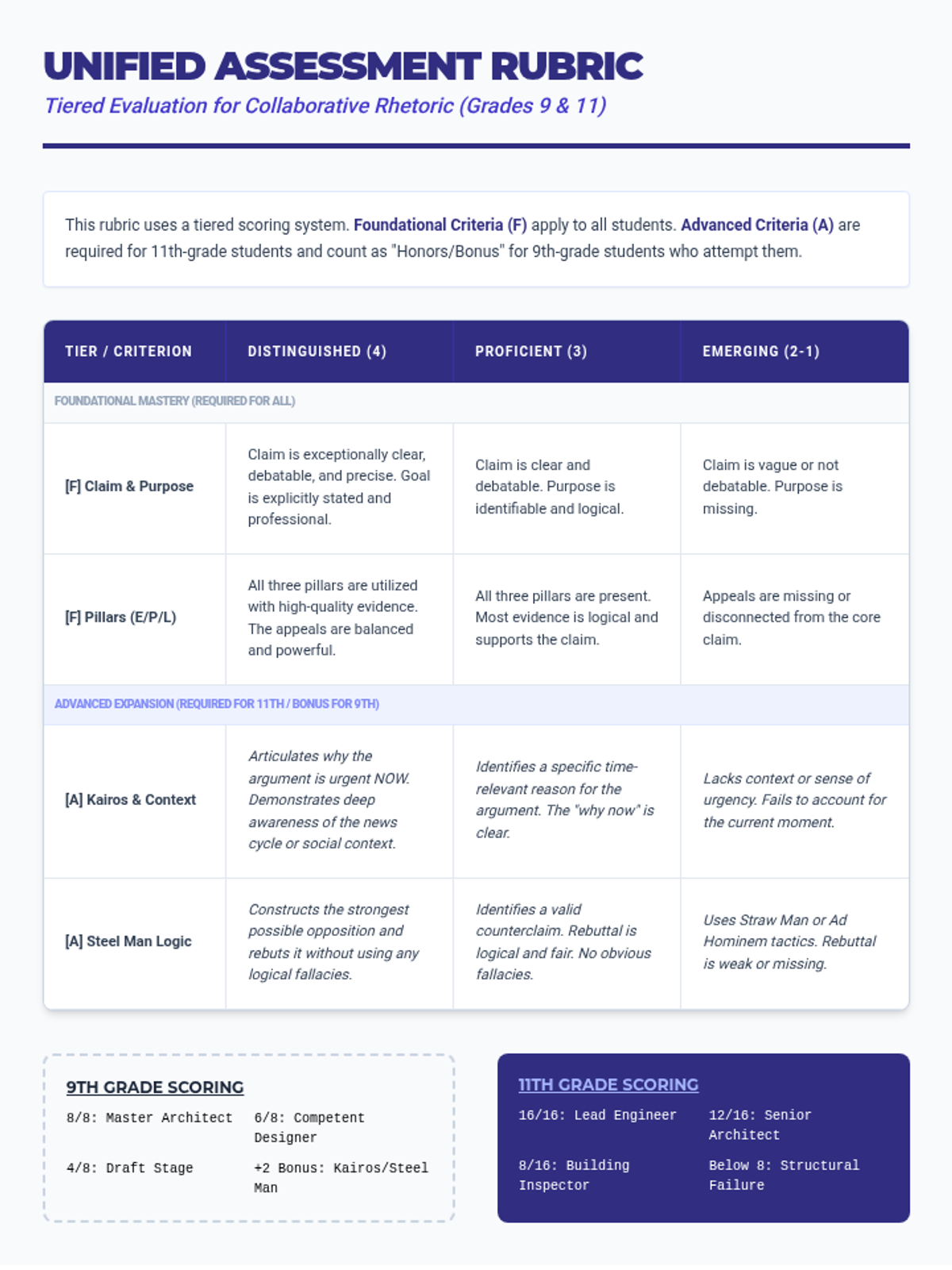
A tiered persuasive writing lesson designed for mixed-grade or scaffolded classrooms (9th-11th). Core concepts like Ethos, Pathos, and Logos are taught alongside advanced techniques like Kairos and Steel Manning, allowing students of different levels to collaborate and learn from one another.
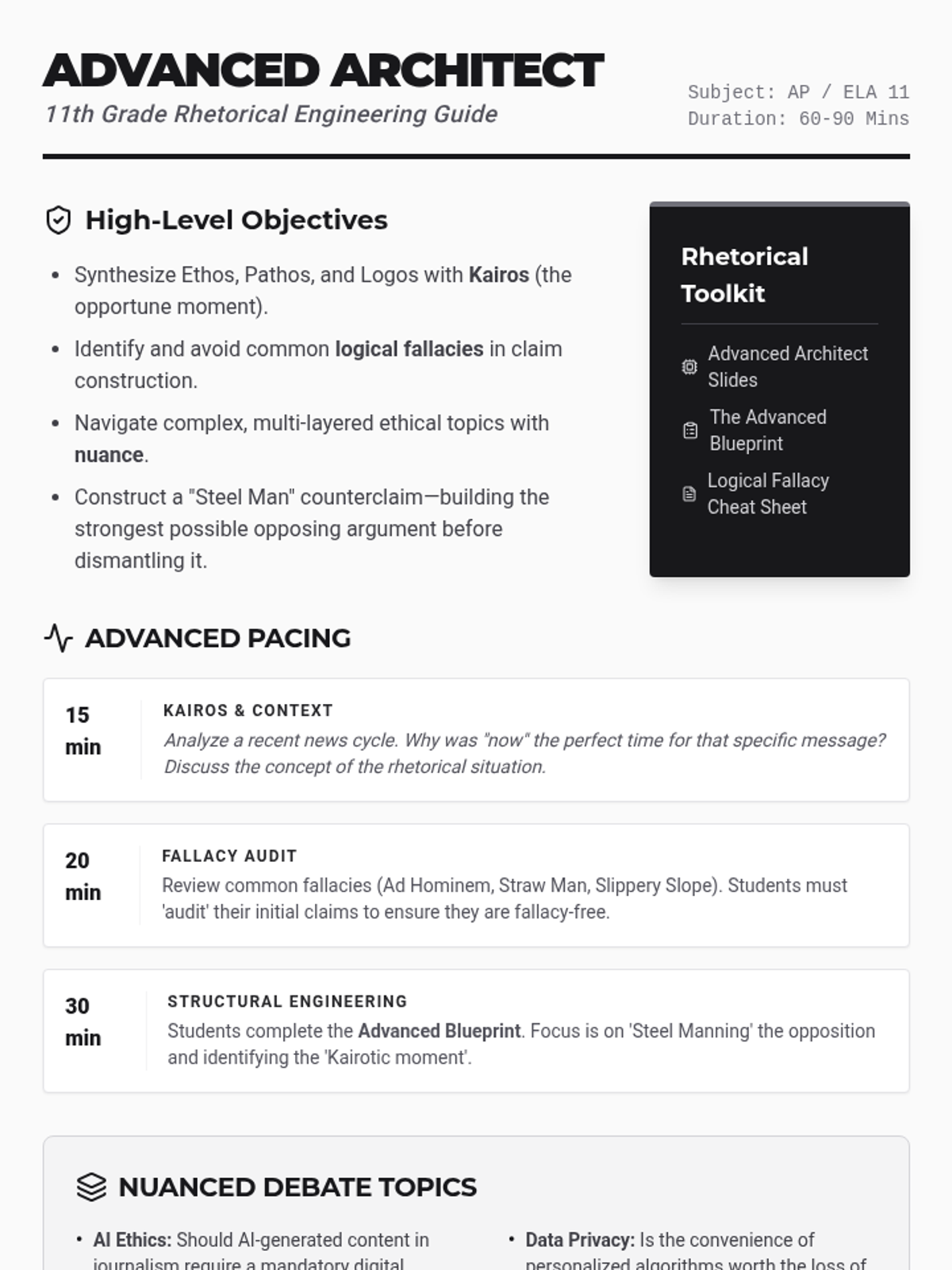
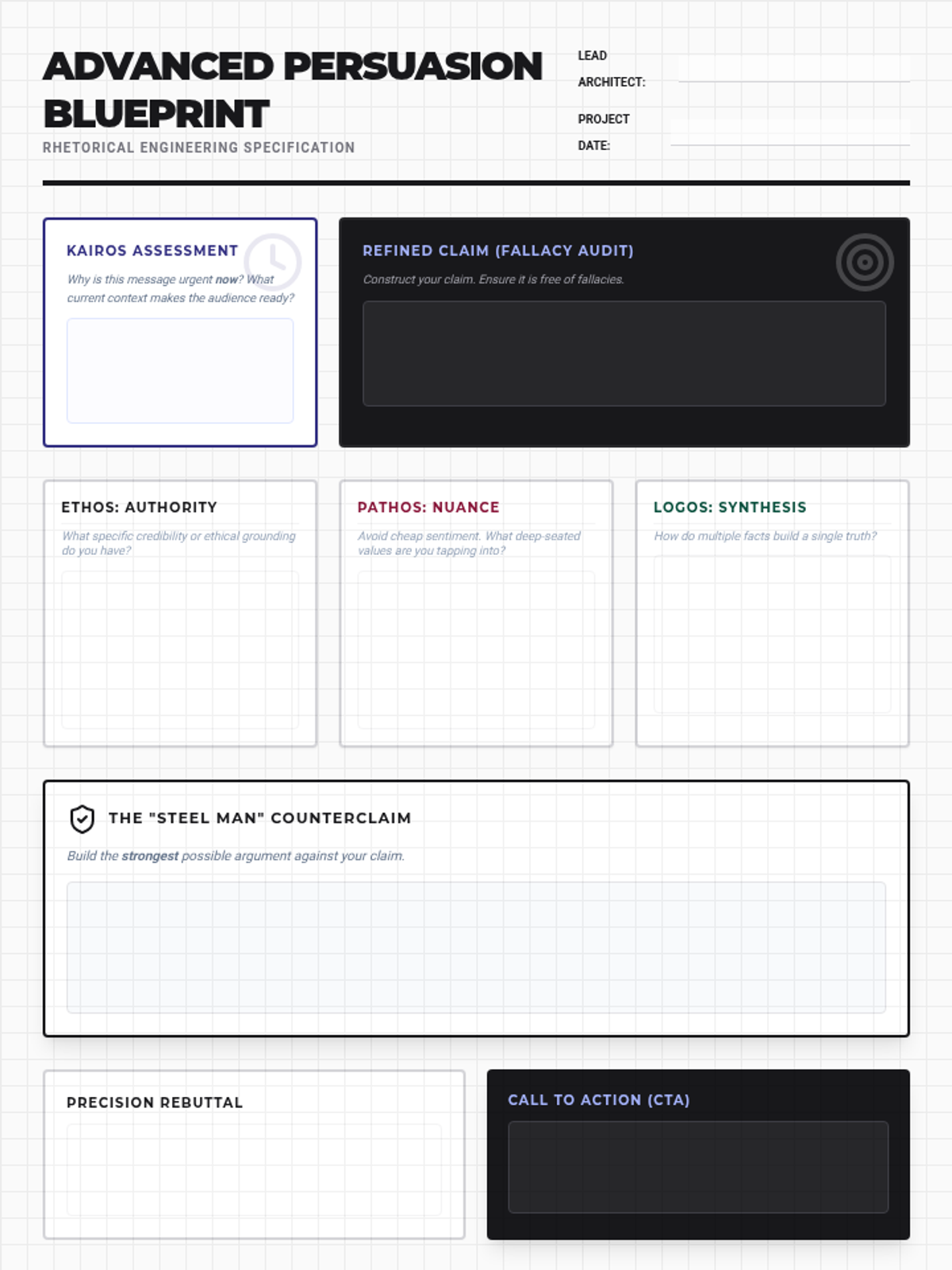
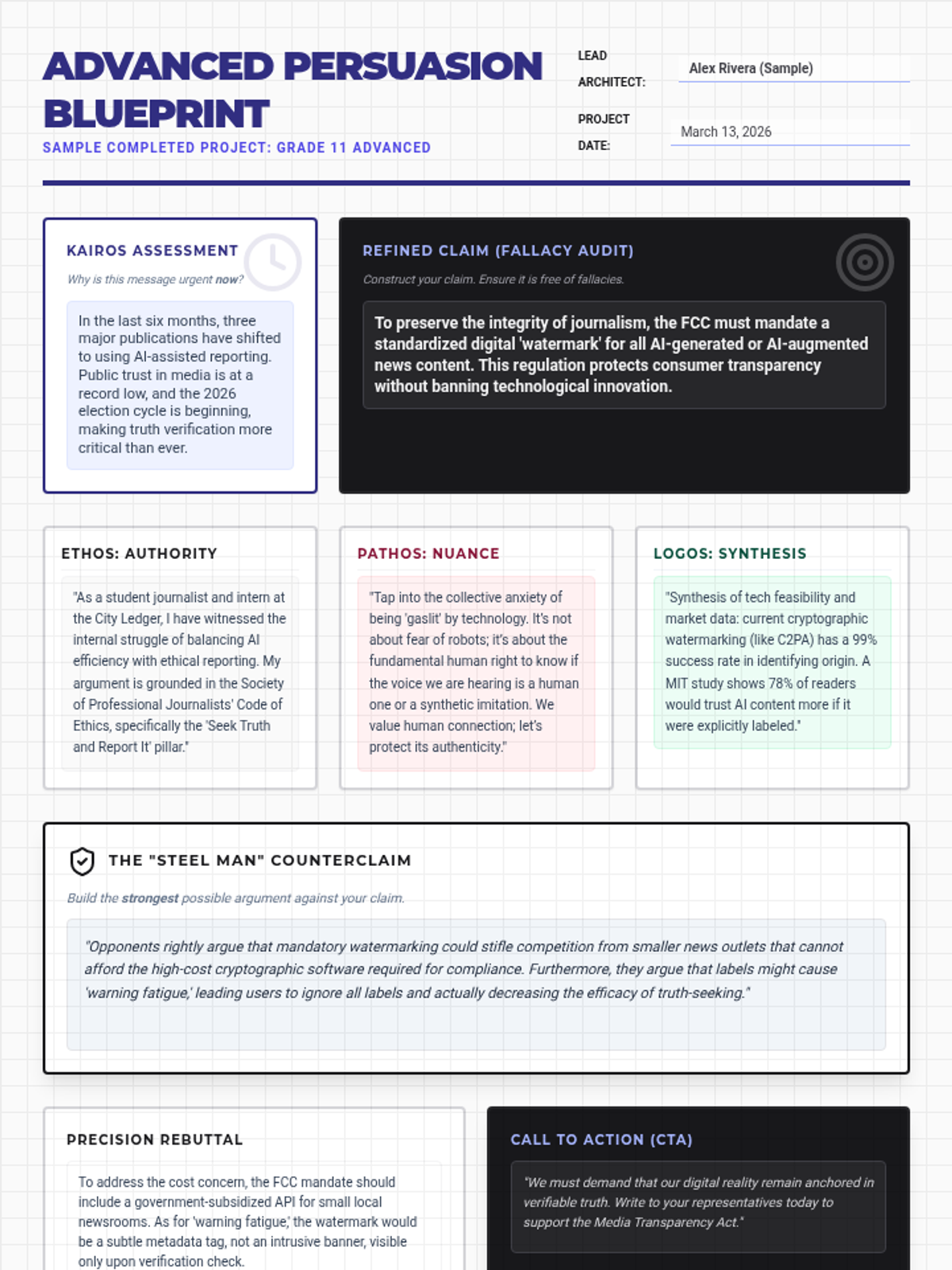
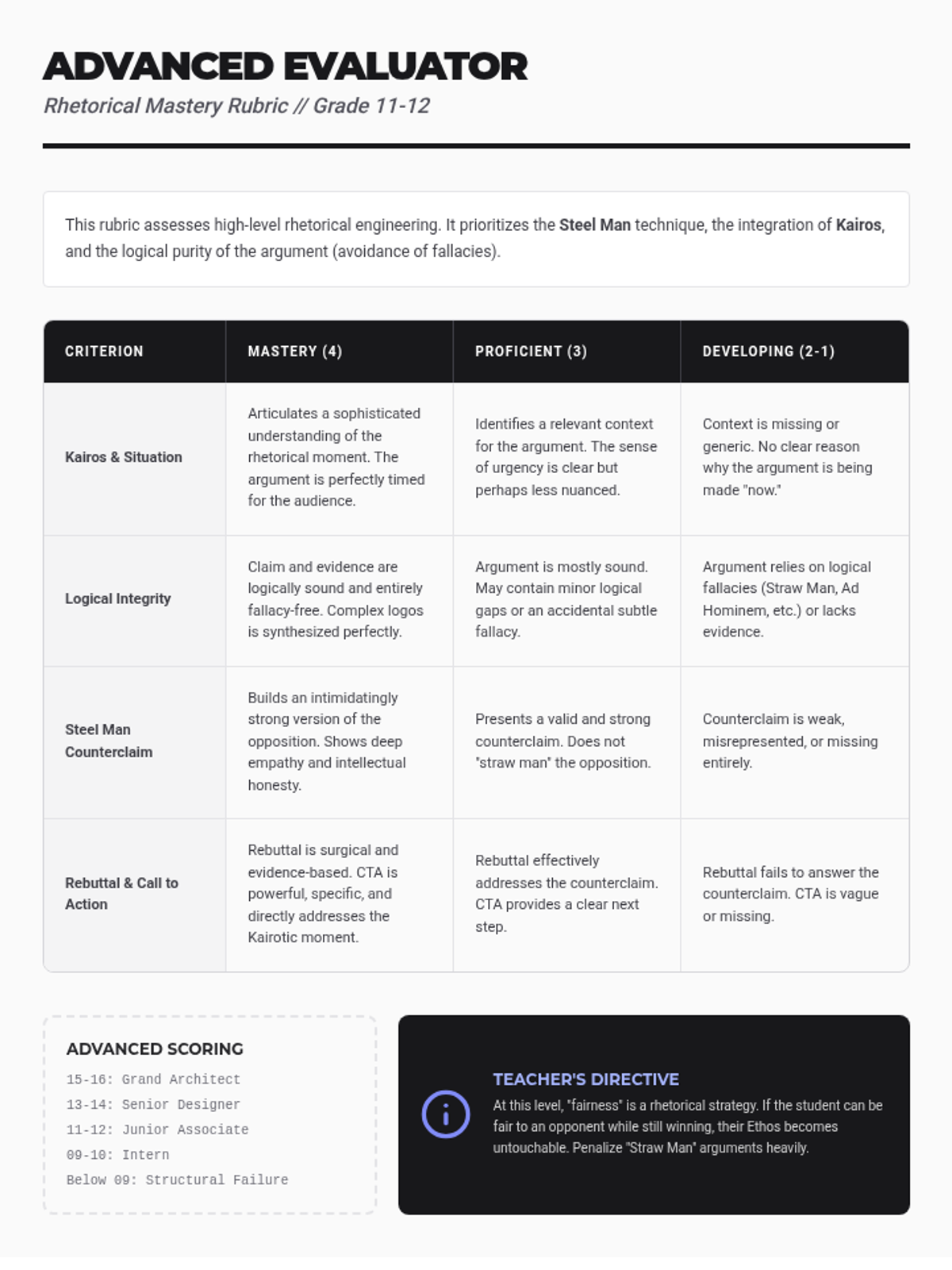
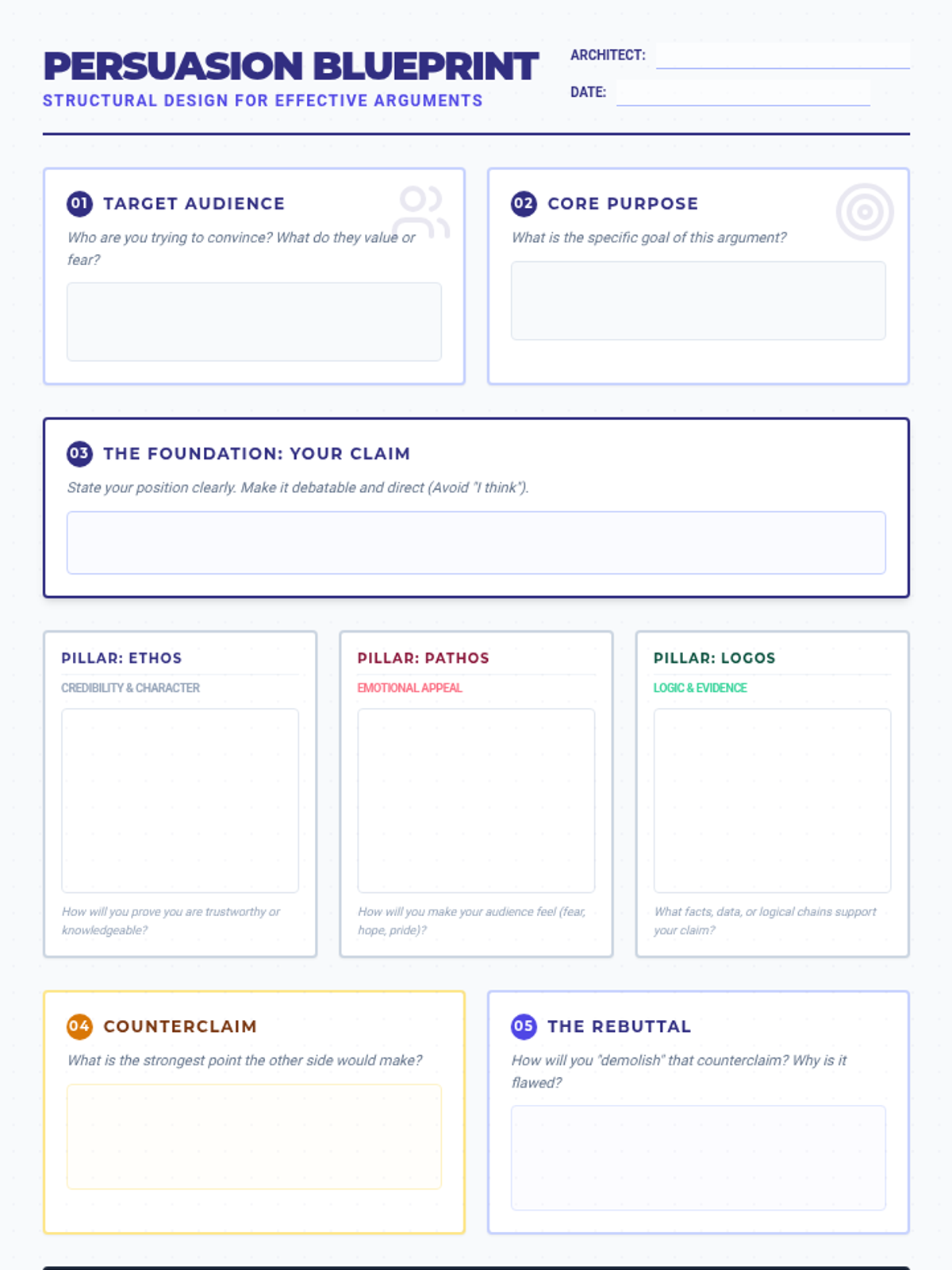
An advanced lesson for 11th graders that builds upon basic rhetorical foundations. Students explore Kairos (the opportune moment), identify logical fallacies, and tackle complex ethical and societal issues through a high-fidelity architectural blueprint organizer.
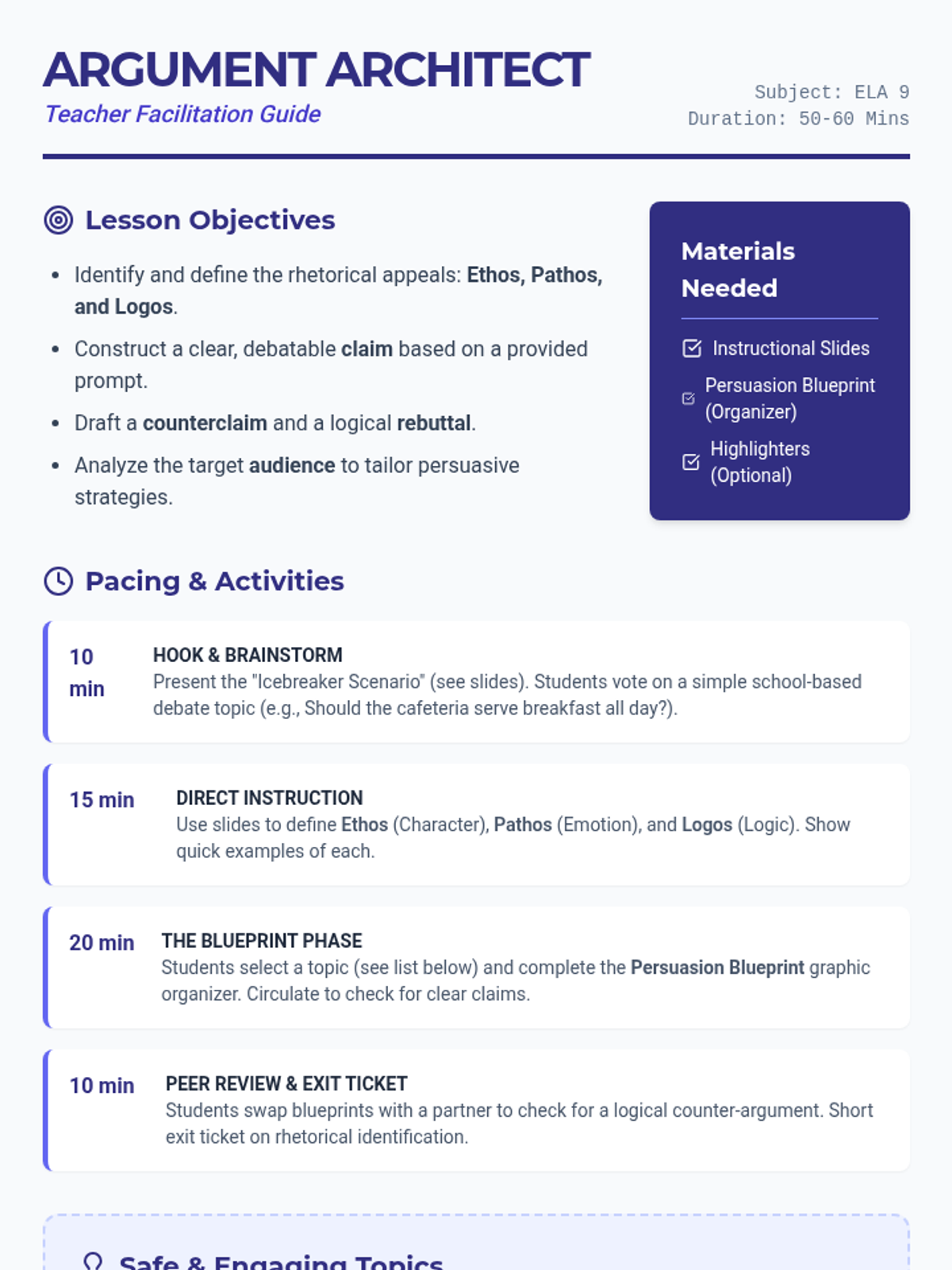
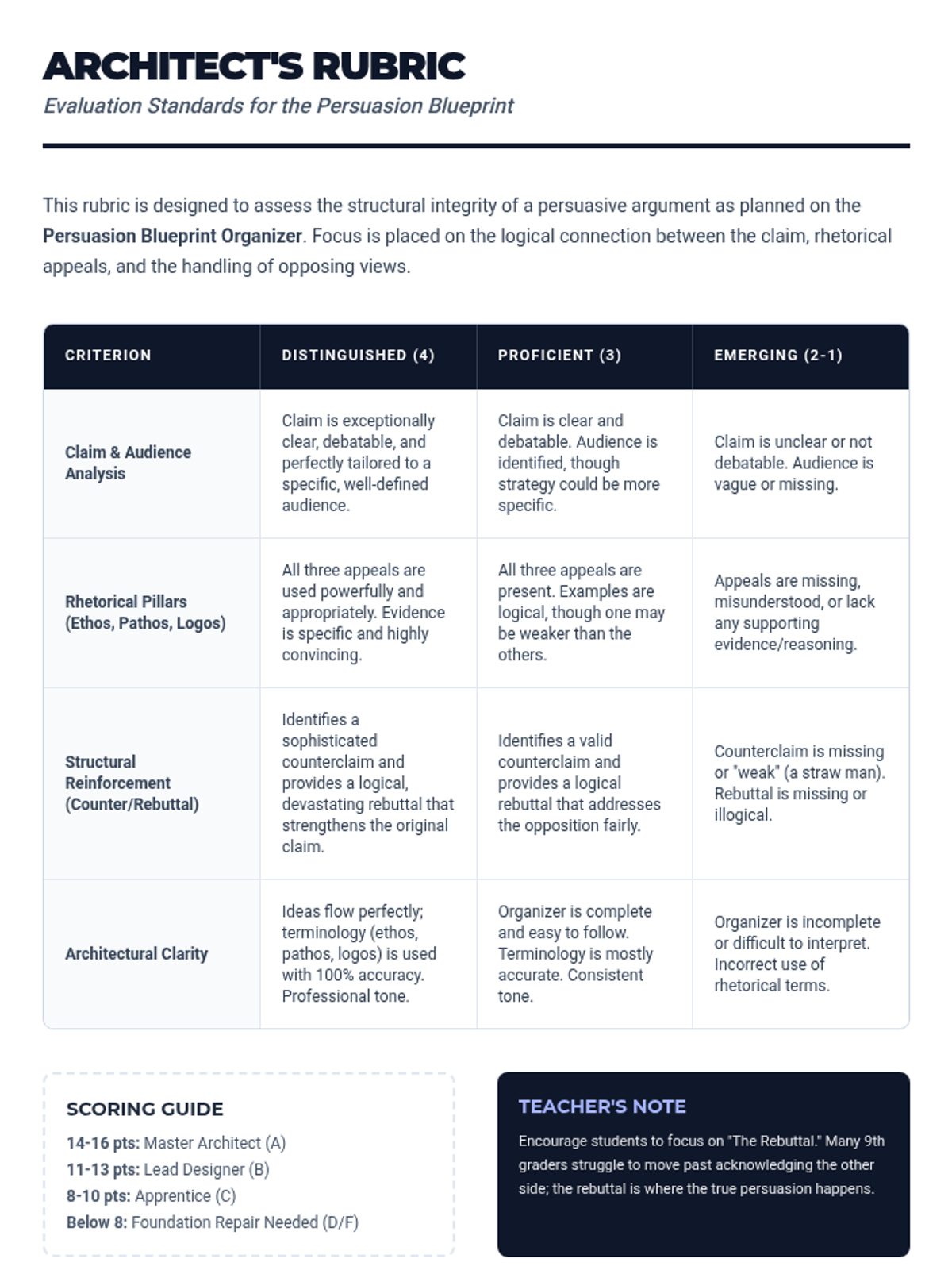
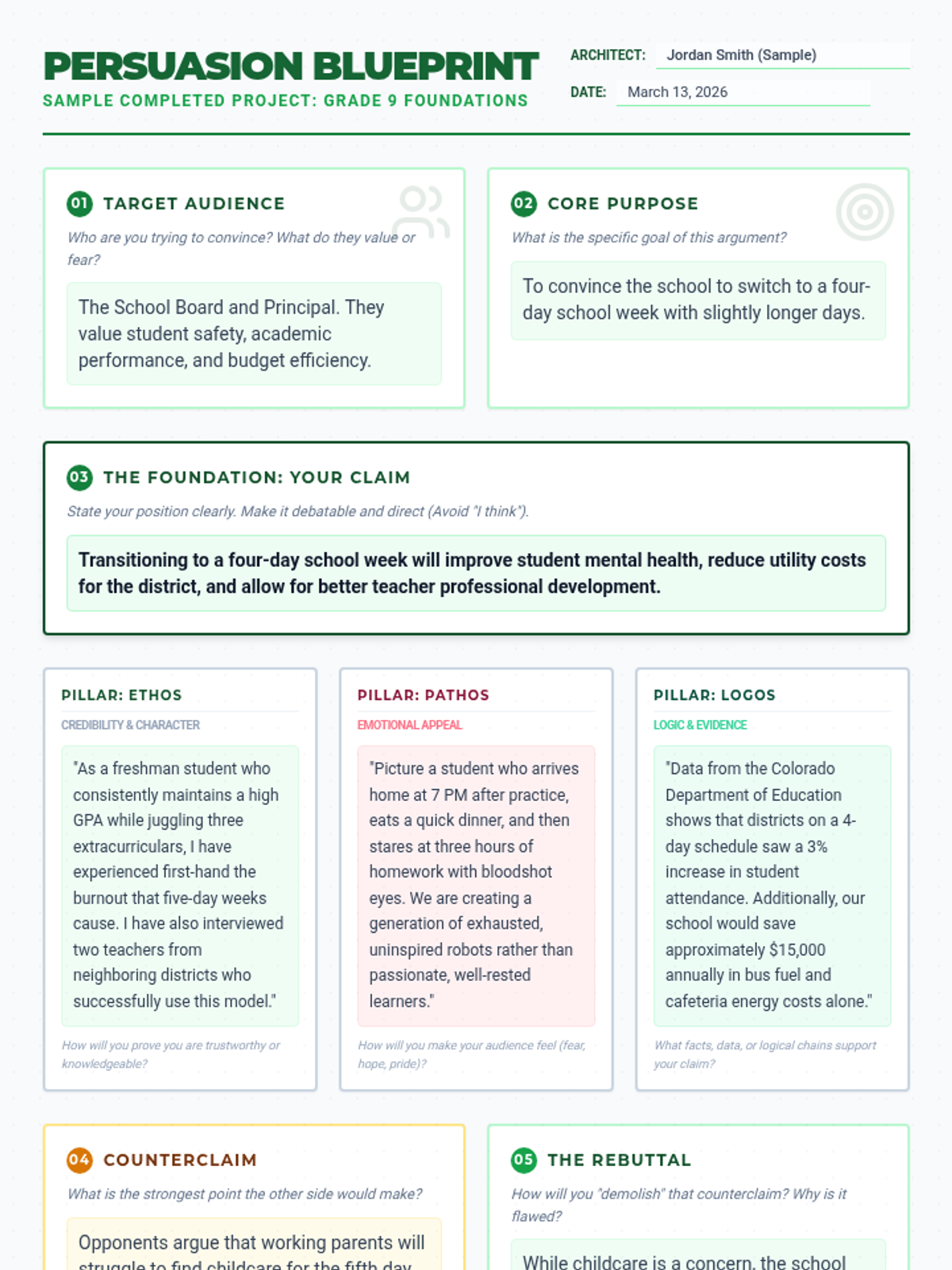
A comprehensive lesson for 9th graders on mastering the art of persuasion, focusing on rhetorical appeals, claim development, and addressing counterclaims. Students will use a structured graphic organizer to architect their own arguments on school-related topics.
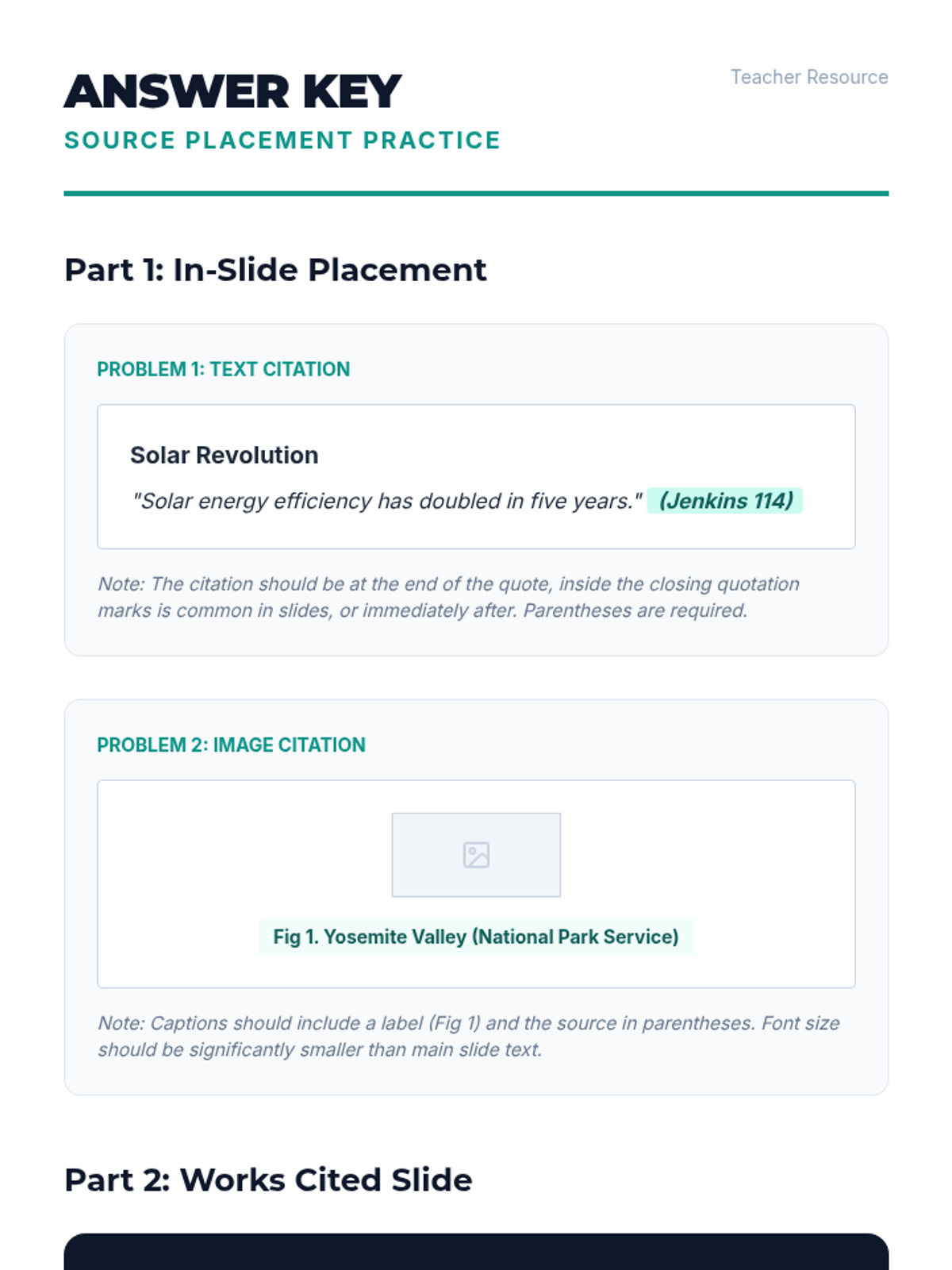
A comprehensive lesson on correctly formatting MLA citations within PowerPoint presentations, covering in-slide citations and Works Cited slides.
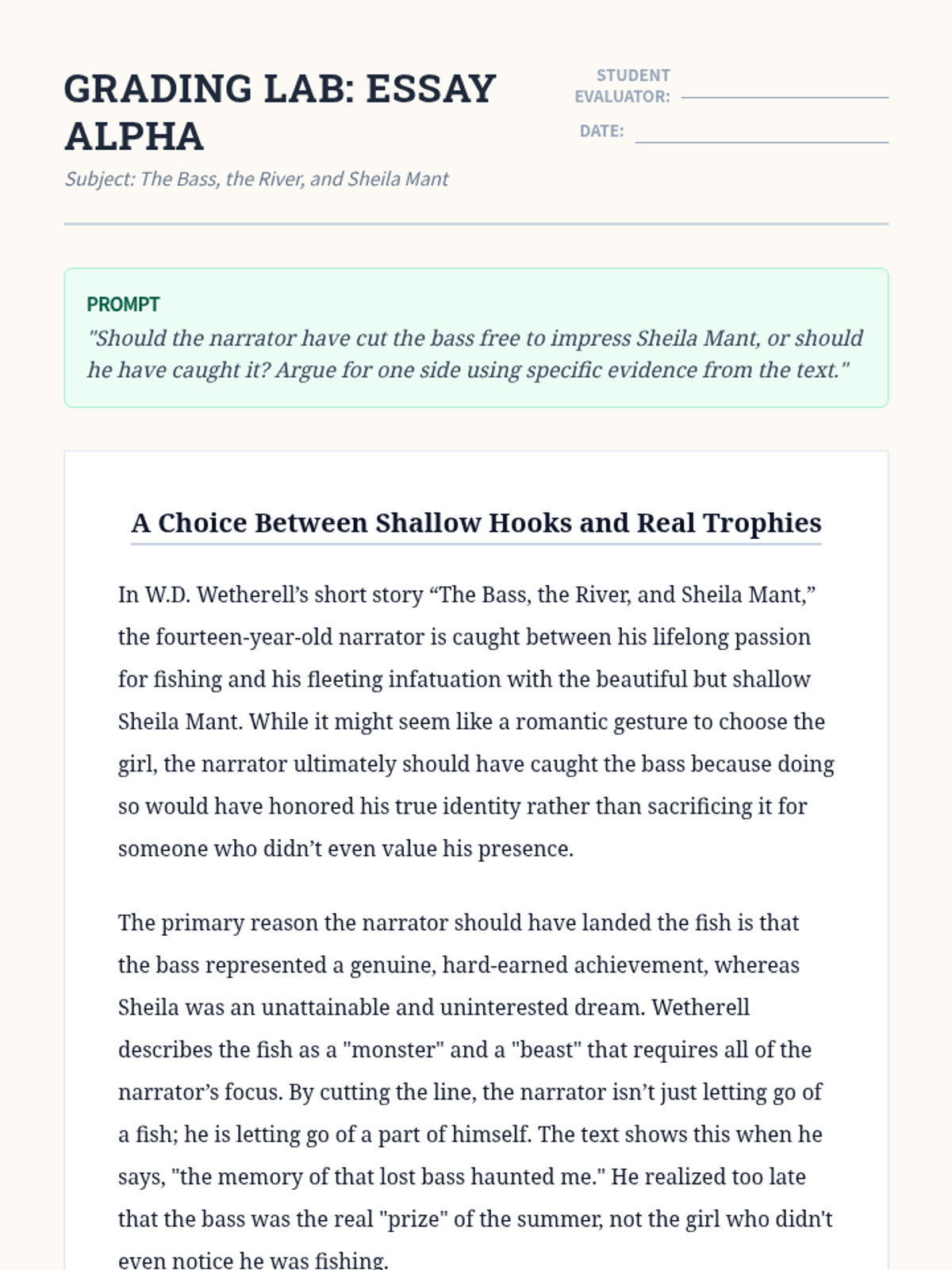
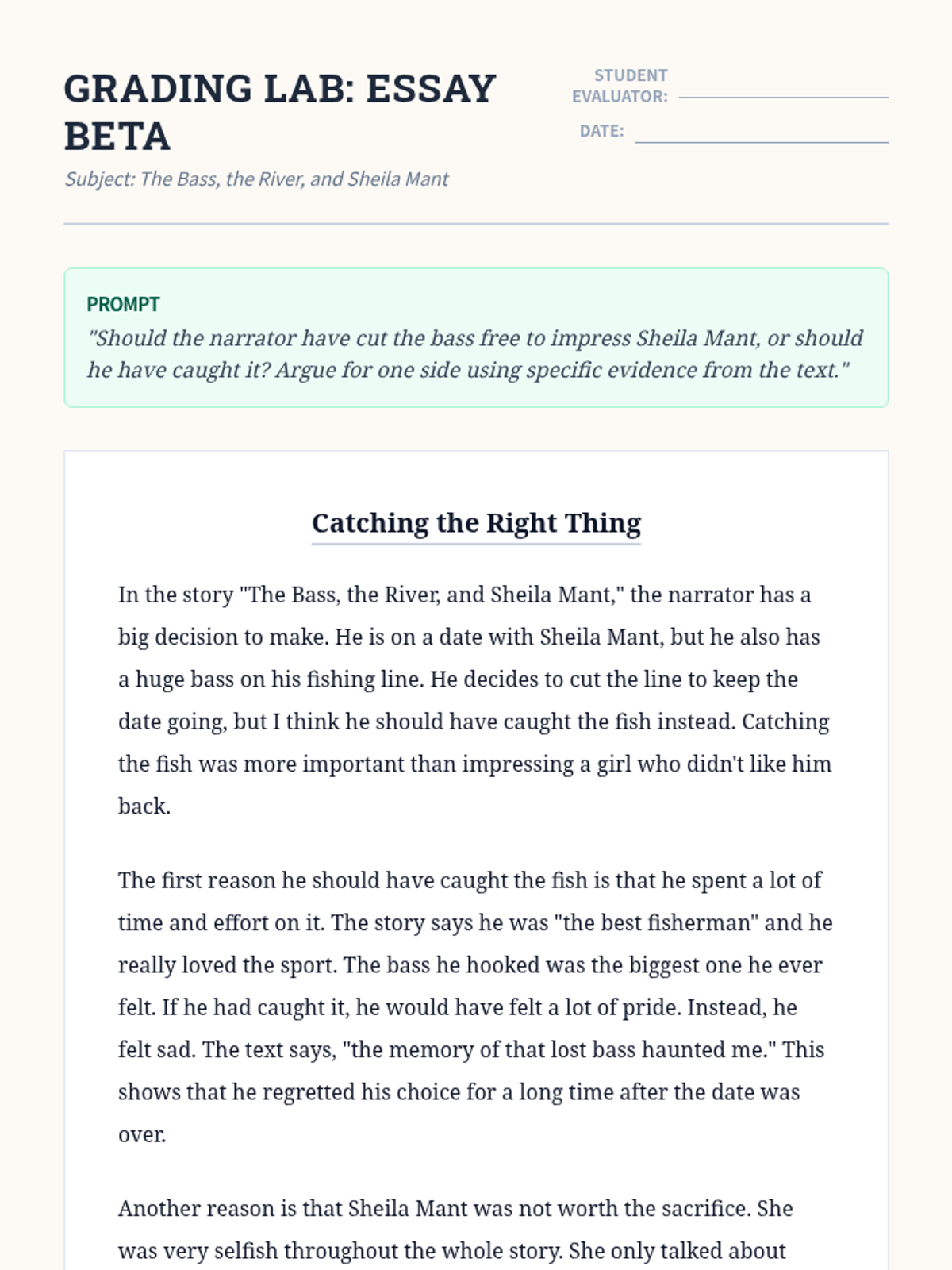
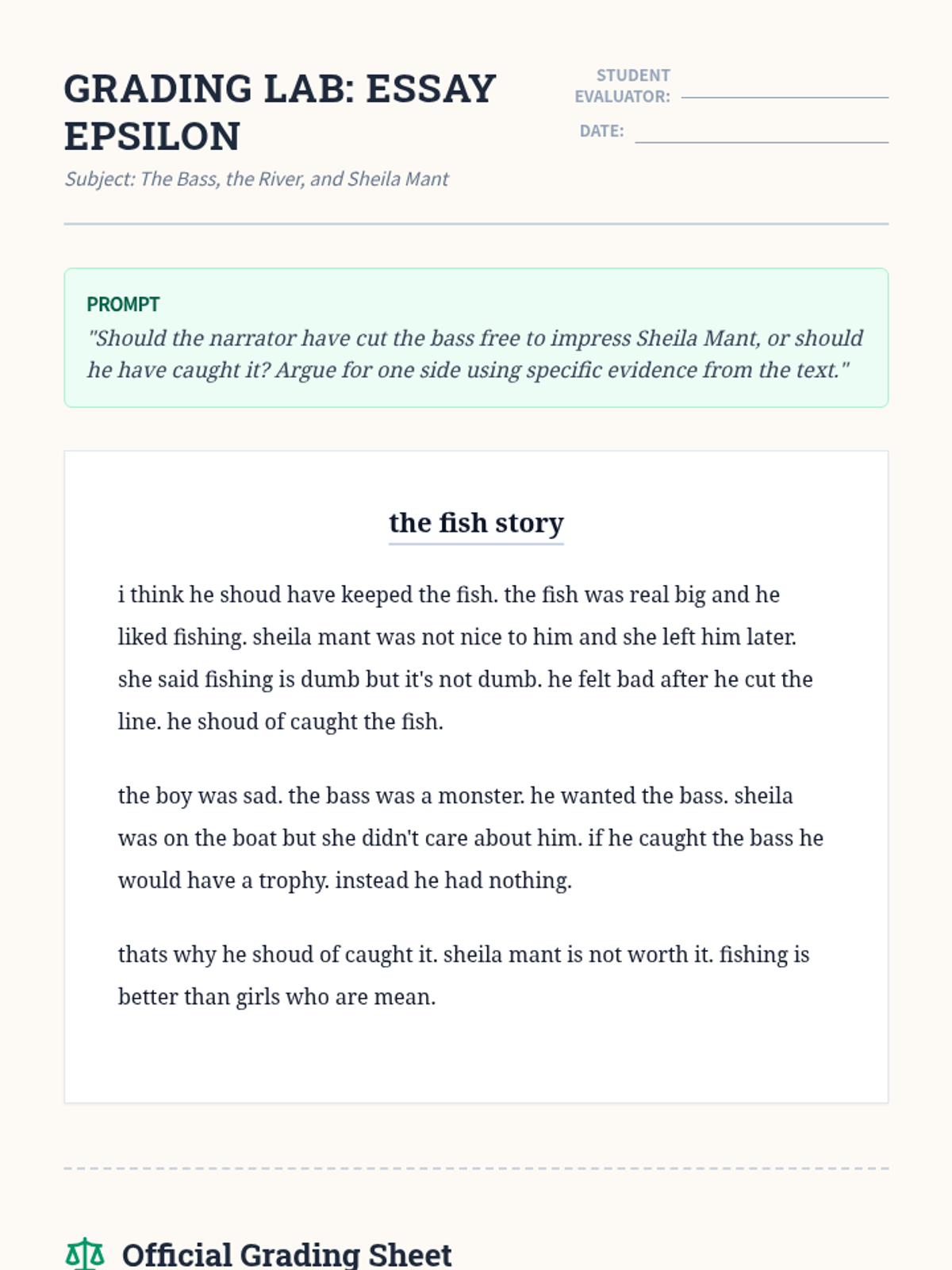
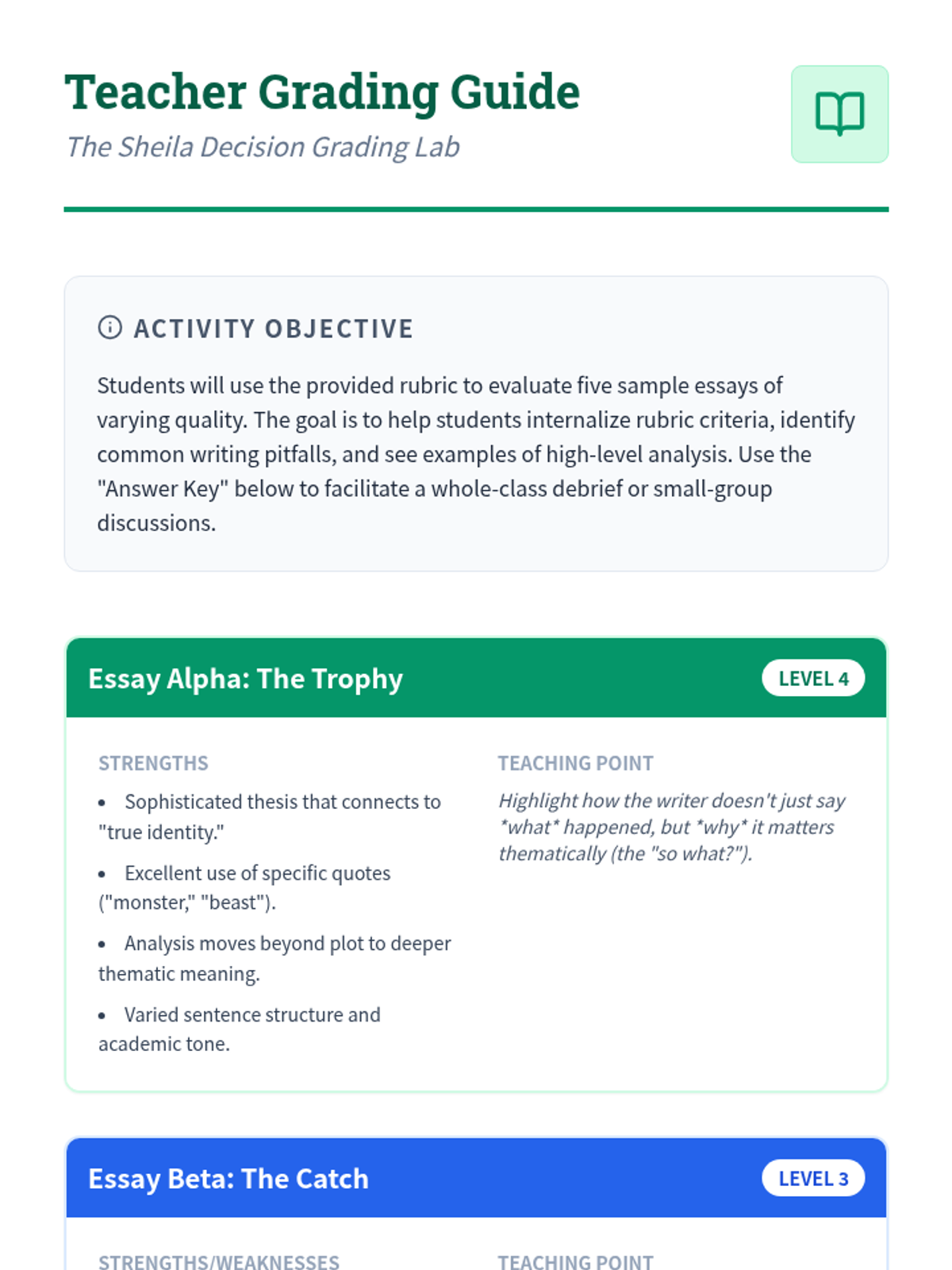
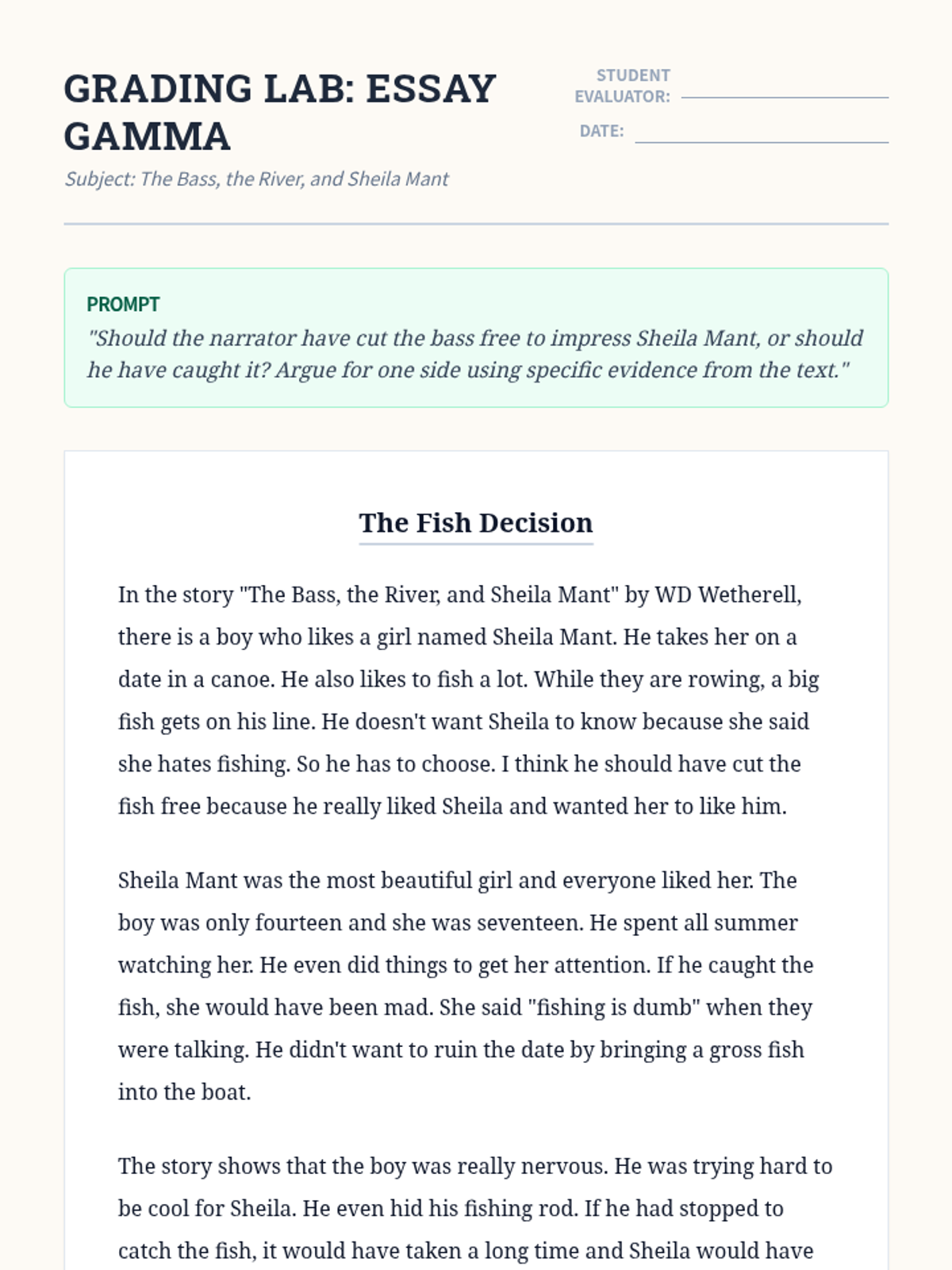
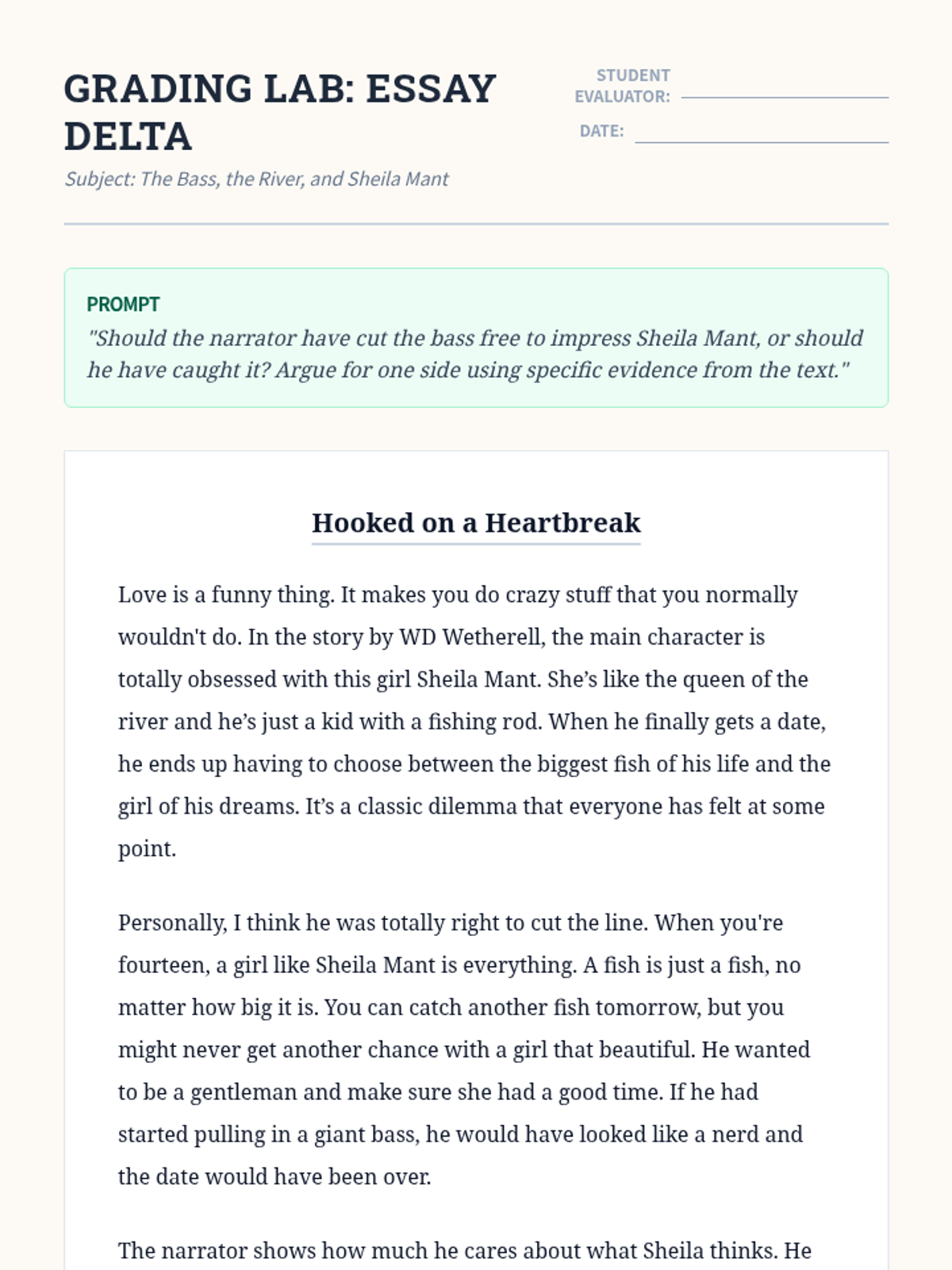
A hands-on grading lab where students evaluate five student-written argumentative essays on W.D. Wetherell's 'The Bass, the River, and Sheila Mant,' using a standardized rubric to develop their own writing and analysis skills.
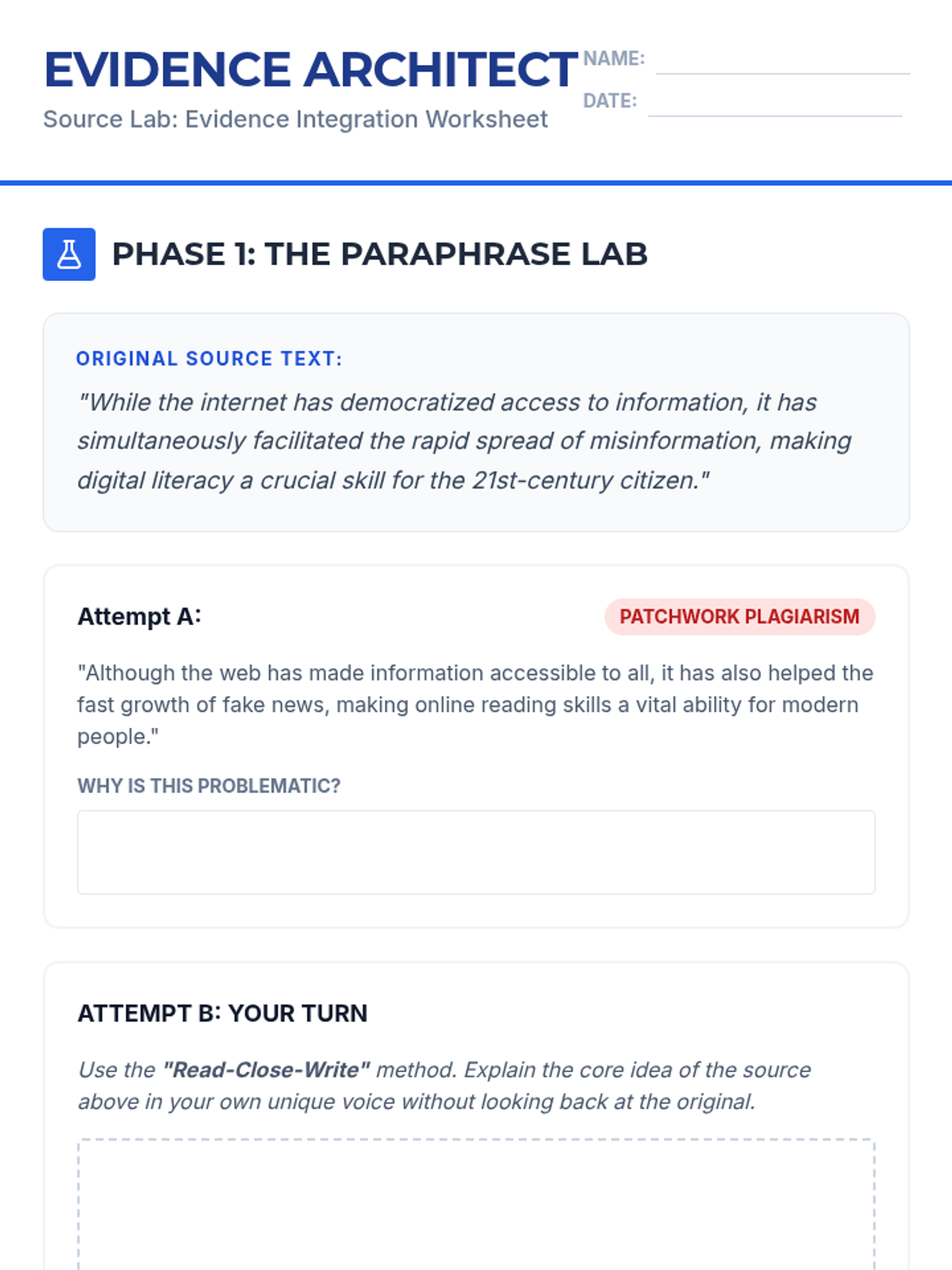
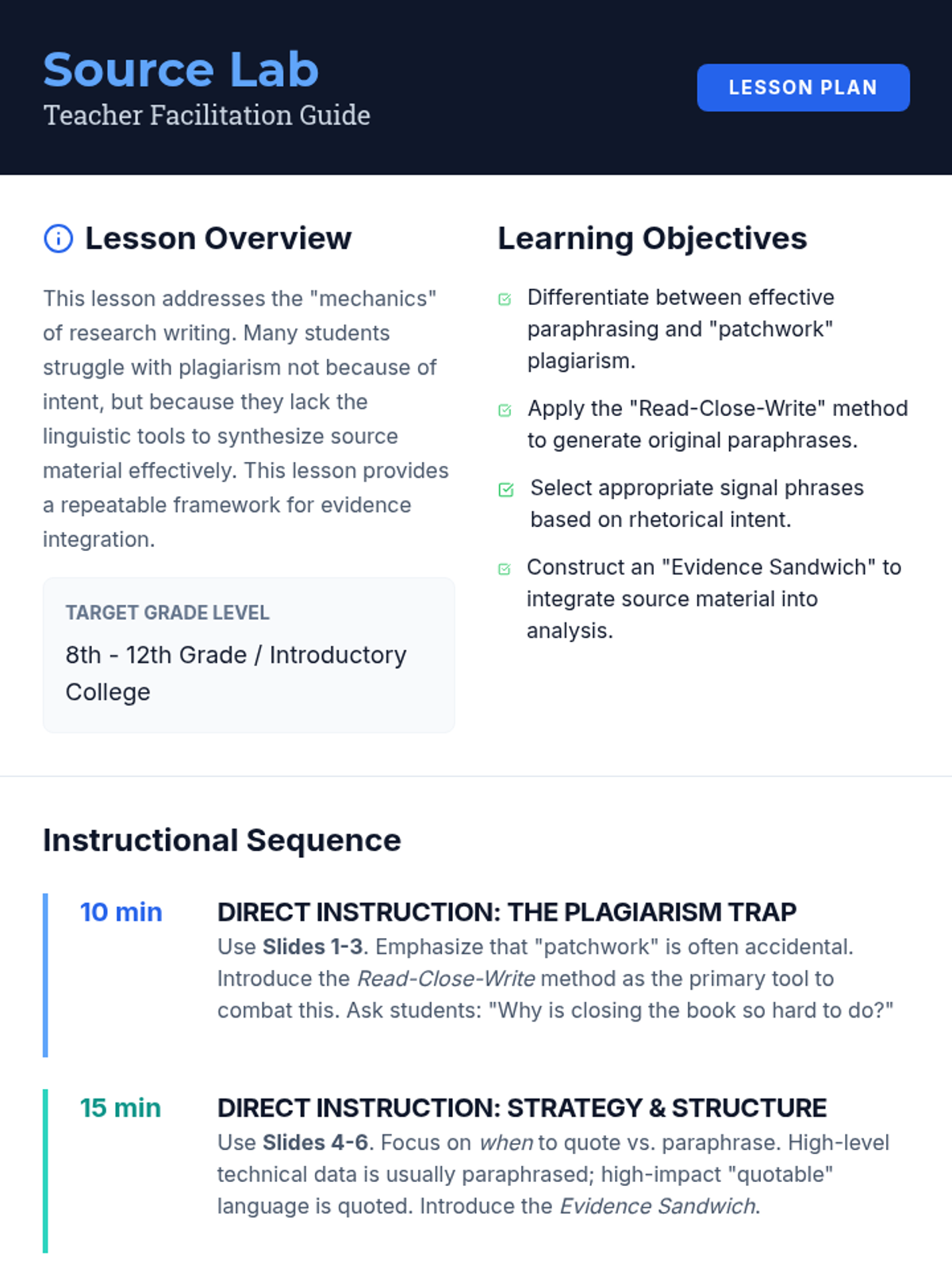
A comprehensive lesson focusing on the mechanics of evidence integration, specifically targeting plagiarism avoidance, evidence selection, and the use of signal phrases.
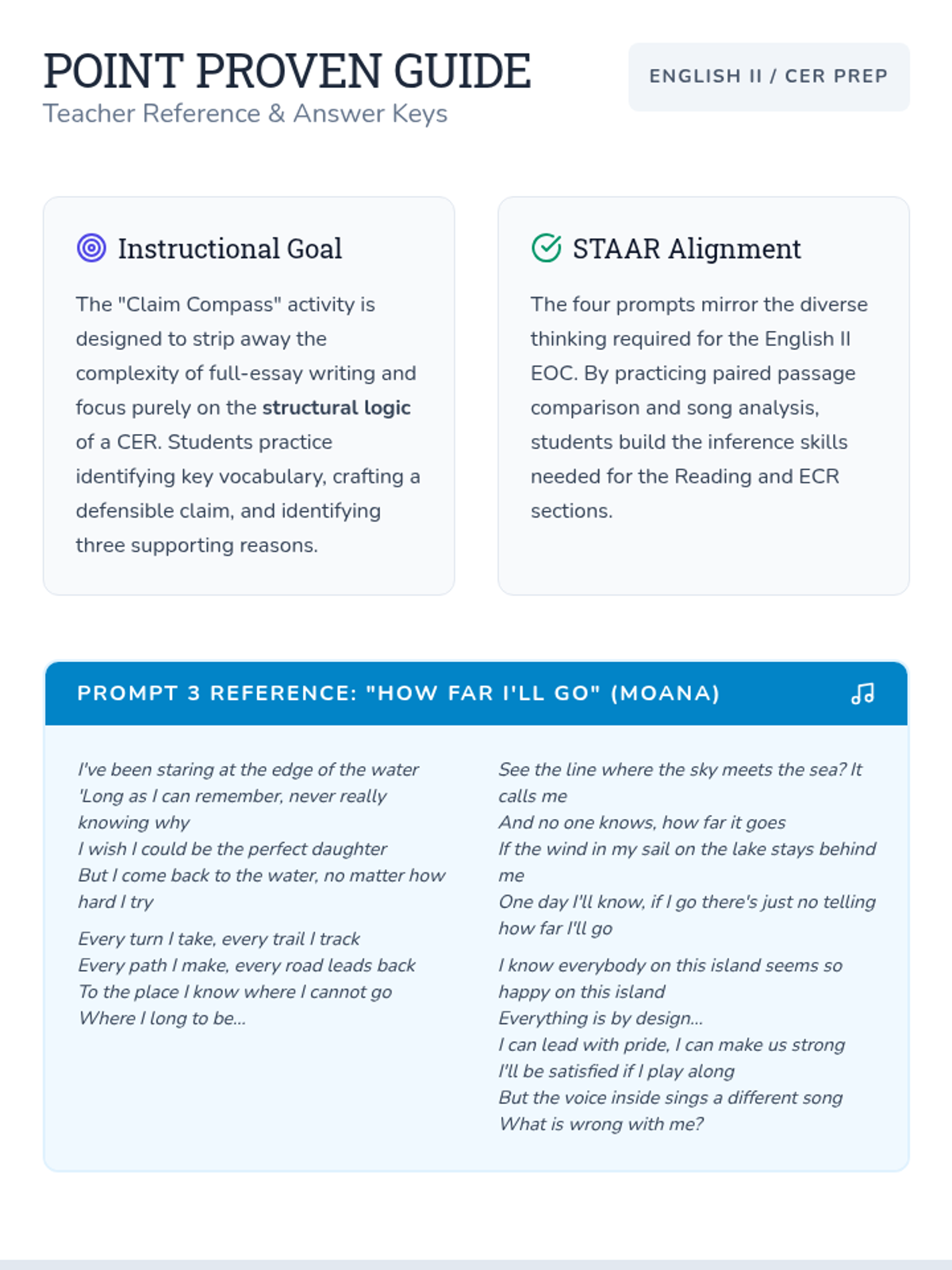
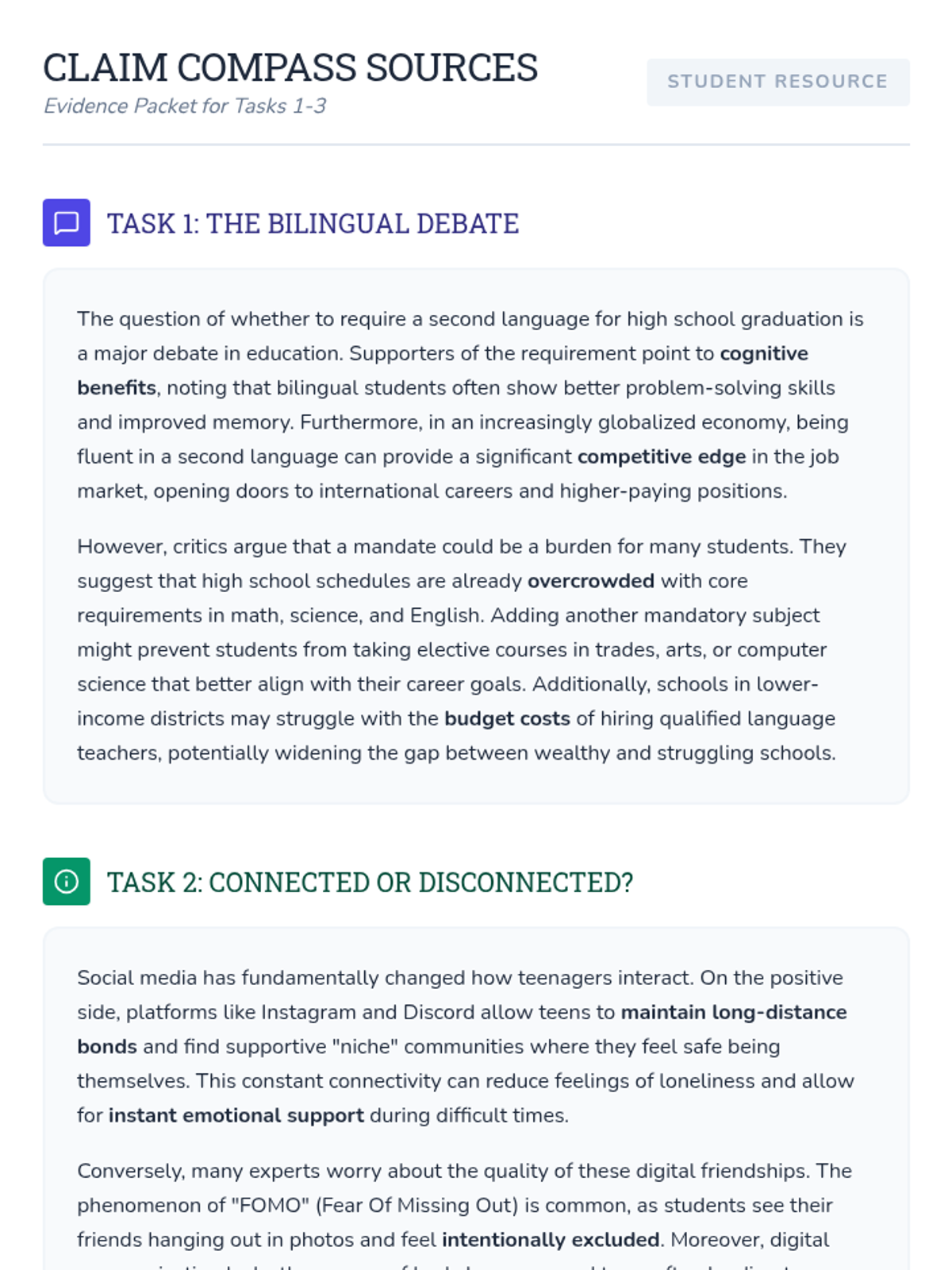
An introductory lesson on CER structure using a graphic organizer approach. Students practice developing claims and supporting reasons across four different prompt types: argumentative, informational, text-based, and comparative.
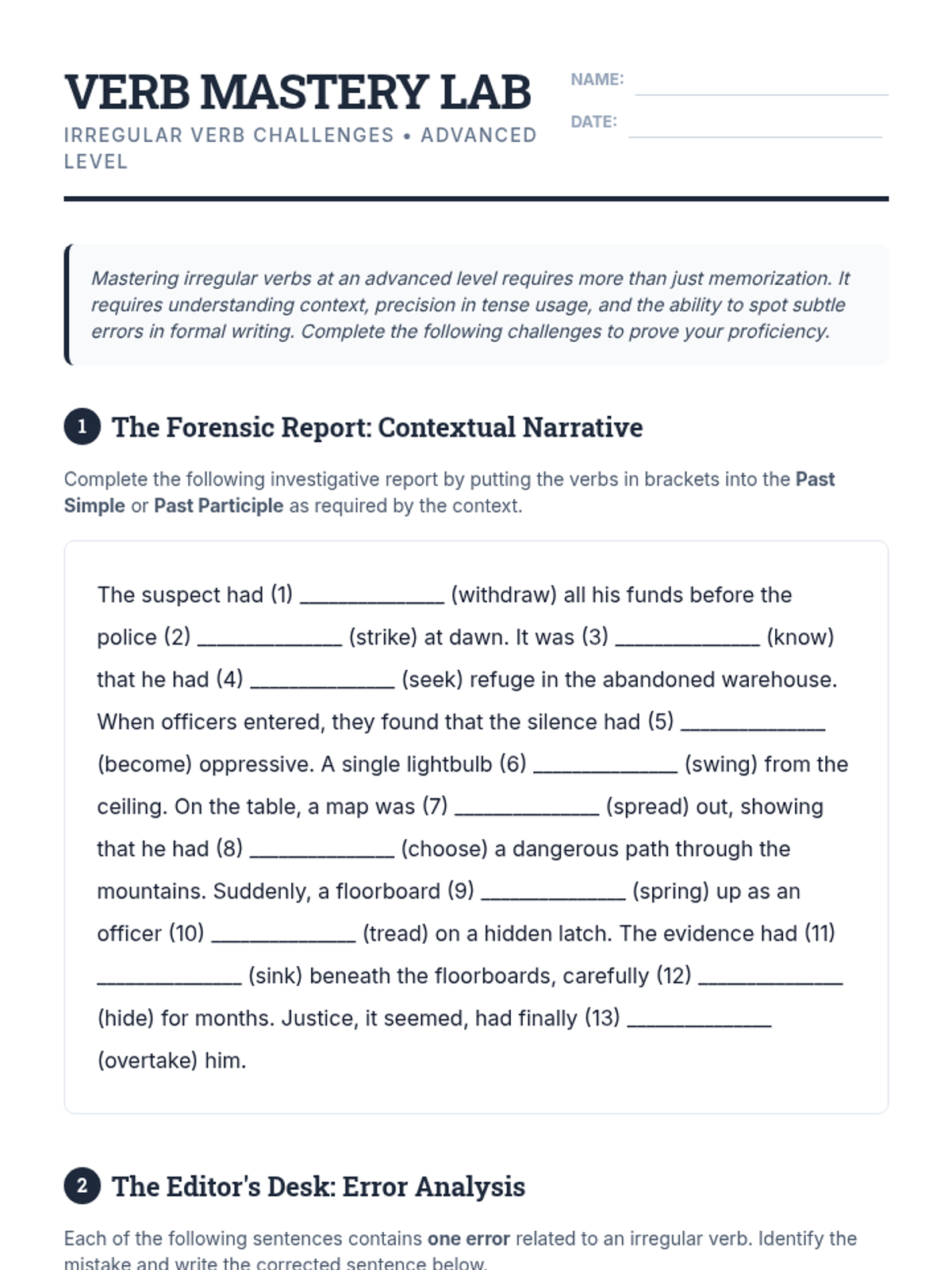
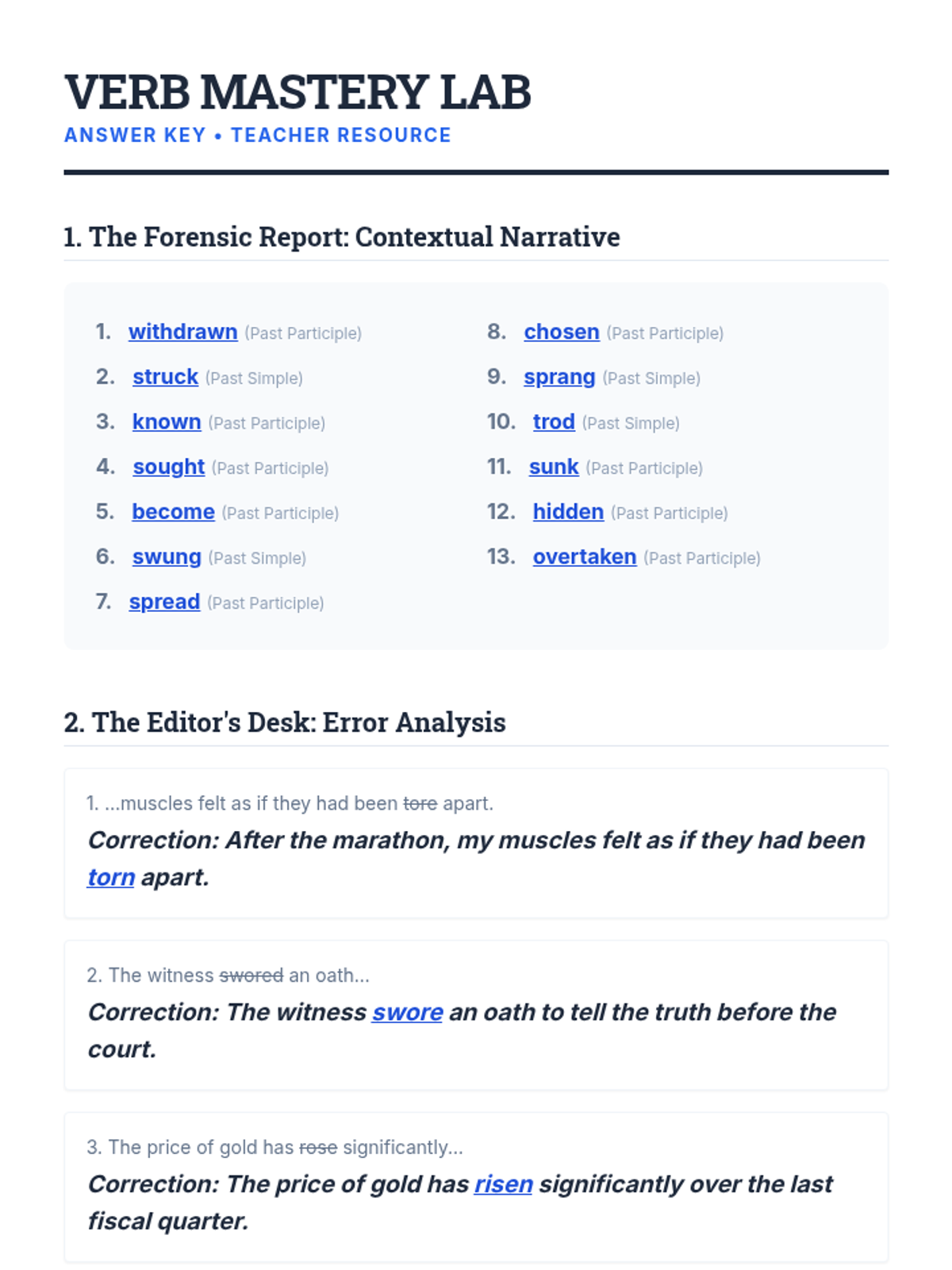
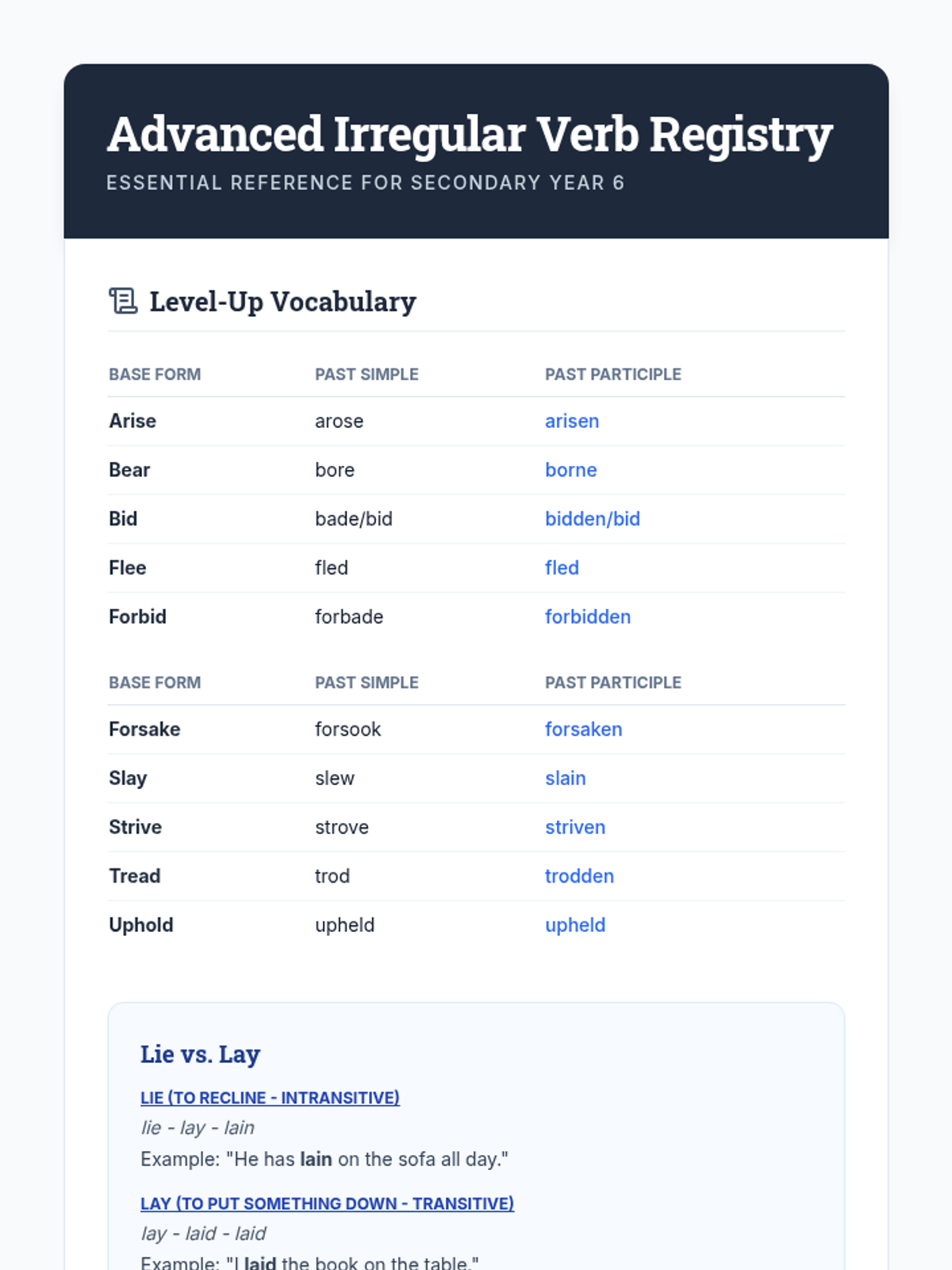
A comprehensive practice module for advanced secondary students to master irregular English verbs through contextual narratives, error analysis, and sentence transformations.
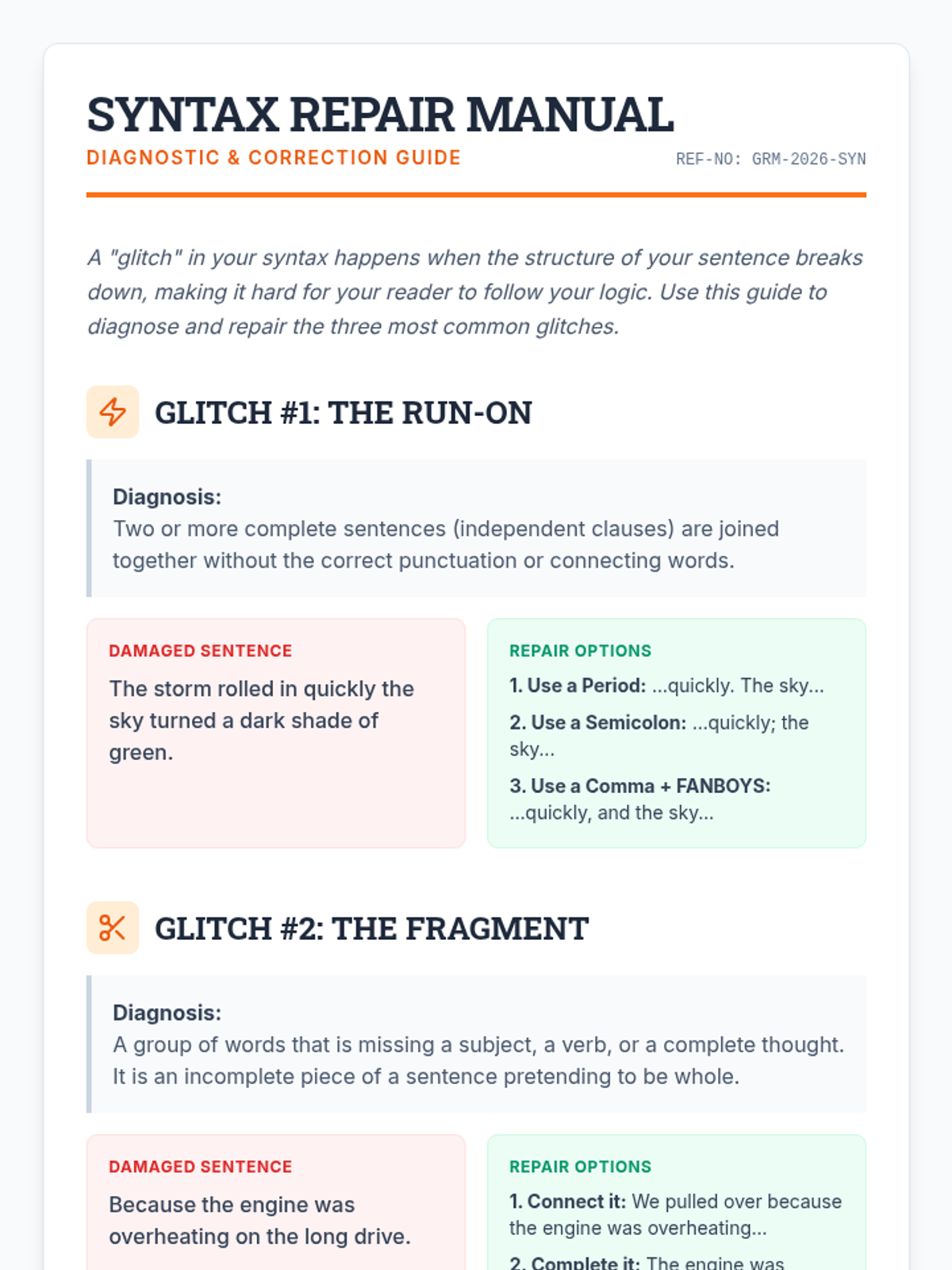
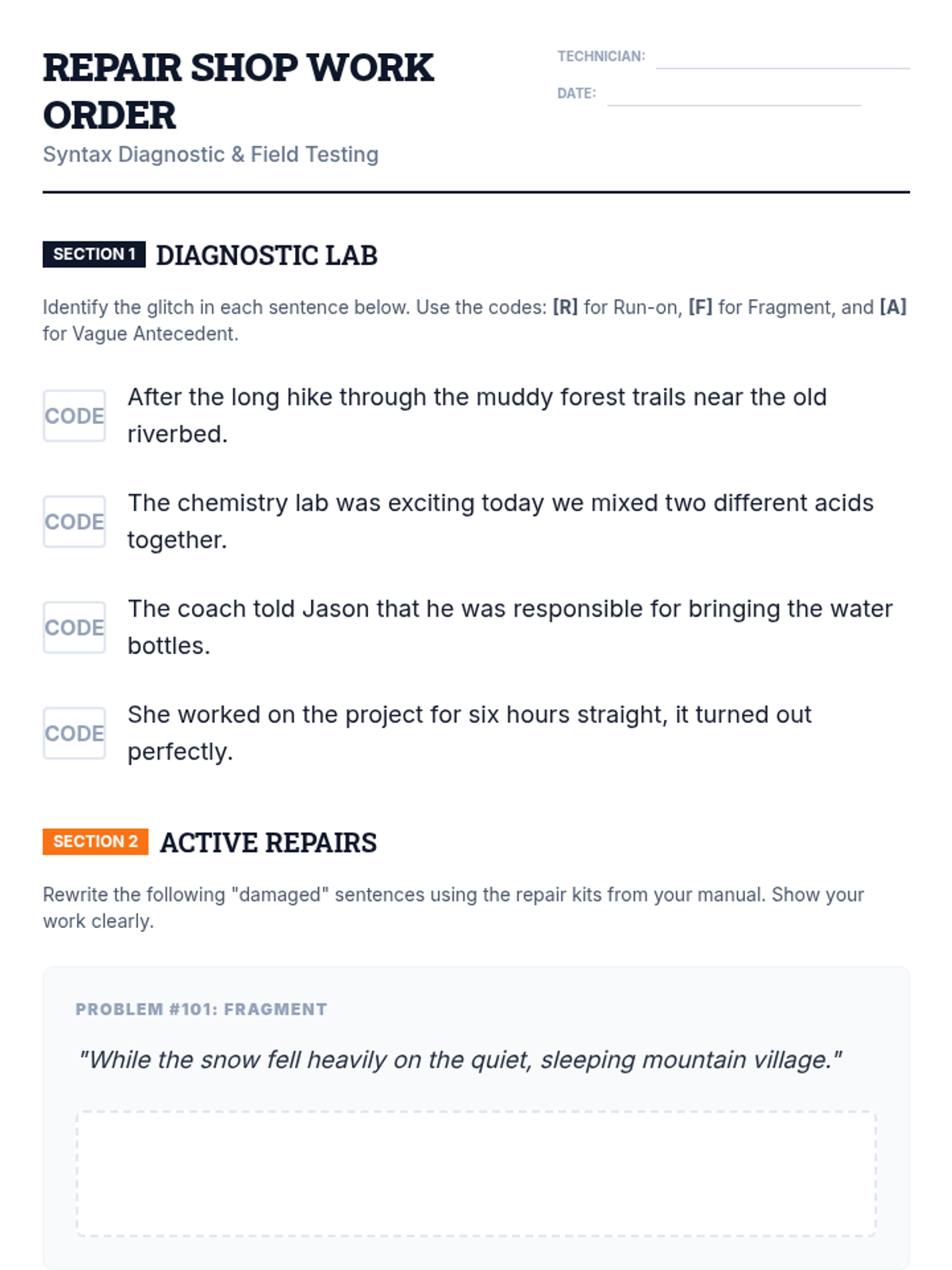
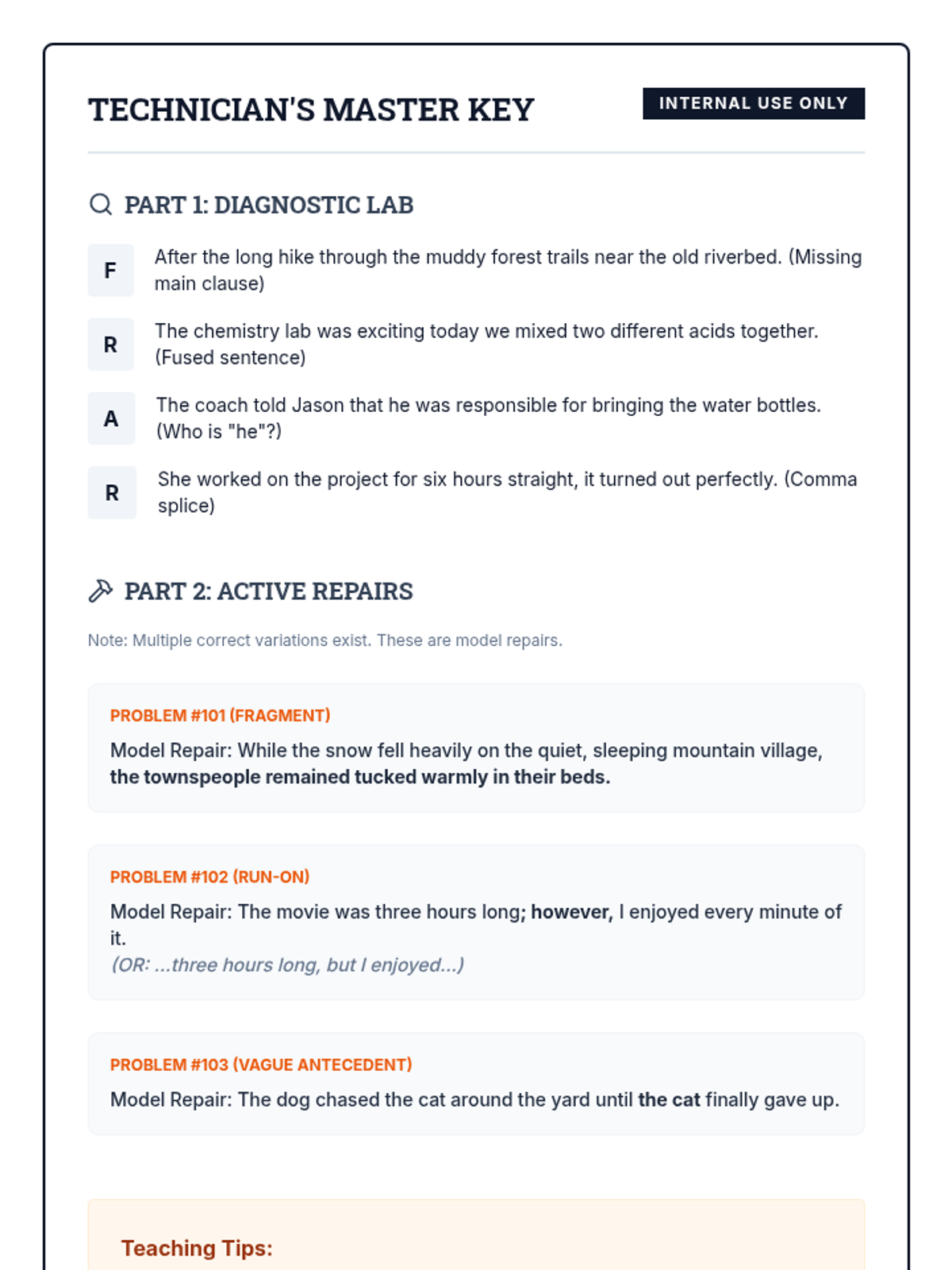
A 15-minute high-impact session focusing on identifying and repairing run-on sentences, sentence fragments, and vague pronoun-antecedent relationships. This lesson provides students with a 'repair manual' for common syntax glitches.
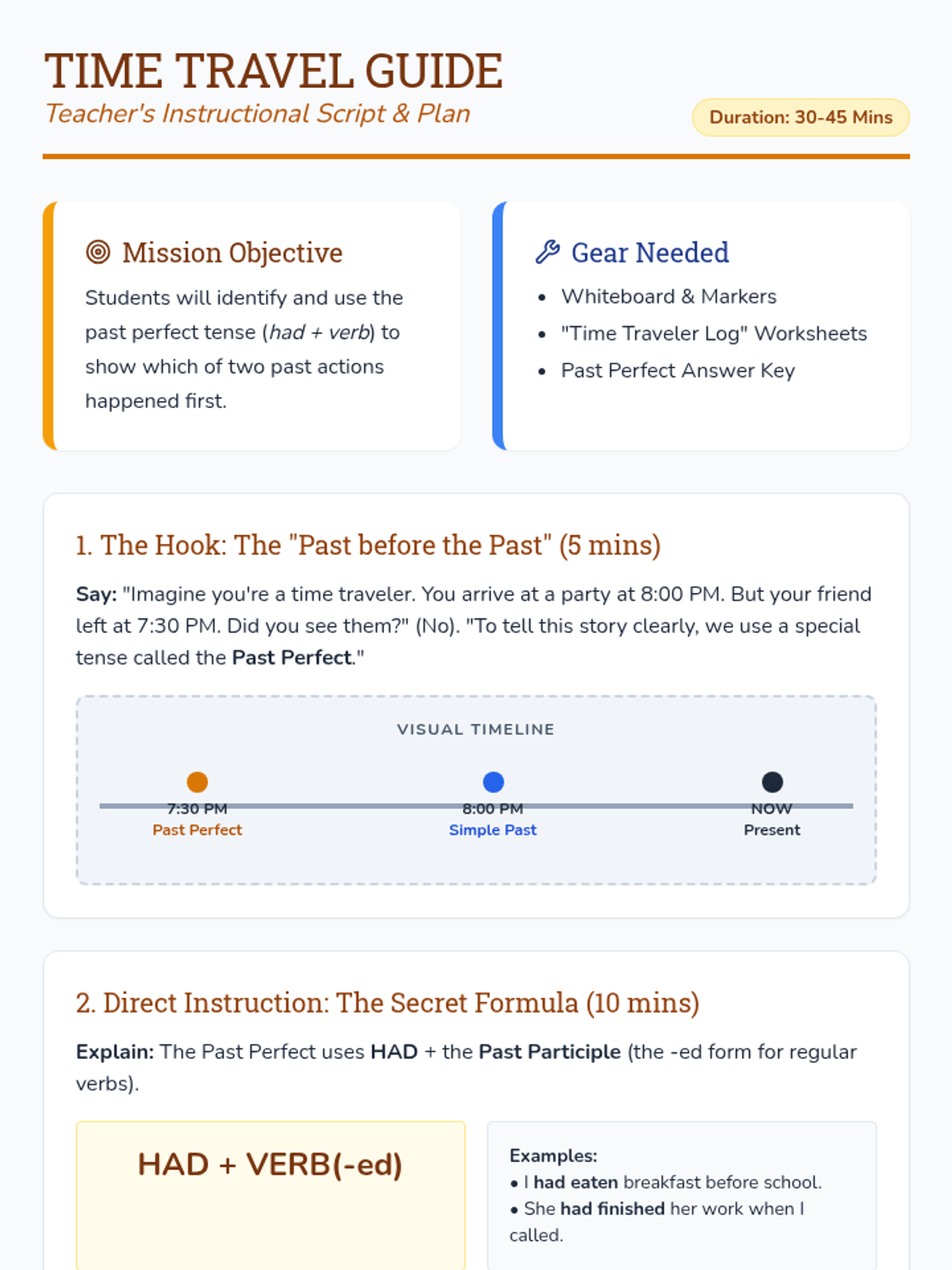
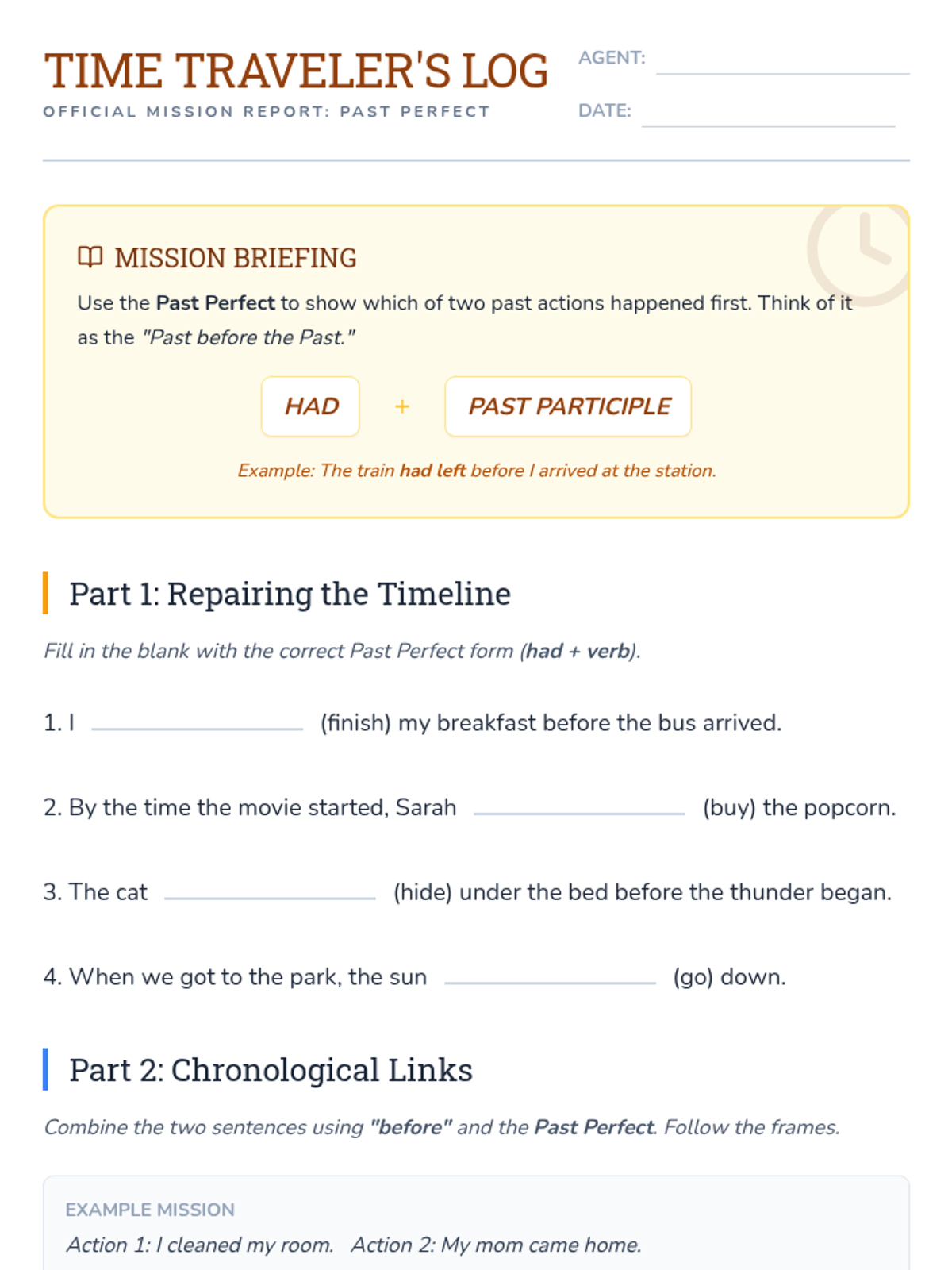
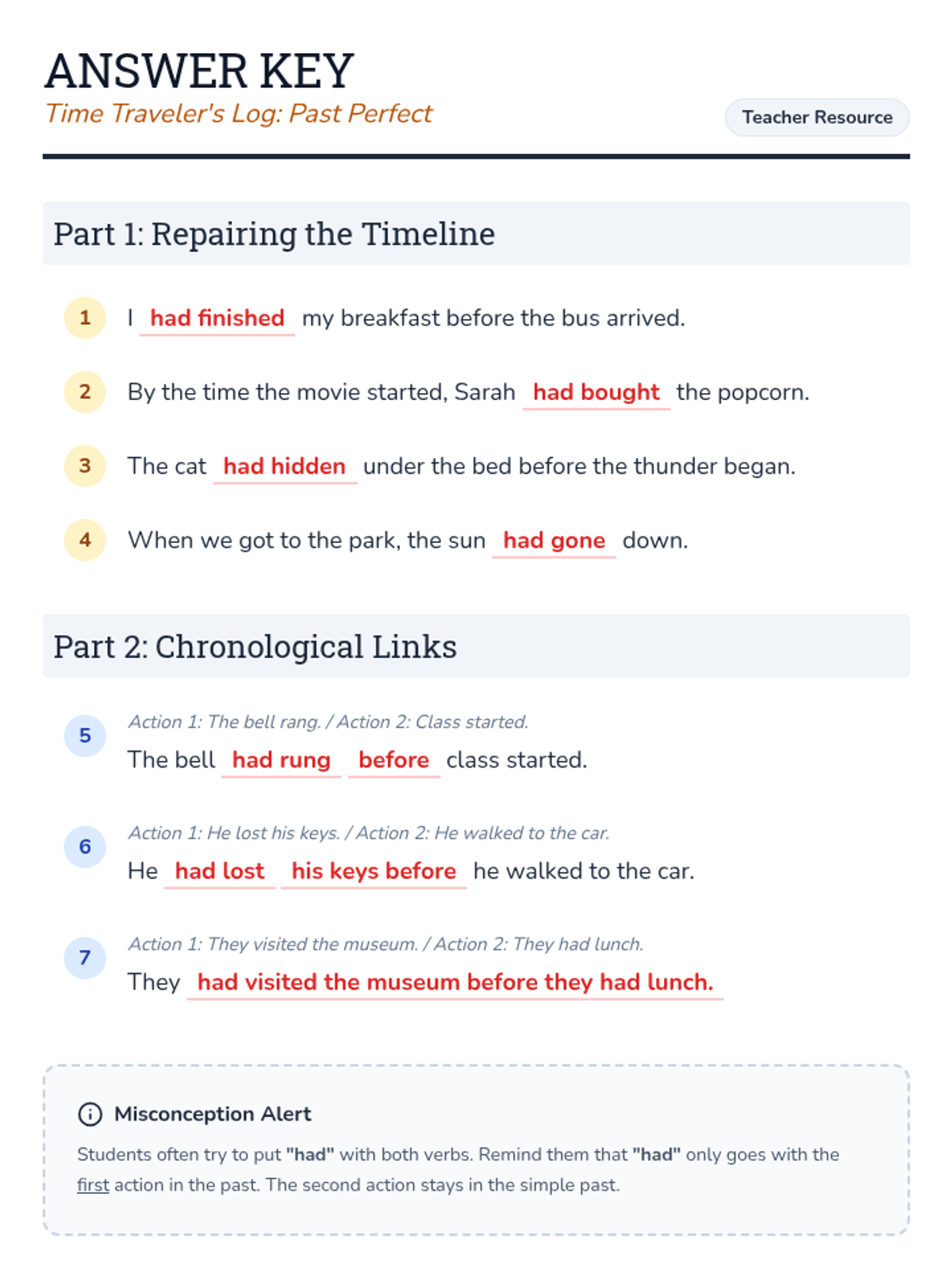
A comprehensive 30-45 minute lesson on the past perfect tense, featuring explicit instructions, a time-travel themed worksheet, and a detailed teacher guide. This lesson helps students understand how to sequence two past events using the 'past before the past' structure.
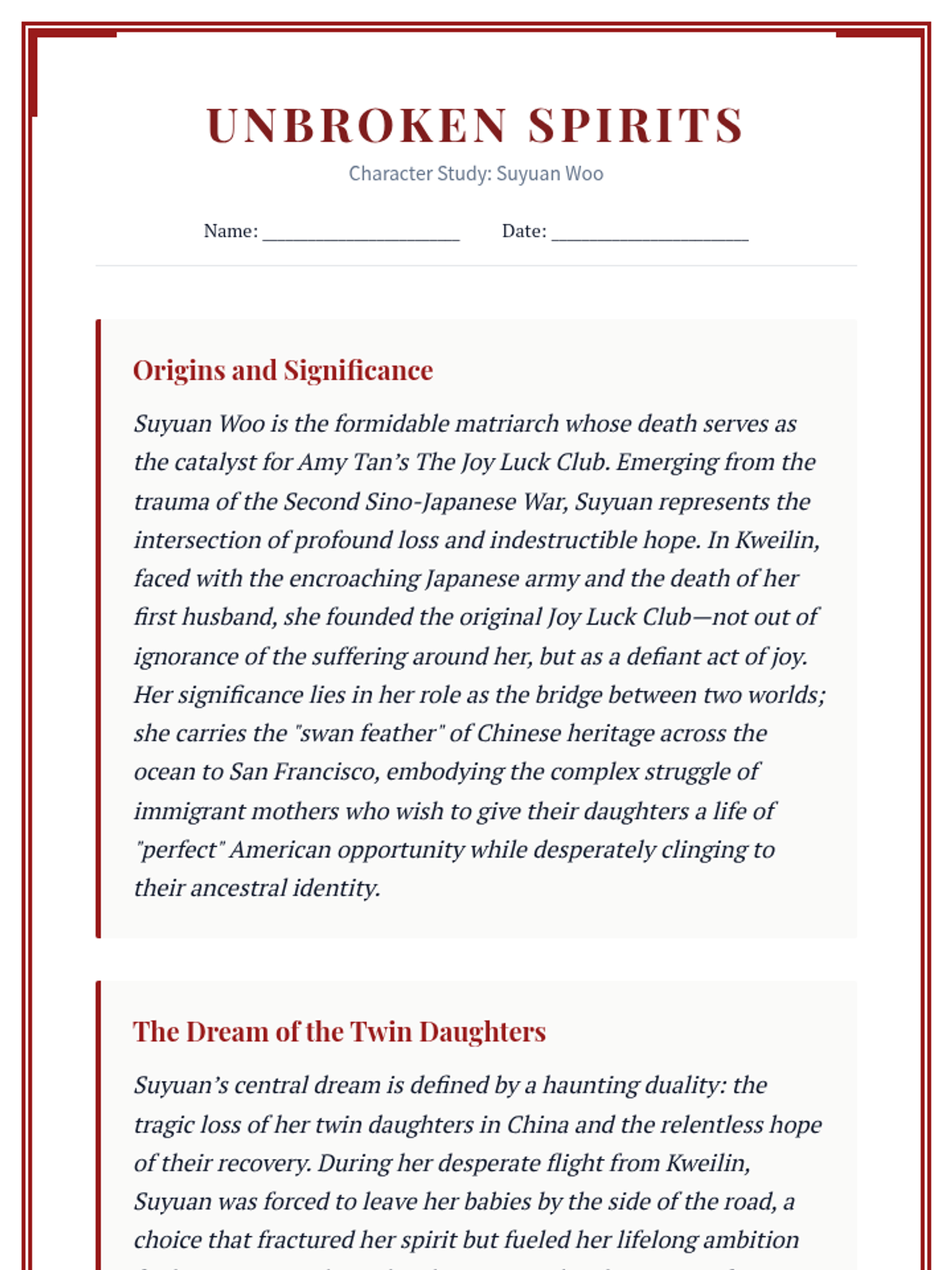
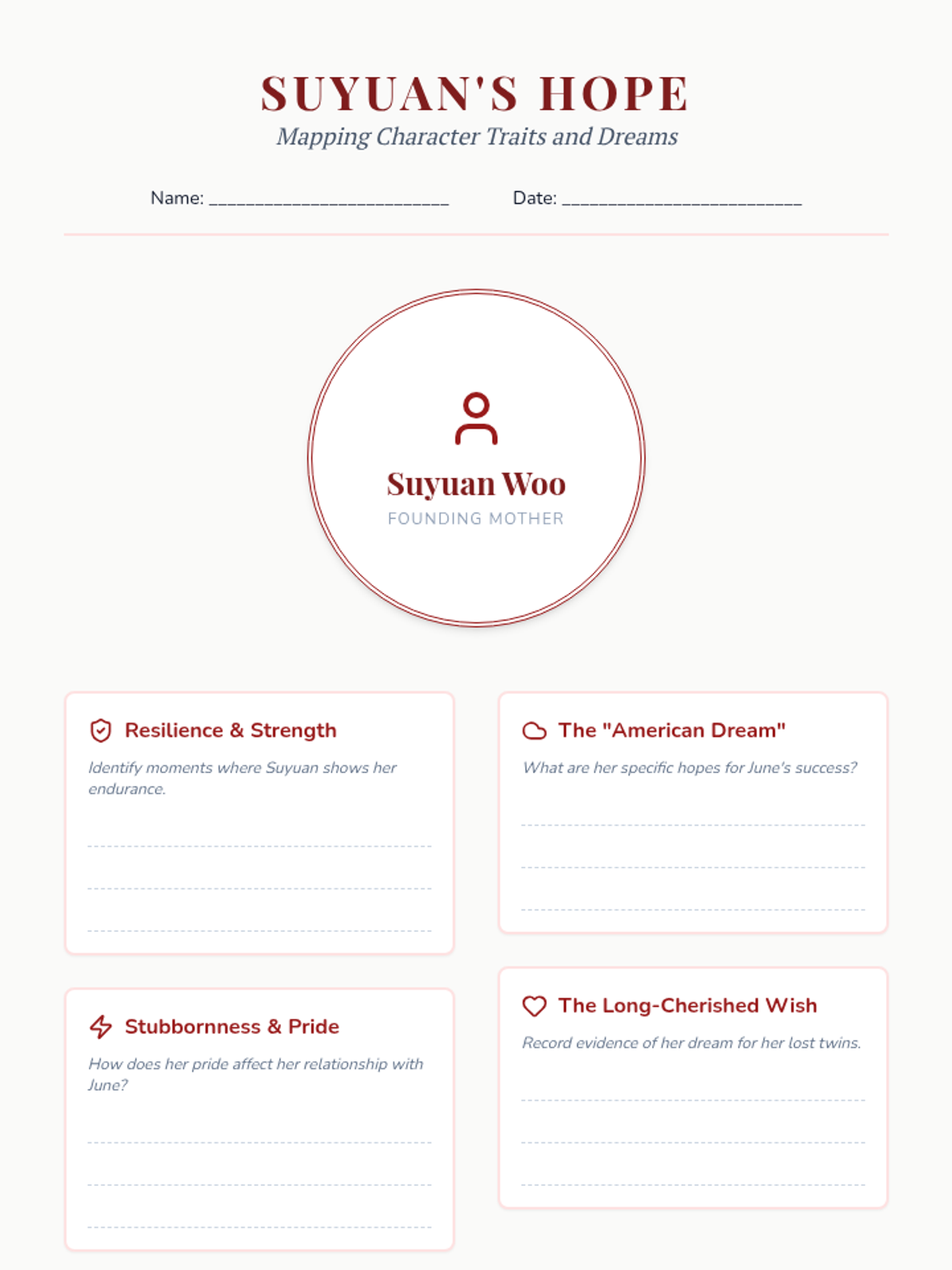
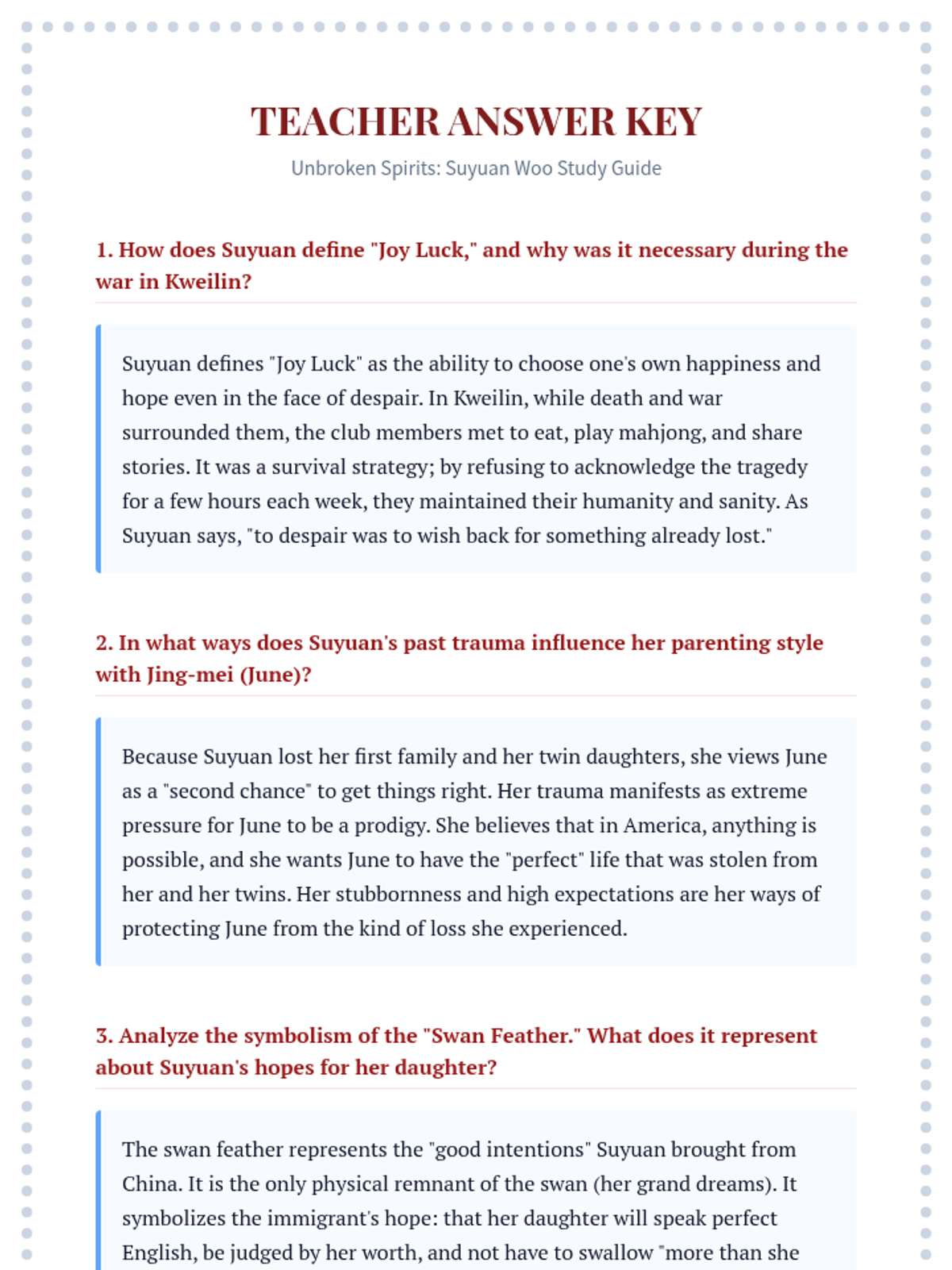
A deep dive into the life, legacy, and dreams of Suyuan Woo, the founding mother of the Joy Luck Club. Students will explore her resilience in war-torn China and her enduring hope for her daughters.
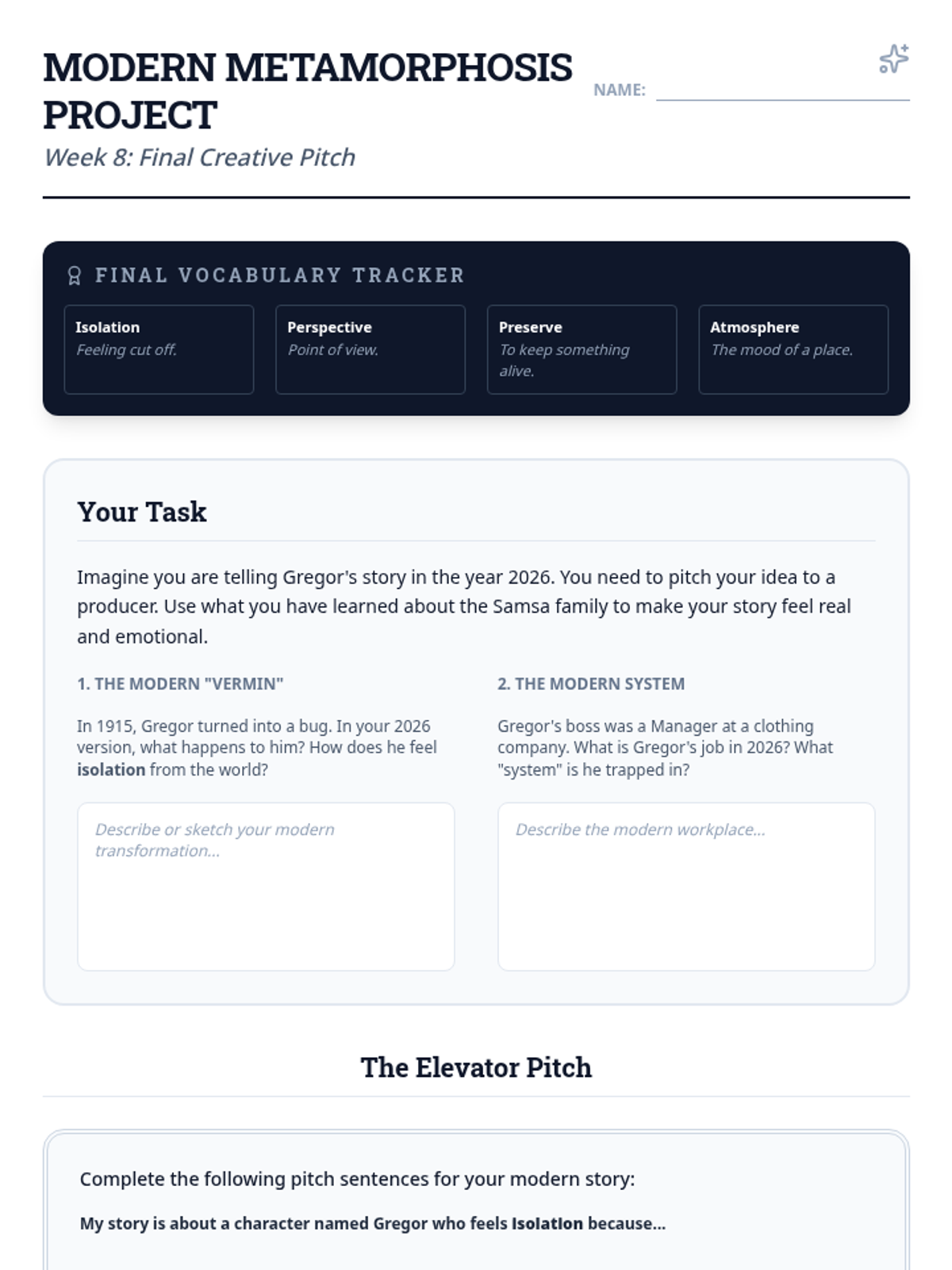
Culminating creative project where students reimagine the story in a modern setting, focusing on thematic preservation and character consistency.
Synthesizing the ending of the novella. Students explore the emotional impact of the conclusion and prepare for final project work.
Analysis of Part III, the arrival of the Lodgers, and the symbolic importance of music. Focus on the final break in family bonds.
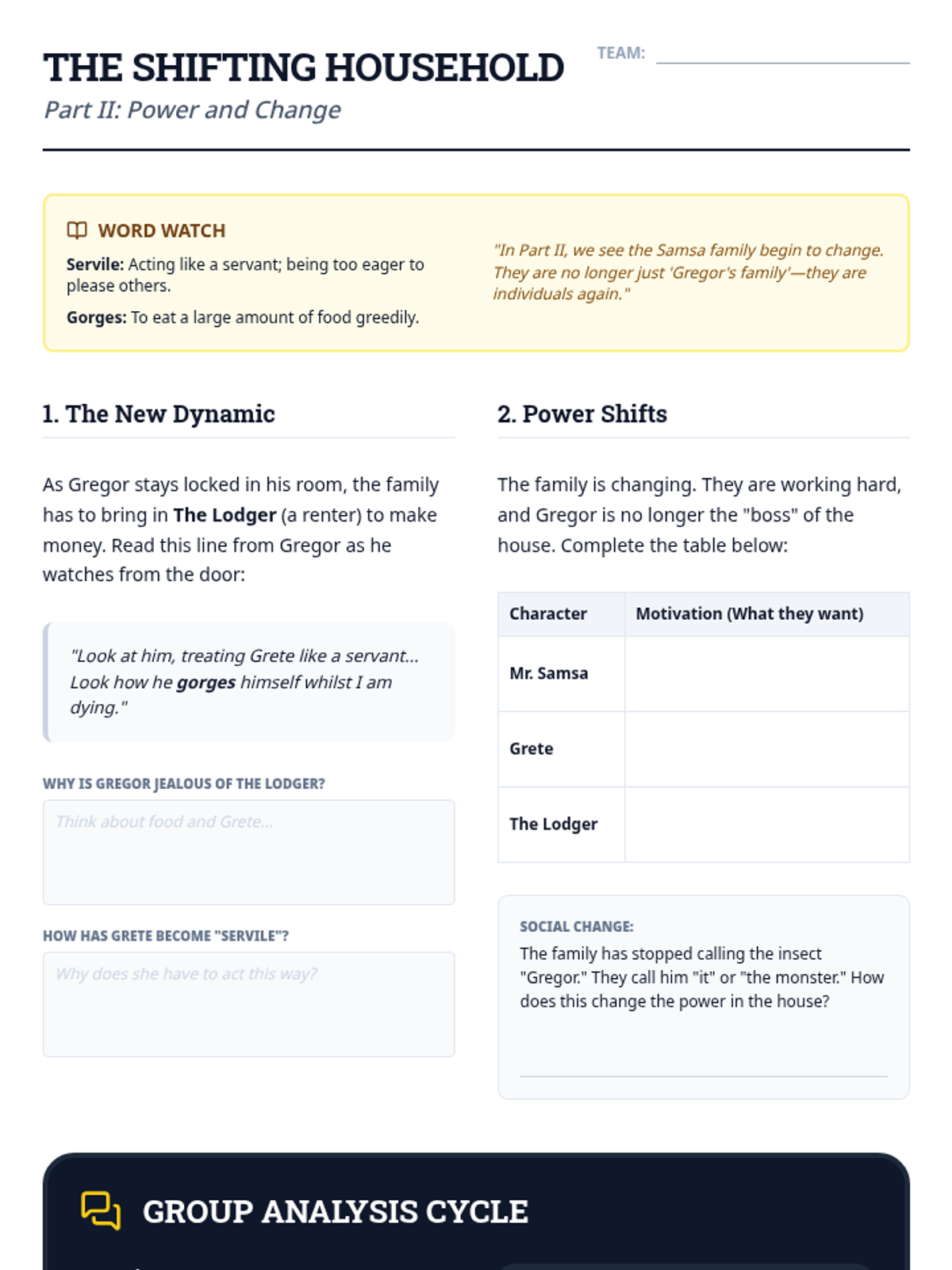
In-depth analysis of character motivations and power shifts within the household. Using dialogue to understand how the family changes their roles.
Examination of Gregor's internal monologue and physical decline in Part II. Focus on themes of mental health and the loss of voice.
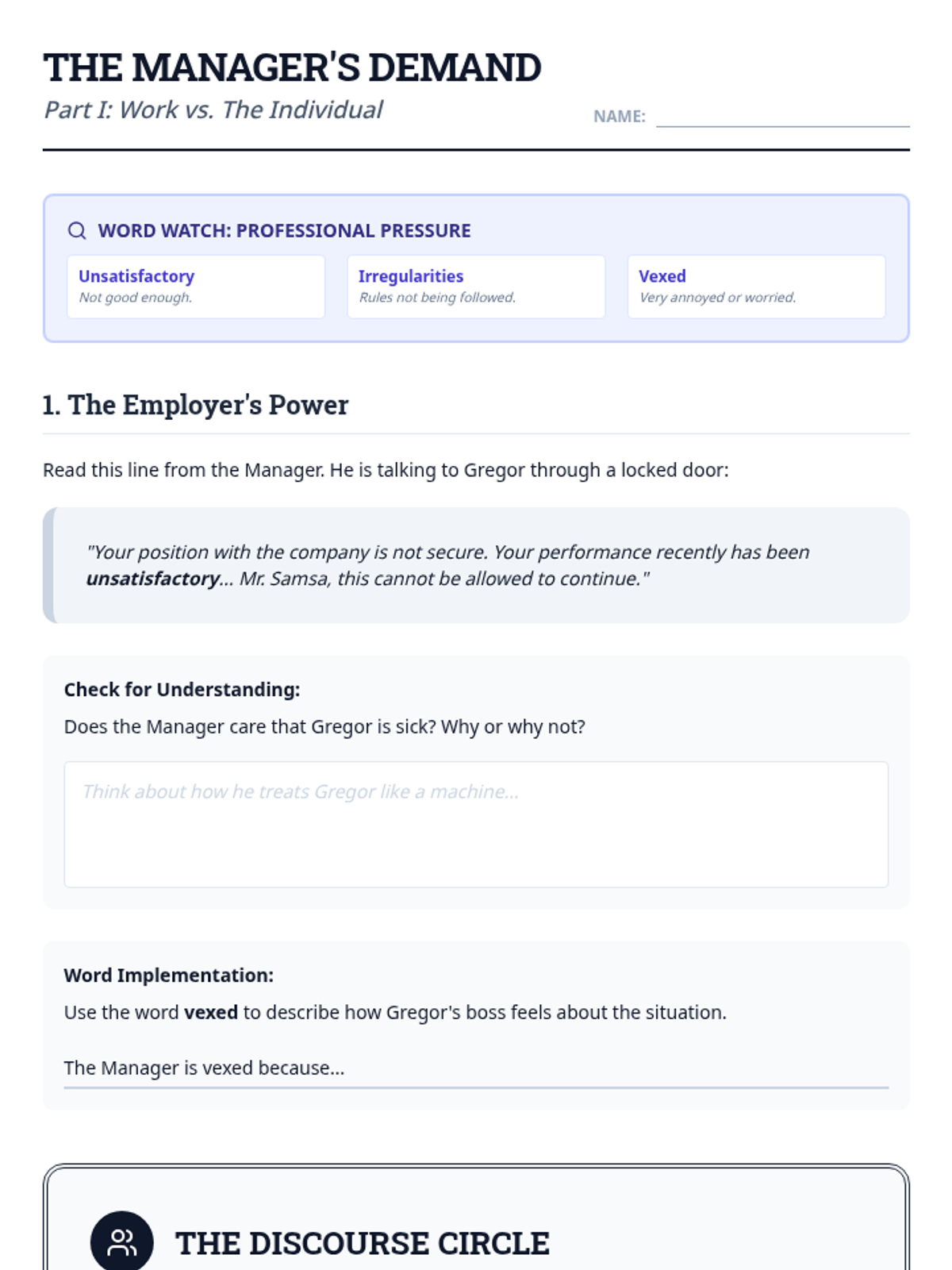
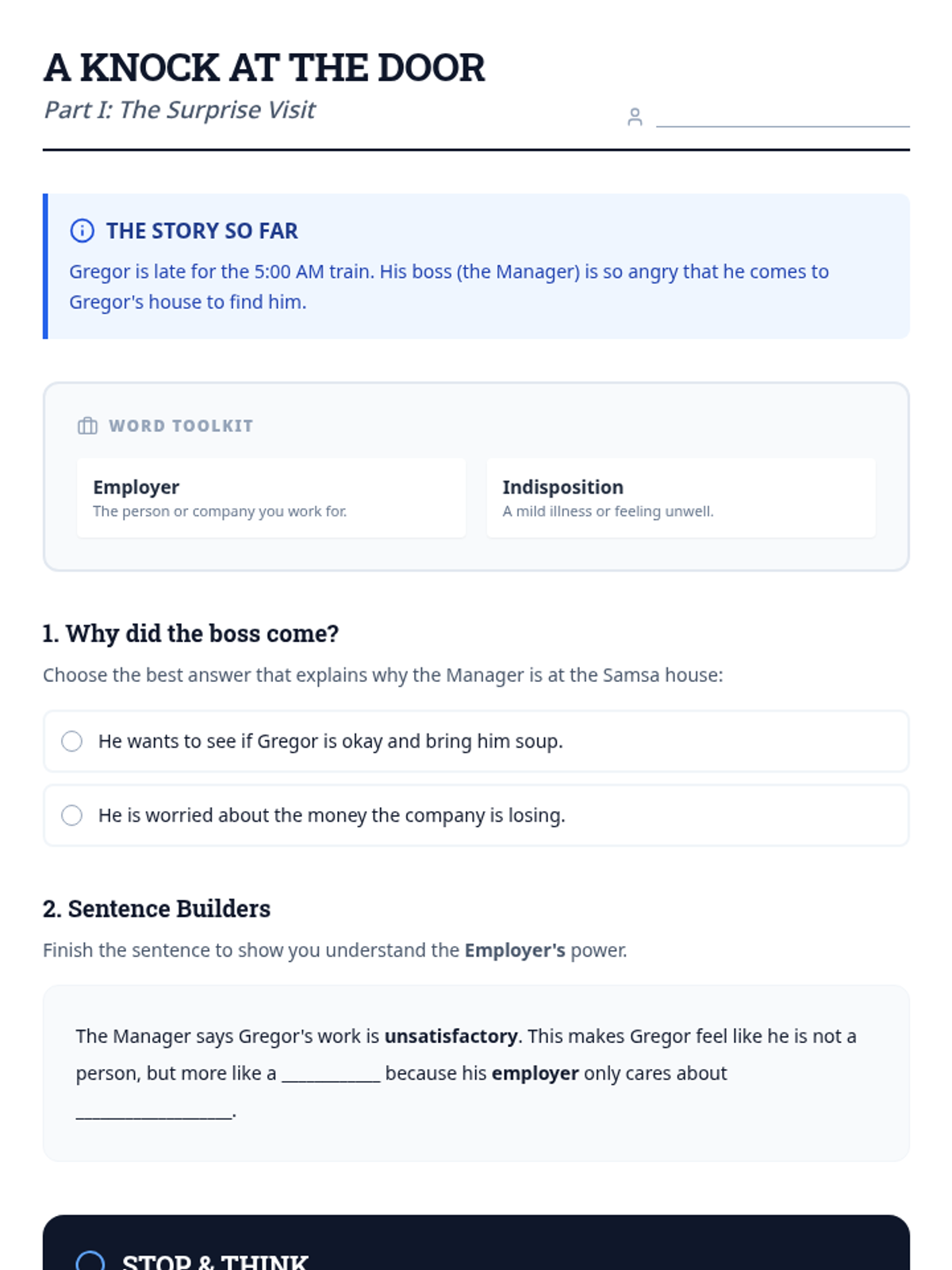
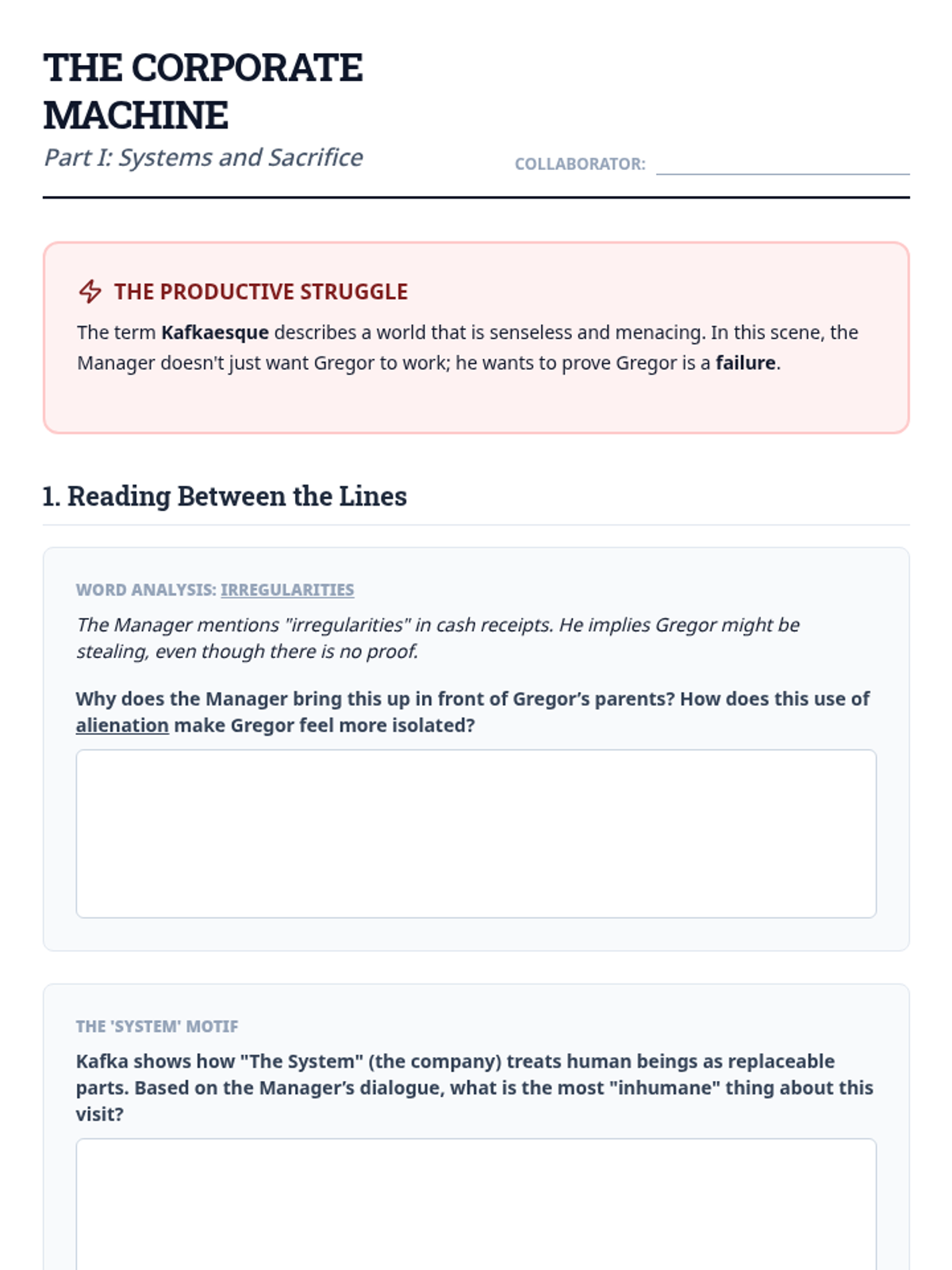
Analysis of the conflict between Gregor and his employer. Focus on the theme of 'The System' vs. the individual through the lens of the Manager's visit.
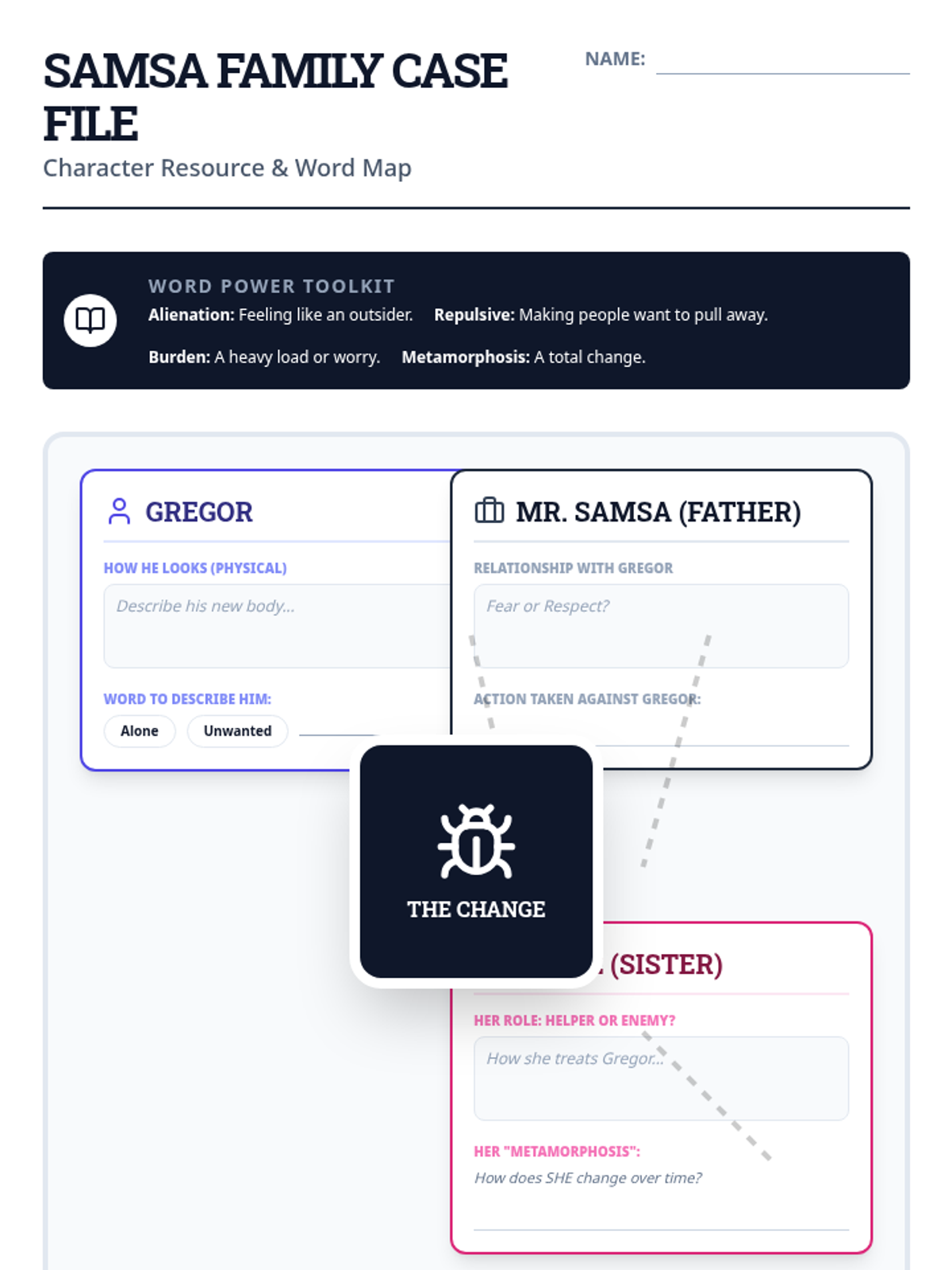
Introduction to the Samsa Family Case File. Students track character traits and initial reactions in Part I, focusing on how relationships begin to shift.