A high-energy lesson where students practice identifying main ideas and supporting details by watching 10 engaging videos. The lesson uses a travel-inspired 'Observation Deck' theme to turn analysis into a mission.
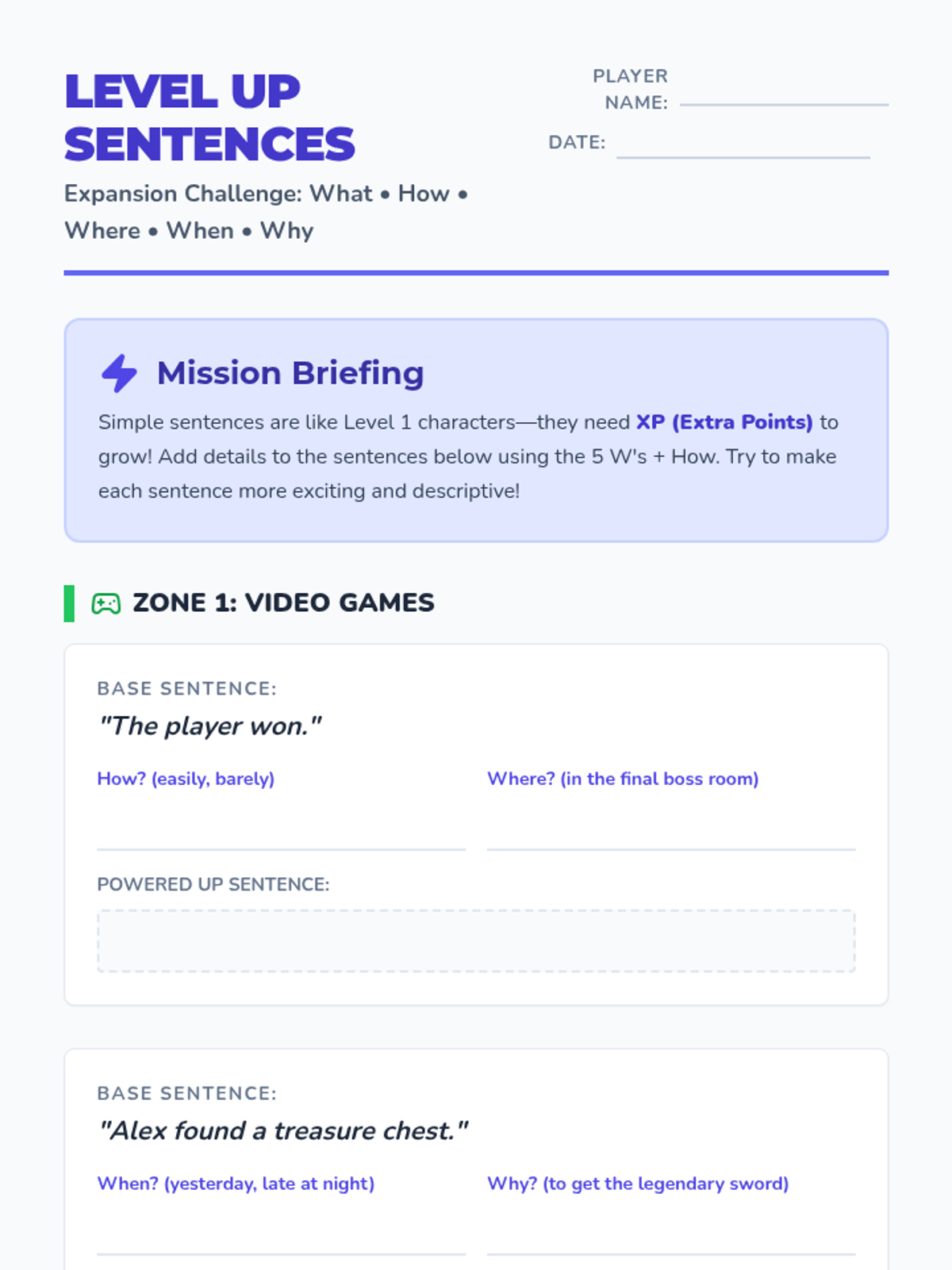
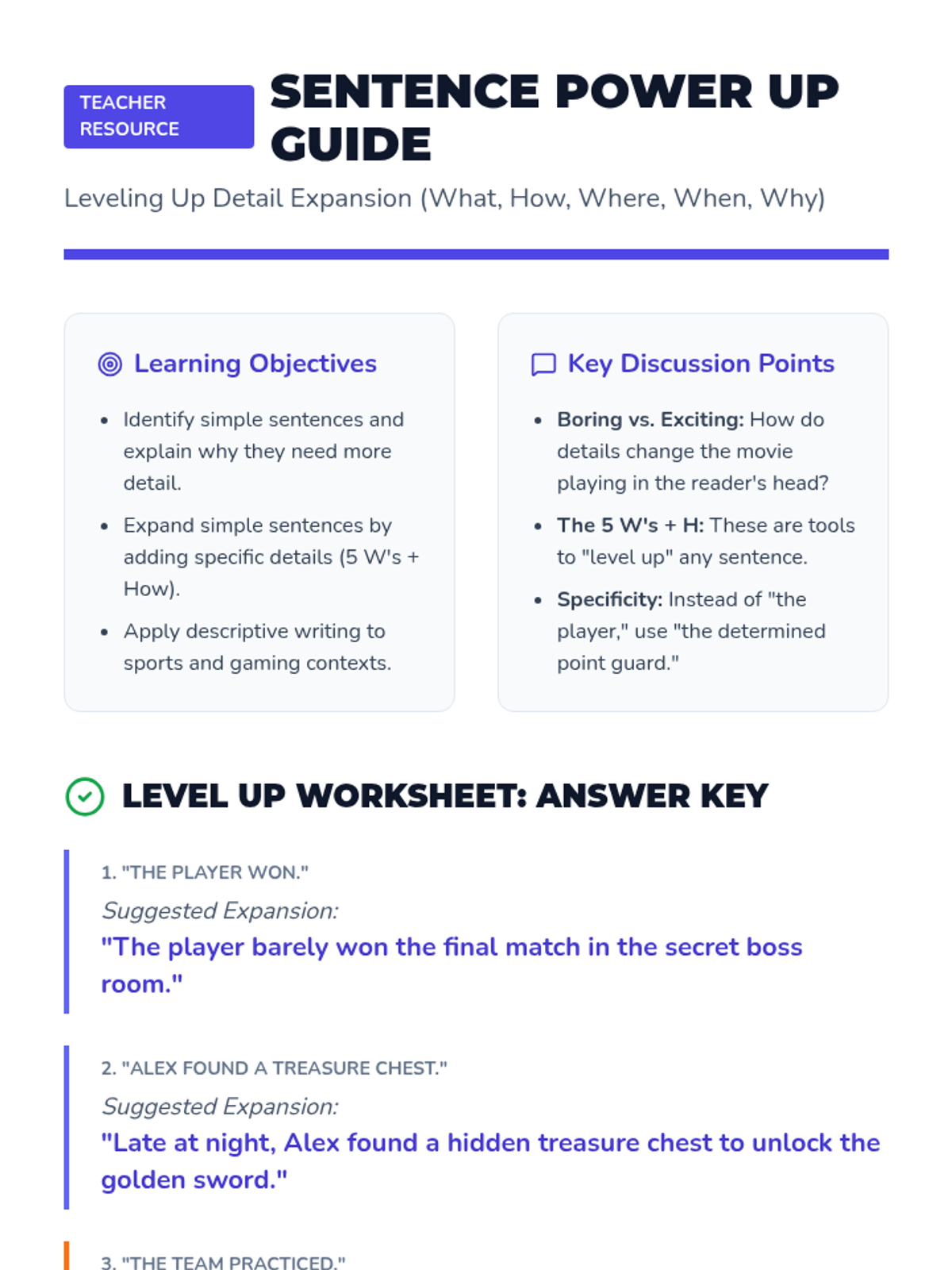
Students will learn to expand simple sentences into descriptive ones by adding details that answer what, how, where, when, and why, using video games and basketball as engaging themes.
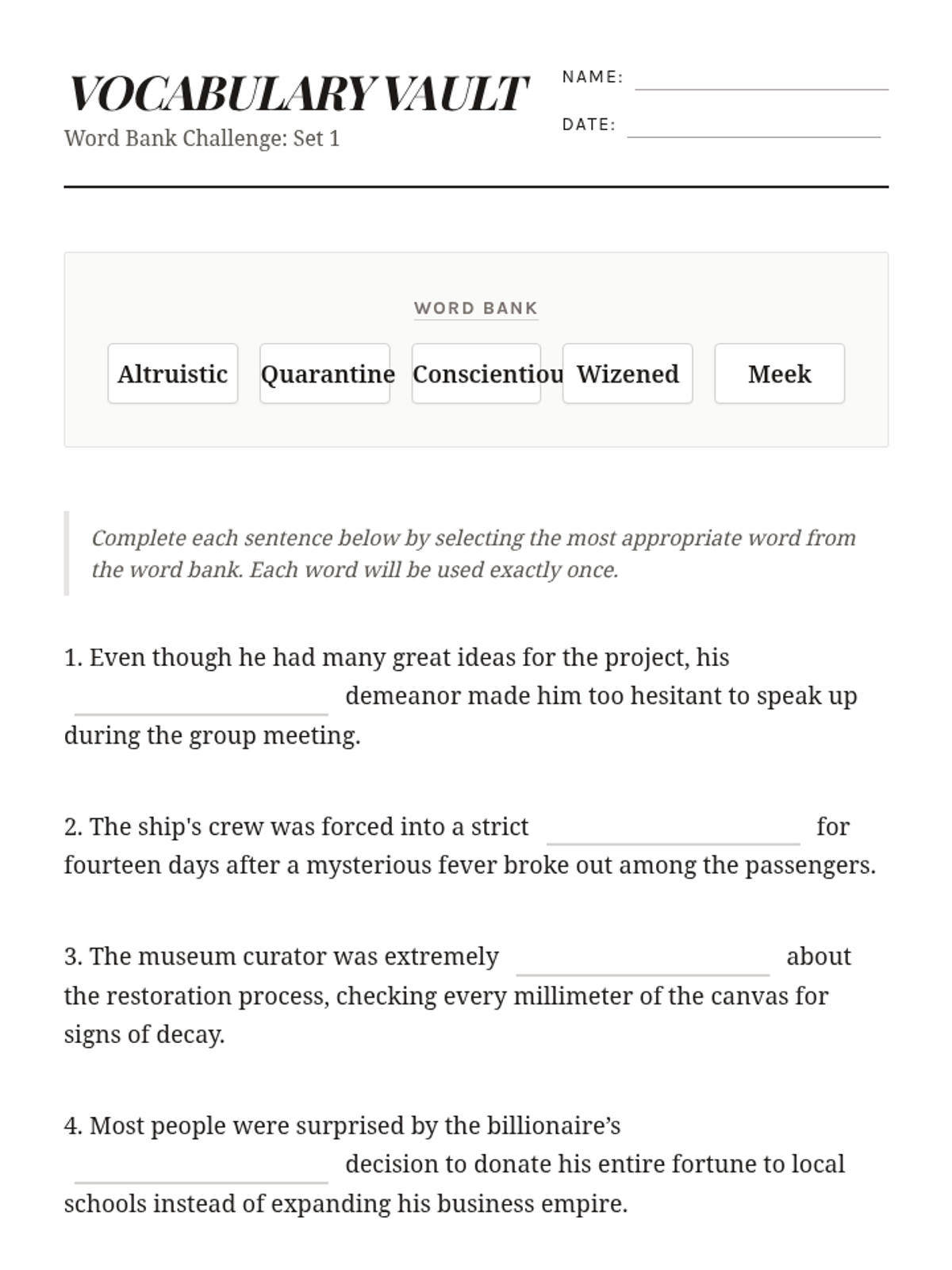
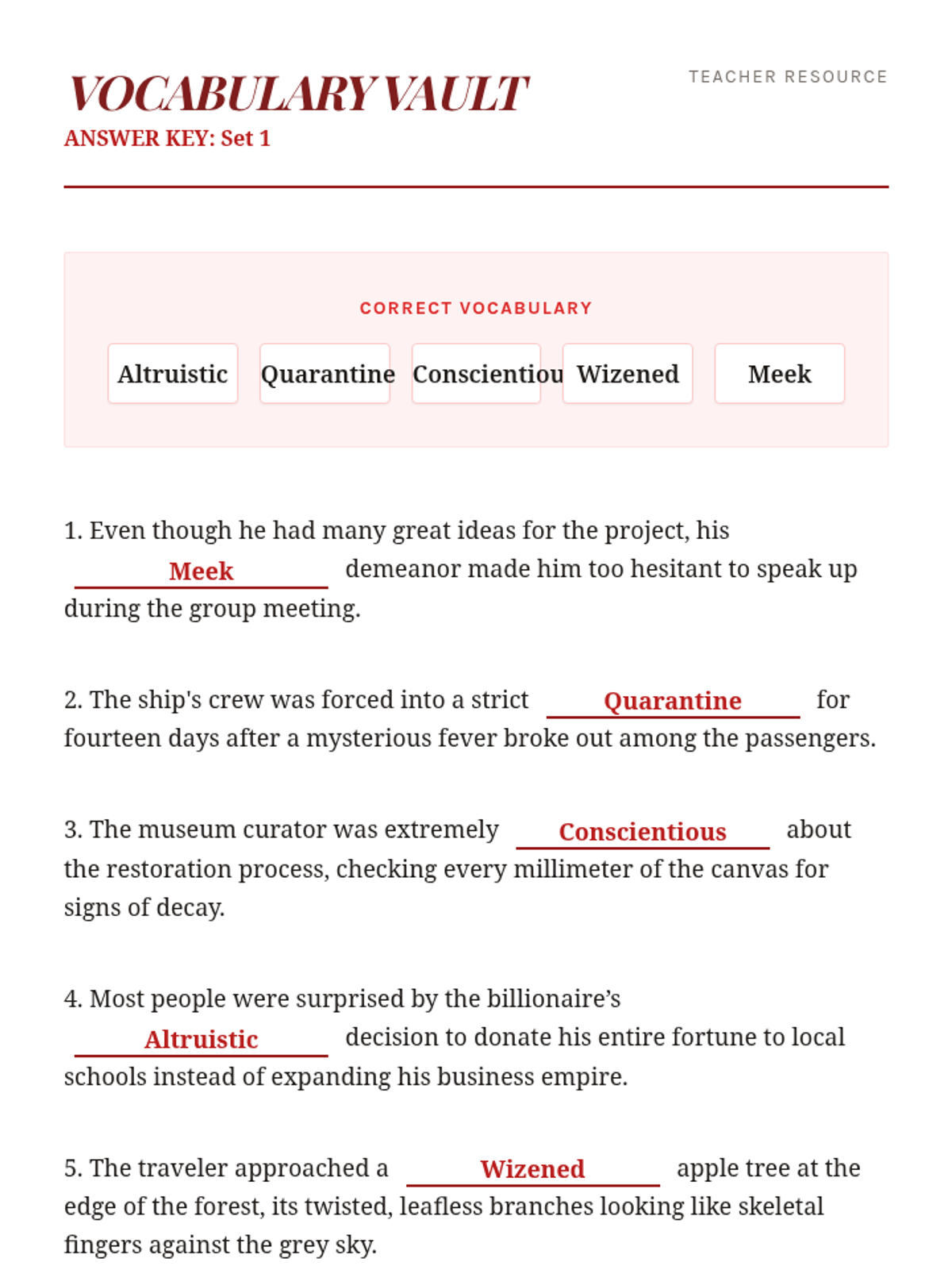
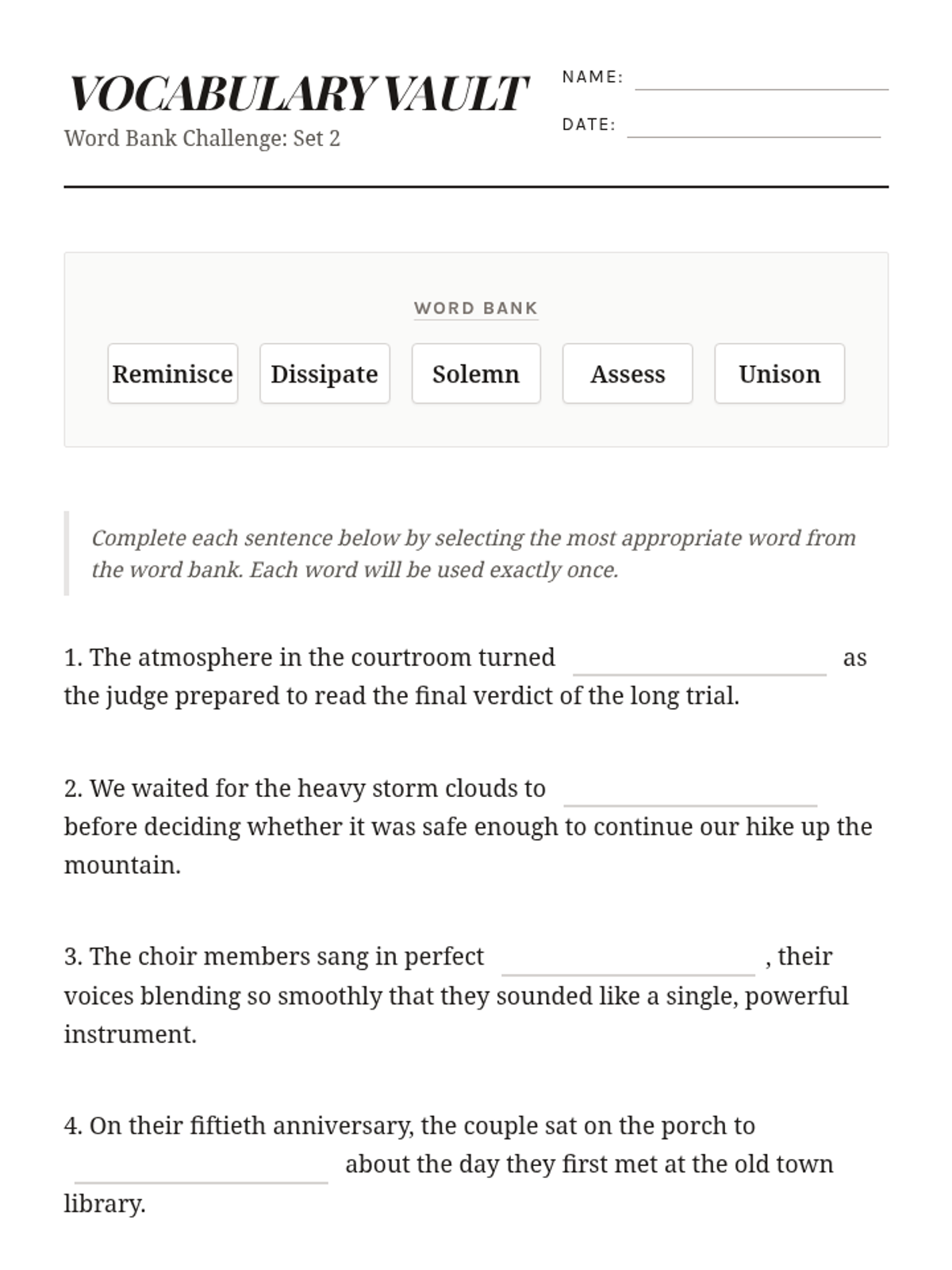
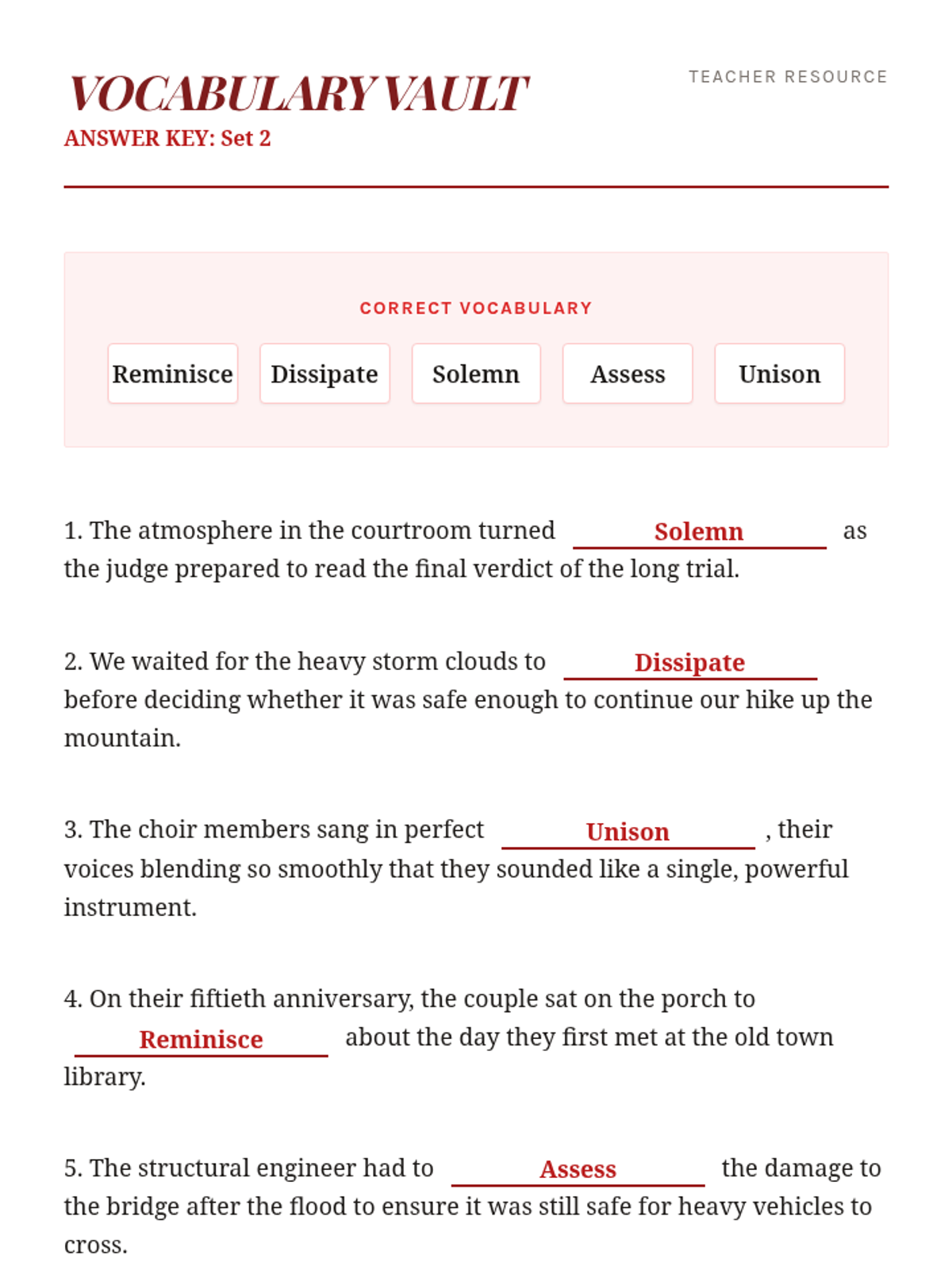
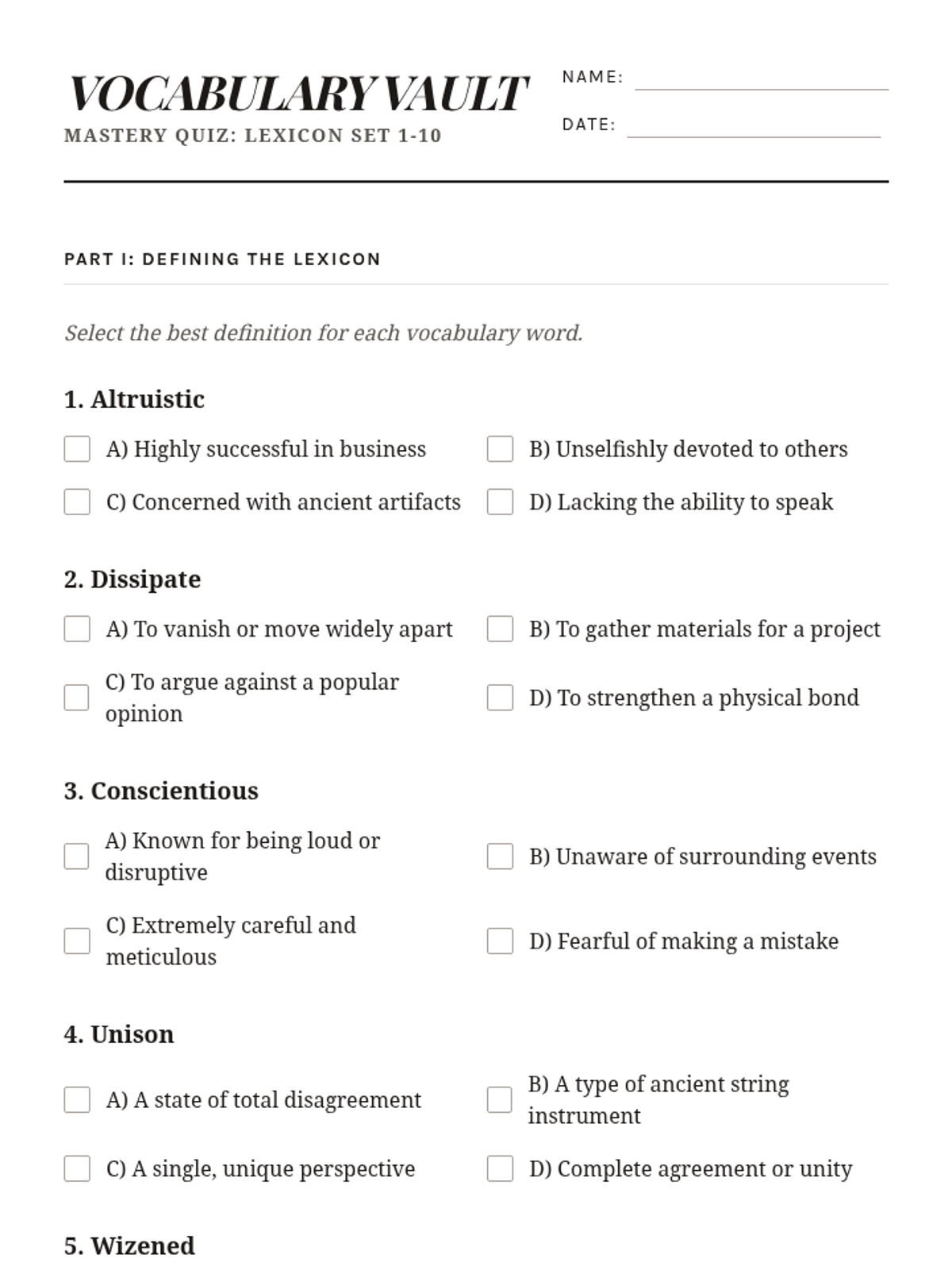
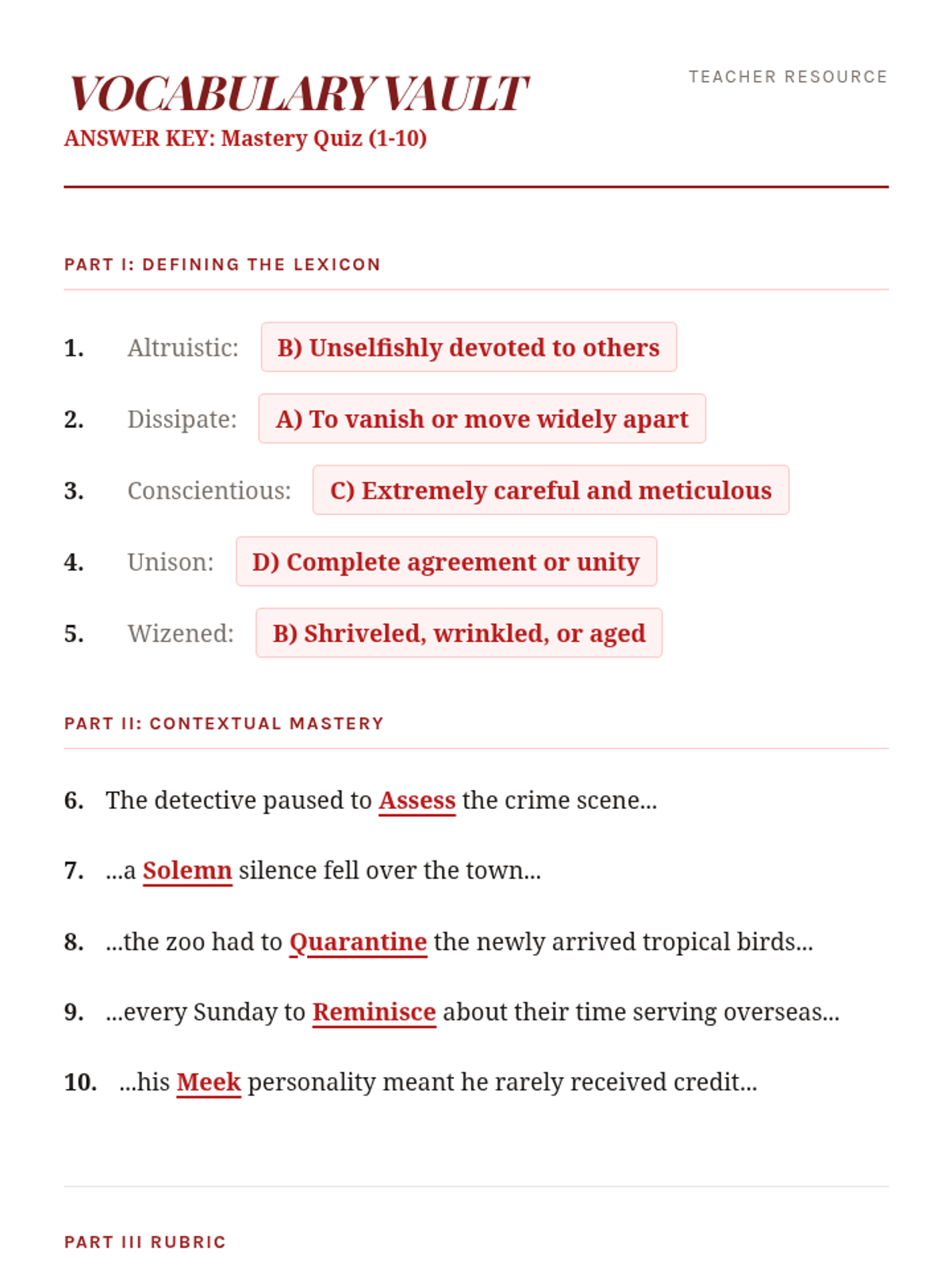
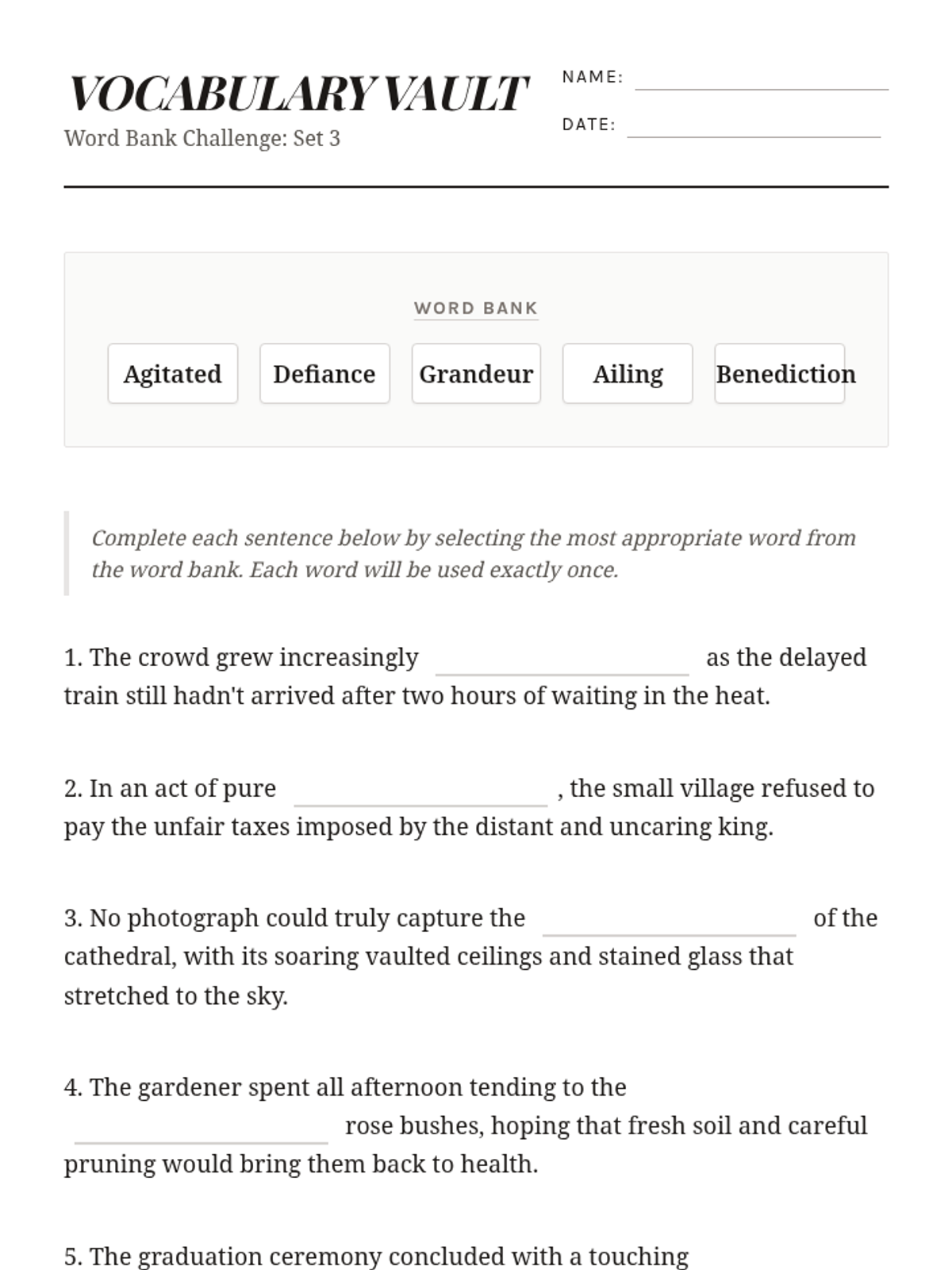
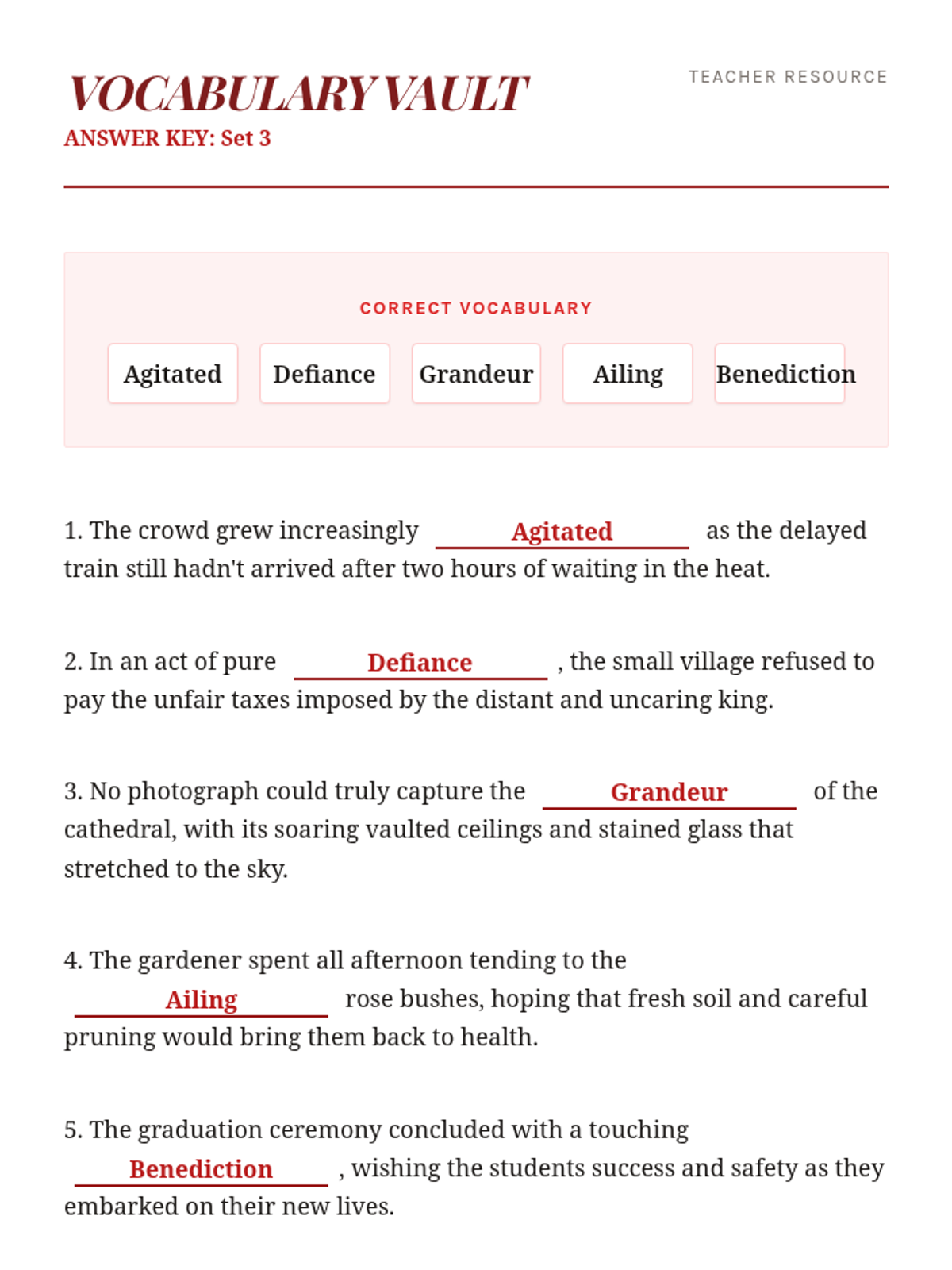
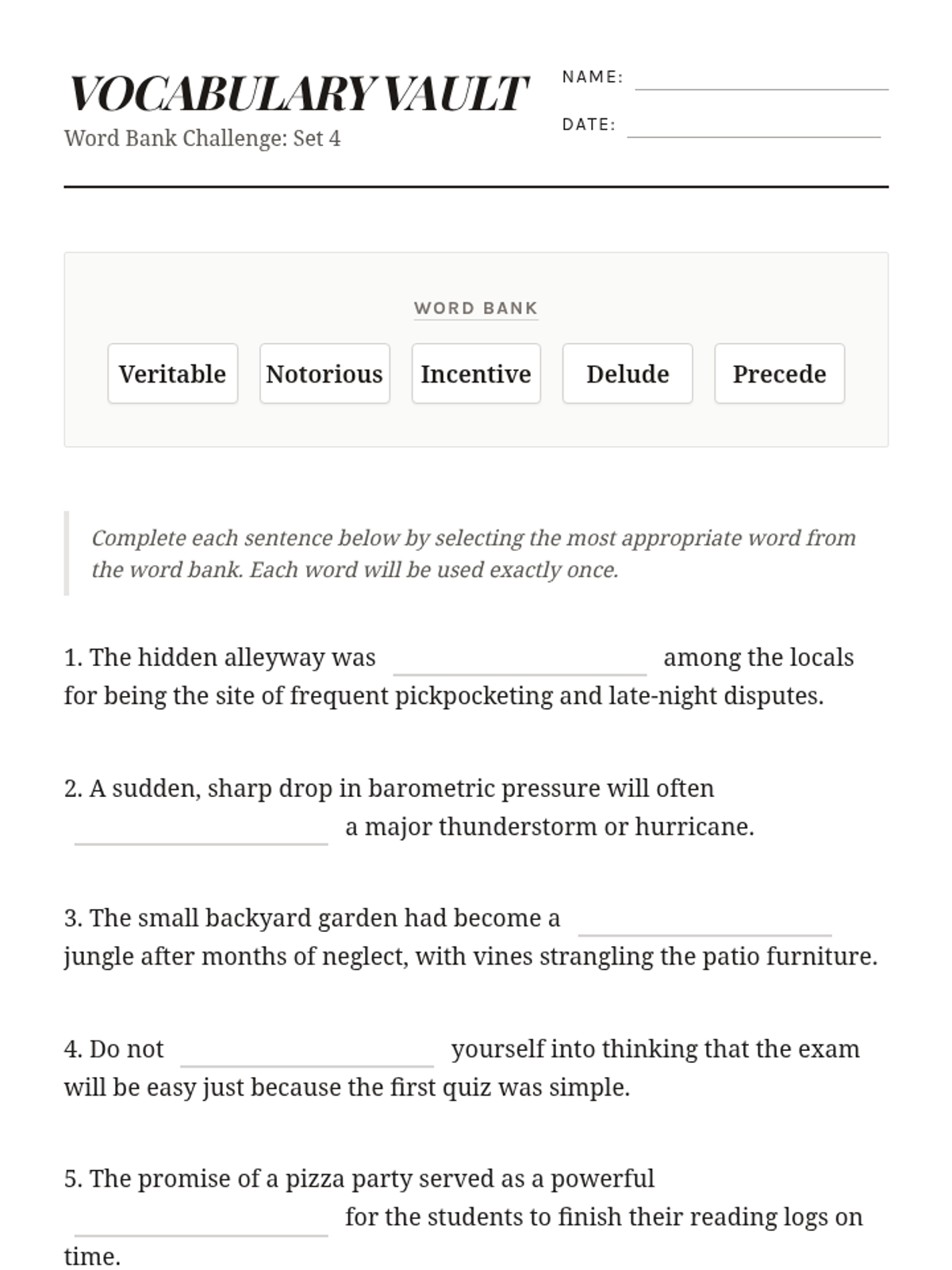
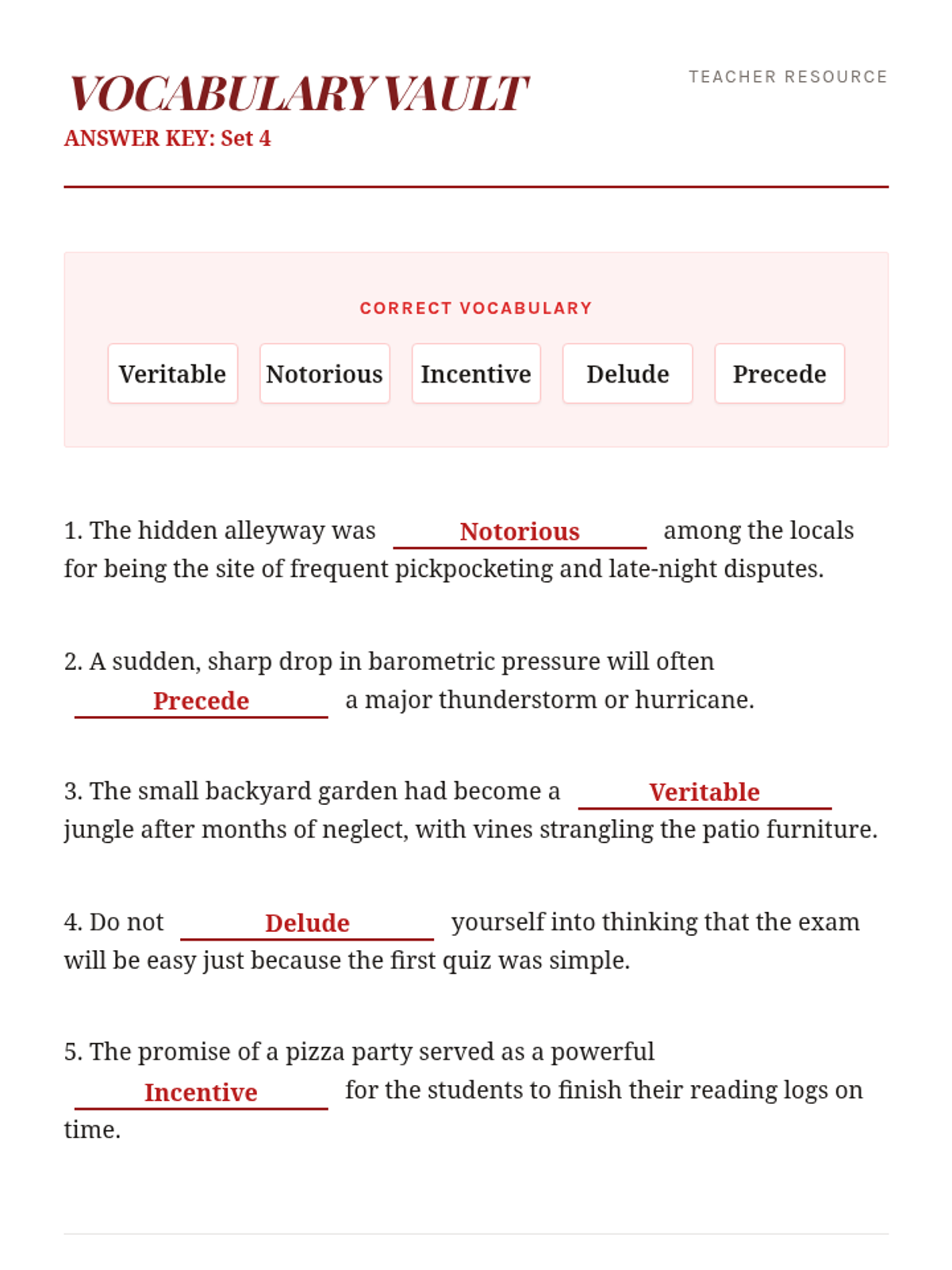
A comprehensive vocabulary unit focusing on twenty sophisticated literary terms, including altruistic, quarantine, conscientious, wizened, meek, reminisce, dissipate, solemn, assess, unison, agitated, defiance, grandeur, ailing, benediction, veritable, notorious, incentive, delude, and precede.
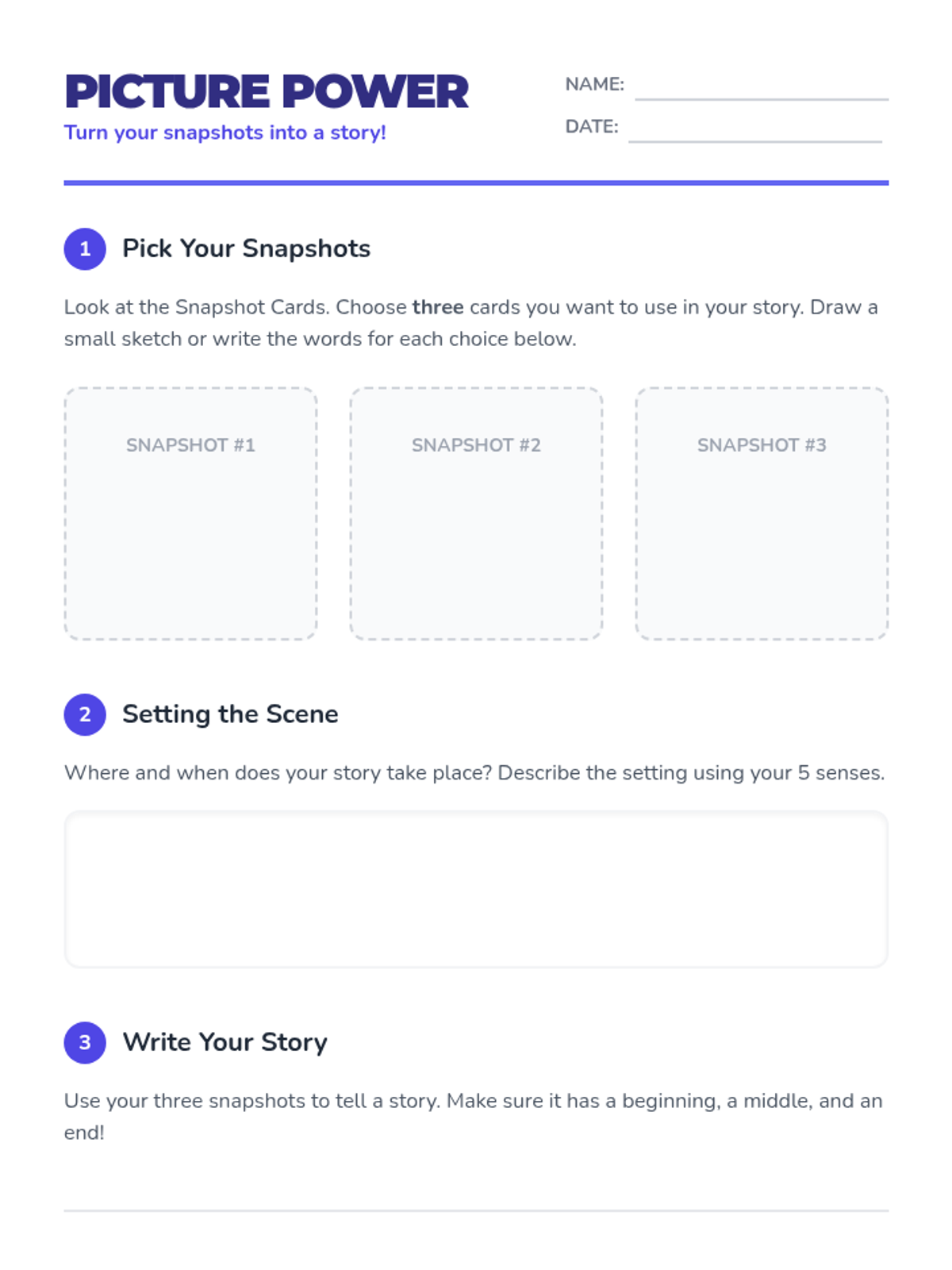
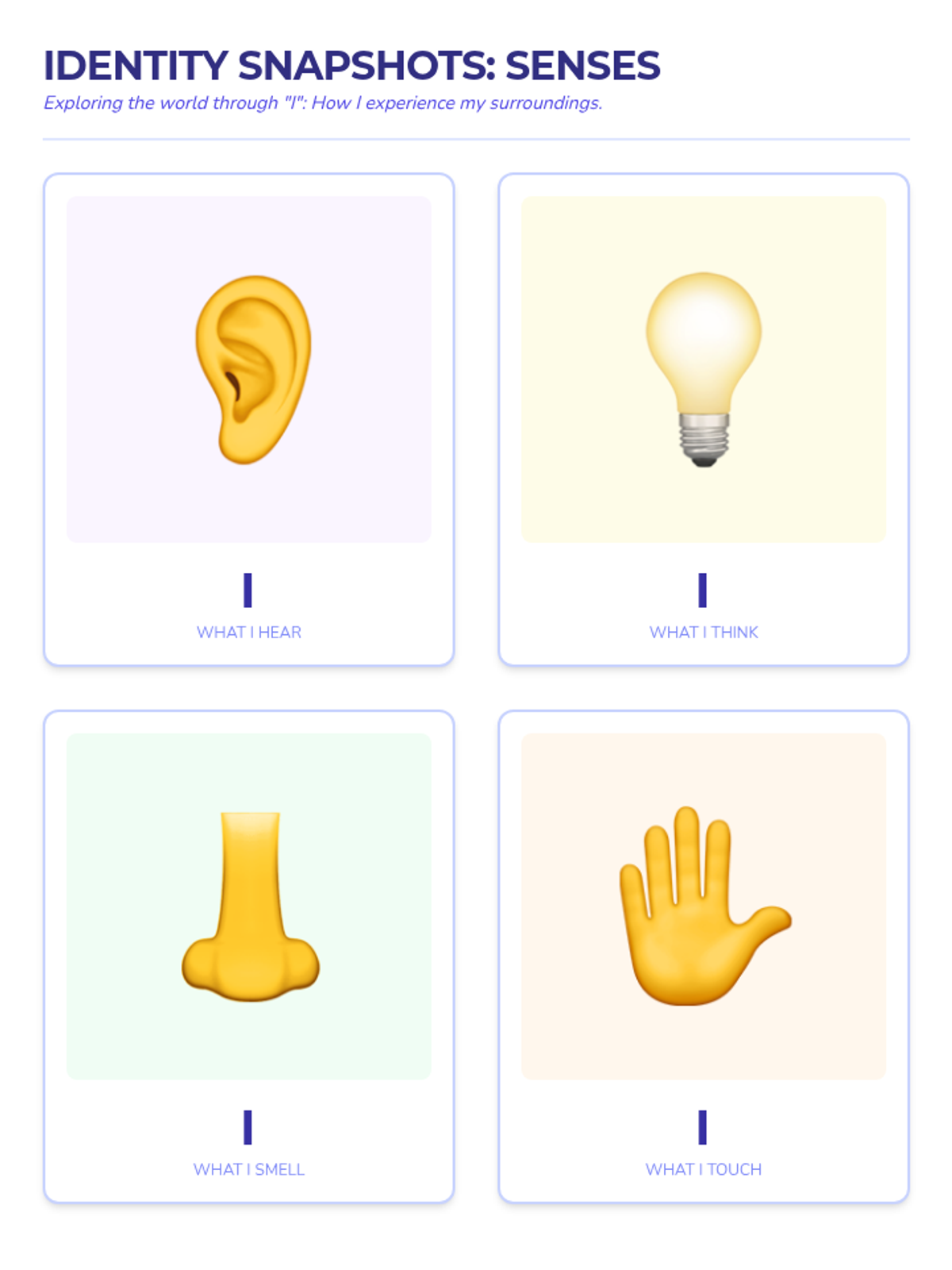
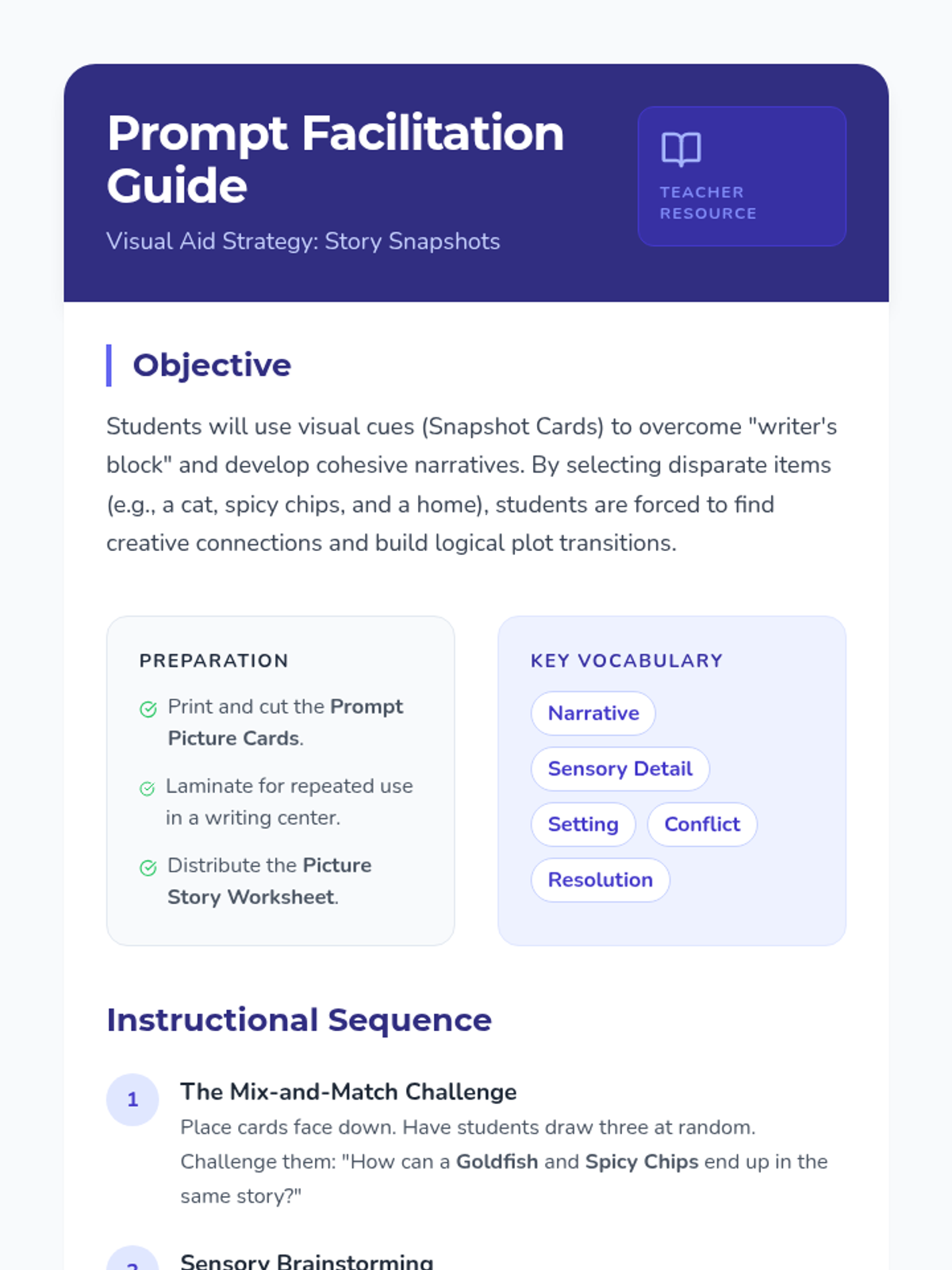
A lesson focused on using visual prompts to spark descriptive and narrative writing. Students use a set of visual cards to generate ideas, describe settings, and build characters for their stories.
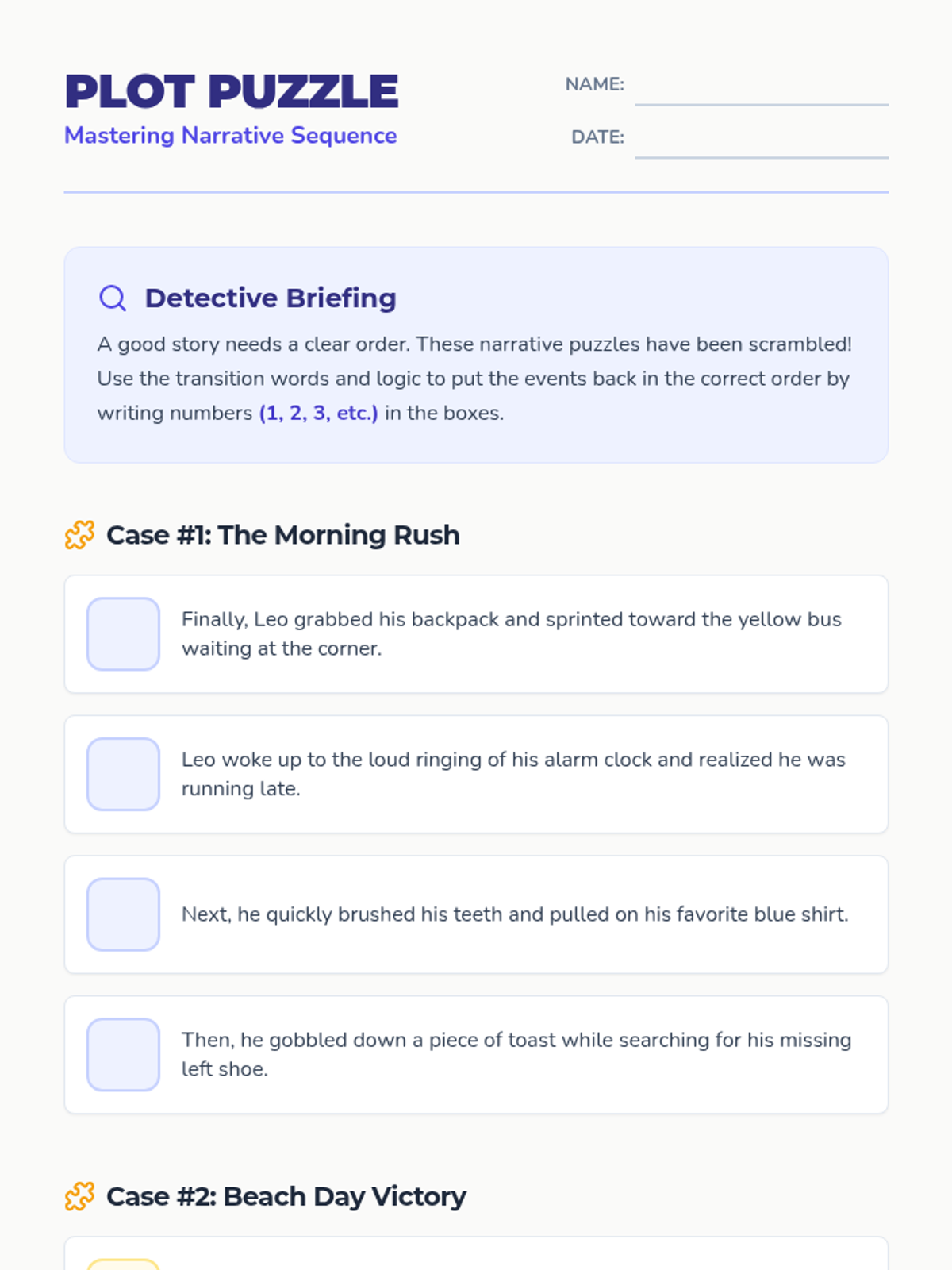
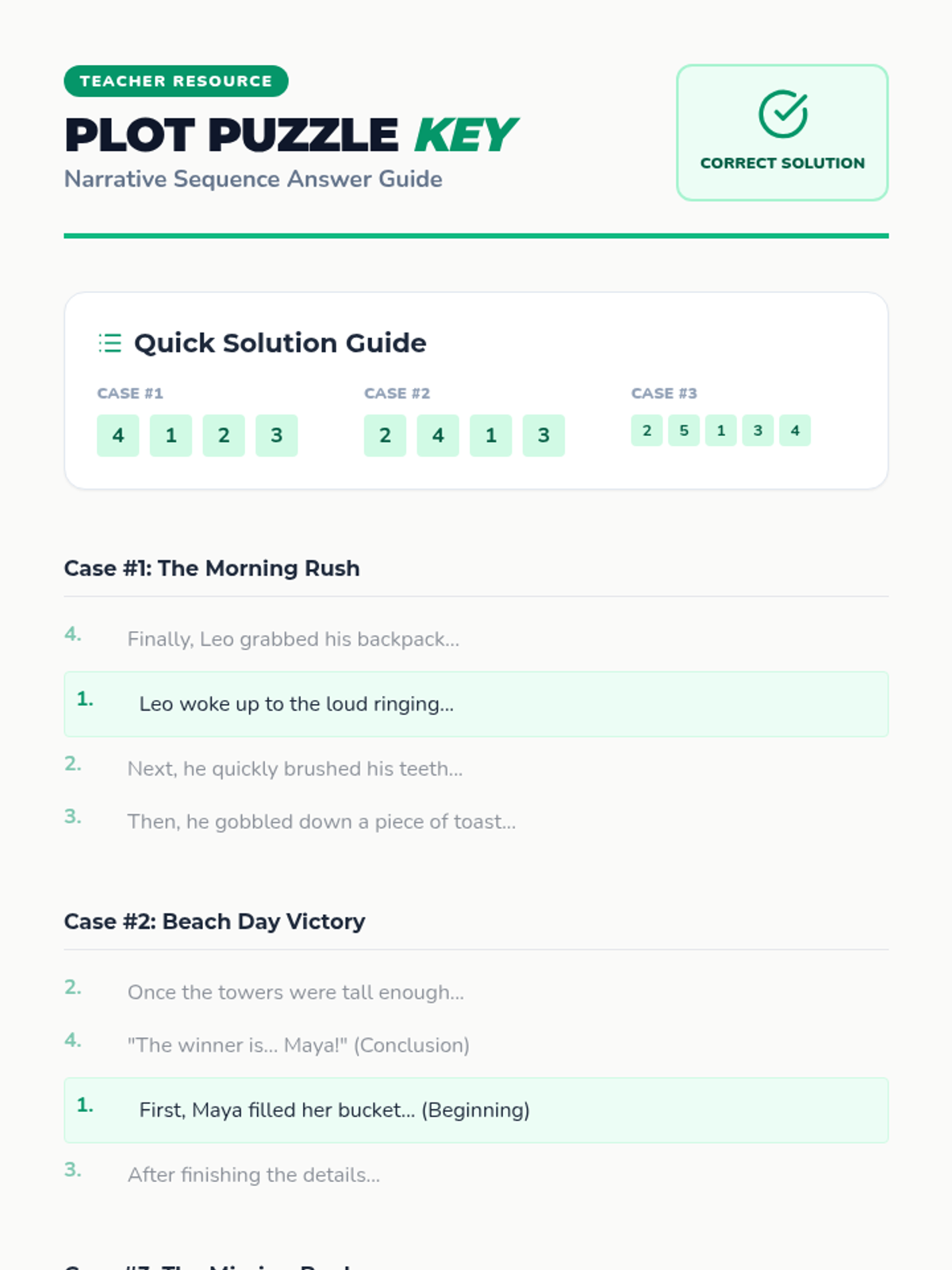
A lesson focused on identifying and ordering events within a narrative sequence using transition words and logical flow.
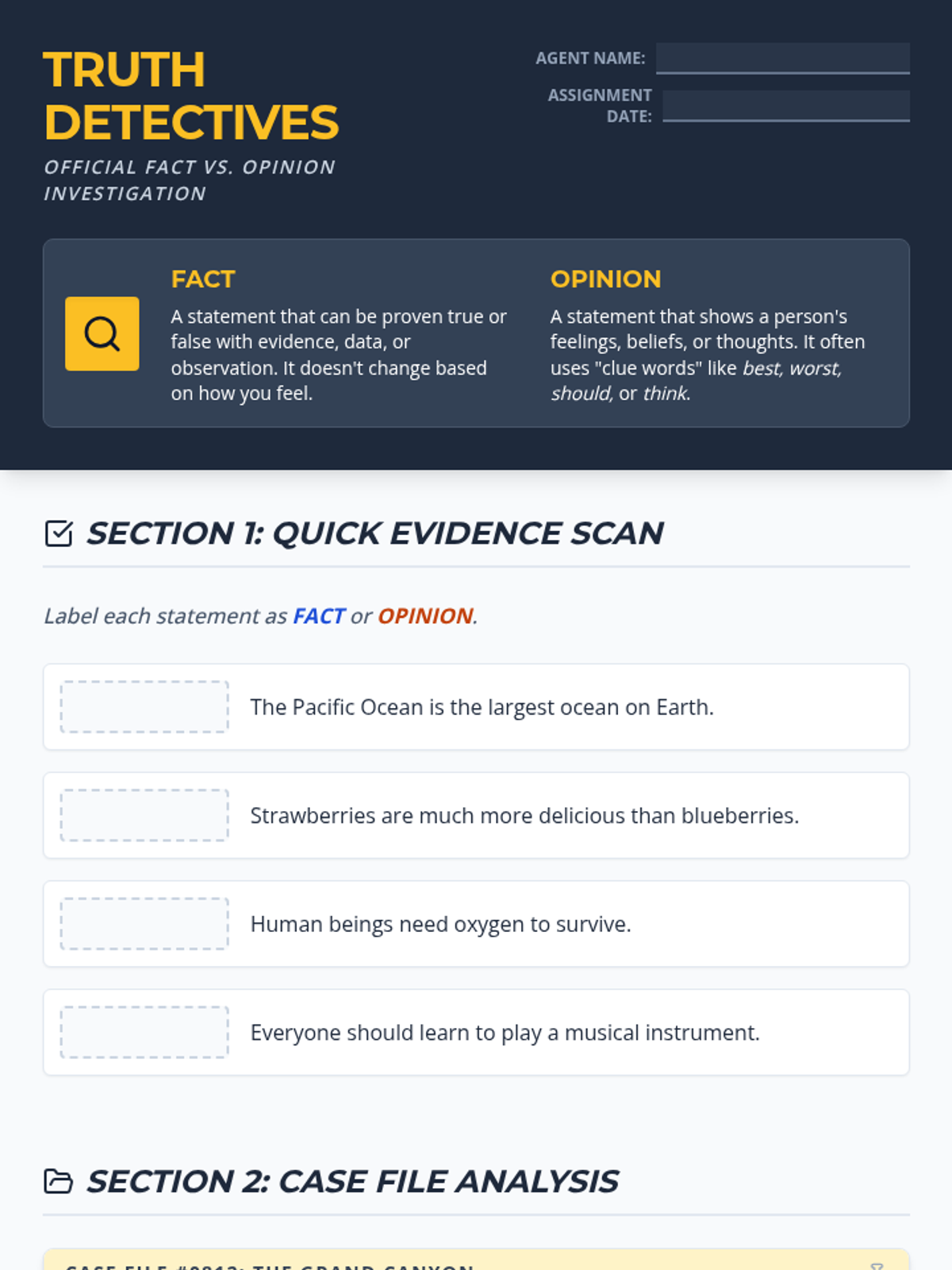
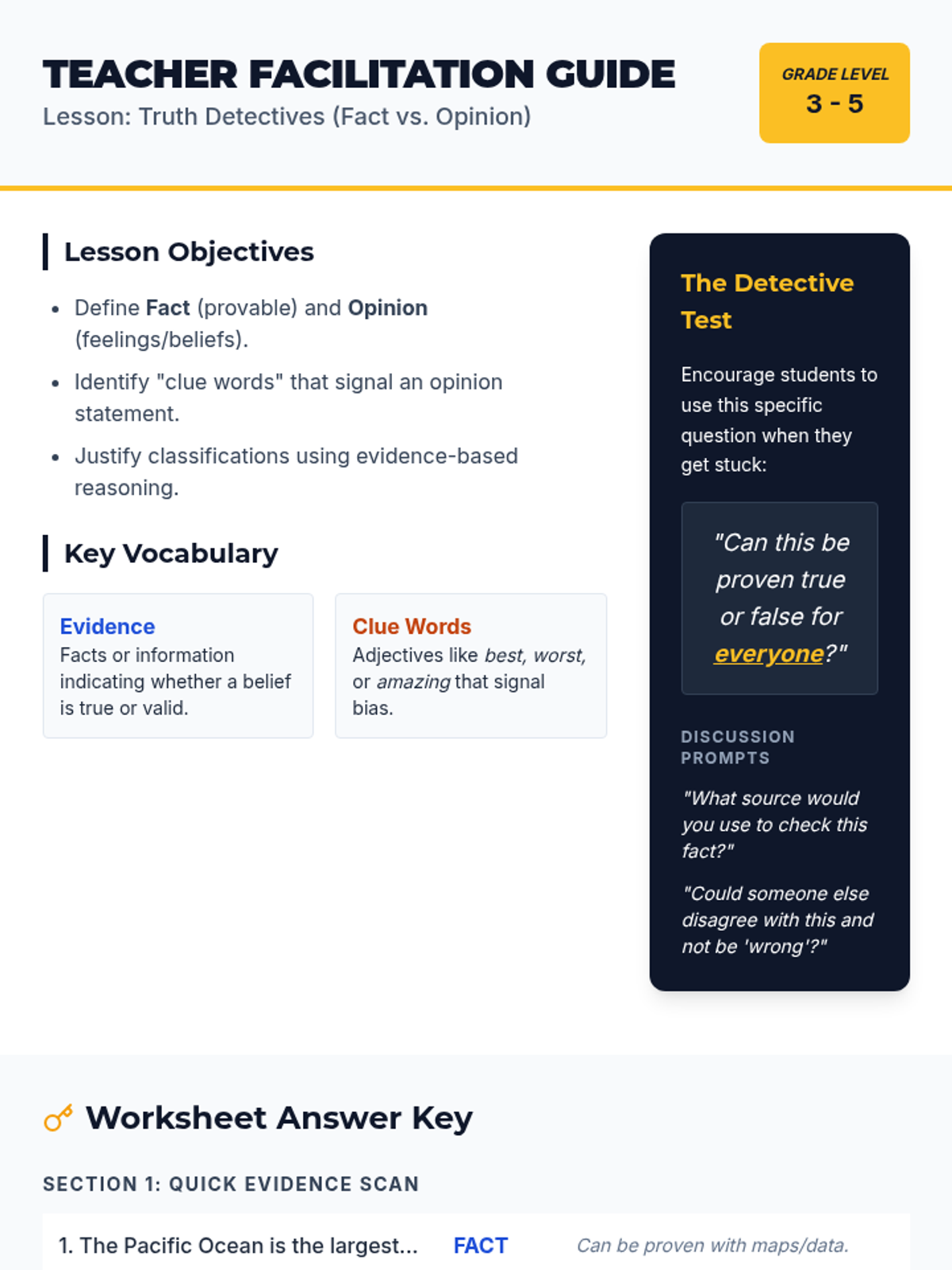
A lesson focused on distinguishing between facts and opinions through investigation-themed activities and evidence-based reasoning.
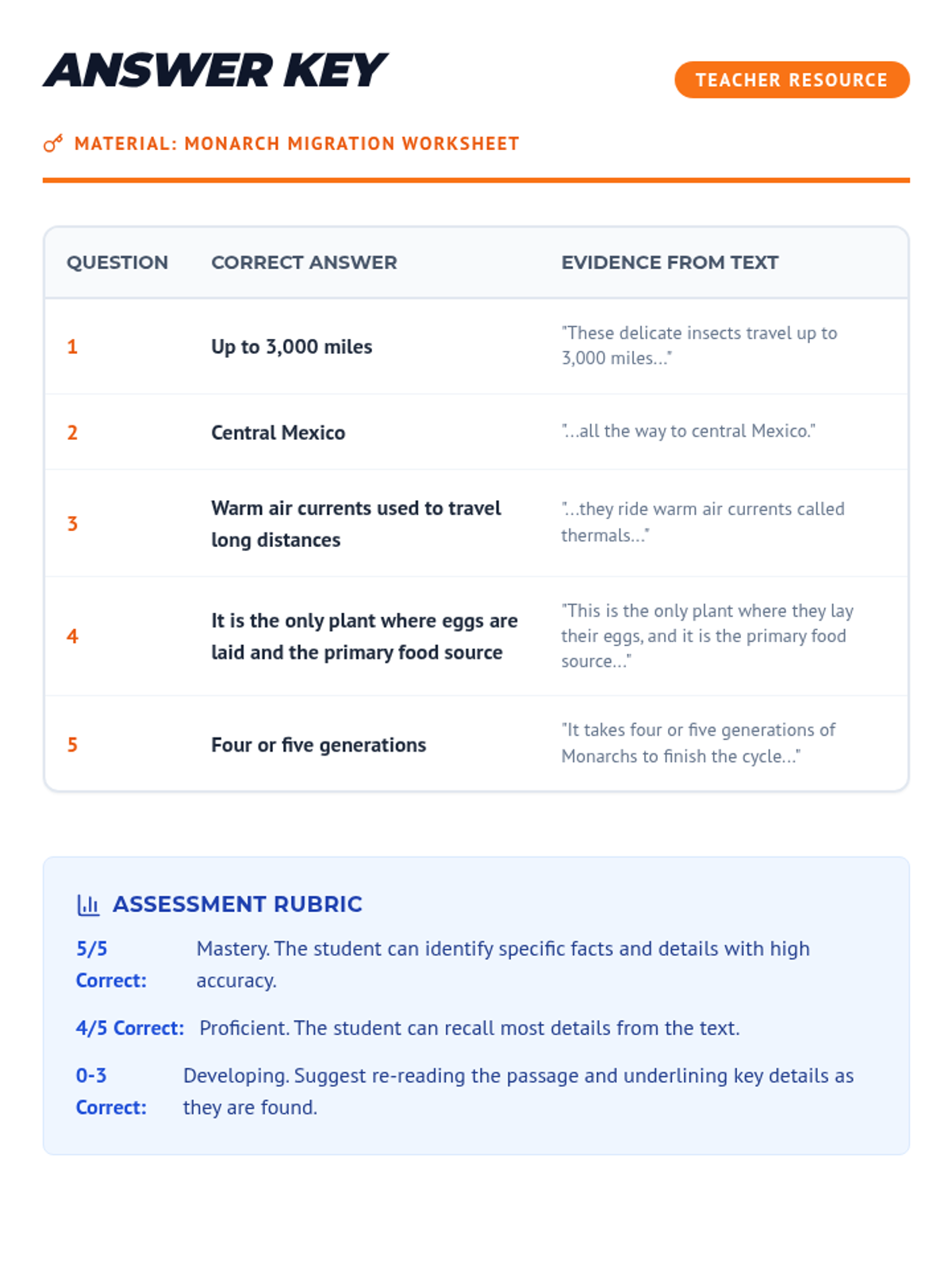
A lesson focused on identifying and recalling specific facts and details from an informational text about the incredible migration of Monarch butterflies.
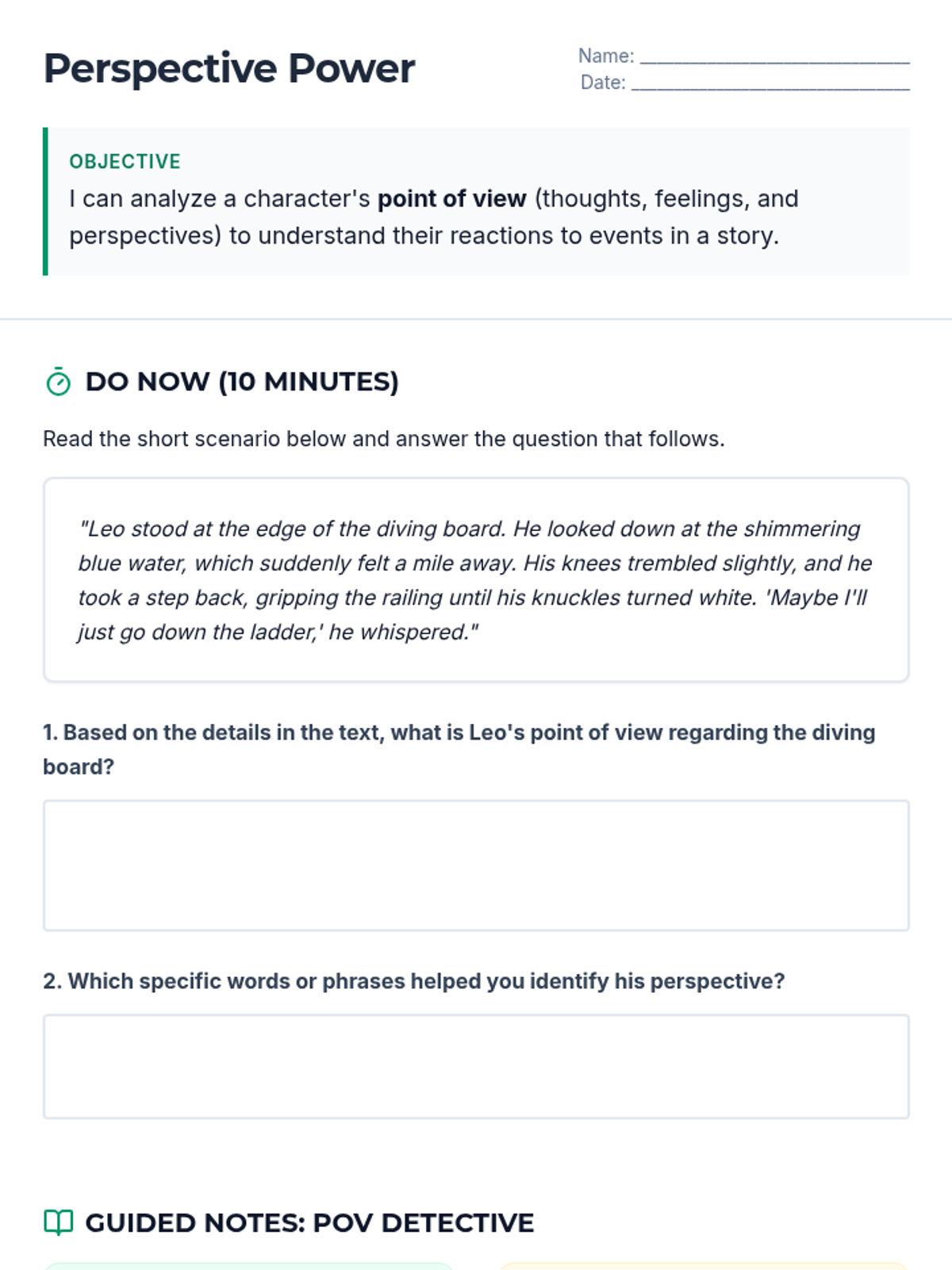
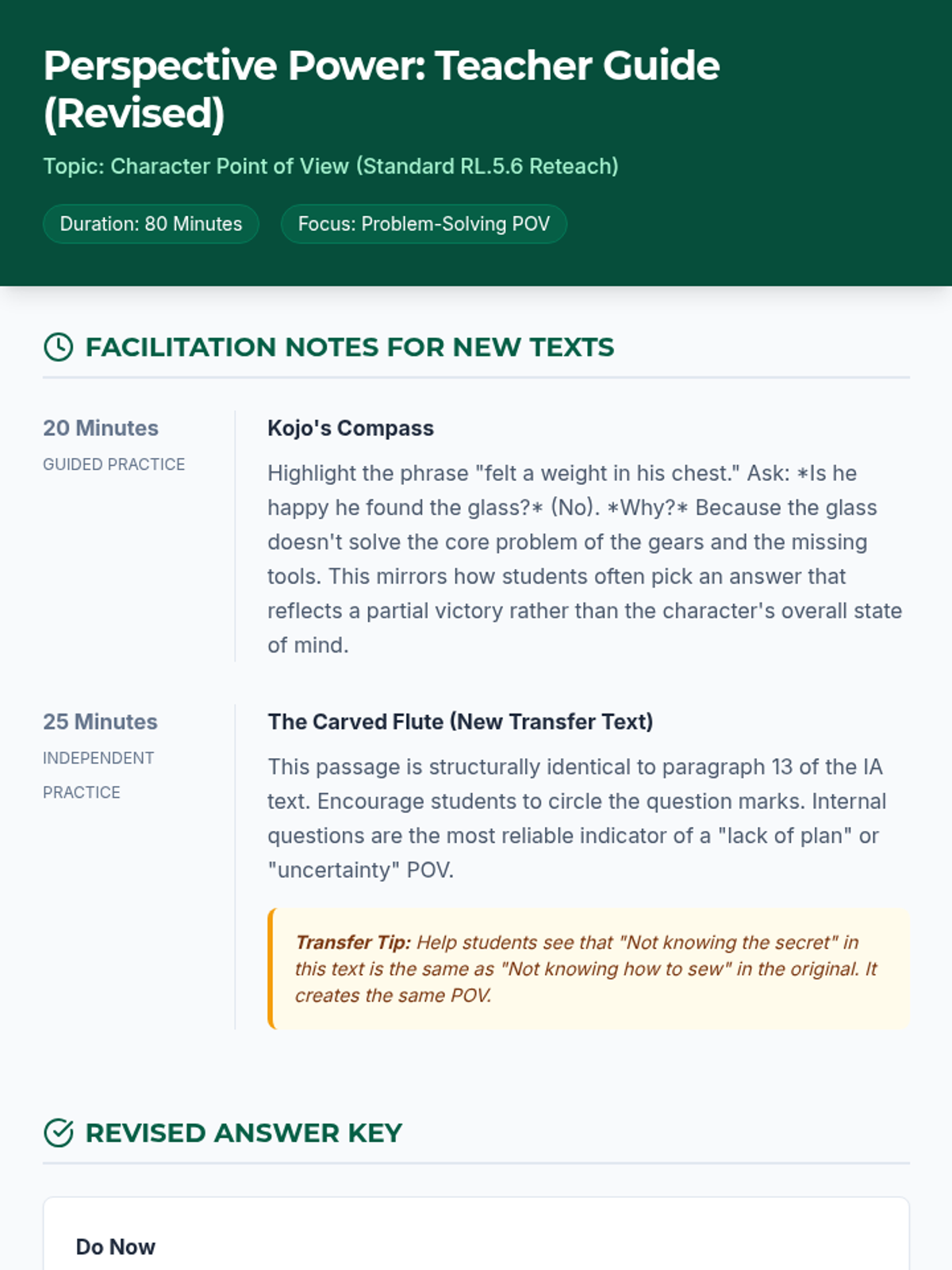
An 80-minute intensive ELA lesson focused on analyzing character point of view and perspective, specifically designed to address misconceptions from the Grade 5 Interim Assessment. Students will practice identifying how characters' thoughts and feelings influence their actions and reactions to problems.
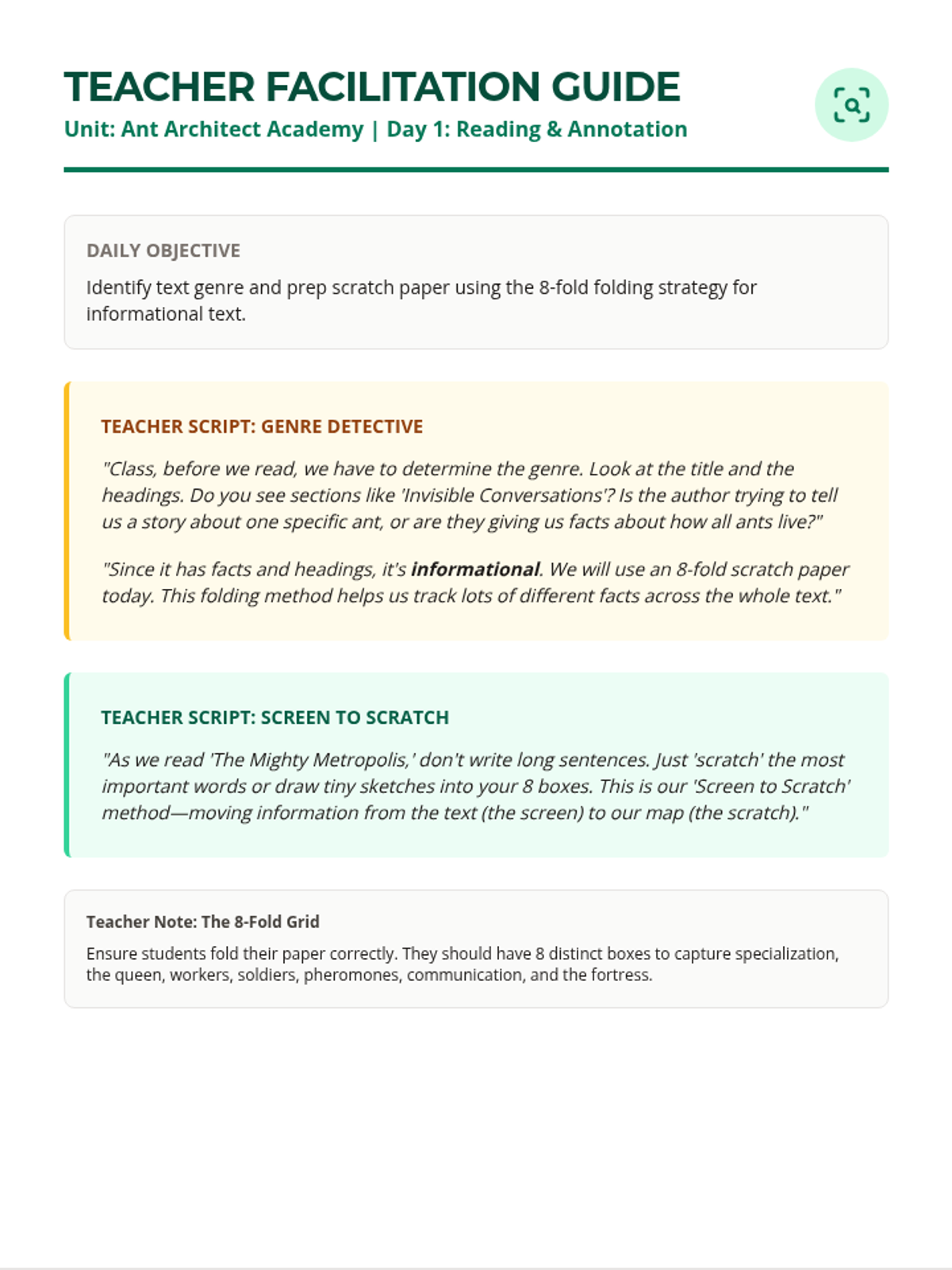
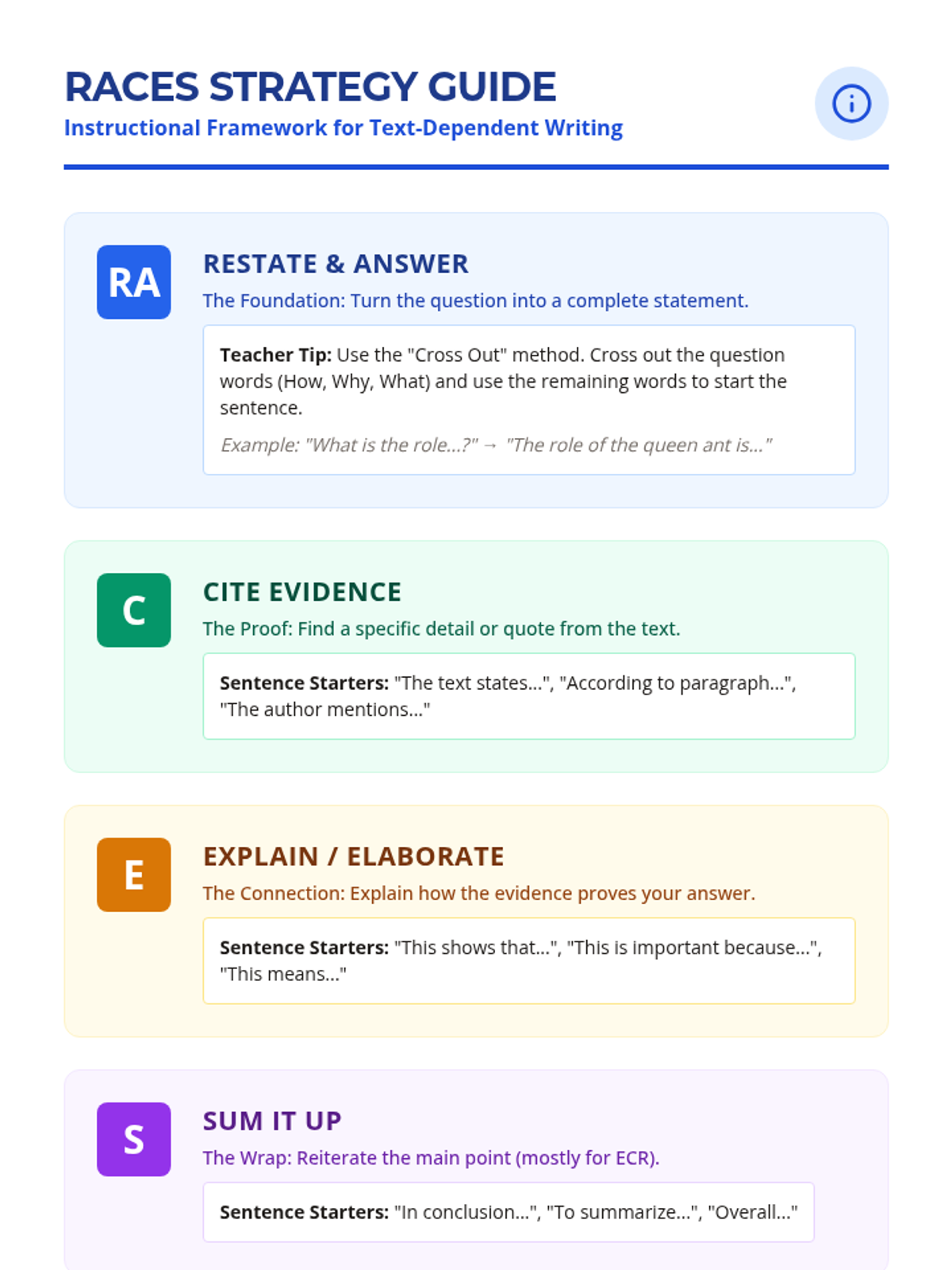
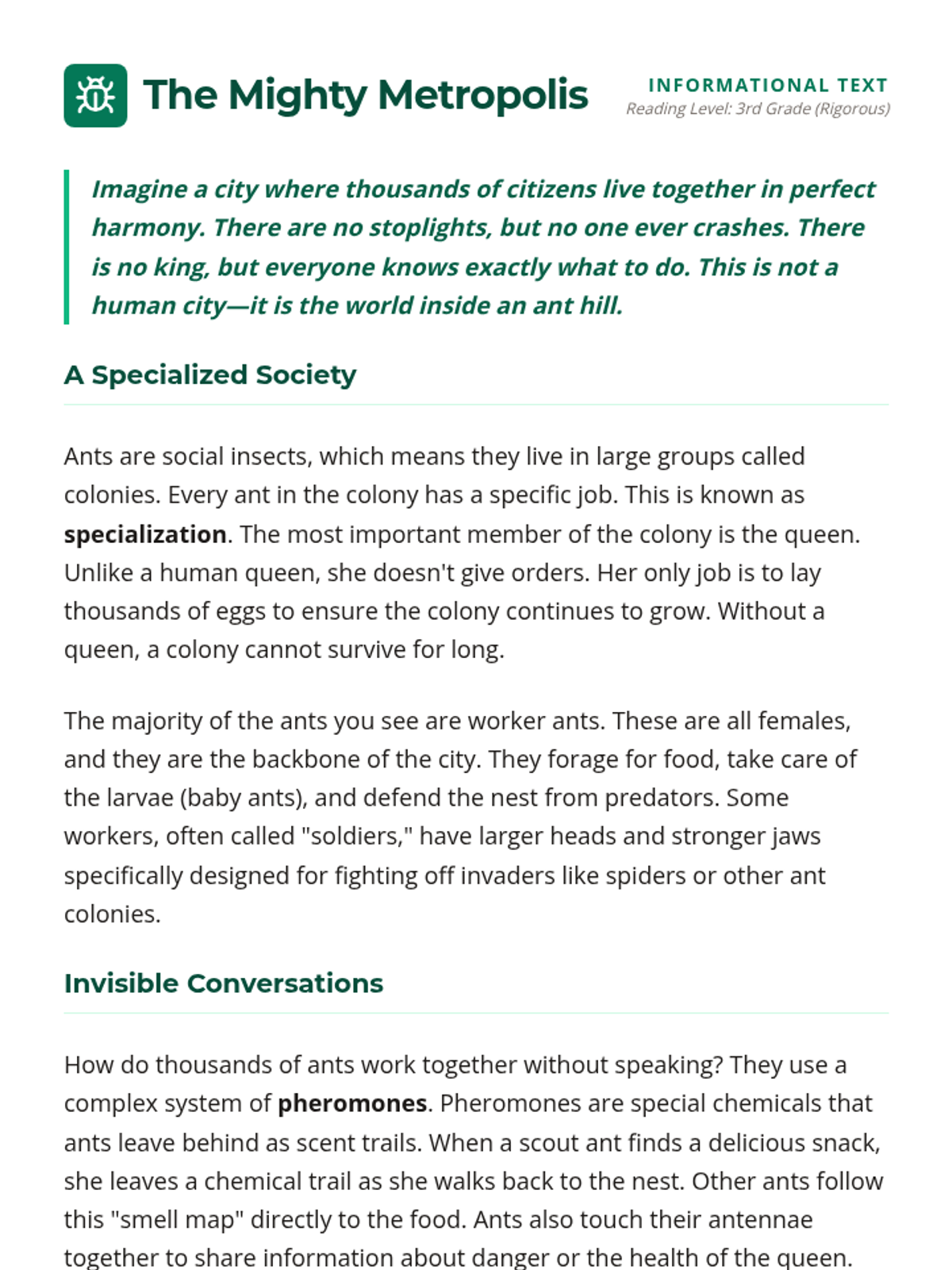
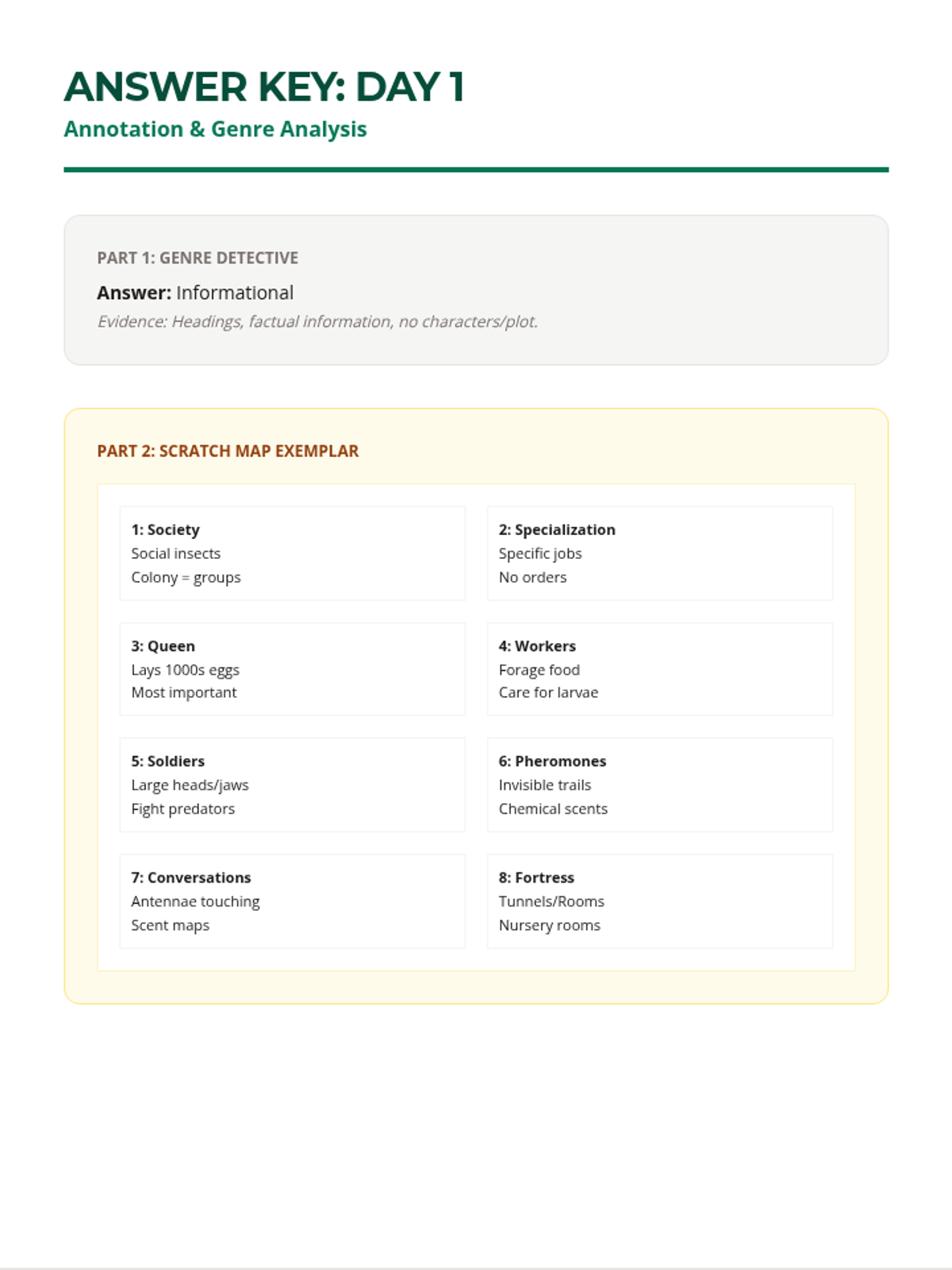
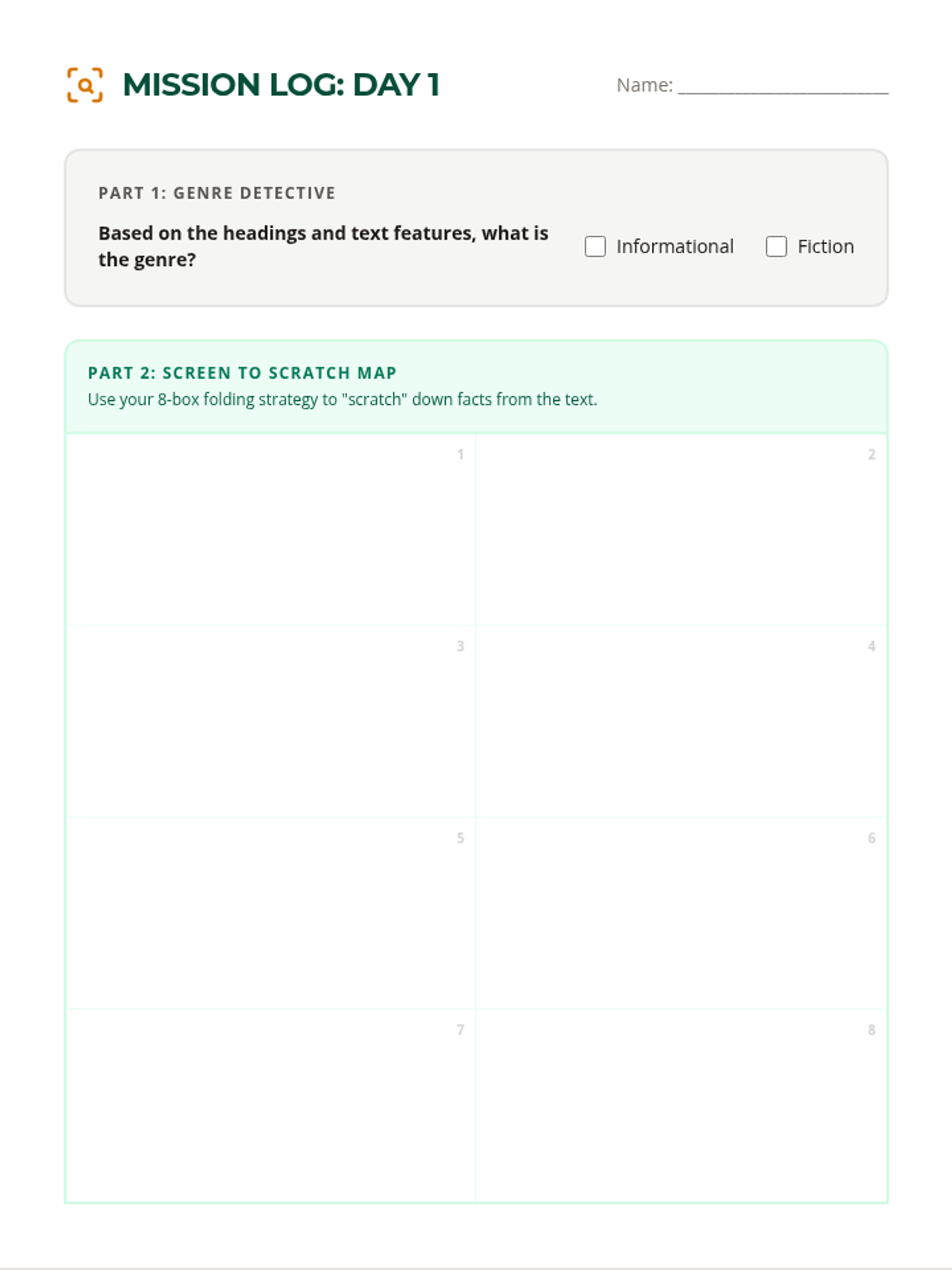
A 5-day STAAR-aligned unit focused on reading an informational text and mastering the RACES strategy for short and extended constructed responses. Students explore the complex social structure of ant colonies while practicing specific writing skills, with a heavy emphasis on the 'Restate and Answer' first sentence.
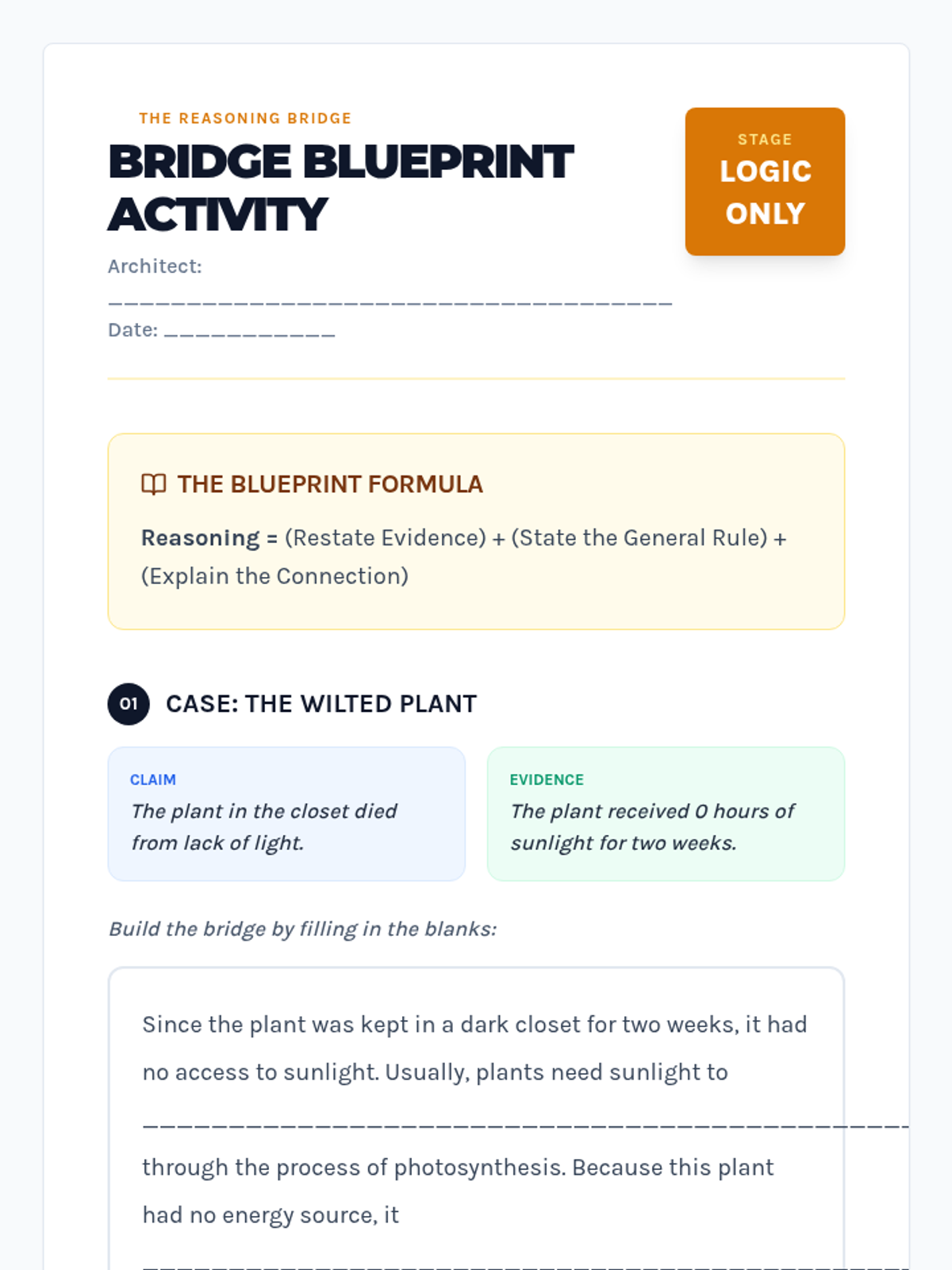
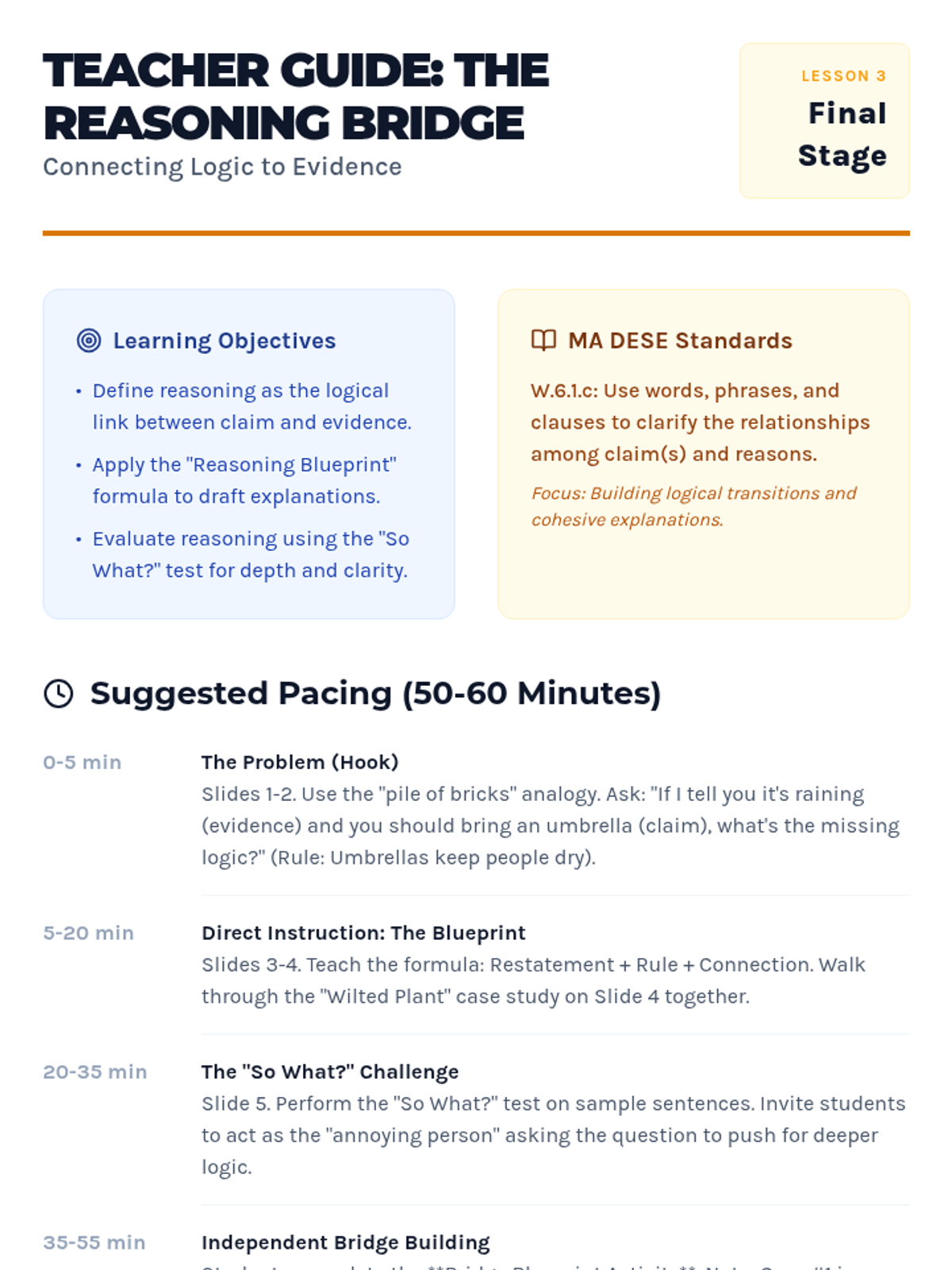
Students will master the art of "the bridge," learning to construct logical explanations that connect their evidence back to their claims using scientific principles or general rules.
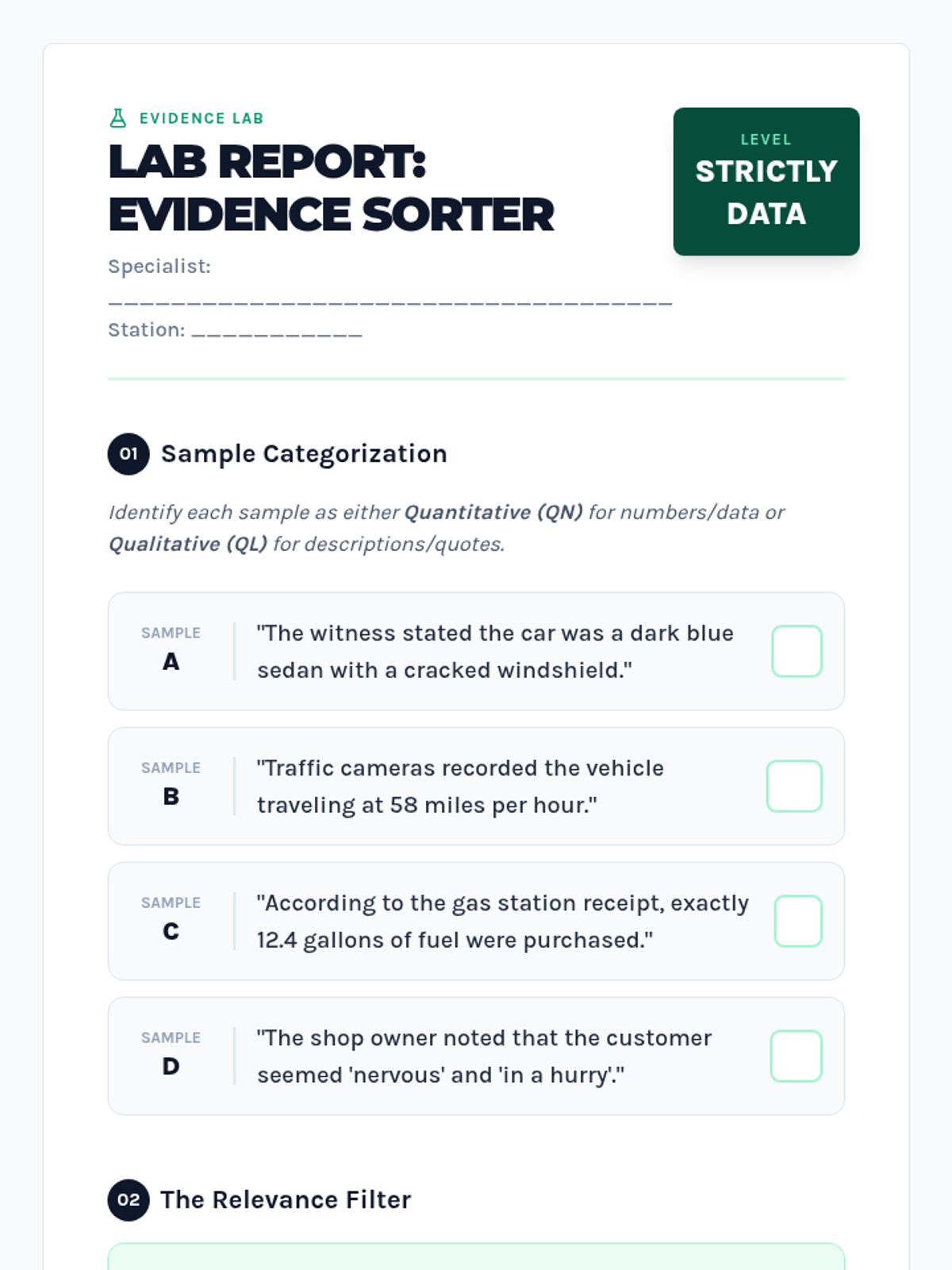
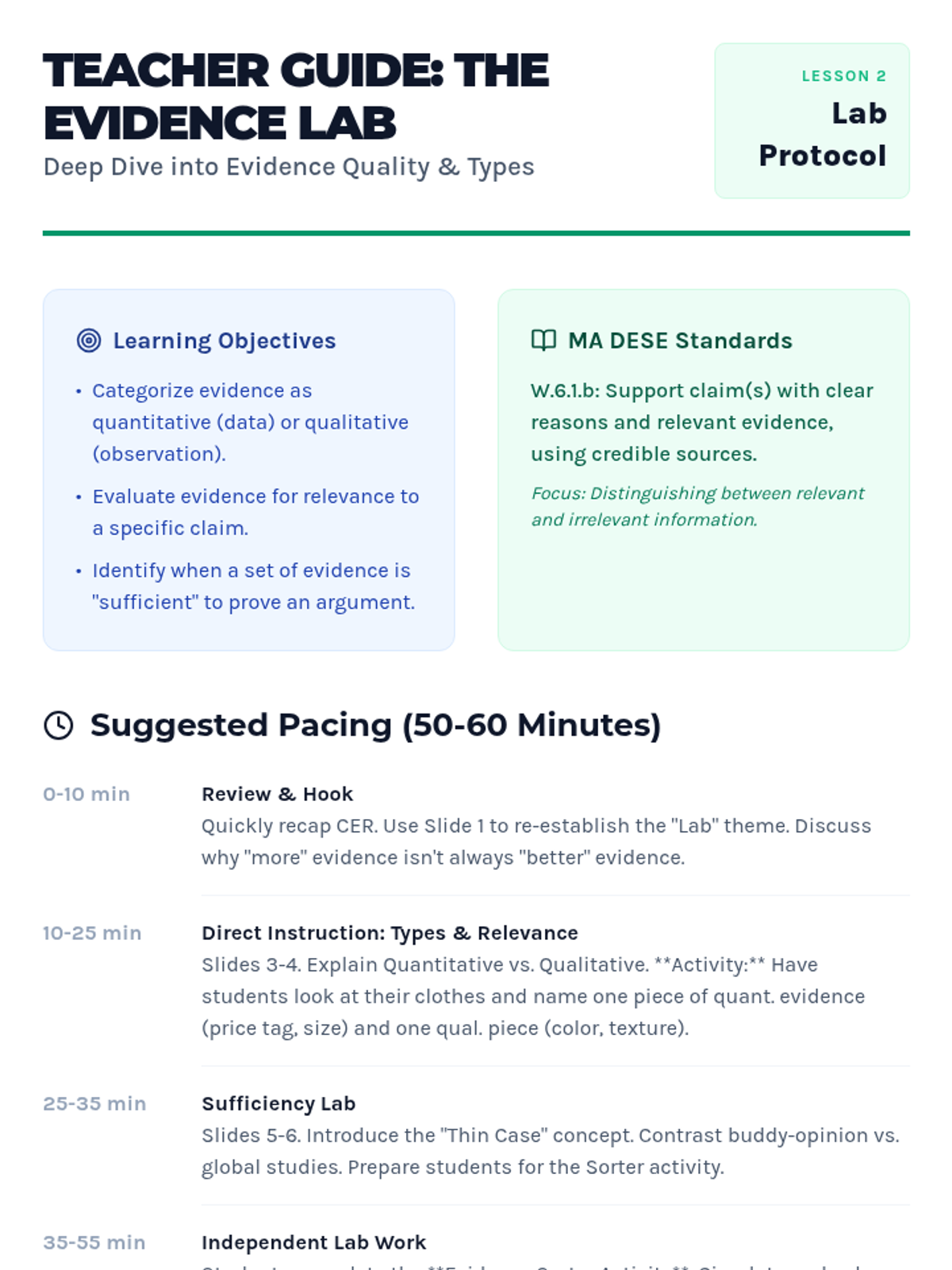
Students will dive deeper into the quality of evidence, learning to distinguish between strong and weak support and identifying different types of data used in arguments.
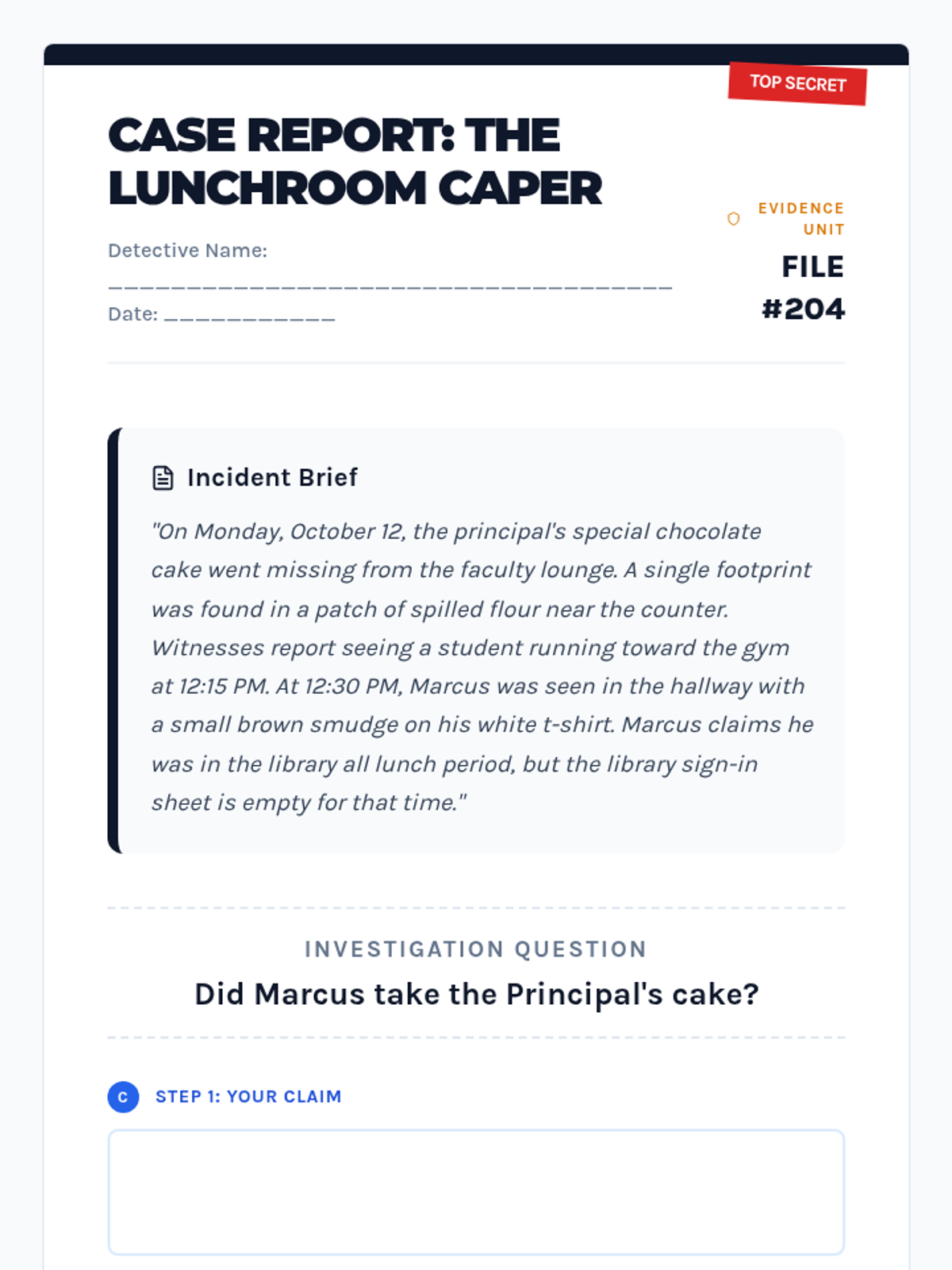
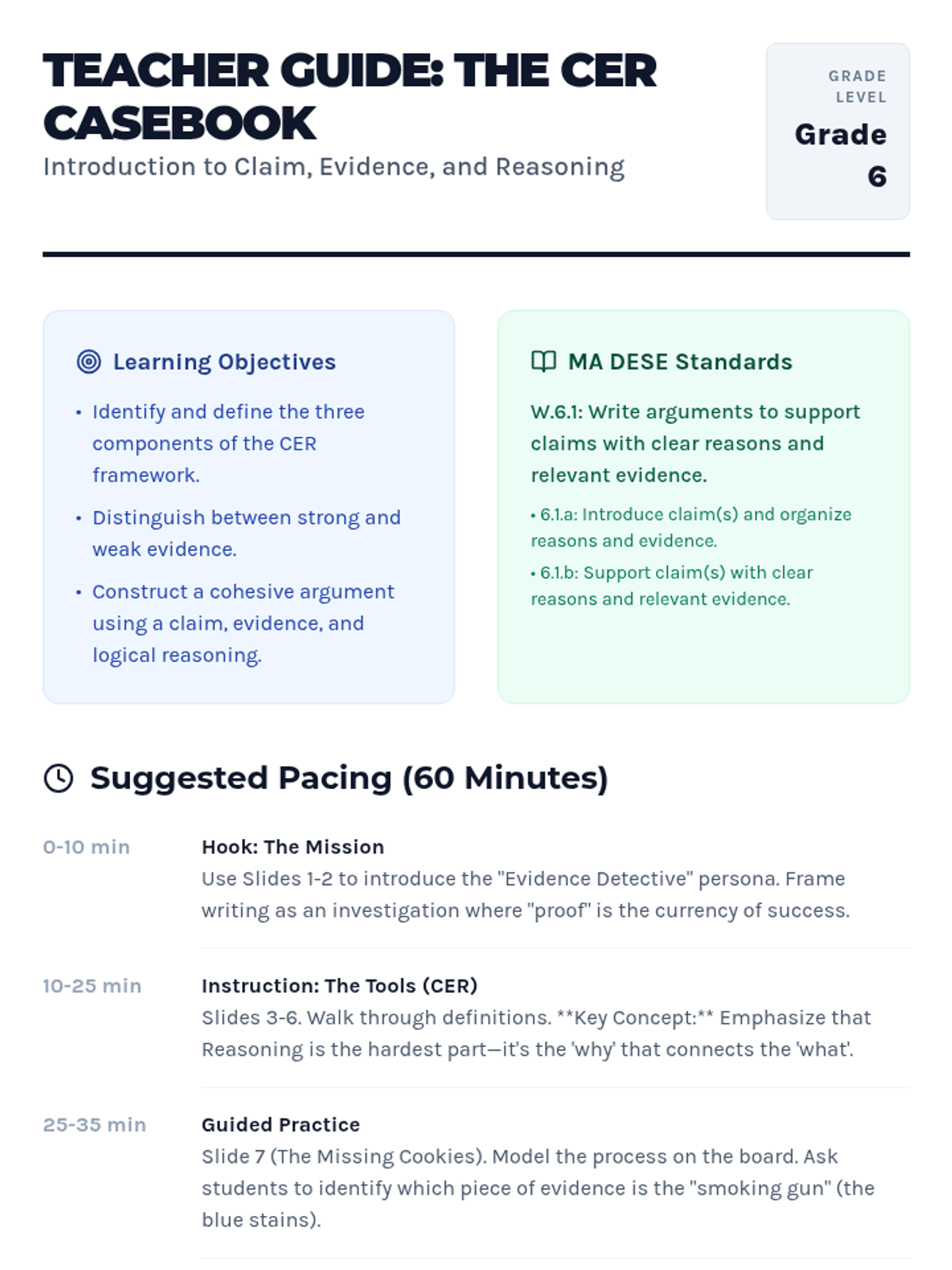
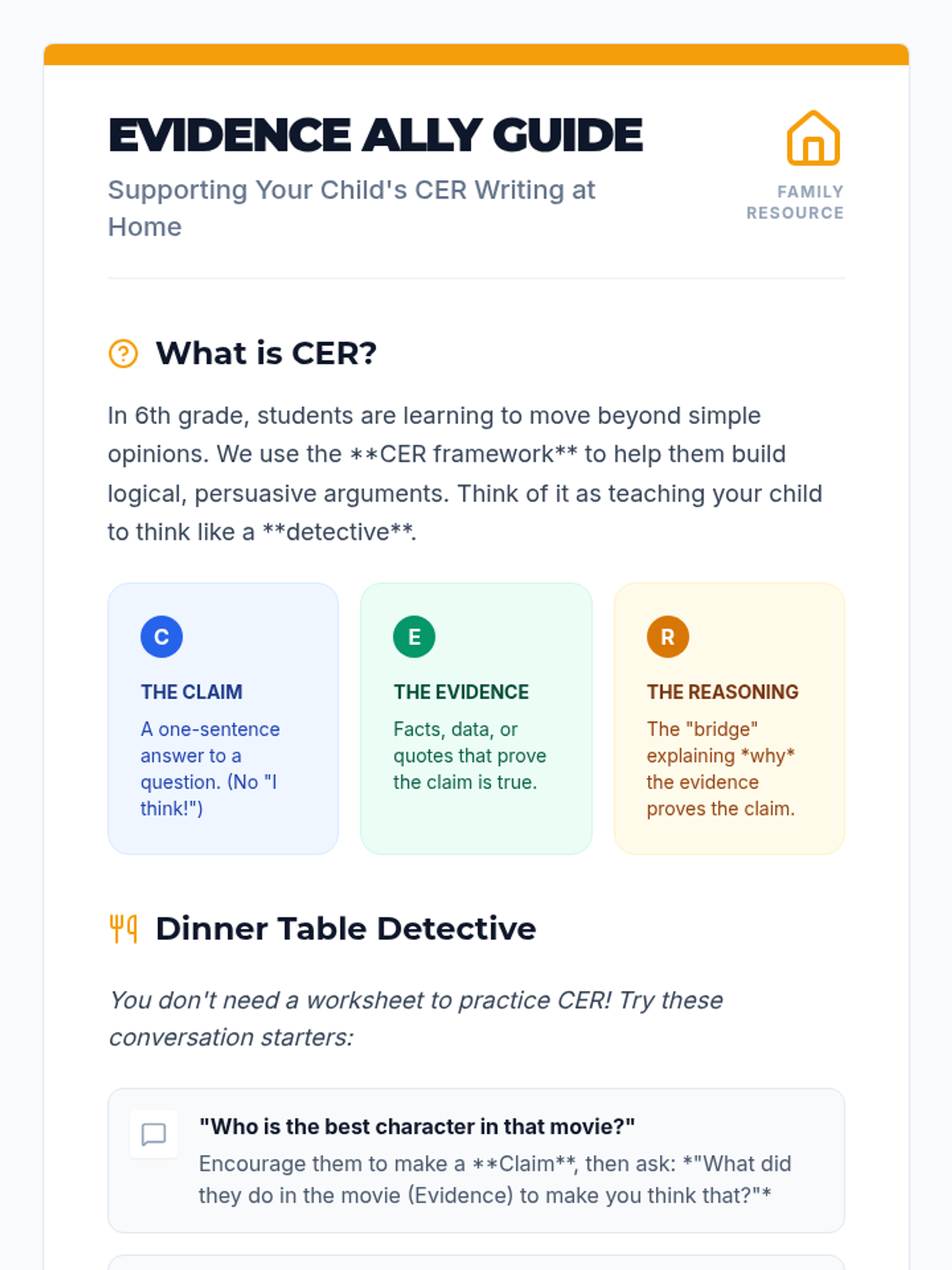
Students will master the Claim-Evidence-Reasoning framework through a detective-themed investigation, learning to support their arguments with clear reasons and credible evidence aligned with MA 6th grade standards.
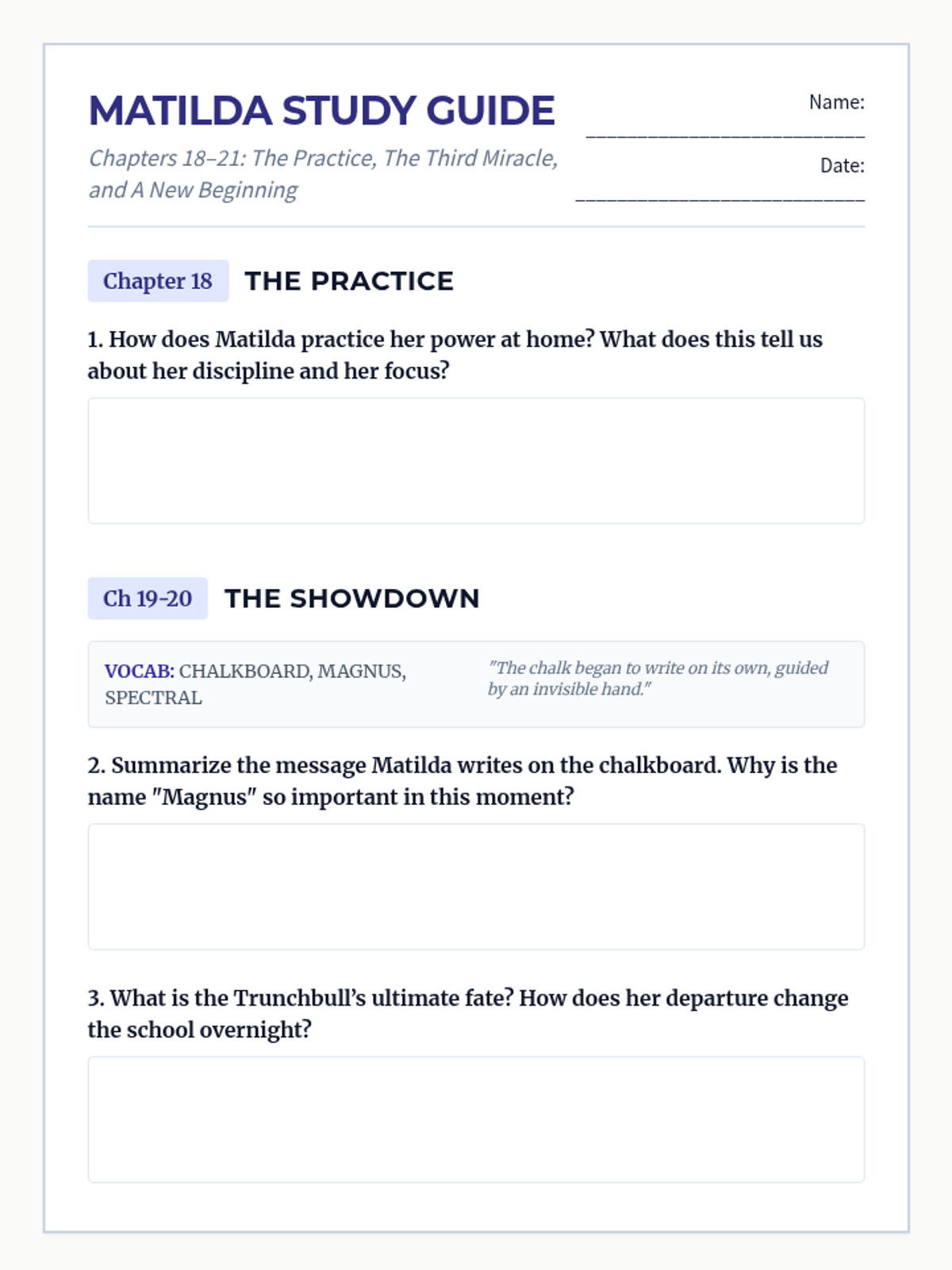
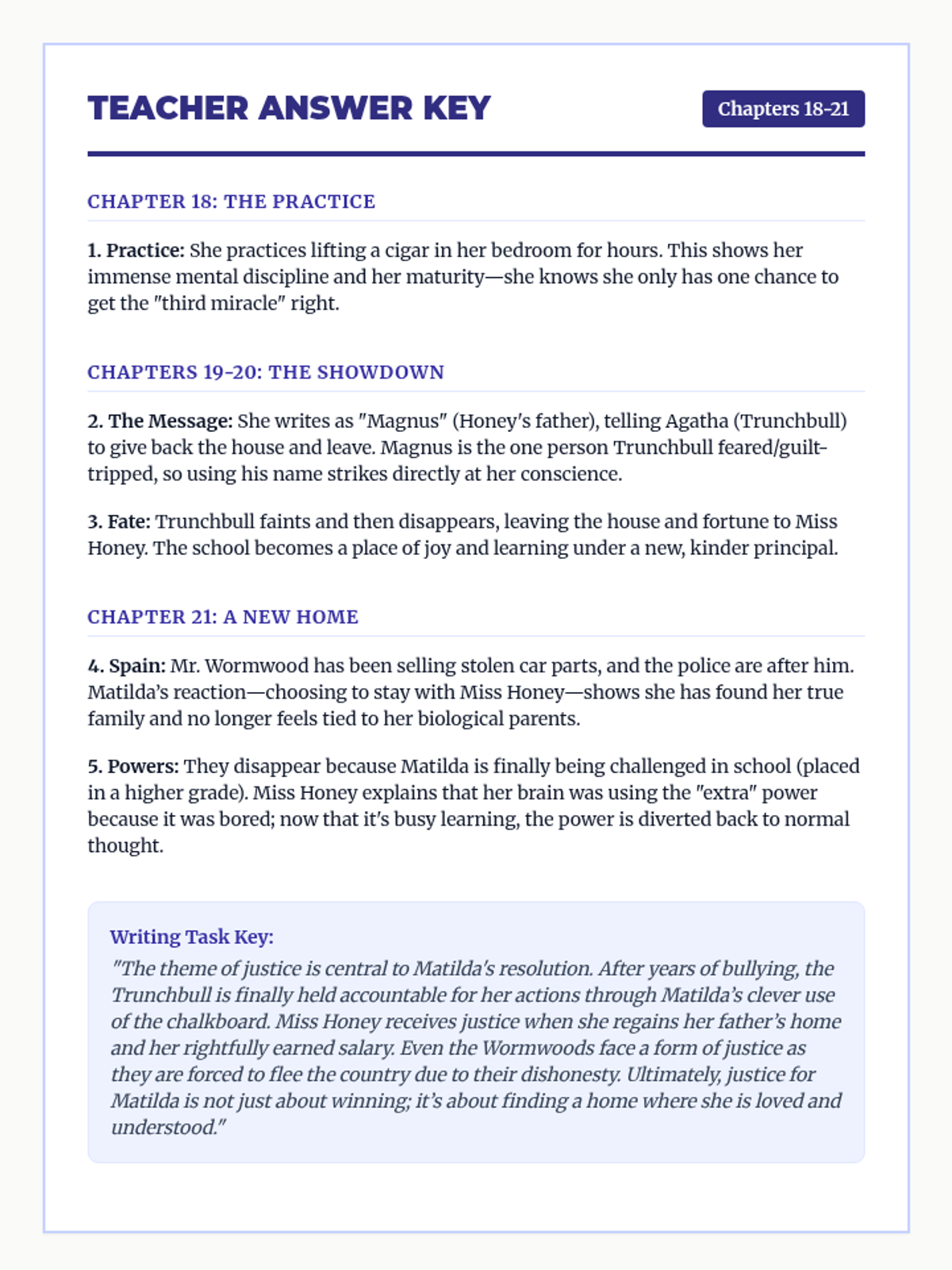
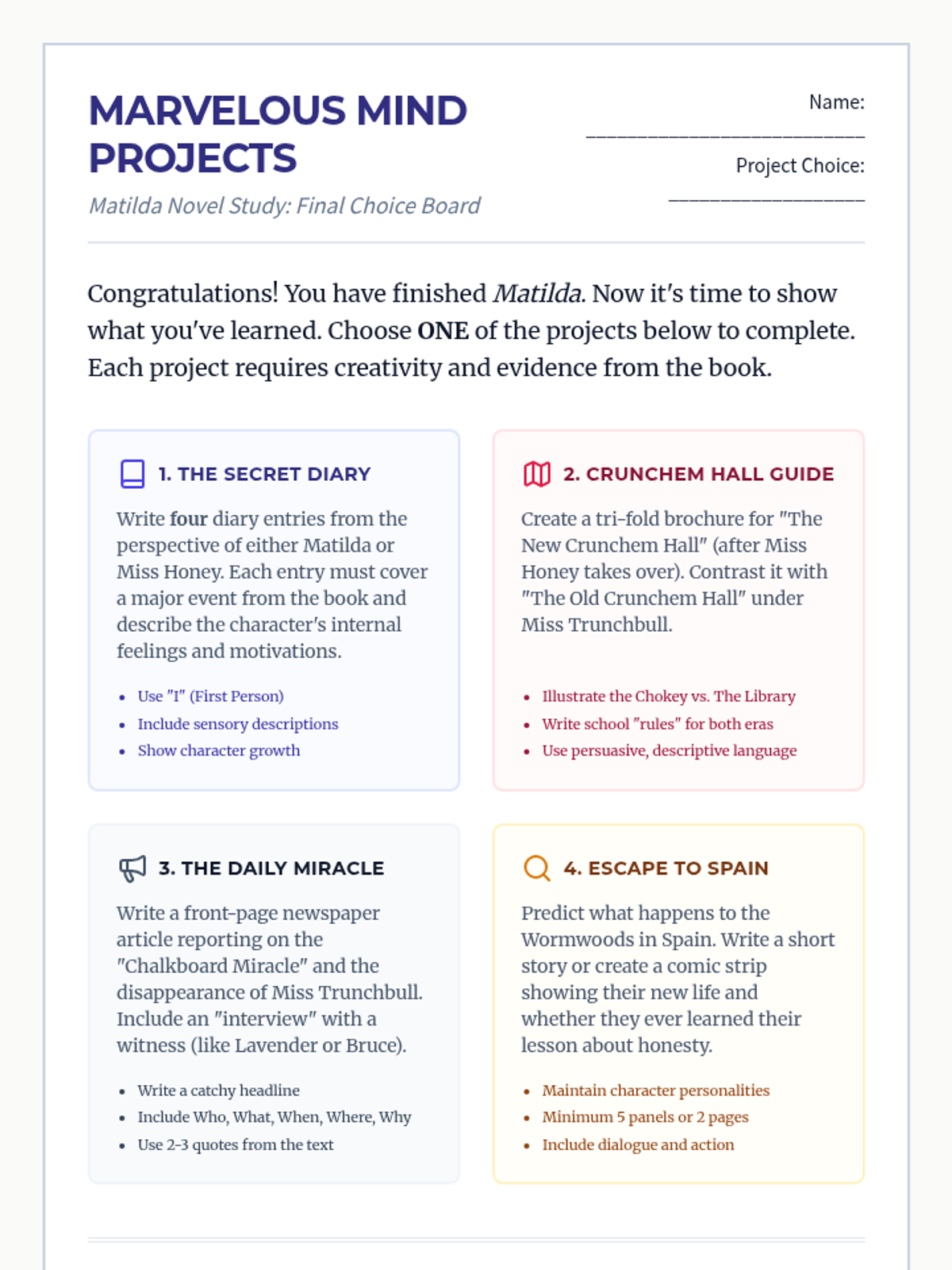
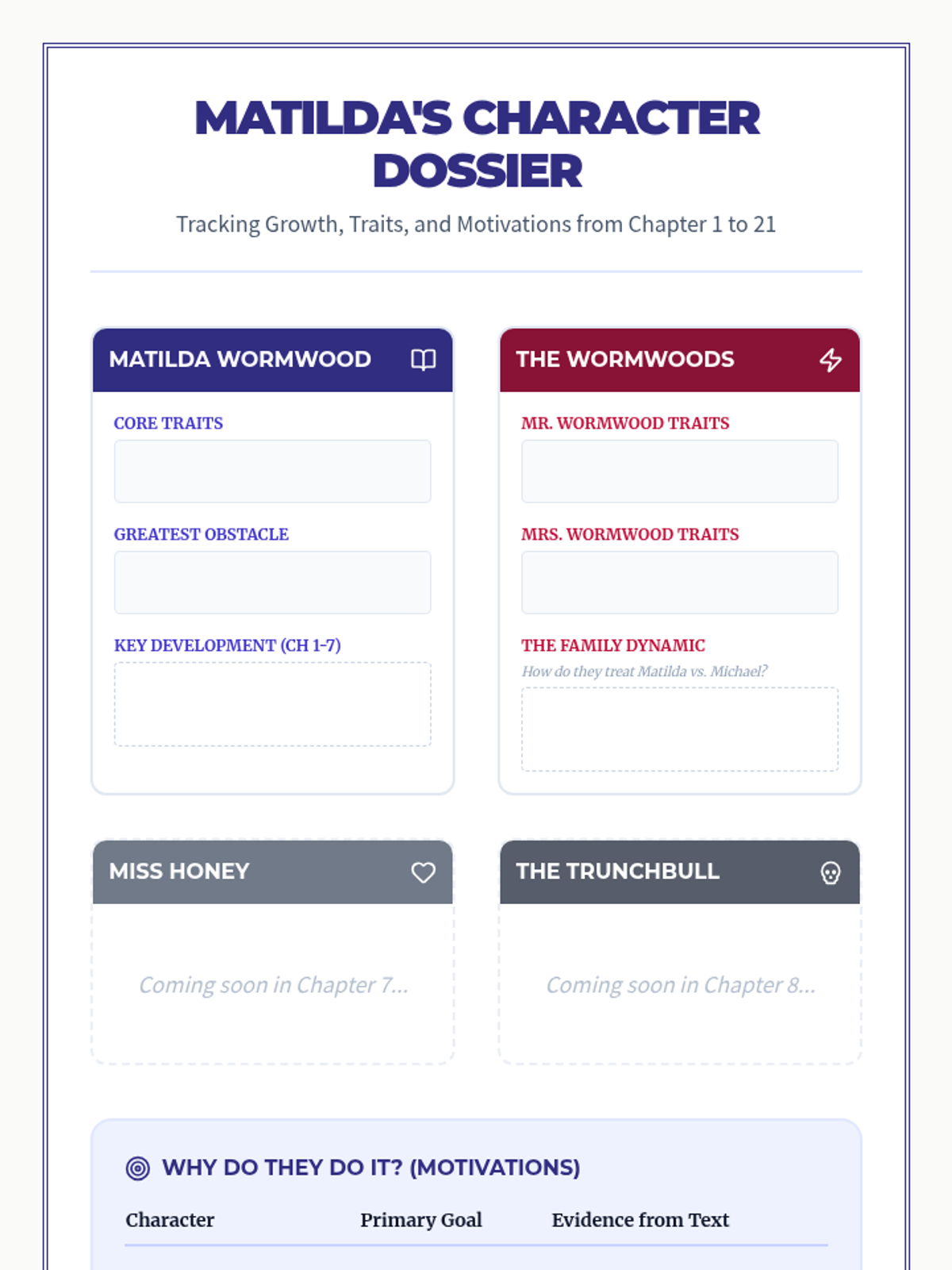
The final showdown as Matilda uses her powers to reclaim Miss Honey's home and the family's sudden departure (Chapters 18-21).
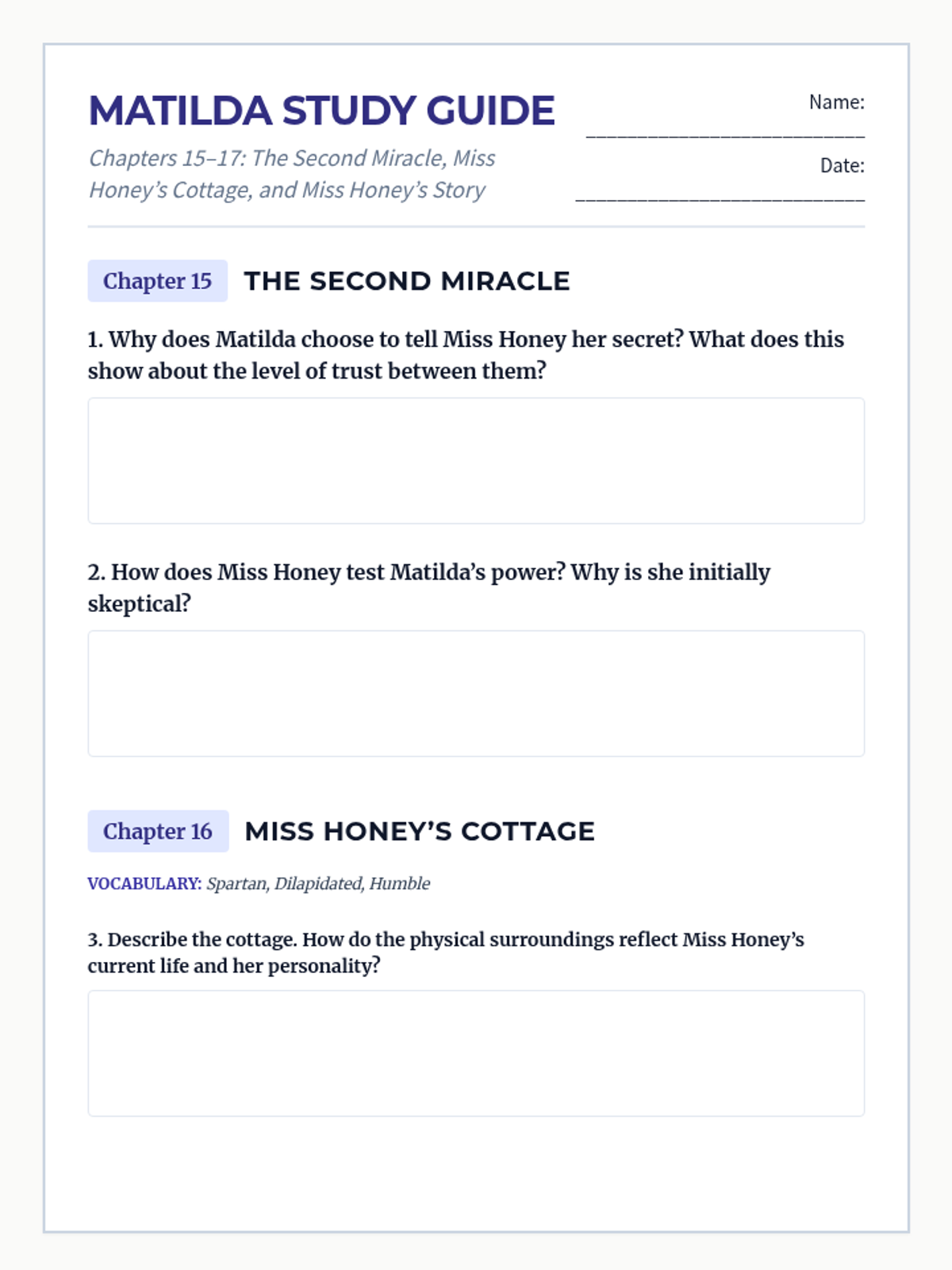
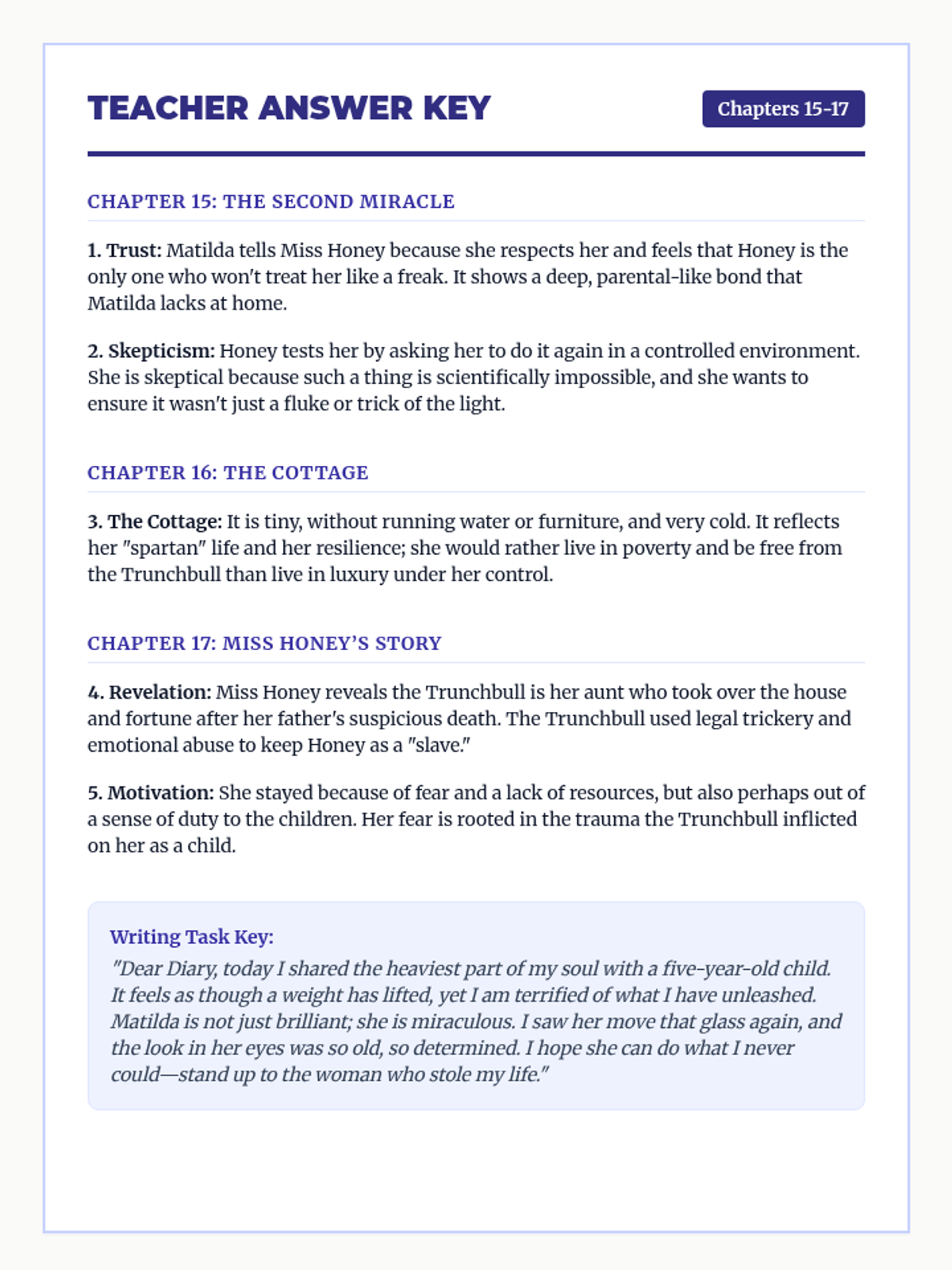
Matilda shares her secret with Miss Honey and discovers the heartbreaking truth about Miss Honey's past (Chapters 15-17).
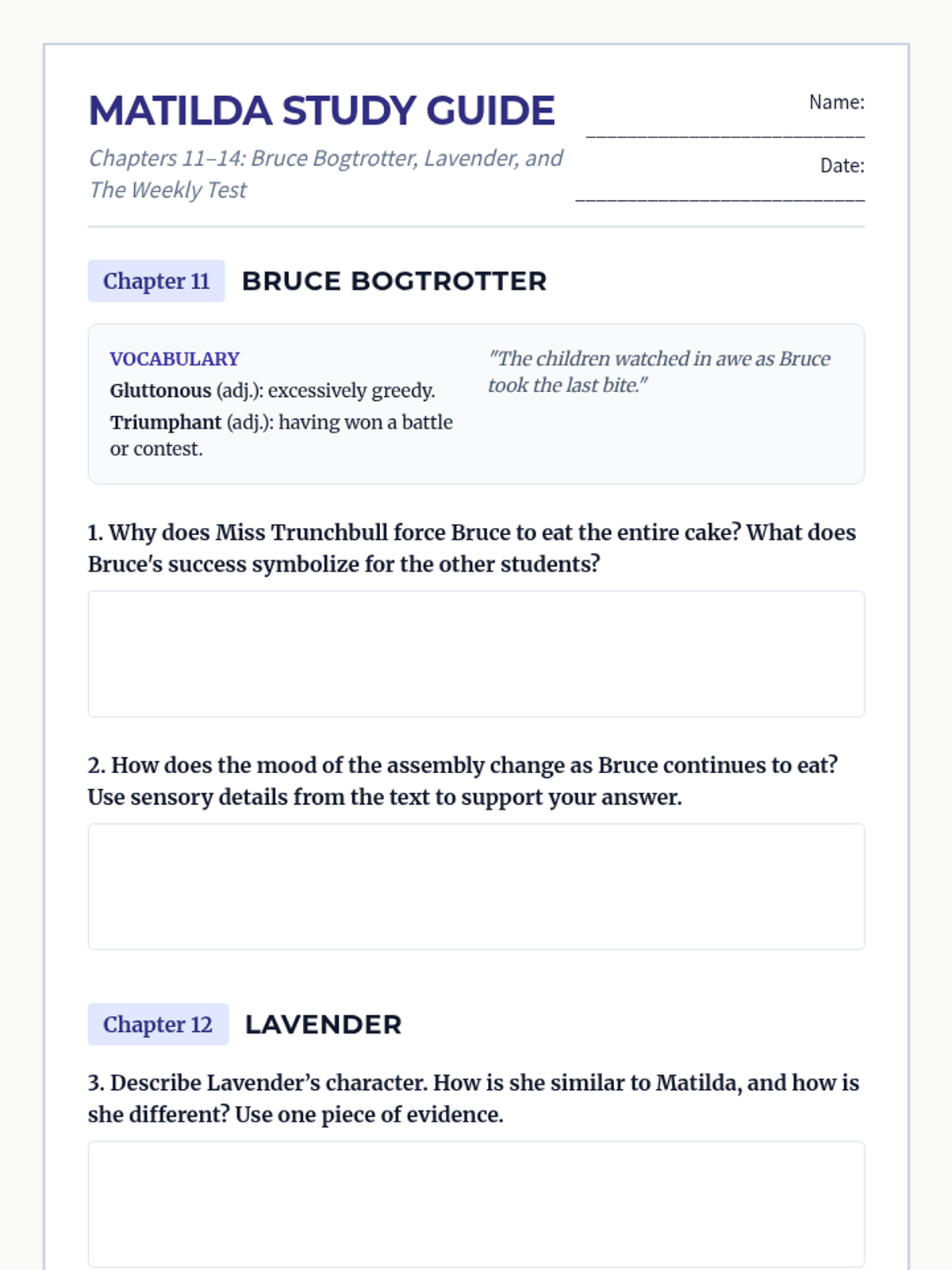
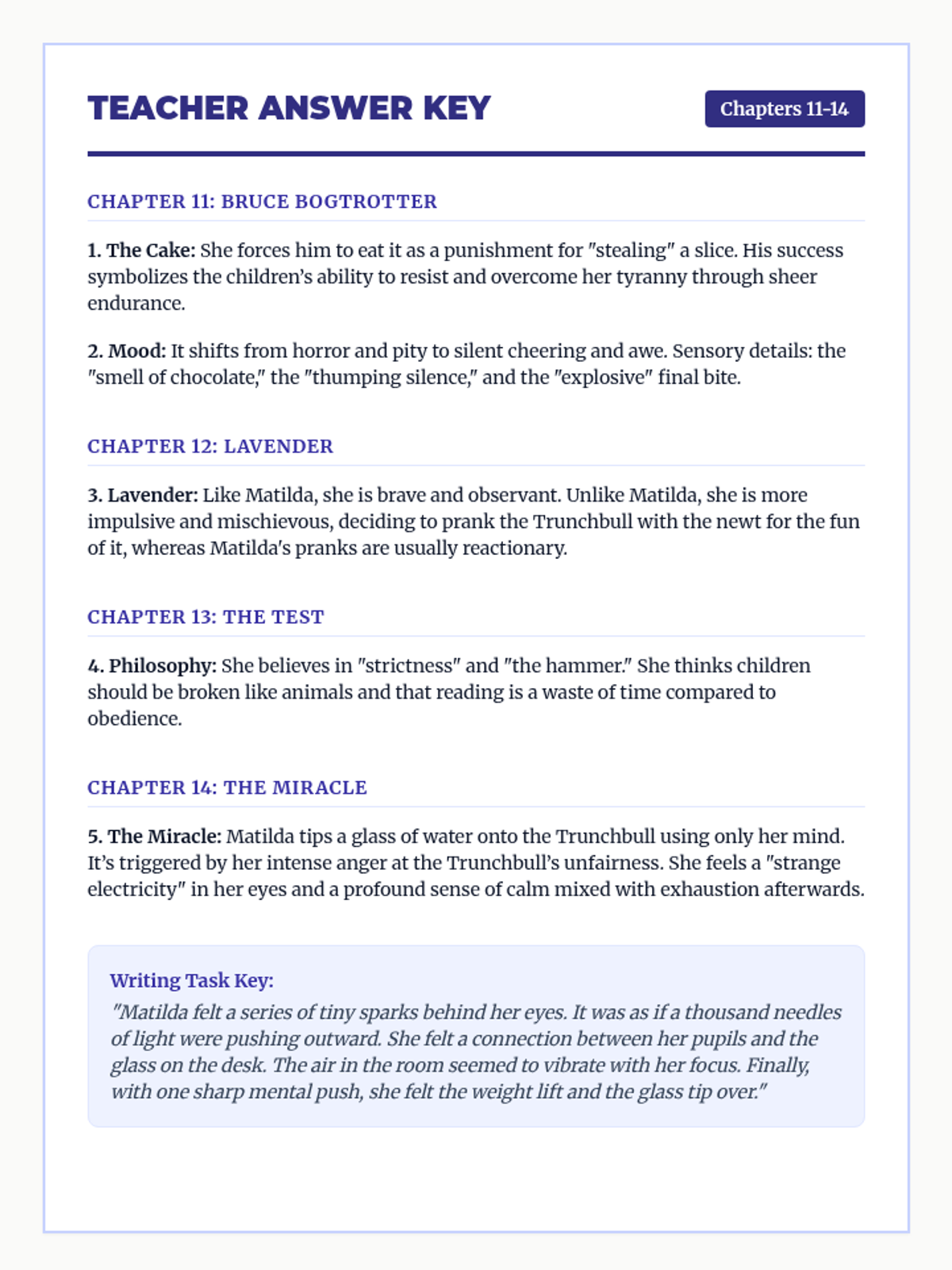
Bruce Bogtrotter's heroic feat and the introduction of Lavender's prank (Chapters 11-14).
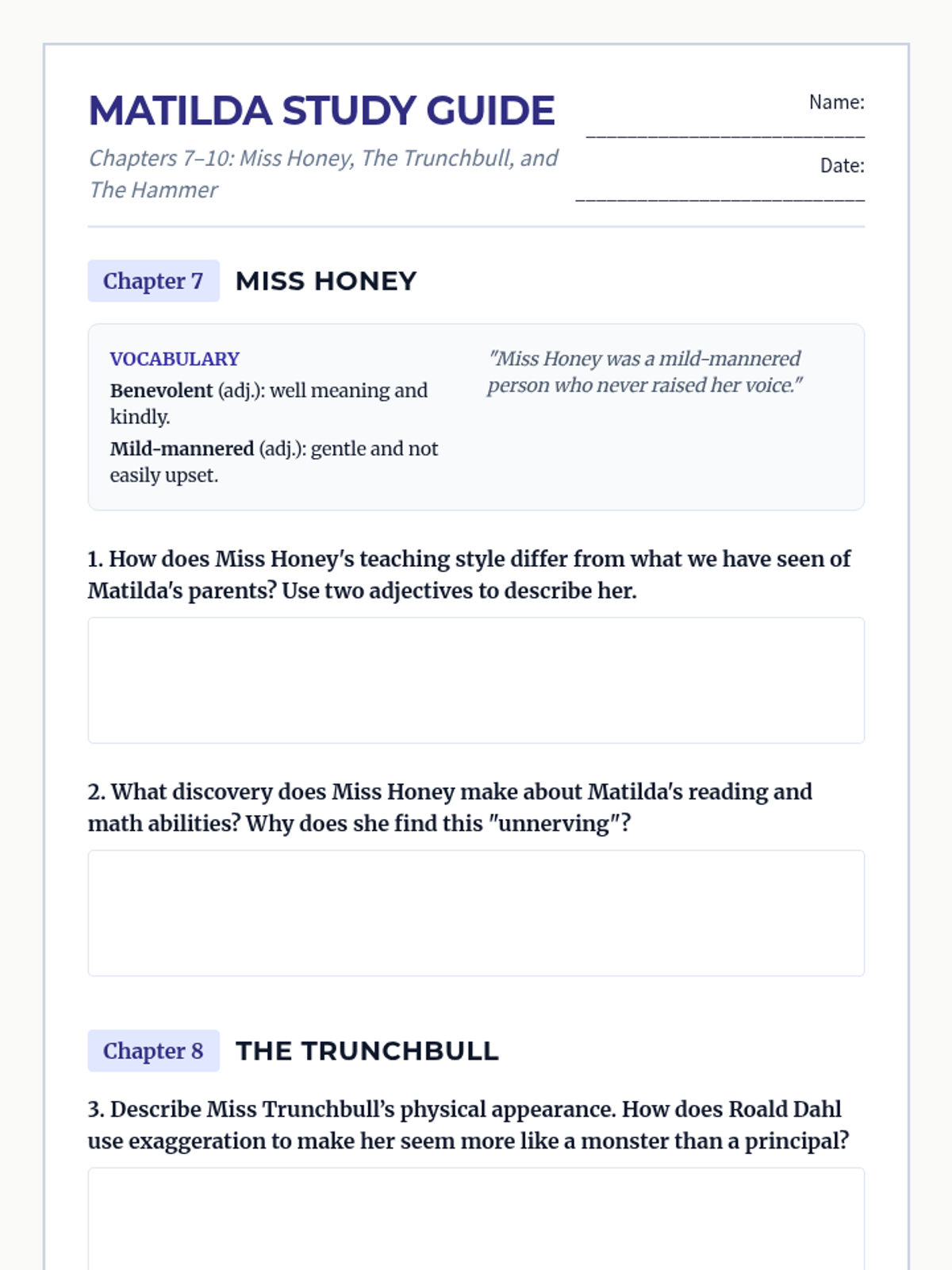
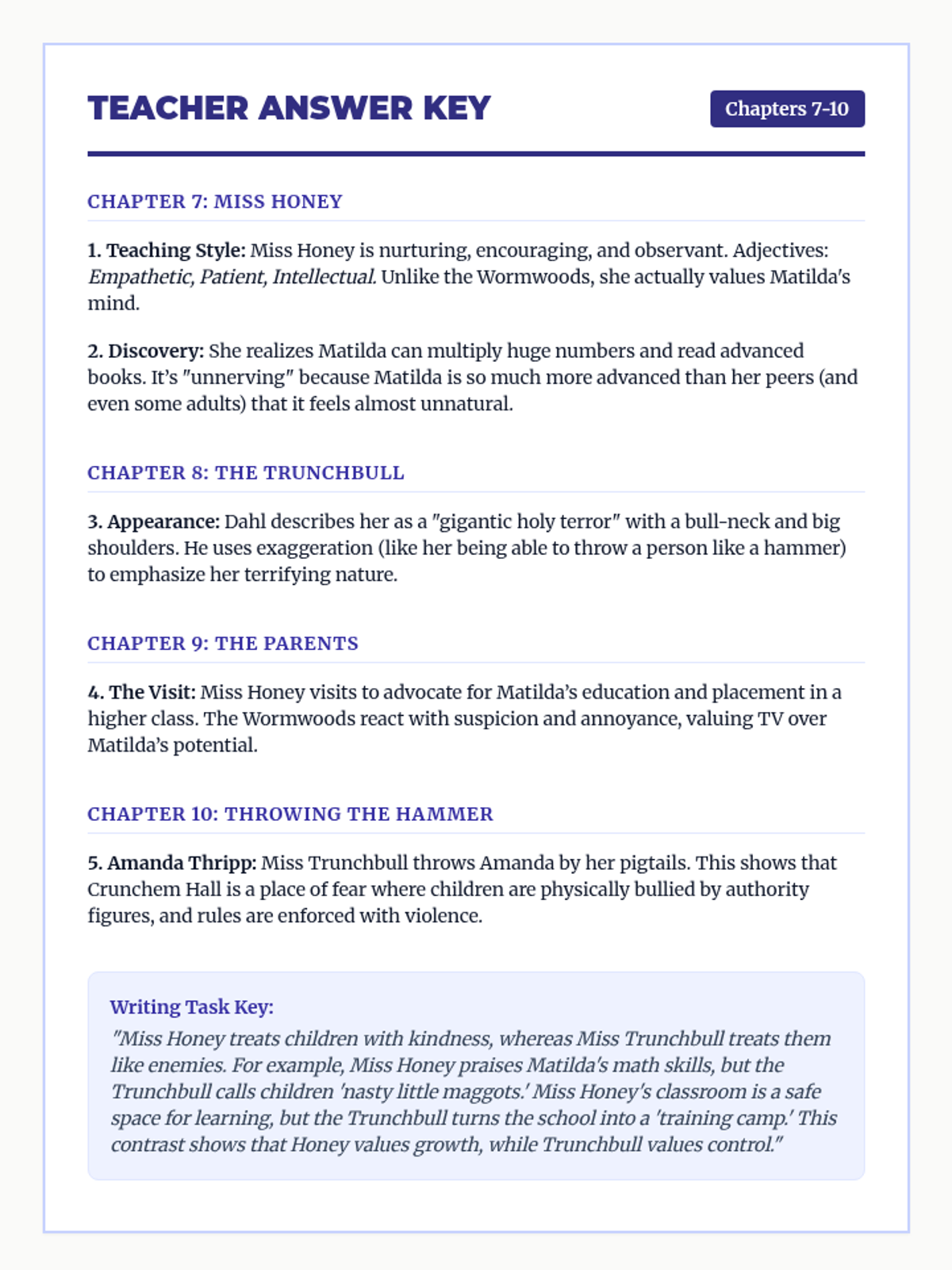
Matilda begins school at Crunchem Hall and meets the angelic Miss Honey and the terrifying Miss Trunchbull (Chapters 7-10).
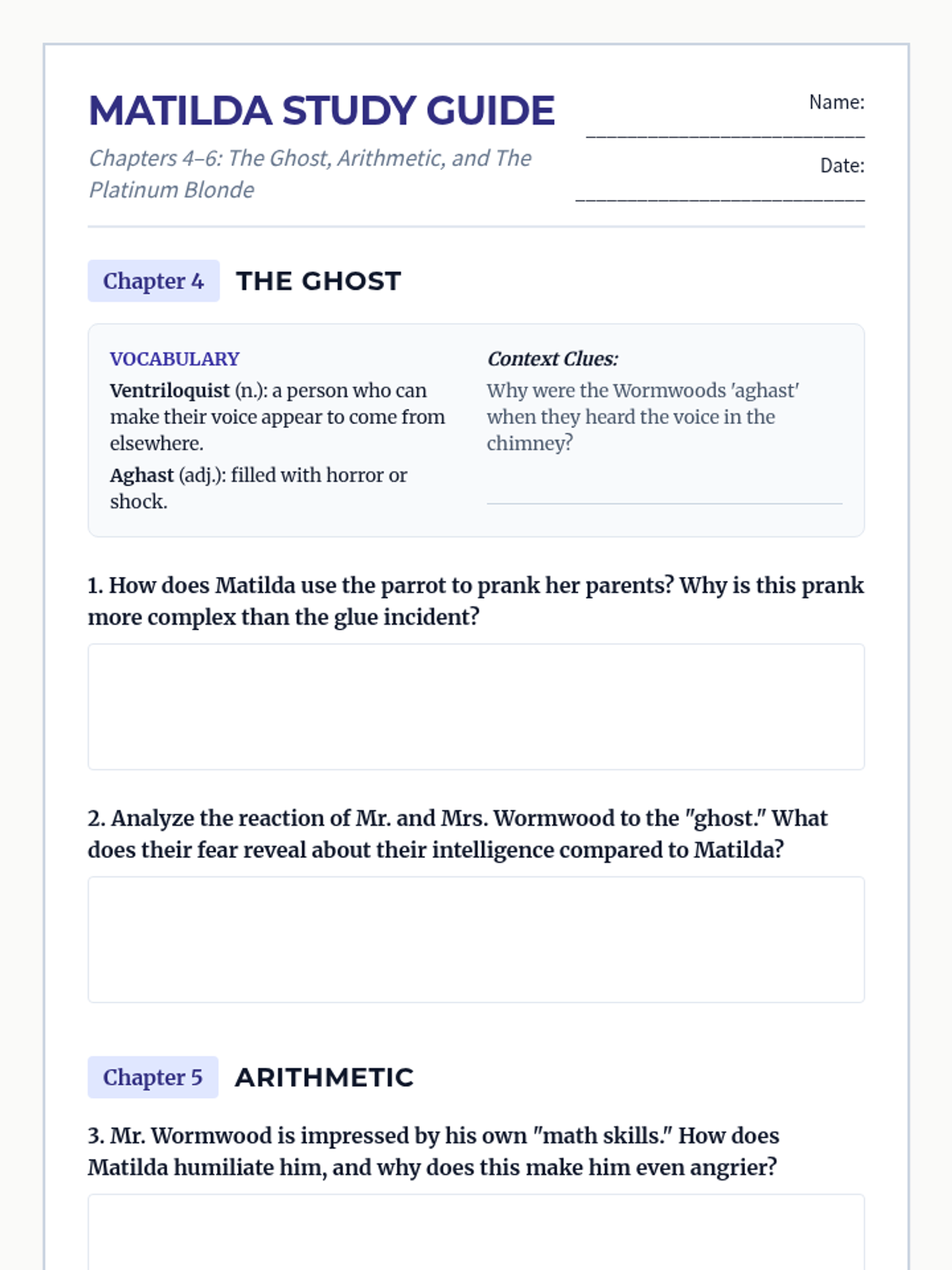
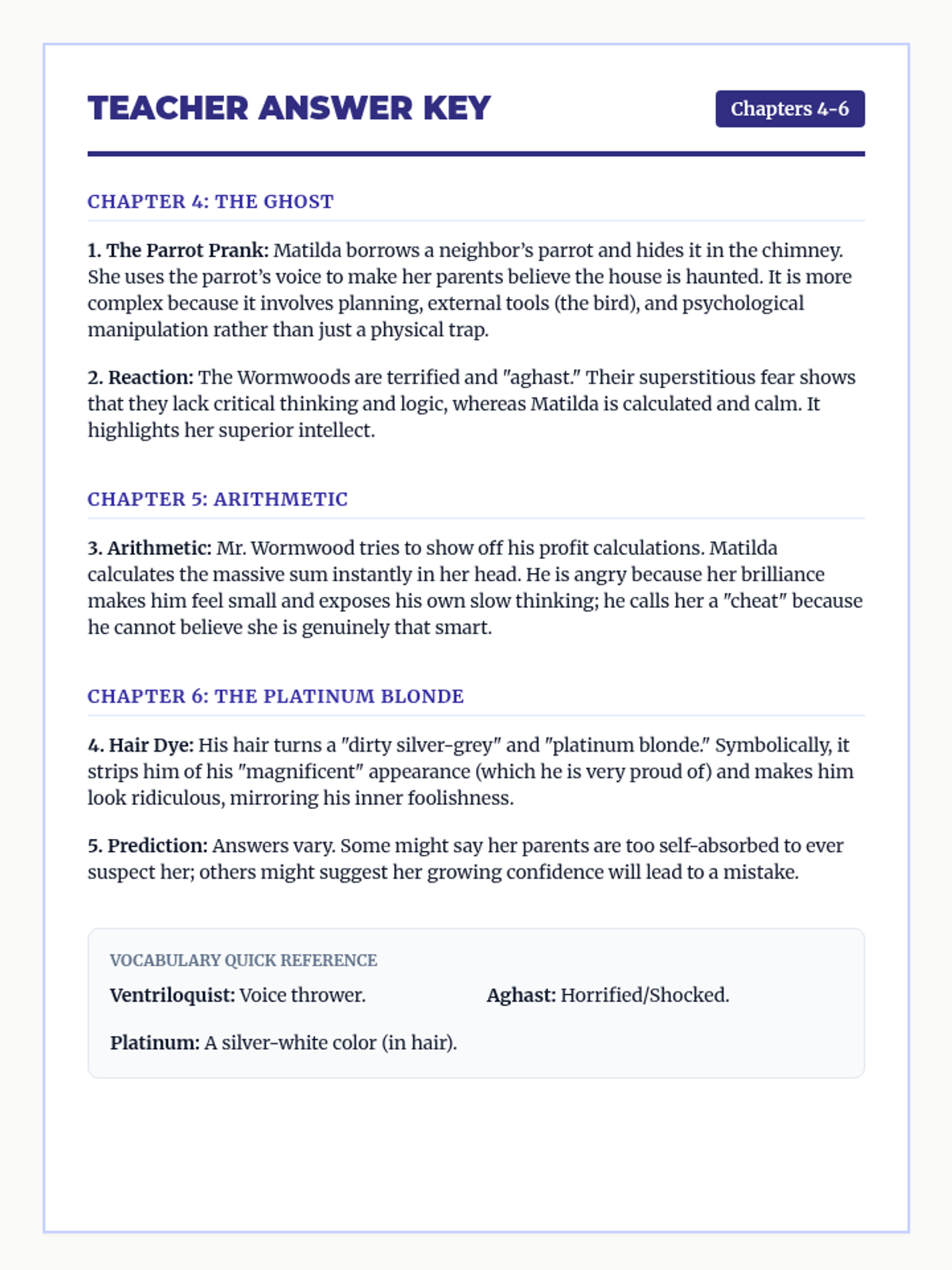
Matilda's escalating war of wits with her father and the introduction of her psychic potential (Chapters 4-6).
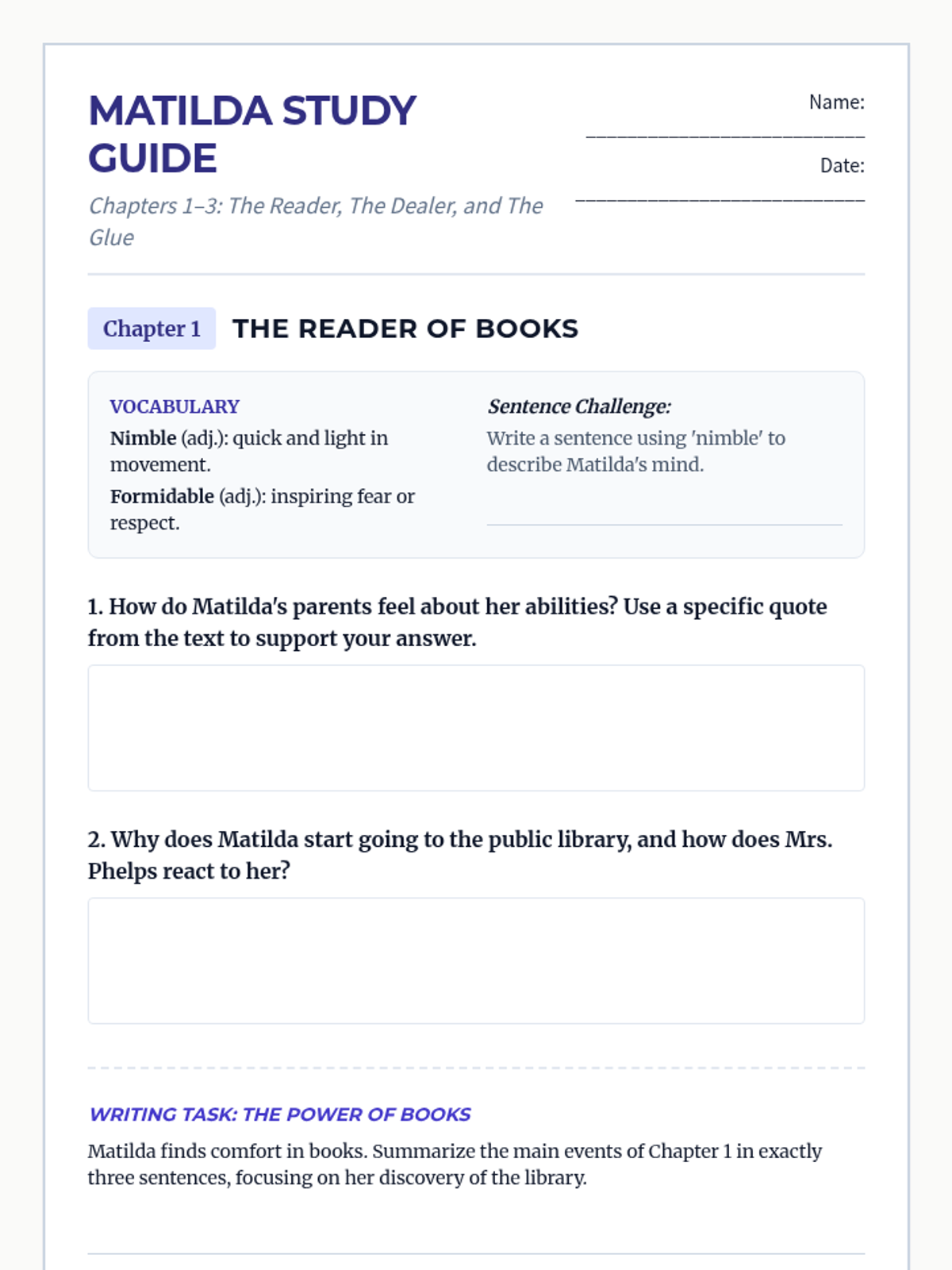
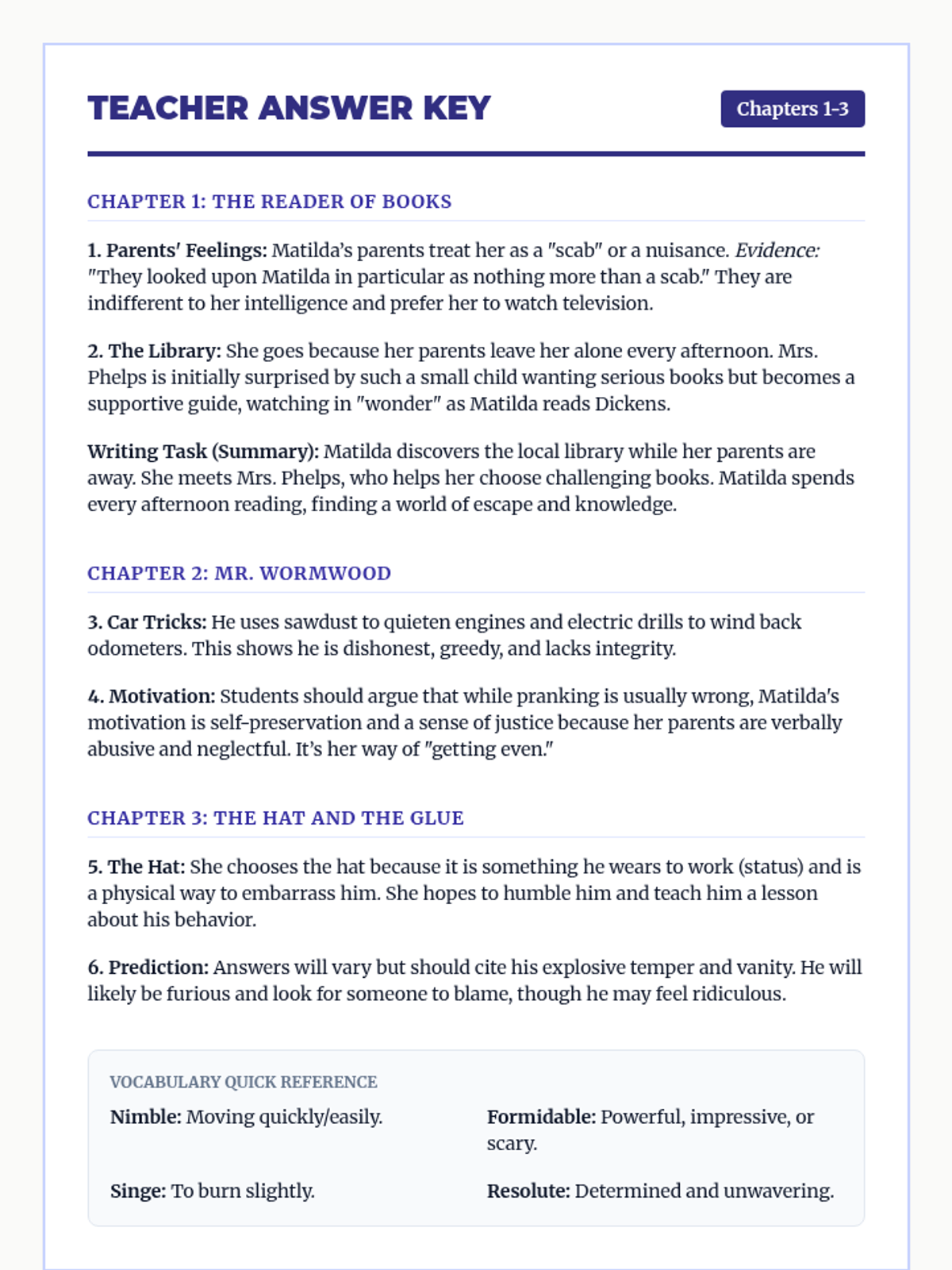
Introduction to Matilda, her family, and her incredible love for reading (Chapters 1-3).
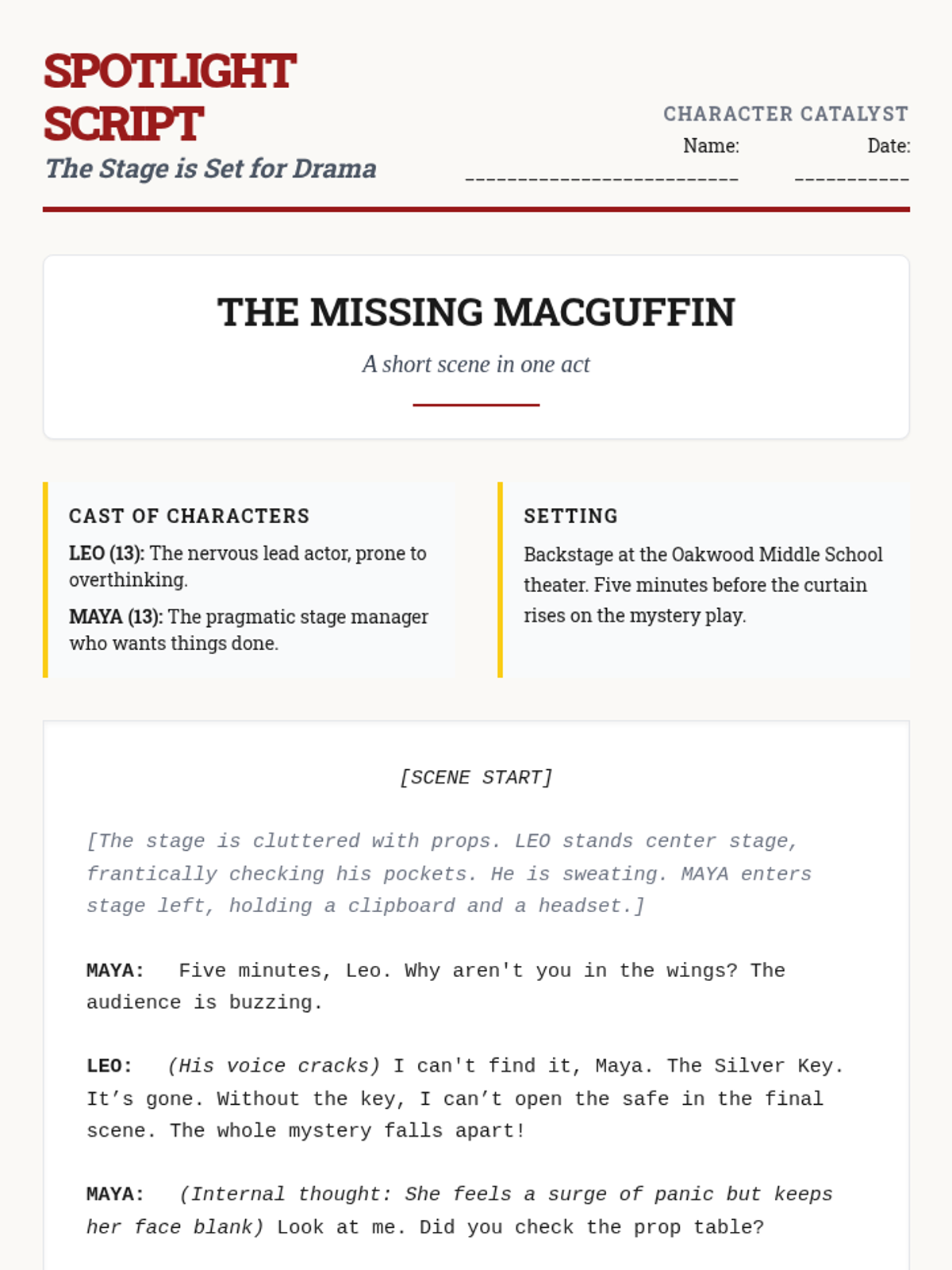
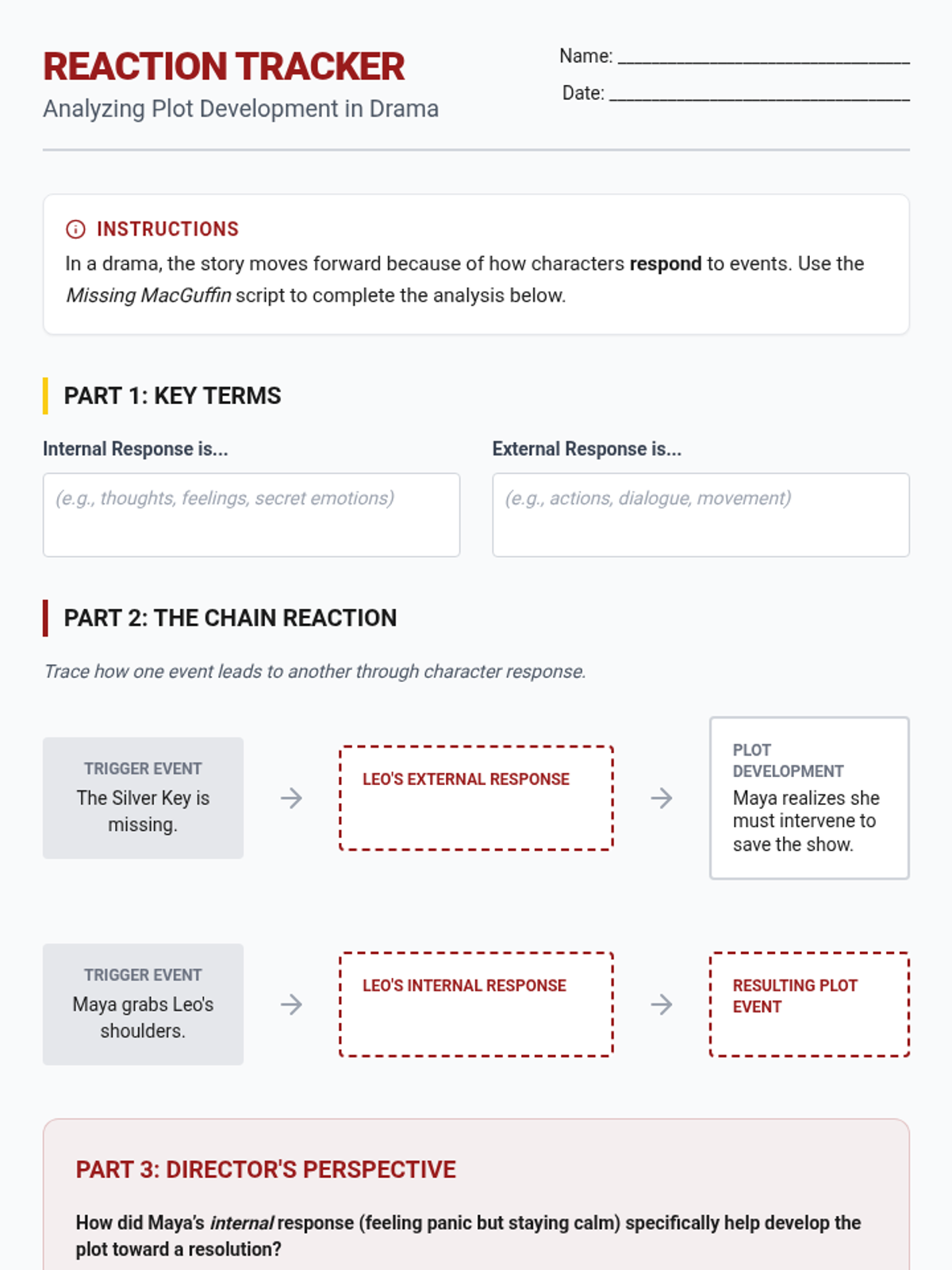
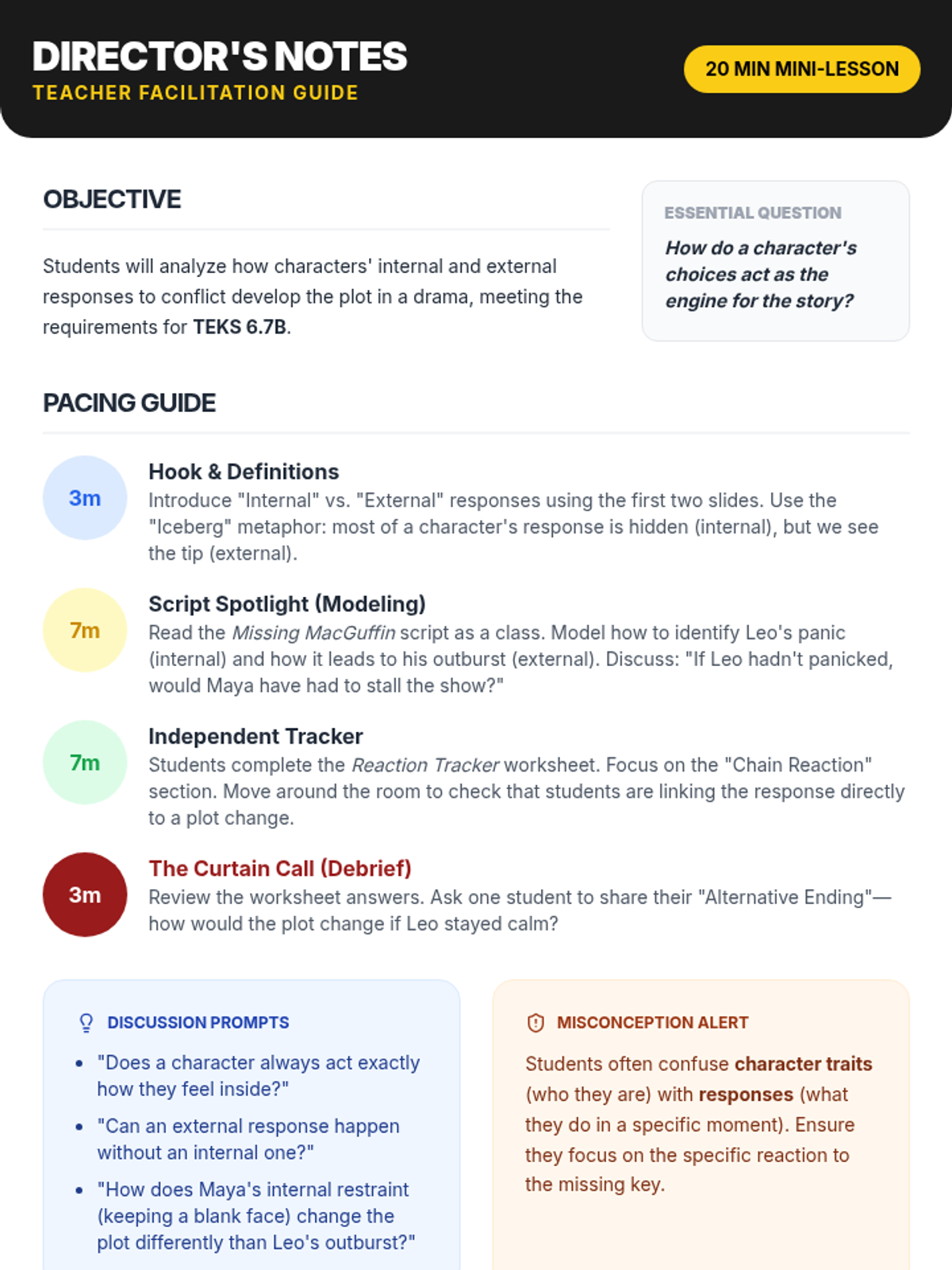
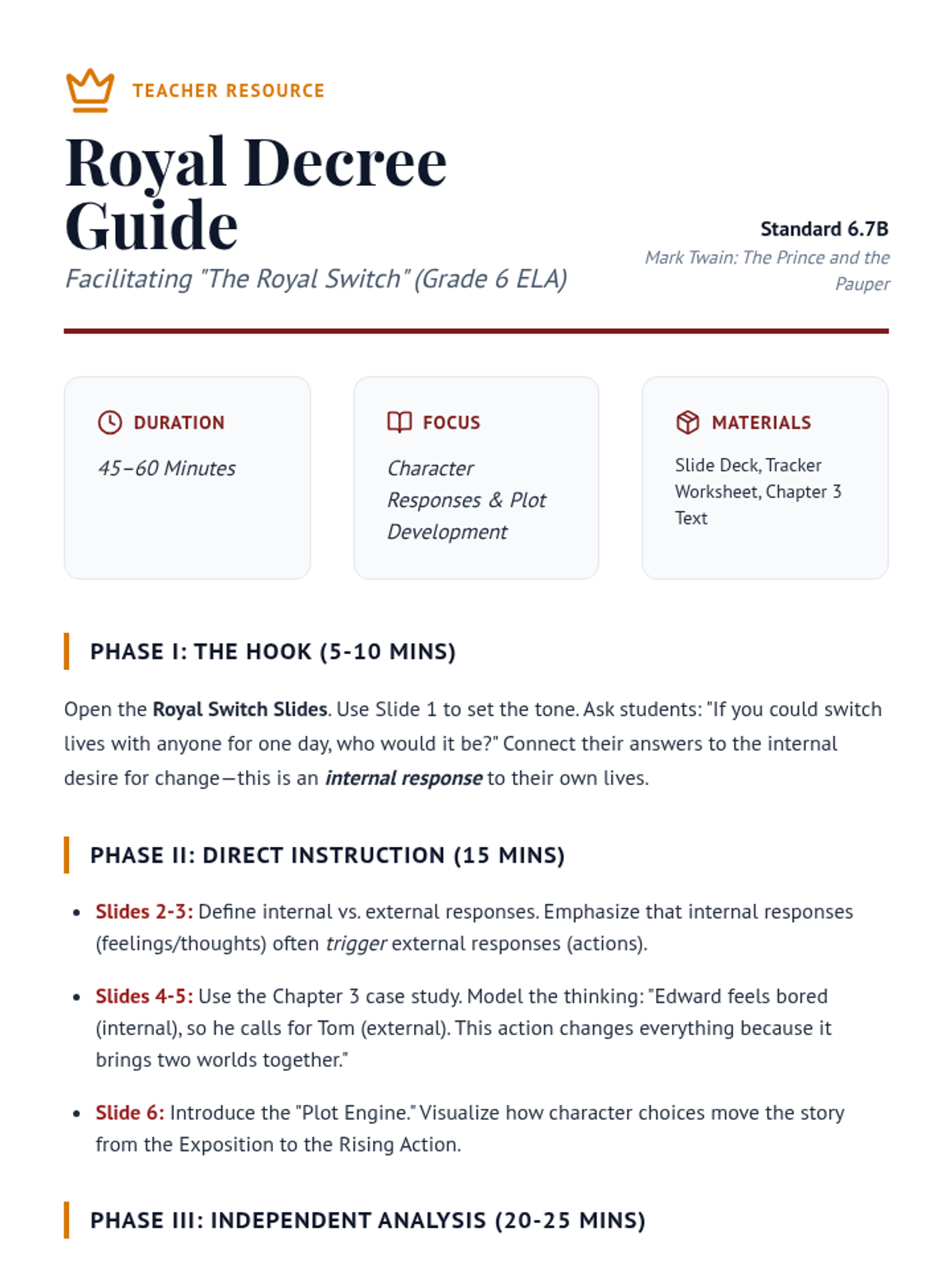
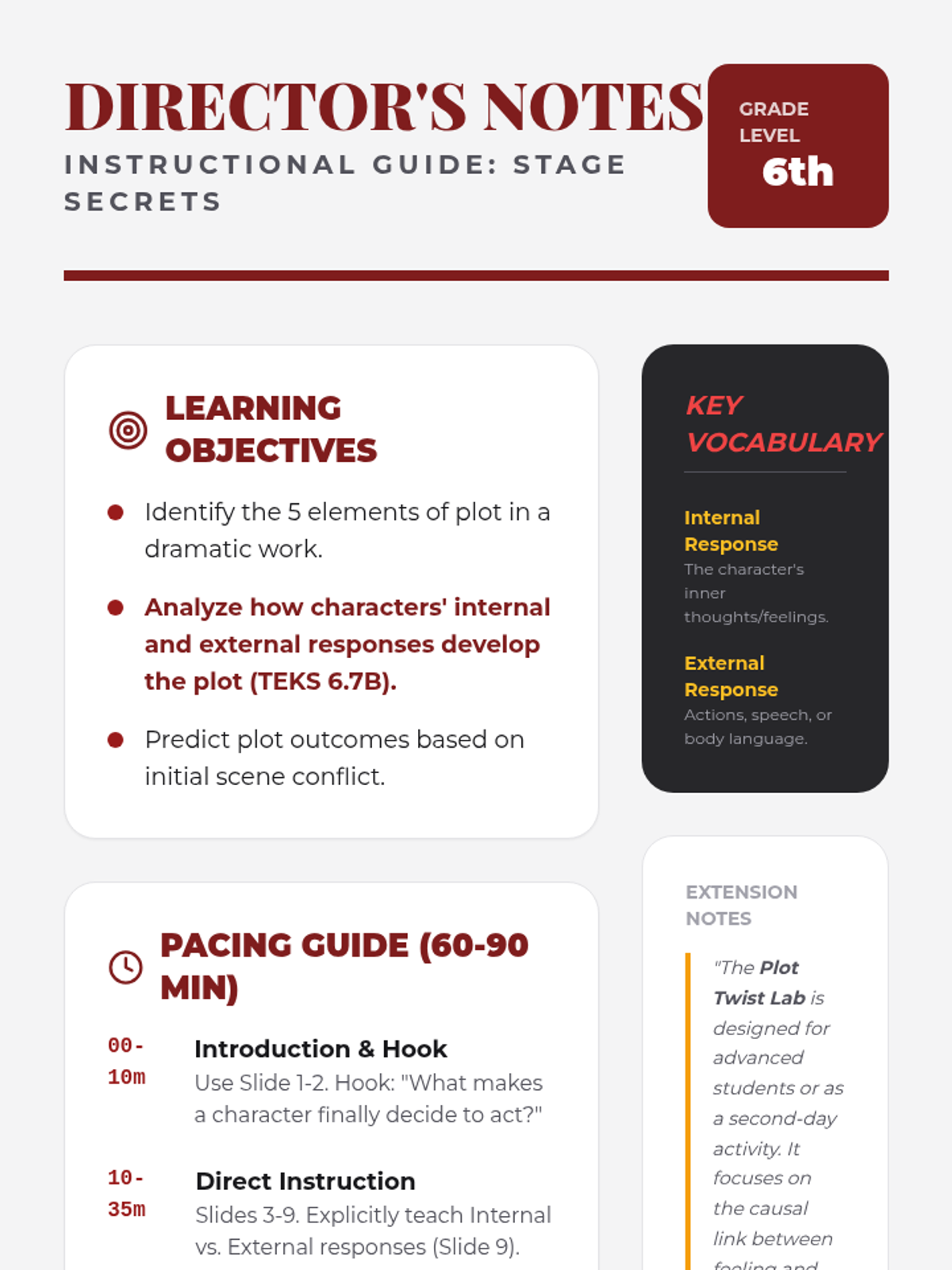
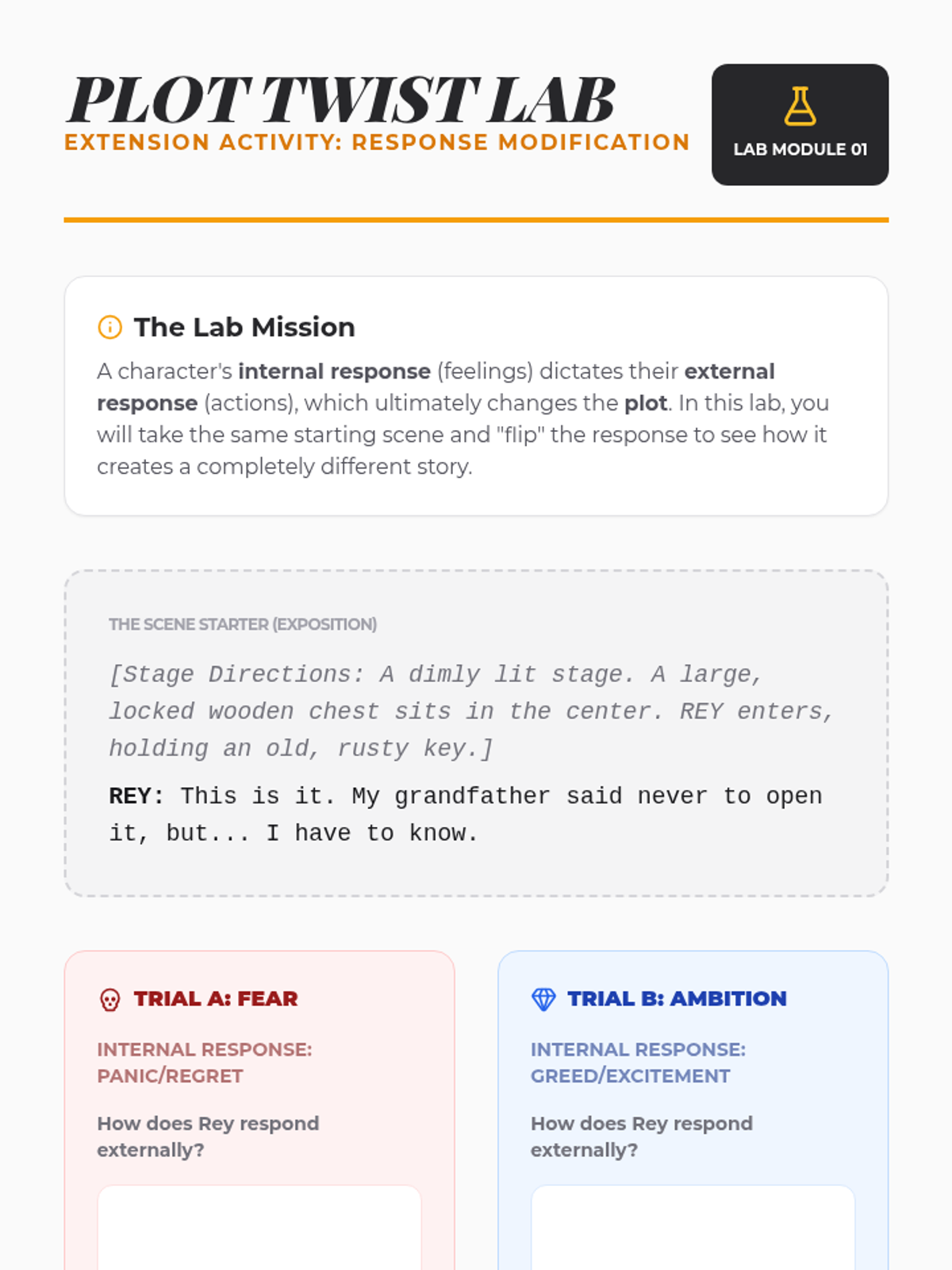
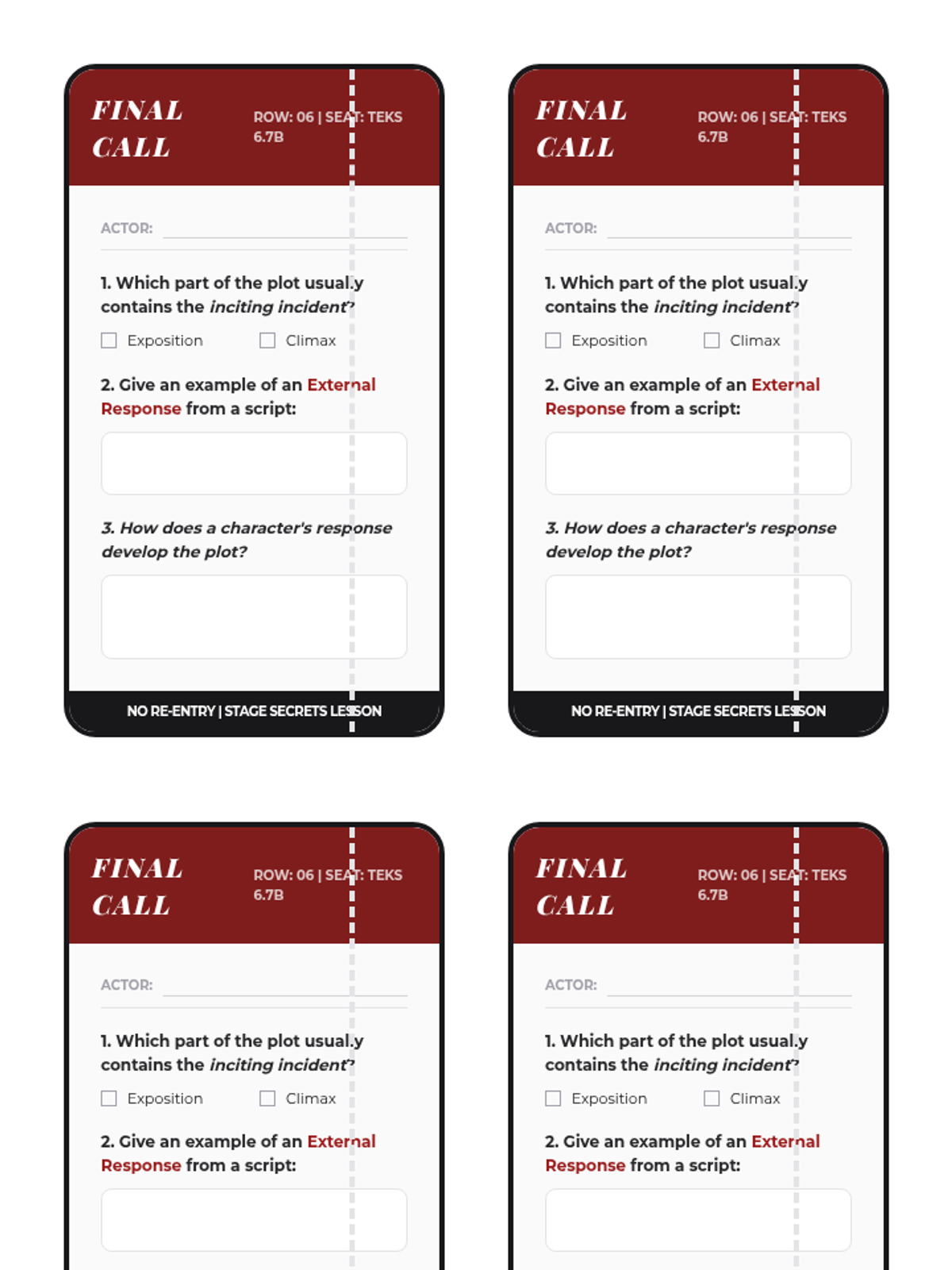
A 20-minute mini-lesson focused on TEKS 6.7B, exploring how character's internal and external responses drive the plot of a drama. Students will analyze a short script to see the 'cause and effect' of character choices.
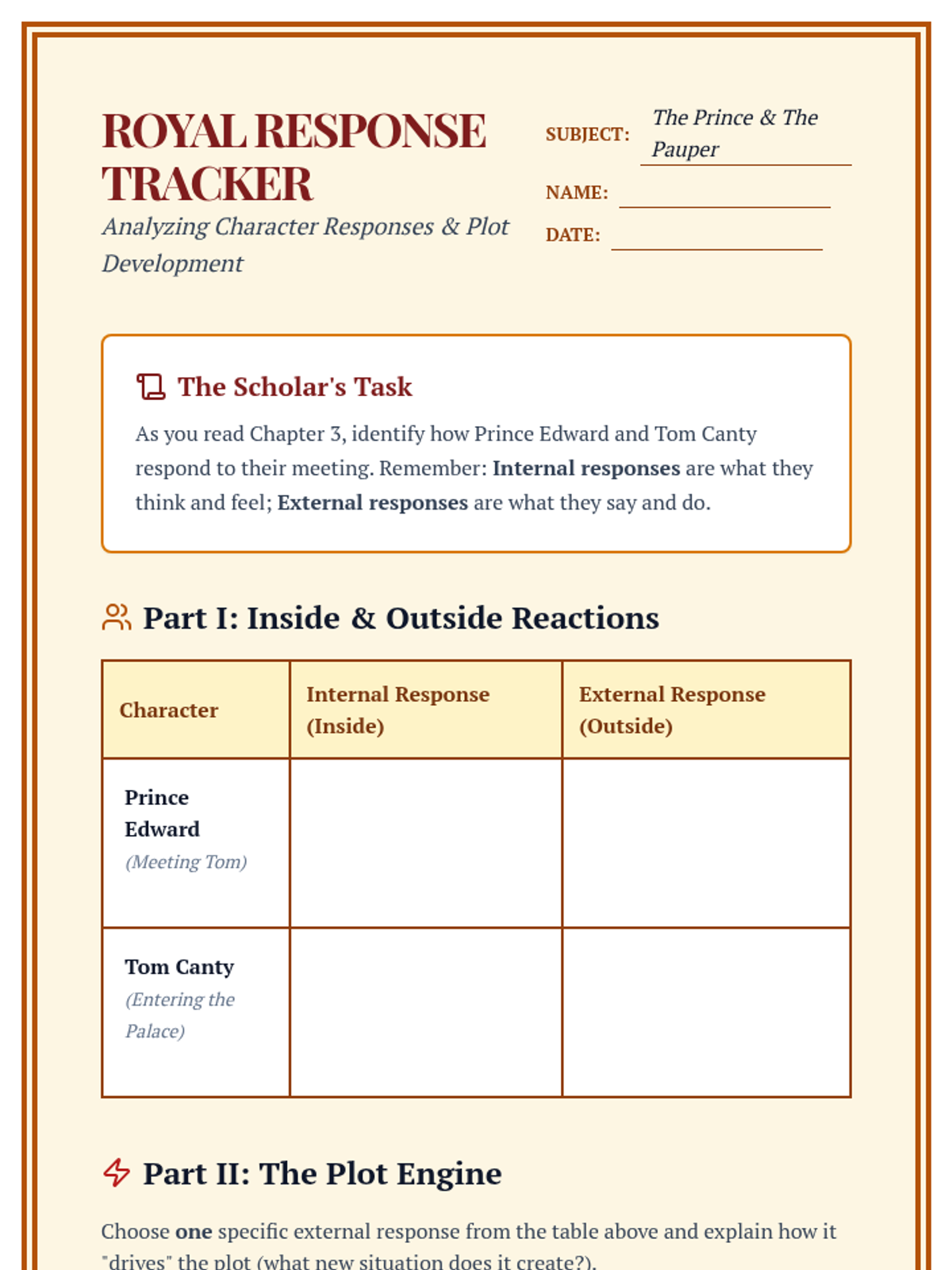
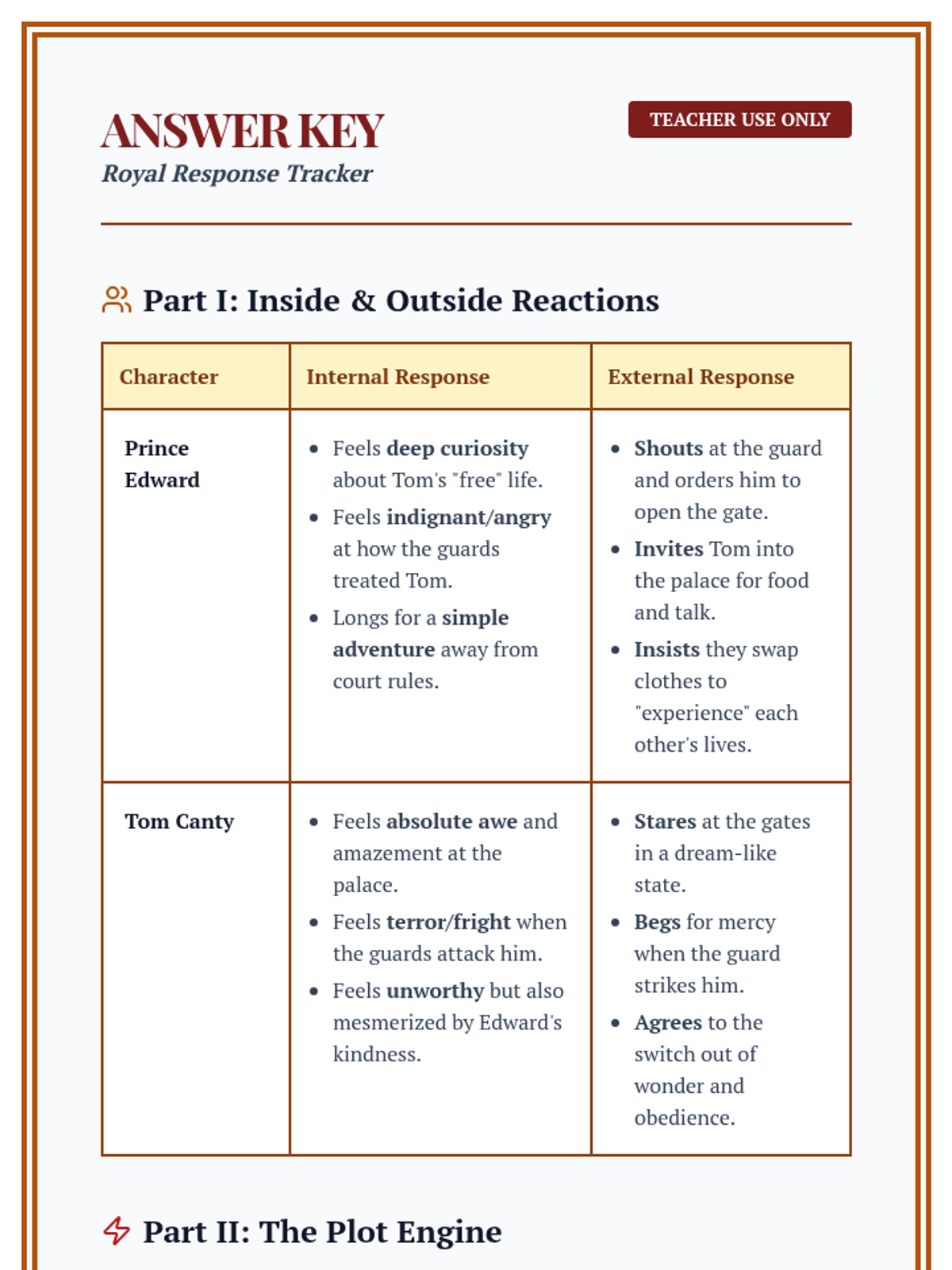
A lesson analyzing how Tom Canty and Prince Edward's internal and external responses to their initial meeting and clothing swap drive the plot of The Prince and the Pauper.
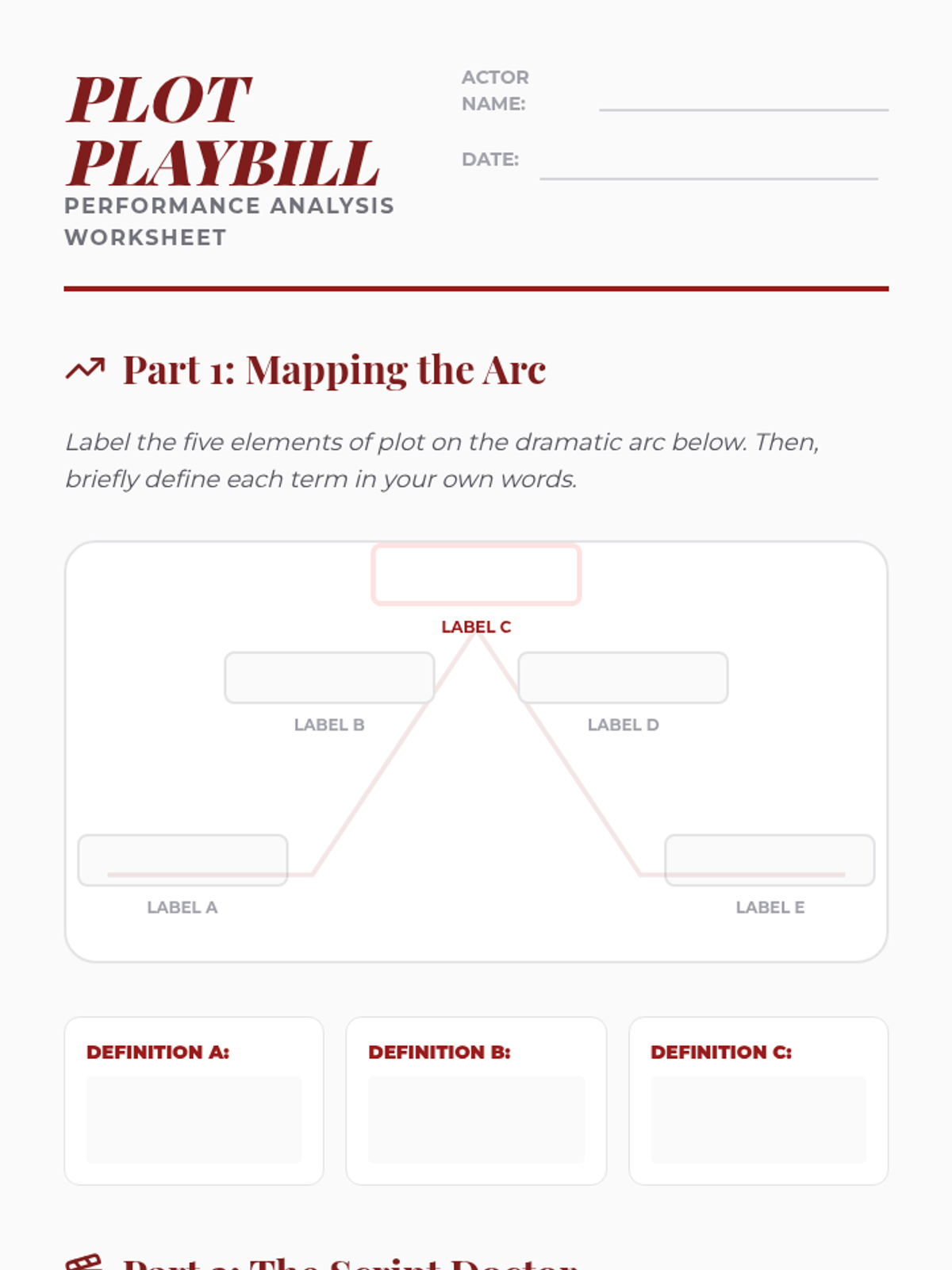
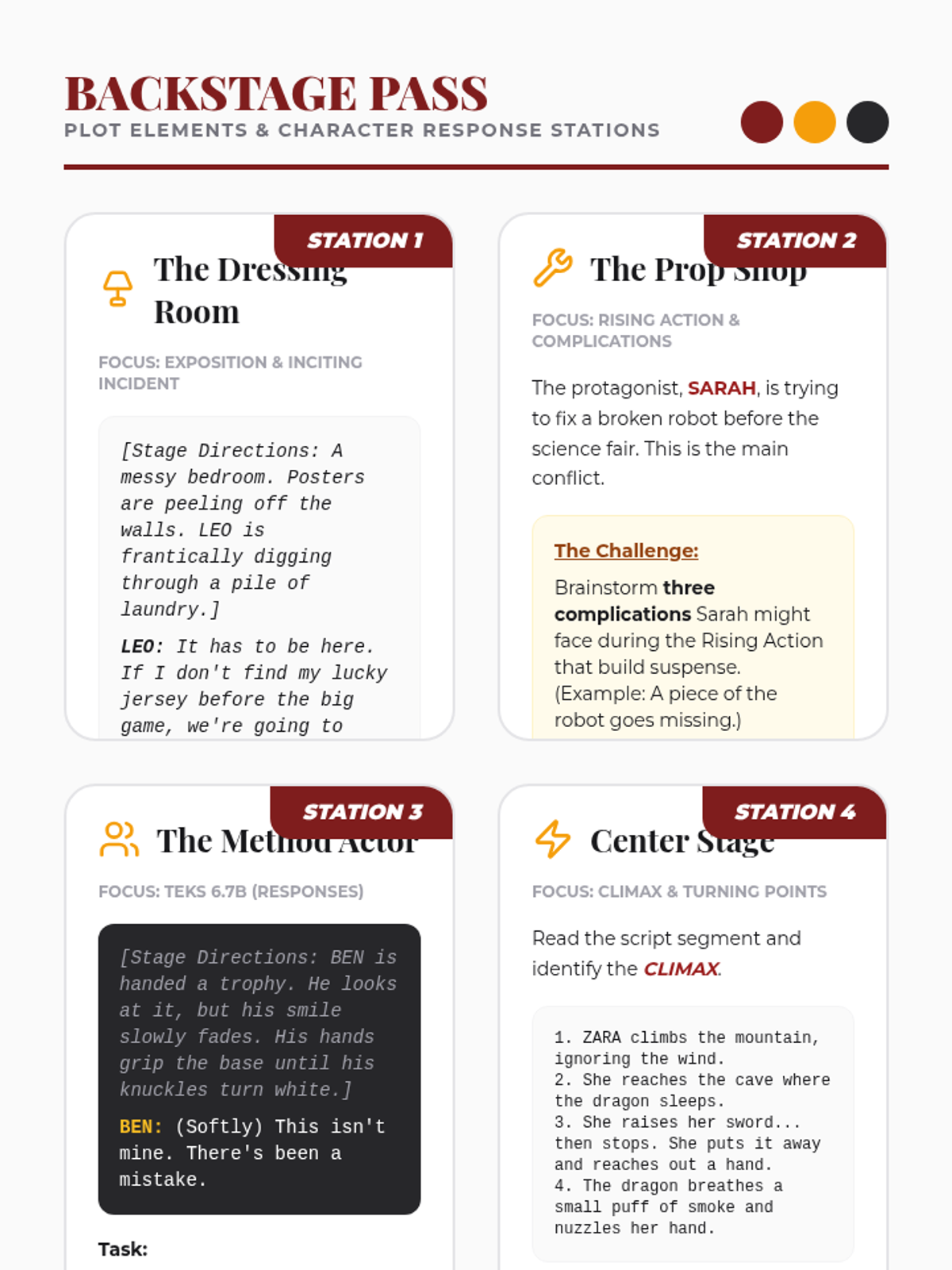
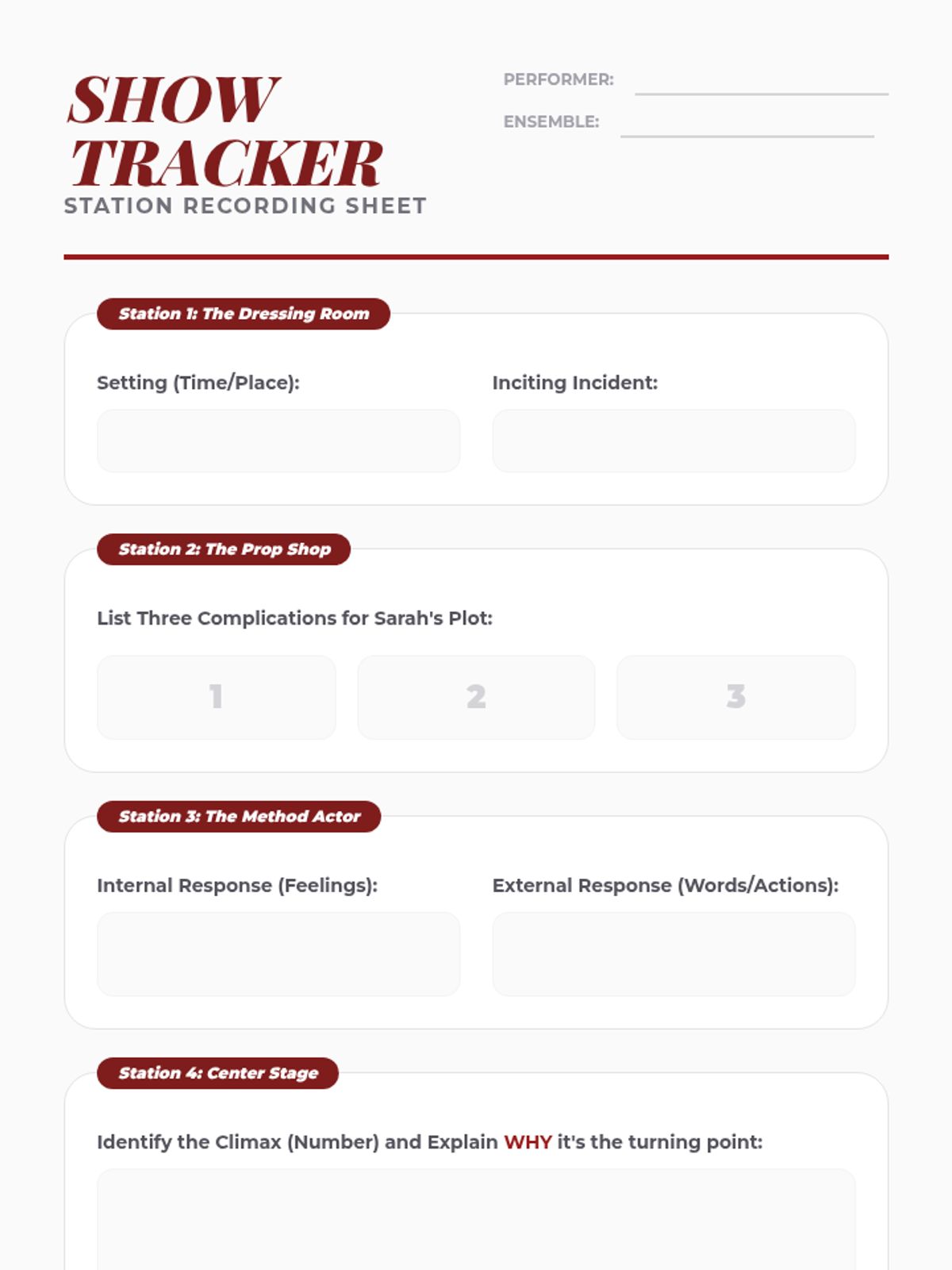
Students will explore the five elements of plot specifically within the context of dramatic scripts, learning how playwrights build tension and resolve conflict on stage.
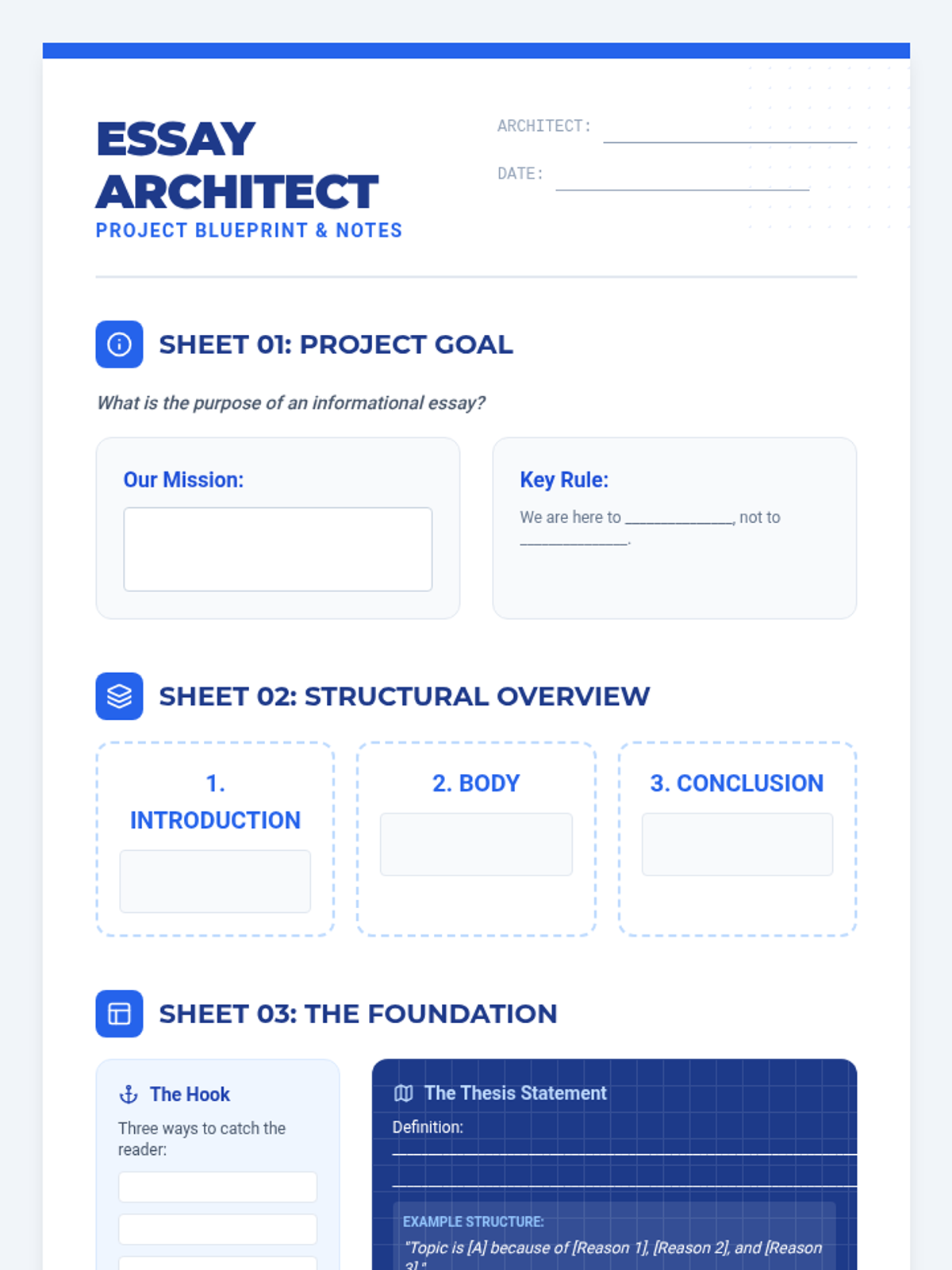
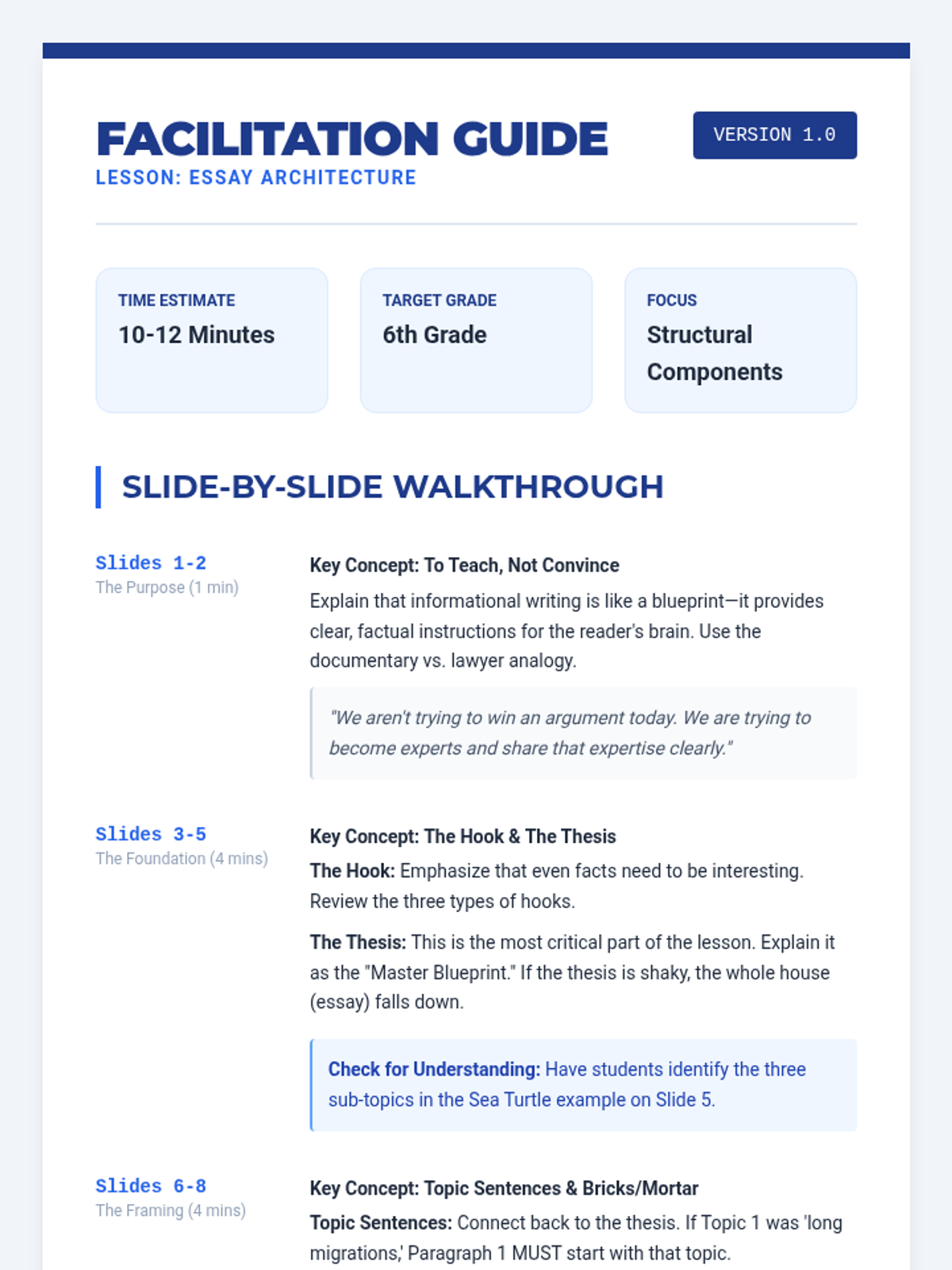
A comprehensive introduction to informational essay structure for 6th graders, using an architectural 'blueprint' theme to explain how essays are built from the ground up.
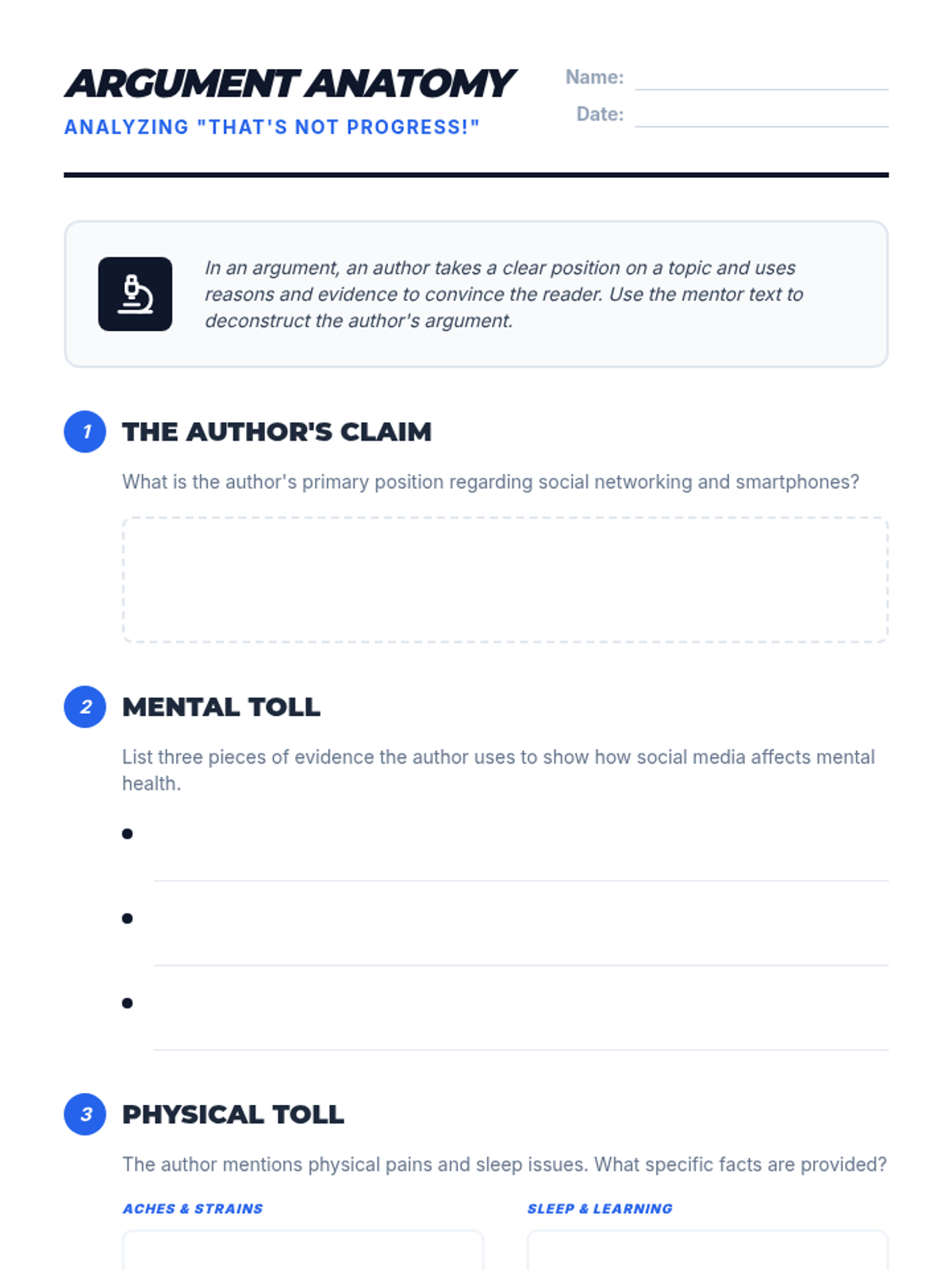
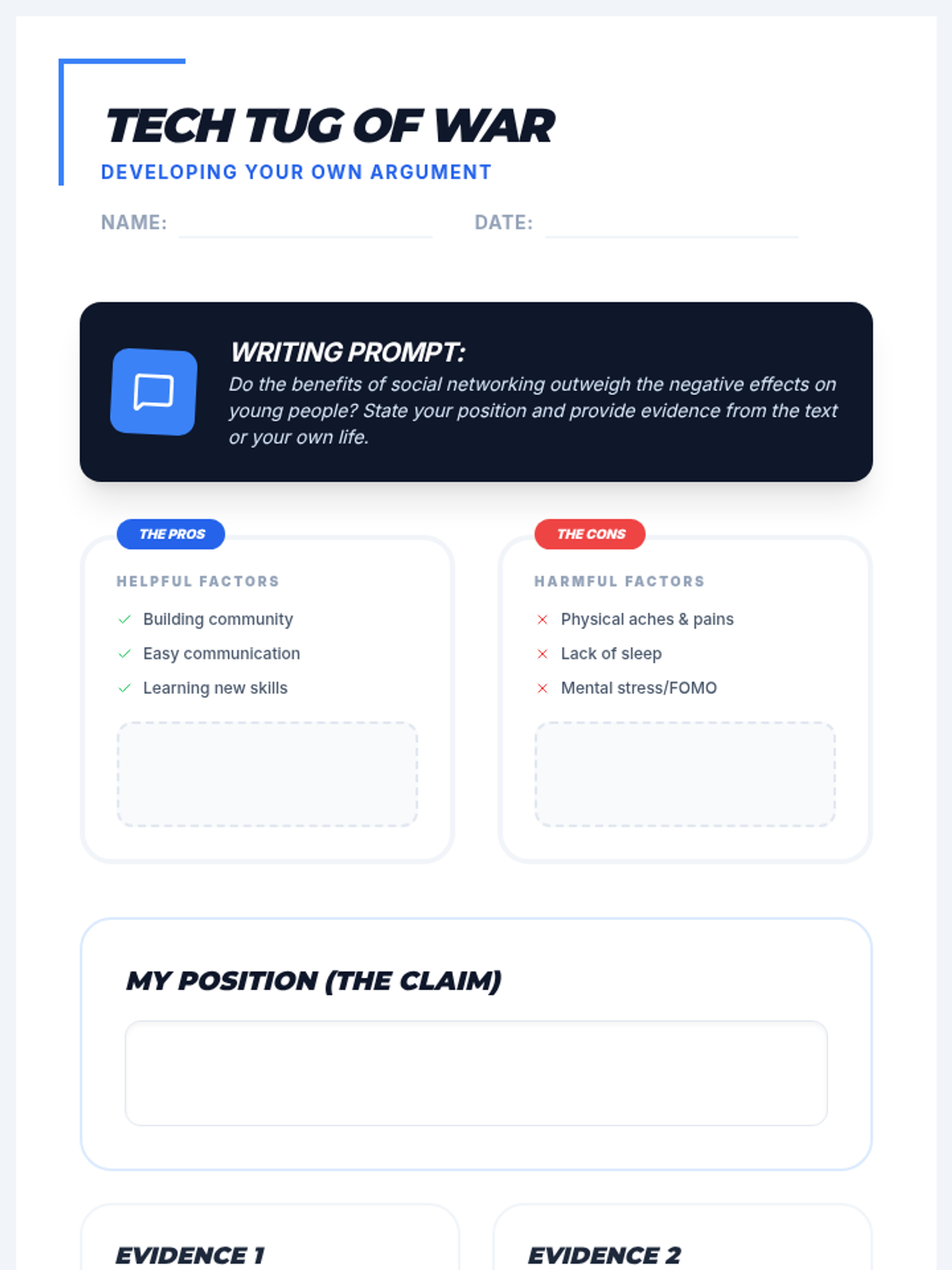
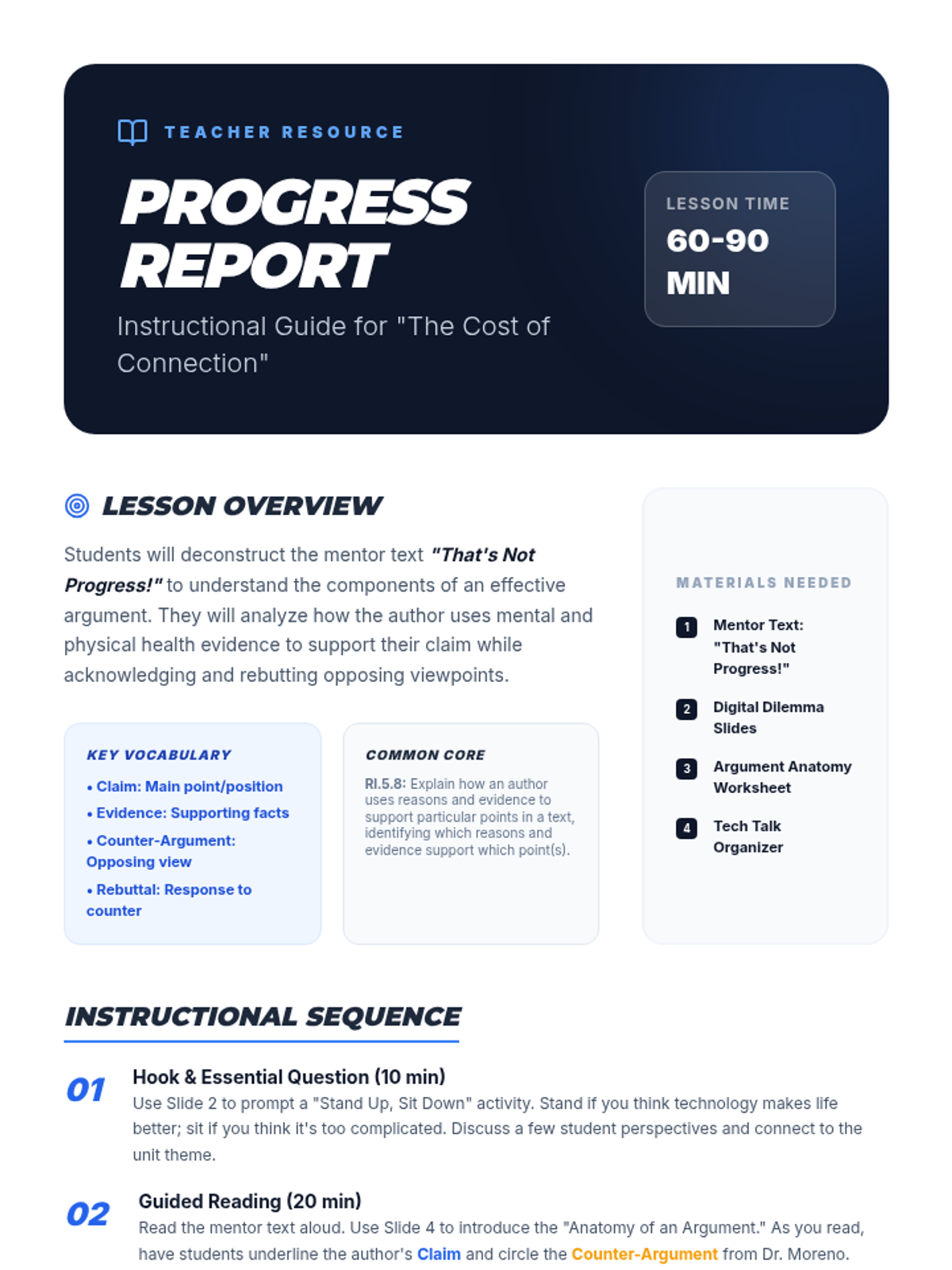
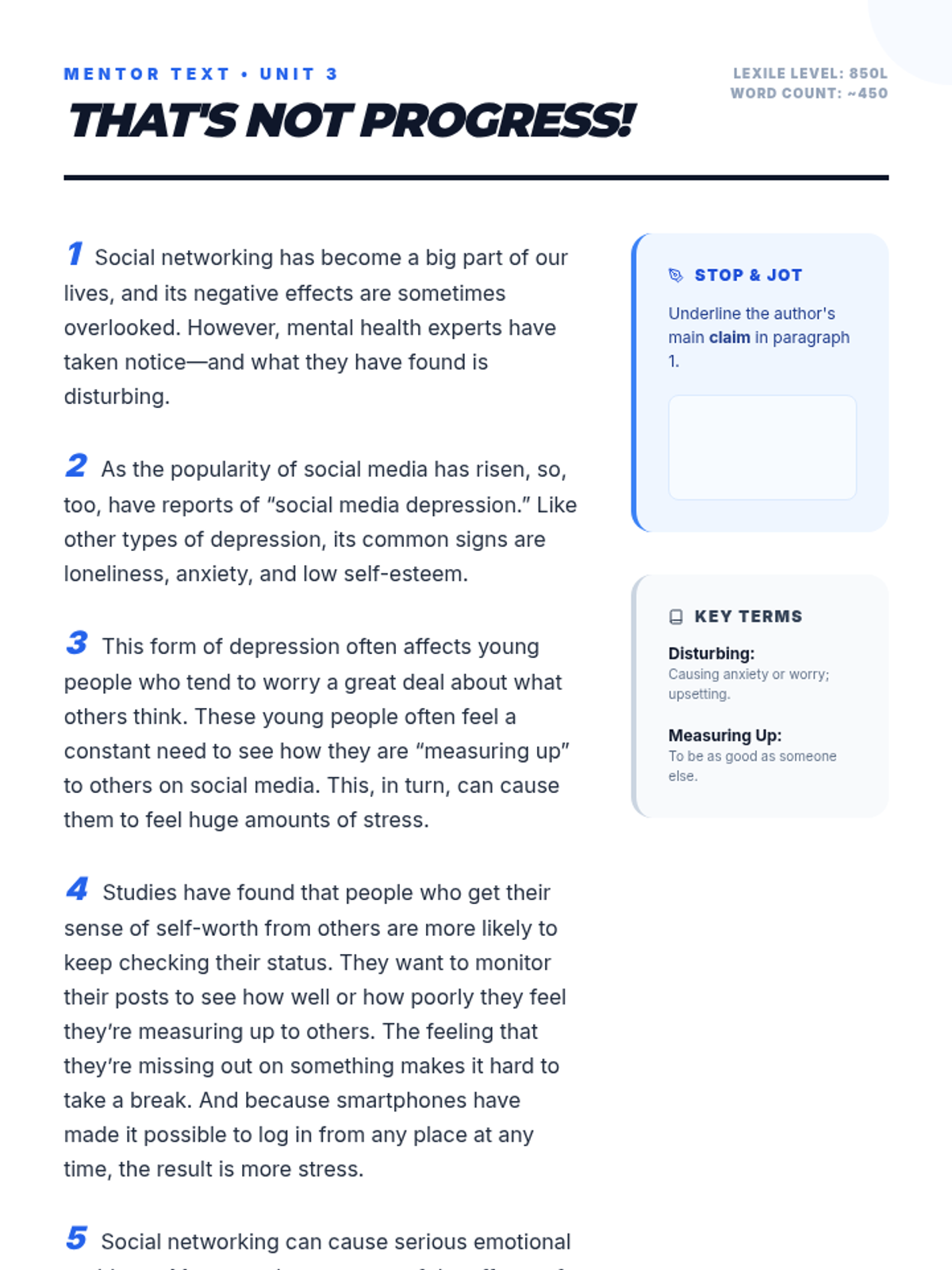
A 5th-grade ELA lesson focused on deconstructing an argumentative text about the impact of social media and technology on mental and physical health. Students analyze claims, evidence, and counter-arguments using the mentor text 'That's Not Progress!'