Applies graph theory to literary texts to visualize and compare social structures and character centrality in dramatic and narrative works.
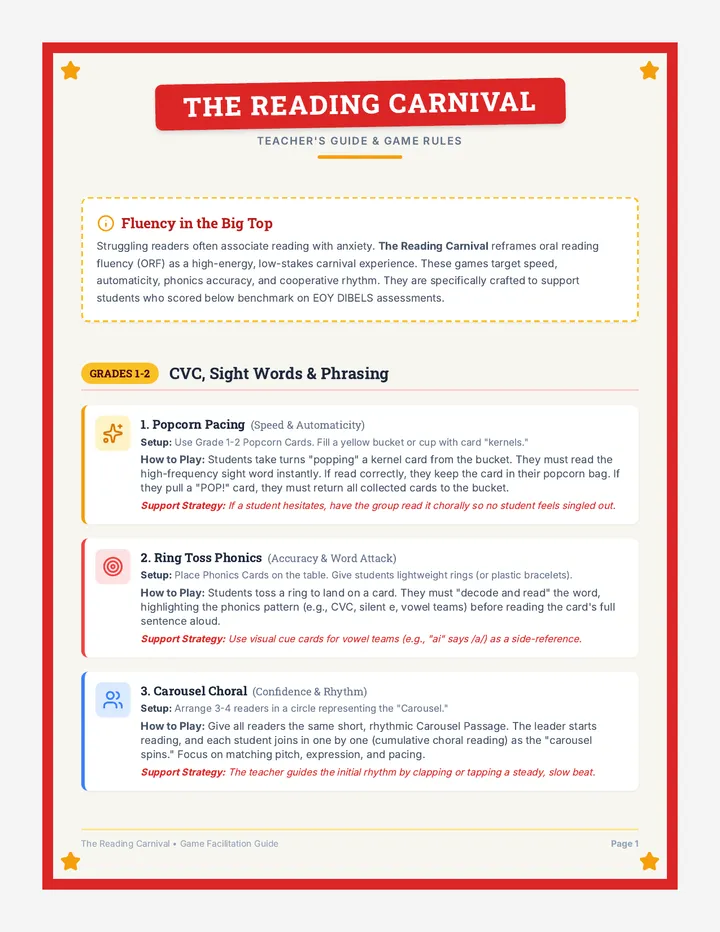
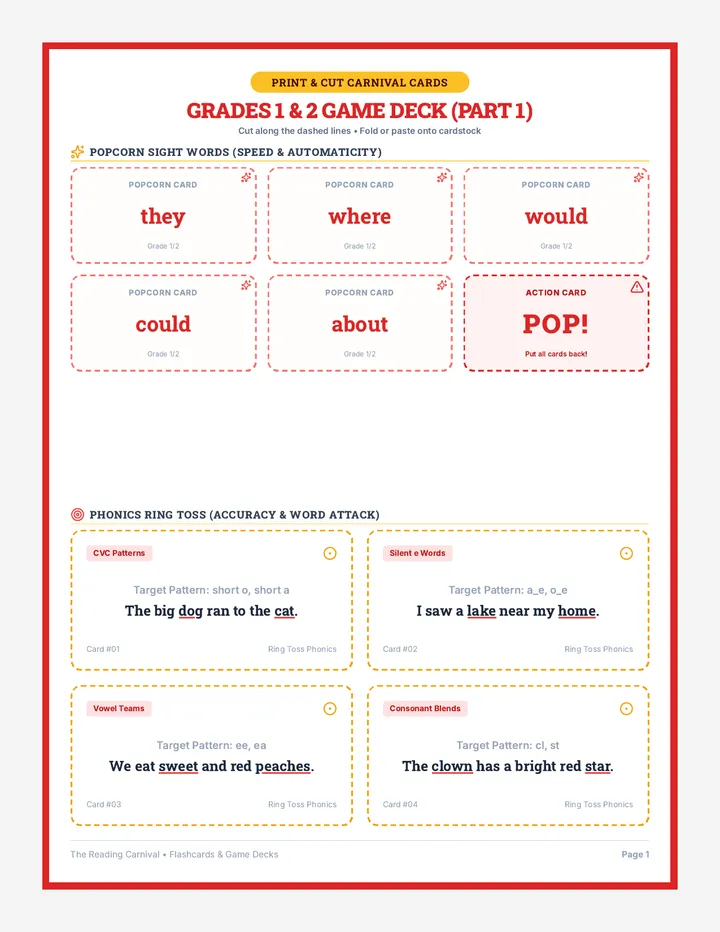
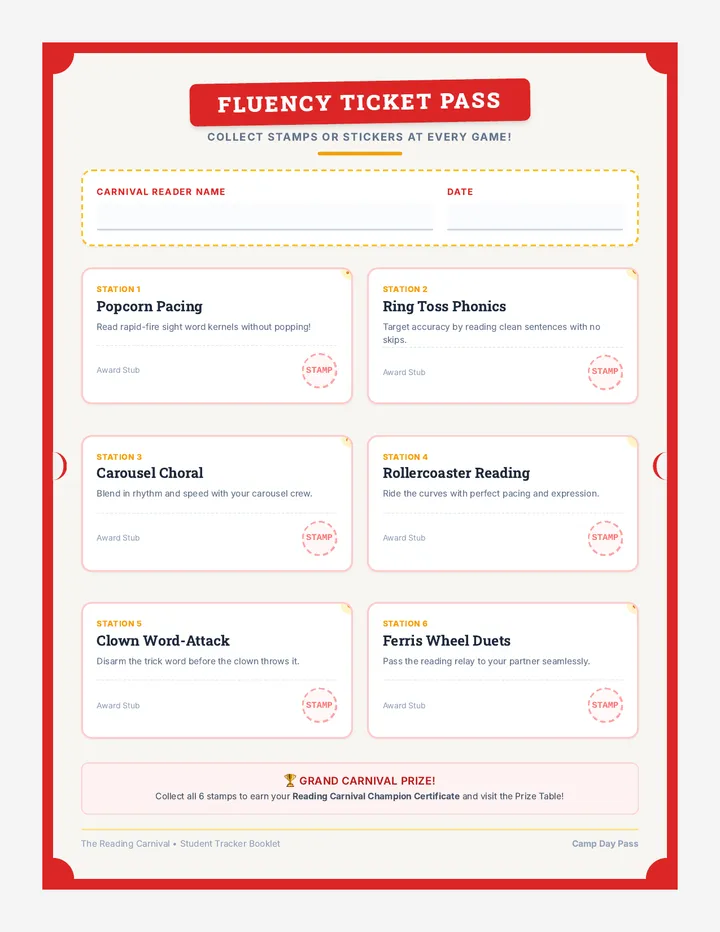
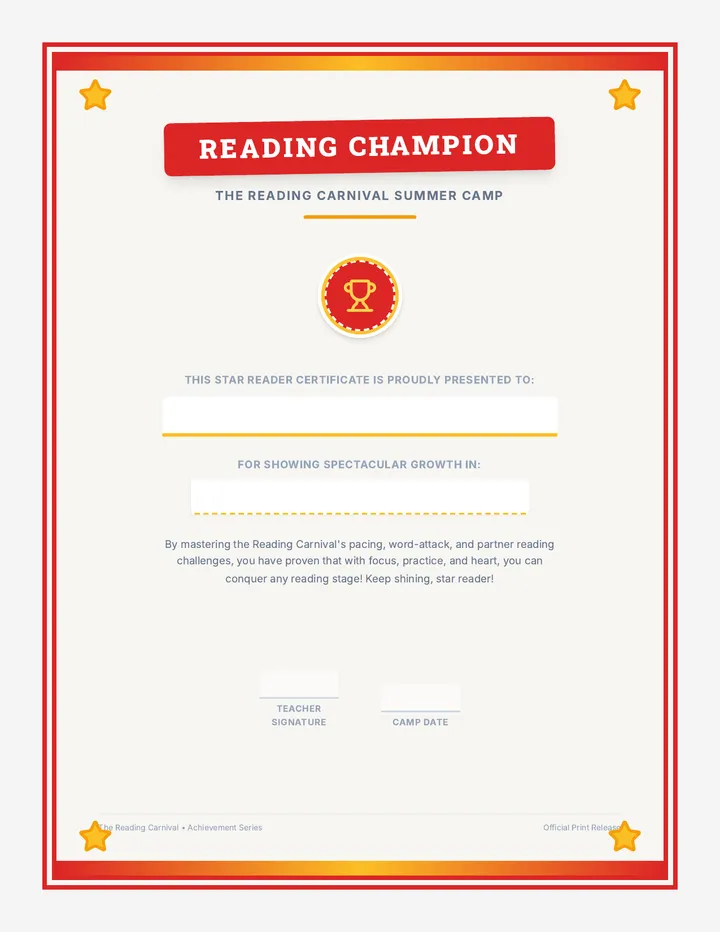
A comprehensive oral reading fluency bundle themed around 'The Reading Carnival'. It includes game guides, differentiated reading cards, progress trackers, and achievement awards designed specifically for struggling 1st-4th grade readers to build speed, accuracy, and confidence in a high-energy summer camp environment.
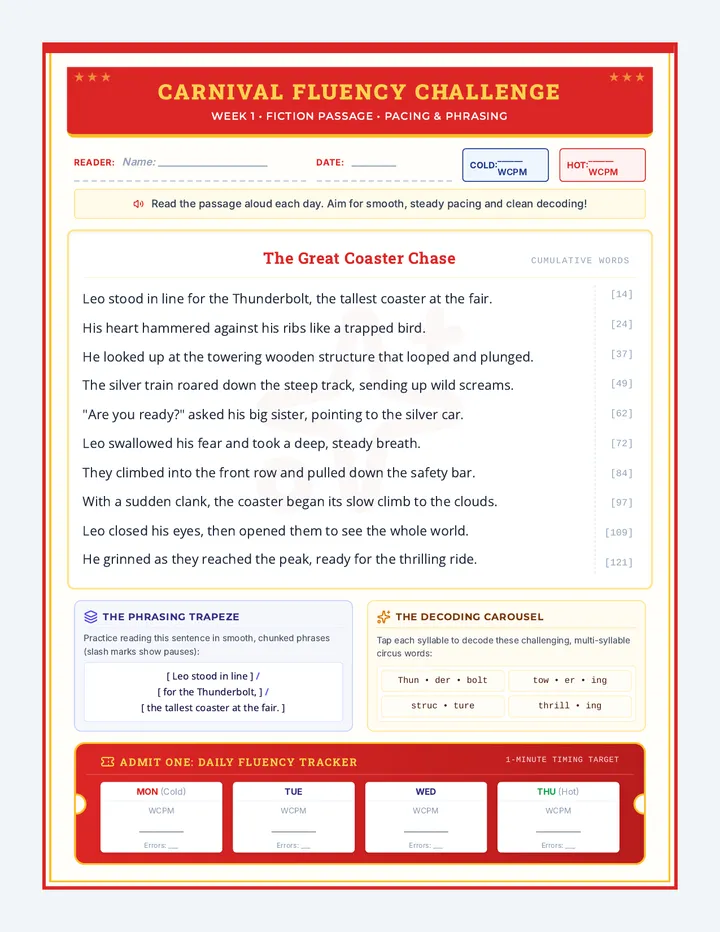
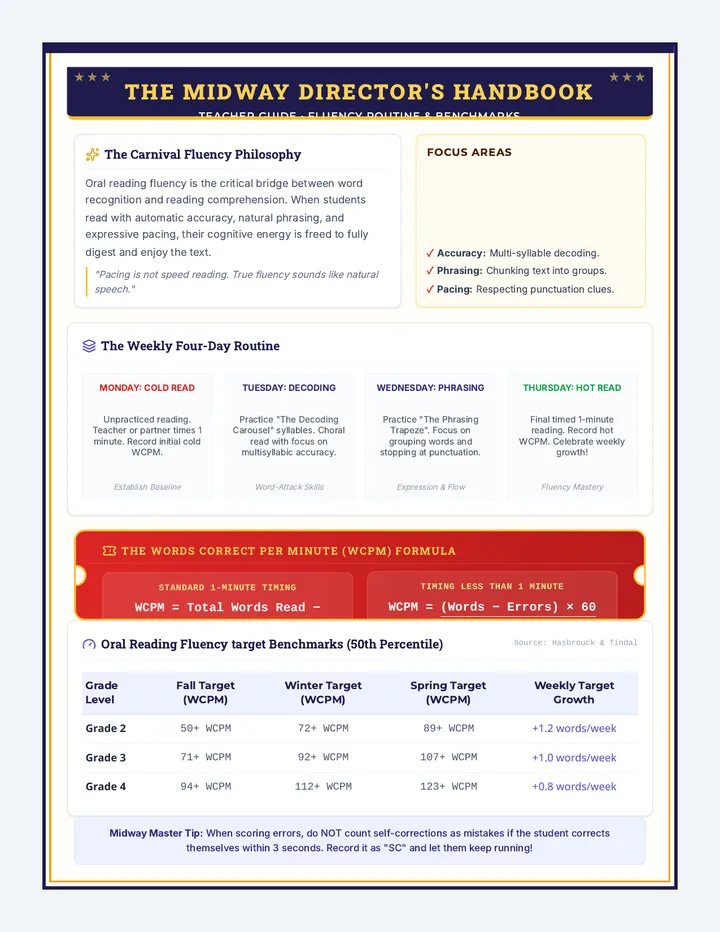
A weekly oral reading fluency program themed around a vintage carnival. It focuses on pacing, phrasing, and decoding multi-syllable words through engaging fiction and non-fiction passages with built-in trackers.
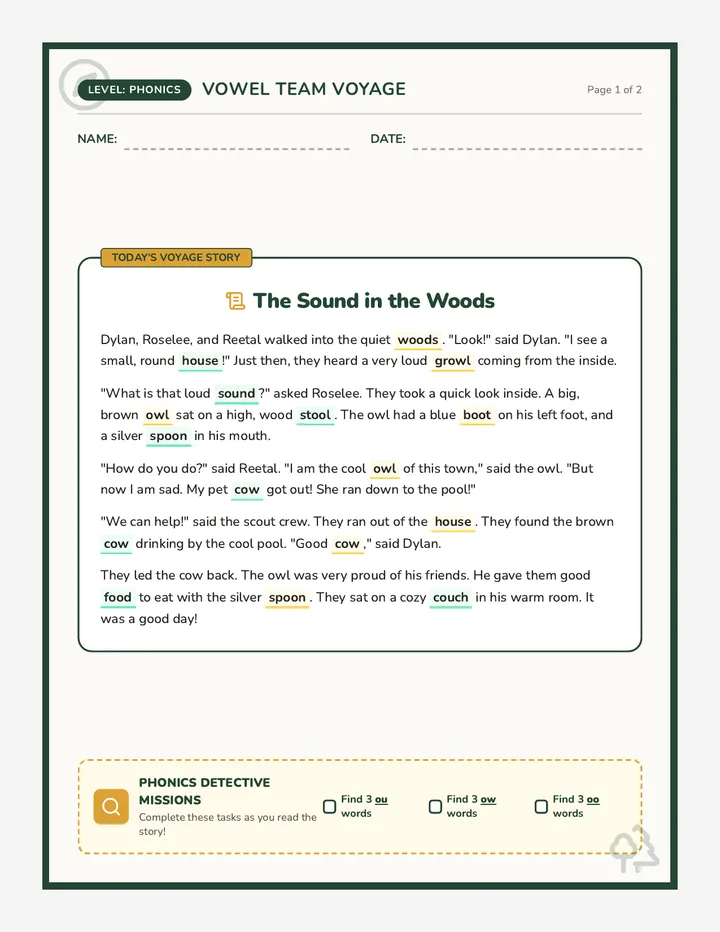
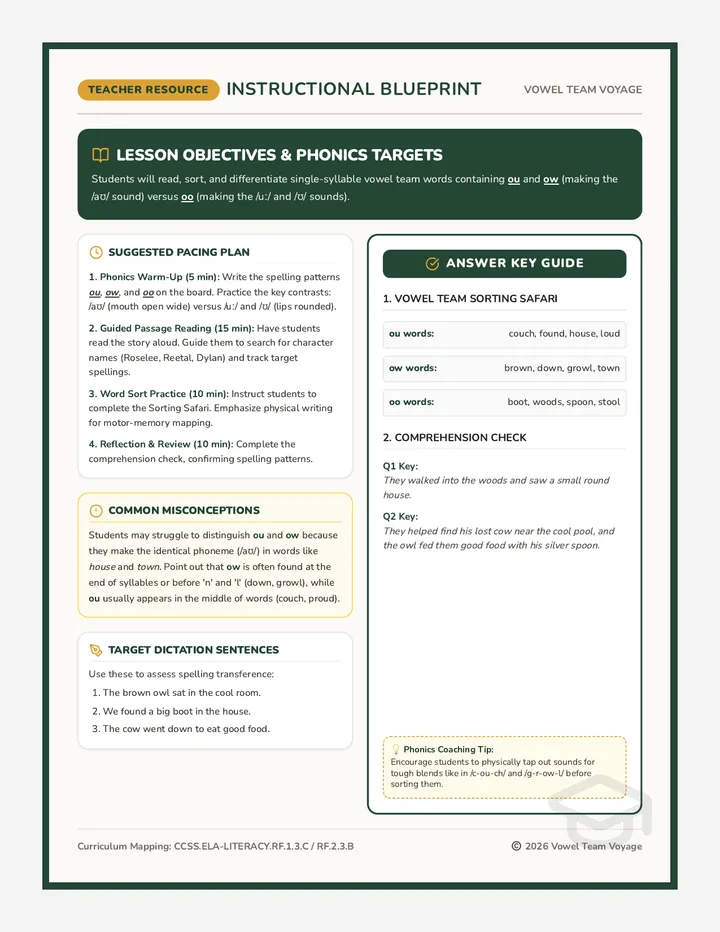
A targeted phonics lesson focused on contrasting single-syllable words containing 'ou', 'ow', and 'oo' vowel teams. Students read an engaging phonics story featuring Roselee, Reetal, and Dylan, and complete structured word-sorting and reading comprehension exercises.
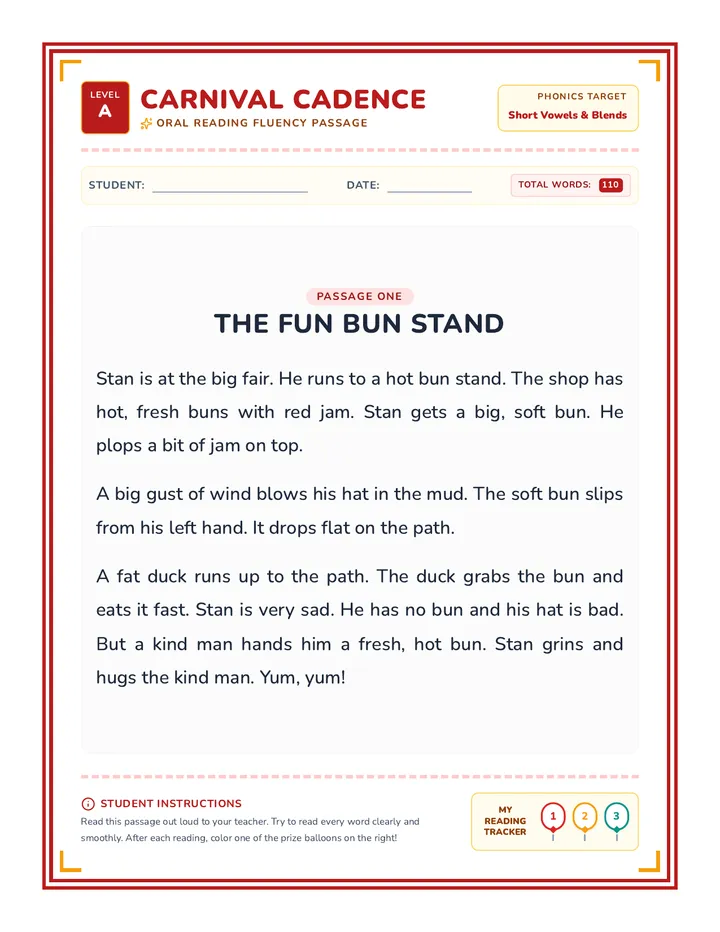
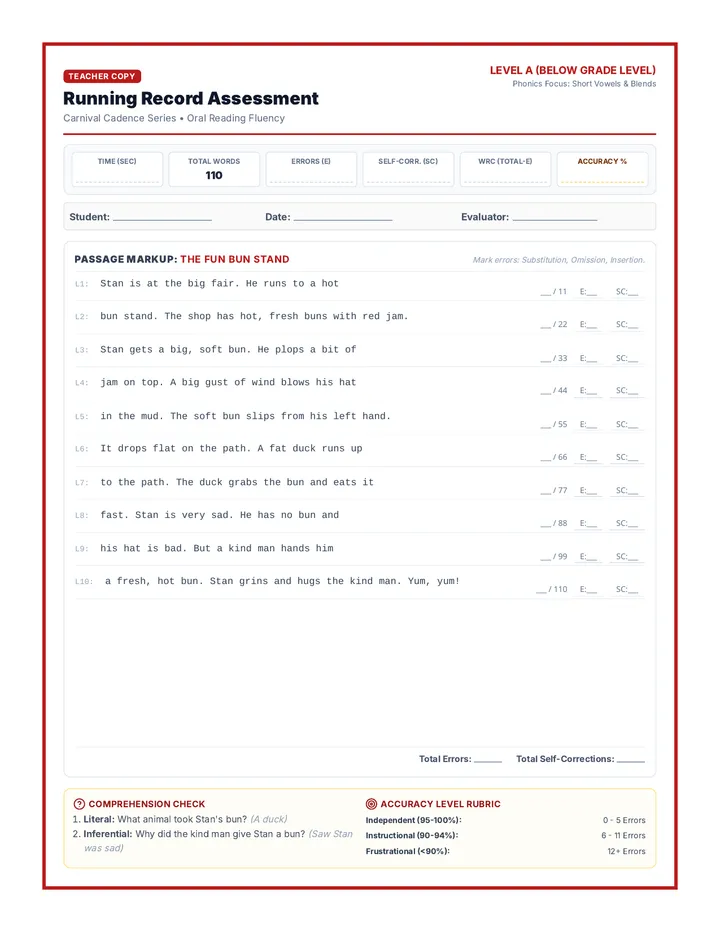
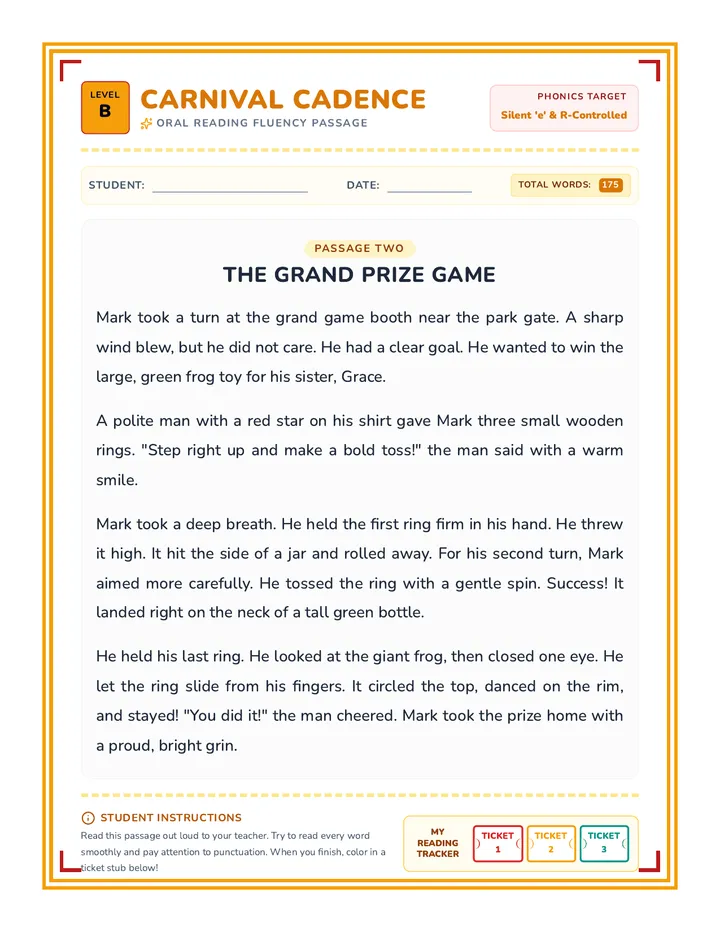
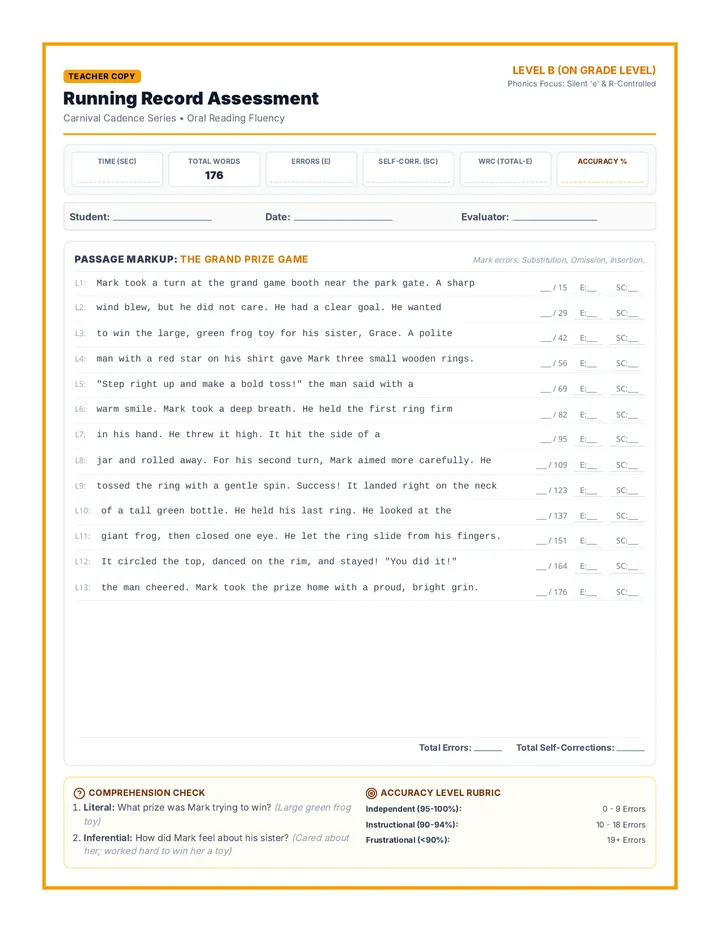
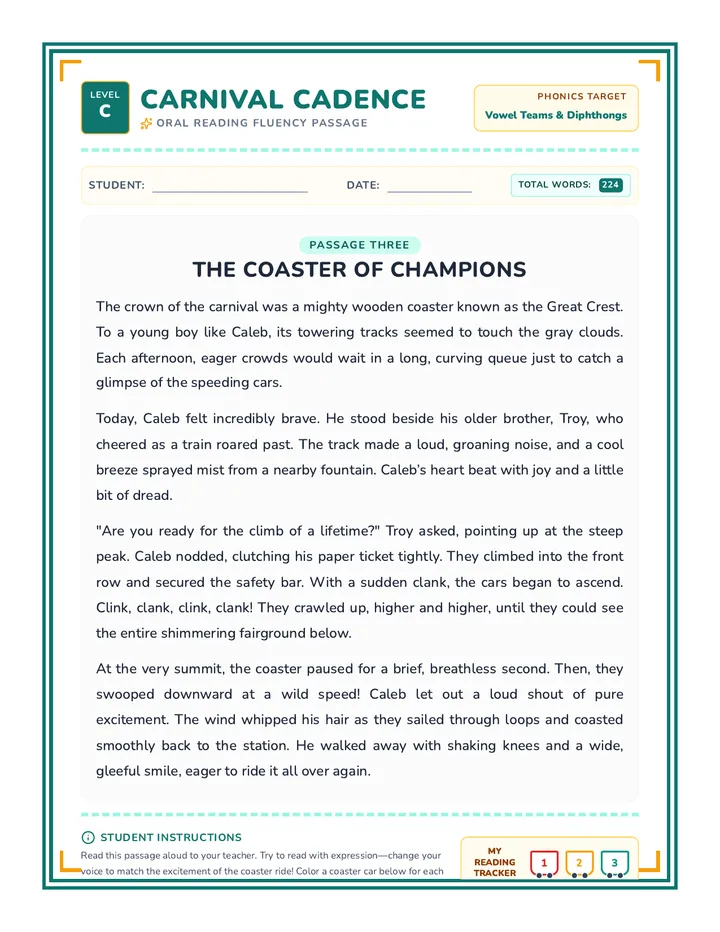
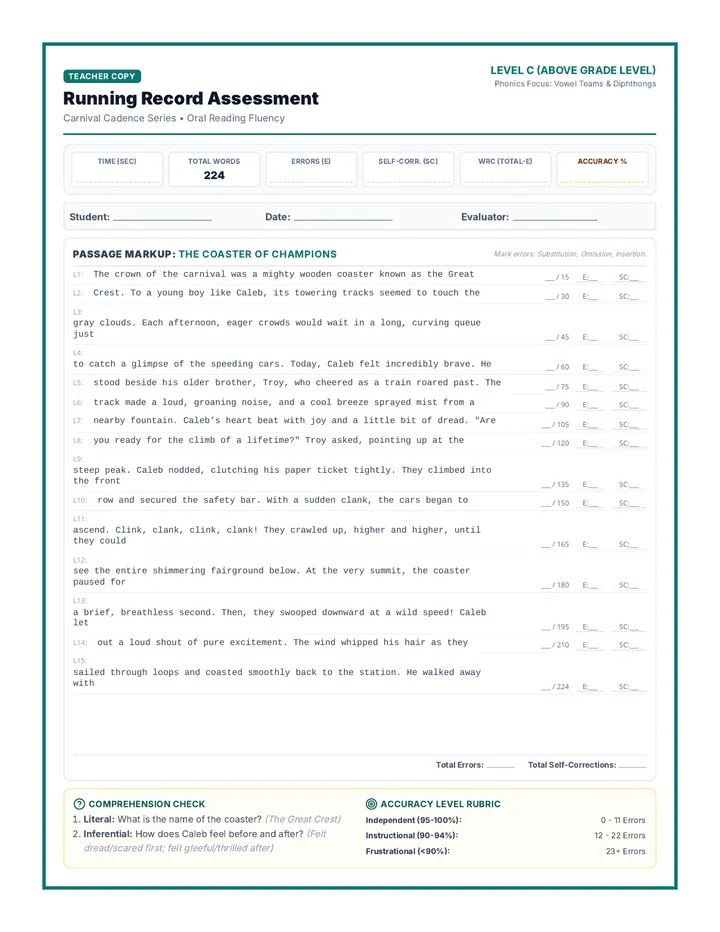
Differentiated carnival-themed reading passages and matching teacher running record forms designed to boost oral reading fluency and target specific phonics patterns.
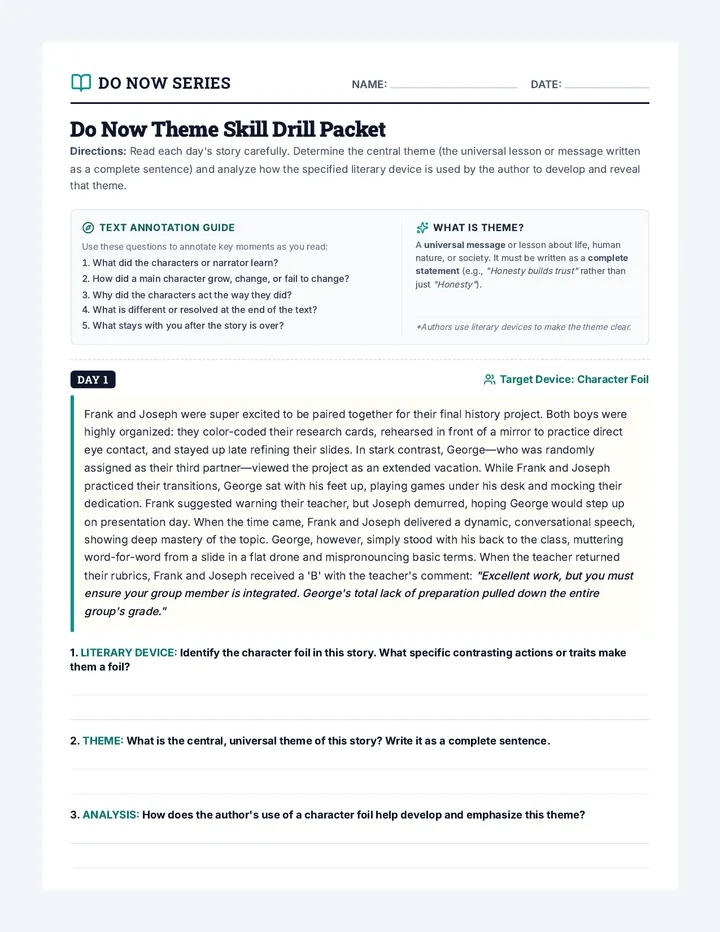
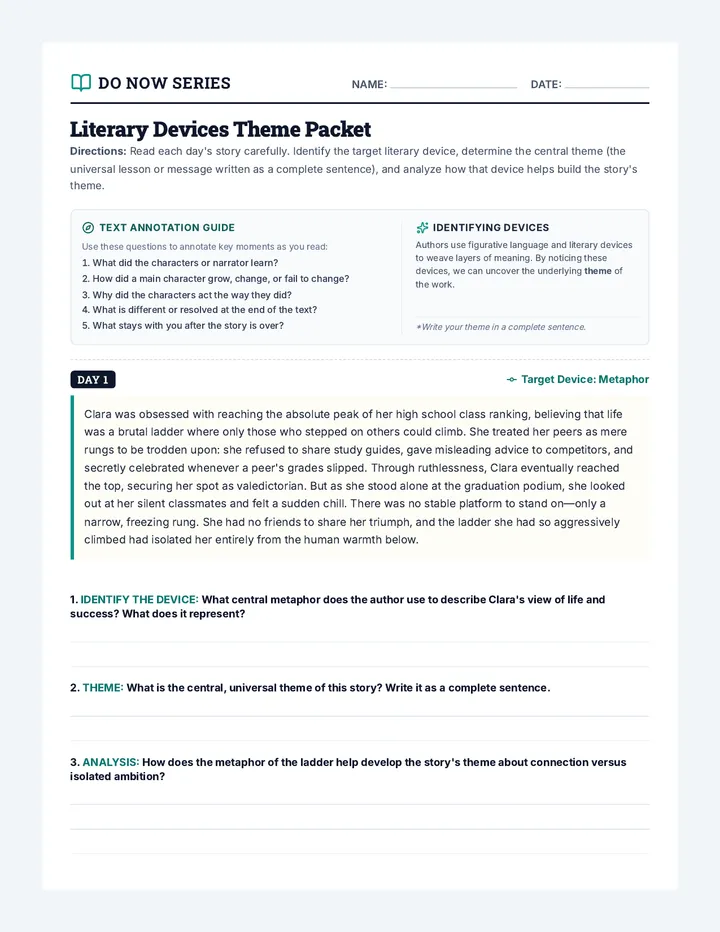
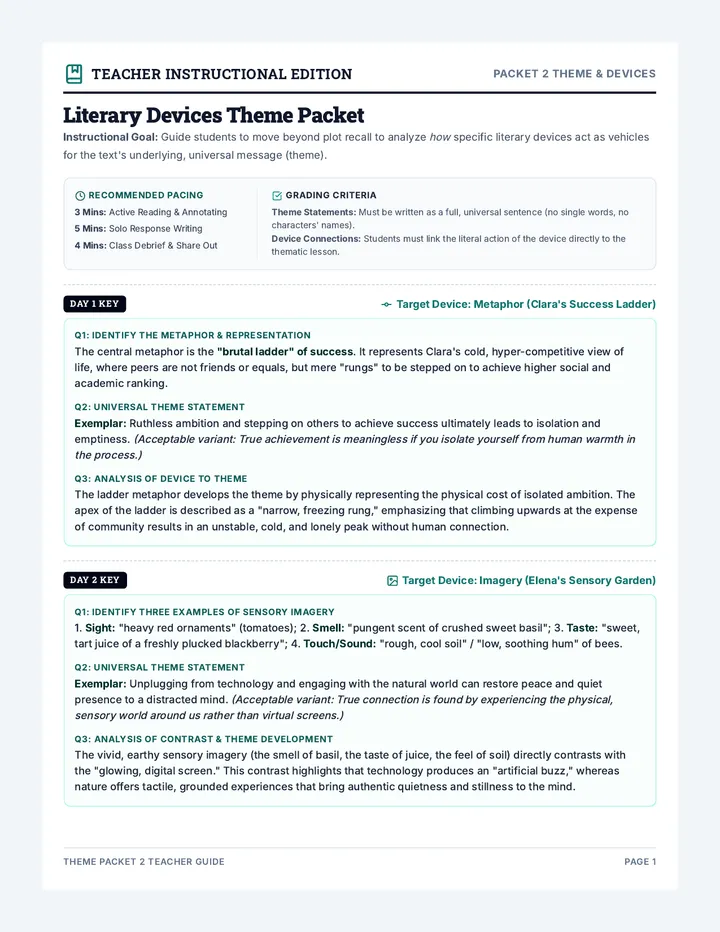
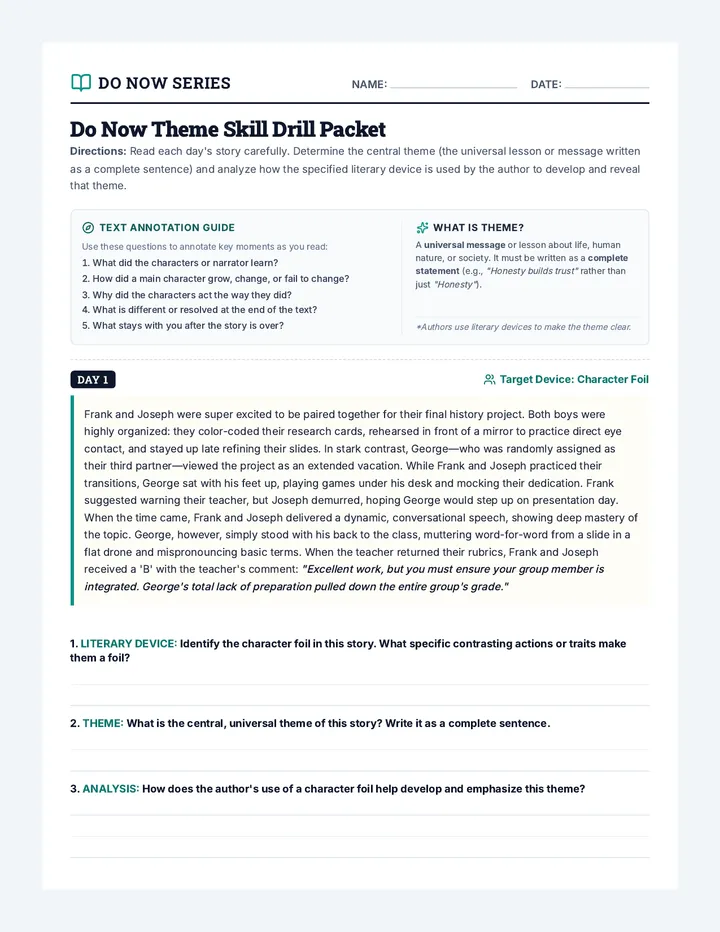
A cohesive lesson and drill series designed to help students master the connection between explicit literary devices and the central themes of literary texts.
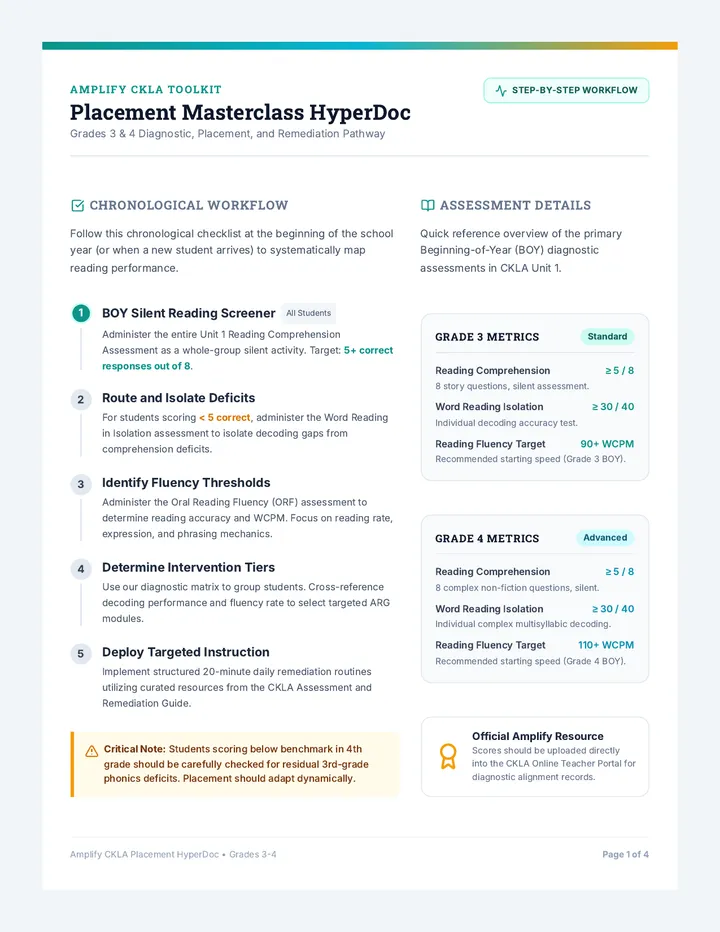
A specialized lesson designed for third and fourth-grade educators to master the CKLA placement, diagnostic, and remediation pathways. This lesson contains professional guides, visual flowcharts, and student grouping trackers to streamline the intervention process.
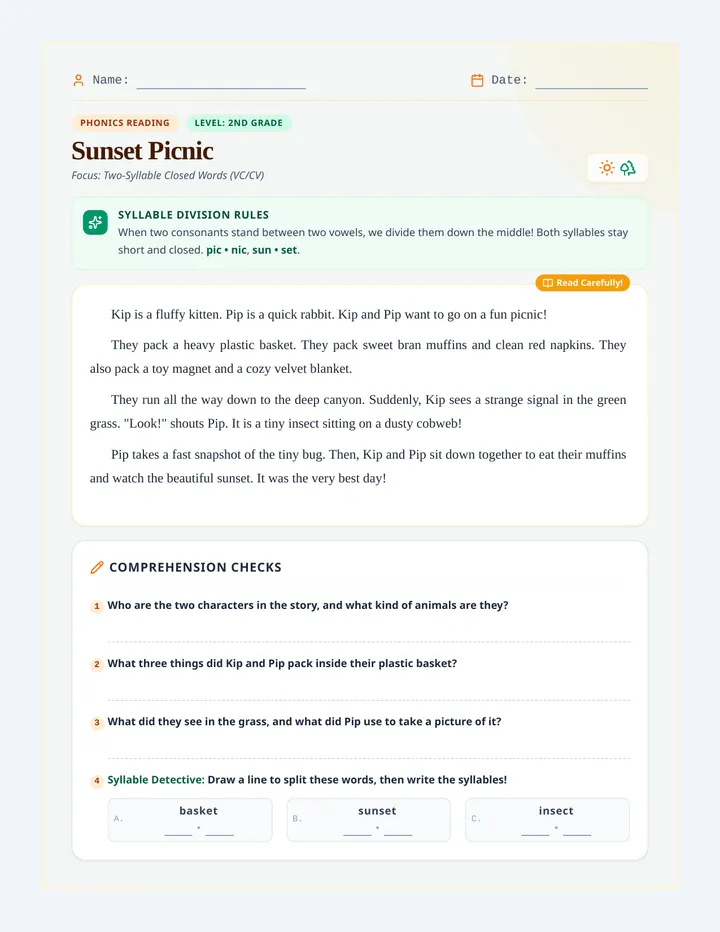
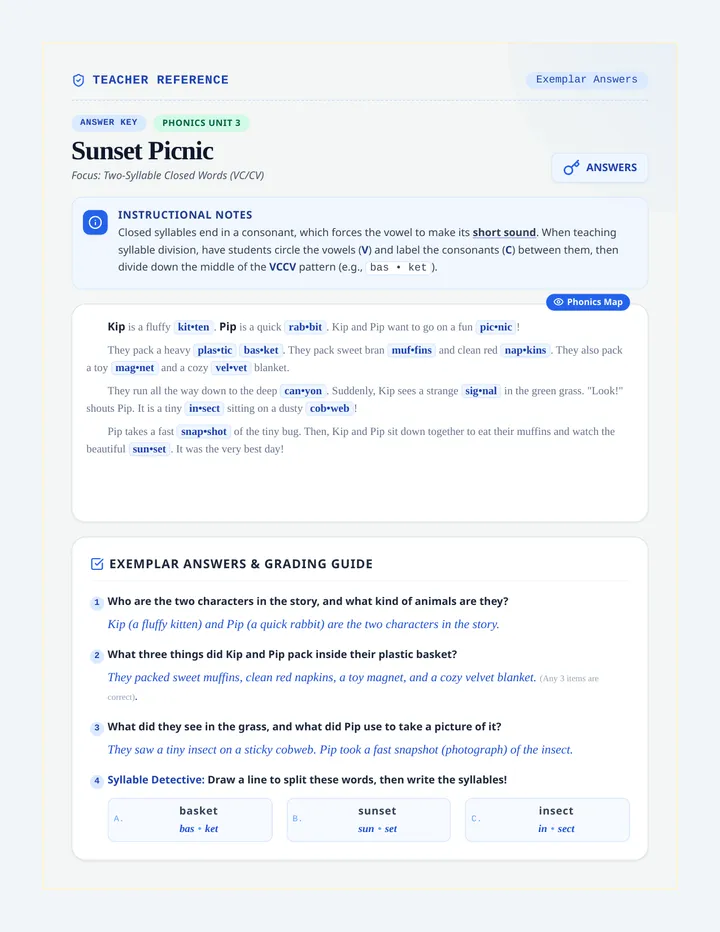
A primary phonics lesson focusing on decoding and understanding two-syllable words with closed syllables. Students practice syllable division, read a decodable story, and answer reading comprehension questions.
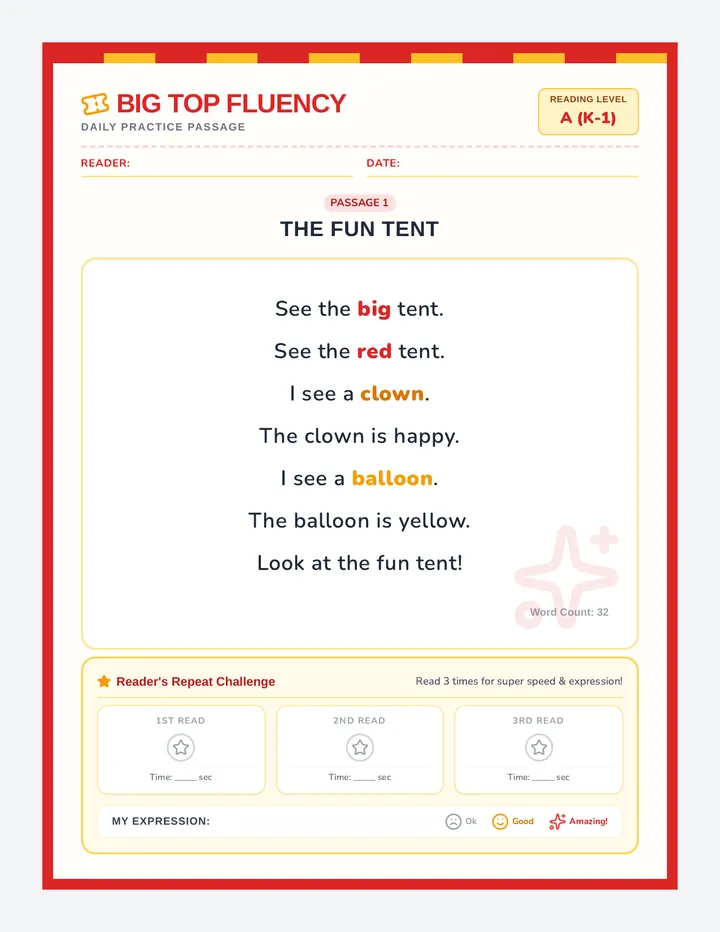
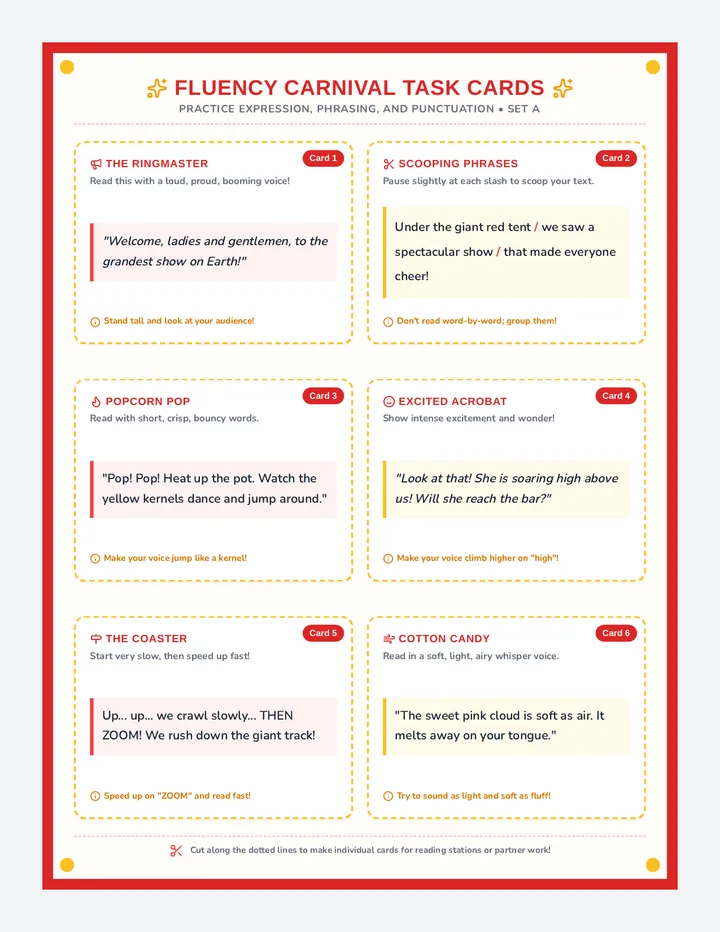
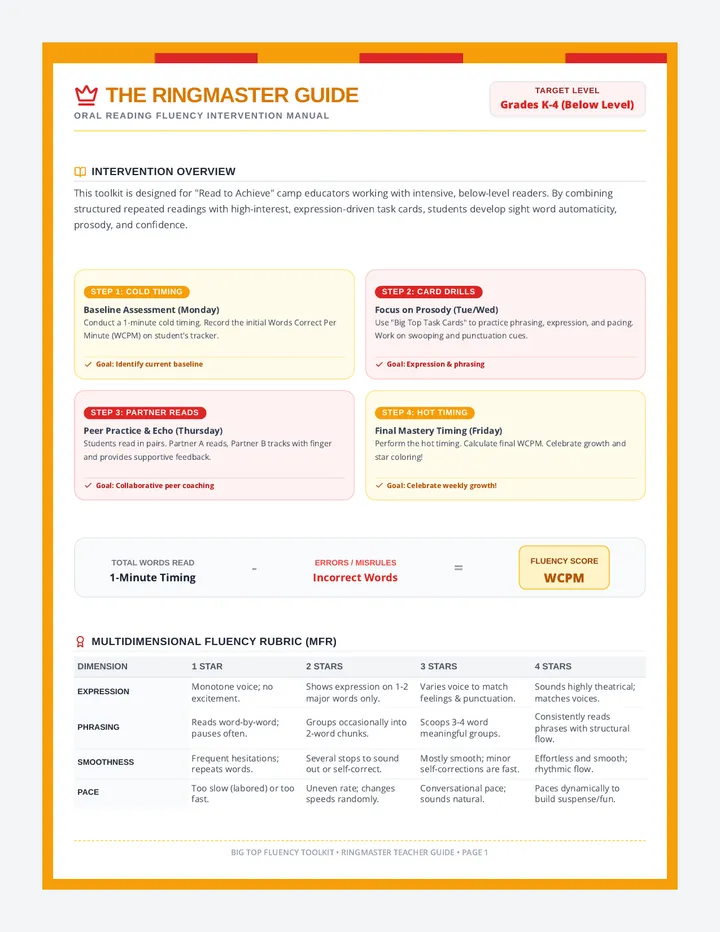
A carnival-themed oral reading fluency toolkit designed for Read to Achieve summer camps. Features differentiated reading passages (levels K-3) with repeated reading trackers, expression-focused task cards, and a teacher scoring and implementation guide.
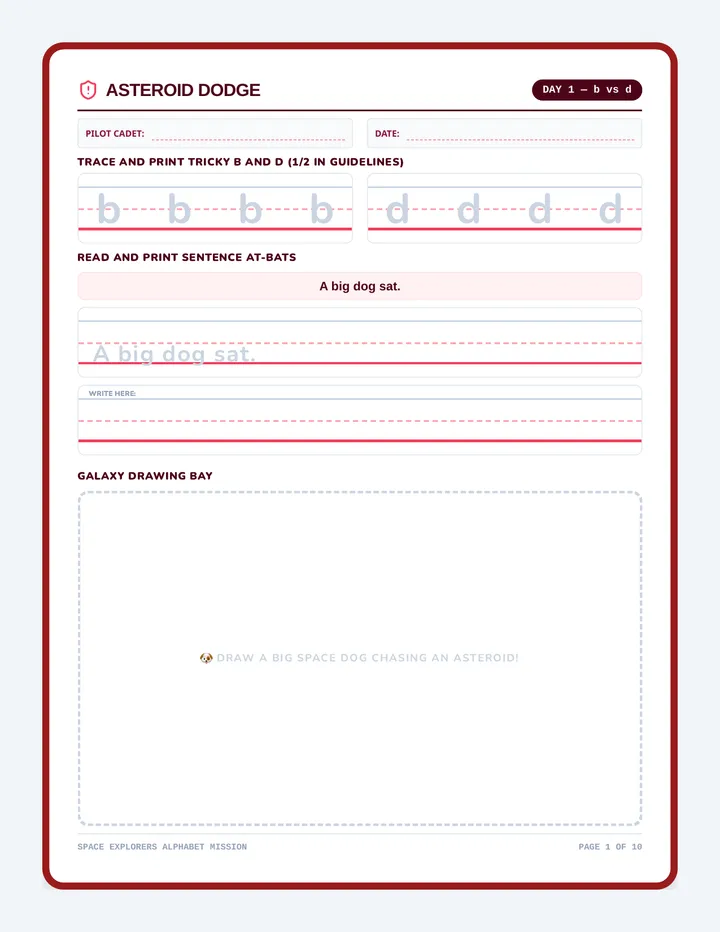
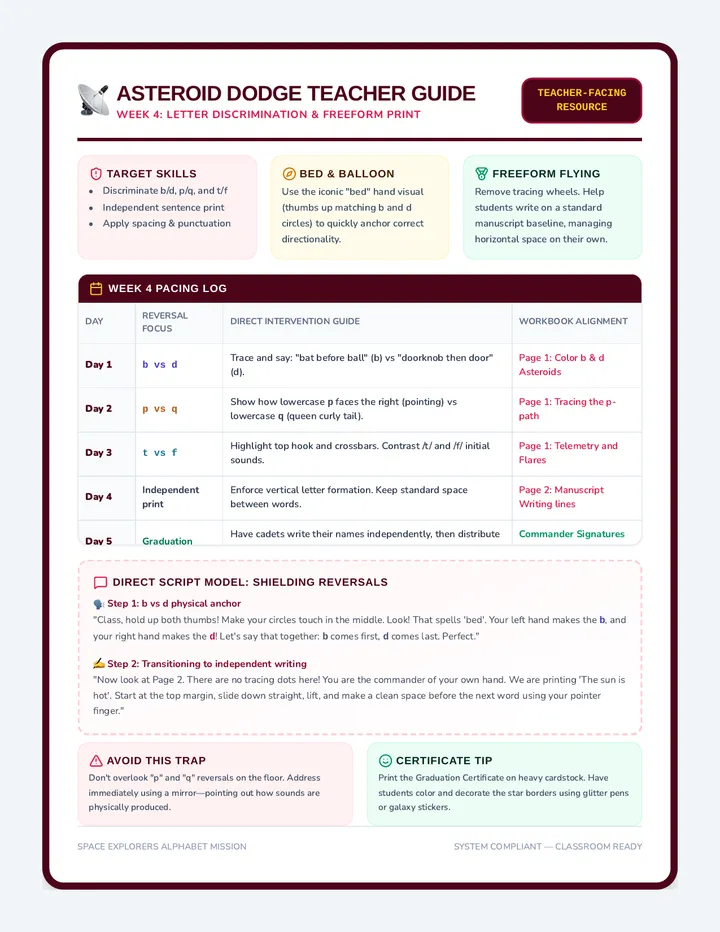
Week 4 targets commonly confused letters (b/d, p/q, t/f) through space-themed discrimination games, and transitions students to freeform independent handwriting.
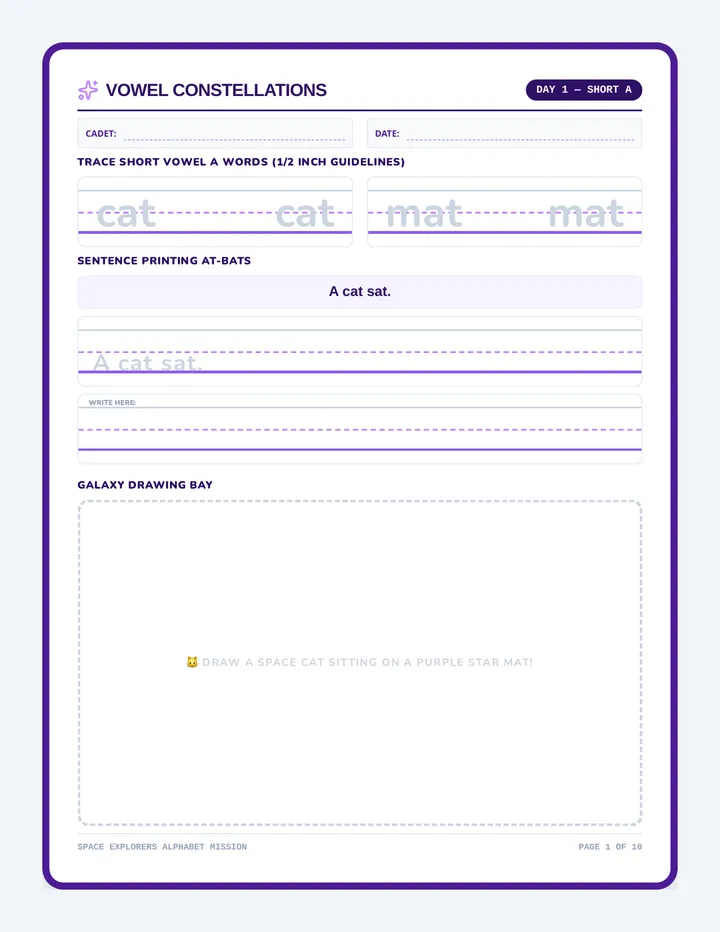
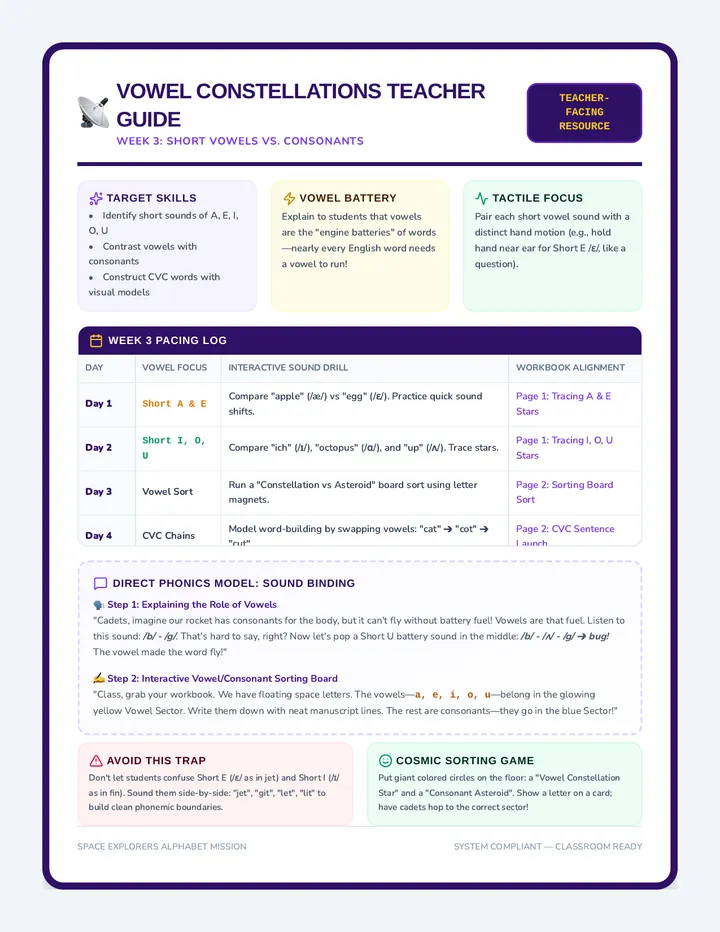
Week 3 explores the distinct roles of vowels and consonants, teaching short vowel sounds, star-themed sorting, and simple consonant-vowel-consonant (CVC) blending.
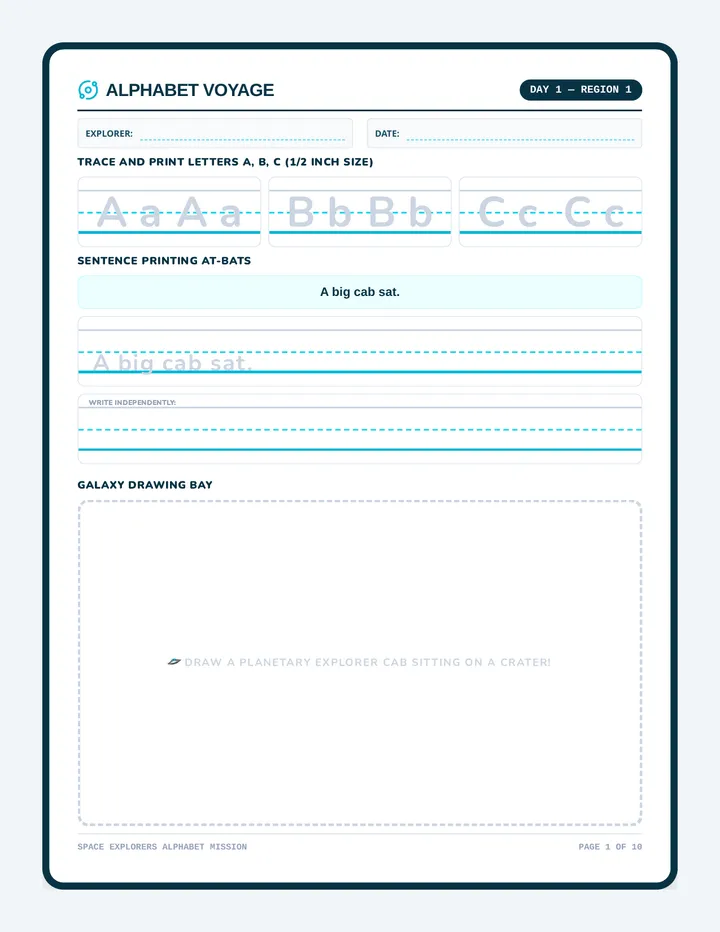
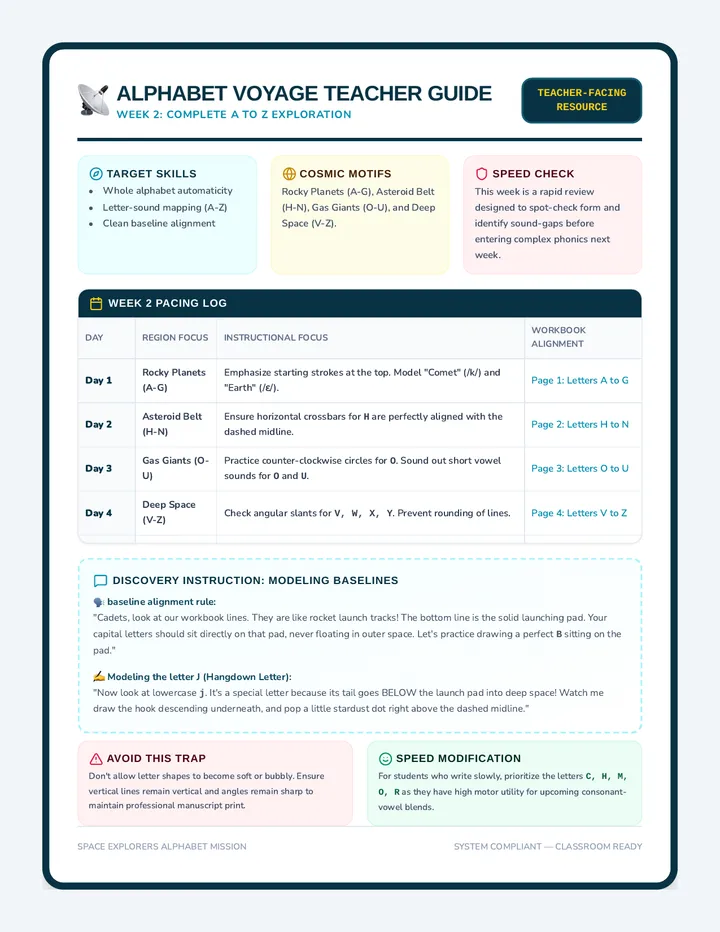
Week 2 covers a rapid, comprehensive overview of the entire alphabet (A to Z) with clean manuscript printing, letter-sound association, and simple visual representations.
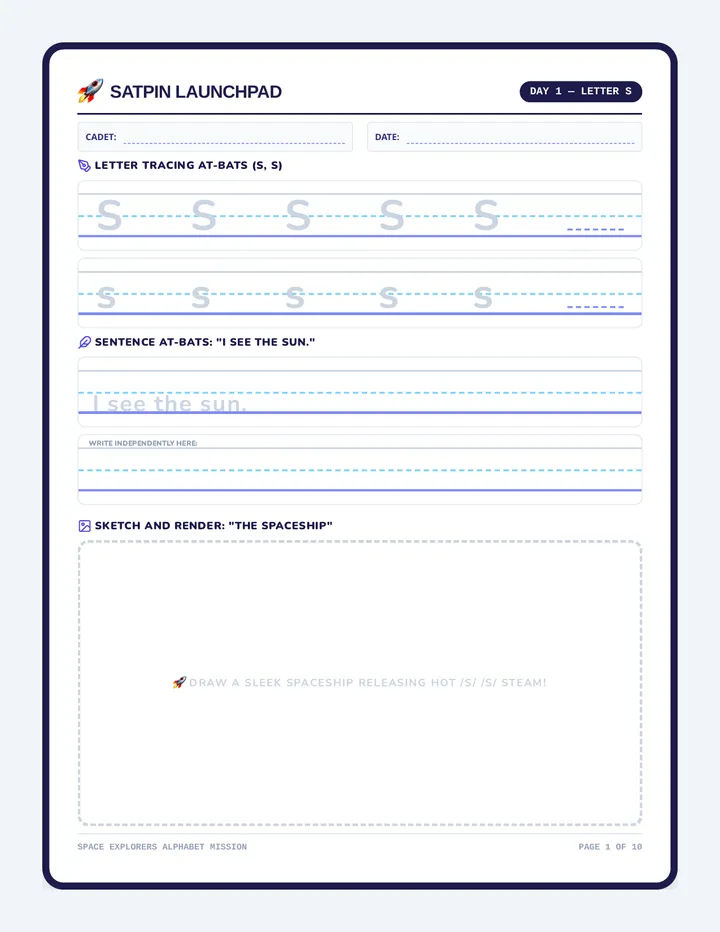
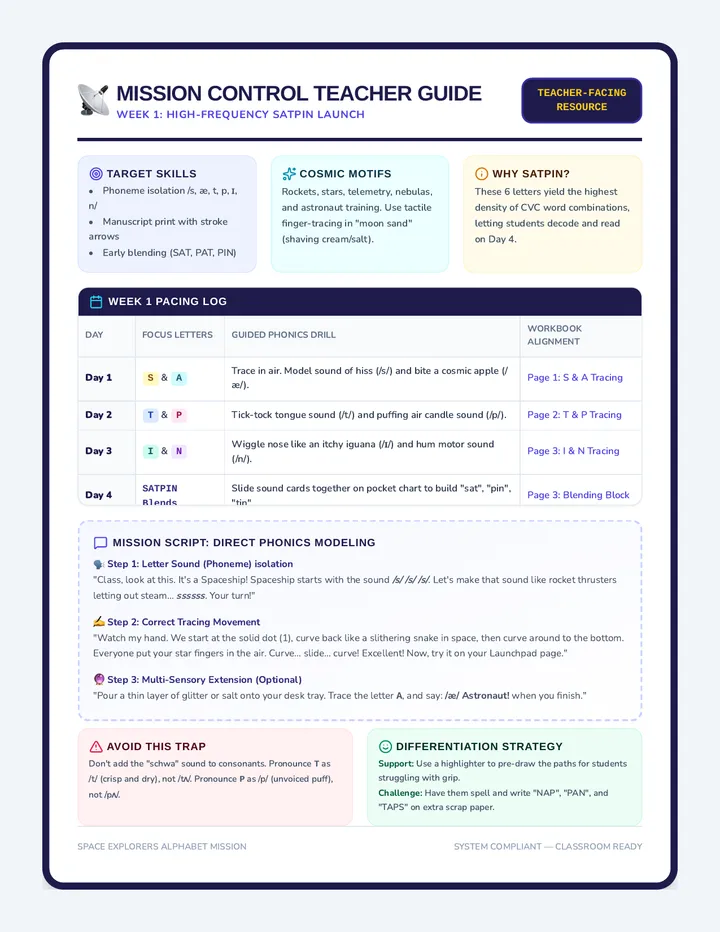
Week 1 focuses on high-frequency SATPIN letters (S, A, T, P, I, N) to quickly build and read simple words. Includes handwriting tracing with numbered stroke arrows and early phonics blends.
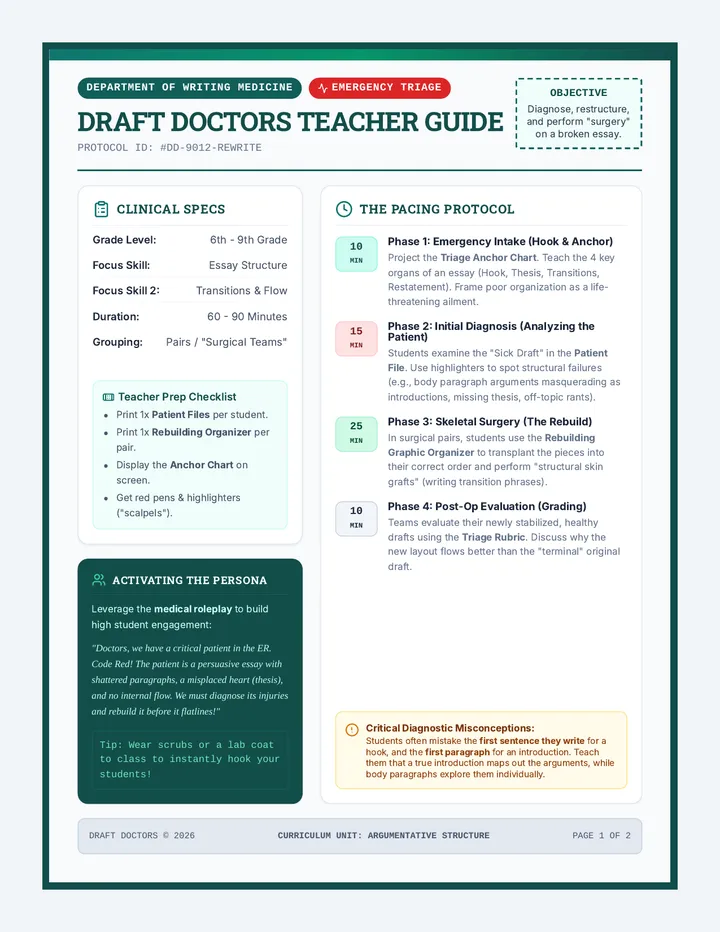
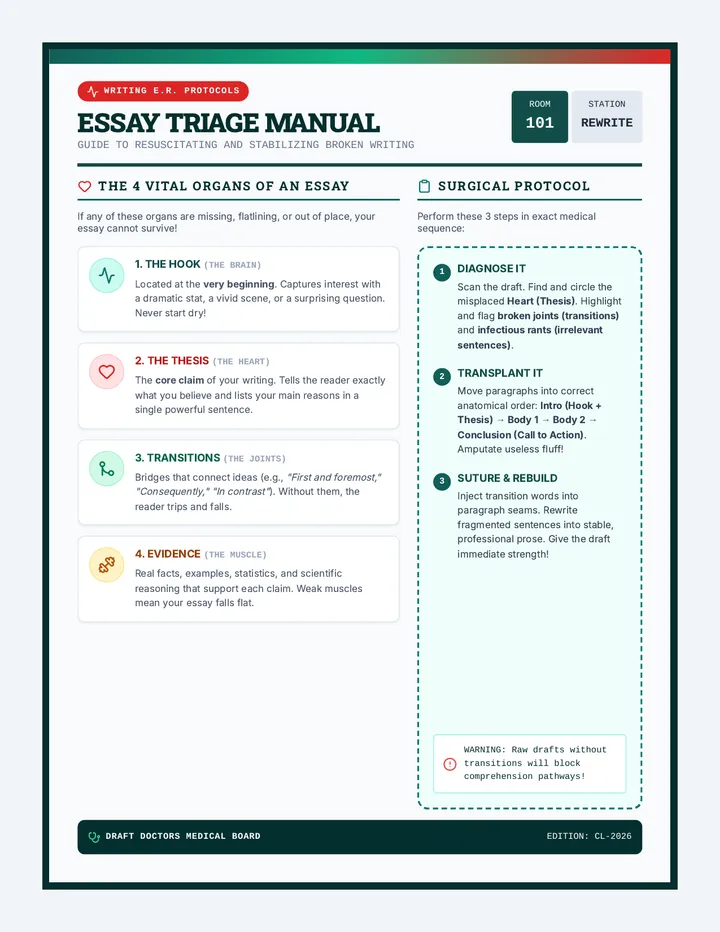
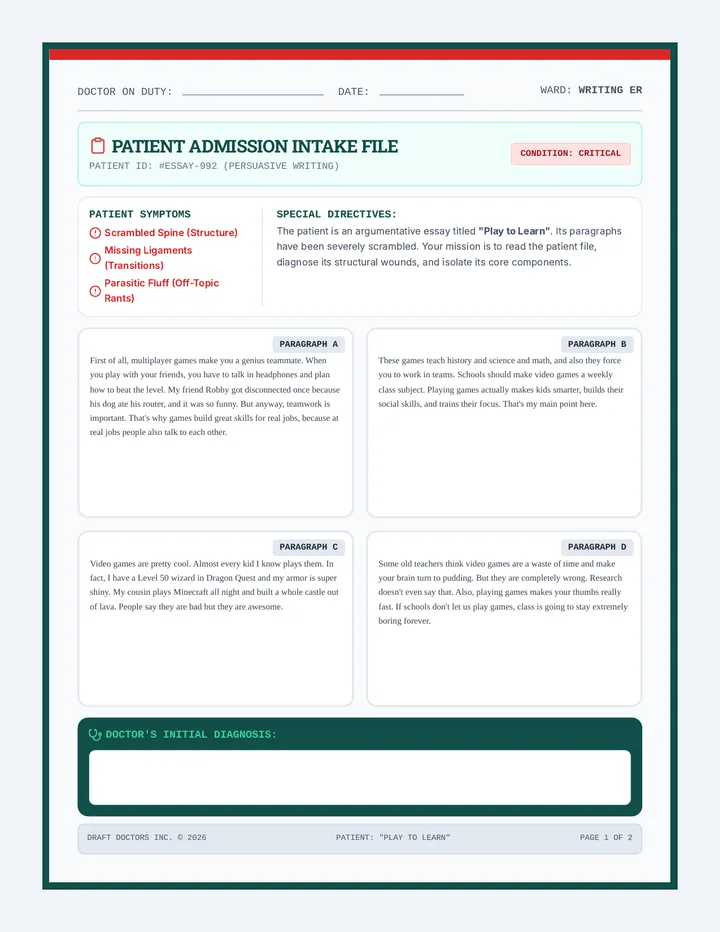
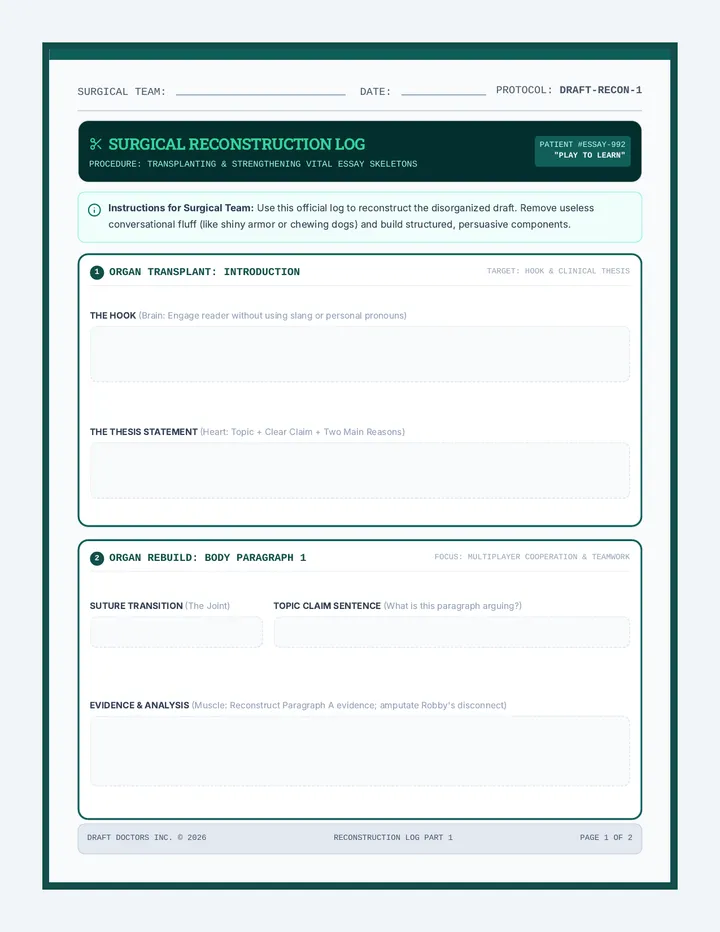
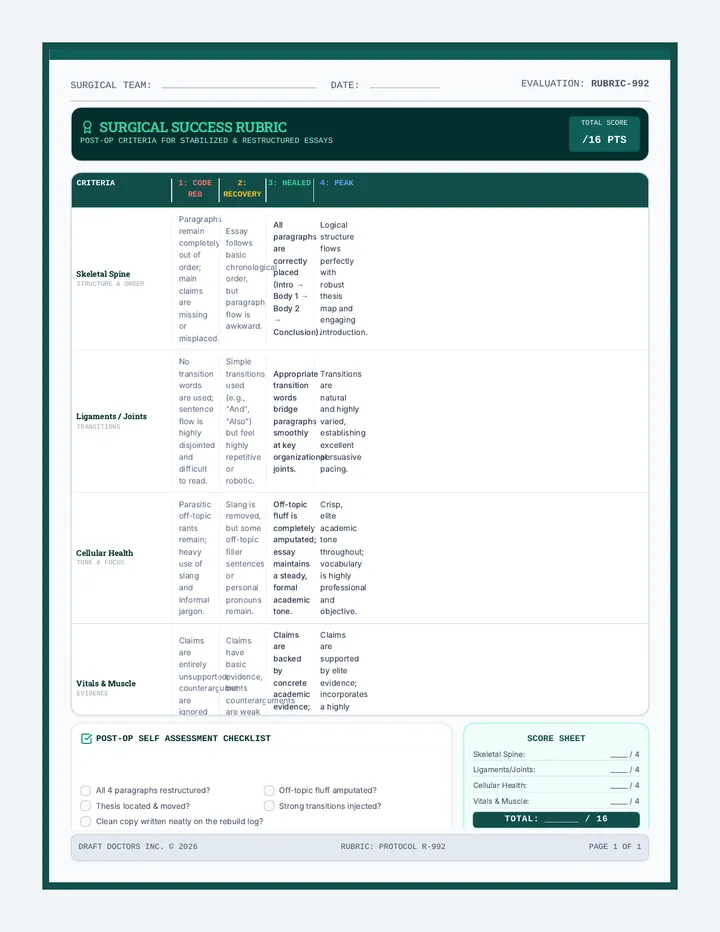
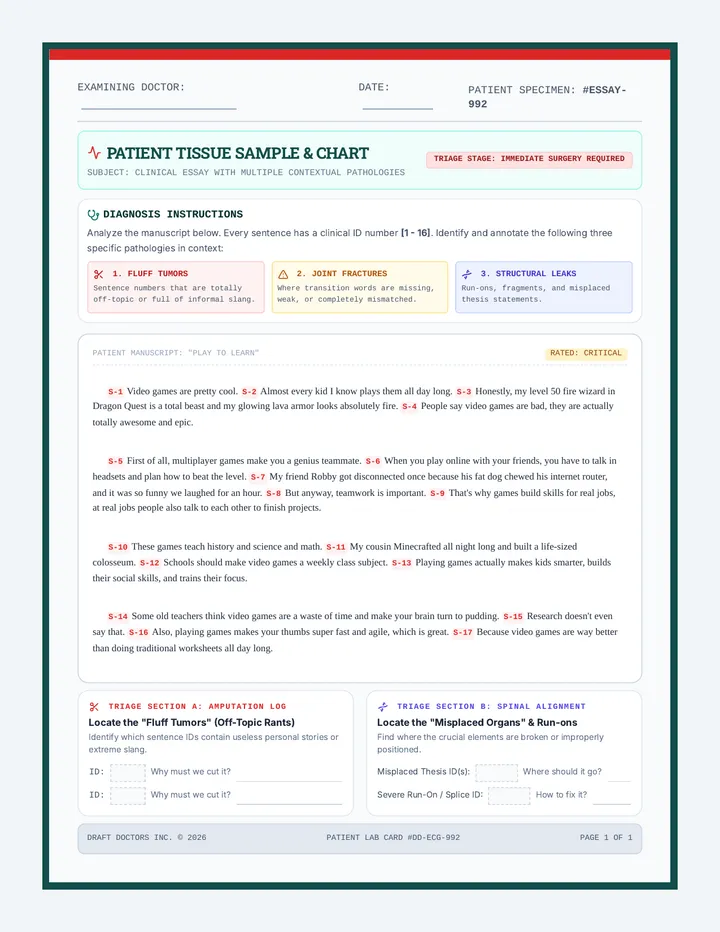
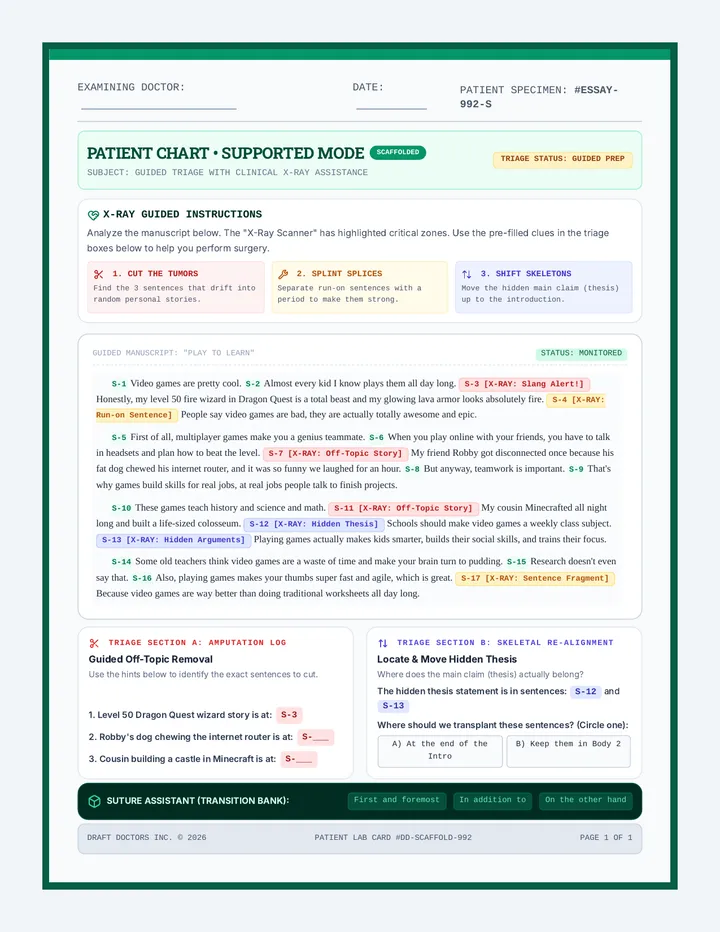
An immersive, medical-themed lesson where students act as 'Draft Doctors' to diagnose, triage, and perform surgery on a poorly organized, weak persuasive essay. Students learn paragraph structure, logical flow, and transition-building through a structured, clinical approach.
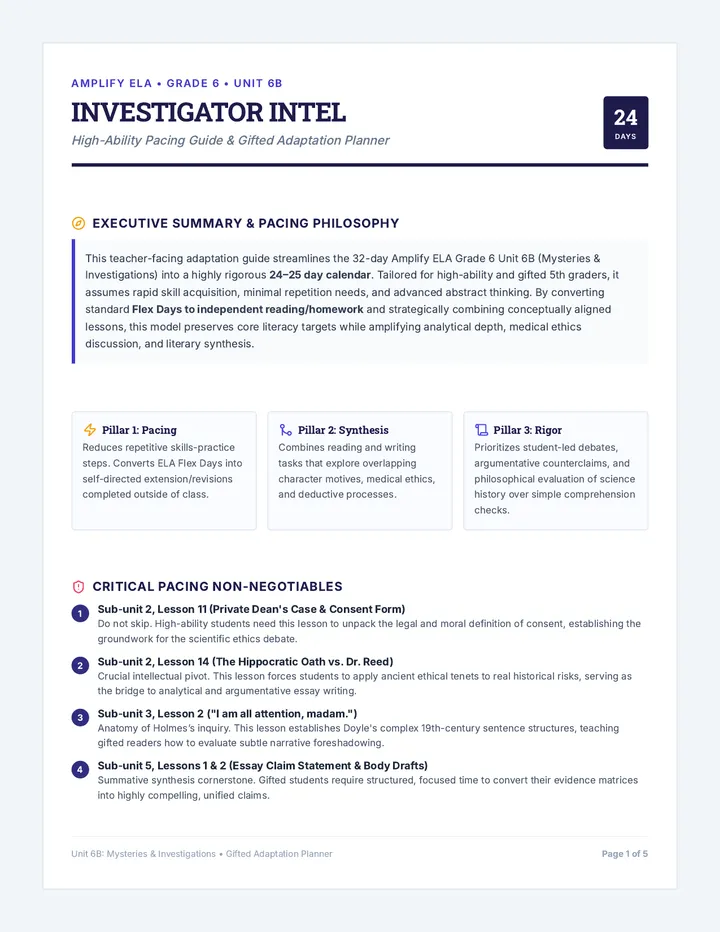
A highly condensed and academically rigorous pacing plan and gifted student adaptation guide for Amplify ELA Grade 6 Unit 6B. It compresses the 32 original lessons into a streamlined 24-25 day calendar designed specifically for high-ability fifth graders.
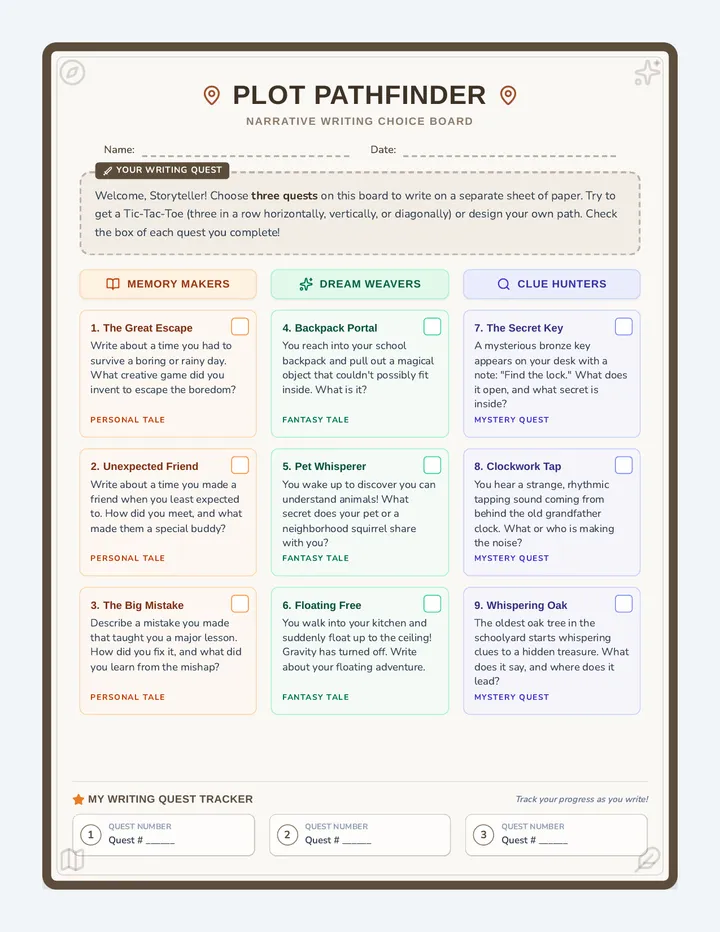
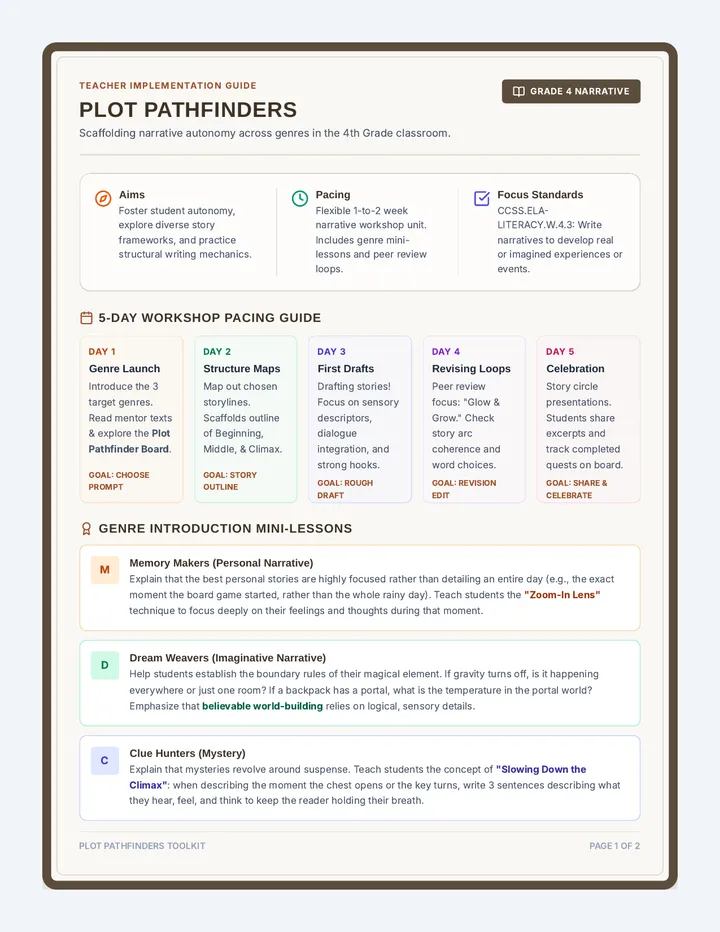
A narrative writing toolkit designed to spark creative thinking and narrative structure for fourth-grade students, featuring an engaging genre-based choice board and teacher implementation guide.
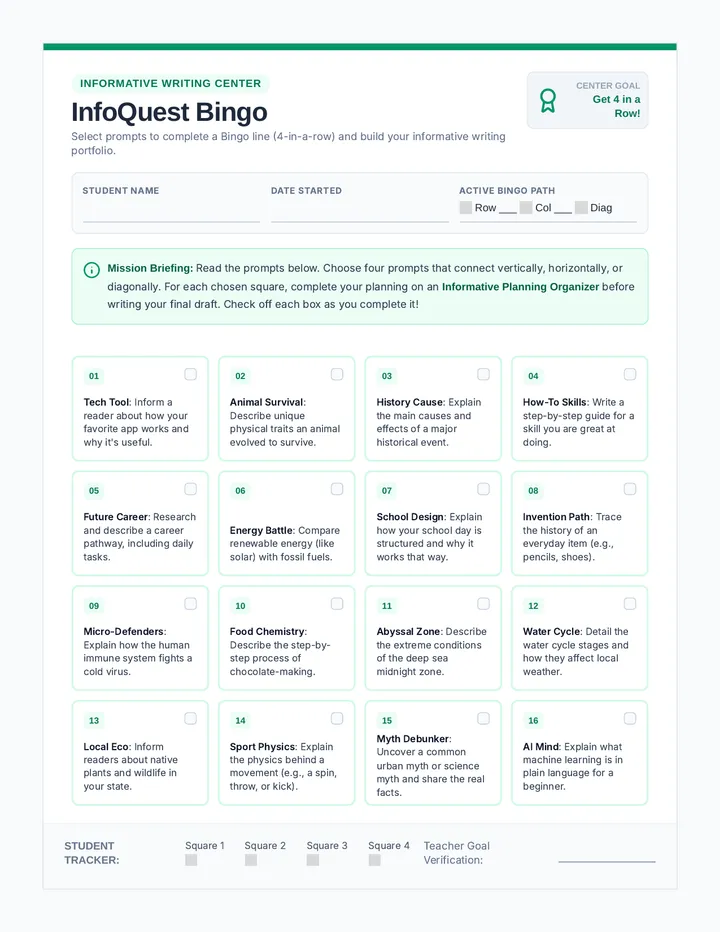
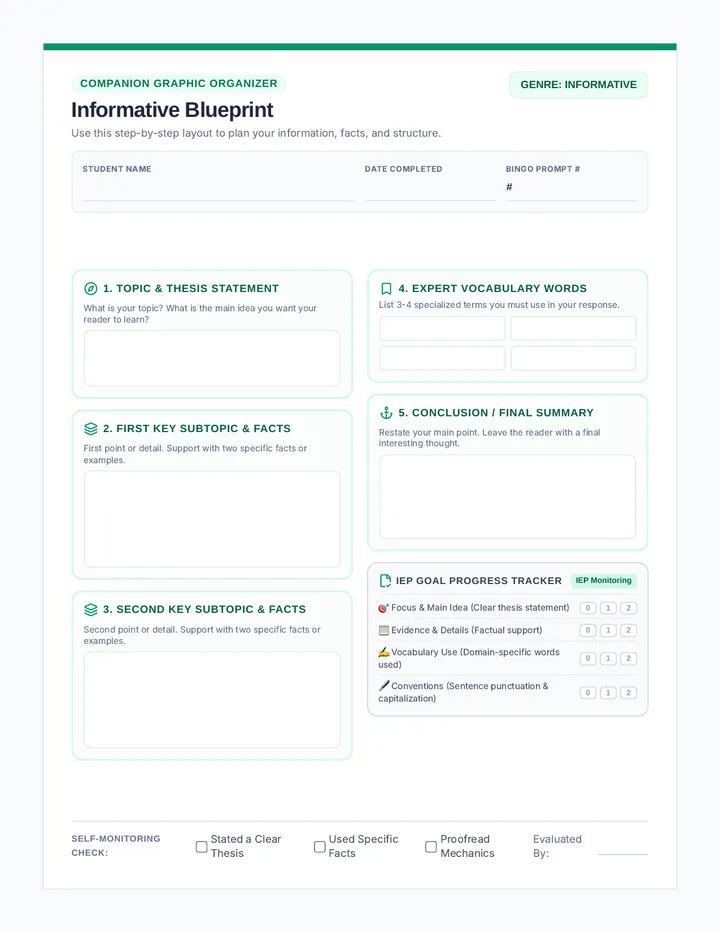
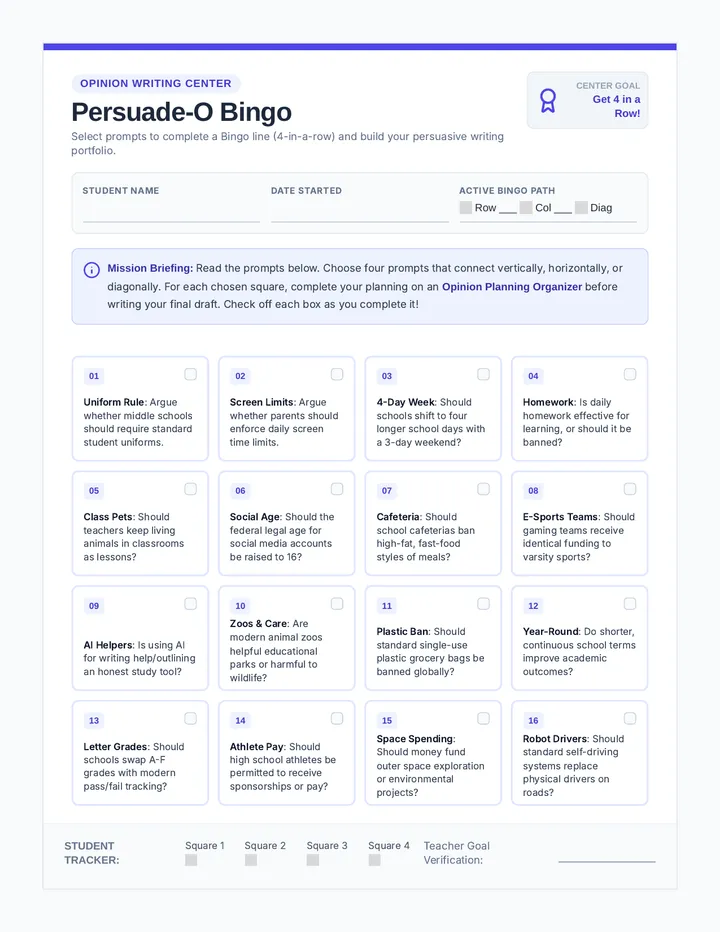
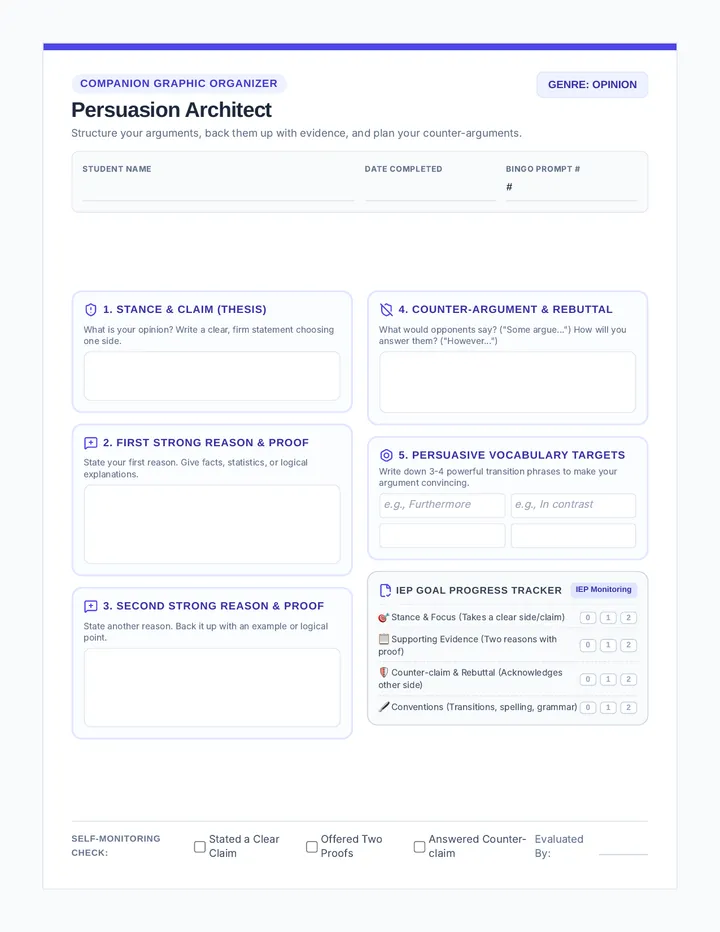
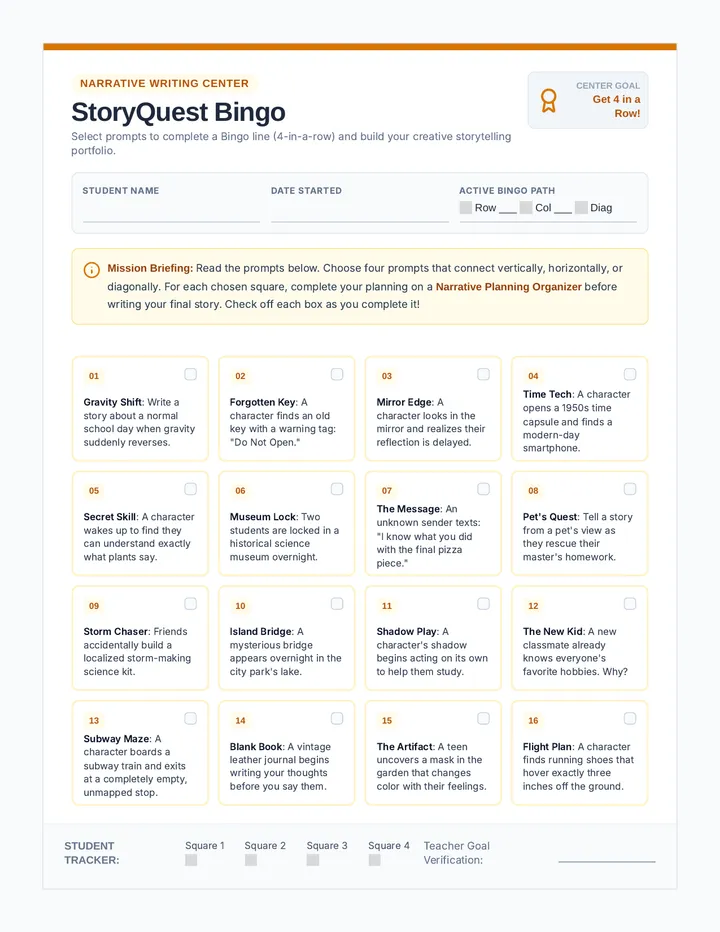
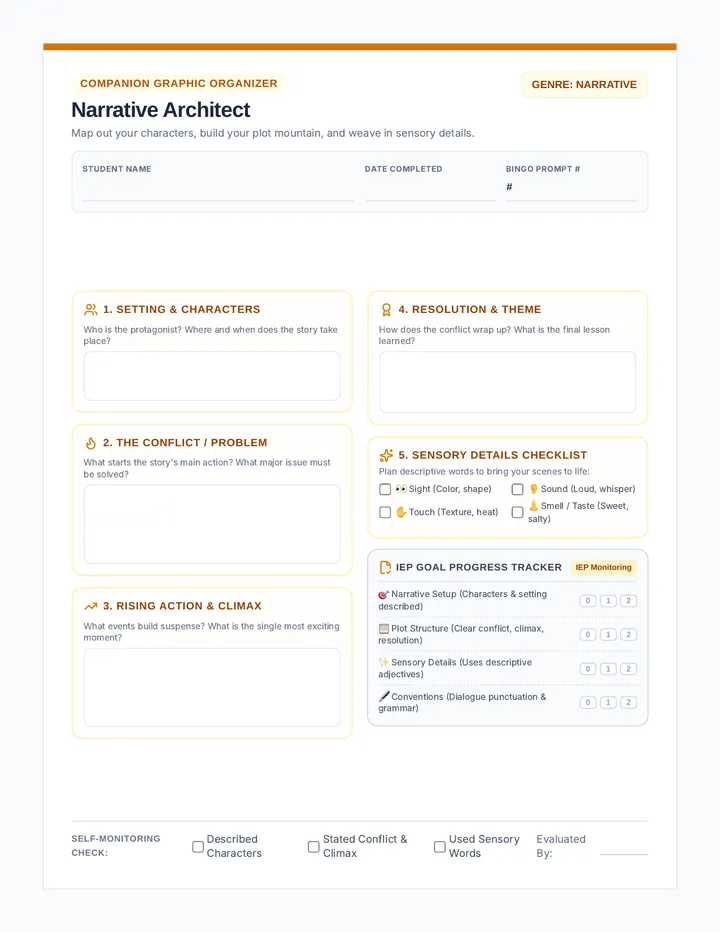
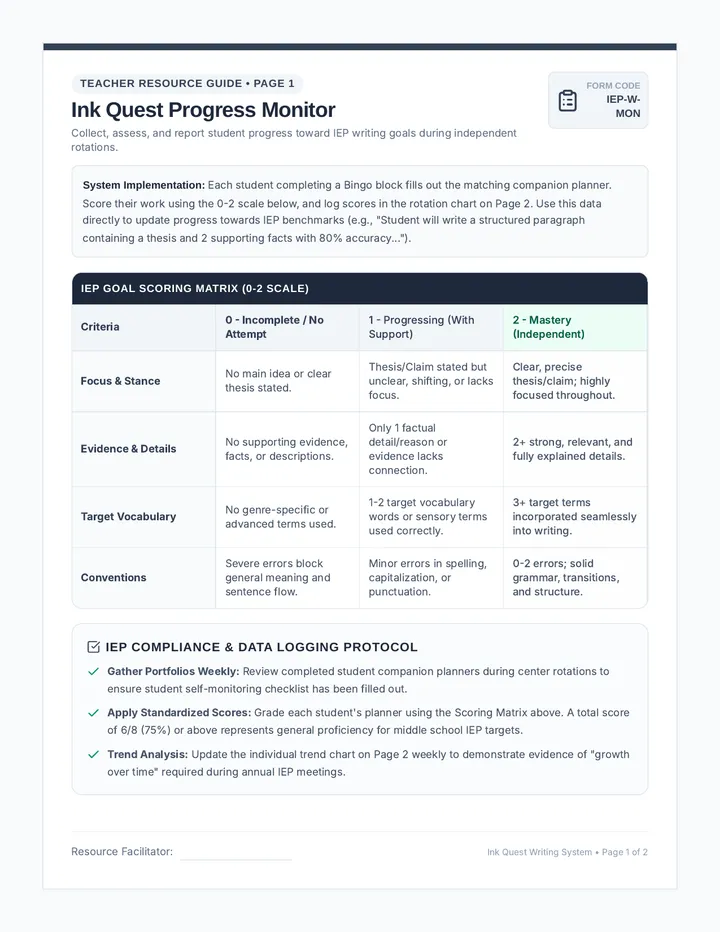
An independent writing center system using Bingo choice boards and highly supportive graphic organizers. Designed for middle school rotations with embedded progress monitoring for IEP goals.
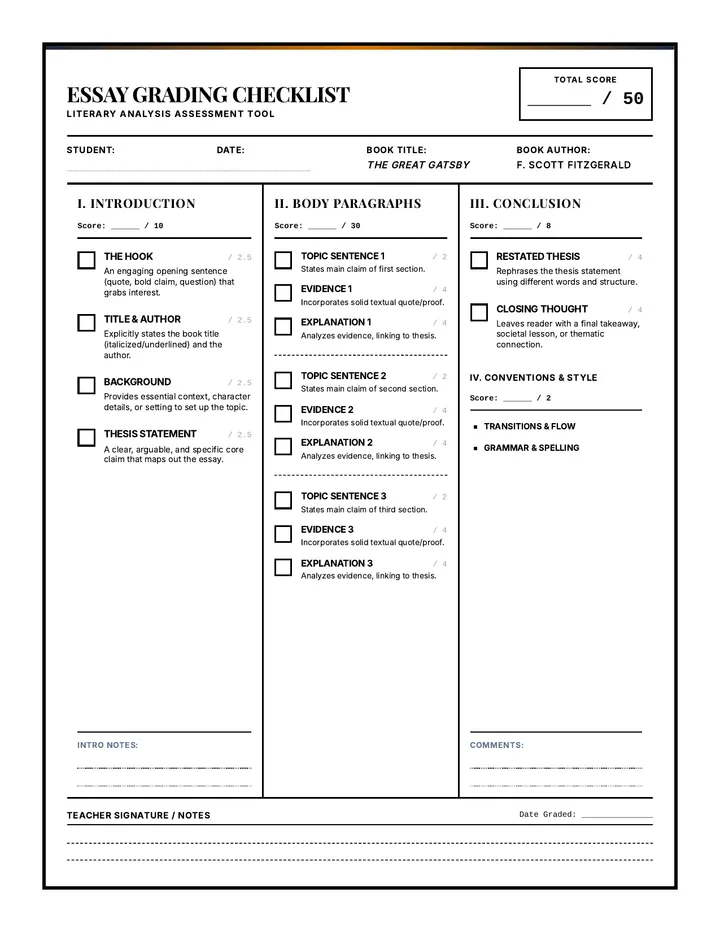
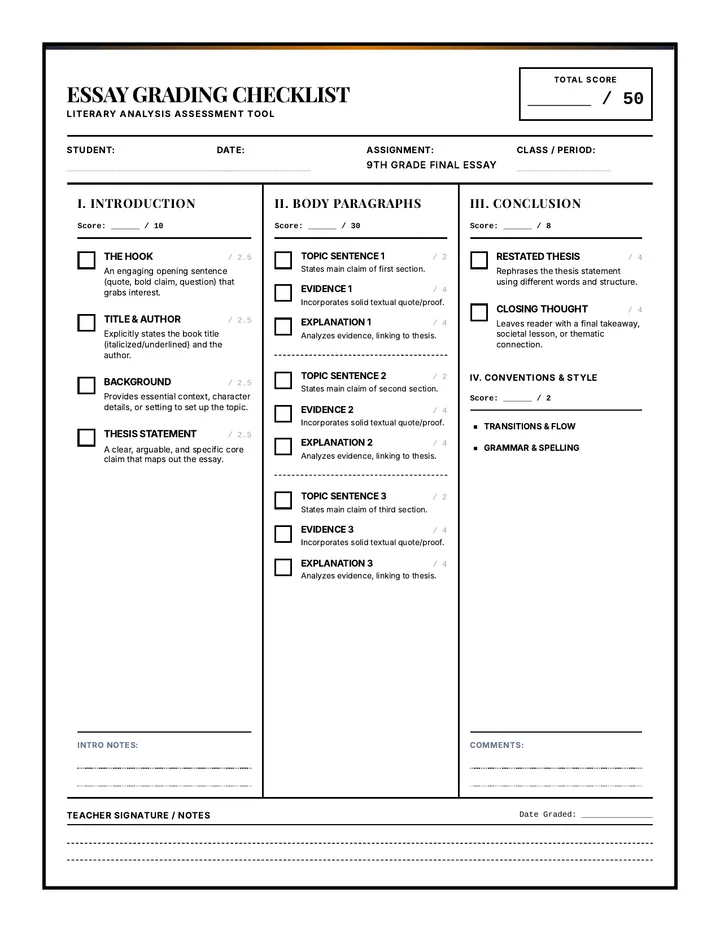
A lesson dedicated to the assessment and grading of literary essays, featuring a structured grading rubric and feedback checklist.
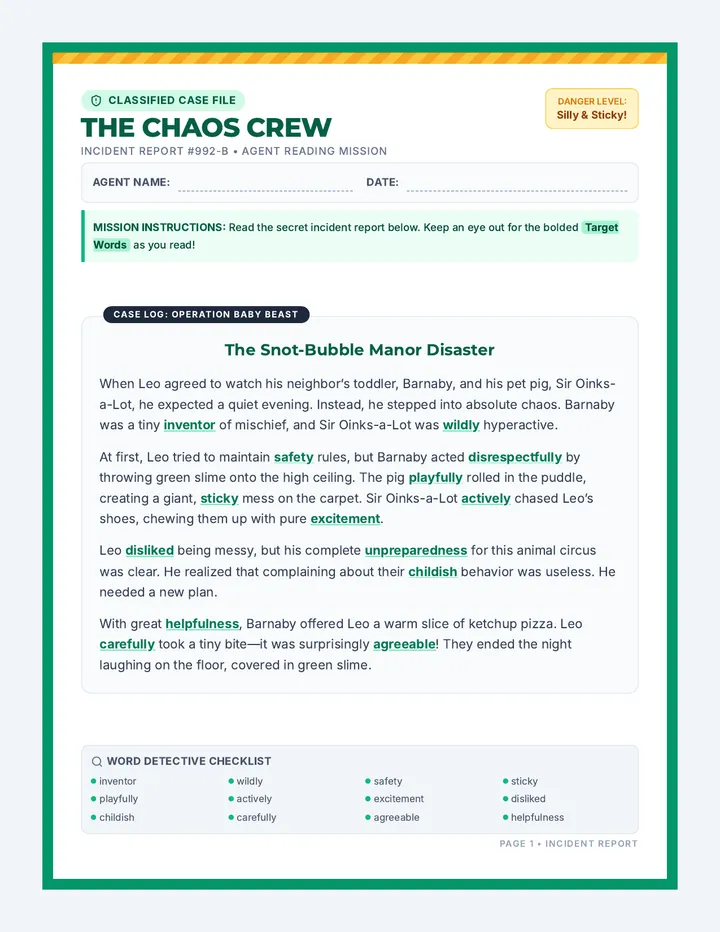
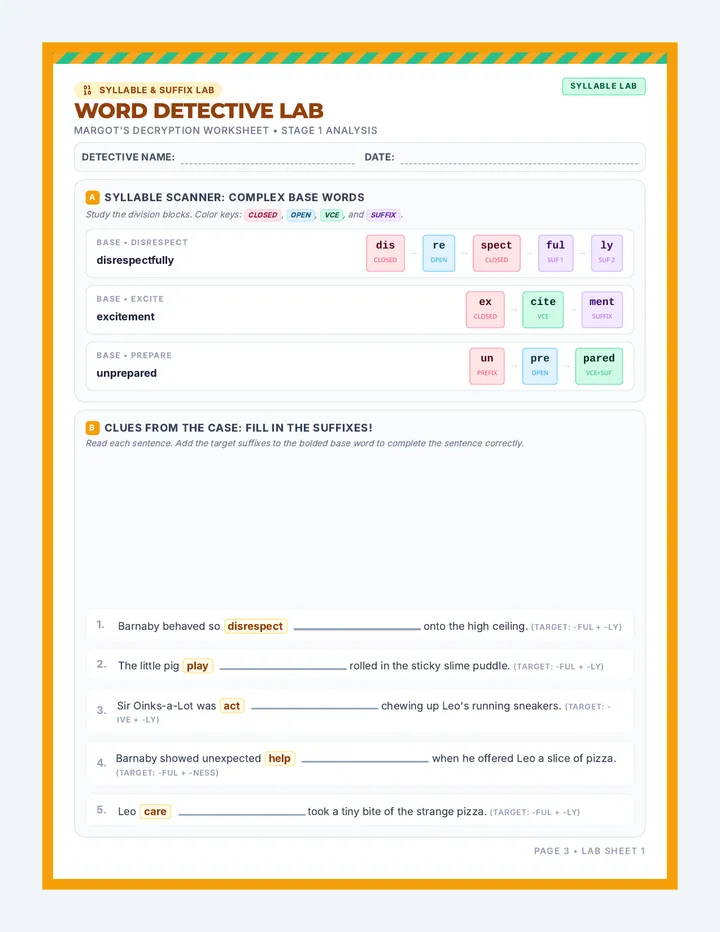
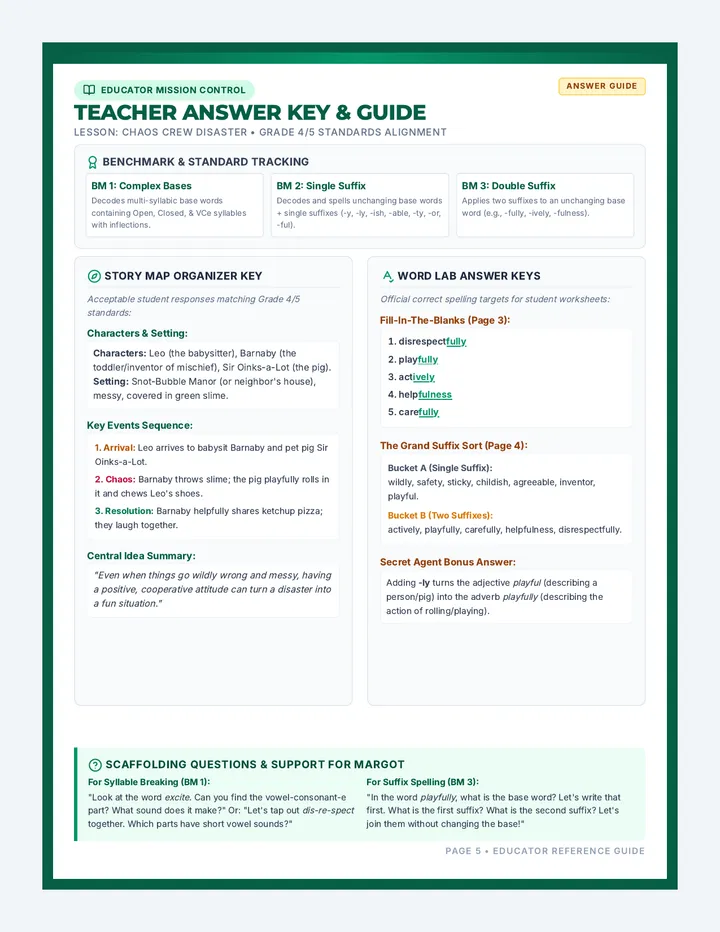
An interactive, silly reading adventure and spelling toolkit focused on multi-syllabic words, complex base words, and multi-suffix combinations for 4th/5th grade standards.