An introductory 2nd-grade lesson that transforms multiplication into a 'superpower' by teaching it as repeated addition through visual arrays and hands-on grouping activities.
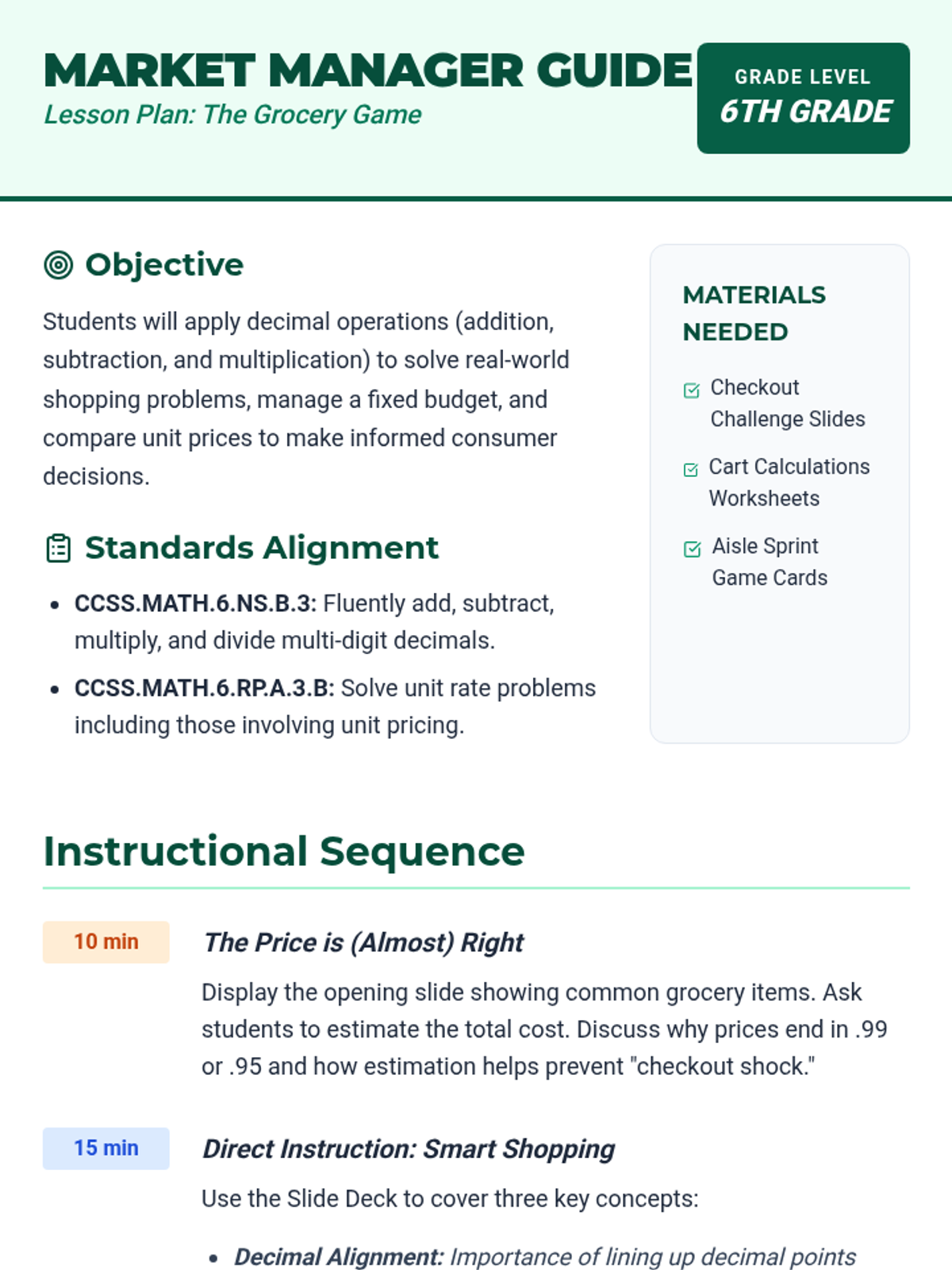
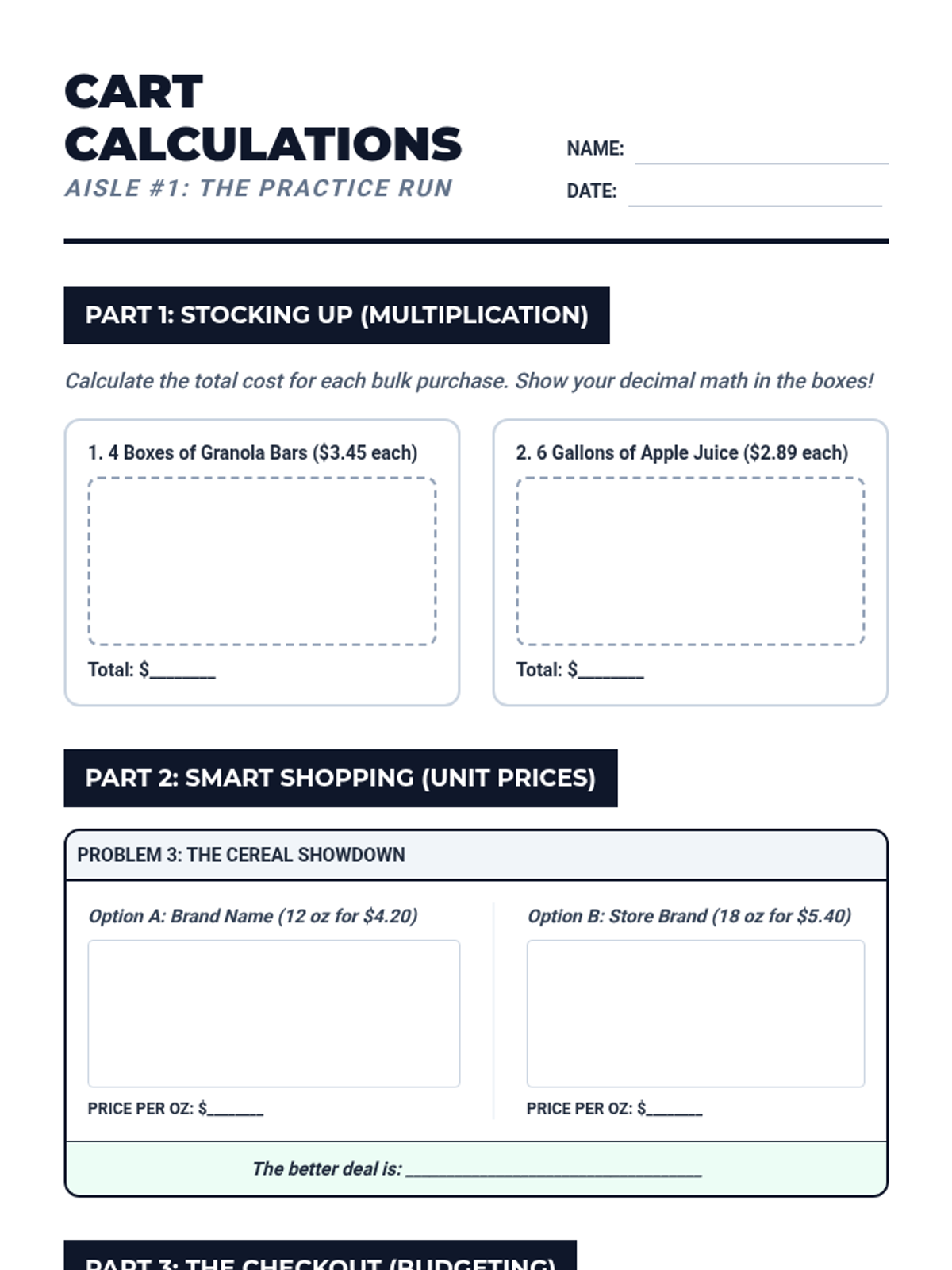
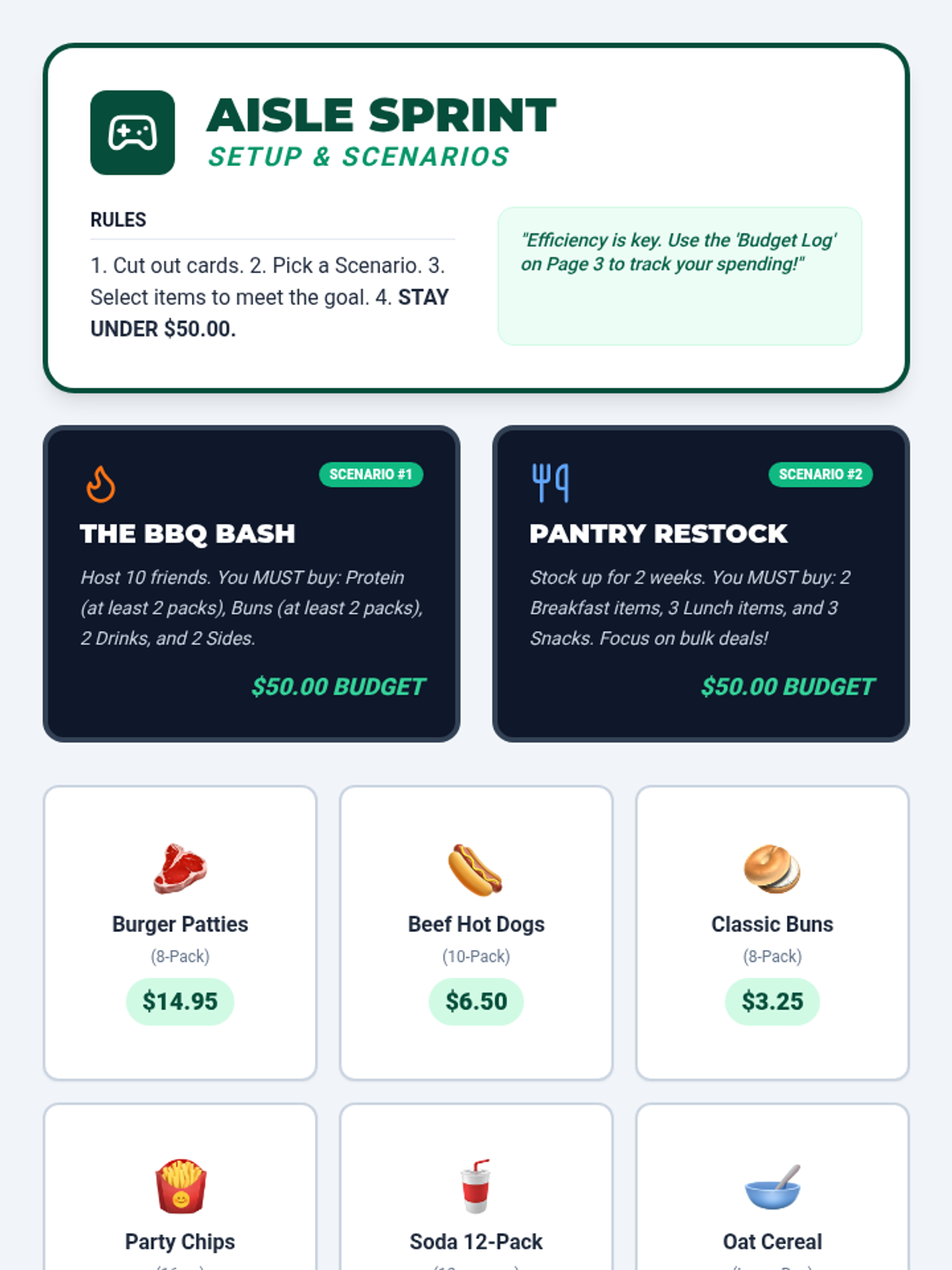
A hands-on life-skills math lesson where 6th graders practice budgeting, decimal operations, and smart shopping strategies through a simulated grocery store experience.
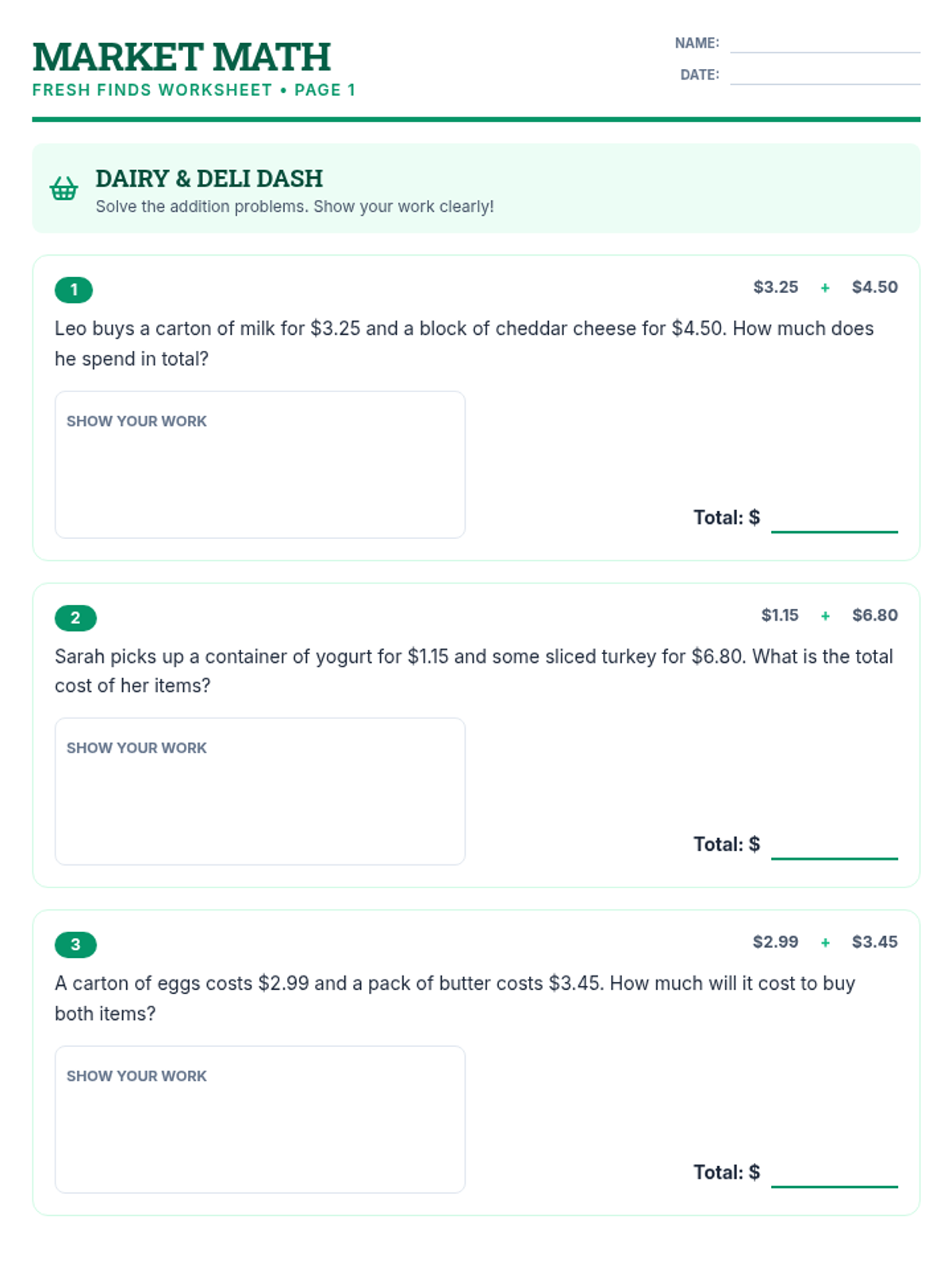
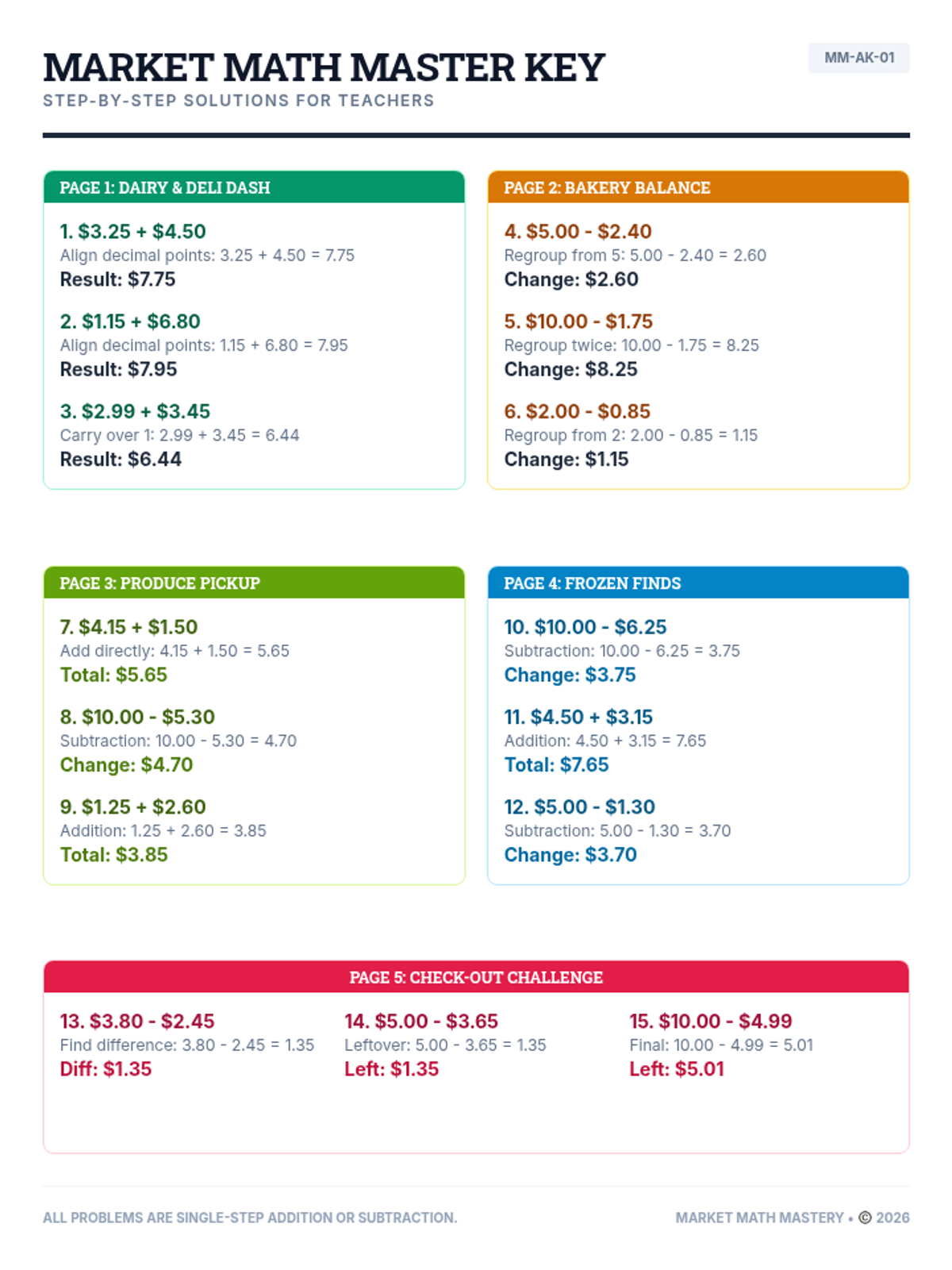
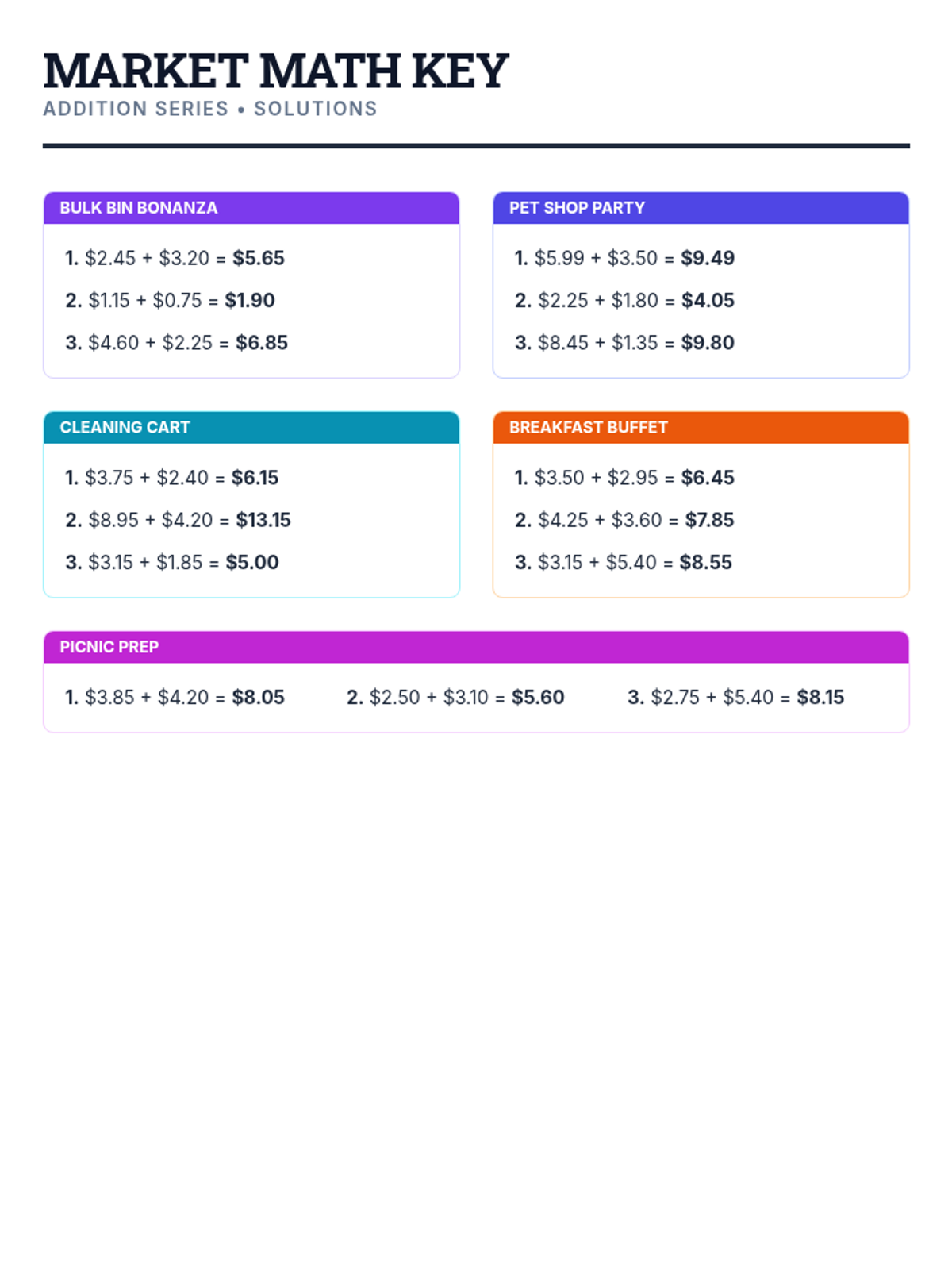
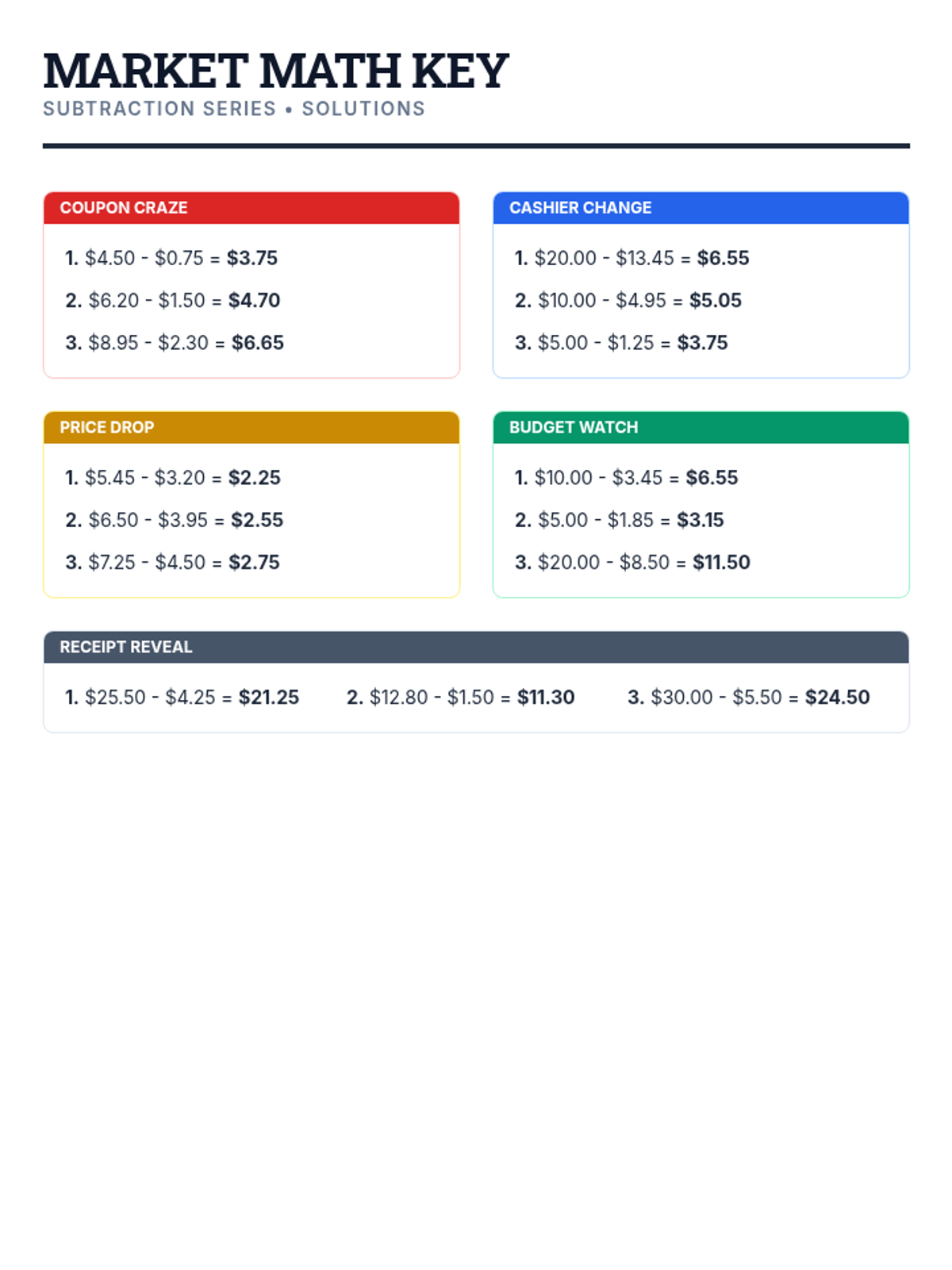
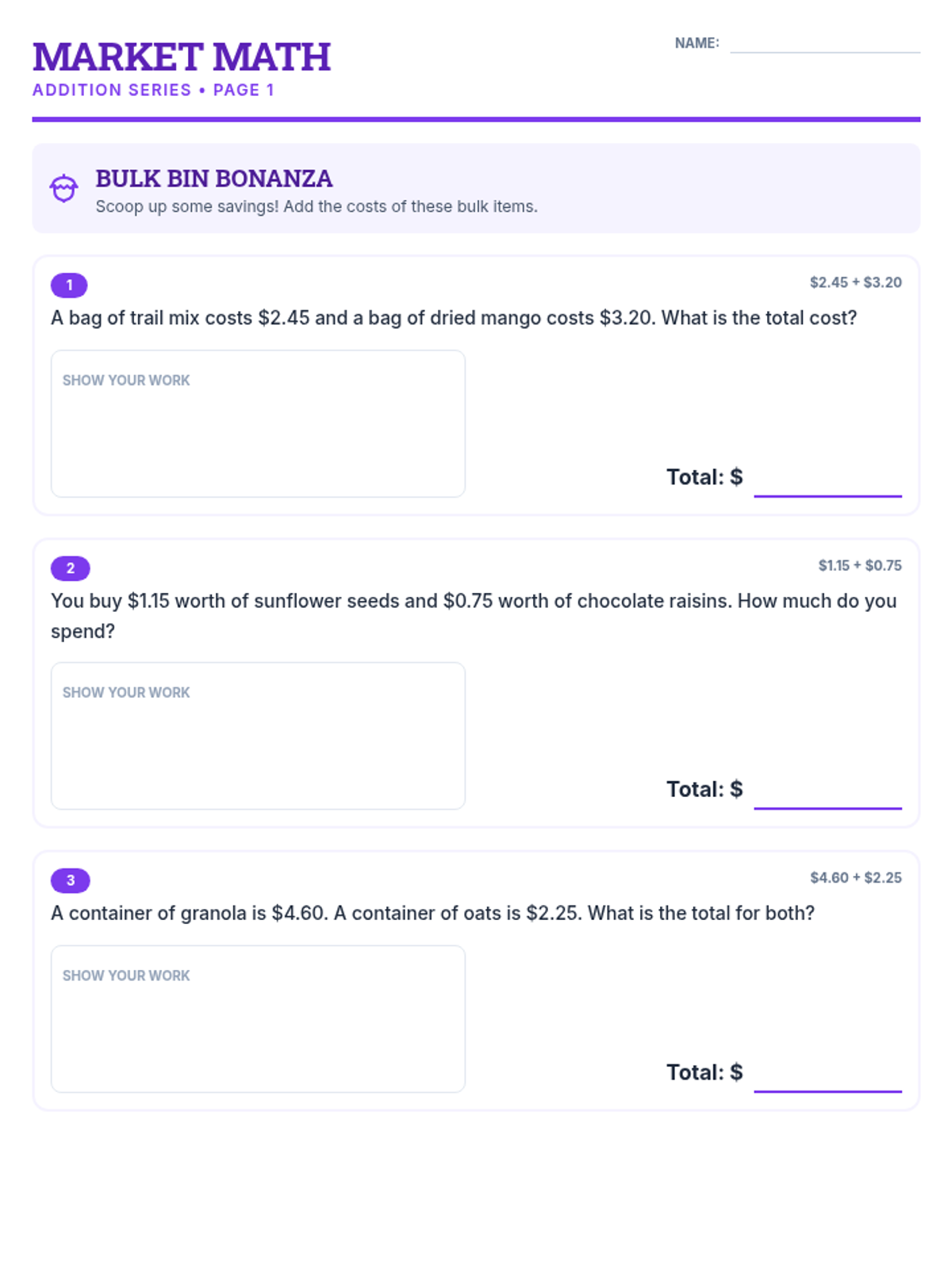
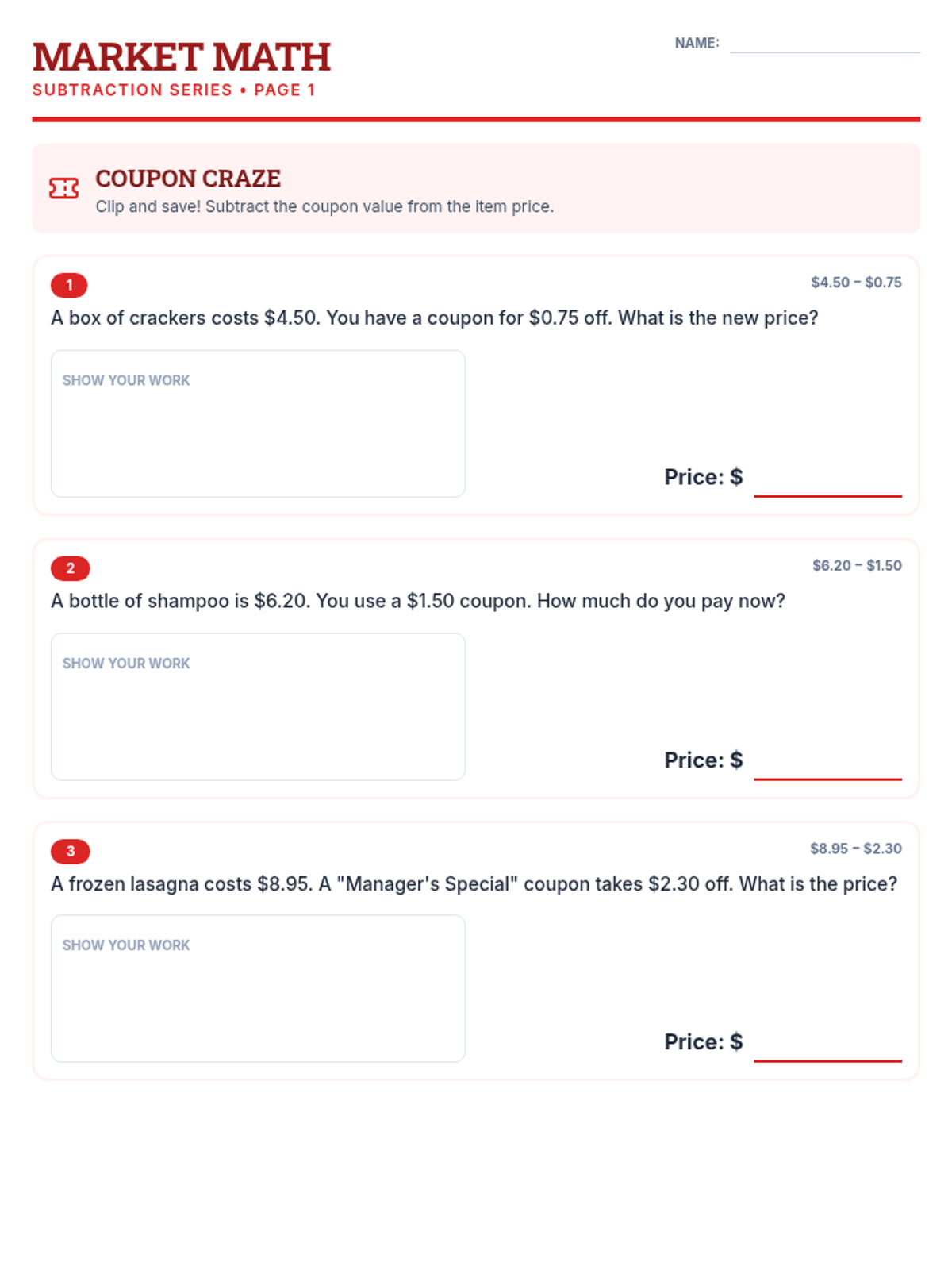
An expanded lesson focused on solving single-step addition and subtraction word problems within a grocery store context. This collection includes focused practice sets for addition, subtraction, and mixed operations to build financial literacy.
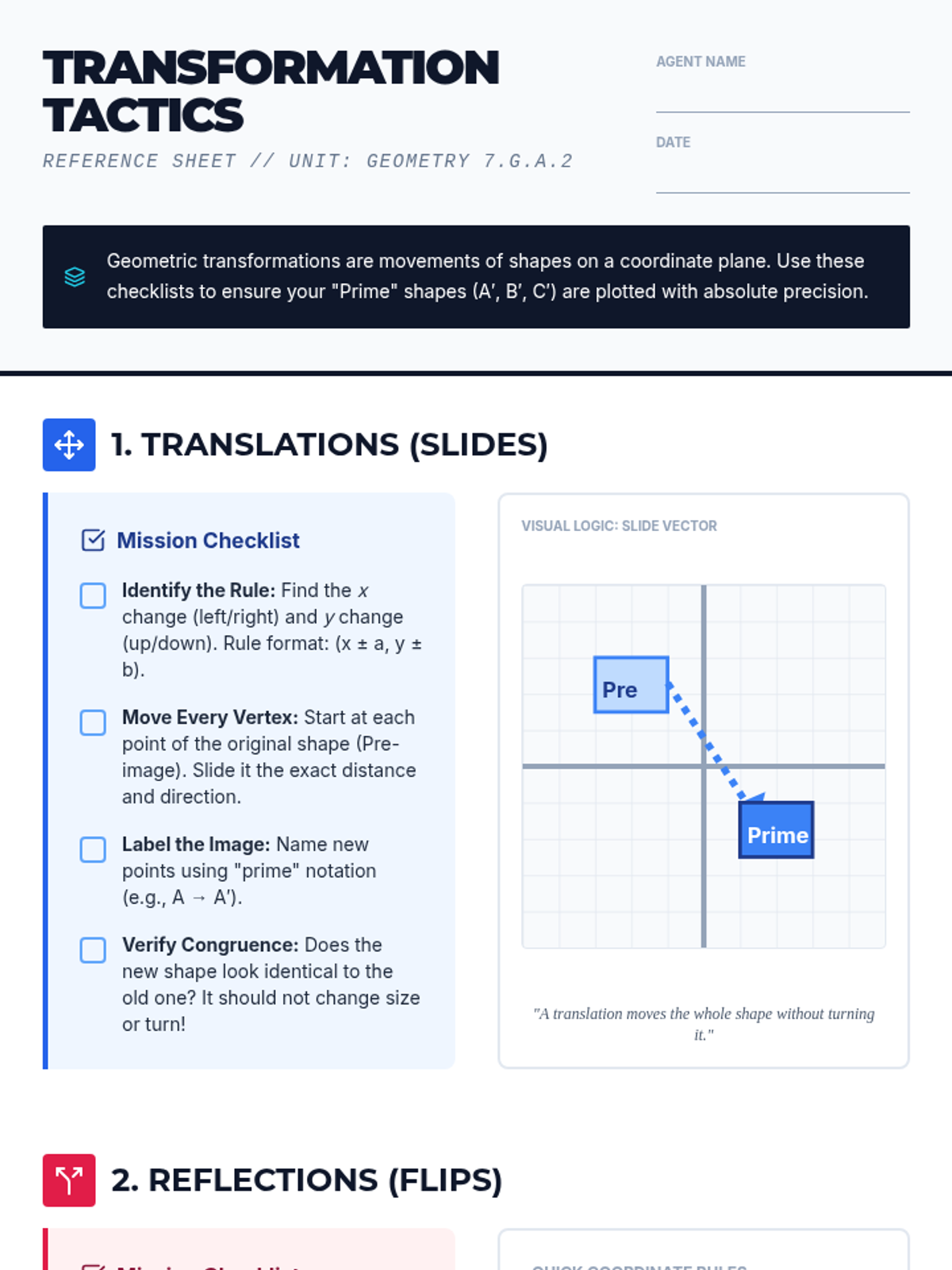
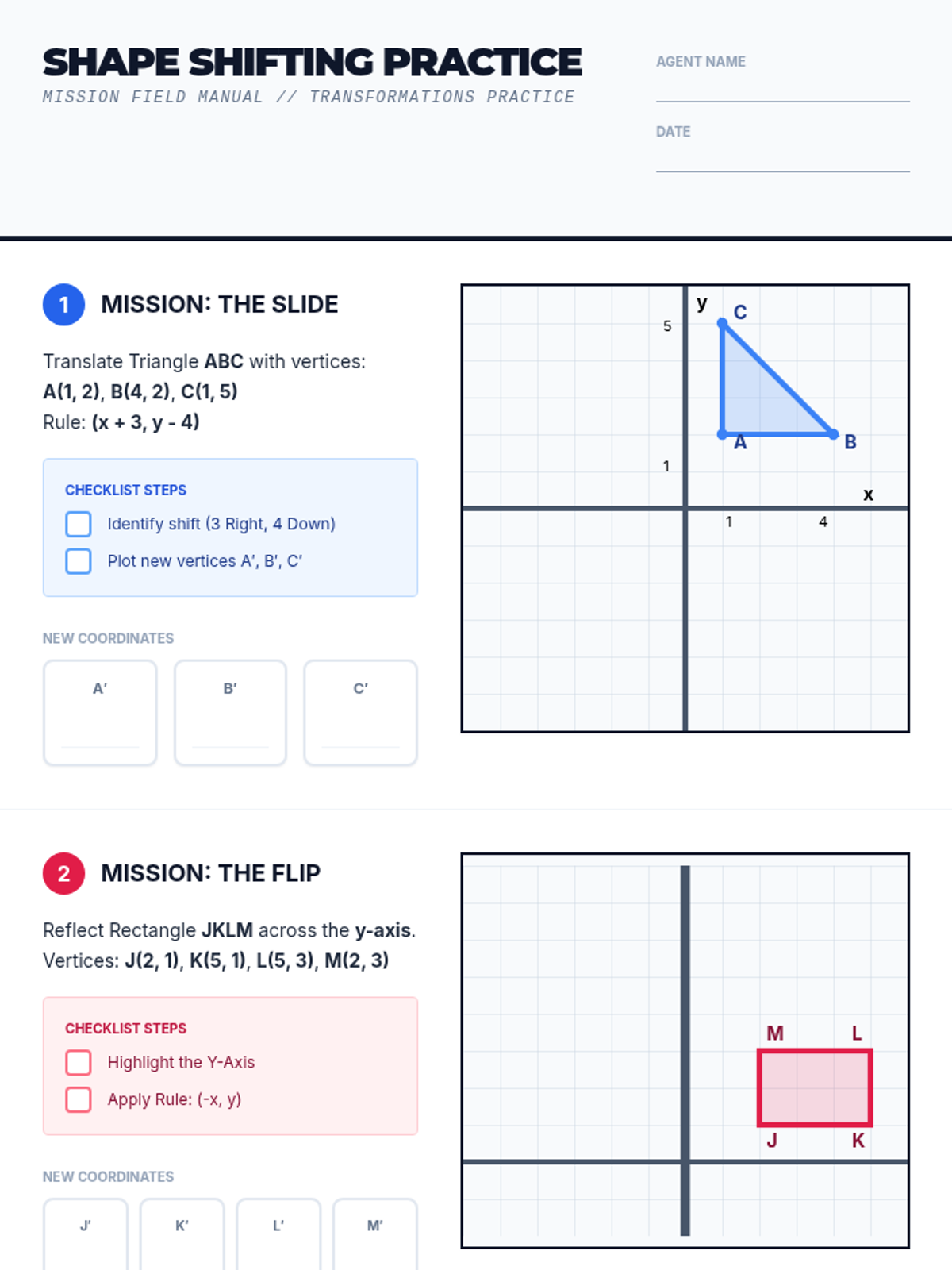
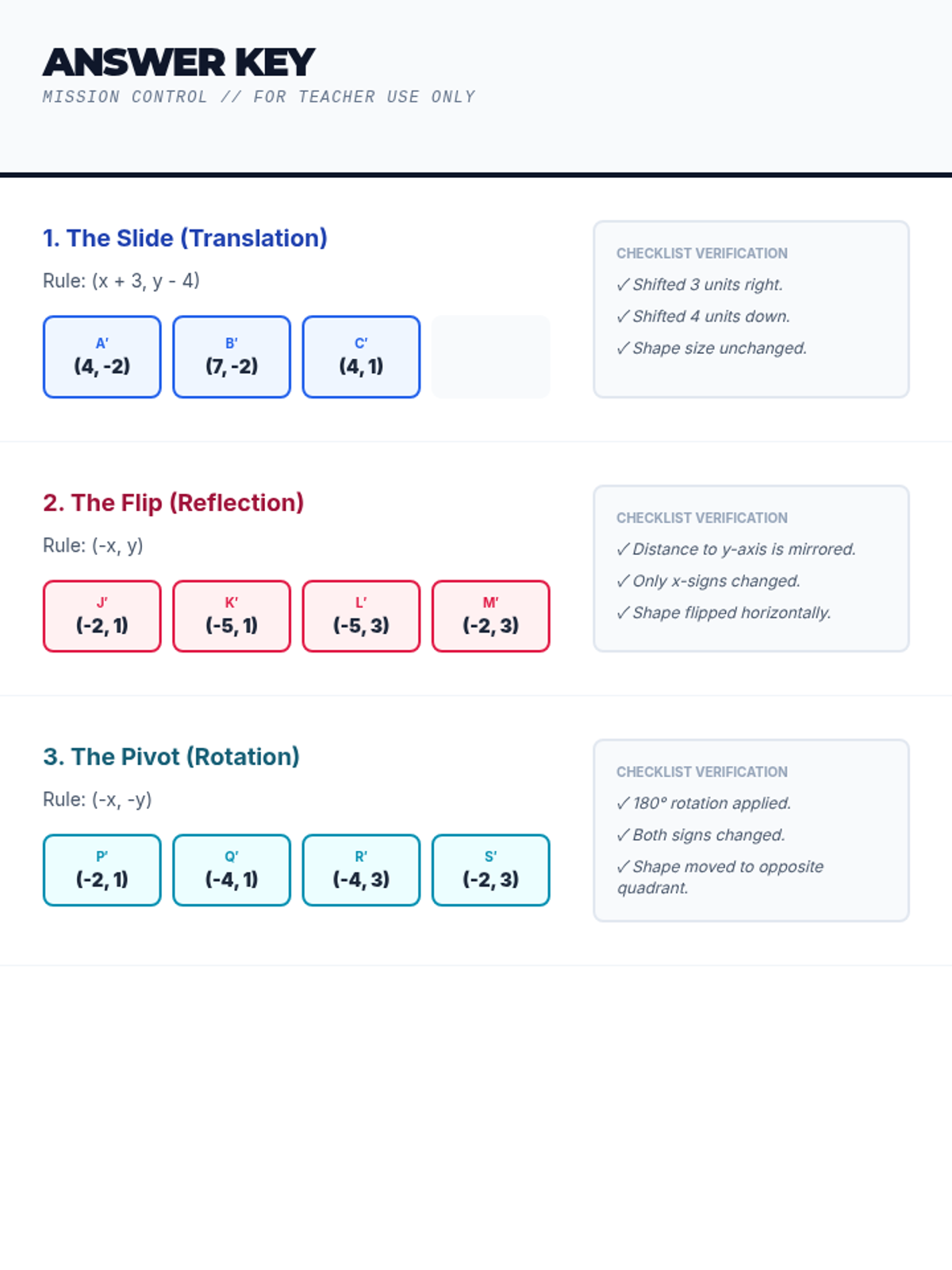
A comprehensive guide and practice set for mastering geometric transformations, focusing on translations, reflections, and rotations through a procedural checklist approach.
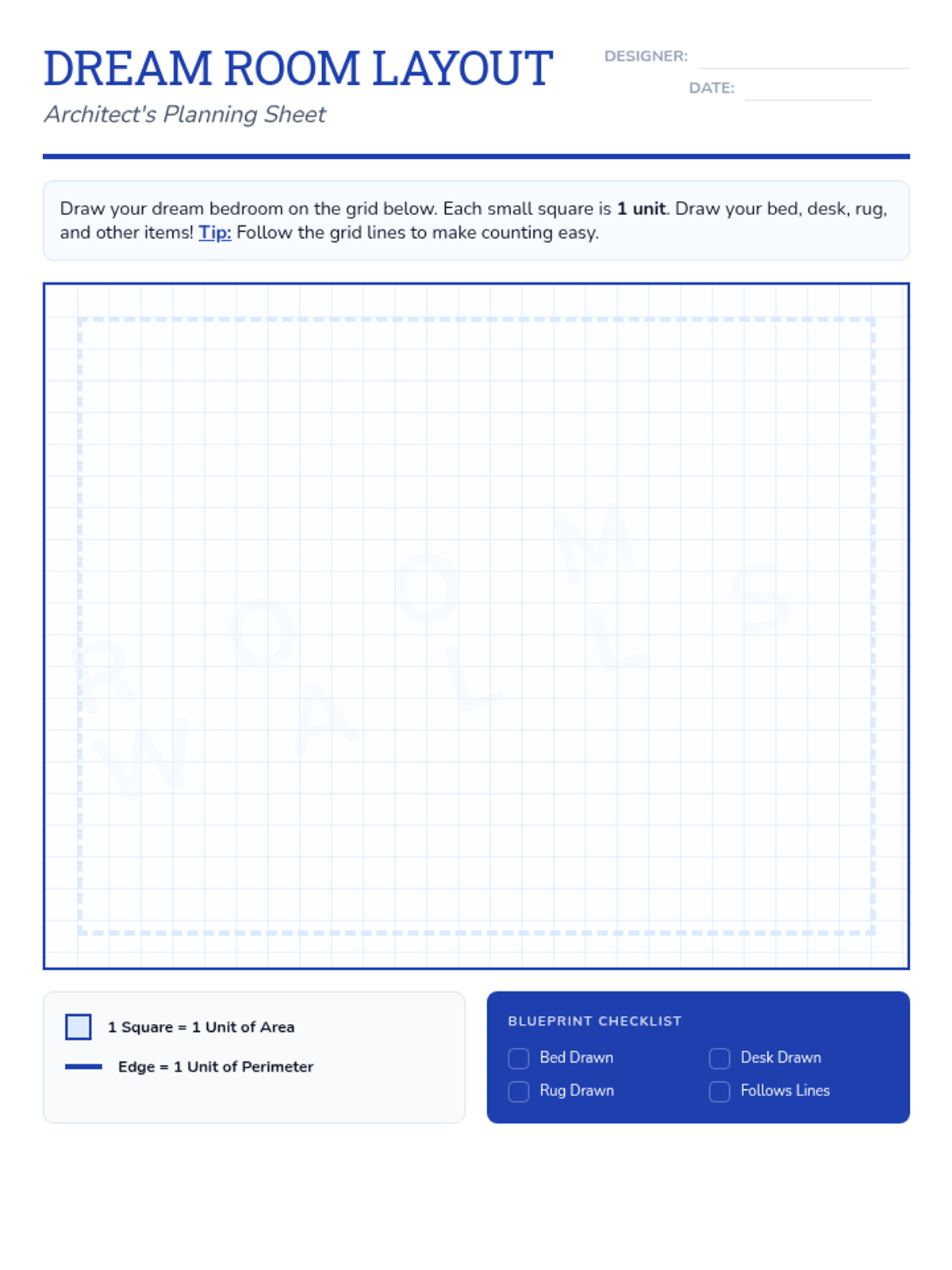
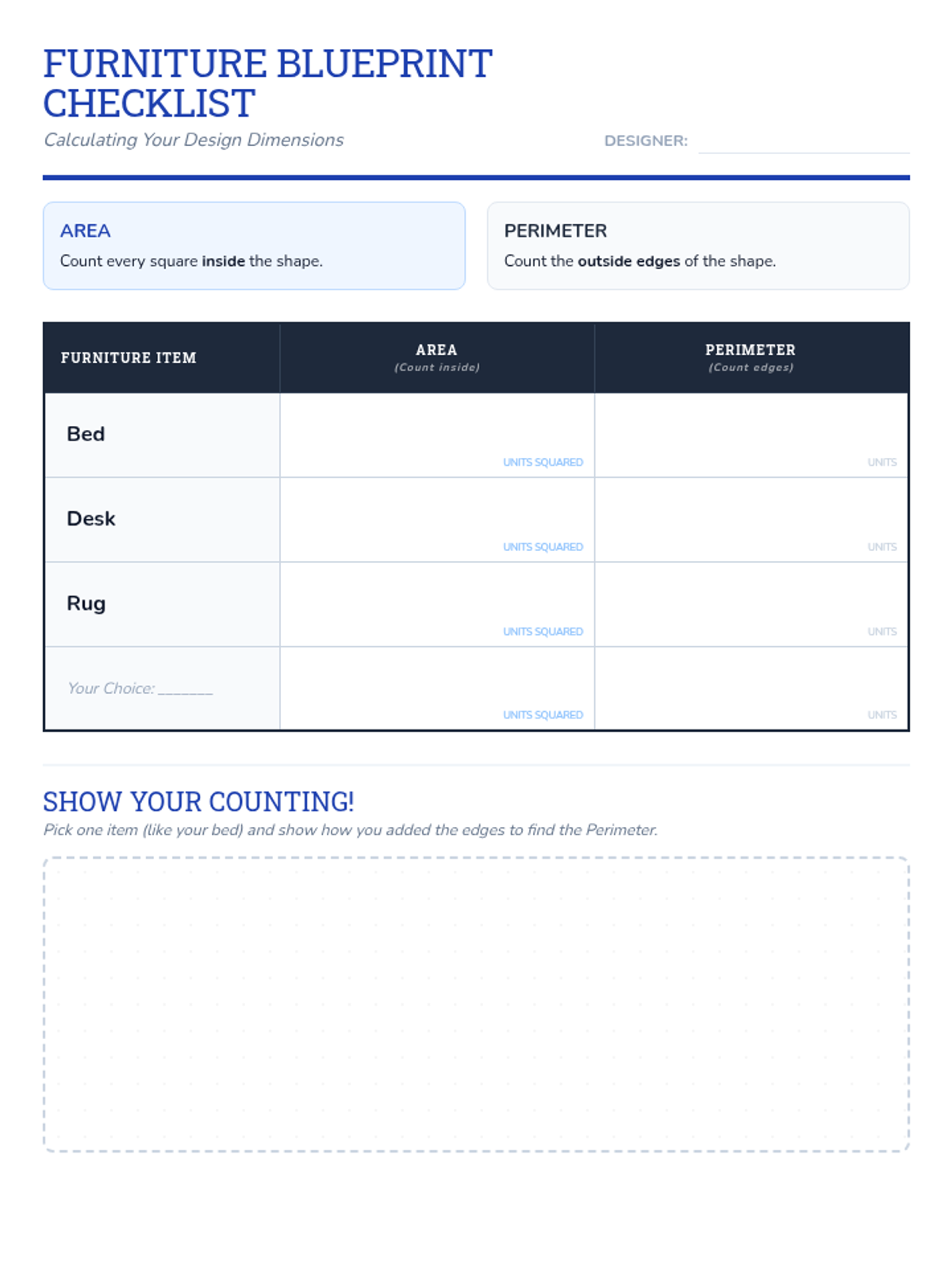
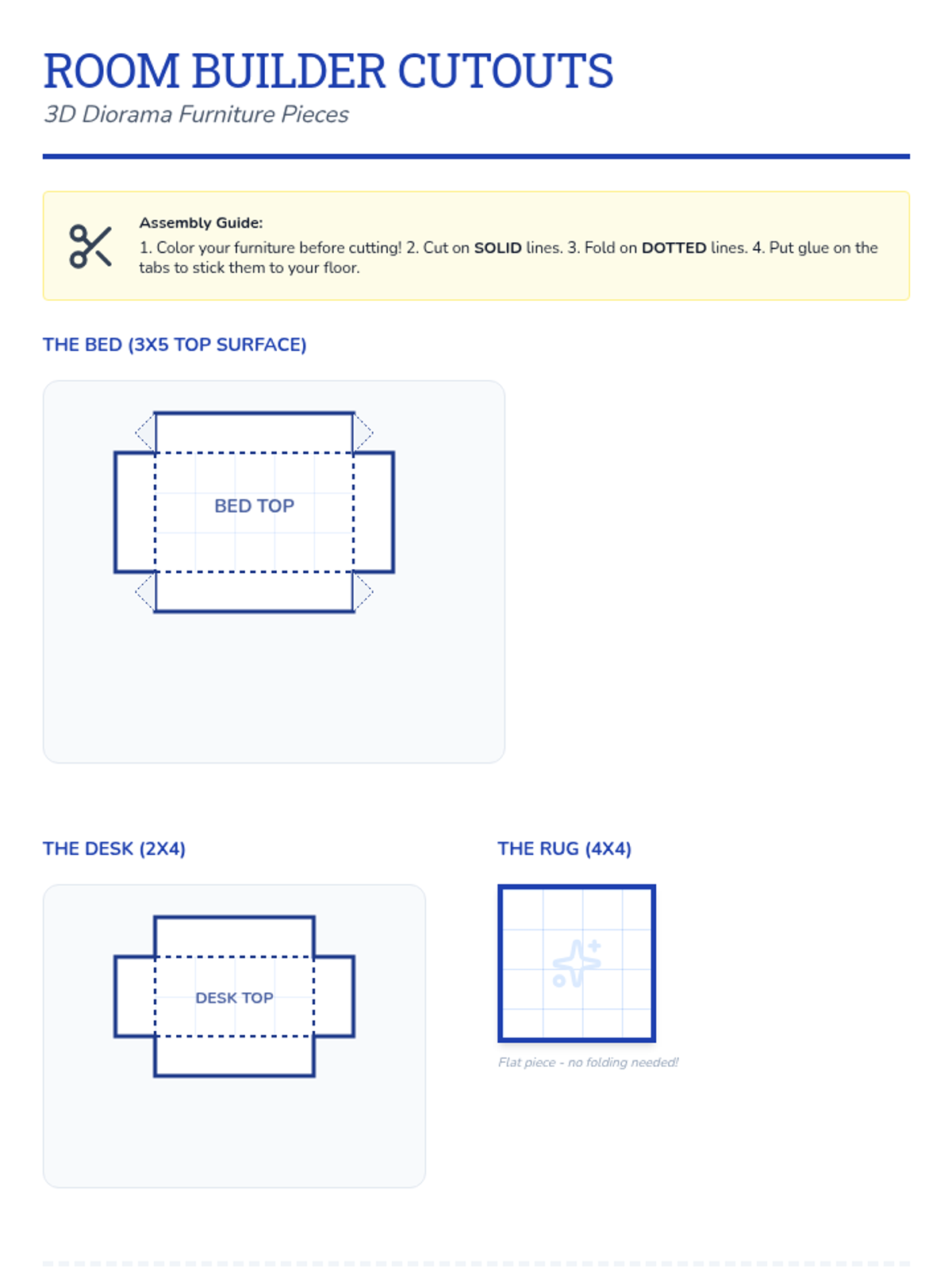
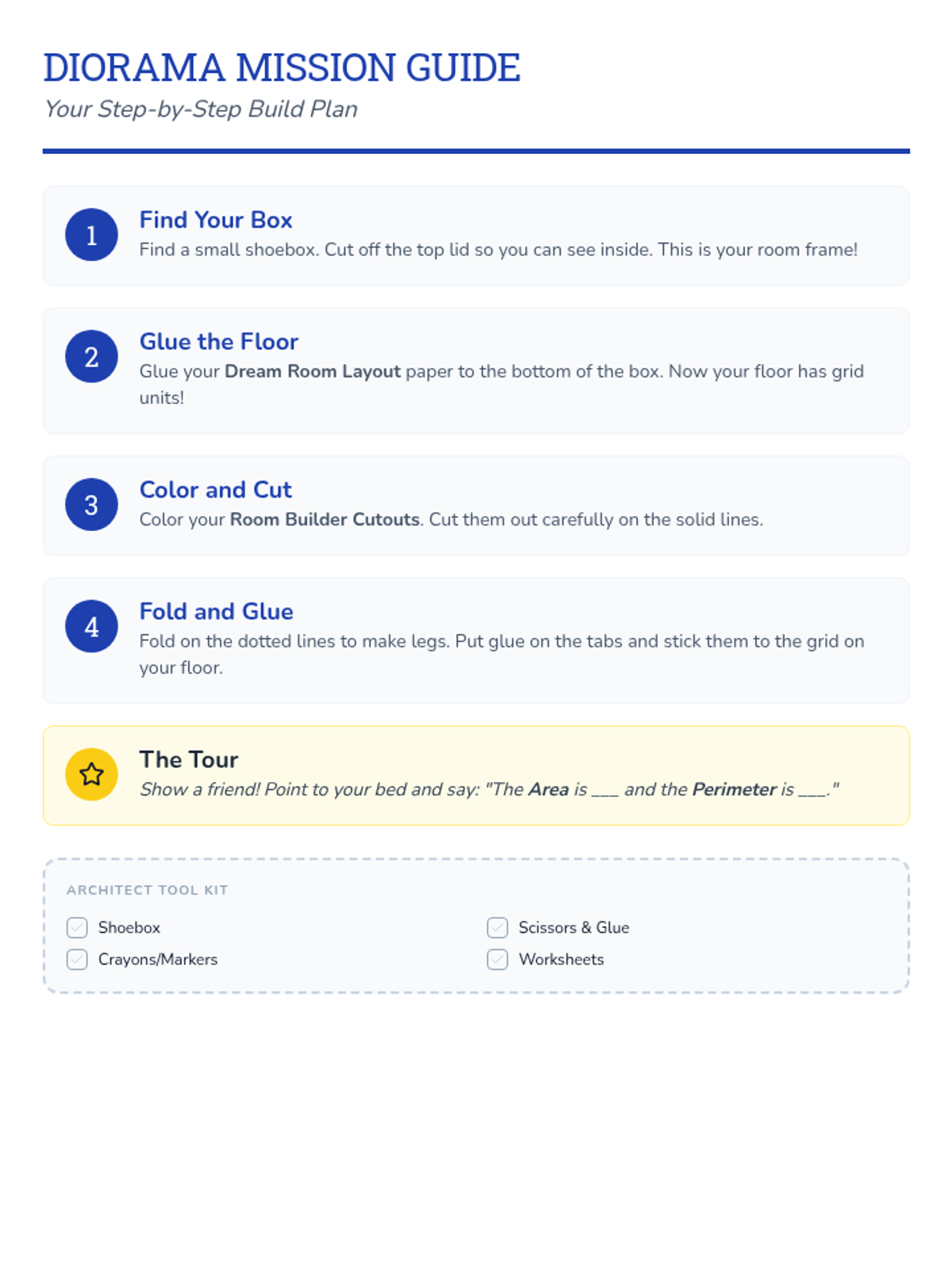
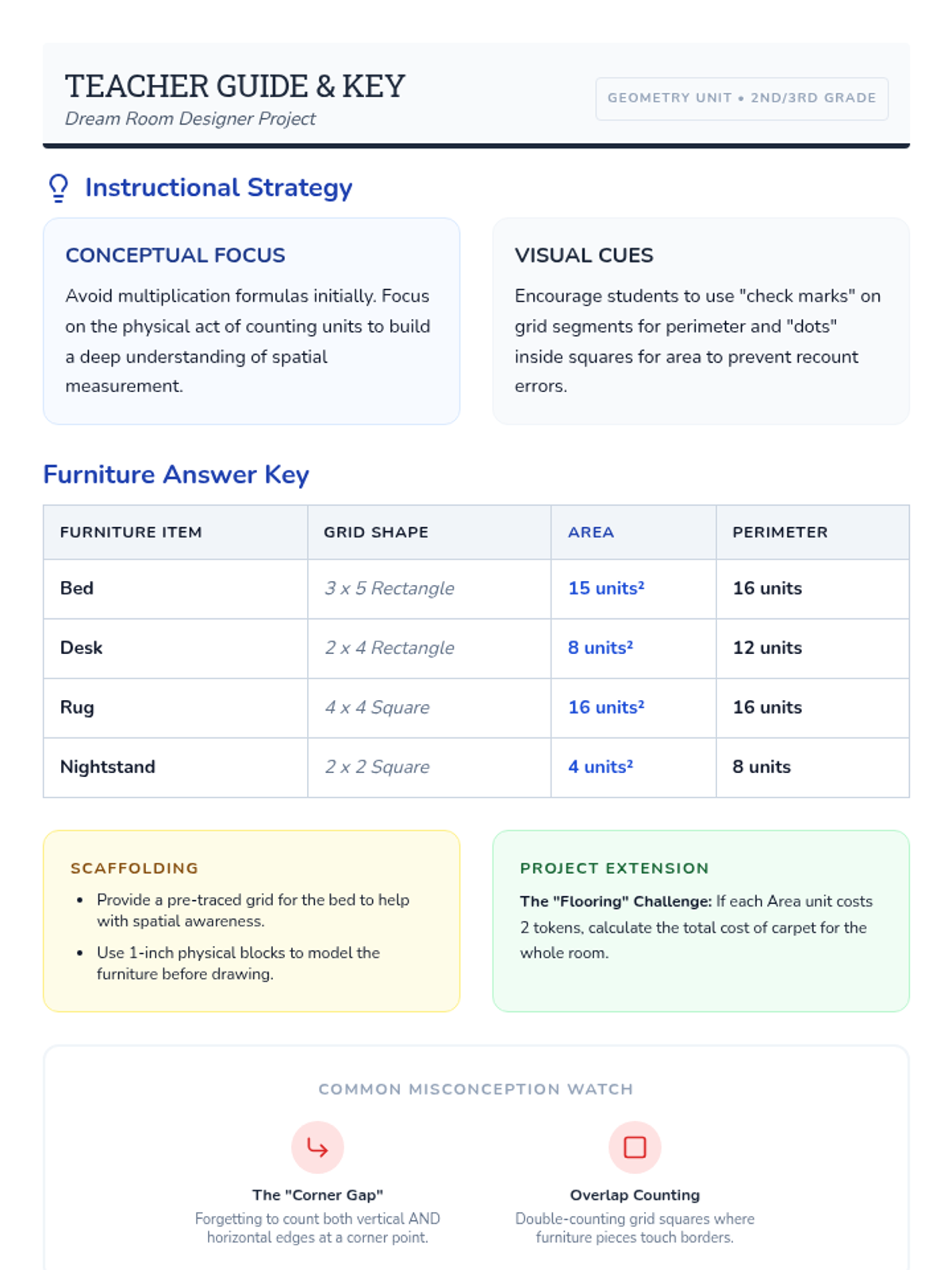
A hands-on geometry project where students design their dream bedroom layout and build a 3D model, focusing on counting area and measuring perimeter at a 2nd-grade level.
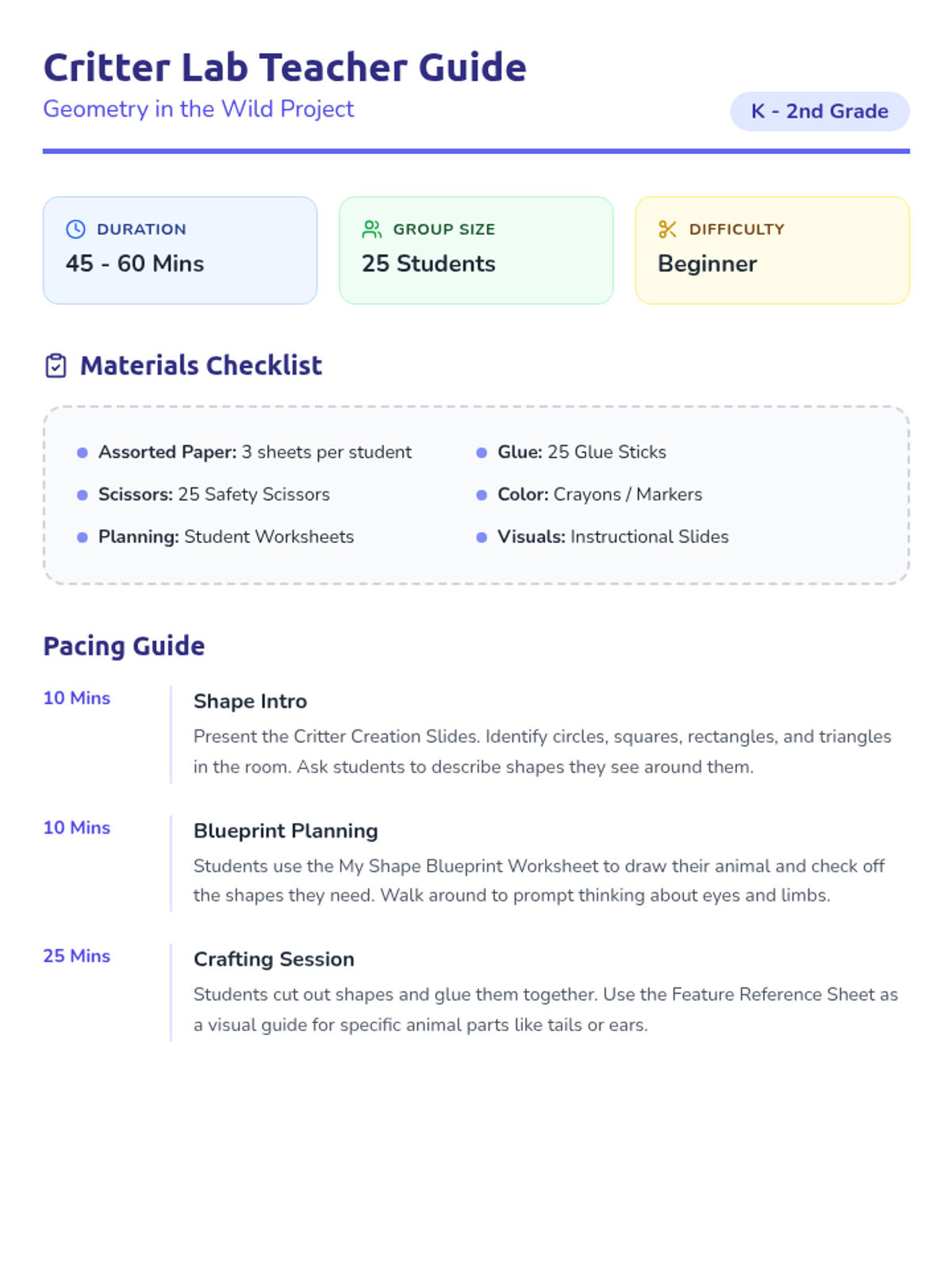
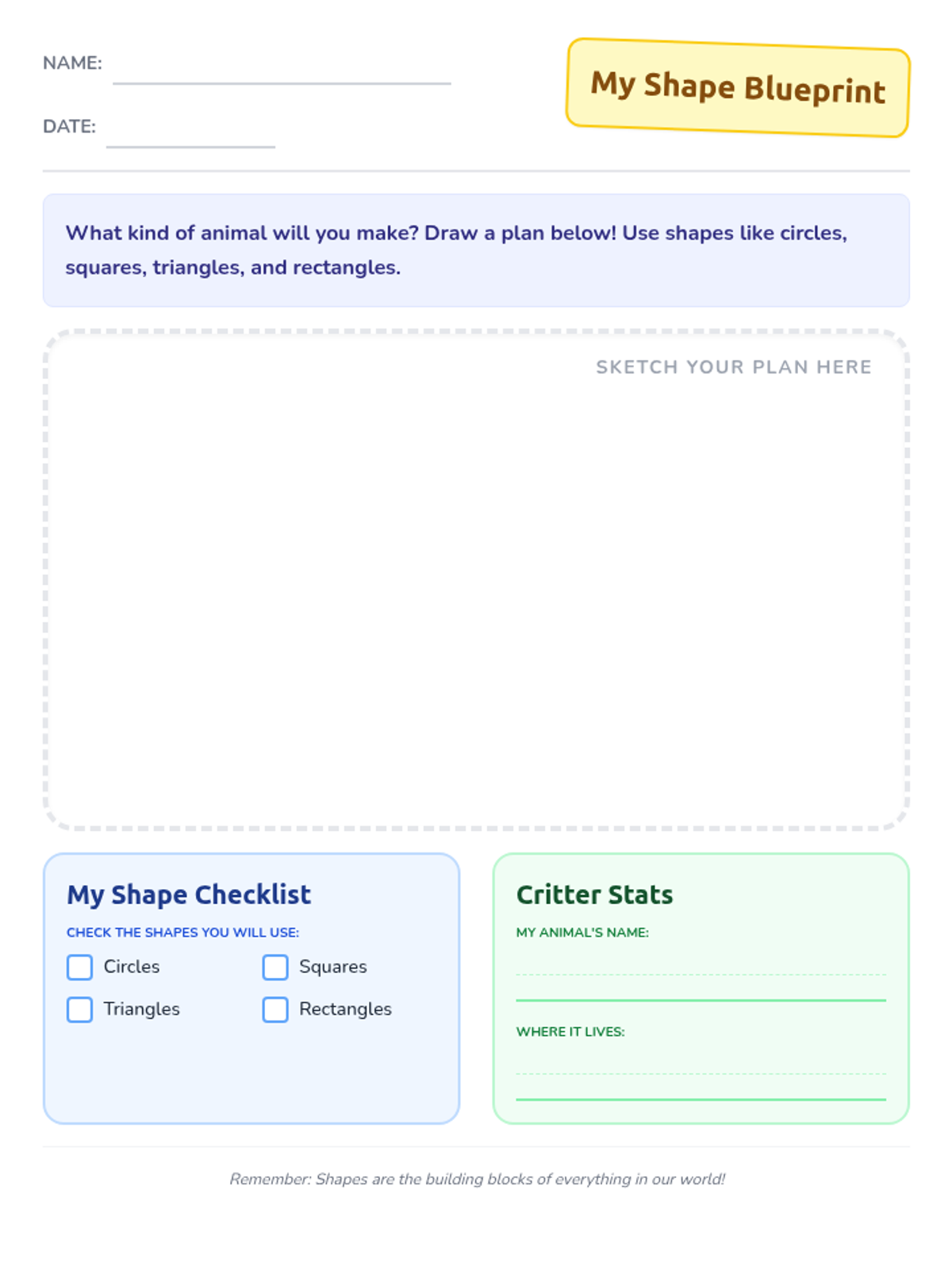
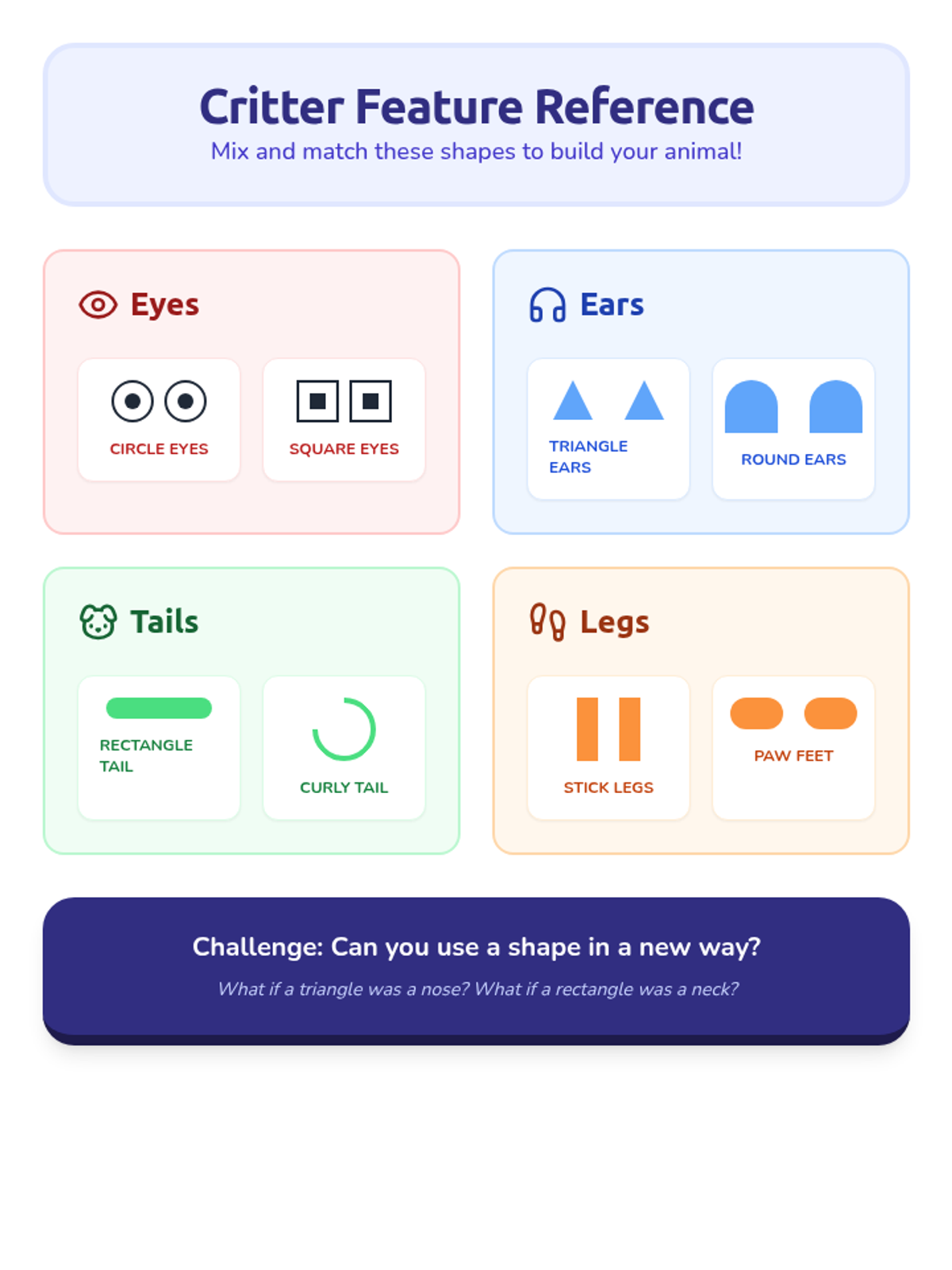
Students learn to identify basic geometric shapes and combine them to create a unique paper animal, practicing scissor skills and spatial reasoning.
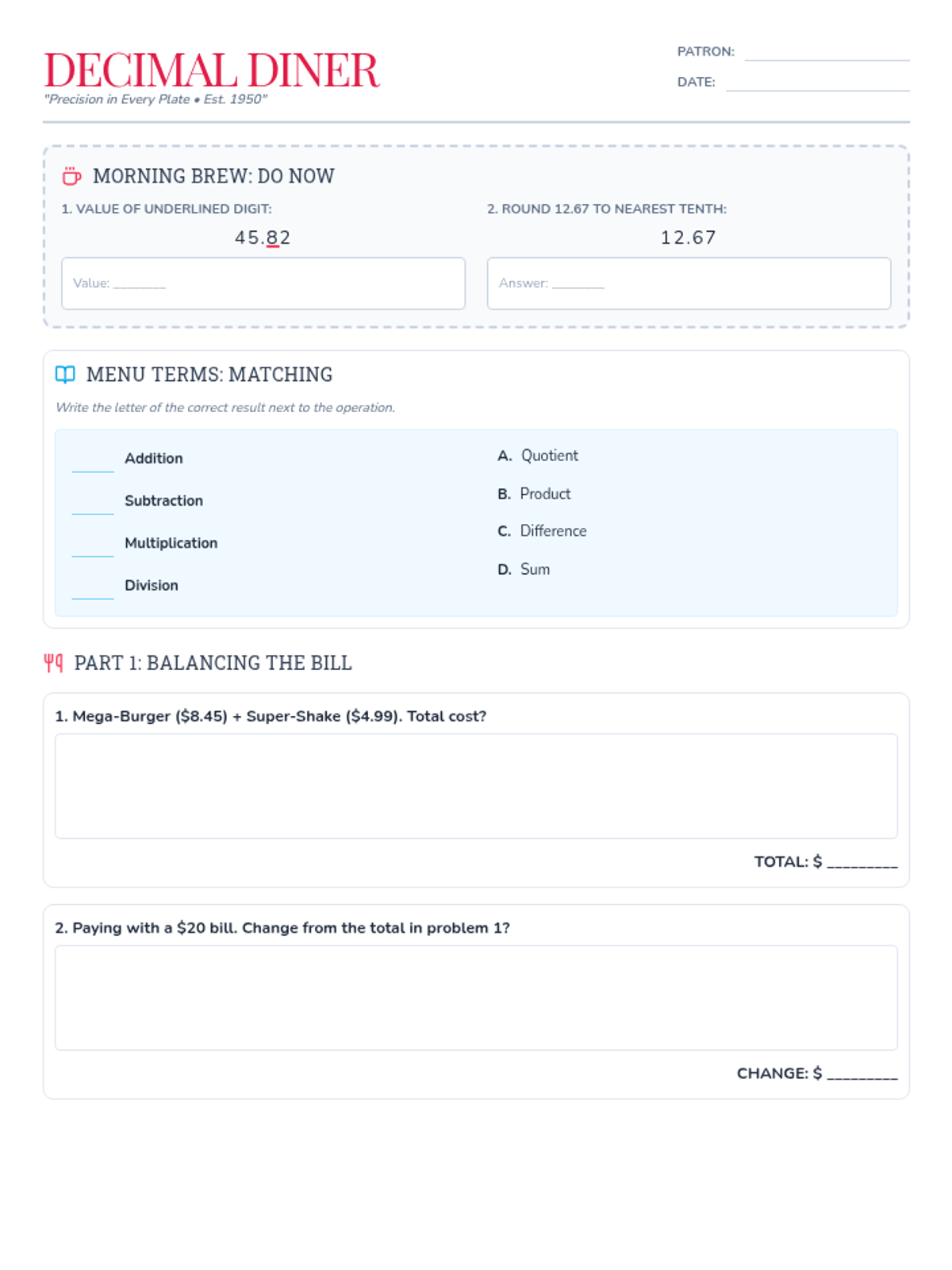
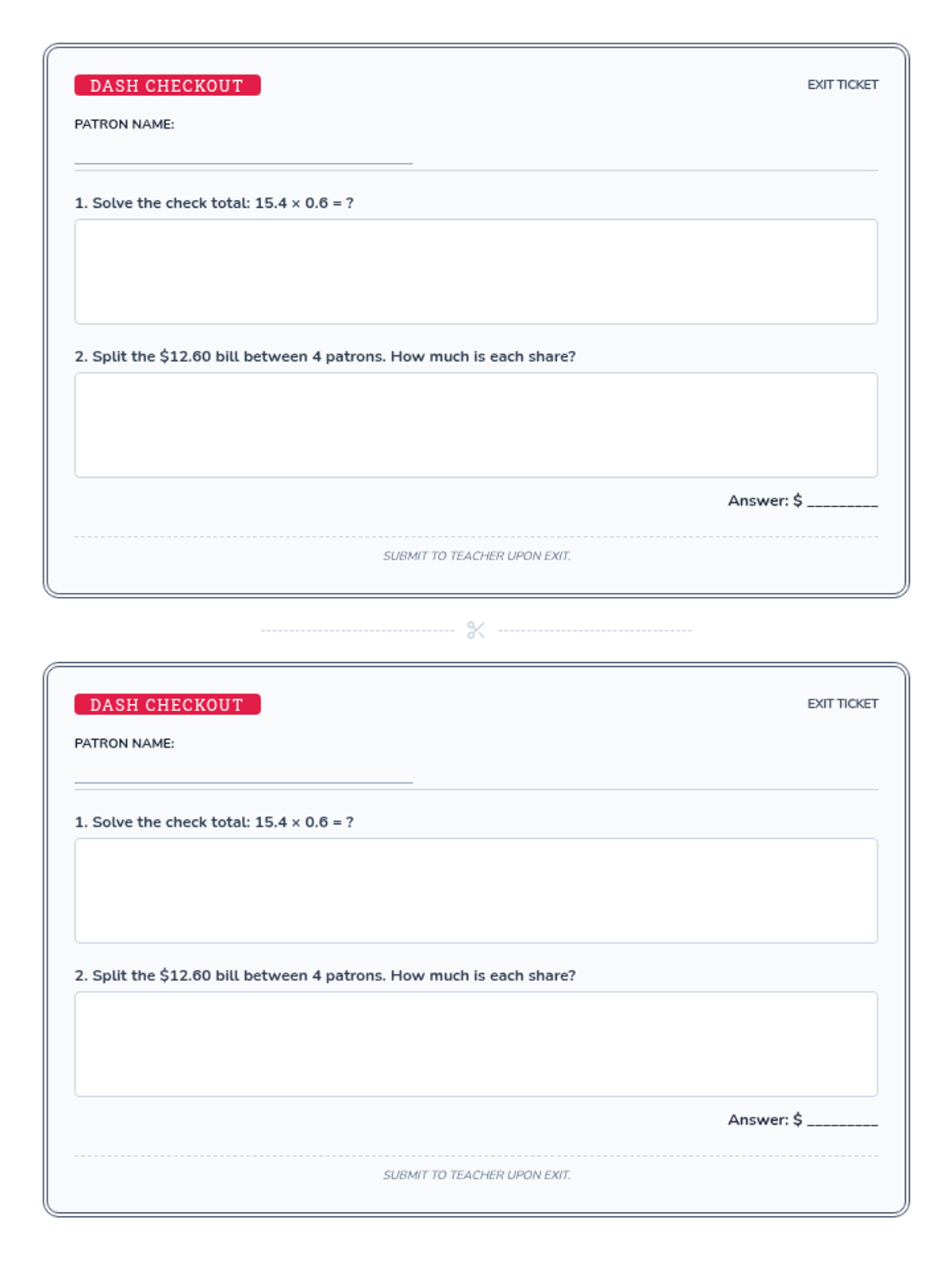
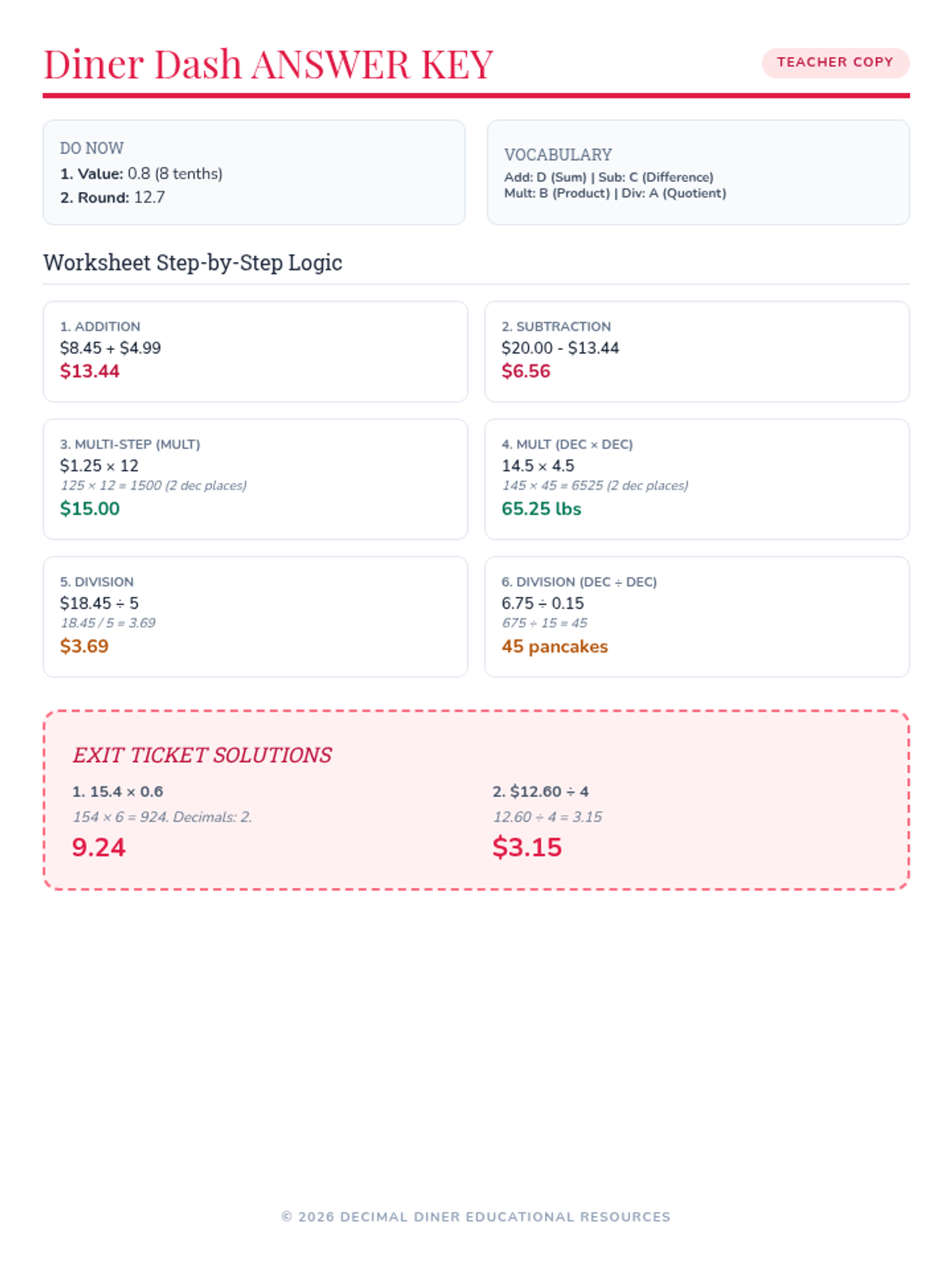
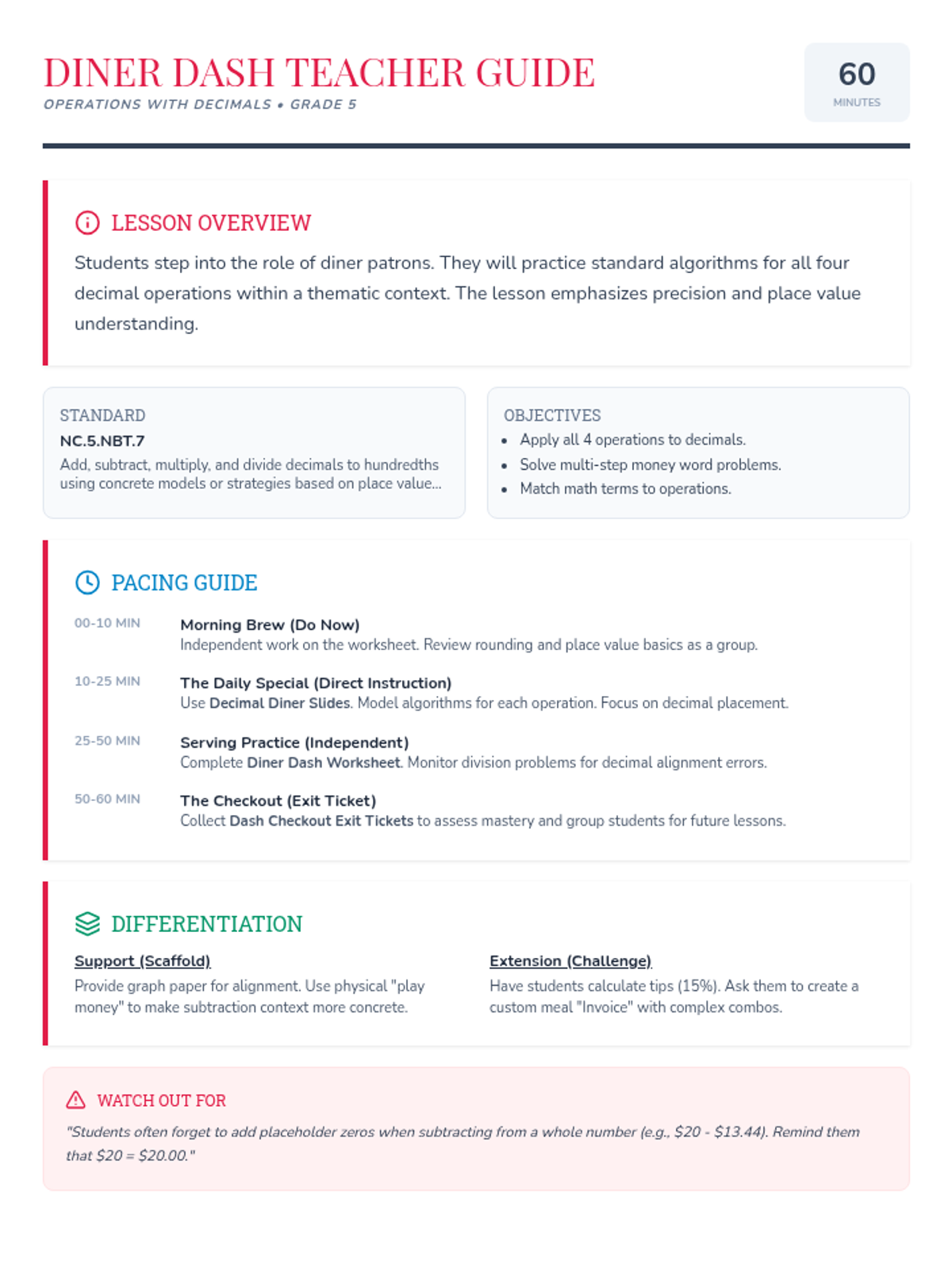
Students master addition, subtraction, multiplication, and division of decimals to the hundredths place through the lens of running and visiting a vintage diner. The lesson includes a comprehensive practice packet and a final check-out exit ticket.
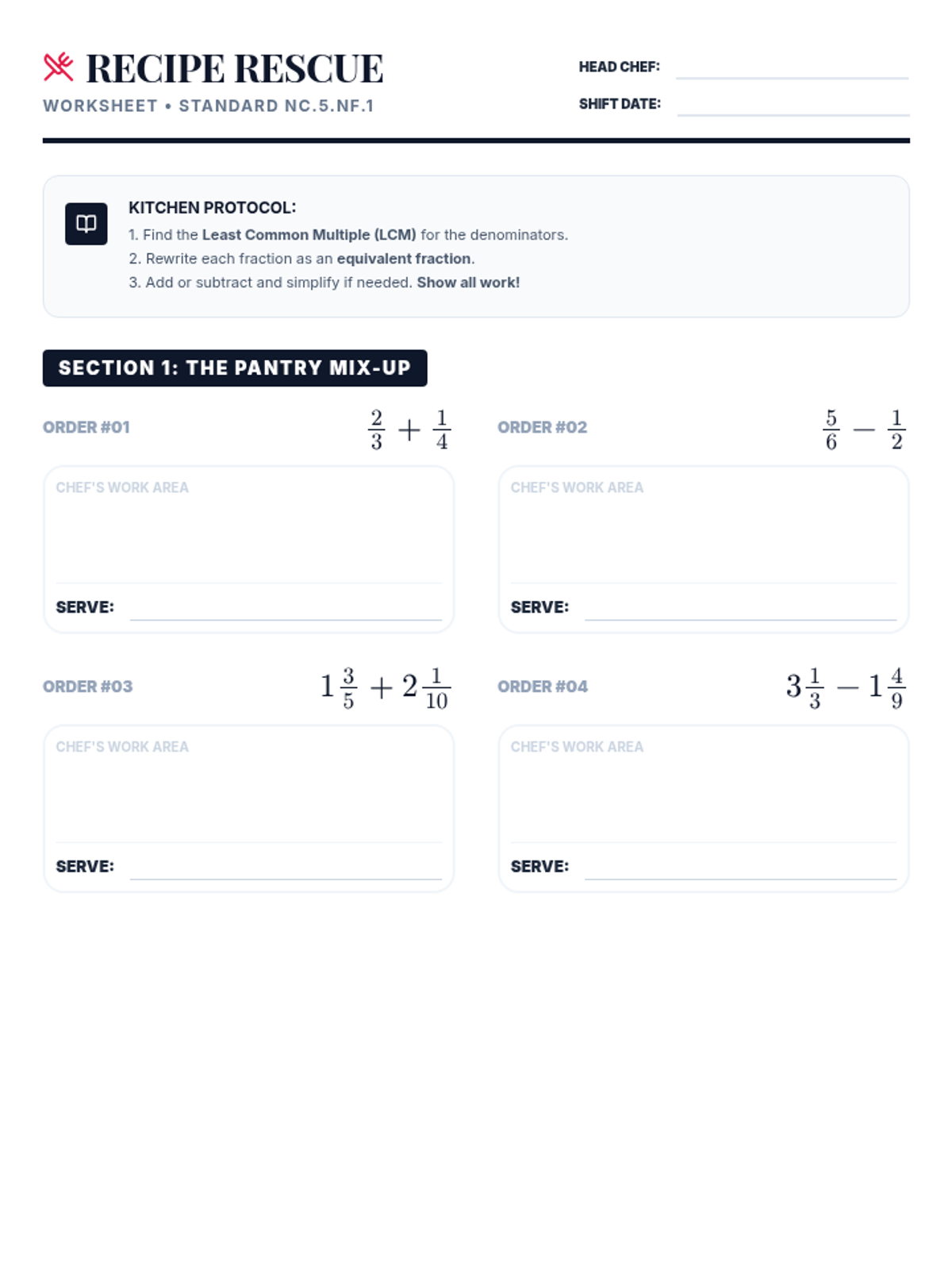
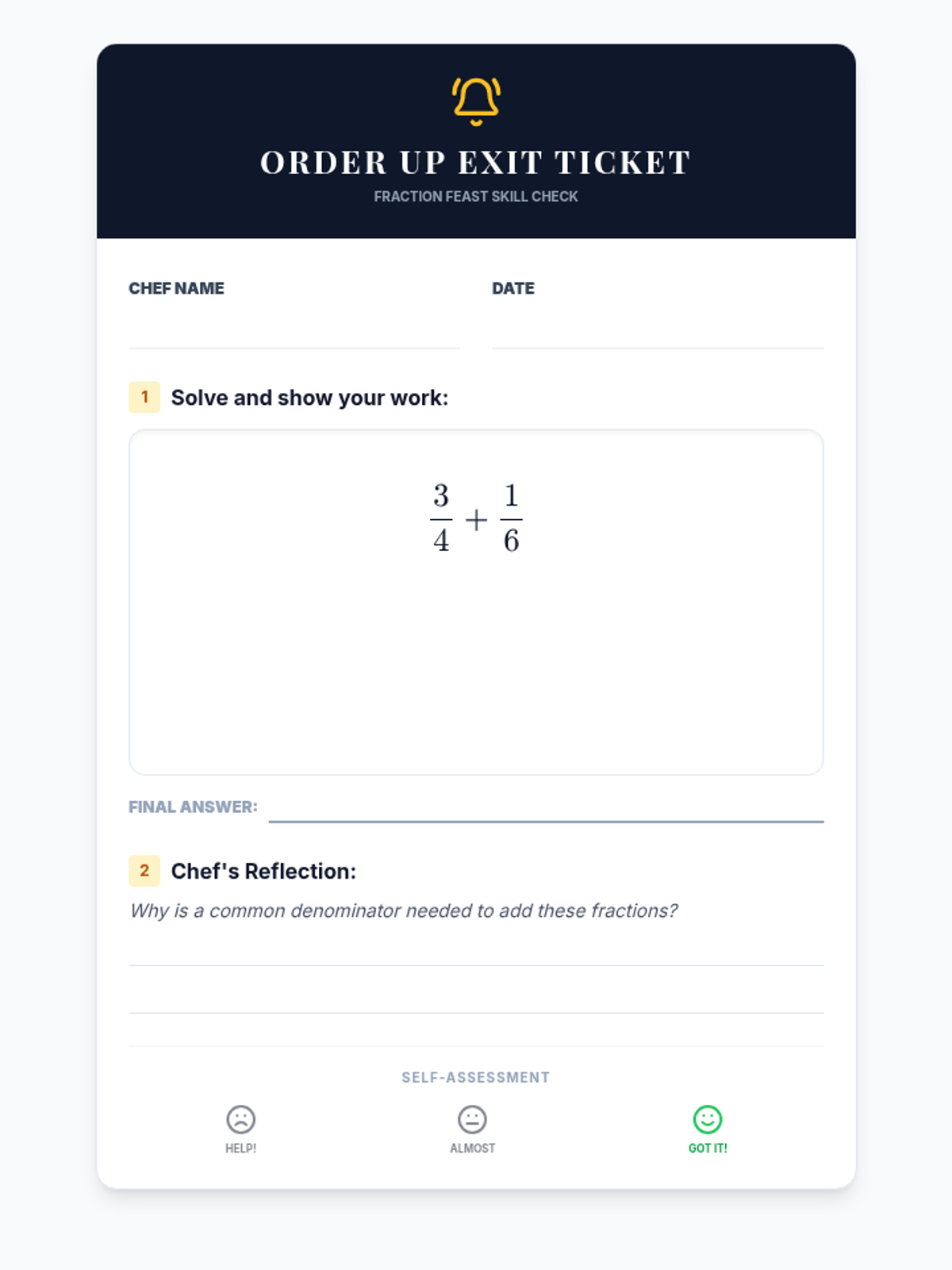
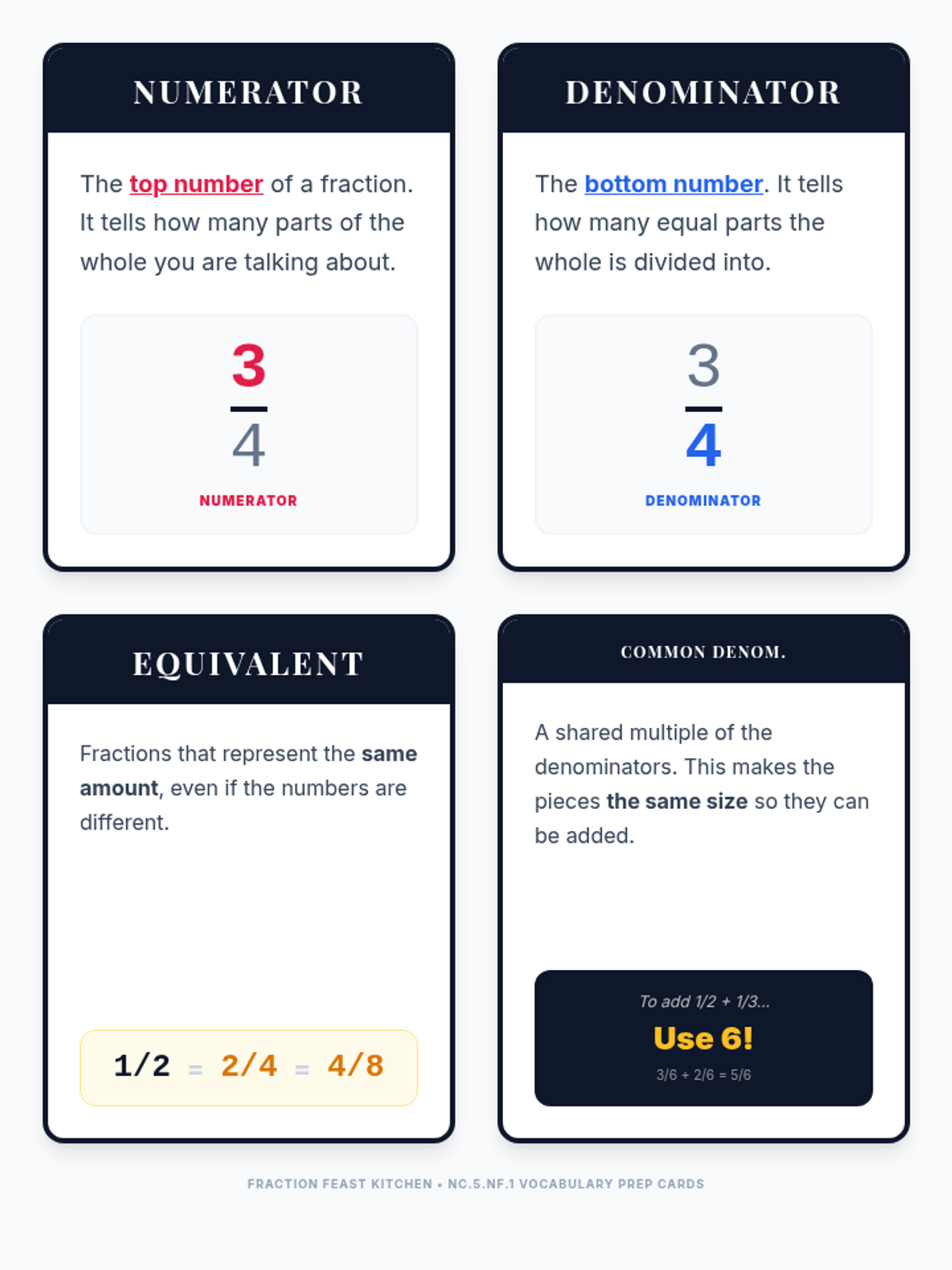
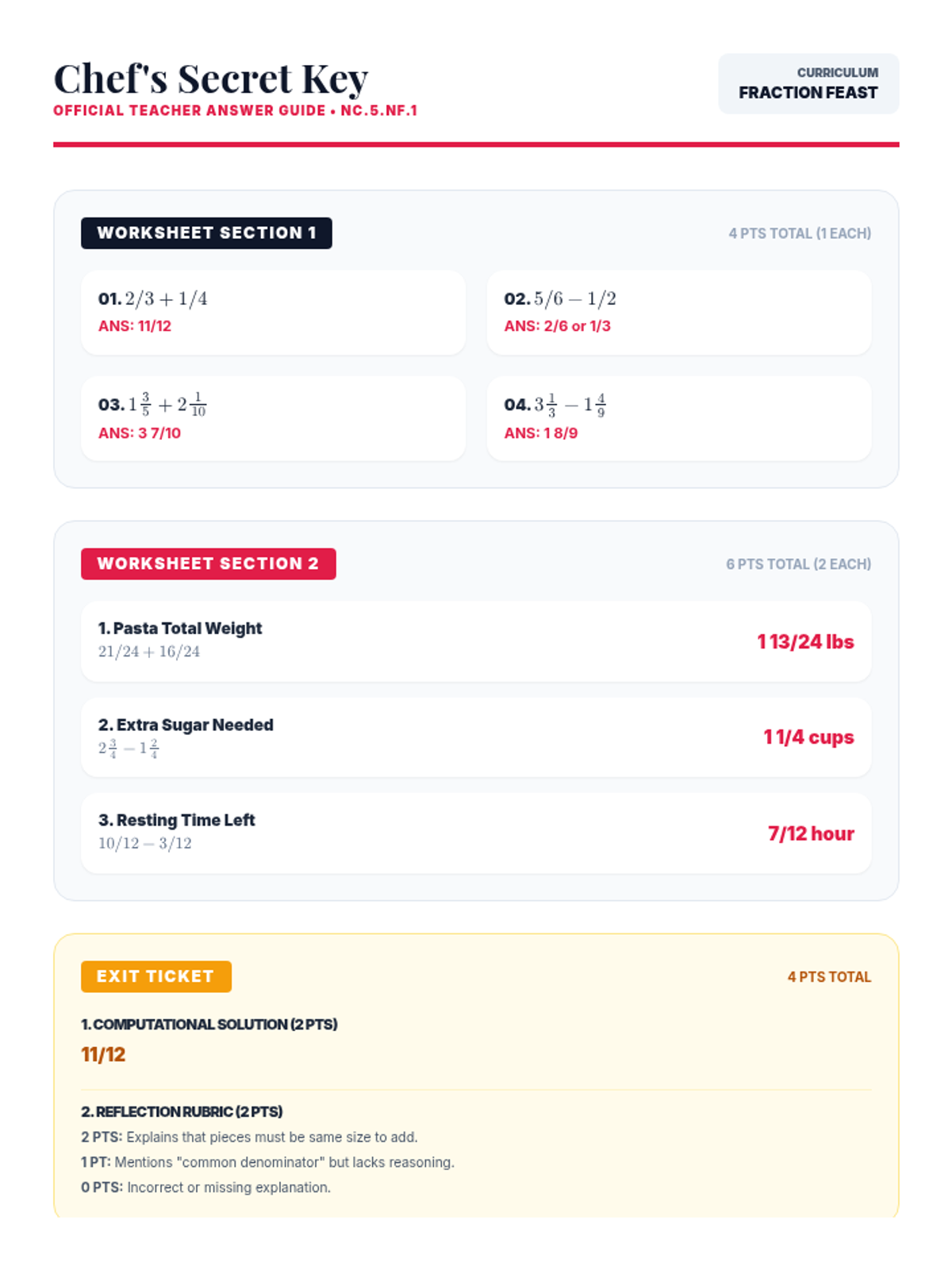
A culinary-themed lesson focusing on adding and subtracting fractions with unlike denominators. Students use equivalent fractions and common denominators to solve recipe-based word problems.
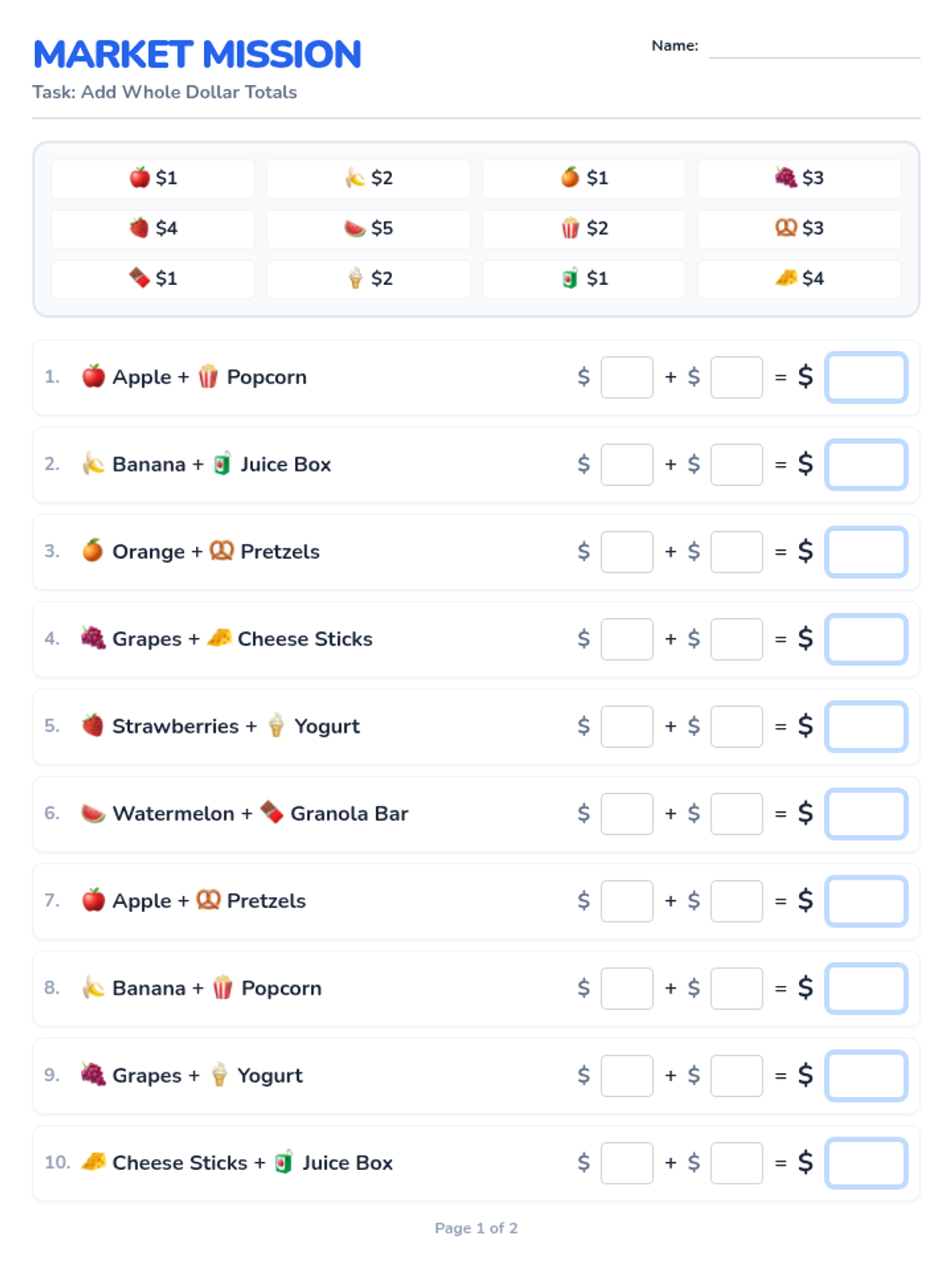
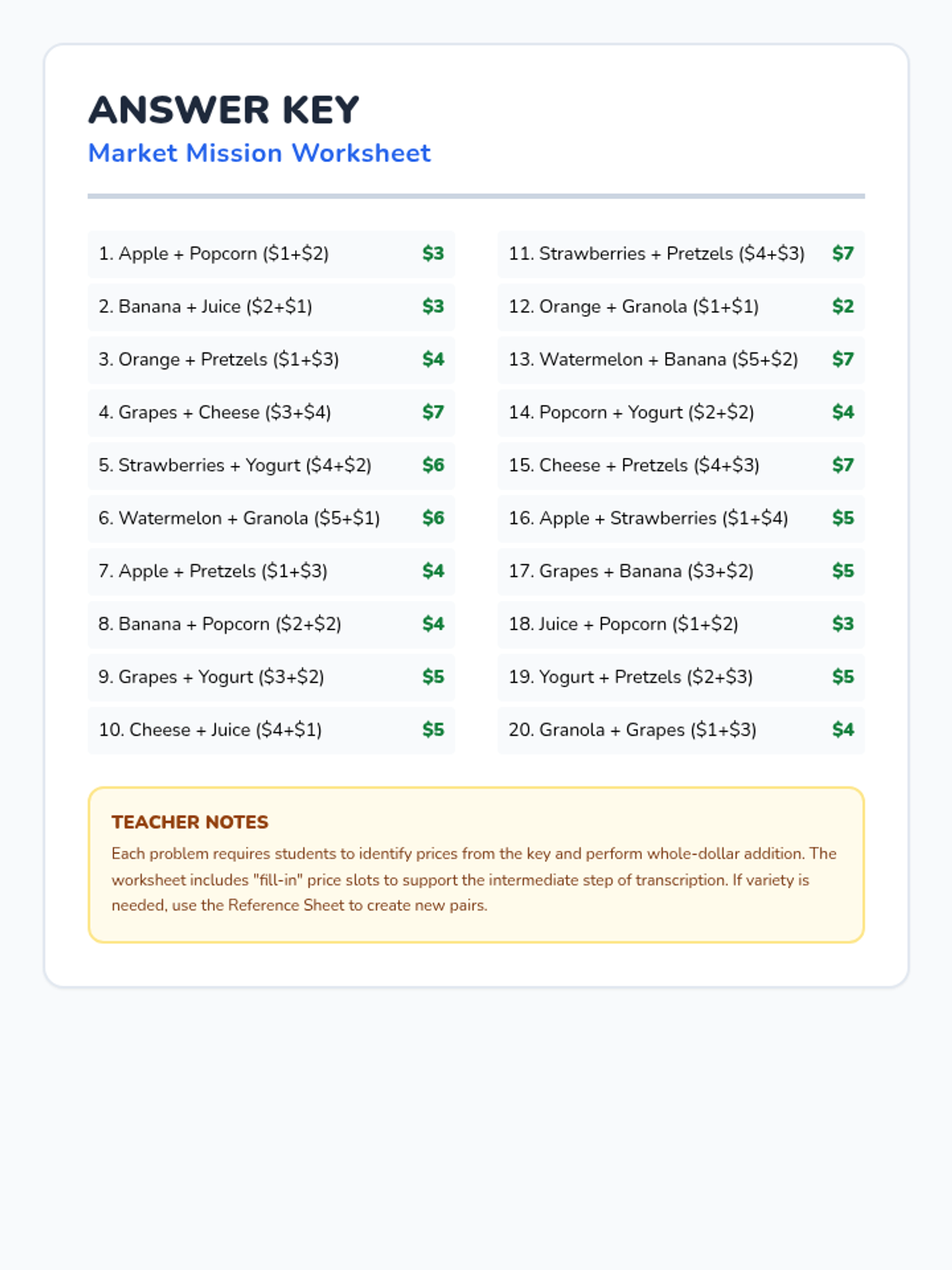
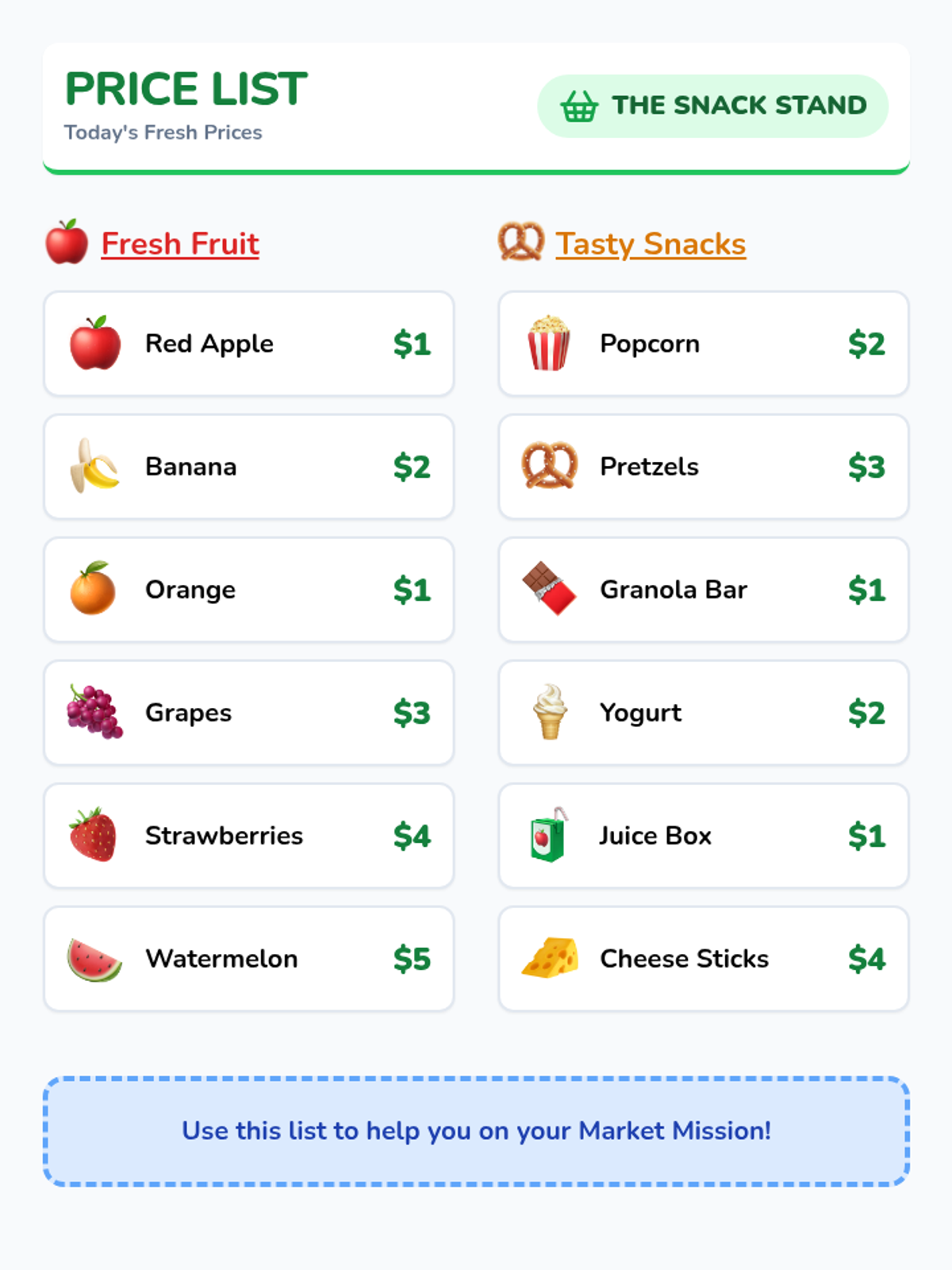
A functional math lesson for students to practice adding whole dollar amounts through a simulated grocery shopping experience focused on healthy fruits and snacks.
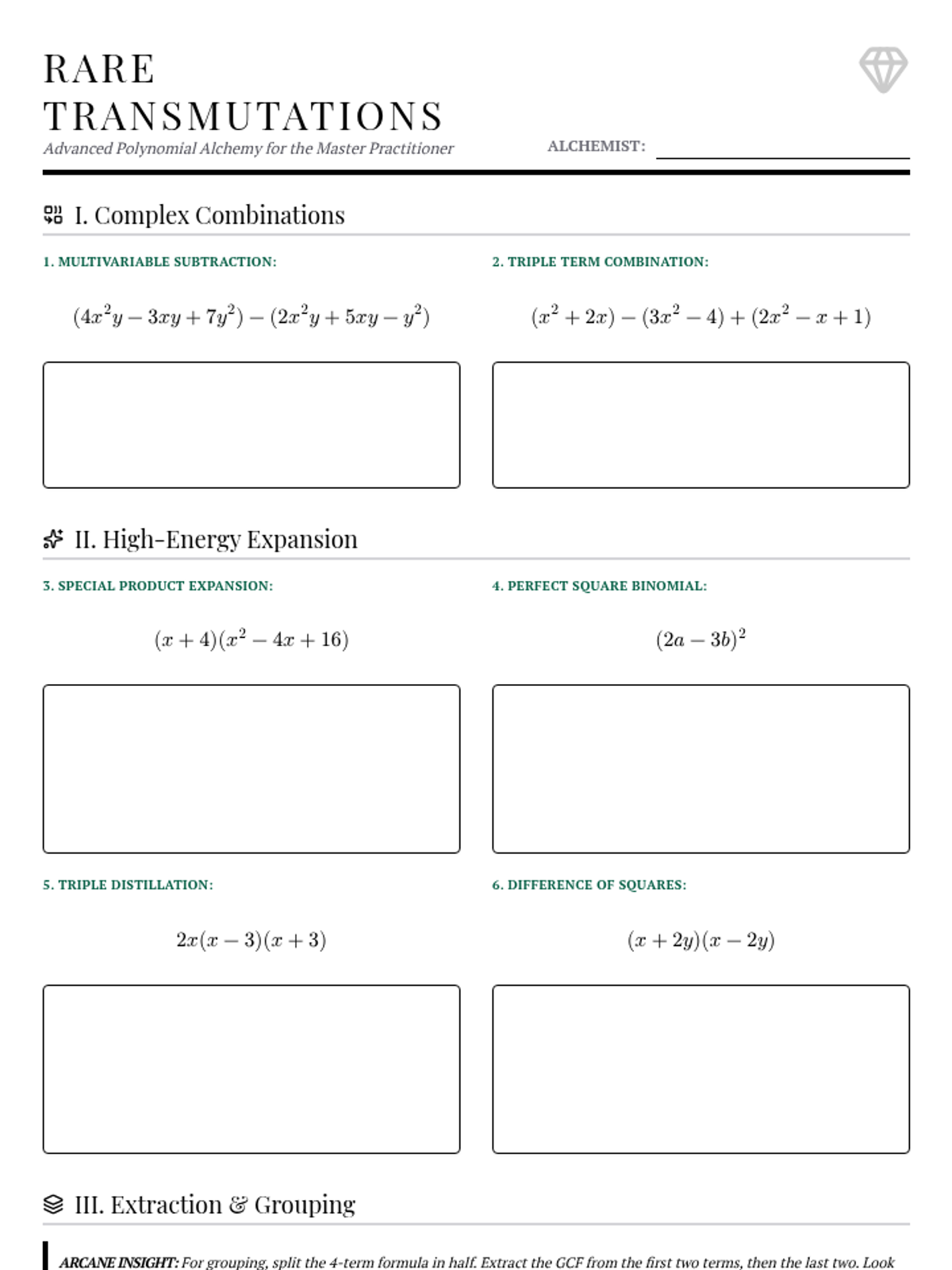
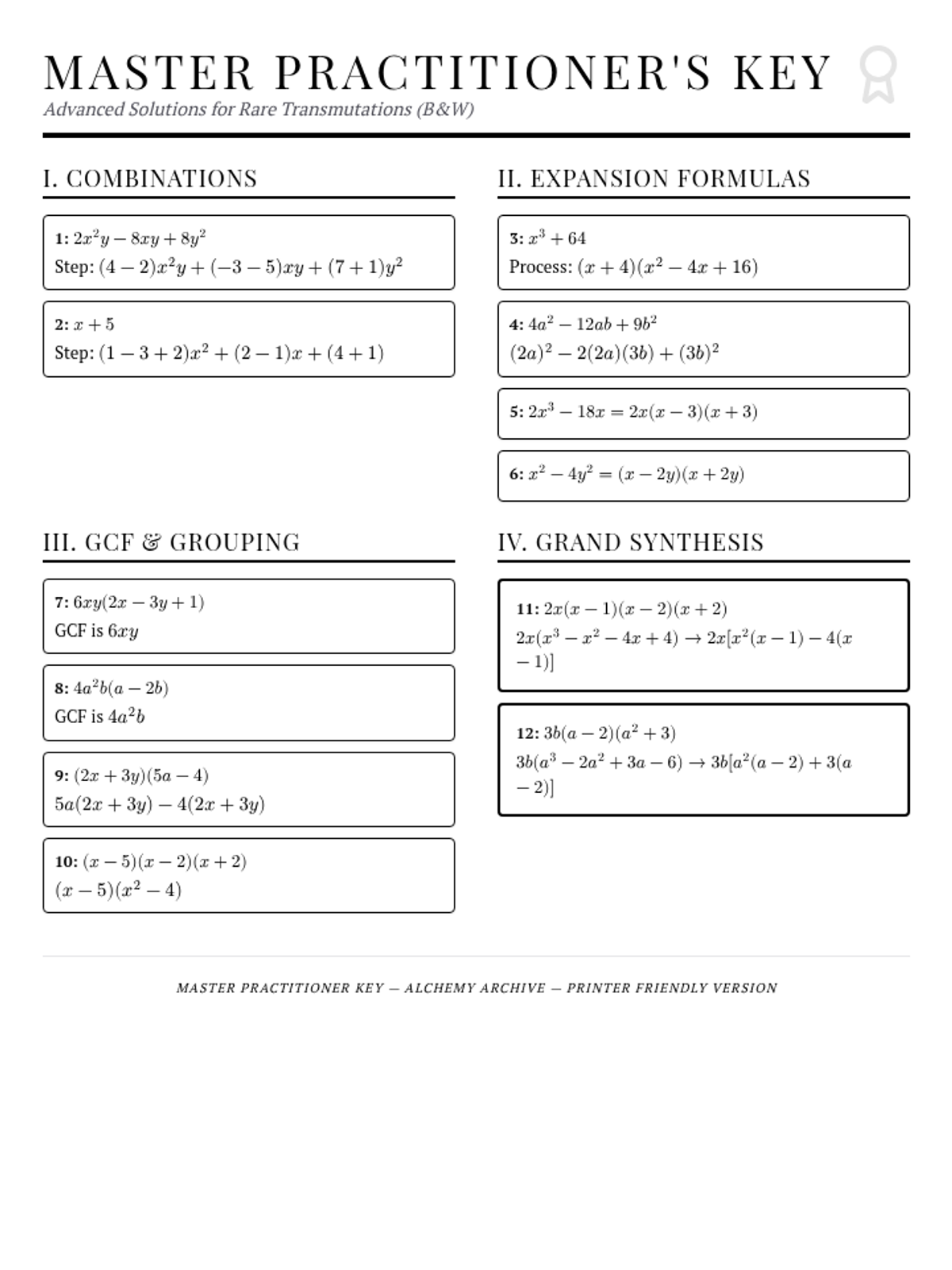
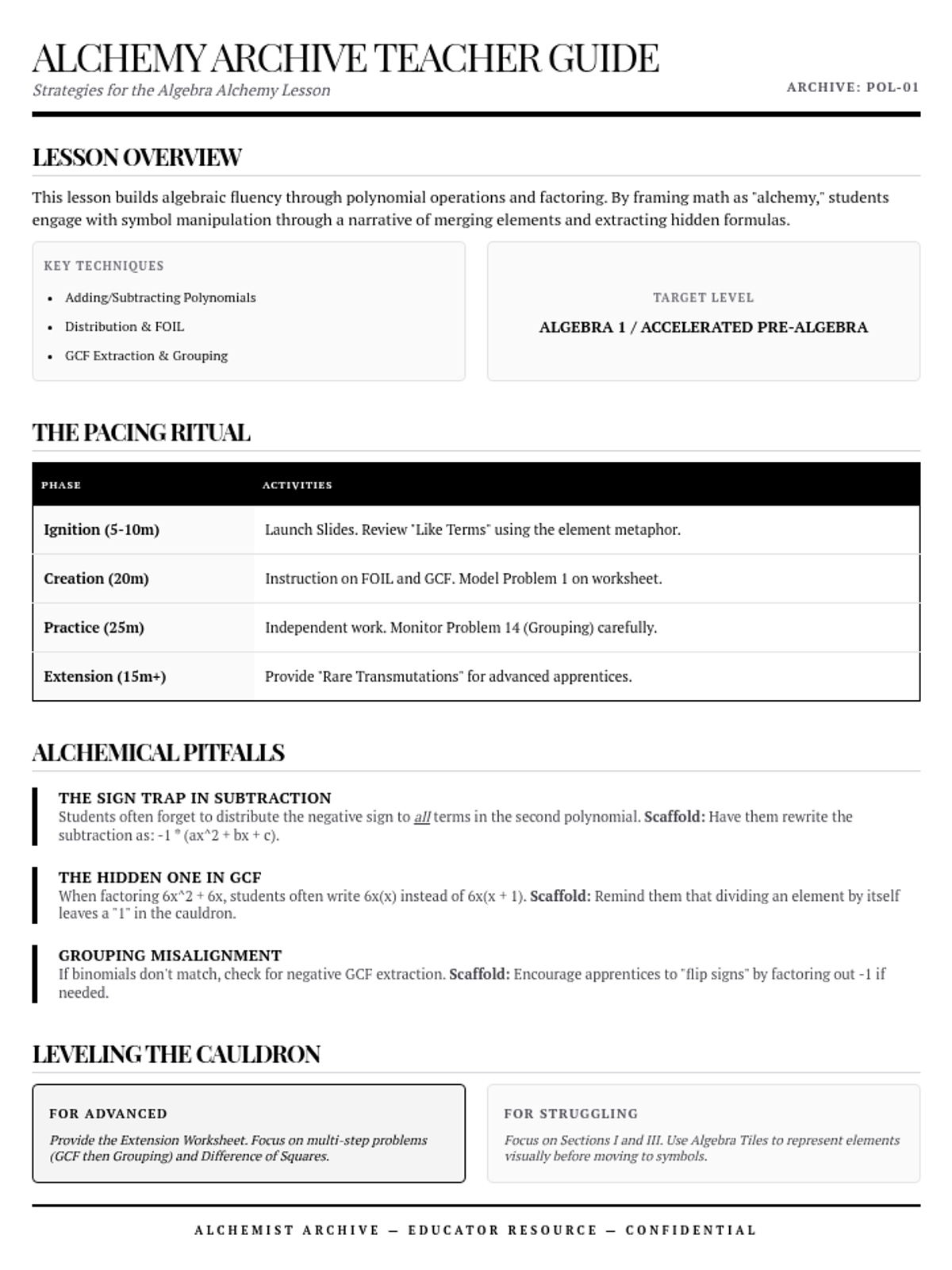
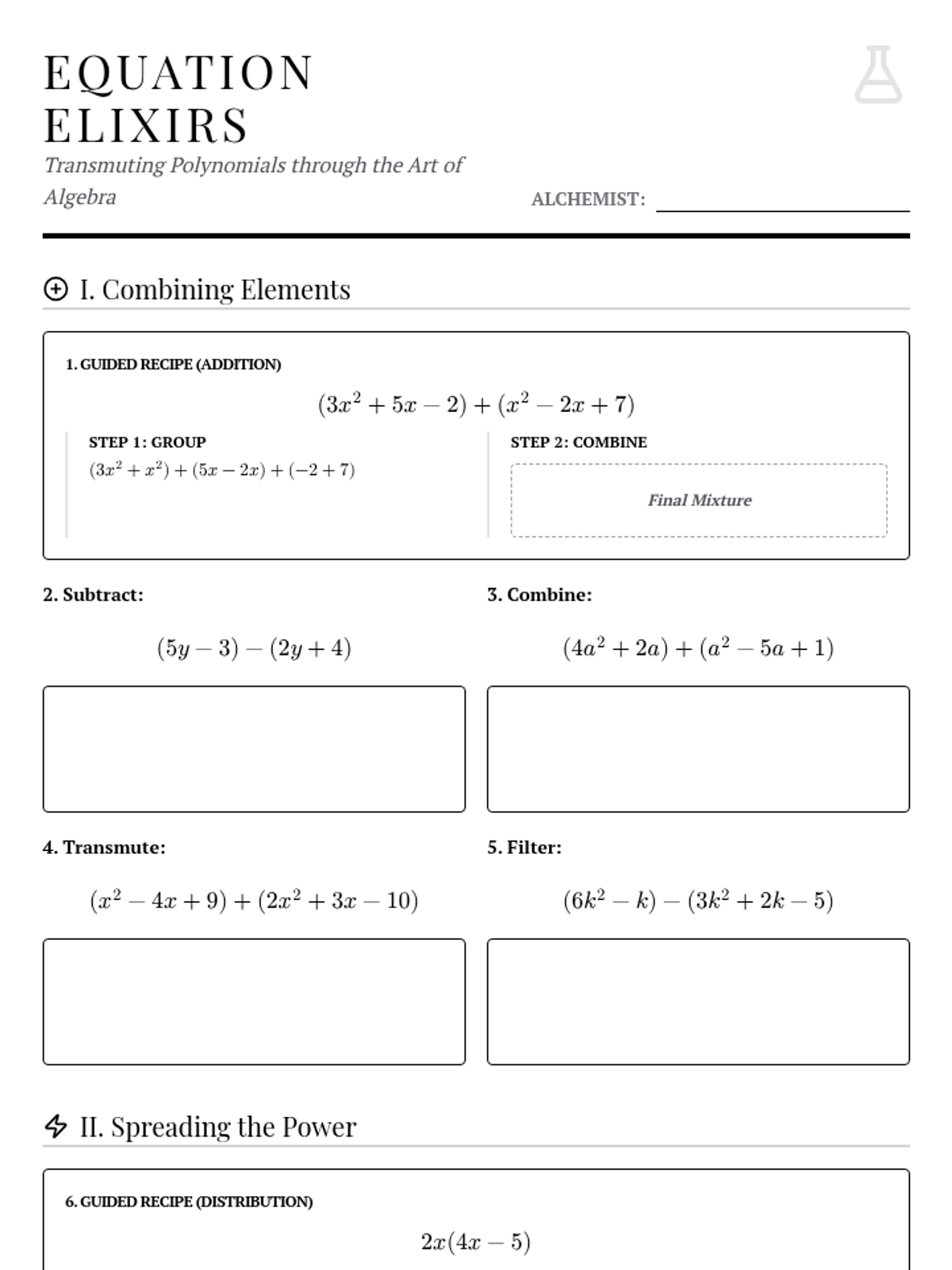
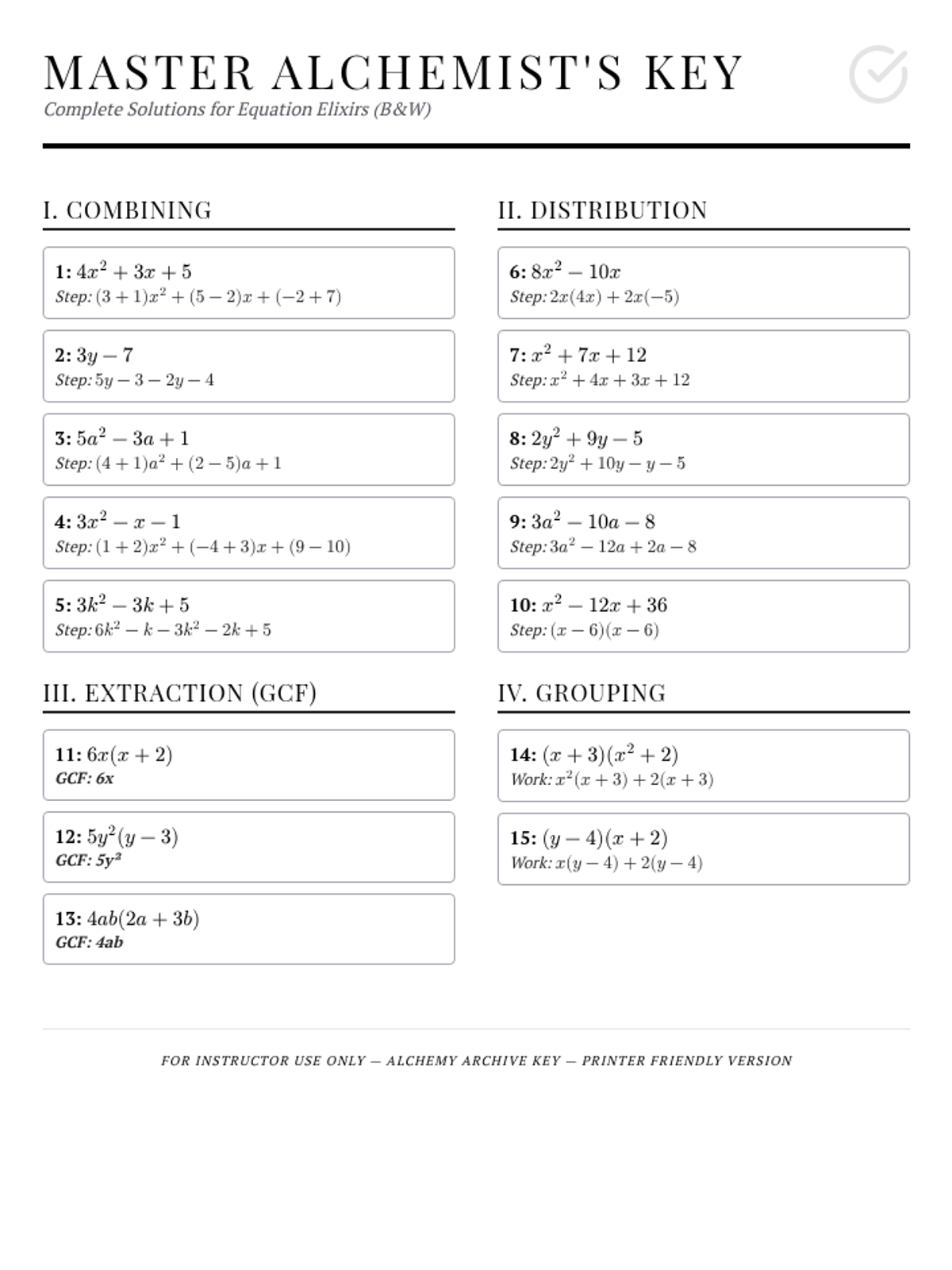
A foundational algebra lesson focusing on polynomial operations and factoring techniques, presented through the lens of mathematical alchemy. Students practice combining terms, distributing, and breaking down complex expressions using GCF and grouping methods.
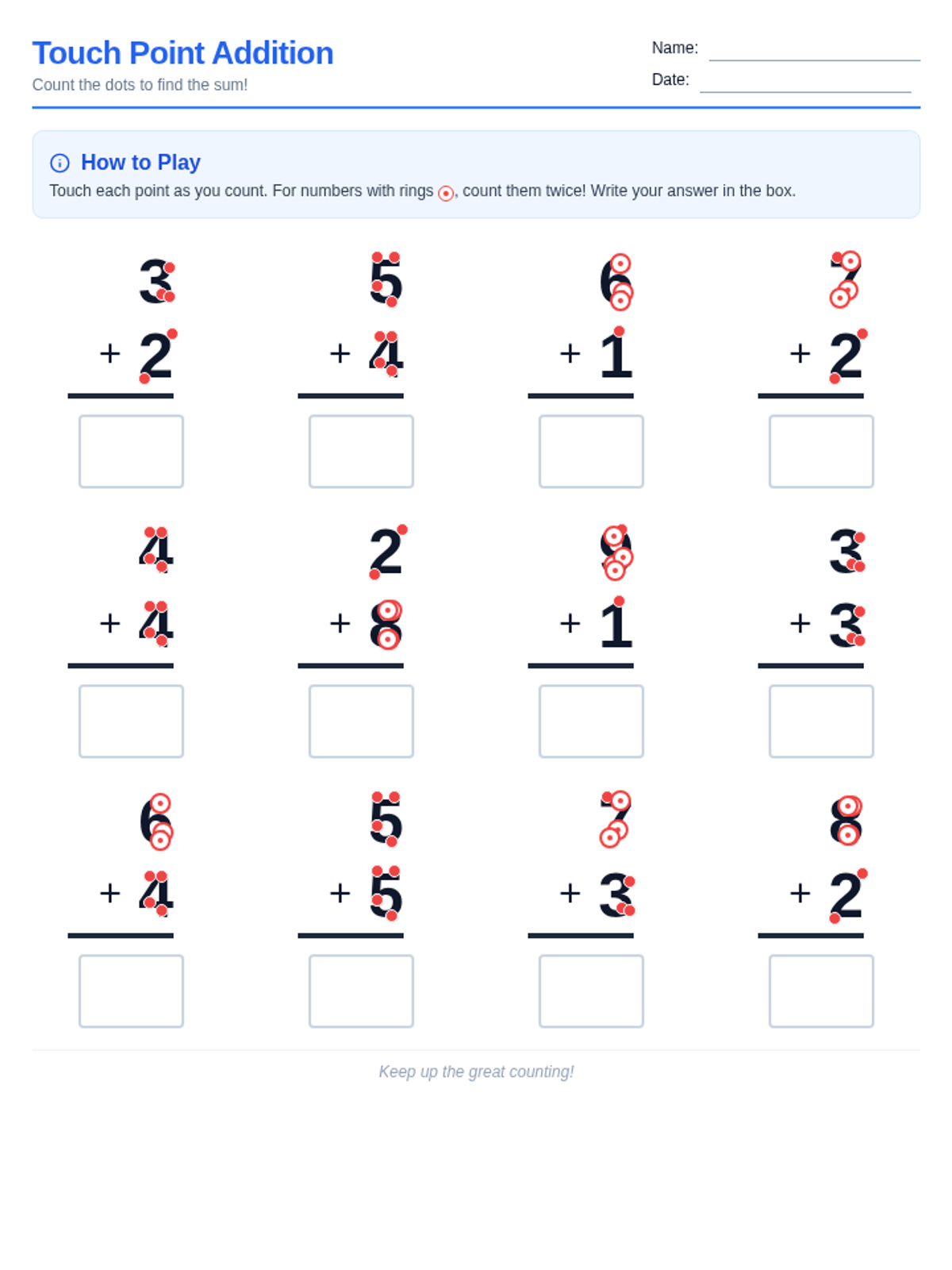
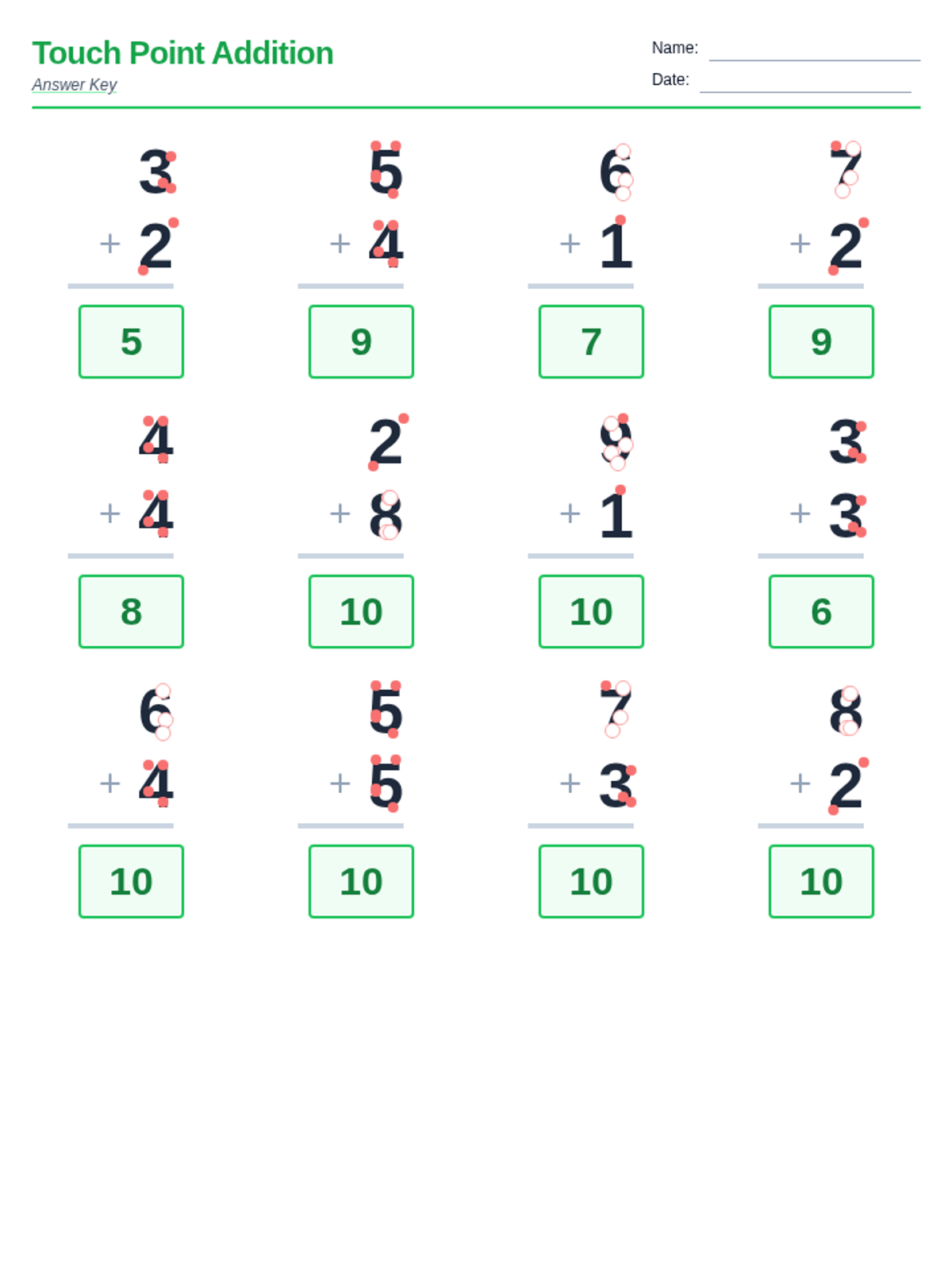
A foundational lesson on using touch points to master single-digit addition with sums up to 10. Students learn the specific placement of touch points on numbers 1-9 and practice vertical addition.
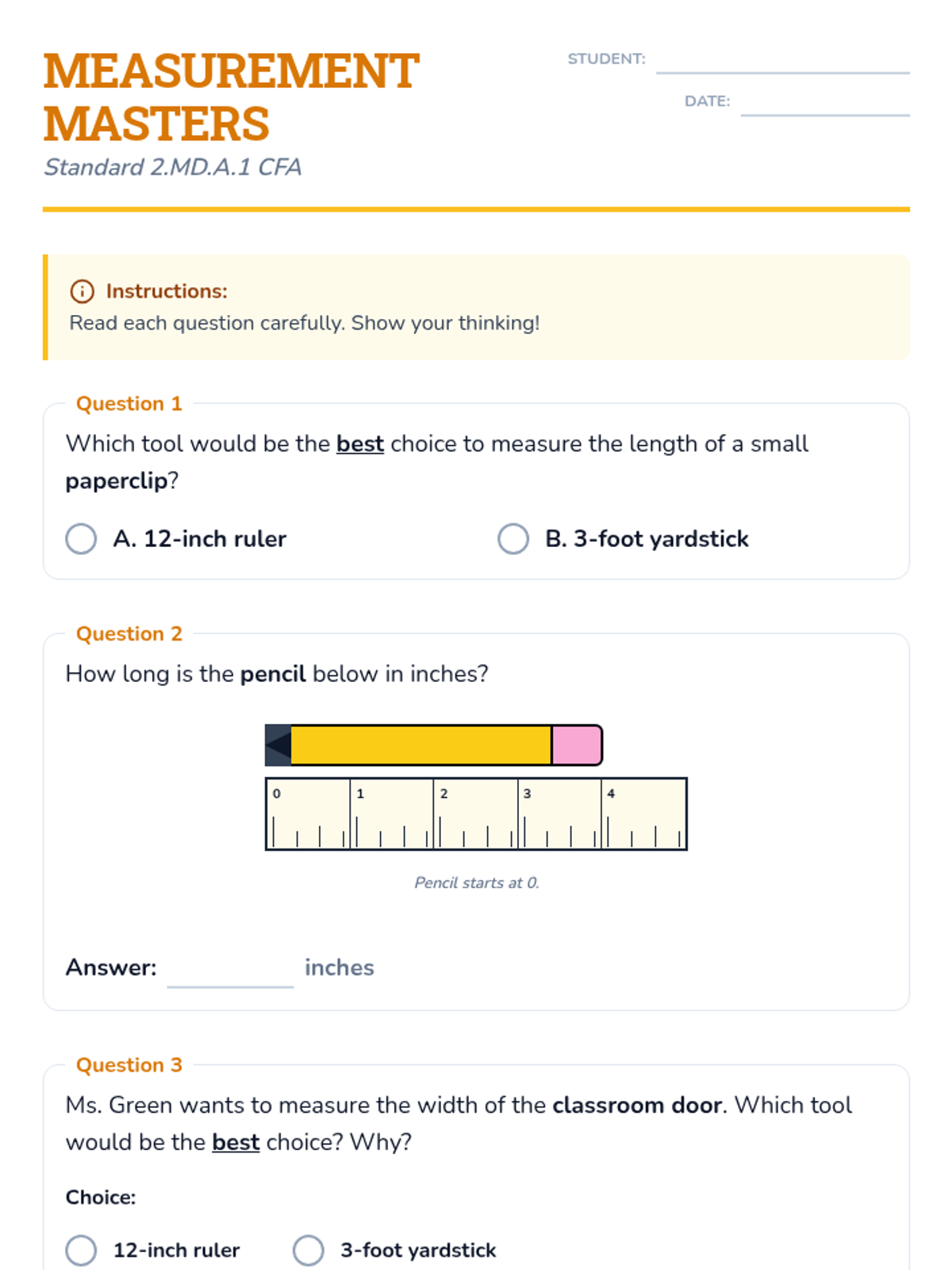
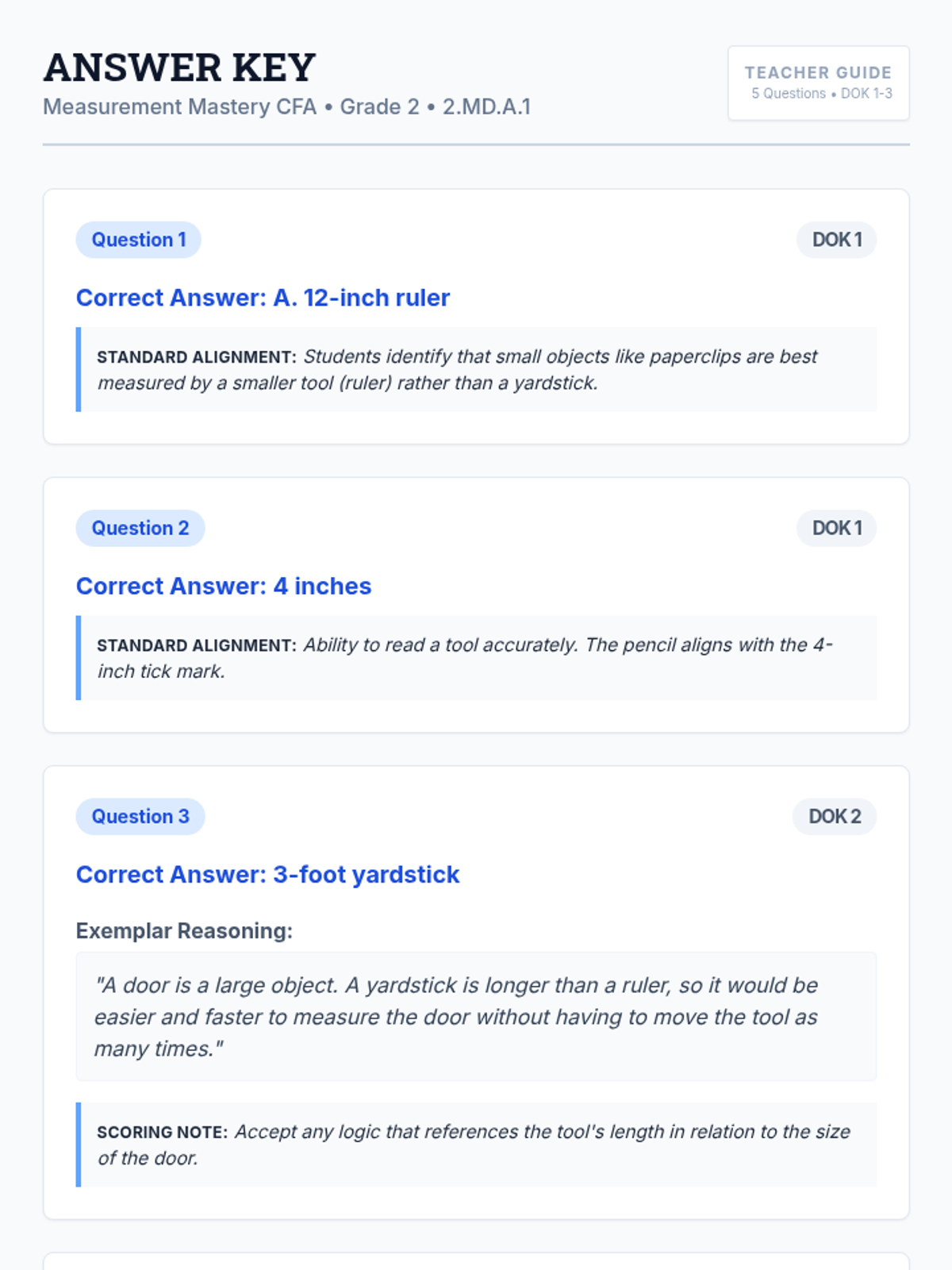
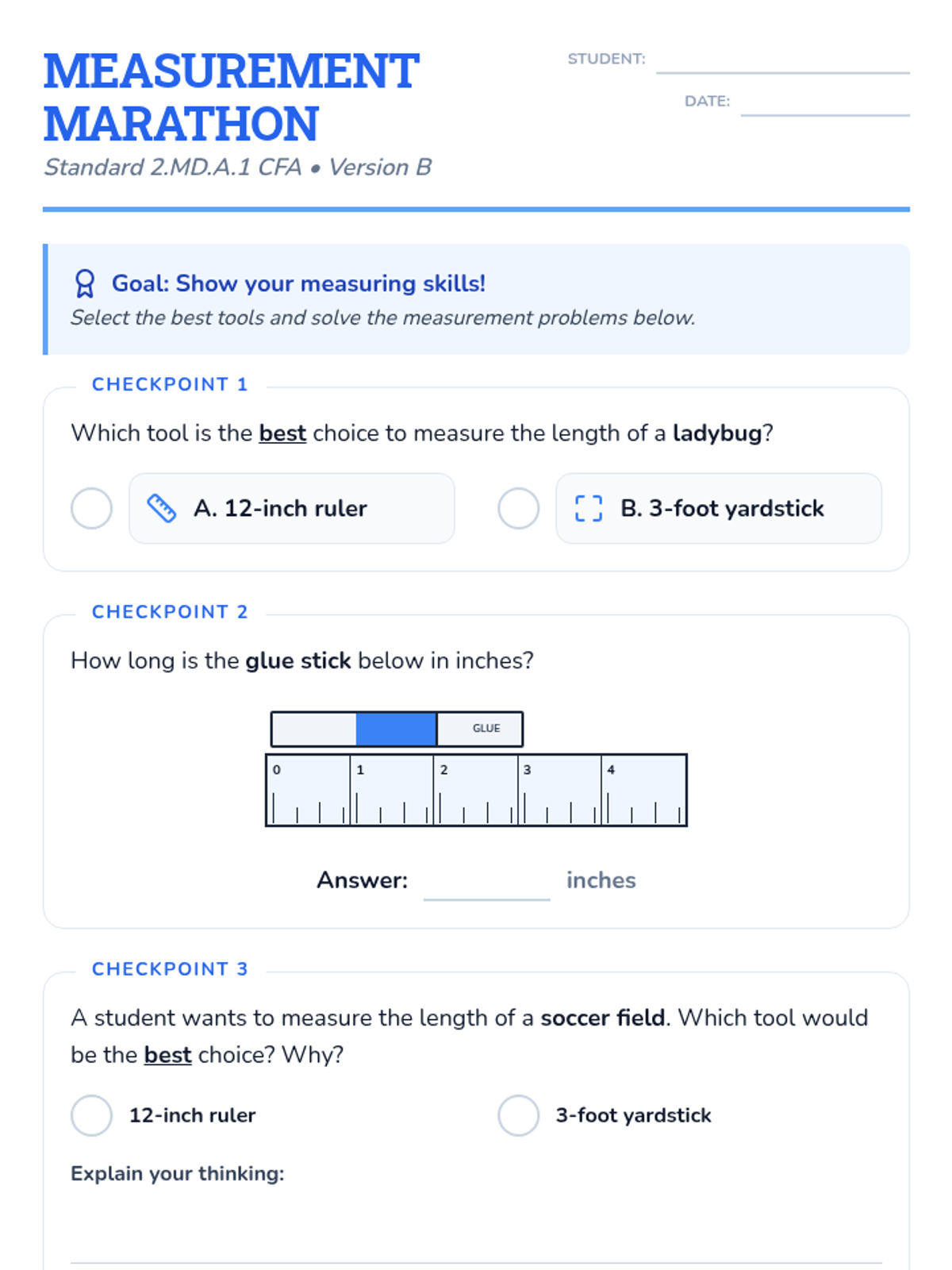
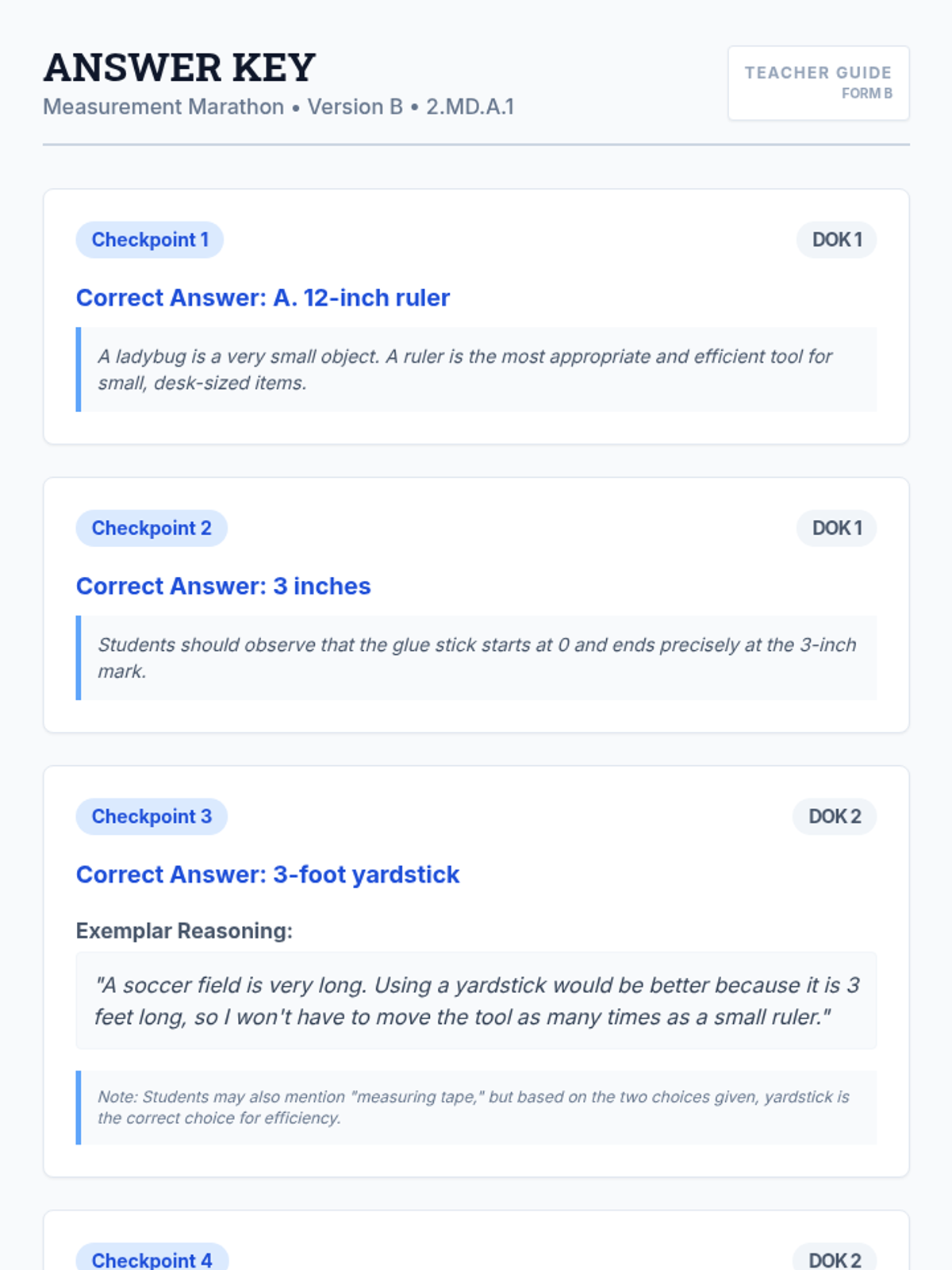
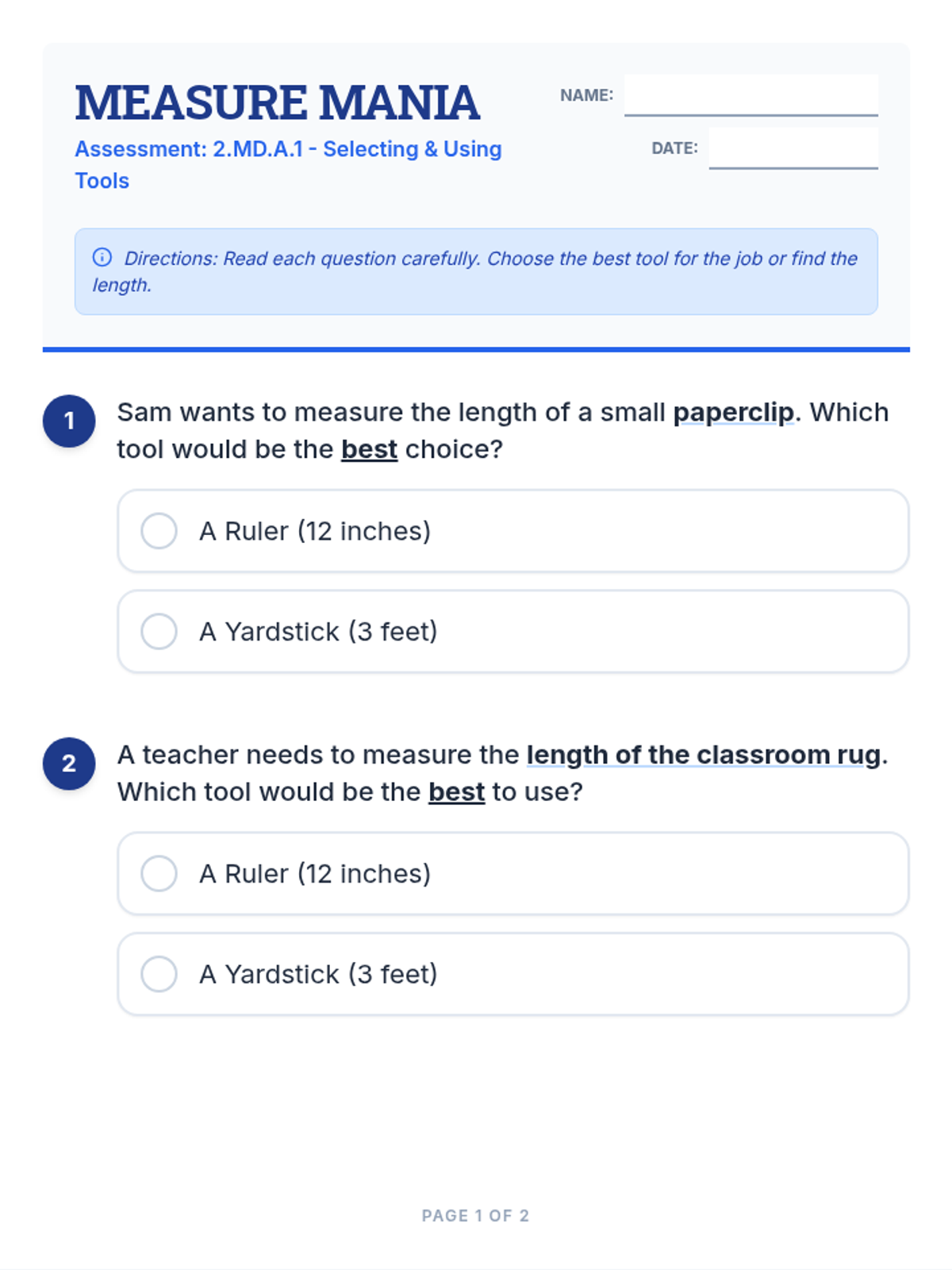
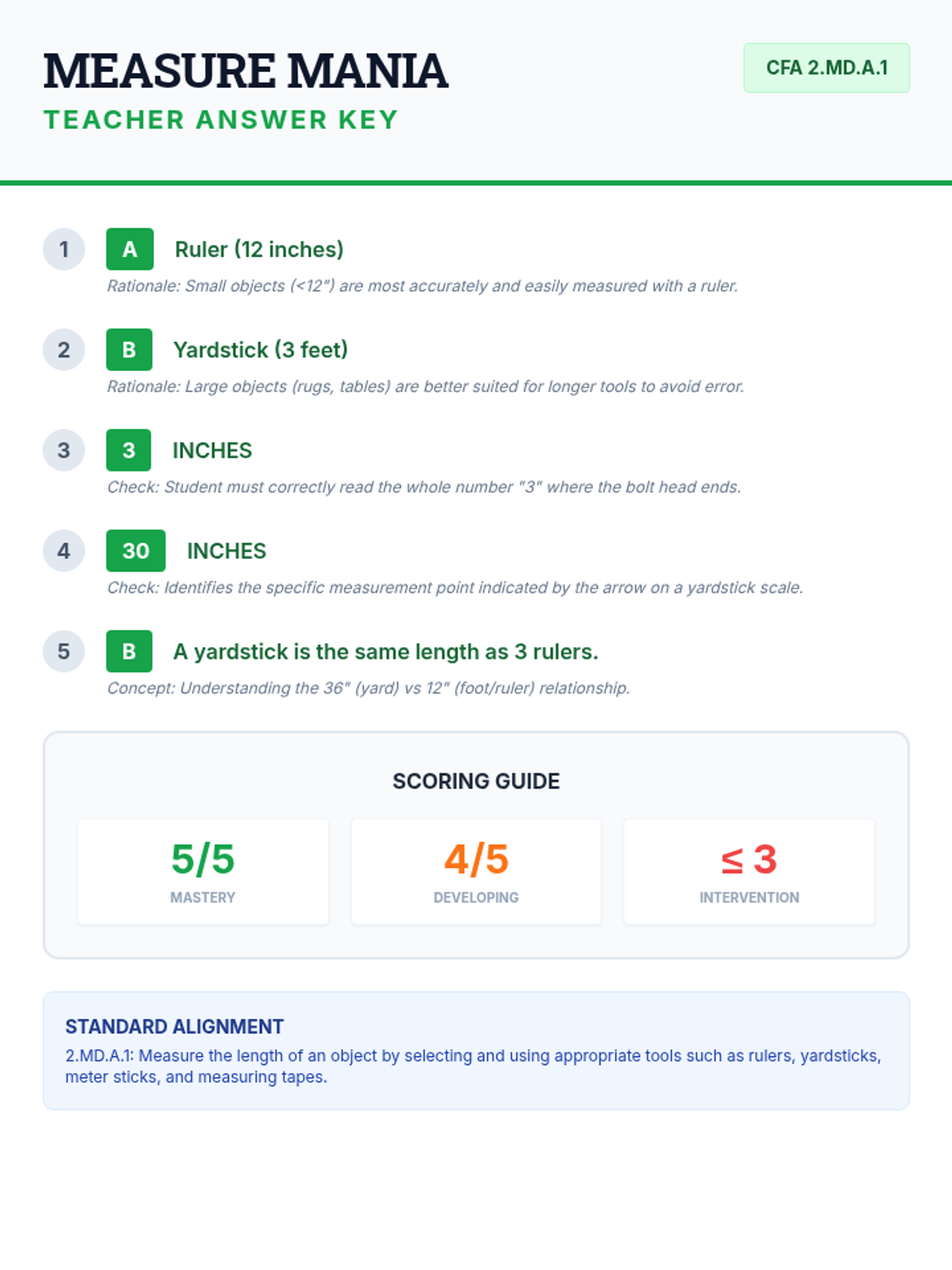
A short assessment focusing on selecting and using appropriate measurement tools (rulers and yardsticks) for 2nd-grade students.
A focused assessment on selecting and using rulers and yardsticks to measure objects of various sizes, aligned to CCSS 2.MD.A.1.
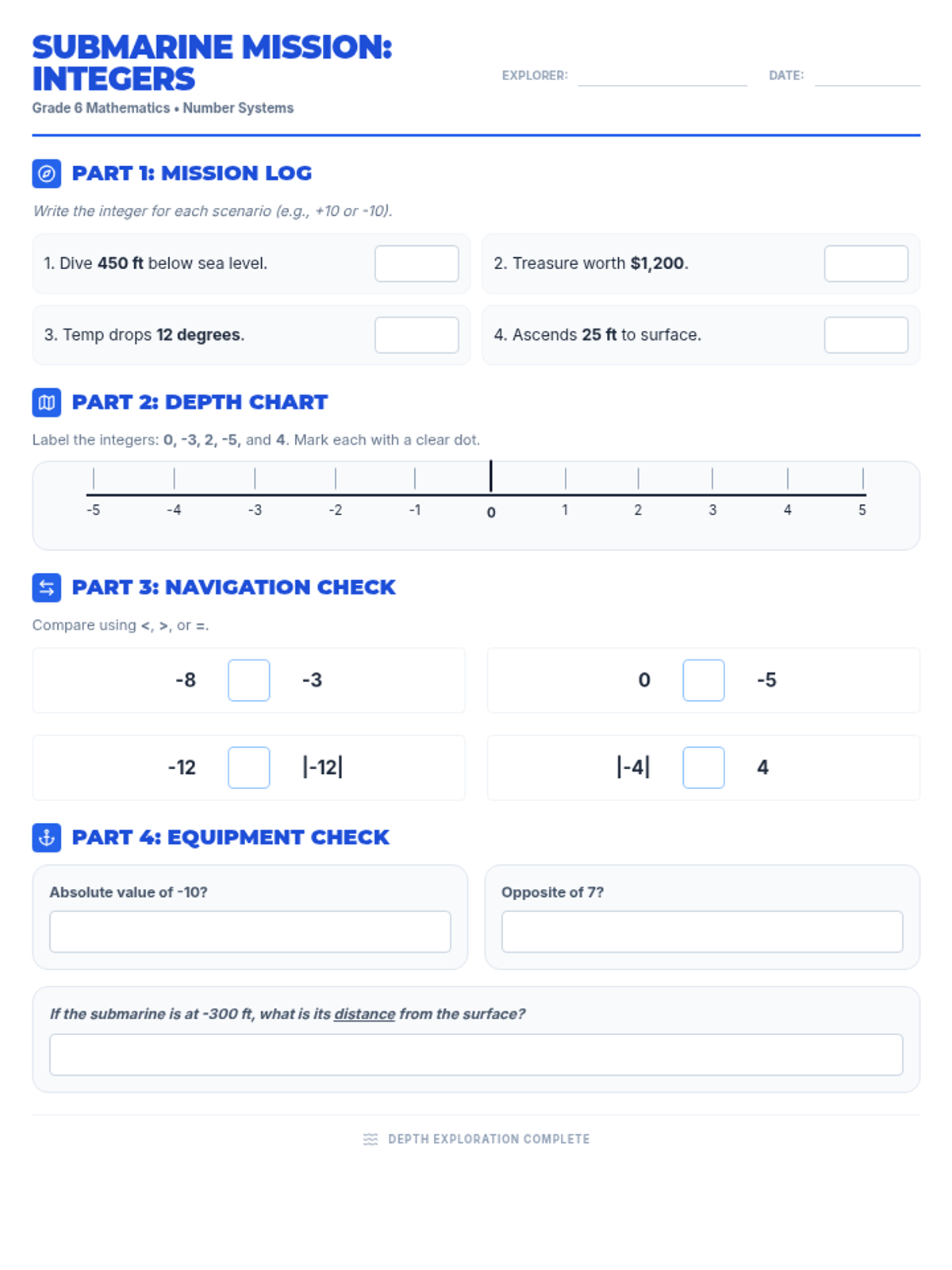
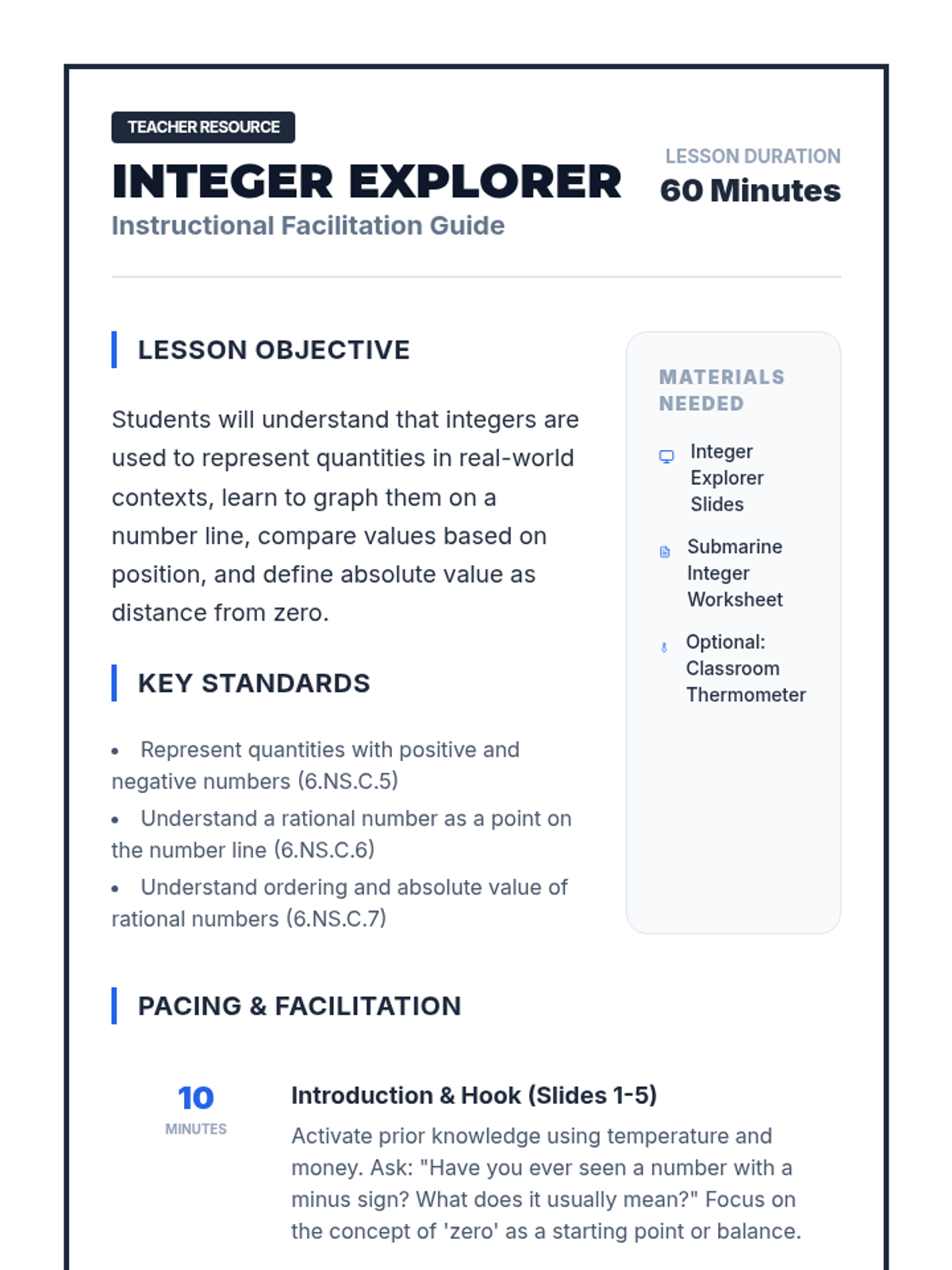
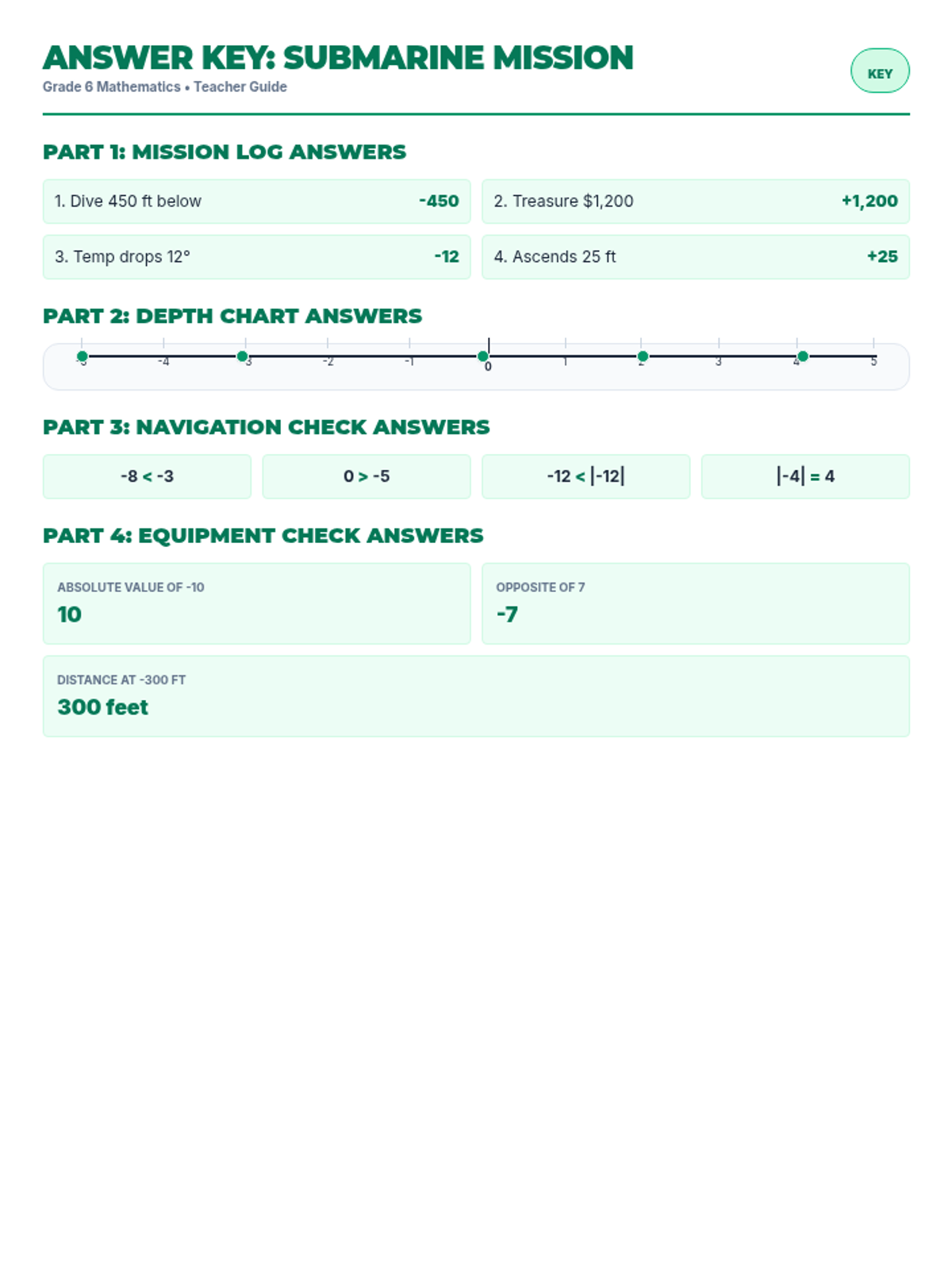
An introductory lesson on integers for 6th-grade students, focusing on real-world applications, number line visualization, and absolute value.
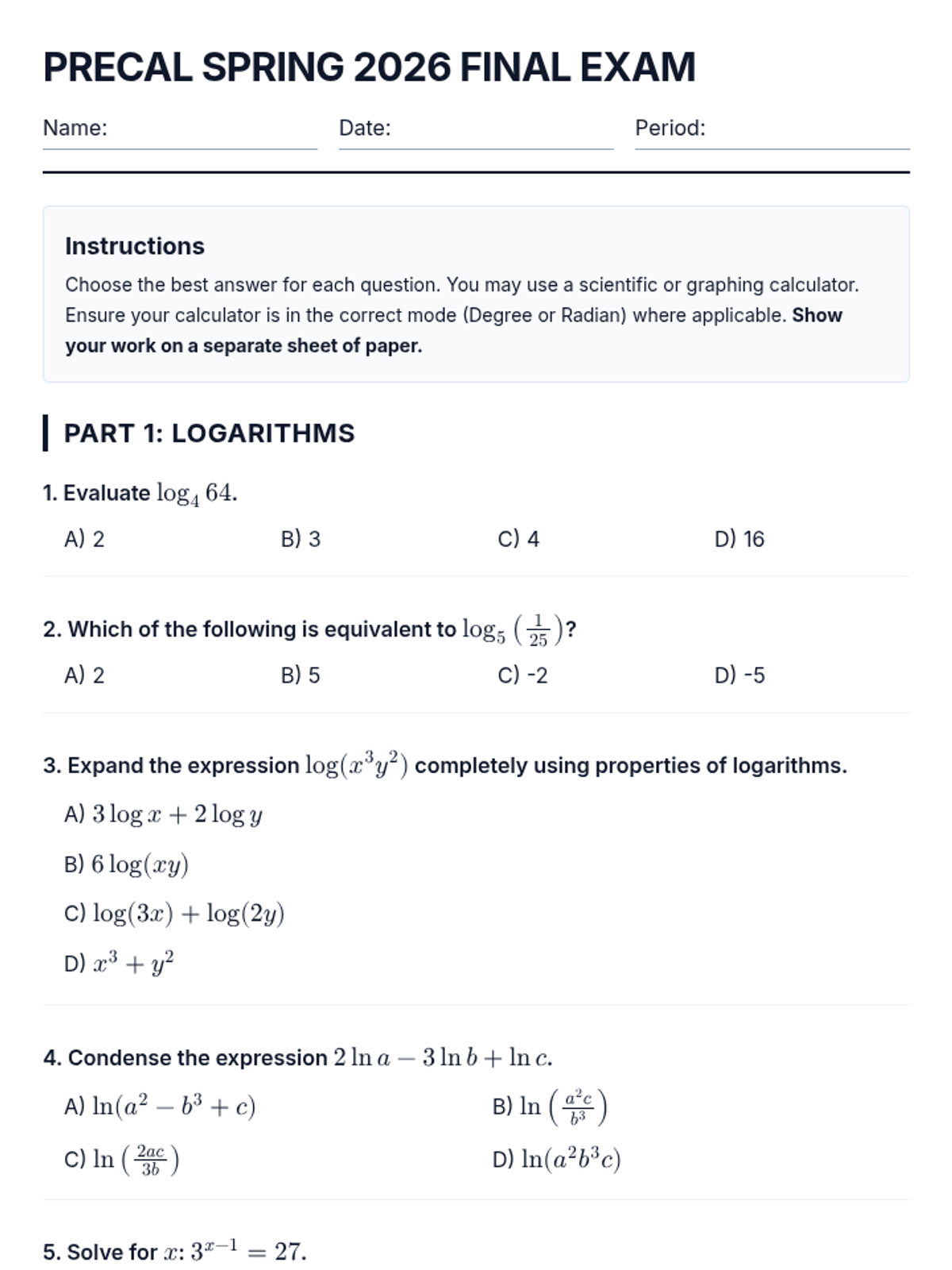
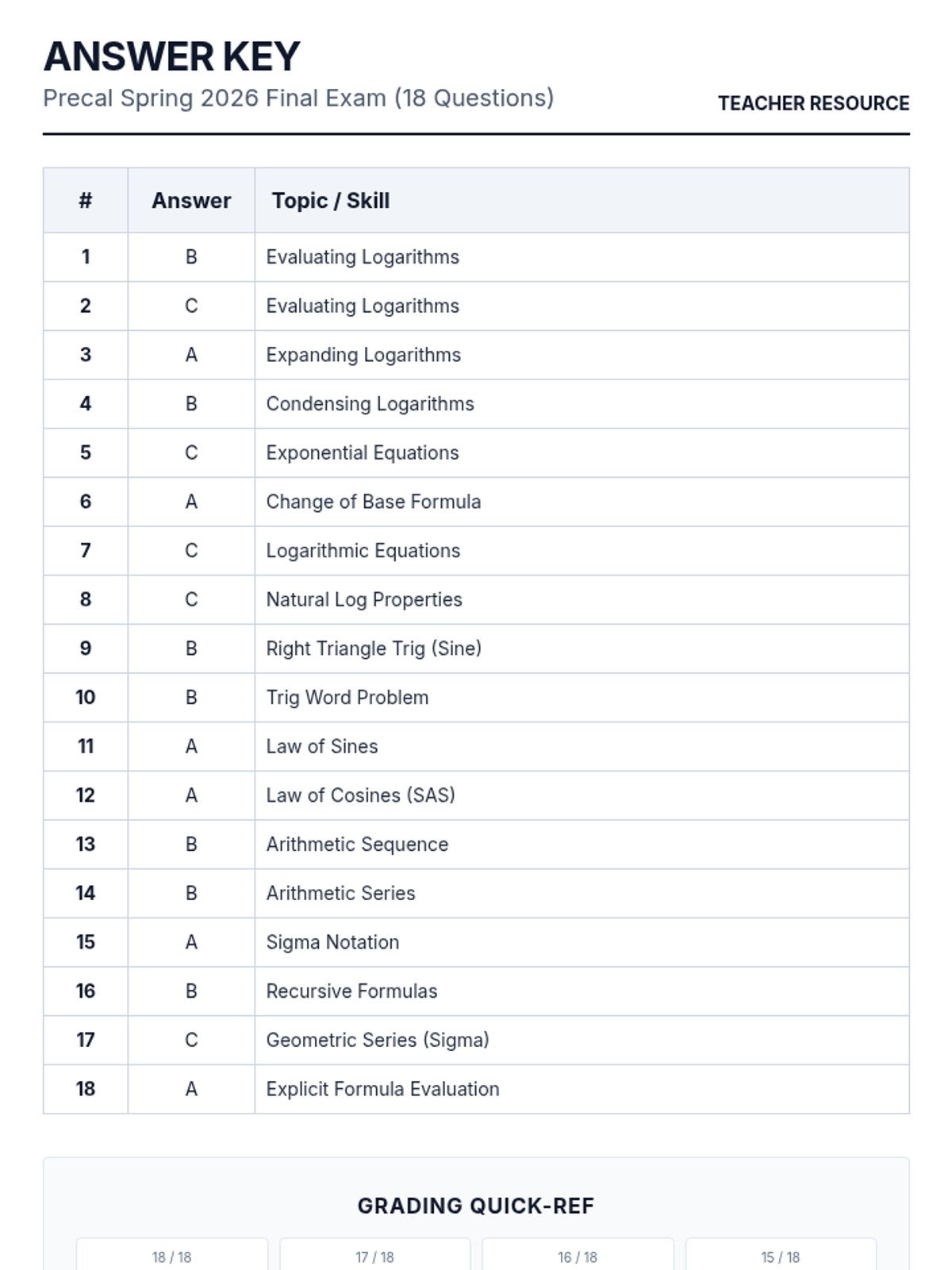
A comprehensive final exam for Spring 2026 covering logarithms, trigonometry of triangles, and sequences and series for a Precalculus course.
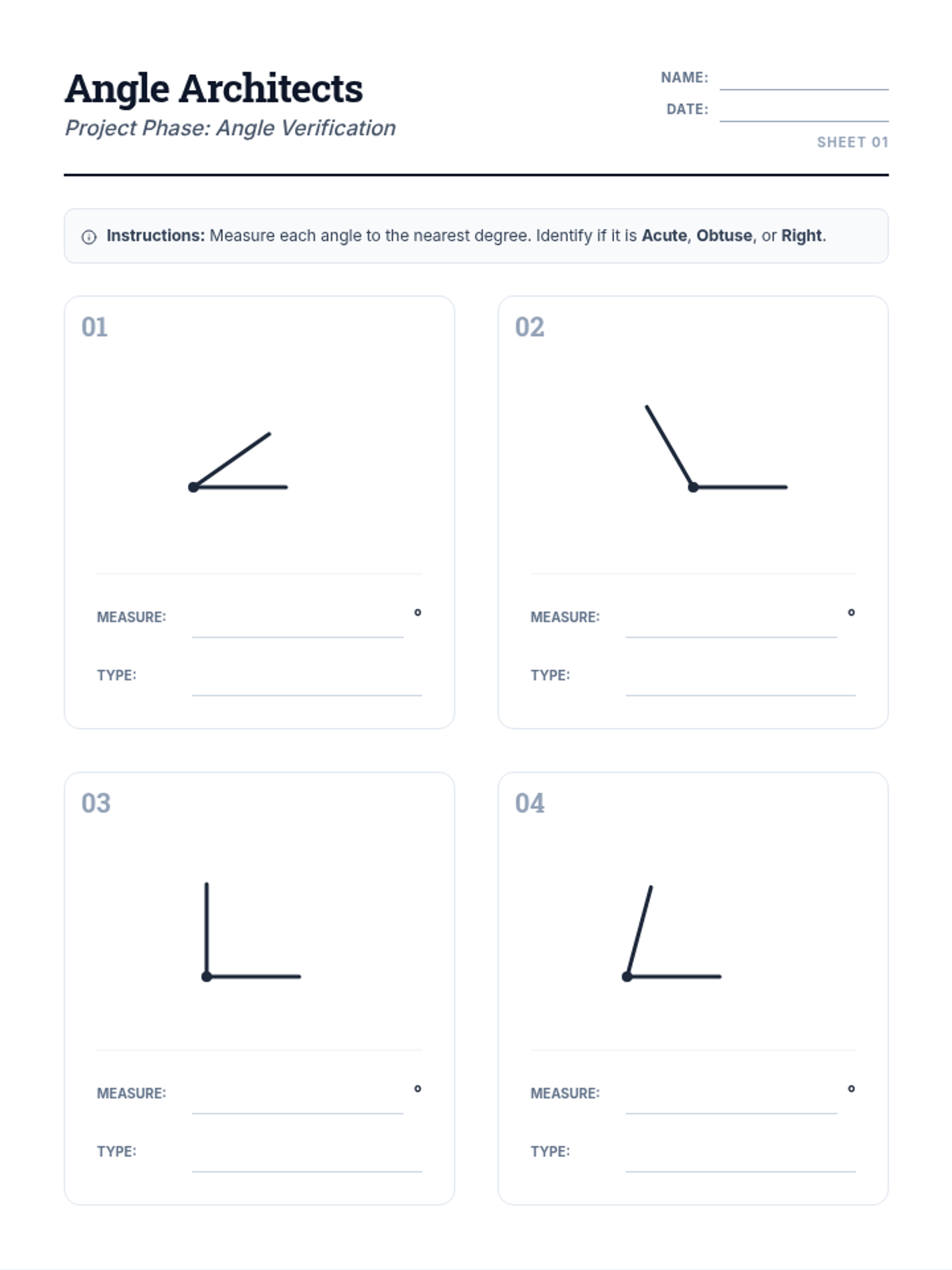
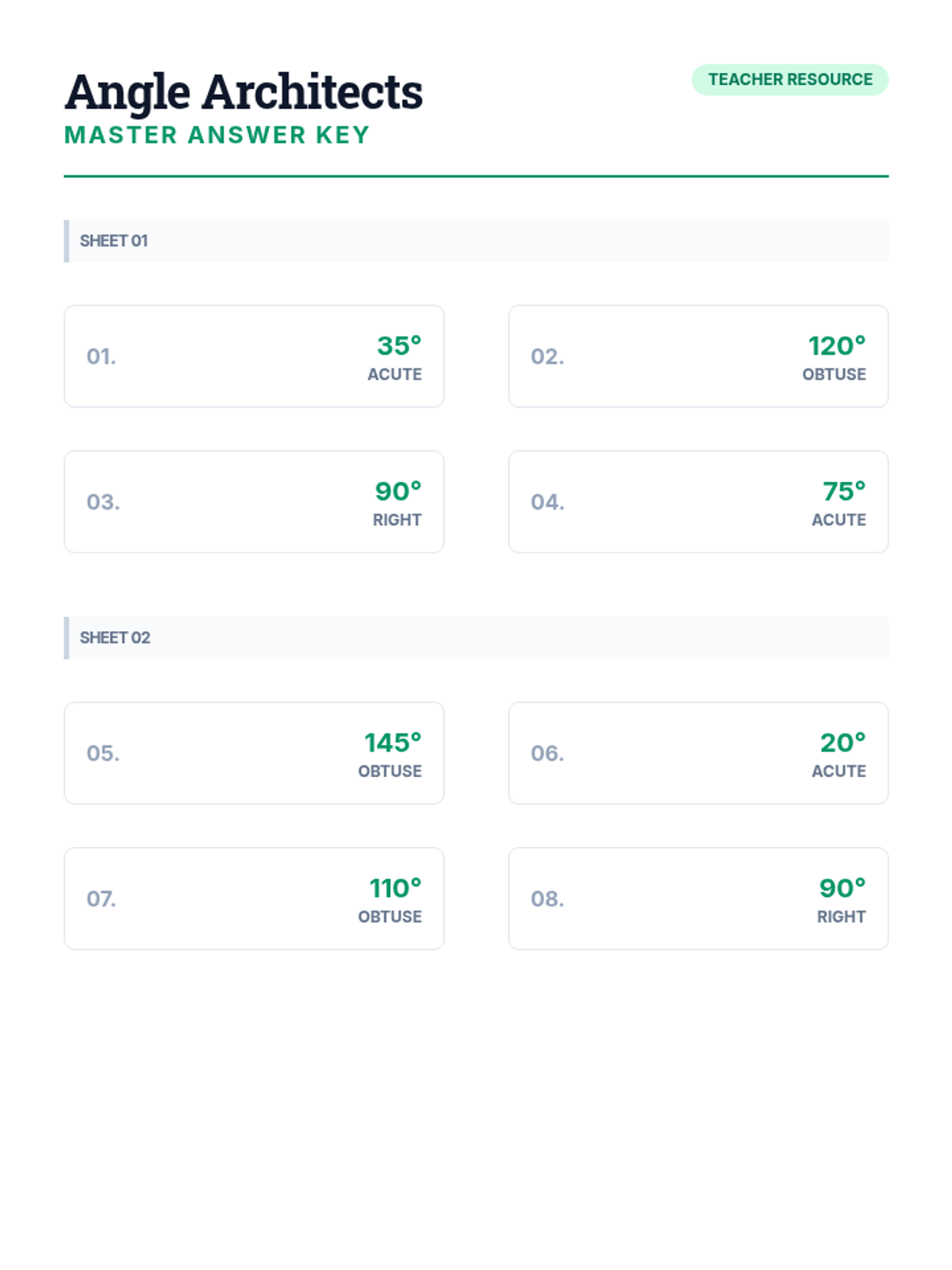
A hands-on geometry lesson focused on accurately measuring acute, obtuse, and right angles using a protractor. Students take on the role of 'Angle Architects' to verify design specifications.
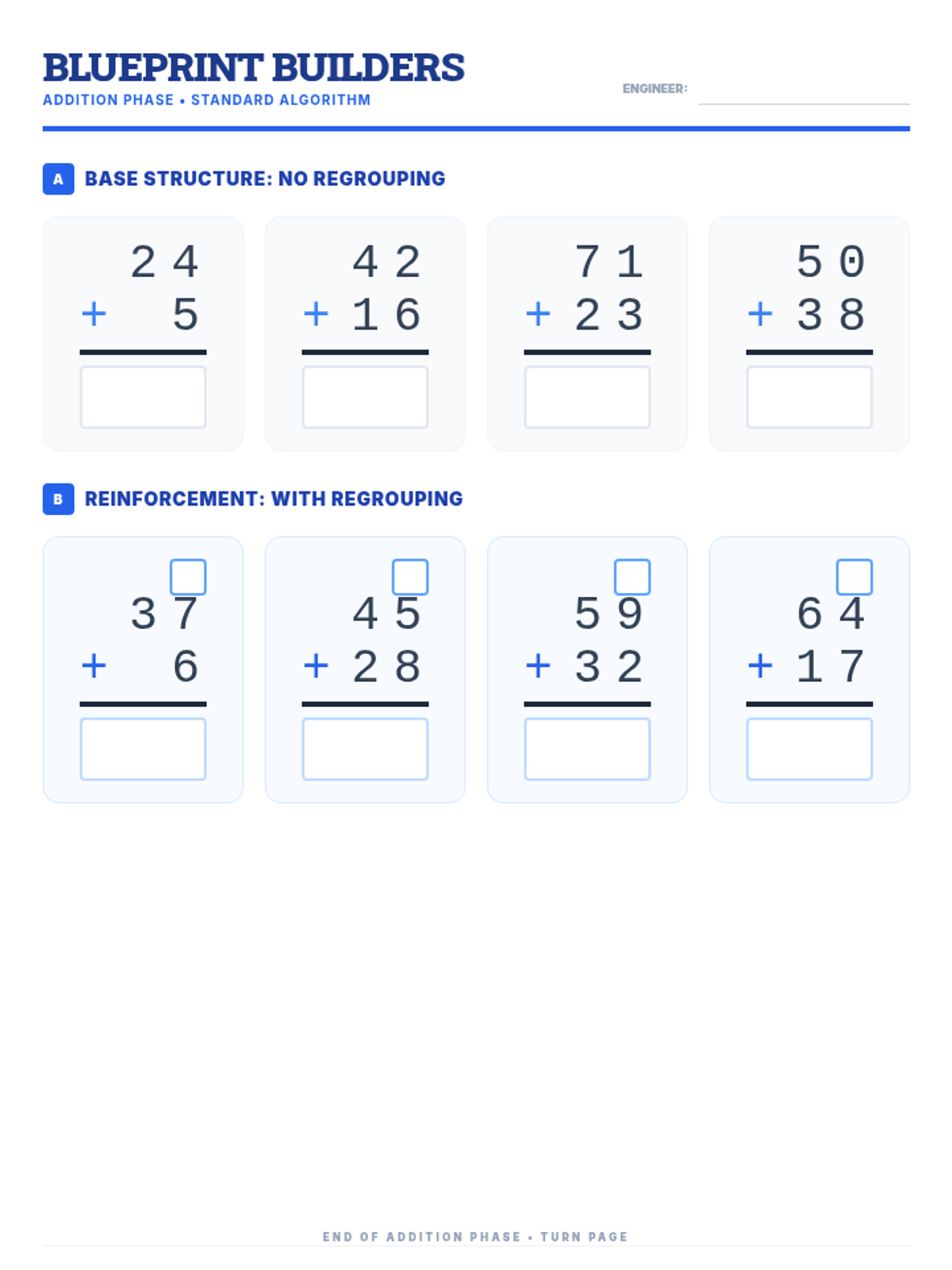
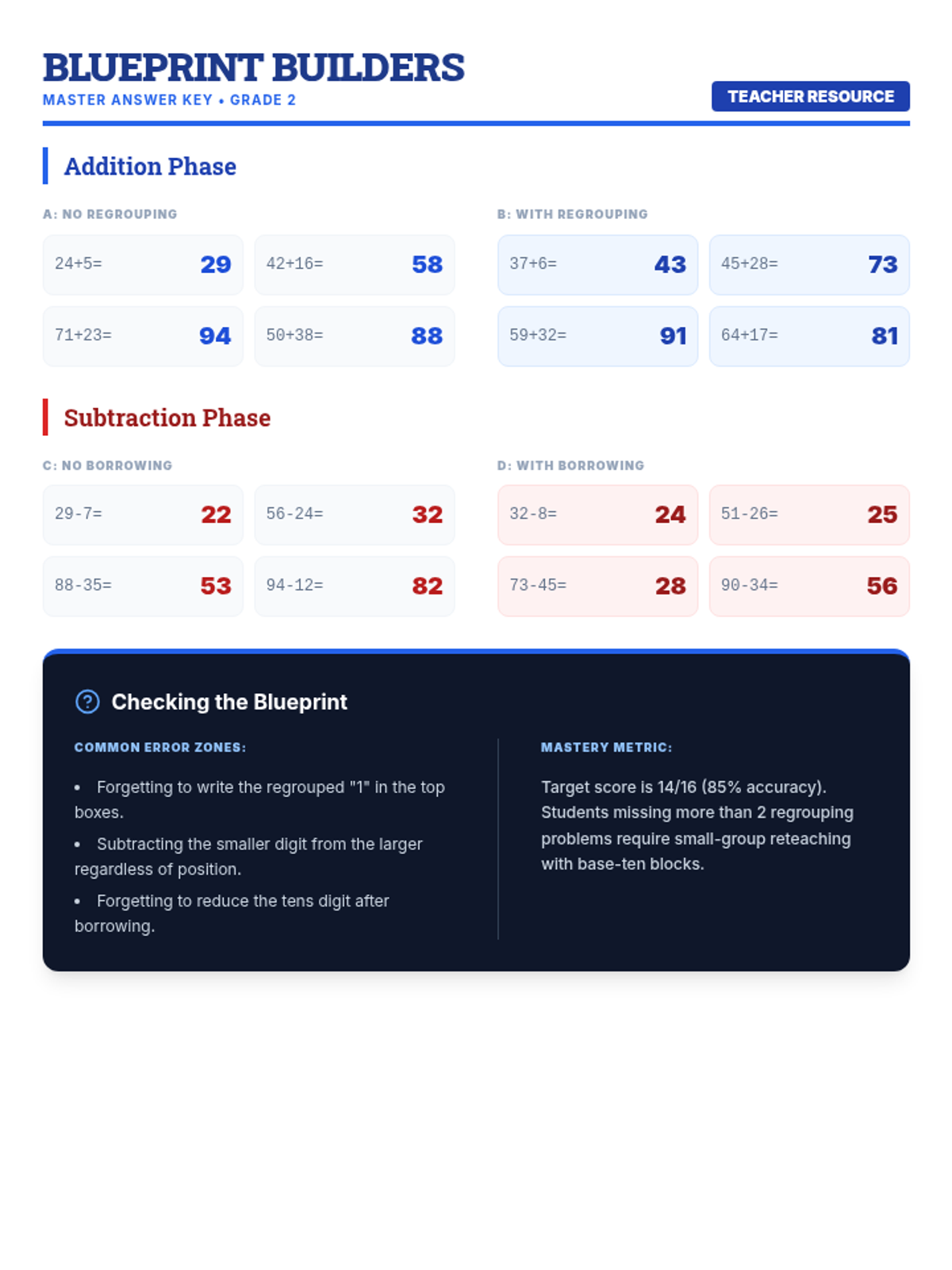
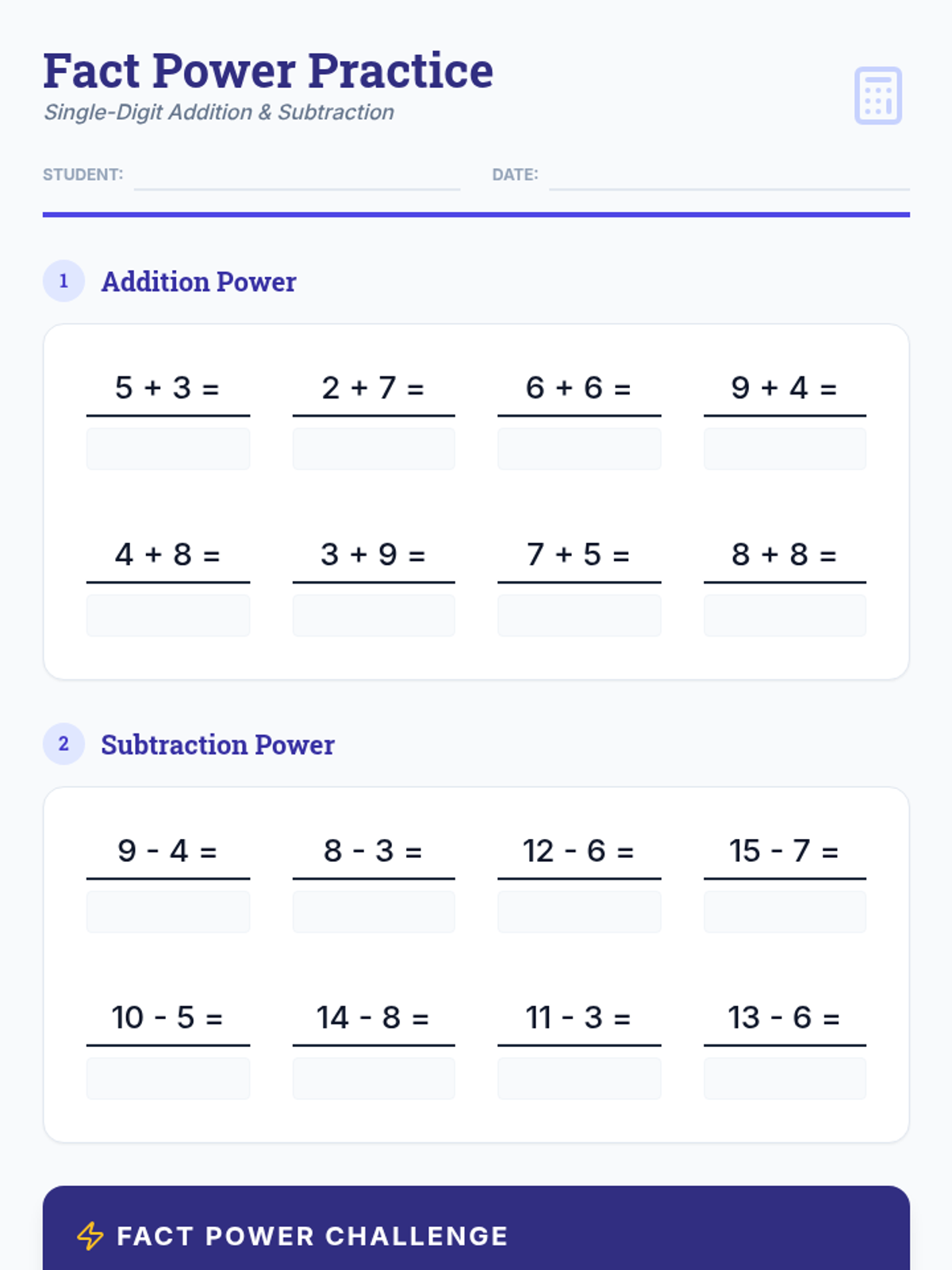
A math lesson focused on multi-digit addition and subtraction, teaching students the standard algorithm for regrouping (carrying and borrowing) through clear steps and visual organizers.
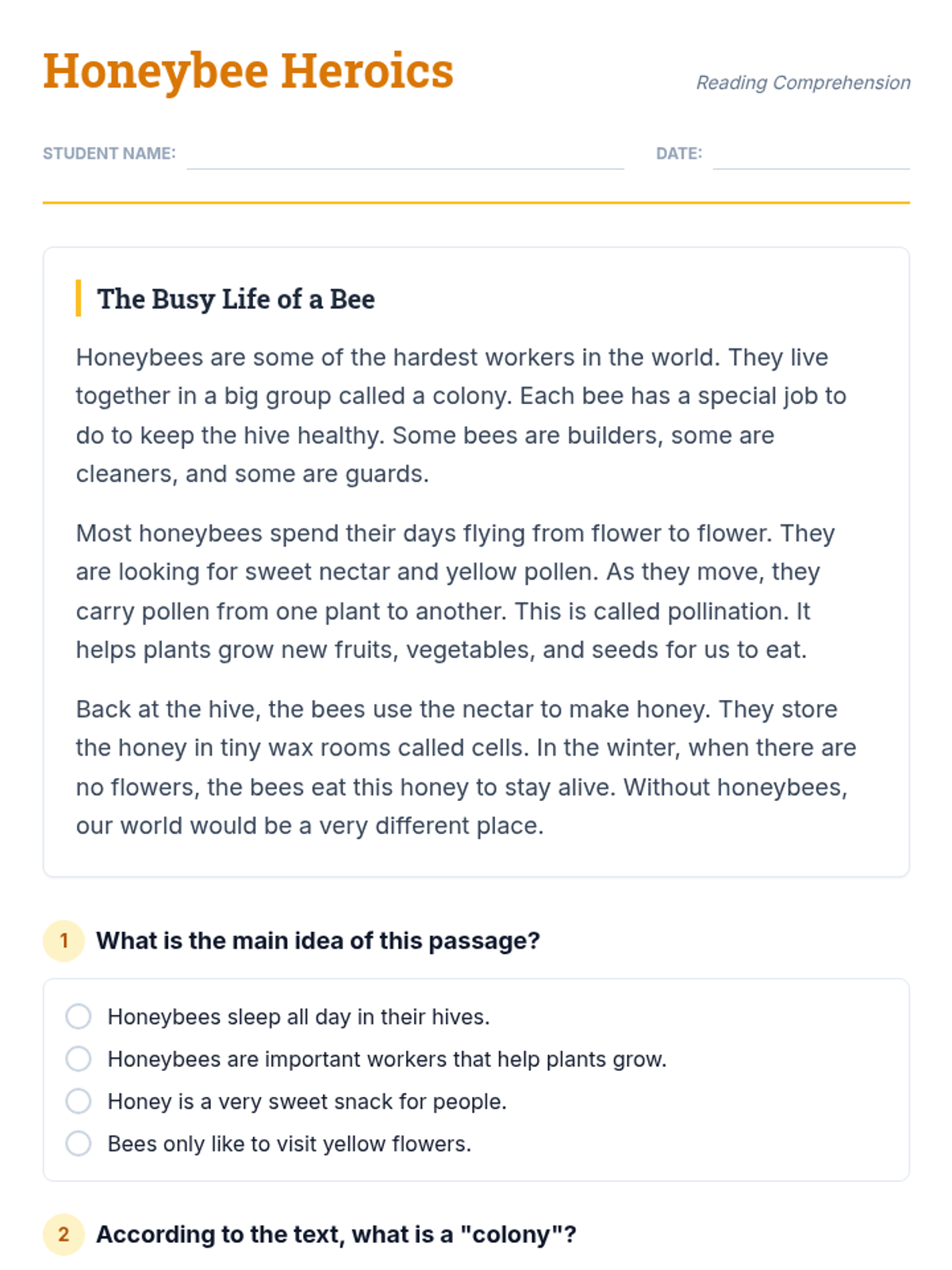
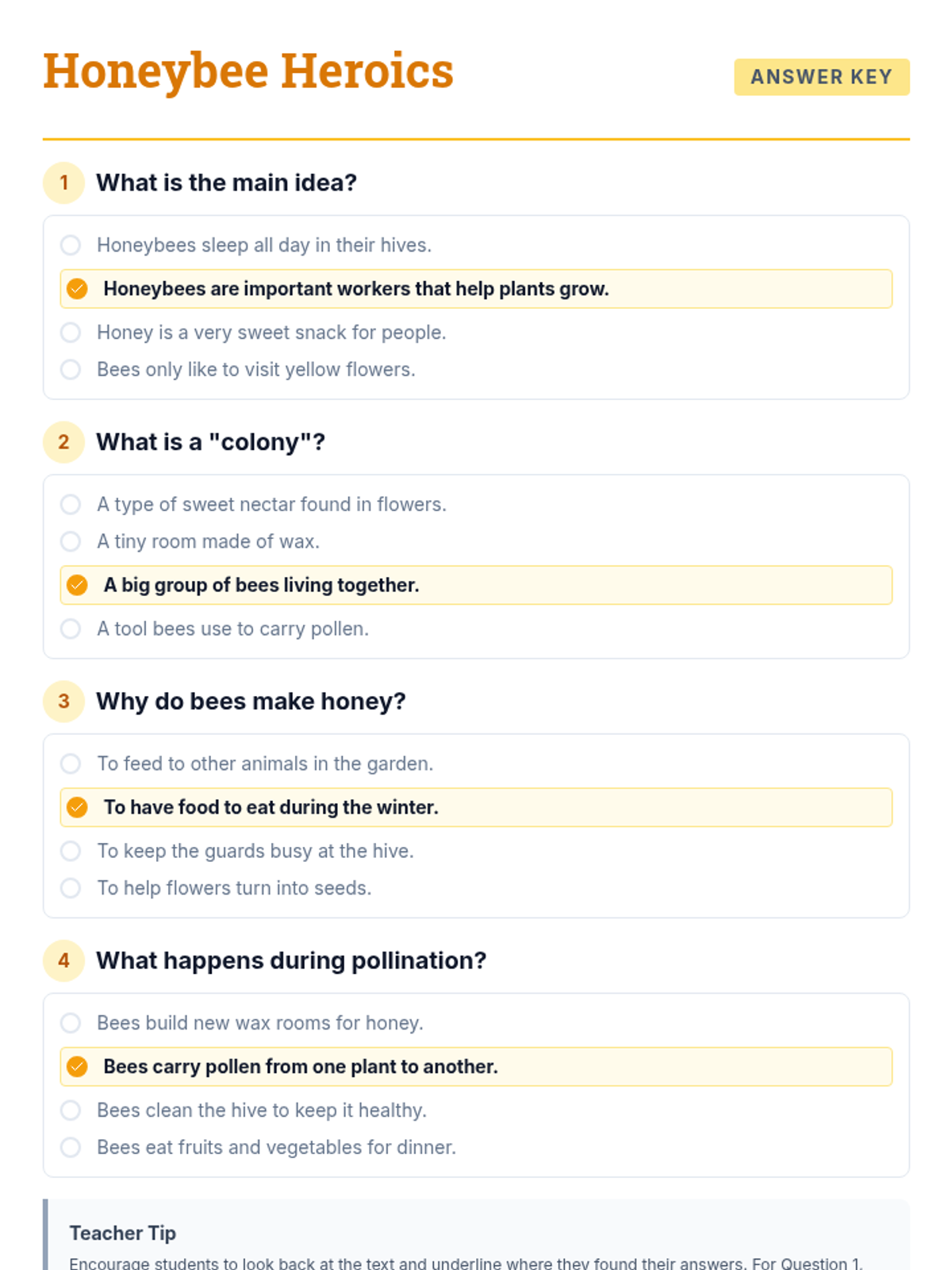
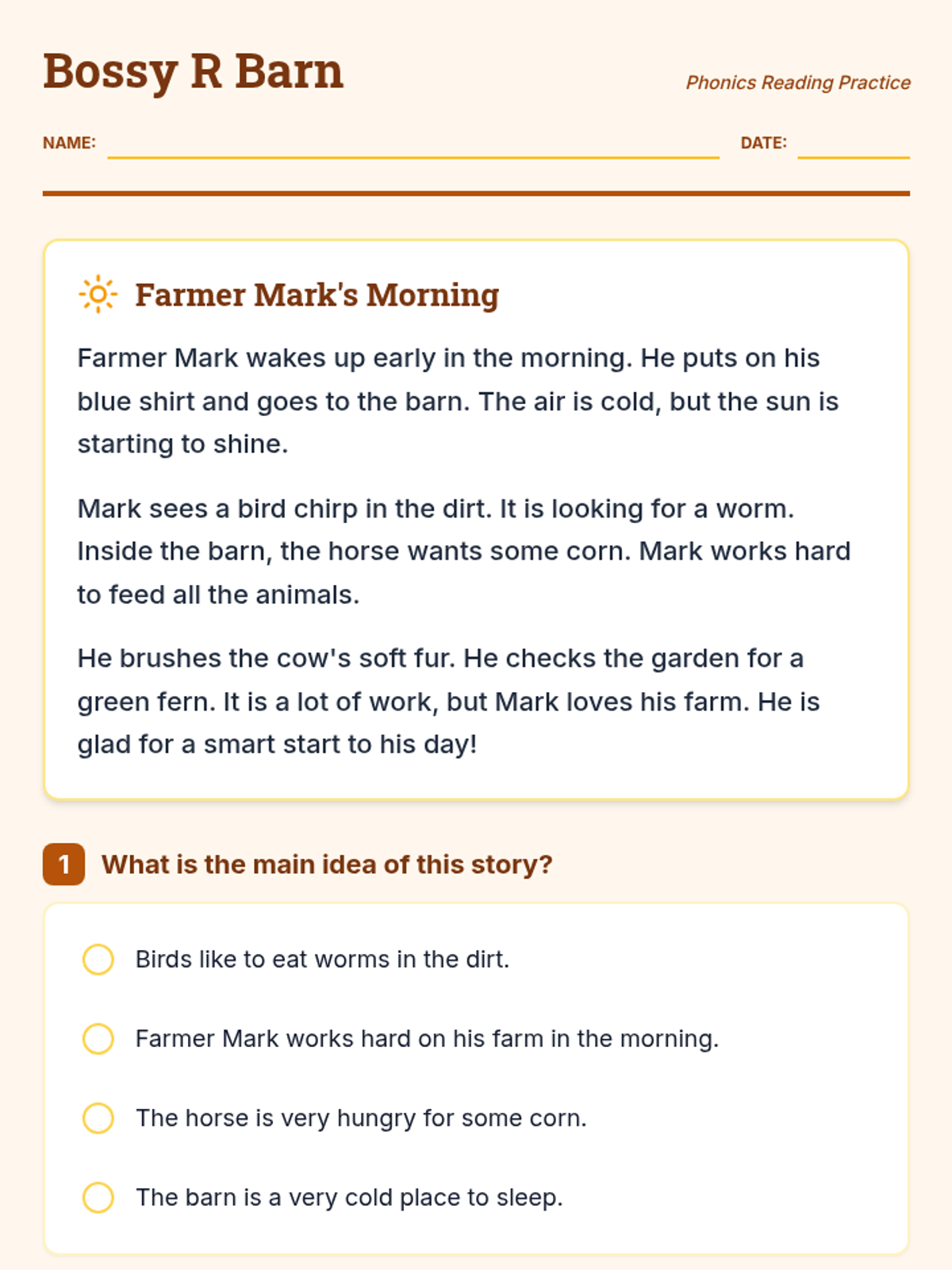
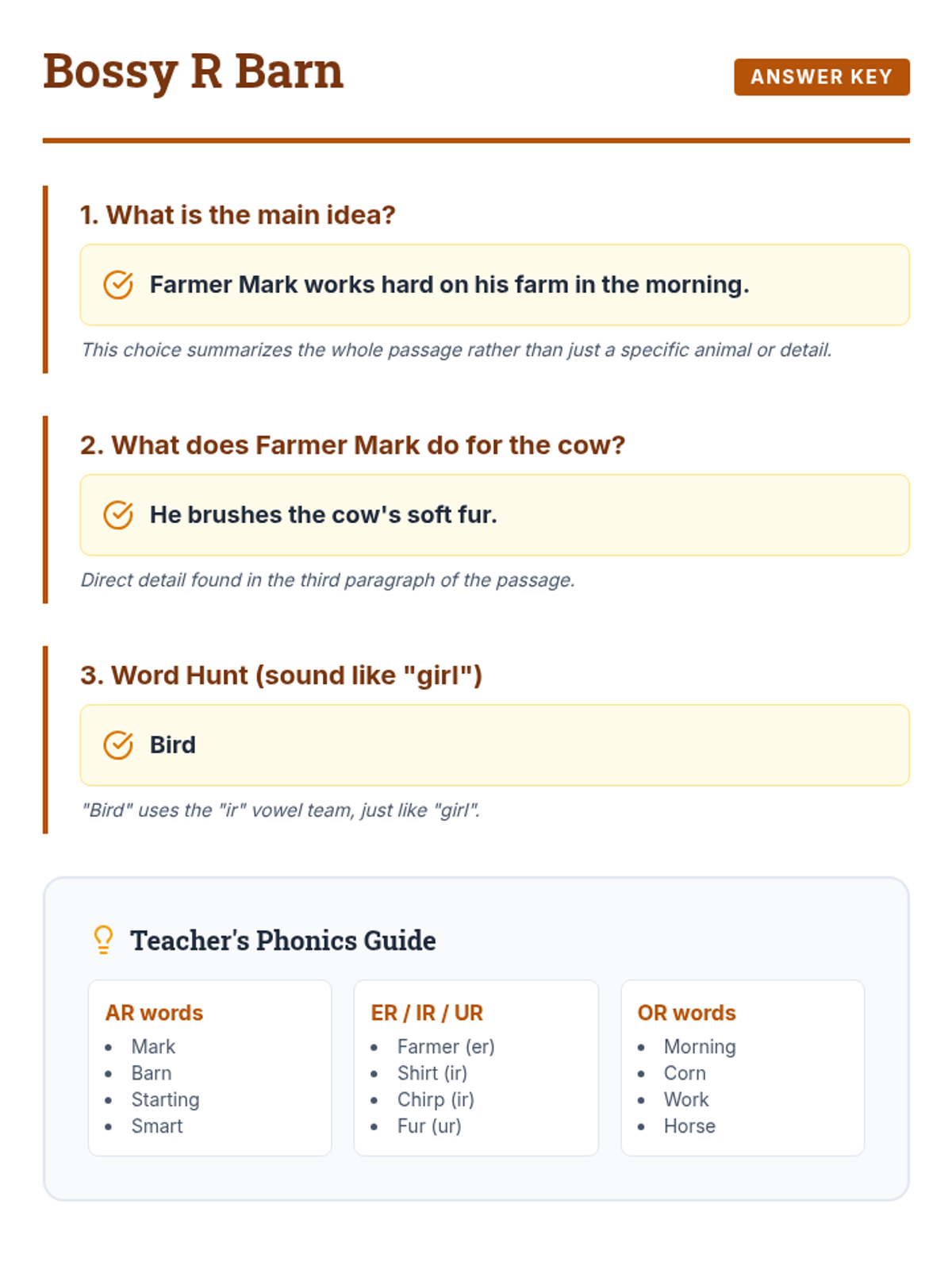
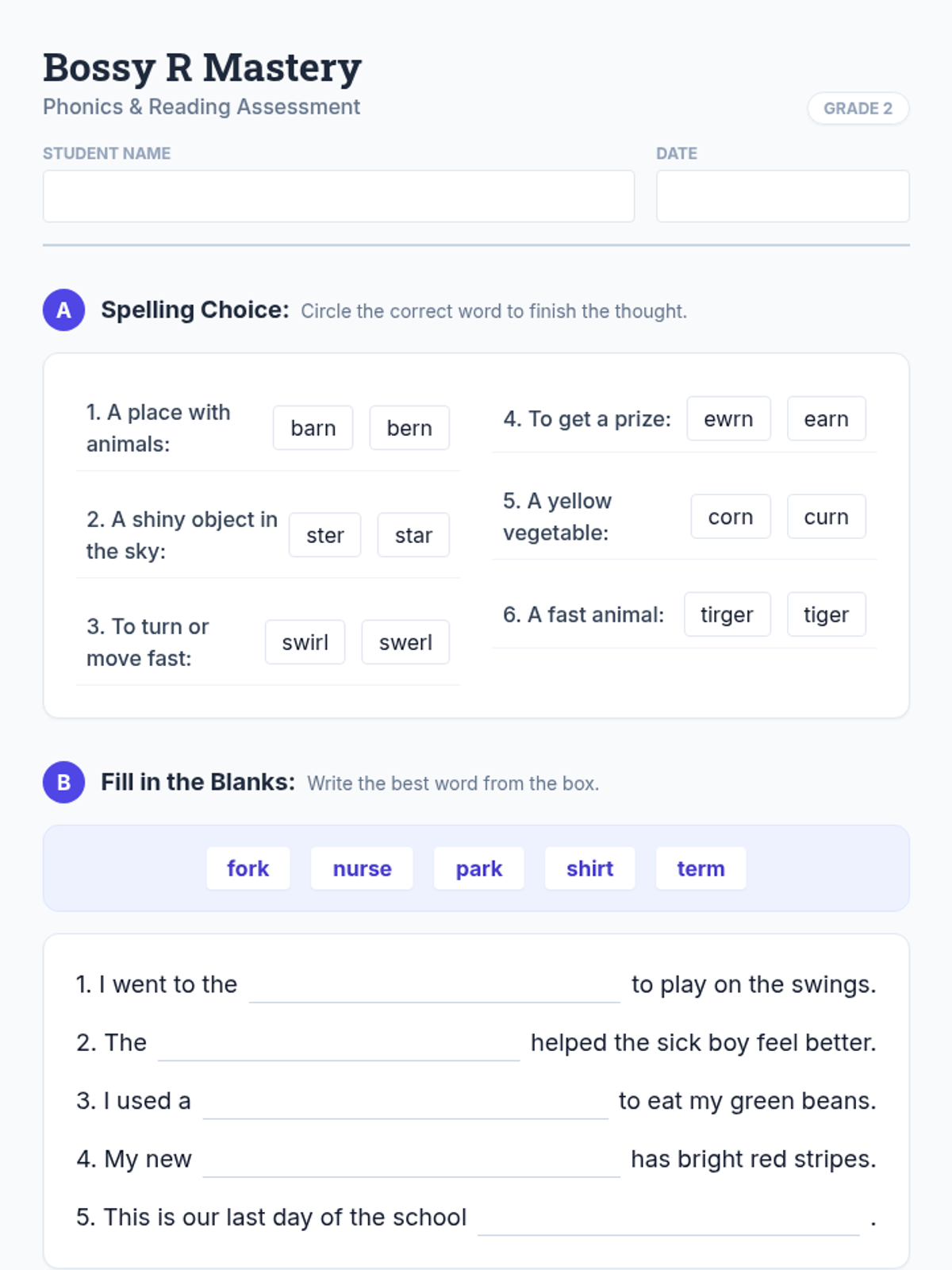
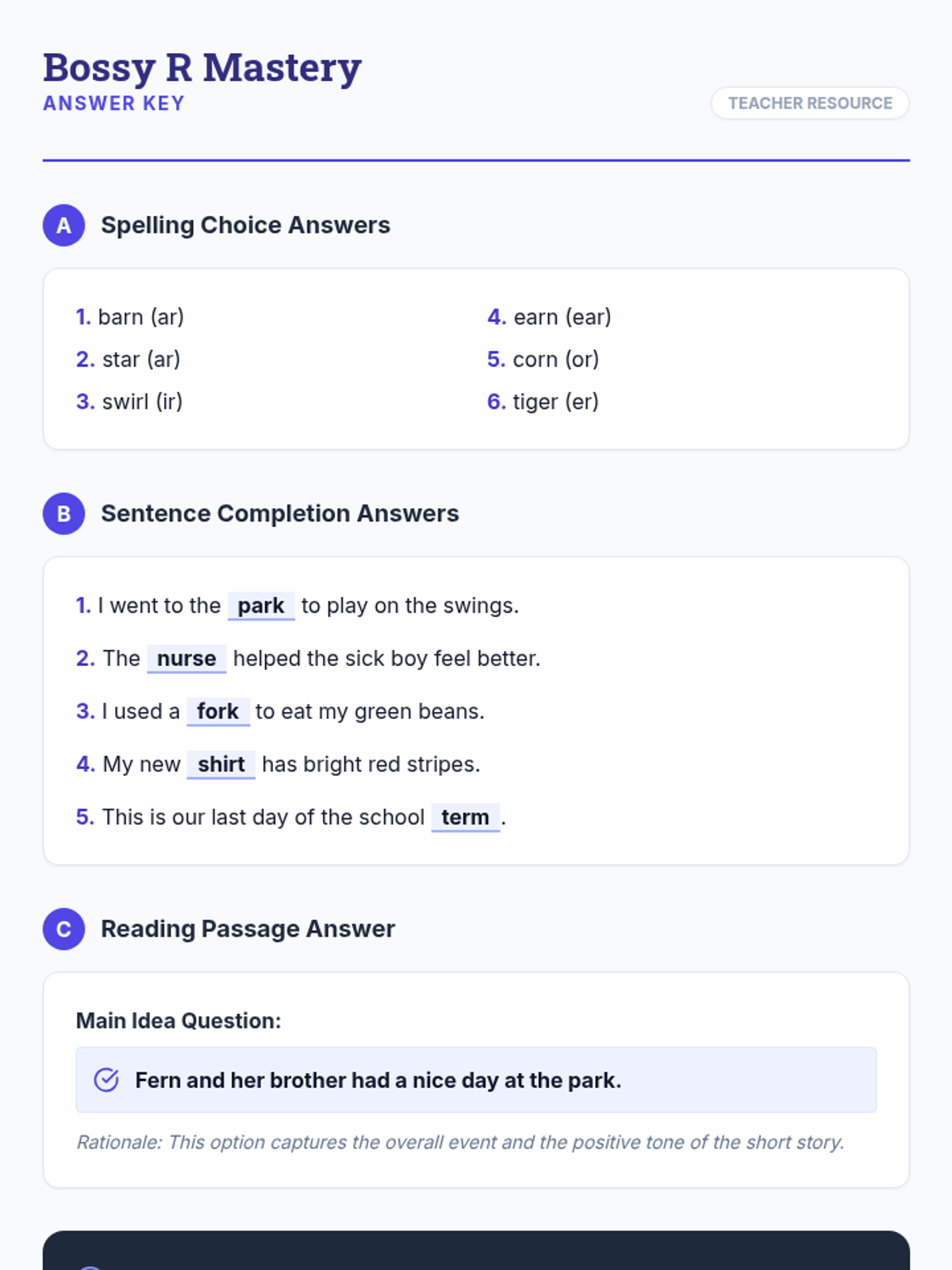
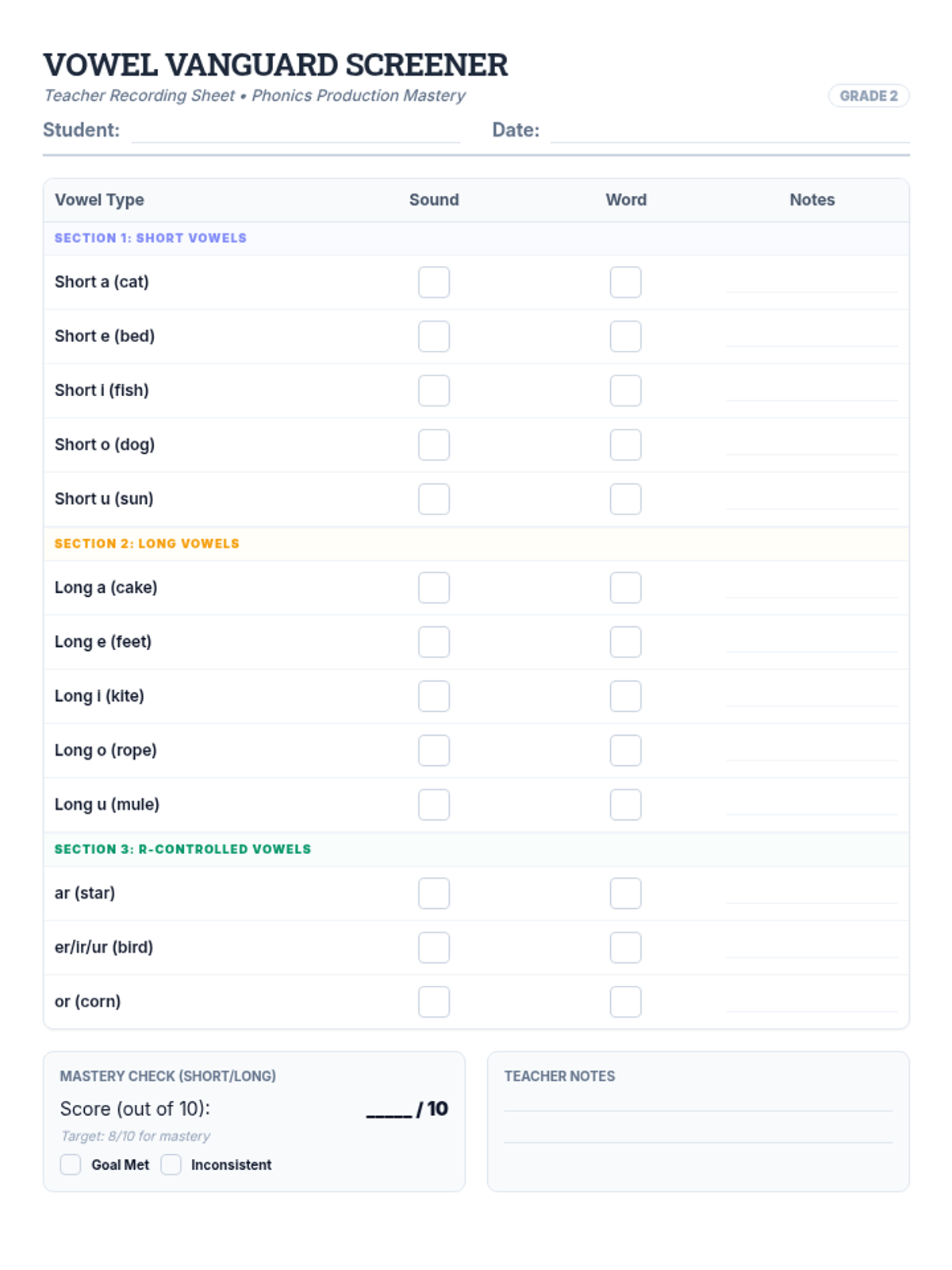
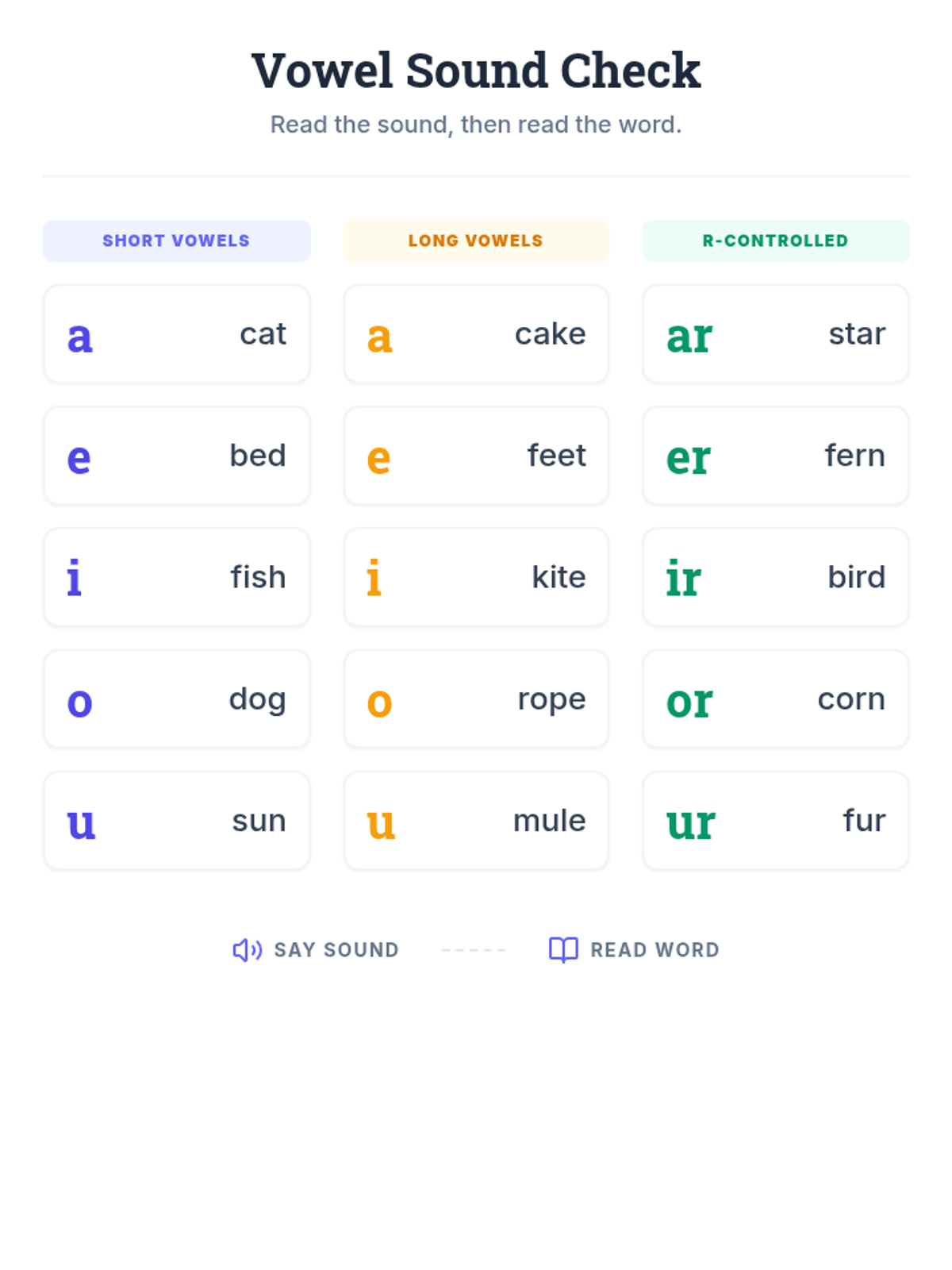
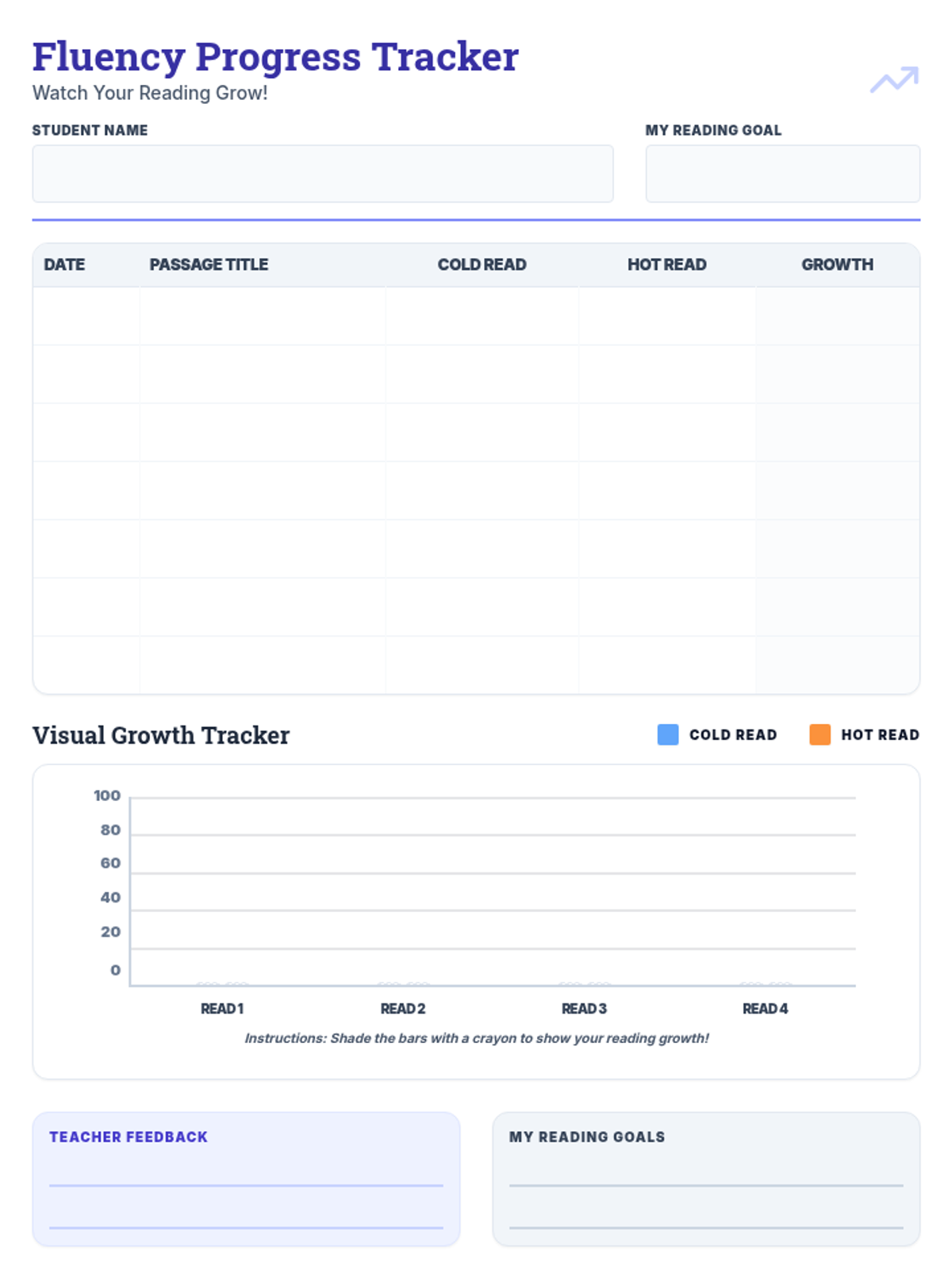
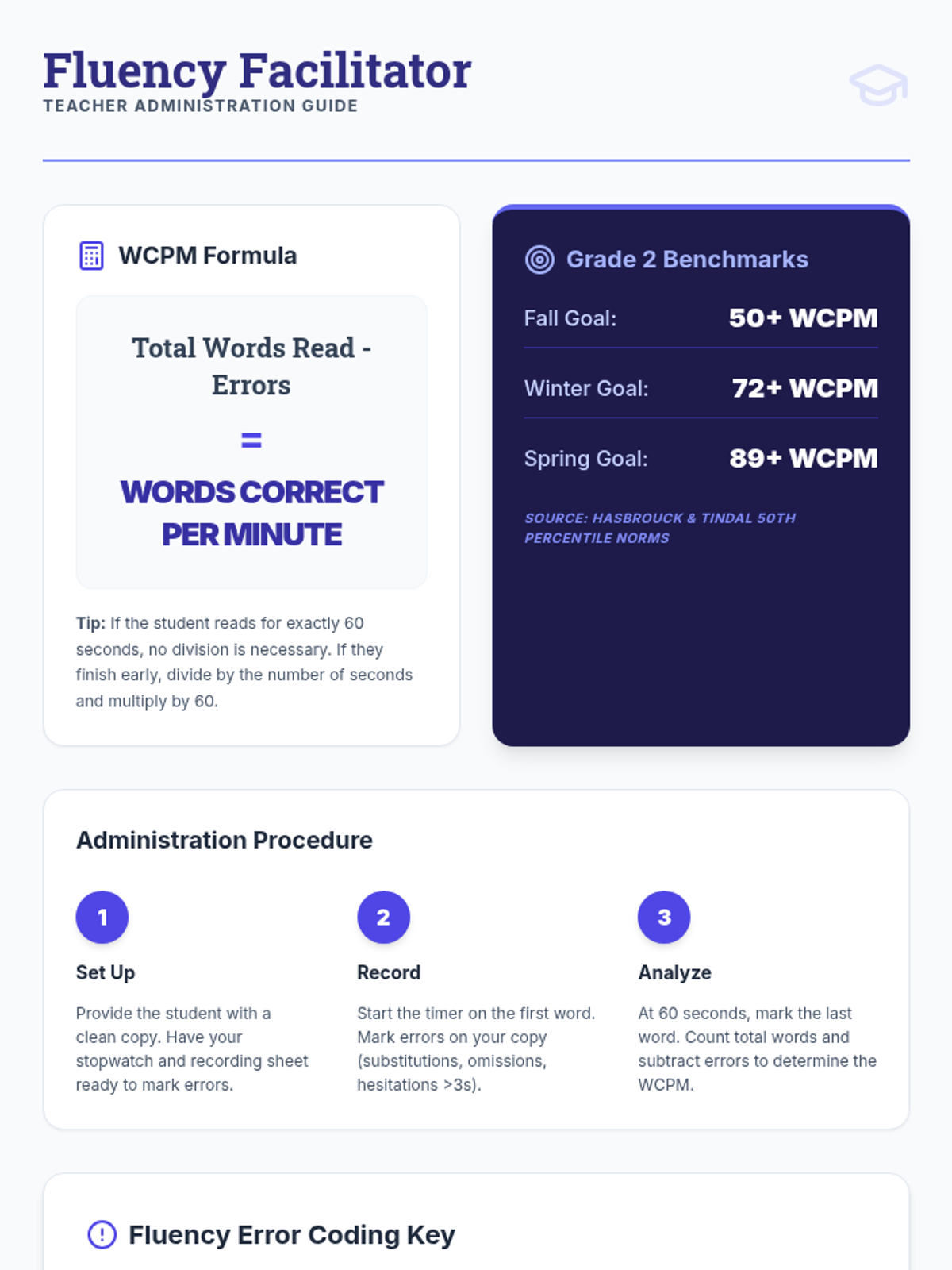
A collection of 2nd grade reading comprehension materials focusing on main idea, supporting details, and specific phonics patterns like r-controlled vowels.
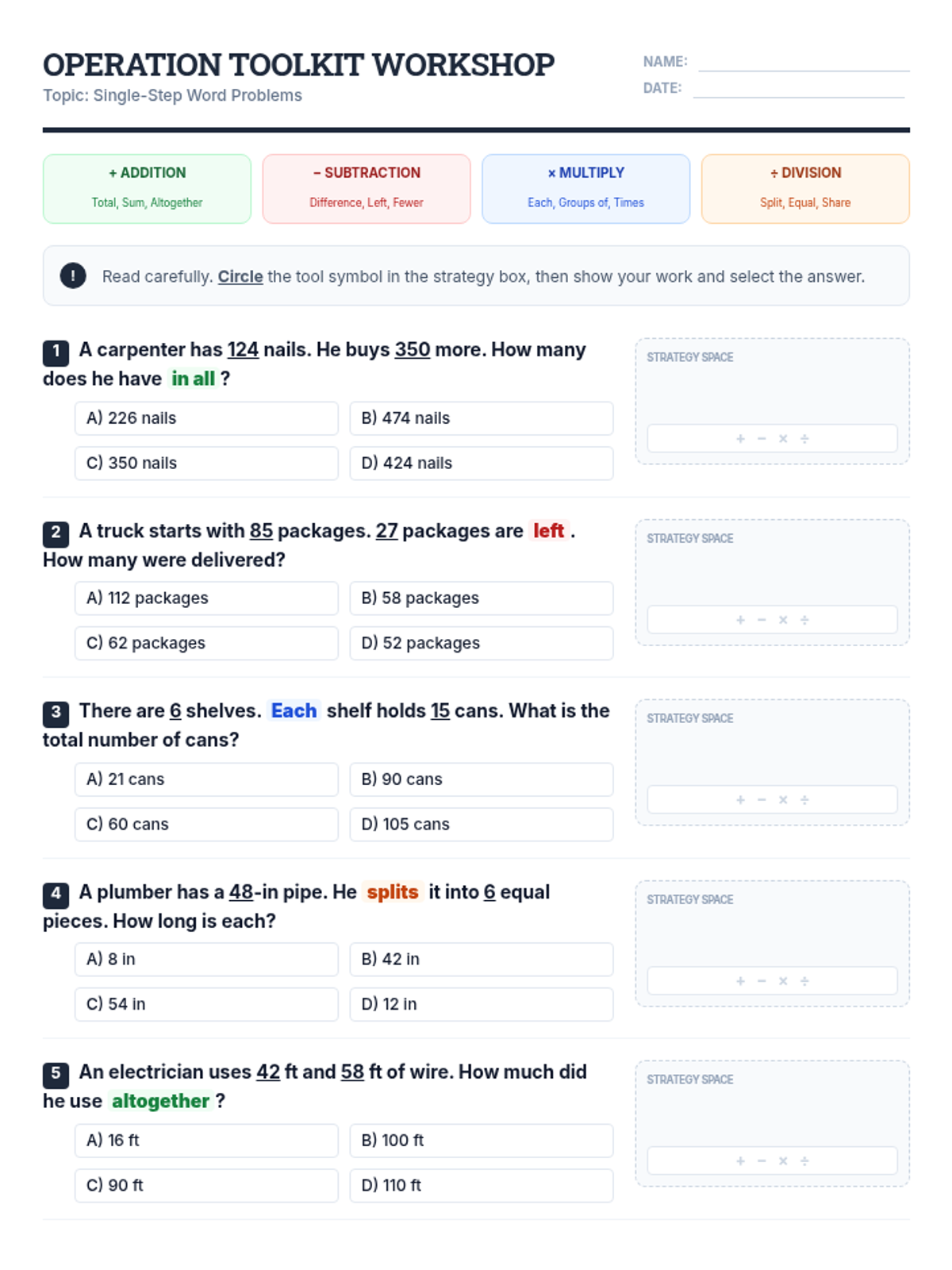
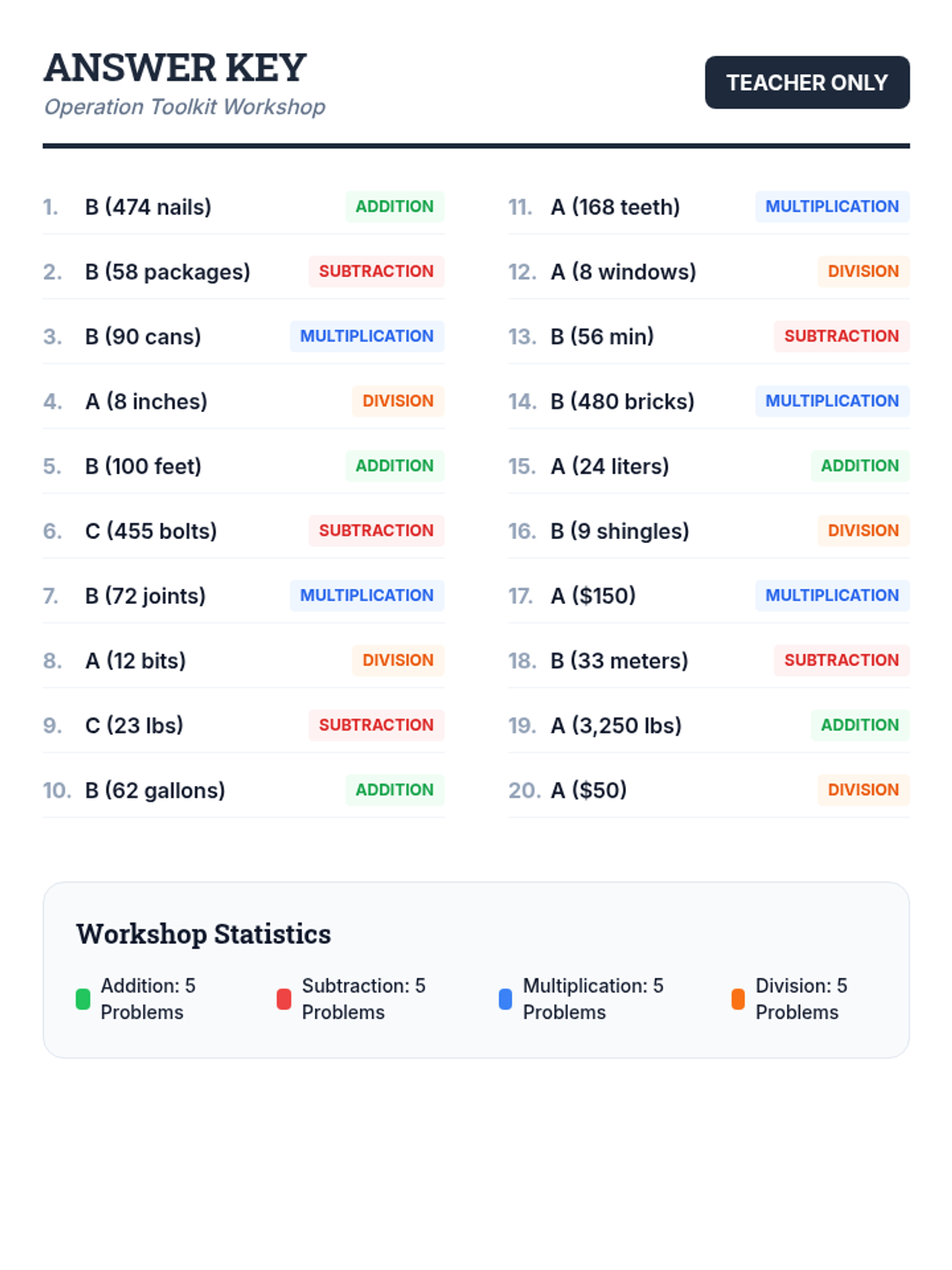
Students will learn to identify key operation indicators in word problems and apply the correct mathematical operation to find solutions.
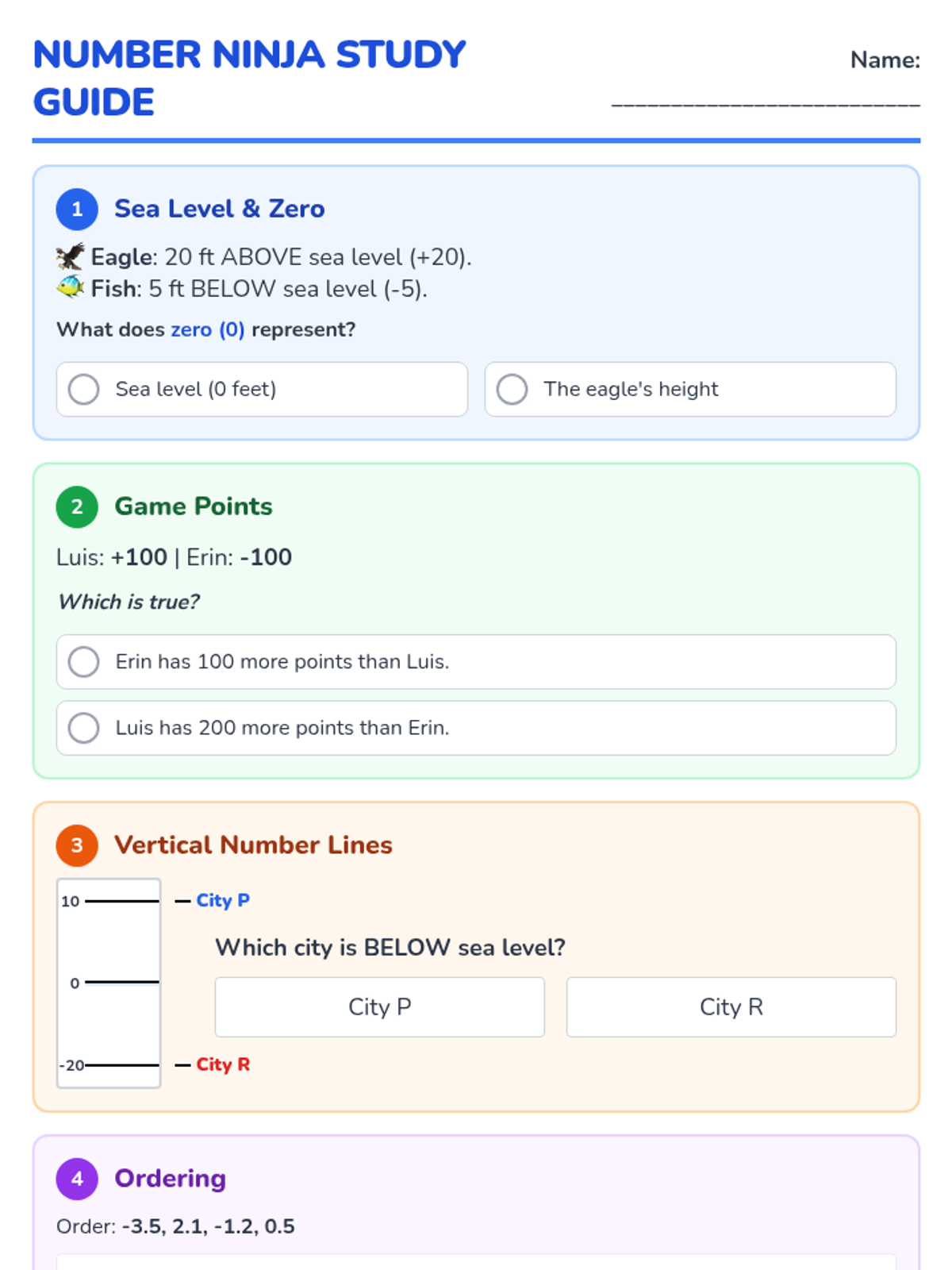
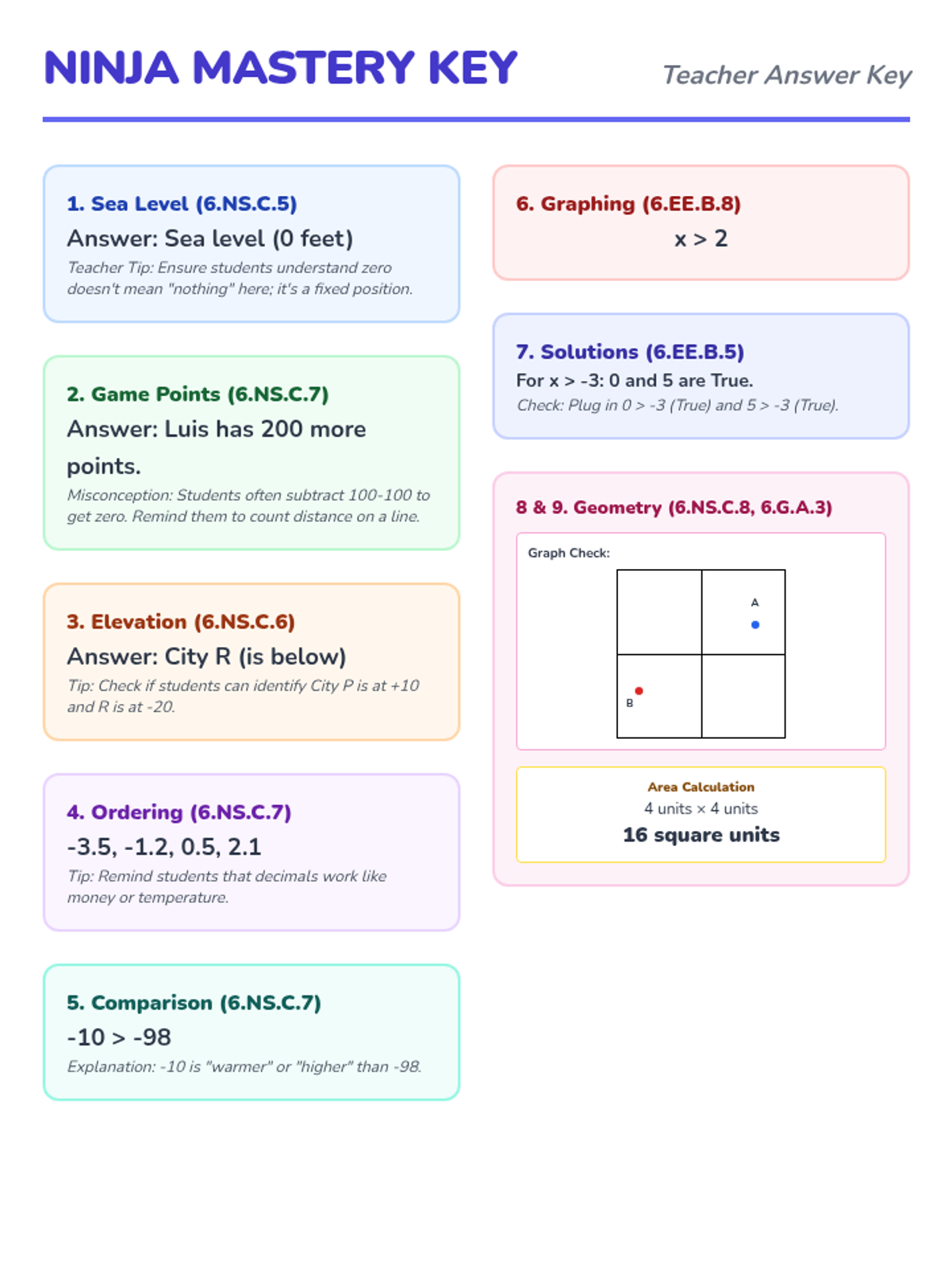
A modified study guide and assessment prep resource for 6th grade rational numbers, integers, and coordinate geometry, specifically designed with IEP accommodations.
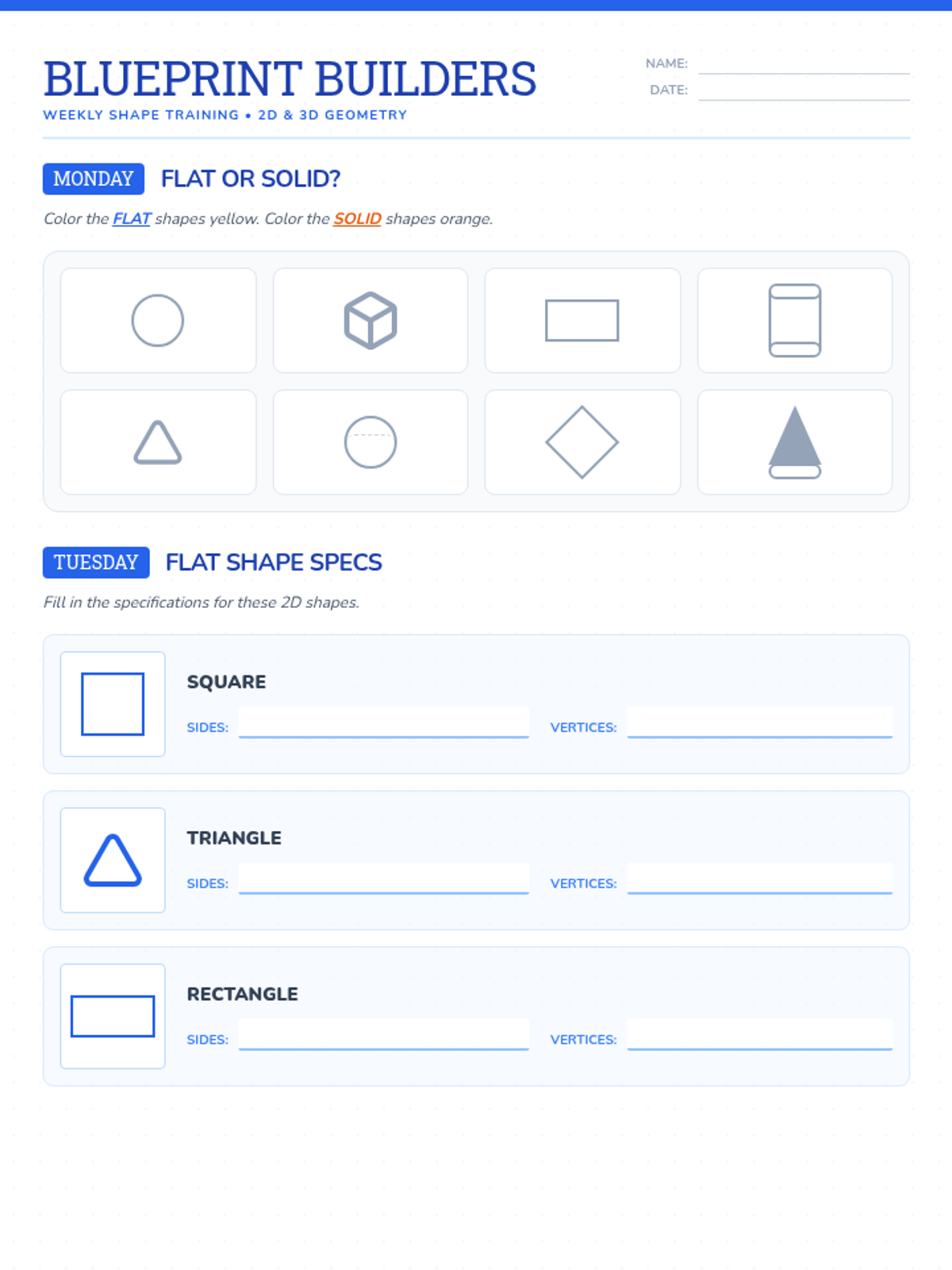
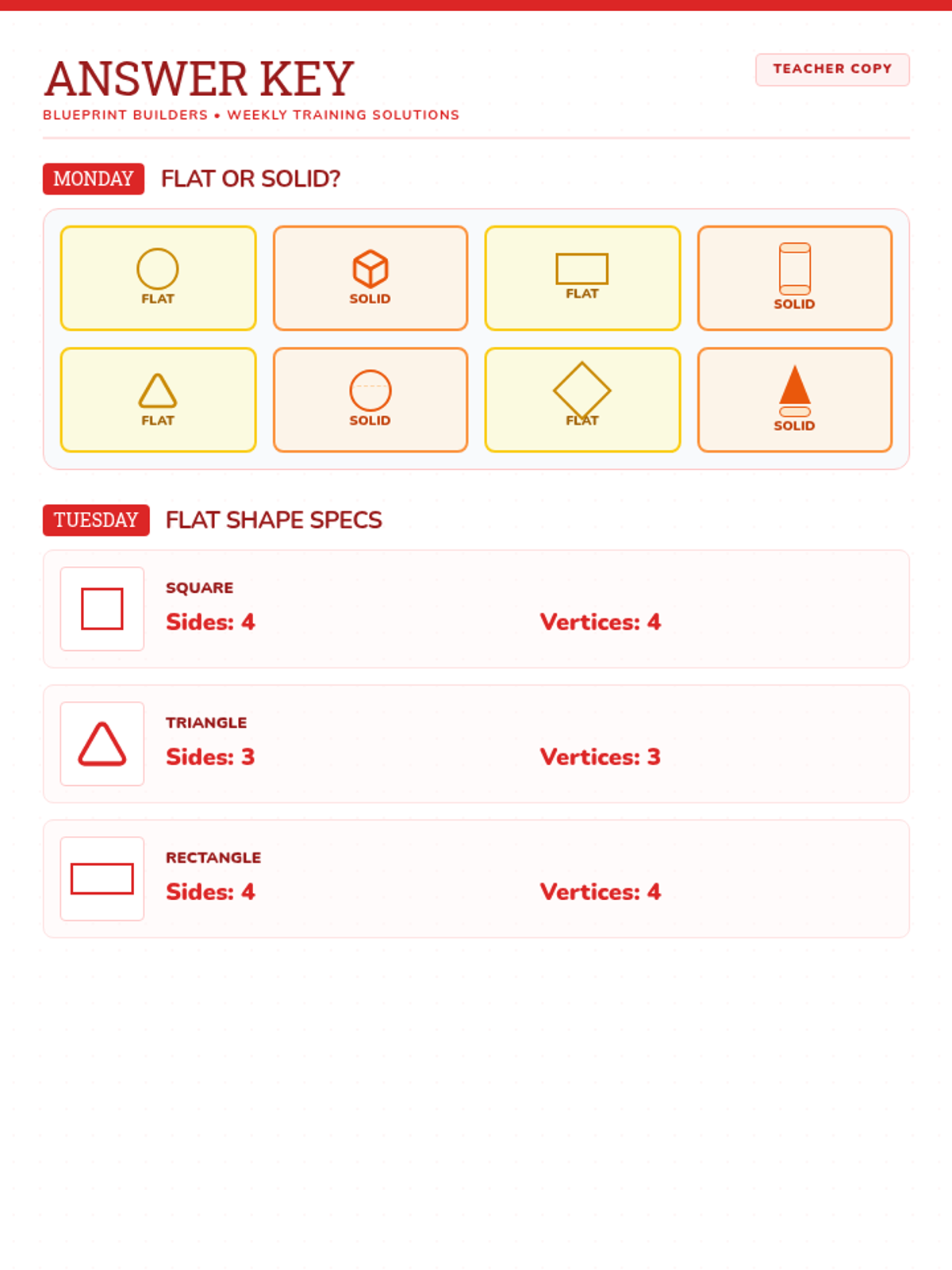
A comprehensive weekly homework set focused on identifying and differentiating between 2D (flat) and 3D (solid) shapes through daily practice activities.
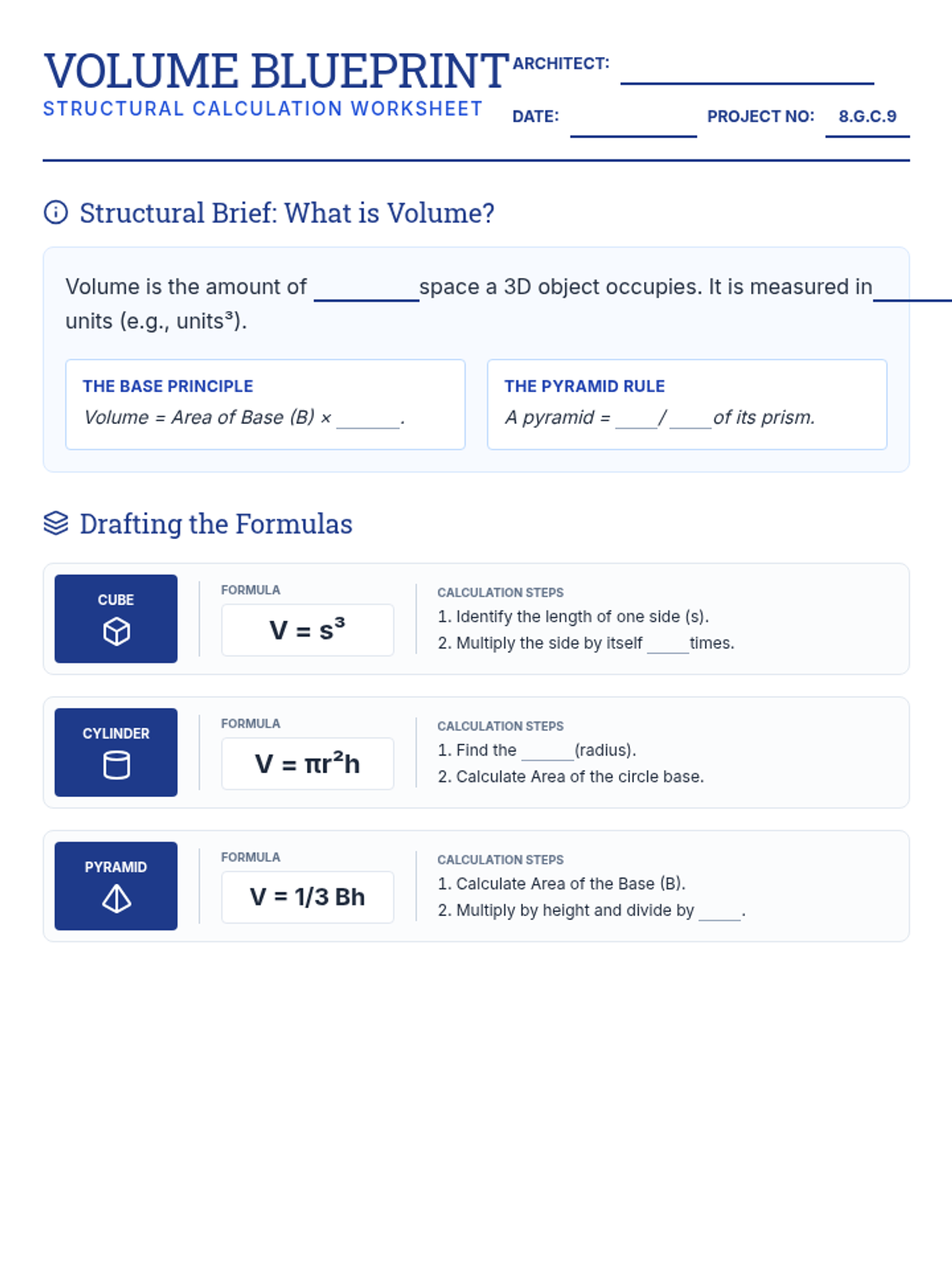
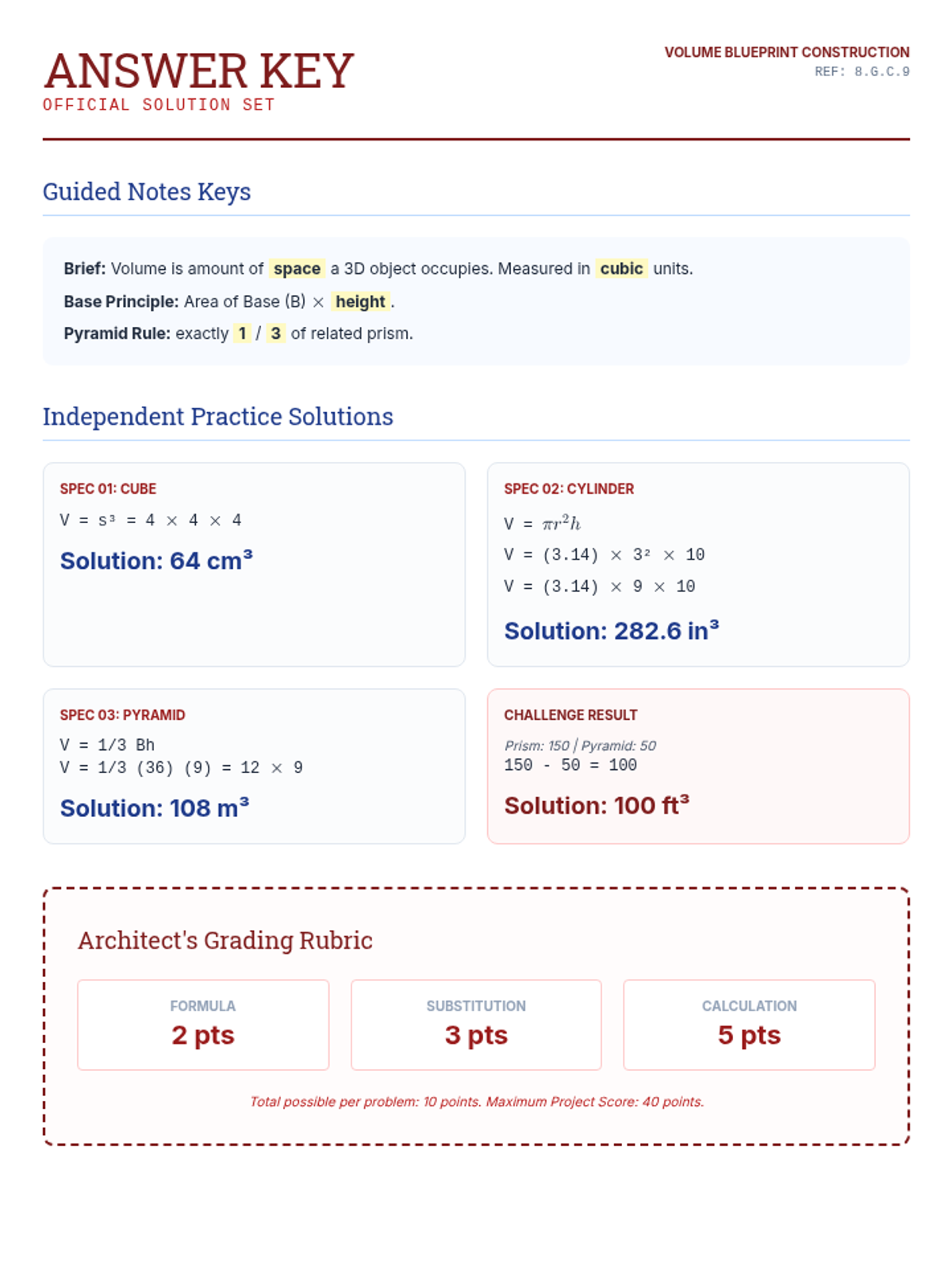
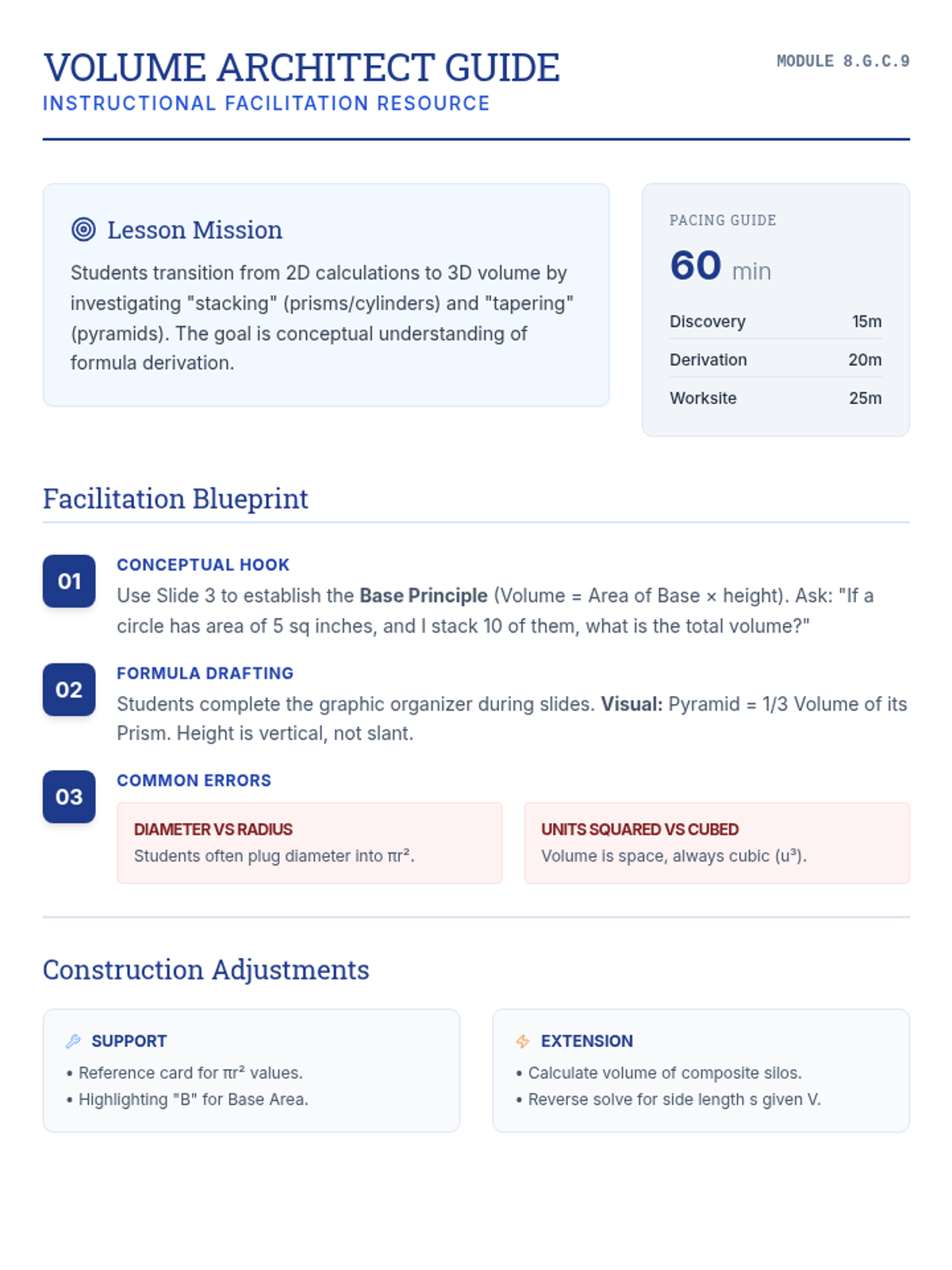
A lesson on calculating the volume of cubes, cylinders, and pyramids using a blueprint-inspired graphic organizer and guided notes.
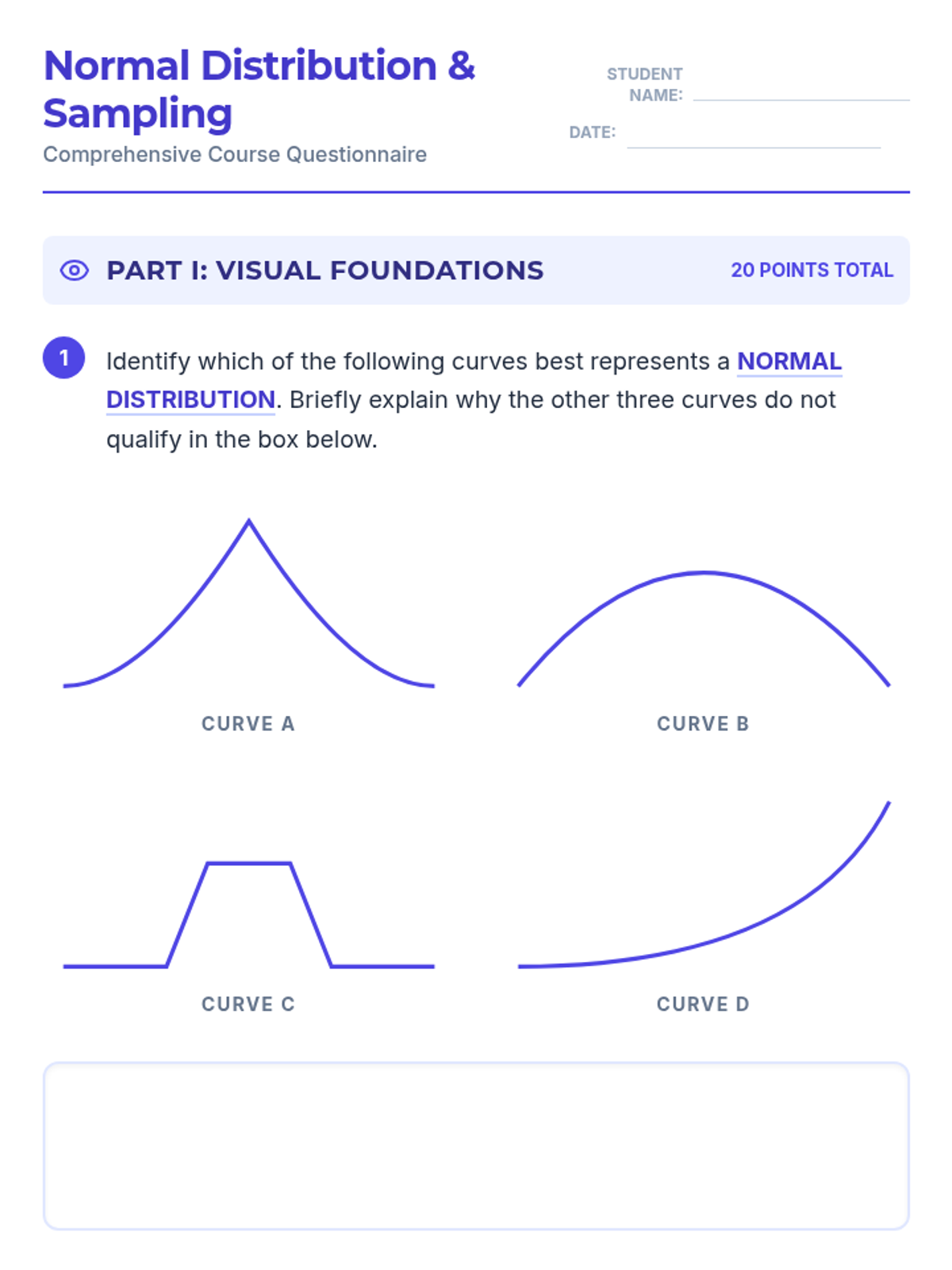
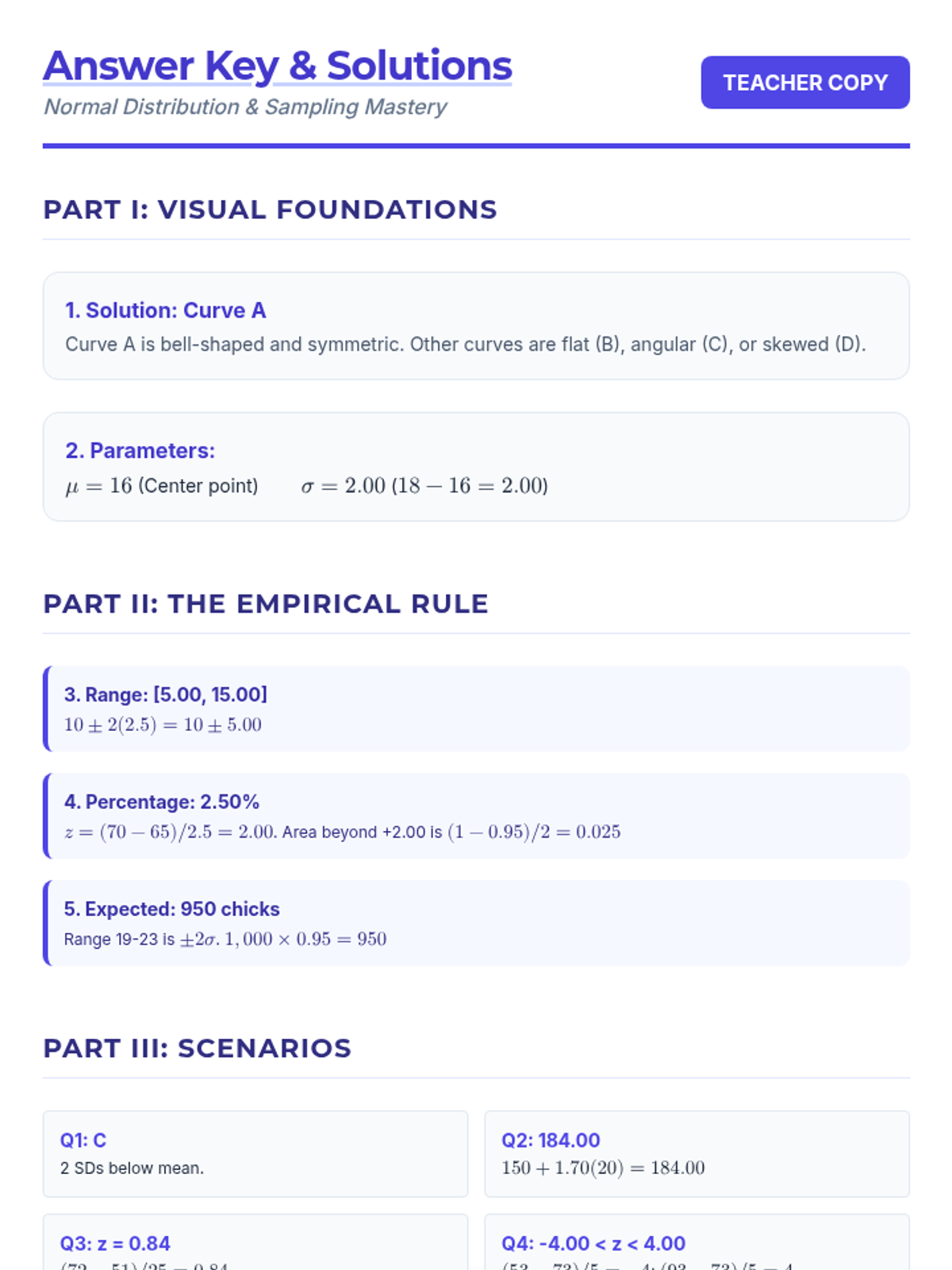
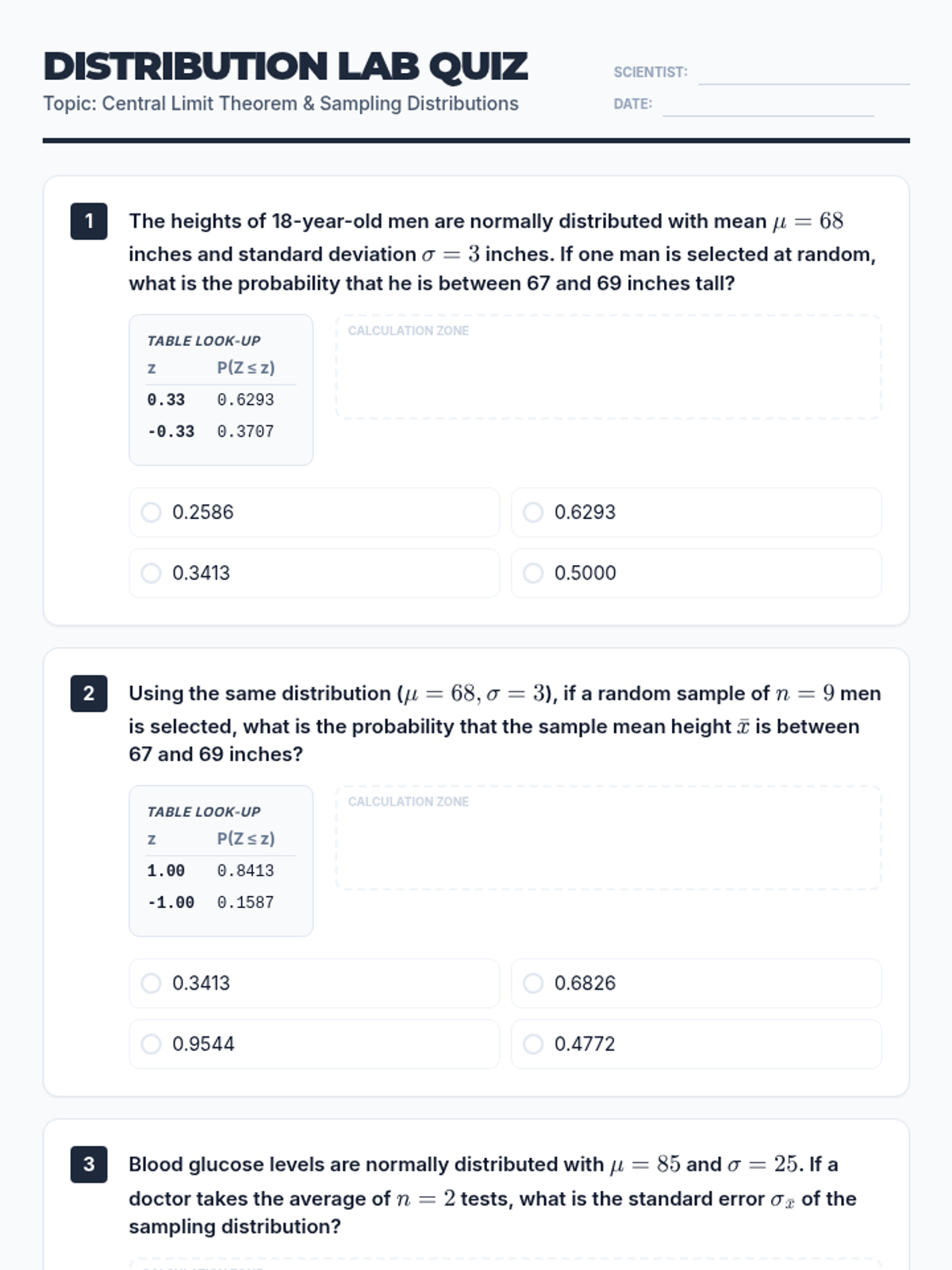
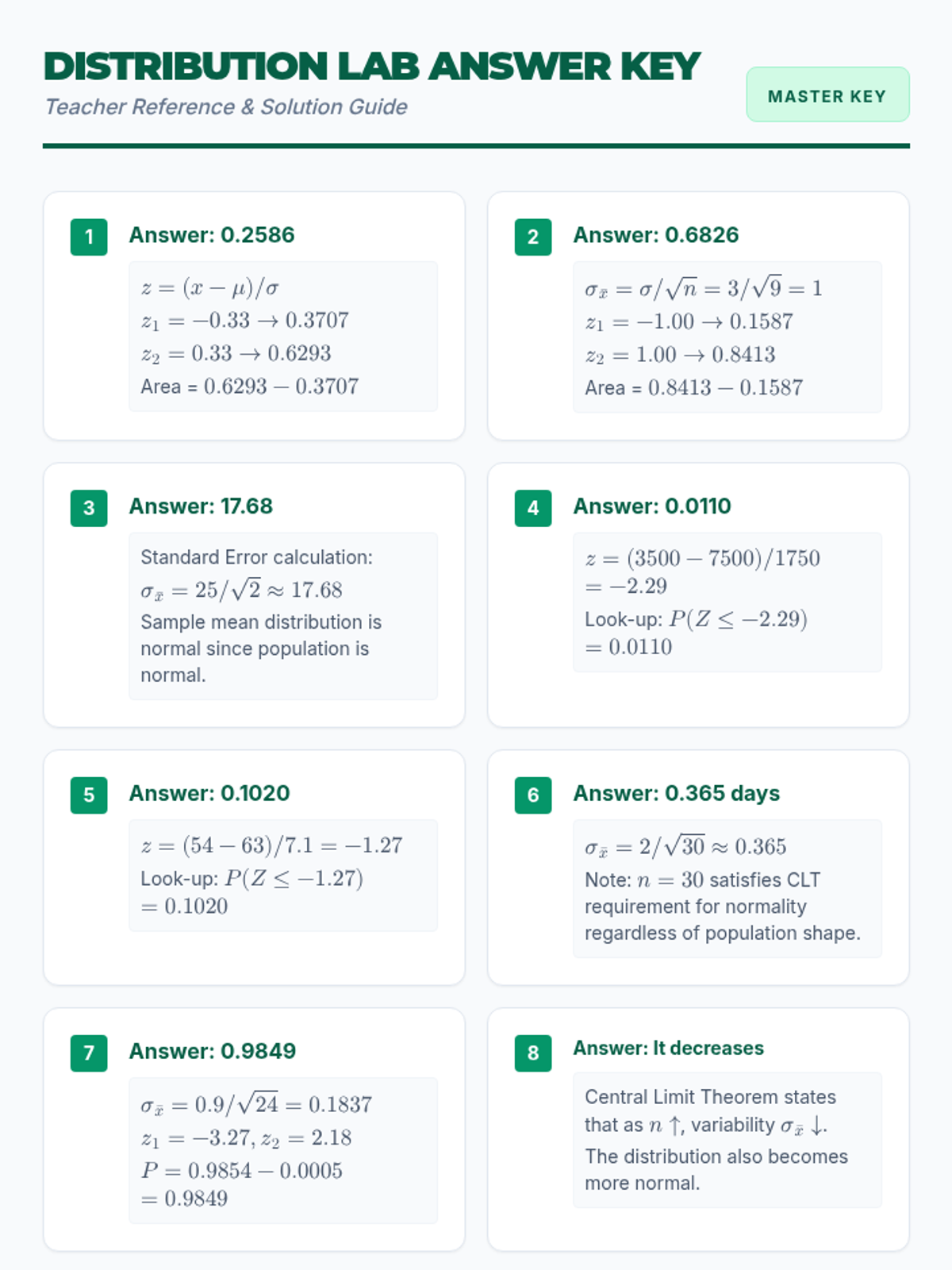
A comprehensive assessment covering normal distributions, the Empirical Rule, z-scores, and sampling distributions. This lesson combines conceptual understanding with complex statistical calculations.
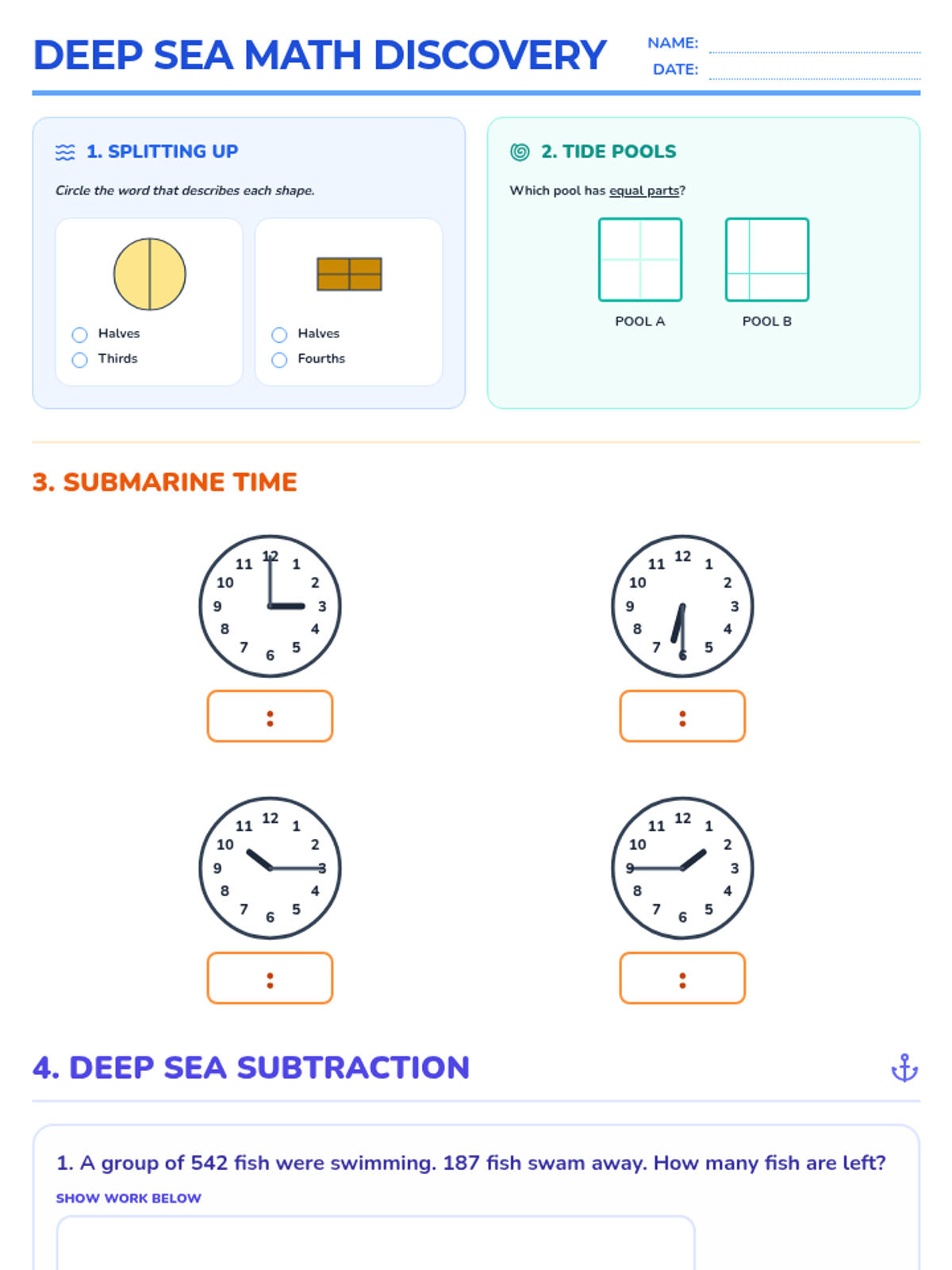
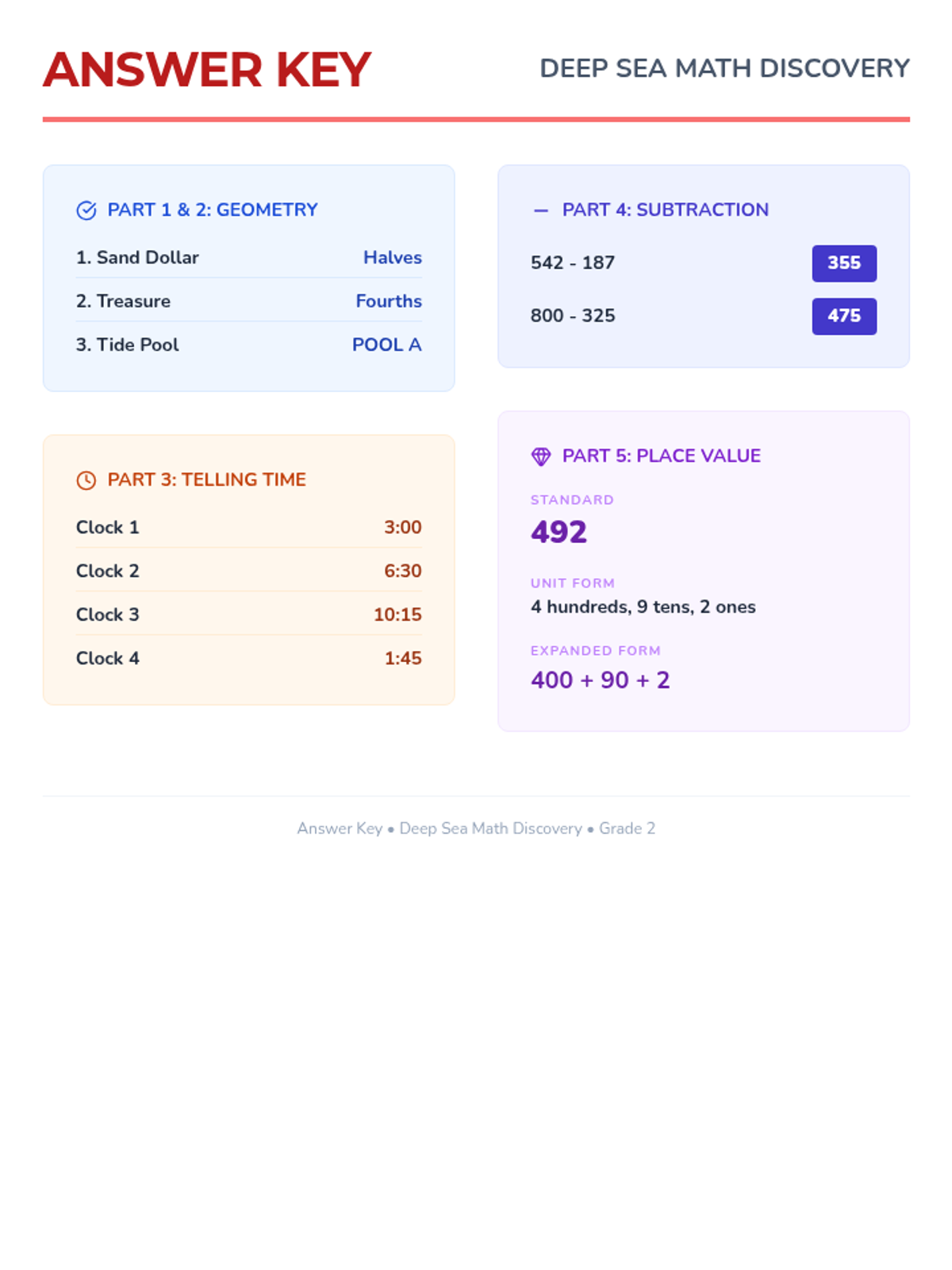
Explore fractions, 3-digit subtraction, telling time, and place value with an underwater adventure. This lesson helps 2nd graders master geometry, arithmetic, and number forms through engaging sea-themed problems.
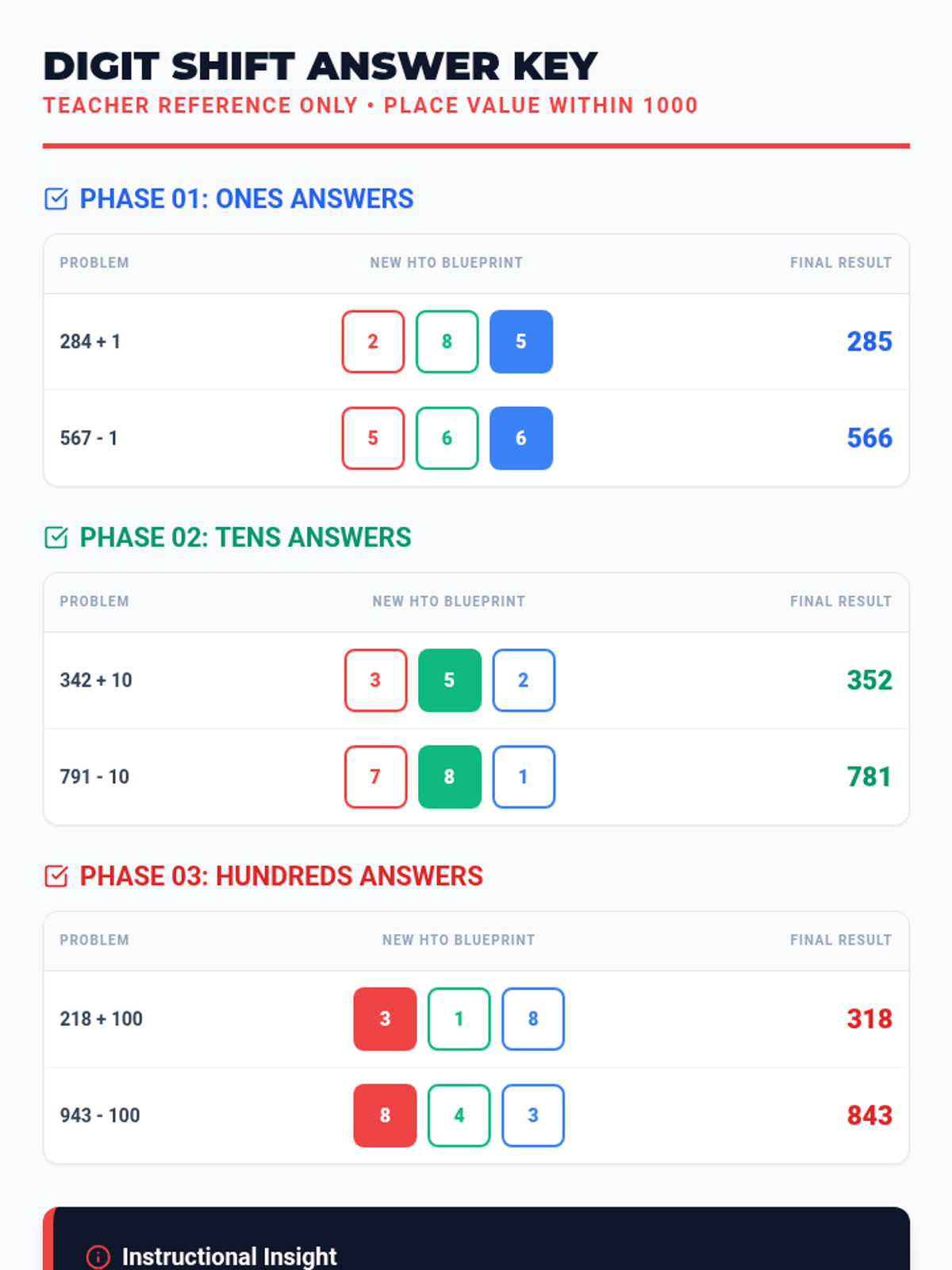
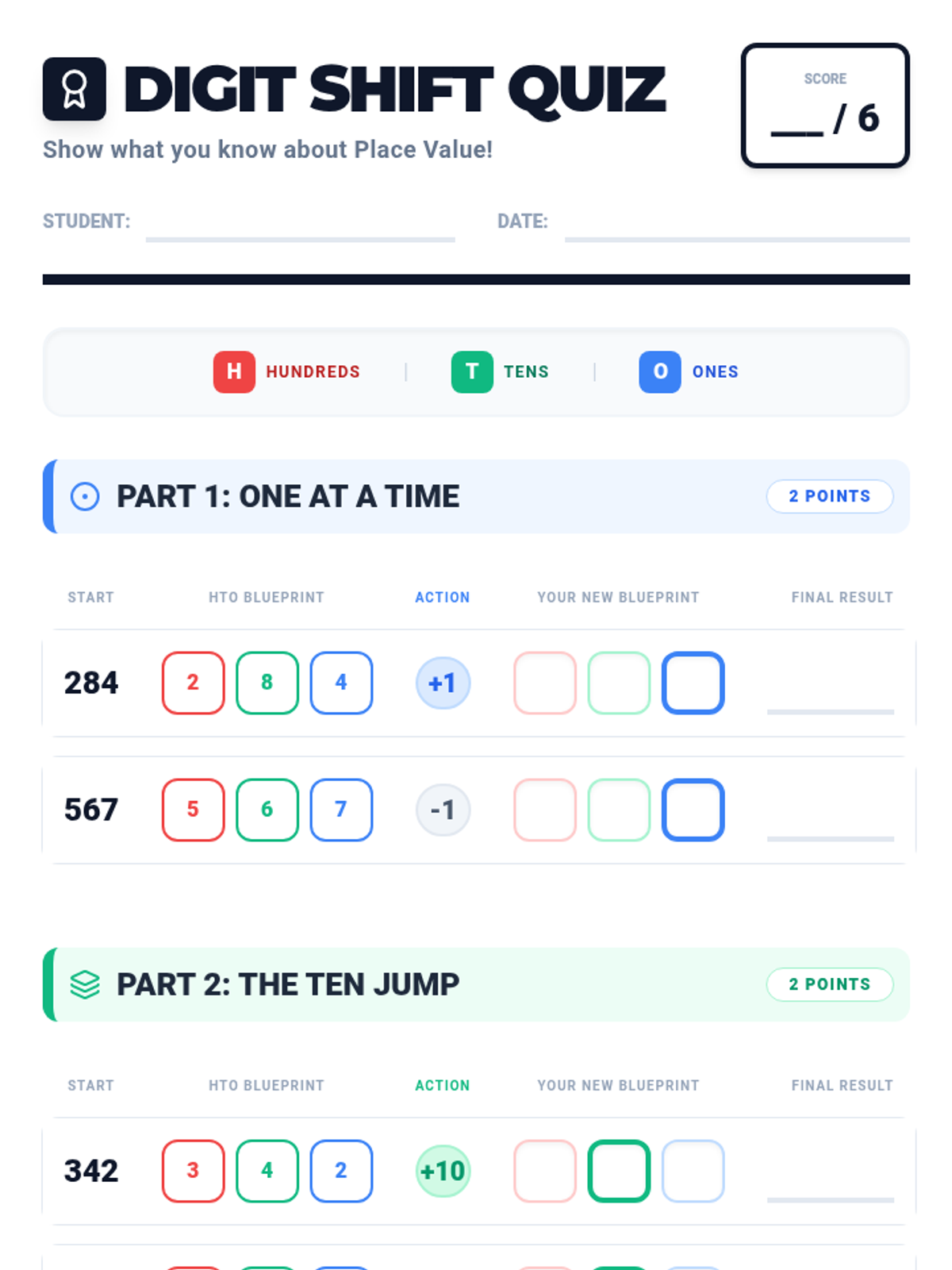
A targeted assessment lesson on place value within 1000, focusing on how digits shift when adding or subtracting 1, 10, or 100. Featuring a visually-supported quiz designed specifically for special education students, with color-coded HTO charts and clear scoring guidelines.
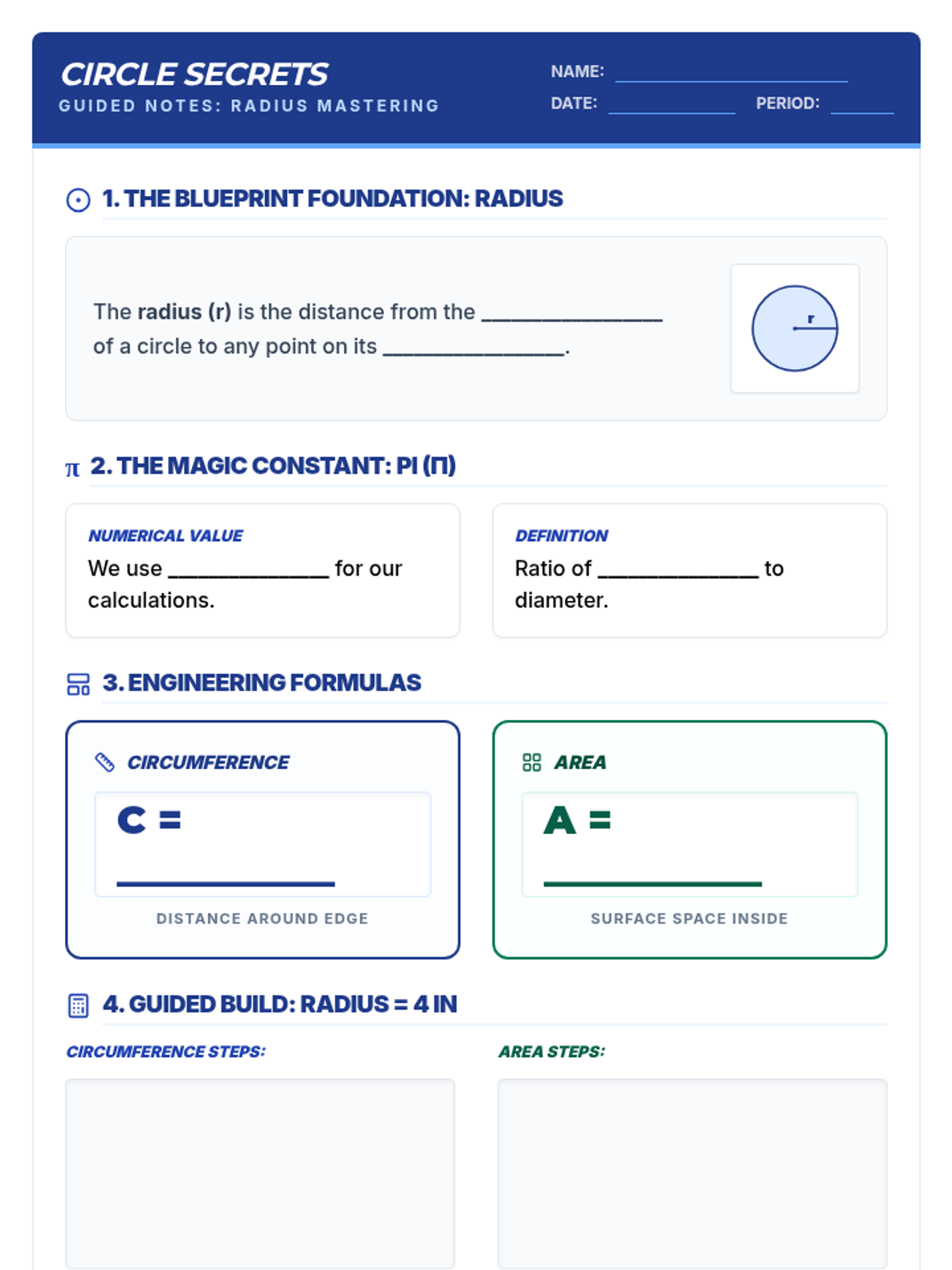
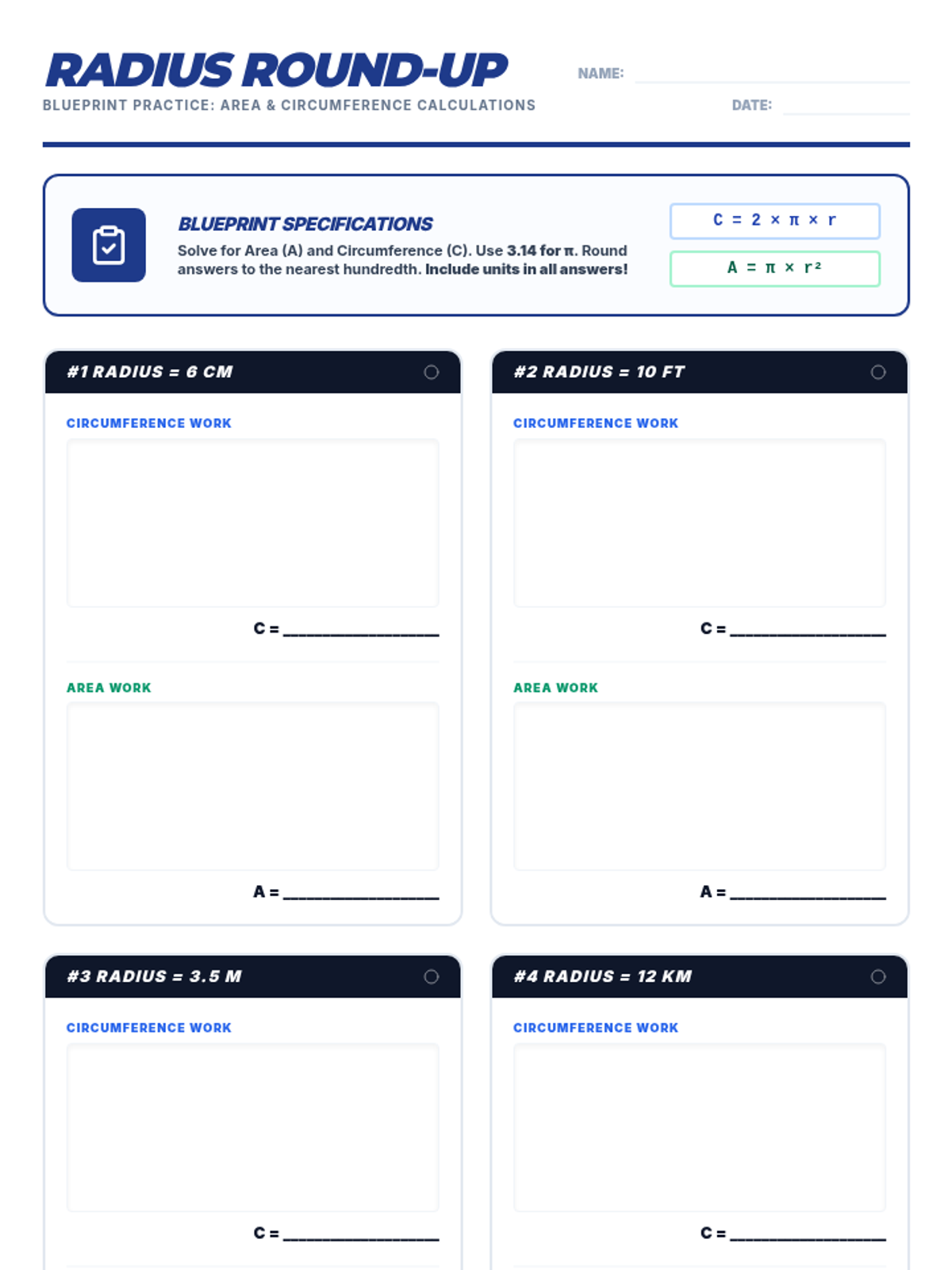
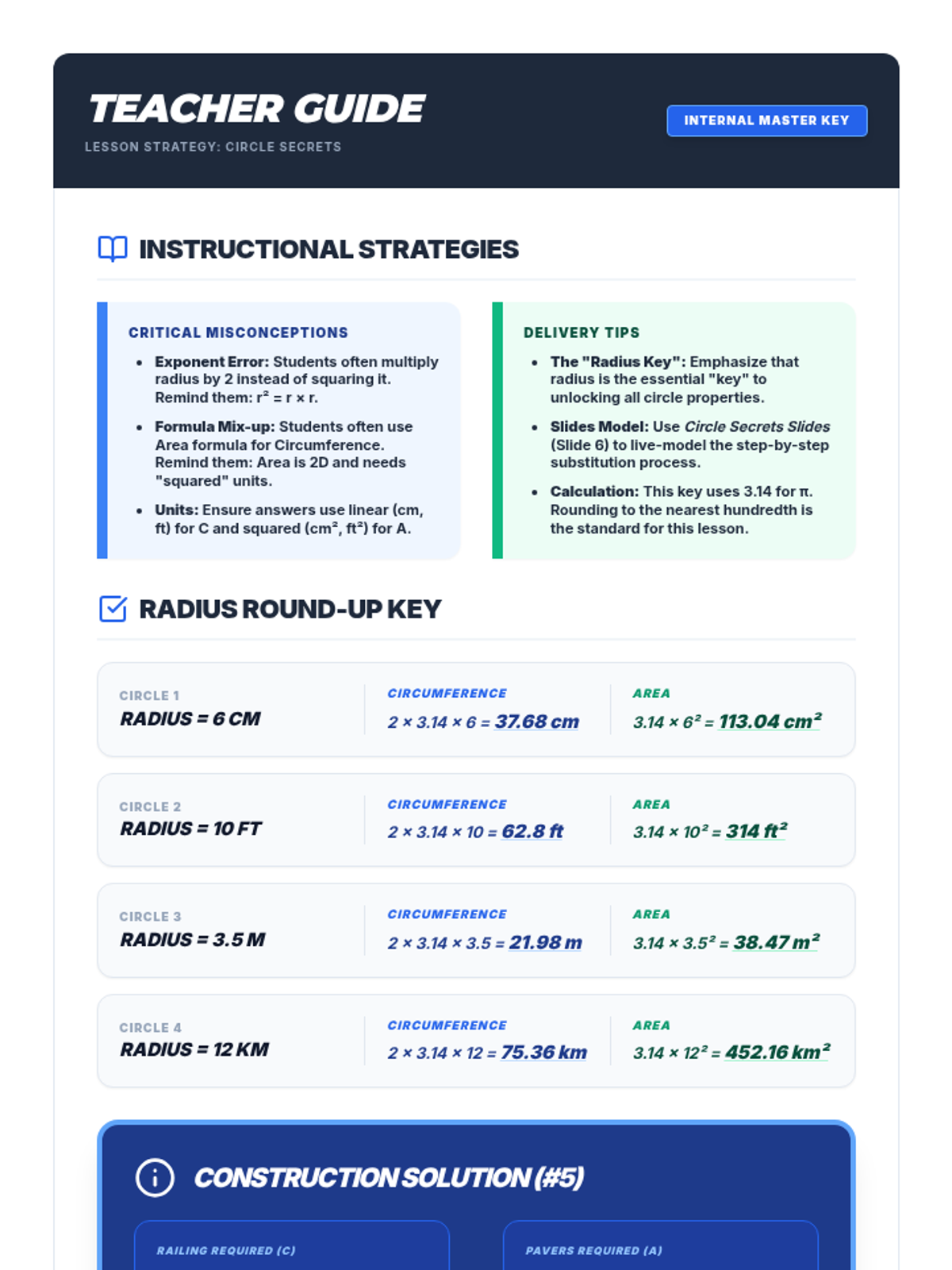
A comprehensive lesson on calculating the area and circumference of circles using the radius, featuring blueprint-themed instructional materials and practice.
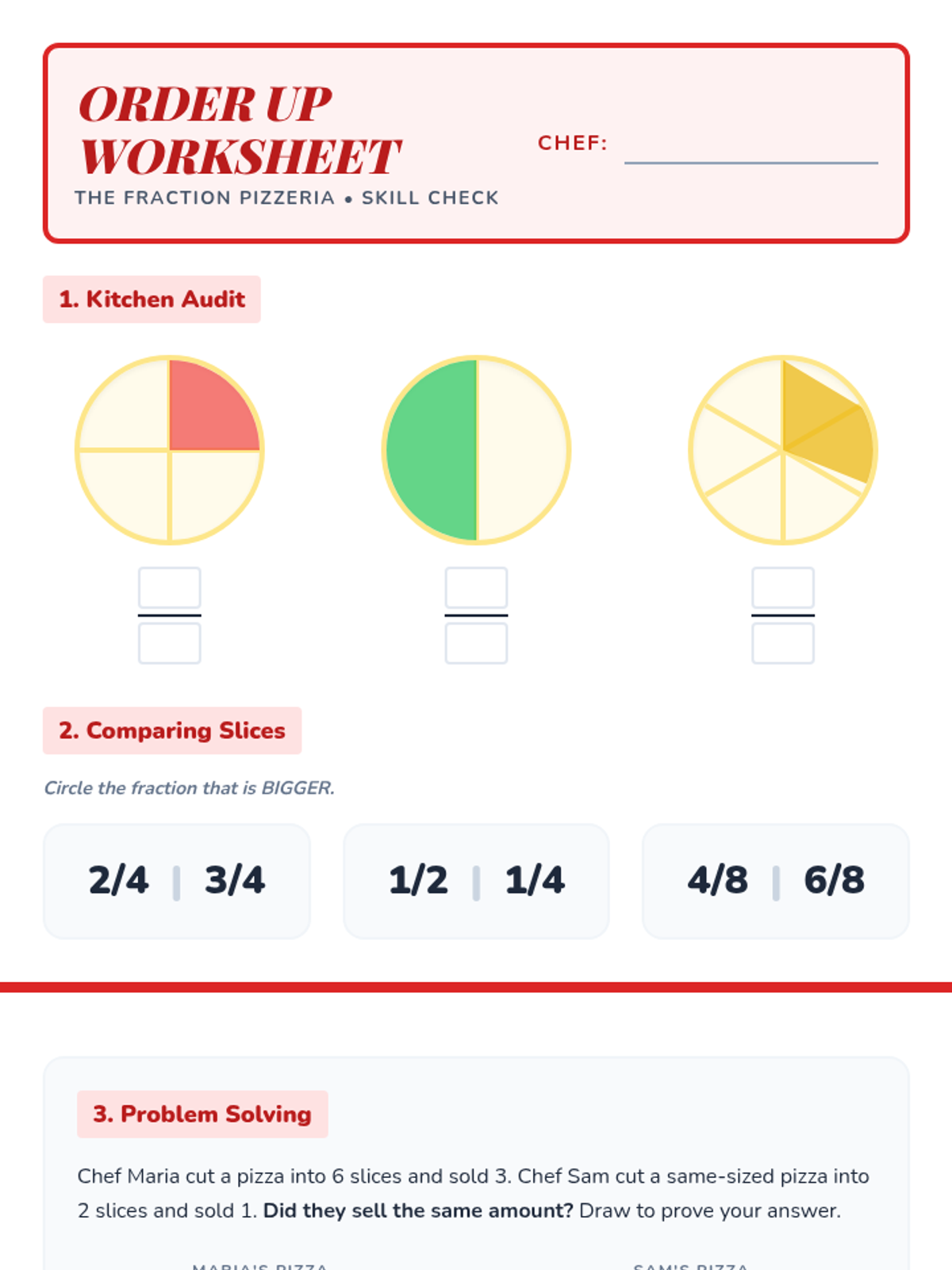
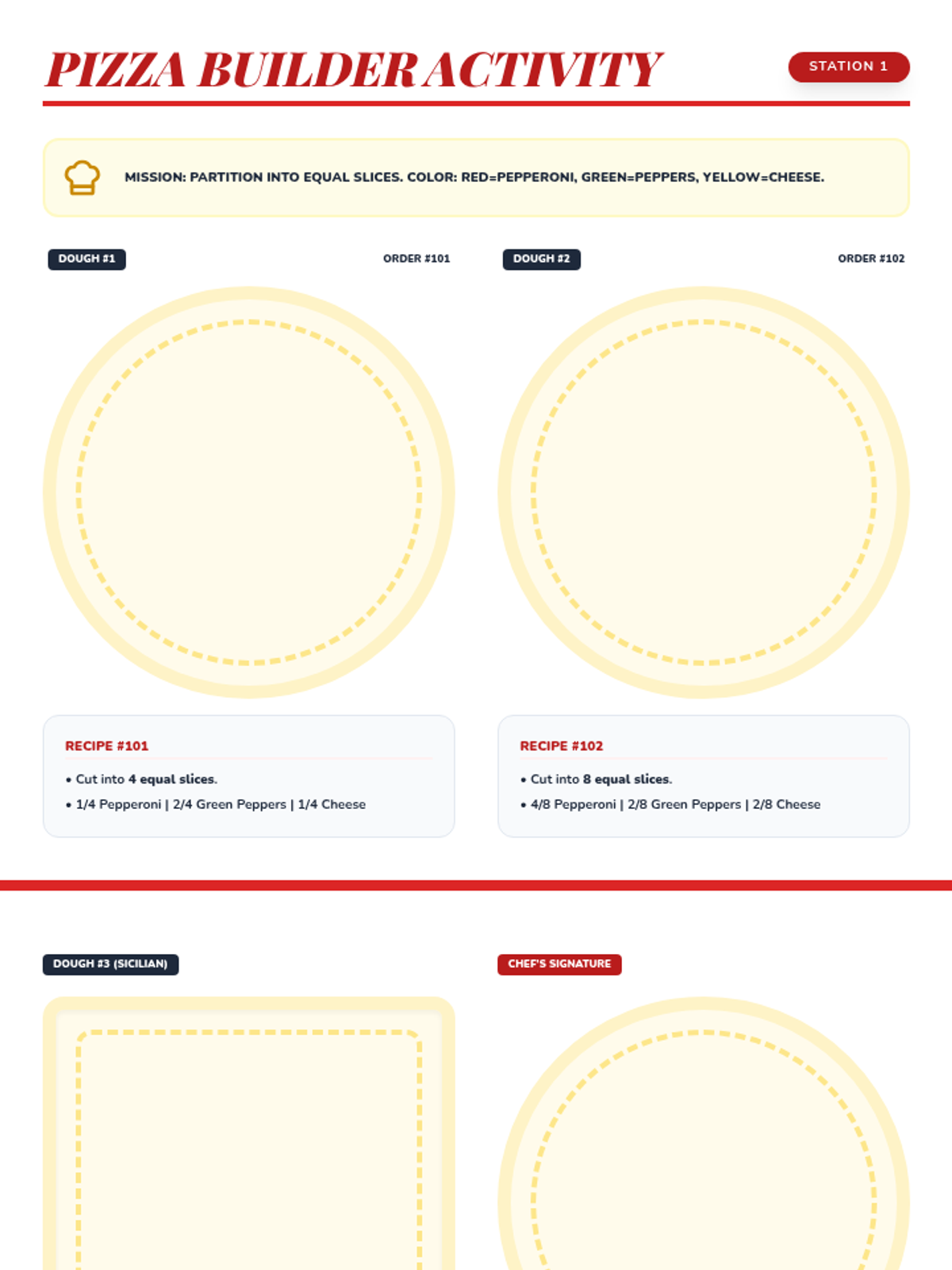
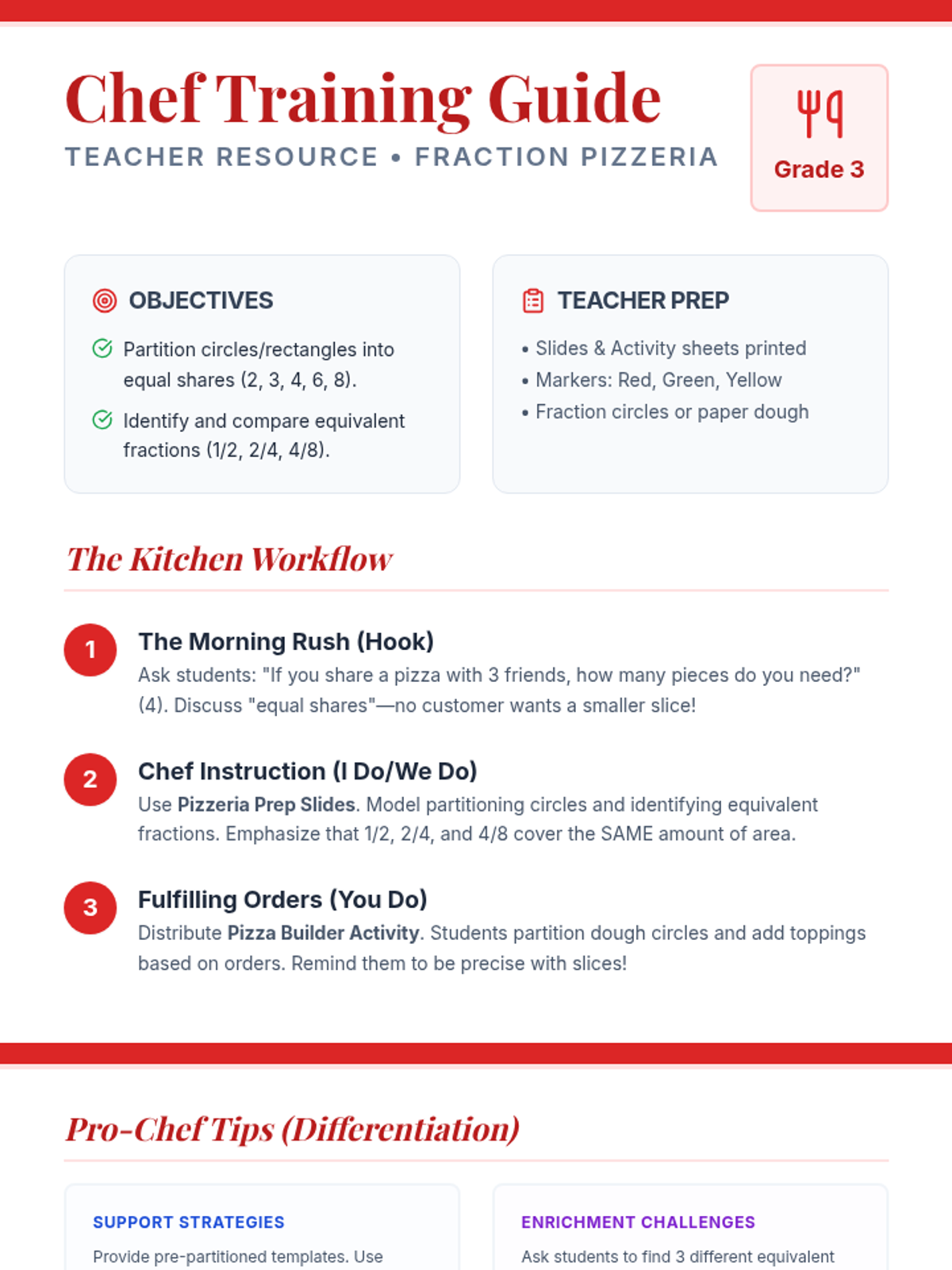
In this hands-on simulation, third graders become pizza chefs to master equivalent fractions and partitioning. Students will fulfill custom orders, compare topping amounts, and visualize fractions as parts of a delicious whole.
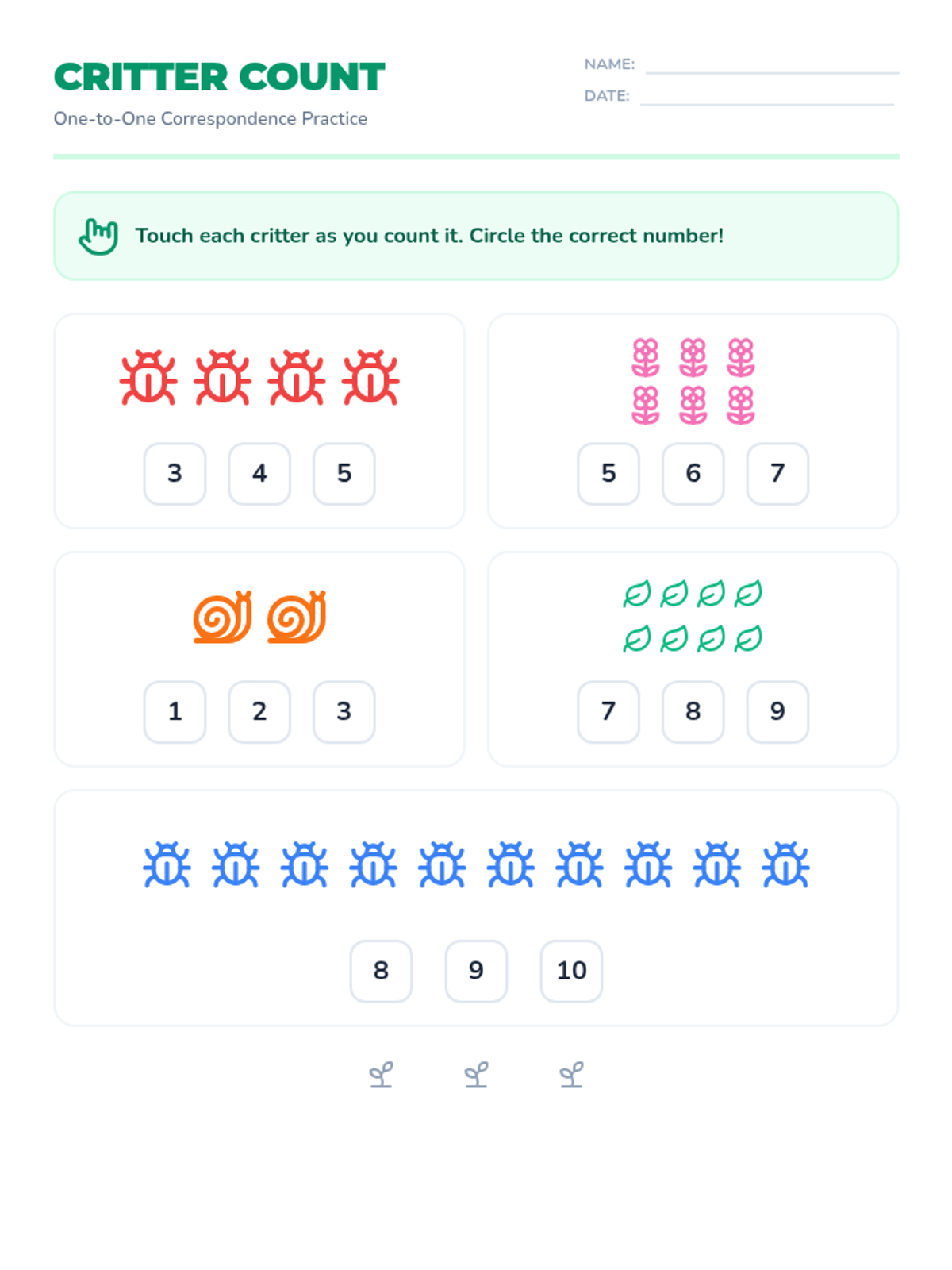
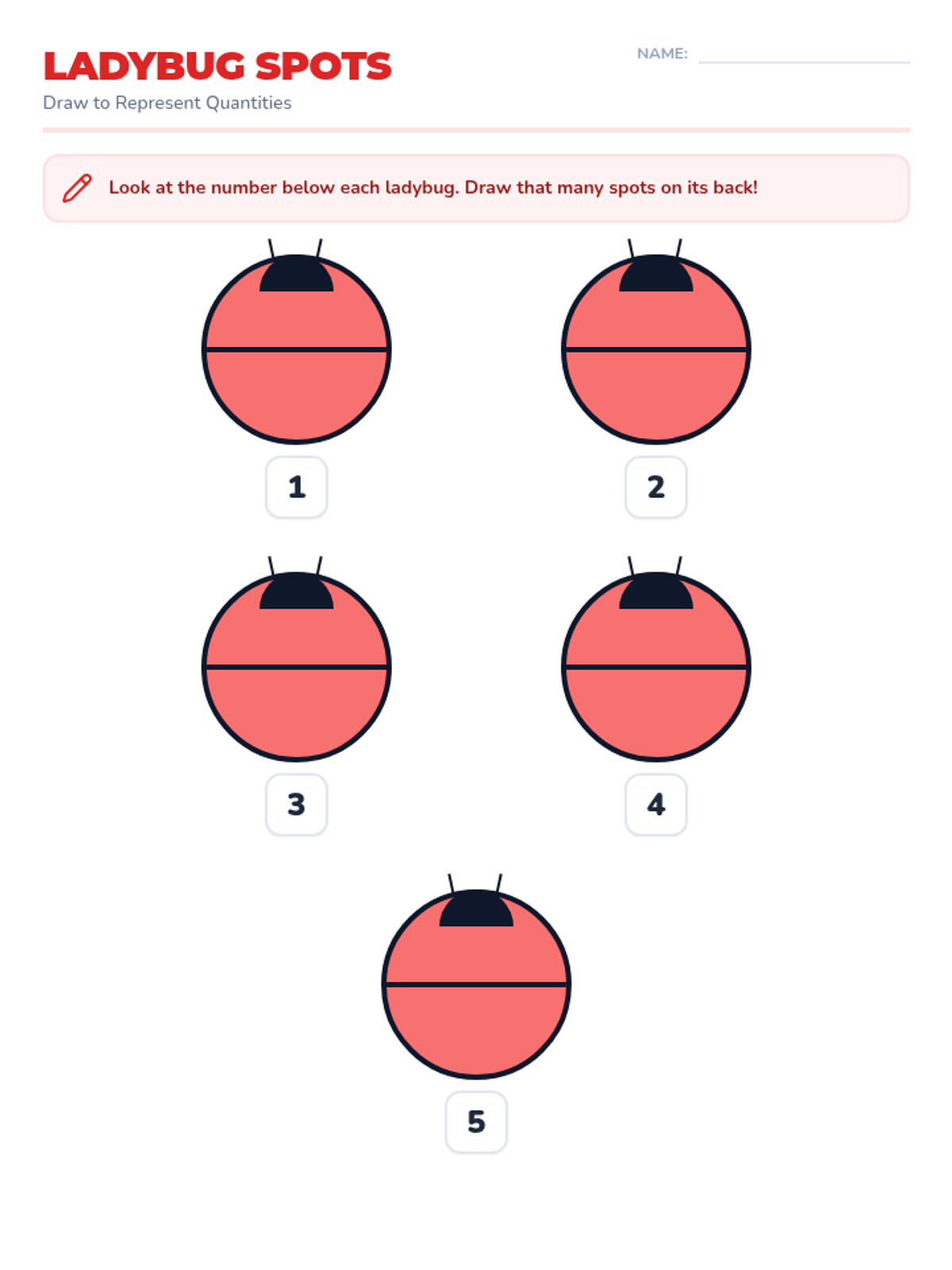
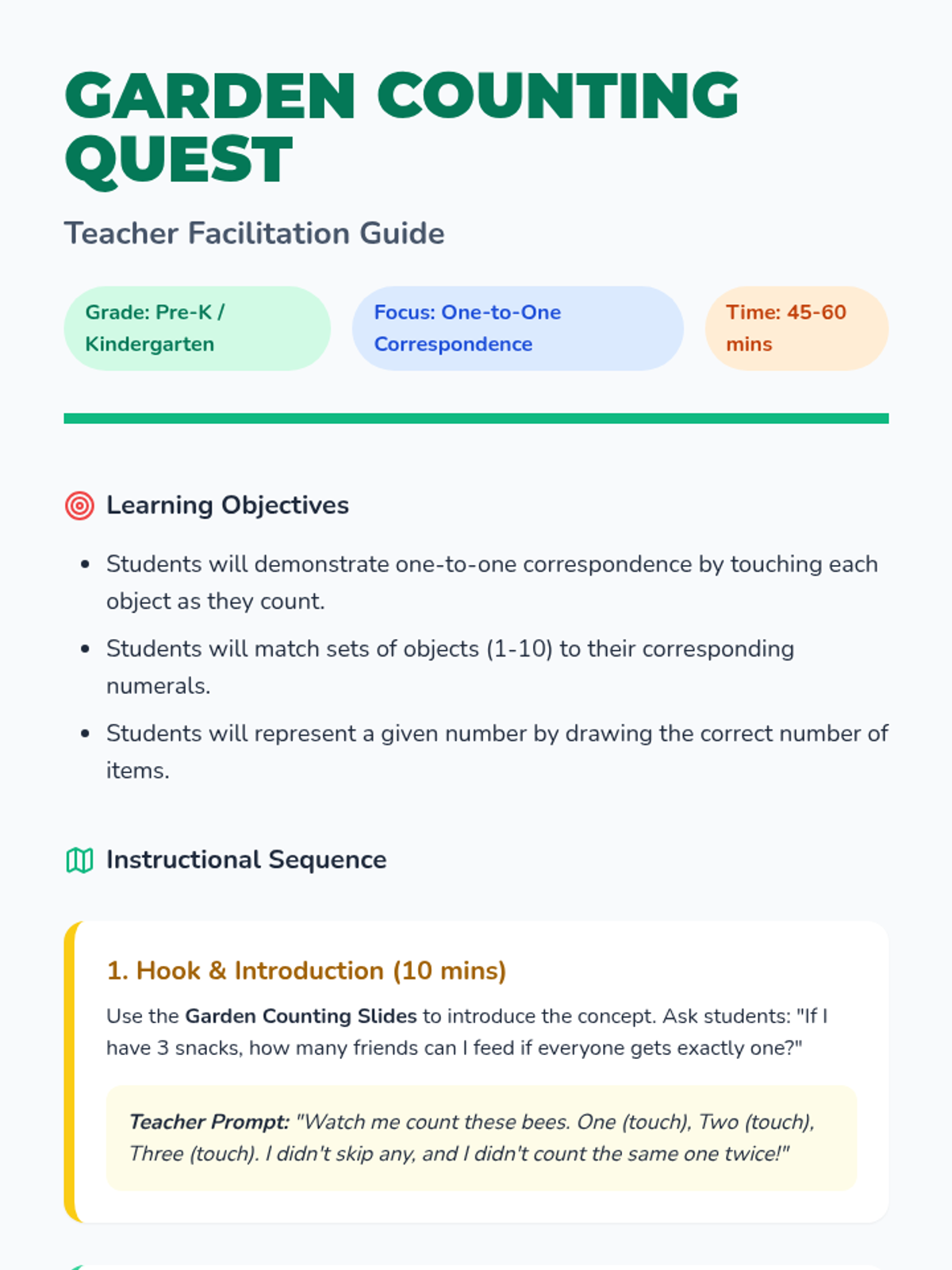
A comprehensive introduction to one-to-one correspondence for numbers 1-10 using a friendly garden theme. Students will practice matching, counting, and representing quantities through visual aids and hands-on worksheets.
A focused lesson on the Central Limit Theorem (CLT) and its application to real-world datasets. Students practice calculating Z-scores for sample means and using Z-tables to determine probabilities.
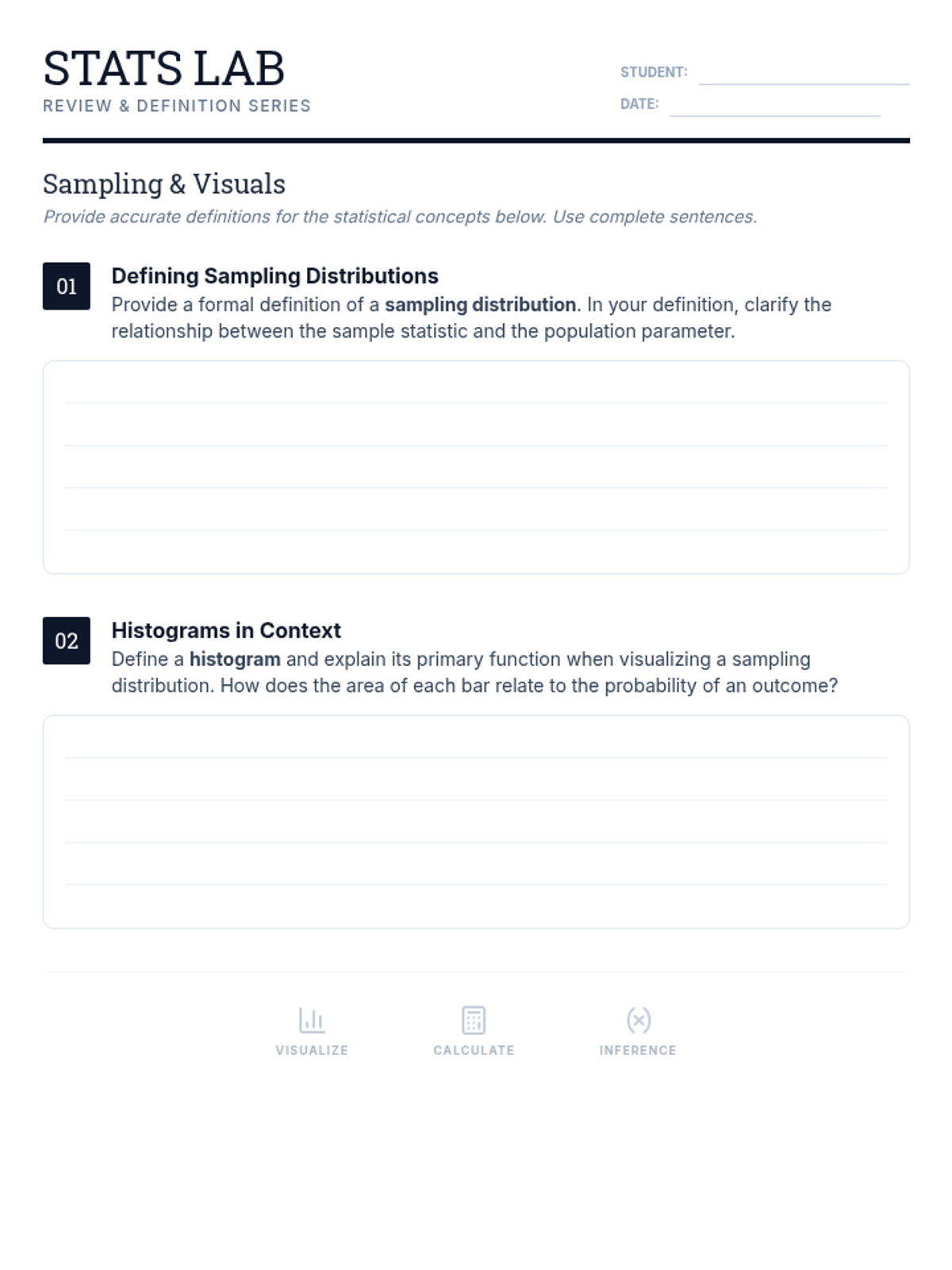
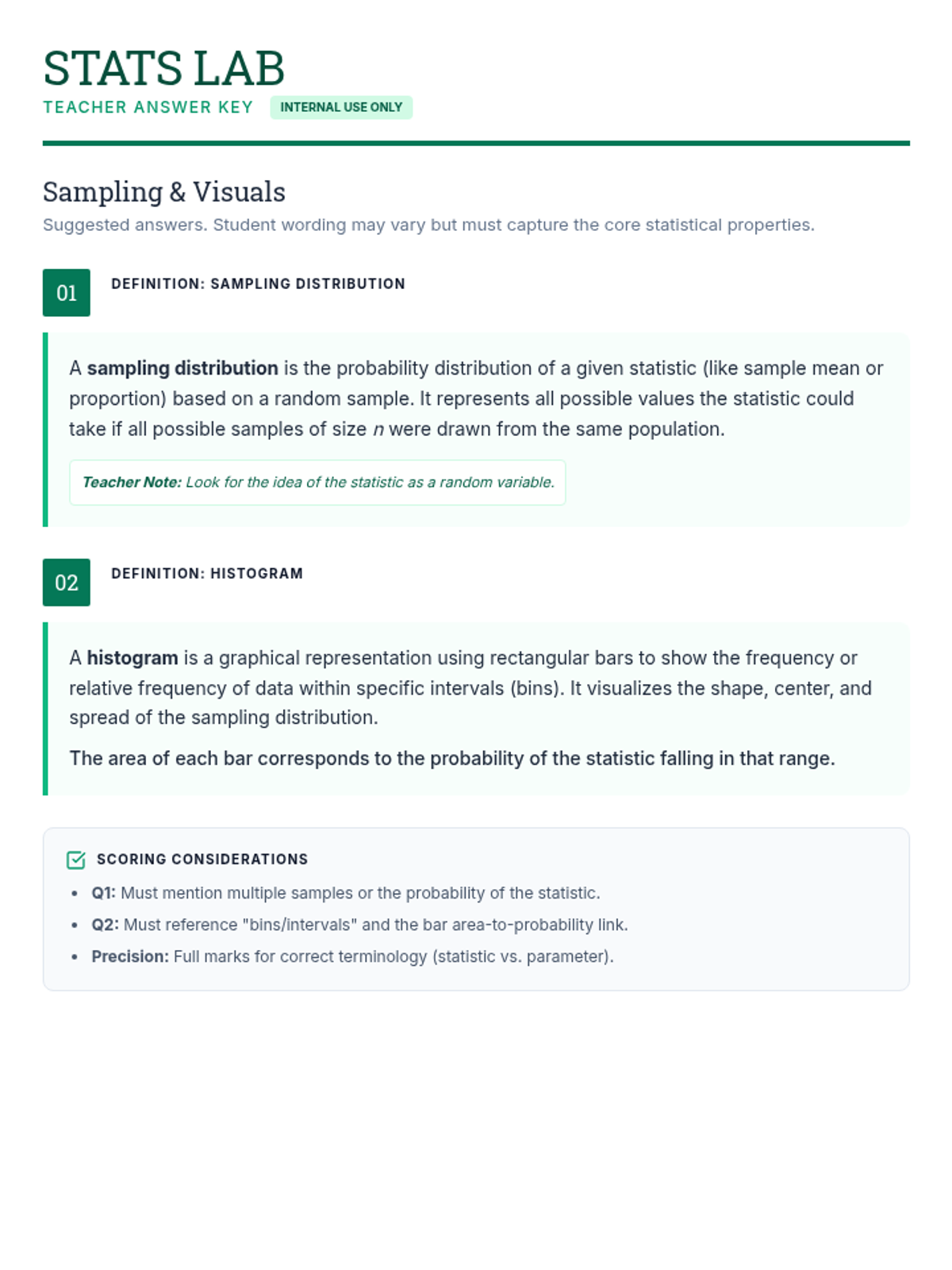
A lesson focused on fundamental statistical concepts including sampling distributions and the visual representation of data using histograms.
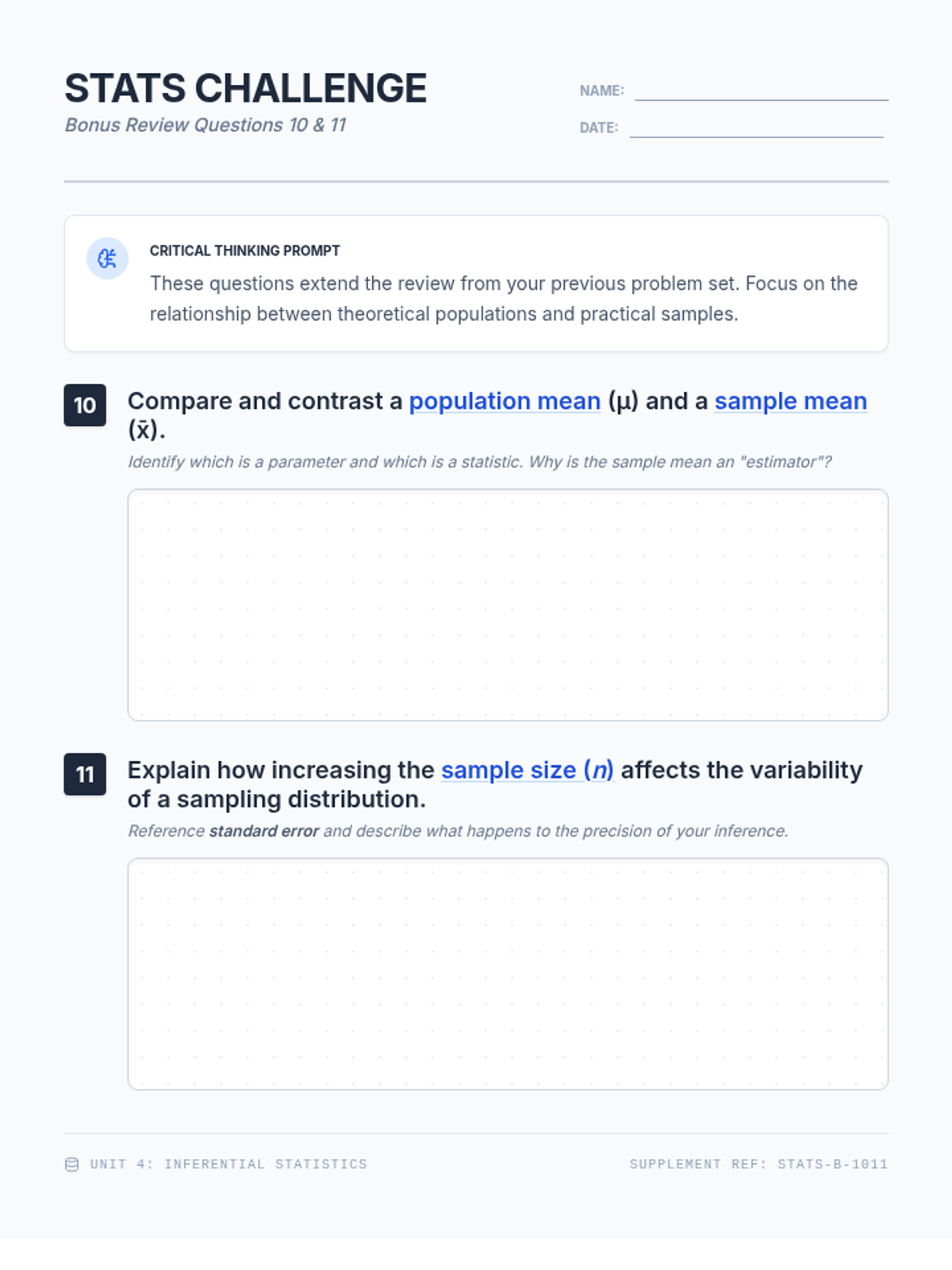
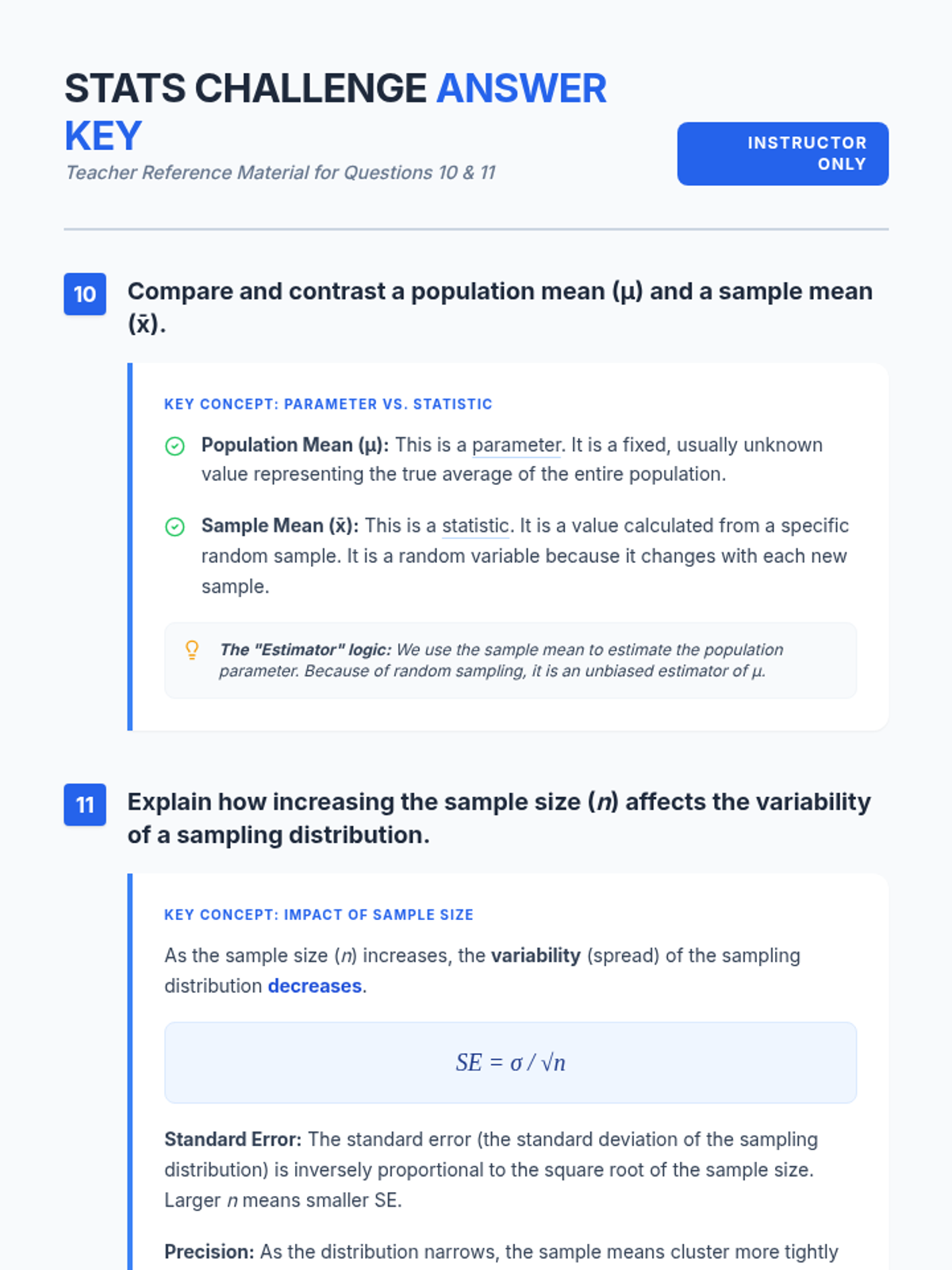
A concise lesson reviewing advanced statistical concepts including population parameters, sample statistics, and the behavior of sampling distributions.
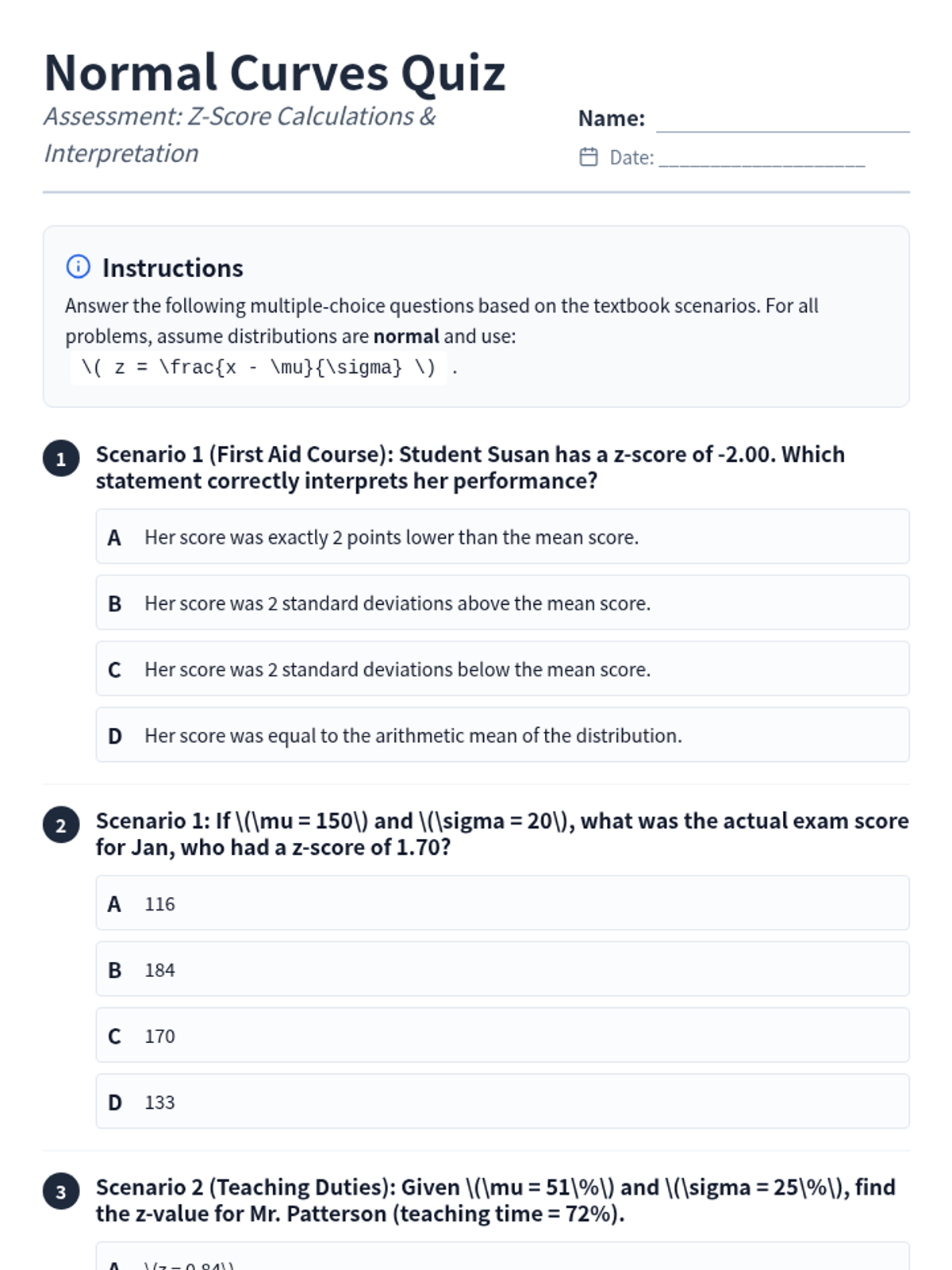
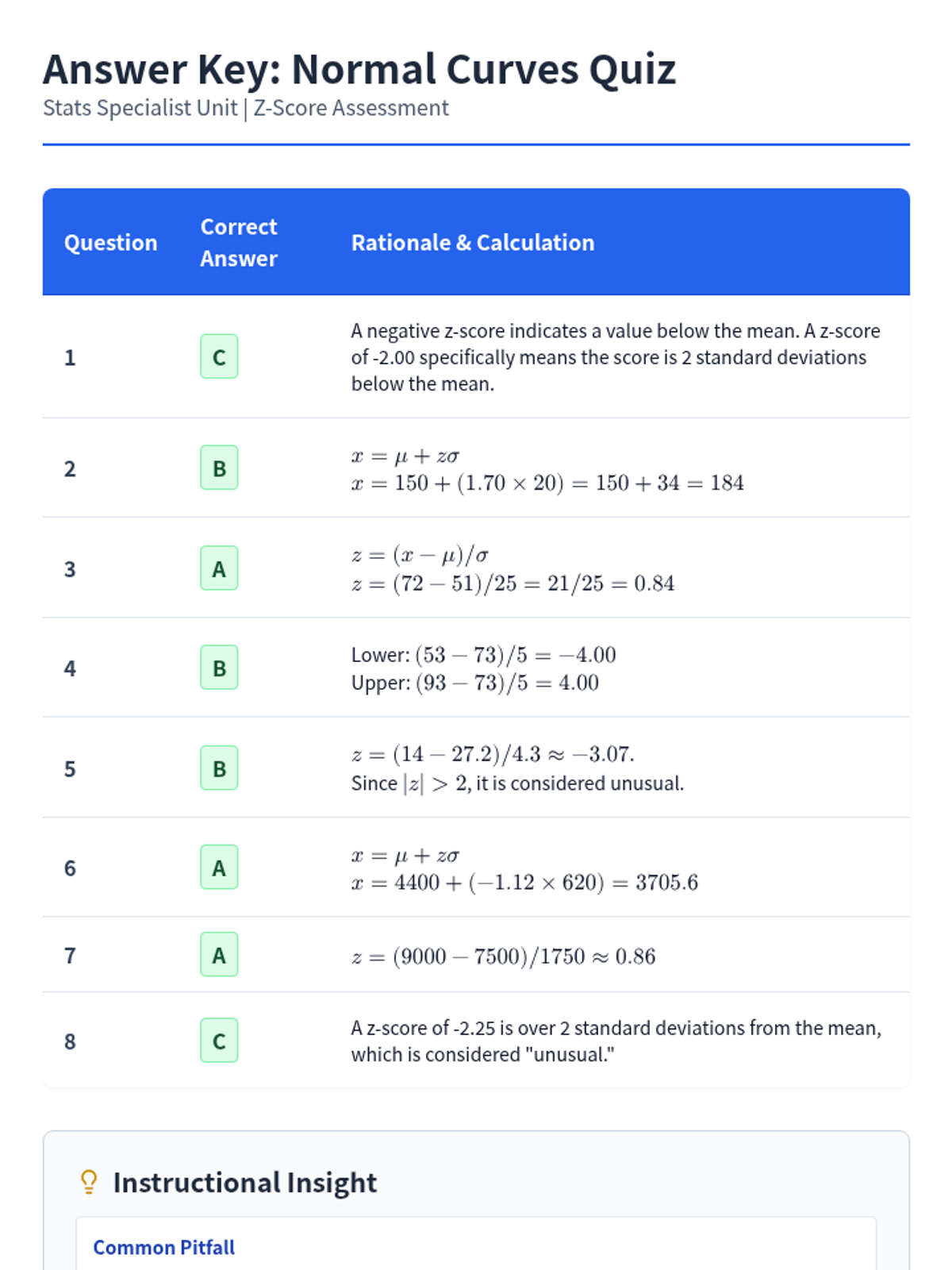
A focused lesson on calculating and interpreting z-scores and normal distributions using real-world scenarios from the textbook. Students will practice converting between raw scores and z-scores and determine the "unusualness" of specific data points.
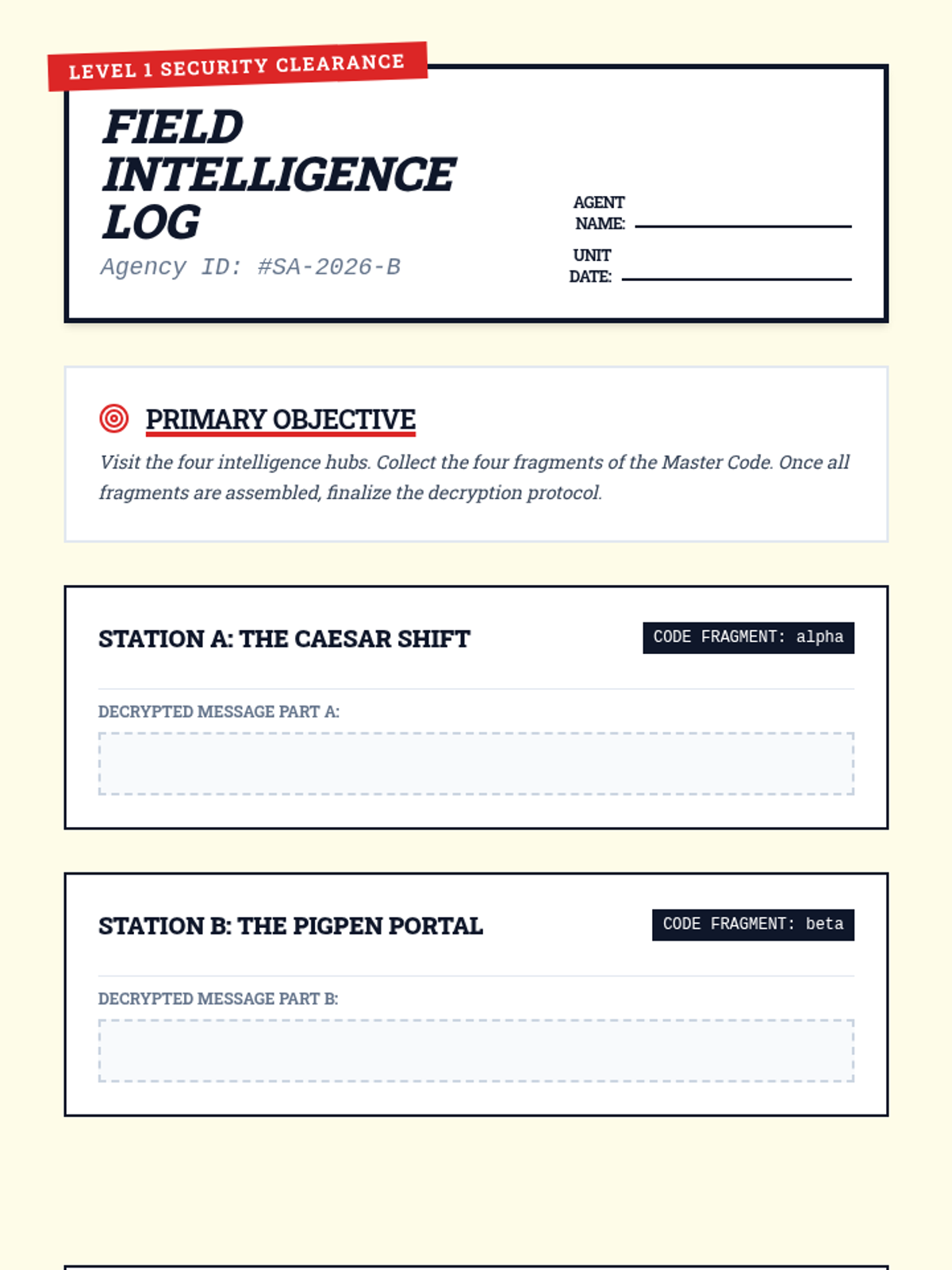
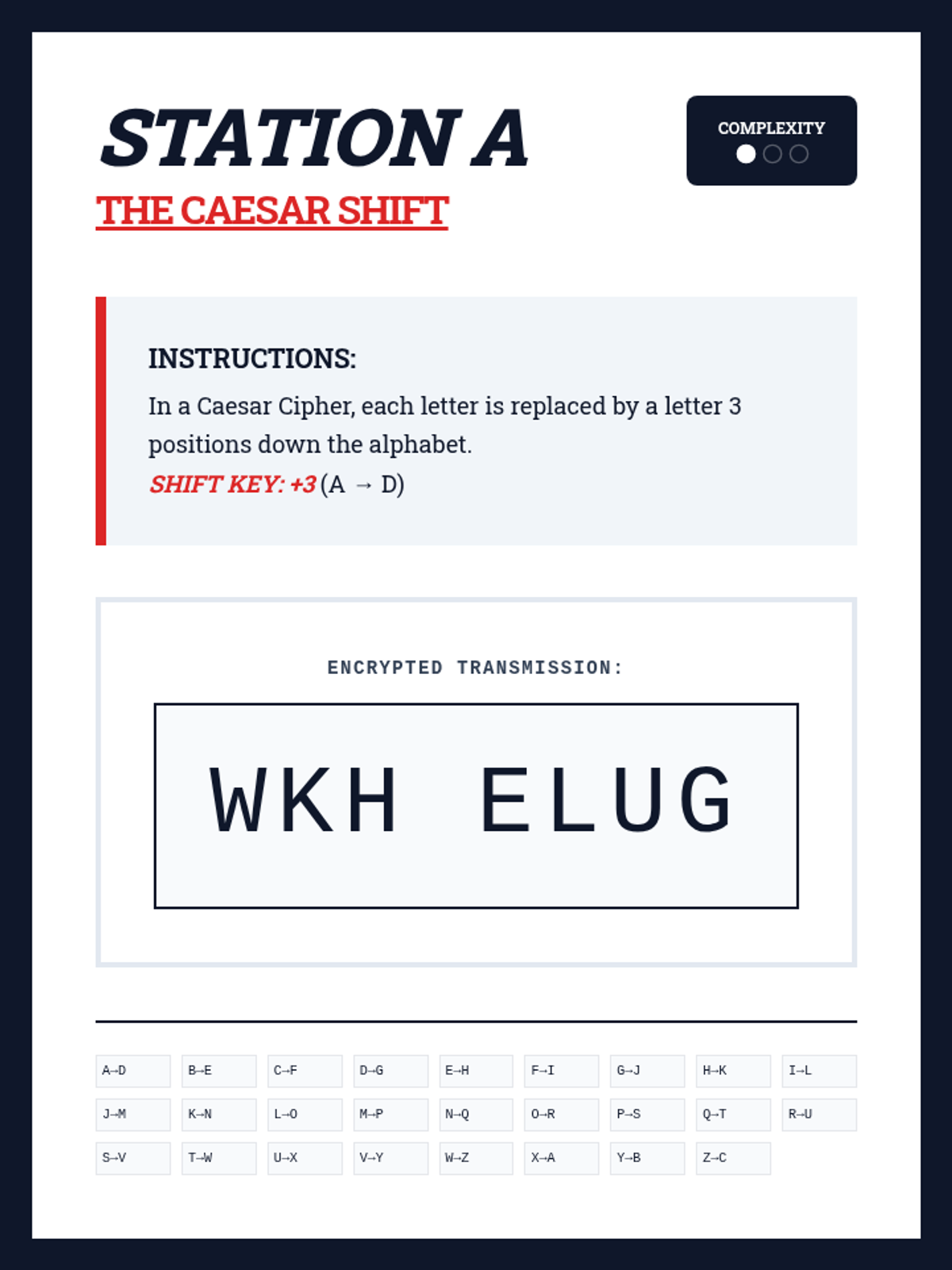
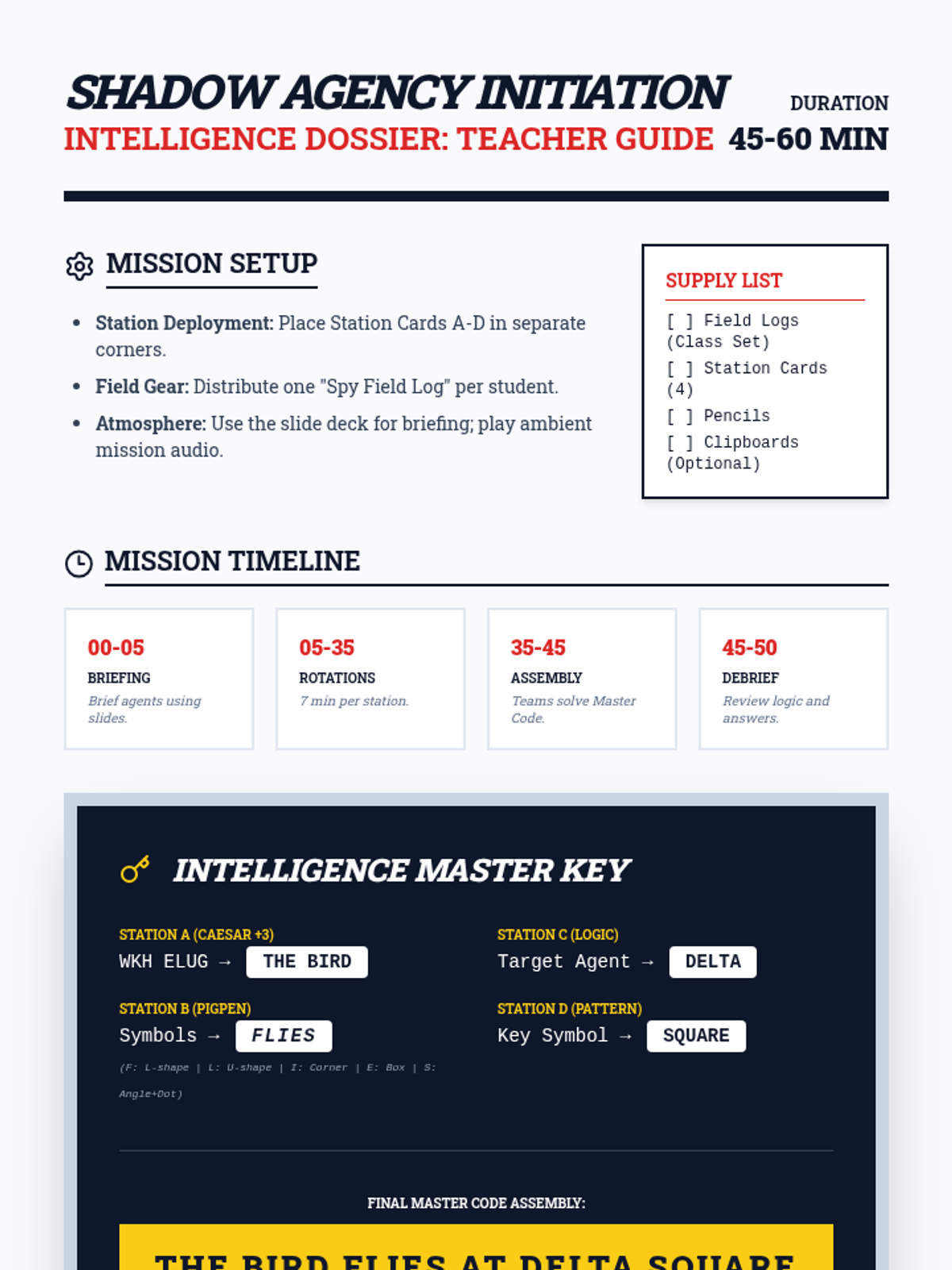
An immersive, station-based experience where students rotate through various cryptographic challenges, using letter ciphers, symbol keys, and logic puzzles to earn their 'Shadow Agent' status.
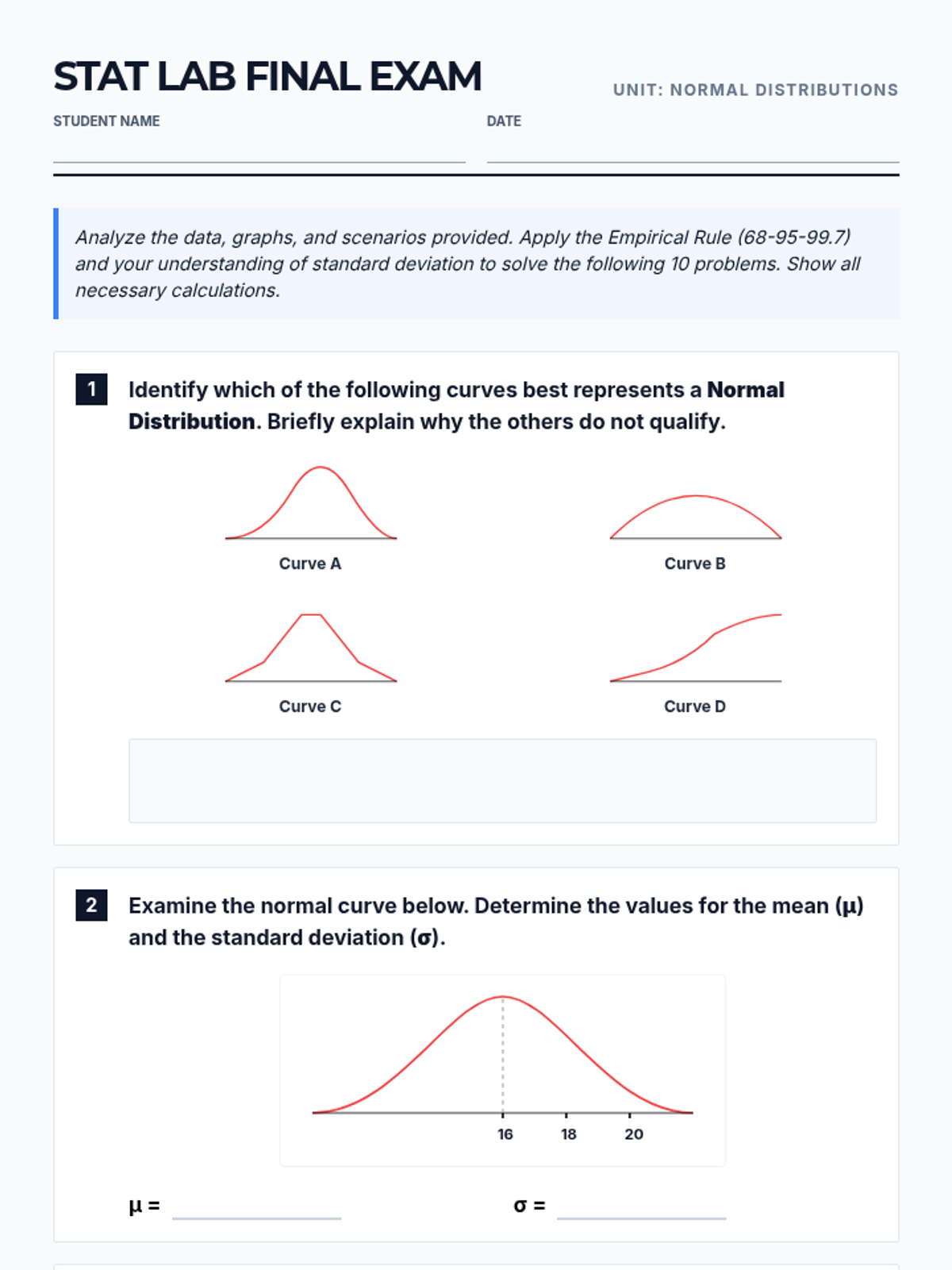
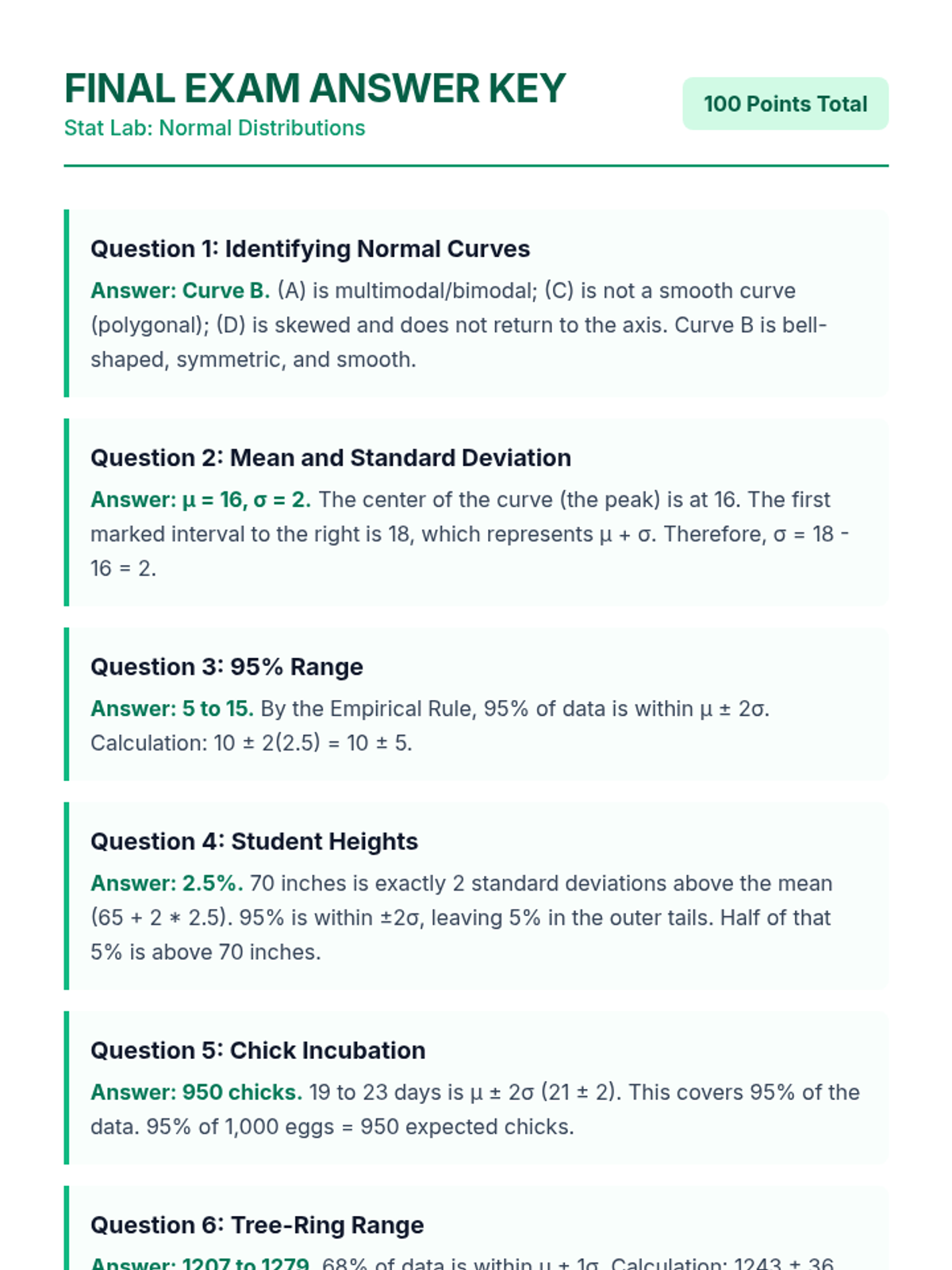
This lesson covers the fundamentals of normal distributions, including identifying bell curves, applying the empirical rule, and interpreting control charts for real-world data analysis.
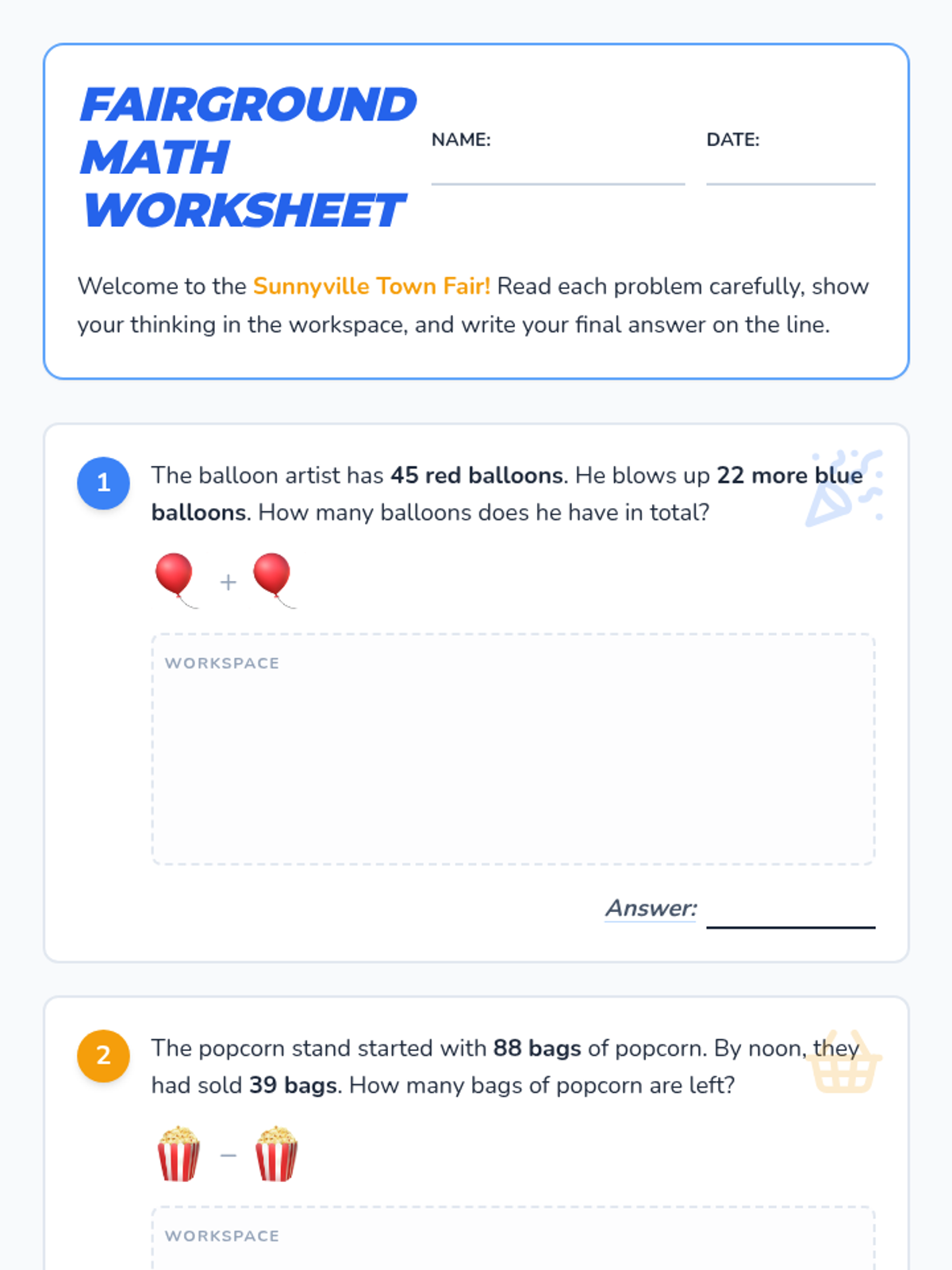
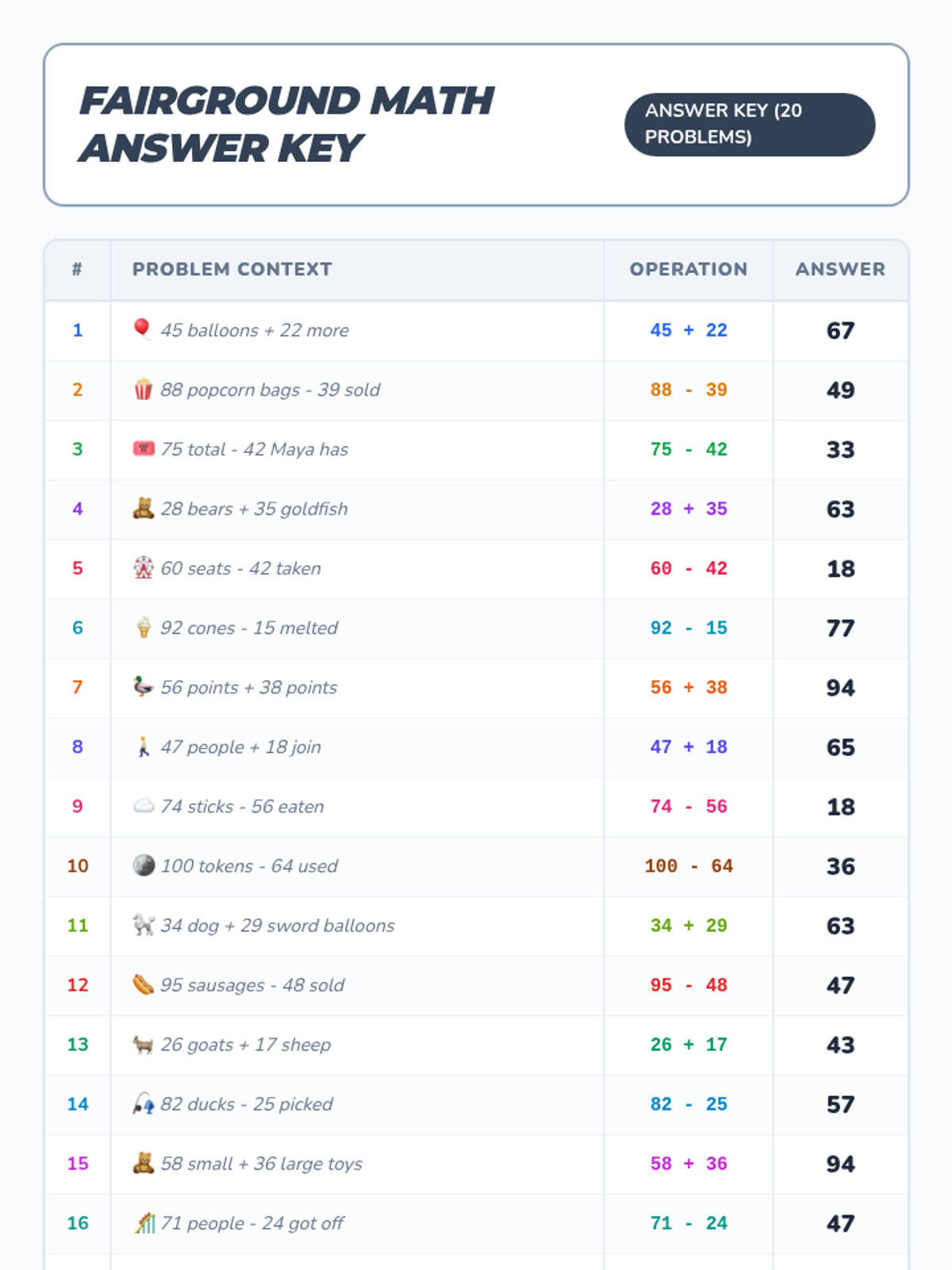
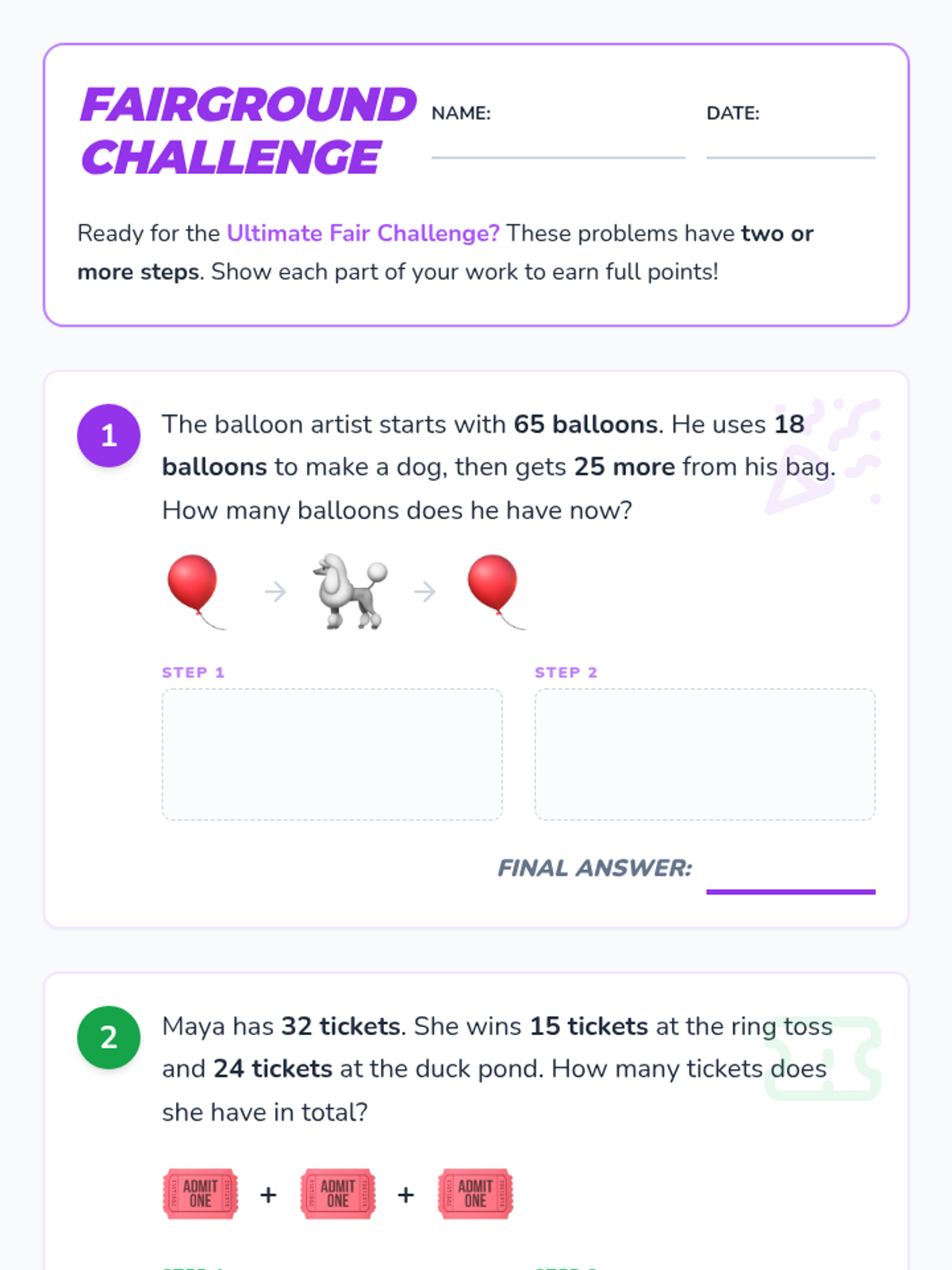
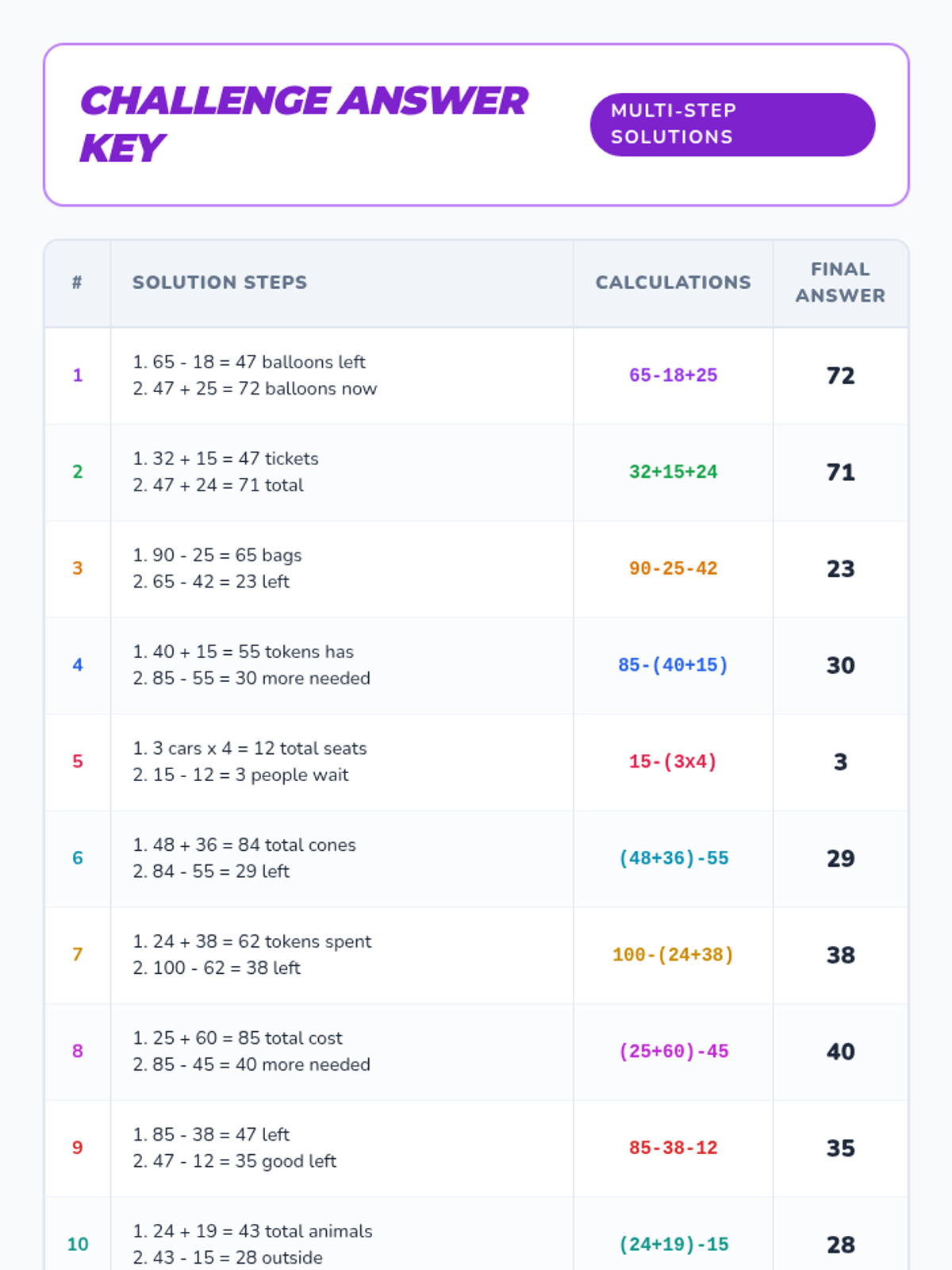
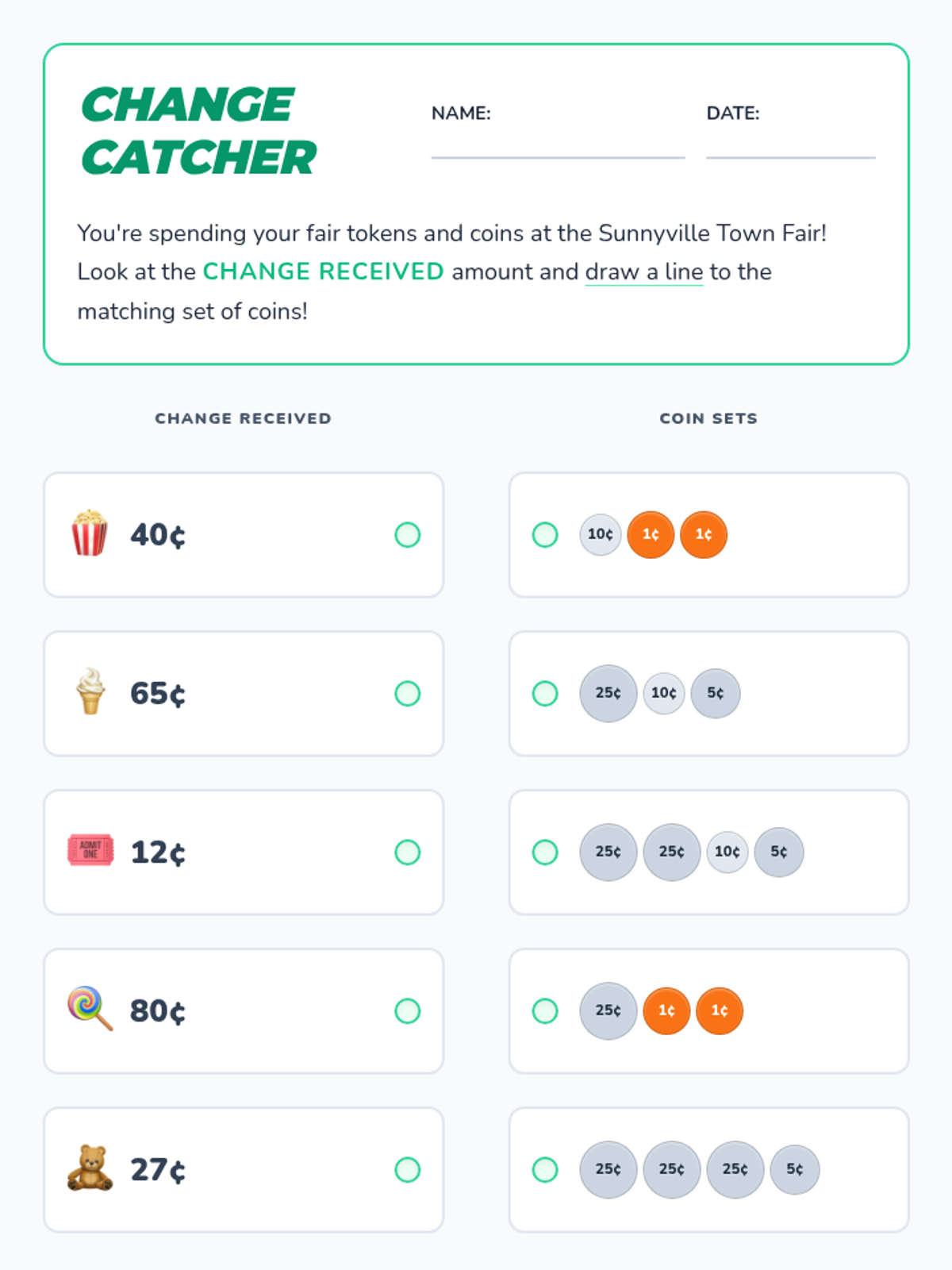
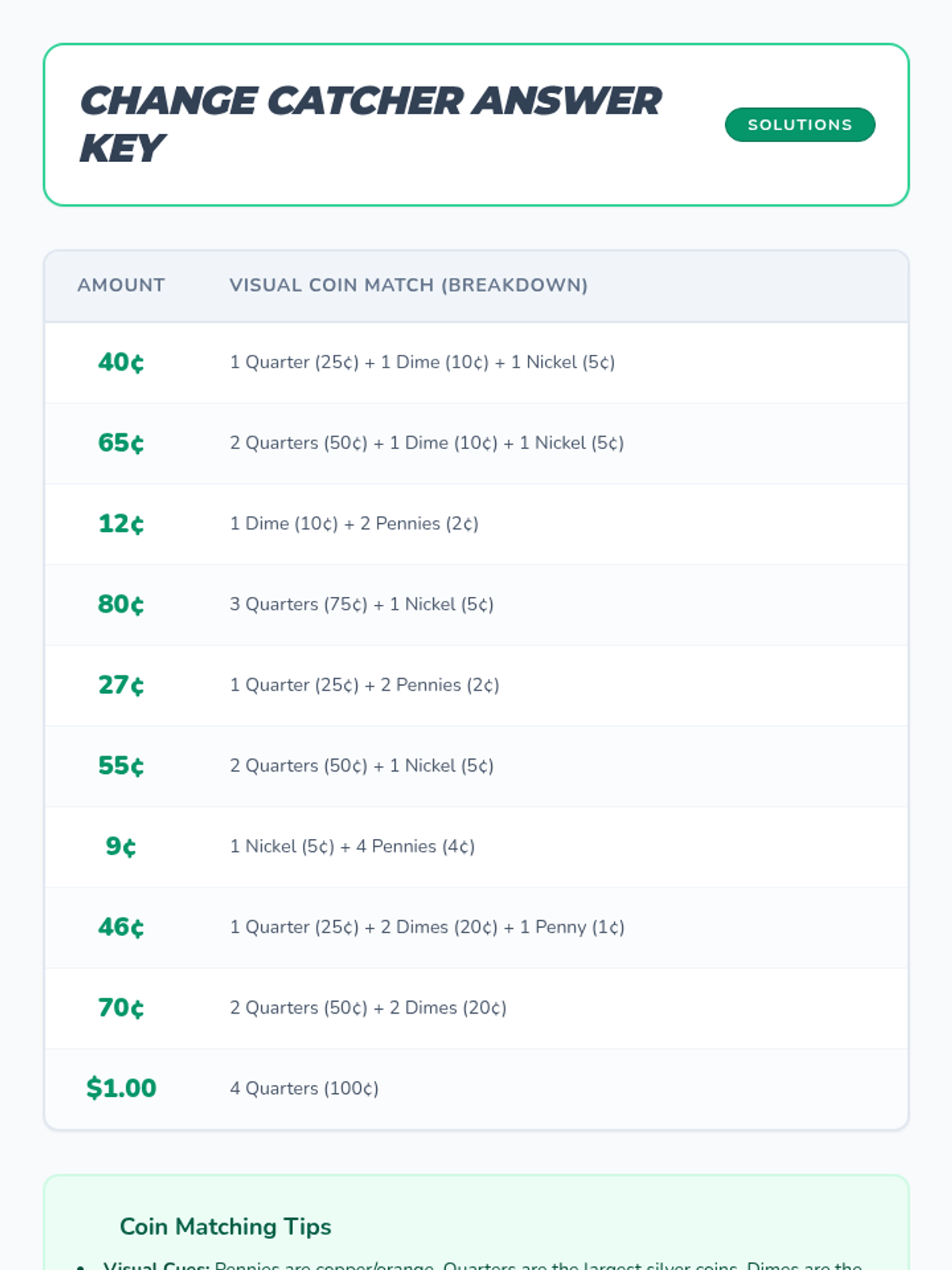
A collection of addition and subtraction word problems themed around a local town fair. Includes one-step practice and multi-step challenge problems designed for 3rd-grade students to build fluency with regrouping and logical reasoning up to 100.