A hands-on measurement lab where K-5 students explore the lunar surface, estimating and measuring moon rocks, craters, and landing pads to develop foundational math and science skills.
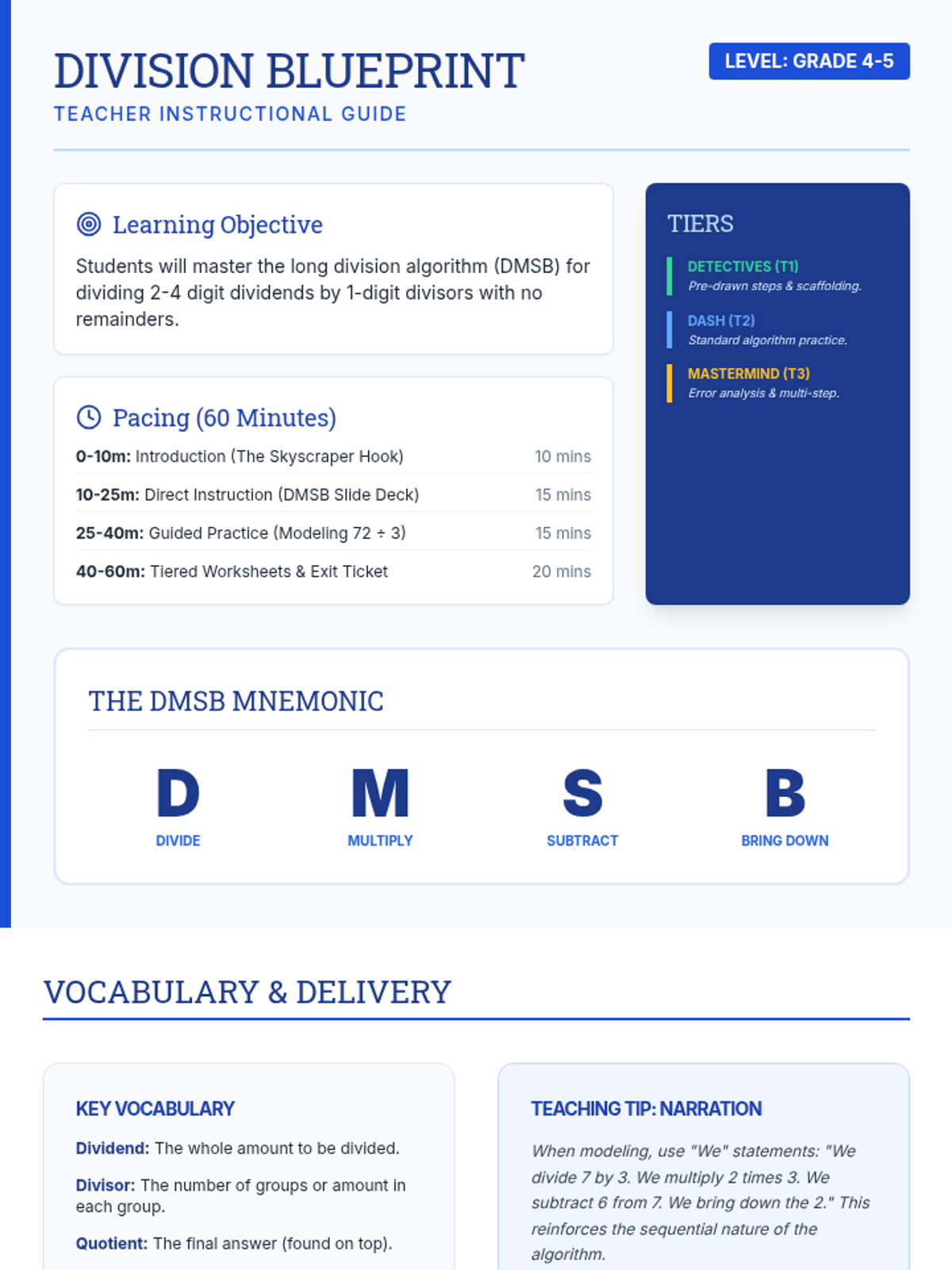
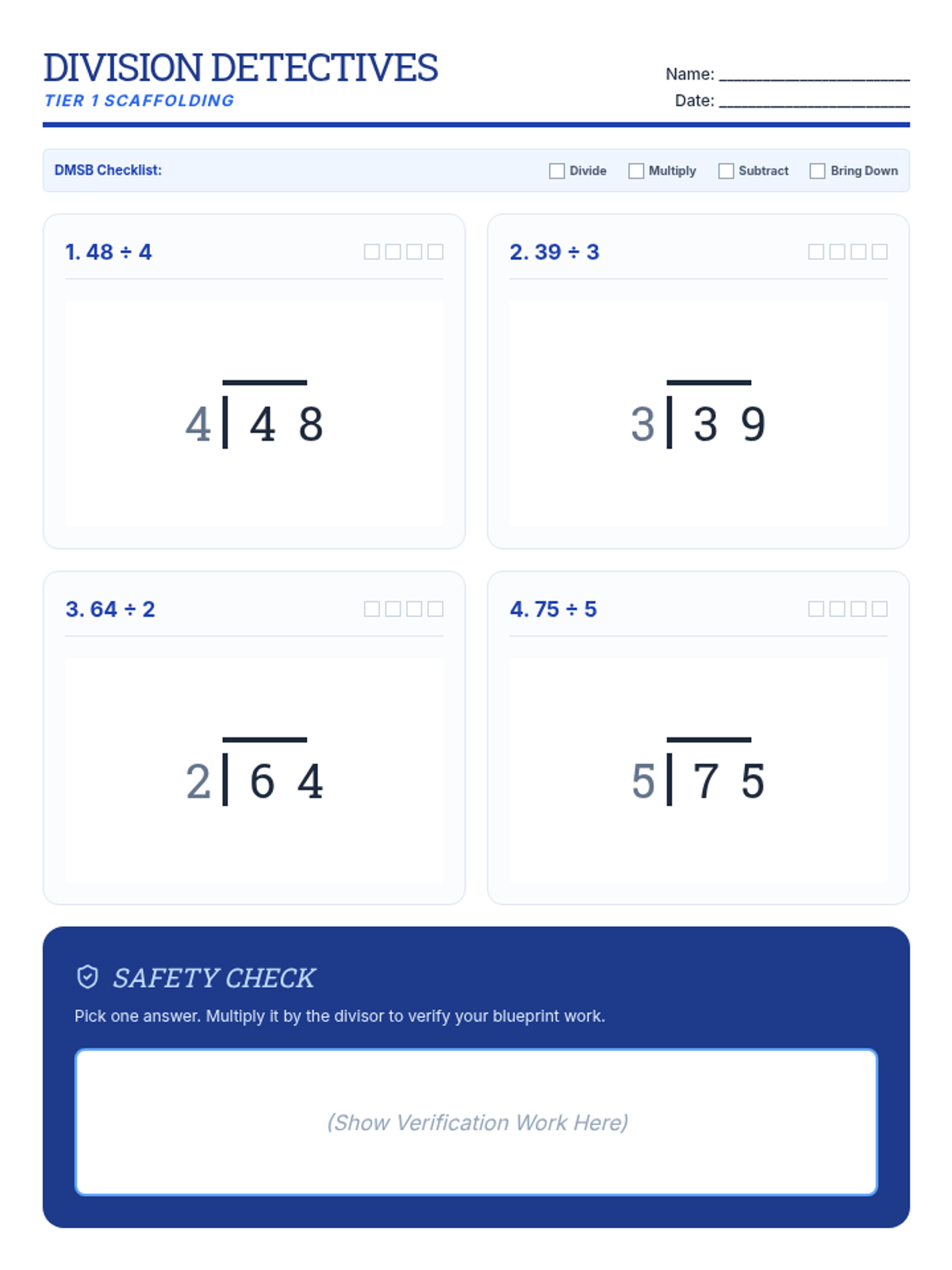
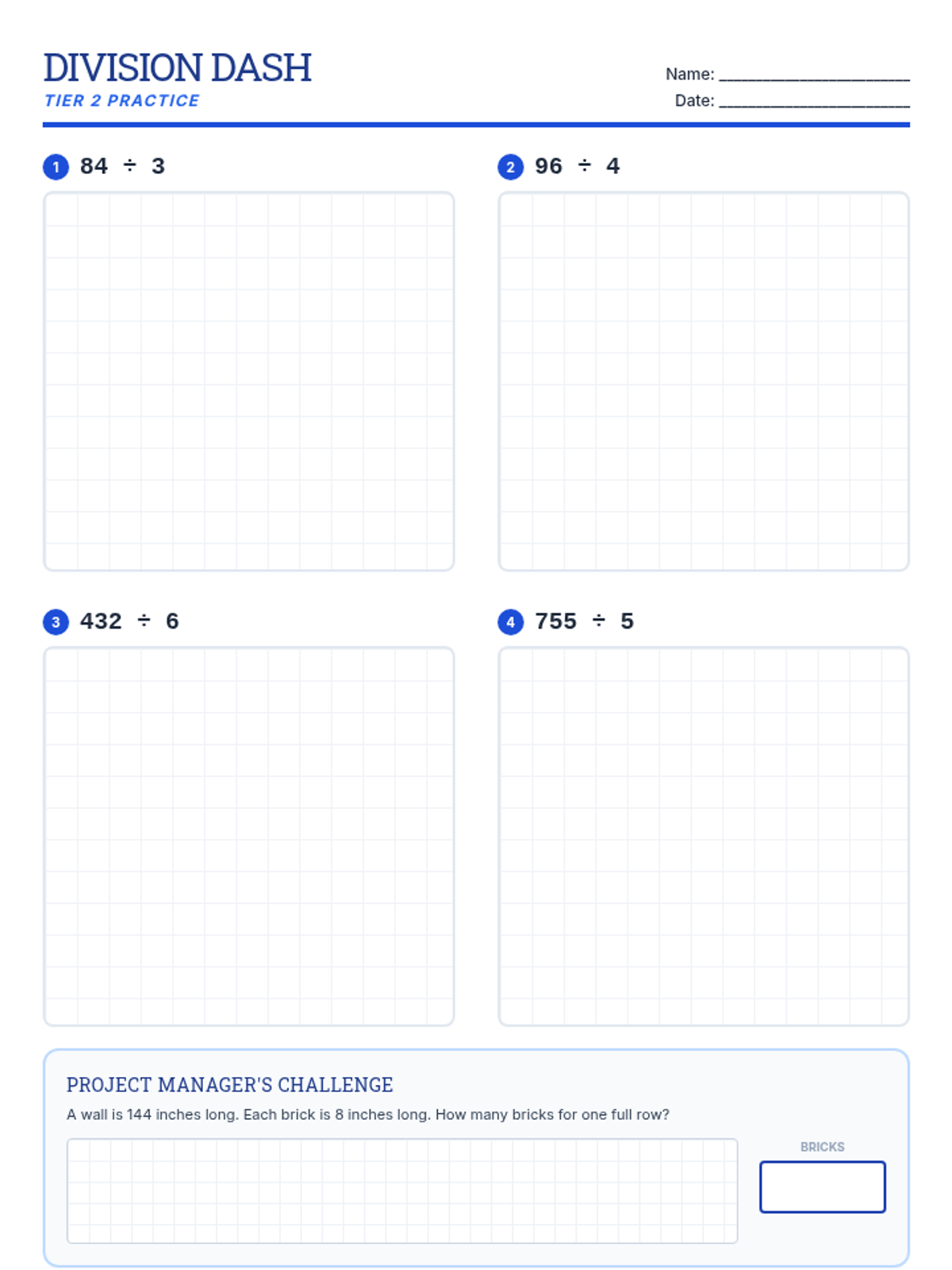
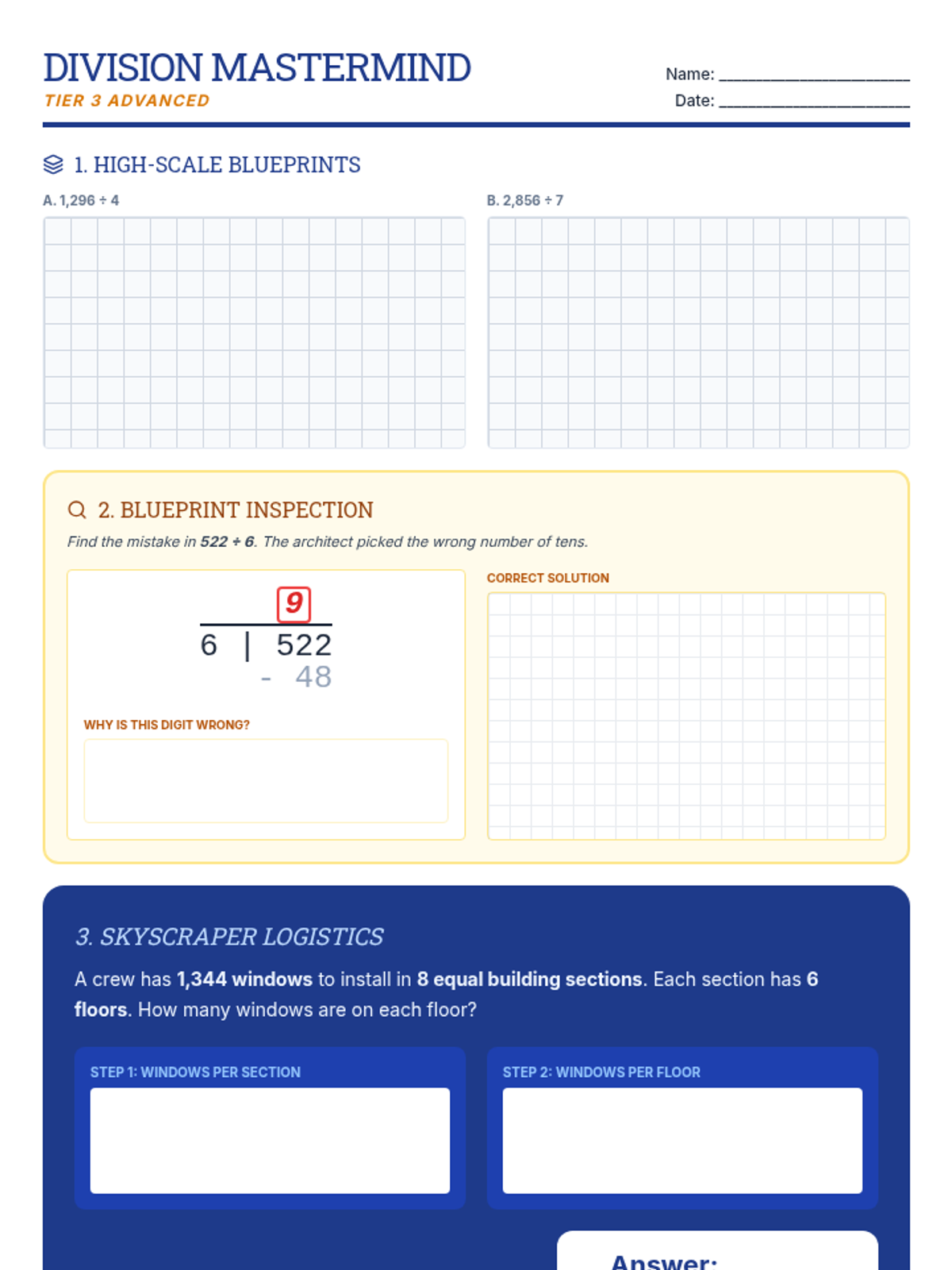
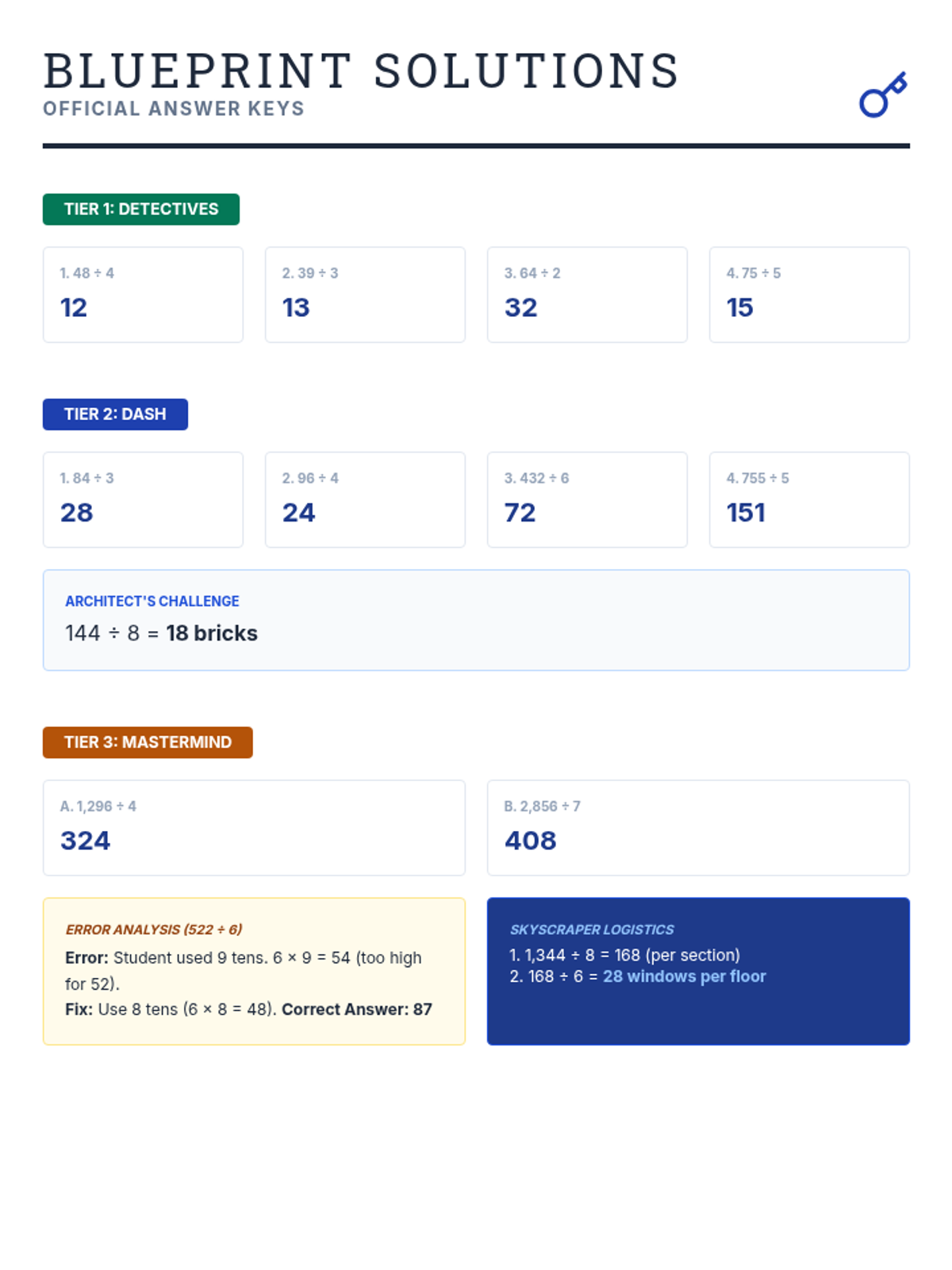
A comprehensive lesson on long division with no remainders, using the 'Divide, Multiply, Subtract, Bring Down' (DMSB) method. Includes scaffolded instruction, visual aids, and tiered practice materials to support all learners.
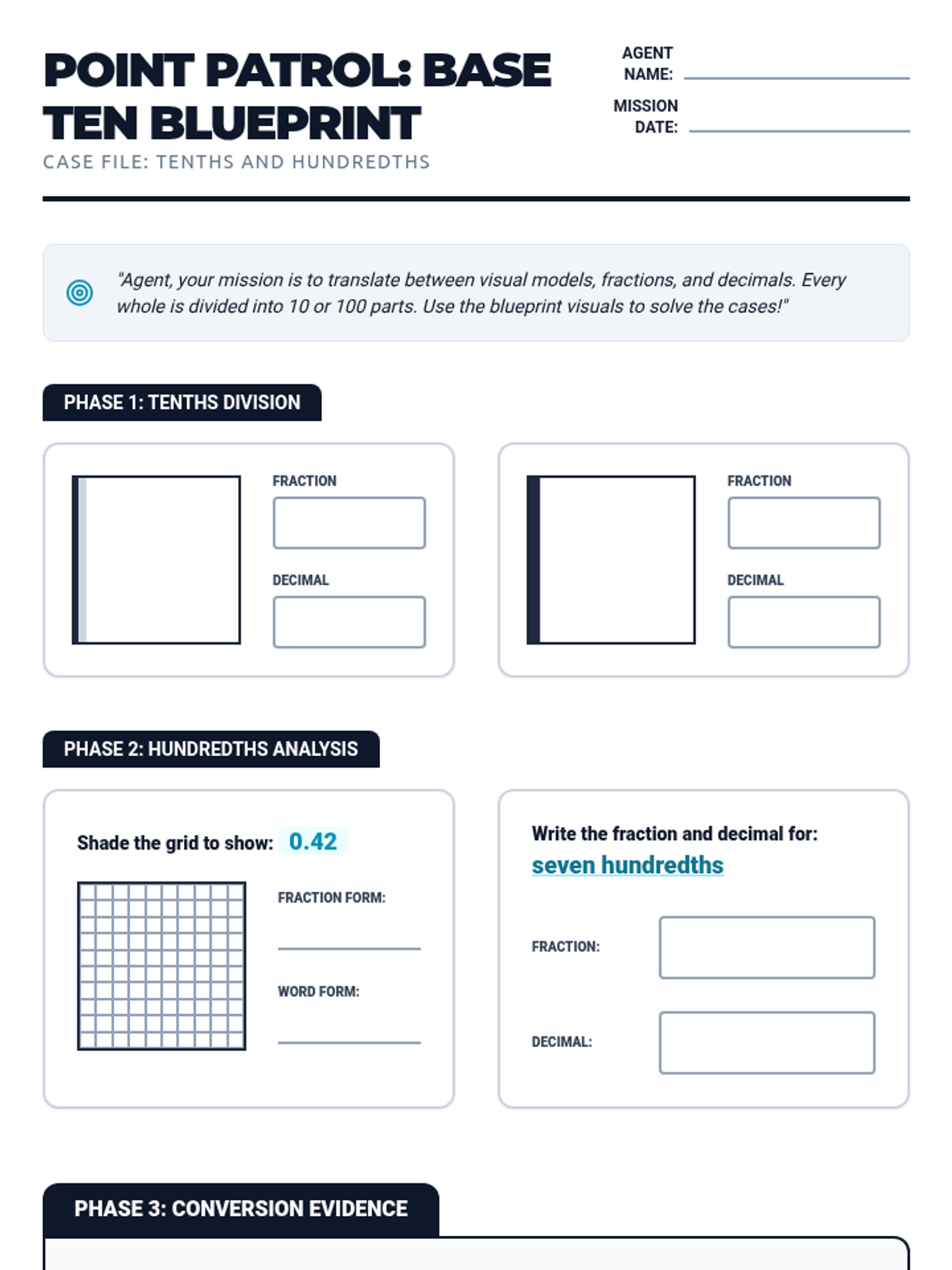
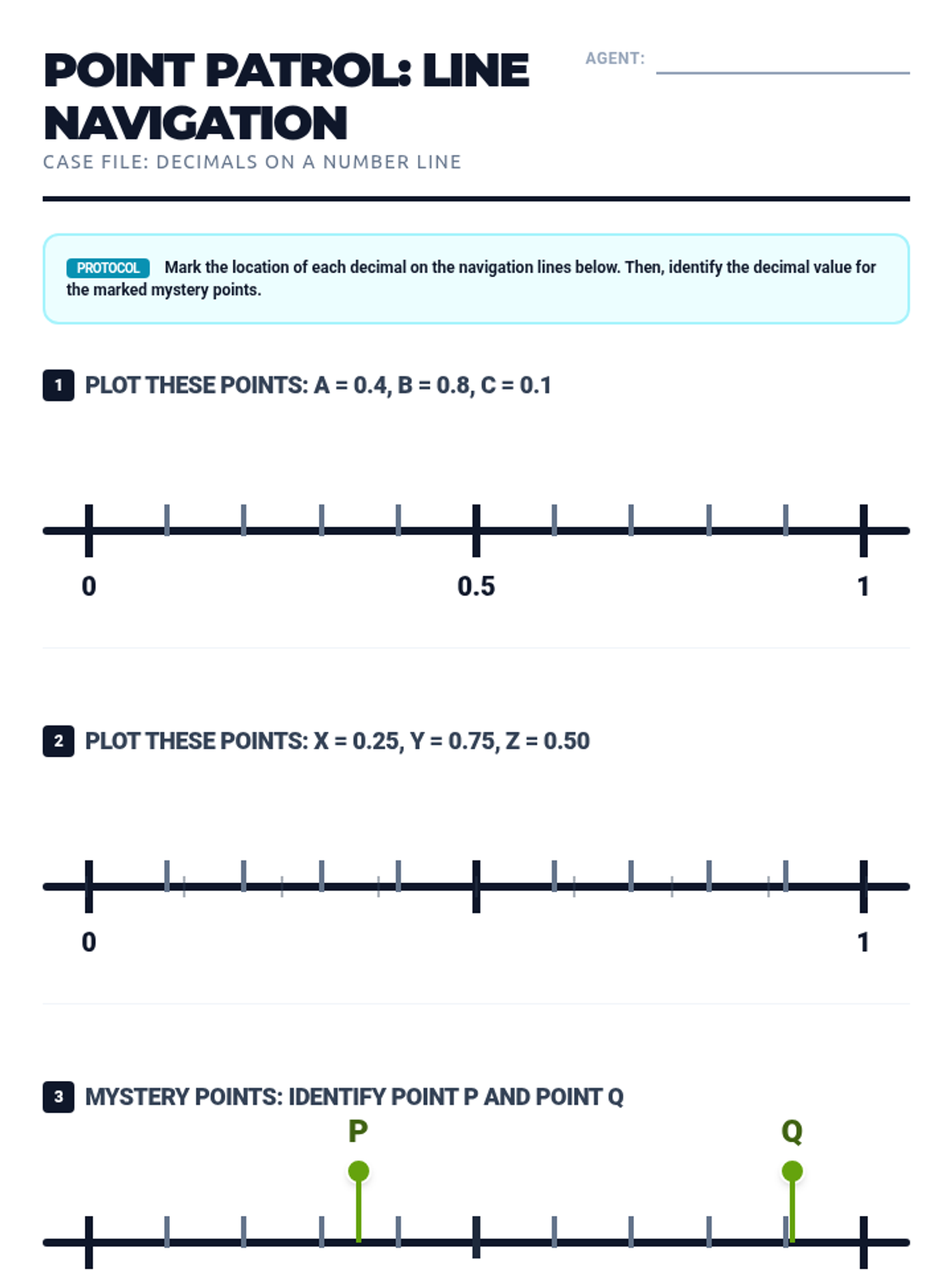
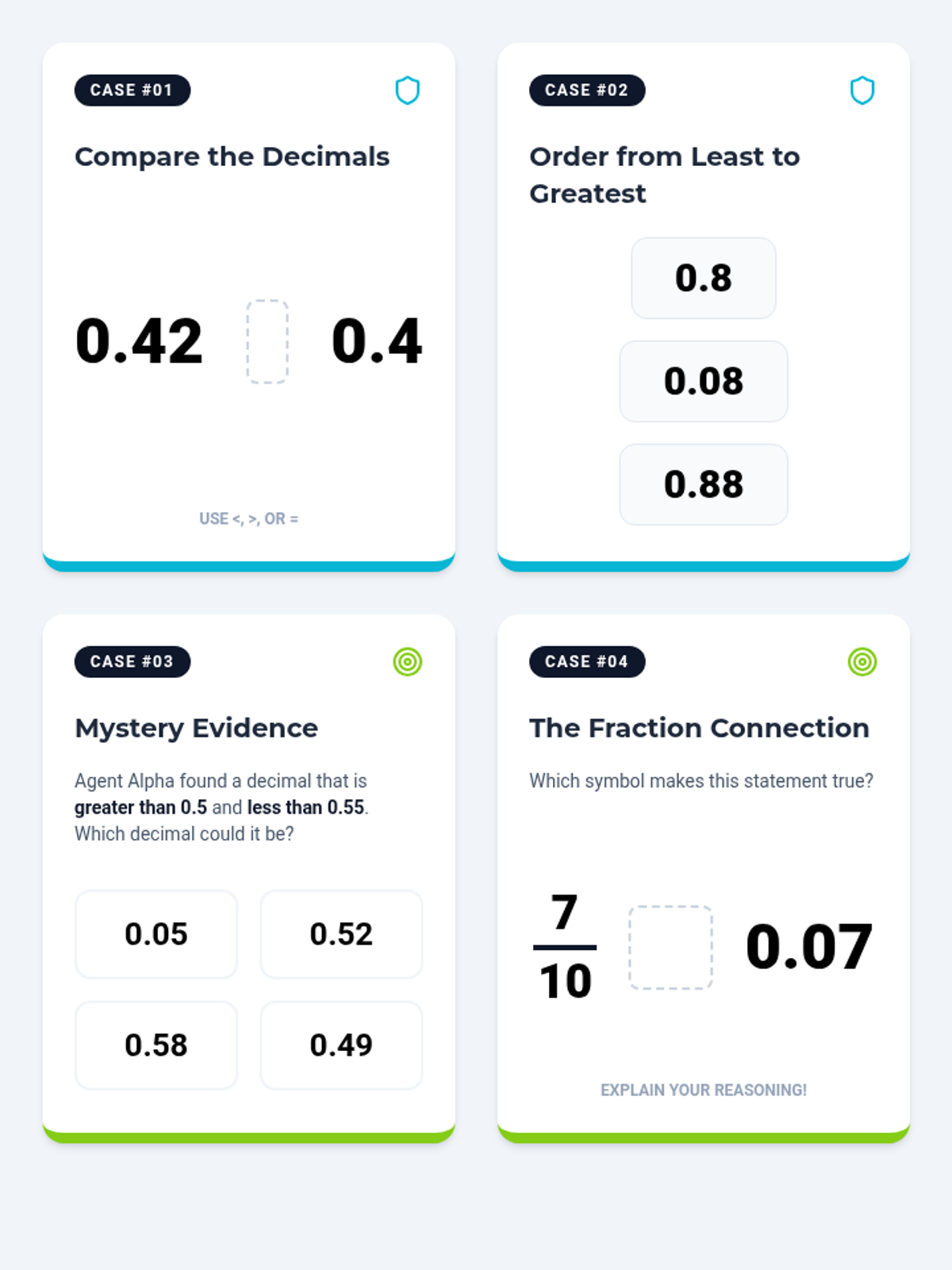
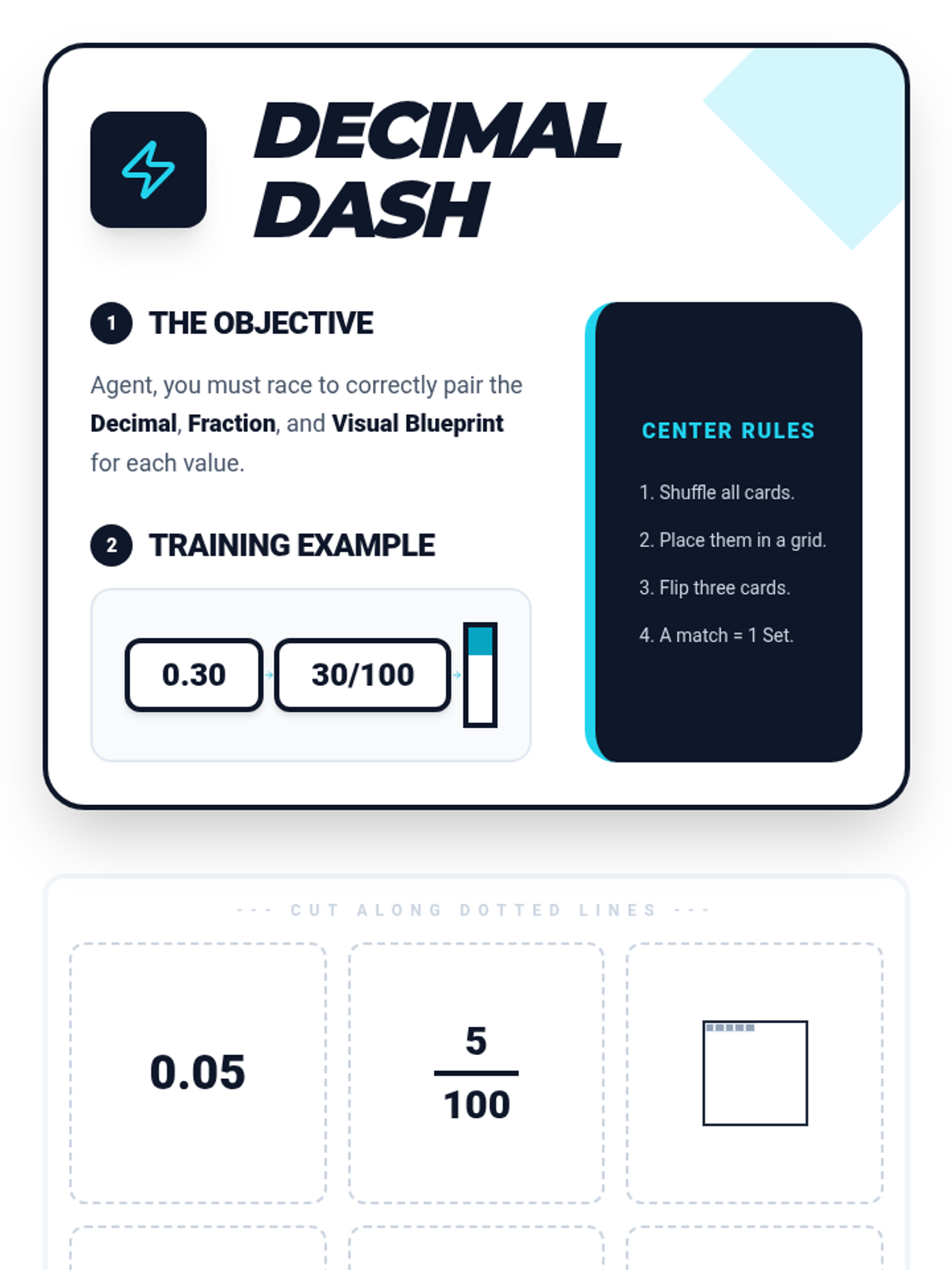
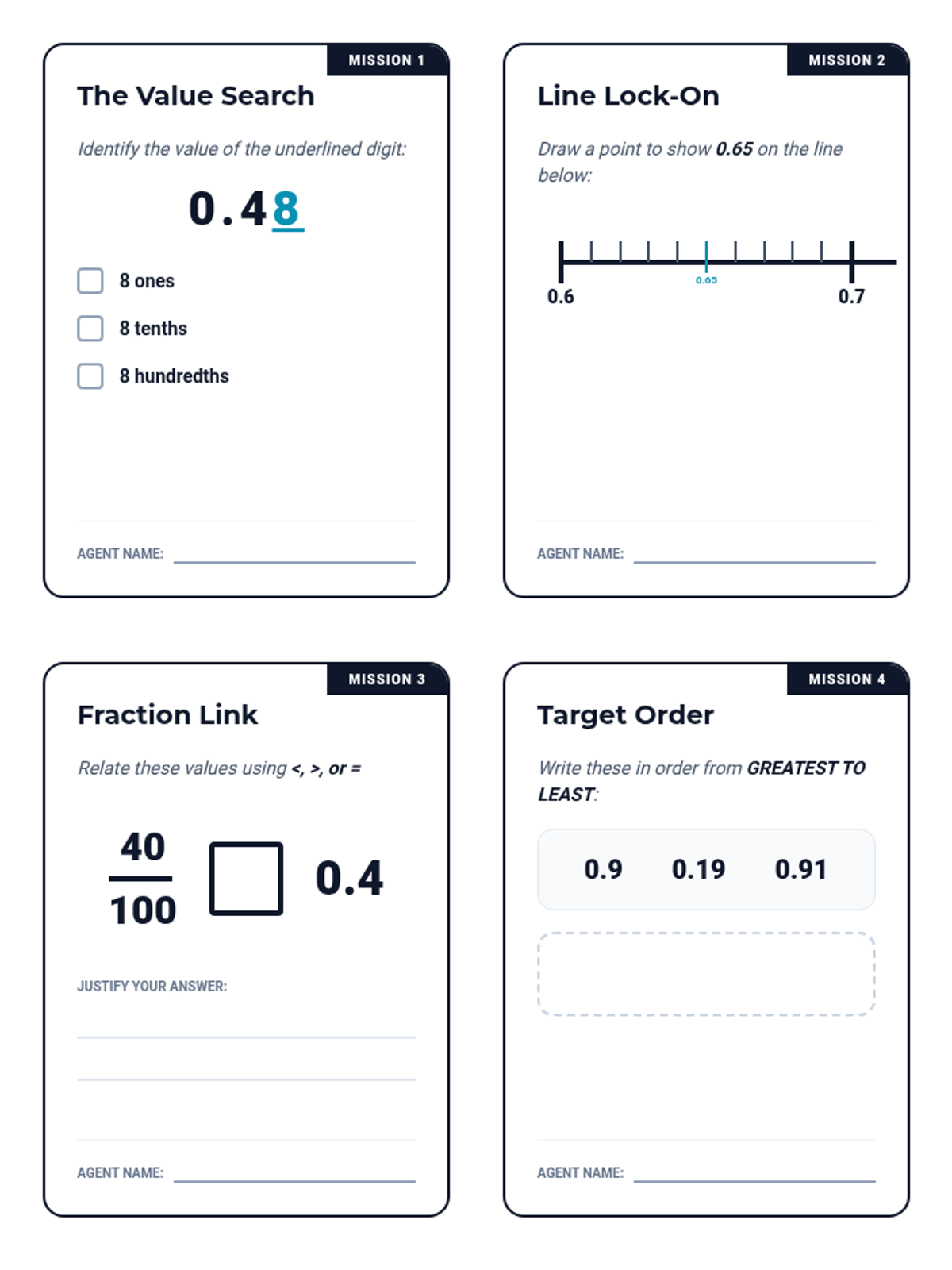
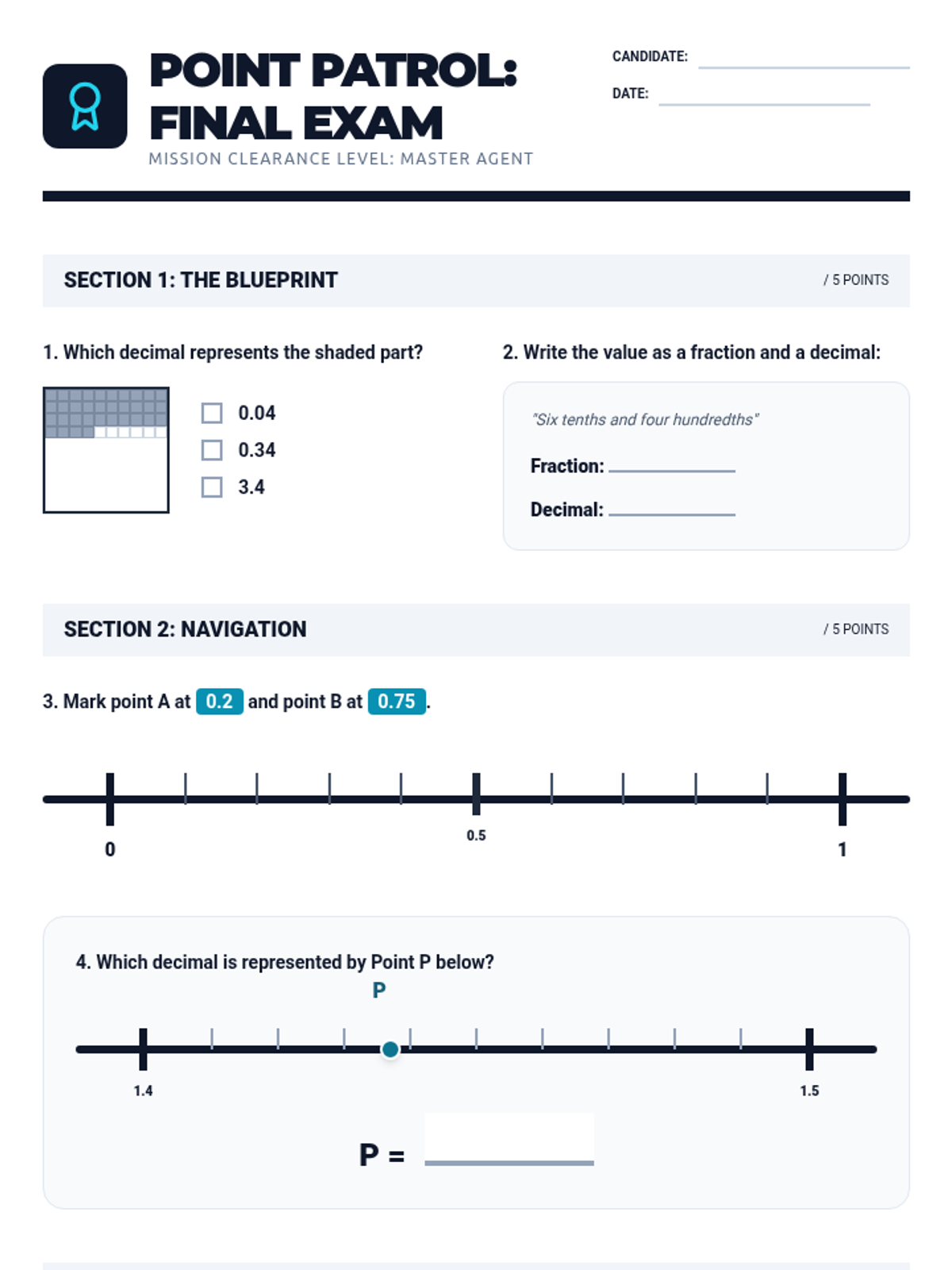
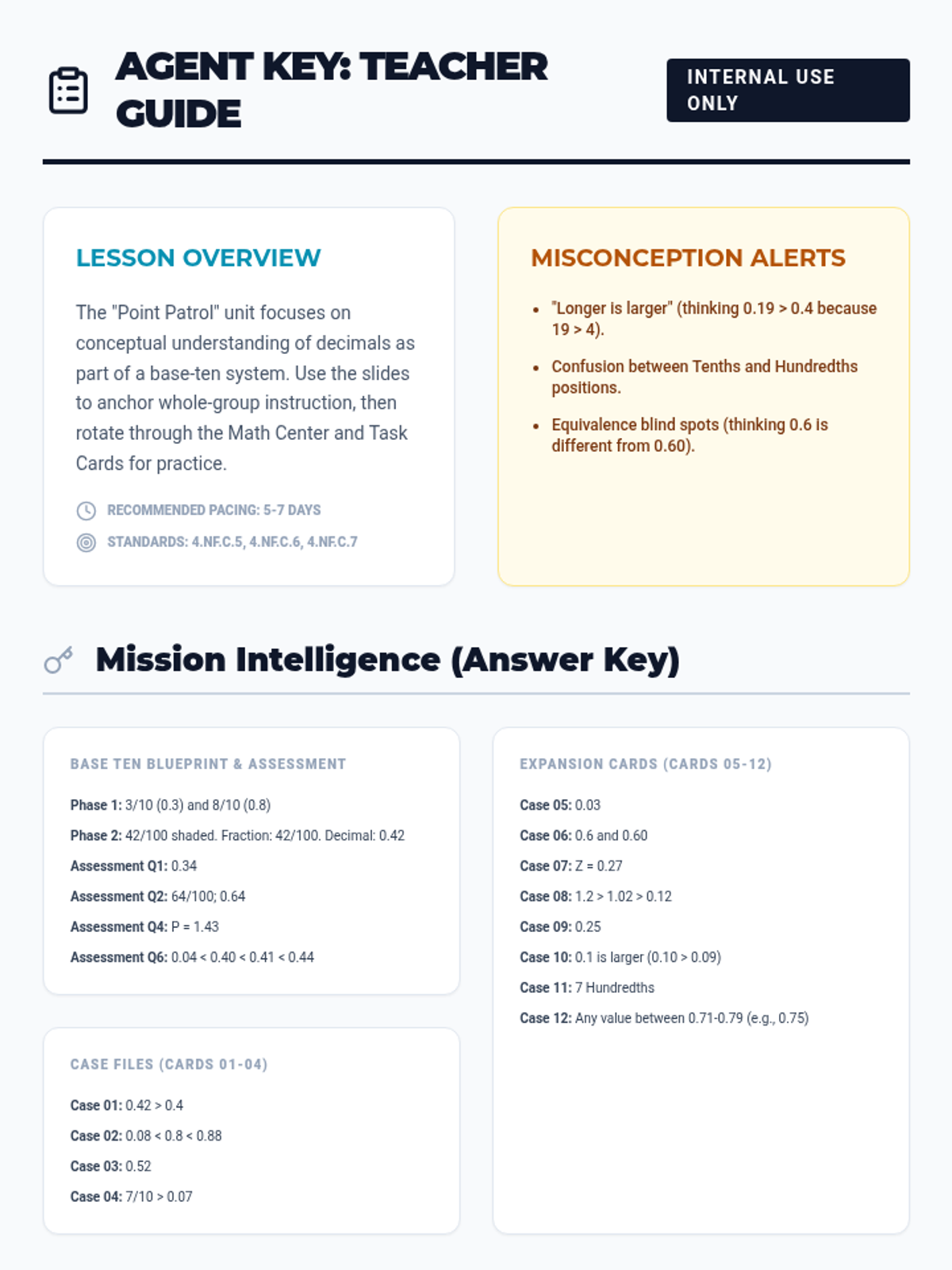
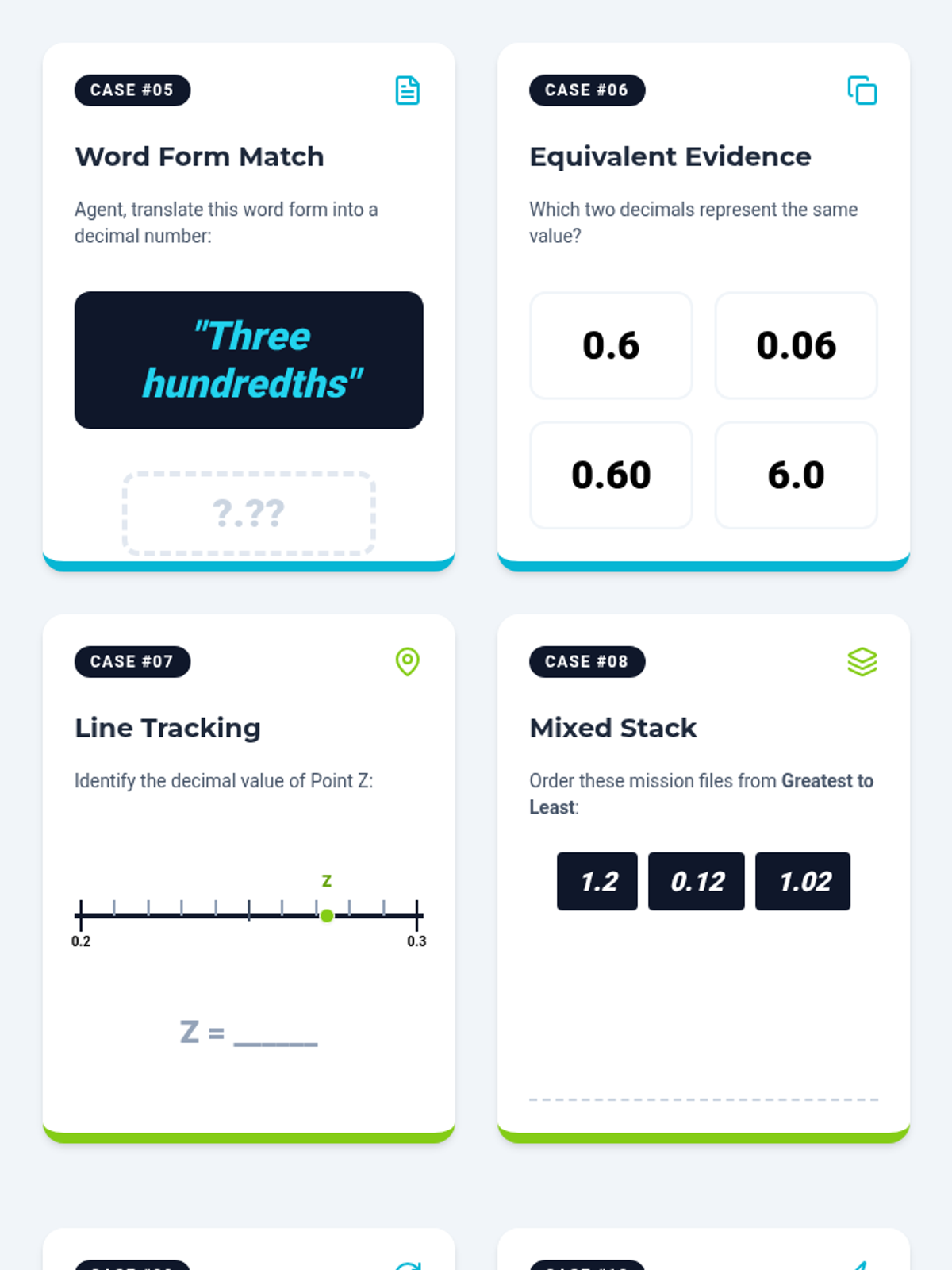
Students explore decimals to the hundredths place, visualizing them on number lines and comparing values while investigating their relationship to fractions.
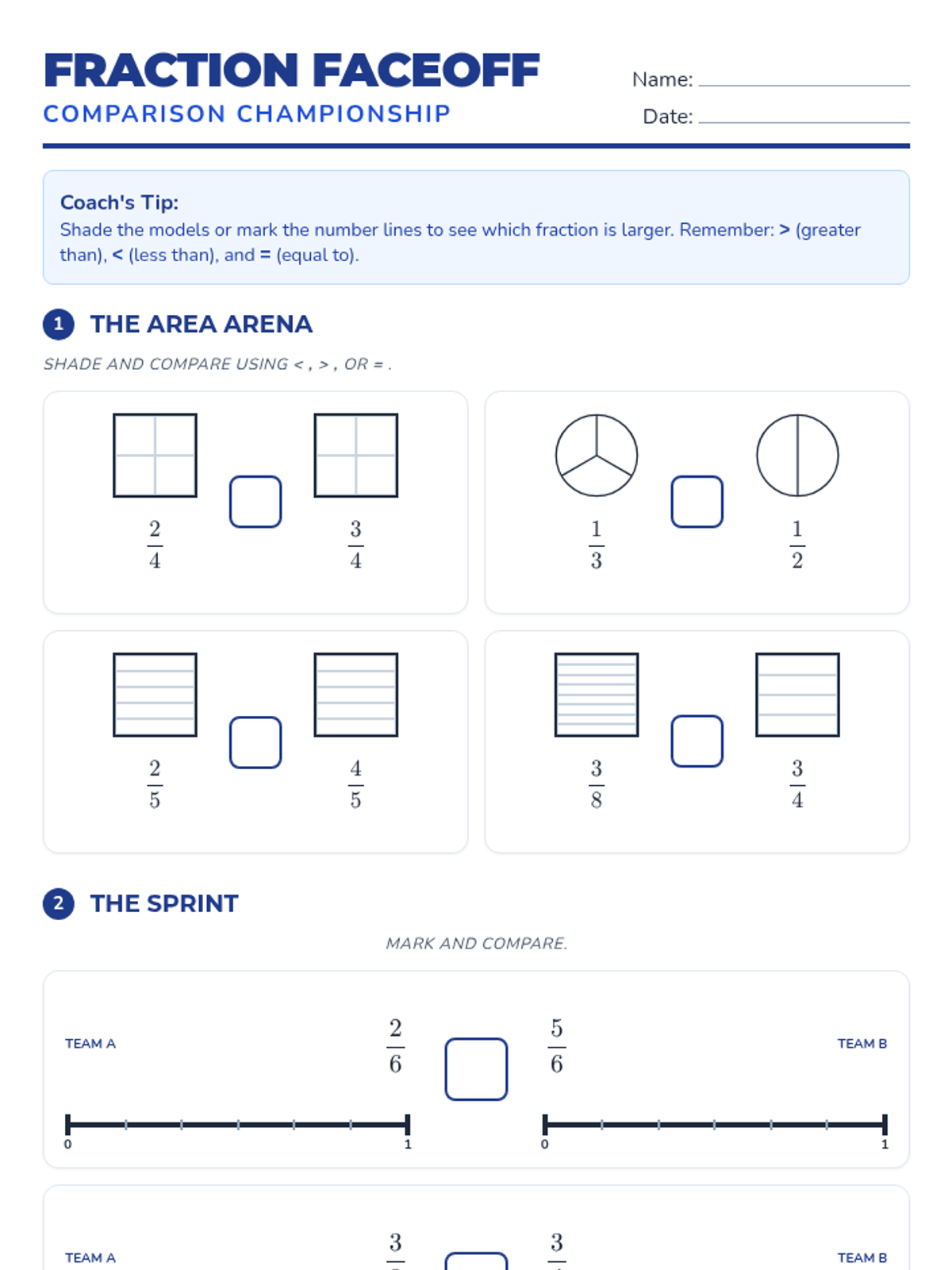
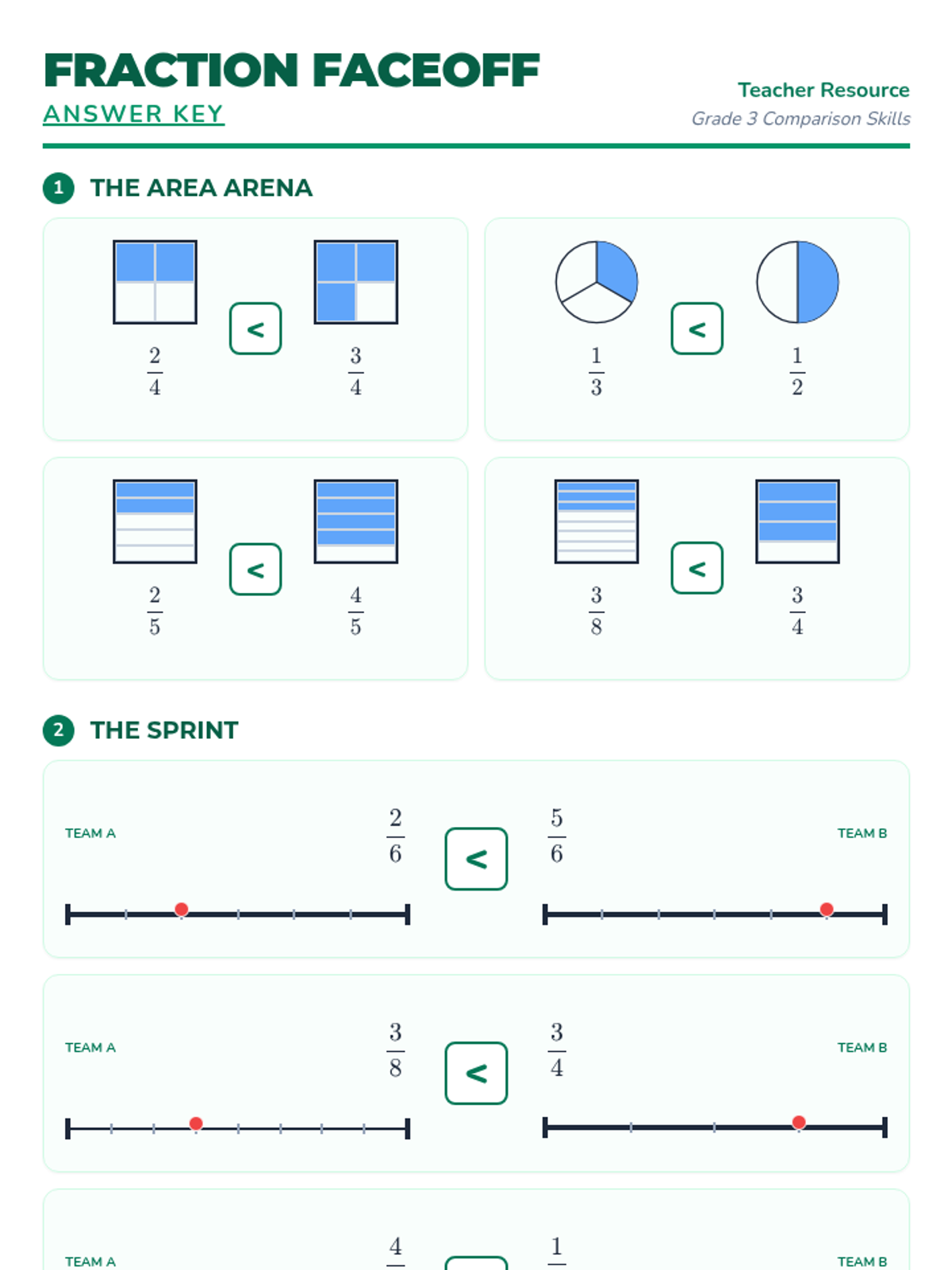
A lesson focused on comparing fractions with the same denominator or the same numerator using visual area models and number lines. Students will develop a conceptual understanding of fraction size through visual representation.
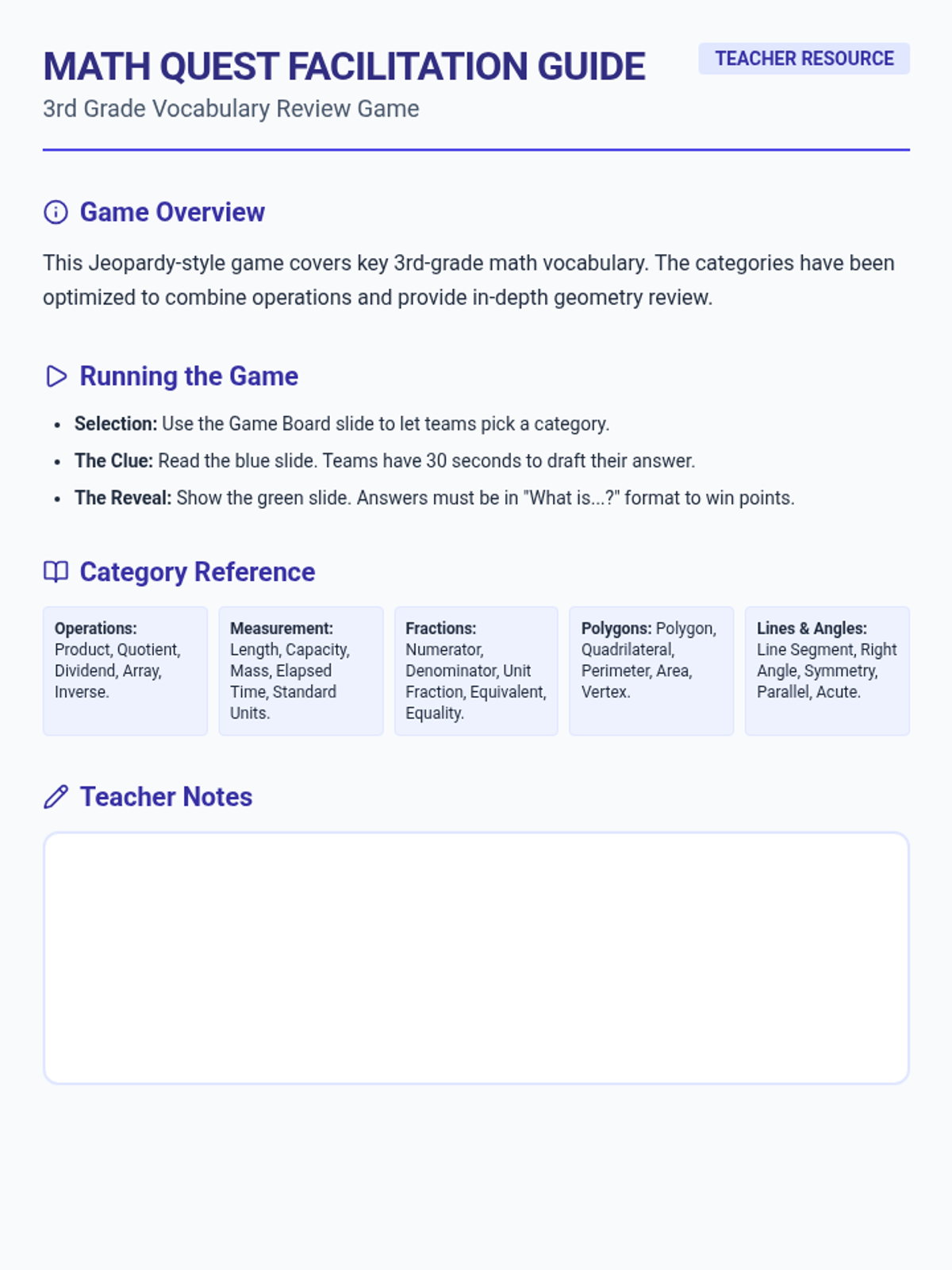
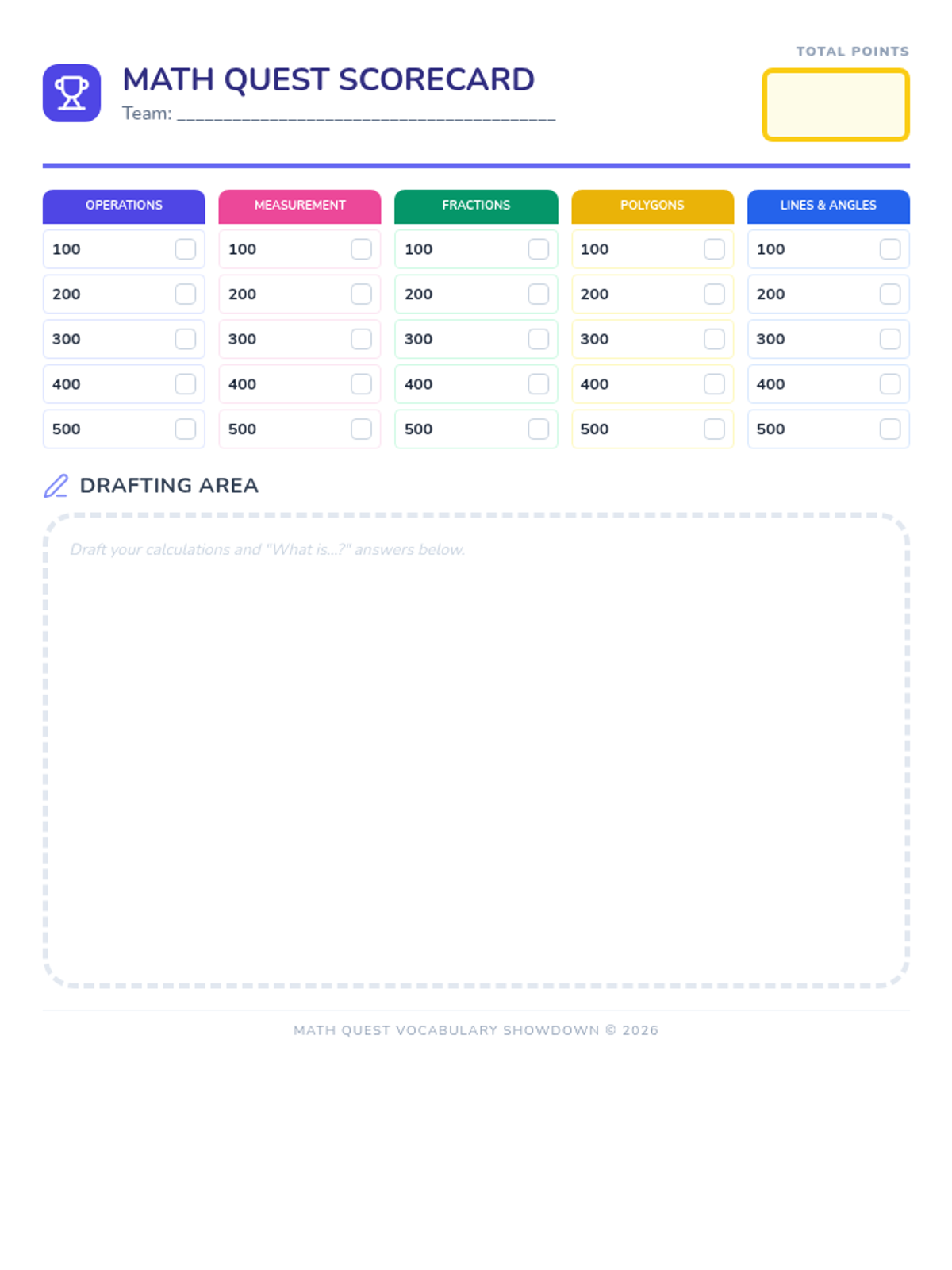
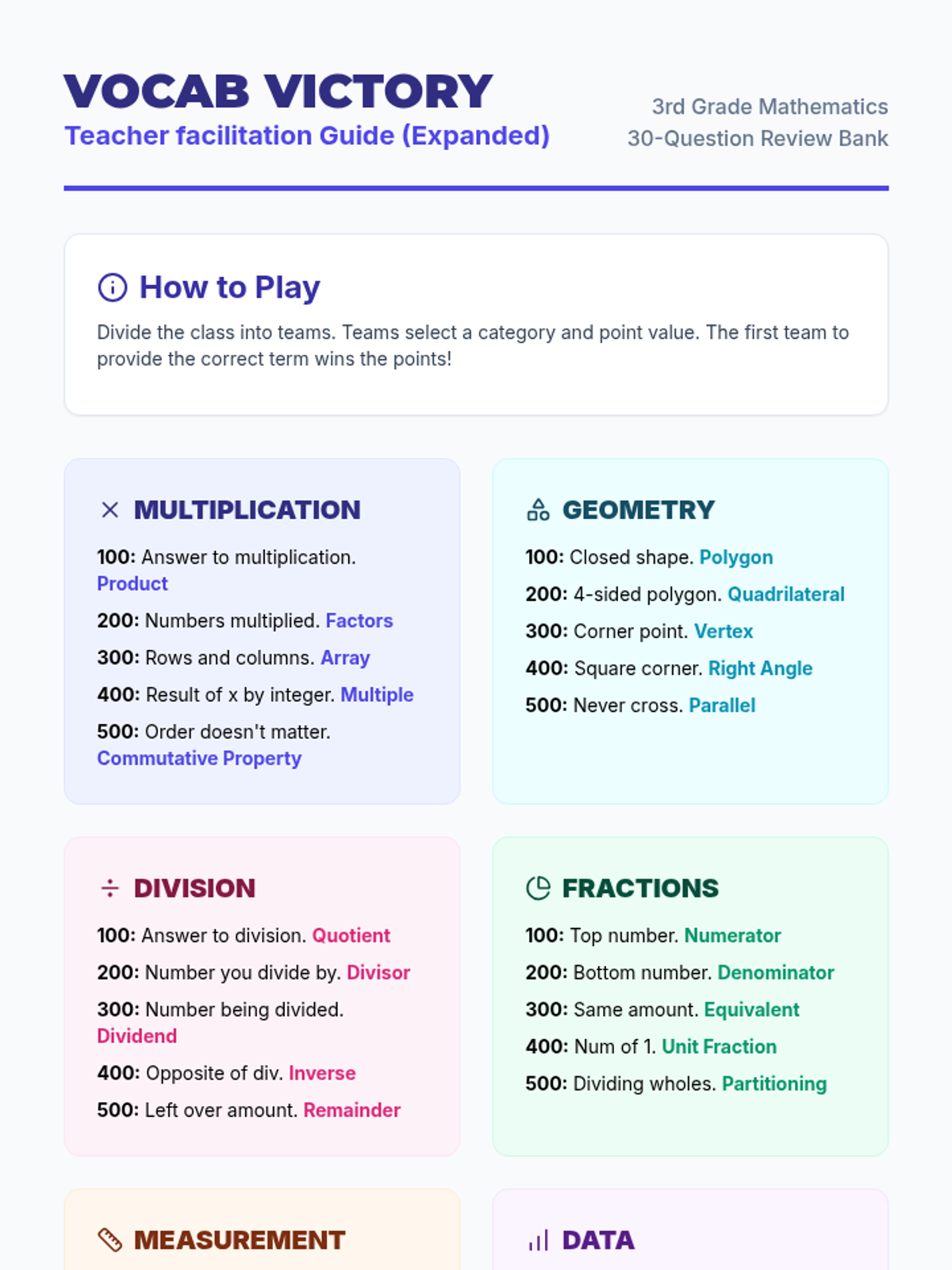
A high-energy math vocabulary review game designed for third graders. This lesson covers multiplication, division, measurement, fractions, and geometry through a Jeopardy-style competitive format.
Practice in estimating and measuring liquid volumes using liters and milliliters, with mental math exercises and scale reading.
Introduction to liquid volume and the liter as a standard metric unit, featuring container comparisons and visual estimations.
Introduction to weight, standard units (grams and kilograms), and estimation techniques using real-world objects and pets.
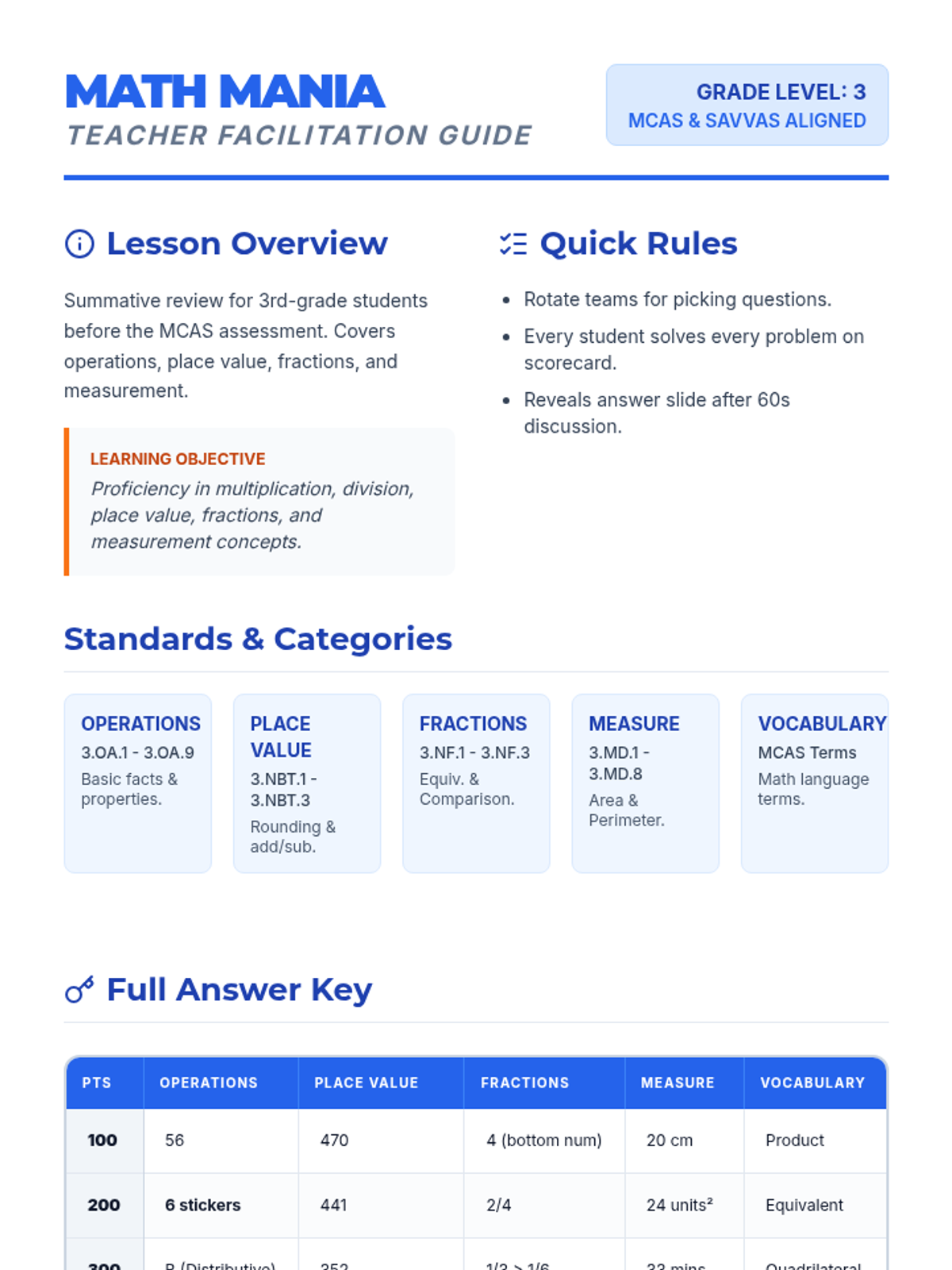
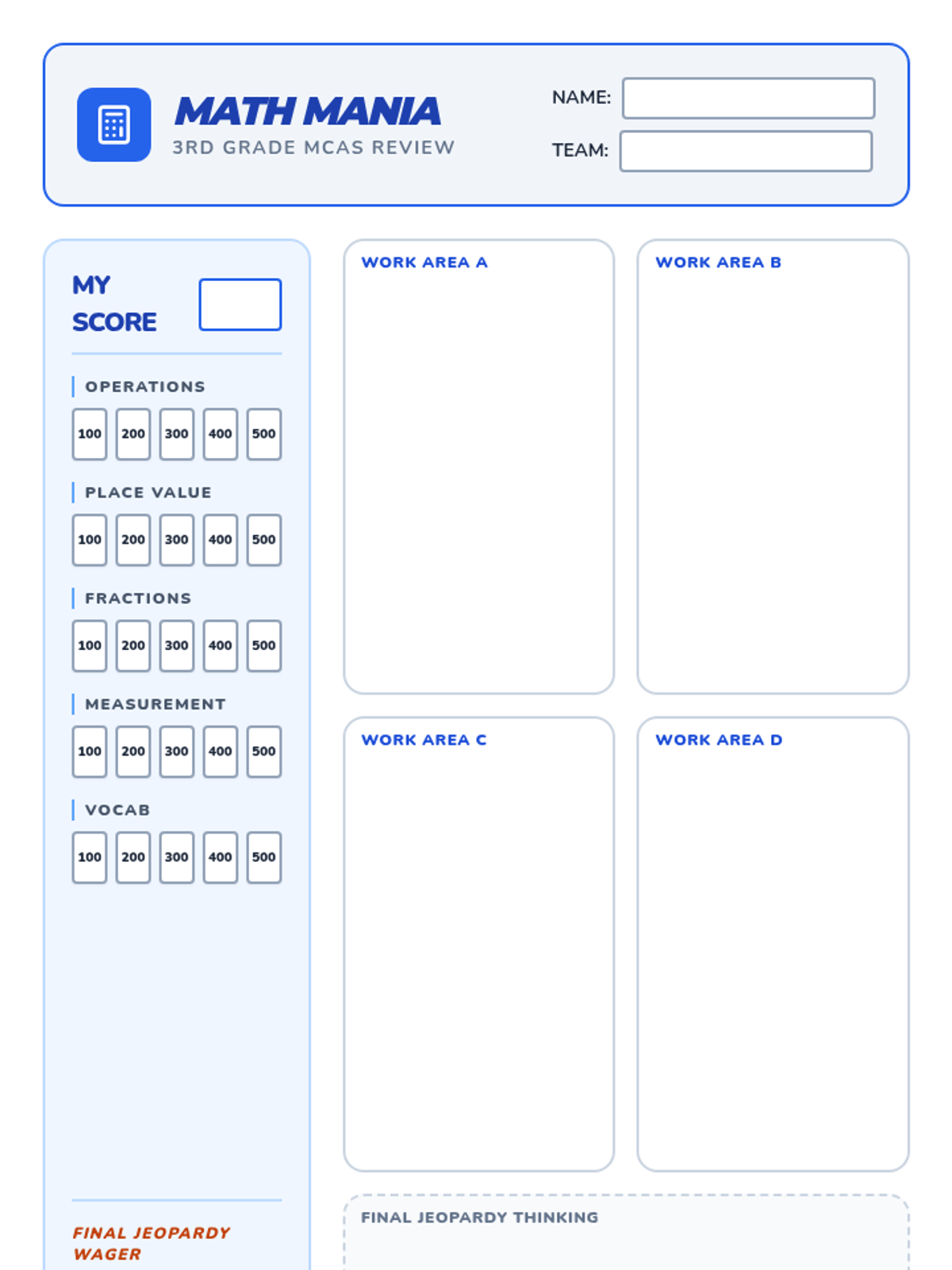
A comprehensive 3rd-grade math review game based on MCAS standards and Savvas curriculum, covering operations, place value, fractions, measurement, and vocabulary.
A high-energy Jeopardy-style review game focusing on essential third-grade mathematics vocabulary across six core domains, designed to reinforce terminology before assessments.
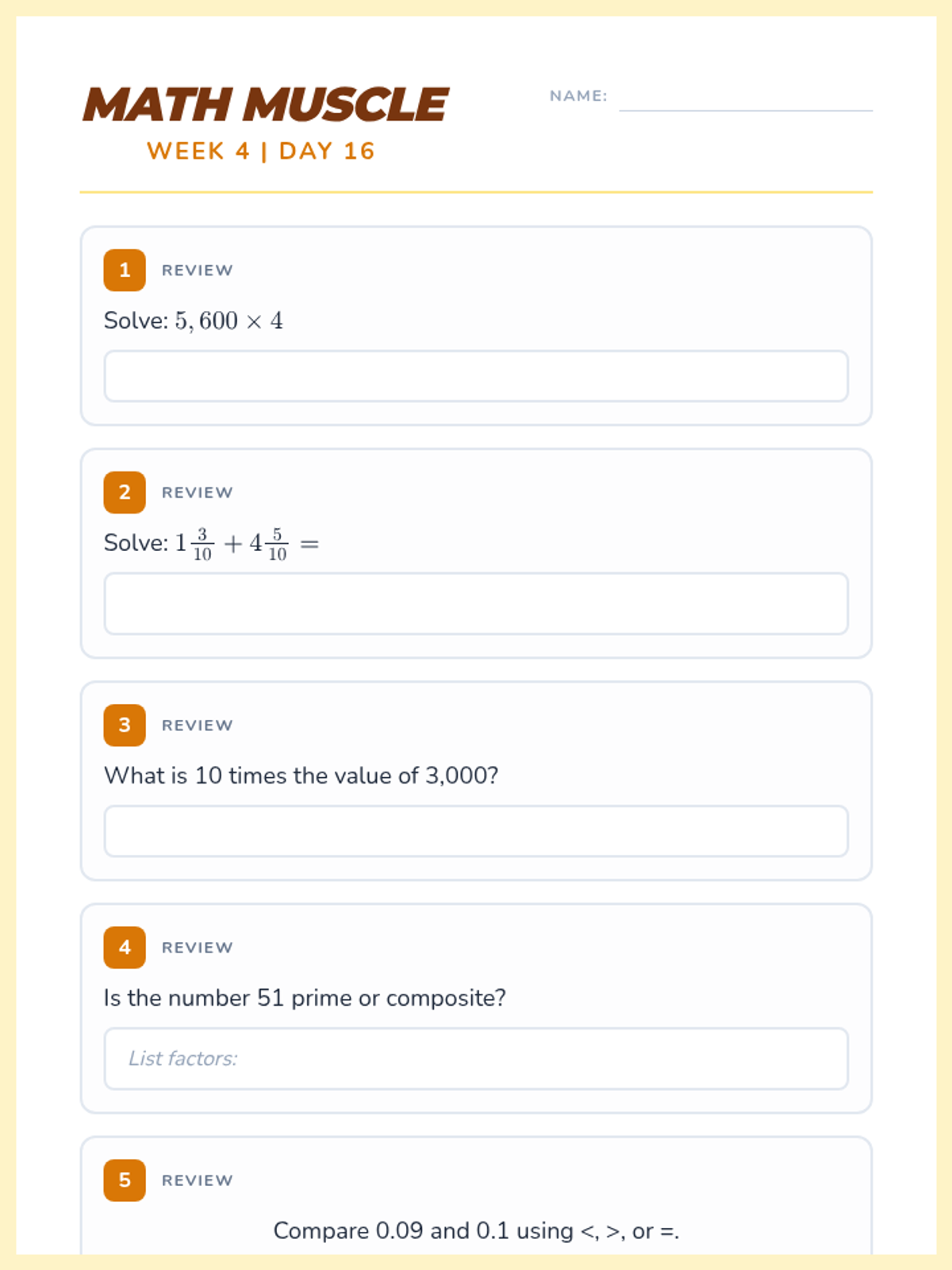
The final week reviews and integrates all concepts, preparing students for end-of-unit assessments with challenging multi-domain problems.
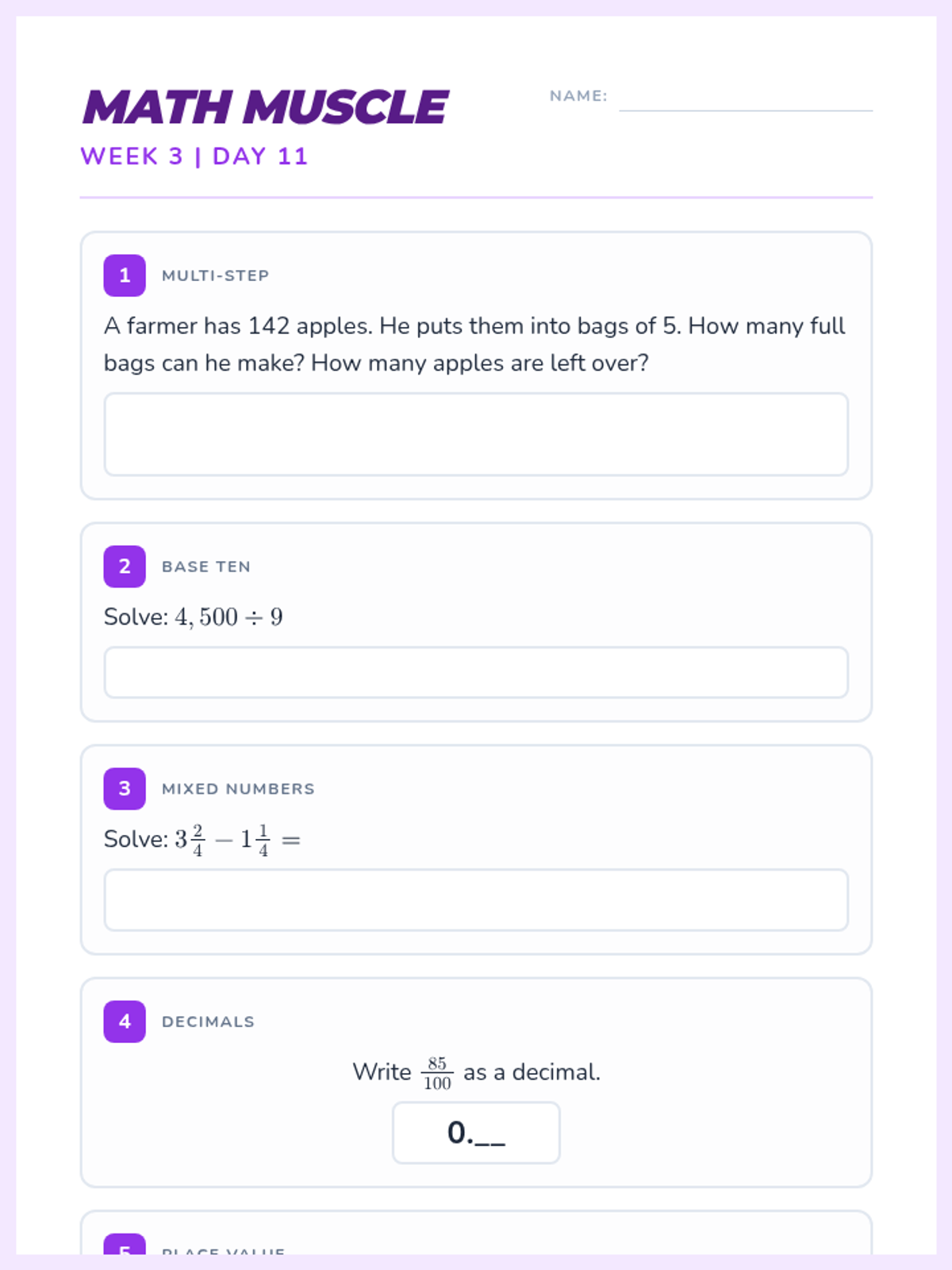
Week three tackles multi-step word problems, long division with remainders, comparing decimals to hundredths, and mixed number operations.
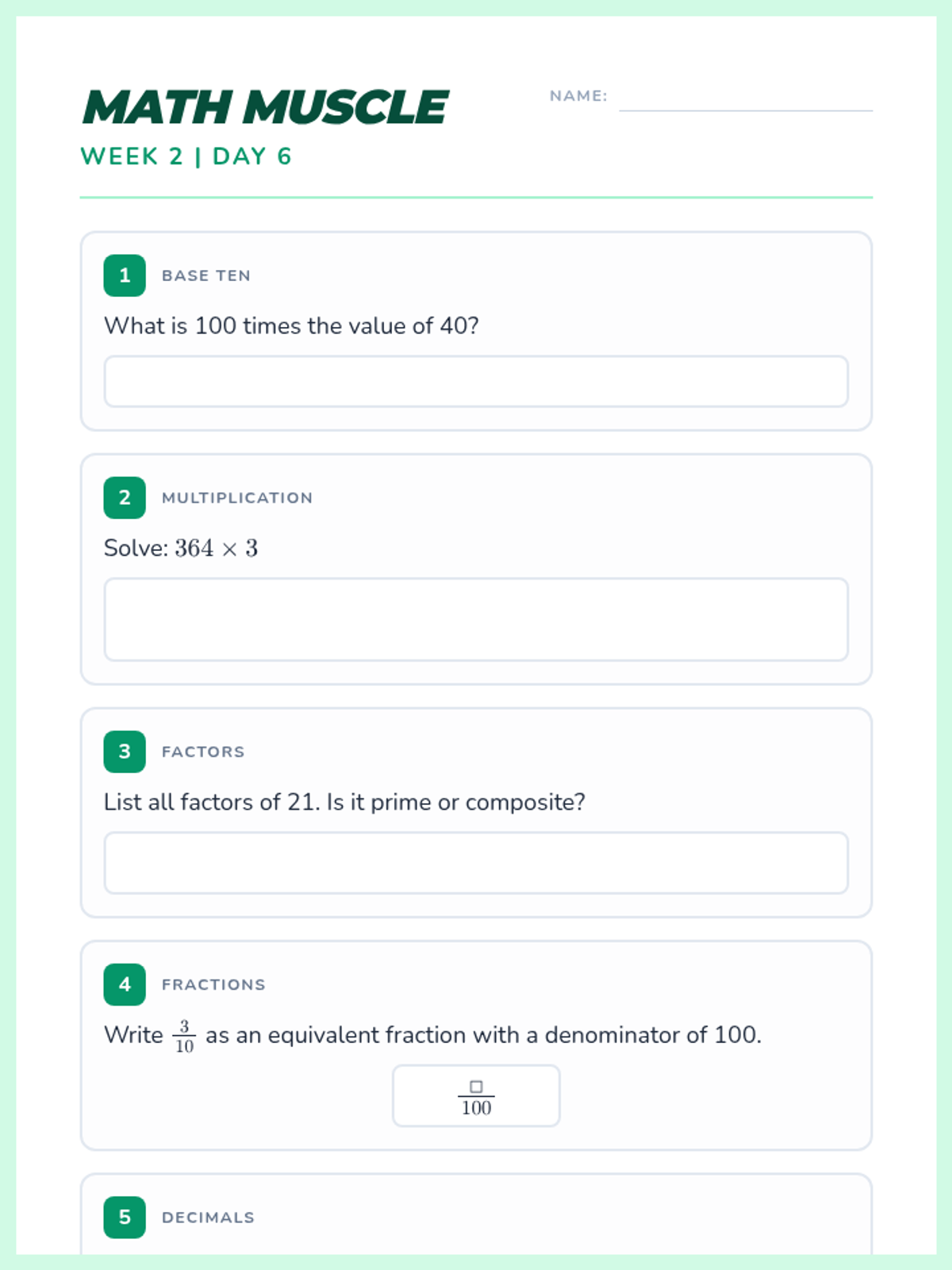
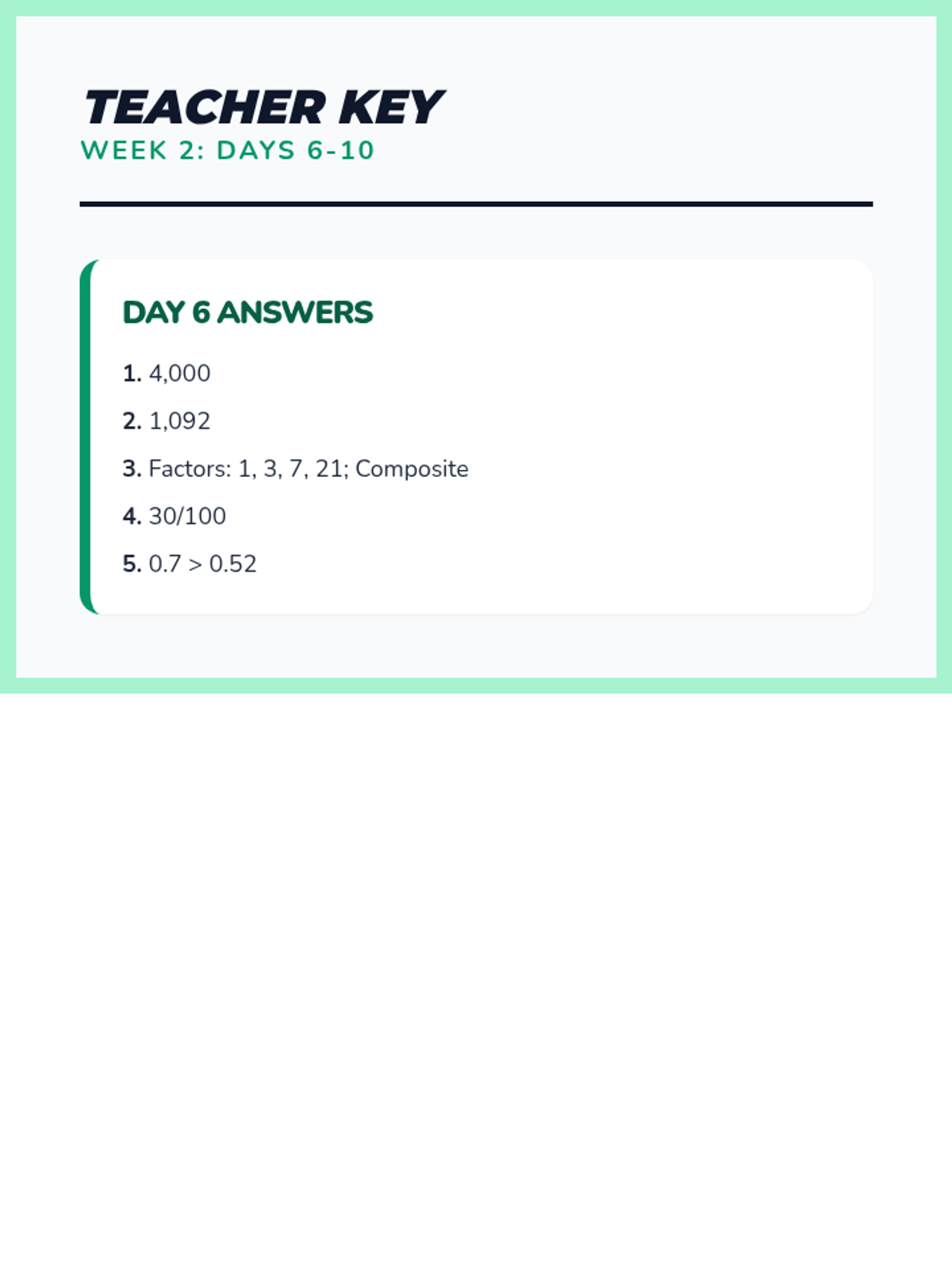
The second week increases complexity with multi-digit multiplication, factor pairs, prime/composite identification, and adding fractions with denominators of 10 and 100.
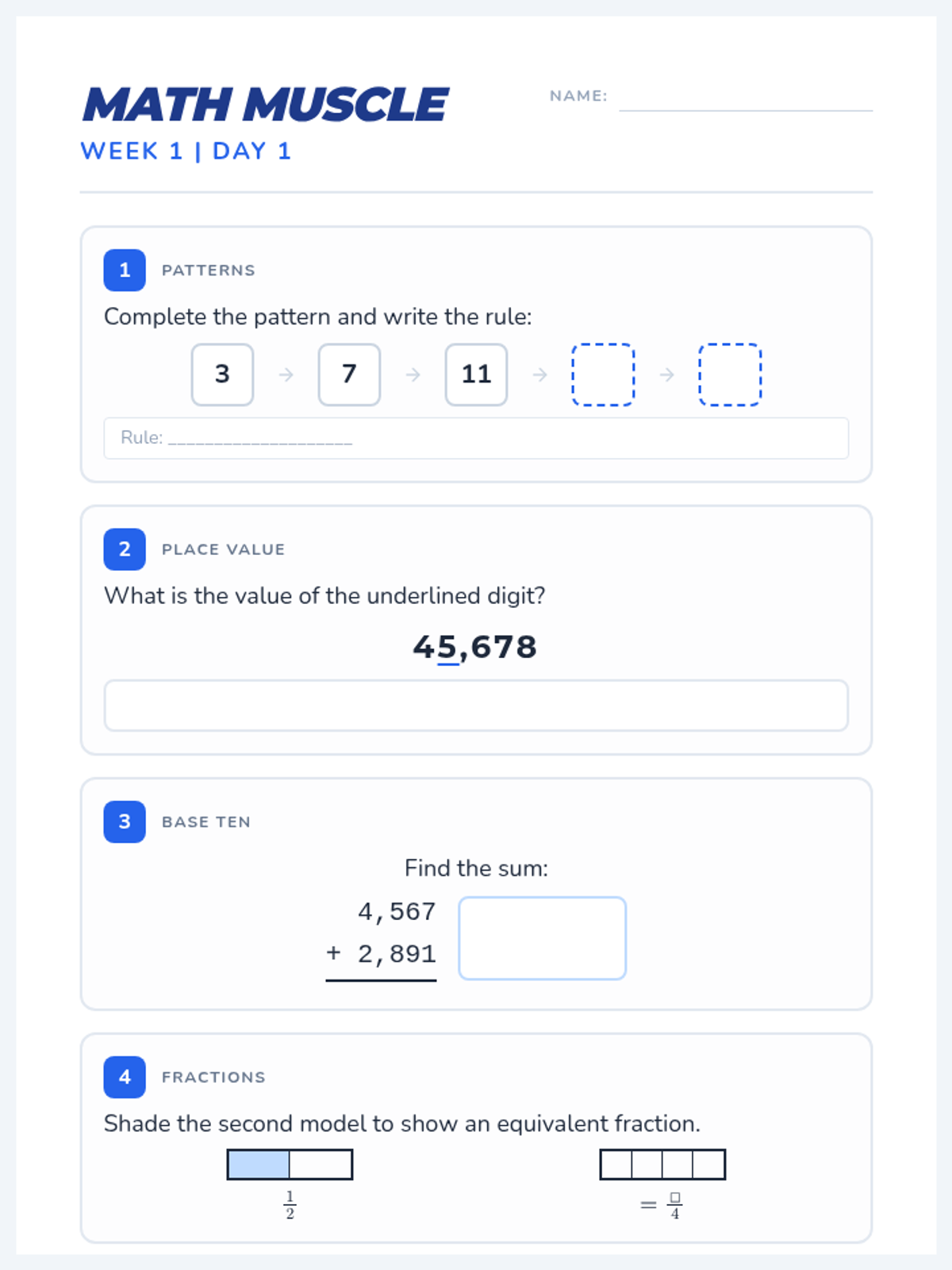
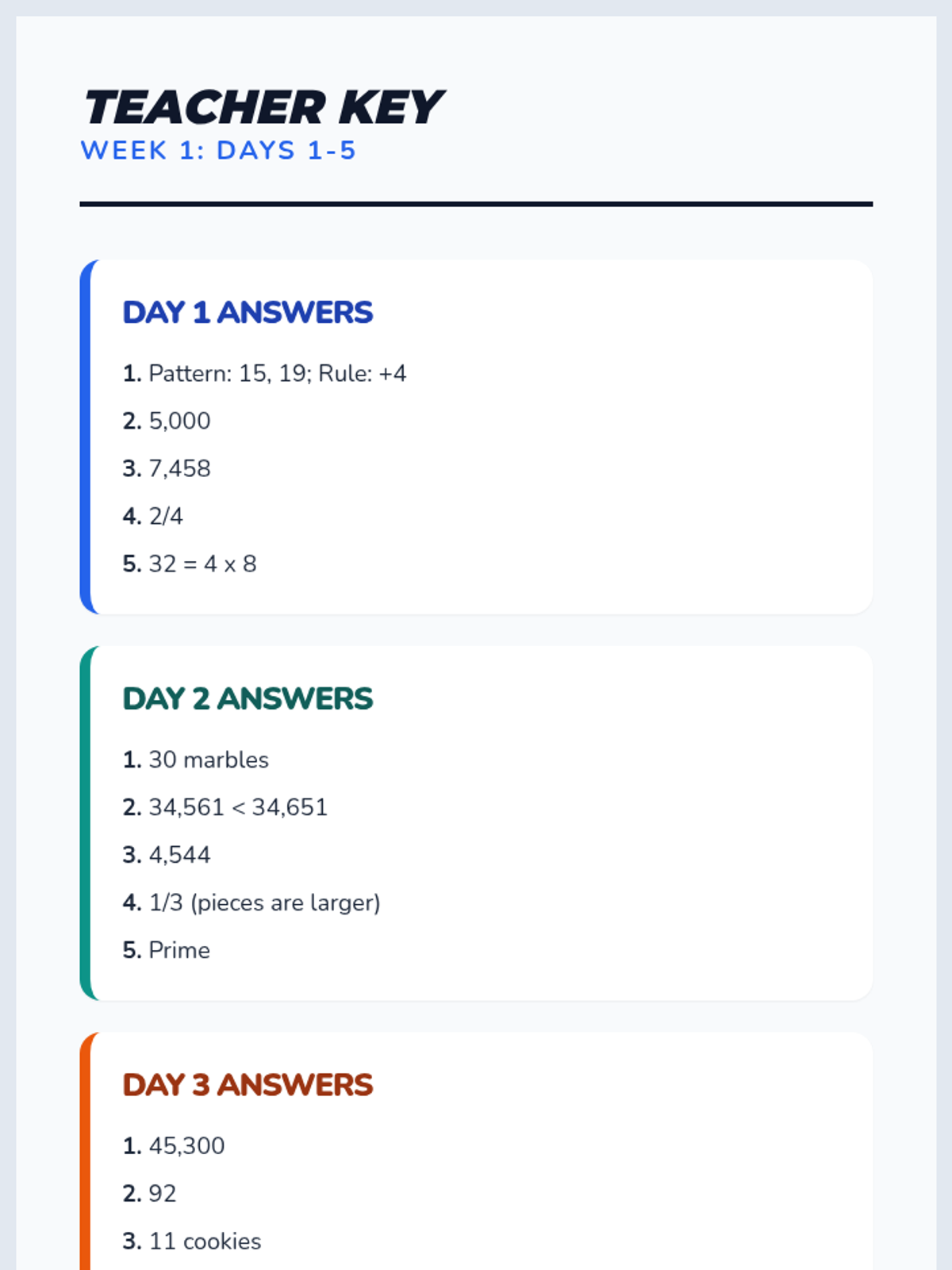
The first week focuses on foundational 4th-grade concepts including place value, rounding, multiplicative comparisons, and basic fraction equivalence.
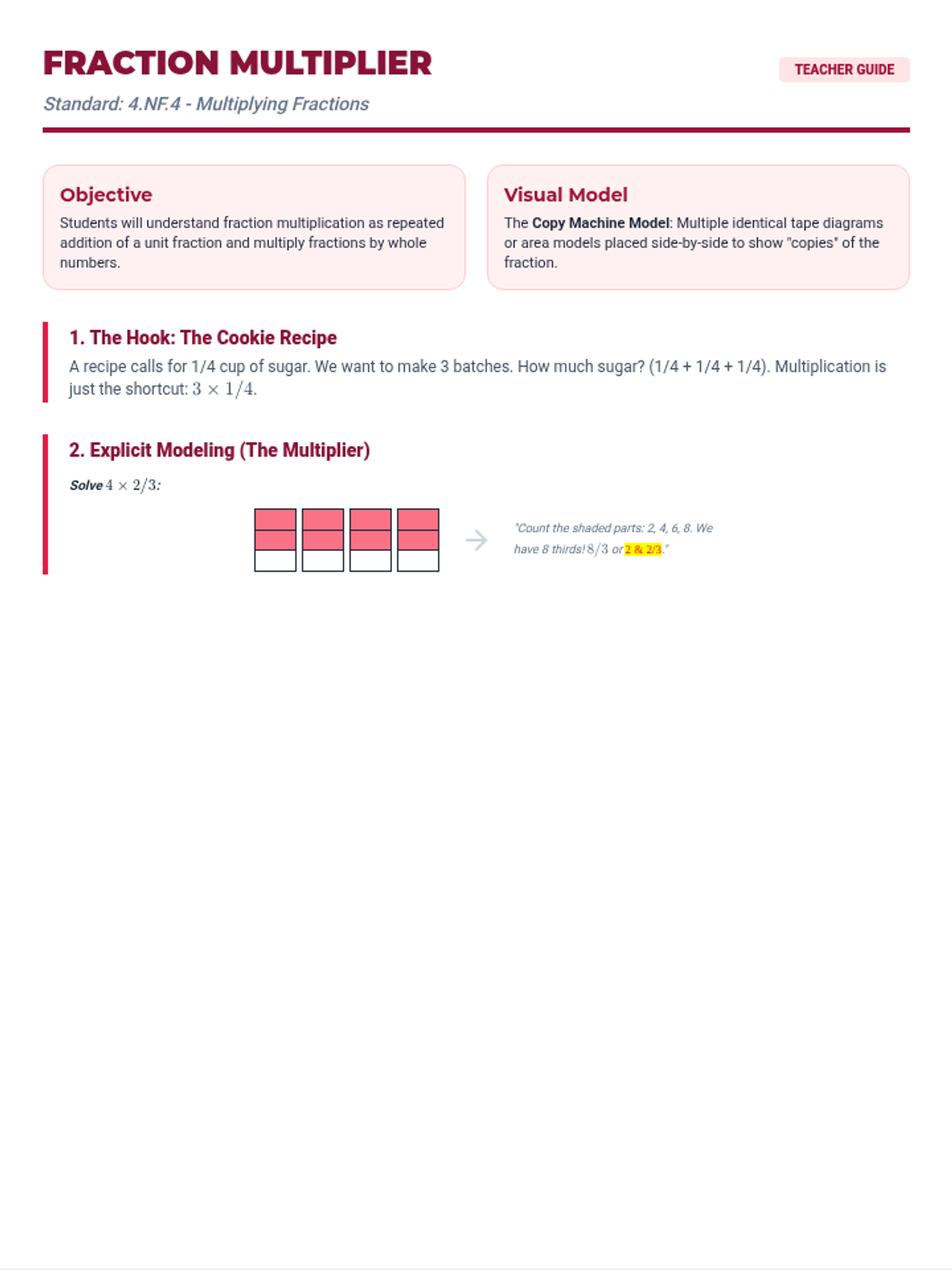
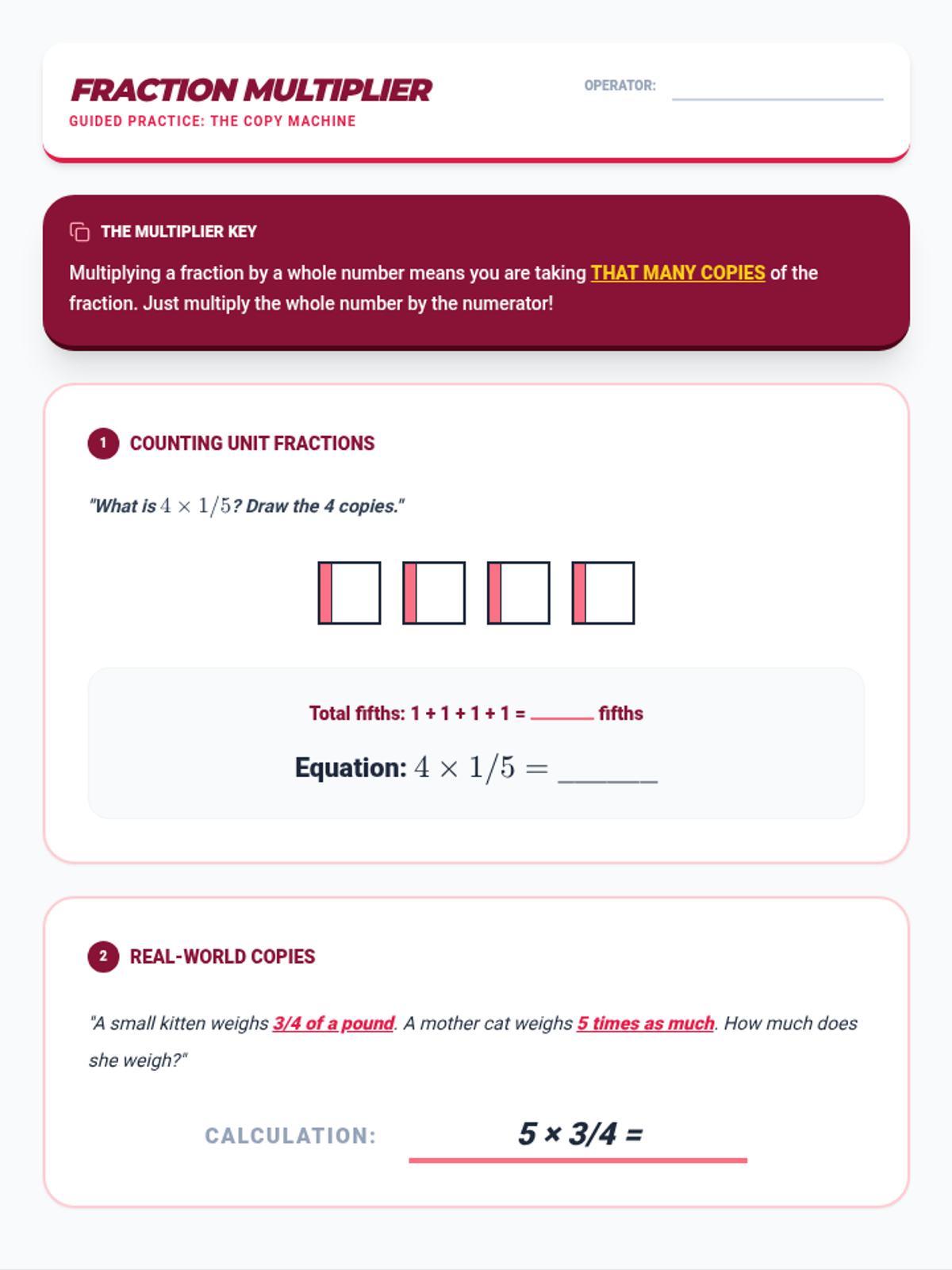
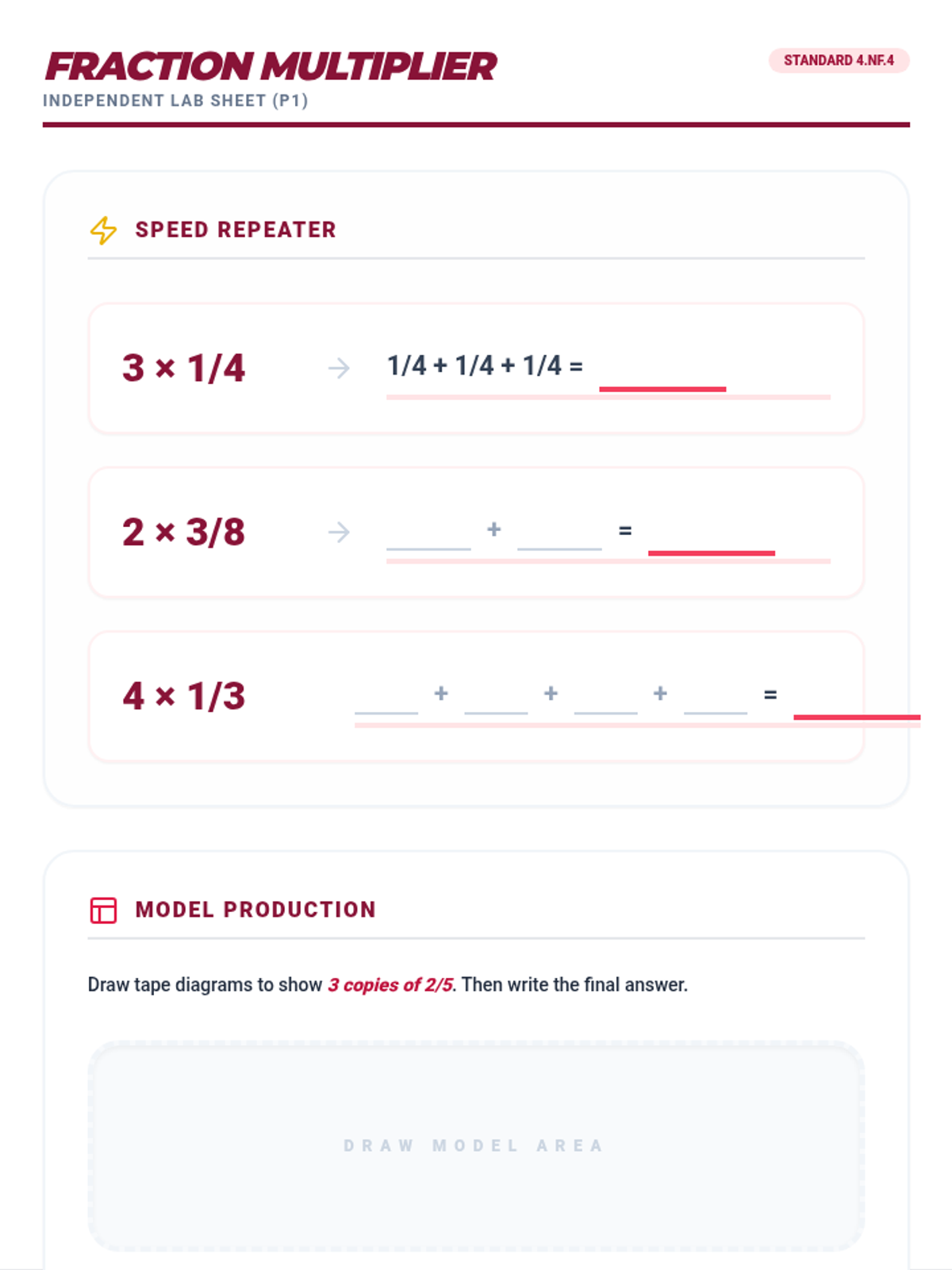
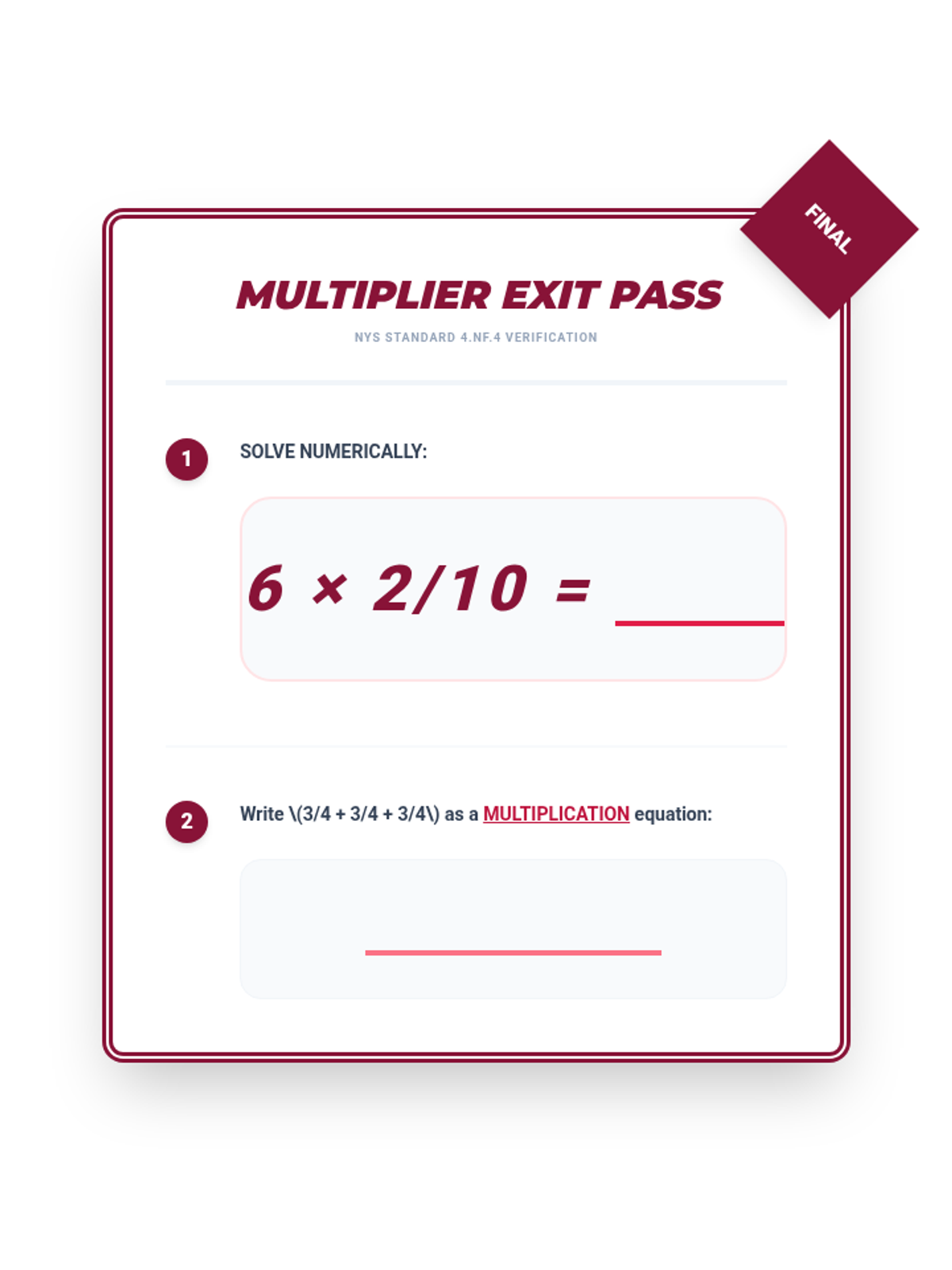
Tier 2 reteach for standard 4.NF.4: Apply and extend previous understandings of multiplication to multiply a fraction by a whole number.
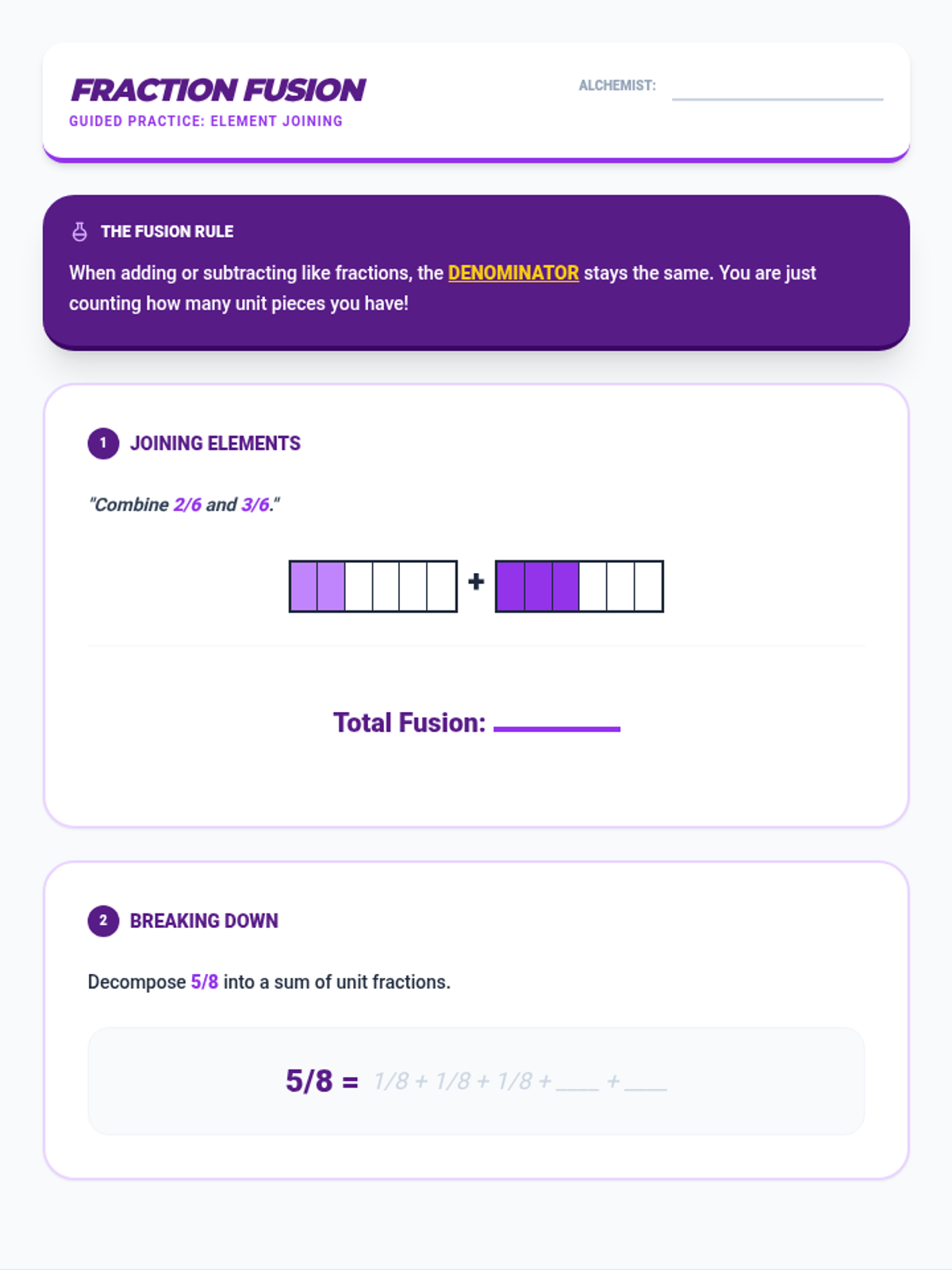
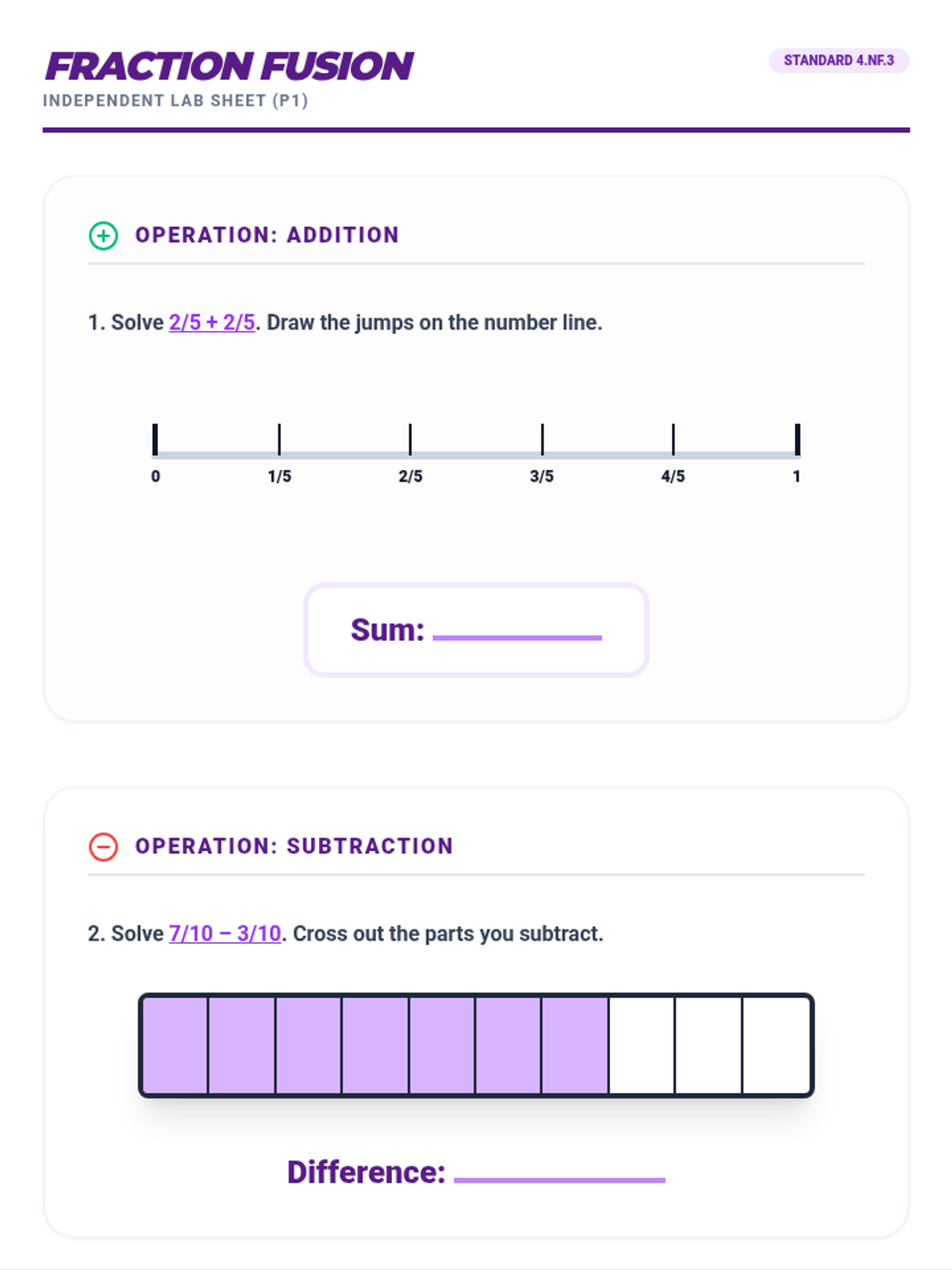
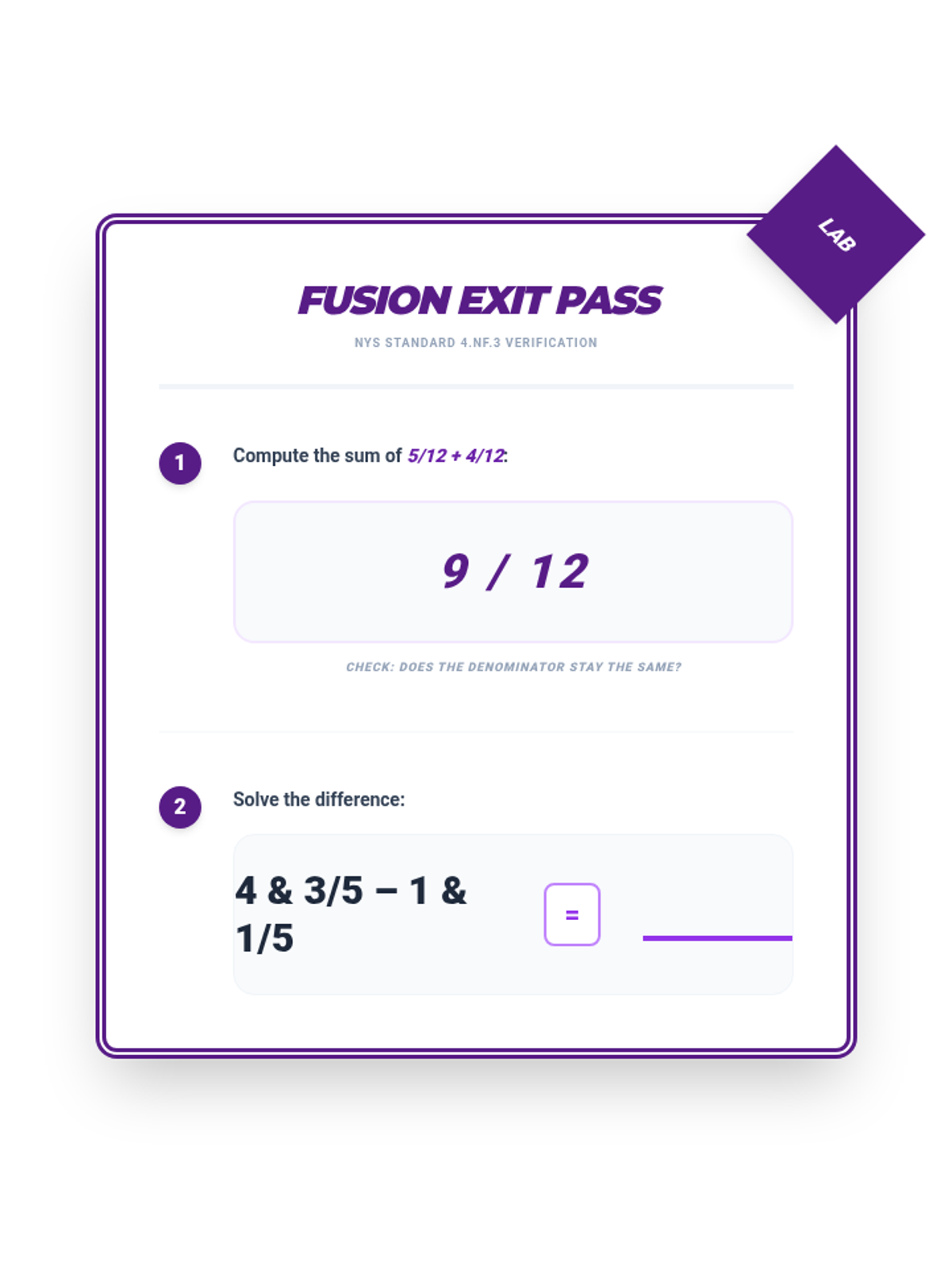
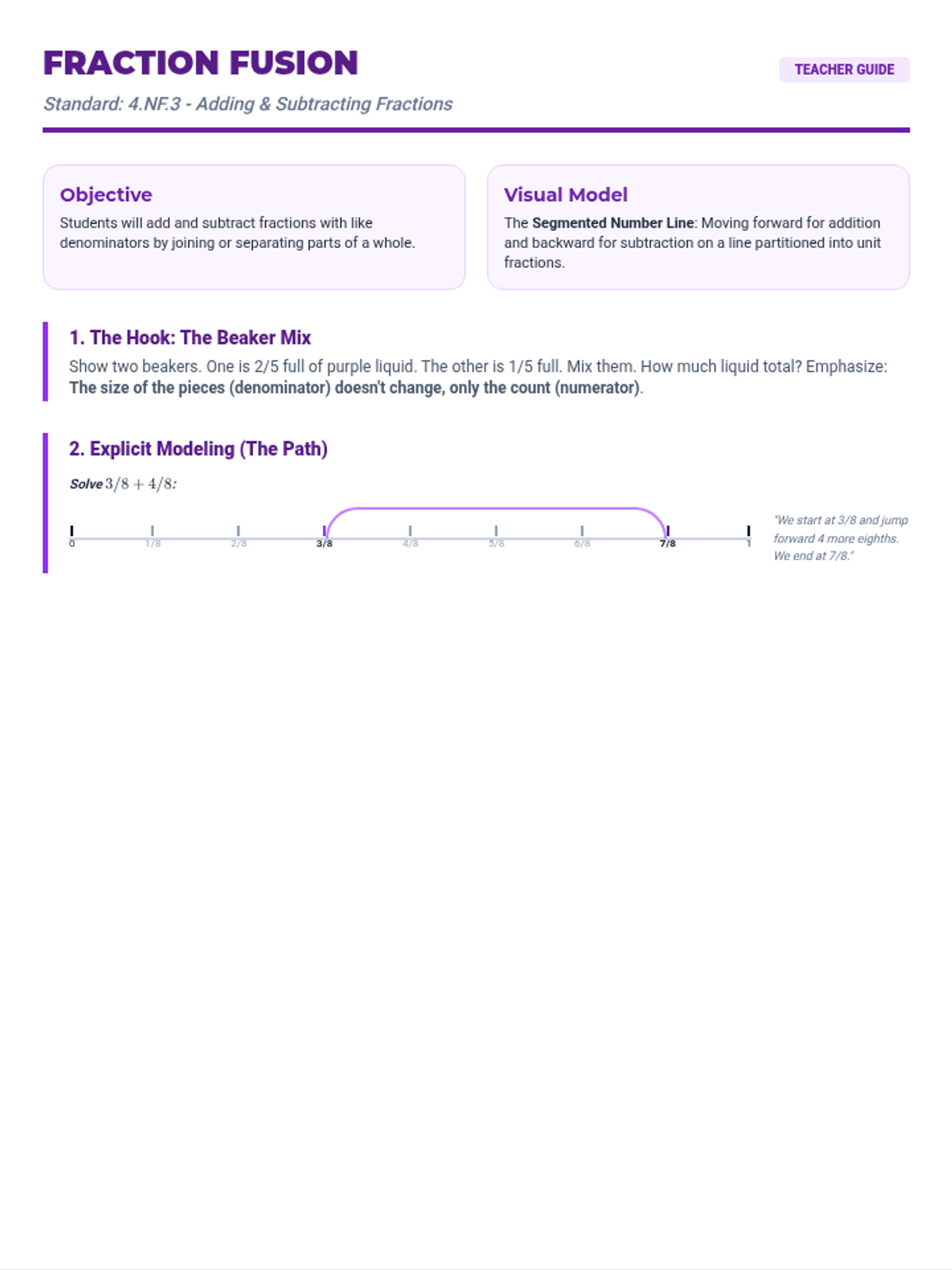
Tier 2 reteach for standard 4.NF.3: Understand addition and subtraction of fractions as joining and separating parts referring to the same whole. Focus on like denominators and mixed numbers.
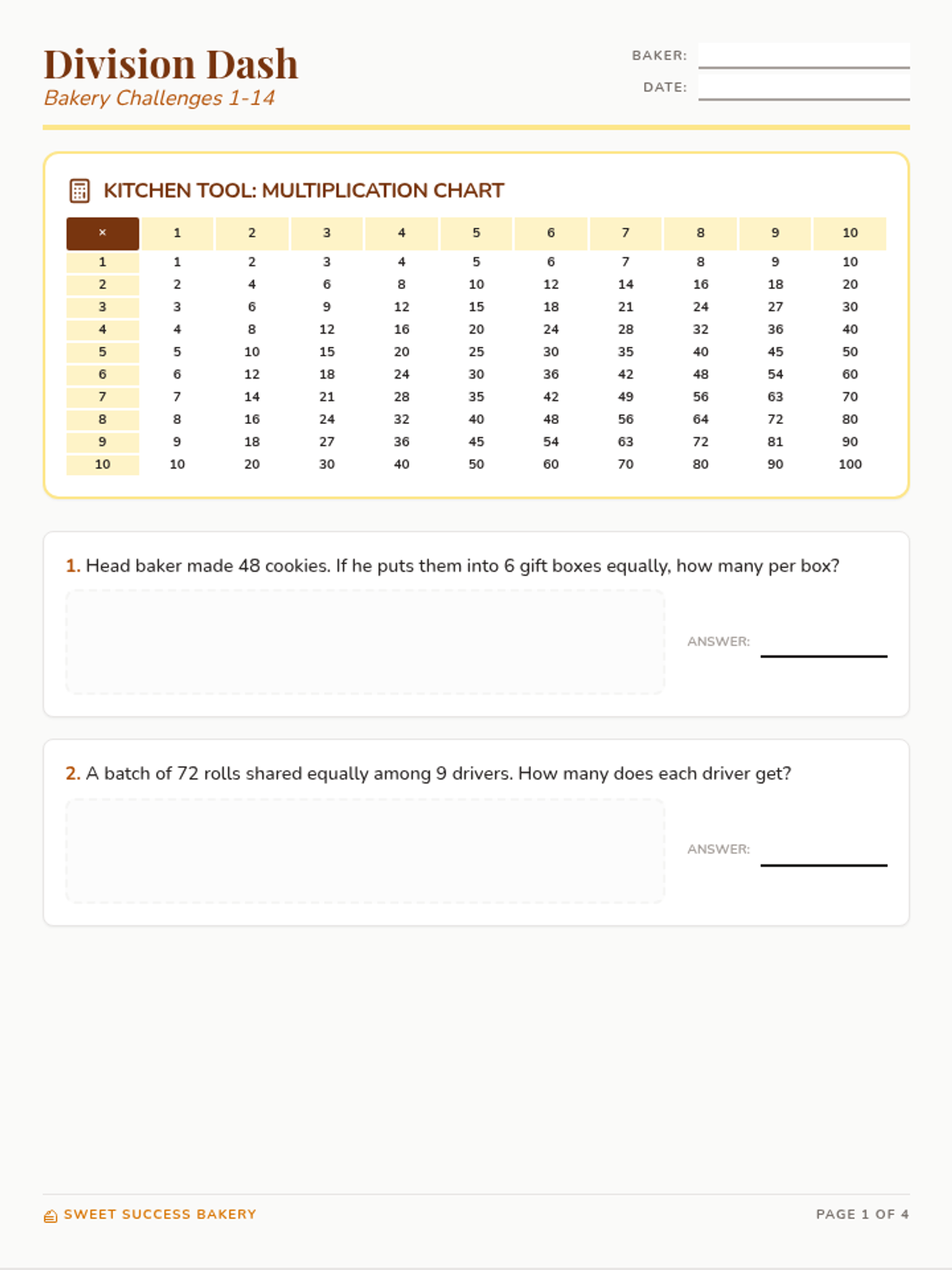
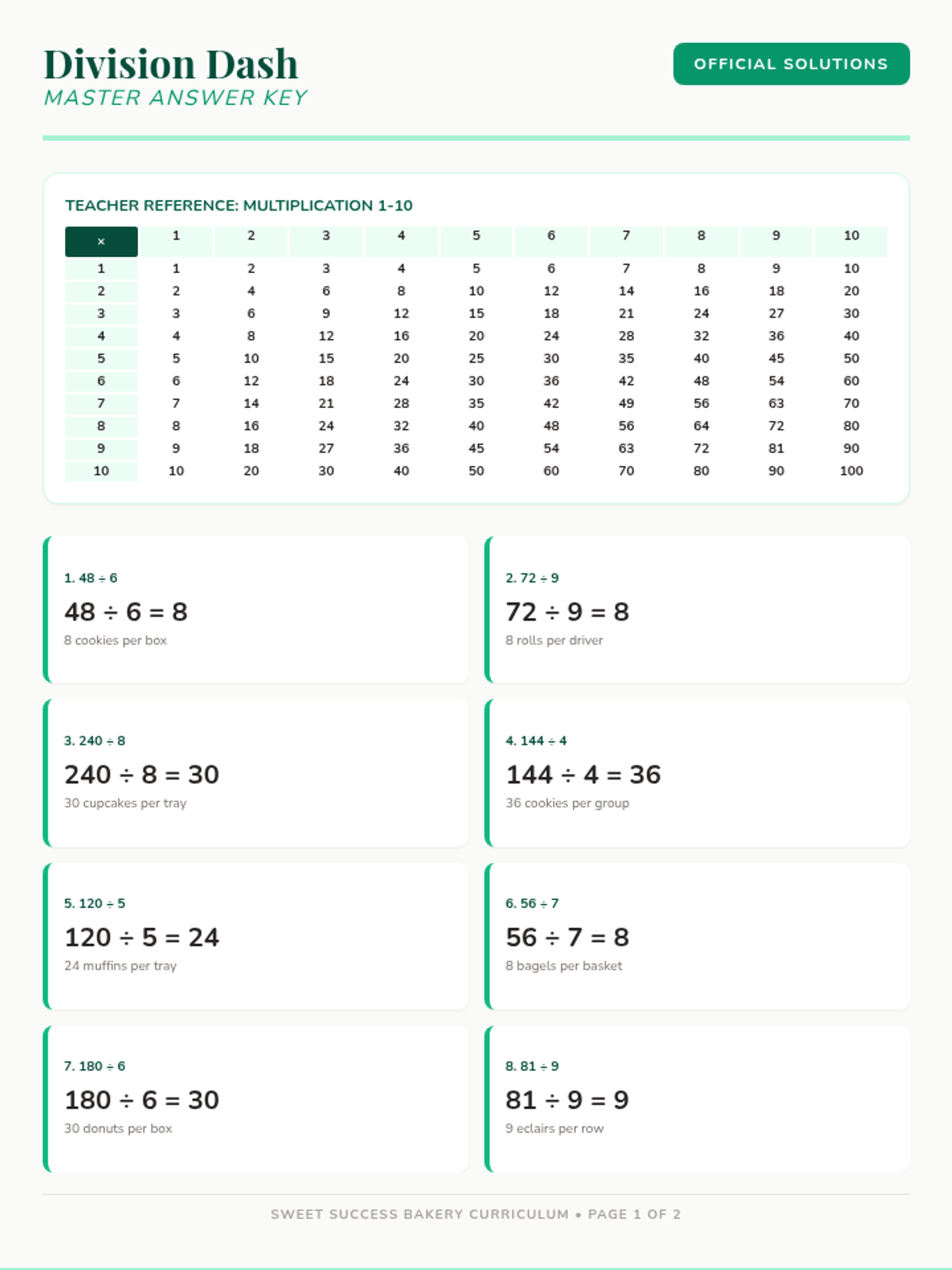
Students solve single-step division word problems using basic facts and larger numbers with 1-digit divisors, supported by a multiplication chart reference.