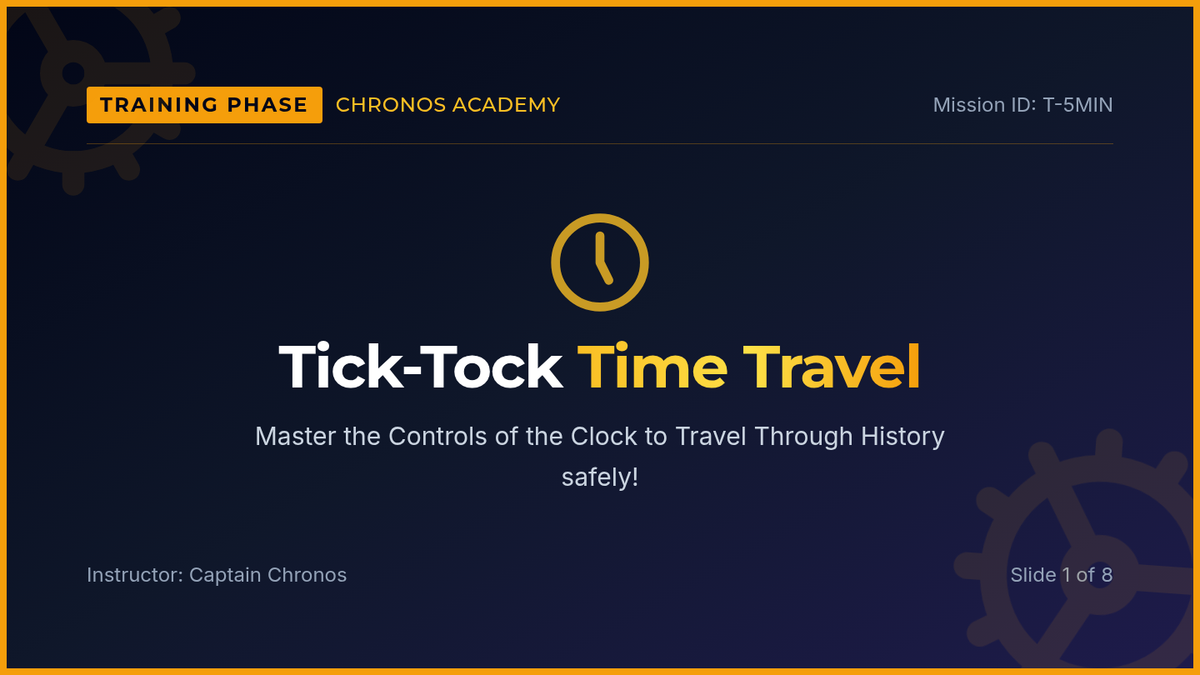
A collaborative secret agent-themed lesson where students work in small groups to solve time-telling challenges to the nearest minute. Students take on the role of agents decoding time-based clues to complete their mission.
A short, high-level assessment focused on equivalent fractions through architectural design and reasoning. Students demonstrate Depth of Knowledge 4 by creating and justifying multiple representations of the same fractional value.
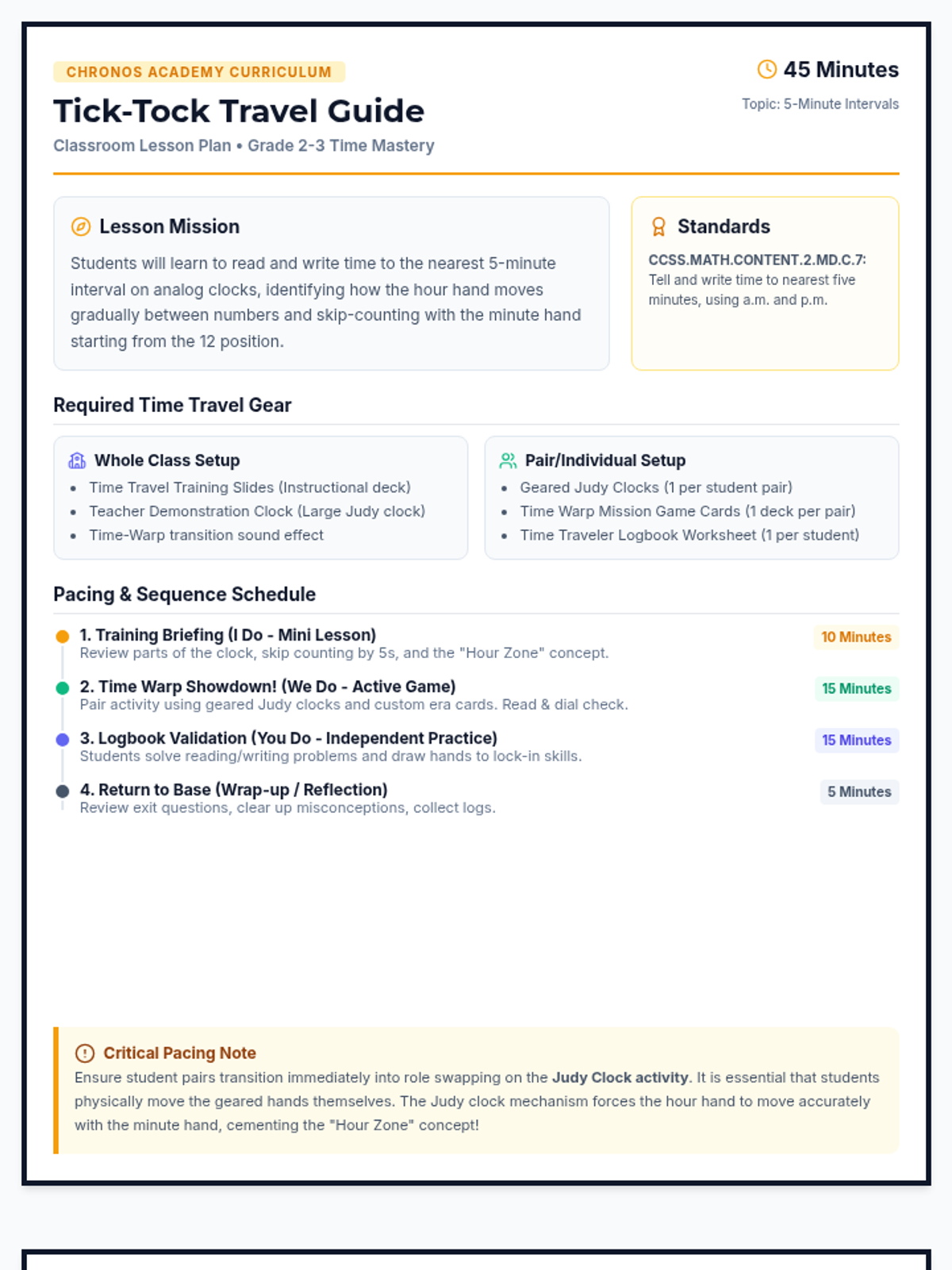
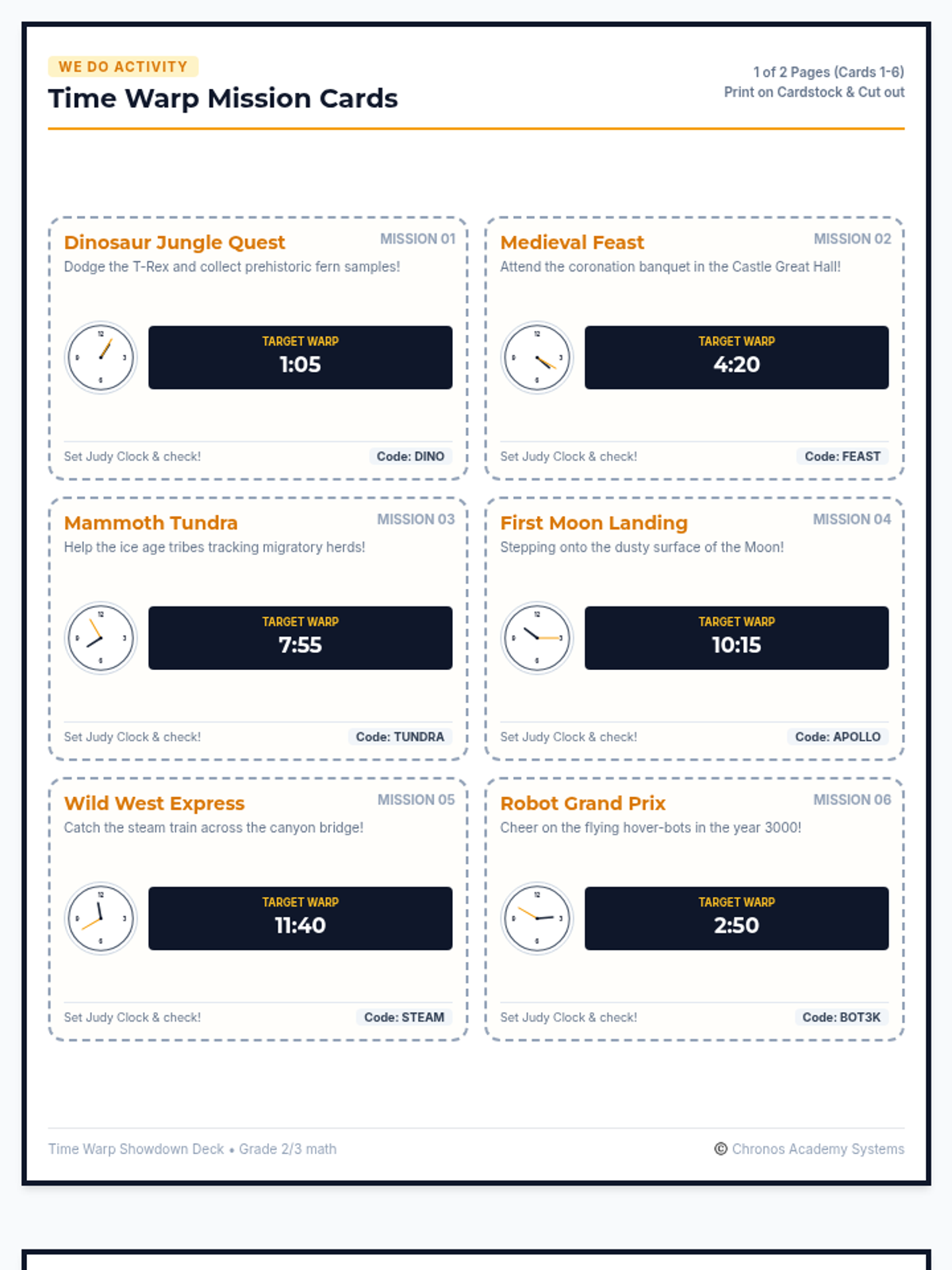
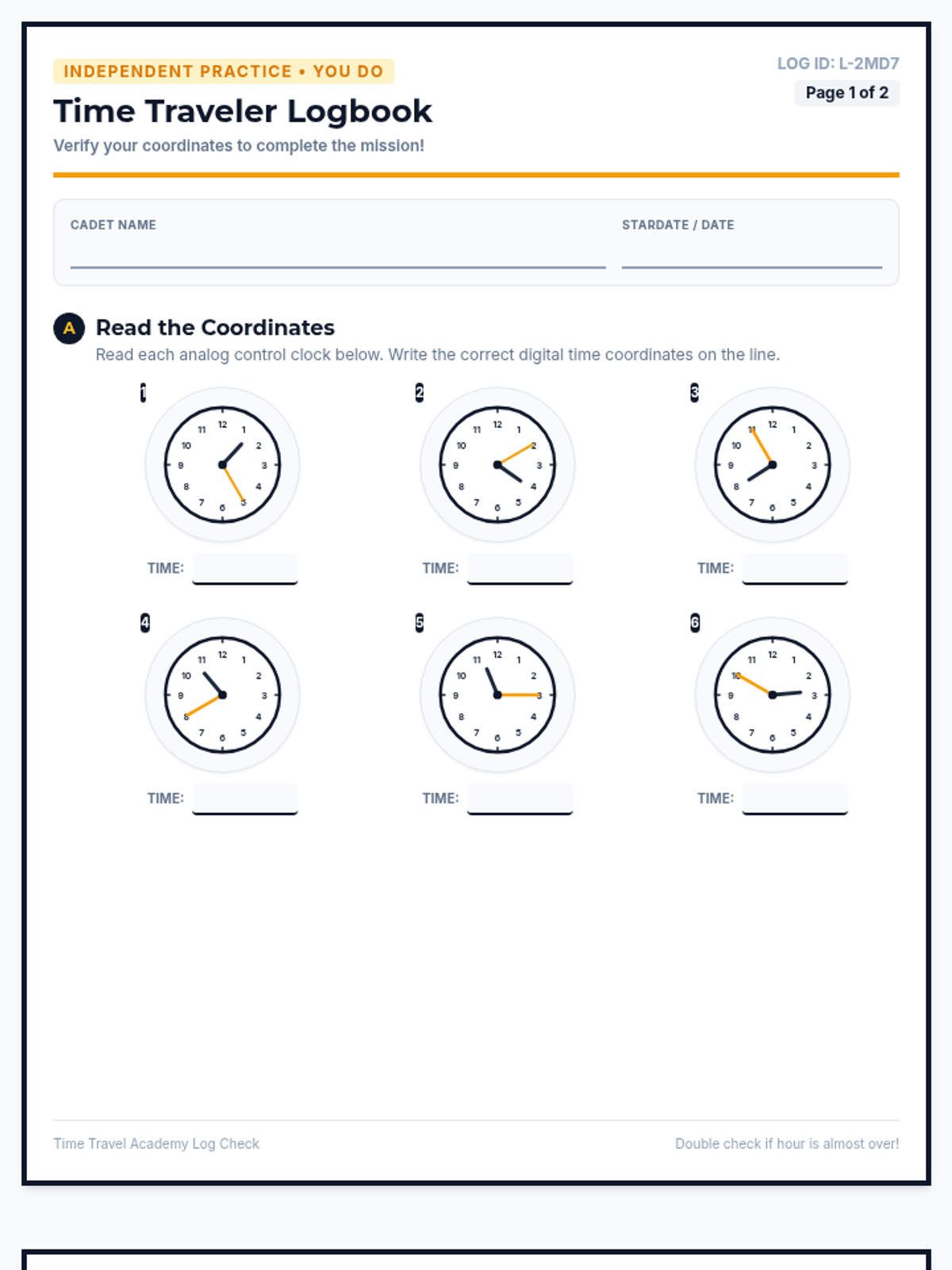
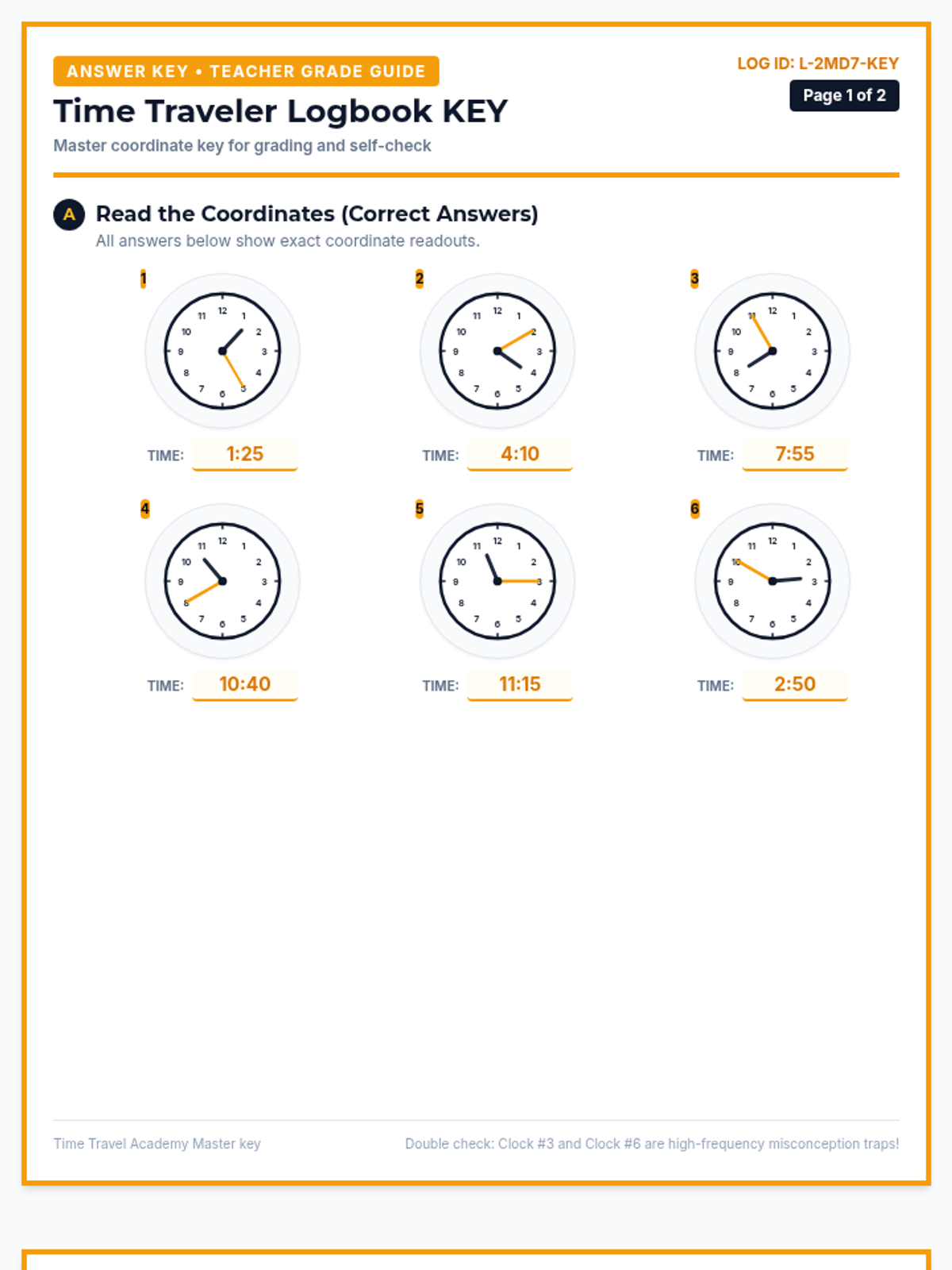
In this collaborative activity, student 'Time Travelers' work in small groups to master reading analog clocks to the nearest minute through a fast-paced 'Scoot' game. The lesson focuses on teamwork, precise observation, and understanding the minute hand's placement.
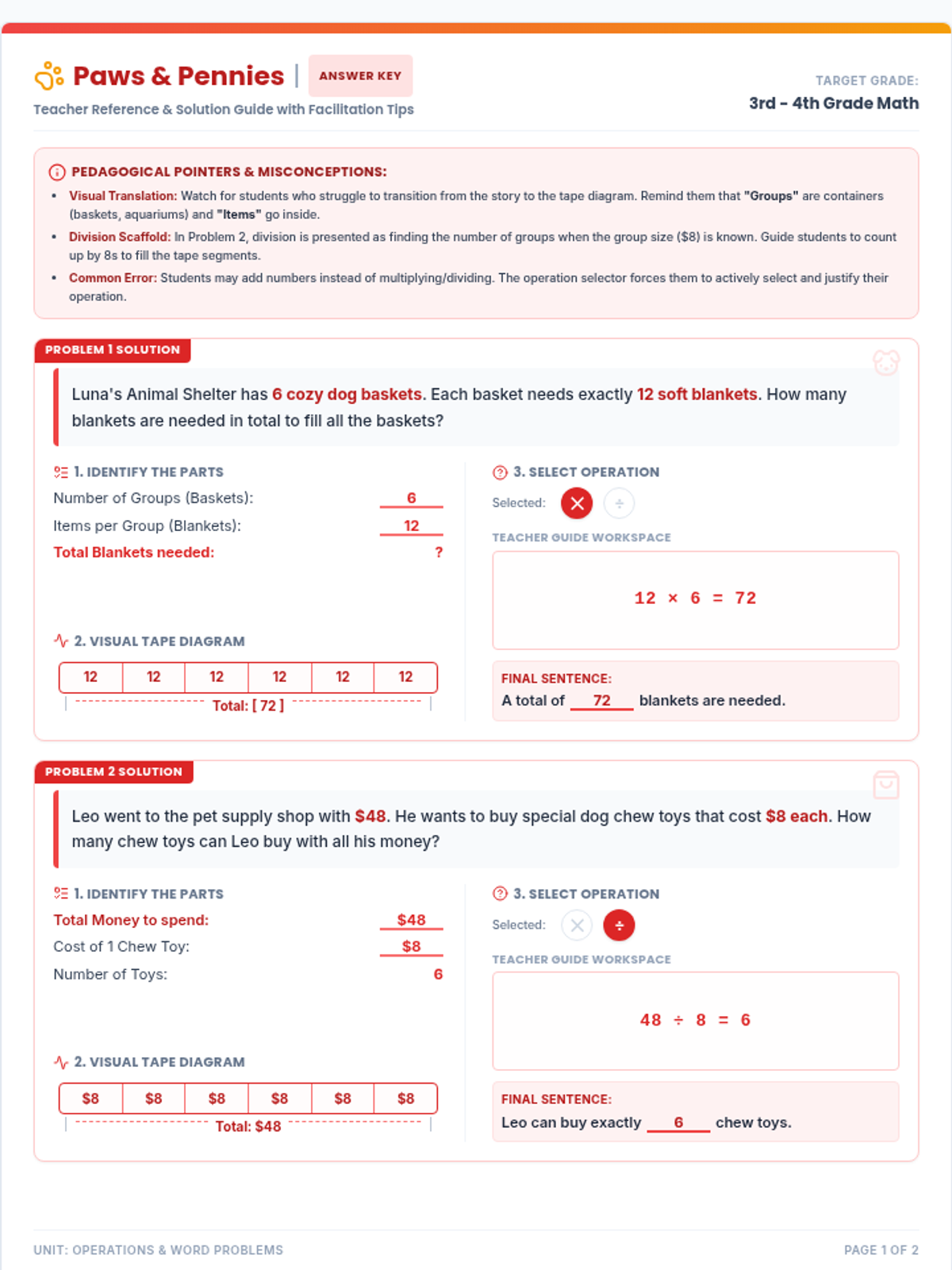
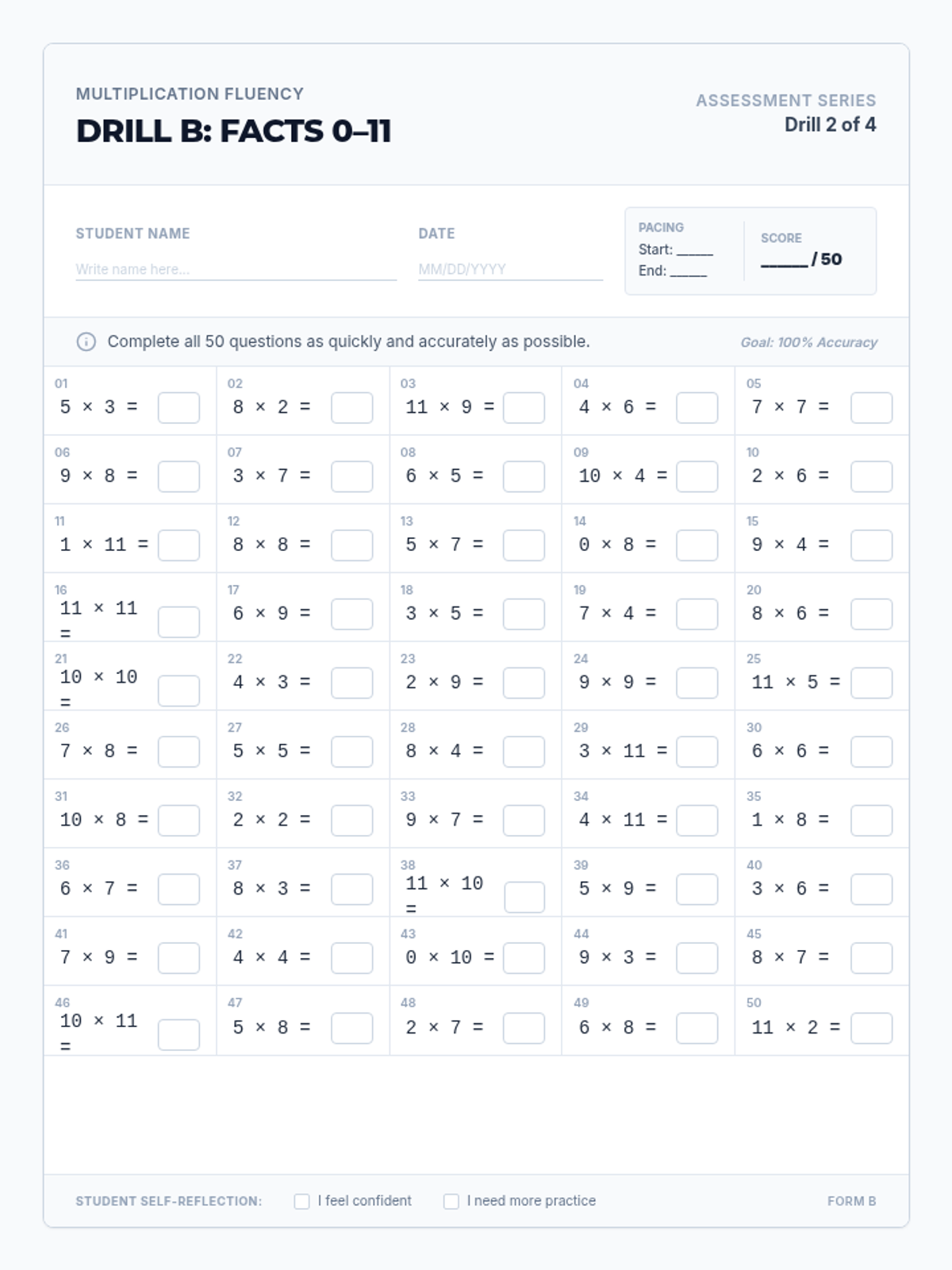
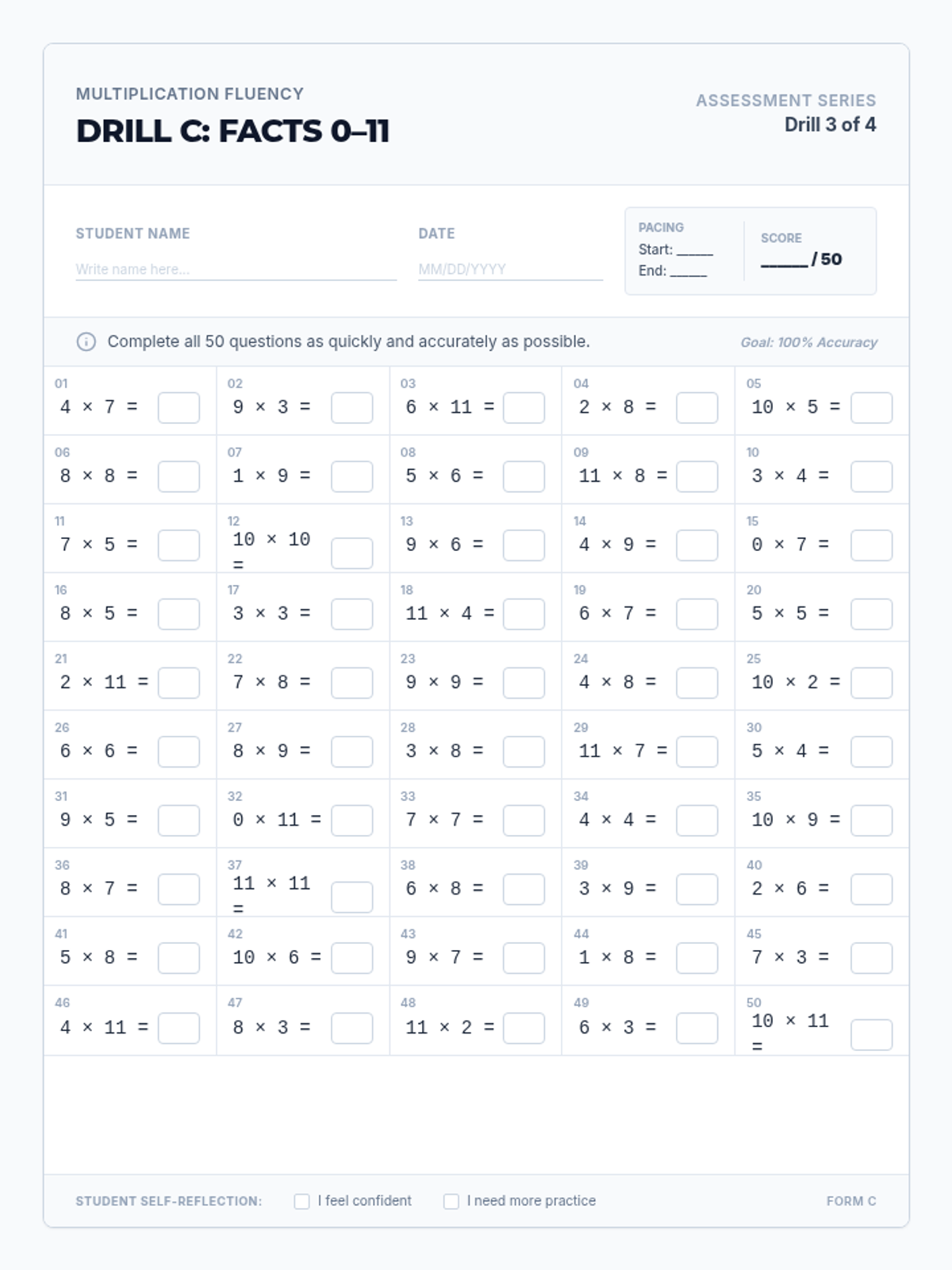
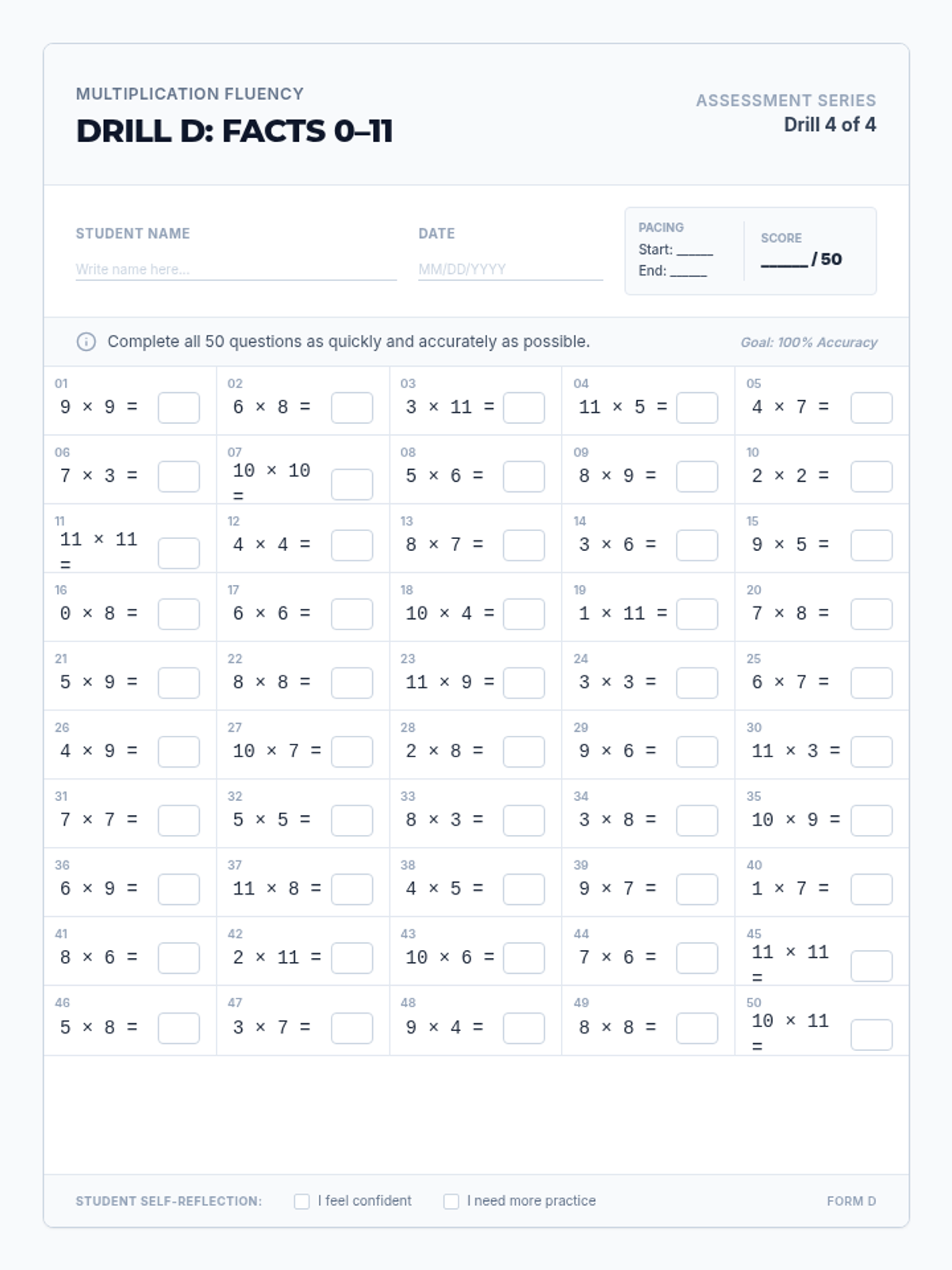
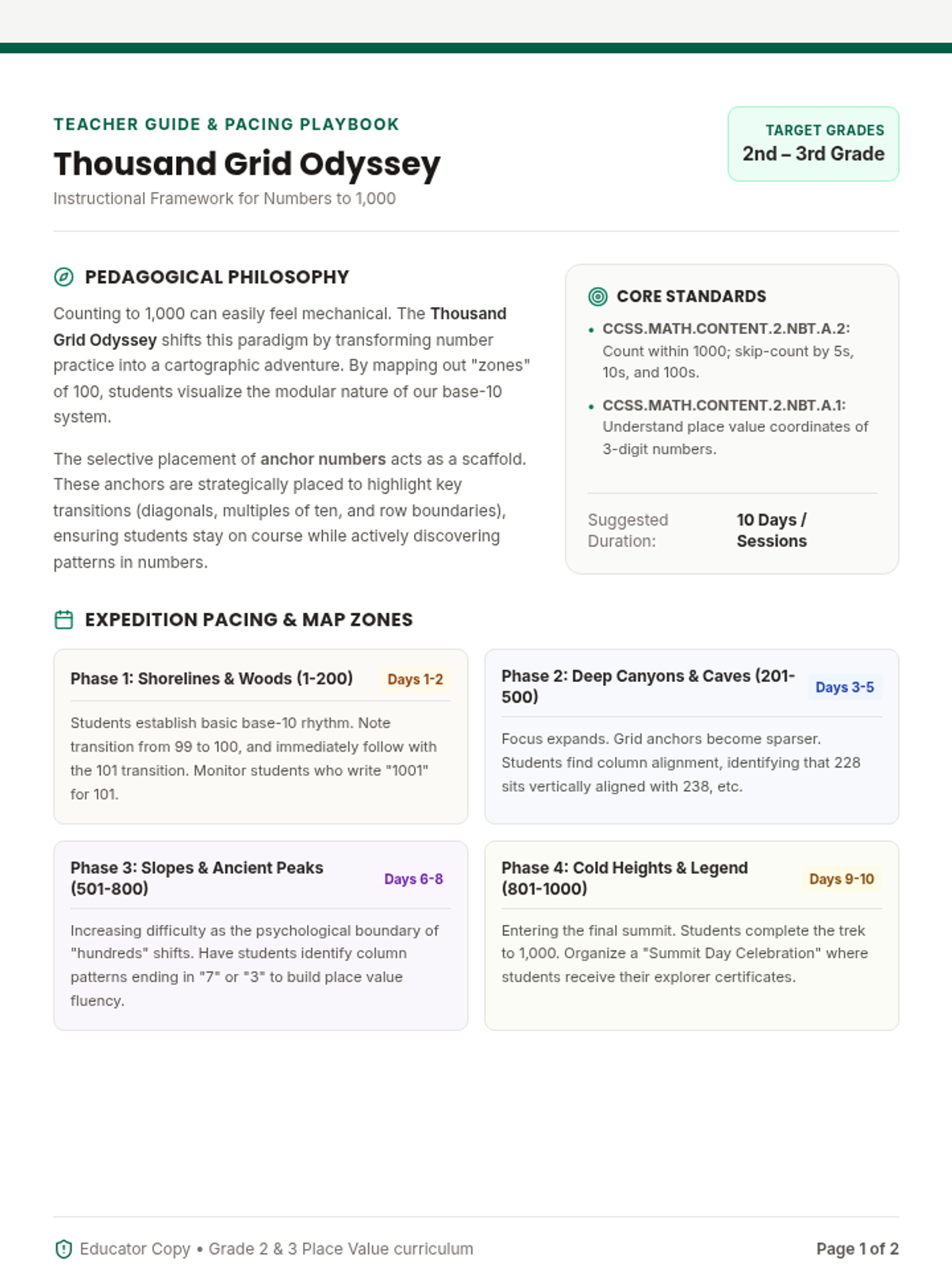
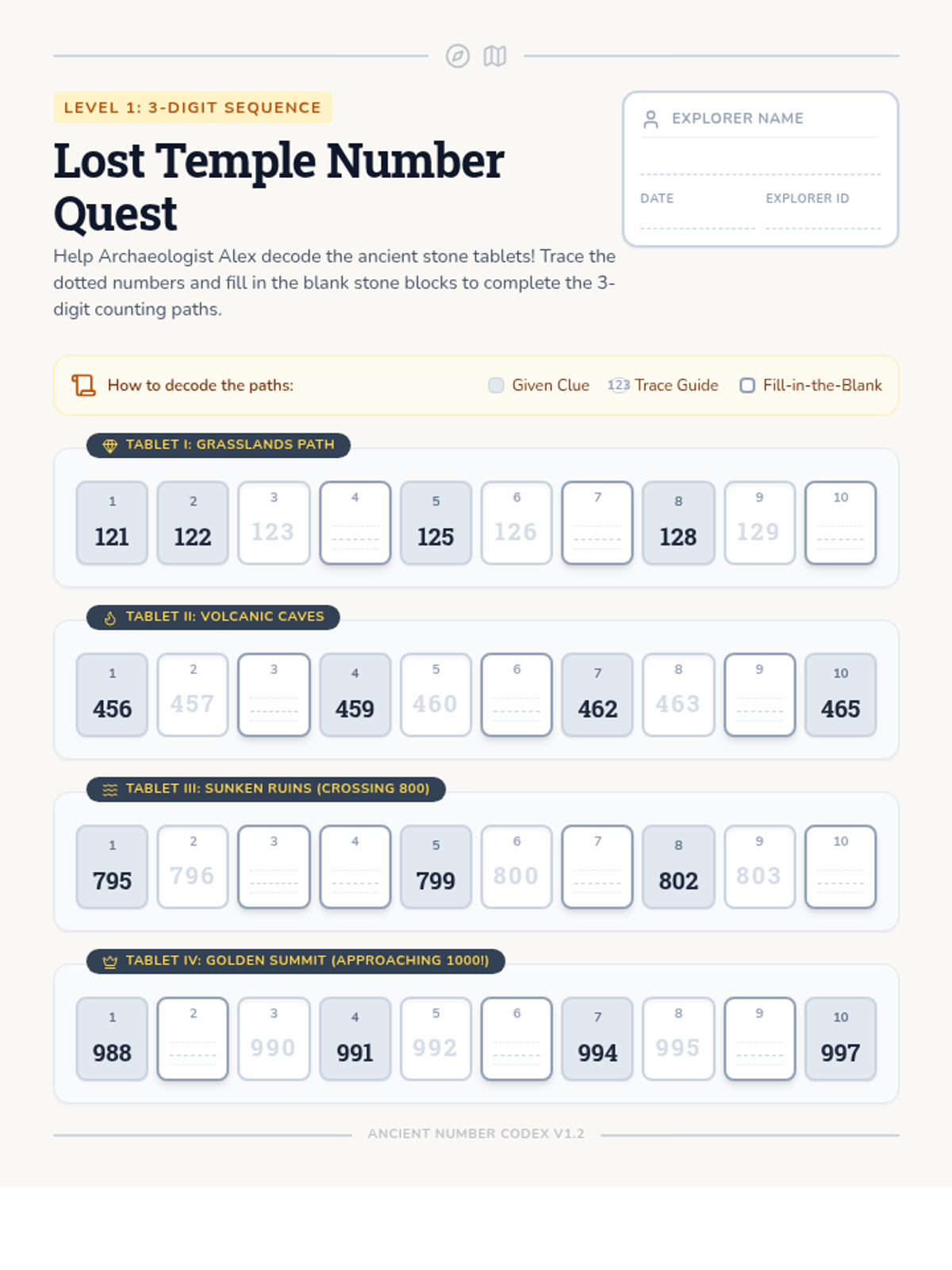
A targeted 30-minute intervention lesson framework and progress monitoring system designed to build multiplication and division fact fluency for students working below grade level.
A high-level performance task where students design a community garden using area models to represent and compare fractions, culminating in a complex redesign based on new constraints.
A 45-minute DOK 4 performance task where students act as garden architects. They must apply their knowledge of fraction parts, number lines, and equivalent fractions to design a community garden under specific constraints and justify their mathematical decisions.
A focused lesson on the 'make a ten' strategy using the number nine as a base. Students use ten-frames and number lines to visualize adding to nine within twenty.
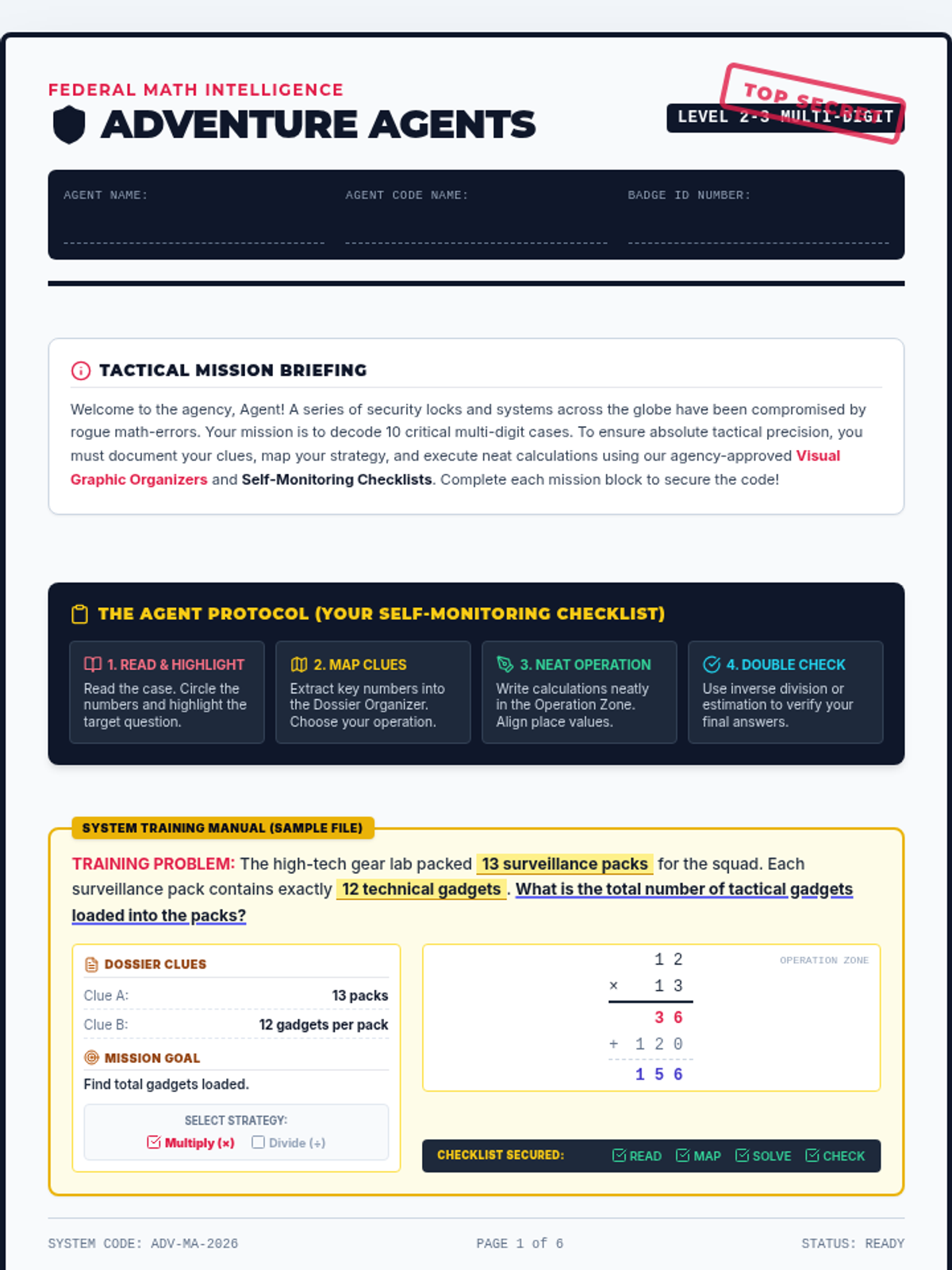
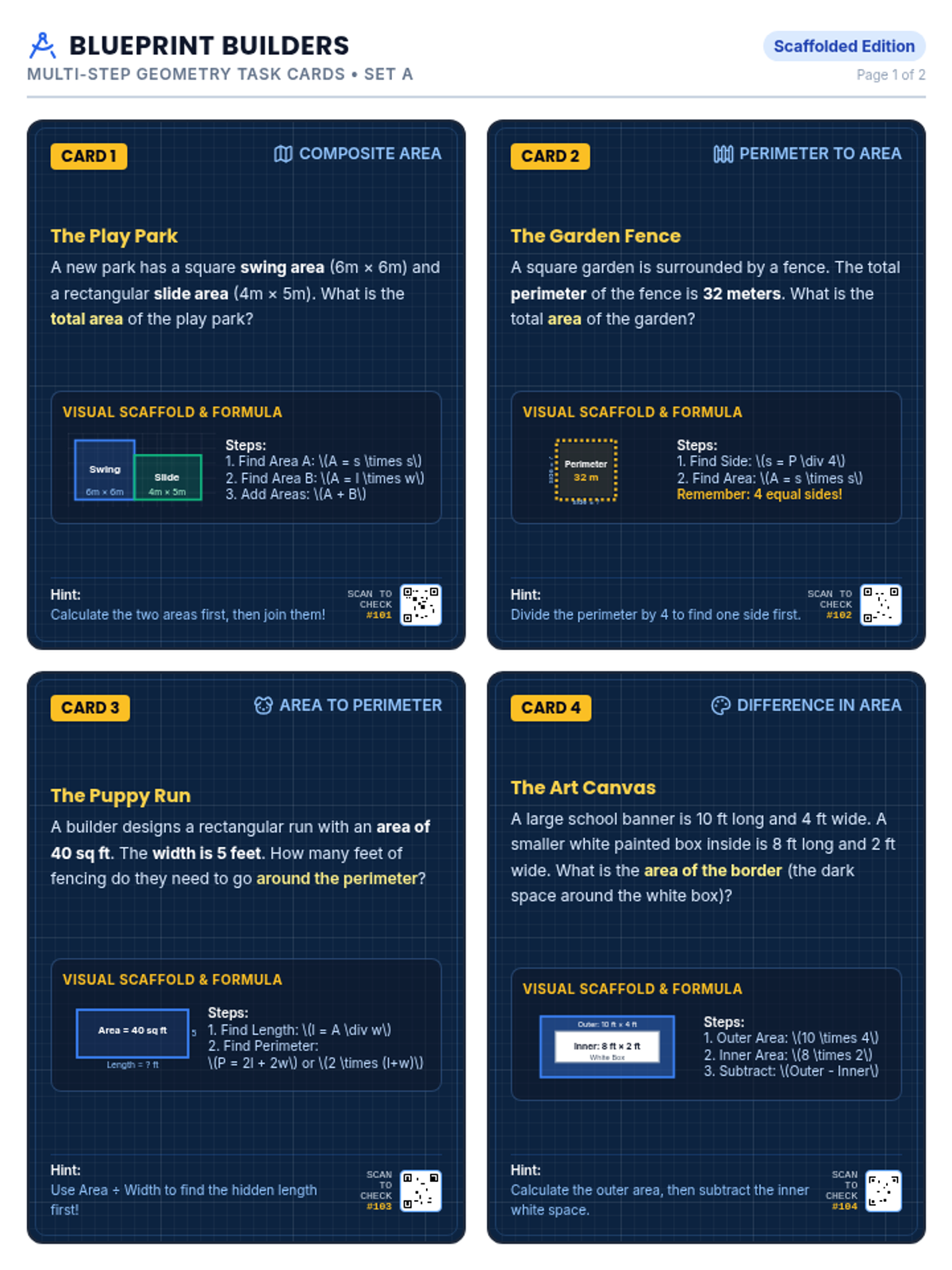
A lesson focused on the partial products method for multi-digit multiplication, using a 'blueprint' theme to help students visualize breaking down numbers into tens and ones.
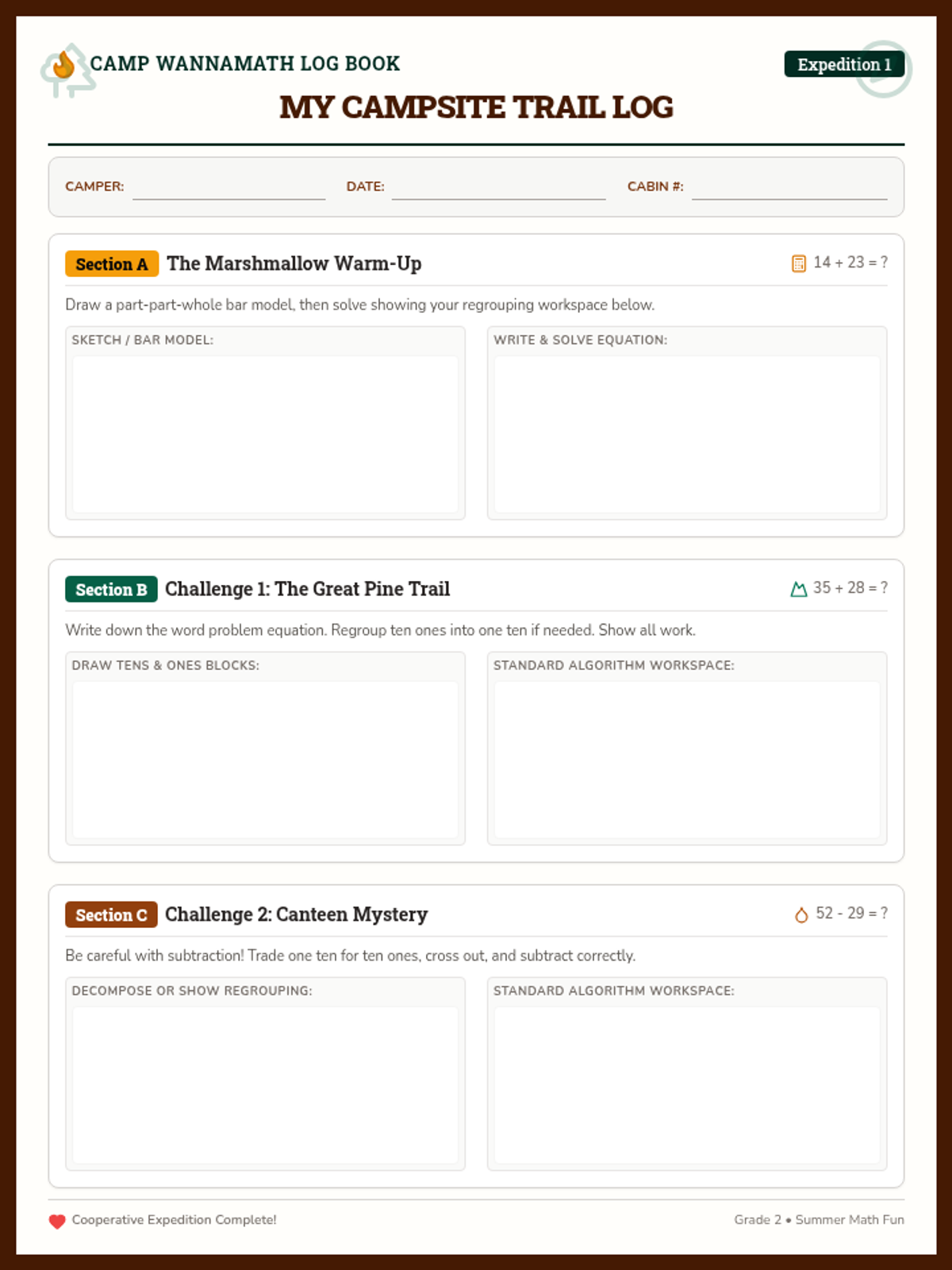
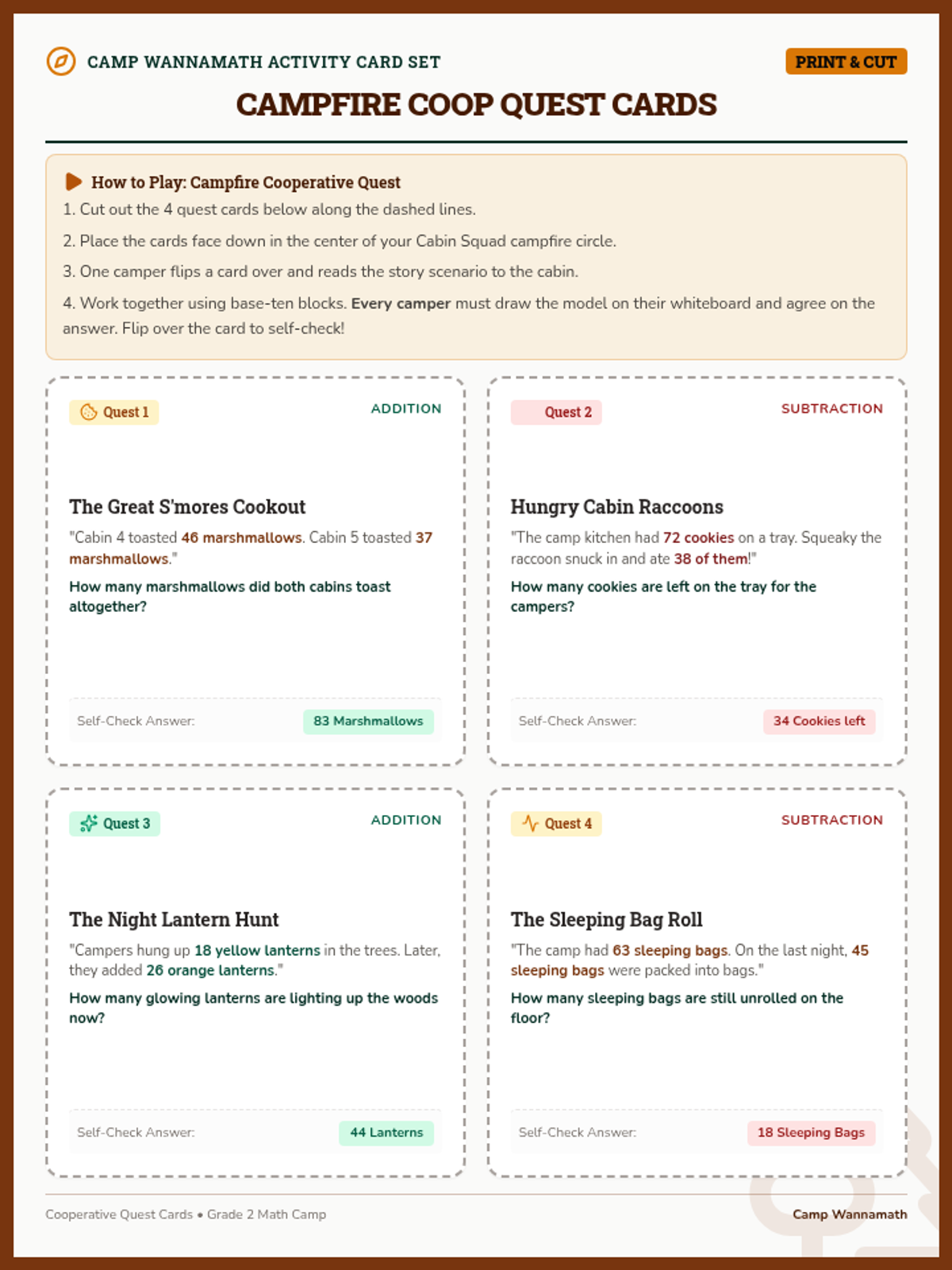
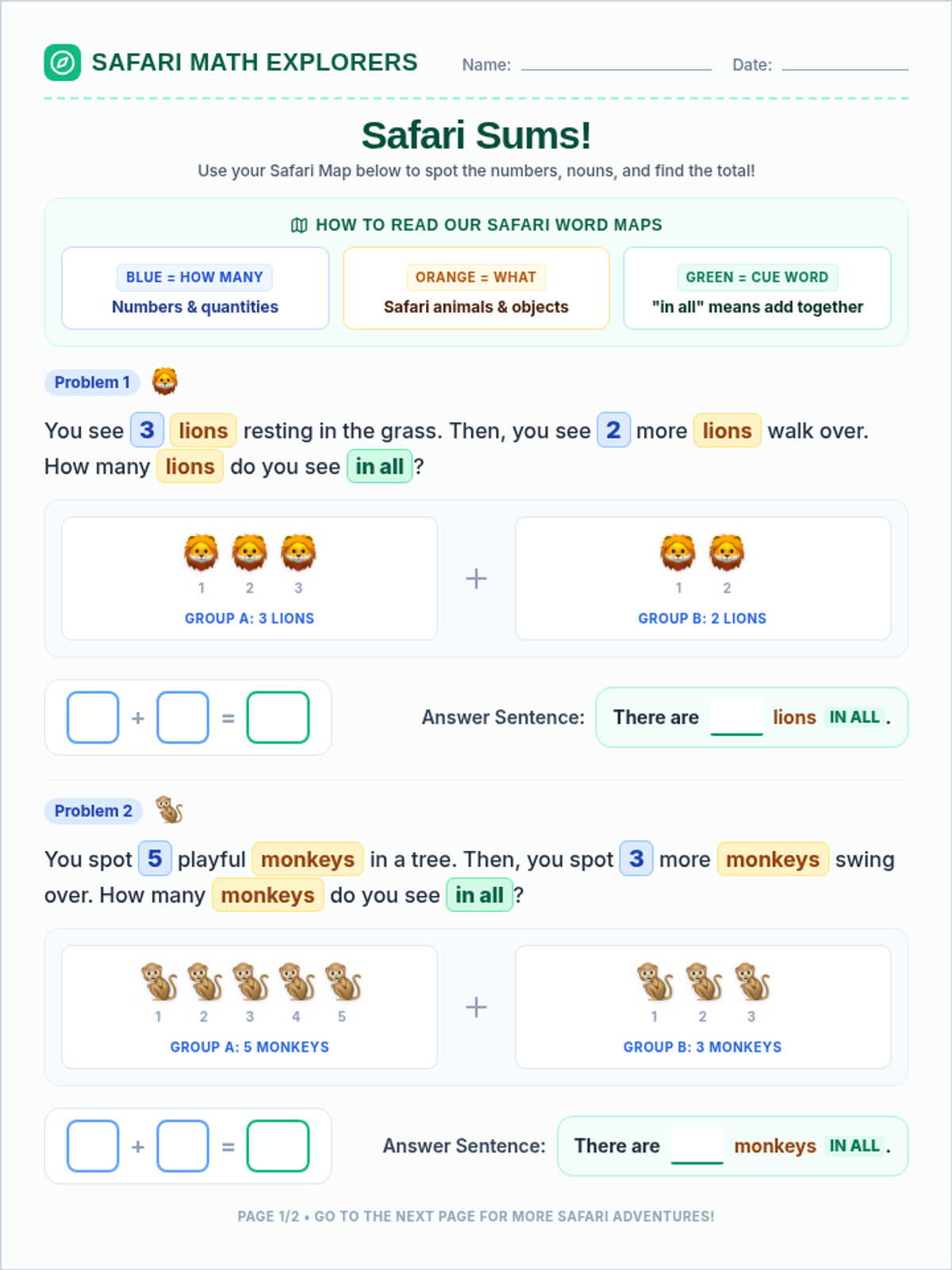
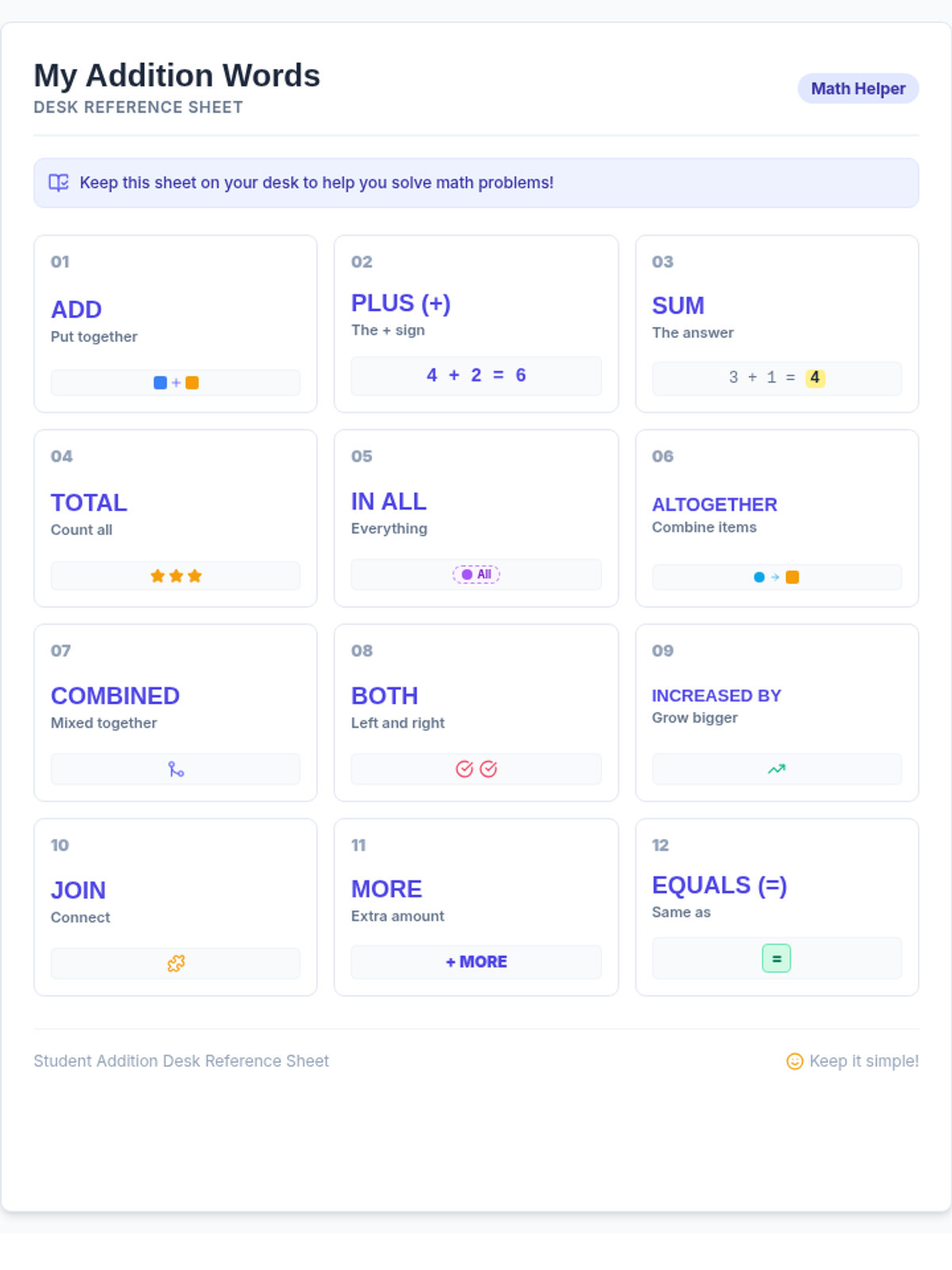
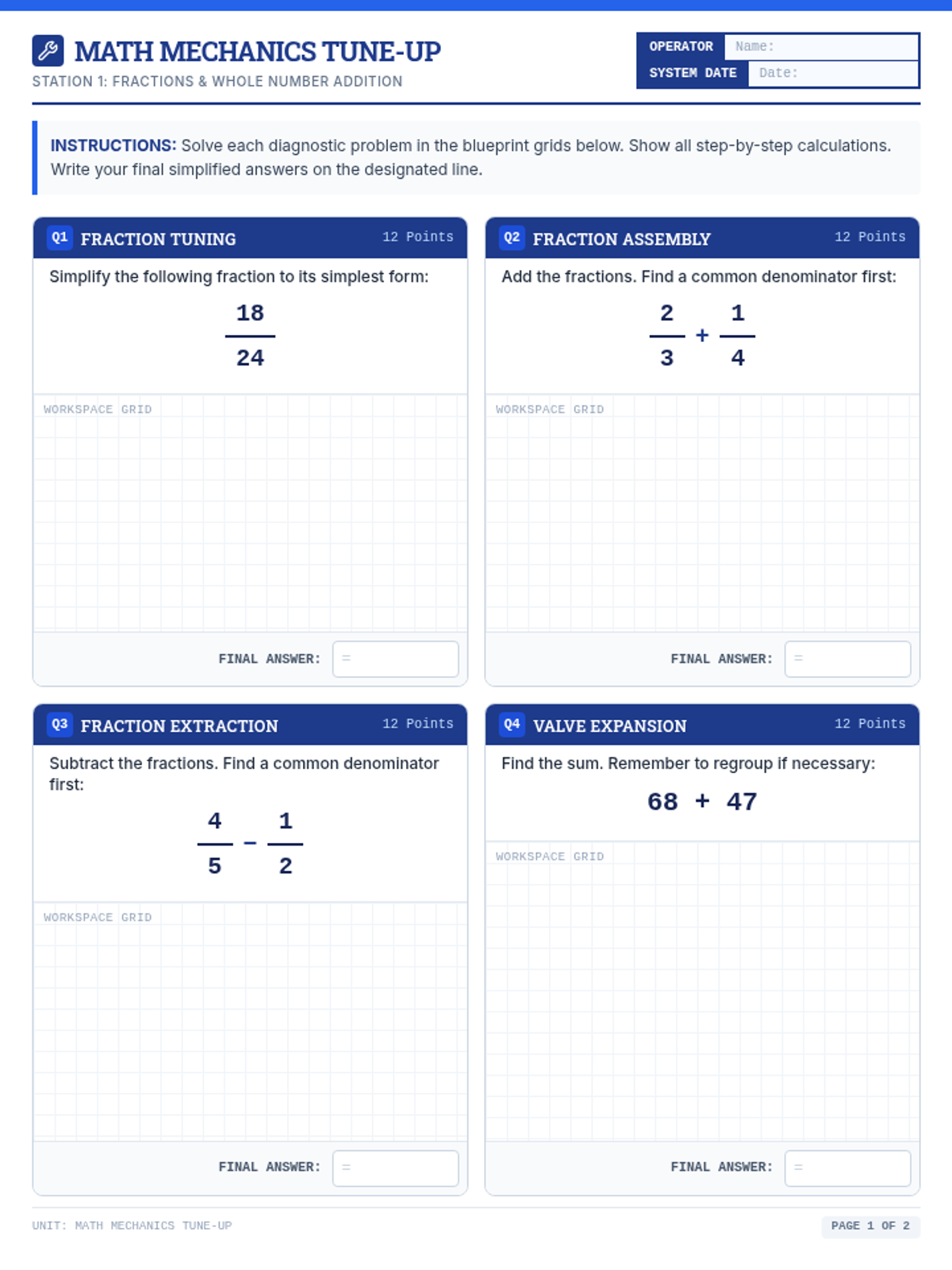
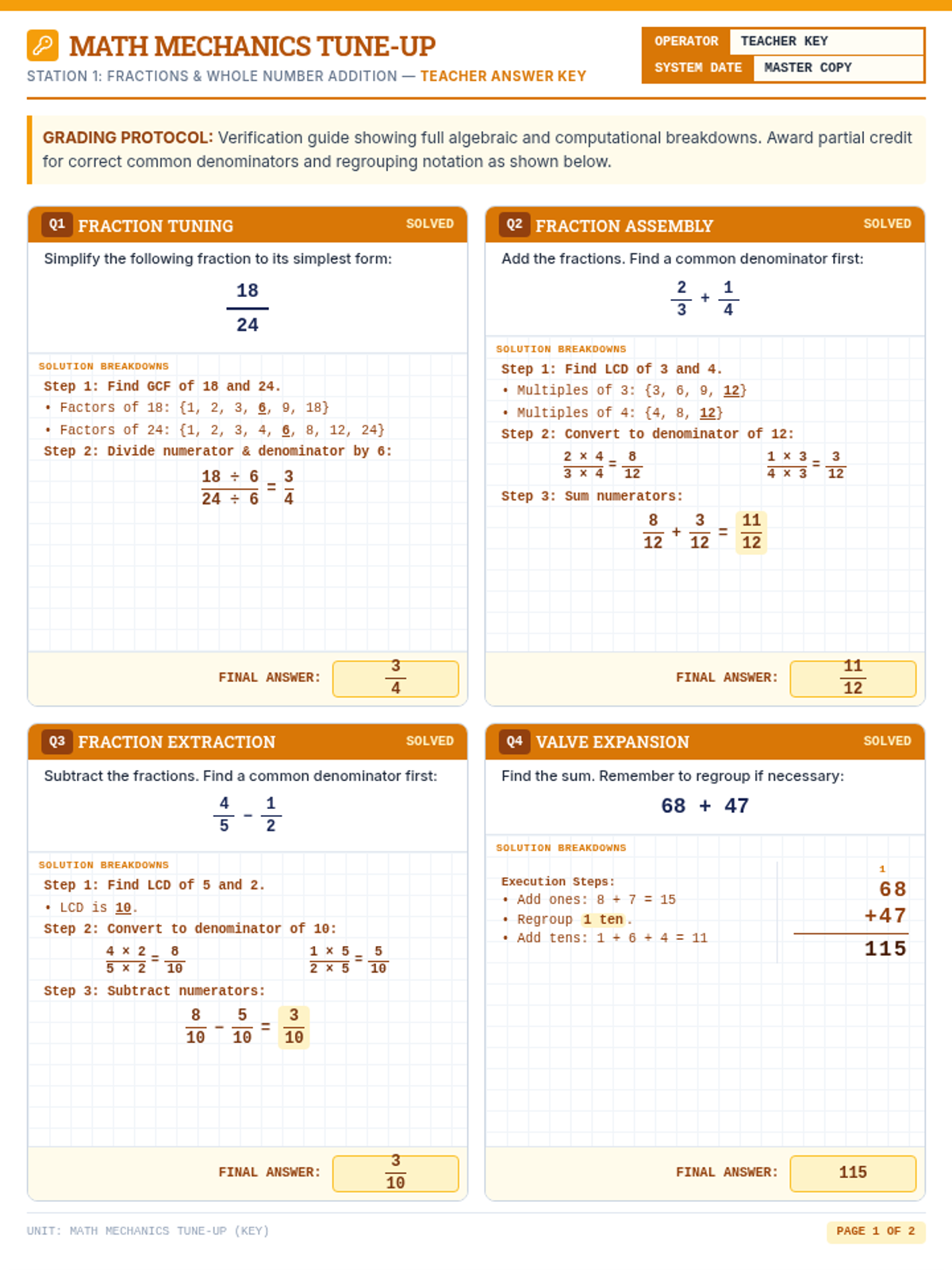
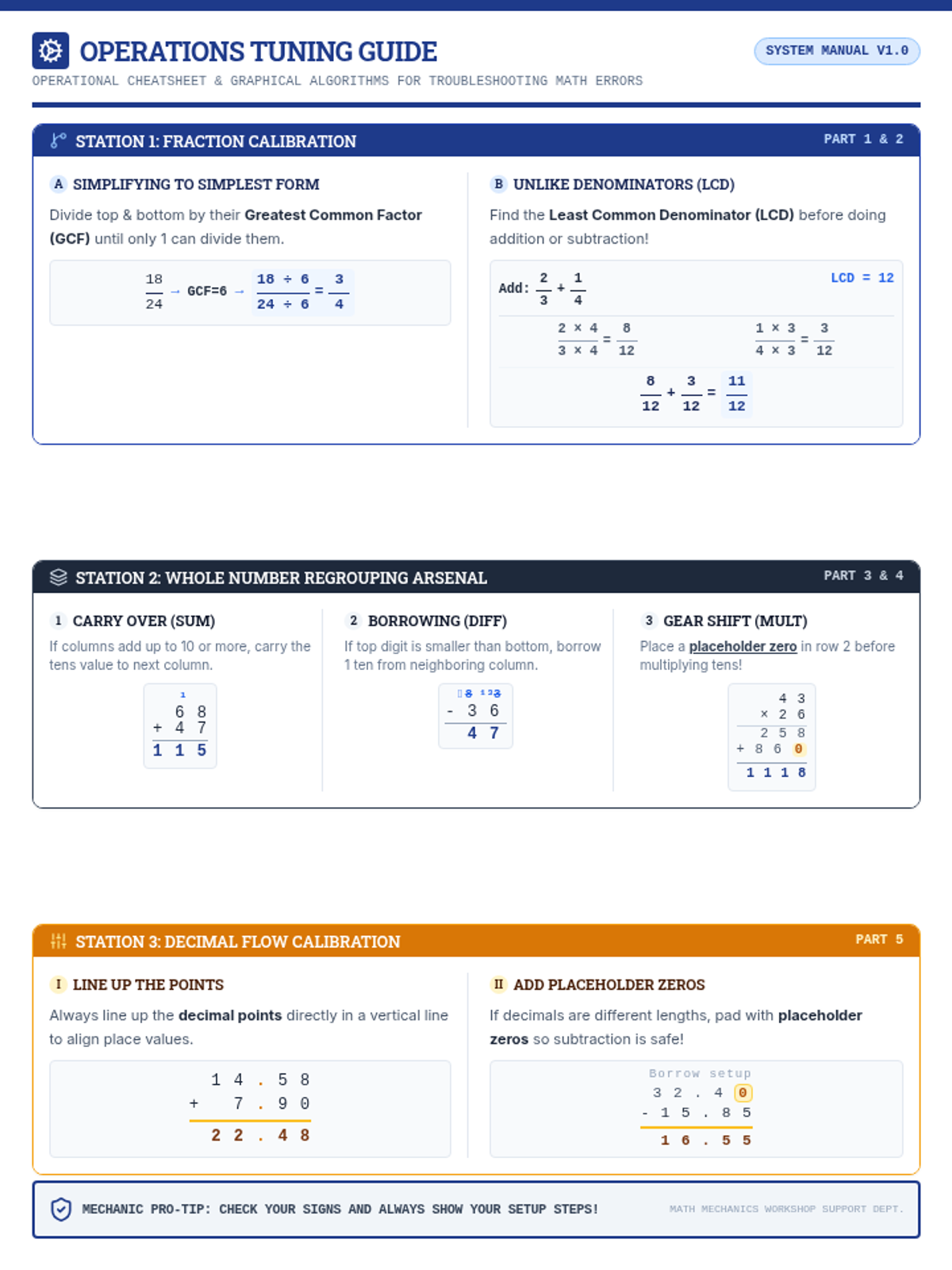
A lesson focused on mastering 2-digit plus 1-digit addition using regrouping, supported by base ten block visualizations.
A fun, themed introduction to statistics covering central tendency, probability, and data visualization using the world of My Little Pony: Equestria Girls.
A lesson about identifying whole numbers from equivalent fractions using area models. Students practice with pre-filled models, shading blank models, and drawing their own models.
A lesson on comparing three fractions with unlike denominators using common denominators and inequality symbols.
A lesson focused on comparing and ordering sets of three fractions with unlike denominators by finding a common denominator, specifically using sets where denominators are related by common multiples.
A beginner-friendly introduction to fractions (halves, thirds, and fourths) designed for Level 1 English Language Learners with Chinese translation support and visual aids.
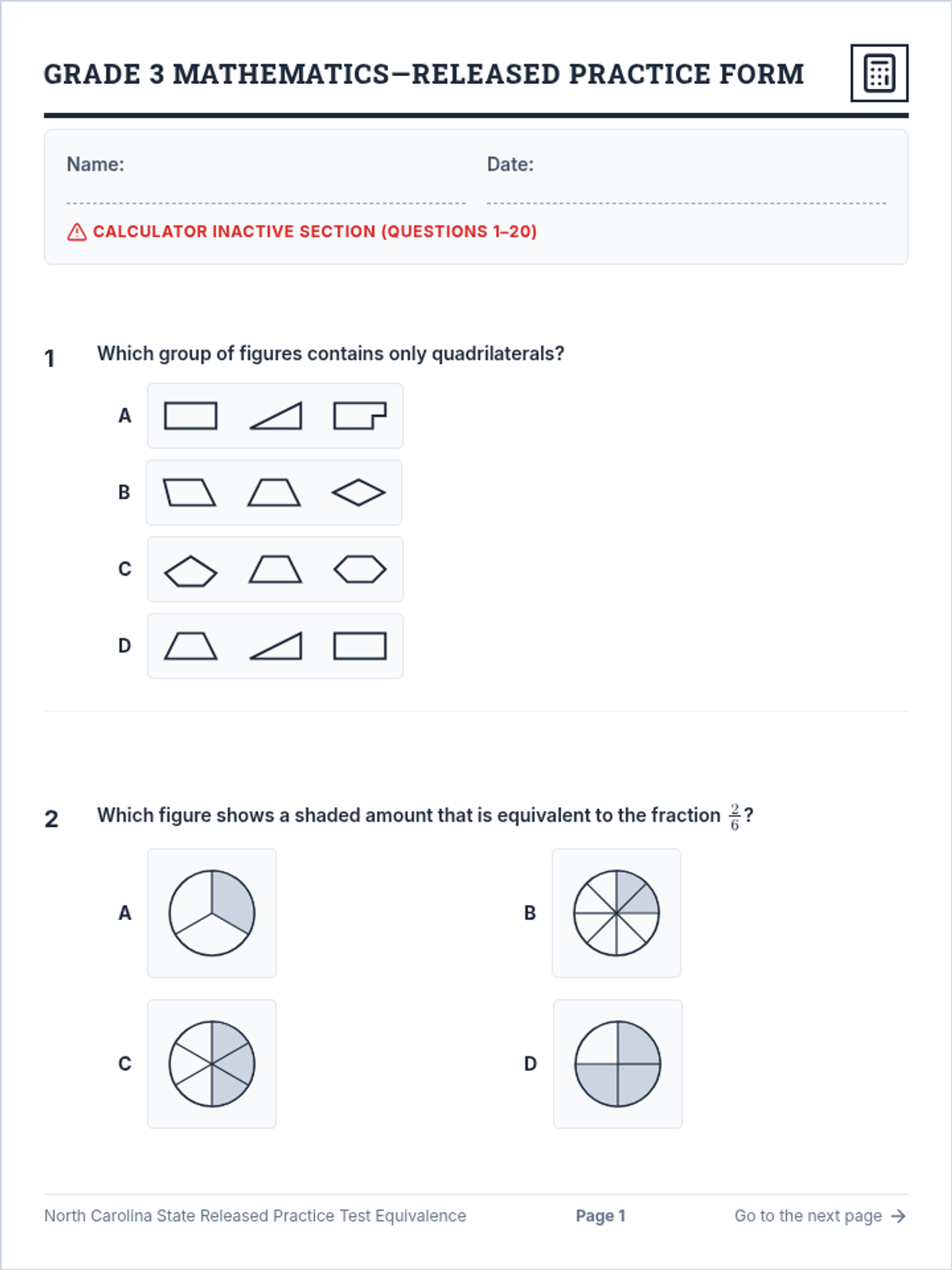
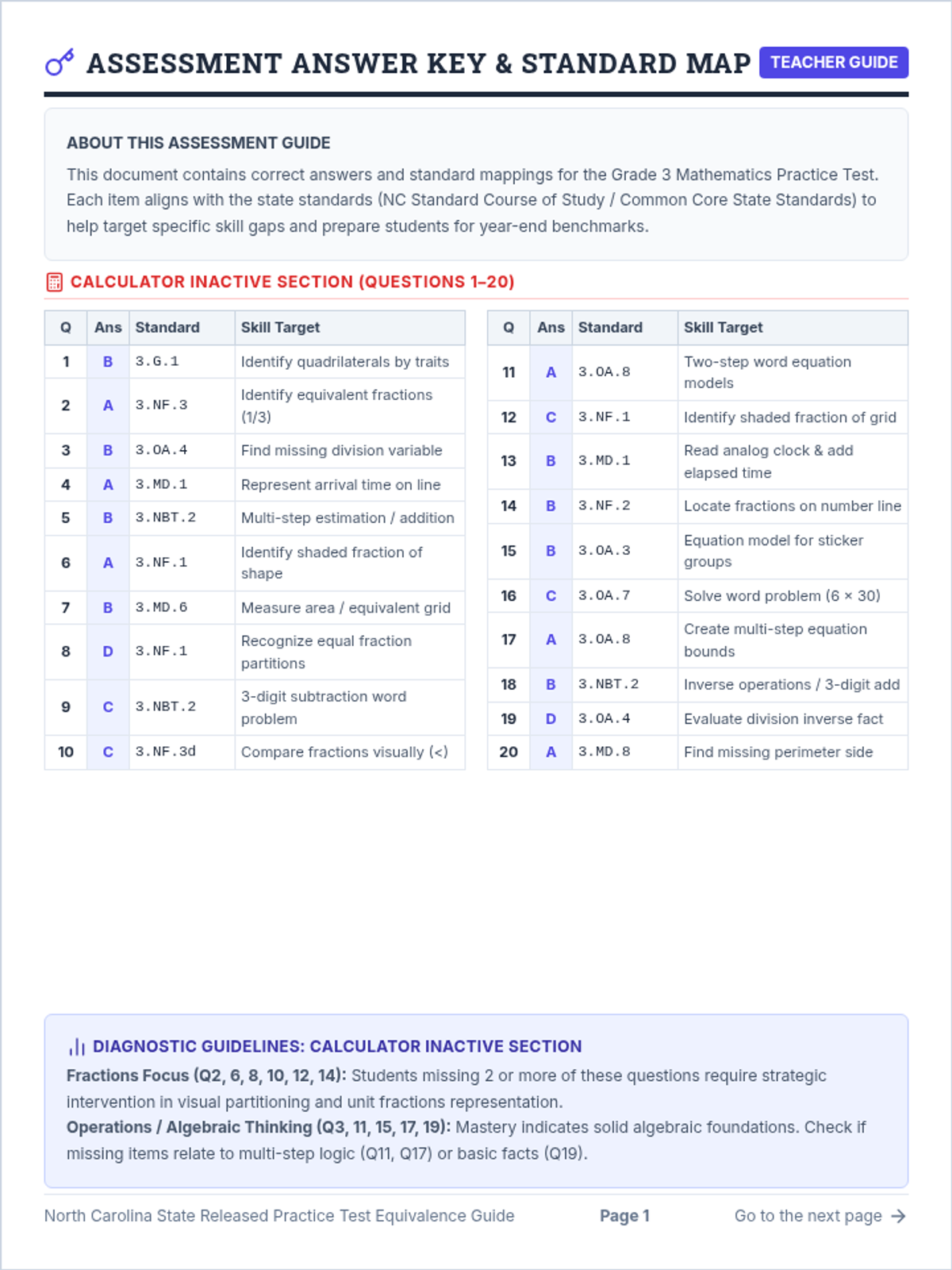
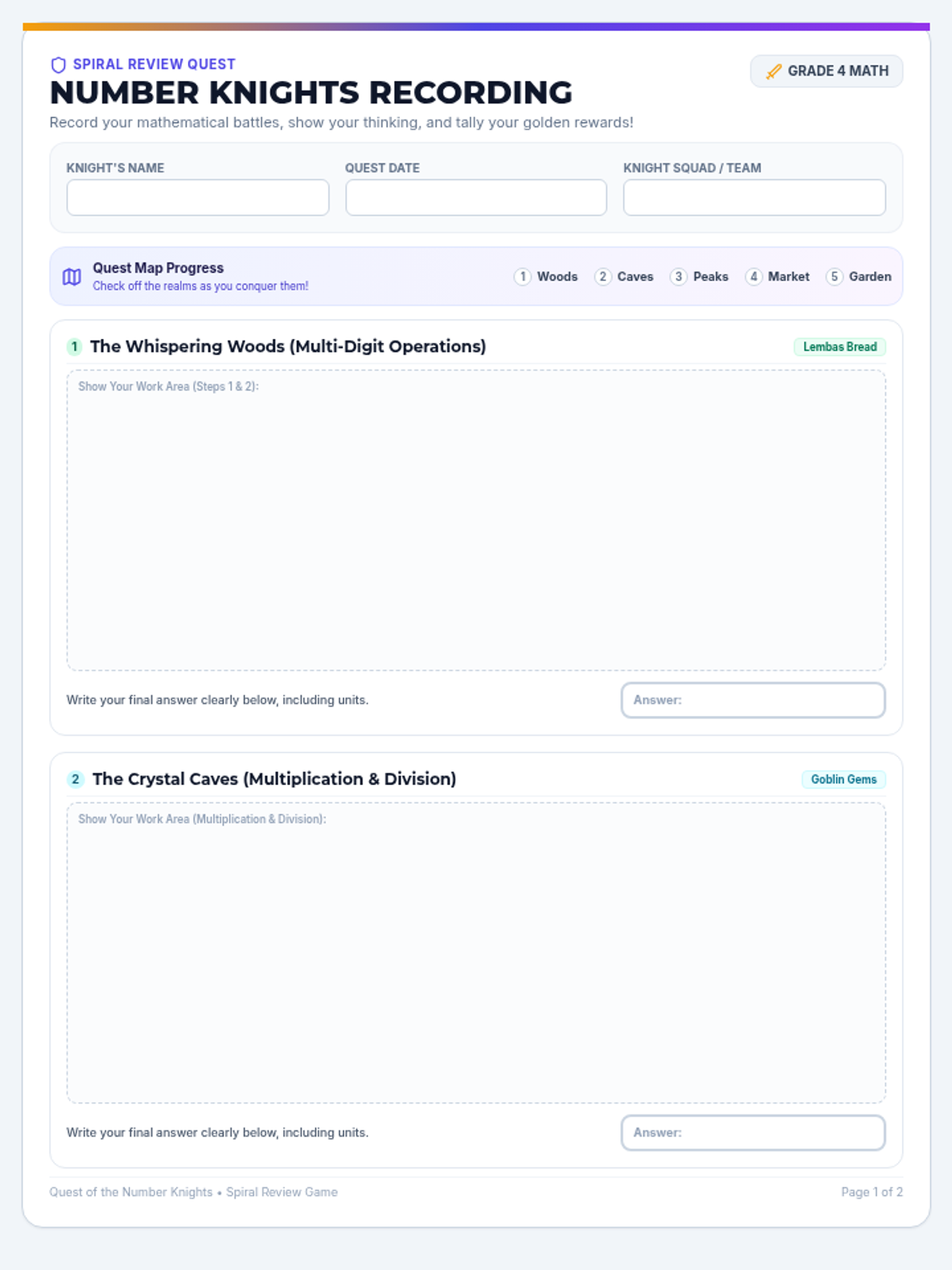
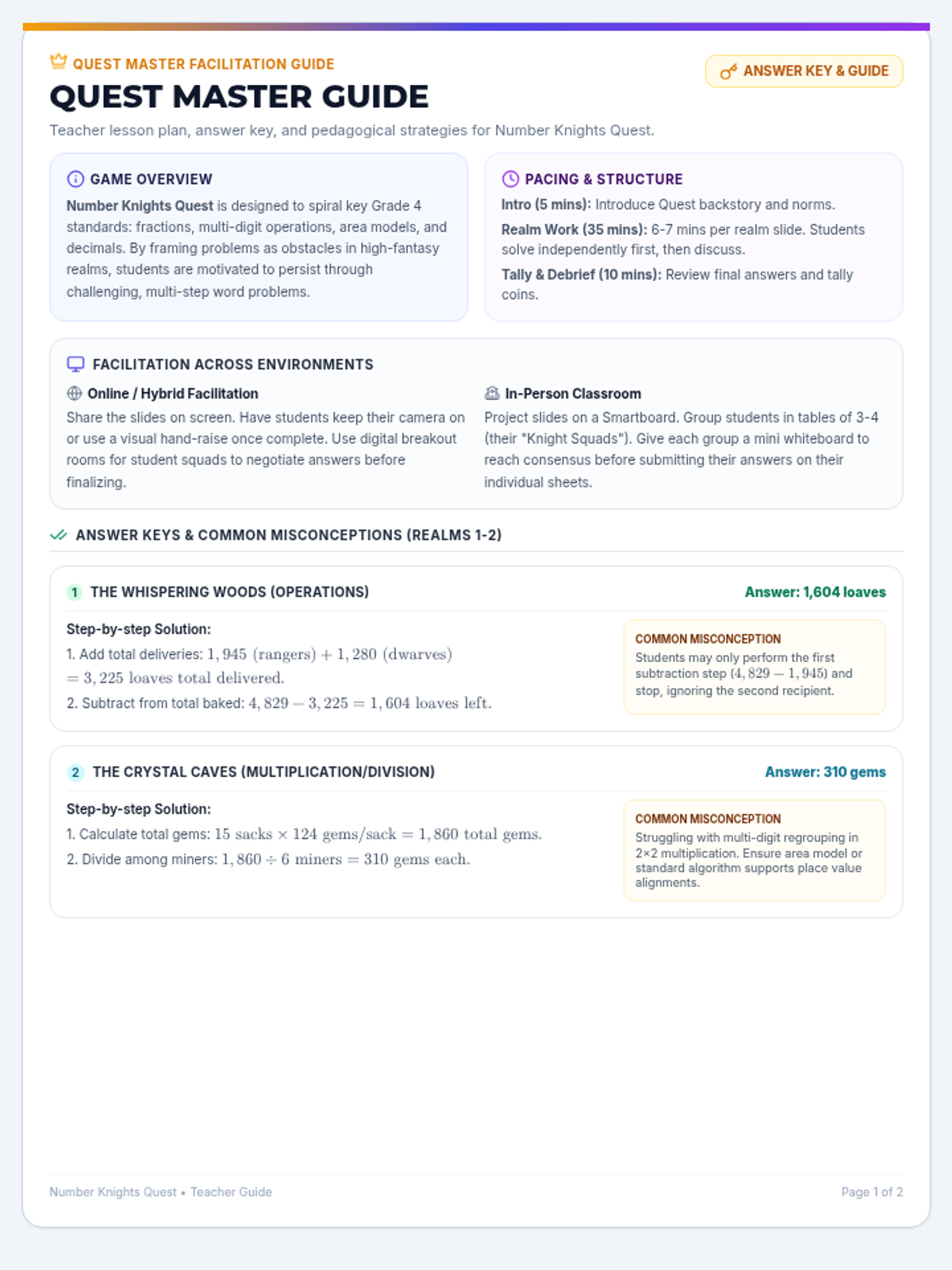
A high-energy review lesson using a mountain-climbing theme to practice third-grade math standards through board games, slides, and scavenger hunts.
A cumulative review of the week's fraction concepts followed by a 10-question quick check assessment. Covers unit fractions, number lines, equivalence, and comparison.
Students explore equivalent fractions using area models and number lines, recognizing that equivalent fractions represent the same amount or point.
Students learn to represent fractions on a number line by partitioning the interval from 0 to 1 into equal parts. Focuses on unit fractions as the building blocks.
This lesson introduces unit fractions and partitioning shapes into equal areas. Students learn to name fractions based on the number of equal parts.
A lesson focused on converting mixed numbers to improper fractions using a step-by-step visual method. Students will practice building 'improper' structures from mixed foundations.
An interactive arcade-themed lesson where students master counting mixed coins and selecting the correct coins to pay for items up to one dollar.
A focused lesson on converting mixed numbers to improper fractions using the MAD (Multiply, Add, Denominator) strategy. Includes a visual anchor chart and a practice worksheet.
Students learn to compare fractions with the same numerator or the same denominator using visual models and reasoning. Includes comparing denominators 2, 3, 4, 6, and 8.
Students practice identifying, counting, and producing amounts with quarters, dimes, nickels, and pennies using visual counting aids.
A comprehensive review of 4.2G, 4.6D, and 4.9A through a final mission. This lesson integrates all three standards into a culminating "Ultimate Heist" escape room challenge.
Focuses on TEKS 4.9A: Representing data on frequency tables, dot plots, and stem-and-leaf plots. Students act as investigators analyzing evidence files to solve a data-driven mystery.
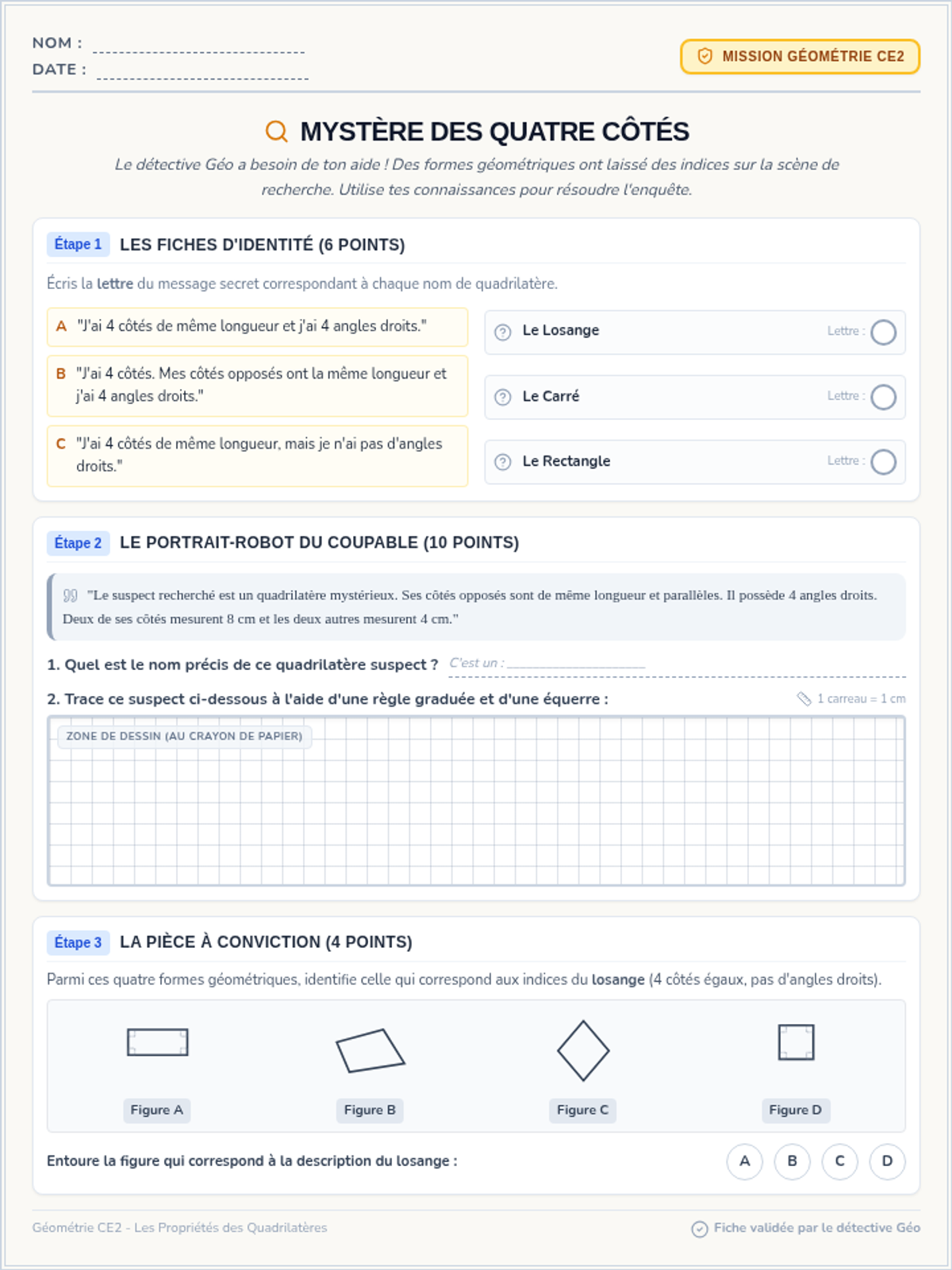
Focuses on TEKS 4.6D: Classifying two-dimensional figures based on parallel and perpendicular lines and angle types. Students analyze evidence files (Task Cards) to identify high-security shapes.
Focuses on TEKS 4.2G: Relating decimals to fractions that name tenths and hundredths. Students take on the role of codebreakers to unlock a digital vault by matching values across different representations.