A foundational lesson on basic economic principles including supply, demand, producers, and consumers. Students will identify key terms and understand how they interact in a marketplace.
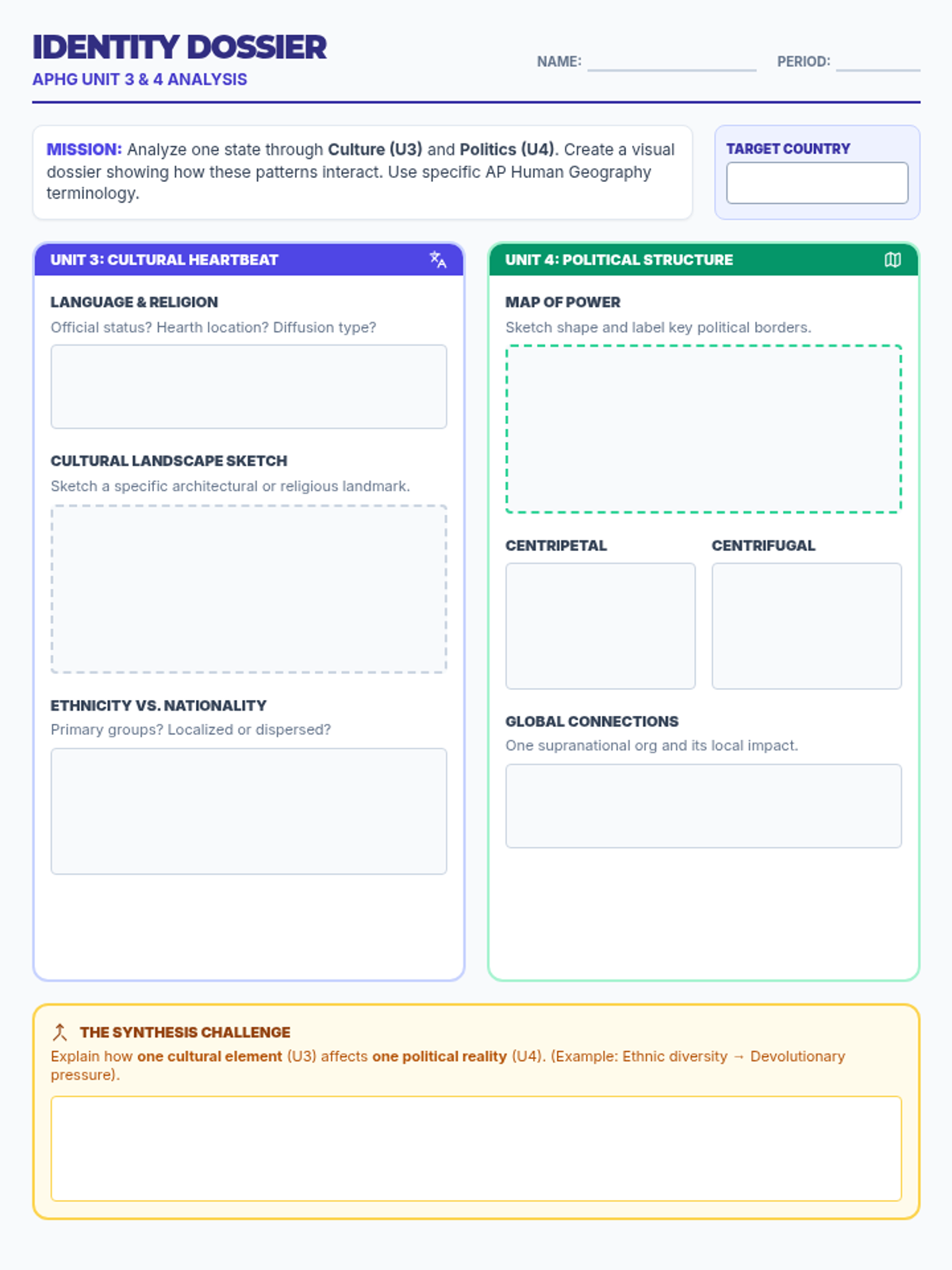
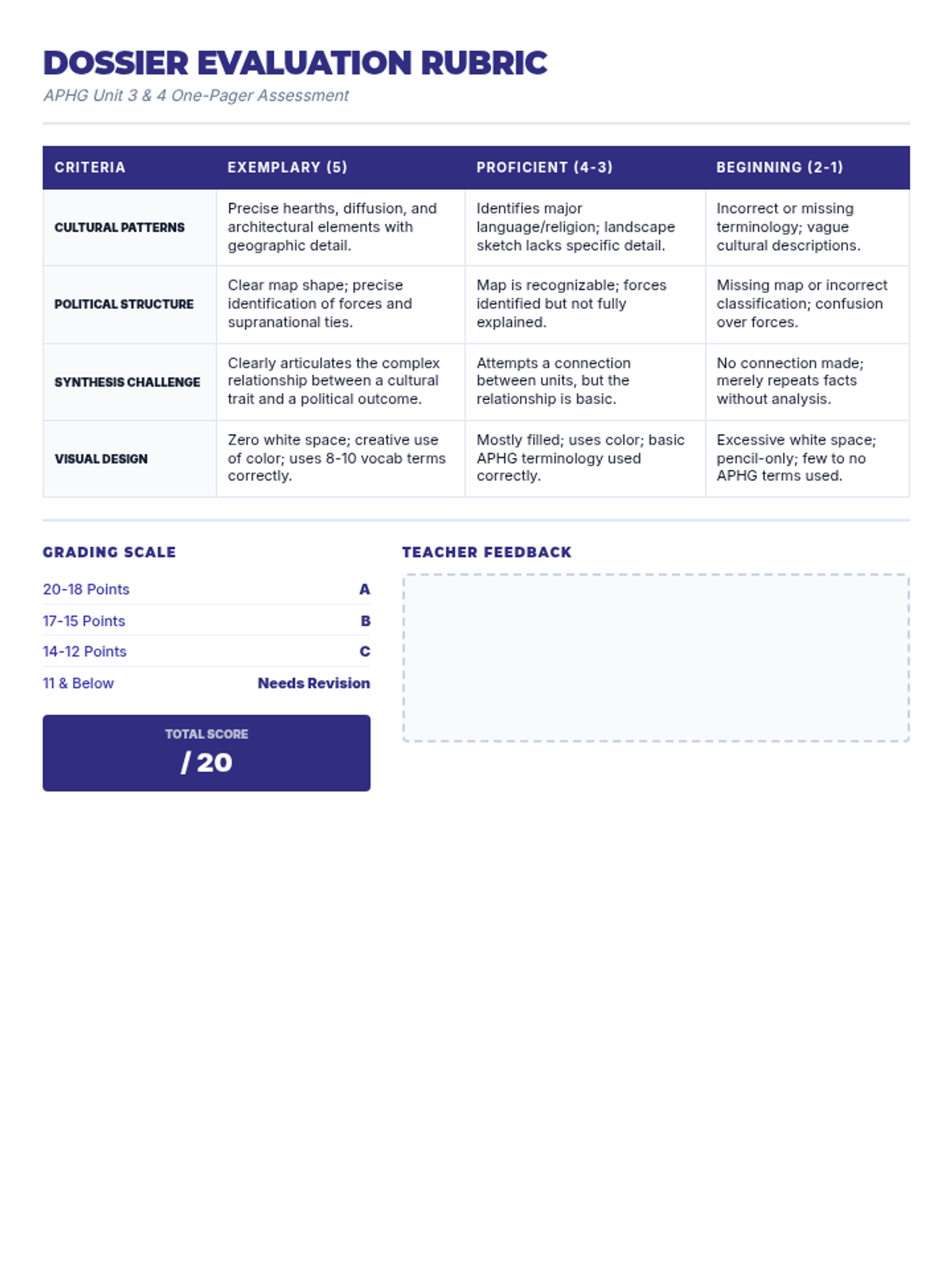
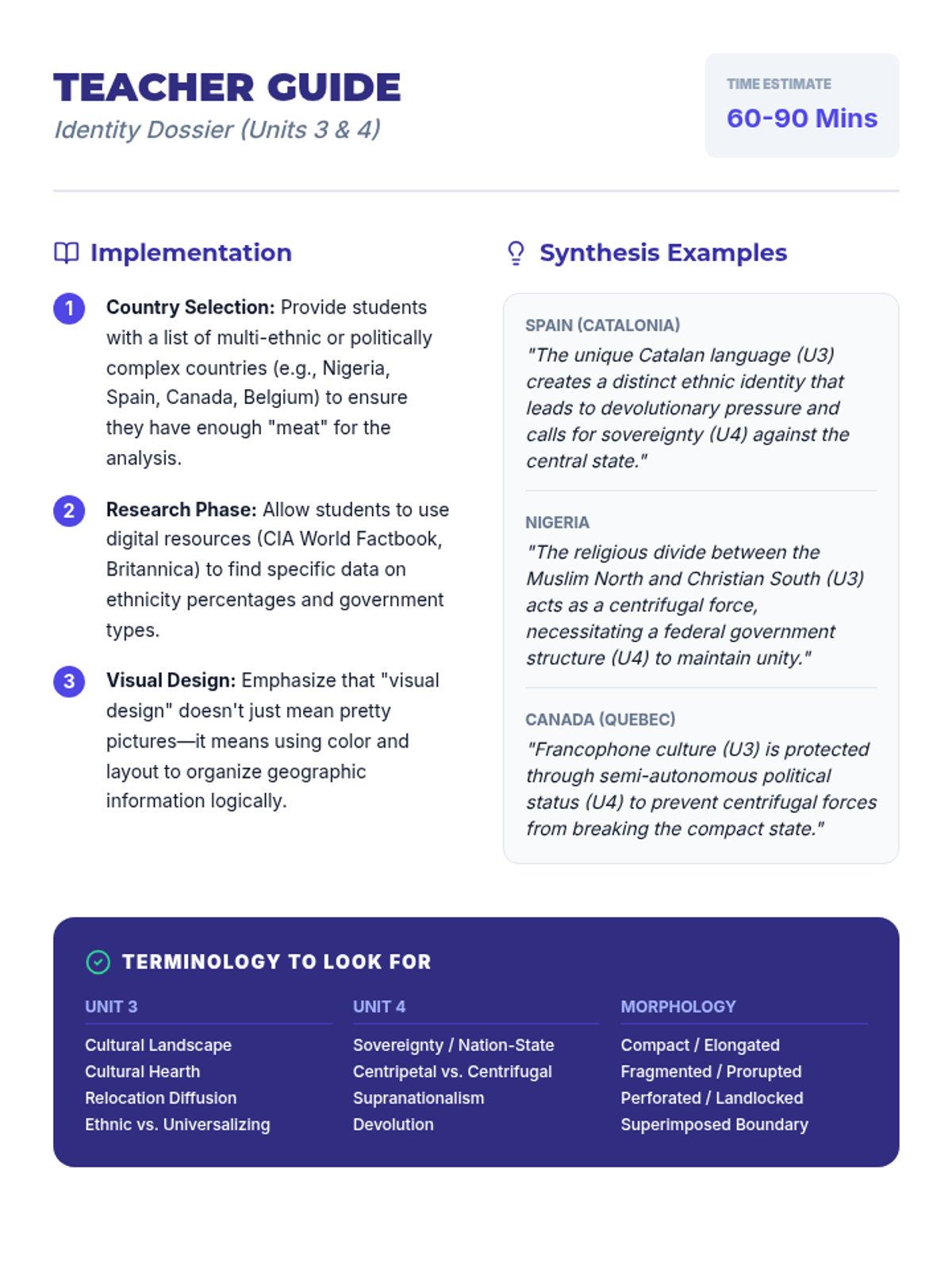
A comprehensive visual assignment and assessment for AP Human Geography Units 3 and 4, focusing on the intersection of cultural patterns and political structures within a single country.
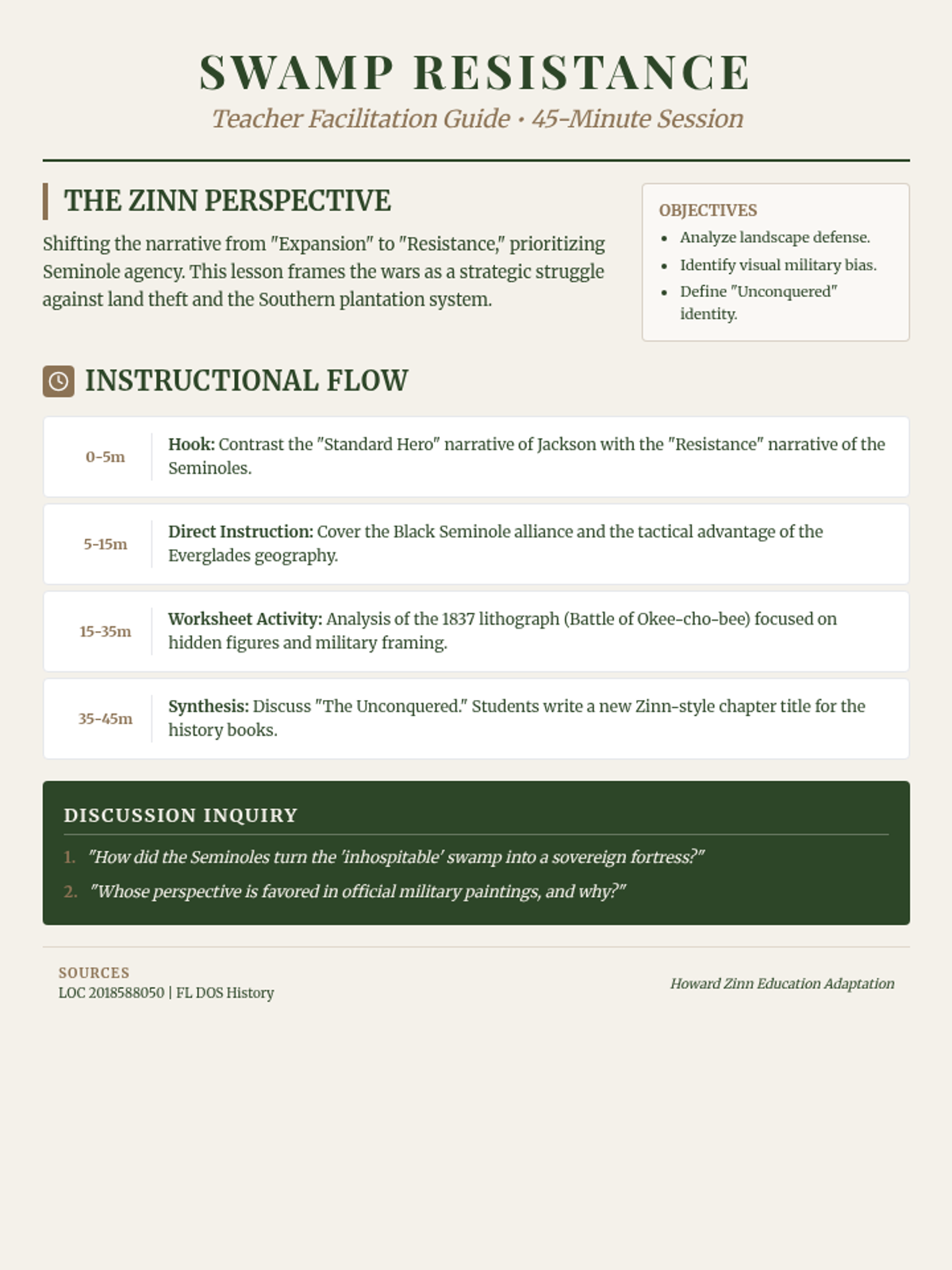
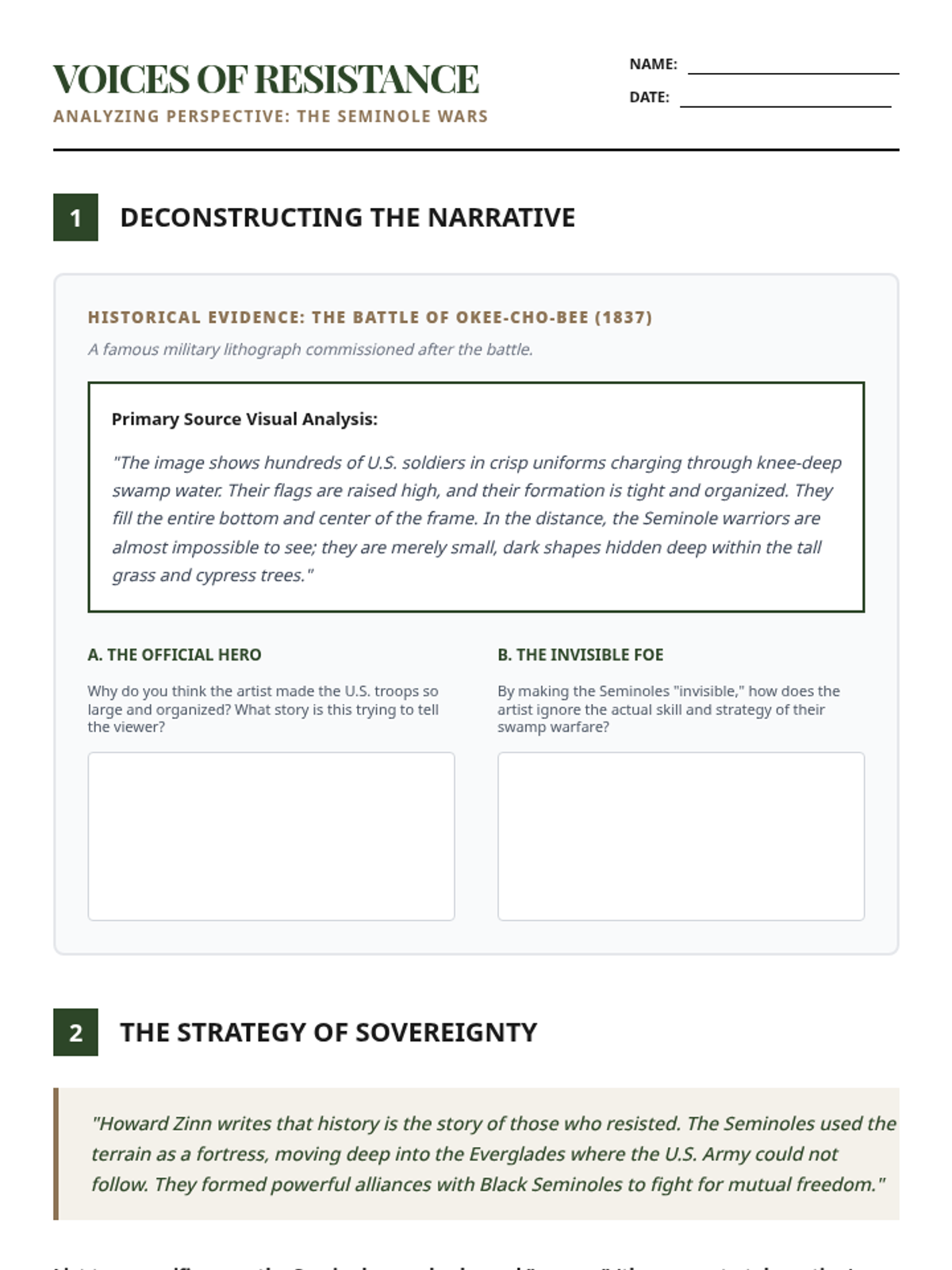
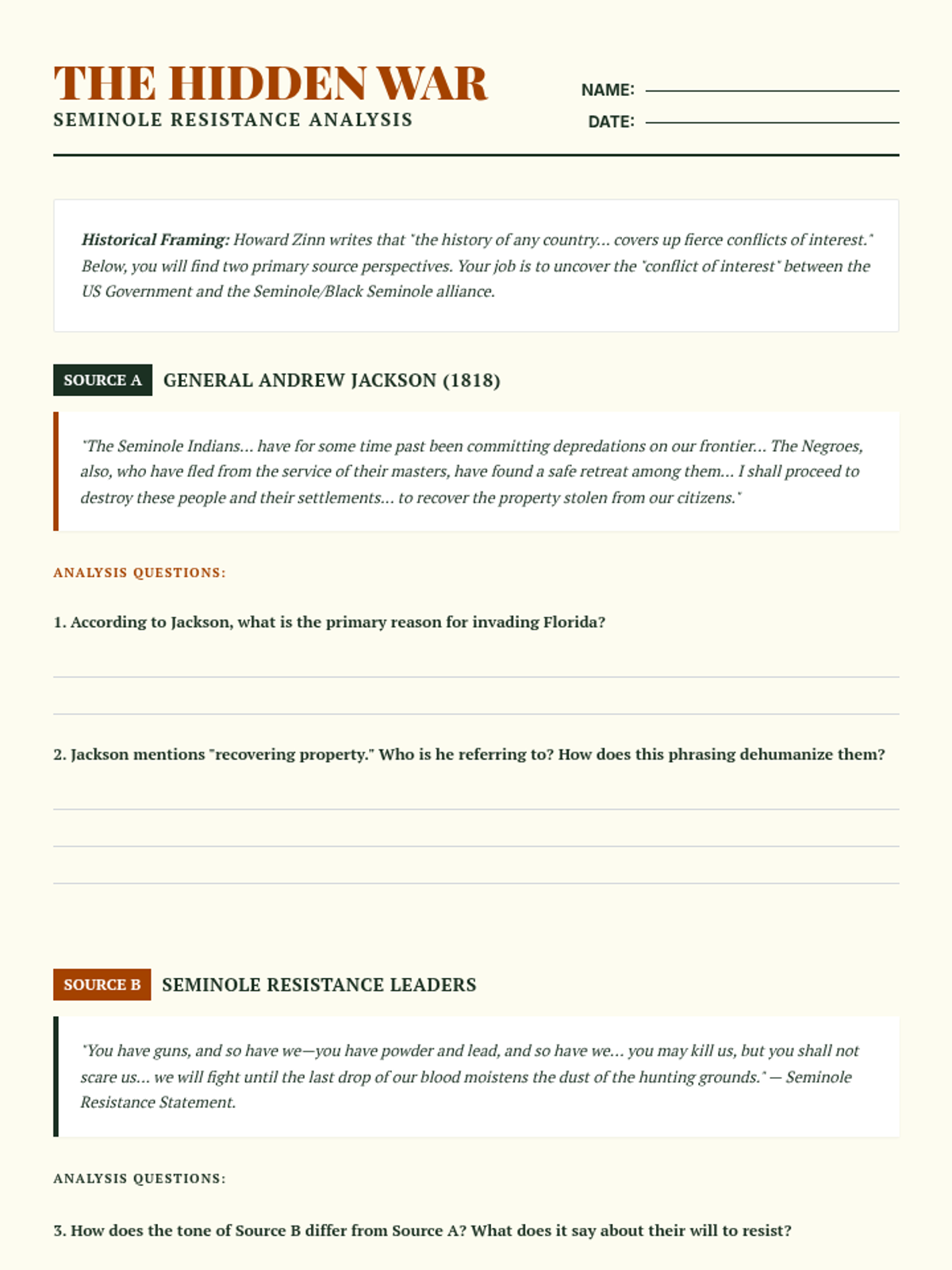
A 45-minute lesson exploring the Seminole Wars through Howard Zinn's lens of resistance and the perspective of the Seminole people. Students analyze historical imagery and texts to uncover narratives of agency and defiance against forced removal.
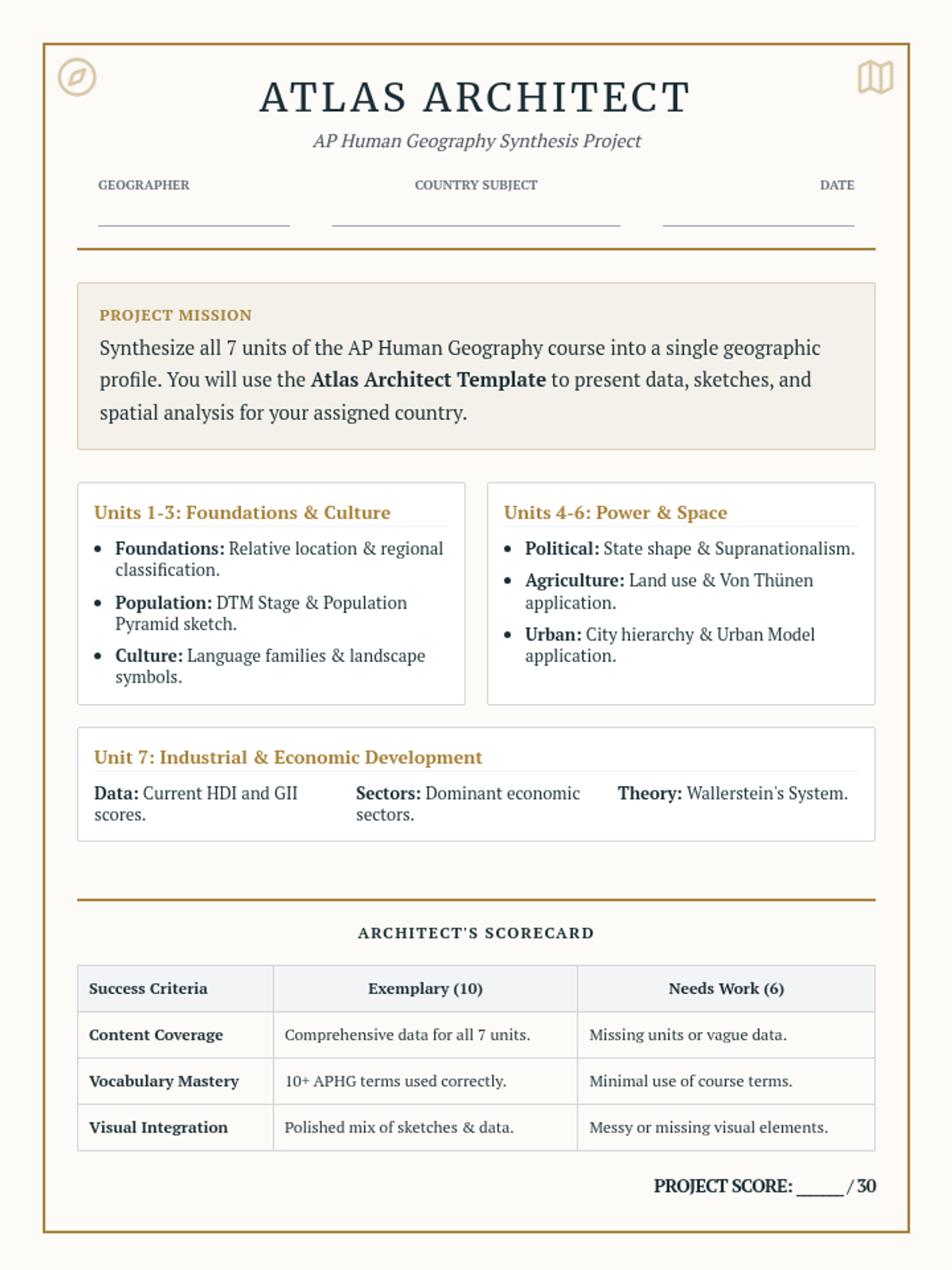
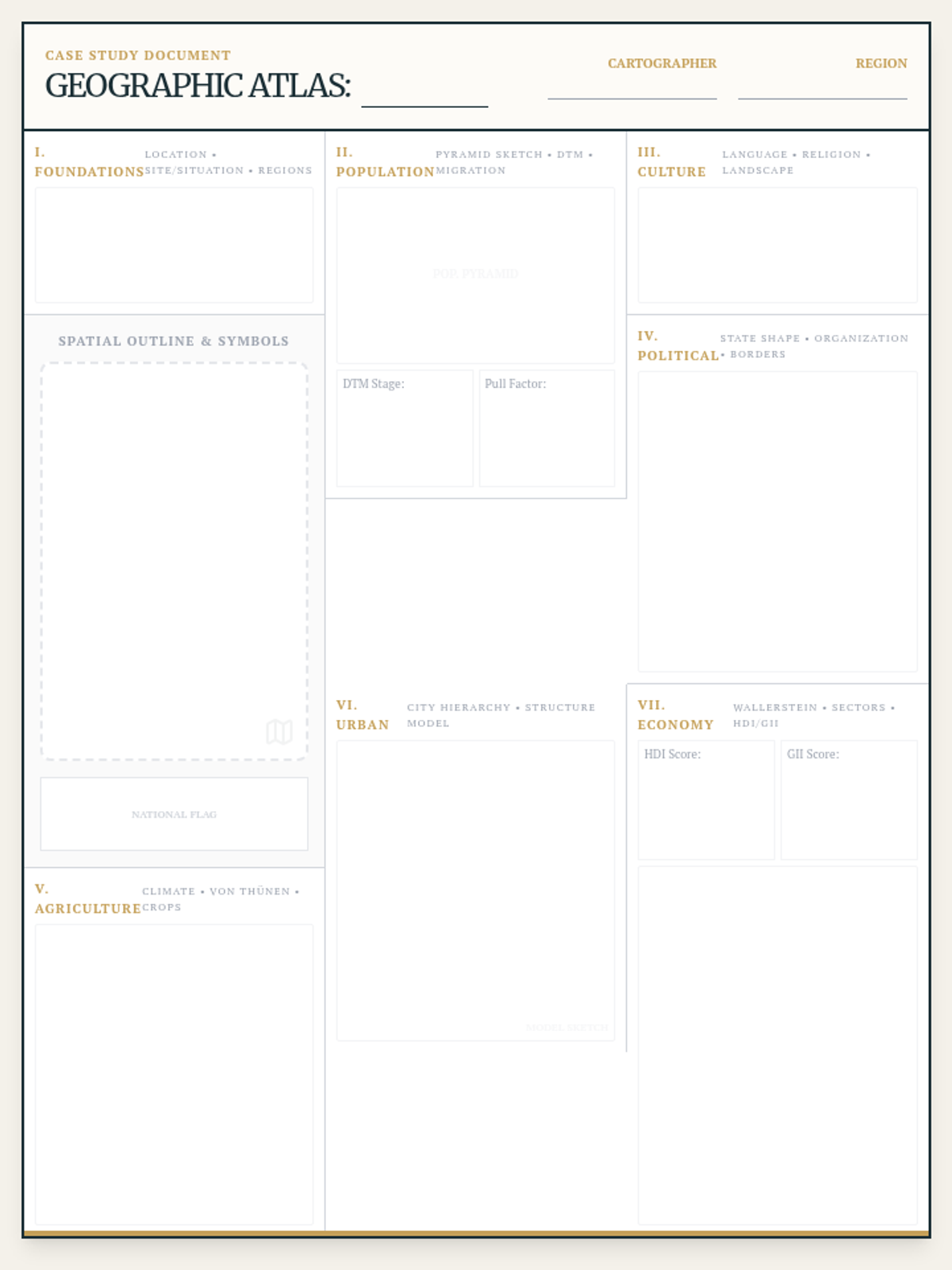
A comprehensive end-of-course or unit-review project where students create a visual 'one-pager' profile of a country, synthesizing concepts from all seven units of the AP Human Geography CED.
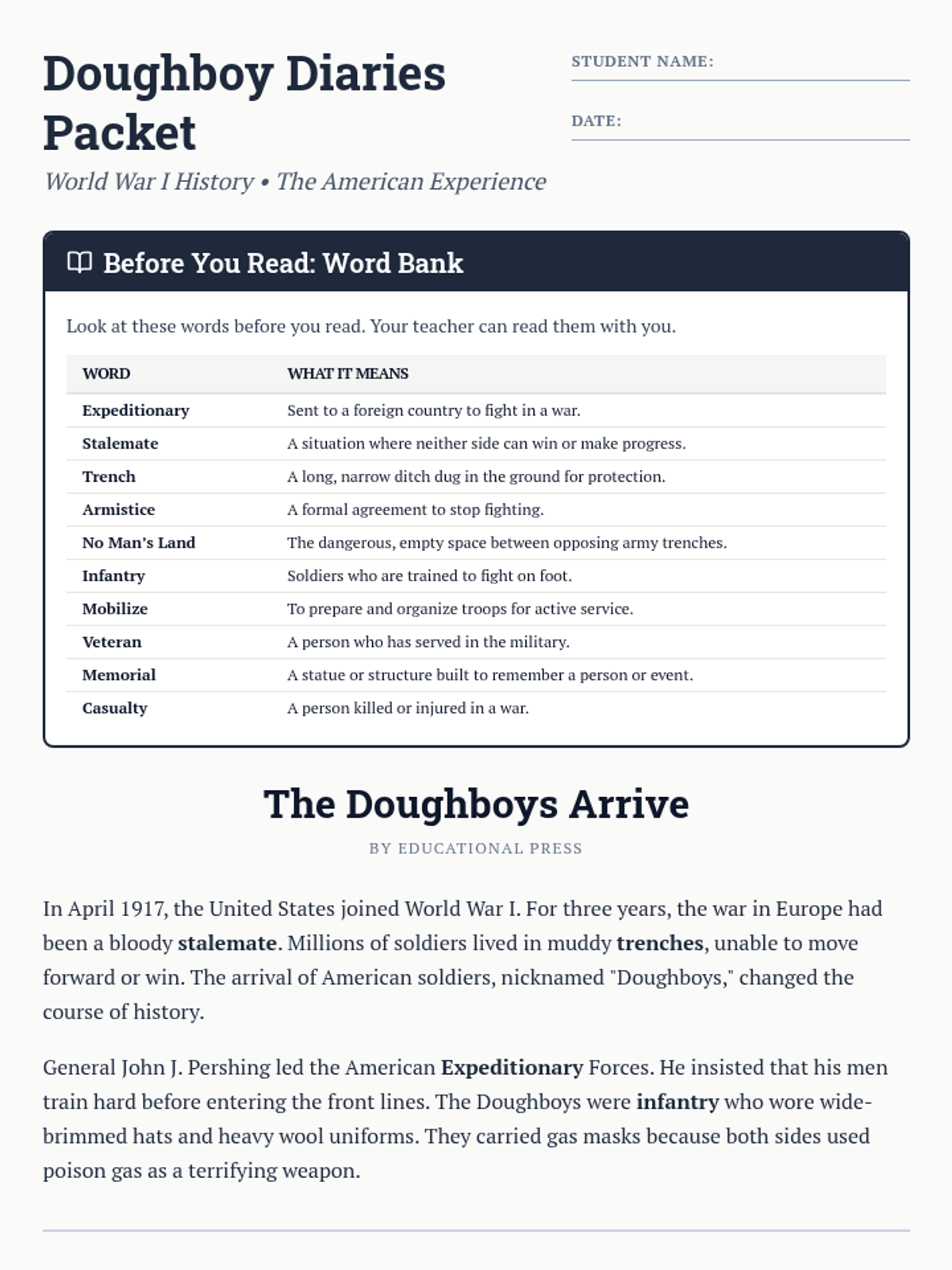
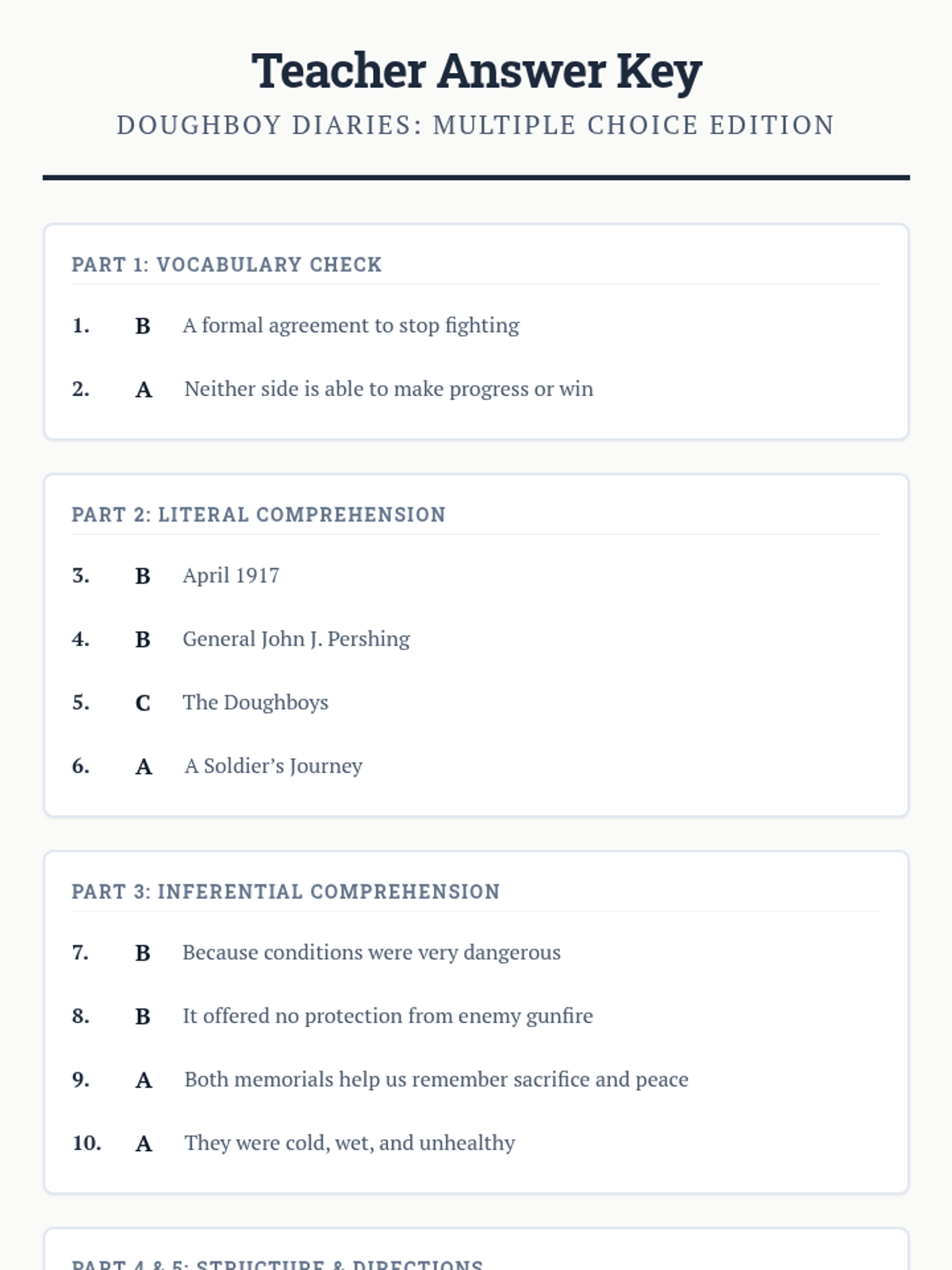
Students explore the history of American involvement in WWI, vocabulary related to trench warfare, and the significance of modern memorials through a comprehensive reading packet.
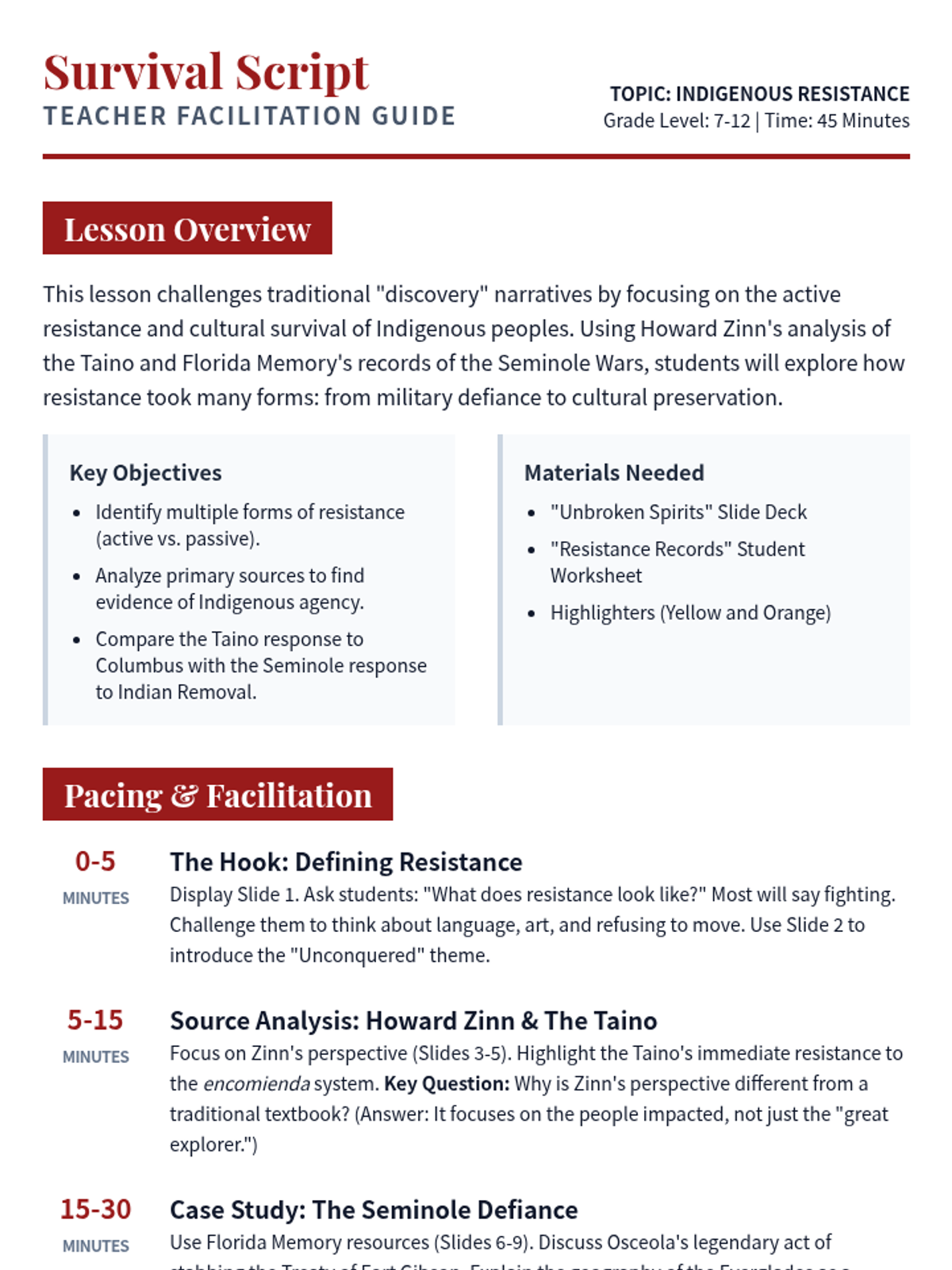
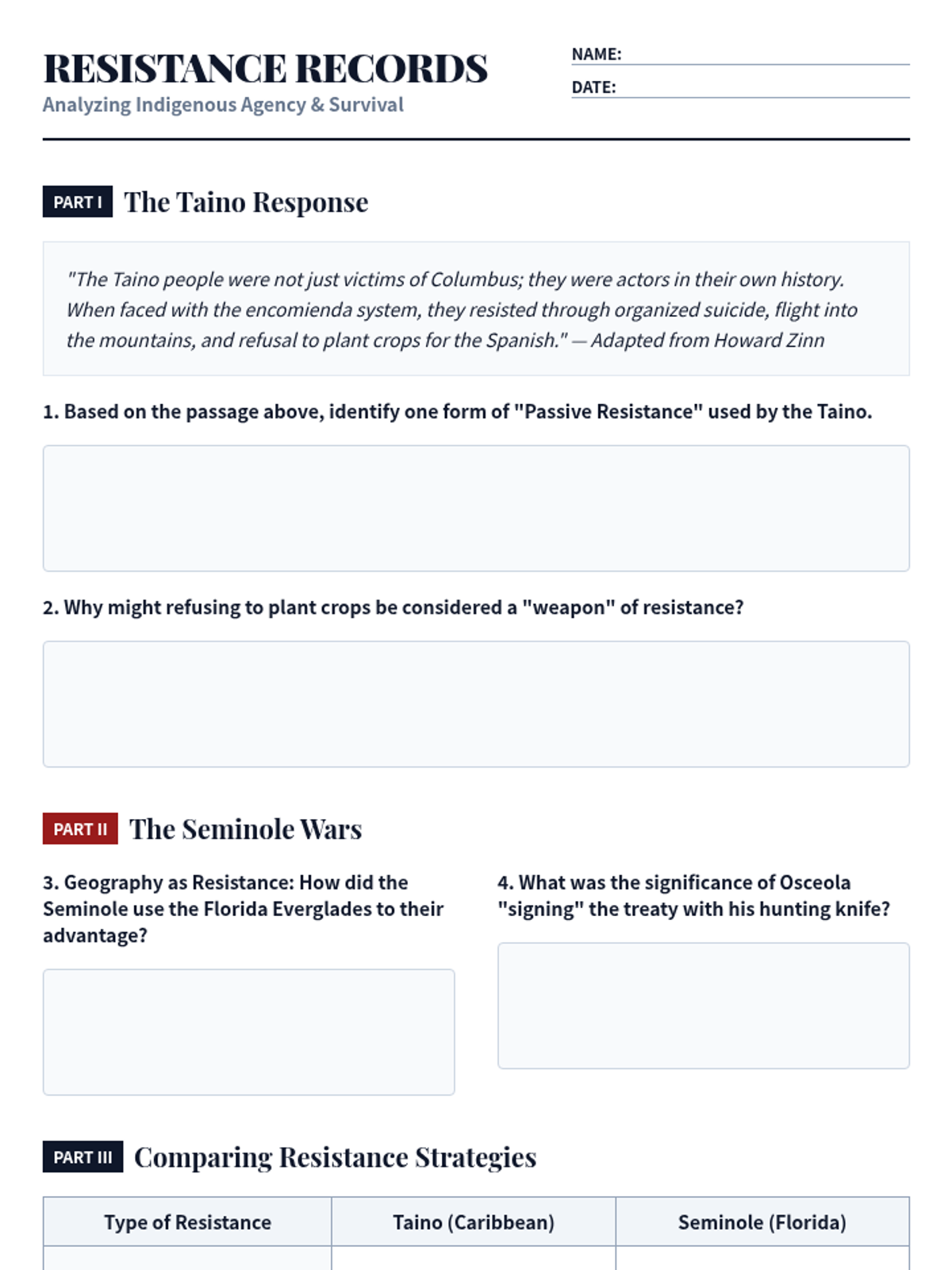
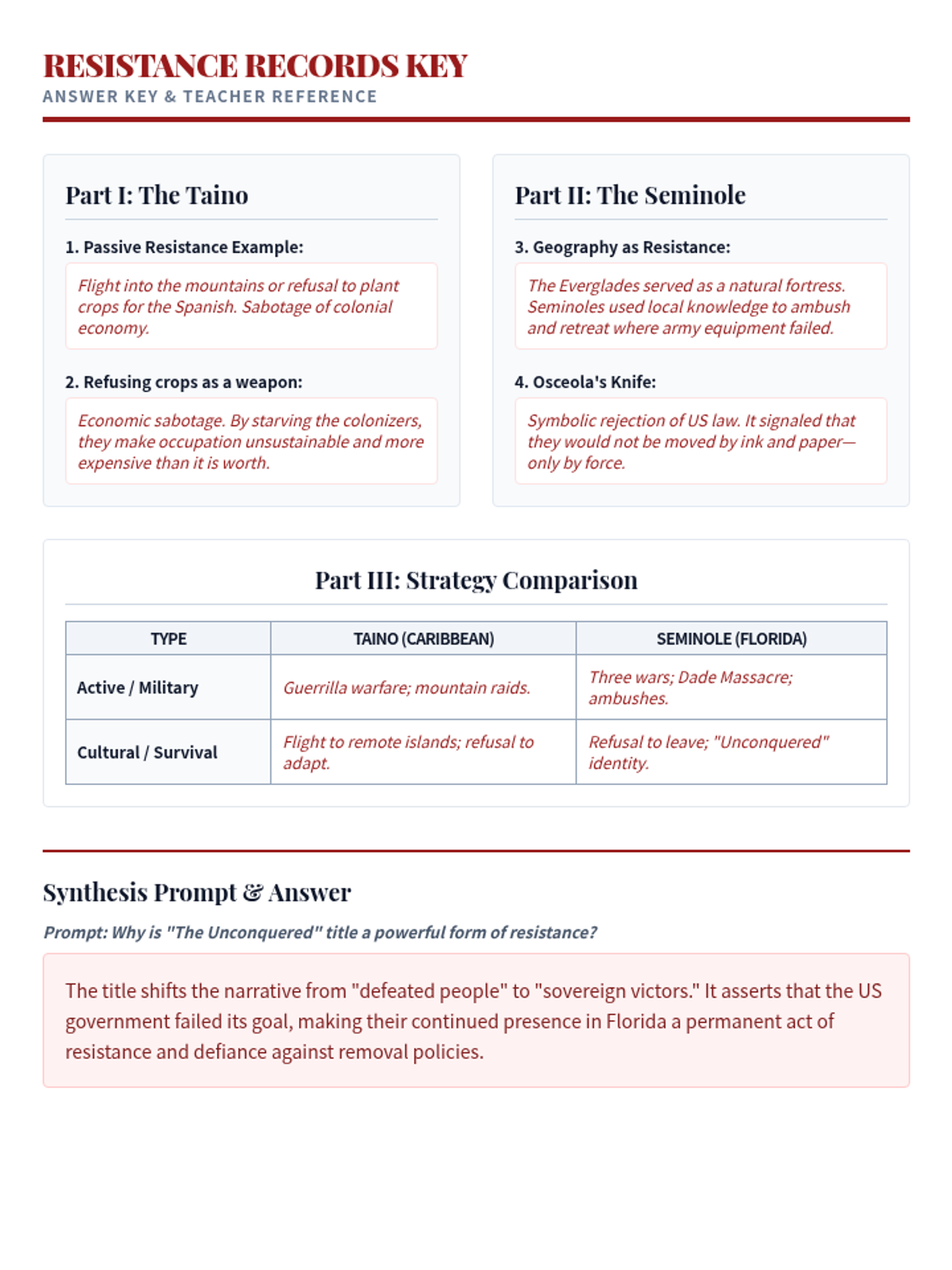
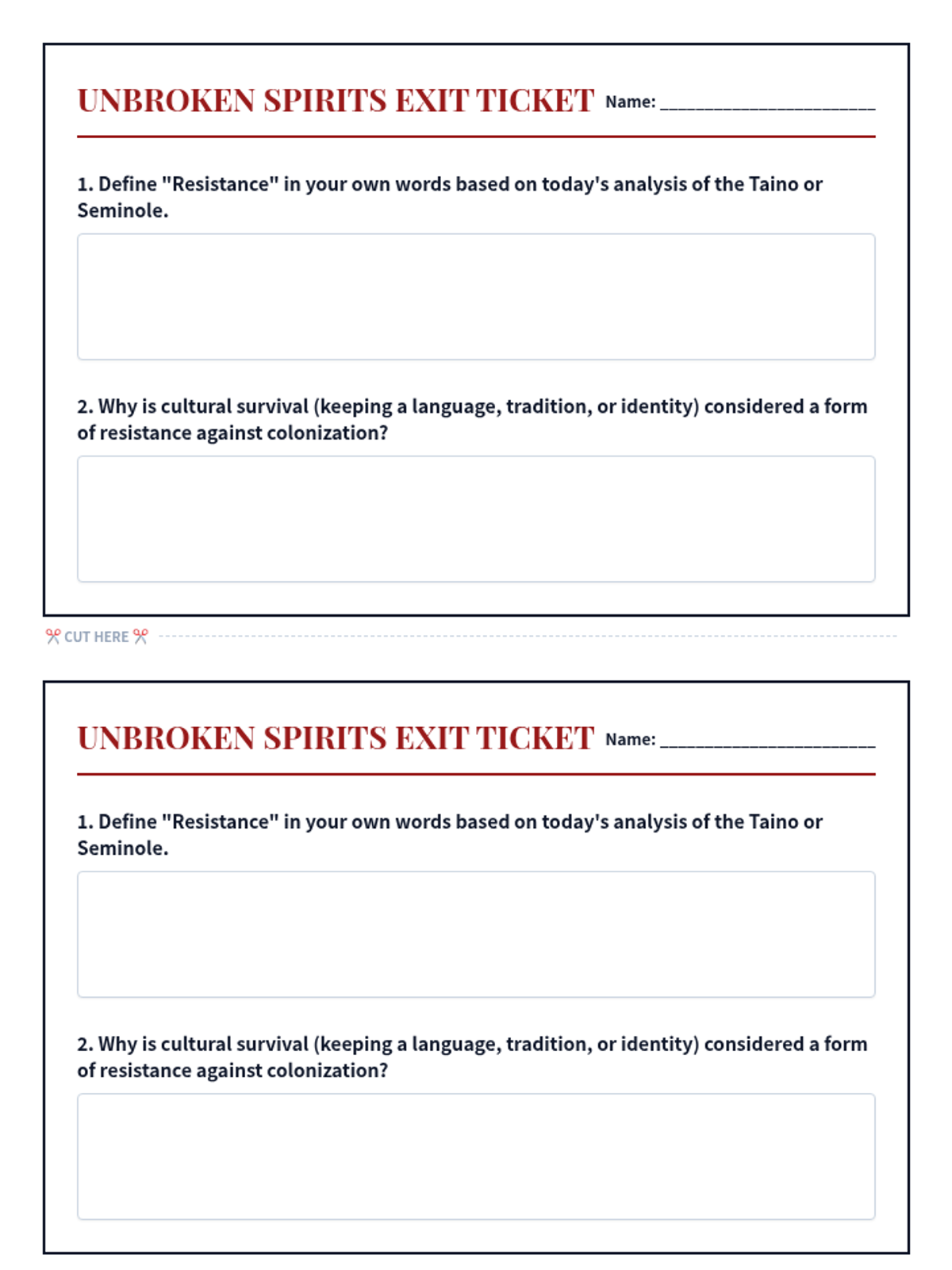
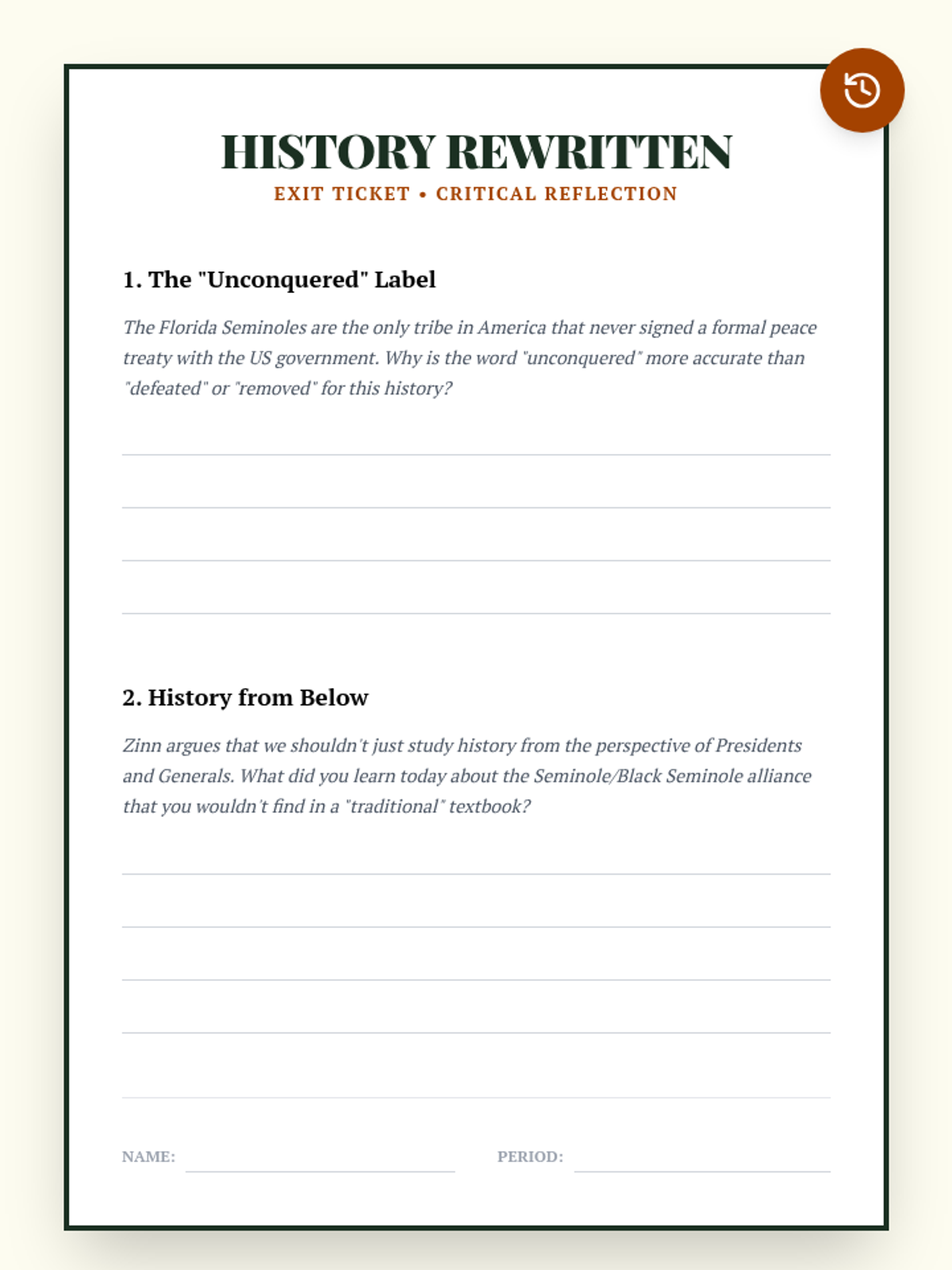
A 45-minute lesson examining Indigenous resistance and survival through the lenses of the Taino response to Columbus and the Seminole's defiance during the Florida Wars. Students analyze primary sources to shift the narrative from victimhood to agency.
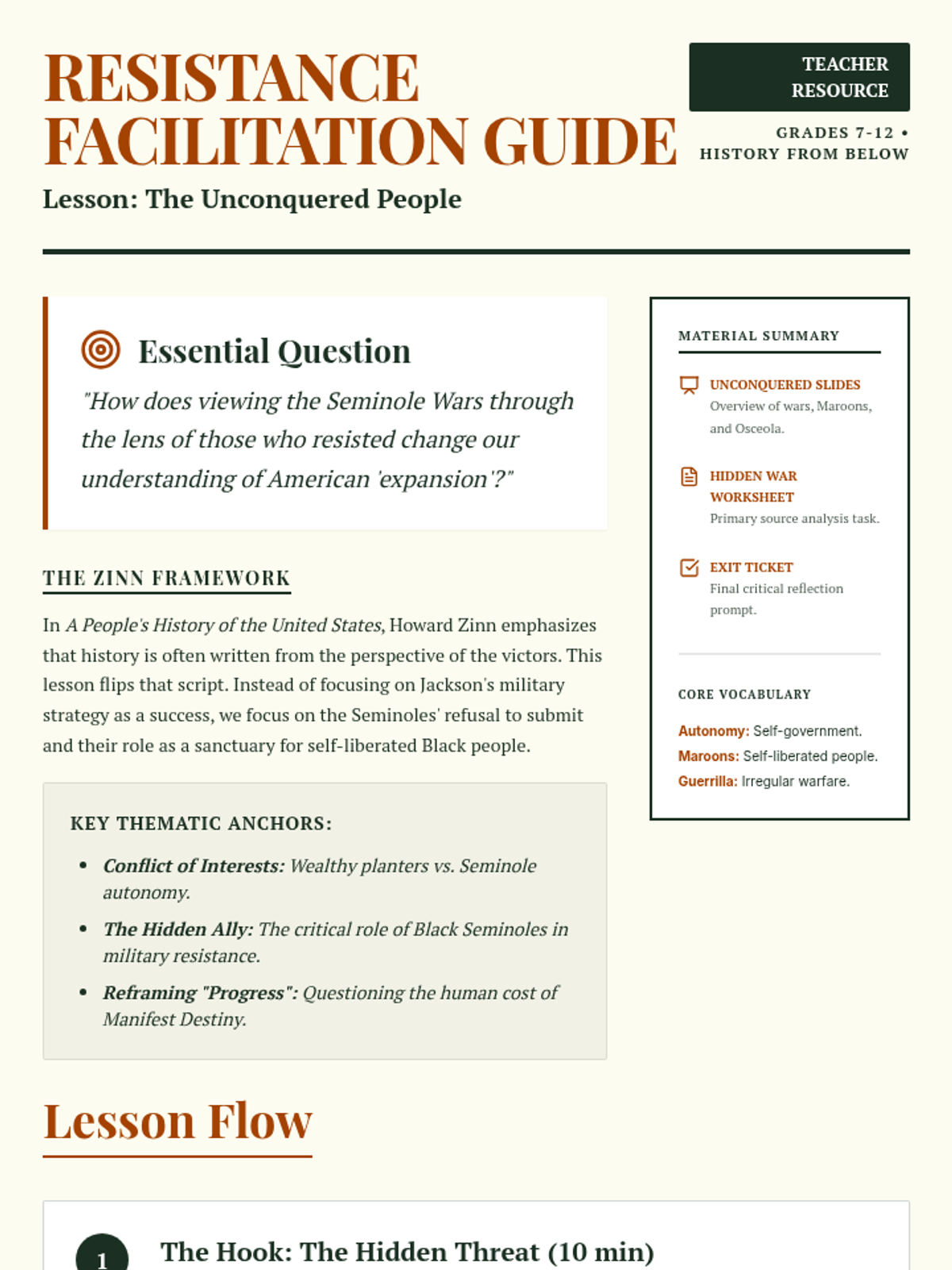
This lesson examines the Seminole Wars not just as a series of conflicts, but as a sustained movement of resistance against US expansion and the institution of slavery. Students will analyze the strategic alliance with Black Seminoles and the reasons why the Seminole people remained 'unconquered.'
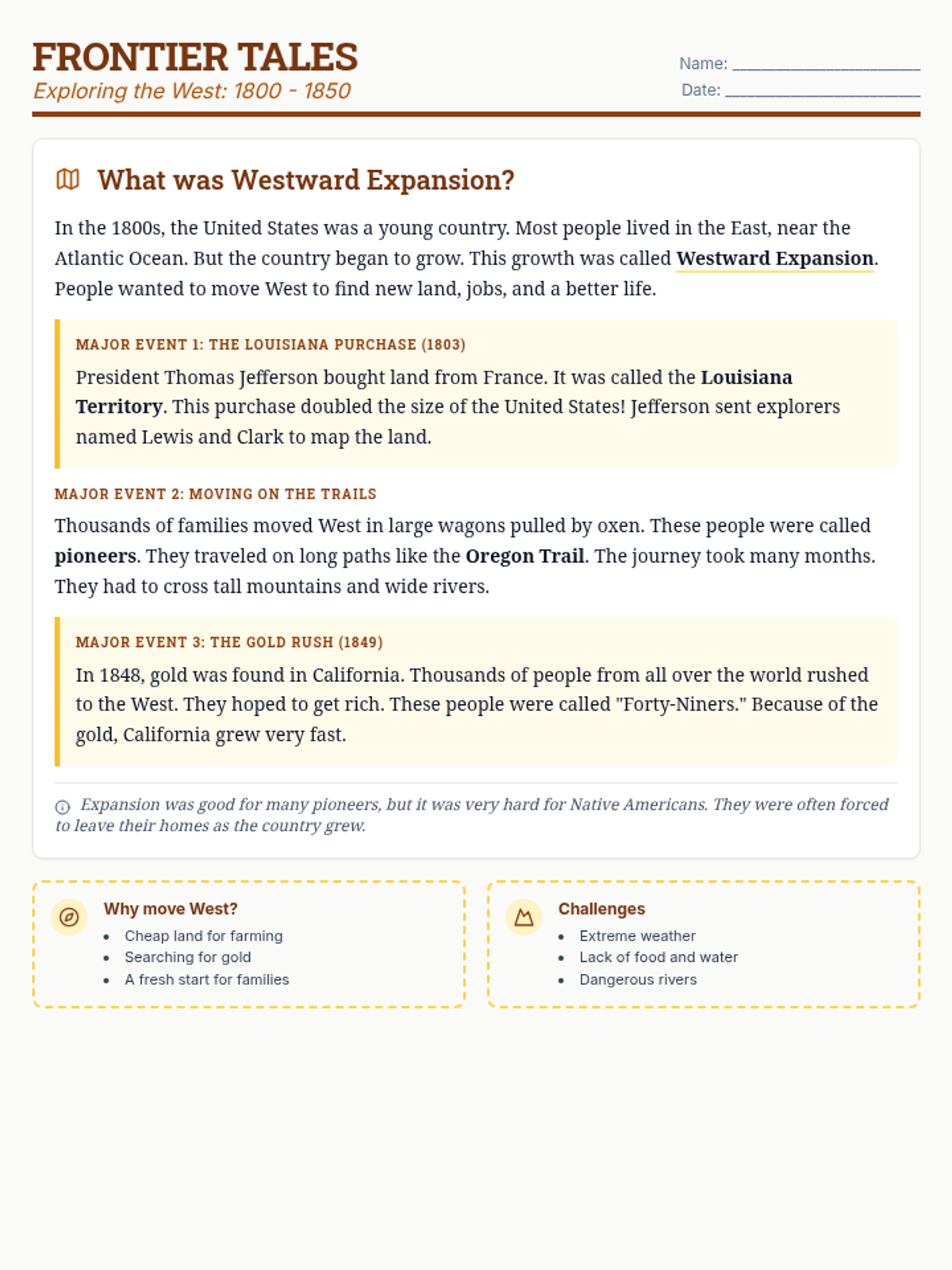
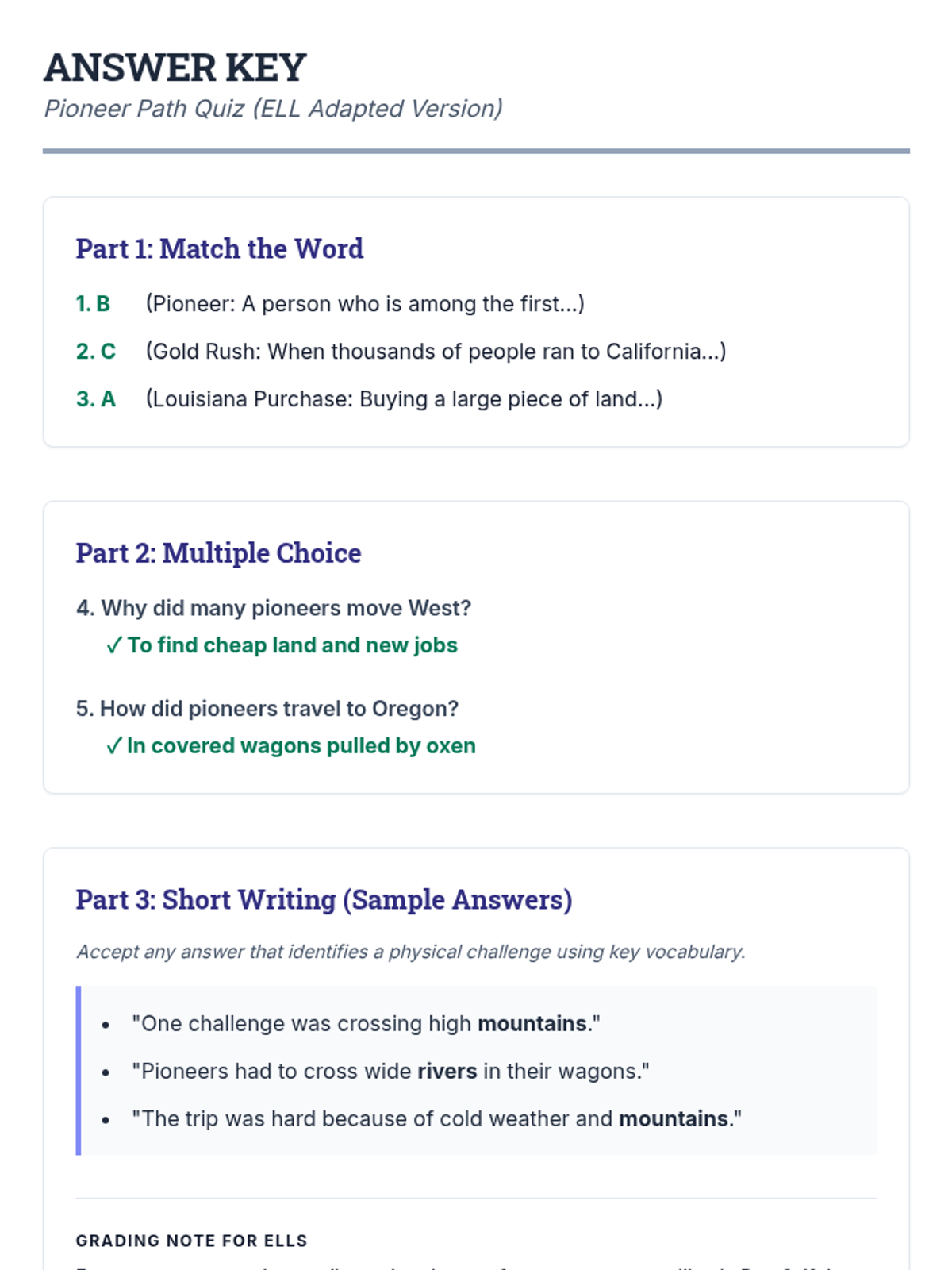
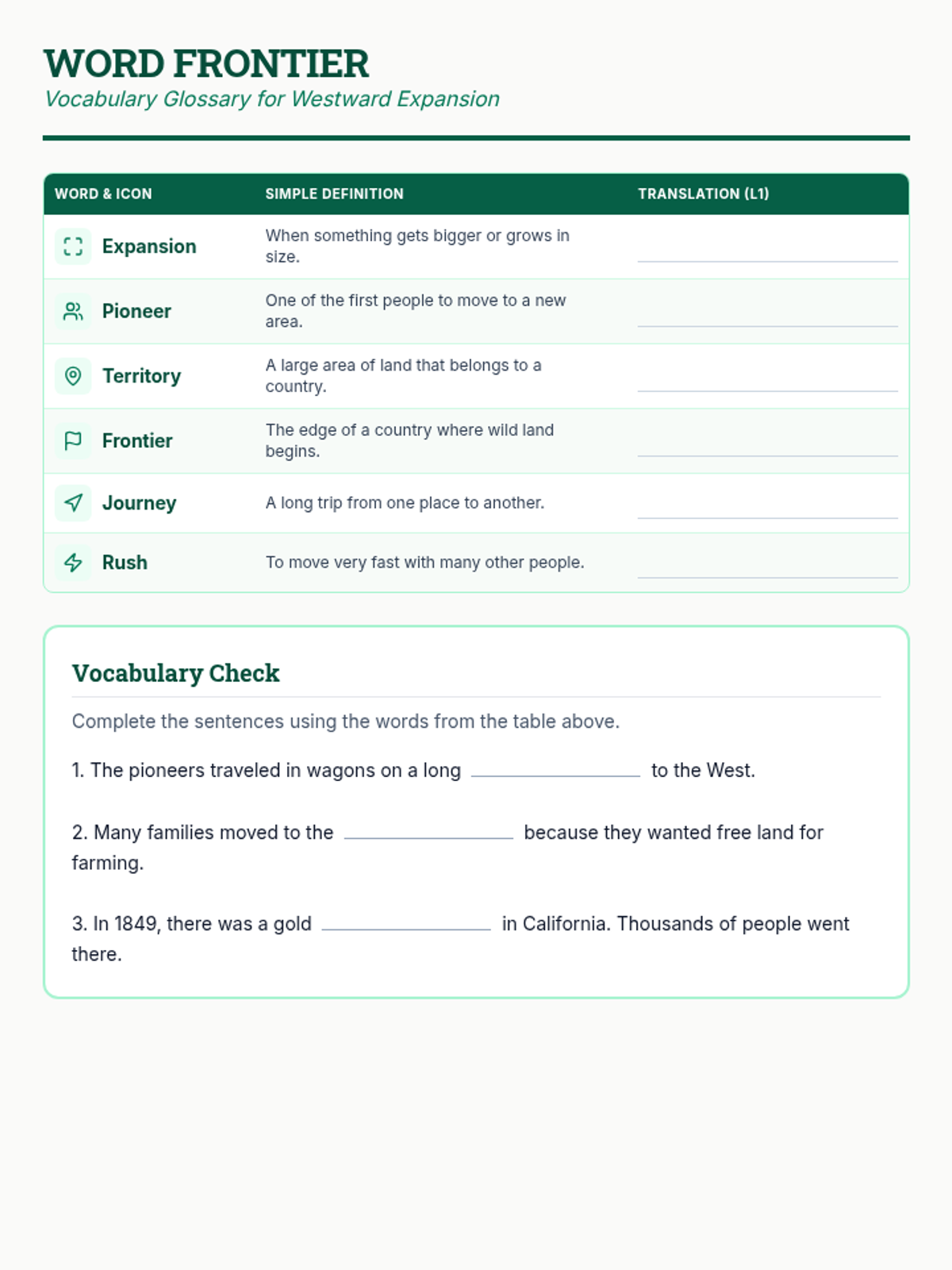
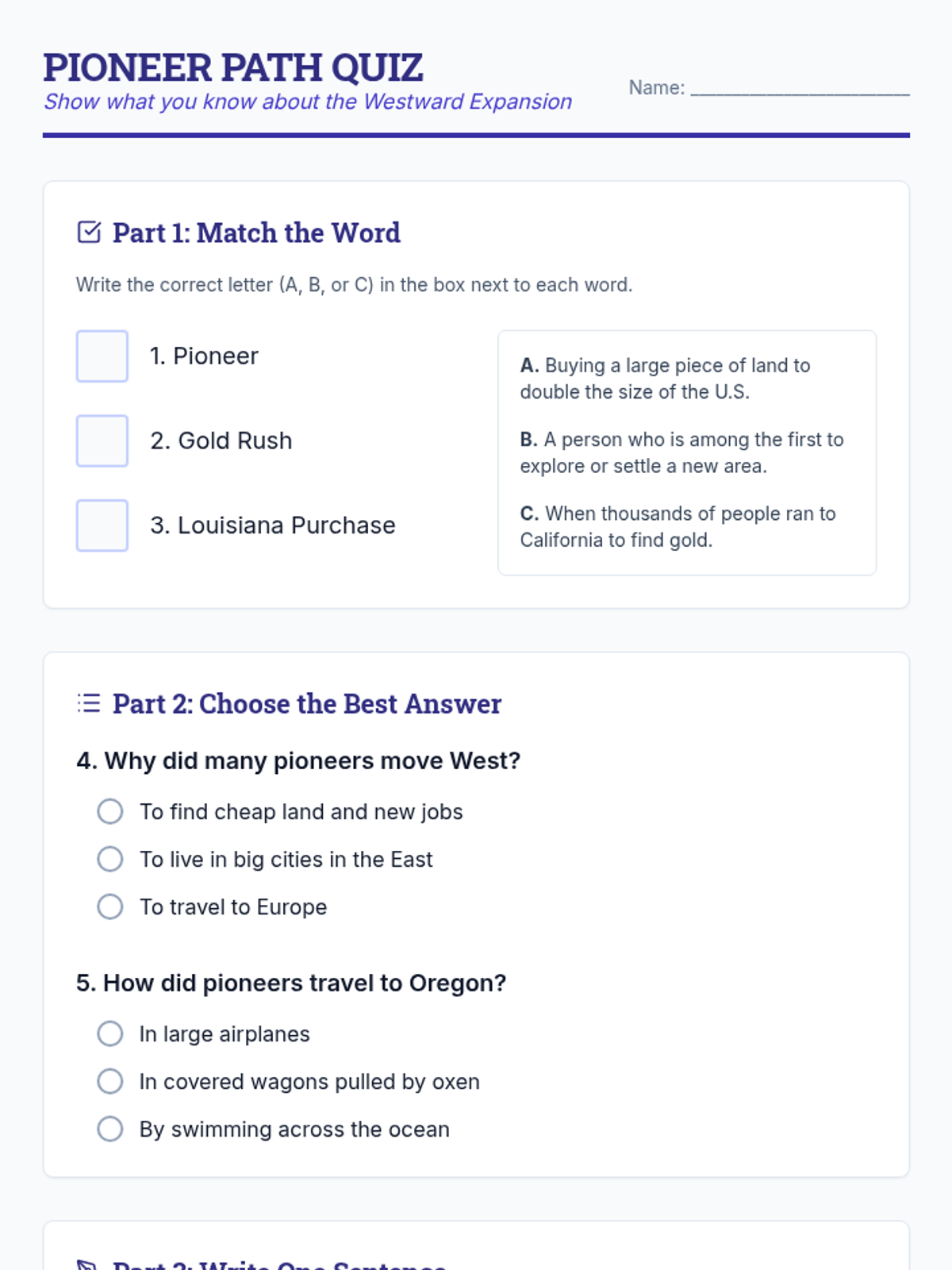
A lesson designed for English Language Learners to understand the key concepts and vocabulary of Westward Expansion through simplified text and visual scaffolds.
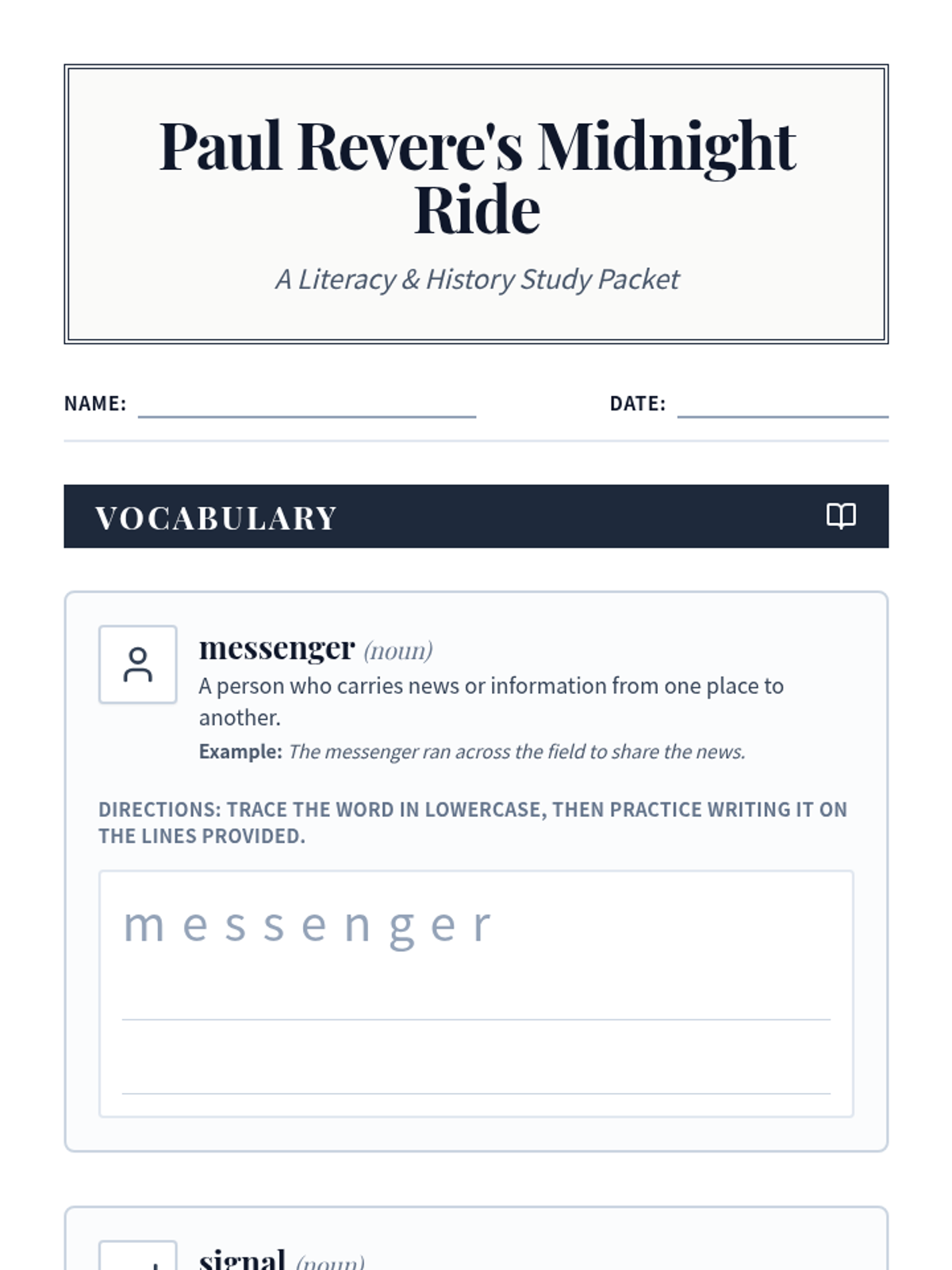
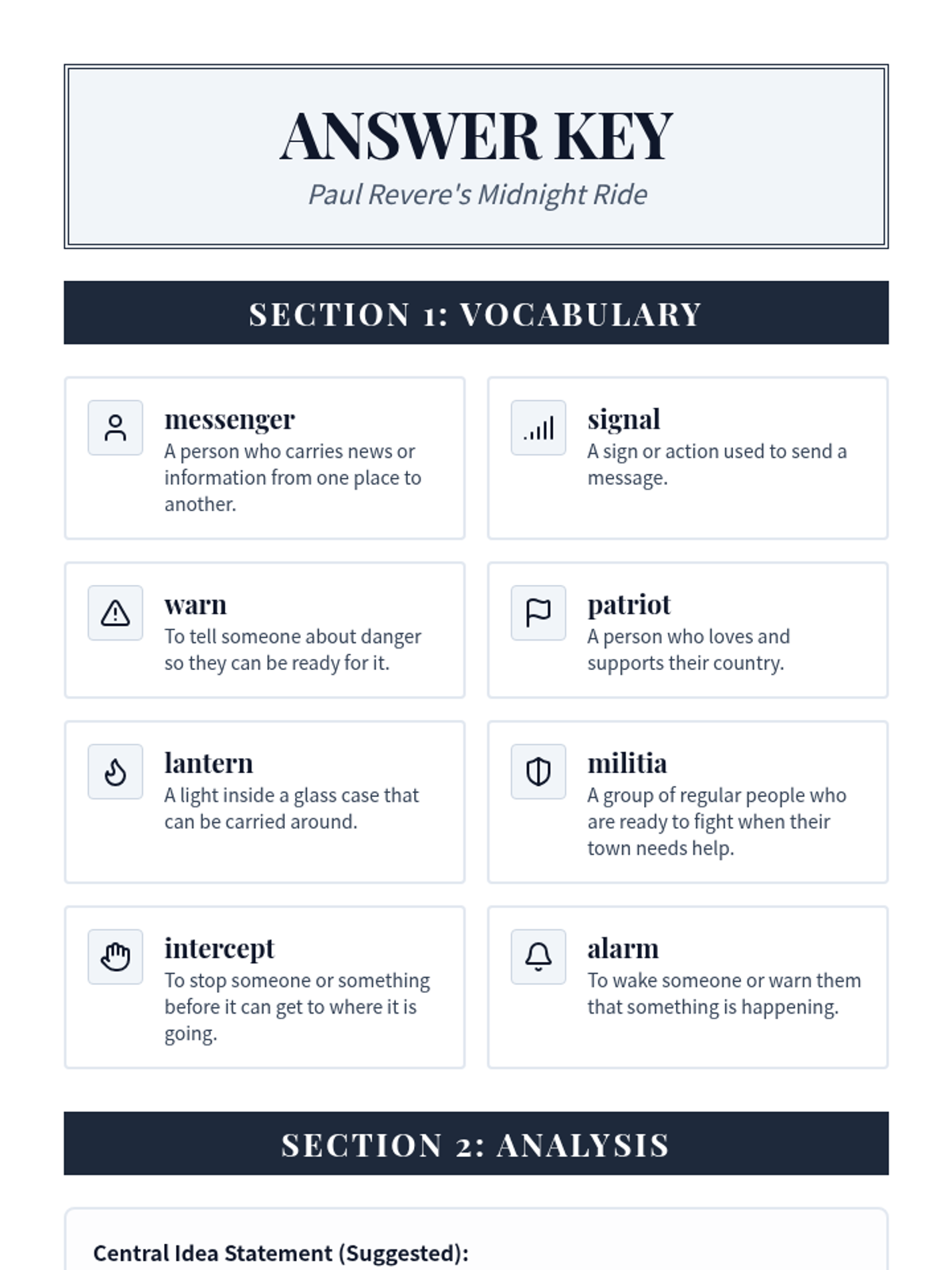
A comprehensive literacy and history packet exploring Paul Revere's legendary journey through vocabulary building, close reading, and critical analysis.
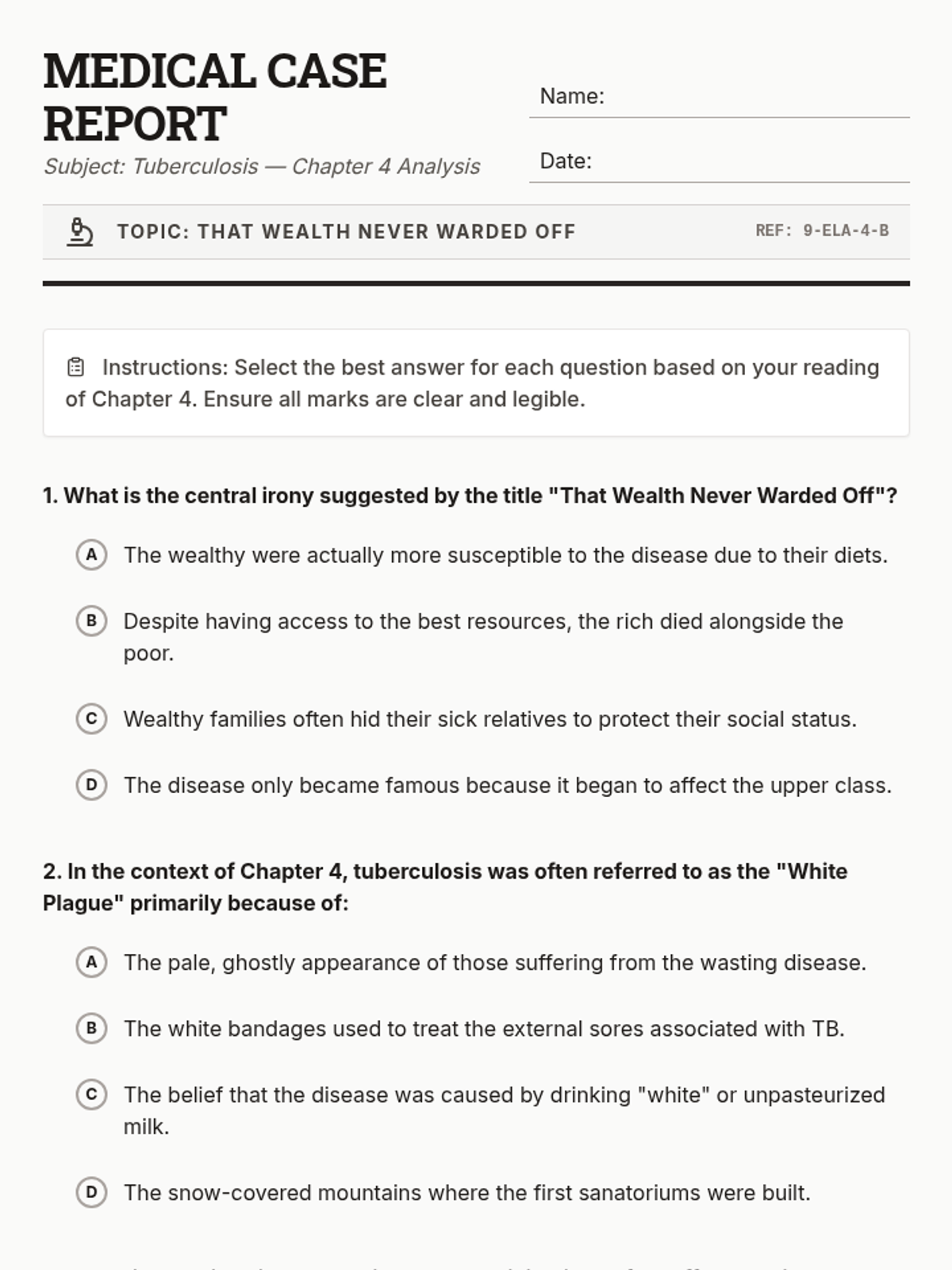
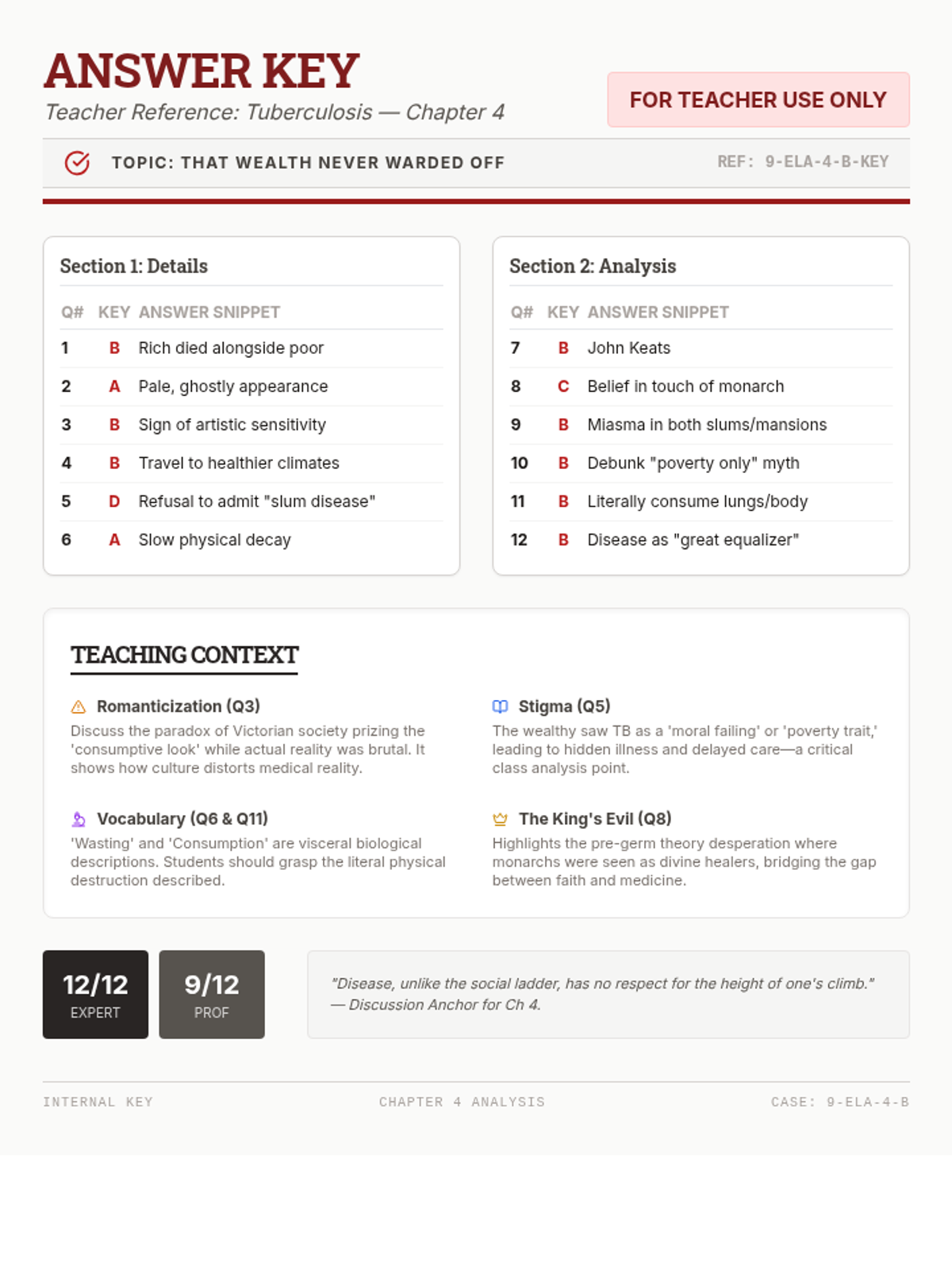
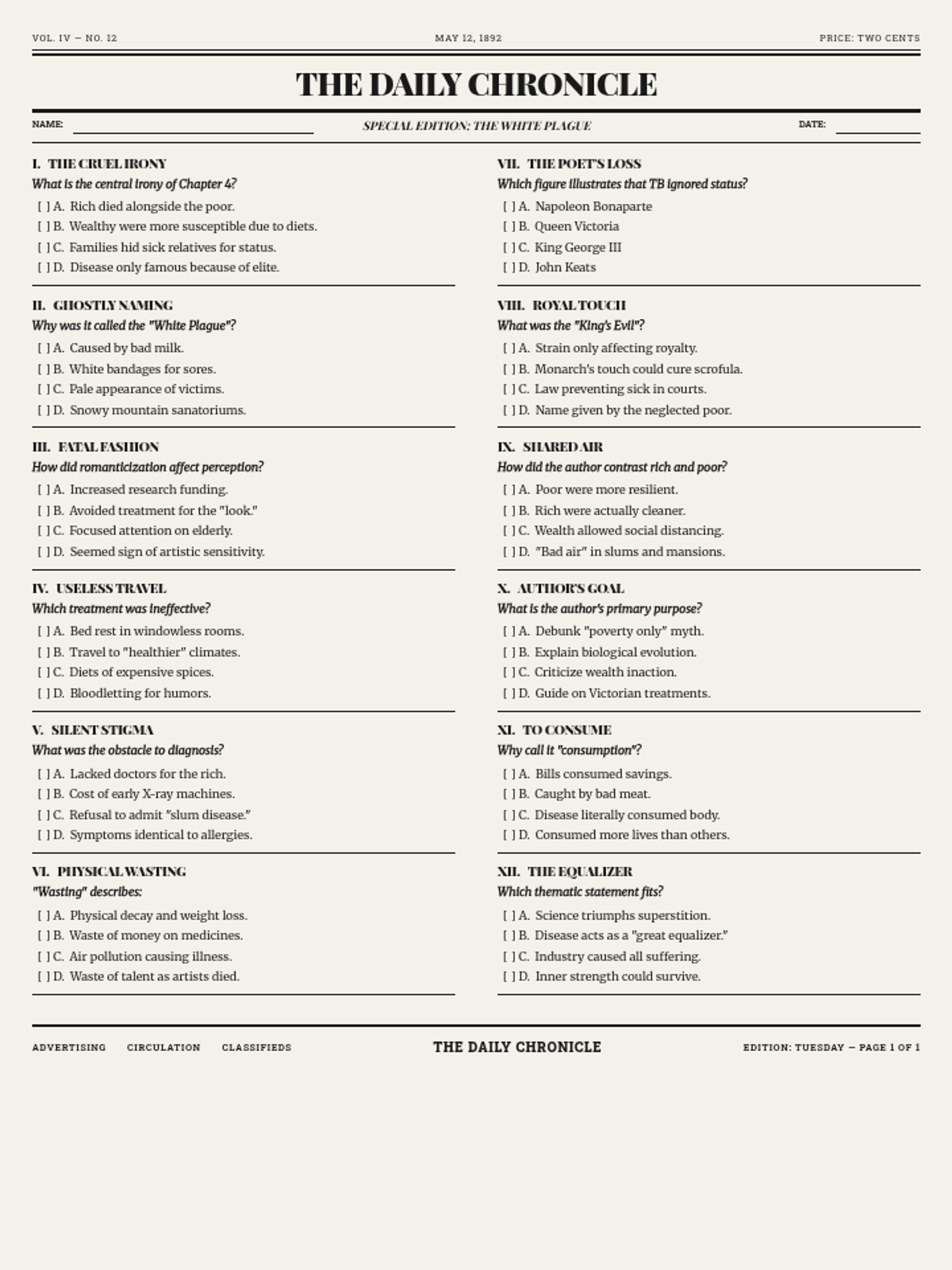
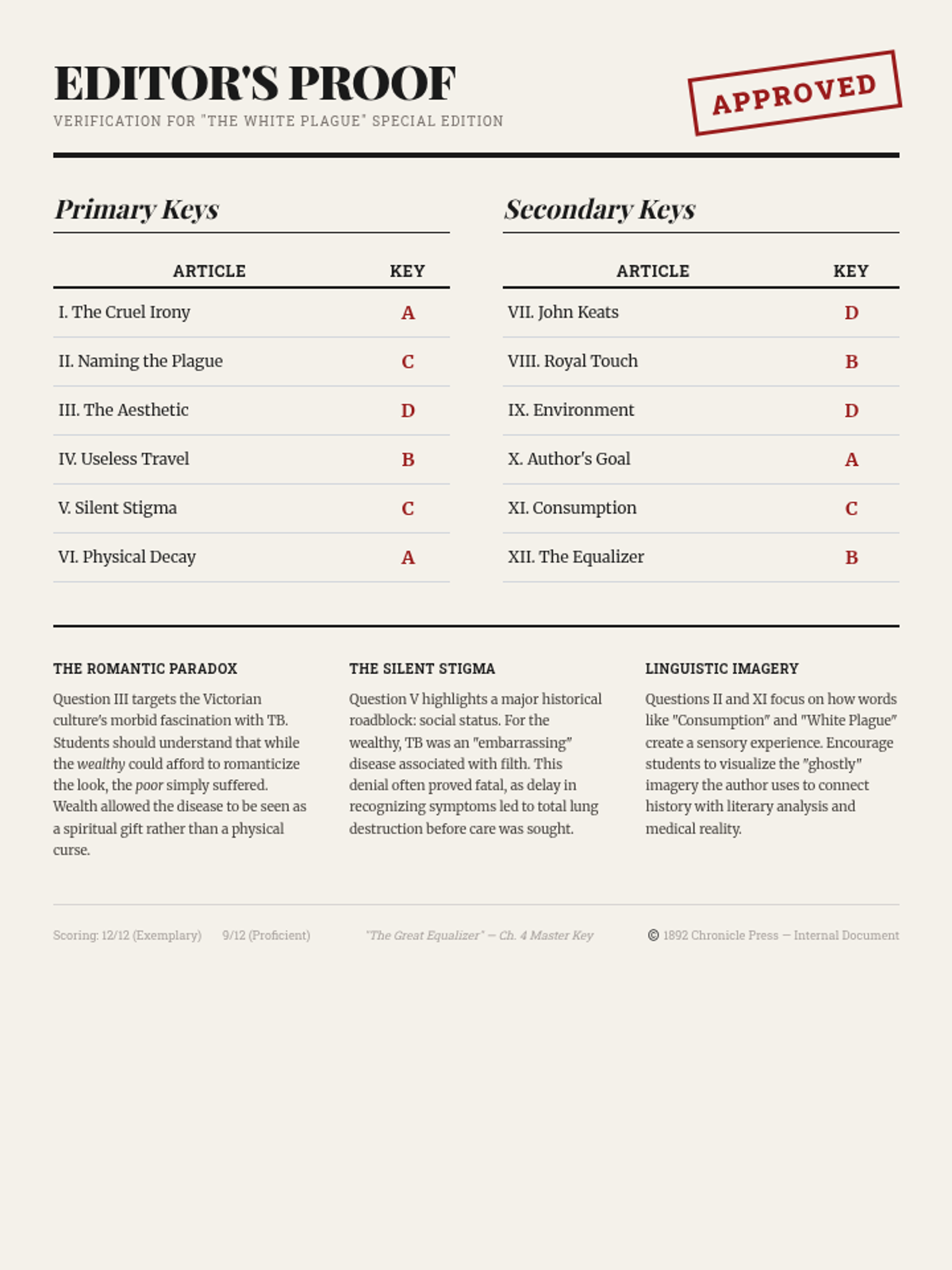
A assessment-focused lesson covering the historical impact of Tuberculosis as detailed in 'That Wealth Never Warded Off', focusing on the theme that disease transcends social class.
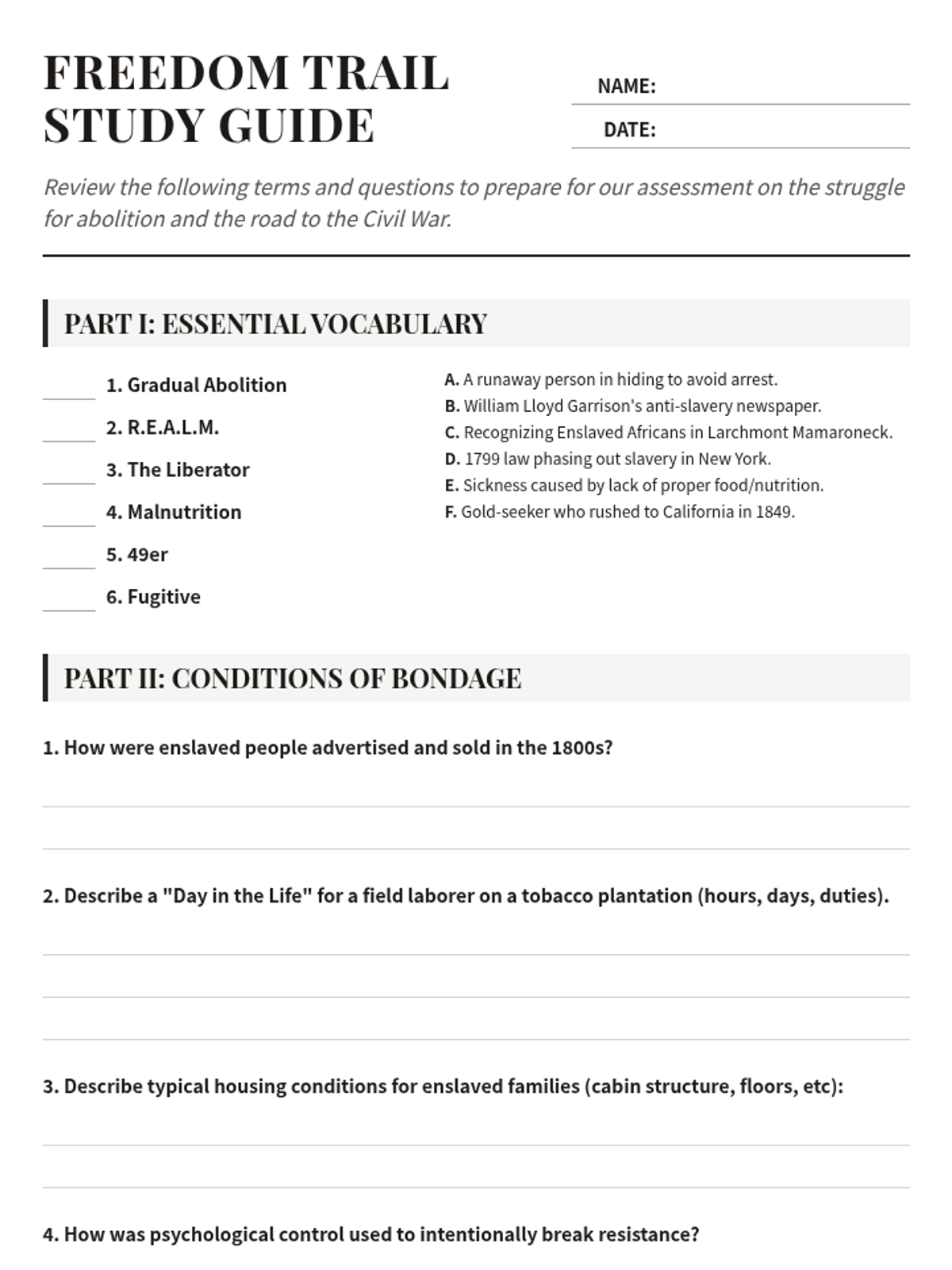
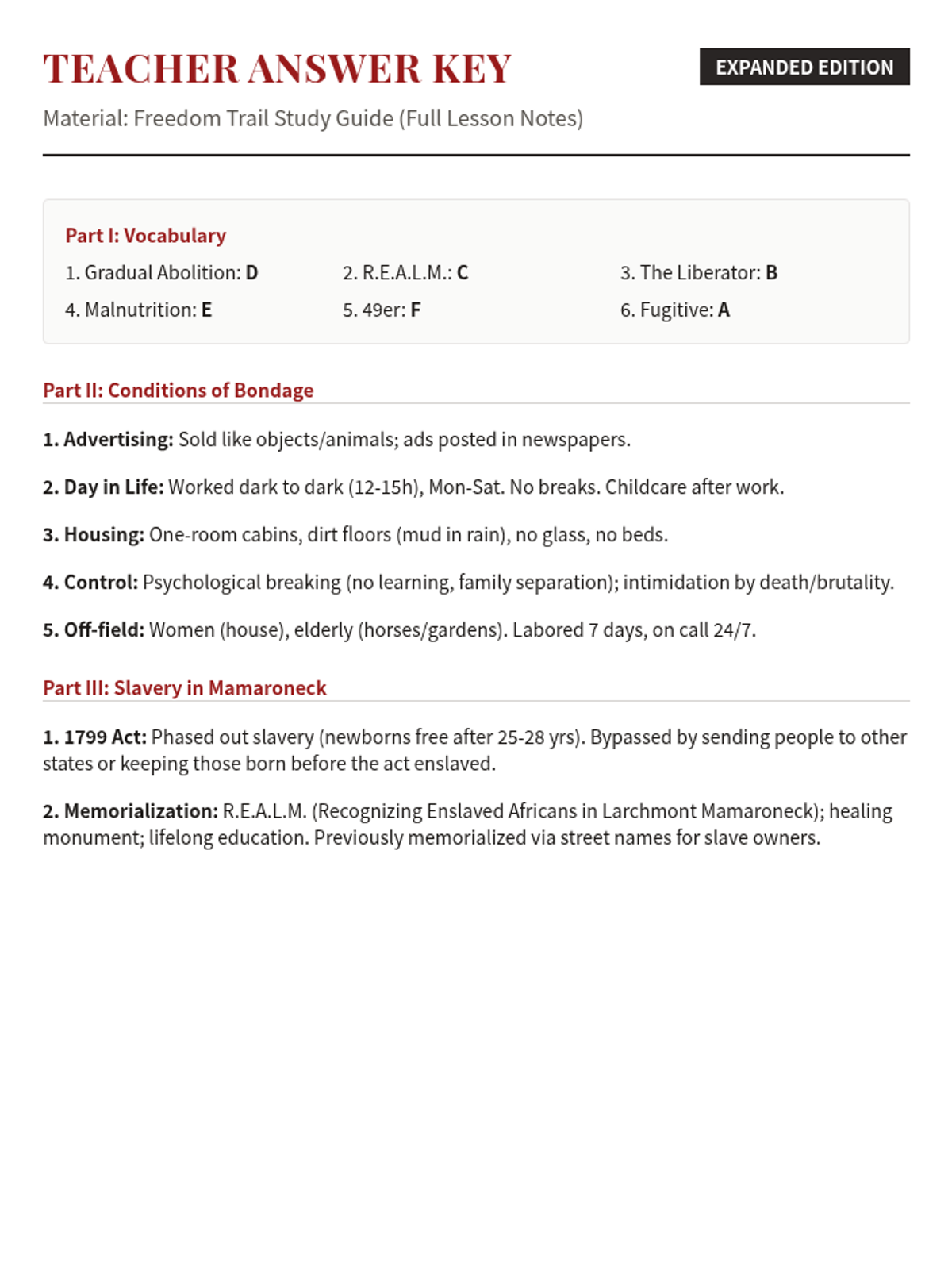
A comprehensive lesson exploring the complexities of slavery, the heroic efforts of abolitionists, and the political tensions of the mid-19th century leading to the Compromise of 1850.
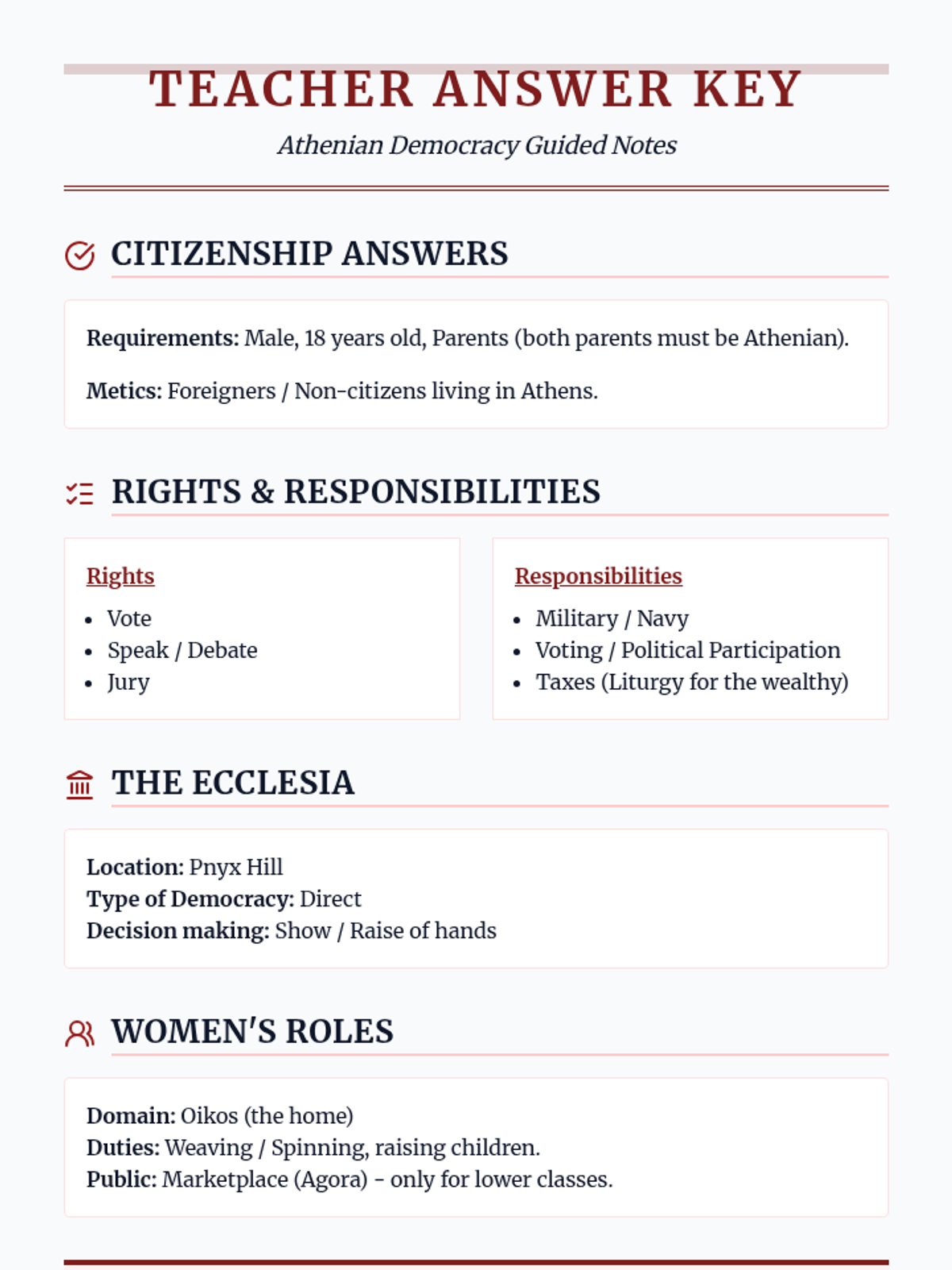
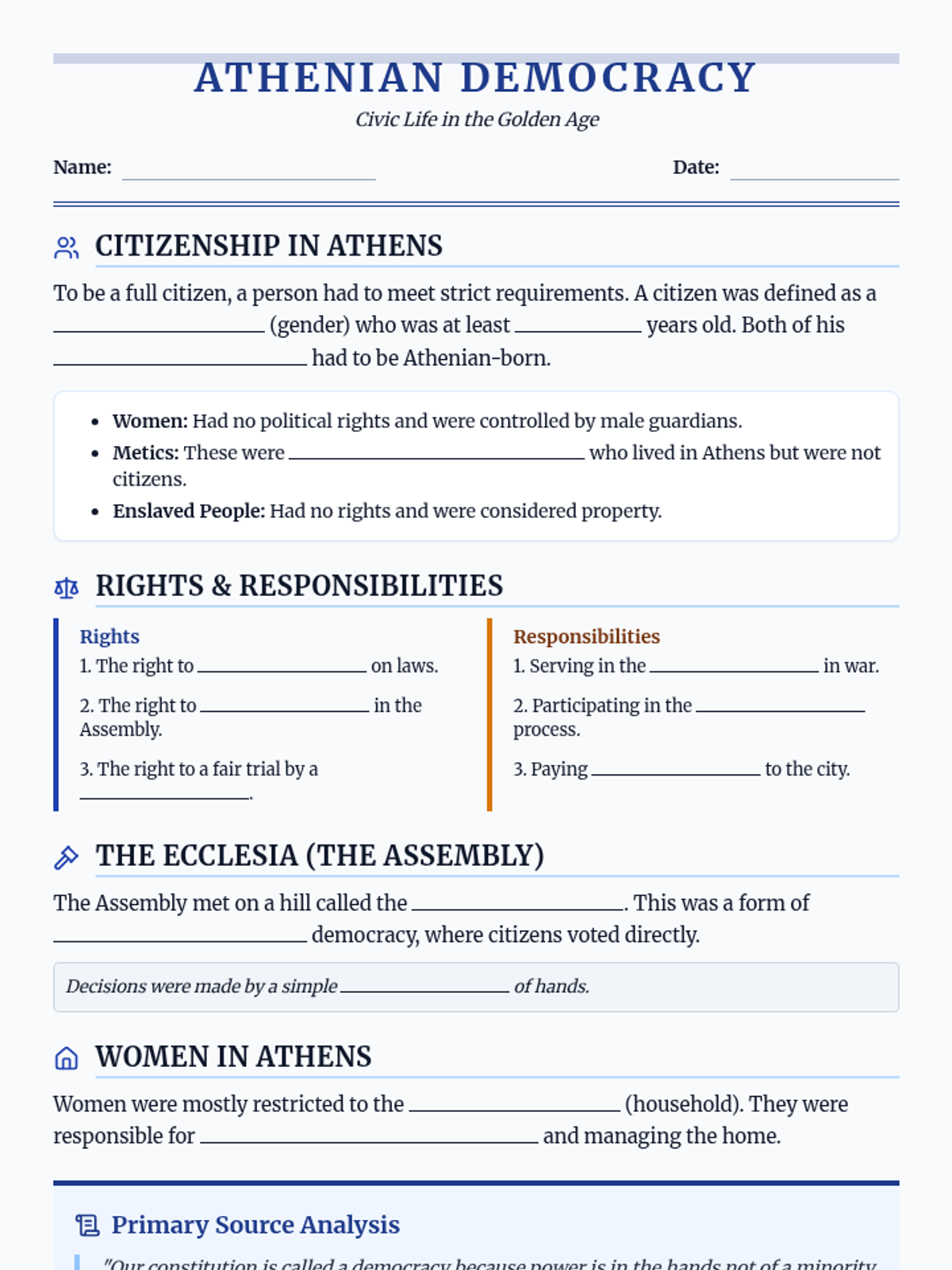
A foundational exploration of Ancient Athenian democracy, covering citizenship, the Assembly, and the differing social roles of men and women. Students will analyze primary source text to understand the civic values of the time.
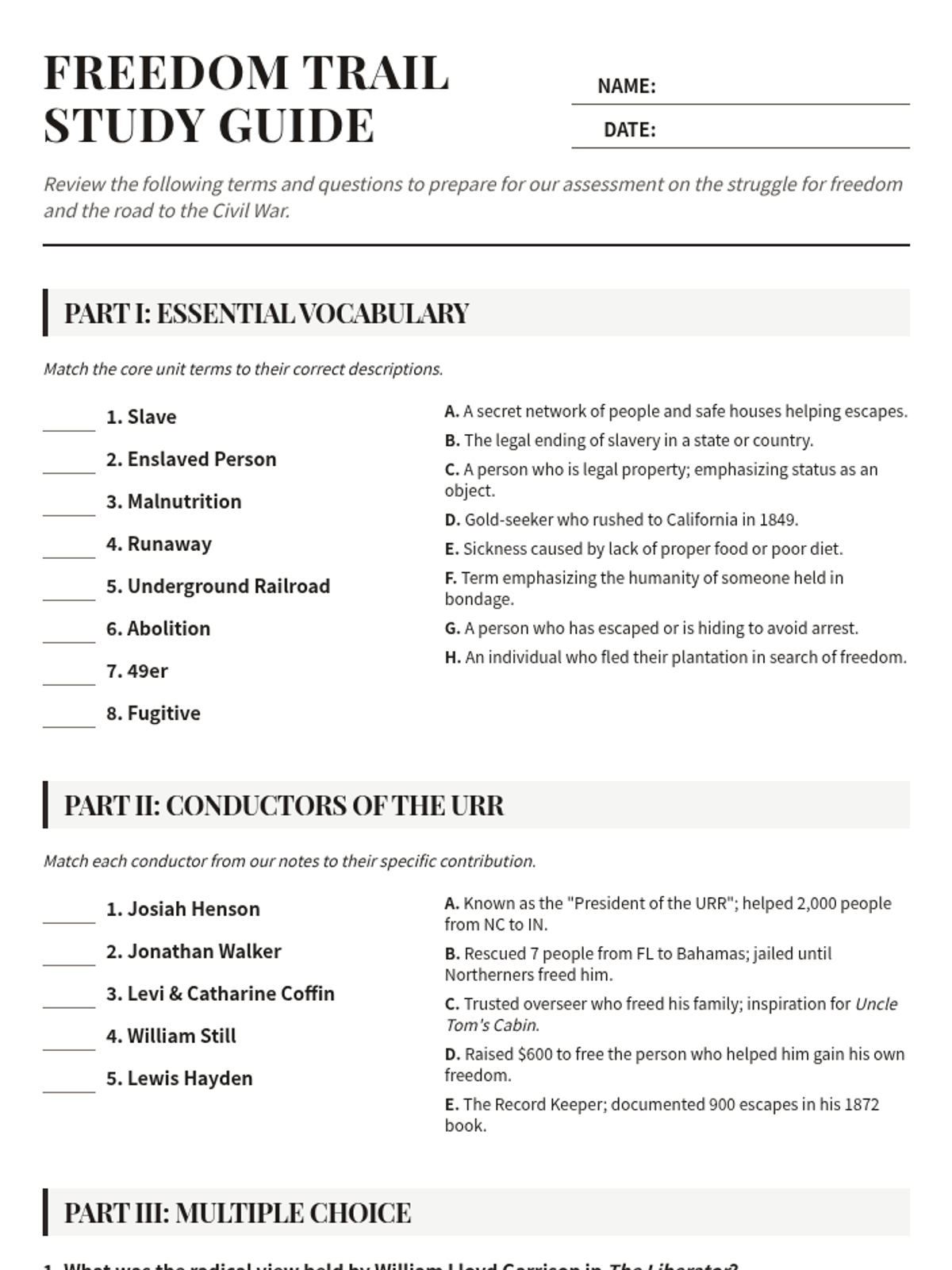
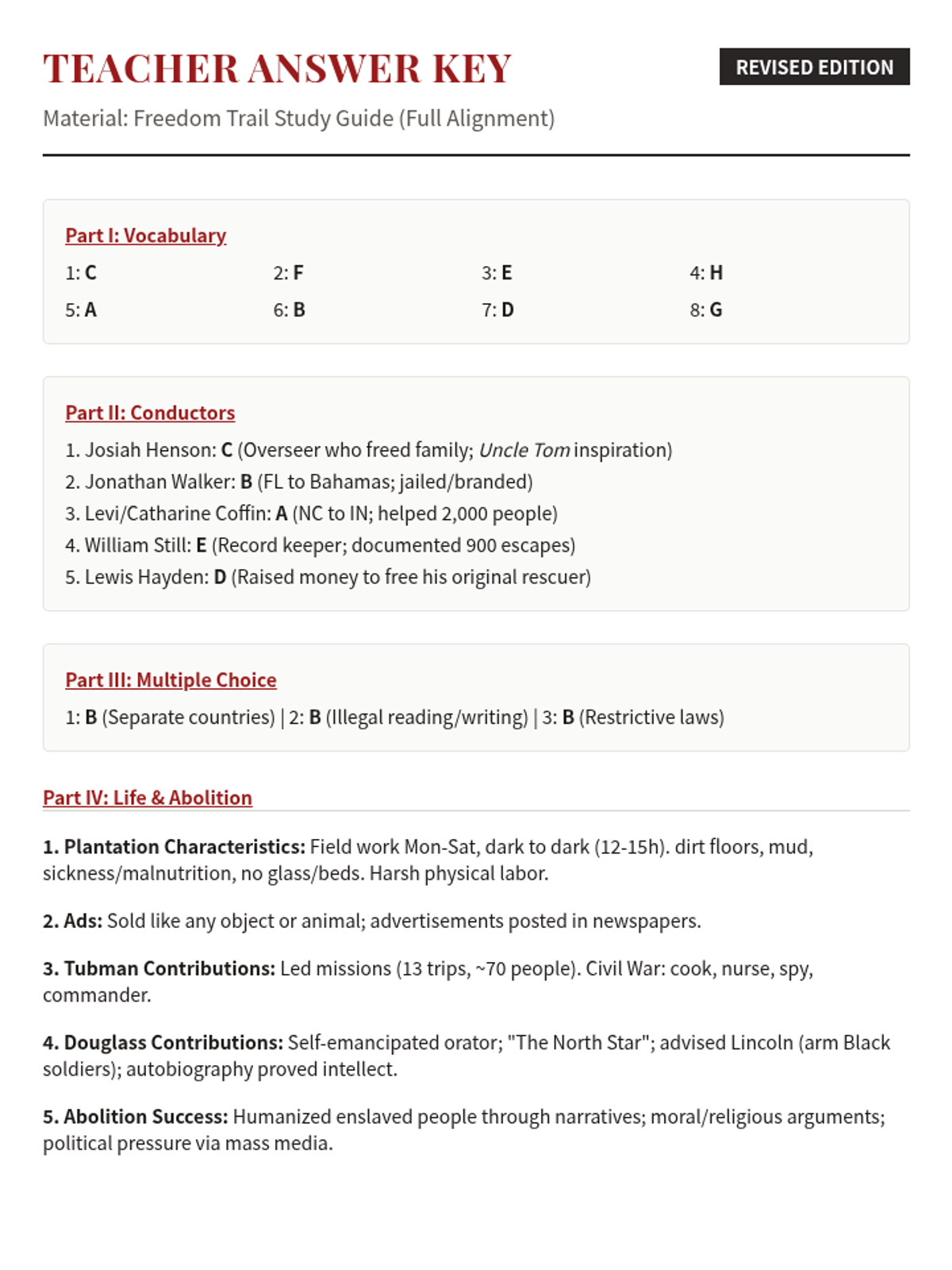
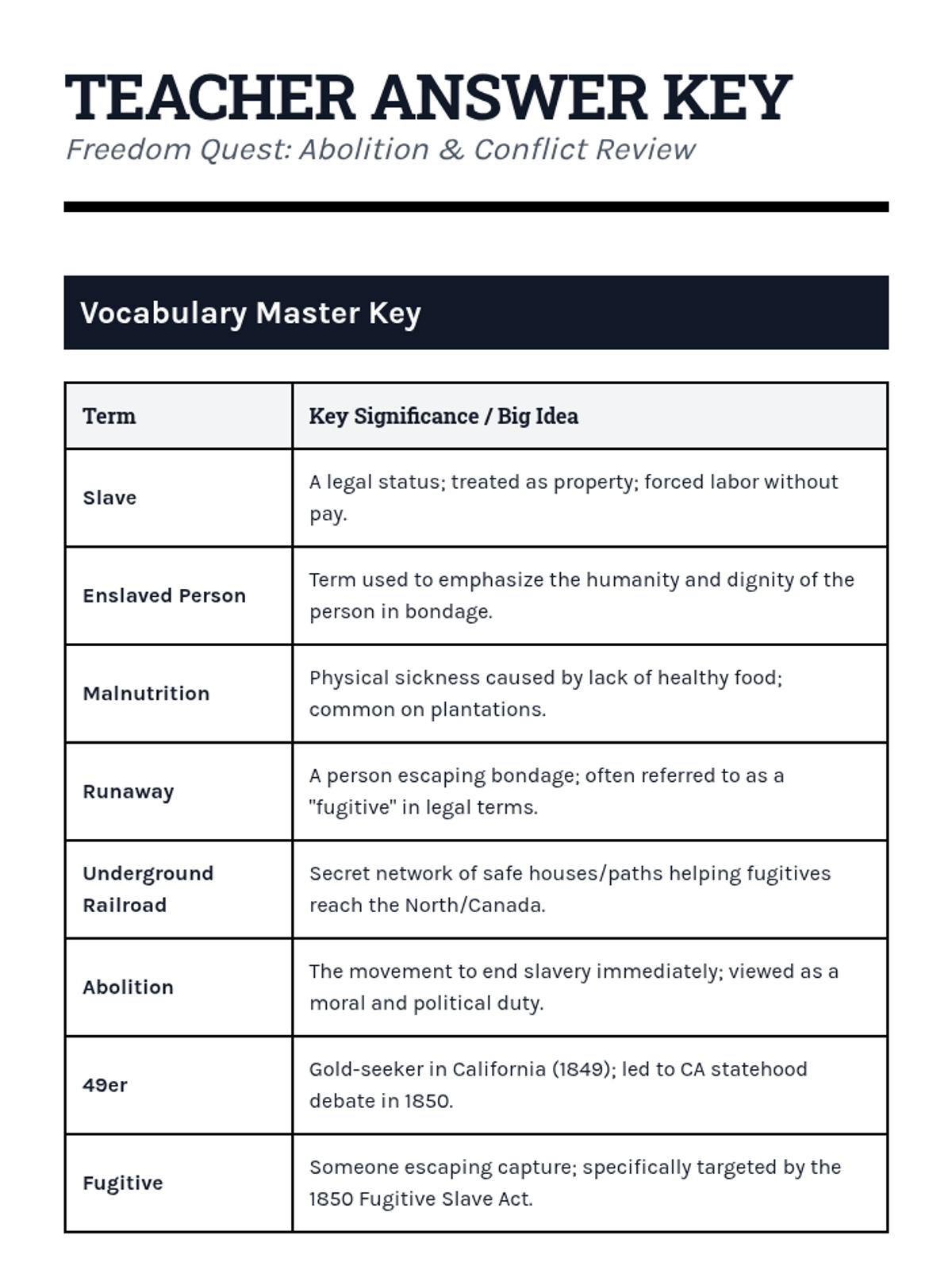
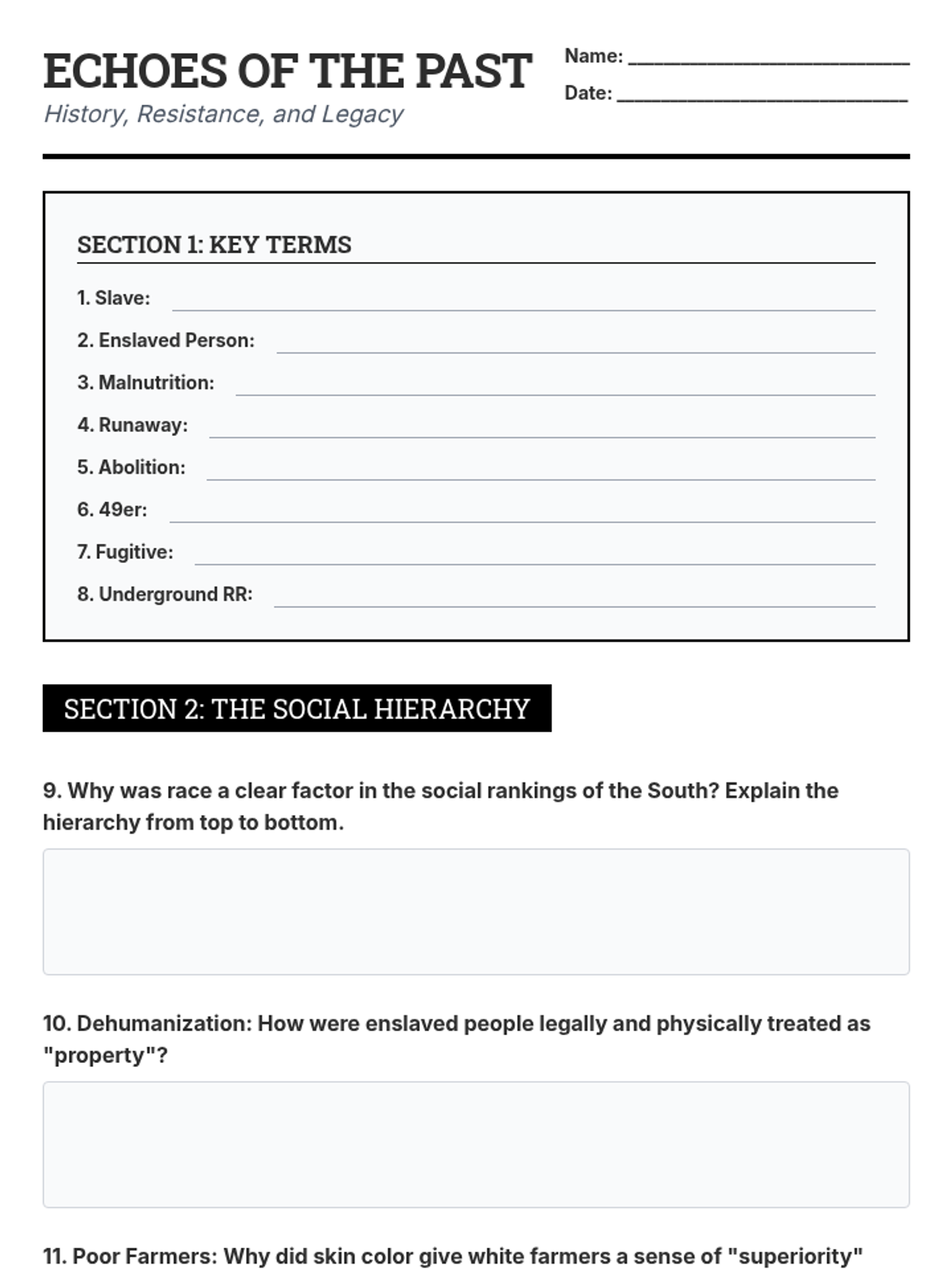
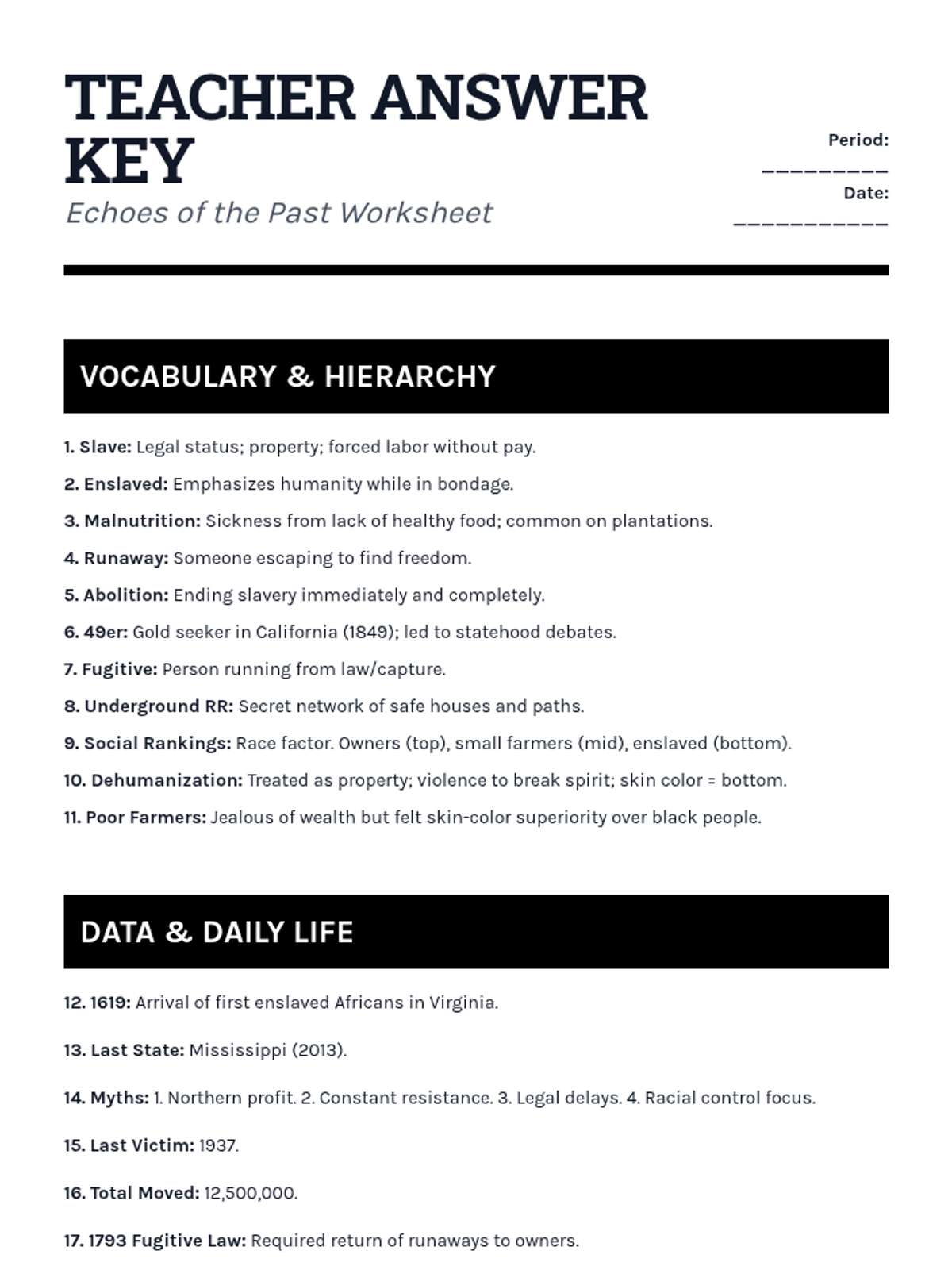
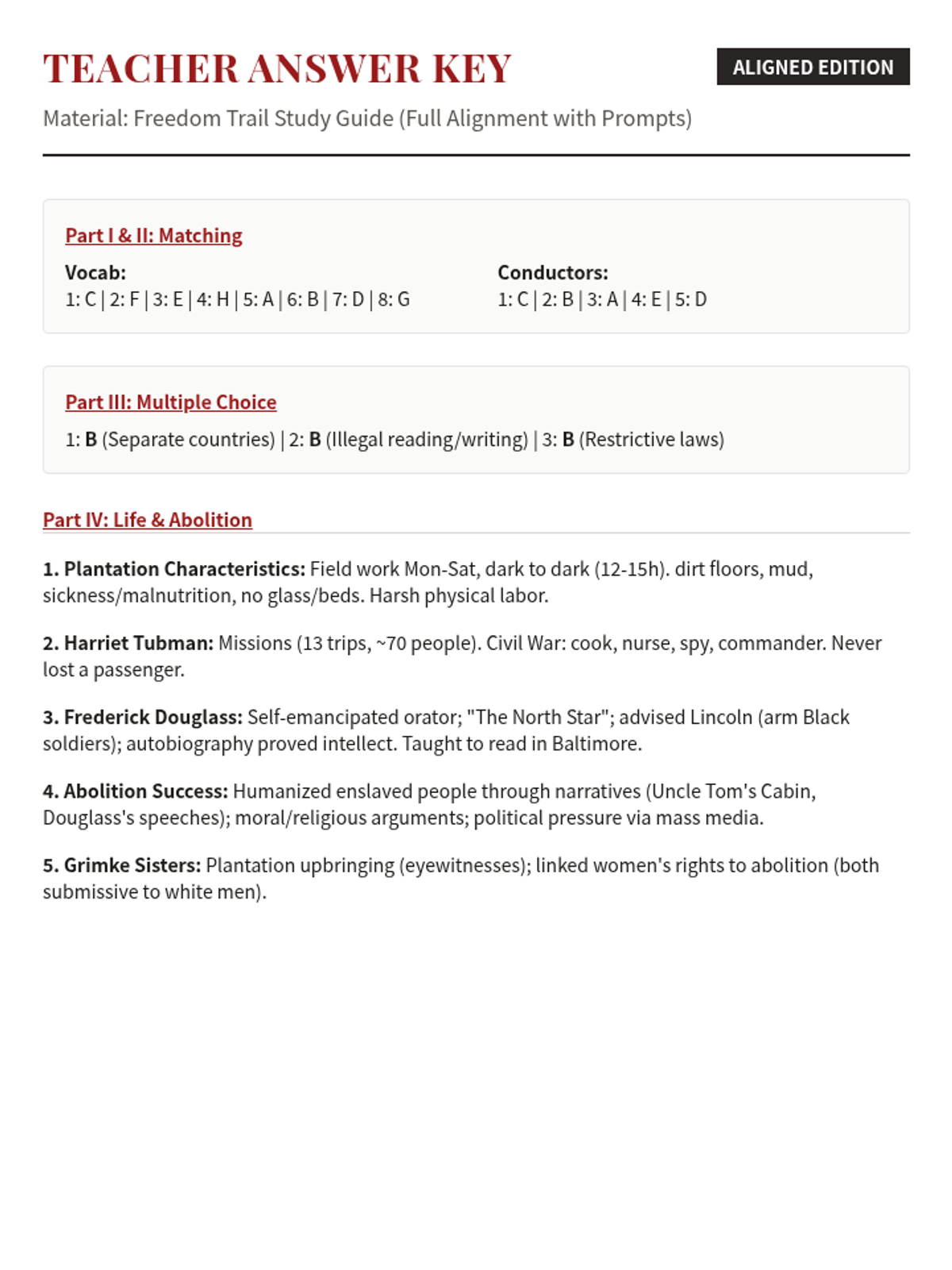
A comprehensive review lesson covering the terminology of slavery, the impact of the Underground Railroad, key abolitionist figures, and the political tensions of the Compromise of 1850.
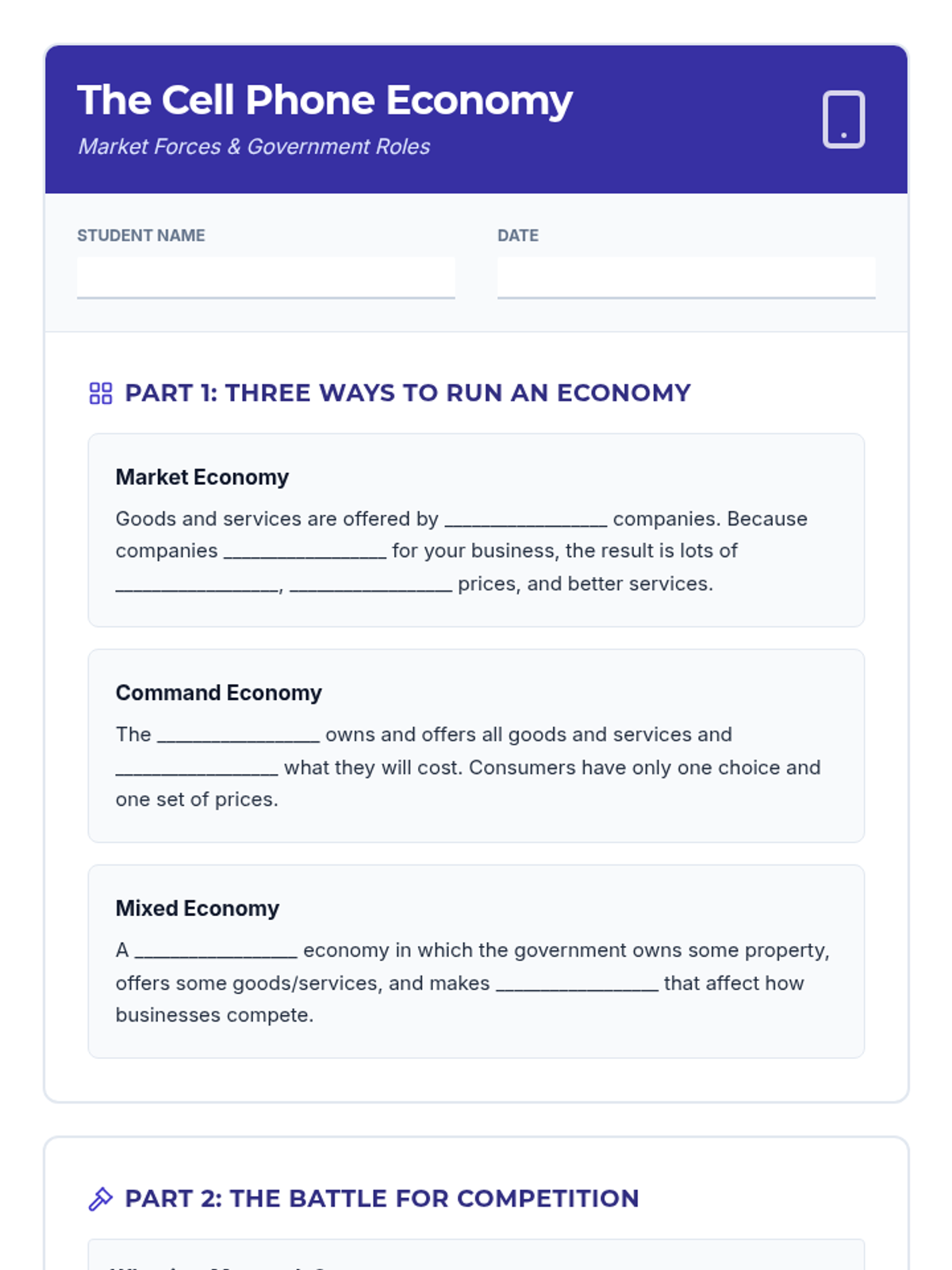
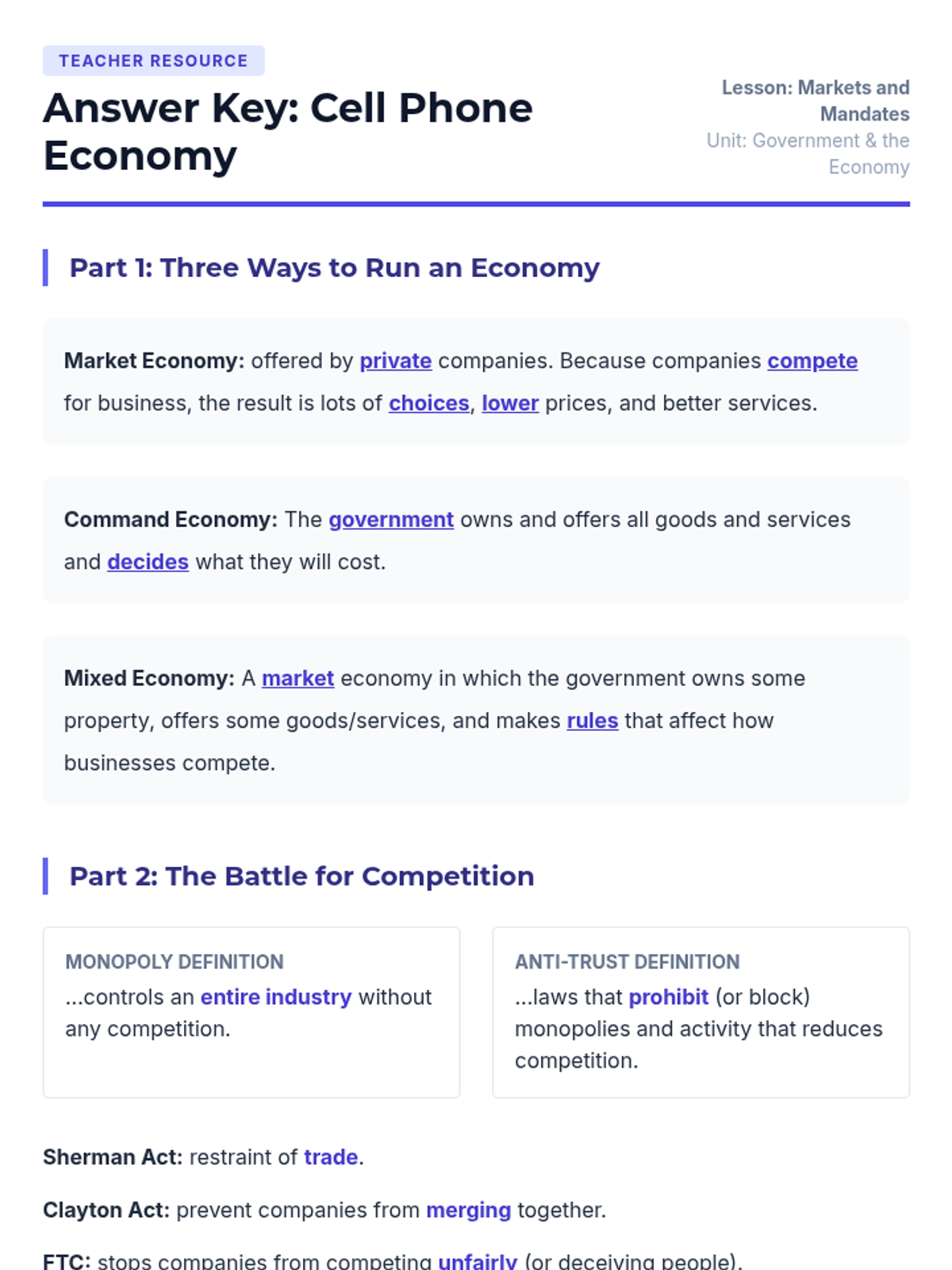
This lesson explores the characteristics of different economic systems (market, command, mixed) and examines the government's role in regulating competition, trade, and consumer safety using the cell phone industry as a primary case study.
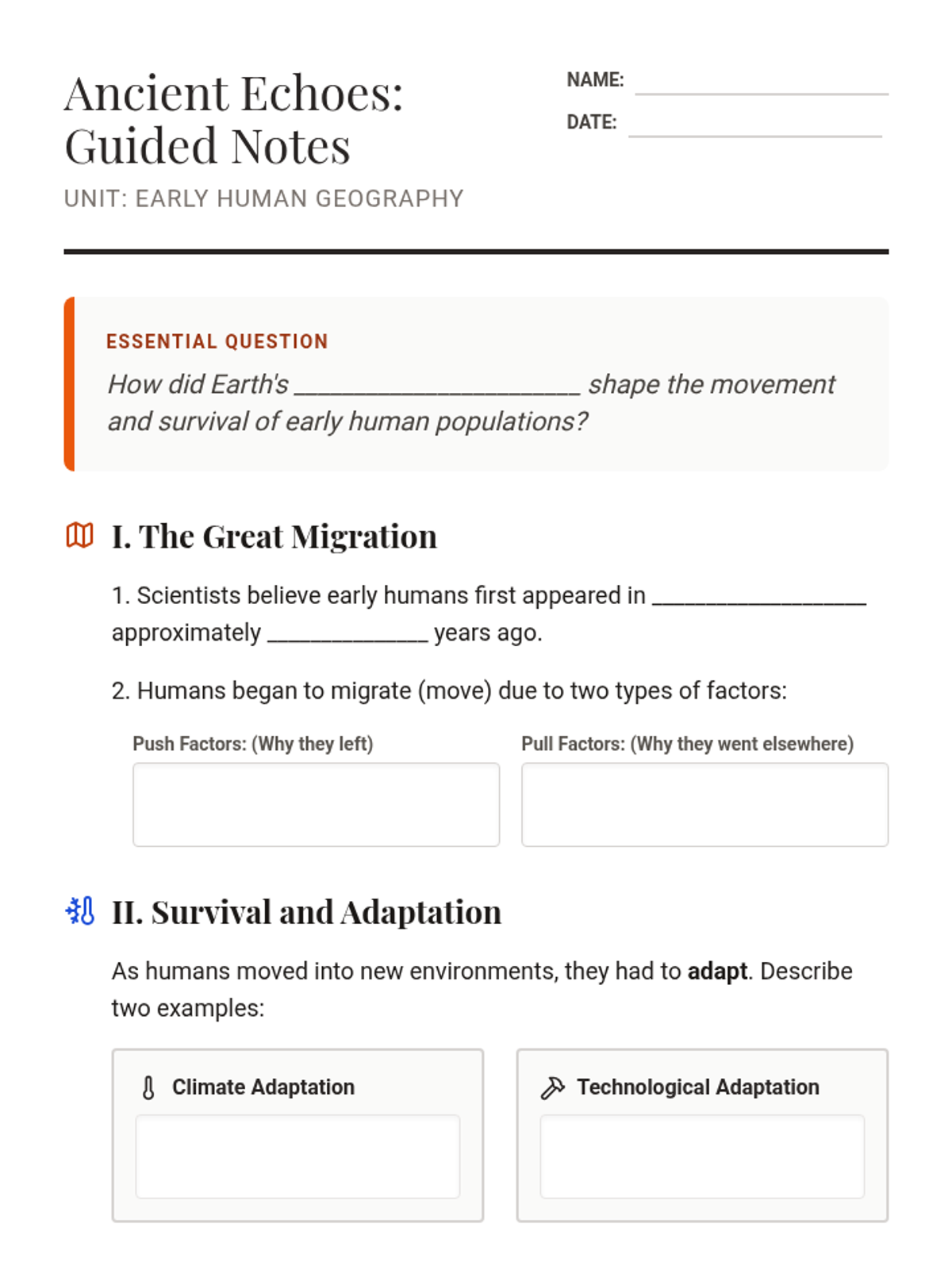
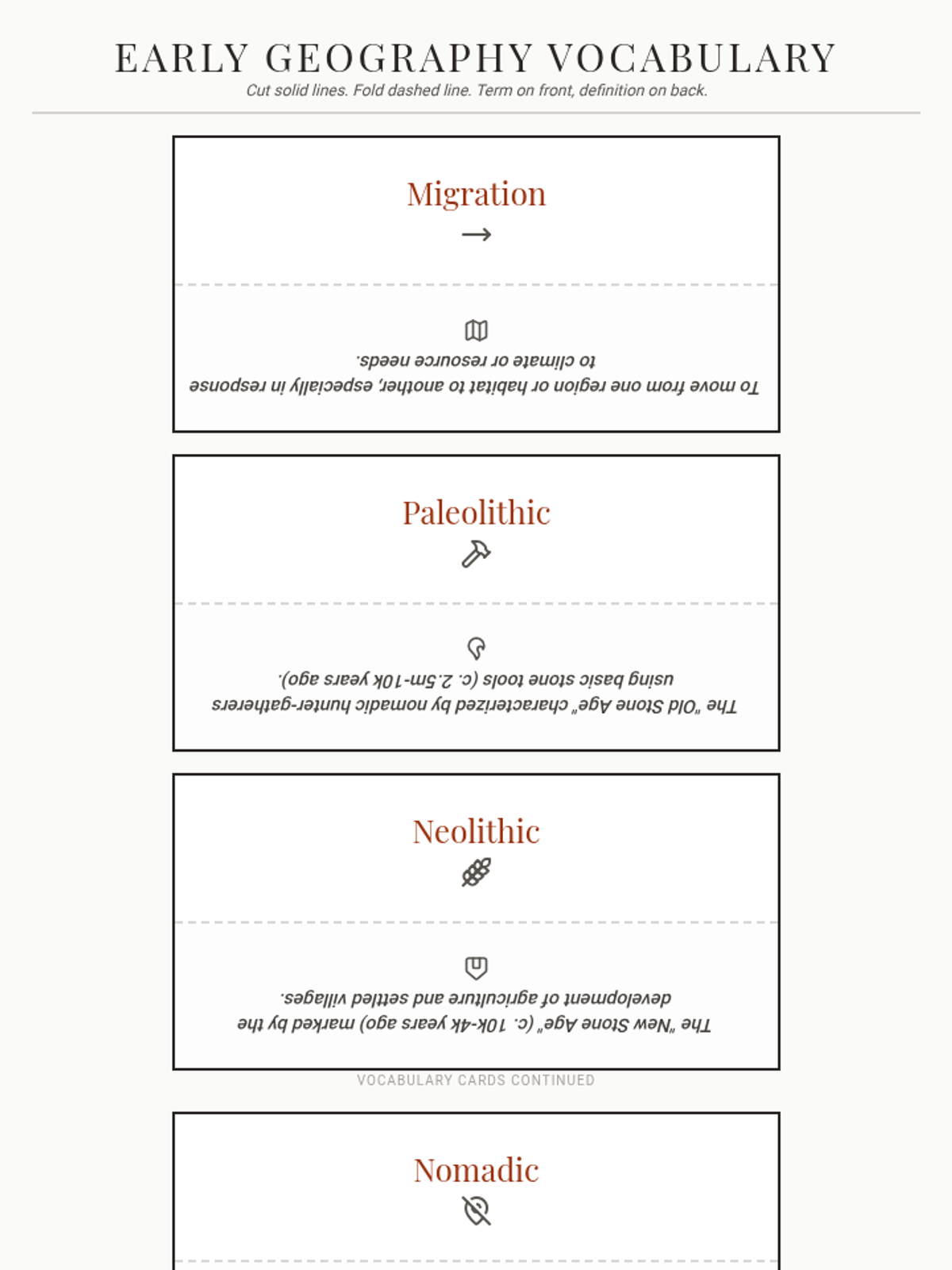
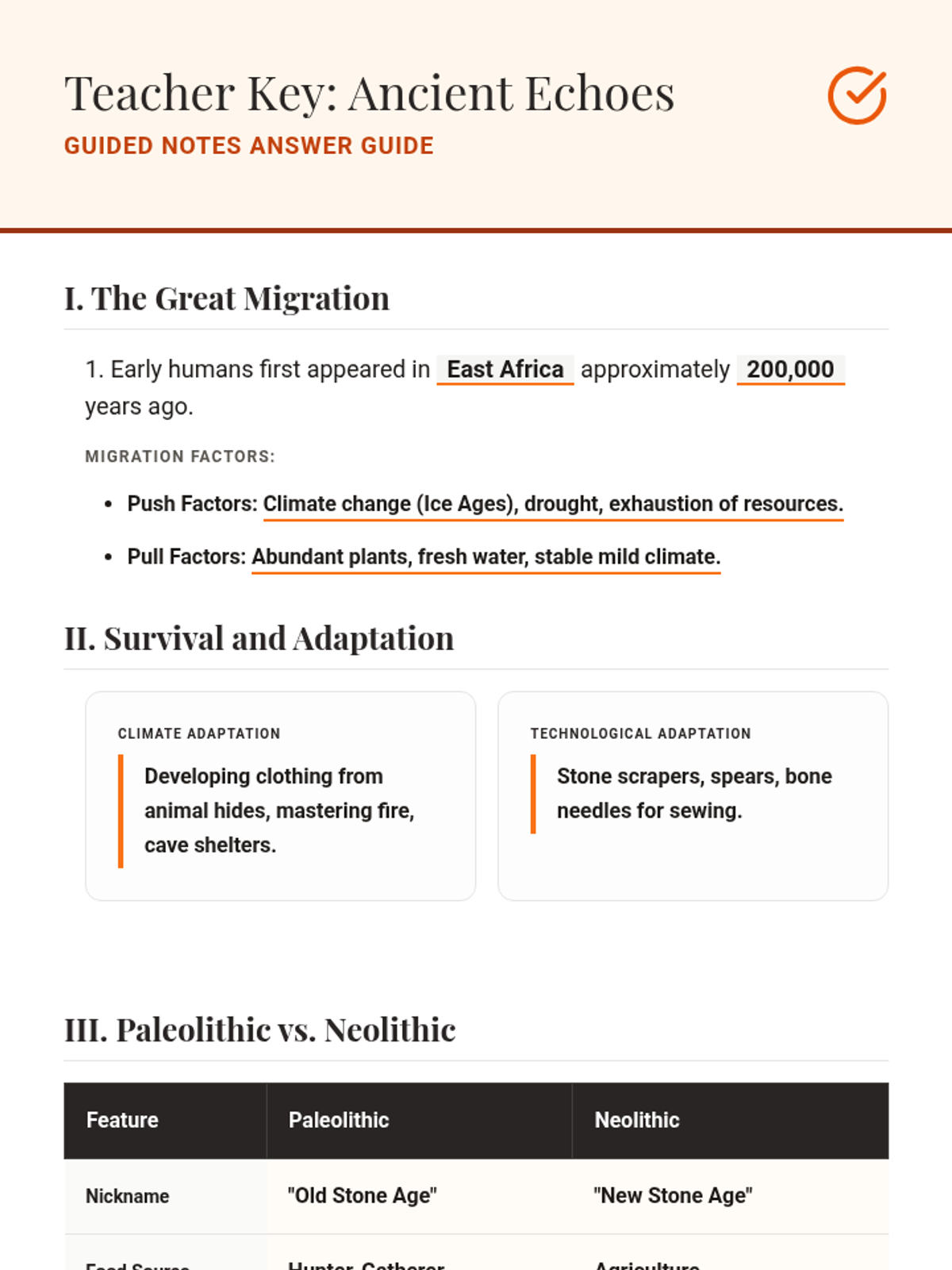
A comprehensive introduction to early human geography, exploring migration patterns, adaptations to various environments, and the transition from hunter-gatherer societies to settled agricultural communities.
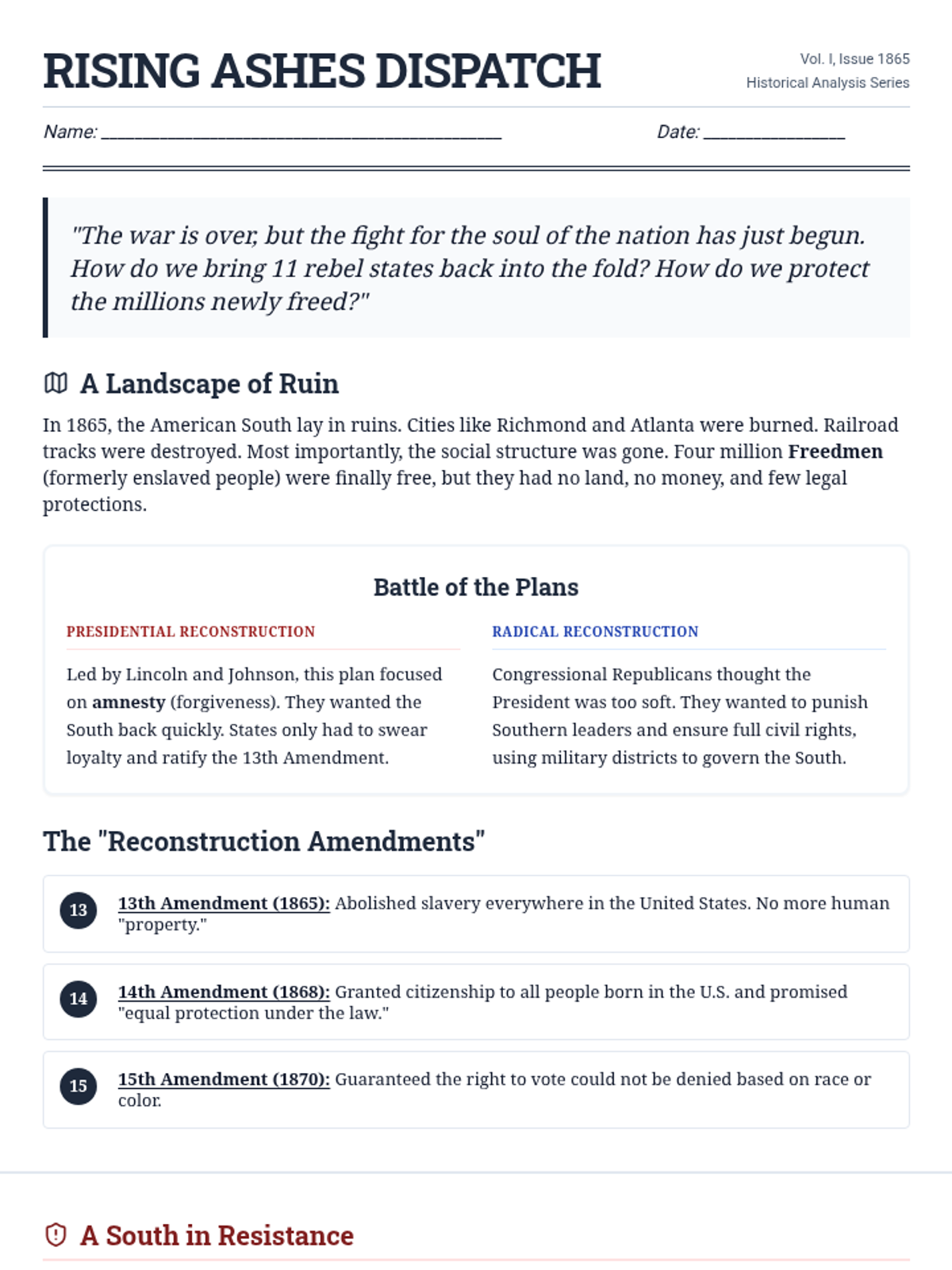
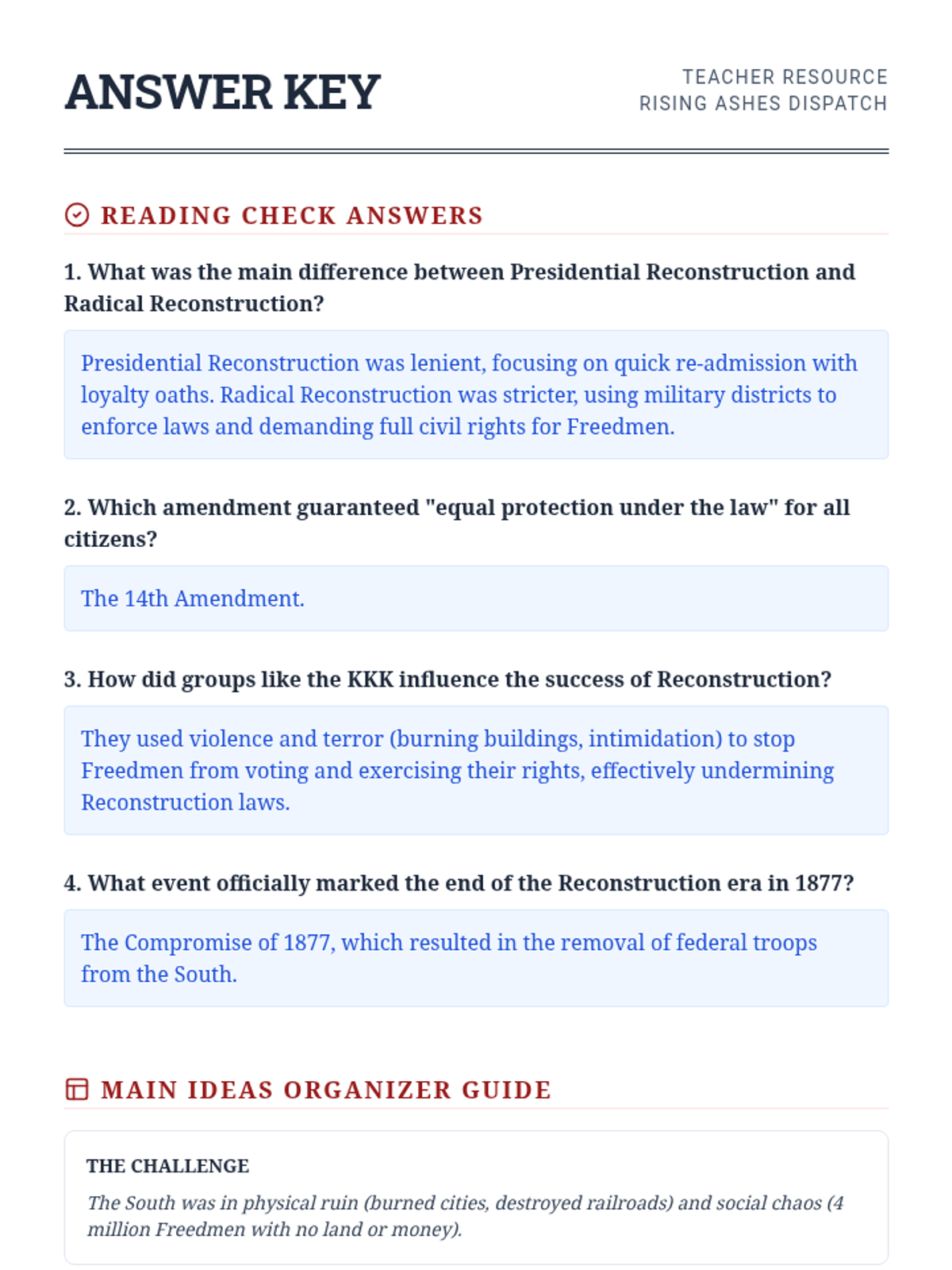
A comprehensive overview of the Reconstruction era for 8th-grade students, focusing on political plans, constitutional amendments, and social reactions in the post-Civil War South.
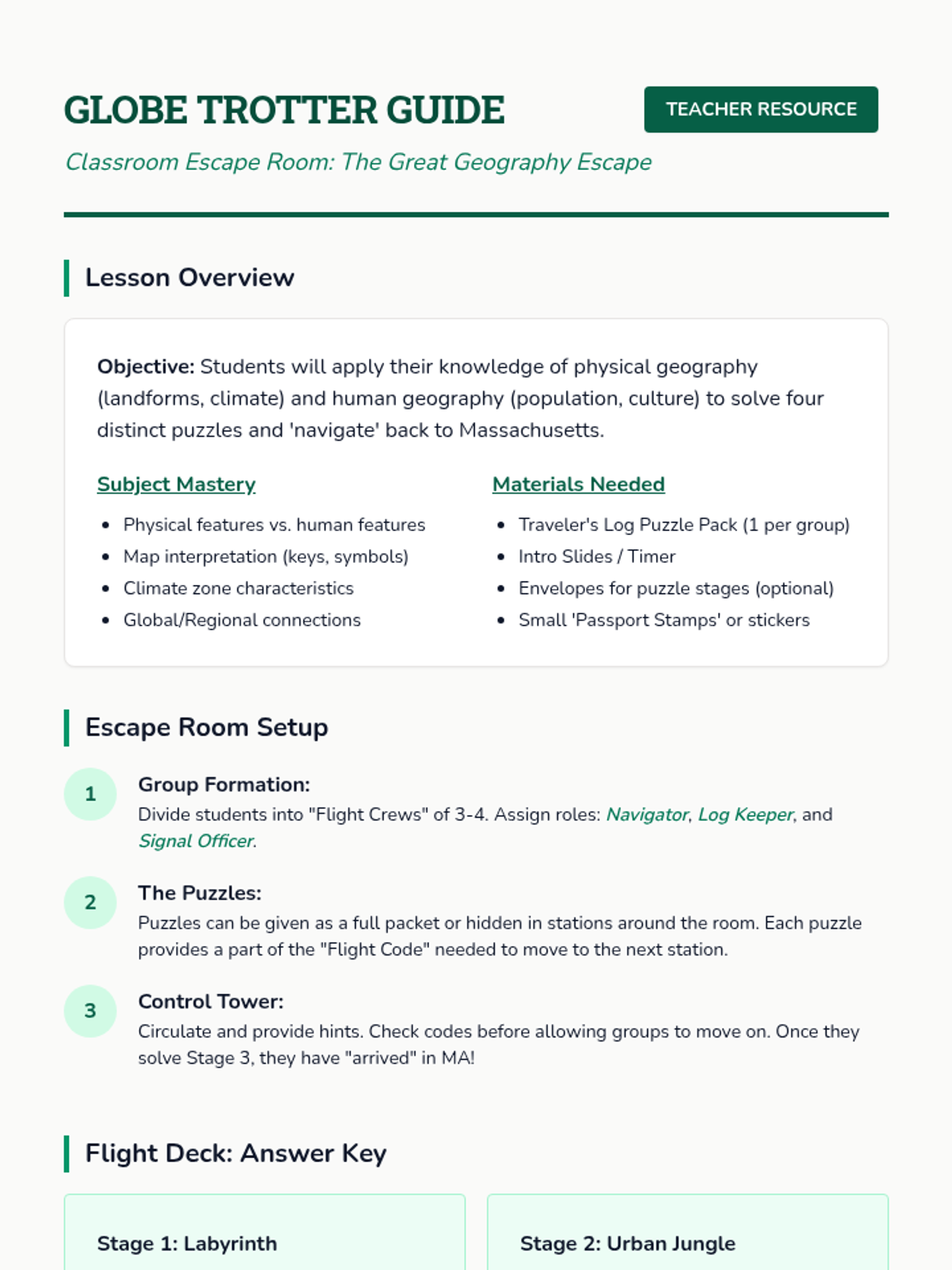
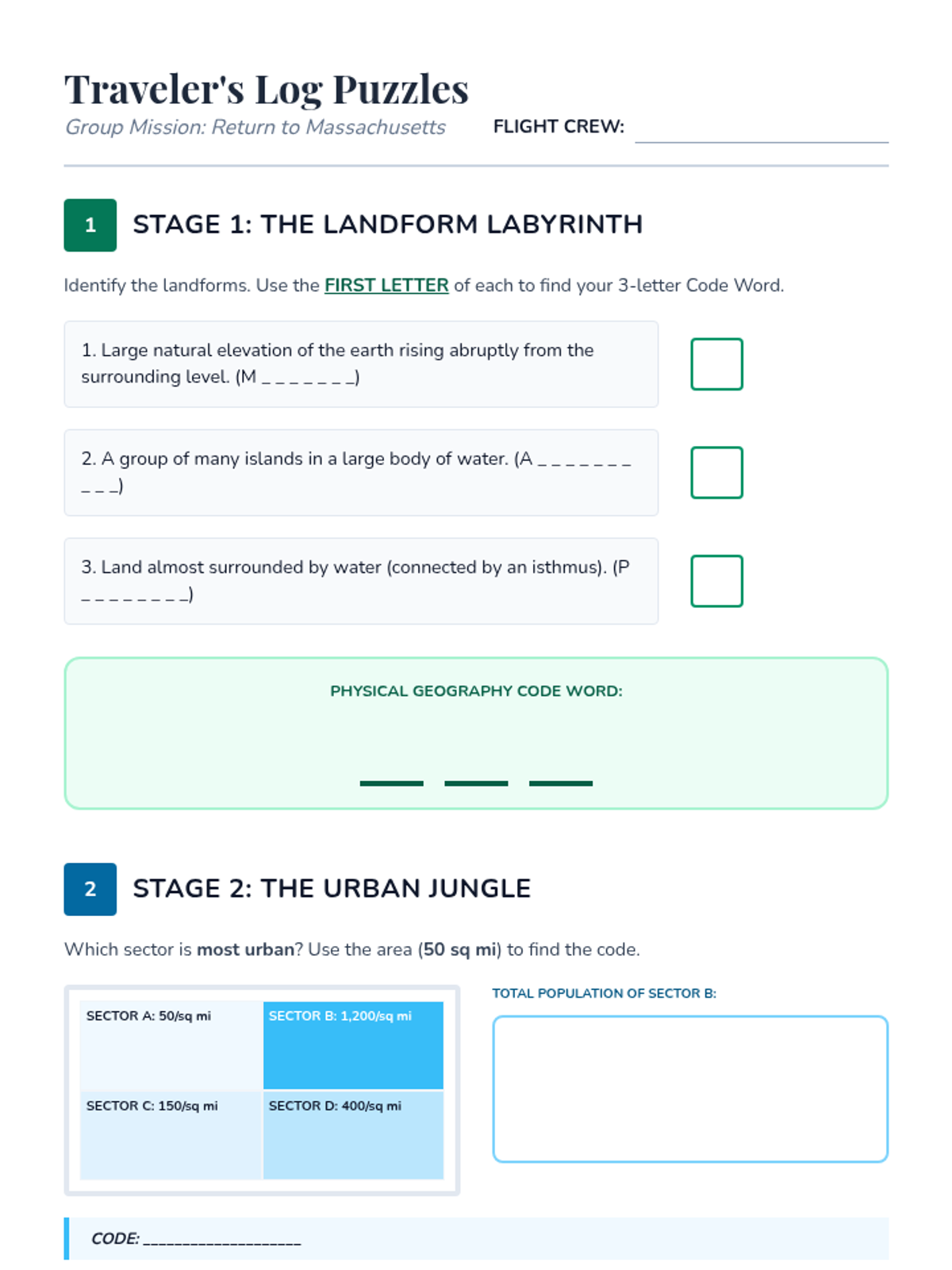
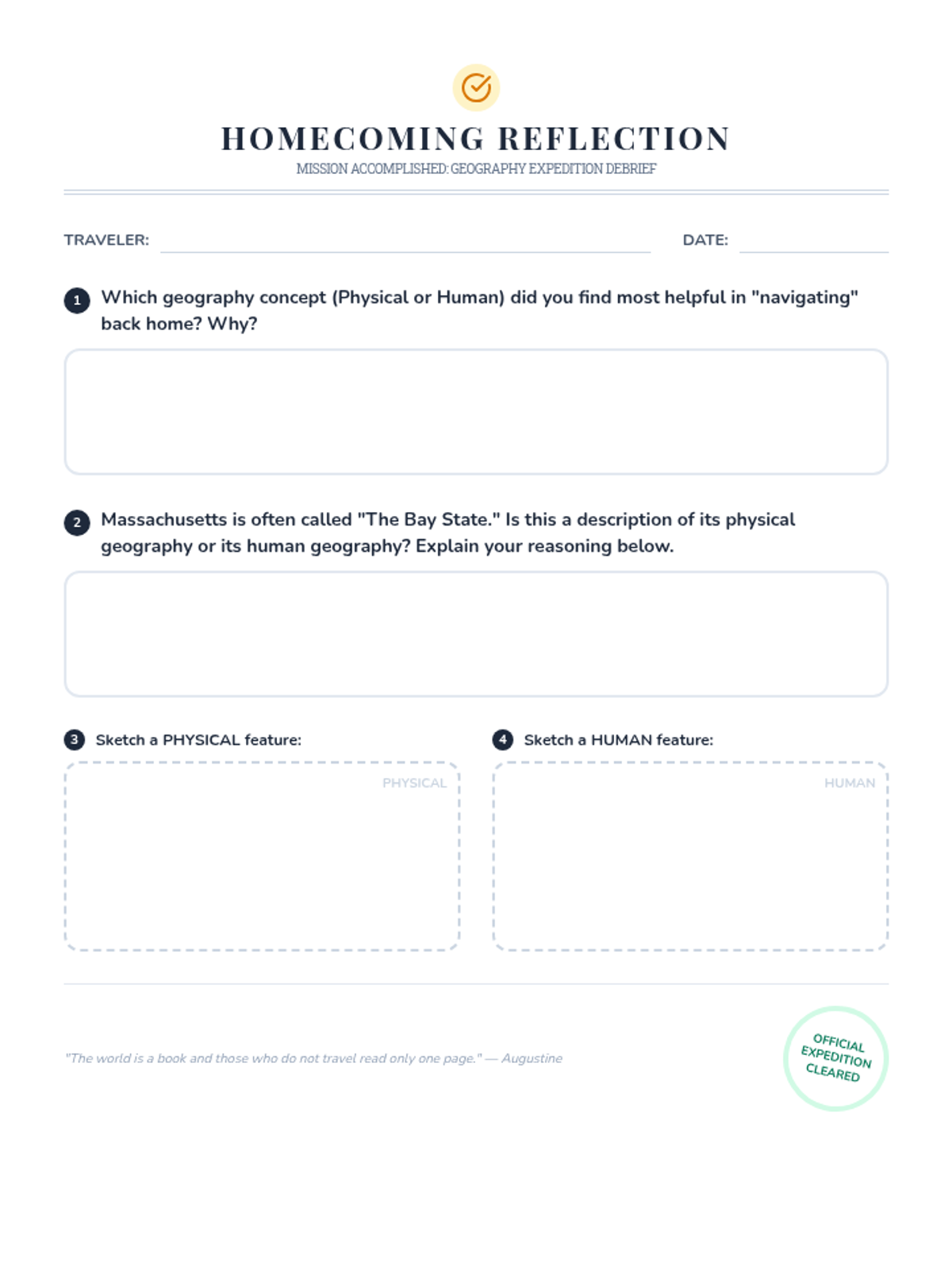
An immersive classroom escape room where students apply physical and human geography knowledge to solve puzzles and find their way back to Massachusetts.
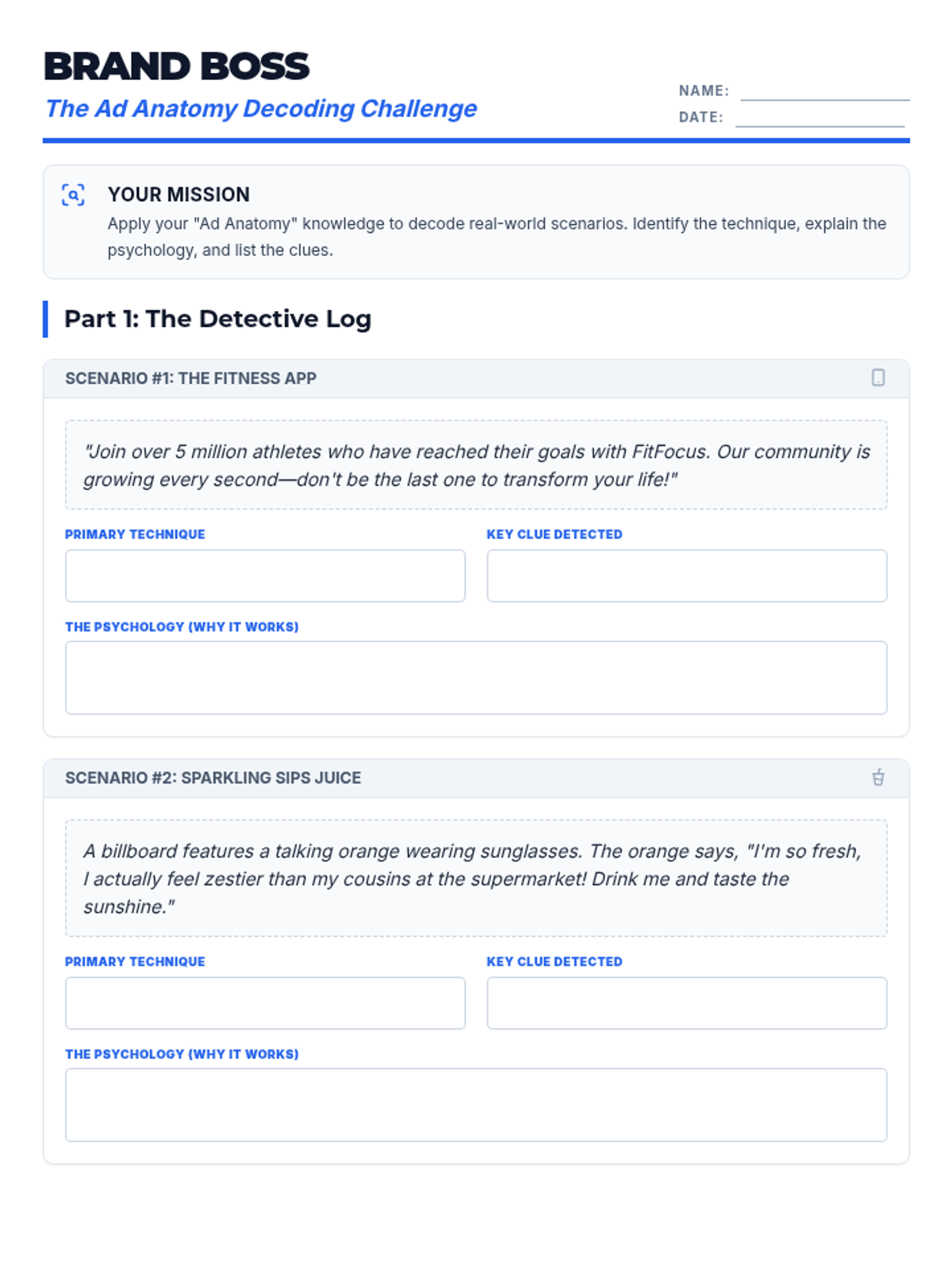
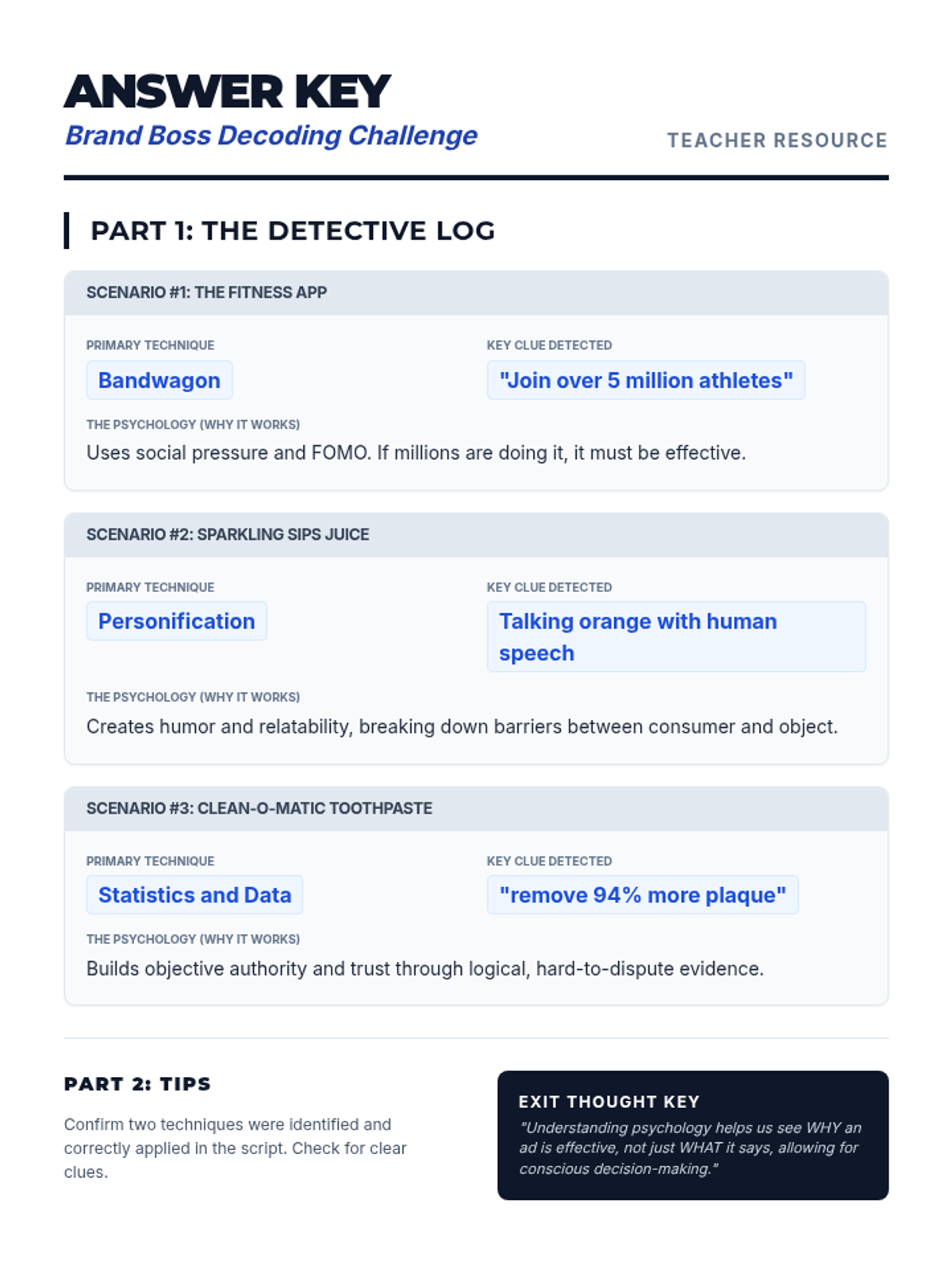
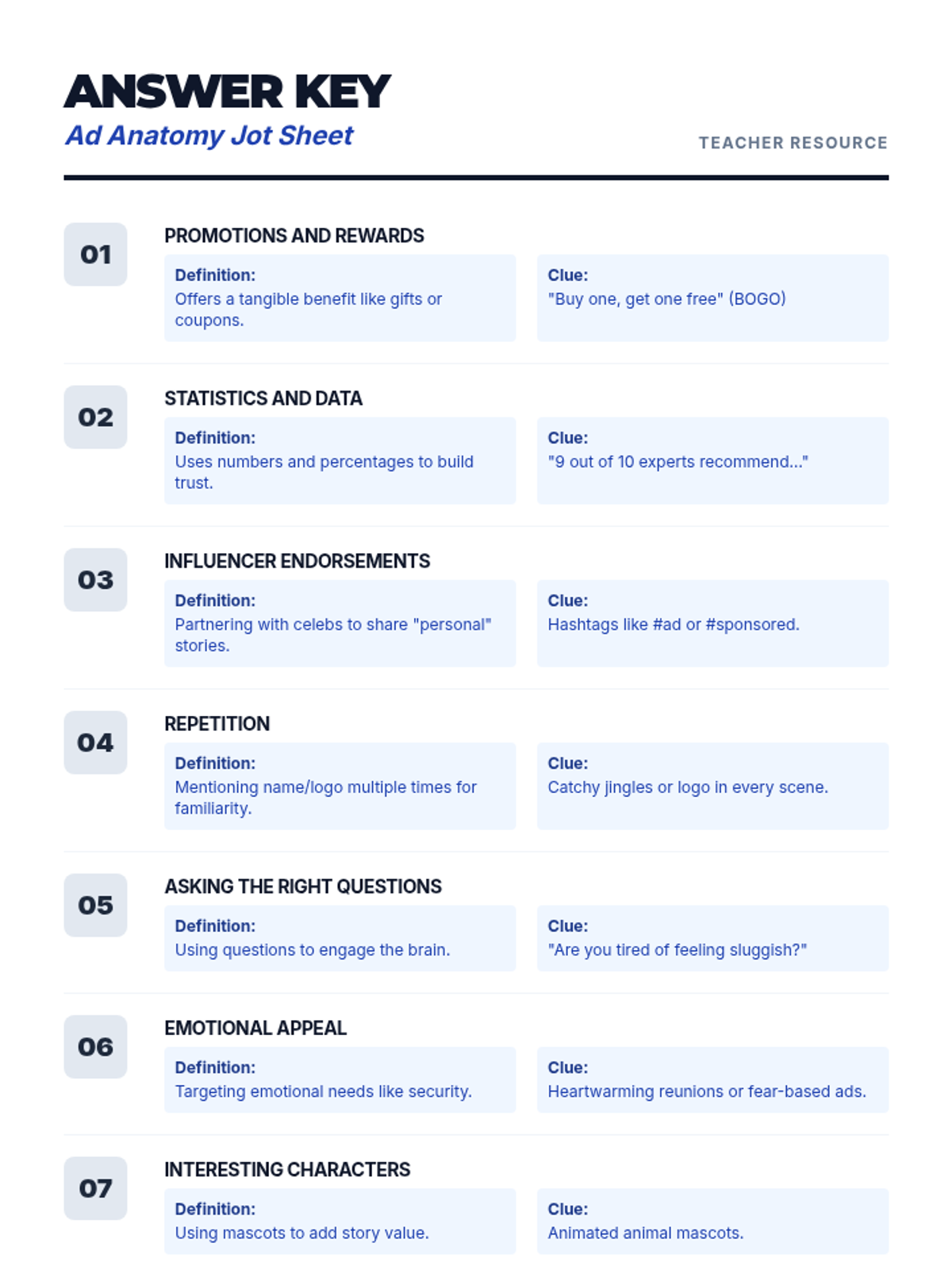
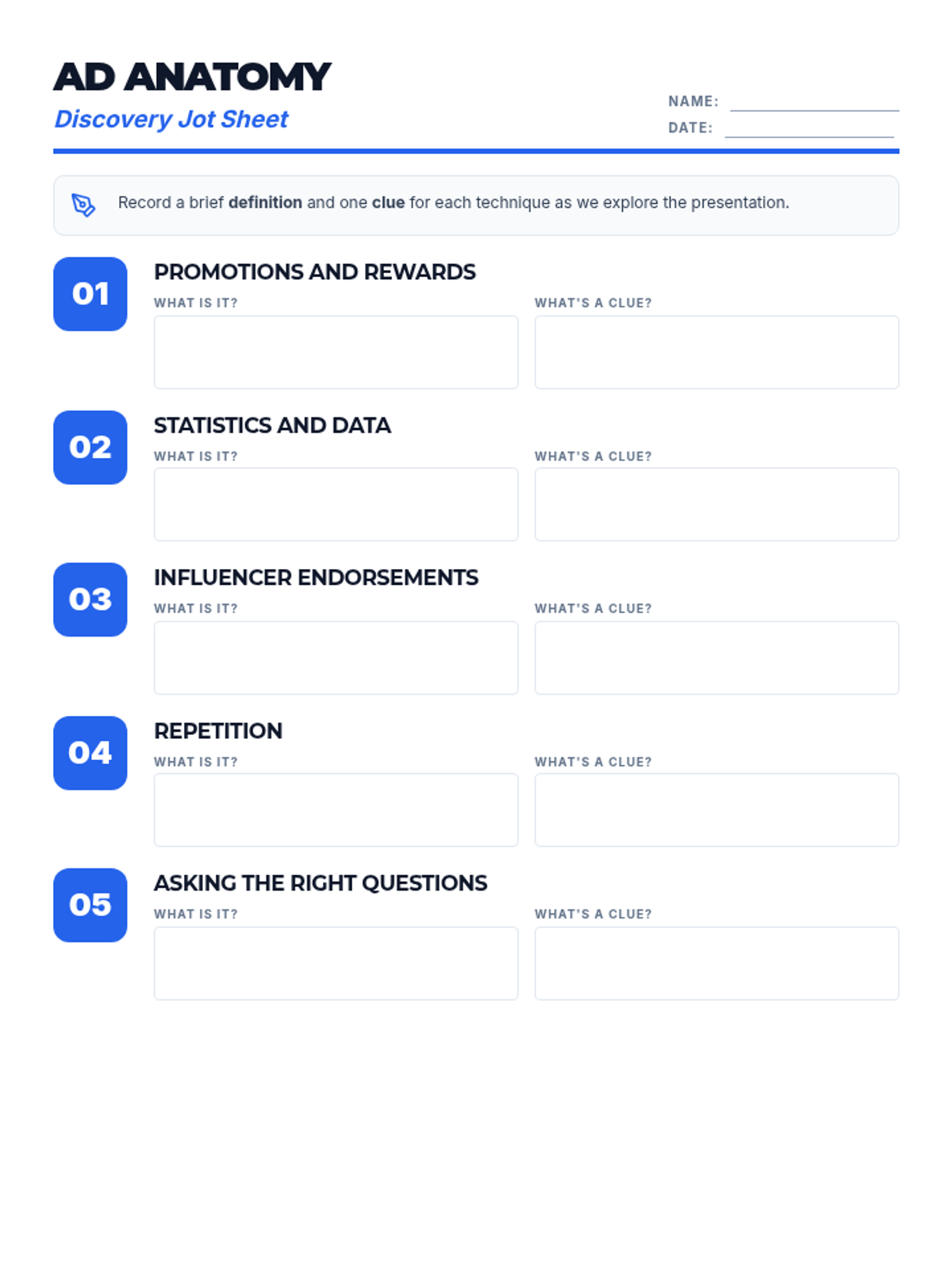
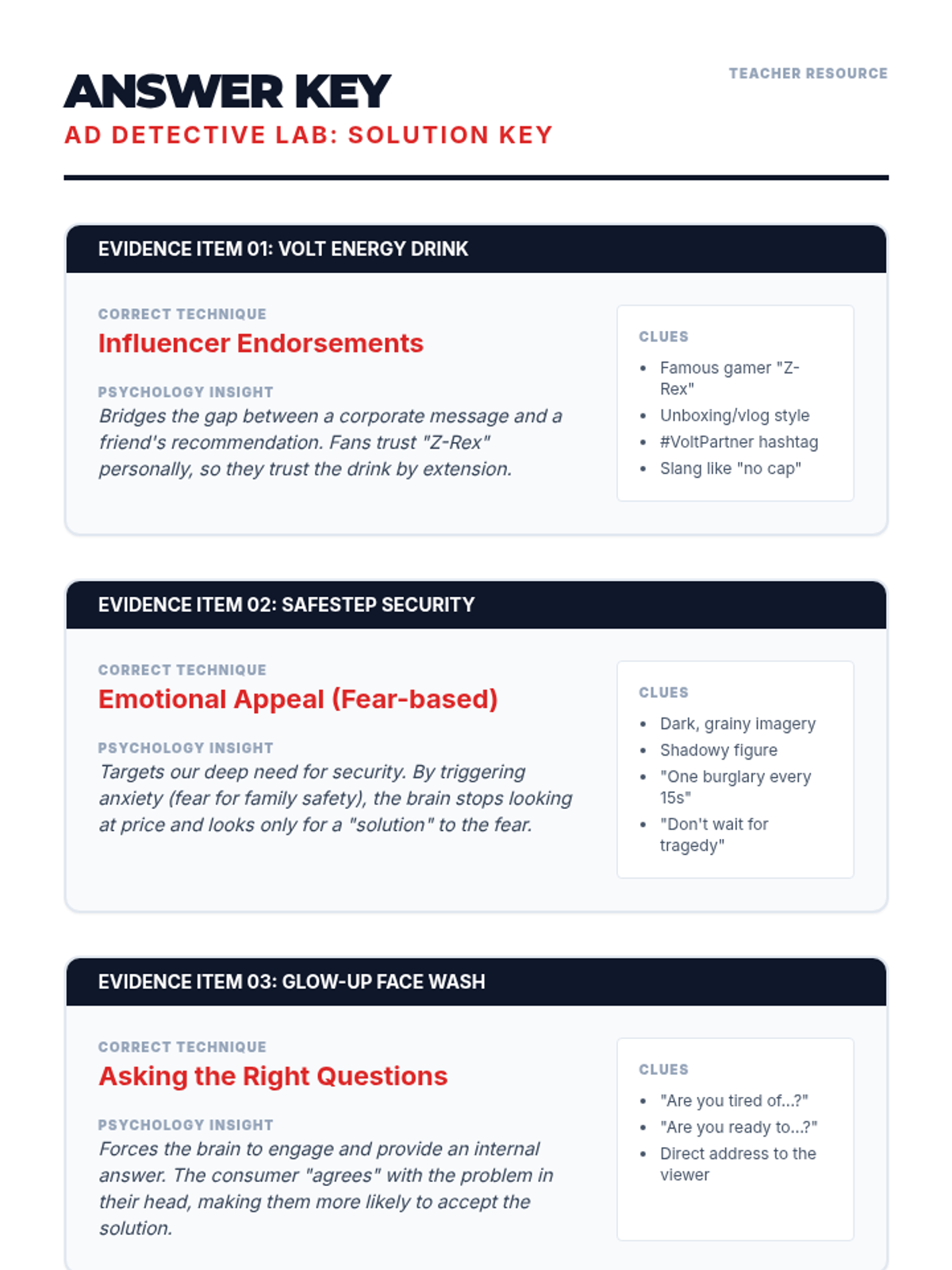
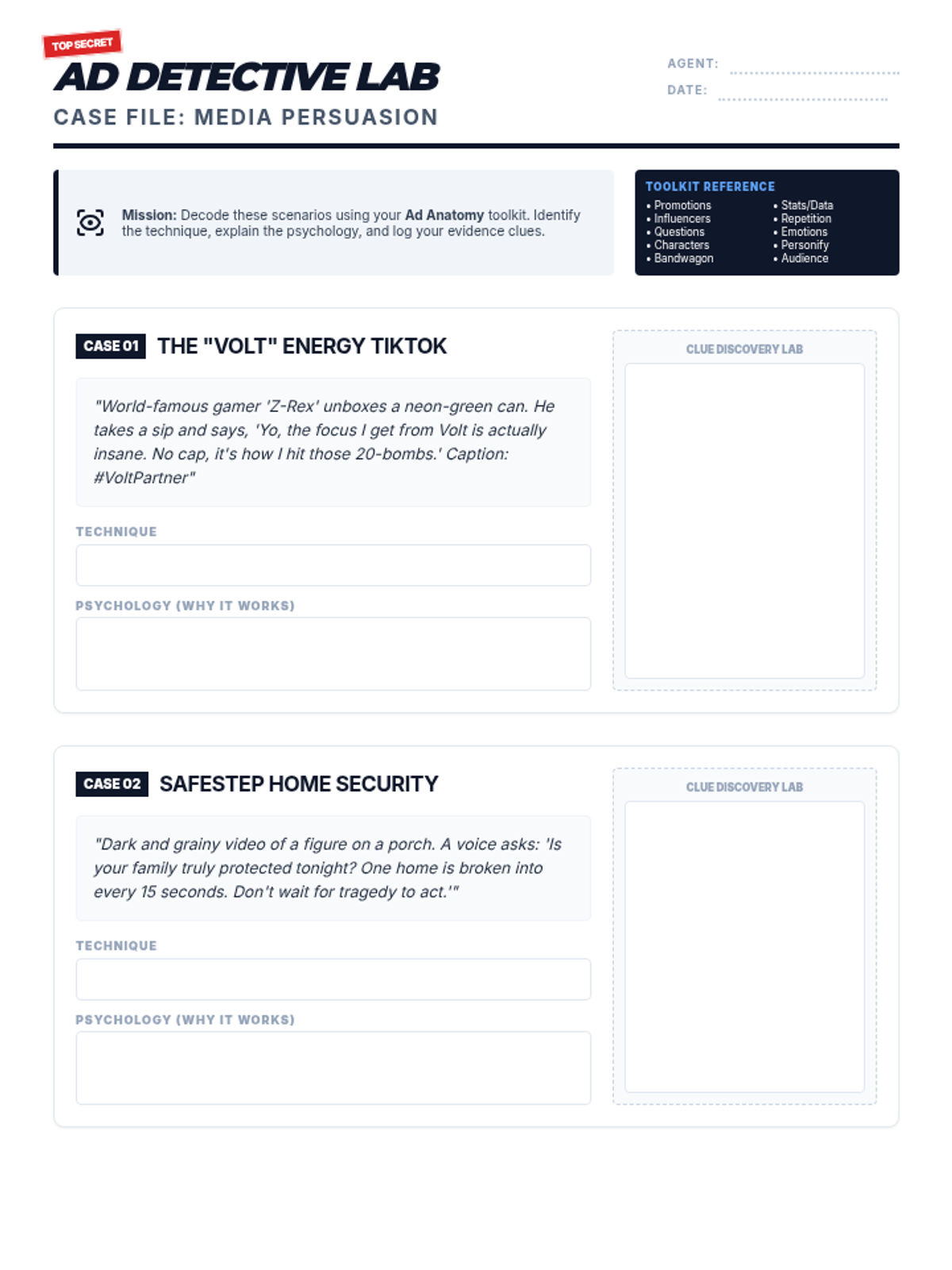
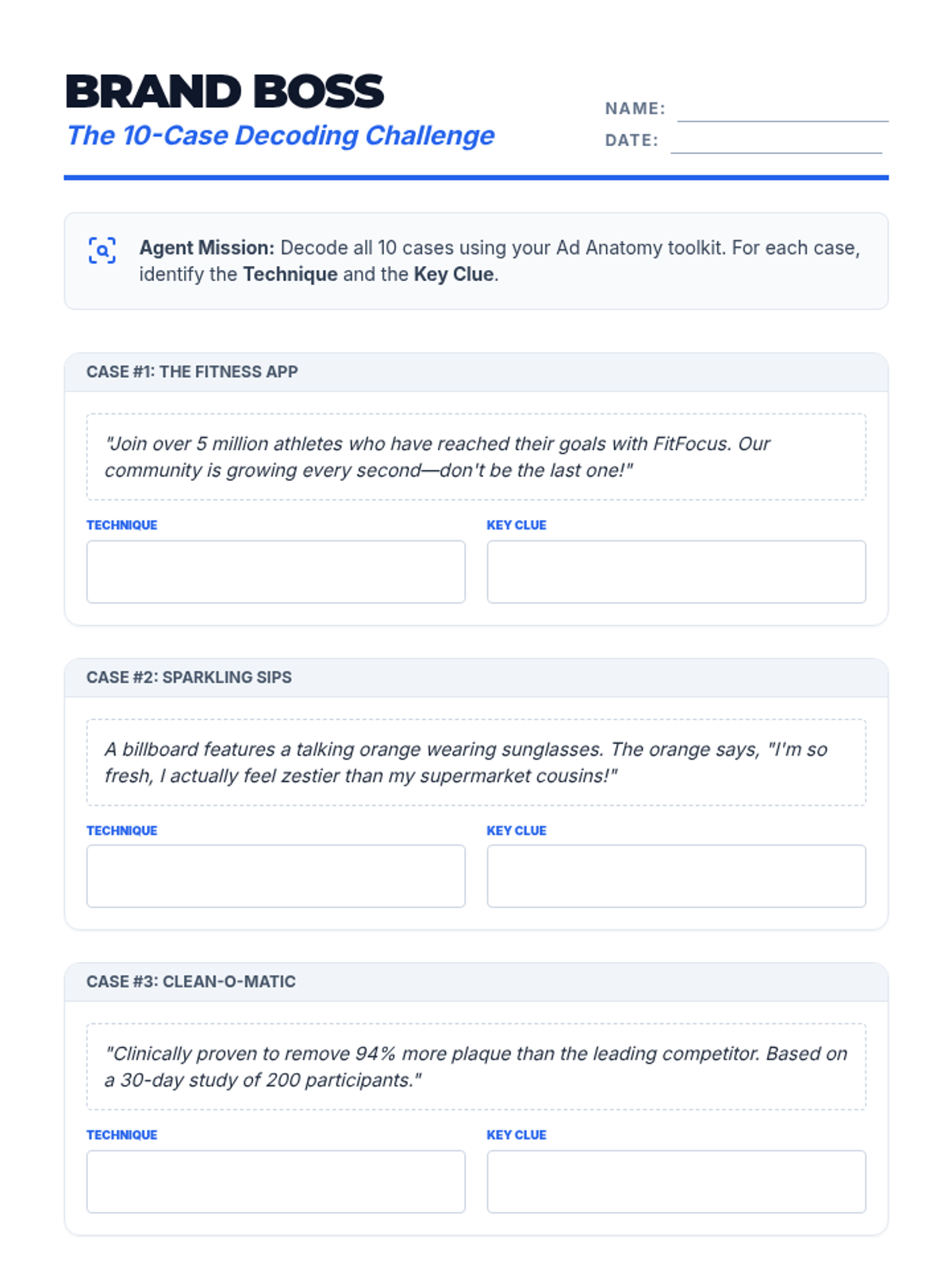
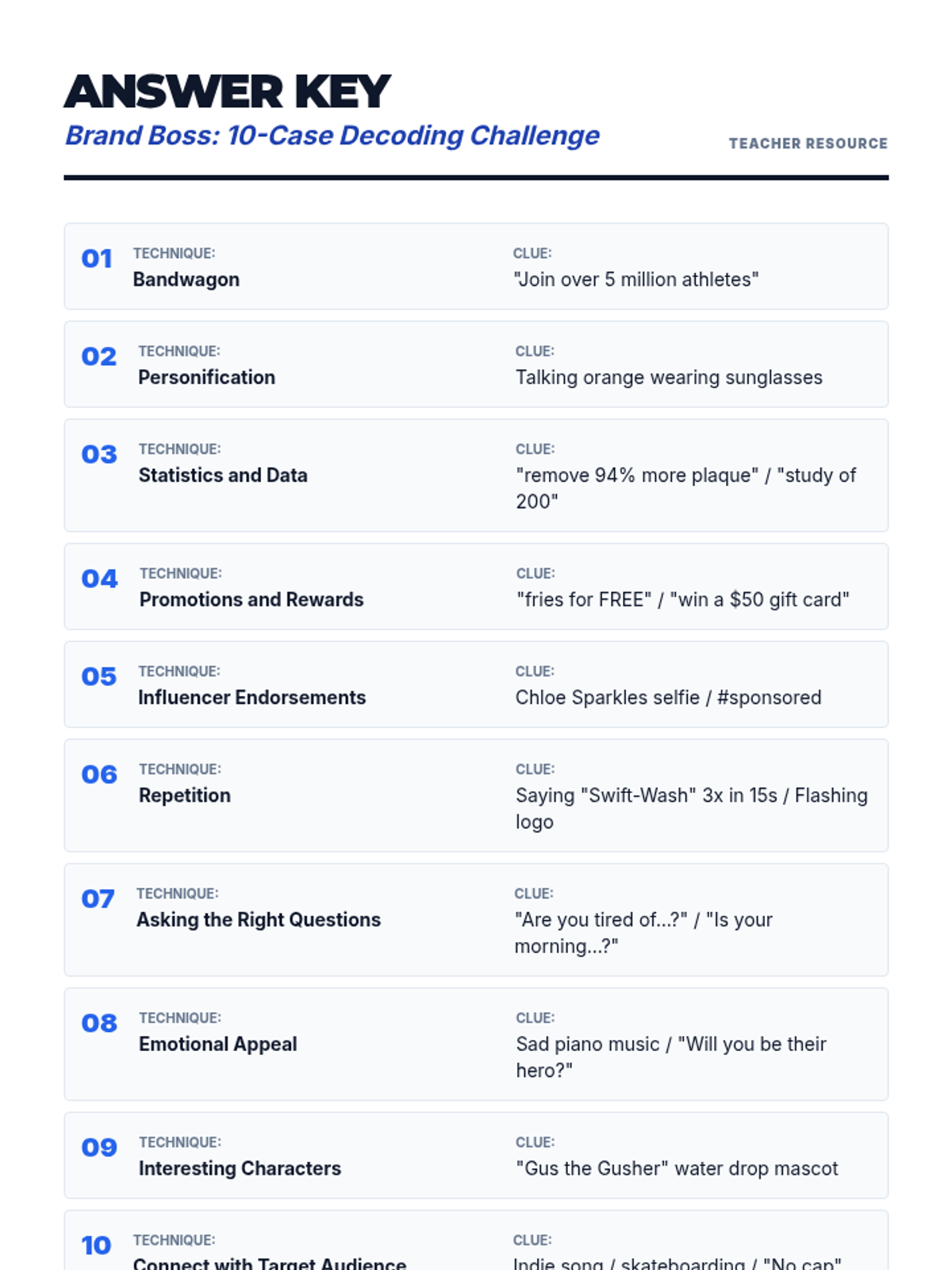
A lesson exploring 10 key advertising techniques used to influence consumer behavior, based on the Ad Anatomy Field Guide.
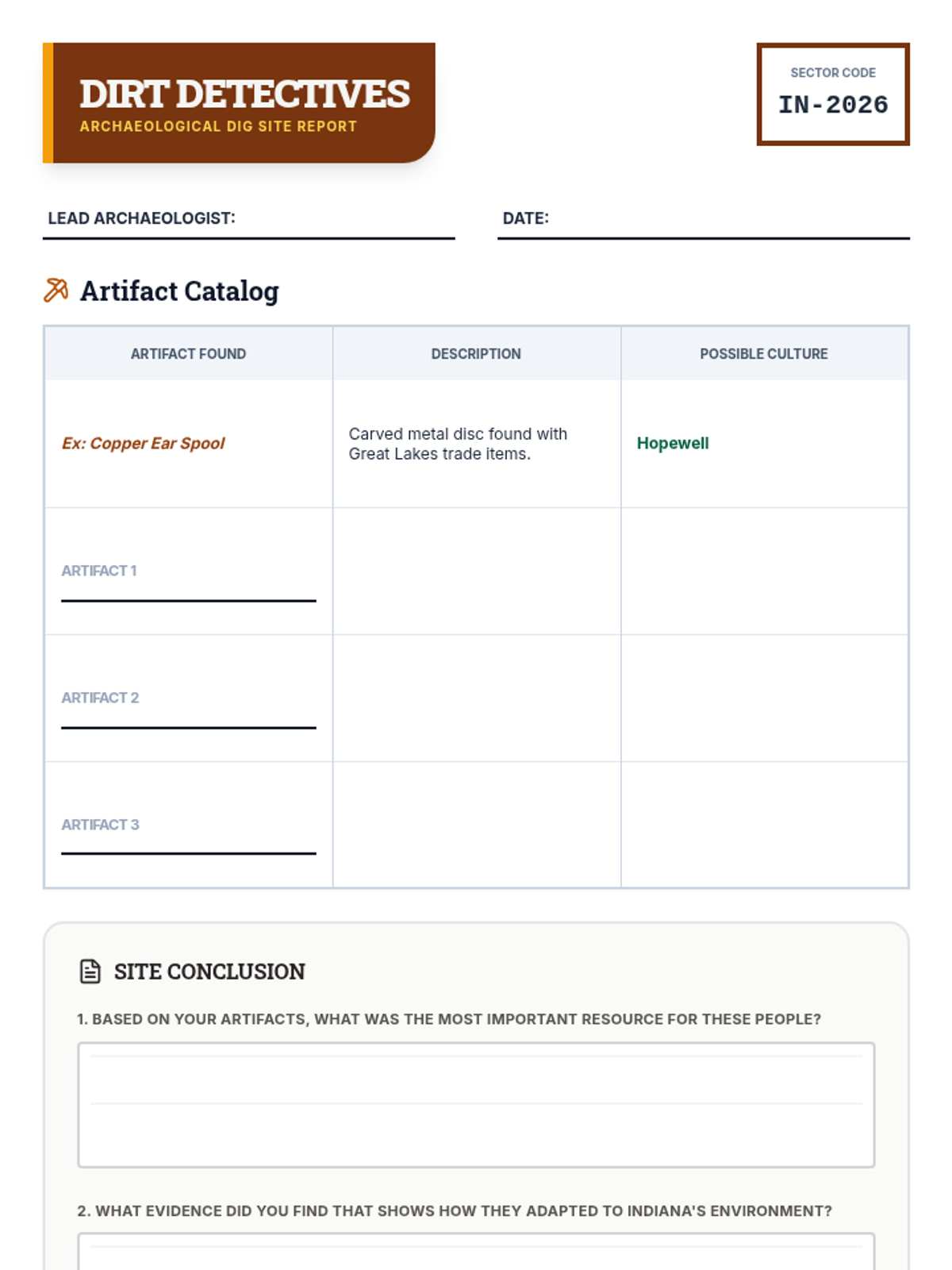
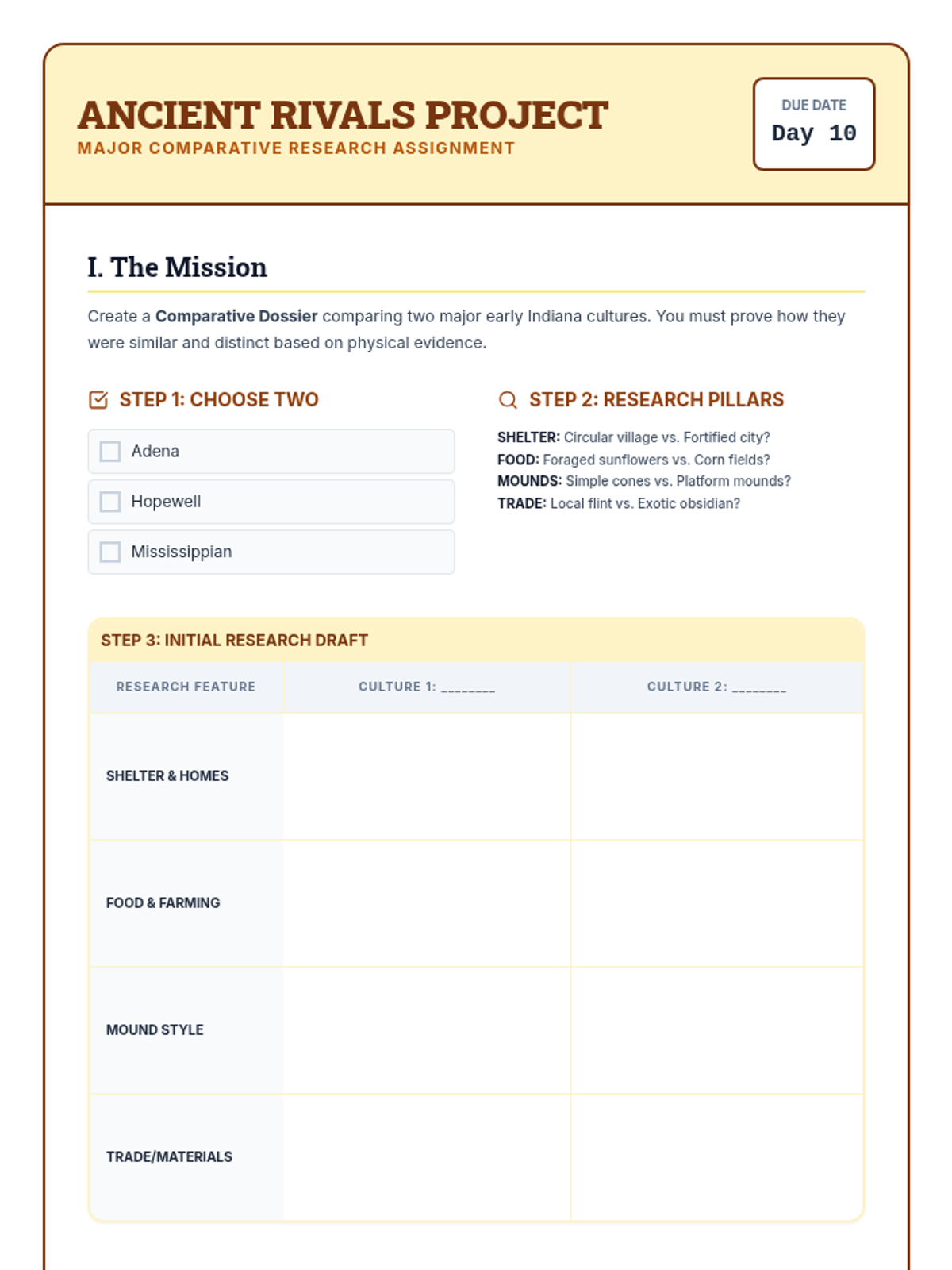
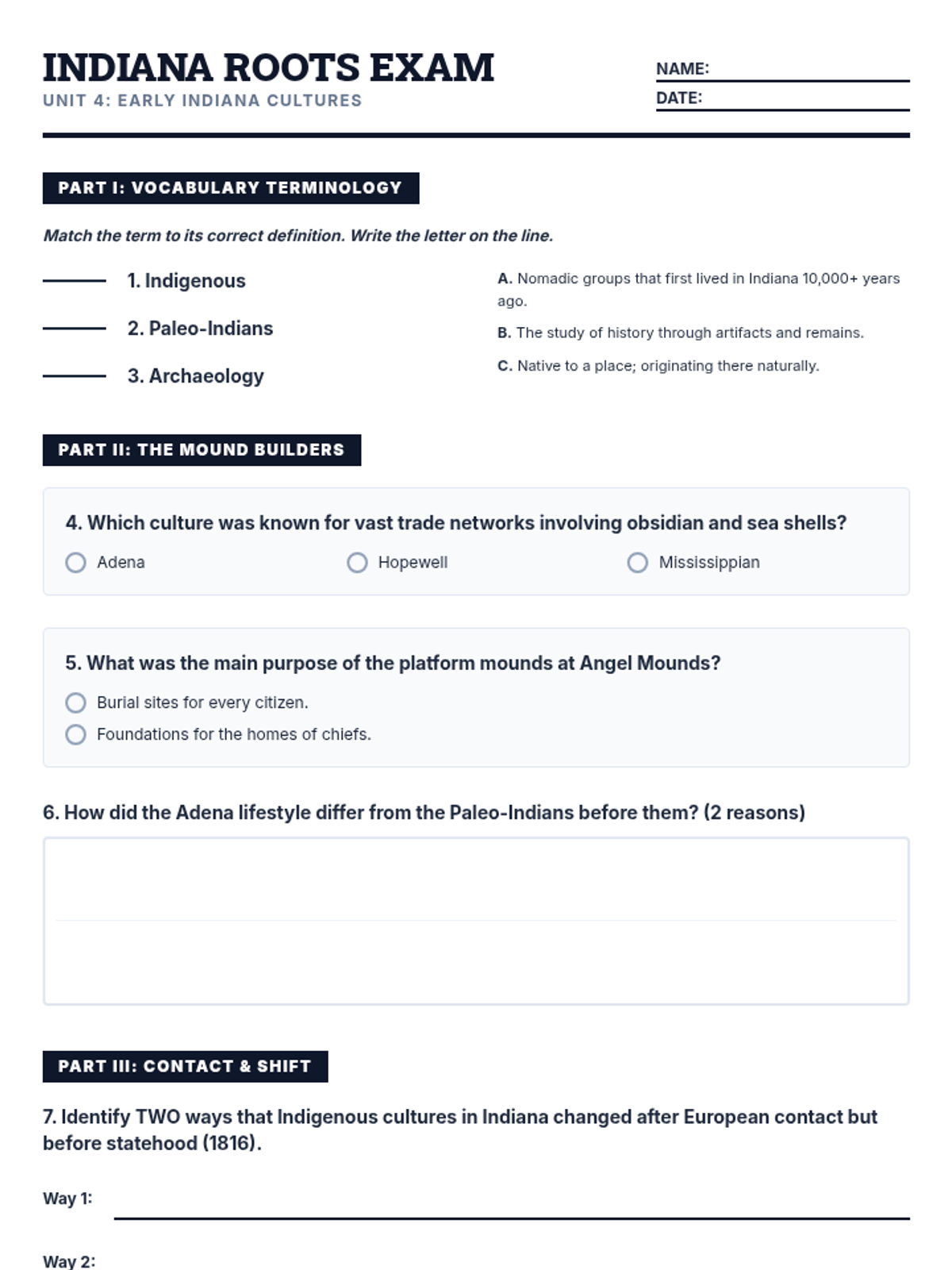
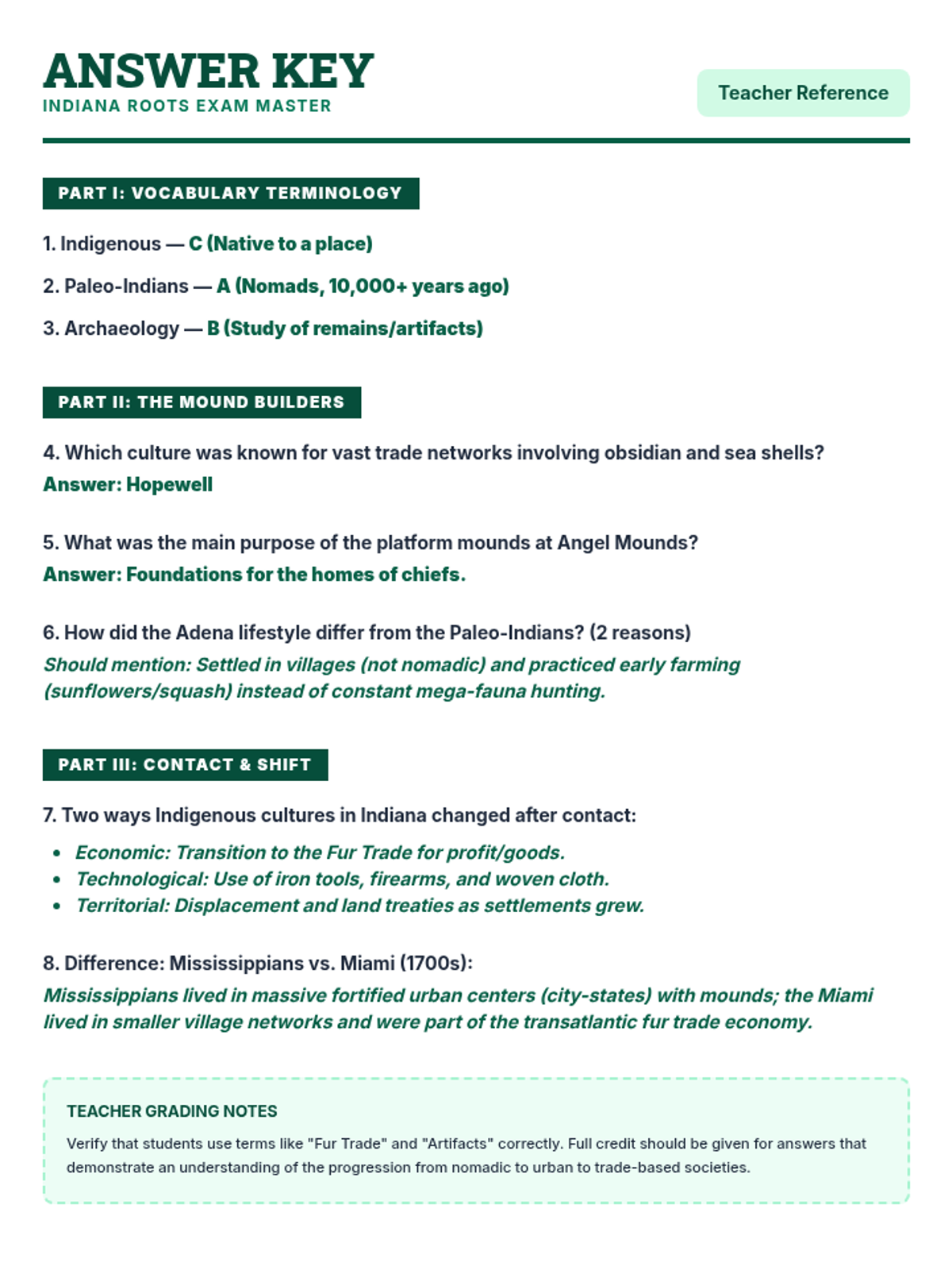
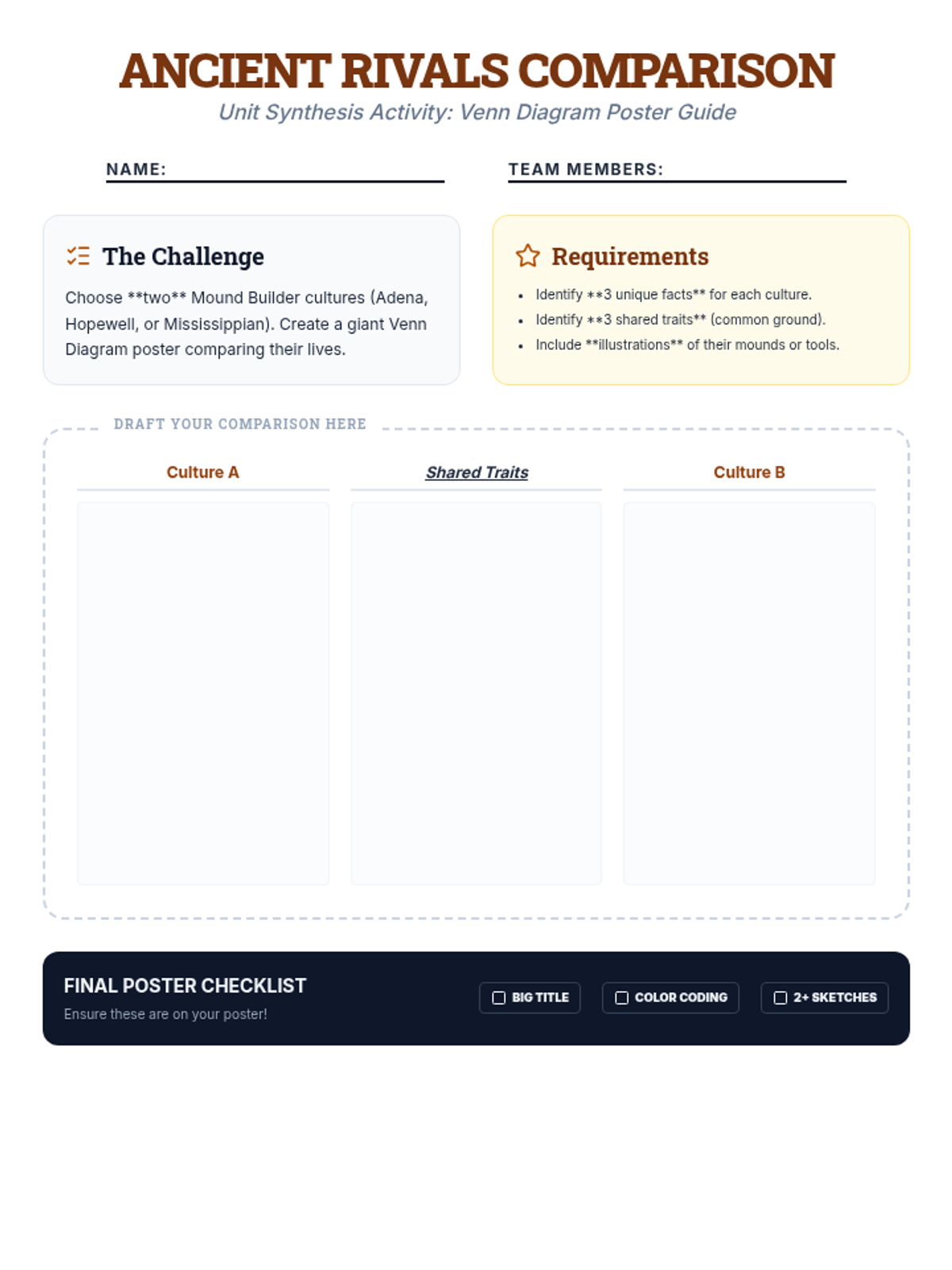
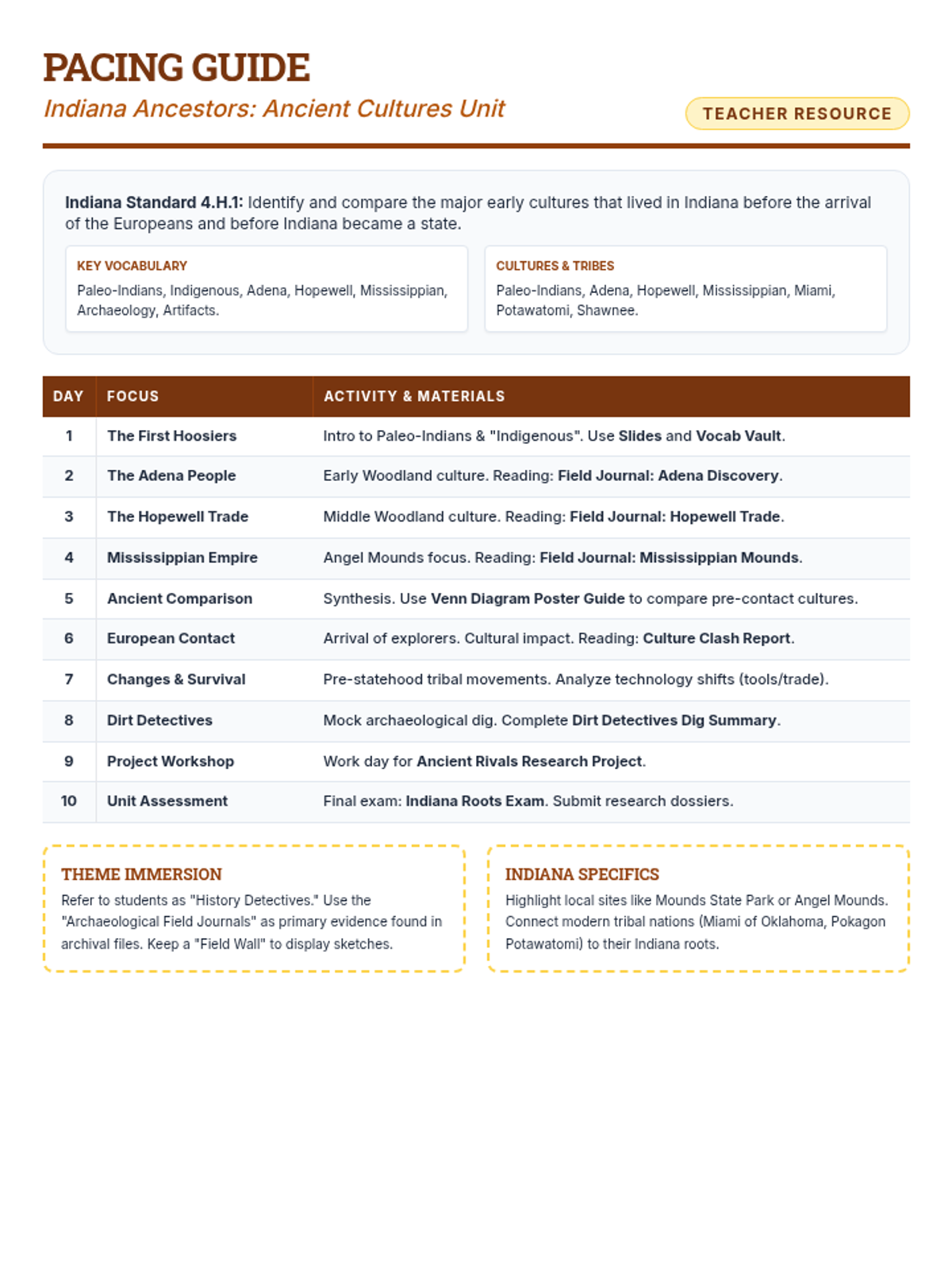
Culminating activities including a mock archaeological dig, a comparative research project, and a final unit assessment.
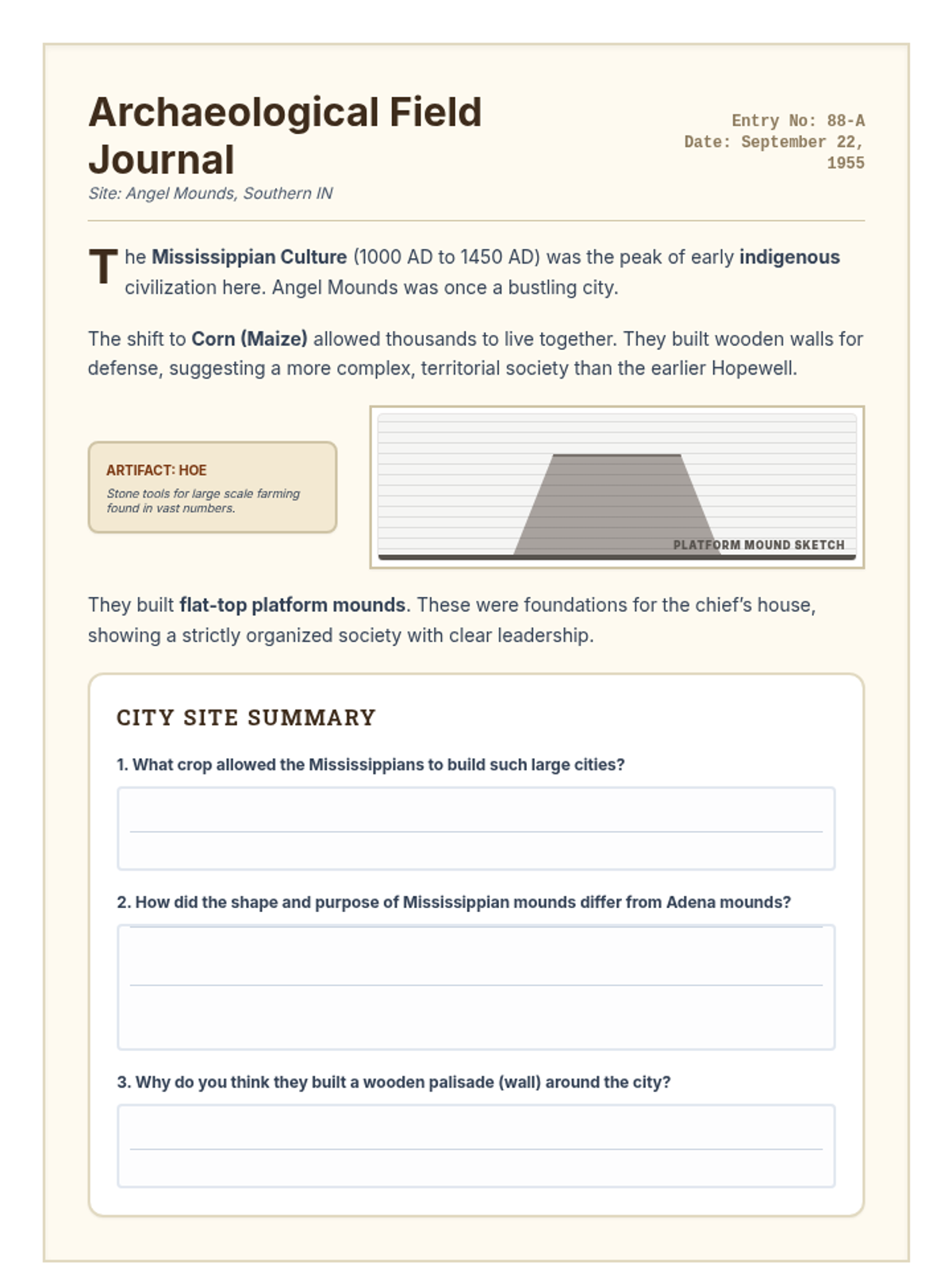
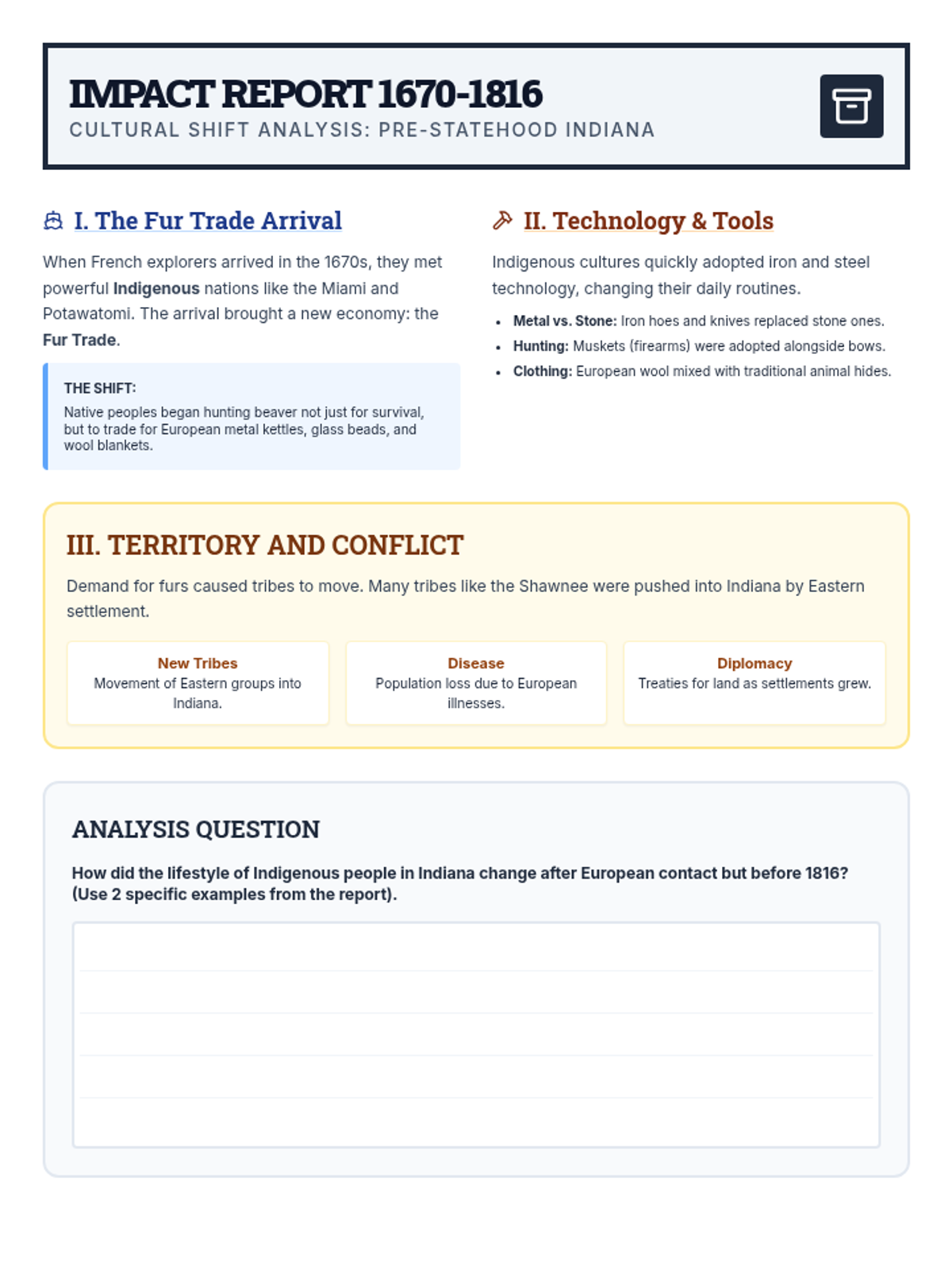
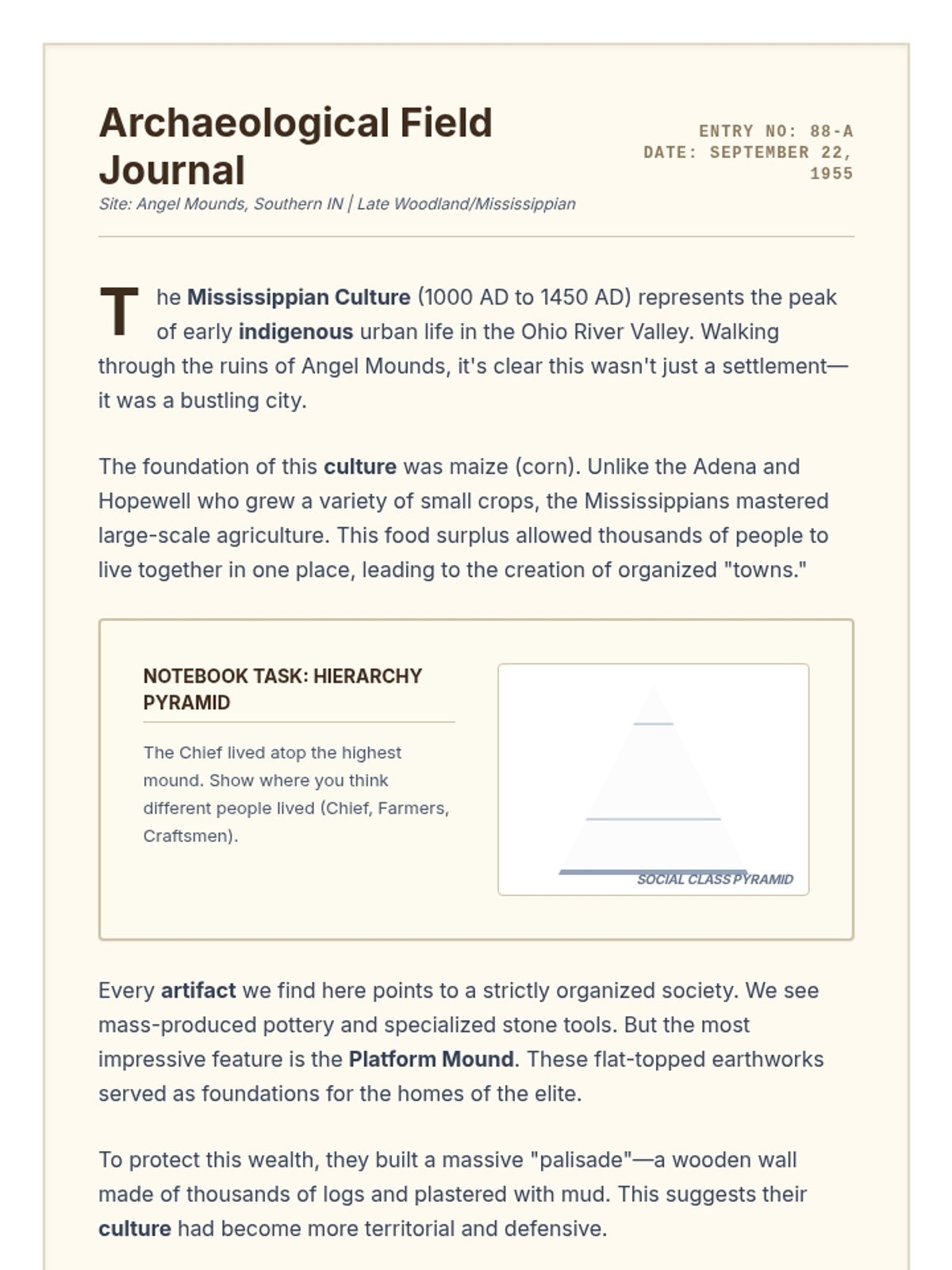
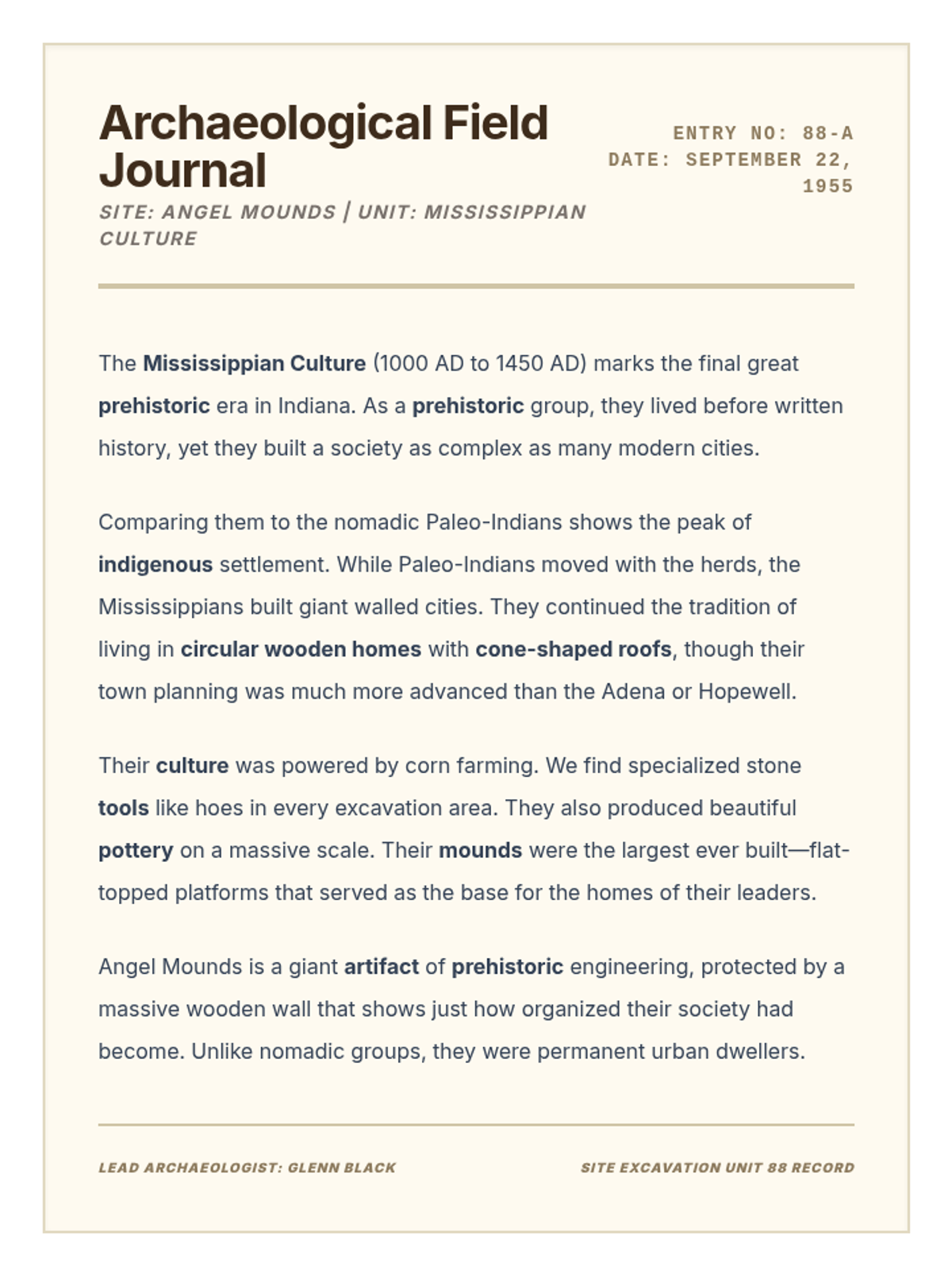
Exploration of the complex Mississippian culture at Angel Mounds and the significant cultural shifts caused by European contact before statehood.
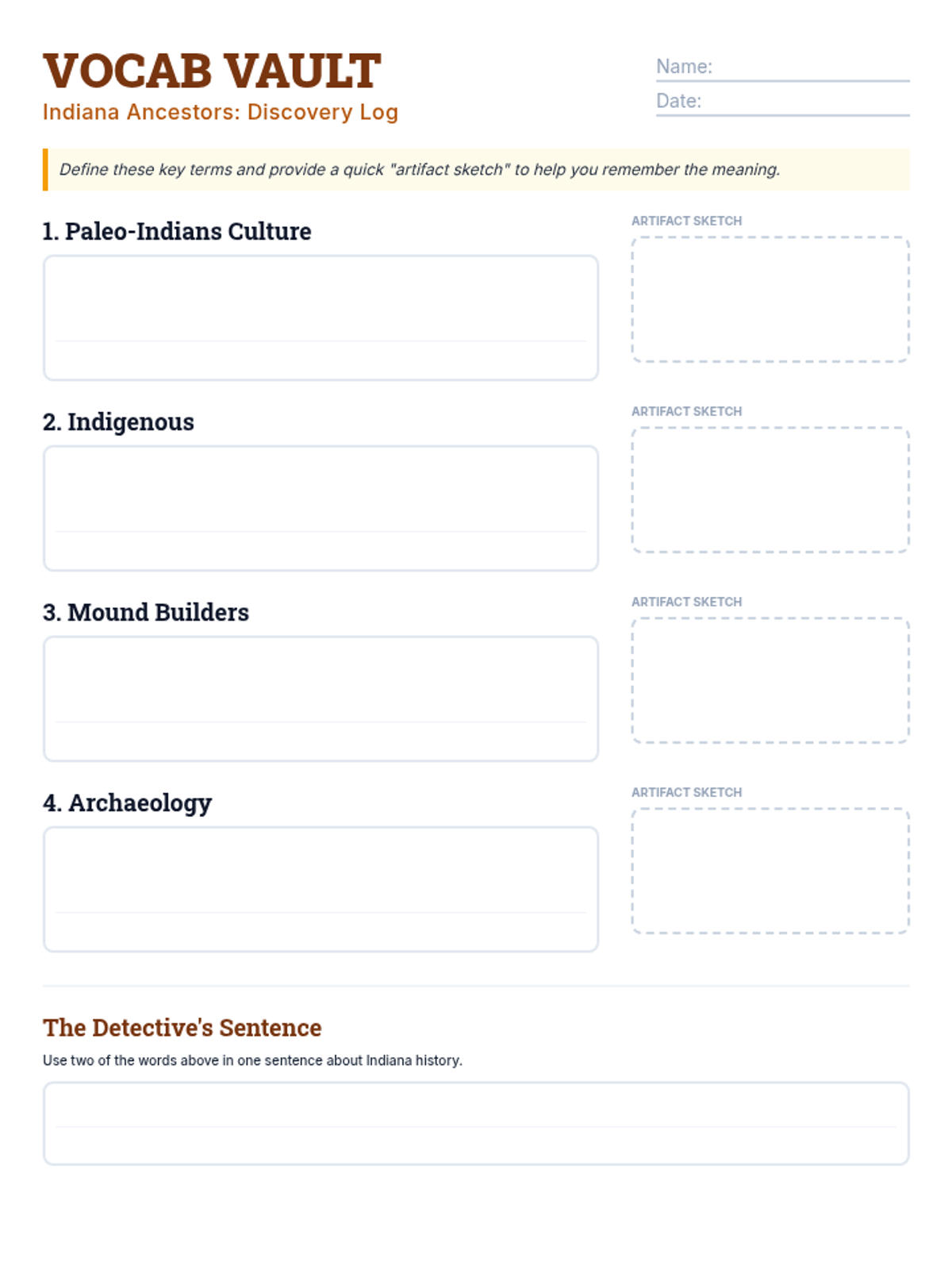
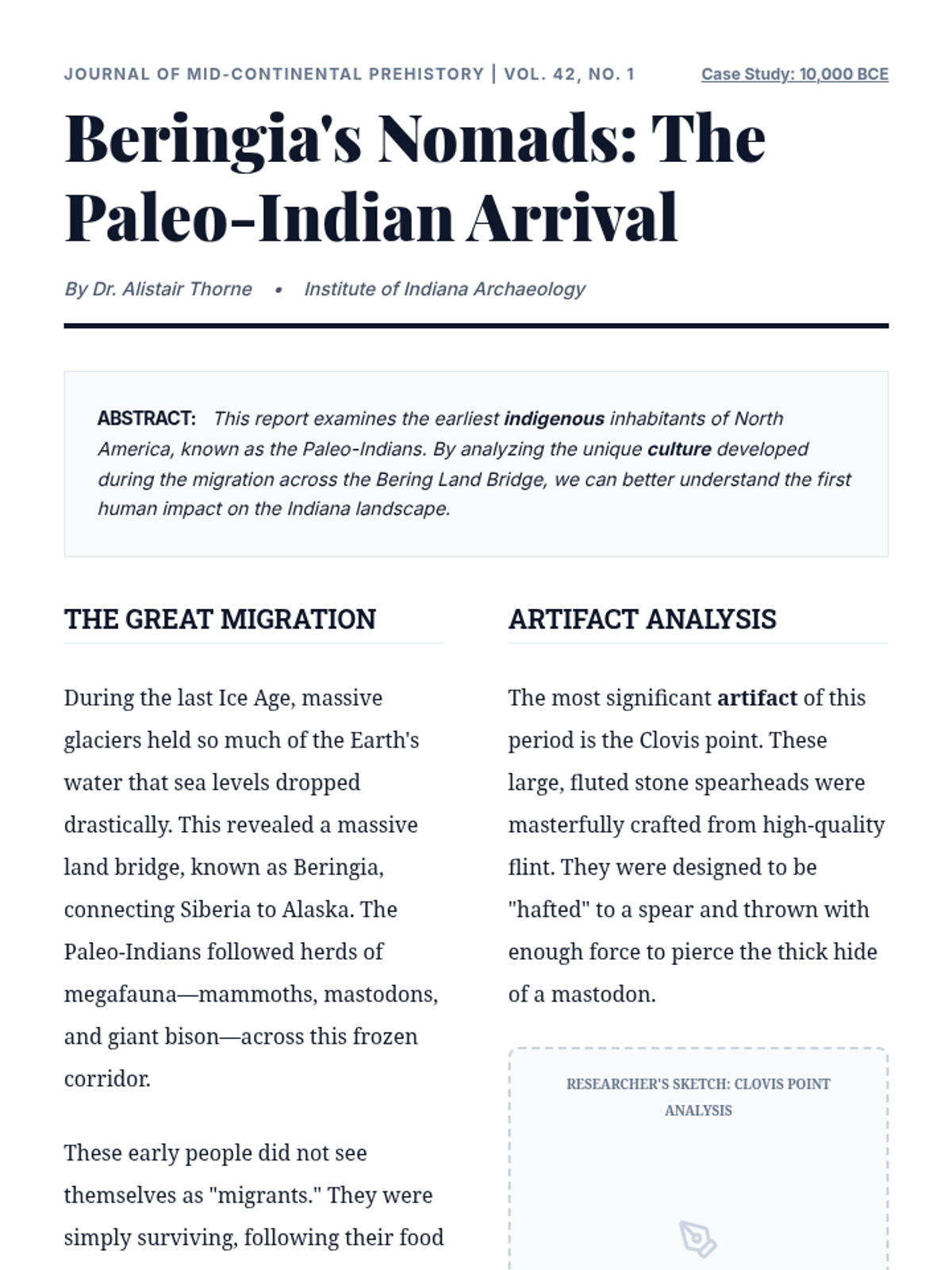
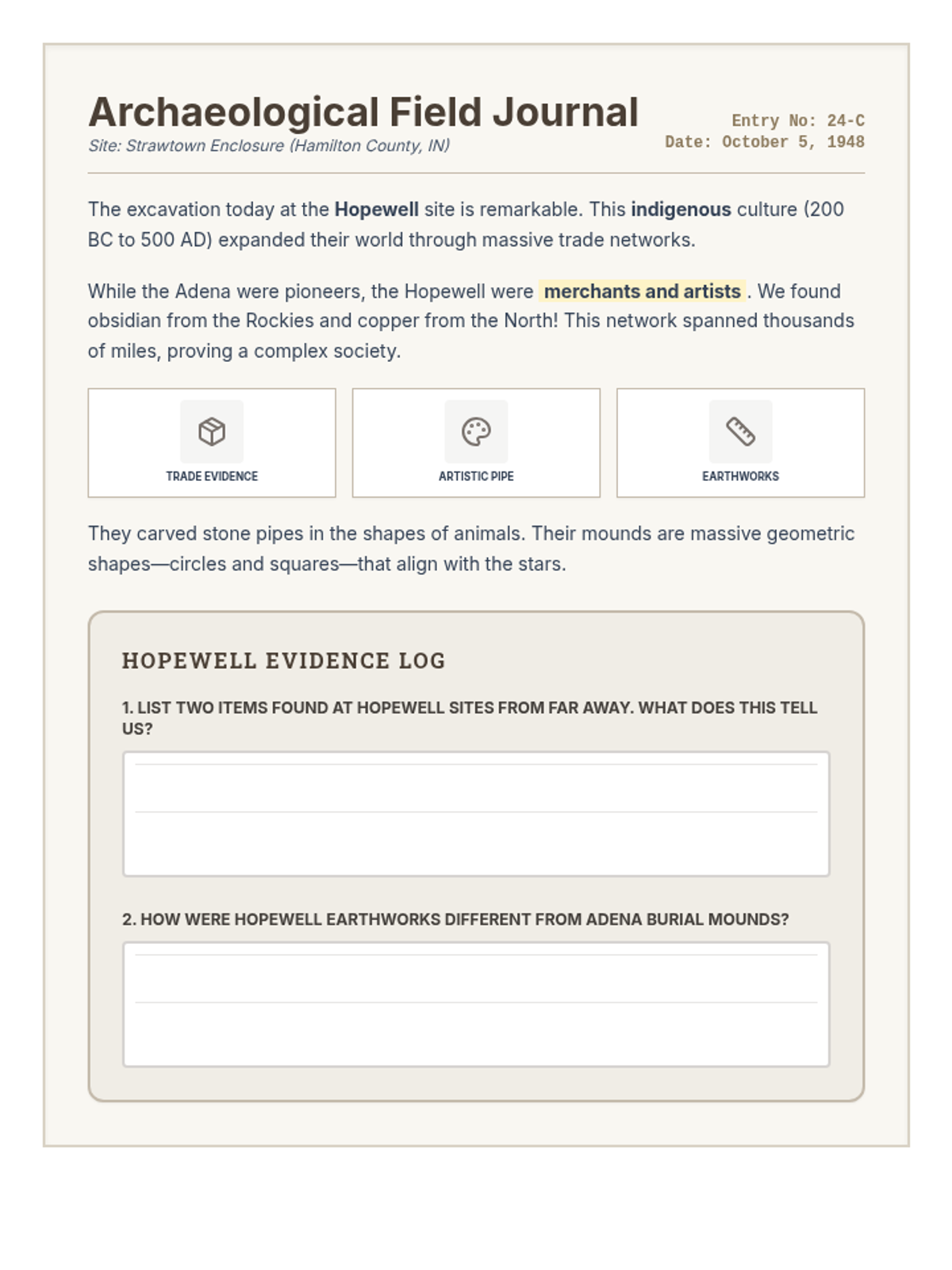
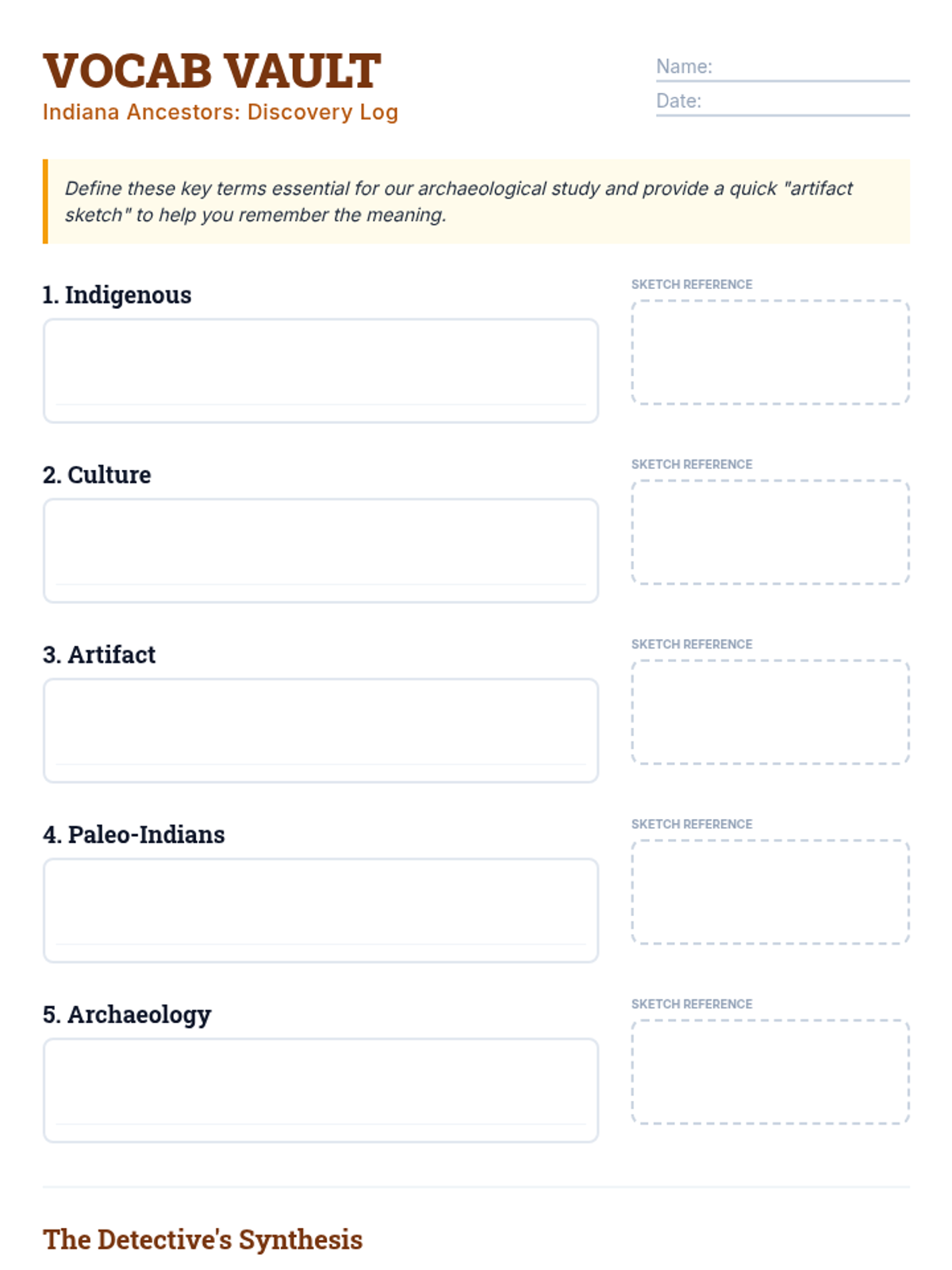
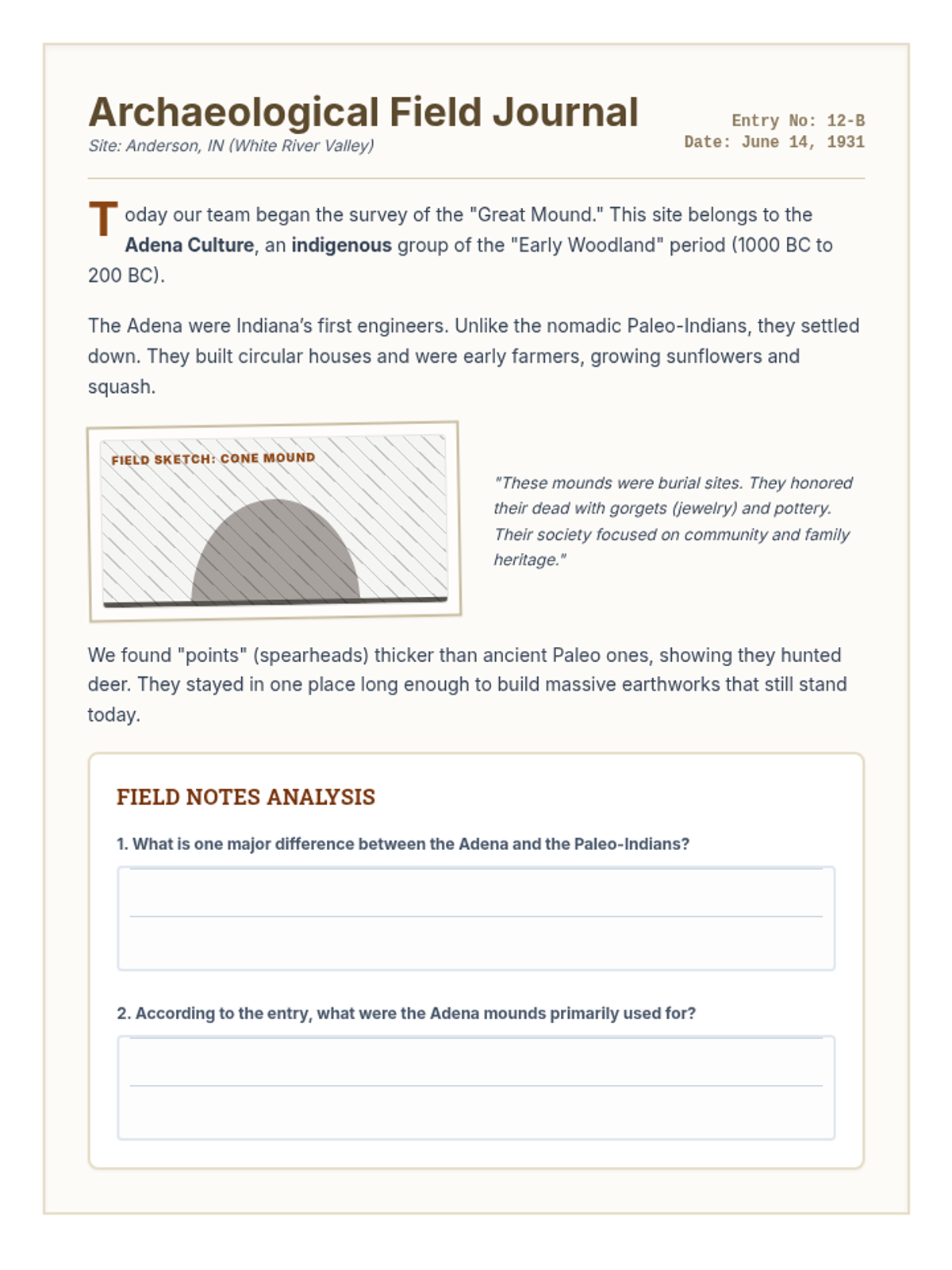
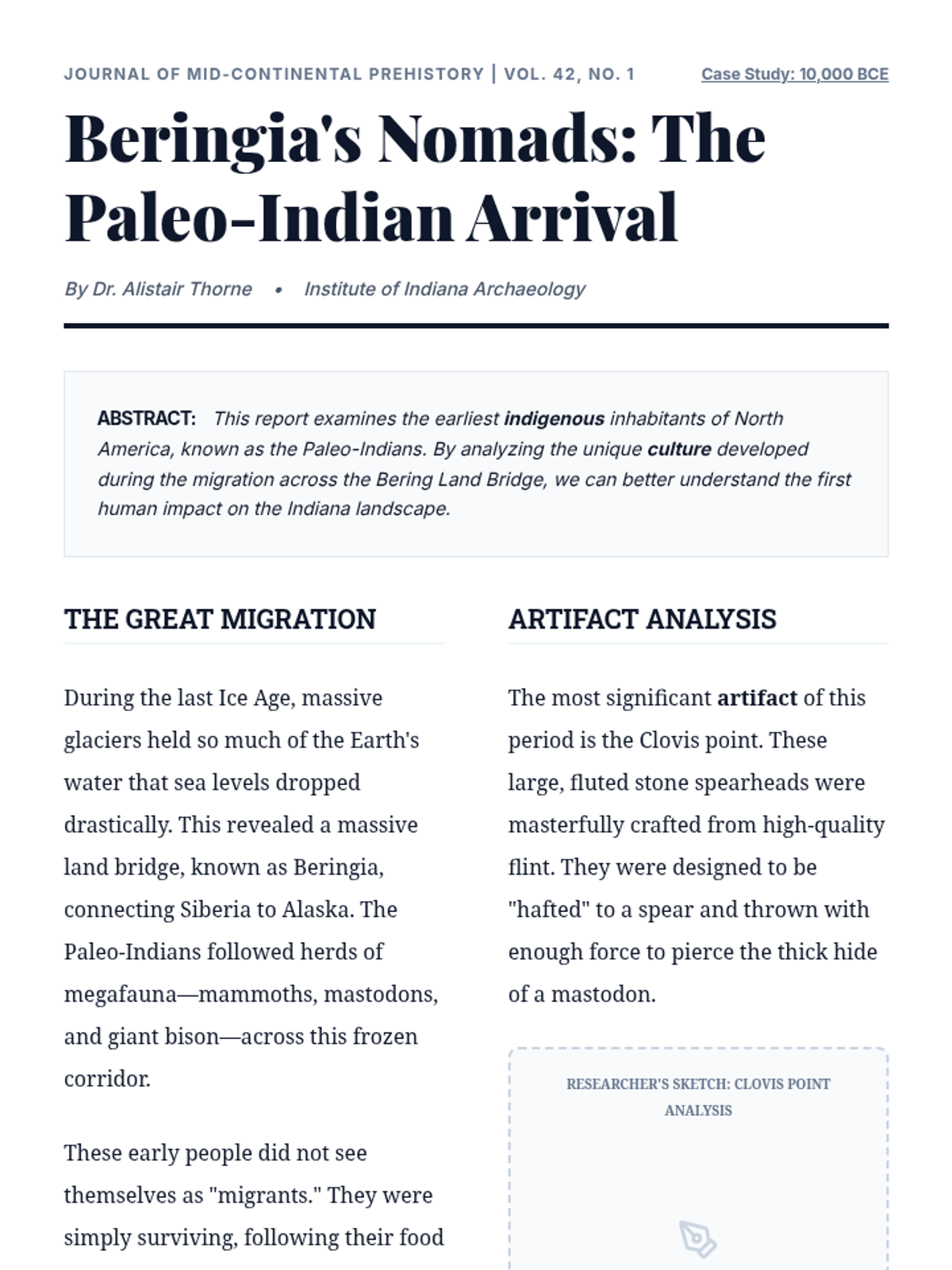
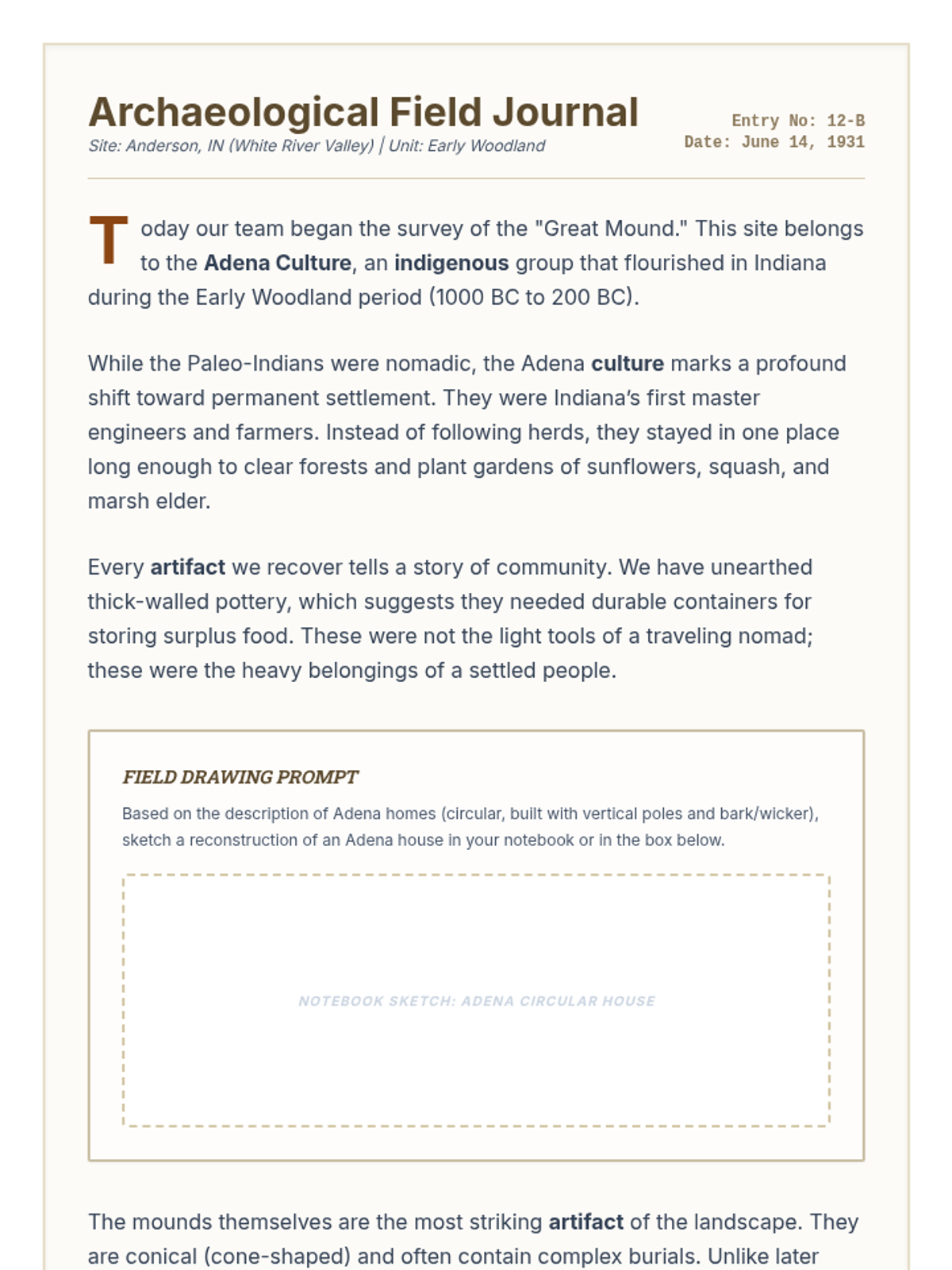
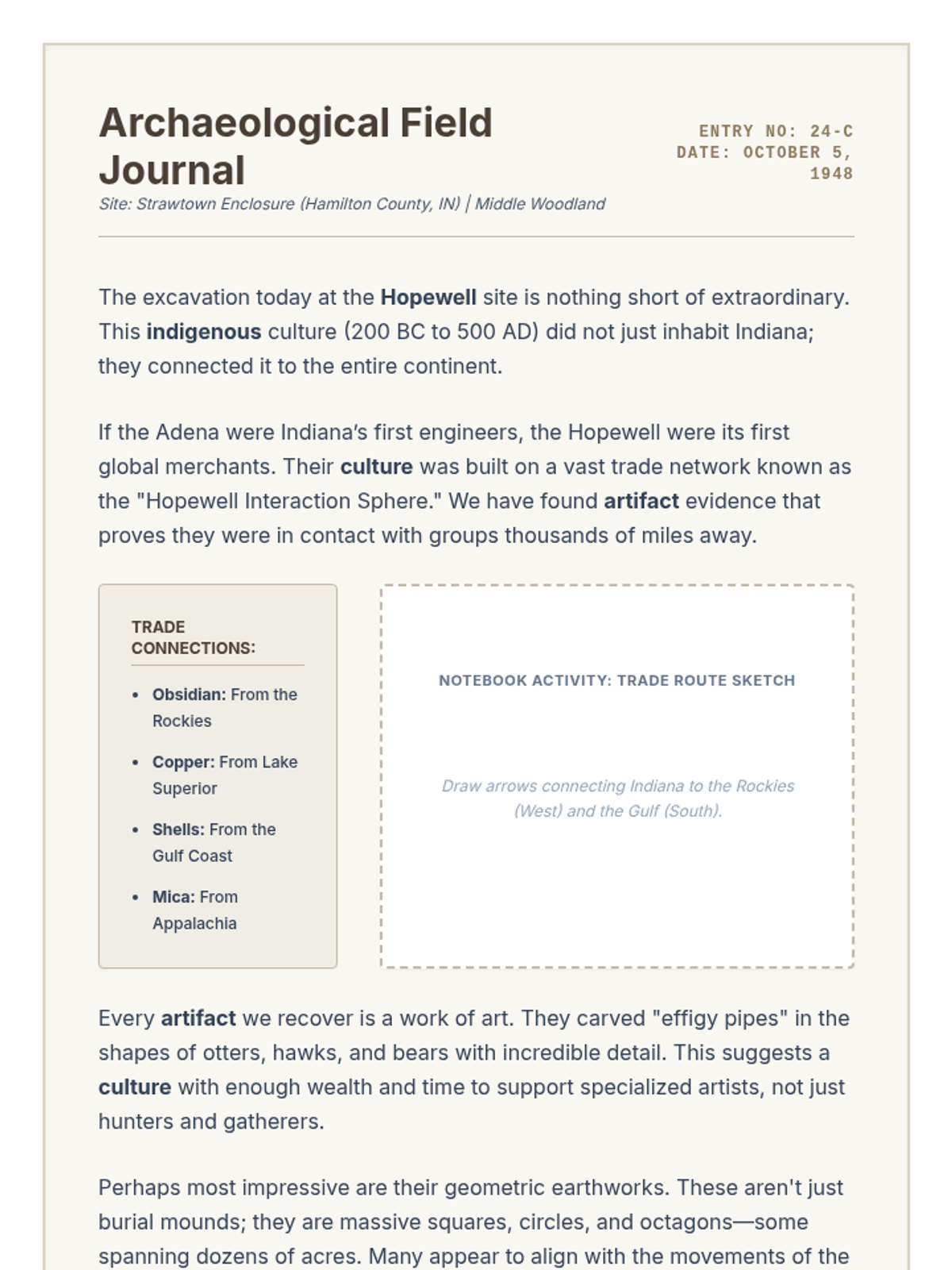
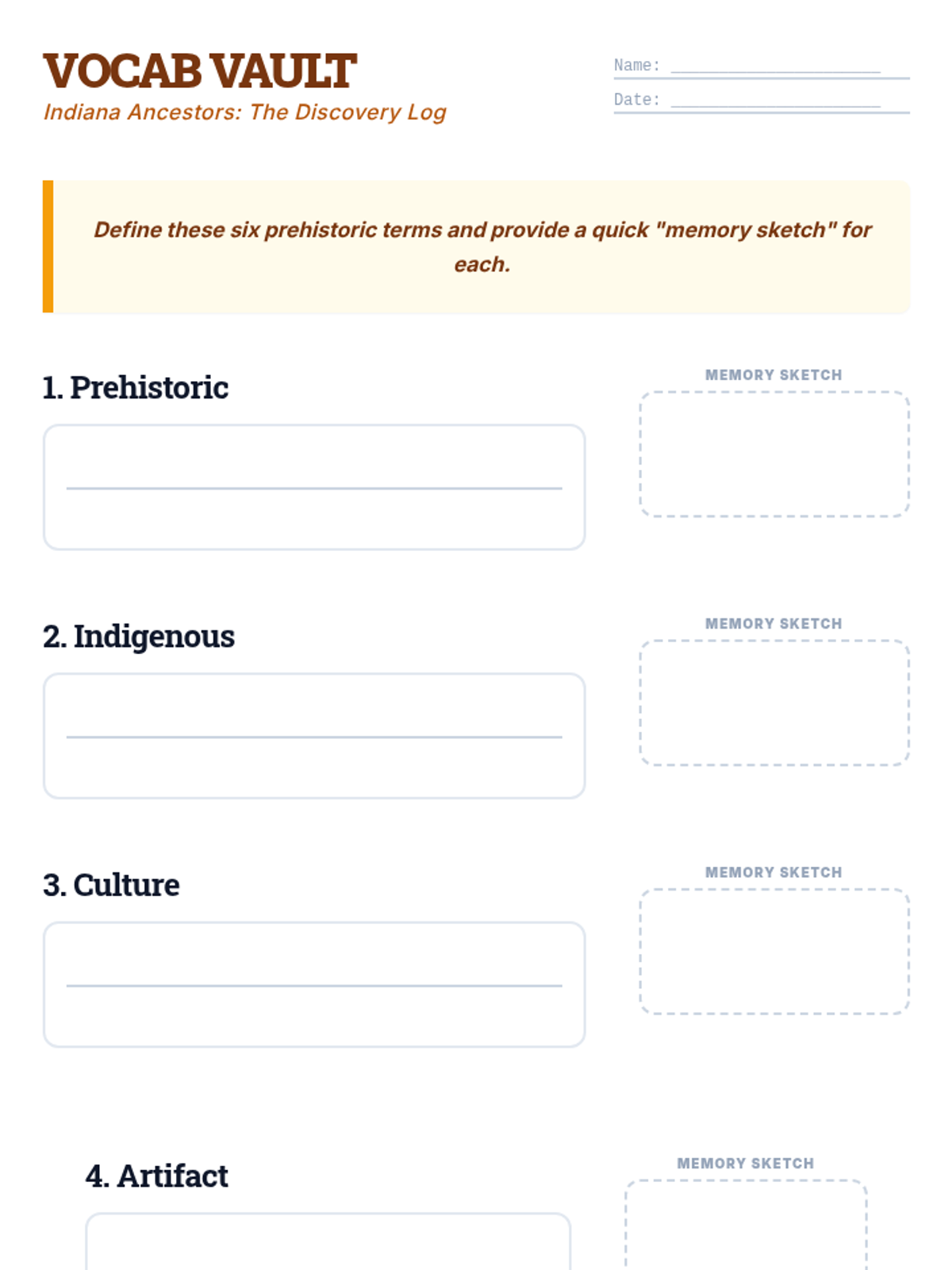
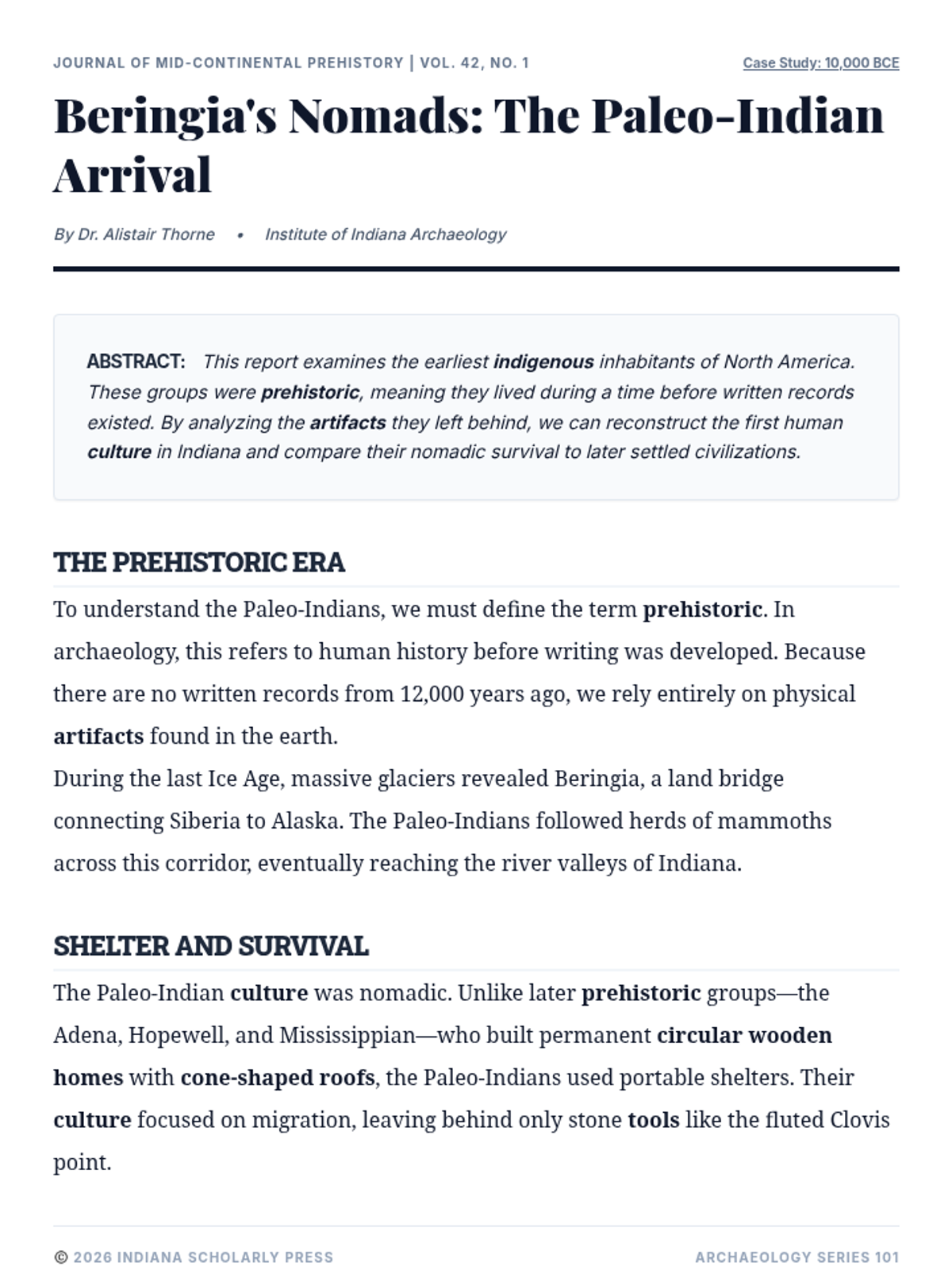
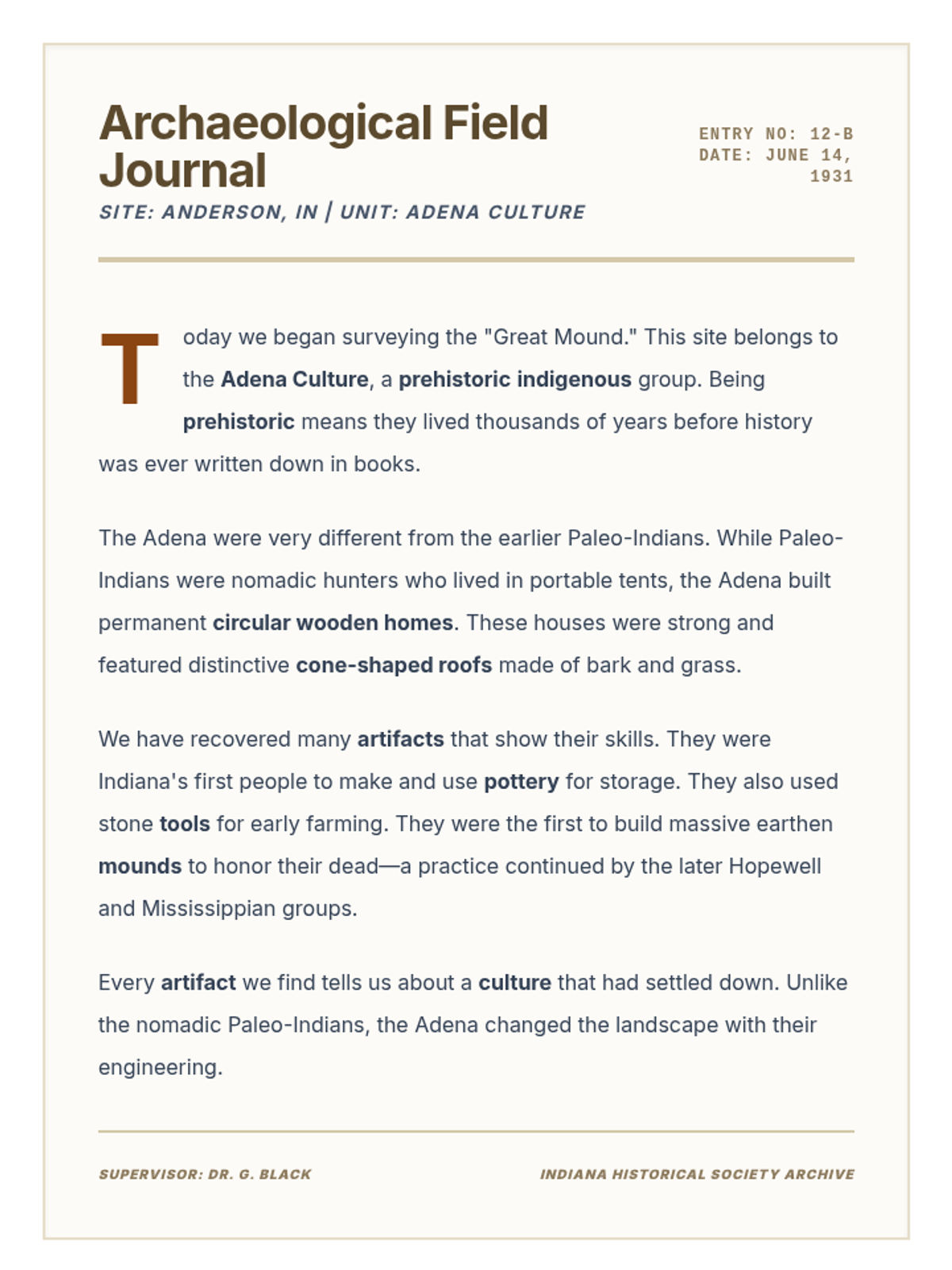
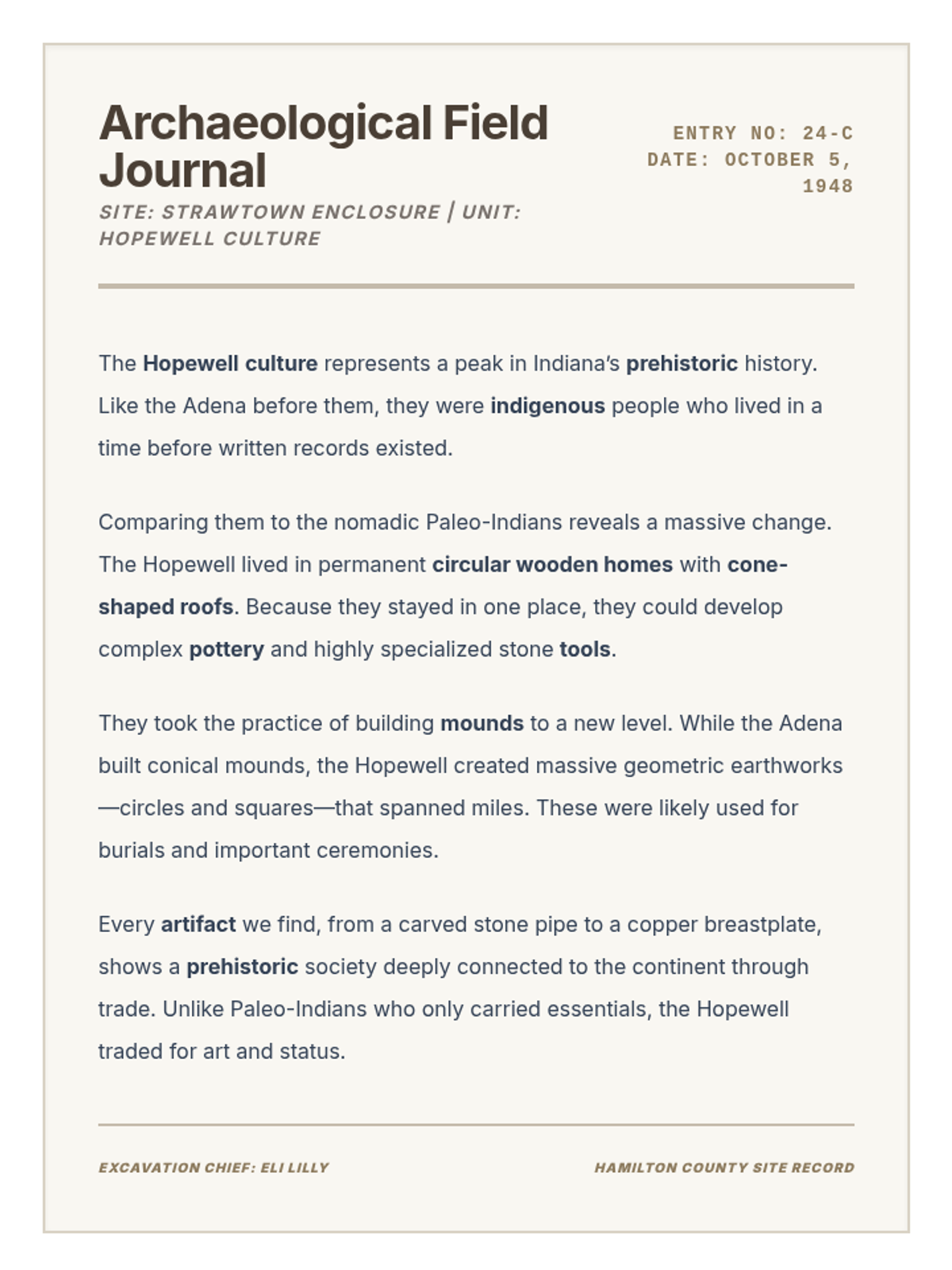
Introduction to Indiana's first inhabitants and the development of the Early and Middle Woodland mound-building cultures (Adena and Hopewell).
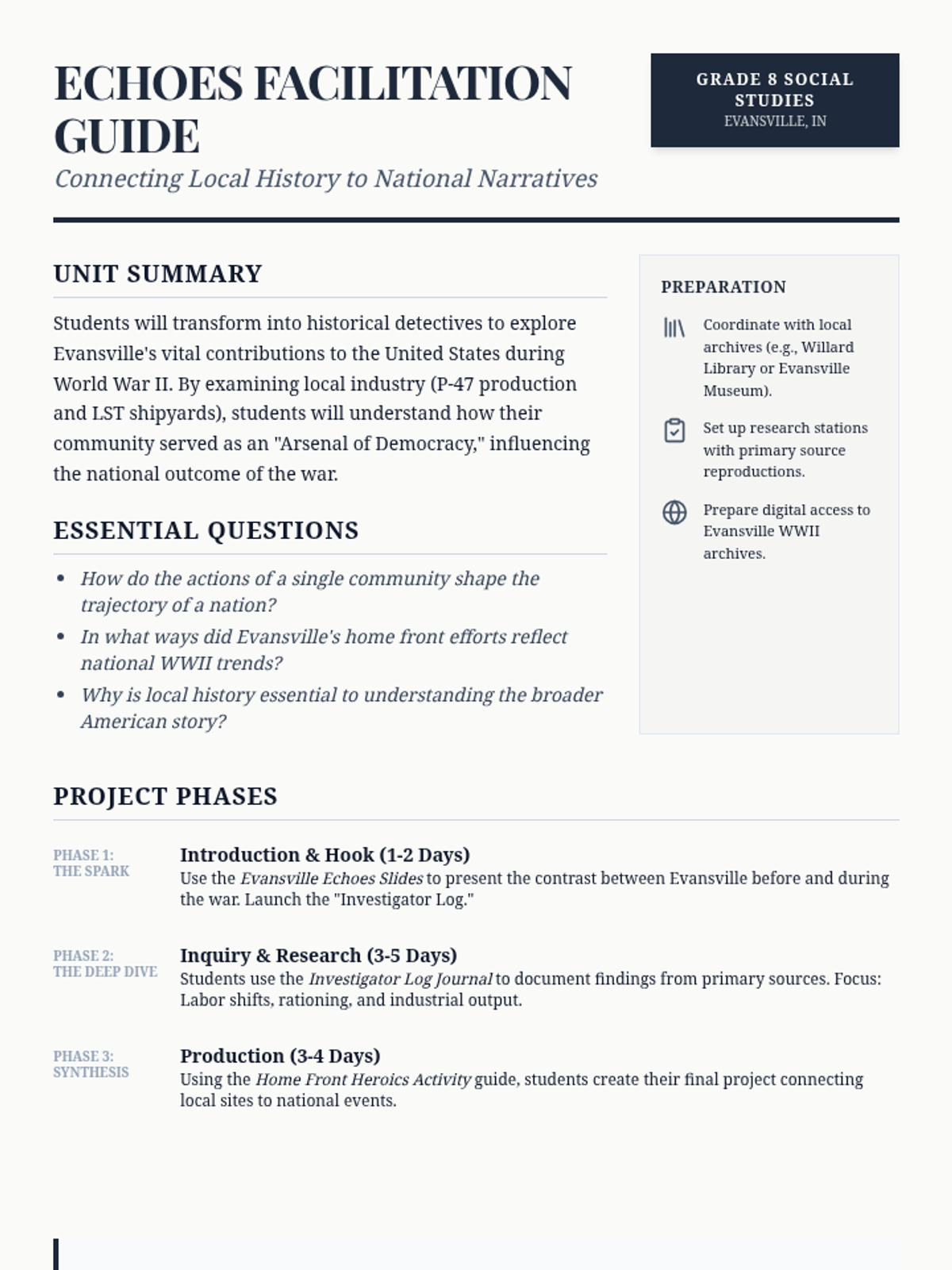
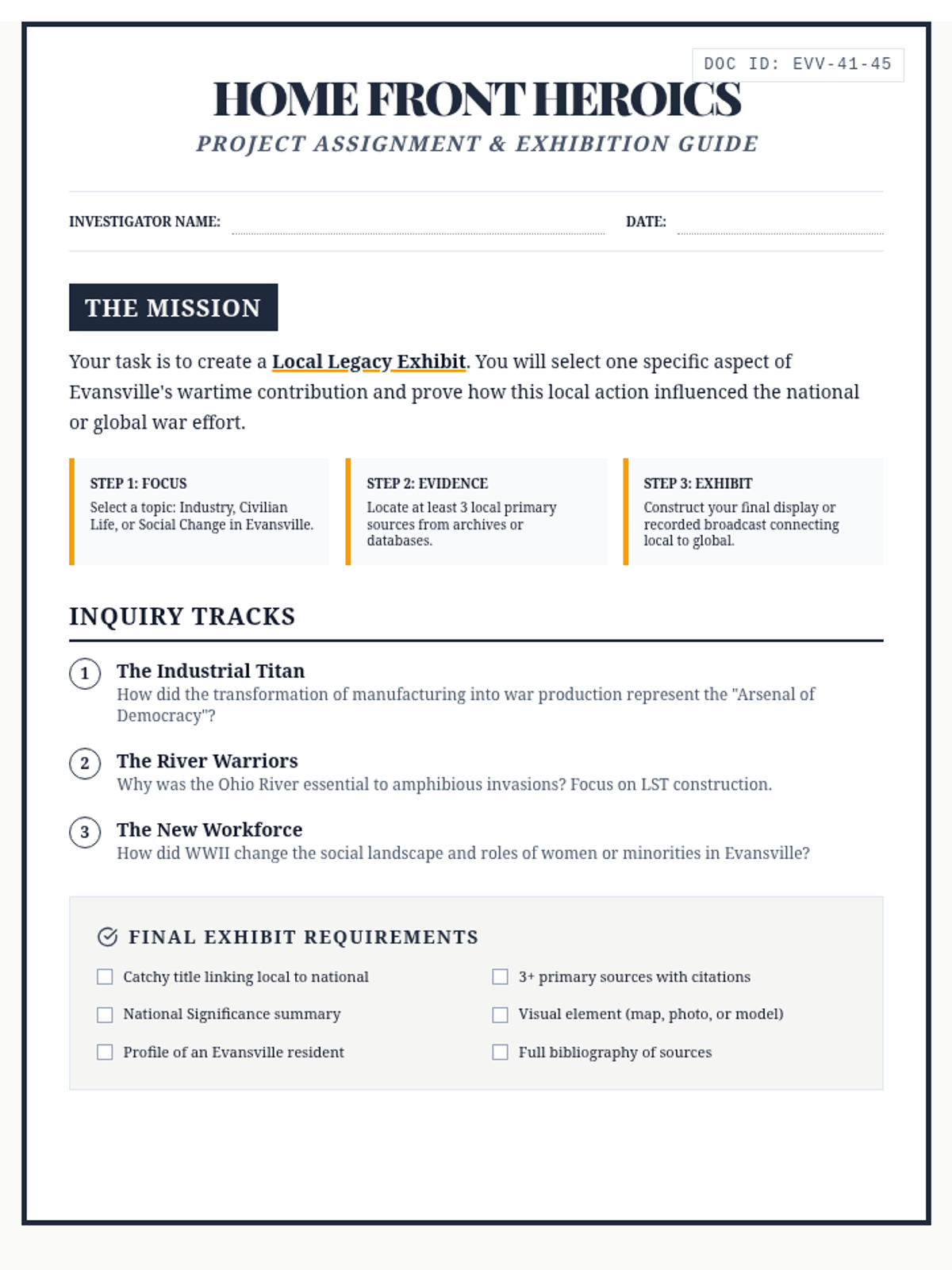
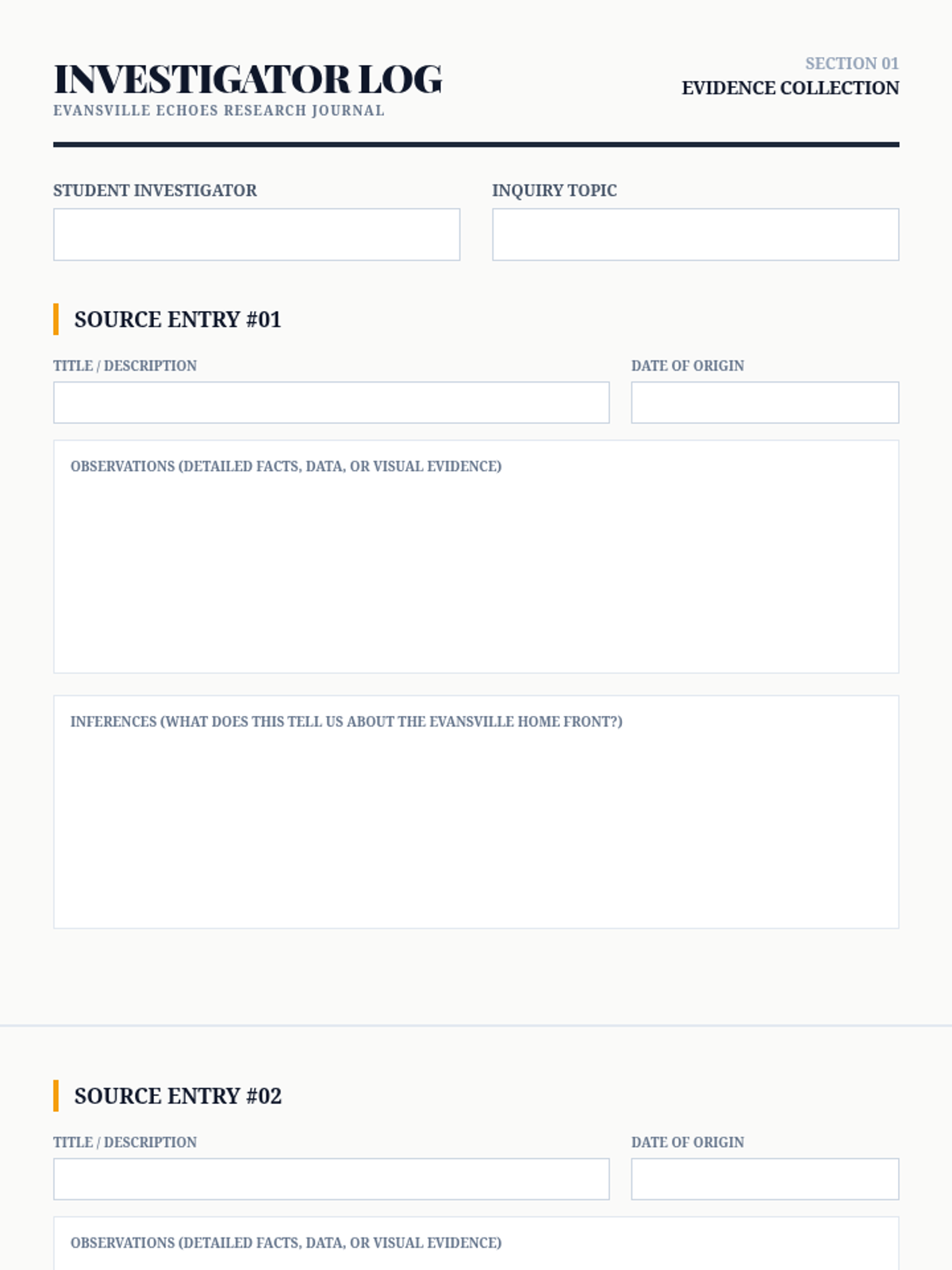
A project-based learning experience where 8th-grade students investigate Evansville's role in pivotal US historical moments, specifically focusing on the WWII home front, to connect local history with national narratives.
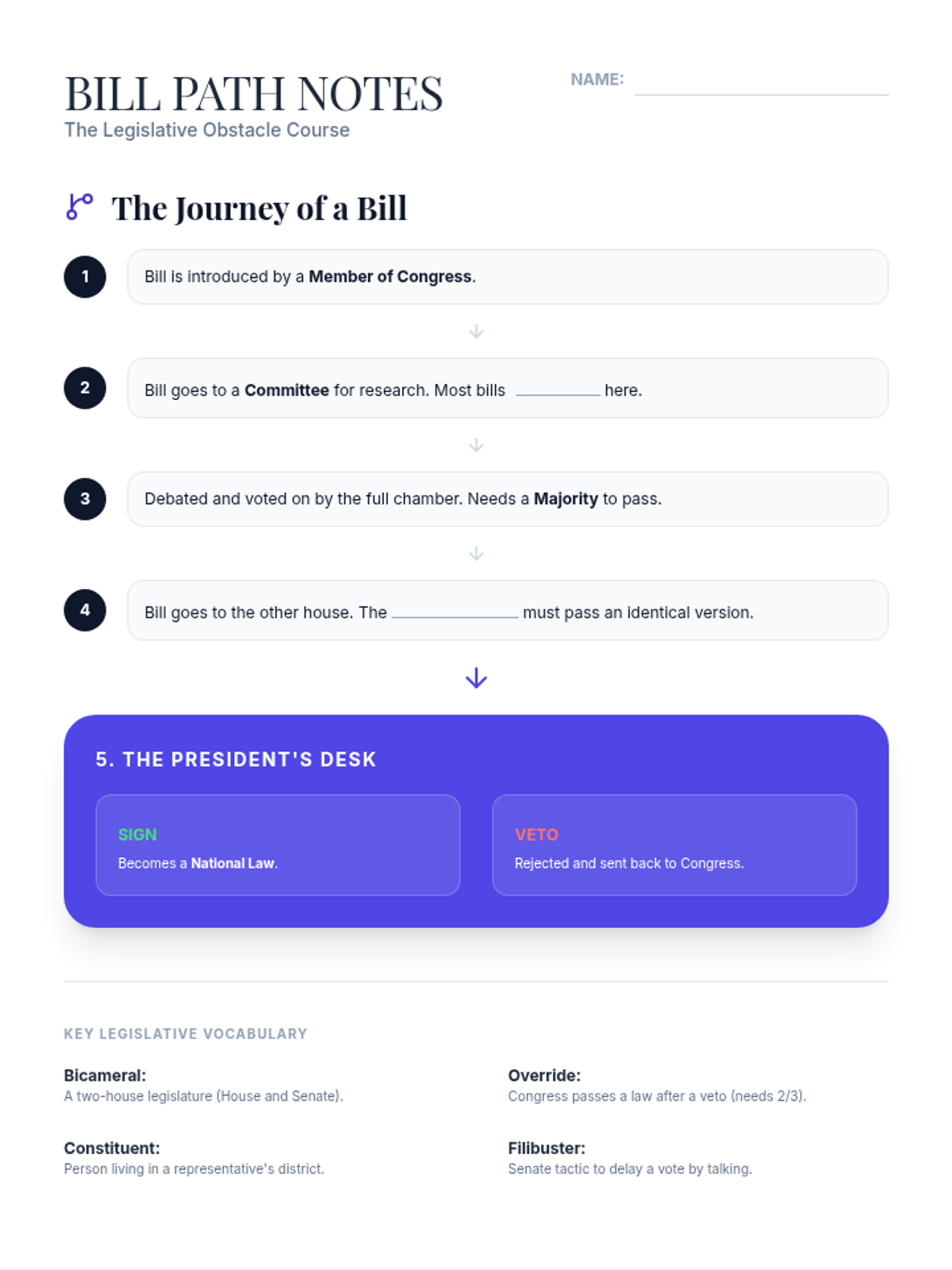
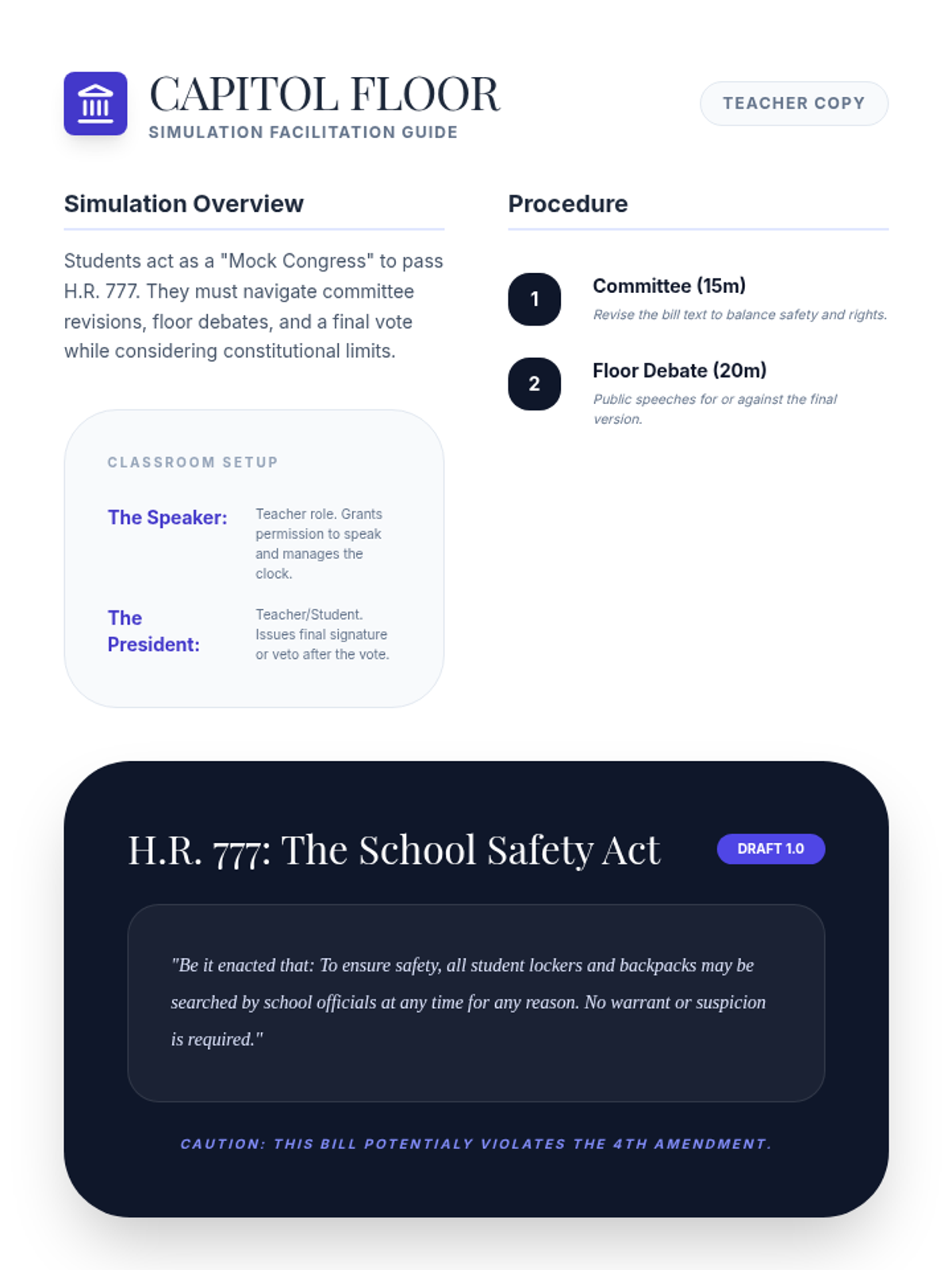
Trace the journey of an idea from a bill to a law, understanding the hurdles and debates that shape national policy in the legislative branch.
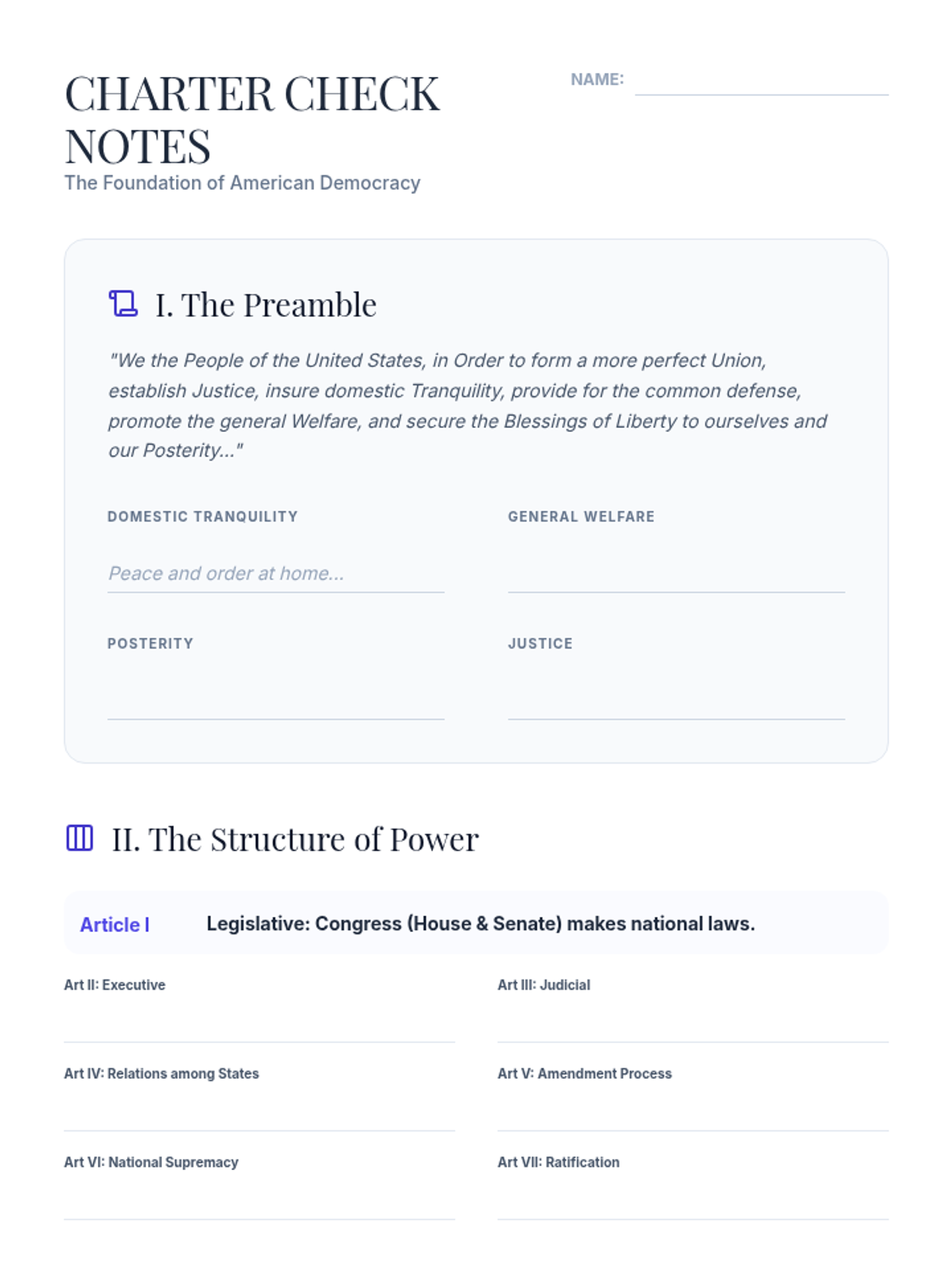
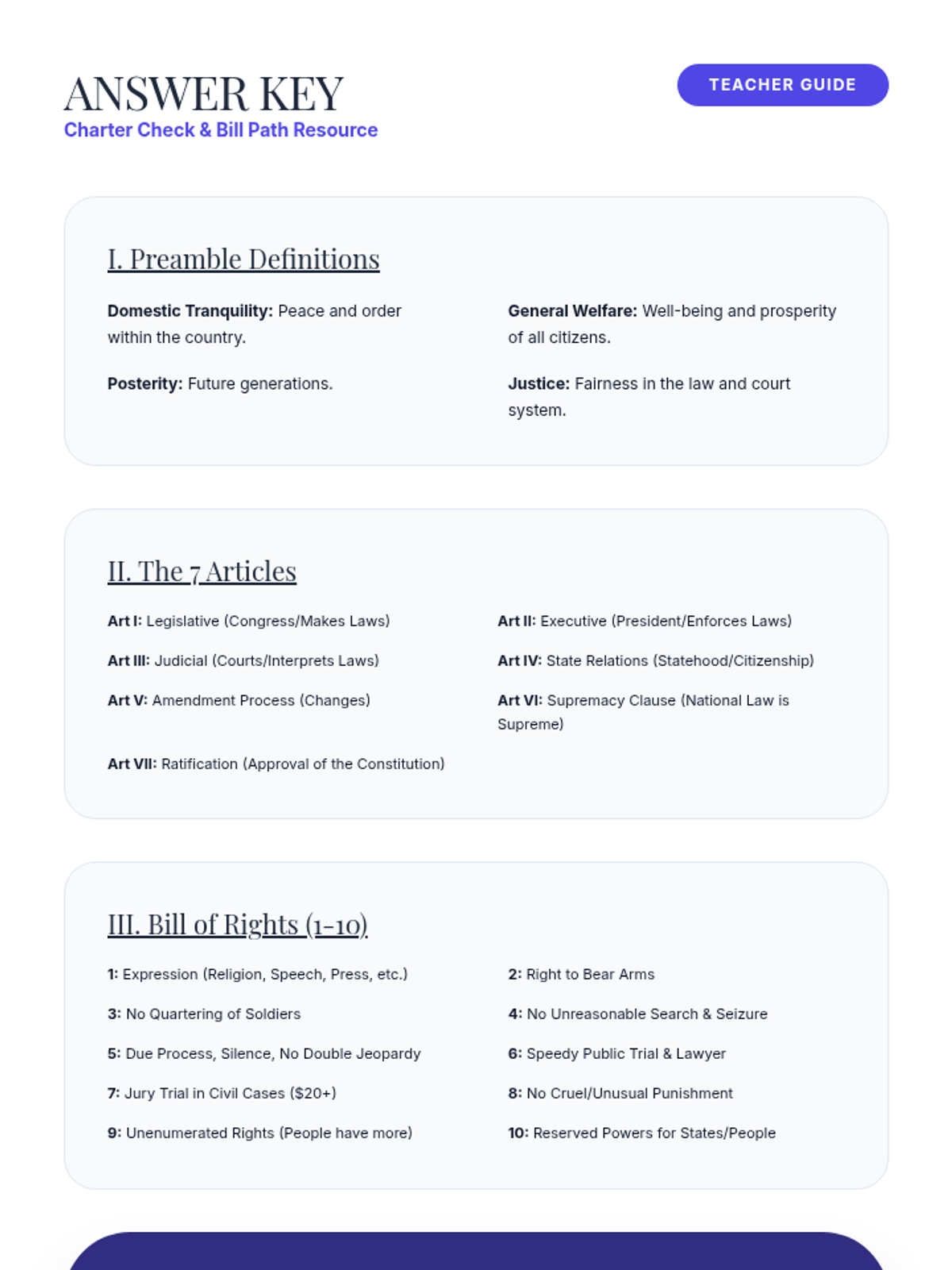
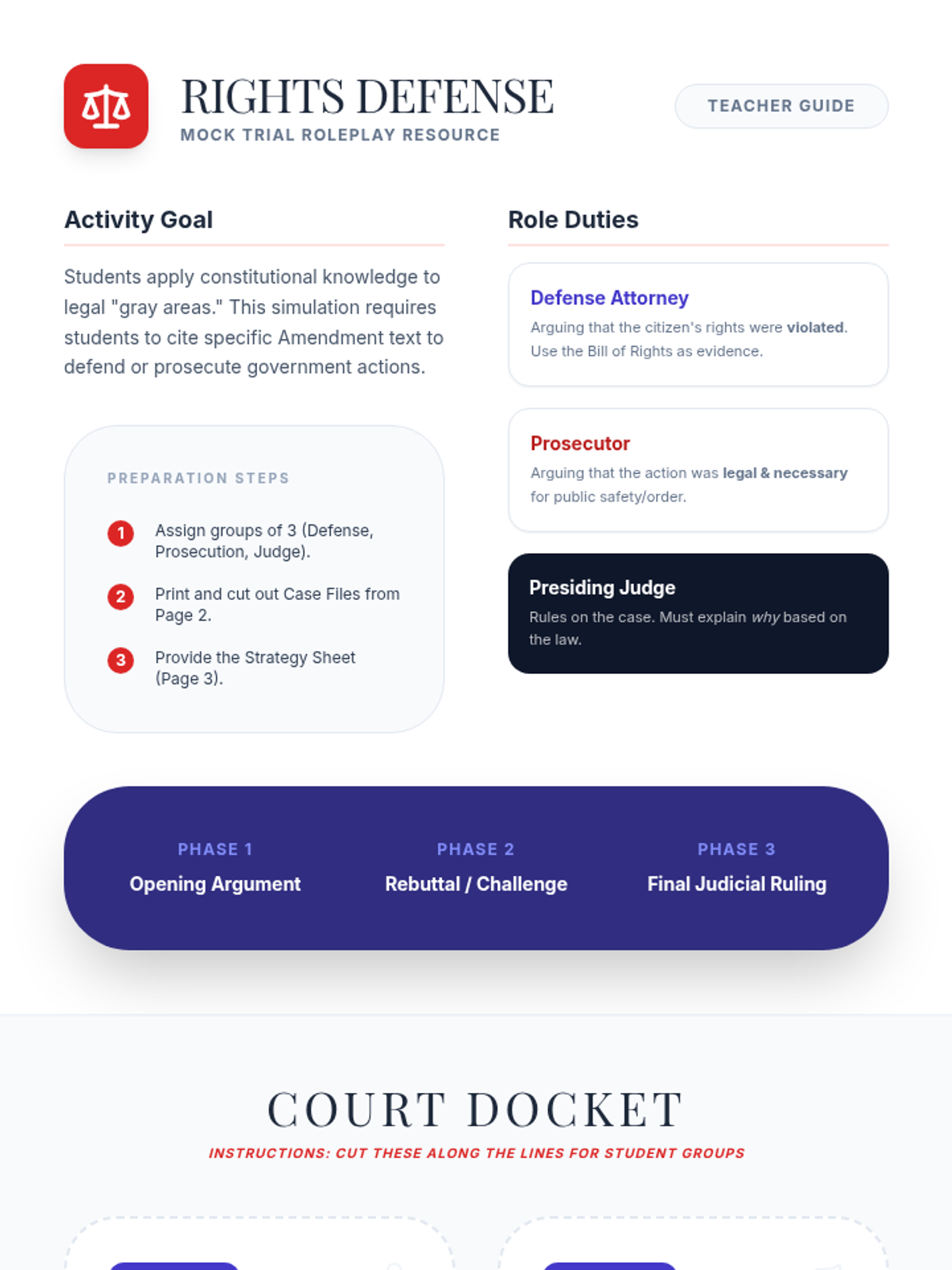
Explore the architecture of the U.S. Constitution and the vital protections provided by the Bill of Rights through guided analysis and legal roleplay.
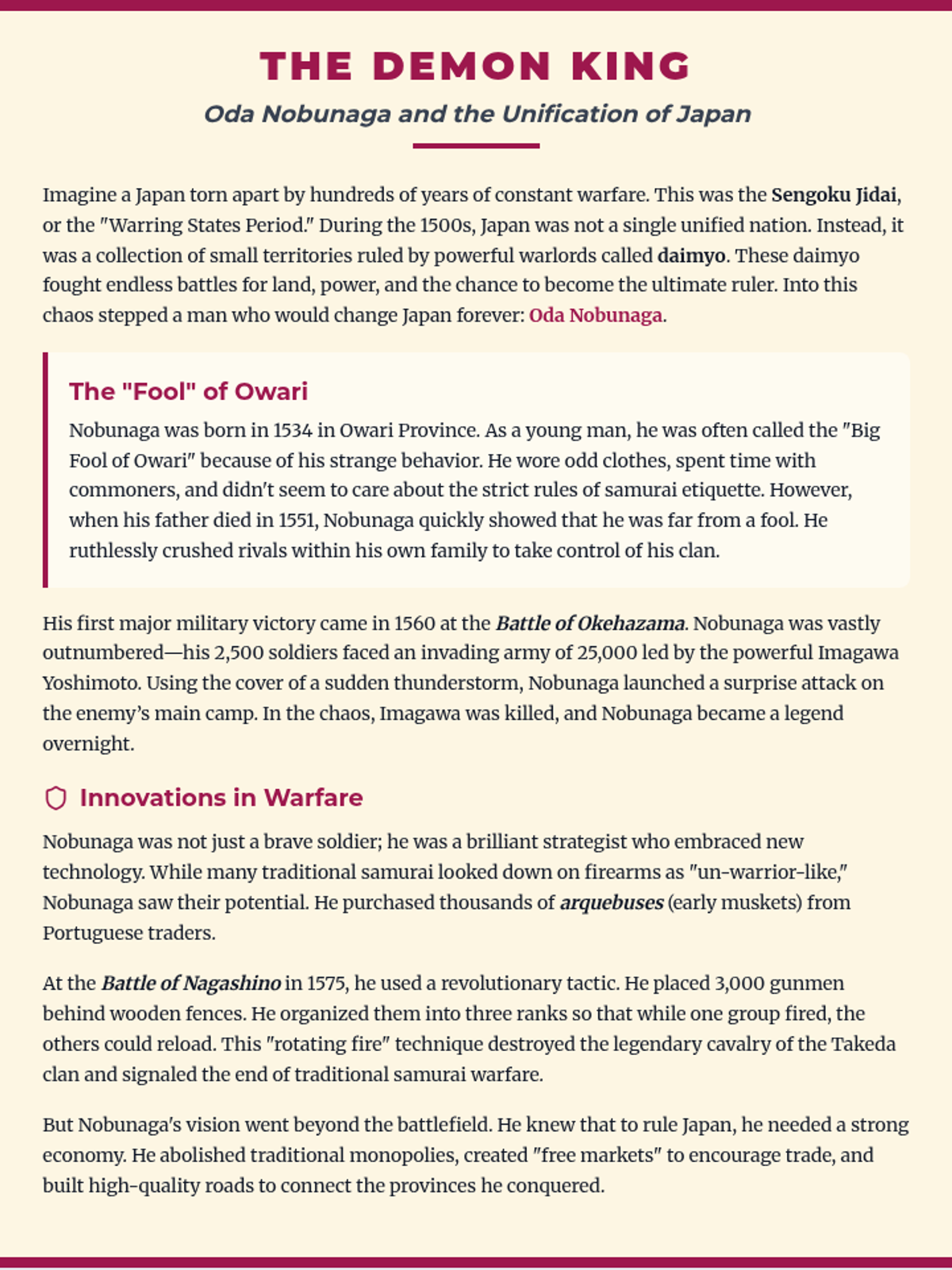
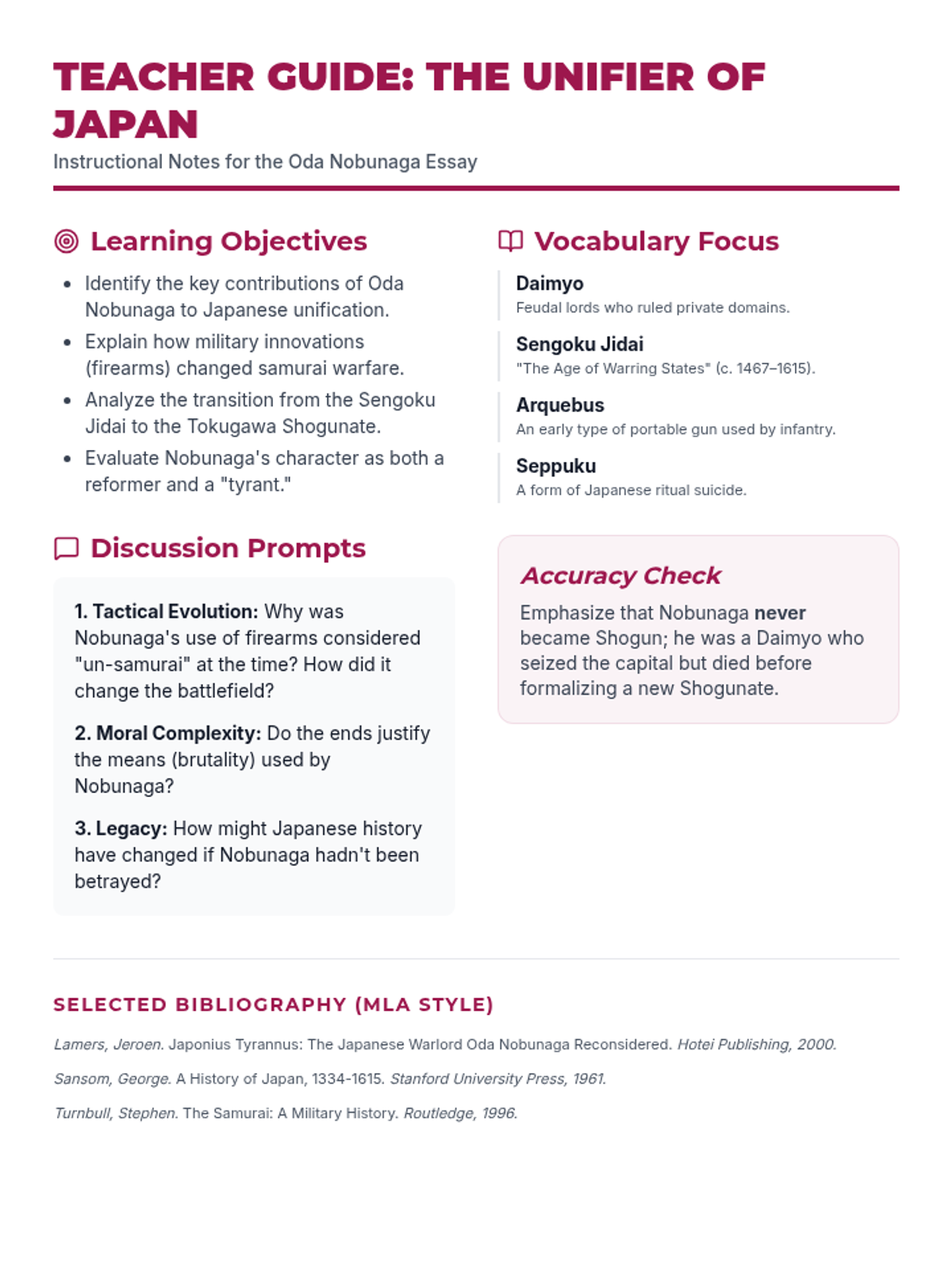
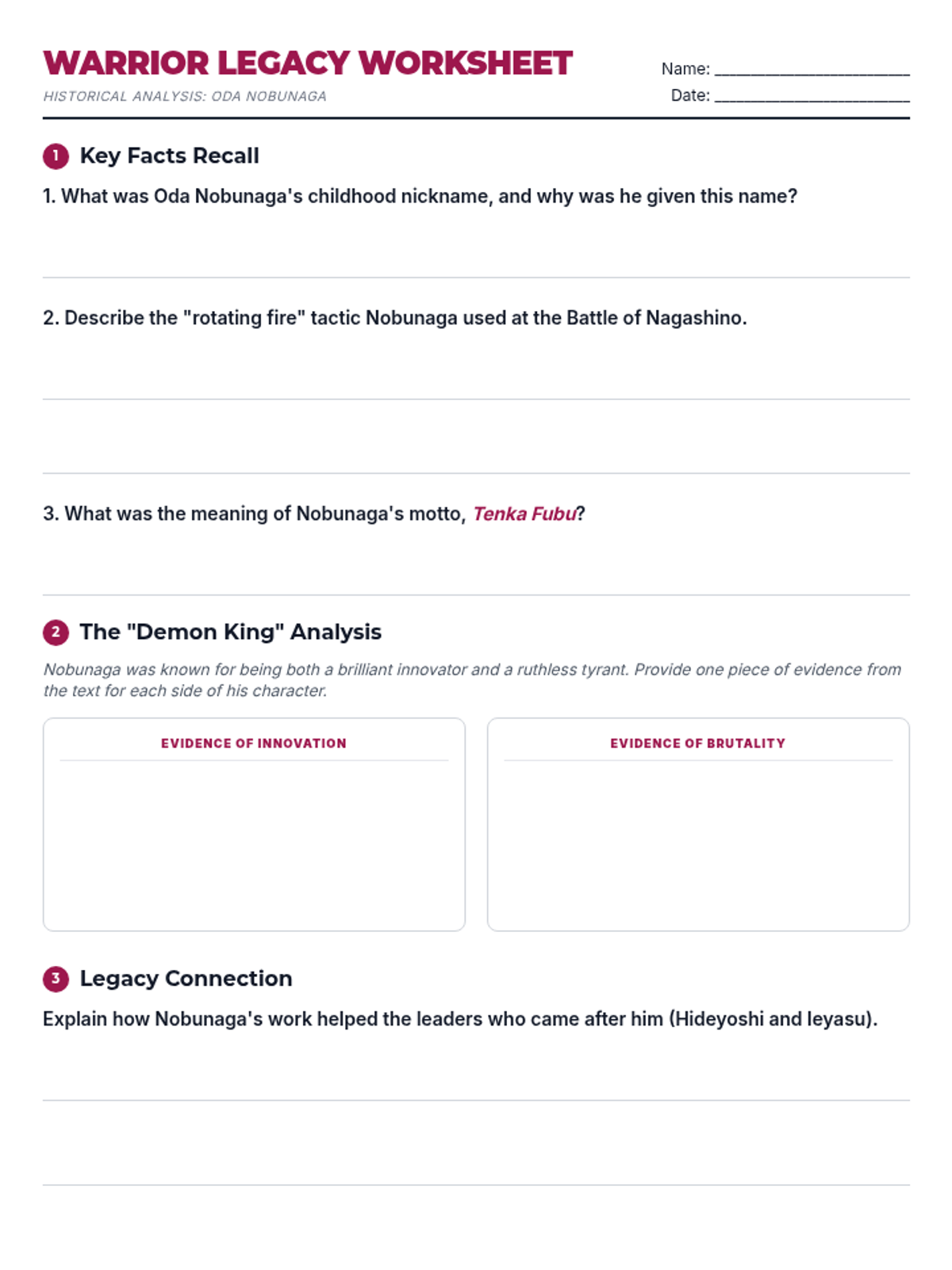
A comprehensive look at the life and impact of Oda Nobunaga, the first great unifier of Japan, exploring his military innovations and the end of the Sengoku period.
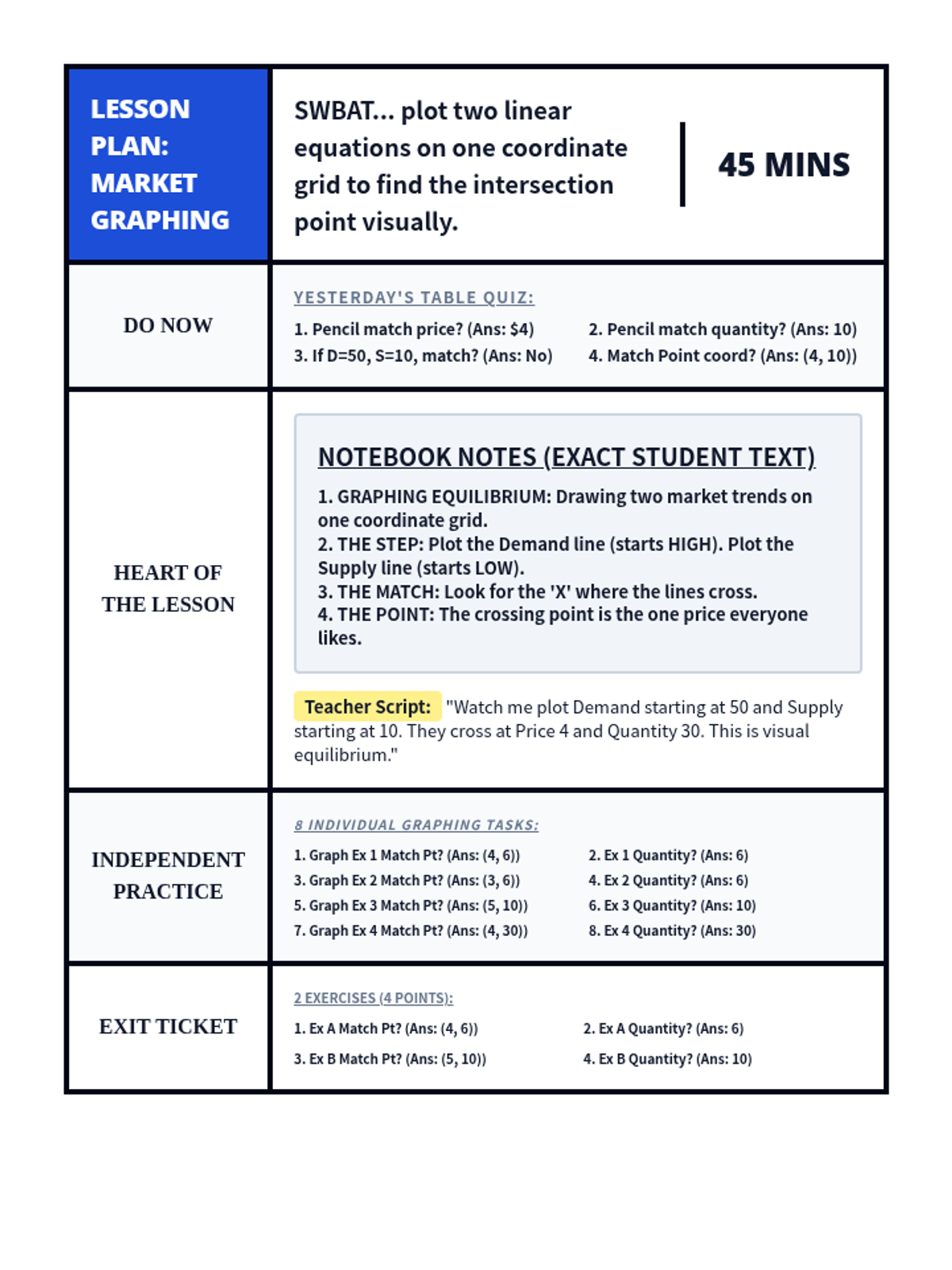
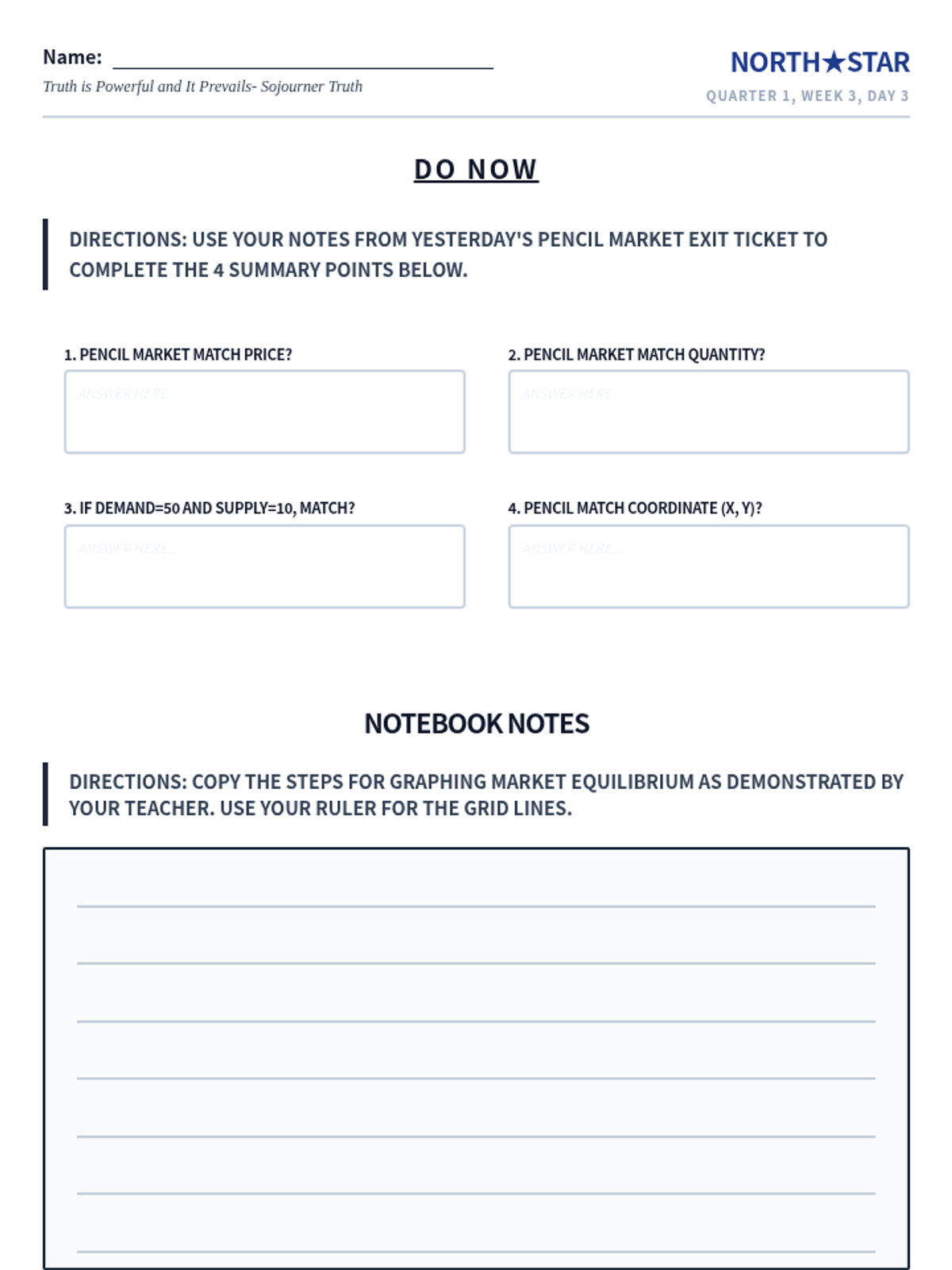
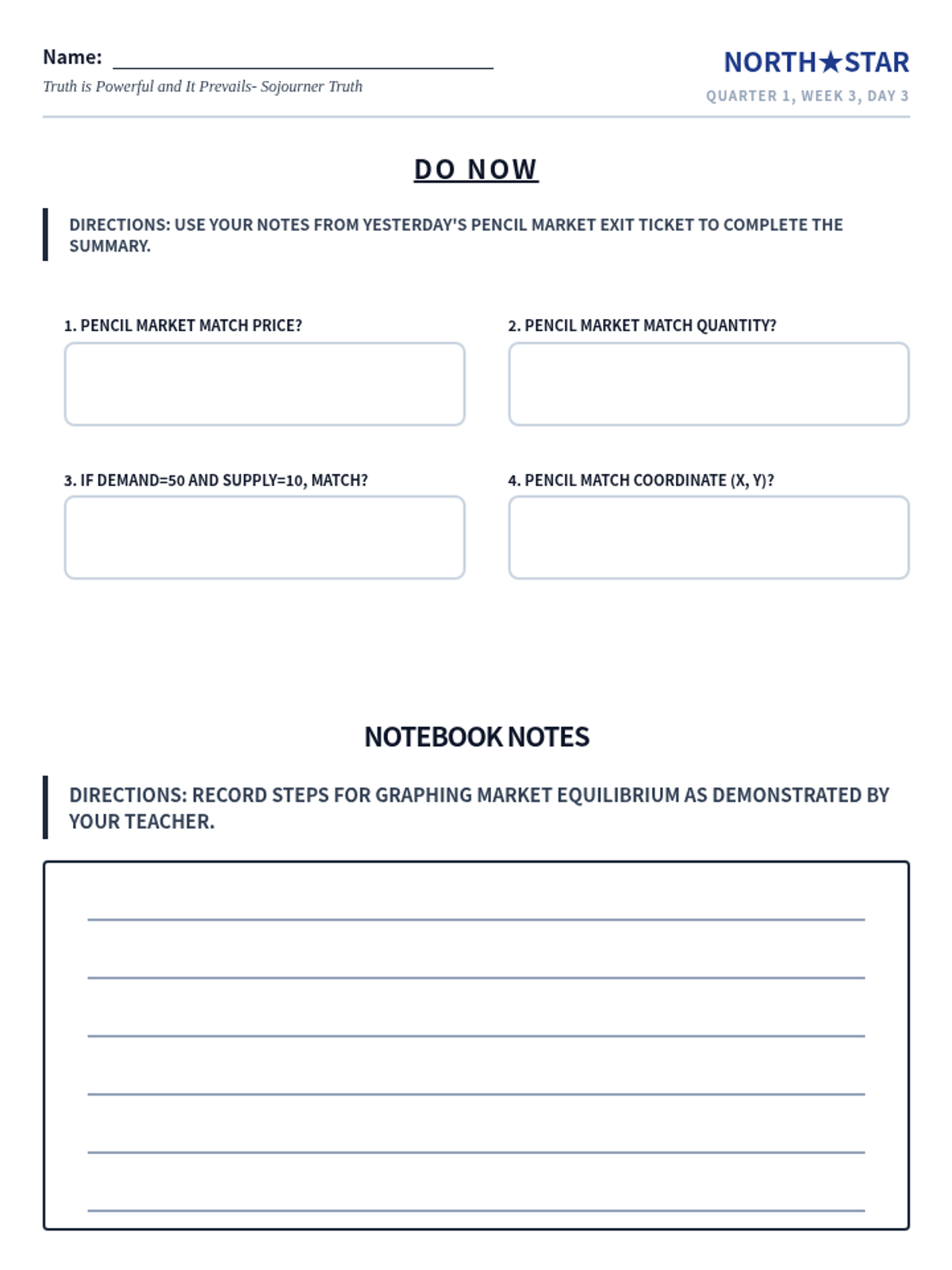
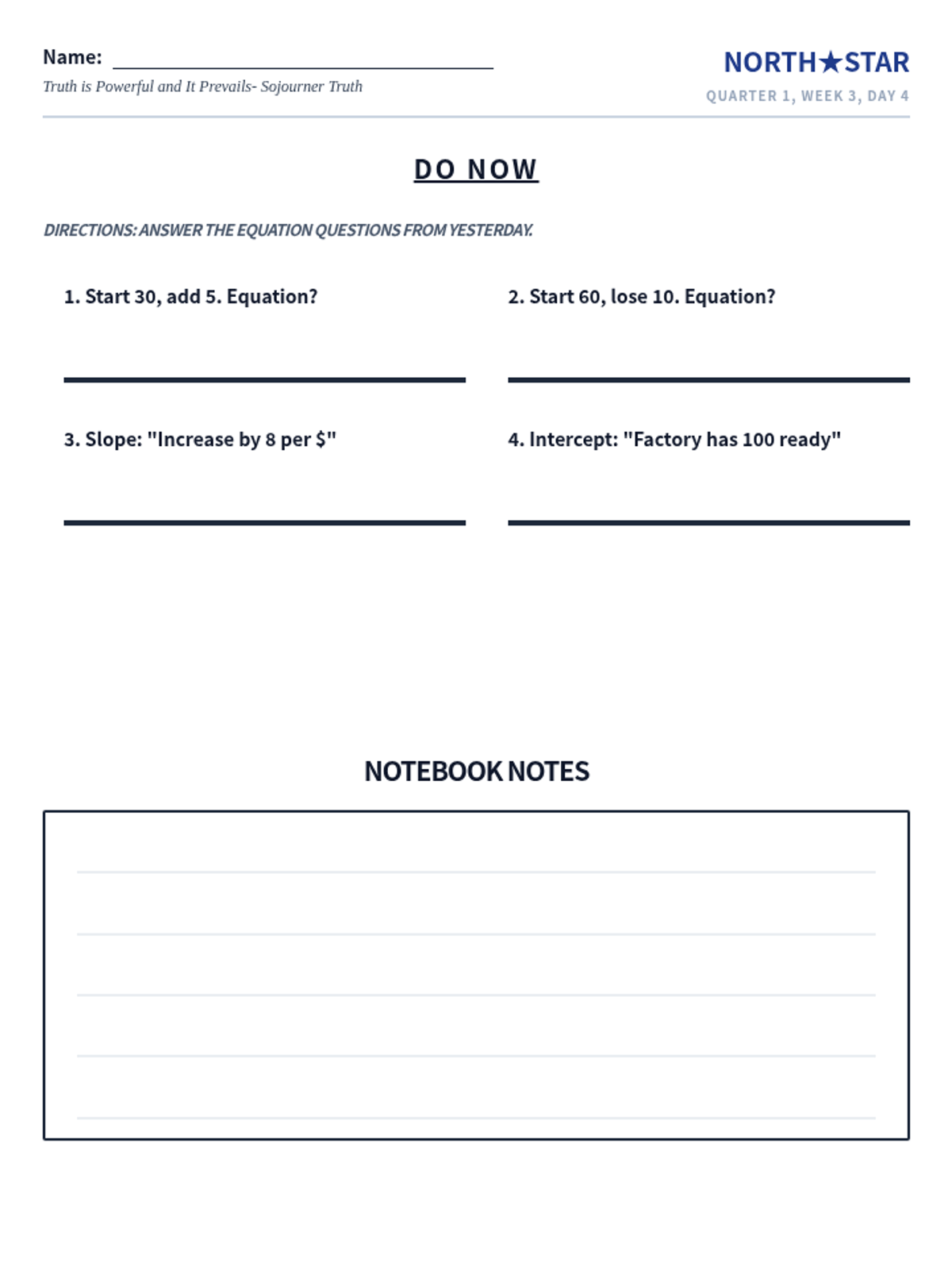
Students plot two linear equations on a single coordinate plane to find the point of intersection and identify the equilibrium price and quantity visually.
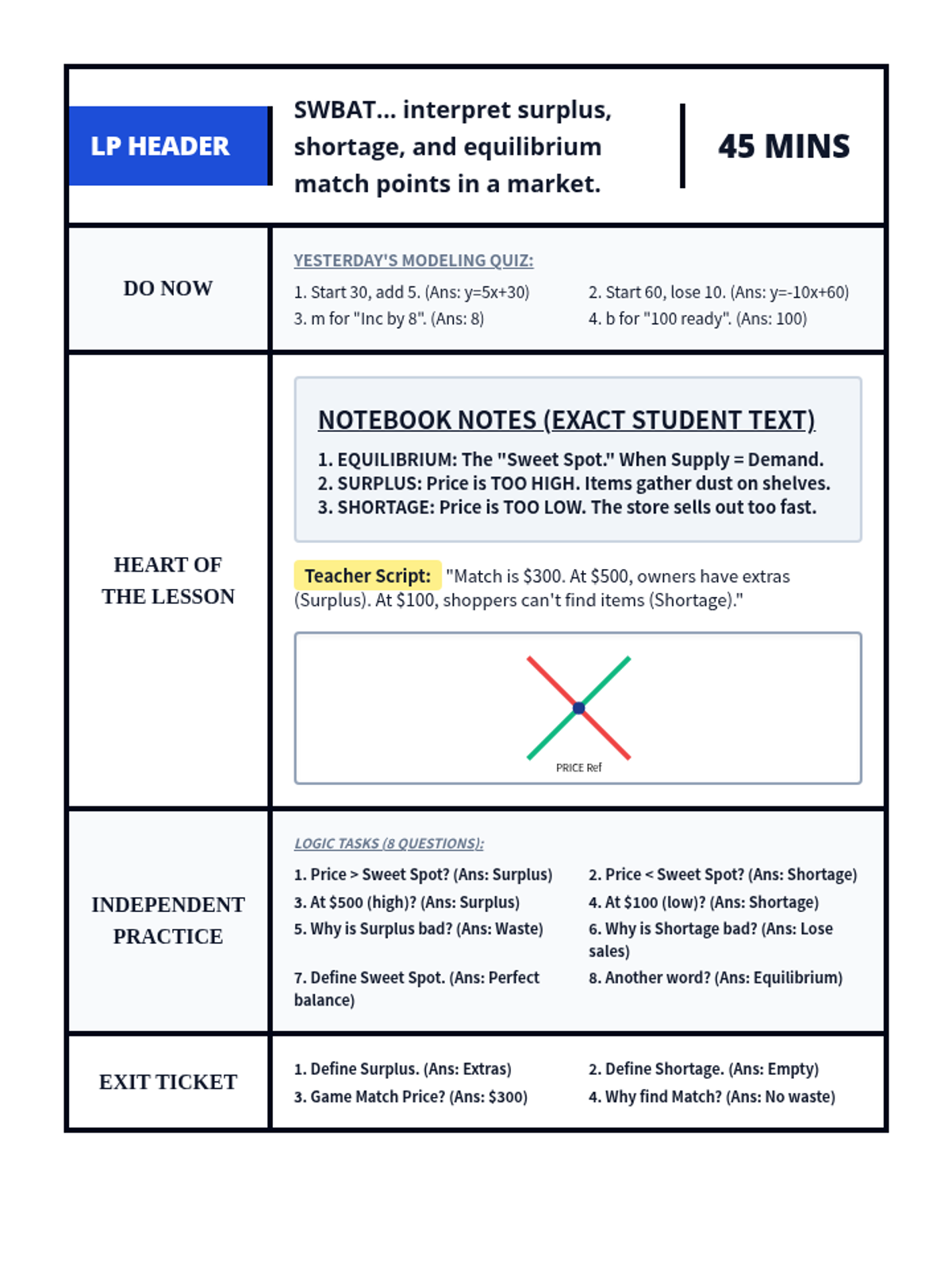
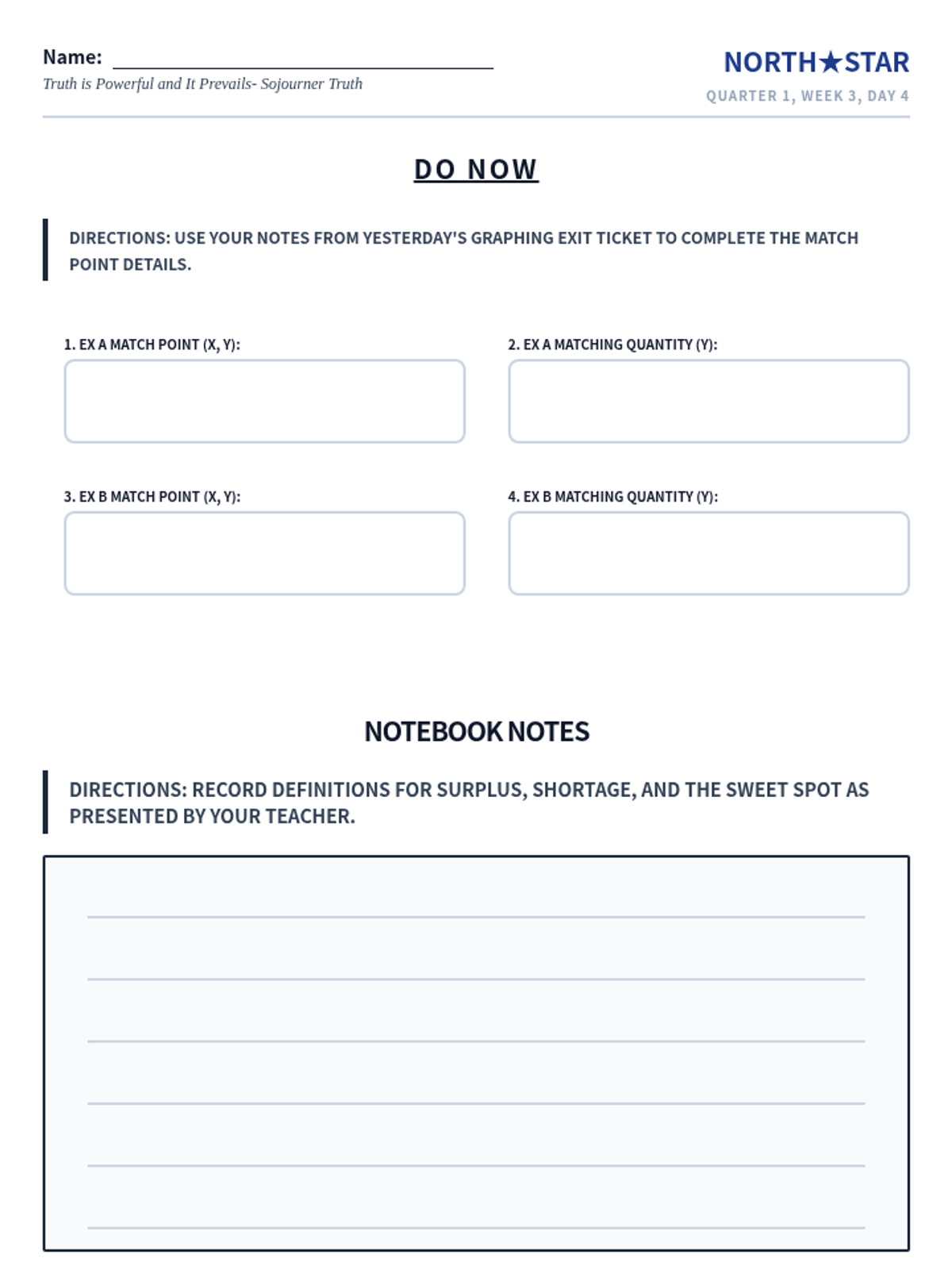
Students interpret the meaning of the point of intersection, surplus, and shortage in the context of a real-world market.
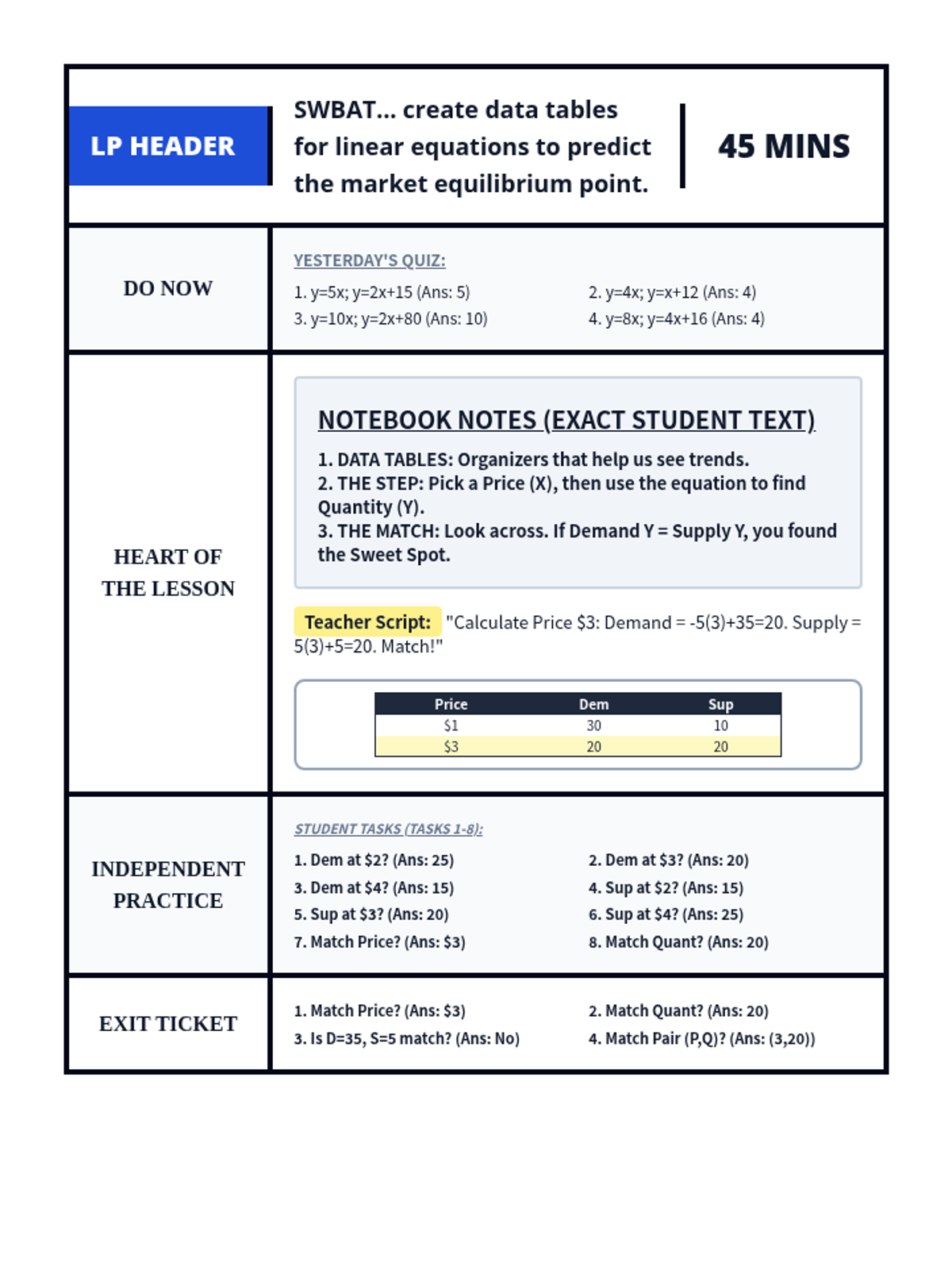
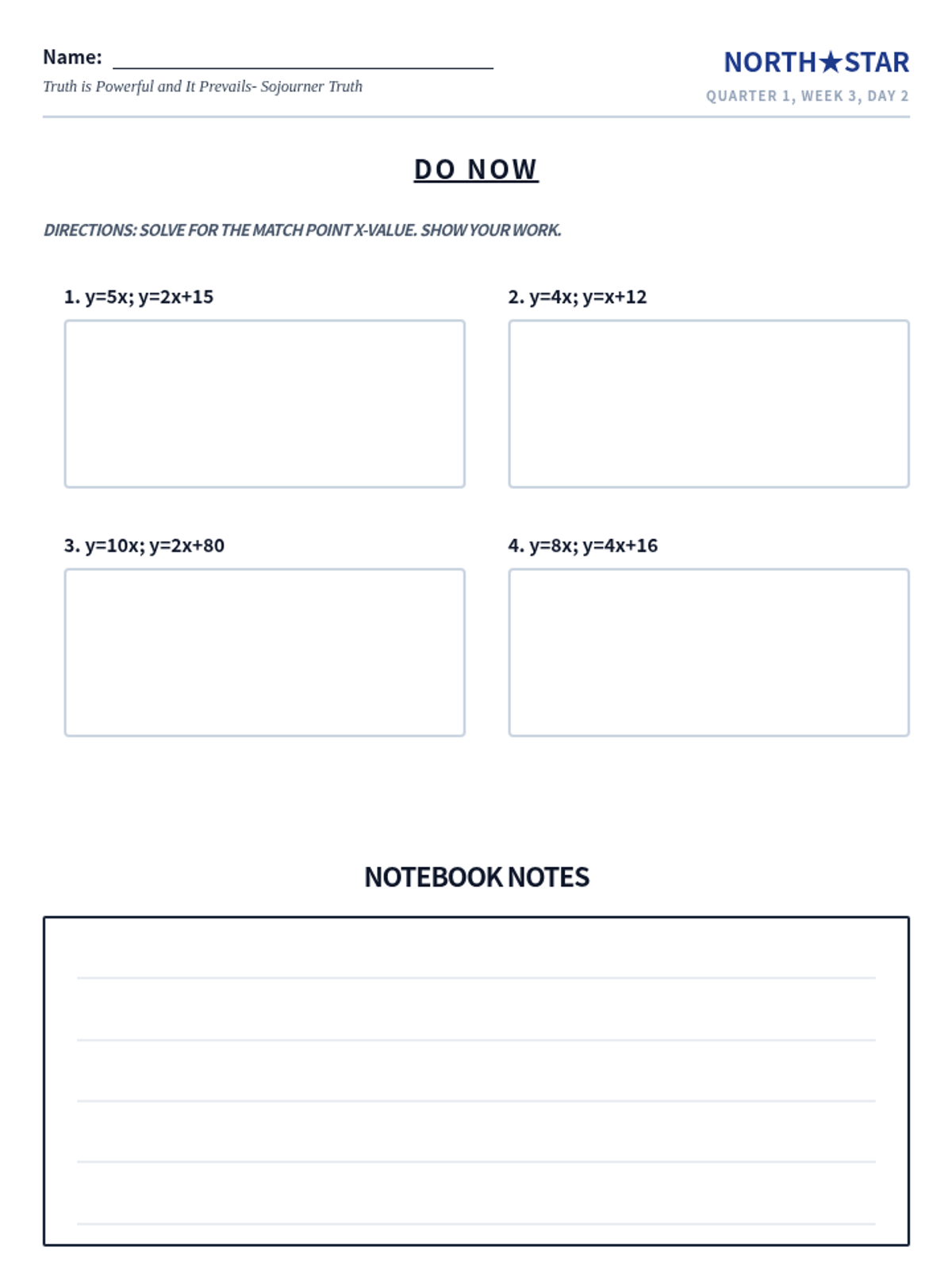
Students create and compare multiple sets of data tables for supply and demand to identify the market equilibrium price where quantities match.