This lesson explores the characteristics of different economic systems (market, command, mixed) and examines the government's role in regulating competition, trade, and consumer safety using the cell phone industry as a primary case study.
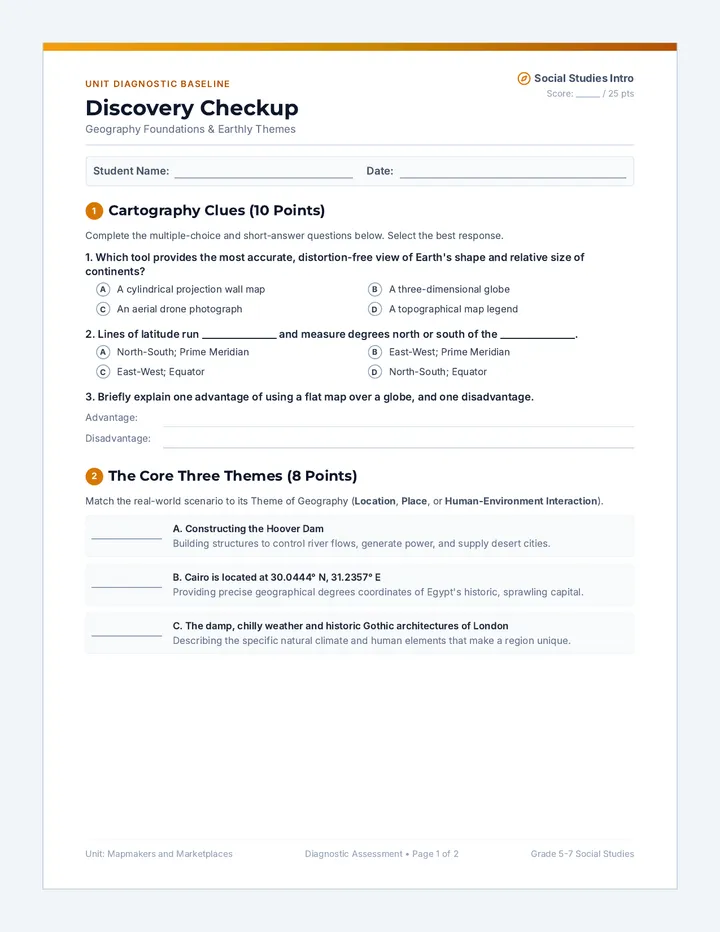
An introductory social studies sequence exploring geography foundations, core geographical themes, and basic economics. Students participate in highly interactive lessons, readings, task cards, and hands-on worksheets.
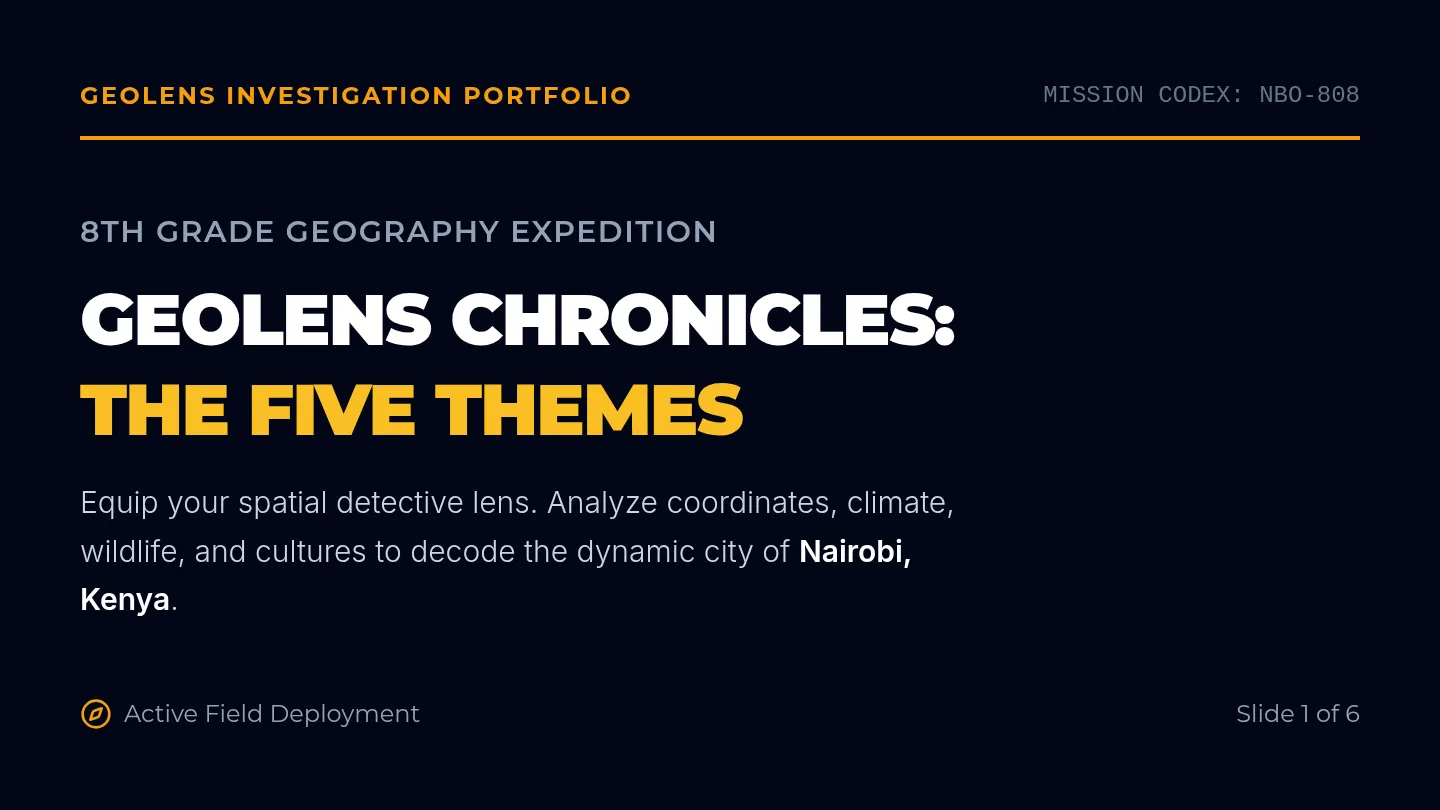
An immersive 8th-grade geography lesson where students apply the Five Themes of Geography to analyze Nairobi, Kenya. Through a DBQ-style investigation, students decode primary sources, map data, and texts to construct a geographic profile of a dynamic global city.
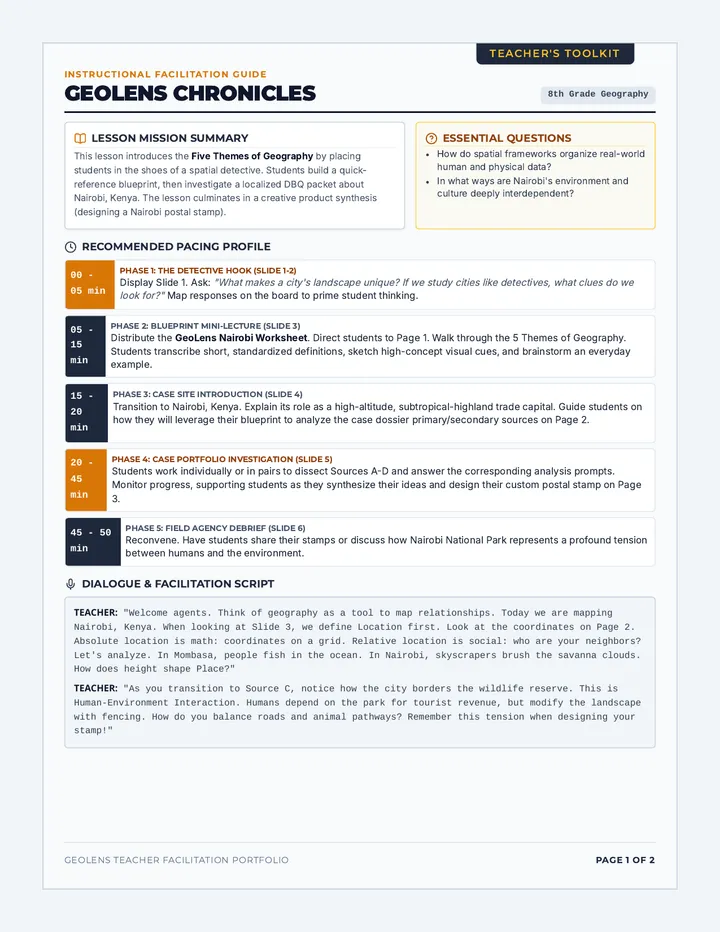
An exhaustive 2-page teacher reference manual detailing lesson pacing, pedagogical guidance, direct teaching scripts, a complete answer key for the Nairobi DBQ case study, and differentiated enrichment strategies.
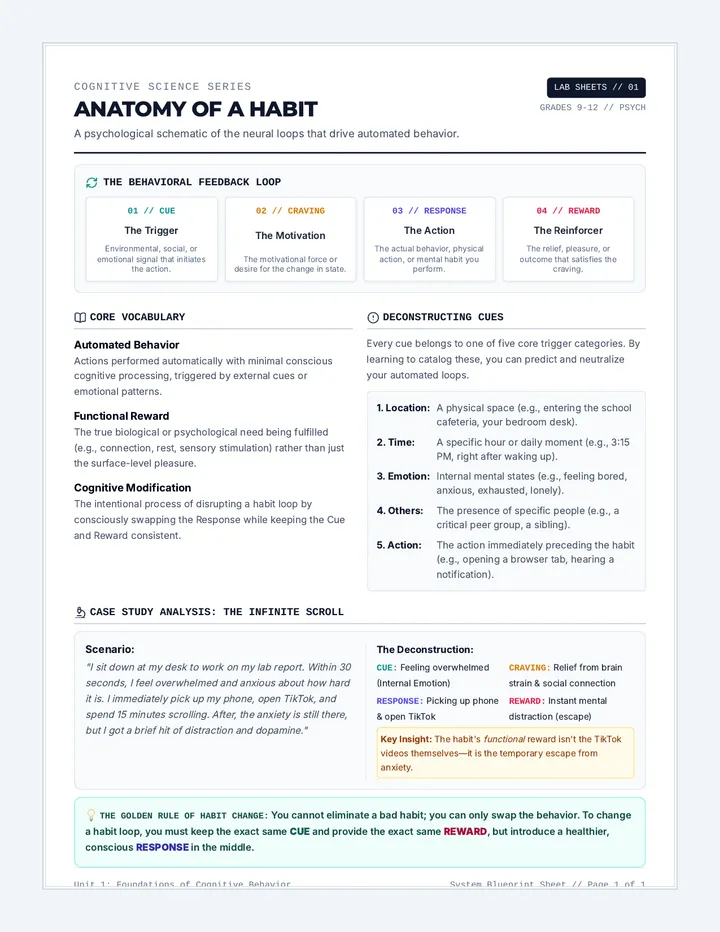
A three-part cognitive psychology series designed for Grades 9-12. Students learn the science of automation, explore how to isolate triggers and cravings, redesign unhelpful routines, and restructure their environments to make habit modification effortless.
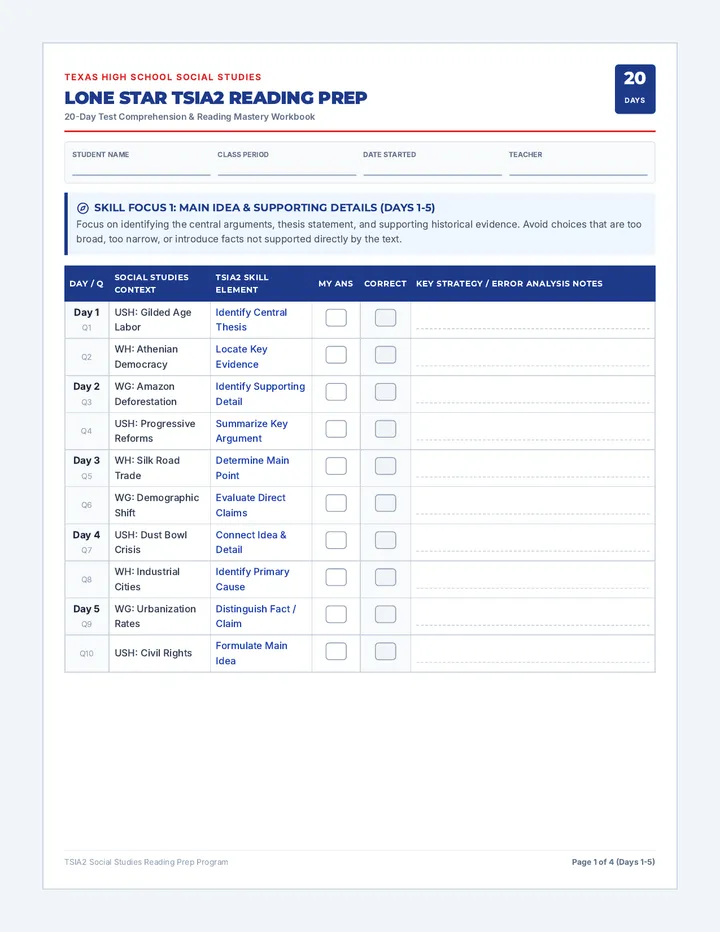
A comprehensive 20-day test preparation program combining Texas High School Social Studies content (US History, World History, and World Geography) with high-yield TSIA2 Reading comprehension skills, complete with daily warm-up slides and a highly-structured student tracking workbook.
A visually engaging, high-contrast 6-slide presentation designed to introduce the Five Themes of Geography and guide students through their Nairobi DBQ case study investigation.
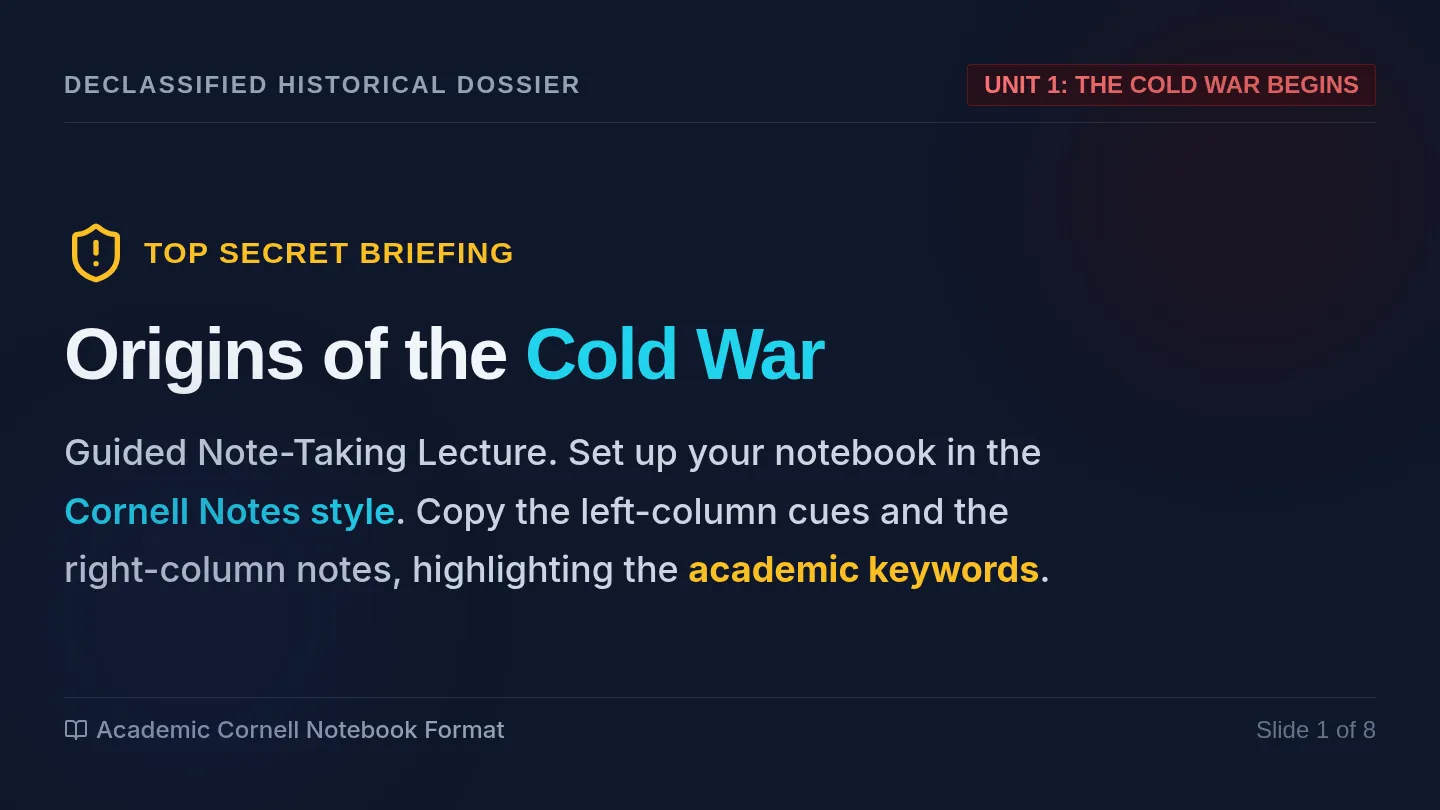
Create a multi-lesson sequence covering the Cold War, focusing on origins, global expansion, and domestic impacts.
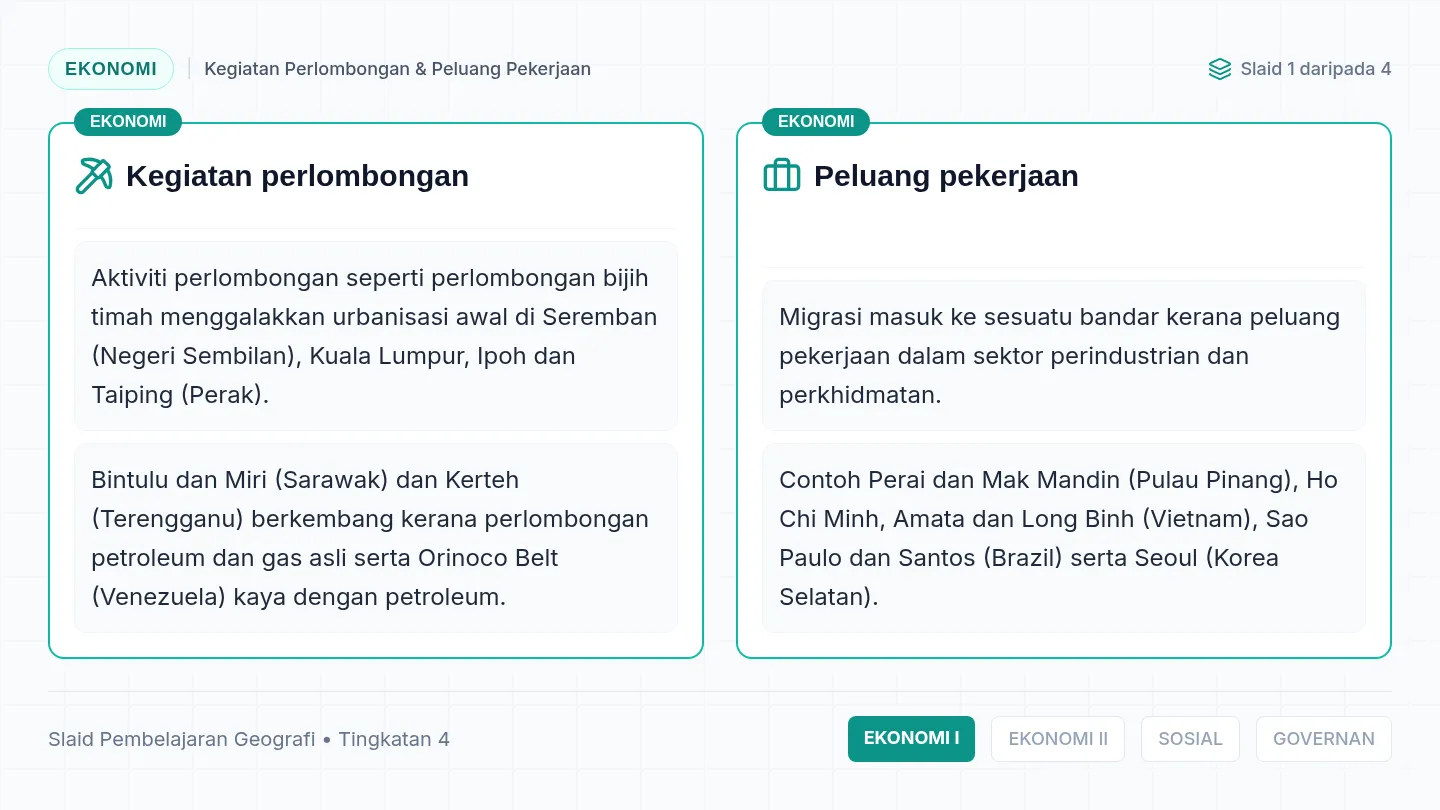
Lesson on the factors influencing the urbanization process, mapping out Economic, Social, and Governance branches with complete regional and global examples.
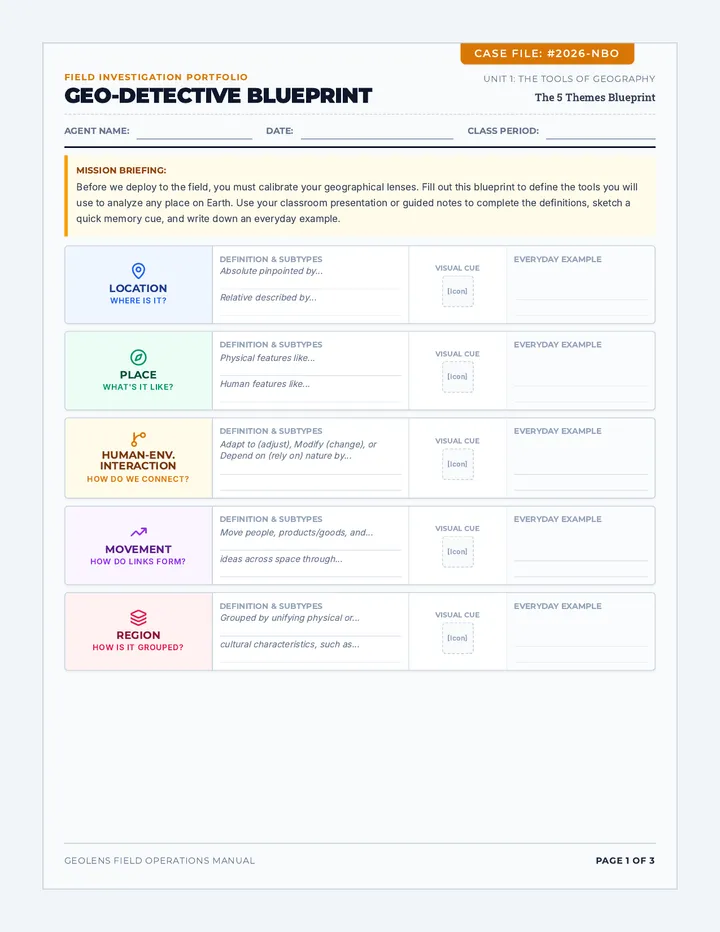
A comprehensive 3-page student workbook featuring a structured graphic organizer for the Five Themes of Geography, a DBQ source analysis packet focusing on Nairobi, Kenya, and a creative stamp design synthesis activity.
A comprehensive unit on child development from birth through age 18, focusing on physical, cognitive, and social-emotional growth across early childhood, middle childhood, and adolescence.
A simplified 6th-grade lesson exploring the classic nature vs. nurture debate. Students learn key vocabulary, read a graphic-organizer-style text, and answer scaffolded comprehension and reflection questions.
A 46-slide interactive presentation designed for the 20-day TSIA2 Reading Prep program. Features alternate Question and Answer/Strategy slides matching the social studies contexts (US History, World History, and World Geography) and skills on the tracker sheet. Fully stylized with deep navy and crimson, using high-yield passages, identical answer choice styling, and clear strategic breakdowns with text sizing strictly kept at or above 24px.