Students learn to decode map legends to find state capitals and major cities, discussing the strategic placement of capitals and distinguishing between different map symbols.
Una lección que explora la inmigración moderna en los EE. UU. a través de la lente histórica de la Ley de Exclusión China, diseñada con lenguaje simplificado y organizadores gráficos para estudiantes de educación especial.
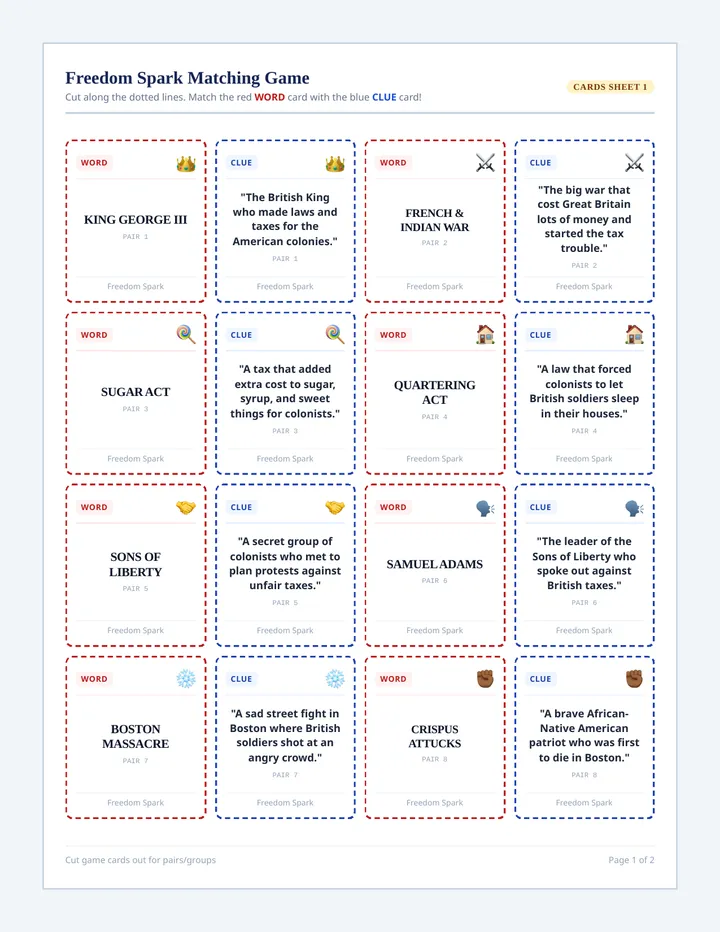
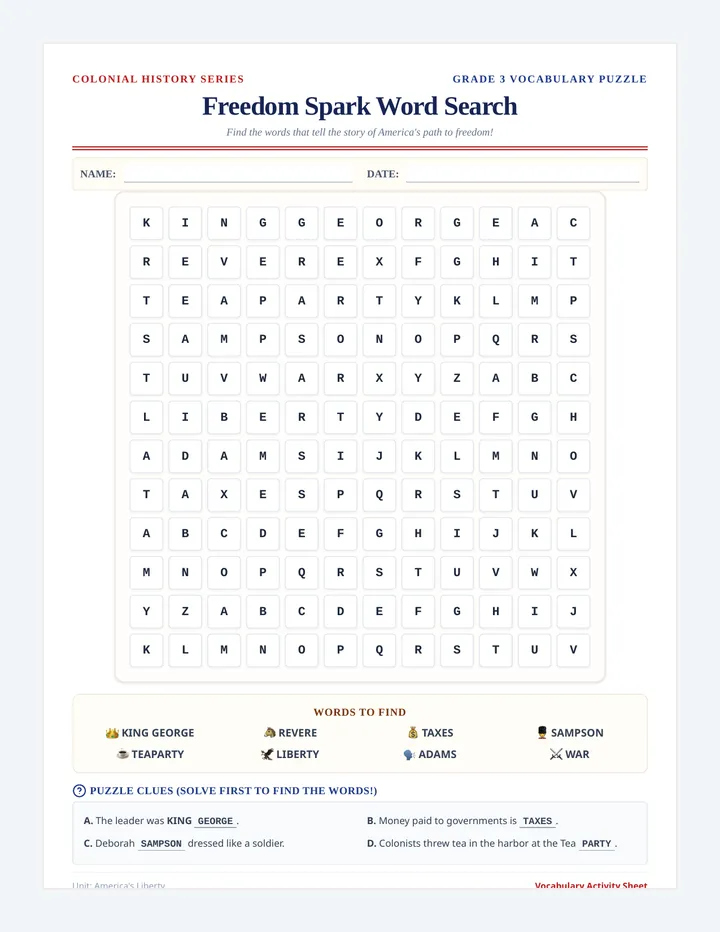
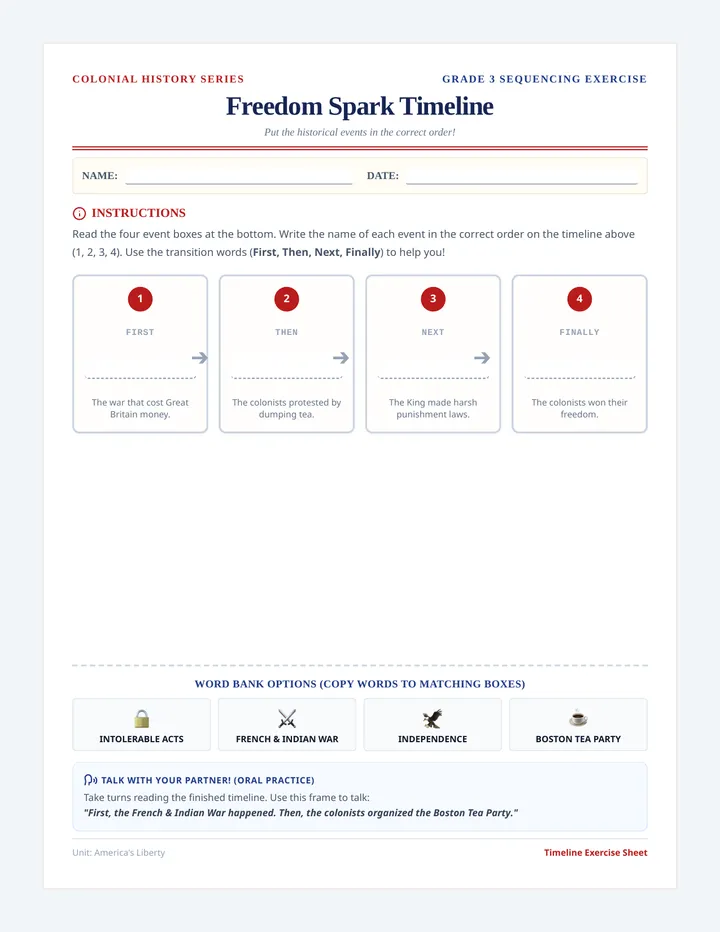
A collection of interactive games and activities designed to reinforce vocabulary and historical knowledge from the 'Fighting for a Cause' unit for Grade 2 students.
Students explore the complex legacy of Alexander the Great through a guided reading and evidence-based analysis of his actions as either a hero or a villain.
A comprehensive assessment covering developmental domains, brain growth, major ECE theorists, and strategies for supporting young children's self-concept and identity.
This lesson explores the devastating social and economic impacts of the Great Depression, focusing on unemployment, migration, and Hoovervilles, while challenging students to compare the contrasting philosophies of Presidents Hoover and FDR.
A summative assessment for the first third of the novel. Evaluates student mastery of vocabulary from Lessons 1-11, character motivation, and the central theme of corporate alienation through a mix of multiple choice, short answer, and a rigorous RACE response.
The family's recovery and the transition to a new source of productivity (Grete). Synthesis of the unit's themes.
Gregor's death and self-sacrifice. Analysis of the relief of the family and the 'cleansing' of the home.
Grete's formal rejection of Gregor's identity. Analysis of the shift from sibling love to the necessity of his removal.
Gregor's reaction to Grete's violin performance. Themes of art, human connection, and the final reach for his human spirit.
Gregor's room becomes a storage area for trash. Analysis of the complete erasure of his human space and history.
The introduction of the three lodgers. Analysis of the home as a commodified space and Gregor's further displacement.
Analysis of the family taking on menial labor. Themes of exhaustion, loss of dignity, and the shared alienation of the working class.
Gregor as a permanent invalid. Analysis of the family's growing resentment and the physical reminder of his non-productive status.
The father's violent attack with apples. Analysis of the apple as a symbol of permanent wounding and the transition from son to 'burden'.
Analysis of the father's return to work and his transformation through the bank uniform. Themes of restored authority and industrial identity.
Gregor's desperate attempt to save his human identity by protecting the picture frame. Focus on the direct confrontation with Grete.
The conflict between Grete and the Mother over removing Gregor's furniture. Themes of preserving human memory vs. accepting animal reality.
Students analyze Gregor's fading perception of the human world through his window view and his growing physical comfort in animalistic behaviors.
Analysis of the father's hidden financial assets and the betrayal of Gregor's role as the sole provider. Themes of economic exploitation.
Students examine the changing power dynamic between Gregor and Grete, focusing on her new ritualistic authority as his sole caretaker.
Part II begins with Gregor's physical transition, focusing on his change in taste and the shift from human food to animal waste as a symbol of dehumanization.
Students analyze the violent conclusion to Part I, focusing on the father's use of force to cage Gregor. Themes of domestic aggression and the loss of familial status.