Students watch a pre-recorded debate or listen to live student speeches. They actively research claims made in real-time and flag inaccuracies using a digital dashboard.
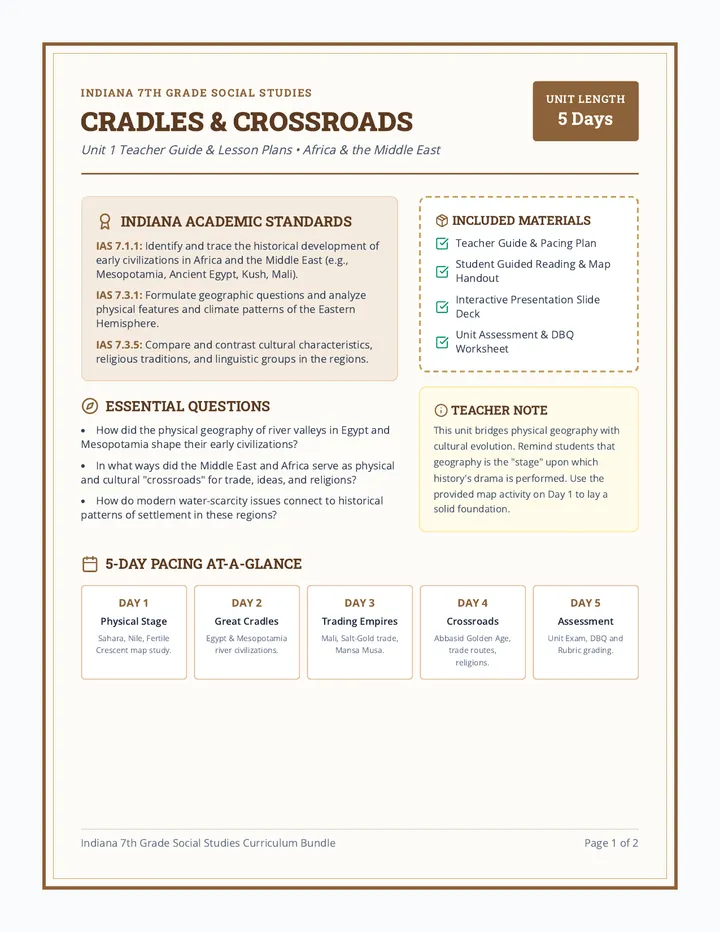
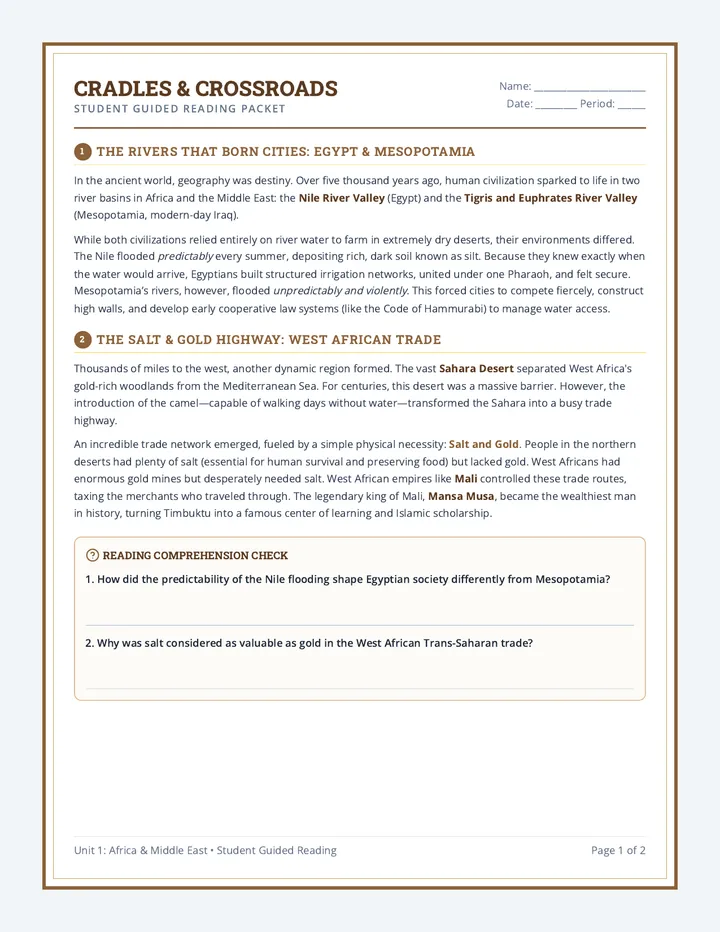
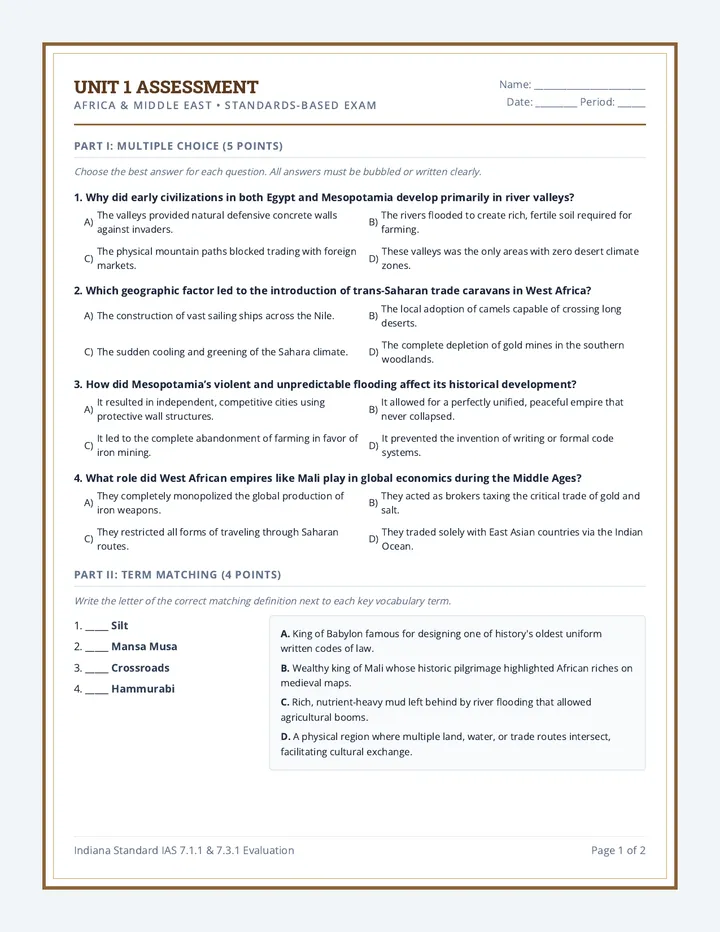
A comprehensive 7th-grade social studies curriculum sequence focused on the Eastern Hemisphere (Africa, Middle East, Asia, and the Pacific). This standards-aligned sequence includes detailed teacher lesson plans, student guided reading and worksheets, interactive presentation slides, and rigorous assessments with DBQs.
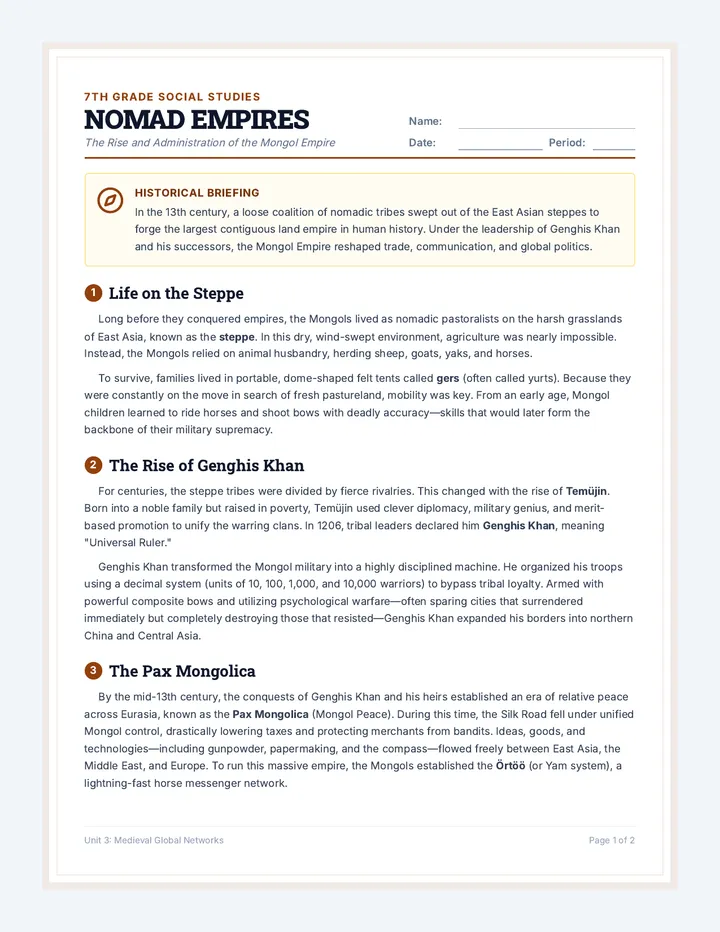
A comprehensive history lesson for 7th grade social studies exploring the rapid rise, administration, and ultimate division of the Mongol Empire. Includes a student reading worksheet and a corresponding teacher guide and answer key.
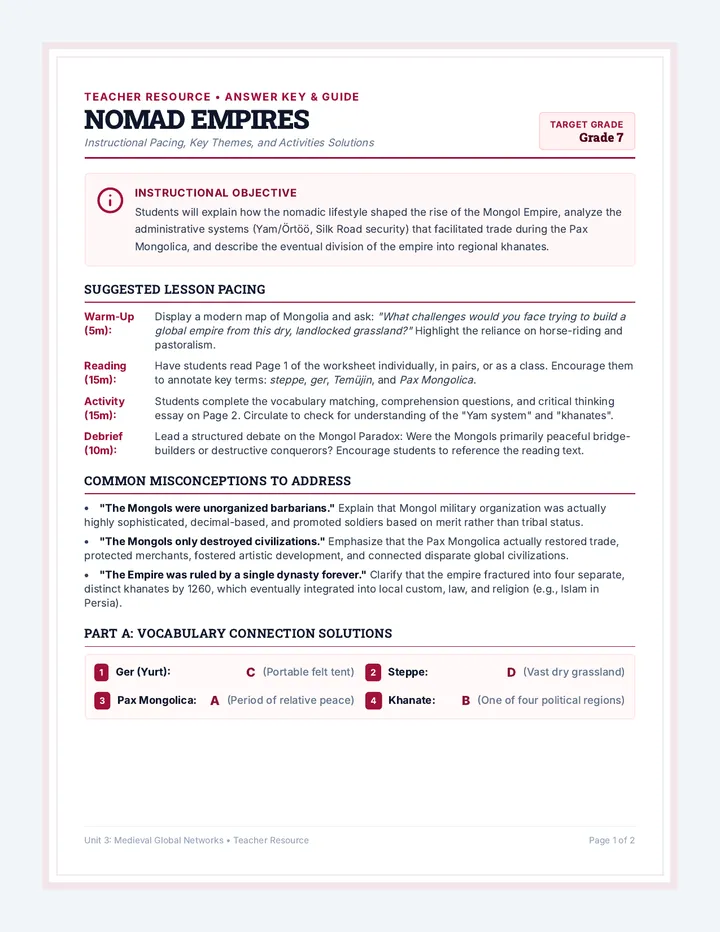
A 2-page comprehensive teacher's guide and answer key for the Nomad Empires lesson. Features step-by-step pacing guidance, common student misconceptions, a complete vocabulary and comprehension answer key, and an evaluation rubric for critical thinking.
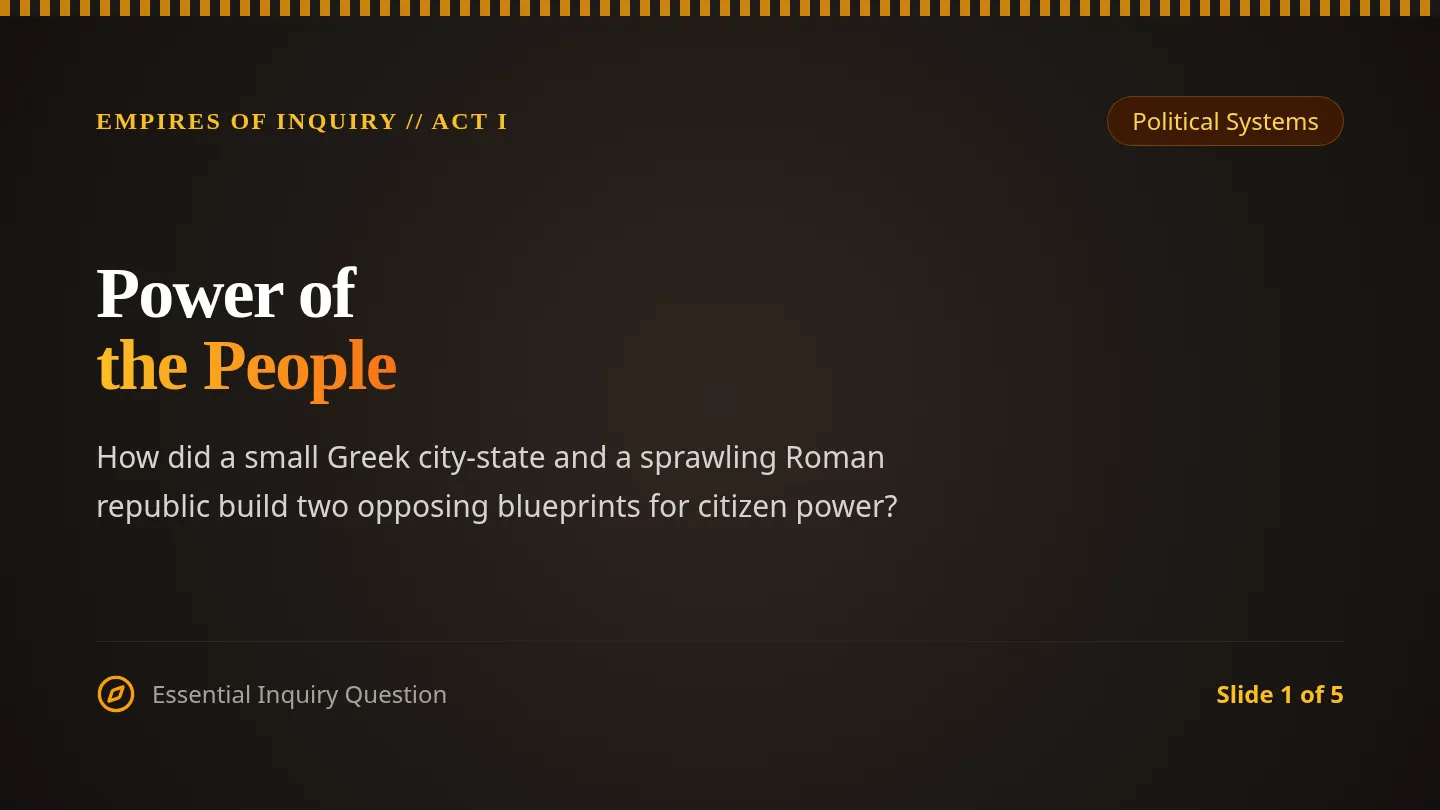
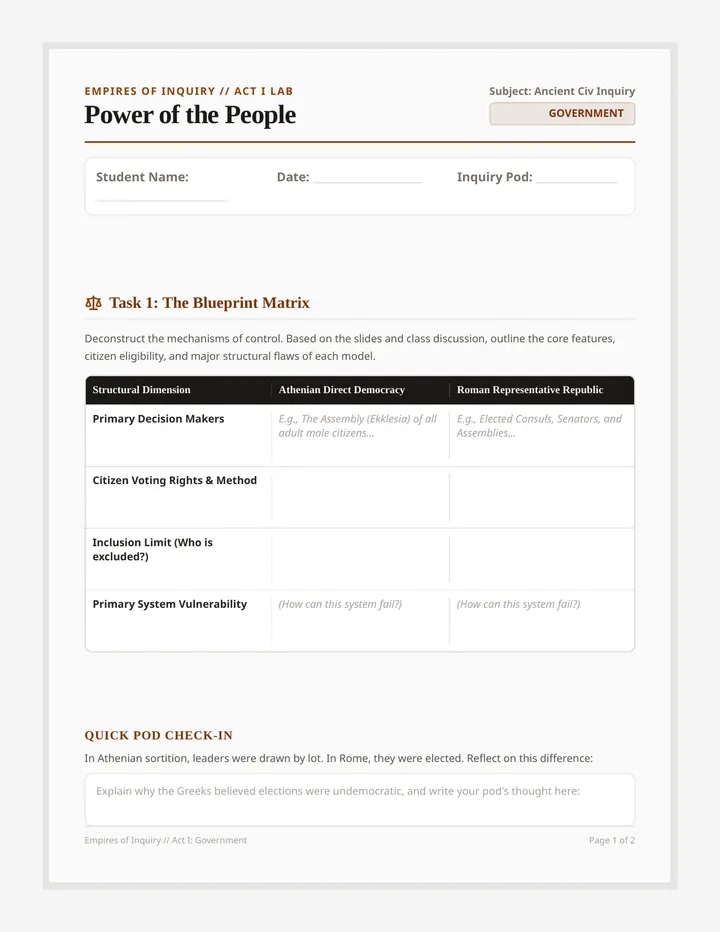
An inquiry-driven social studies sequence investigating Ancient Greece and Rome across four core pillars: government, philosophy, trade, and engineering. Students engage with primary sources, architectural achievements, and ethical dilemmas to construct arguments about classical legacies.
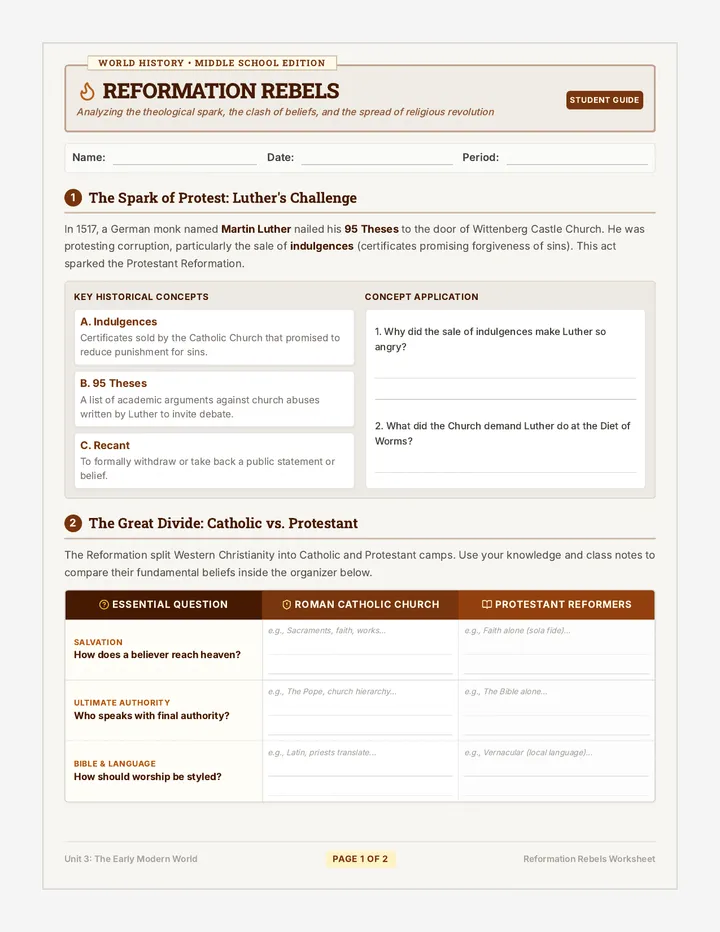
A middle school history lesson introducing the Protestant Reformation, focusing on Martin Luther's protest, the fundamental theological clashes, and the visual spread of Protestantism across Europe.
A 2-page print-ready student worksheet featuring a historical reading passage on the rise, administration, and decline of the Mongol Empire, accompanied by vocabulary matching, comprehension questions, and a critical thinking prompt.
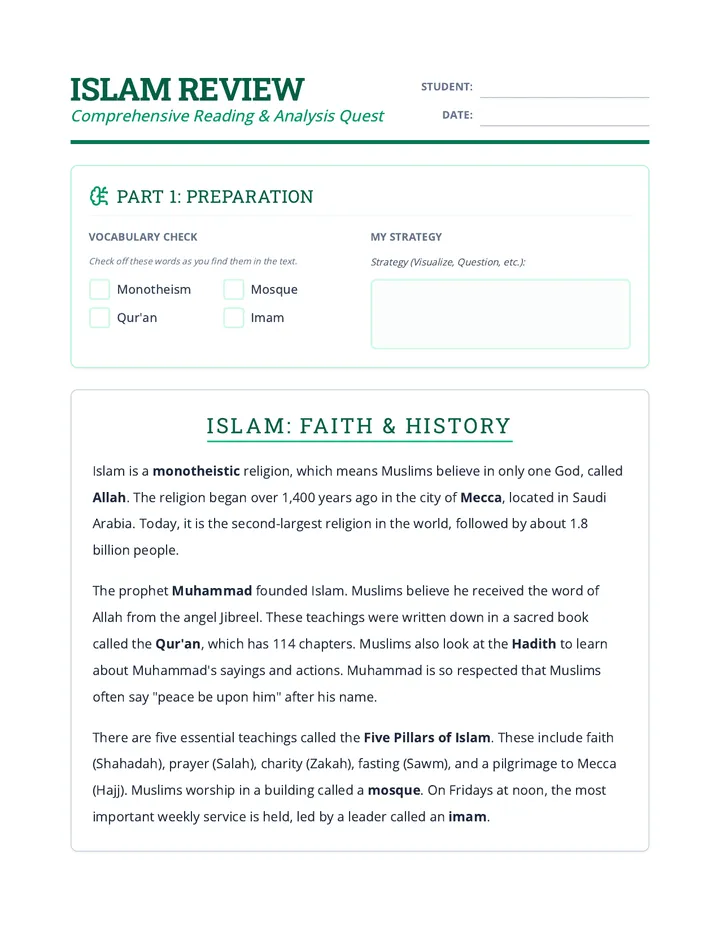
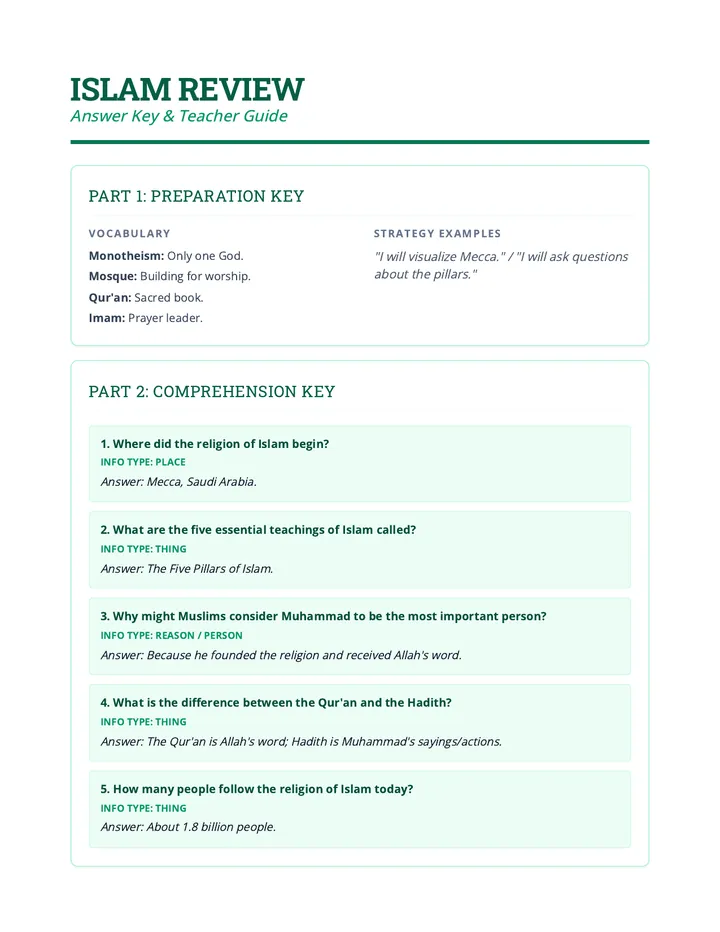
A comparative and deep-dive review sequence exploring foundational teachings, sacred texts, and cultural practices of major world religions.
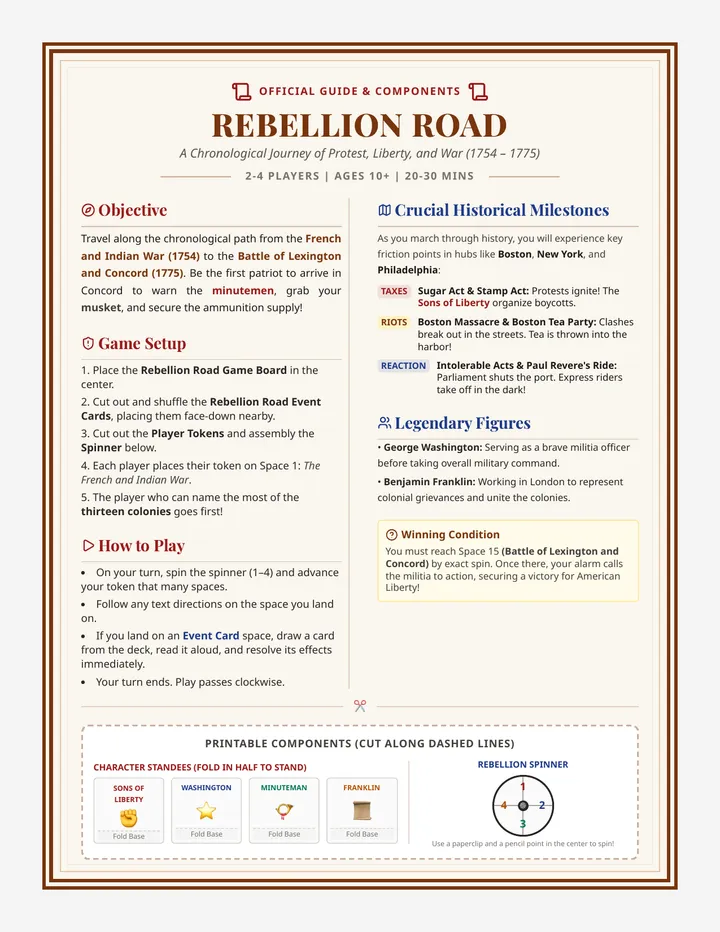
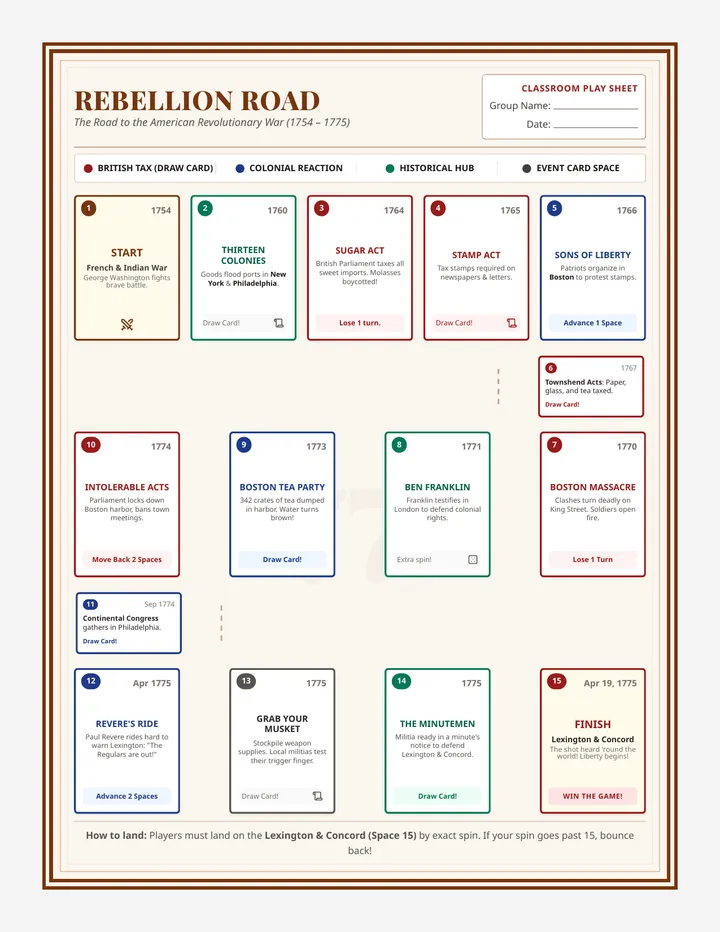
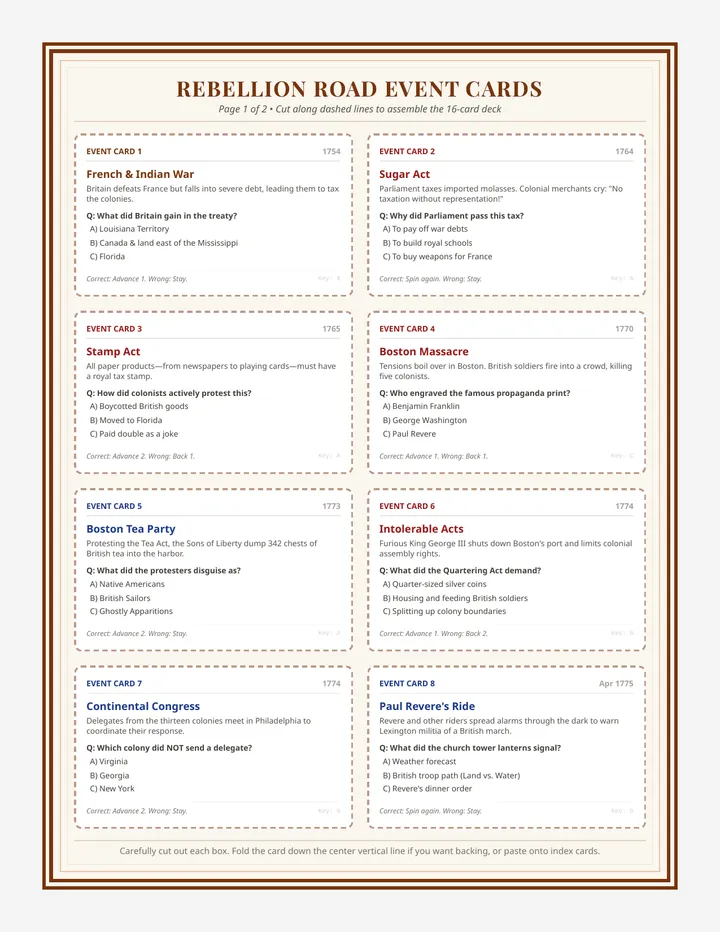
An immersive, print-ready educational board game teaching the major events, key figures, and critical concepts leading up to the American Revolutionary War from 1754 to 1775.
A printable 2-page graphic organizer and conceptual map worksheet for middle school students, exploring Martin Luther's protest, key theological differences between Catholicism and Protestantism, and the geopolitical spread of the Reformation.
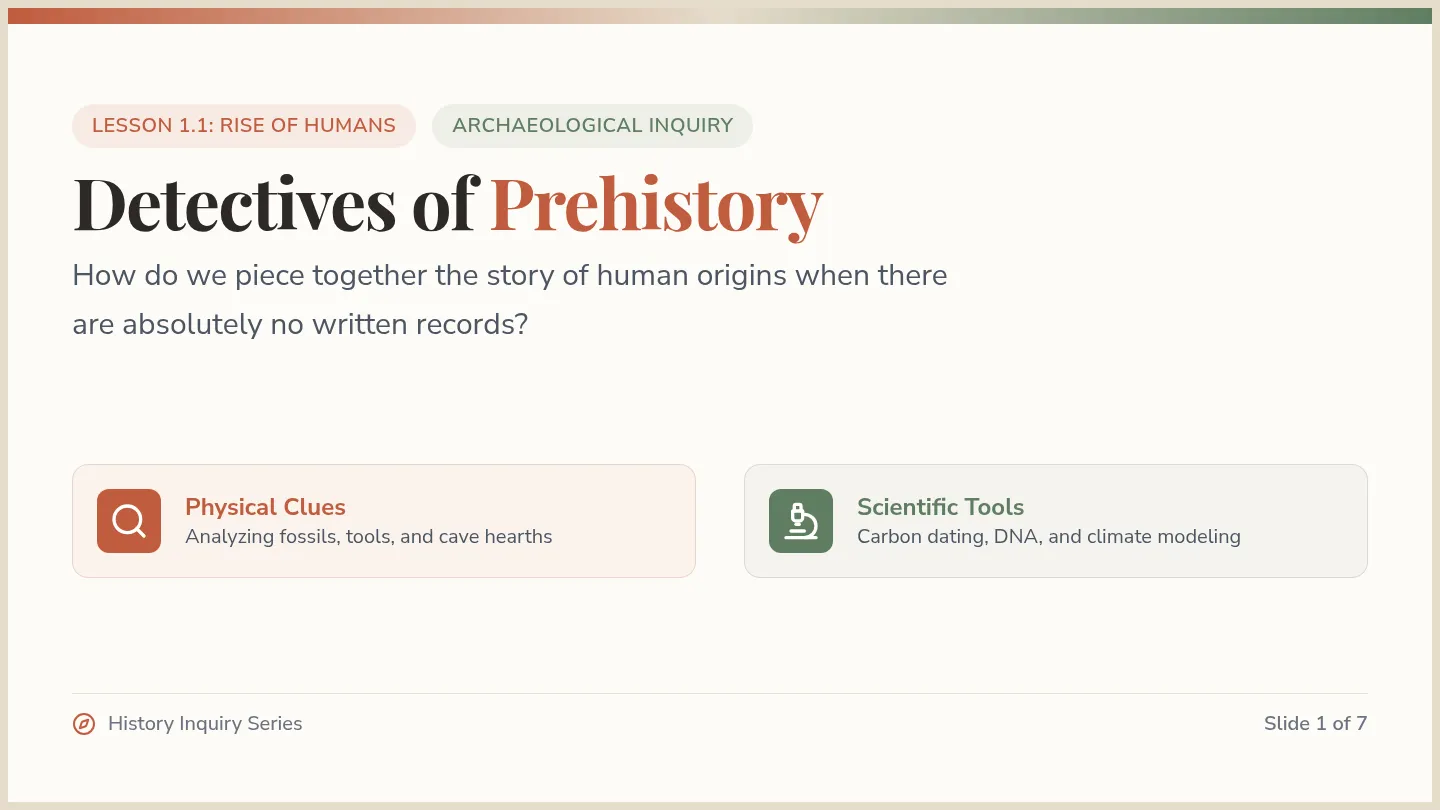
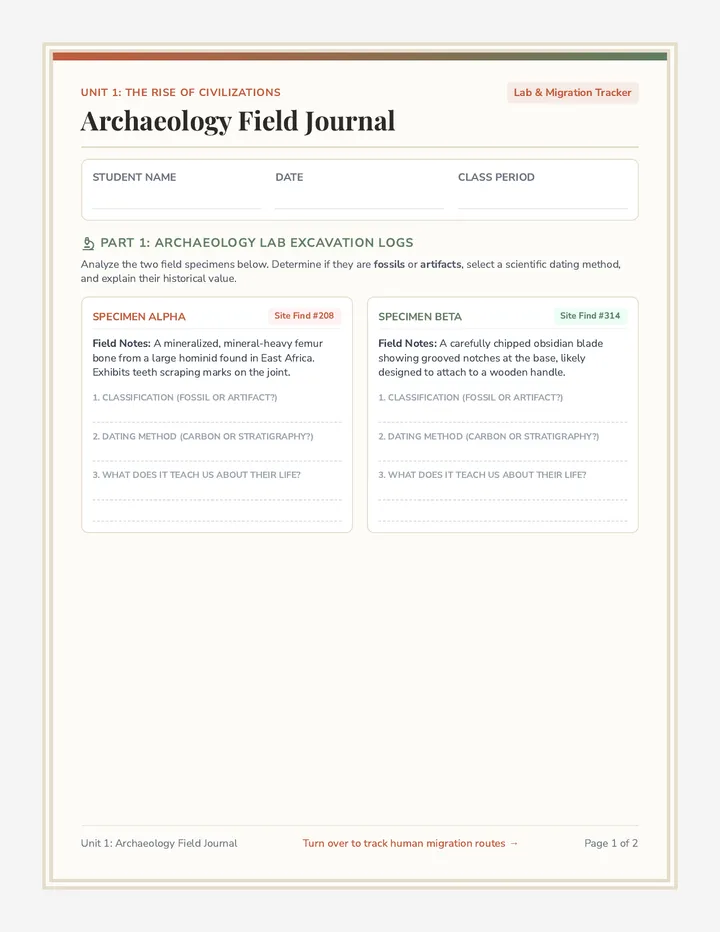
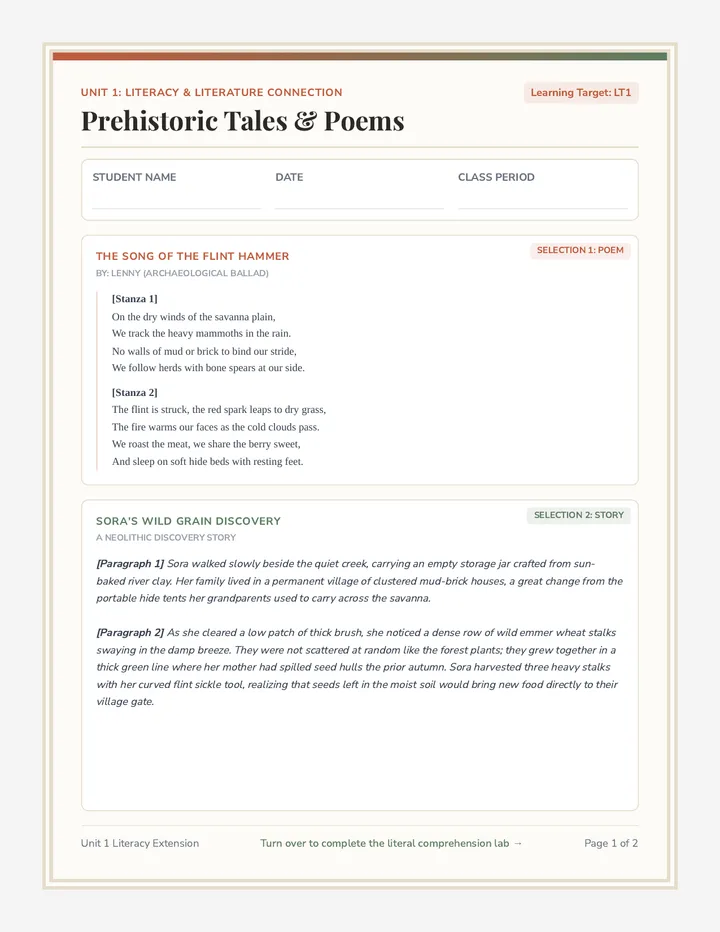
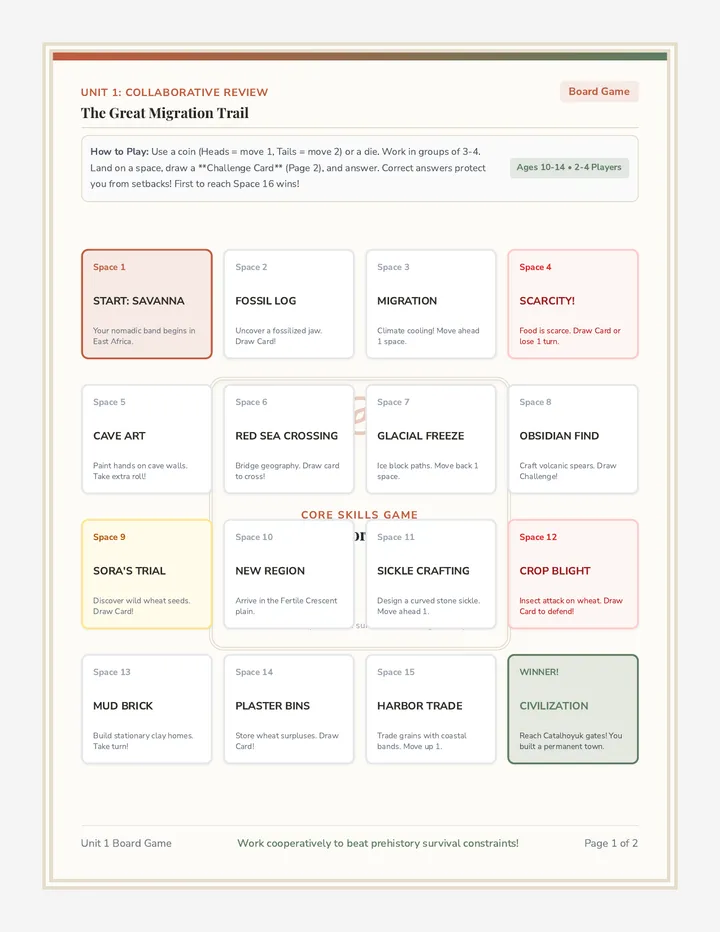
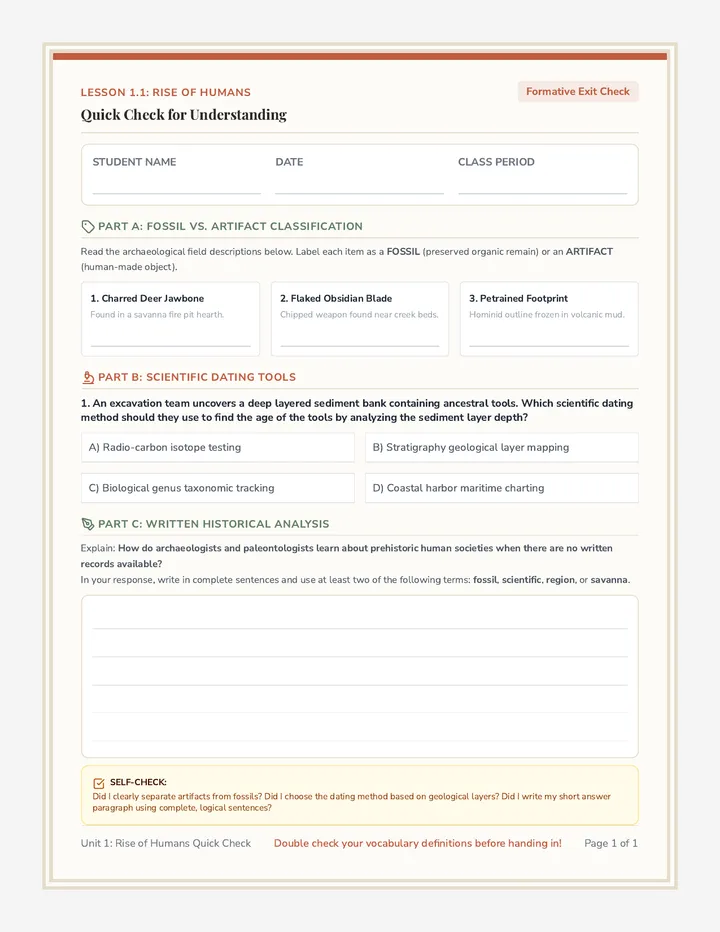
A middle-school history unit exploring the emergence of early humans, their prehistoric migrations, the radical transition of the agricultural revolution, and the foundations of early civilizations.
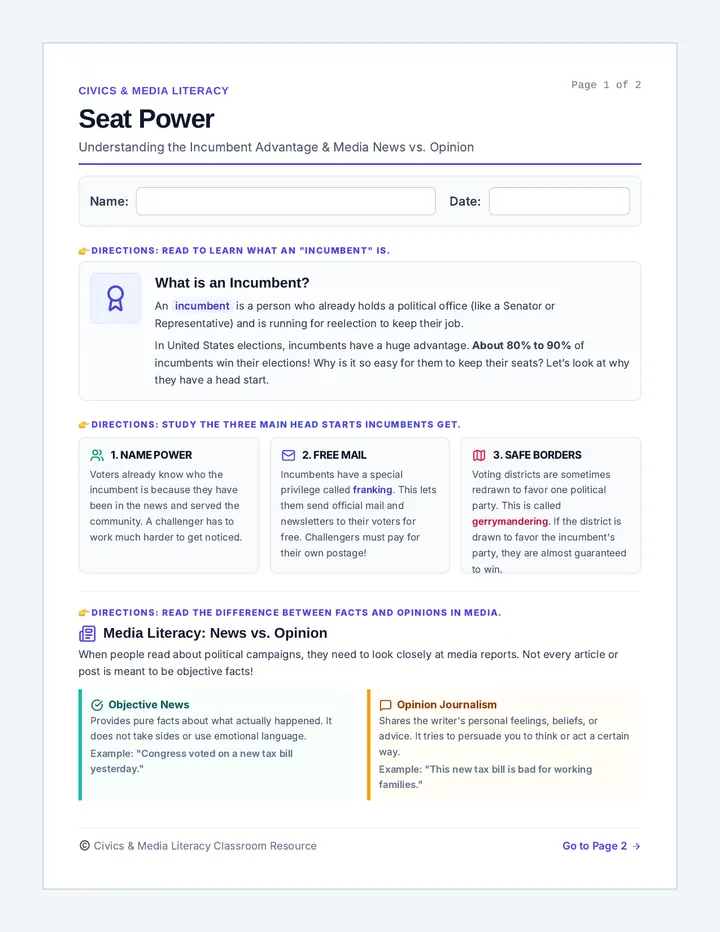
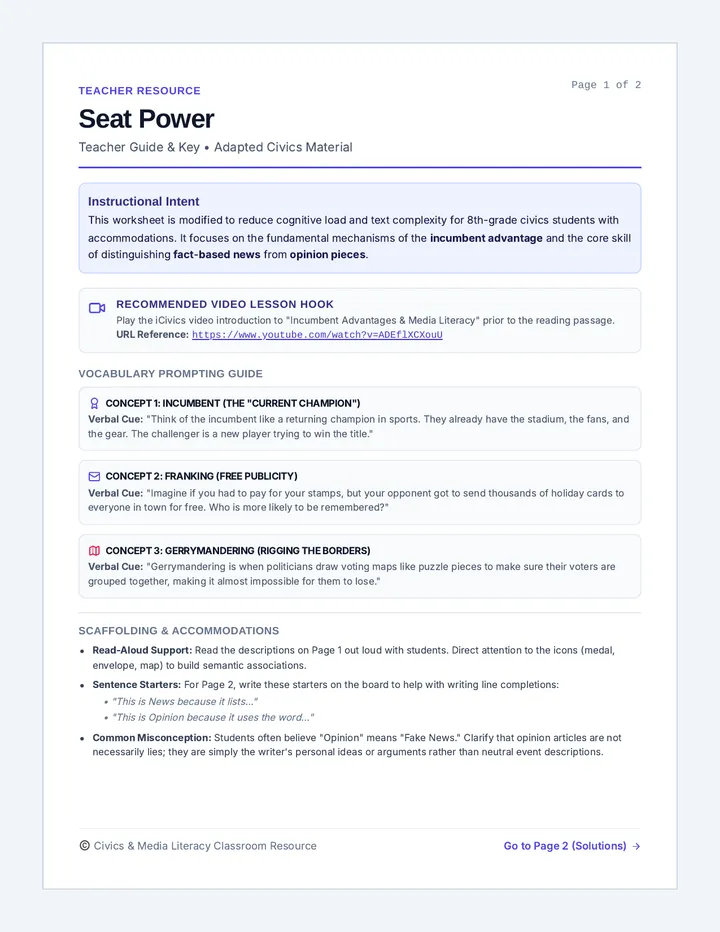
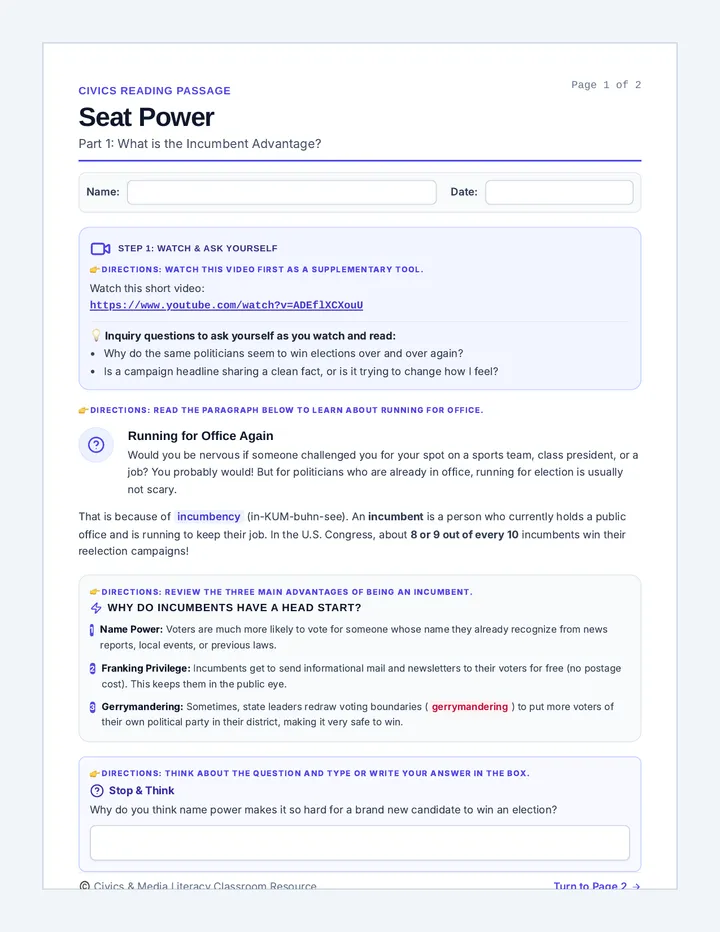
A foundational civics lesson on incumbency, electoral advantages, and media literacy. Students explore why current politicians usually win reelection and learn to distinguish between objective news reports and opinion articles.
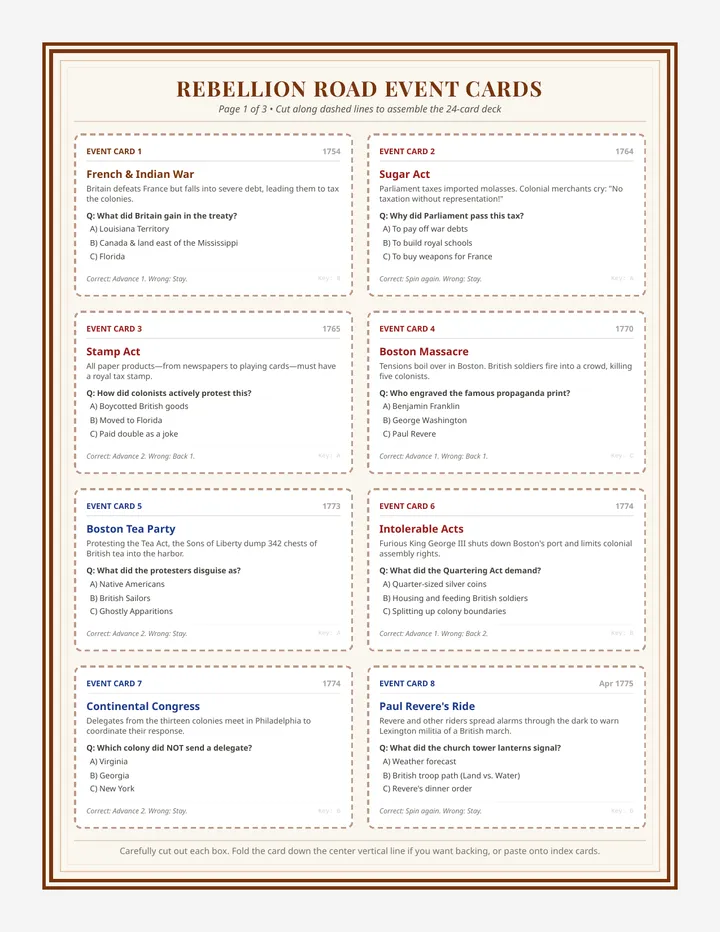
A expanded 24-card printable deck featuring critical events, key figures, and concepts leading to the Revolutionary War. Each card includes a historical summary, a multiple-choice question, and movement actions.