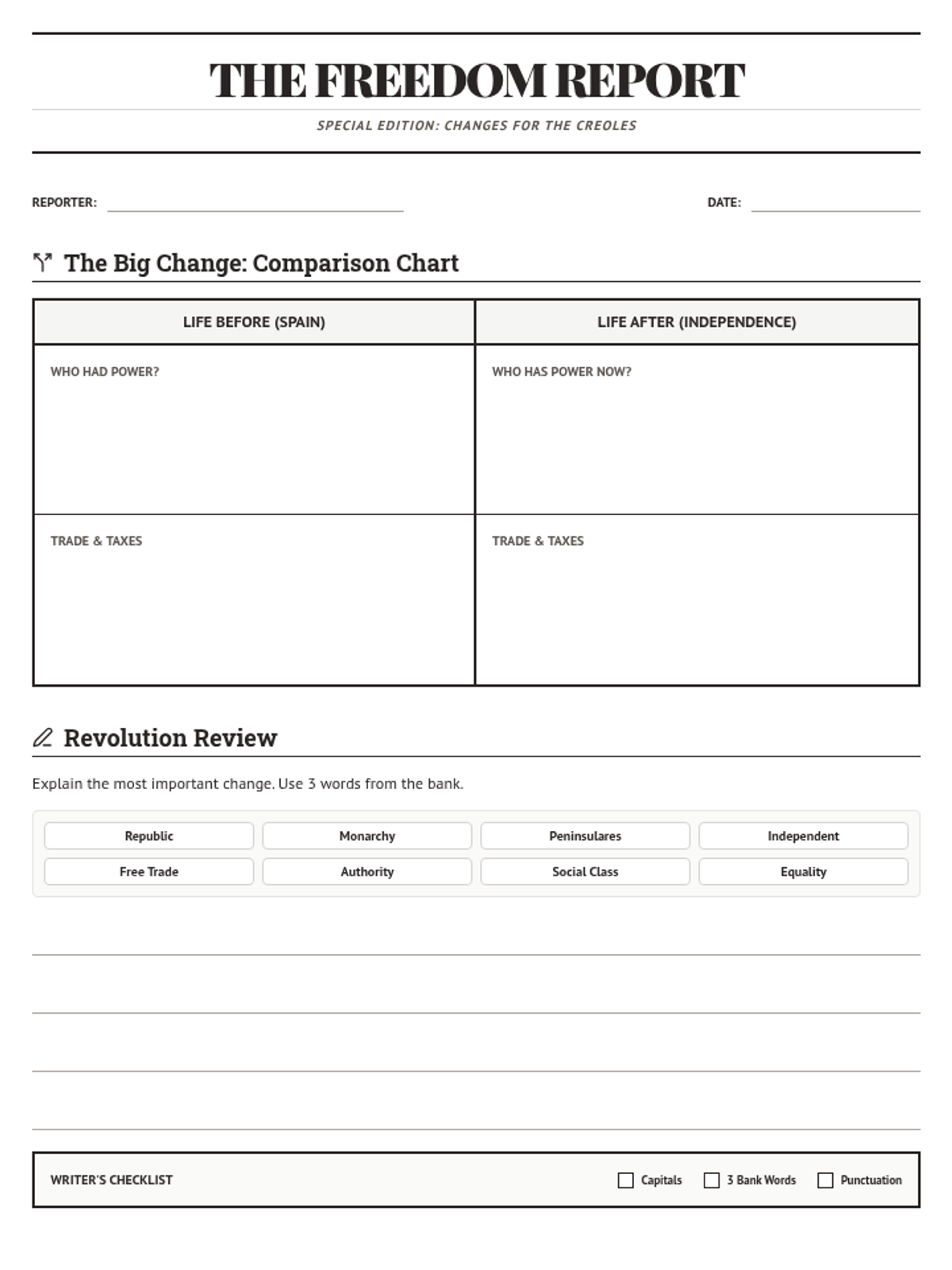
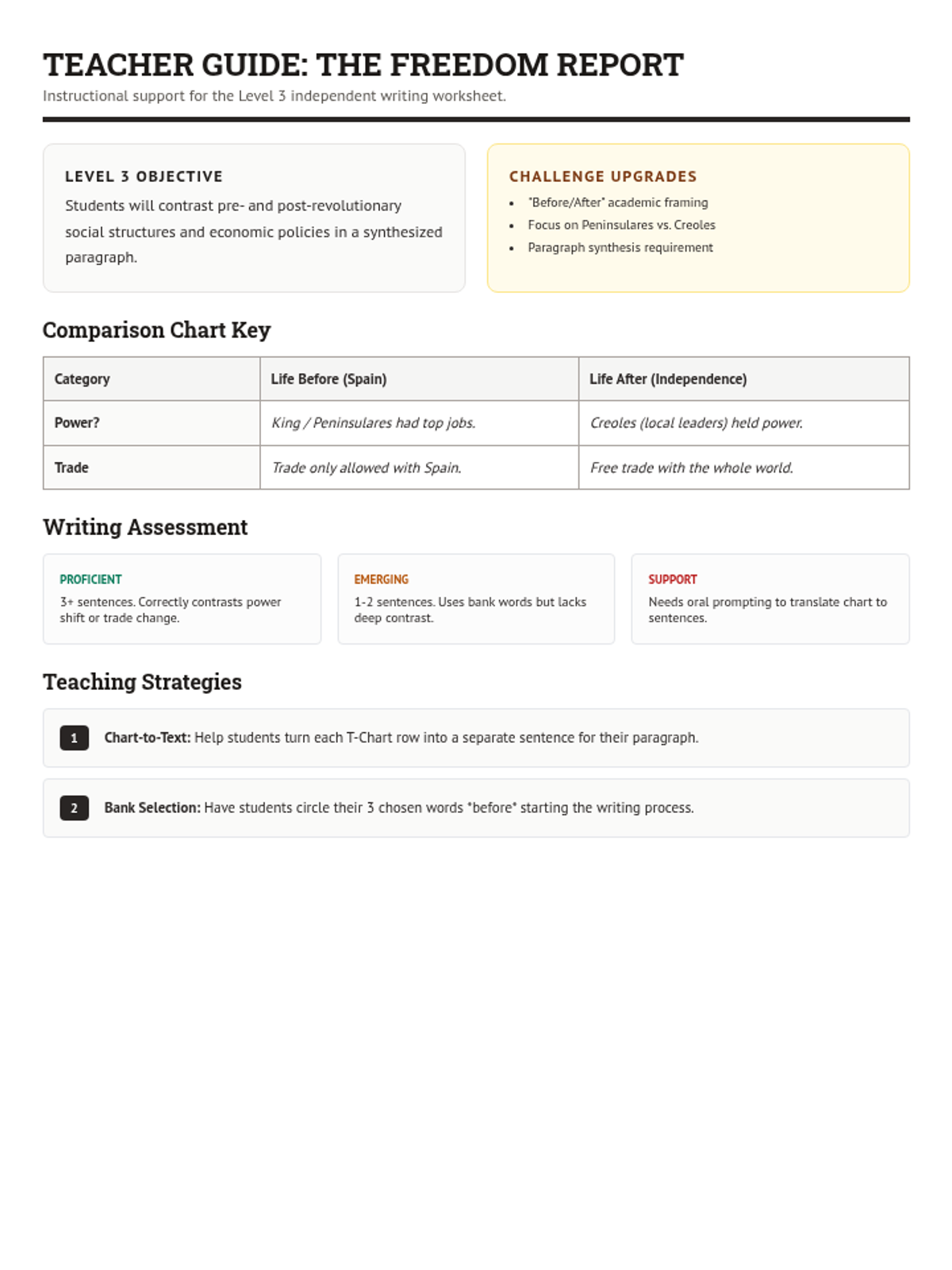
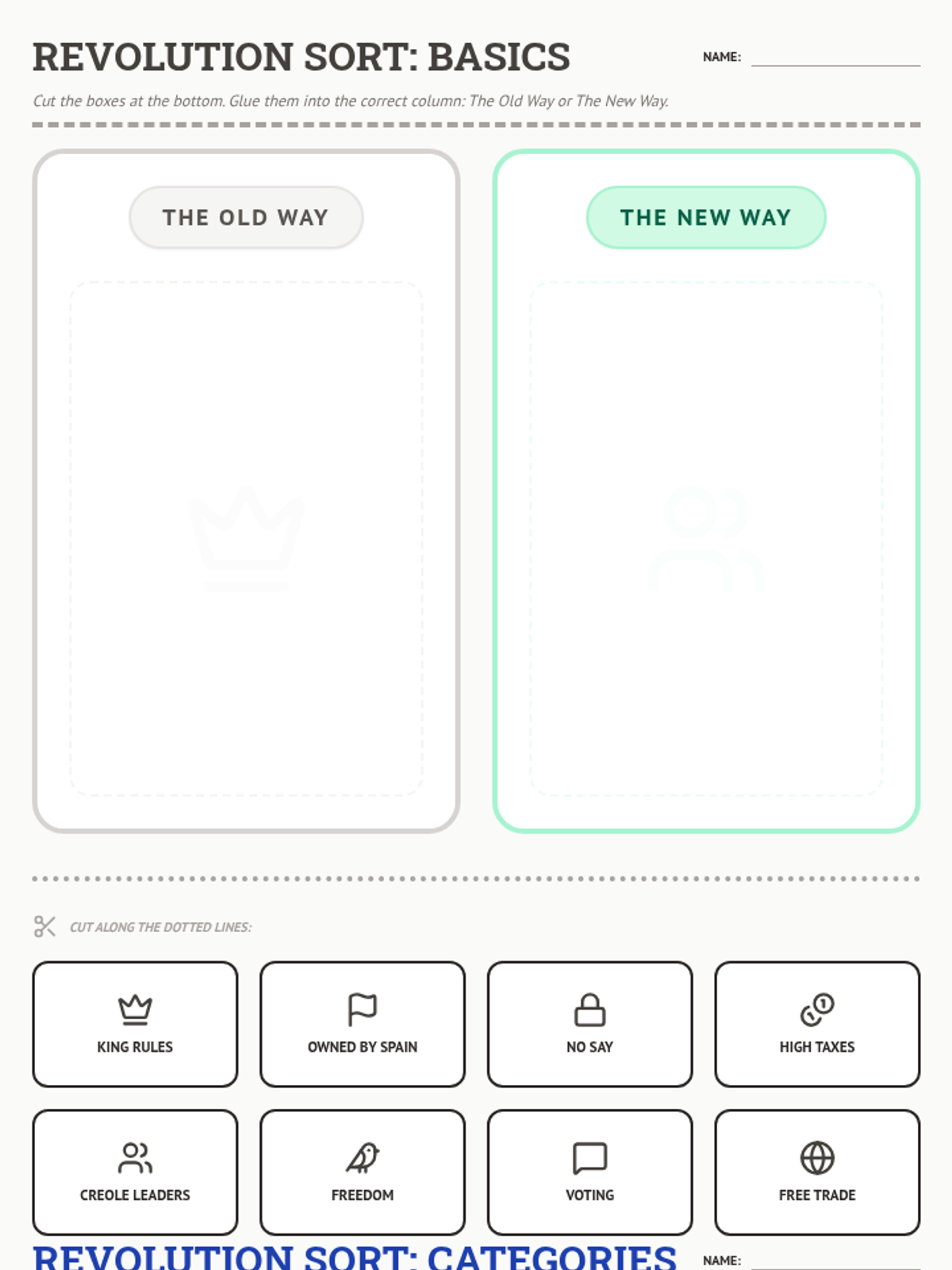
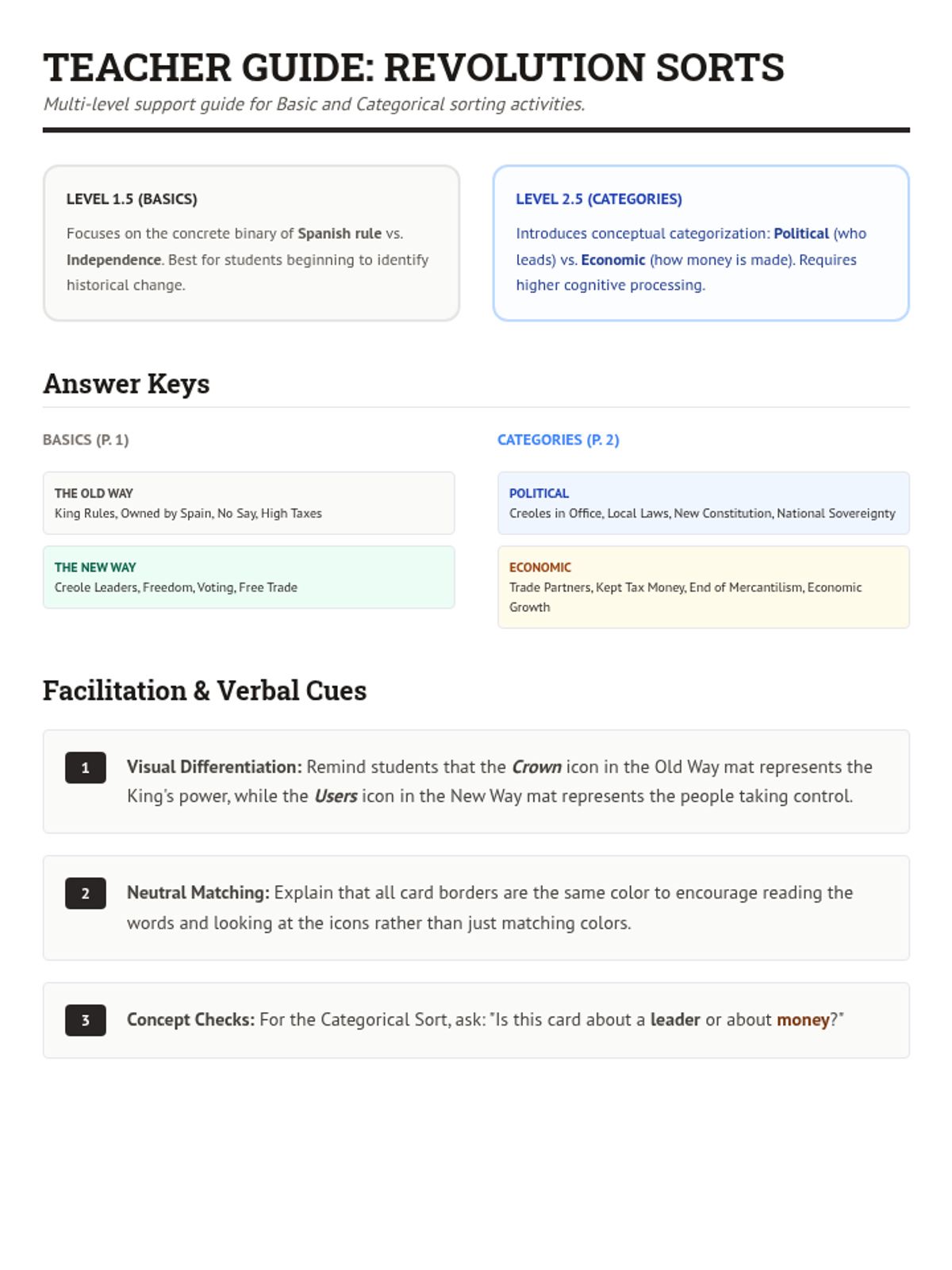
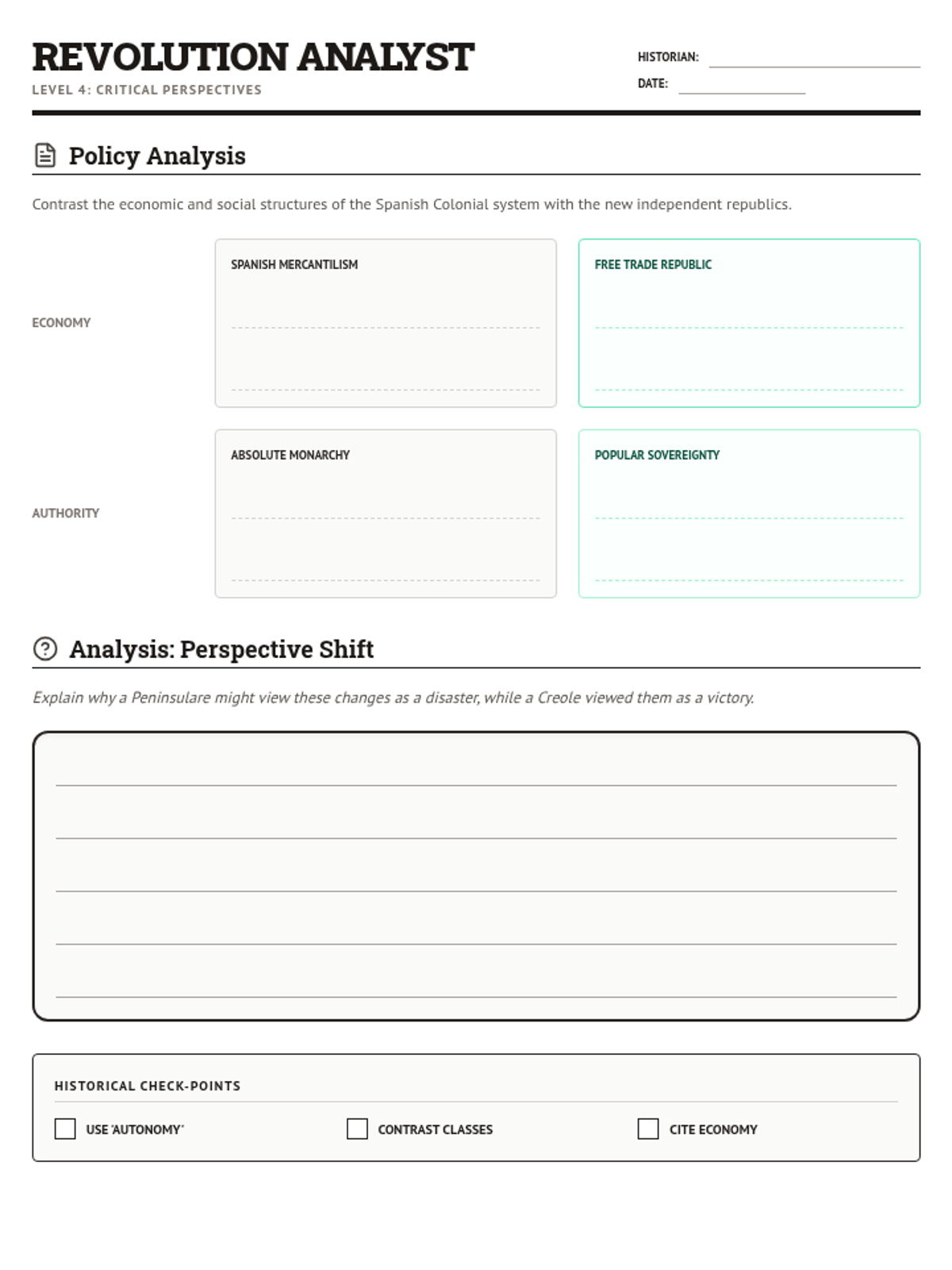
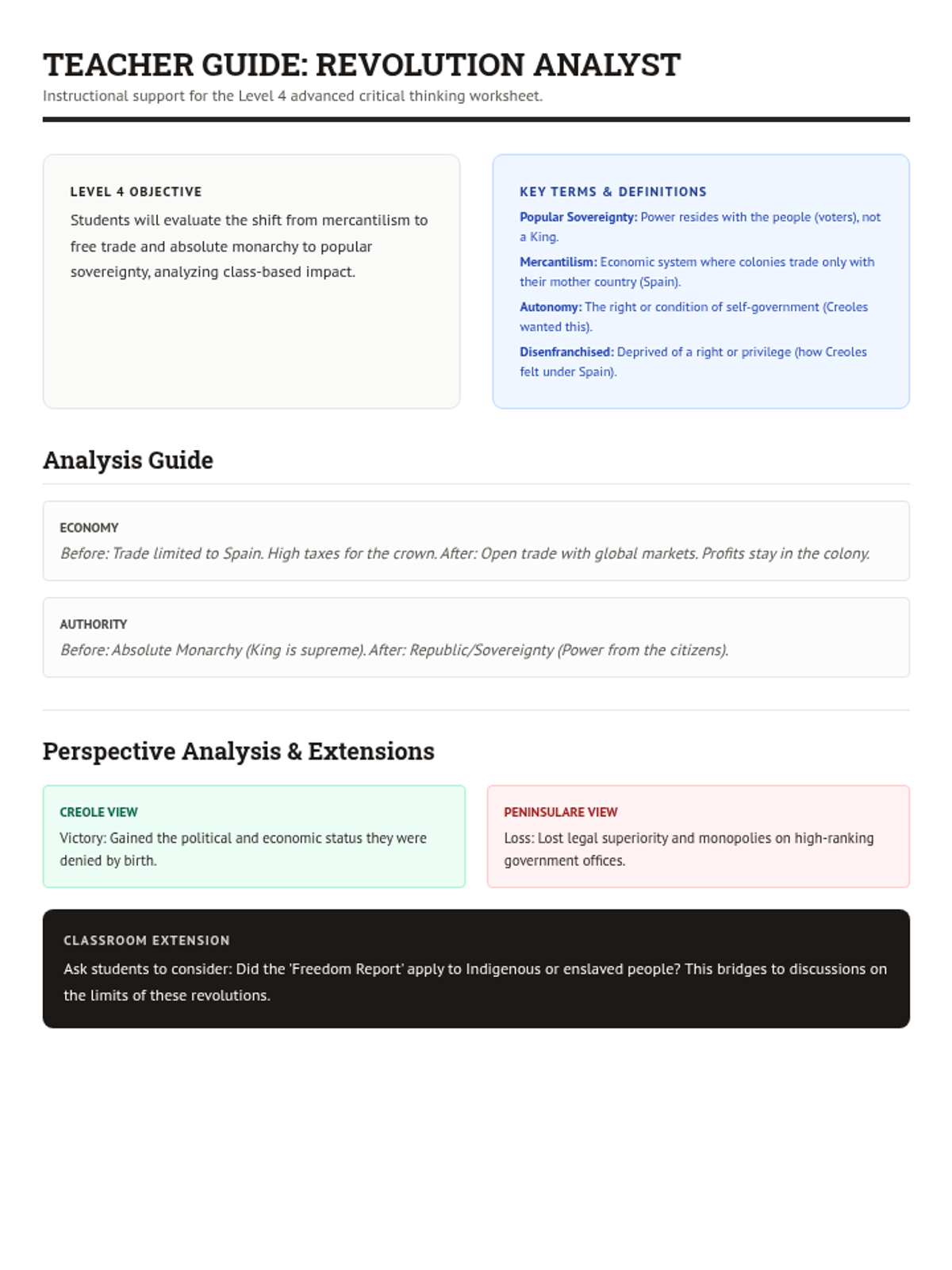
This lesson explores the causes of the Latin American Revolutions, specifically focusing on the social and political grievances of the Creoles against Spanish rule. Students will analyze the casta system, mercantilism, and Enlightenment influences.
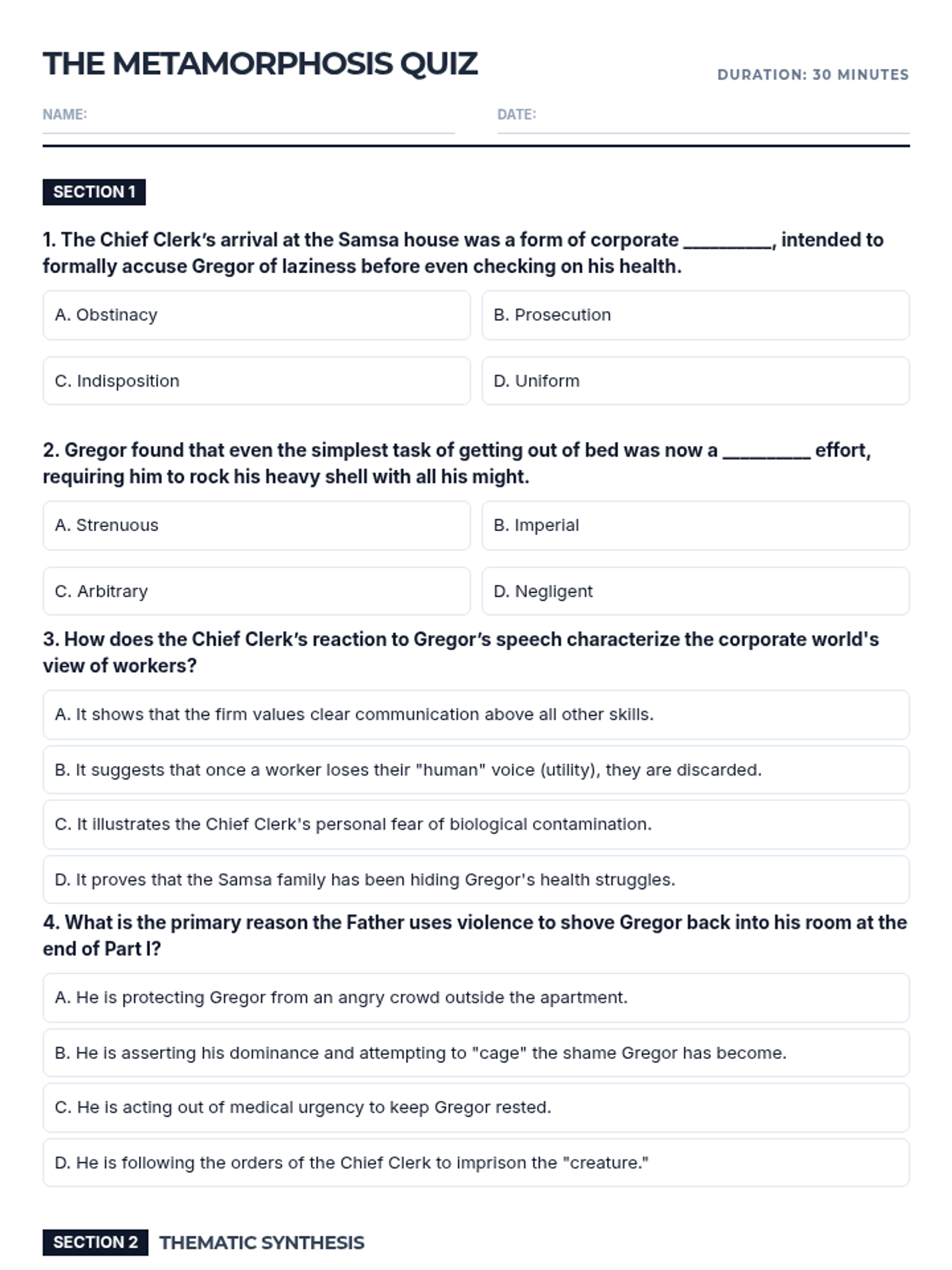
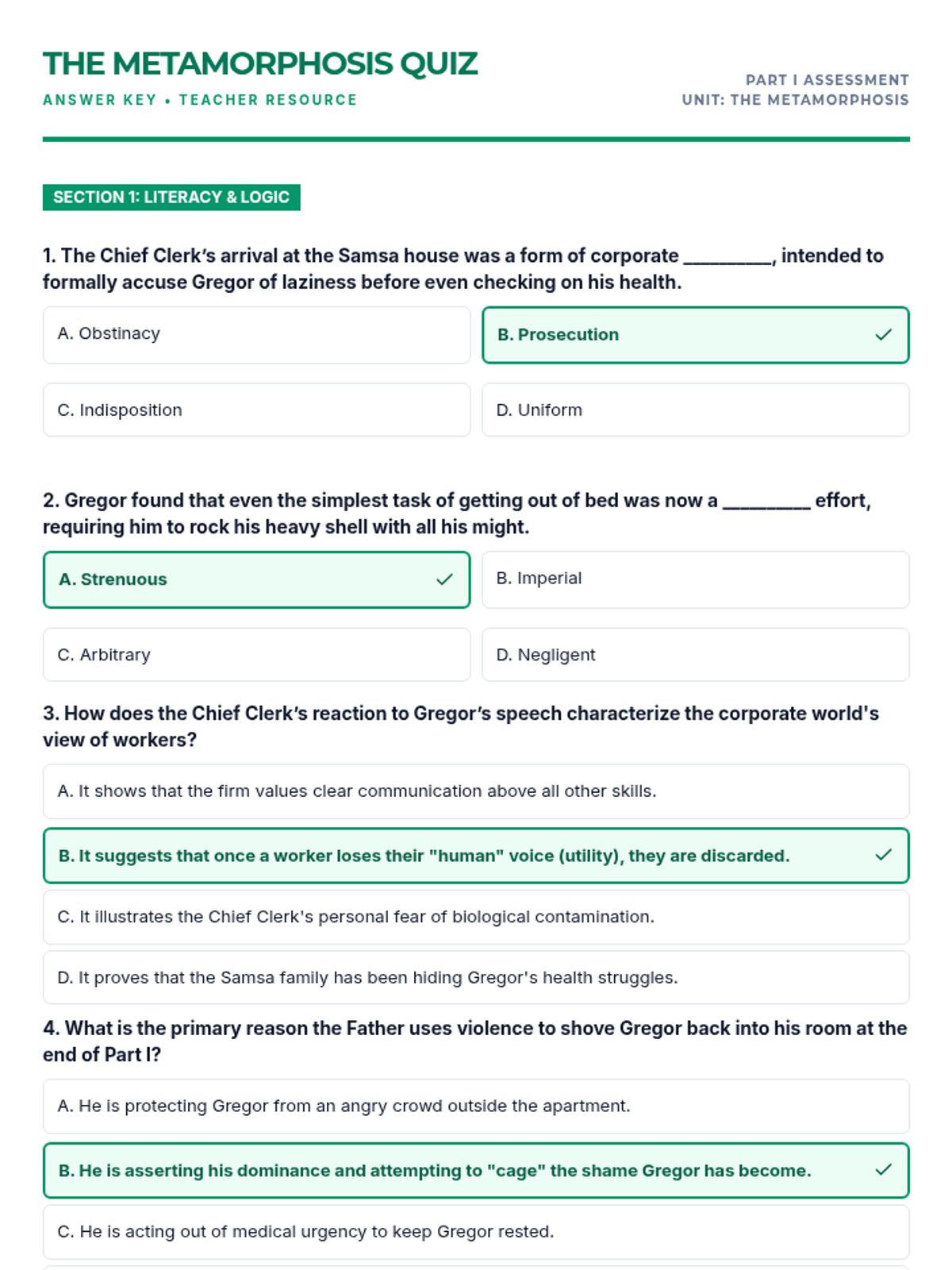
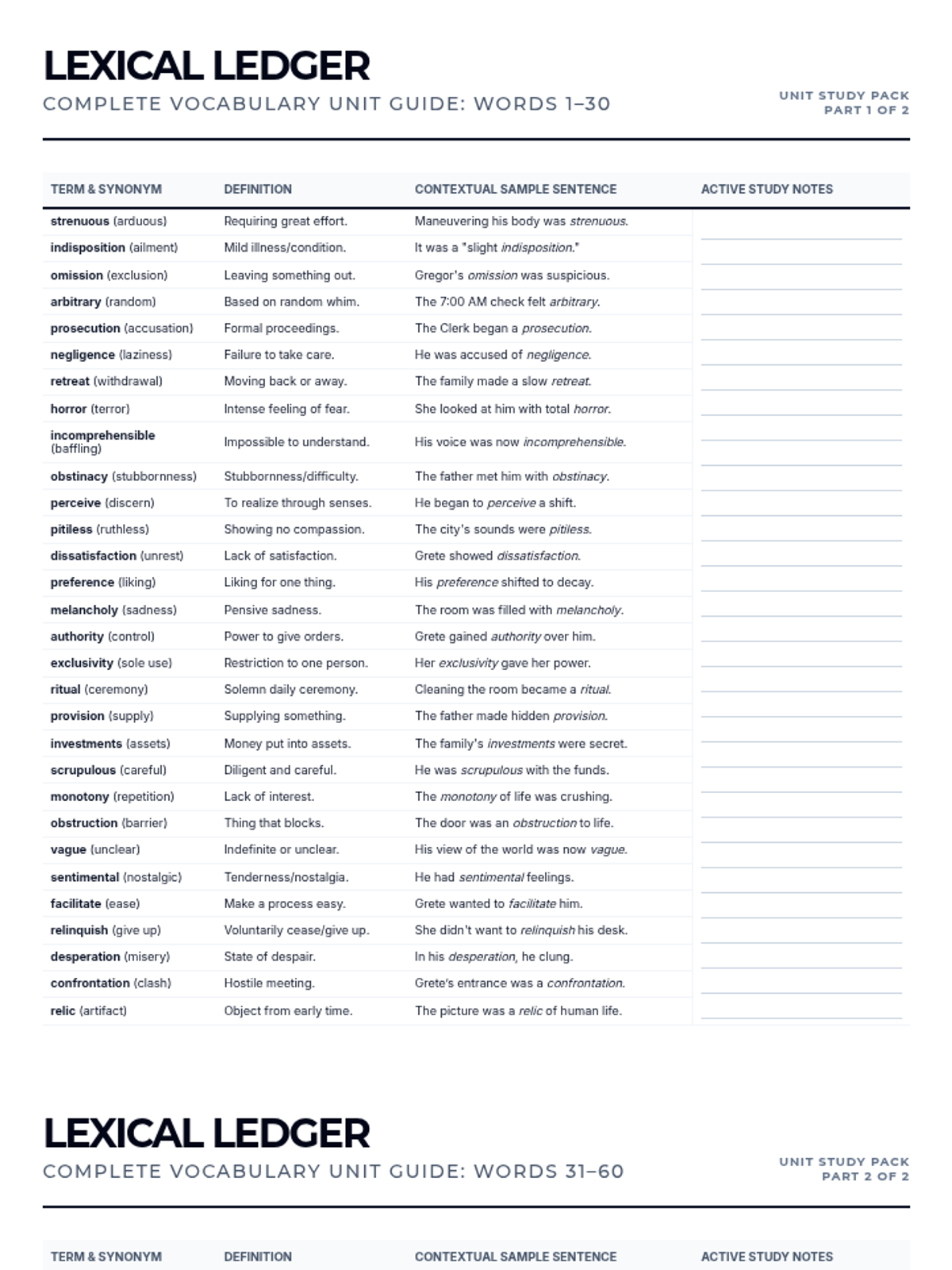
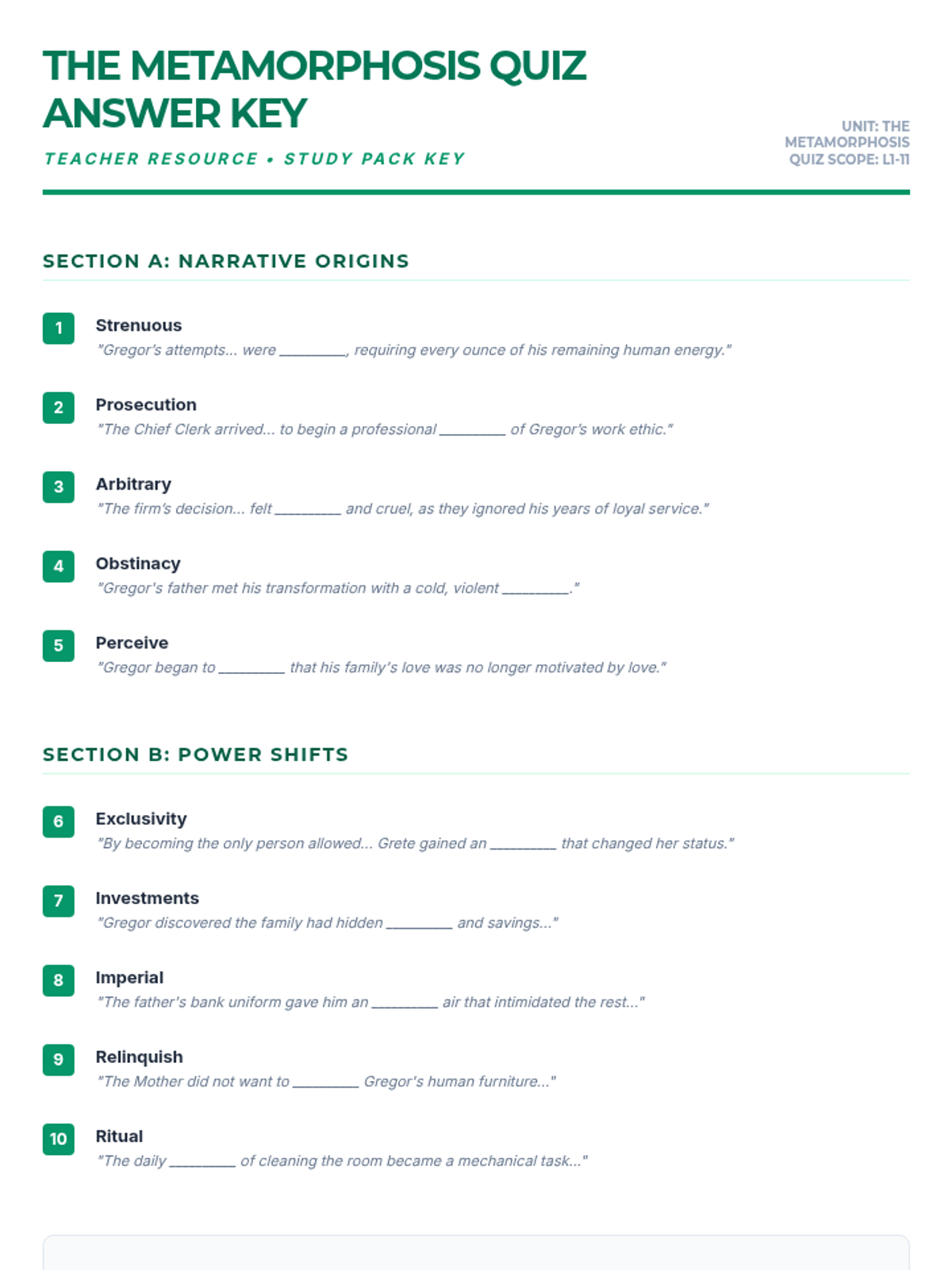
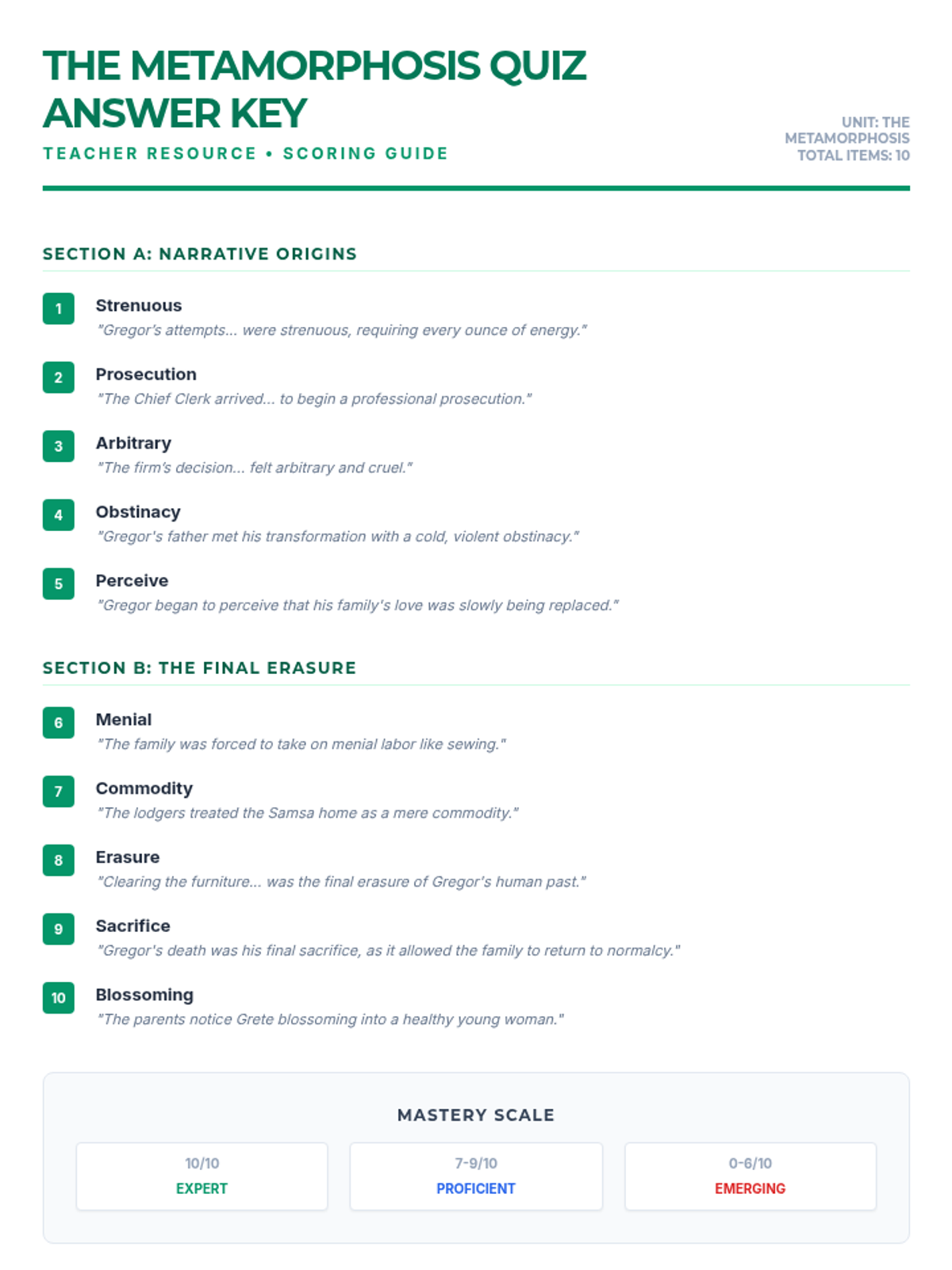
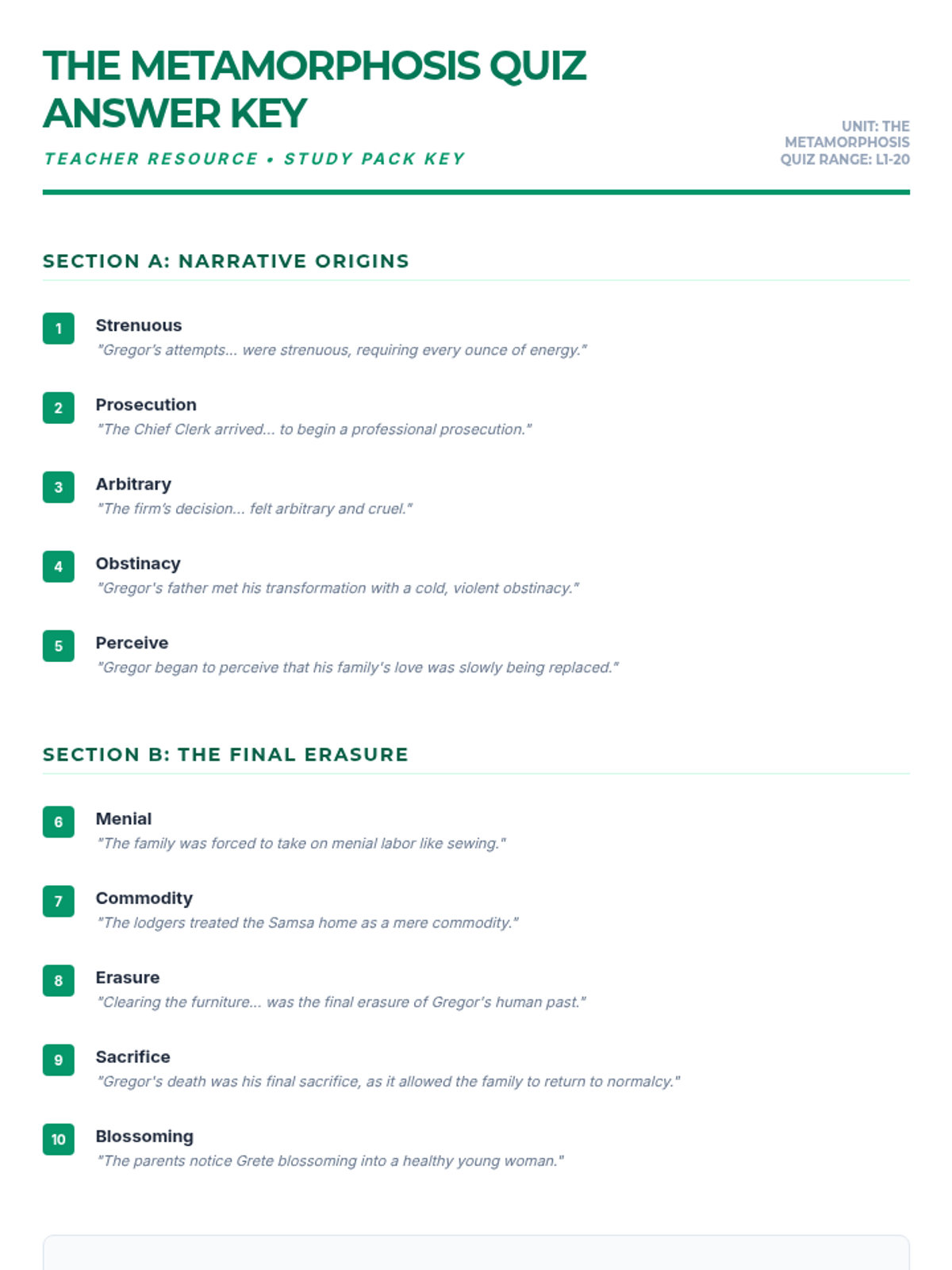
A summative assessment for the first third of the novel. Evaluates student mastery of vocabulary from Lessons 1-11, character motivation, and the central theme of corporate alienation through a mix of multiple choice, short answer, and a rigorous RACE response.
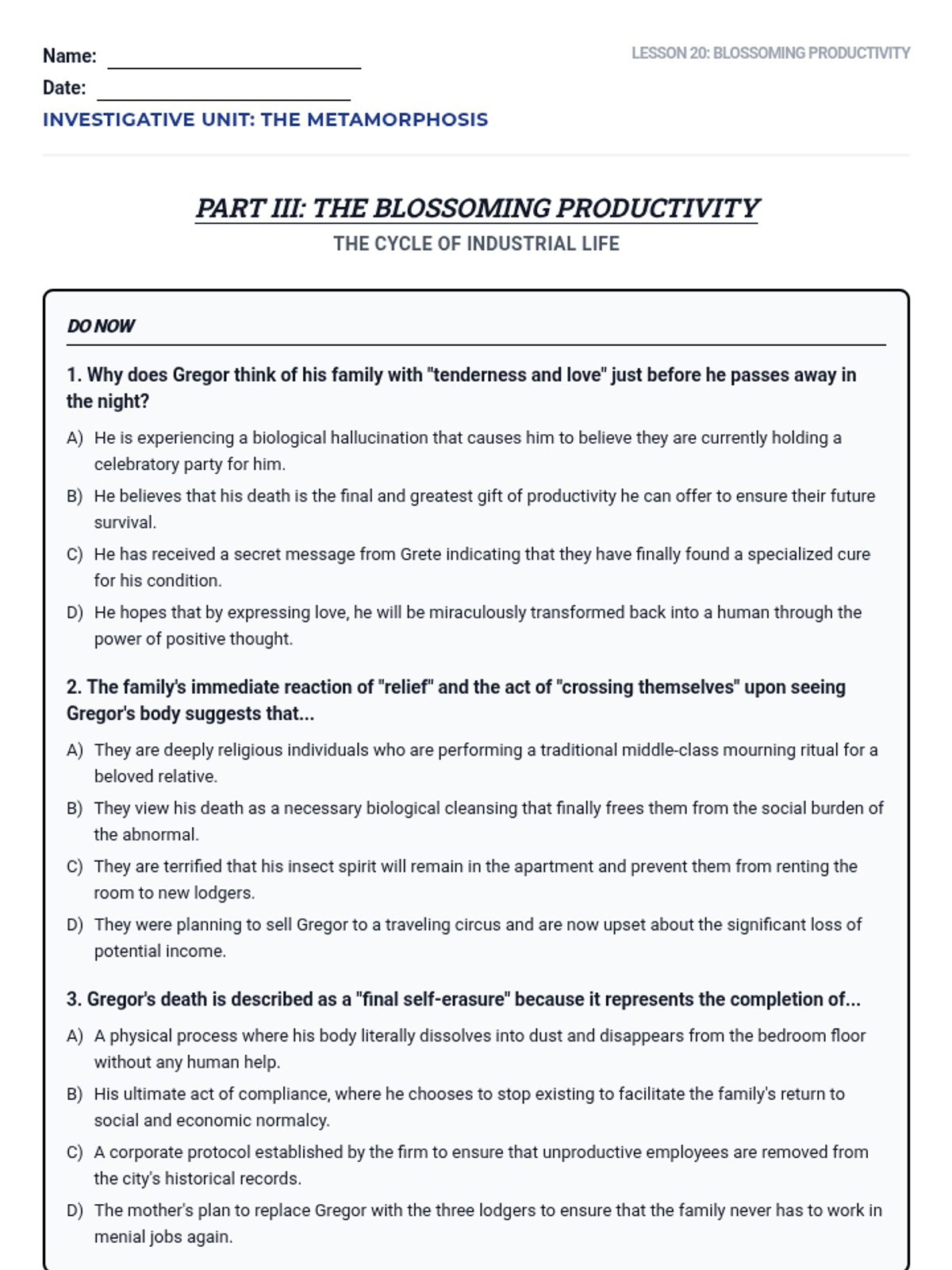
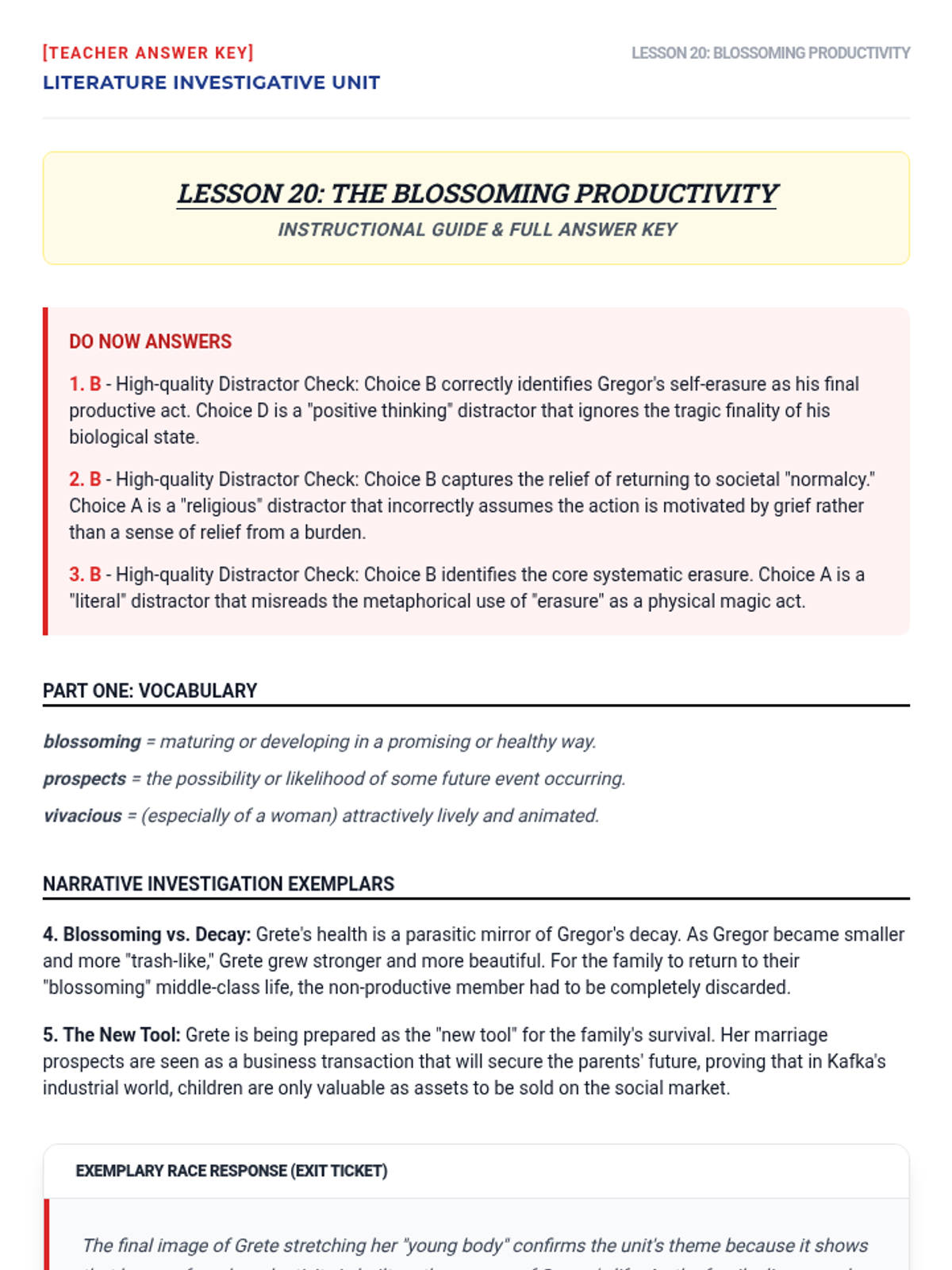
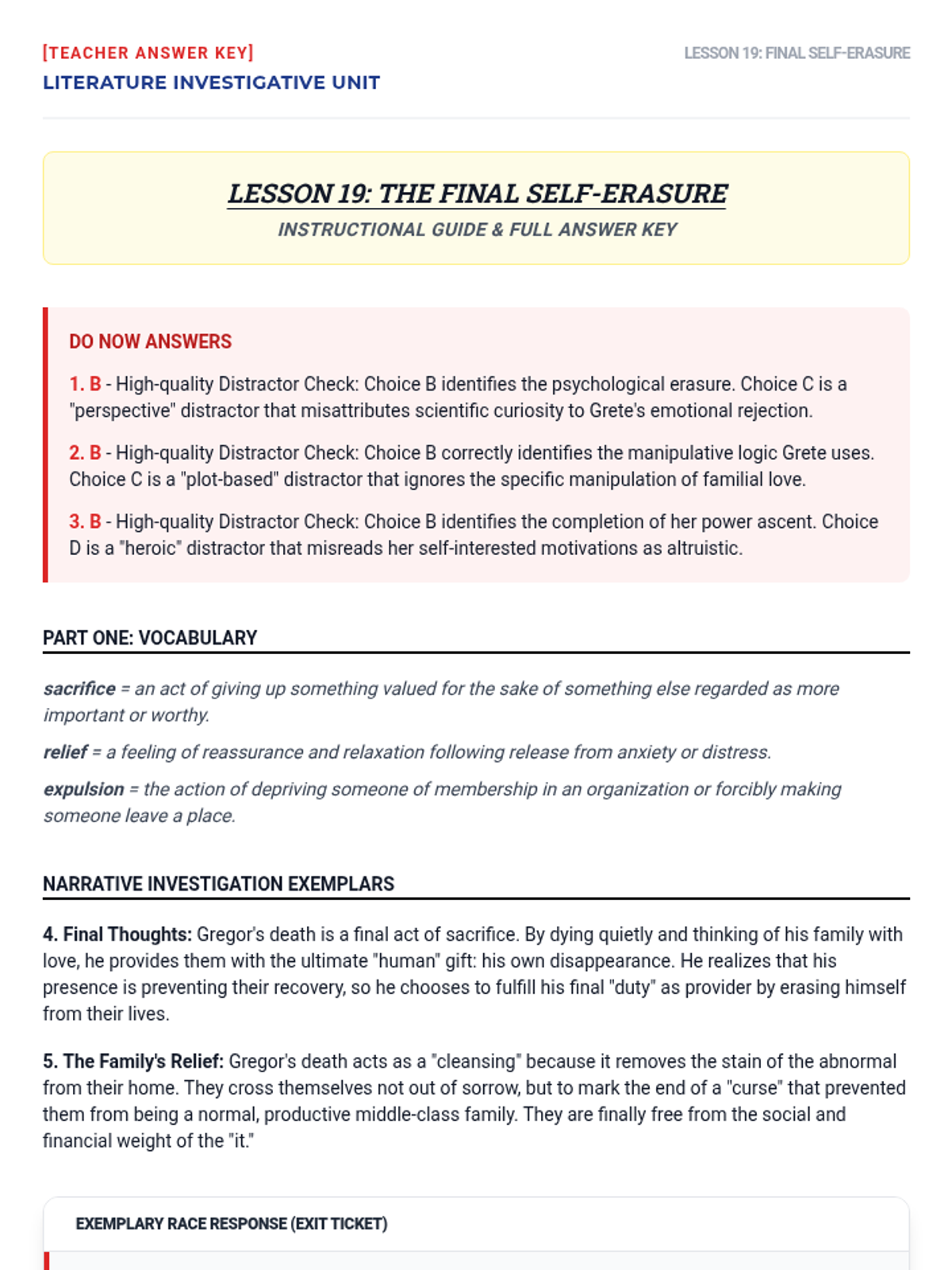
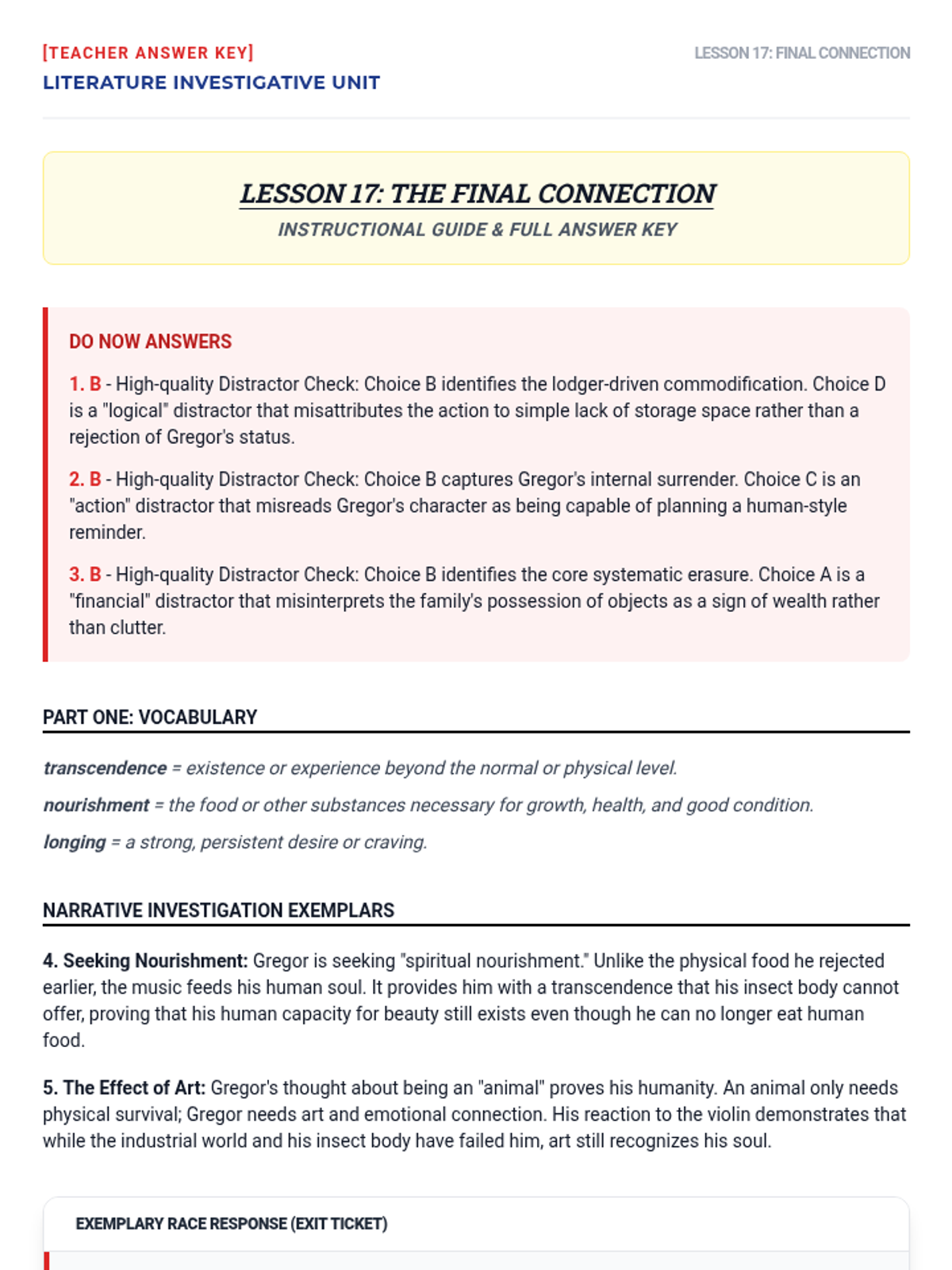
The family's recovery and the transition to a new source of productivity (Grete). Synthesis of the unit's themes.
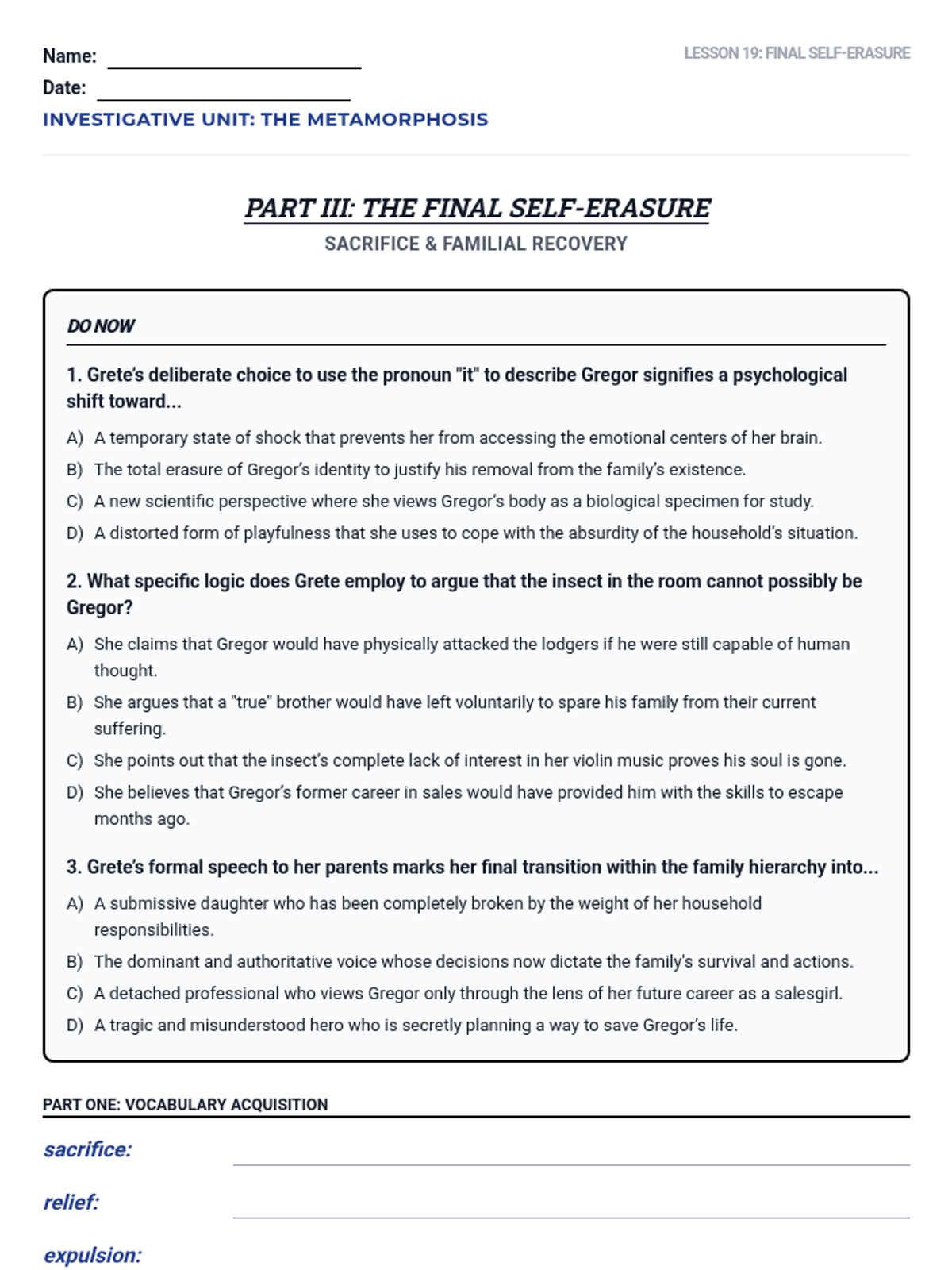
Gregor's death and self-sacrifice. Analysis of the relief of the family and the 'cleansing' of the home.
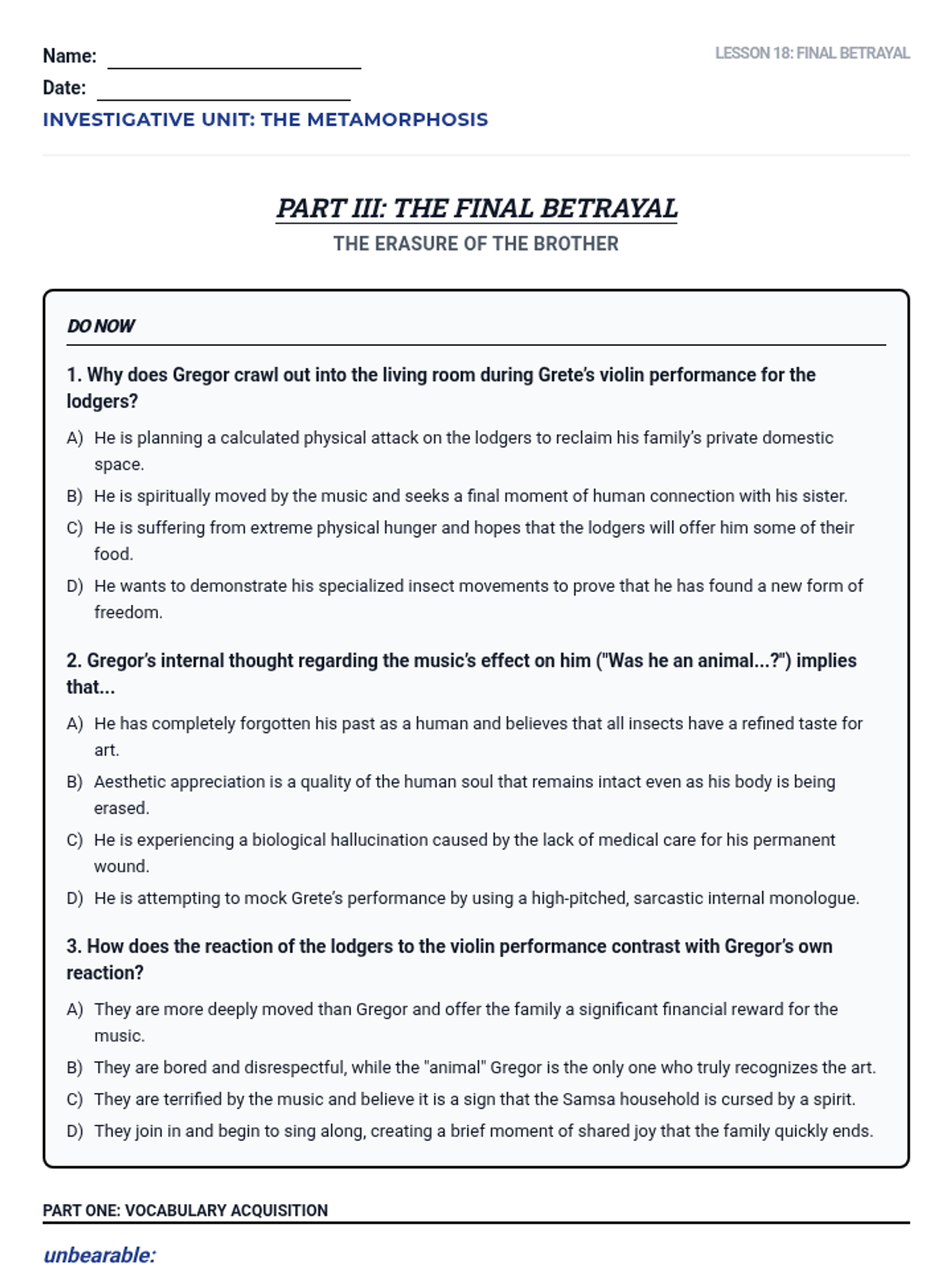
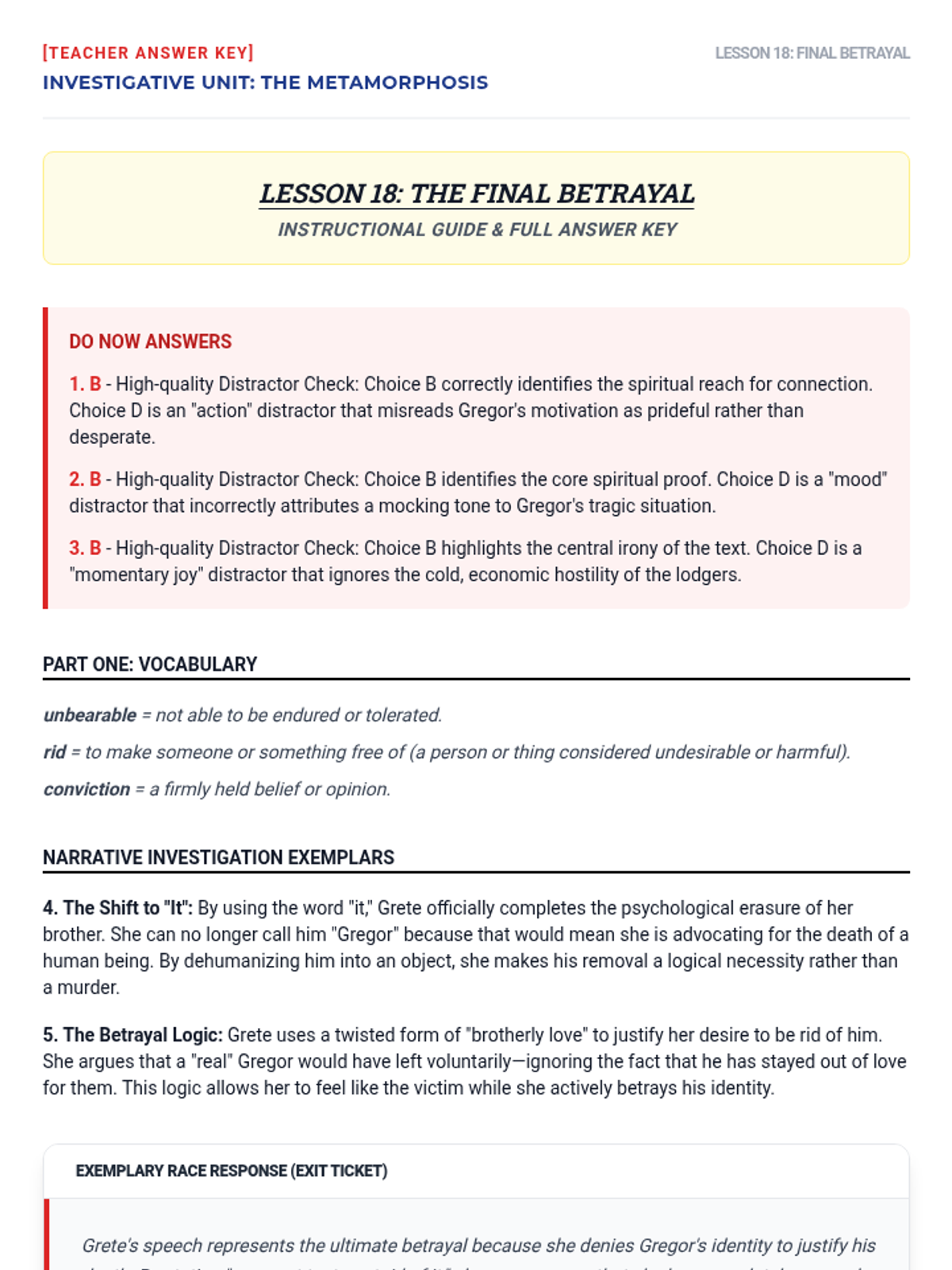
Grete's formal rejection of Gregor's identity. Analysis of the shift from sibling love to the necessity of his removal.
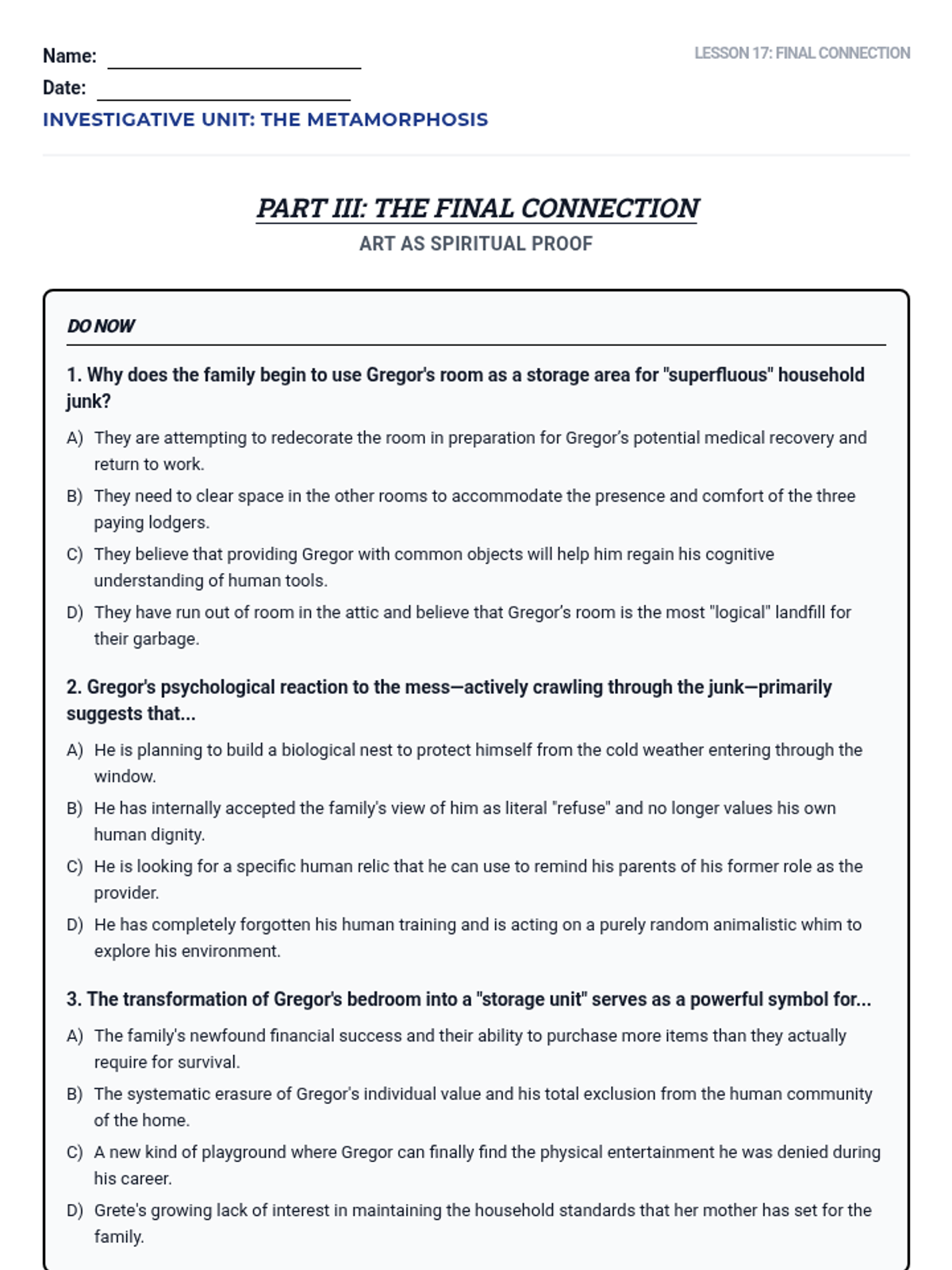
Gregor's reaction to Grete's violin performance. Themes of art, human connection, and the final reach for his human spirit.
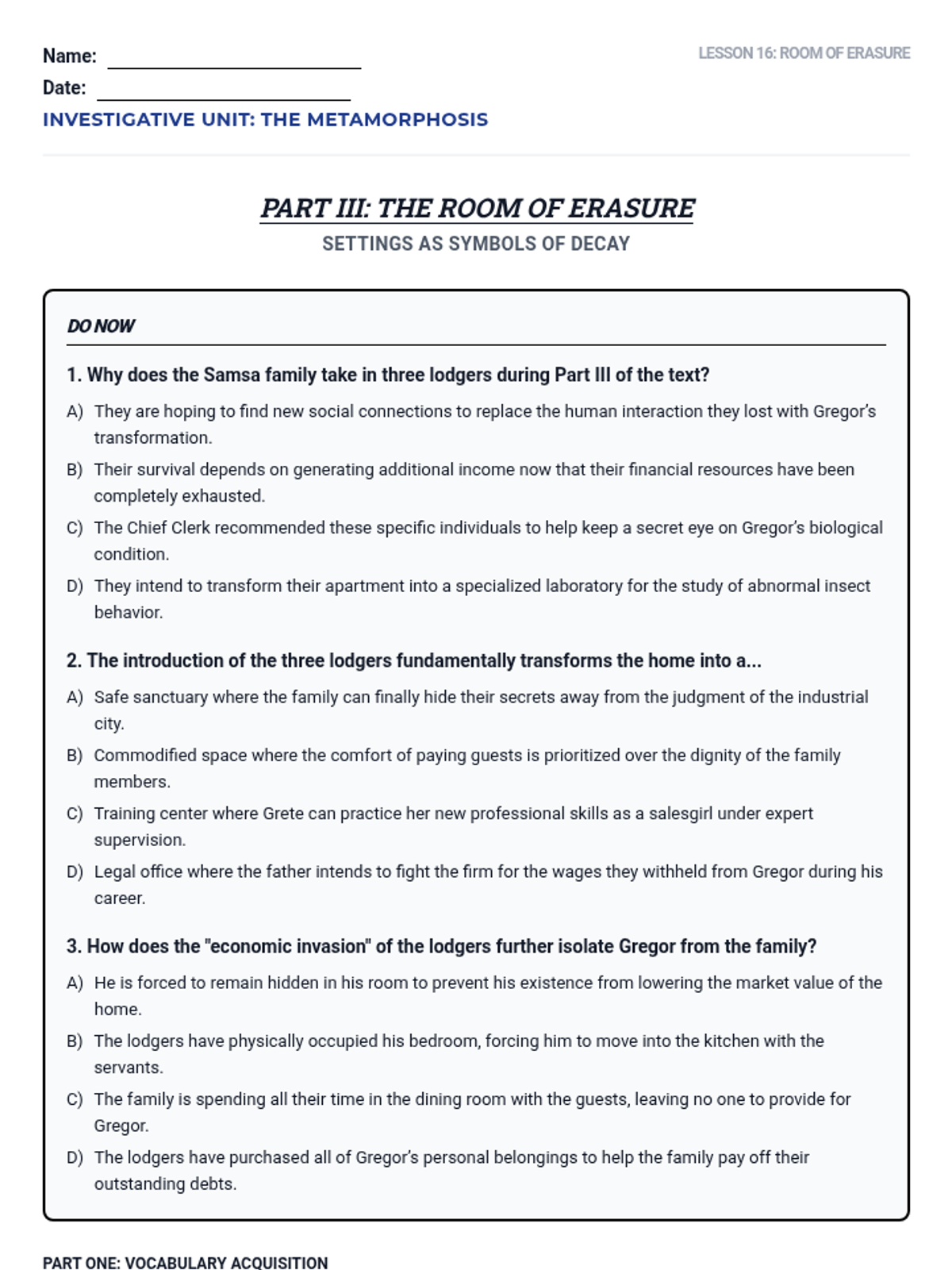
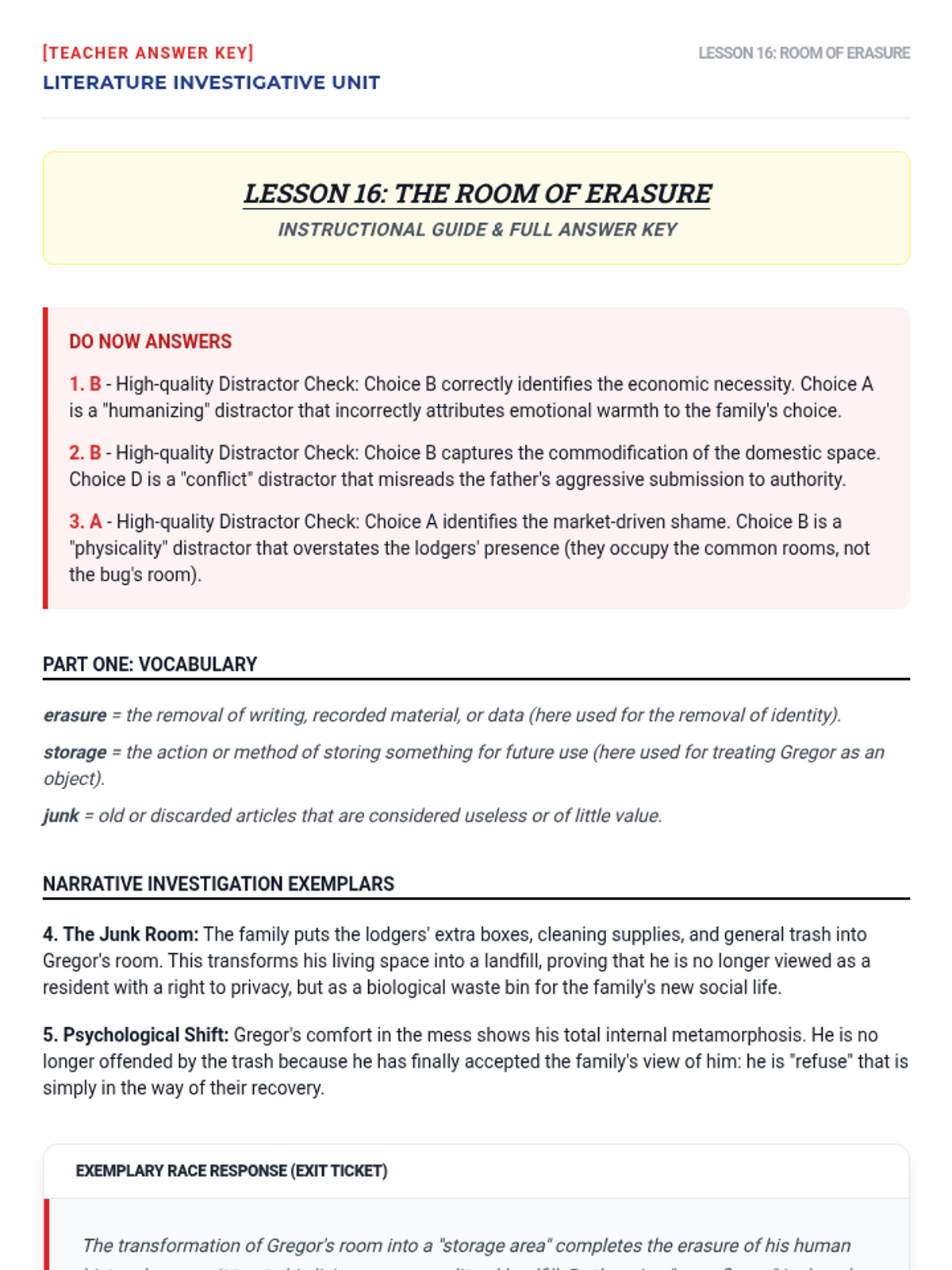
Gregor's room becomes a storage area for trash. Analysis of the complete erasure of his human space and history.
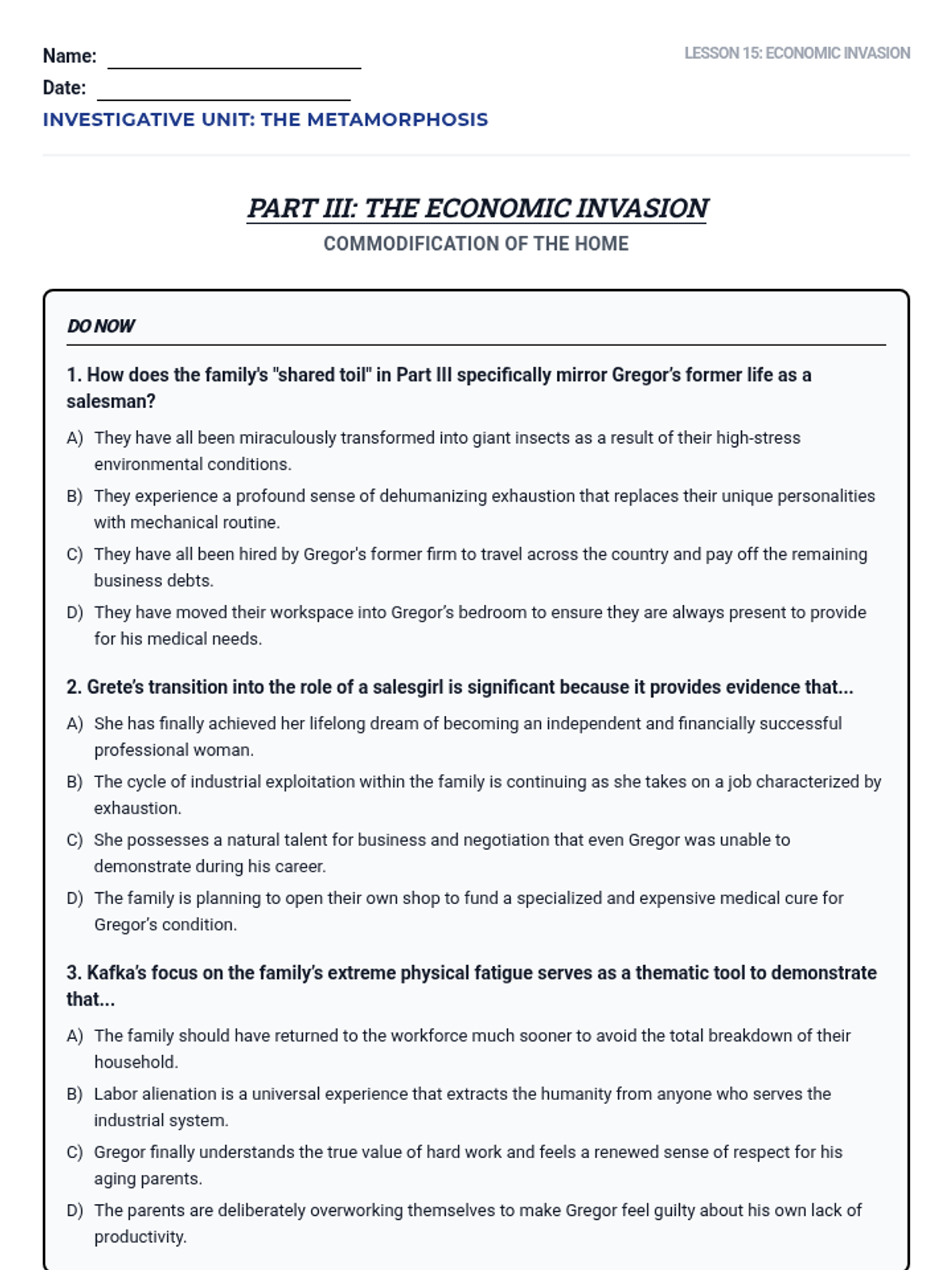
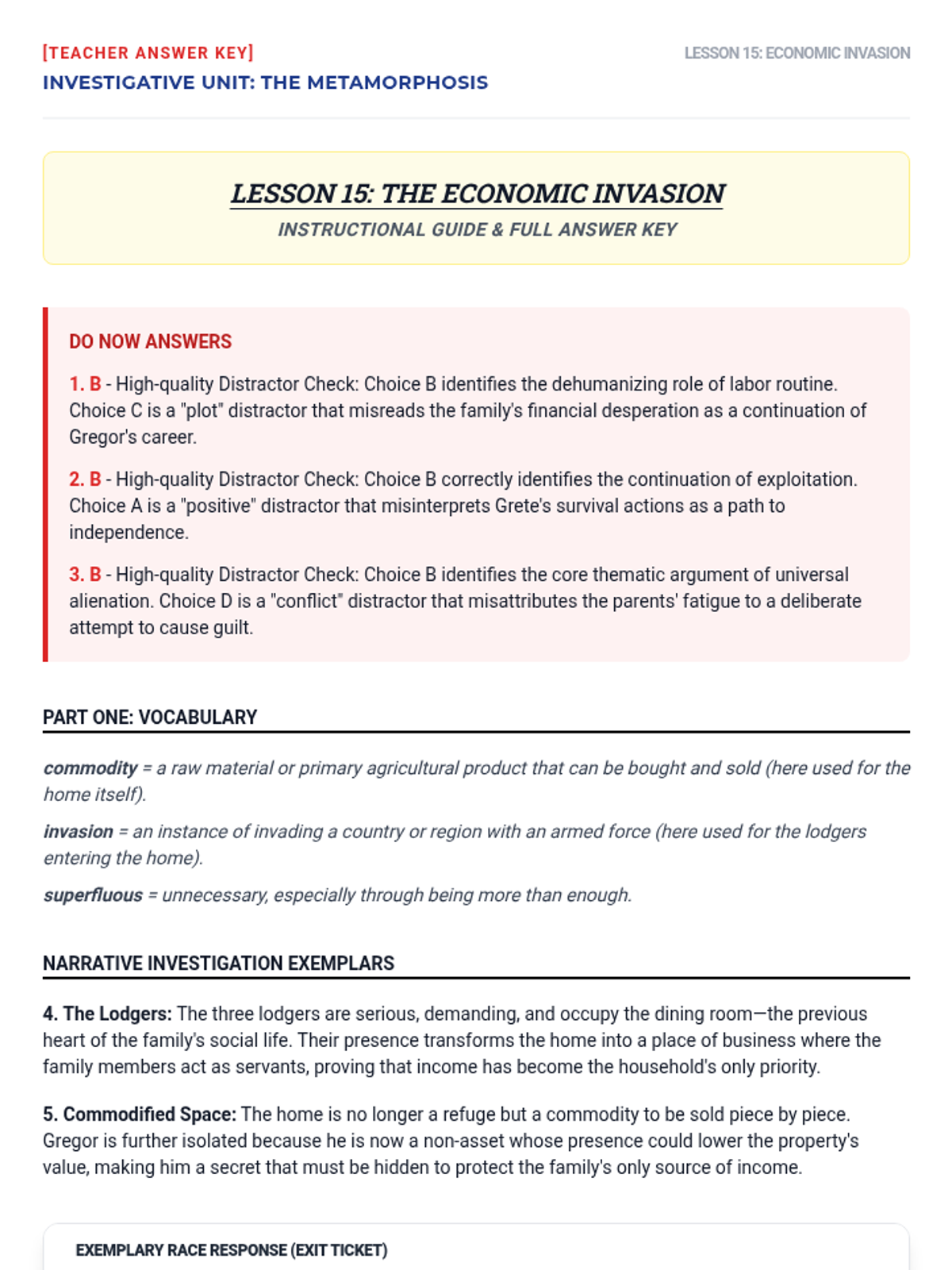
The introduction of the three lodgers. Analysis of the home as a commodified space and Gregor's further displacement.
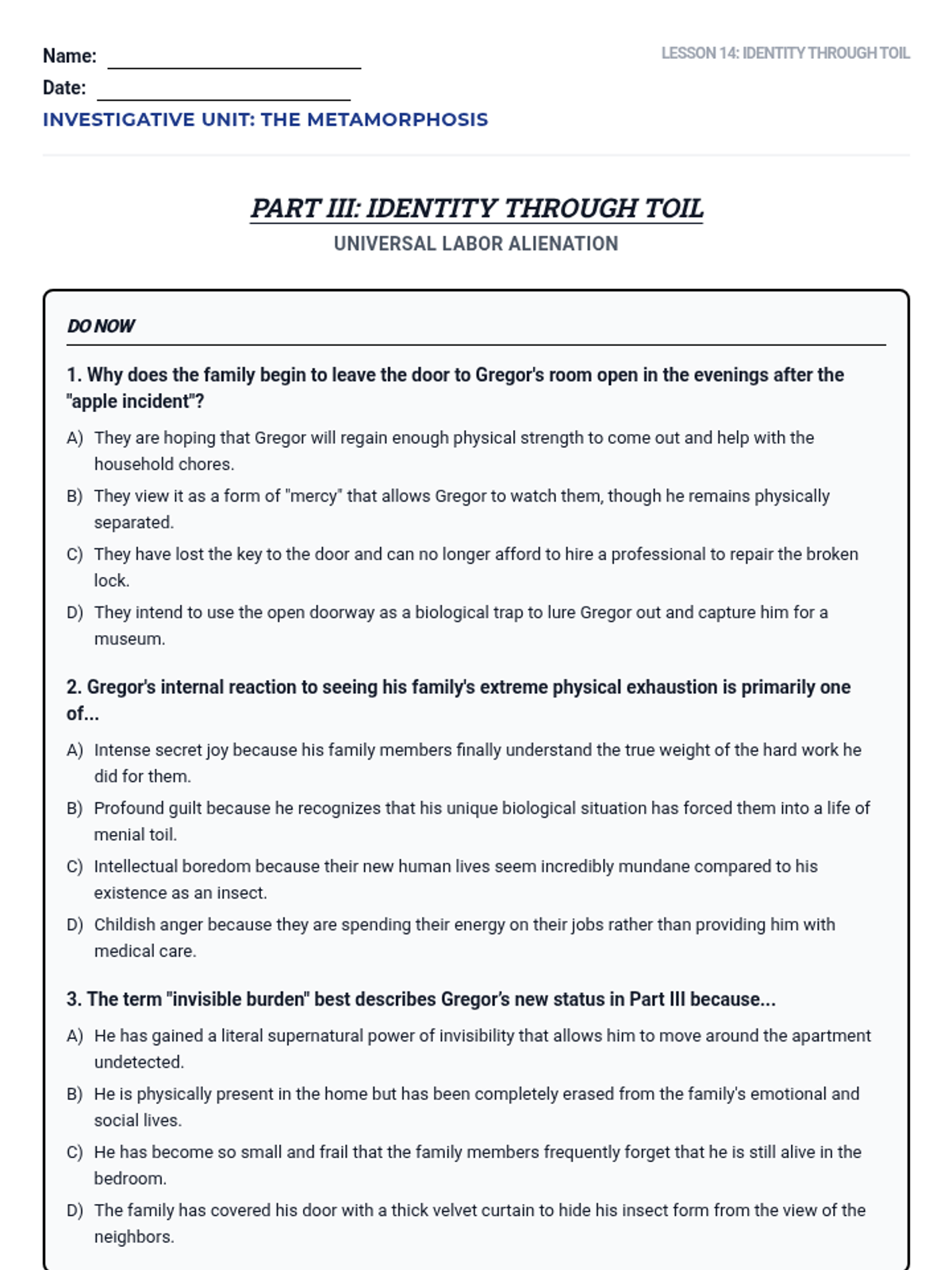
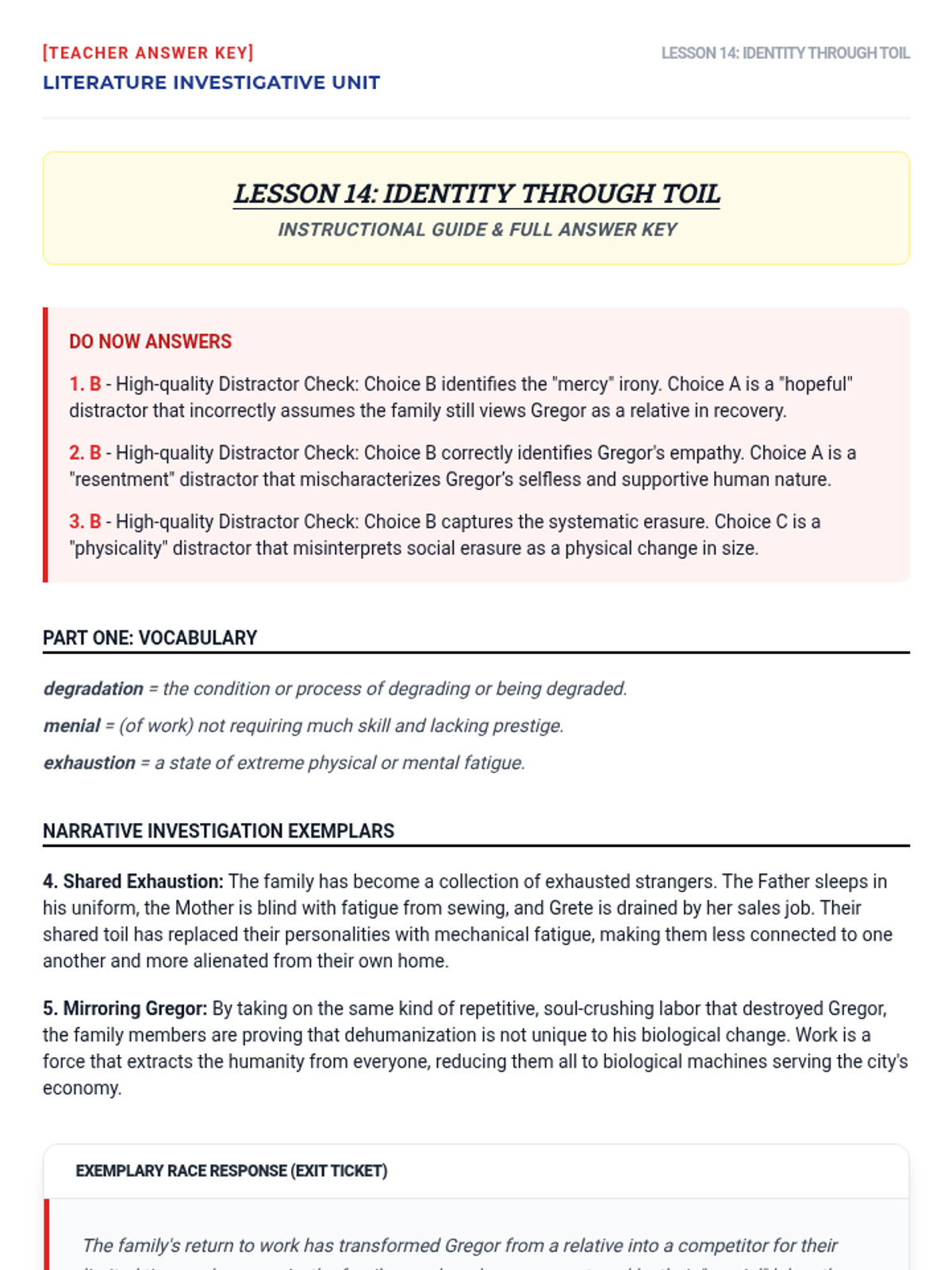
Analysis of the family taking on menial labor. Themes of exhaustion, loss of dignity, and the shared alienation of the working class.
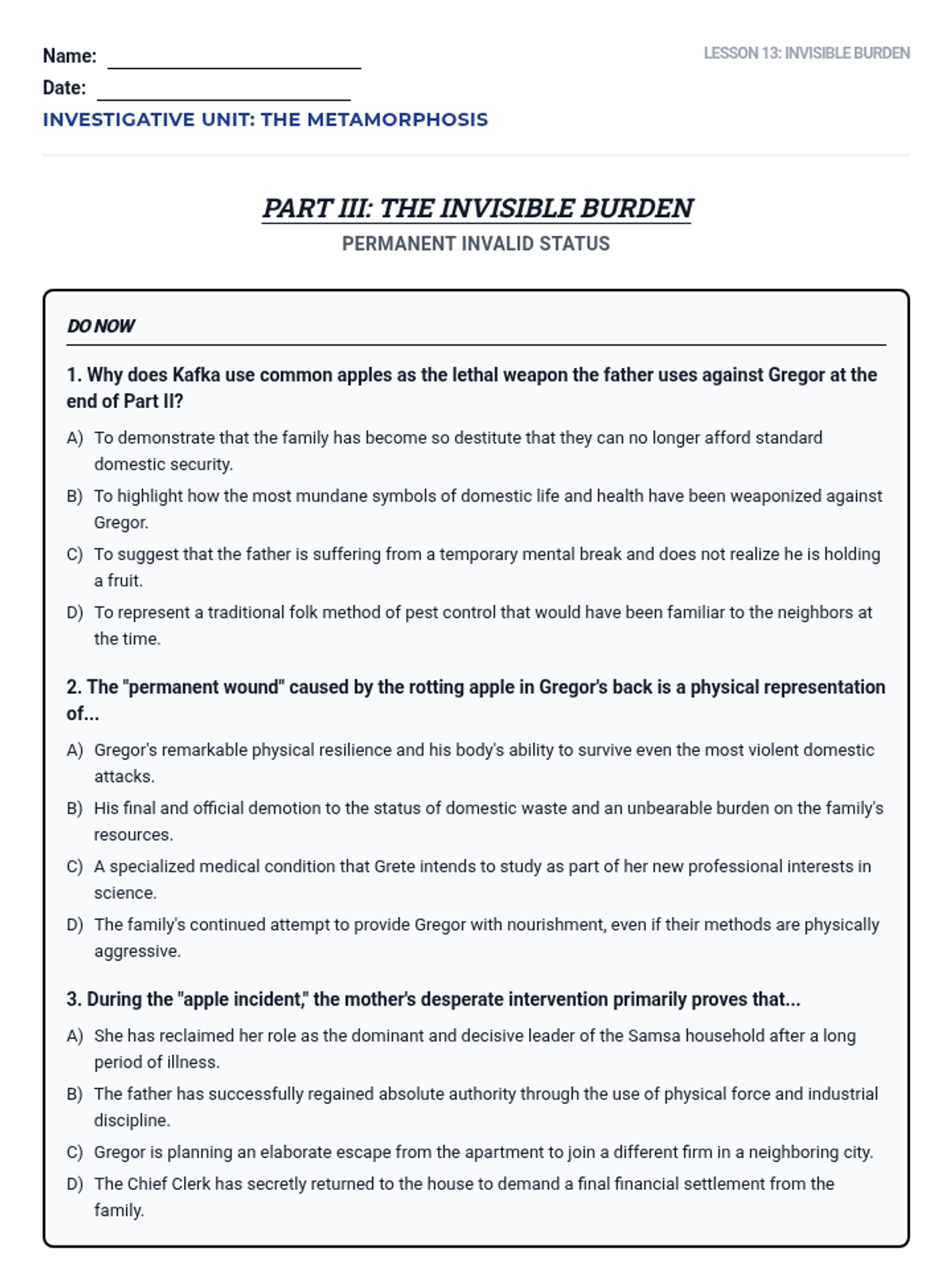
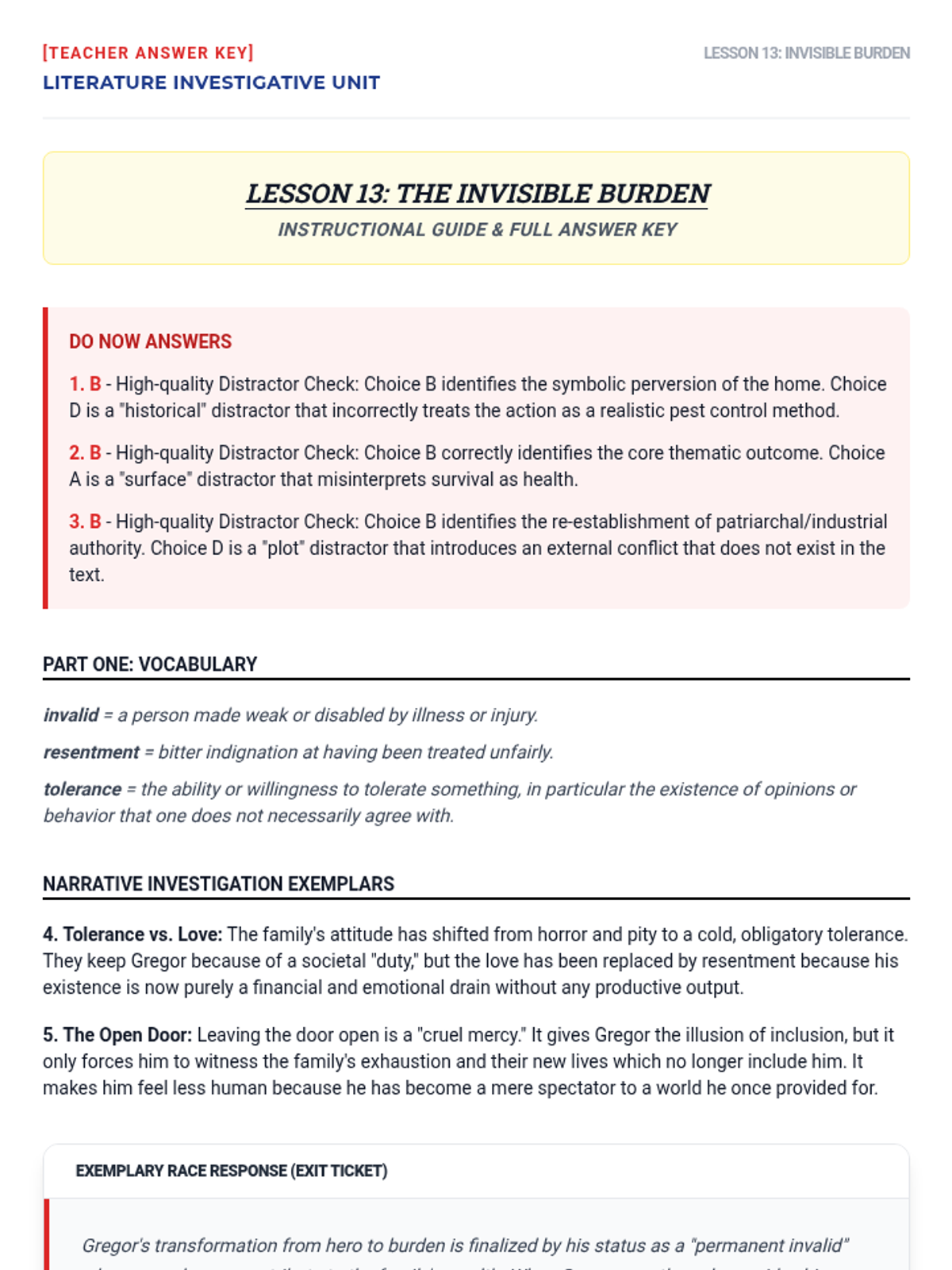
Gregor as a permanent invalid. Analysis of the family's growing resentment and the physical reminder of his non-productive status.
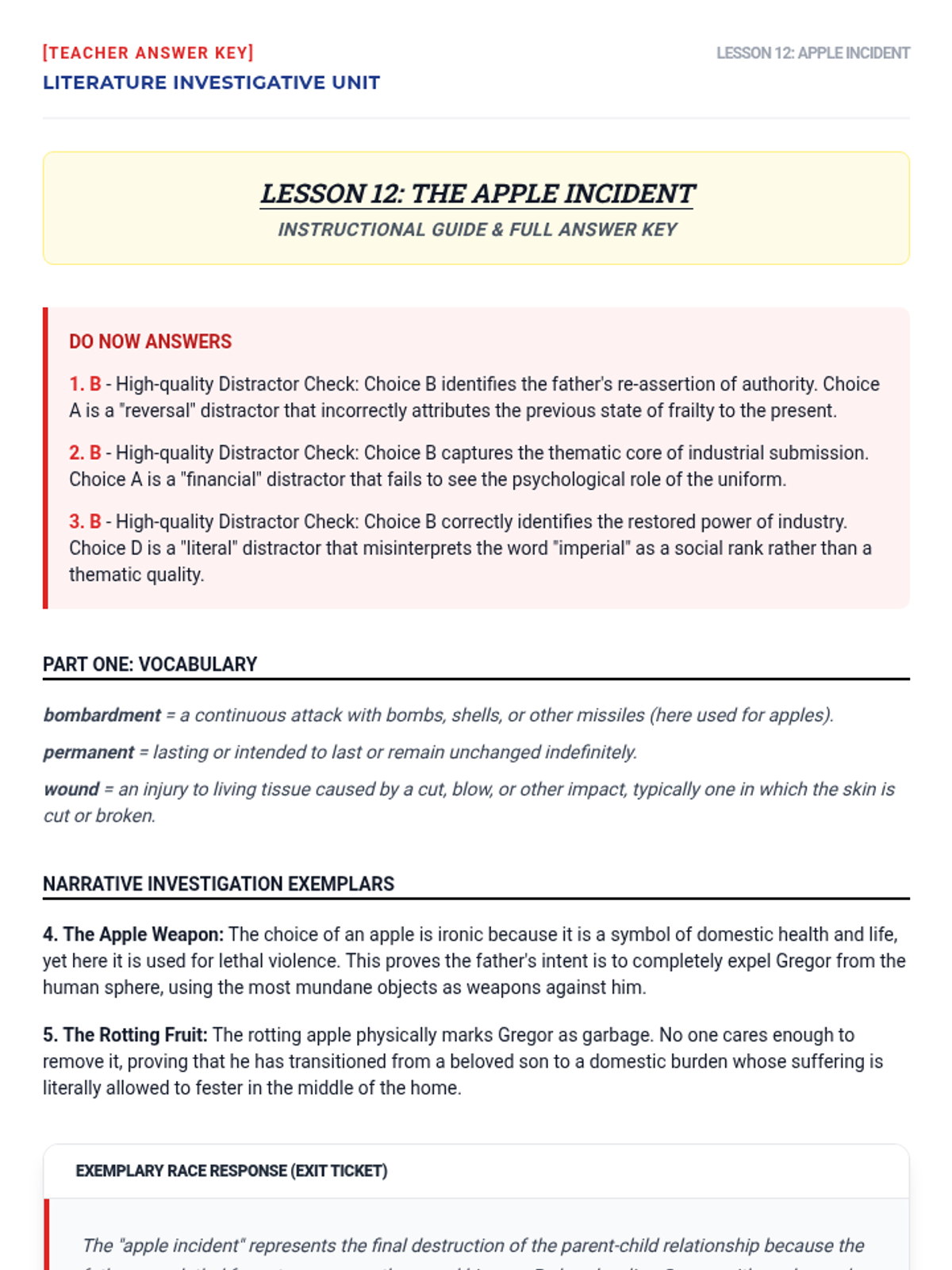
The father's violent attack with apples. Analysis of the apple as a symbol of permanent wounding and the transition from son to 'burden'.
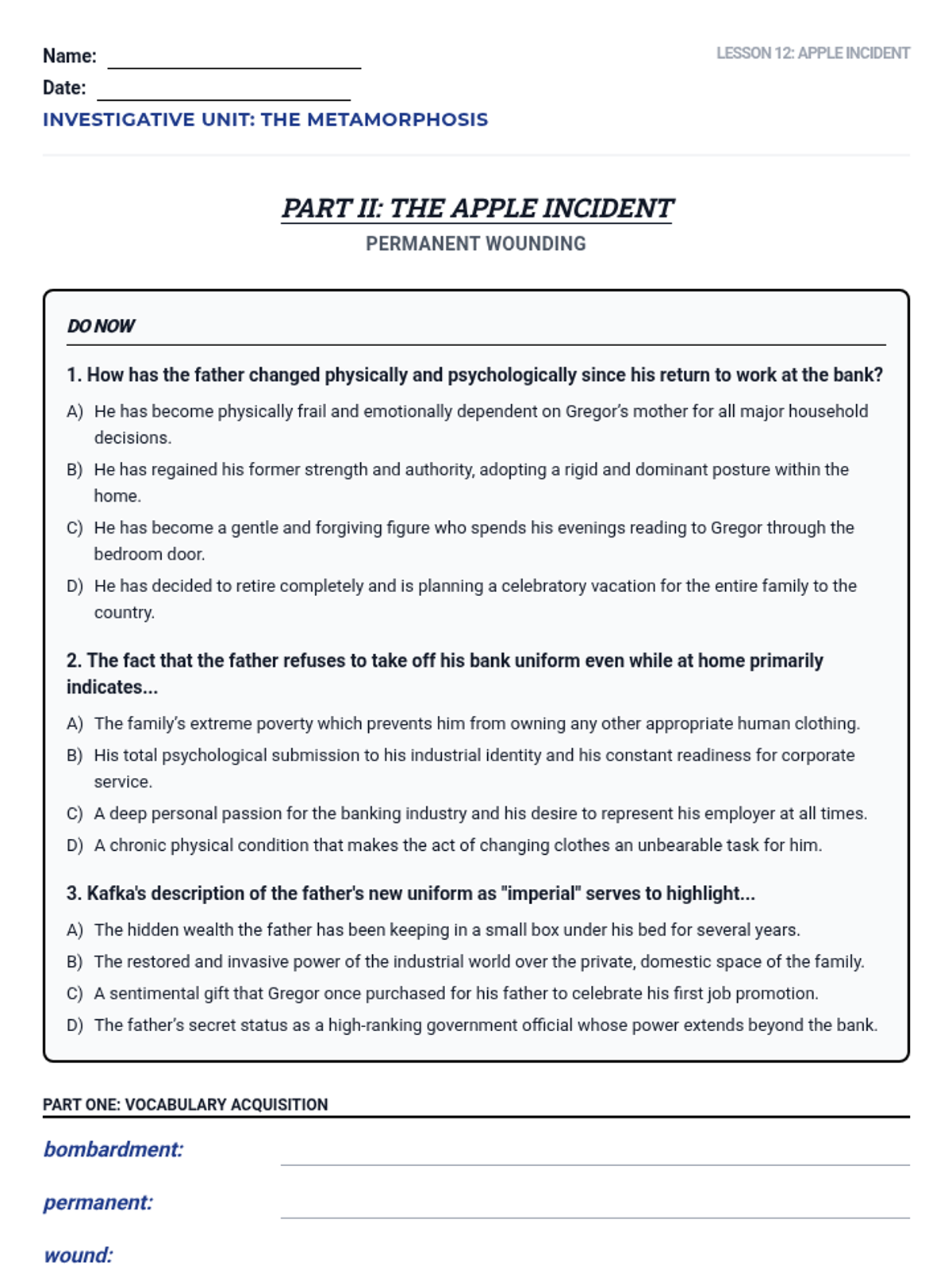
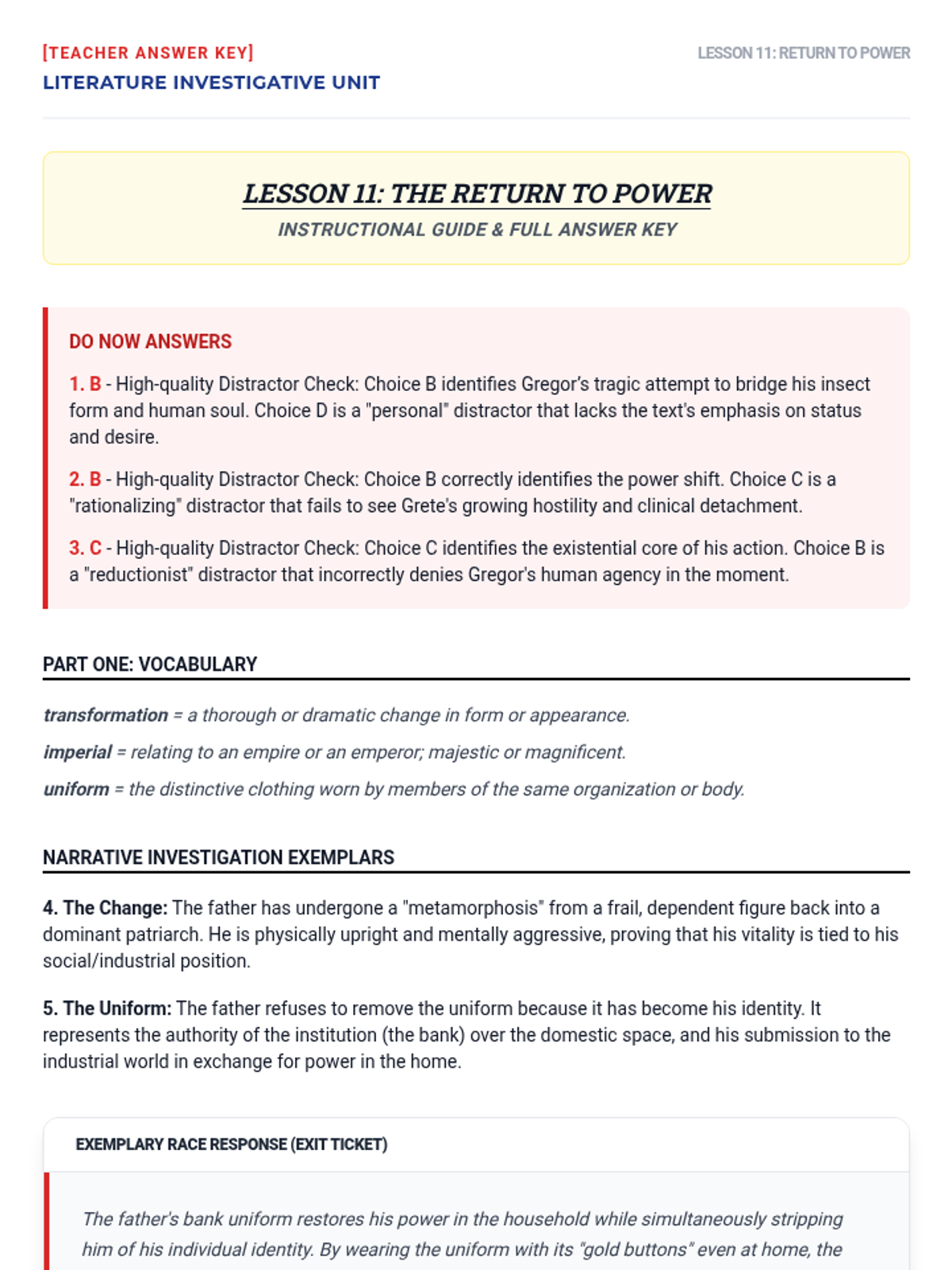
Analysis of the father's return to work and his transformation through the bank uniform. Themes of restored authority and industrial identity.
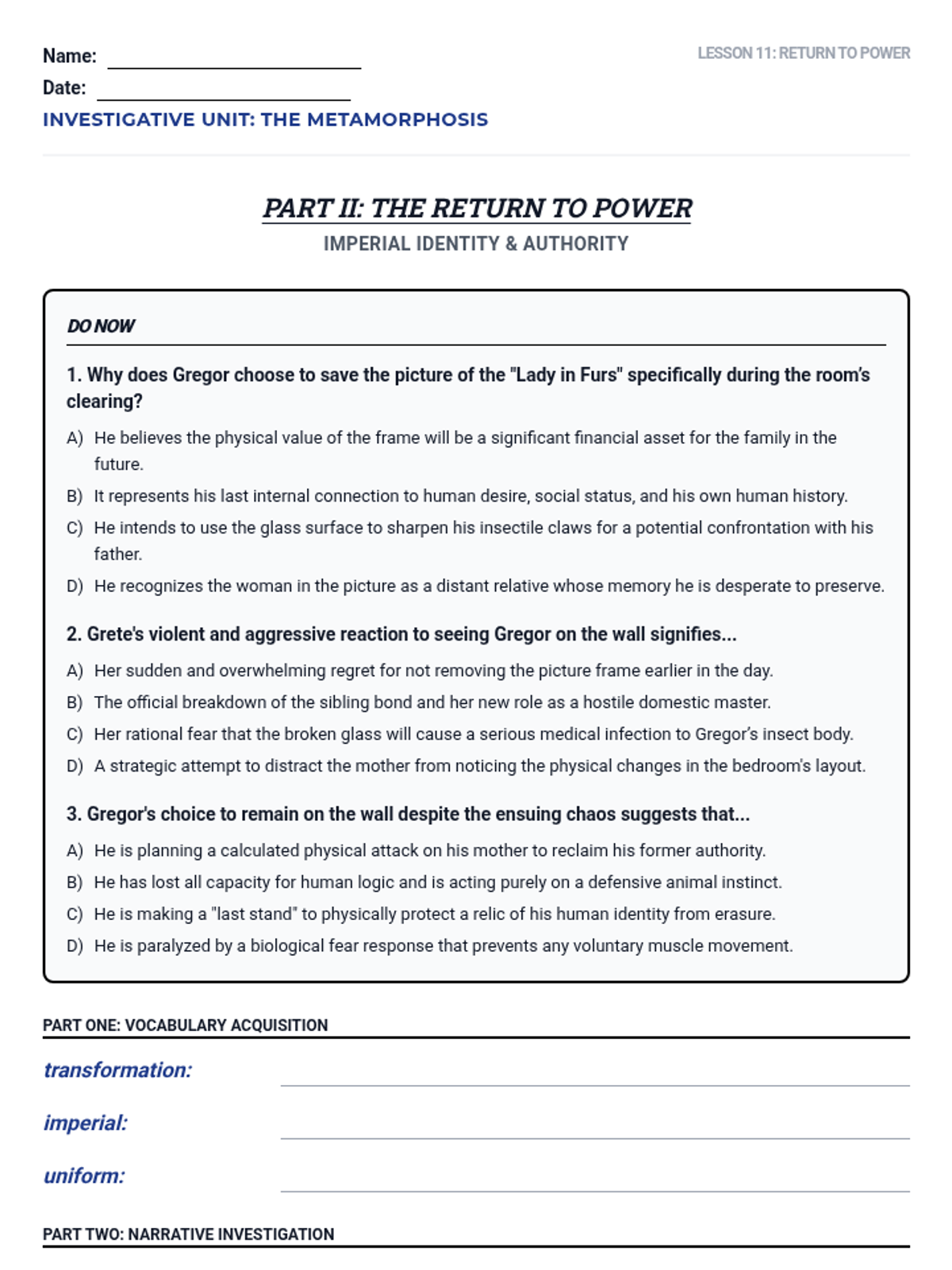
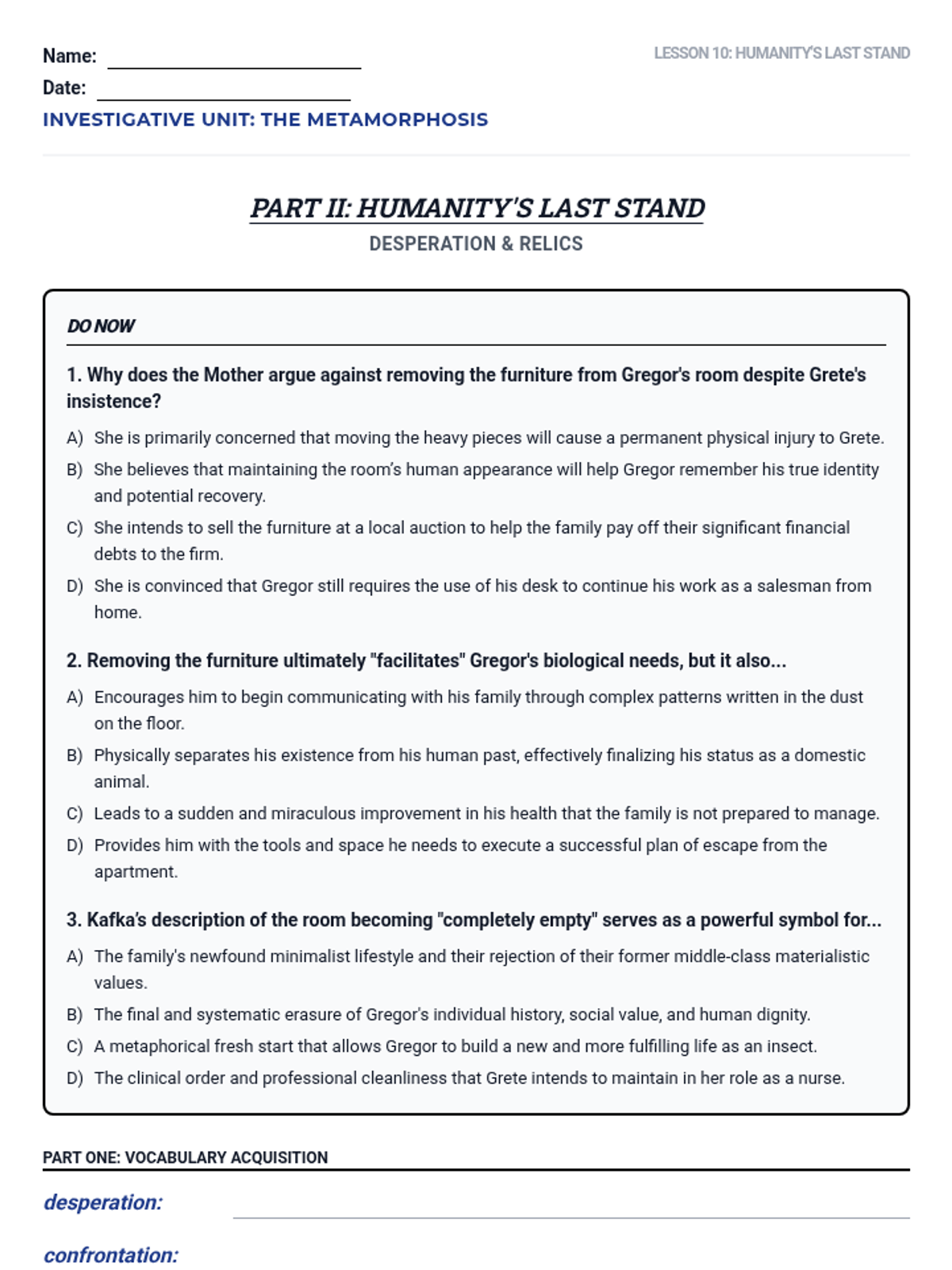
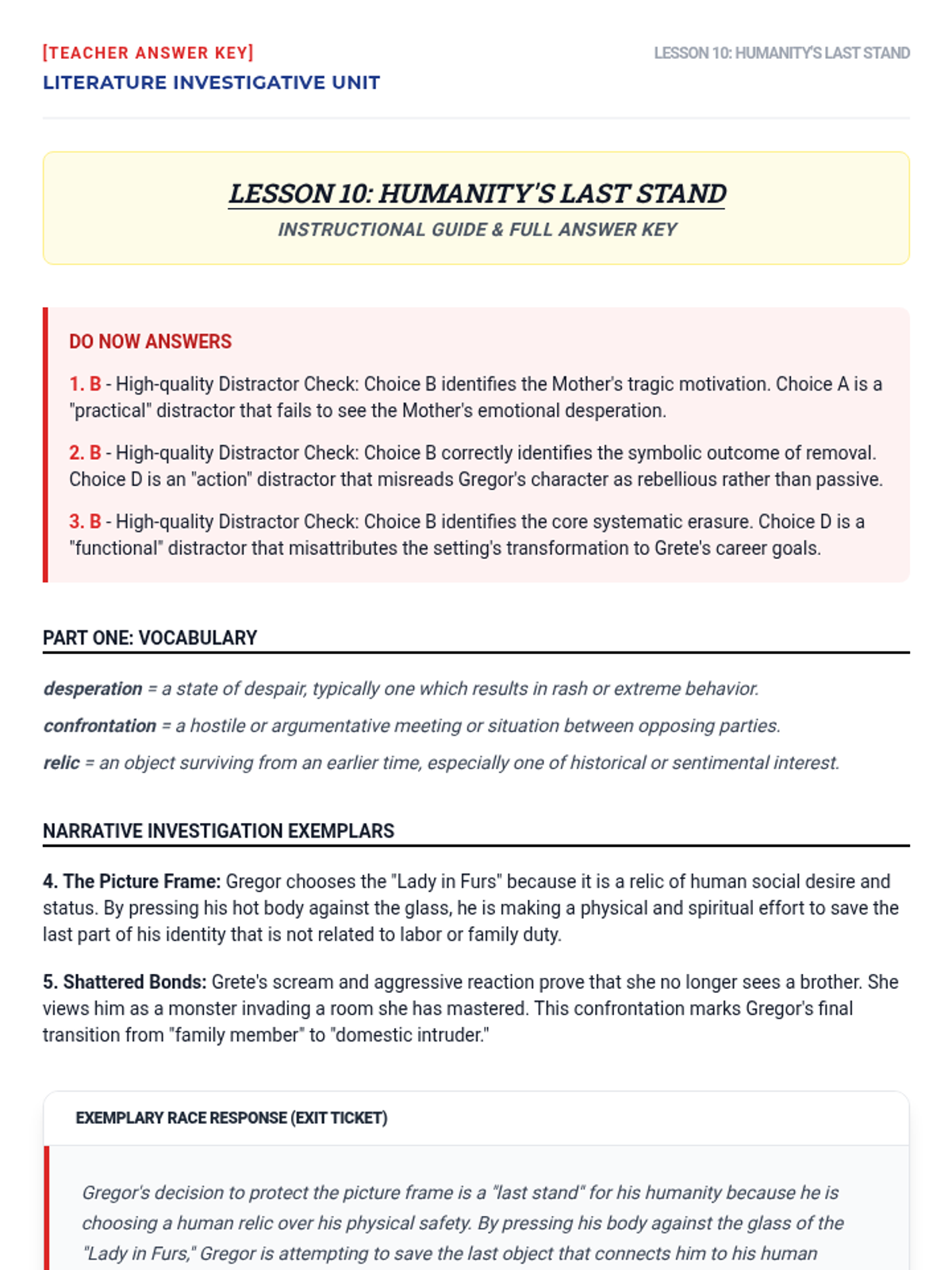
Gregor's desperate attempt to save his human identity by protecting the picture frame. Focus on the direct confrontation with Grete.
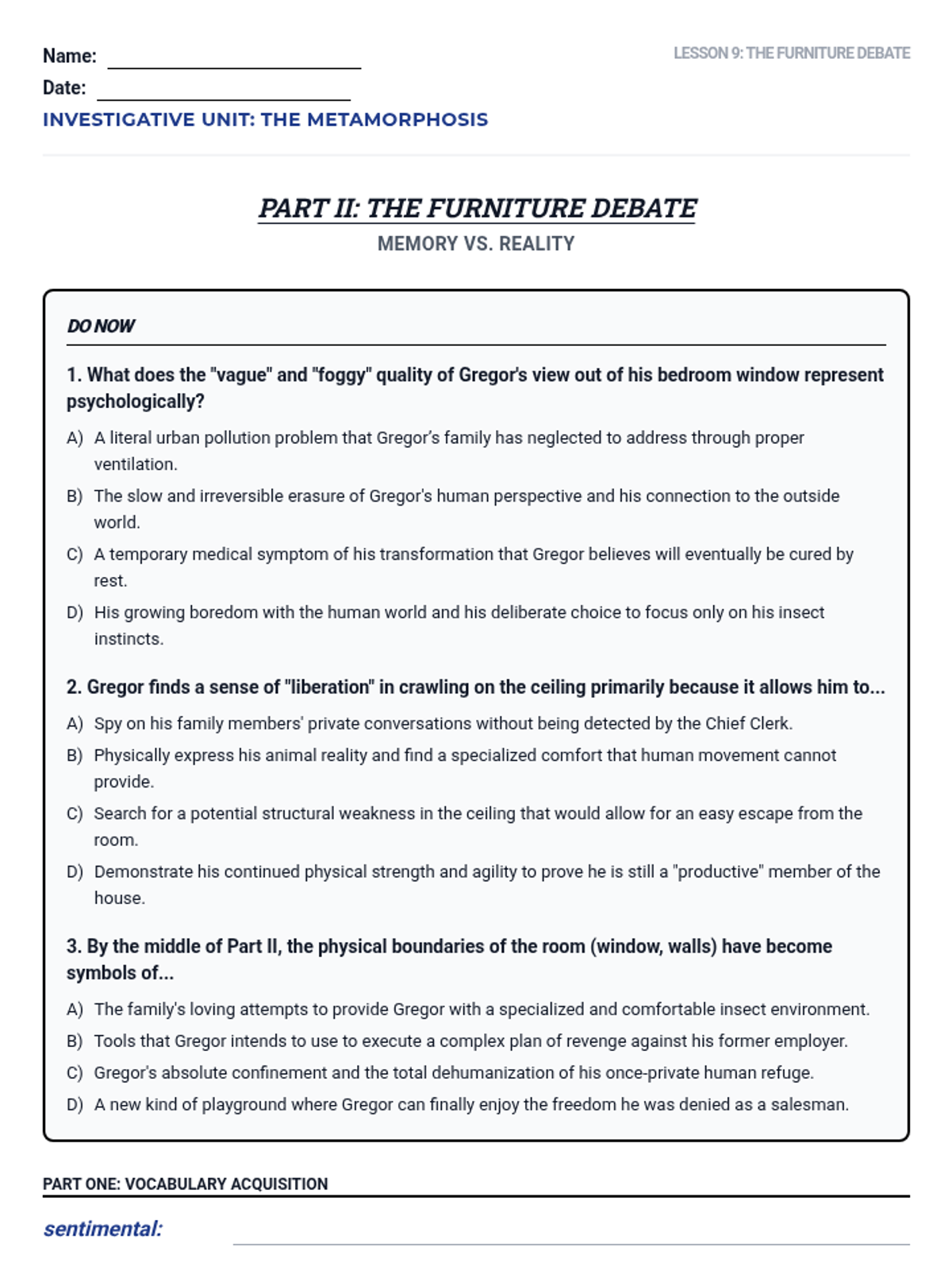
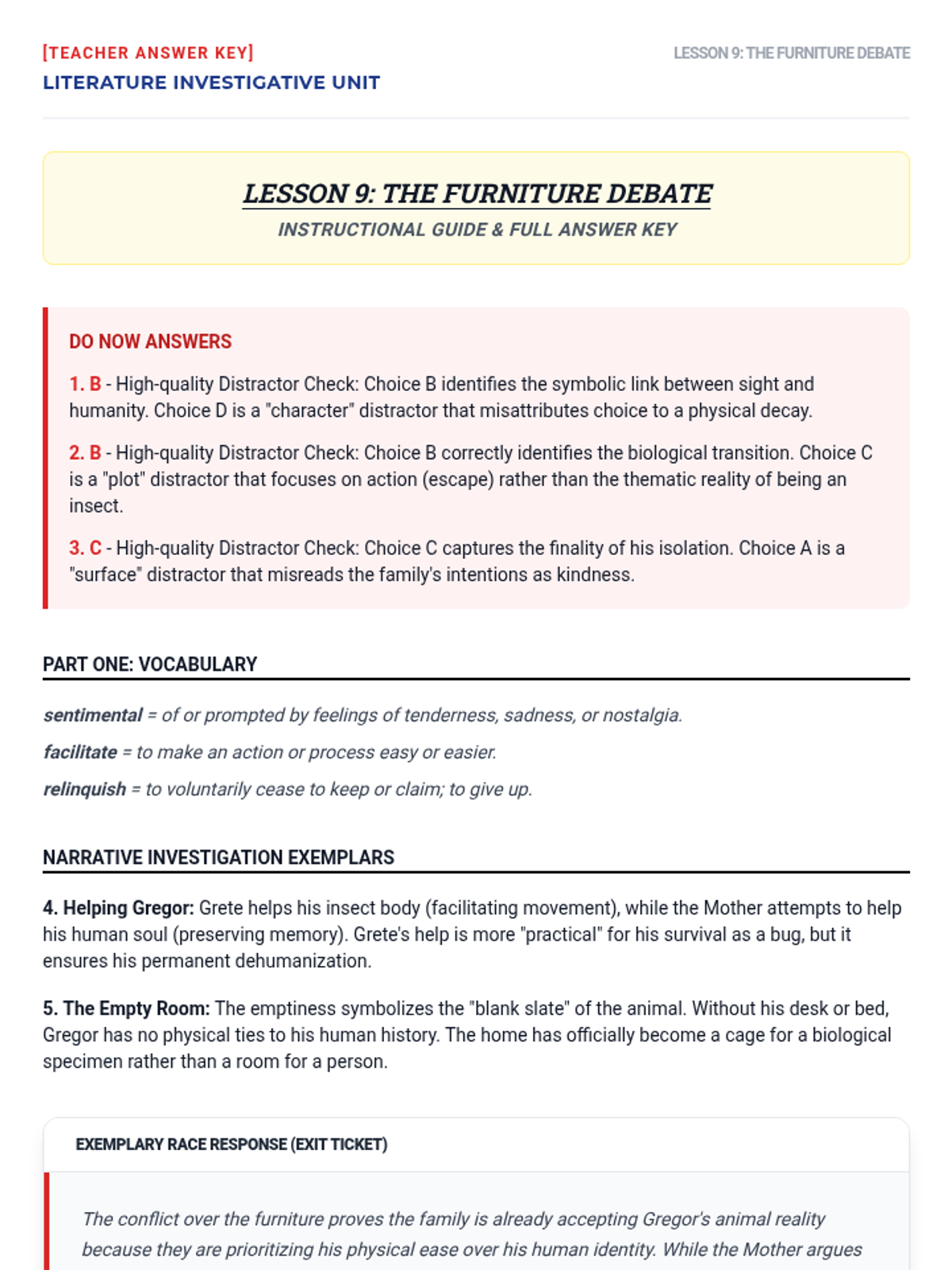
The conflict between Grete and the Mother over removing Gregor's furniture. Themes of preserving human memory vs. accepting animal reality.
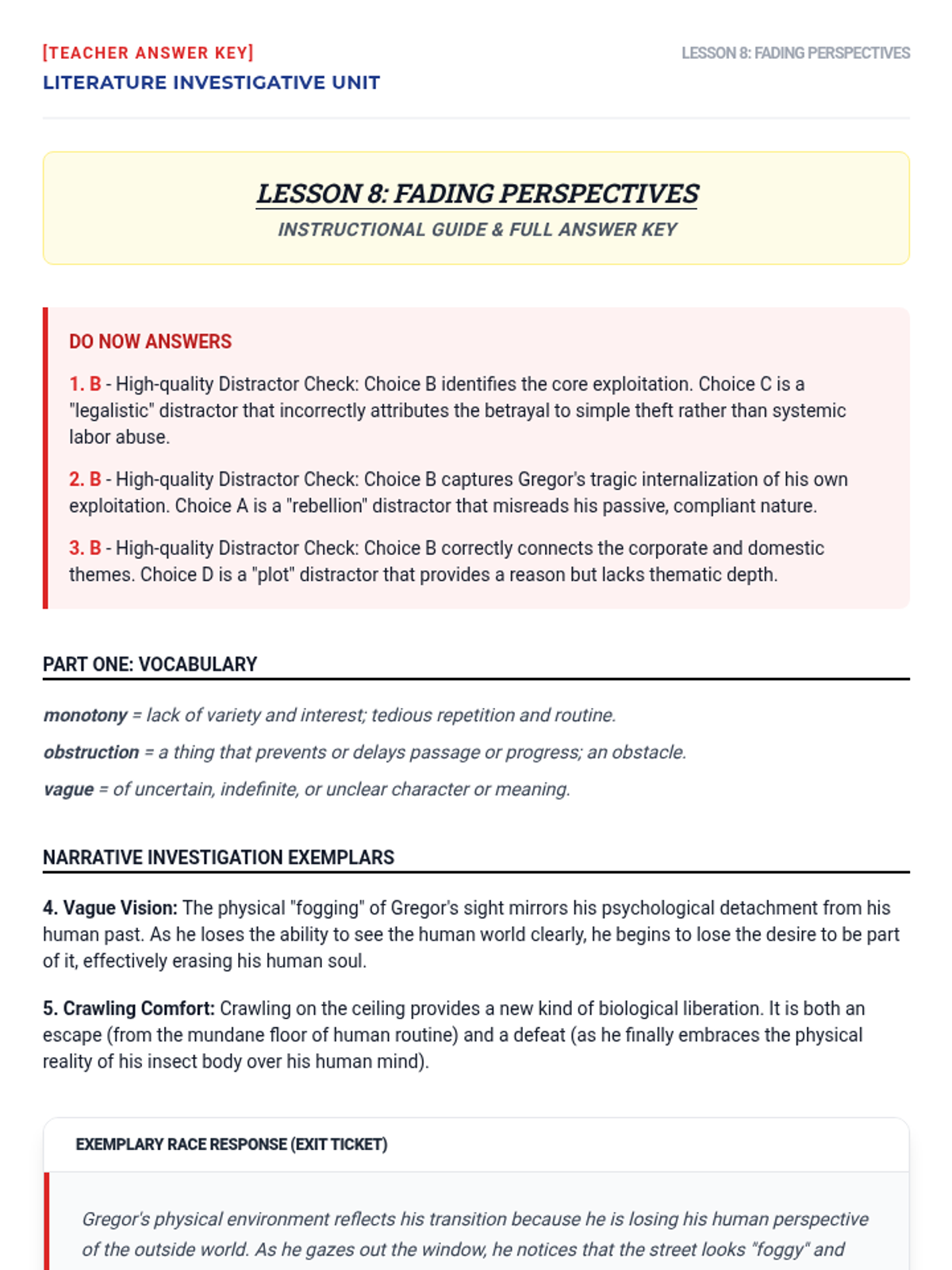
Students analyze Gregor's fading perception of the human world through his window view and his growing physical comfort in animalistic behaviors.
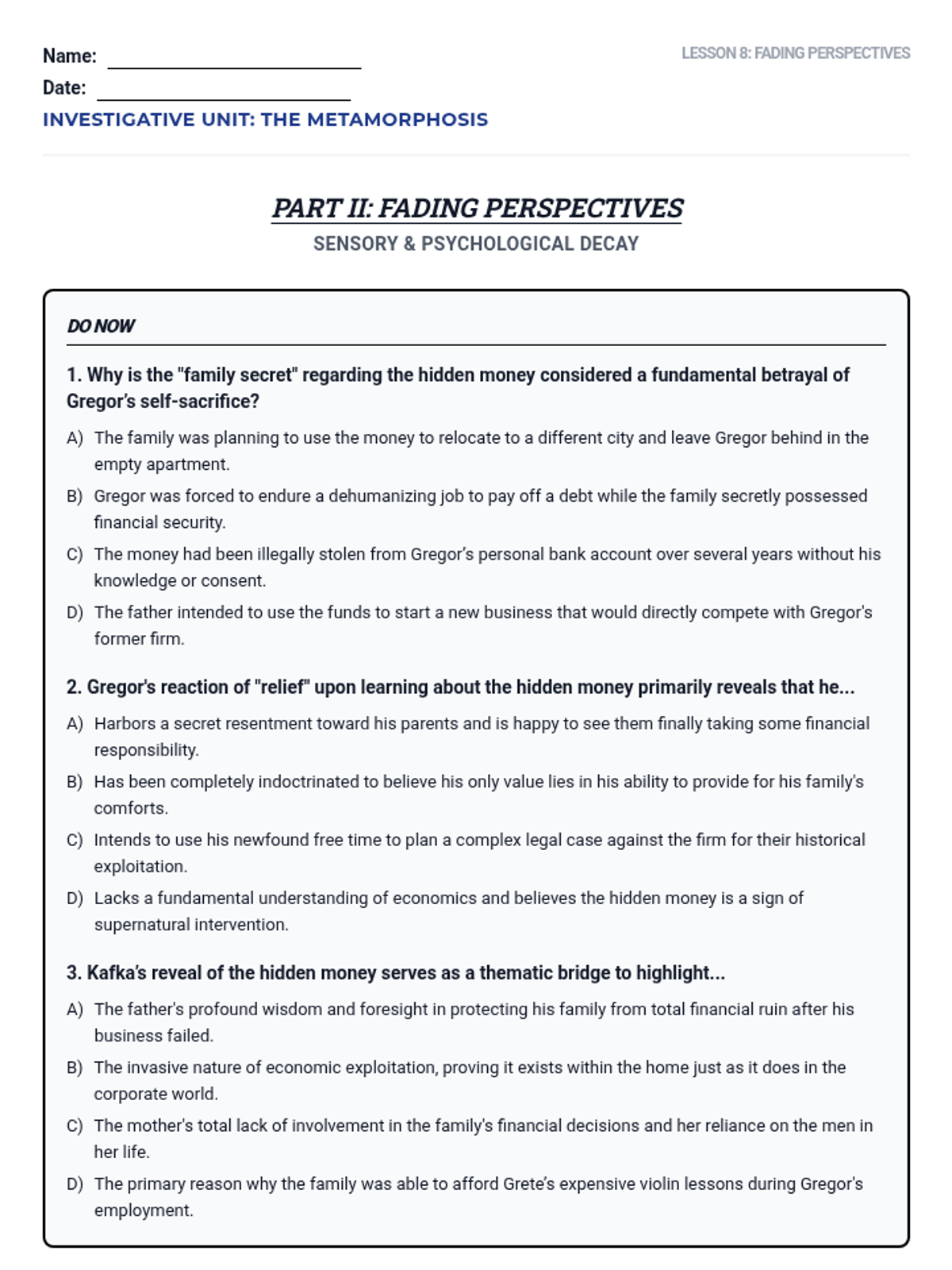
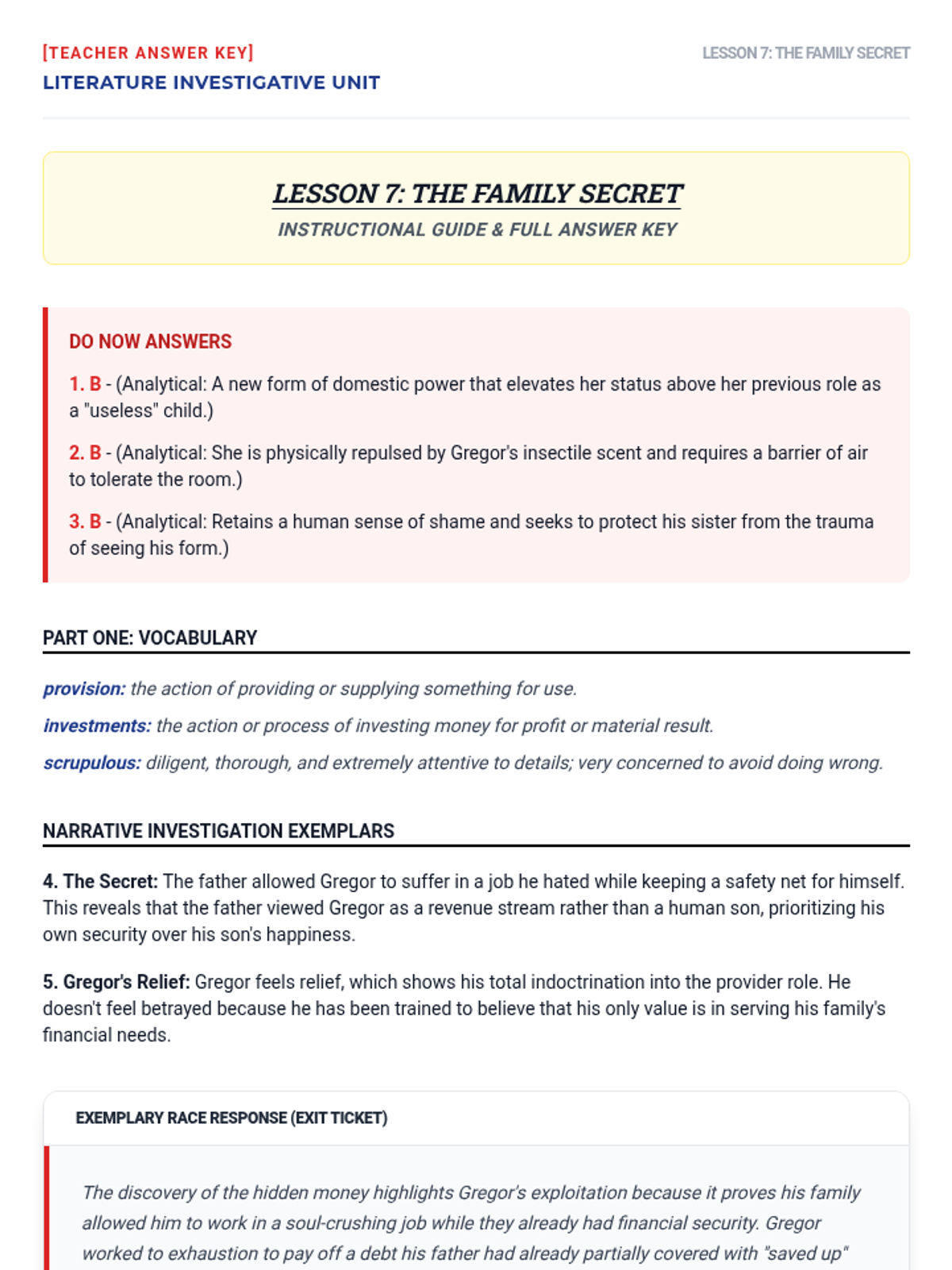
Analysis of the father's hidden financial assets and the betrayal of Gregor's role as the sole provider. Themes of economic exploitation.
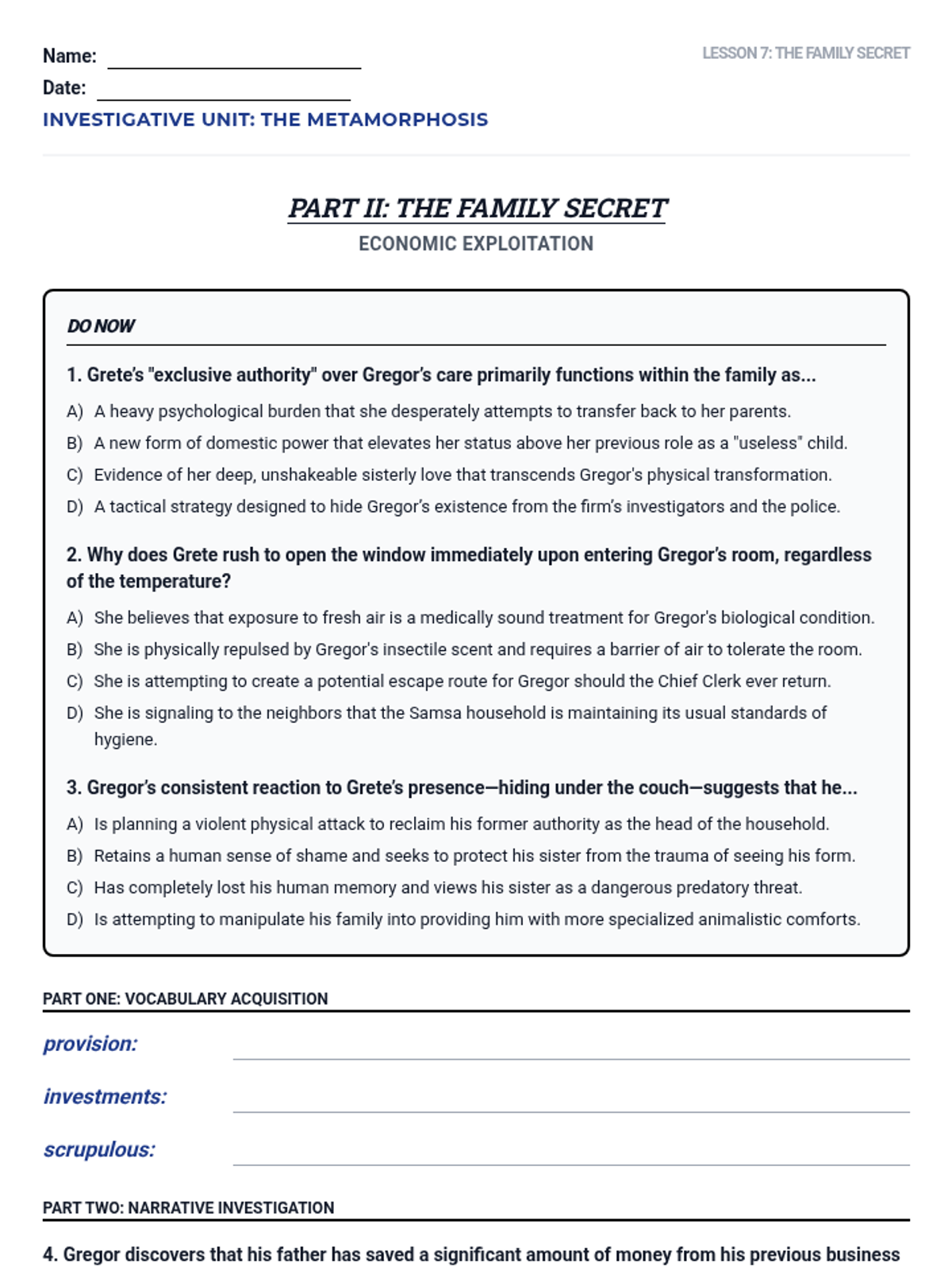
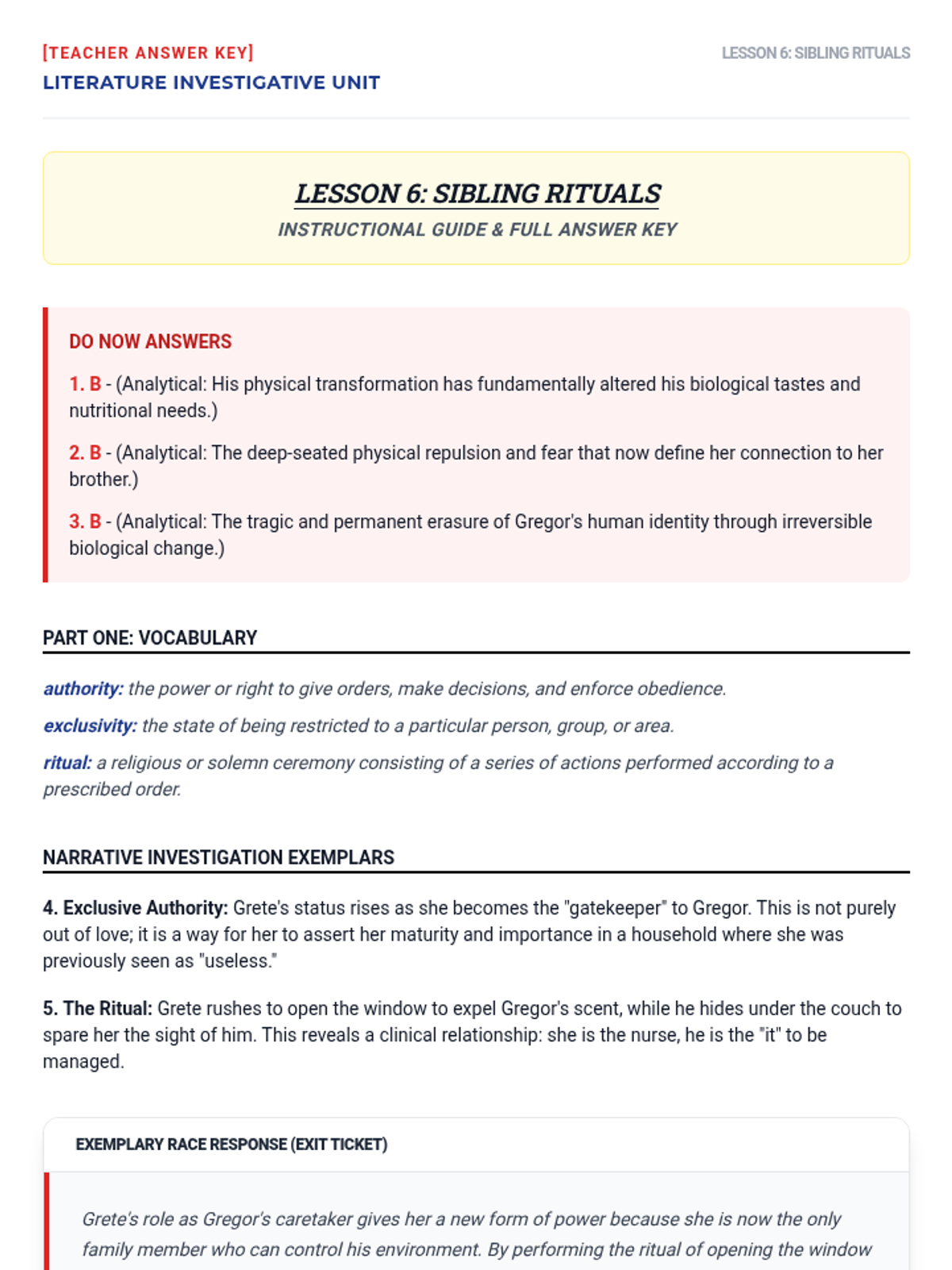
Students examine the changing power dynamic between Gregor and Grete, focusing on her new ritualistic authority as his sole caretaker.
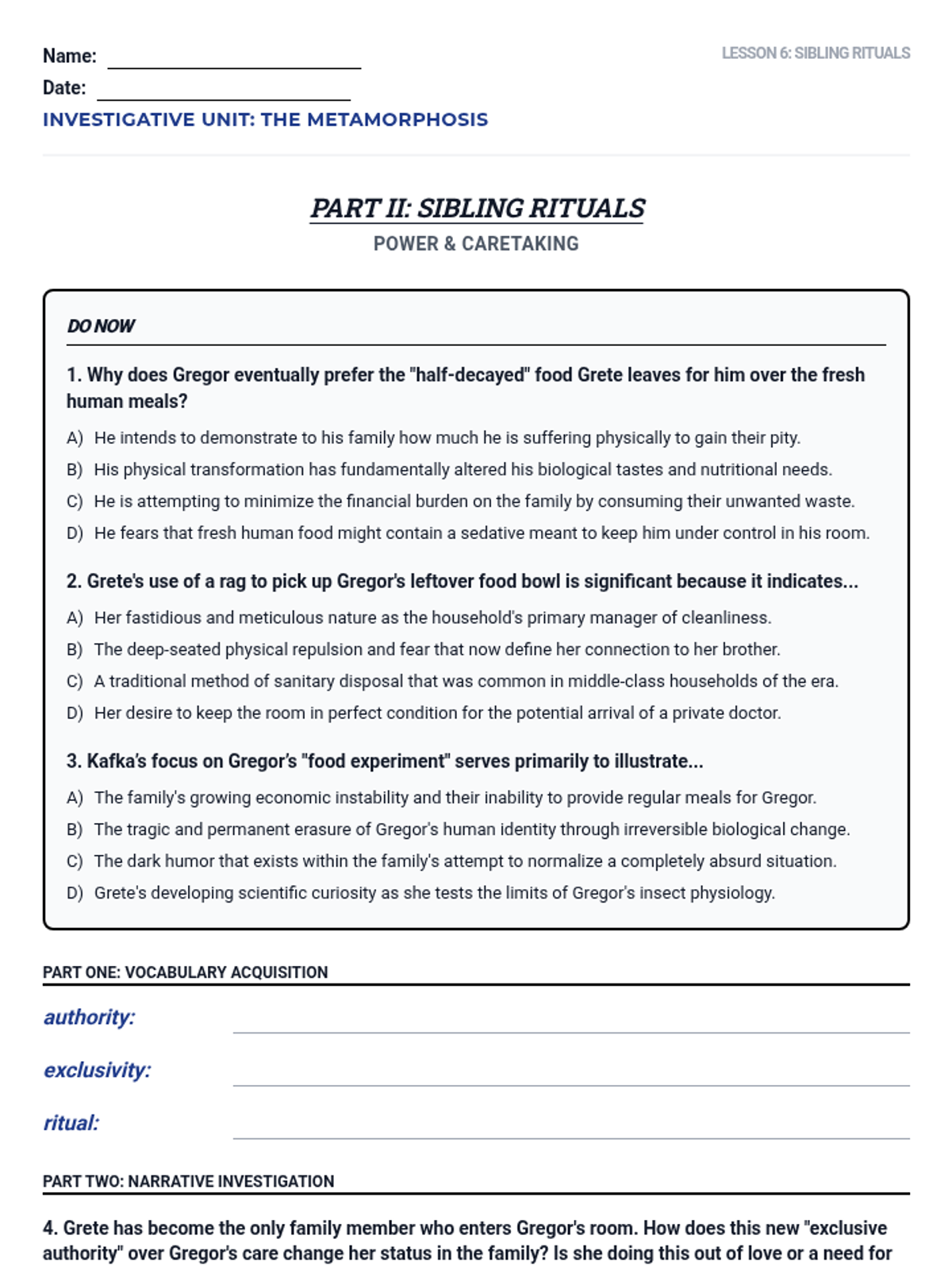
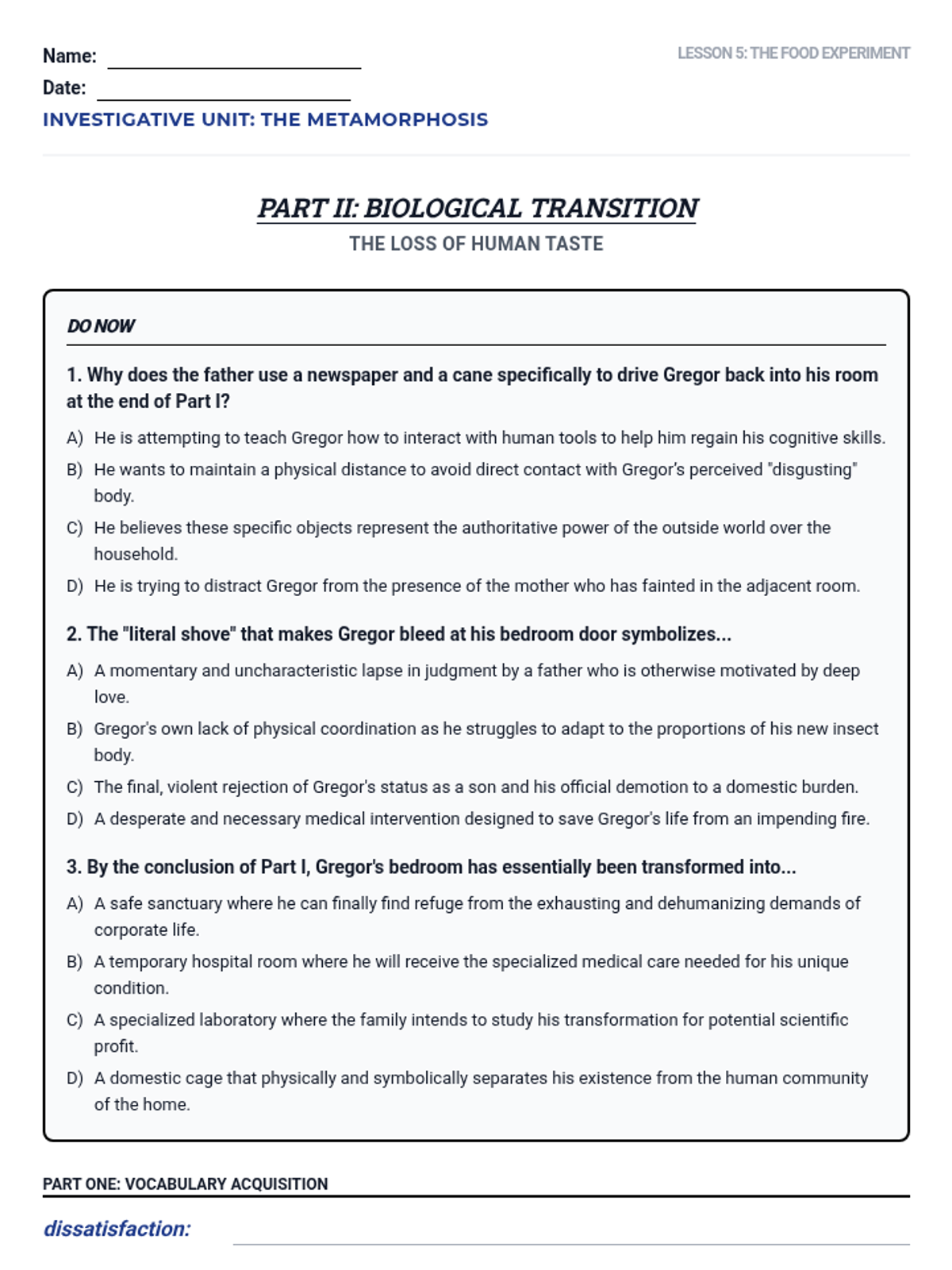
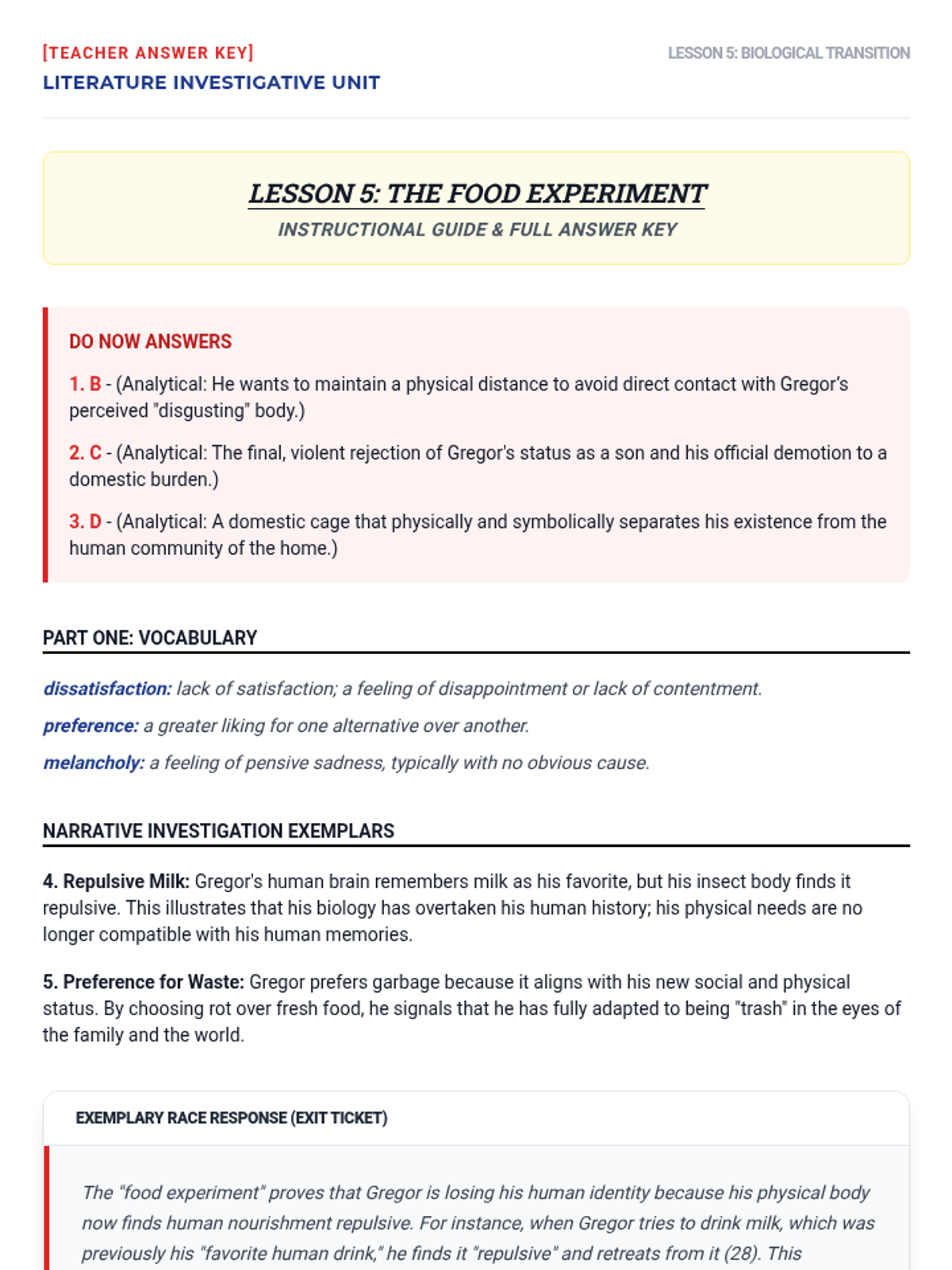
Part II begins with Gregor's physical transition, focusing on his change in taste and the shift from human food to animal waste as a symbol of dehumanization.
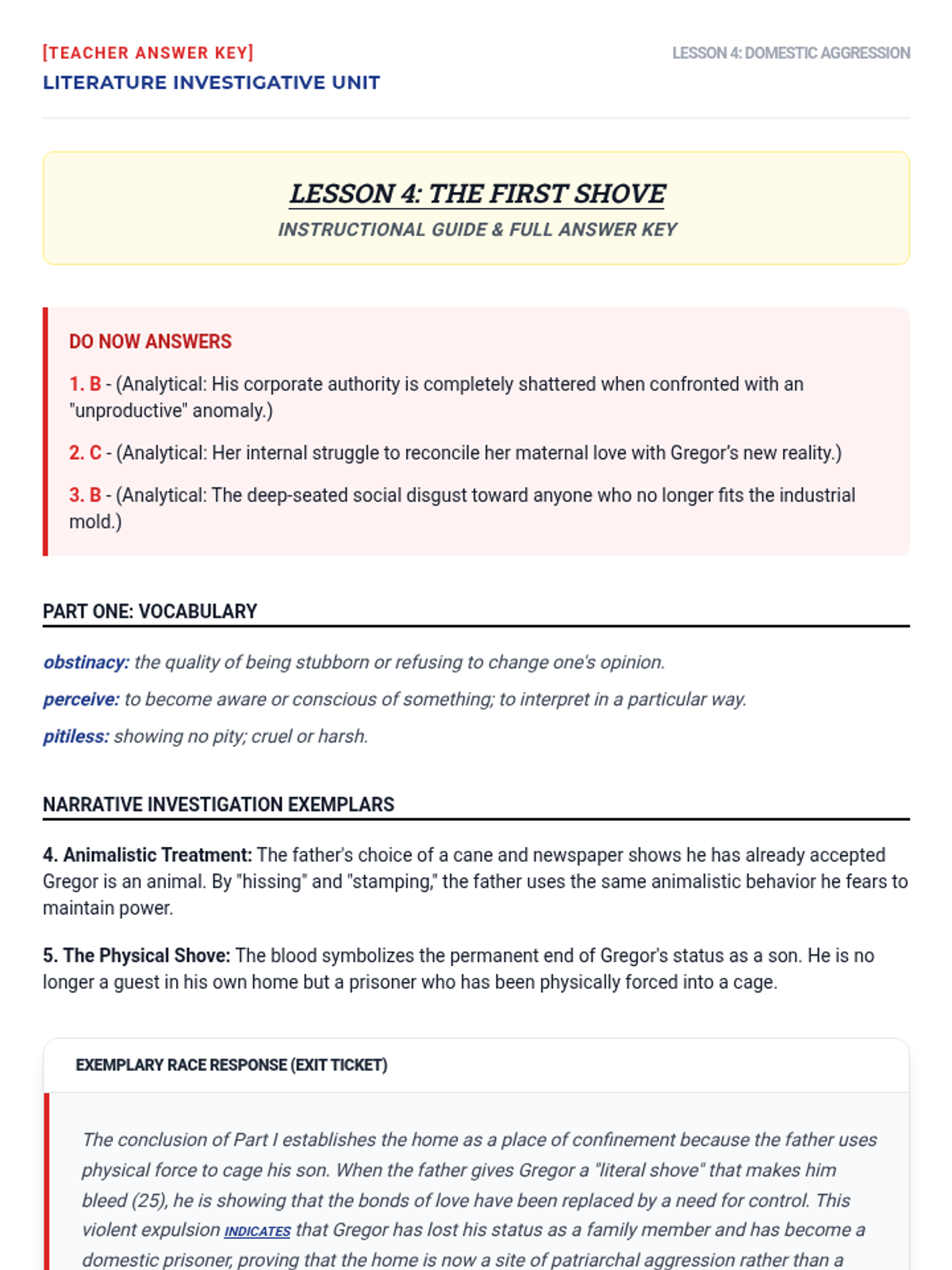
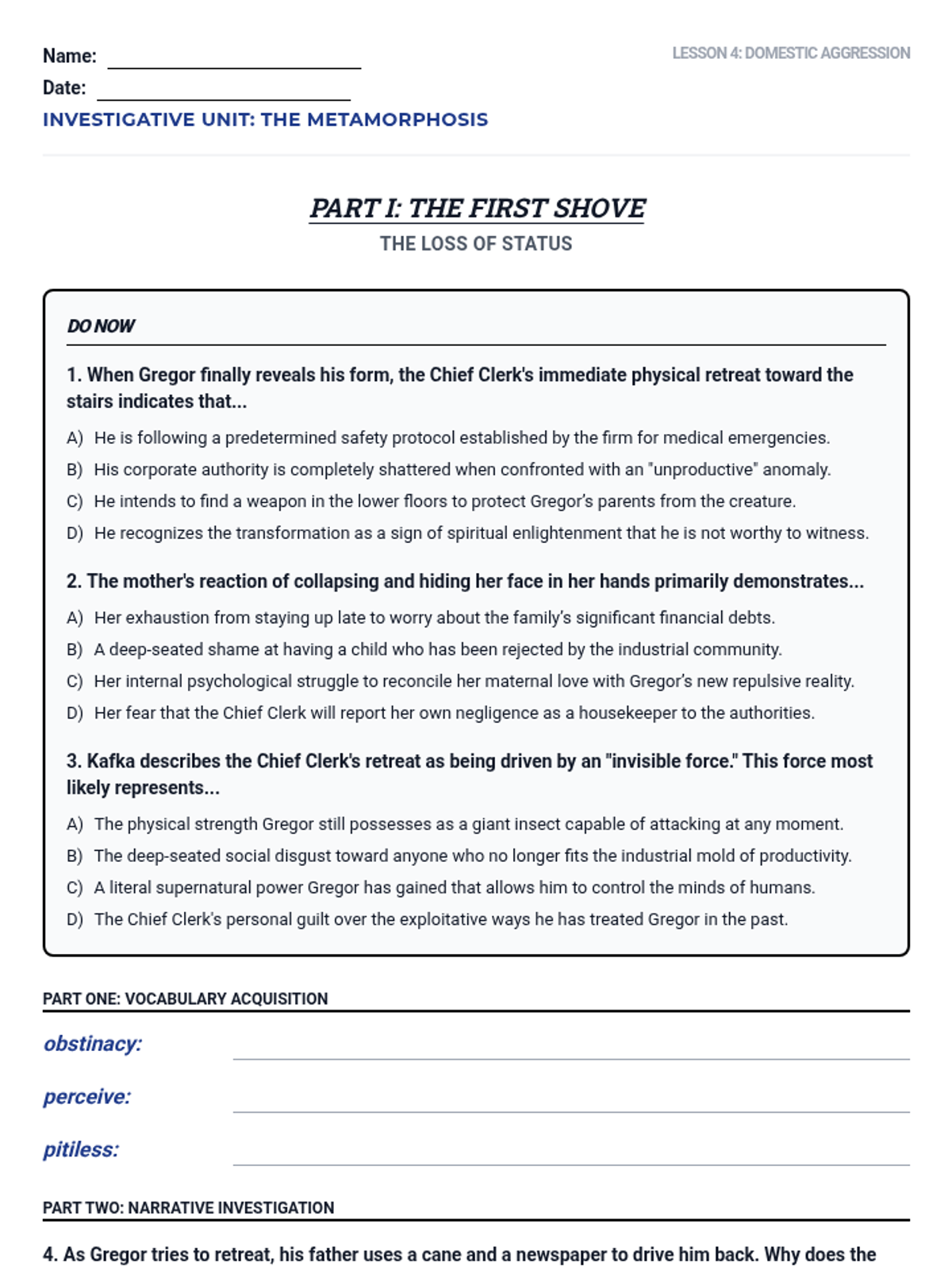
Students analyze the violent conclusion to Part I, focusing on the father's use of force to cage Gregor. Themes of domestic aggression and the loss of familial status.
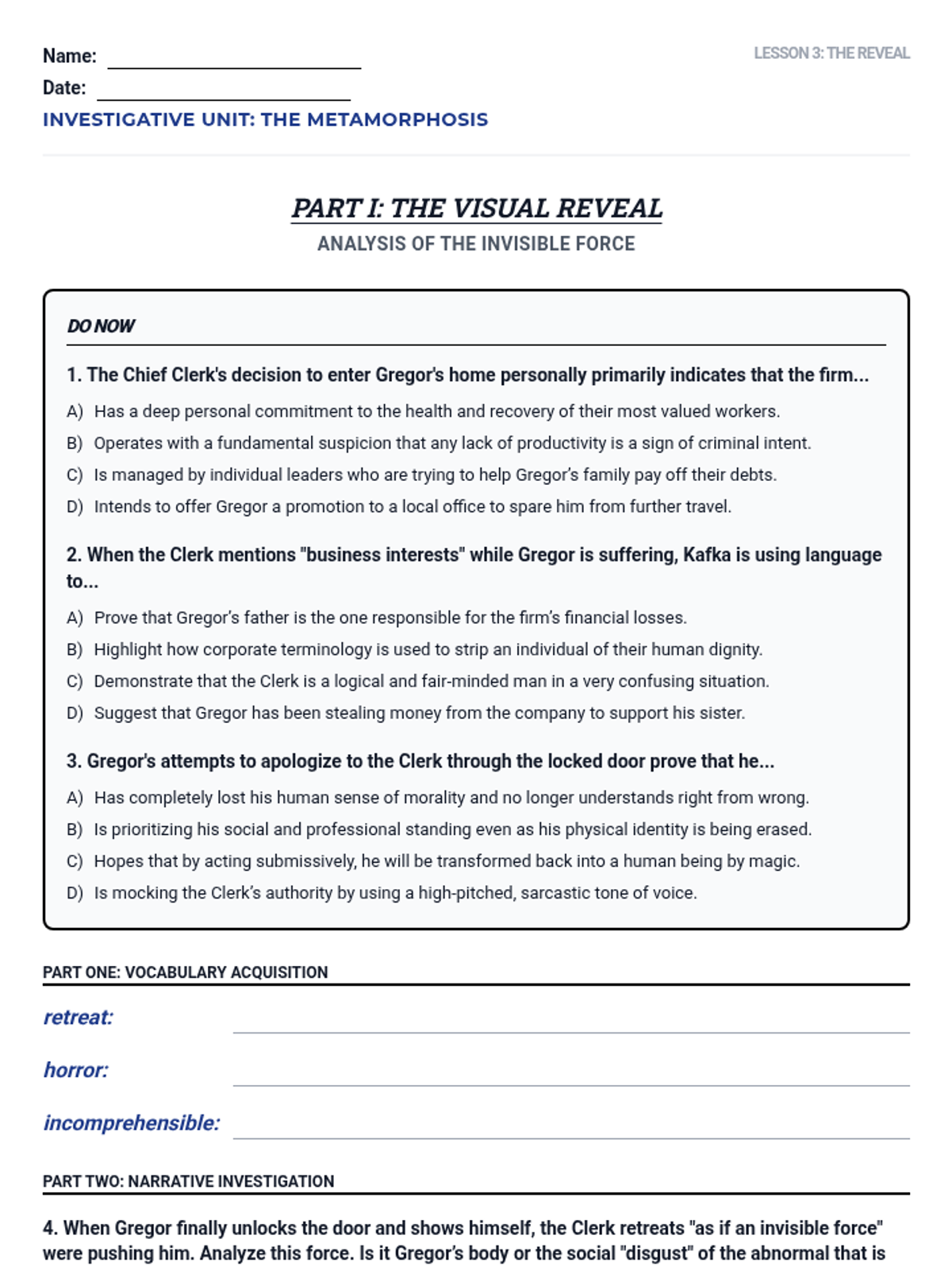
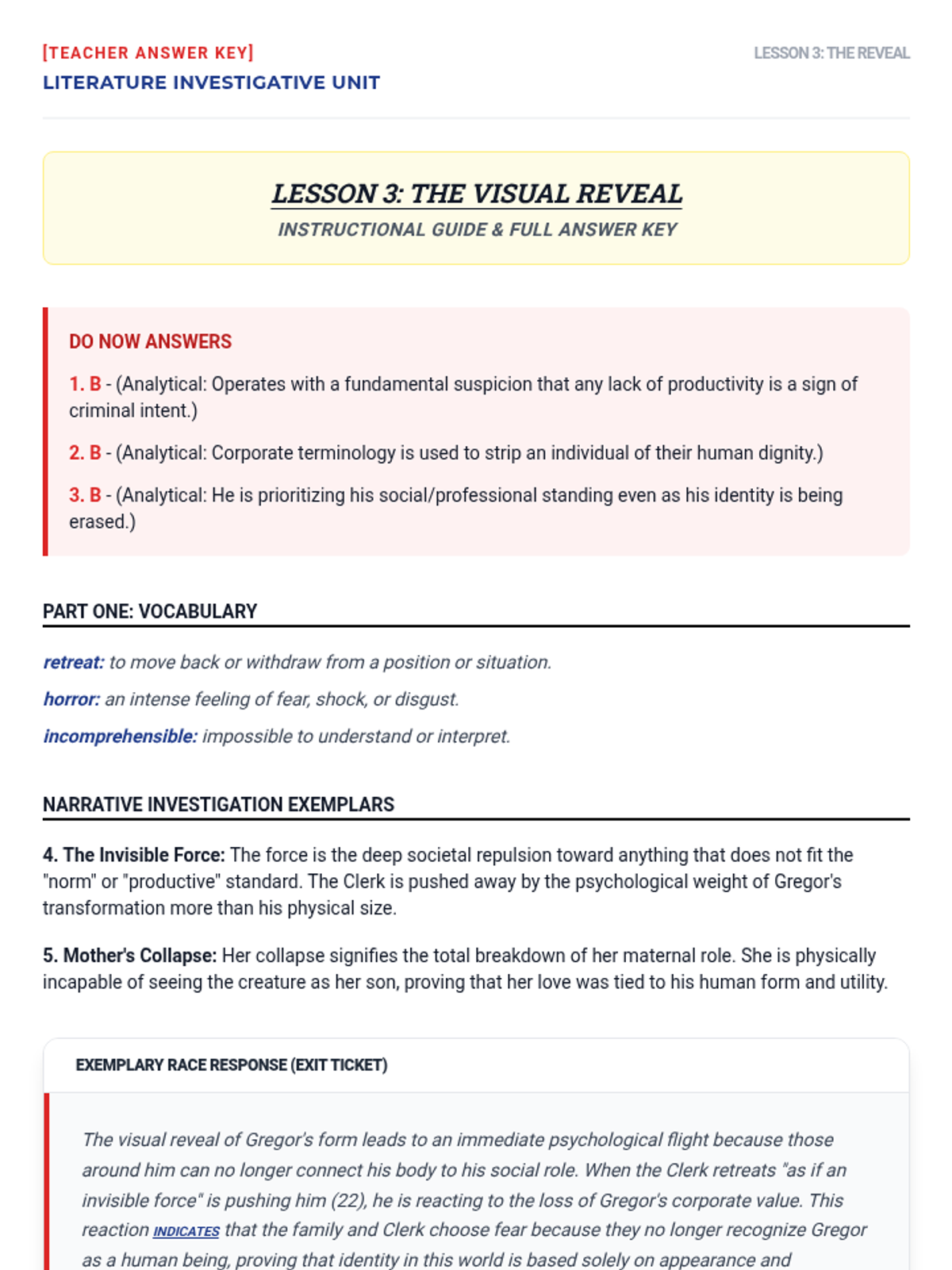
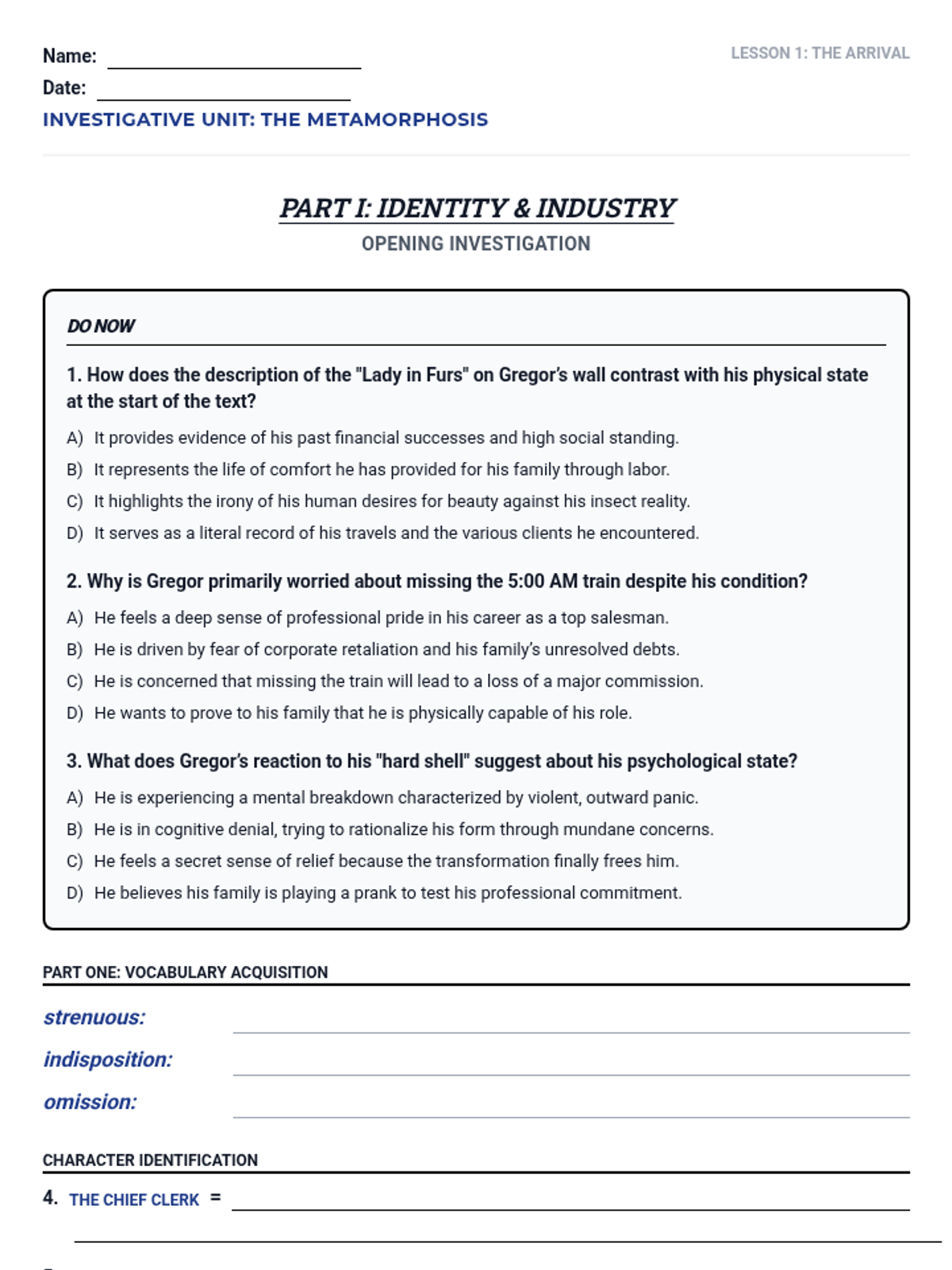
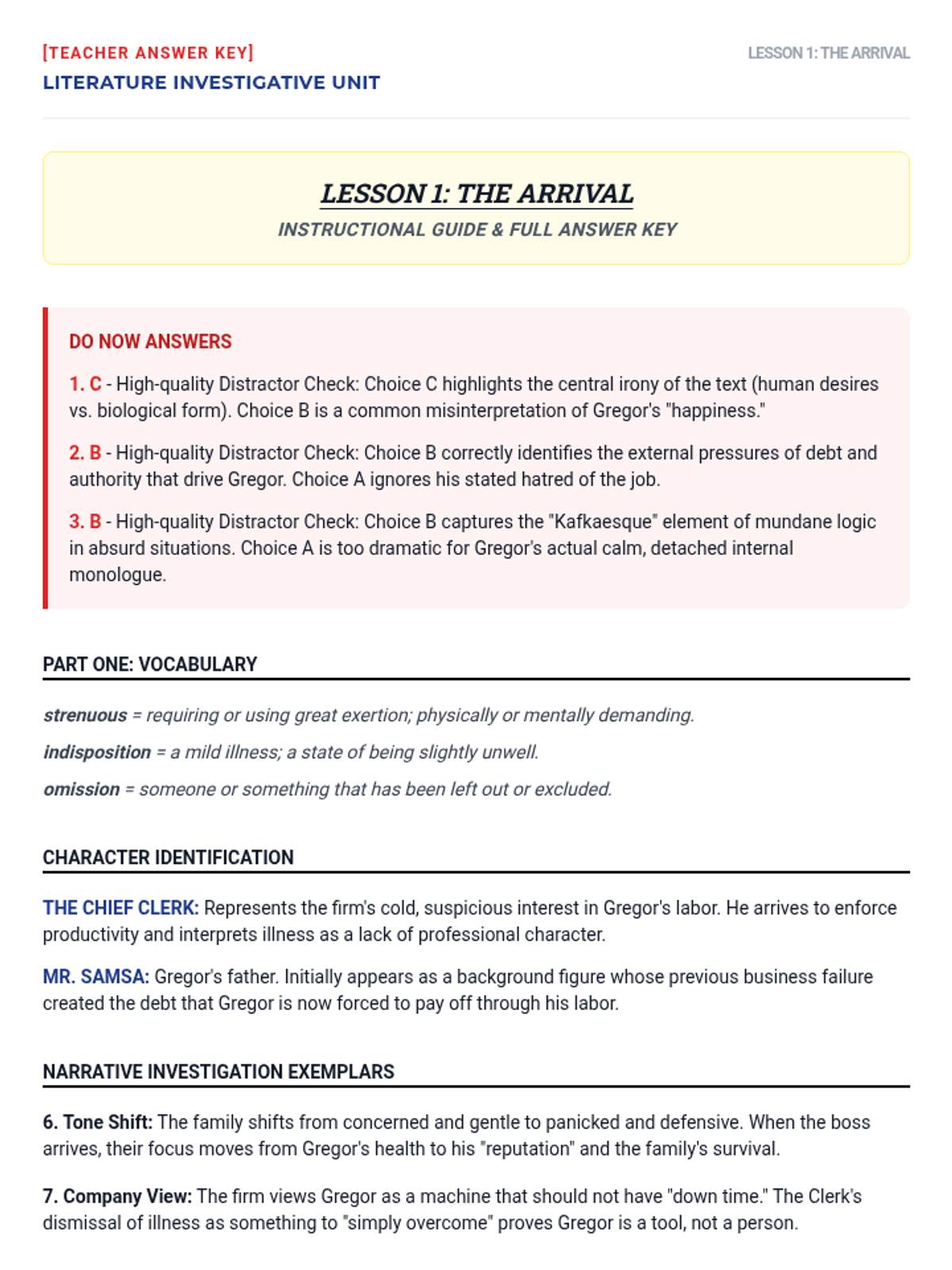
Students analyze the visual reveal of Gregor's form and the immediate physical and psychological retreat of the Chief Clerk and family. Focus on the 'Invisible Force' of alienation.
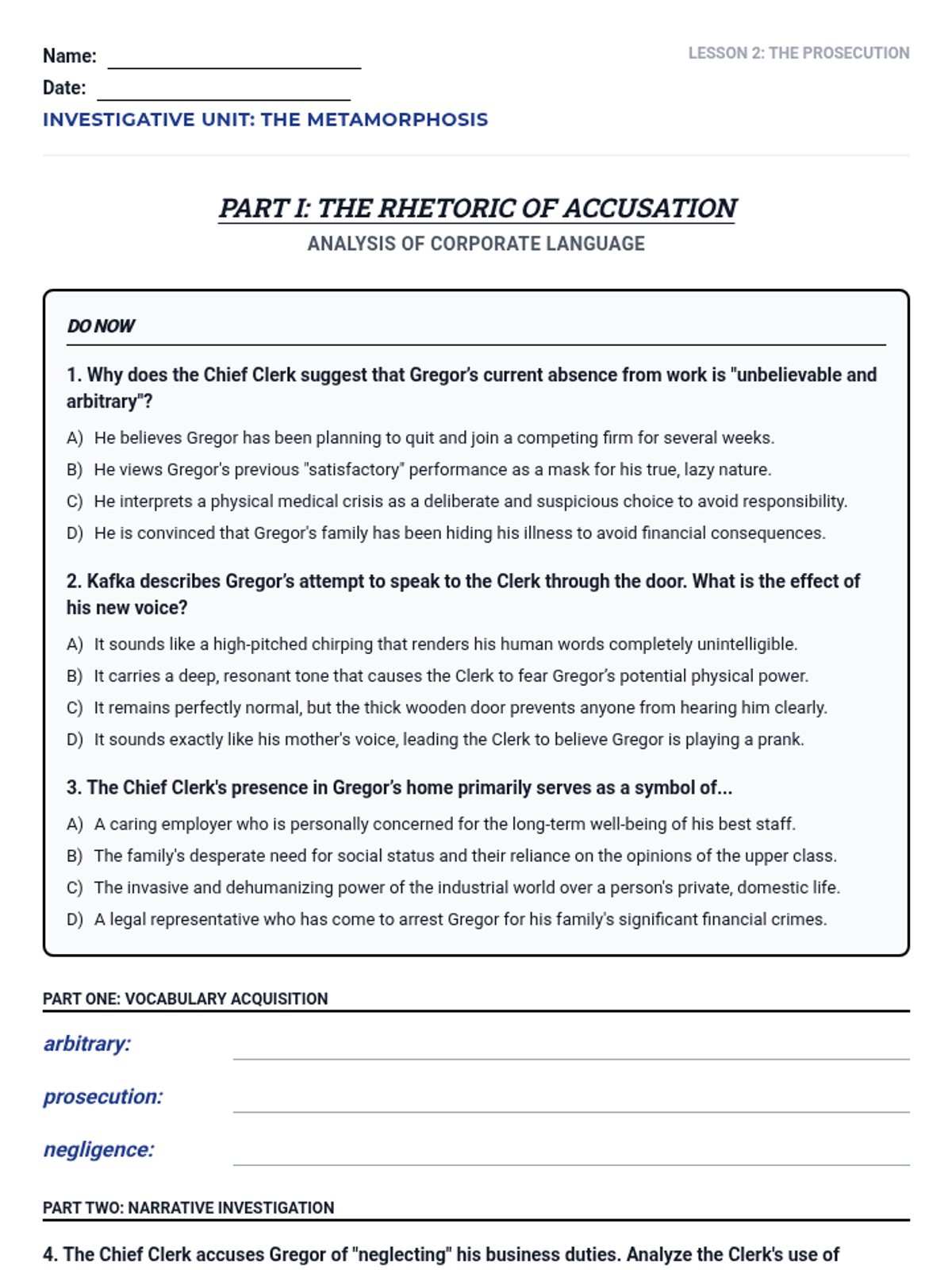
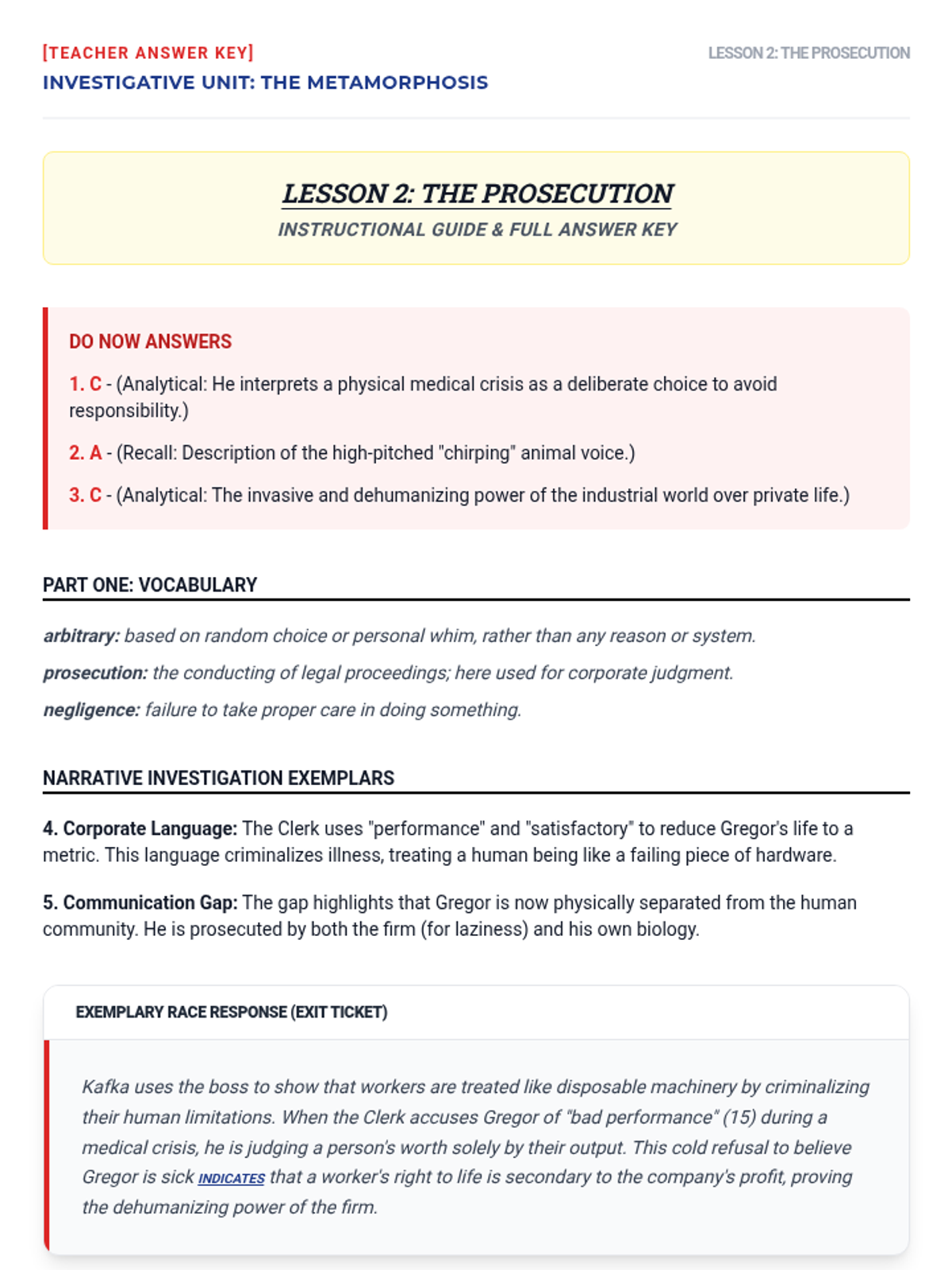
Students analyze the Chief Clerk's dialogue and how he uses corporate language to minimize Gregor's humanity and maximize his perceived 'laziness'.
Students analyze the arrival of the Chief Clerk and the immediate shift from familial concern to corporate suspicion. Focus on the theme of 'The Firm' as a dehumanizing force.
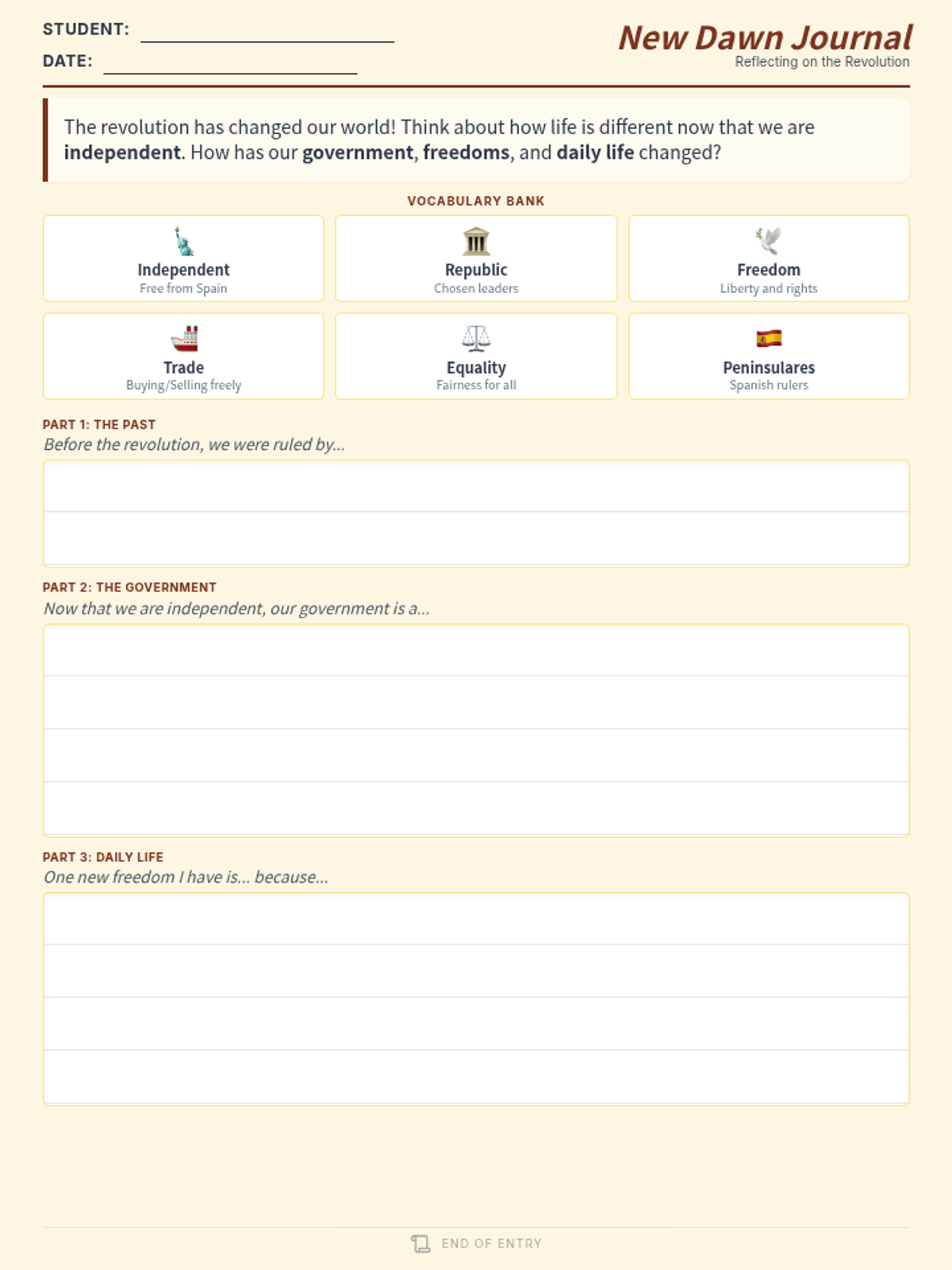
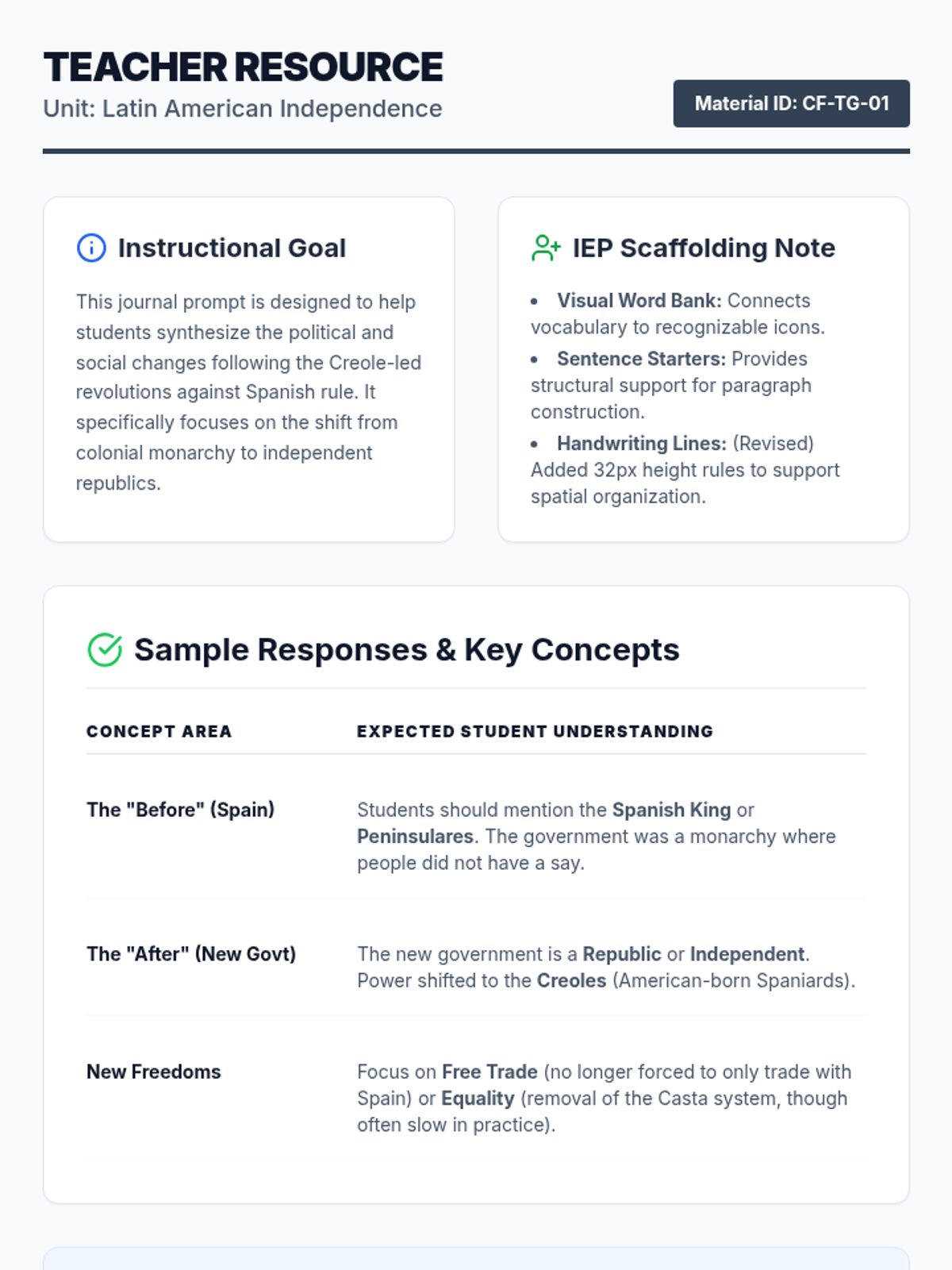
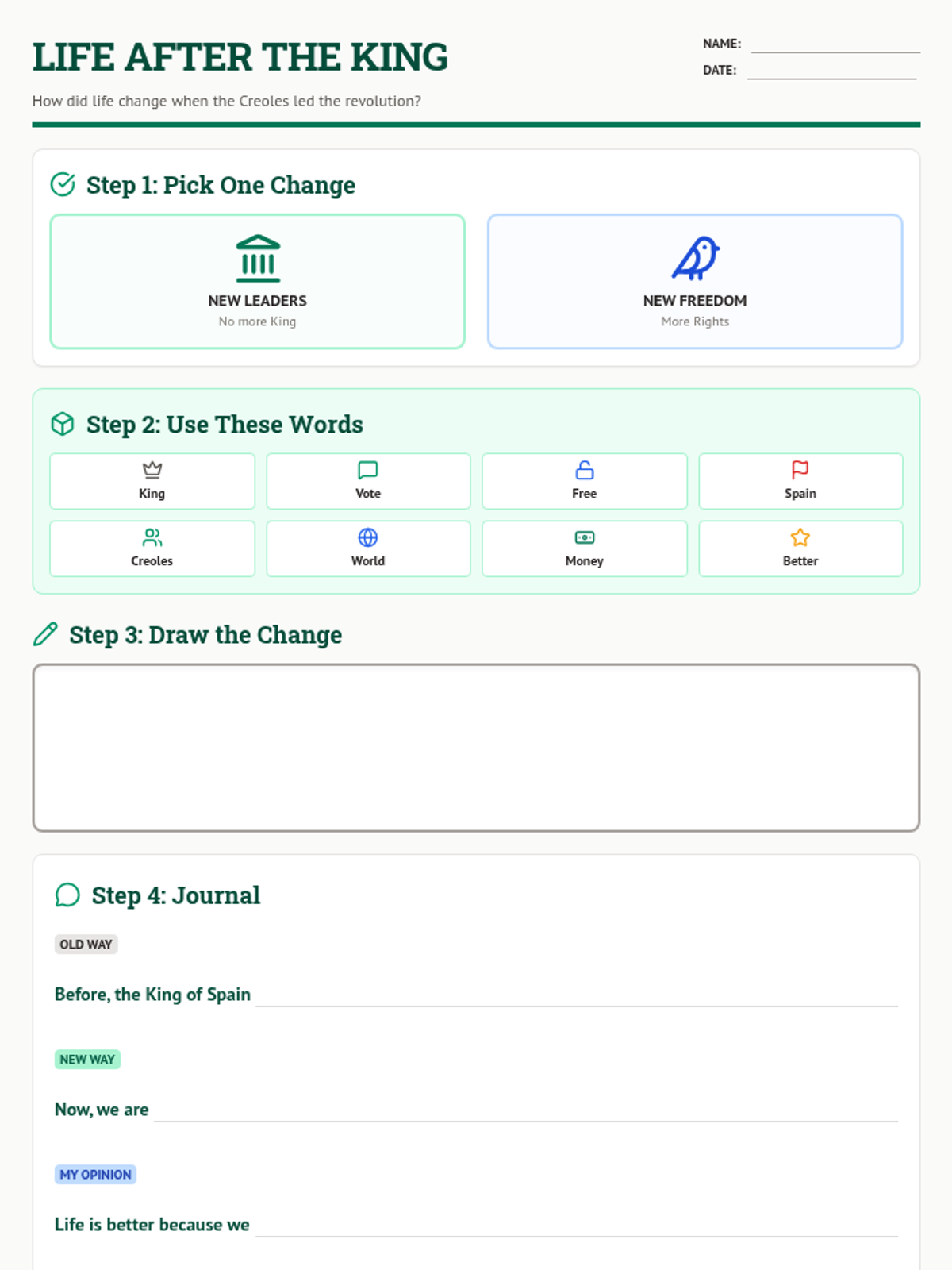
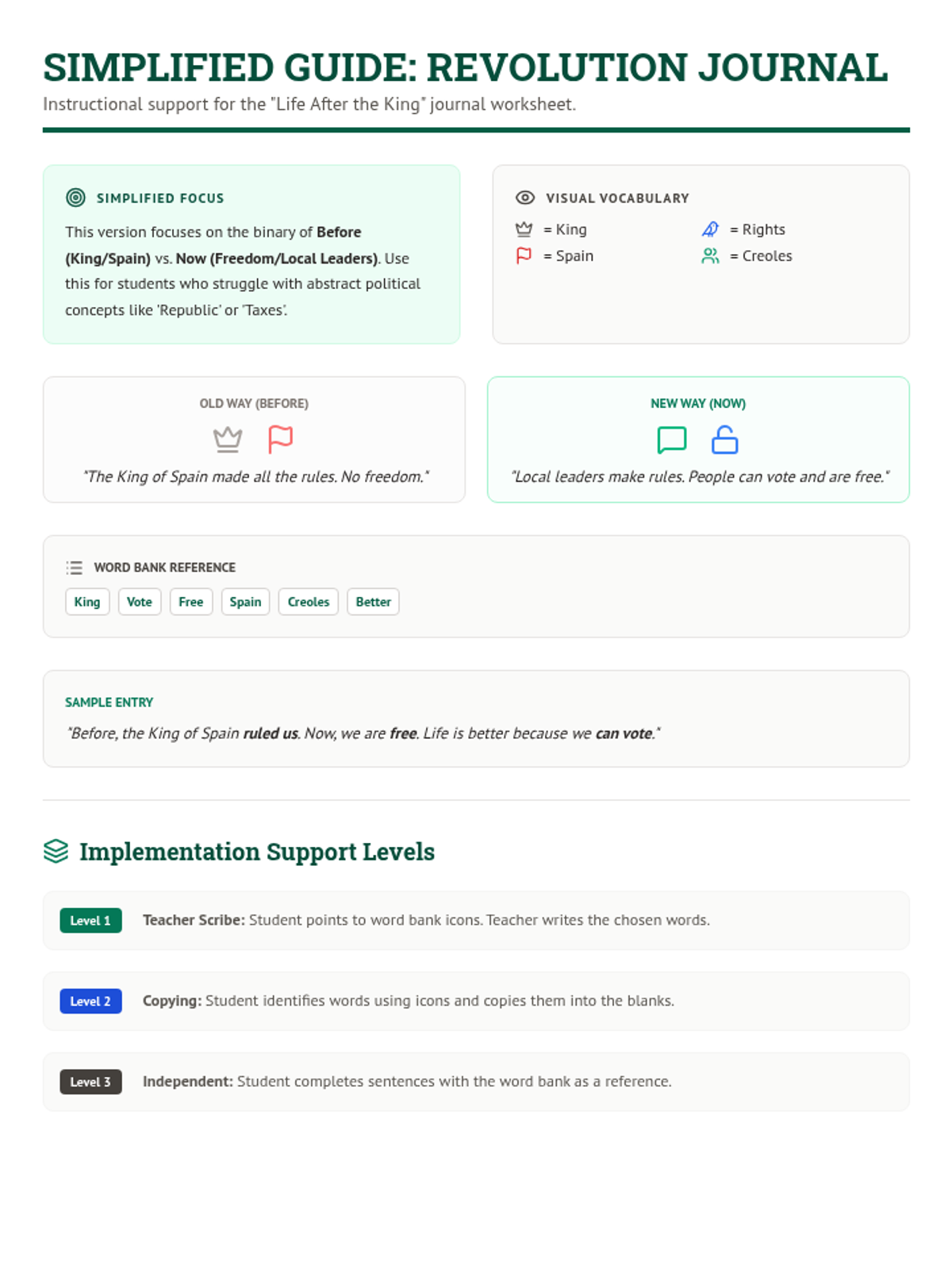
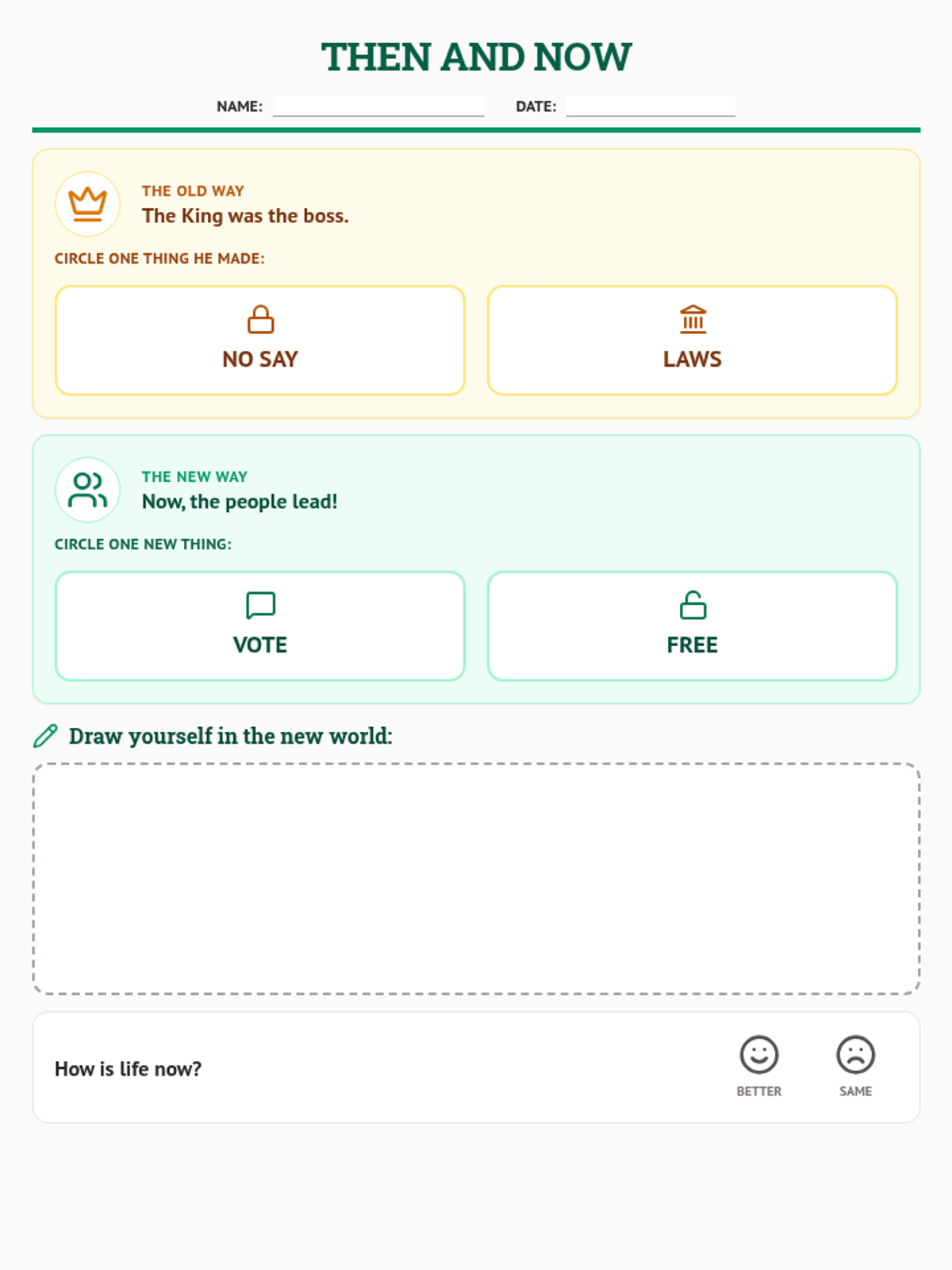
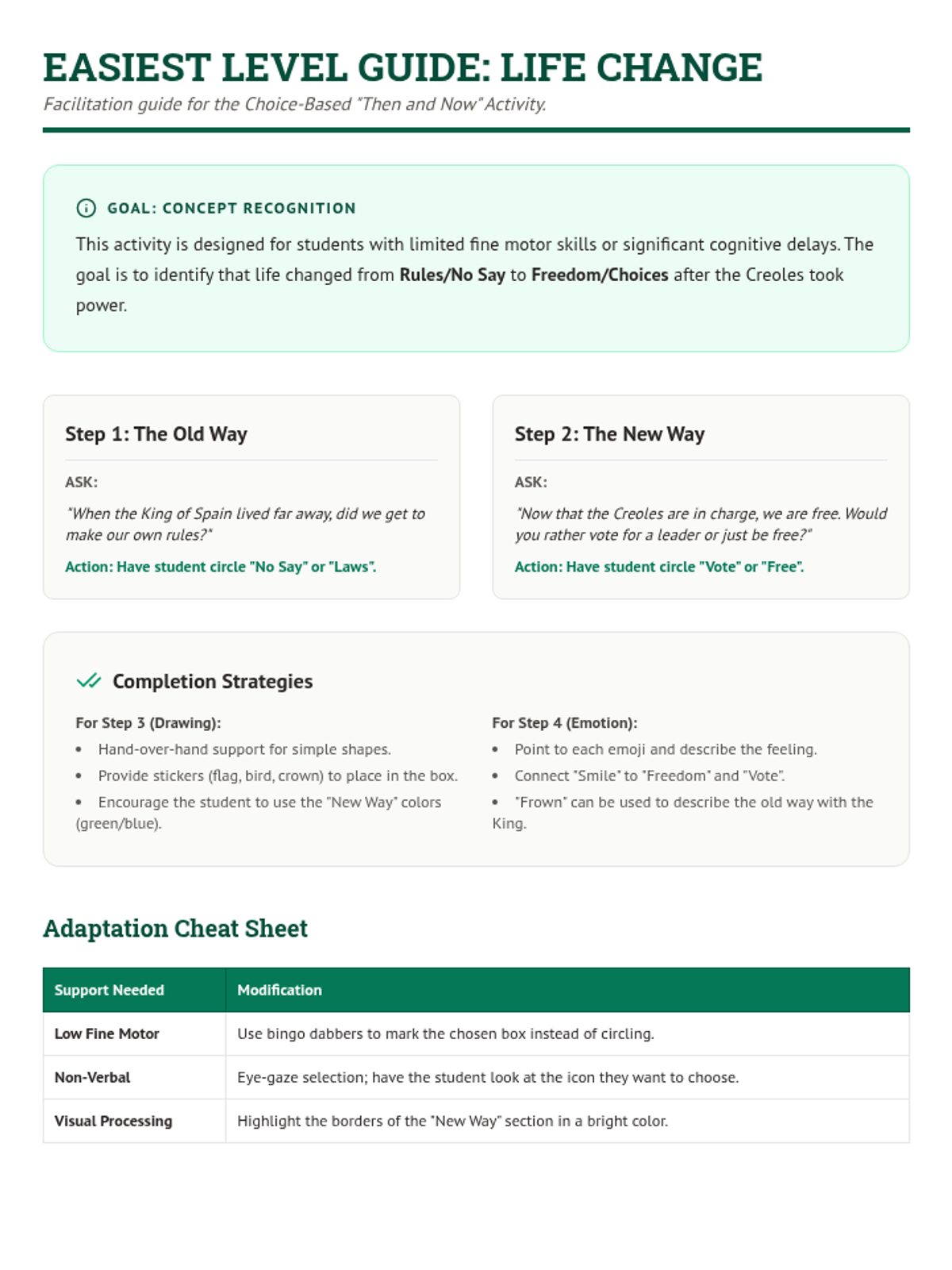
A lesson exploring the impact of the Latin American (Creole) Revolutions on government, freedom, and daily life, featuring a scaffolded journal activity for IEP students.
A lesson exploring the social and political changes following the Creole-led revolutions in Latin America, specifically designed for students requiring IEP accommodations.
A comprehensive overview of AP Macroeconomics Units 3 and 4, focusing on the AD-AS model, fiscal policy, the financial sector, and monetary policy.
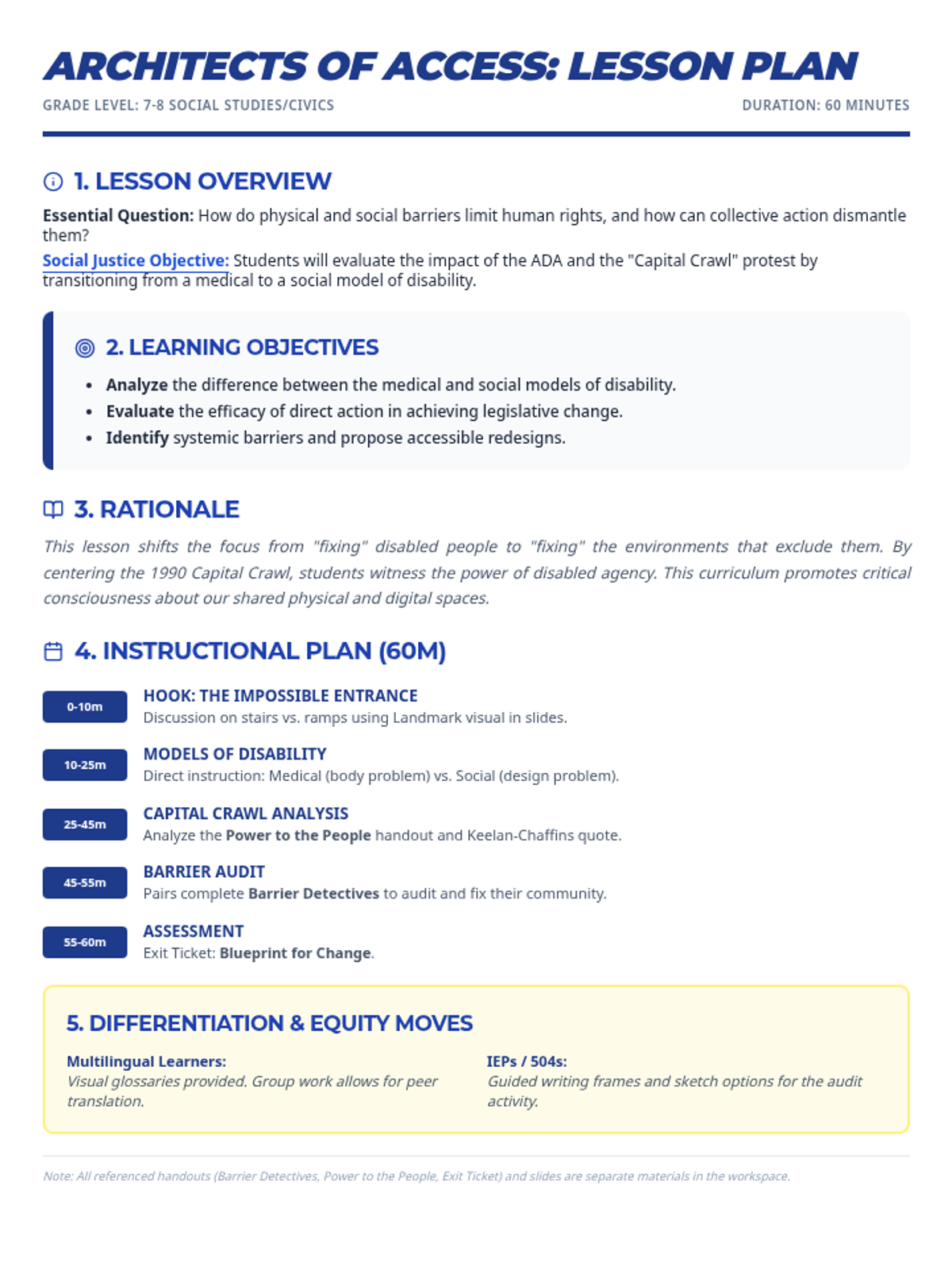
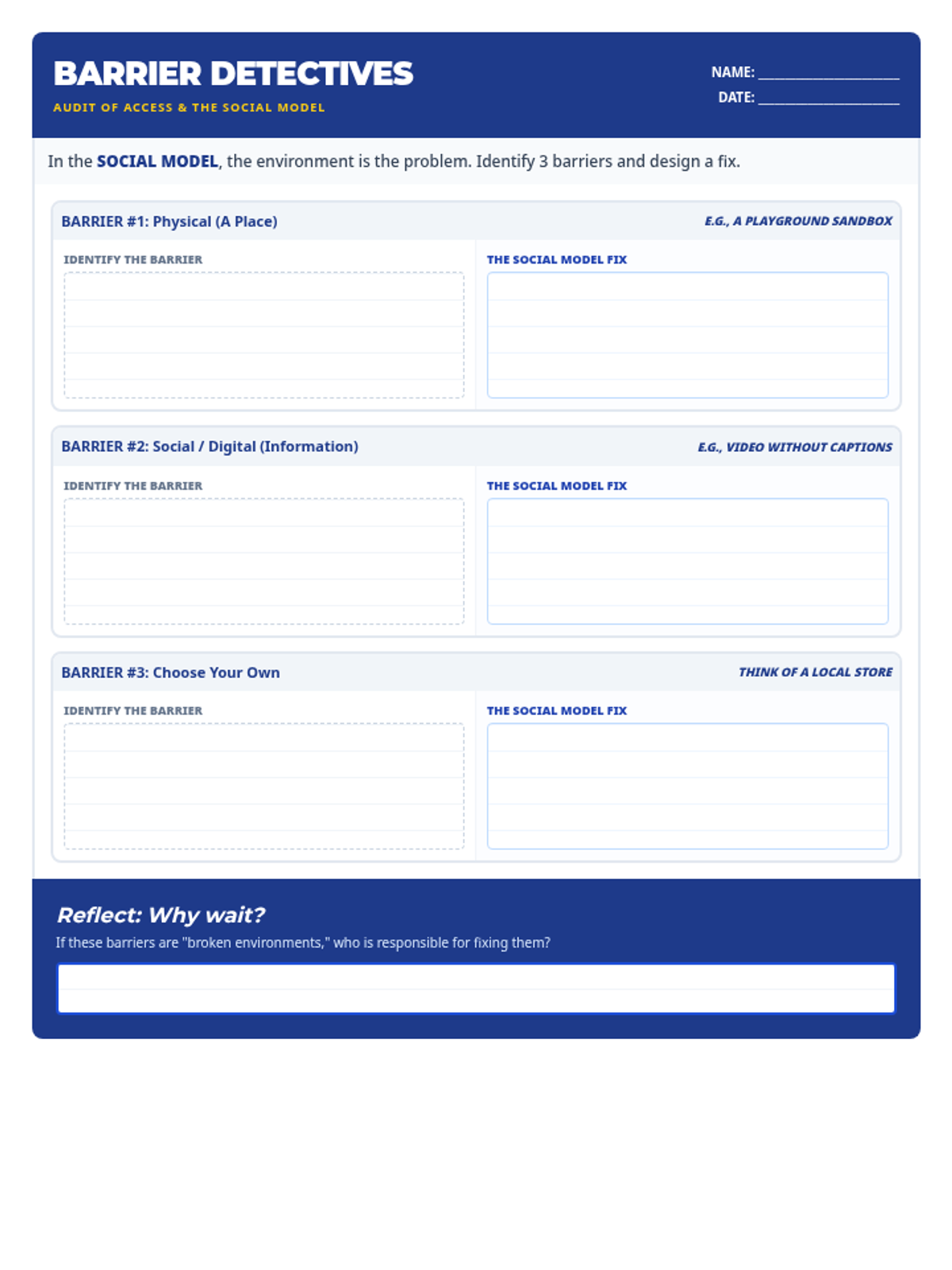
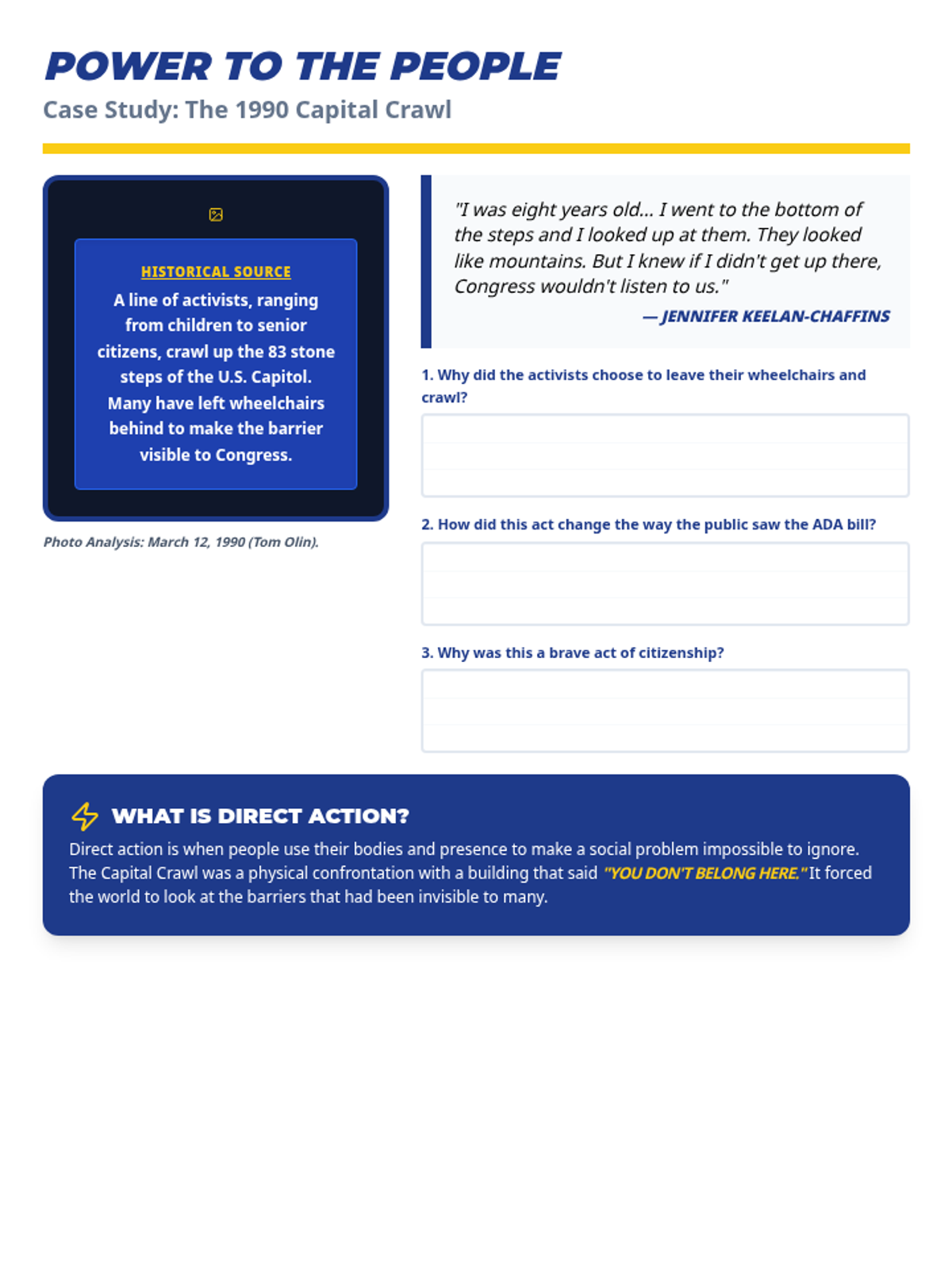
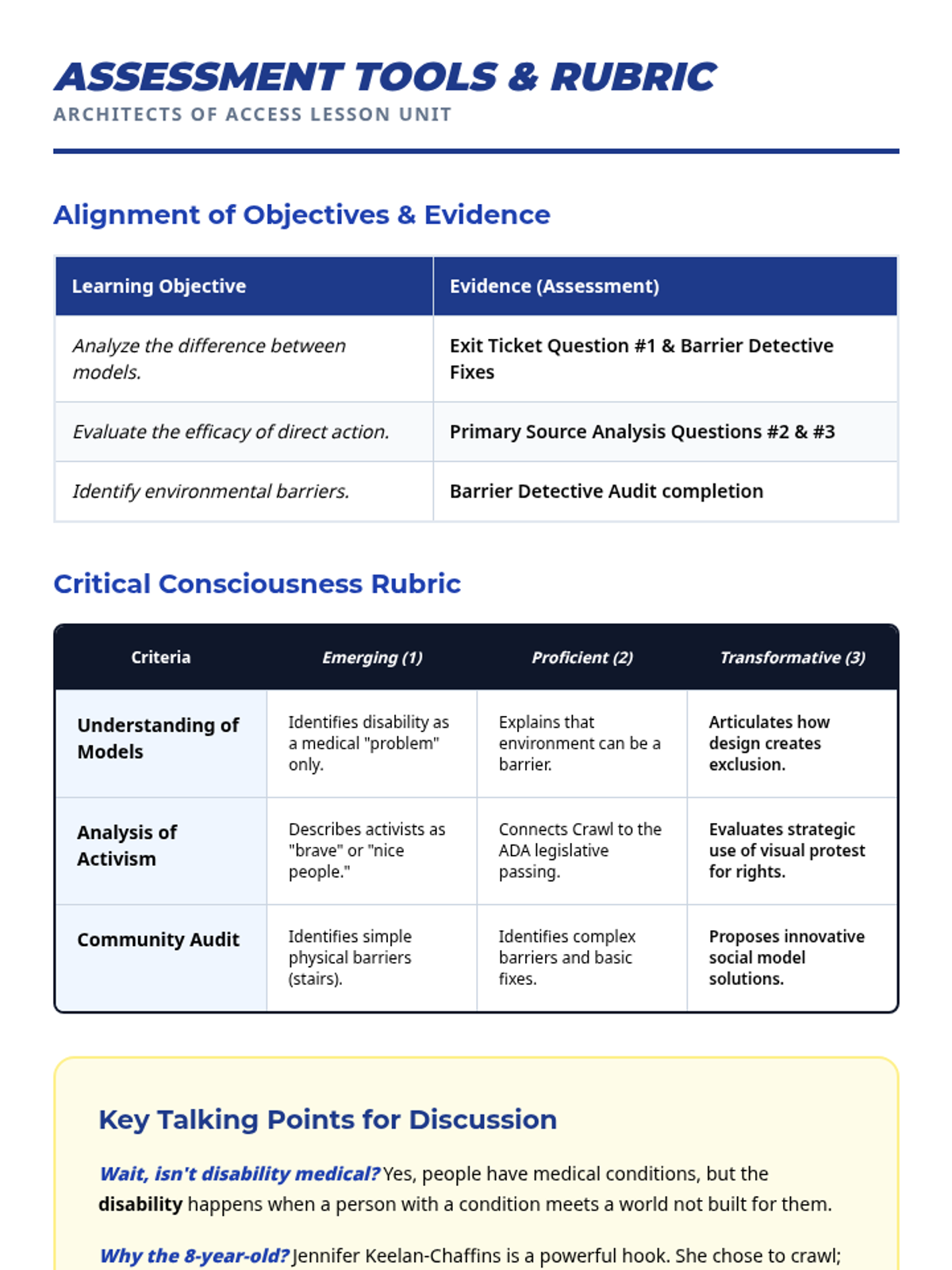
A middle school civics lesson exploring disability rights history, the ADA, and the shift from the medical to the social model of disability through the lens of the 'Capital Crawl' activism.
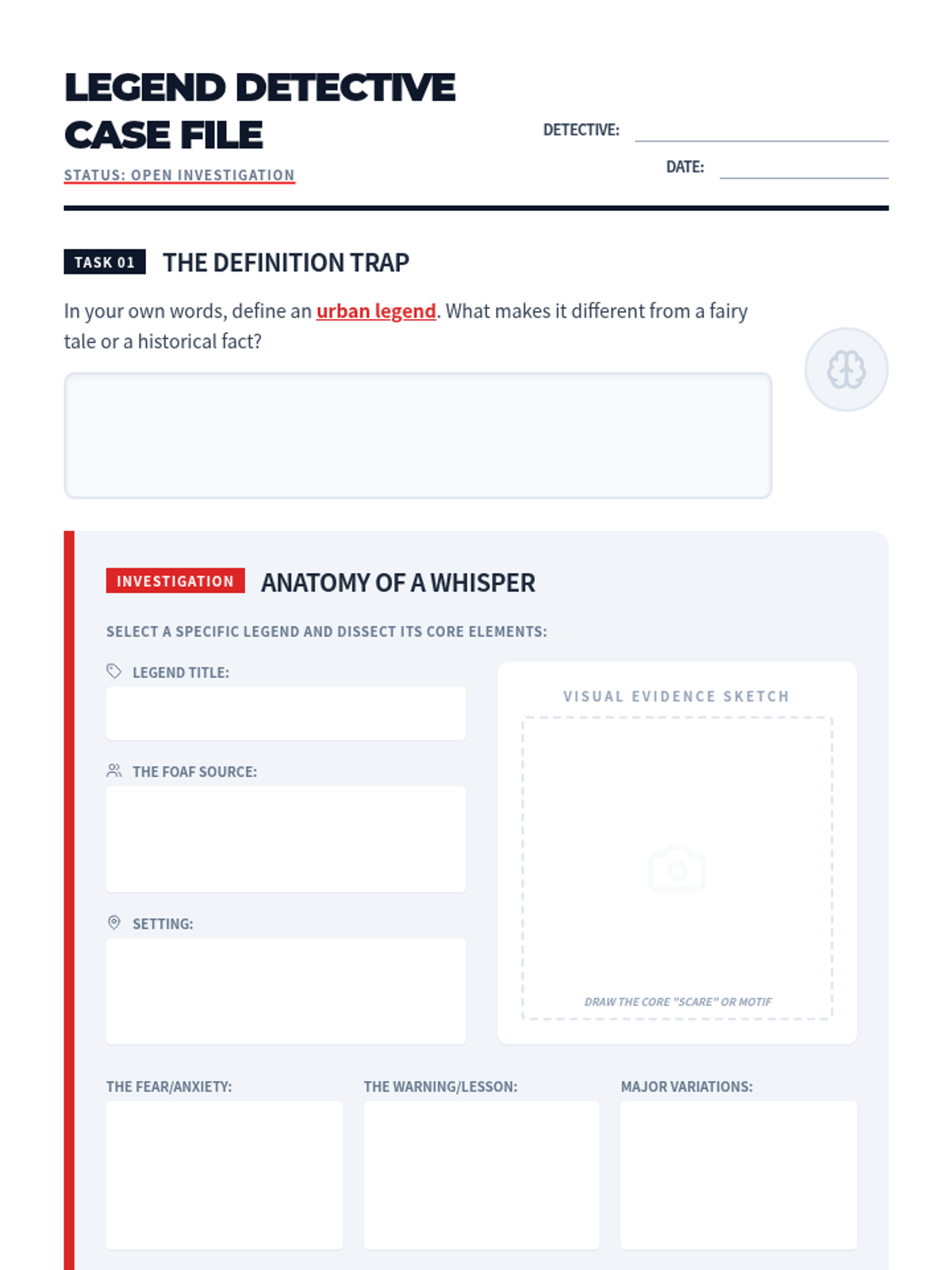
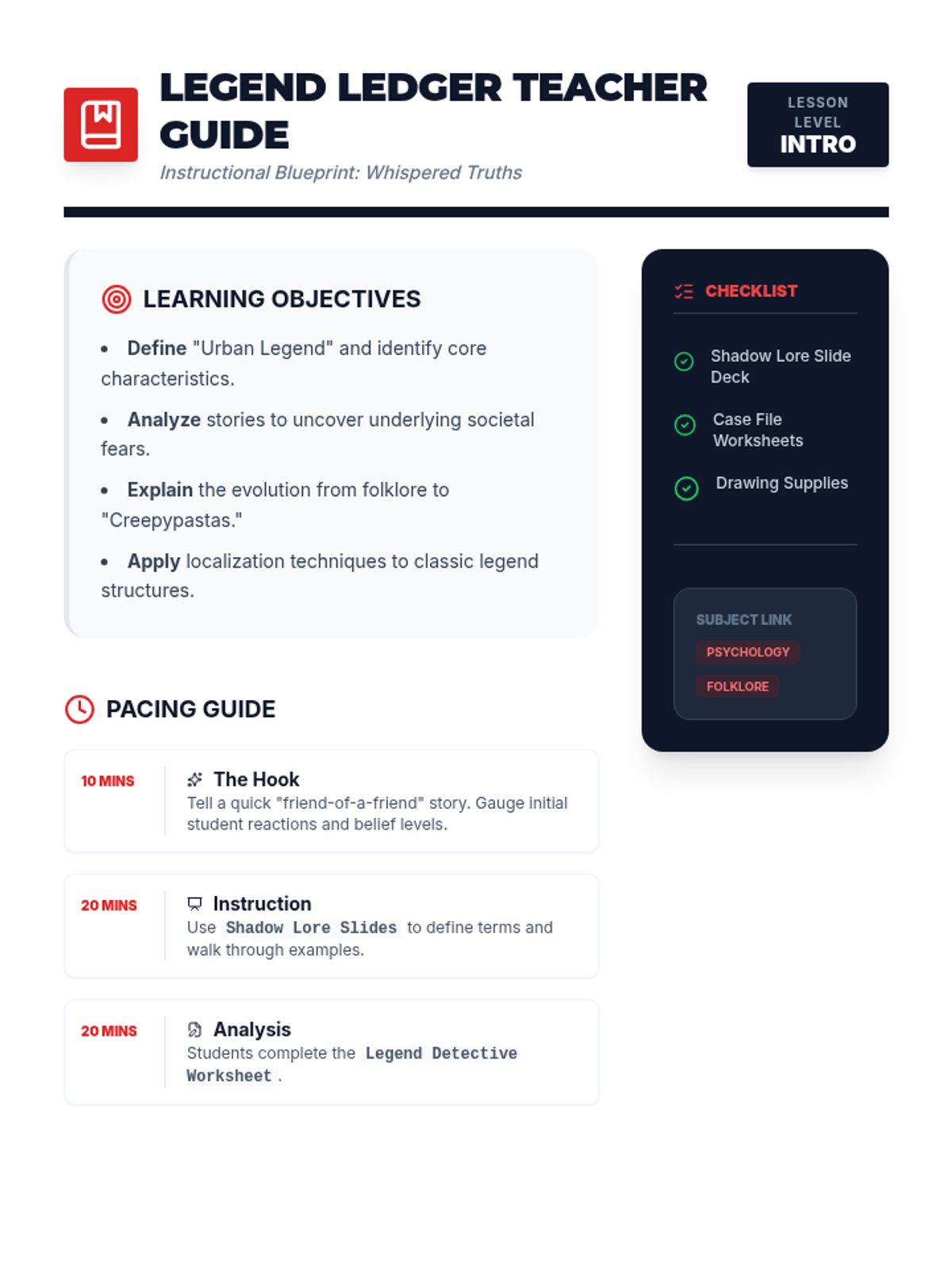
An introductory lesson on urban legends, covering their definition, key characteristics, and famous examples, followed by student analysis and discussion.
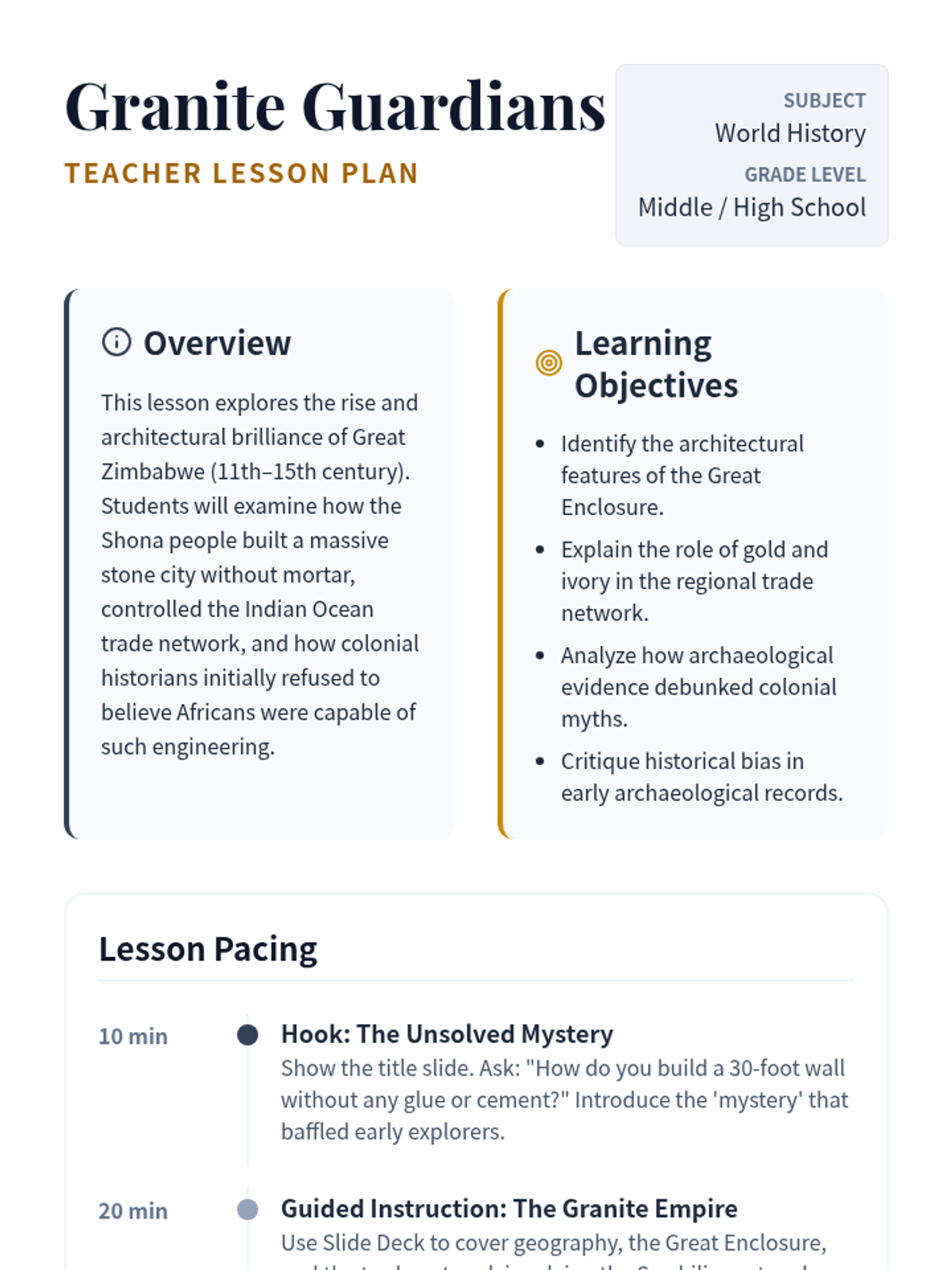
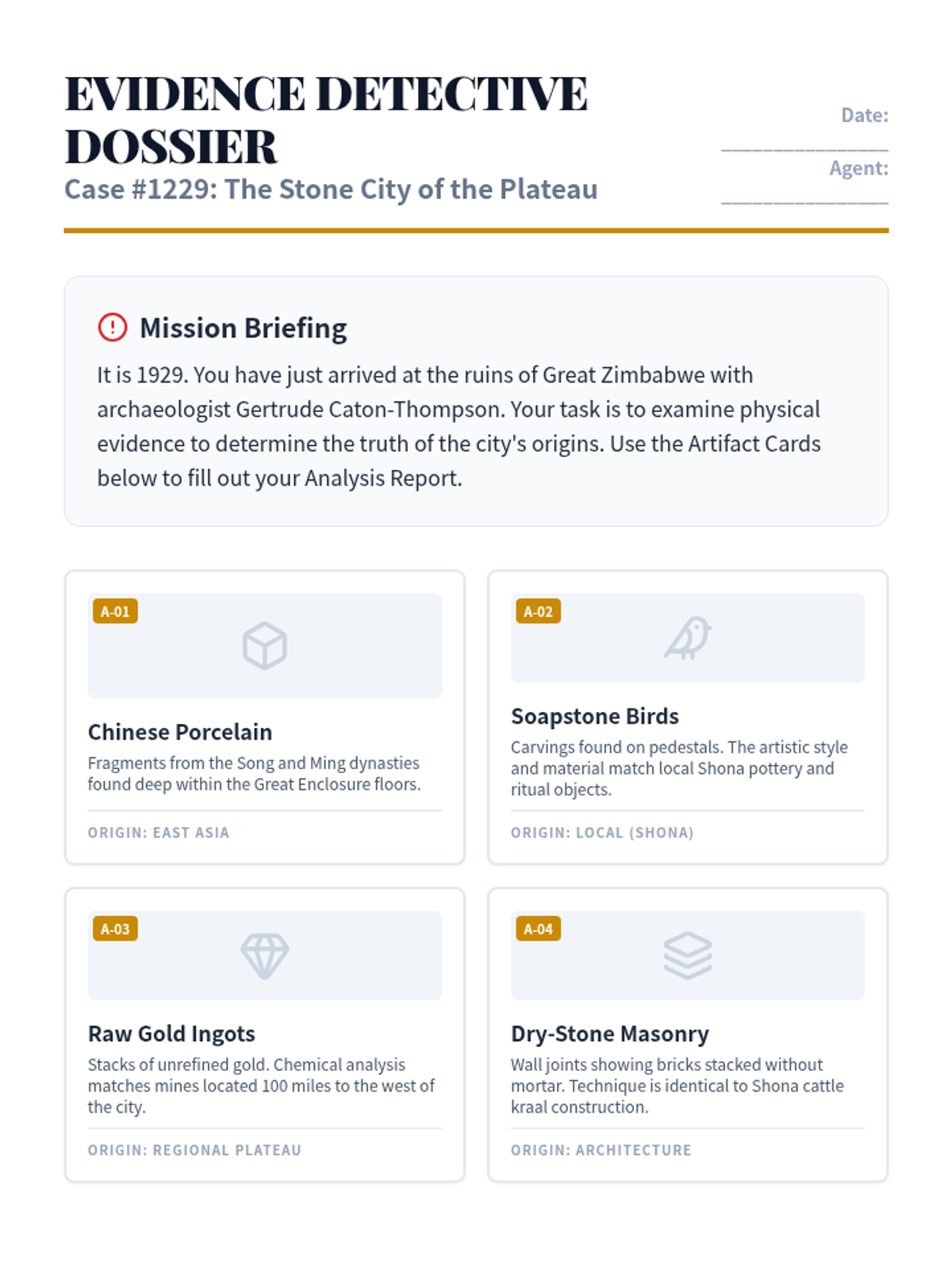
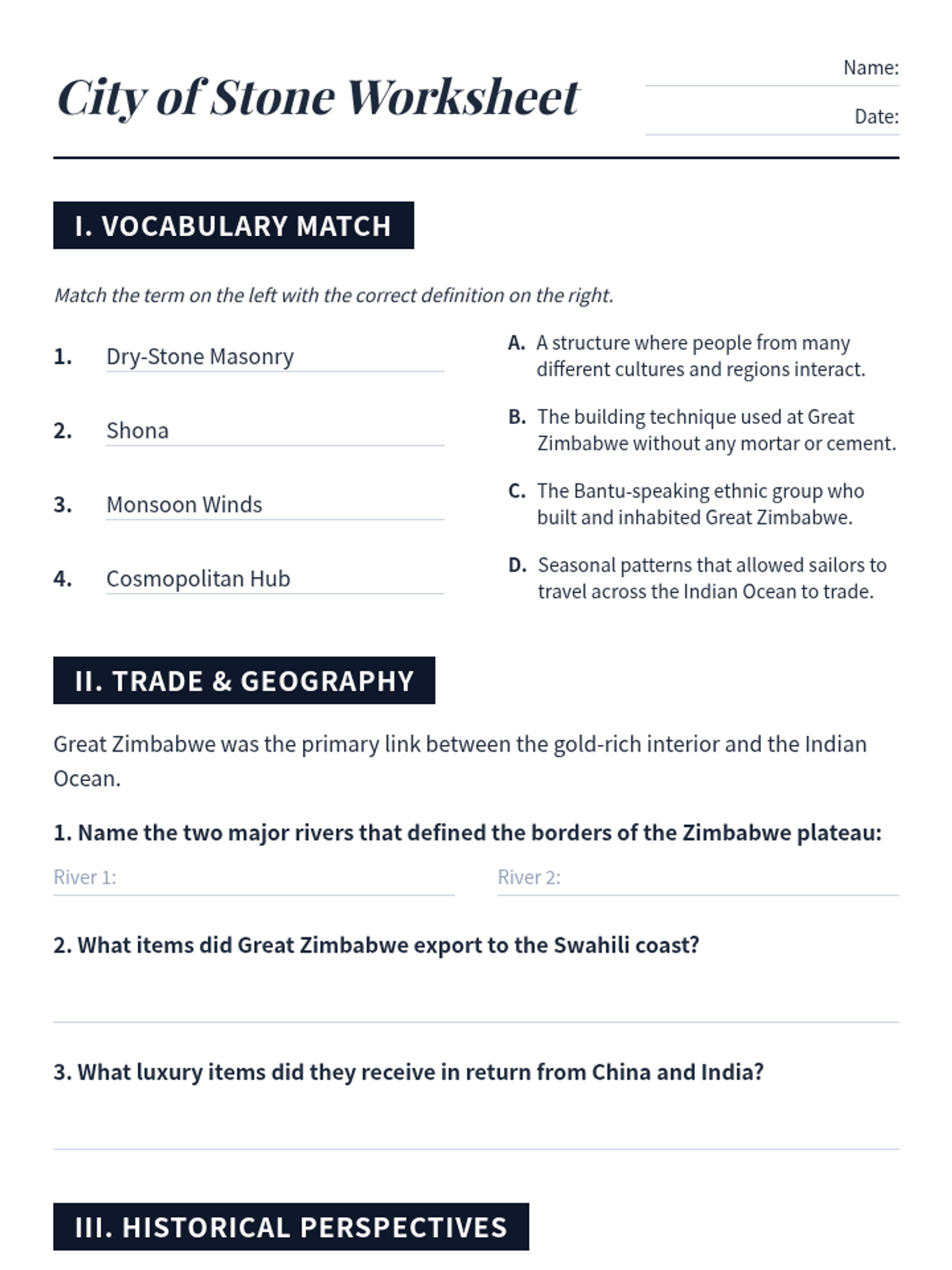
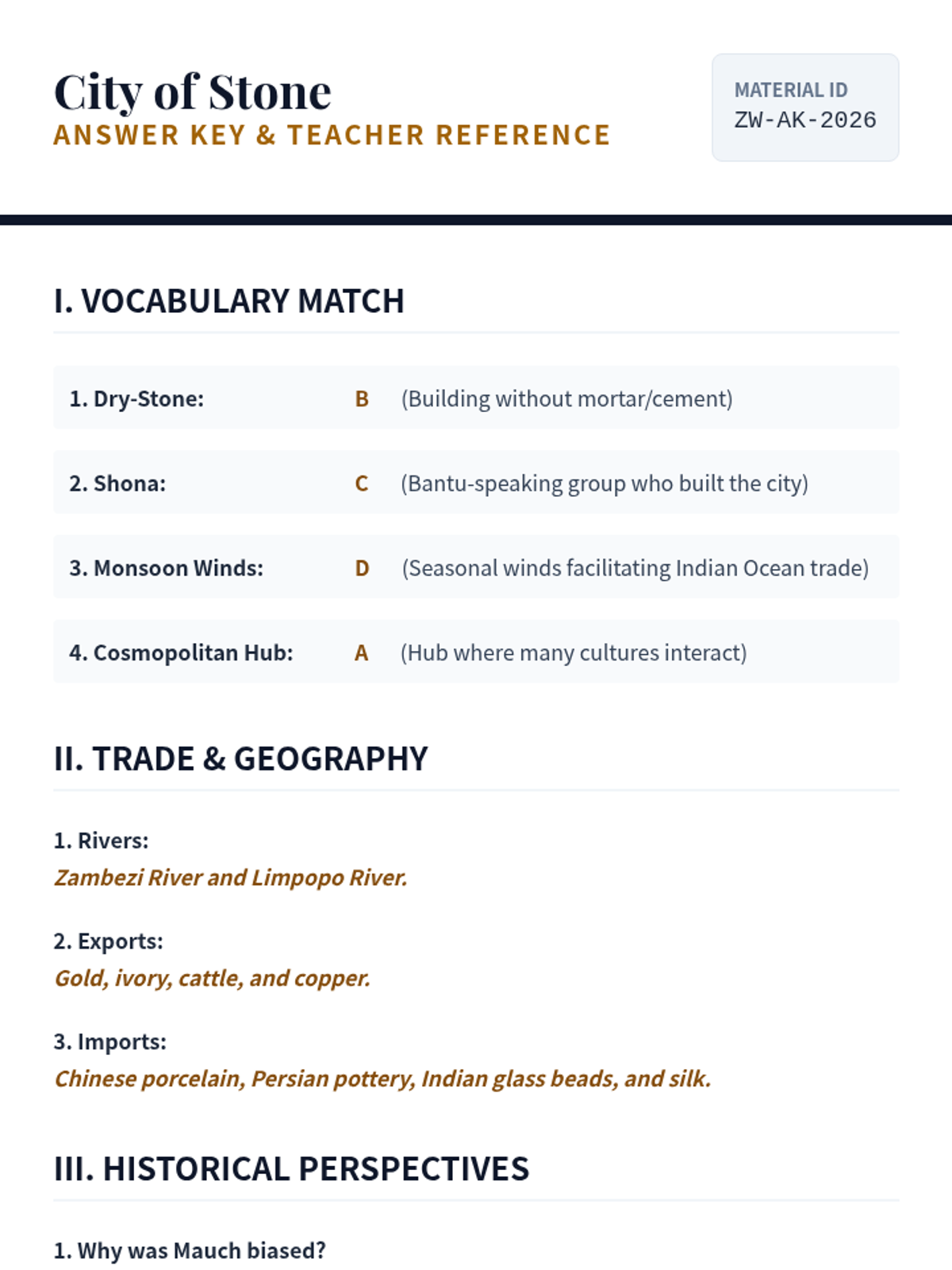
Students investigate the architectural mystery and economic power of Great Zimbabwe, analyzing archaeological evidence to debunk colonial-era myths about African civilizations.
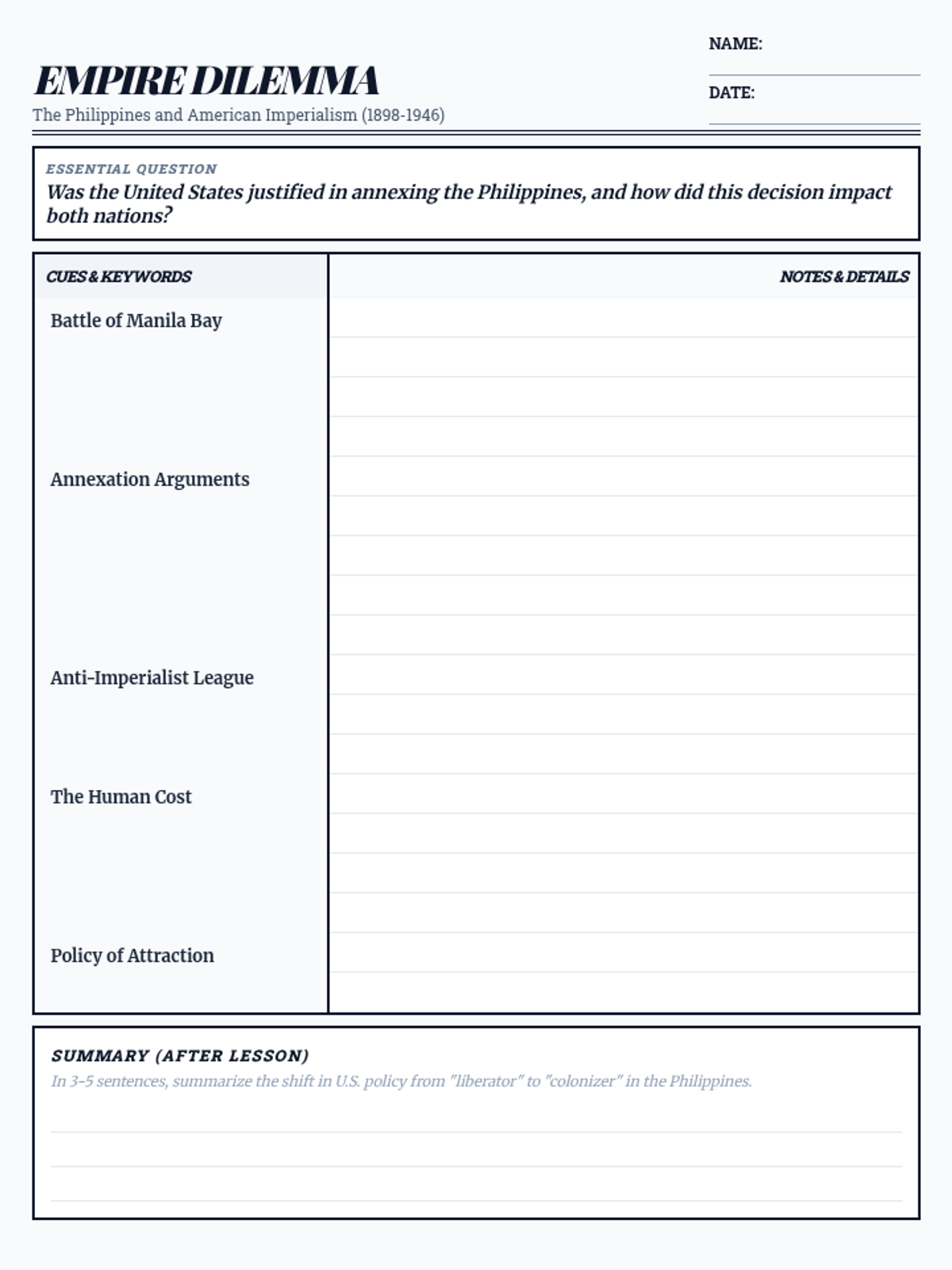
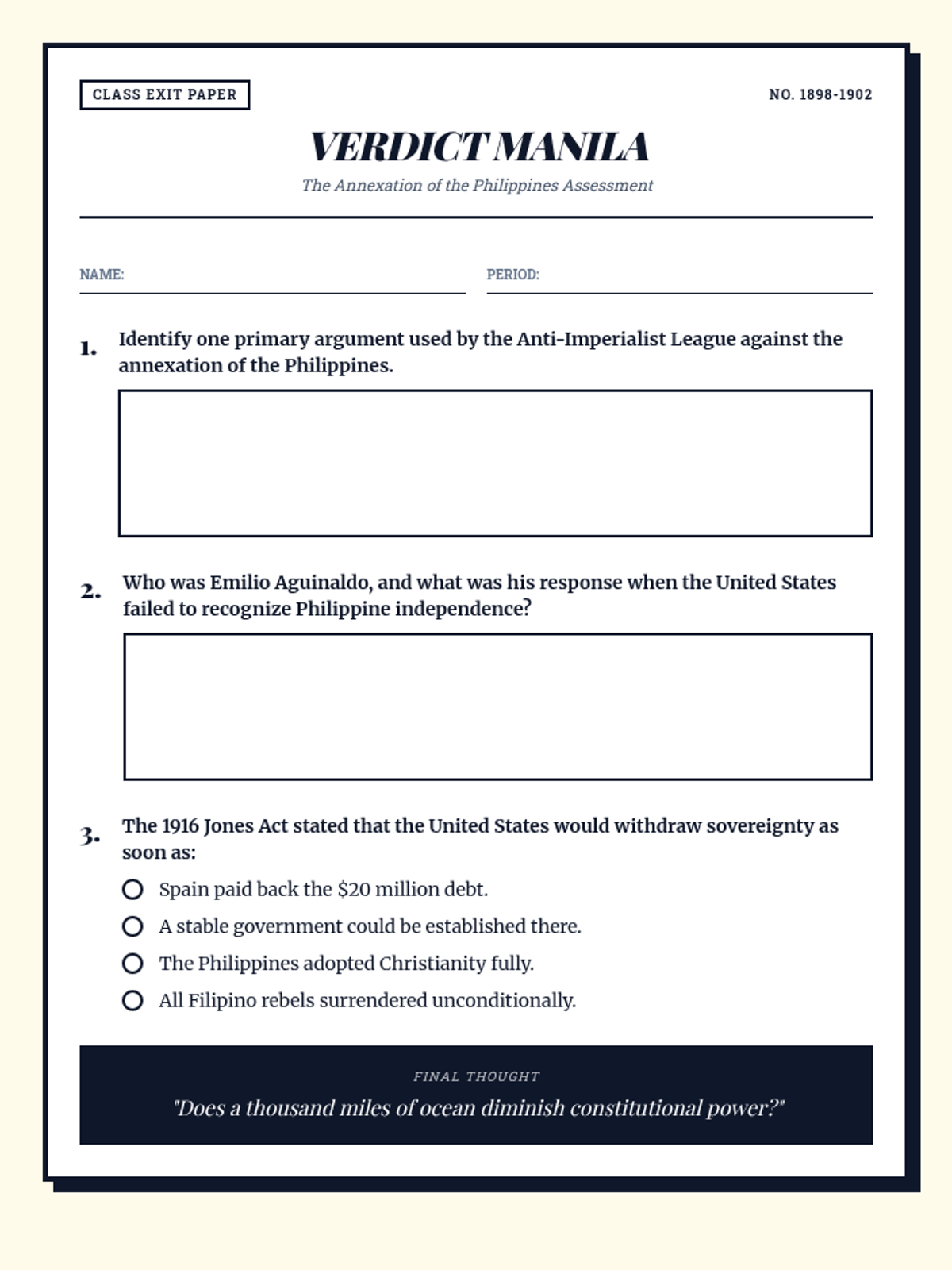
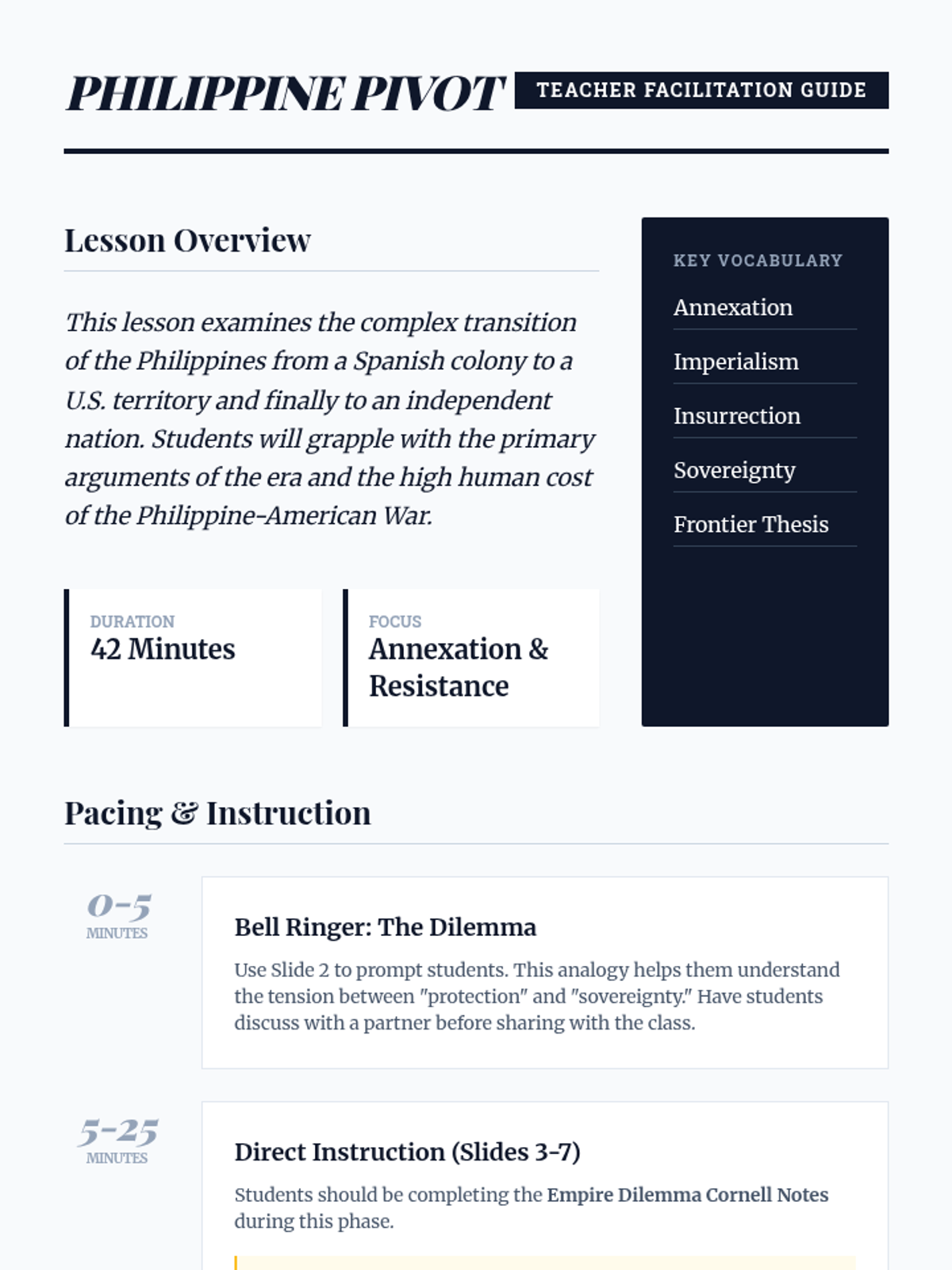
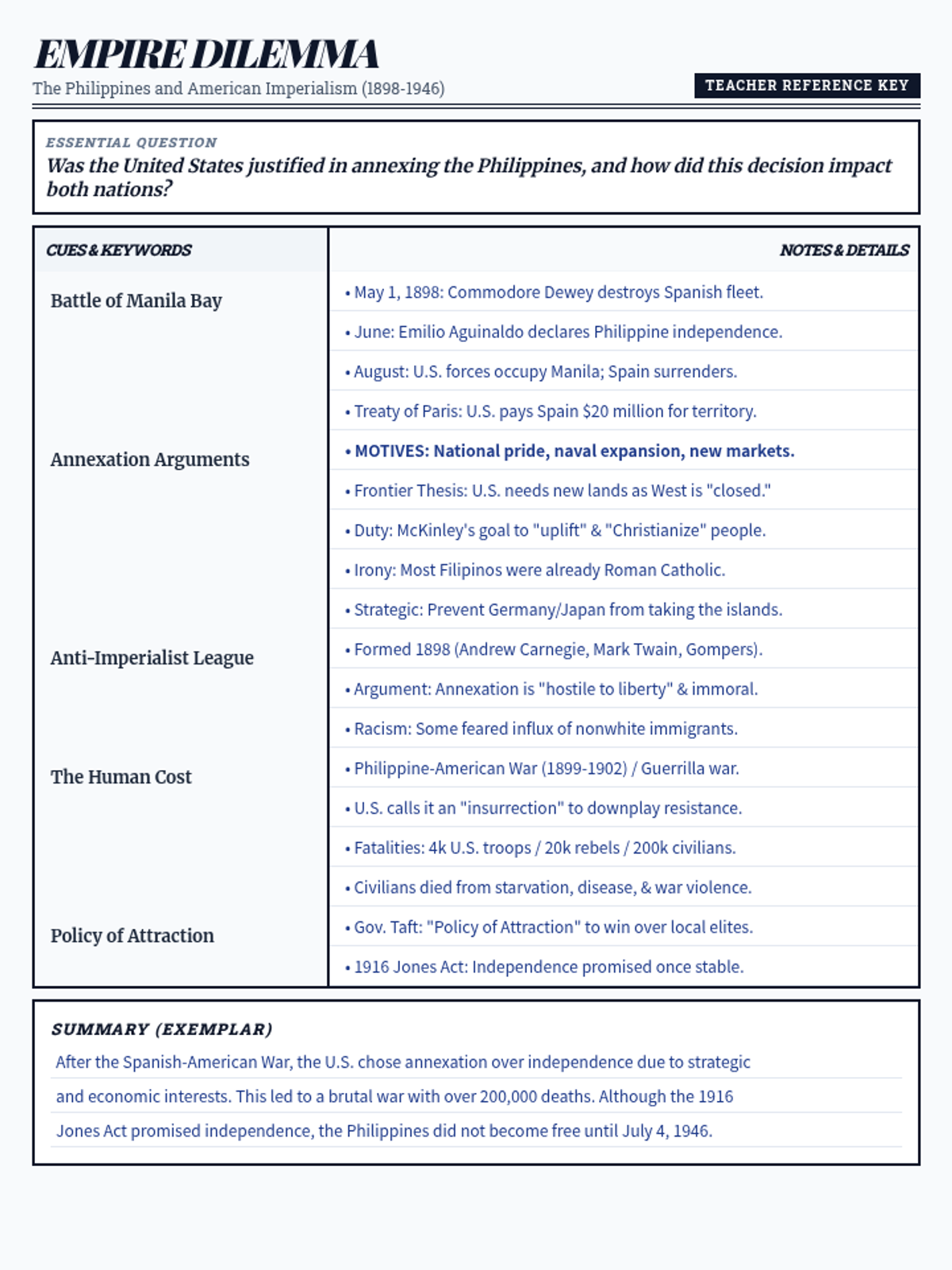
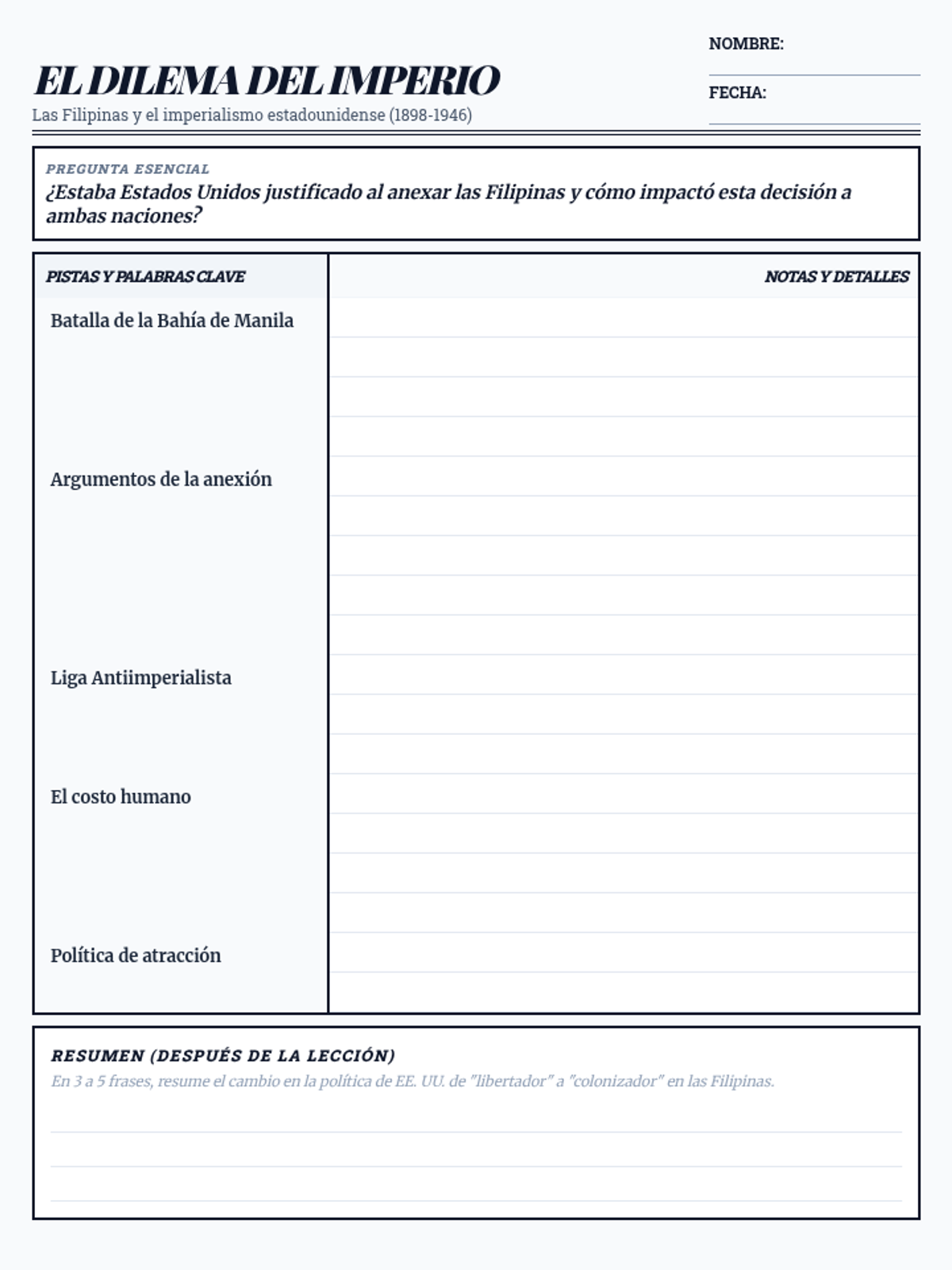
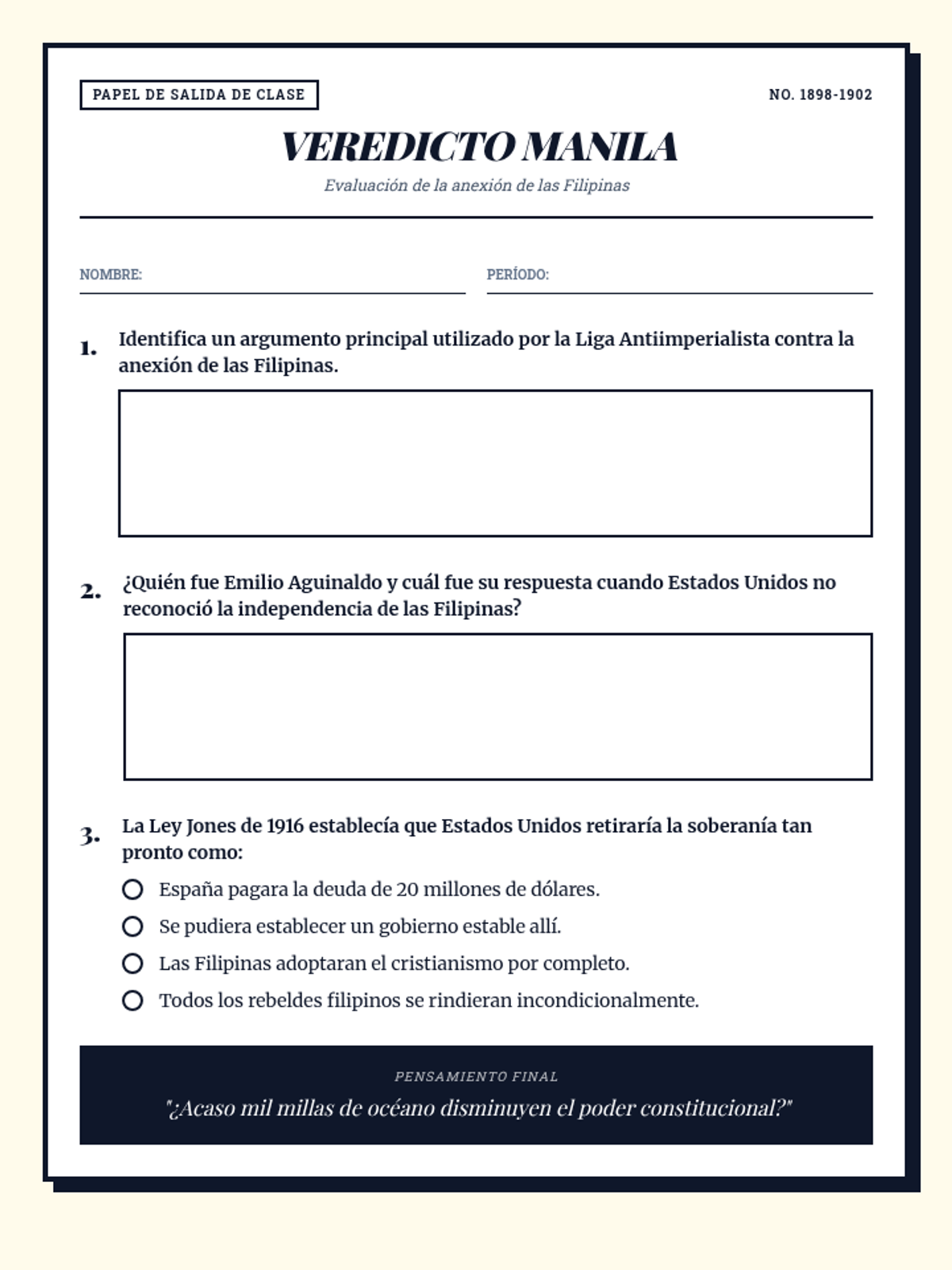
A 42-minute lesson exploring the annexation of the Philippines, the arguments for and against American imperialism, and the resulting Philippine-American War.
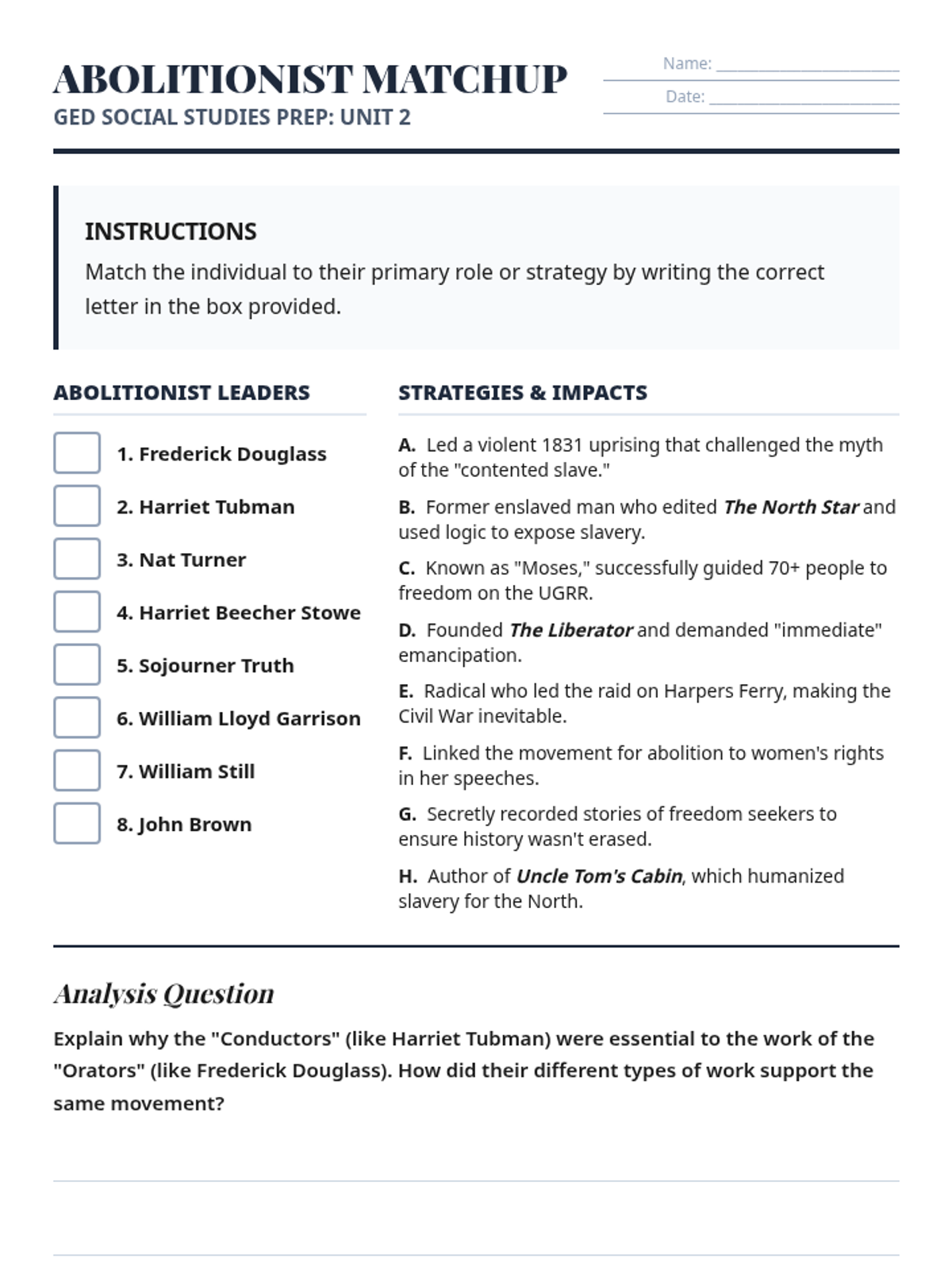
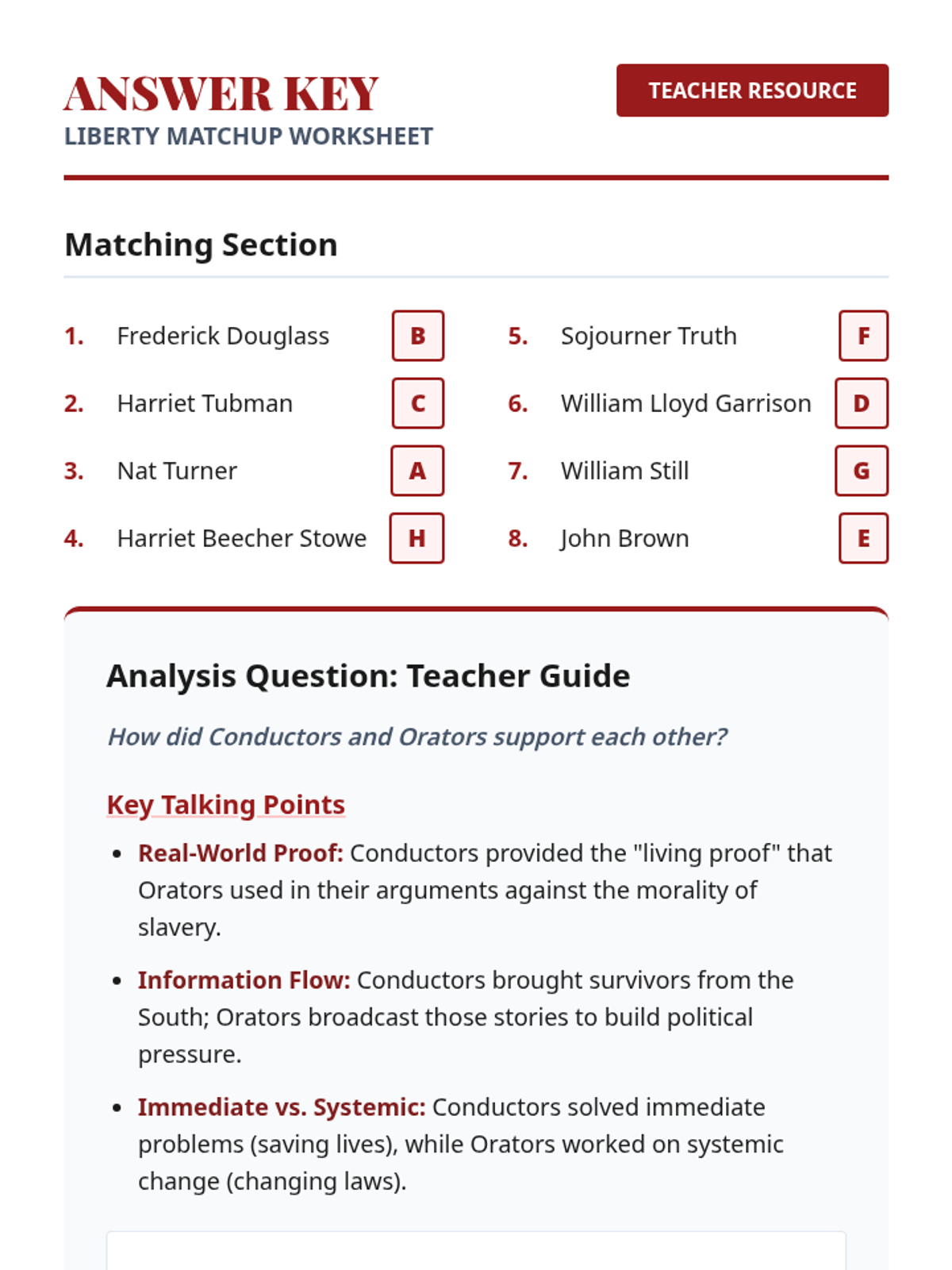
A comprehensive study of key figures in the abolitionist movement, categorized by their methods of resistance: oratory, strategy, and militant action. Designed specifically for GED Social Studies preparation.