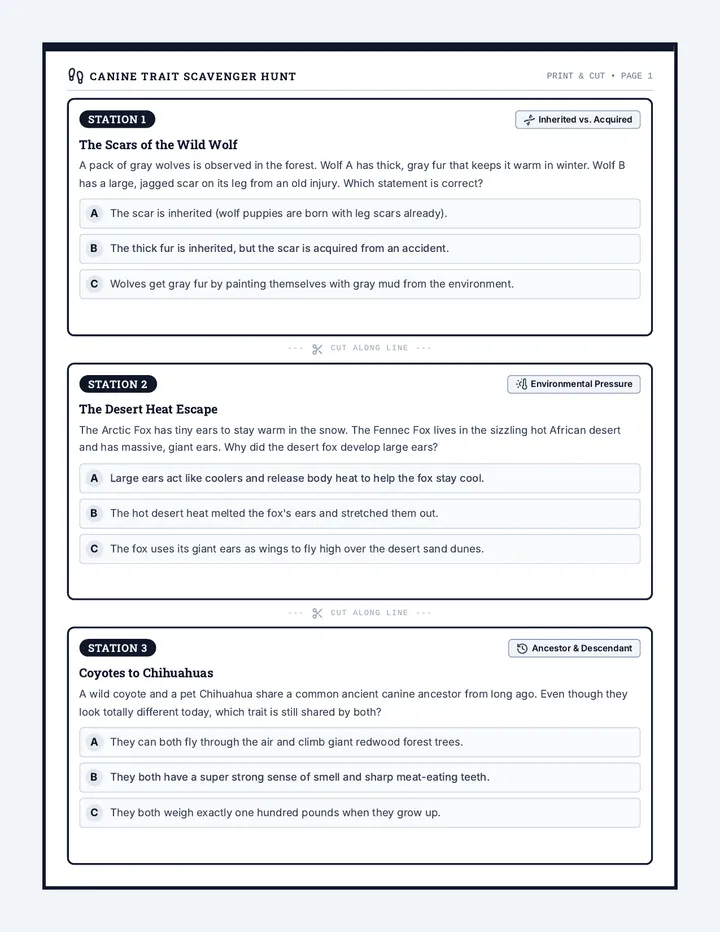
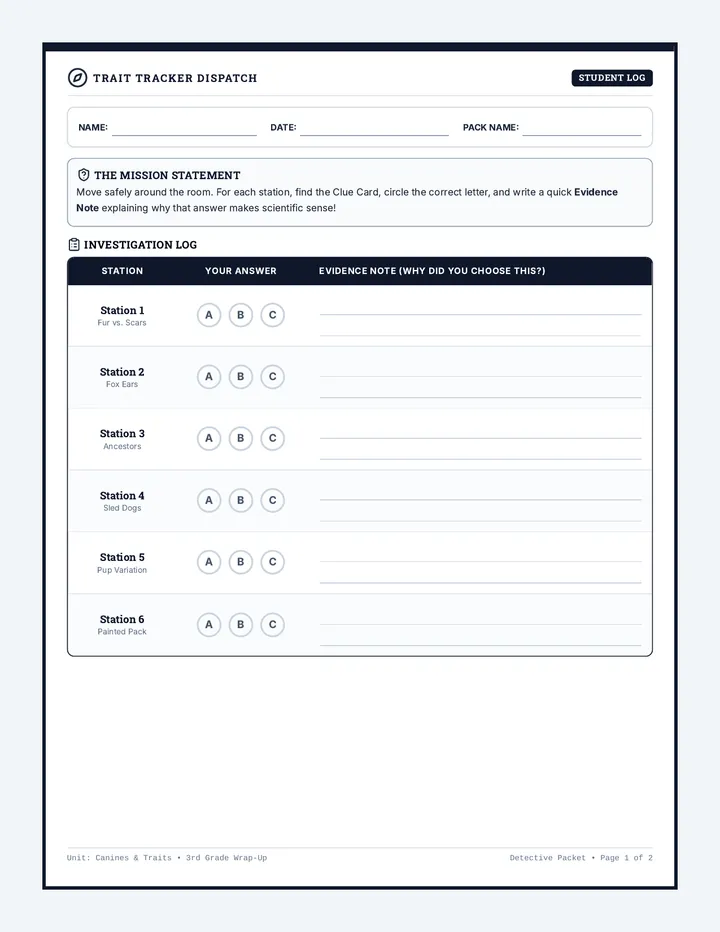
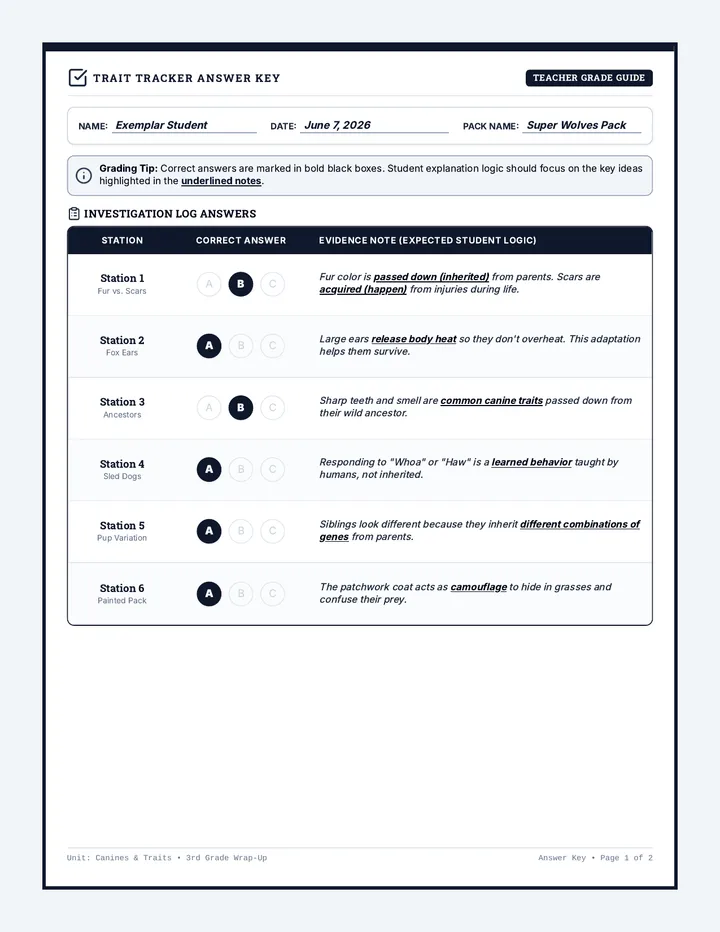
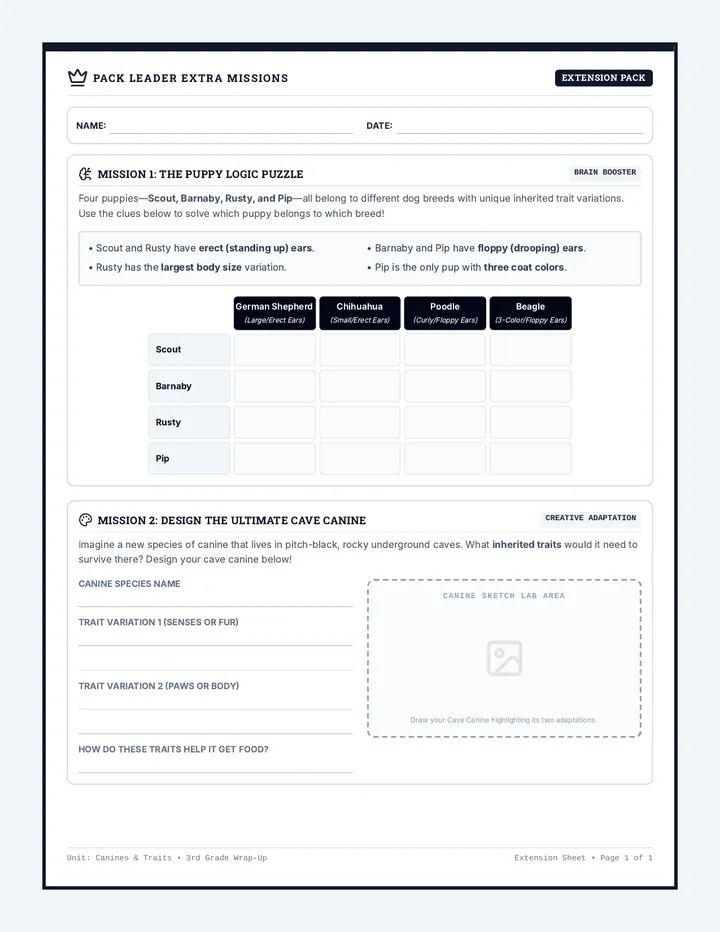
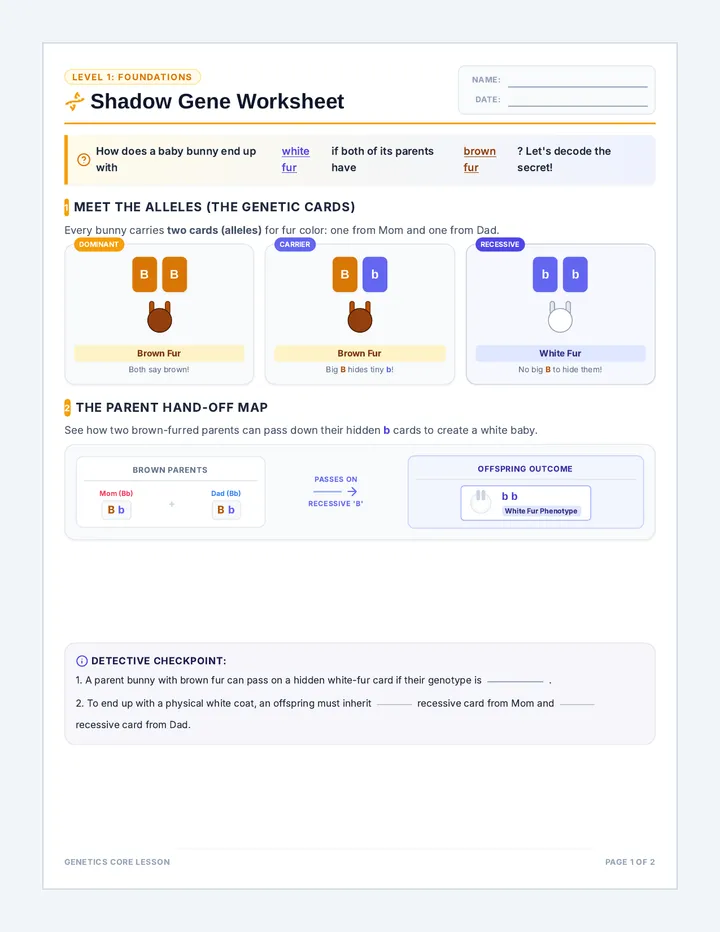
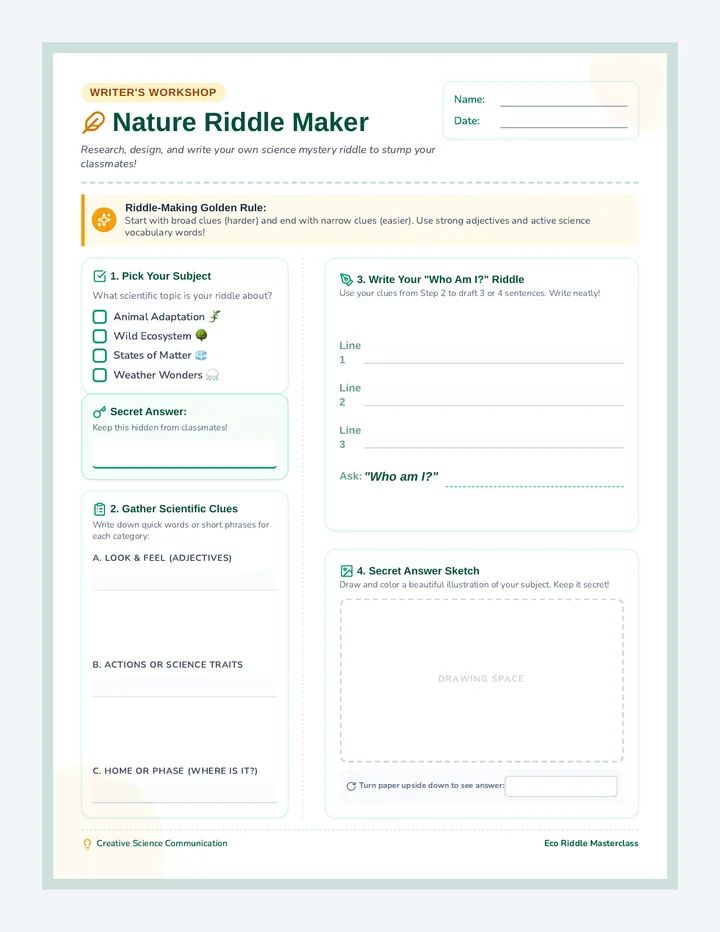
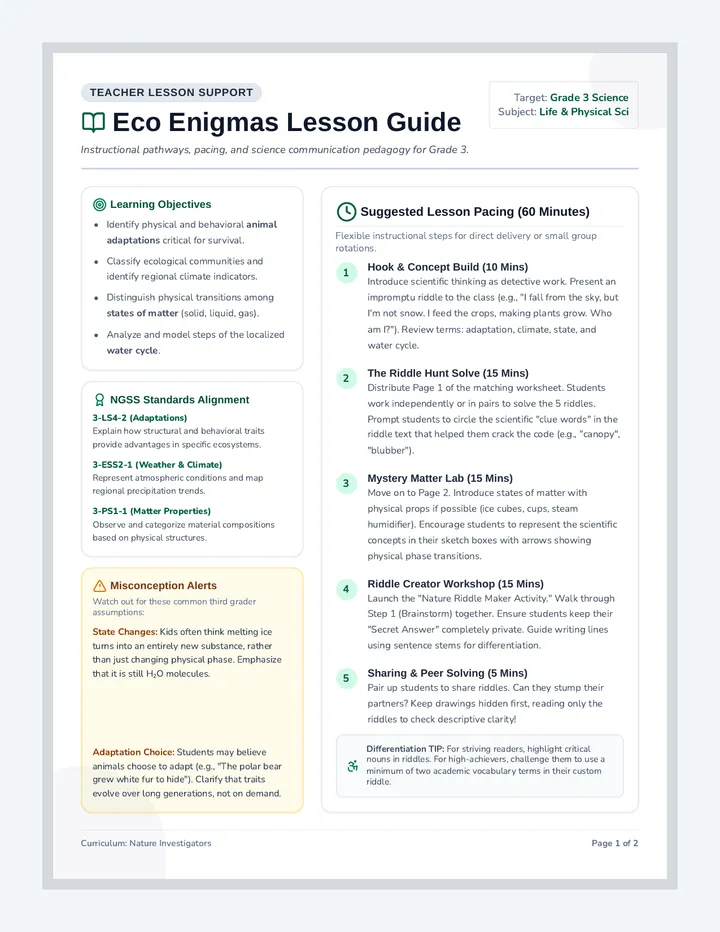
Students explore likenesses between parents and offspring, identifying simple physical traits they share and identifying things they must learn from their environment.
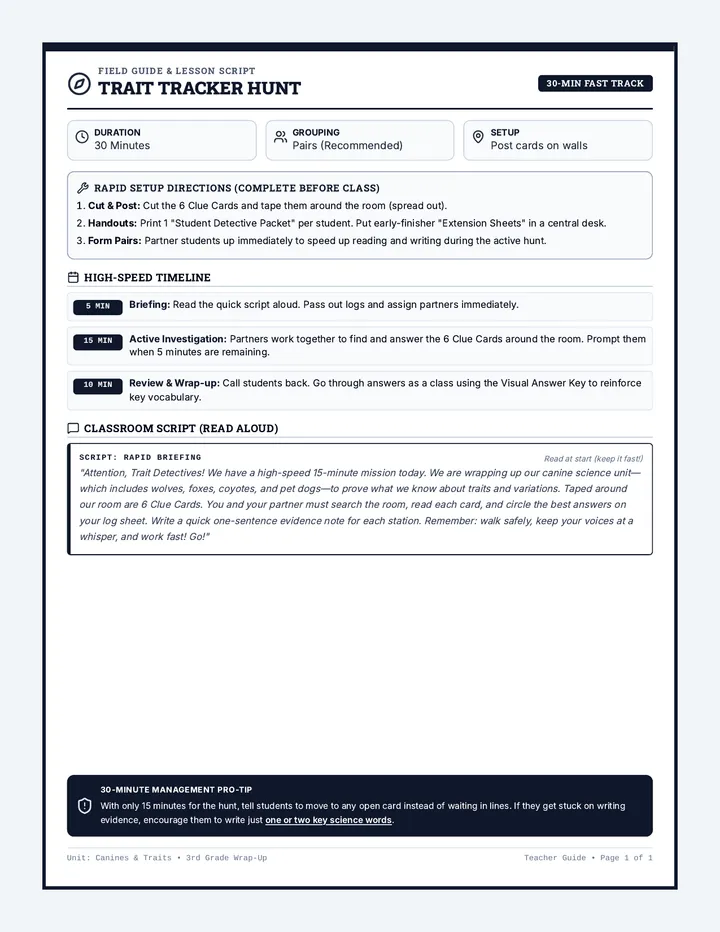
Students differentiate between inherited traits, learned behaviors, and acquired physical traits through complex scenarios and data analysis.
Students investigate and explain the difference between inherited characteristics and learned behaviors using specific examples like eye color versus fetching a ball.
An advanced elementary lesson (grade 5) exploring the differences between series and parallel circuits using paper circuit kits or wires.
A mid-elementary lesson (grades 3-4) focusing on identifying conductors and insulators through hands-on testing with a circuit tester.
An introductory lesson for grades 1-2 focusing on the concept of a closed loop using conductive dough or simple battery/LED setups.
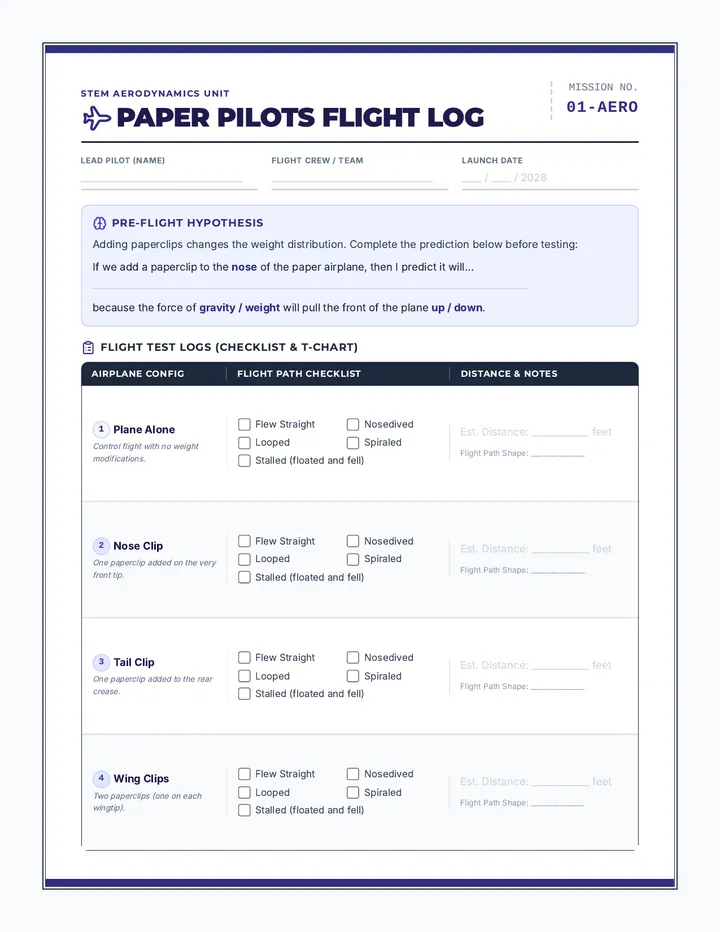
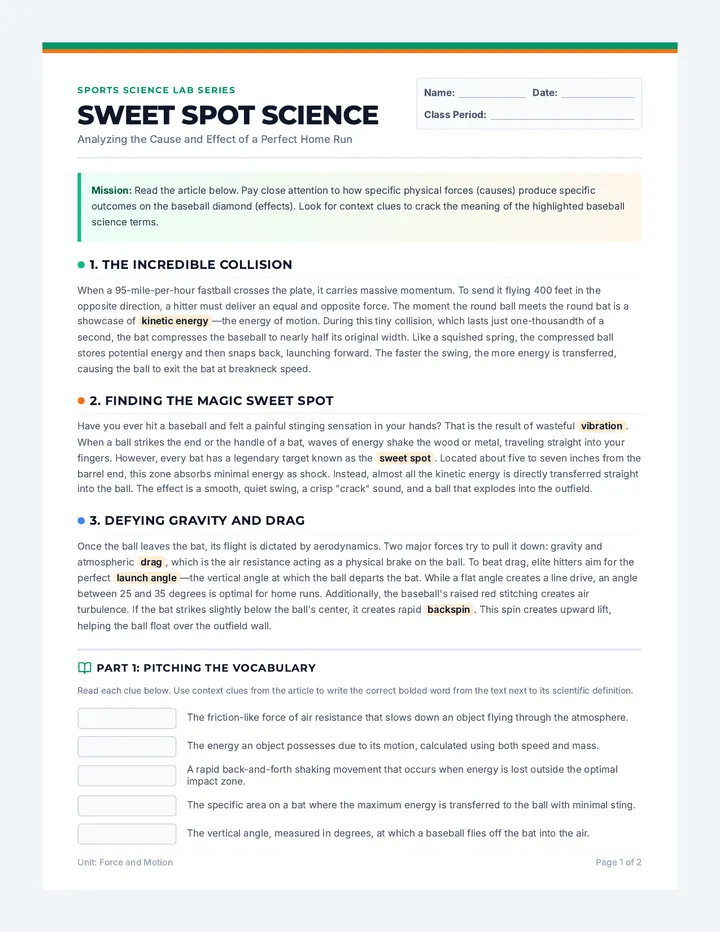
A foundational exploration of speed, motion, and the various forms of energy, focusing on the relationship between kinetic and potential energy.
A mini-project lesson where students act as data detectives to collect, analyze, and ethically report on classroom data.
A lesson exploring the elusive snow leopard, focusing on its unique adaptations, habitat in the high mountains of Central Asia, and the conservation efforts to protect this 'Ghost of the Mountains'.
A comprehensive introduction to microbiology focusing on germs, bacteria, and viruses. Students will explore how these microorganisms affect the human body and learn to distinguish between different types of pathogens through interactive slides and hands-on organizers.
A hands-on investigation into the science of sound, where 3rd graders explore vibrations, how sound travels through different materials, and the mechanics of hearing through interactive experiments and instrument building.
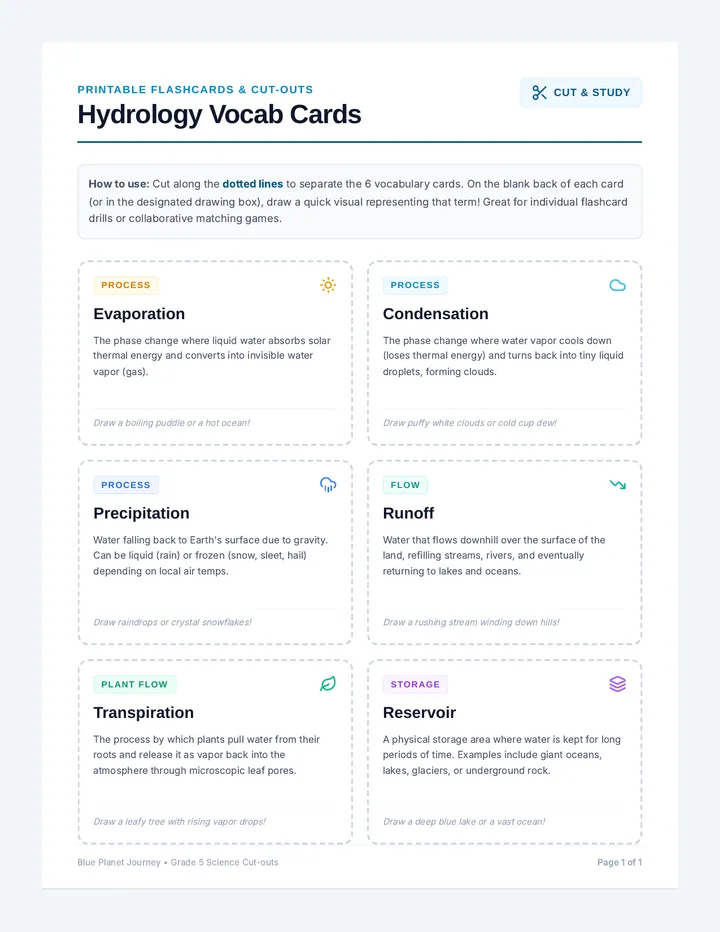
Discover the structure of watershed systems, the importance of the Chesapeake Bay, and how human activity impacts water quality.
Investigate the chemical nature of water through pH testing, exploring acidity, alkalinity, and how water's role as a solvent impacts life and the environment.
Explore the unique molecular properties of water, including cohesion, adhesion, and surface tension, through the 'Penny Power' lab and interactive demonstrations.
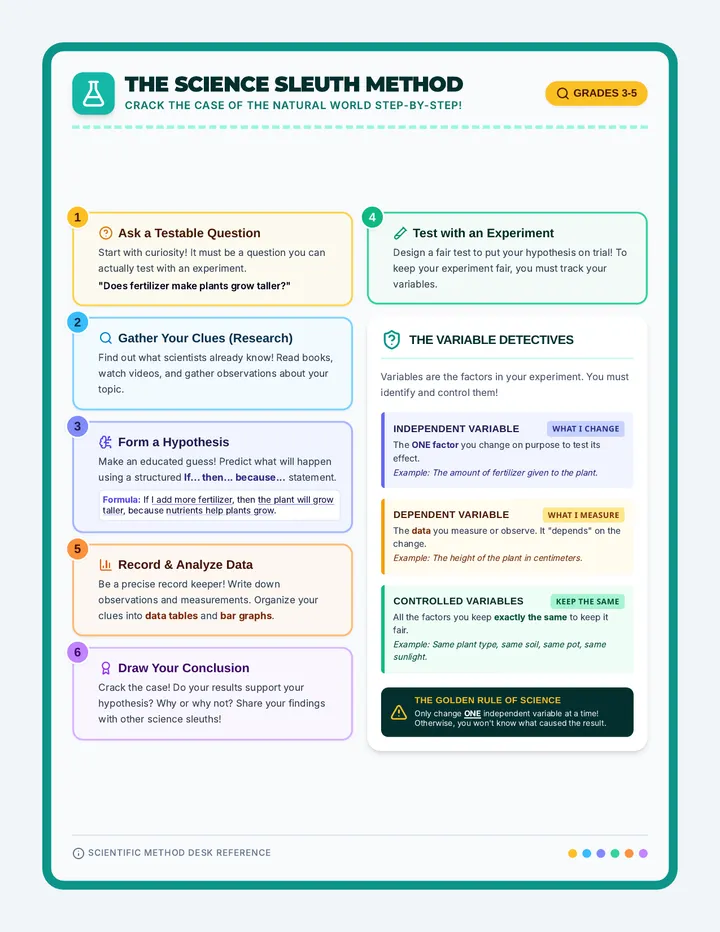
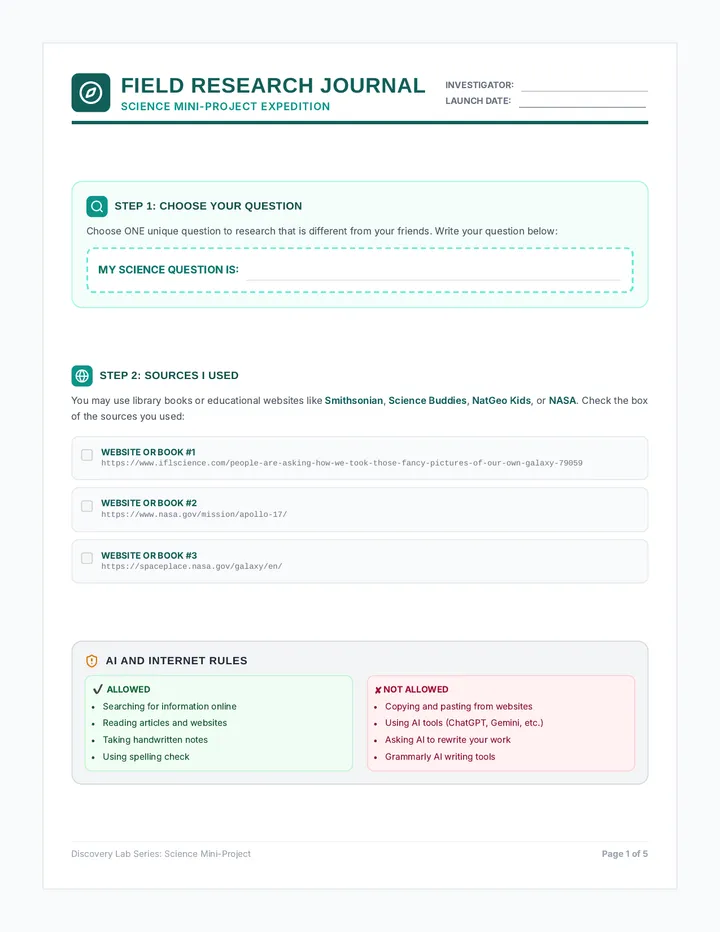
A comprehensive guide and evaluation system for elementary students conducting science research projects. Includes a student-friendly rubric, a teacher grading sheet, and instructional slides to set students up for success.
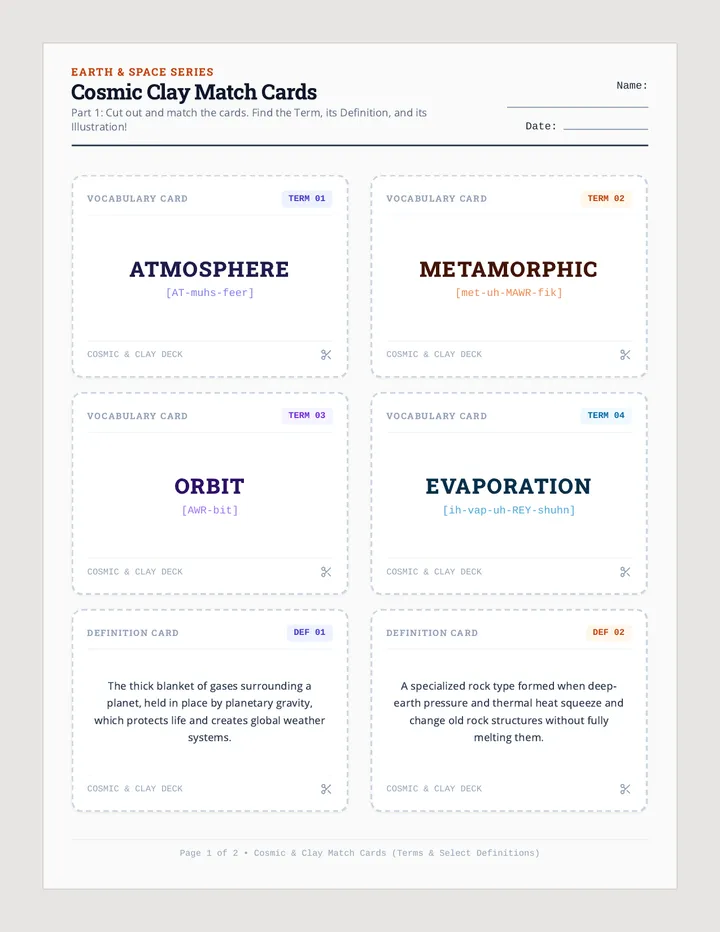
A phonics-focused lesson where students identify and sort 2-syllable words based on whether their first syllable is open or closed. Includes a hands-on cut-and-paste activity with a space exploration theme.
A cumulative review using narrative poetry or a short story where students synthesize their skills in plot analysis, character study, and multi-layered connections.
Analyzing how drama uses dialogue to drive plot elements and character interactions. Students make text-to-society connections by examining themes within a play script.
Exploring traditional literature (folktales) to identify universal plot patterns and how characters in legends undergo moral or physical changes. Focuses on text-to-text connections.

Introduction to plot architecture and character evolution using realistic fiction. Students map out the 'Rising Action' through 'Resolution' and track how characters react to conflict.

Focused instruction on identifying main idea, comparing and contrasting texts, and determining story themes.
Techniques and materials to improve reading rate, accuracy, and expression for developing readers.
Tools for decoding multi-syllabic words and understanding how prefixes and suffixes change word meaning.
Strategies and practice for solving single-step and multi-operational word problems across all four basic operations.
Resources for mastering addition, subtraction, multiplication, and division facts, including specific materials for fact families and levels up to 10 and 20.
A foundational science lesson exploring the three primary states of matter—solids, liquids, and gases—through reading, visual aids, and interactive observation.
Cette séance de 2 heures permet aux élèves de distinguer qualification et compétence, d'analyser l'impact des conditions de travail sur le comportement des salariés et de mesurer la performance de l'activité humaine via des indicateurs de productivité et de climat social.