Students compare and contrast the leadership styles, inaugural addresses, and executive decisions of Abraham Lincoln and Jefferson Davis during the Civil War.
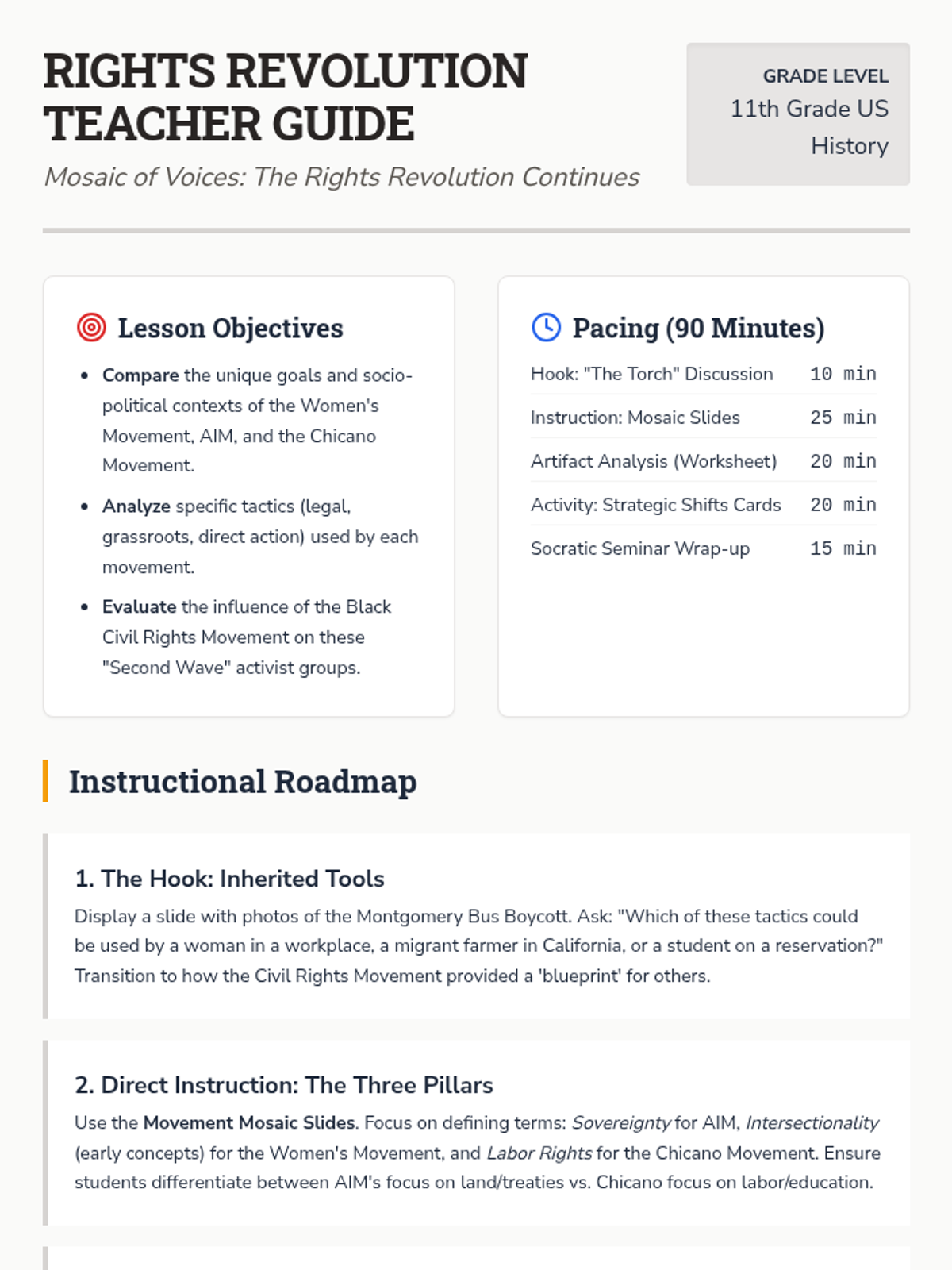
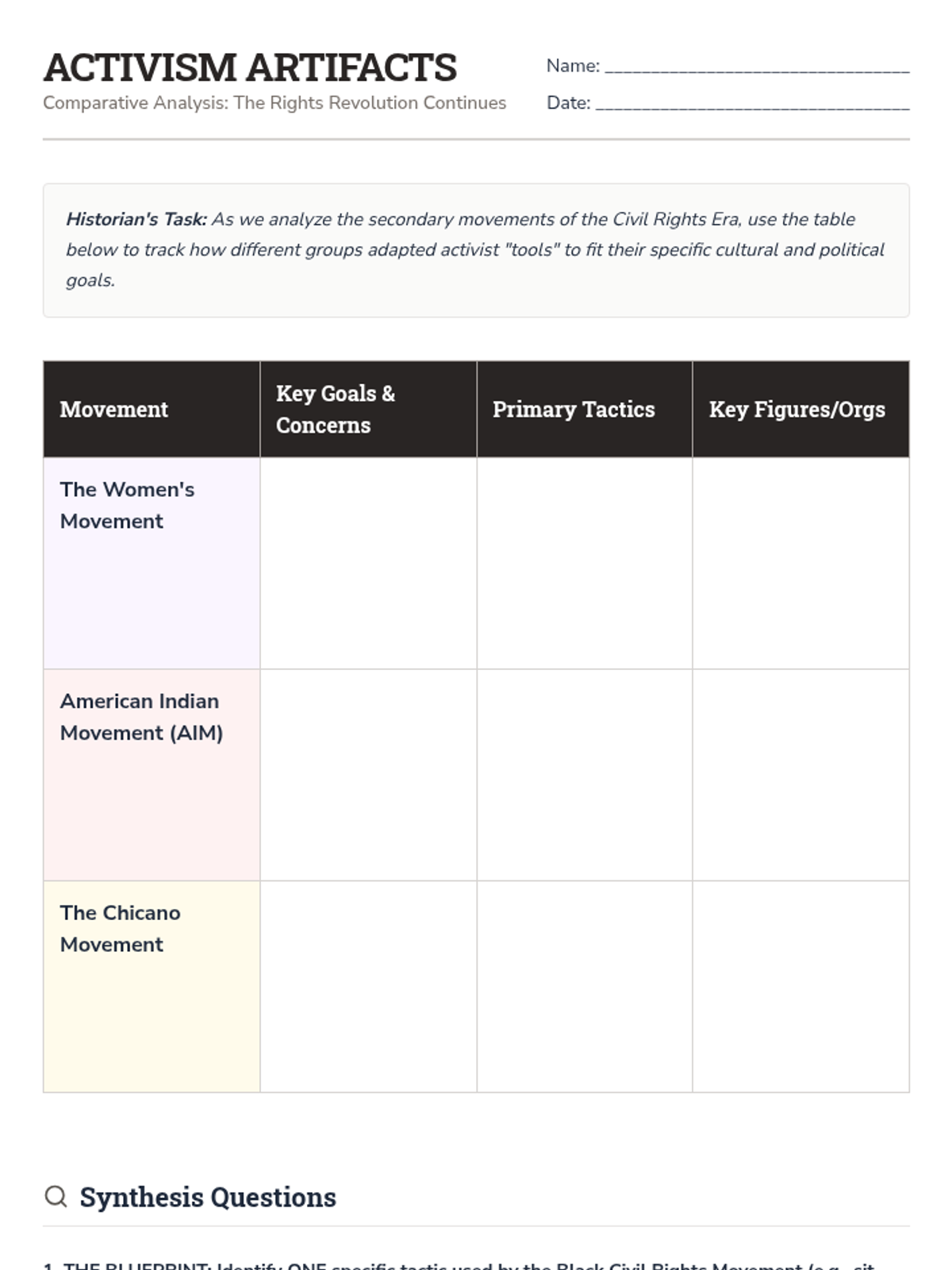
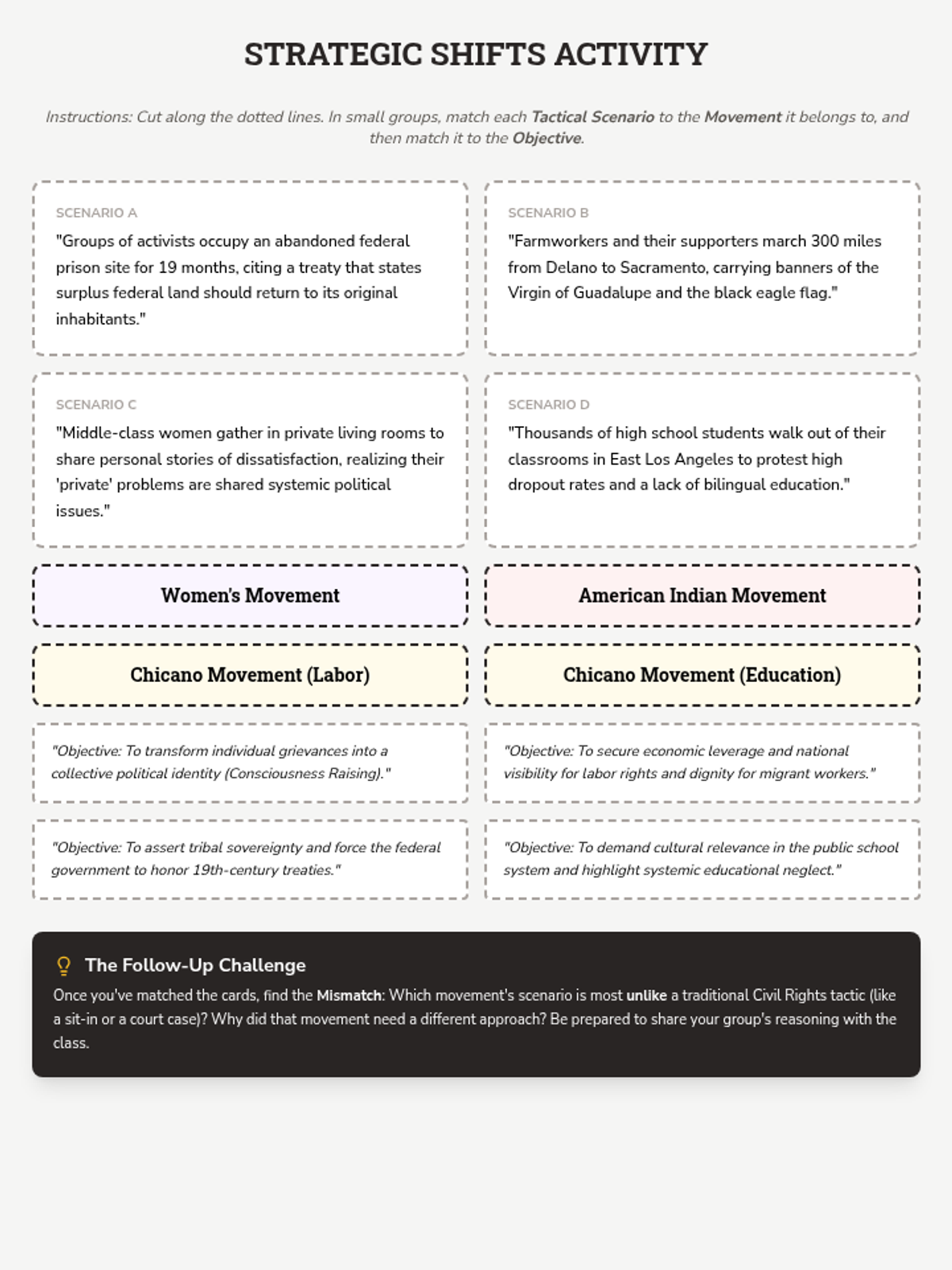
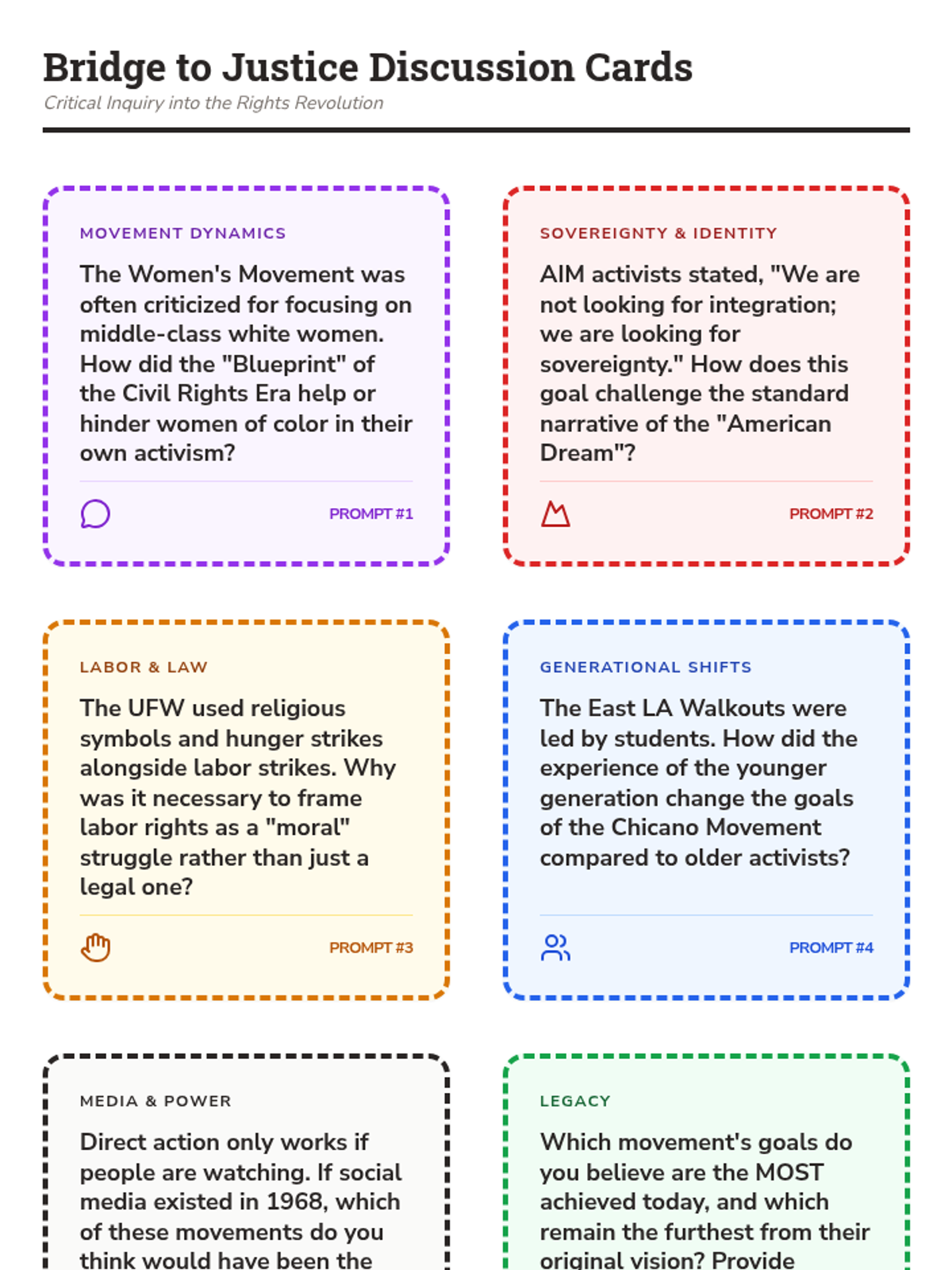
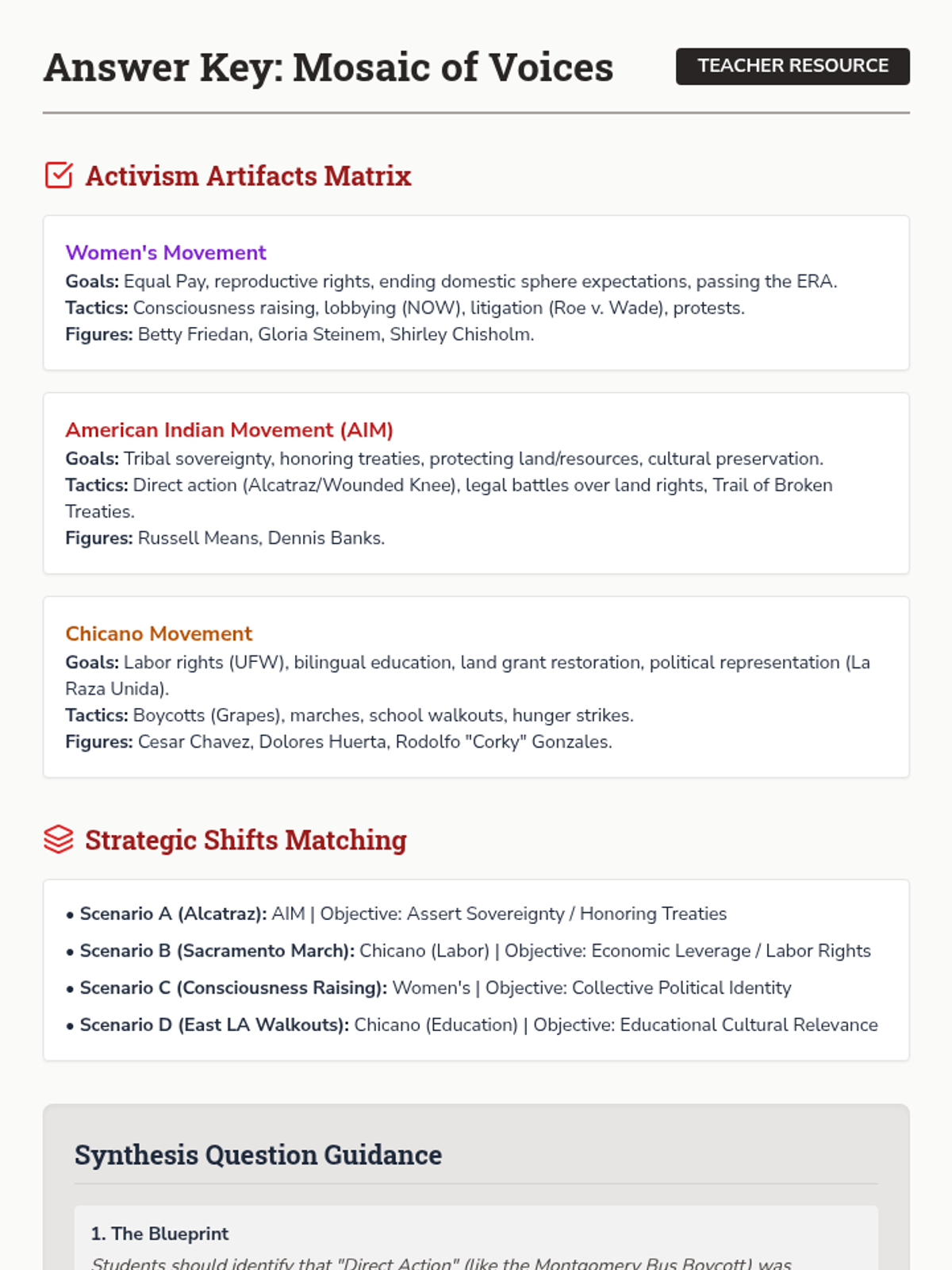
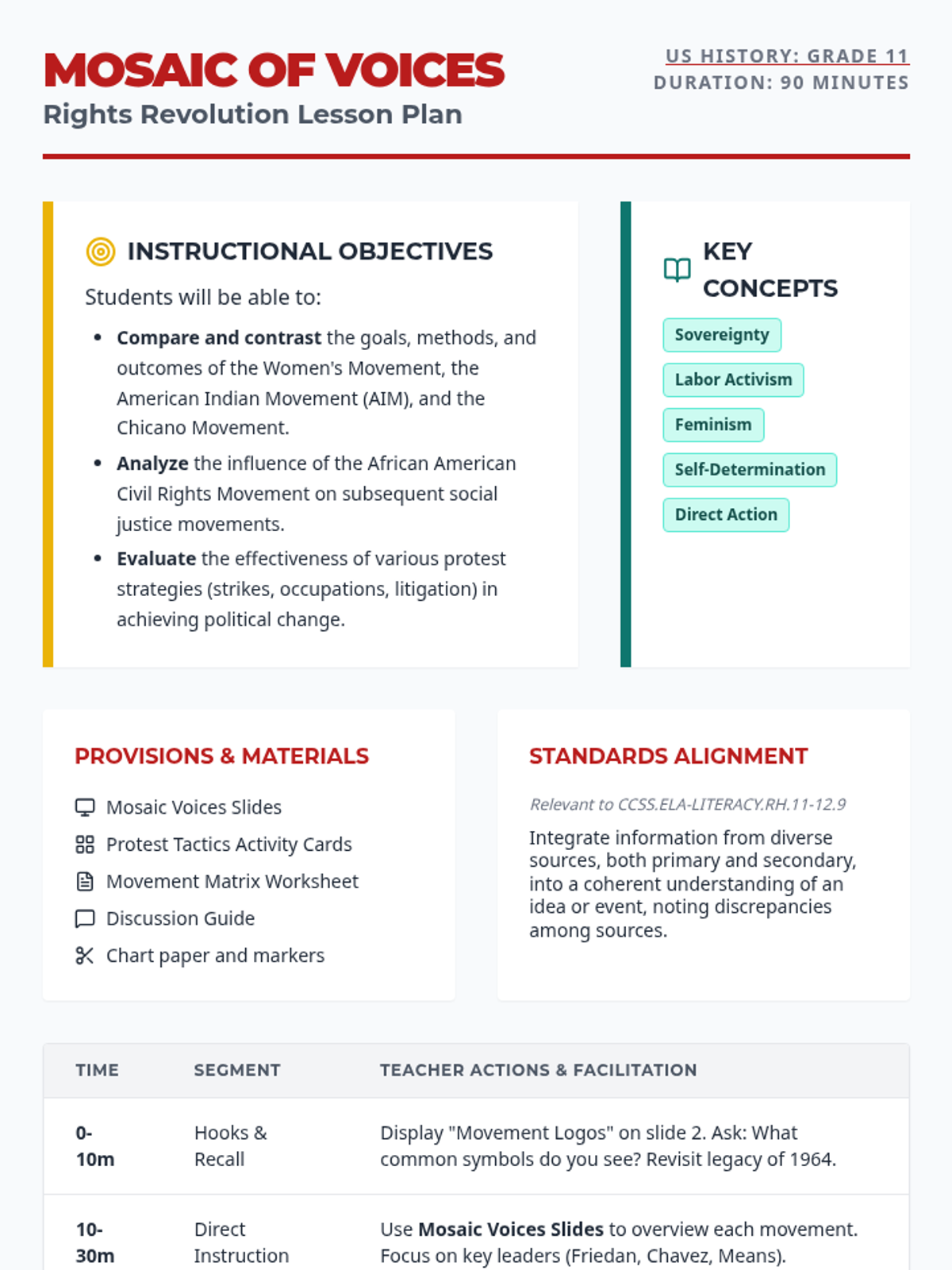
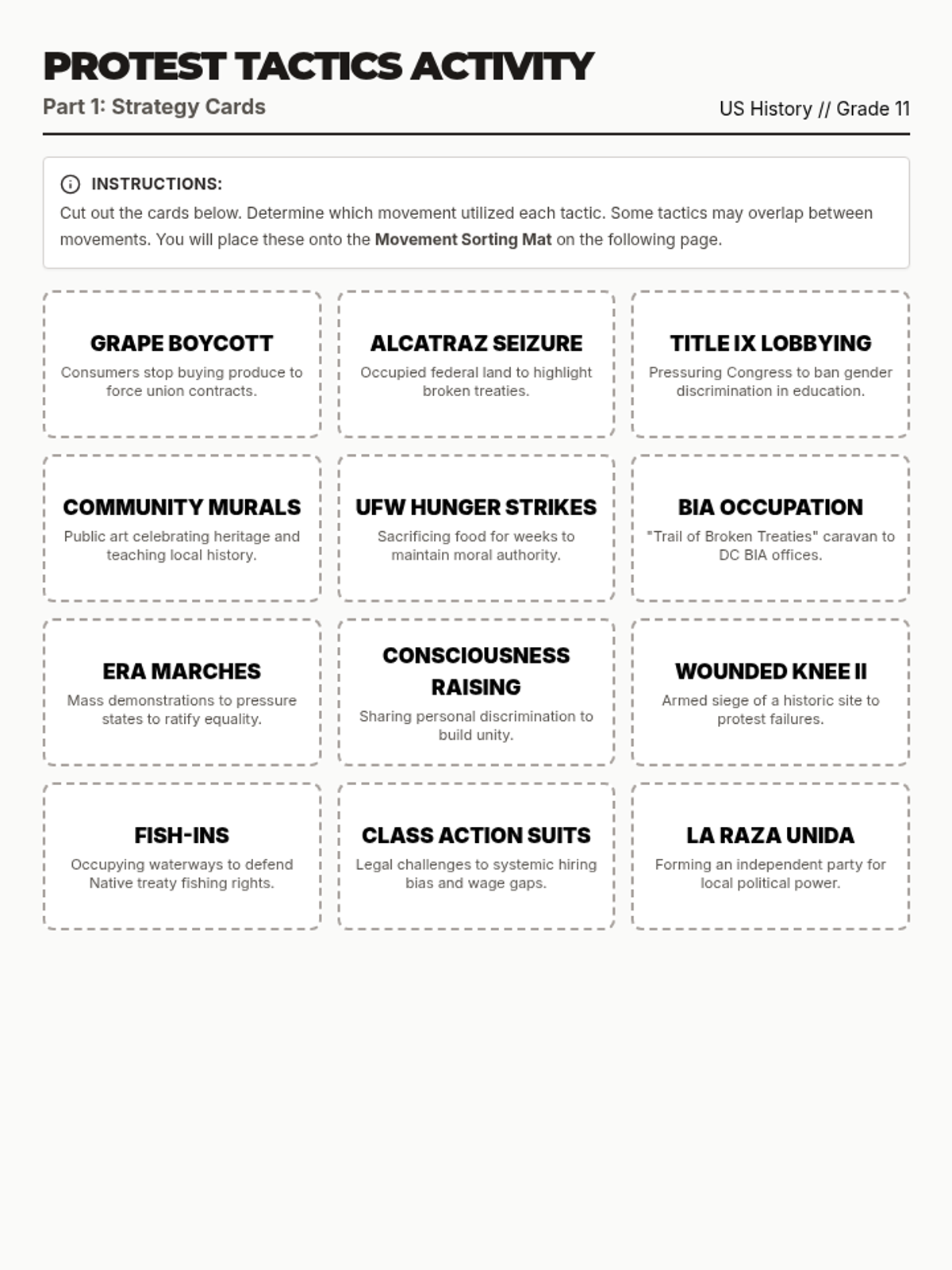
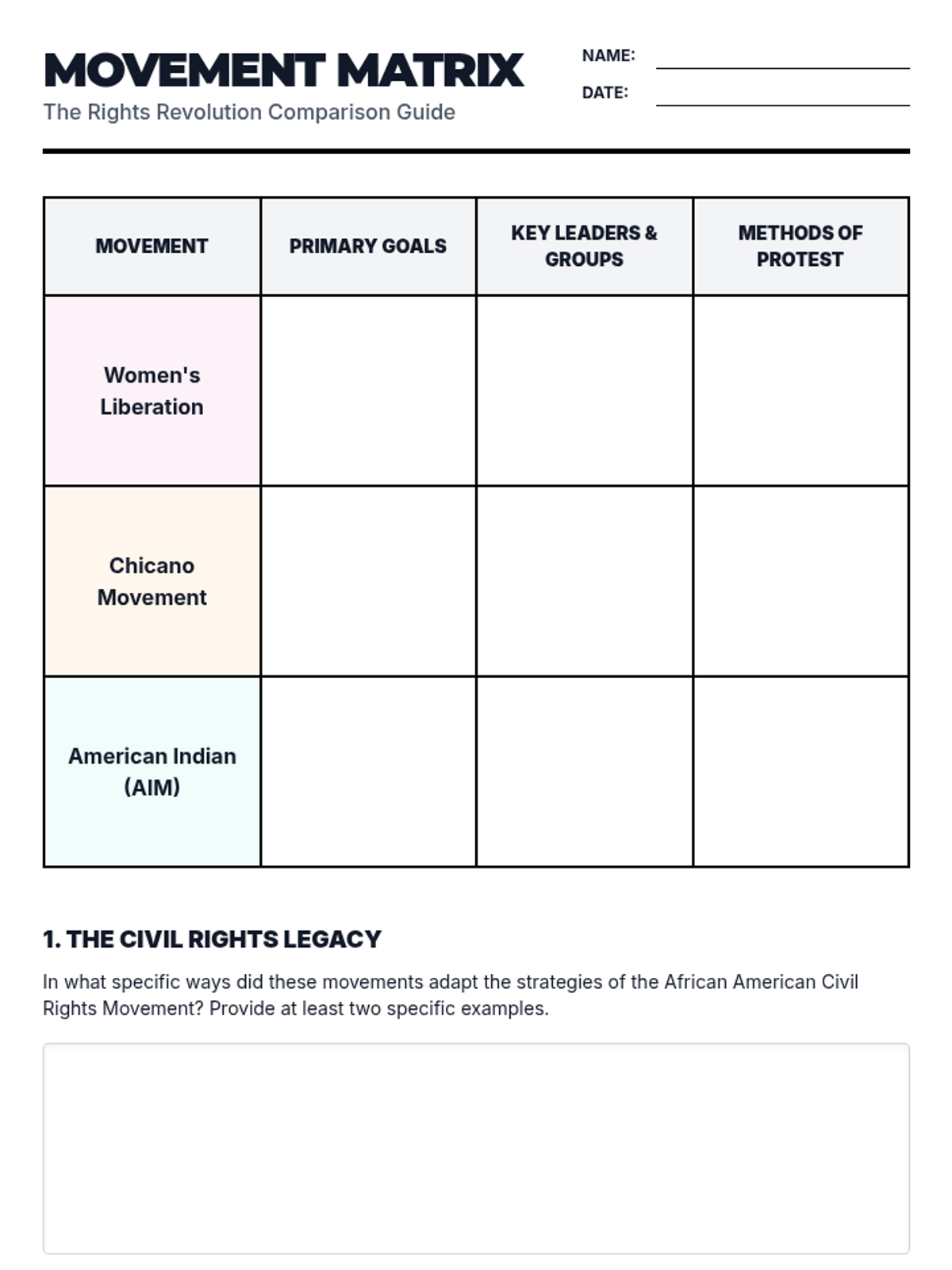
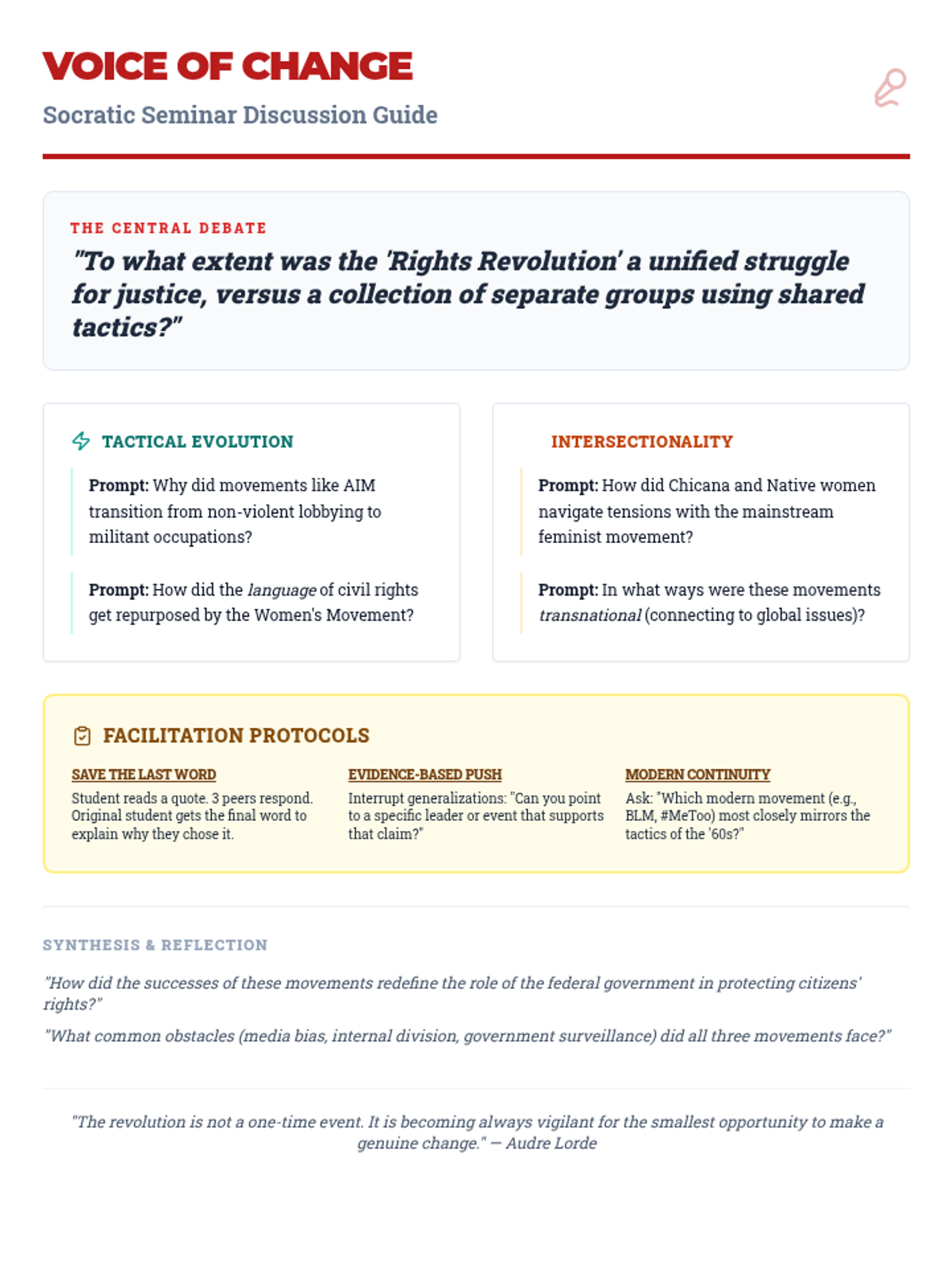
An 11th-grade history lesson comparing the Women's, American Indian, and Chicano Movements. Students analyze their unique goals and tactics while identifying how they adapted the strategies of the Black Civil Rights Movement.
An 11th-grade history lesson comparing the goals and methods of the Women's, Chicano, and American Indian Movements during the post-WWII era. Students analyze how these groups adapted Civil Rights strategies to their own unique social and political contexts.
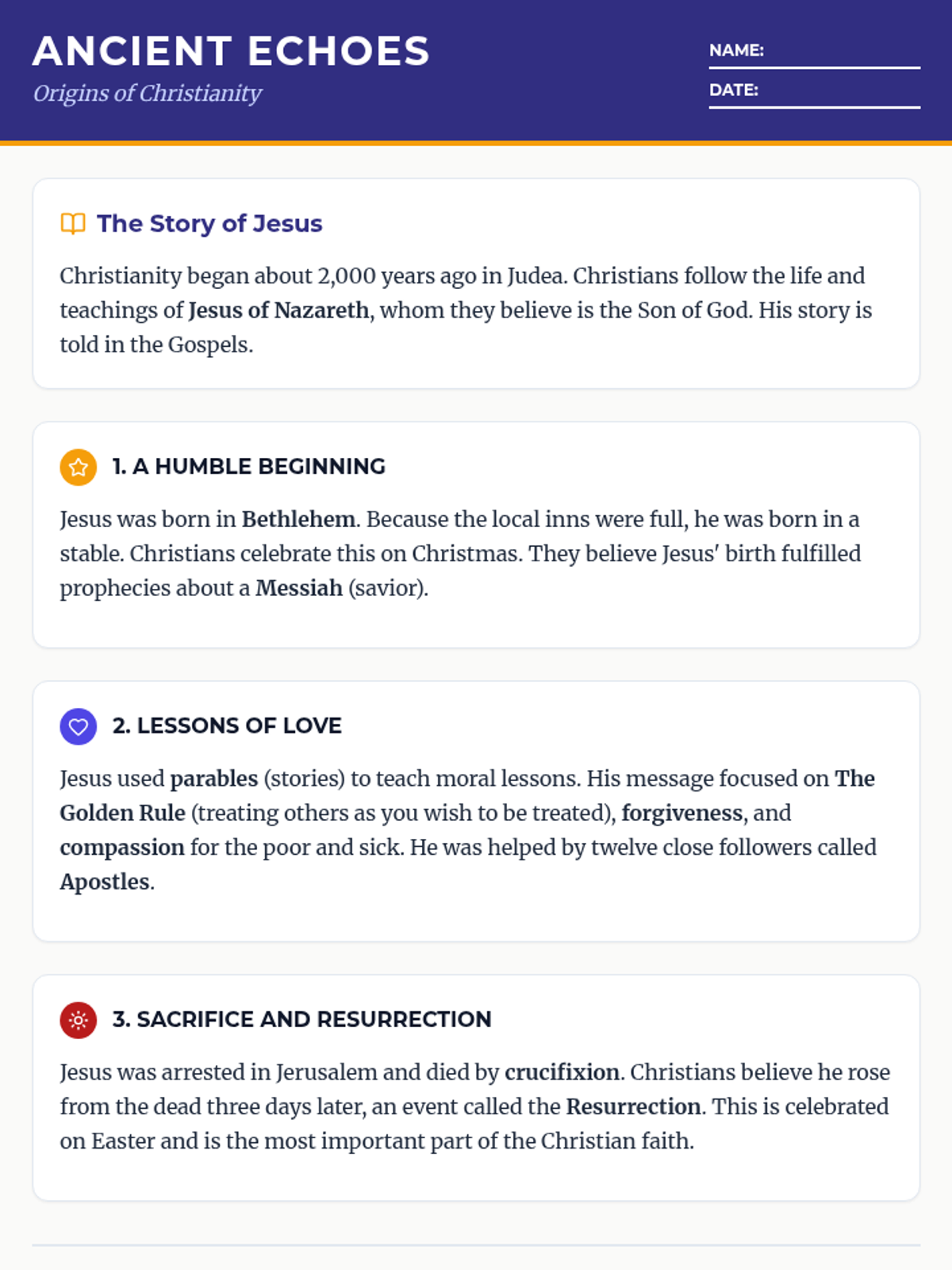
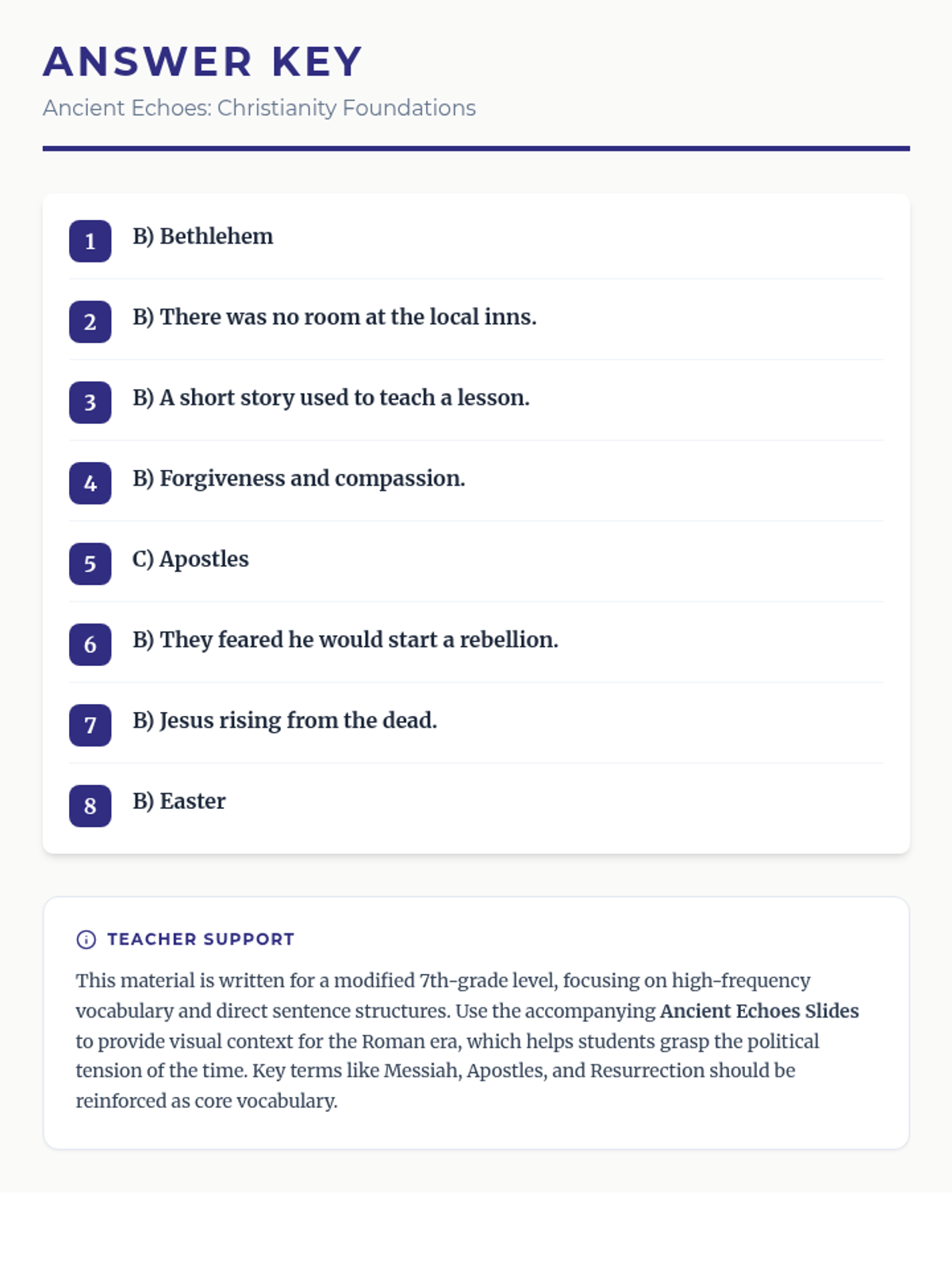
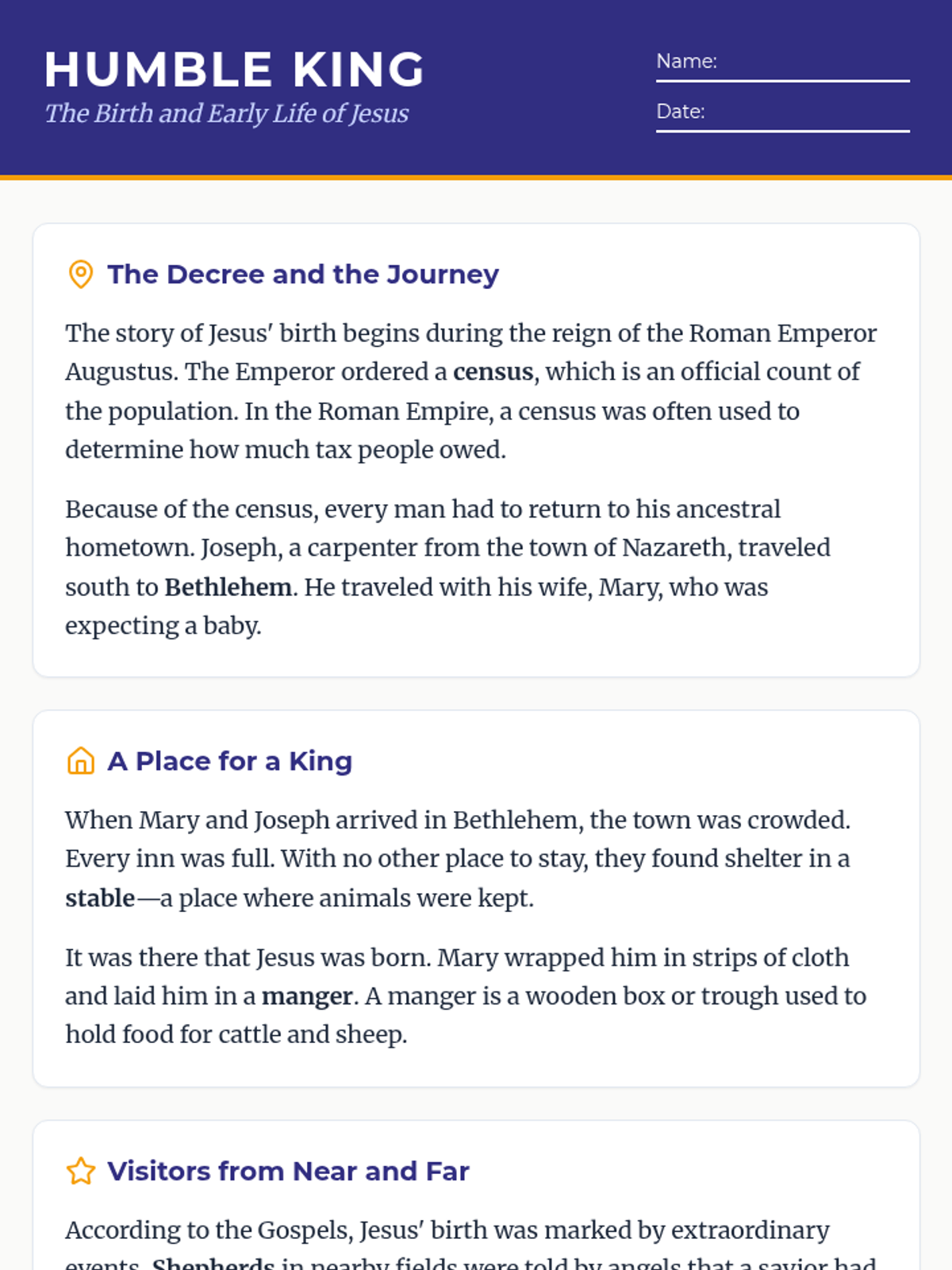
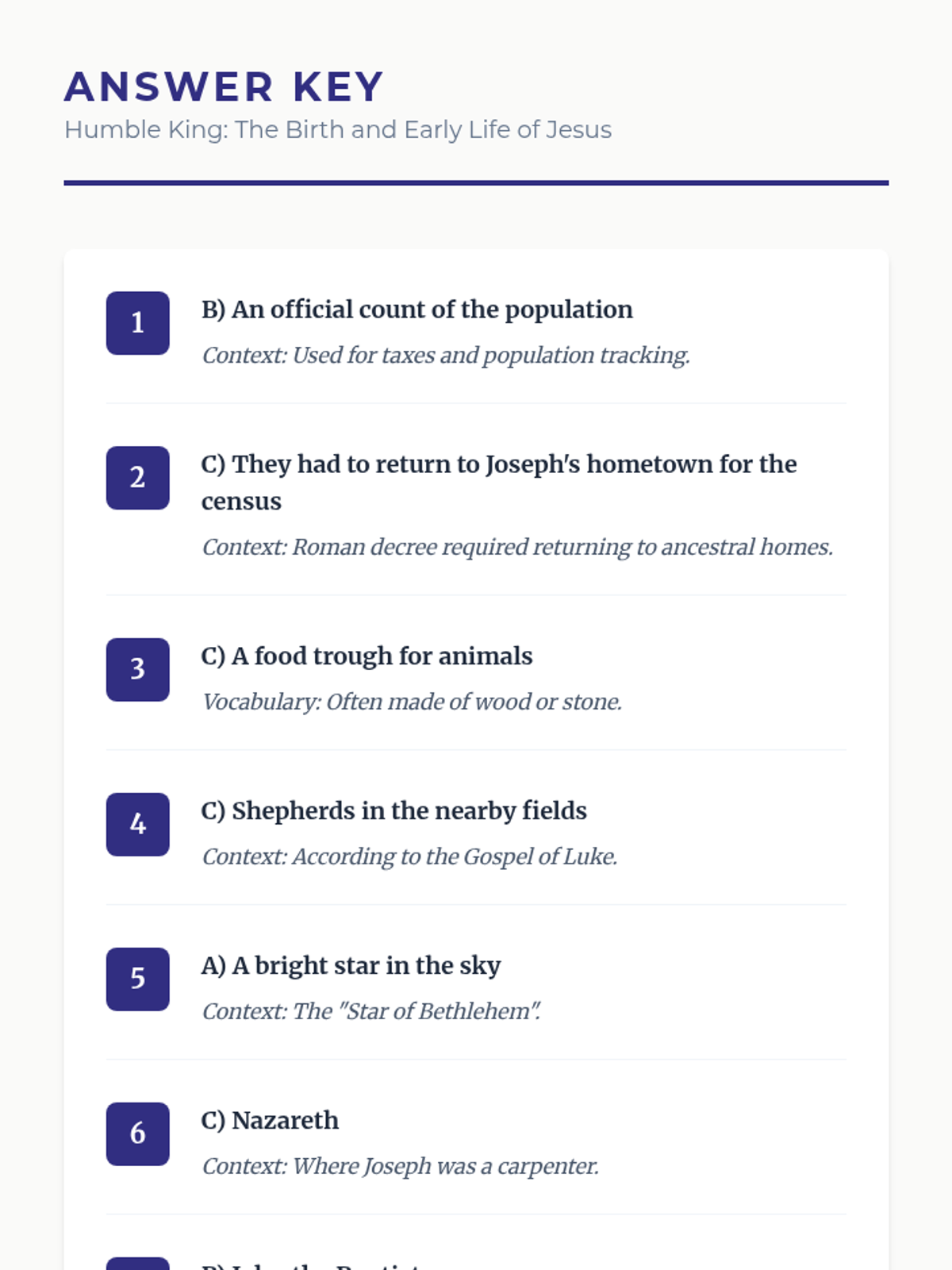
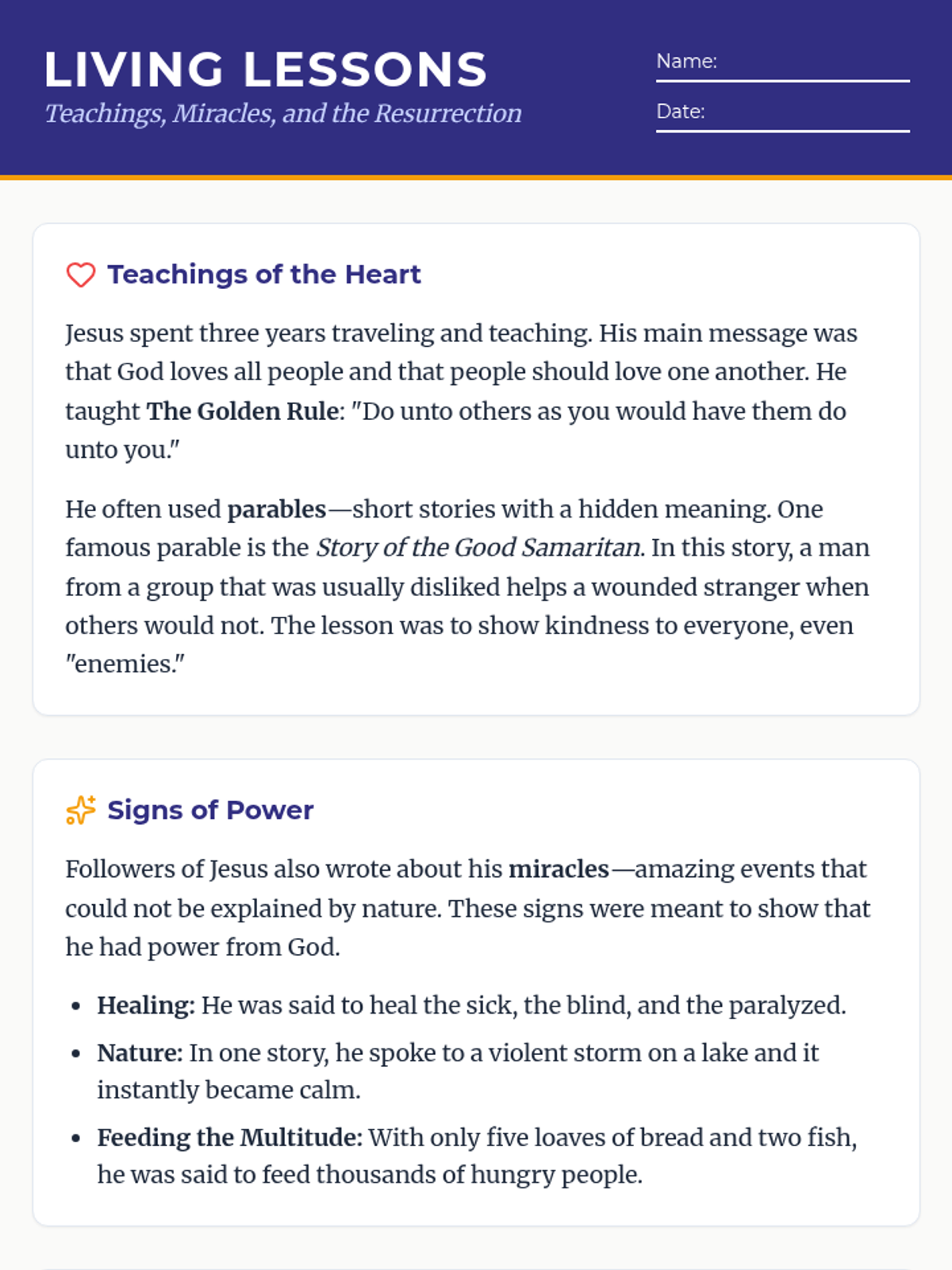
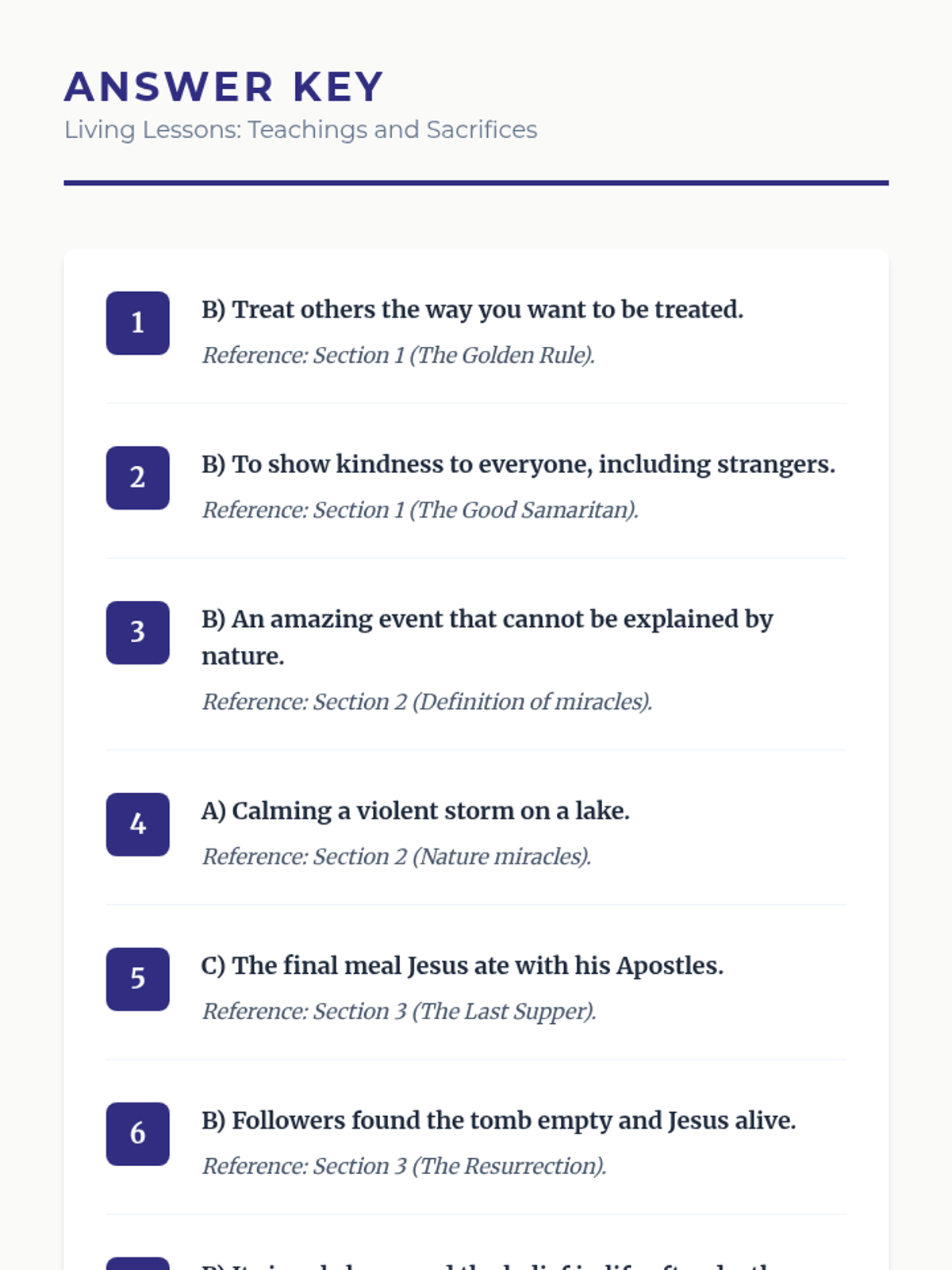
A lesson exploring the foundational narratives of Christianity, focusing on the life and teachings of Jesus of Nazareth at a modified 7th-grade reading level.
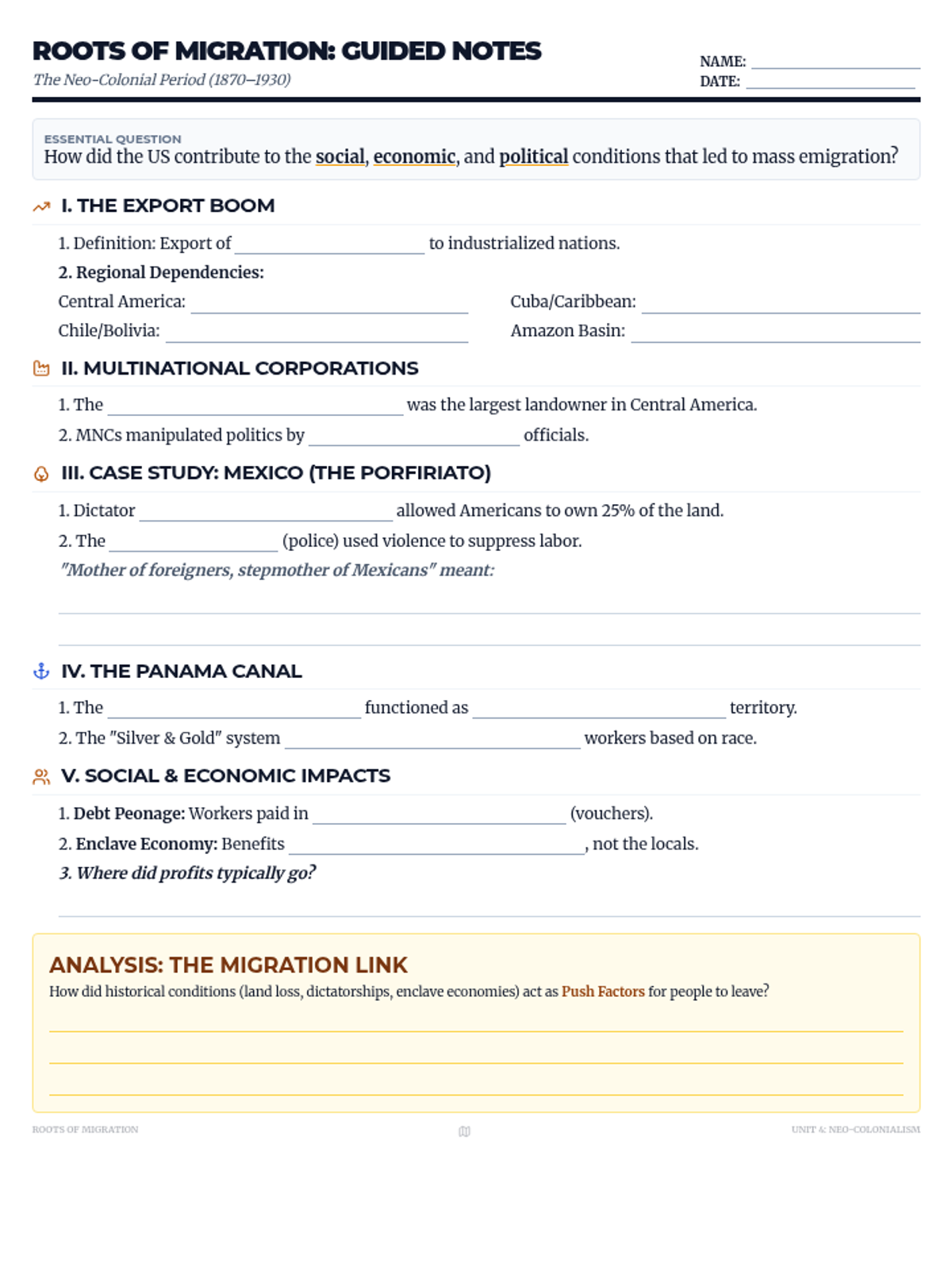
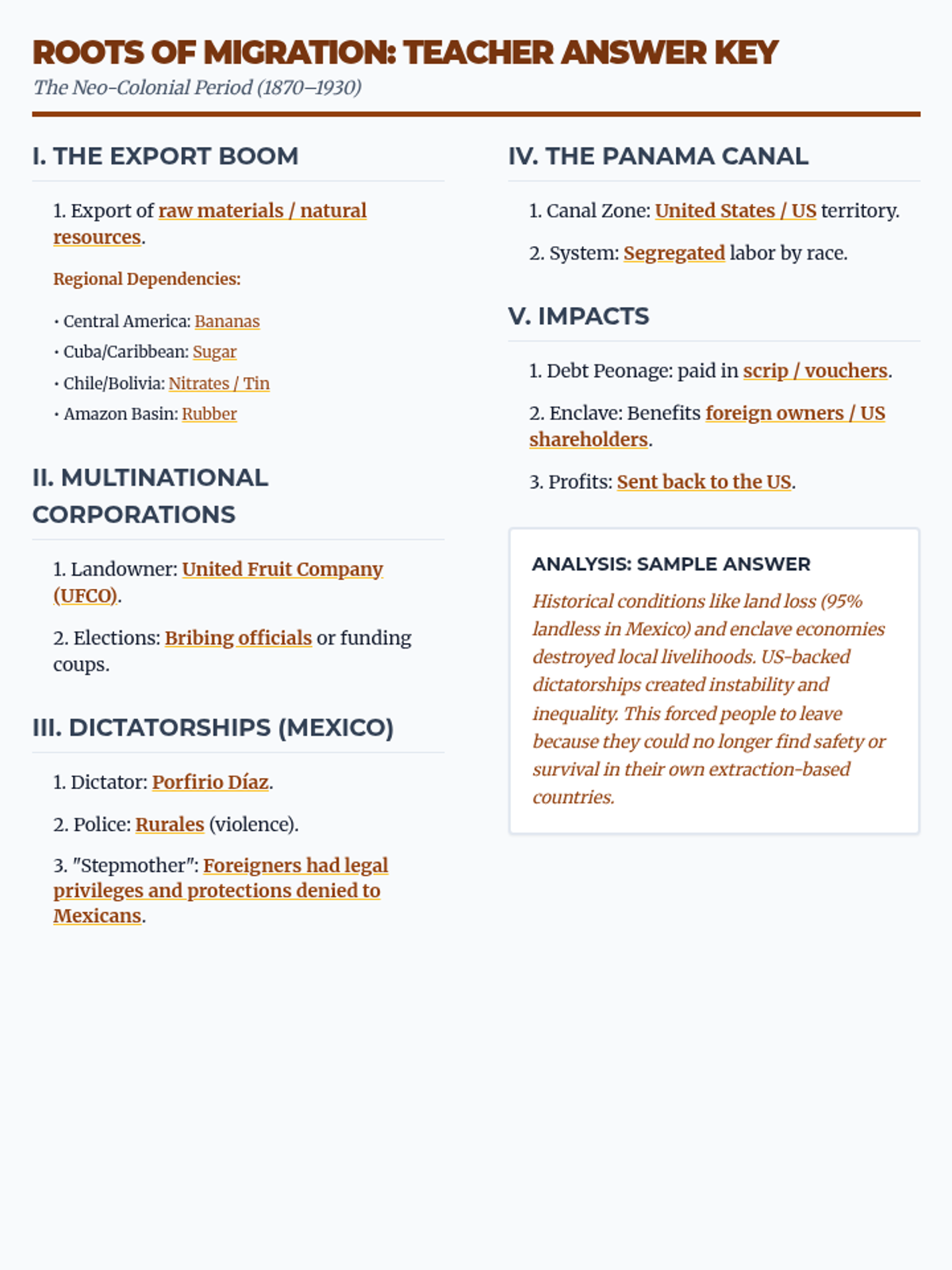
A lesson exploring the neo-Colonial Period in Latin America (1870-1930), focusing on how US economic and political influence via multinational corporations created the conditions for long-term migration patterns.
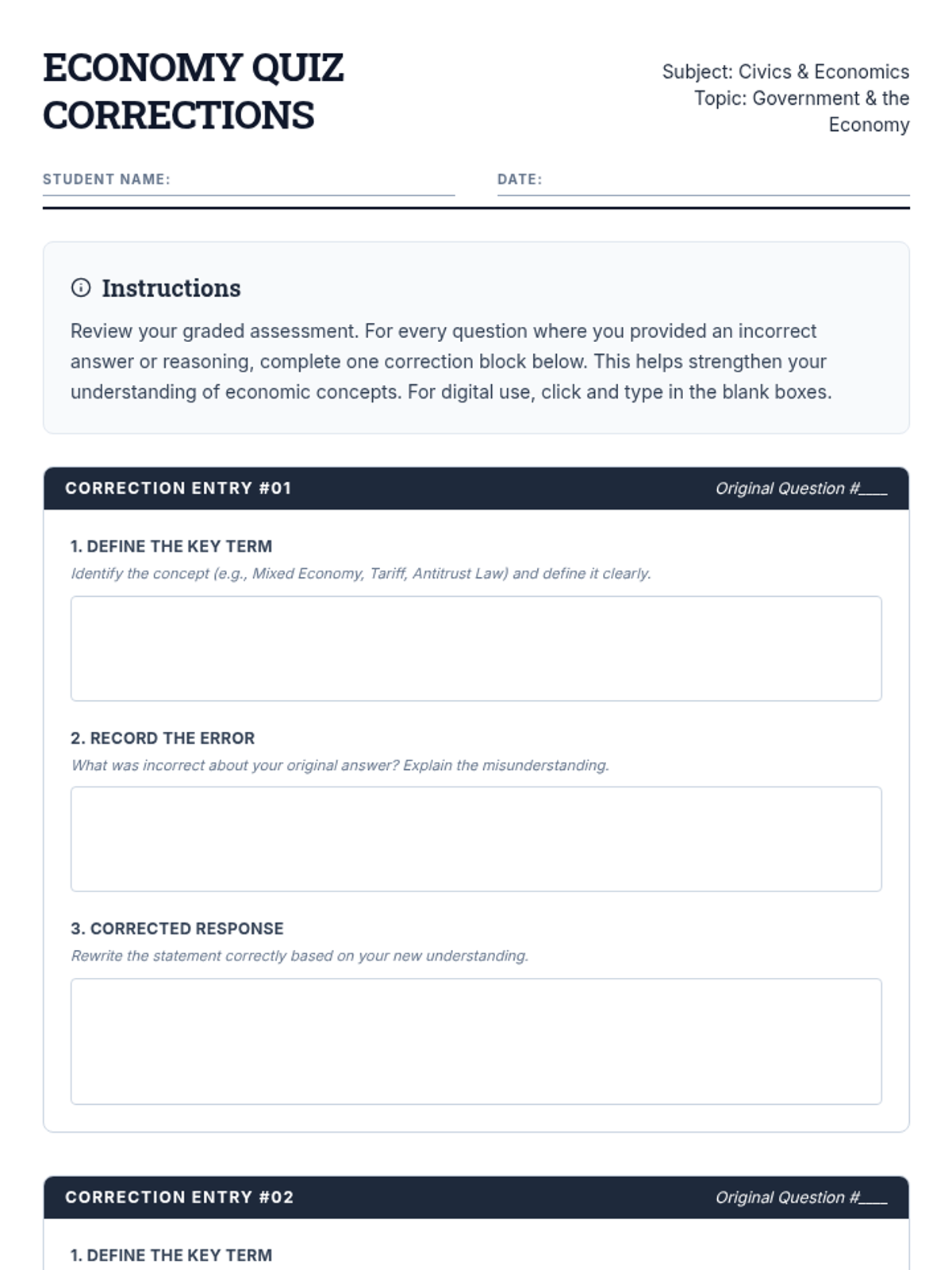
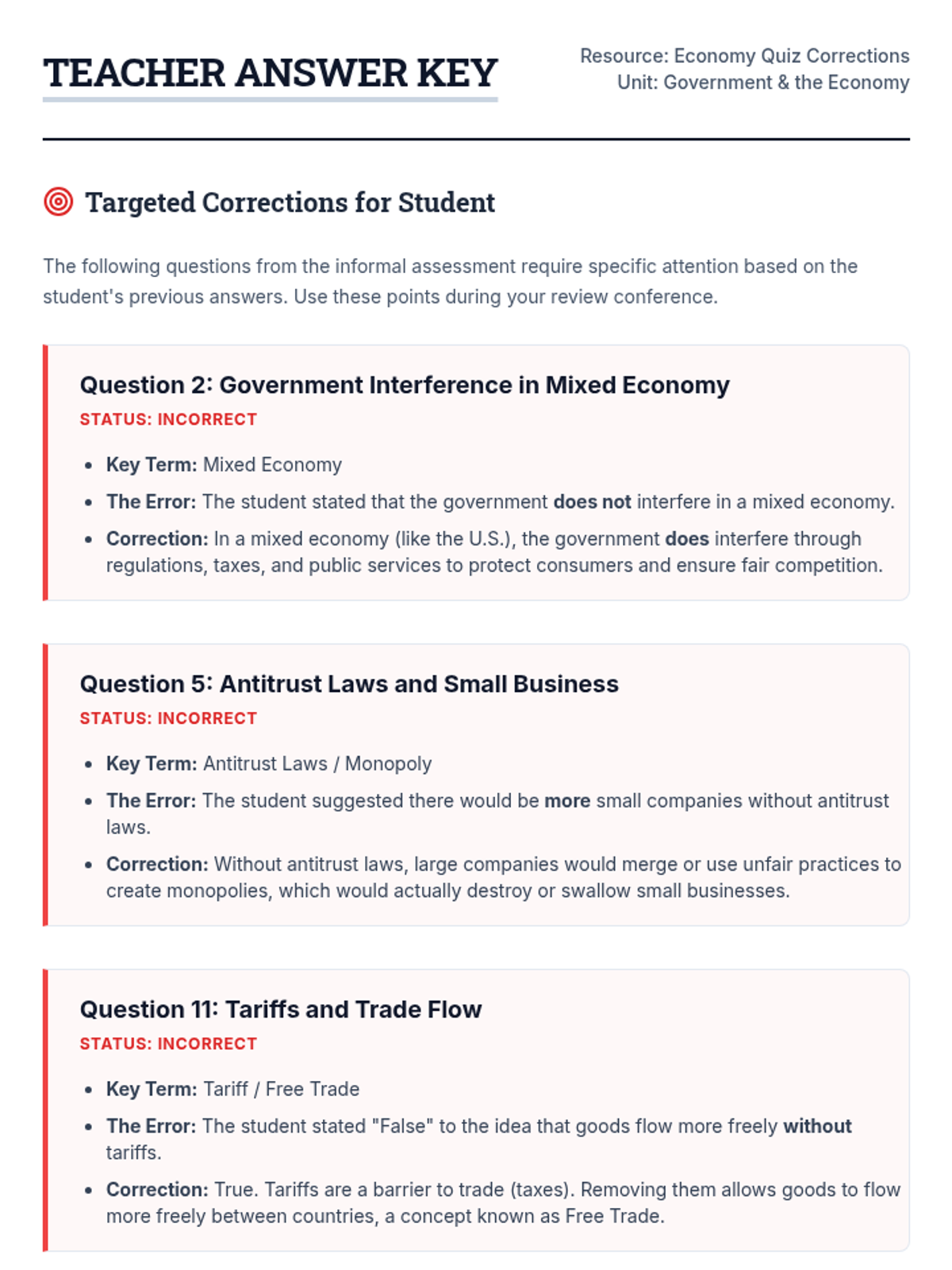
A targeted intervention lesson focused on correcting misconceptions regarding government intervention in the economy, specifically mixed vs. command economies, antitrust legislation, and international trade (tariffs).
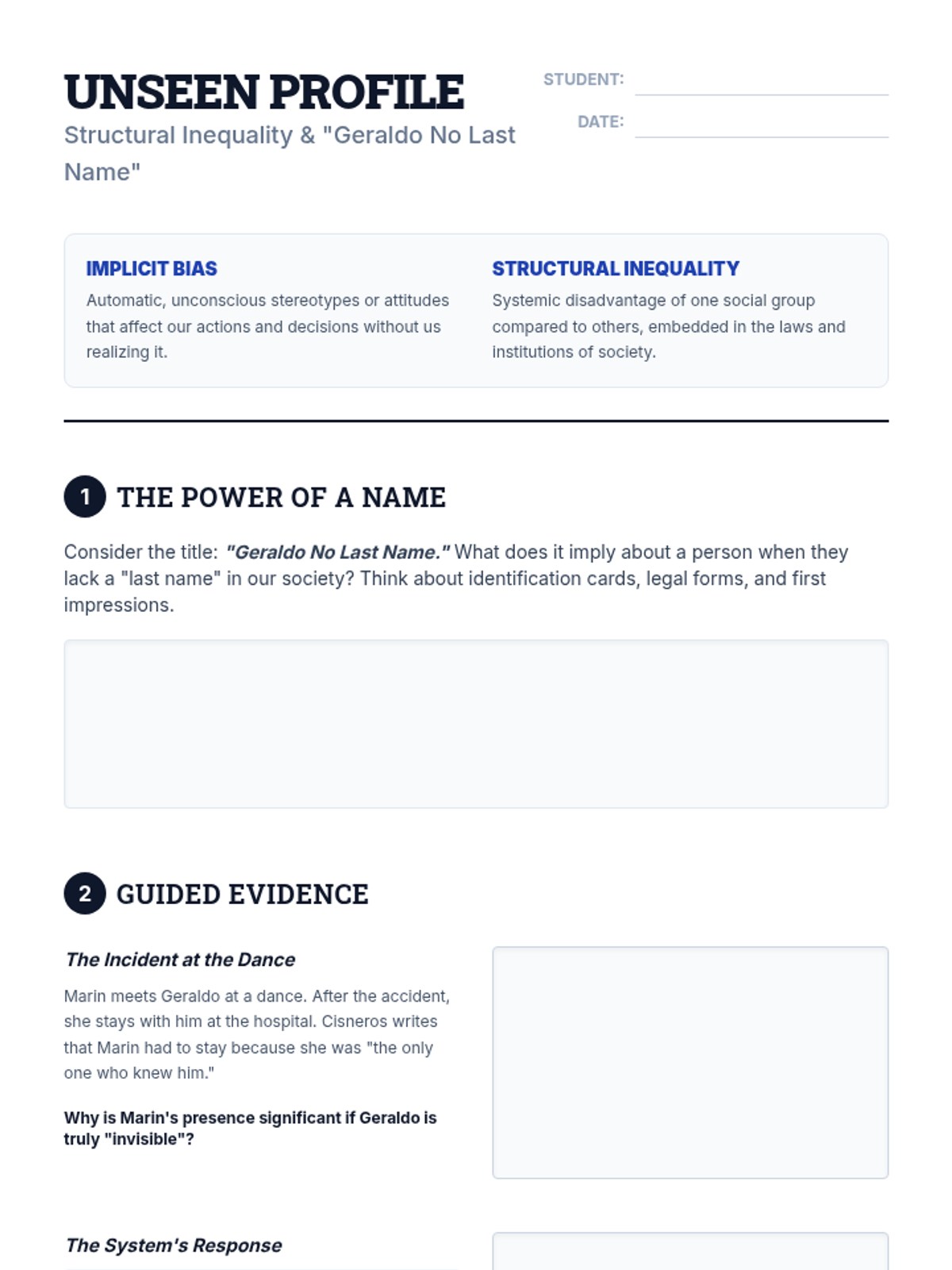
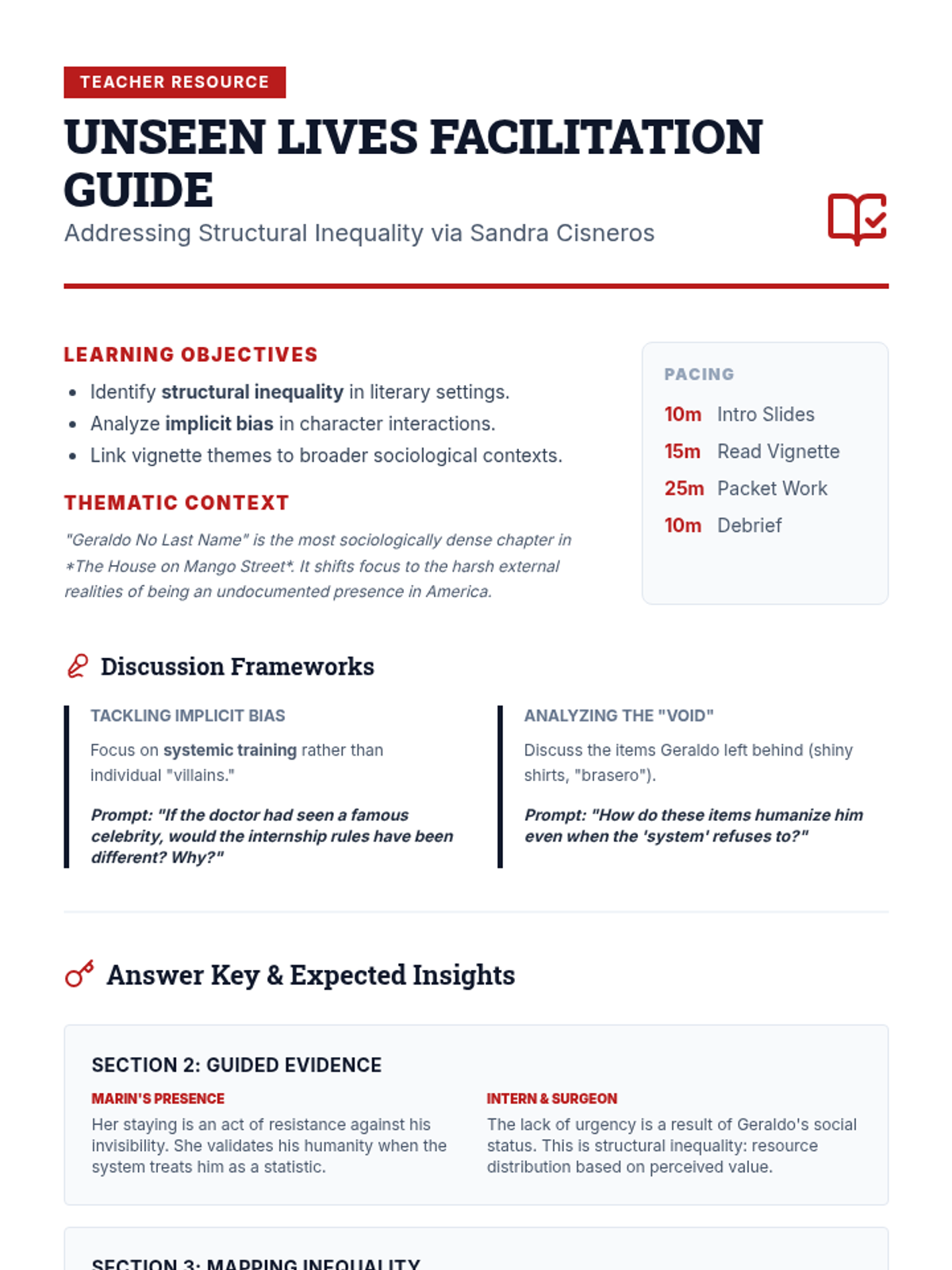
A deep dive into Sandra Cisneros's 'Geraldo No Last Name,' examining how structural inequality and implicit bias render individuals invisible within society. Students will analyze the vignette to understand the systemic forces at play in the characters' lives.
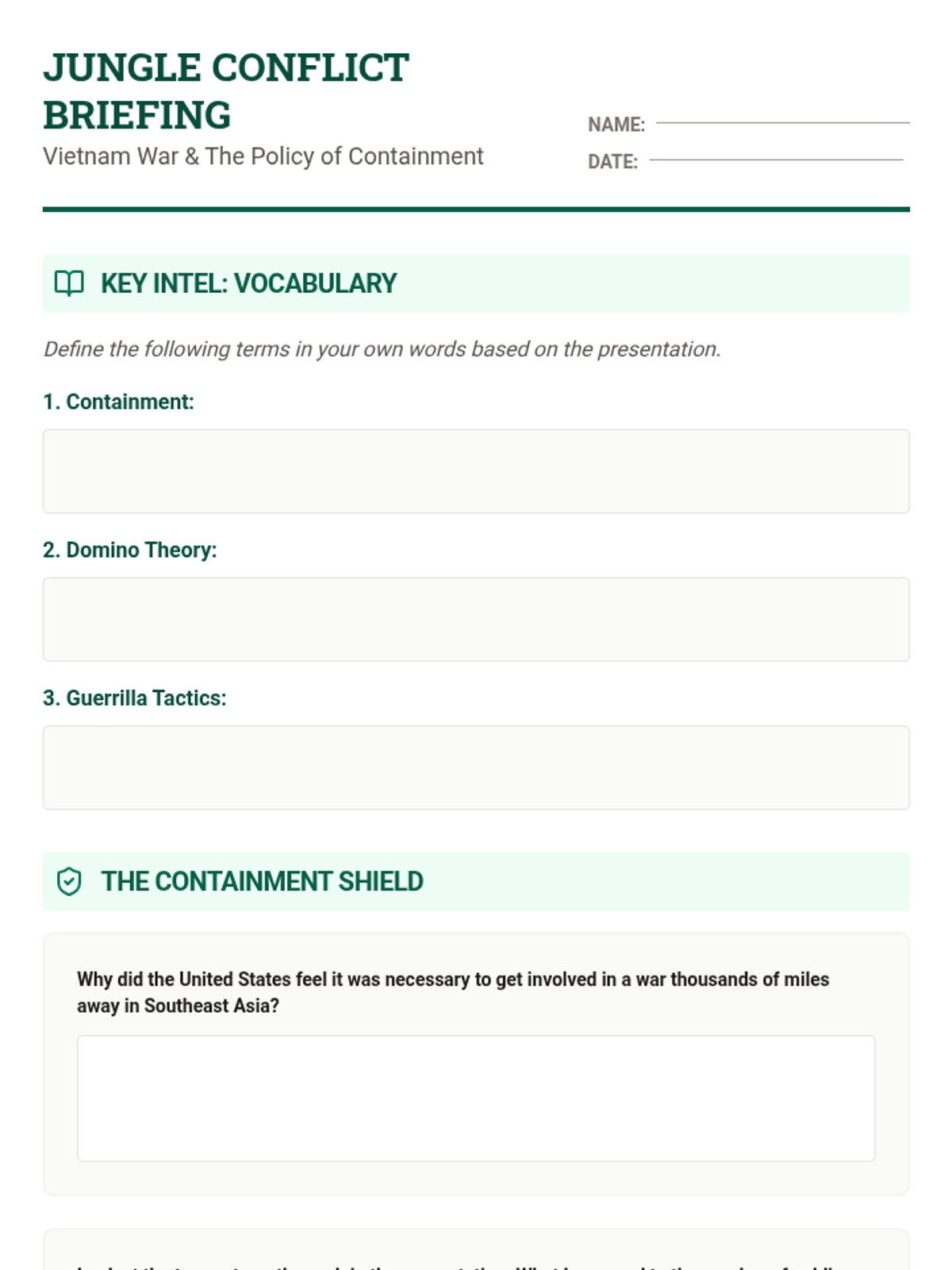
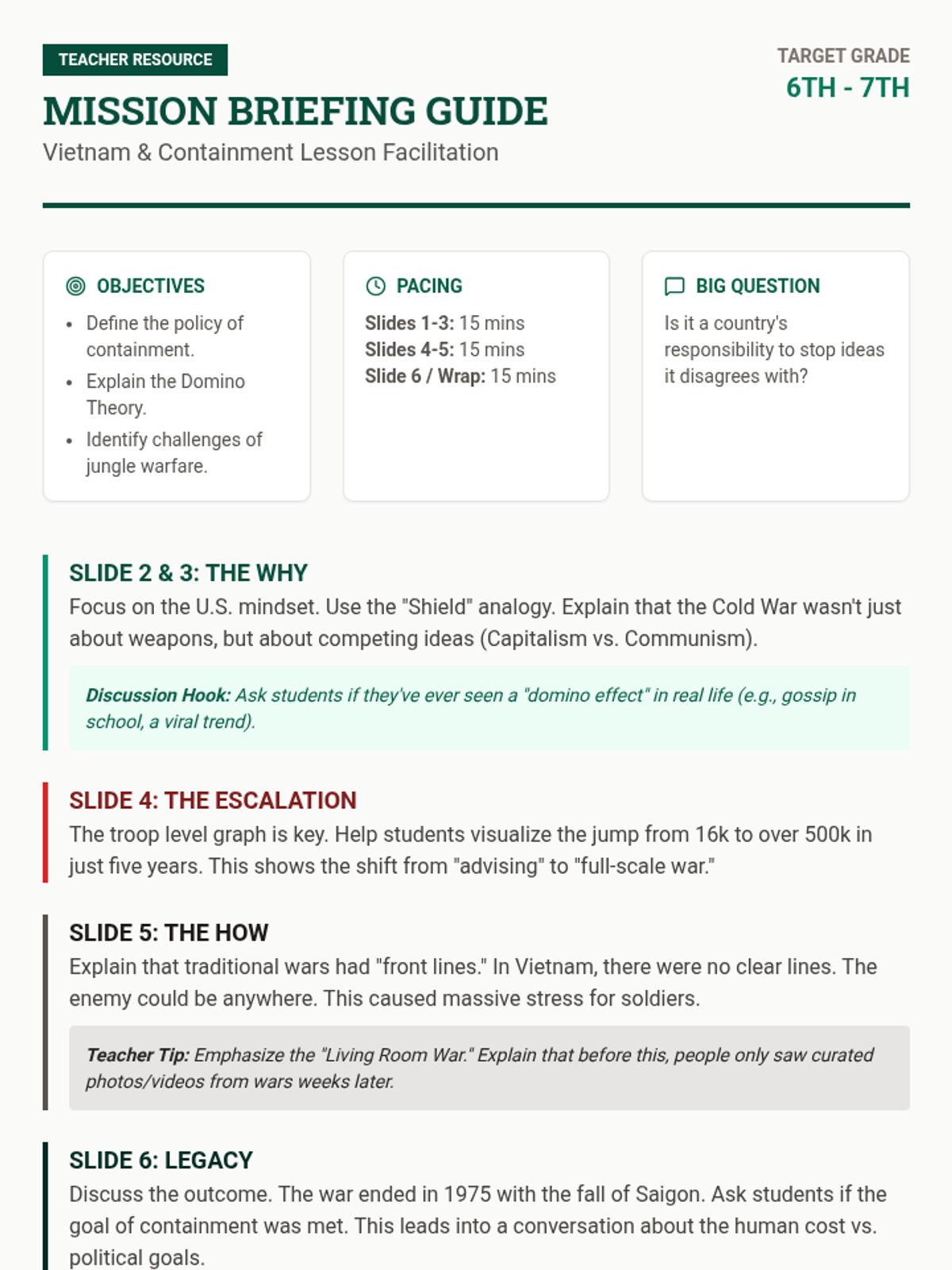
This lesson explores the origins of the Vietnam War through the lens of the US policy of containment and the Domino Theory, designed for middle school students.
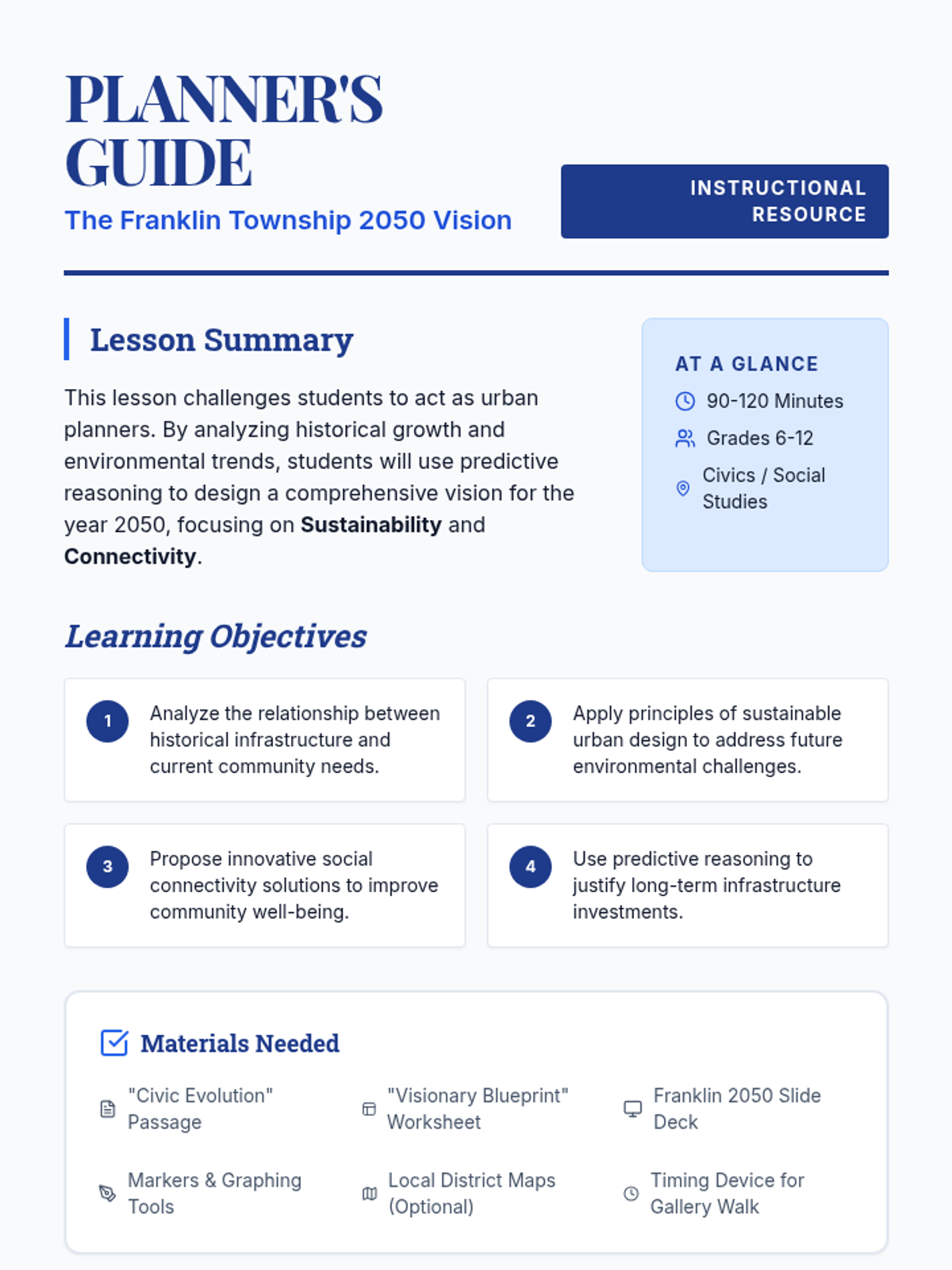
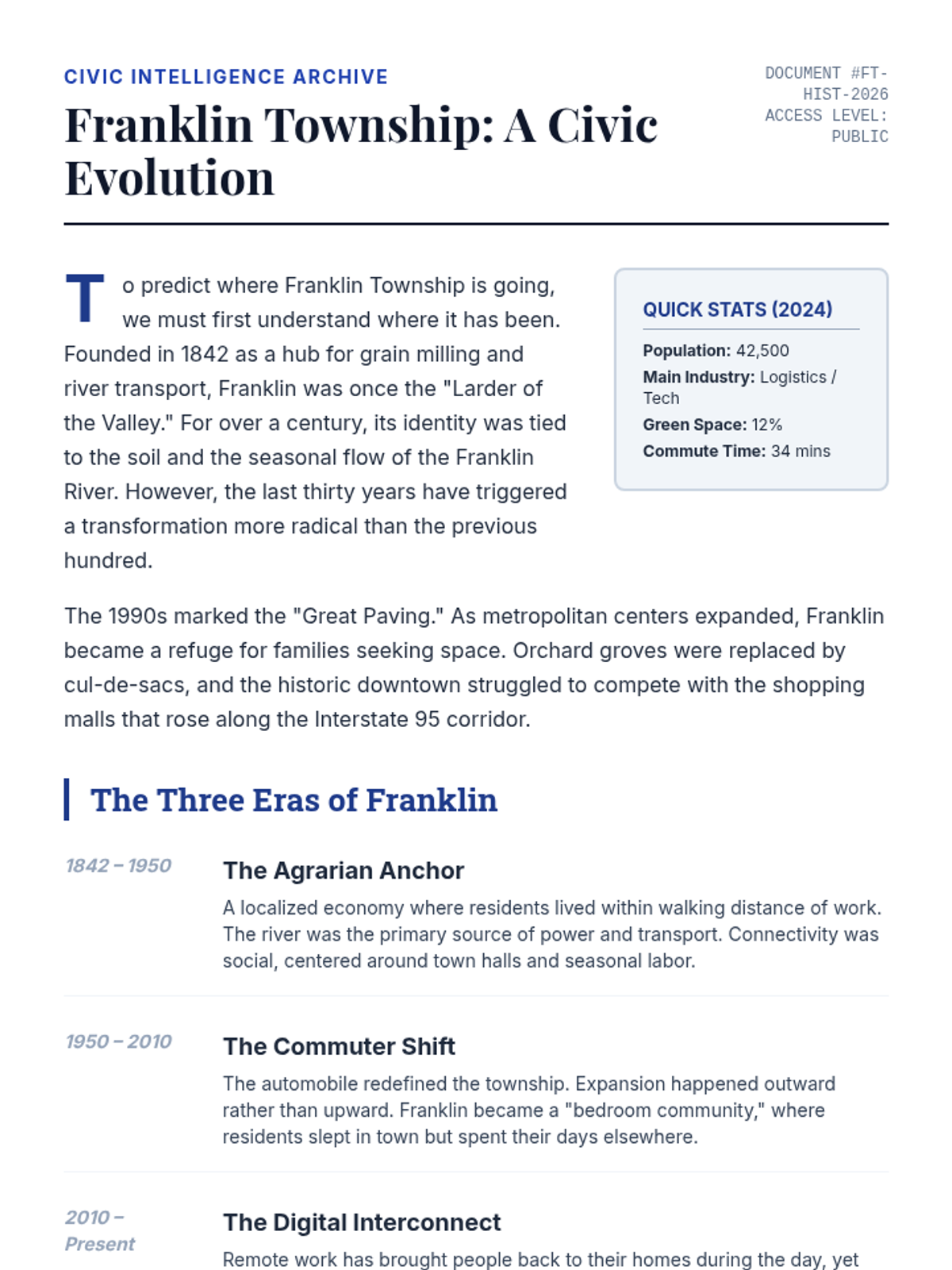
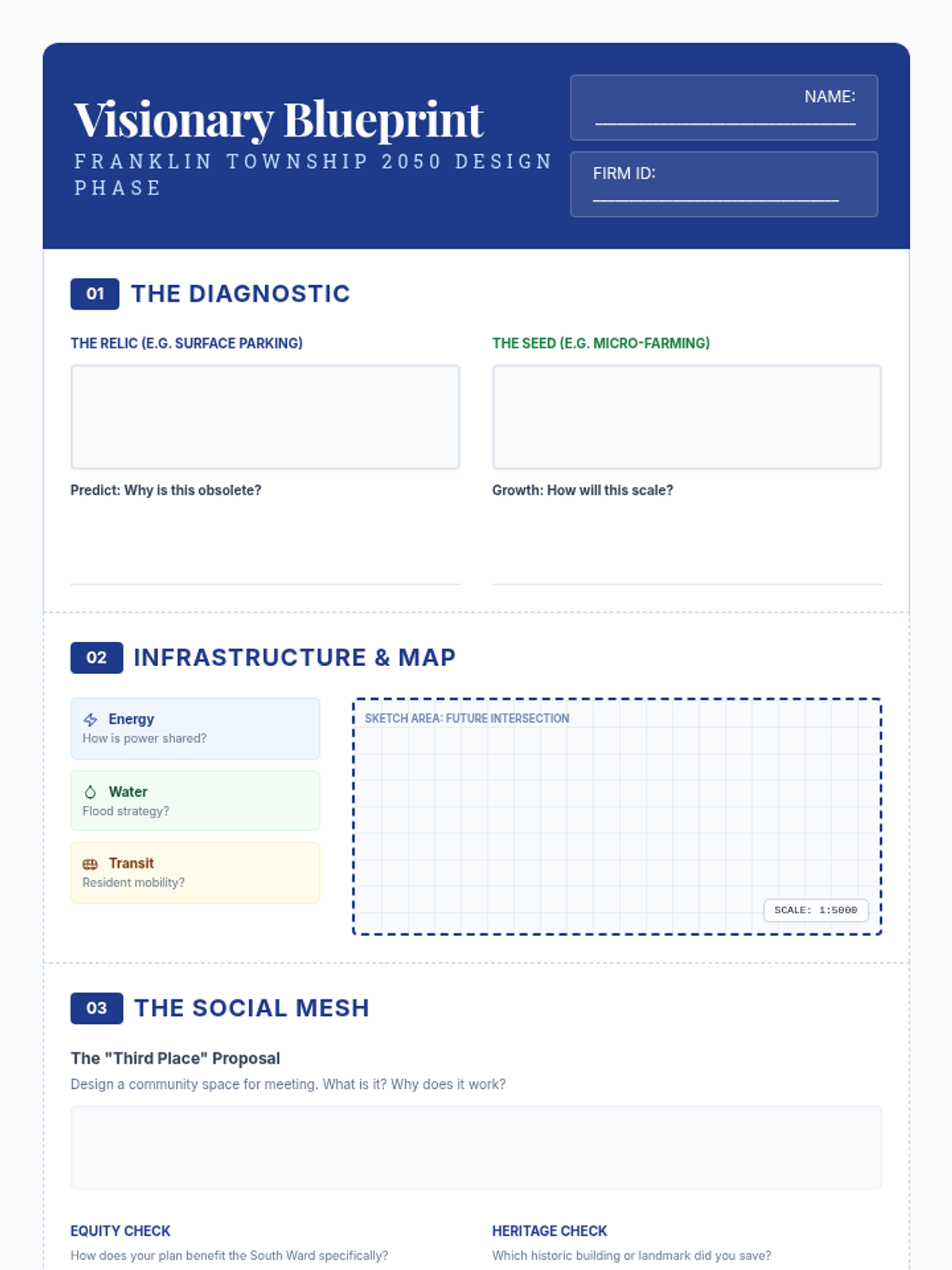
A civic design lesson where students apply historical context and sustainability principles to imagine their community in 2050. Students analyze local evolution and propose infrastructure and social connectivity improvements.
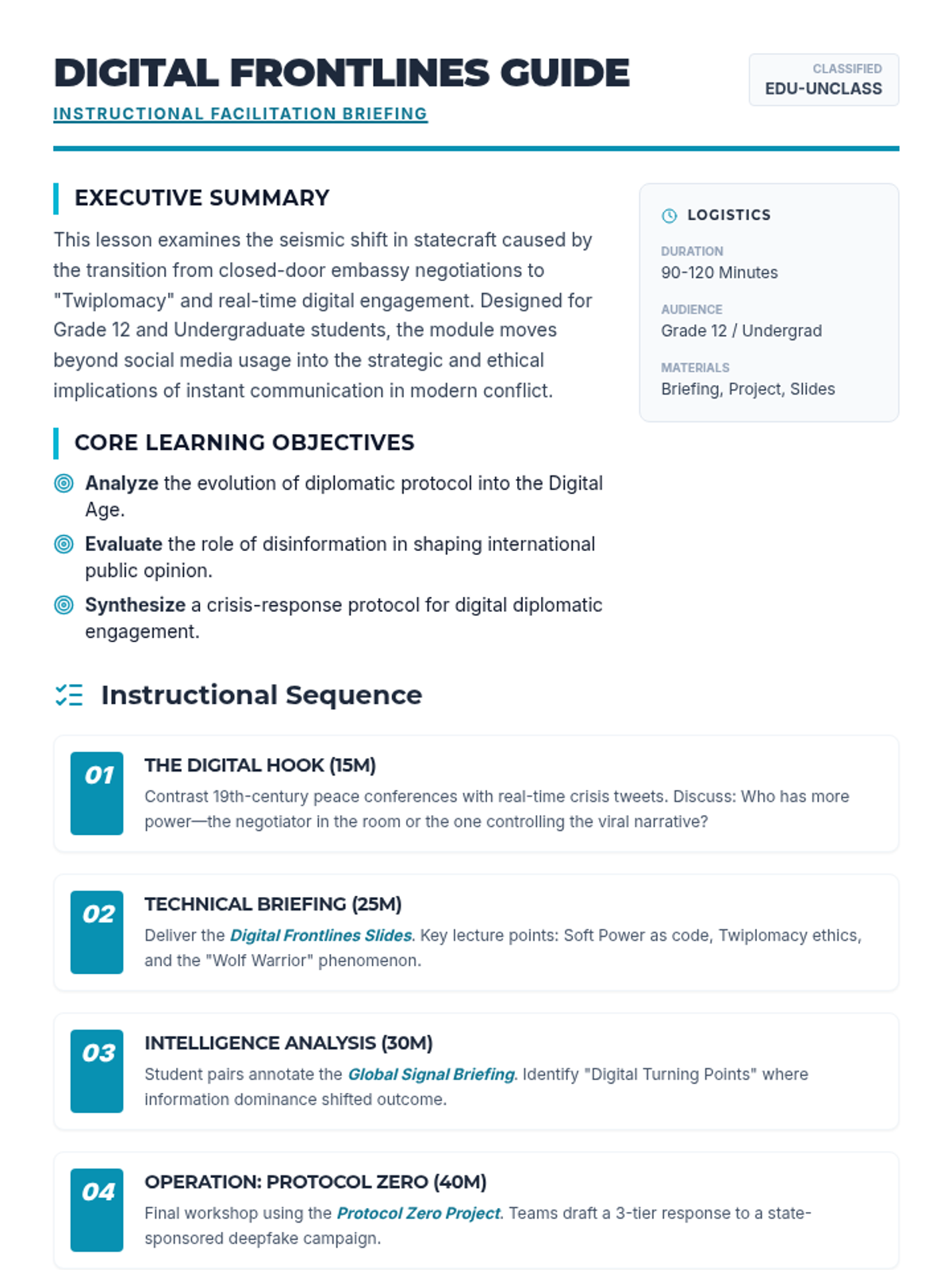
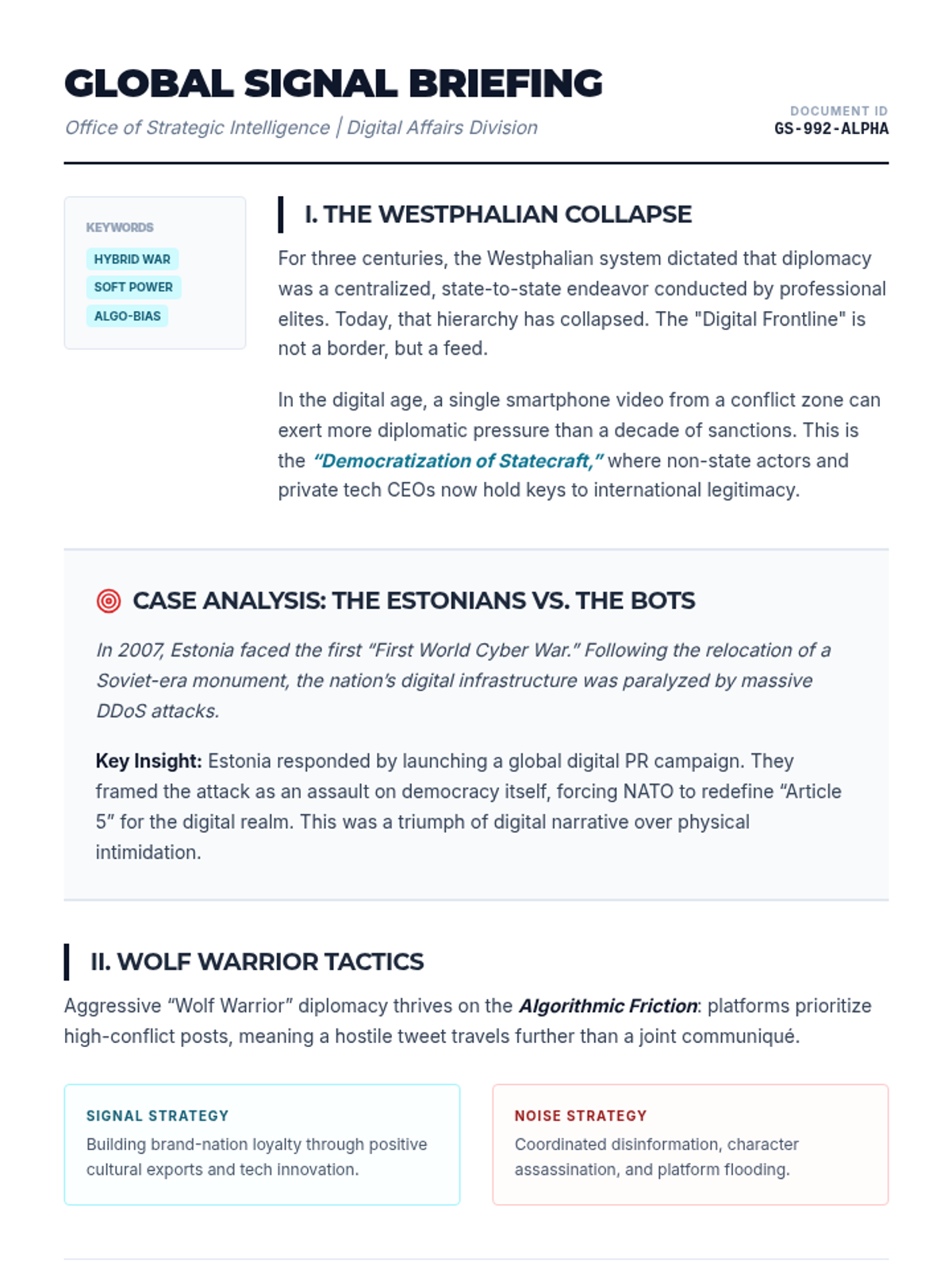
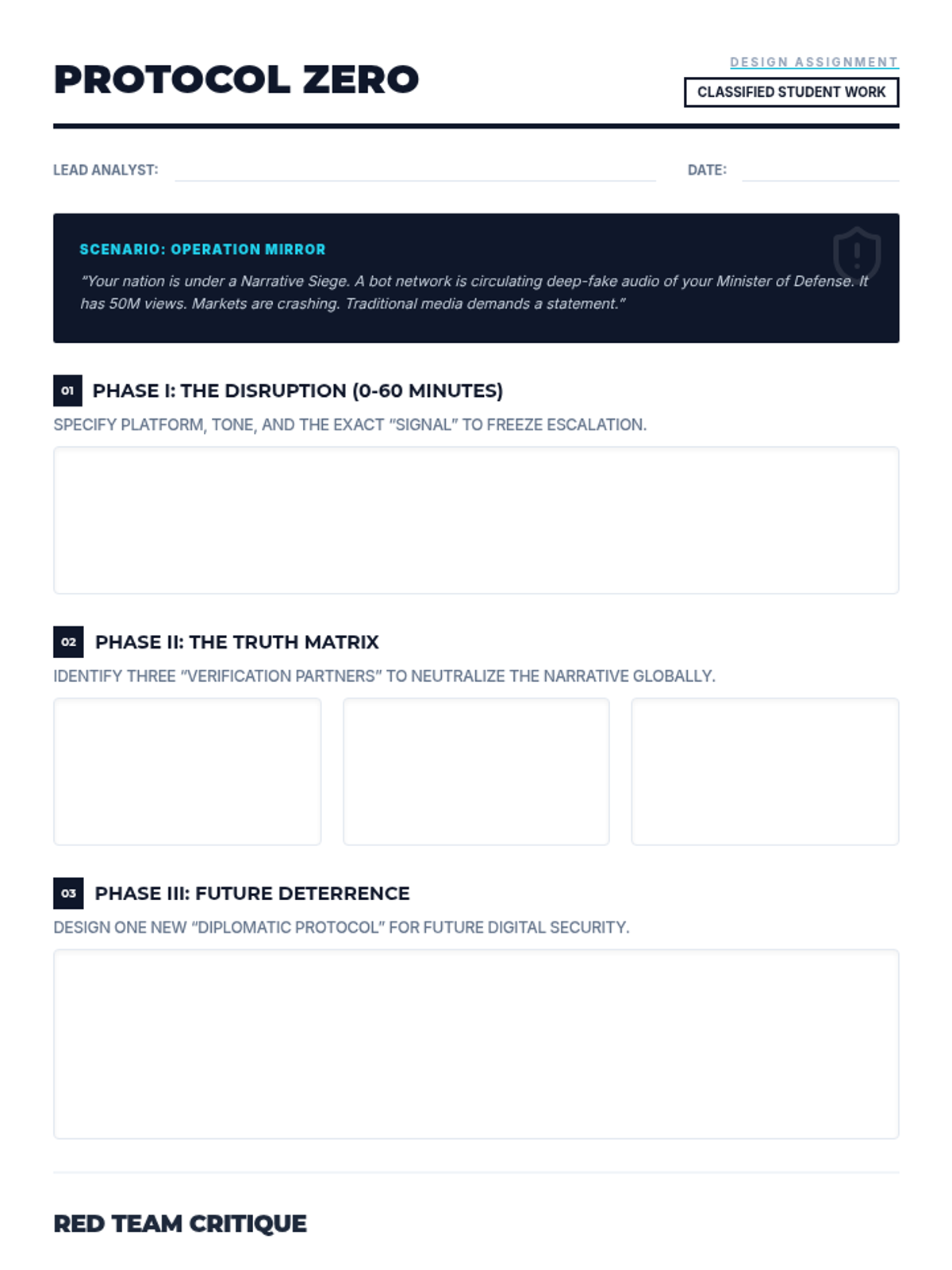
An advanced exploration of how digital platforms and real-time communication redefine international relations, statecraft, and public perception in the 21st century. Students analyze modern case studies and design a new framework for ethical digital engagement.
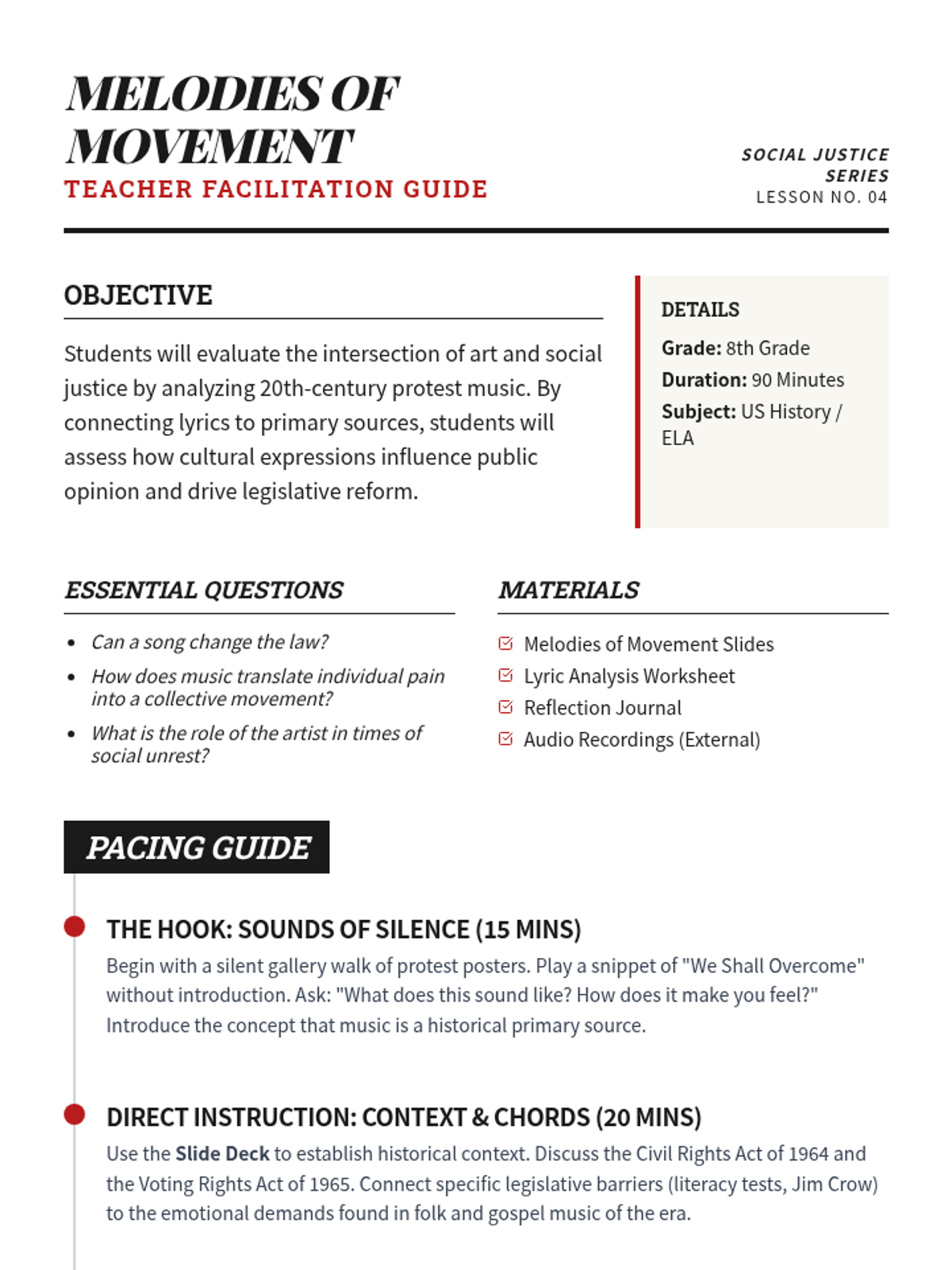
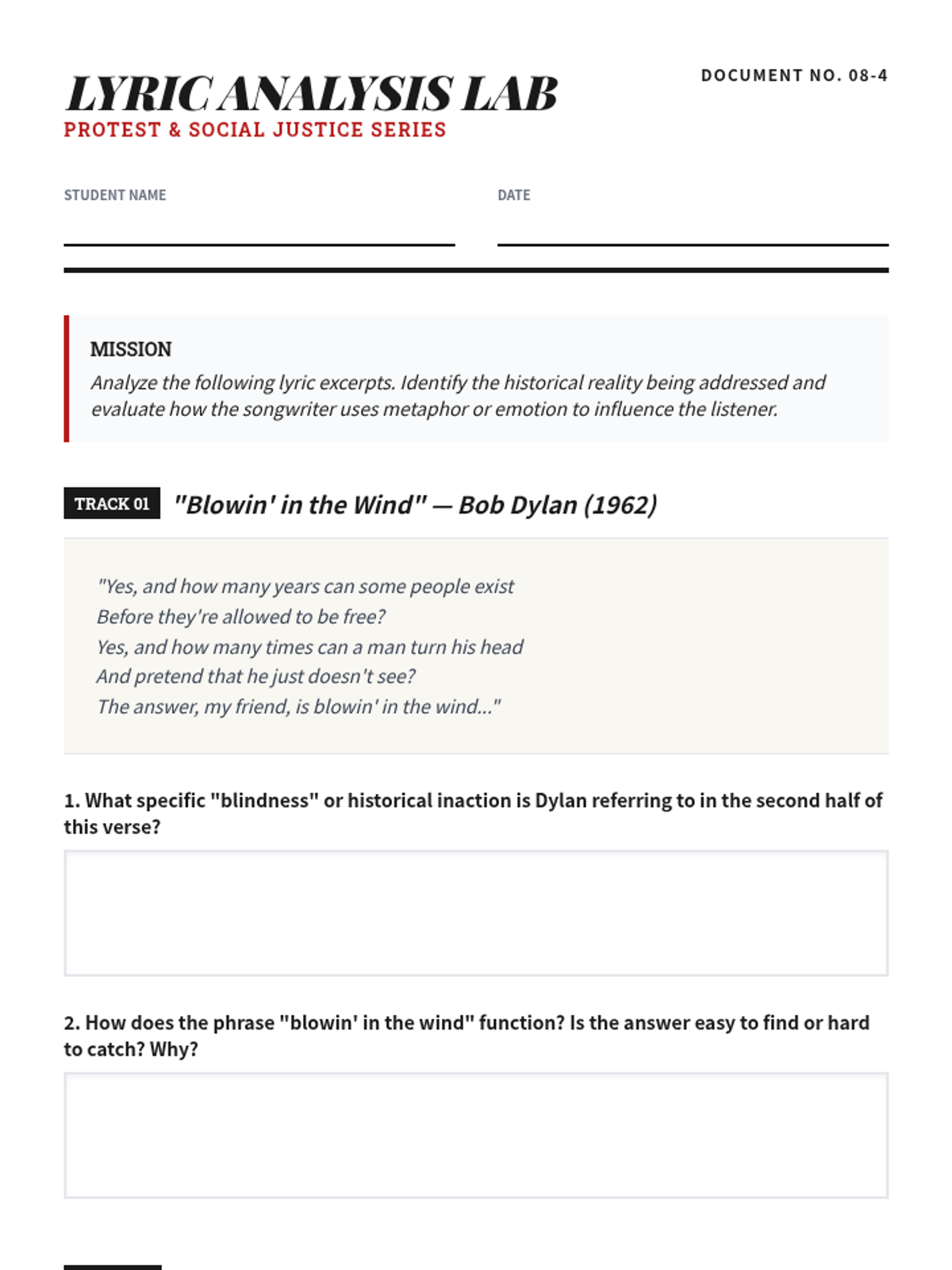
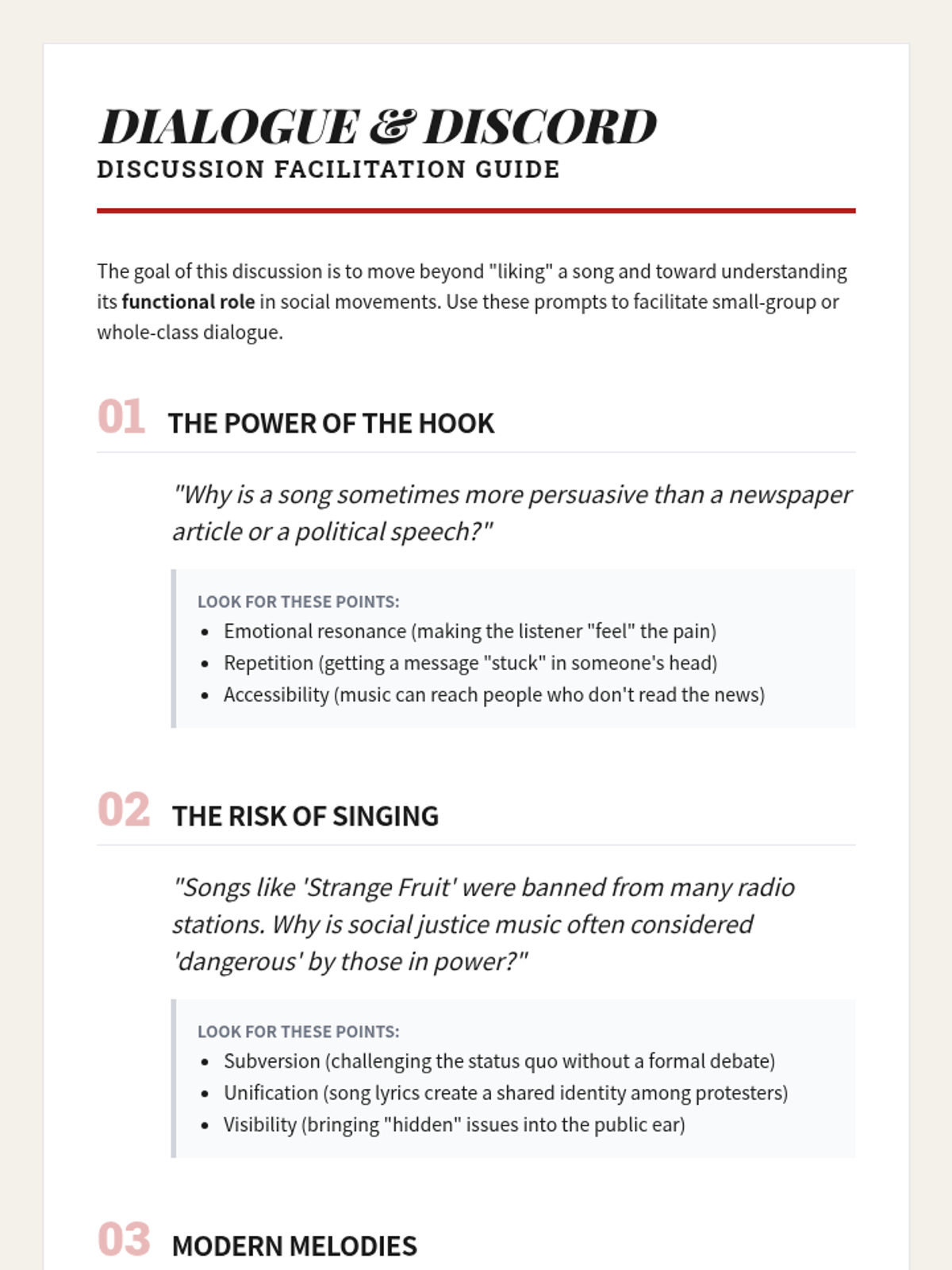
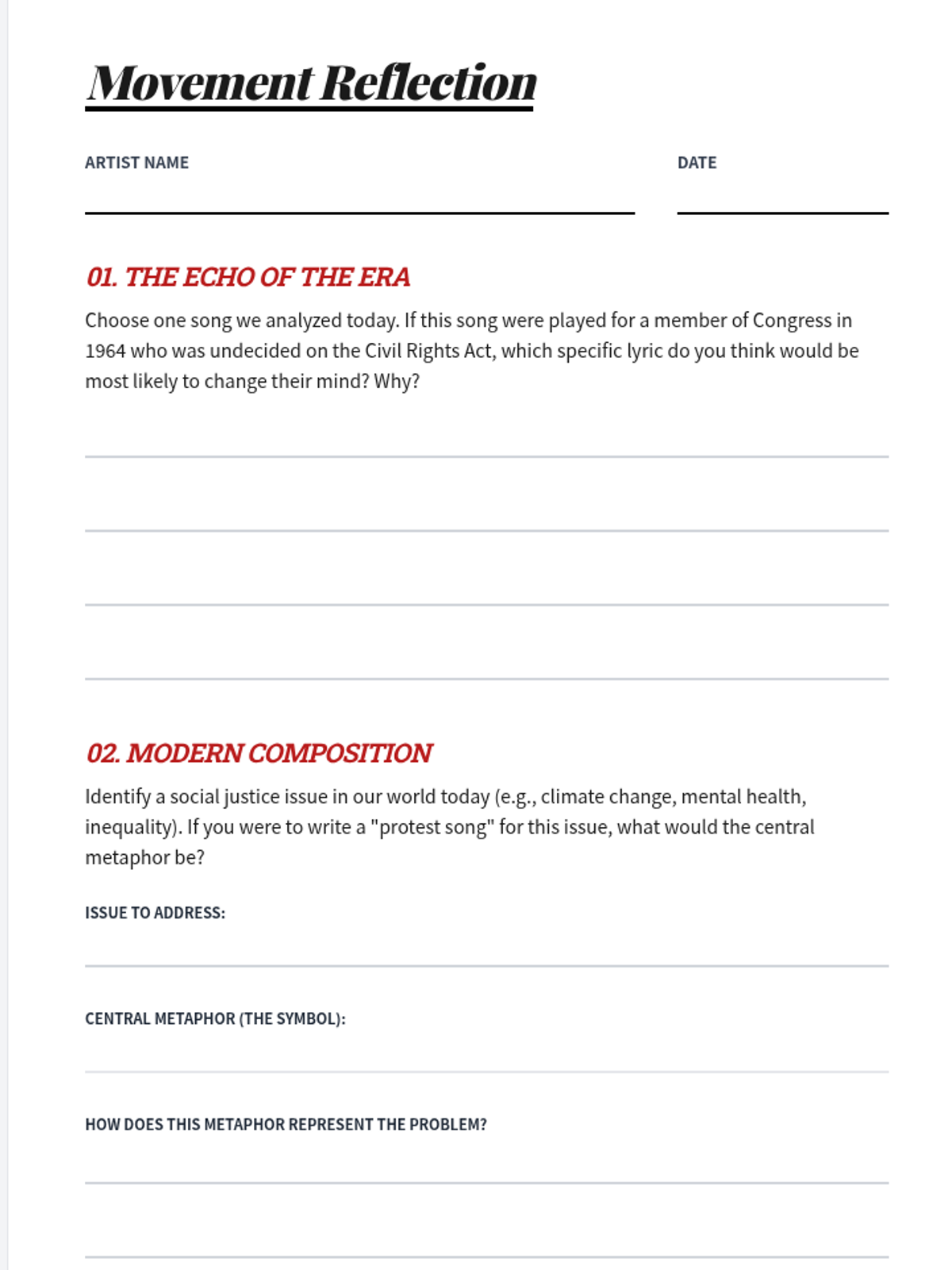
Eighth-grade students analyze protest music from the Civil Rights era to evaluate art's influence on public opinion and legislative change. This lesson connects lyrics with primary sources to understand cultural expressions of social justice.
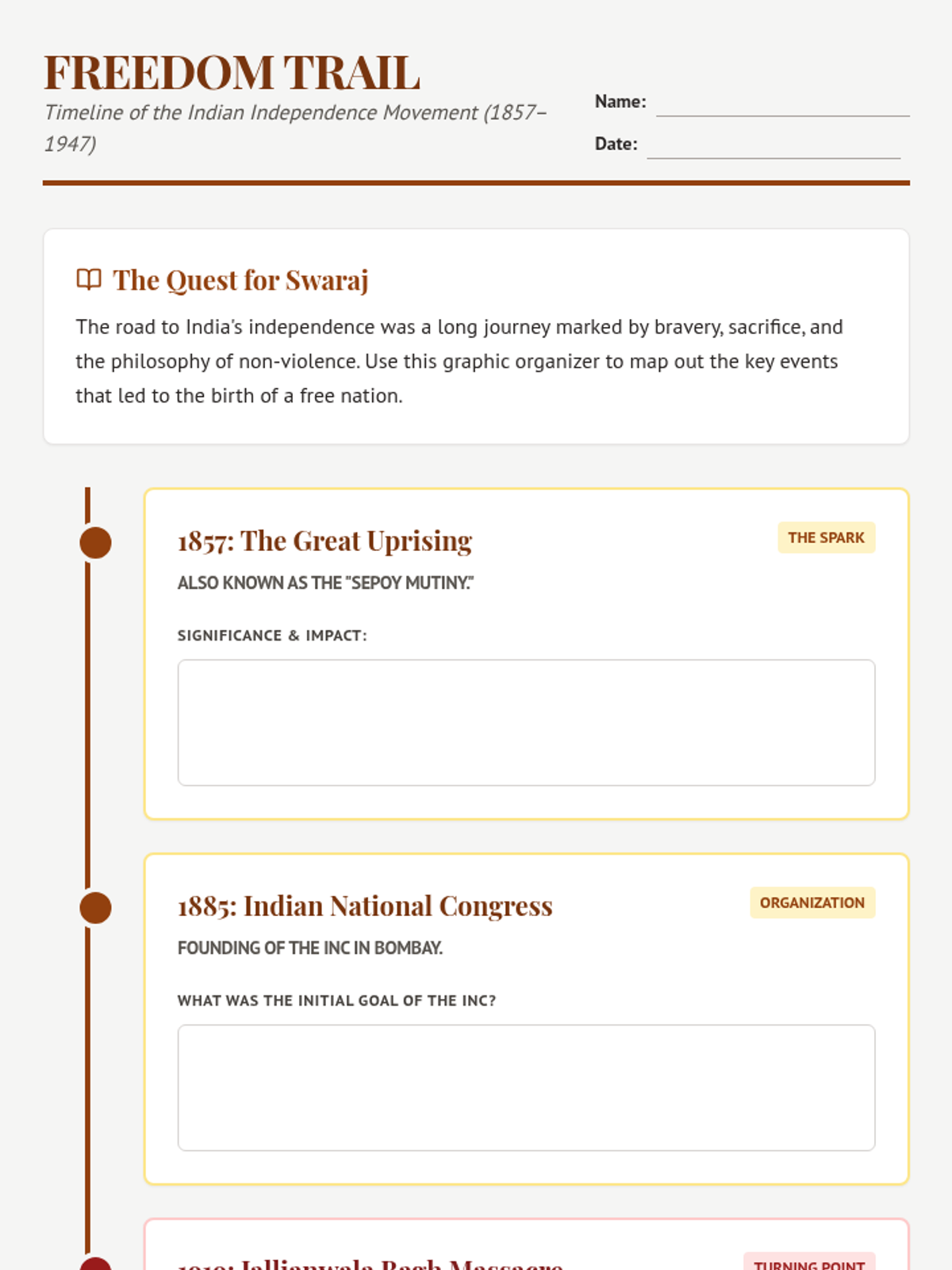
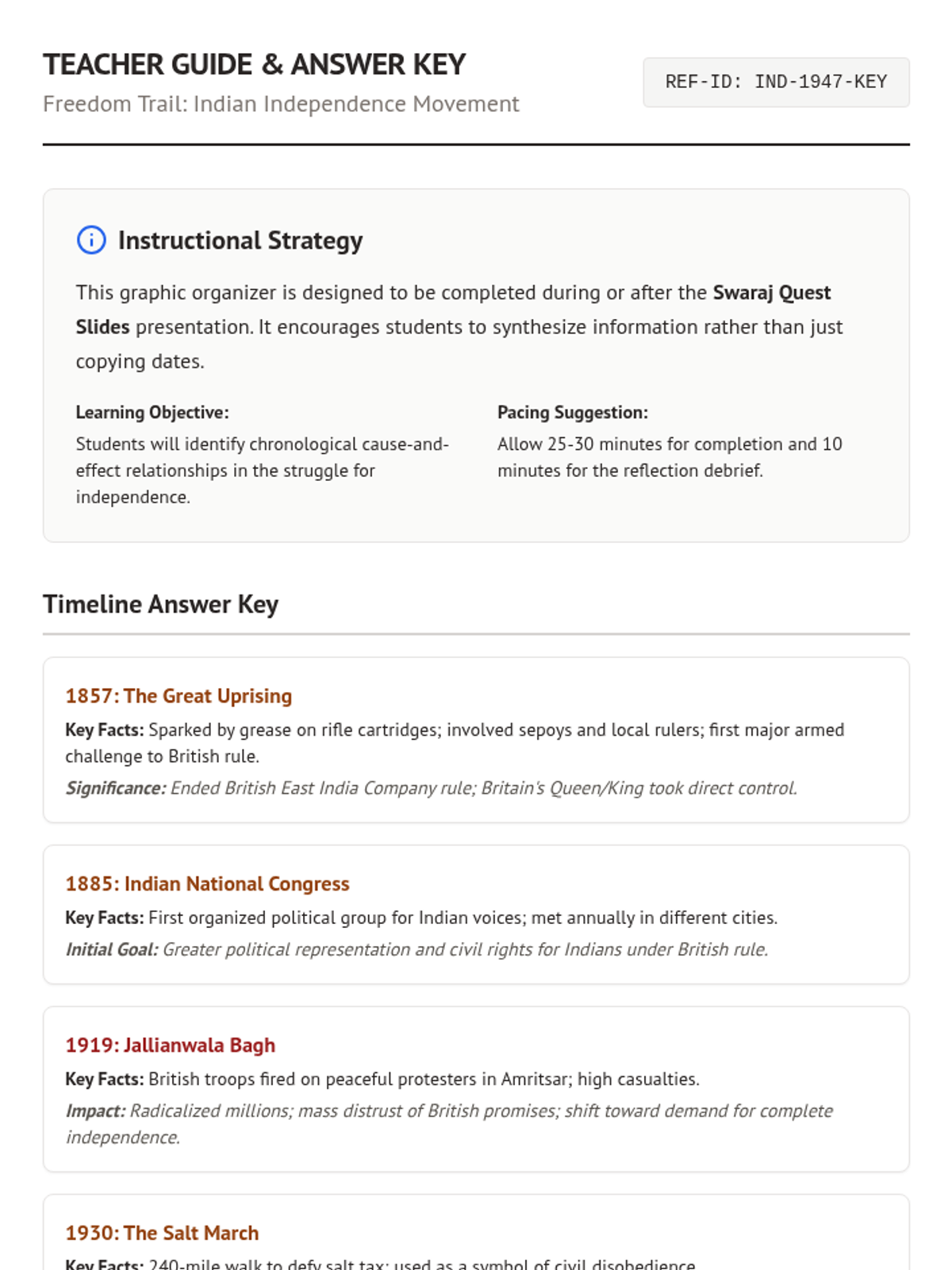
A comprehensive lesson exploring the pivotal moments and key figures of the Indian Independence Movement, from the 1857 uprising to the achievement of Swaraj in 1947.
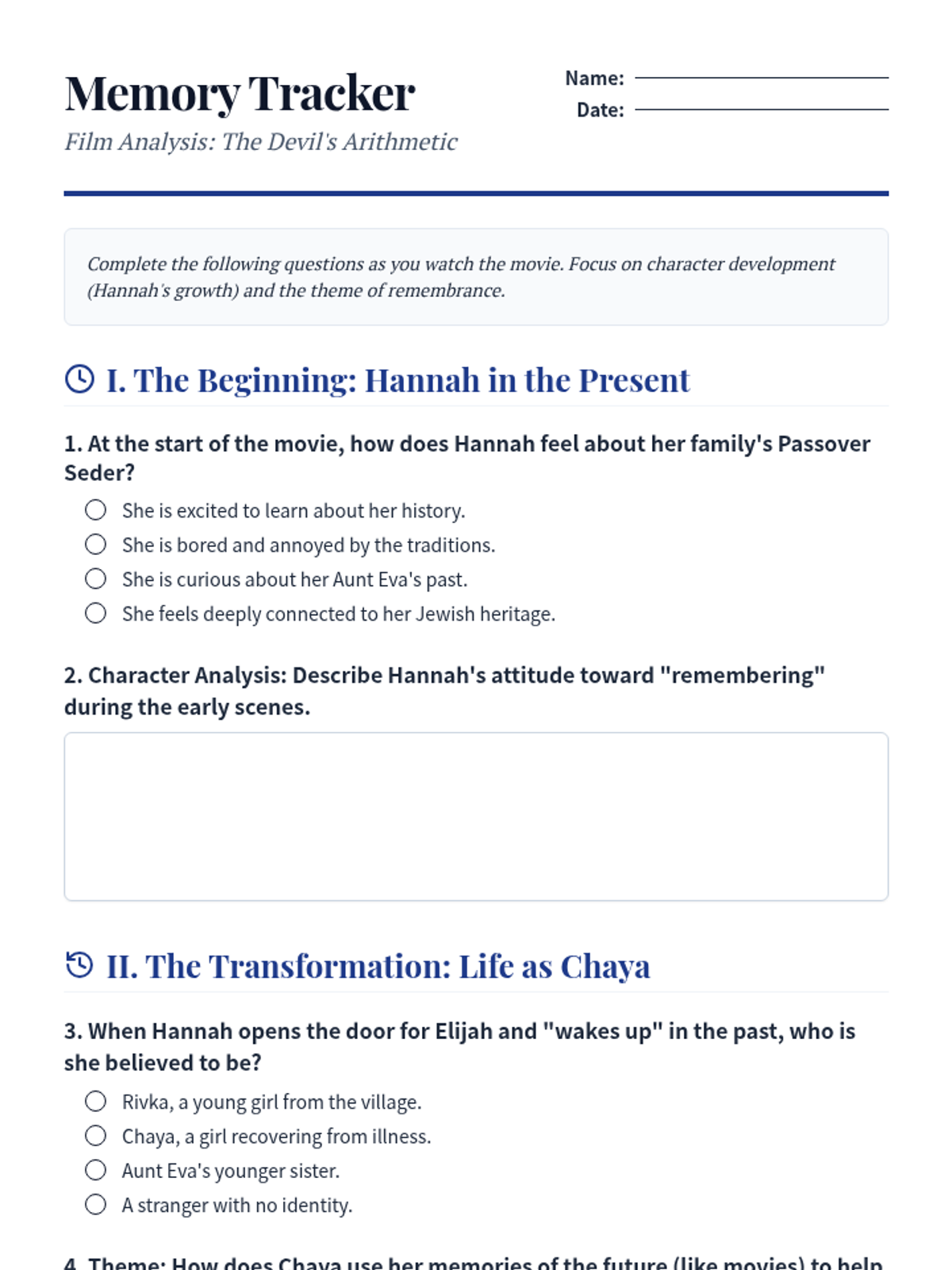
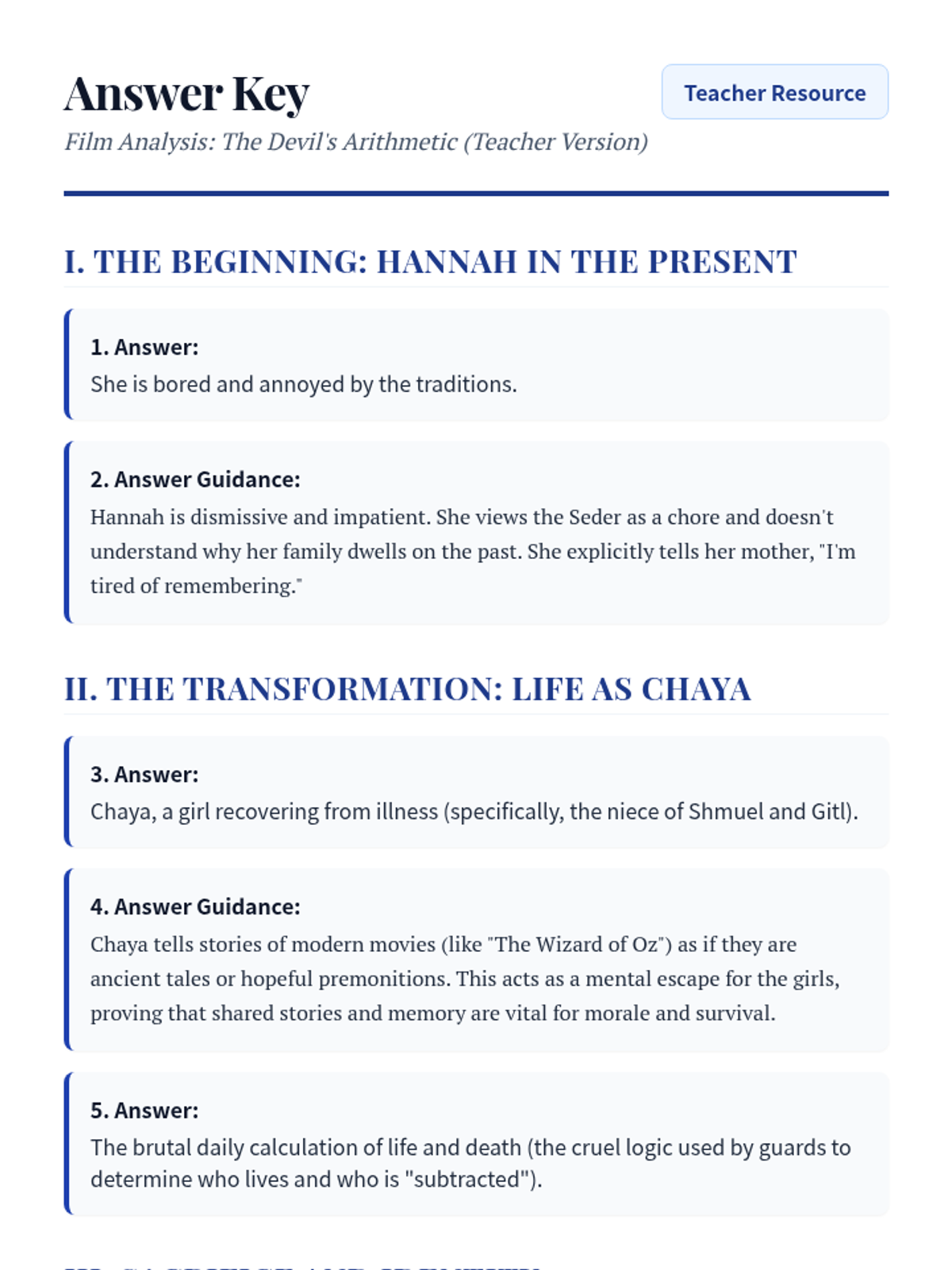
A lesson centered around the movie adaptation of 'The Devil's Arithmetic', focusing on character development and the theme of remembrance. Students will analyze Hannah's transformation and the historical weight of the Holocaust through guided viewing.