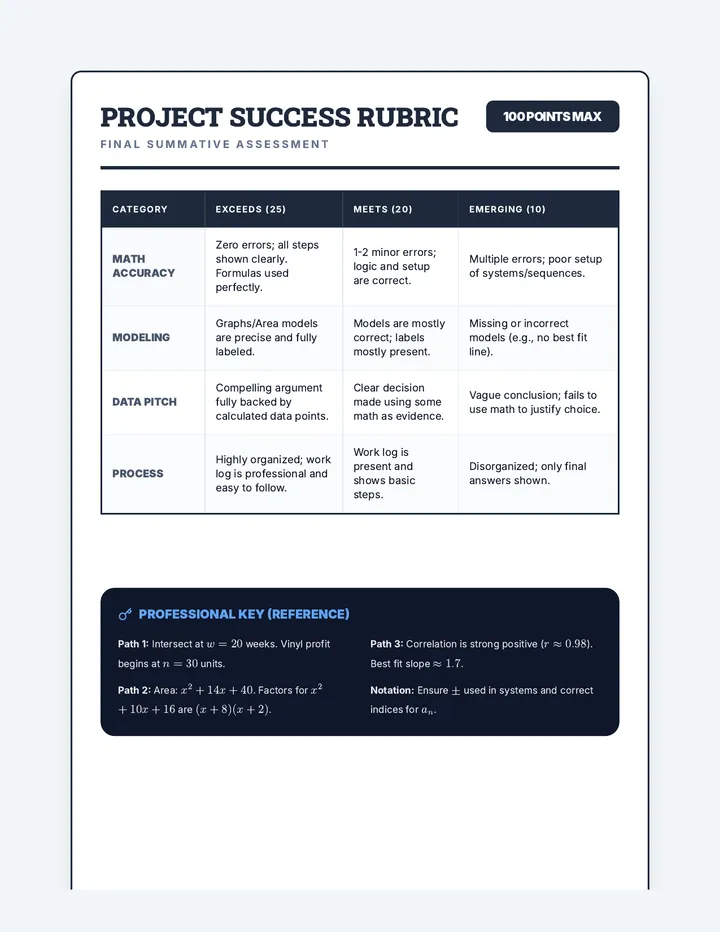
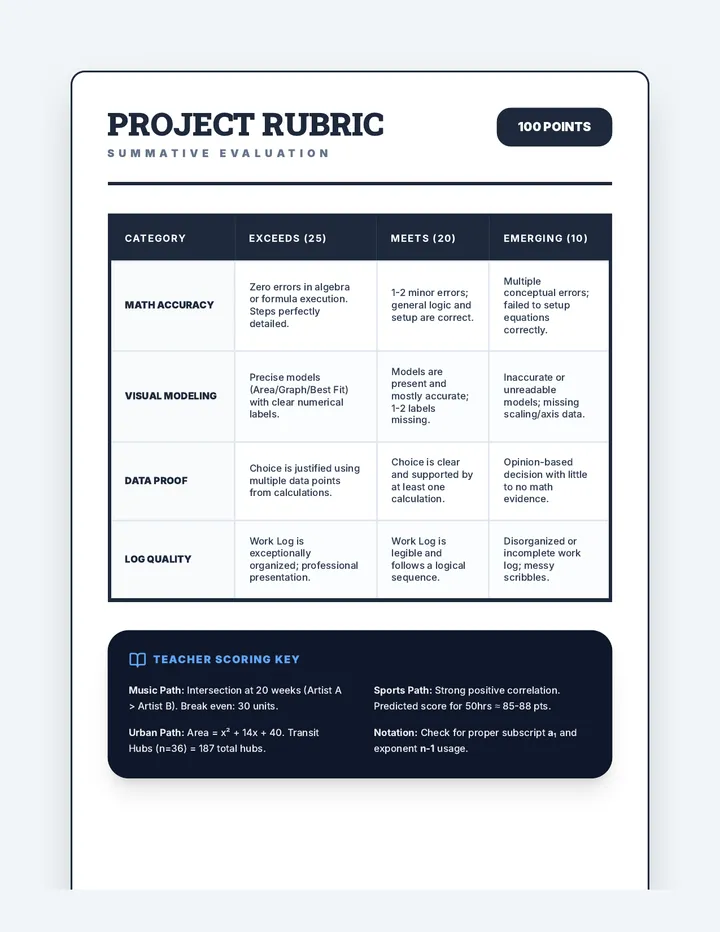
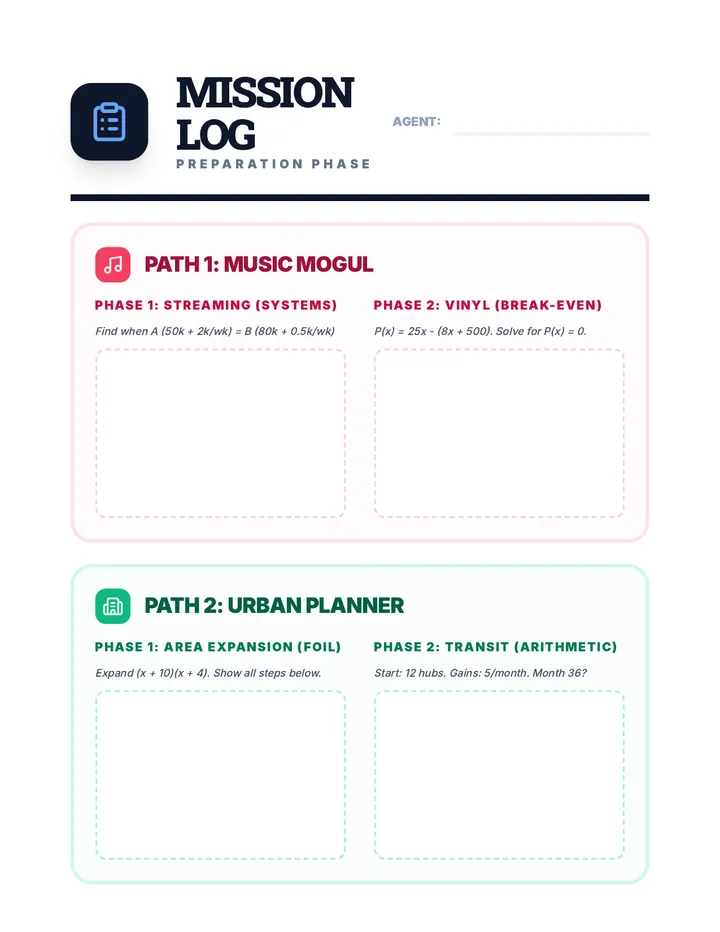
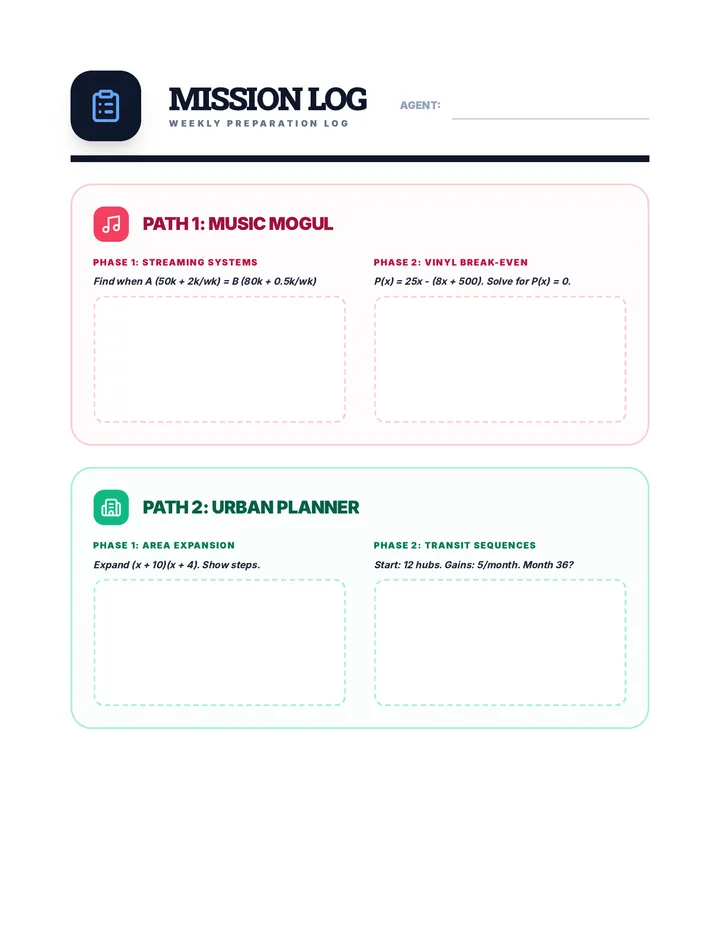
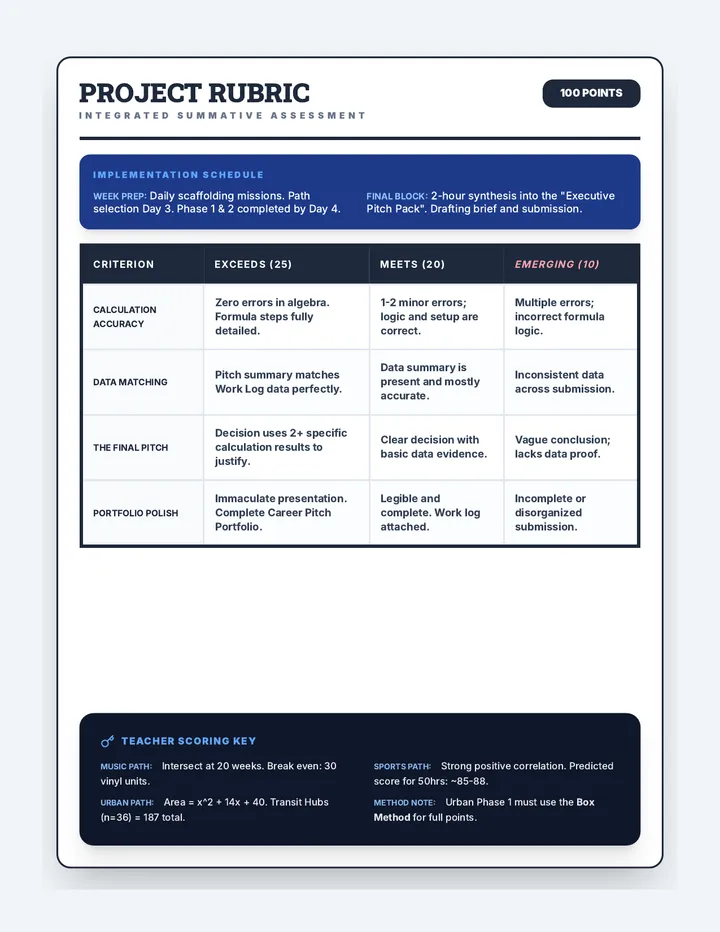
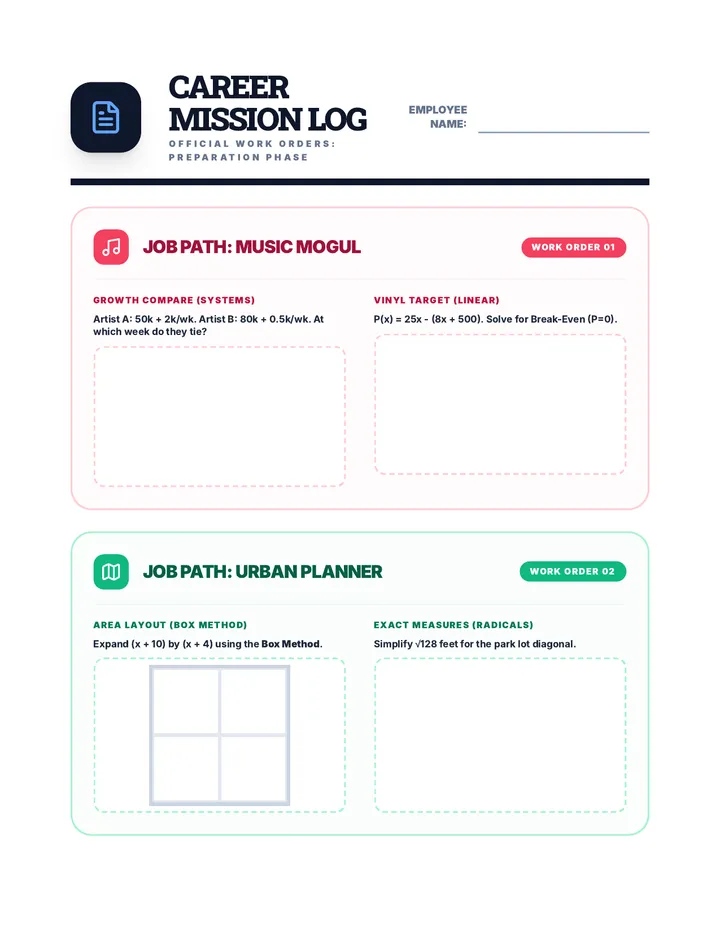
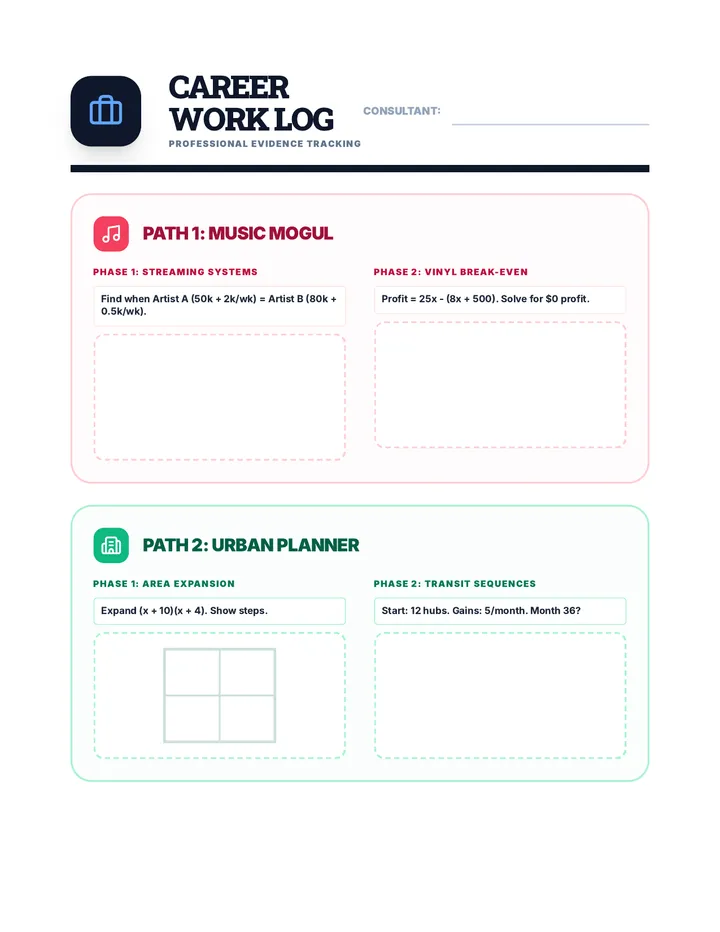
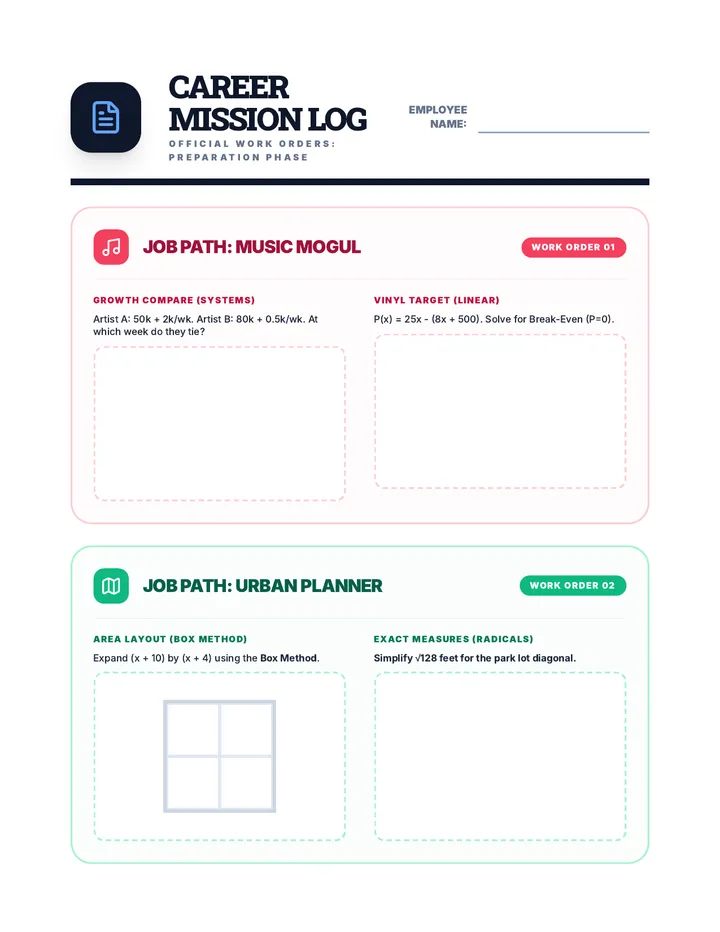
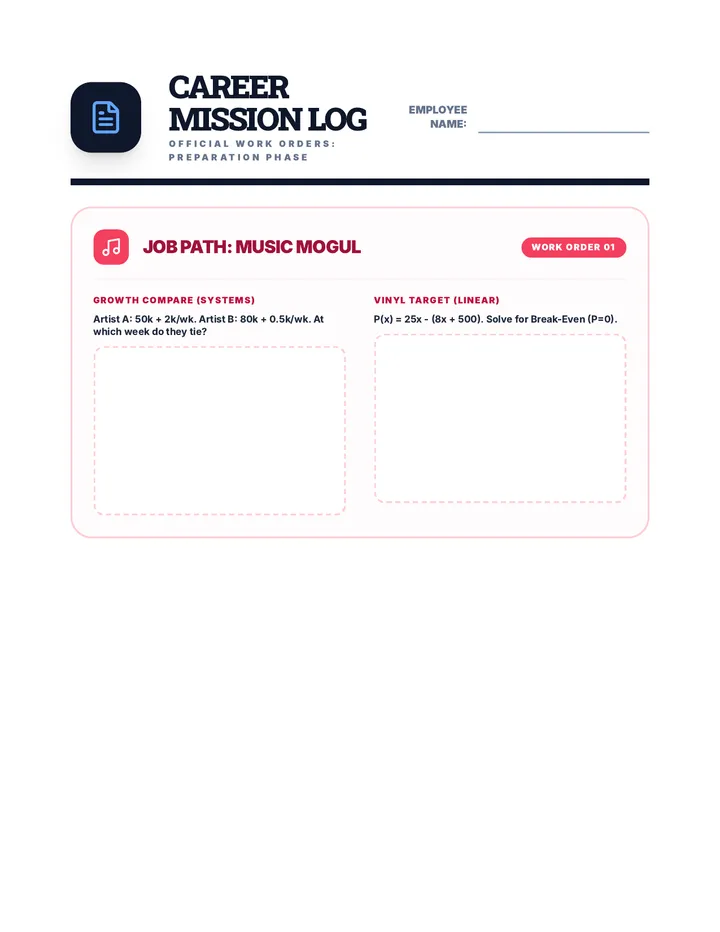
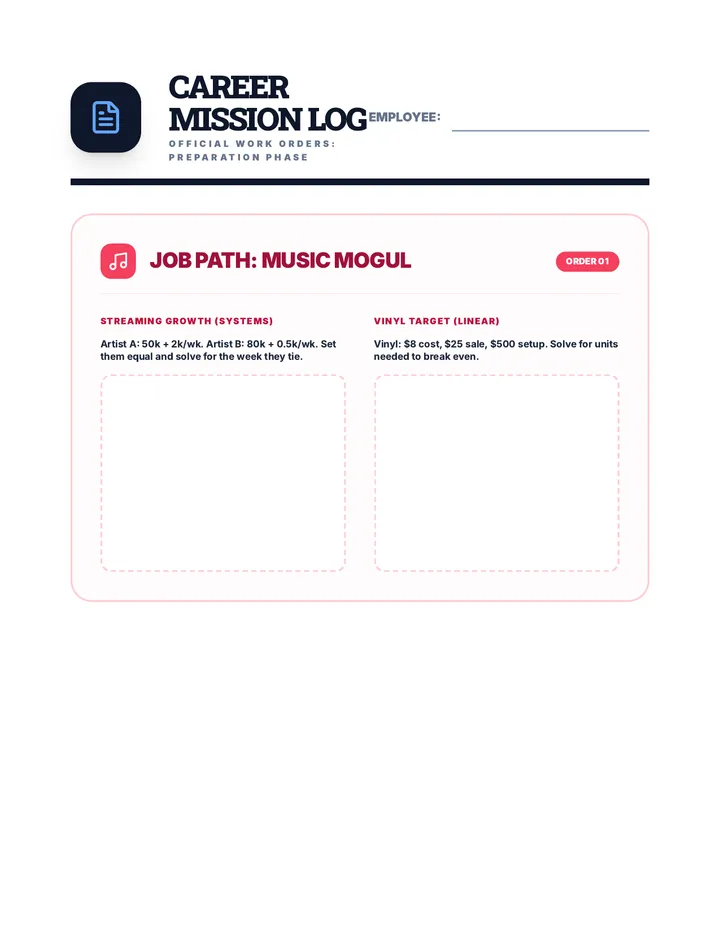
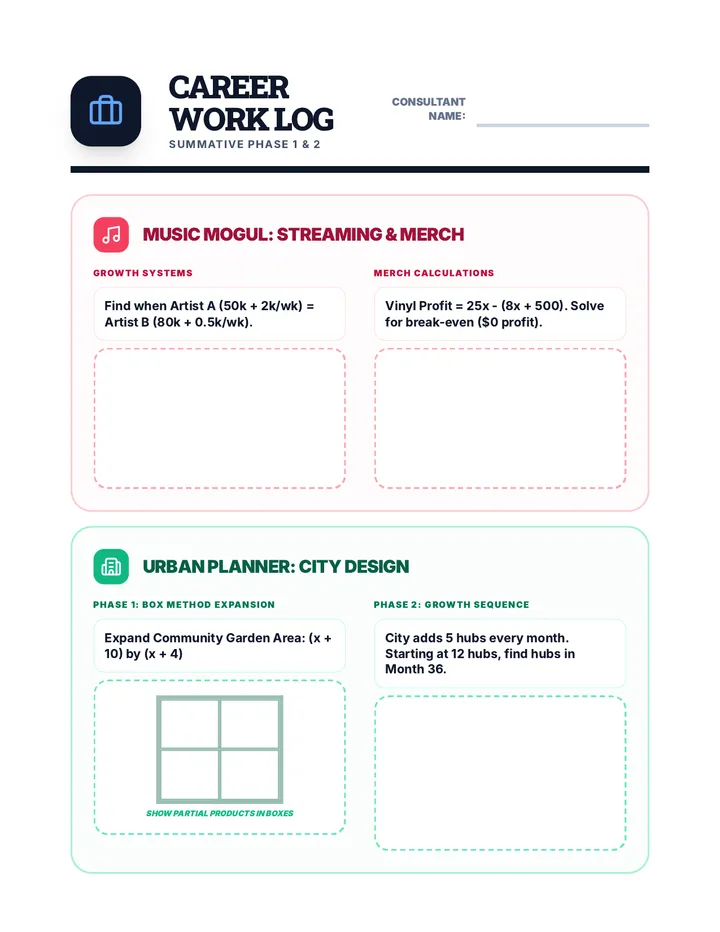
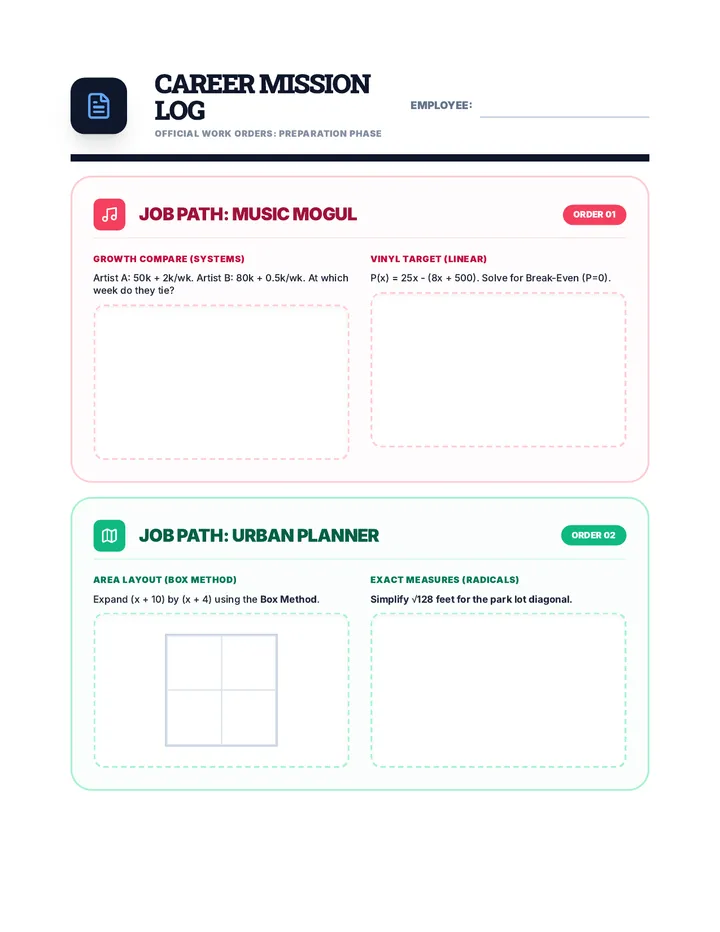
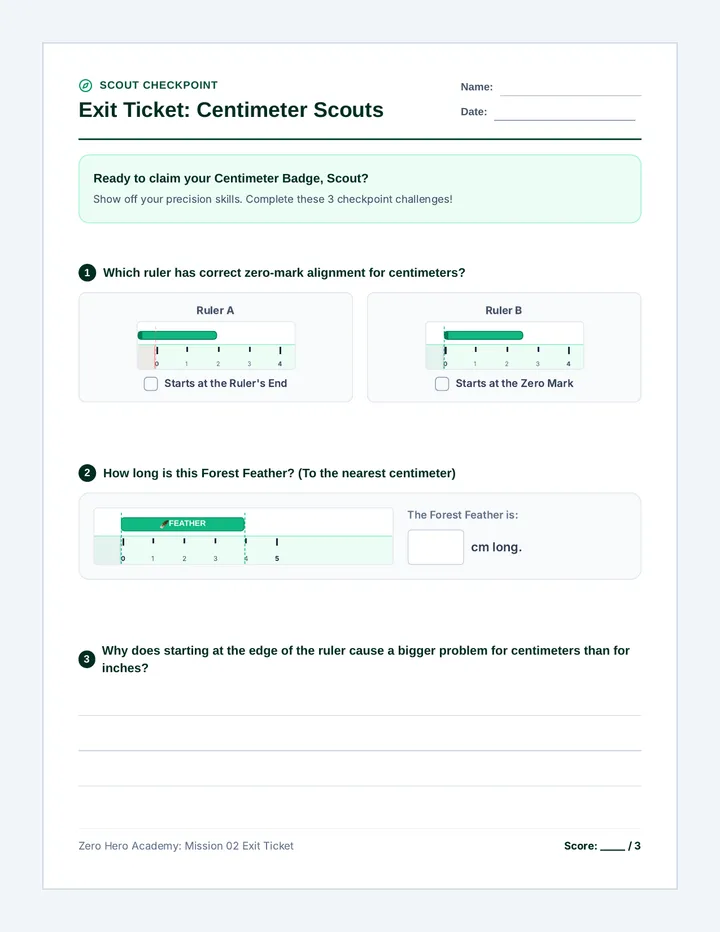
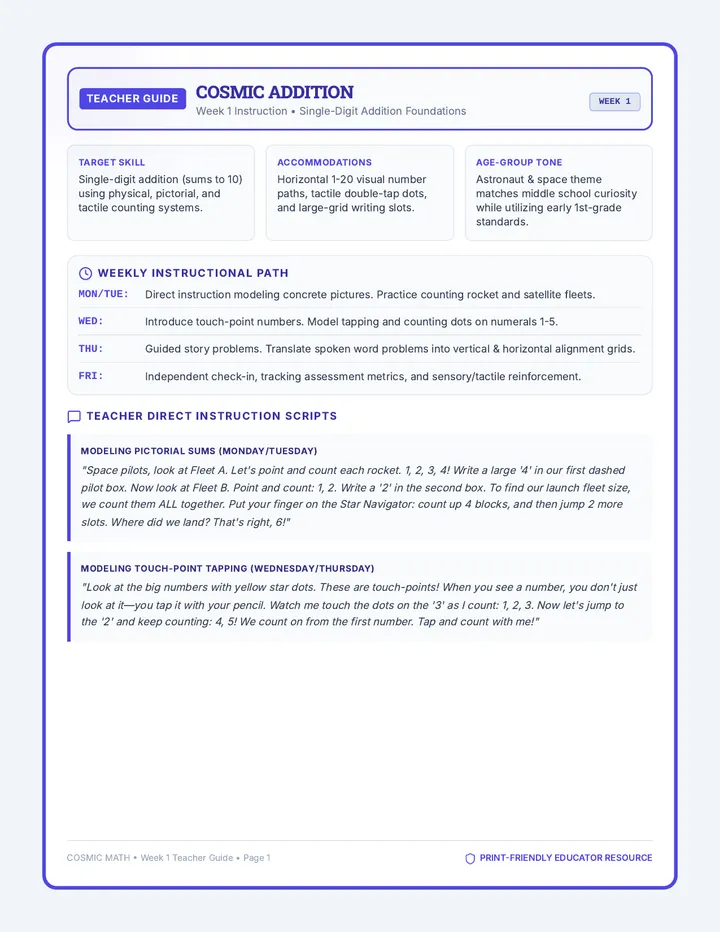
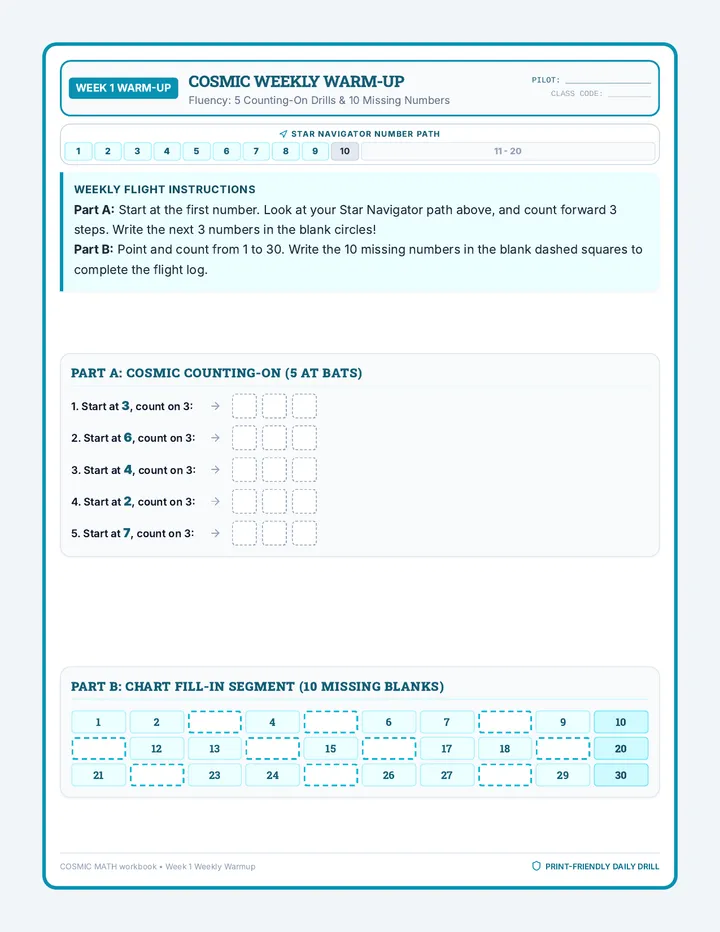
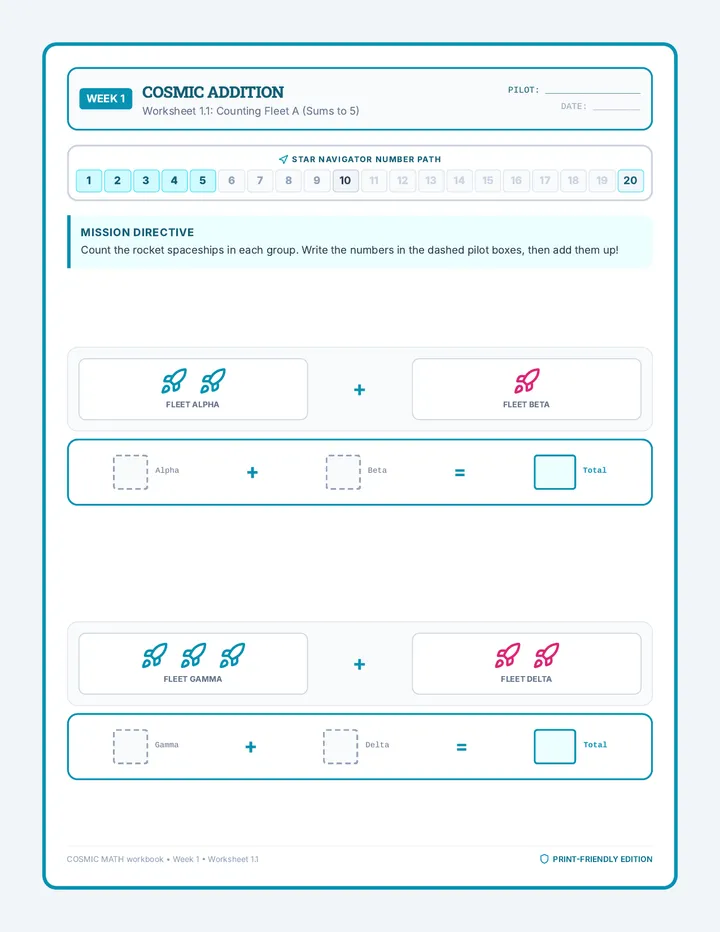
A cumulative review and assessment day. Students complete a 'Final Inspection' quiz to demonstrate mastery and participate in a collaborative 'Lab Graduation' challenge.
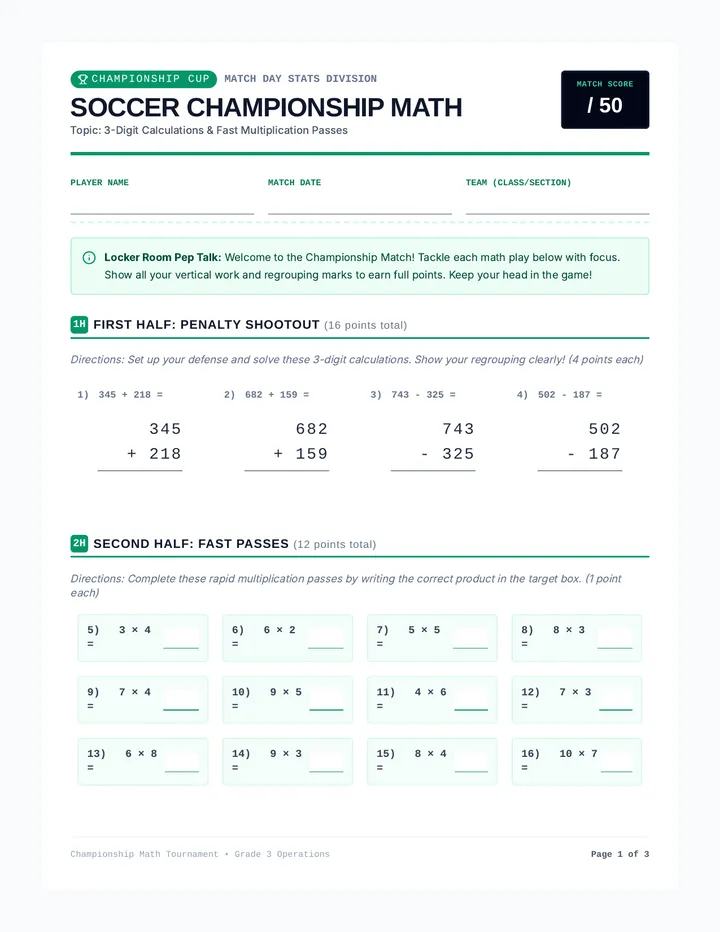
A targeted 10-minute intervention lesson using visual models to help third-grade students grasp the concept of equivalent fractions.
A culminating challenge where students use all properties to solve a complex multi-step problem.
Building fact families to illustrate the inverse relationship between multiplication and division.
Connecting division to multiplication by finding missing factors in array models.
Using the associative property to find more efficient paths to solving multiplication problems.
Modeling three-factor multiplication using 3D block structures or stacked arrays.
Introduction to the associative property by exploring how grouping three factors differently results in the same product.
Connecting decomposing arrays to the formal notation of the distributive property using parentheses.
Using area models to visually break apart complex arrays into two smaller, easier-to-manage arrays.
Introduction to the distributive property by decomposing larger factors into 5 and 2.
Students apply the commutative property to solve context-based problems and match expressions to visual models.
Students reinforce the commutative property by translating equal groups into arrays and vice versa.
Students explore the commutative property of multiplication using arrays and physical tiles to understand that order does not change the total.
Students will learn to partition rectangles, circles, and hexagons into sixths and eighths, ensuring all parts are equal in area and labeled correctly as unit fractions.
Advanced situations involving 'Start Unknown' and mixed problem types.
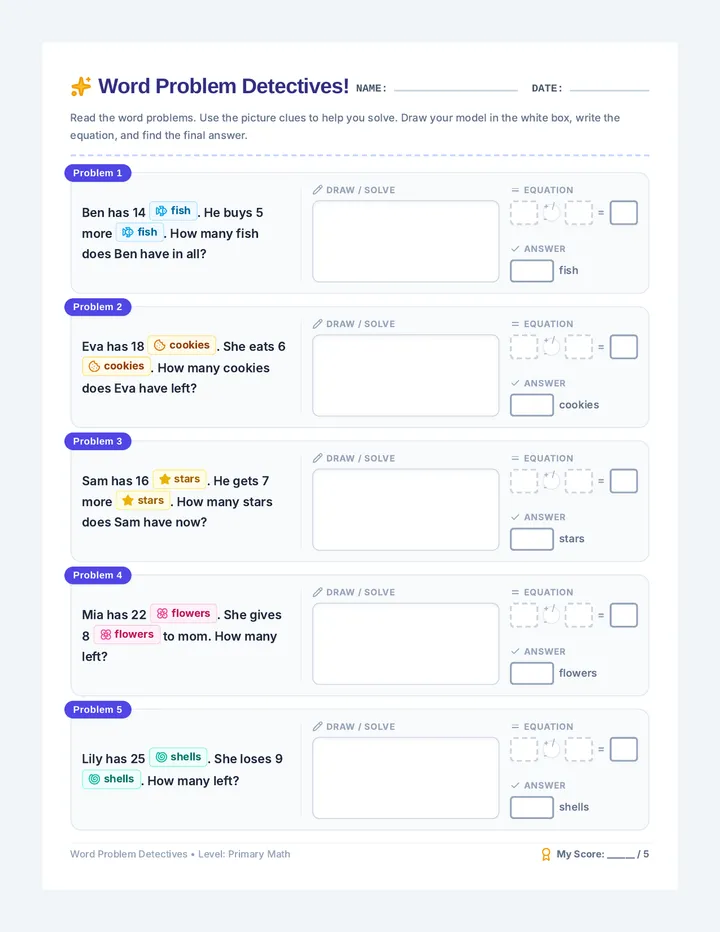
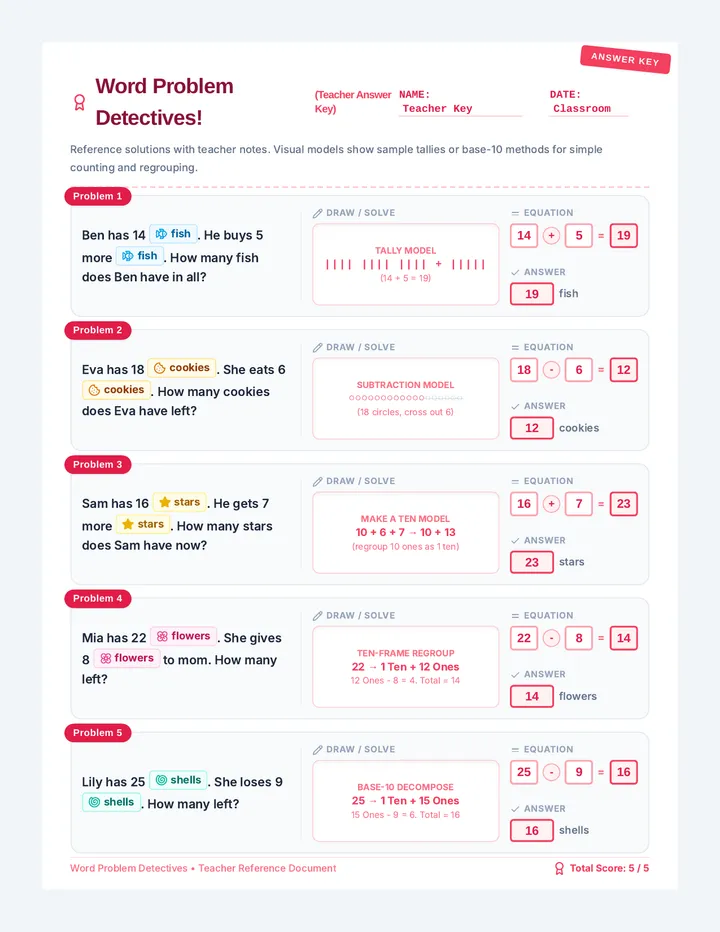
Solving word problems with three addends focusing on commutative and associative properties.
Solving word problems with three addends using the 'Make a Ten' strategy.
Exploring 'Compare' situations where the 'smaller' quantity is unknown.