A lesson designed to teach 6th graders the three essential components of an essay introduction: the hook, bridge, and thesis. Students will analyze examples and use a blueprint-themed graphic organizer to draft their own.
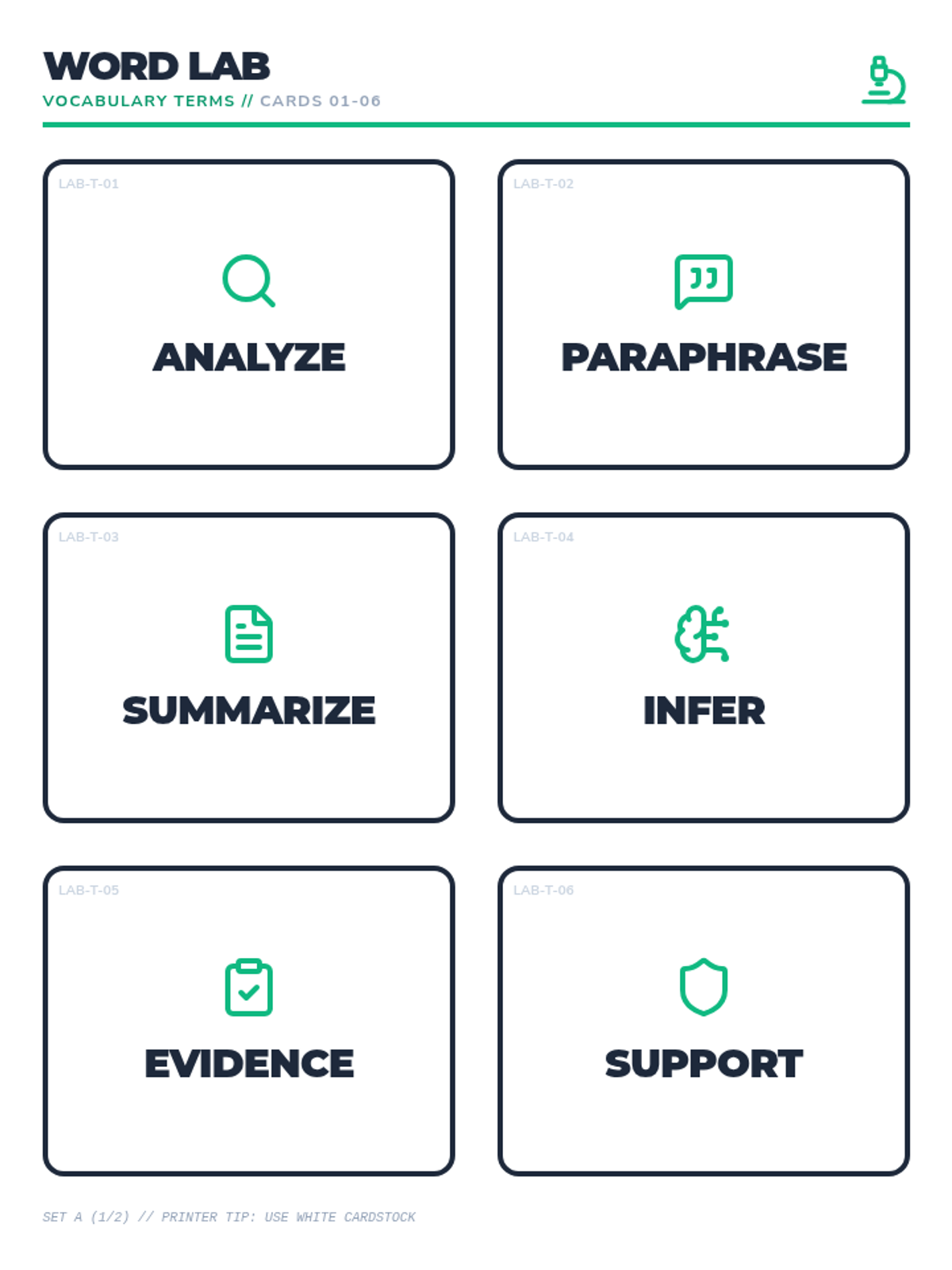
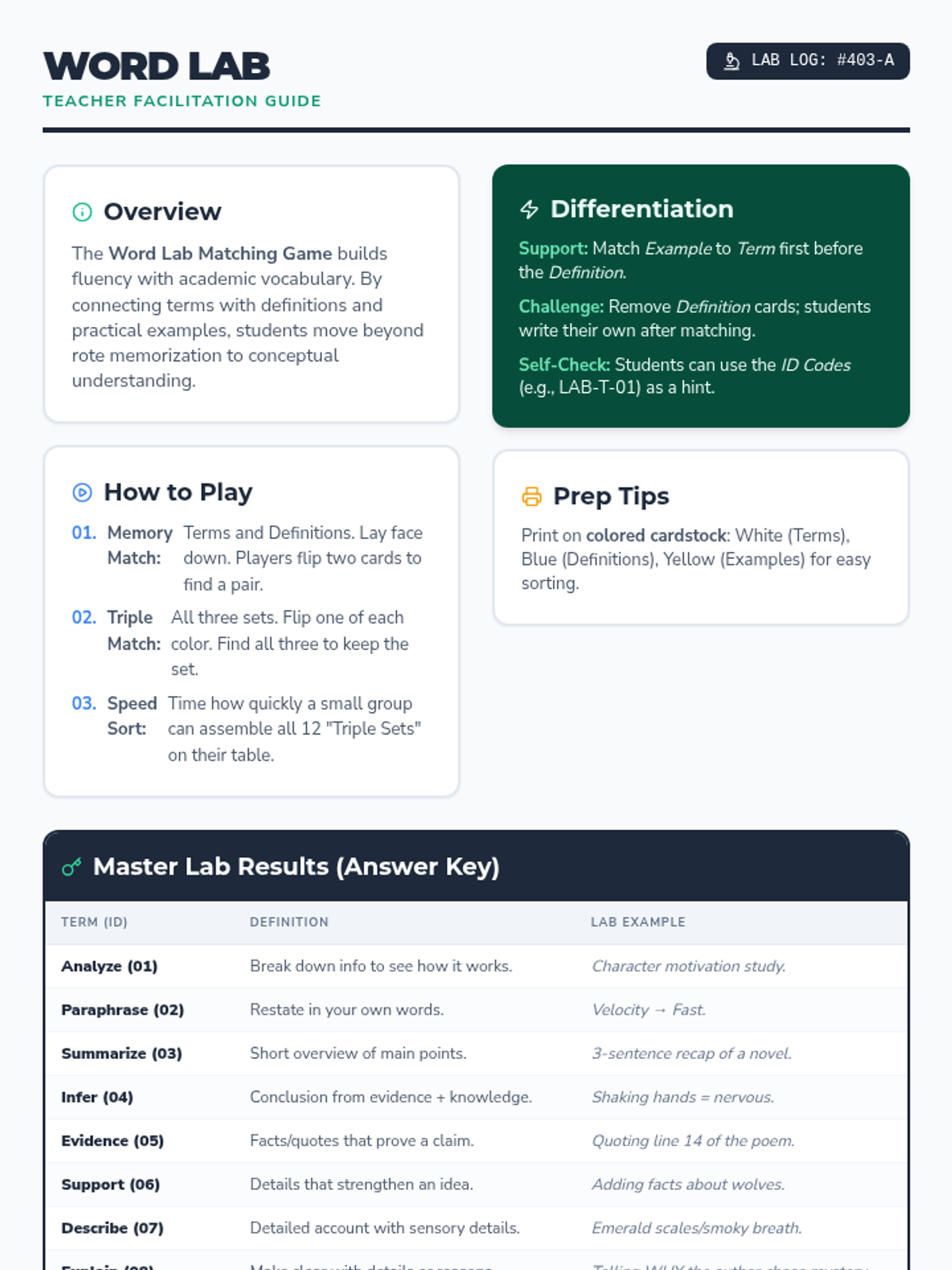
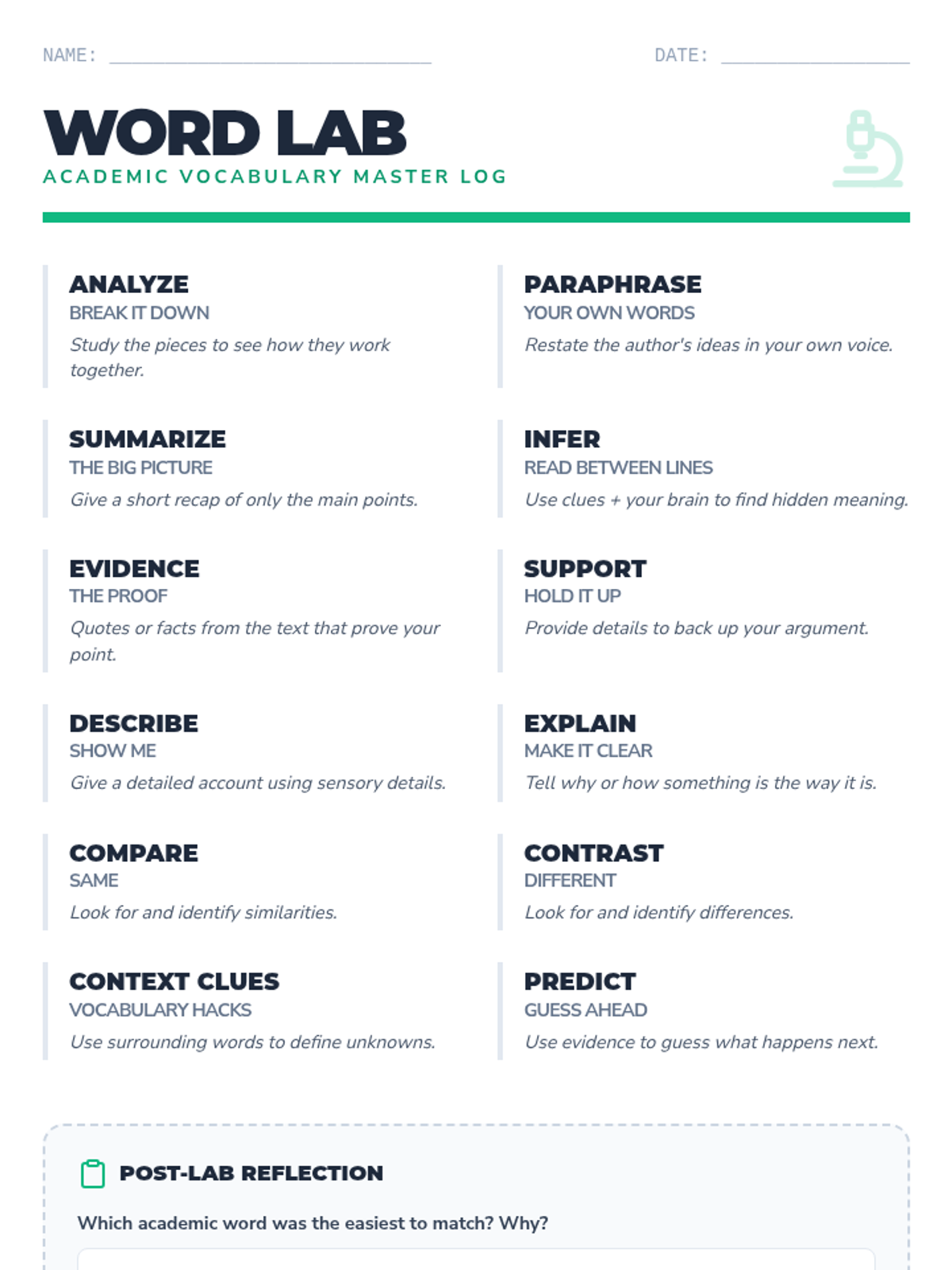
A lesson focused on mastering academic vocabulary used in reading comprehension questions. Students will learn to distinguish between common analytical verbs and concepts through a hands-on matching game and reference guides.
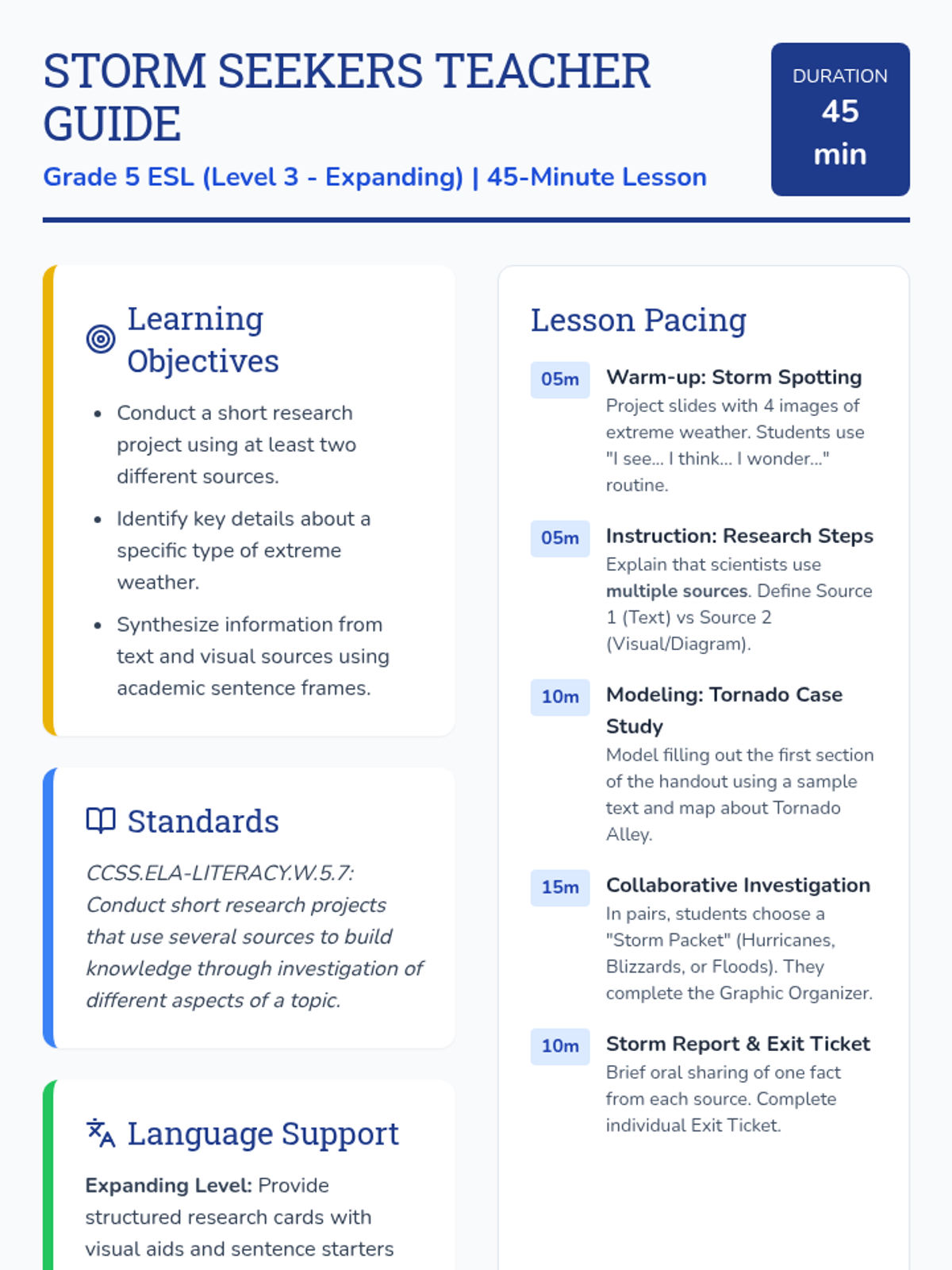
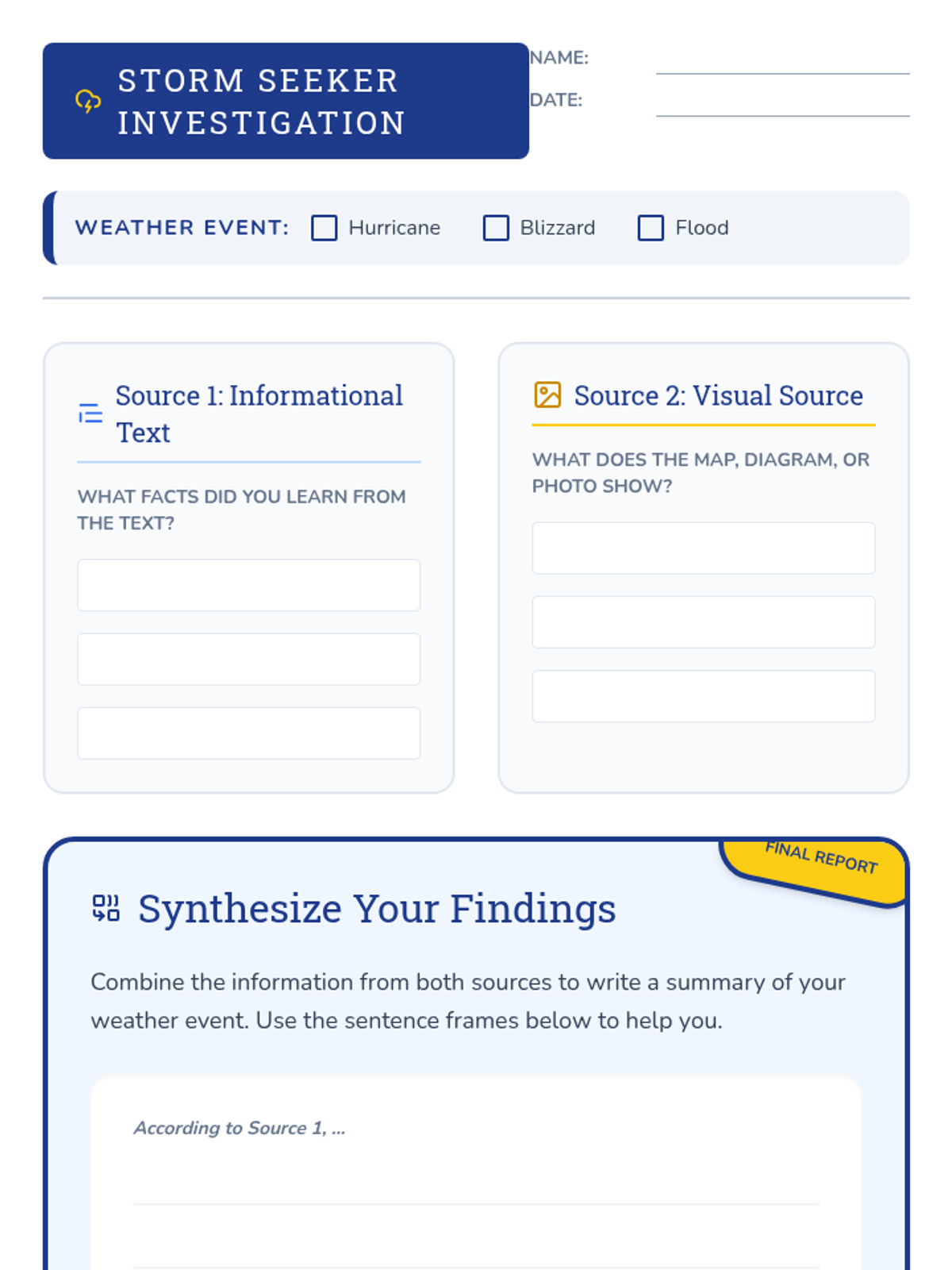
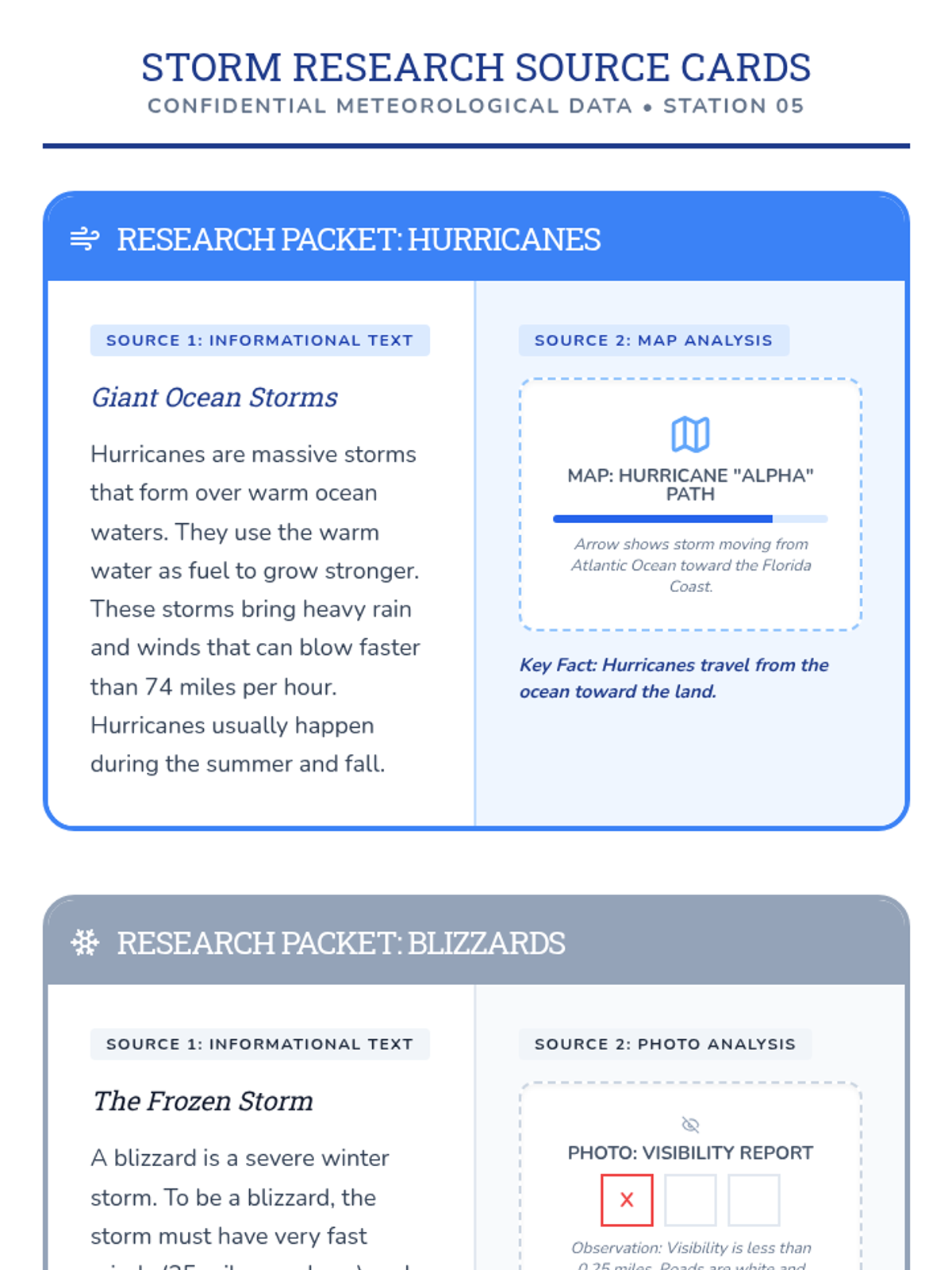
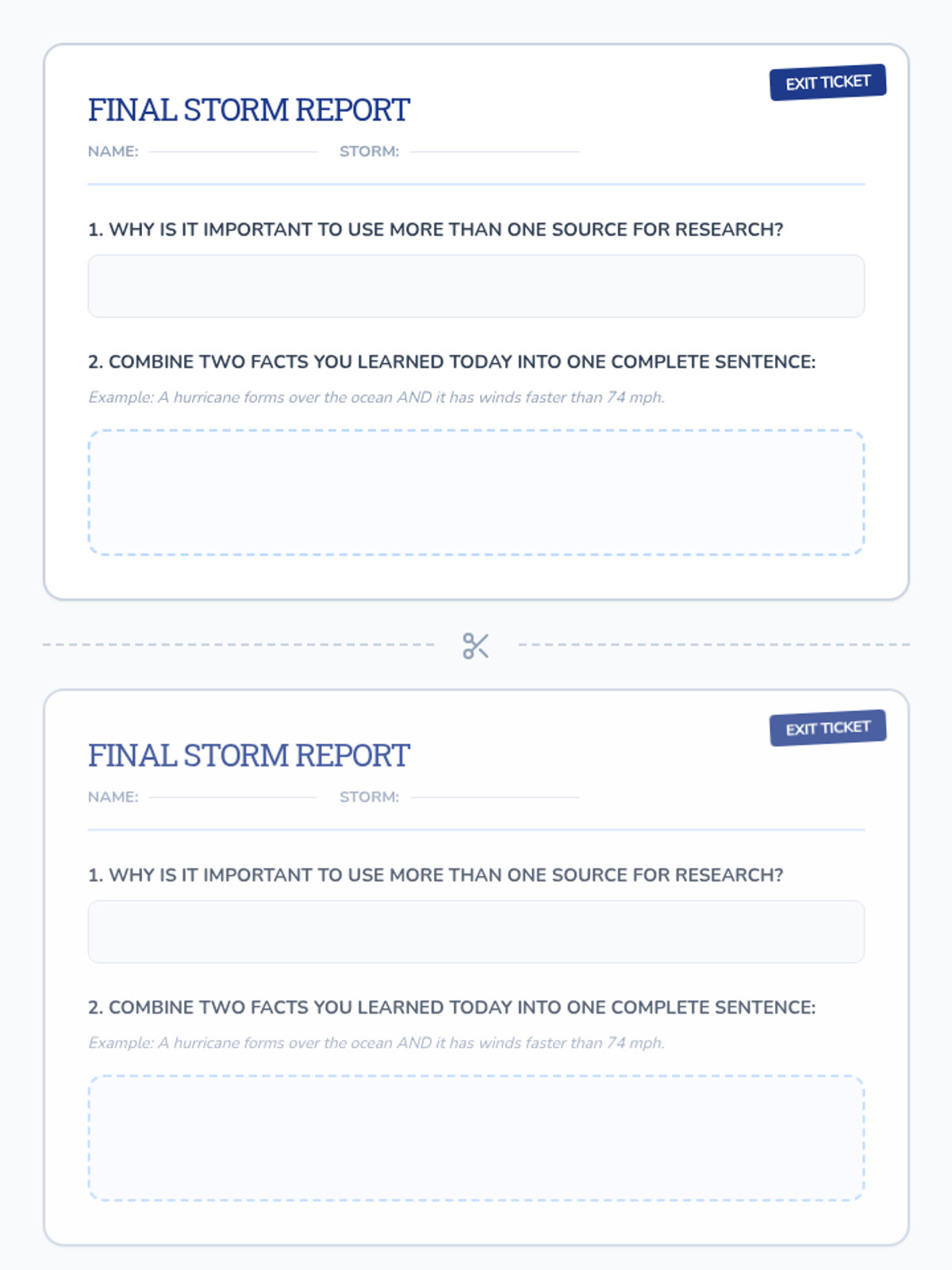
A 45-minute grade 5 ESL lesson focused on researching extreme weather using multiple sources. Students investigate tornadoes, hurricanes, or blizzards to build knowledge through structured investigation.
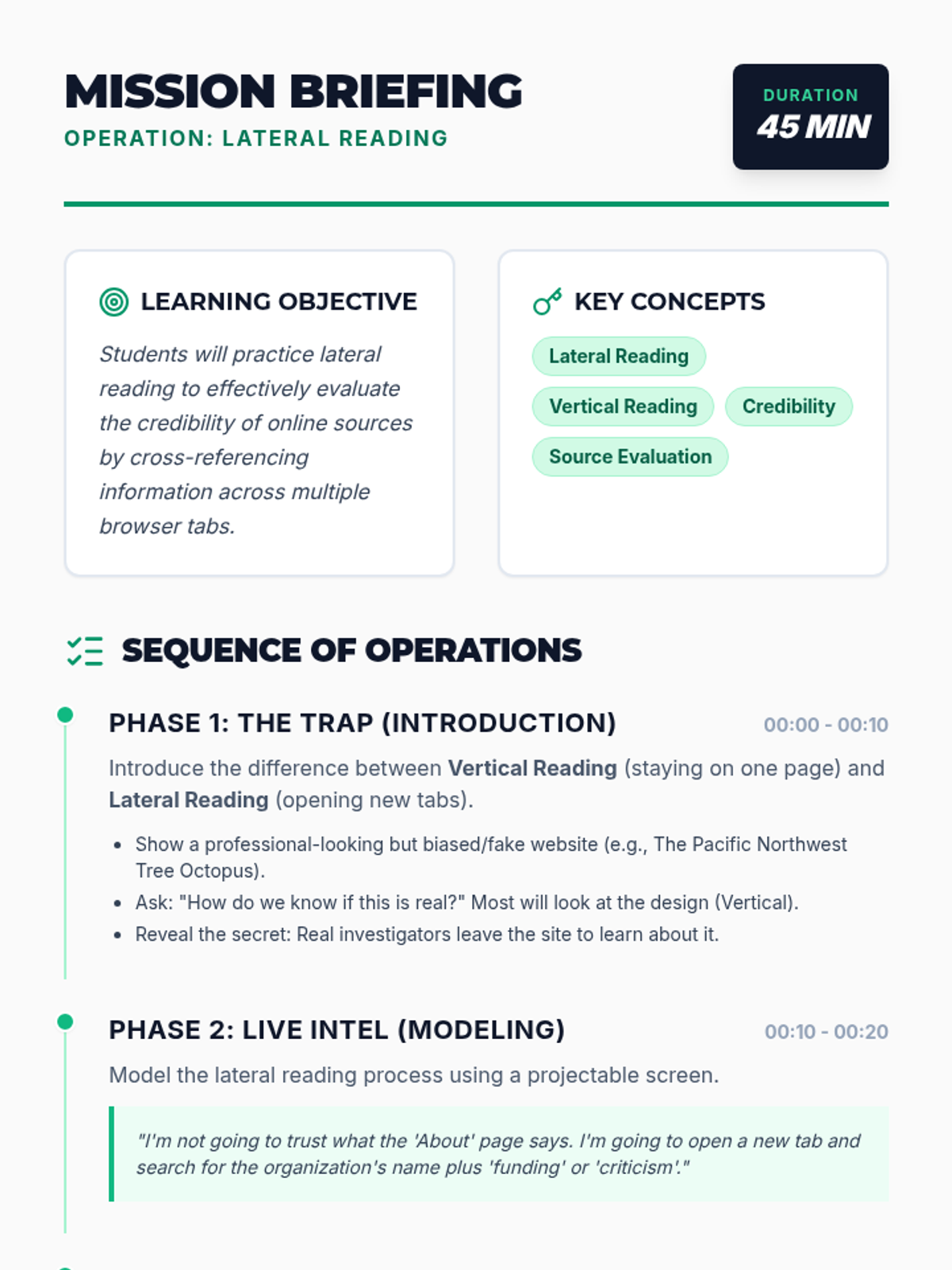
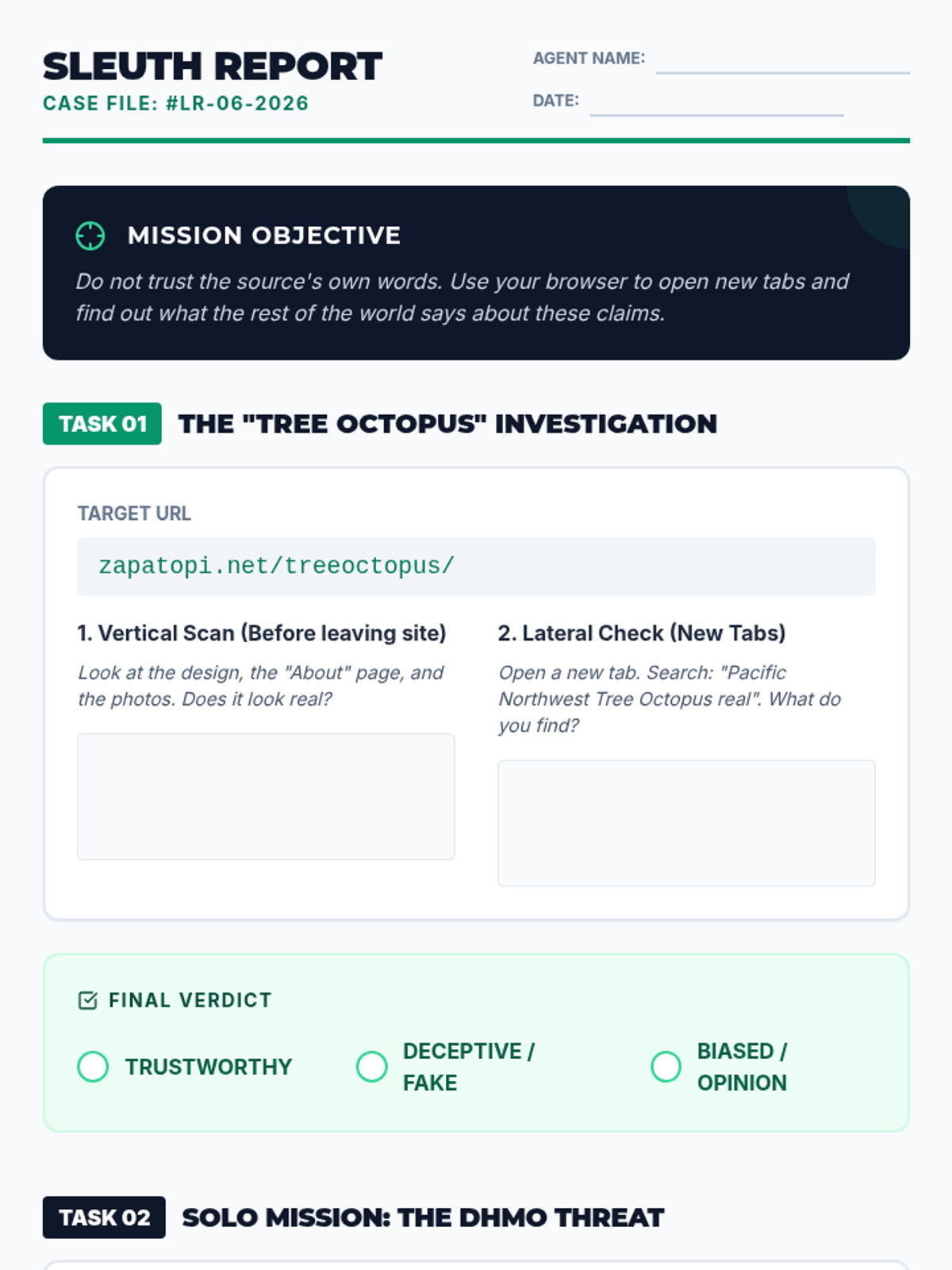
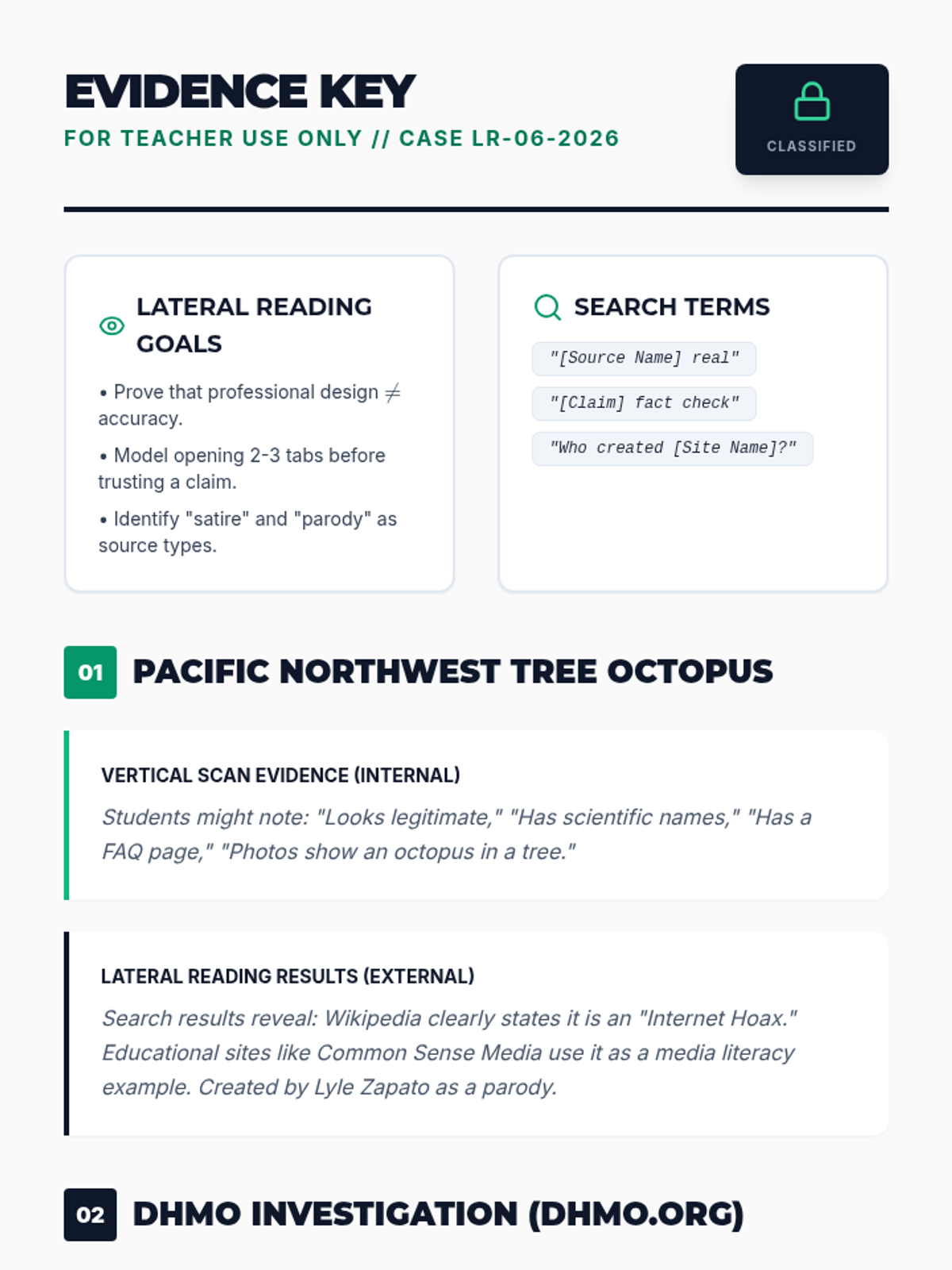
A 45-minute lesson teaching 6th-grade students how to evaluate online credibility using lateral reading techniques, moving from vertical reading habits to investigative cross-referencing.
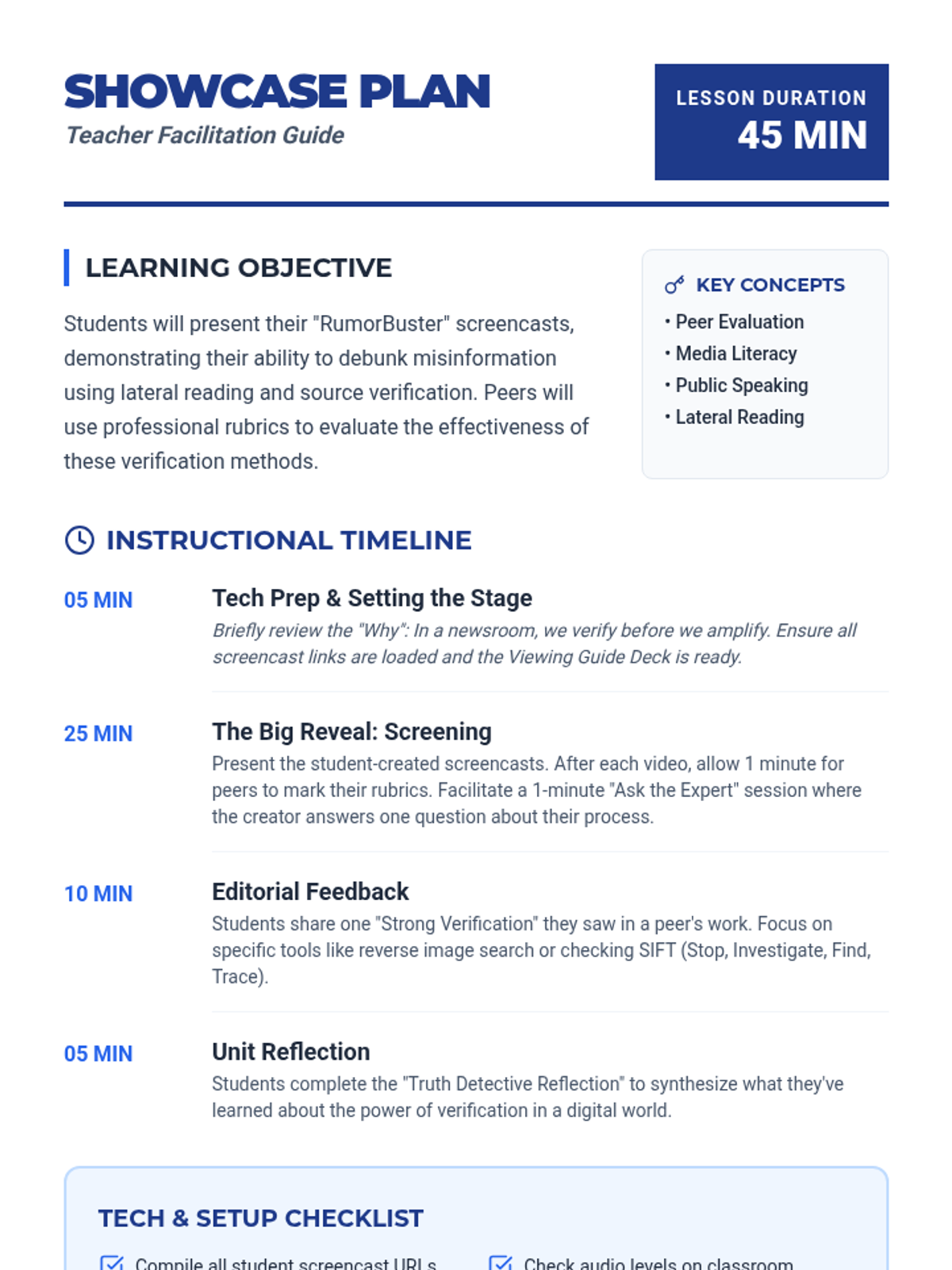
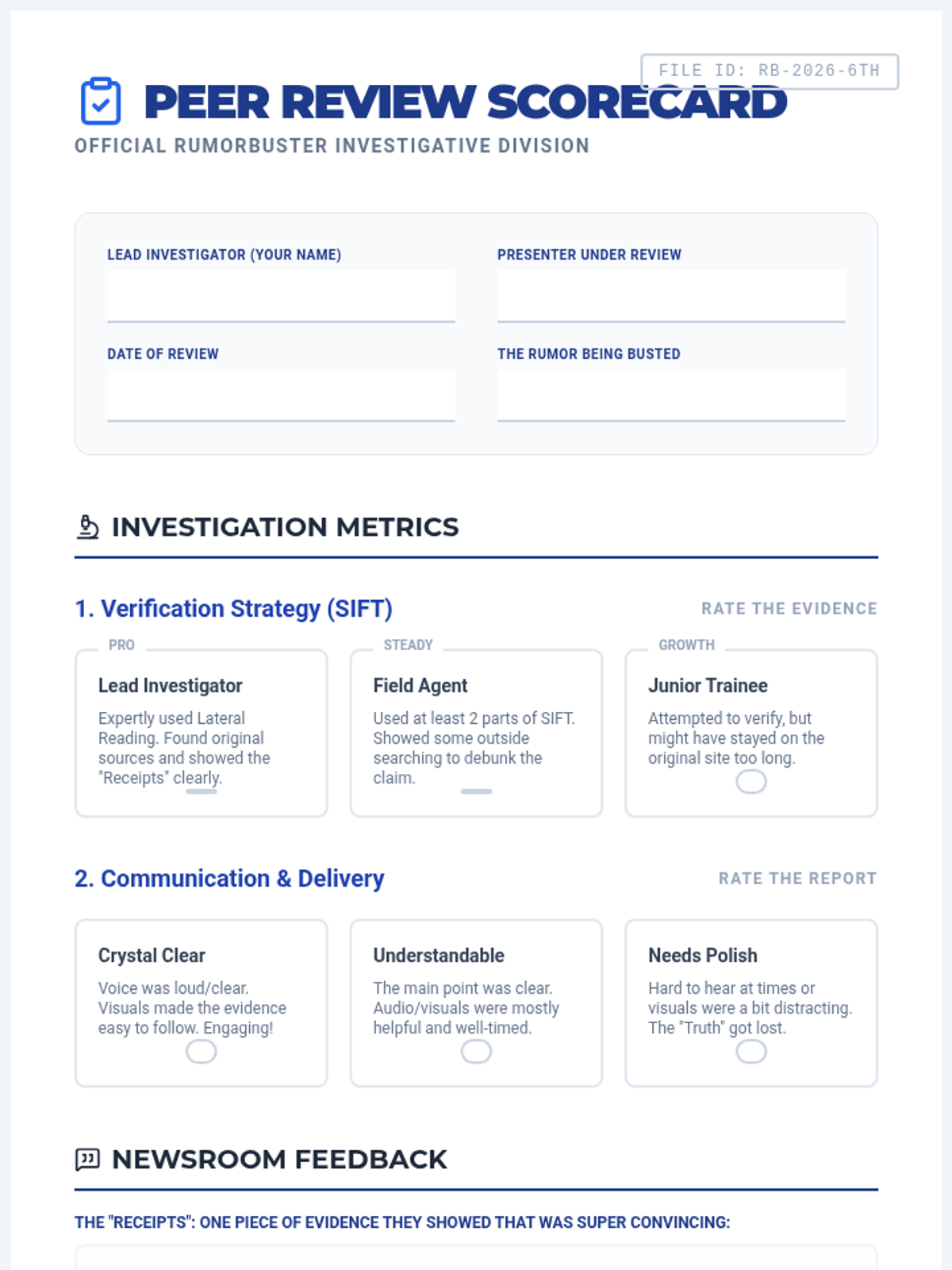
A 45-minute lesson where students showcase their media literacy investigations through screencasts, engage in peer evaluation using a professional rubric, and reflect on their growth as digital fact-checkers.
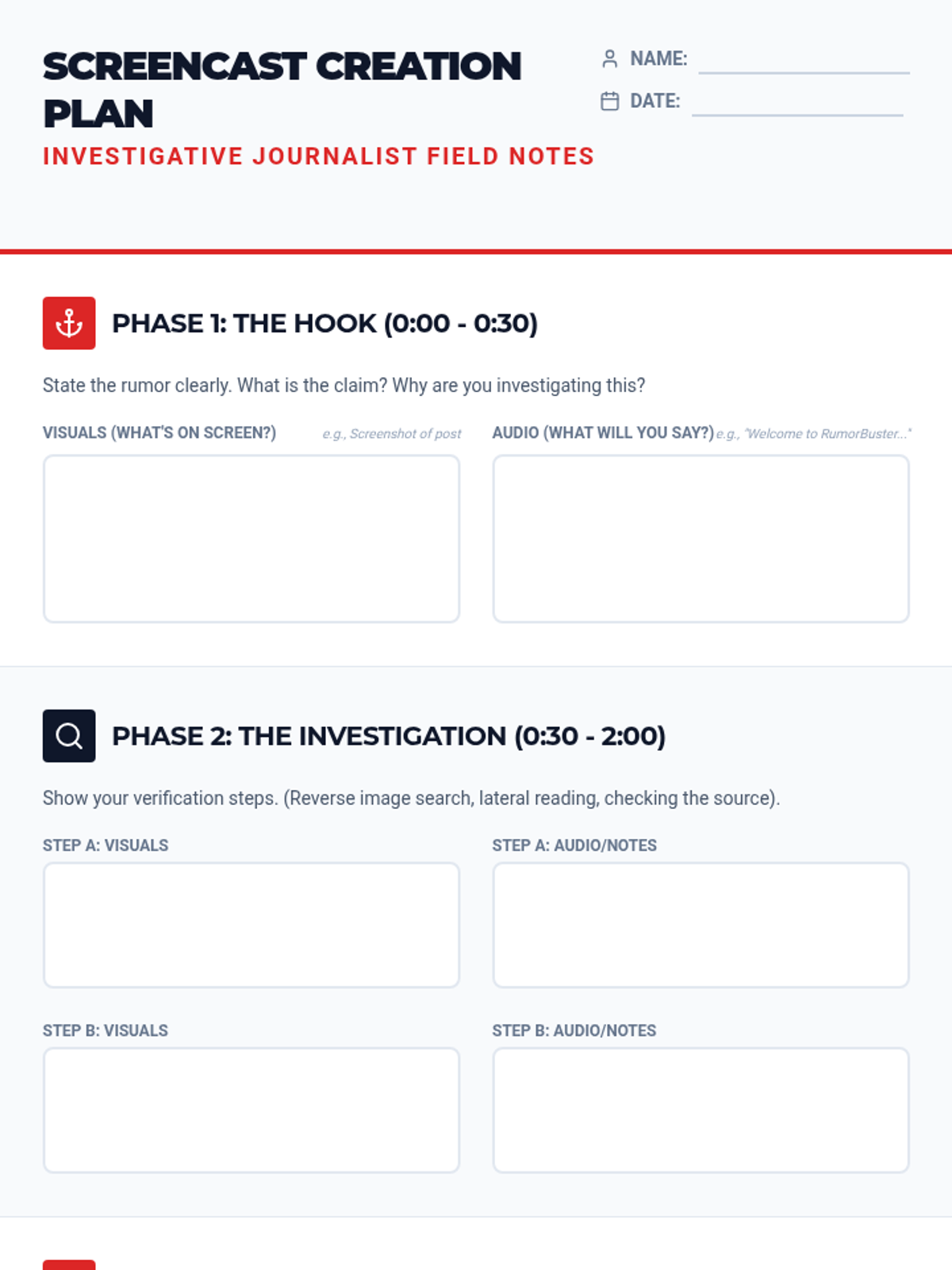
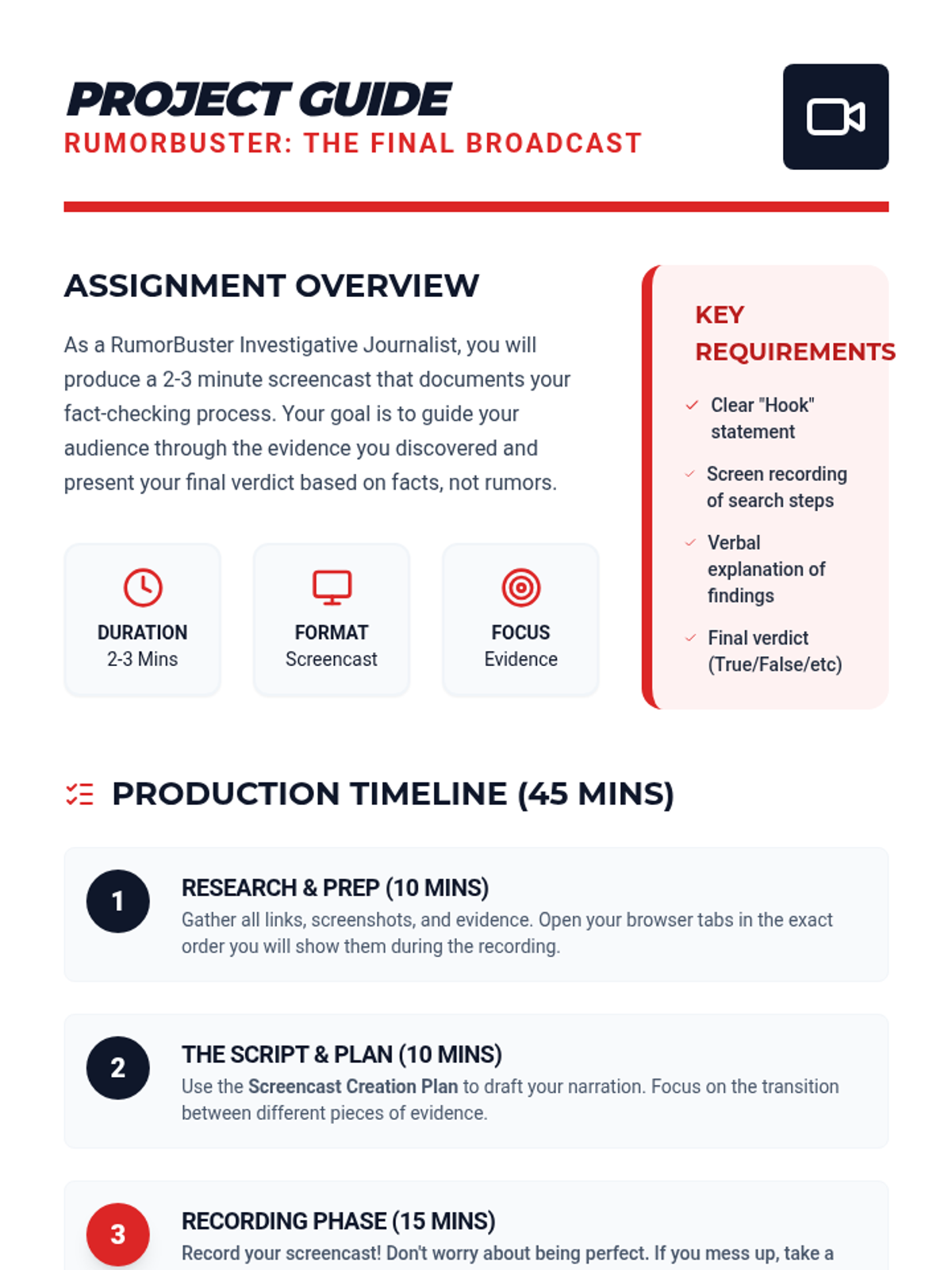
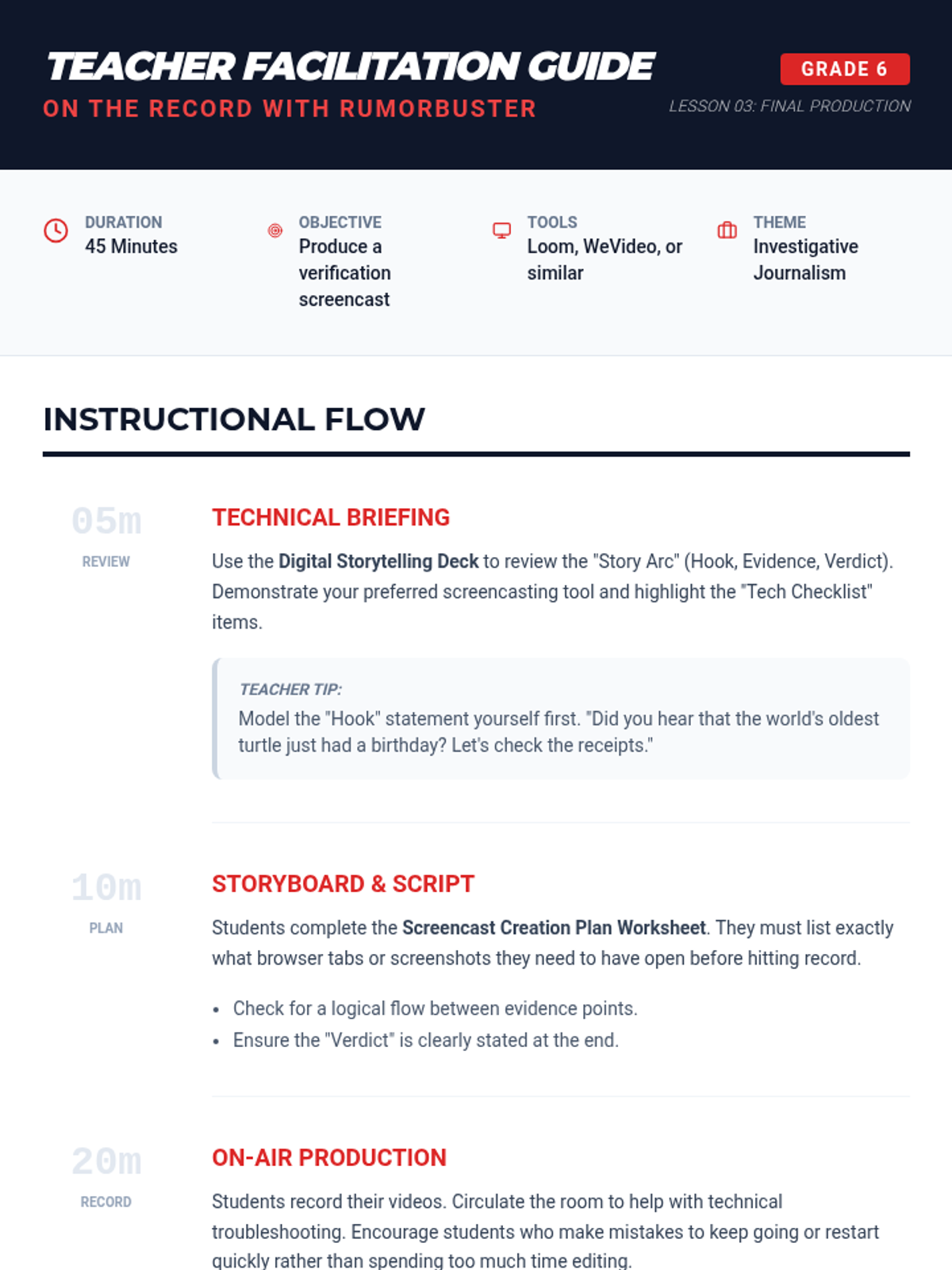
In this lesson, students step into the role of investigative journalists to create a screencast that documents their fact-checking process and final findings. They will learn to combine digital storytelling with technical screencasting skills to present evidence clearly and convincingly.
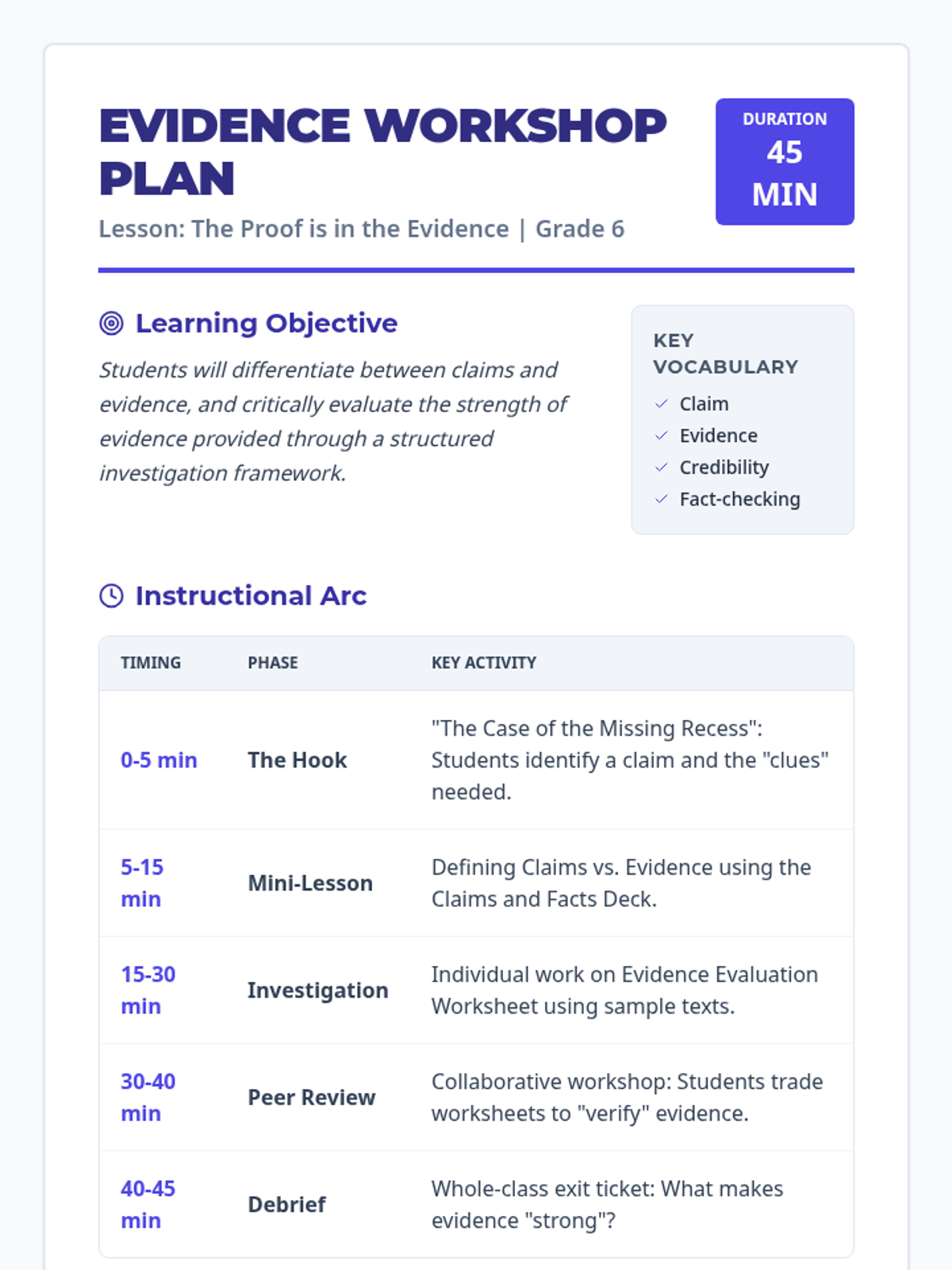
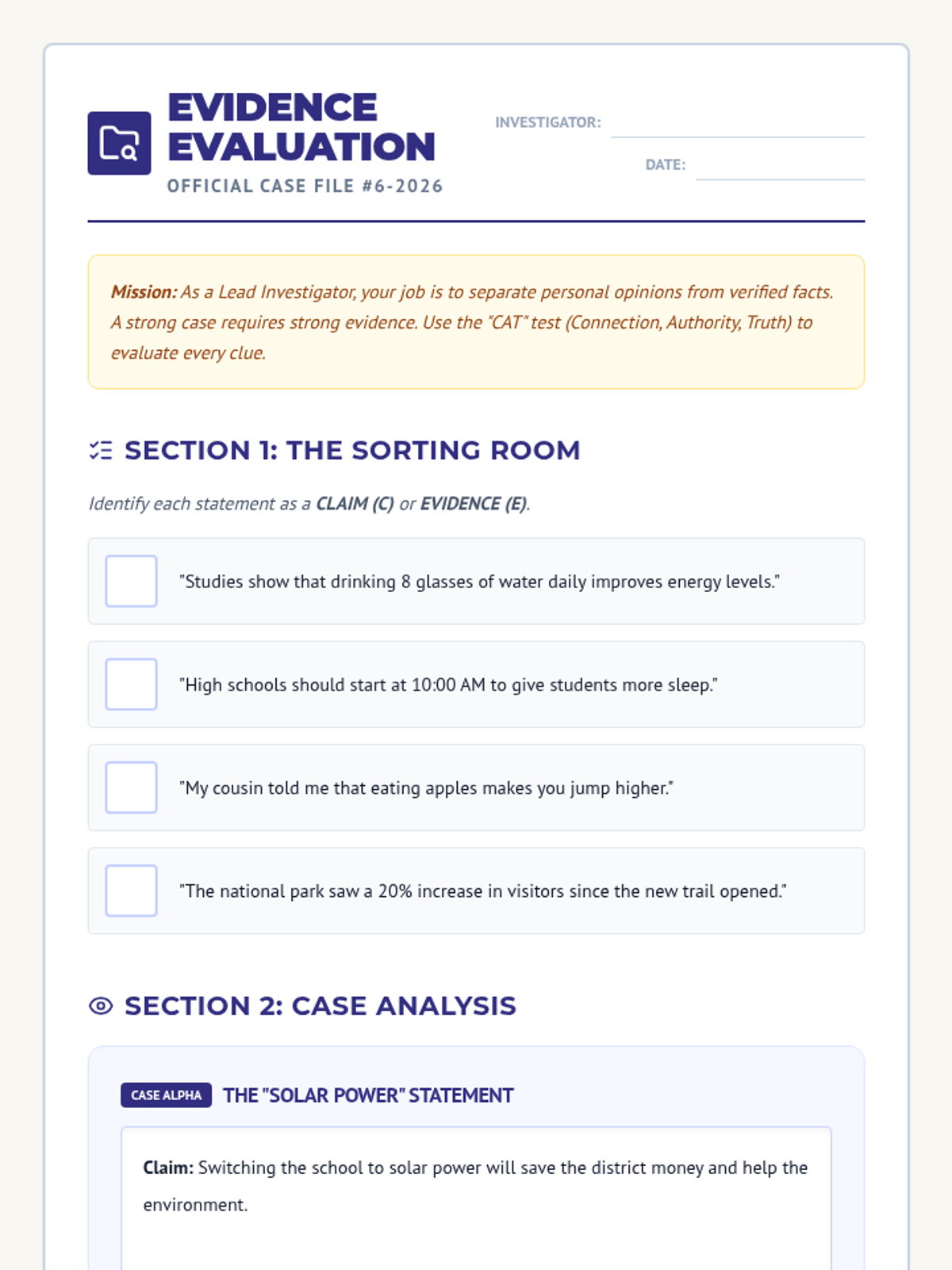
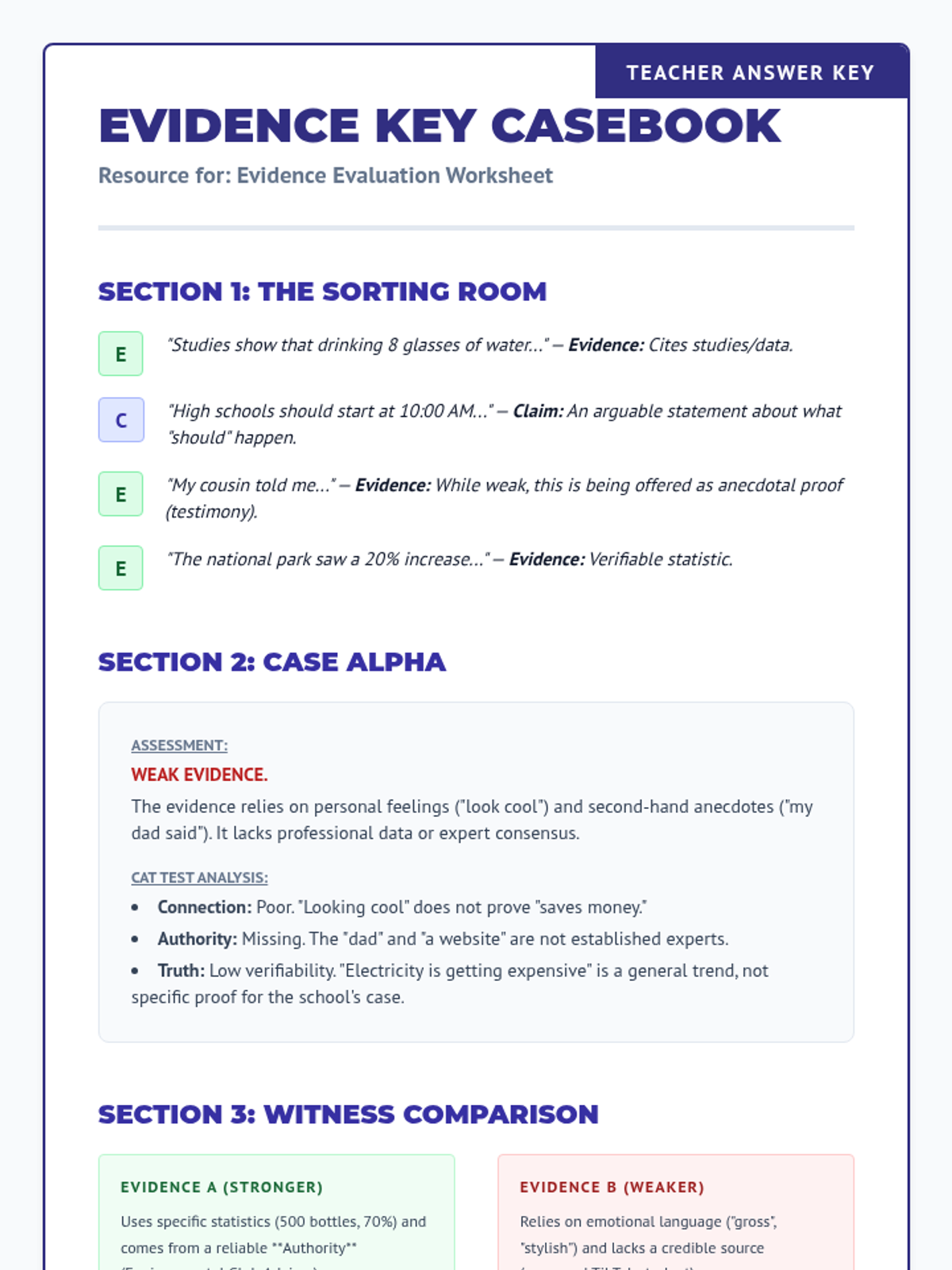
A 45-minute inquiry-based lesson where 6th-grade students learn to identify claims and evaluate the quality of supporting evidence through a detective-themed investigation.
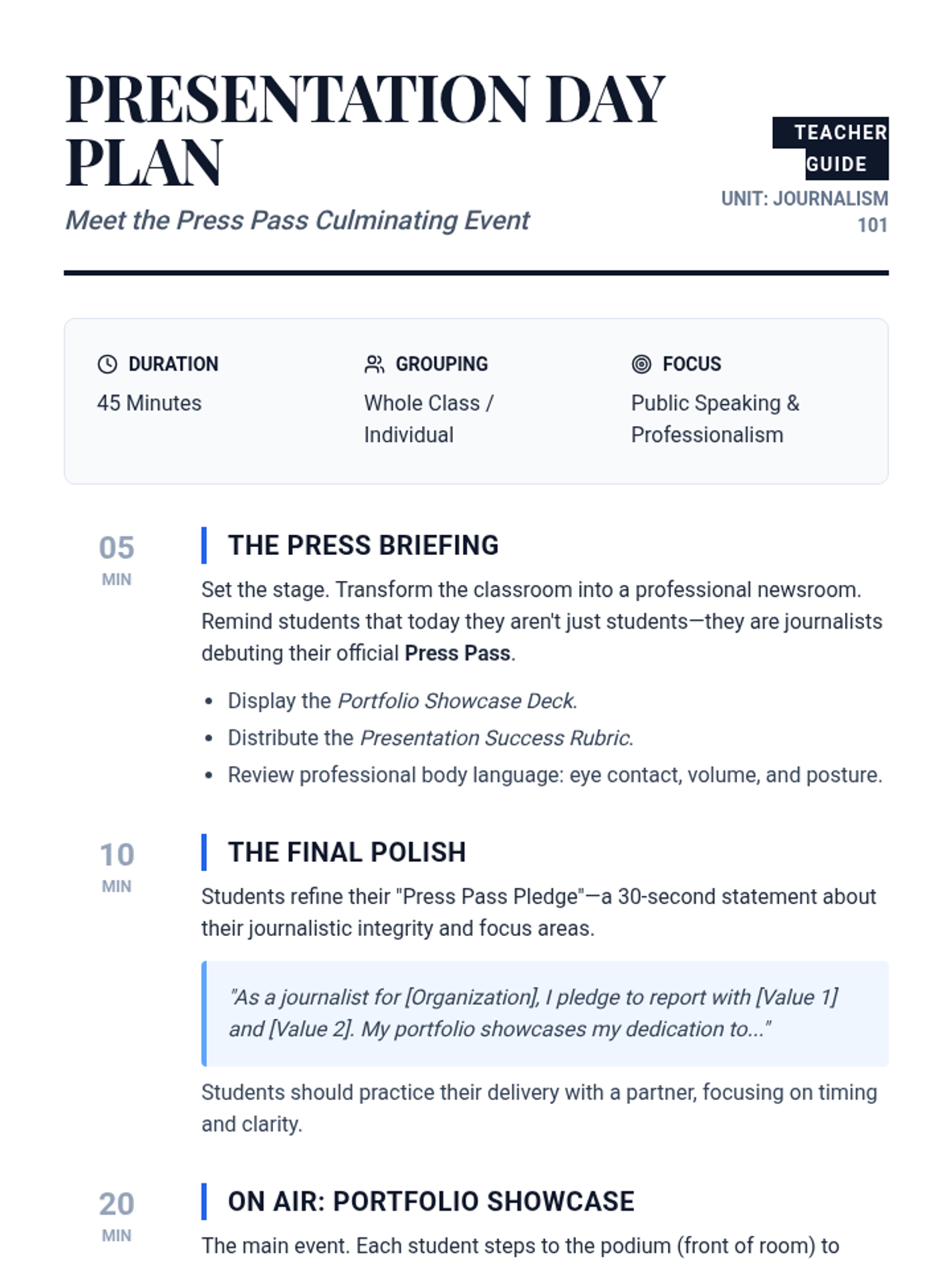
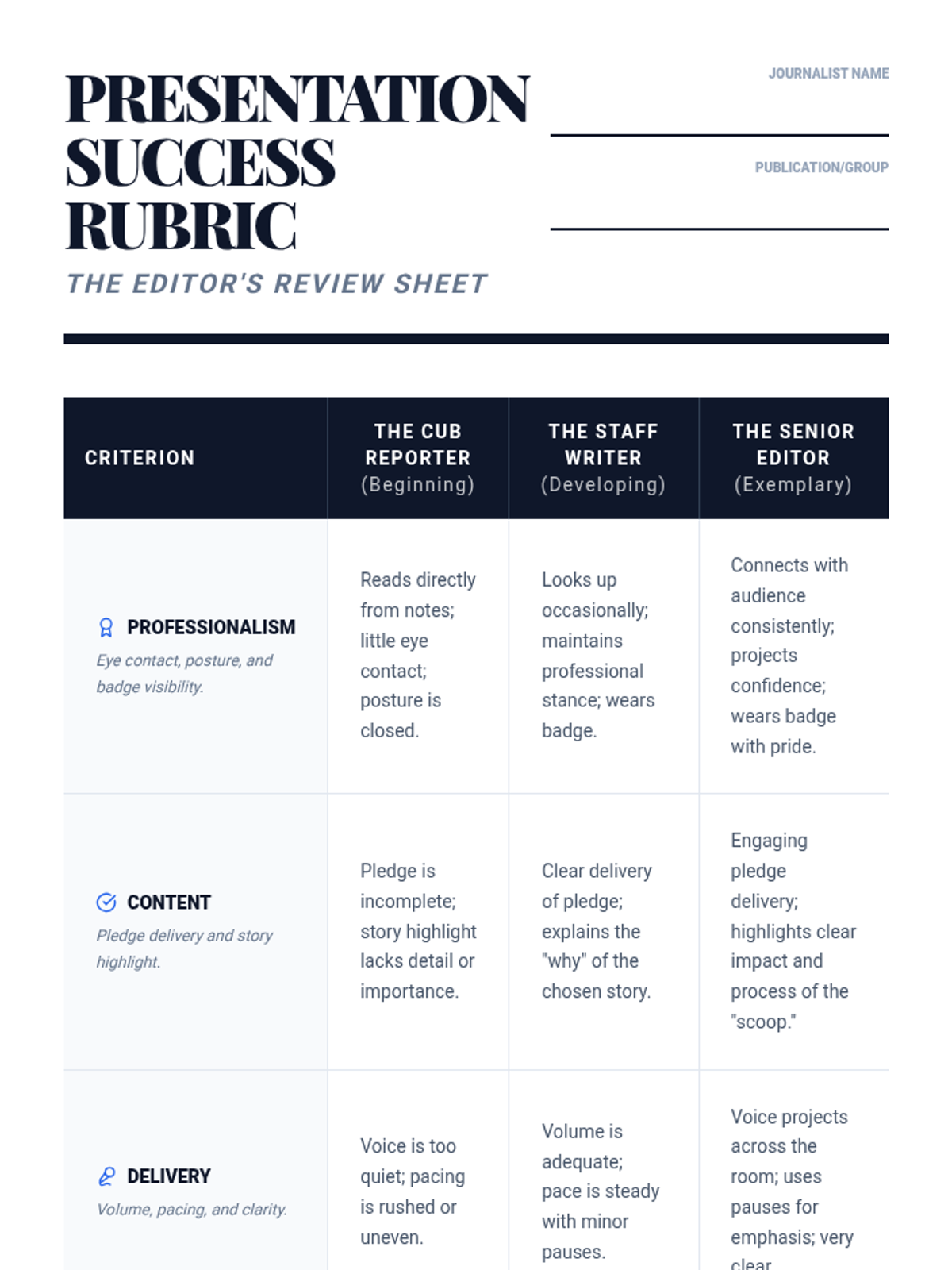
A culminating lesson where 6th-grade students showcase their journalism portfolios, focusing on professional public speaking and peer feedback in a newsroom-style environment.
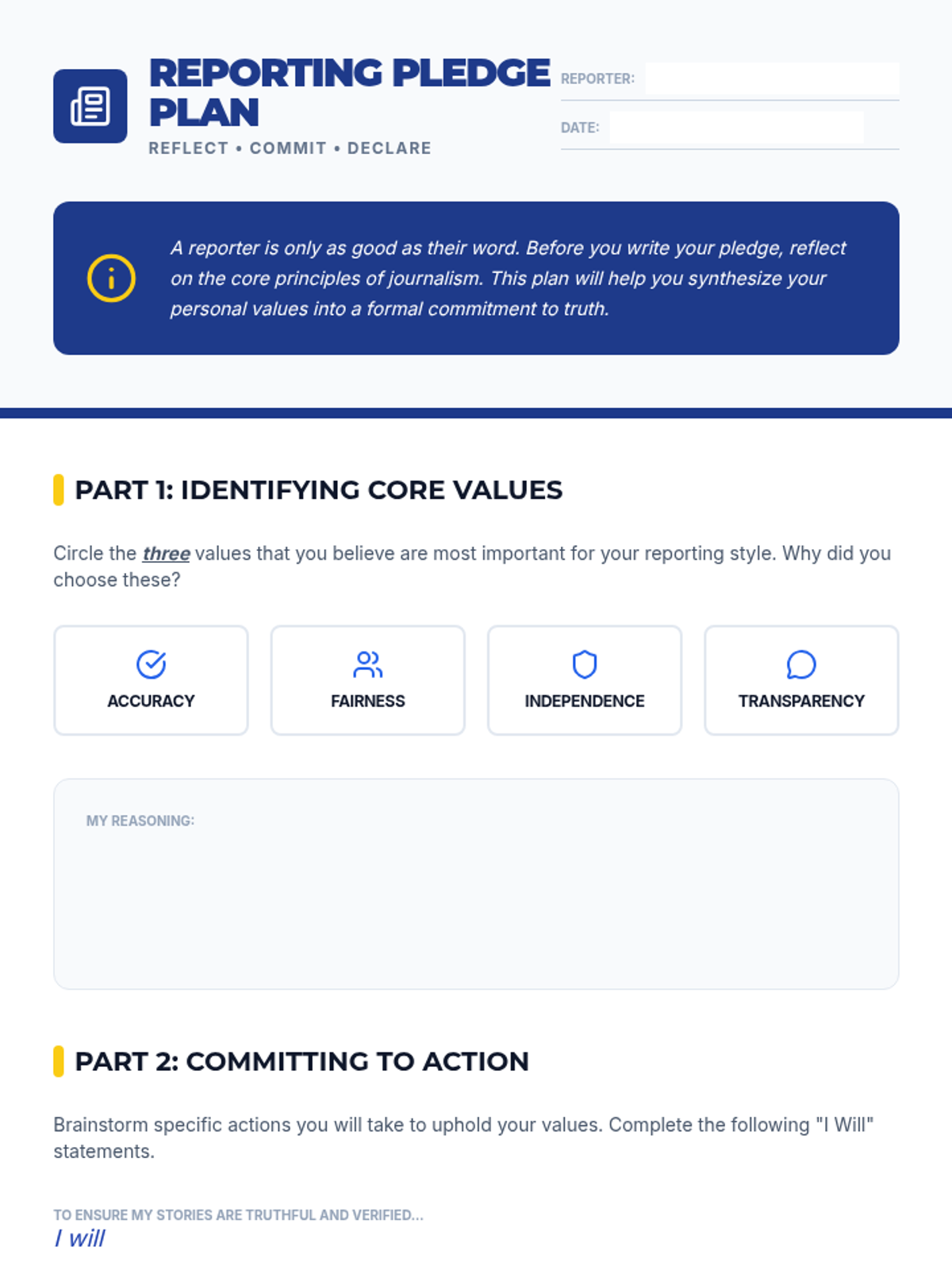
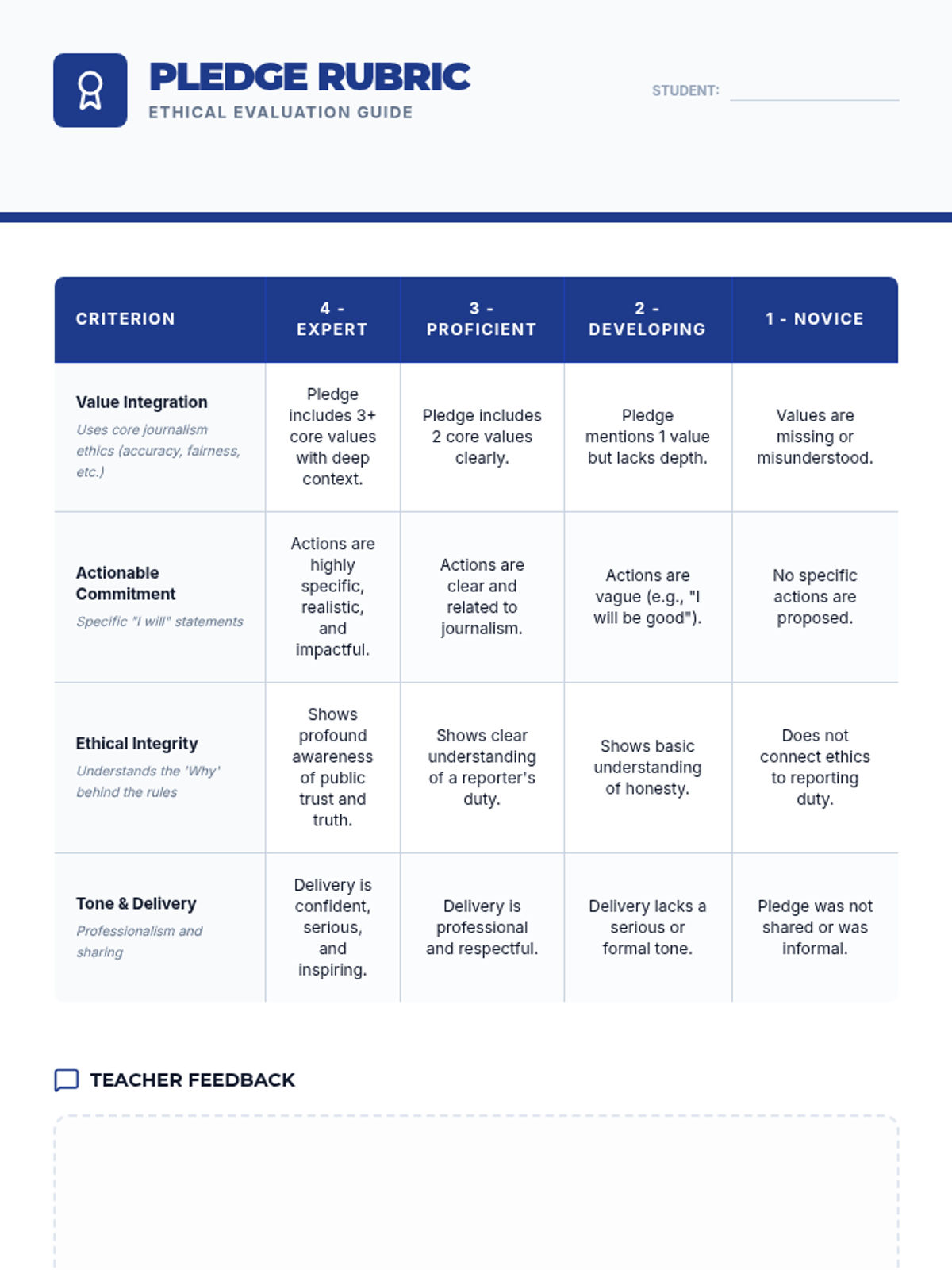
A 45-minute journalism lesson where 6th-grade students synthesize their understanding of ethical reporting to create a personal journalism pledge. Students explore the core values of integrity and trustworthiness through reflection and drafting.
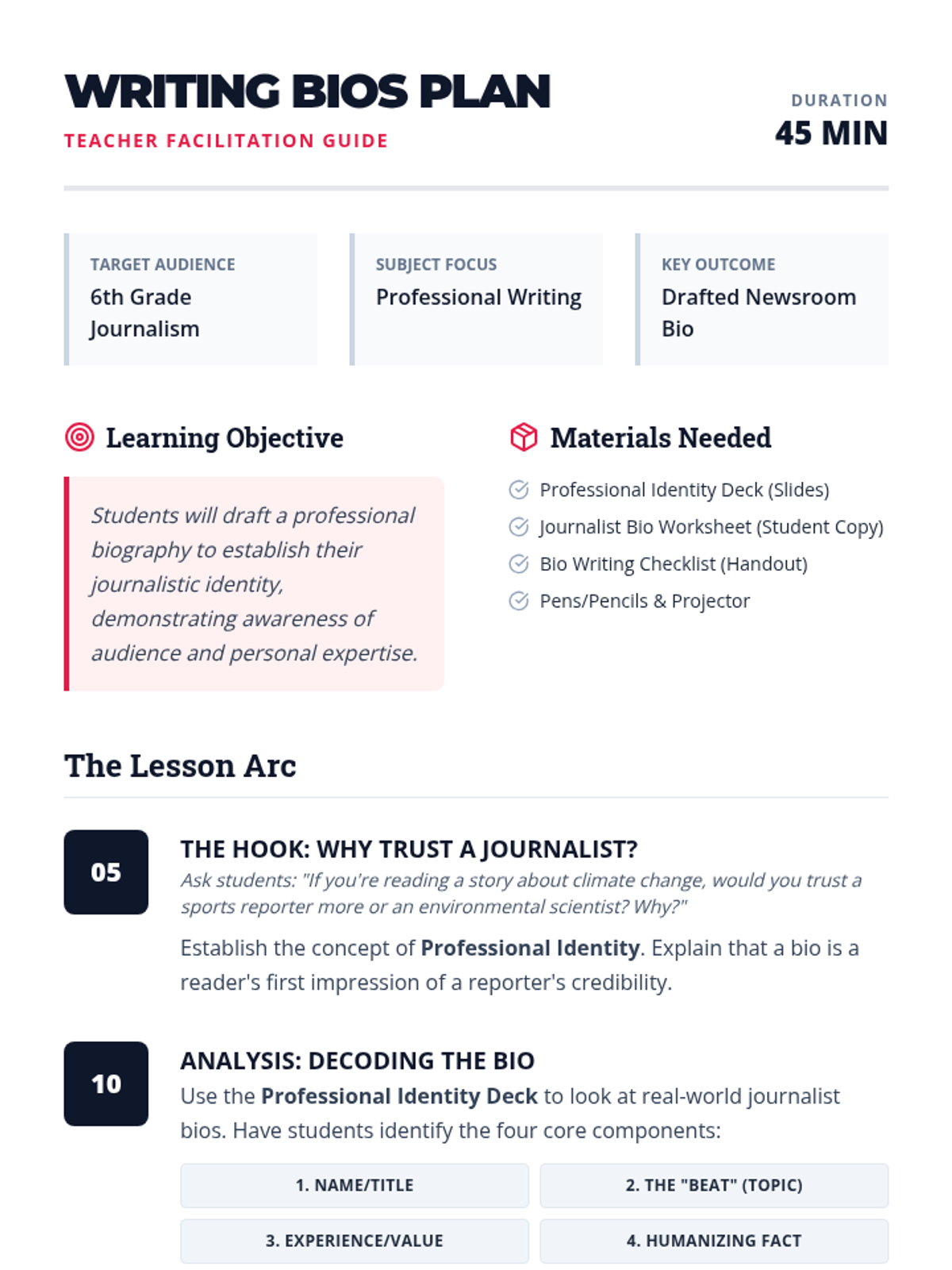
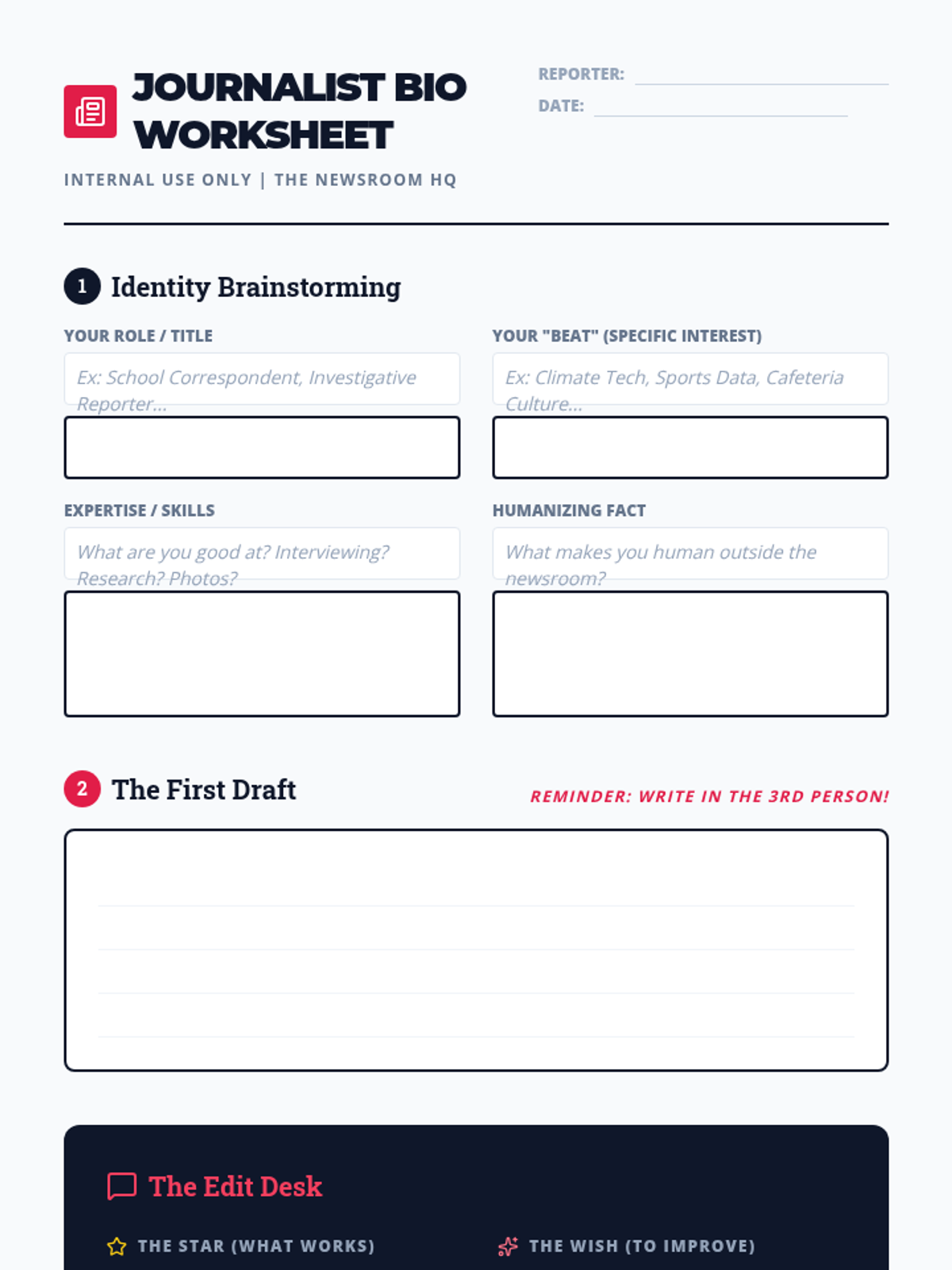
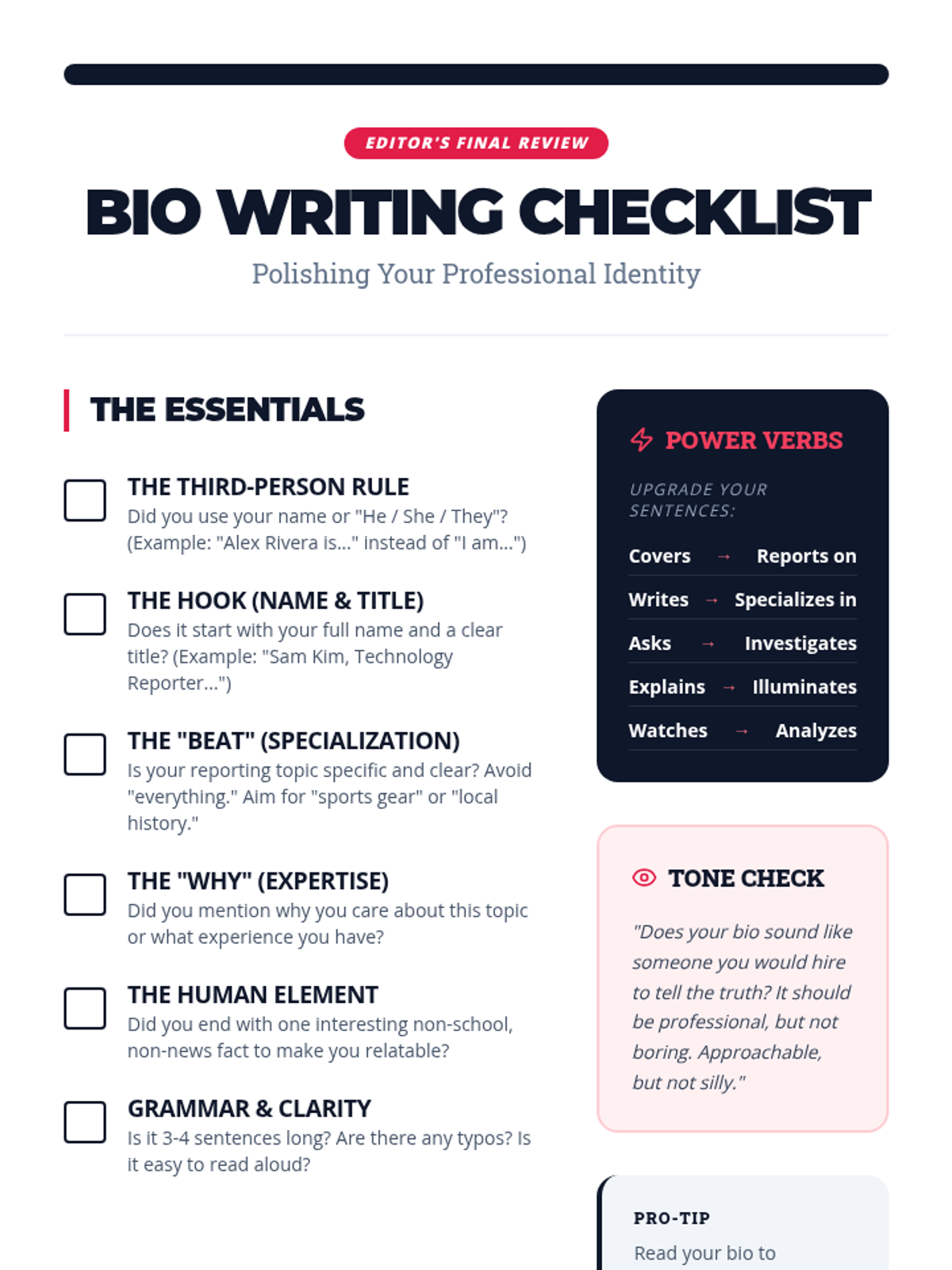
A 45-minute lesson for 6th-grade students to develop their professional journalistic identity by drafting and refining their own newsroom bios. Students analyze professional examples, identify core components, and engage in a peer feedback loop.
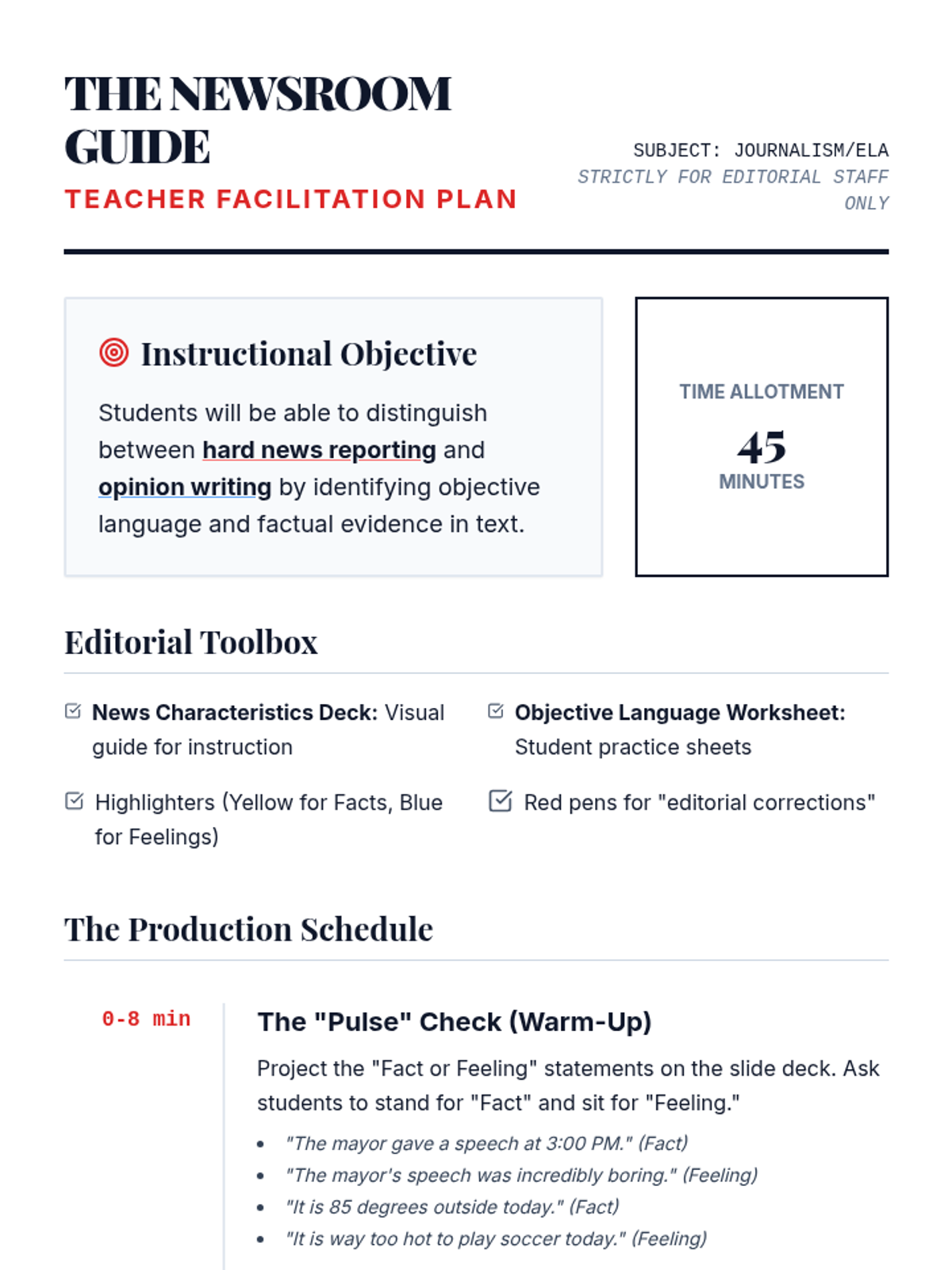
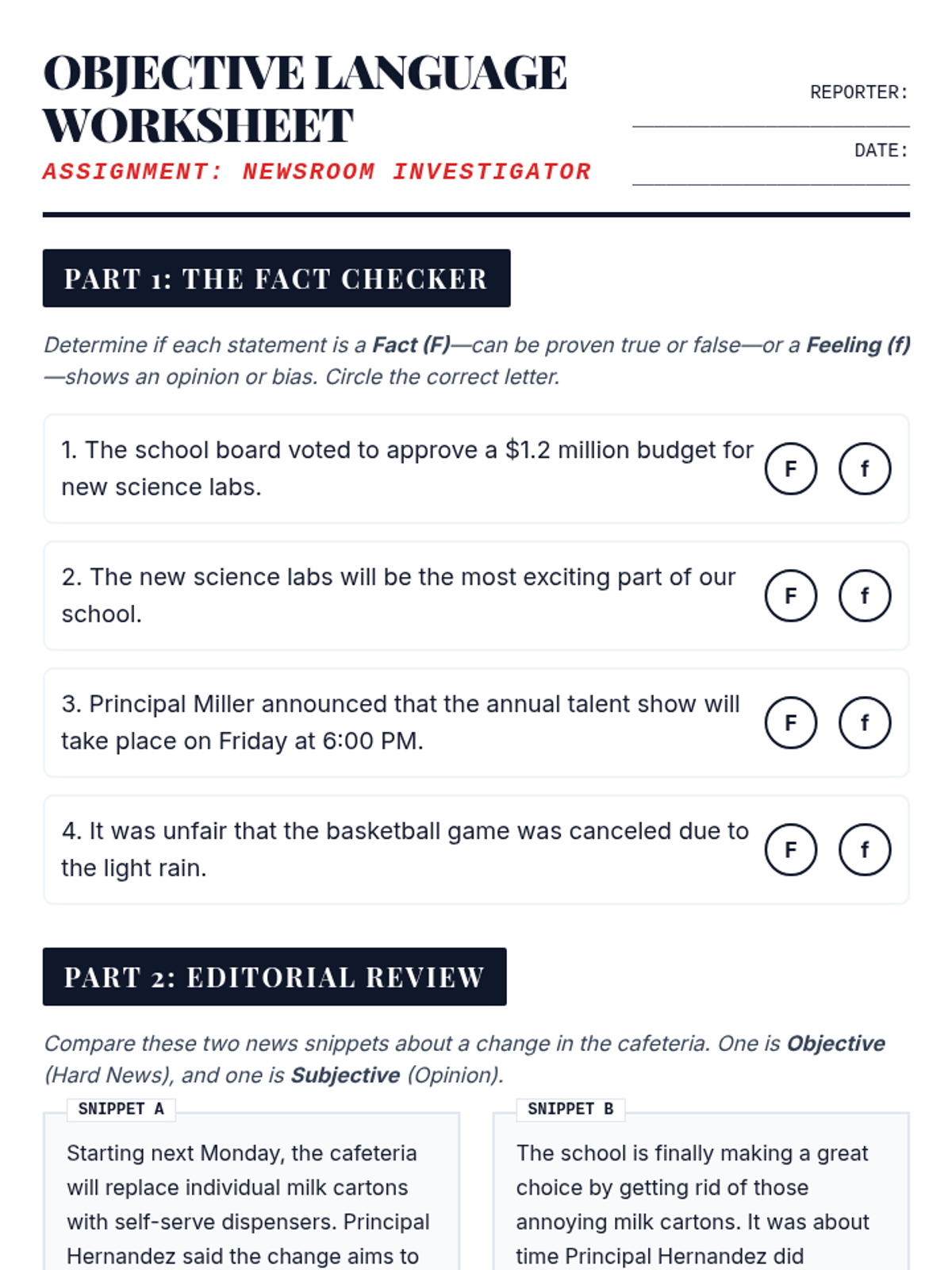
A 45-minute lesson where students become newsroom investigators, learning to distinguish between objective hard news reporting and subjective opinion pieces through hands-on analysis and writing practice.
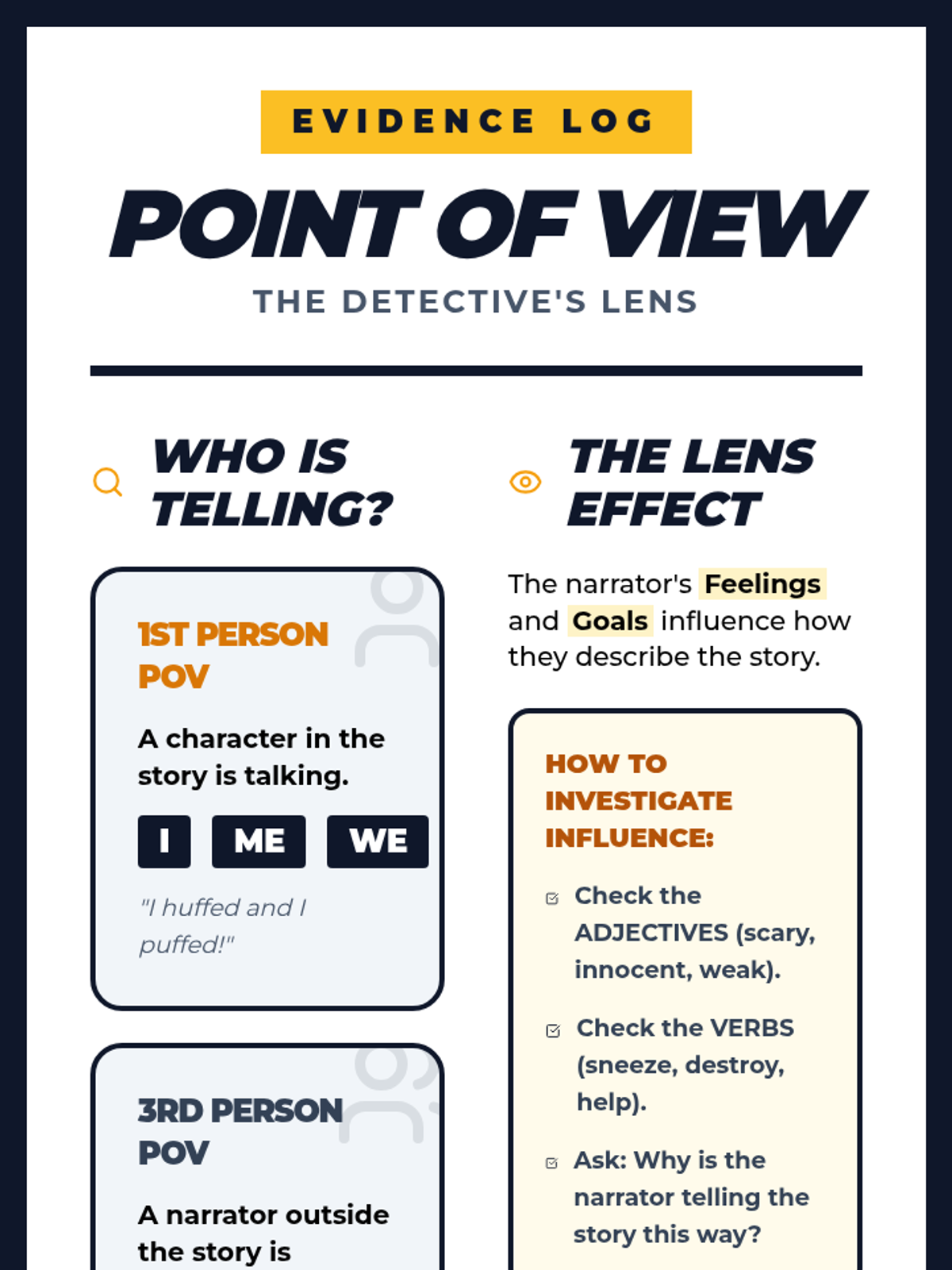
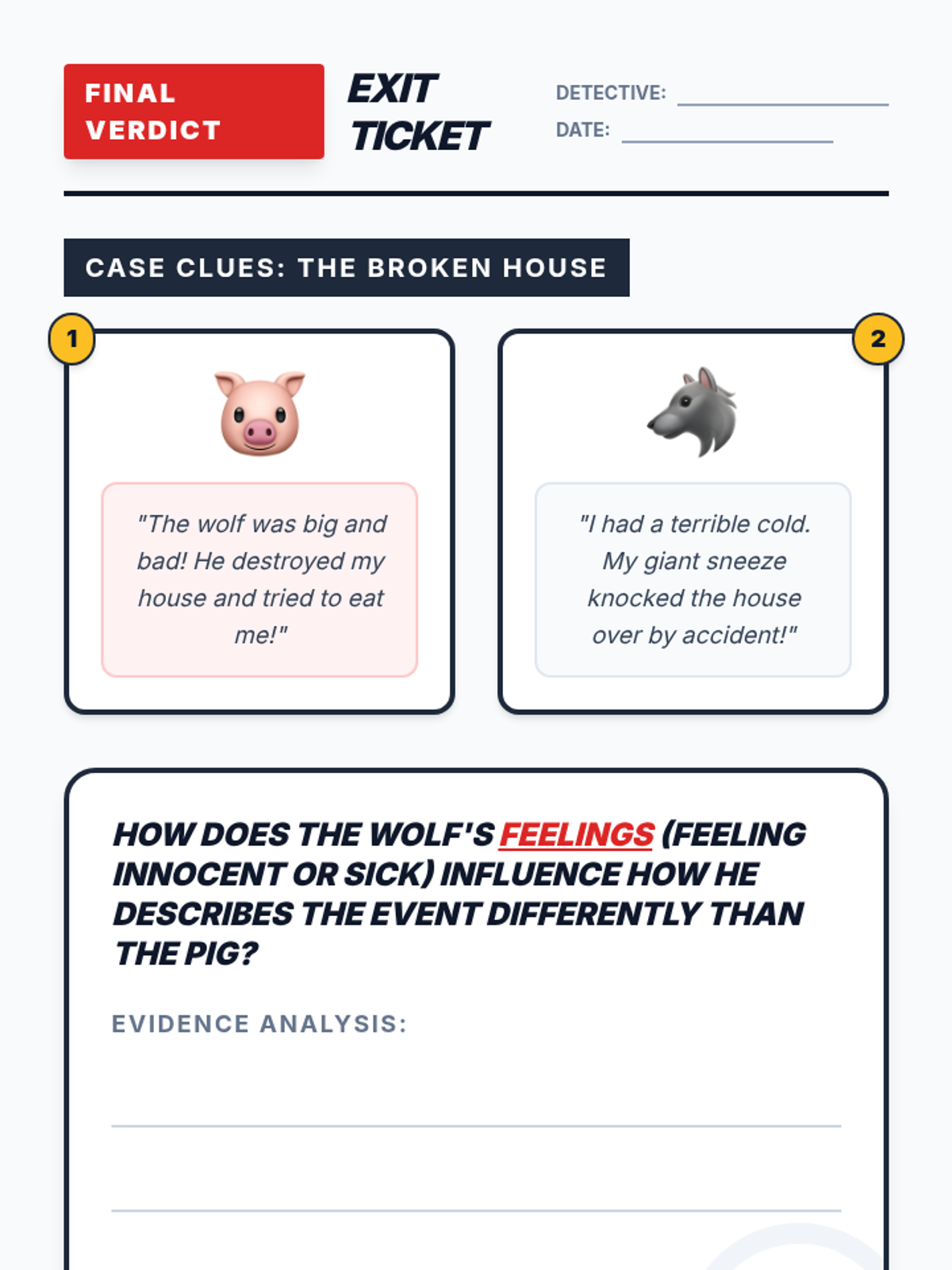
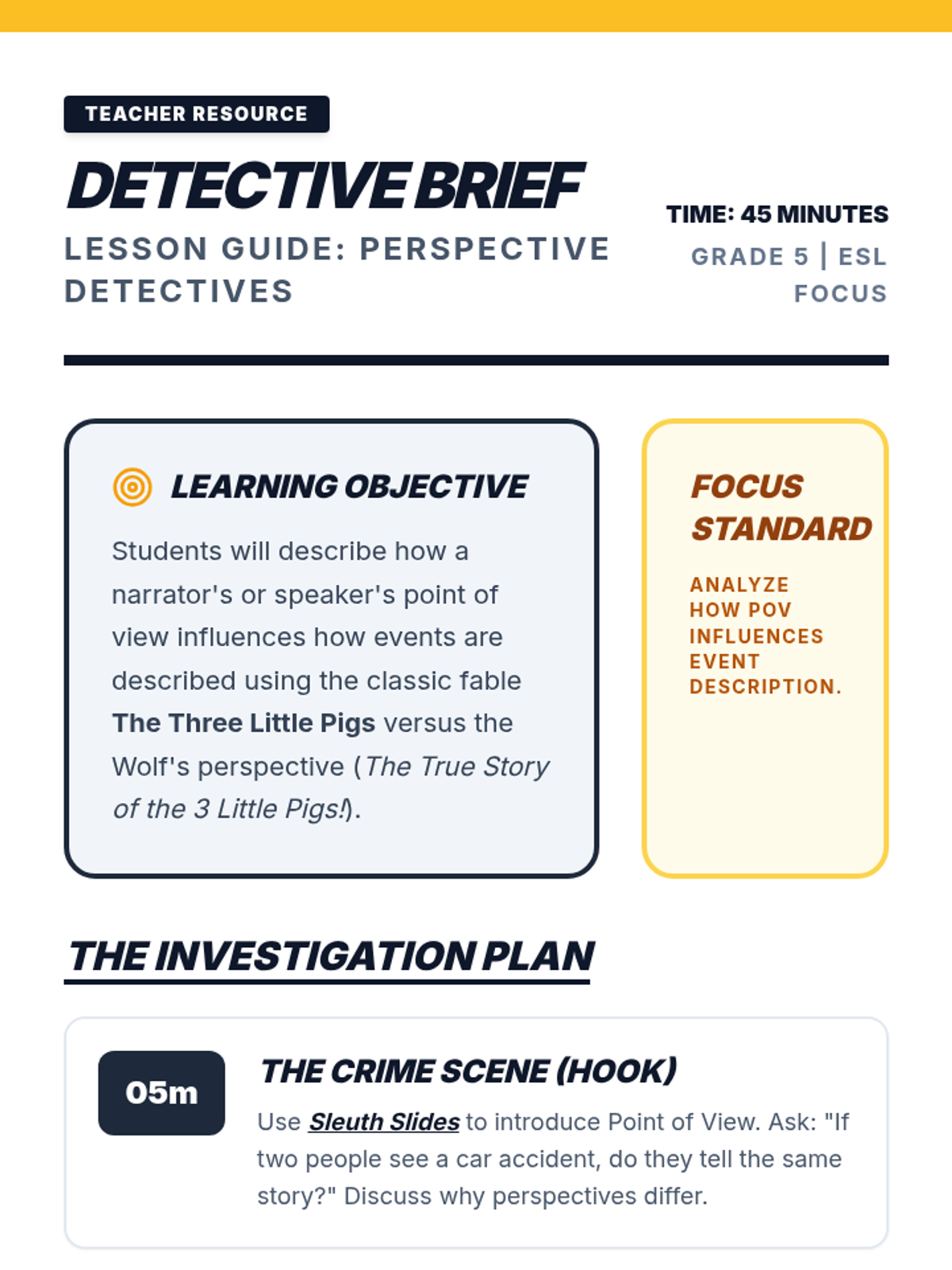
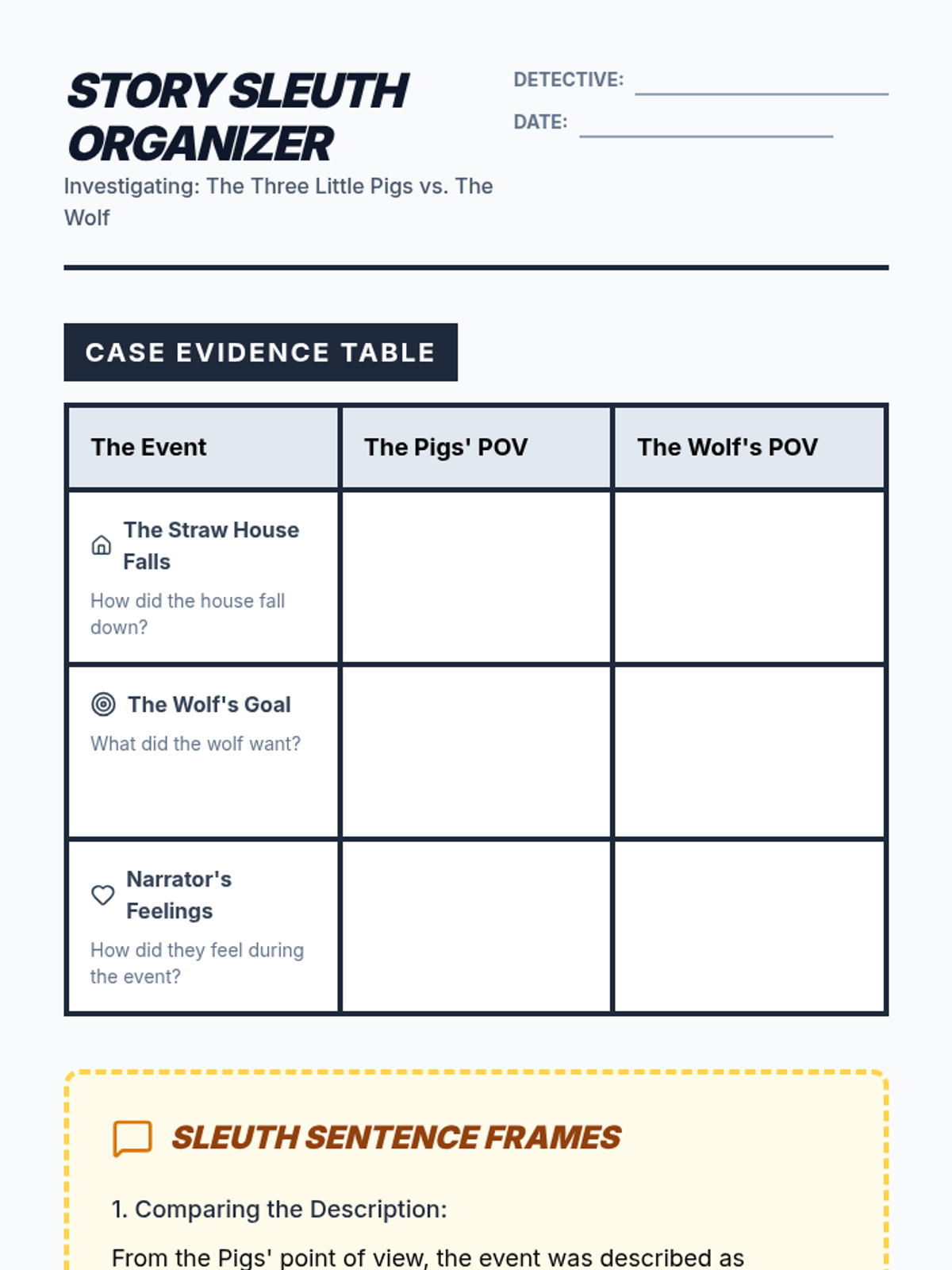
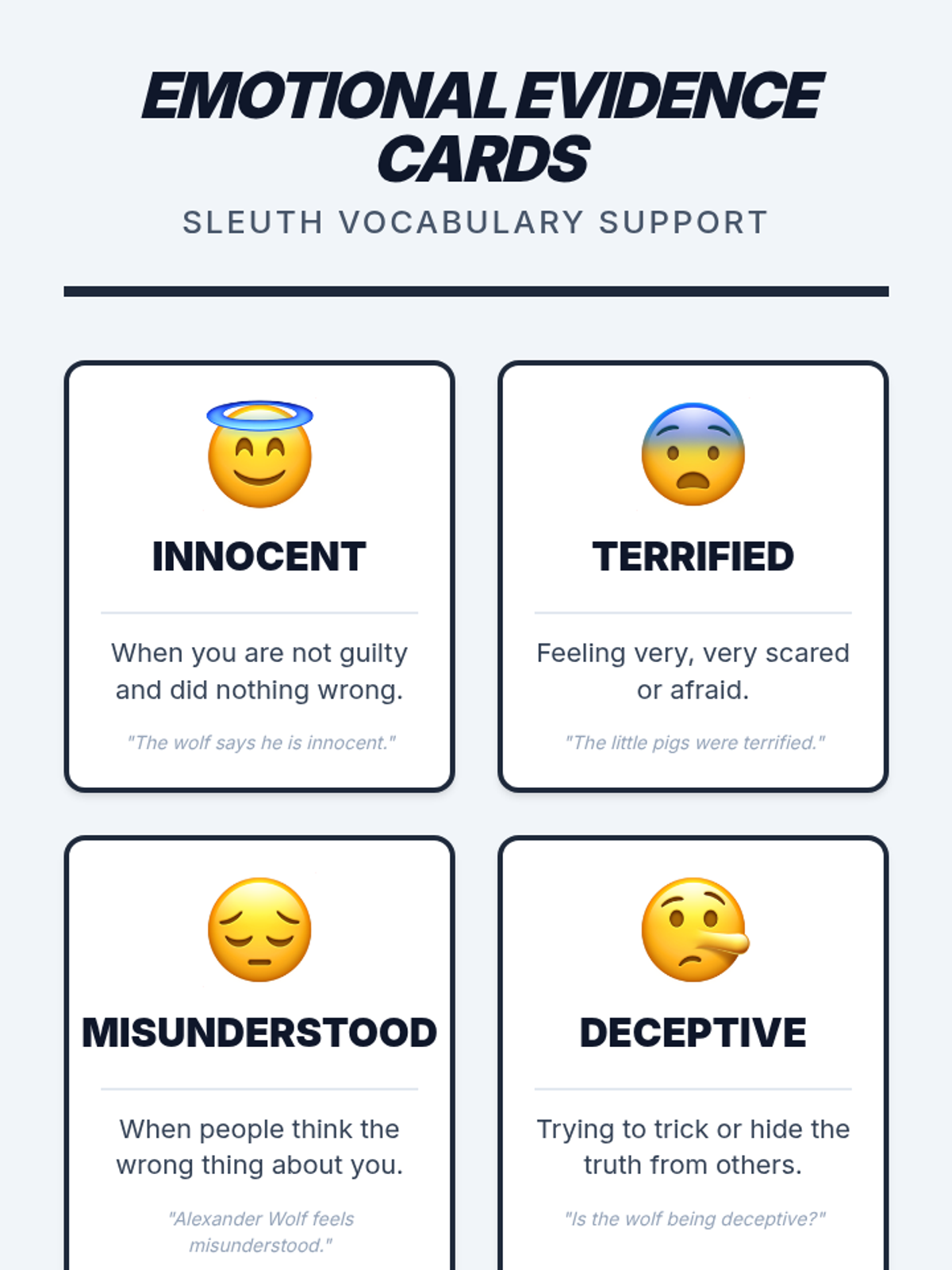
A 45-minute ESL lesson for 5th graders to analyze how point of view influences the description of events using the classic fable of The Three Little Pigs versus the Wolf's perspective.
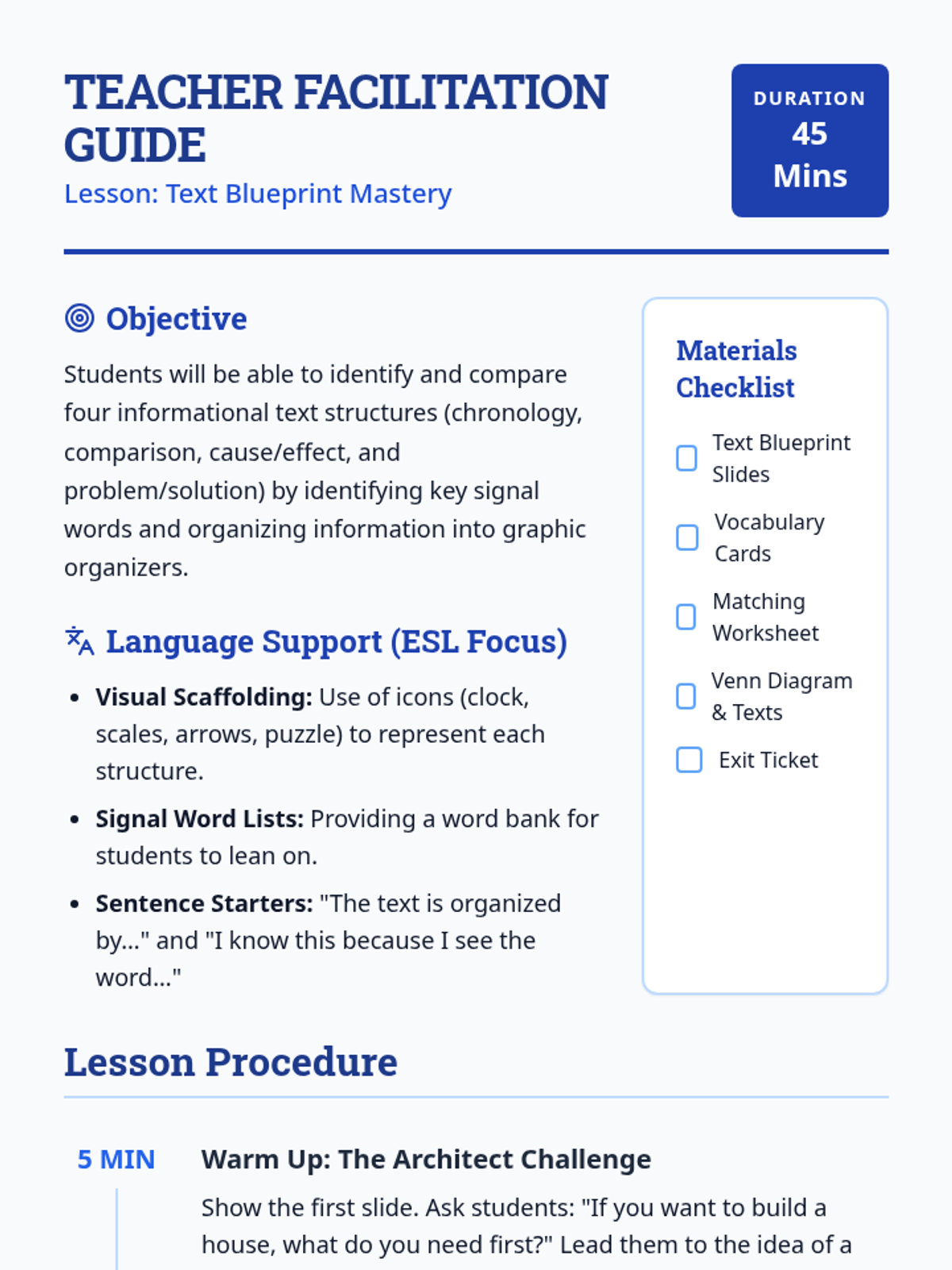
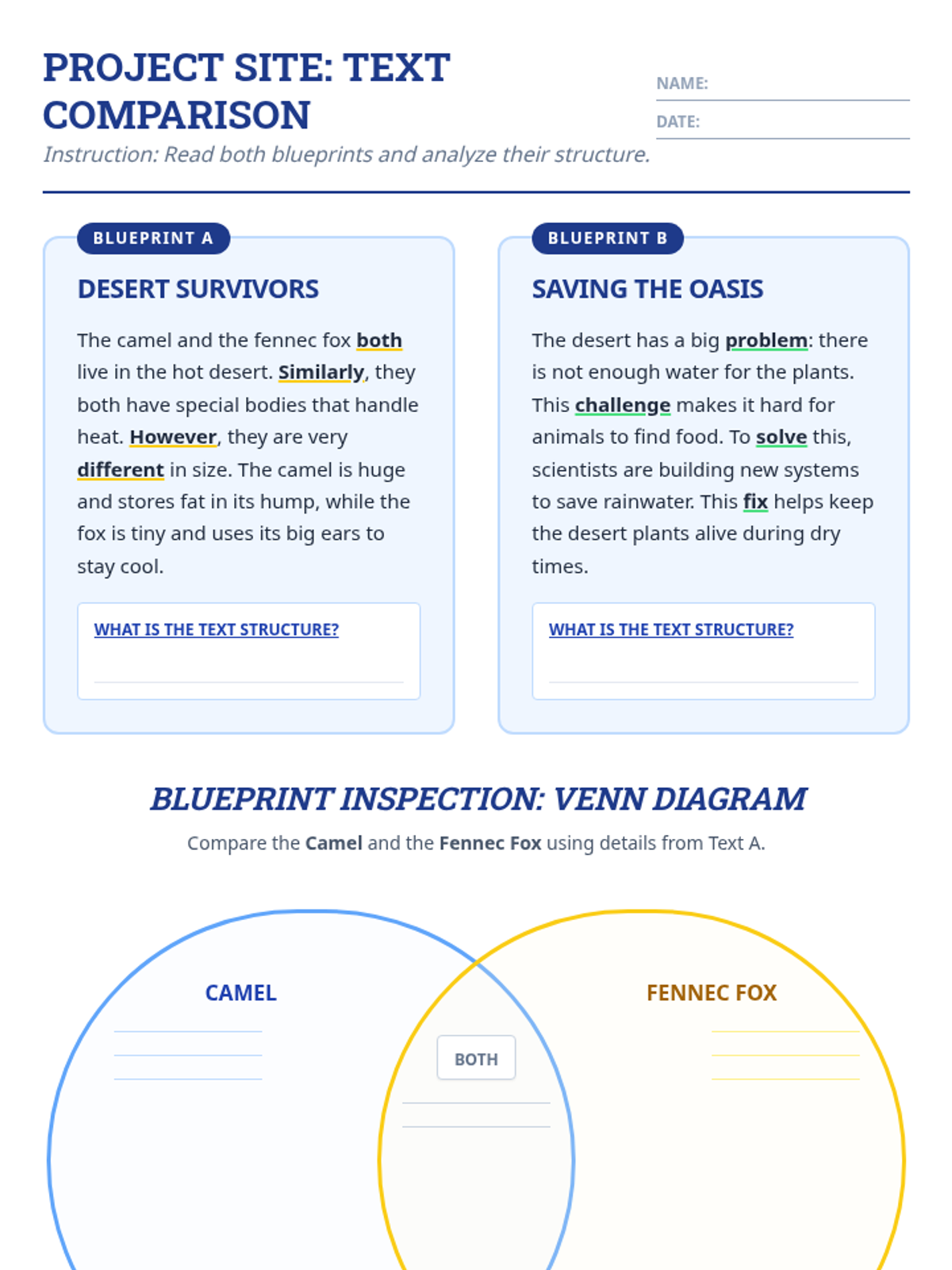
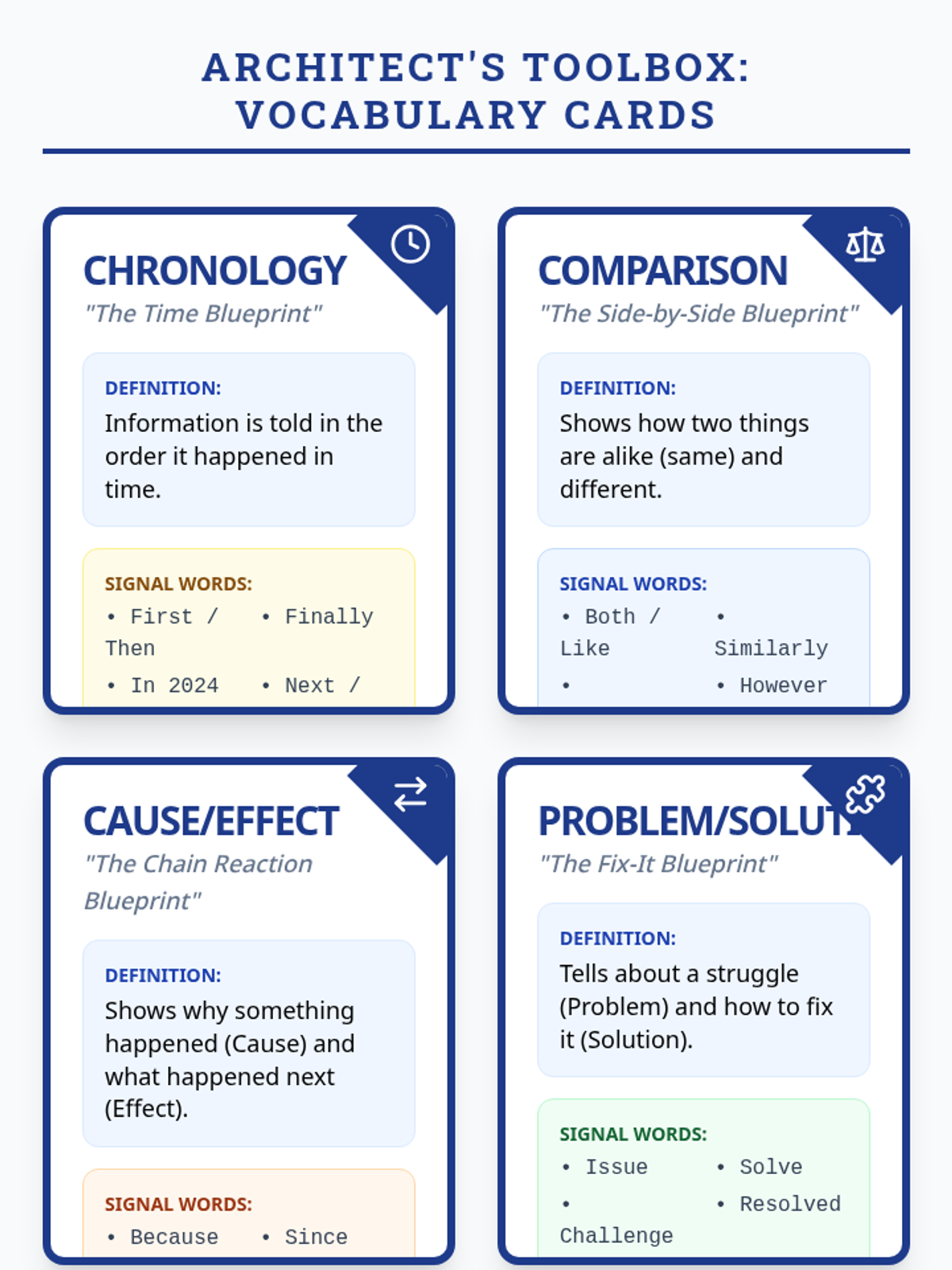
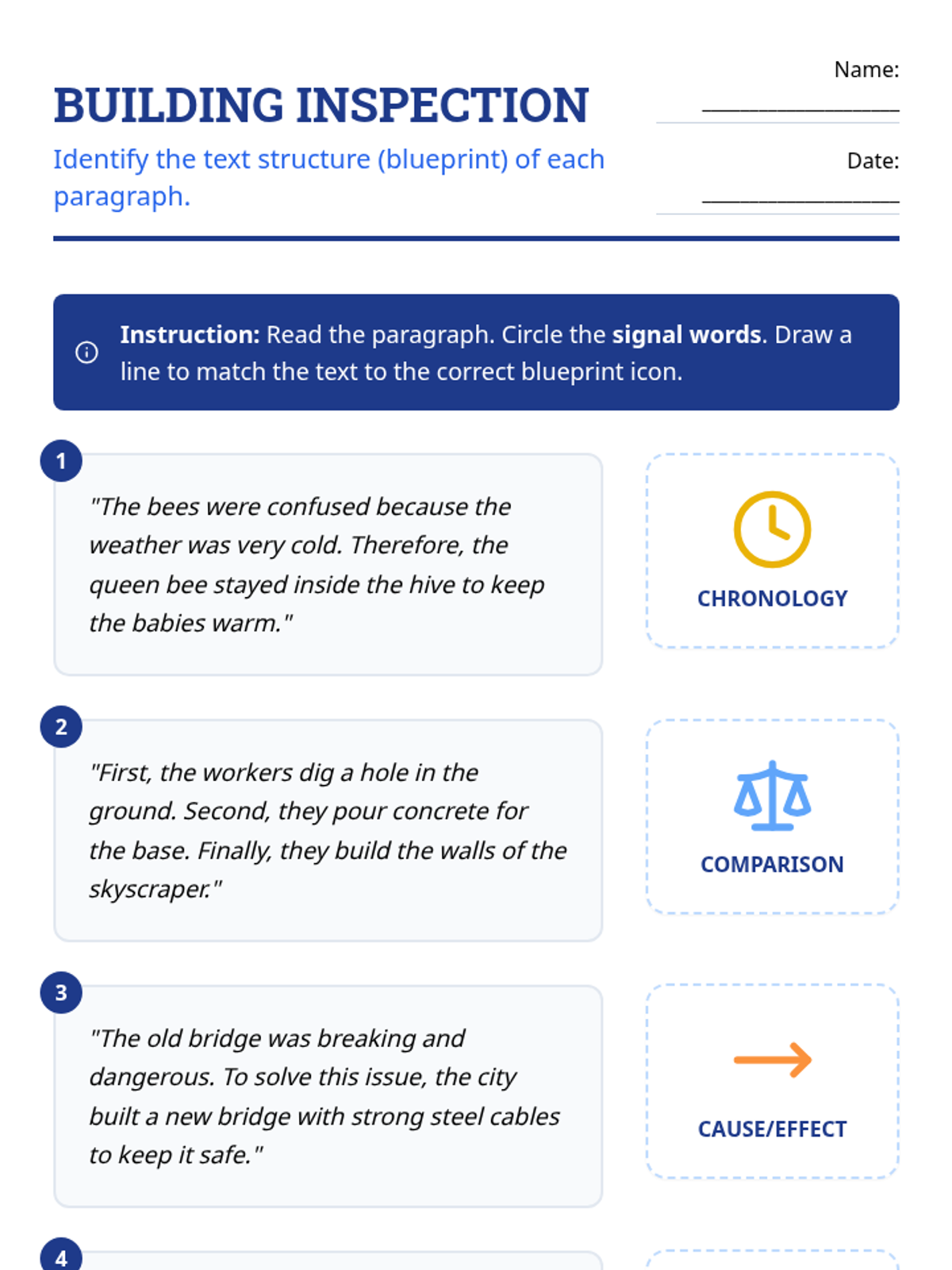
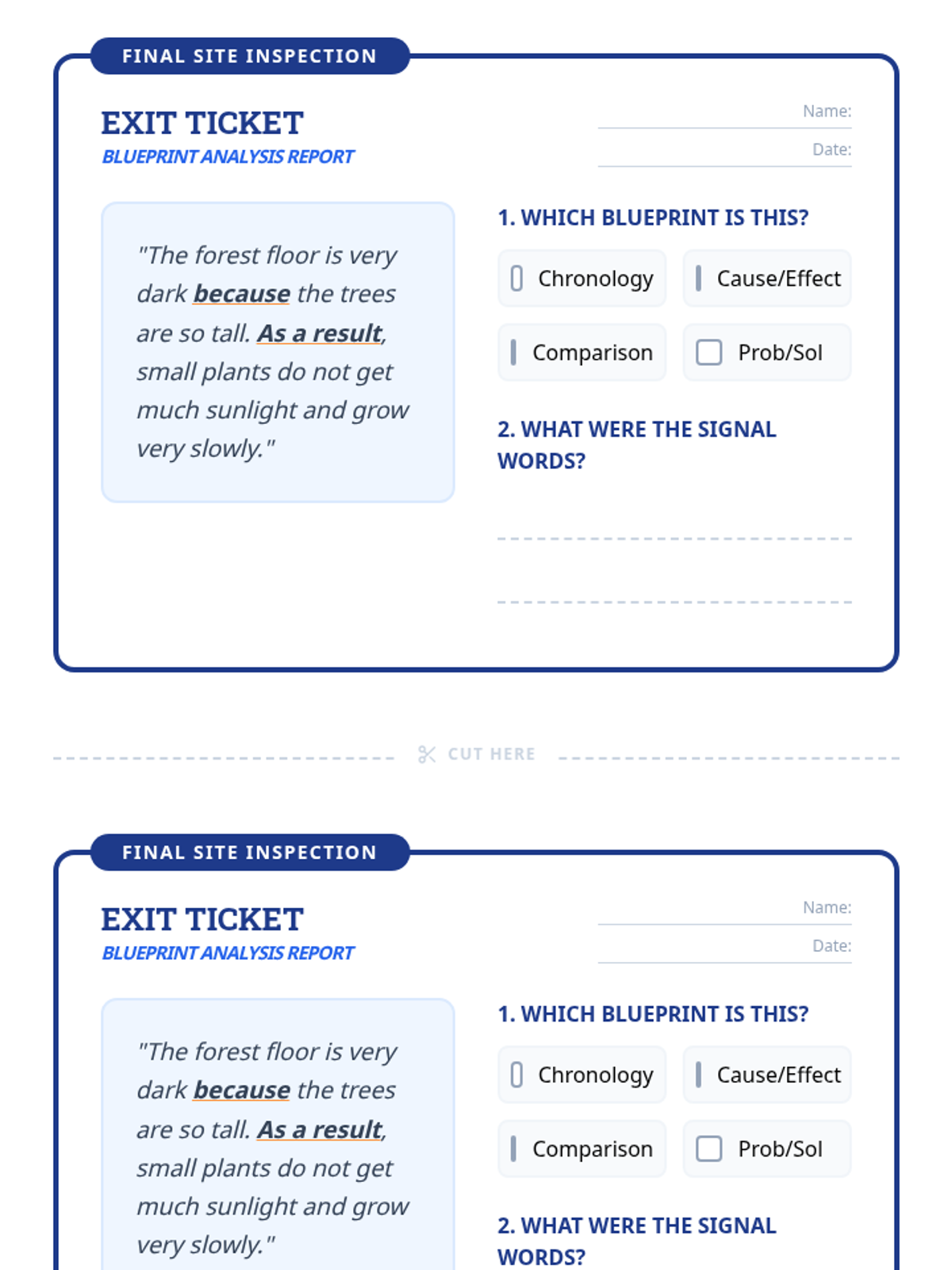
Students will identify and compare four major text structures: chronology, comparison, cause/effect, and problem/solution. Through an architectural 'blueprint' theme, ESL students will learn signal words and structural patterns to improve reading comprehension.
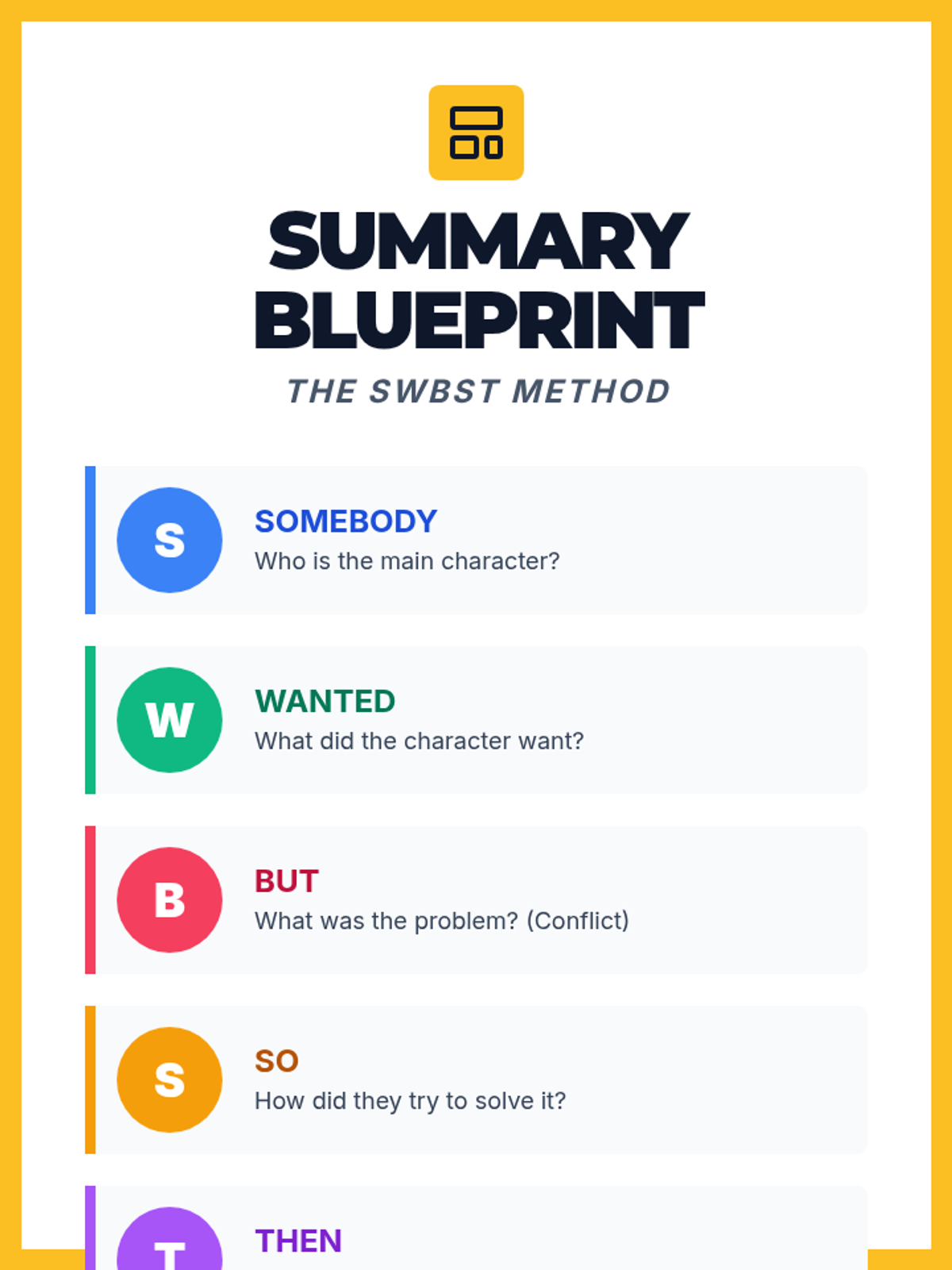
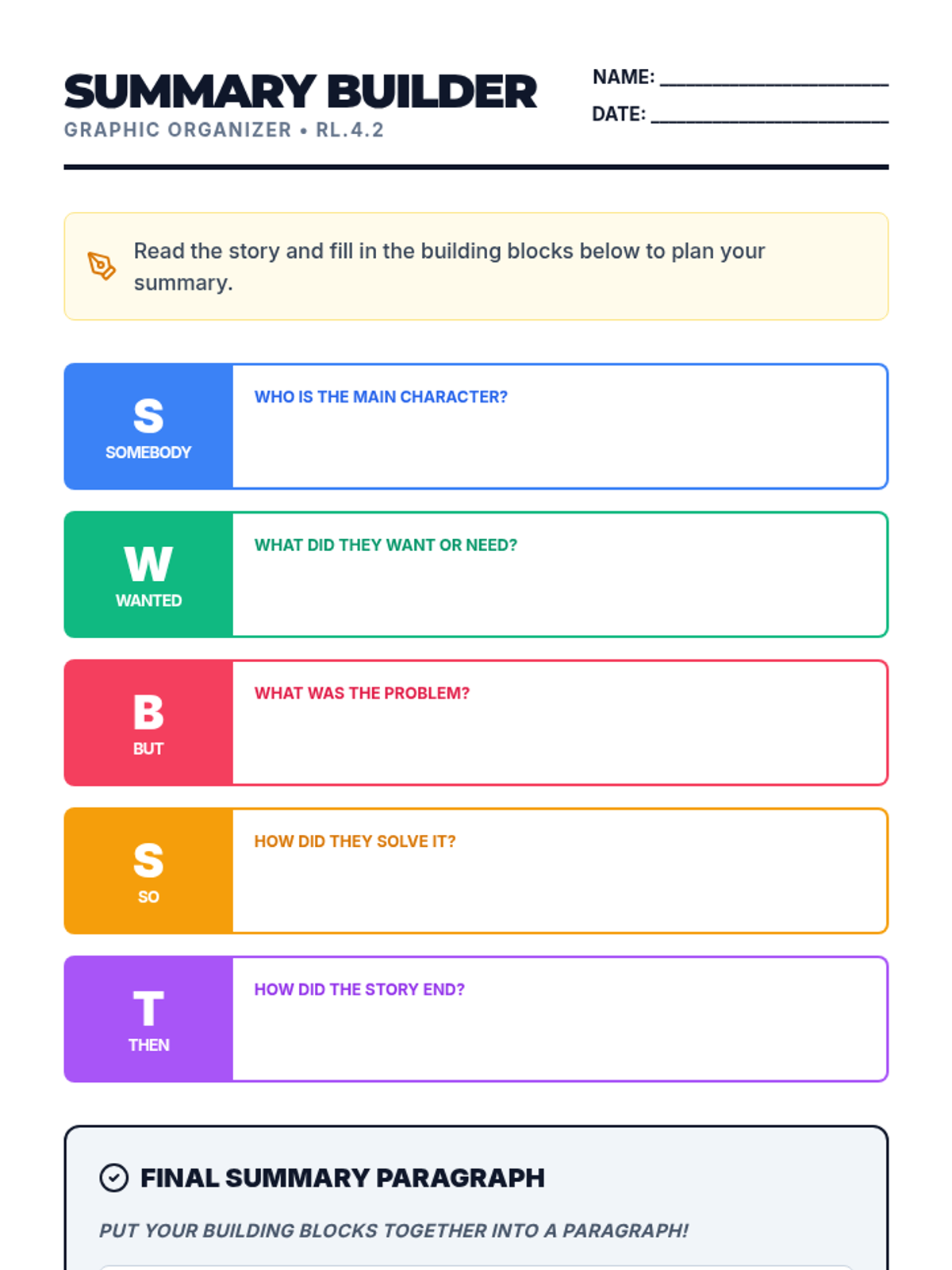
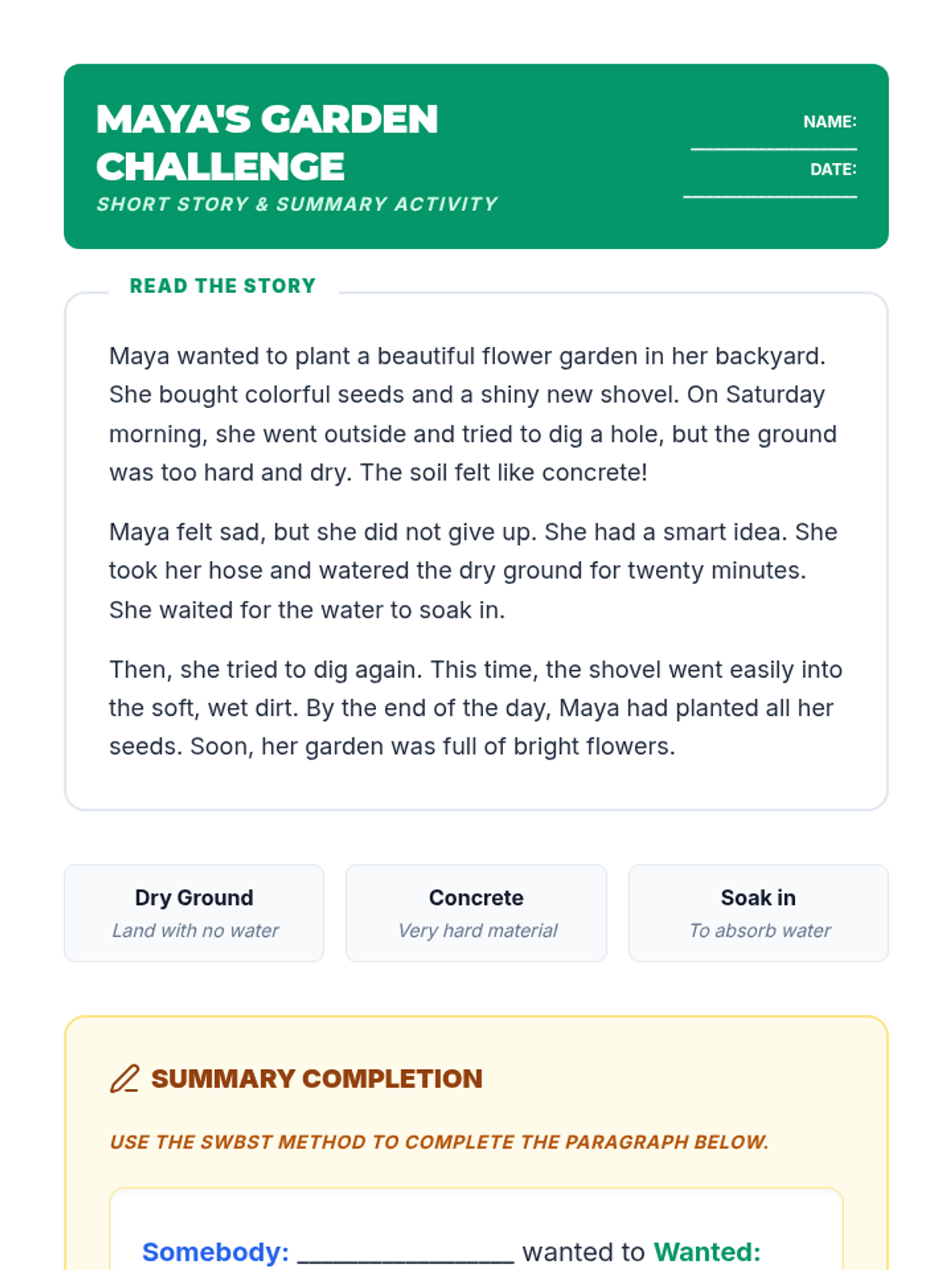
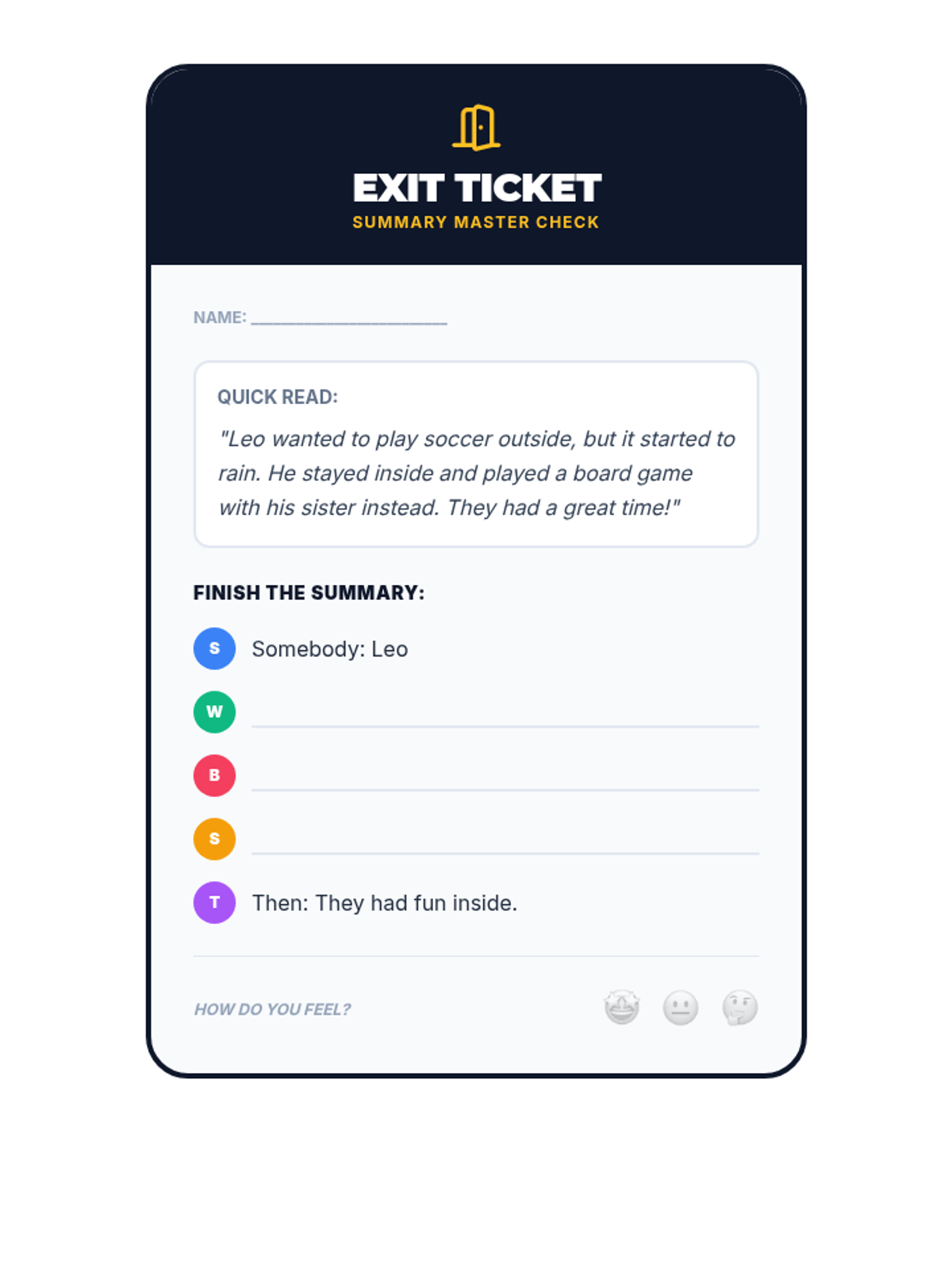
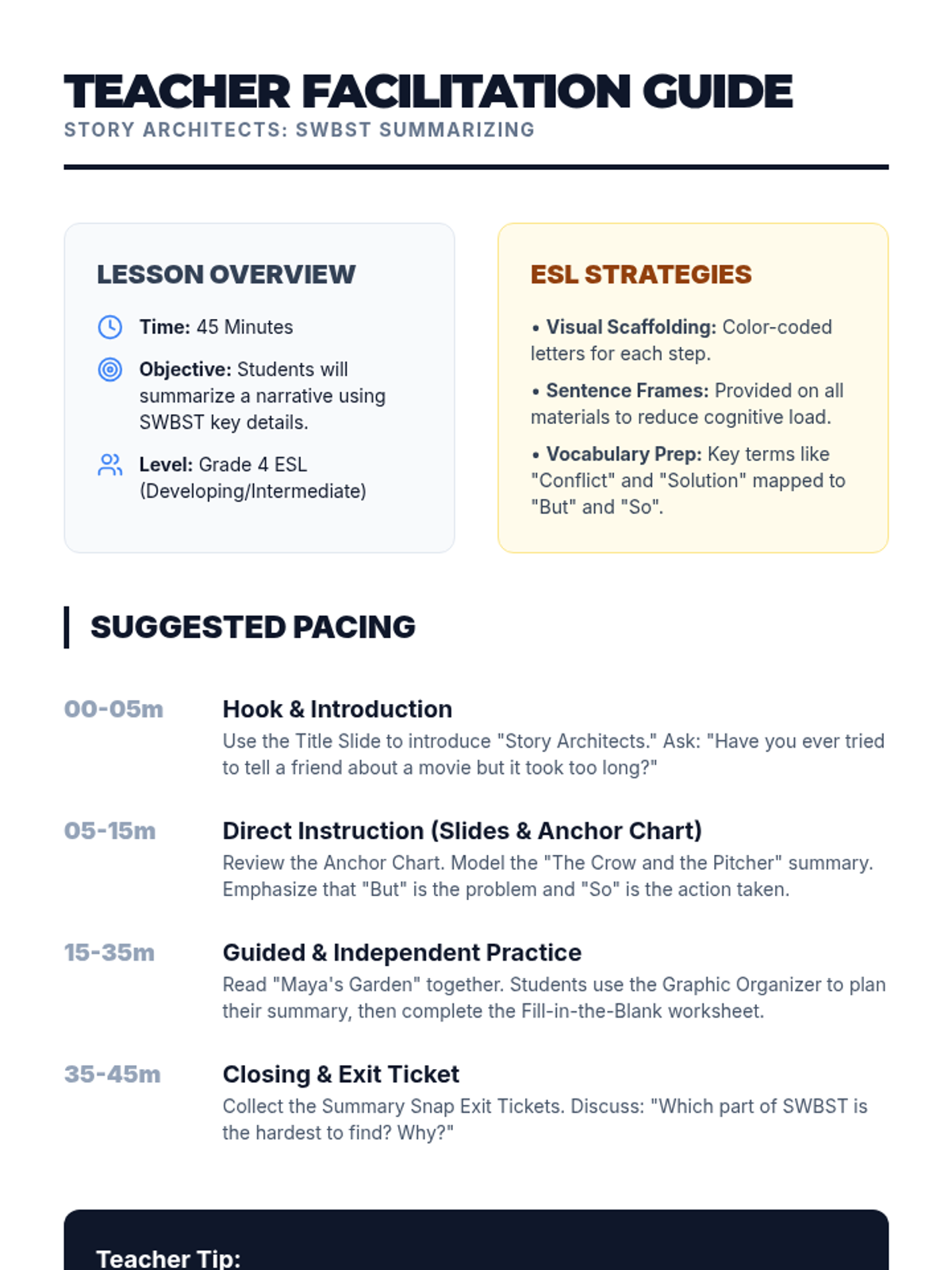
Students will learn to summarize narrative texts using the 'Somebody Wanted But So Then' (SWBST) framework. This lesson is designed for Grade 4 ESL students at the developing/intermediate level, focusing on identifying key plot elements and synthesizing them into a concise summary.
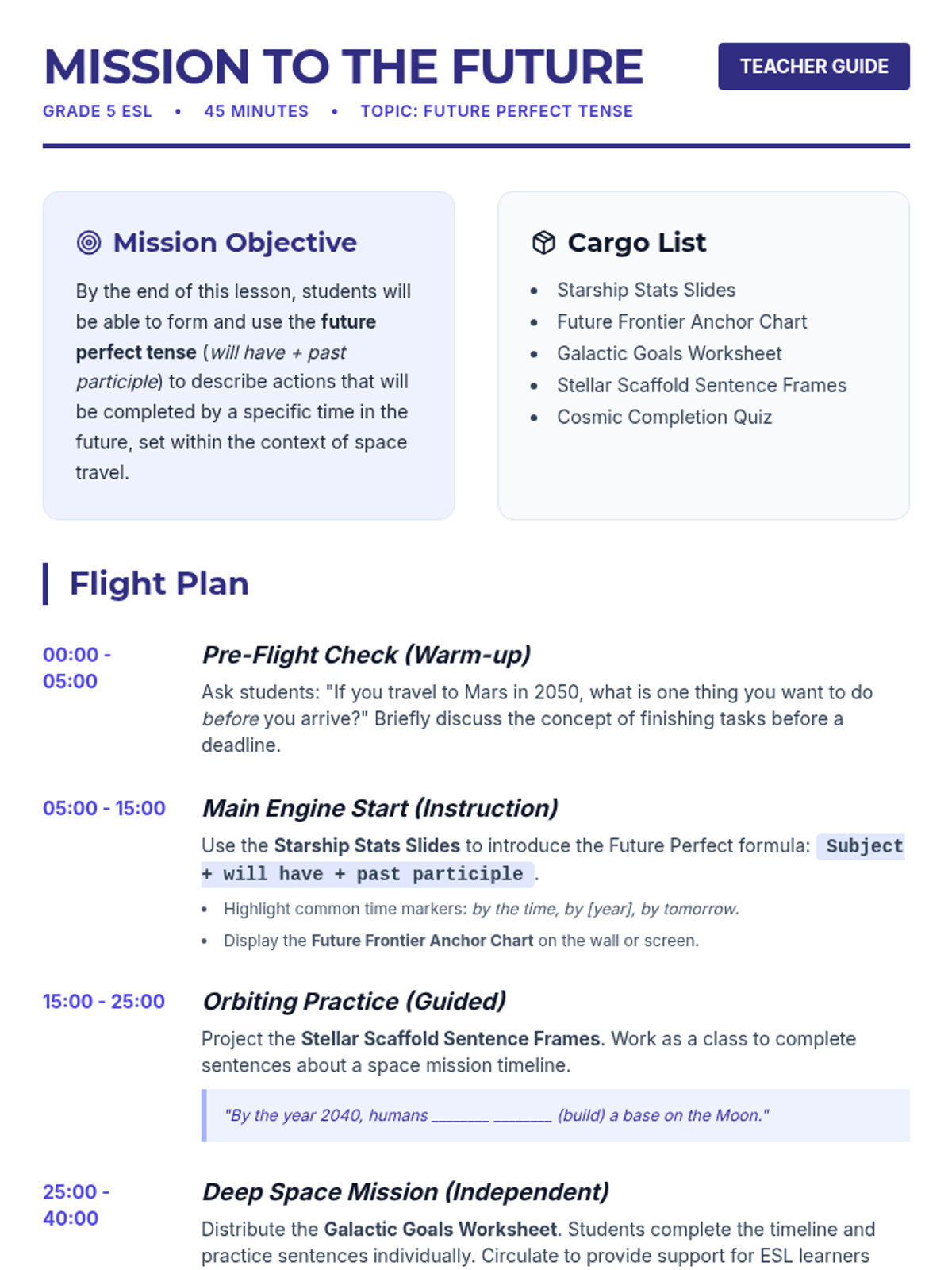
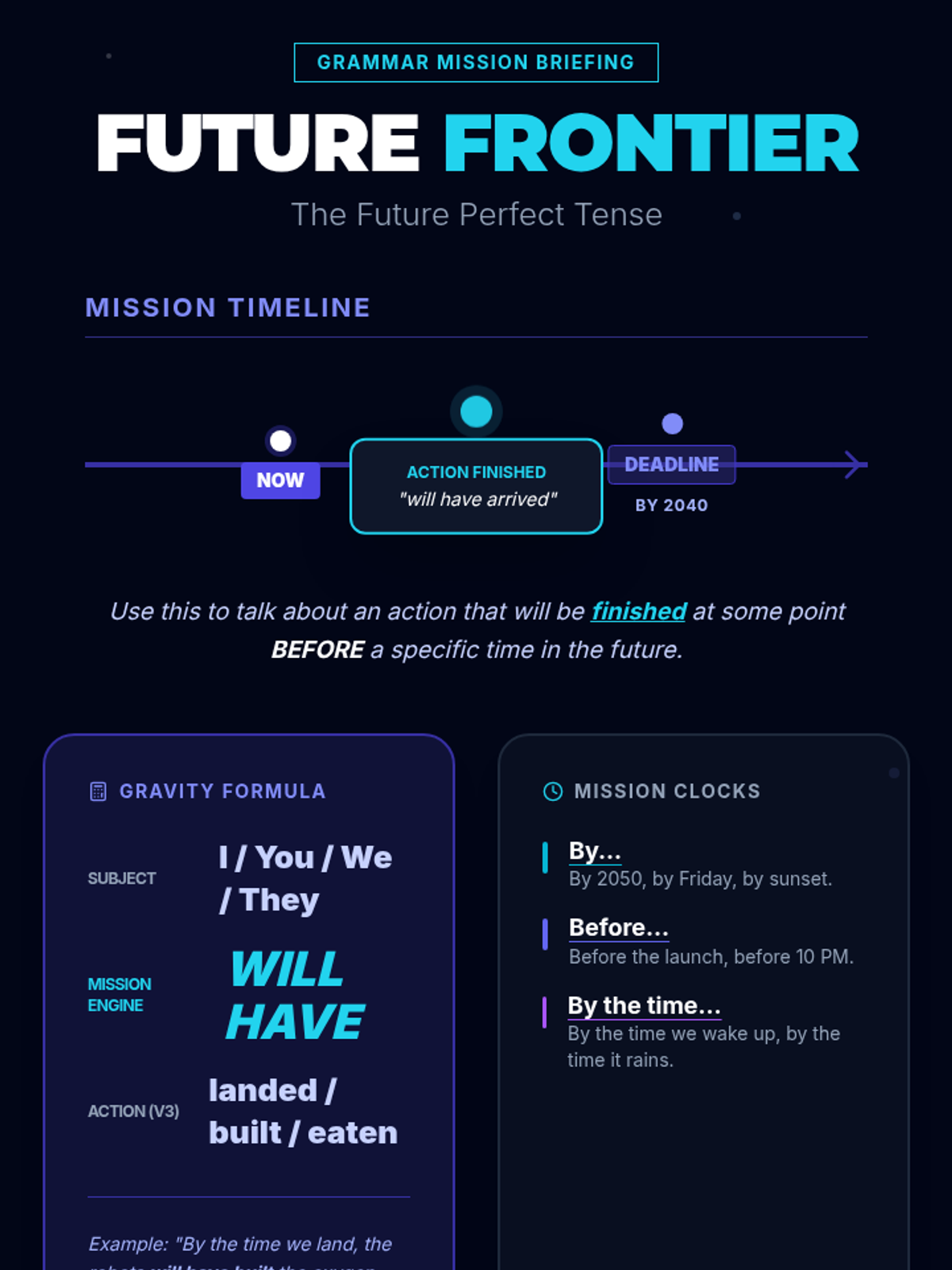
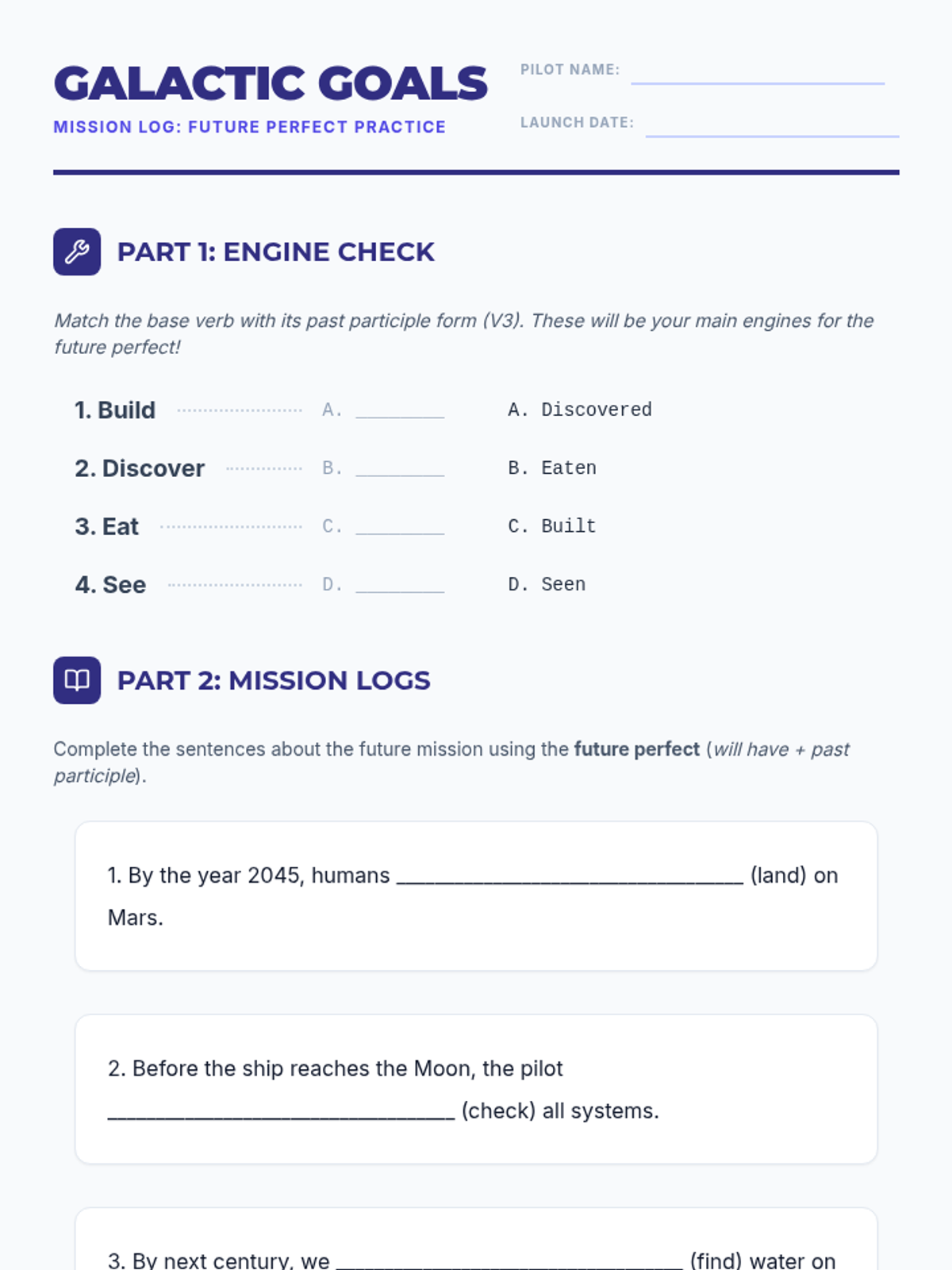
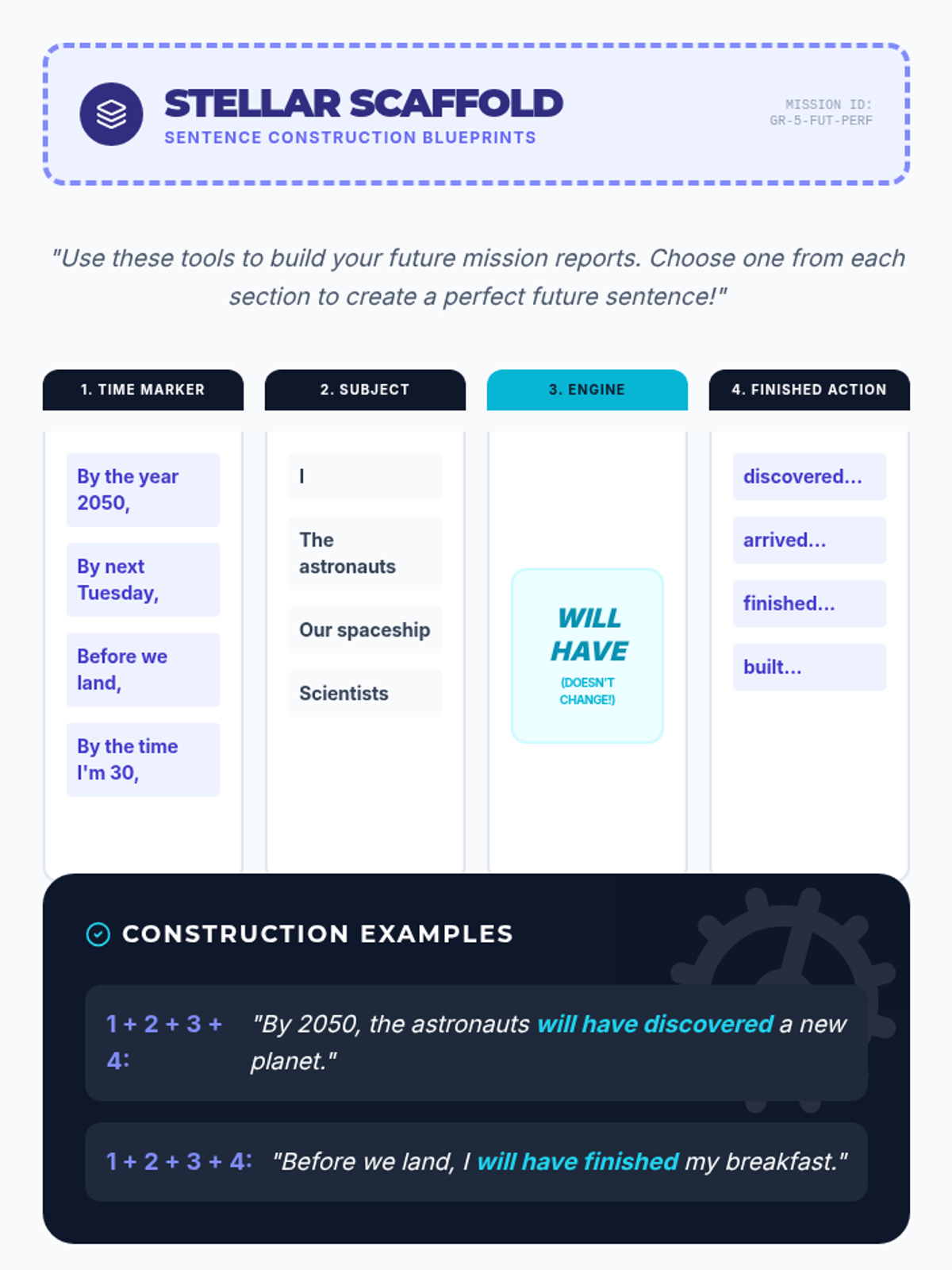
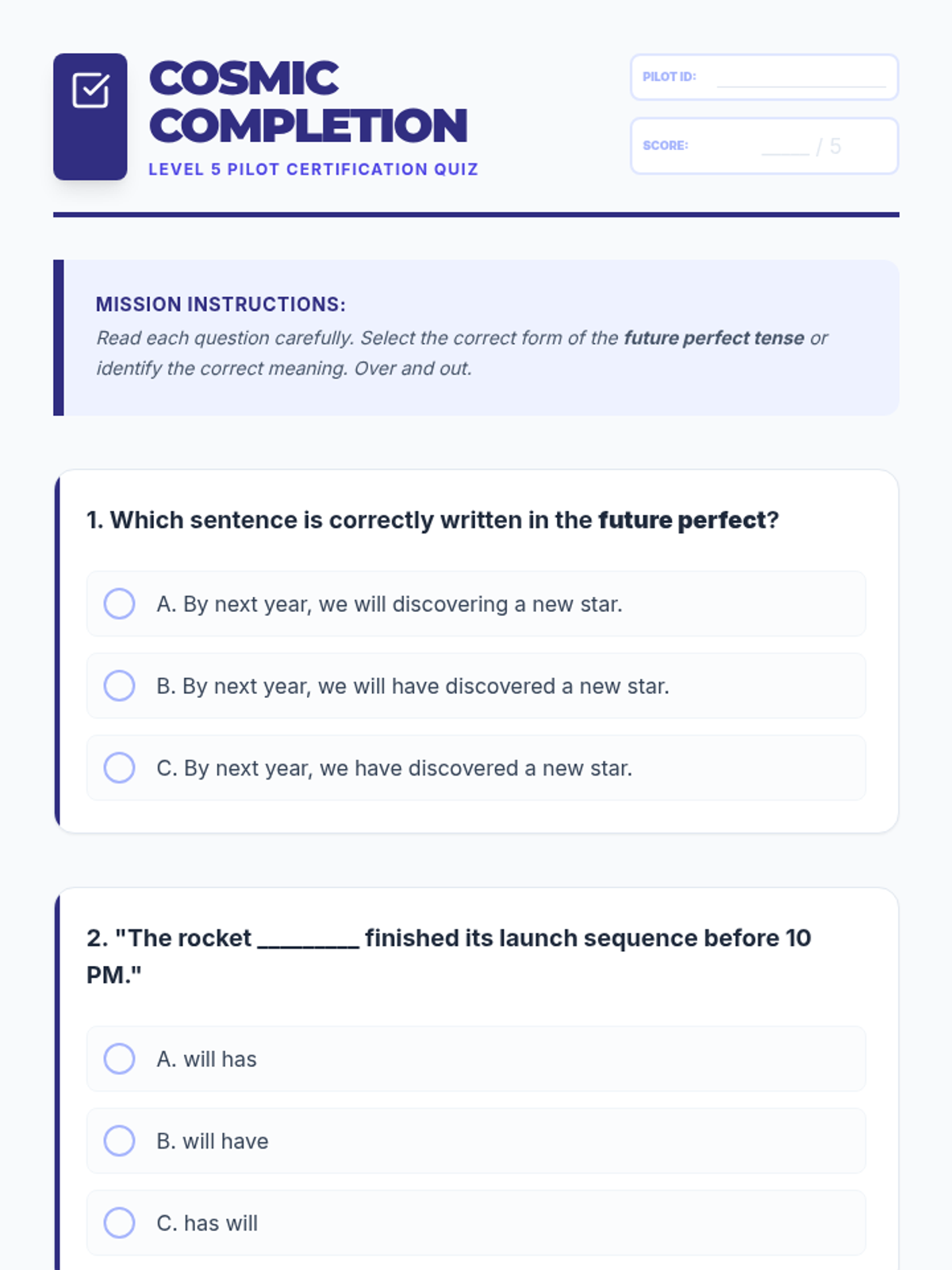
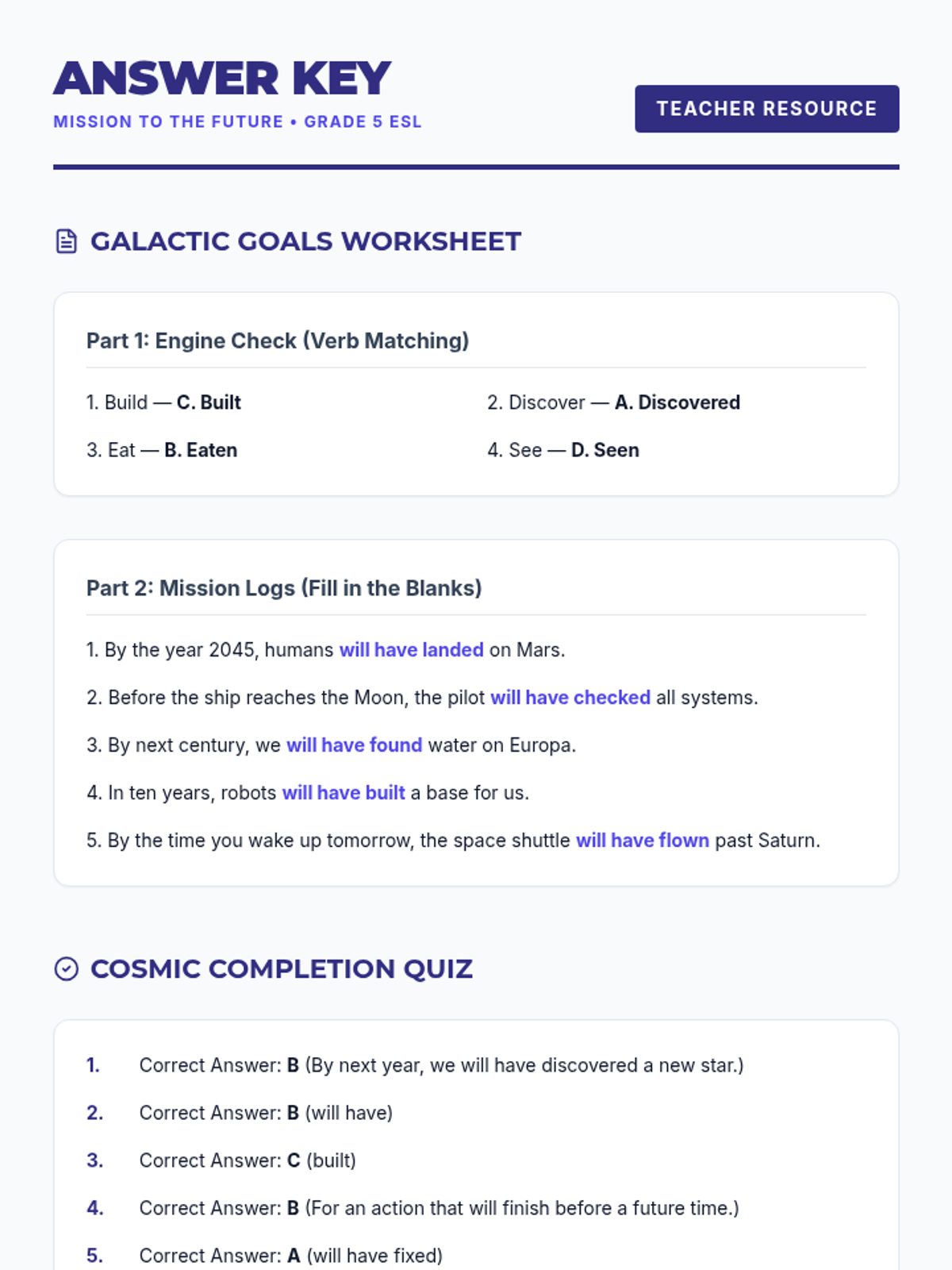
A 45-minute ESL lesson for Grade 5 students focused on the future perfect tense through the lens of space exploration and interstellar travel. Students will learn to form and use the future perfect to describe completed actions in the future.
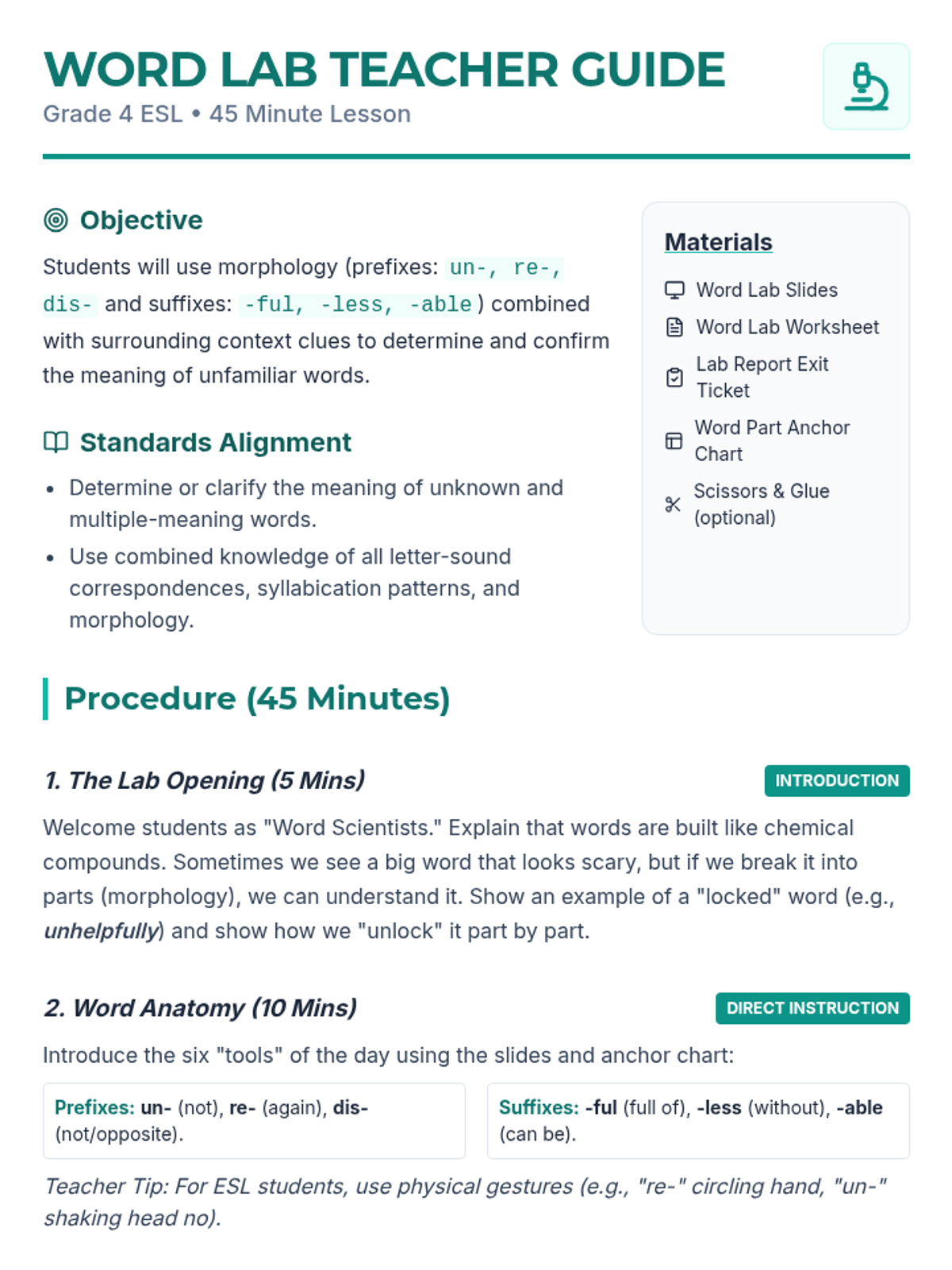
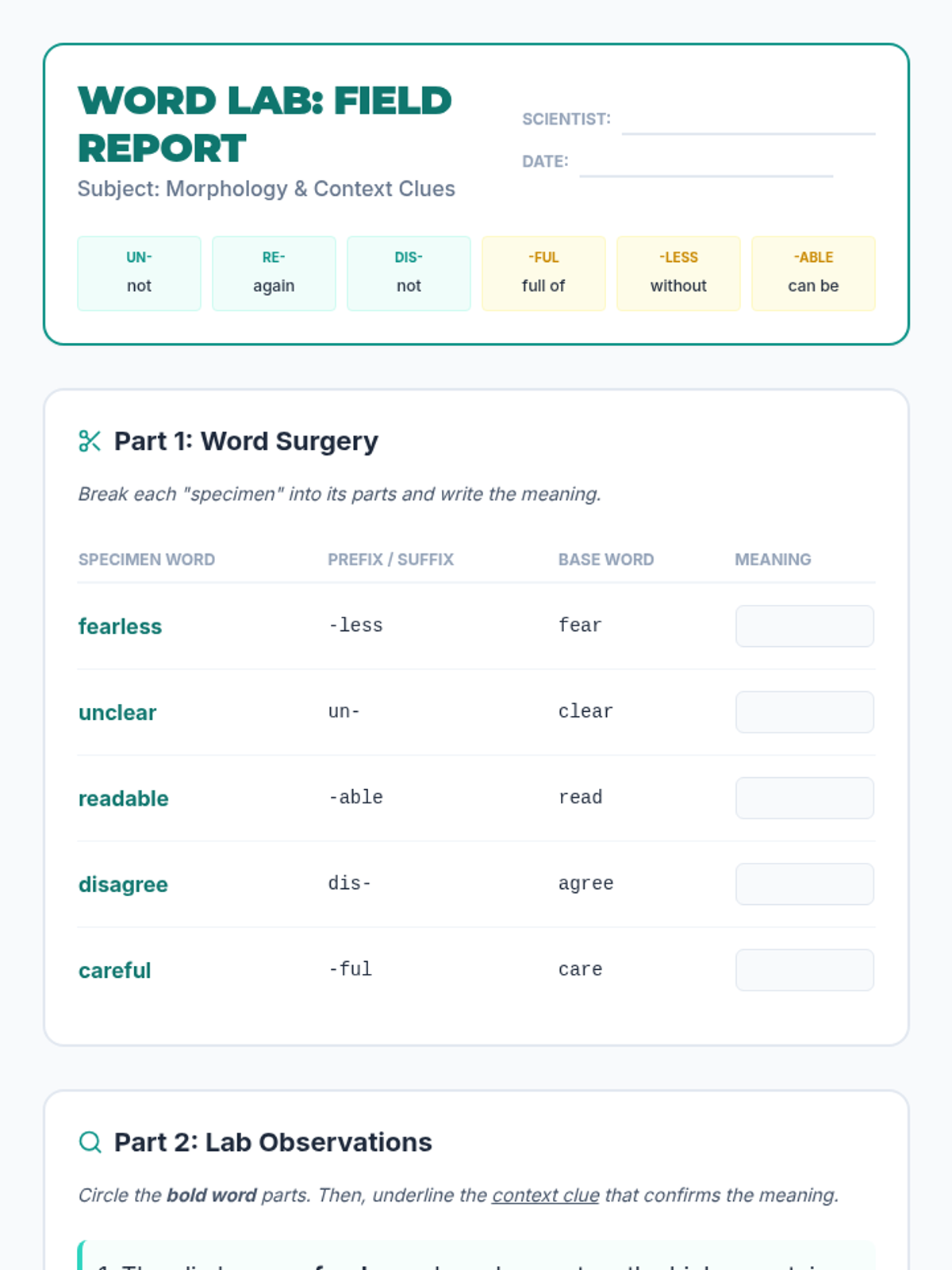
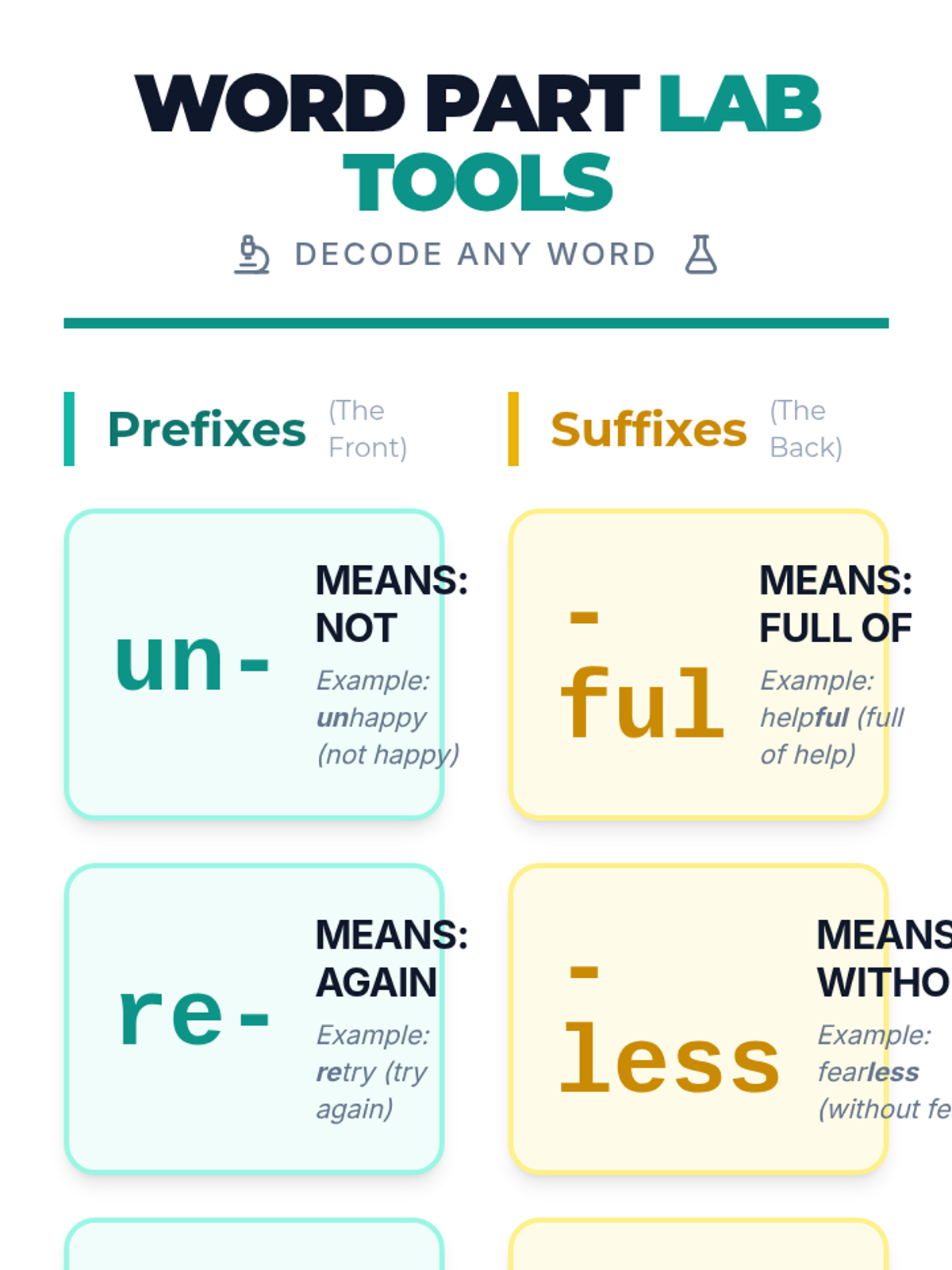
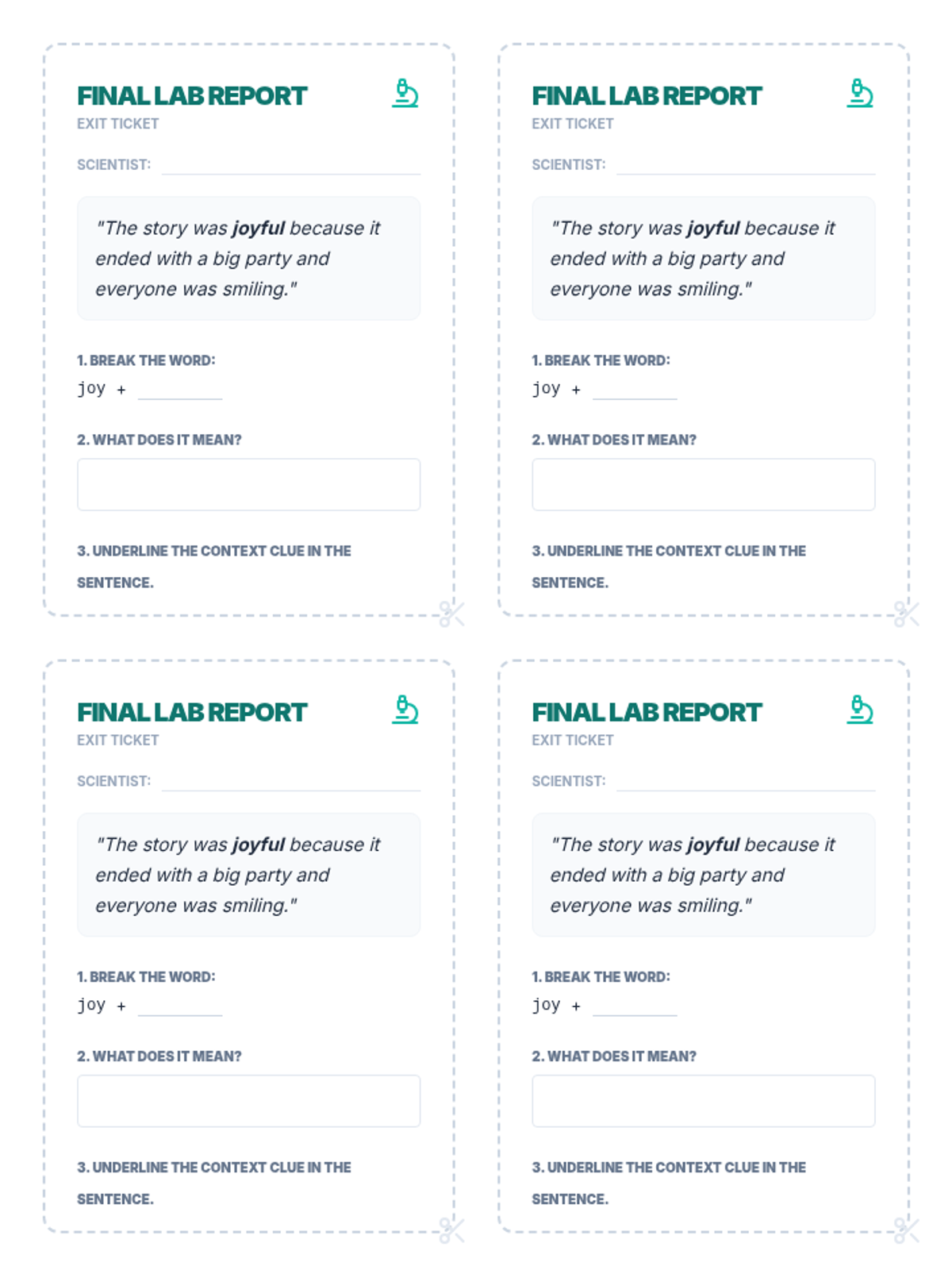
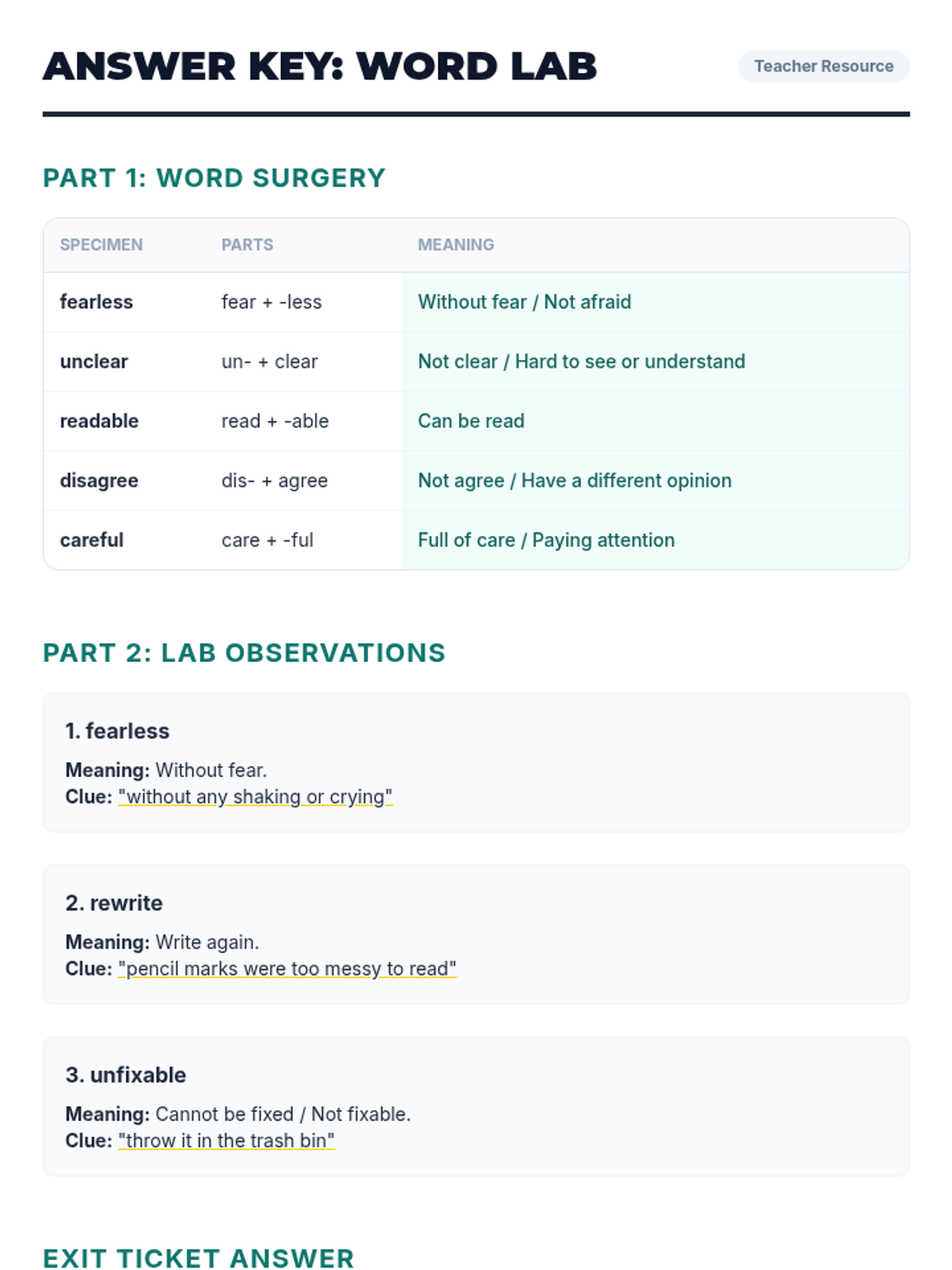
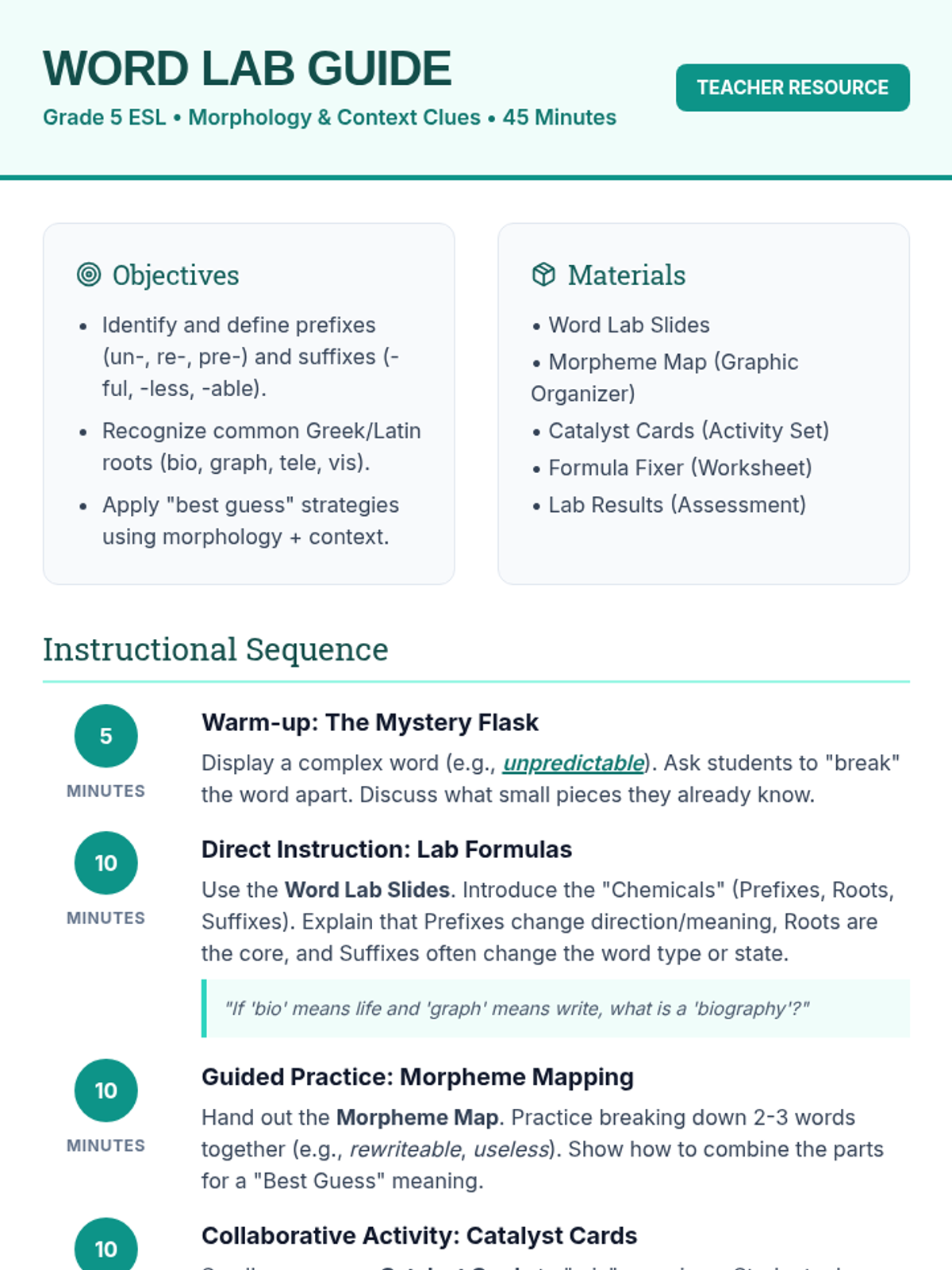
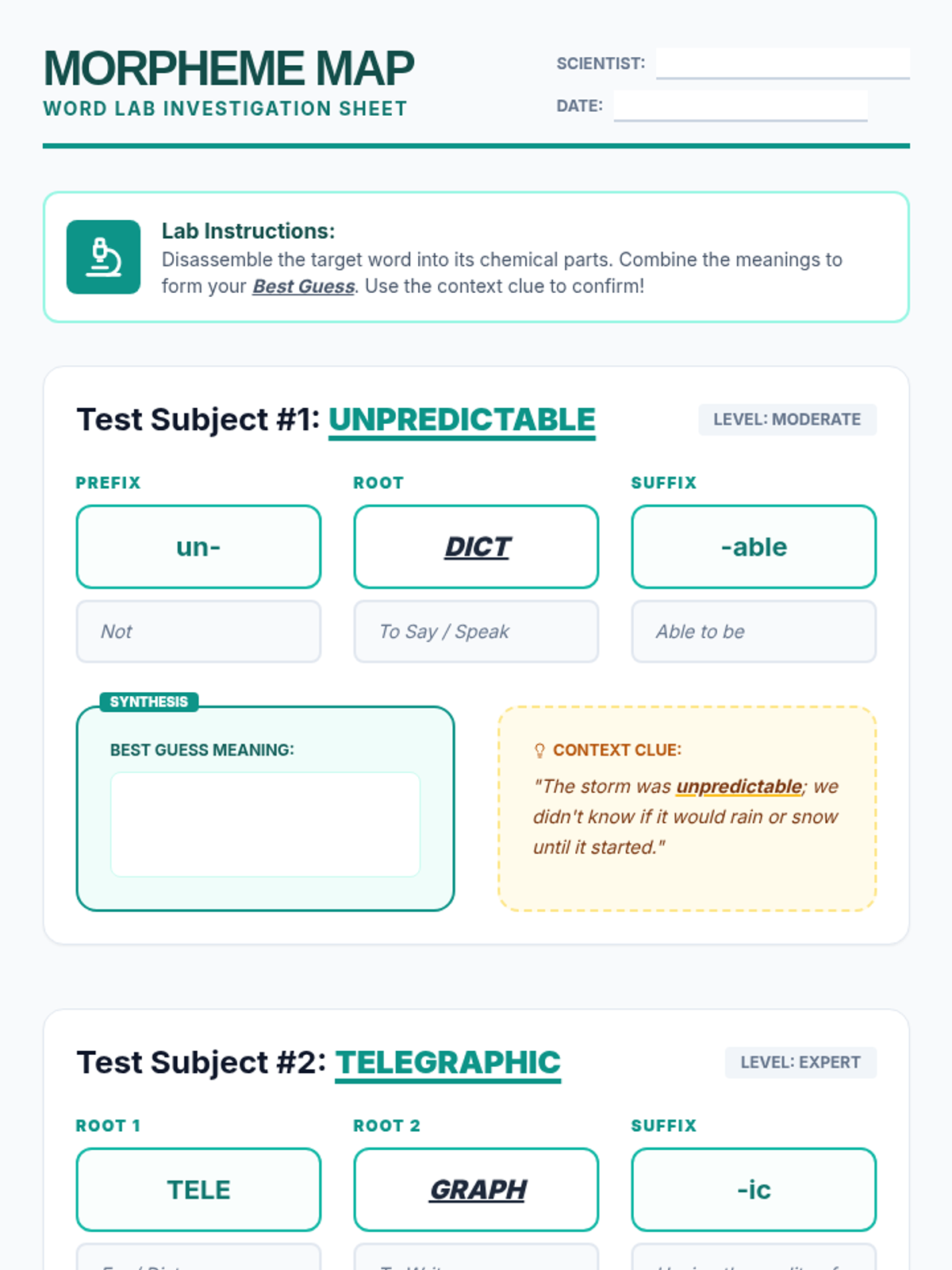
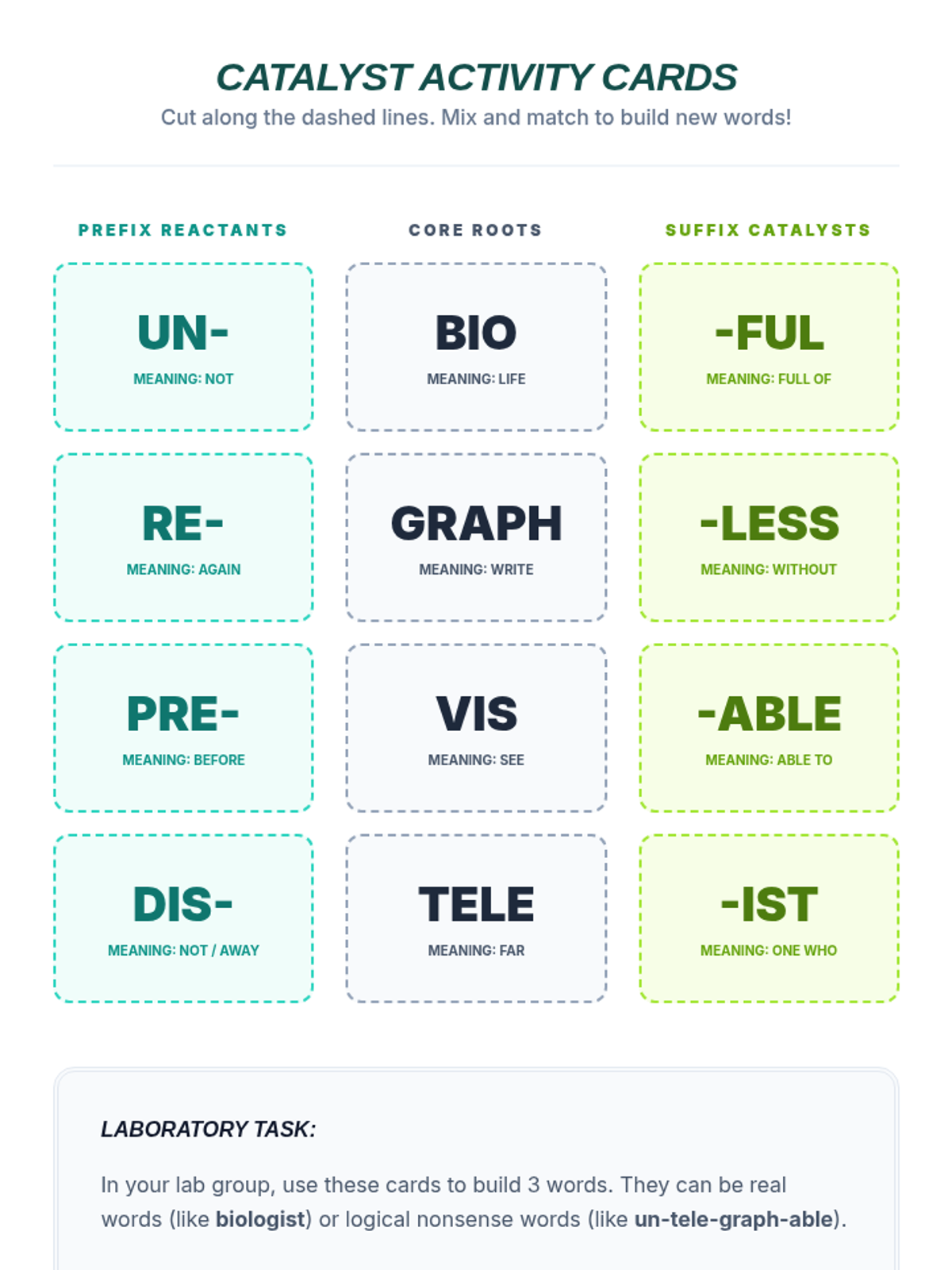
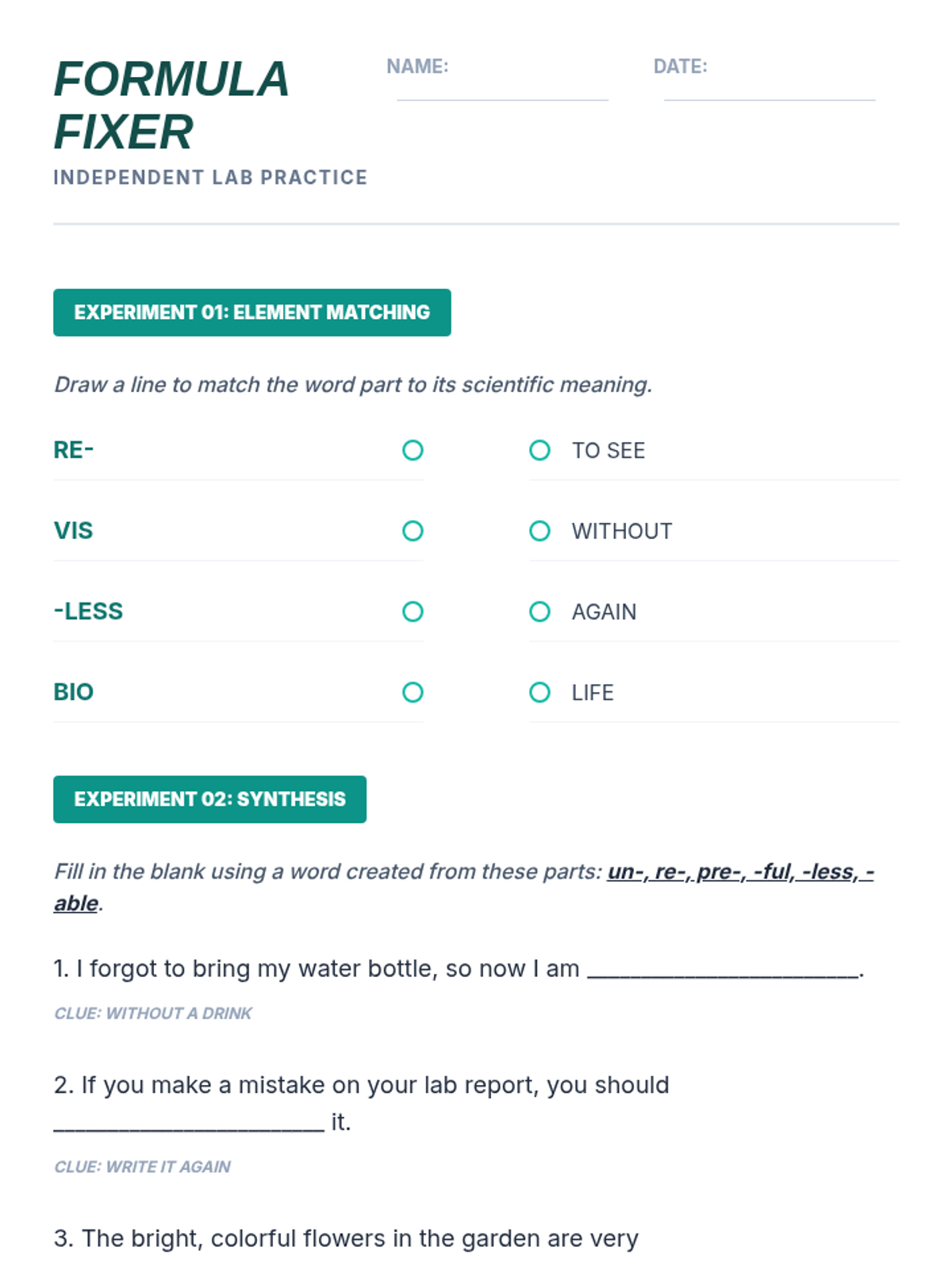
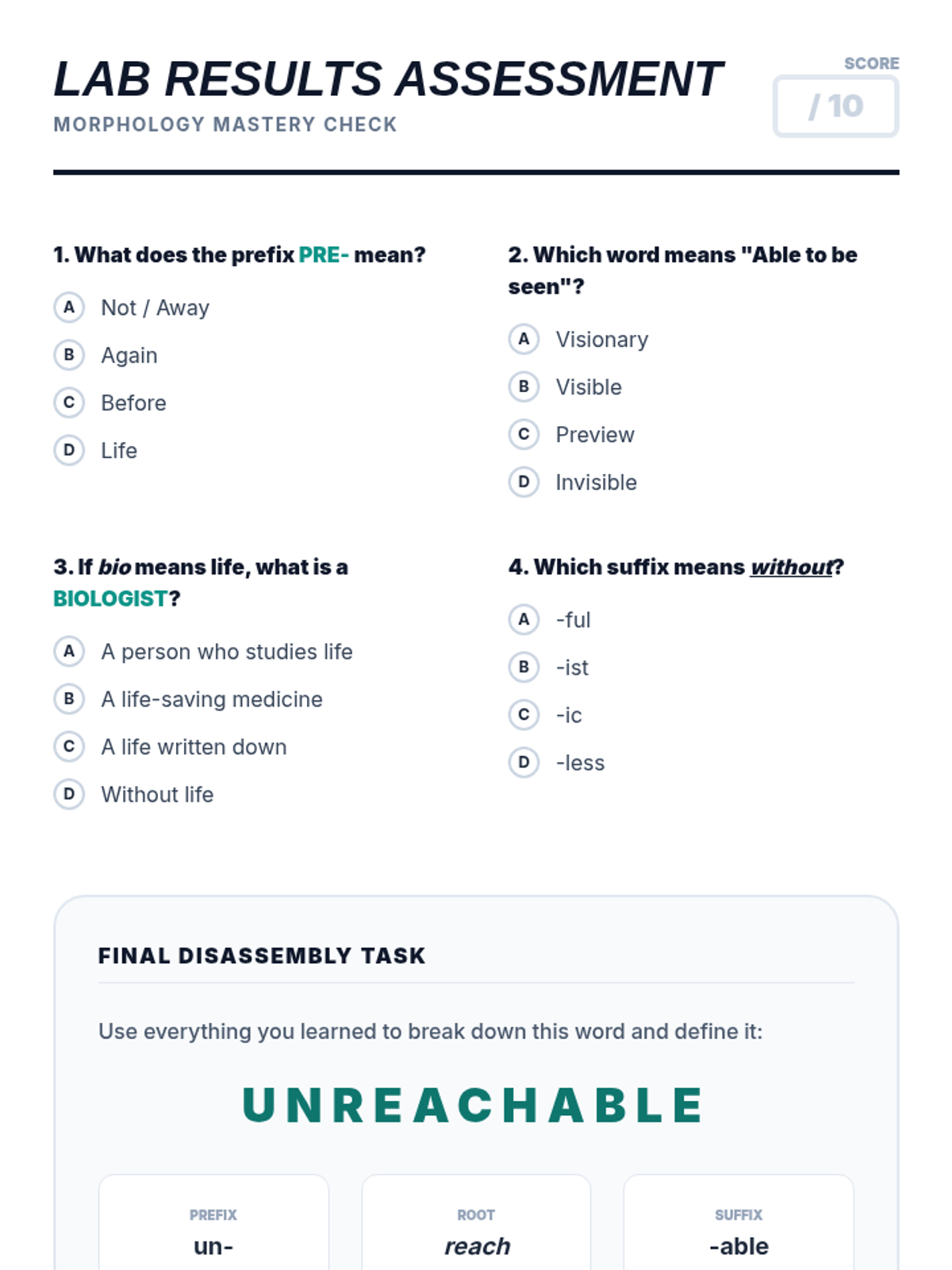
A 45-minute Grade 4 ESL lesson focused on decoding unfamiliar words using morphology (un-, re-, dis-, -ful, -less, -able) and context clues. Students act as word scientists to break down and build words within sentences.
A 45-minute ESL lesson for 5th grade focusing on decoding word meanings using common prefixes, suffixes, and Greek/Latin roots. Students act as 'Word Scientists' in a lab to disassemble and rebuild complex vocabulary.
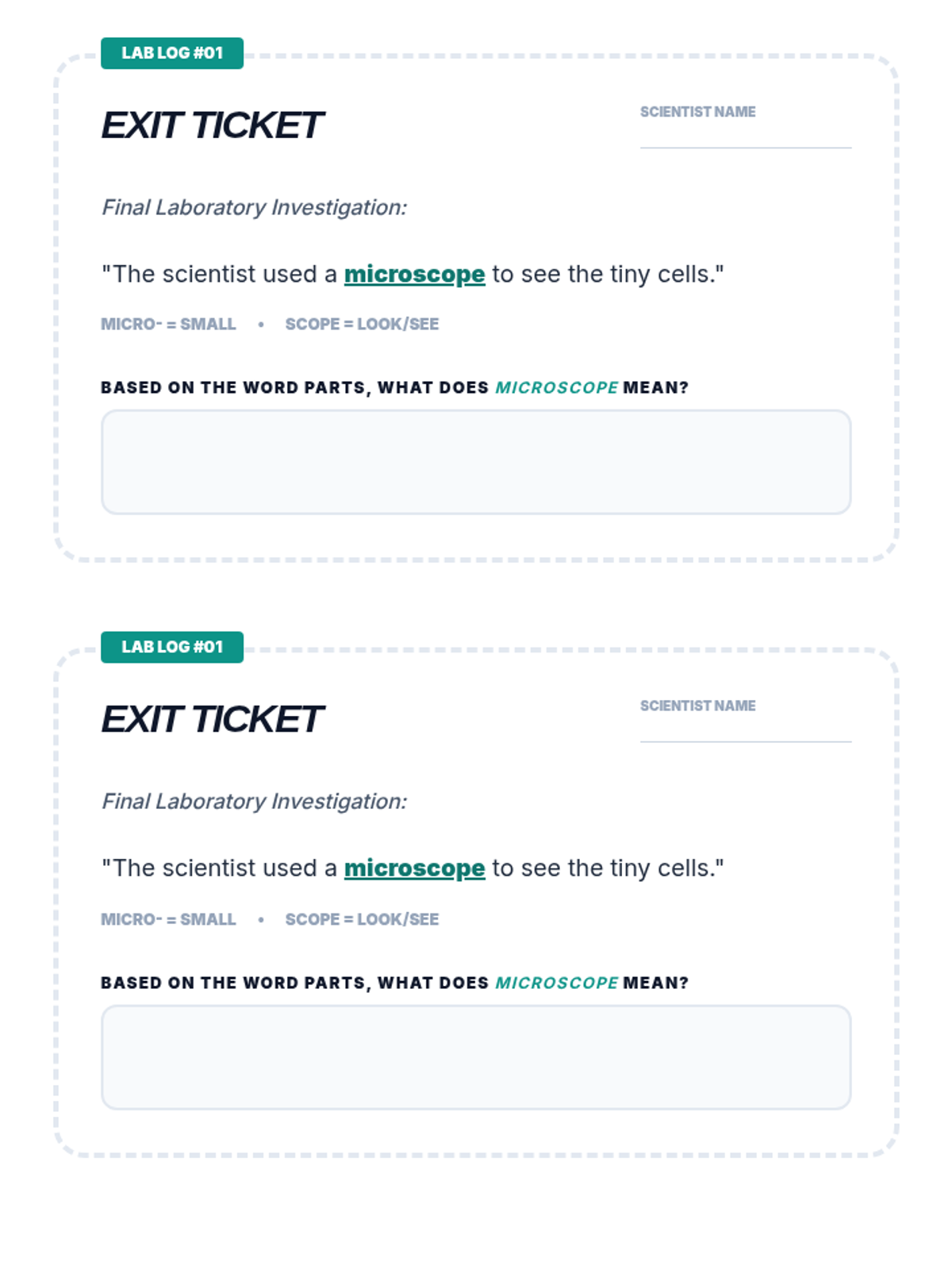
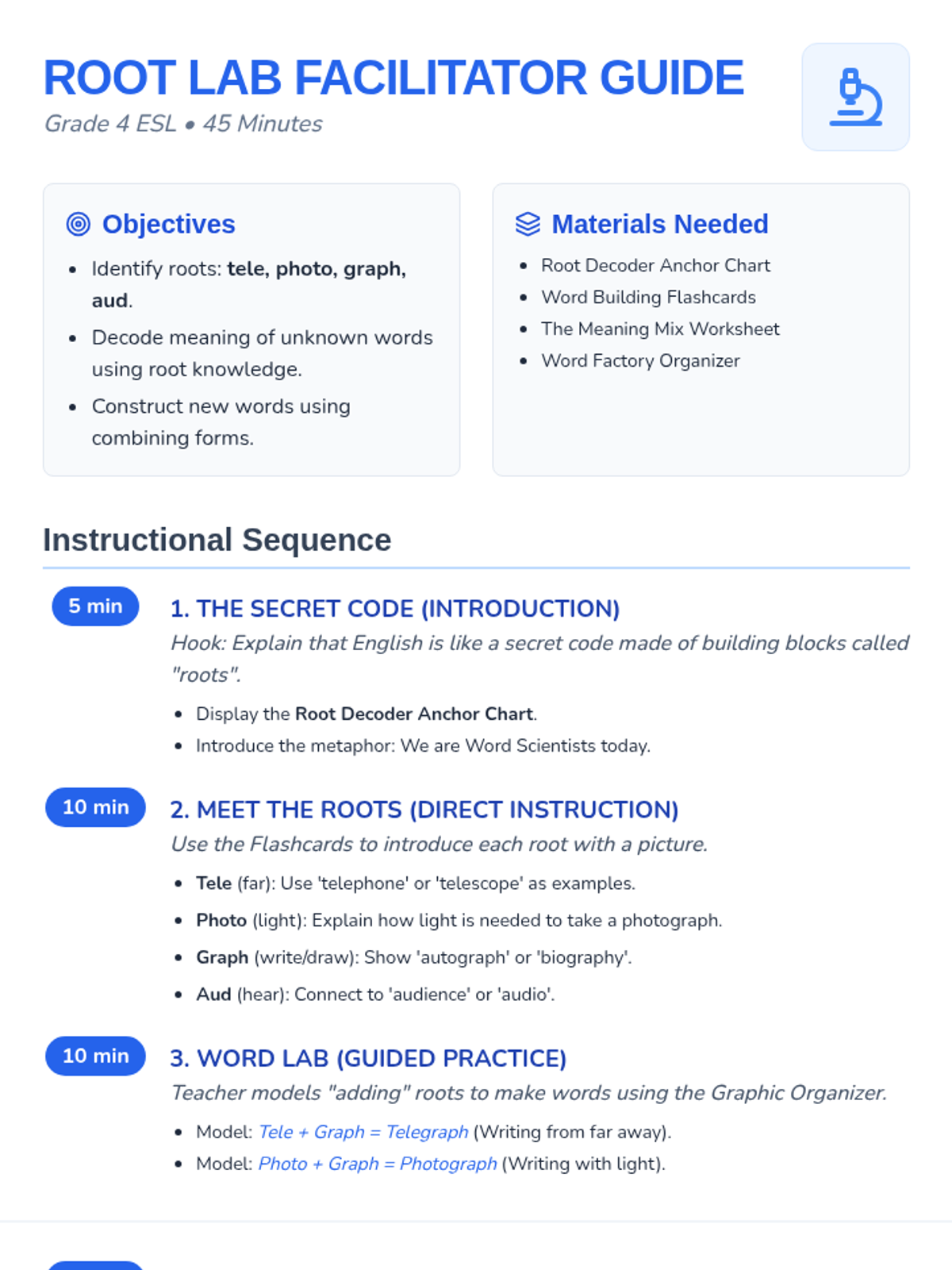
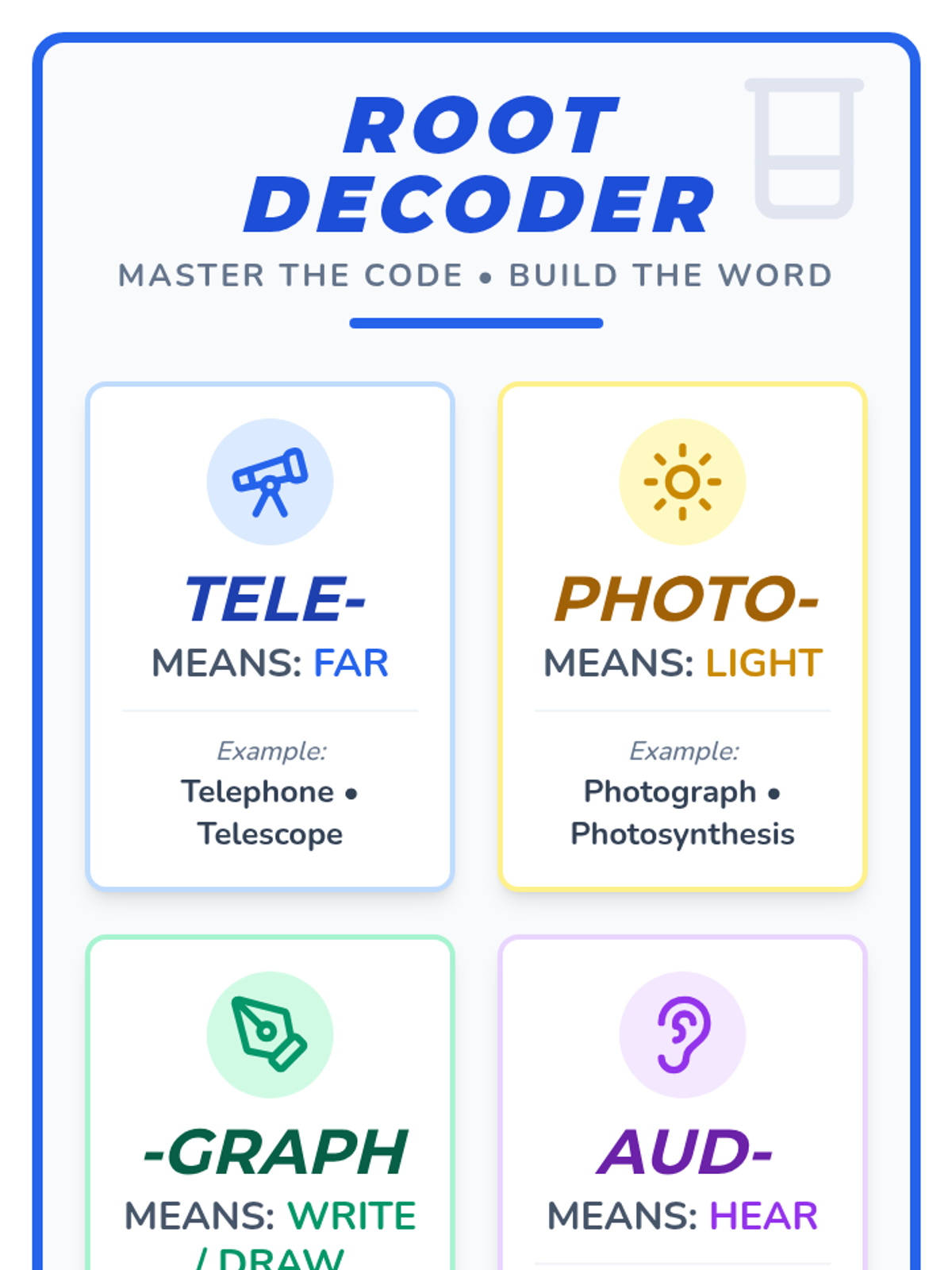
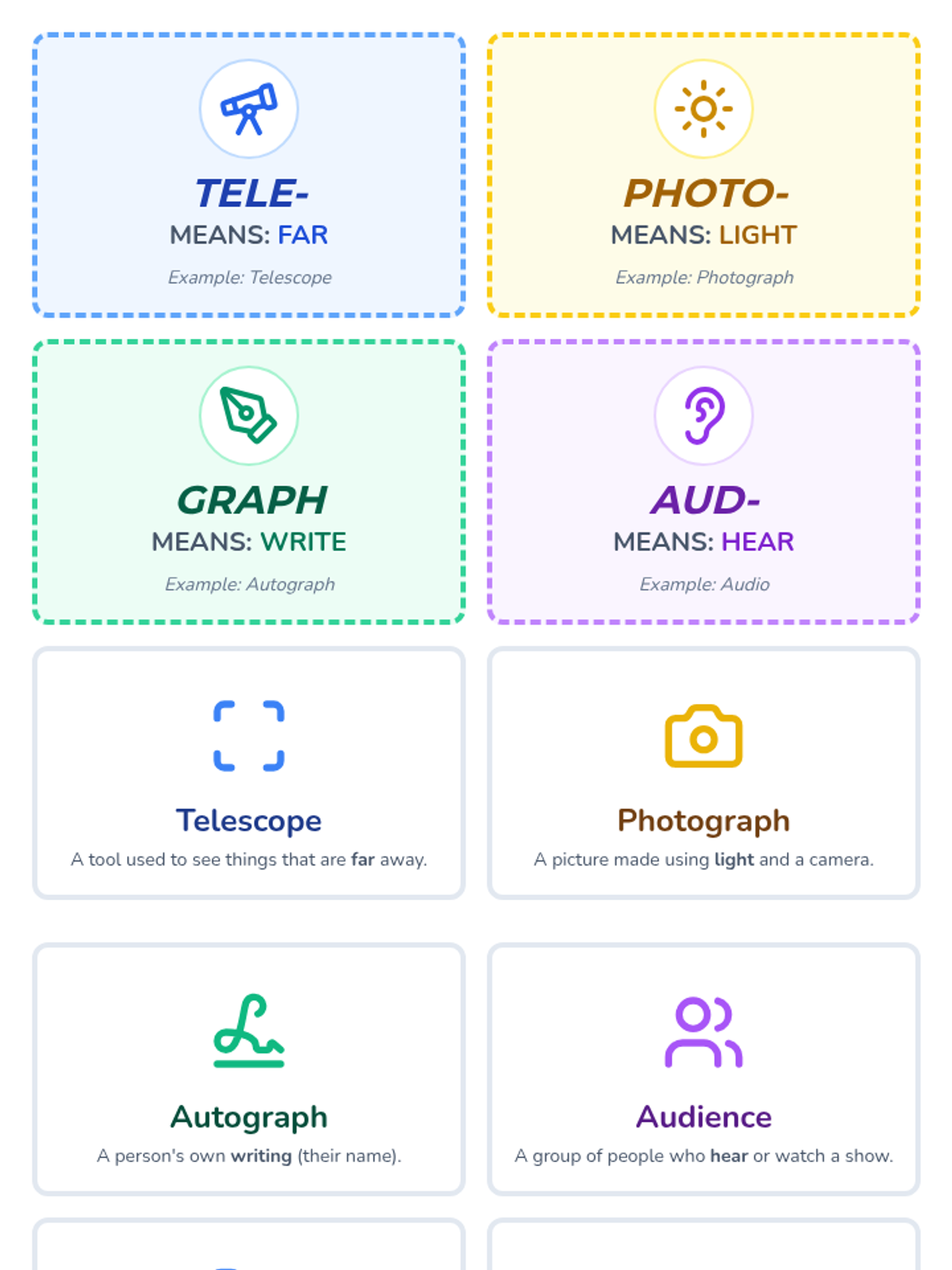
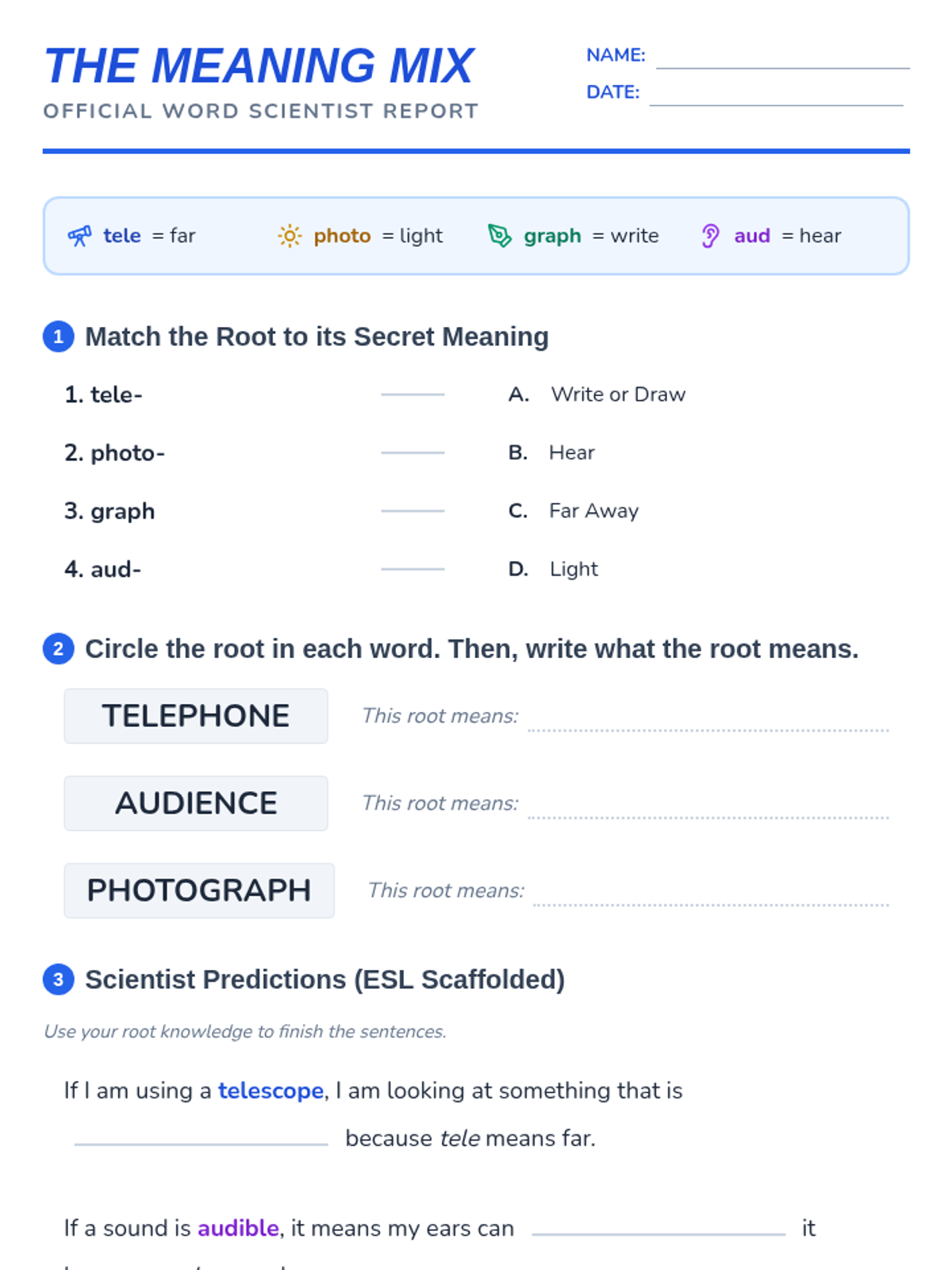
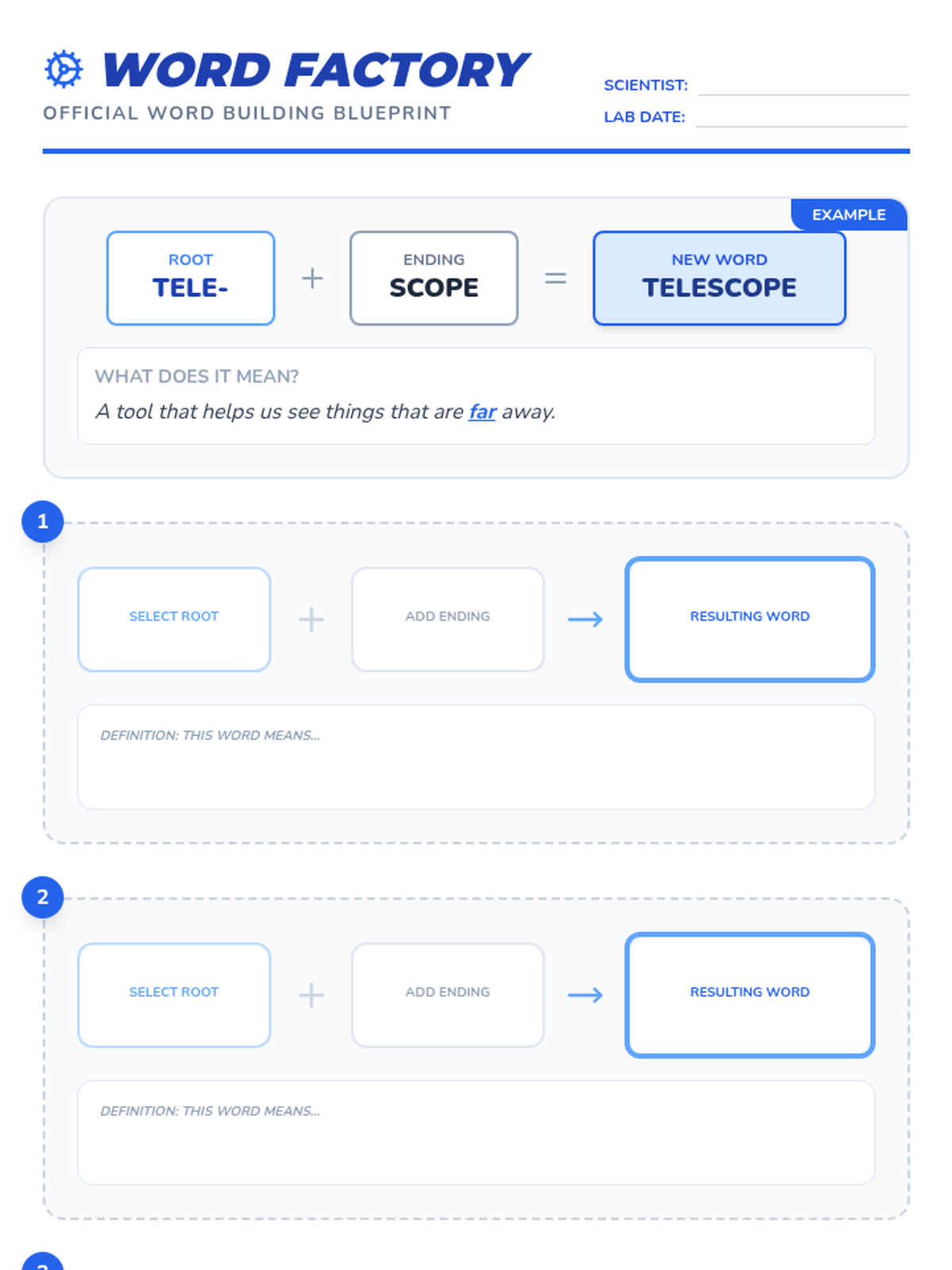
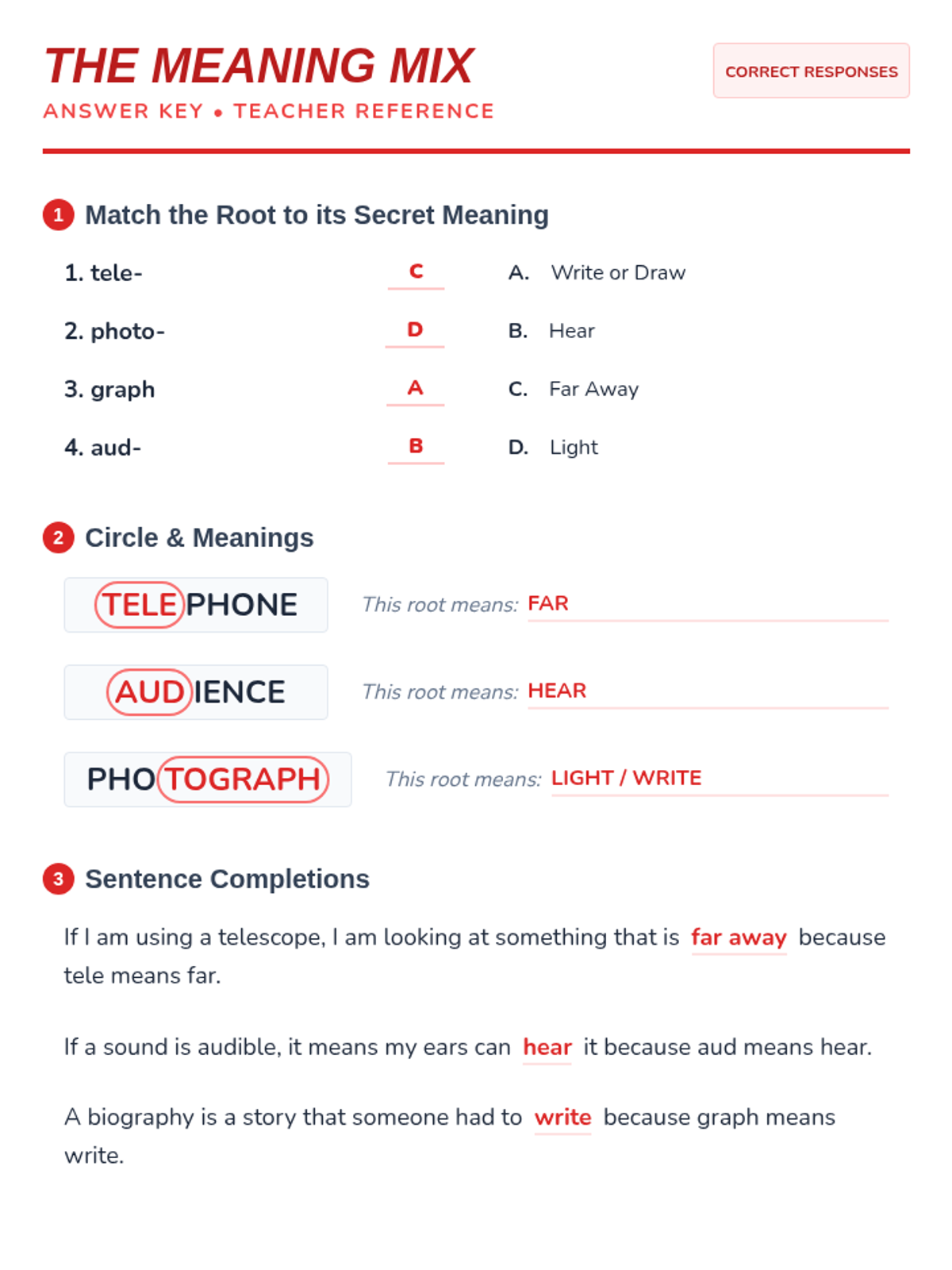
A 45-minute ESL lesson for 4th graders to decode and build words using the roots tele, photo, graph, and aud. students will act as 'Word Scientists' in a laboratory-themed environment.
A comprehensive test prep unit focusing on OSAS Grade 6 Informational Reading targets, including deep dives into central ideas, evidence, structure, and word meanings.
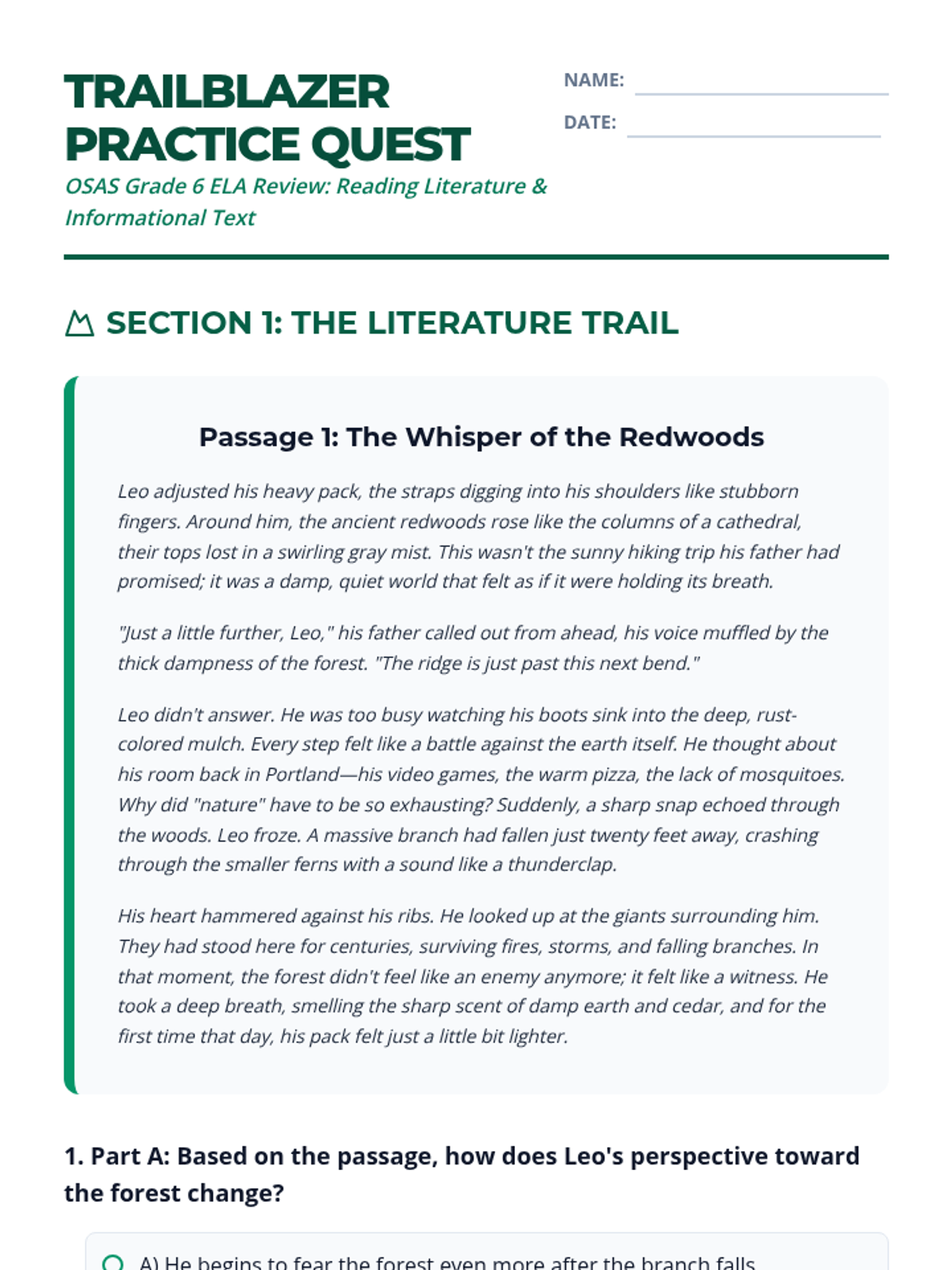
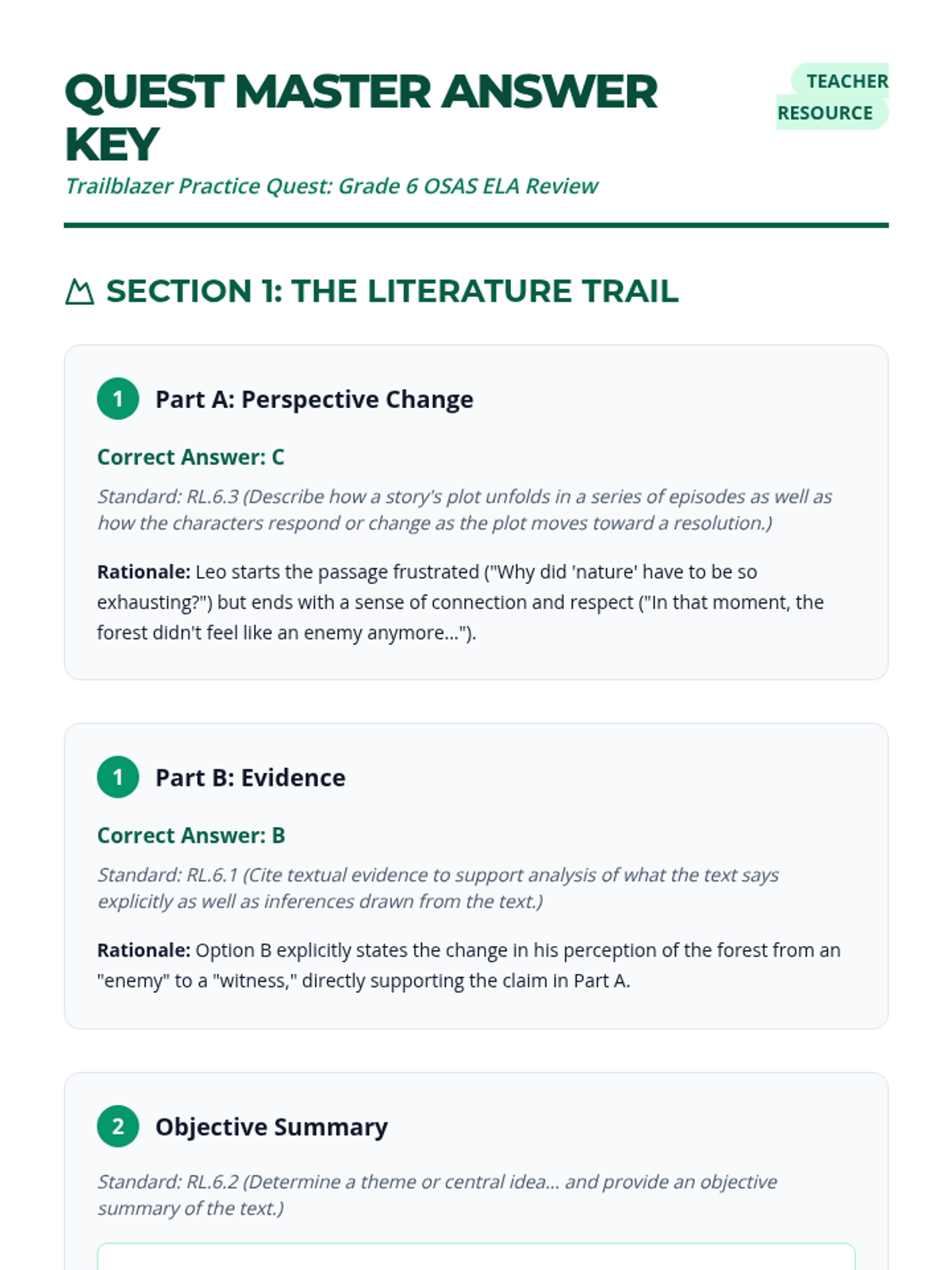
A comprehensive review of Oregon's 6th-grade ELA standards for Reading Literature and Informational Text, designed to prepare students for the OSAS assessment using a Pacific Northwest field guide theme.
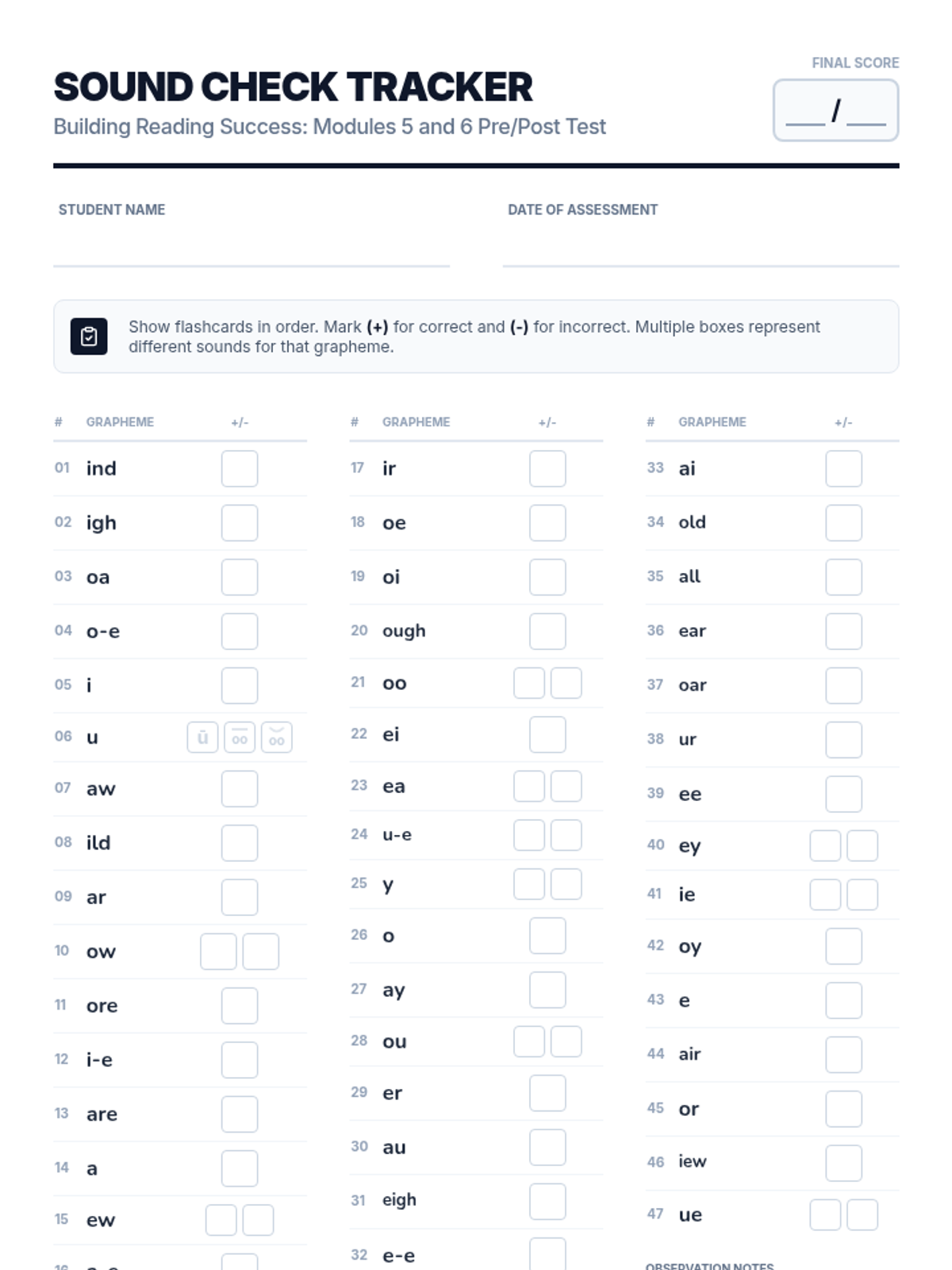
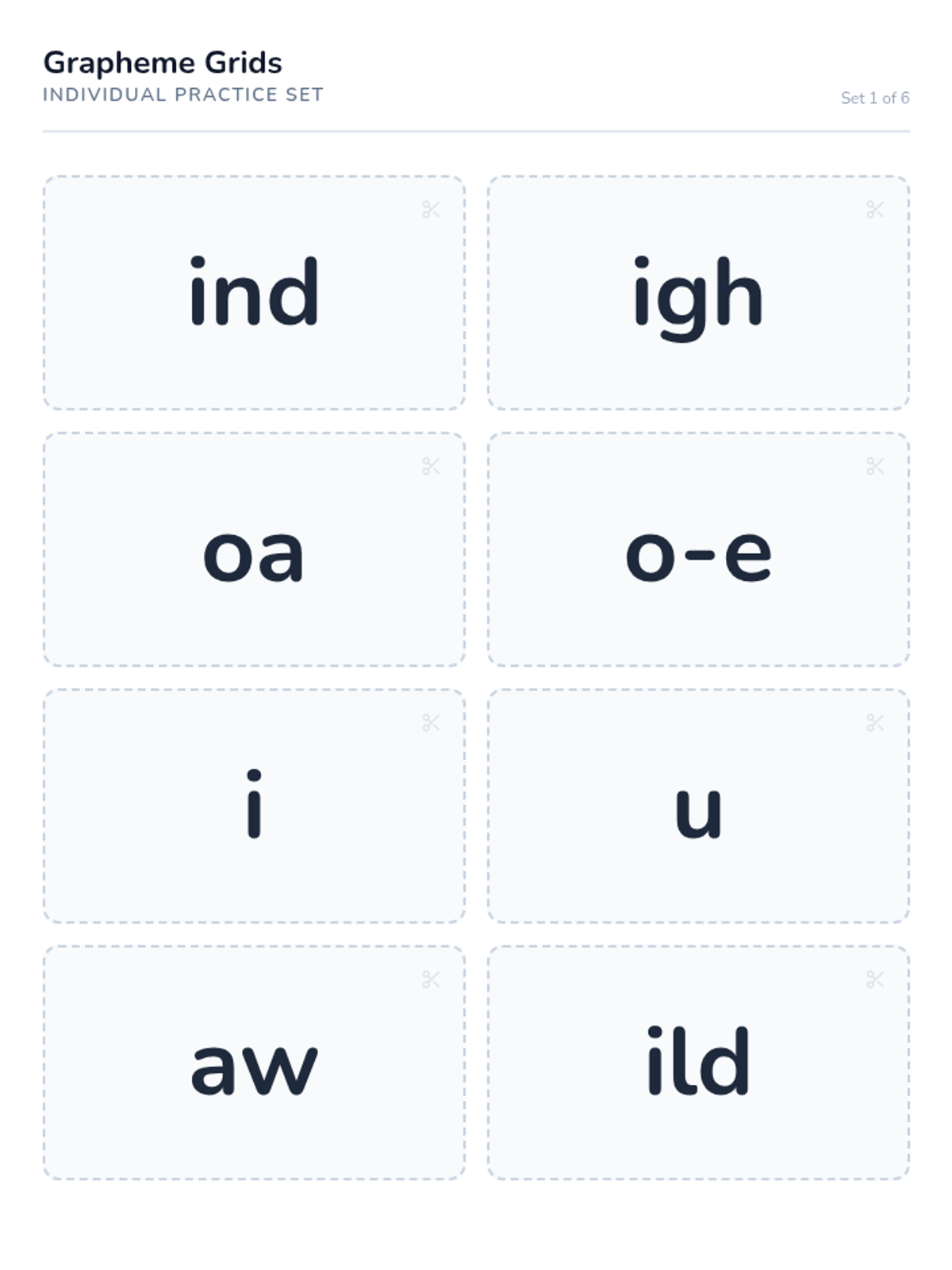
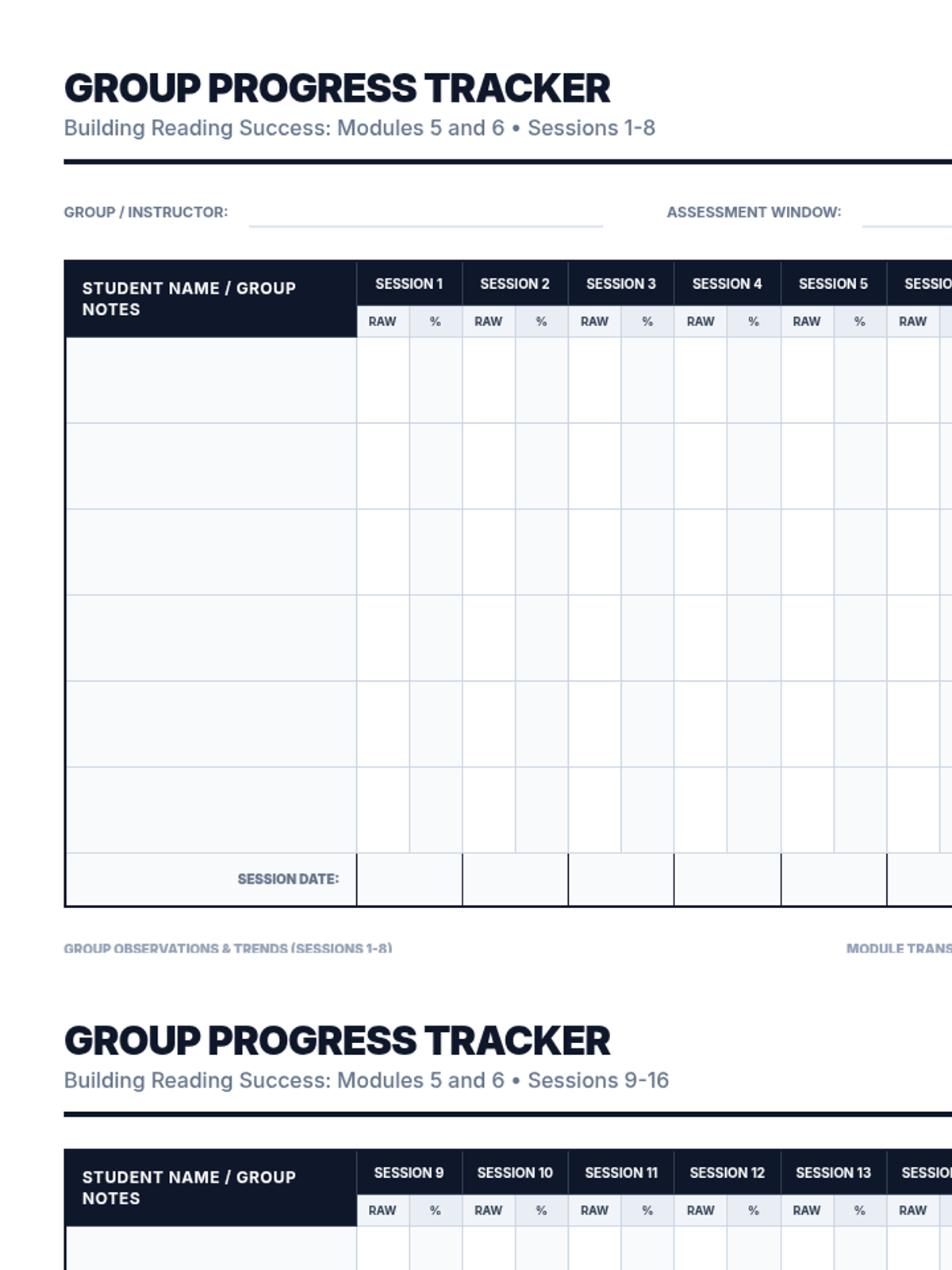
A set of materials for assessing and practicing 47 key graphemes, including high-visibility flashcards and a comprehensive teacher tracking sheet.
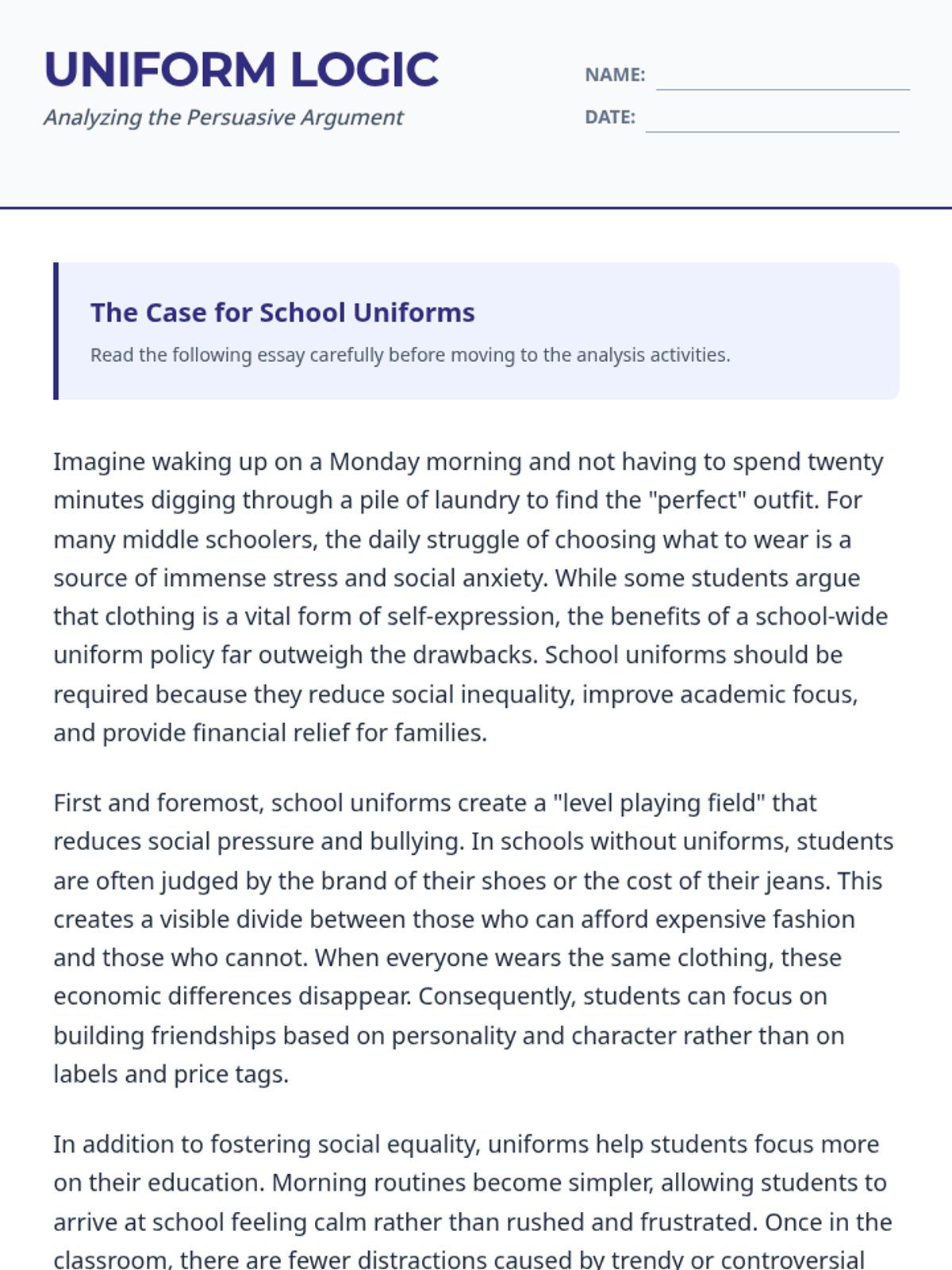
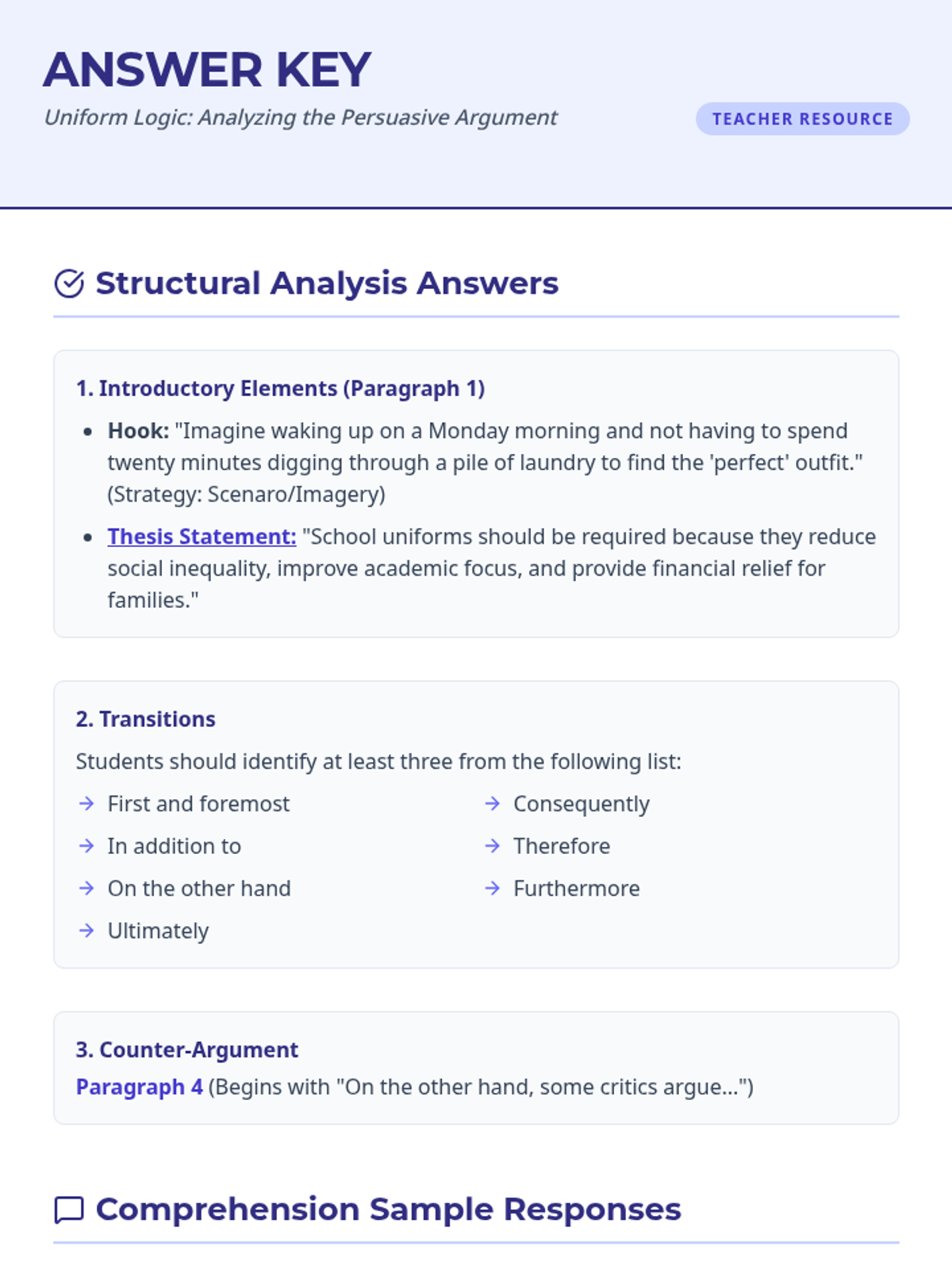
A lesson focused on analyzing the structure and content of a persuasive essay regarding school uniforms, helping students identify key argumentative components.
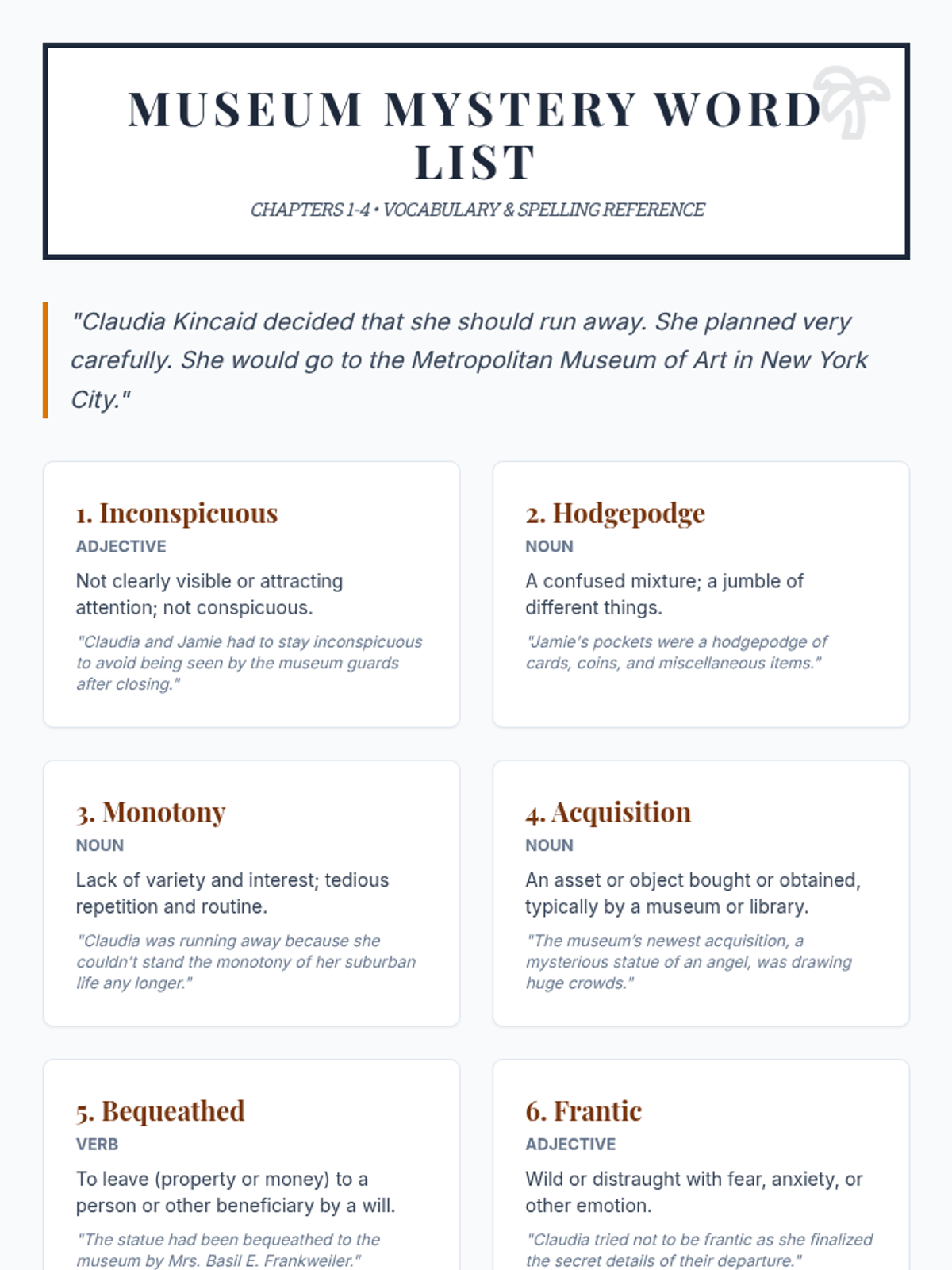
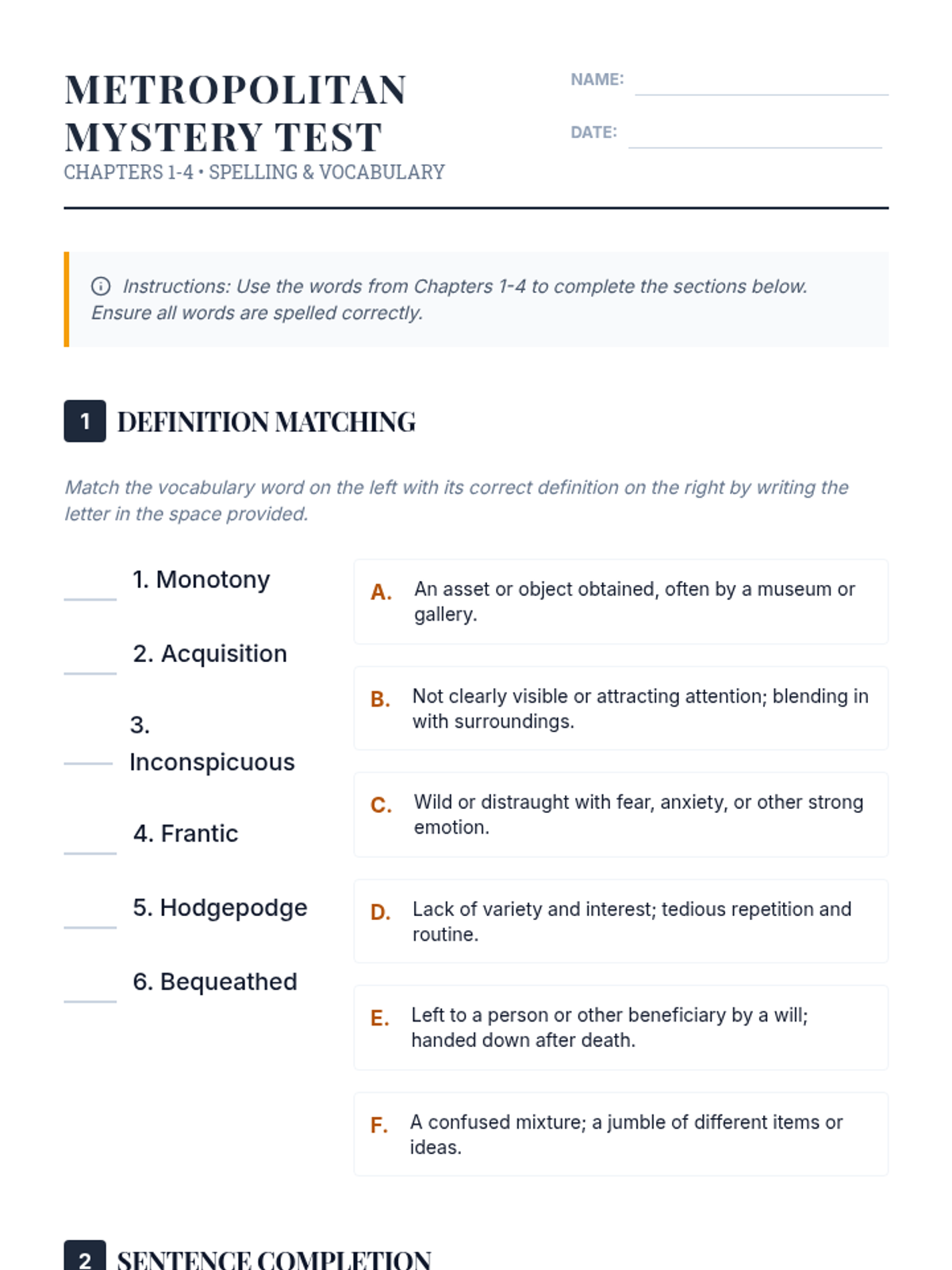
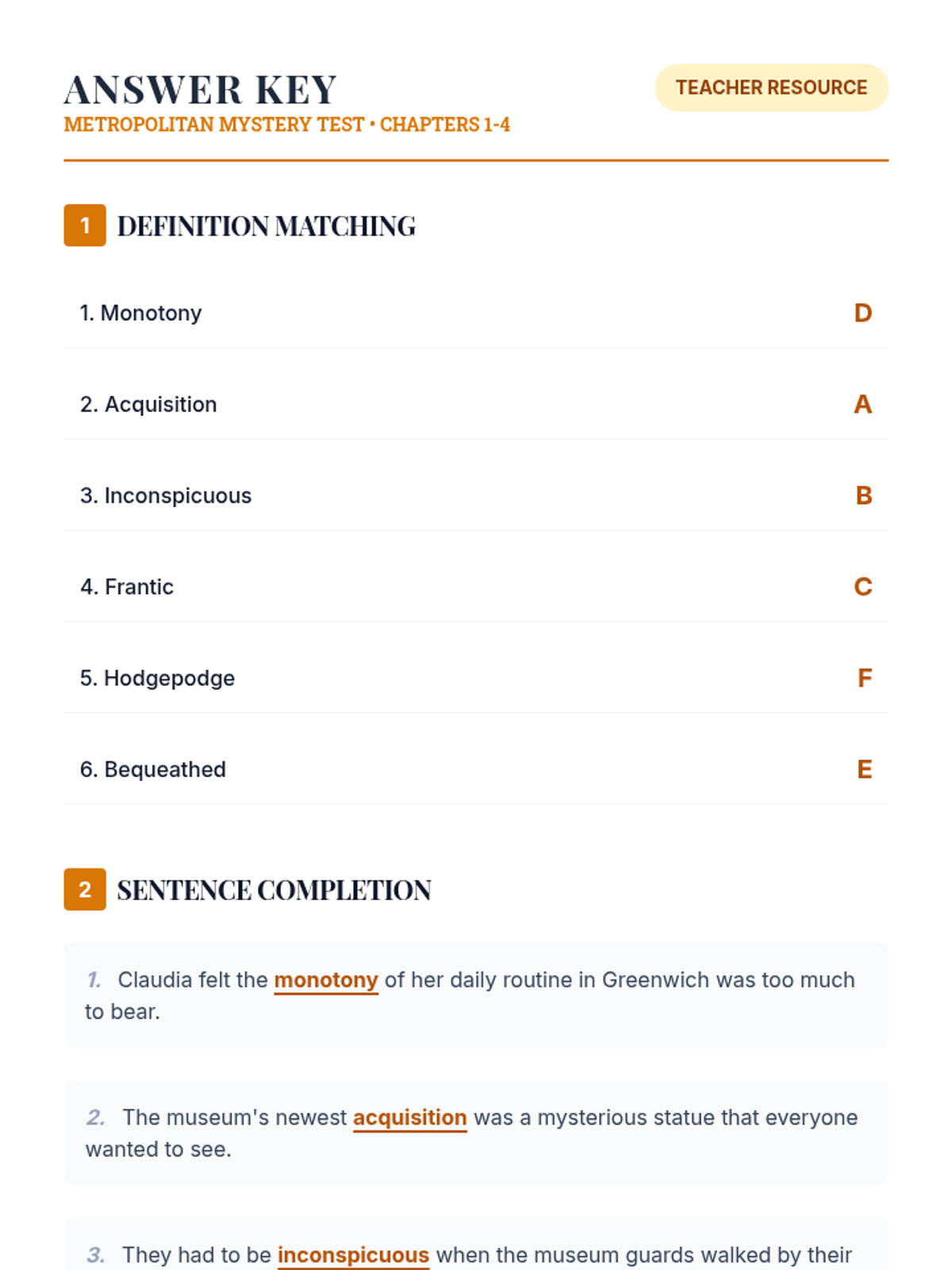
A spelling and vocabulary unit based on Chapters 1-4 of 'From the Mixed-Up Files of Mrs. Basil E. Frankweiler', focusing on Claudia and Jamie's secret adventure in the Metropolitan Museum of Art.
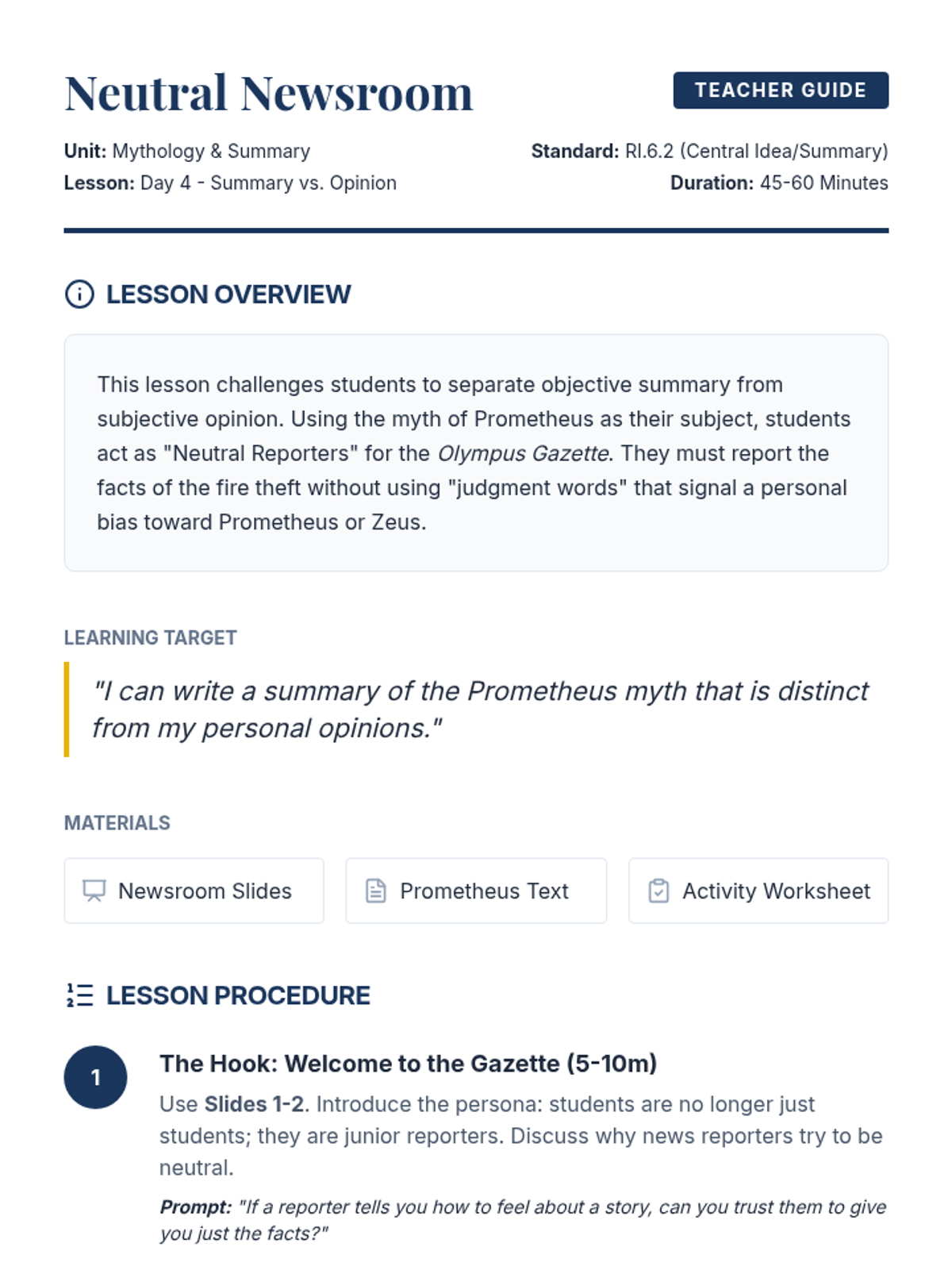
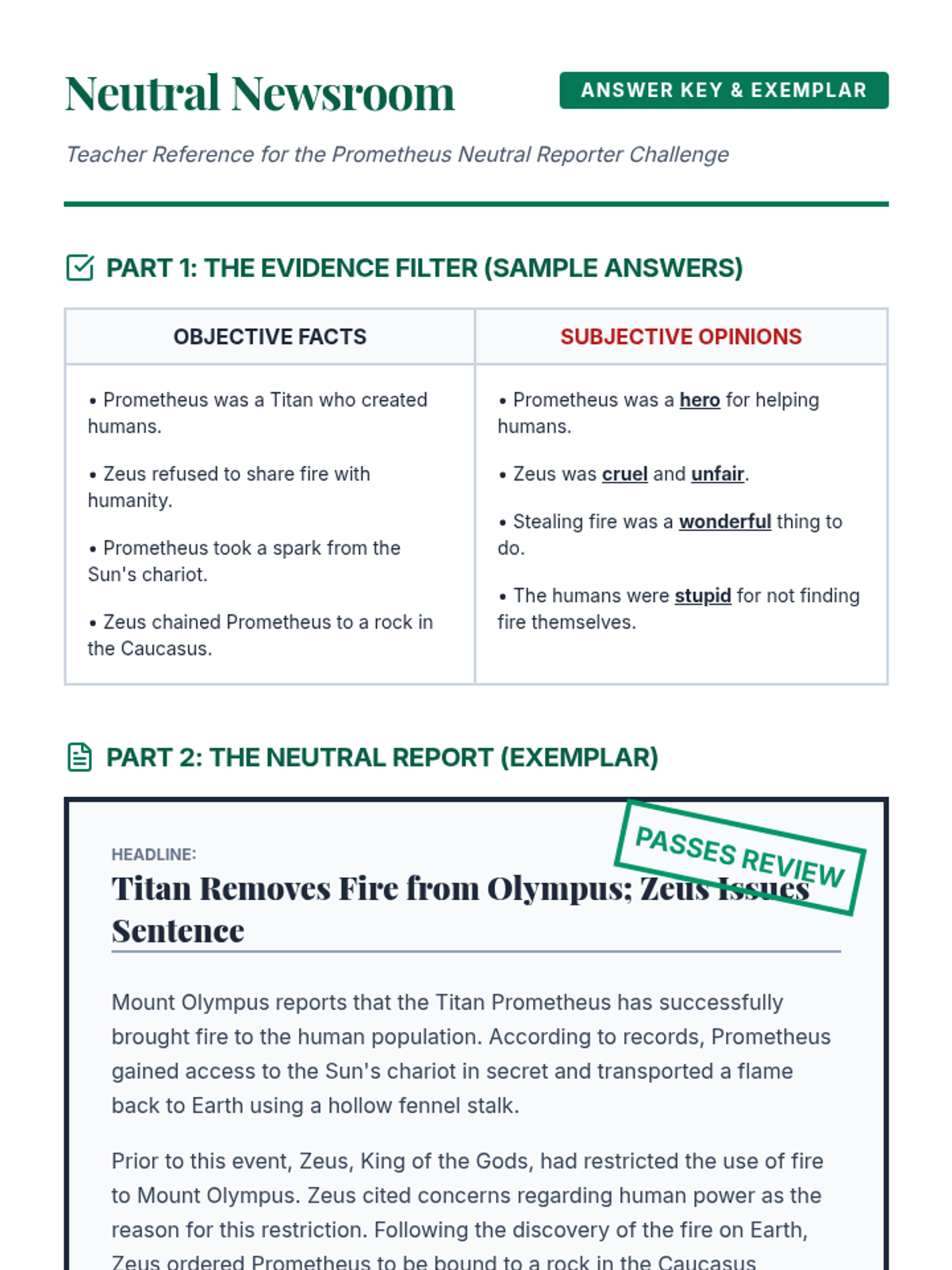
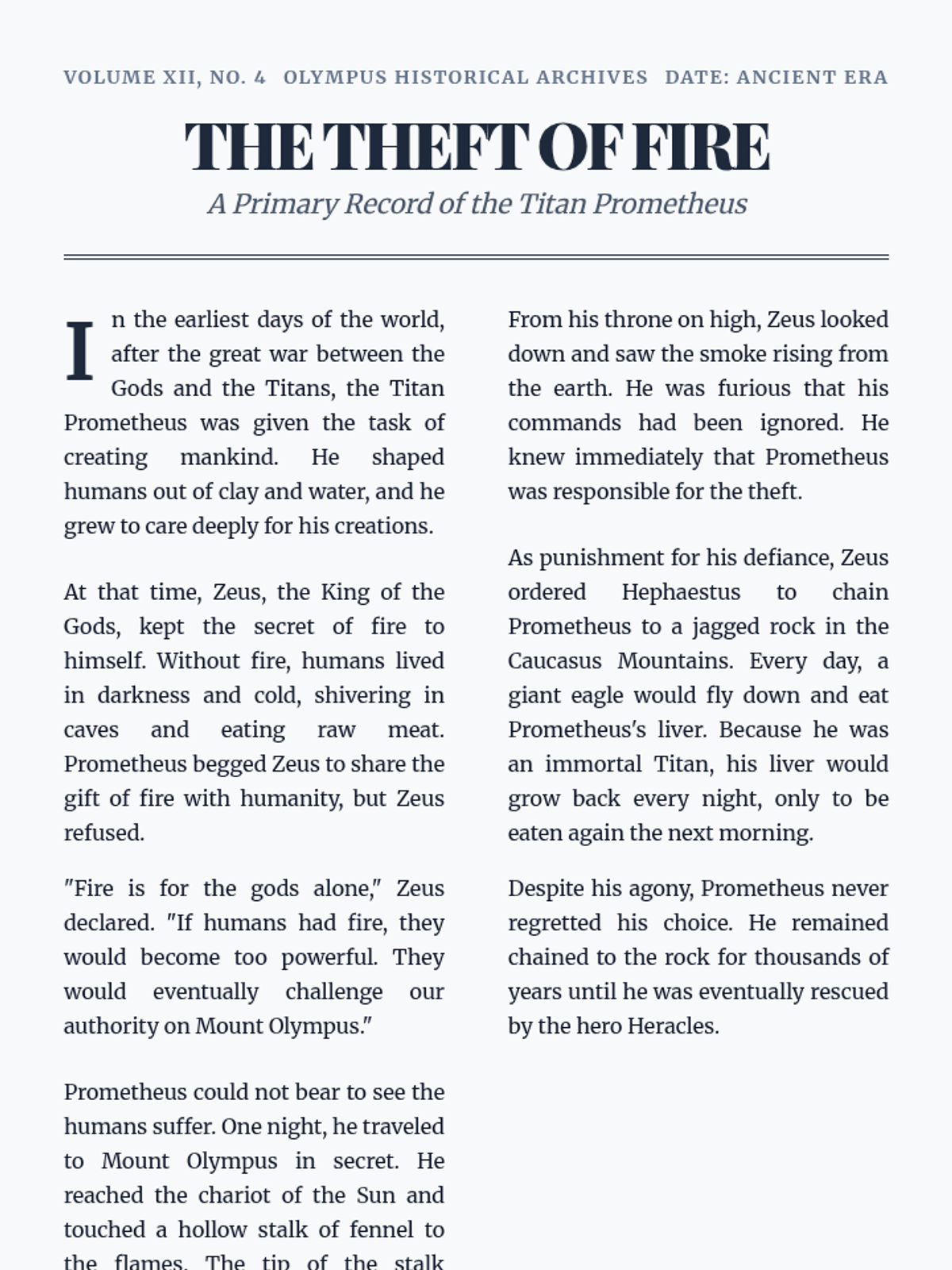
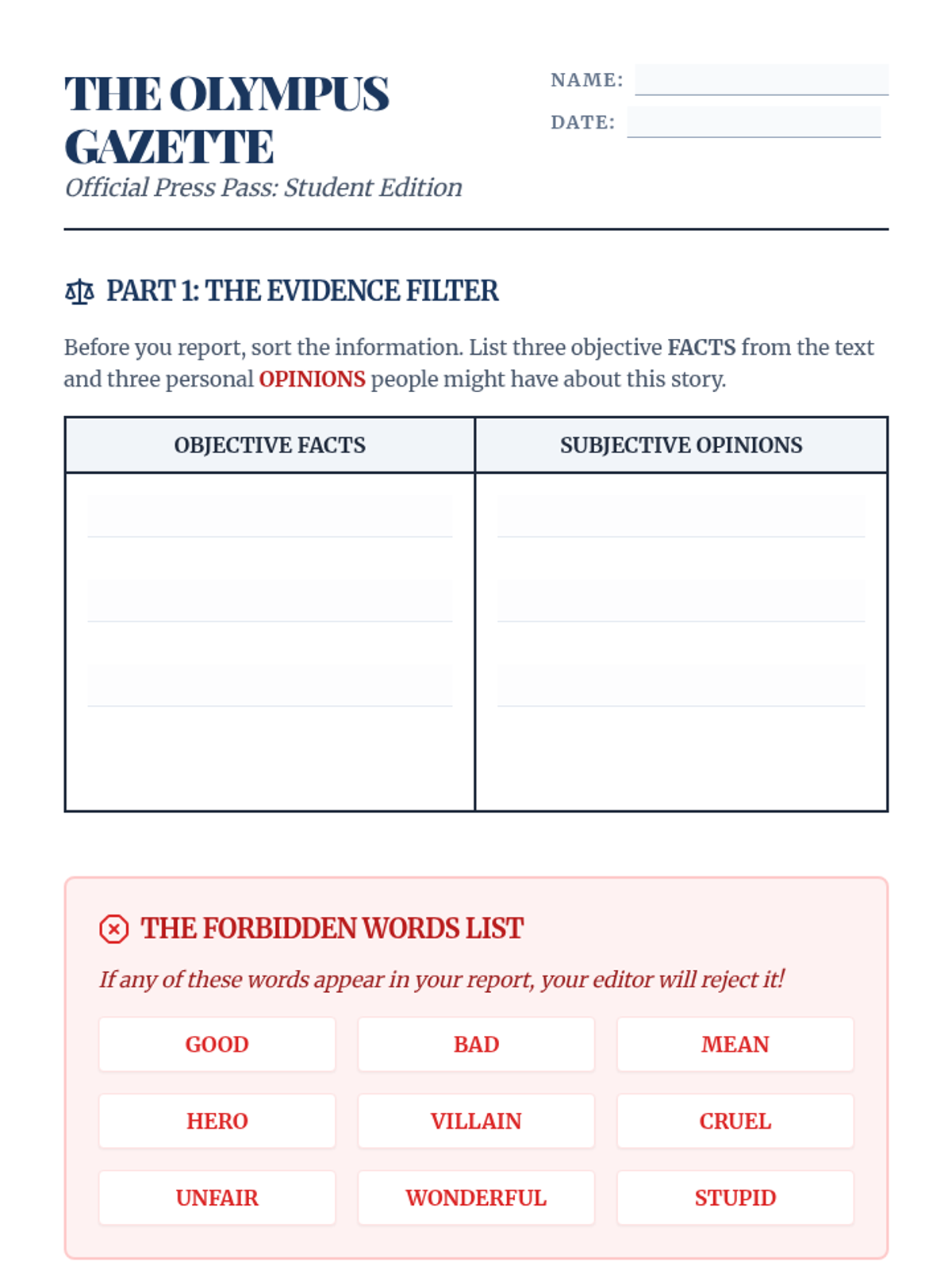
A lesson focused on distinguishing summary from opinion through the lens of the Prometheus myth, featuring a neutral news reporting activity.