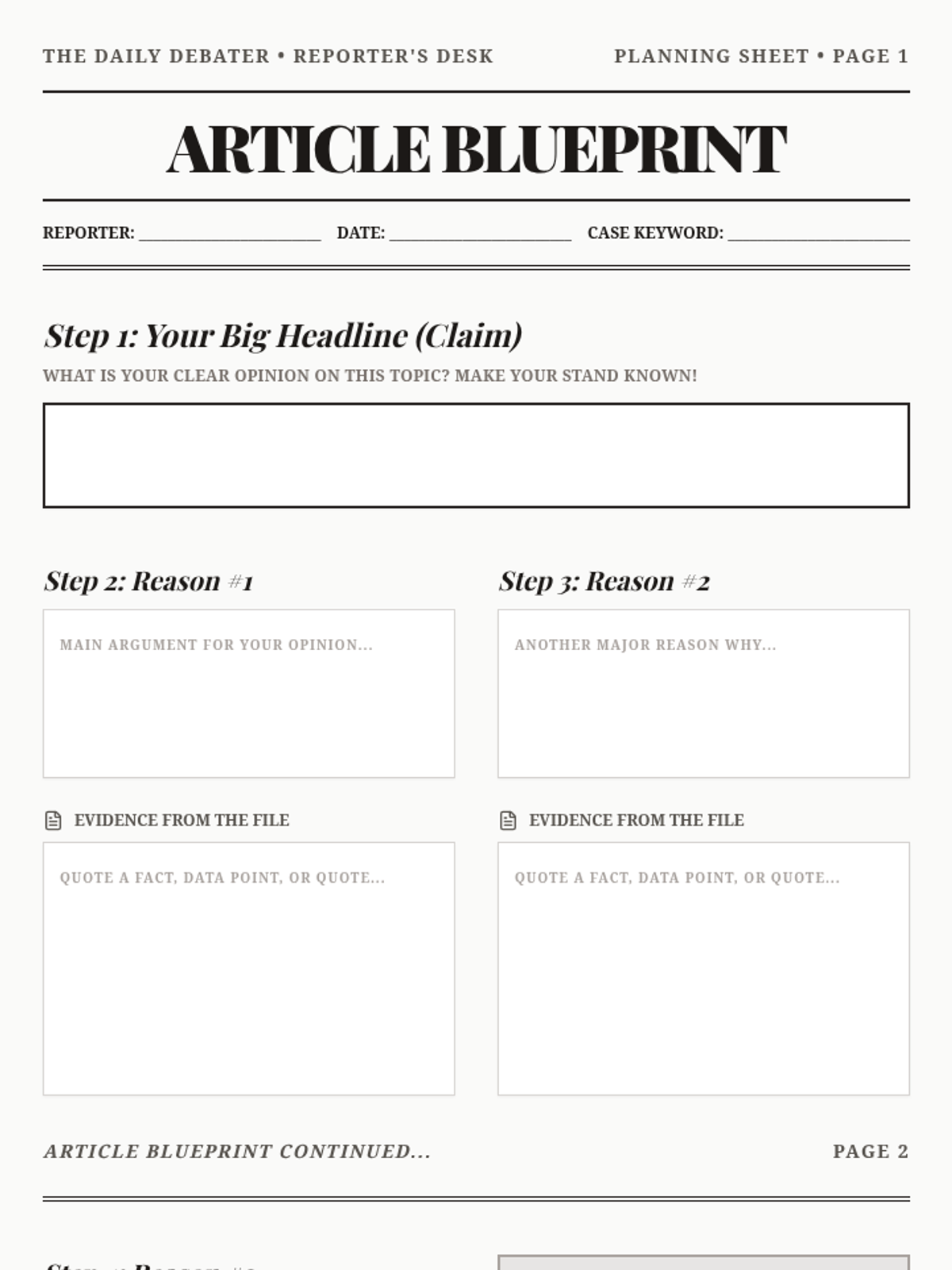
A culminating lesson where 6th-grade students showcase their journalism portfolios, focusing on professional public speaking and peer feedback in a newsroom-style environment.
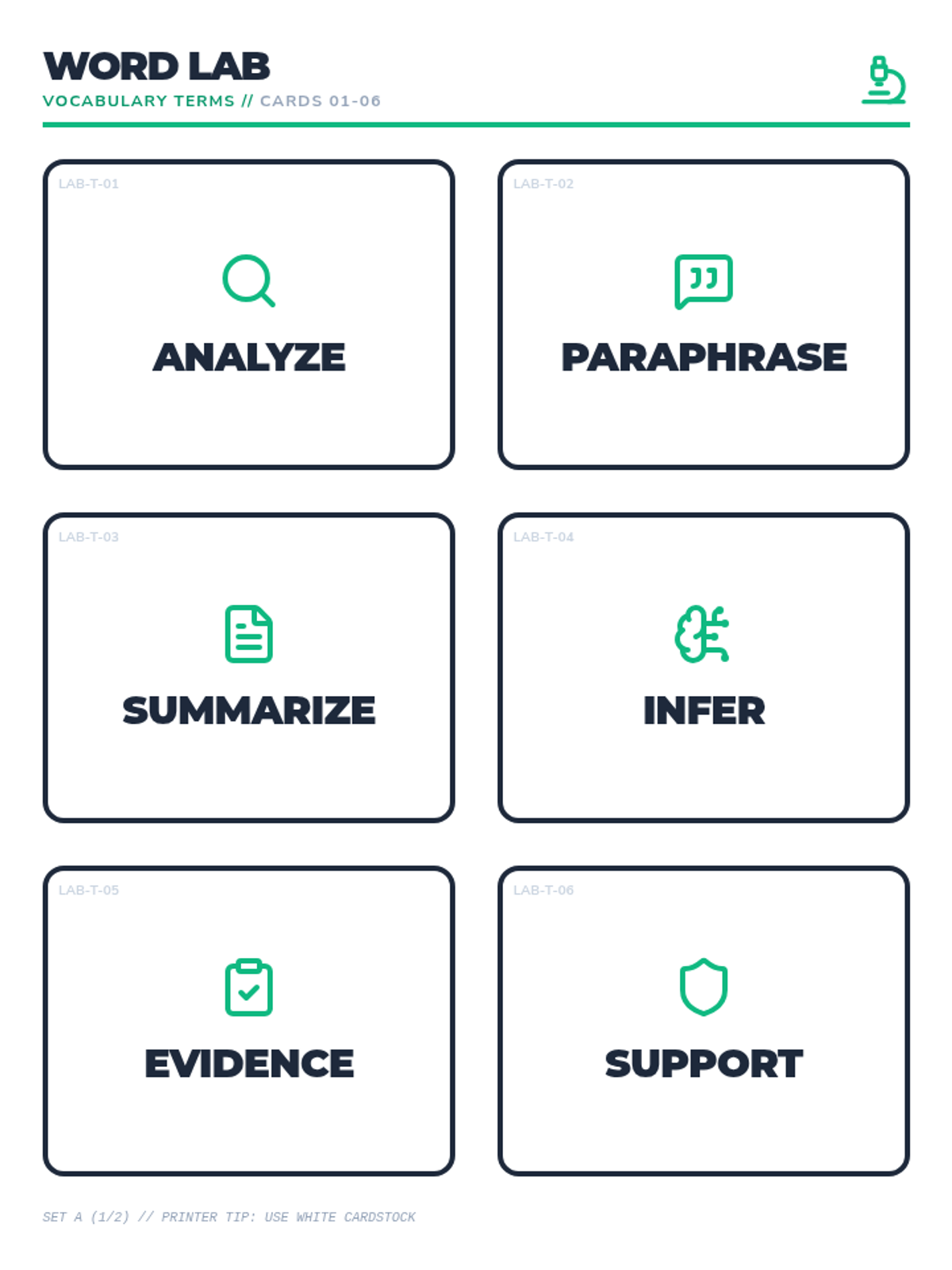
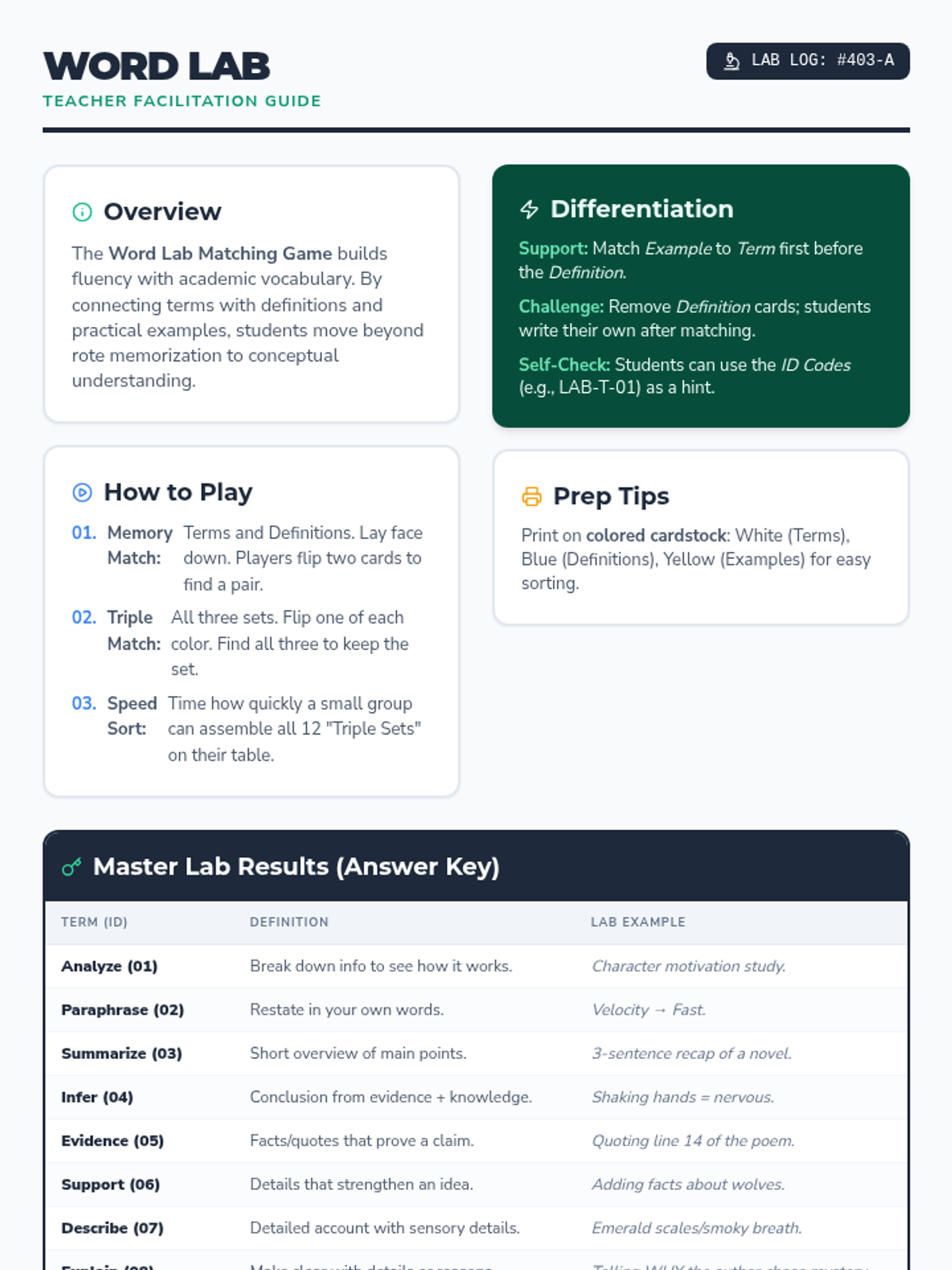
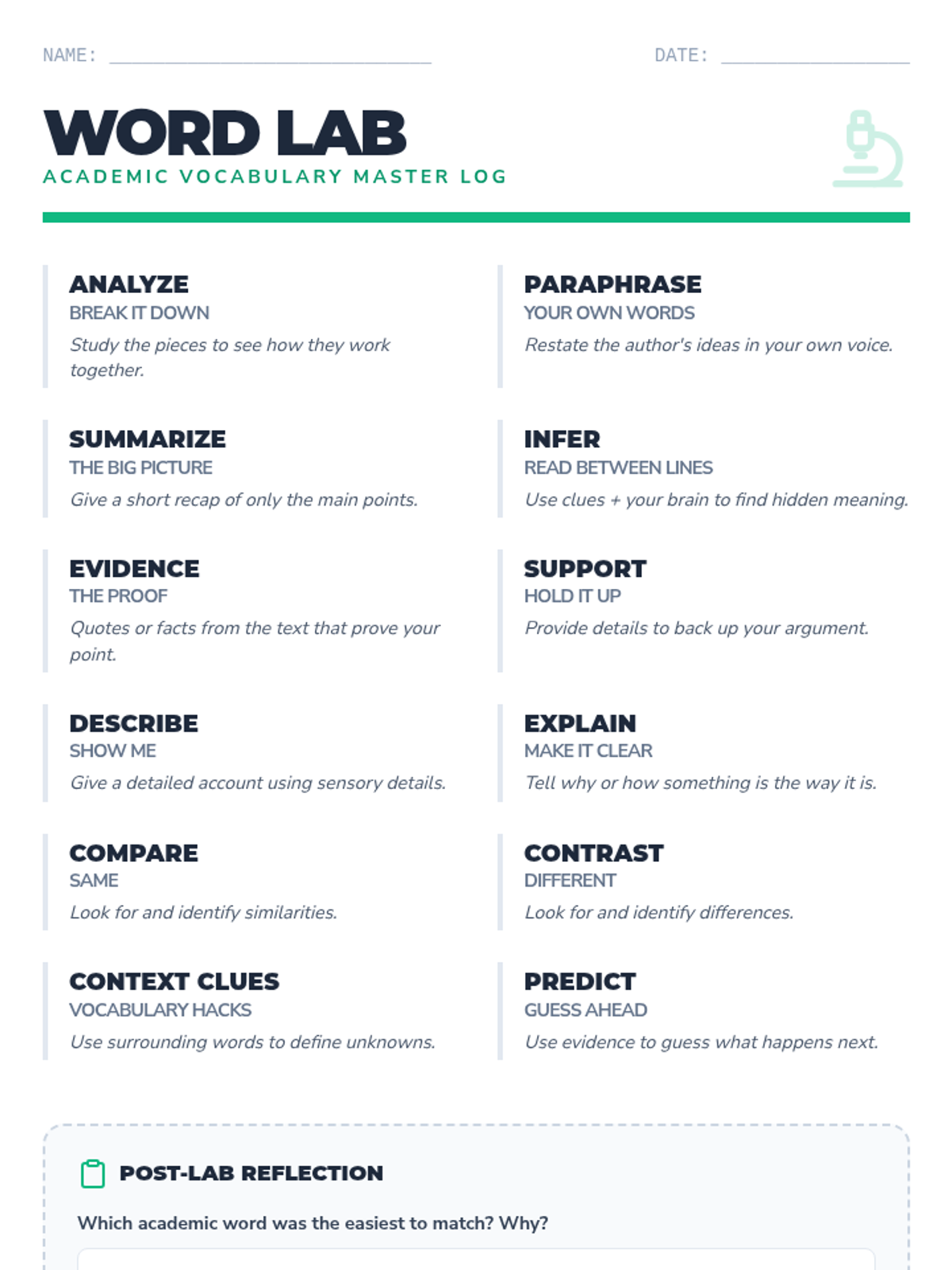
A lesson focused on mastering academic vocabulary used in reading comprehension questions. Students will learn to distinguish between common analytical verbs and concepts through a hands-on matching game and reference guides.
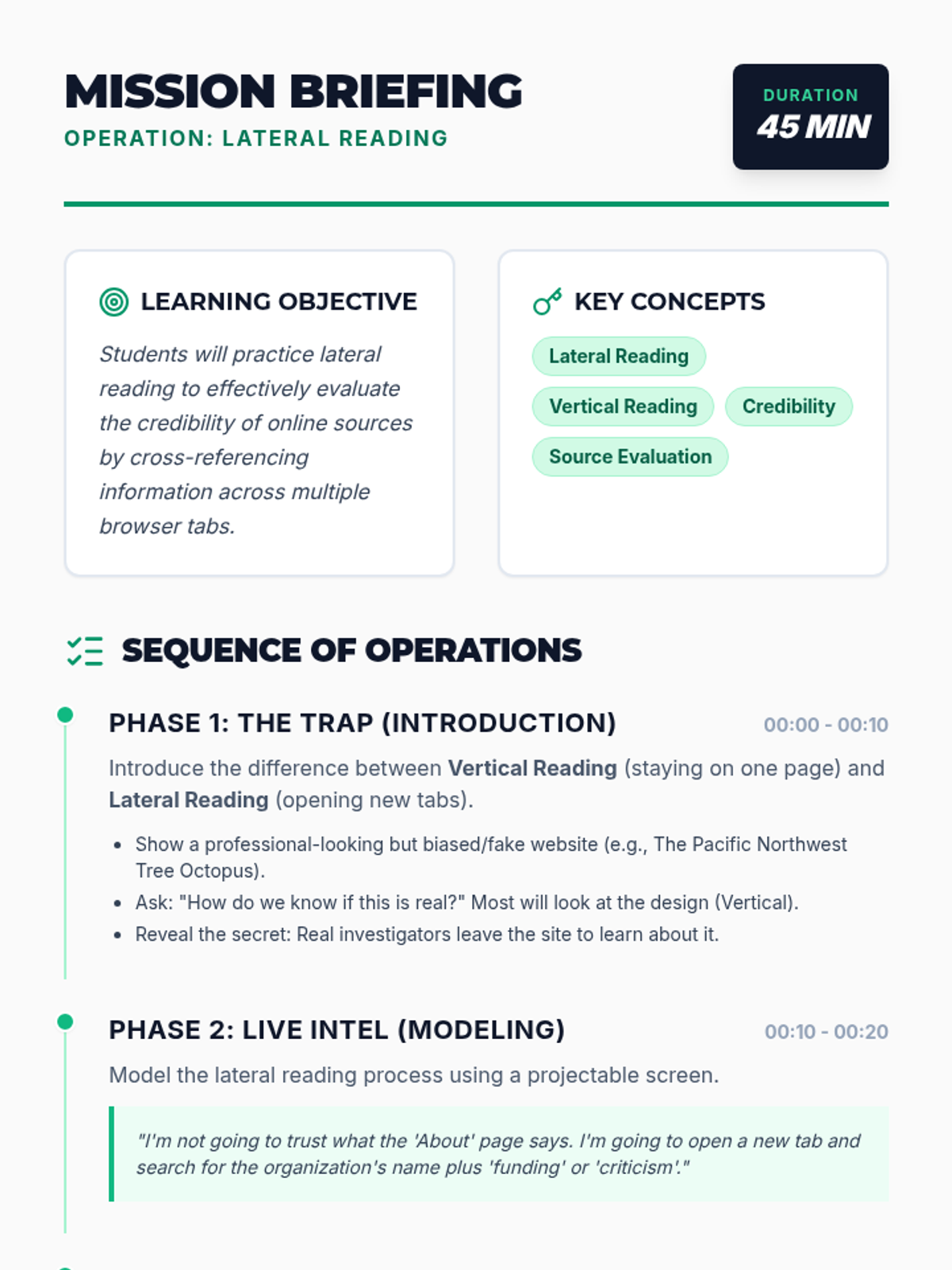
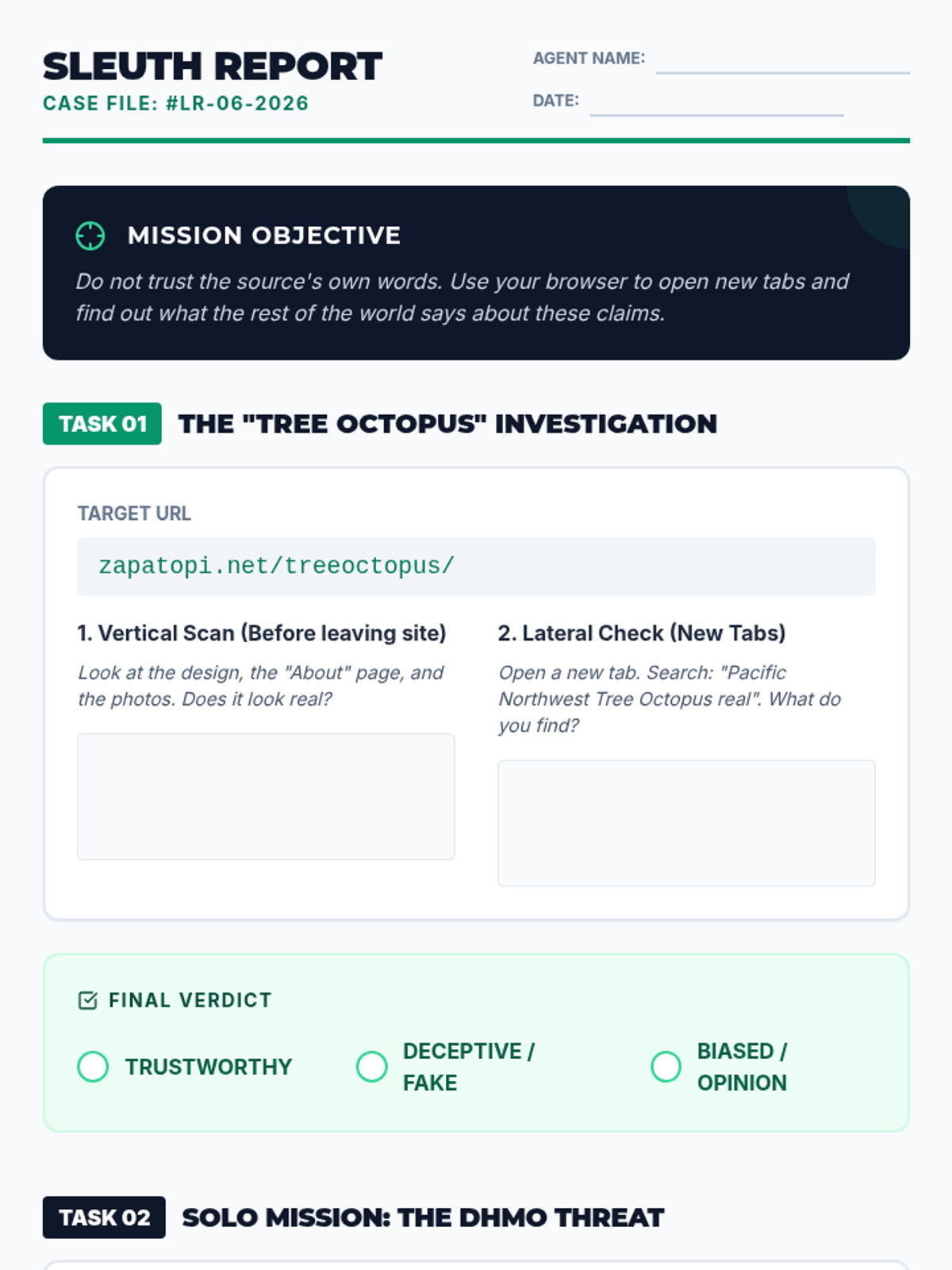
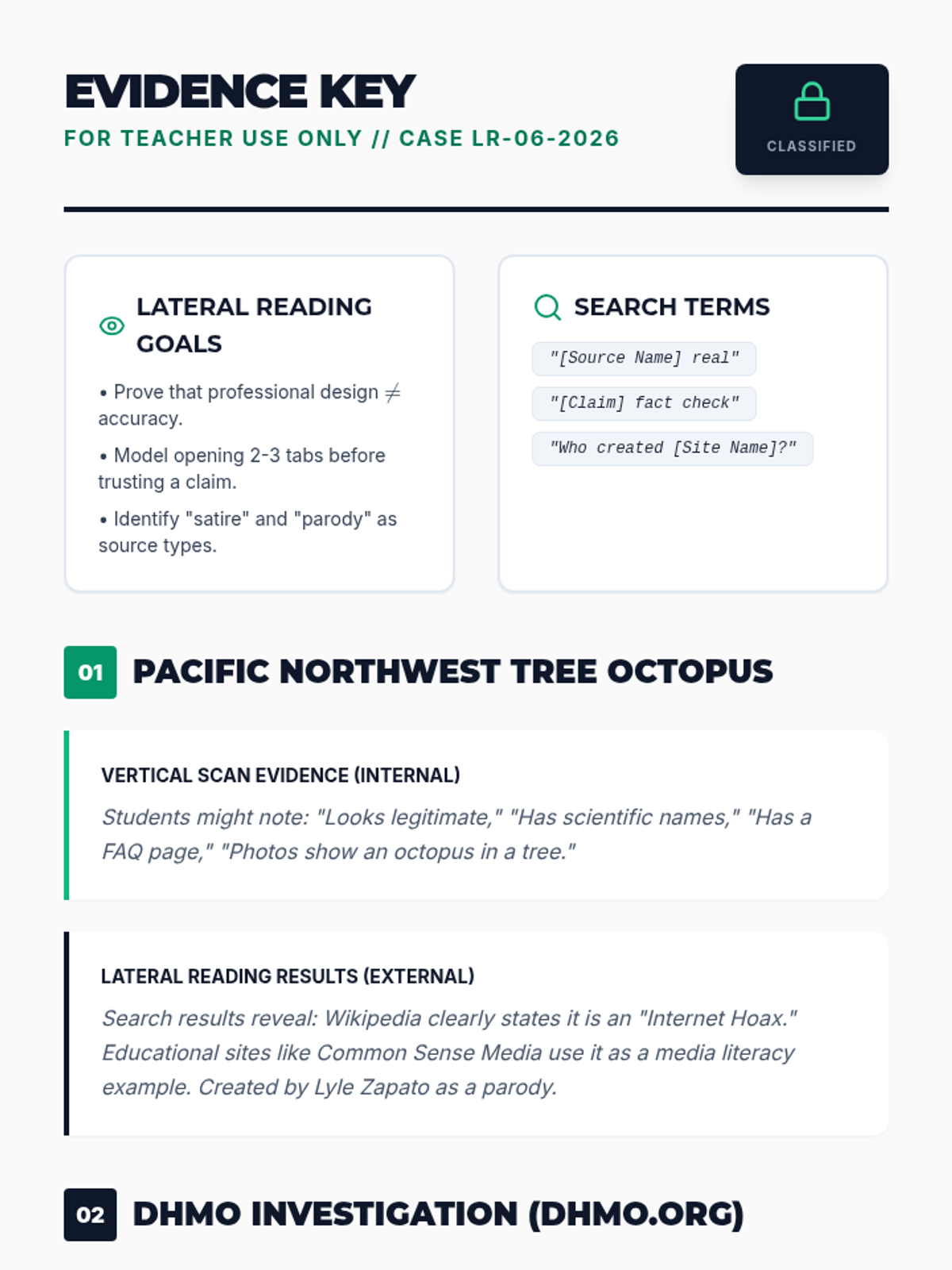
A 45-minute lesson teaching 6th-grade students how to evaluate online credibility using lateral reading techniques, moving from vertical reading habits to investigative cross-referencing.
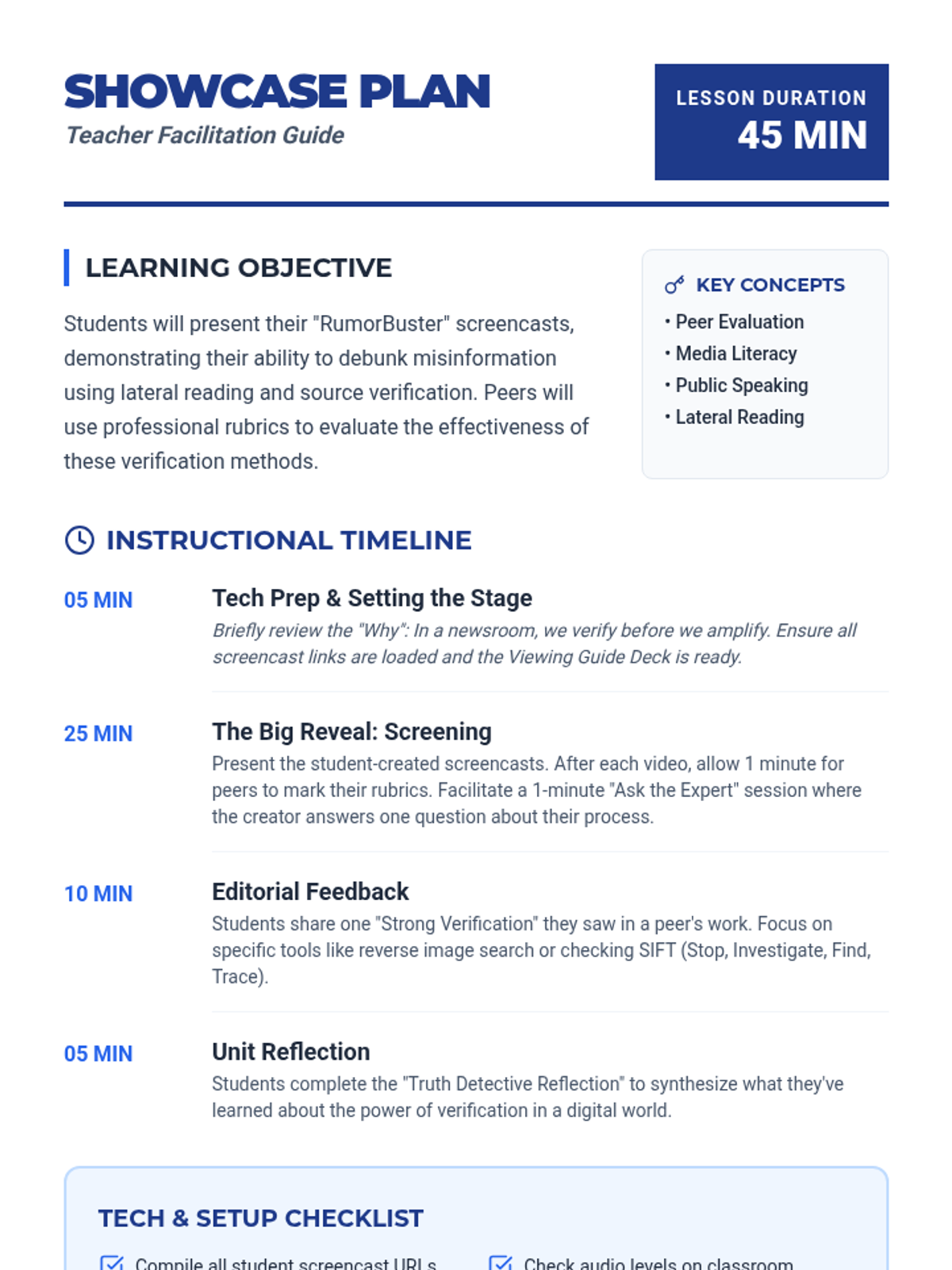
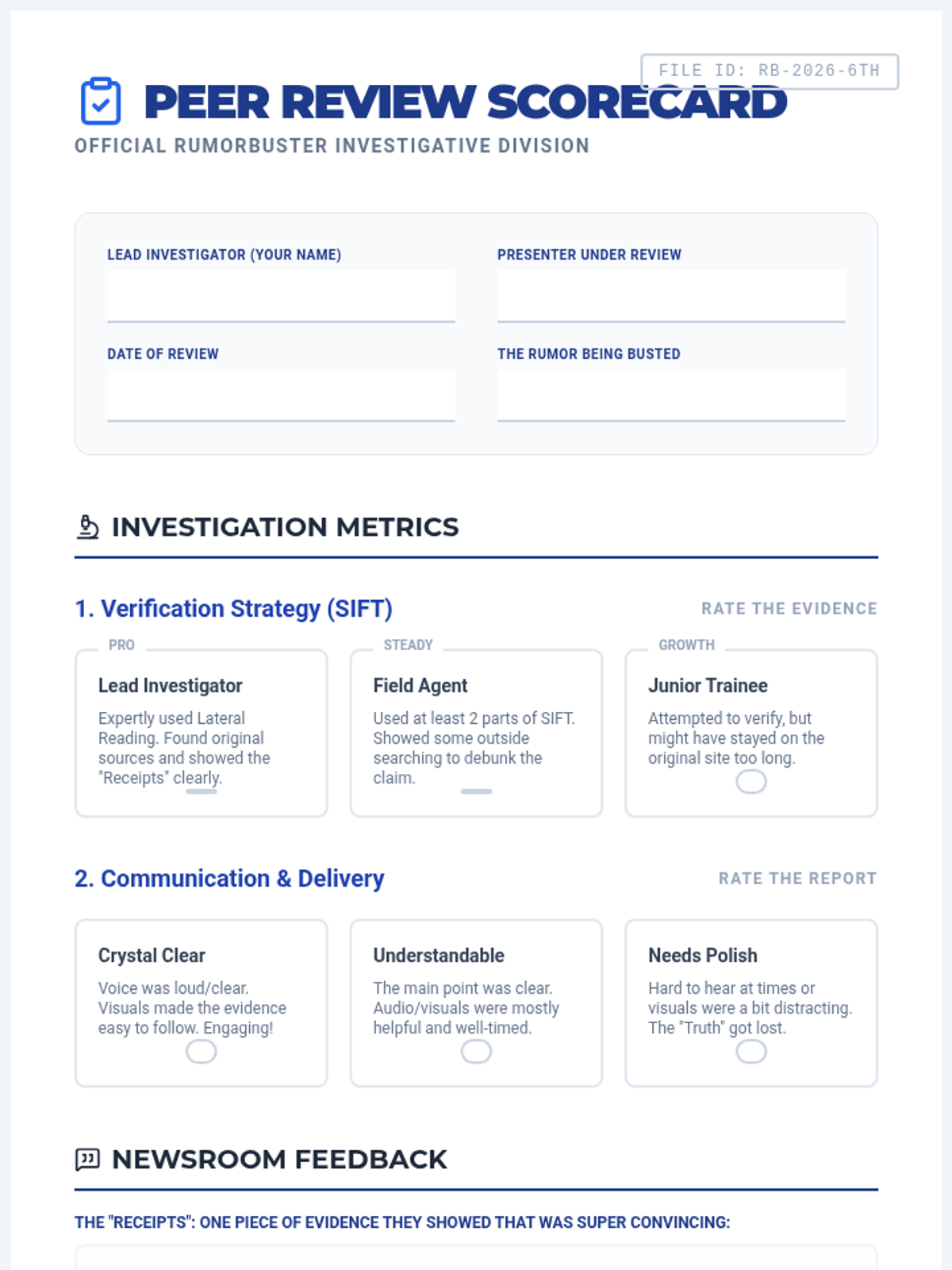
A 45-minute lesson where students showcase their media literacy investigations through screencasts, engage in peer evaluation using a professional rubric, and reflect on their growth as digital fact-checkers.
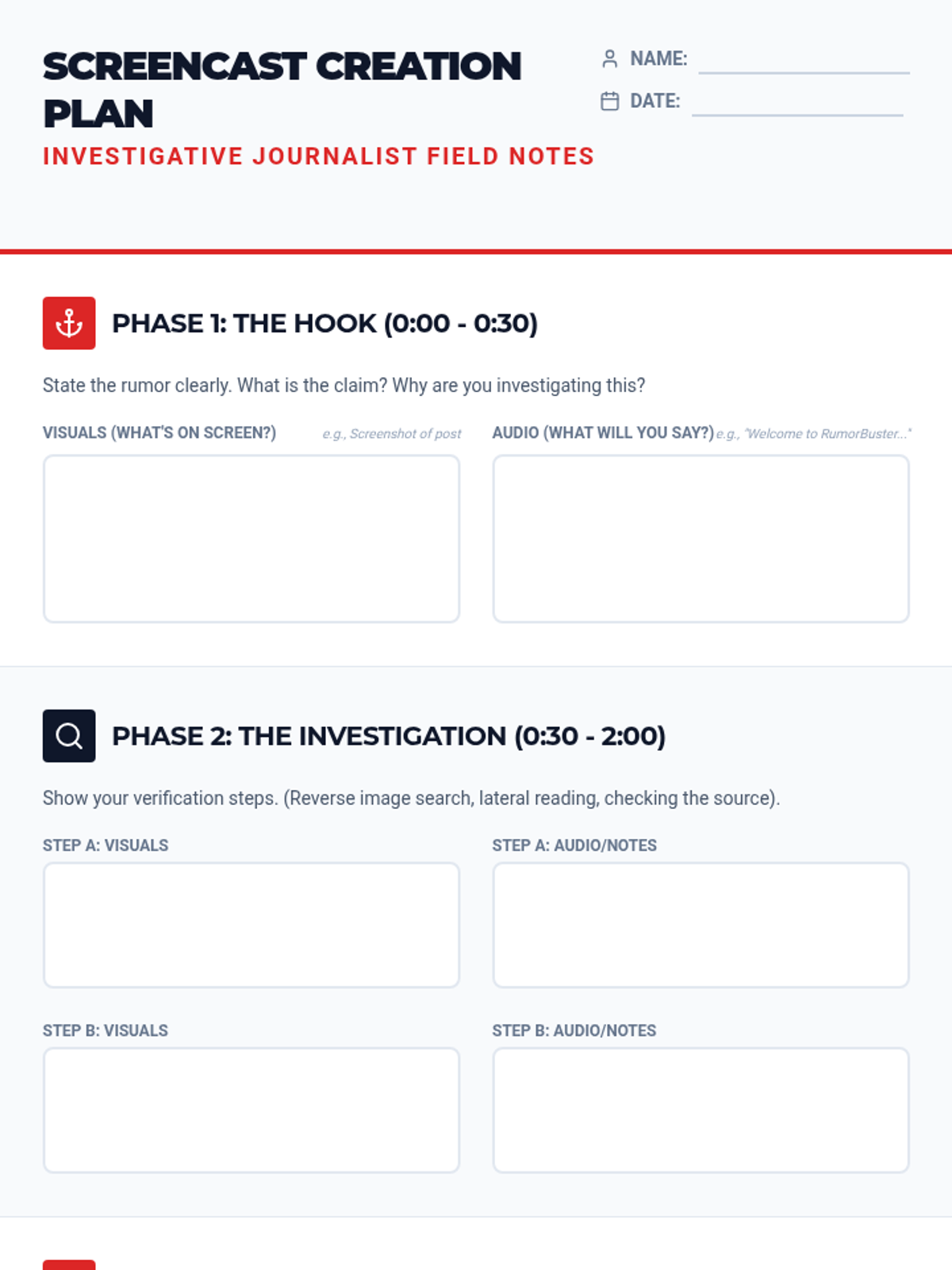
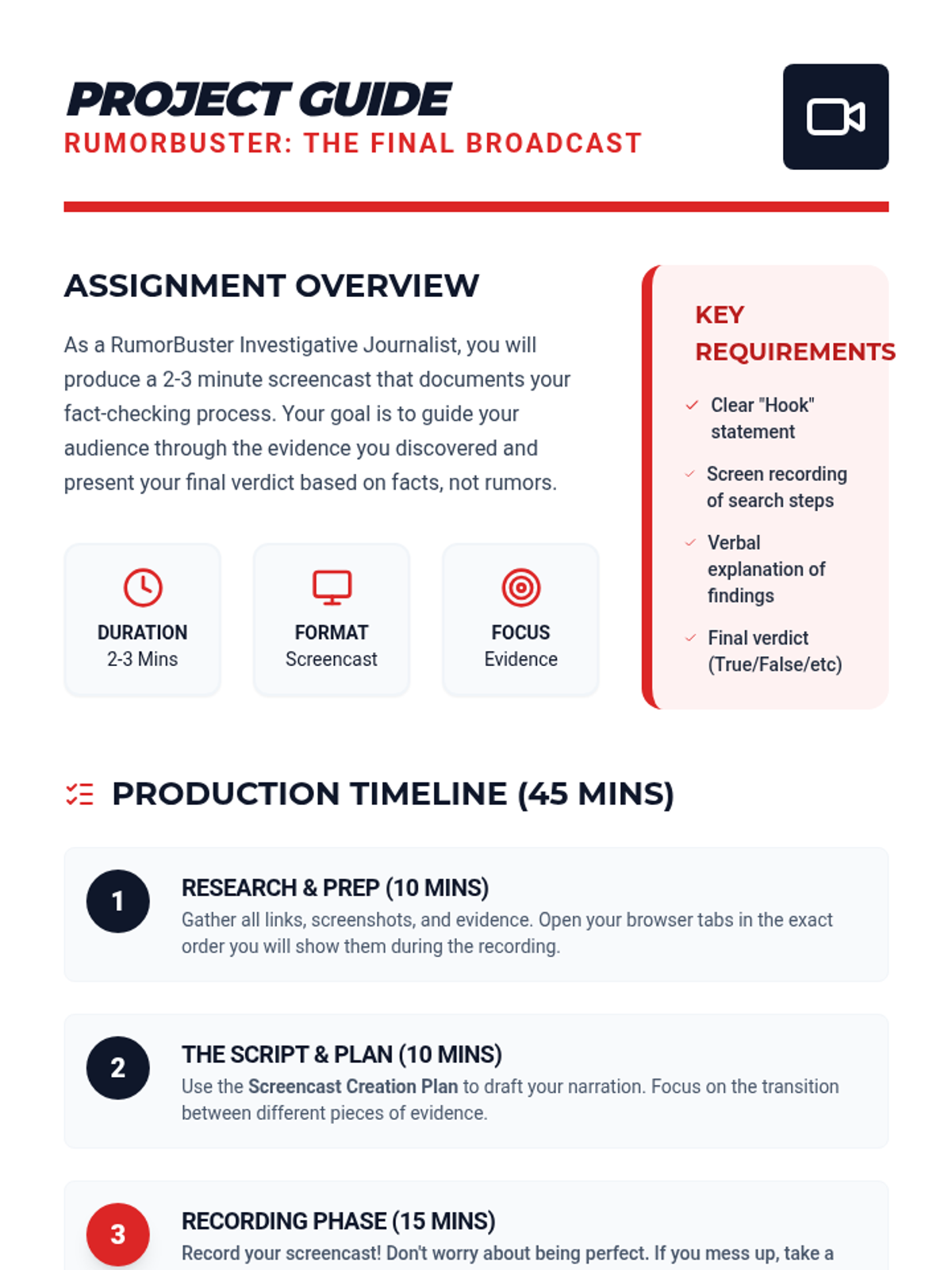
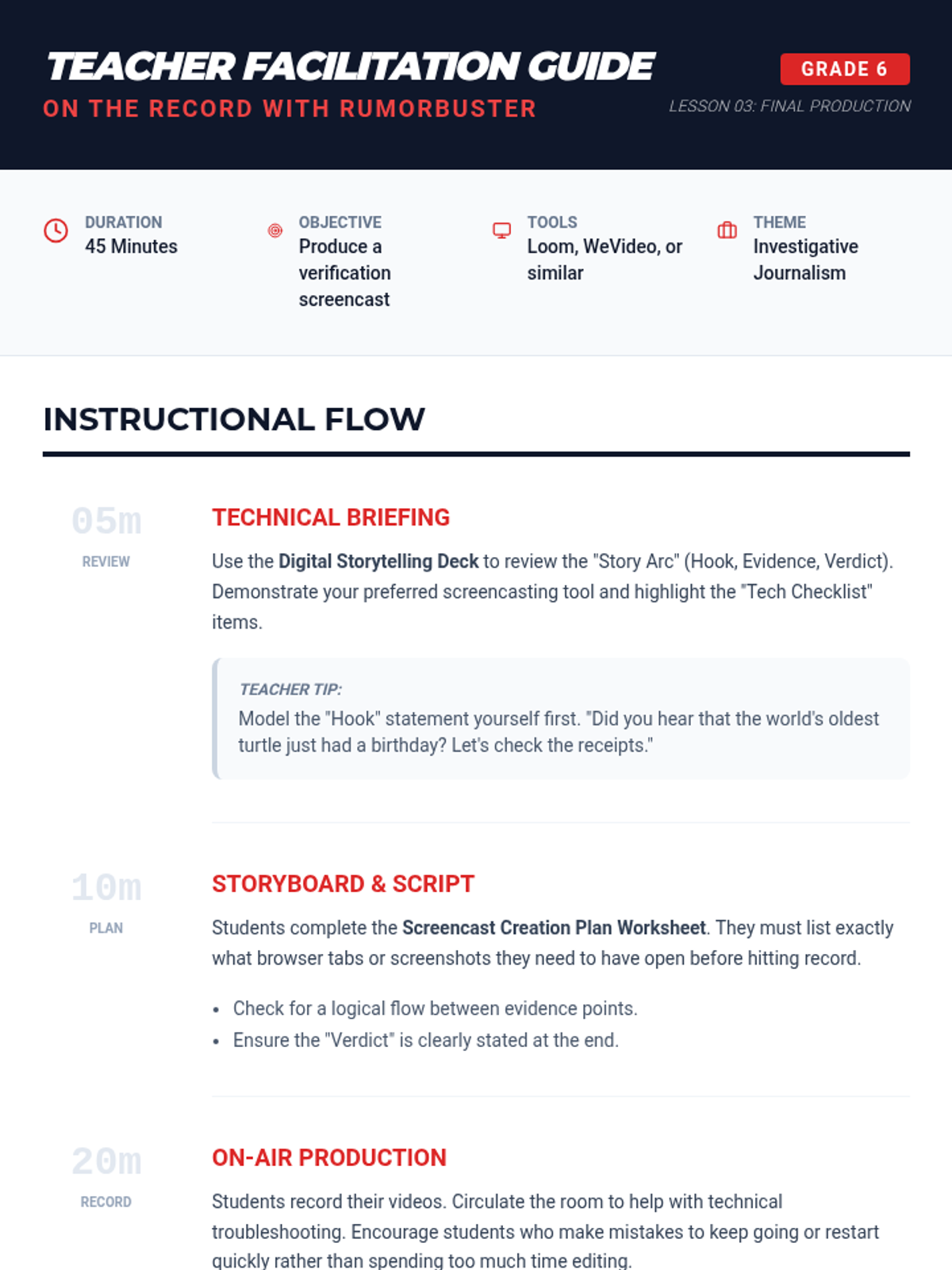
In this lesson, students step into the role of investigative journalists to create a screencast that documents their fact-checking process and final findings. They will learn to combine digital storytelling with technical screencasting skills to present evidence clearly and convincingly.
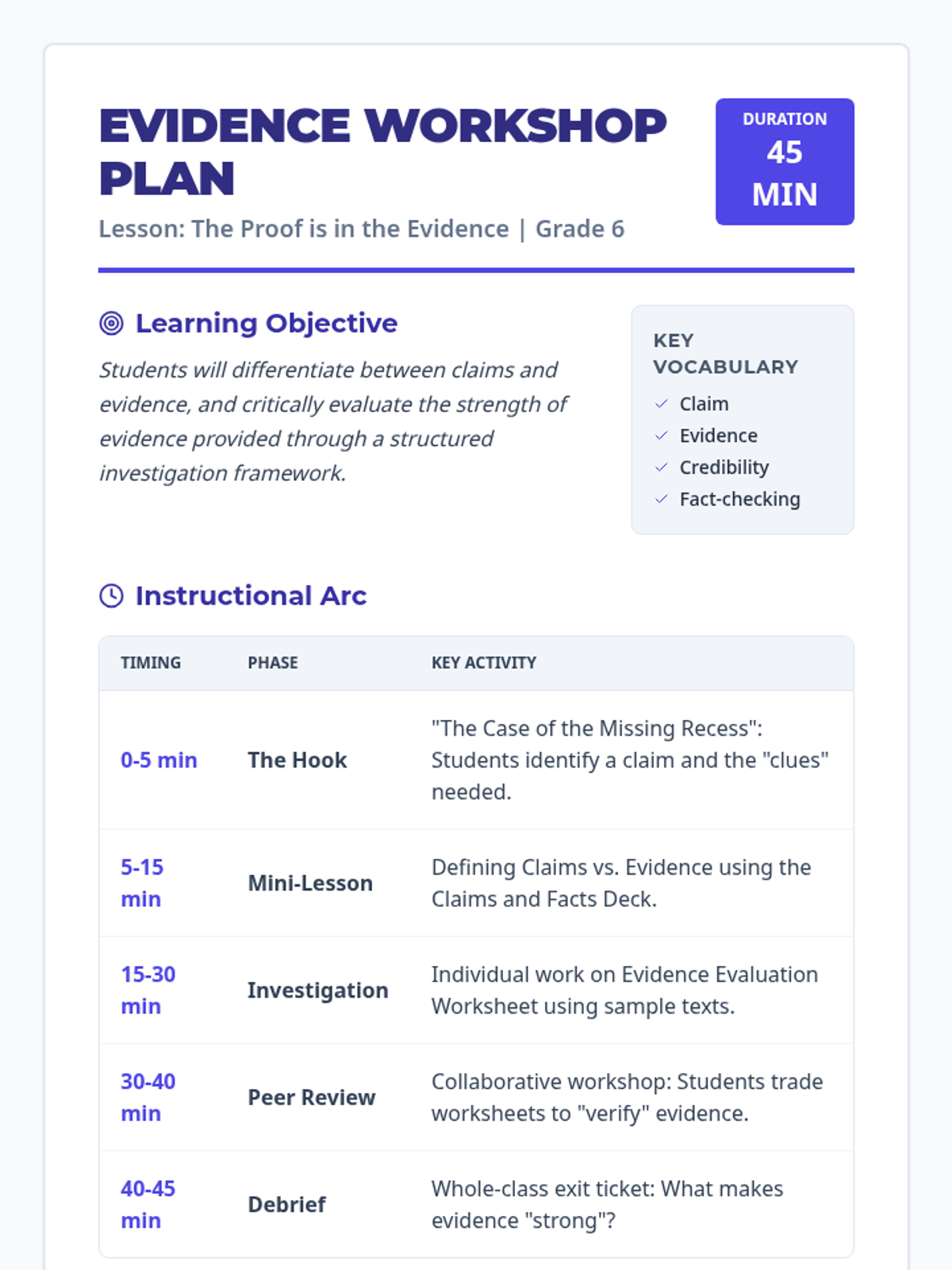
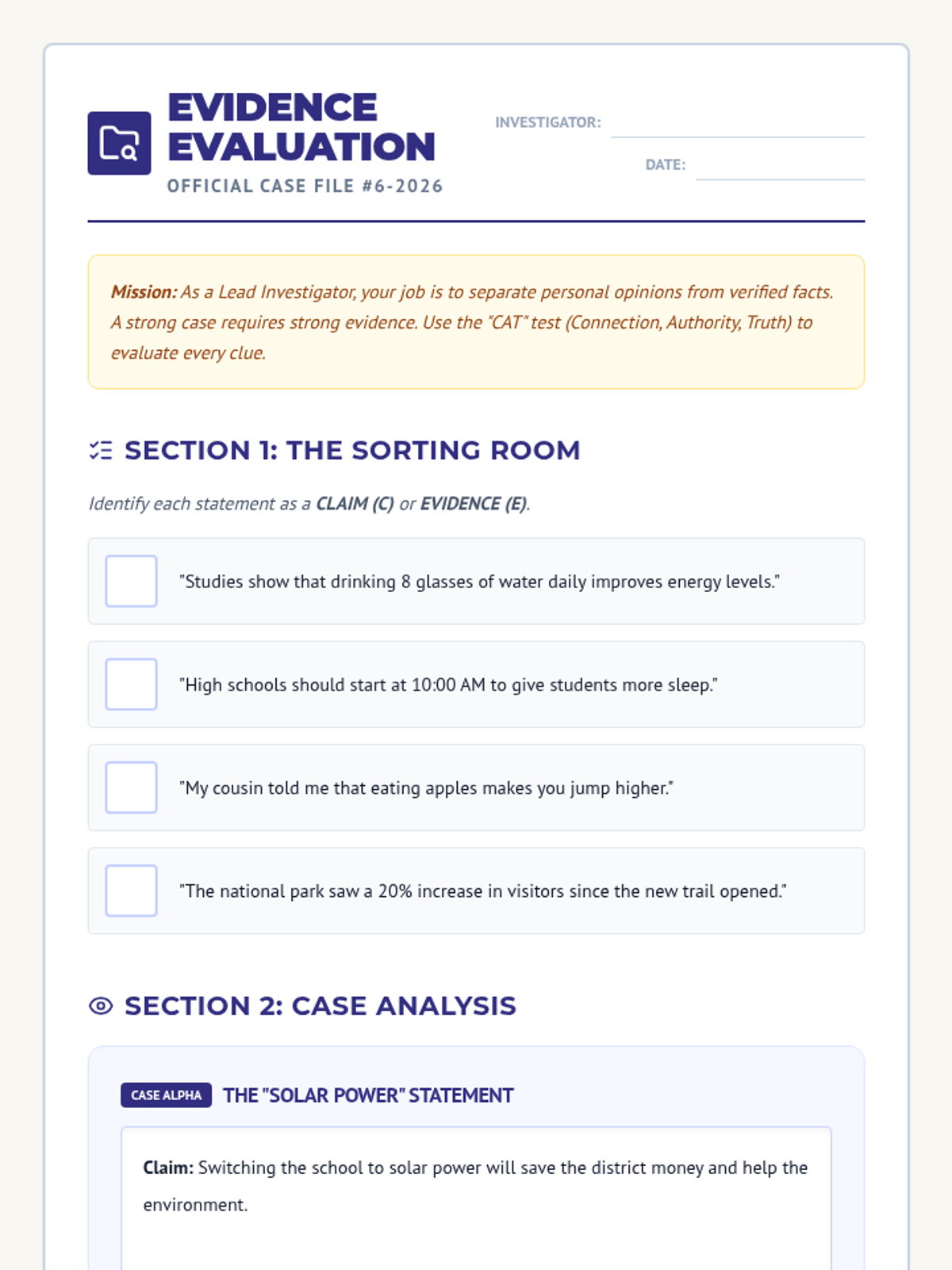
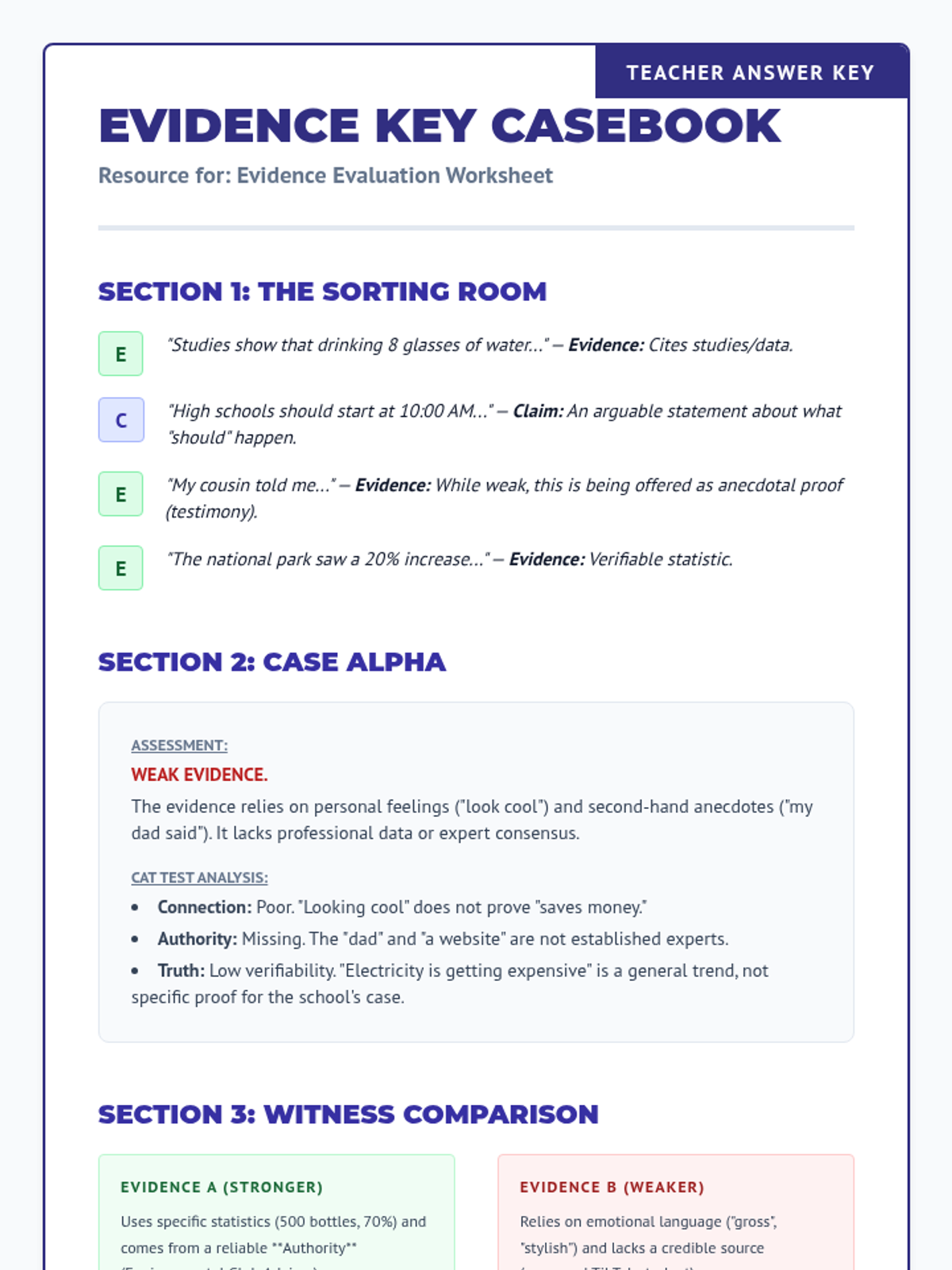
A 45-minute inquiry-based lesson where 6th-grade students learn to identify claims and evaluate the quality of supporting evidence through a detective-themed investigation.
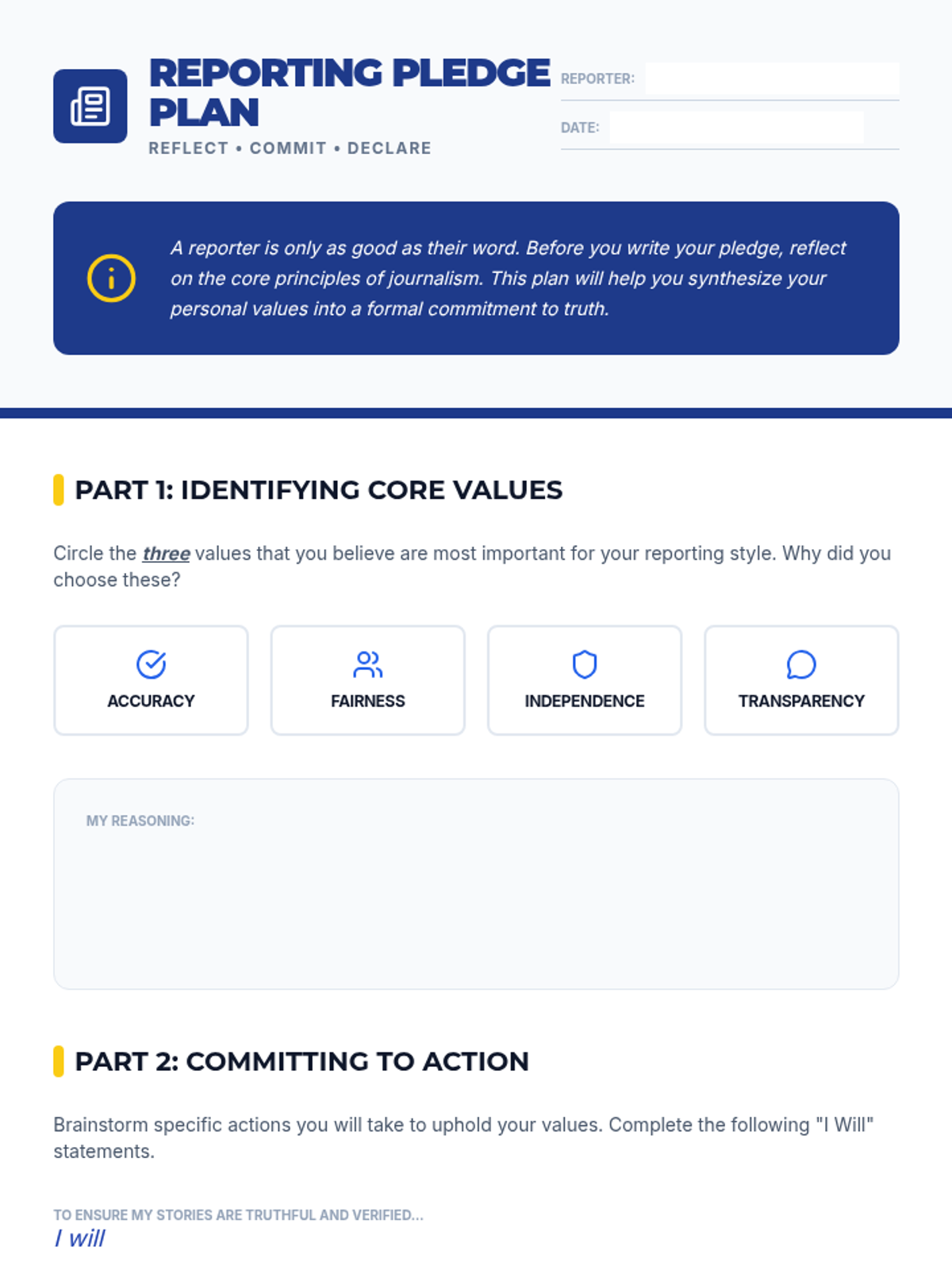
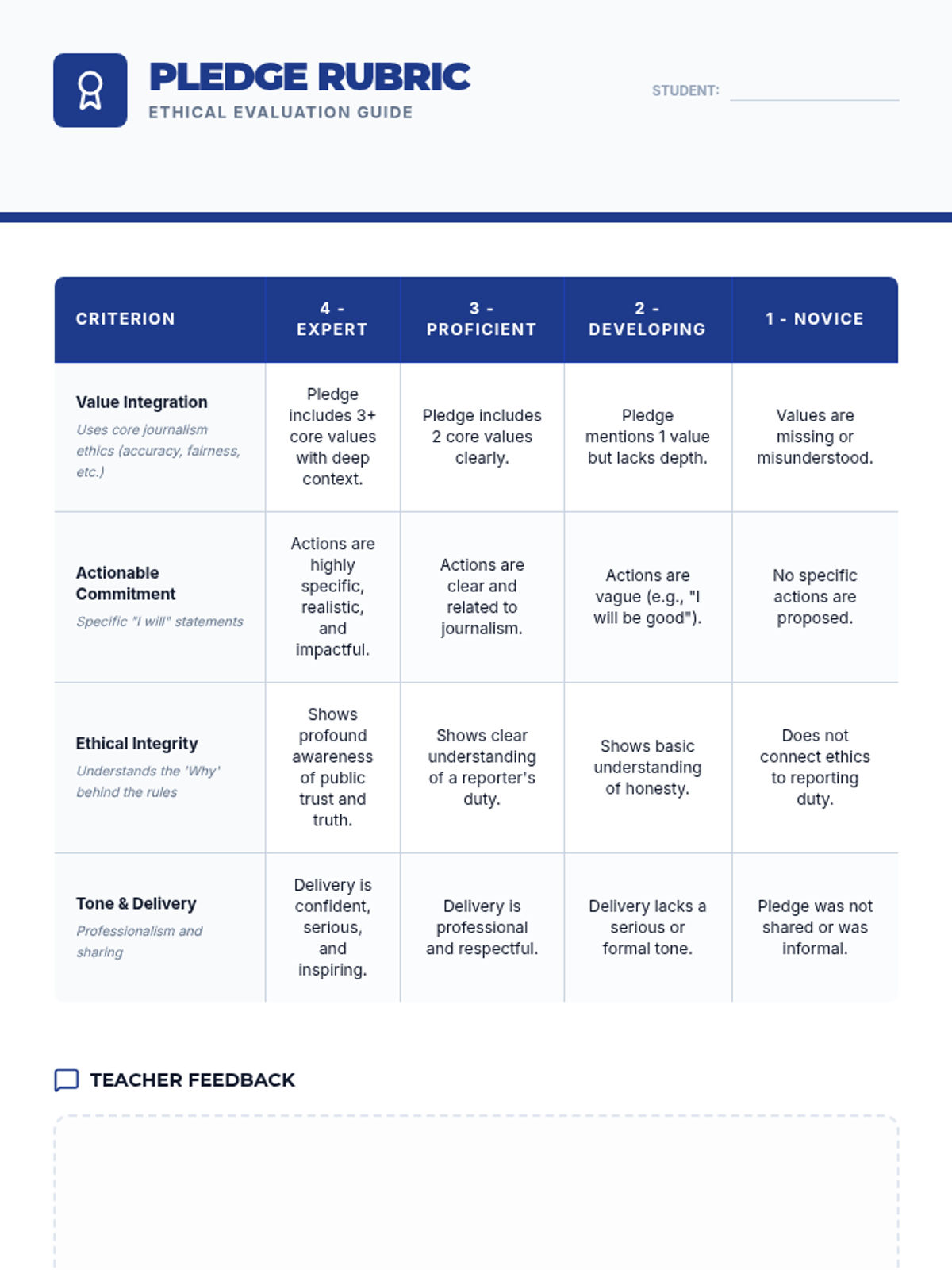
A 45-minute journalism lesson where 6th-grade students synthesize their understanding of ethical reporting to create a personal journalism pledge. Students explore the core values of integrity and trustworthiness through reflection and drafting.
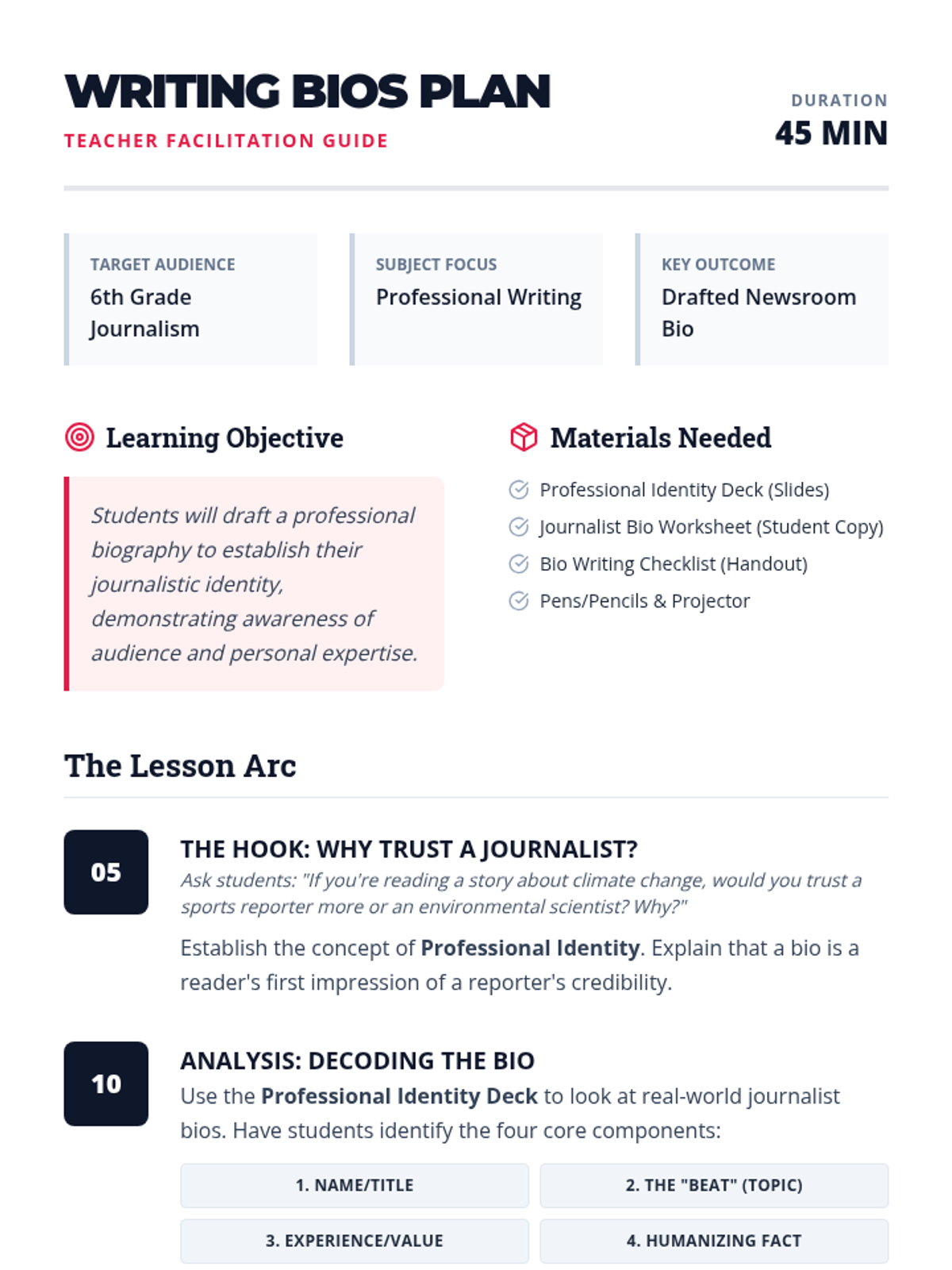
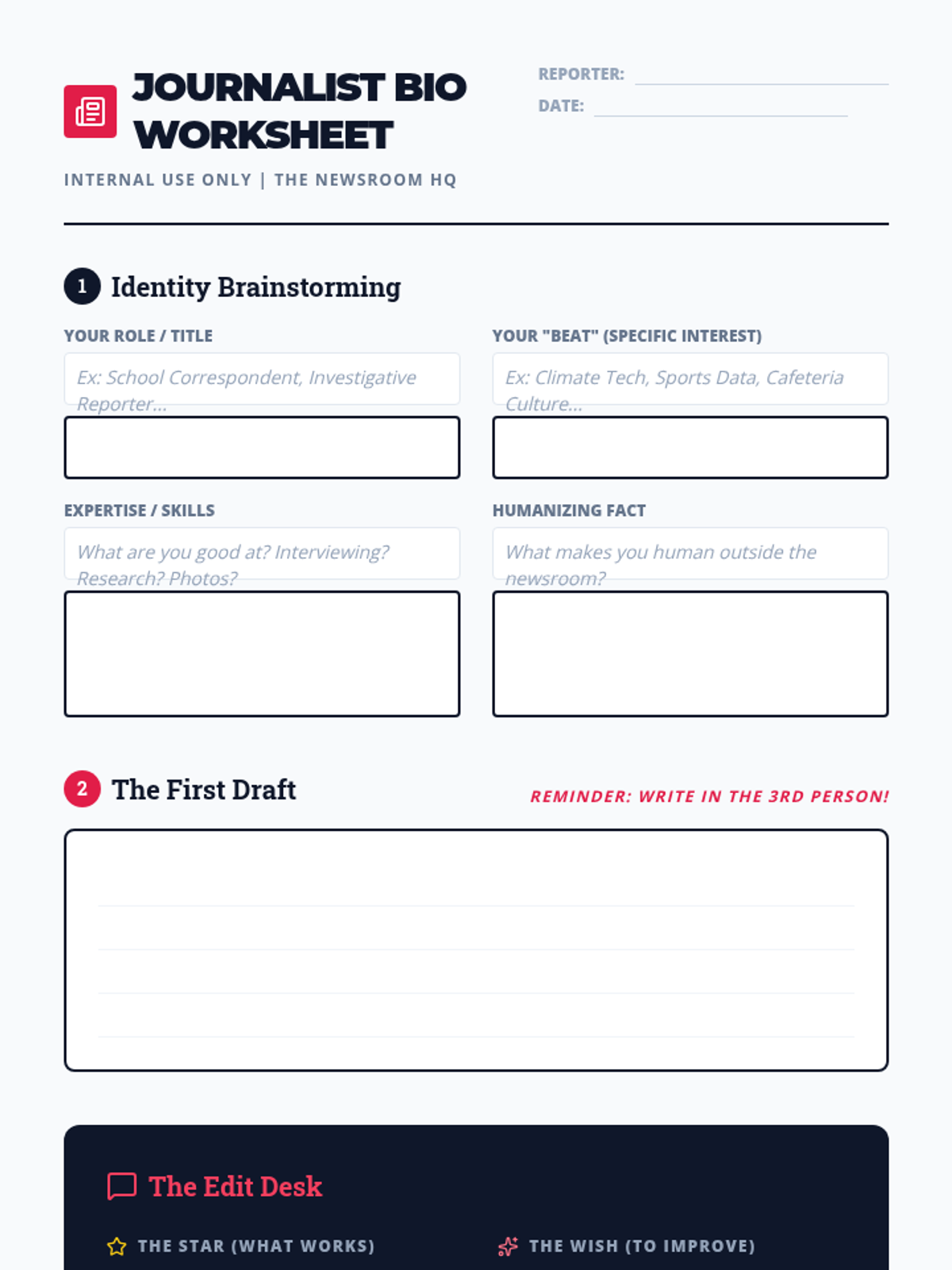
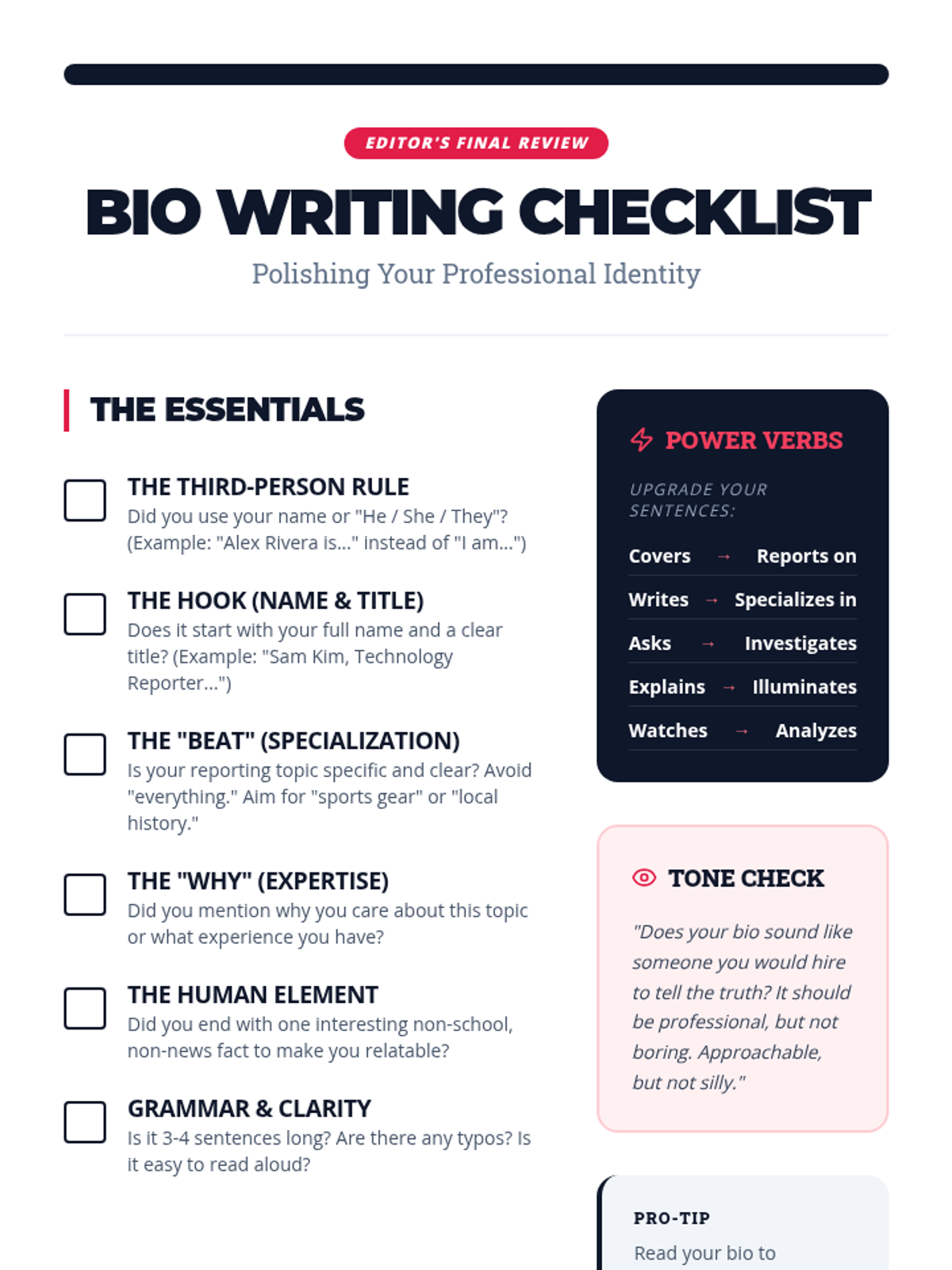
A 45-minute lesson for 6th-grade students to develop their professional journalistic identity by drafting and refining their own newsroom bios. Students analyze professional examples, identify core components, and engage in a peer feedback loop.
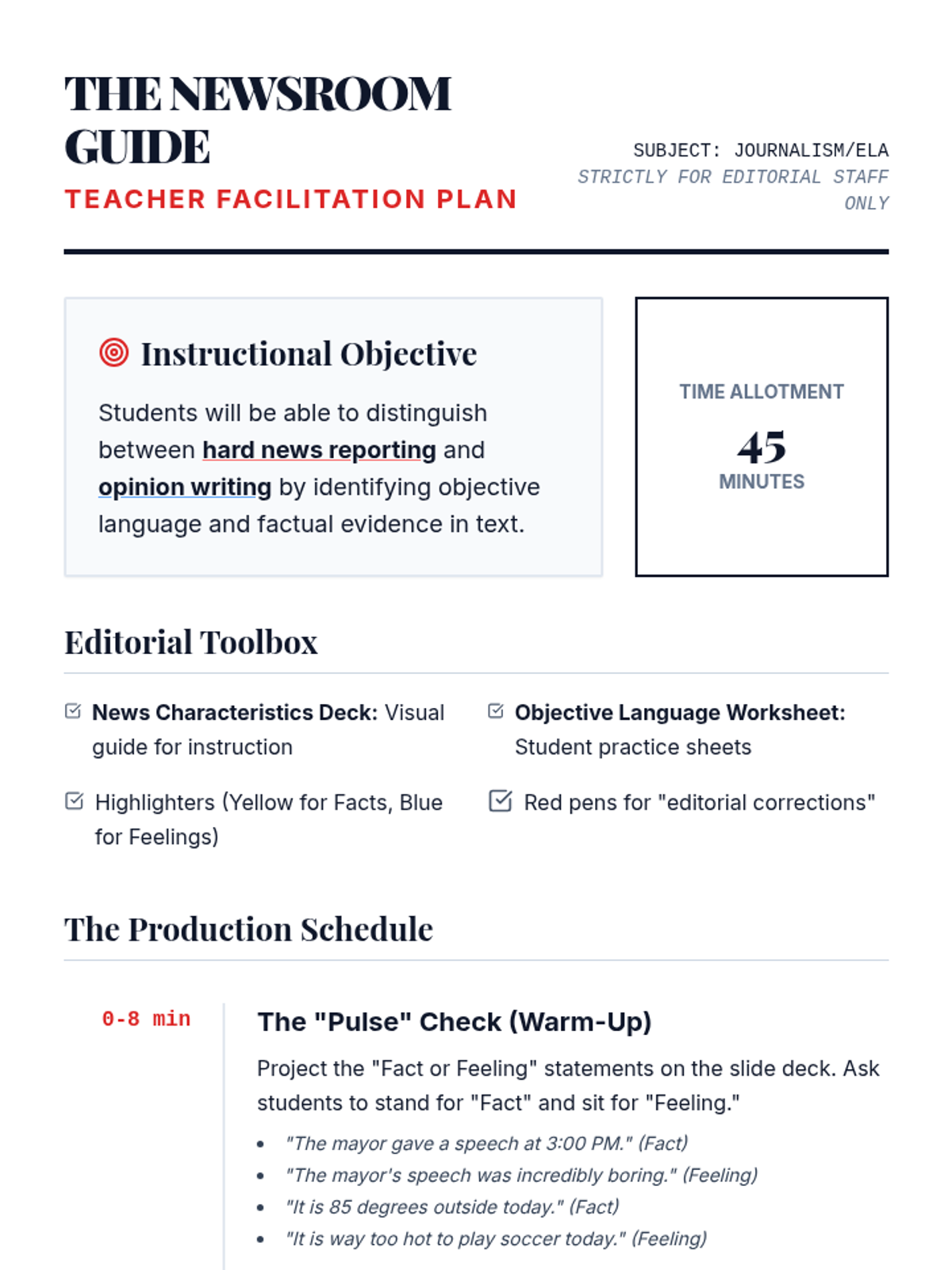
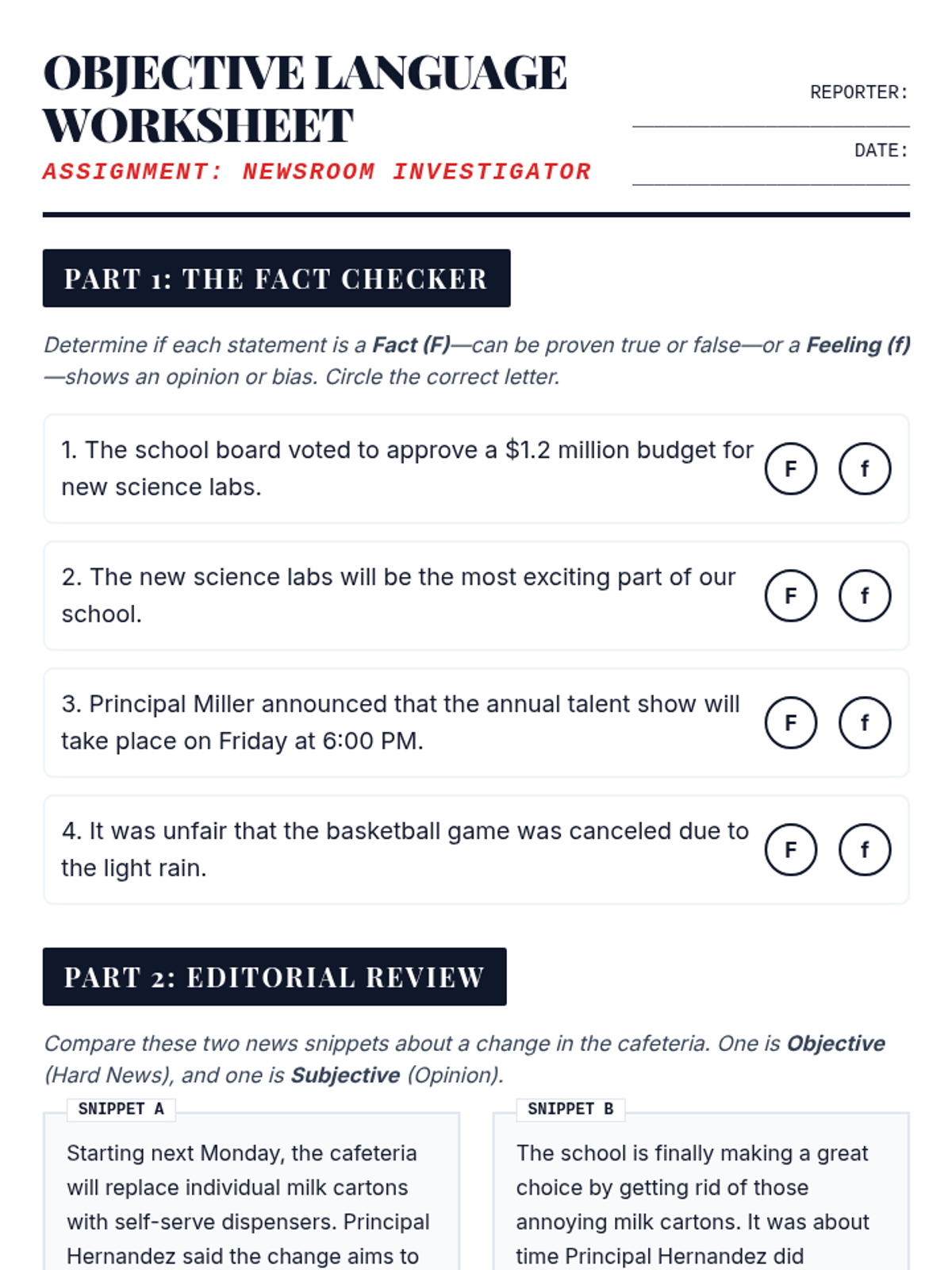
A 45-minute lesson where students become newsroom investigators, learning to distinguish between objective hard news reporting and subjective opinion pieces through hands-on analysis and writing practice.
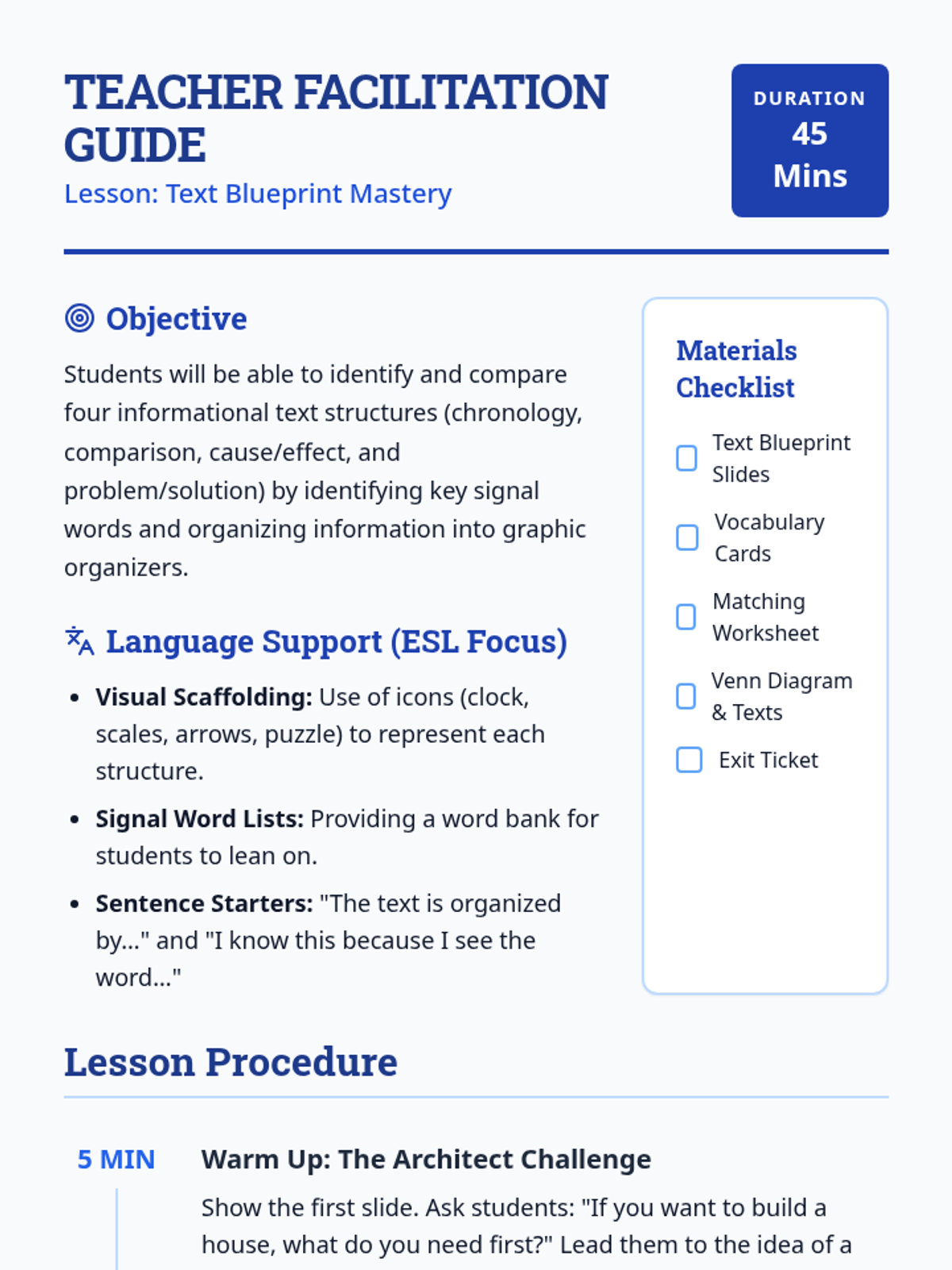
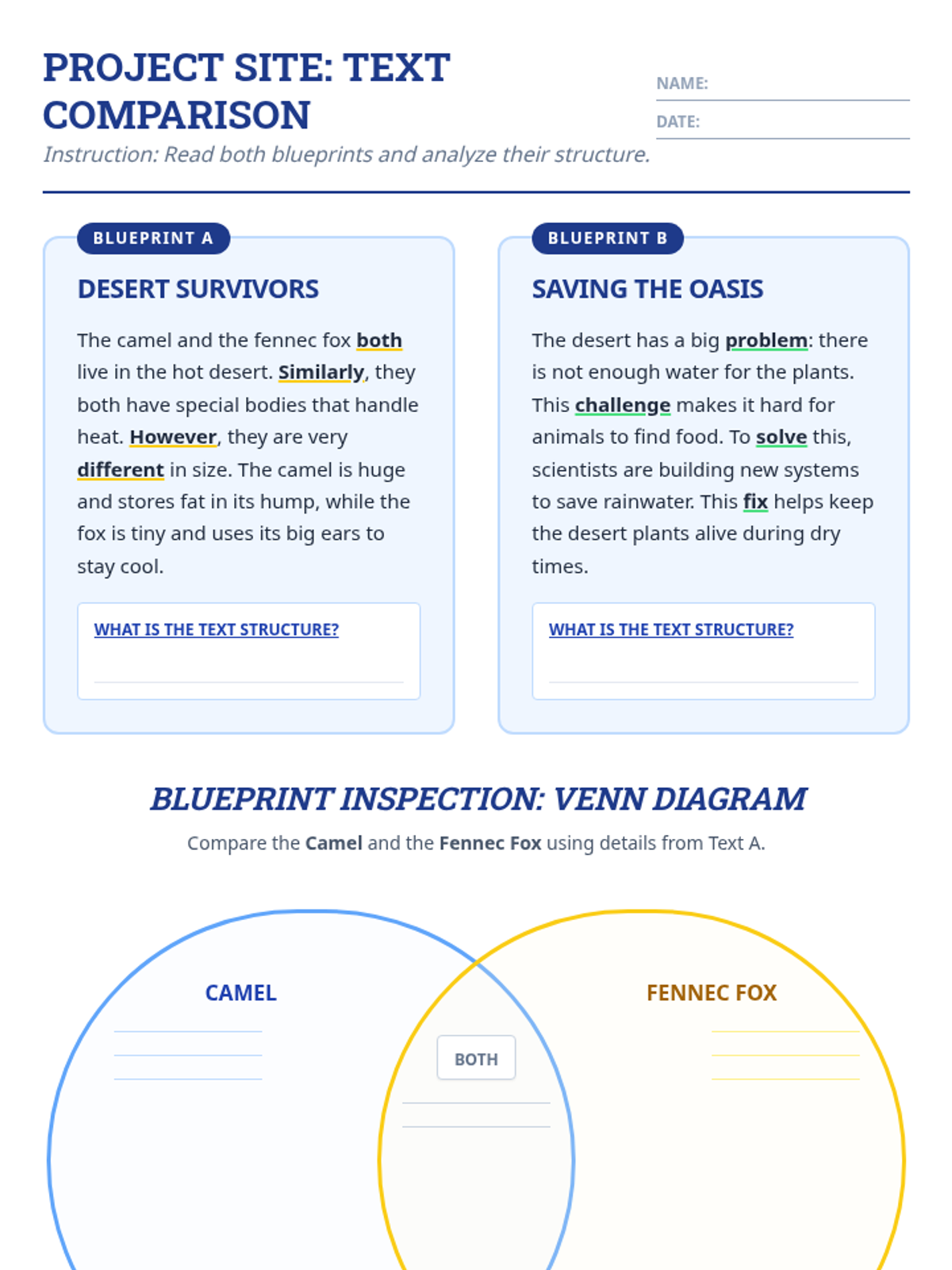
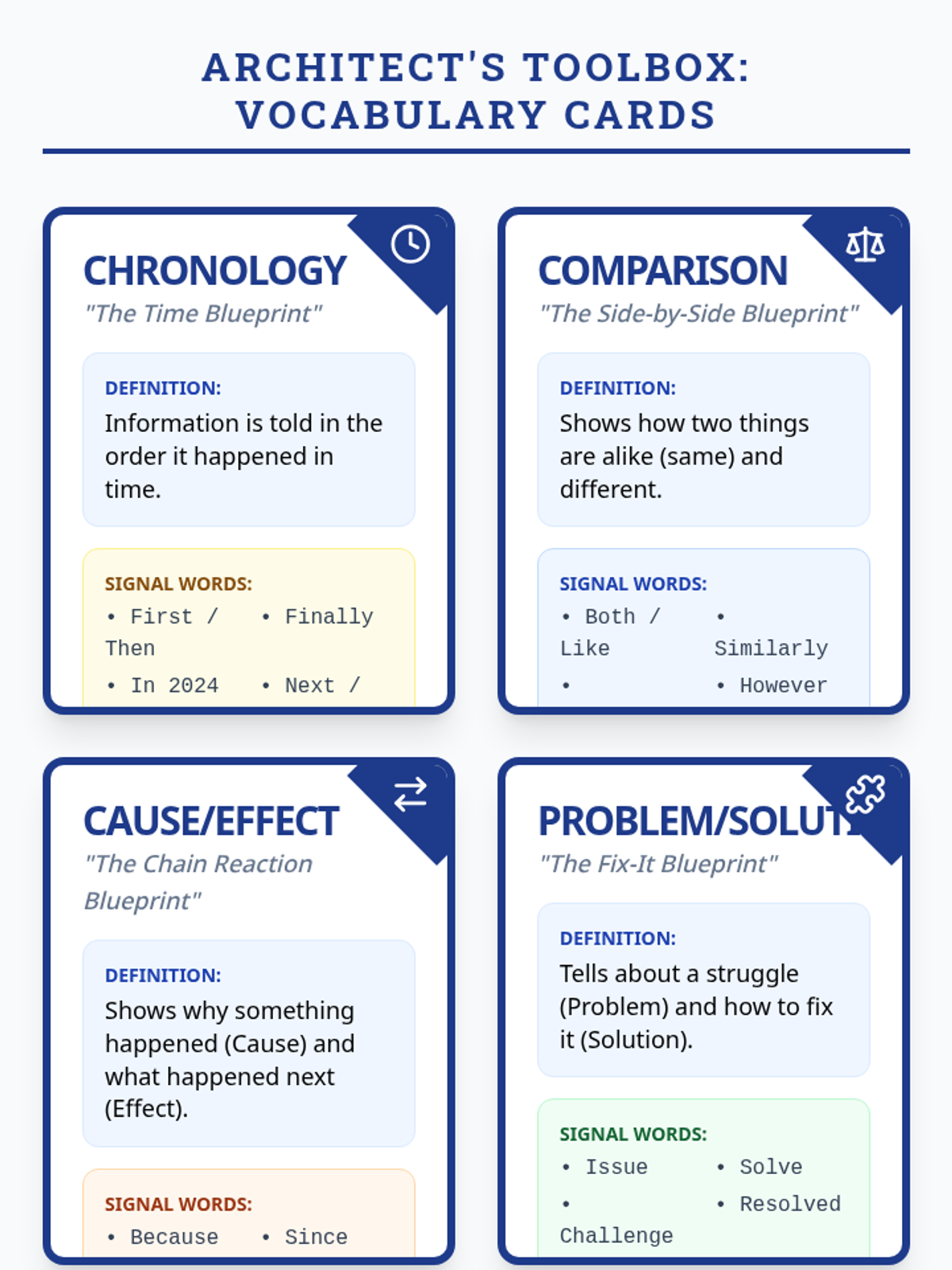
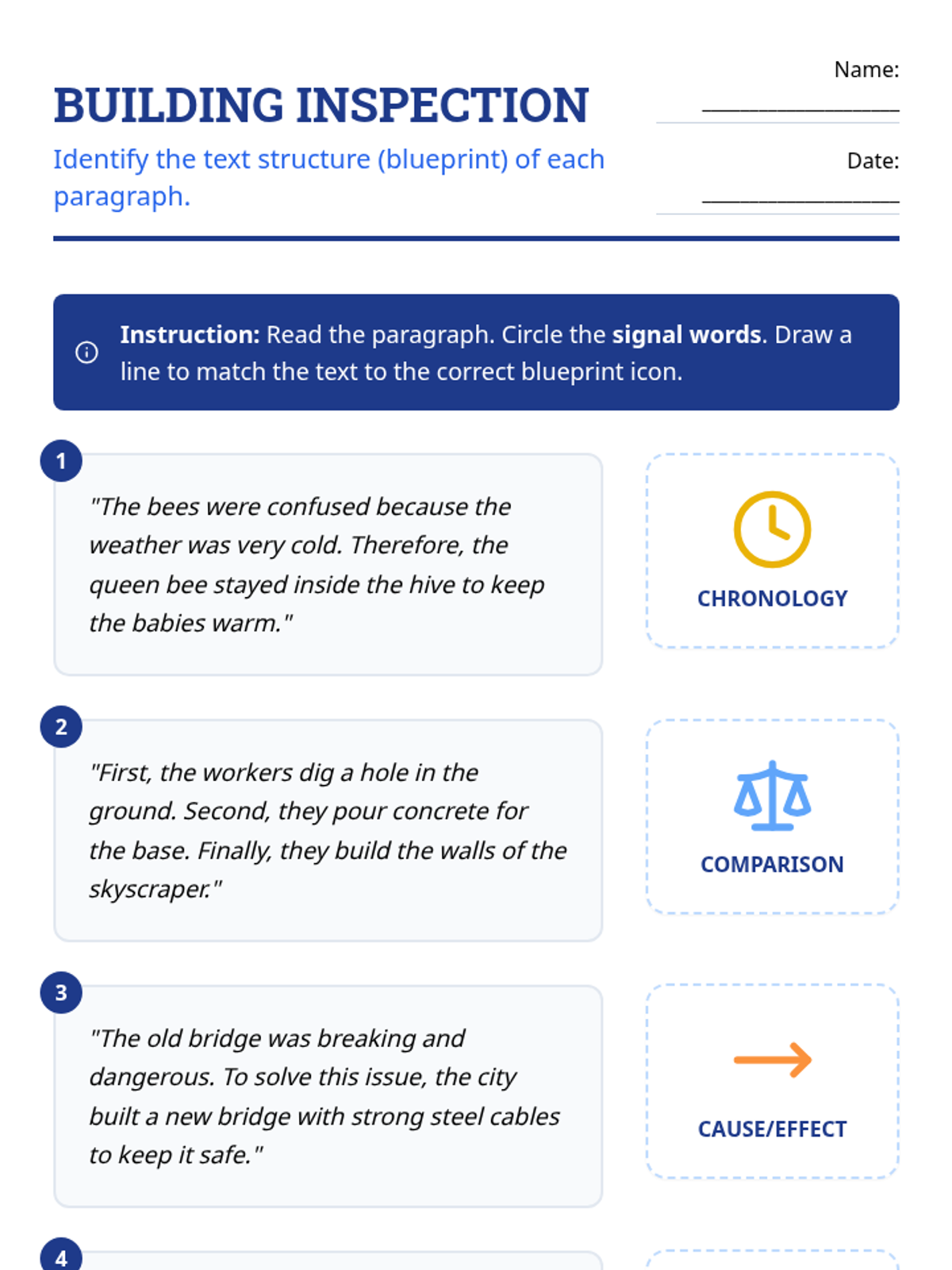
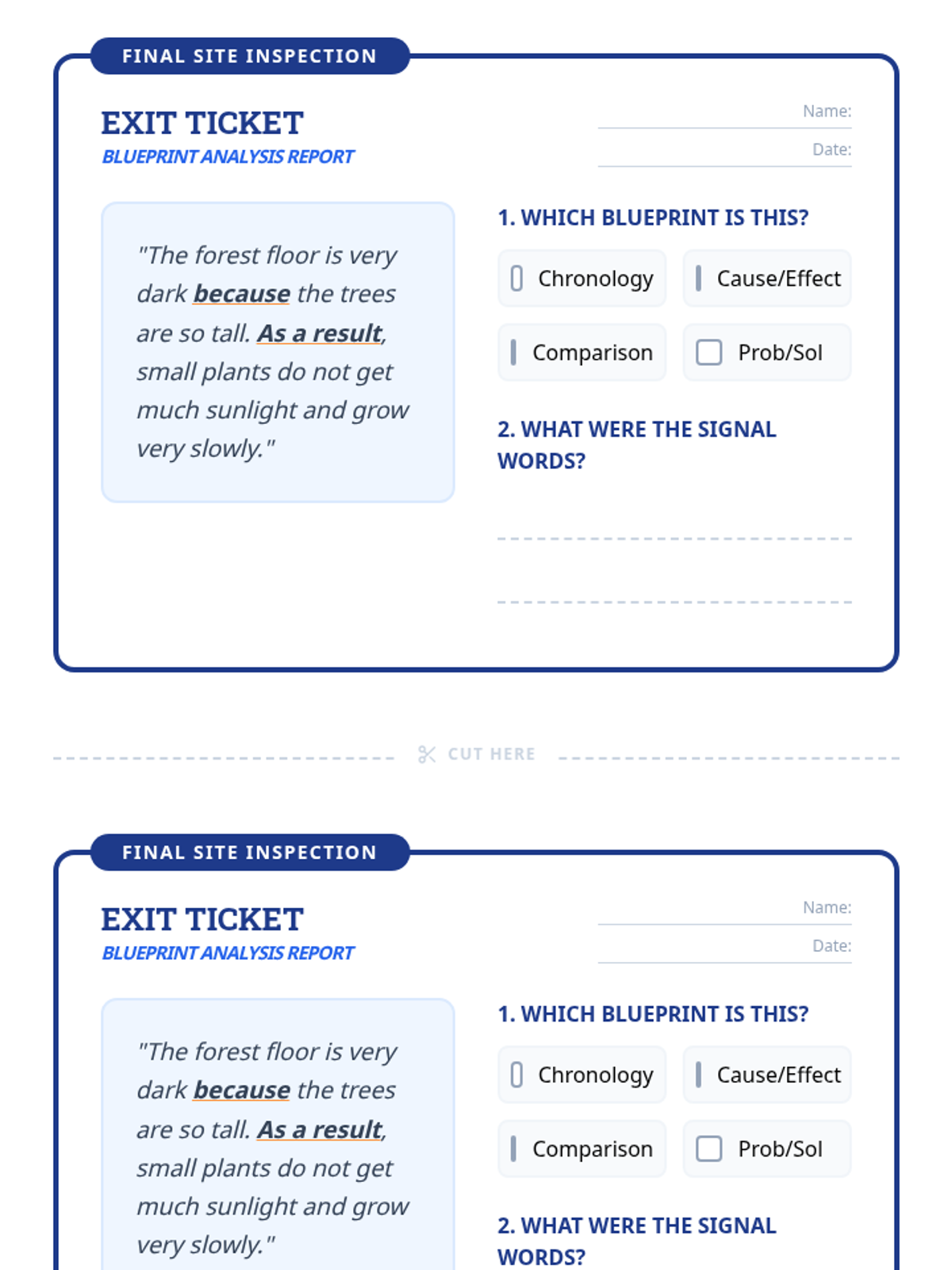
Students will identify and compare four major text structures: chronology, comparison, cause/effect, and problem/solution. Through an architectural 'blueprint' theme, ESL students will learn signal words and structural patterns to improve reading comprehension.
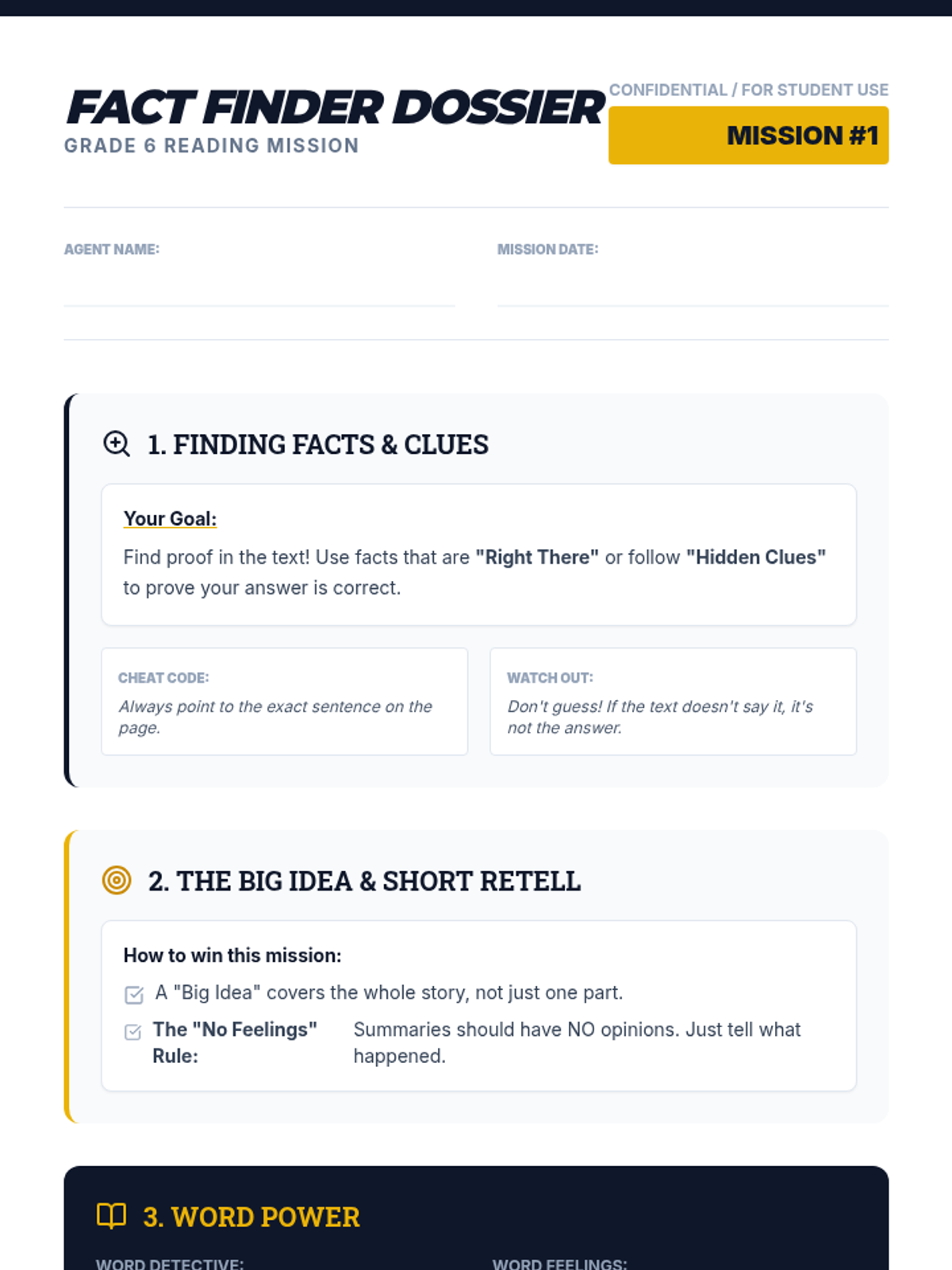
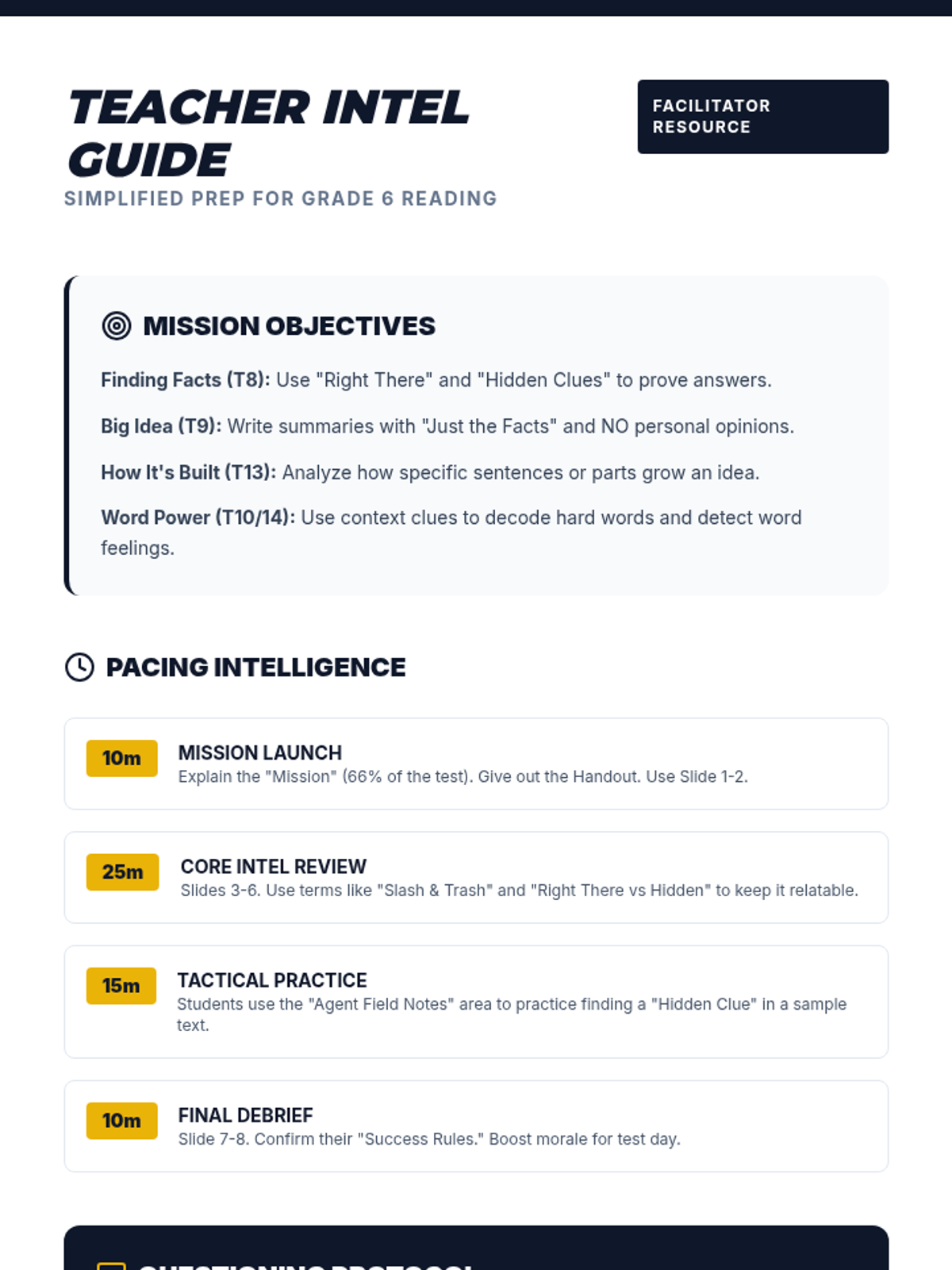
A comprehensive test prep unit focusing on OSAS Grade 6 Informational Reading targets, including deep dives into central ideas, evidence, structure, and word meanings.
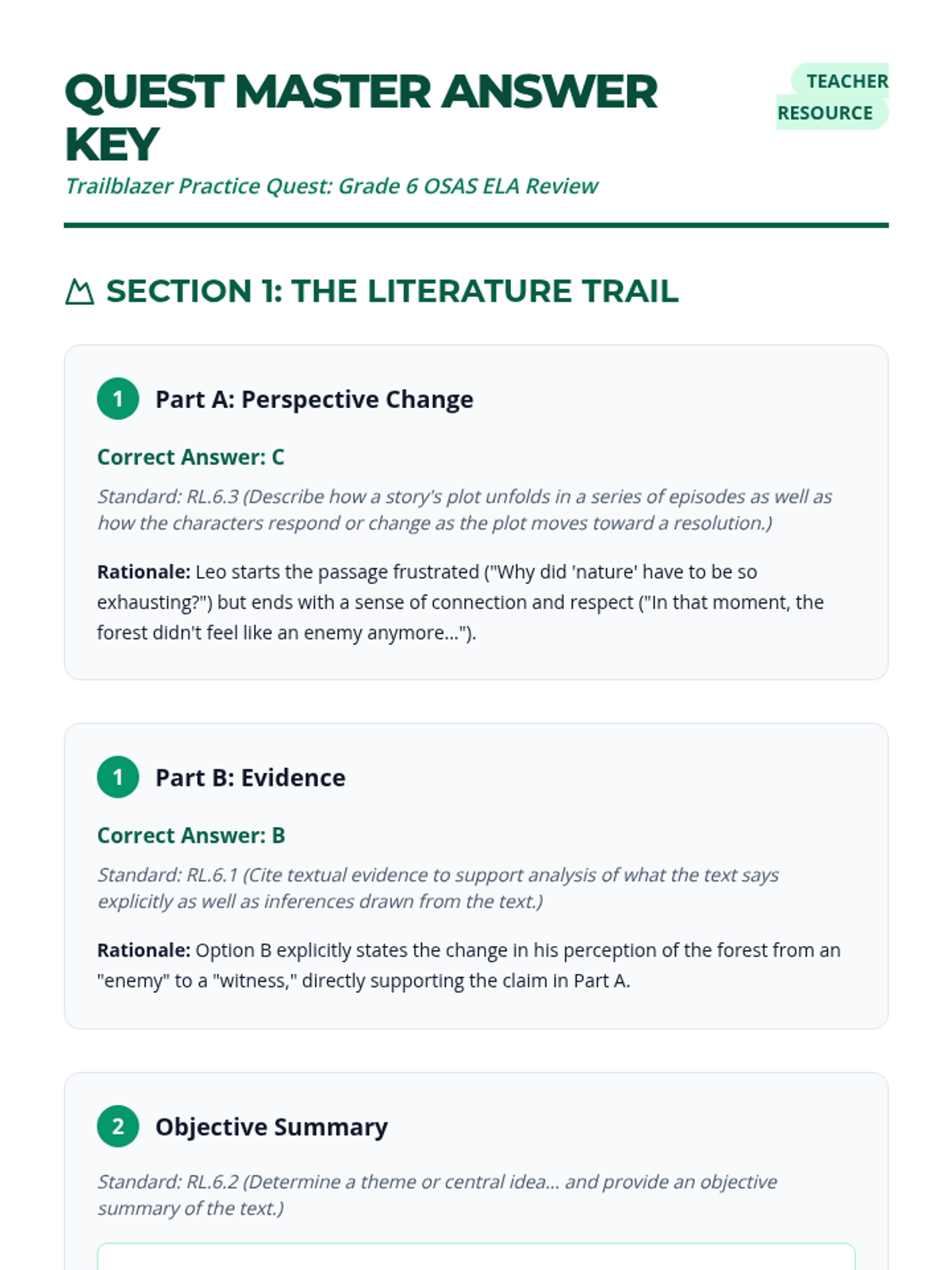
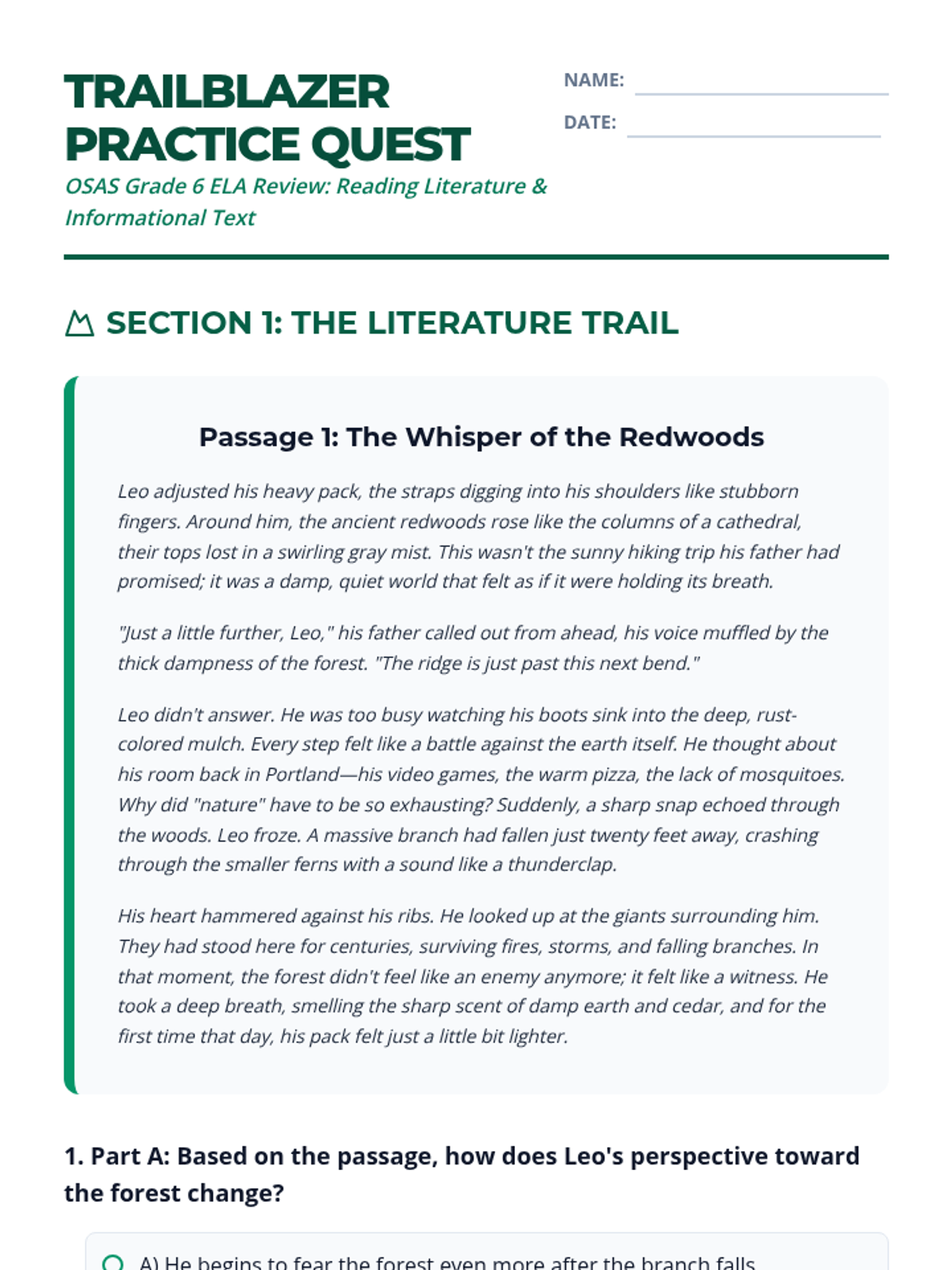
A comprehensive review of Oregon's 6th-grade ELA standards for Reading Literature and Informational Text, designed to prepare students for the OSAS assessment using a Pacific Northwest field guide theme.
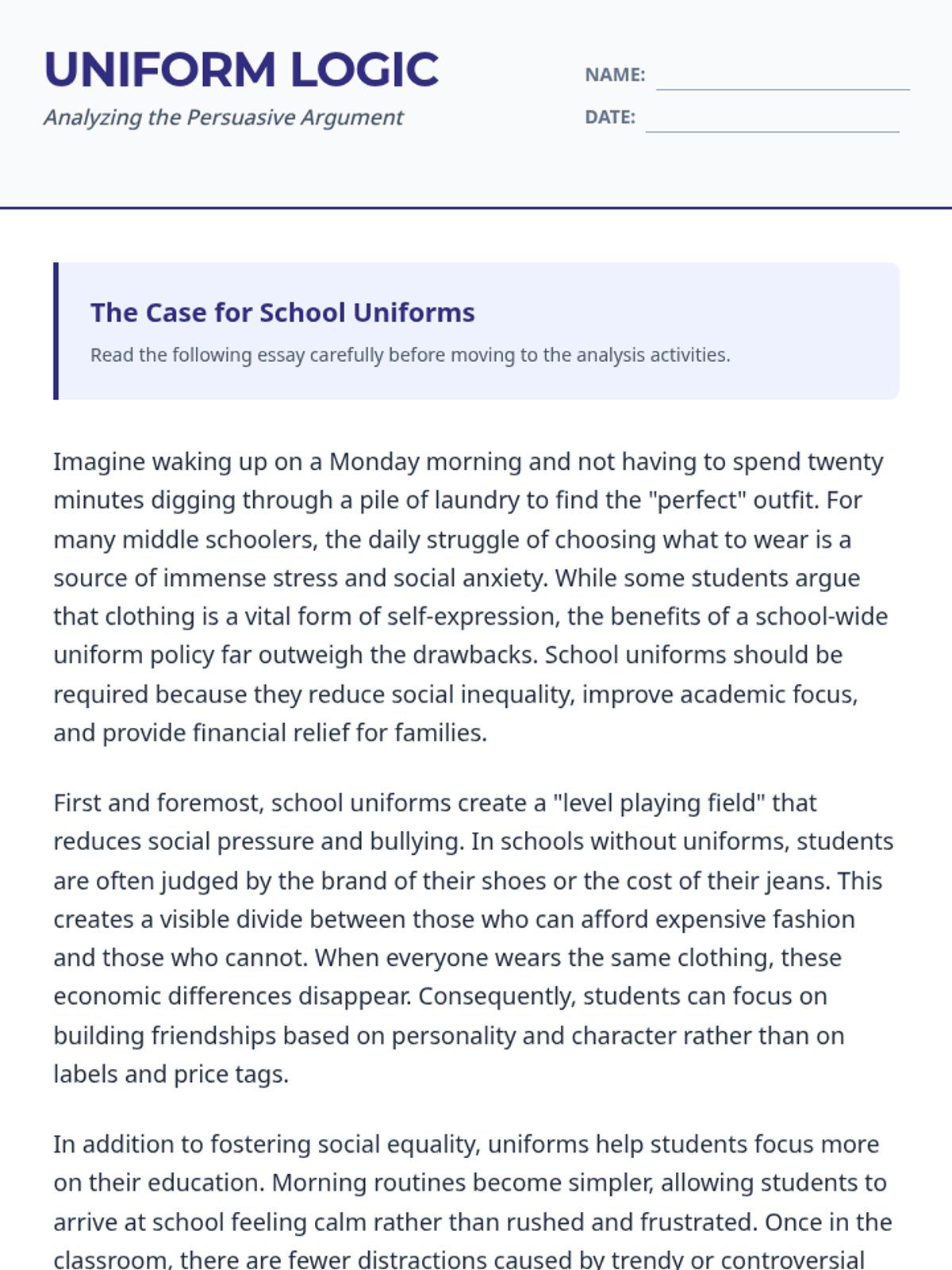
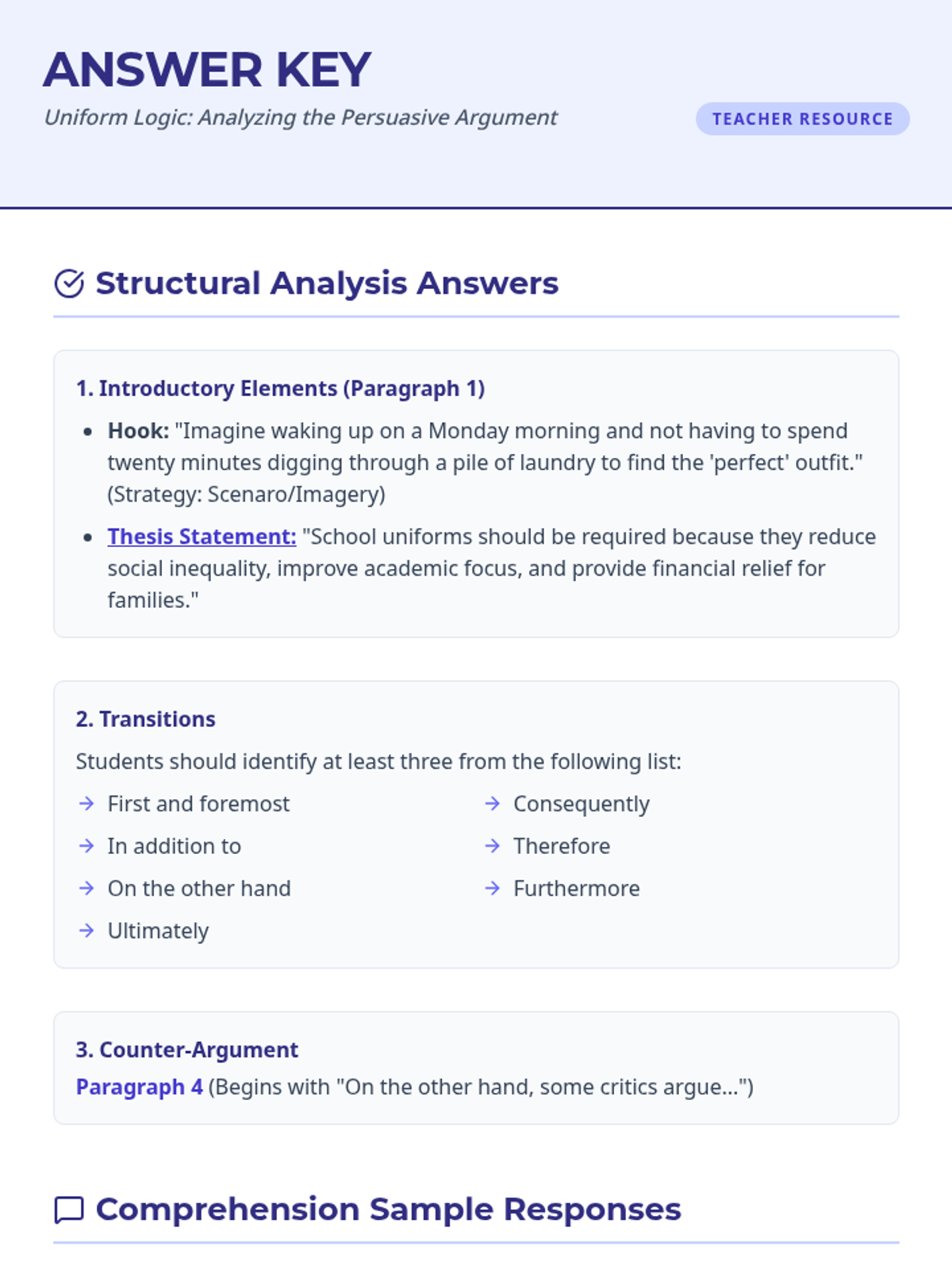
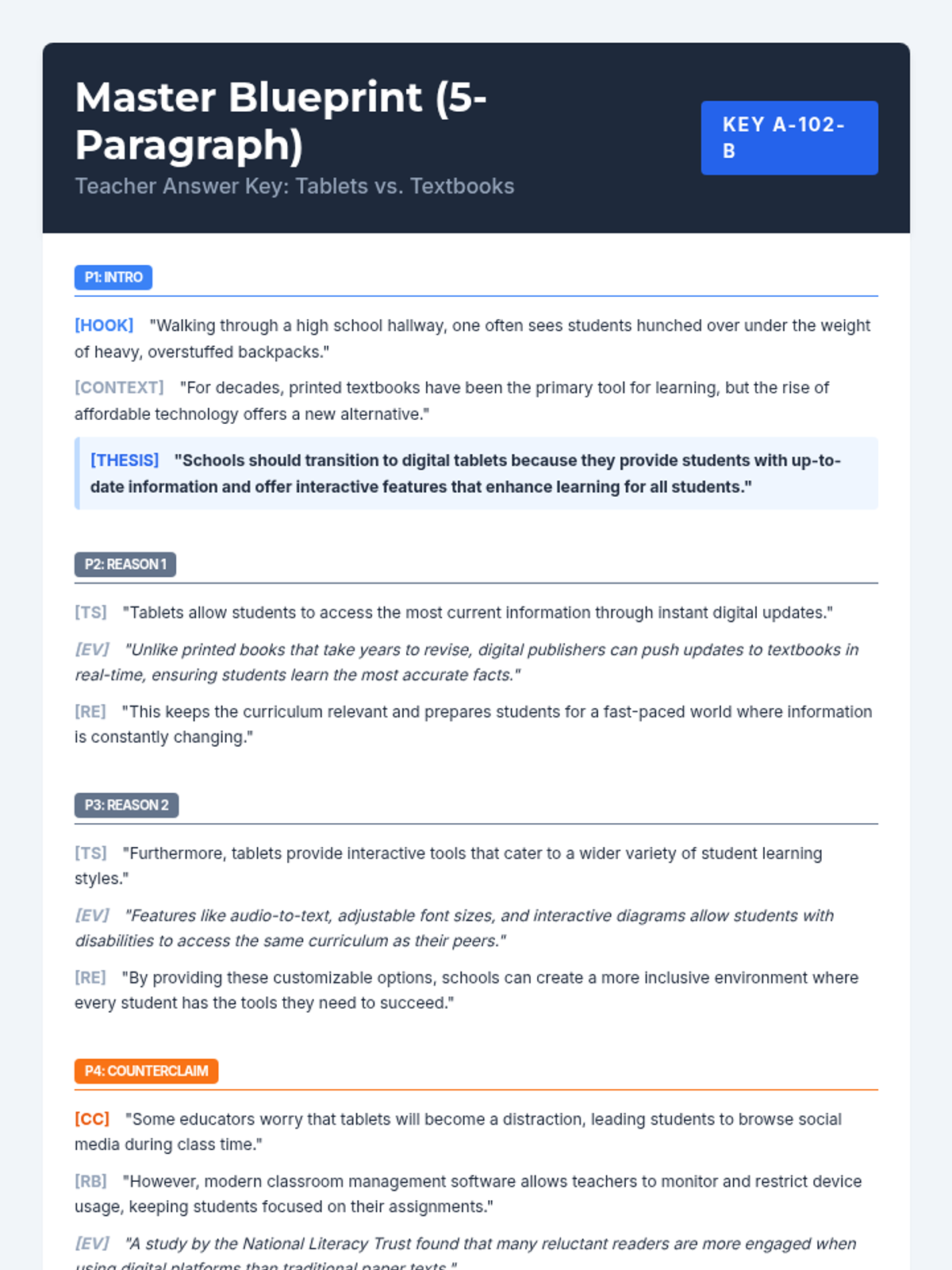
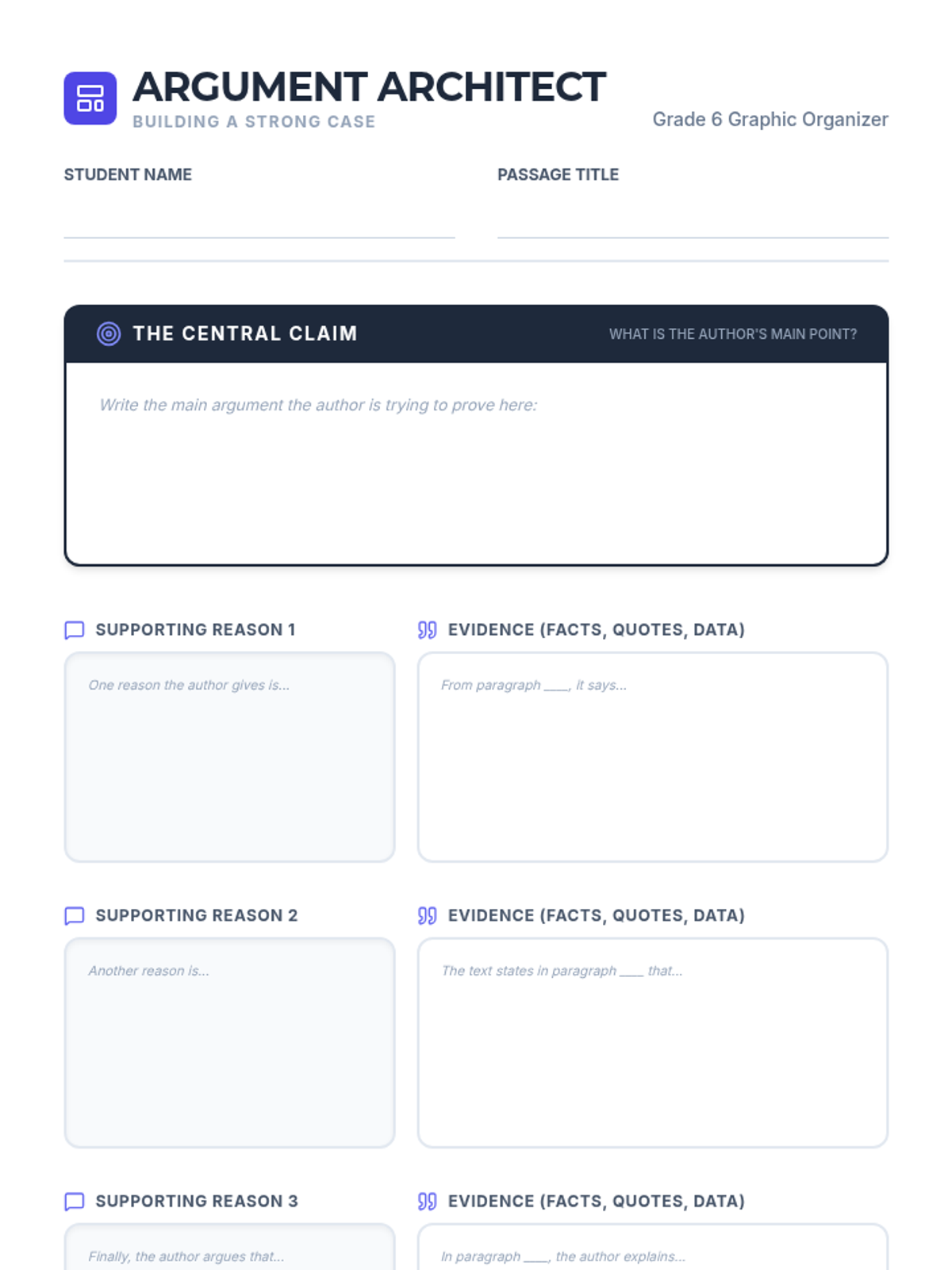
A lesson focused on analyzing the structure and content of a persuasive essay regarding school uniforms, helping students identify key argumentative components.
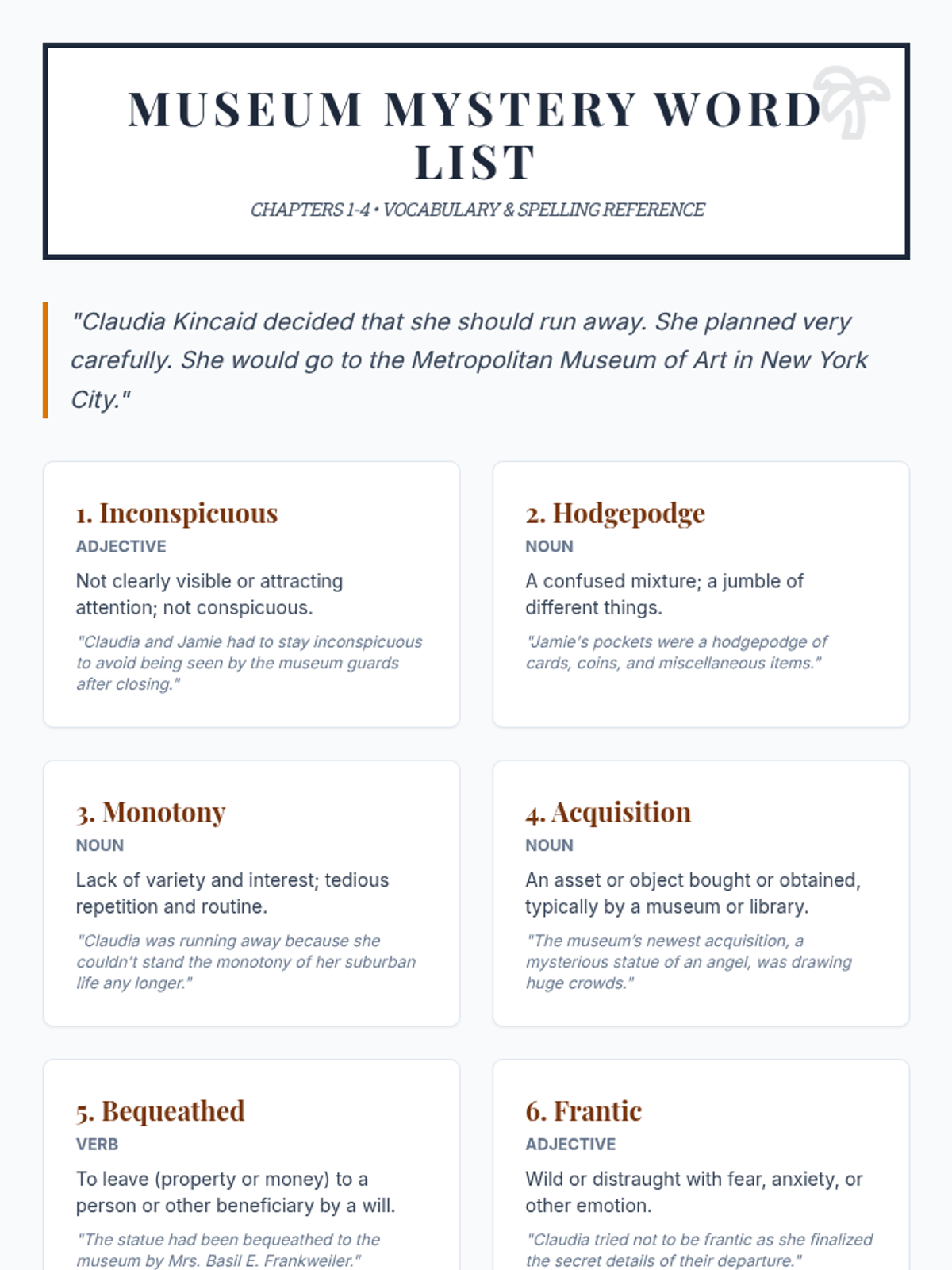
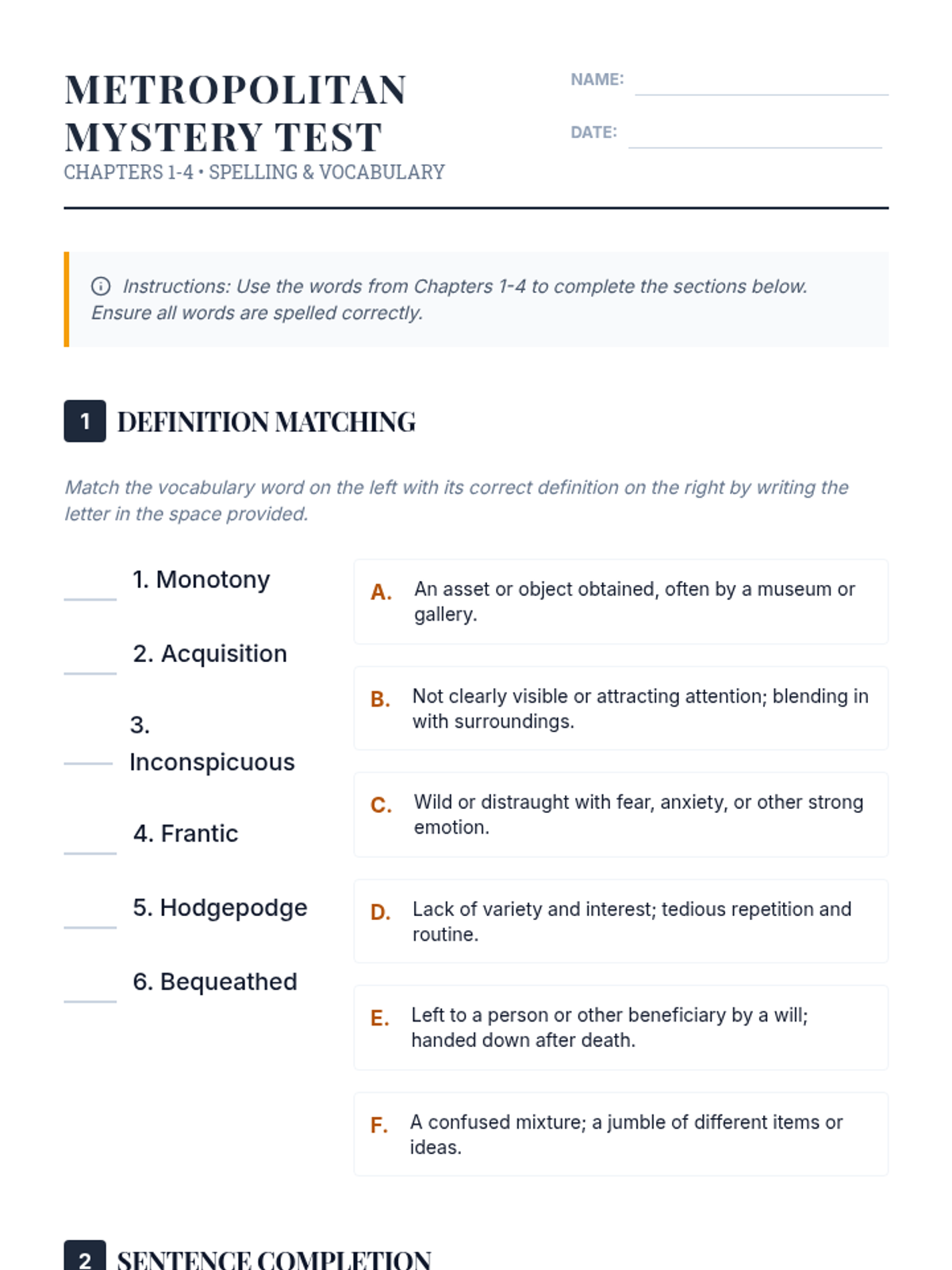
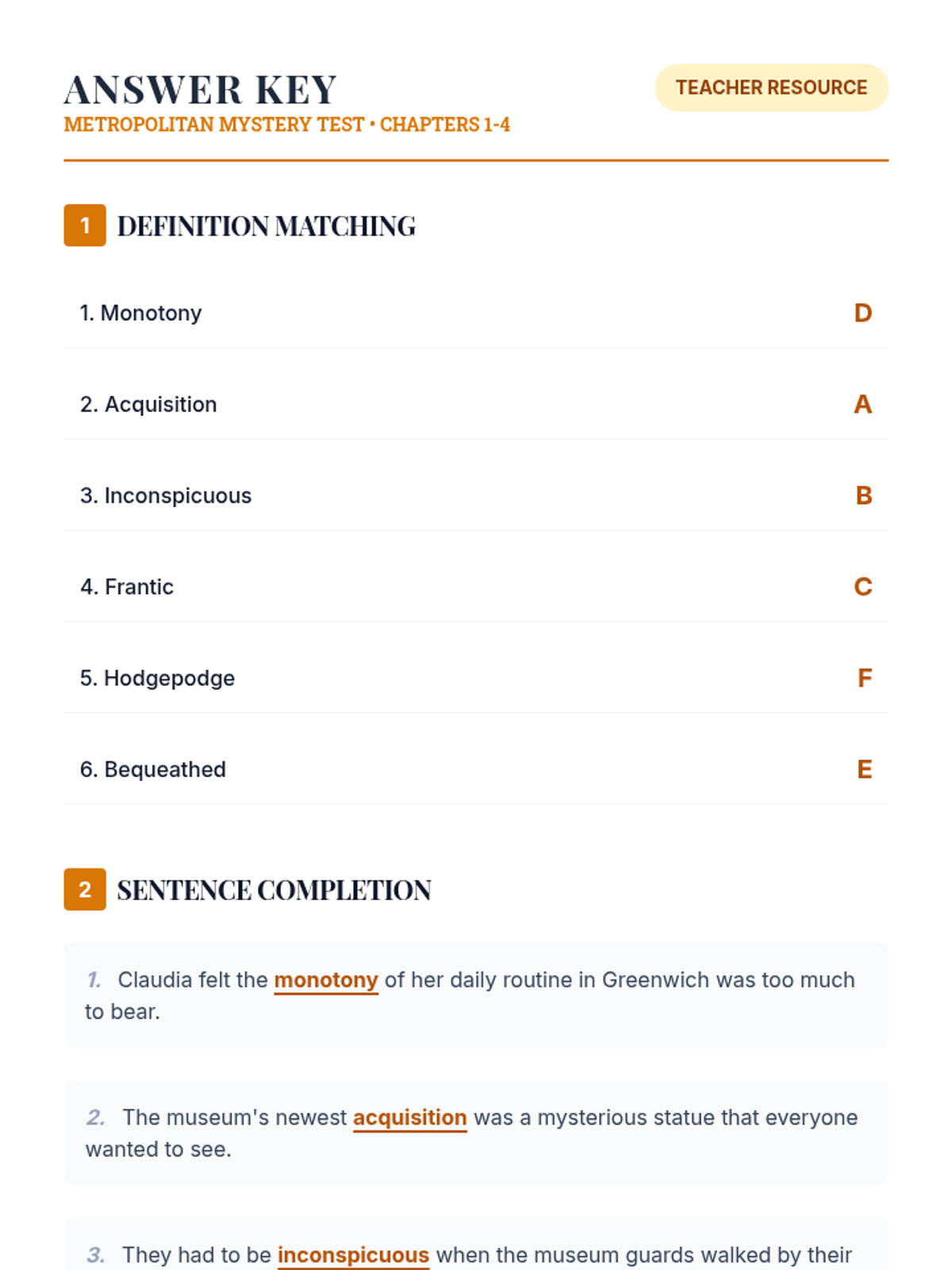
A spelling and vocabulary unit based on Chapters 1-4 of 'From the Mixed-Up Files of Mrs. Basil E. Frankweiler', focusing on Claudia and Jamie's secret adventure in the Metropolitan Museum of Art.
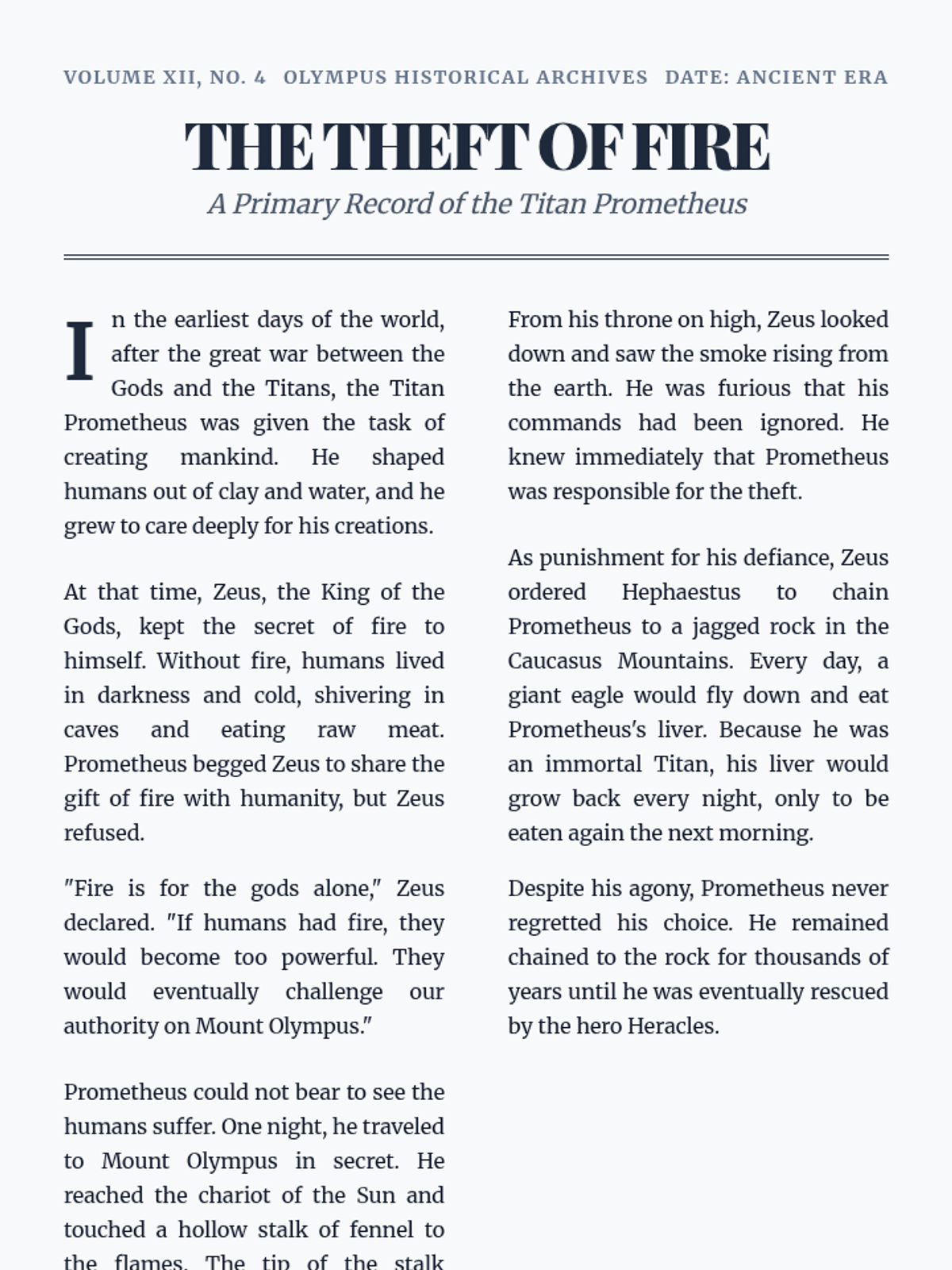
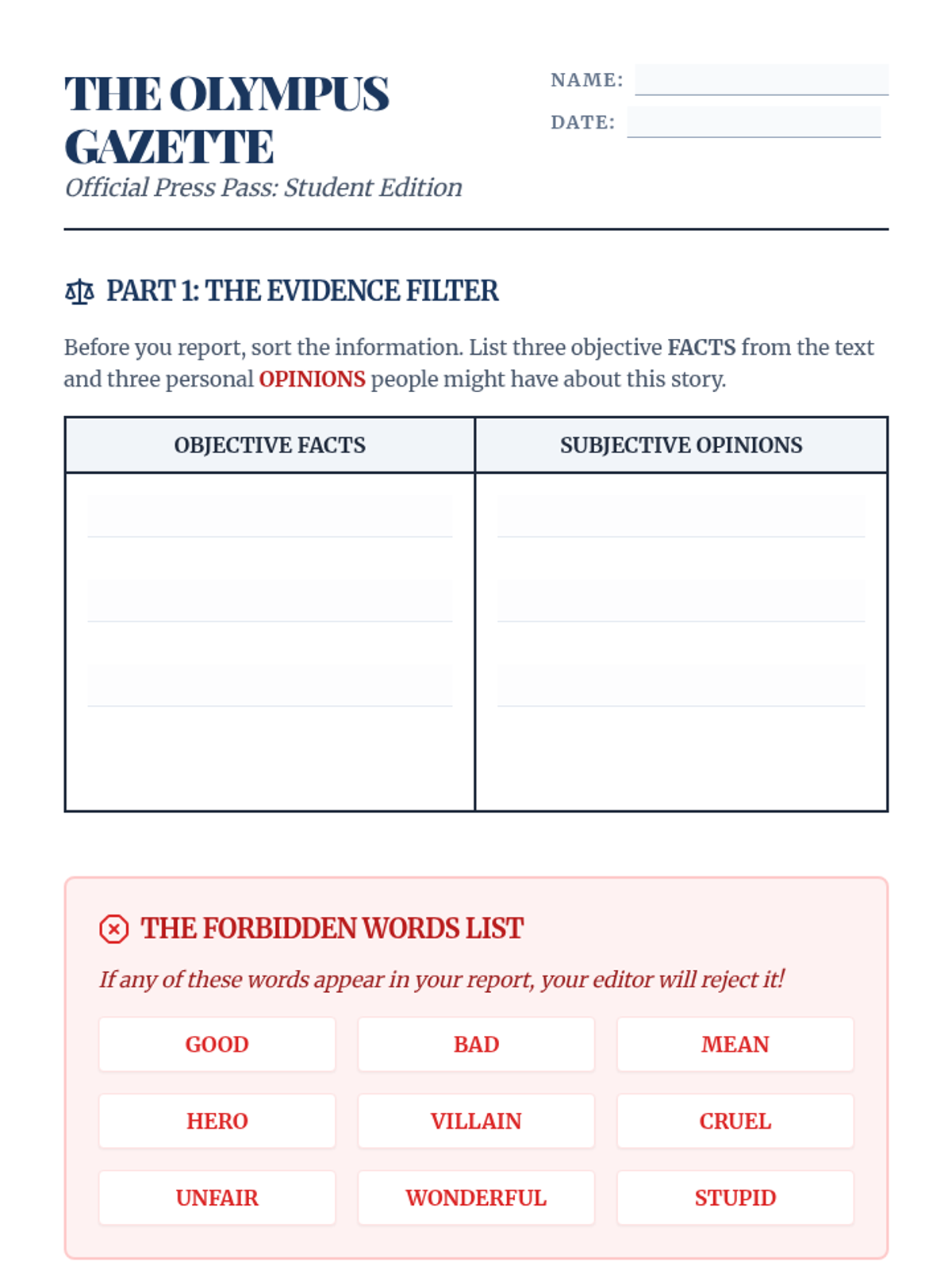
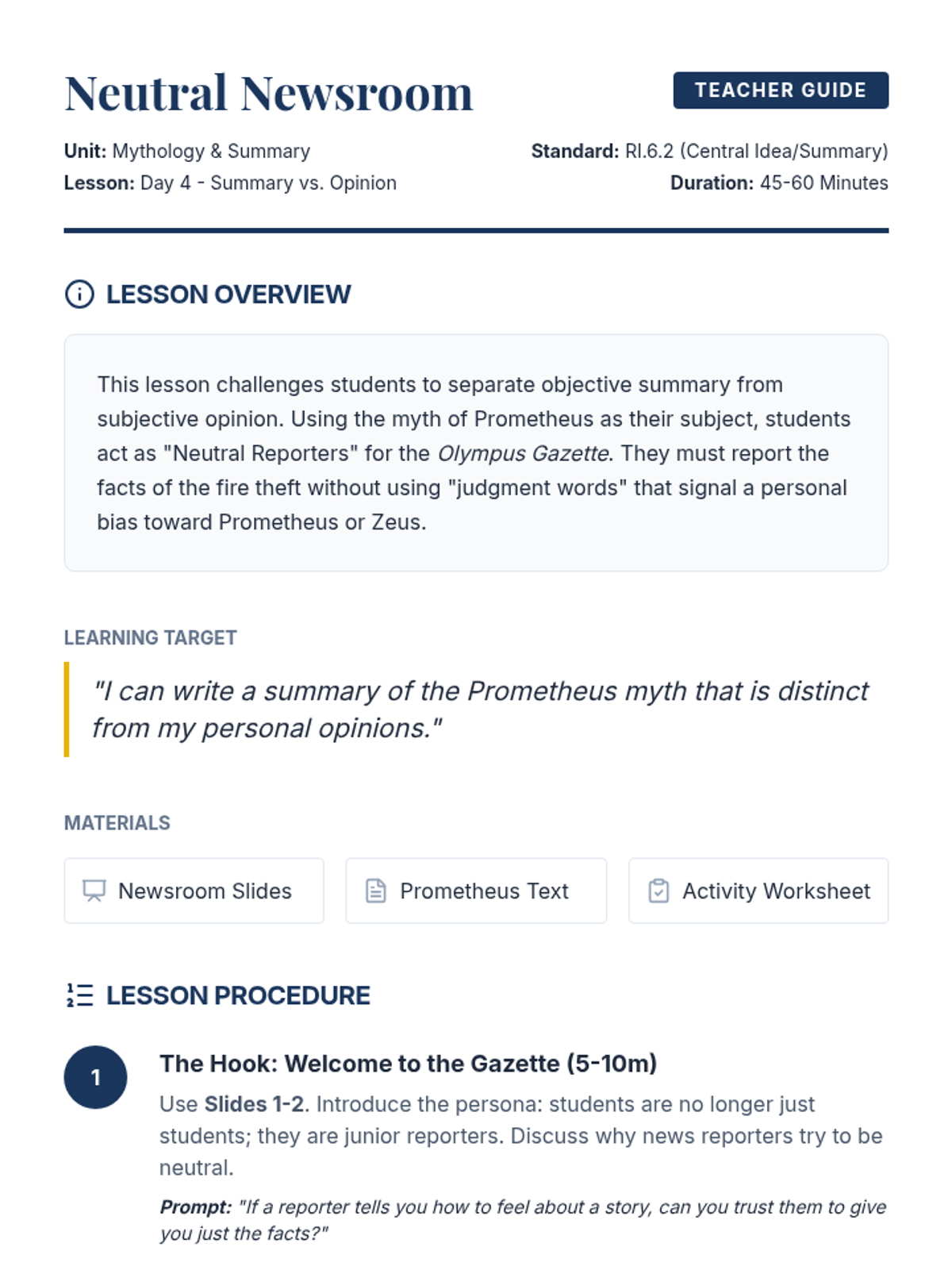
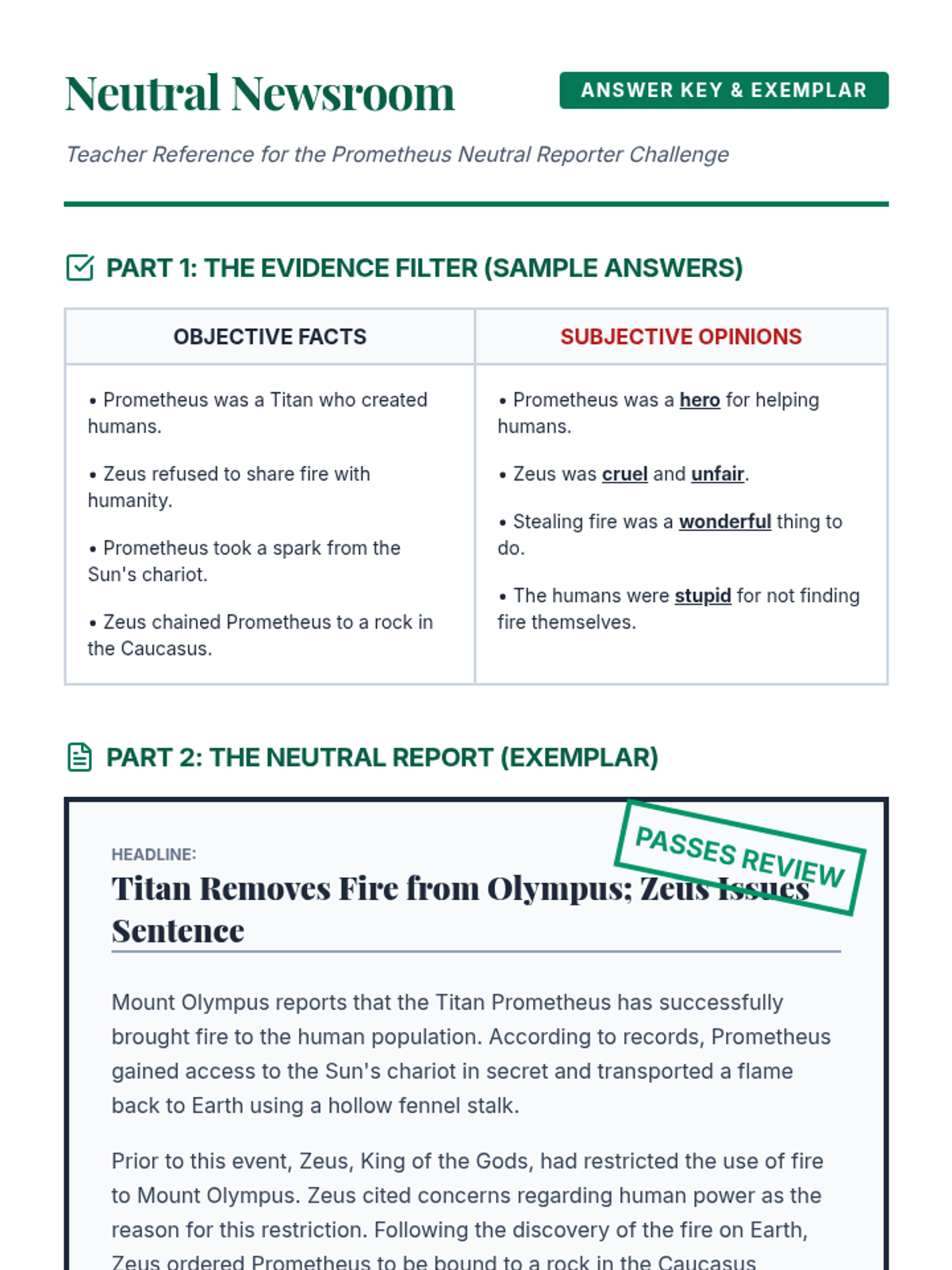
A lesson focused on distinguishing summary from opinion through the lens of the Prometheus myth, featuring a neutral news reporting activity.
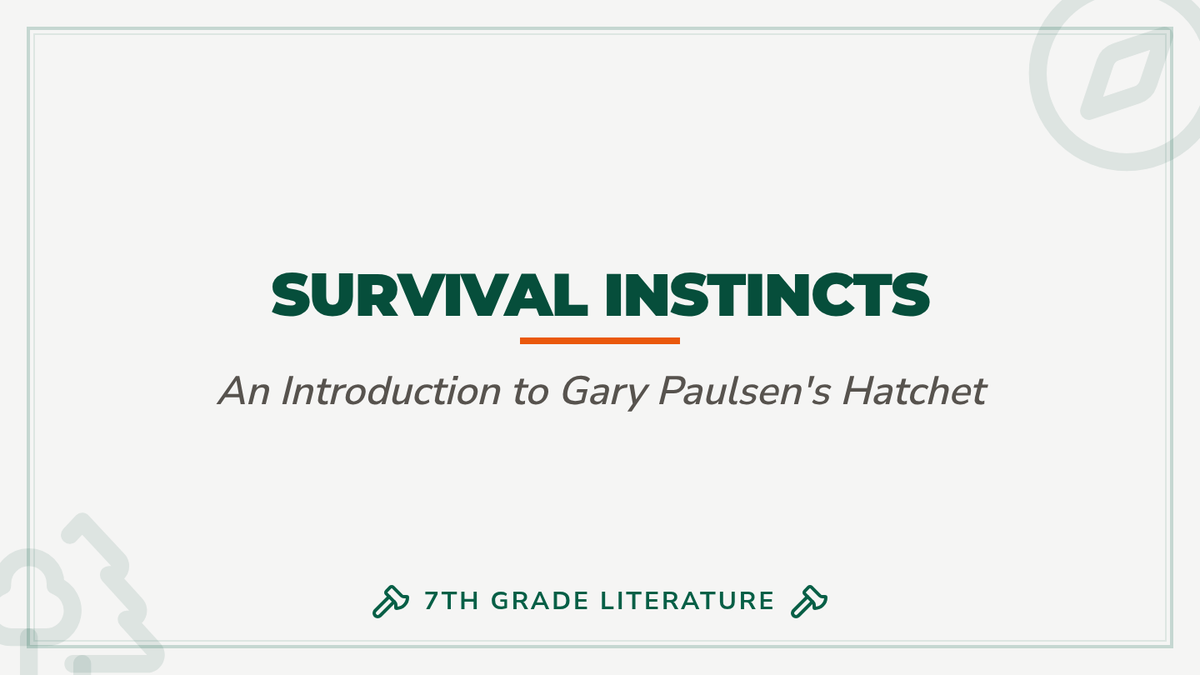
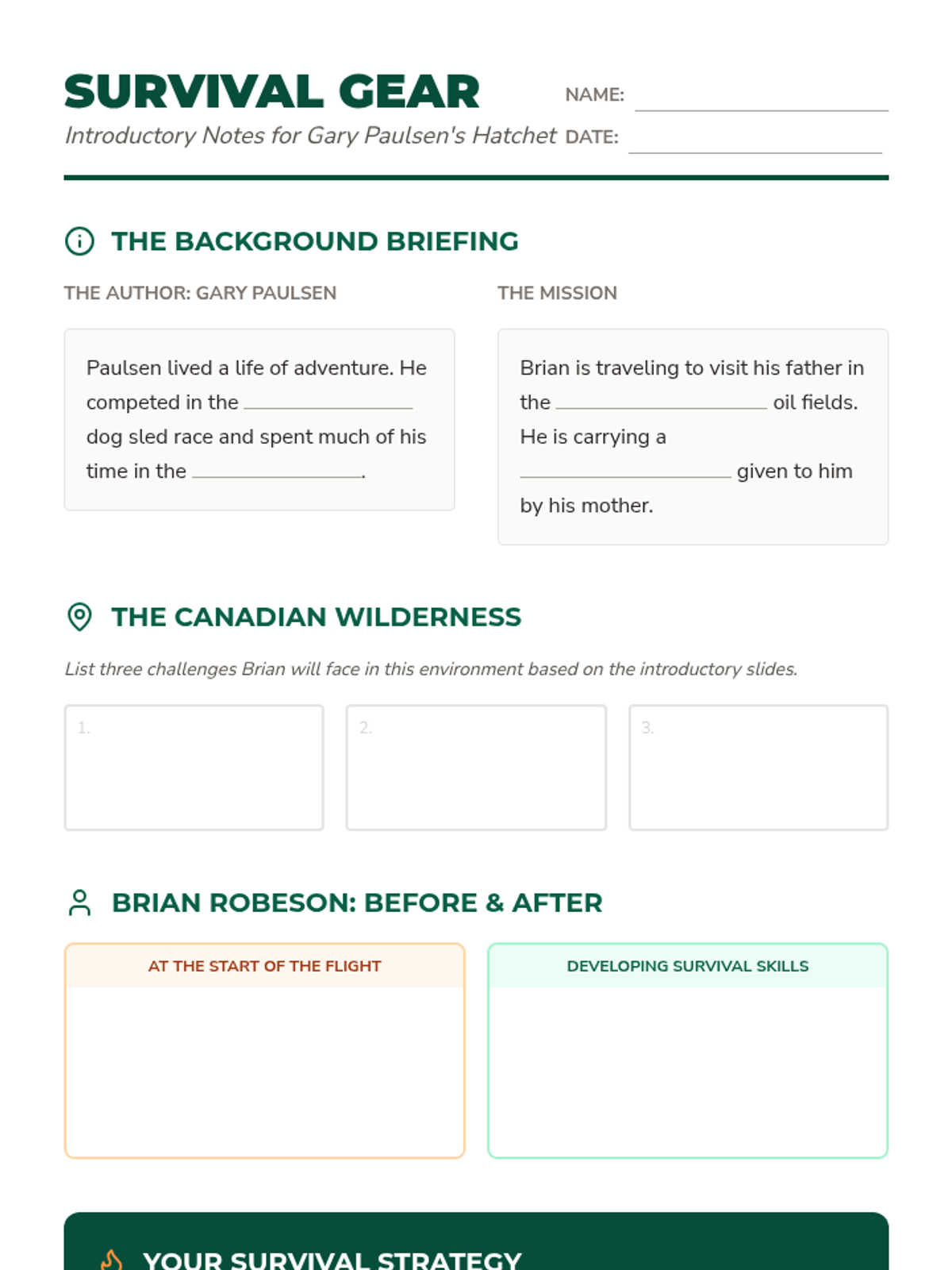
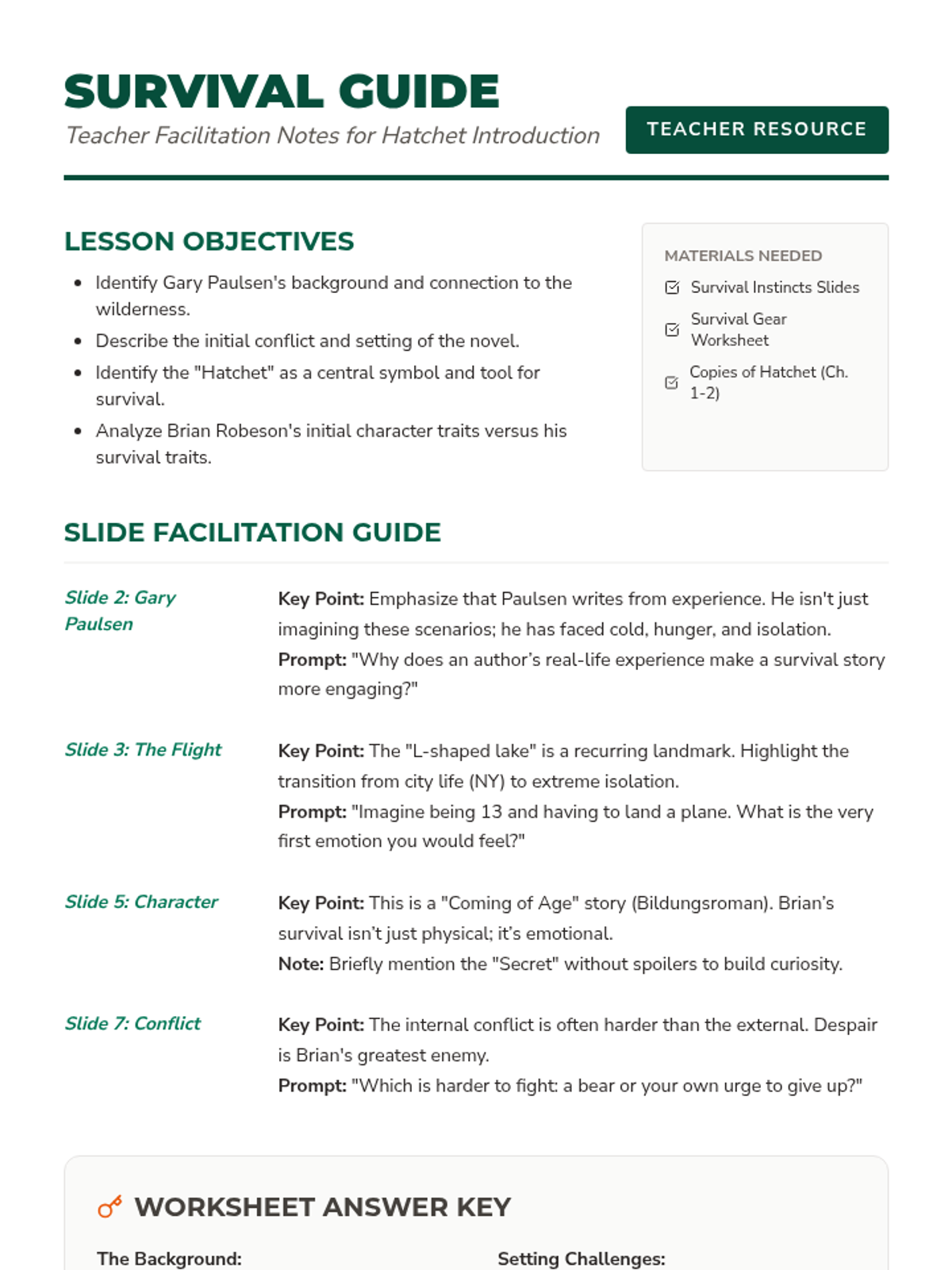
An introductory lesson for the novel Hatchet by Gary Paulsen, focusing on plot, setting, character, and the theme of survival.
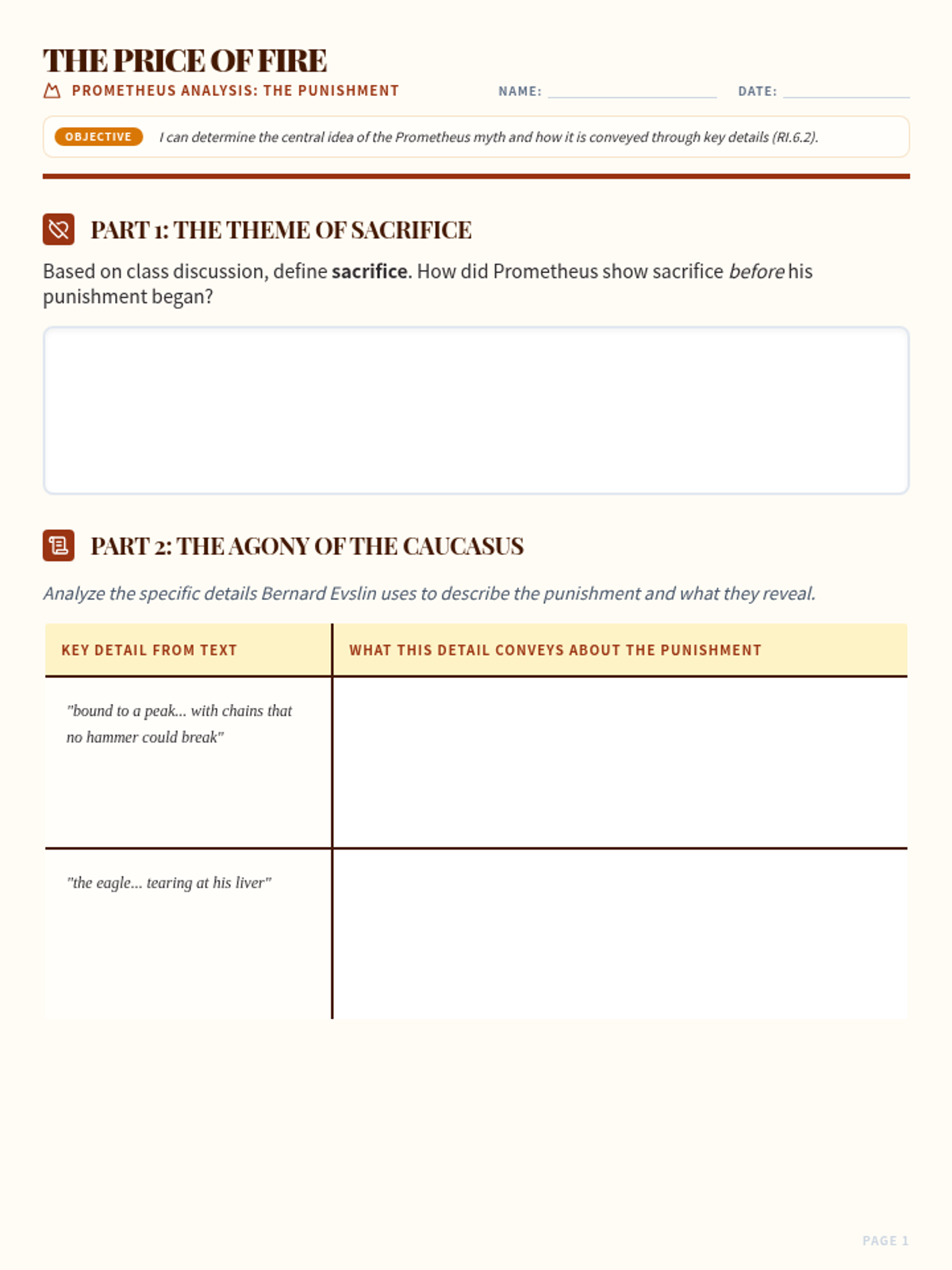
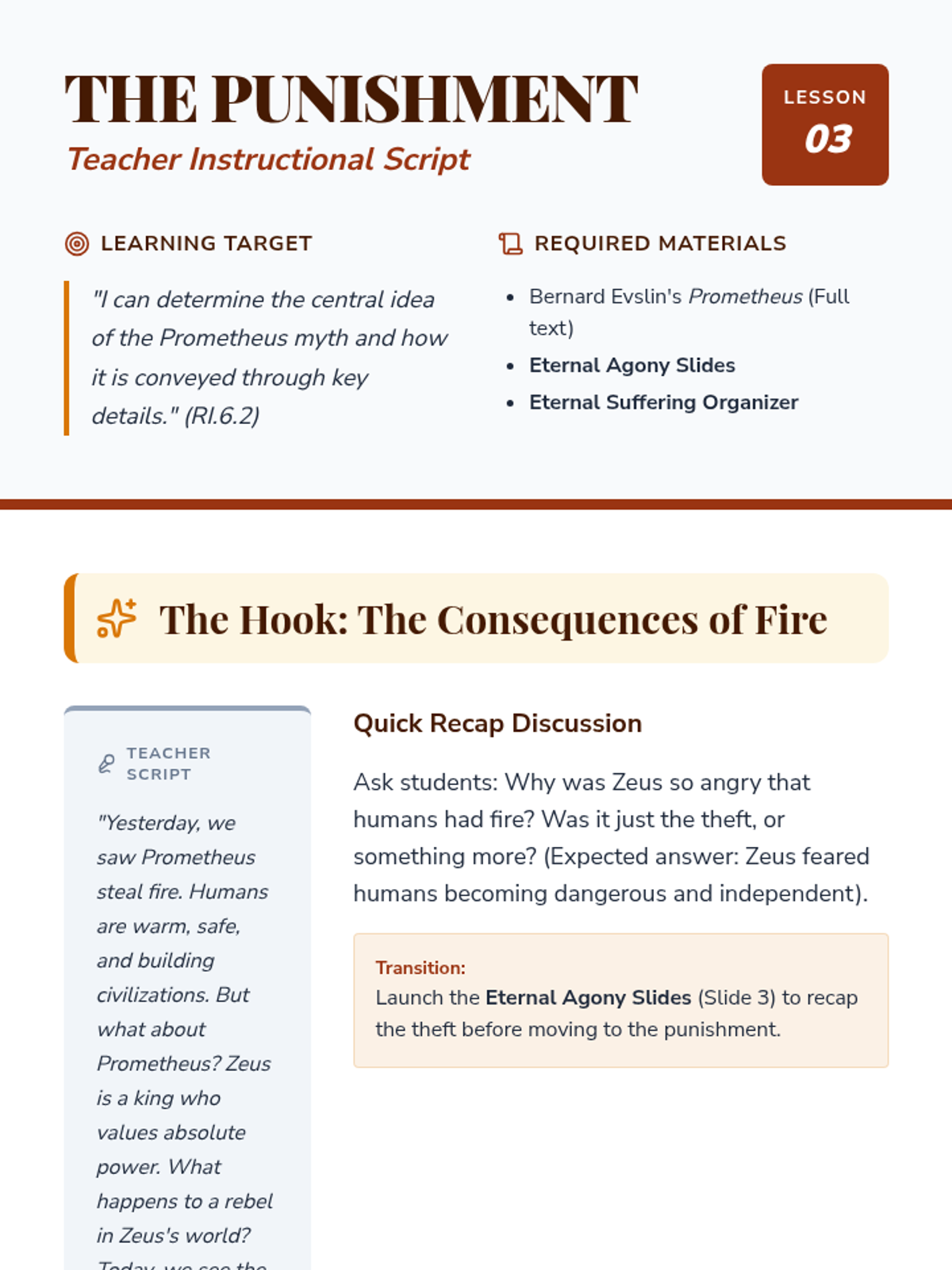
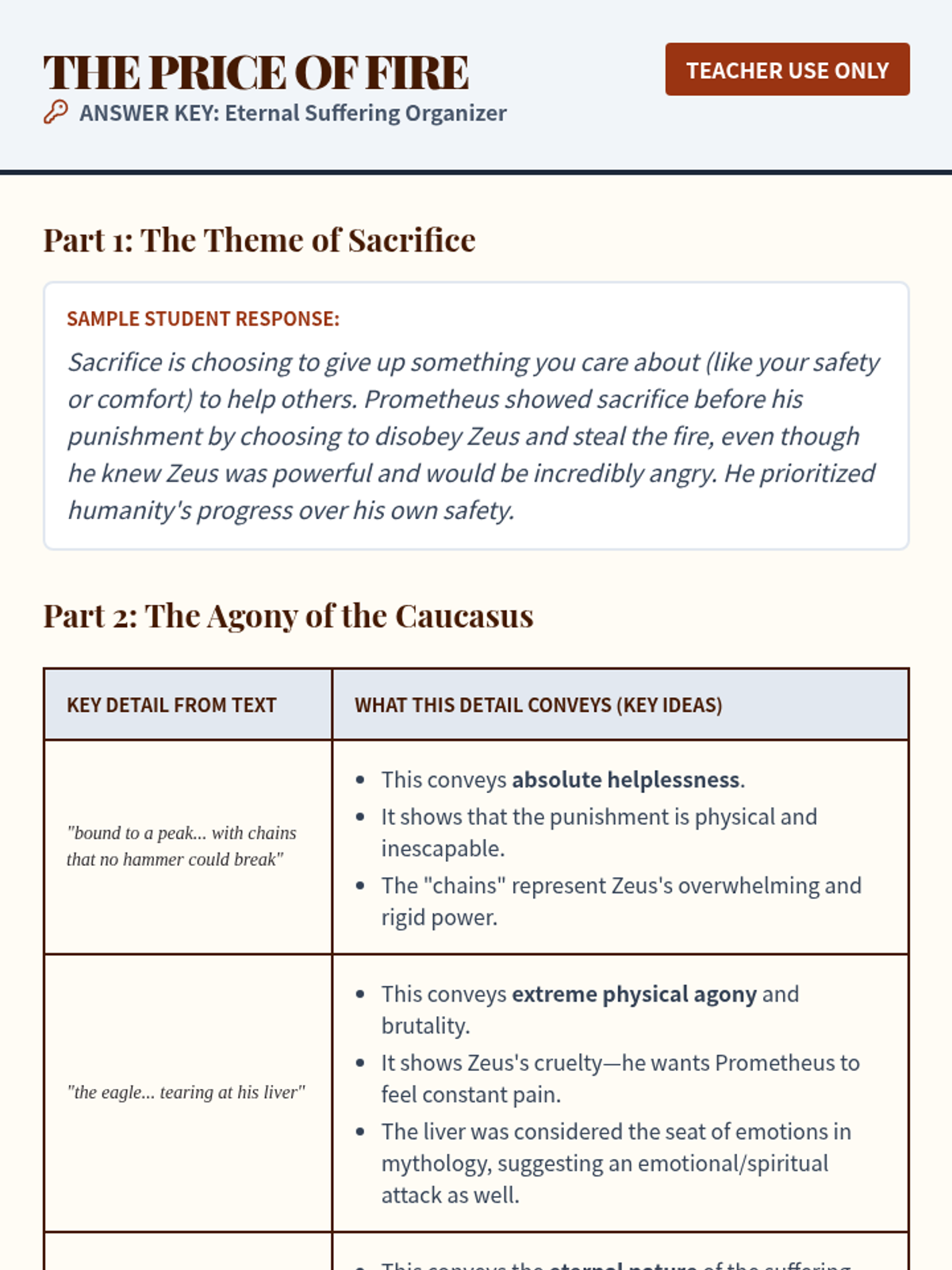
In this lesson, students analyze the climax of the Prometheus myth, focusing on how specific details of his punishment convey the central idea of eternal sacrifice and defiance. Students will use the Bernard Evslin version of the text to identify key details and explain their significance.
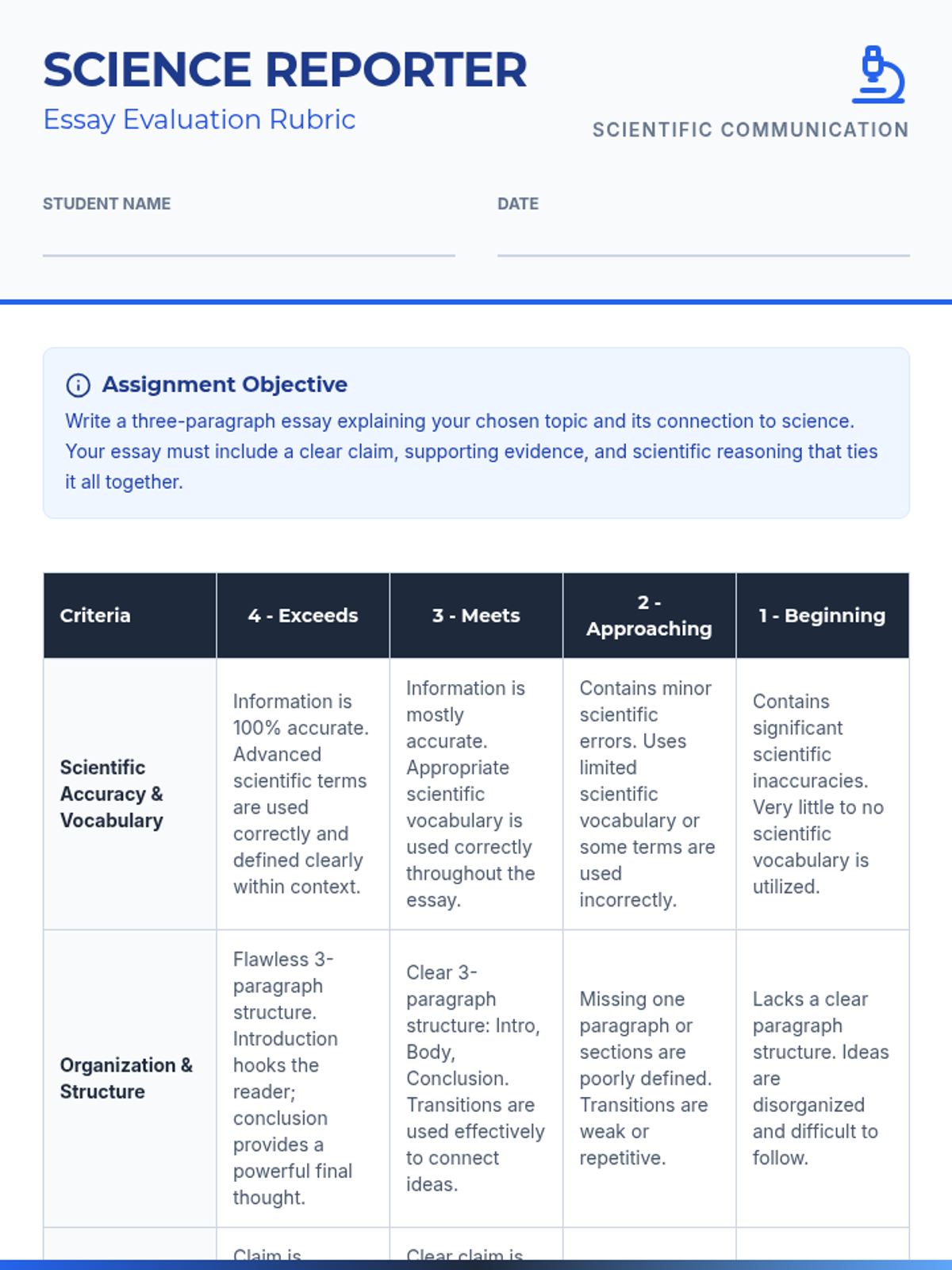
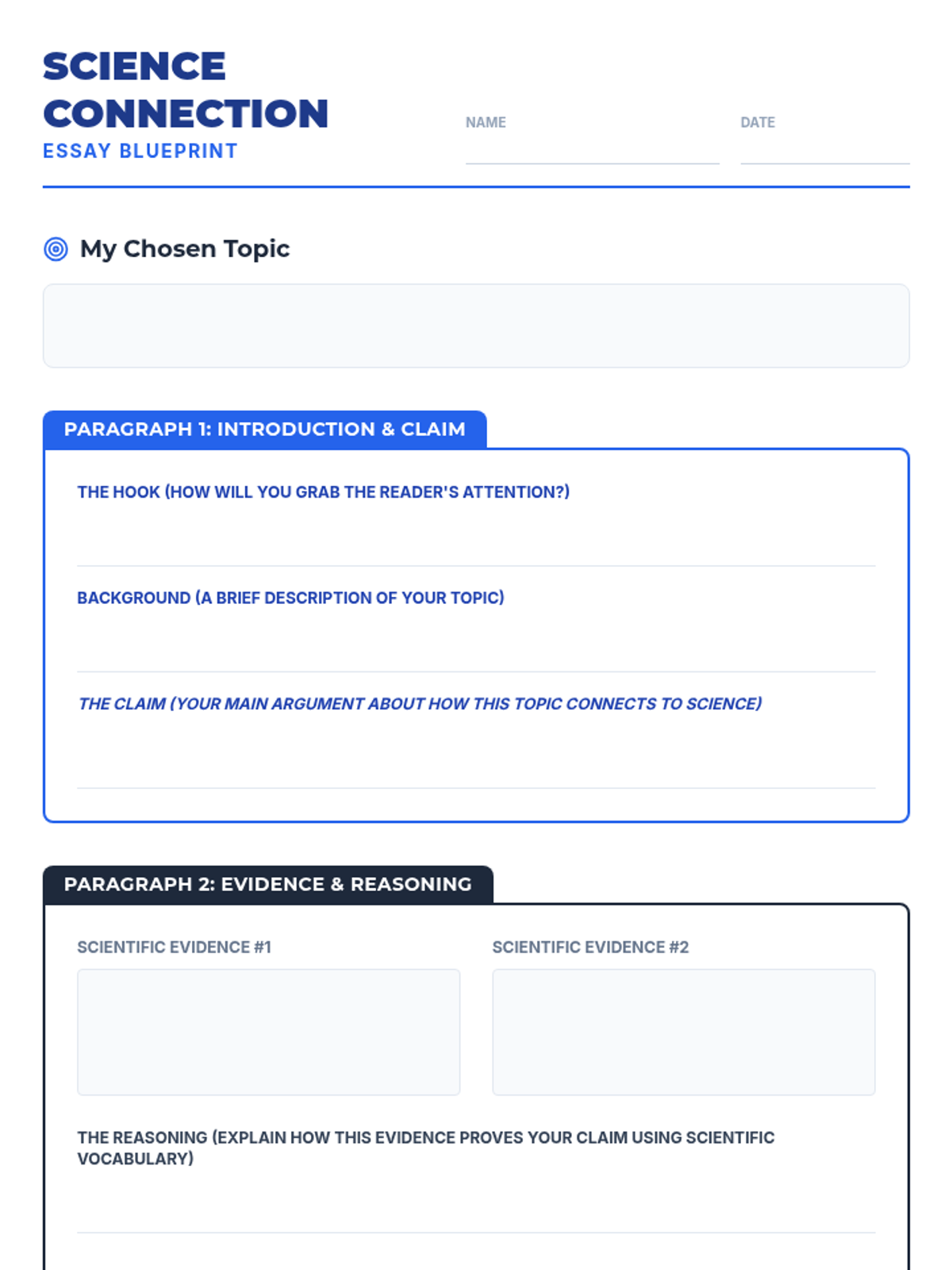
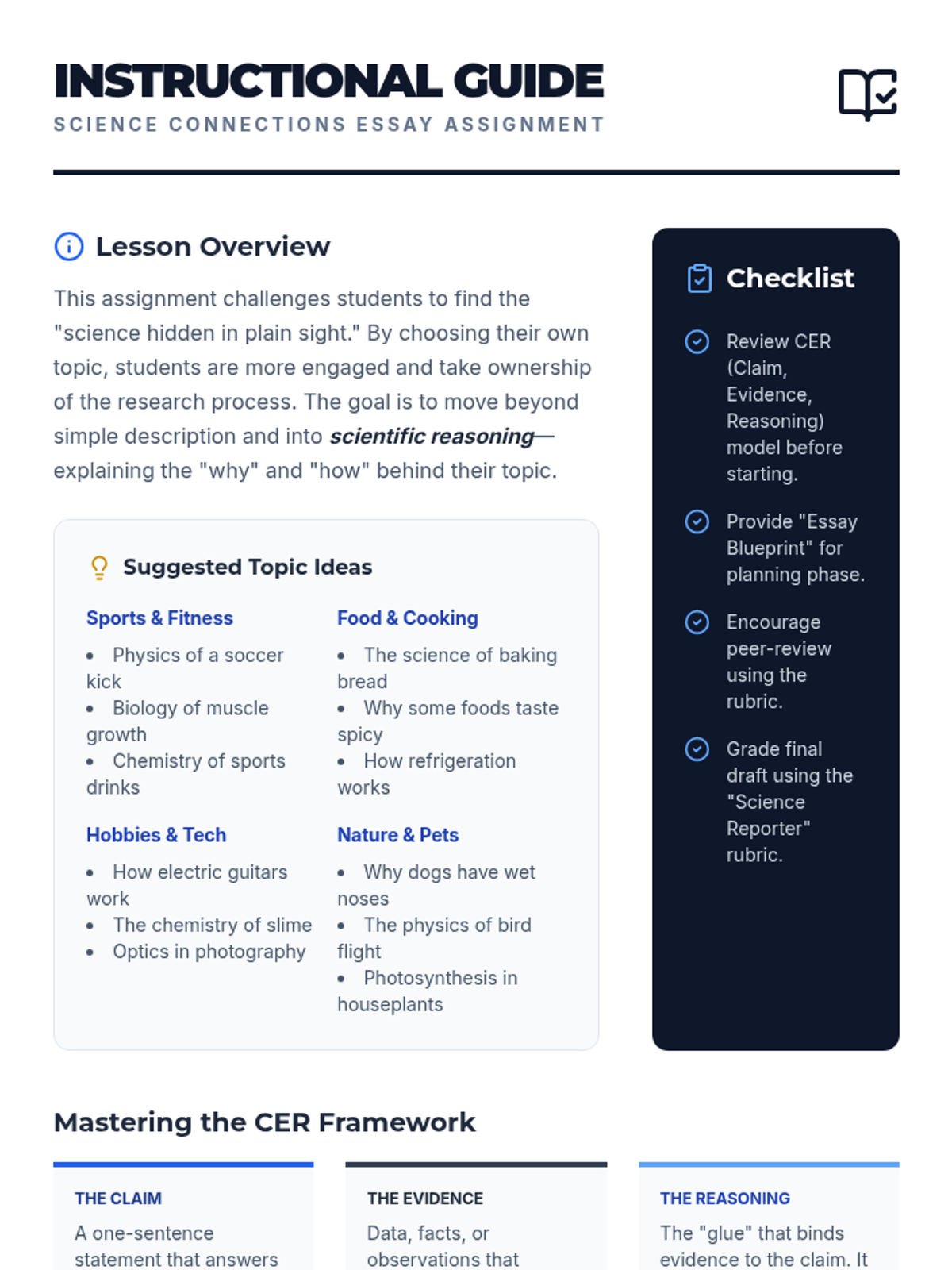
A lesson focused on helping students write a structured three-paragraph essay connecting a self-chosen topic to scientific principles.
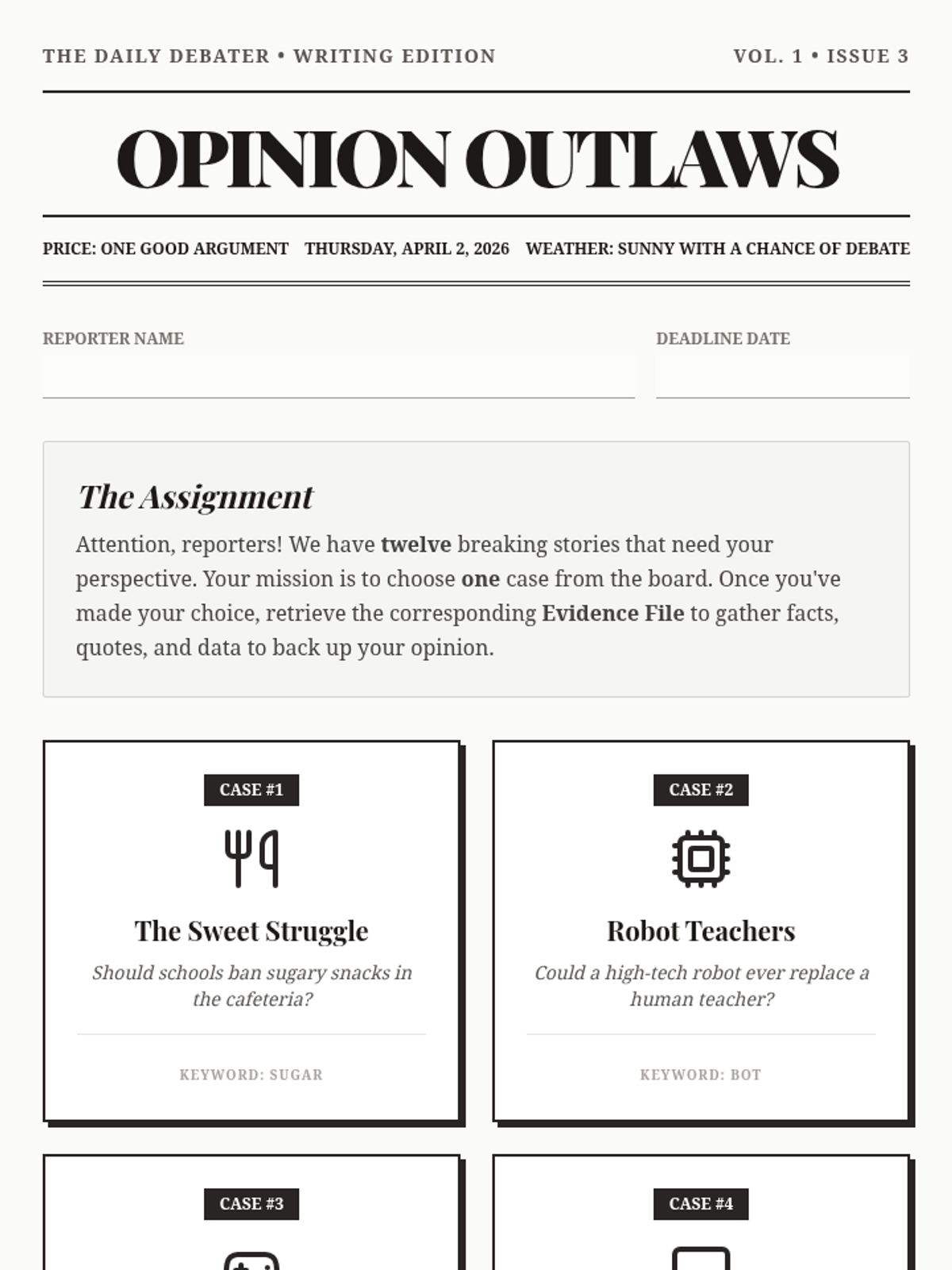
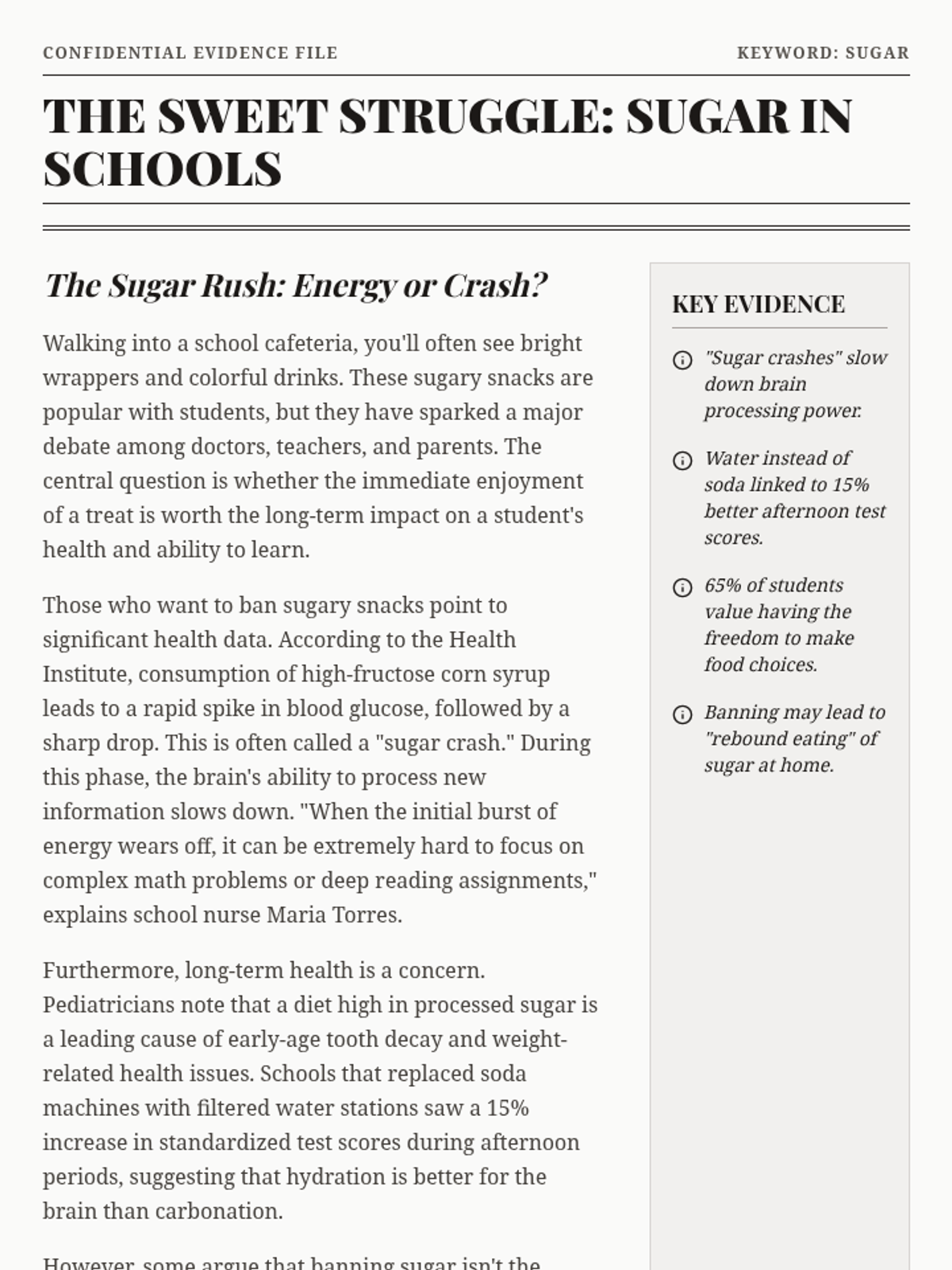
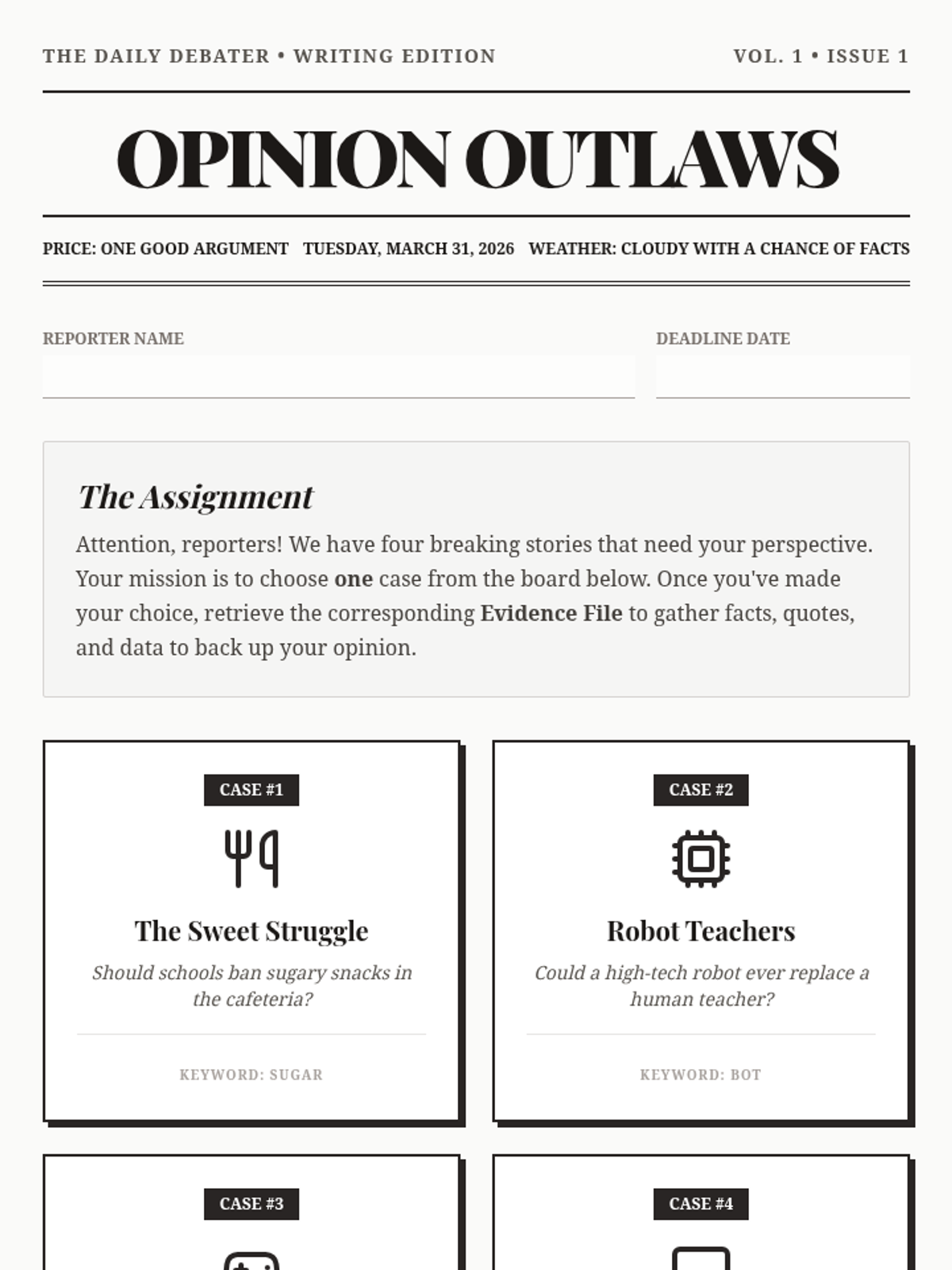
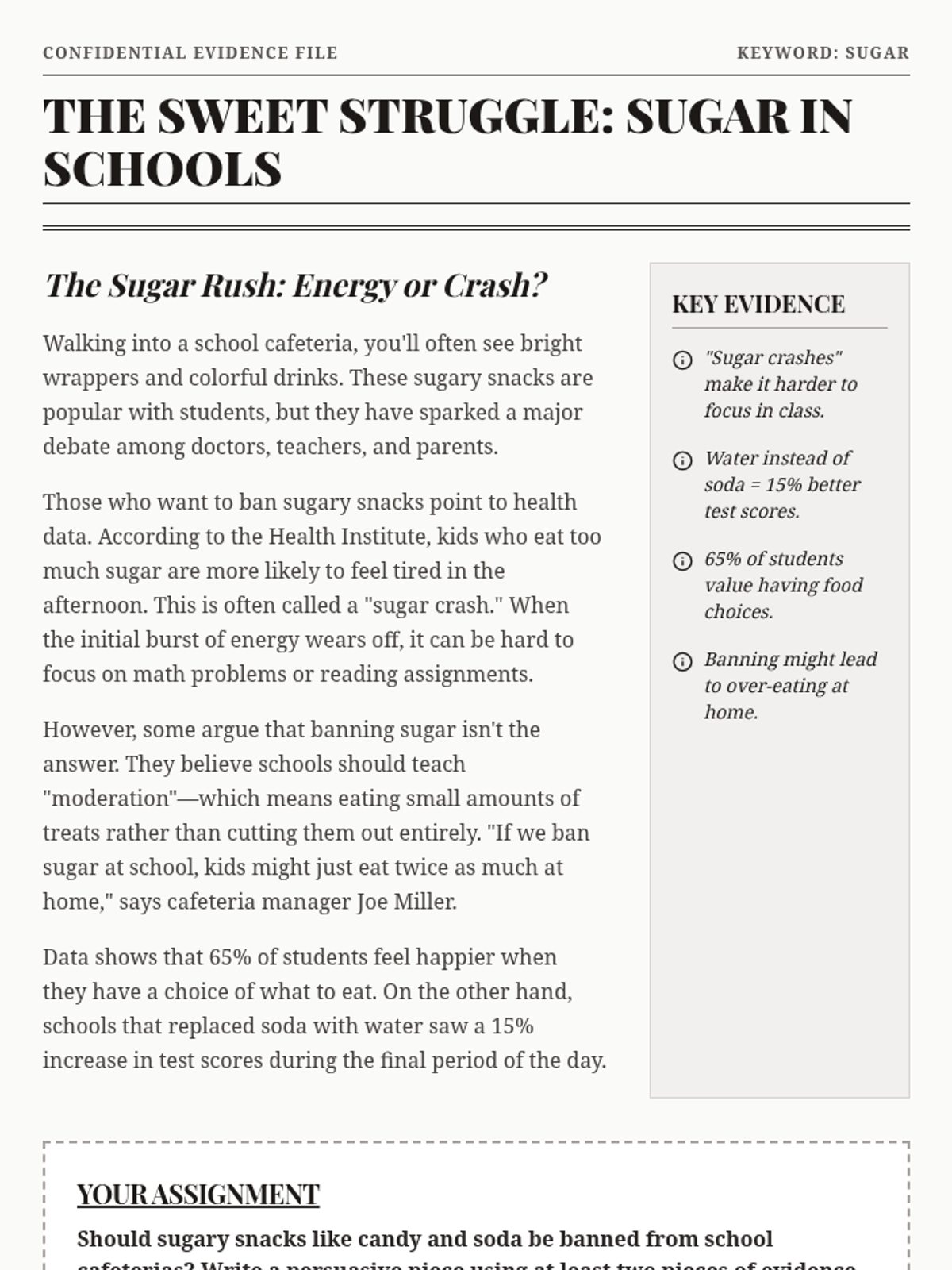
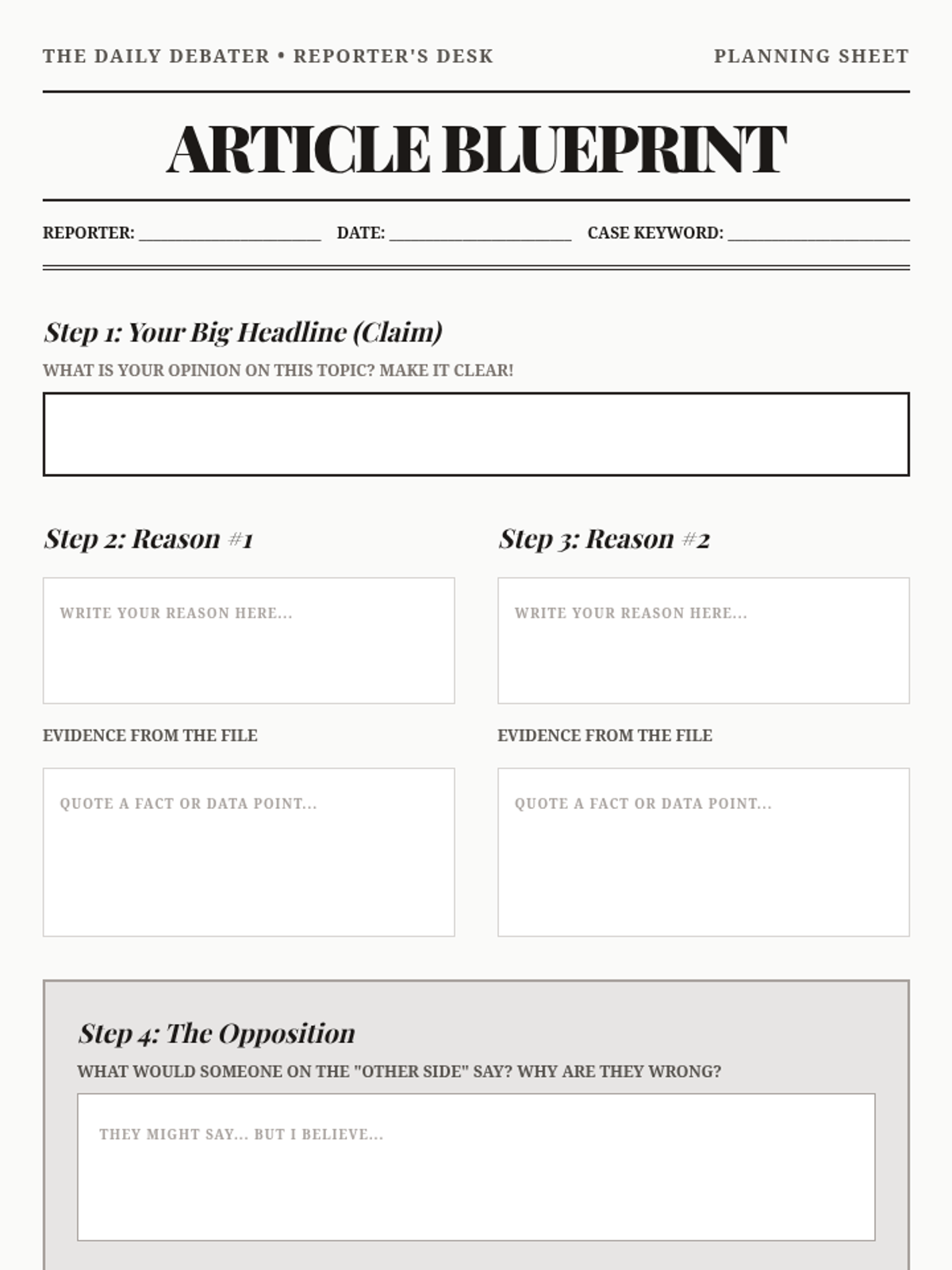
A choice-based writing lesson where students select an opinion prompt and use provided short articles to gather evidence for their persuasive pieces.
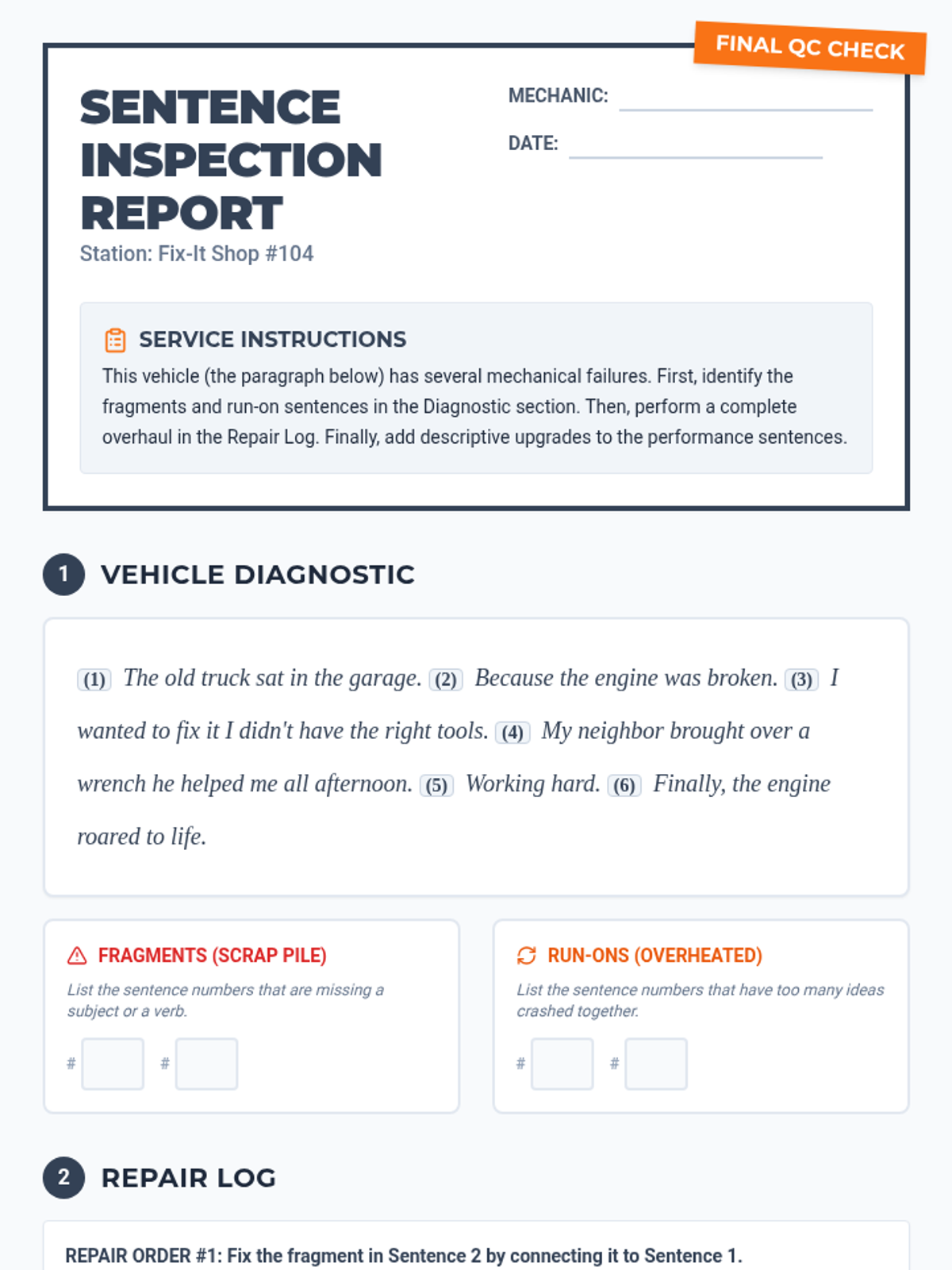
A grammar lesson focusing on identifying complete sentences and repairing run-on sentences using a 'Fix-It Shop' theme. Includes high-support visuals and oral practice frames for ESL students.
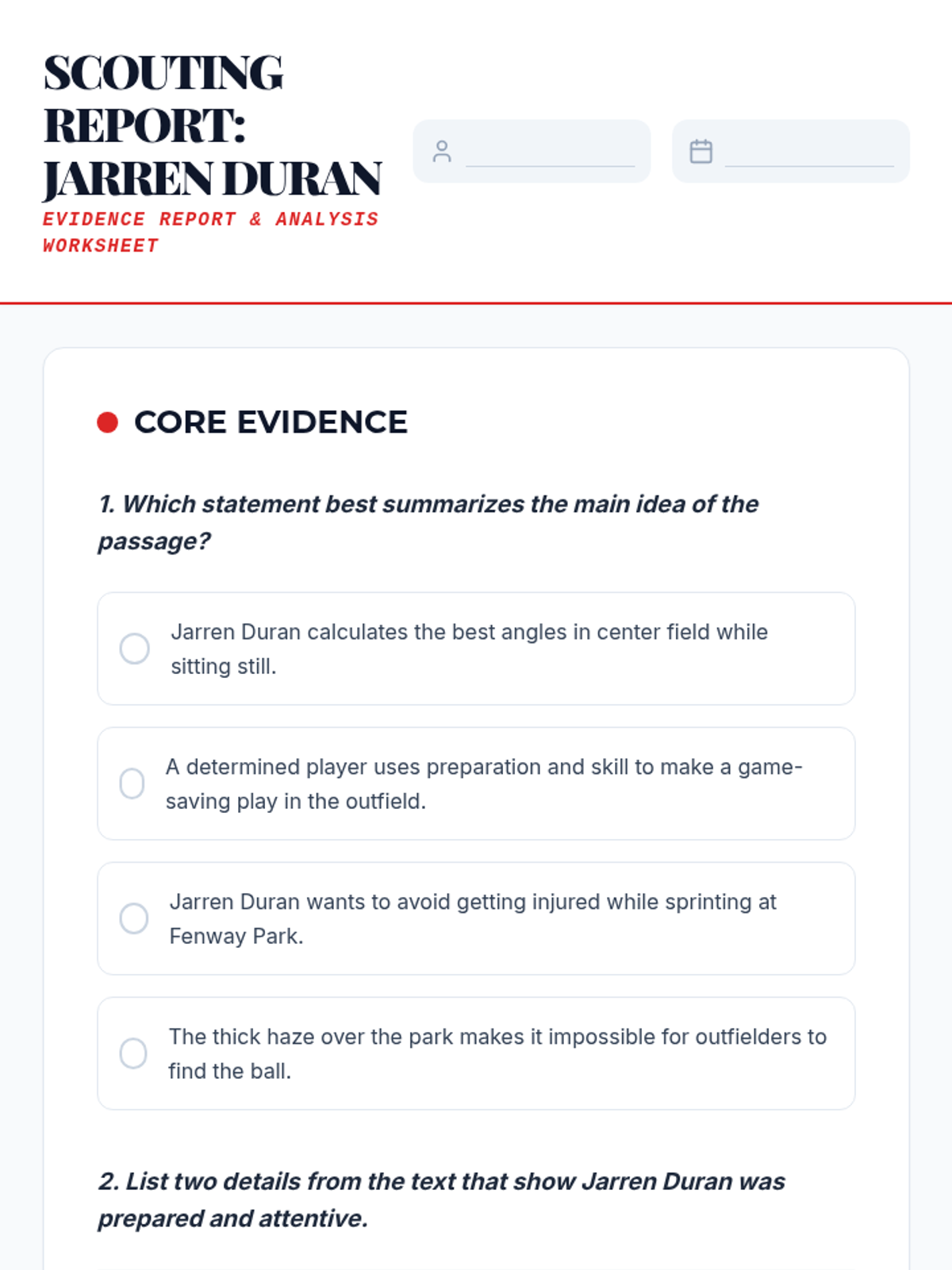
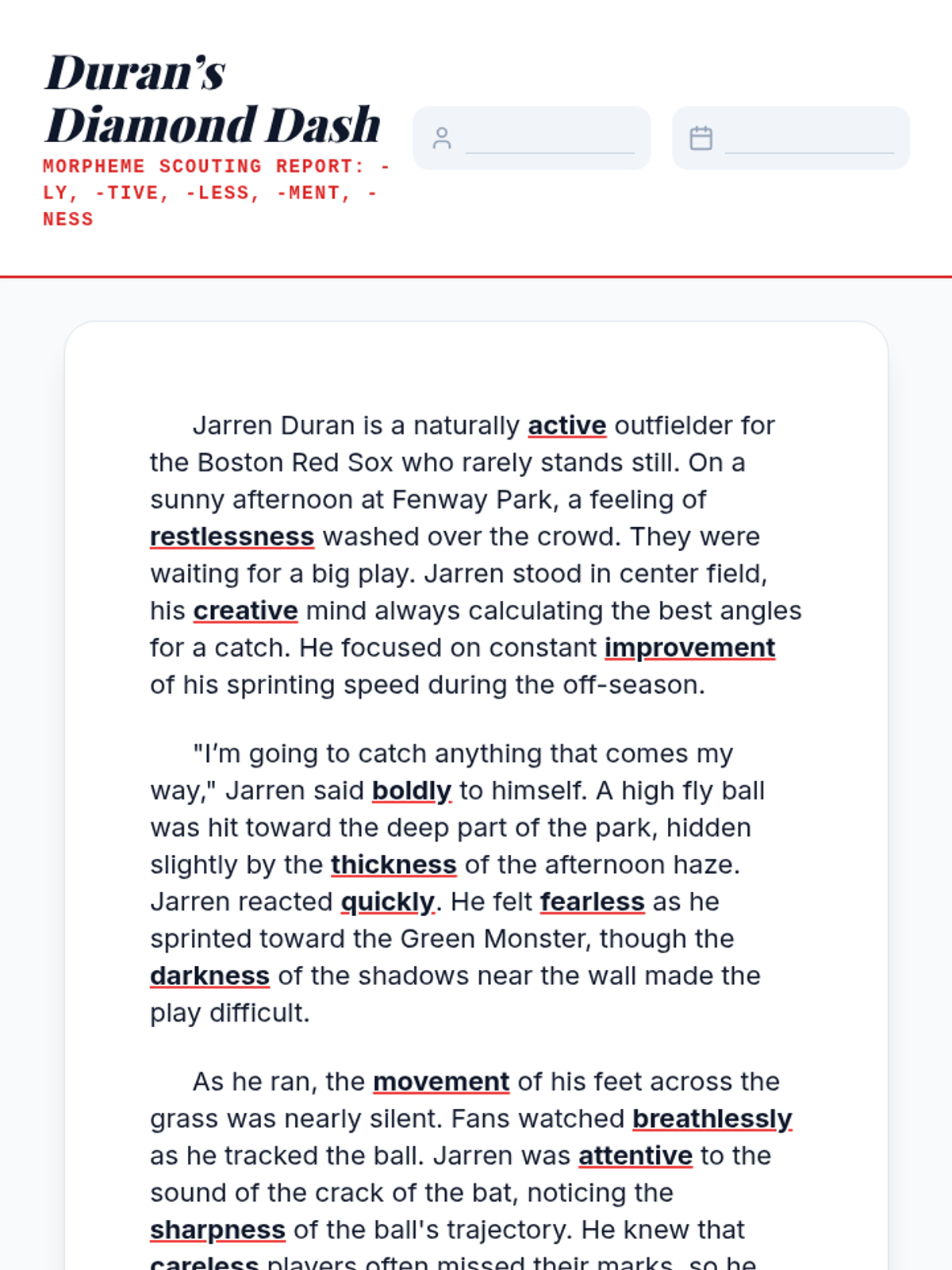
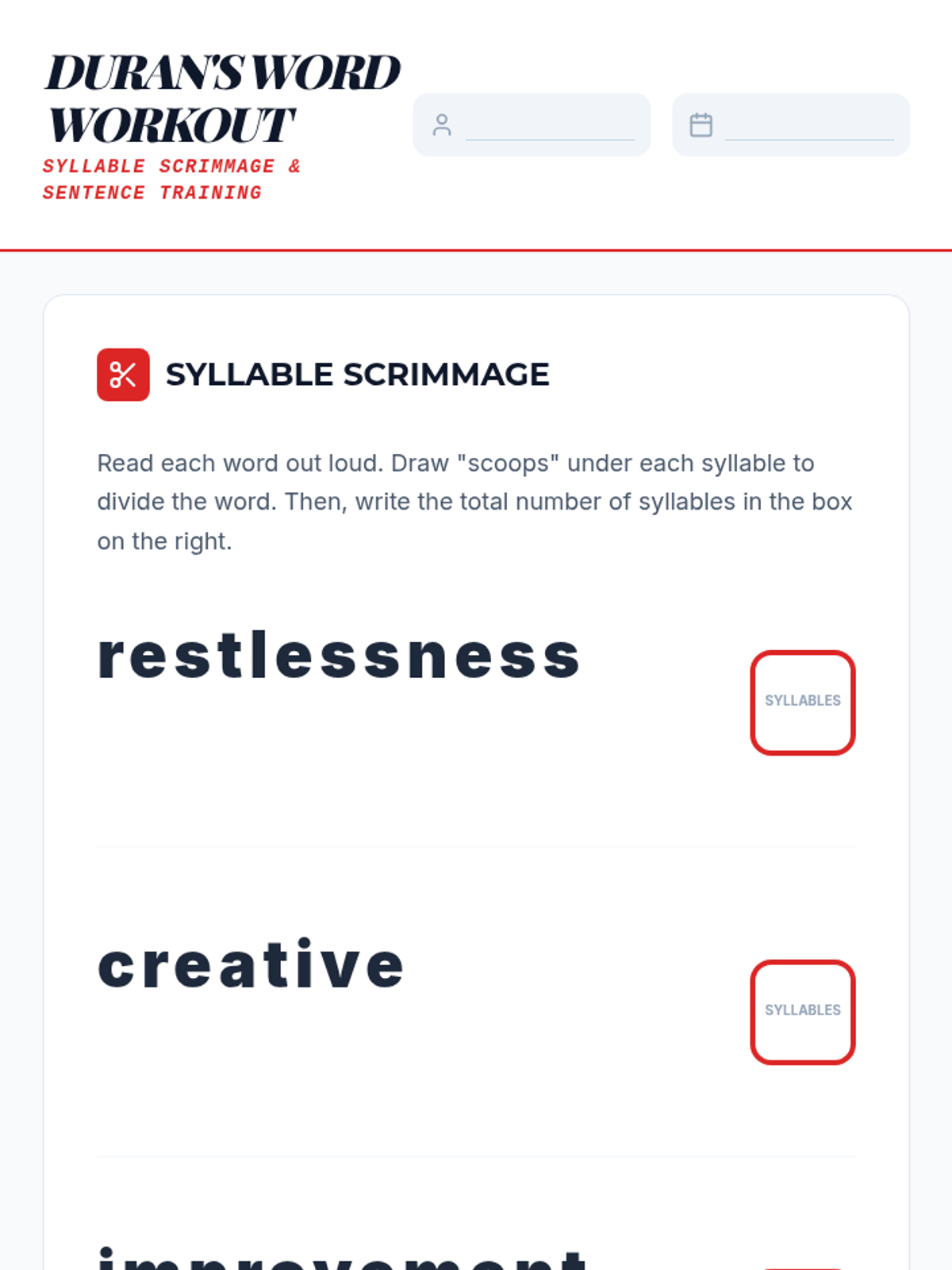
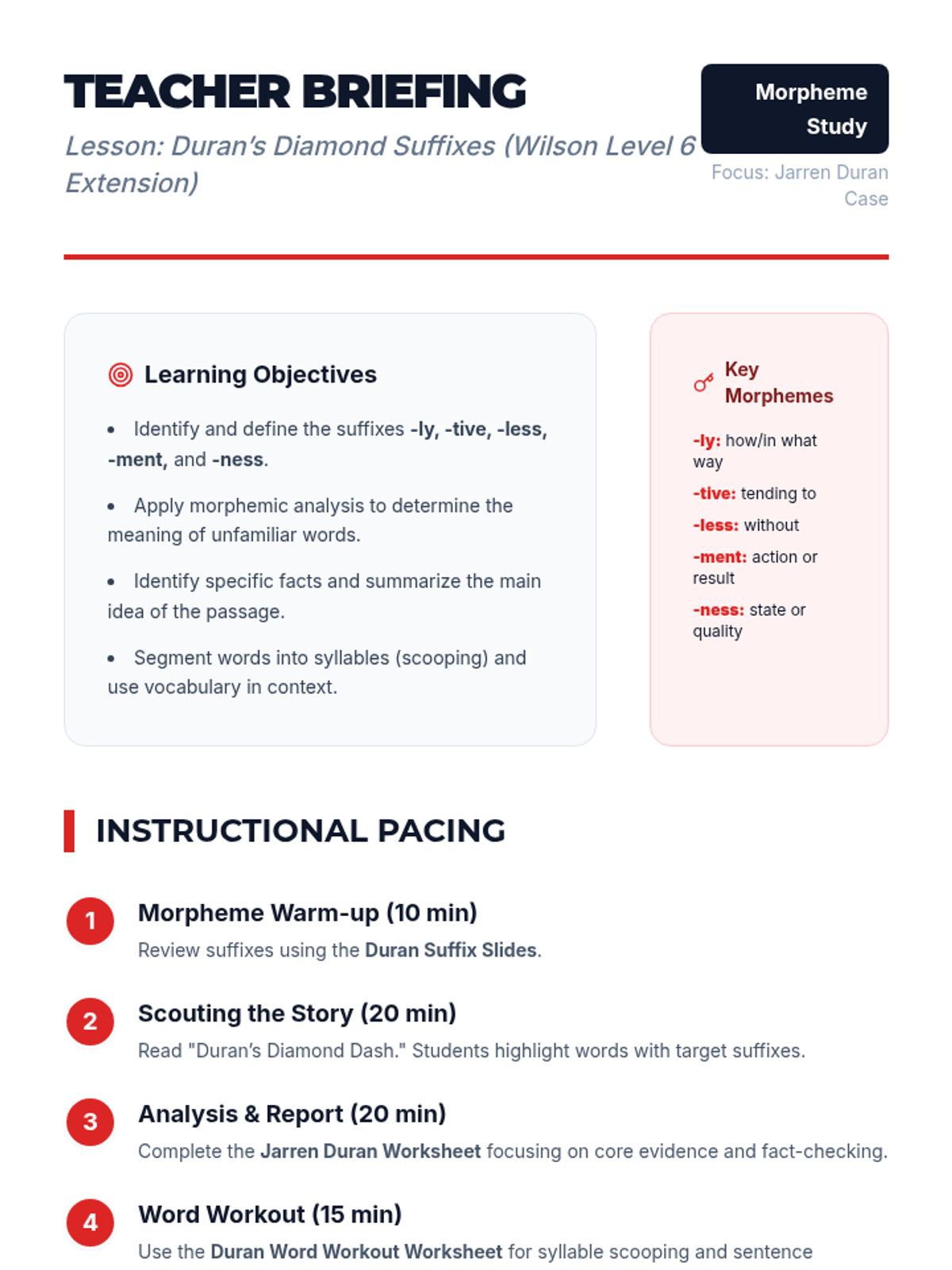
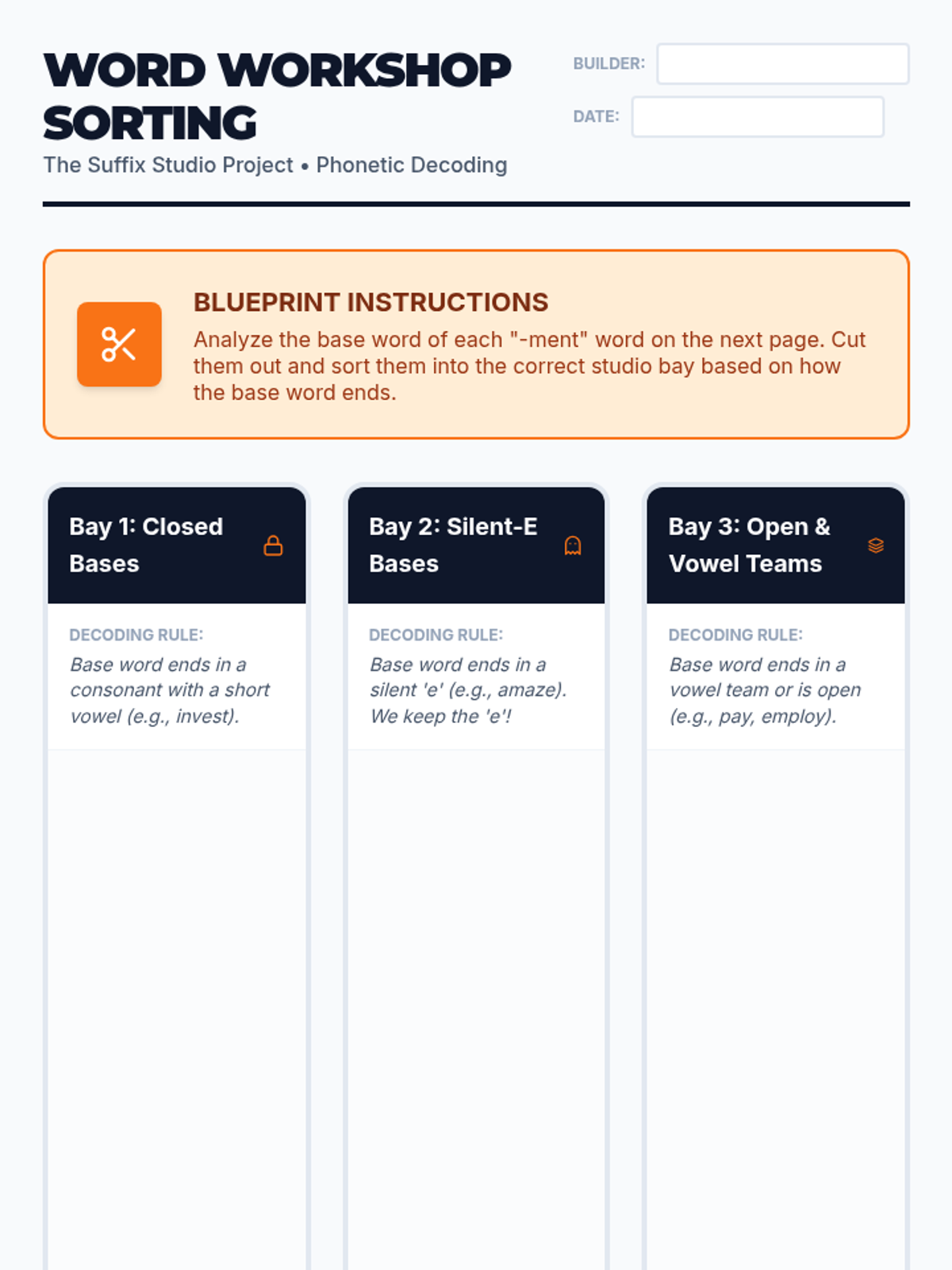
A structured literacy lesson focusing on the suffixes -ly, -tive, -less, -ment, and -ness, featuring a reading passage about Red Sox star Jarren Duran and comprehension exercises.
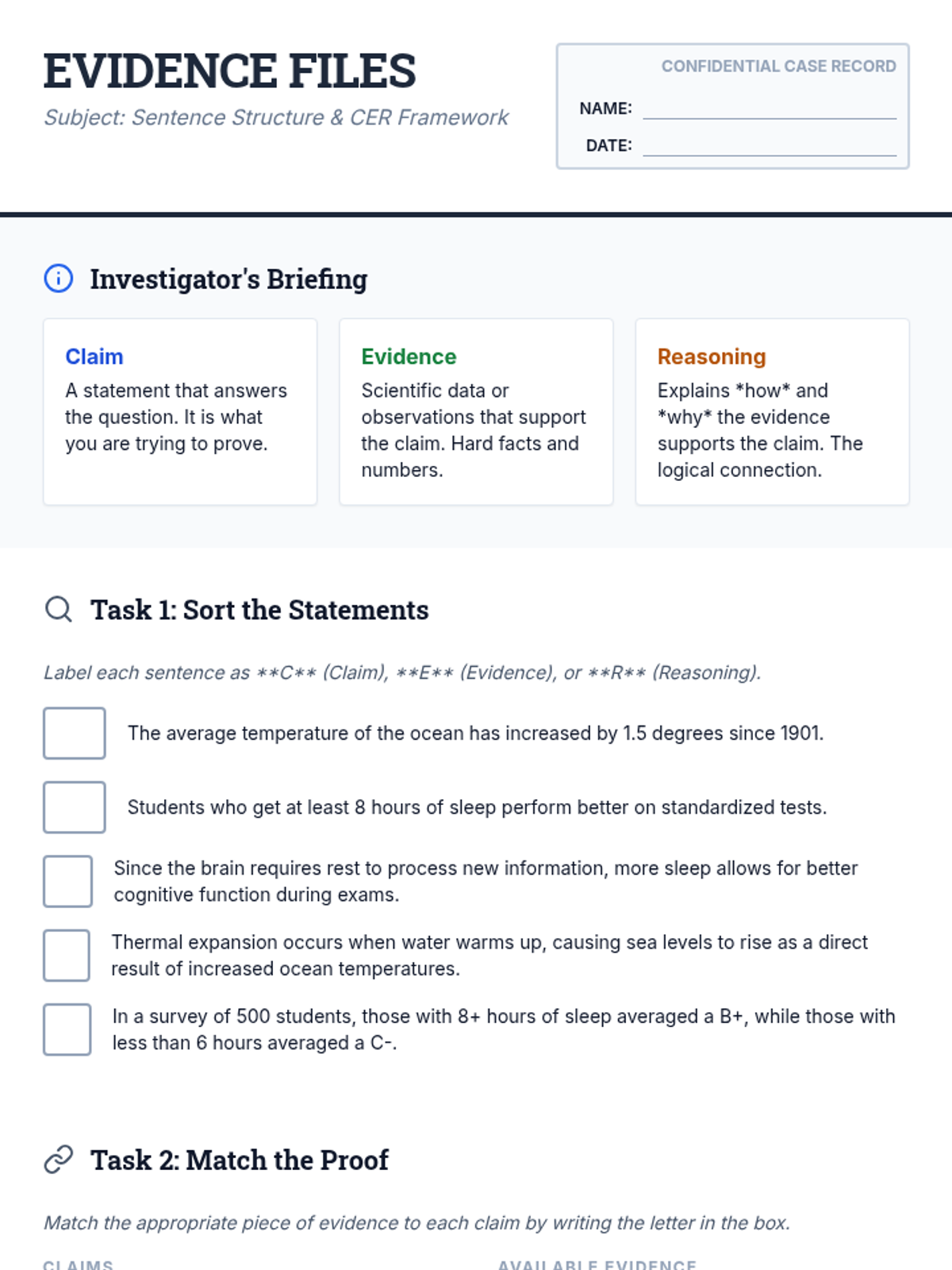
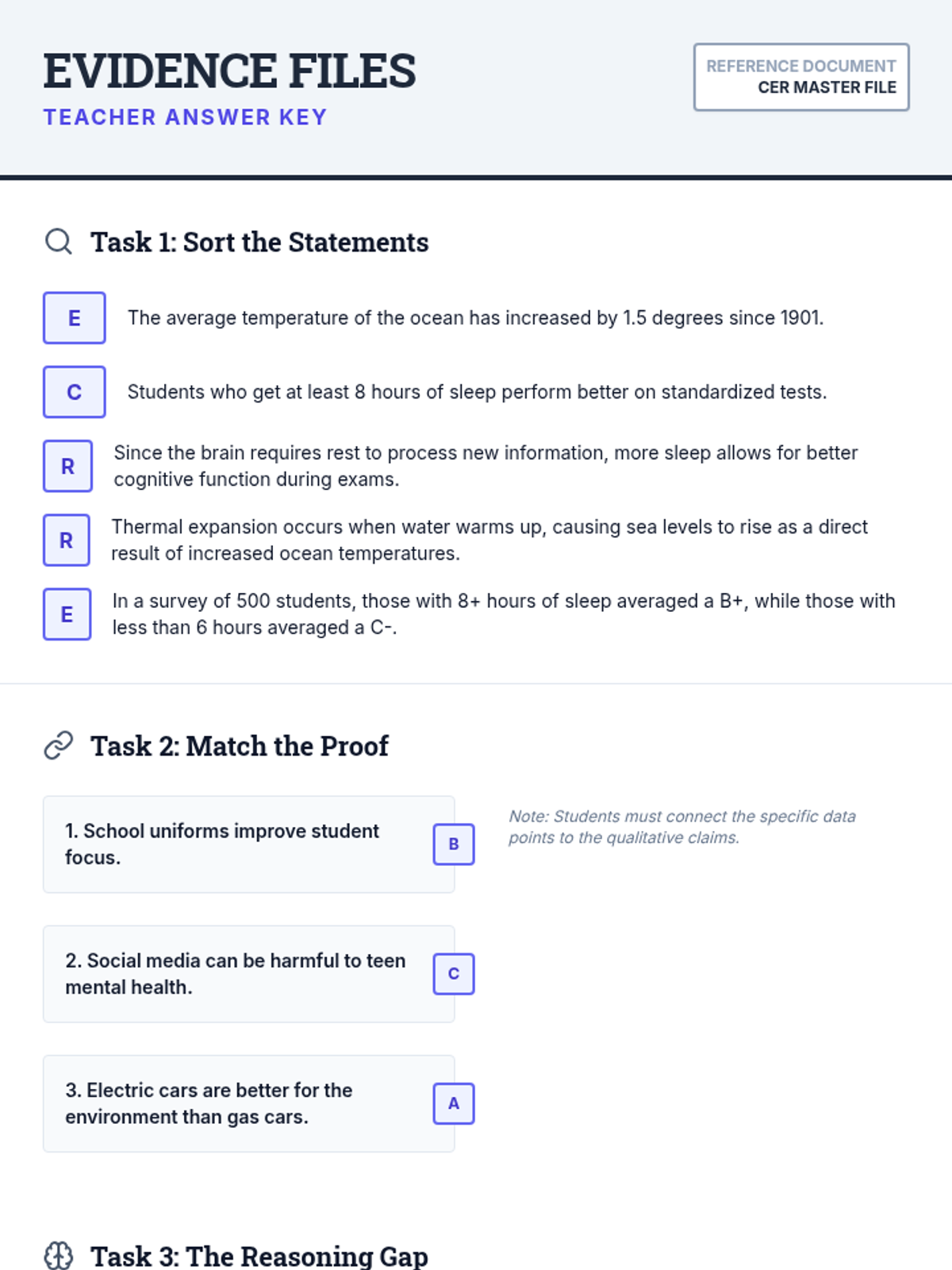
A lesson focused on mastering the Claim, Evidence, and Reasoning (CER) framework through investigative practice and sentence structure analysis.
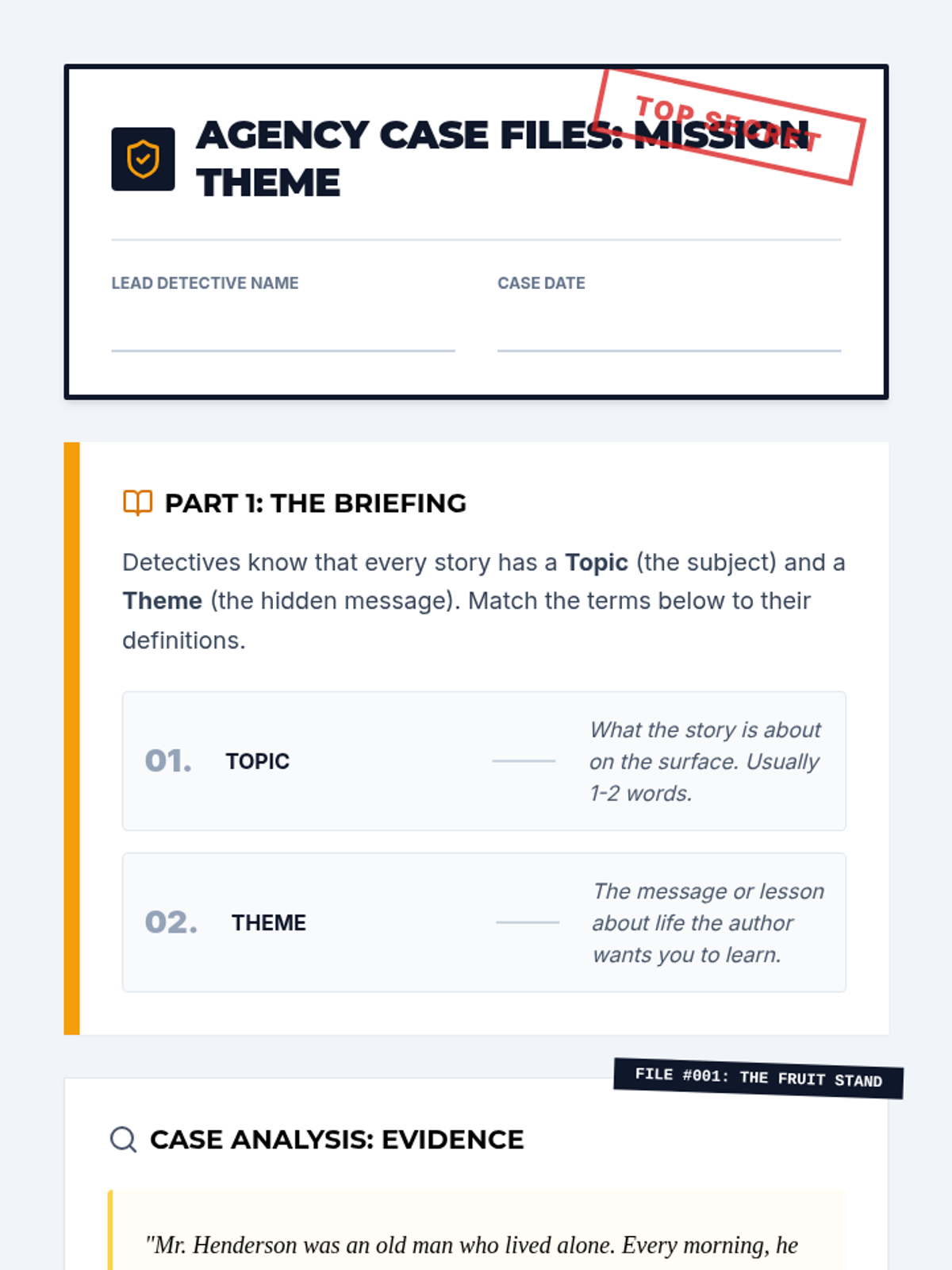
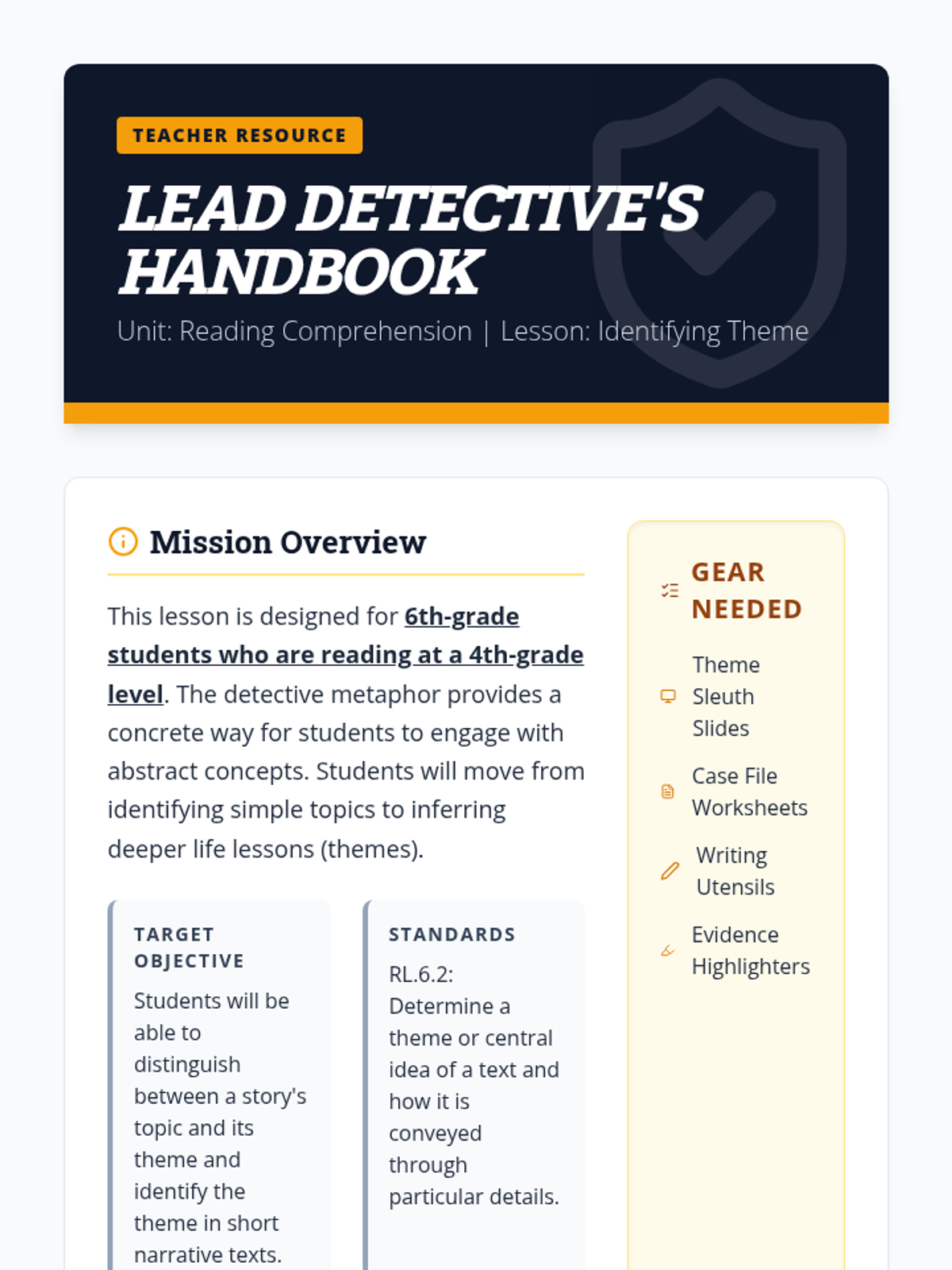
A lesson designed for 6th grade students reading at a 4th-grade level, focusing on identifying the theme of a story using the 'Story Detective' metaphor. Students learn to distinguish between topic and theme while analyzing short 'case files'.
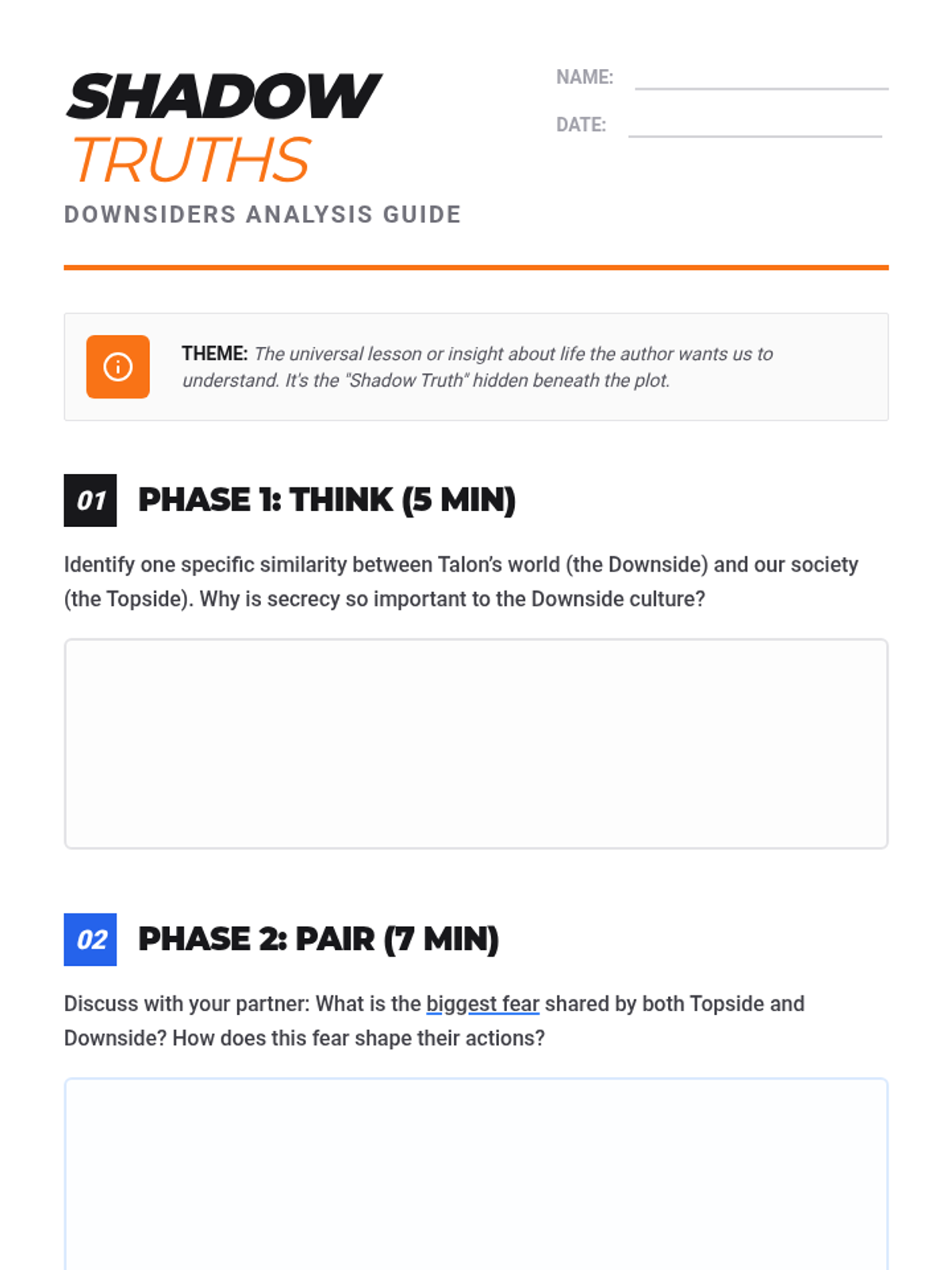
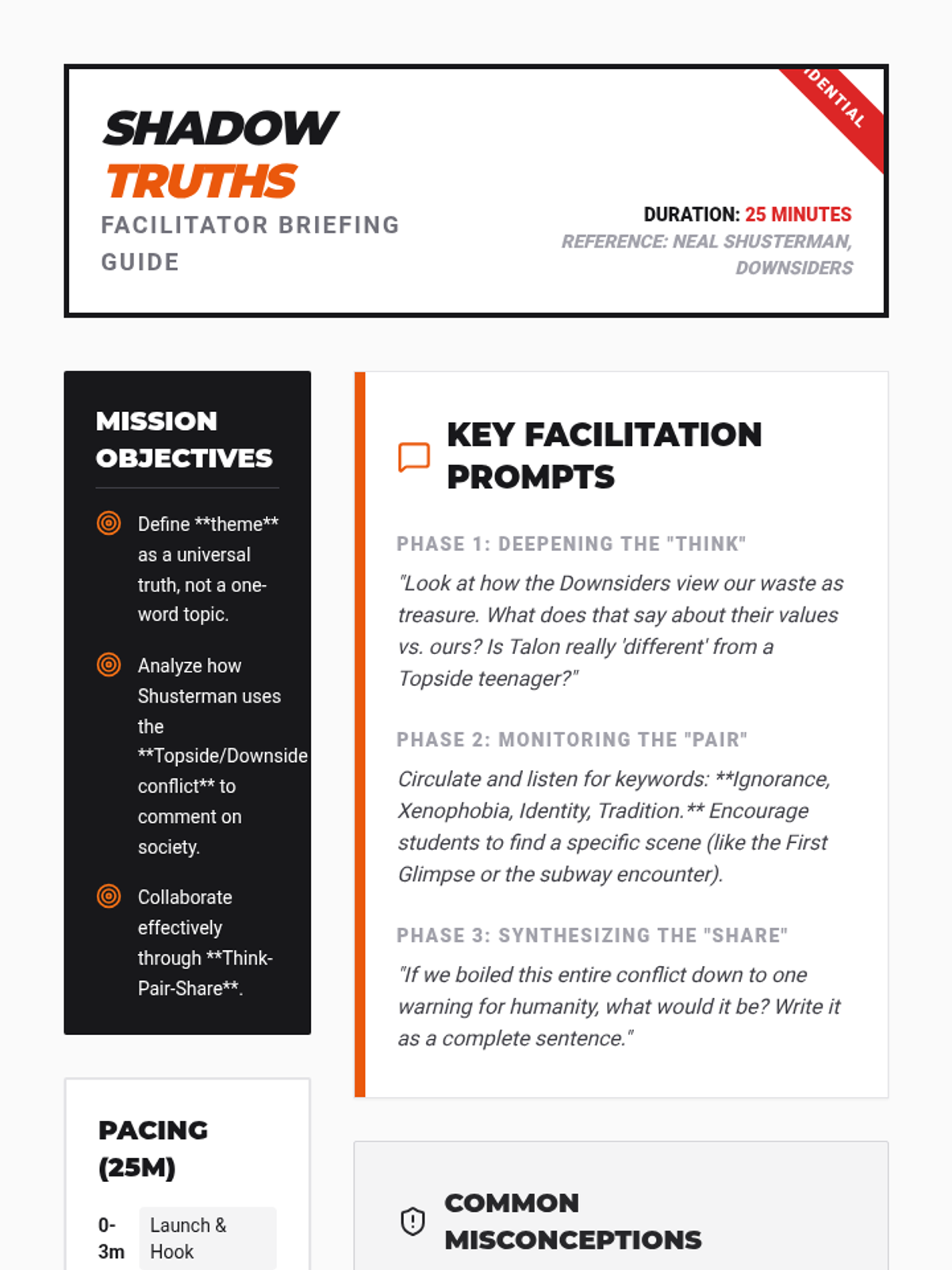
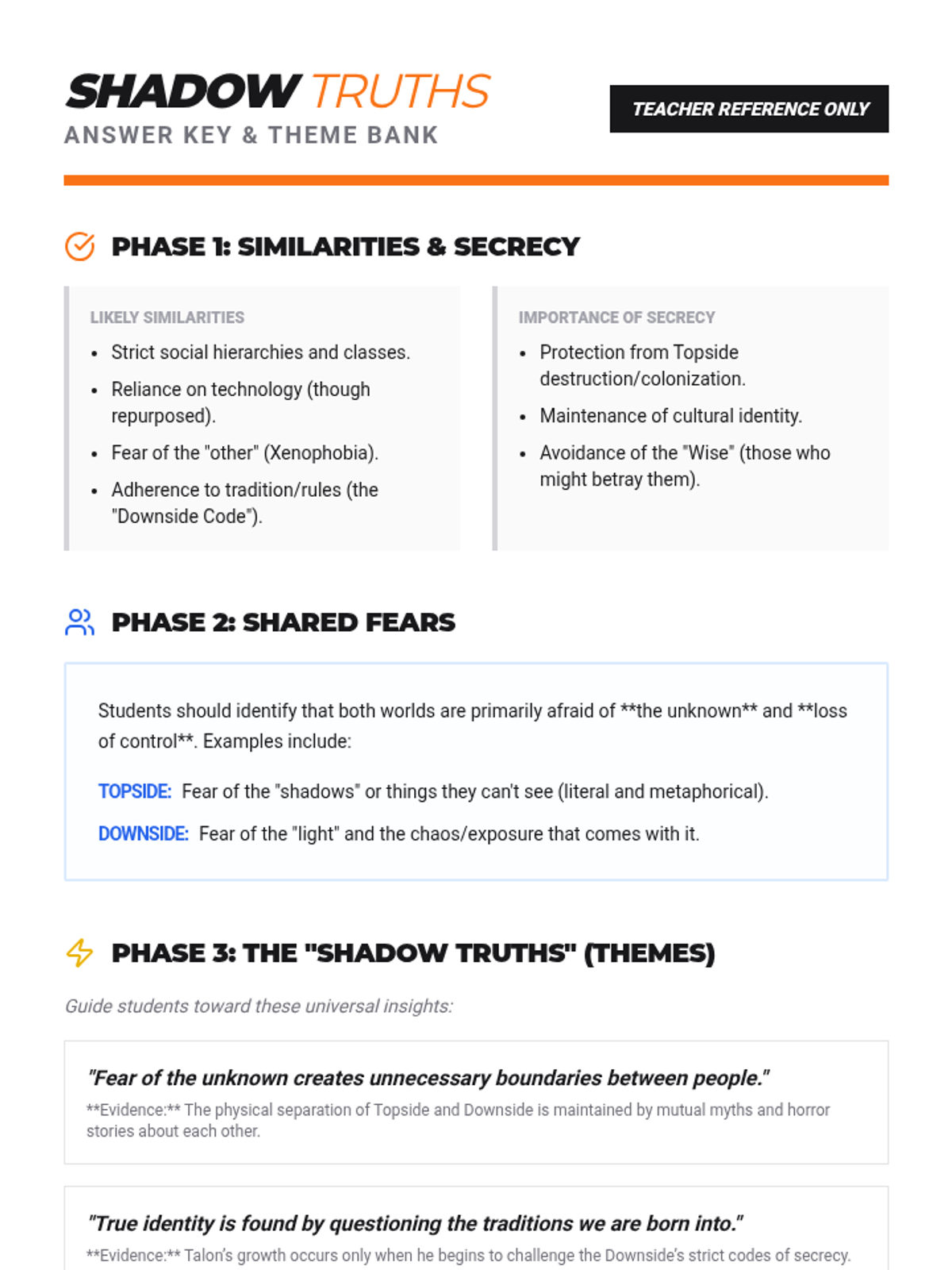
A high-energy, 25-minute collaborative lesson focused on identifying and analyzing themes in Neal Shusterman's 'Downsiders'. Students use a Think-Pair-Share structure to explore the conflict between the Topside and Downside worlds.
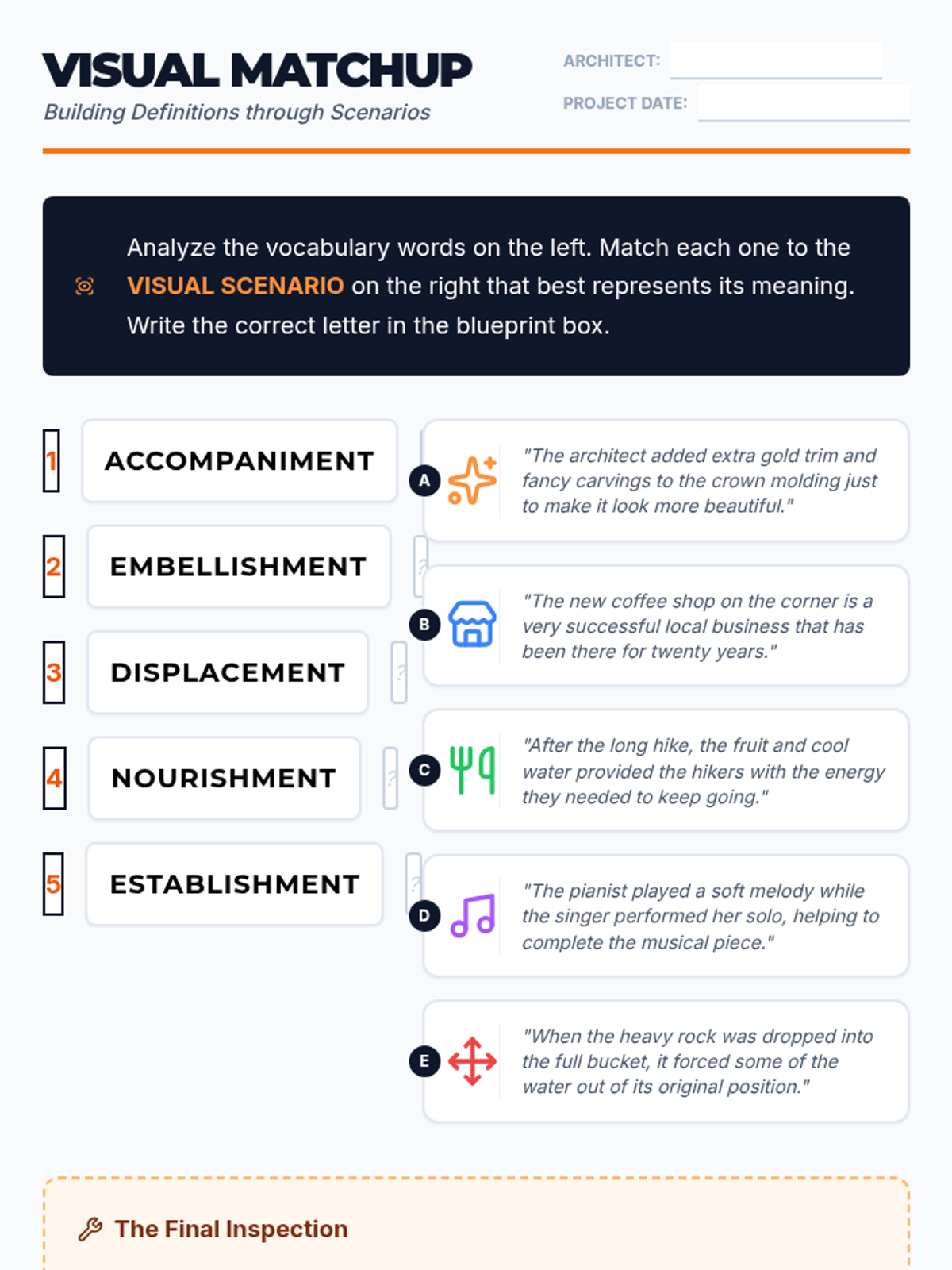
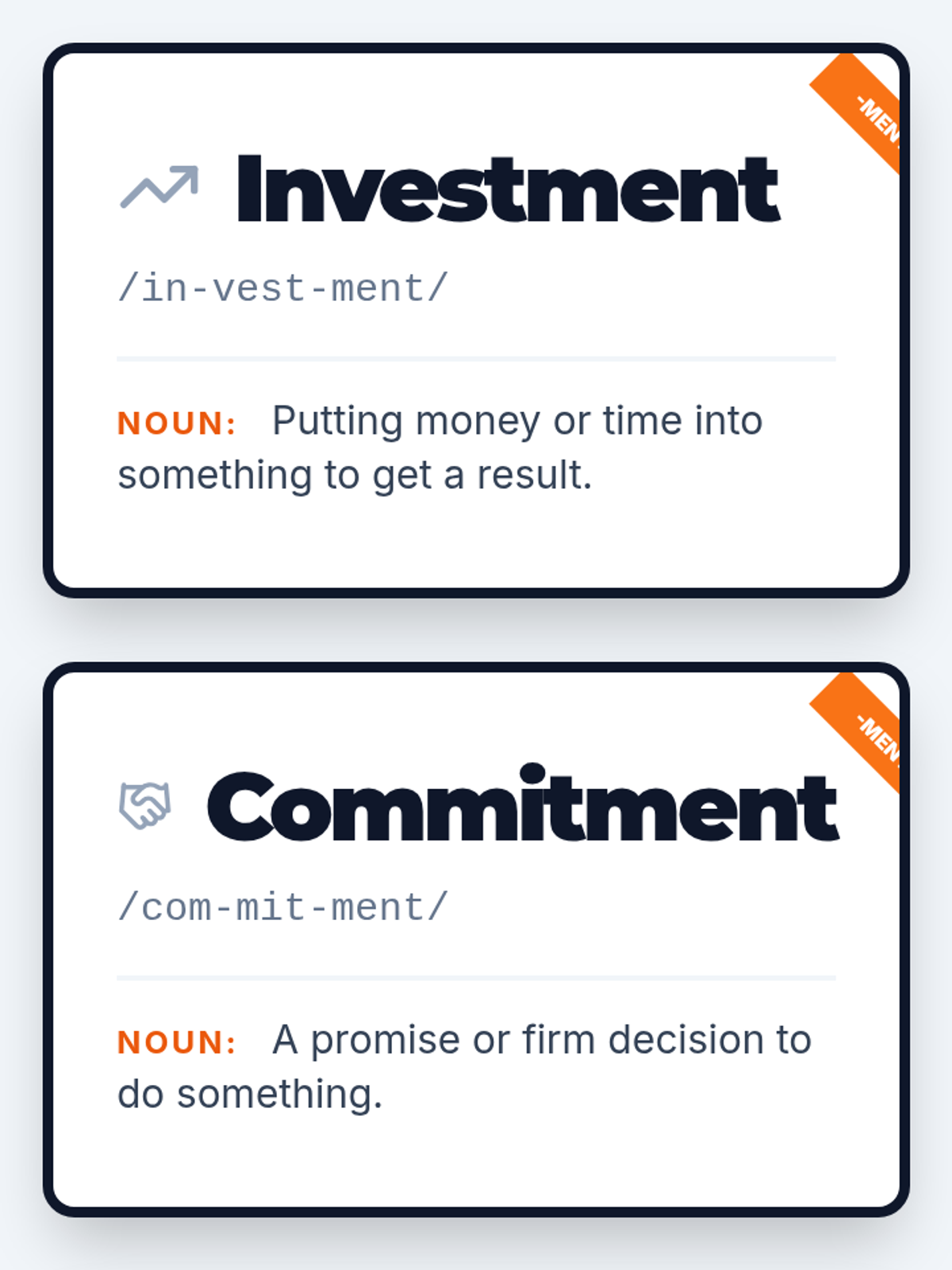
An upper elementary exploration of the suffix '-ment', focusing on how it transforms verbs into nouns through a series of hands-on building and sorting activities. Students will decode complex words, match them to visual scenarios, and construct sentences using their new vocabulary.
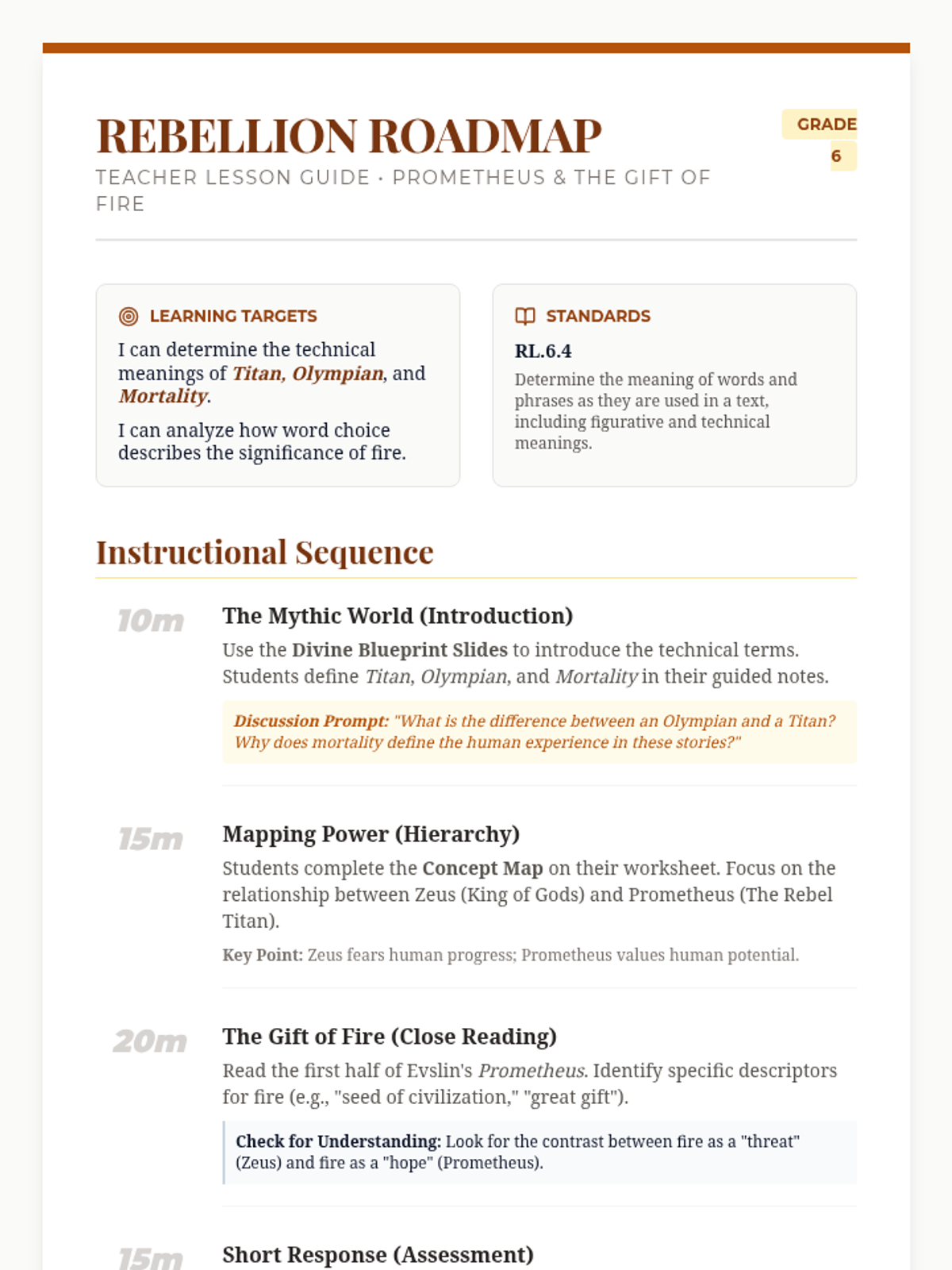
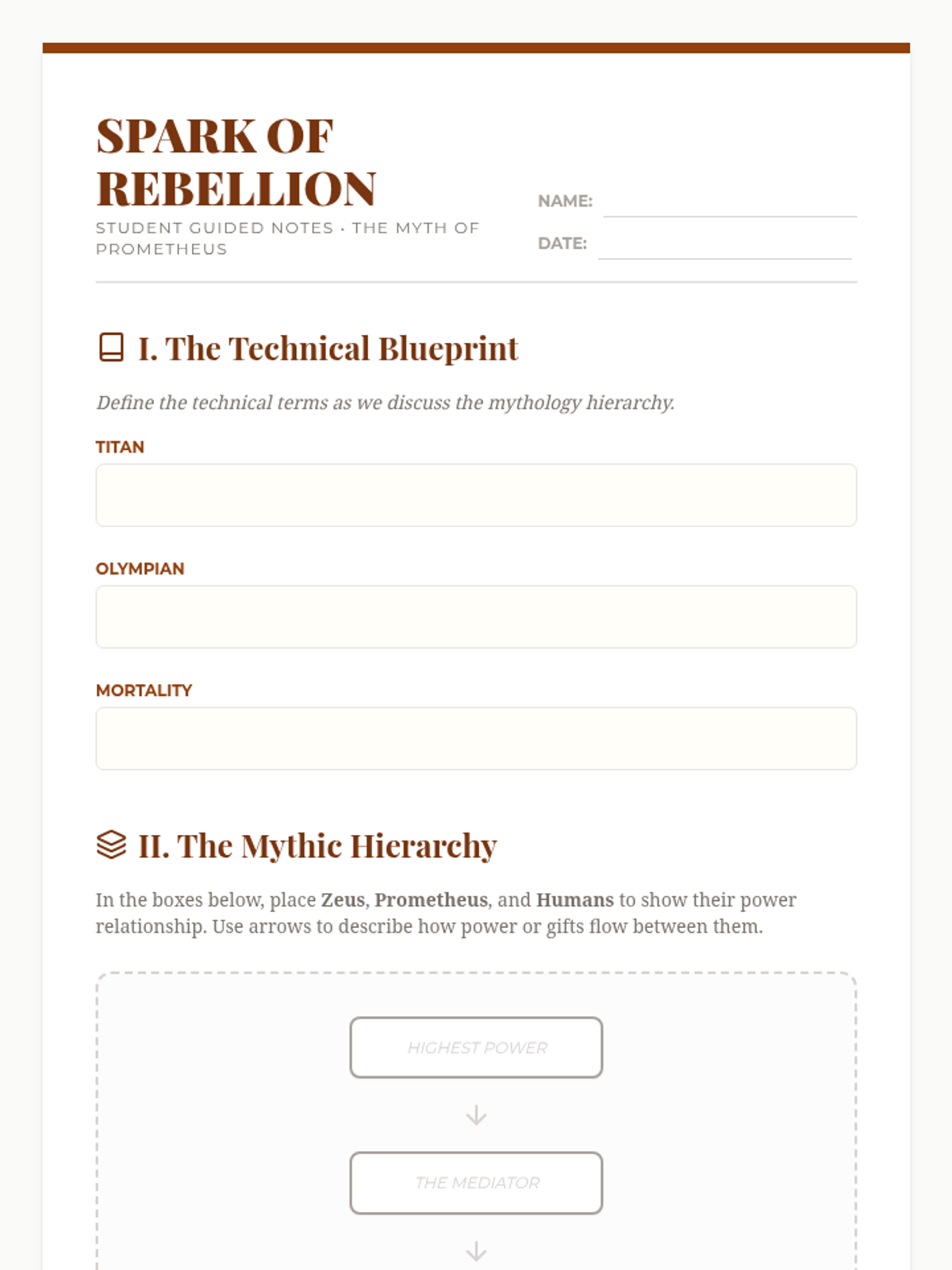
A comprehensive lesson combining the introduction to Greek mythology hierarchies with the analysis of Prometheus's gift of fire, focusing on technical vocabulary and word choice.
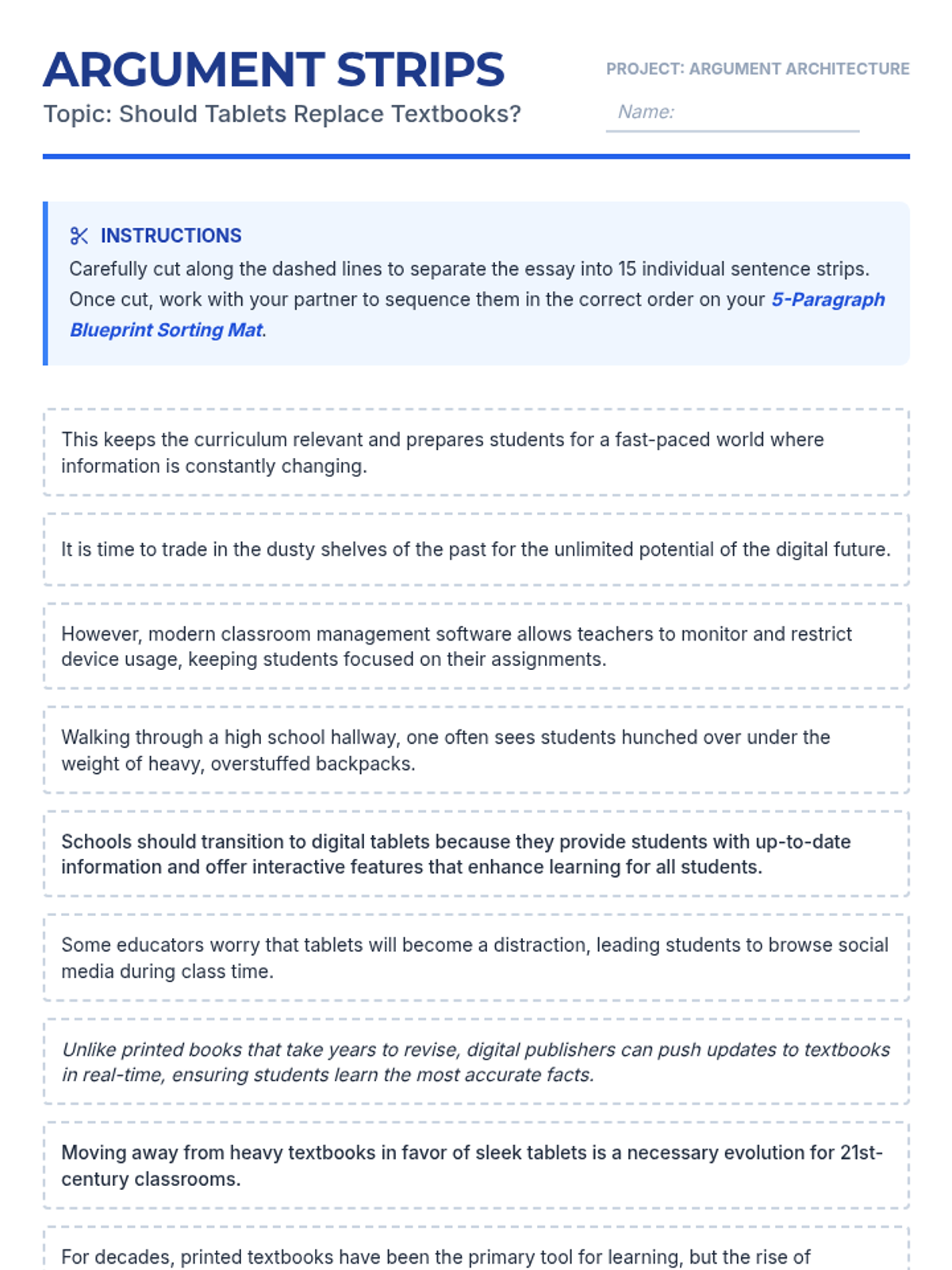
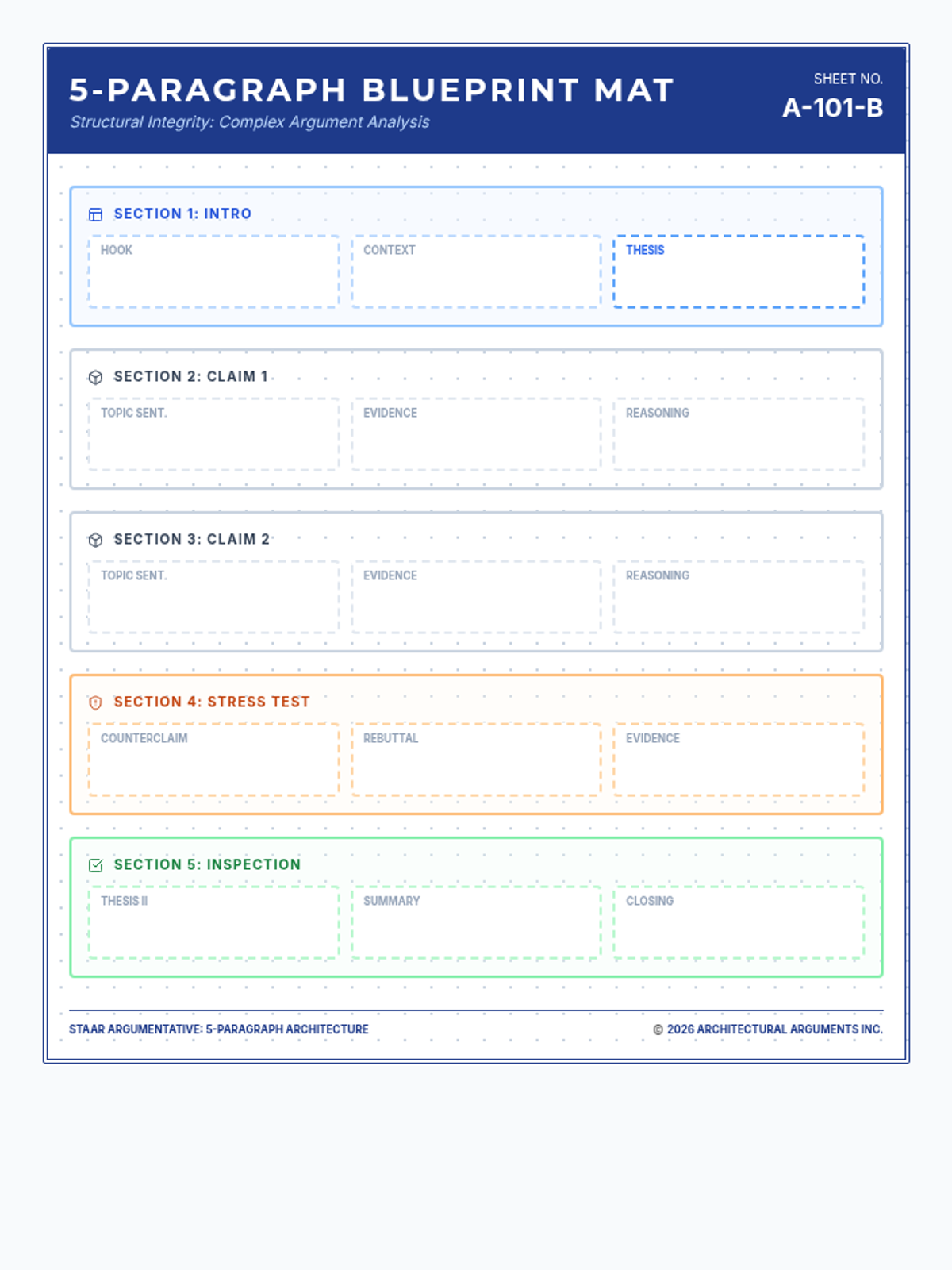
A lesson focused on understanding the structural components of an argumentative essay through a hands-on sorting and sequencing activity.
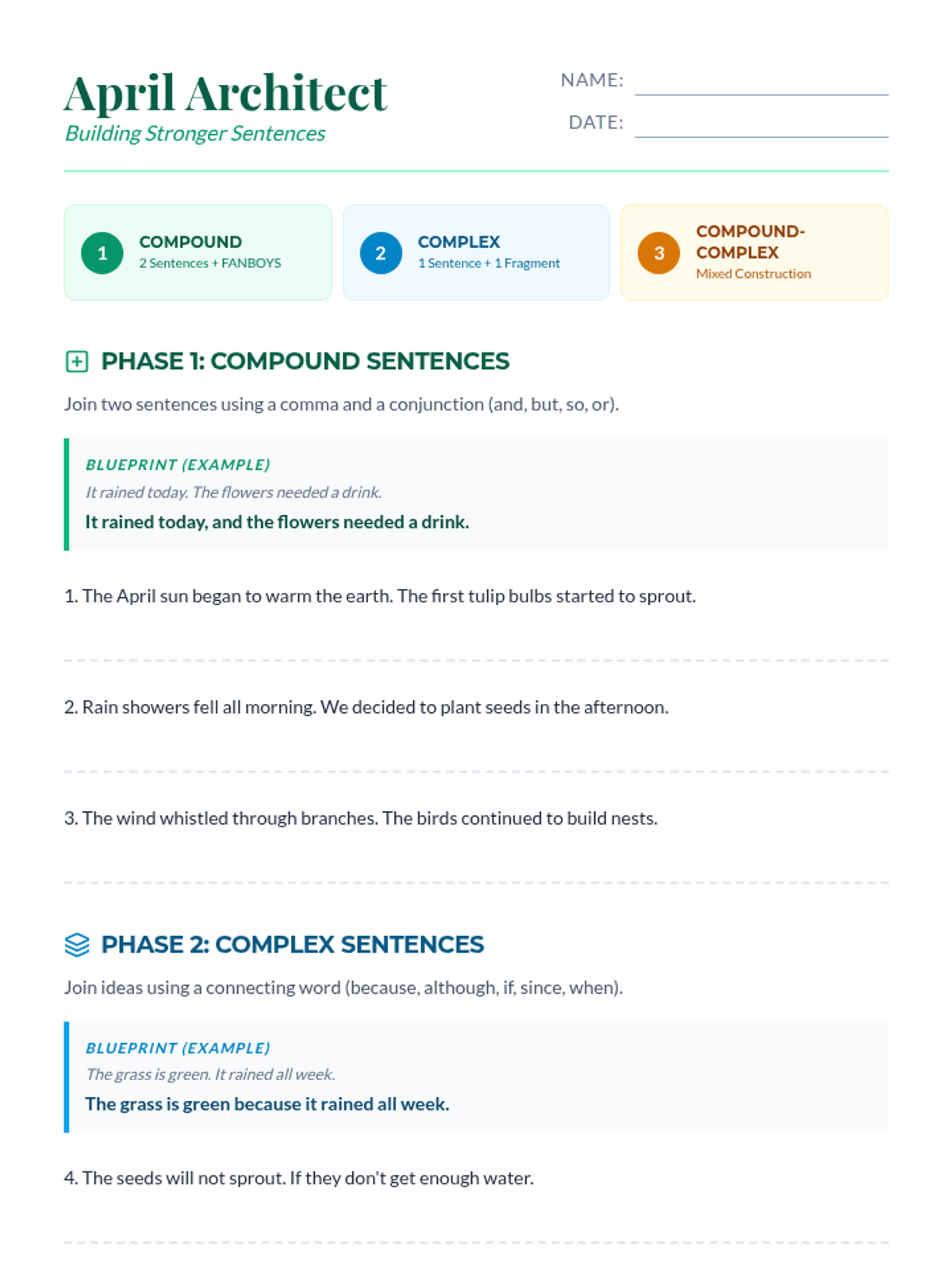
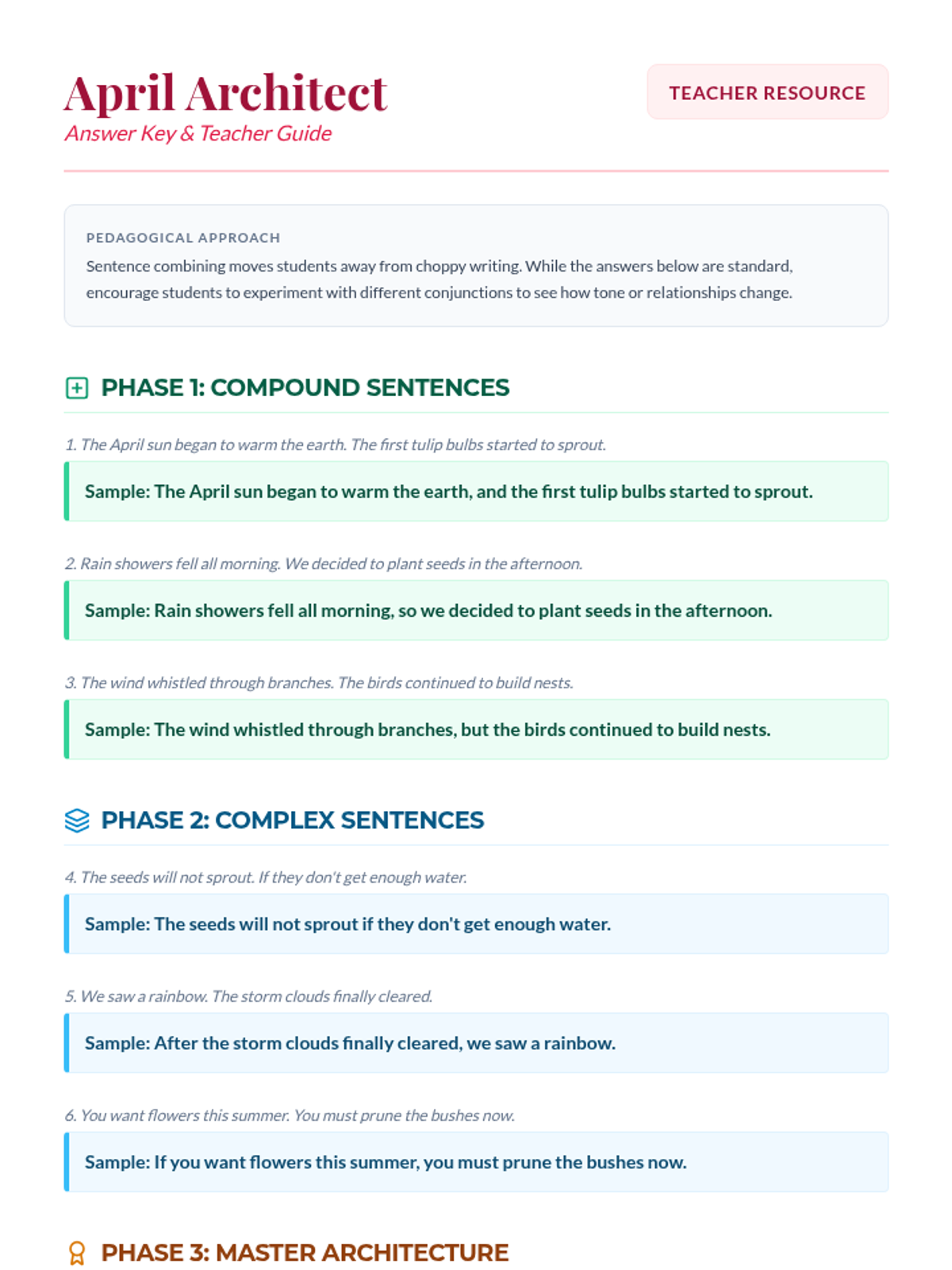
A lesson focused on enhancing sentence variety and structure through combining techniques. Students practice building compound, complex, and compound-complex sentences using April-themed prompts.
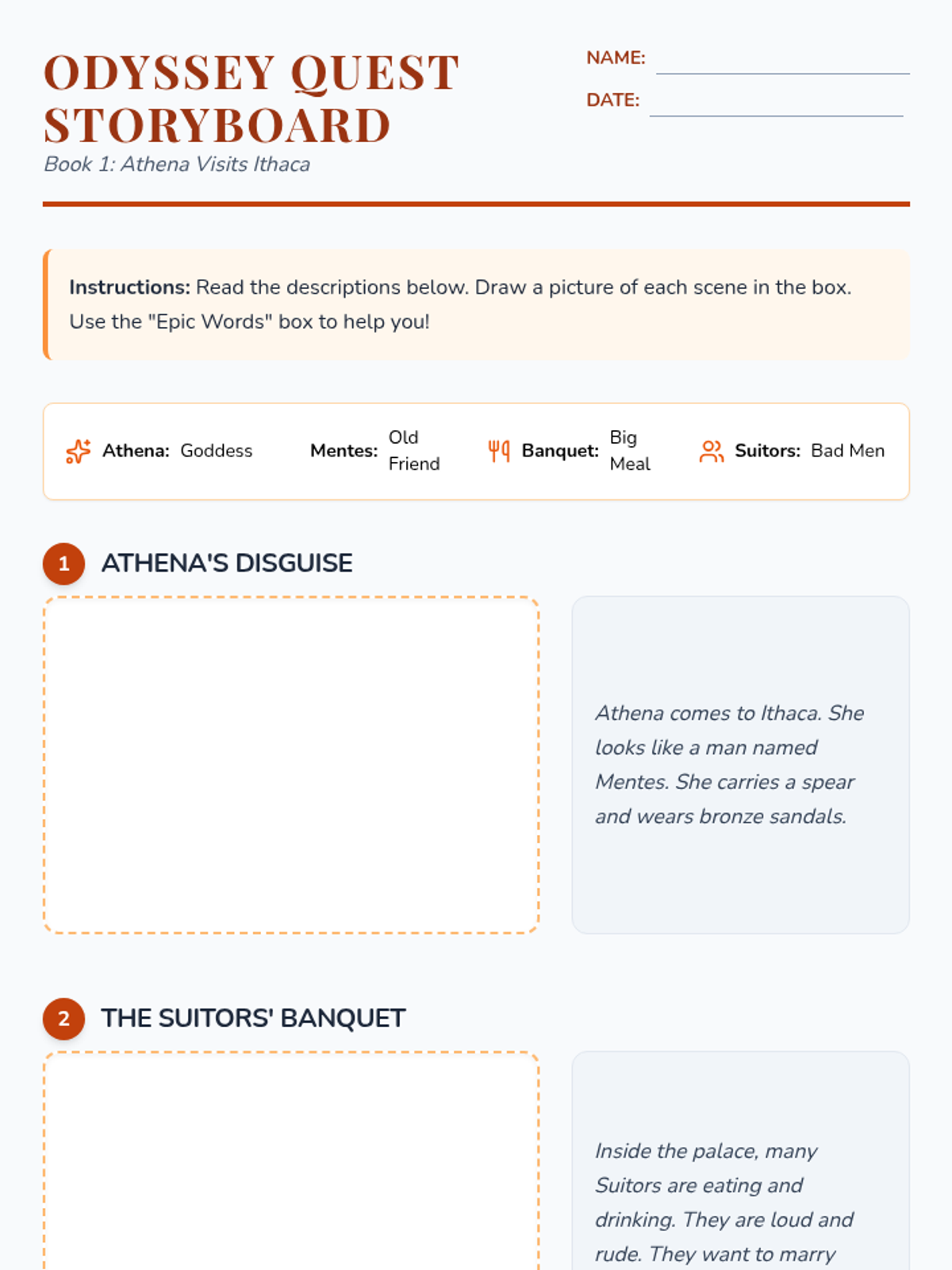
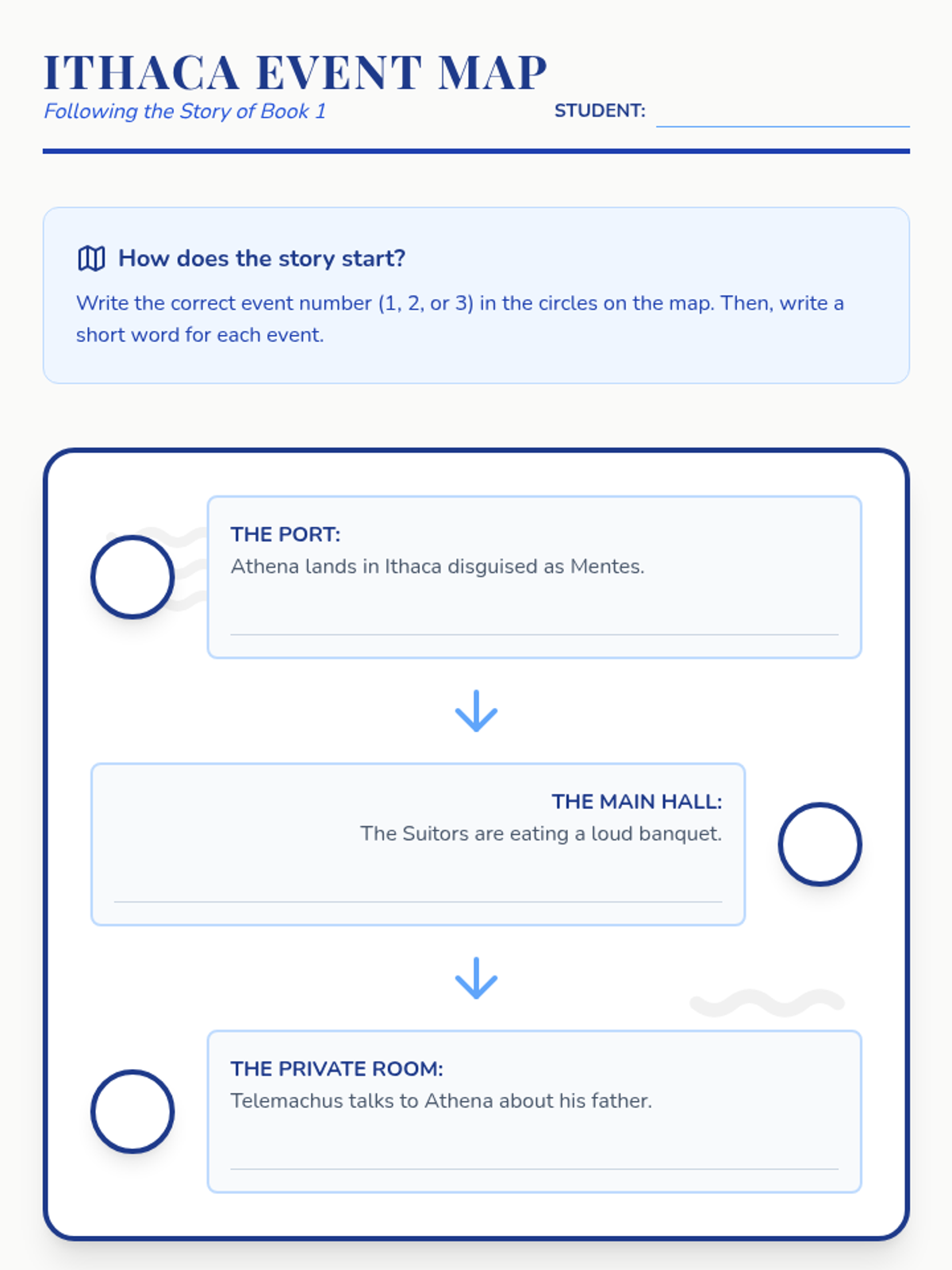
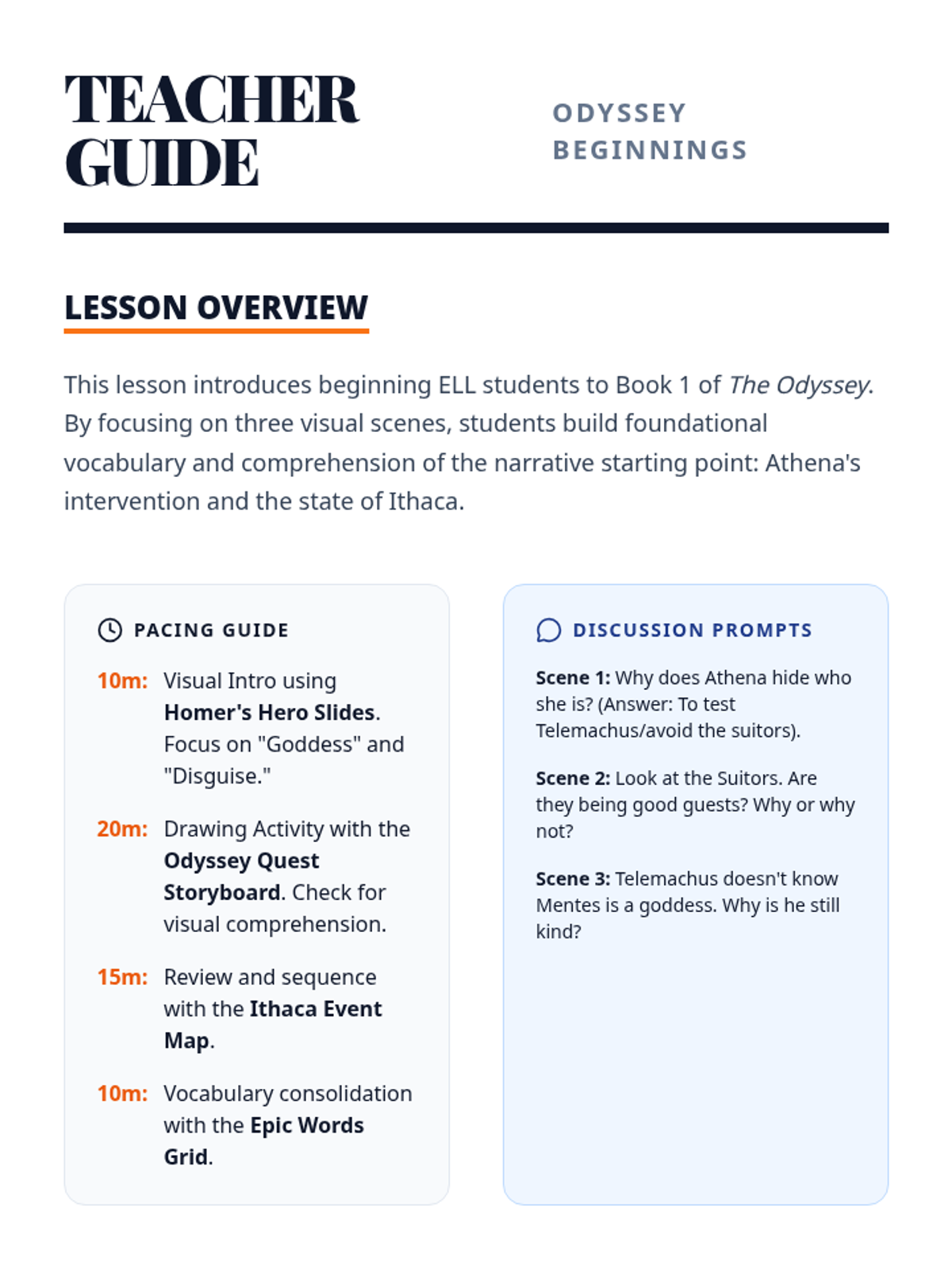
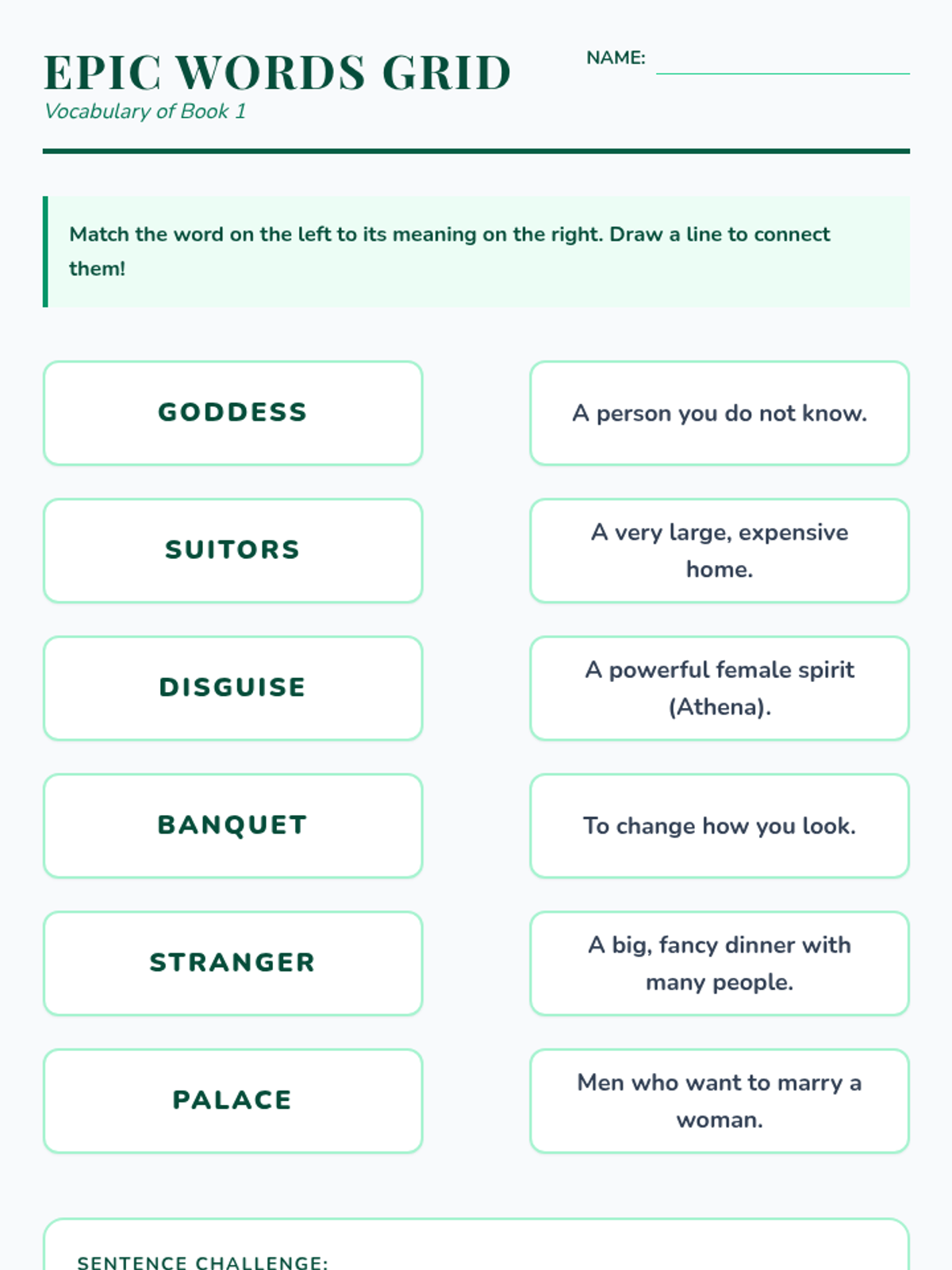
A foundational lesson for beginning ELL students to understand the opening of Homer's Odyssey through visual storytelling and simplified vocabulary focusing on Athena's arrival in Ithaca and her interaction with Telemachus.
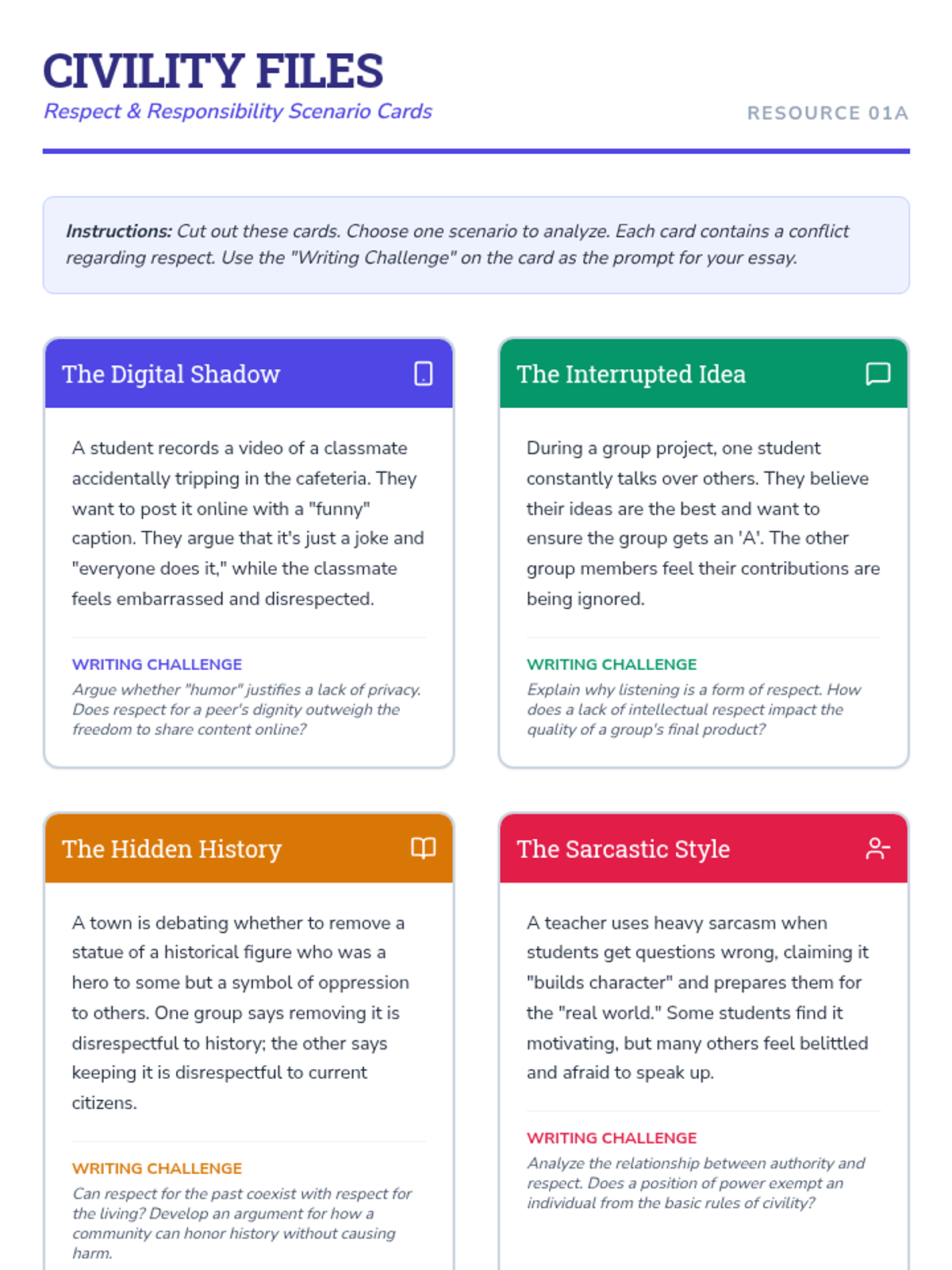
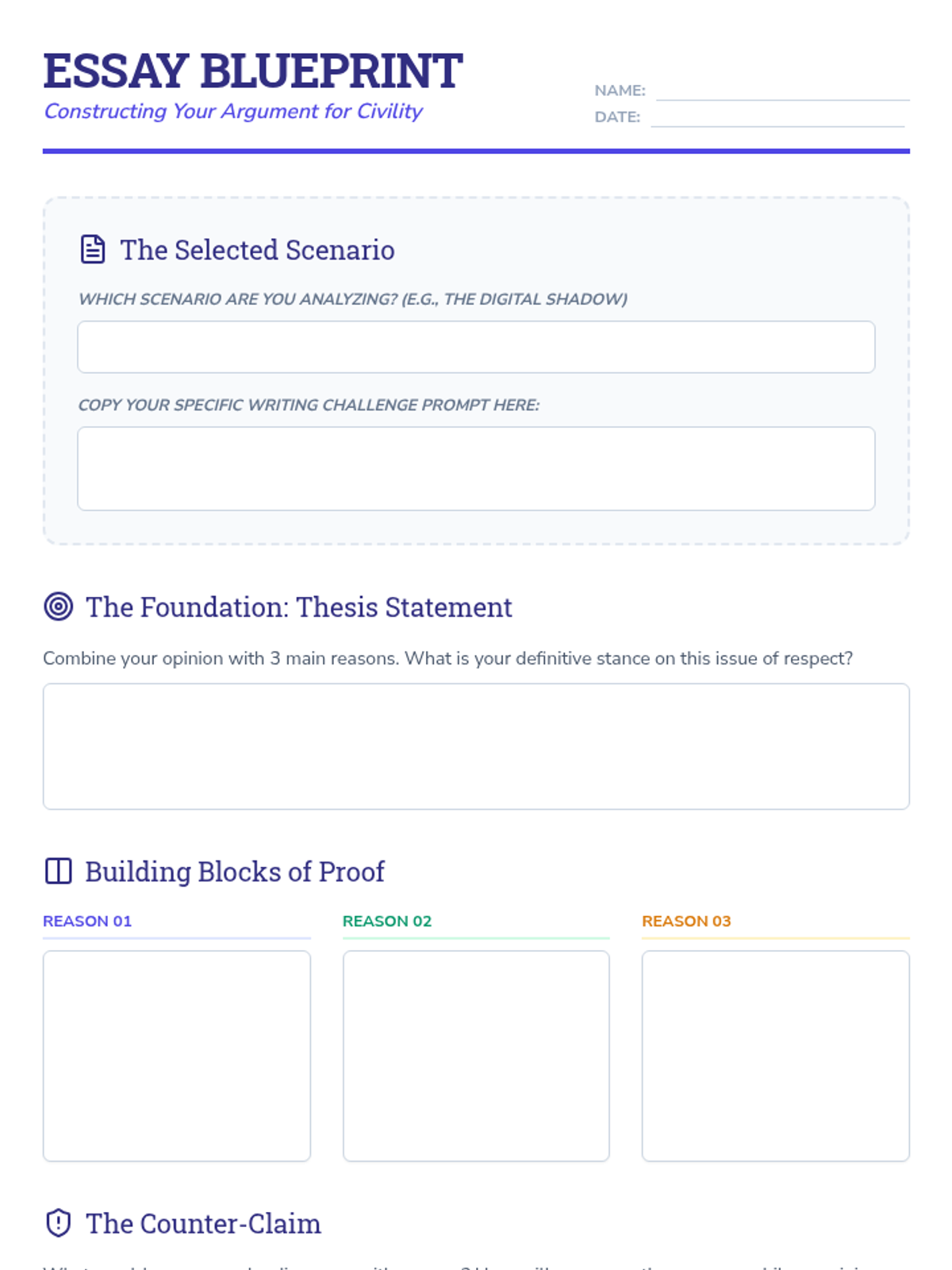
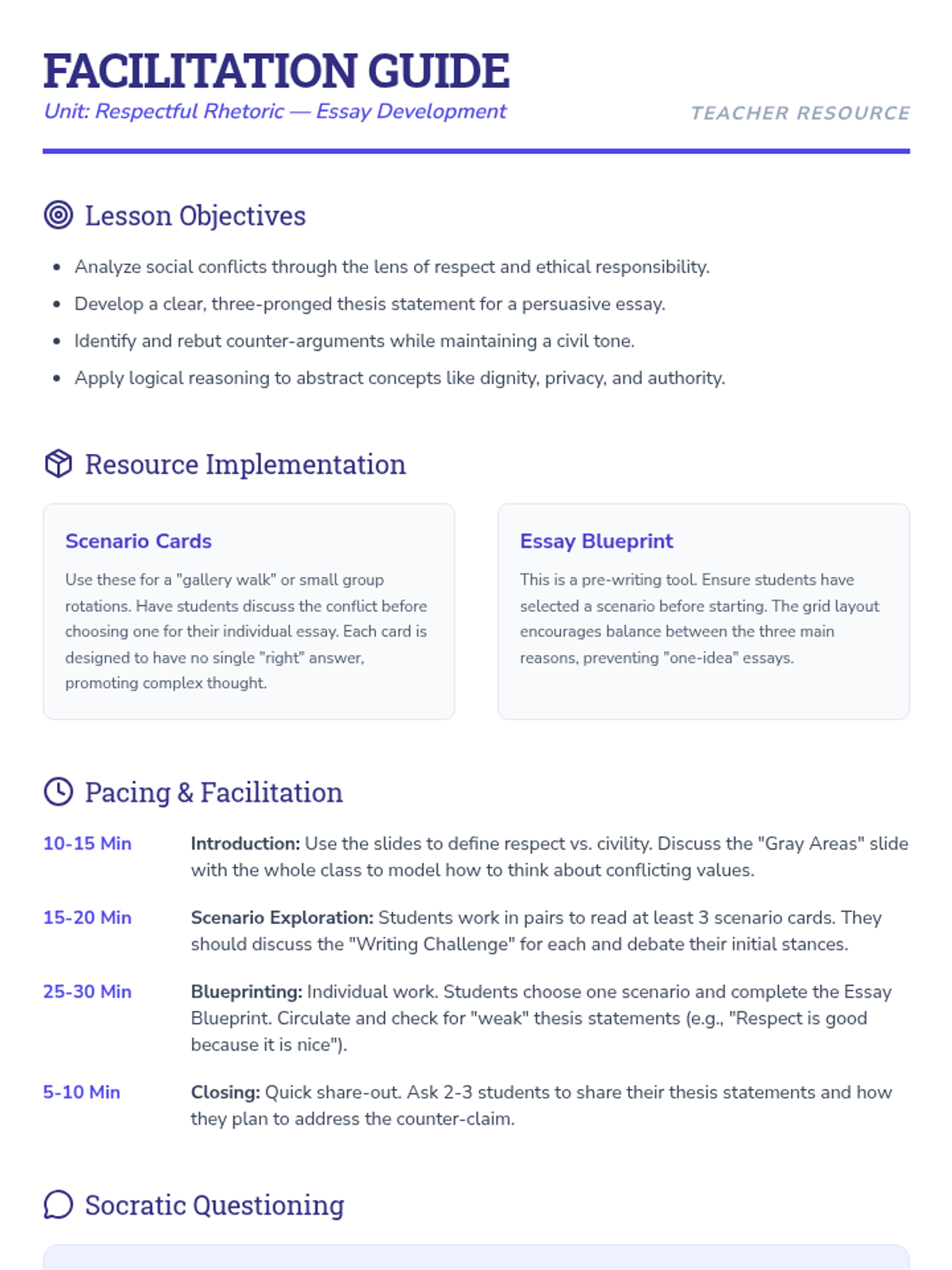
A lesson focused on analyzing complex social situations involving respect and translating those analyses into persuasive or argumentative essays. Students will evaluate different perspectives and build logical arguments.
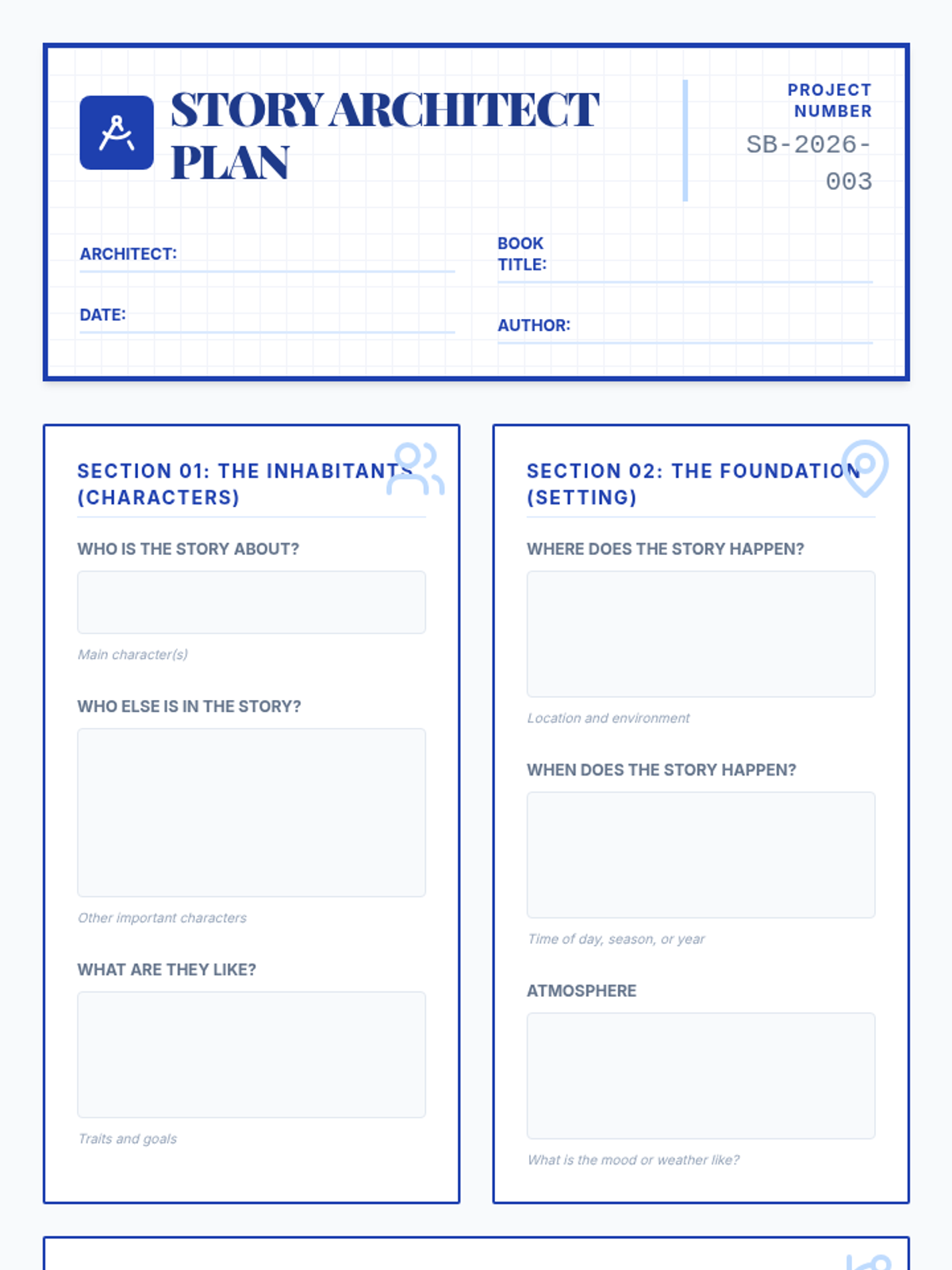
This mini-lesson introduces students to the essential elements of a story—characters, setting, plot, and dialogue—using an architectural 'blueprint' metaphor. Students learn definitions and apply them to any book using a structured graphic organizer.
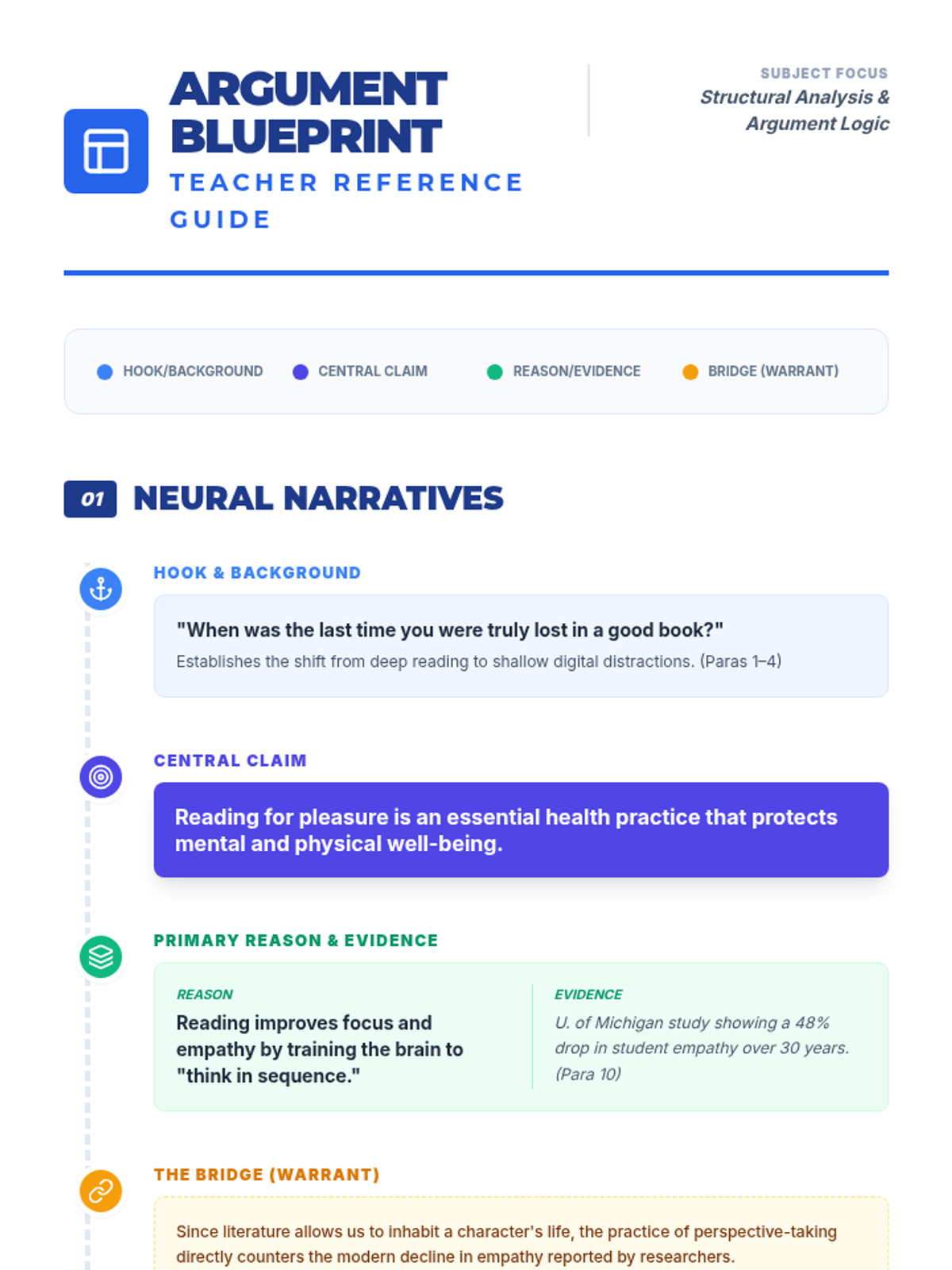
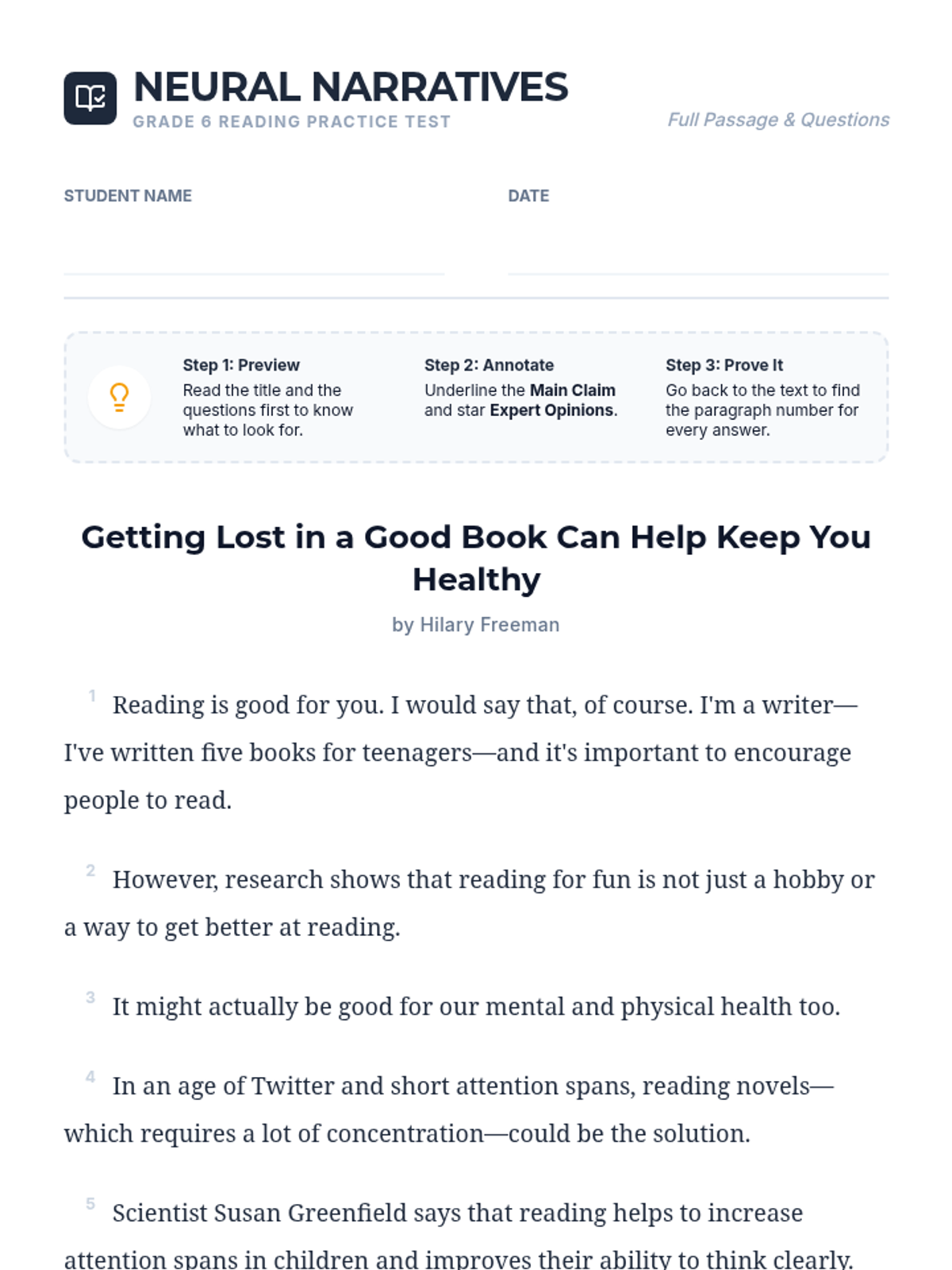
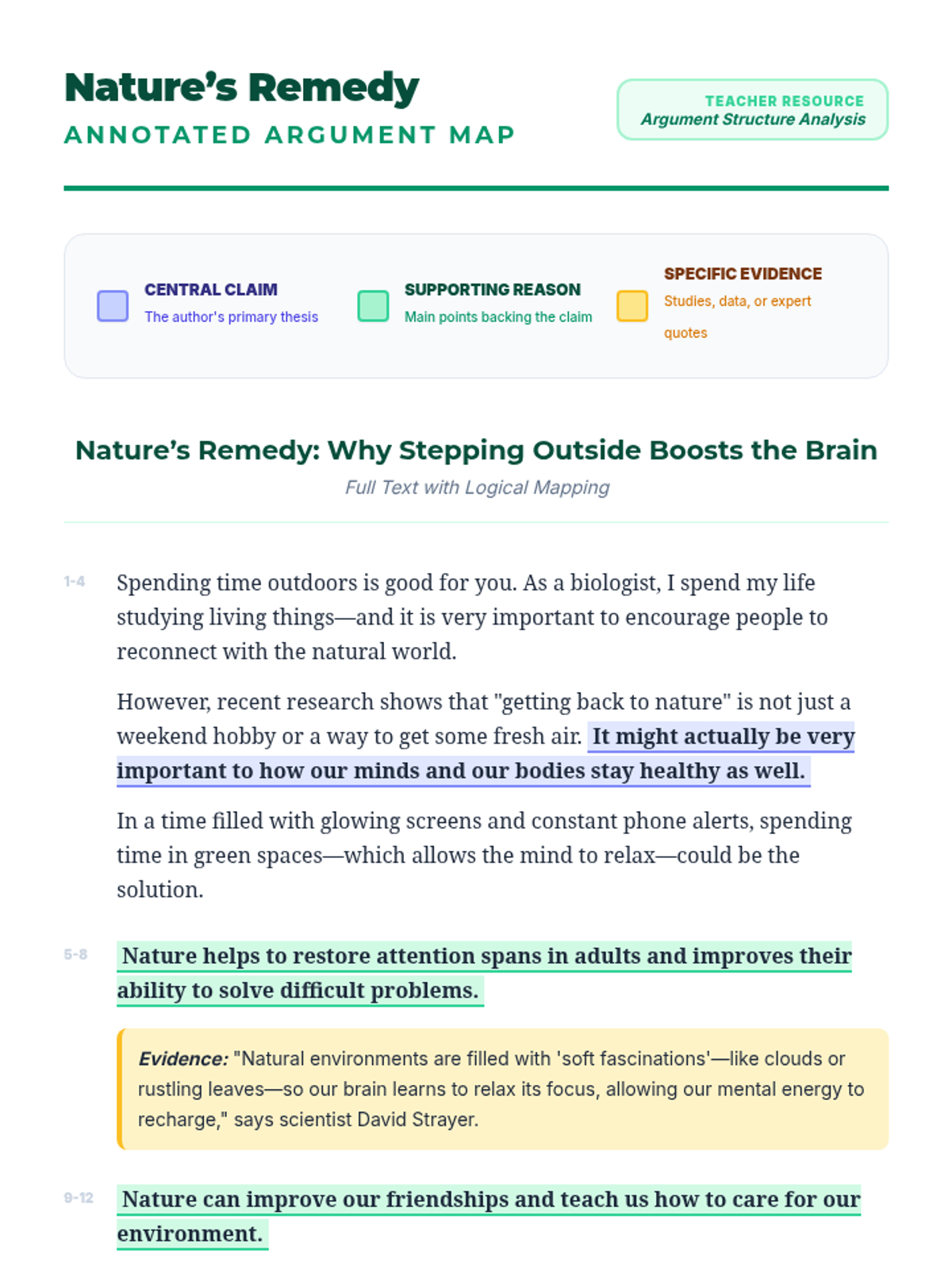
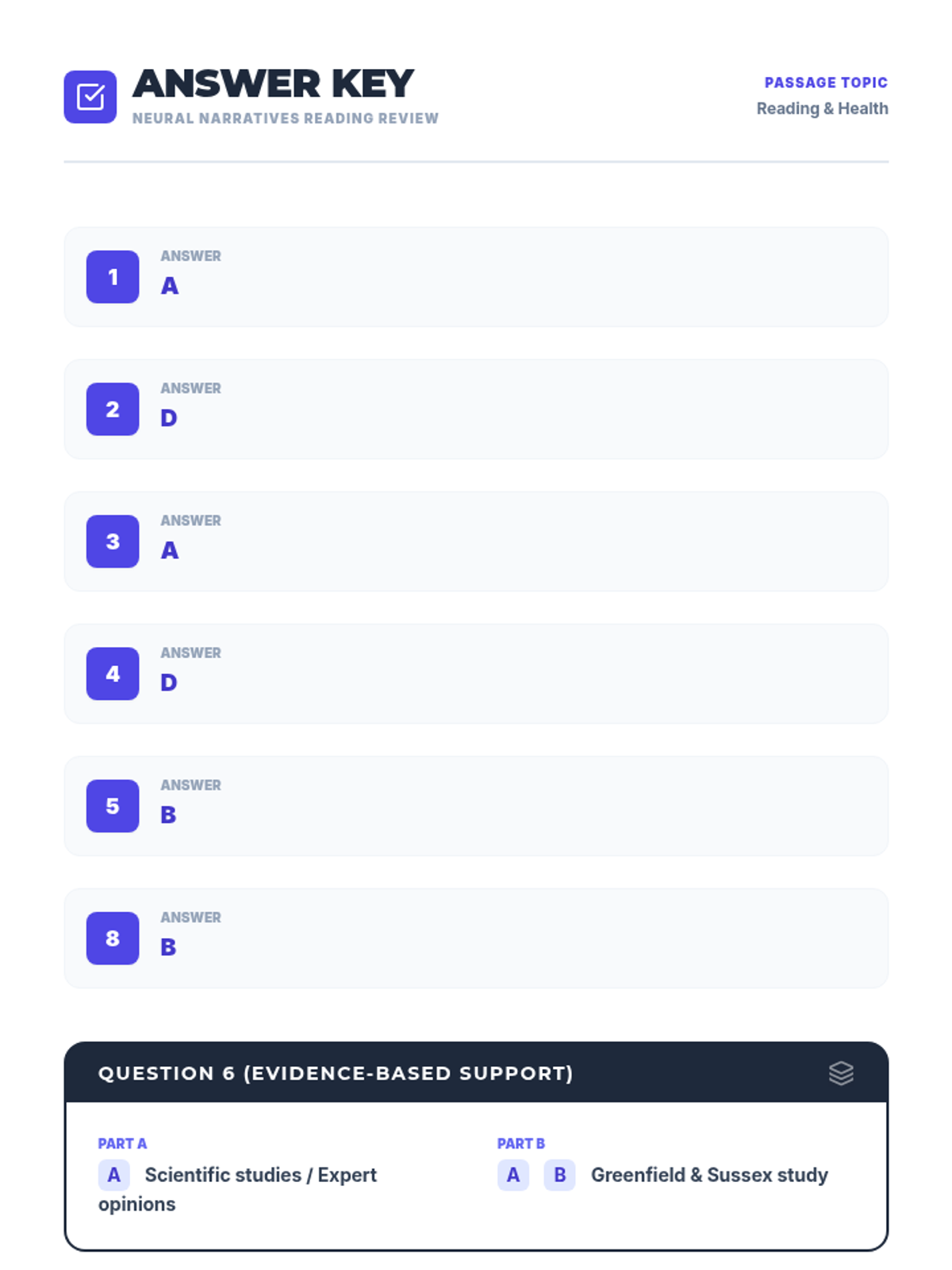
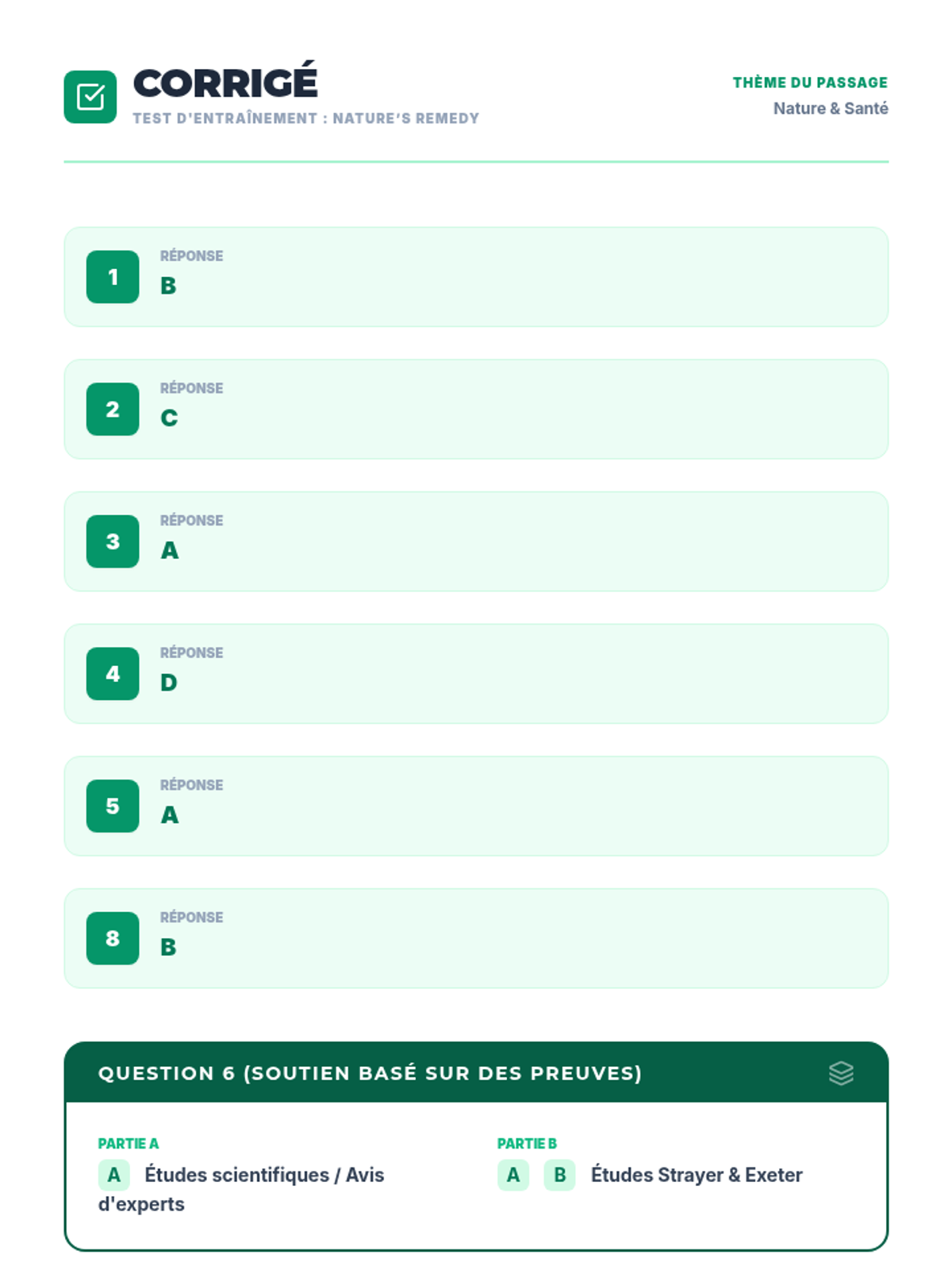
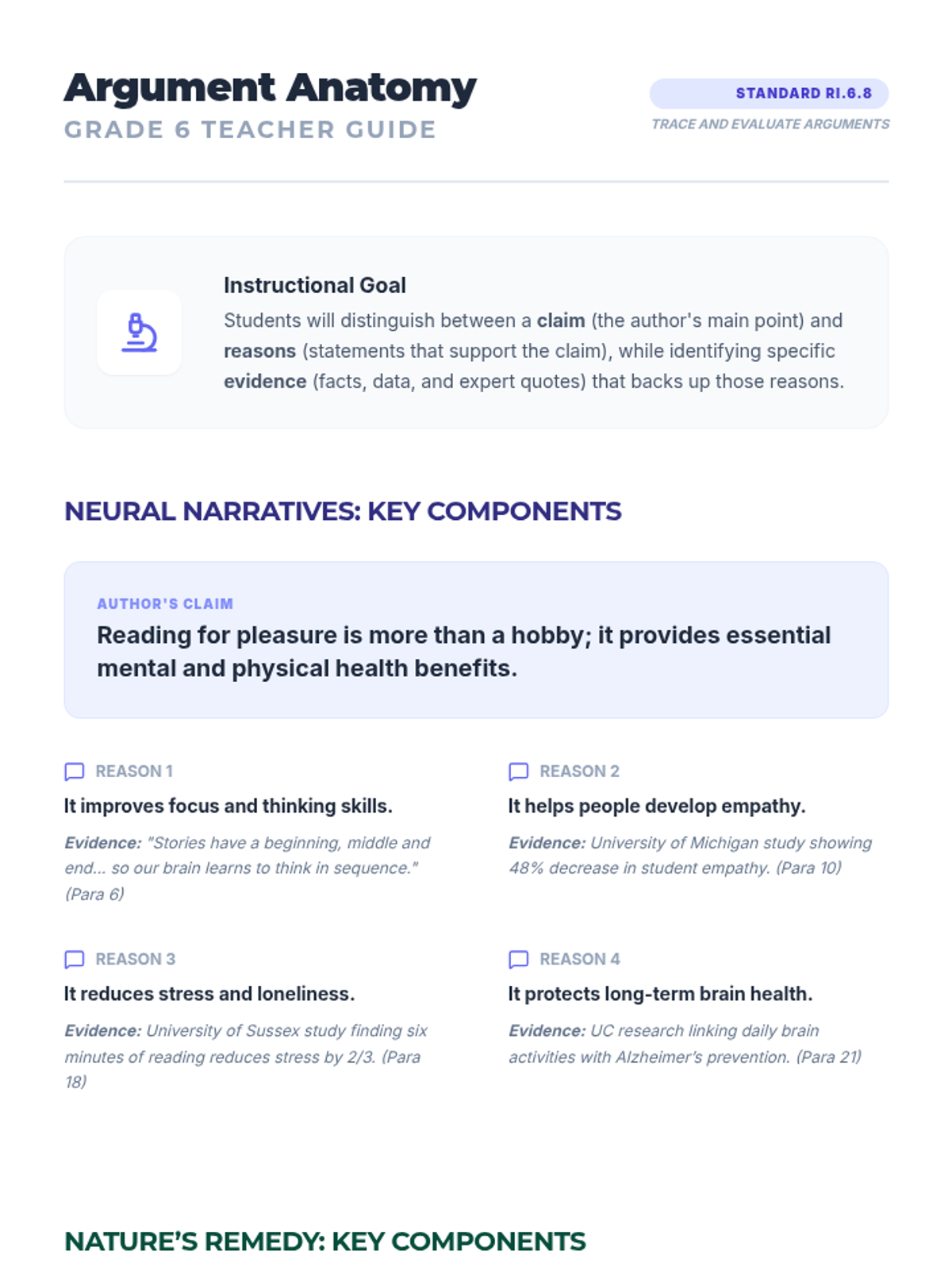
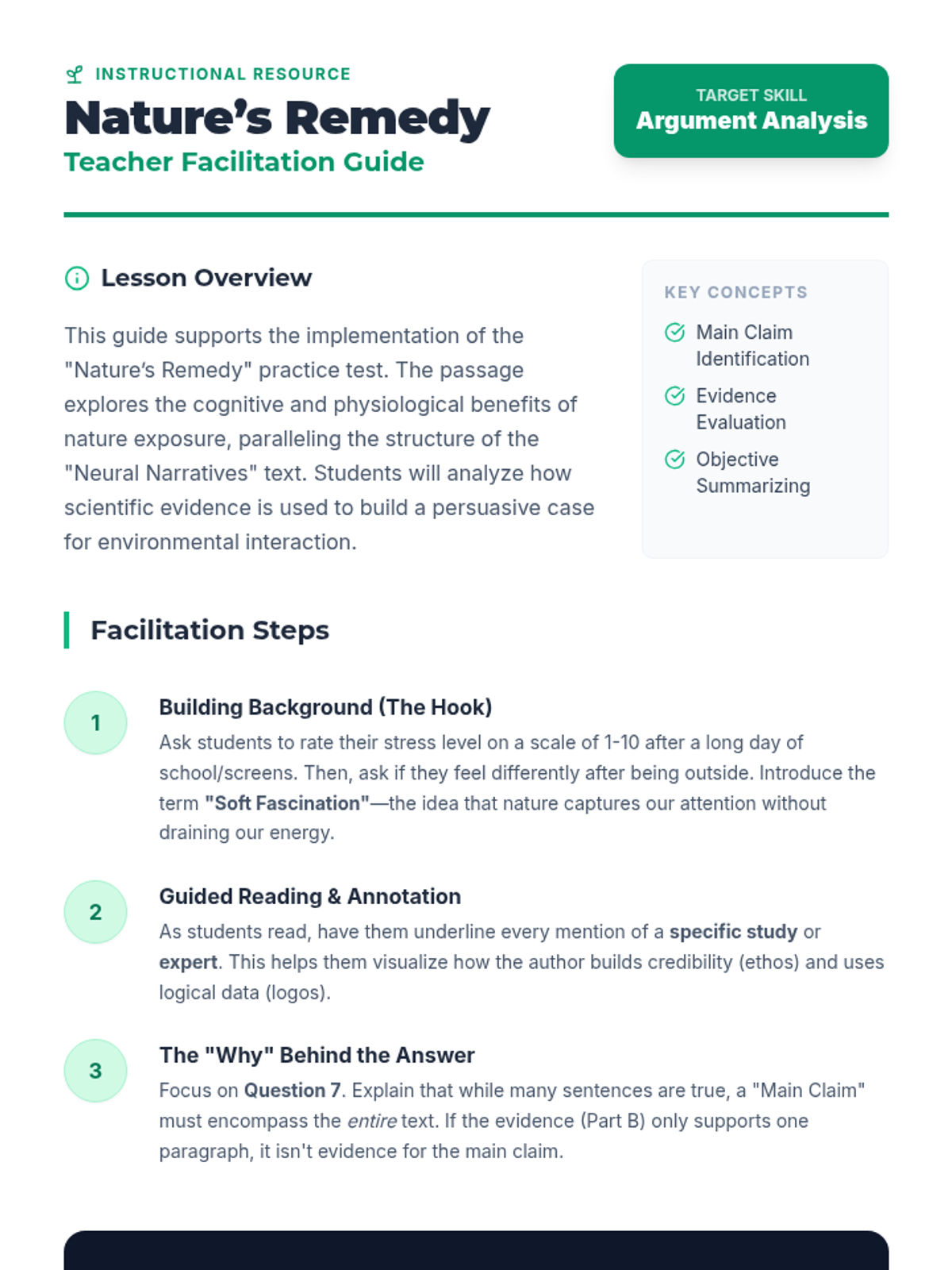
A practice test and answer key based on the passage 'Getting Lost in a Good Book Can Help Keep You Healthy' by Hilary Freeman, focusing on reading comprehension, vocabulary in context, and analyzing claims.
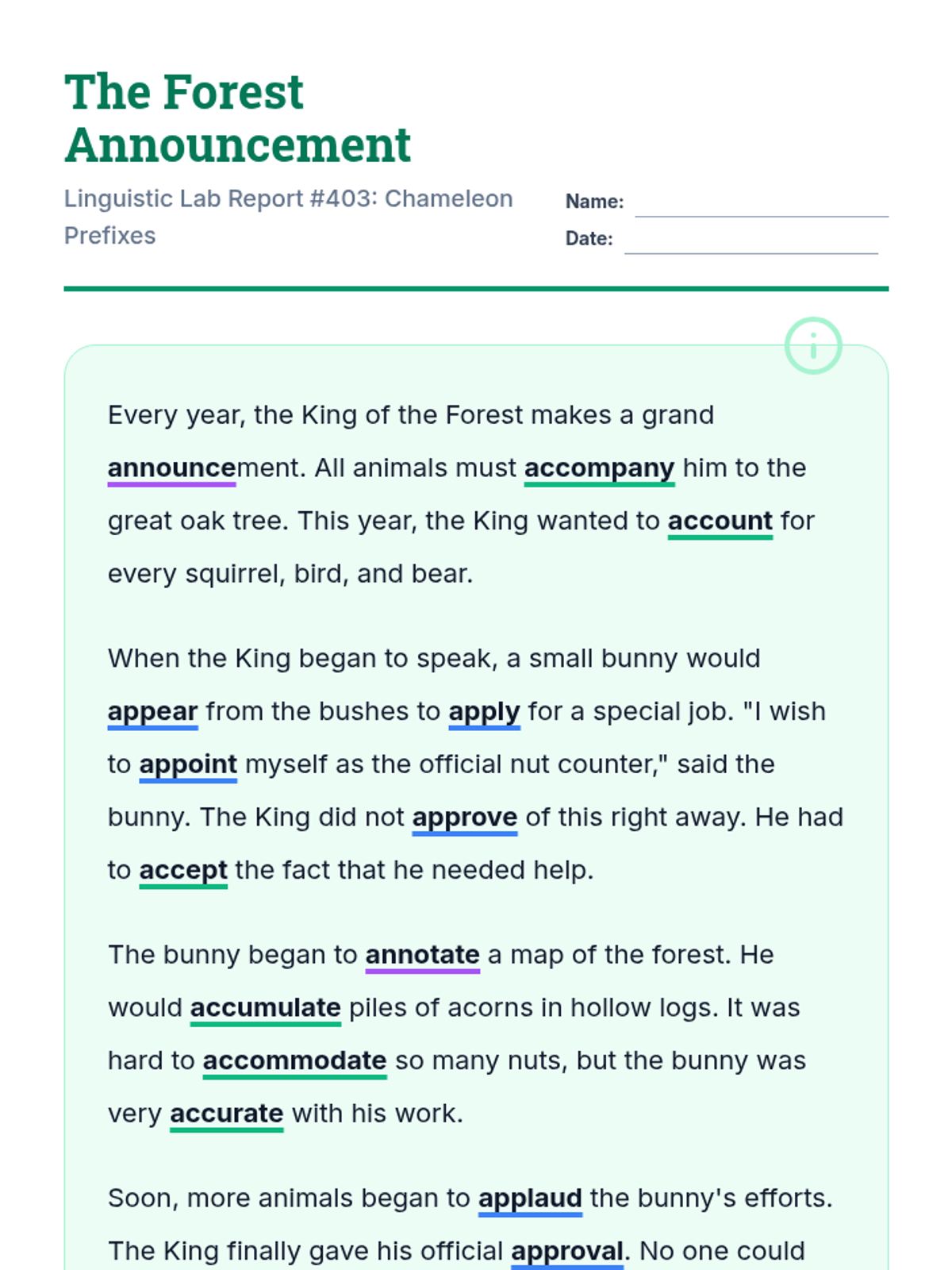
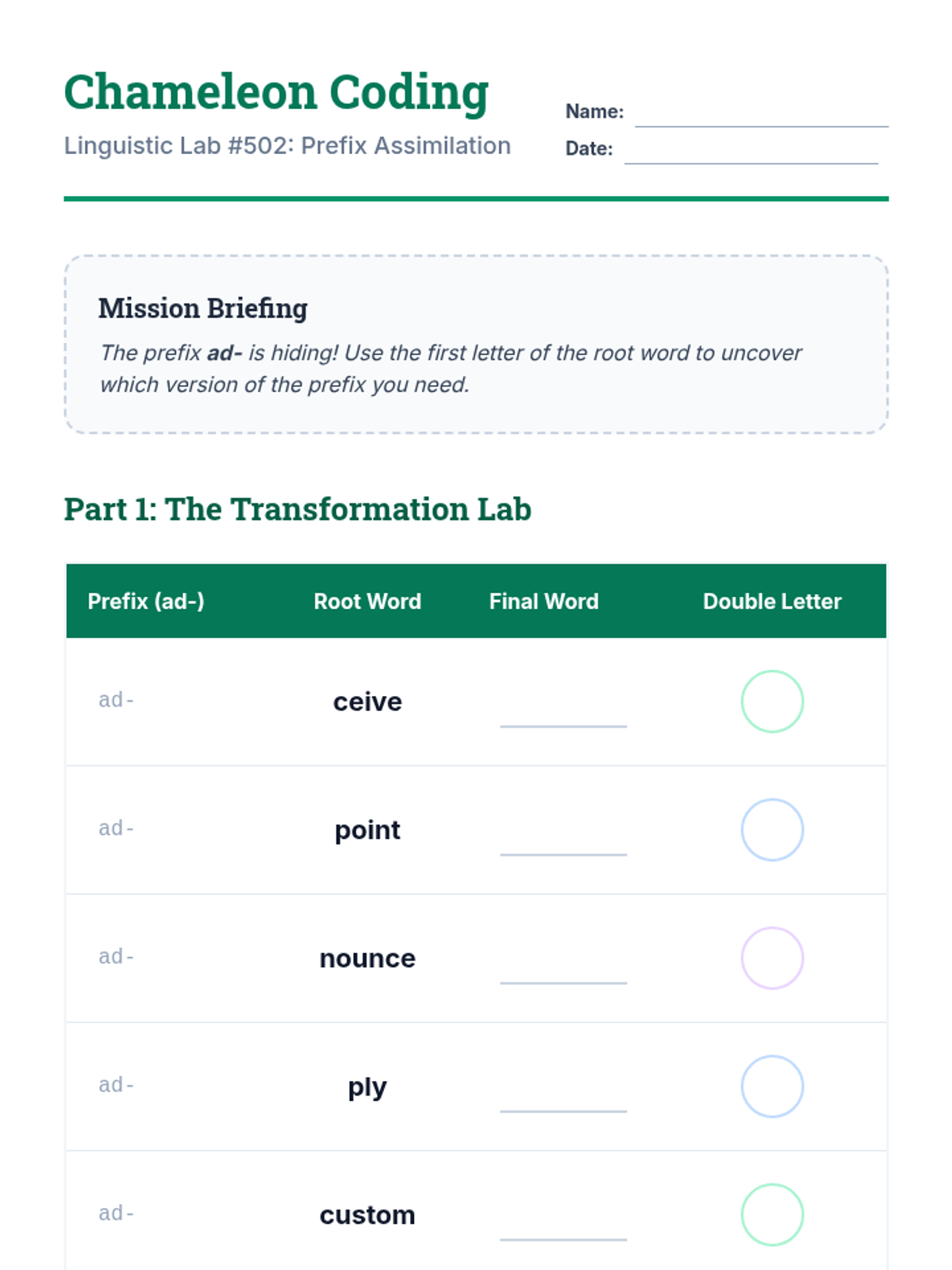
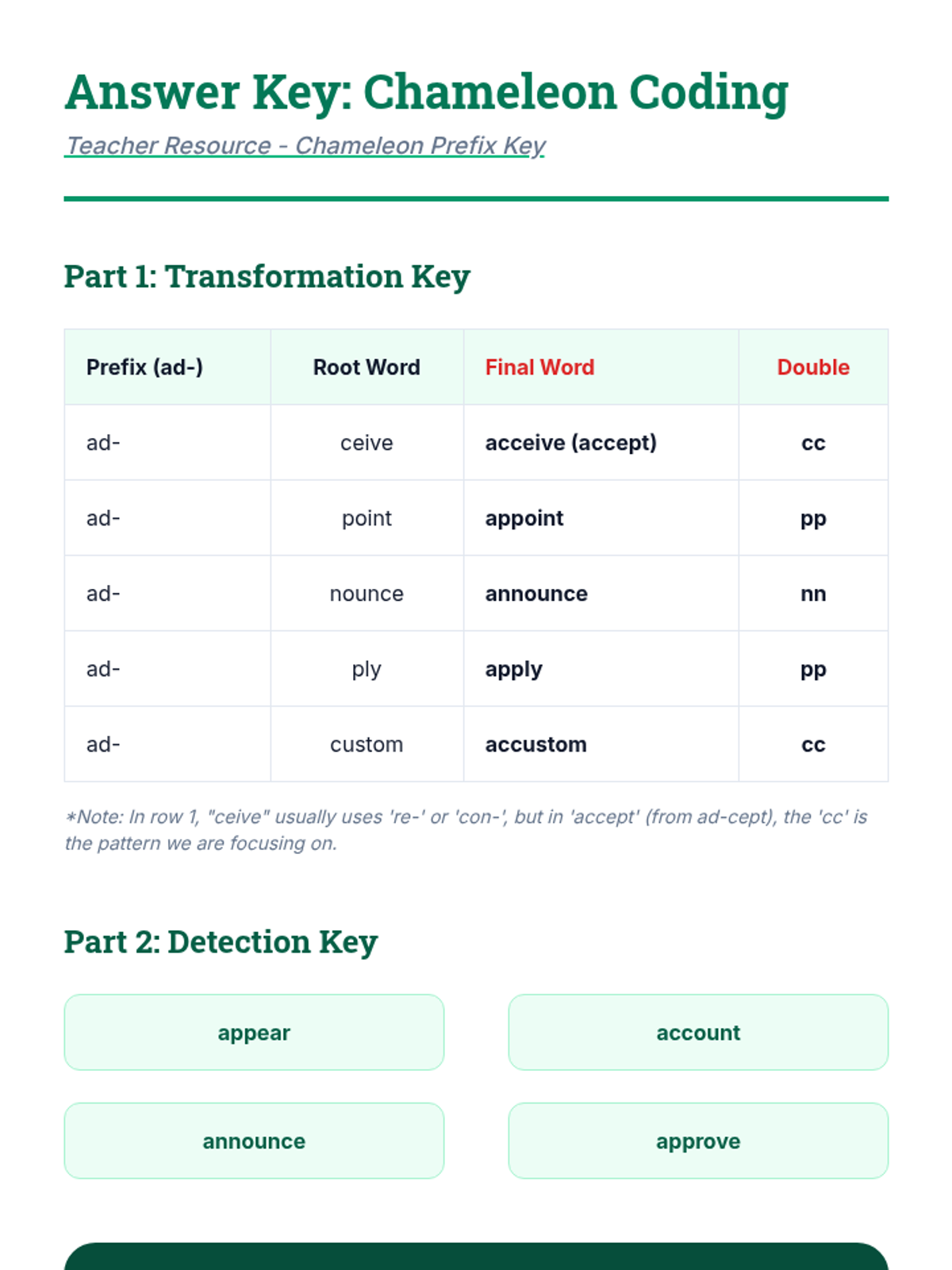
A lesson on "chameleon prefixes" (assimilated prefixes), specifically focusing on how the prefix 'ad-' changes to 'ac-', 'ap-', and 'an-' to match the root word.
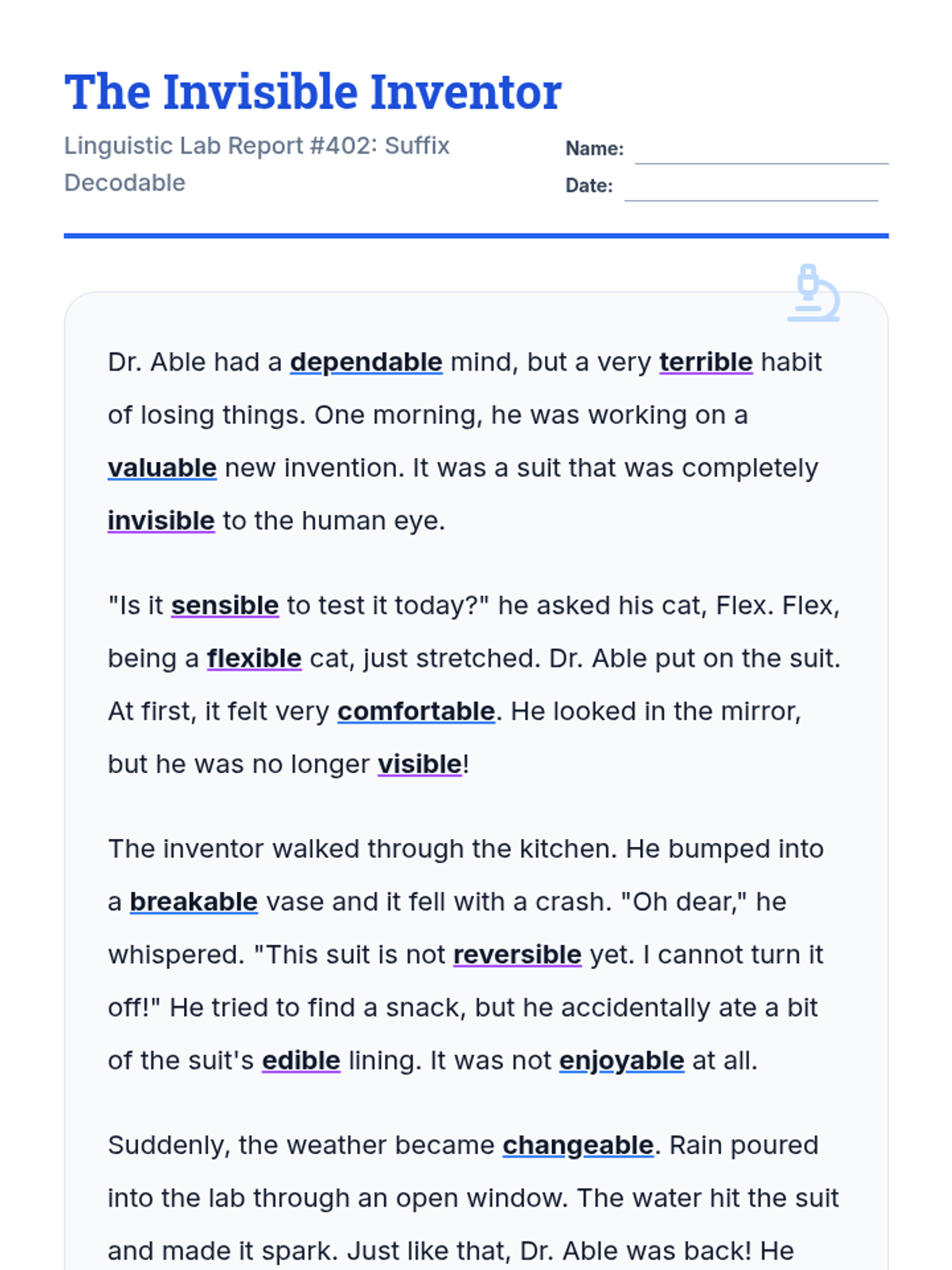
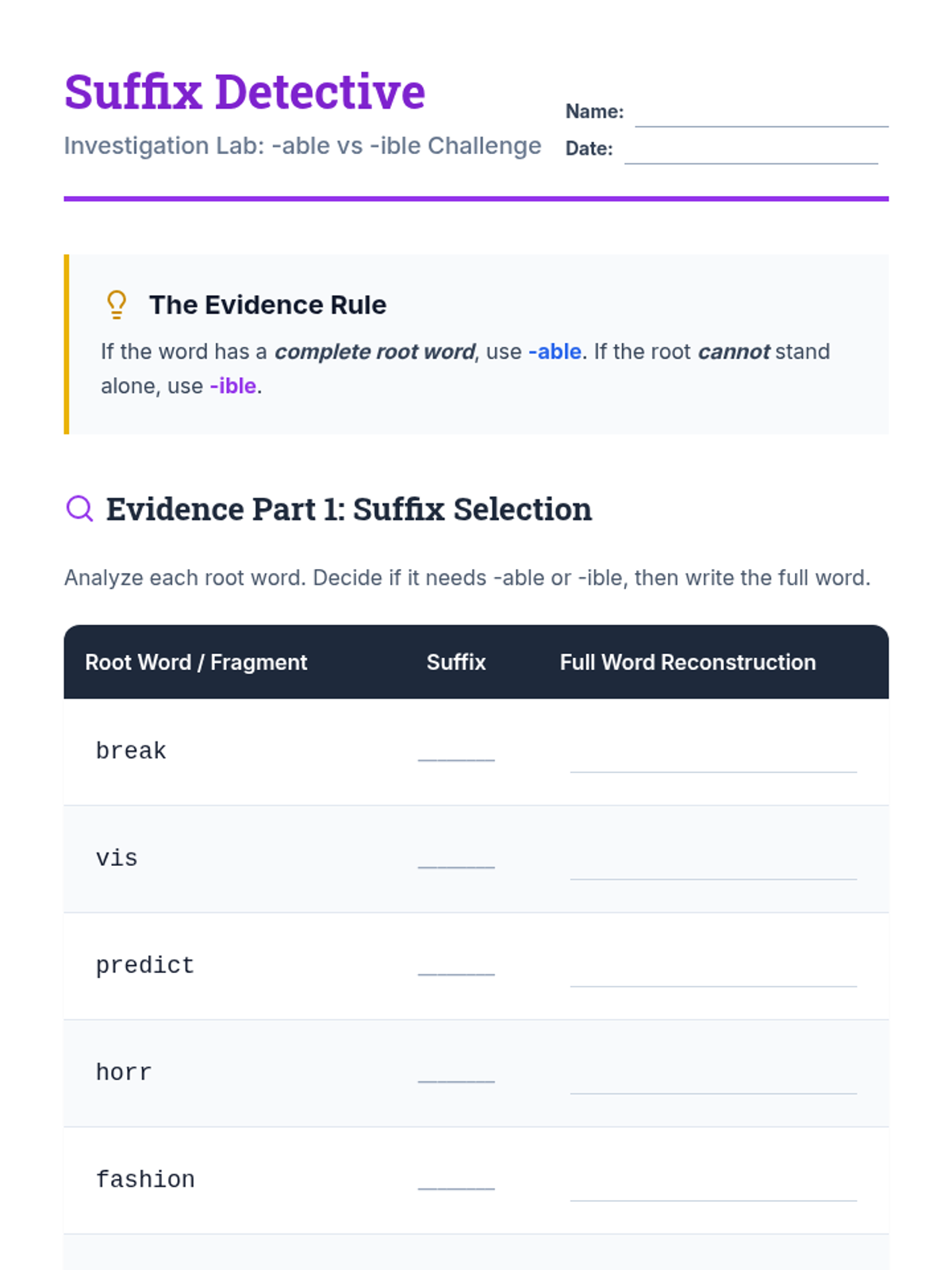
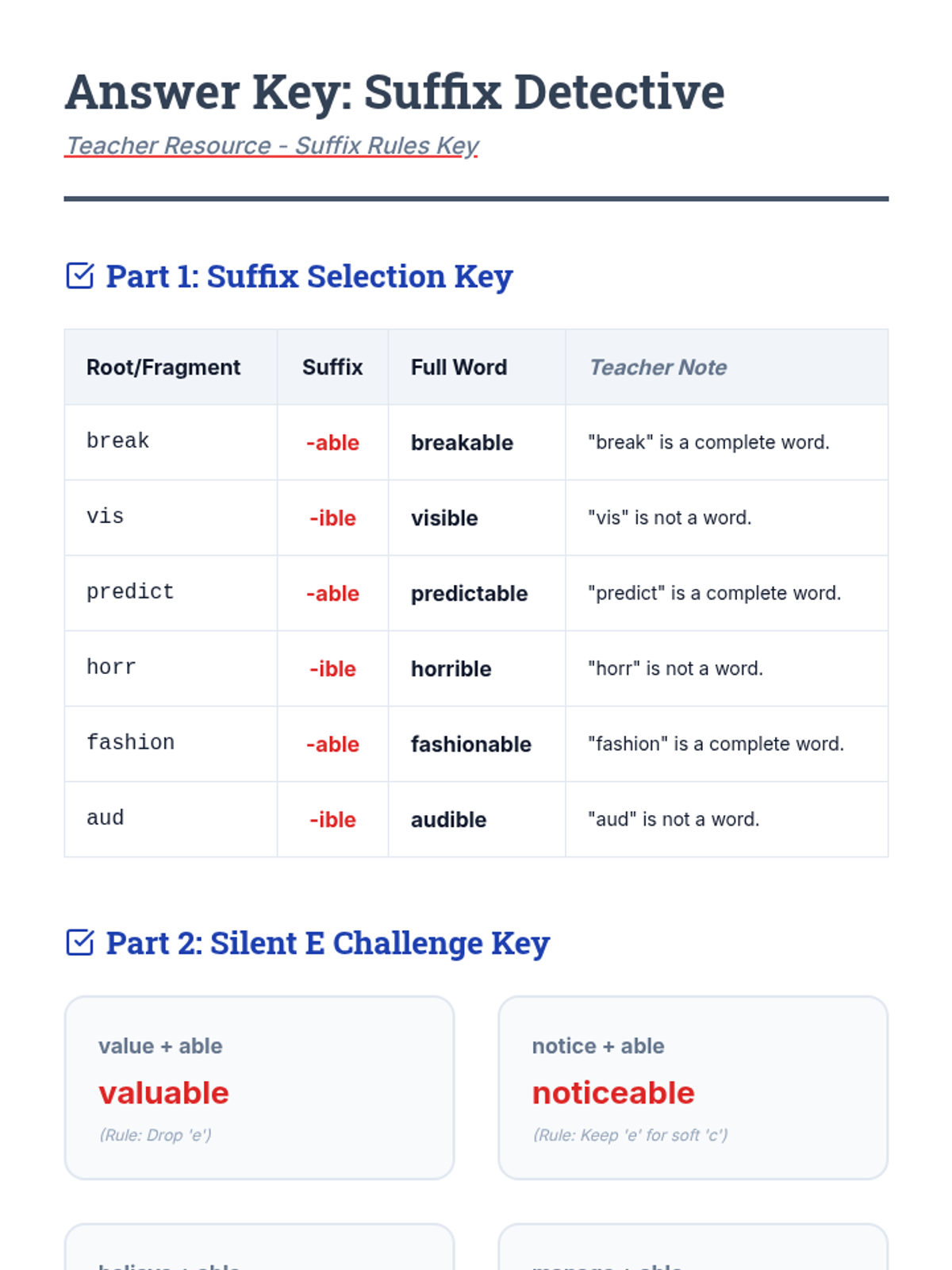
A lesson focused on the spelling rules for the assimilated suffixes -ible and -able, teaching students how to identify complete root words to determine the correct spelling.
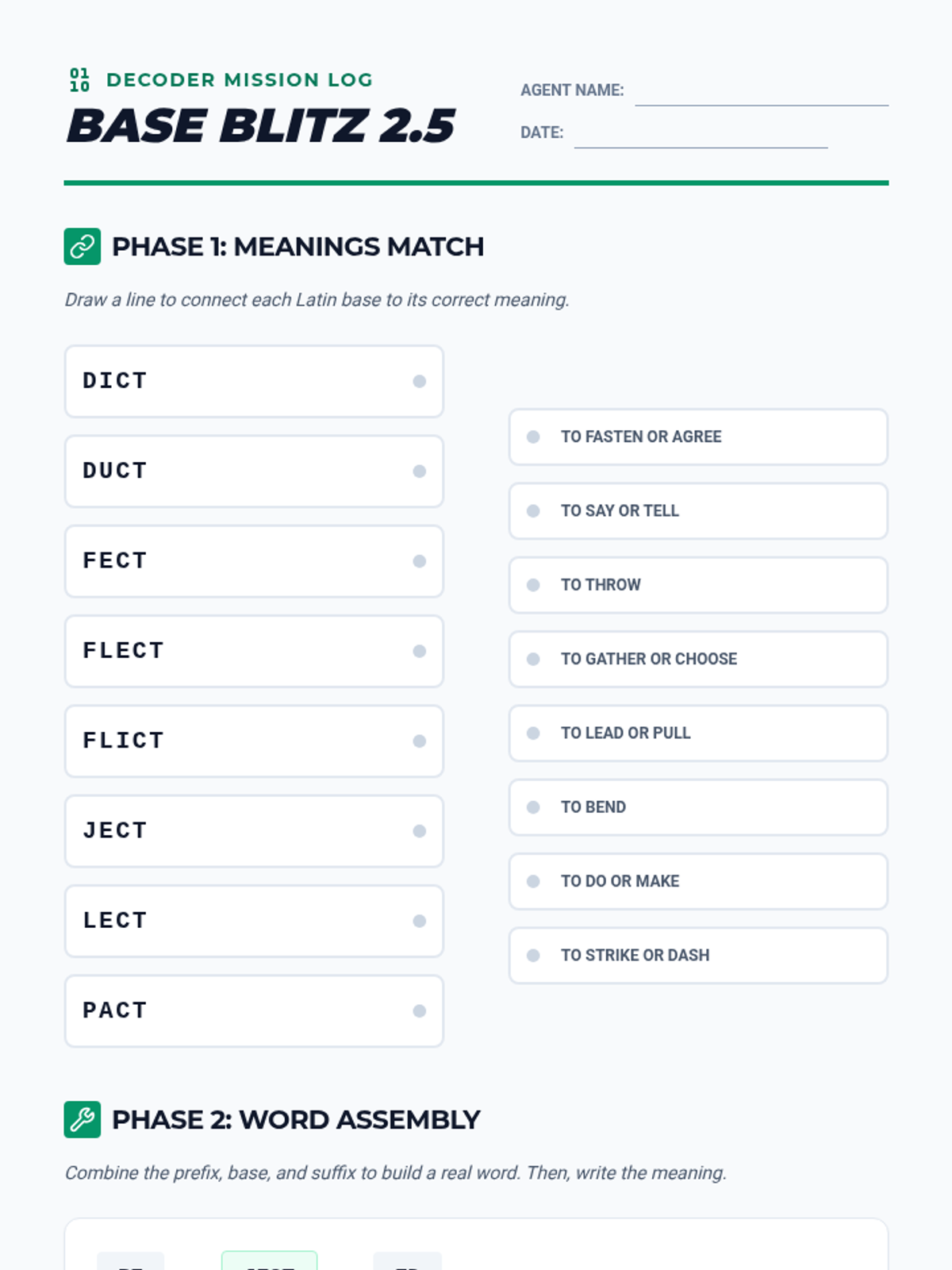
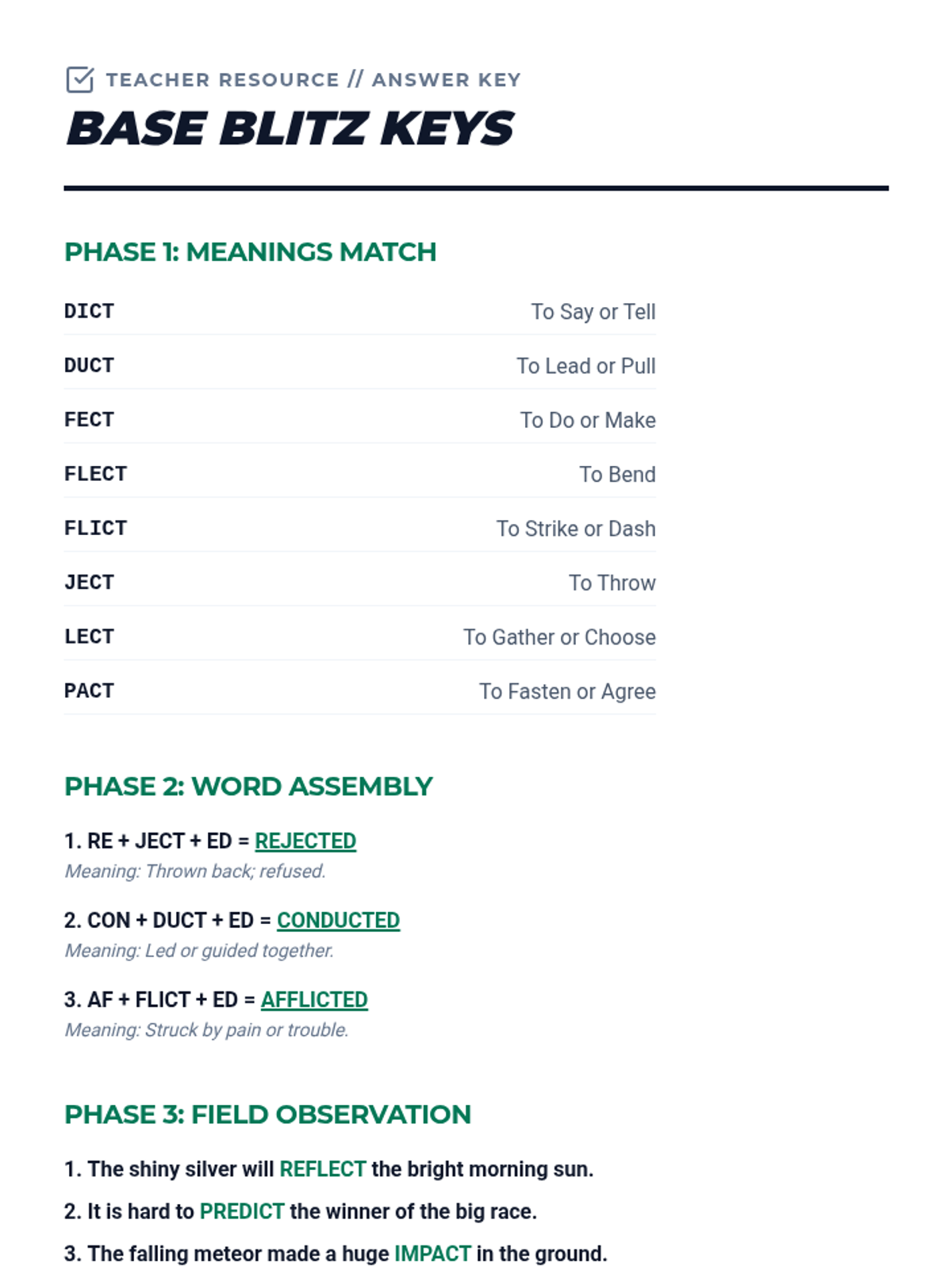
An introduction to Latin bases for word decoding, focusing on common roots found in complex English words. Students will learn the meanings of eight specific bases and practice building and breaking down words.
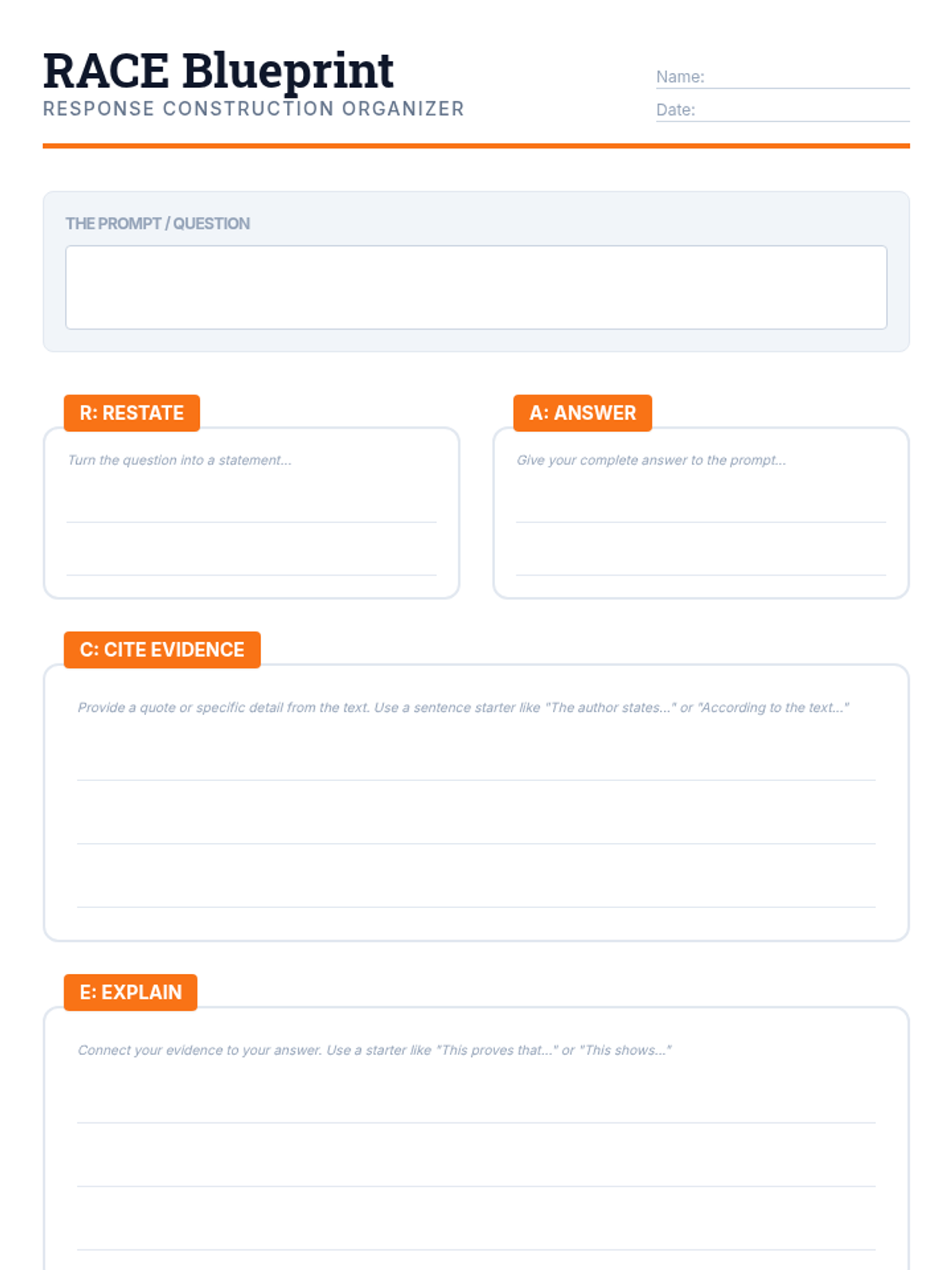
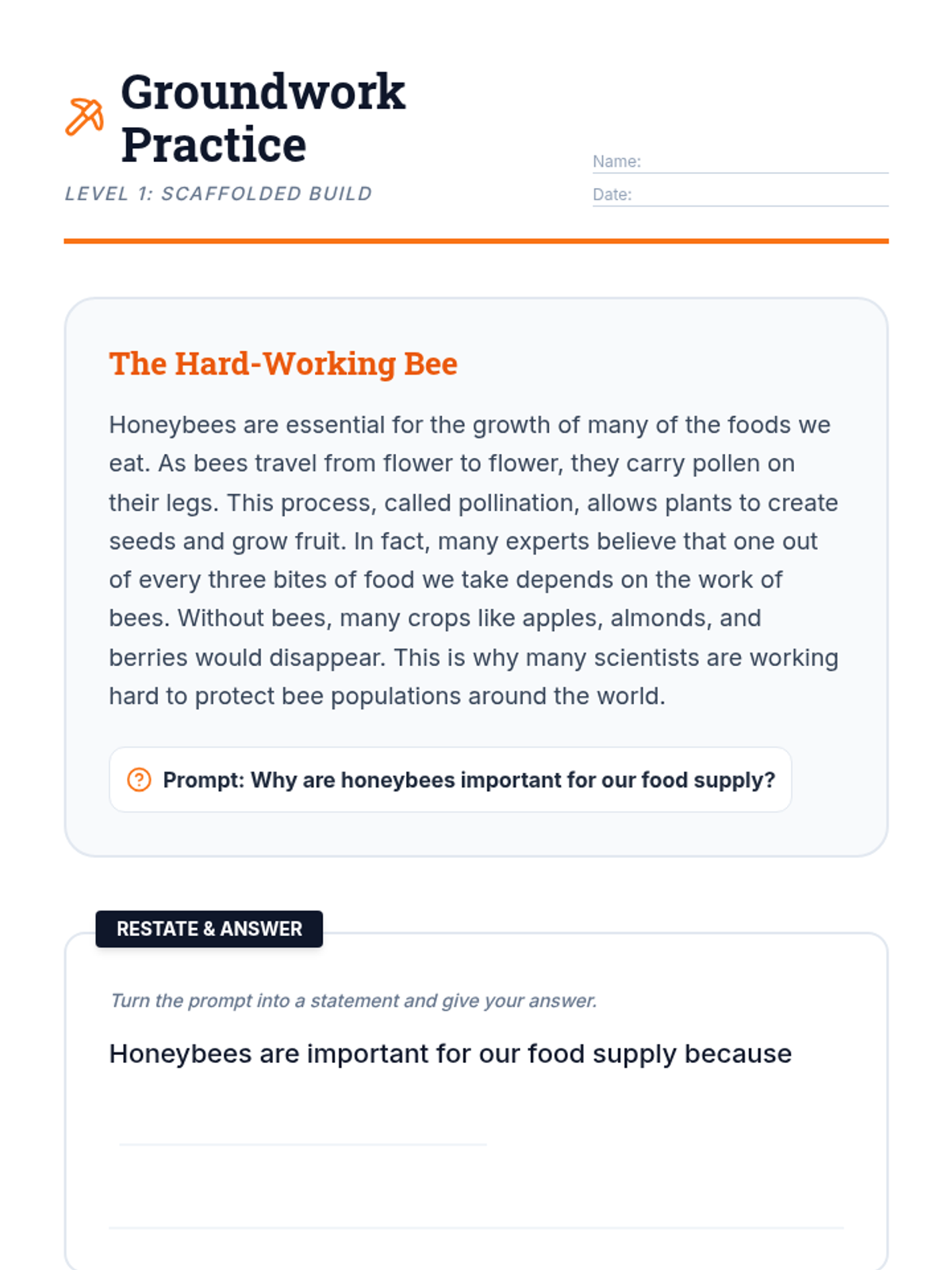
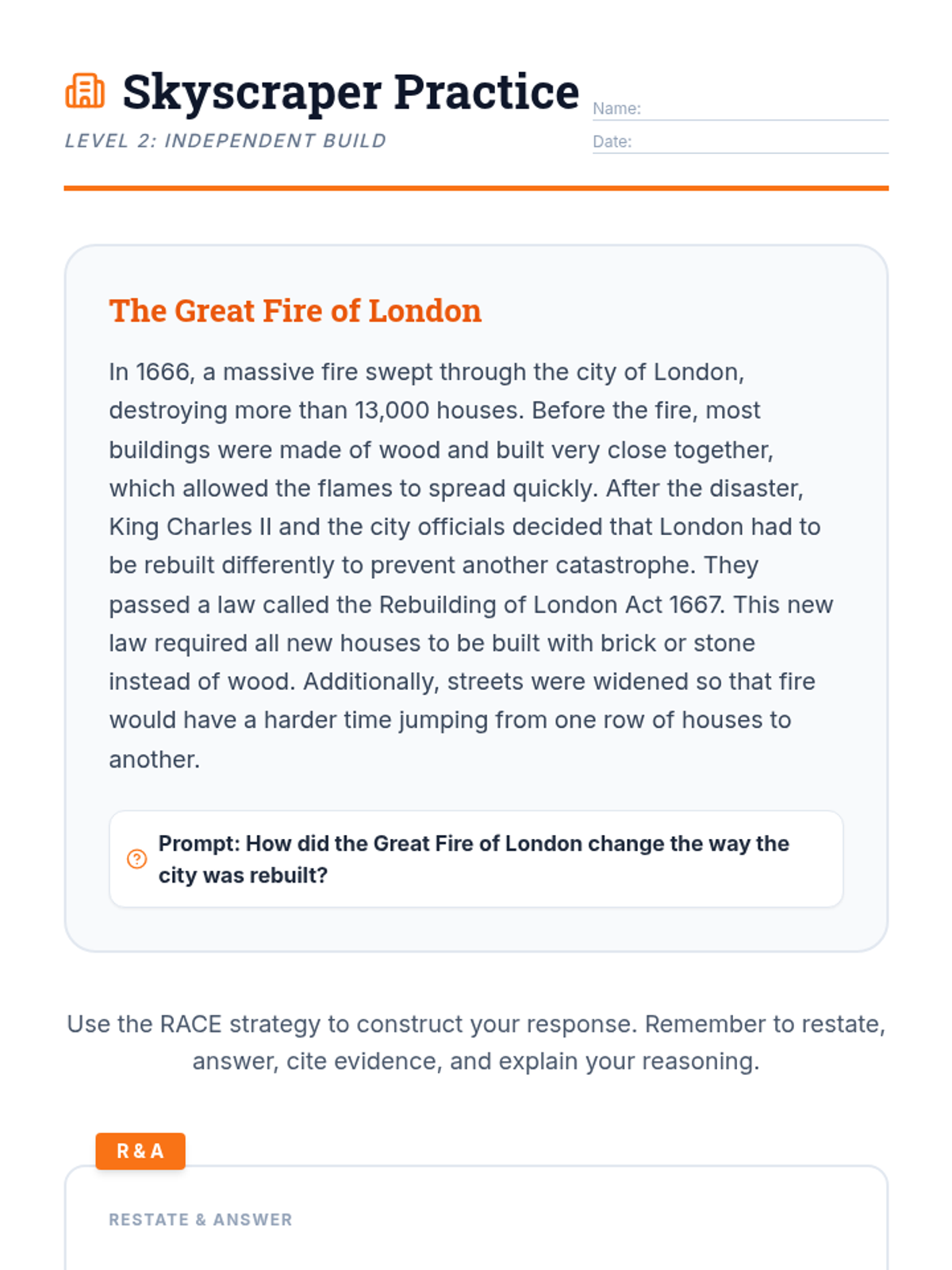
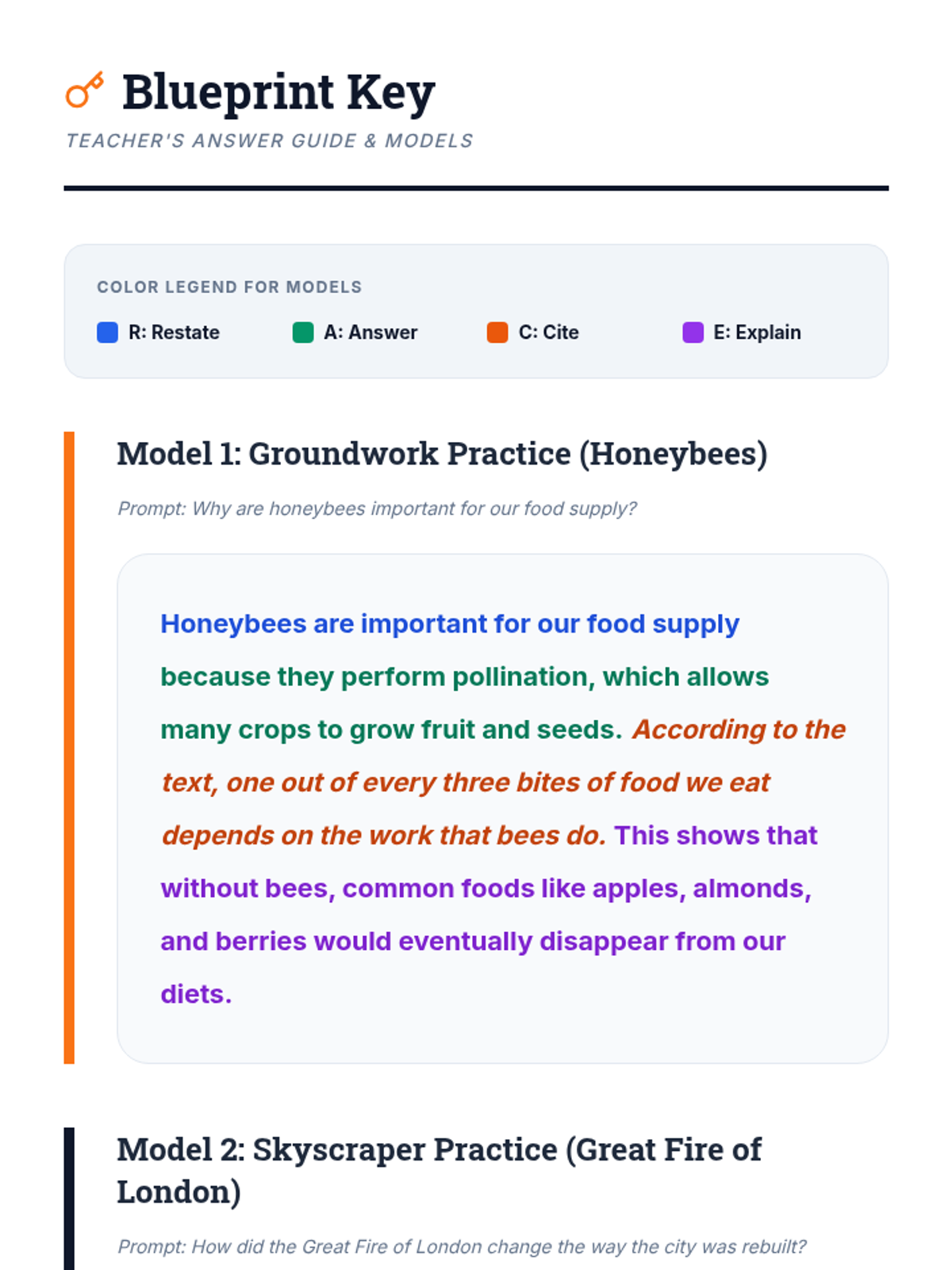
A comprehensive guide to mastering the RACE writing strategy (Restate, Answer, Cite, Explain) for constructed responses. Students will learn to build strong, evidence-based arguments through scaffolded practice and graphic organizers.
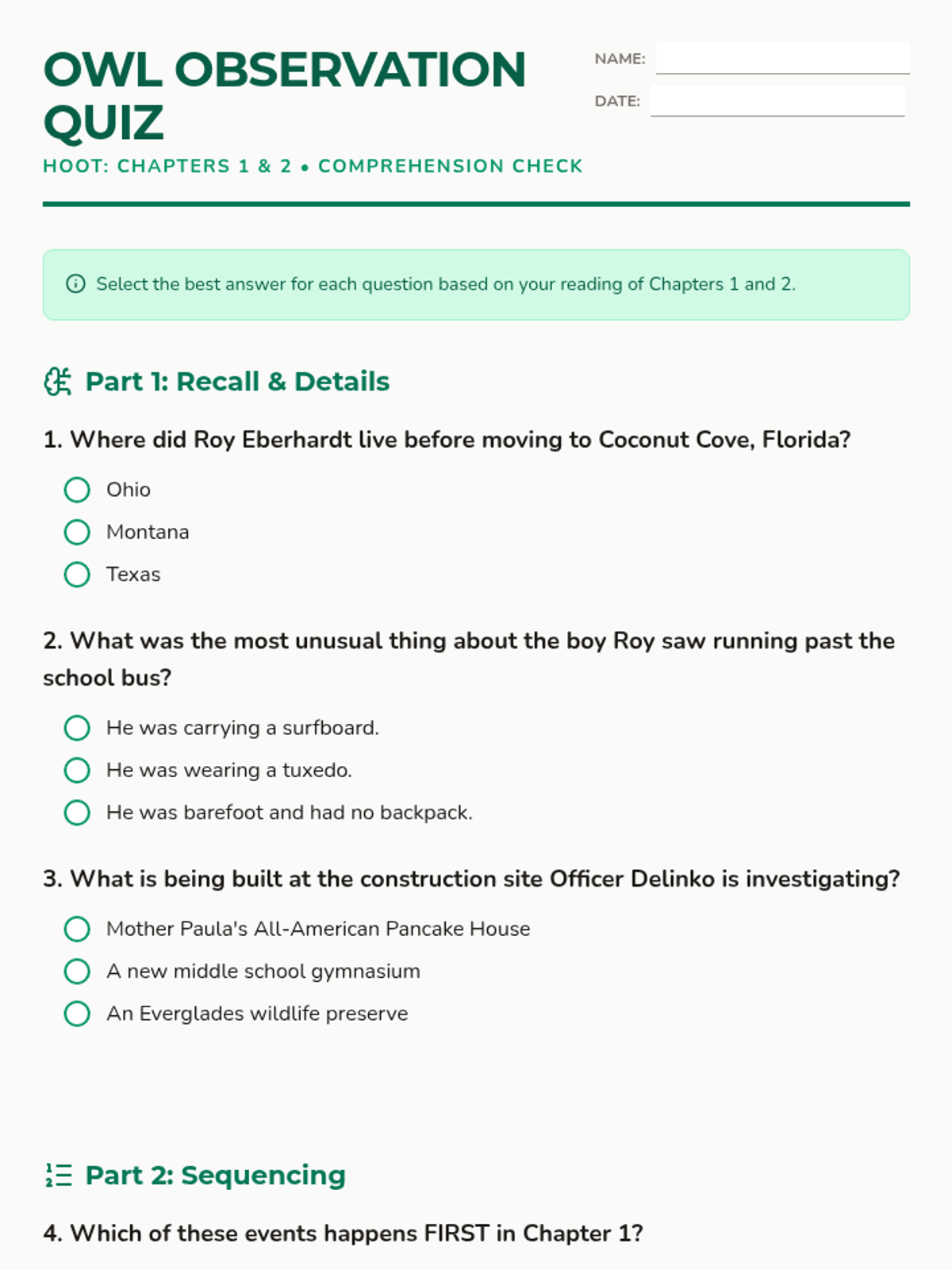
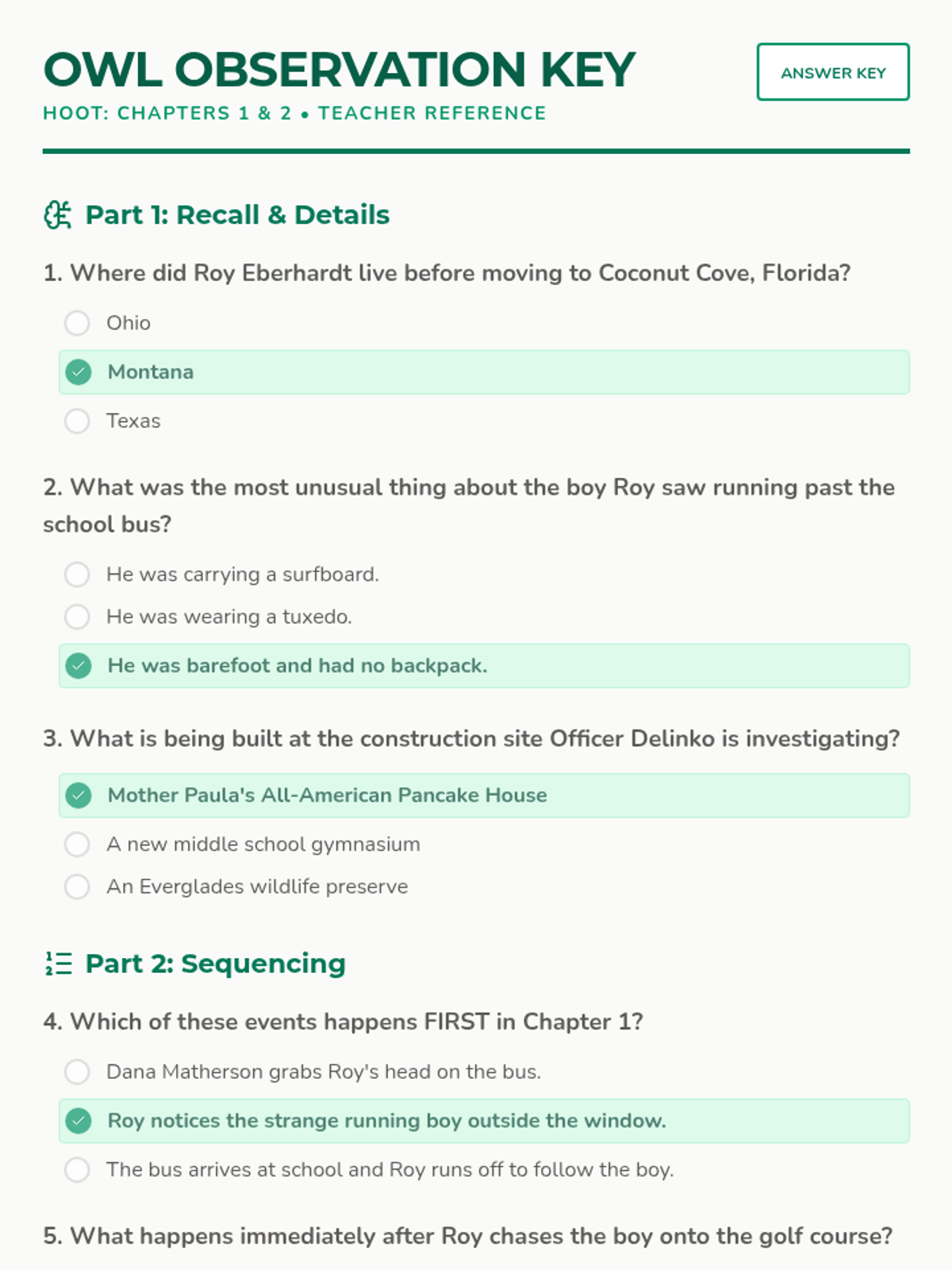
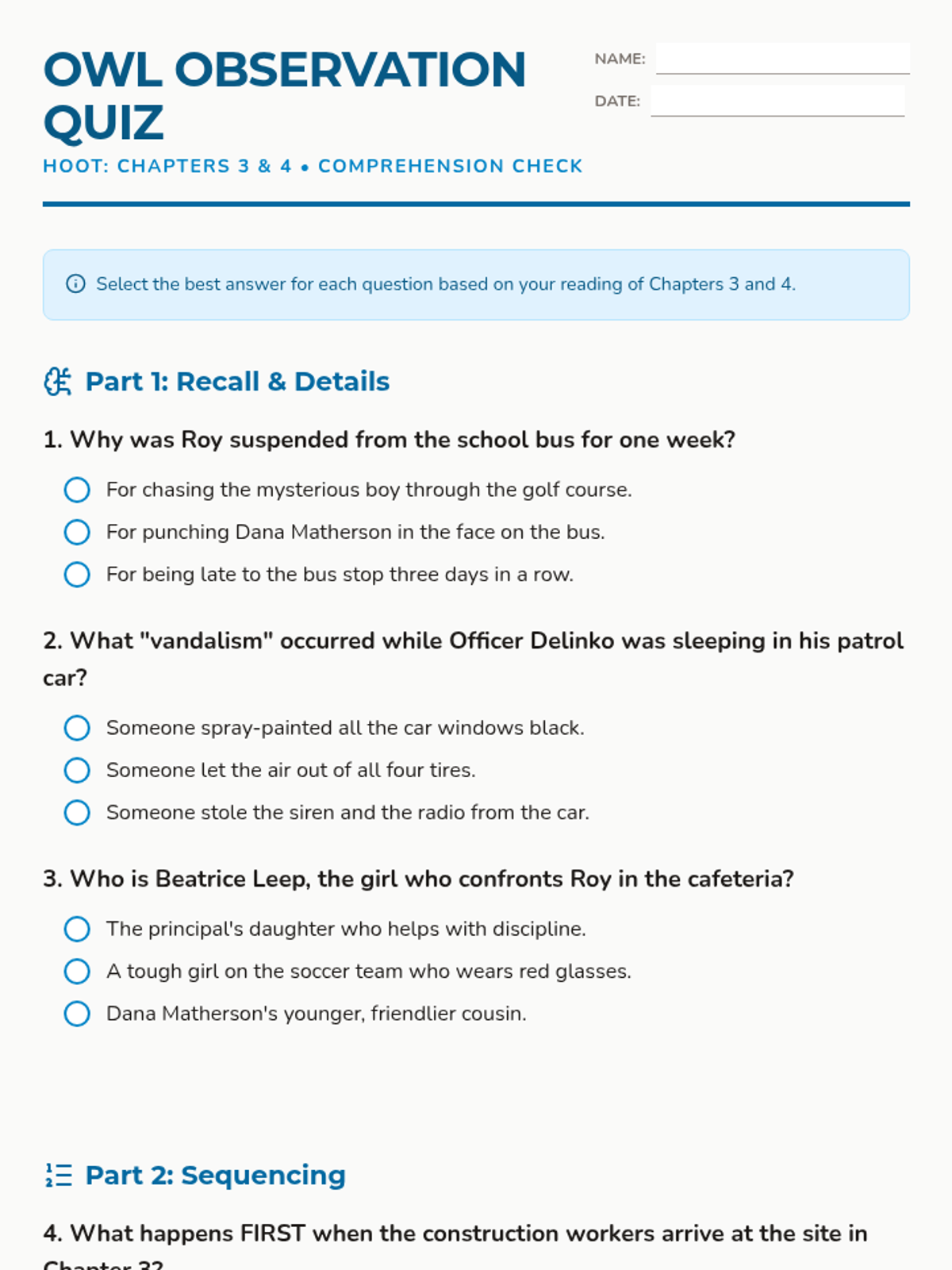
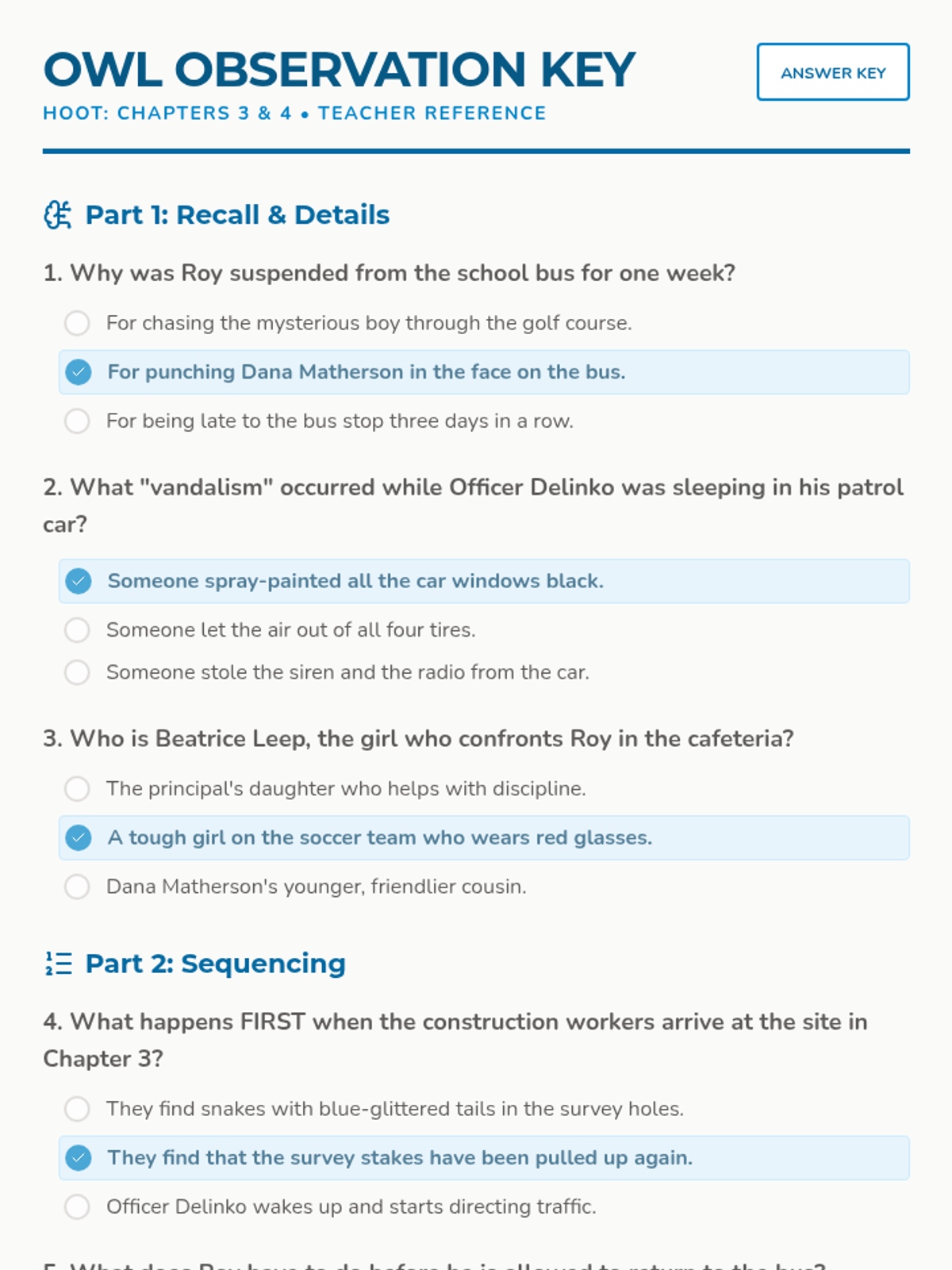
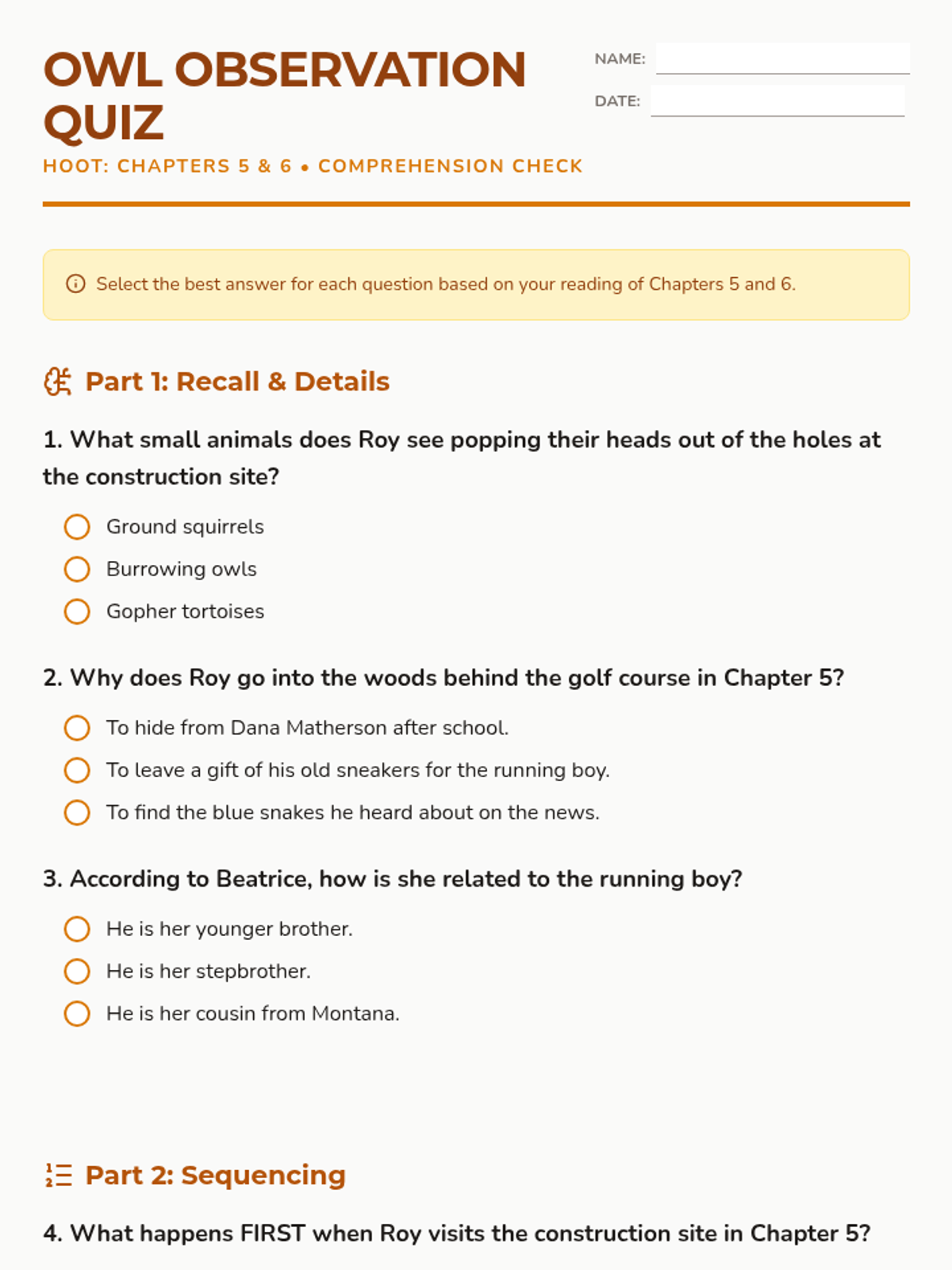
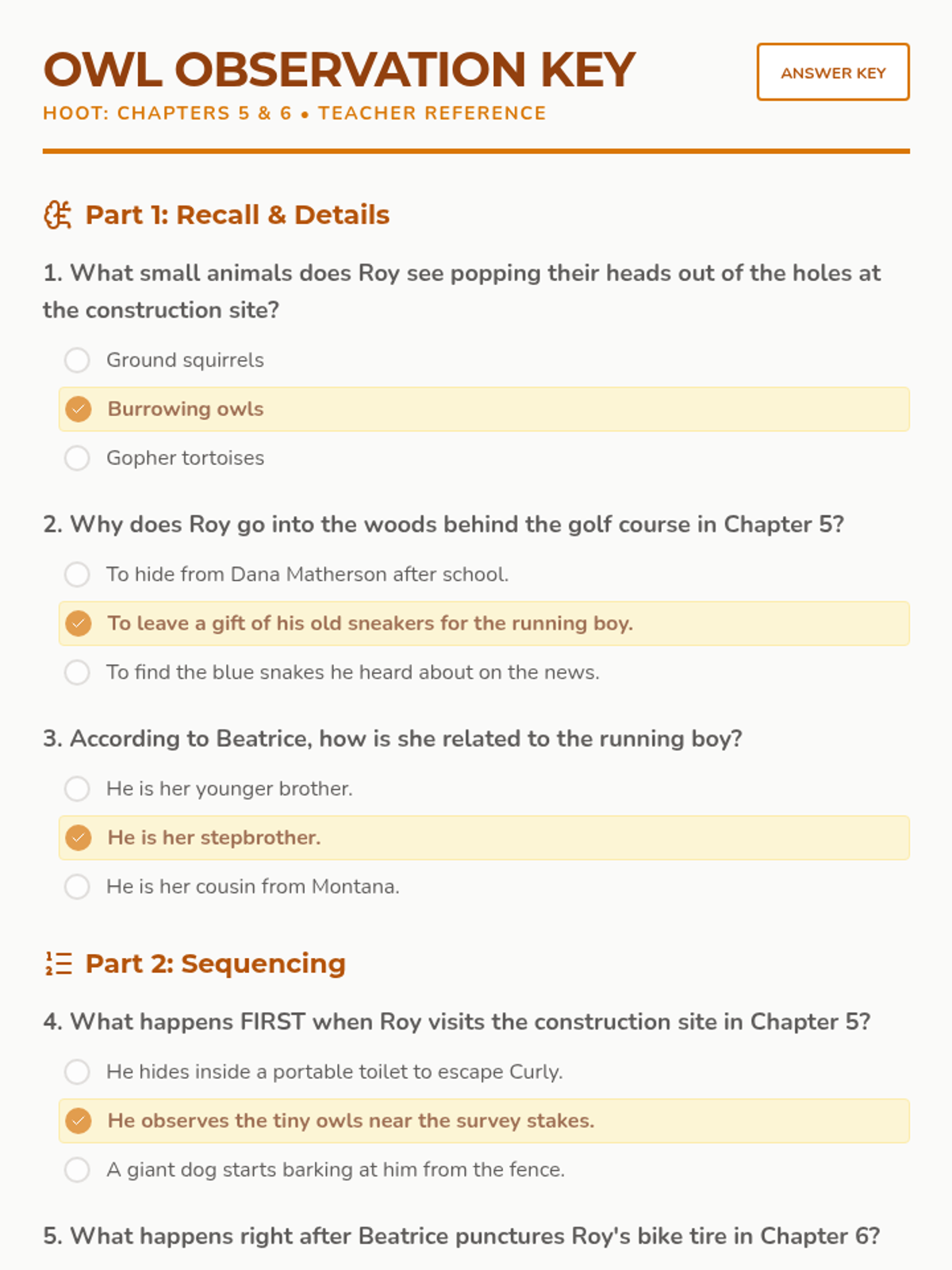
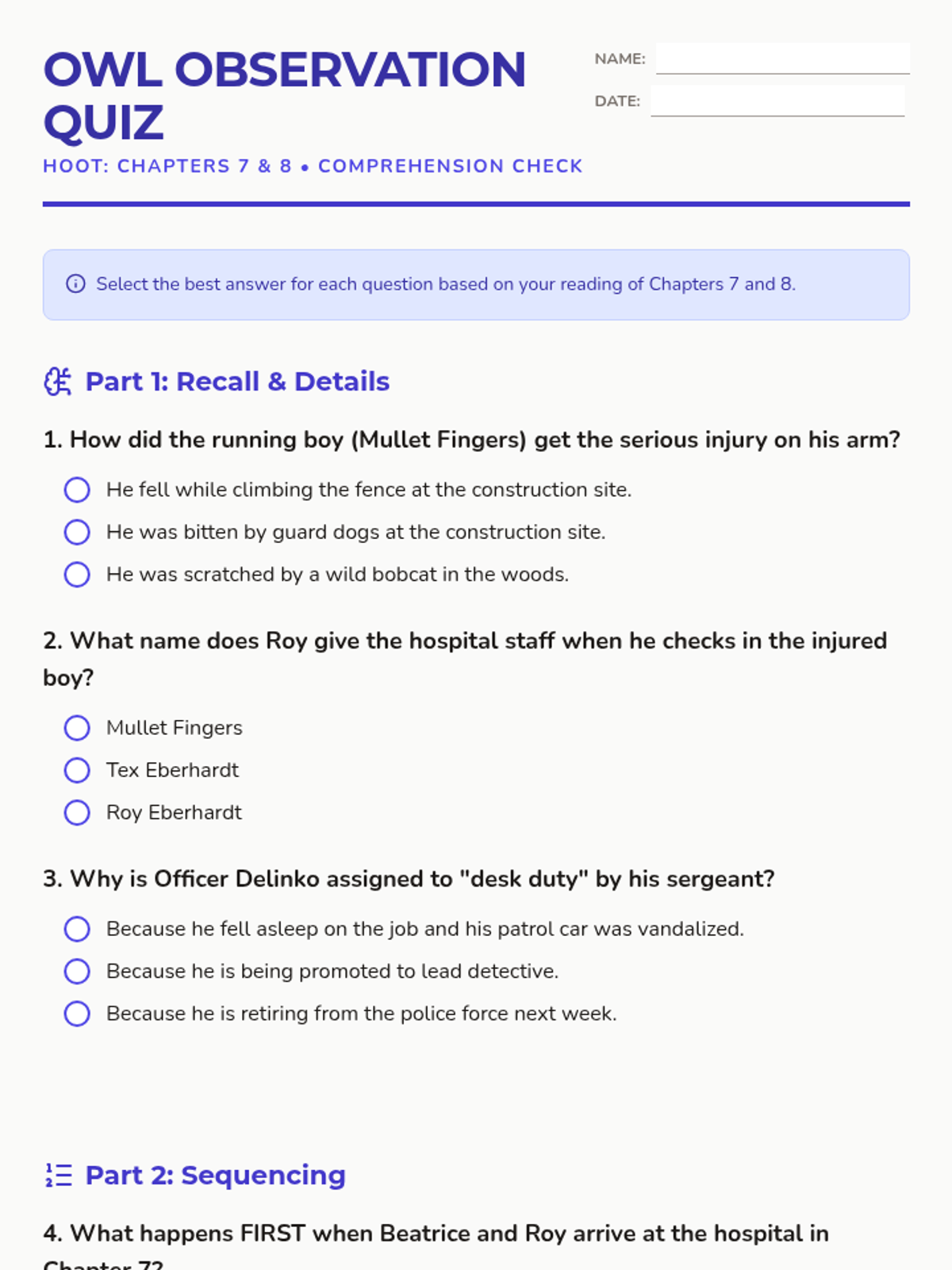
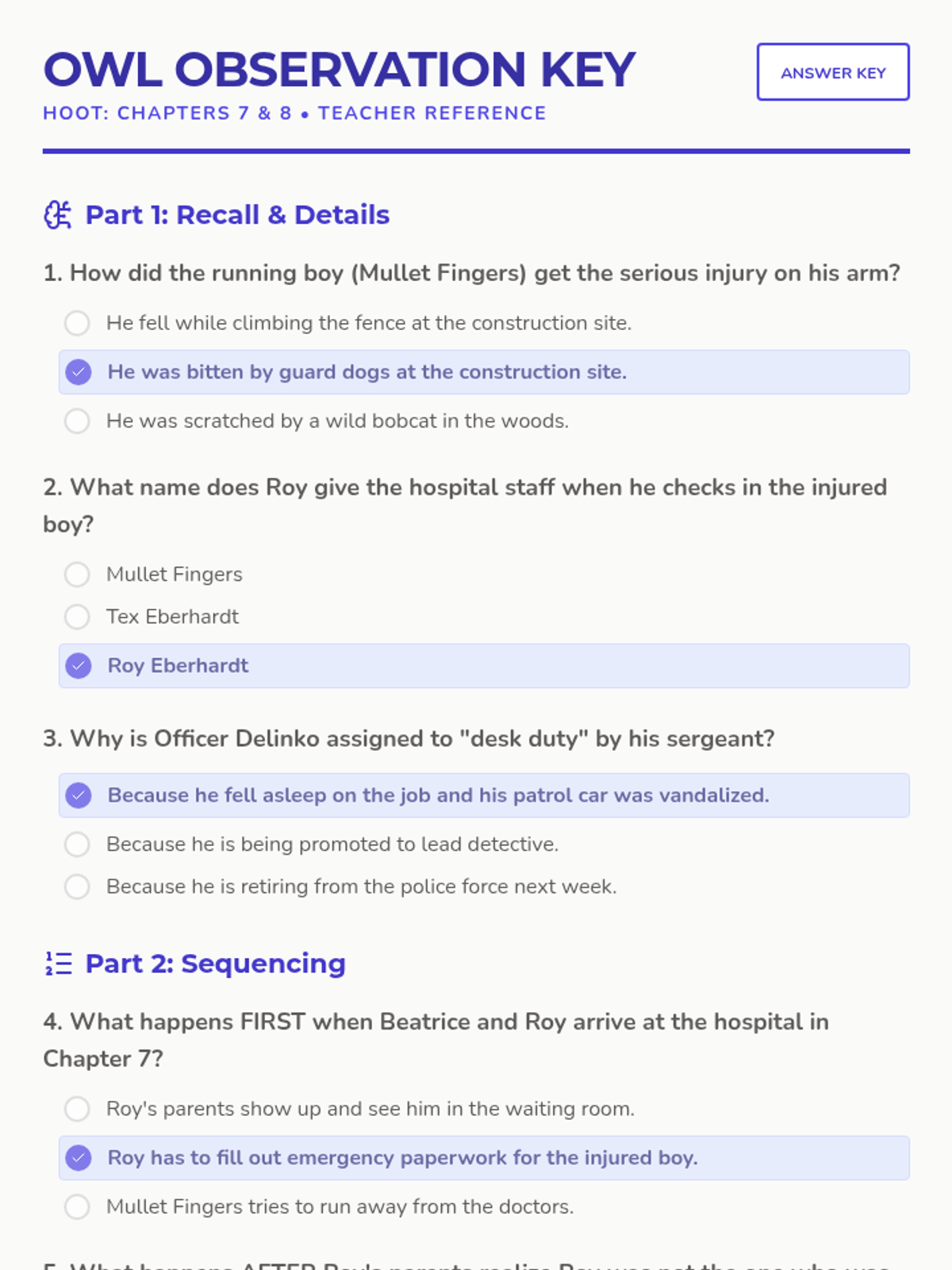
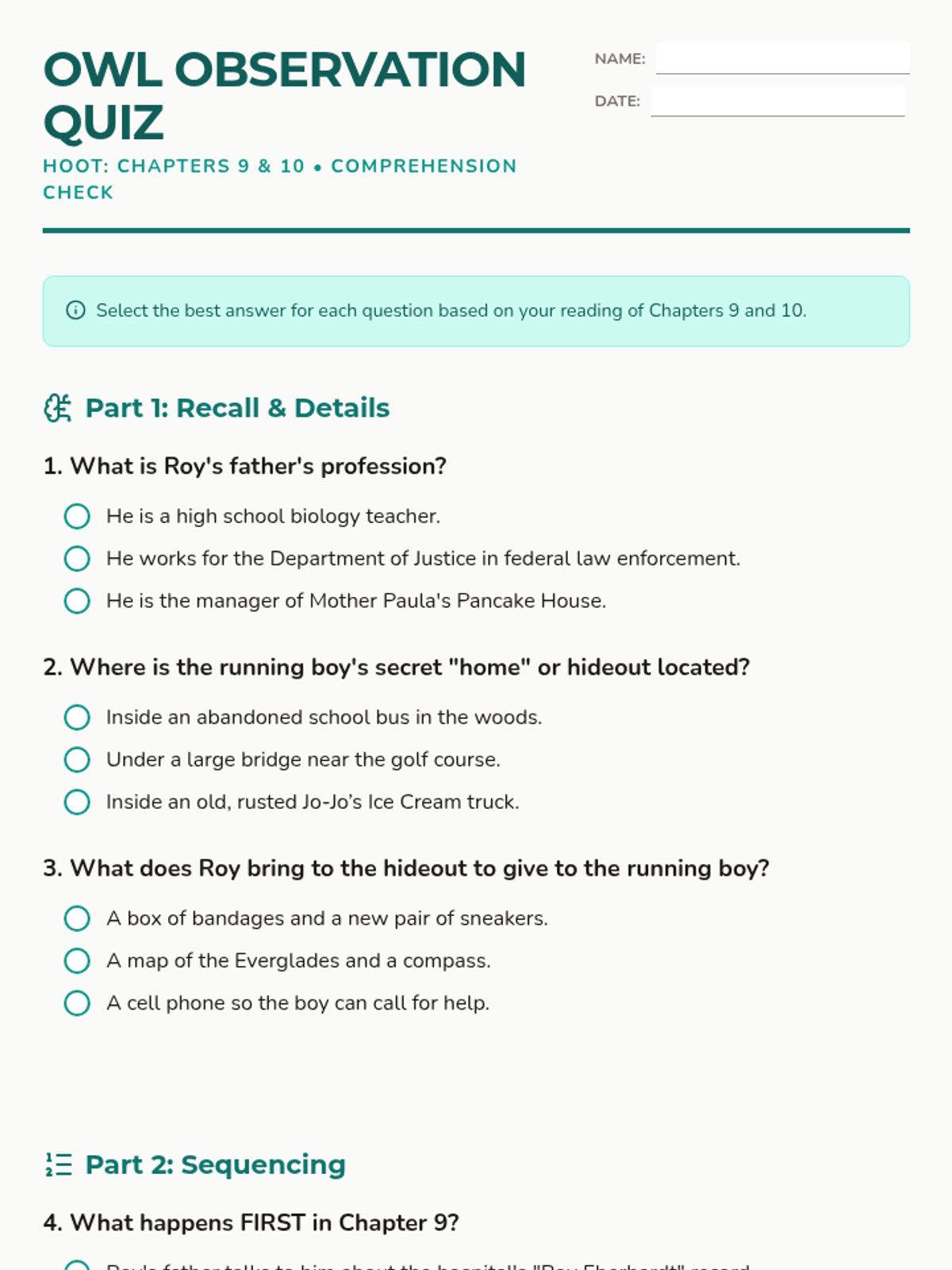
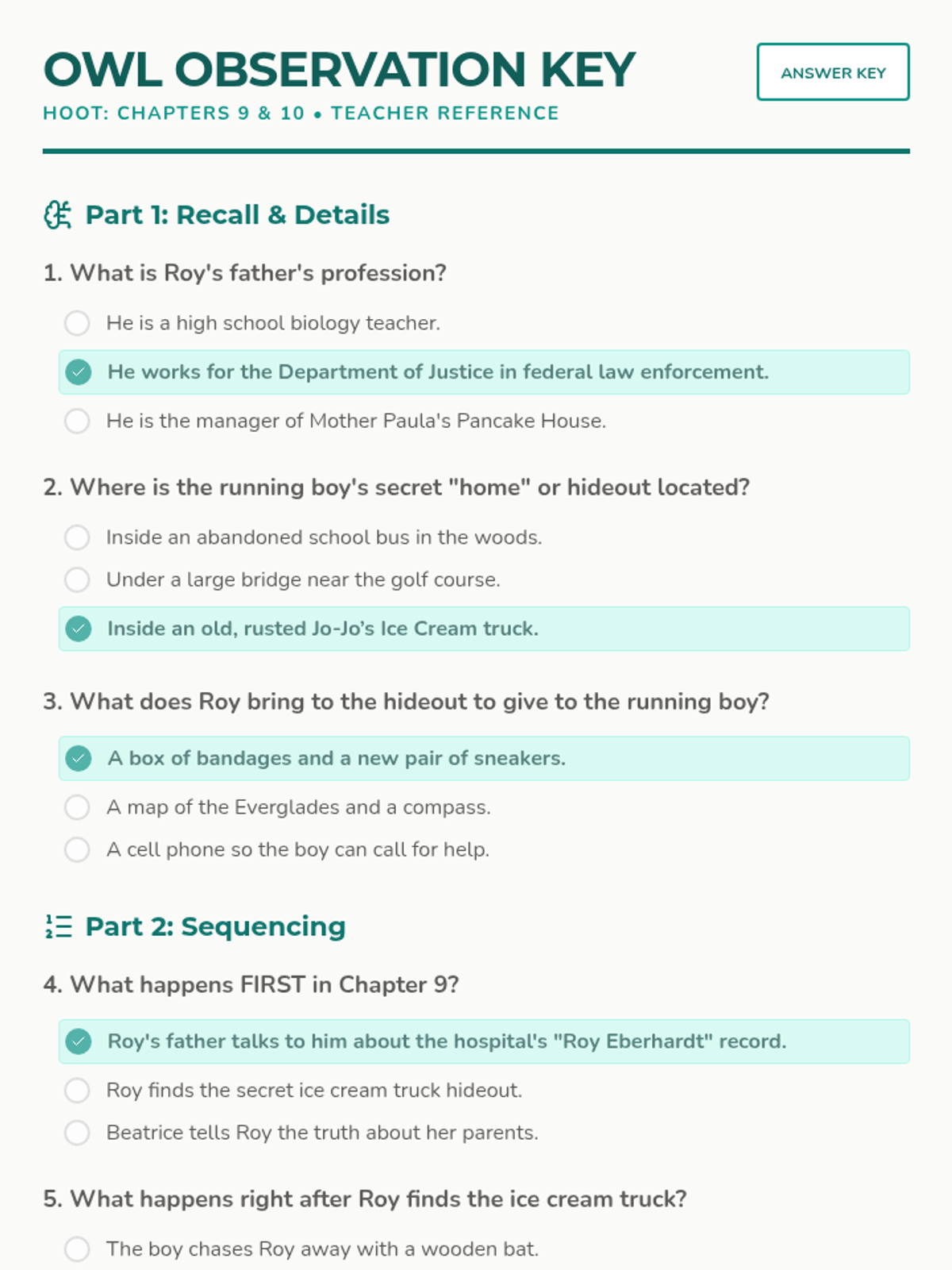
A focused exploration of the opening chapters of Carl Hiaasen's Hoot, introducing Roy Eberhardt, the mysterious running boy, and the conflict at the pancake house construction site.
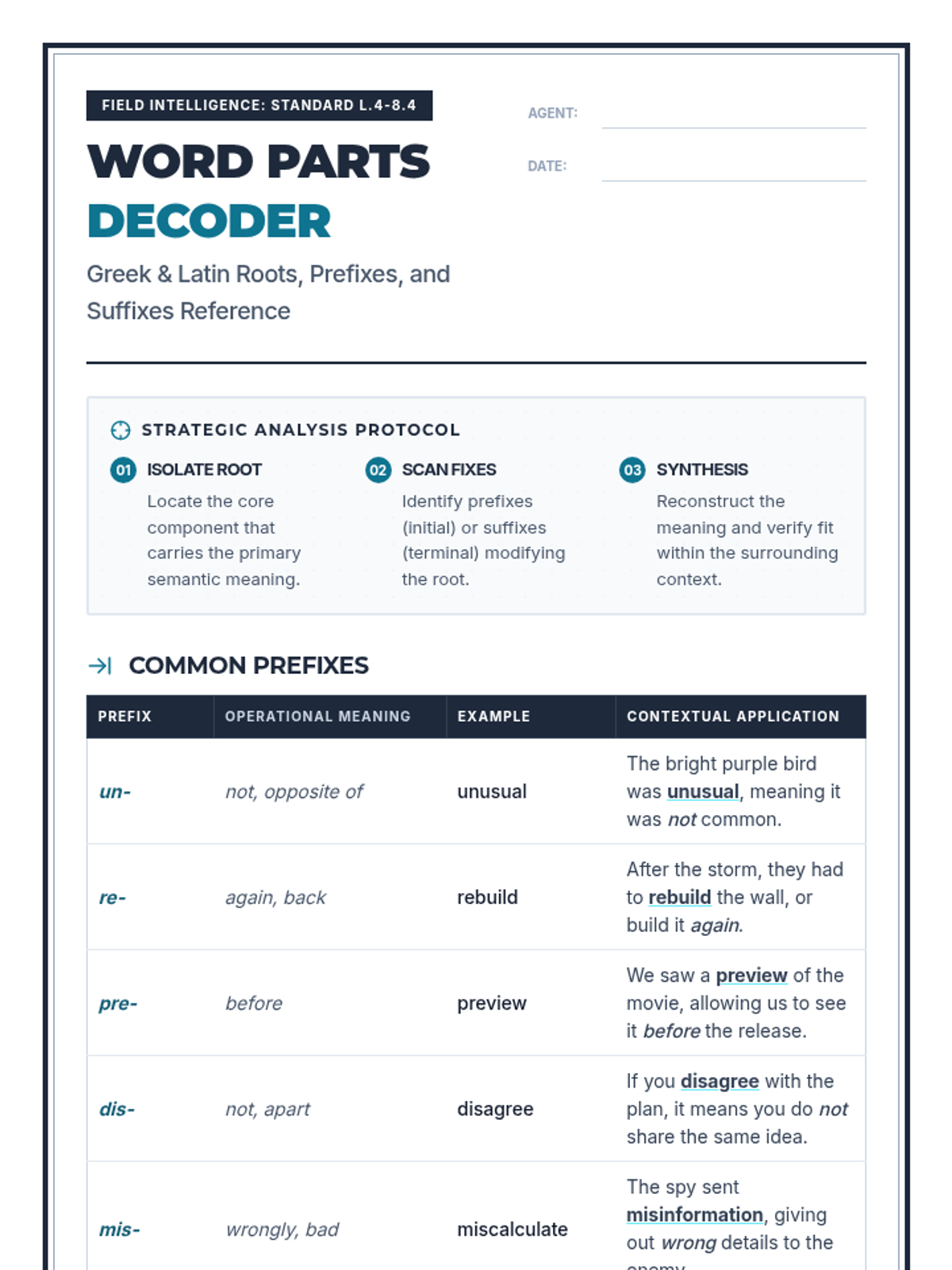
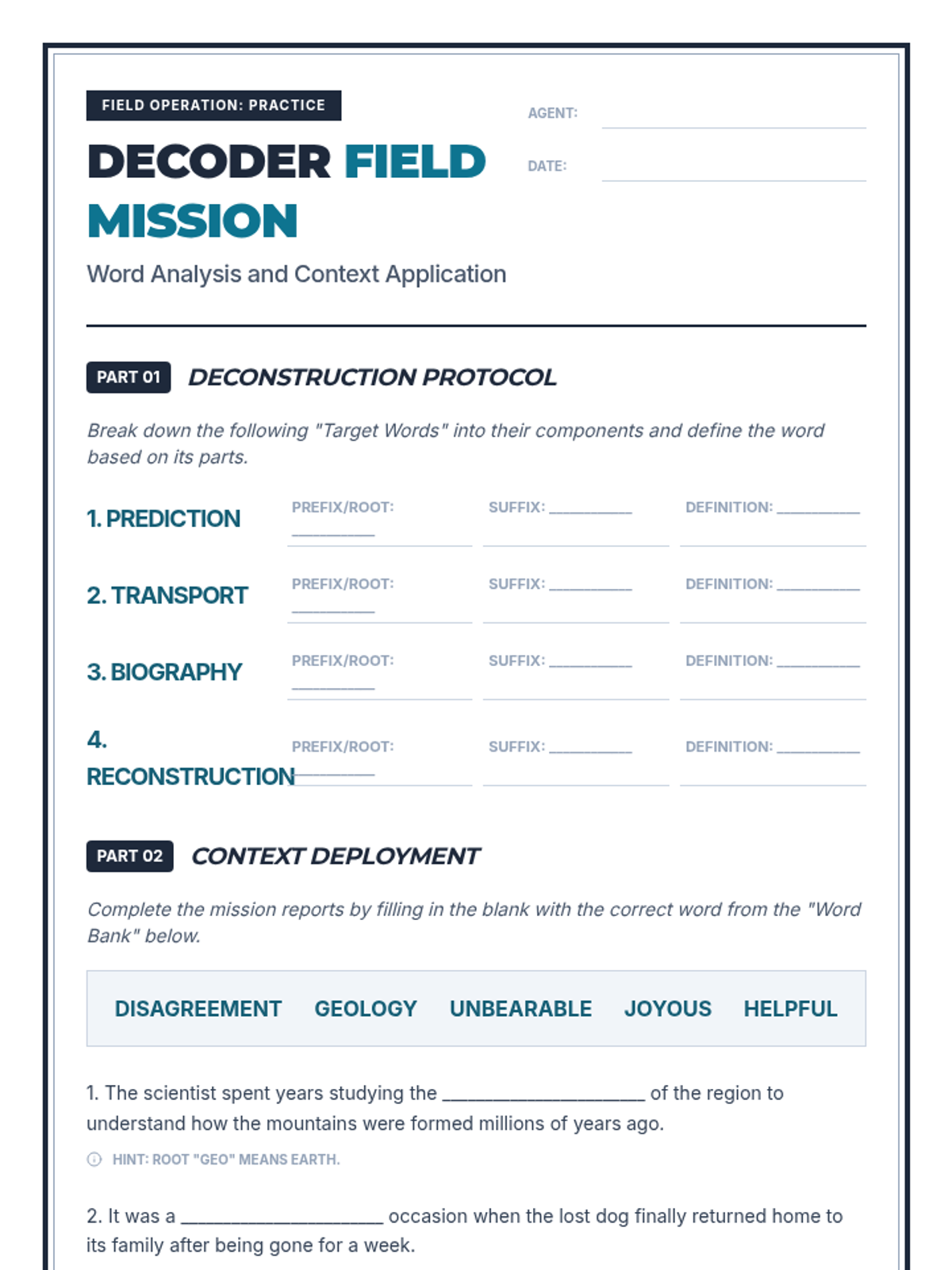
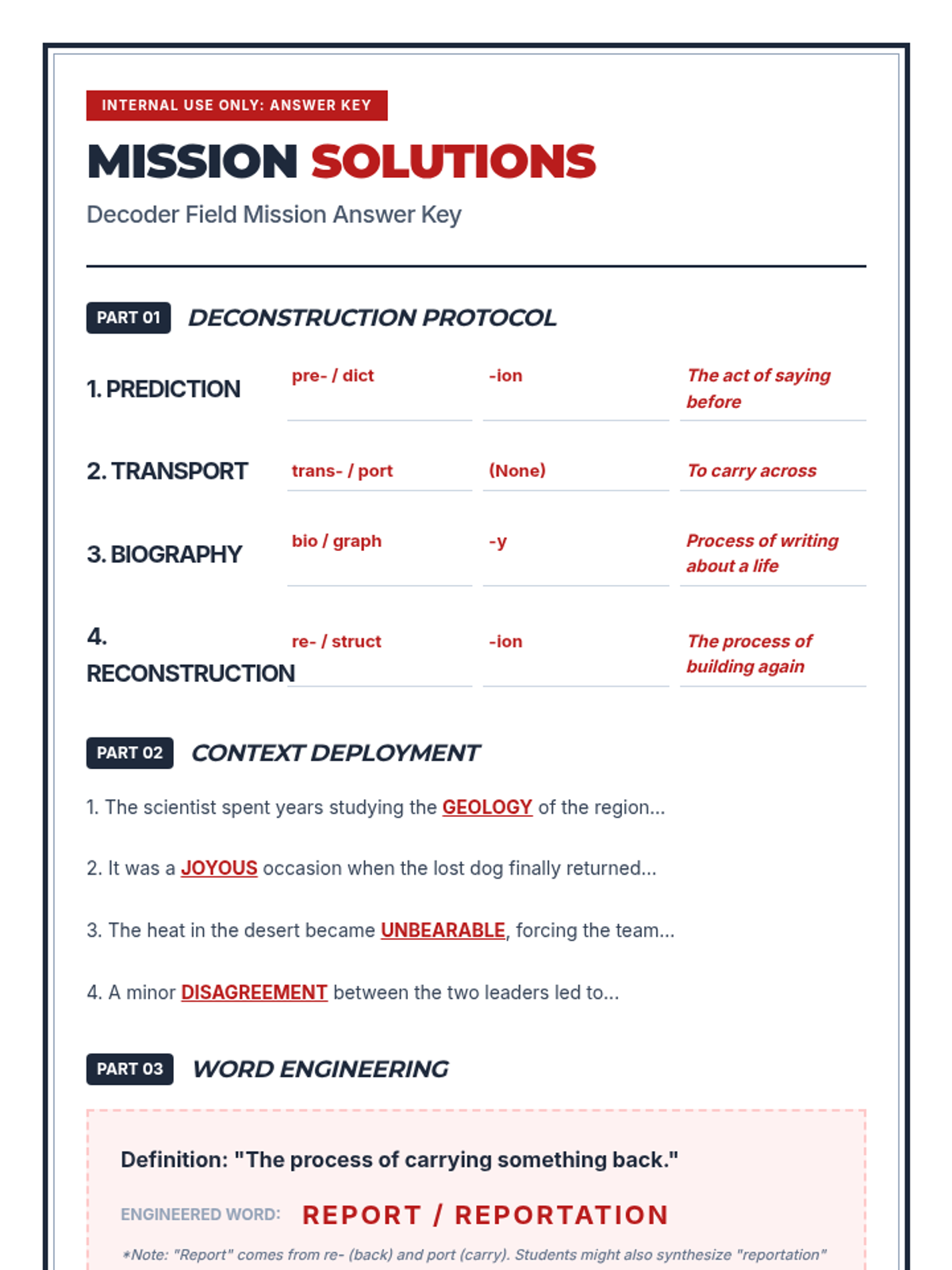
A comprehensive lesson on vocabulary acquisition strategies focusing on Greek and Latin roots, prefixes, and suffixes. Students learn to decode complex words by analyzing their components and using context clues to verify meaning.
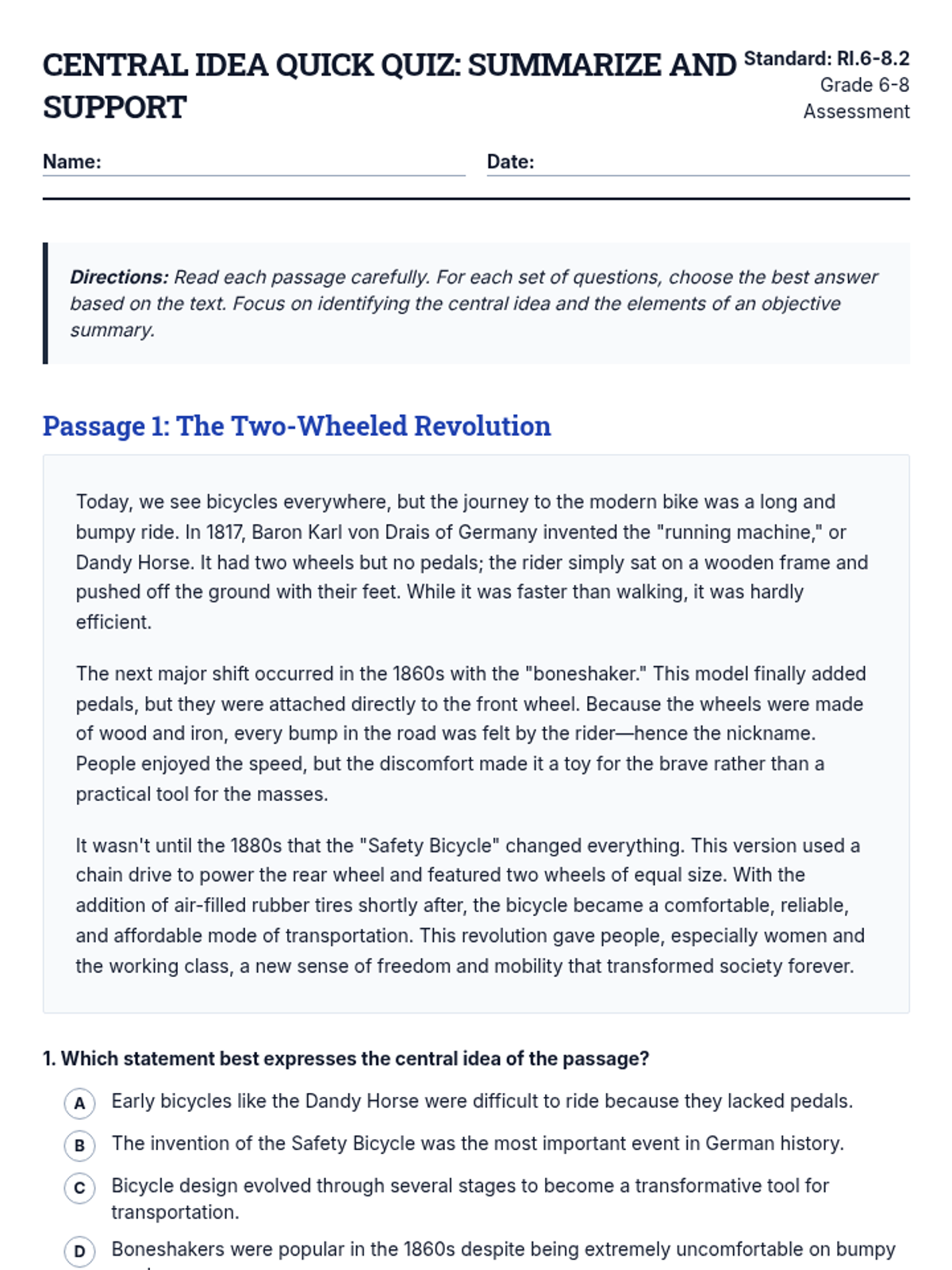
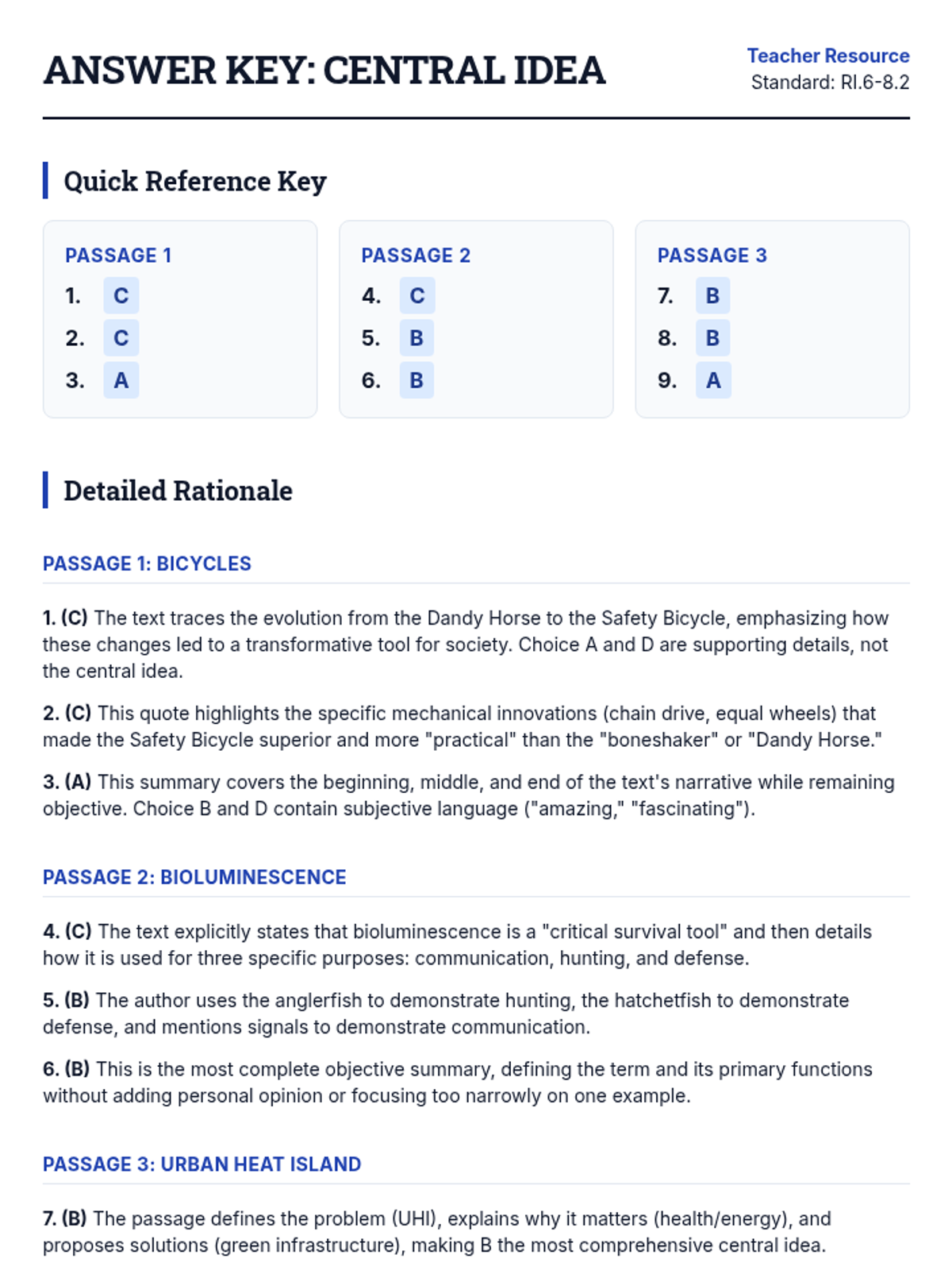
A comprehensive lesson designed to assess and reinforce student understanding of identifying central ideas and creating objective summaries (RI.6-8.2). It includes rigorous non-fiction passages and EOG-aligned assessments.
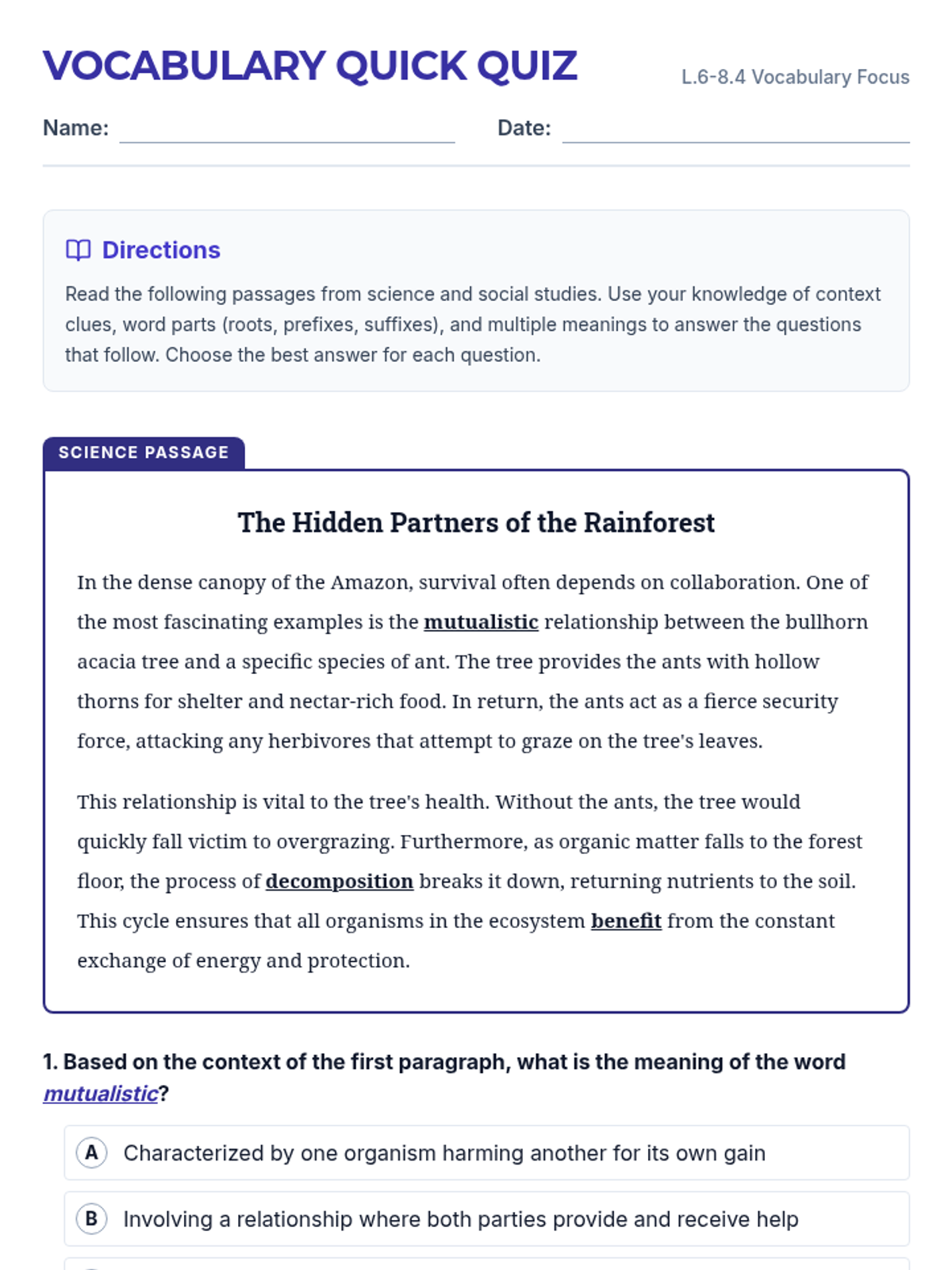
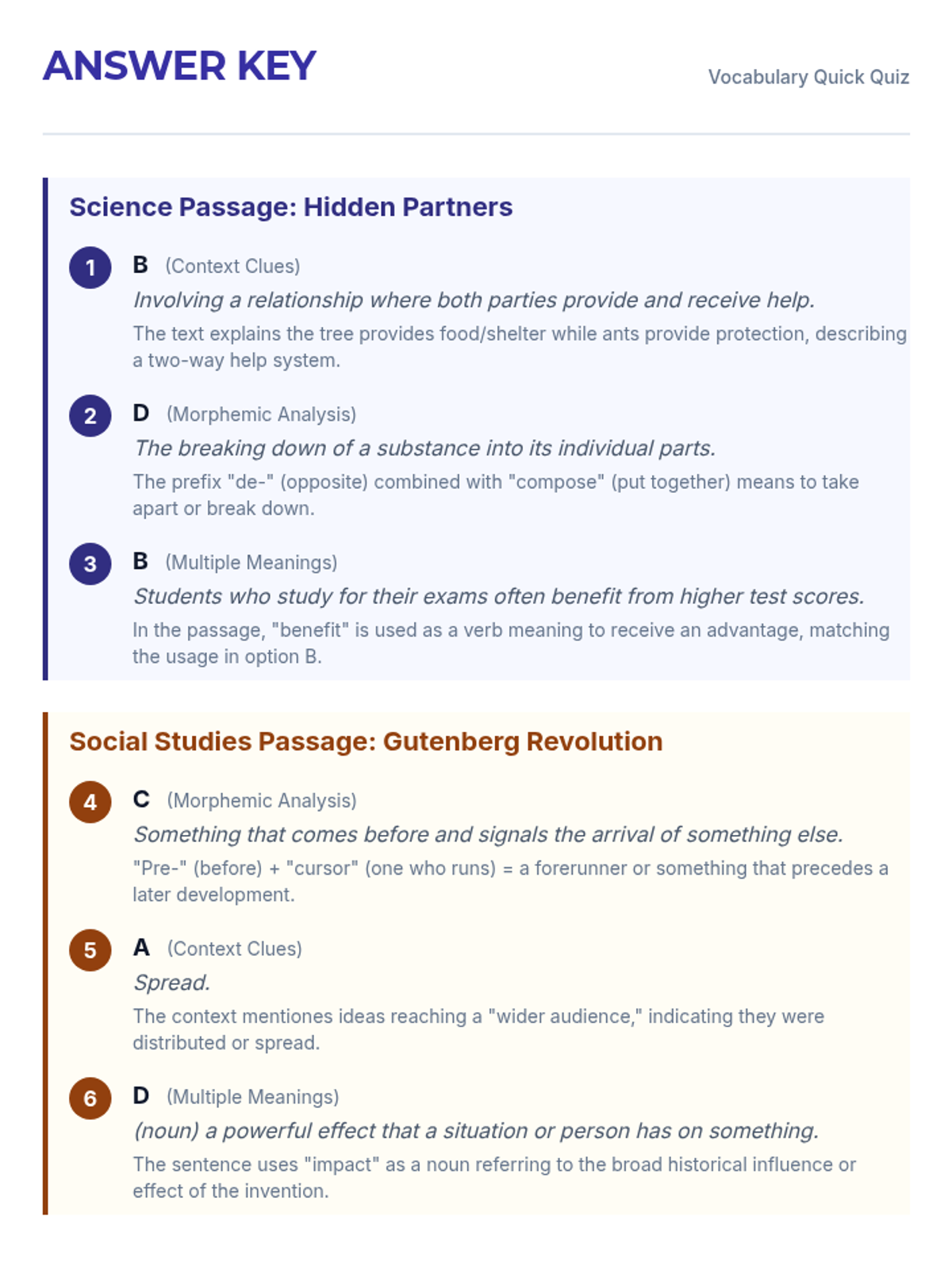
A vocabulary-focused lesson designed to help middle school students master academic vocabulary through cross-curricular passages in Science and Social Studies. This lesson emphasizes context clues, word parts, and multiple meanings in an EOG-style format.
A middle school reading practice lesson focused on evidence-based justification. Students learn to locate and cite specific text evidence before answering EOG-style multiple-choice questions.