A comprehensive test prep unit focusing on OSAS Grade 6 Informational Reading targets, including deep dives into central ideas, evidence, structure, and word meanings.
A lesson focused on mastering academic vocabulary used in reading comprehension questions. Students will learn to distinguish between common analytical verbs and concepts through a hands-on matching game and reference guides.
A 45-minute lesson teaching 6th-grade students how to evaluate online credibility using lateral reading techniques, moving from vertical reading habits to investigative cross-referencing.
A 45-minute lesson where students showcase their media literacy investigations through screencasts, engage in peer evaluation using a professional rubric, and reflect on their growth as digital fact-checkers.
In this lesson, students step into the role of investigative journalists to create a screencast that documents their fact-checking process and final findings. They will learn to combine digital storytelling with technical screencasting skills to present evidence clearly and convincingly.
A 45-minute inquiry-based lesson where 6th-grade students learn to identify claims and evaluate the quality of supporting evidence through a detective-themed investigation.
A culminating lesson where 6th-grade students showcase their journalism portfolios, focusing on professional public speaking and peer feedback in a newsroom-style environment.
A 45-minute journalism lesson where 6th-grade students synthesize their understanding of ethical reporting to create a personal journalism pledge. Students explore the core values of integrity and trustworthiness through reflection and drafting.
A 45-minute lesson for 6th-grade students to develop their professional journalistic identity by drafting and refining their own newsroom bios. Students analyze professional examples, identify core components, and engage in a peer feedback loop.
A 45-minute lesson where students become newsroom investigators, learning to distinguish between objective hard news reporting and subjective opinion pieces through hands-on analysis and writing practice.
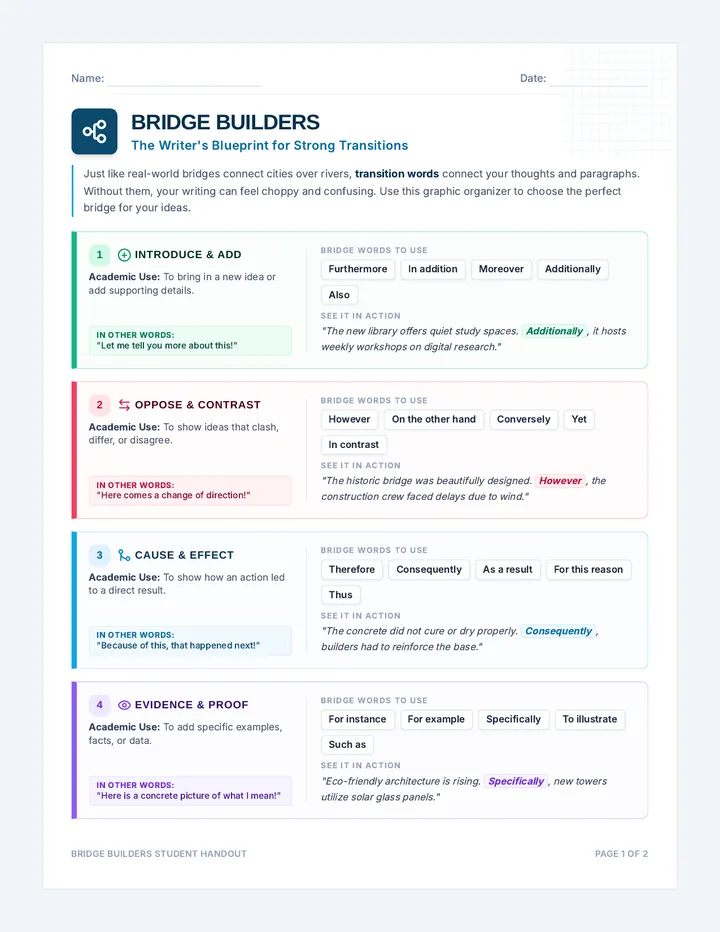
Students will identify and compare four major text structures: chronology, comparison, cause/effect, and problem/solution. Through an architectural 'blueprint' theme, ESL students will learn signal words and structural patterns to improve reading comprehension.