A fast-paced 30-minute lesson focusing on the Greek root 'graph' (to write/draw), covering spelling rules for suffixes and cross-curricular application in science, math, and history.
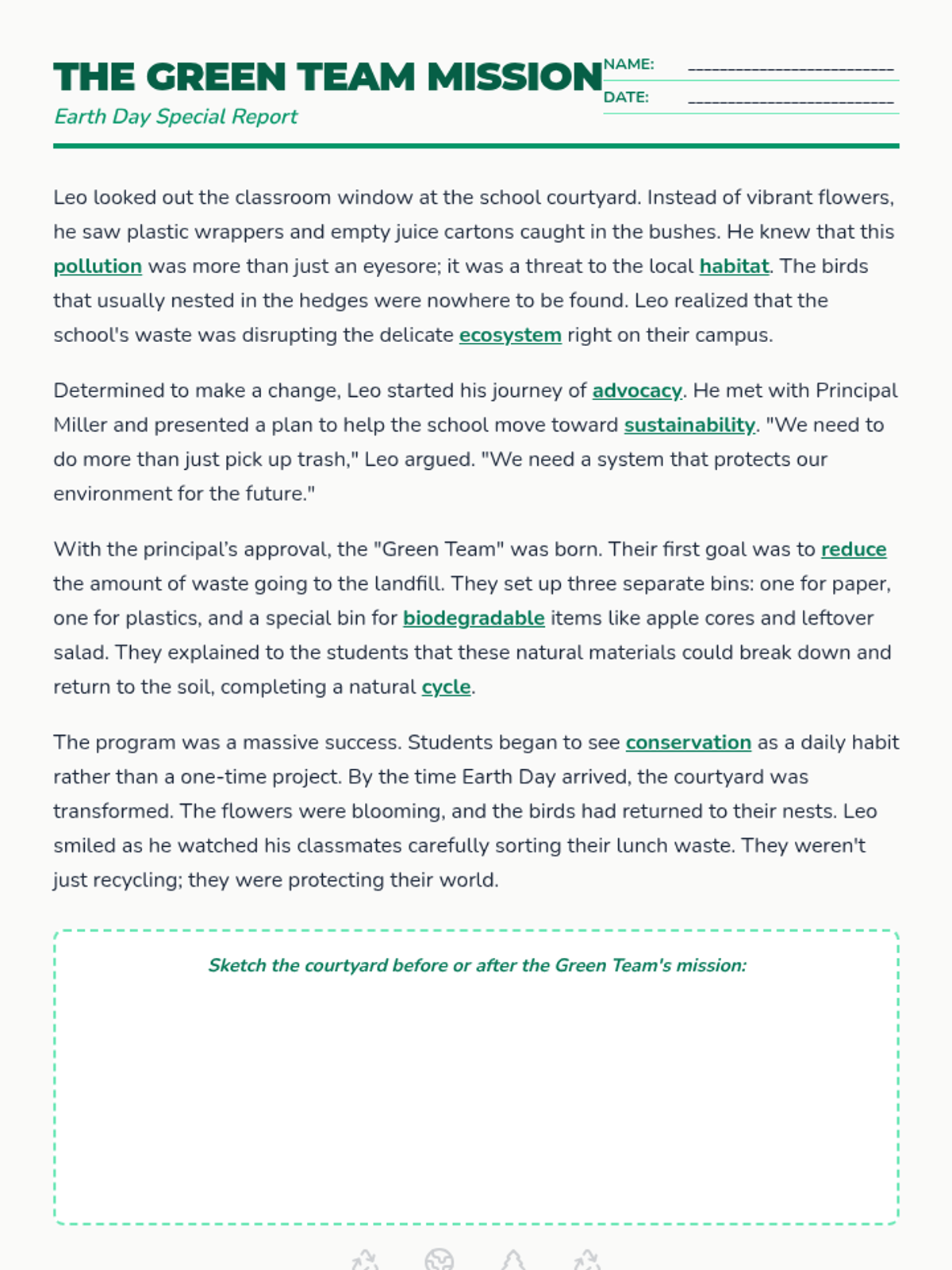
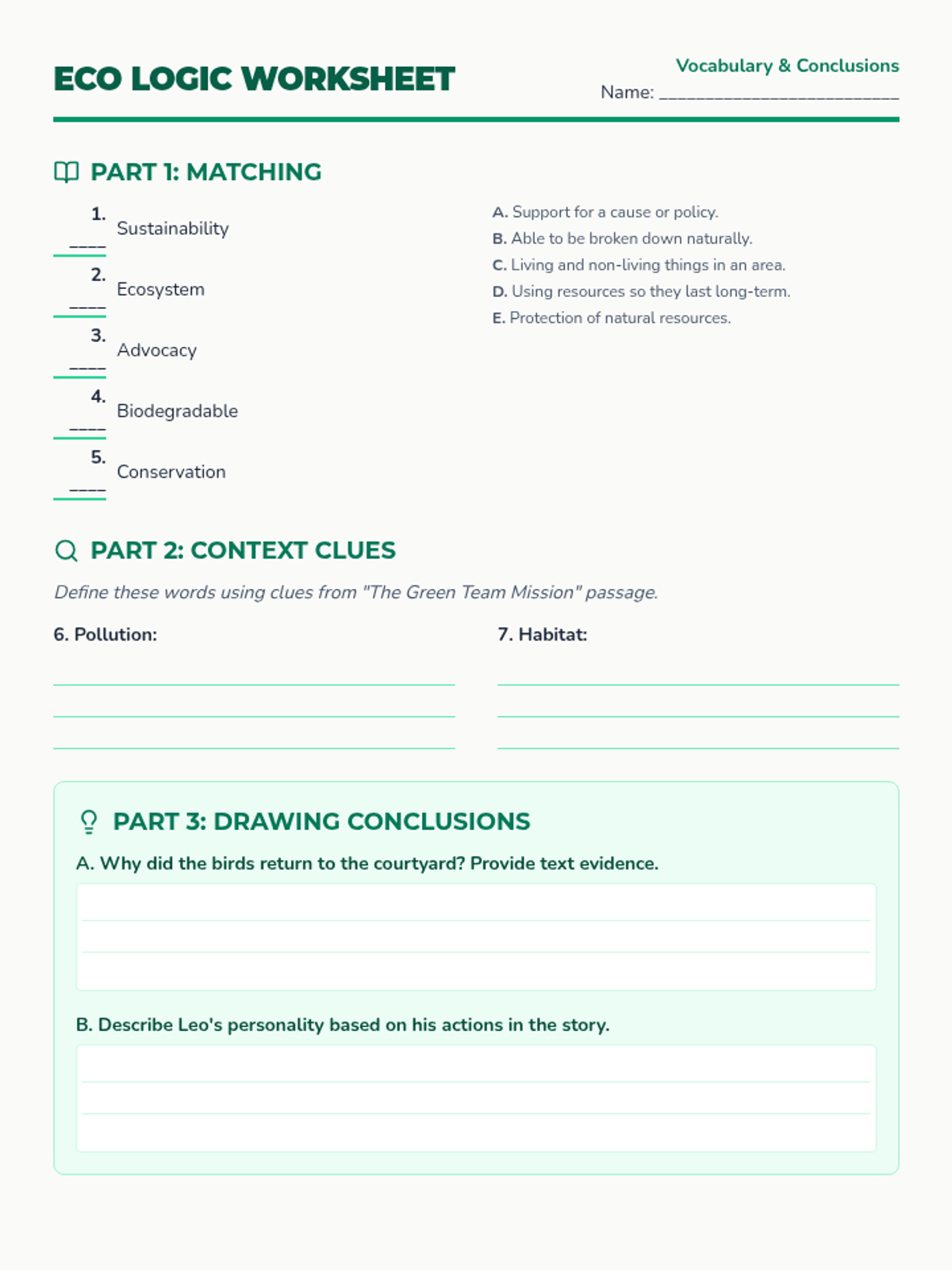
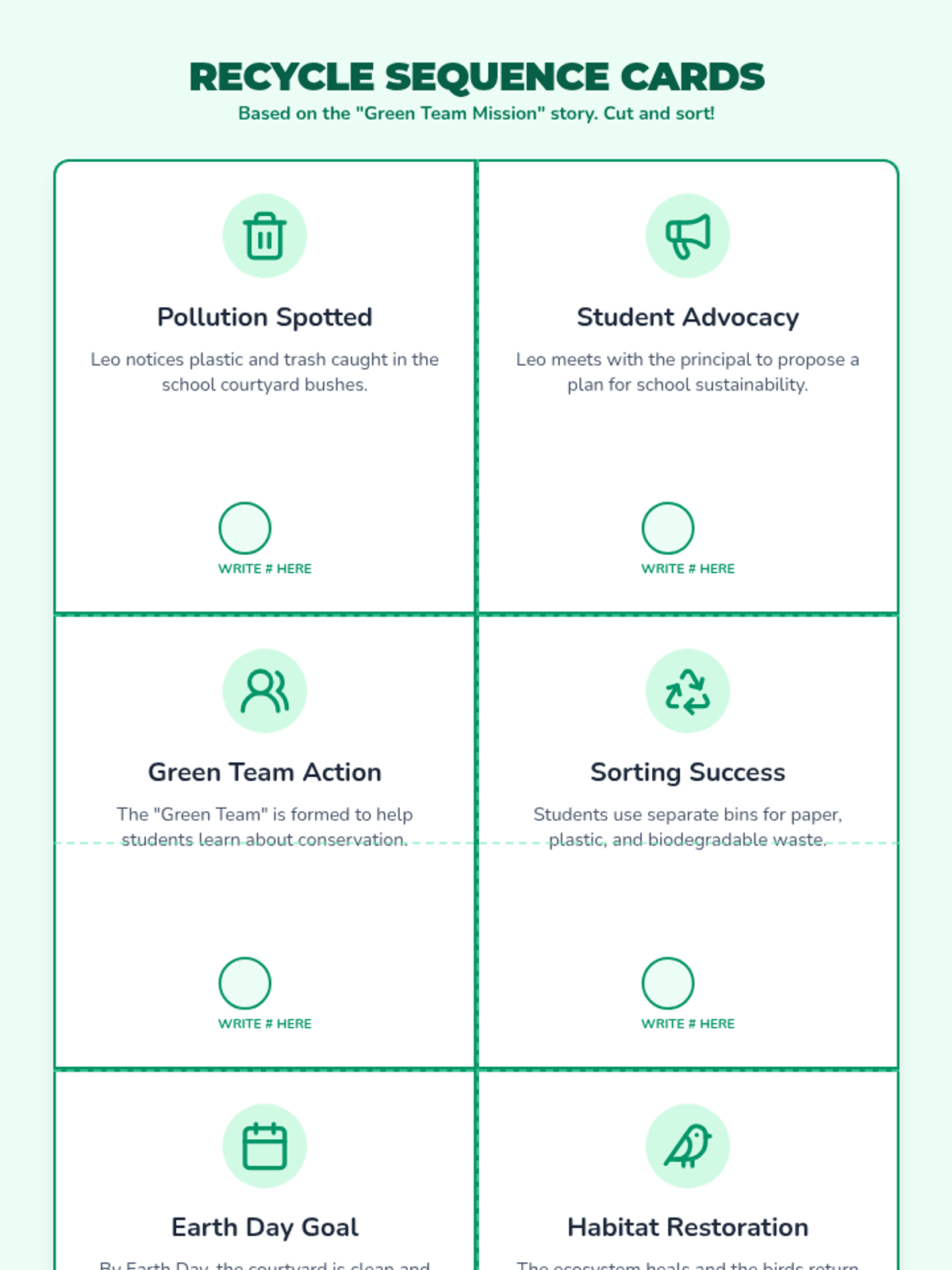
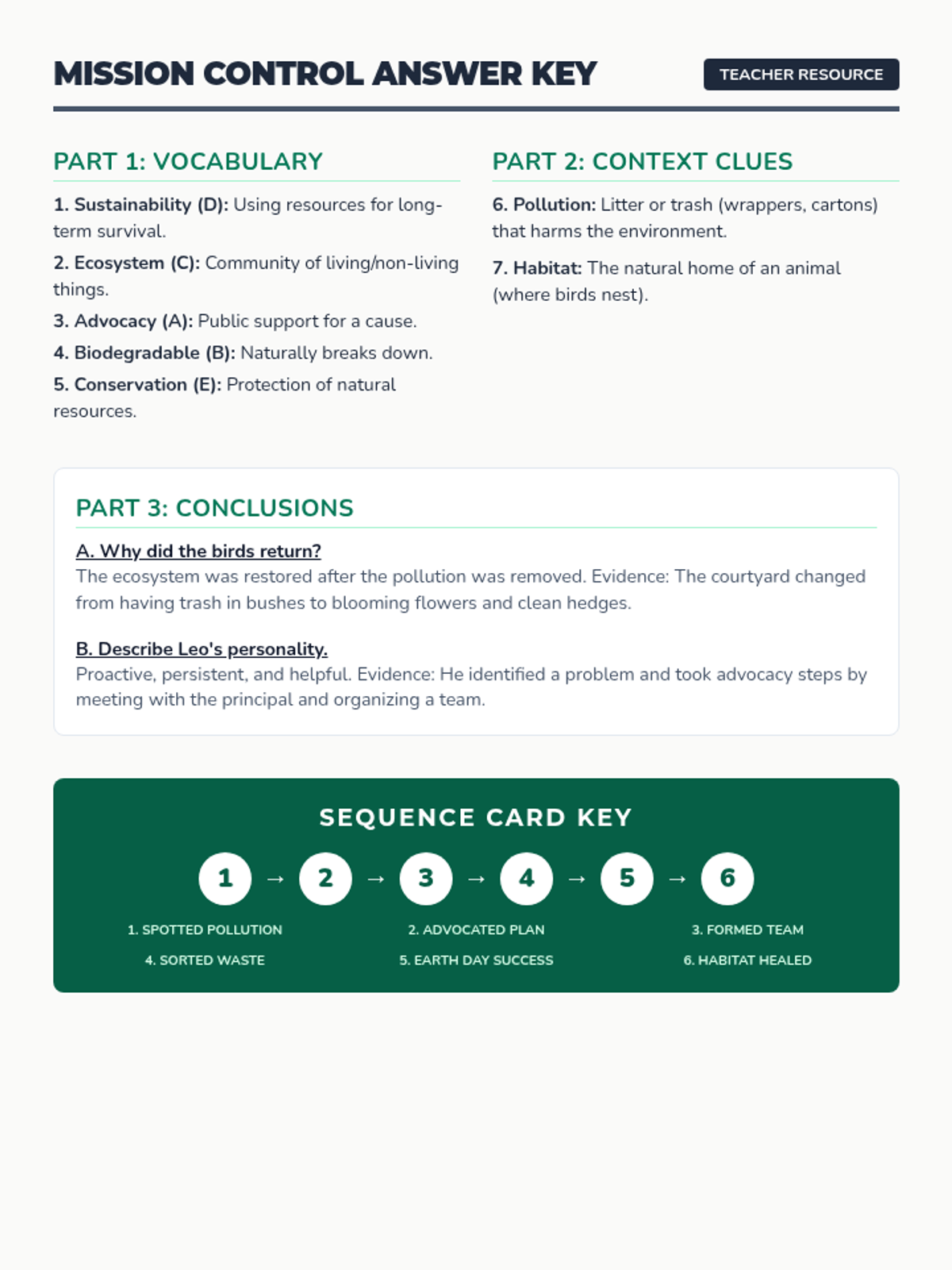
A lesson focused on school recycling, vocabulary development, and drawing conclusions for Earth Day. Students will engage with a reading passage and sequence cards to understand environmental impact.
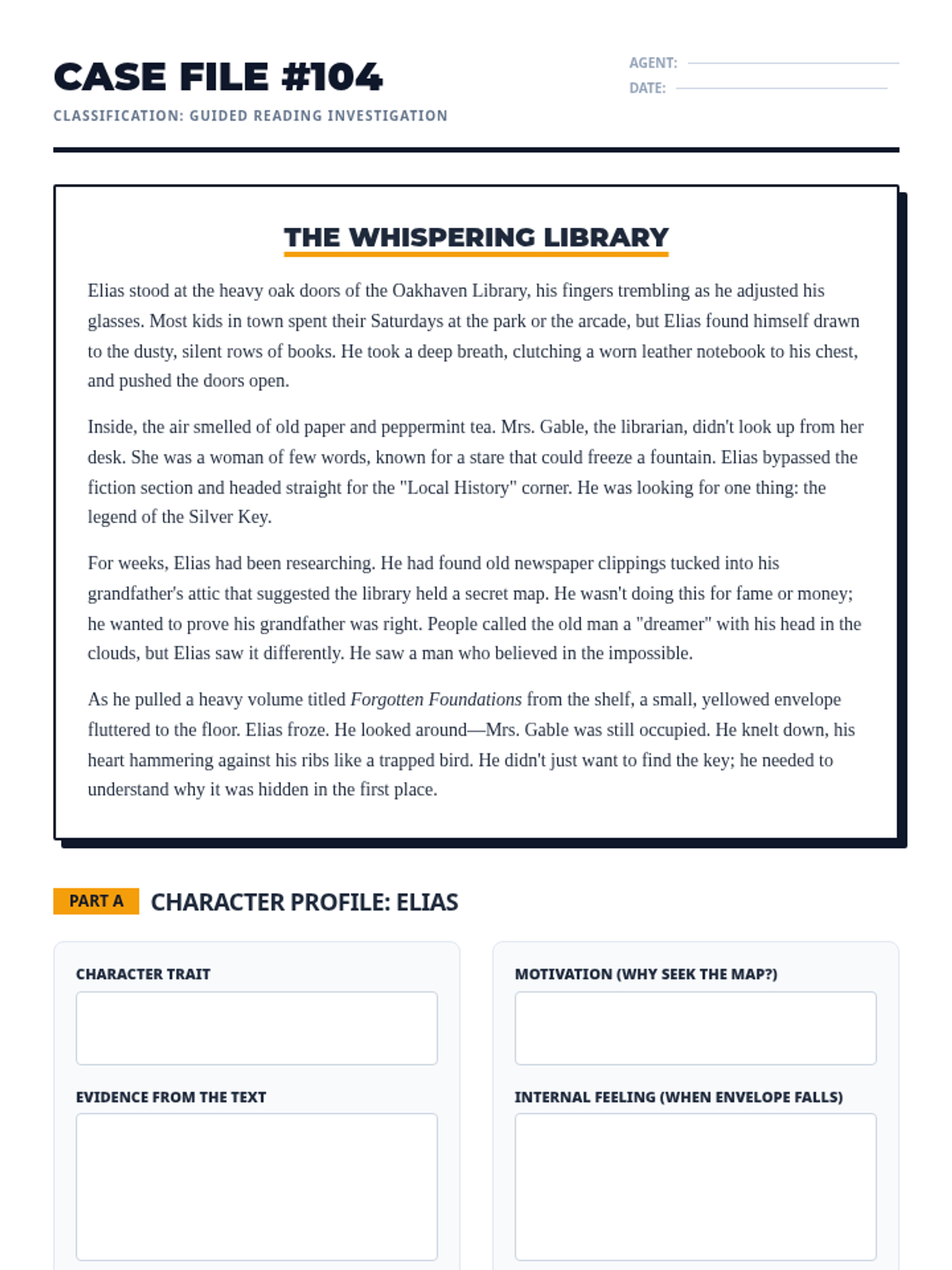
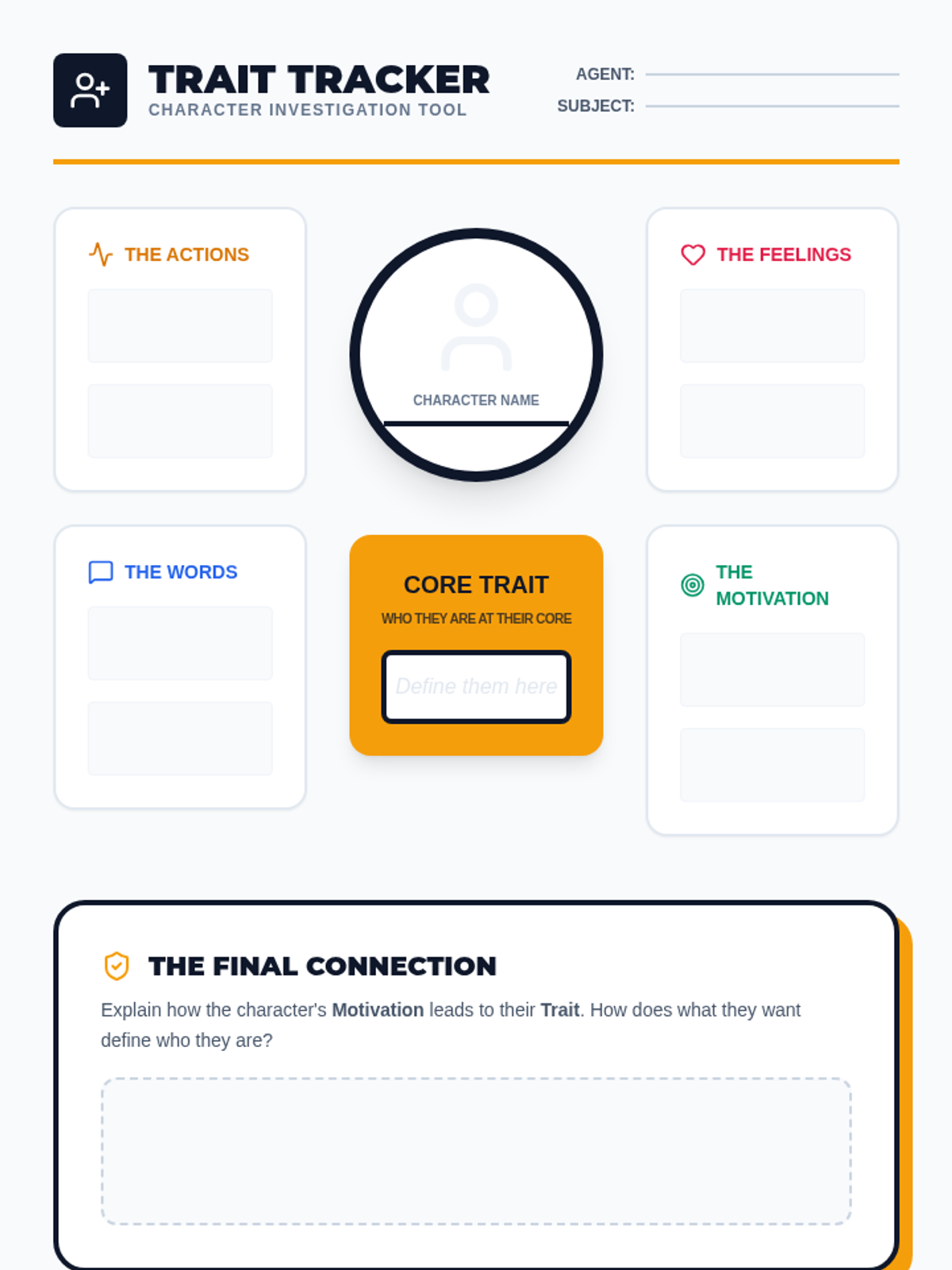
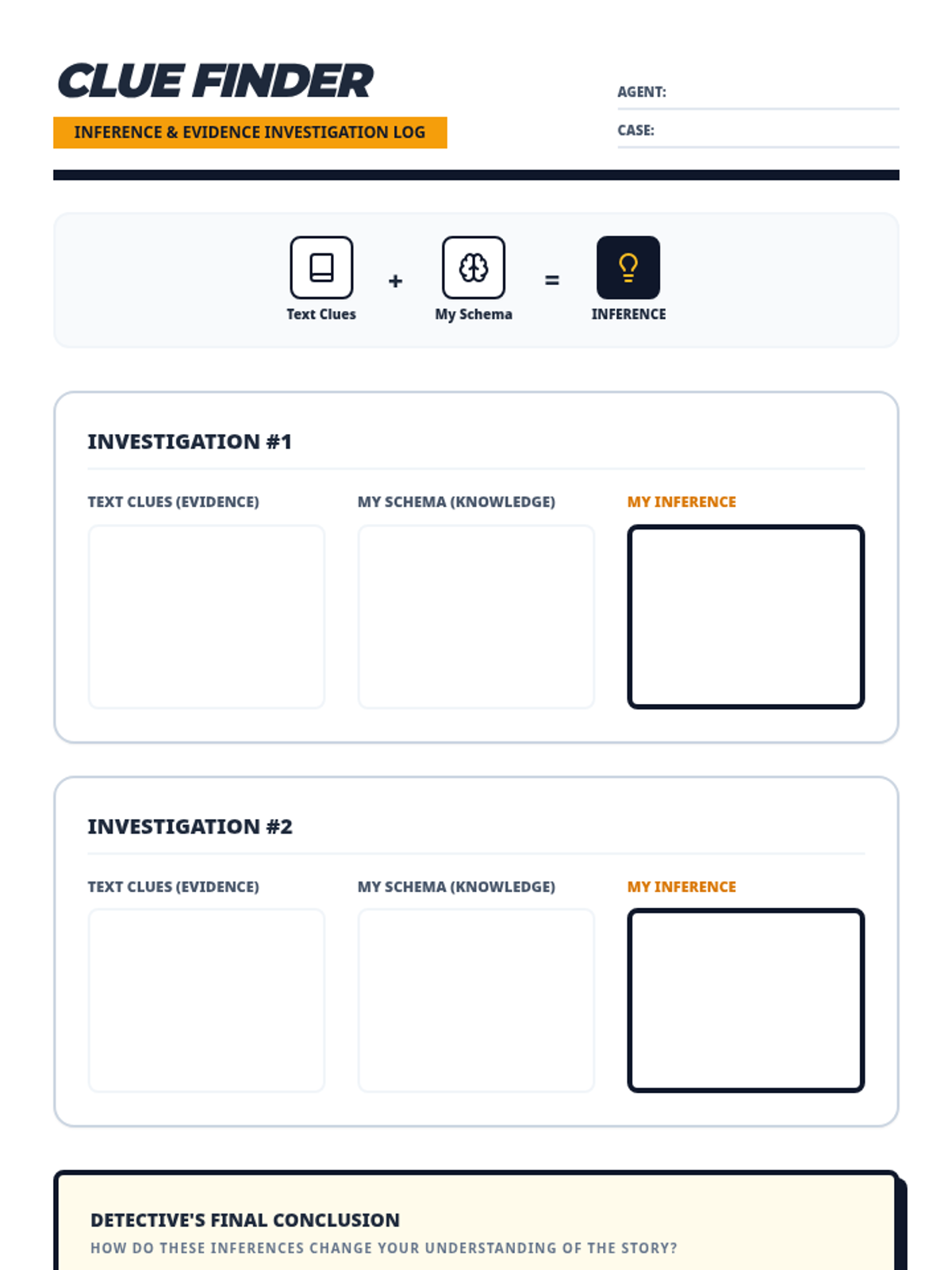
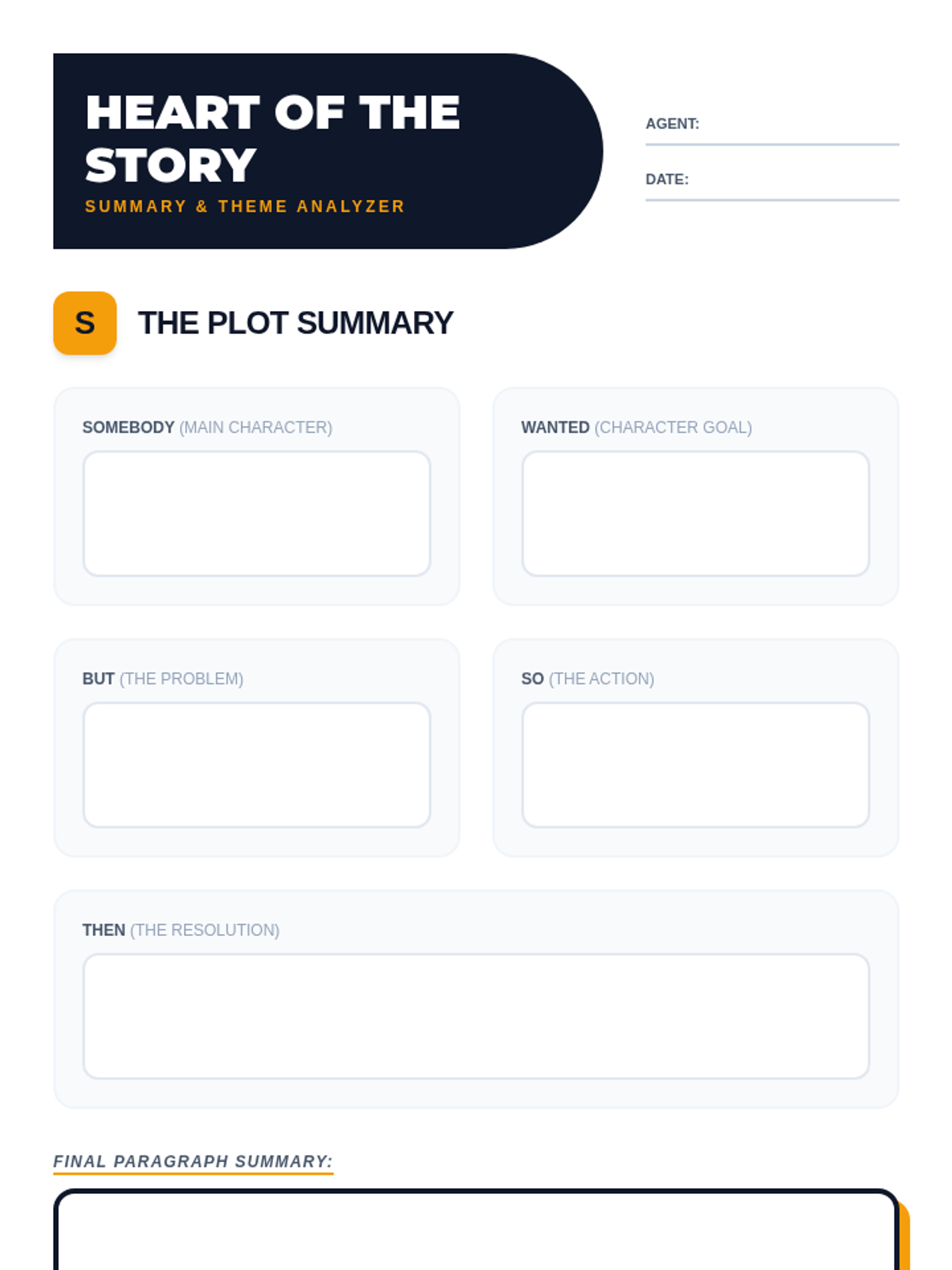
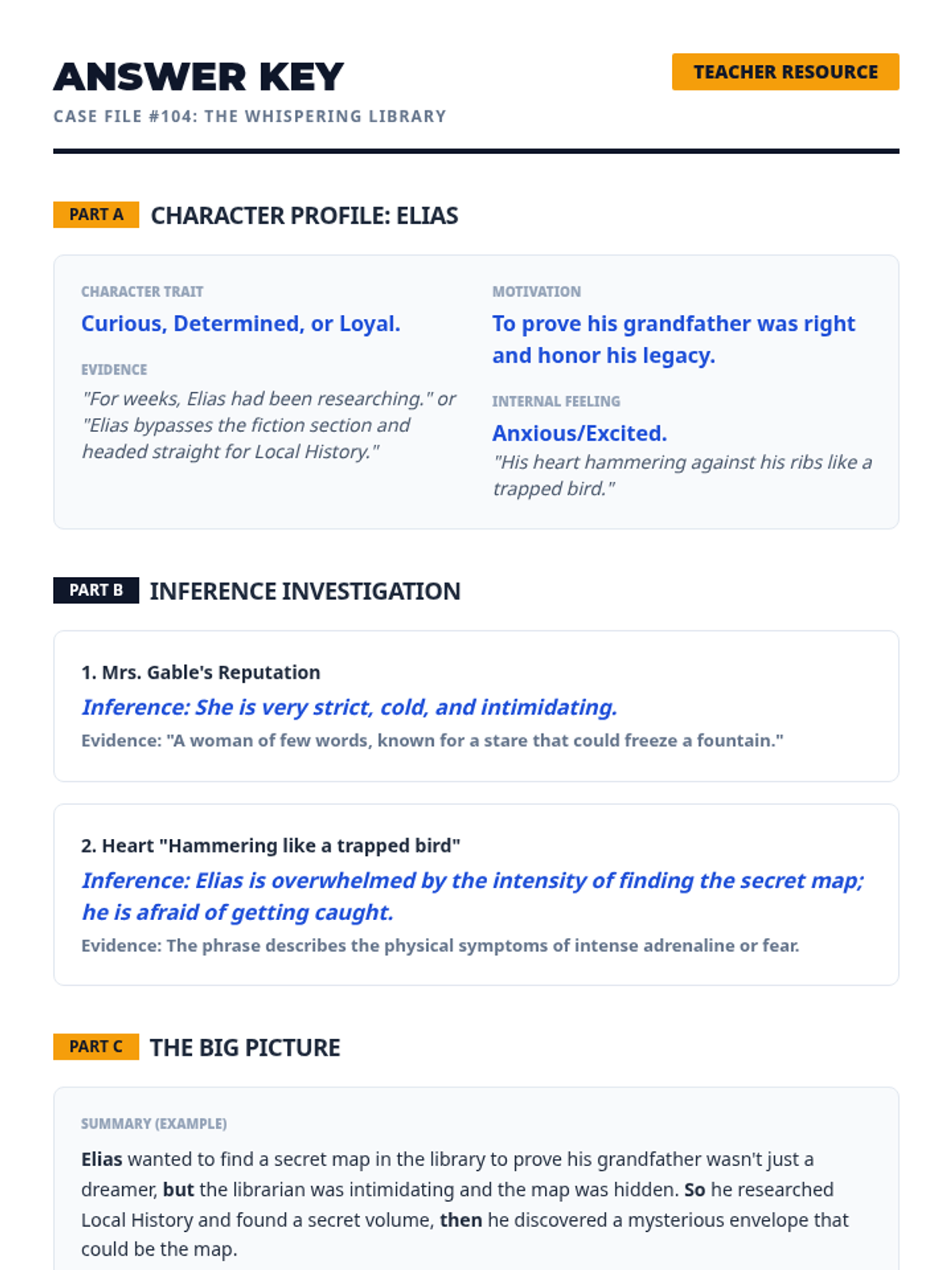
Students learn to analyze characters, make evidence-based inferences, and synthesize story elements into summaries and themes using a detective-themed approach.
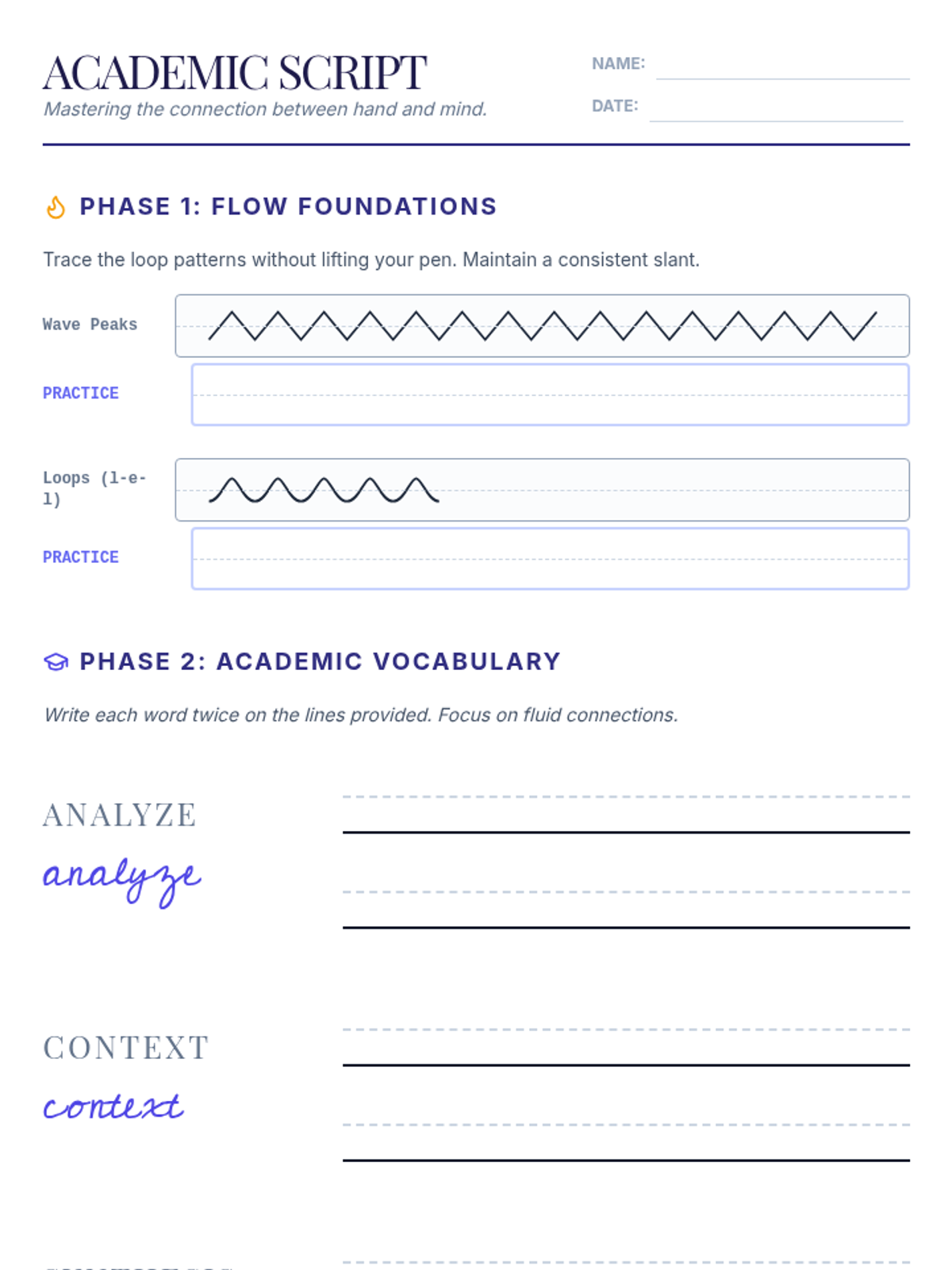
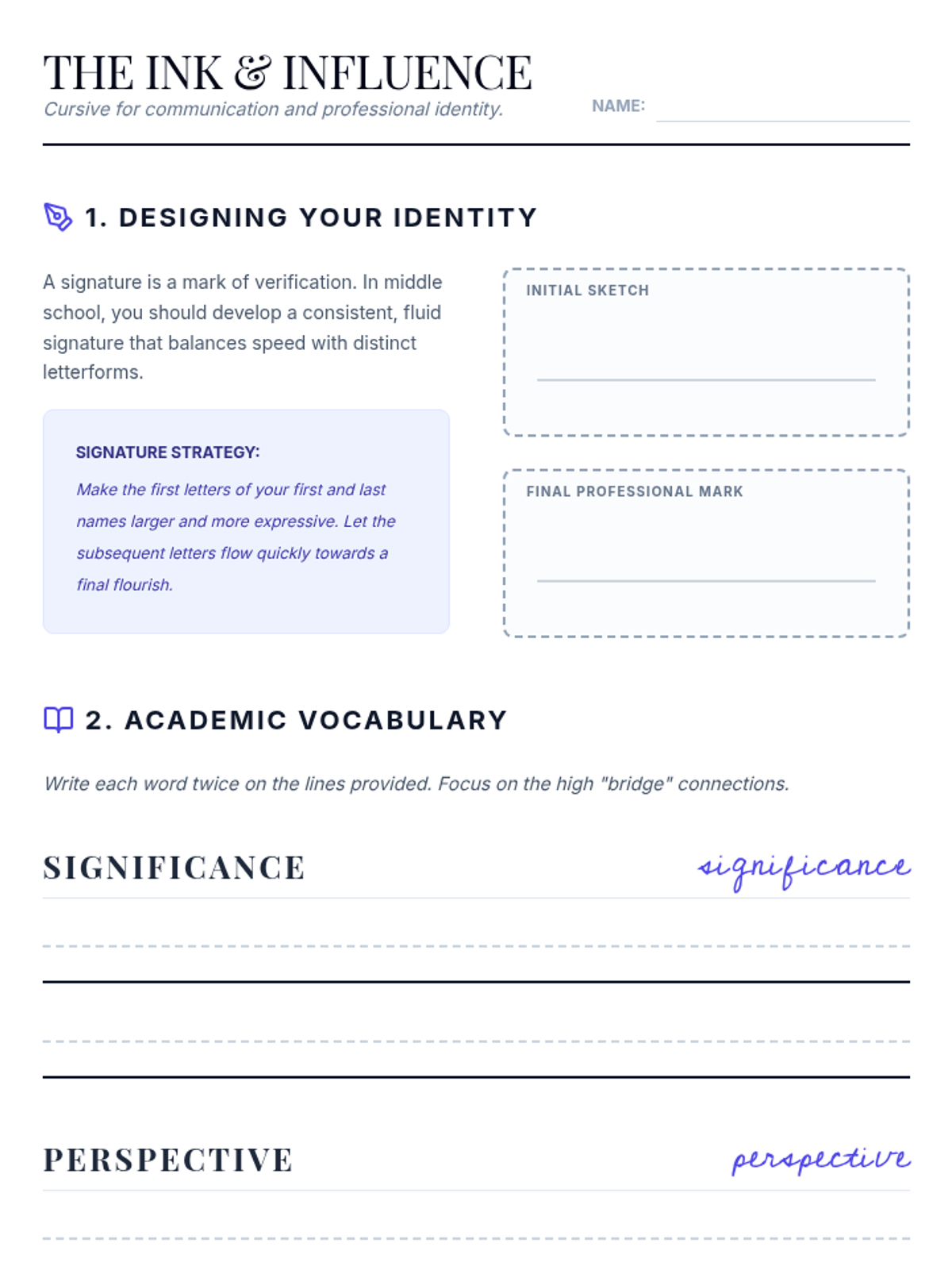
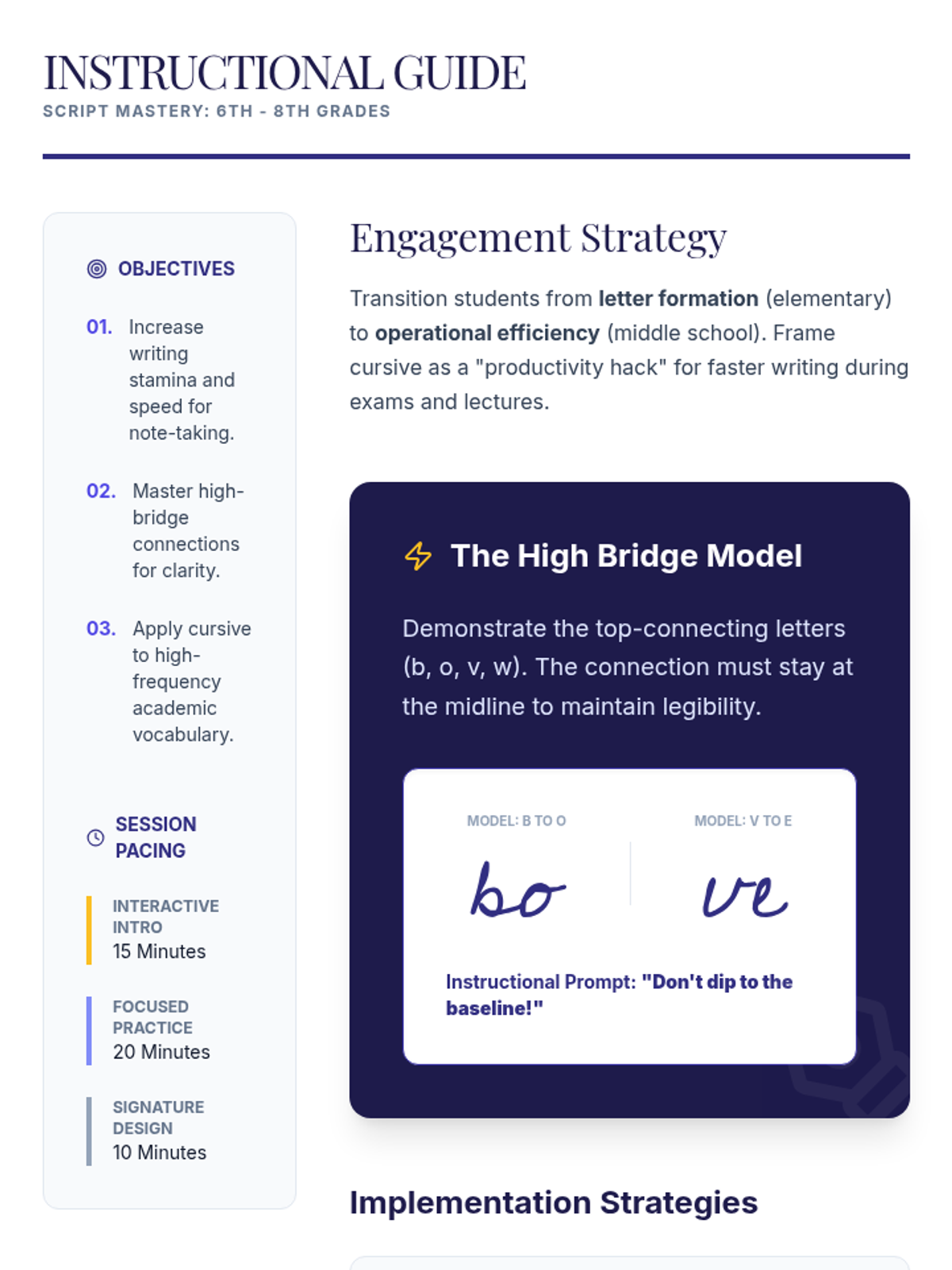
A modern take on cursive handwriting for middle school students, focusing on academic vocabulary, signature development, and the efficiency of script for note-taking. This lesson moves beyond elementary tracing to focus on fluid connections and professional presentation.
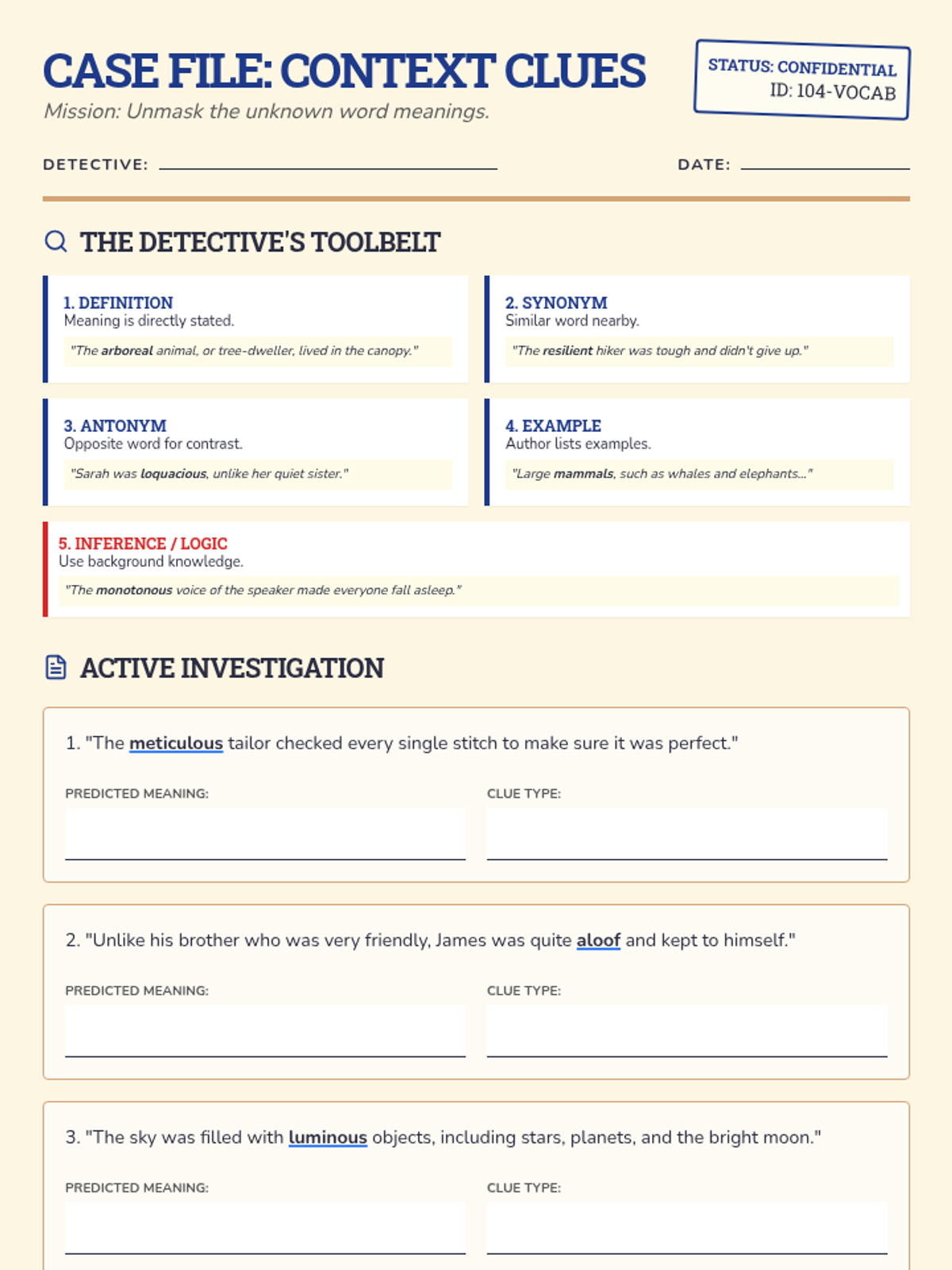
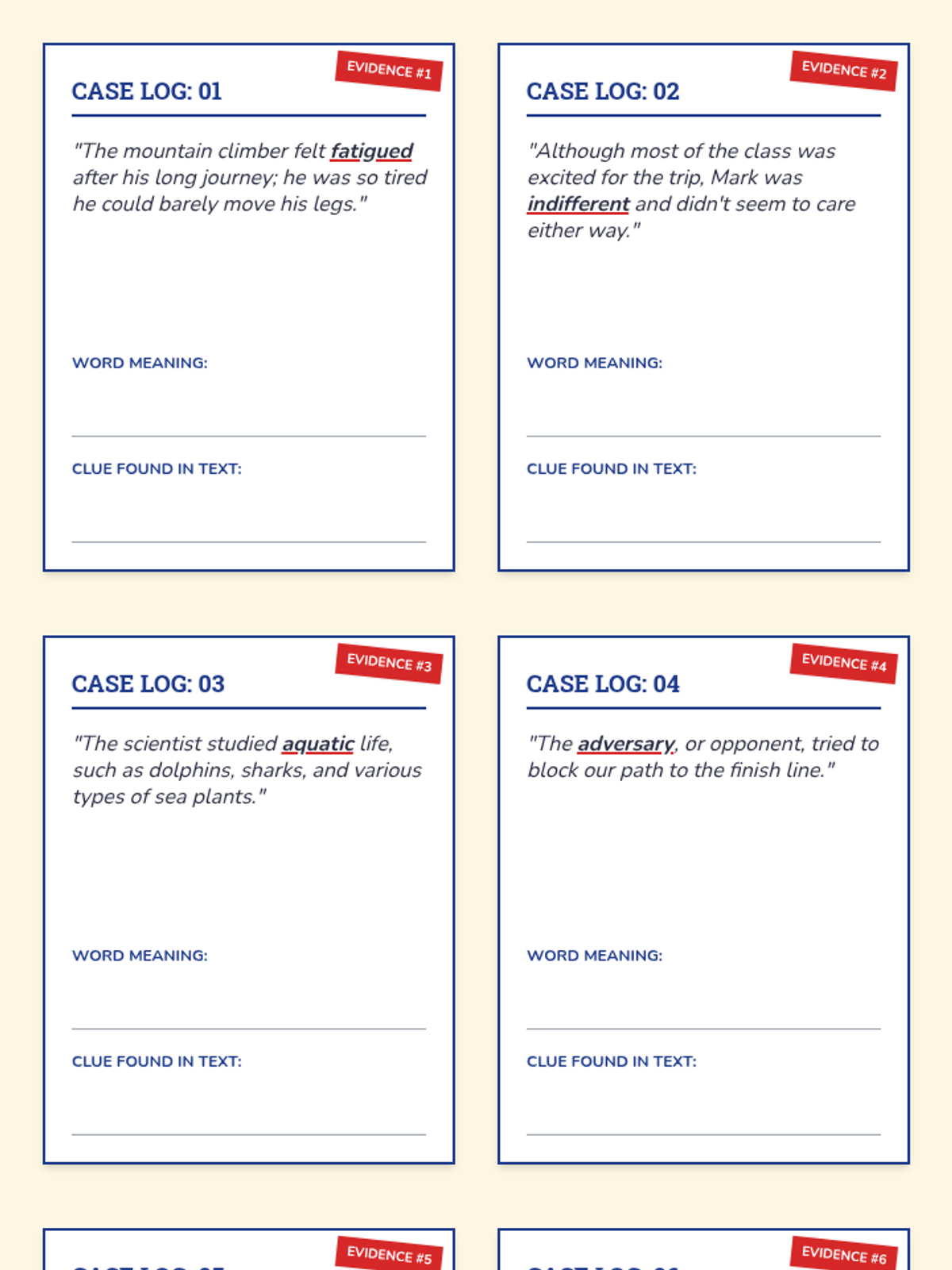
A deep dive into using word relationships and context clues to uncover the meaning of unfamiliar words. Students act as word detectives, searching for evidence in sentences to solve vocabulary mysteries through guided practice and independent evidence-gathering.
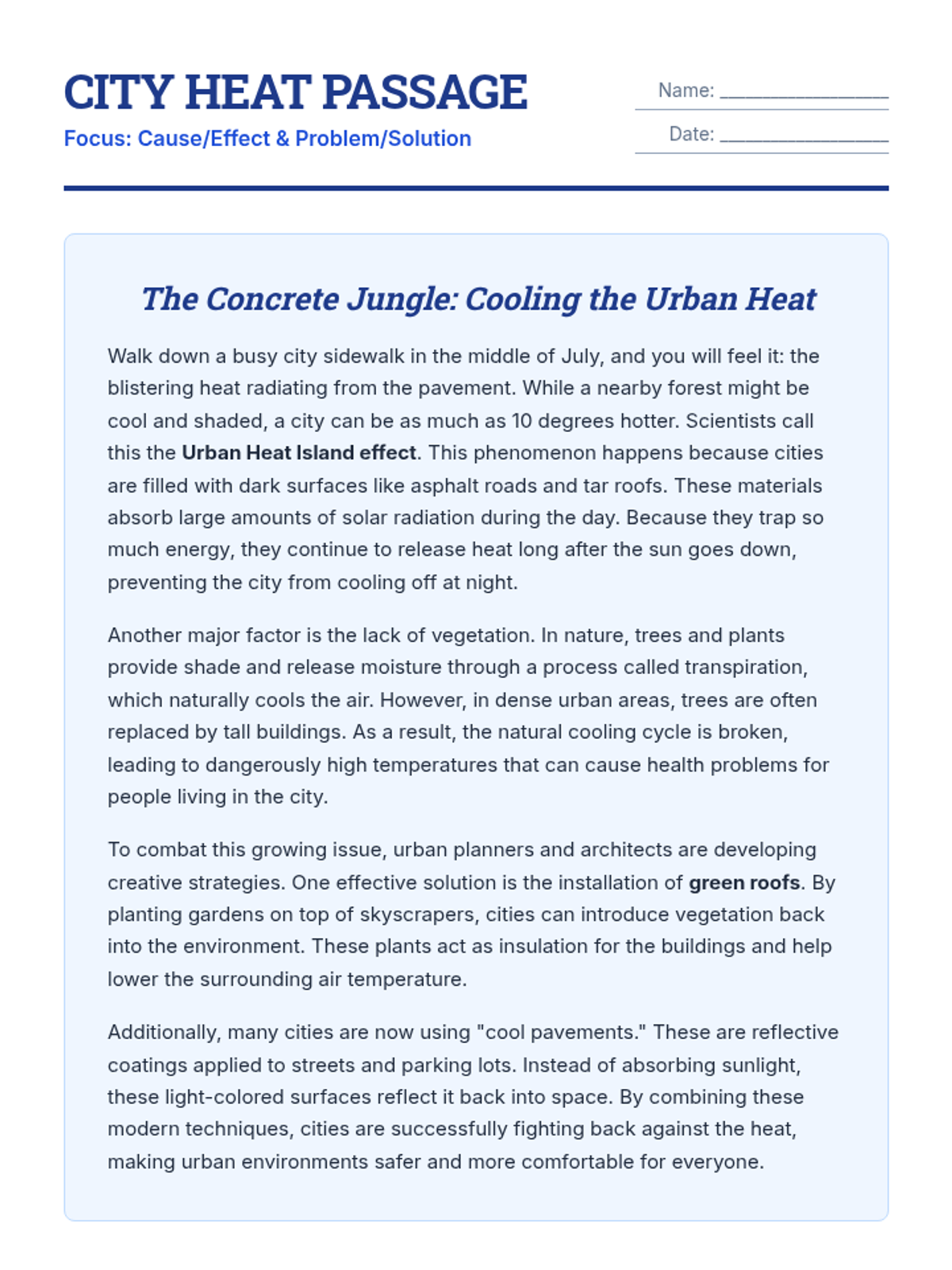
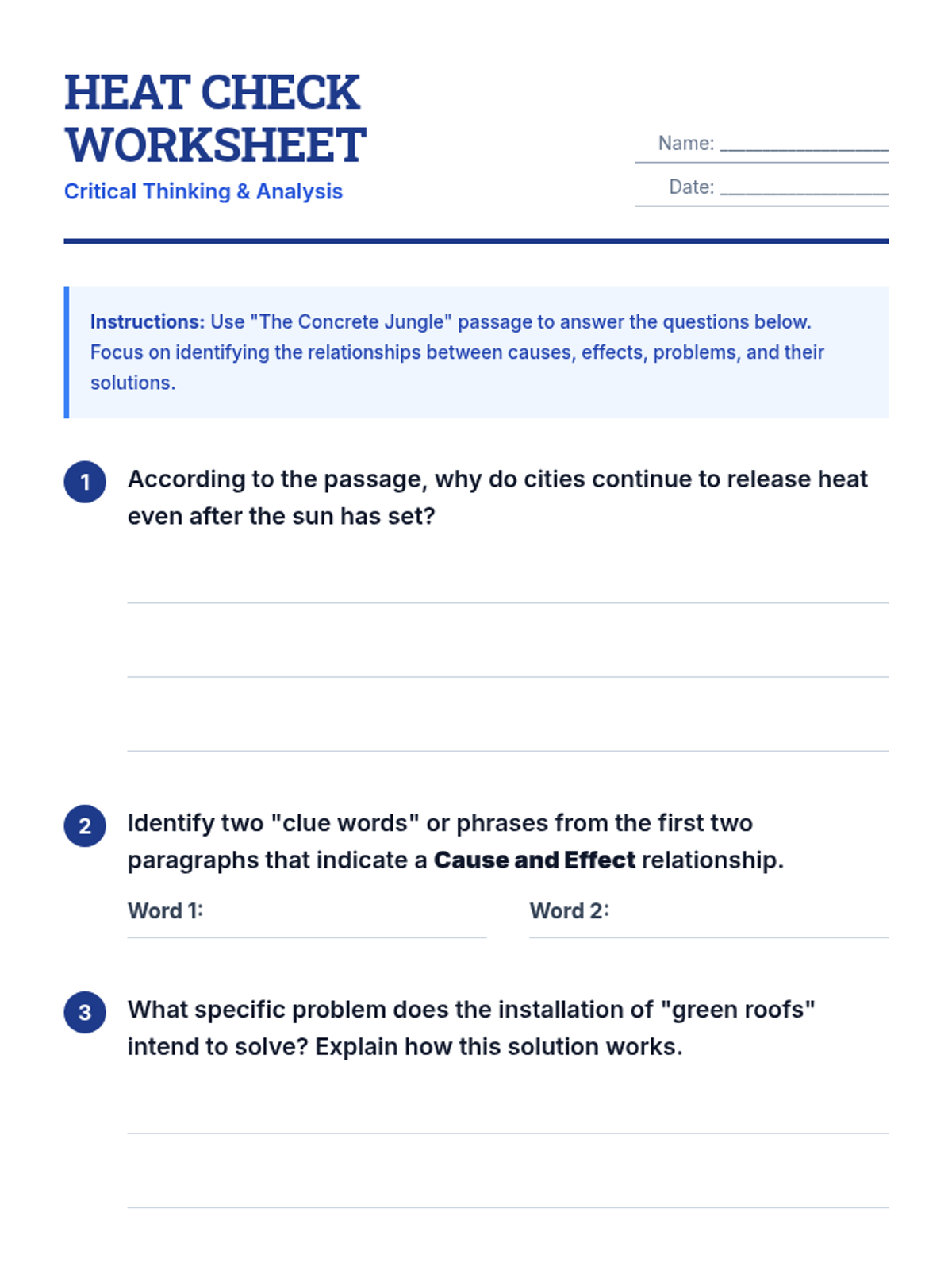
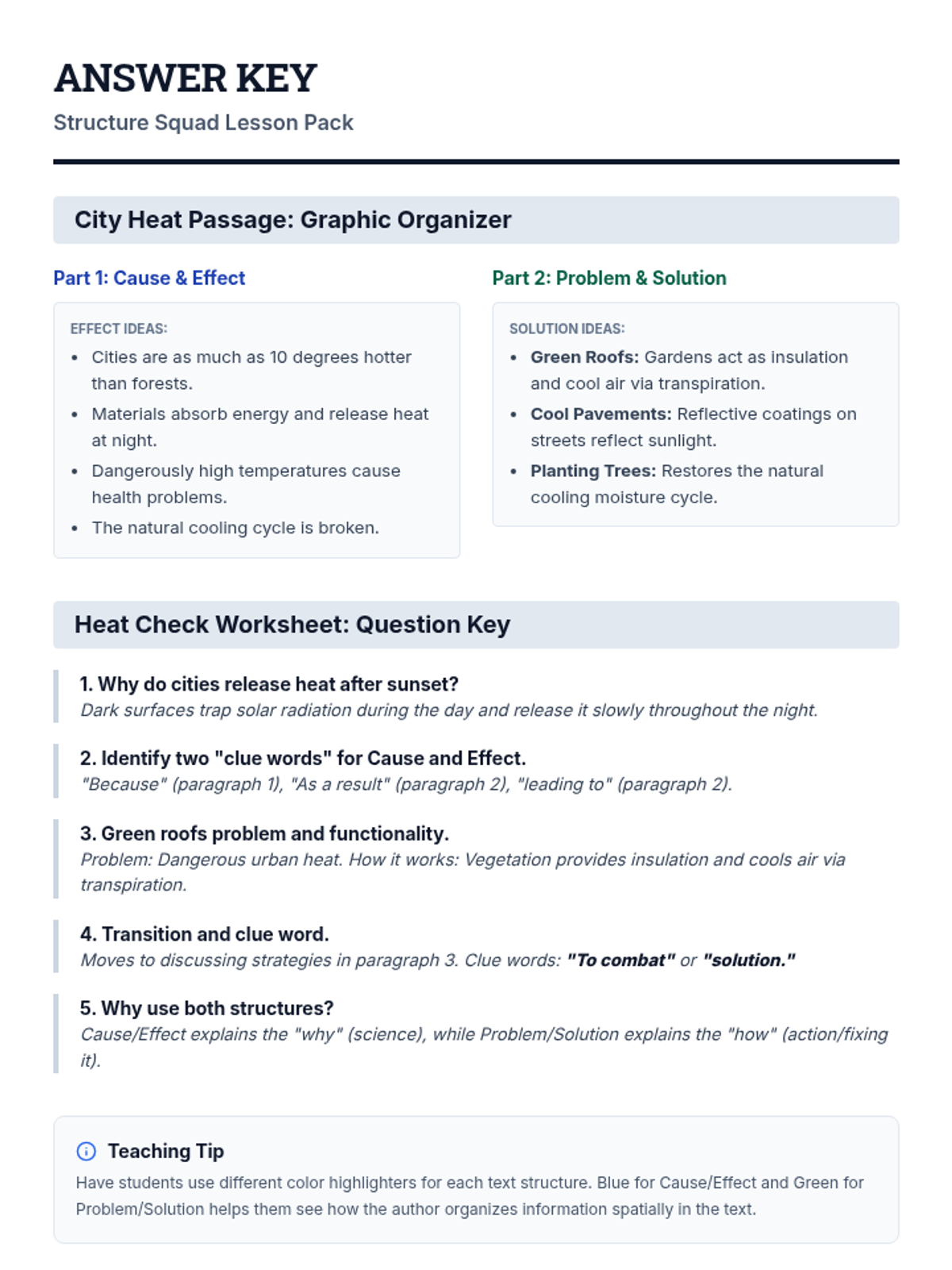
This lesson introduces students to identifying and distinguishing between cause-and-effect and problem-solution text structures using a high-interest passage about urban heat islands. Students will analyze the relationship between events and the methods used to solve environmental challenges.
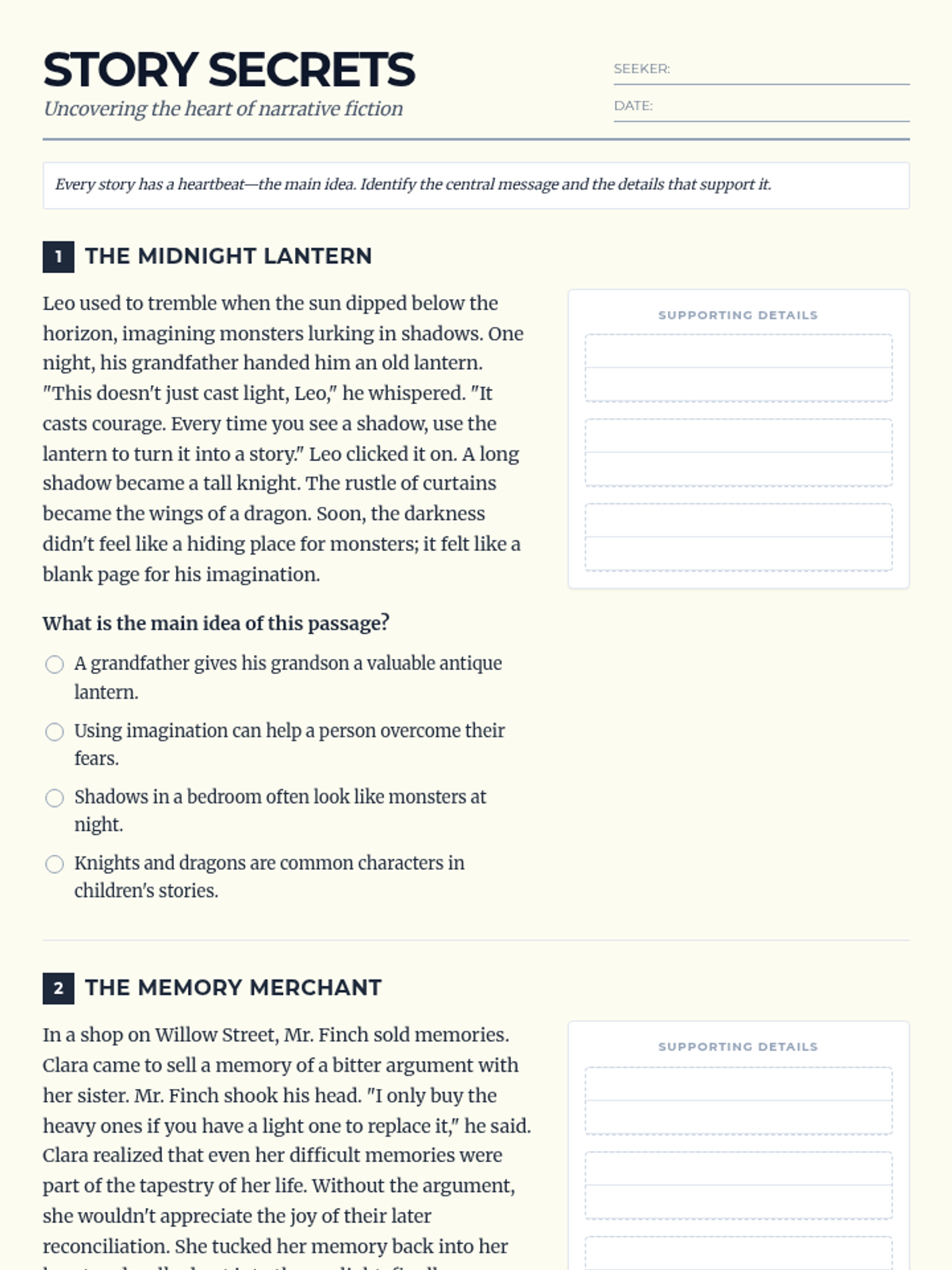
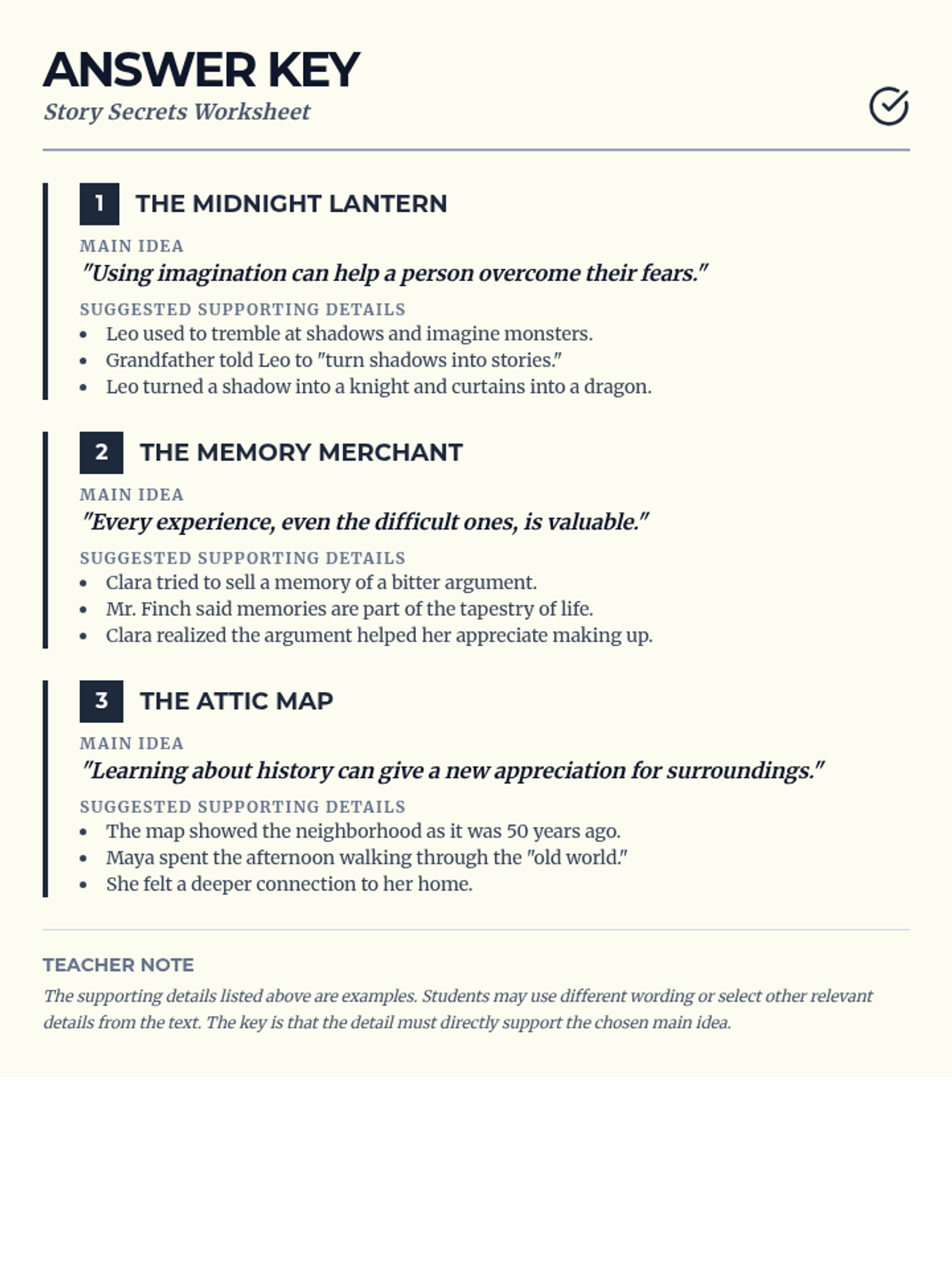
A lesson focused on identifying the main idea and supporting details within narrative fiction through engaging short stories and structured analysis.
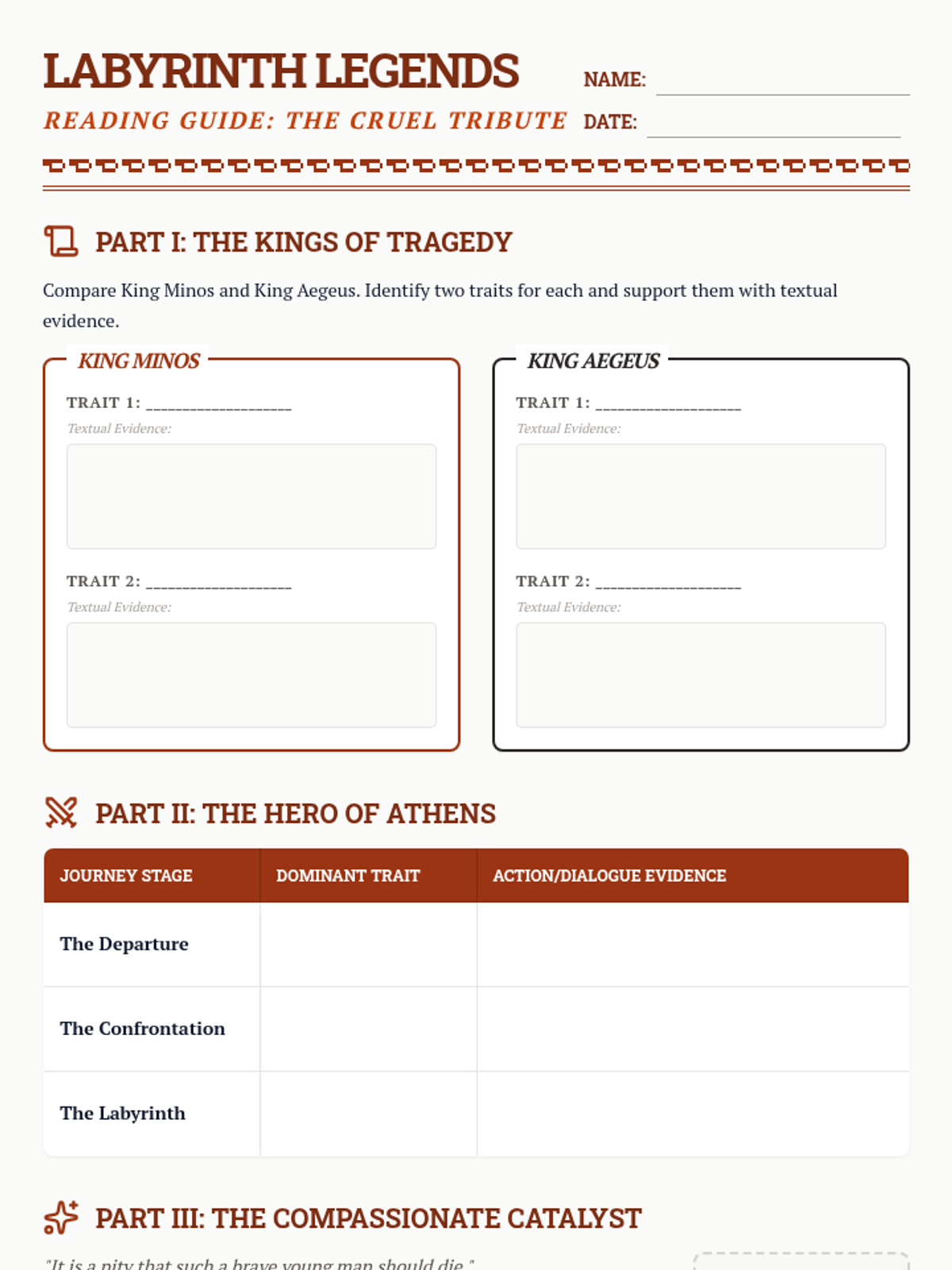
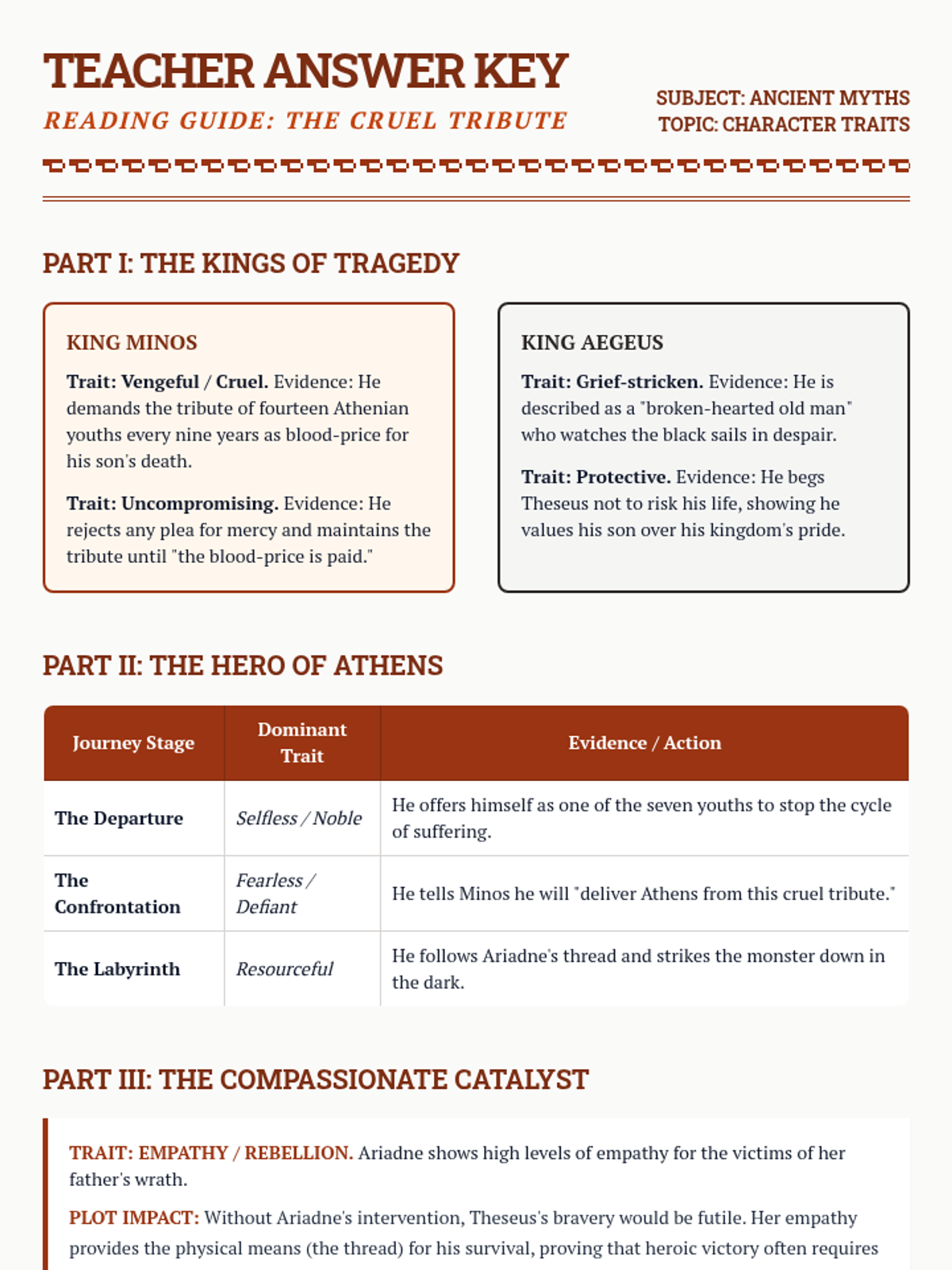
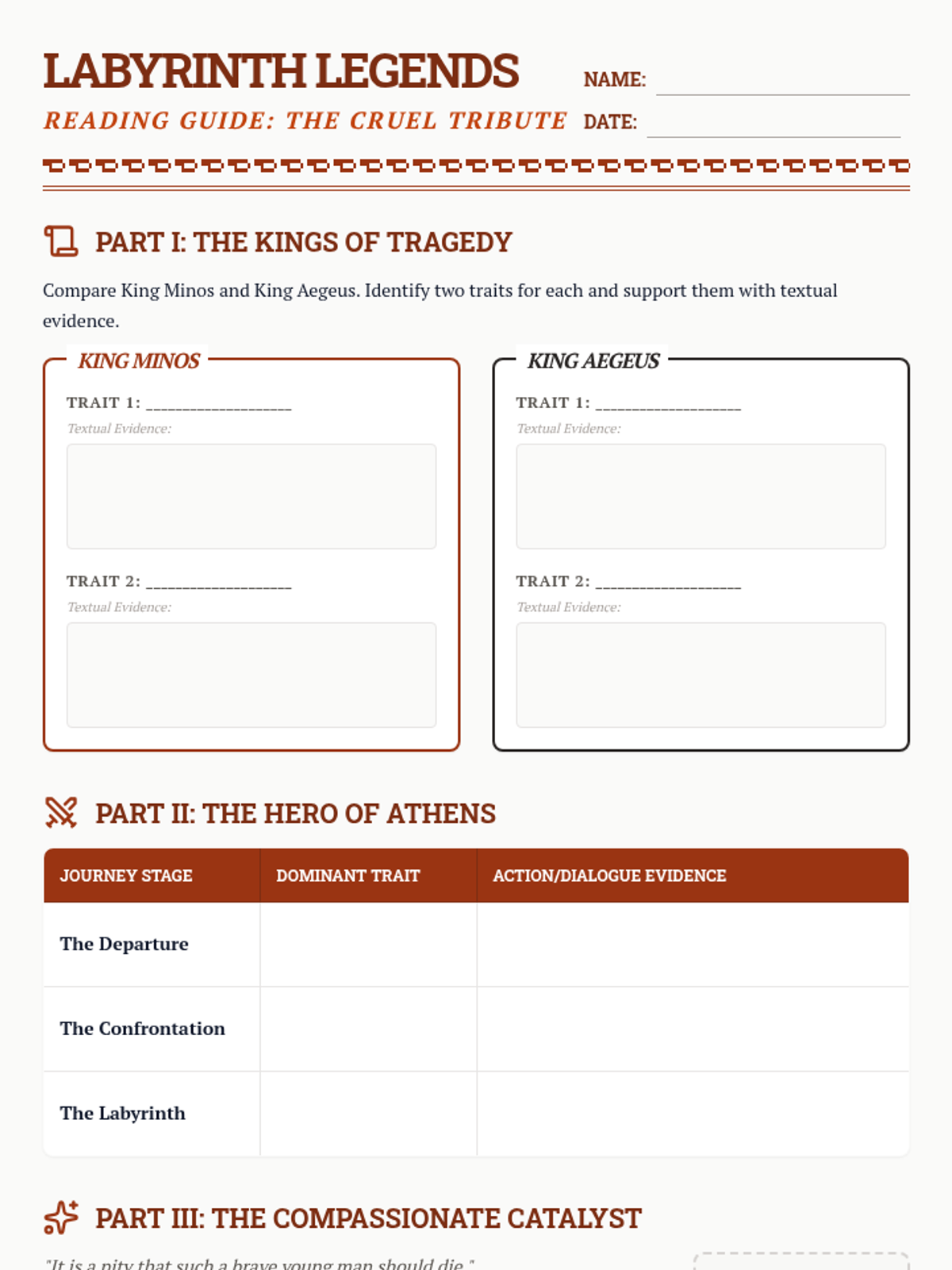
A comprehensive study of 'The Cruel Tribute', focusing on character trait analysis, textual evidence, and the motivations of heroes and villains in Greek mythology.
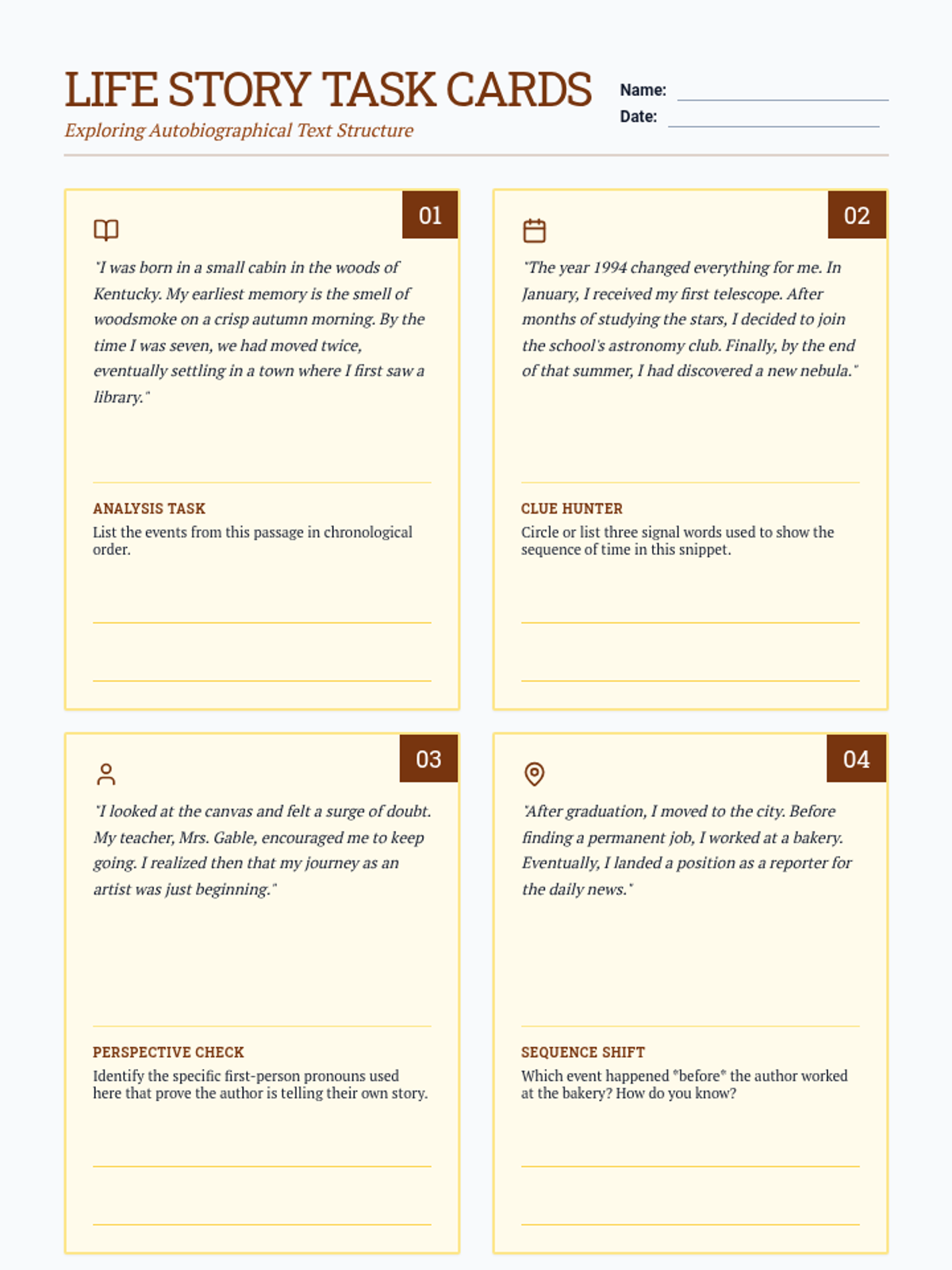
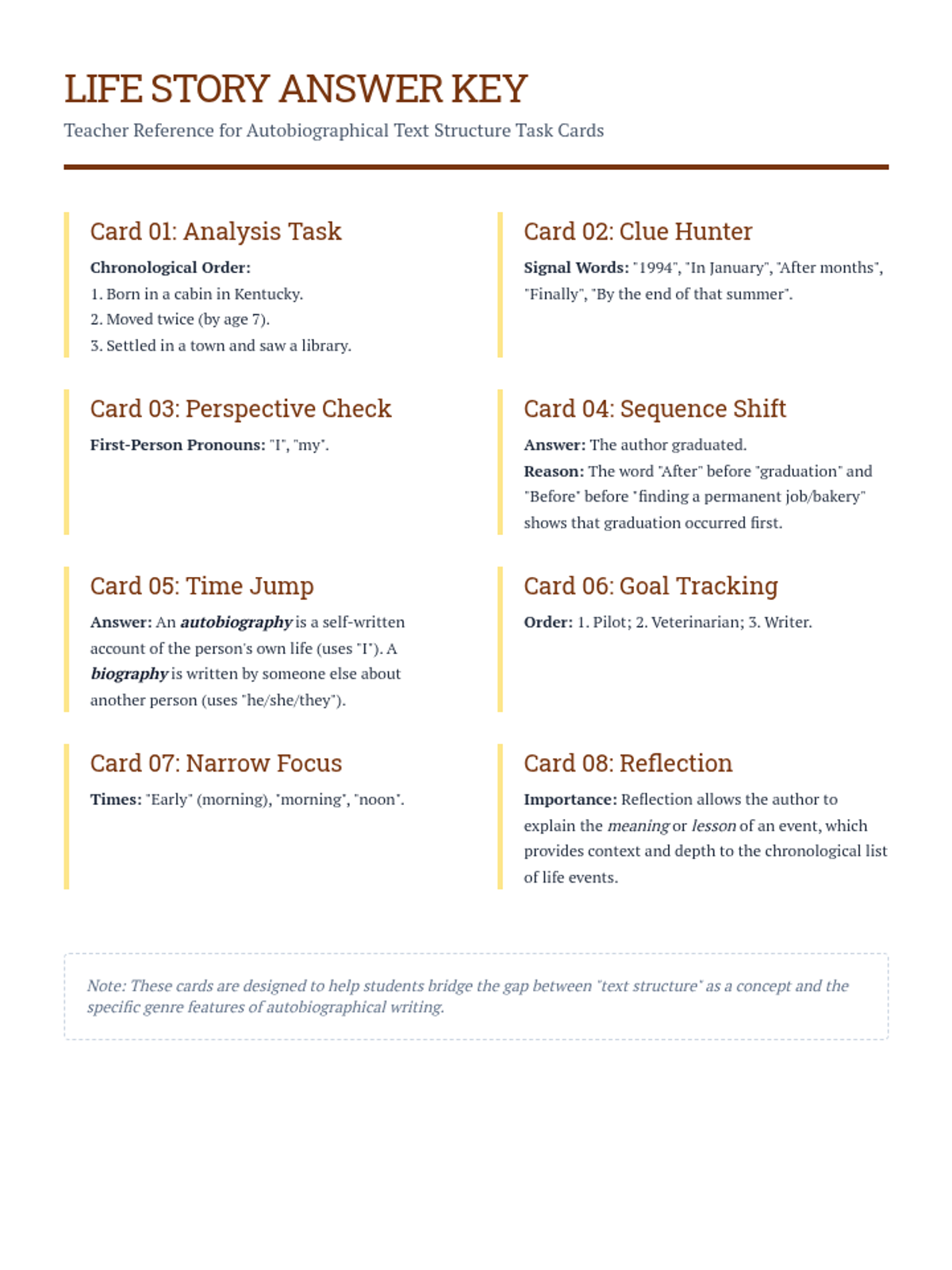
A lesson focused on identifying the features of autobiographical writing, including chronological text structure and first-person perspective.
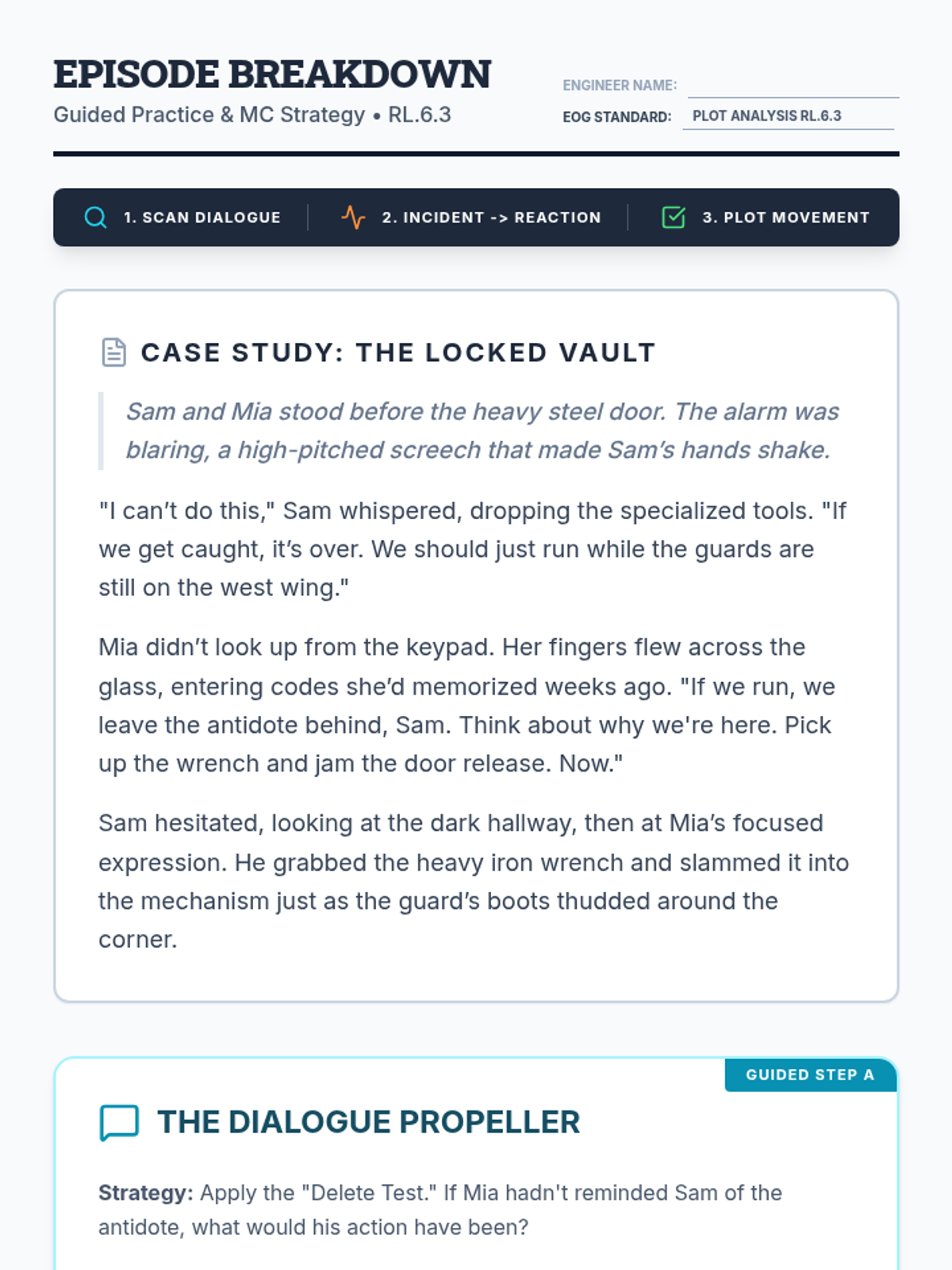
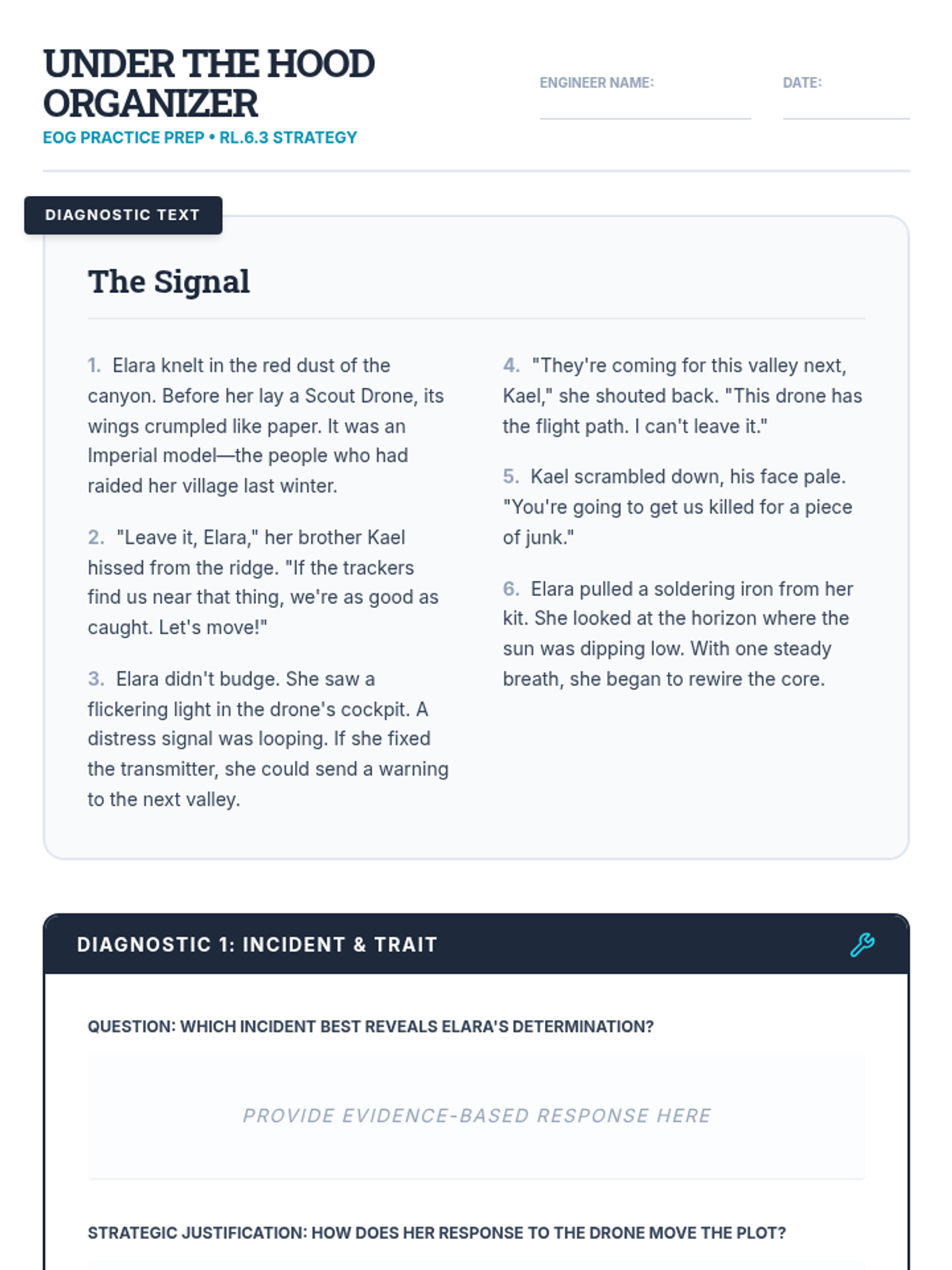
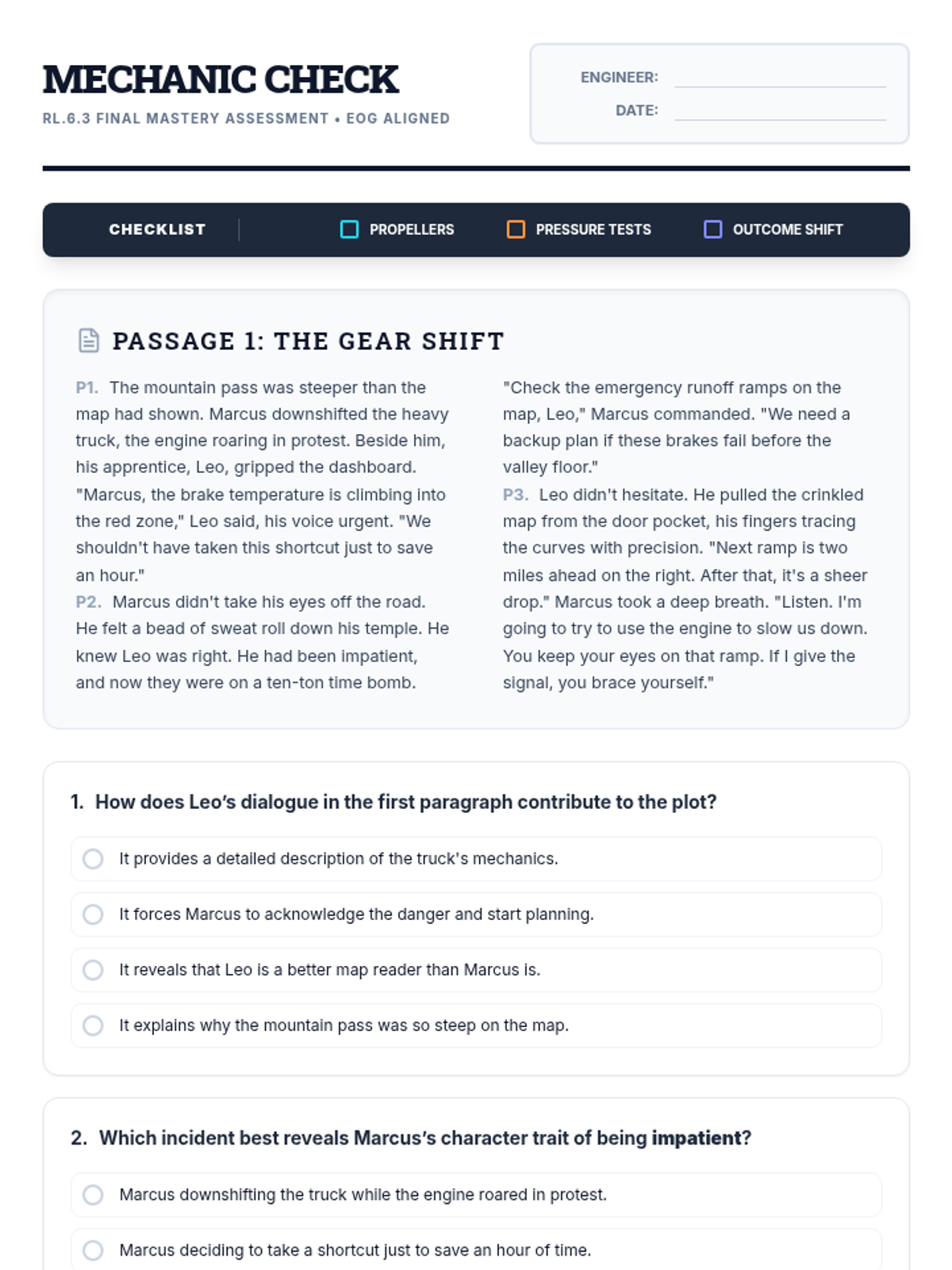
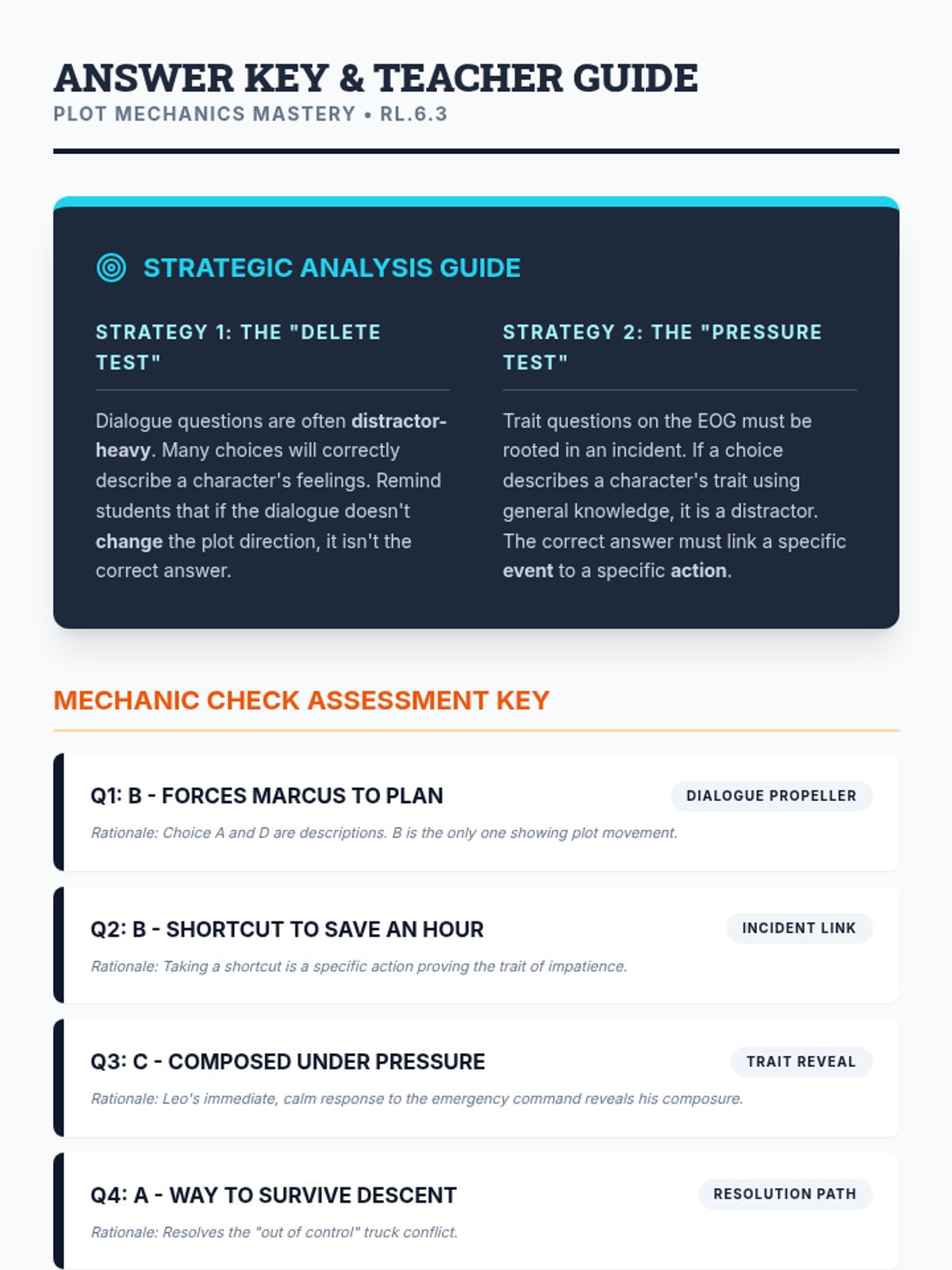
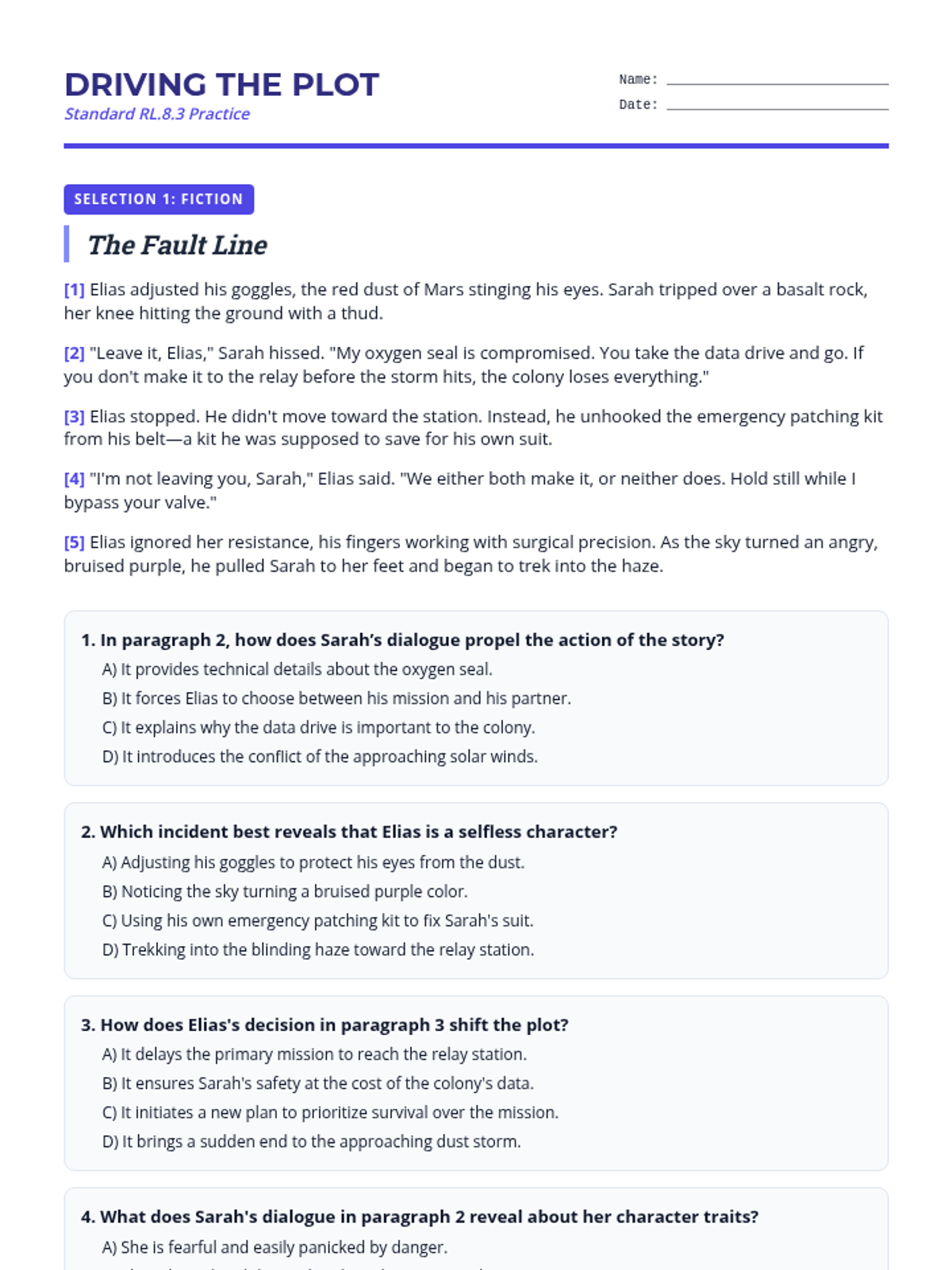
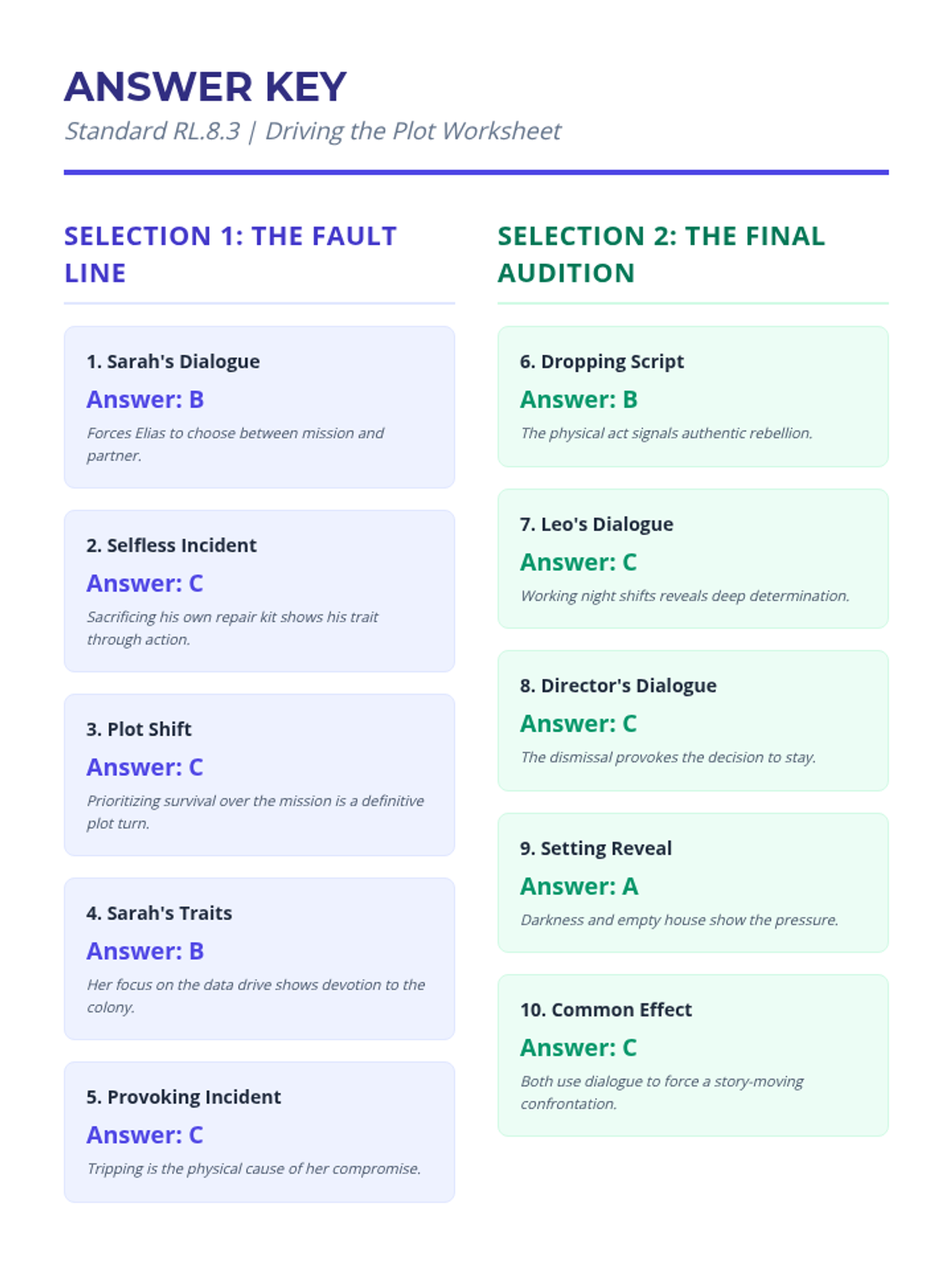
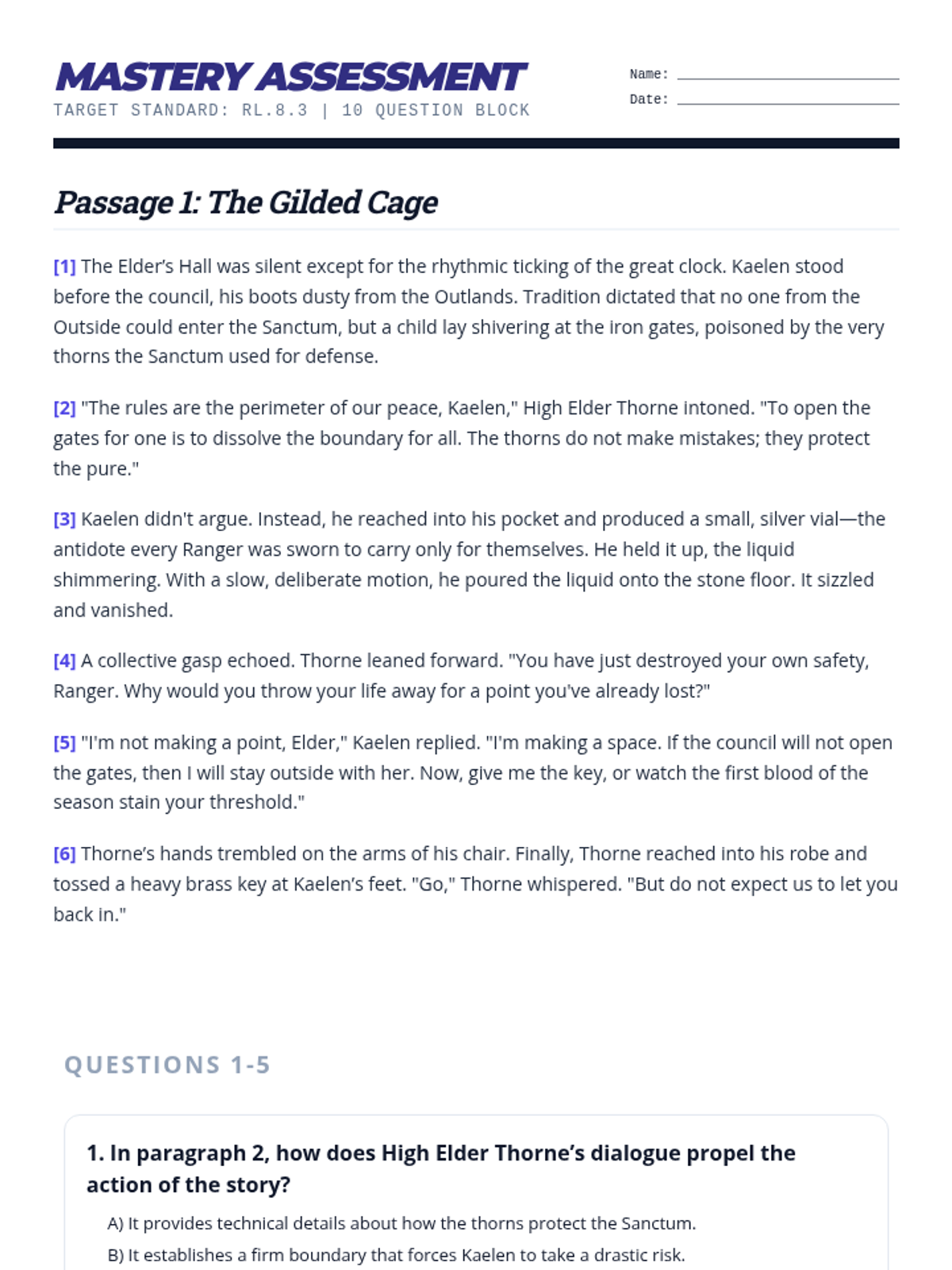
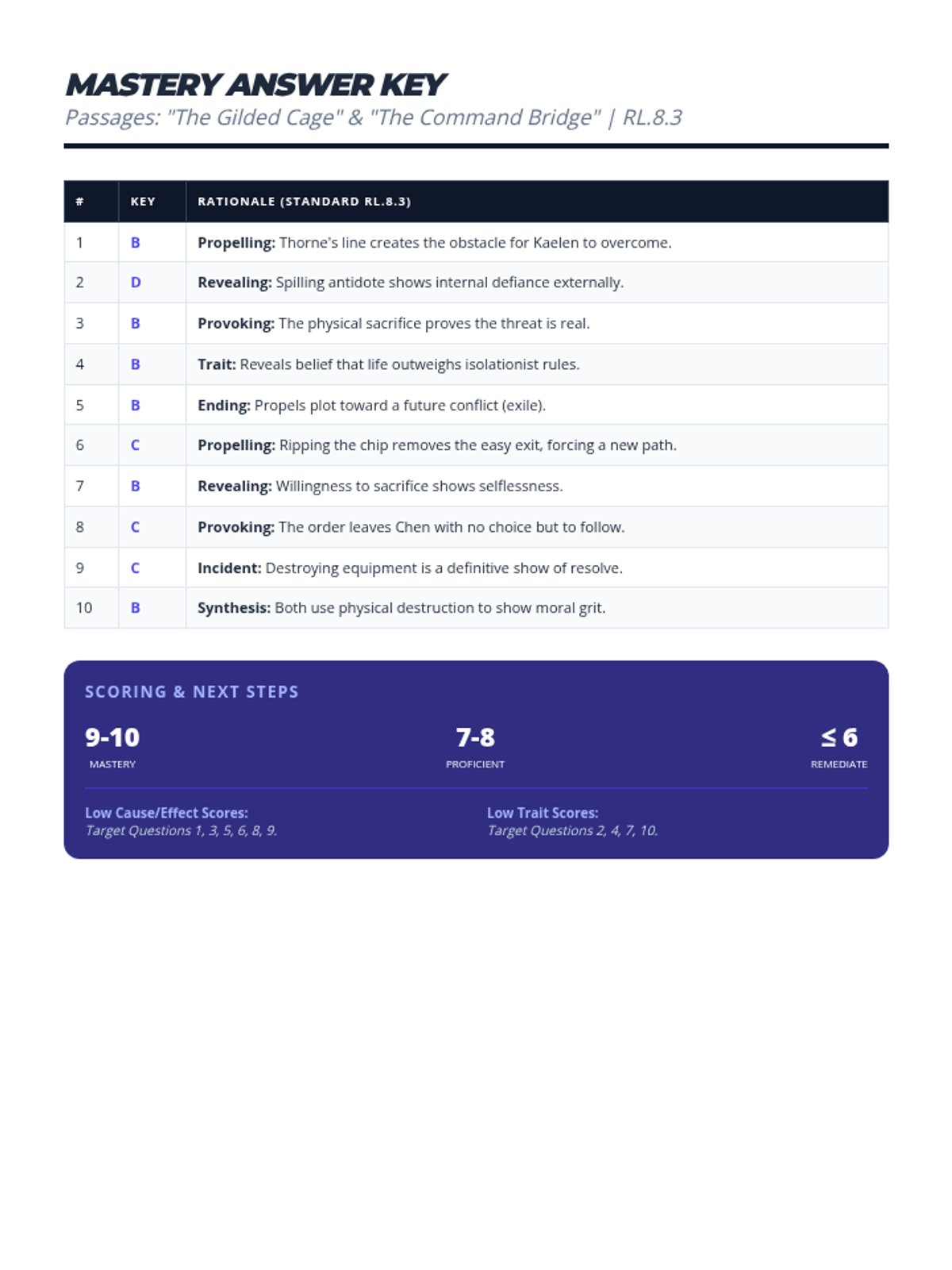
A reteach lesson focused on RL.6.3, analyzing how dialogue, incidents, and decisions drive a story's plot and reveal character traits using a 'story mechanics' theme.
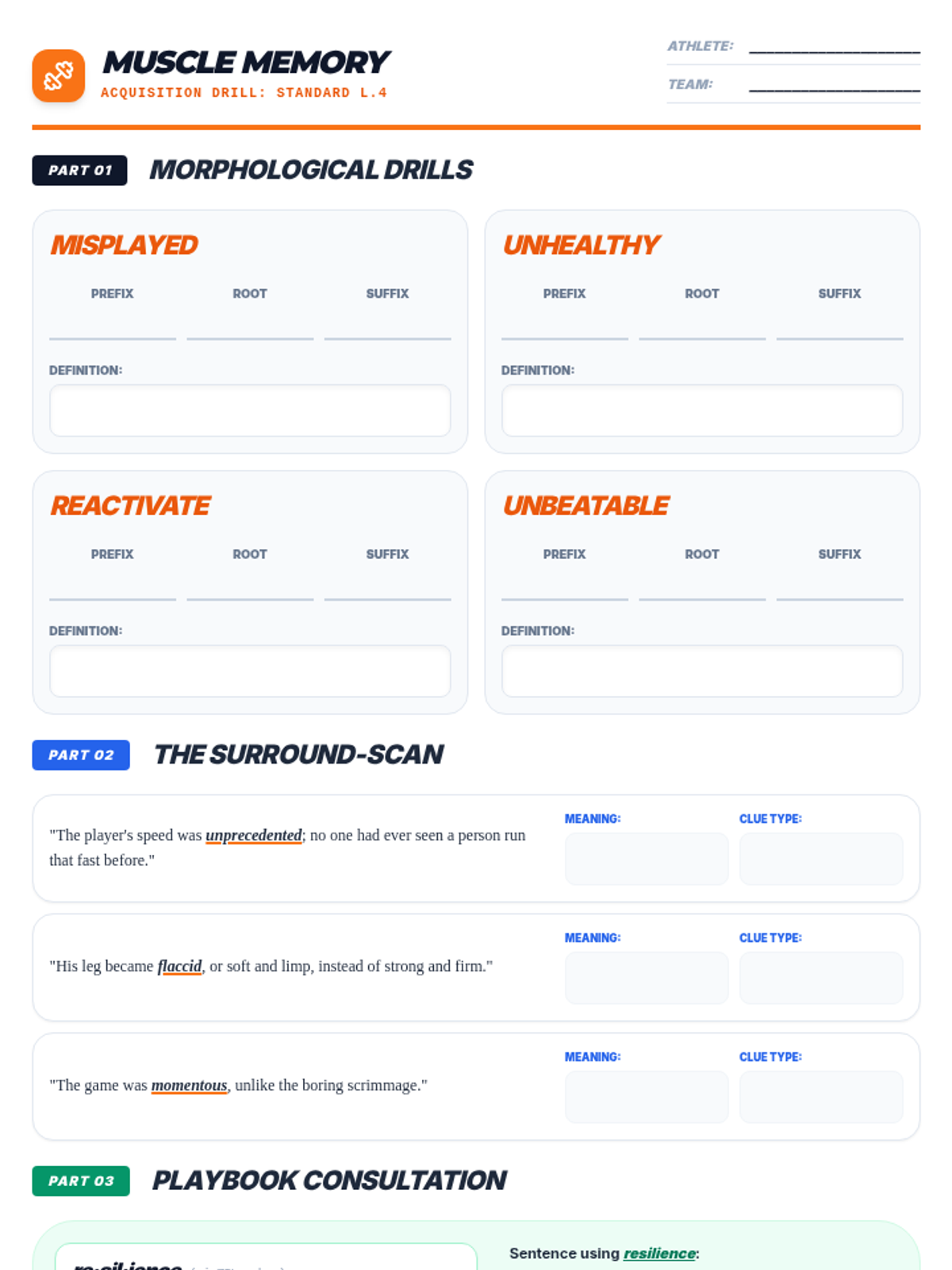
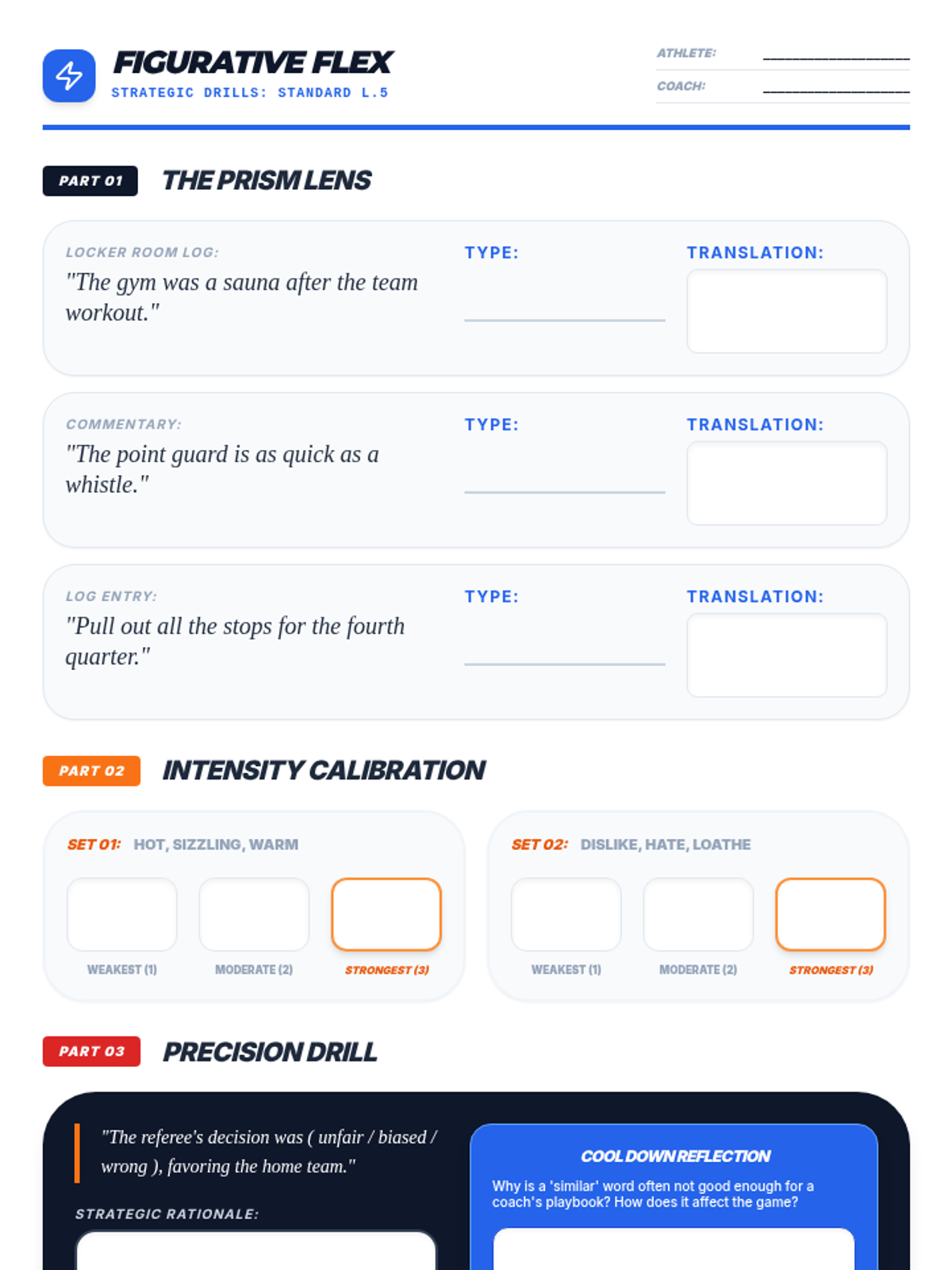
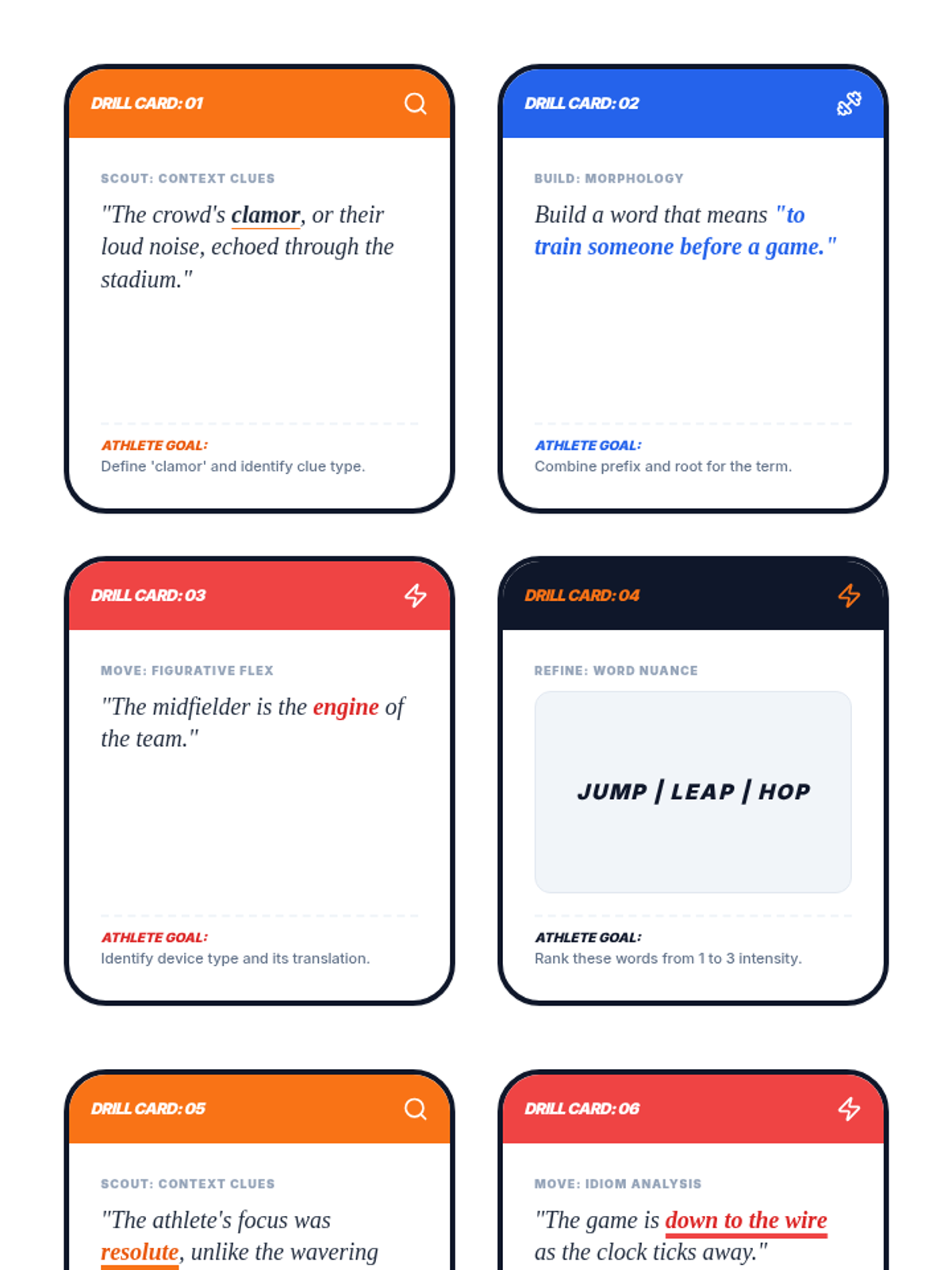
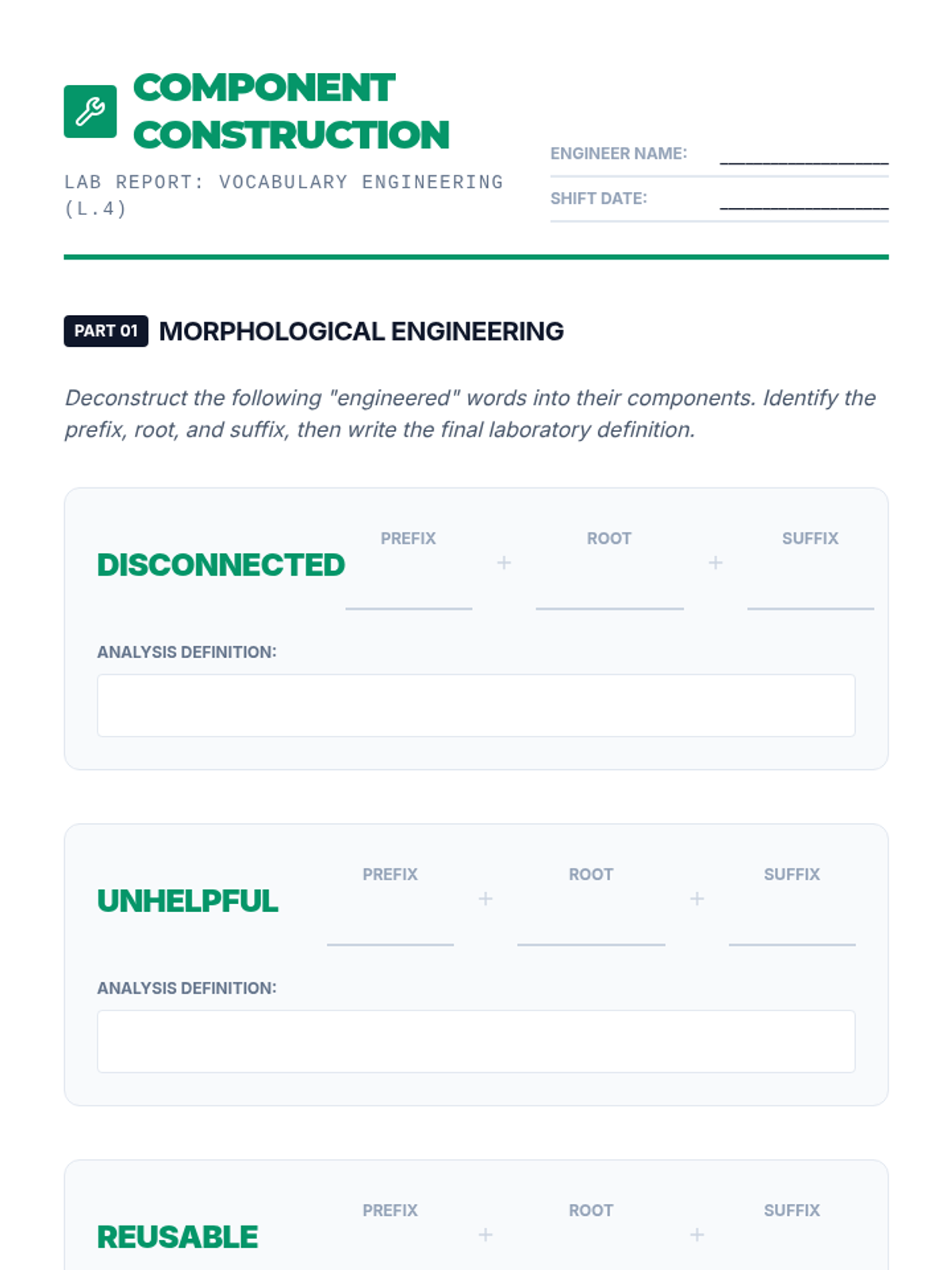
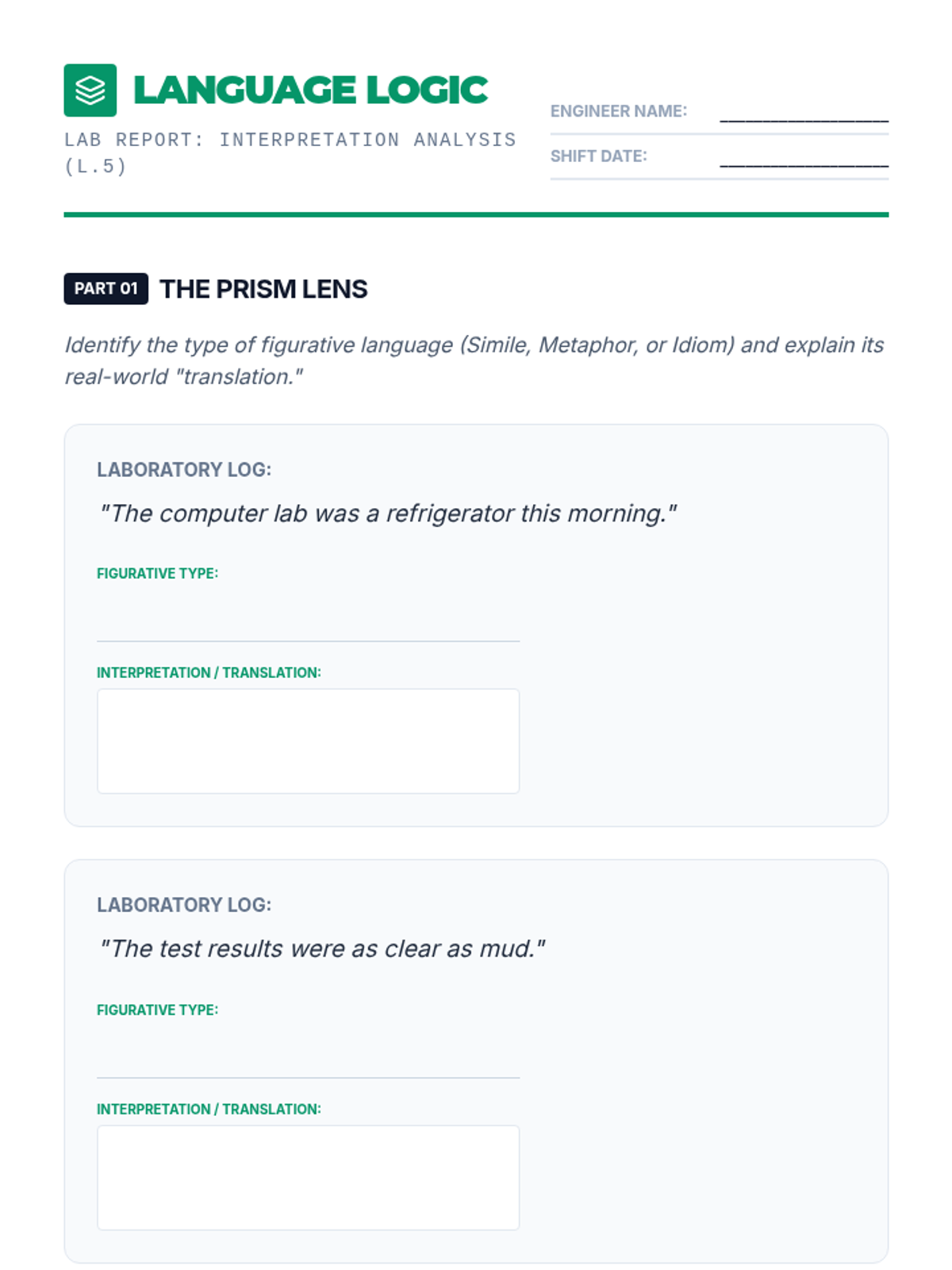
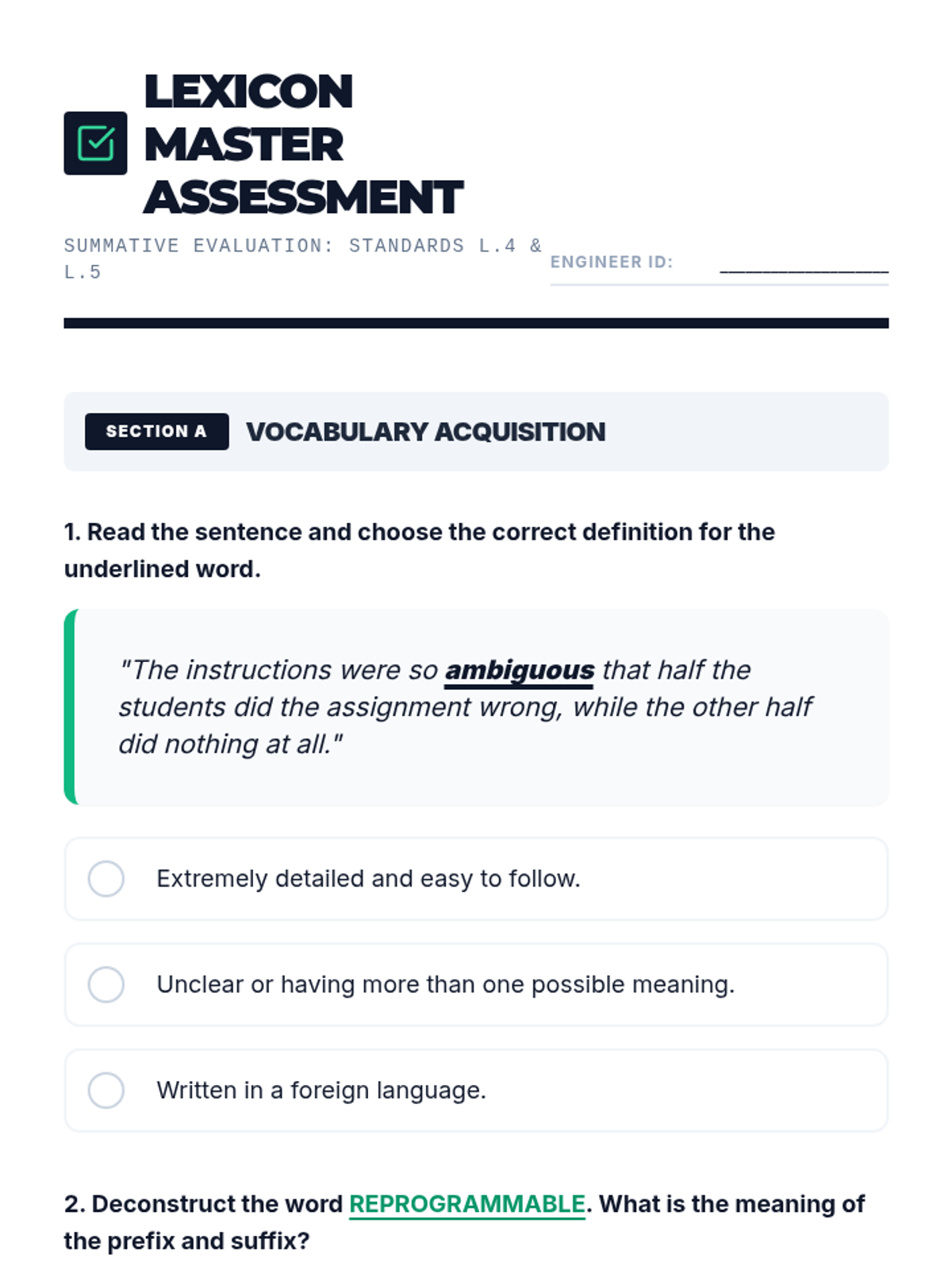
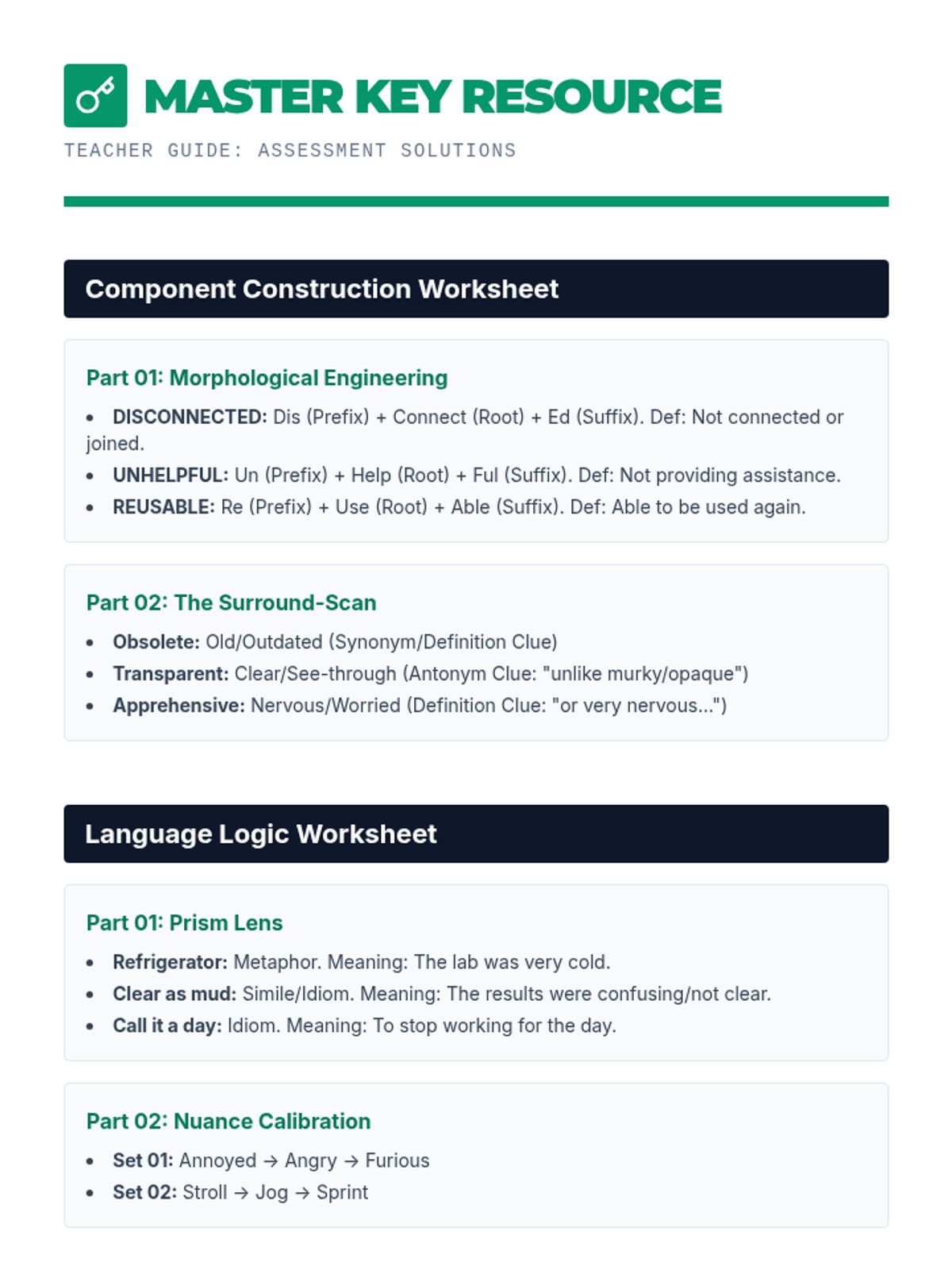
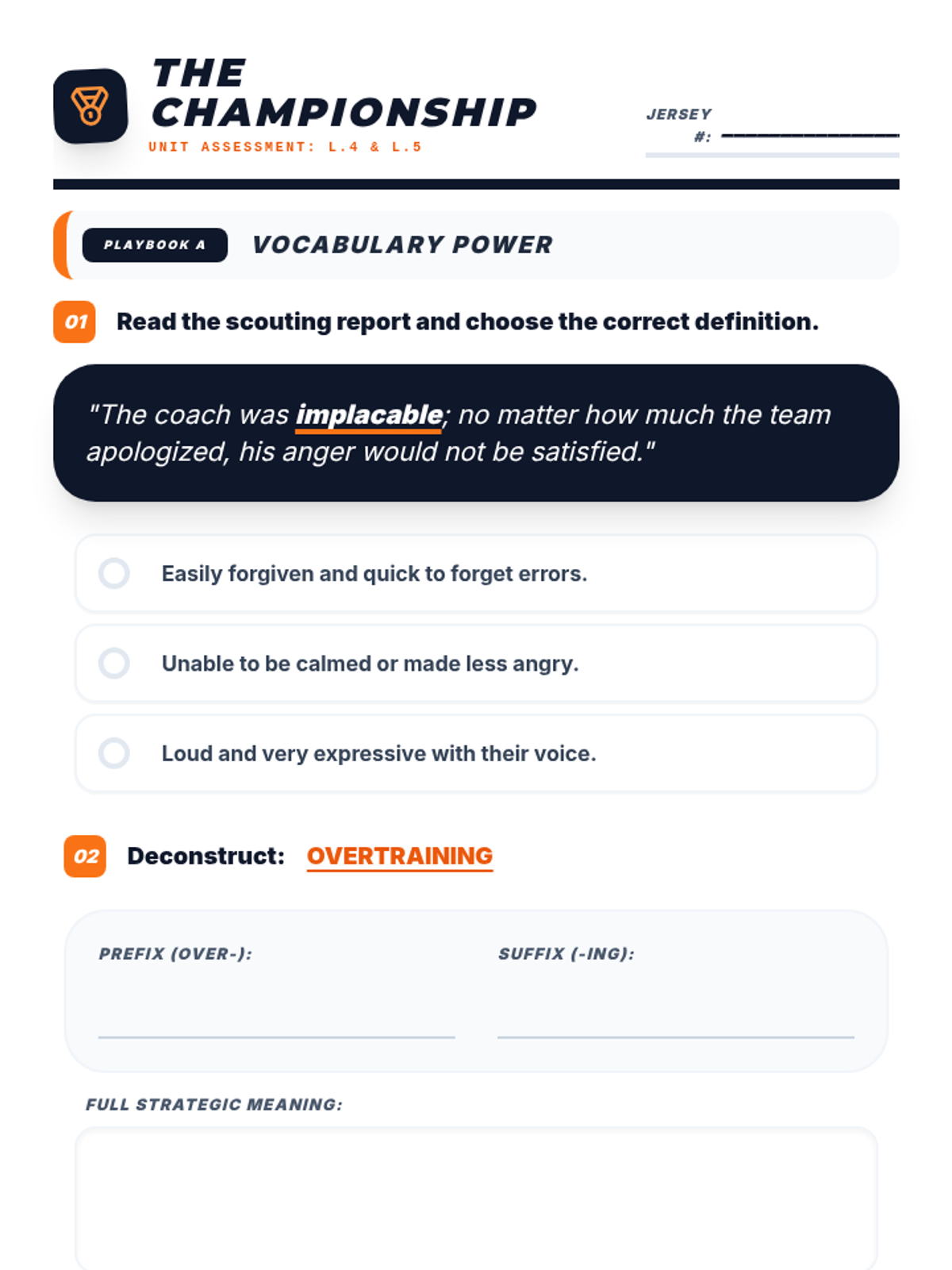
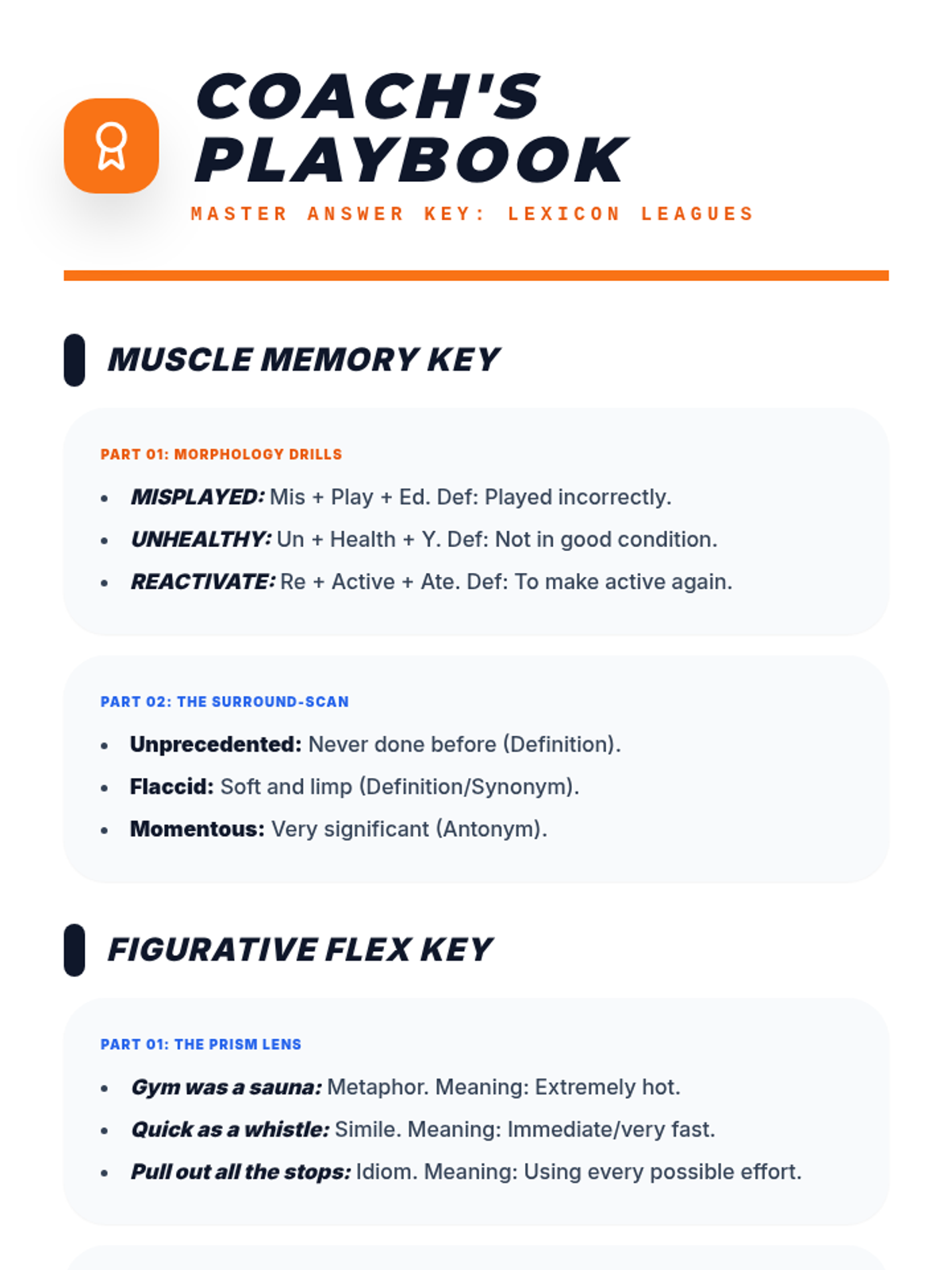
Instructional materials for vocabulary acquisition (L.4) and figurative language mastery (L.5). Students complete a 'training camp' sequence including drills, circuit training, and a final championship assessment.
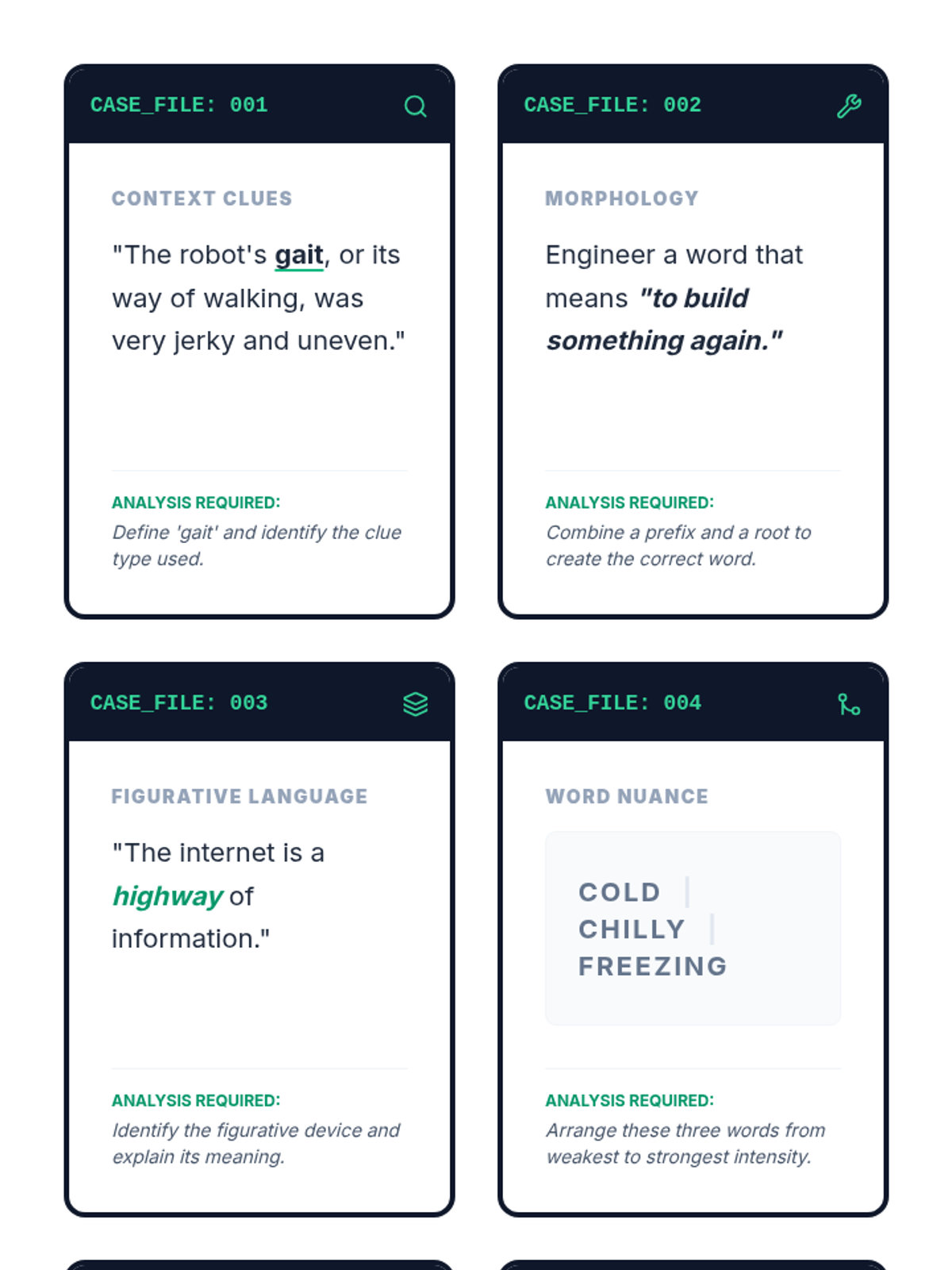
Instructional materials for mastering vocabulary acquisition (L.4) and understanding figurative language and word nuances (L.5). Includes direct instruction, hands-on practice, and a final summative assessment.
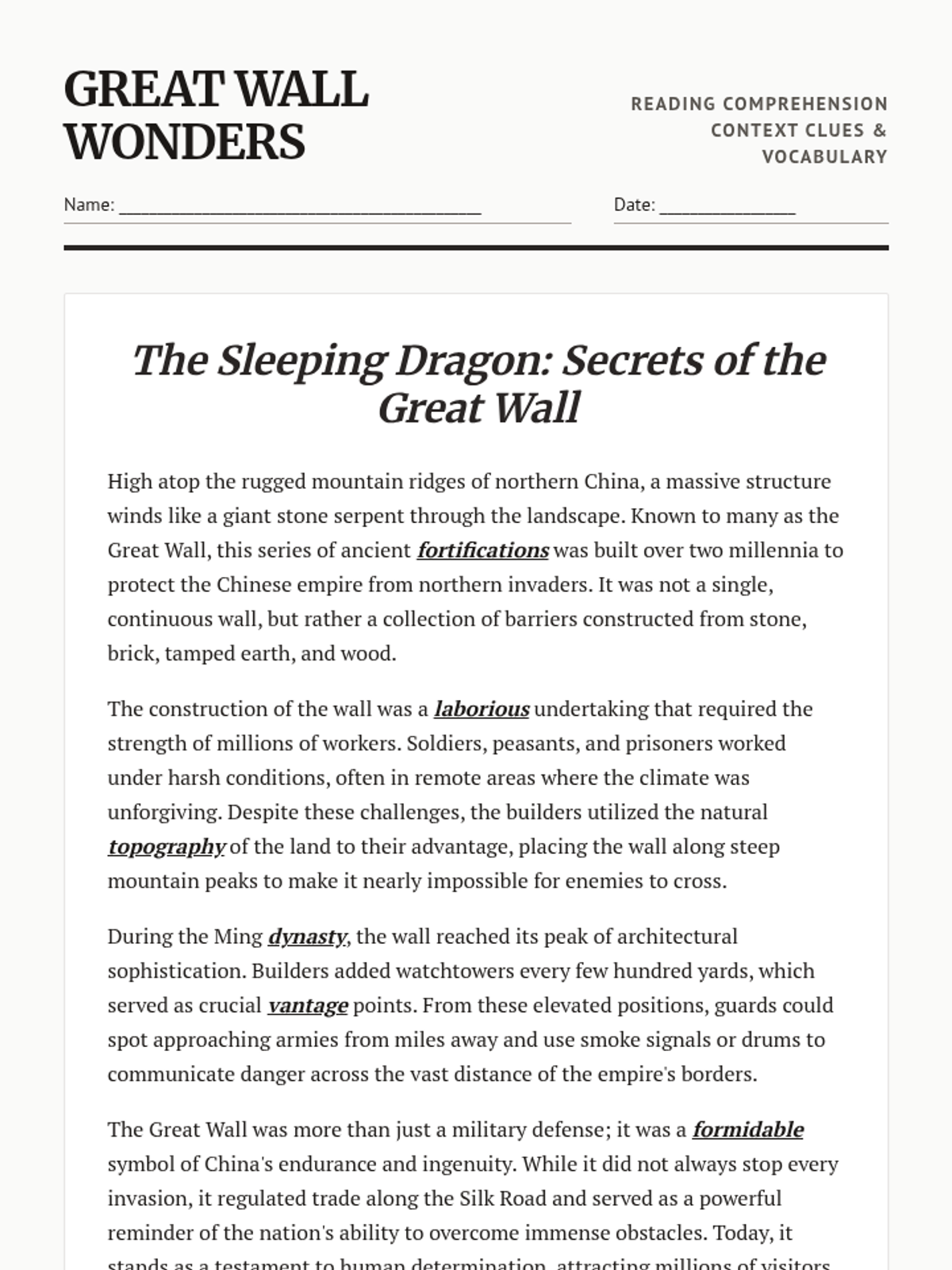
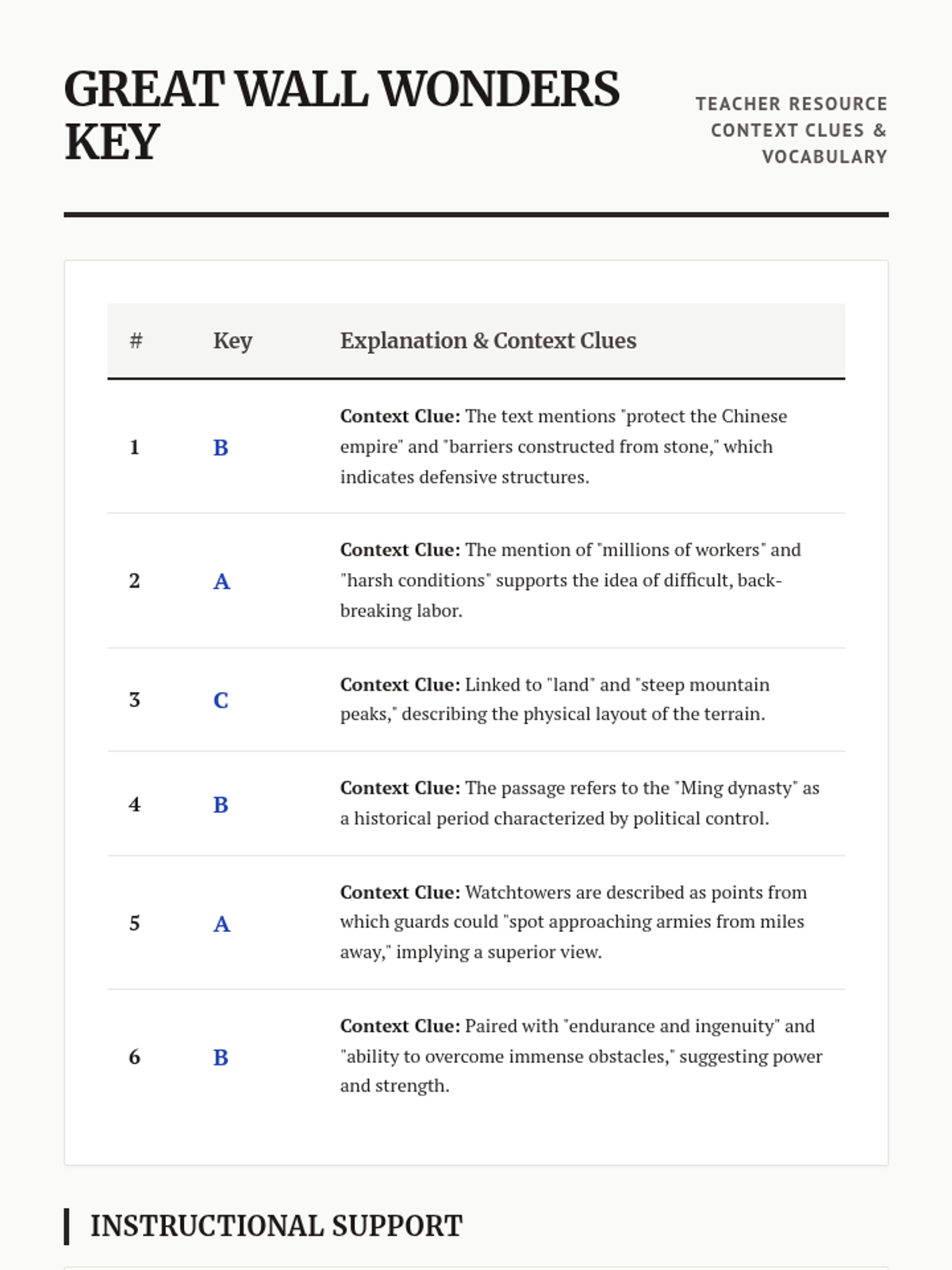
A reading comprehension lesson focused on historical informational texts, specifically targeting context clues and vocabulary acquisition skills.
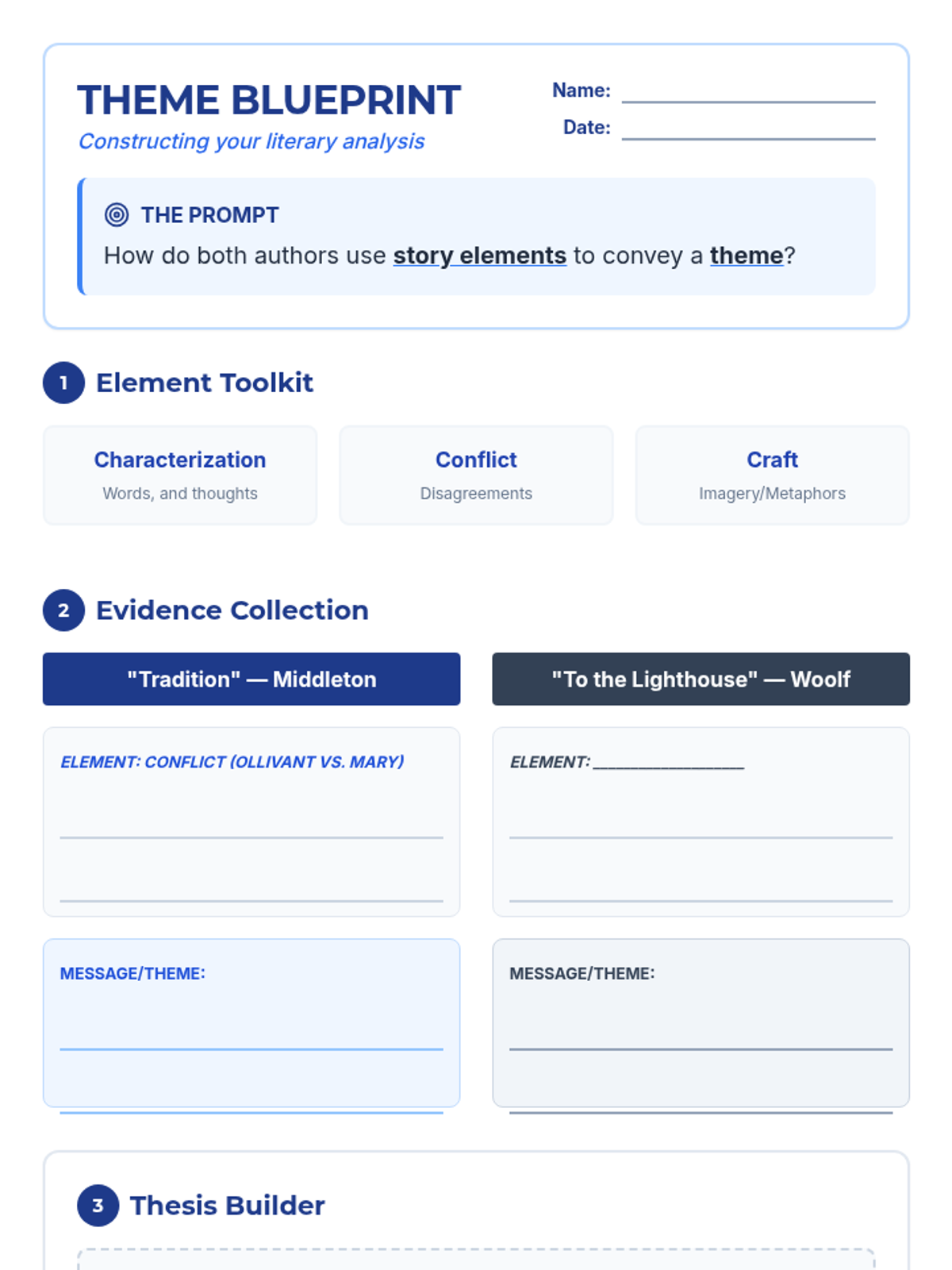
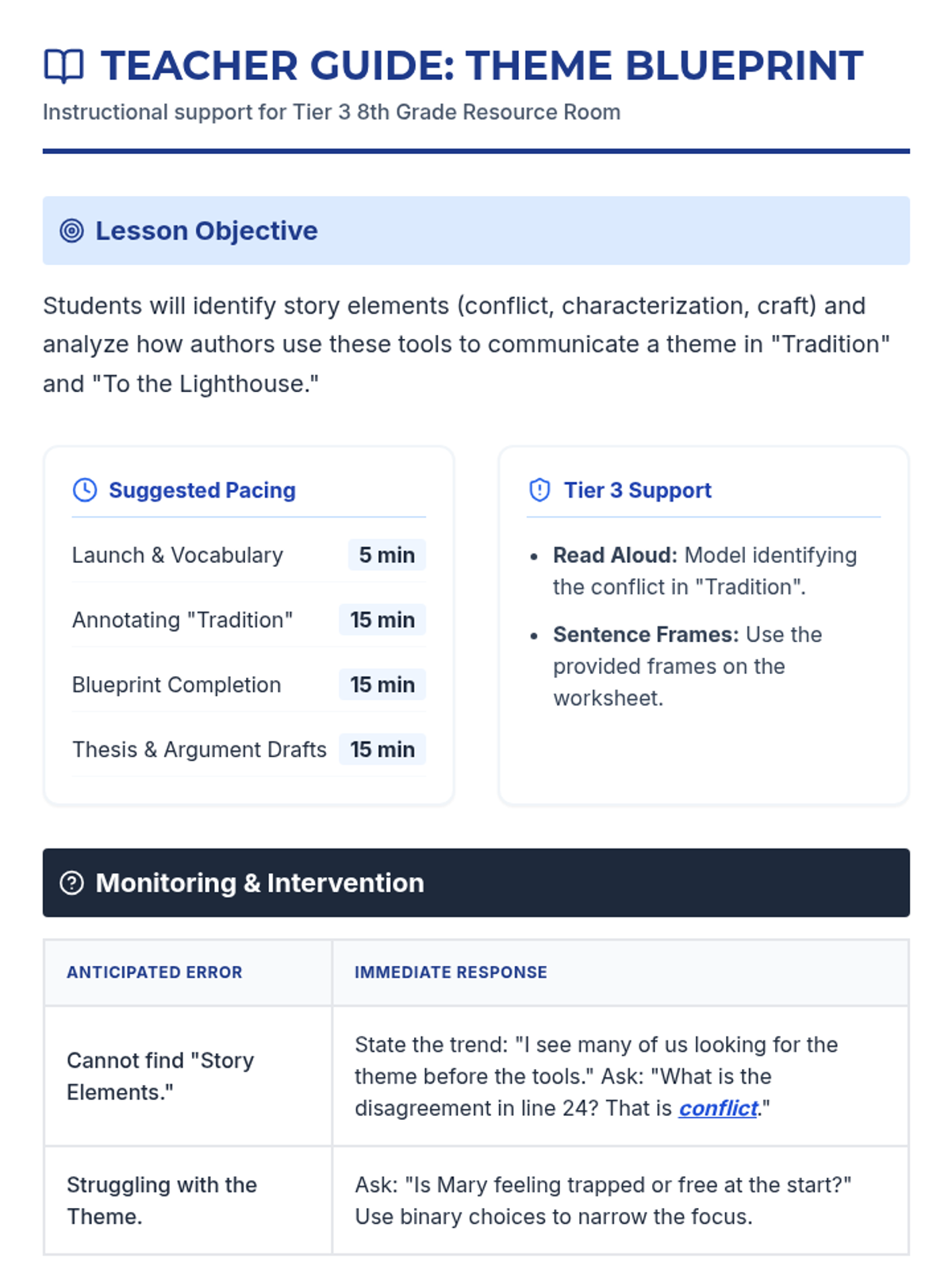
A highly scaffolded lesson for 8th-grade Tier 3 students to analyze how authors use story elements to convey themes, featuring a step-by-step planning guide for comparing 'Tradition' and 'To the Lighthouse'.
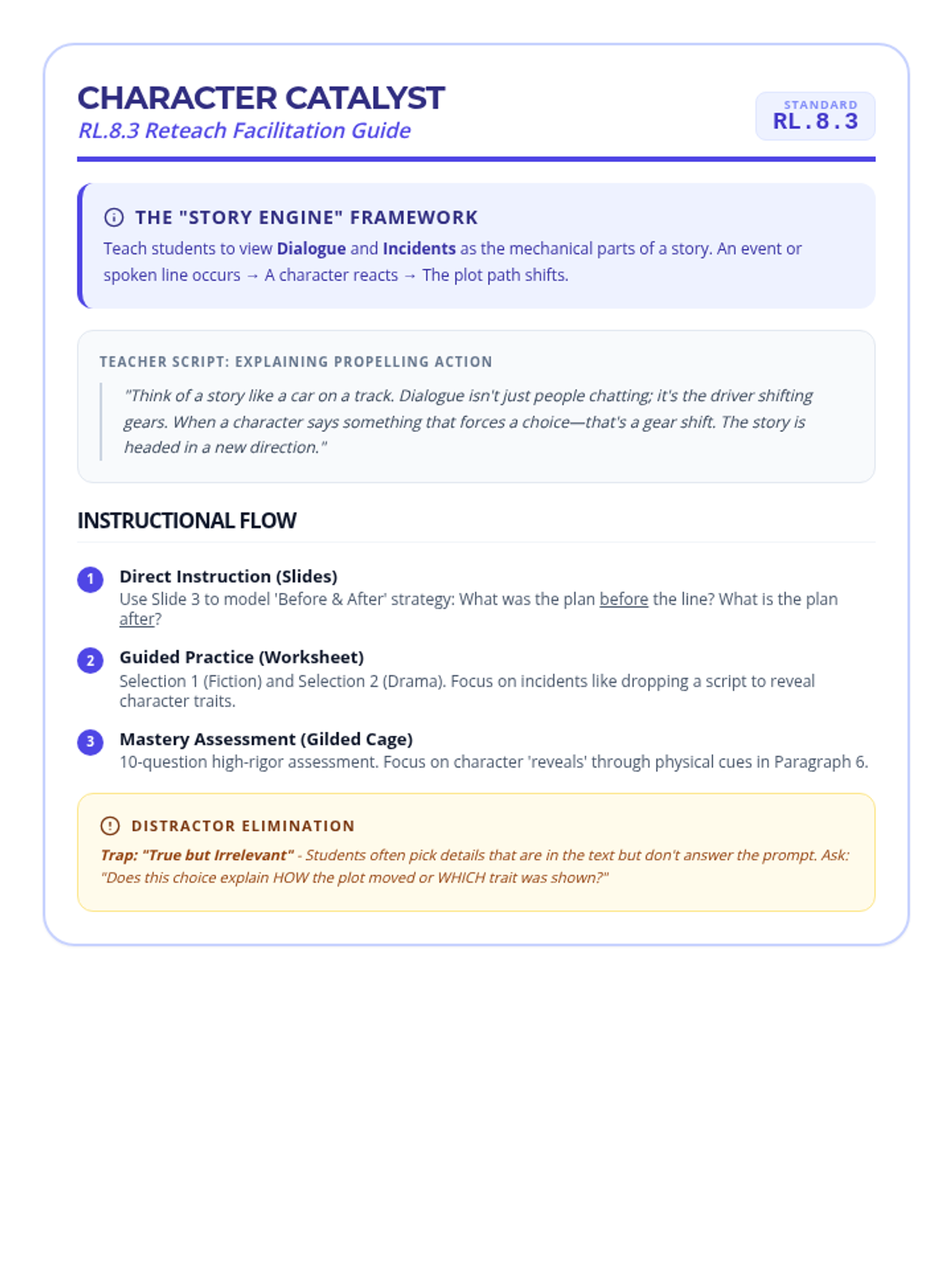
This lesson focuses on identifying specific lines of dialogue and key incidents that propel action and reveal character depth in modern short stories and dramatic scenes.
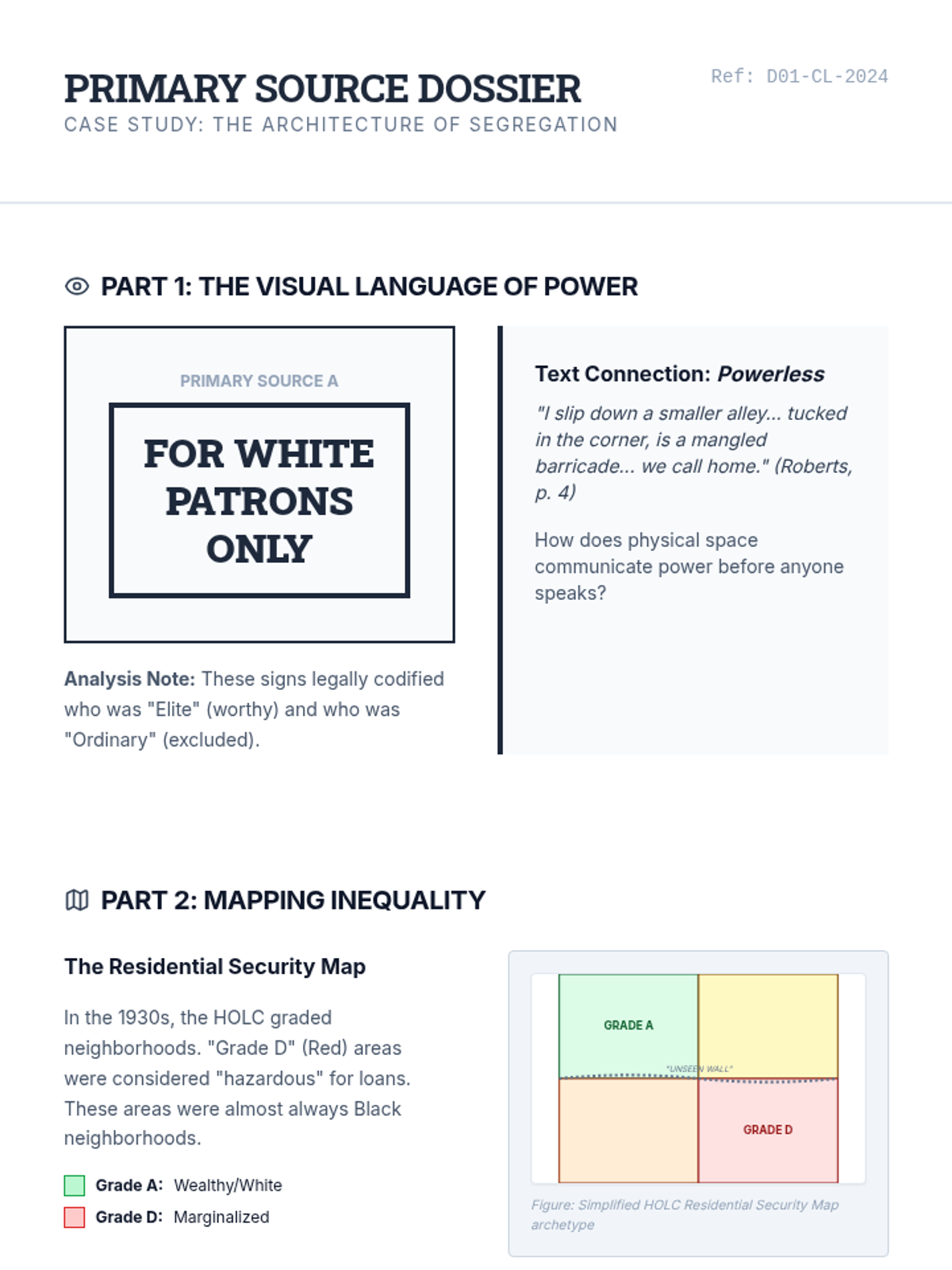
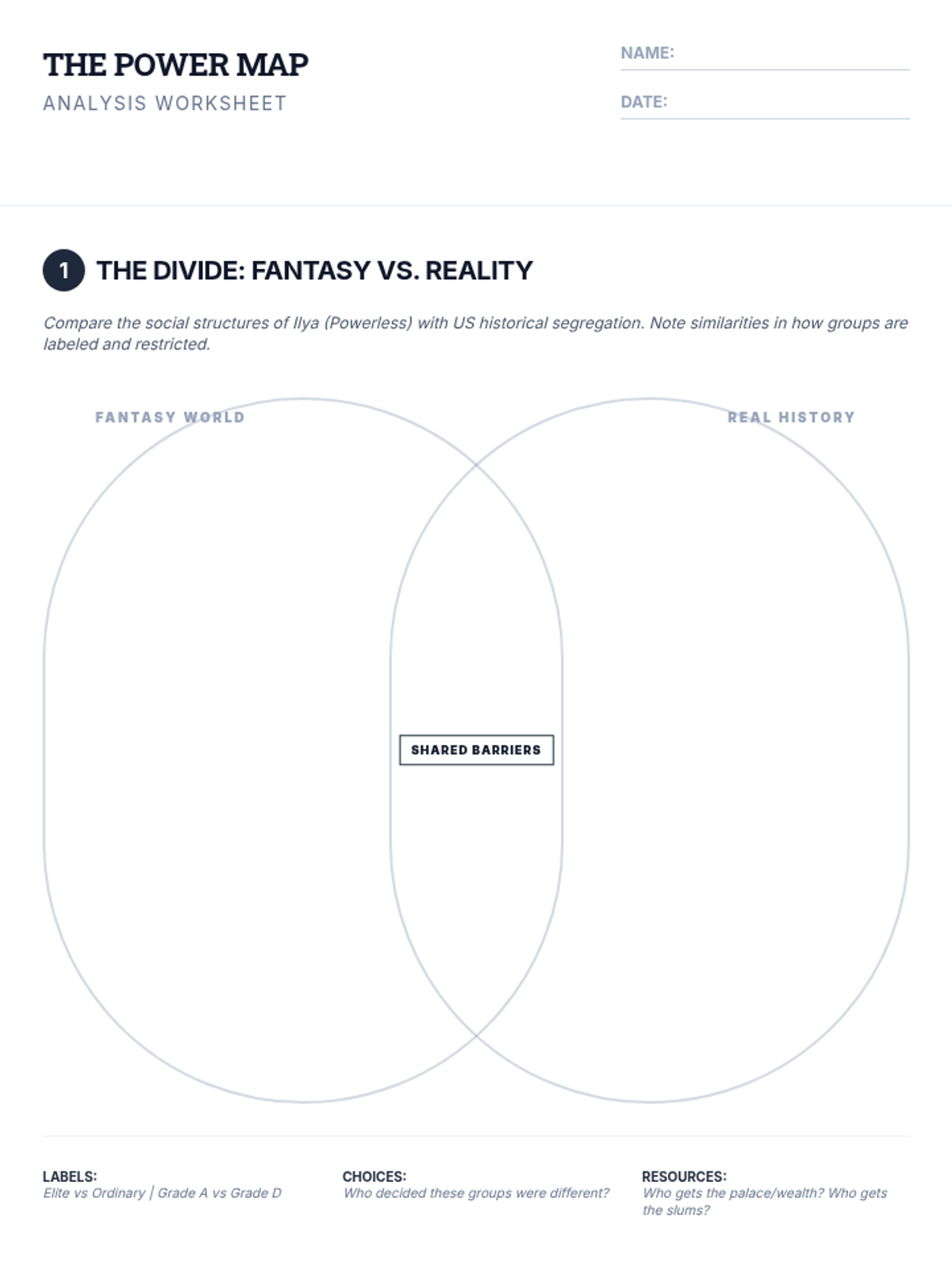
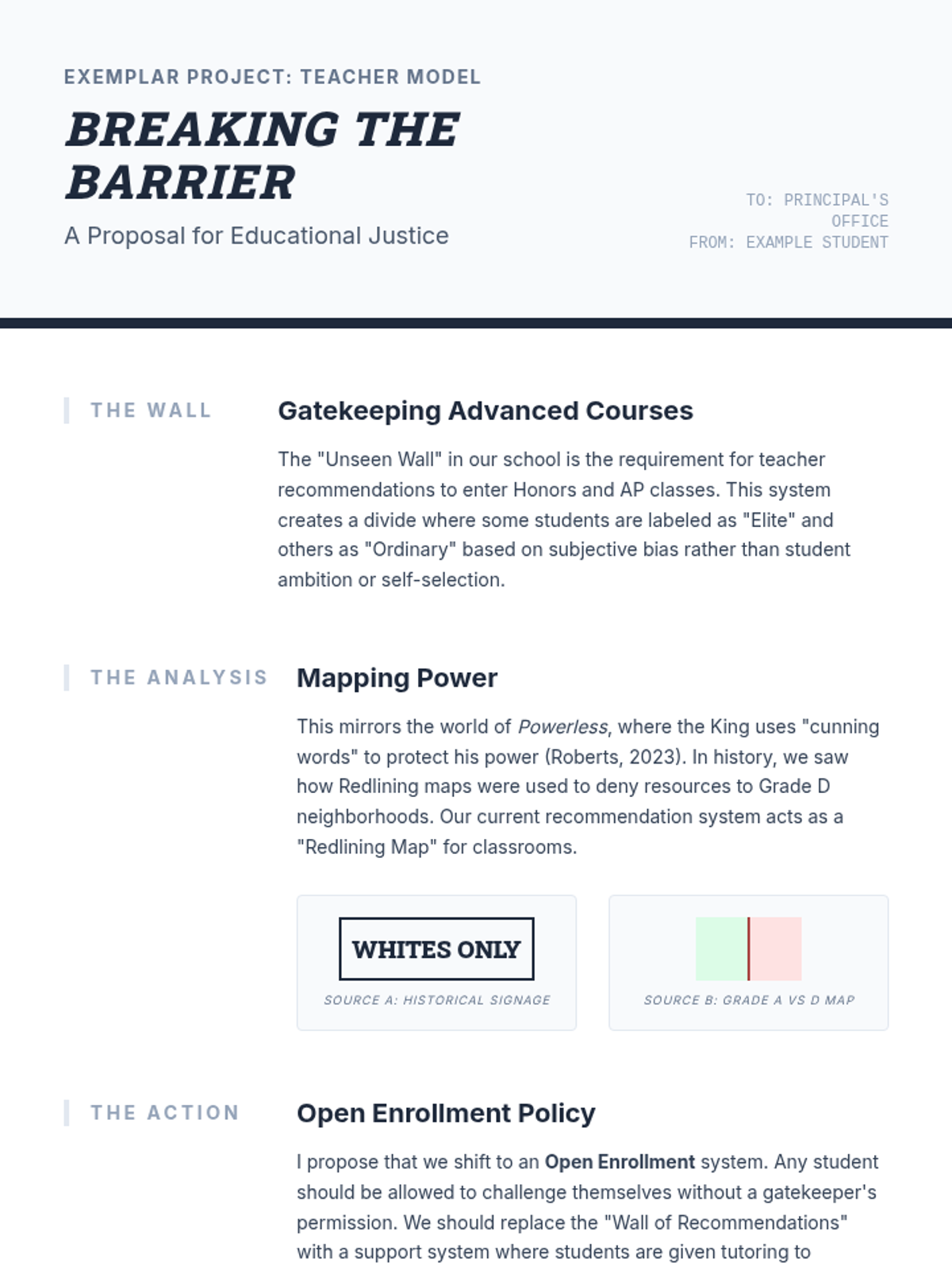
A critical literacy unit that bridges the fantasy world of Lauren Roberts' Powerless with real-world historical segregation, culminating in a student-led social action proposal to school leadership.
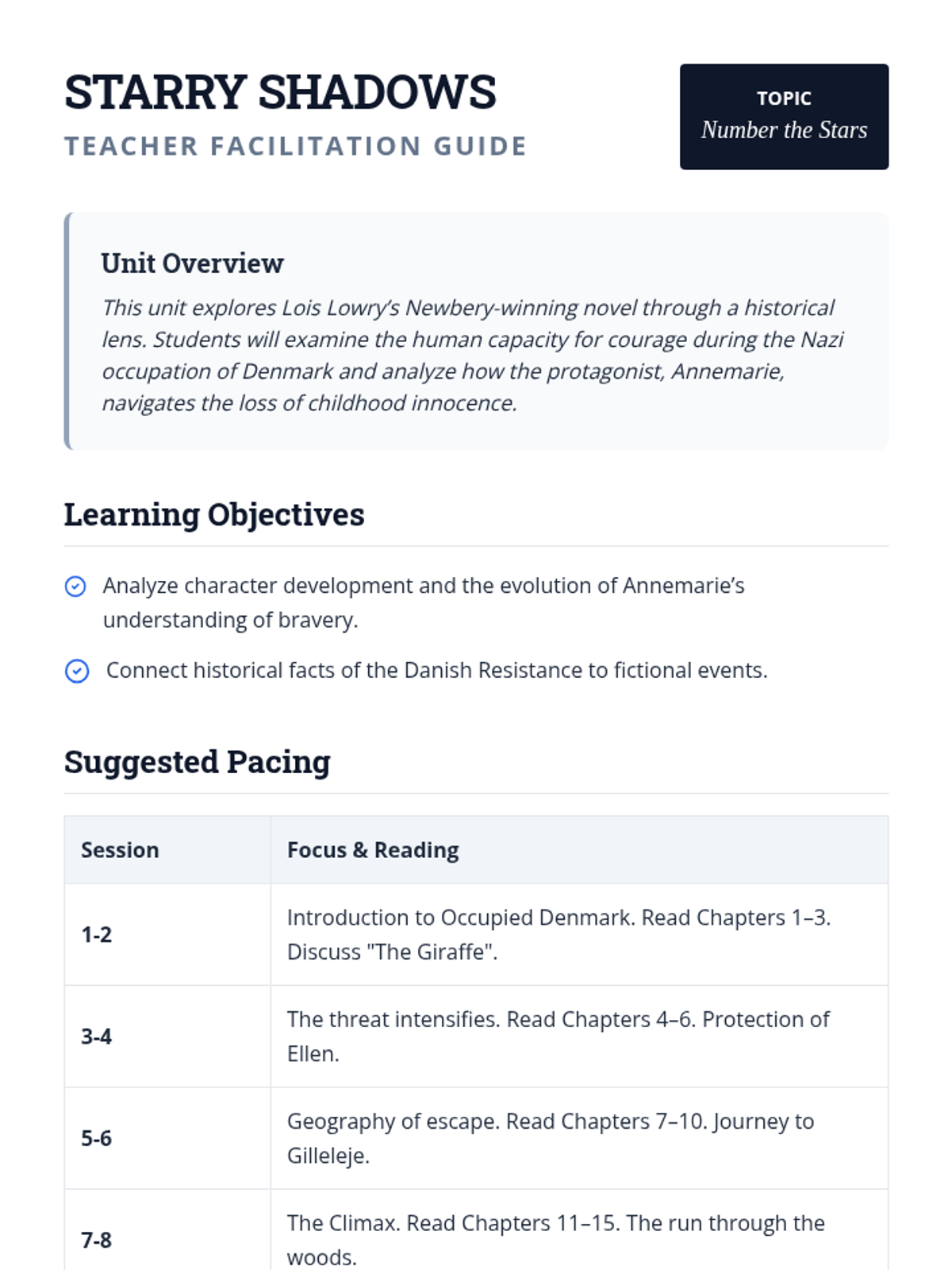
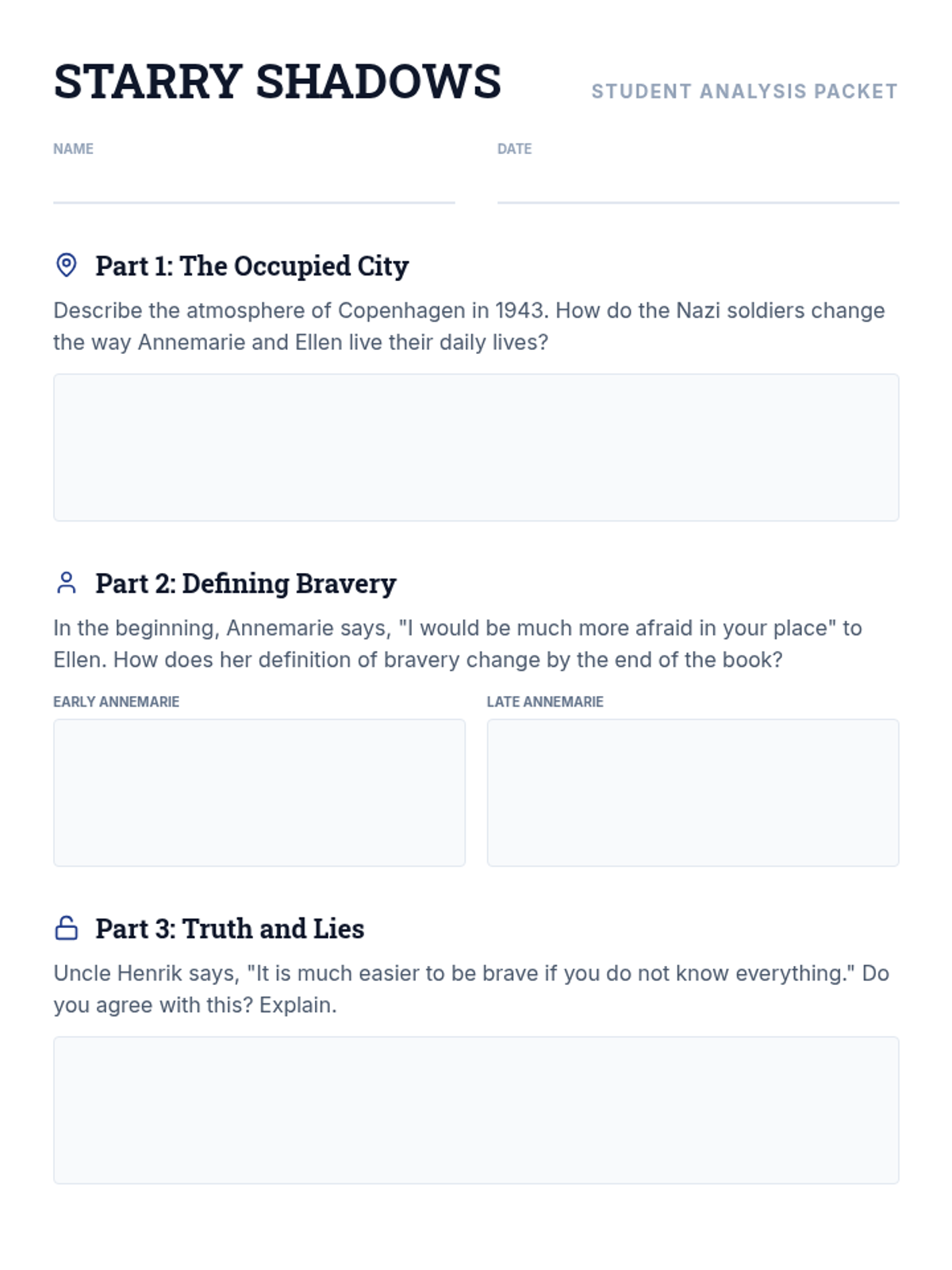
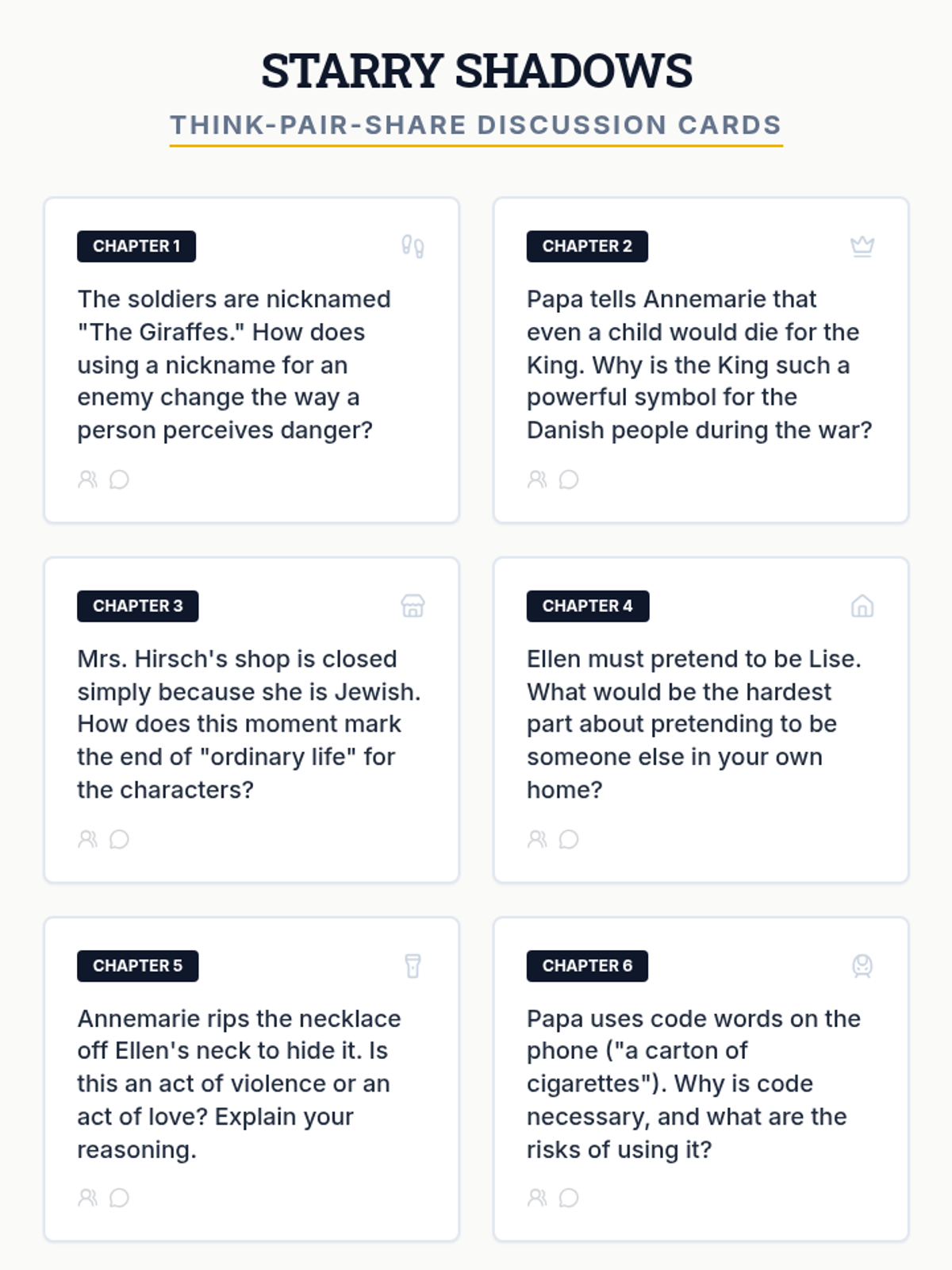
A comprehensive unit on Lois Lowry's 'Number the Stars', exploring the historical context of Nazi-occupied Denmark, character development, themes of bravery and friendship, and the symbolic elements used throughout the novel.
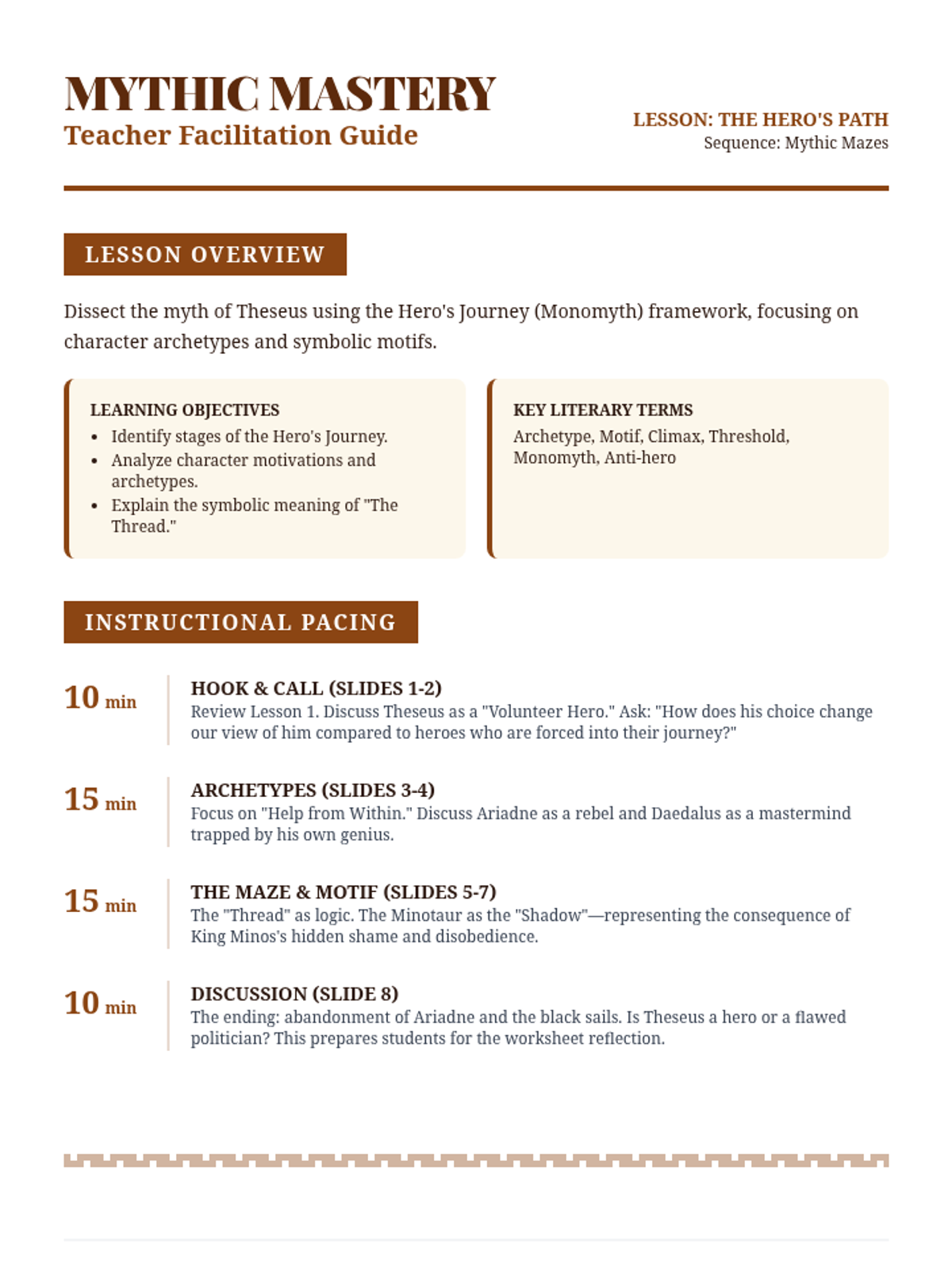
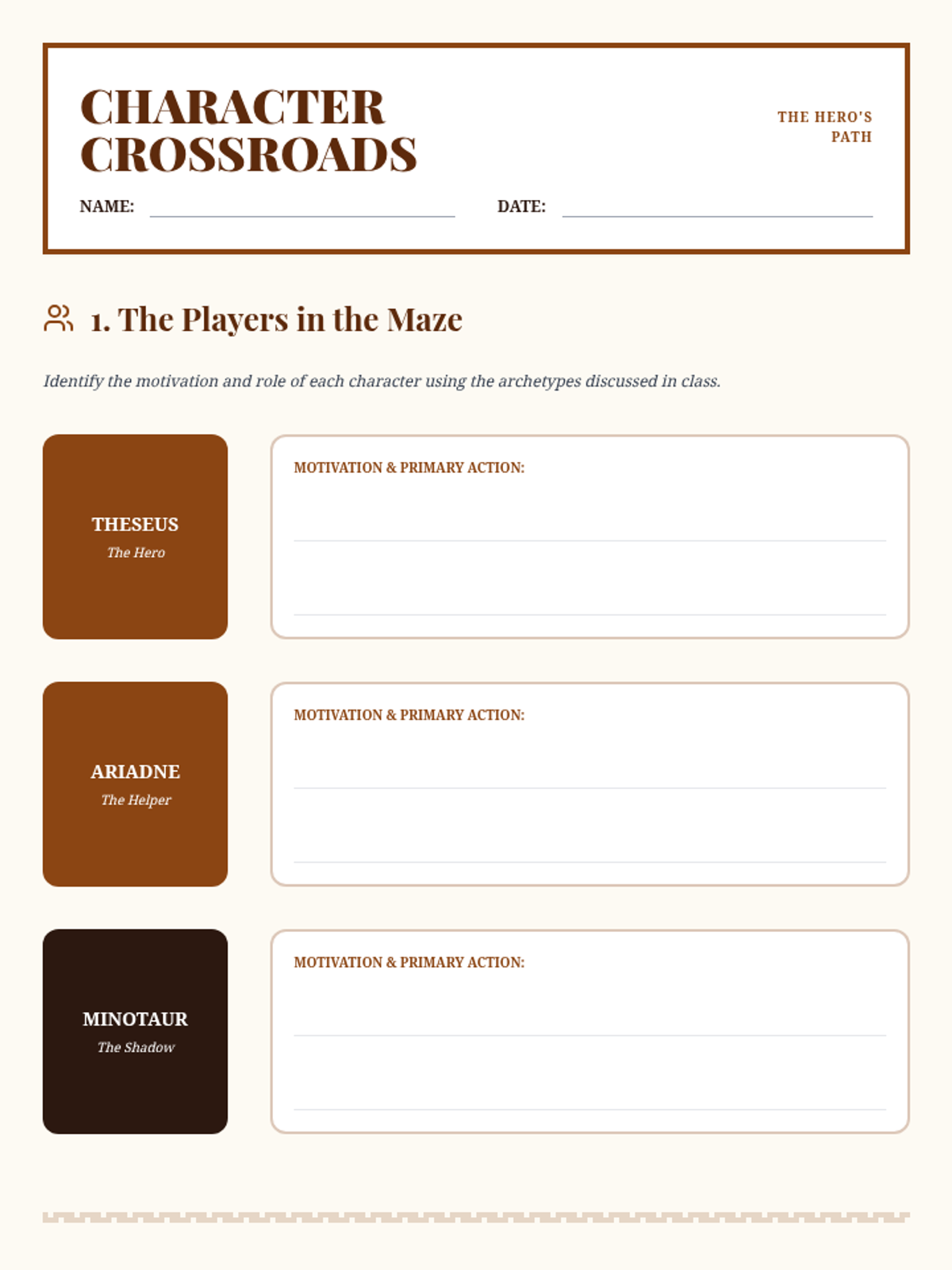
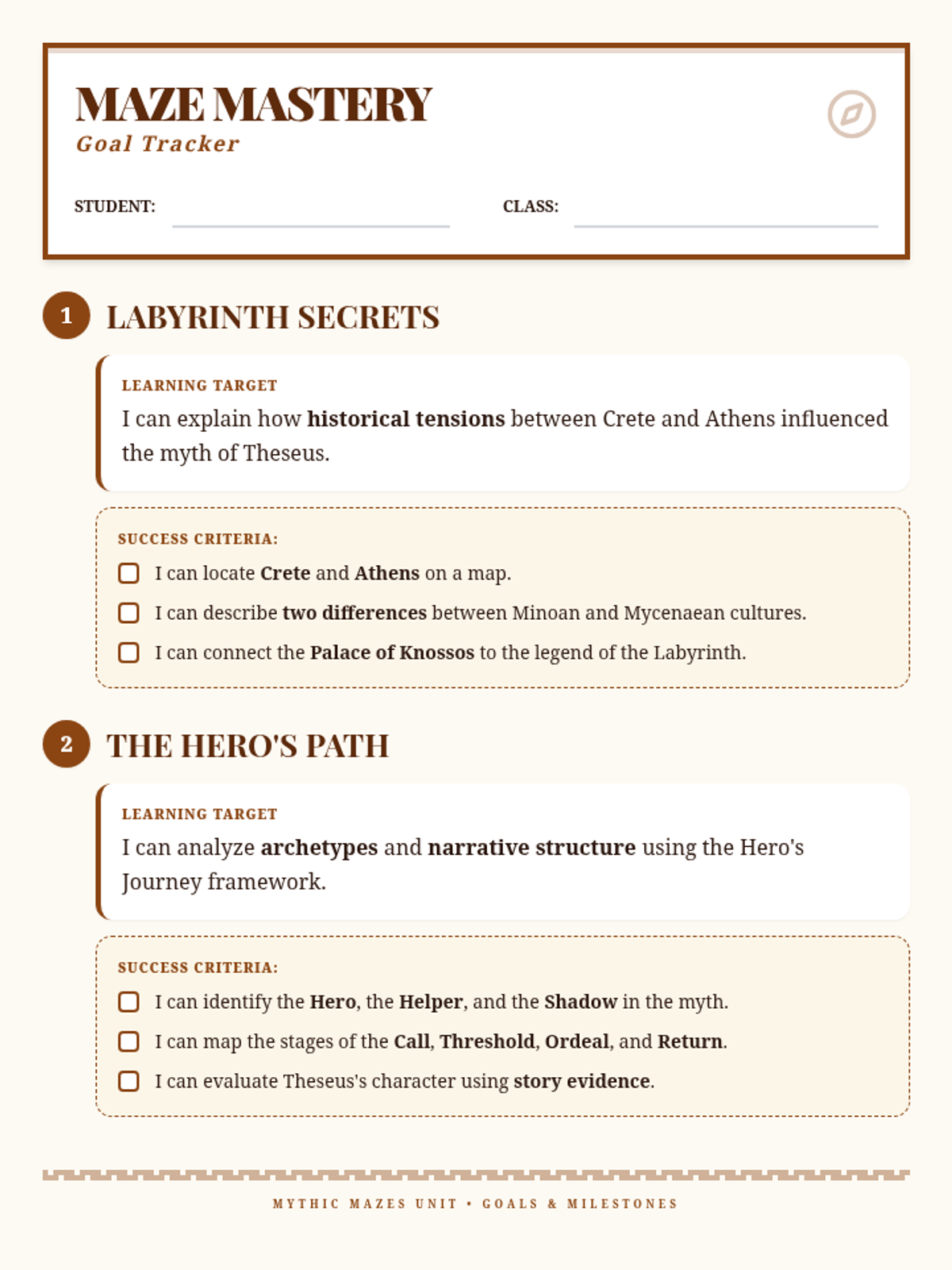
Focuses on the narrative arc of the Theseus myth, analyzing character motivations and the stages of the Hero's Journey.
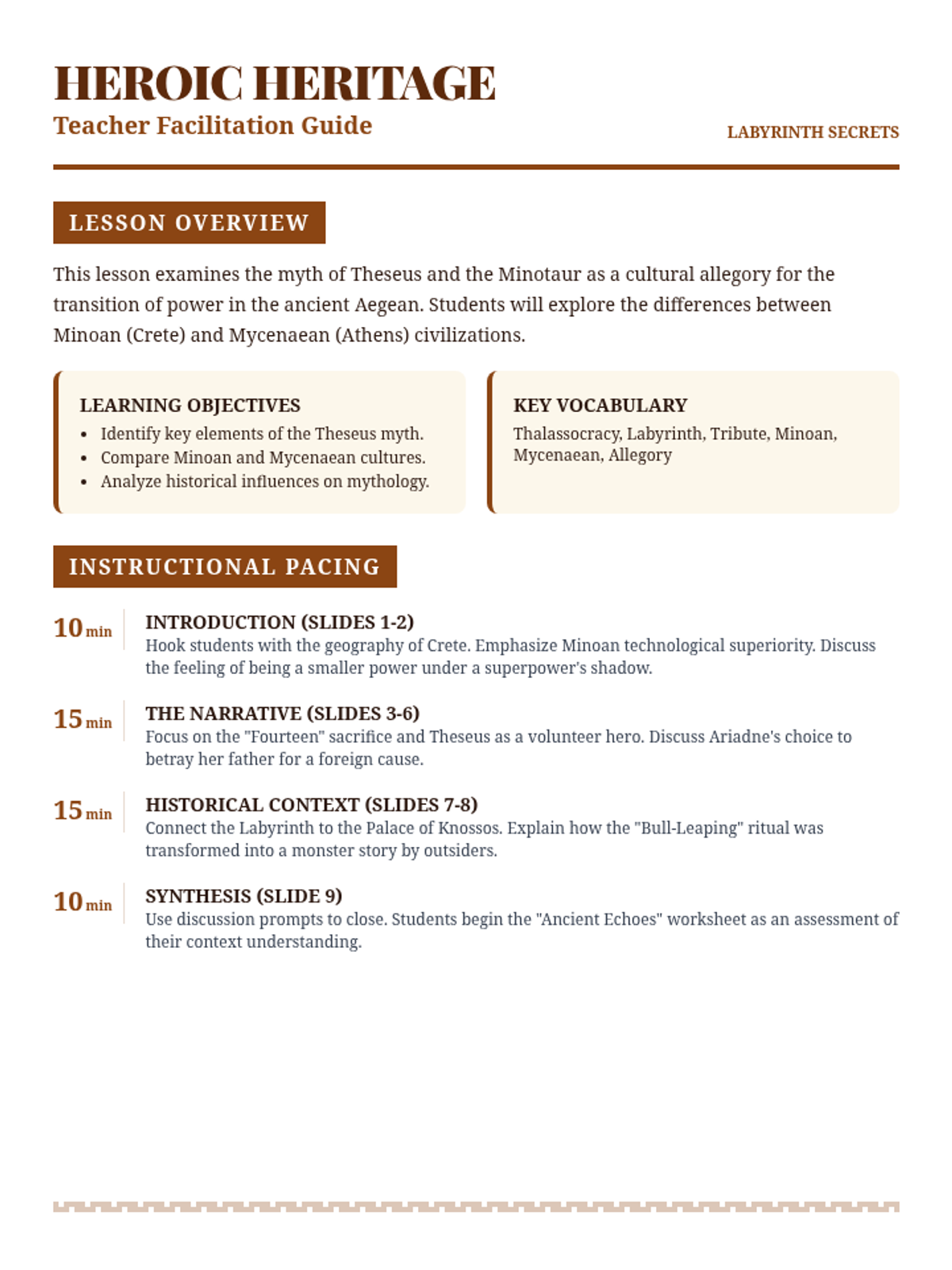
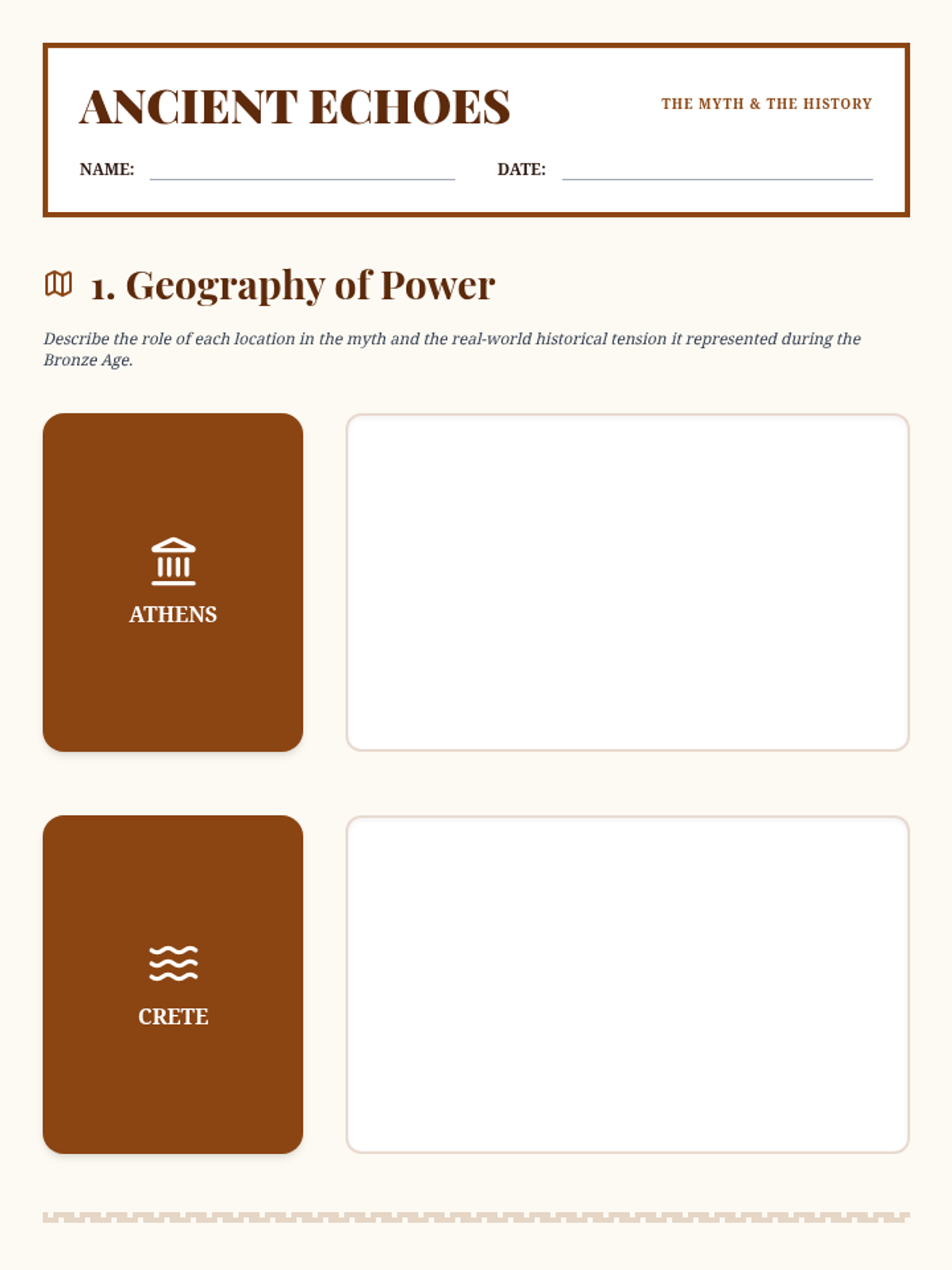
A deep dive into the myth of Theseus and the Minotaur, focusing on the historical and cultural tensions between Crete and Athens in Ancient Greece.
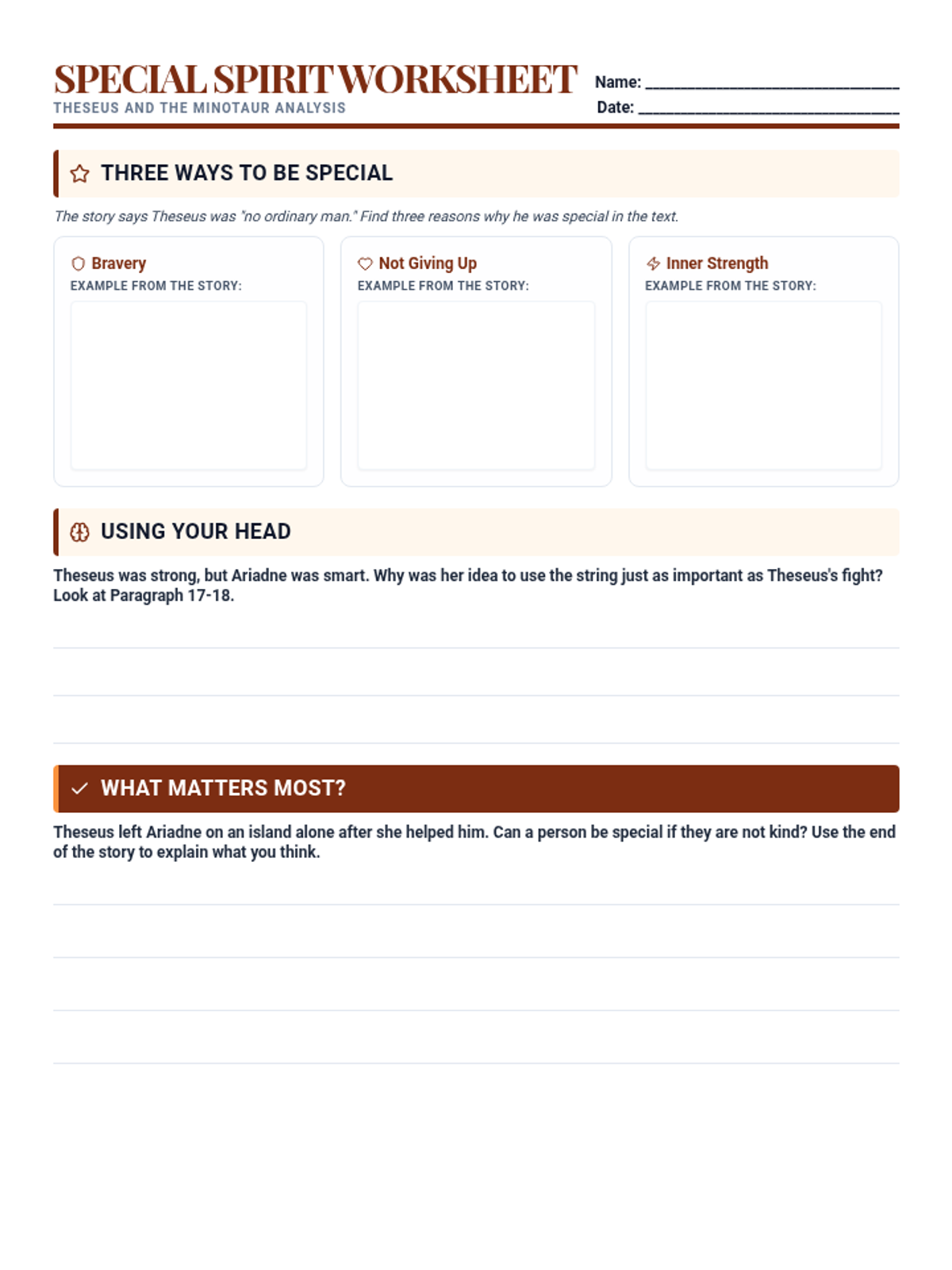
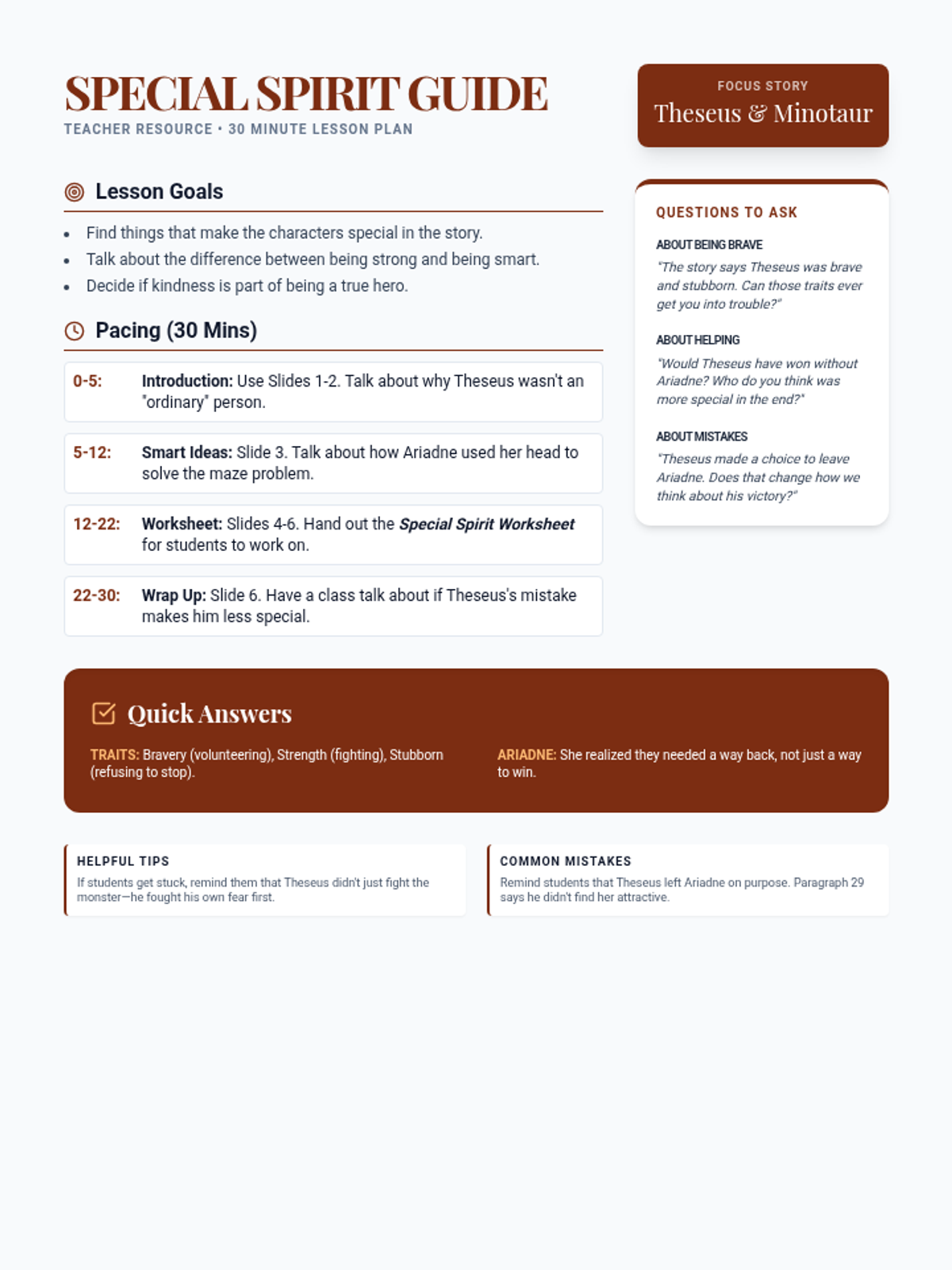
A 30-minute exploration of the traits and choices that define an "extraordinary" individual, using the myth of Theseus and the Minotaur to examine bravery, intellect, and moral character in 6th grade.
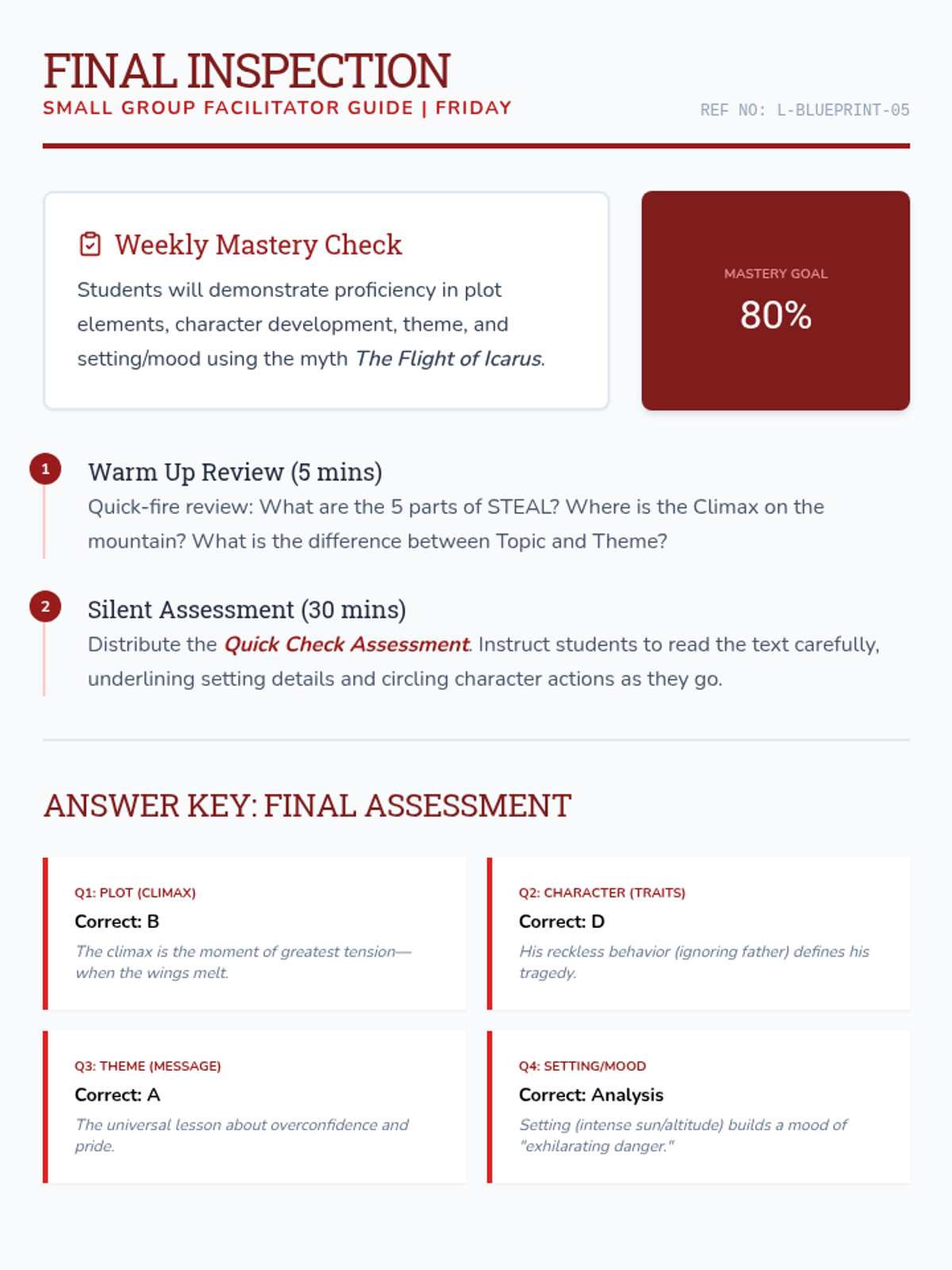
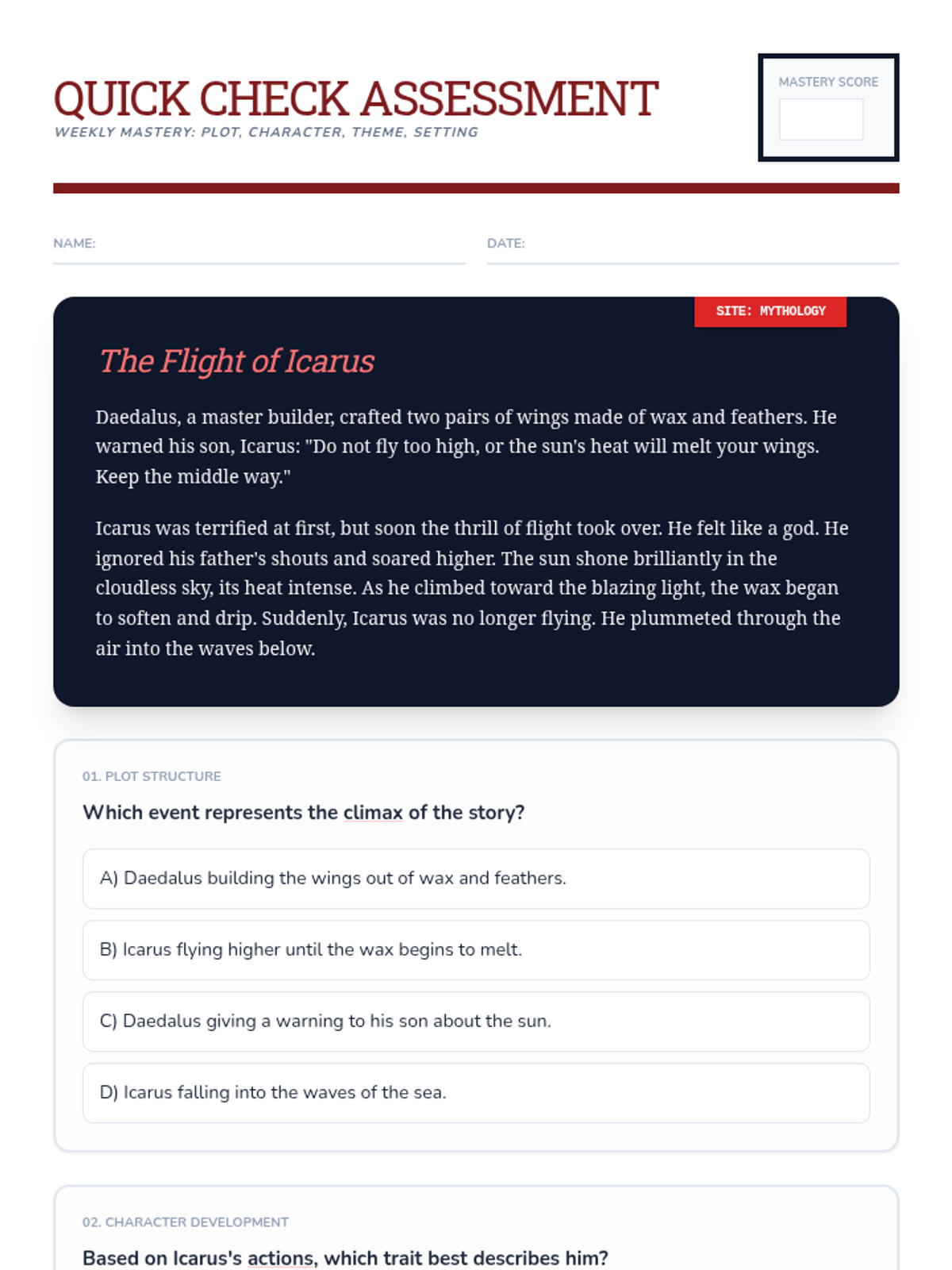
A comprehensive weekly assessment of plot, character, theme, and setting.
A 60-minute lesson exploring resilience through Henley's 'Invictus' and Williams' 'The Use of Force' using the 'I Do, We Do, You Do' model.
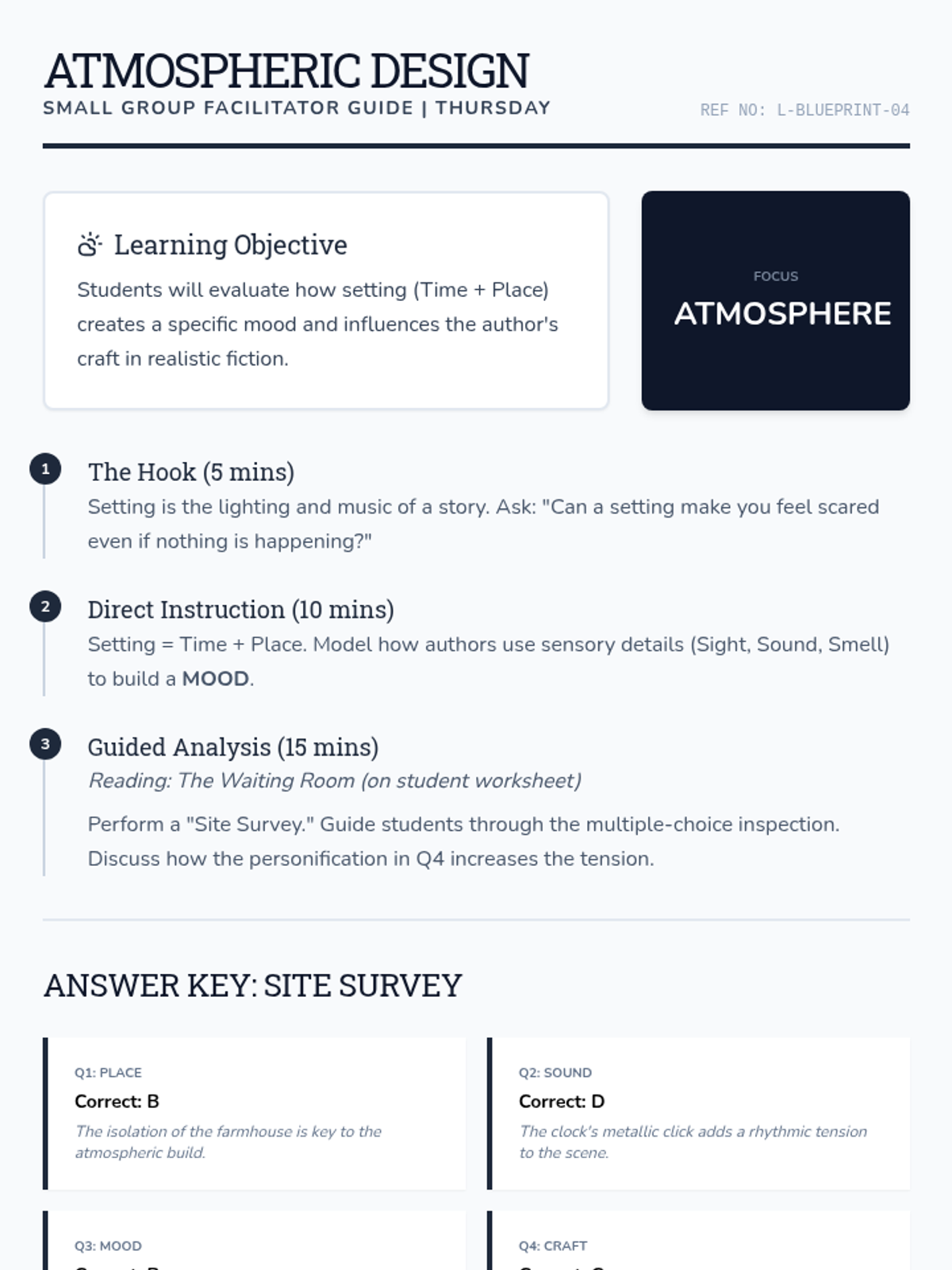
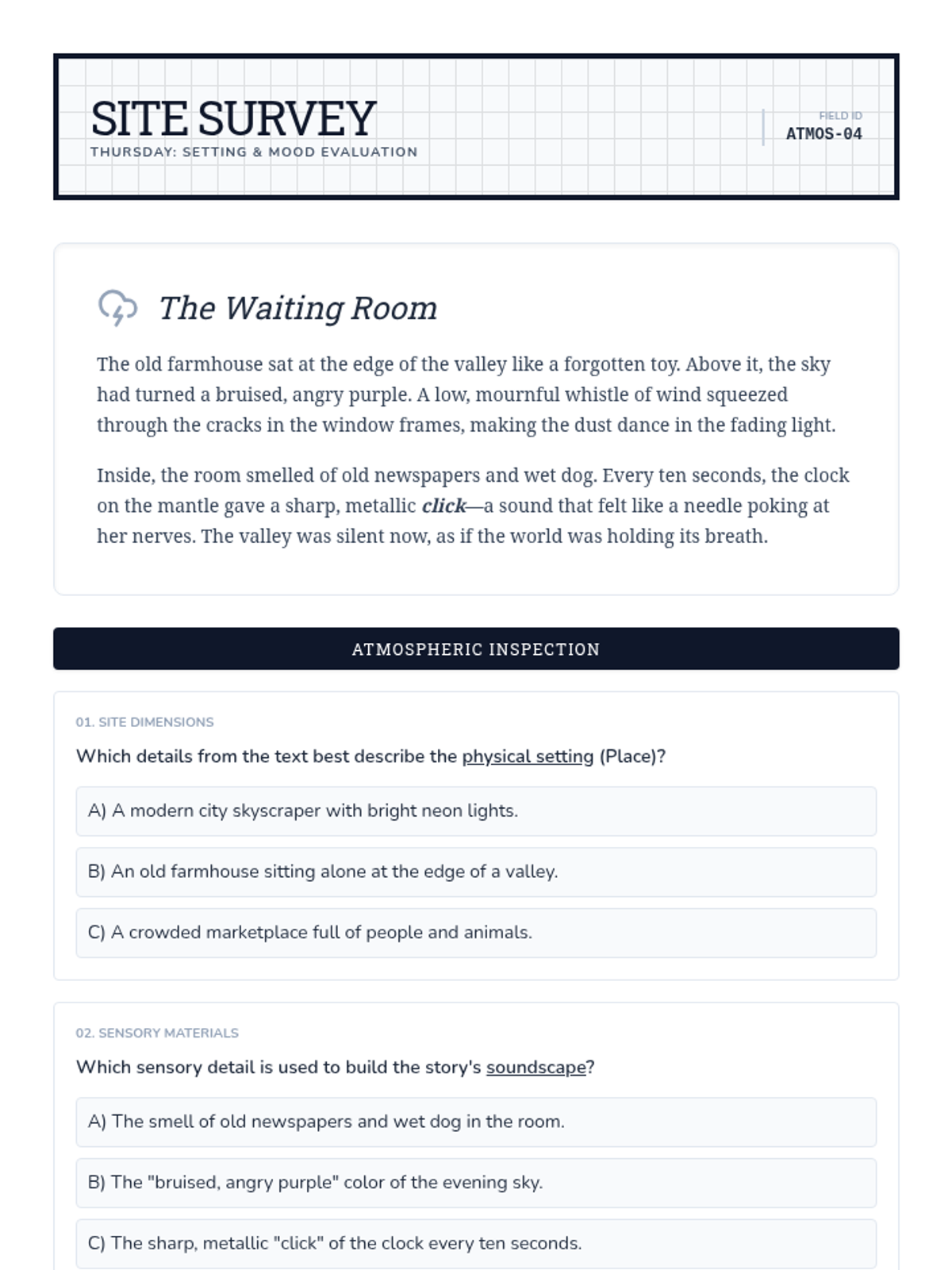
Evaluating how setting influences mood and craft in realistic fiction.
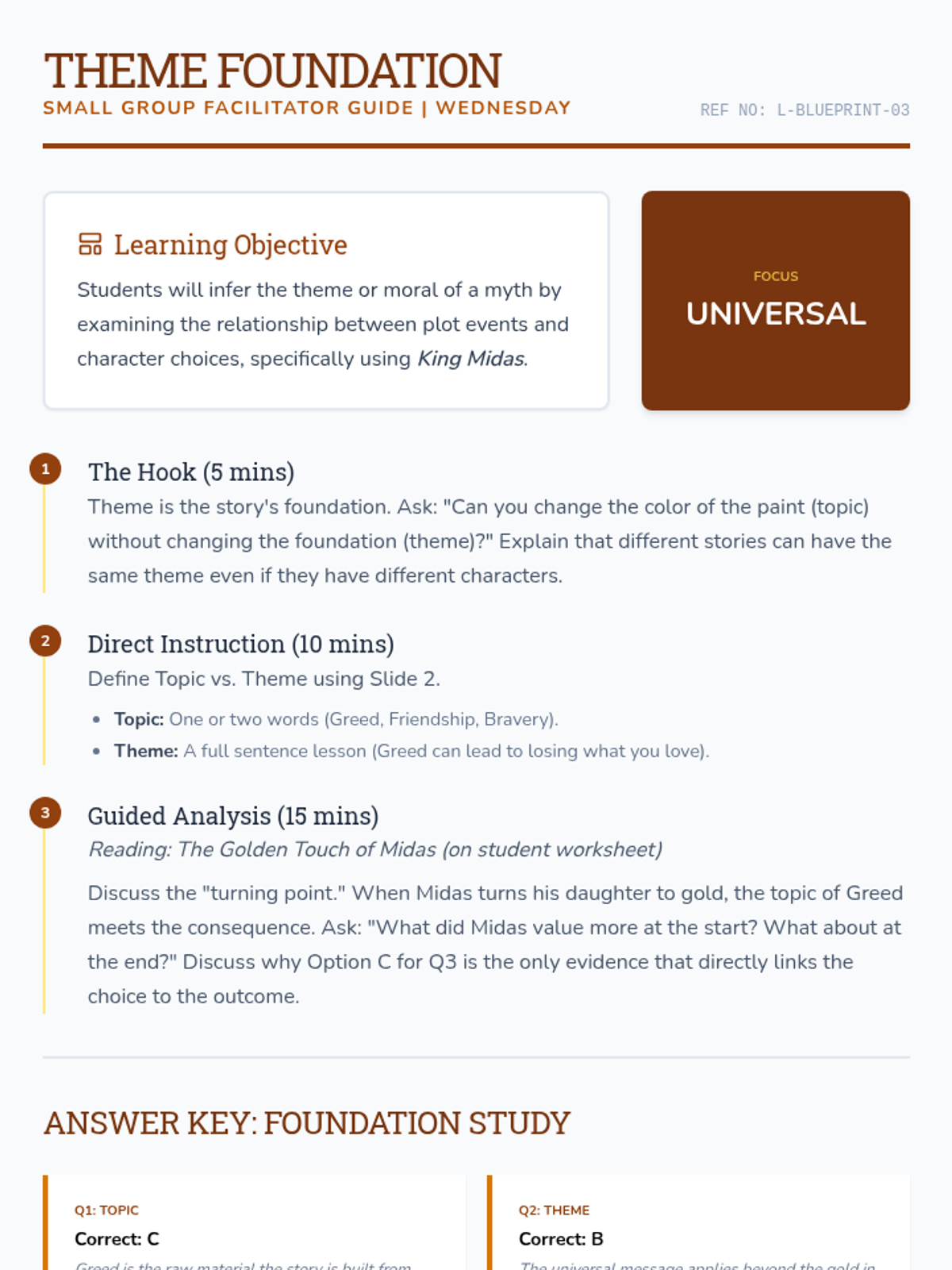
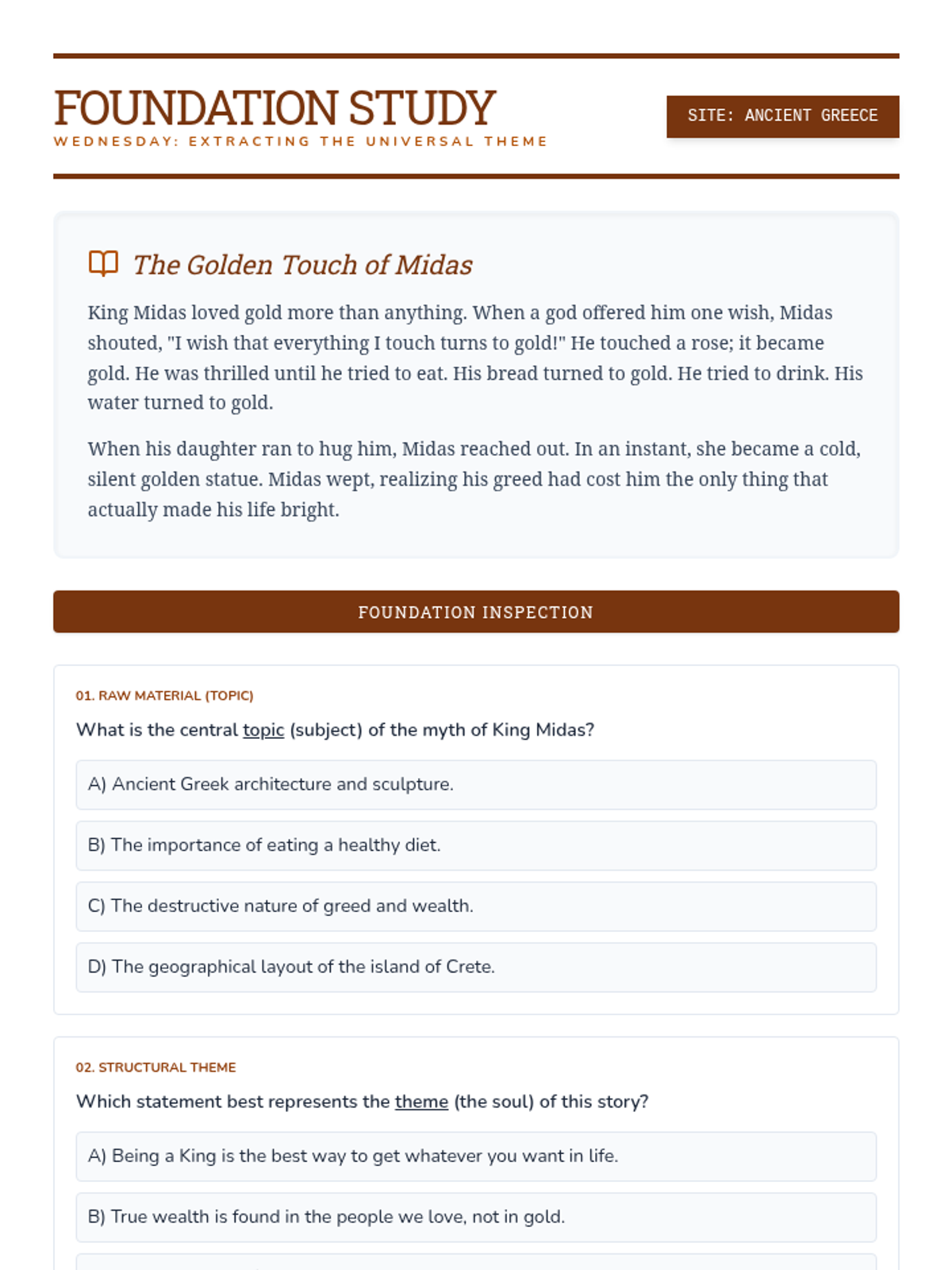
Identifying the underlying messages and moral foundations in myths.
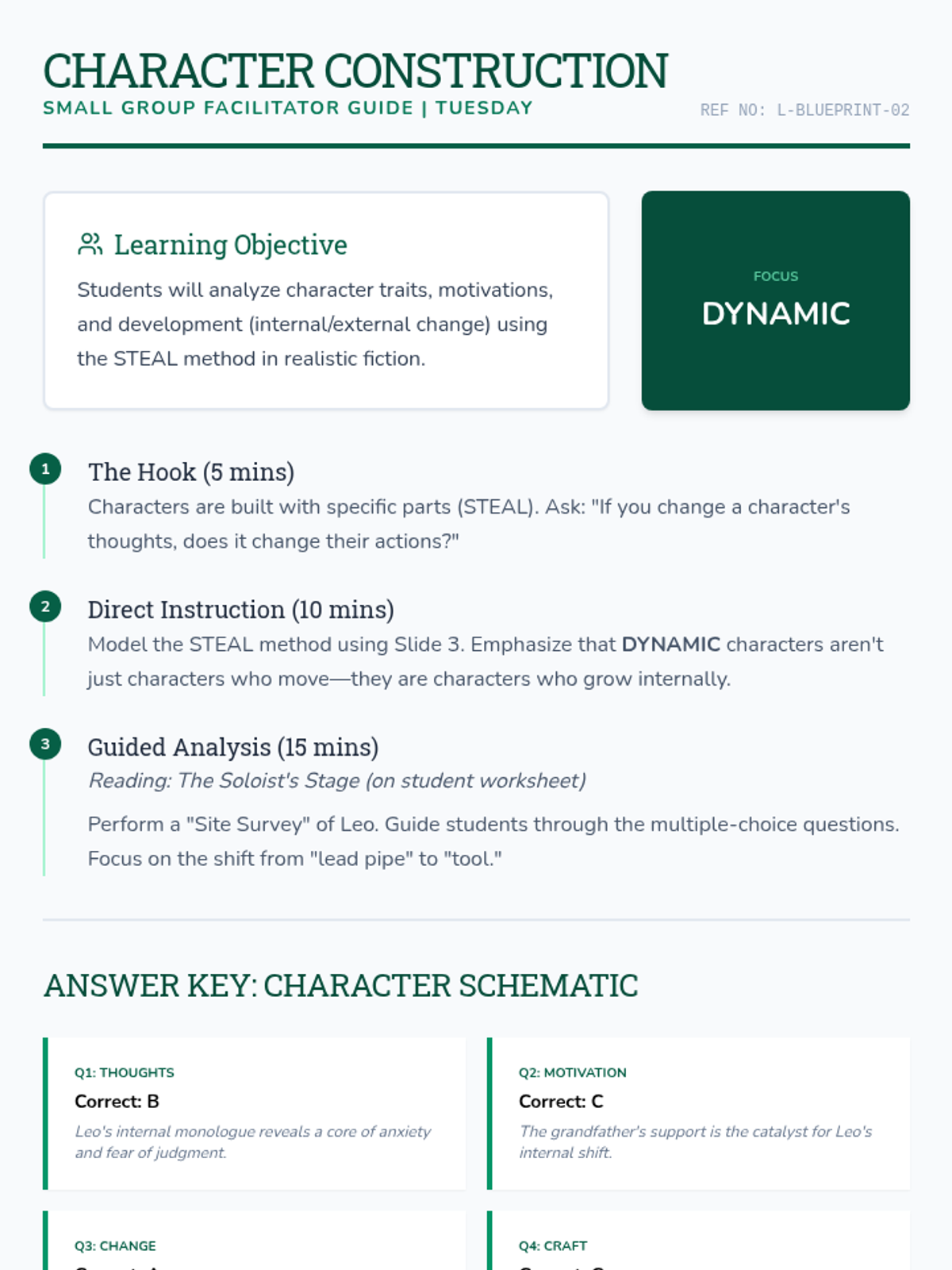
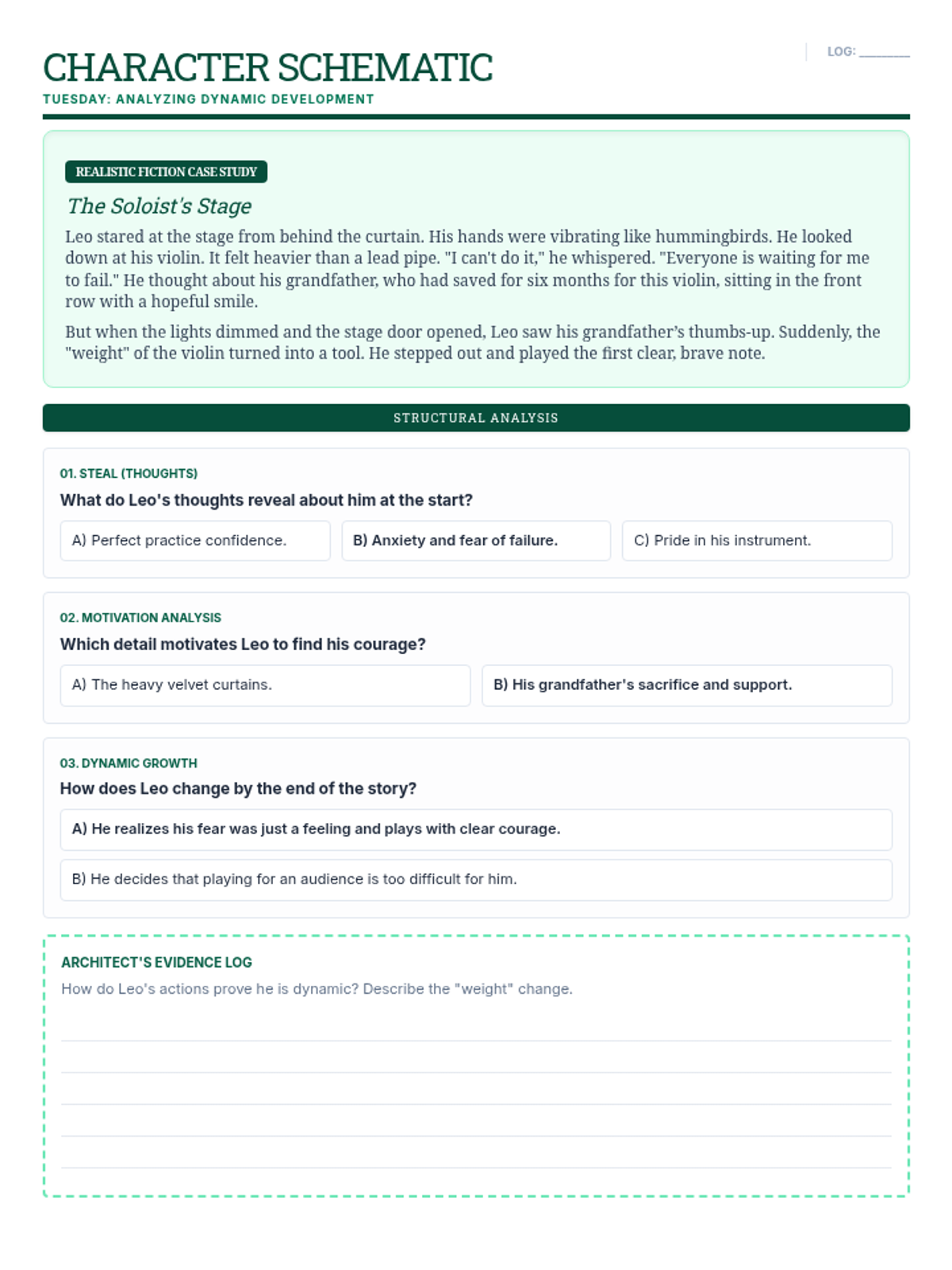
Analyzing how characters grow and change in realistic fiction.
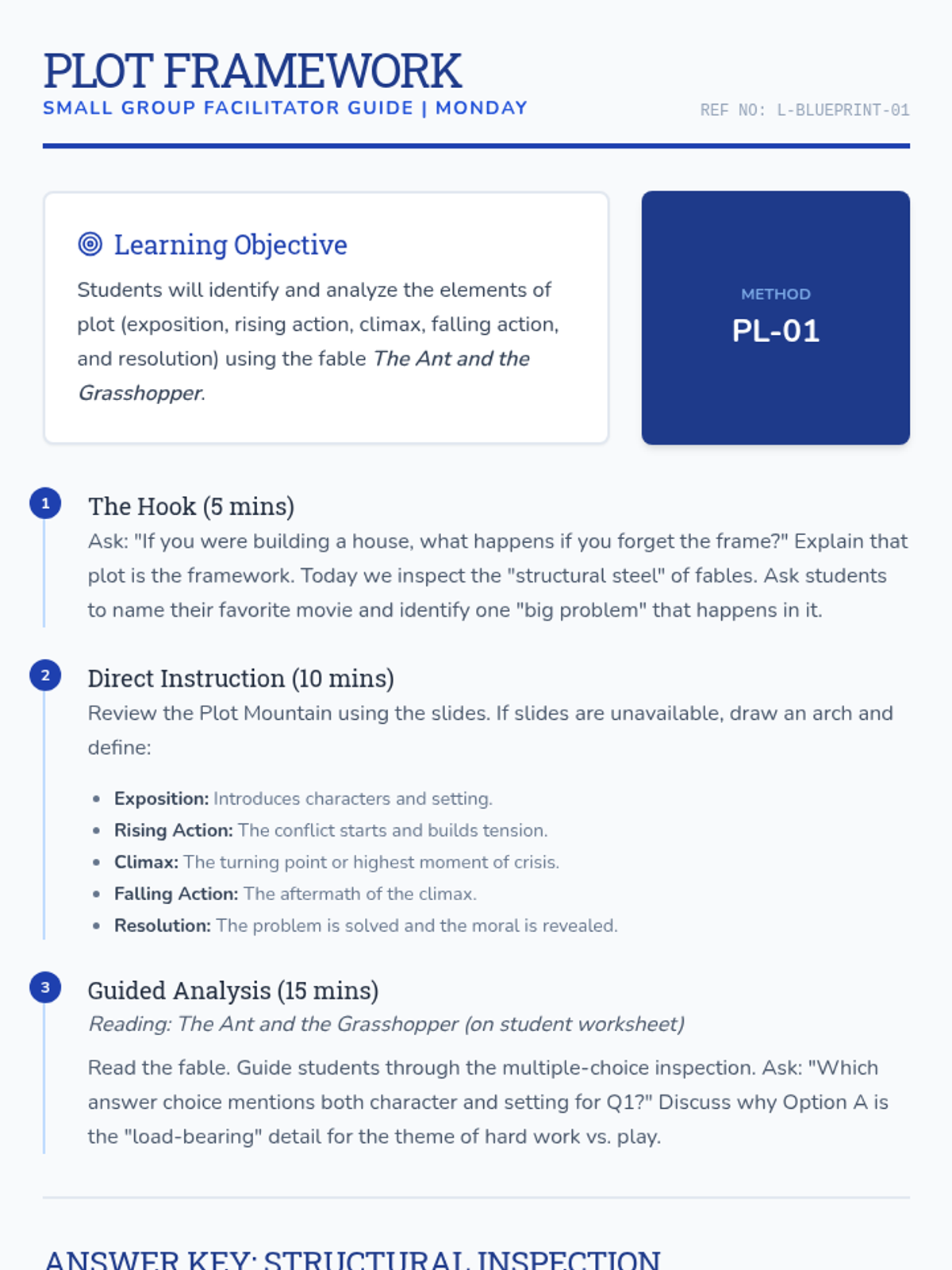
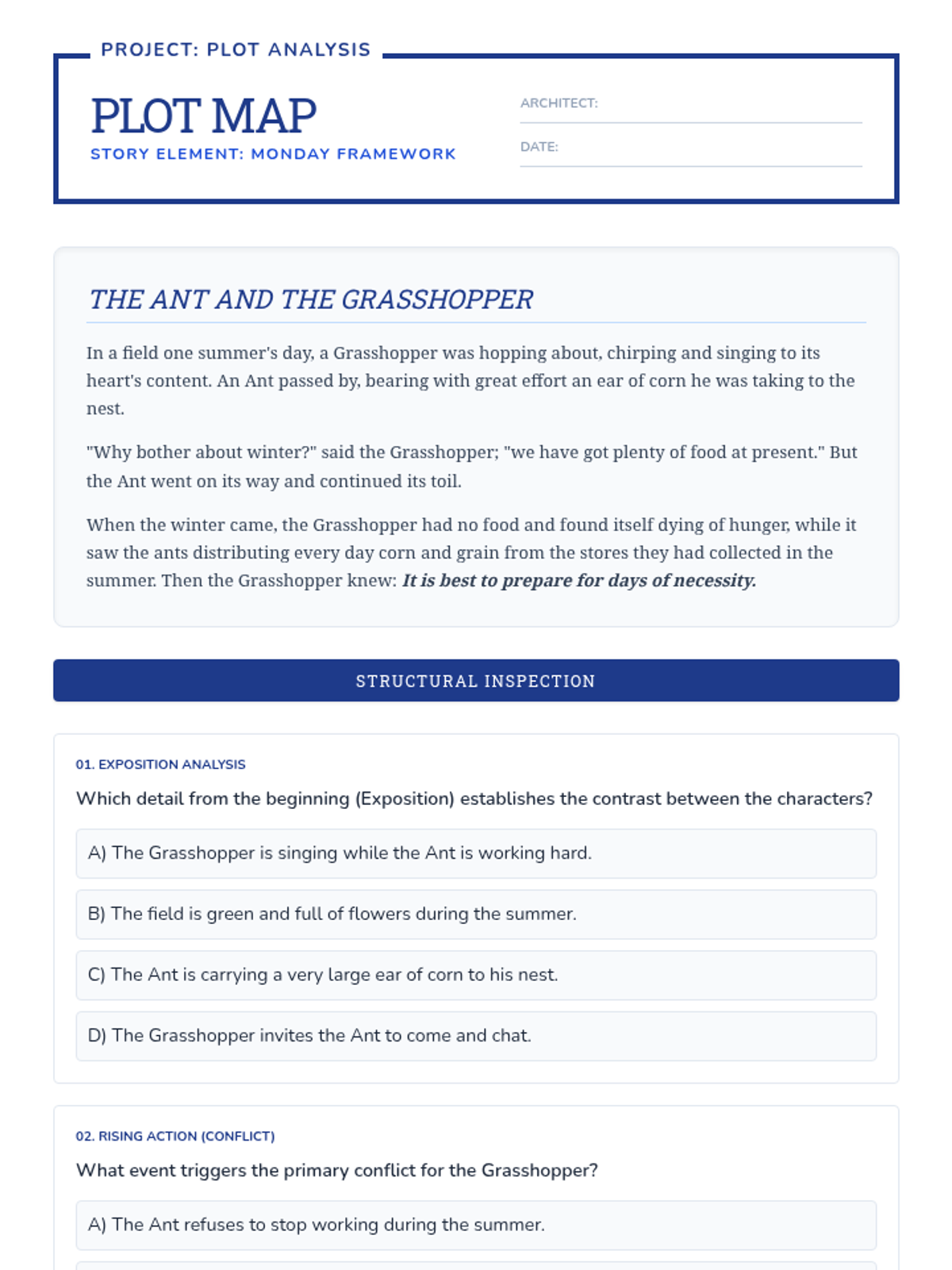
Deconstructing the framework of a story using plot structures in fables.
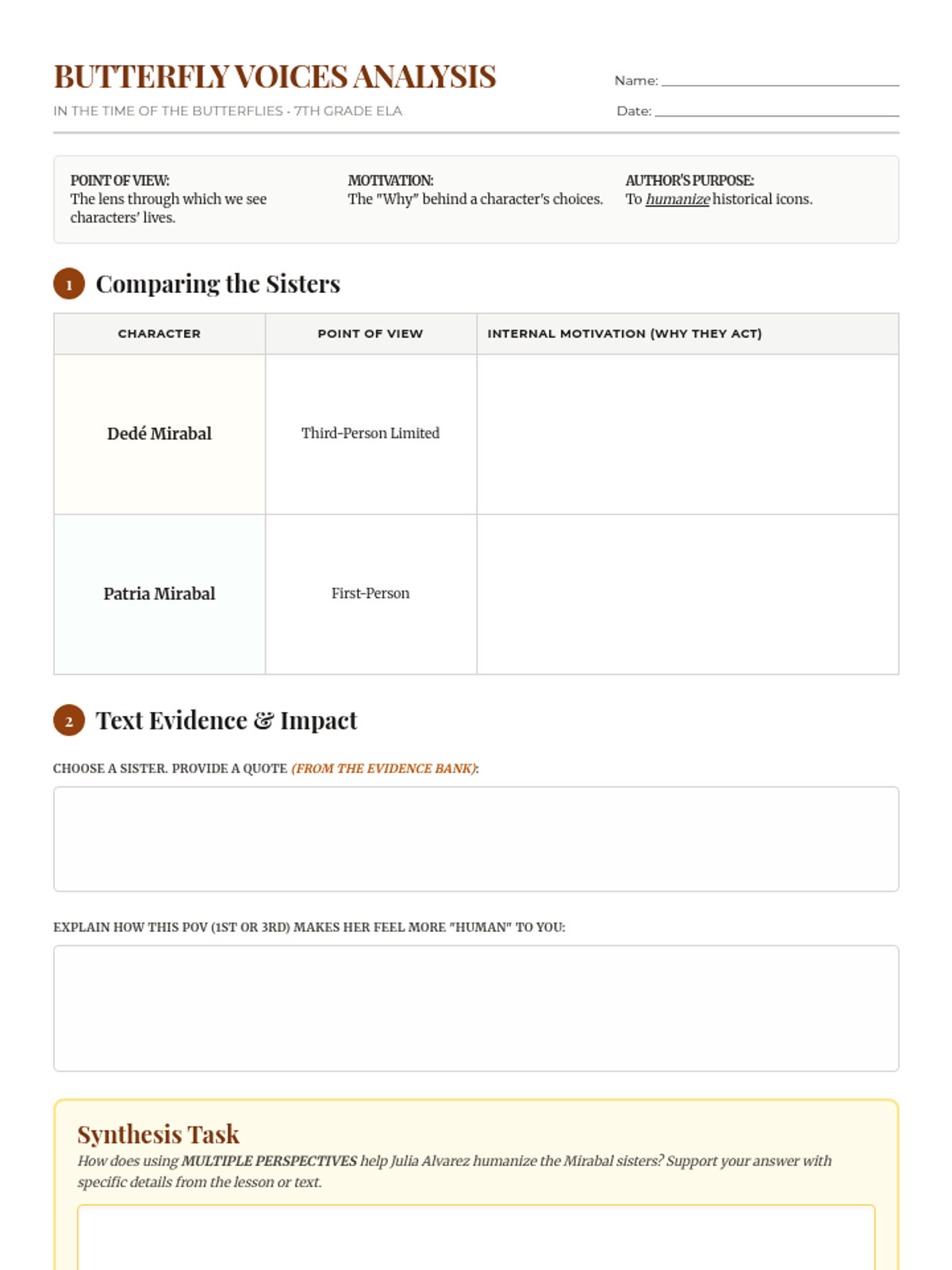
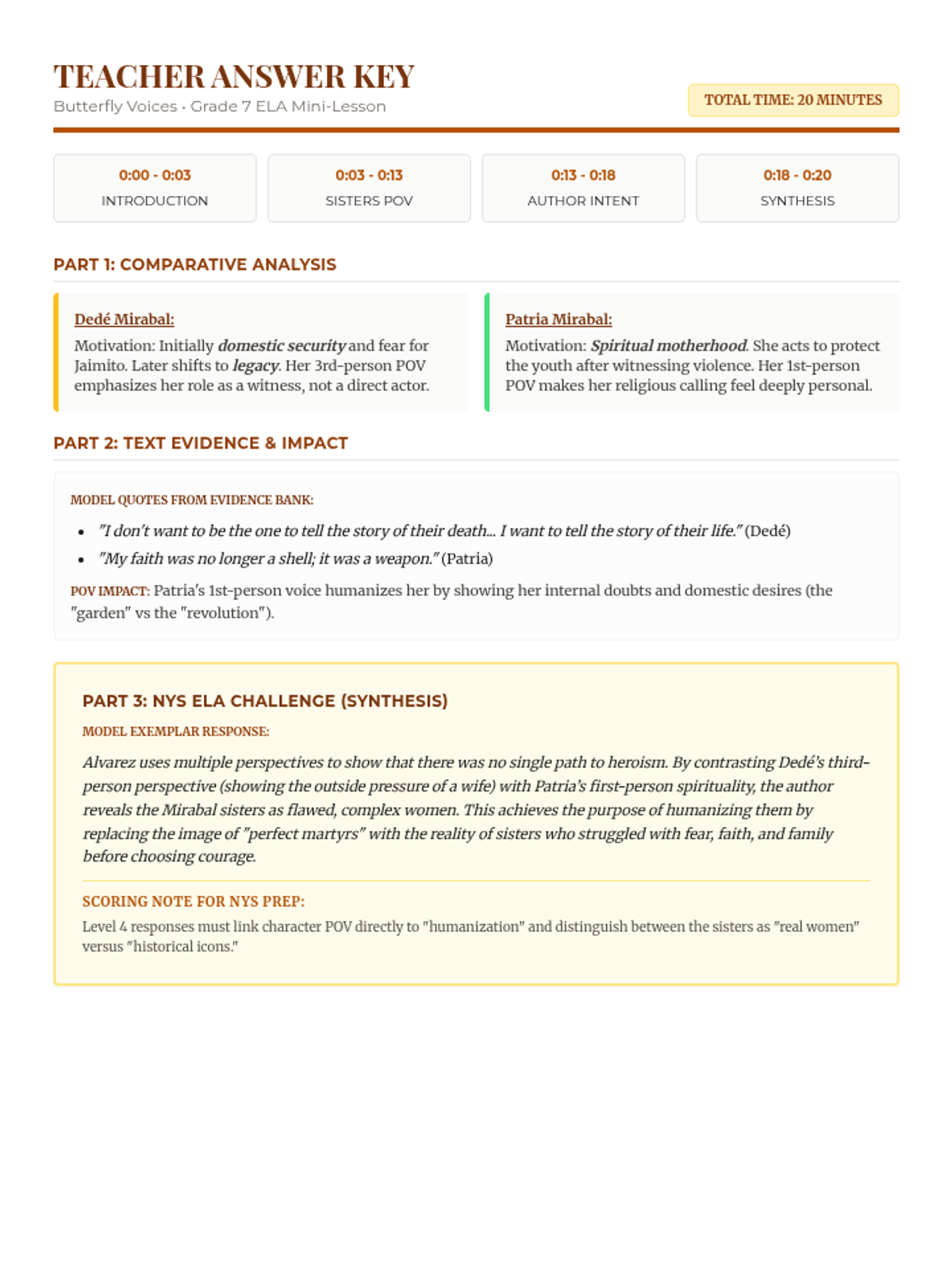
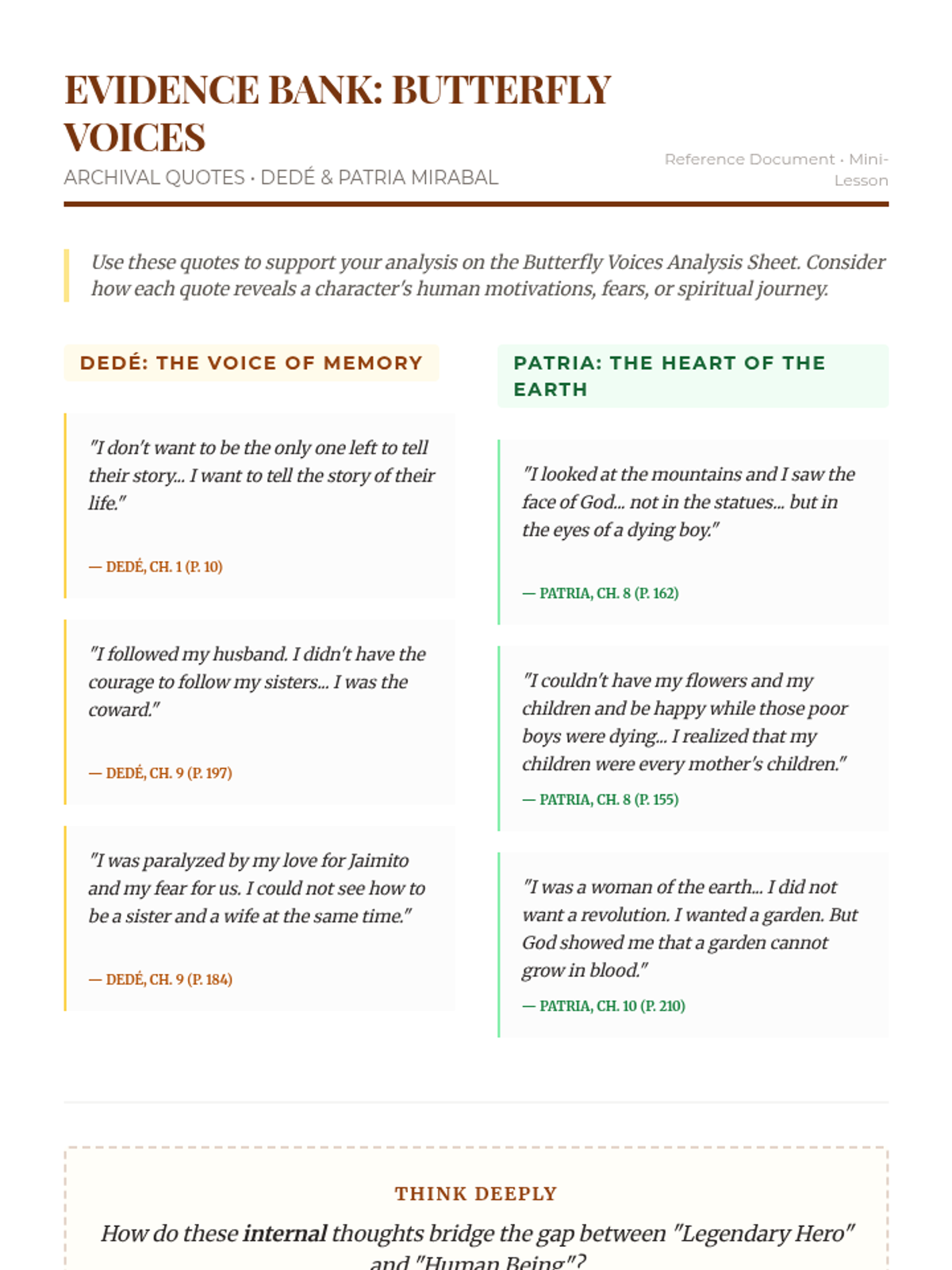
A challenging 20-minute mini-lesson for 7th graders analyzing how POV and character motivation reveal Julia Alvarez's purpose in humanizing the Mirabal sisters.
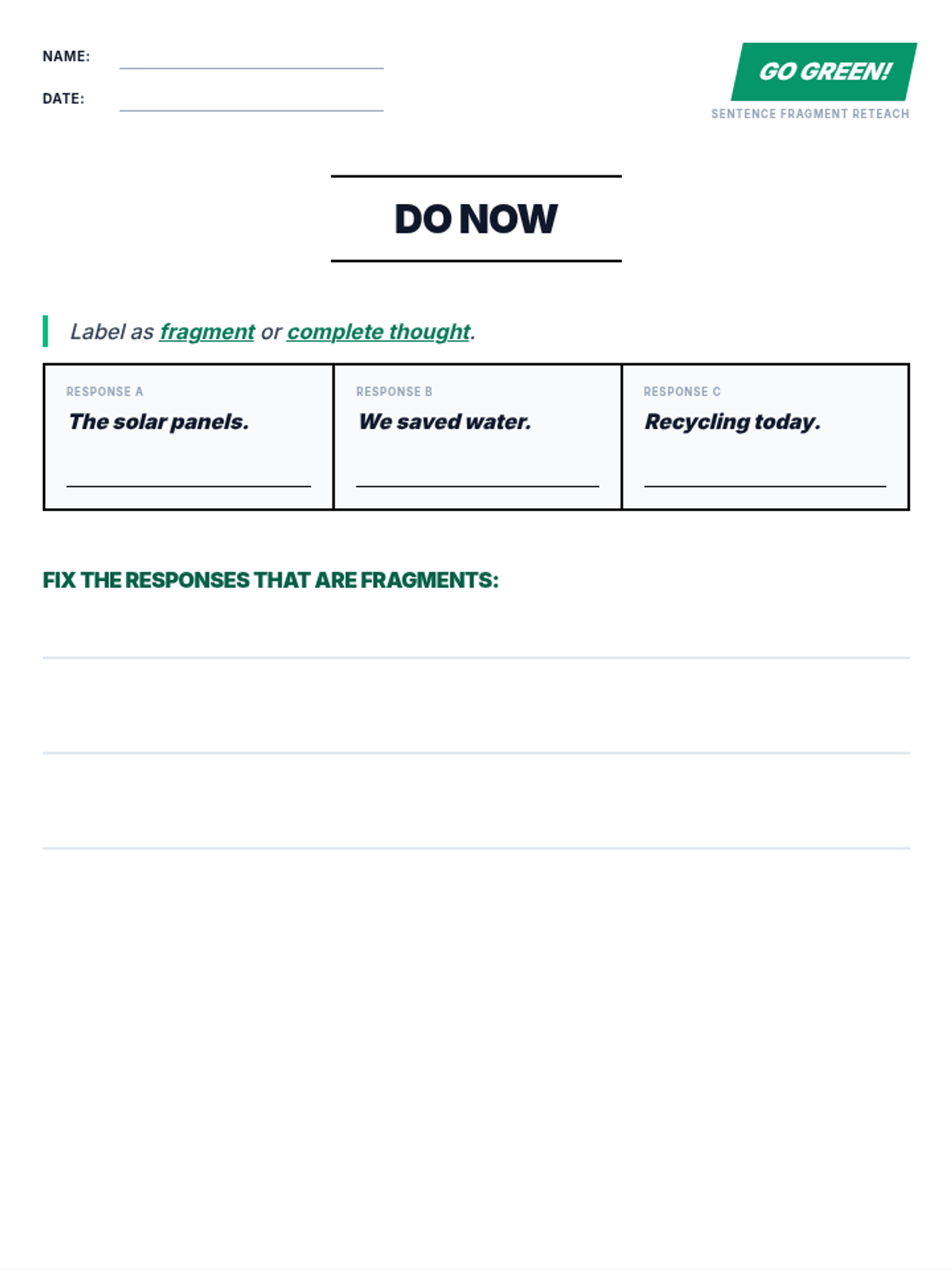
A comprehensive reteach lesson on identifying and correcting sentence fragments, themed around environmental conservation and 'going green'. Includes a student worksheet and a detailed teacher facilitation guide with an answer key.
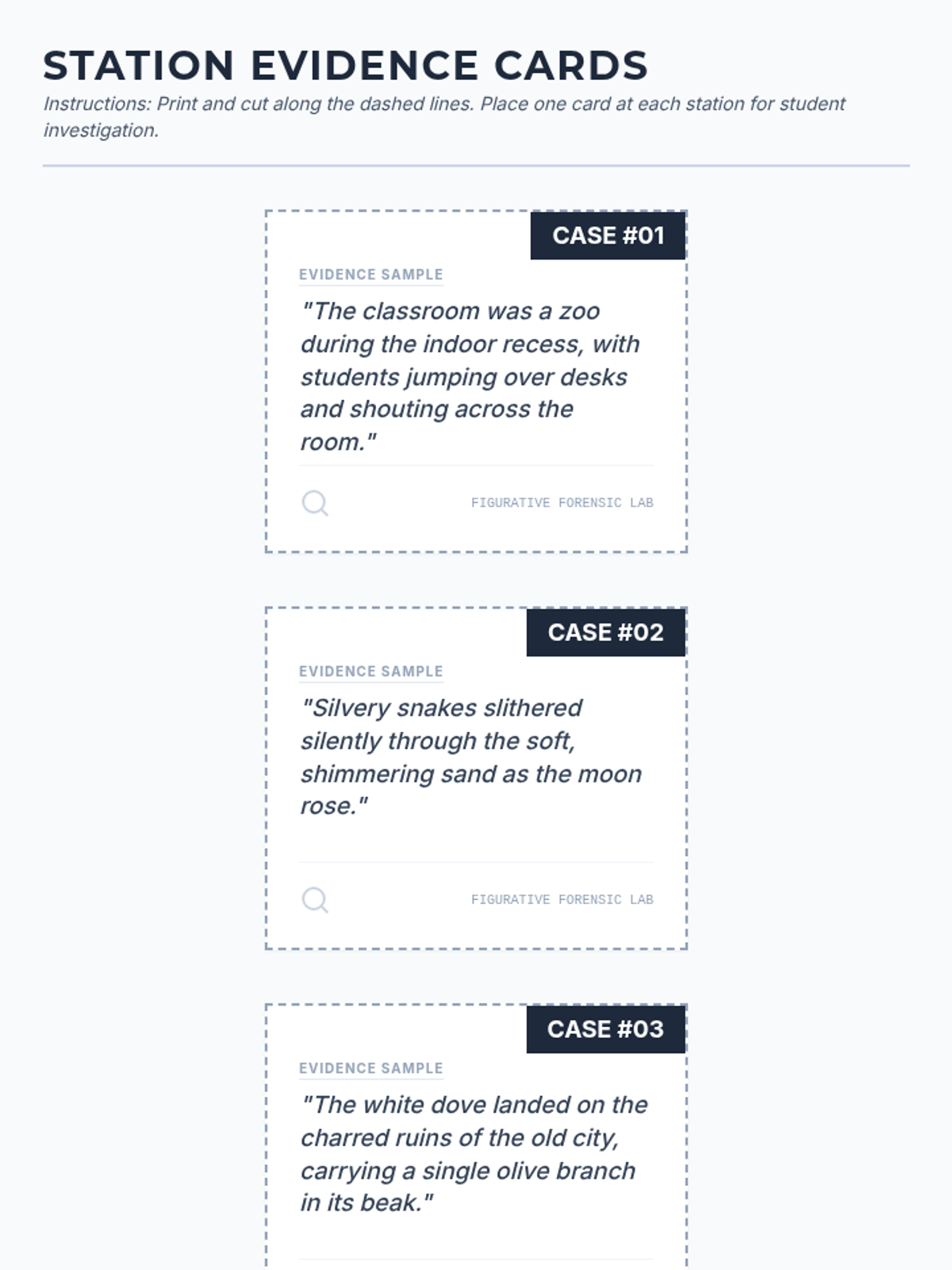
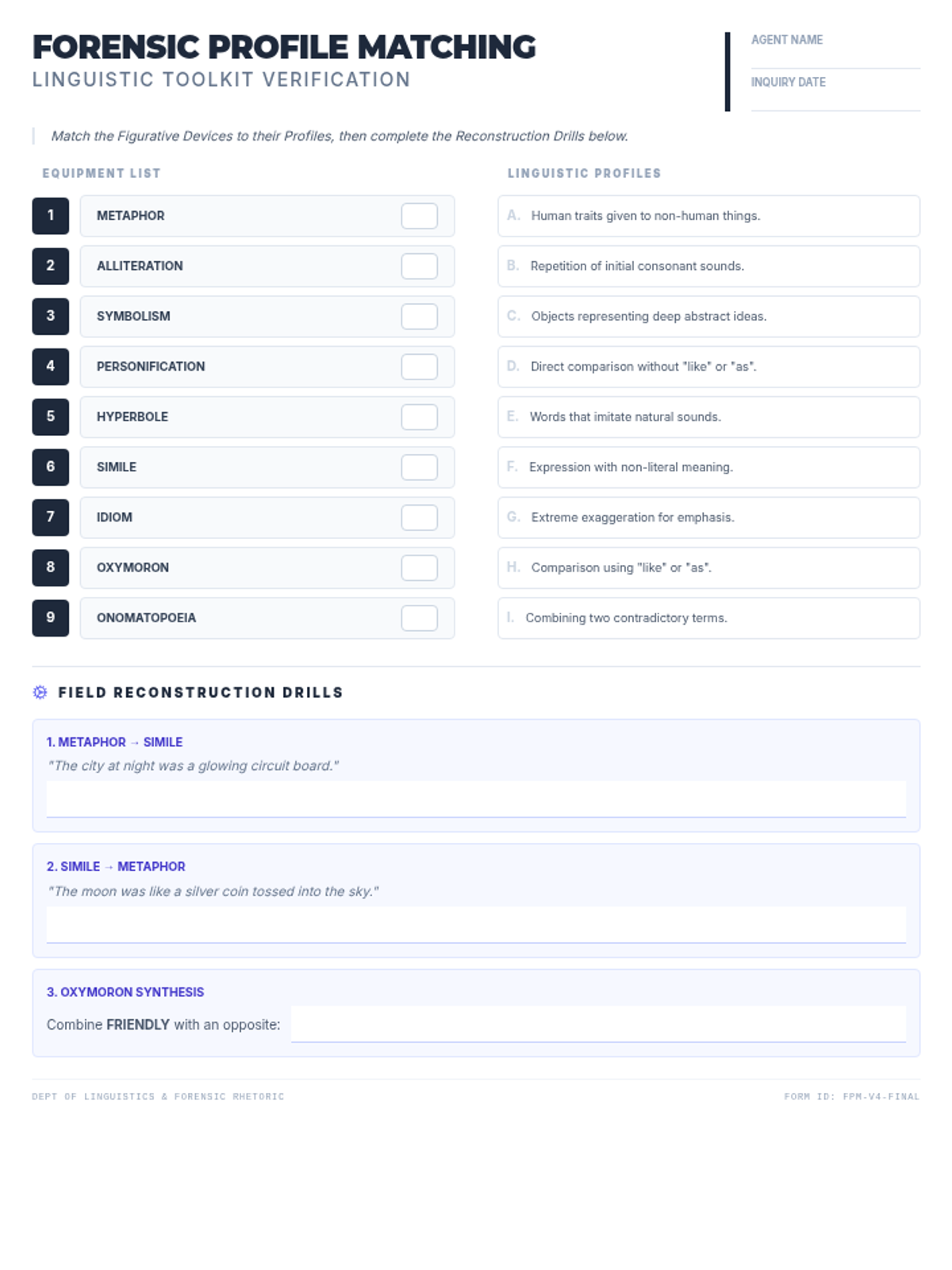
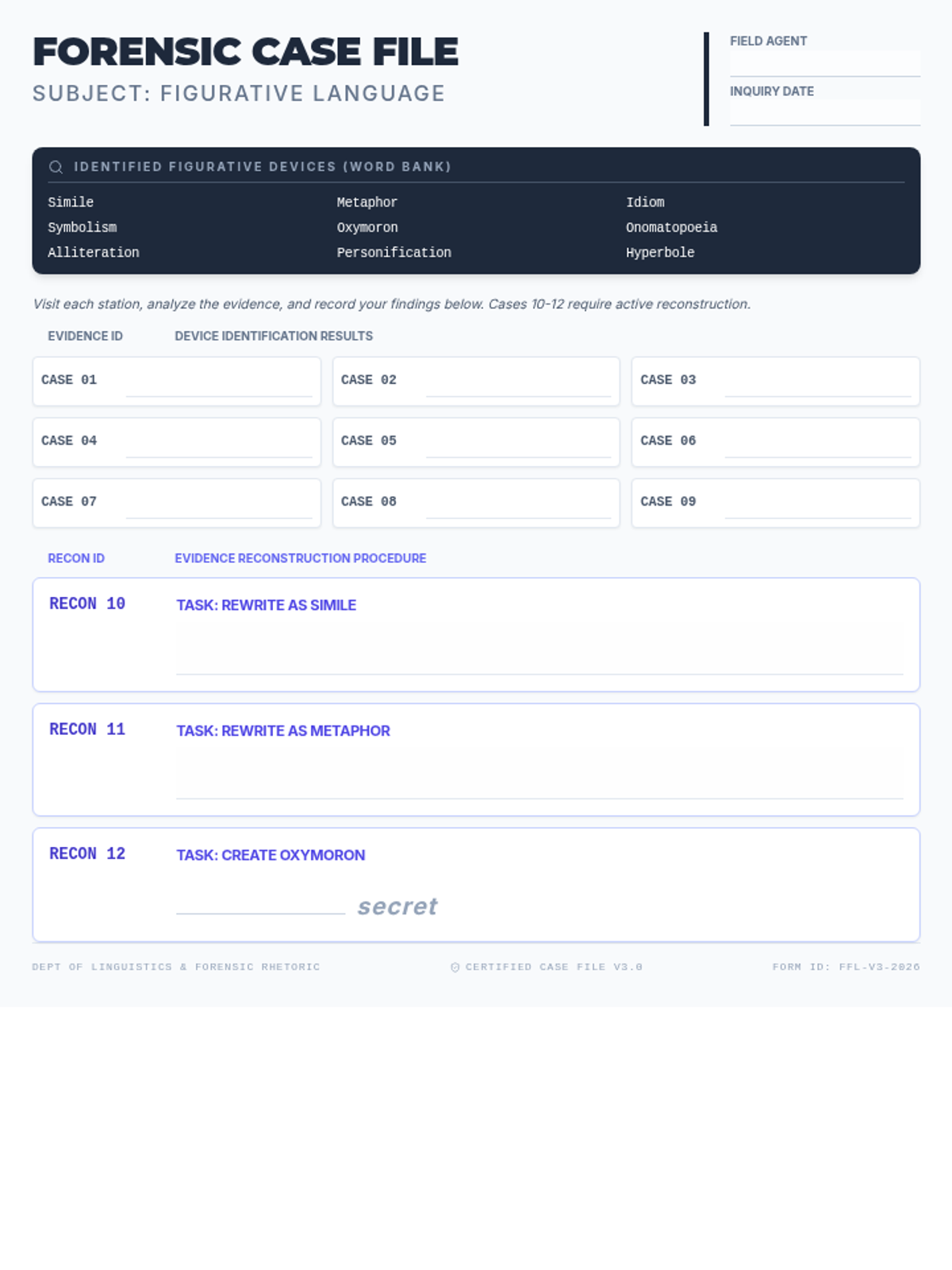
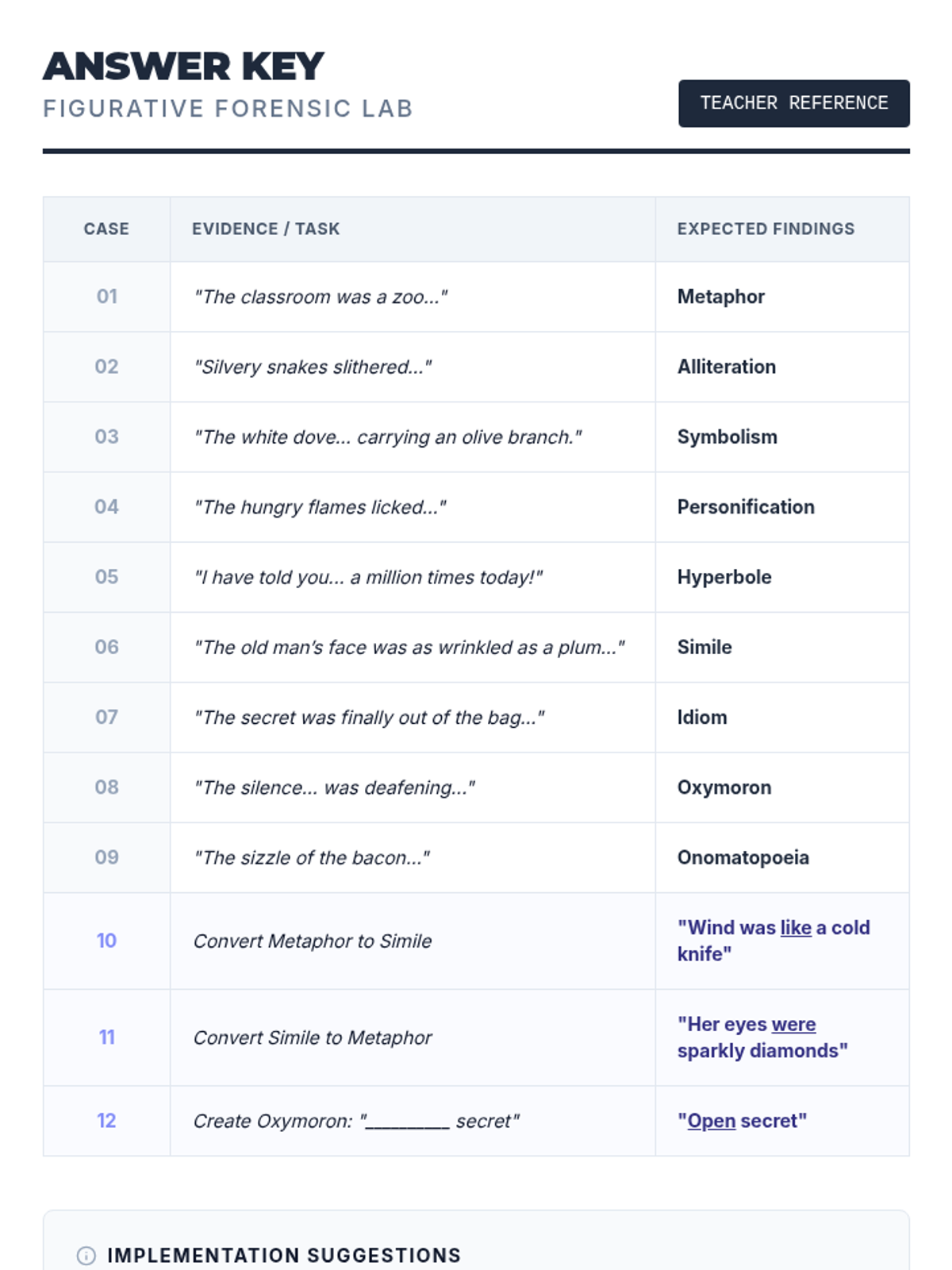
A station-based activity where students investigate and identify nine different types of figurative language through standalone sentence examples.
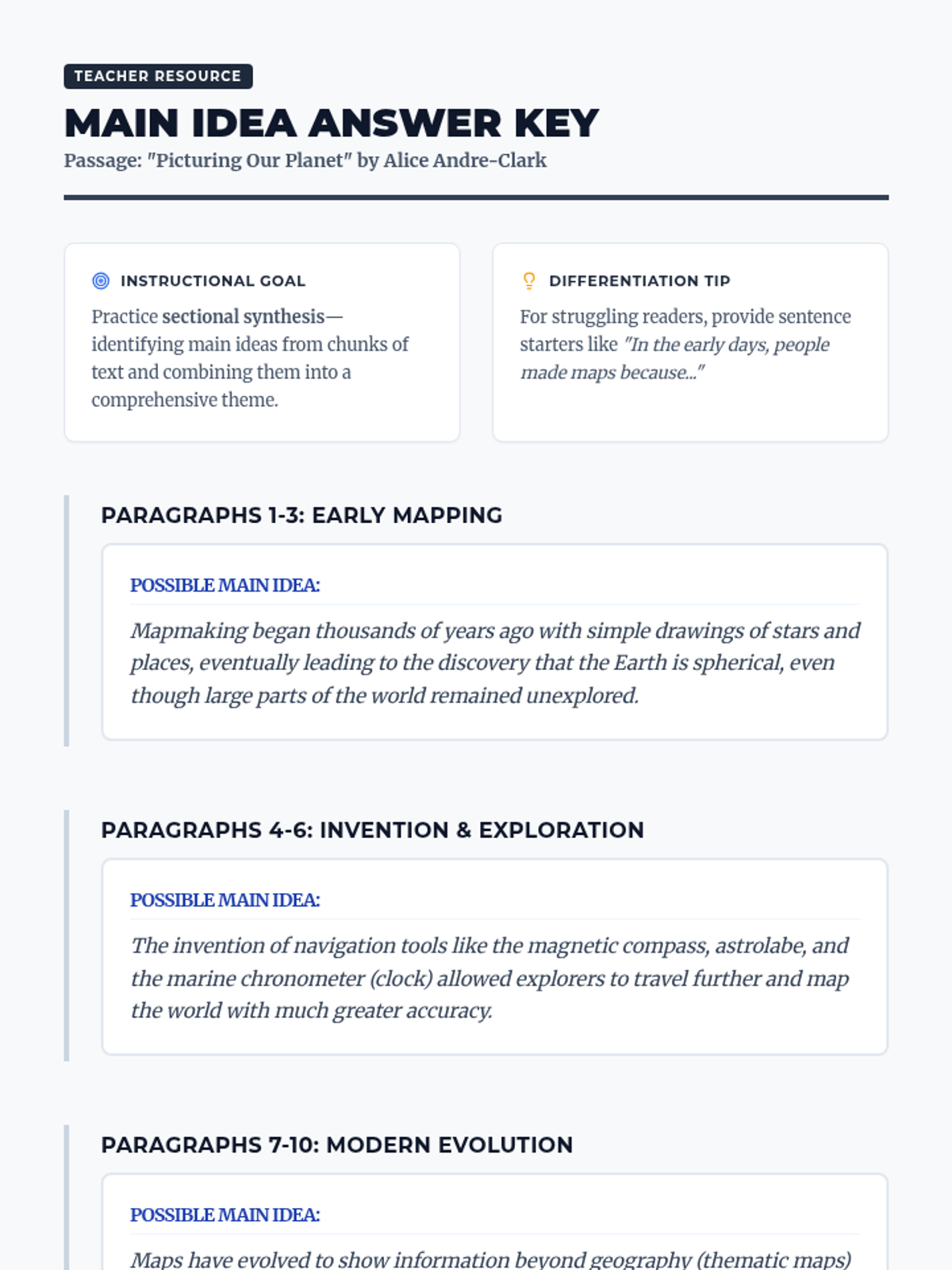
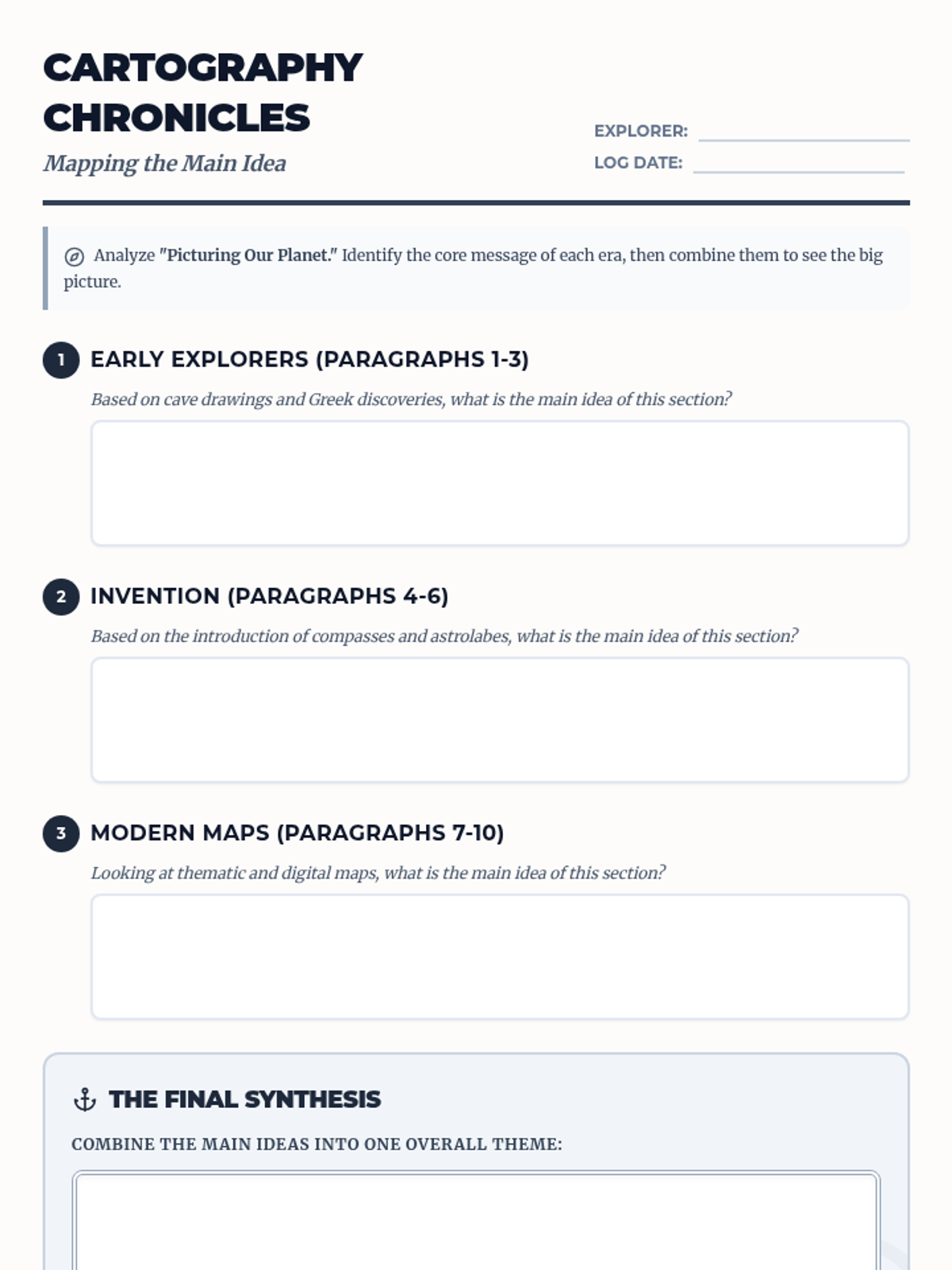
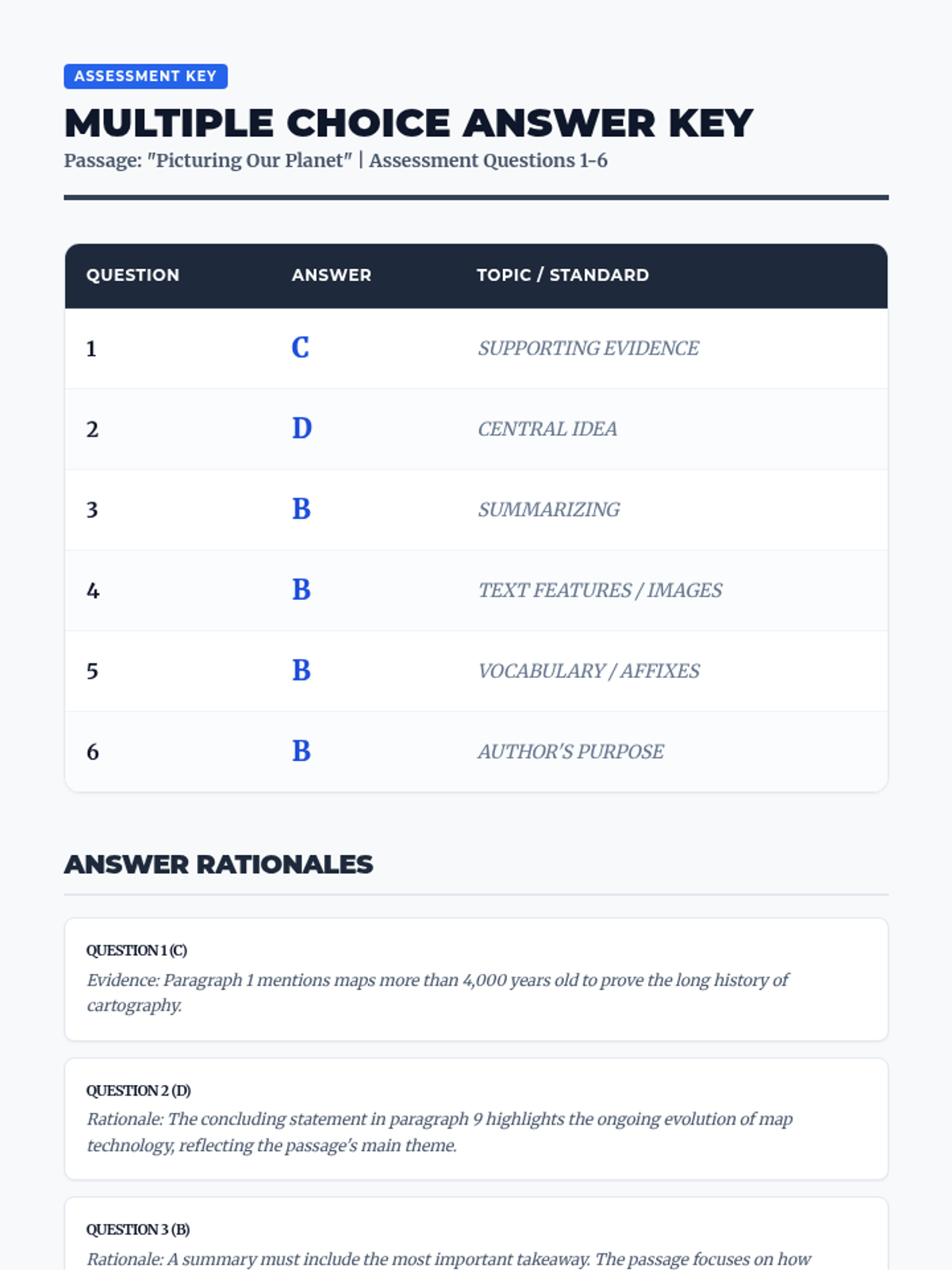
This lesson guides students through identifying sectional main ideas and synthesizing them into a central theme using the historical passage 'Picturing Our Planet'.
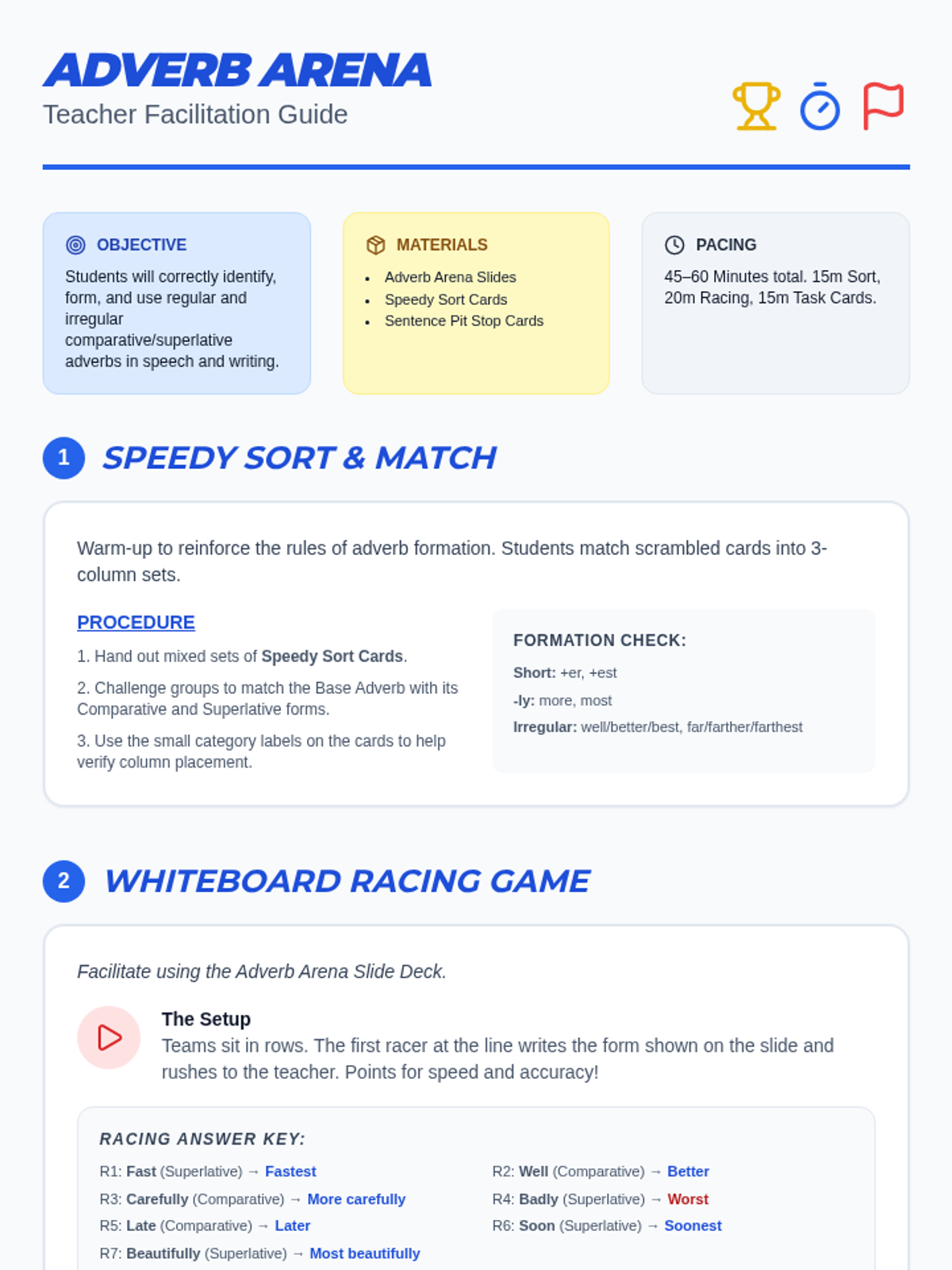
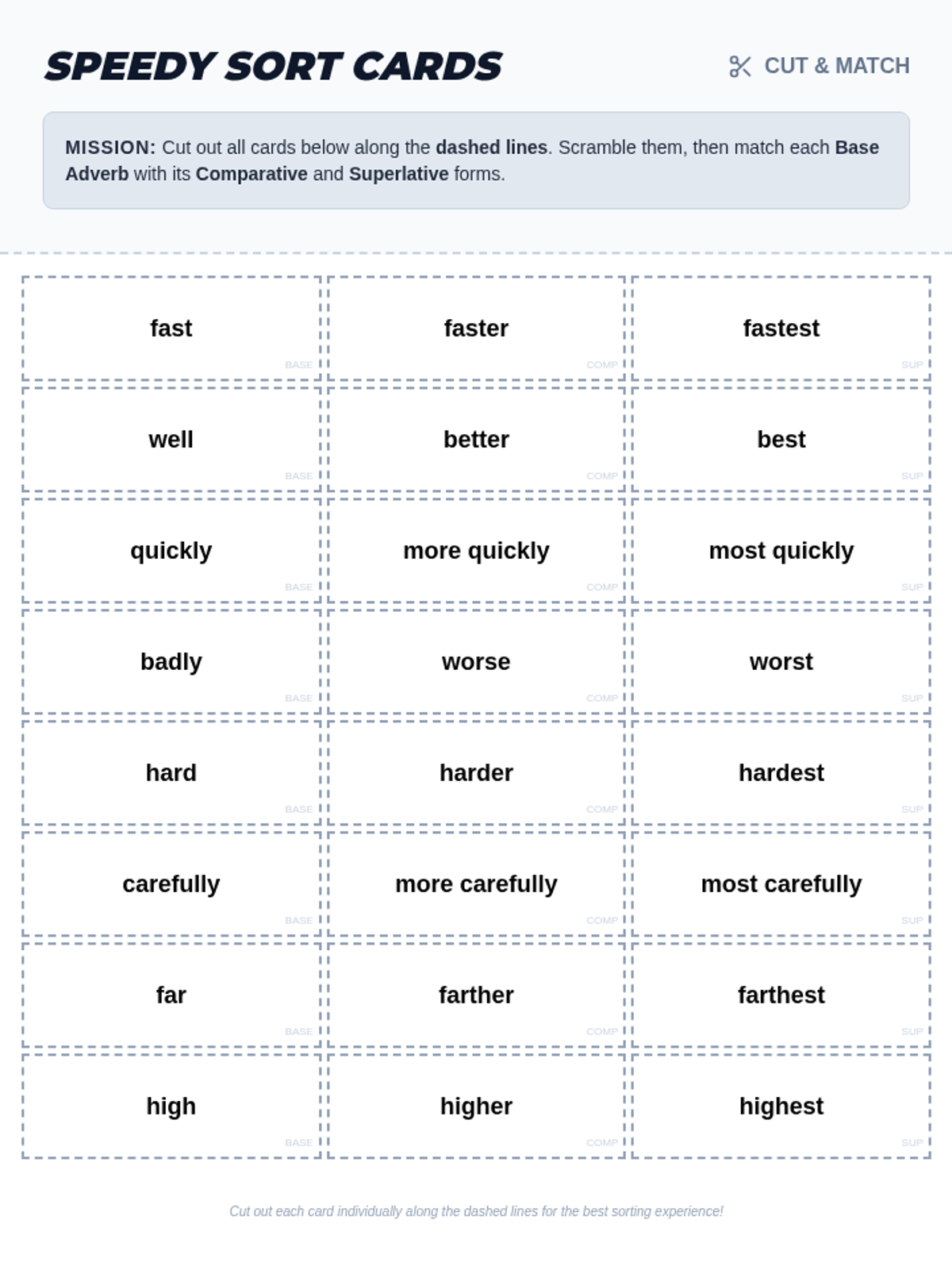
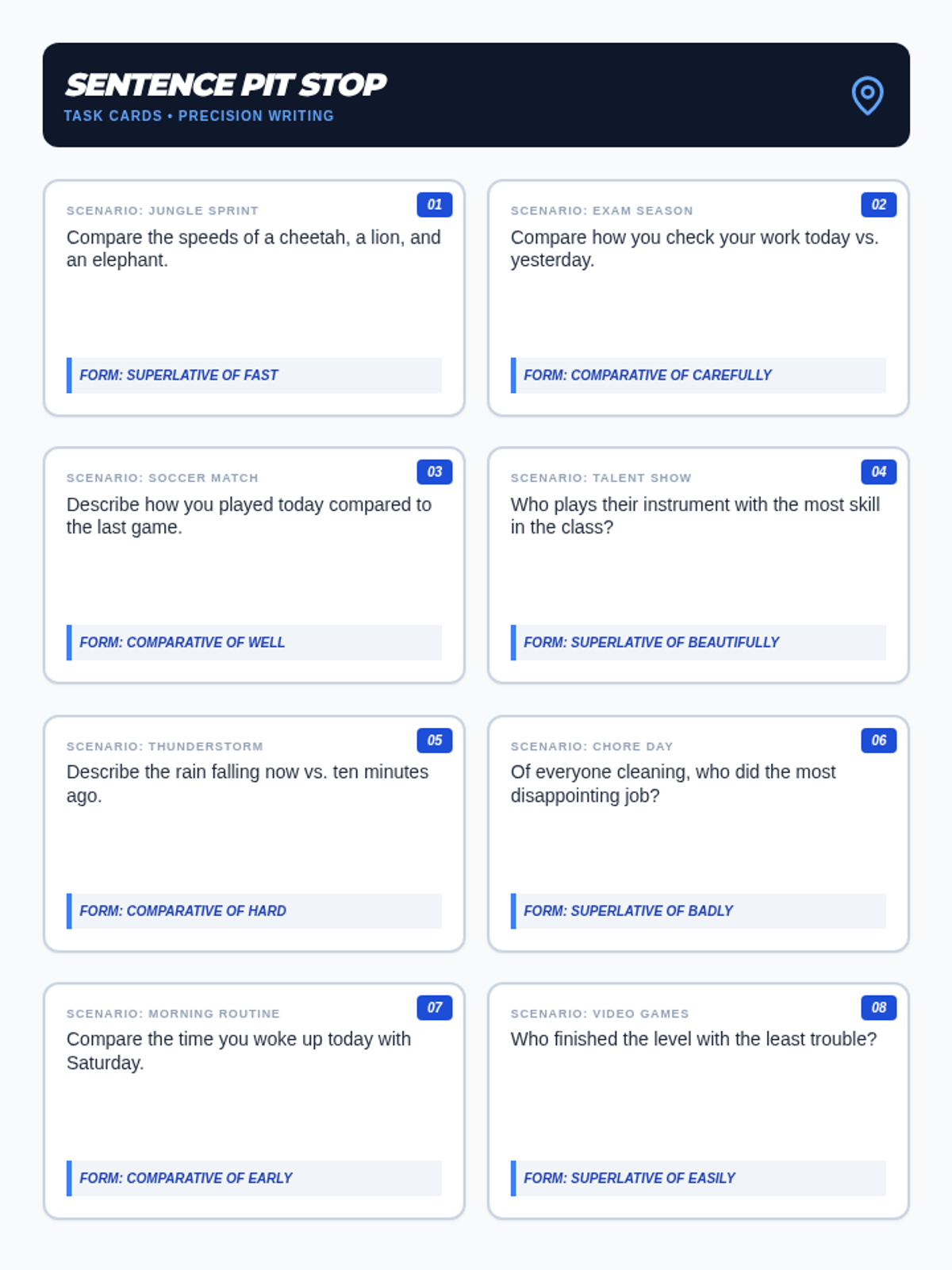
A high-energy set of activities designed to master comparative and superlative adverbs through movement, sorting, and creative sentence construction.
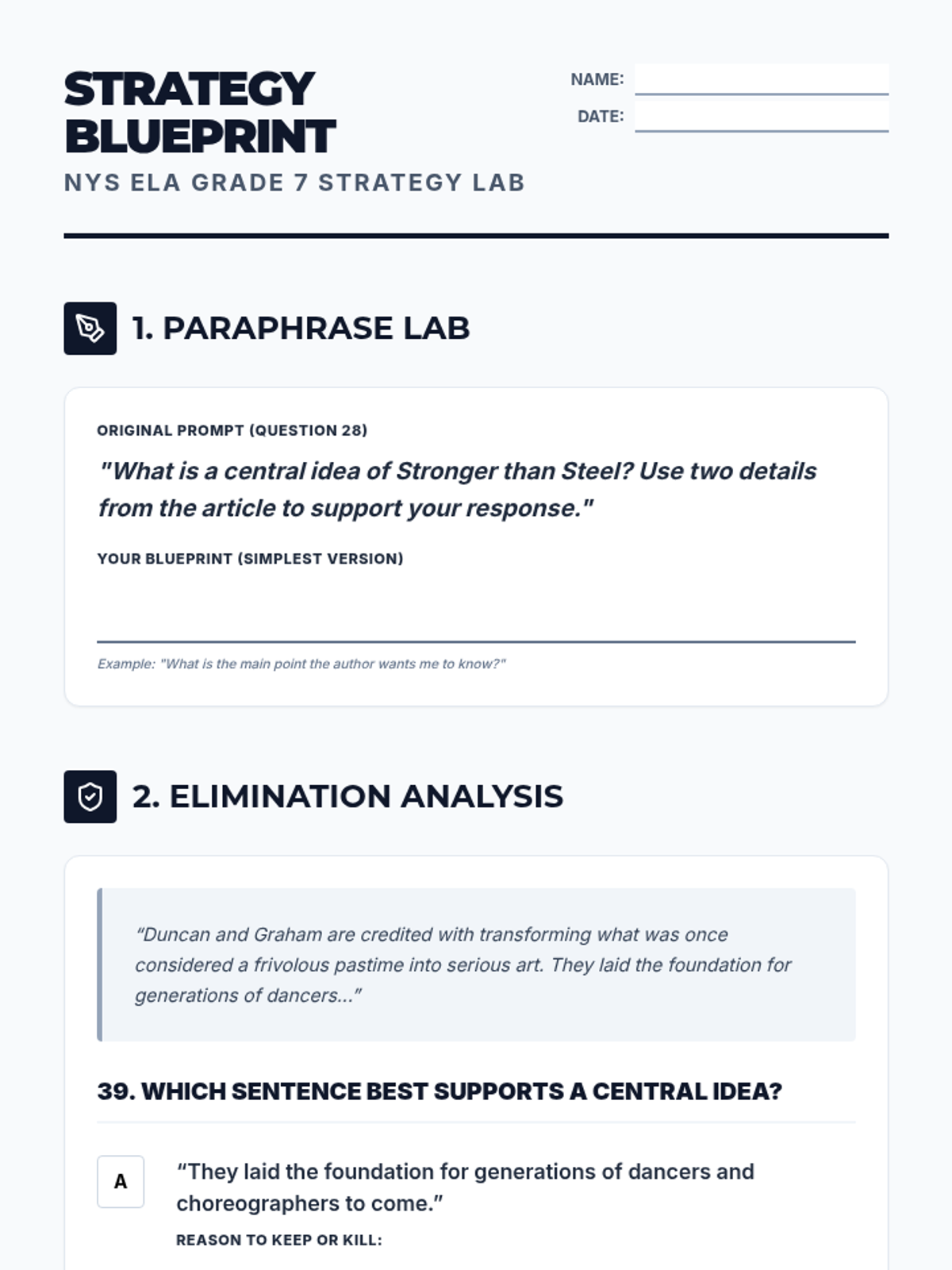
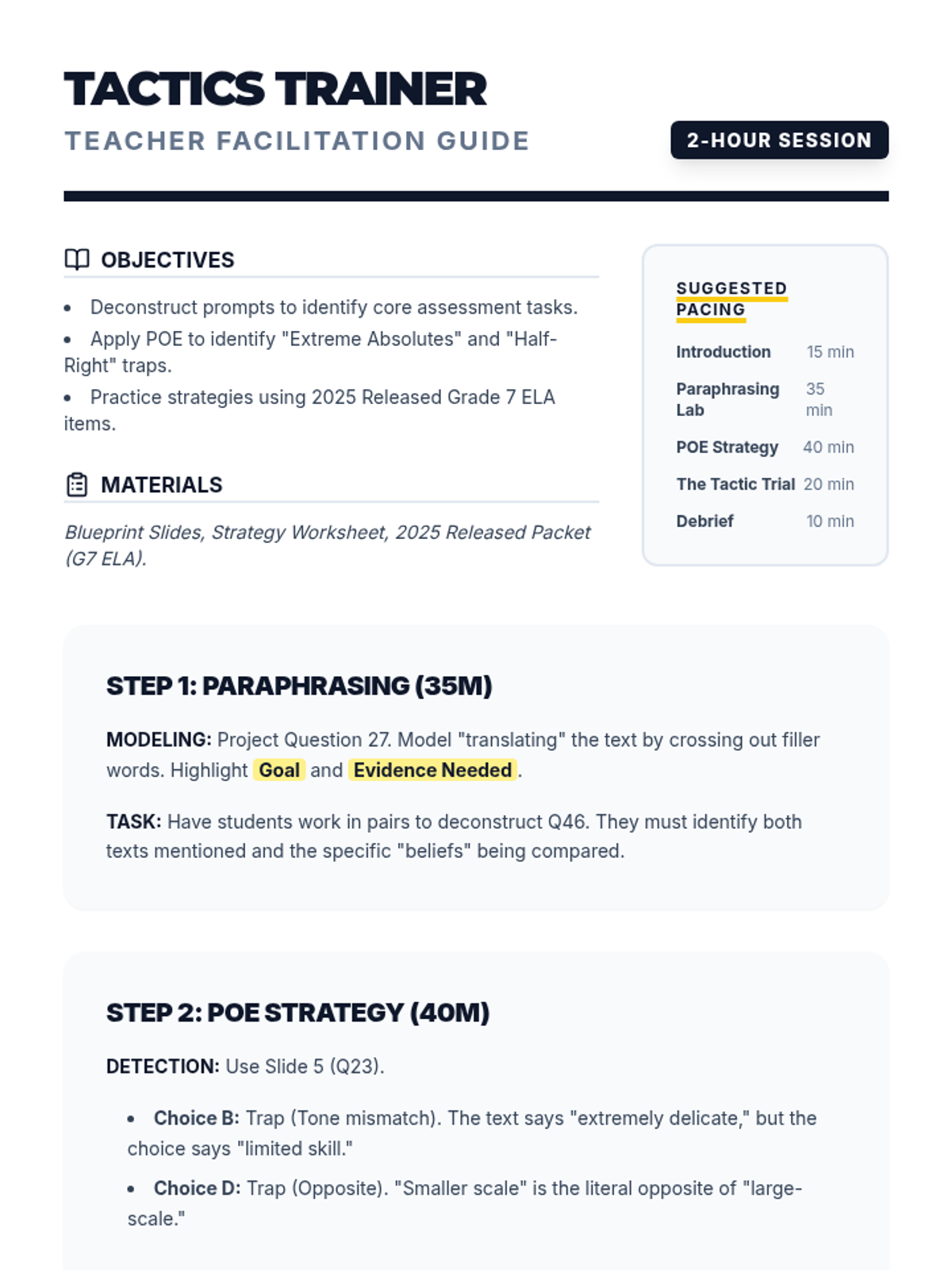
A comprehensive two-hour test preparation lesson focusing on Process of Elimination (POE) and prompt paraphrasing, utilizing 2025 NYS Grade 7 ELA released items to build student confidence and accuracy.
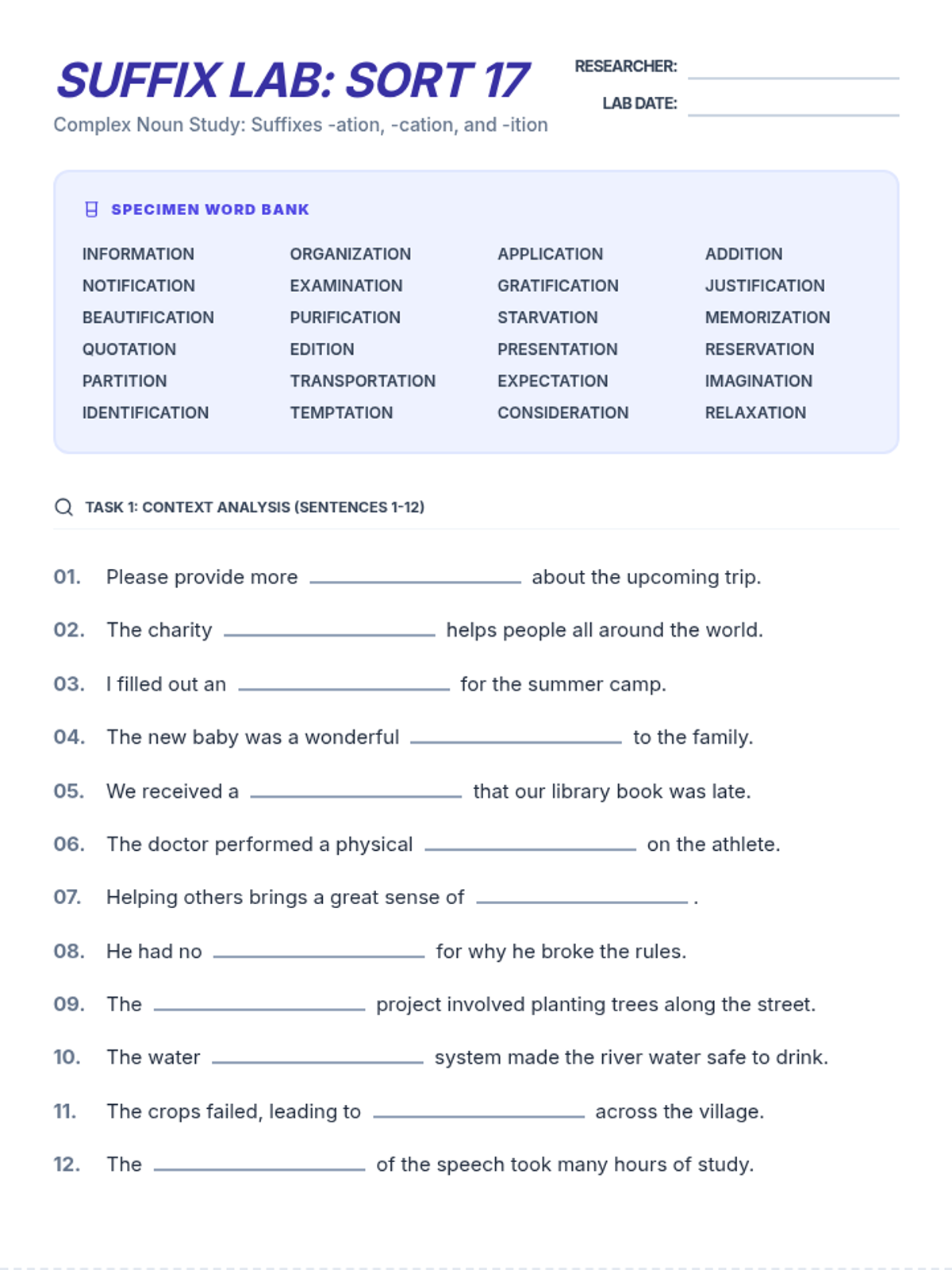
A lesson focused on the suffixes -ation, -cation, and -ition and how they transform verbs into nouns. Students analyze word pairs like 'inform' and 'information'.