A comprehensive study of 'The Cruel Tribute', focusing on character trait analysis, textual evidence, and the motivations of heroes and villains in Greek mythology.
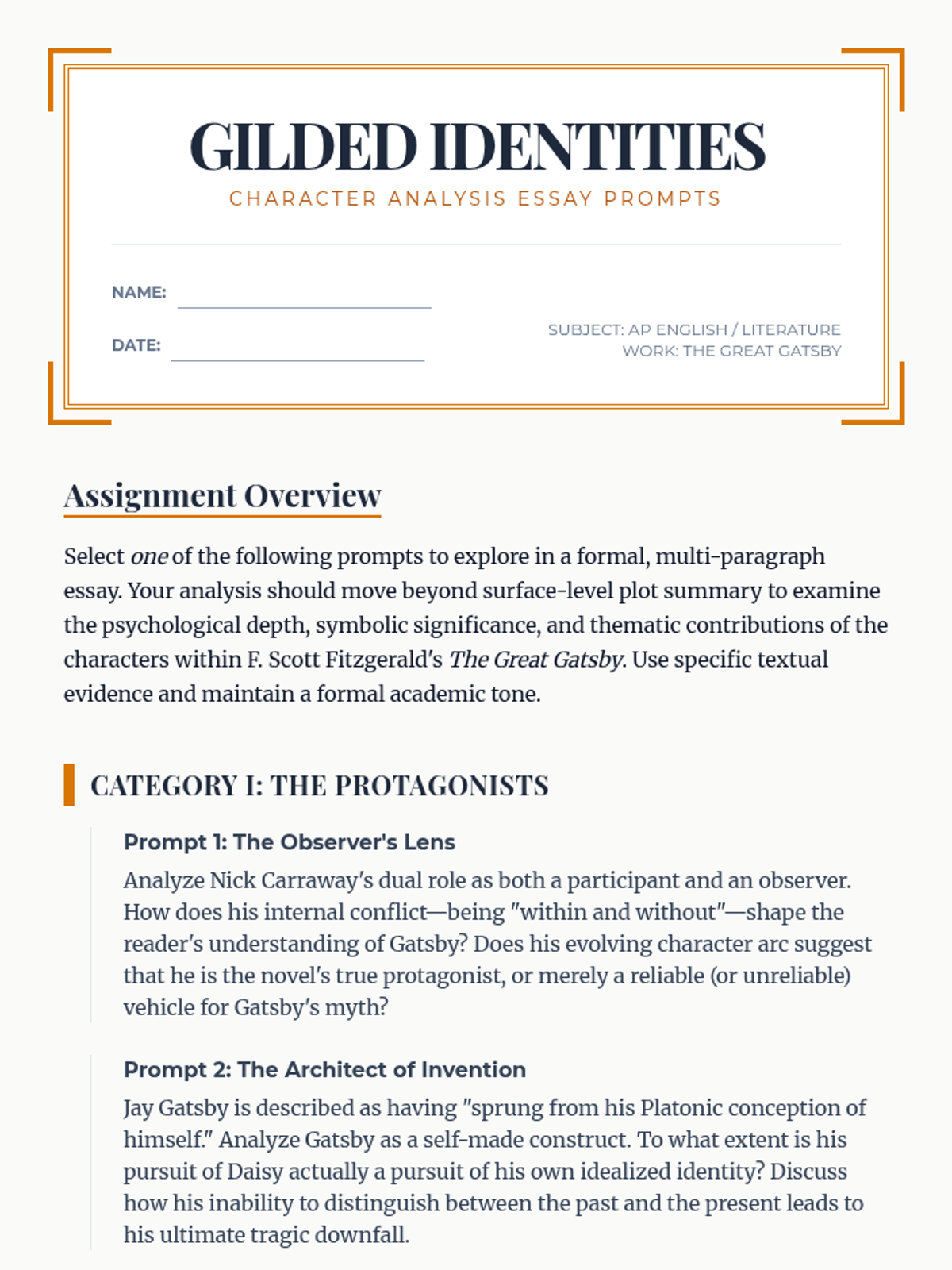
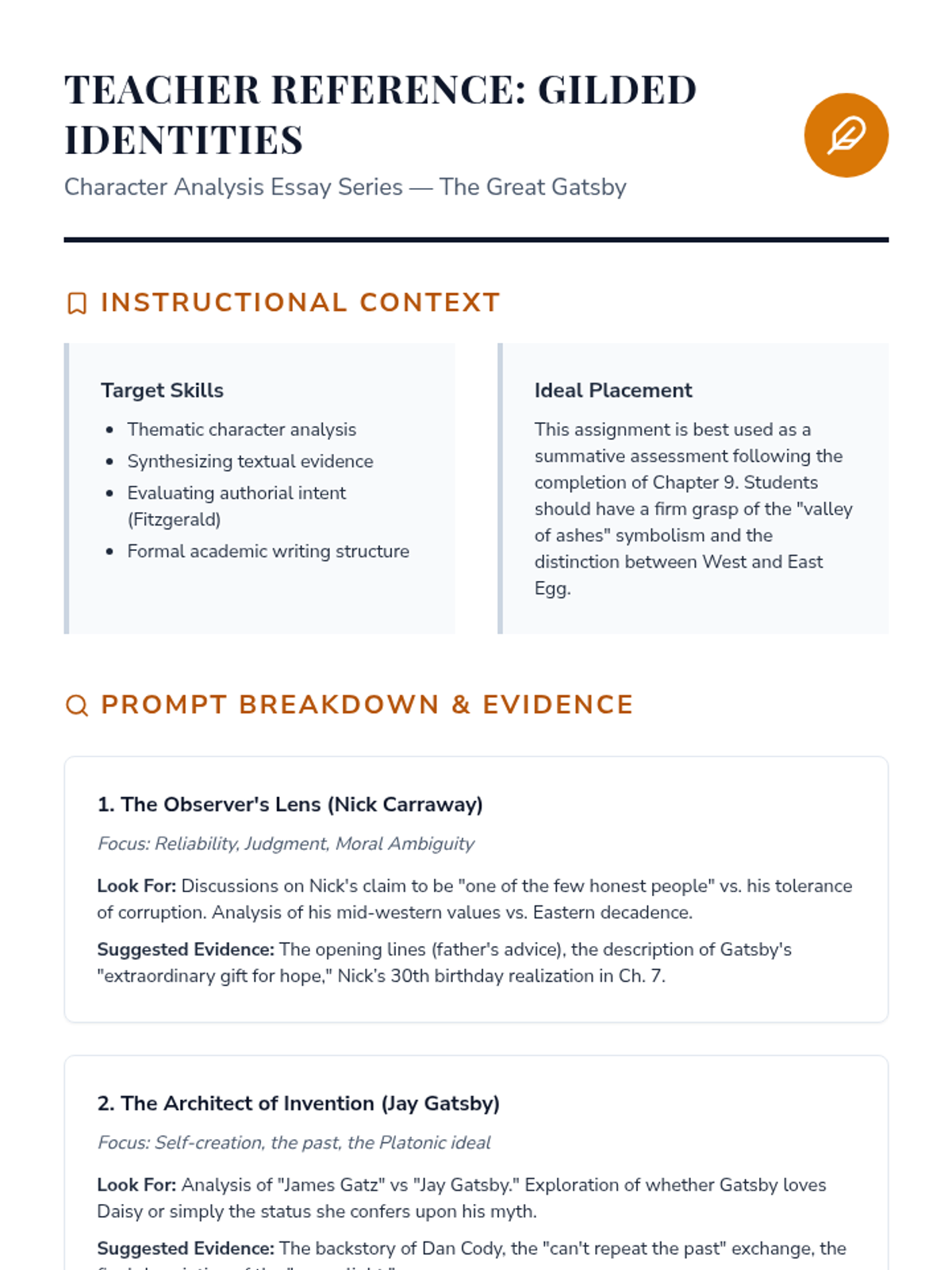
A comprehensive lesson focused on formal character analysis in F. Scott Fitzgerald's 'The Great Gatsby', exploring the protagonists, gender roles, and the clash between Gatsby and Tom.
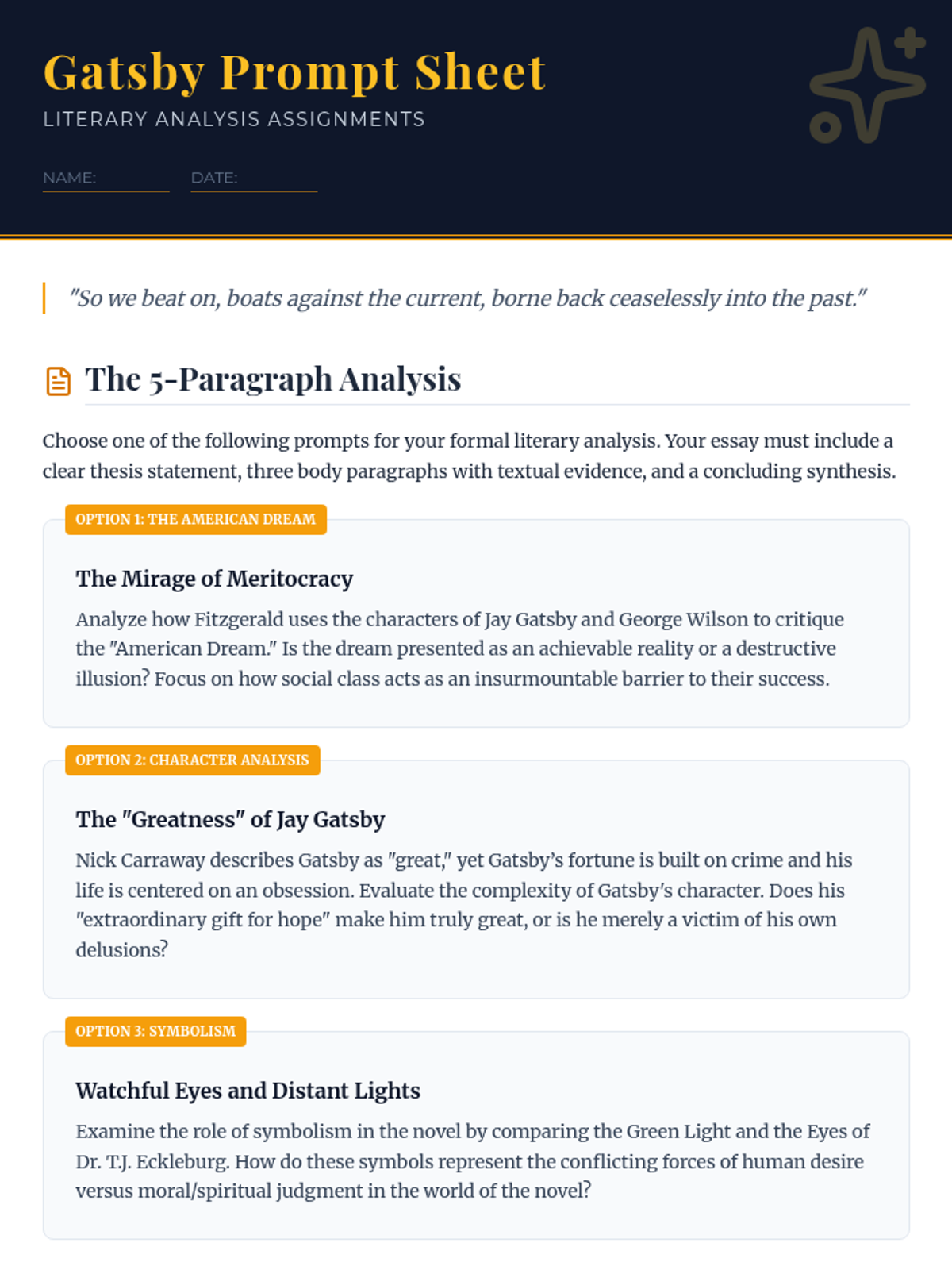
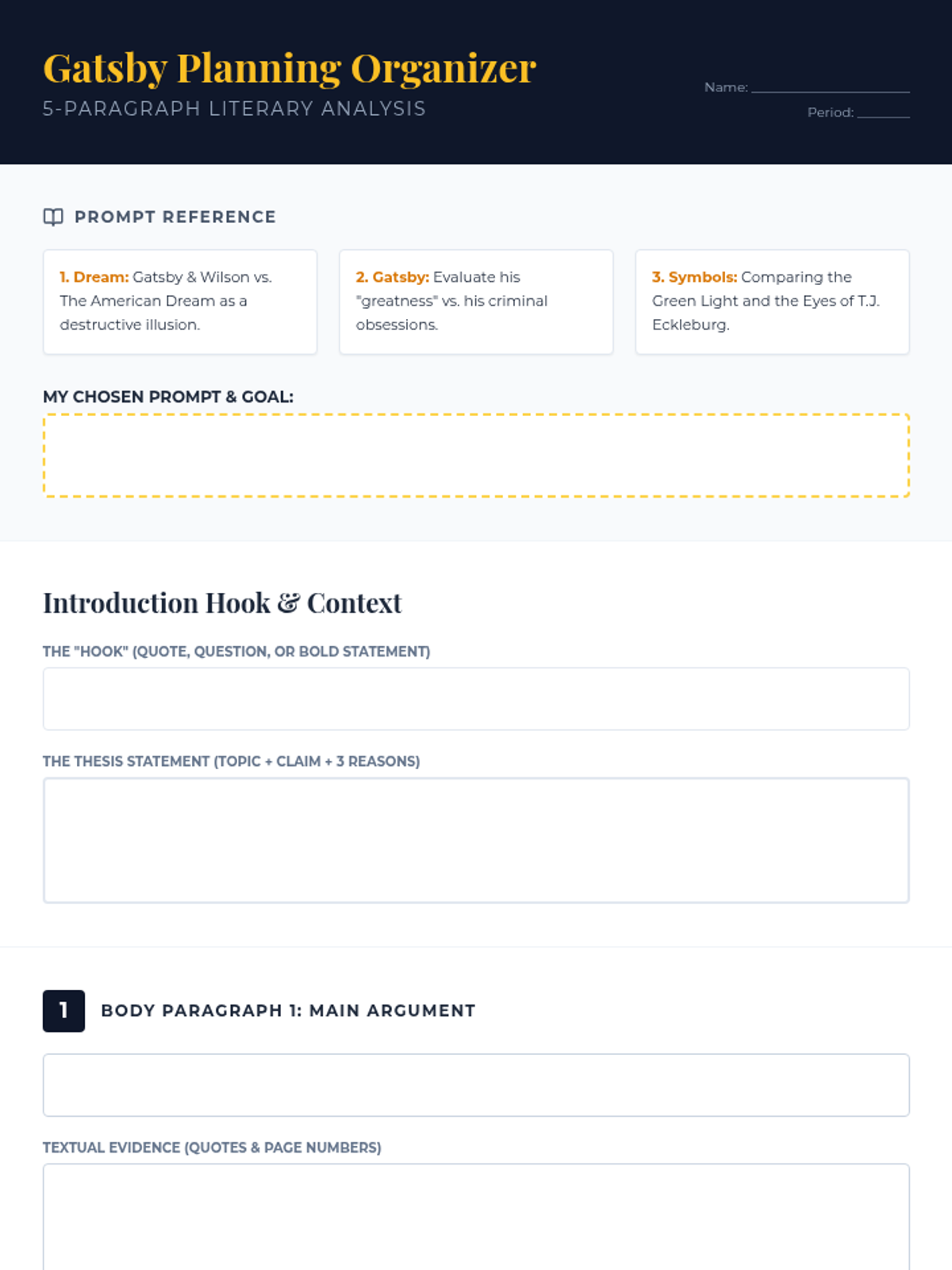
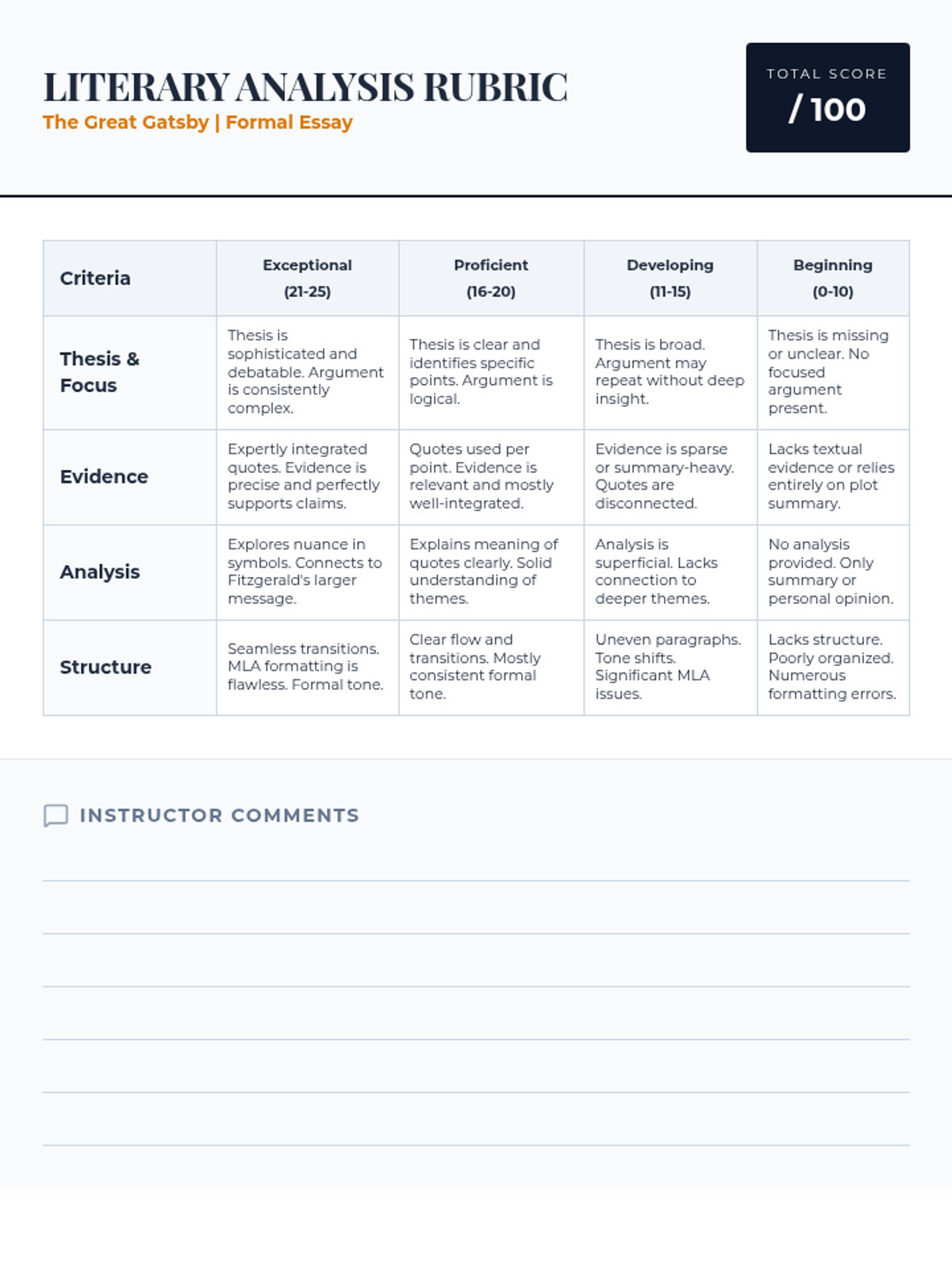
A comprehensive set of essay prompts and supporting materials for analyzing F. Scott Fitzgerald's 'The Great Gatsby', focusing on the American Dream, social class, and symbolism.
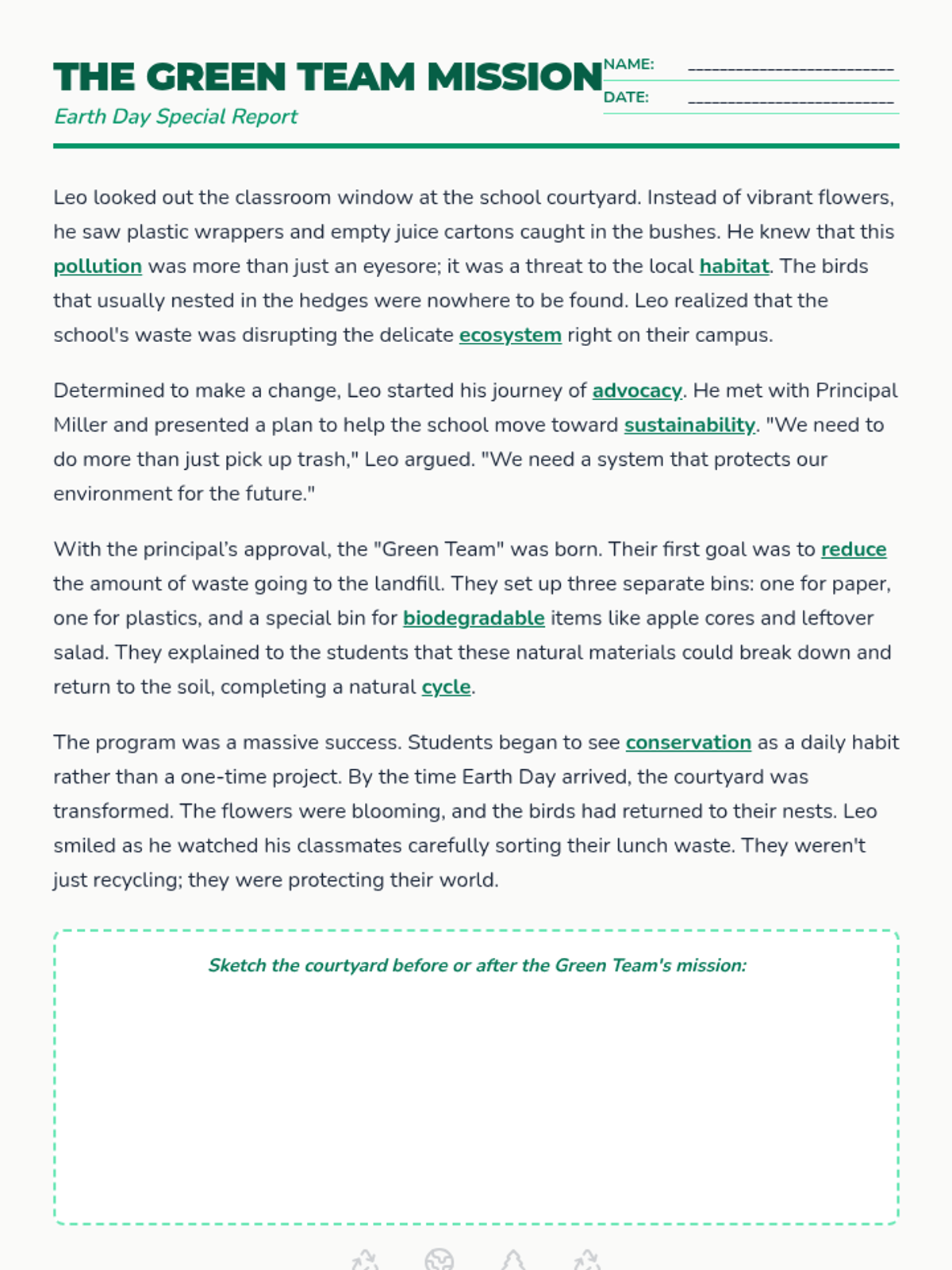
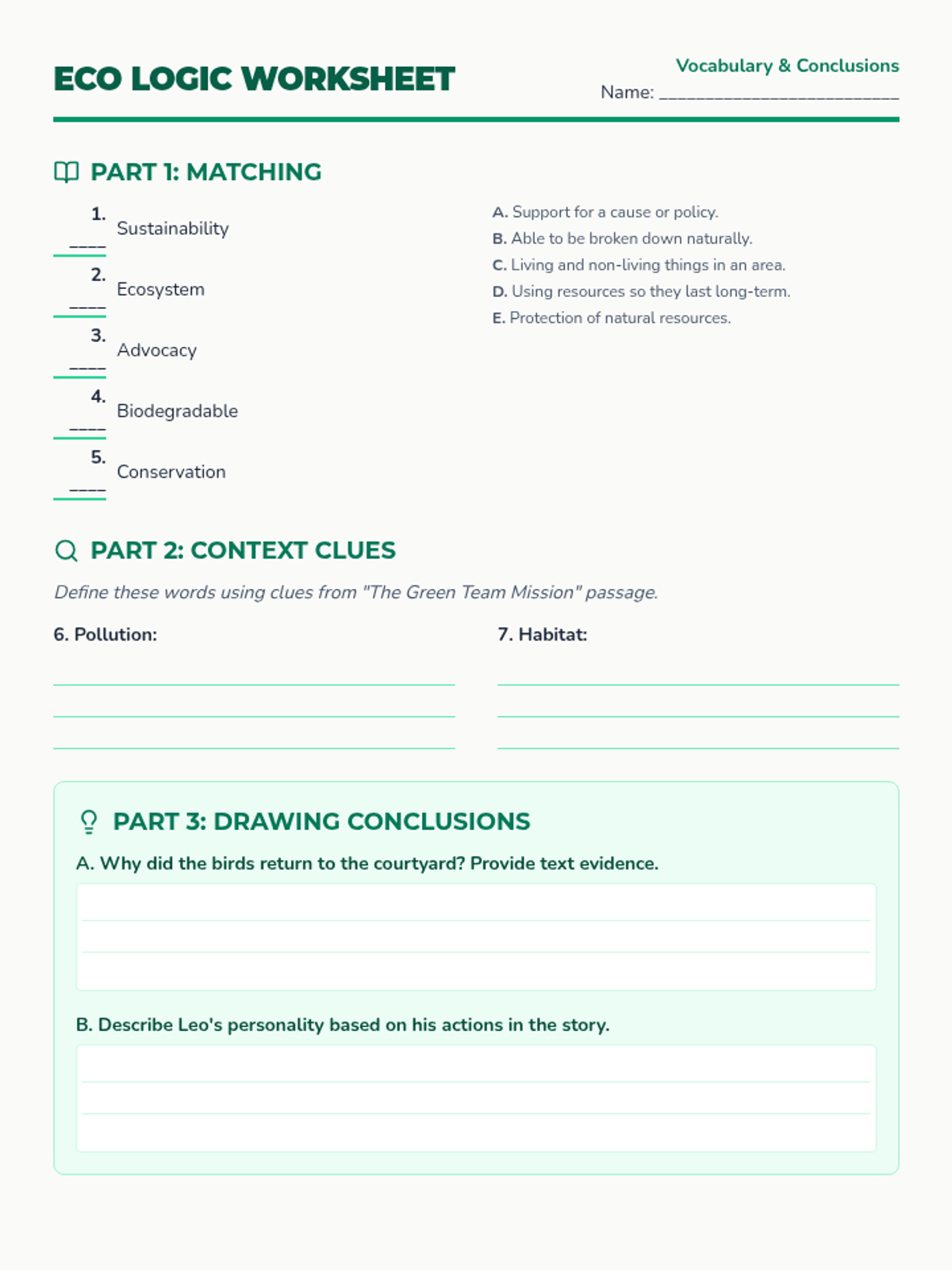
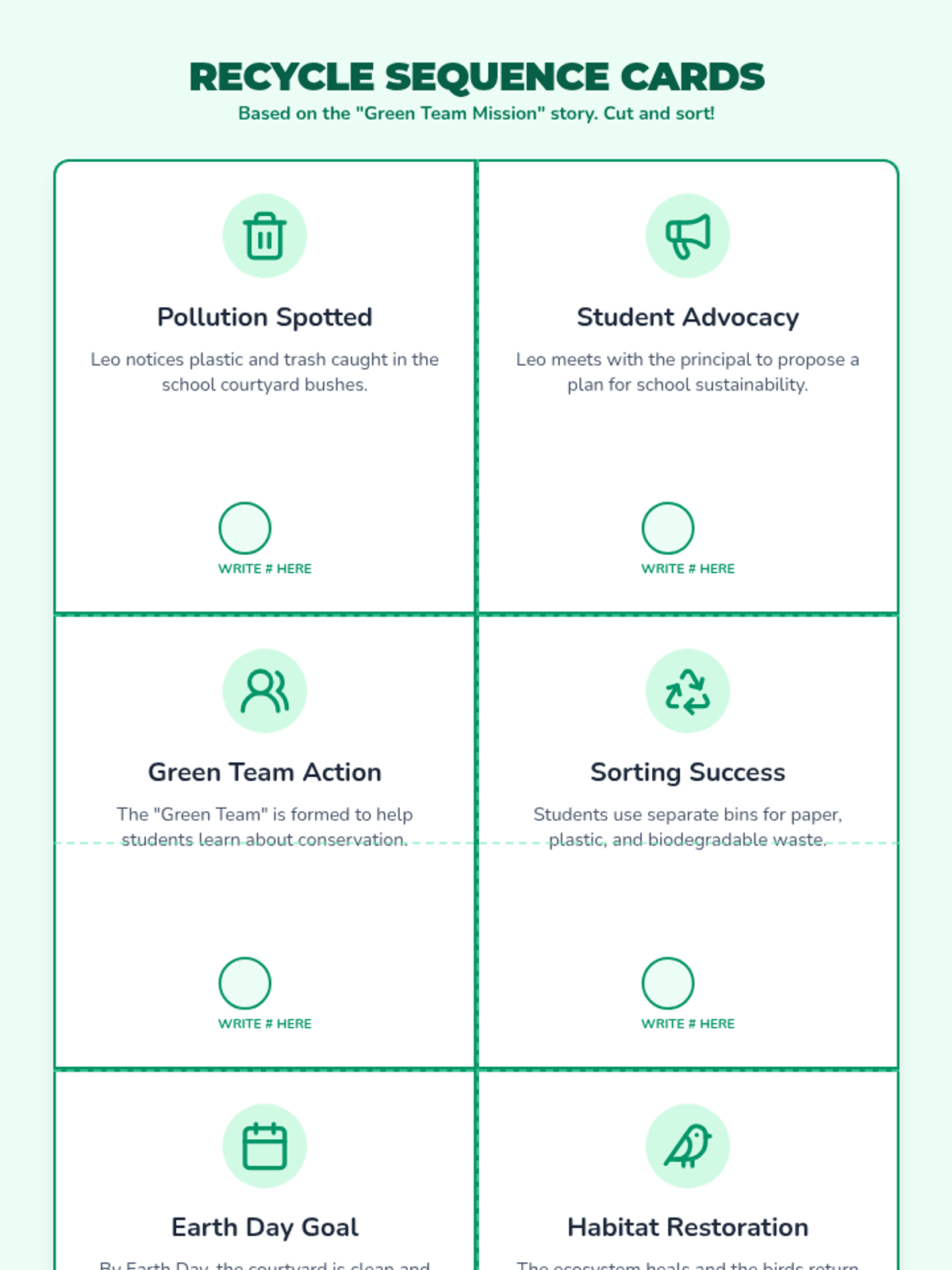
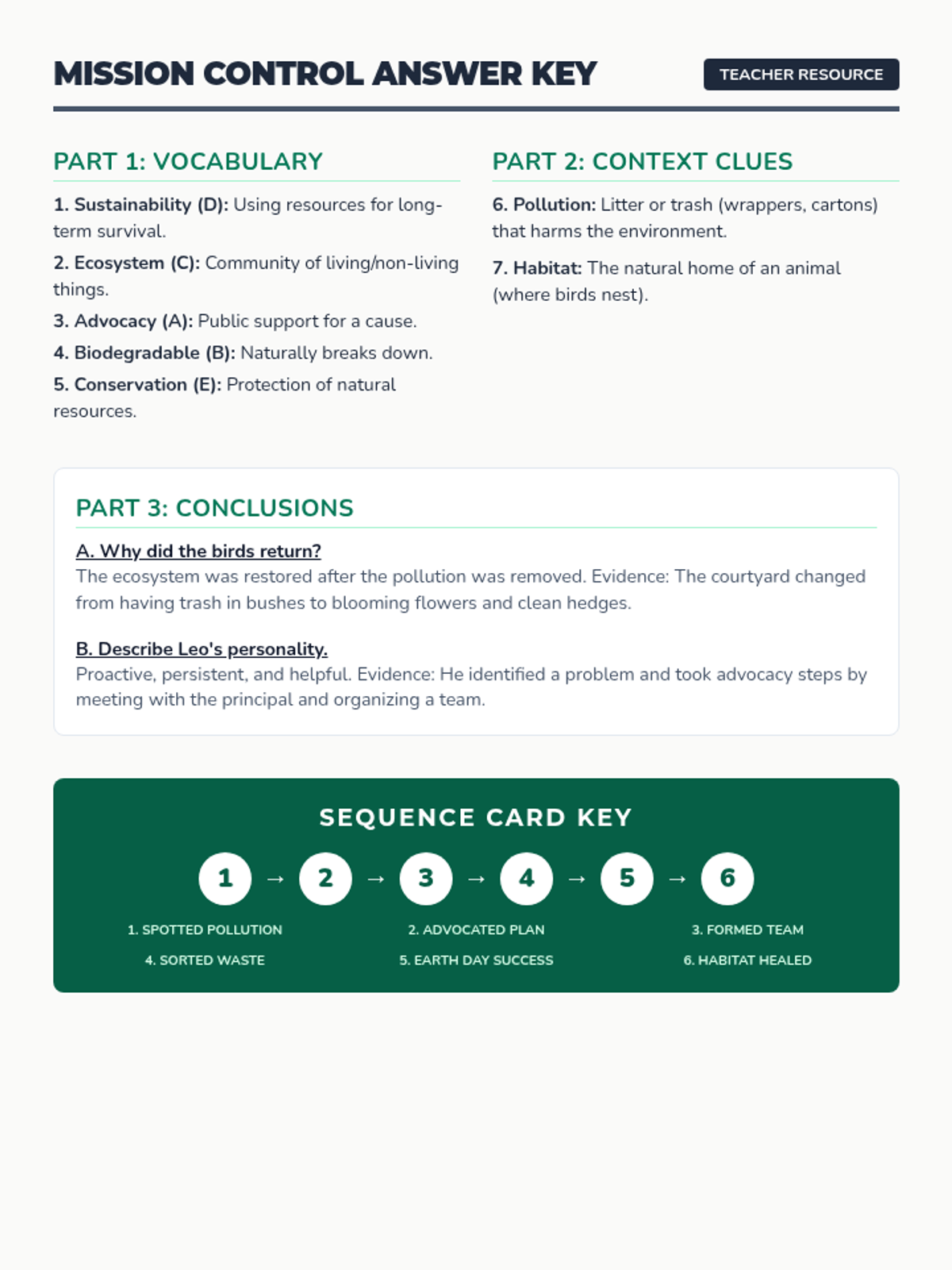
A lesson focused on school recycling, vocabulary development, and drawing conclusions for Earth Day. Students will engage with a reading passage and sequence cards to understand environmental impact.
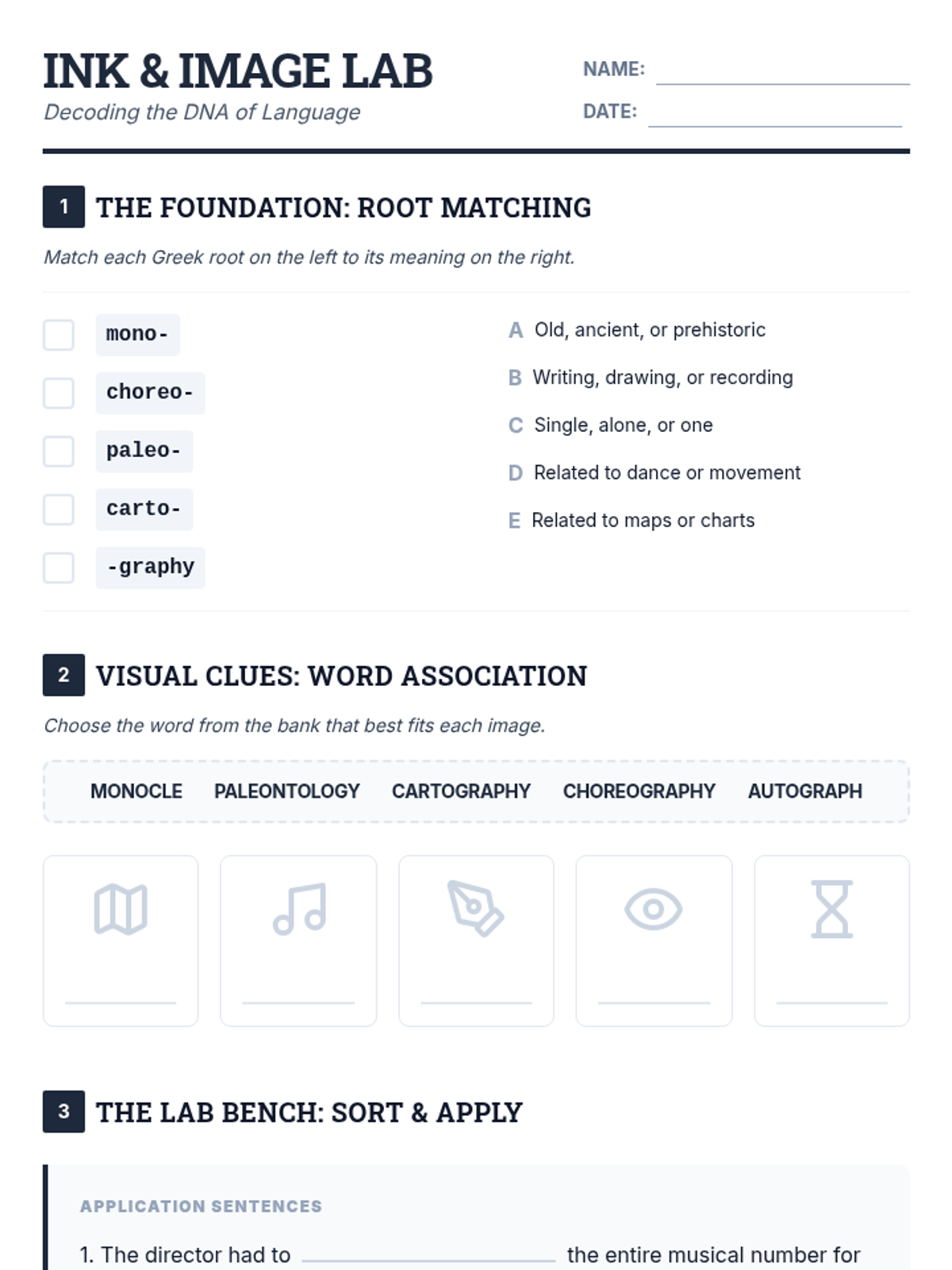
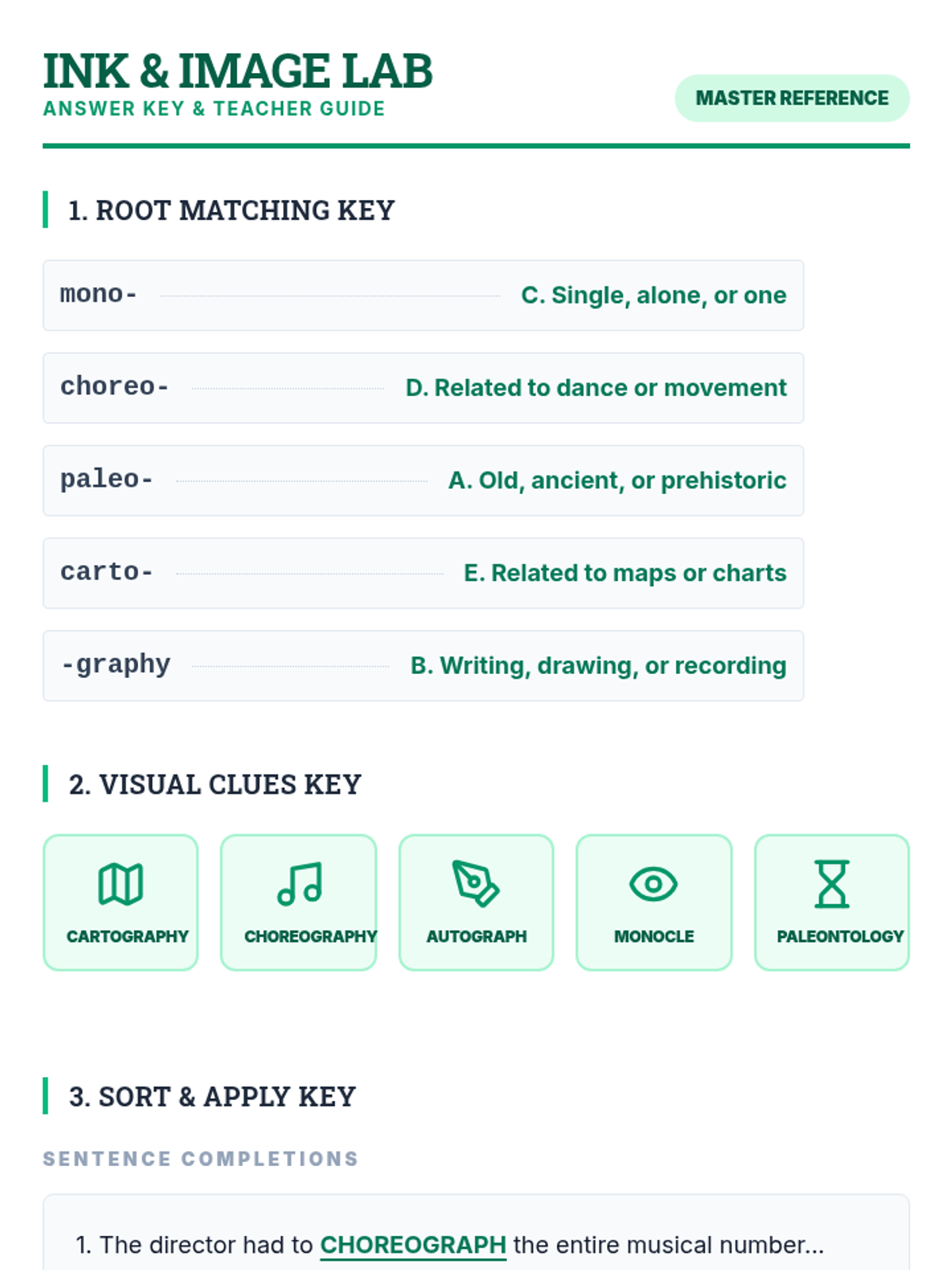
A specialized lesson focused on decoding and applying academic Greek roots in everyday contexts for high school literacy support.
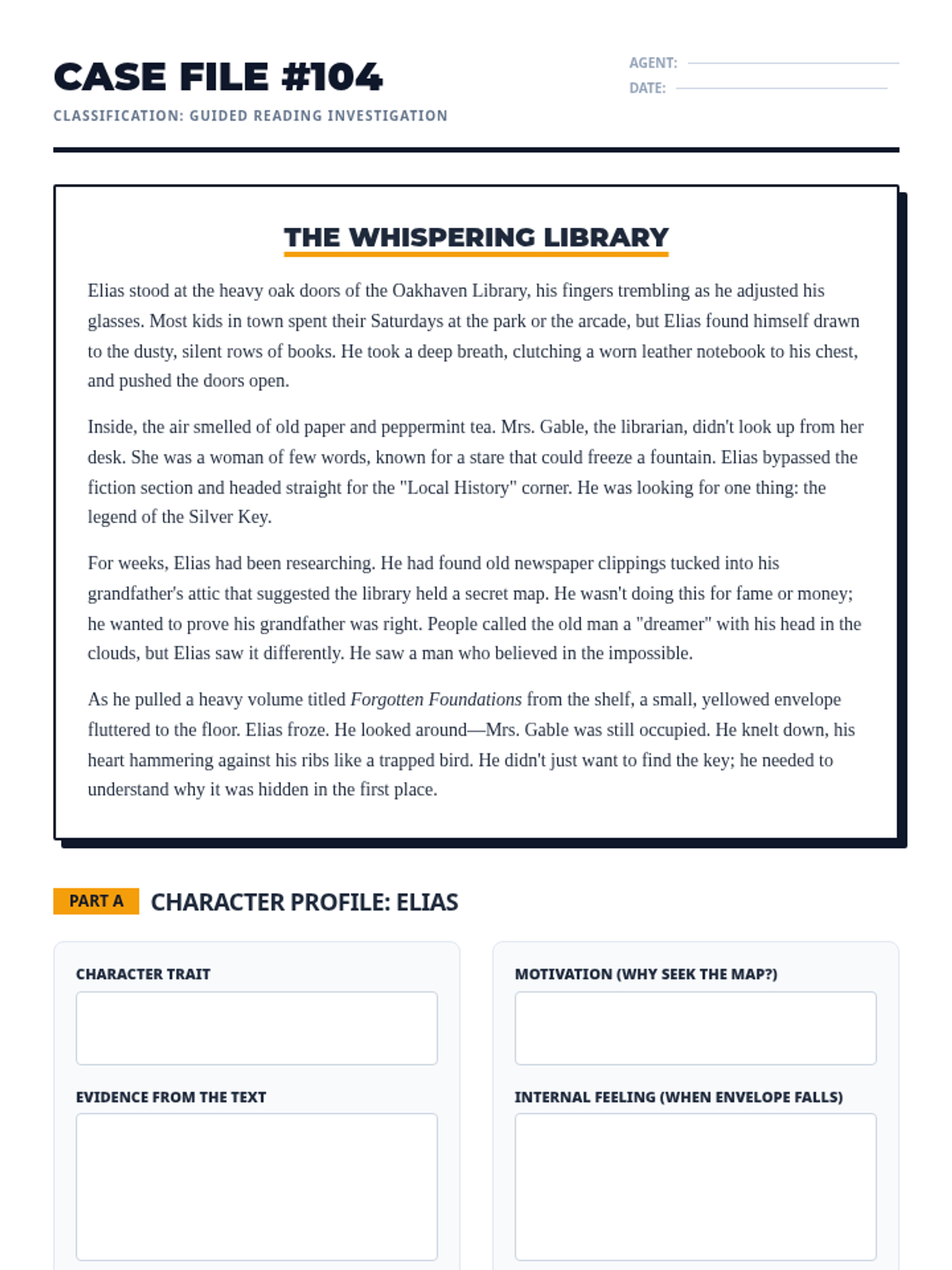
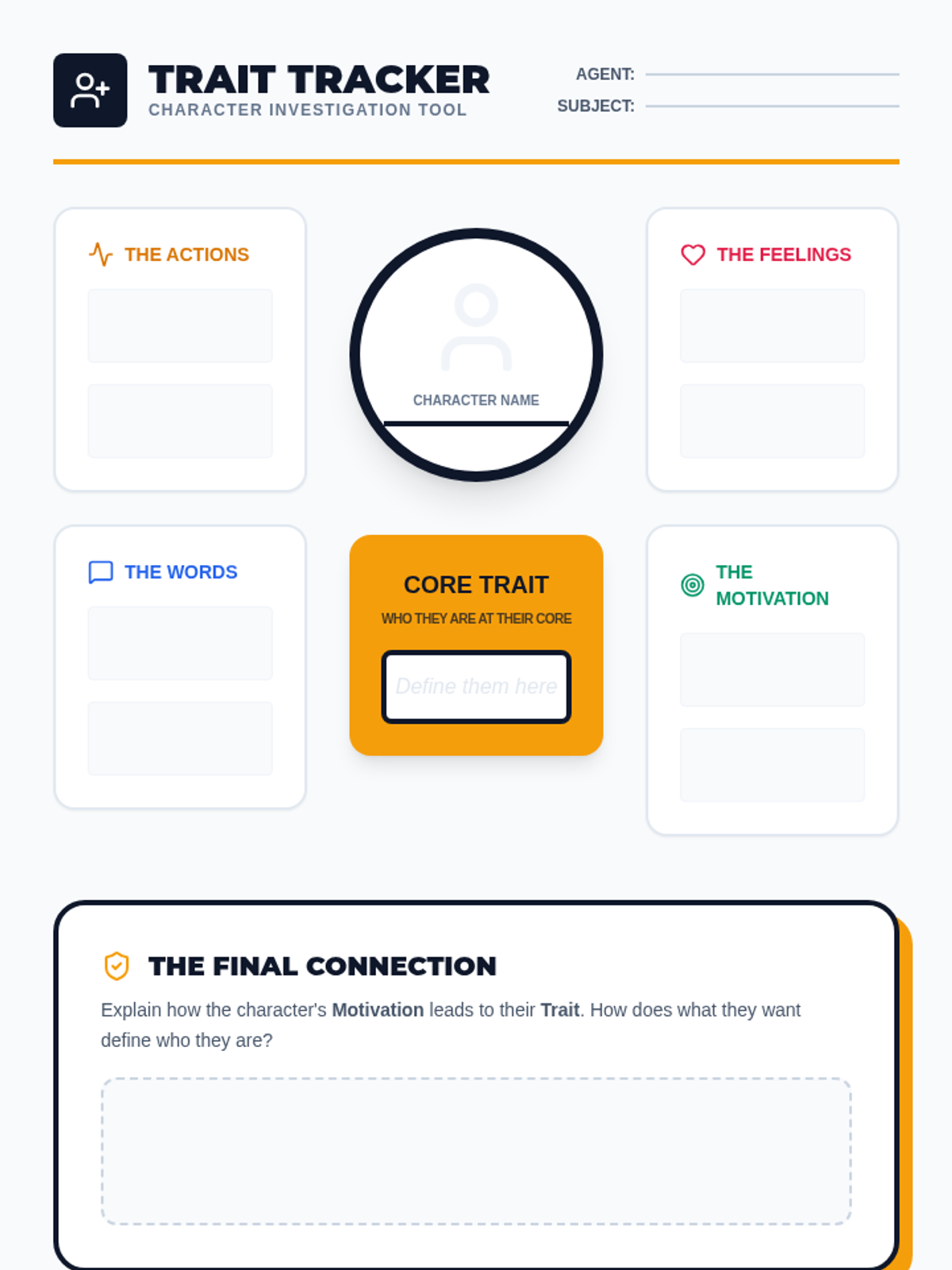
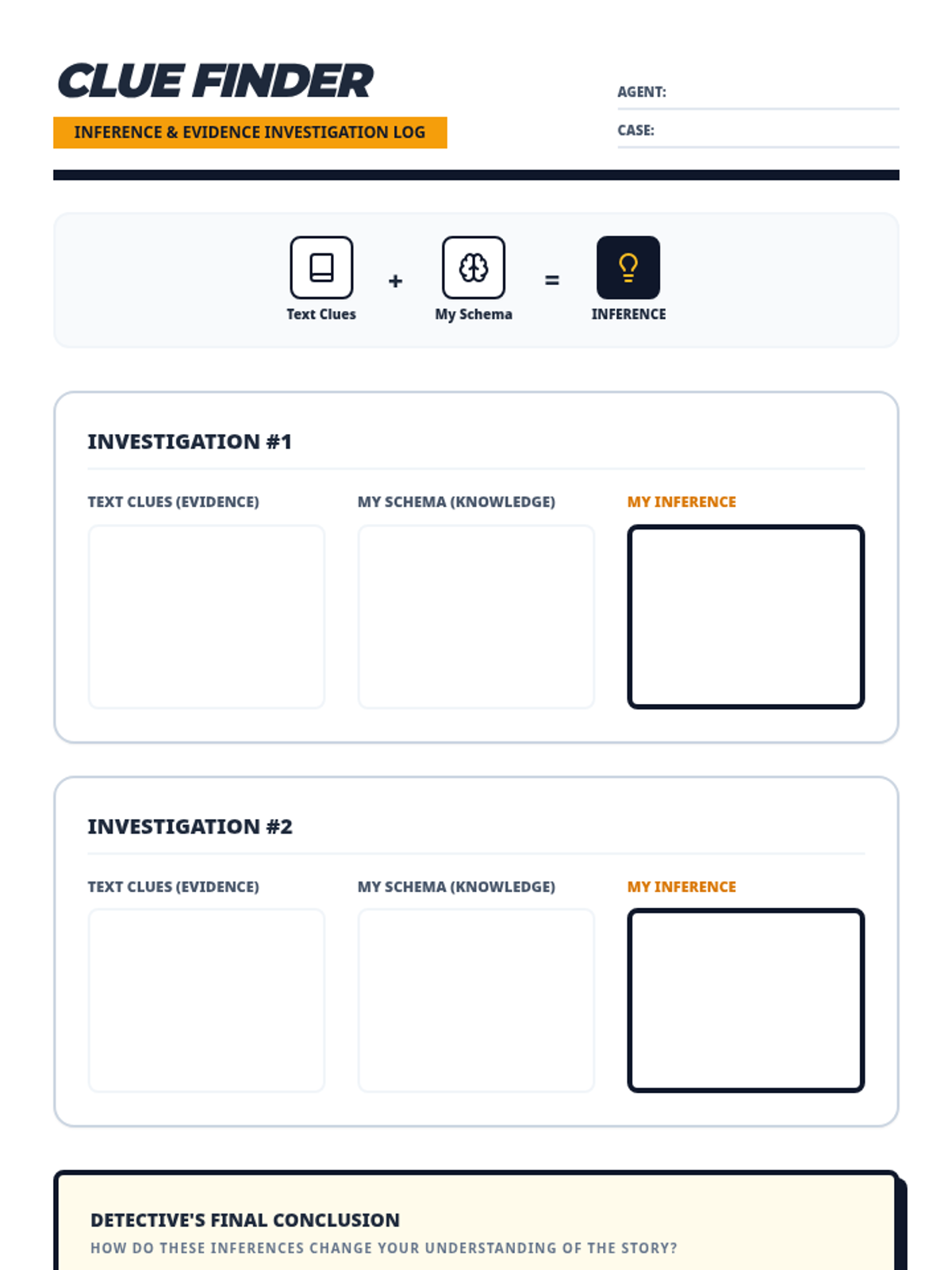
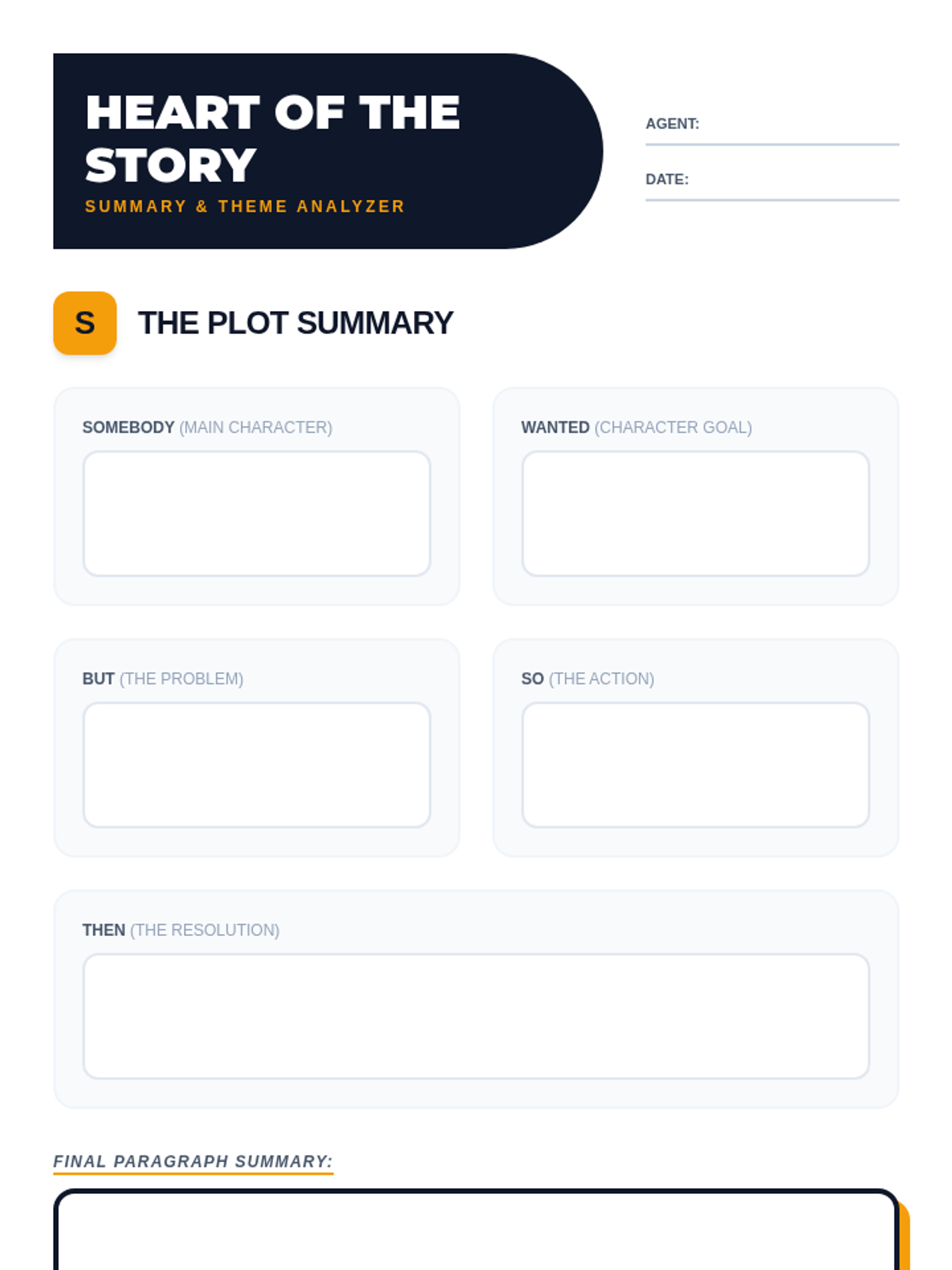
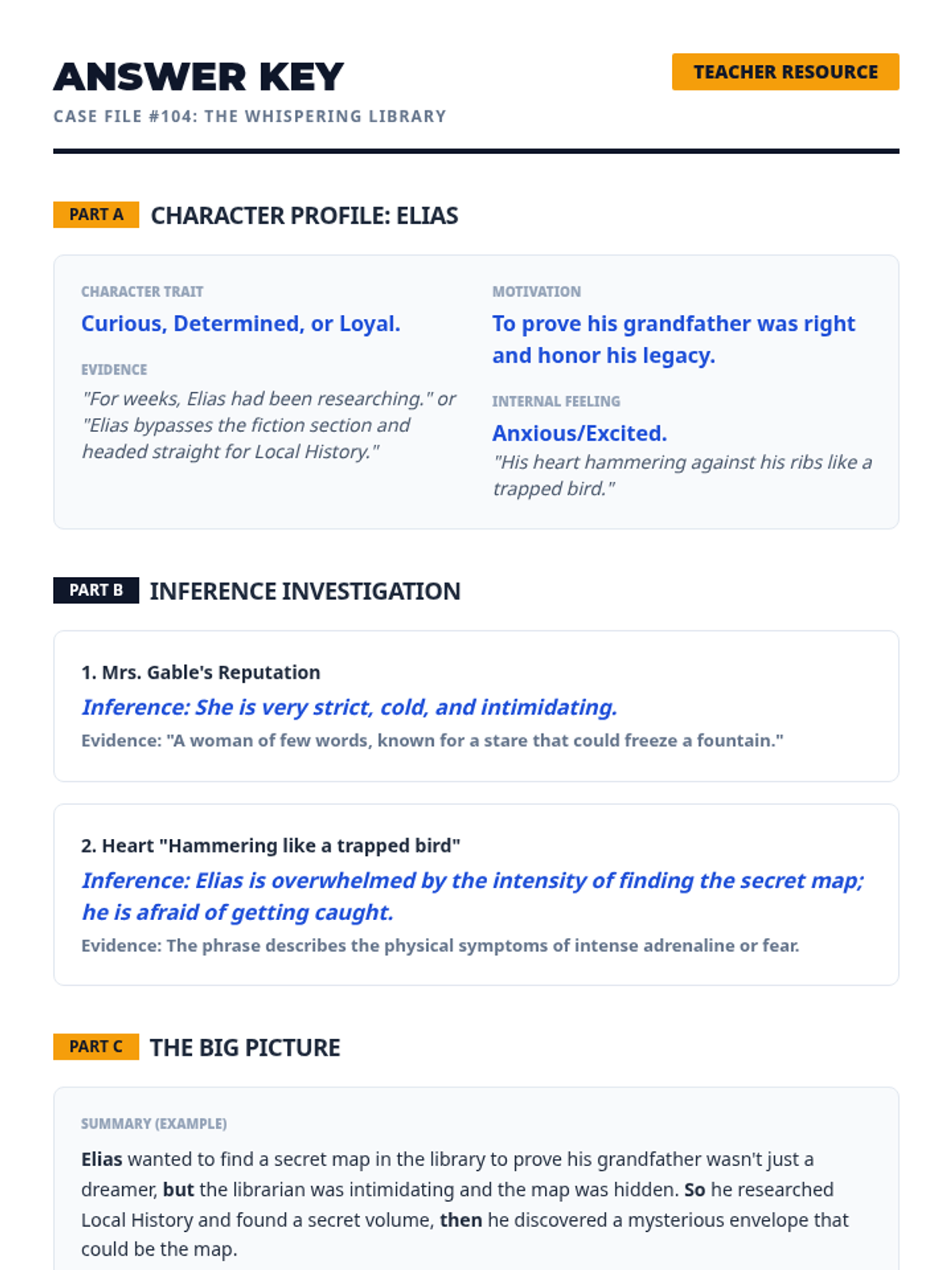
Students learn to analyze characters, make evidence-based inferences, and synthesize story elements into summaries and themes using a detective-themed approach.
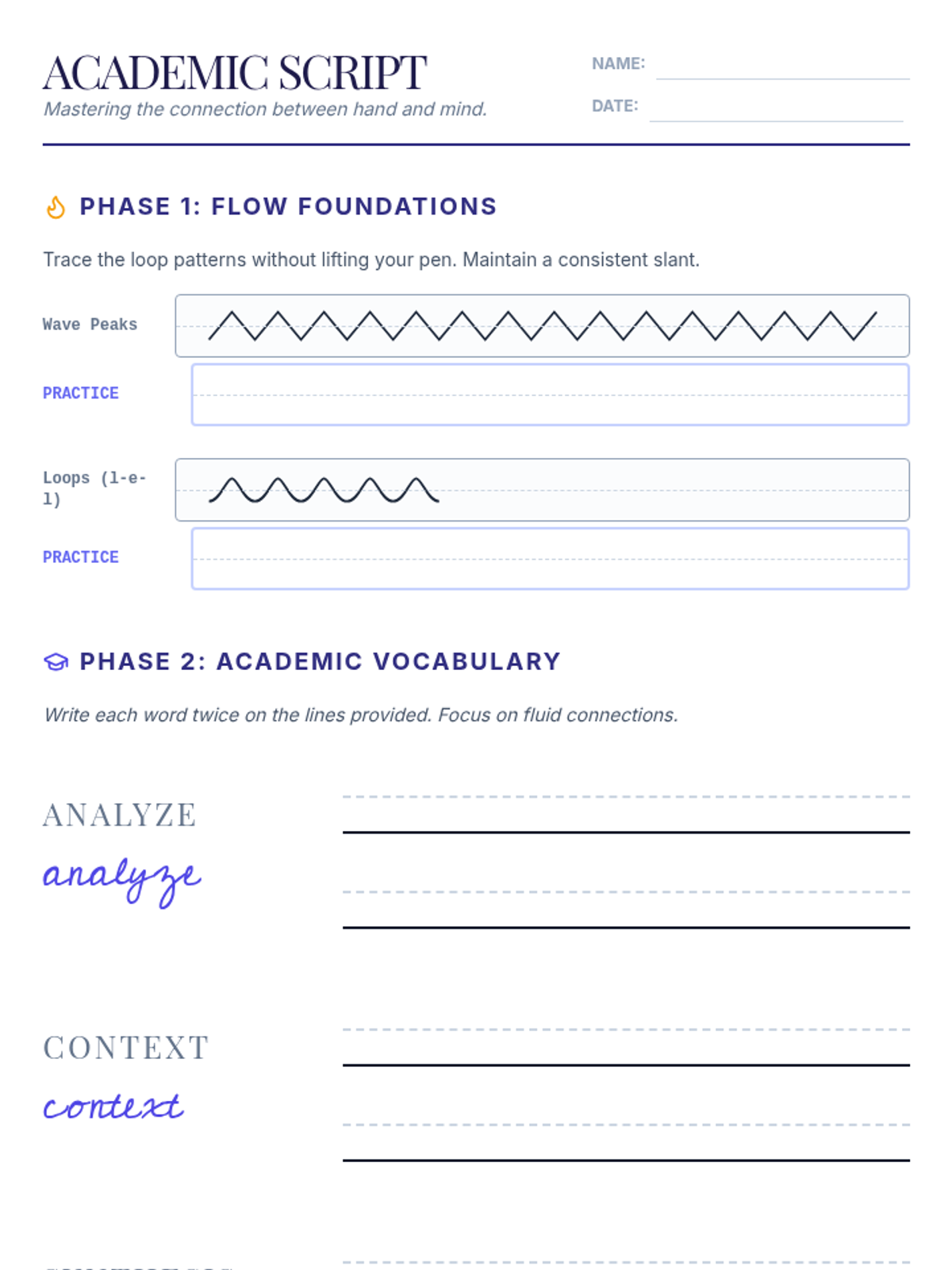
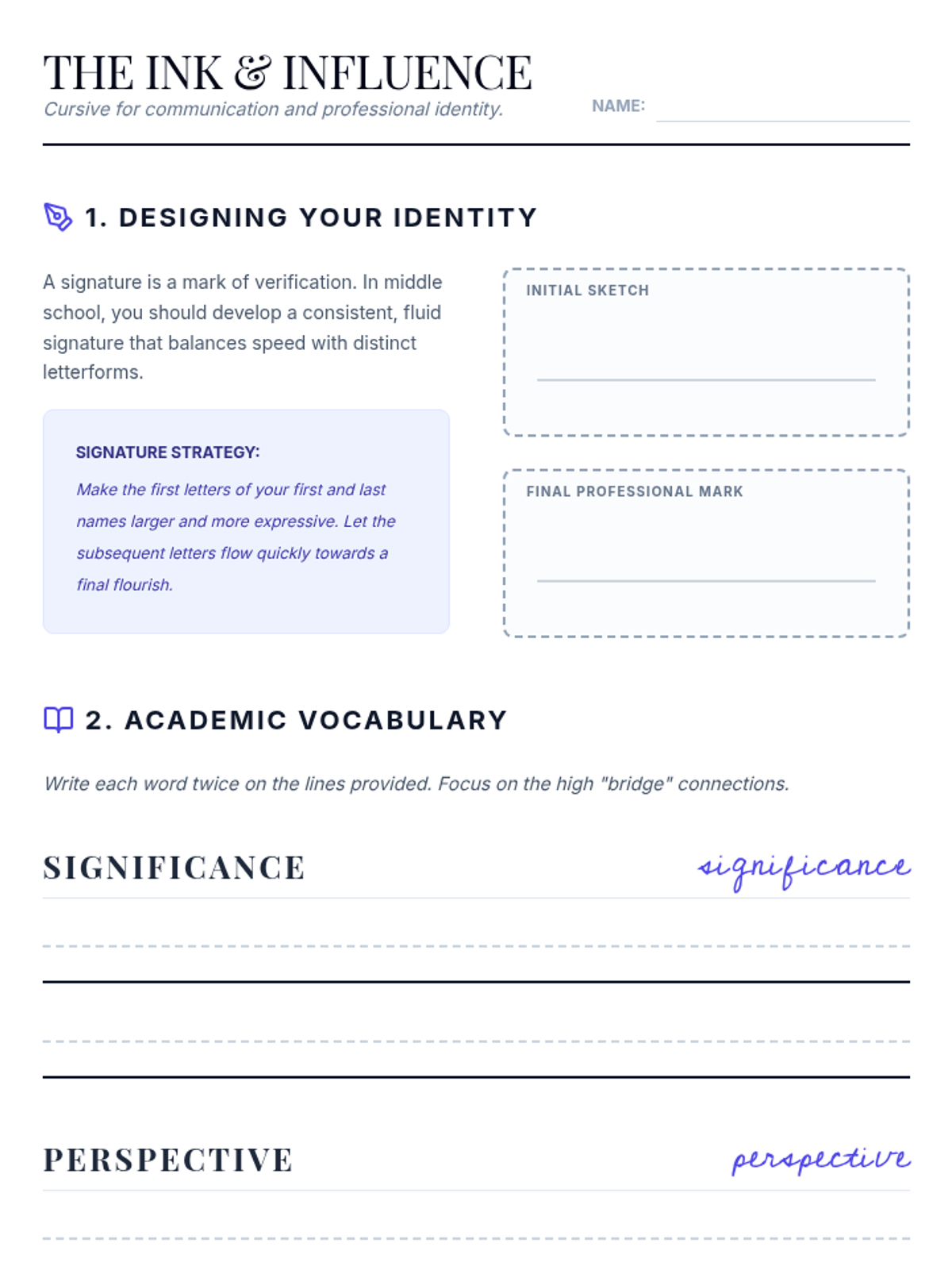
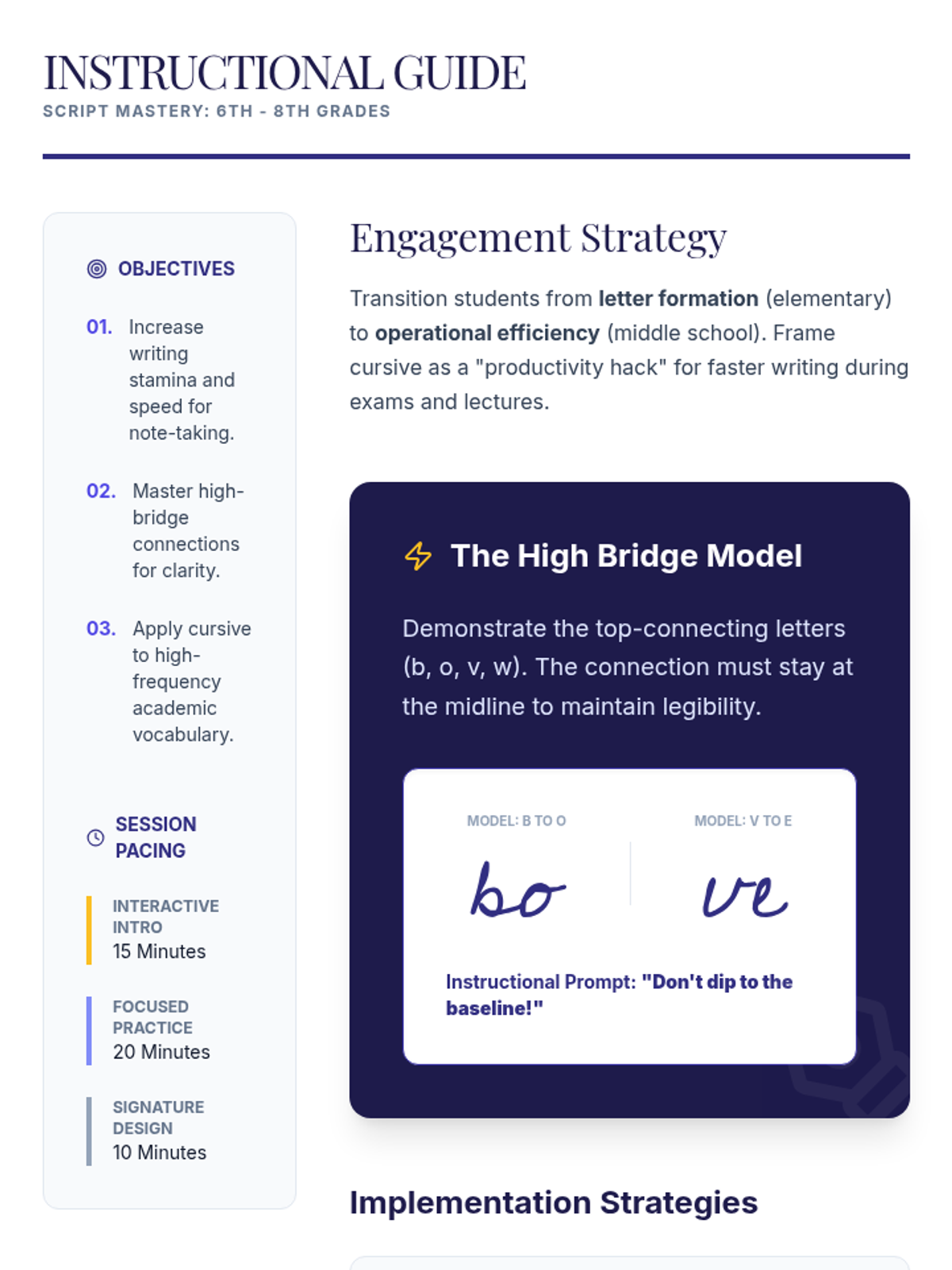
A modern take on cursive handwriting for middle school students, focusing on academic vocabulary, signature development, and the efficiency of script for note-taking. This lesson moves beyond elementary tracing to focus on fluid connections and professional presentation.
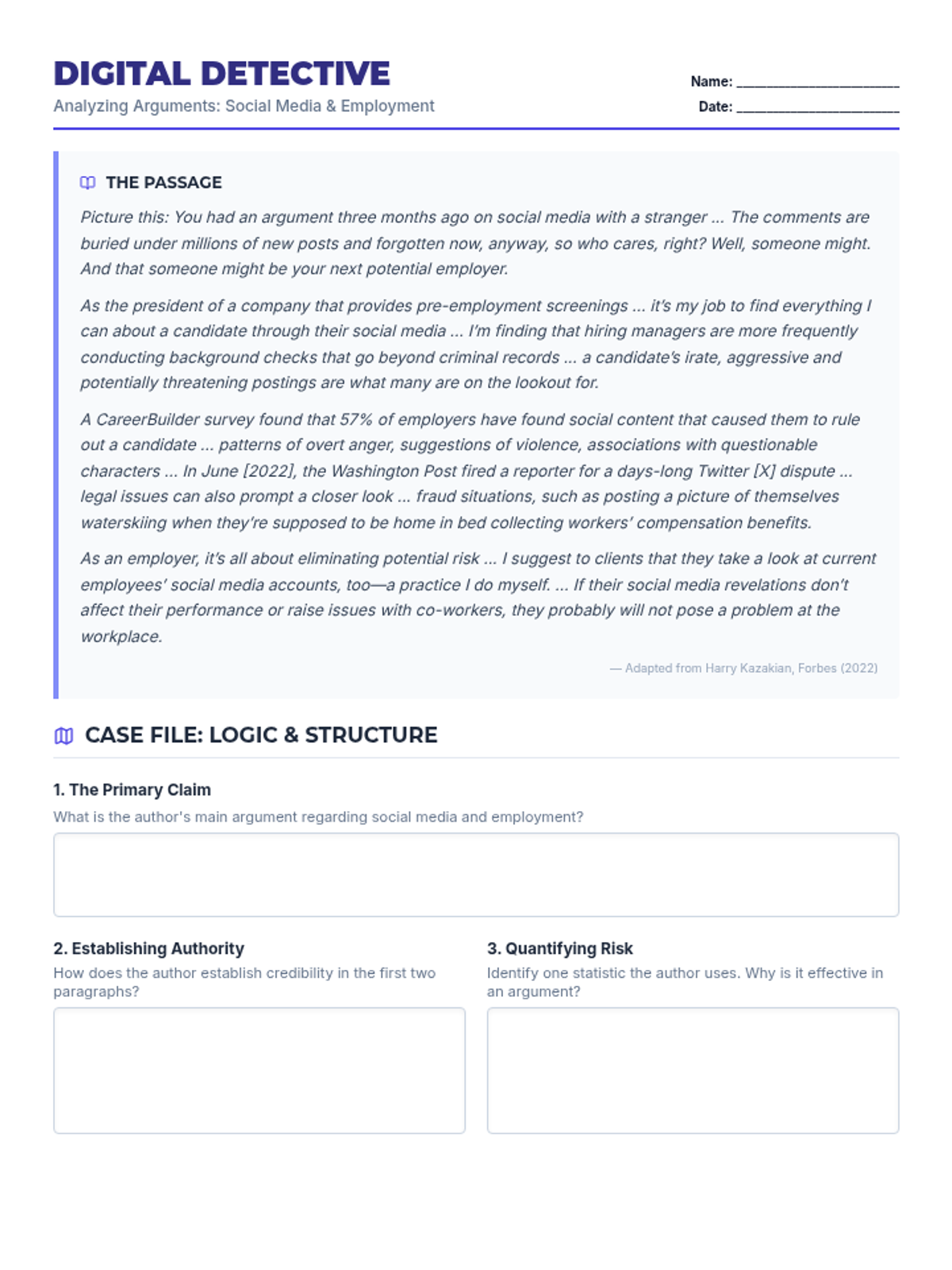
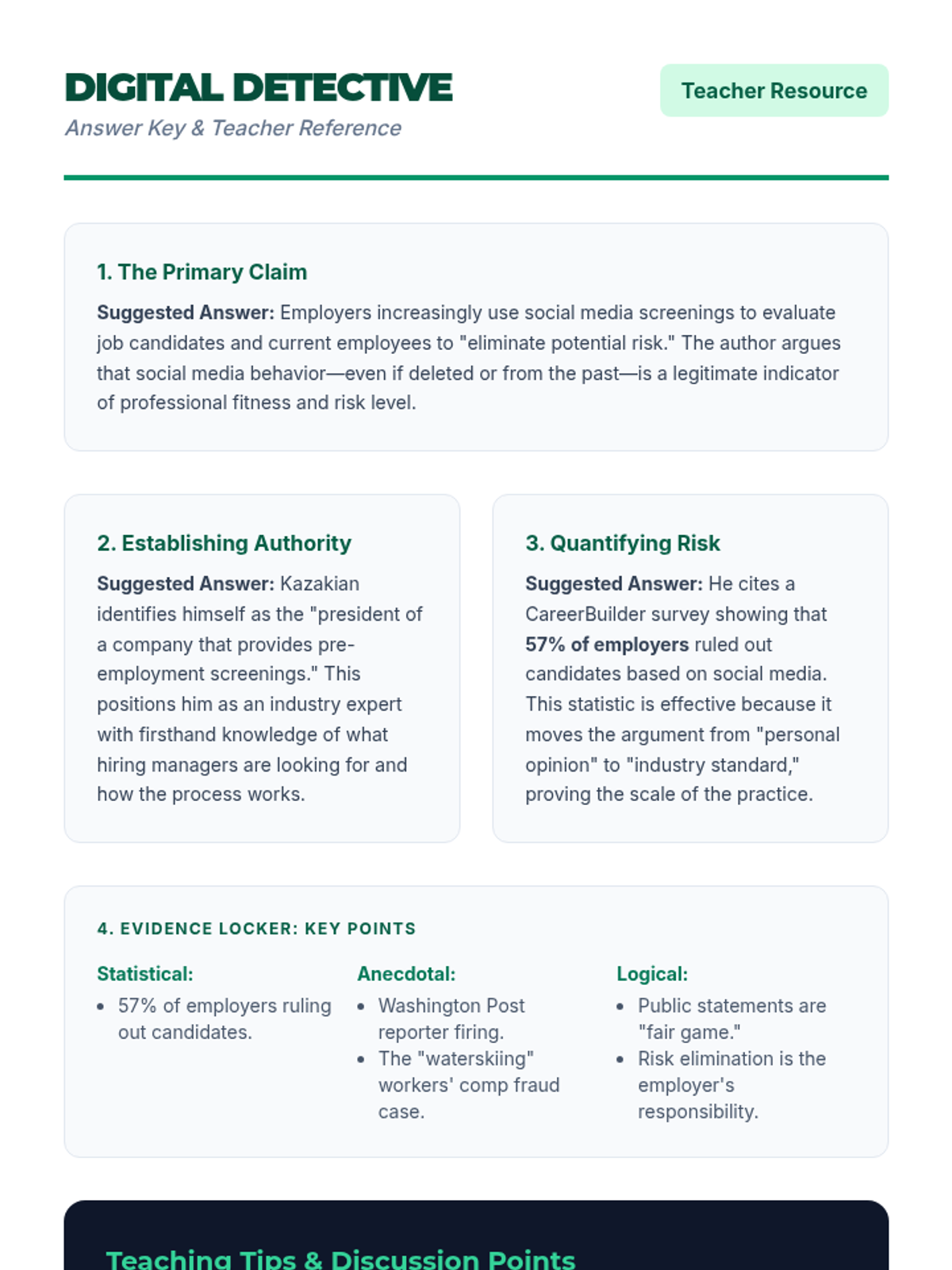
This lesson explores the impact of social media on employment through a structured analysis of Harry Kazakian's argument. Students will learn to identify claims, evaluate evidence, and understand the logical structure of persuasive writing.
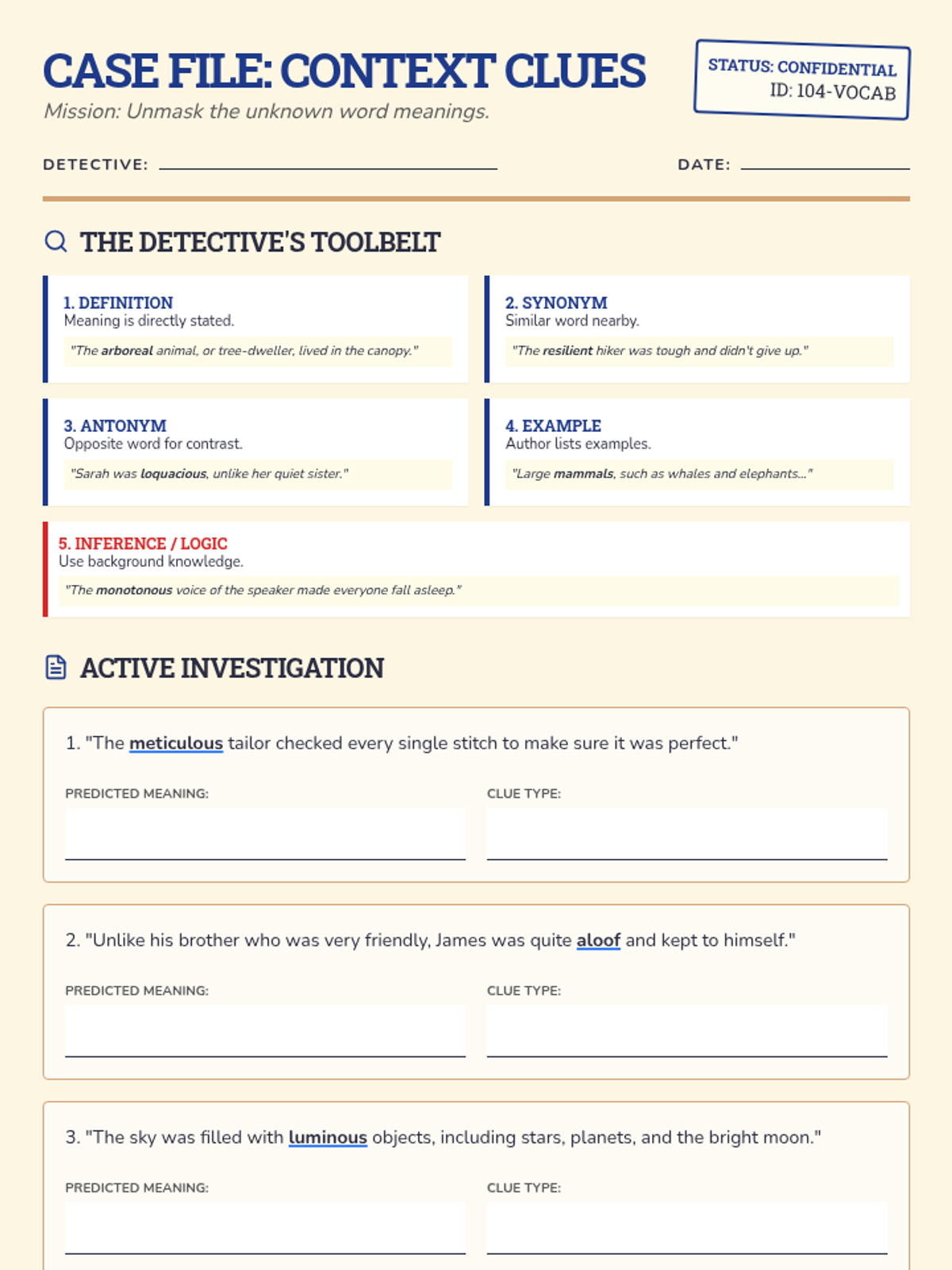
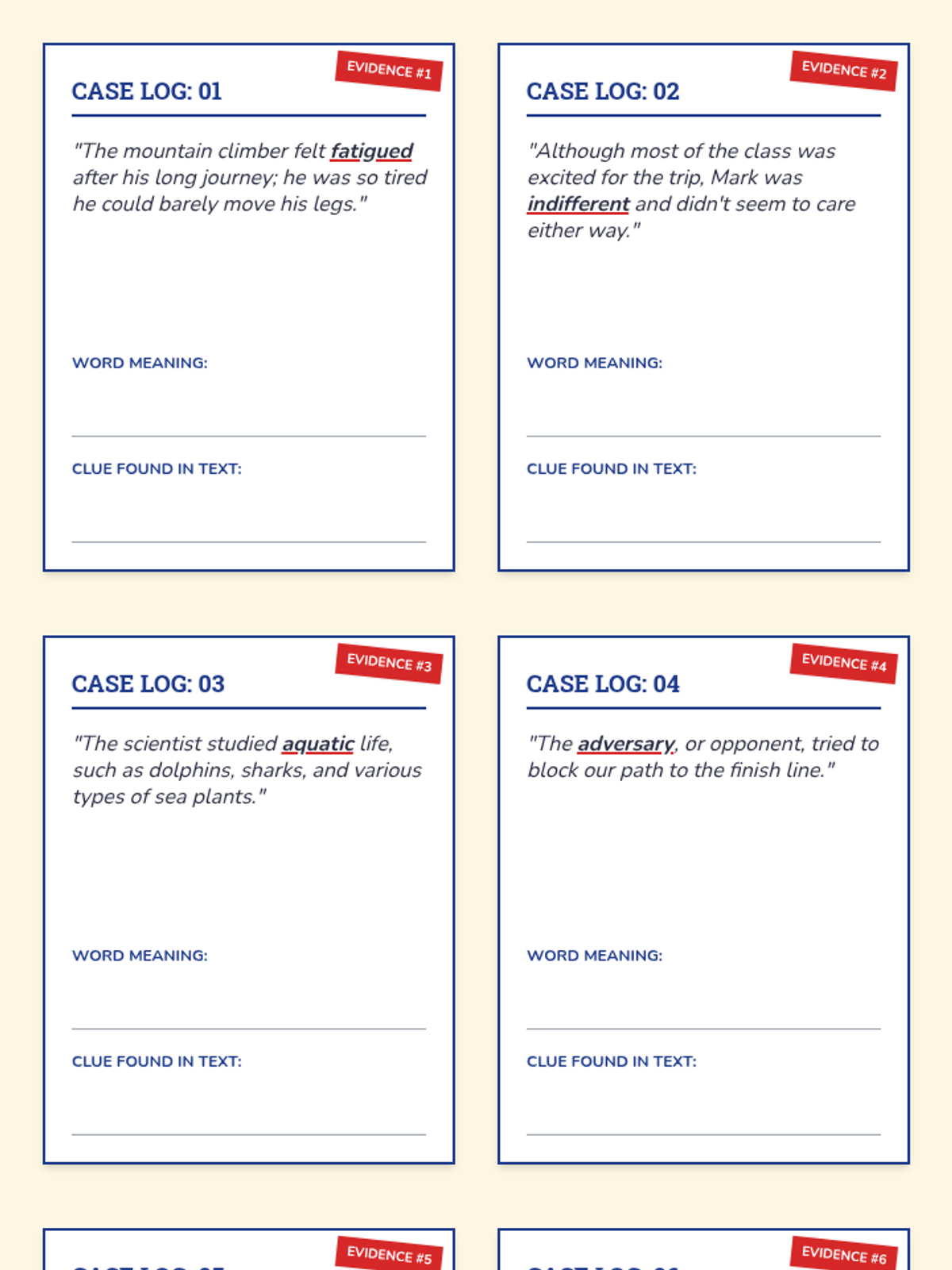
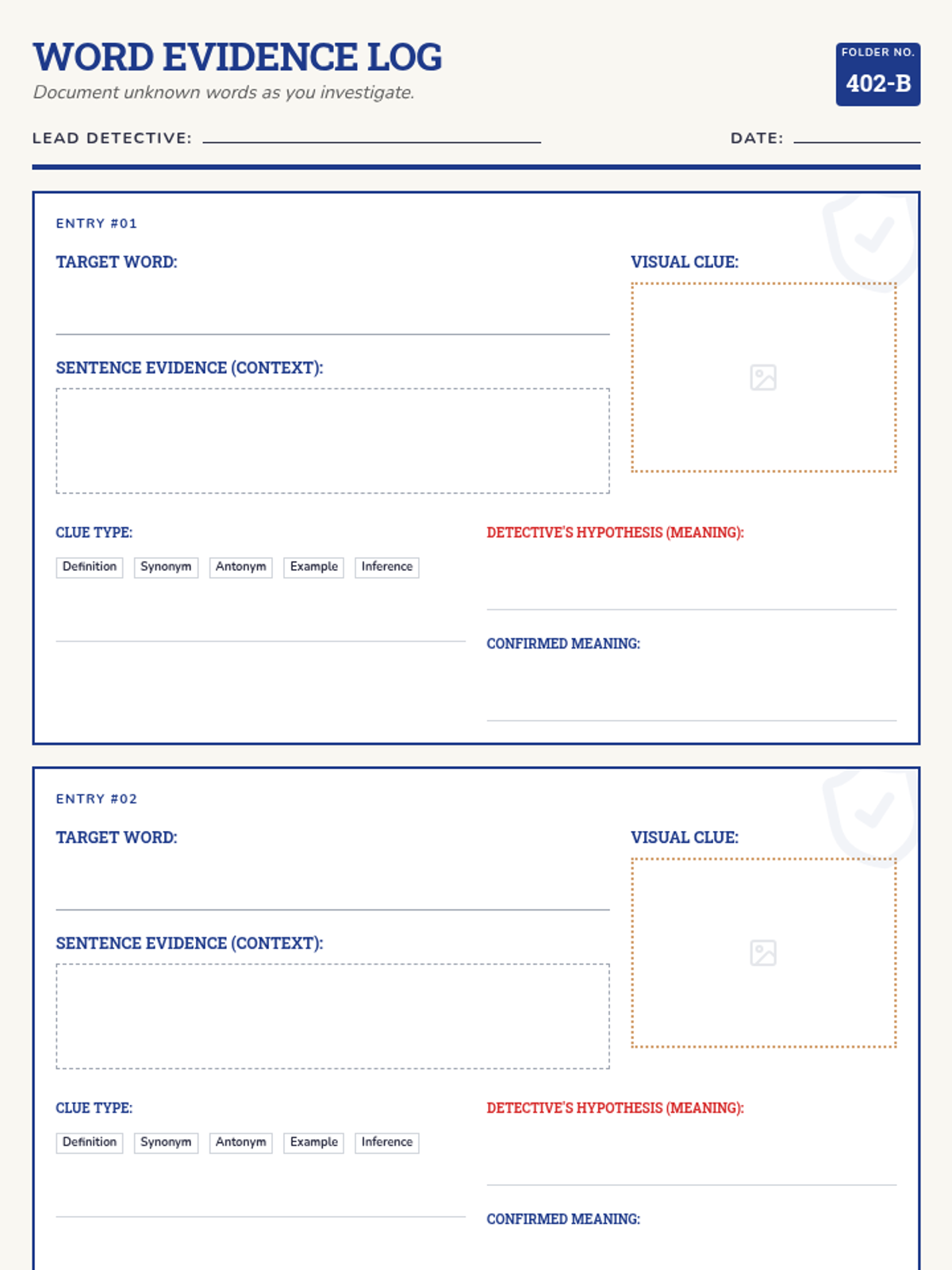
A deep dive into using word relationships and context clues to uncover the meaning of unfamiliar words. Students act as word detectives, searching for evidence in sentences to solve vocabulary mysteries through guided practice and independent evidence-gathering.
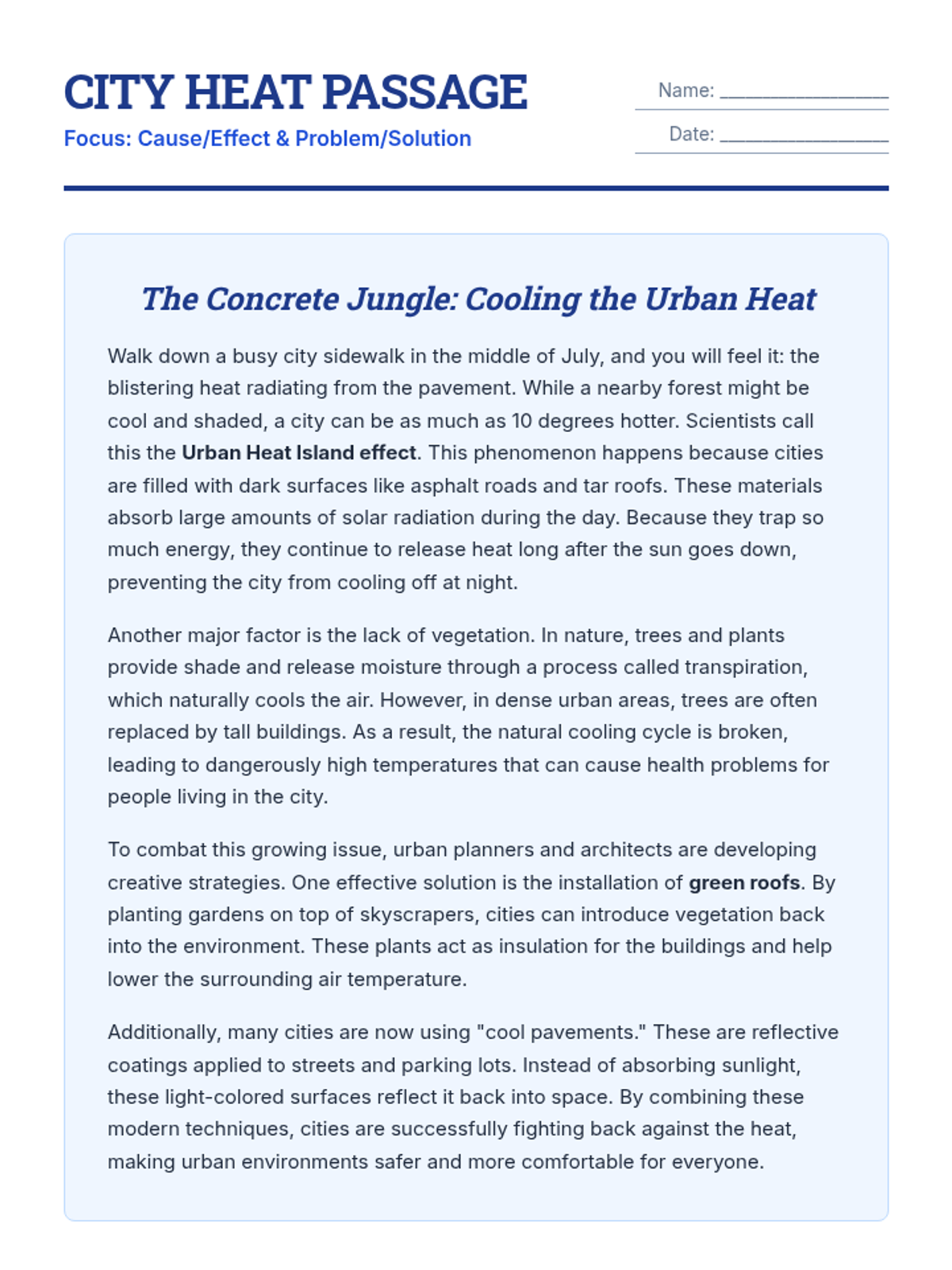
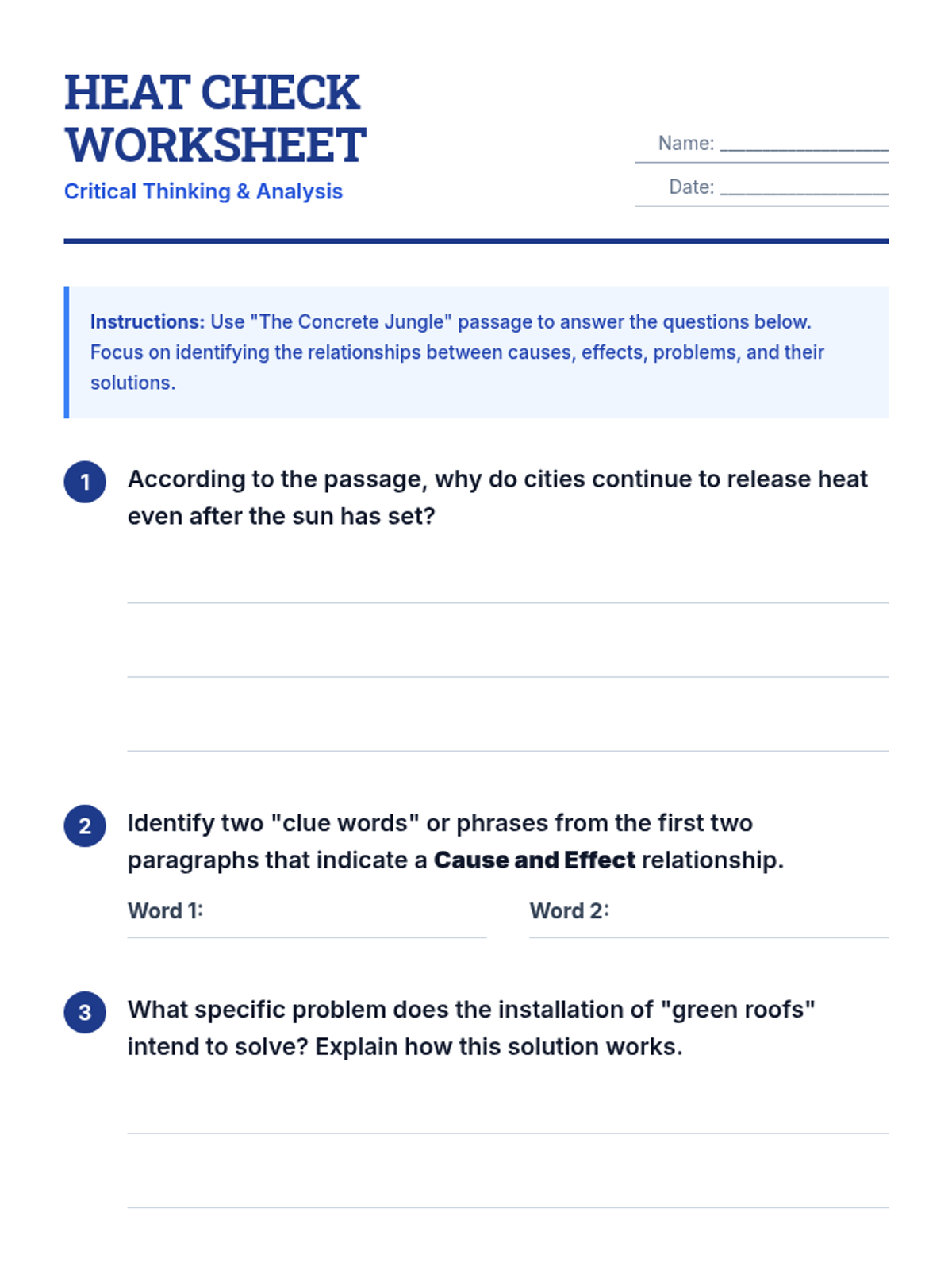
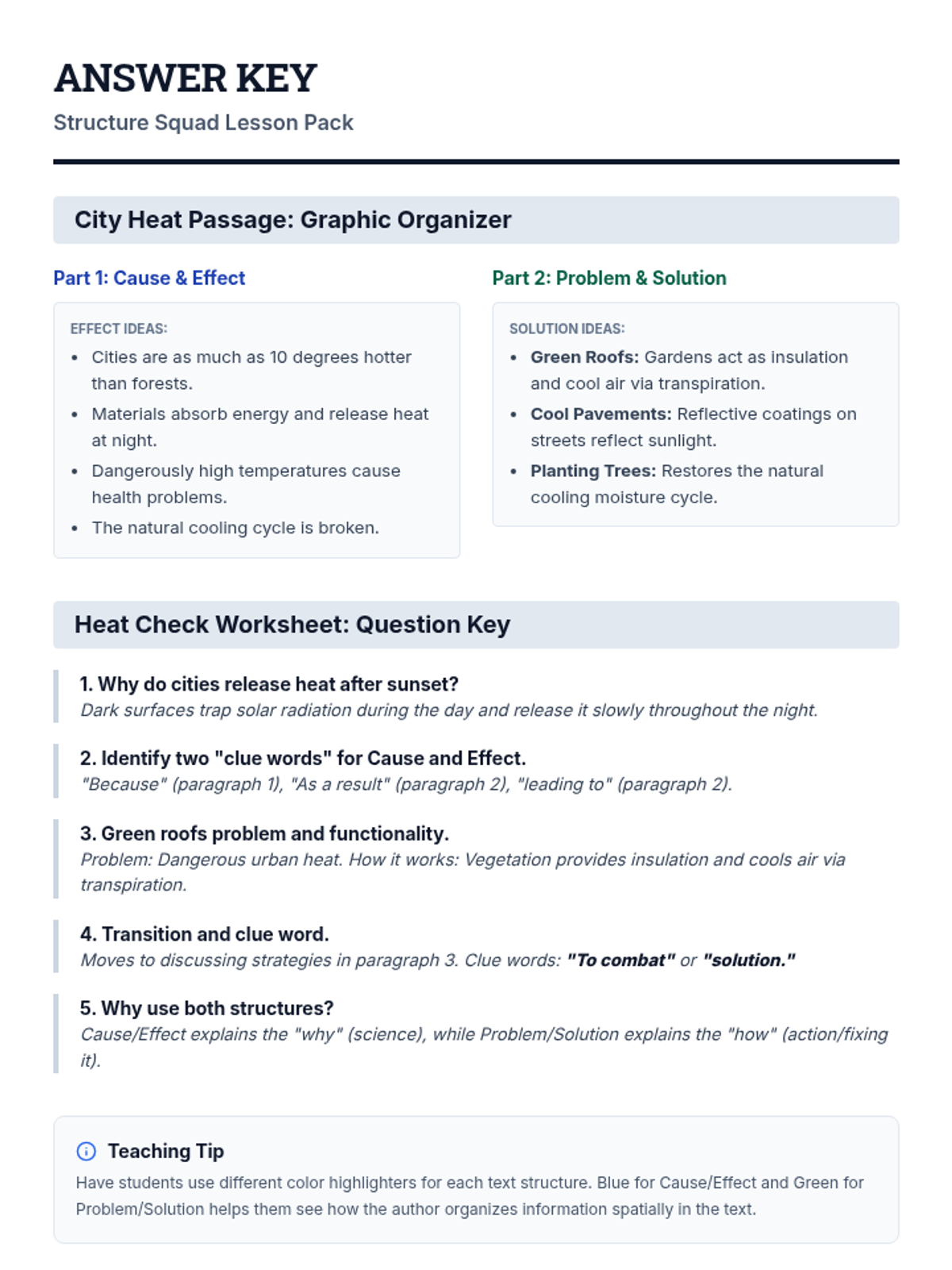
This lesson introduces students to identifying and distinguishing between cause-and-effect and problem-solution text structures using a high-interest passage about urban heat islands. Students will analyze the relationship between events and the methods used to solve environmental challenges.
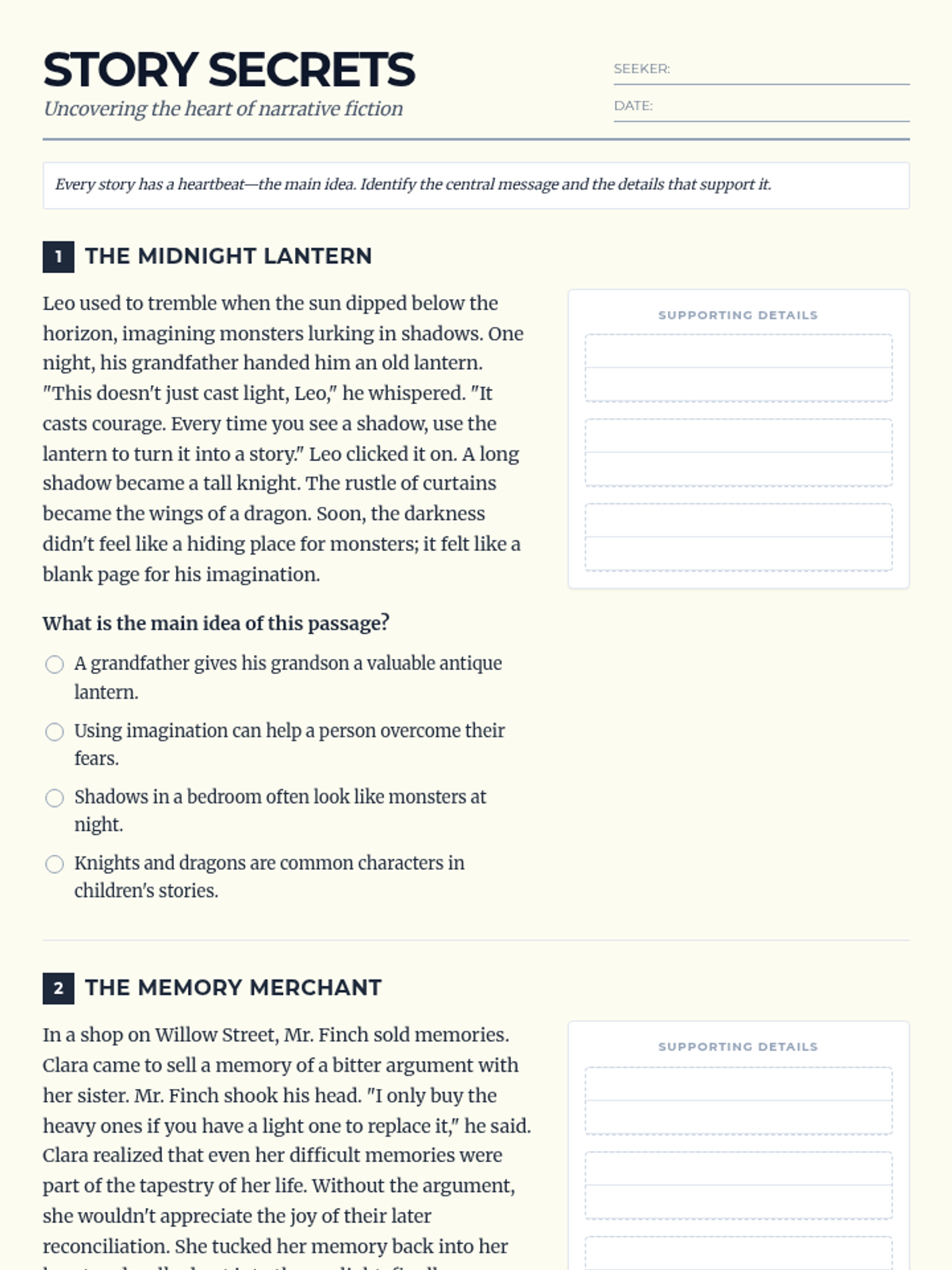
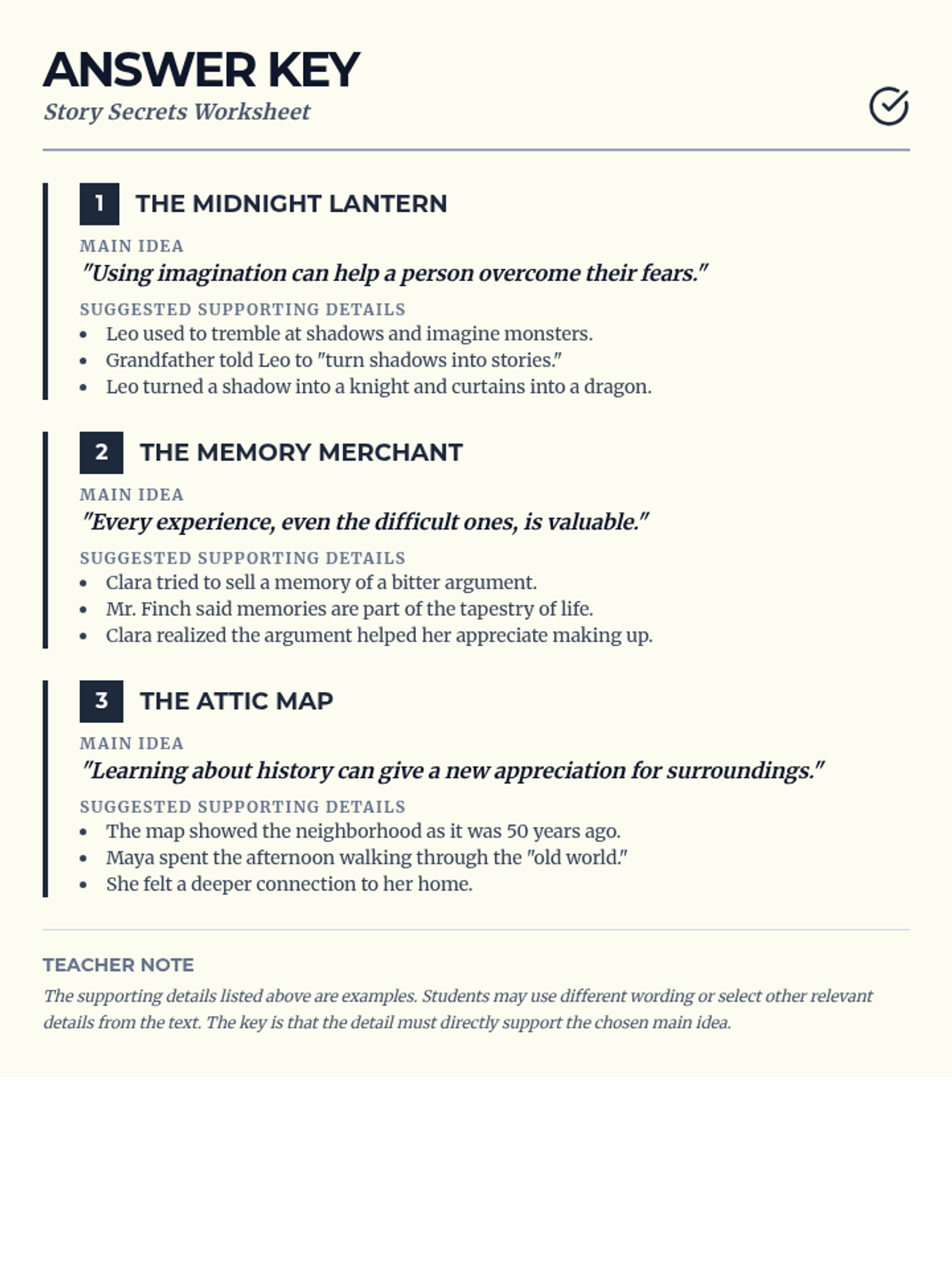
A lesson focused on identifying the main idea and supporting details within narrative fiction through engaging short stories and structured analysis.
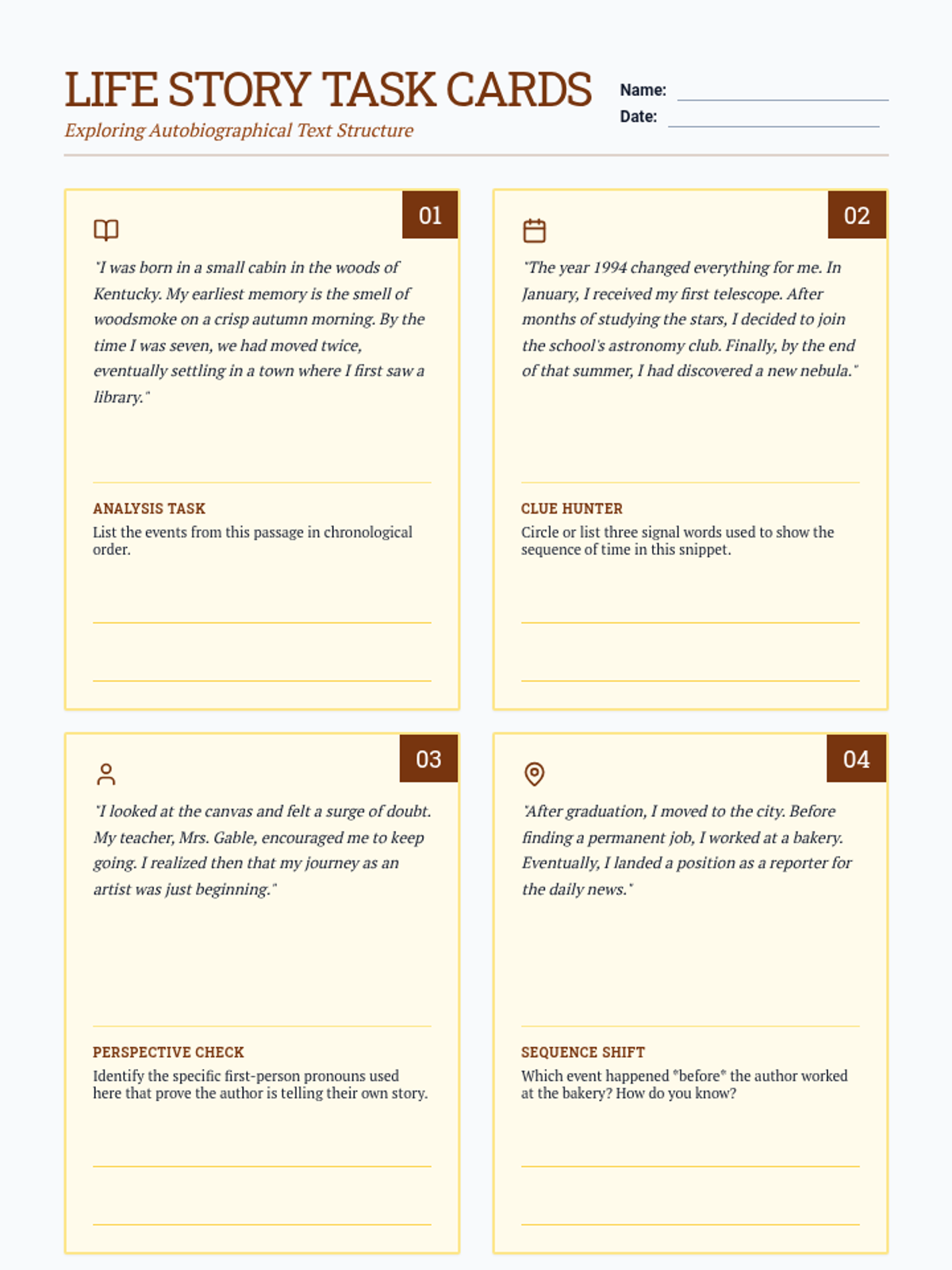
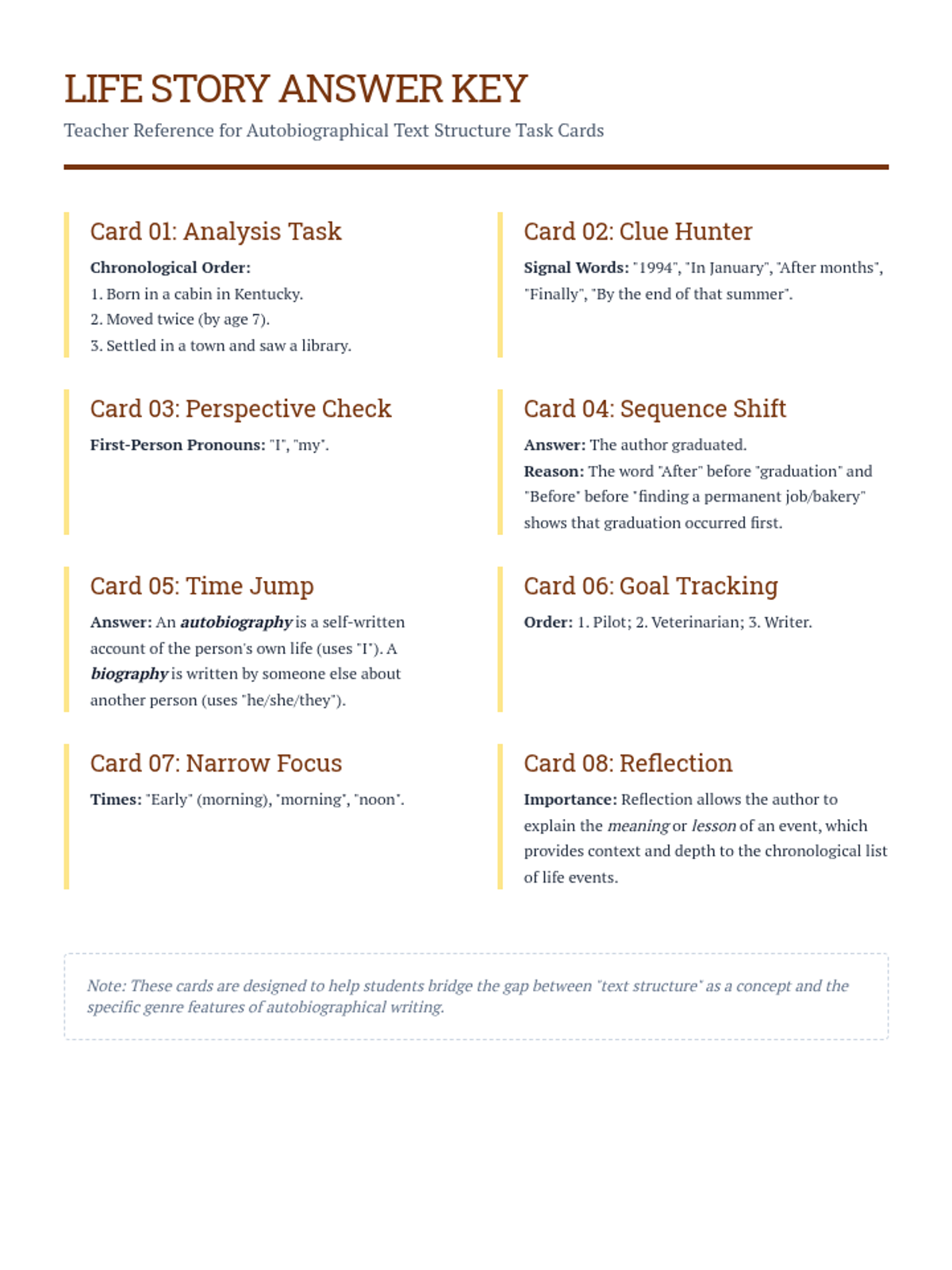
A lesson focused on identifying the features of autobiographical writing, including chronological text structure and first-person perspective.
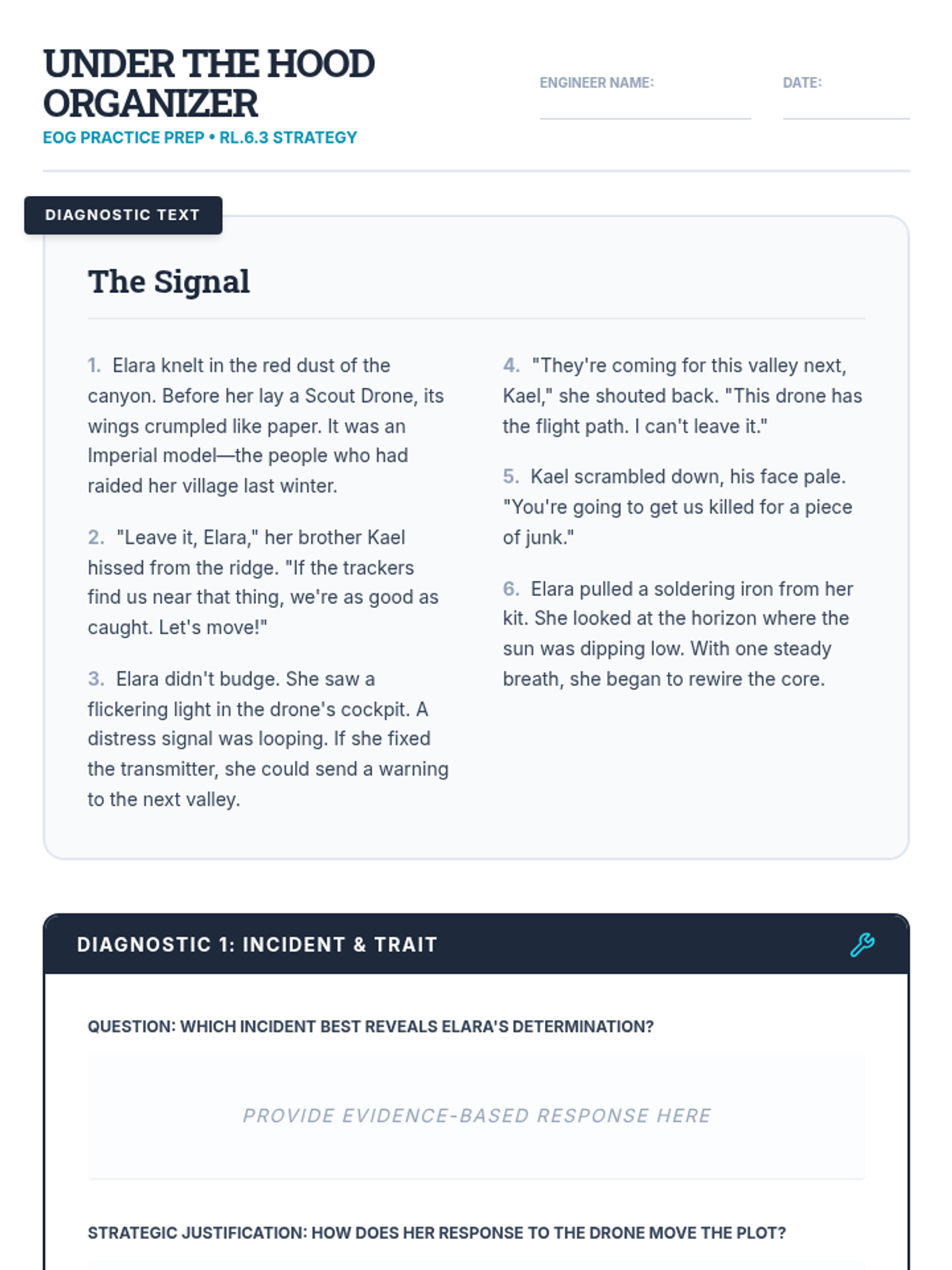
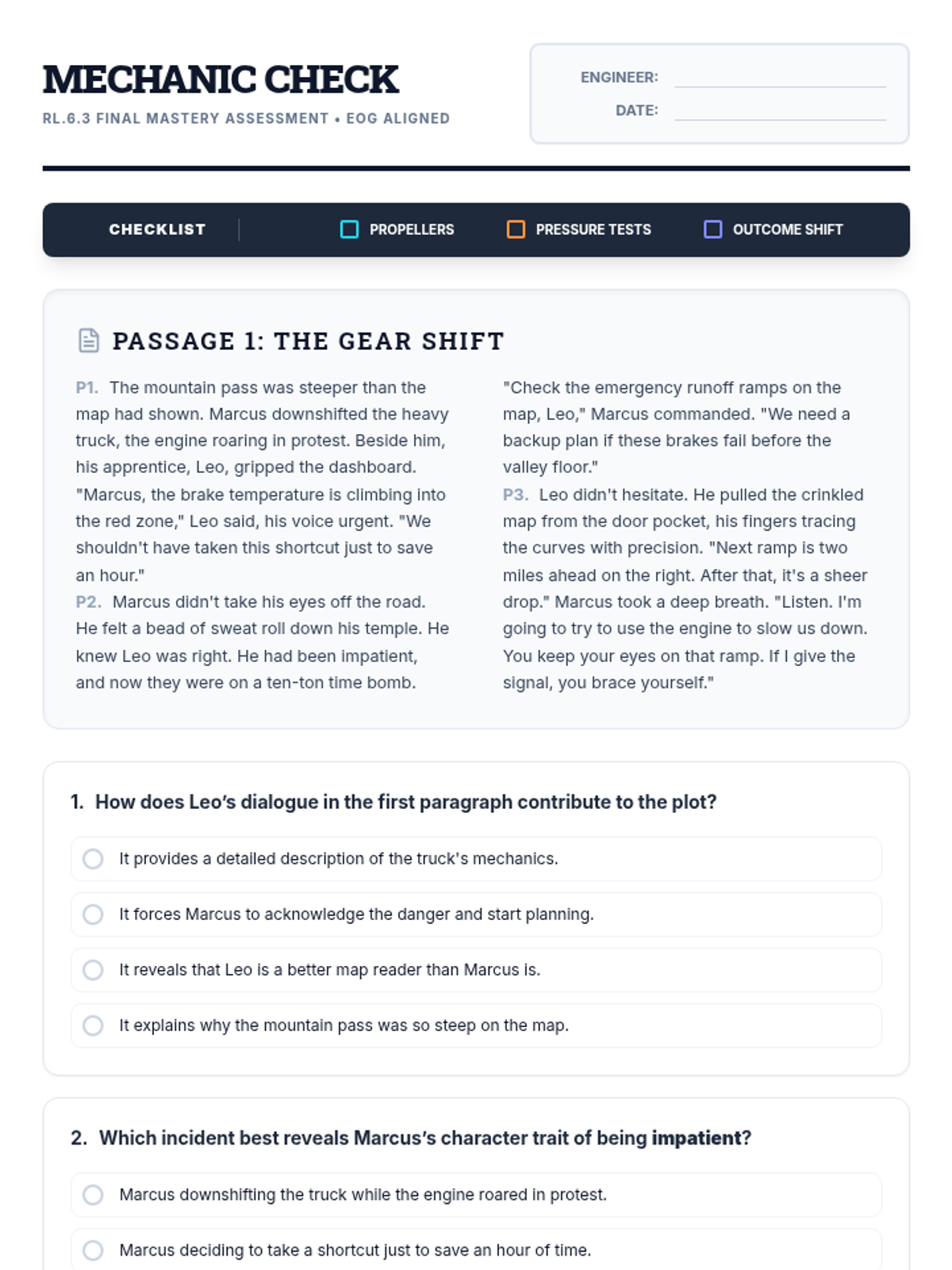
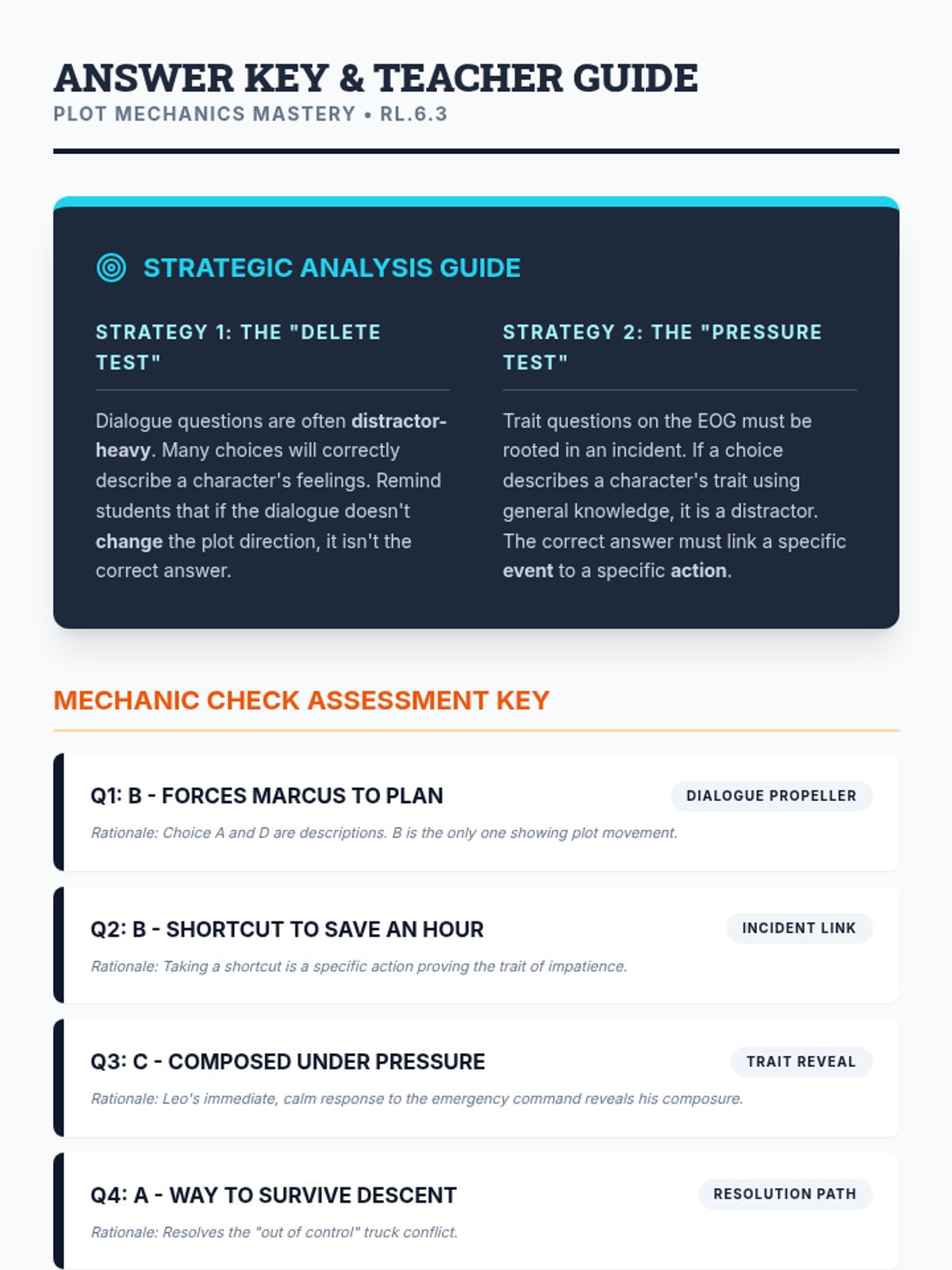
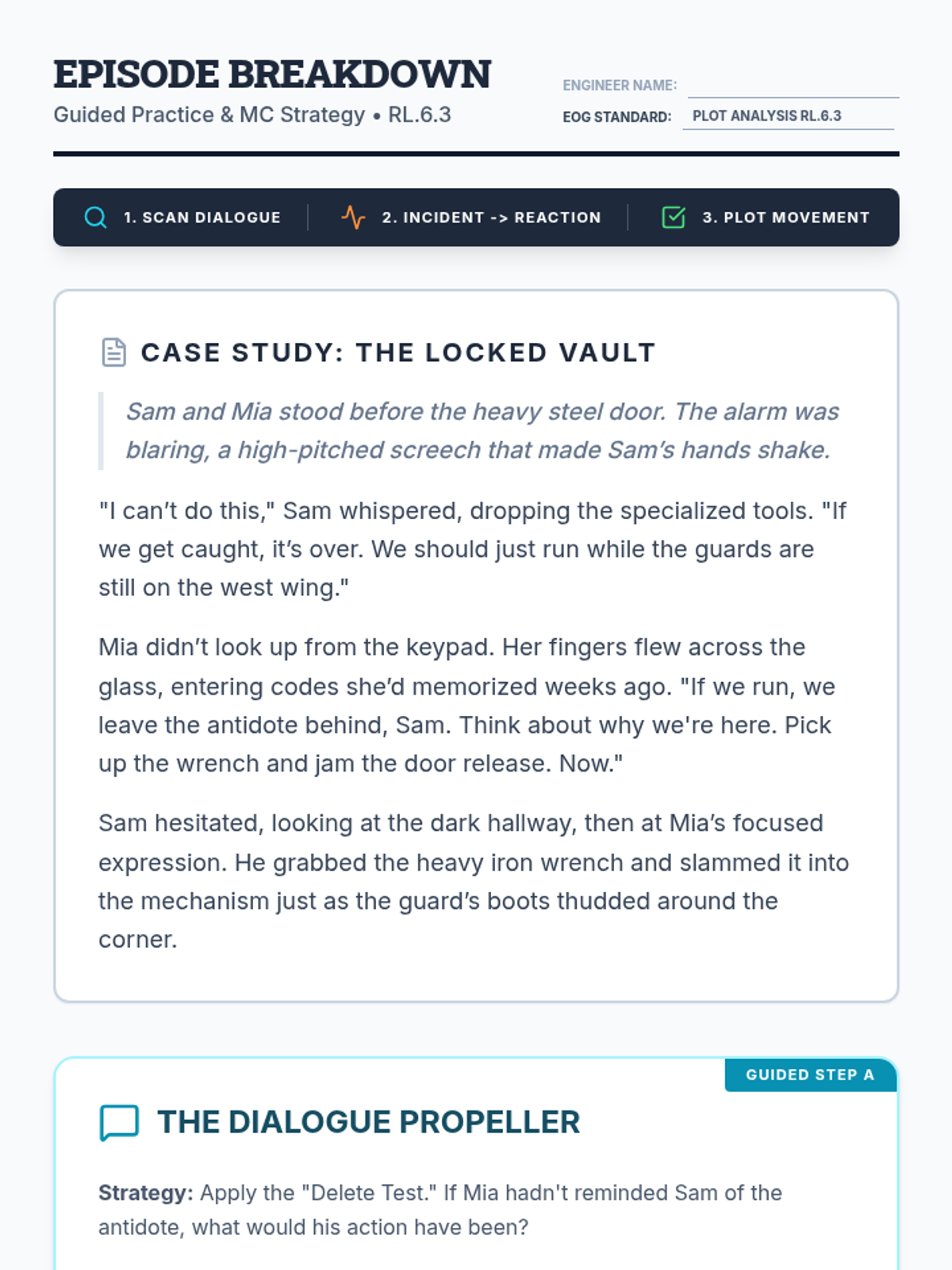
A reteach lesson focused on RL.6.3, analyzing how dialogue, incidents, and decisions drive a story's plot and reveal character traits using a 'story mechanics' theme.
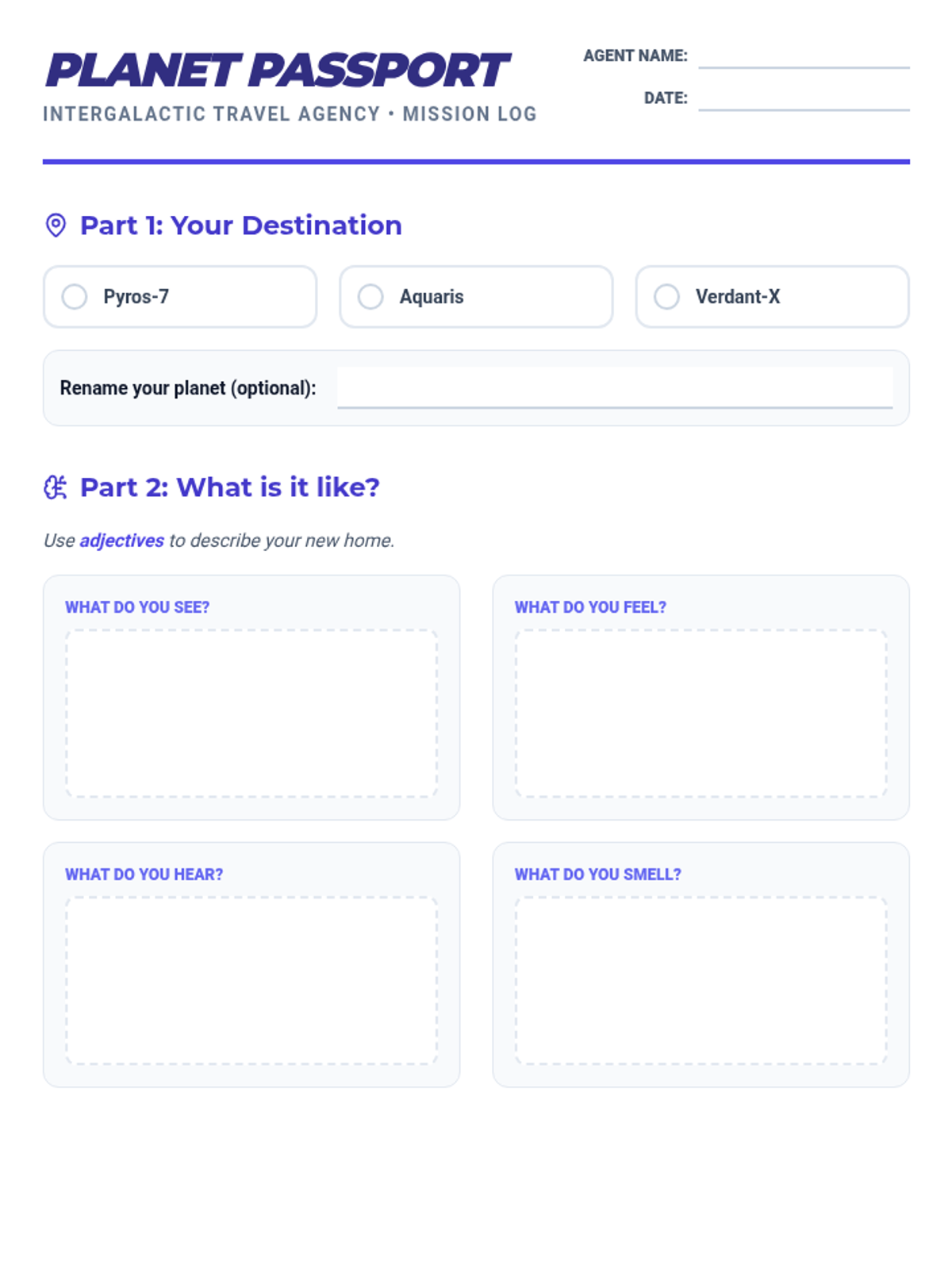
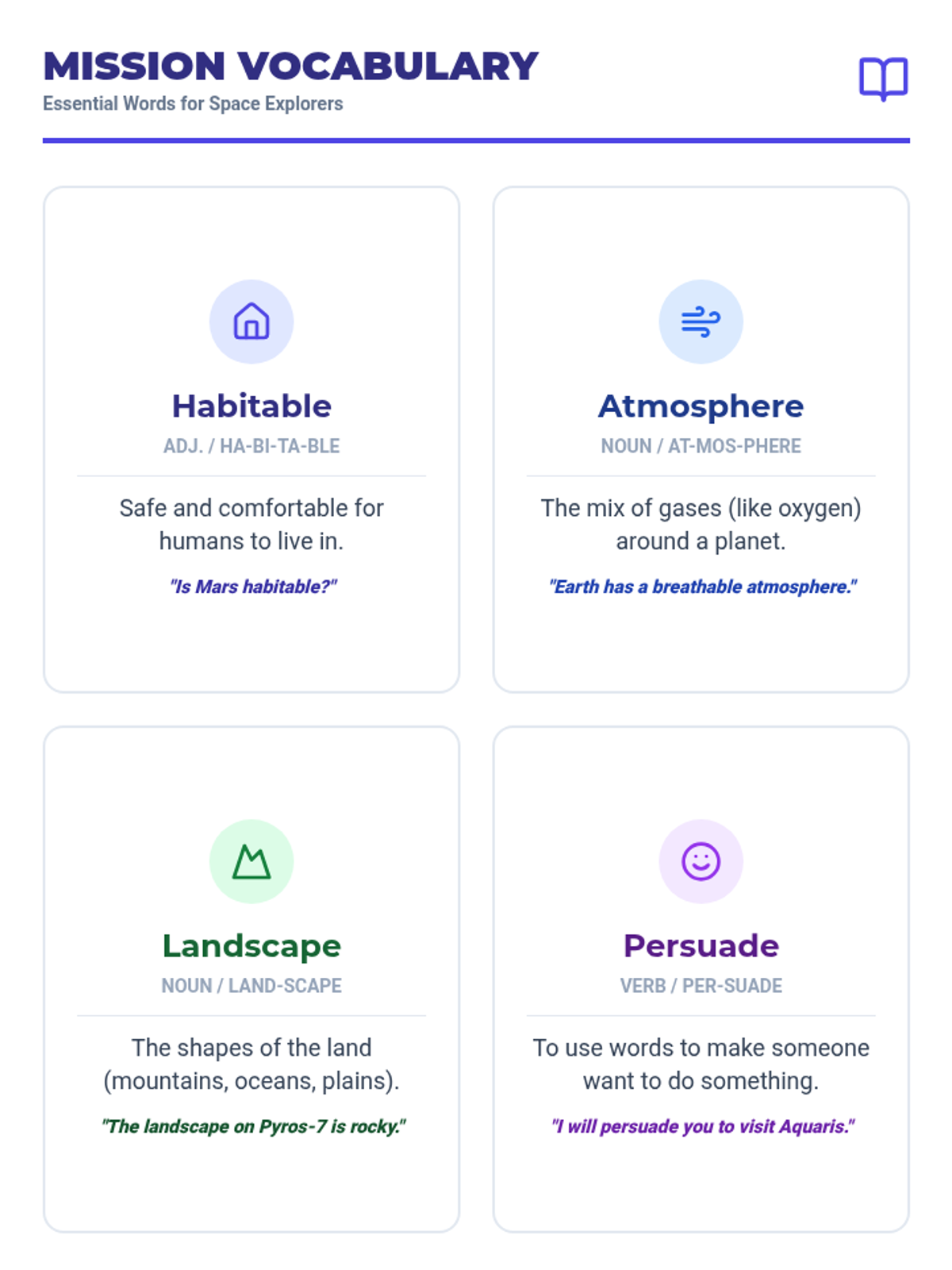
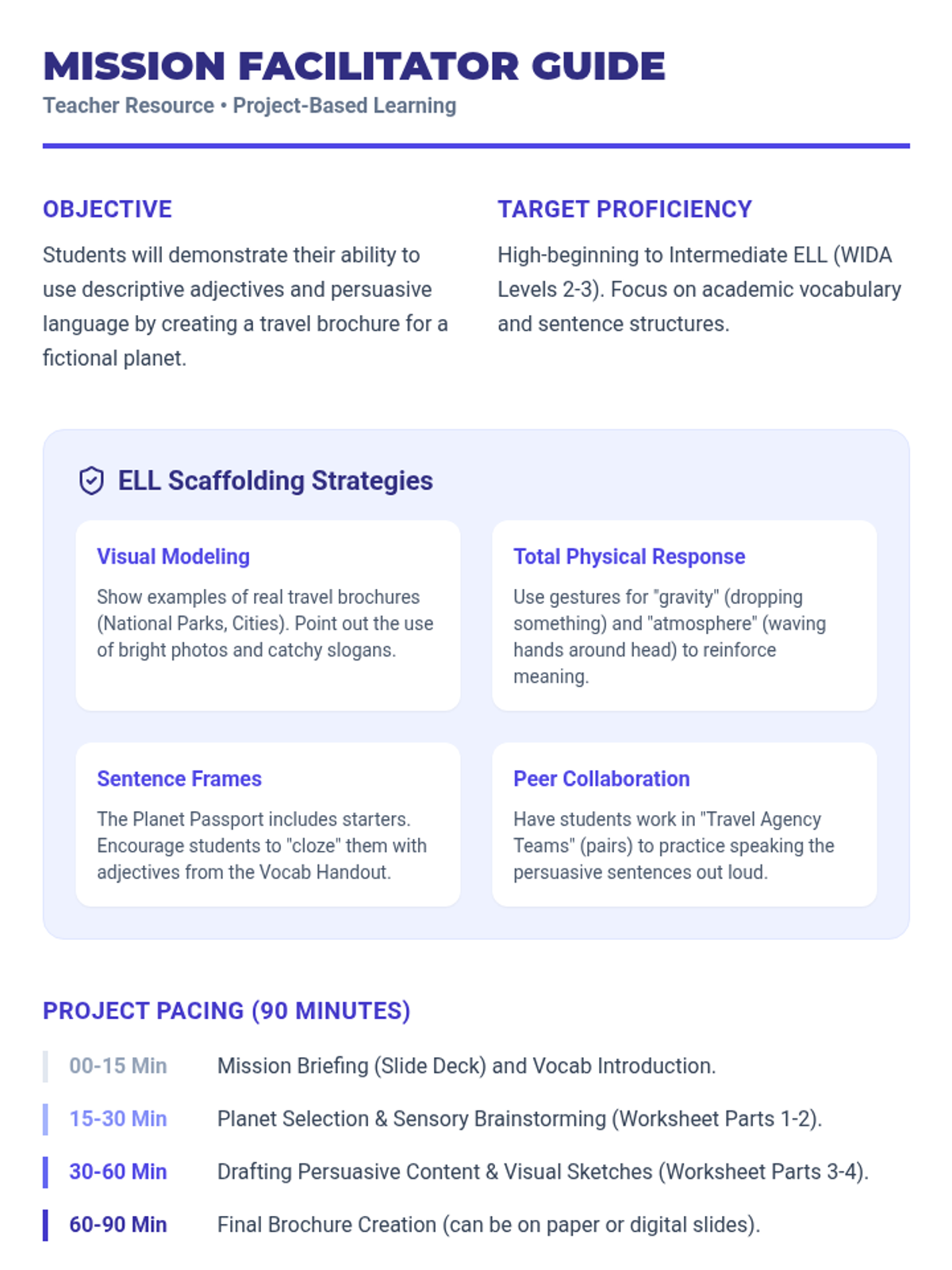
A project-based lesson for 9th grade ELL students where they act as intergalactic travel agents, designing a travel campaign for a distant planet to practice descriptive and persuasive language.
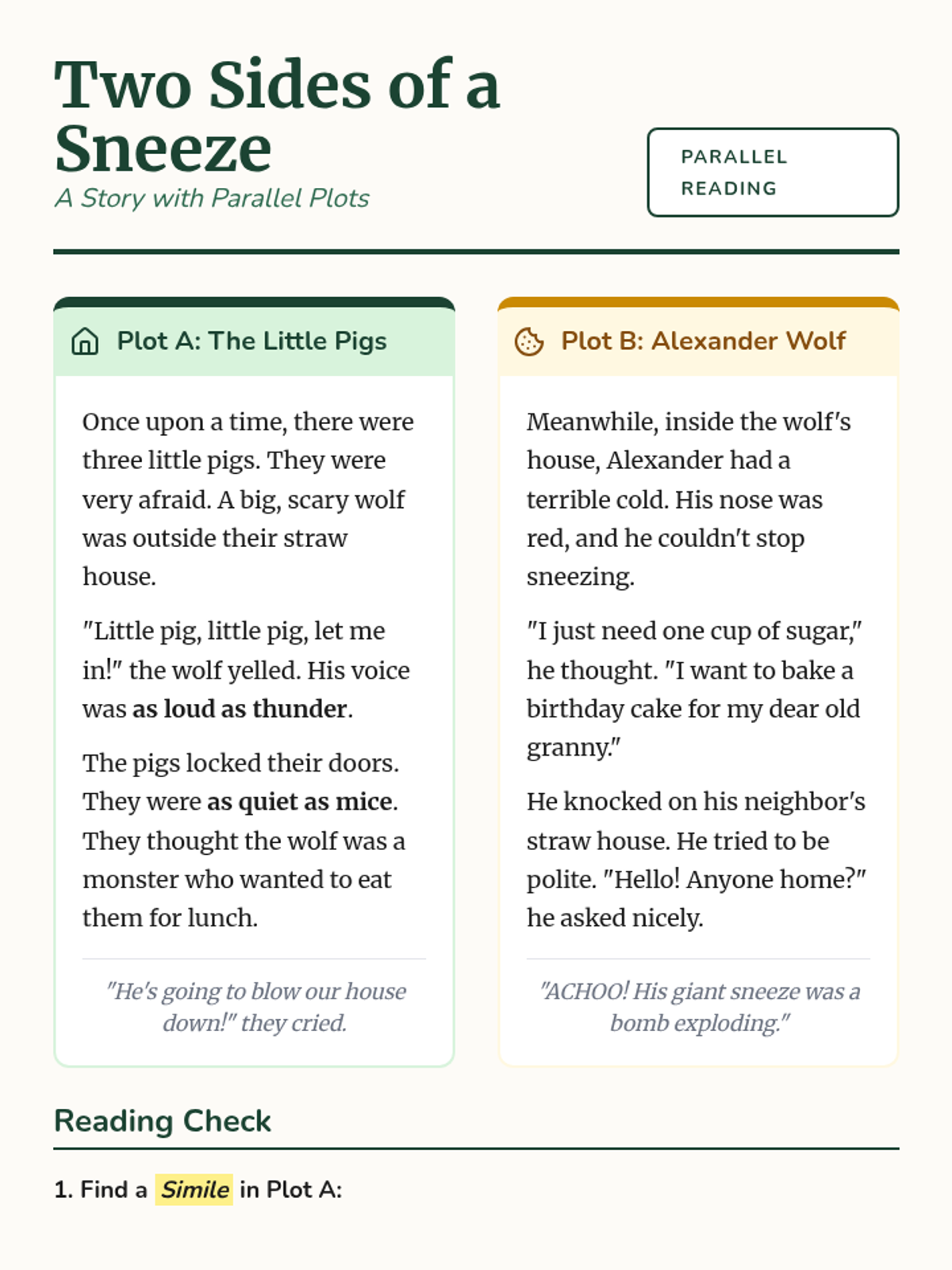
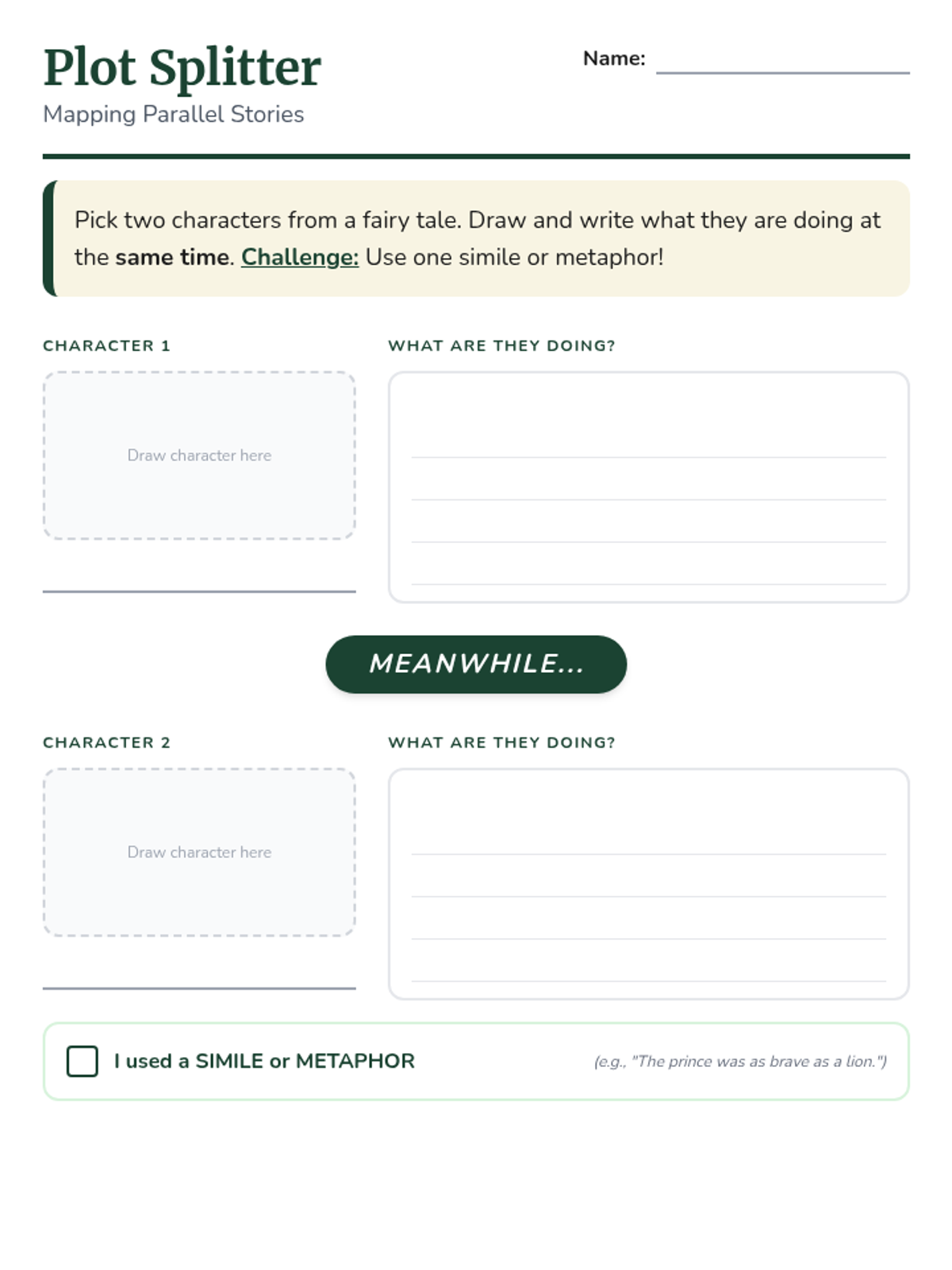
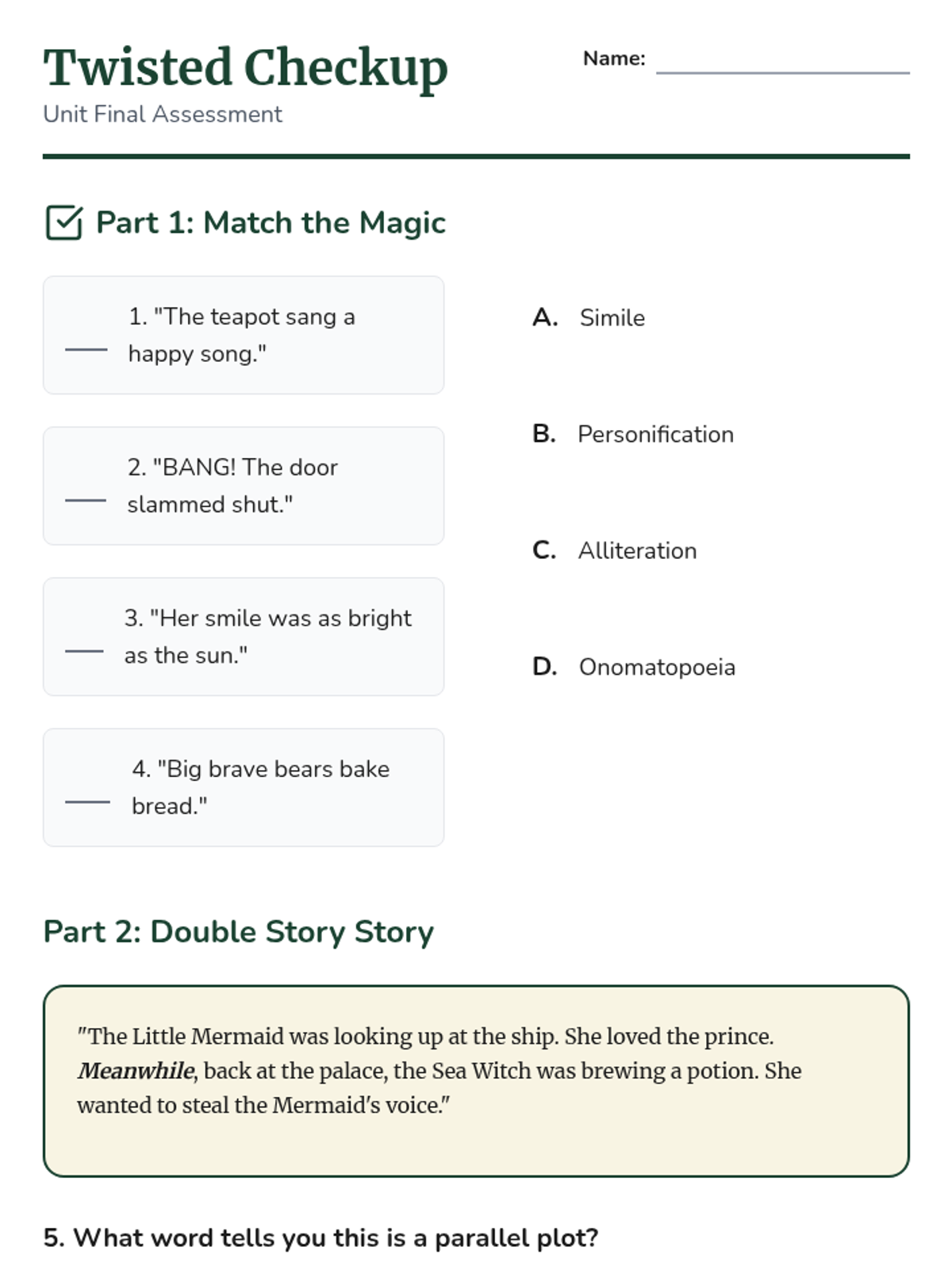
A 5-day study of parallel plots, focusing on how two stories can happen at the same time or show different perspectives of the same event.
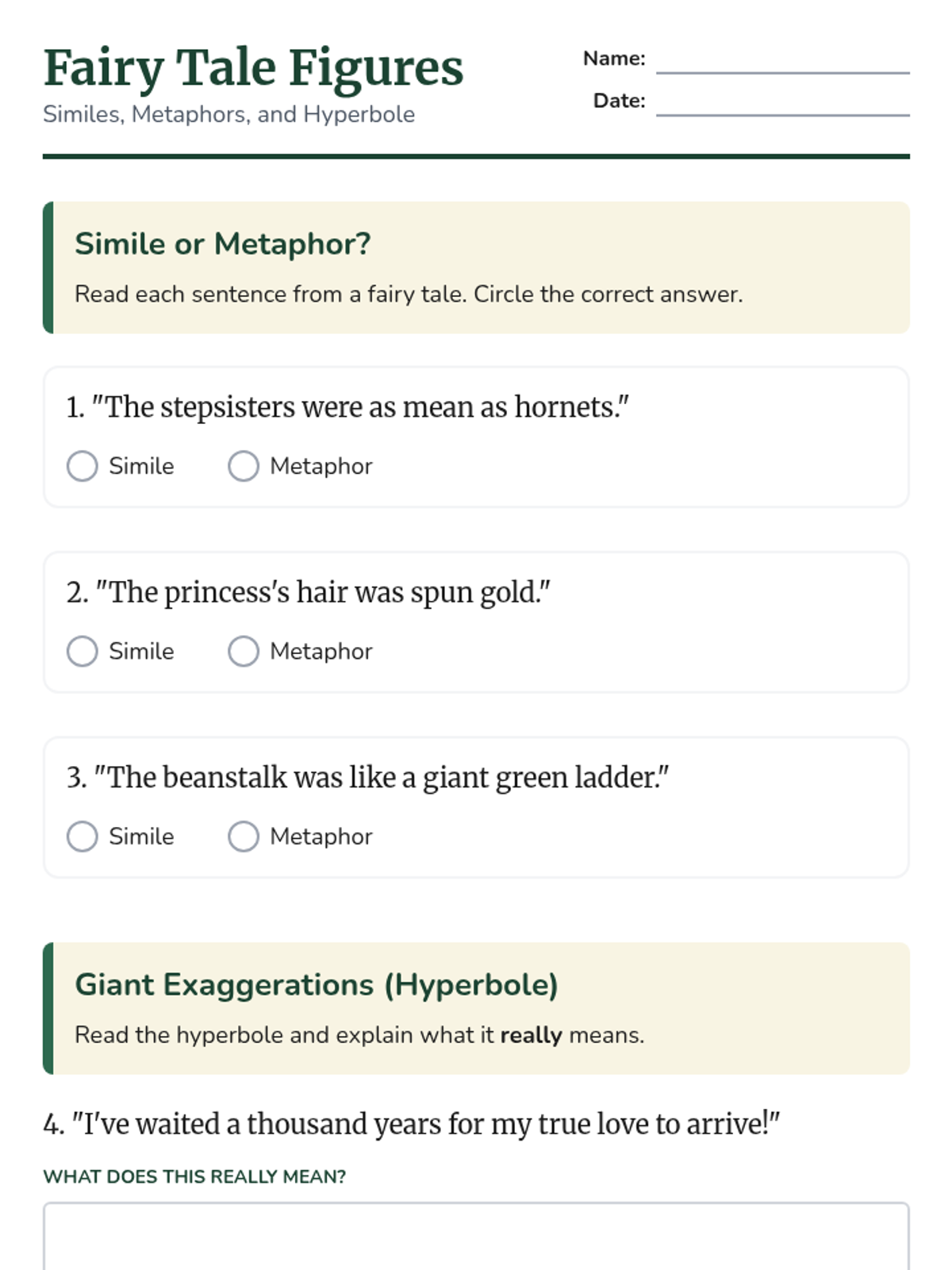
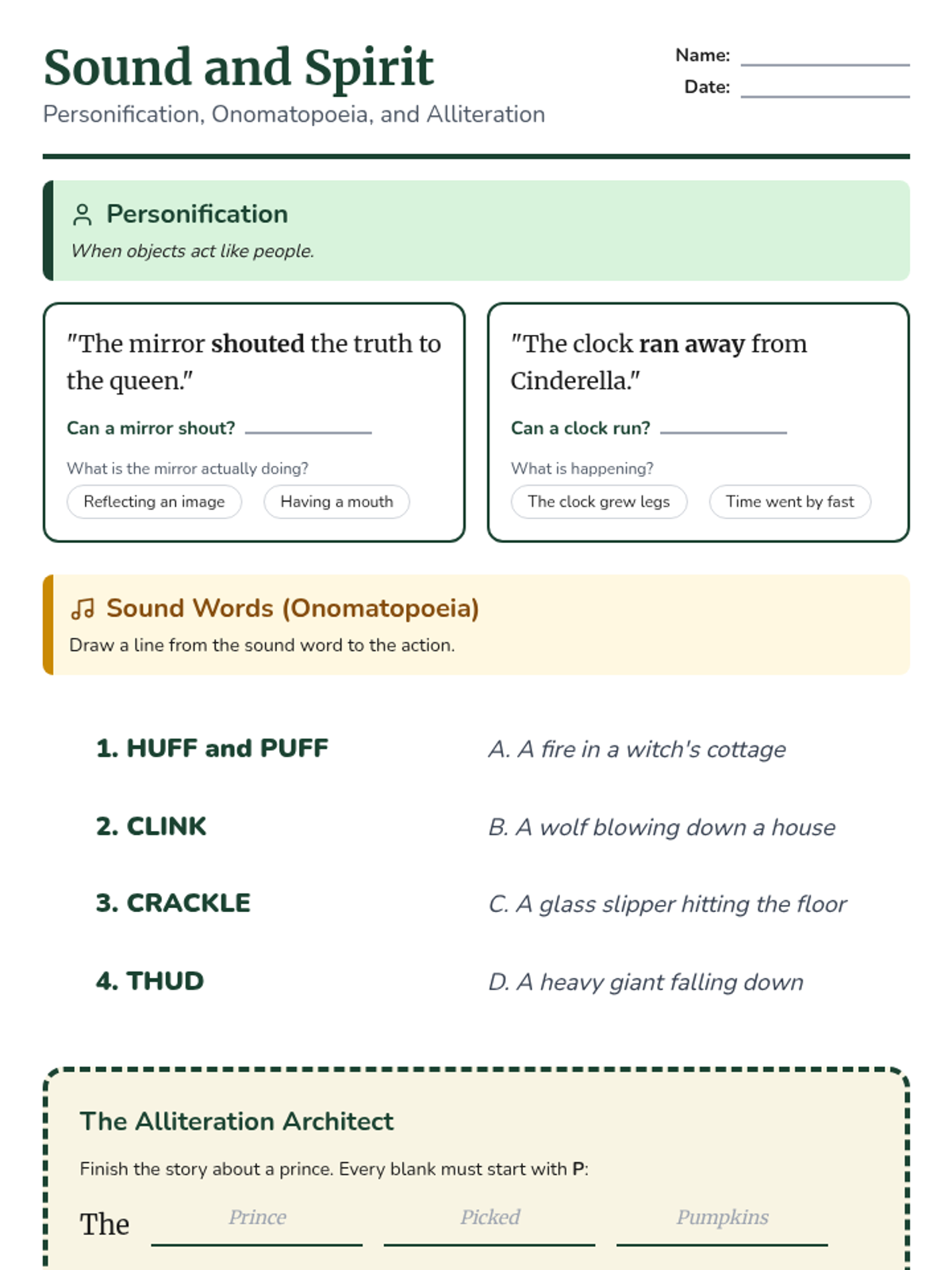
A 5-day exploration of figurative language (similes, metaphors, hyperbole, personification, onomatopoeia, alliteration) through the lens of classic fairy tales.