Students focus exclusively on the number 5, exploring the prefix 'penta-' and identifying pentagons in various forms. The lesson uses high-fives and hand tracing to anchor the concept of five points and five sides.
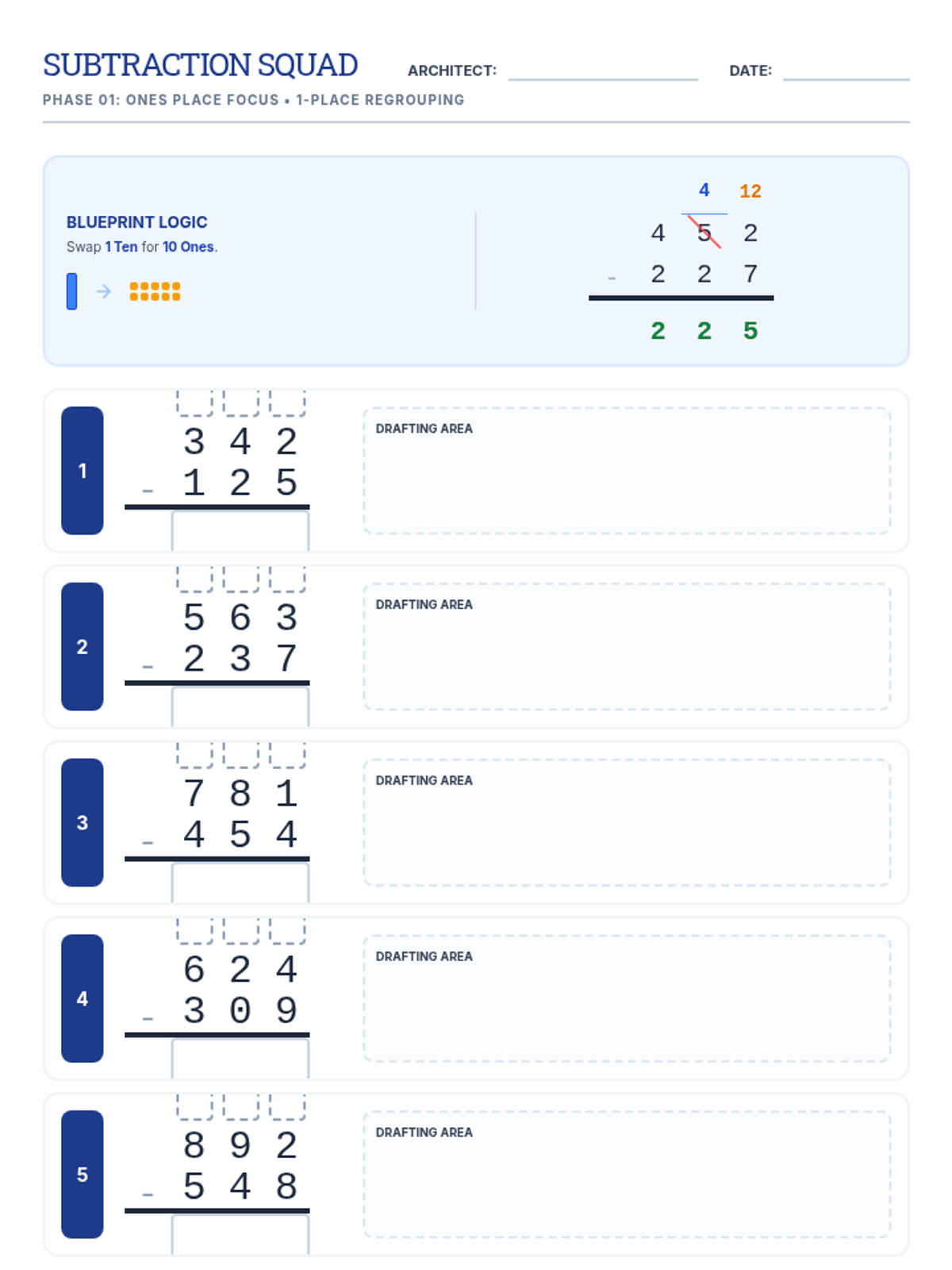
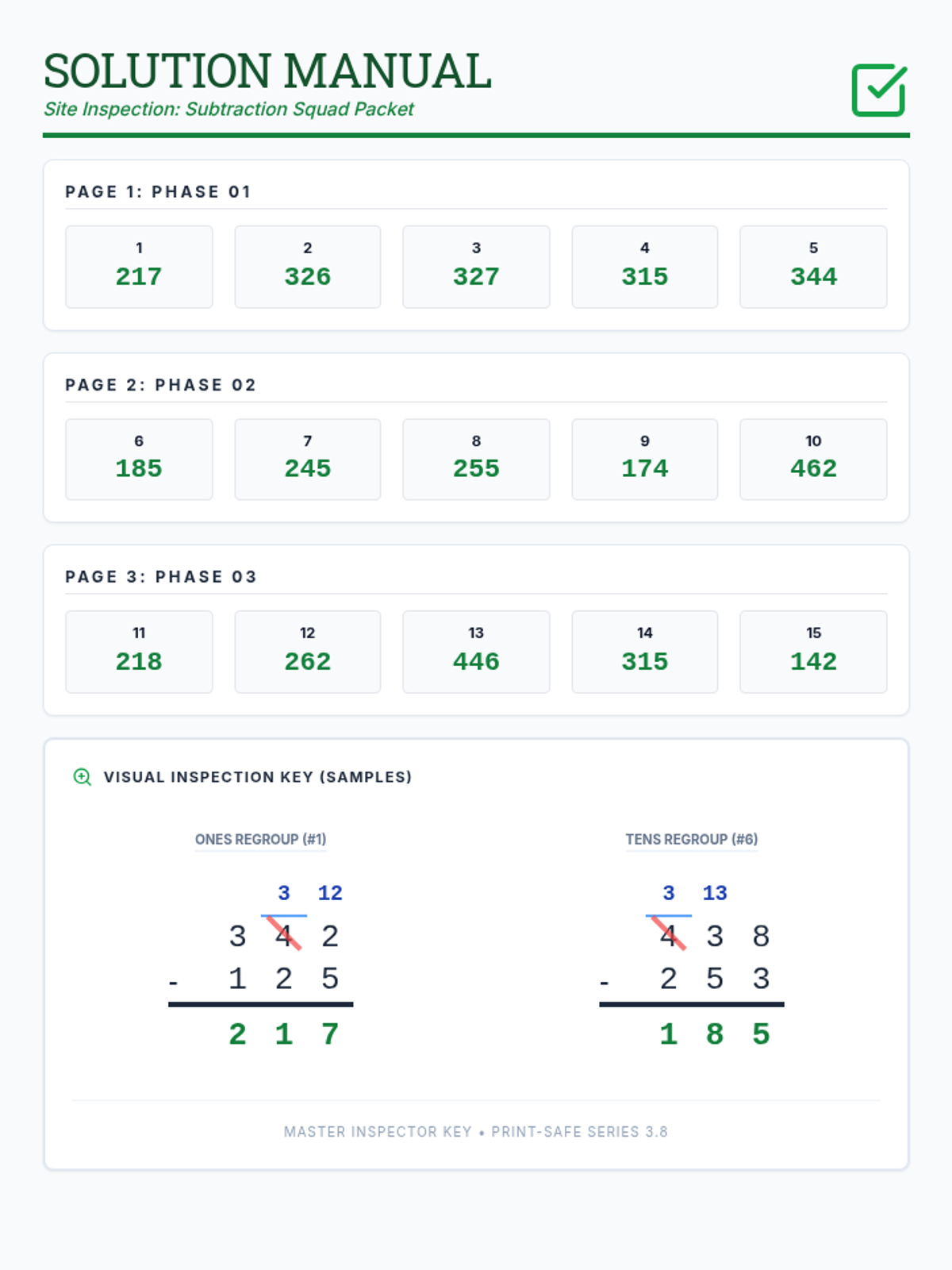
A focused set of materials for mastering 3-digit subtraction with regrouping across a single place value, featuring technical blueprint-style visuals and structured practice.
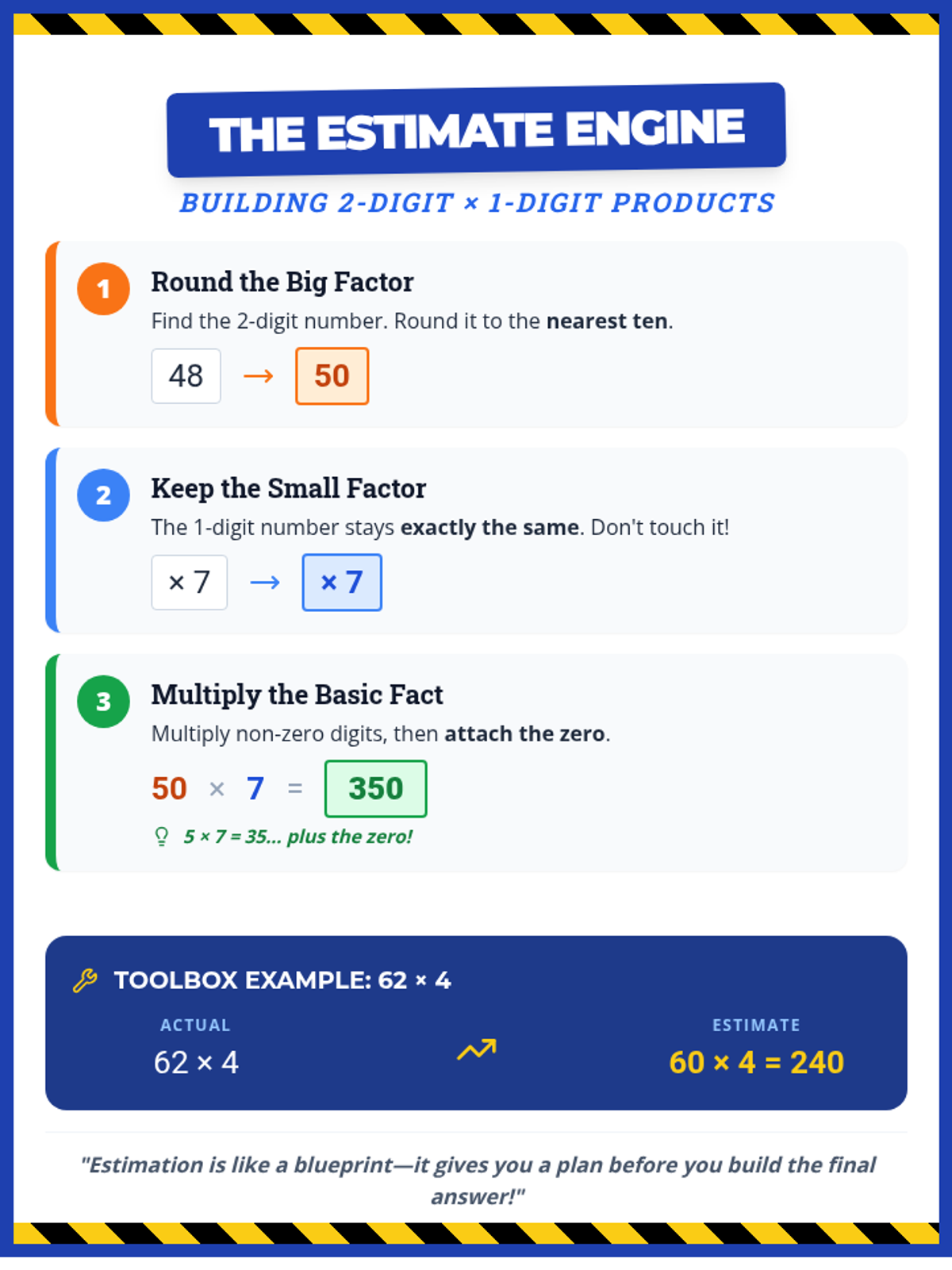
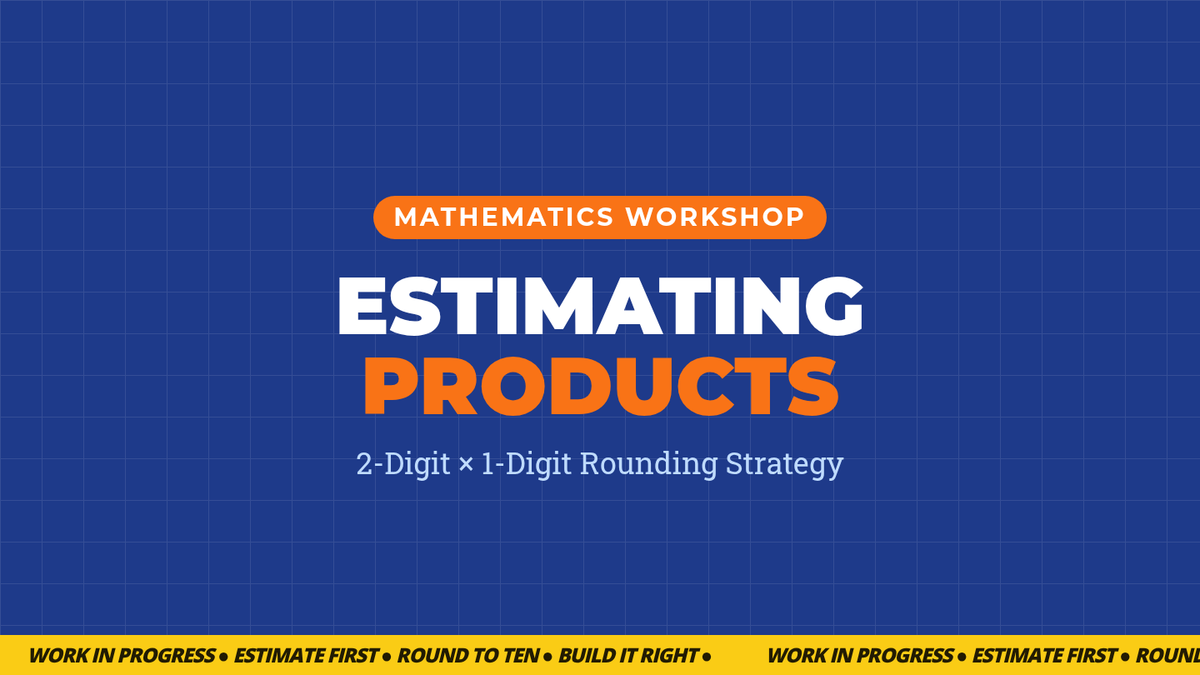
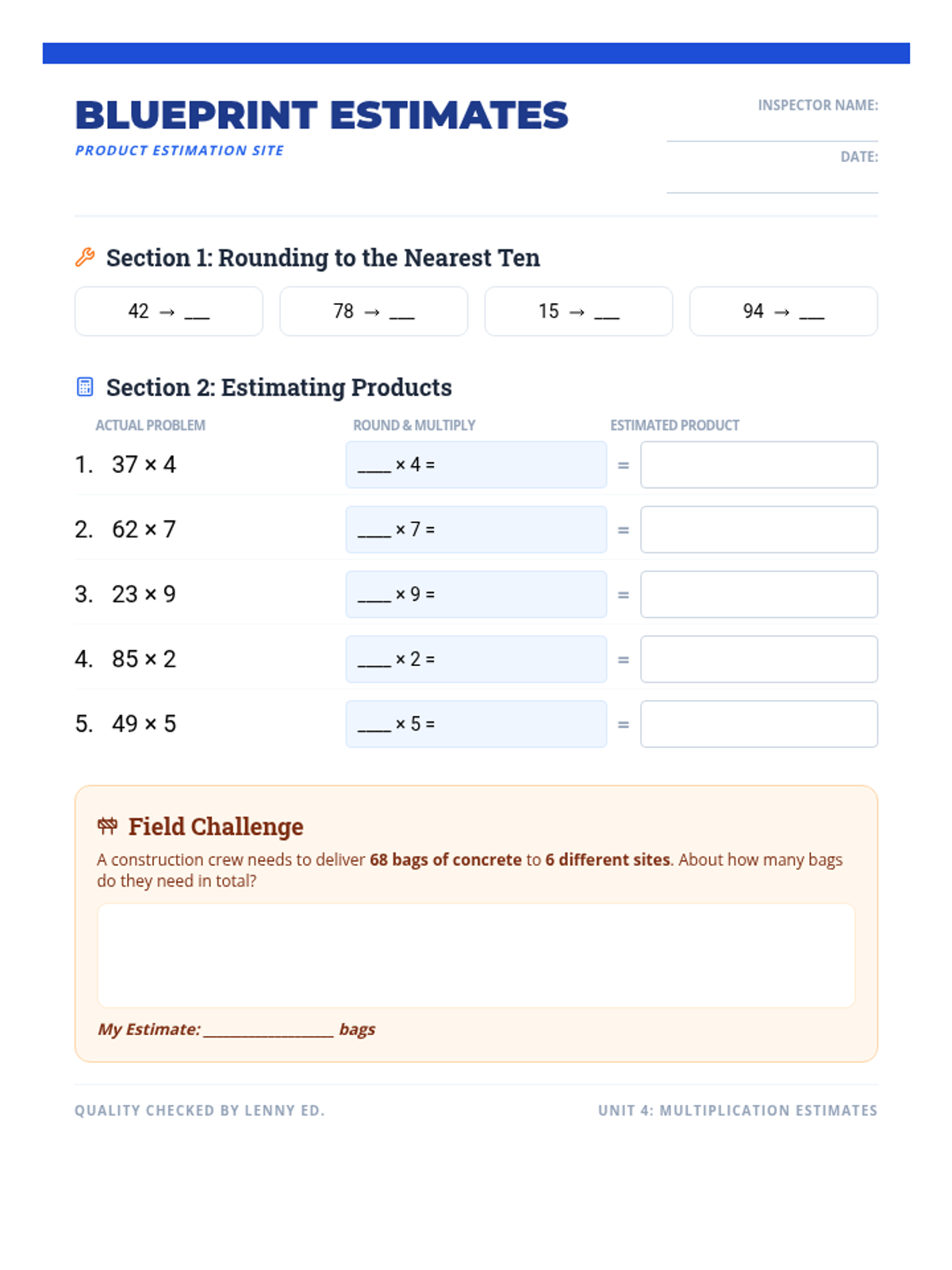
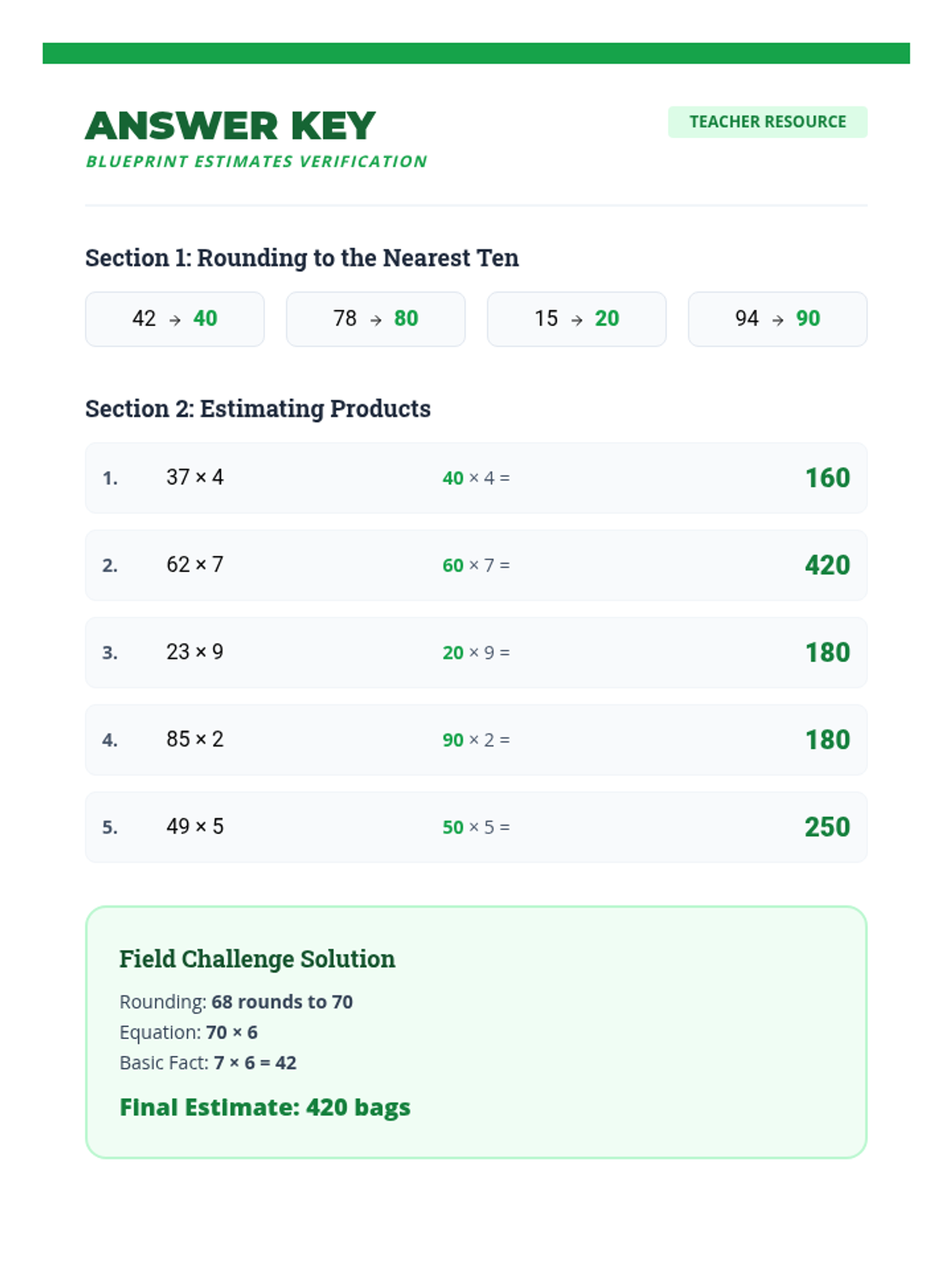
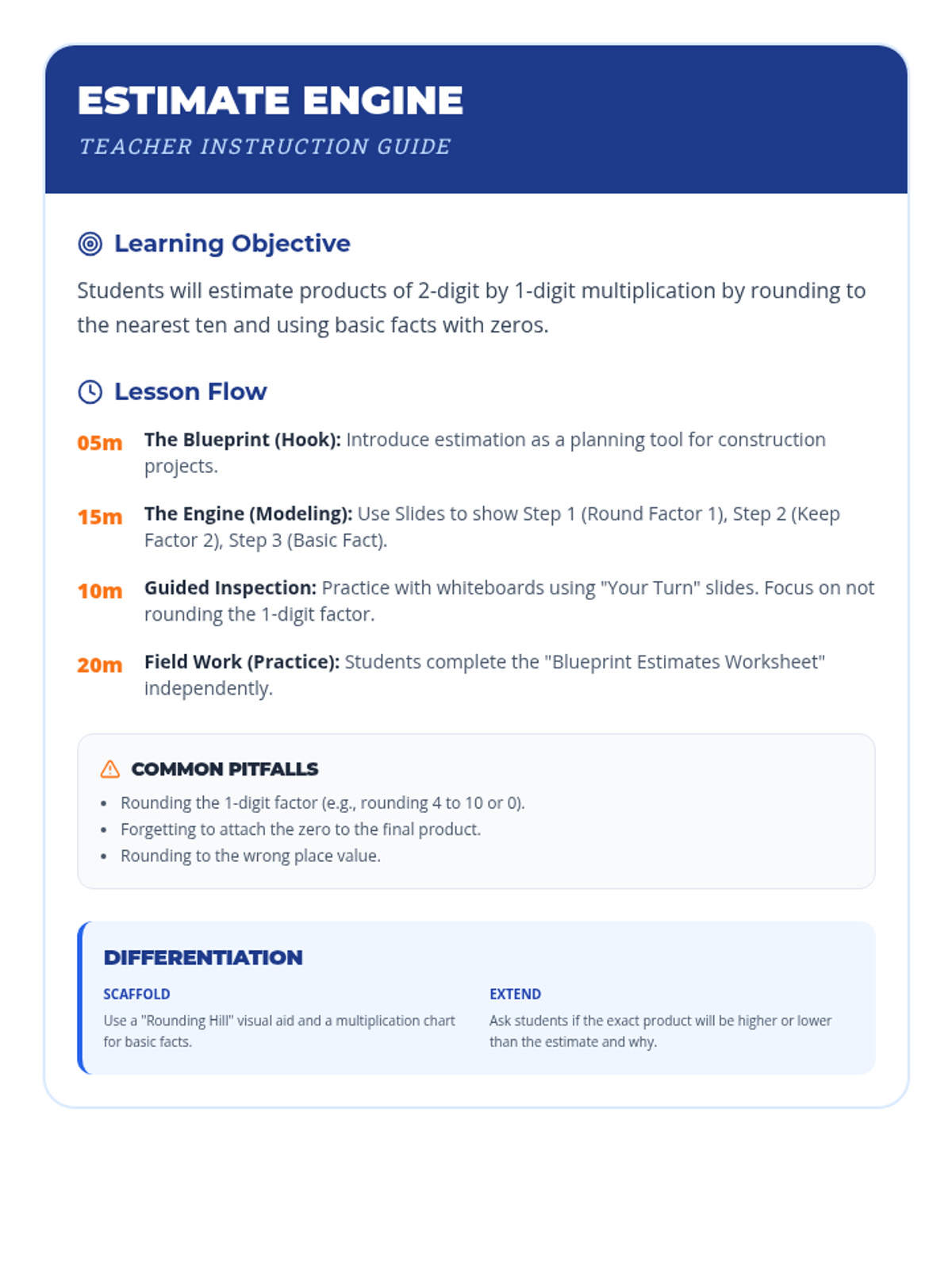
A comprehensive lesson on estimating products of 2-digit by 1-digit multiplication by rounding to the nearest ten, featuring a construction-themed approach to 'building' estimates.
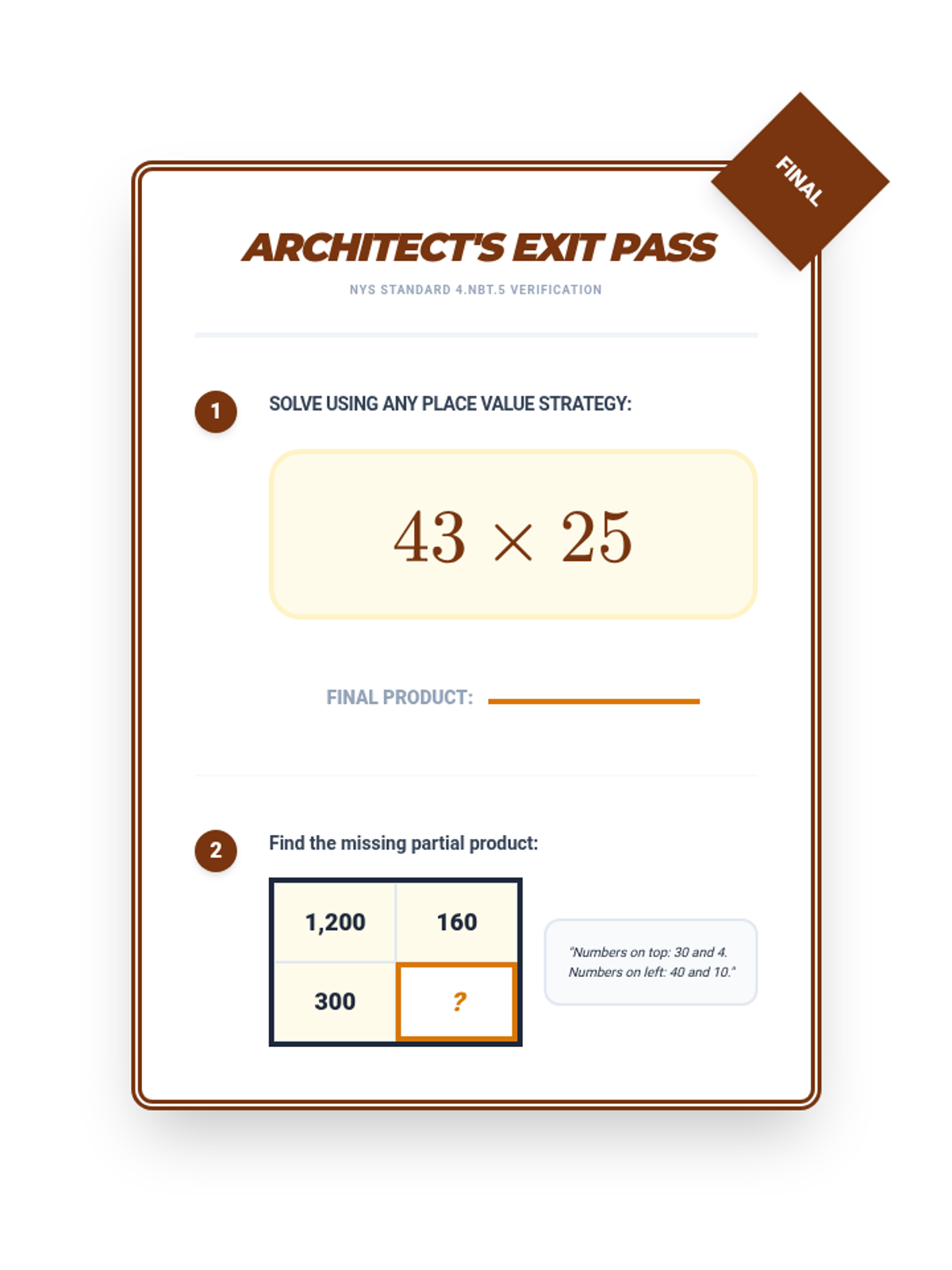
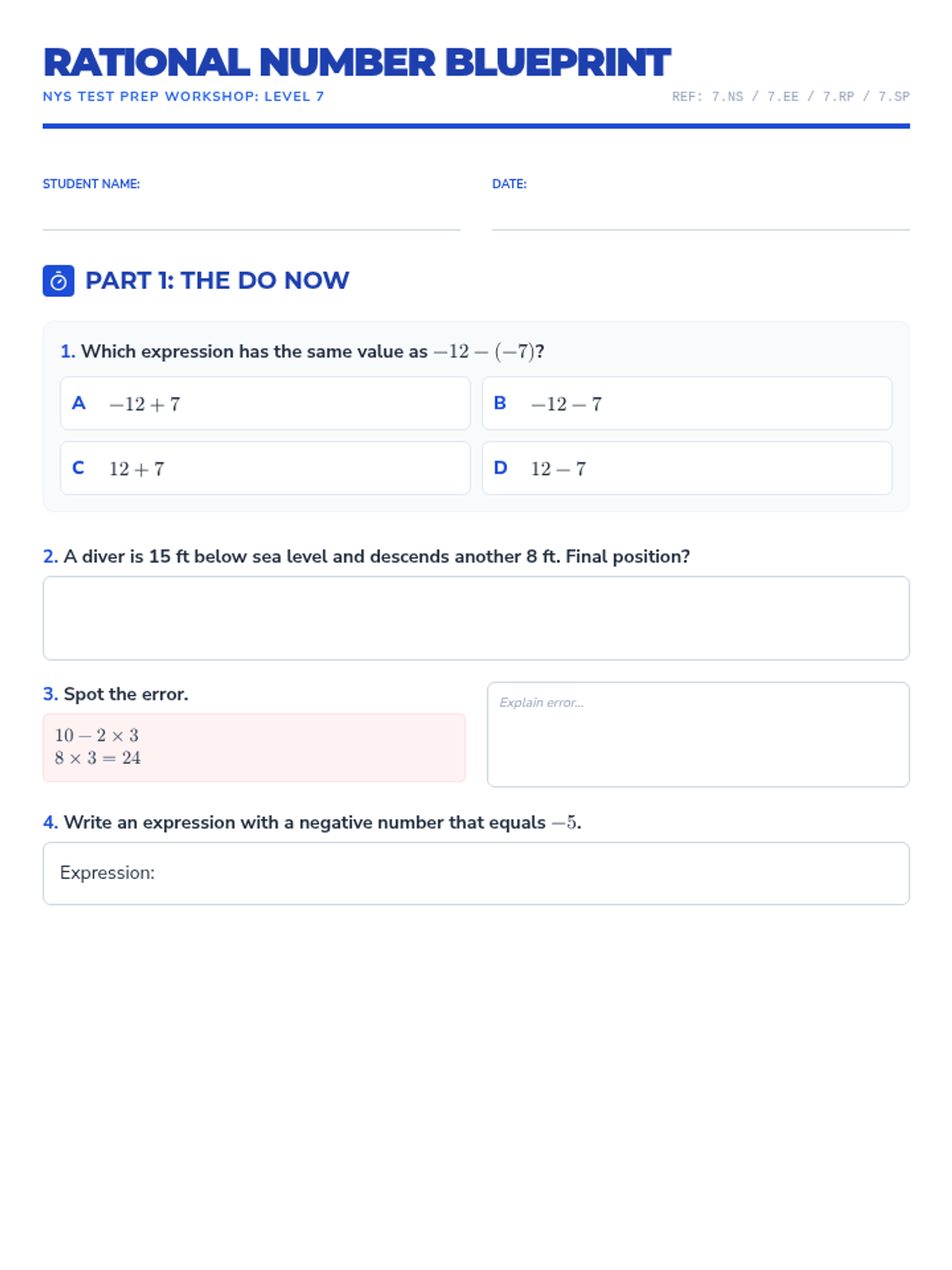
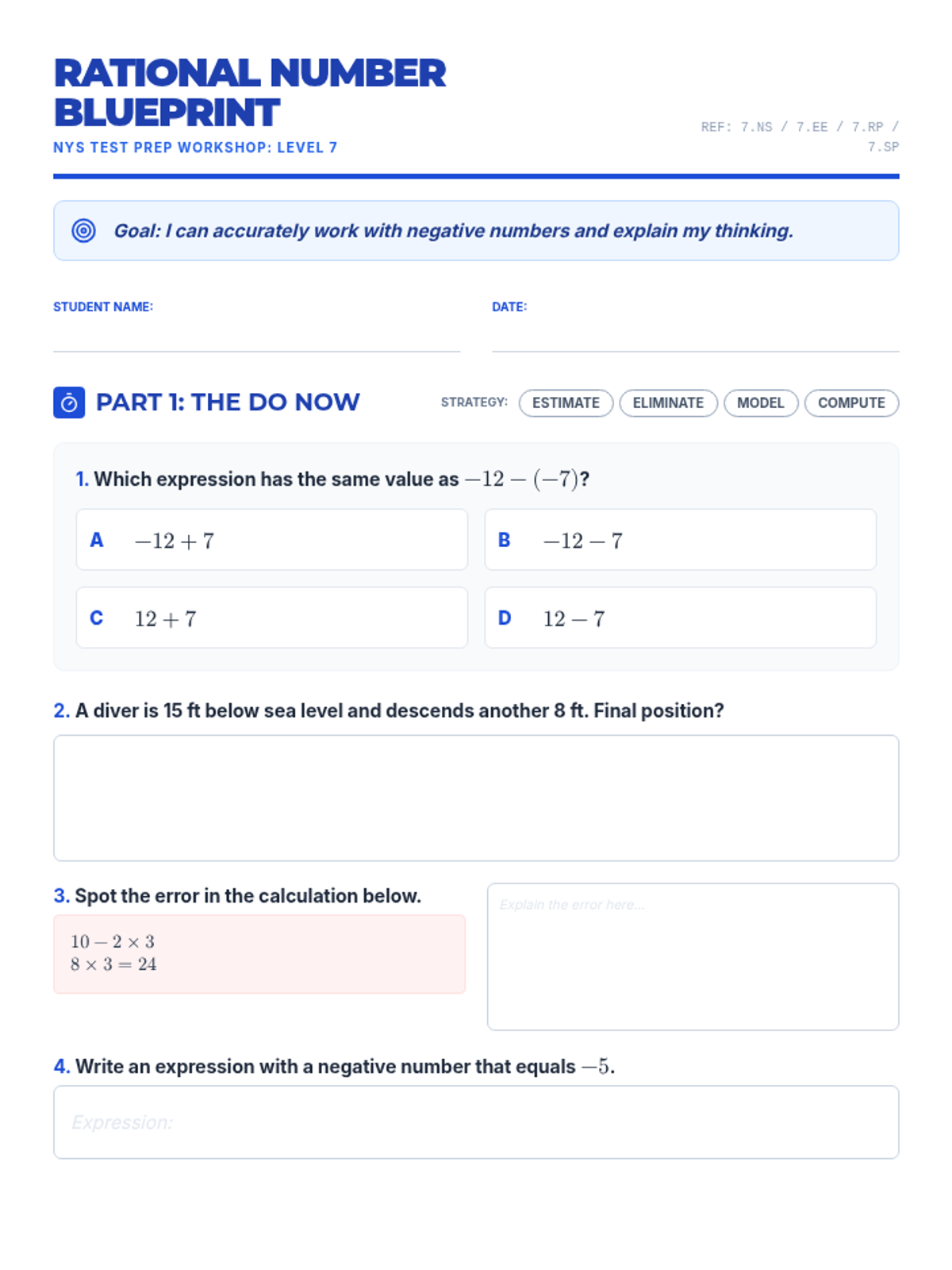
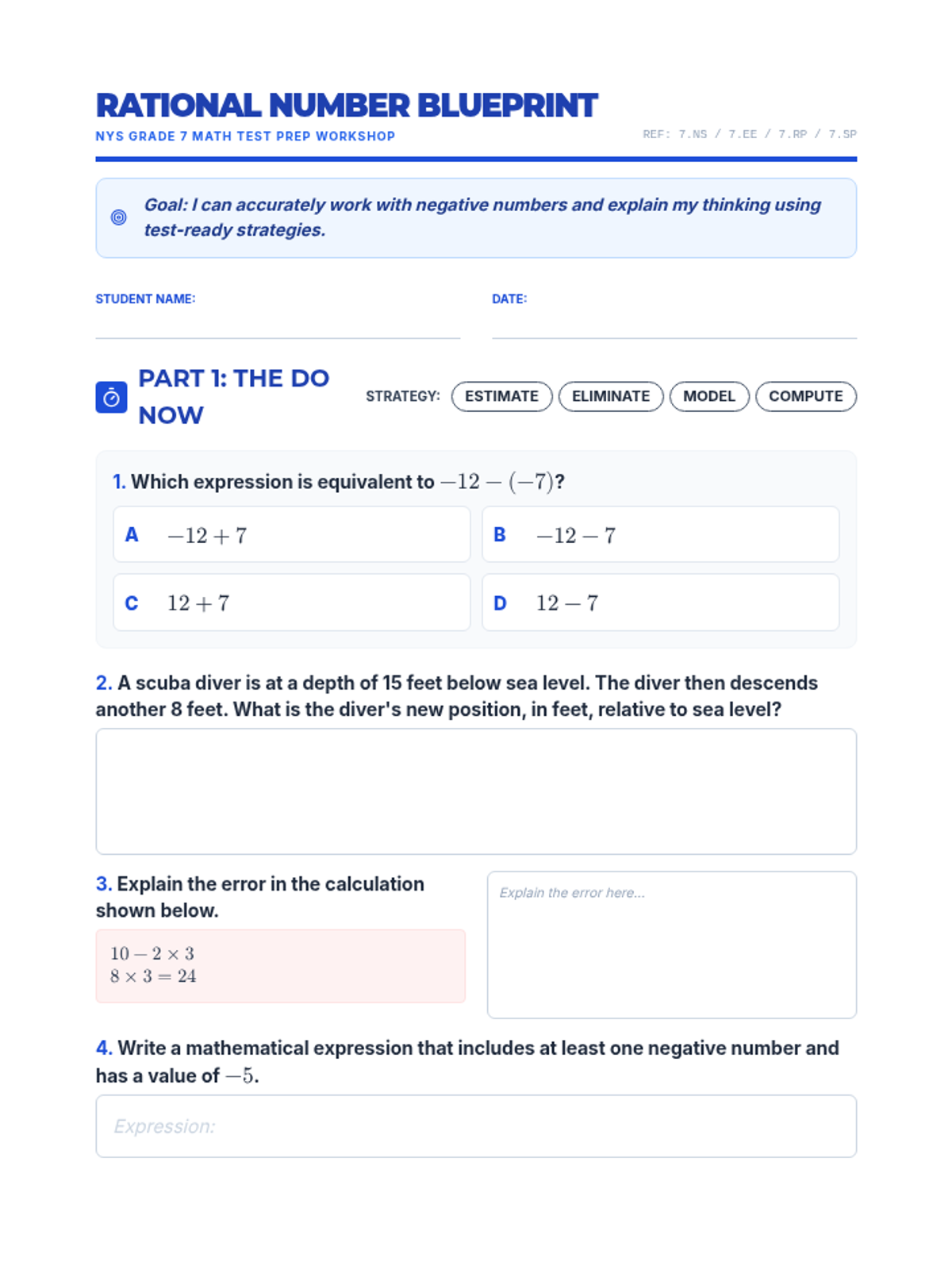
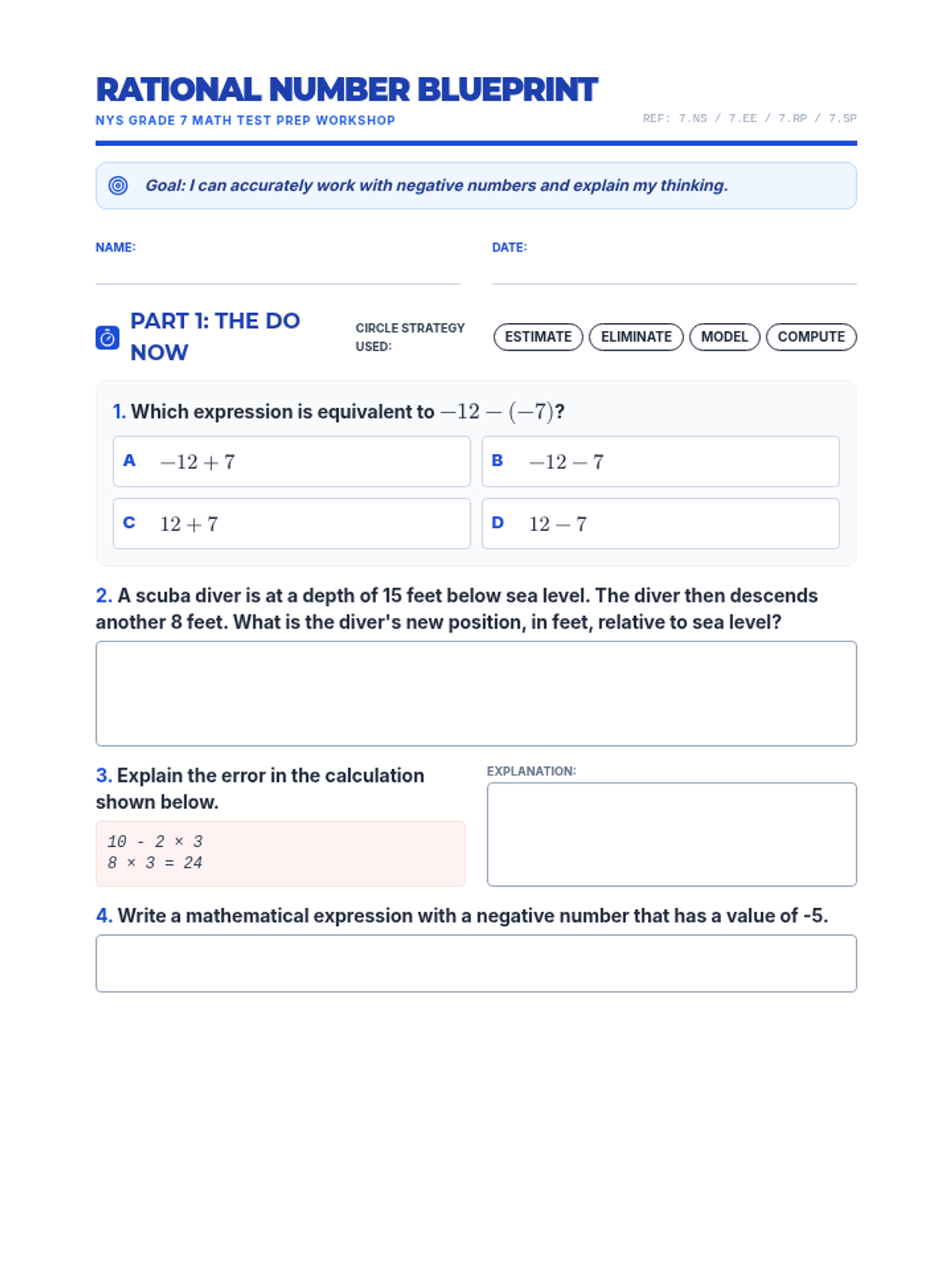
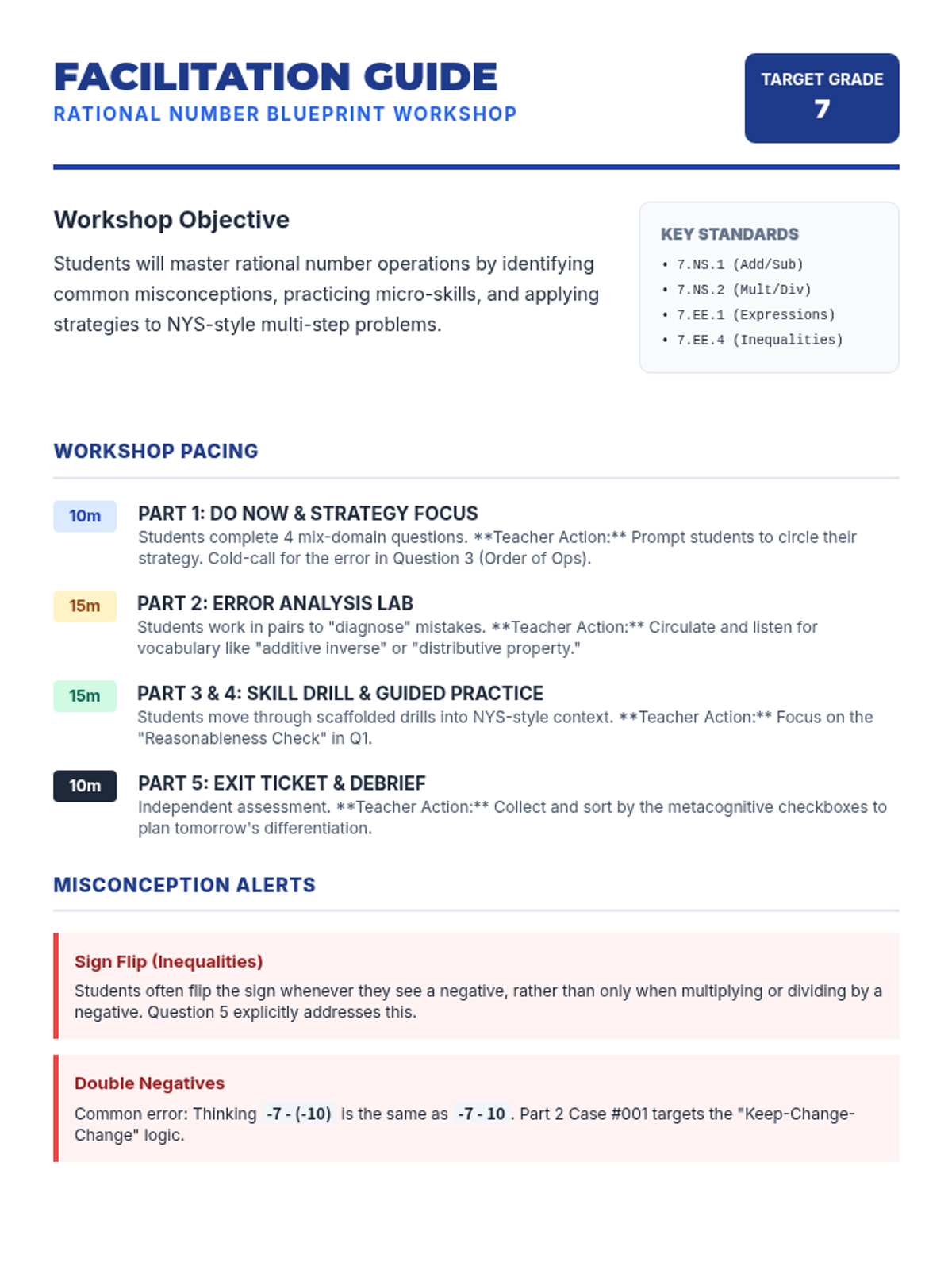
A comprehensive workshop focused on mastering rational number operations and common CCSS 7th grade math misconceptions in preparation for the NYS test.
Practice in estimating and measuring liquid volumes using liters and milliliters, with mental math exercises and scale reading.
Introduction to liquid volume and the liter as a standard metric unit, featuring container comparisons and visual estimations.
Introduction to weight, standard units (grams and kilograms), and estimation techniques using real-world objects and pets.
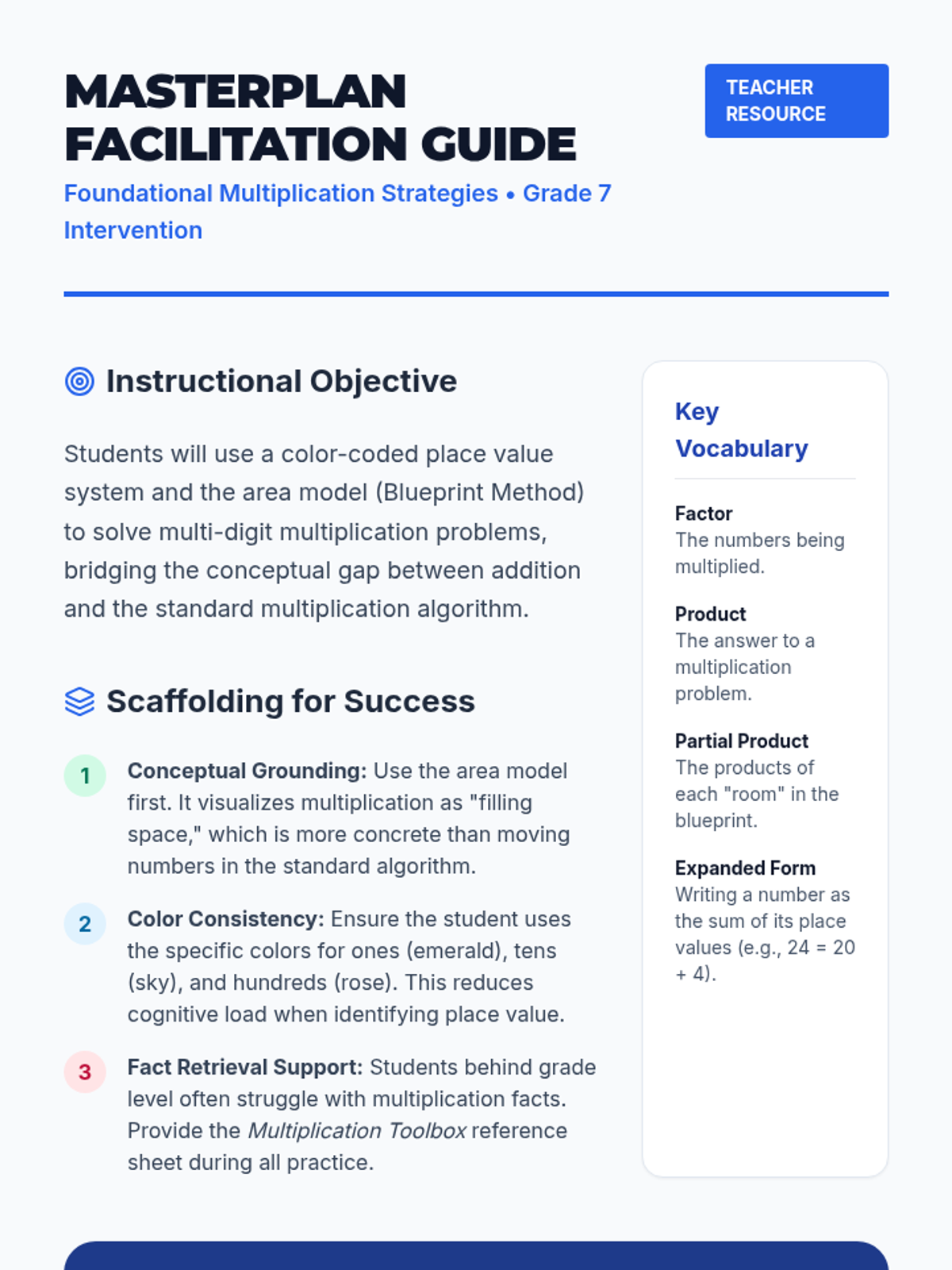
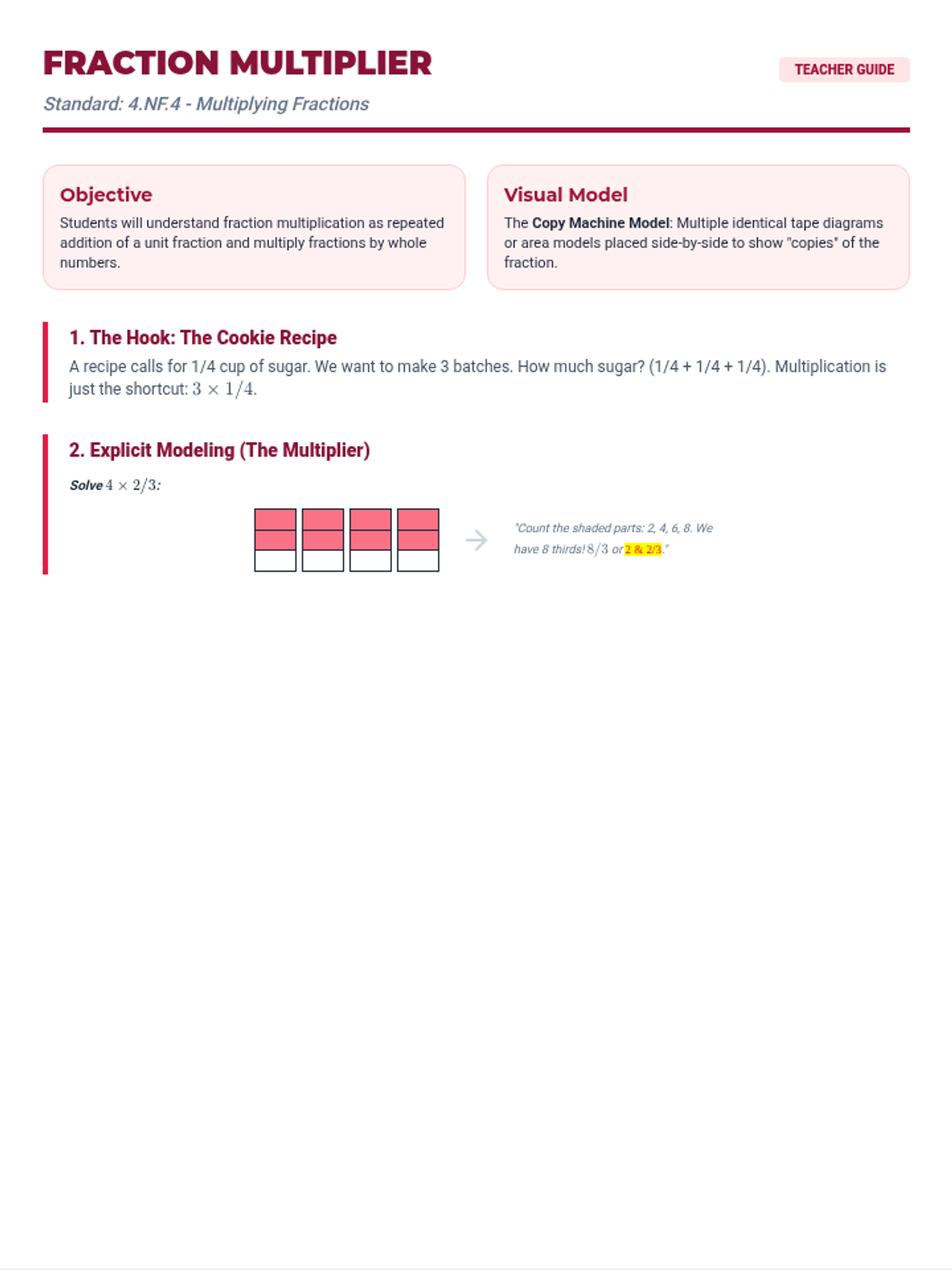
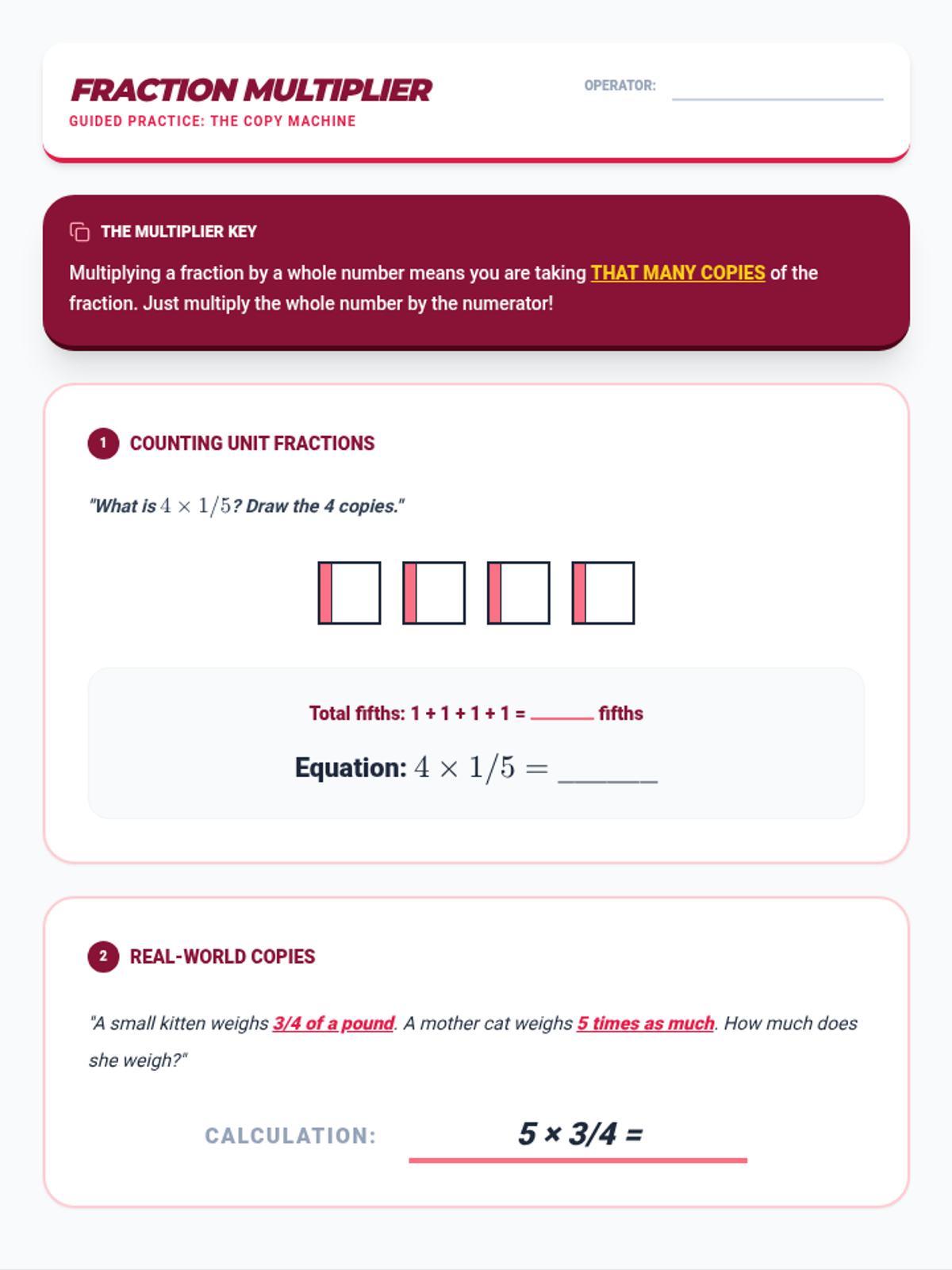
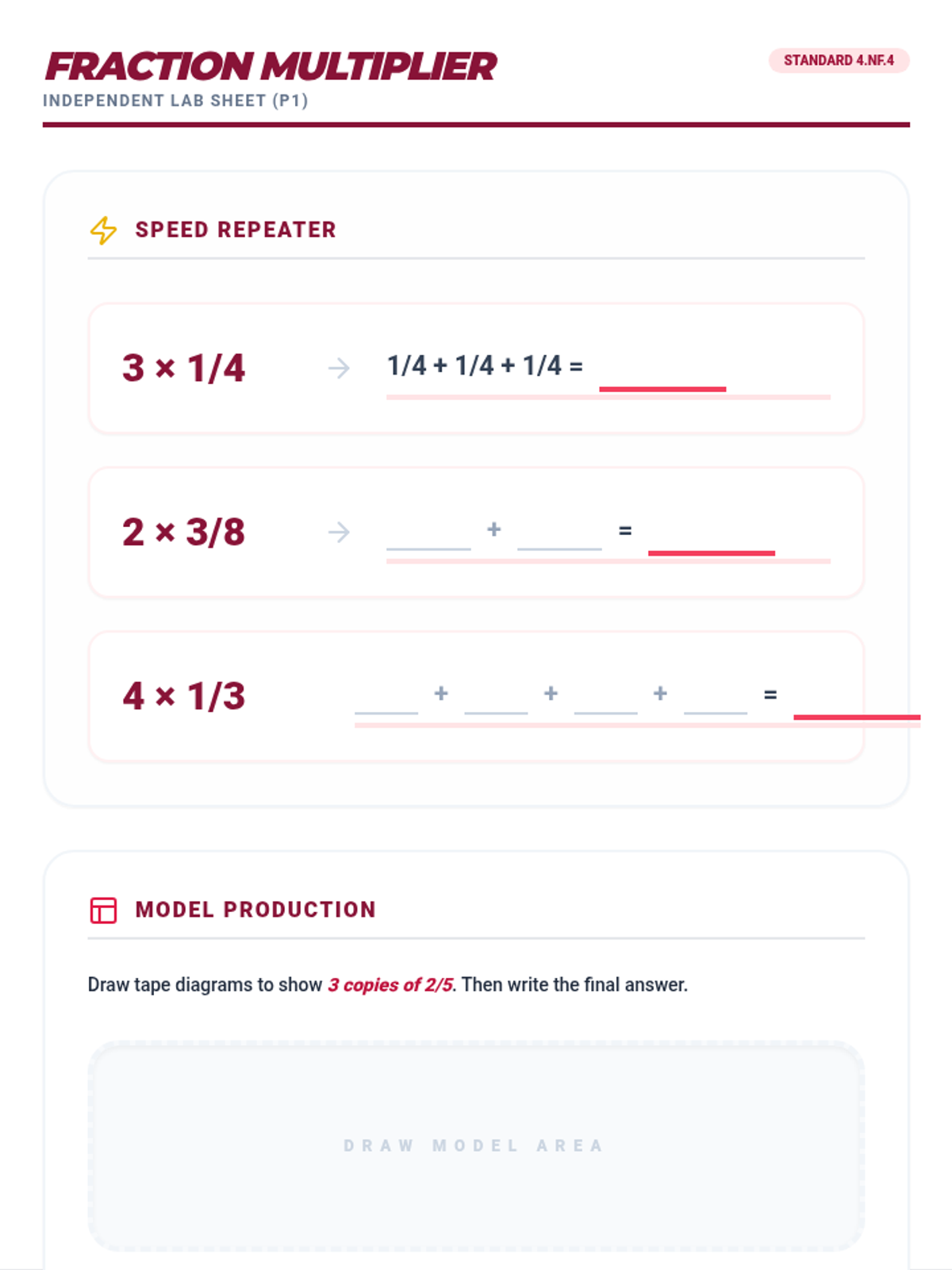
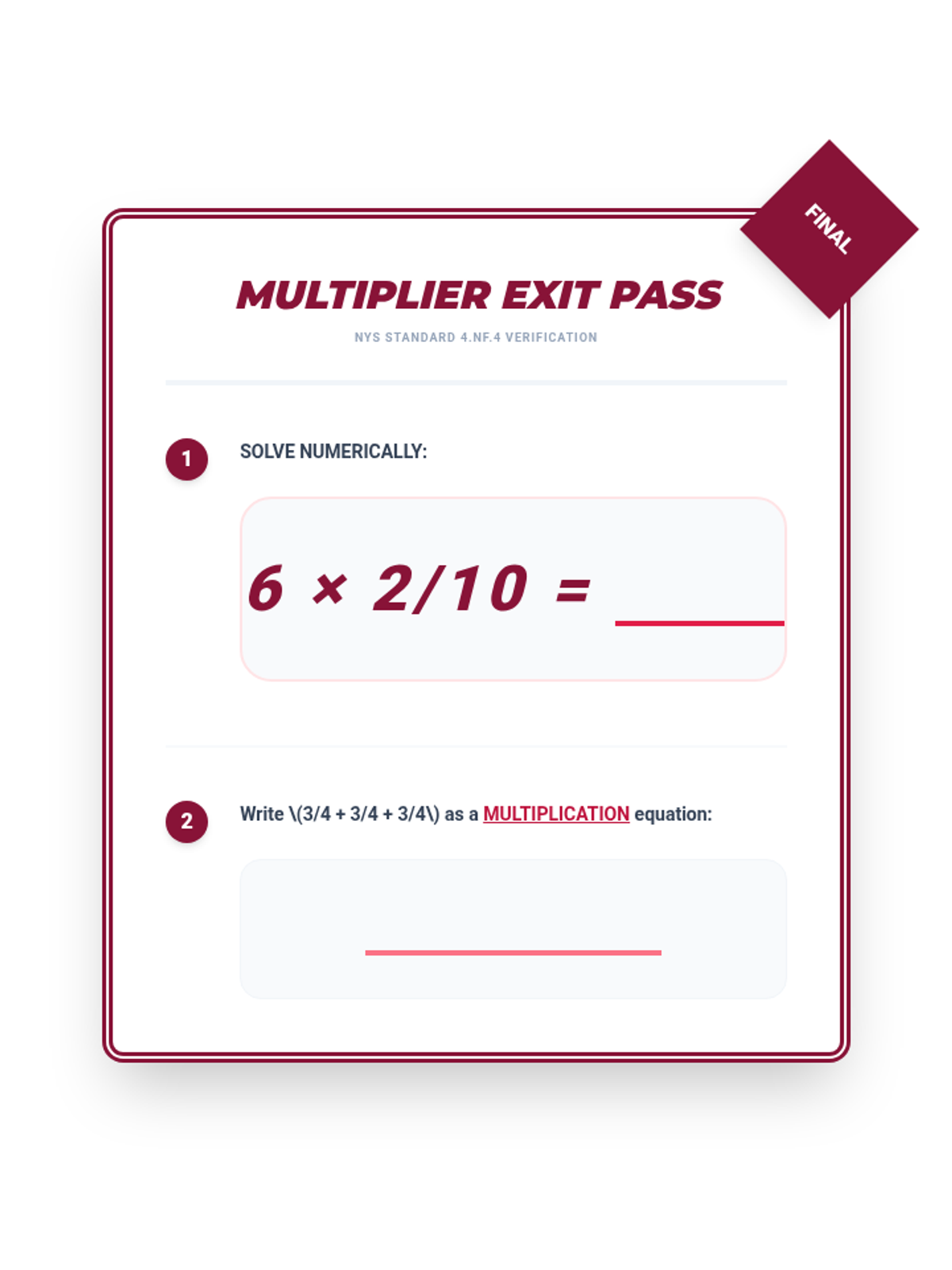
Tier 2 reteach for standard 4.NF.4: Apply and extend previous understandings of multiplication to multiply a fraction by a whole number.
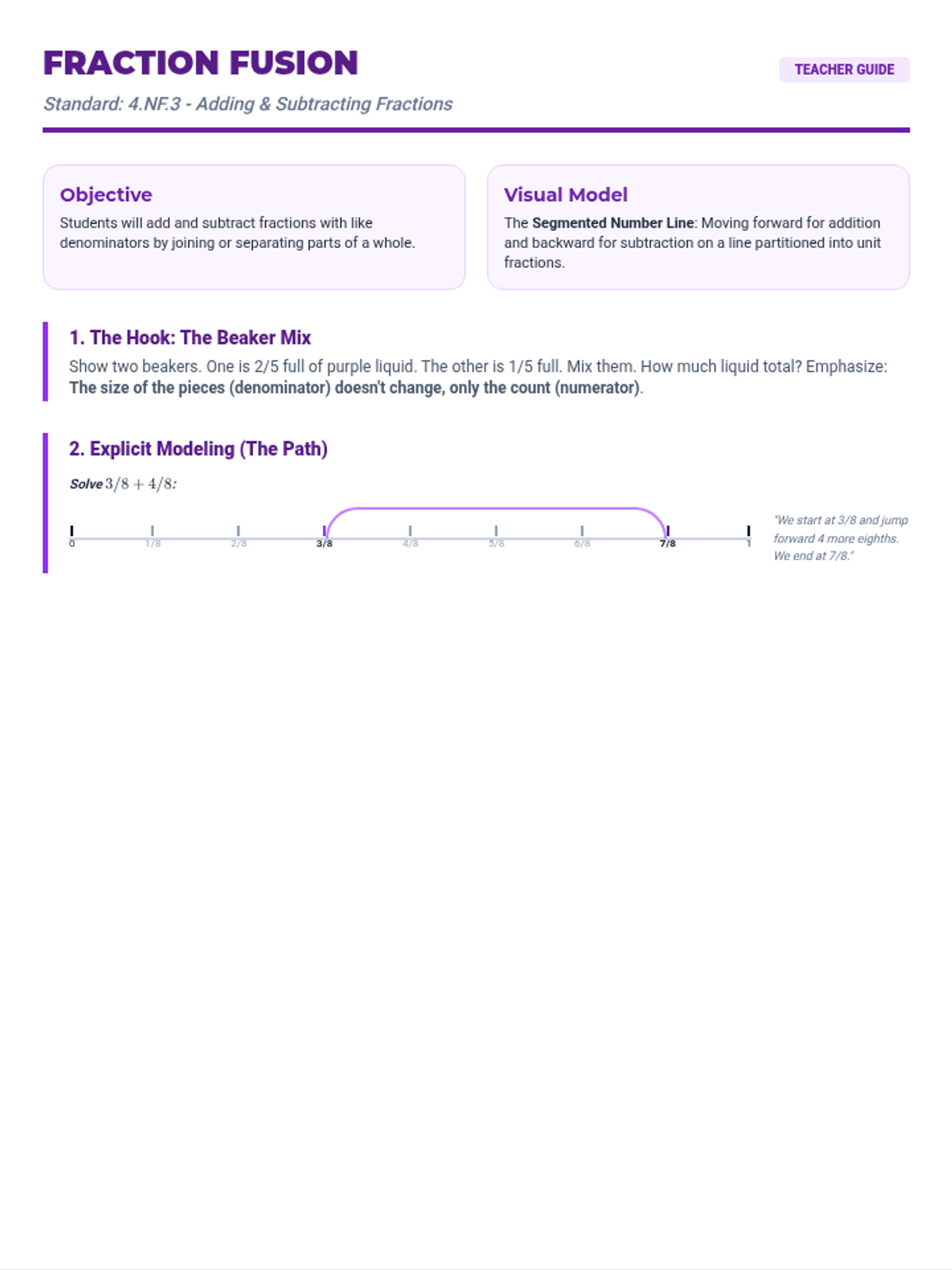
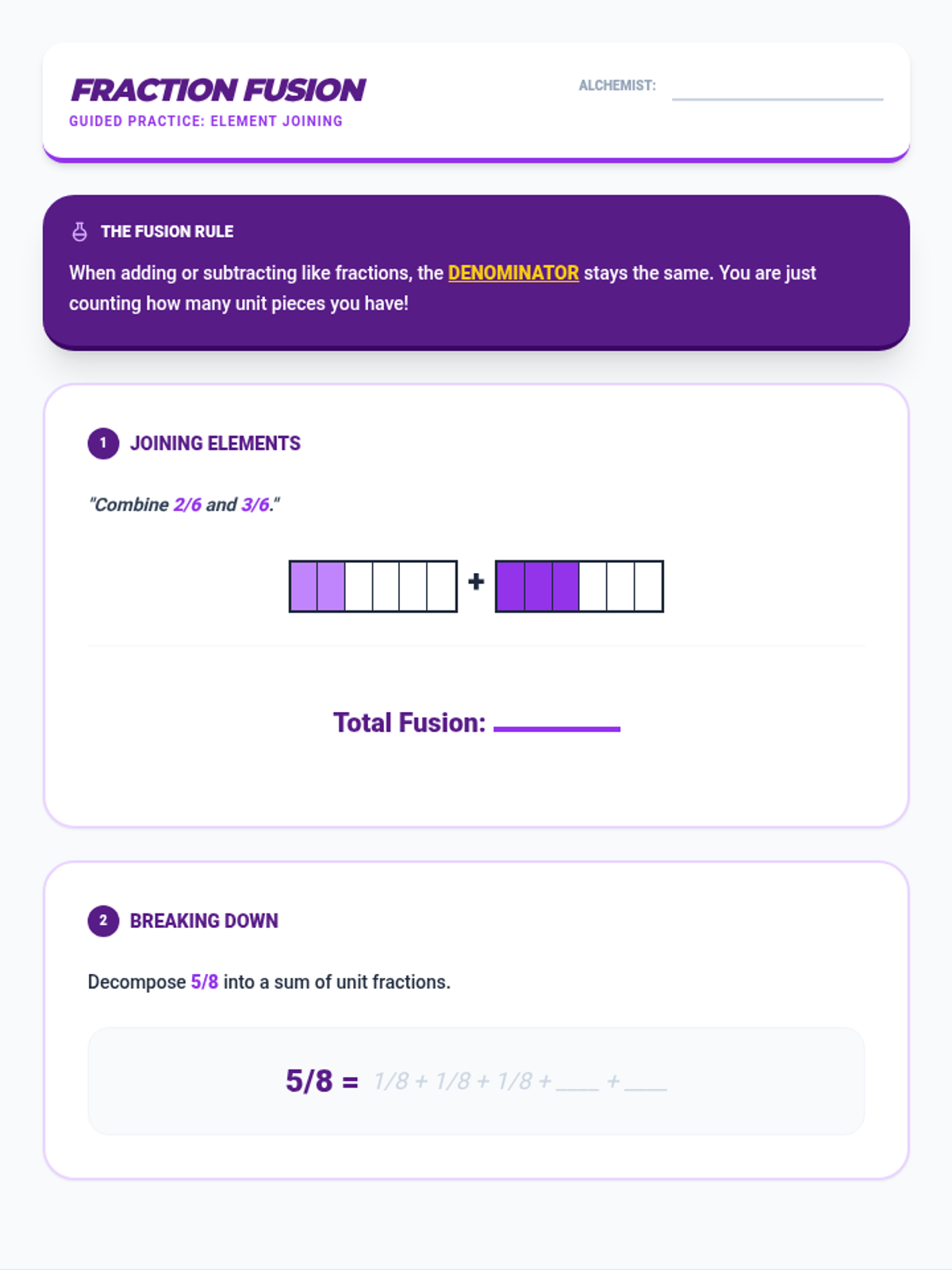
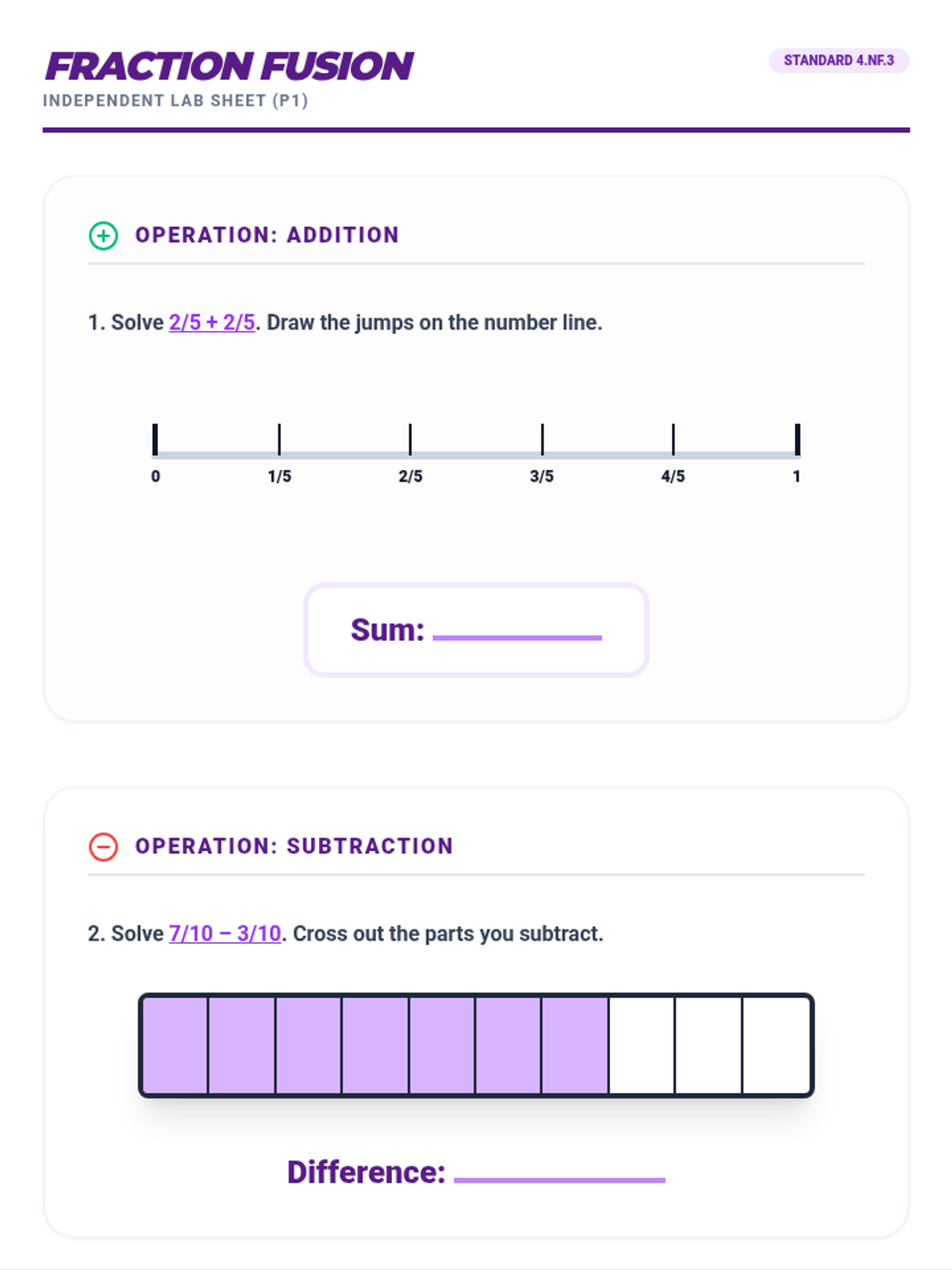
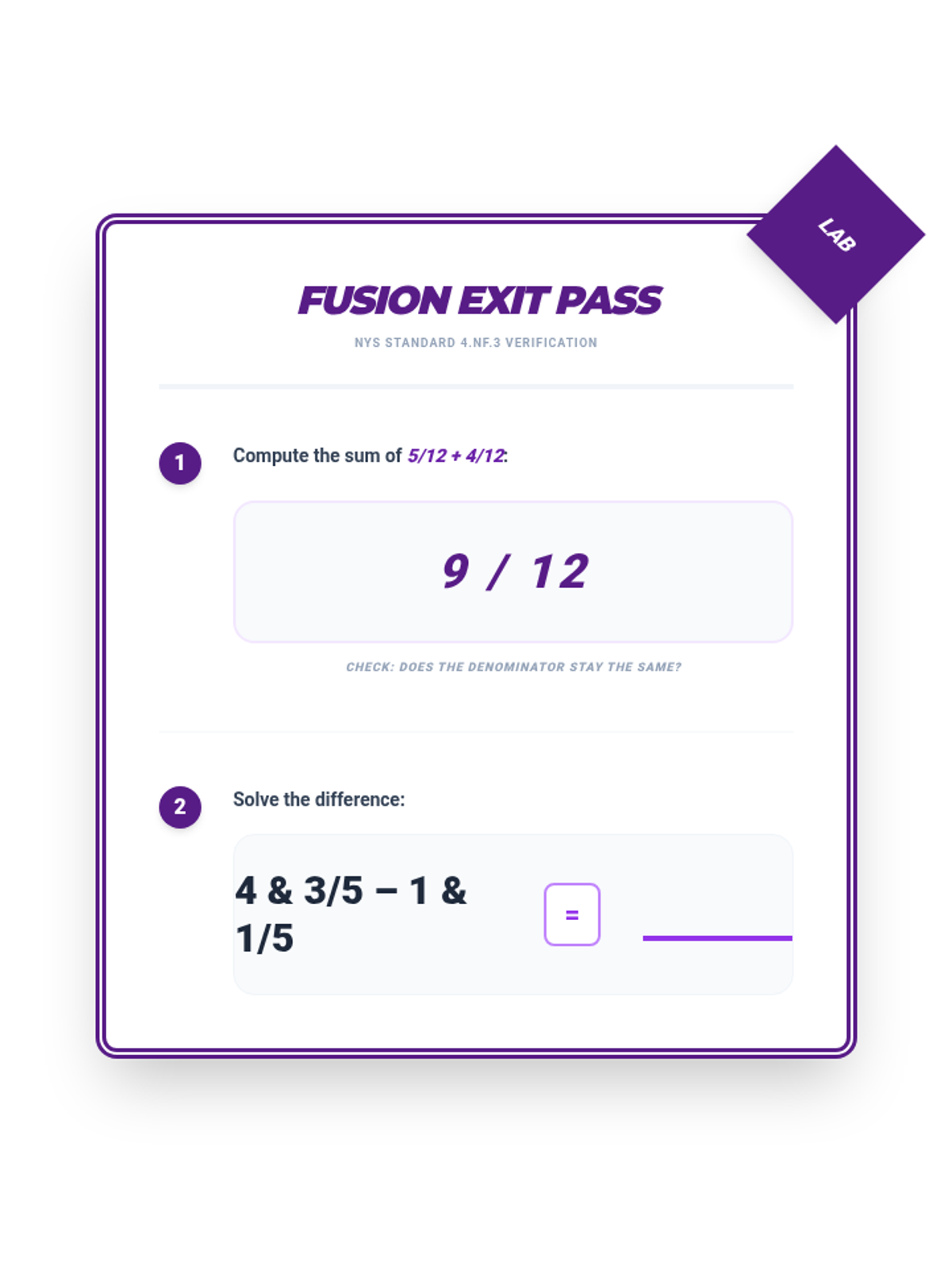
Tier 2 reteach for standard 4.NF.3: Understand addition and subtraction of fractions as joining and separating parts referring to the same whole. Focus on like denominators and mixed numbers.
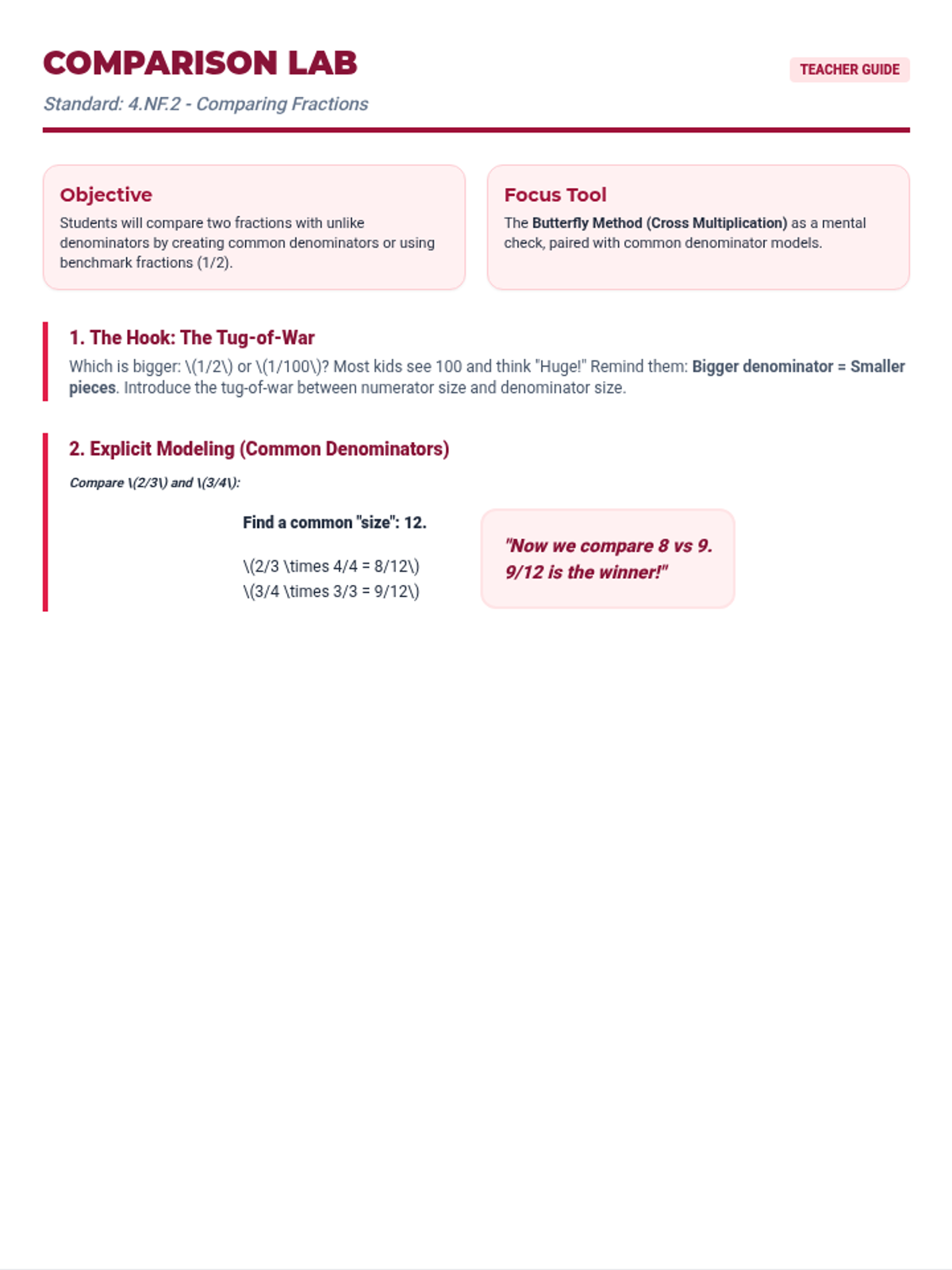
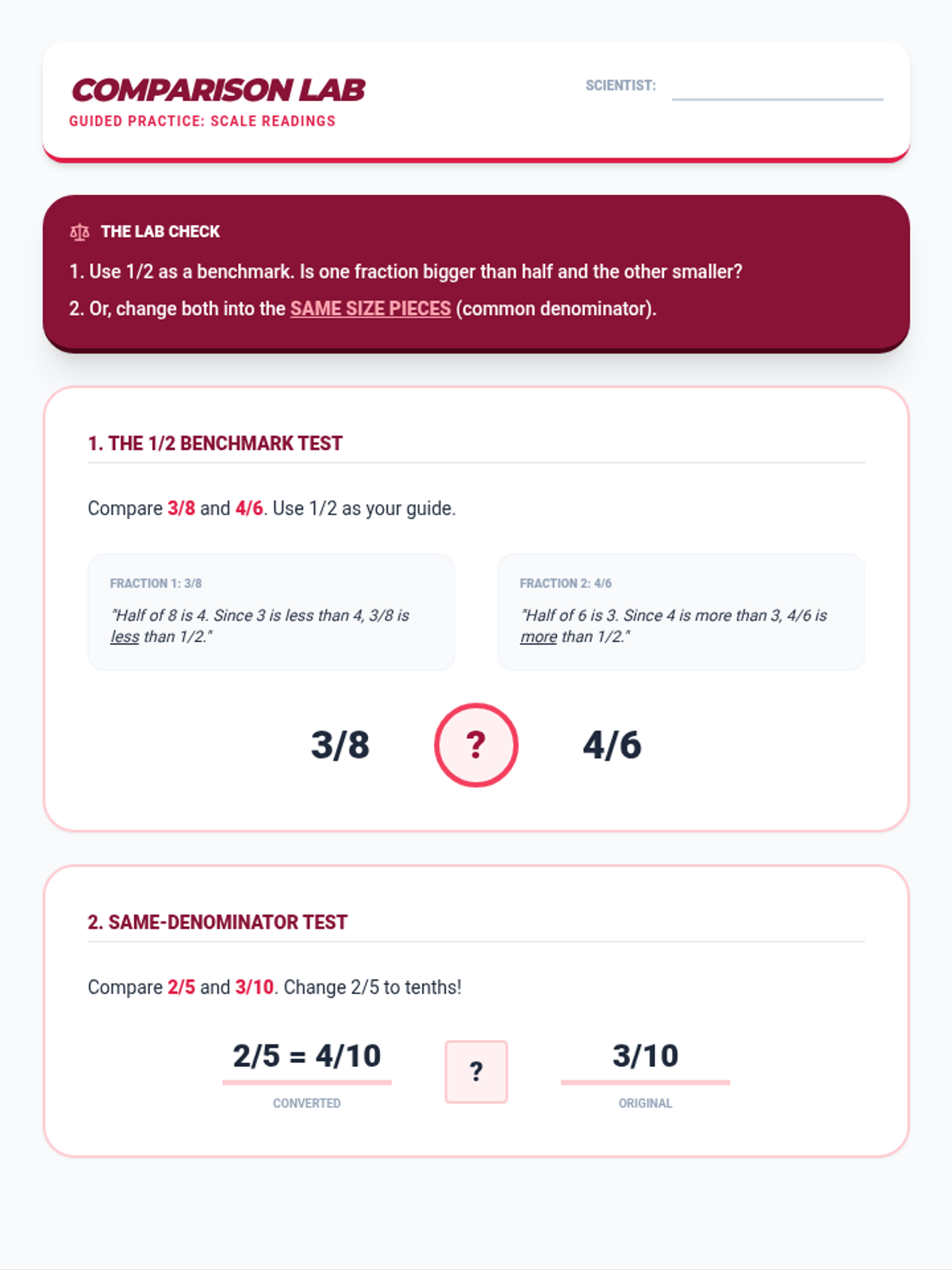
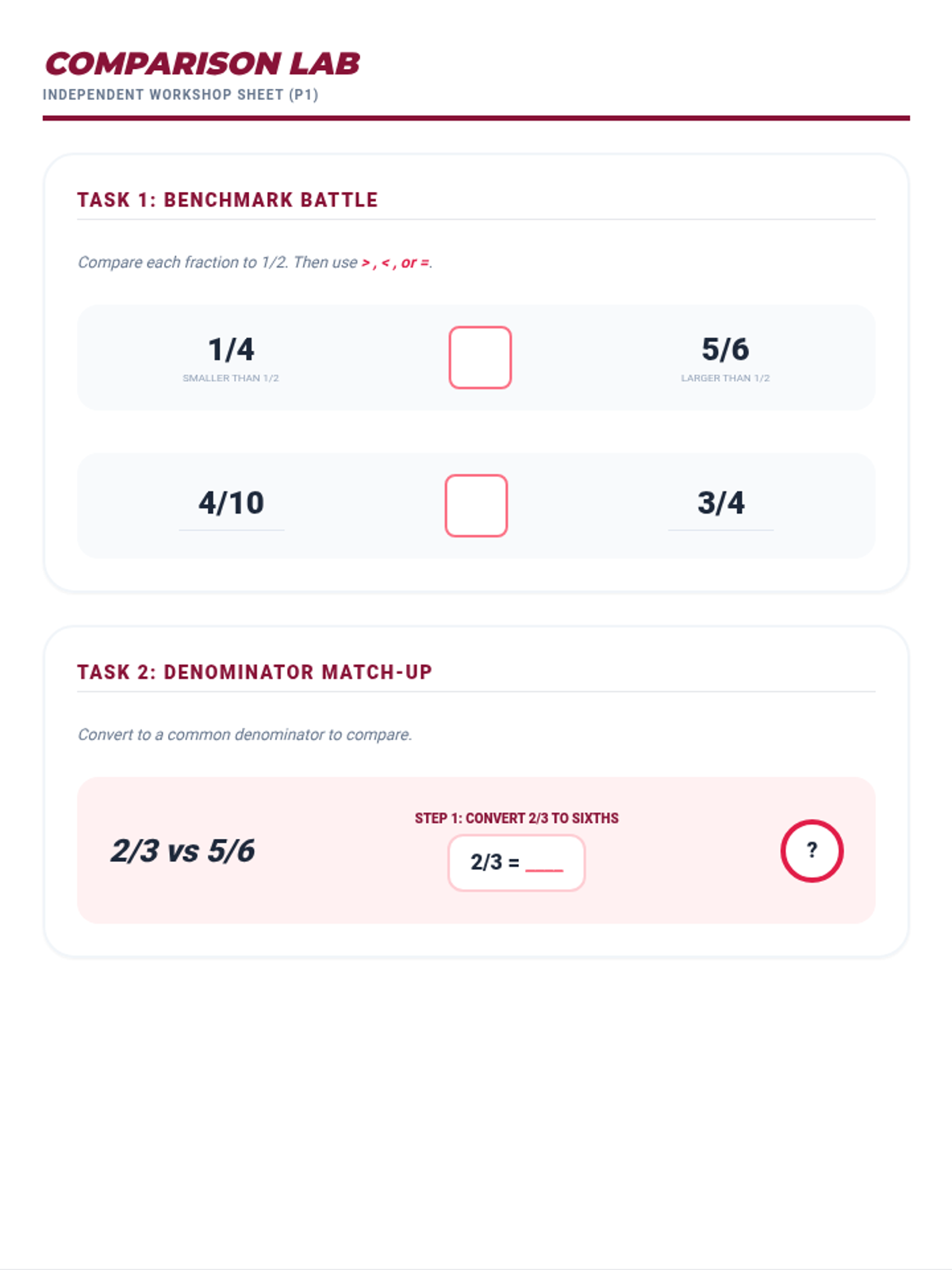
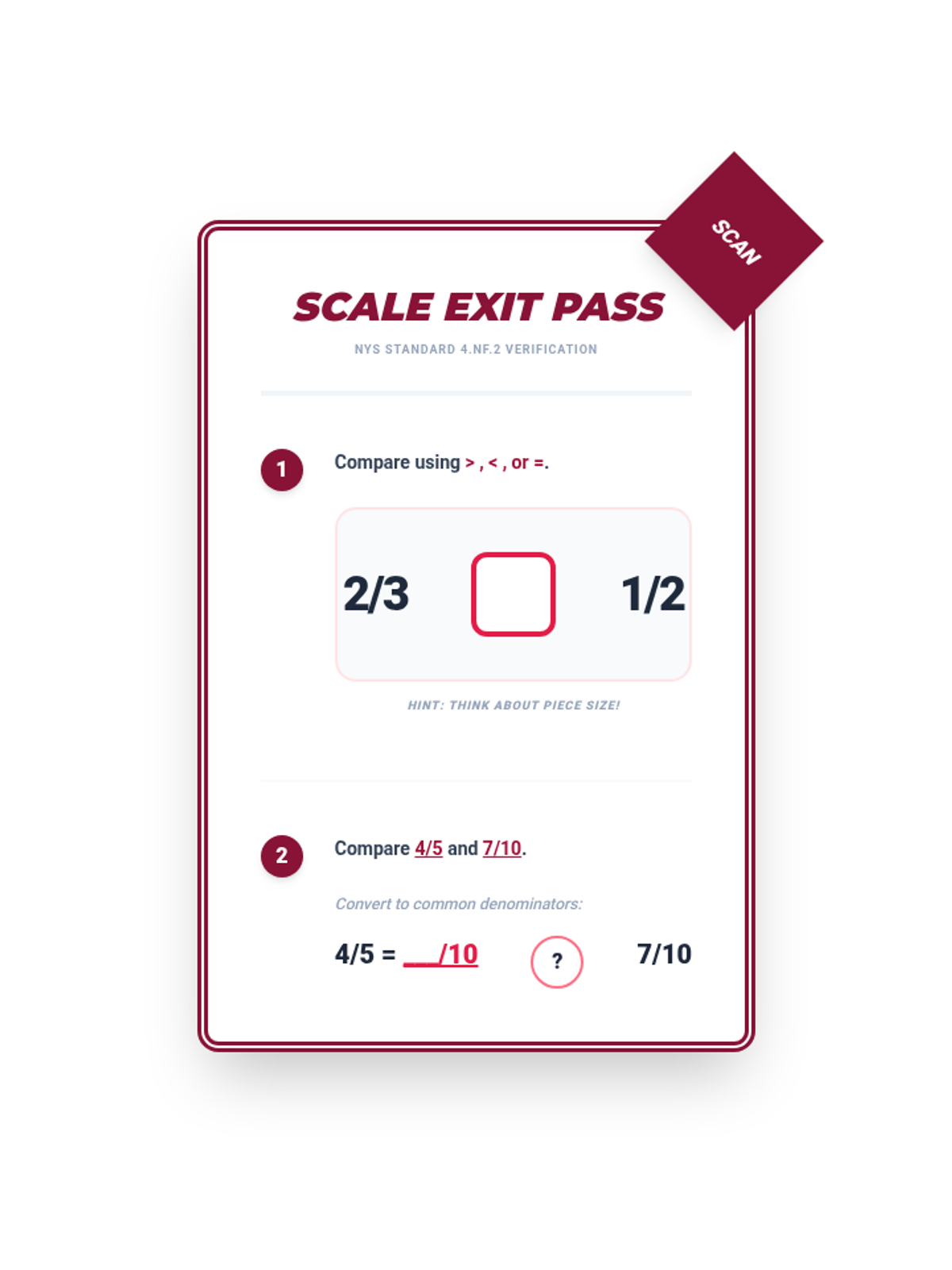
Tier 2 reteach for standard 4.NF.2: Compare two fractions with different numerators and different denominators. Focus on common denominators and benchmark fractions.
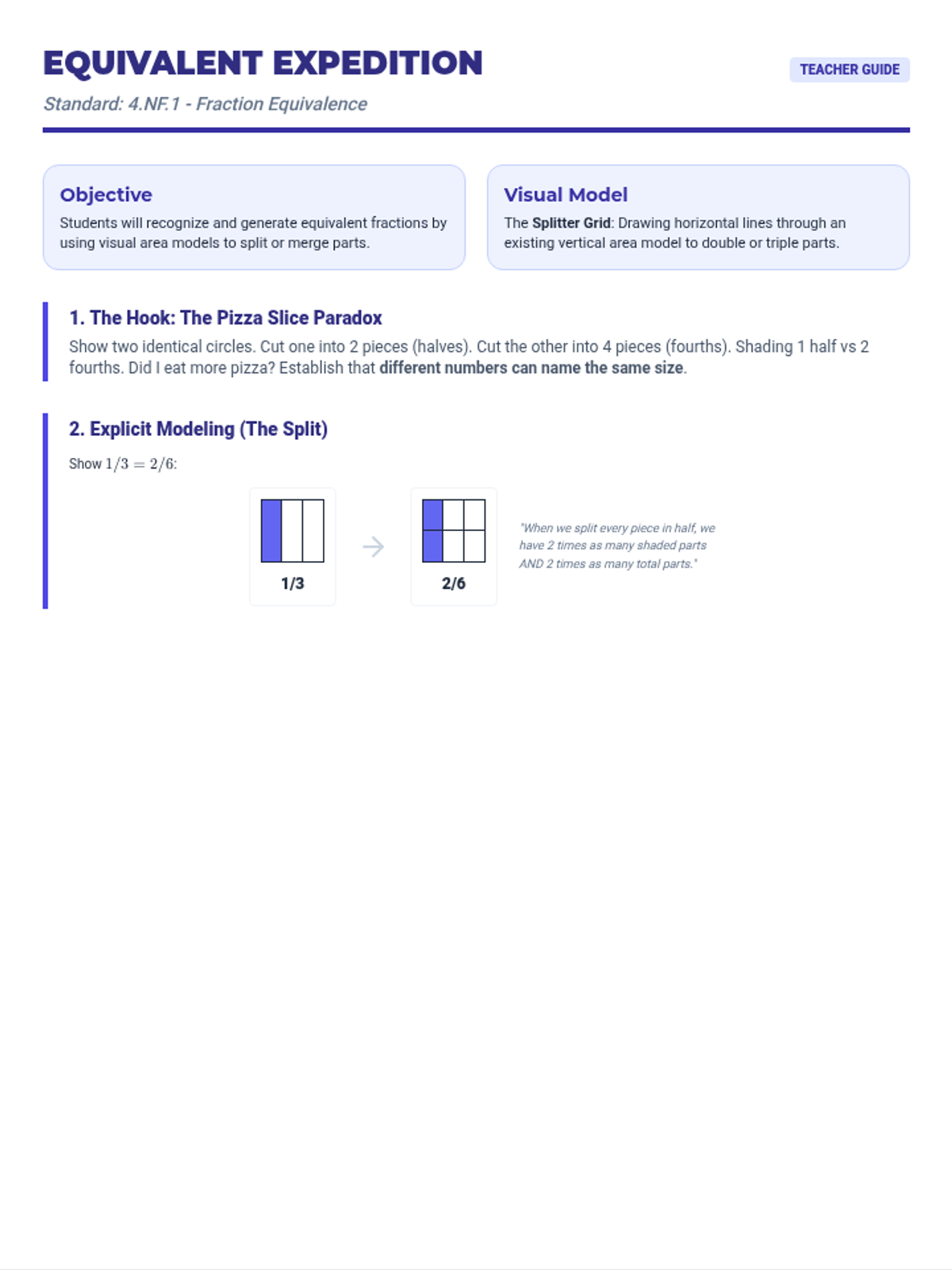
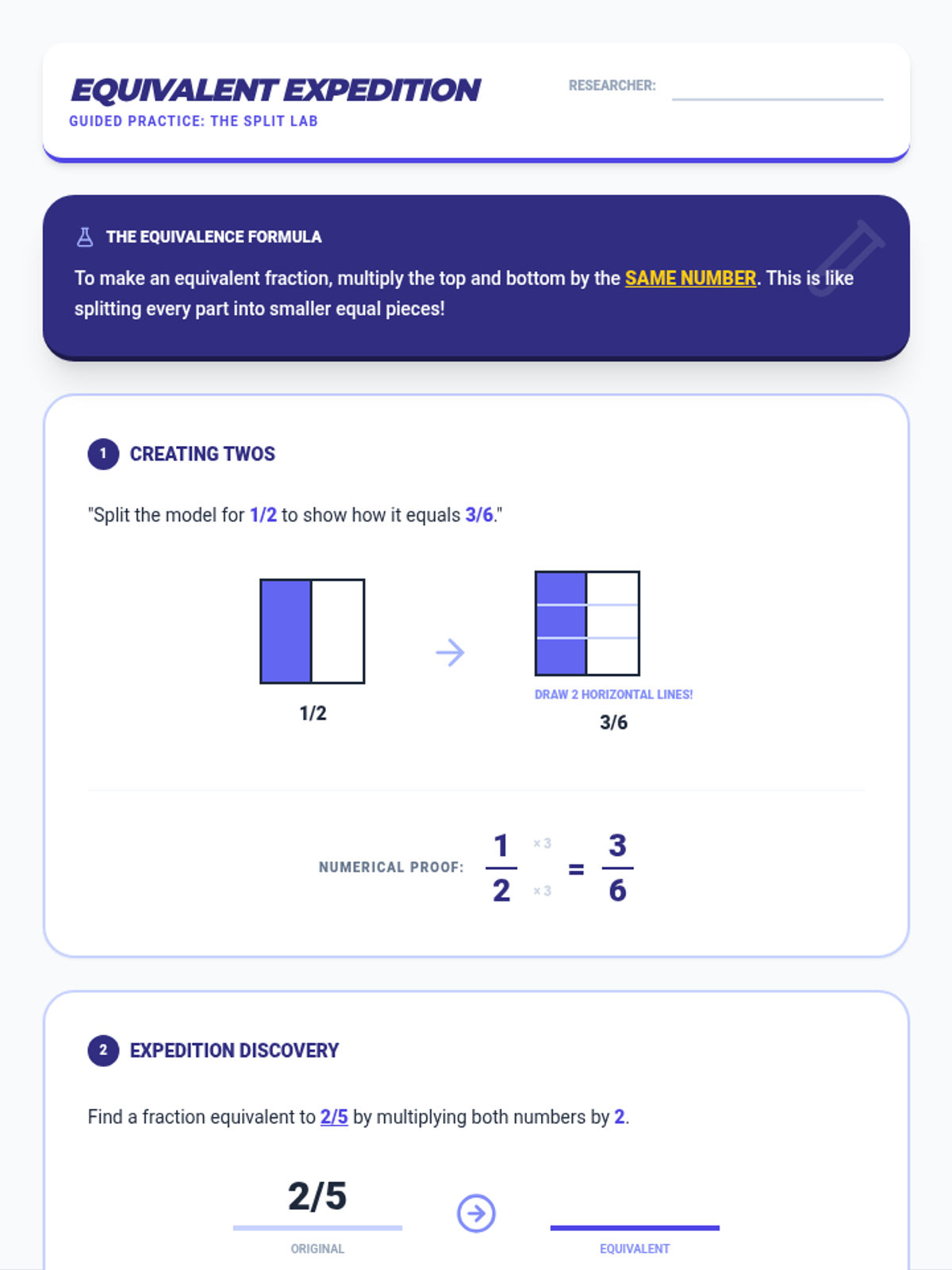
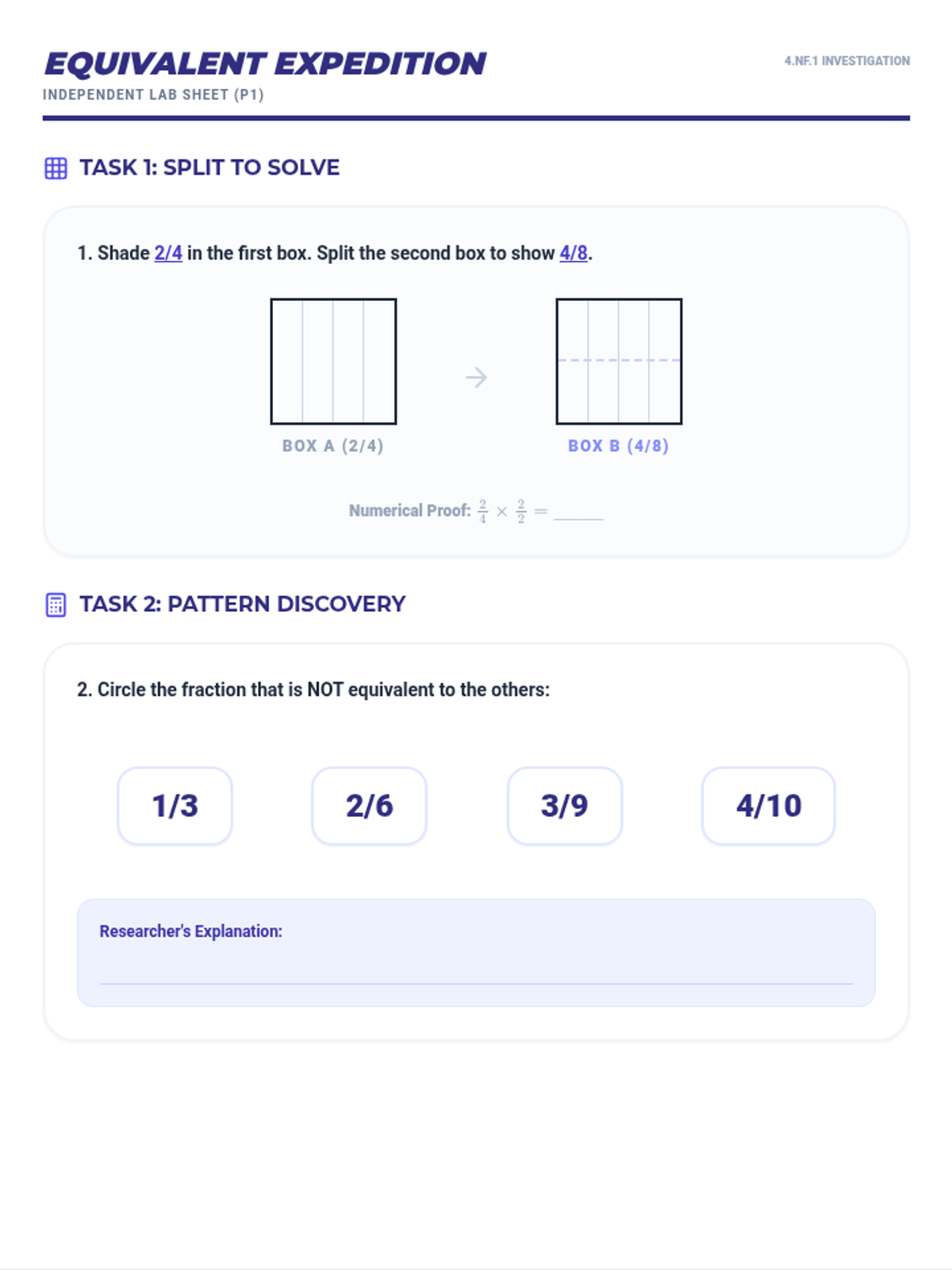
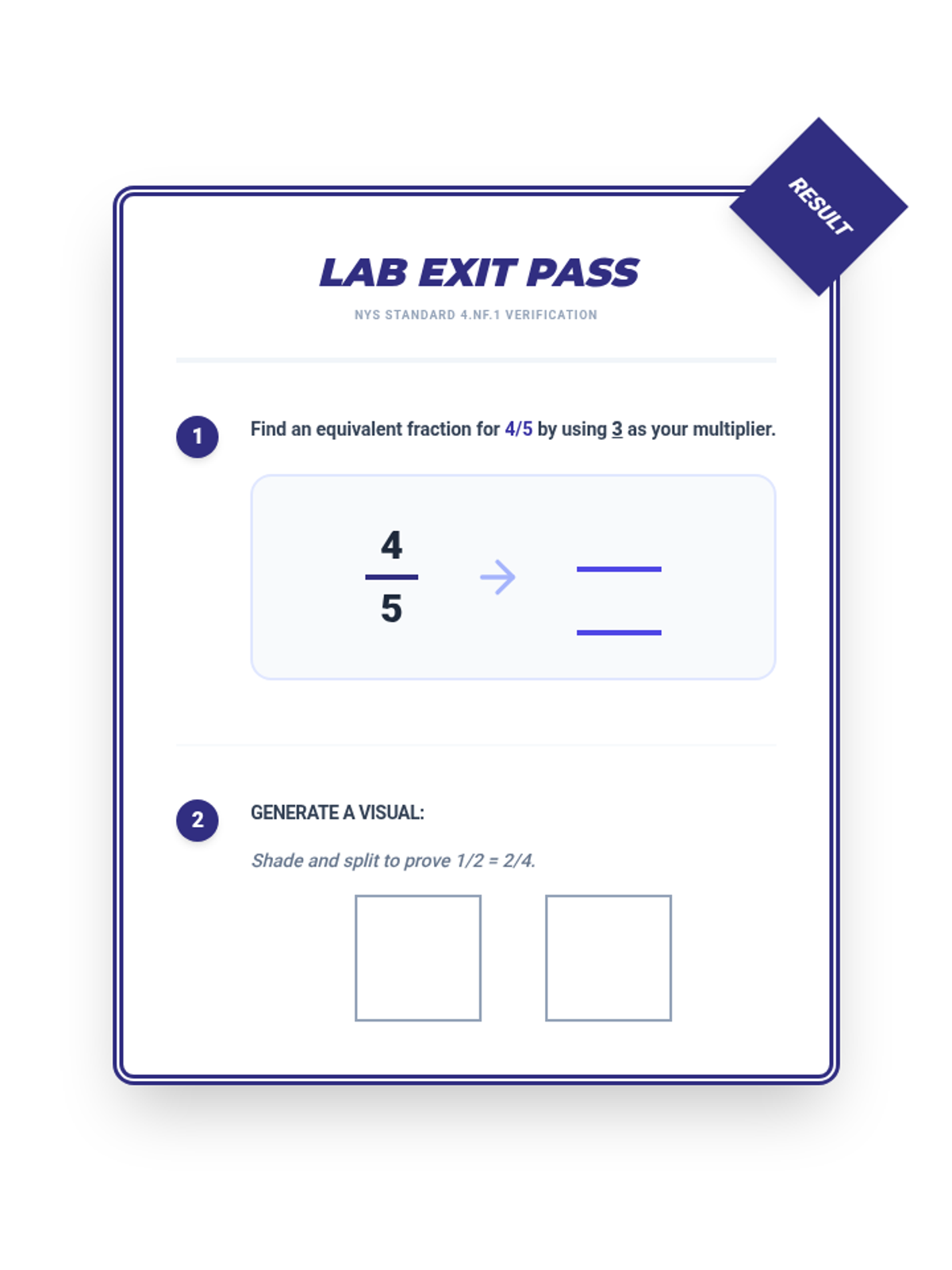
Tier 2 reteach for standard 4.NF.1: Explain why fractions are equivalent using visual fraction models. Focus on the "Splitting" and "Merging" strategies.

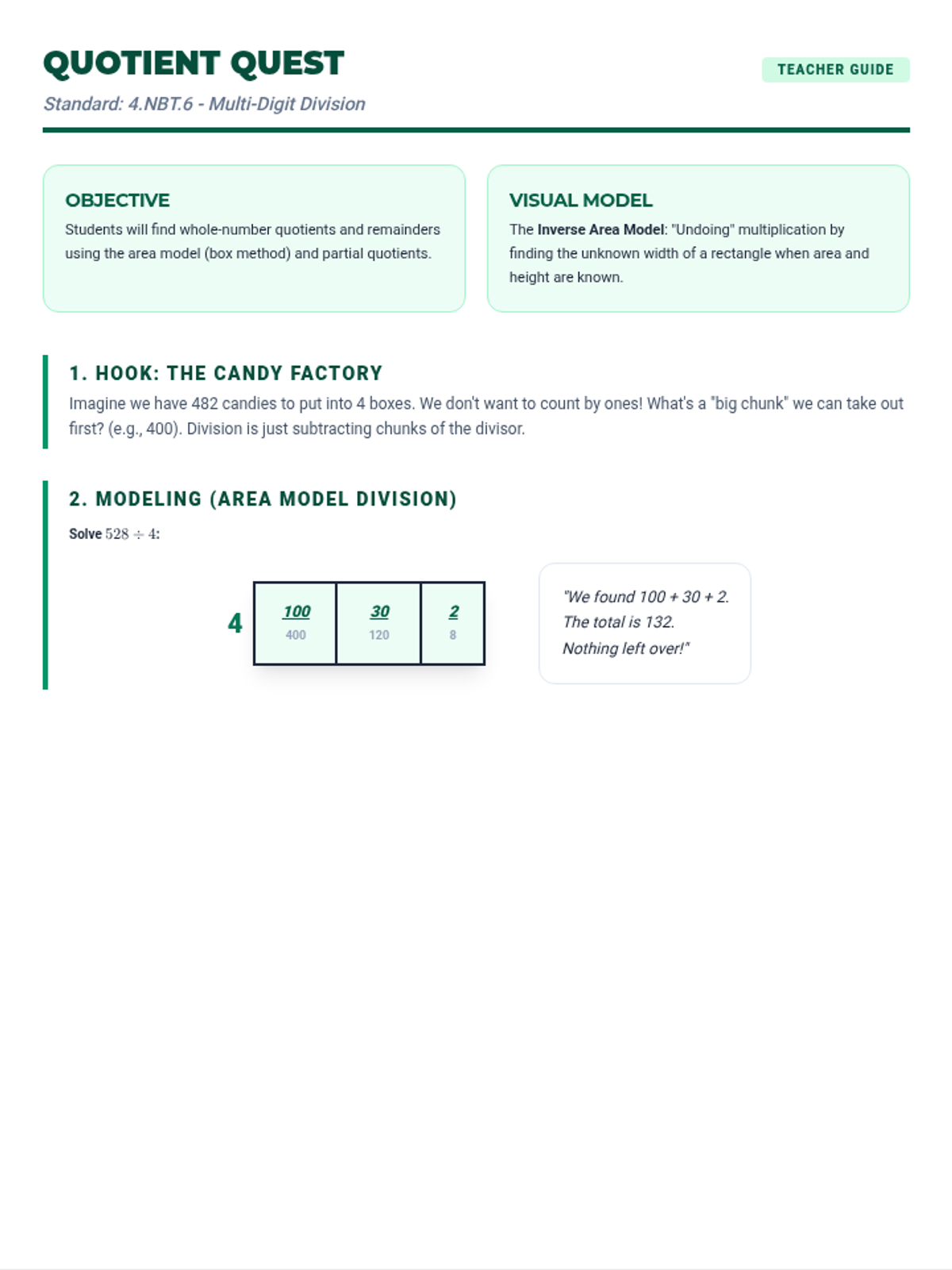
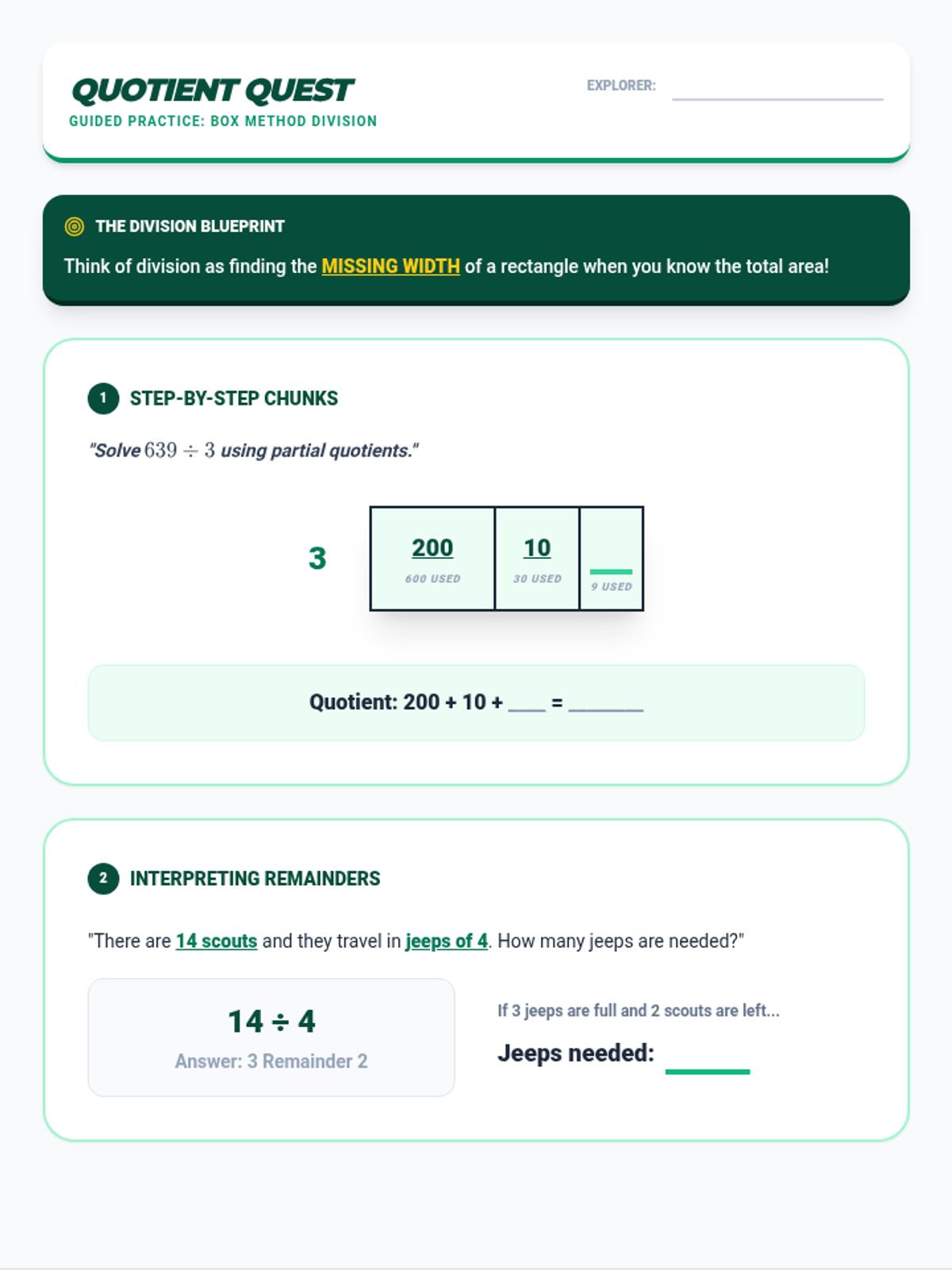
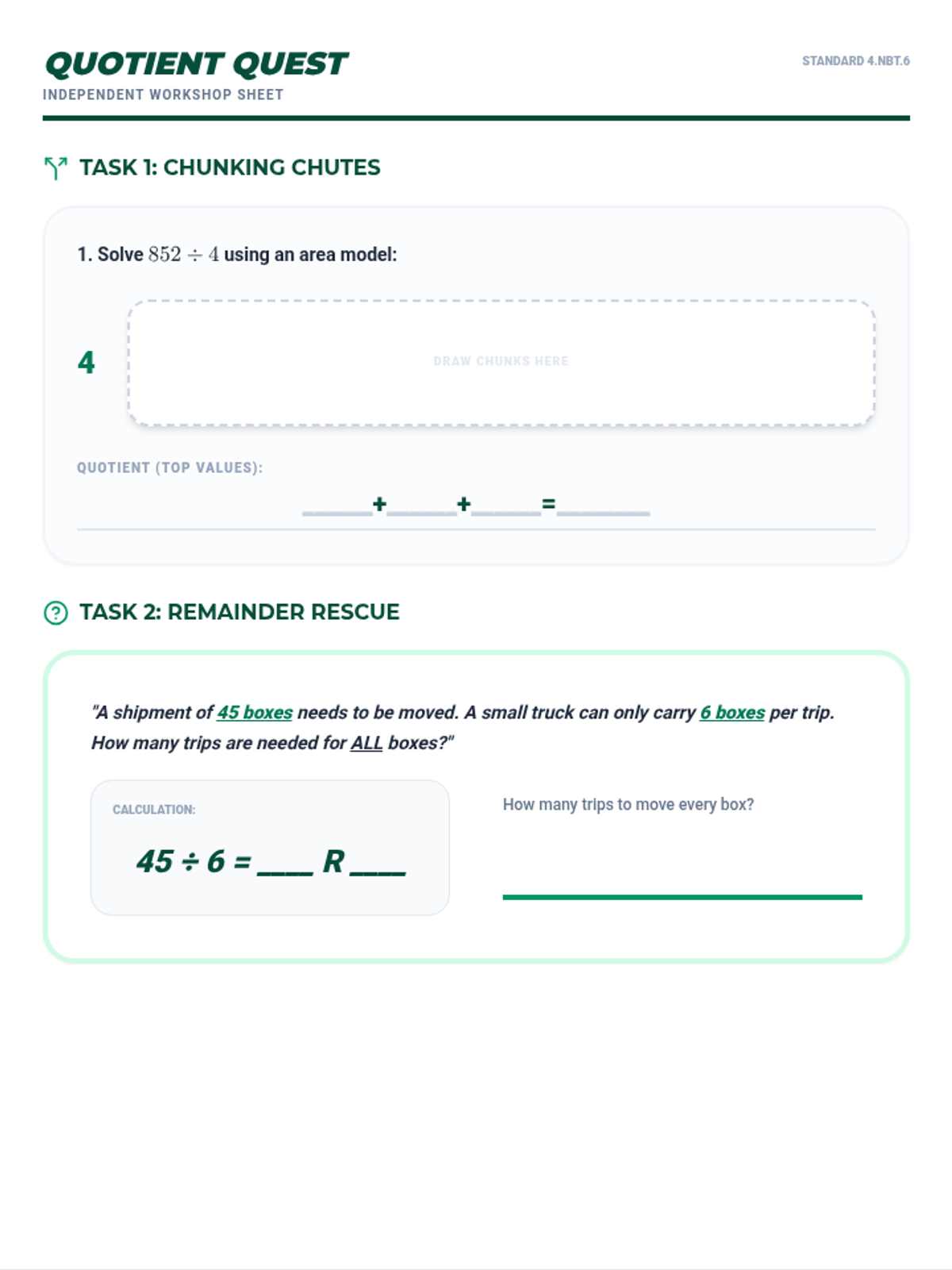
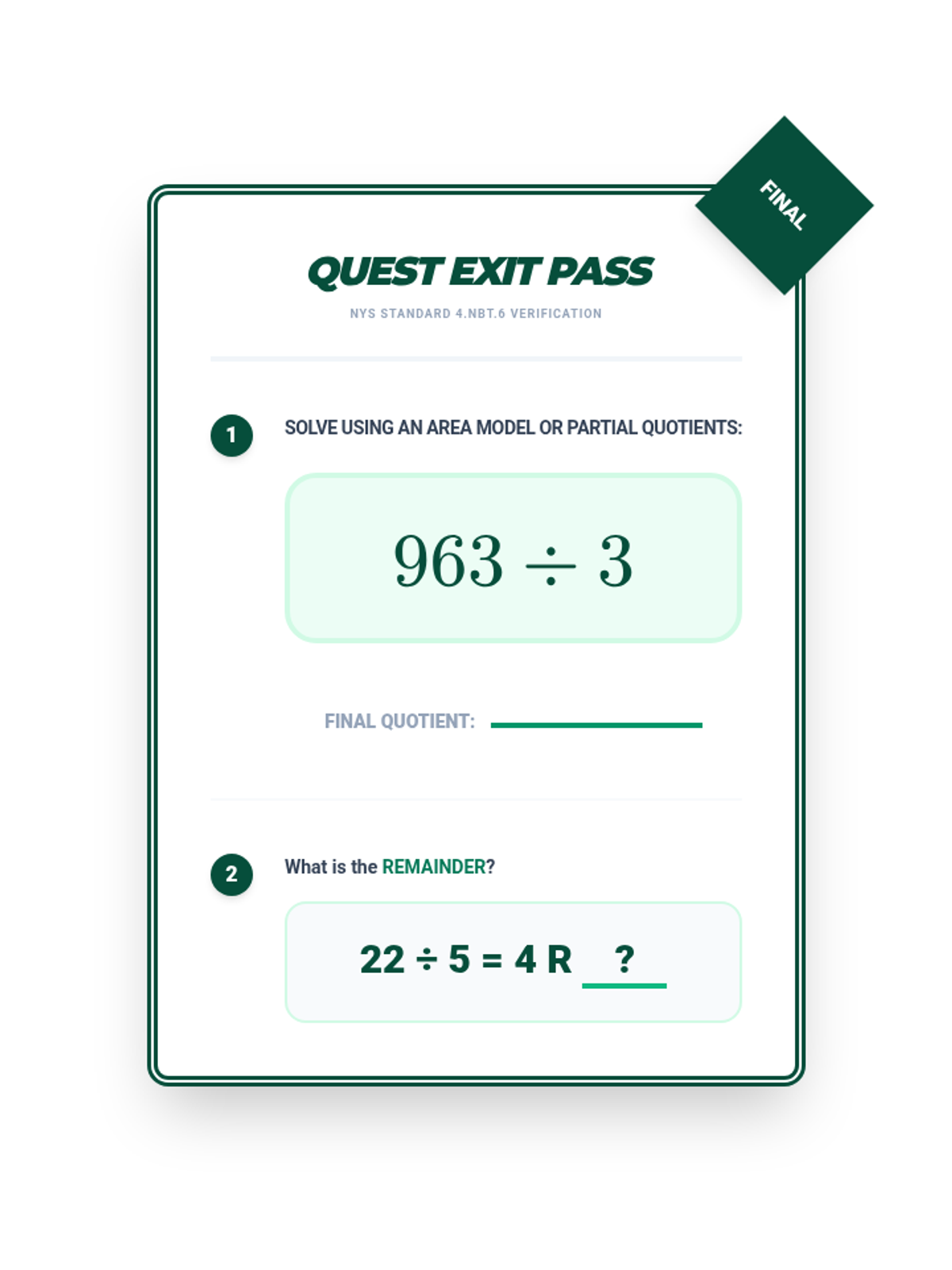
Tier 2 reteach for standard 4.NBT.6: Find whole-number quotients and remainders with up to four-digit dividends and one-digit divisors, using strategies based on place value.
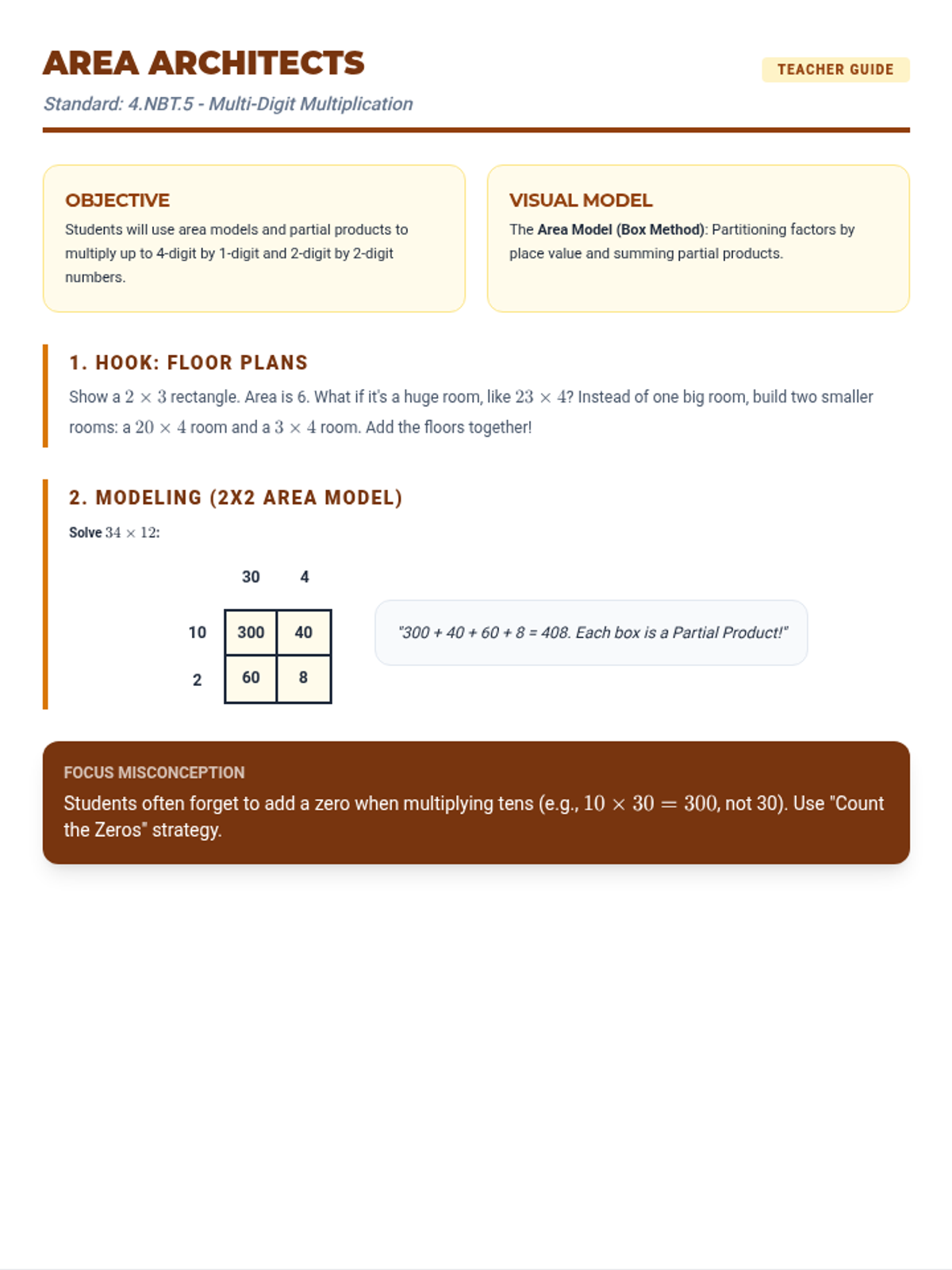
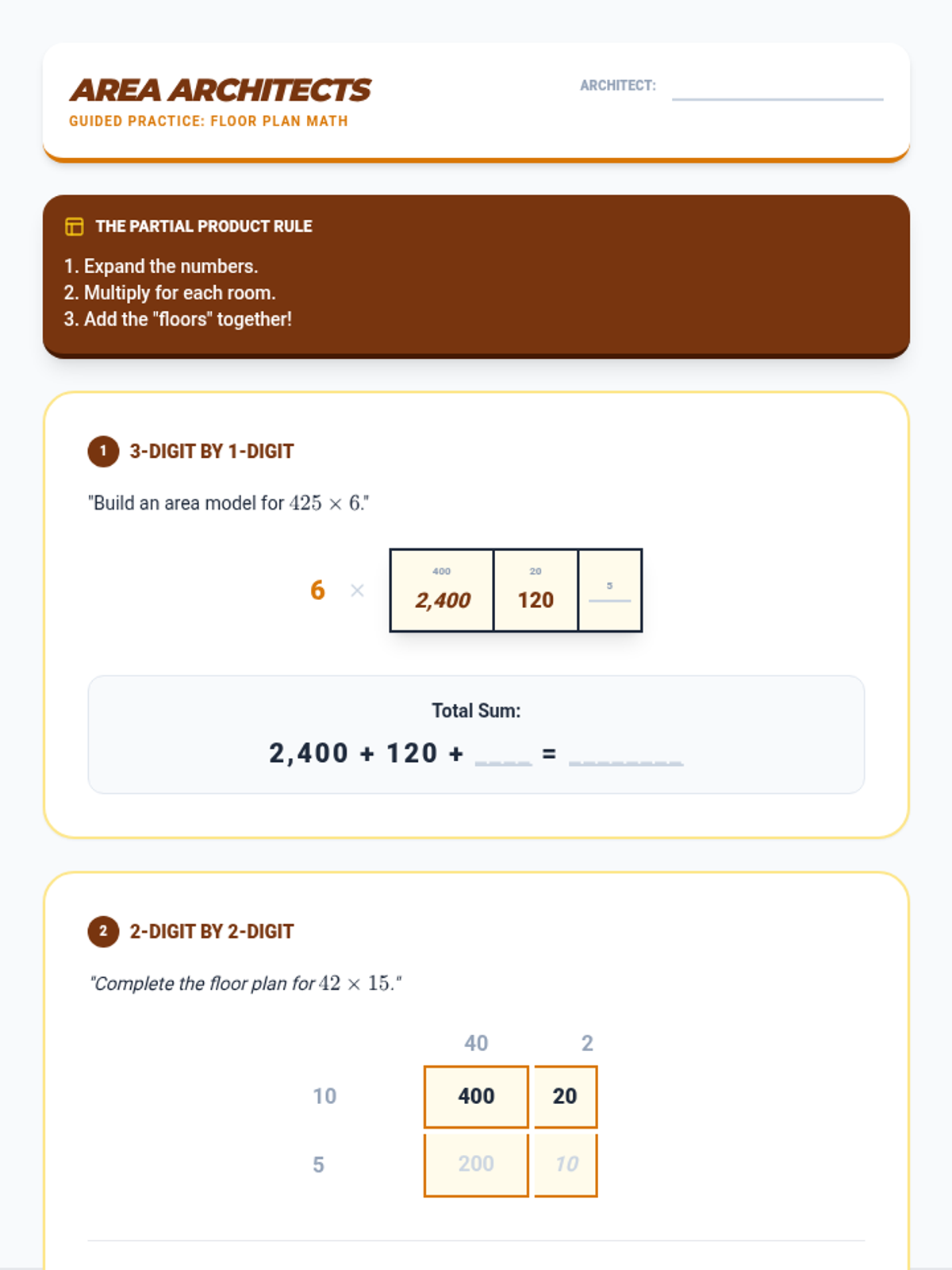
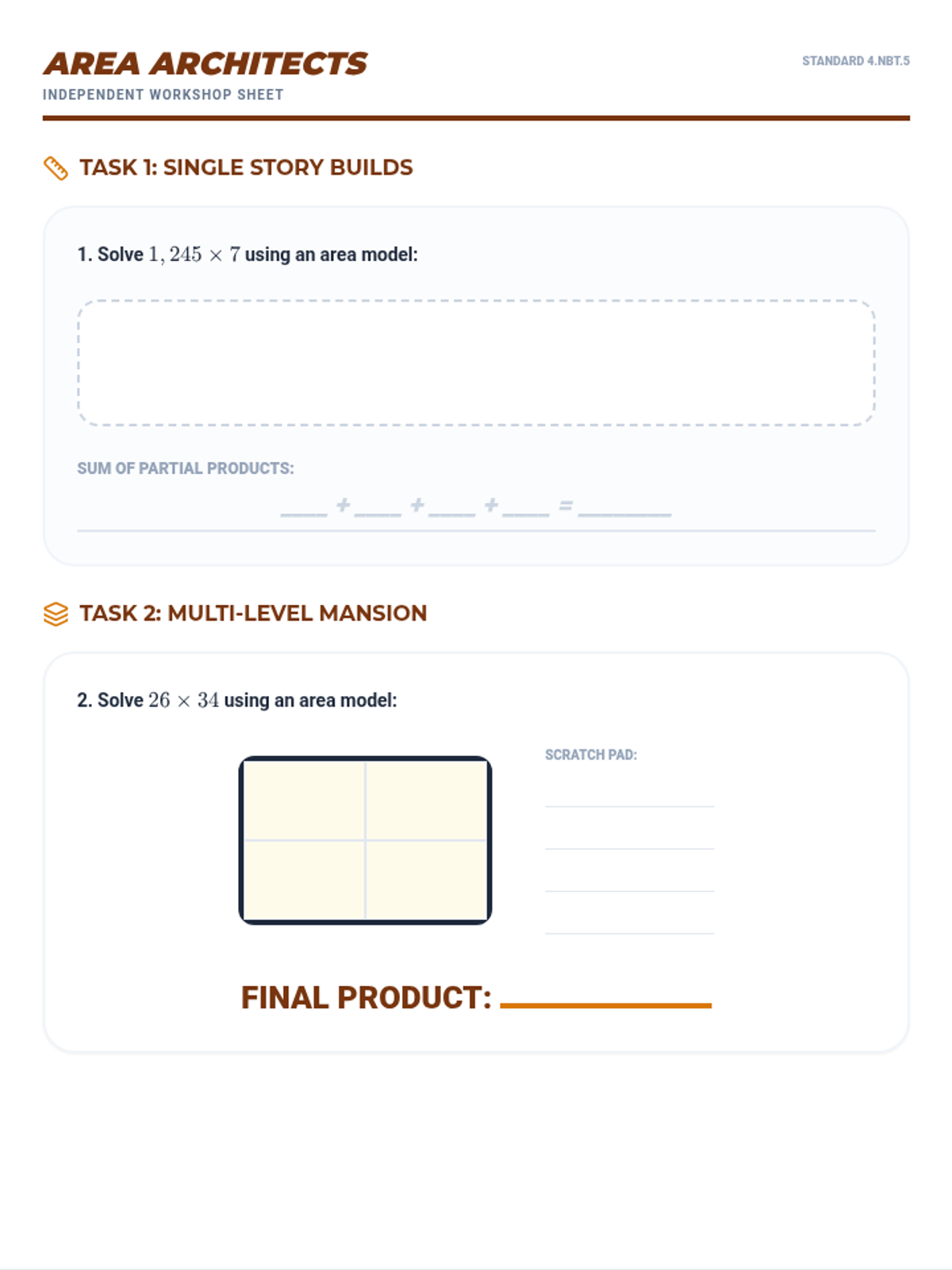
Tier 2 reteach for standard 4.NBT.5: Multiply a whole number of up to four digits by a one-digit whole number, and multiply two two-digit numbers, using strategies based on place value.
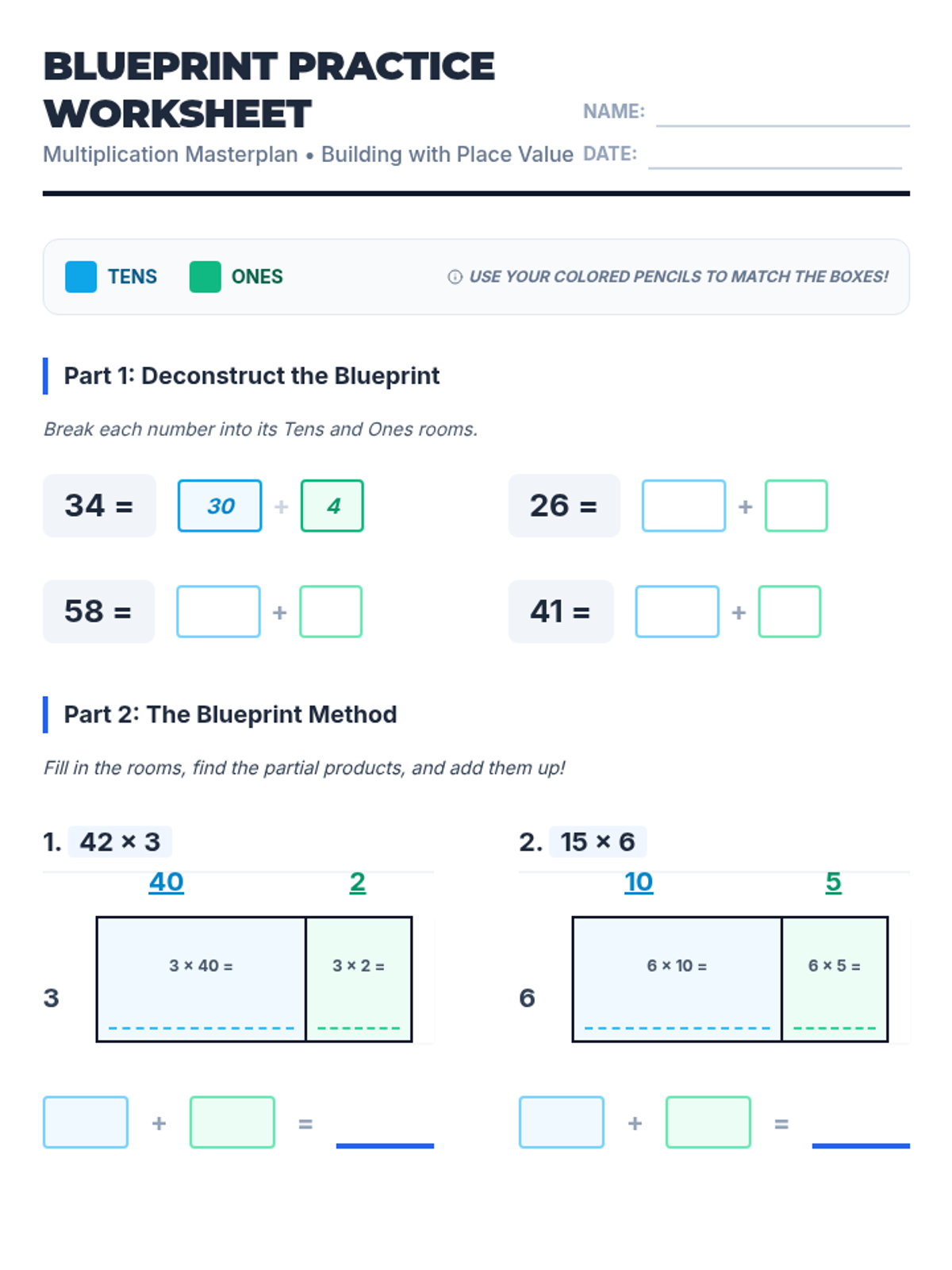
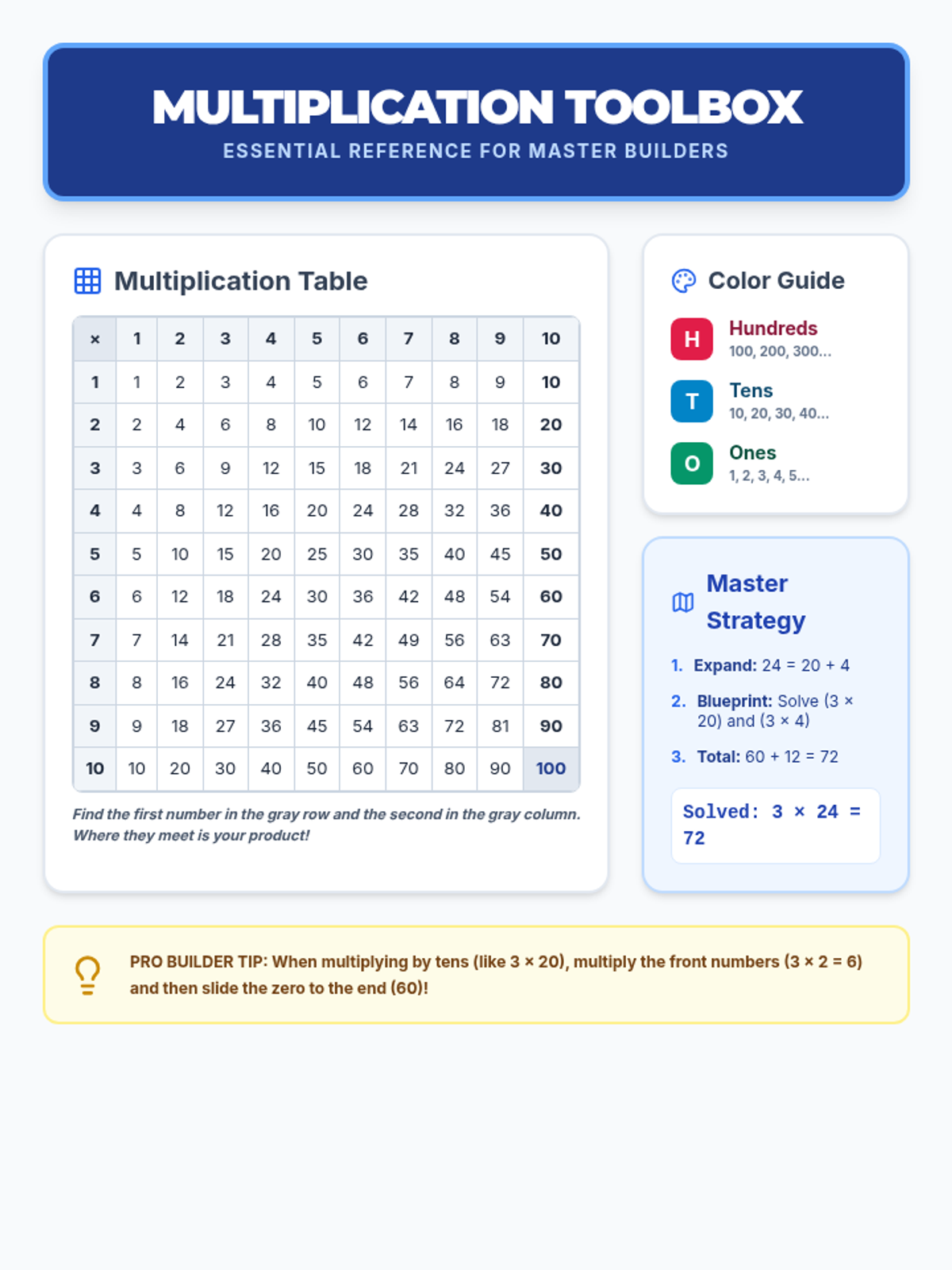
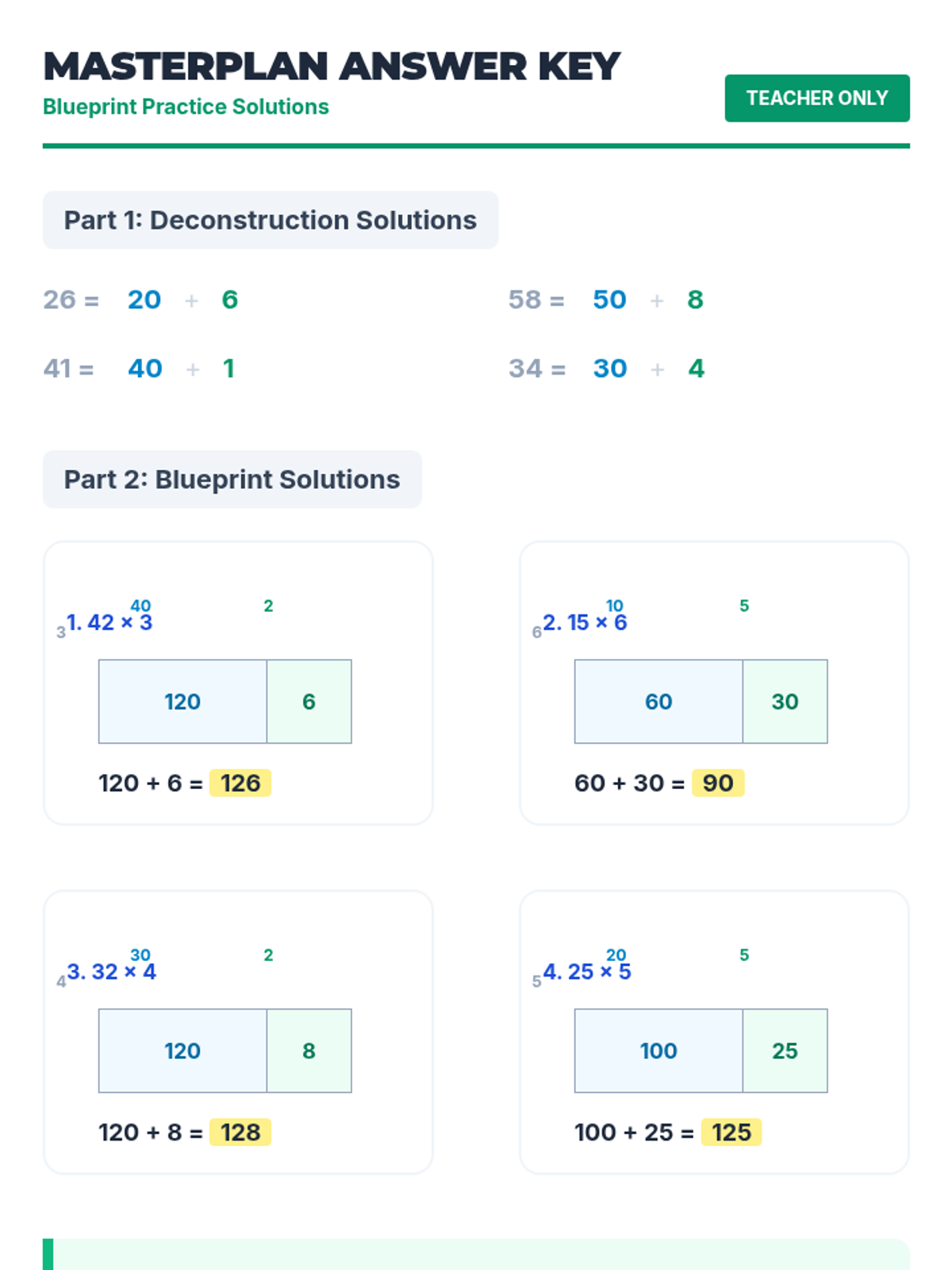
A foundational lesson on multi-digit multiplication using color-coded place value strategies and the area model to support students working significantly below grade level.
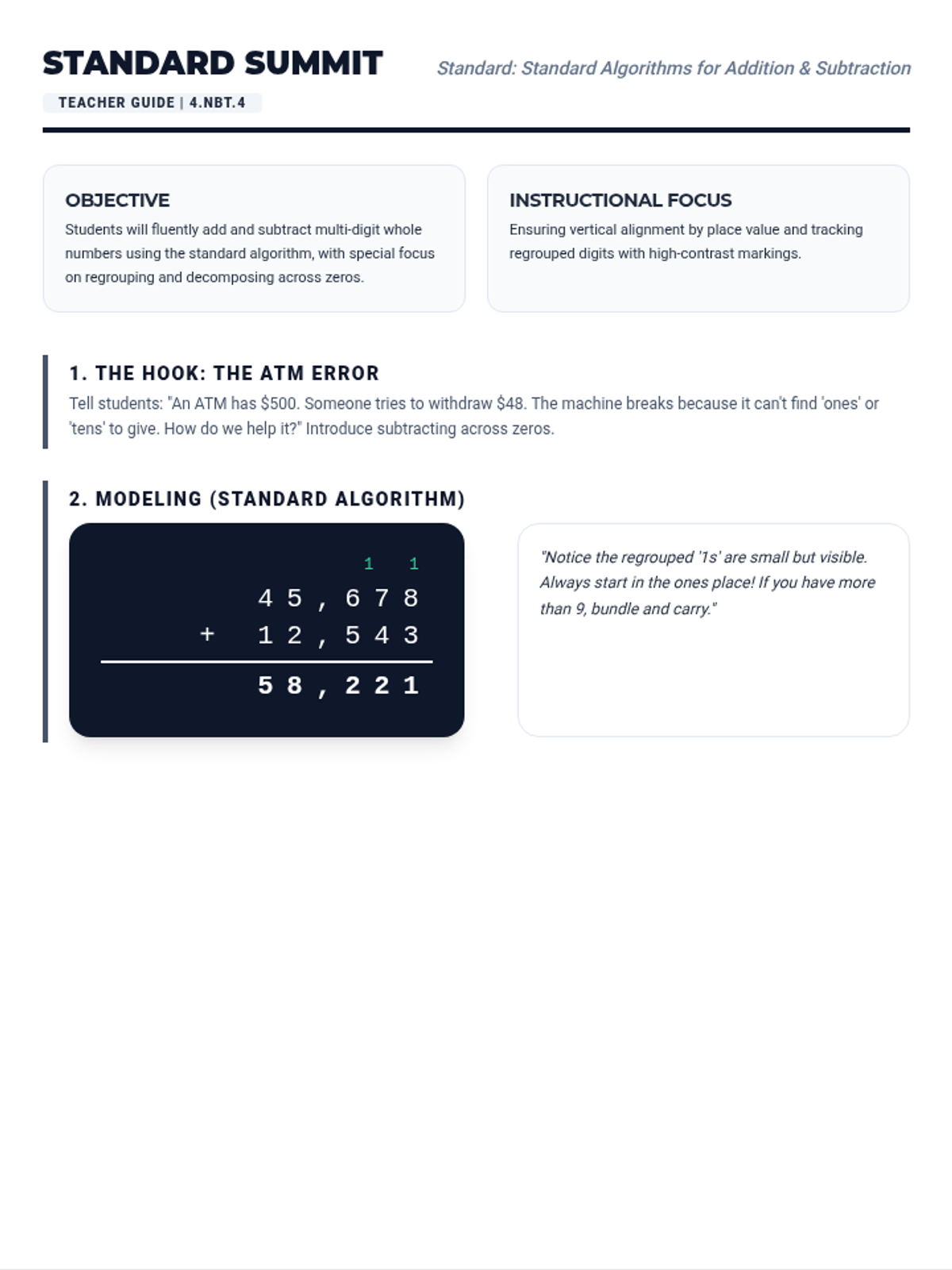
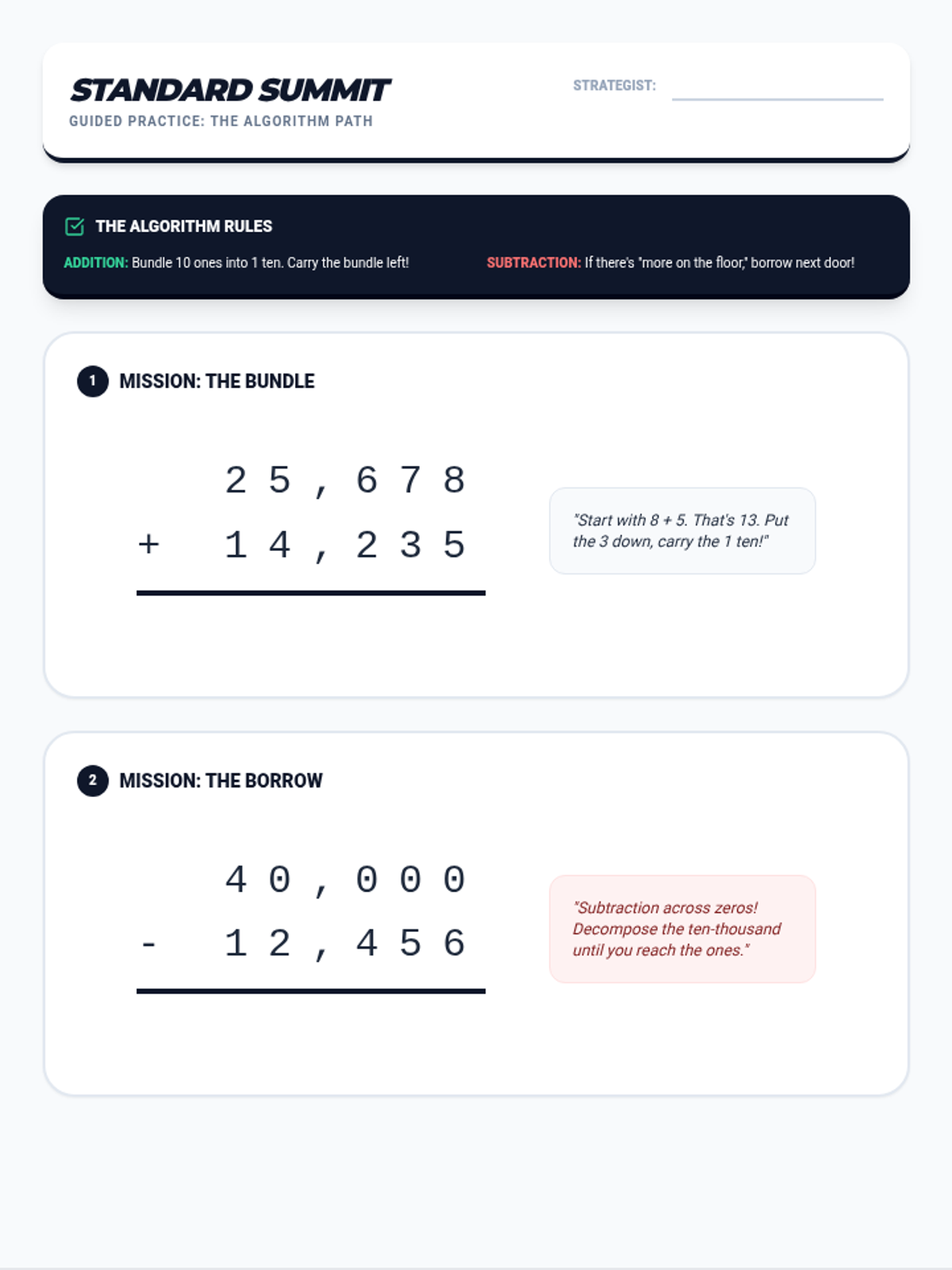
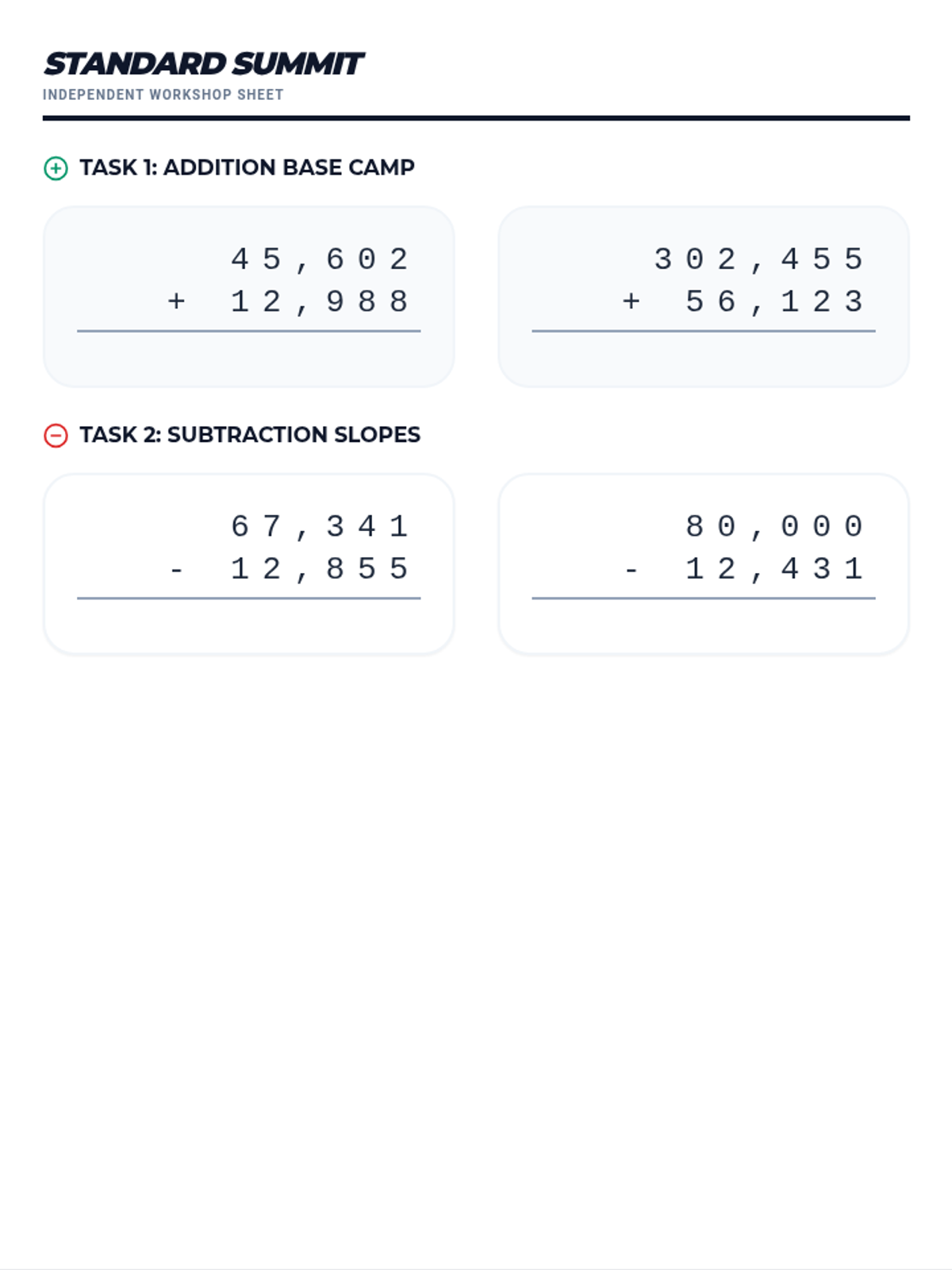
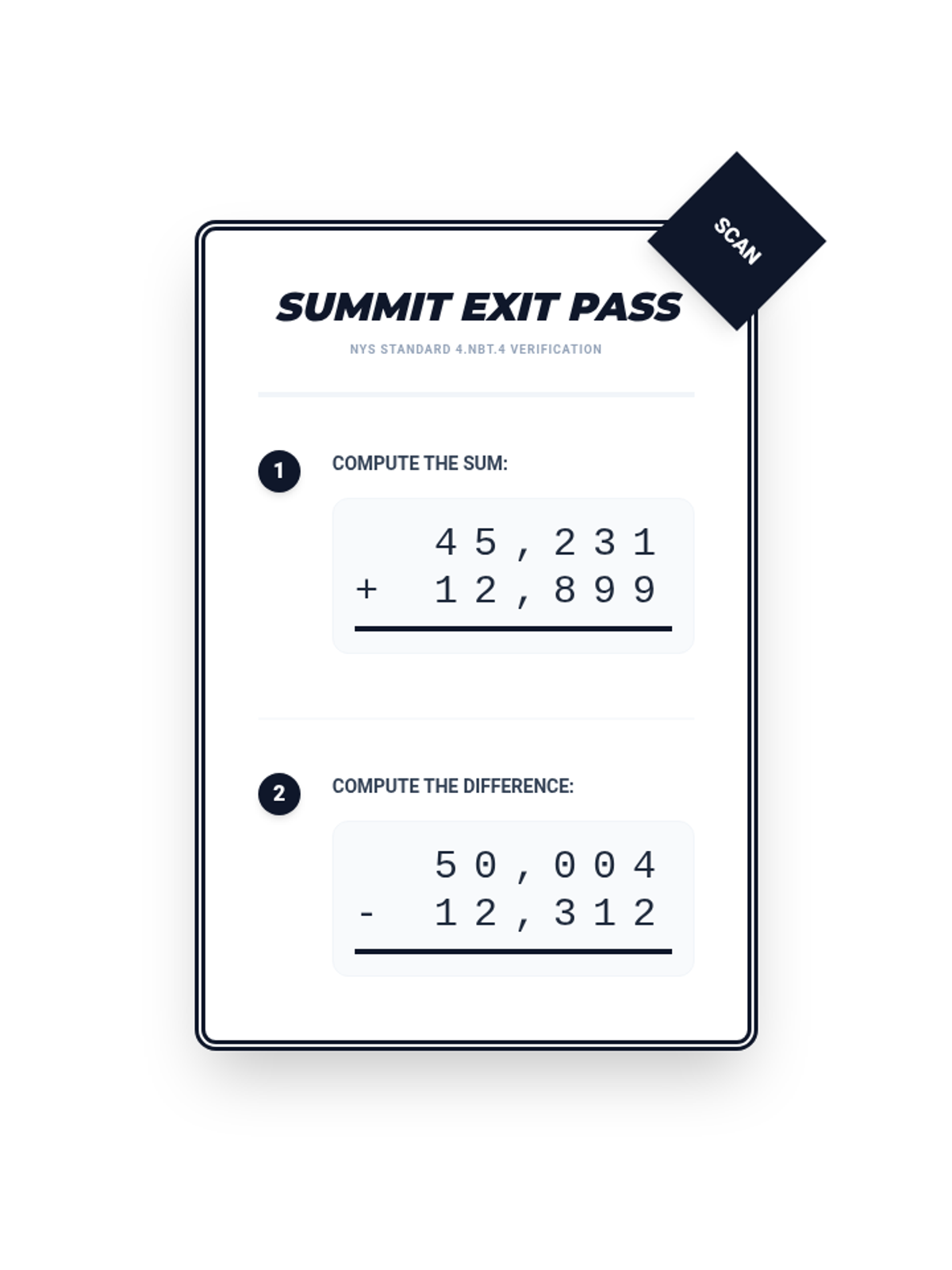
Tier 2 reteach for standard 4.NBT.4: Fluently add and subtract multi-digit whole numbers using the standard algorithm.
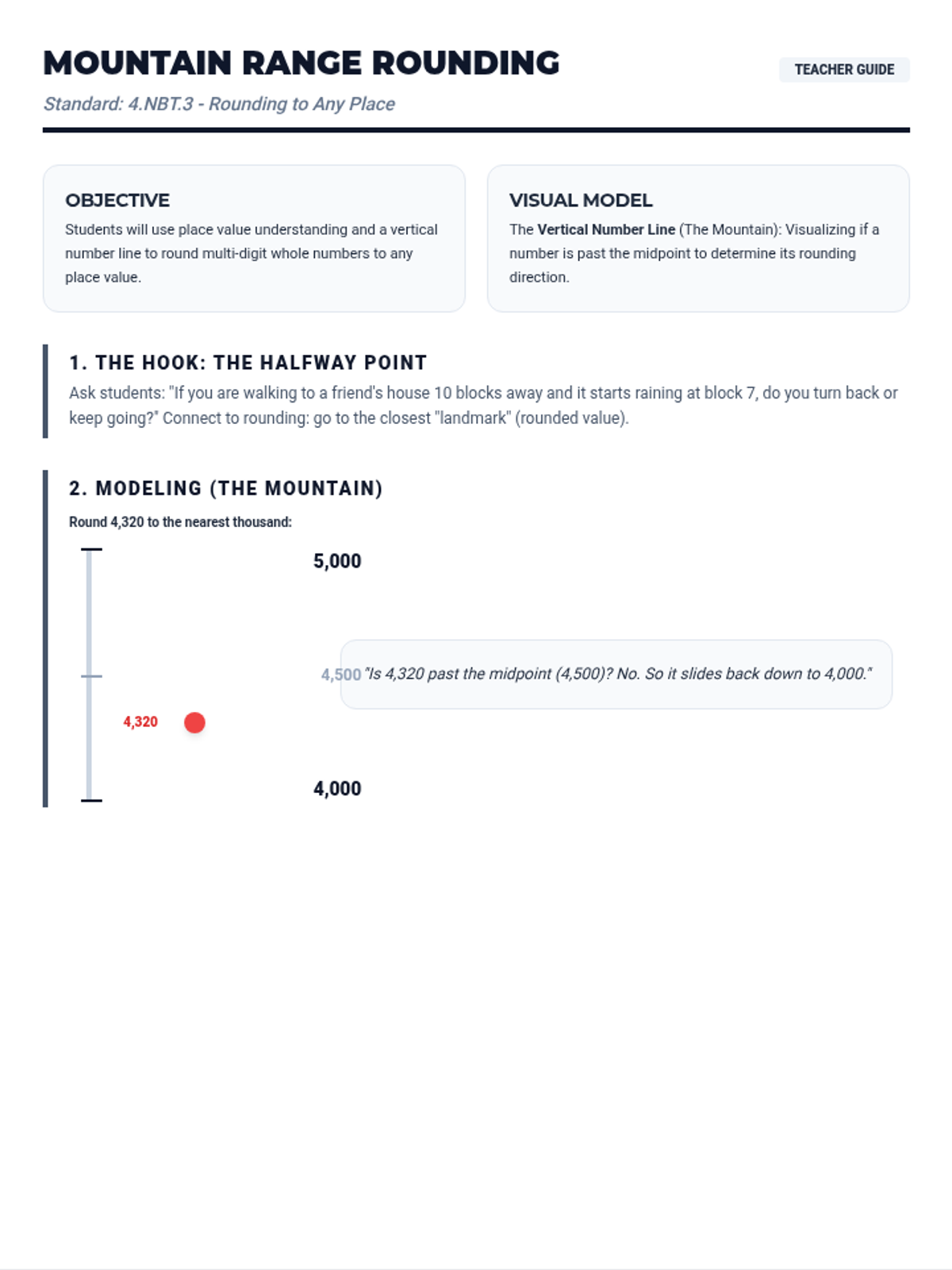
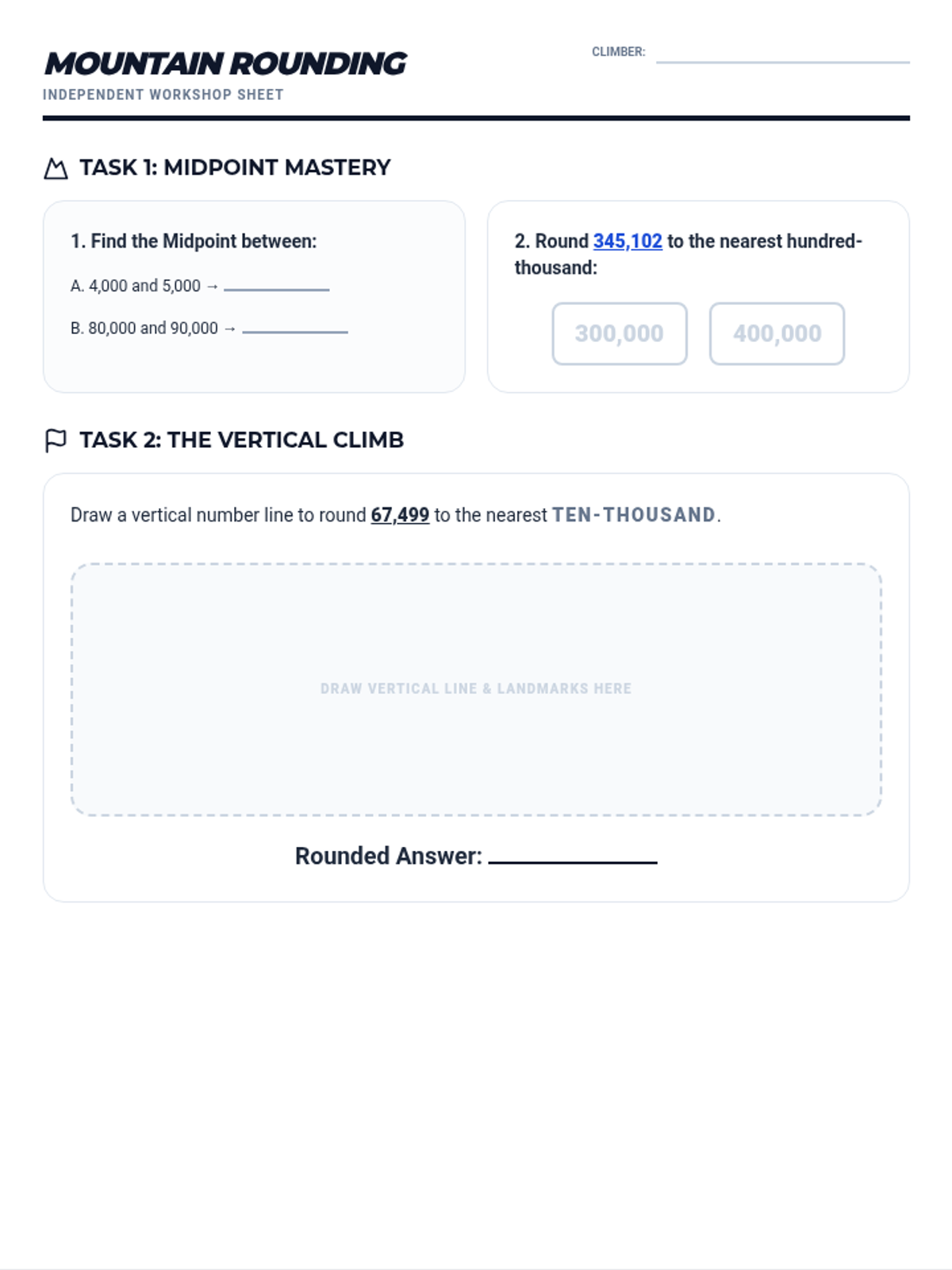
Tier 2 reteach for standard 4.NBT.3: Use place value understanding to round multi-digit whole numbers to any place.
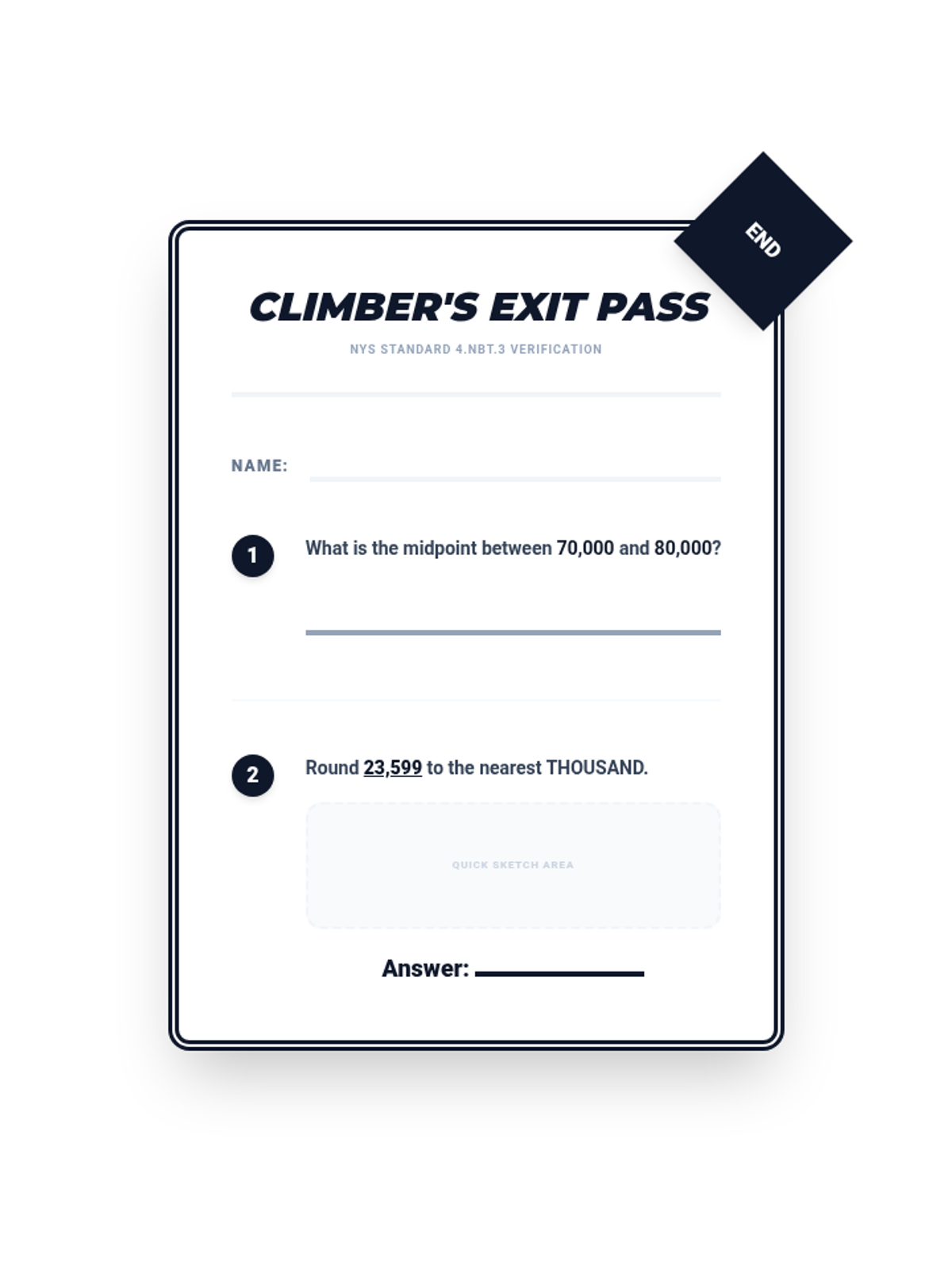
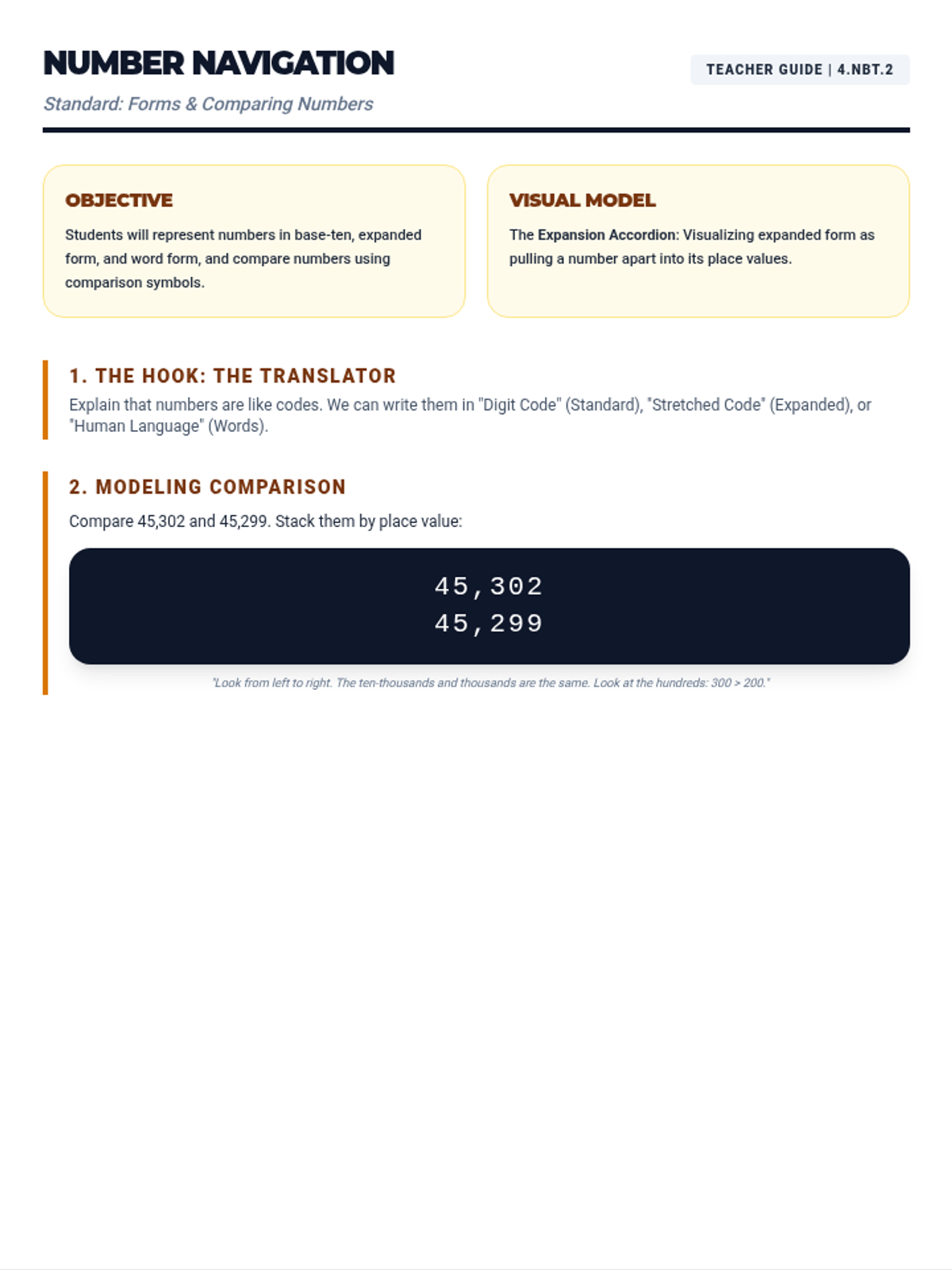
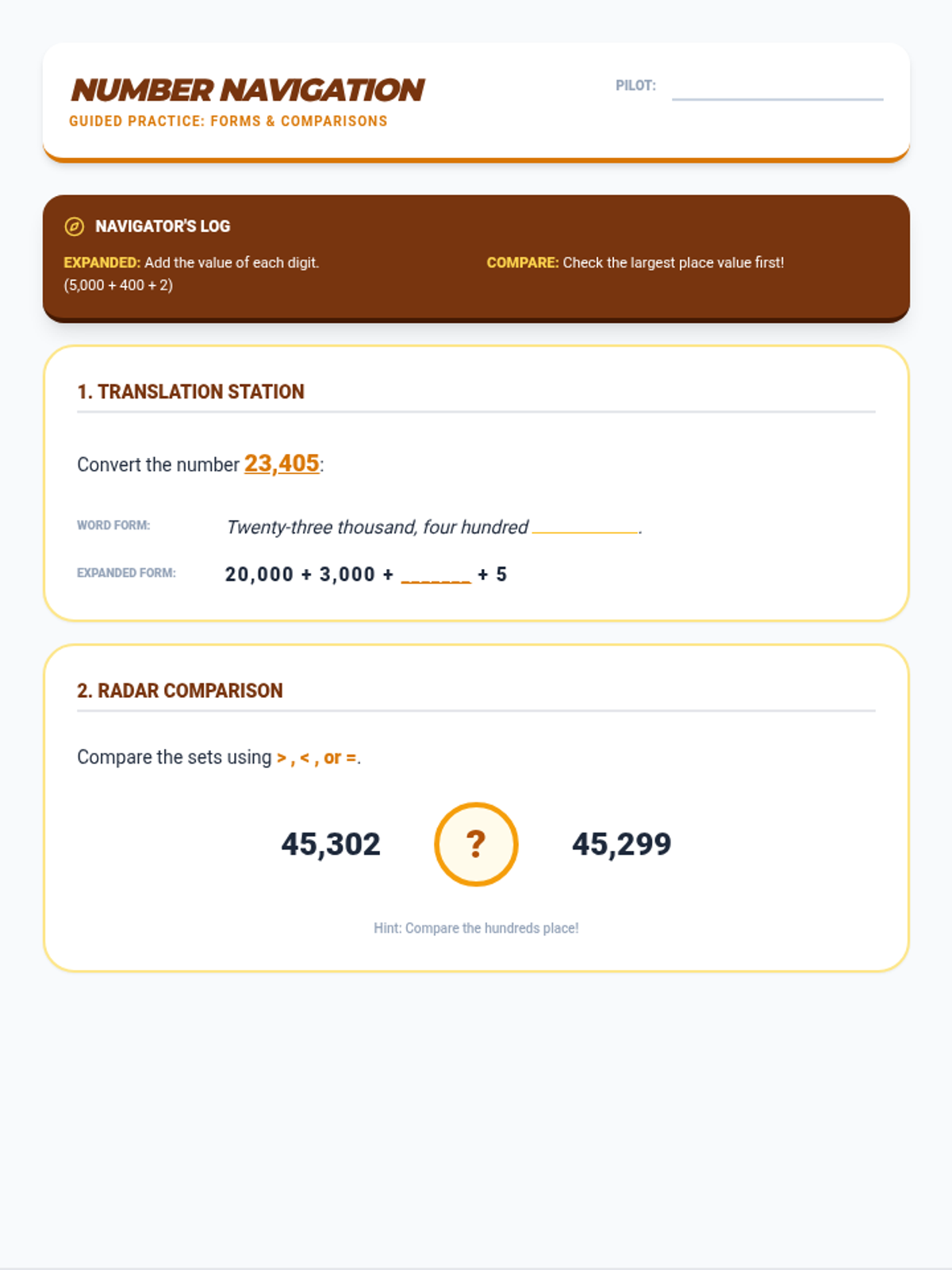
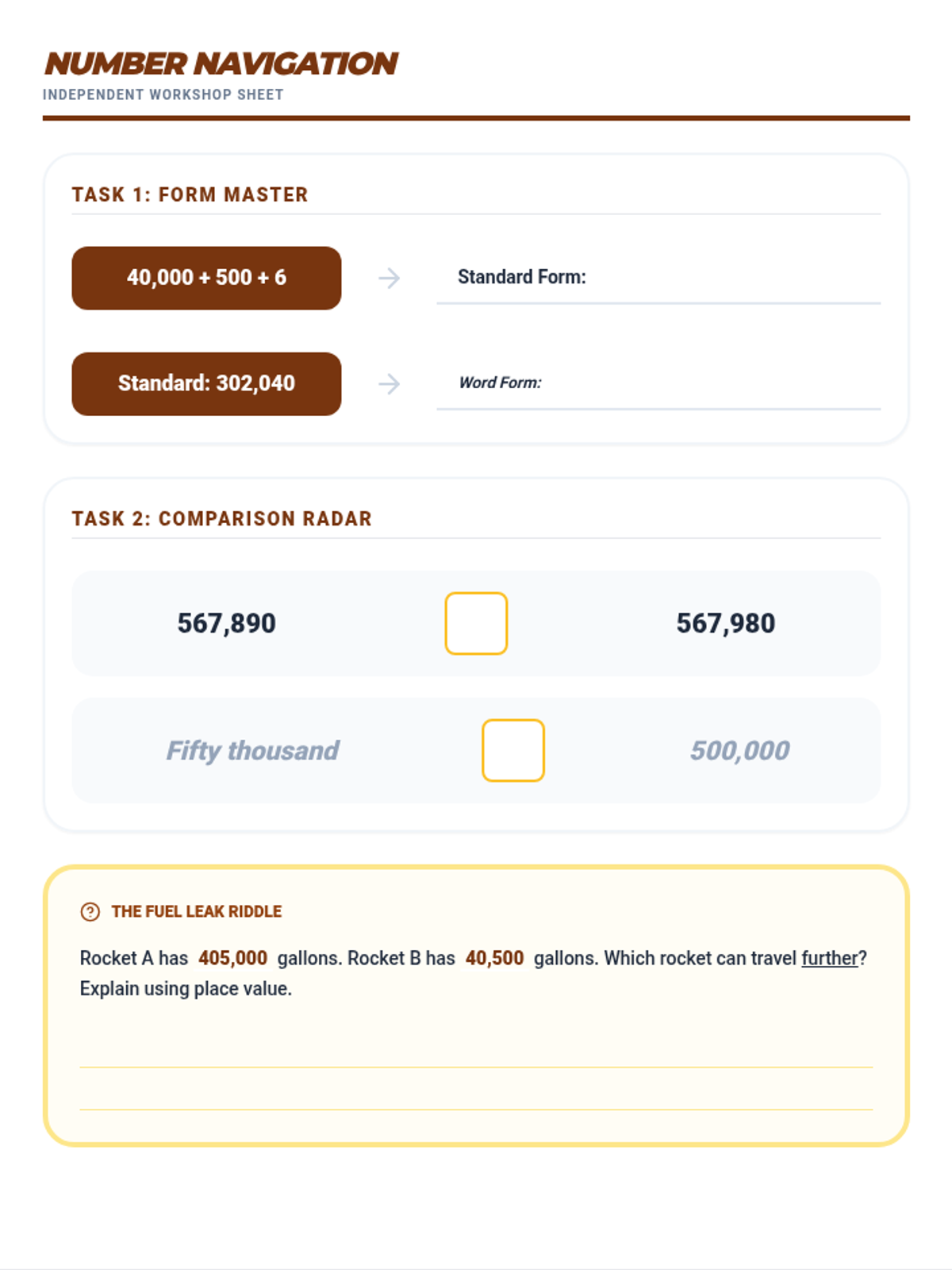
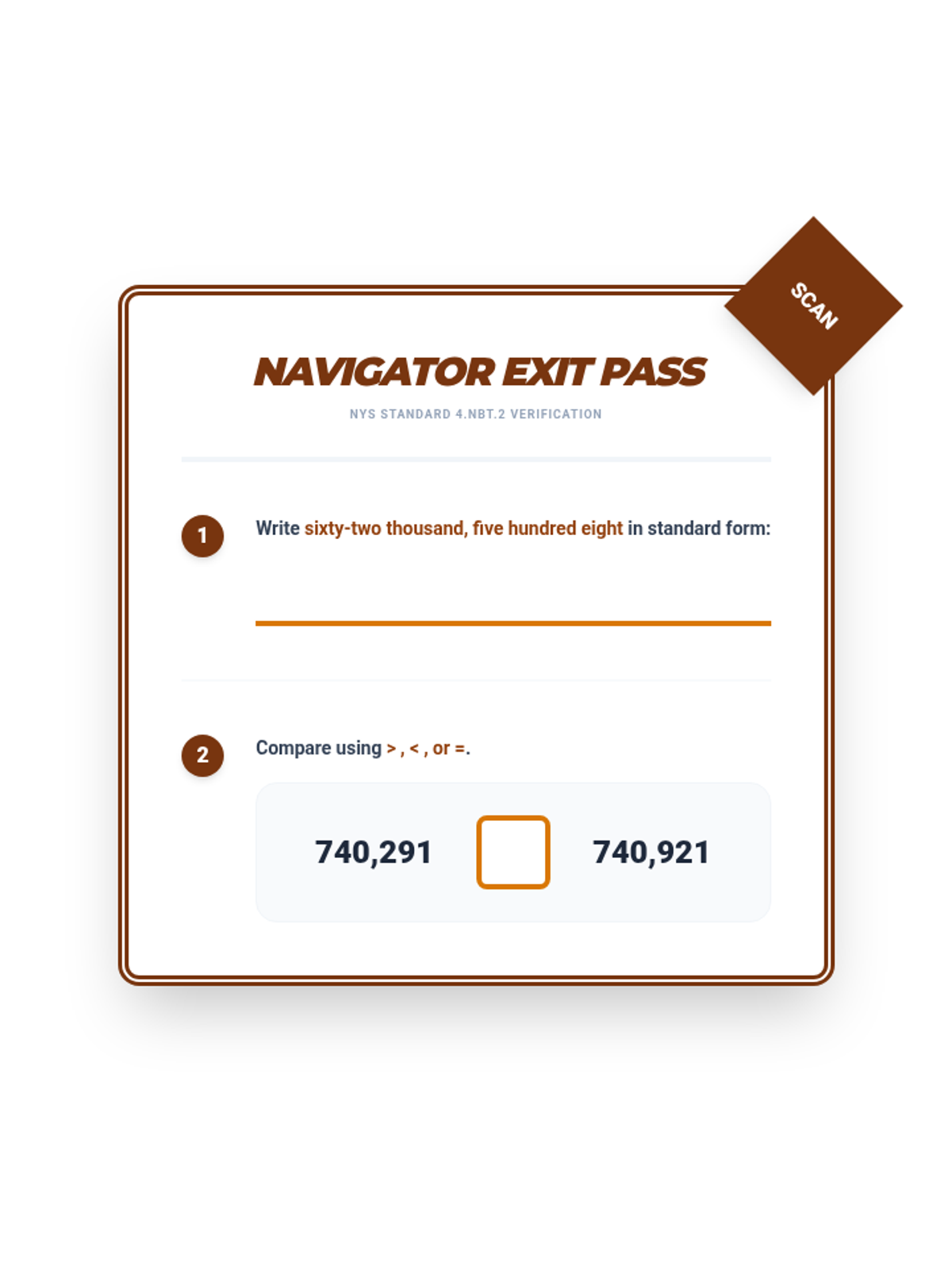
Tier 2 reteach for standard 4.NBT.2: Read and write multi-digit whole numbers using base-ten numerals, number names, and expanded form. Compare two multi-digit numbers based on meanings of the digits in each place.
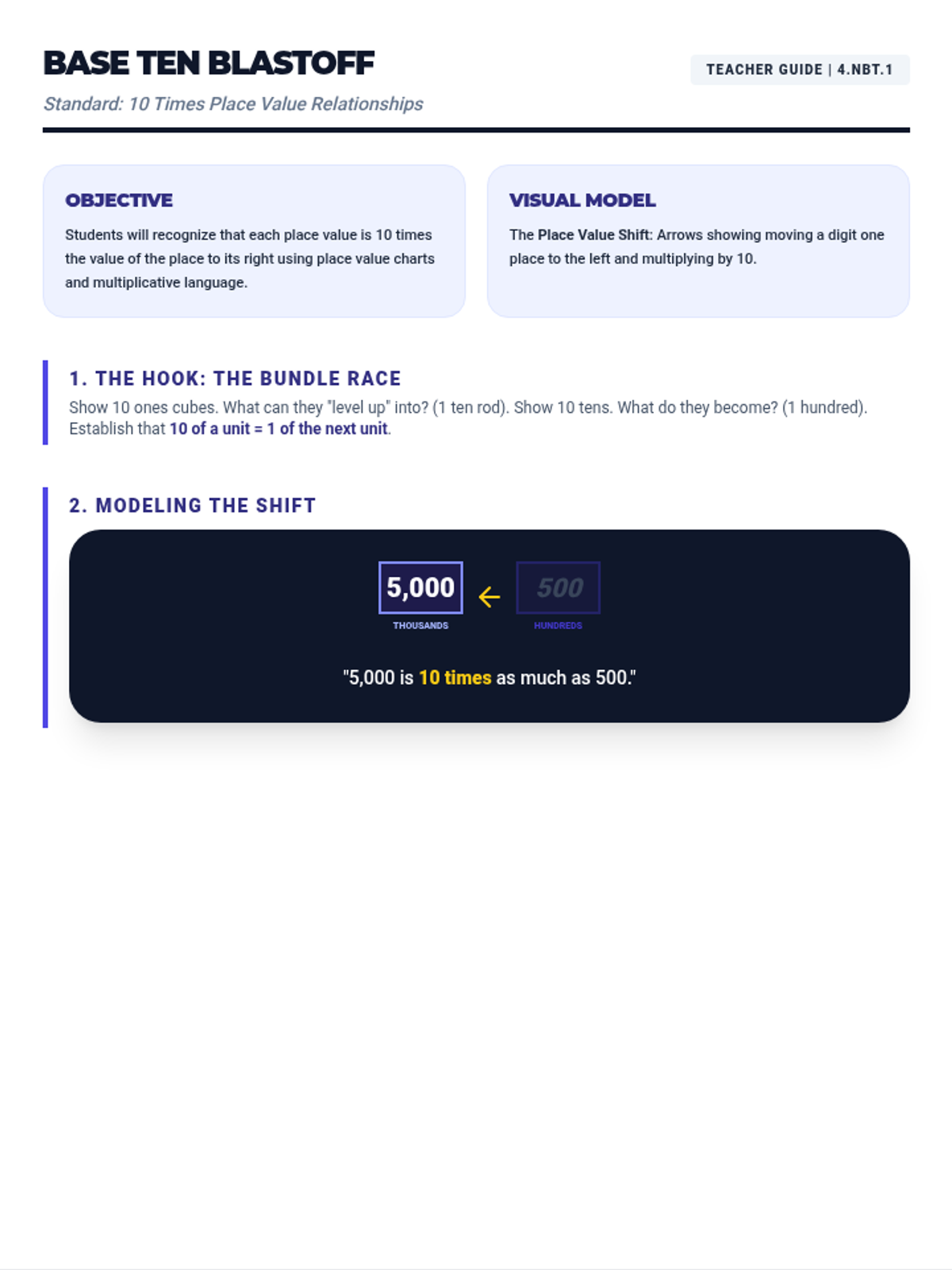
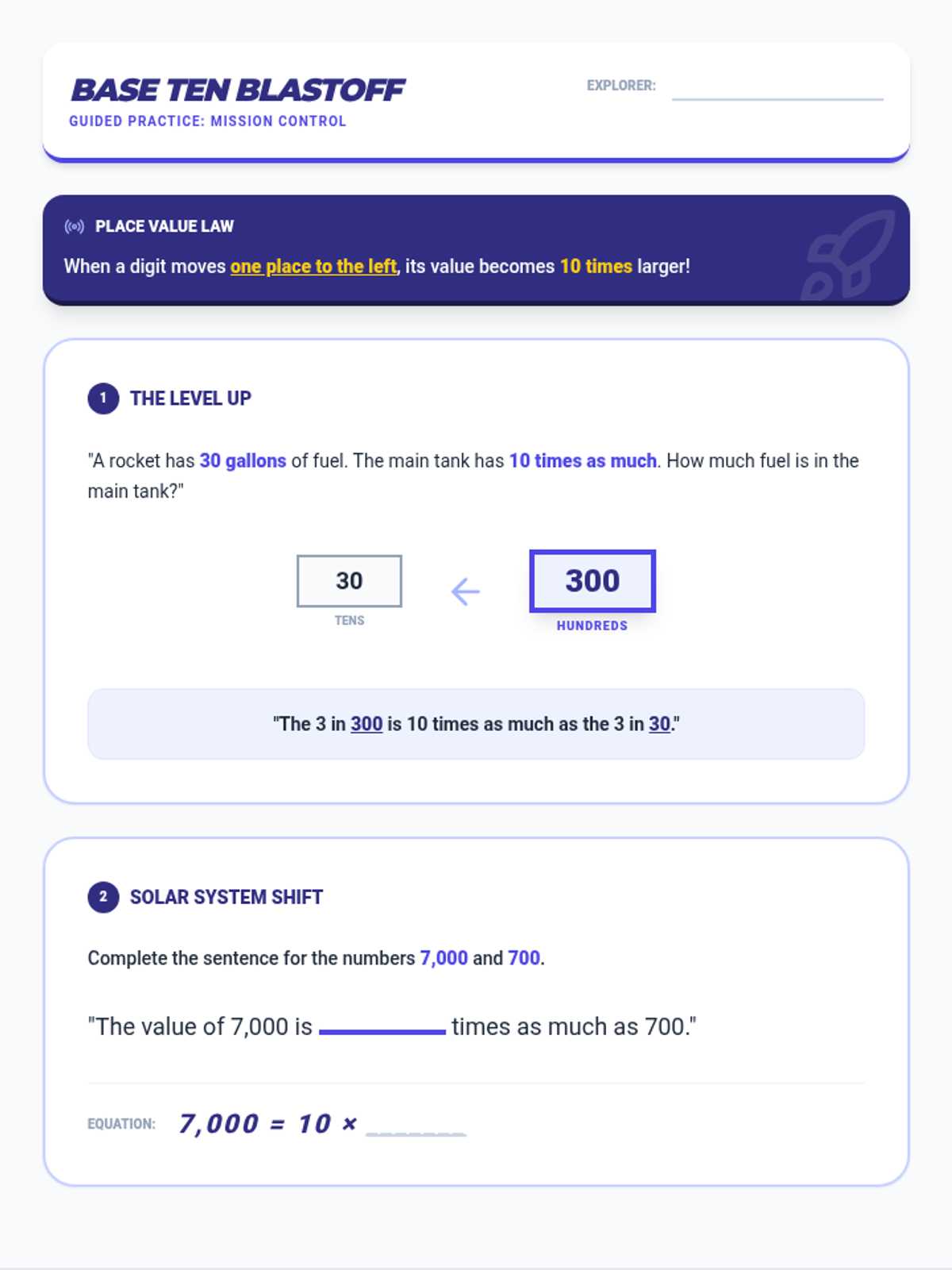
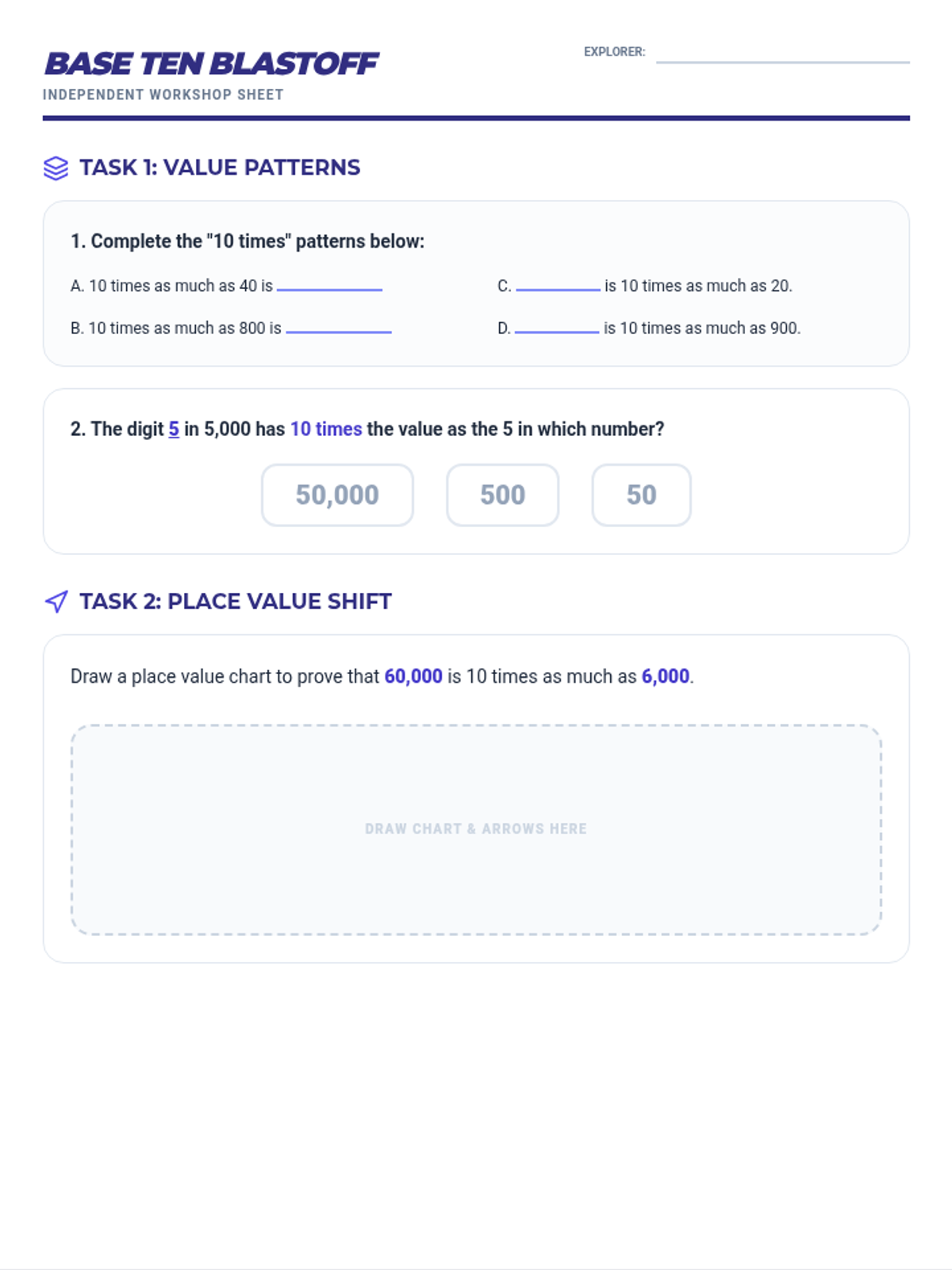
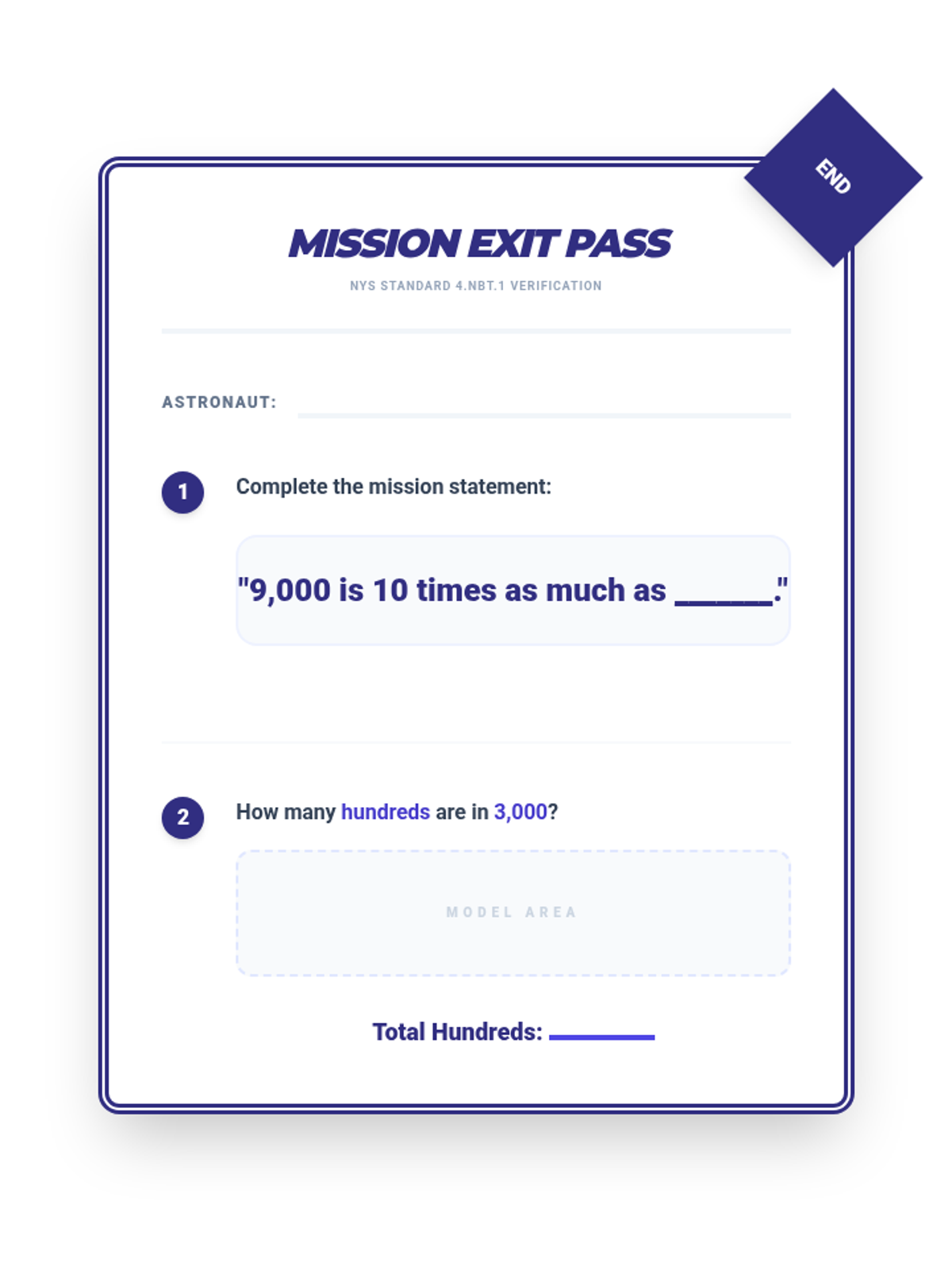
Tier 2 reteach for standard 4.NBT.1: Recognize that in a multi-digit whole number, a digit in one place represents ten times what it represents in the place to its right.
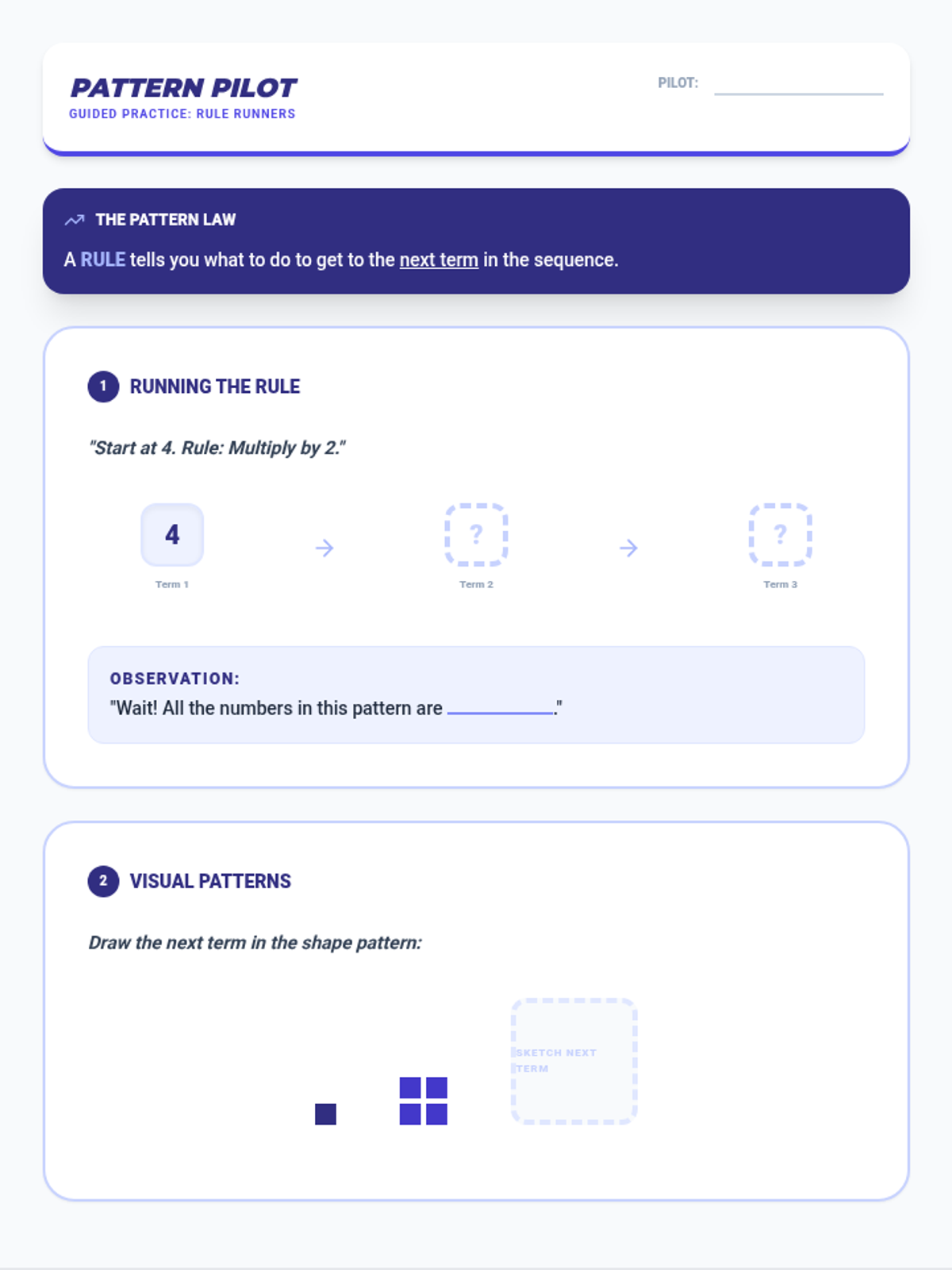
Tier 2 reteach for standard 4.OA.5: Generate a number or shape pattern that follows a given rule. Identify apparent features of the pattern that were not explicit in the rule itself.
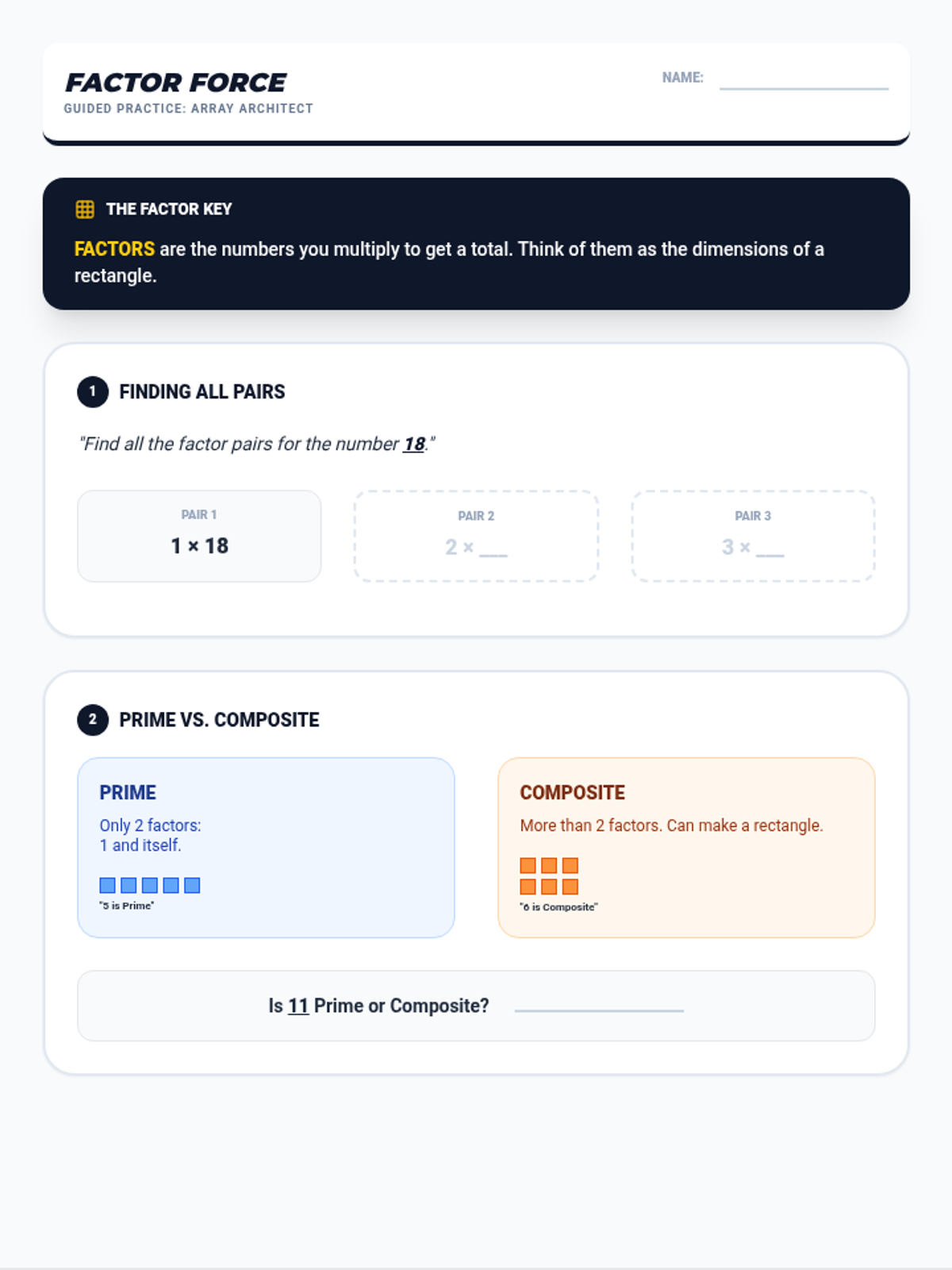
Tier 2 reteach for standard 4.OA.4: Find all factor pairs for a whole number in the range 1-100; recognize that a whole number is a multiple of each of its factors. Determine whether a given whole number in the range 1-100 is prime or composite.
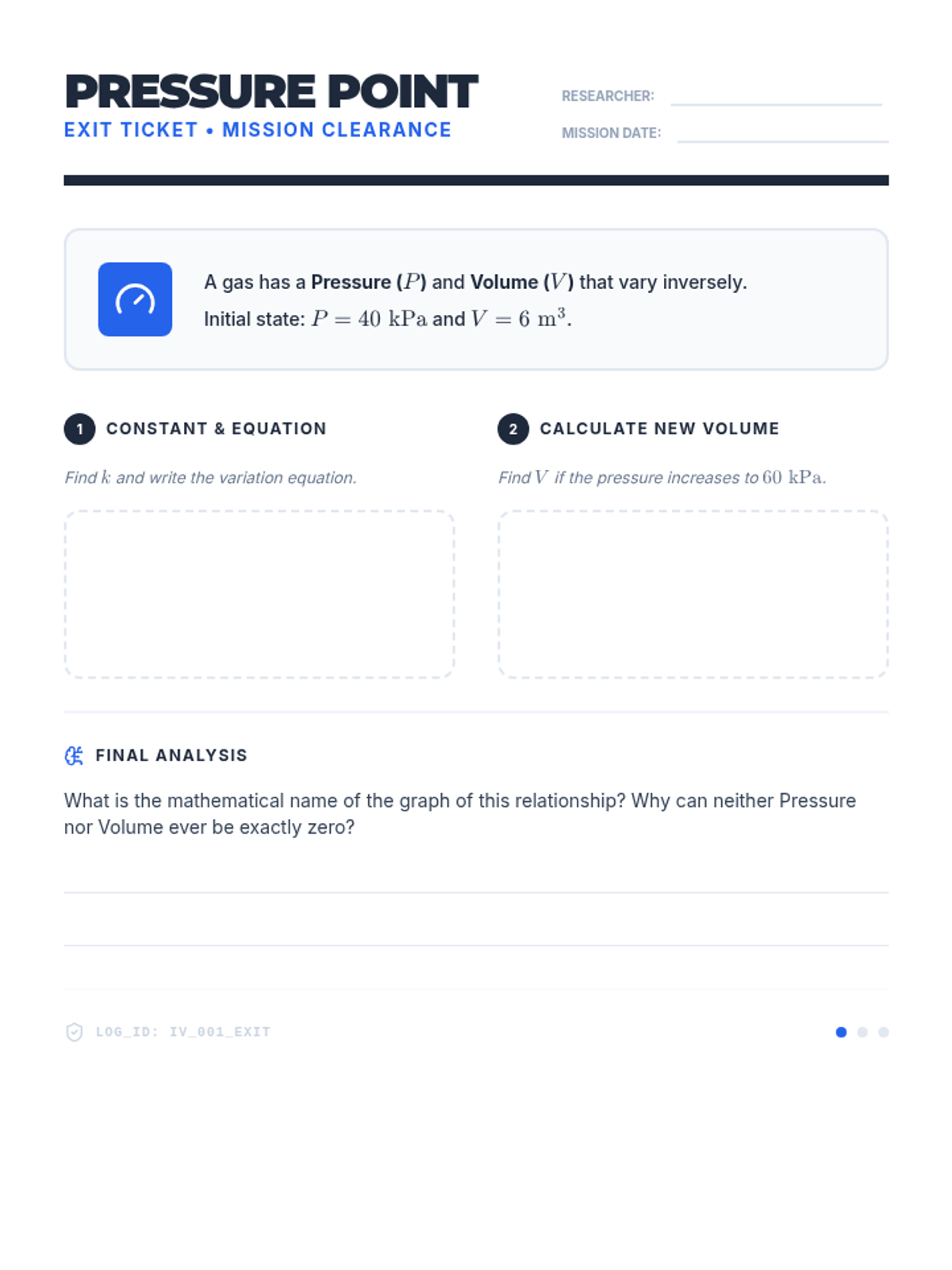
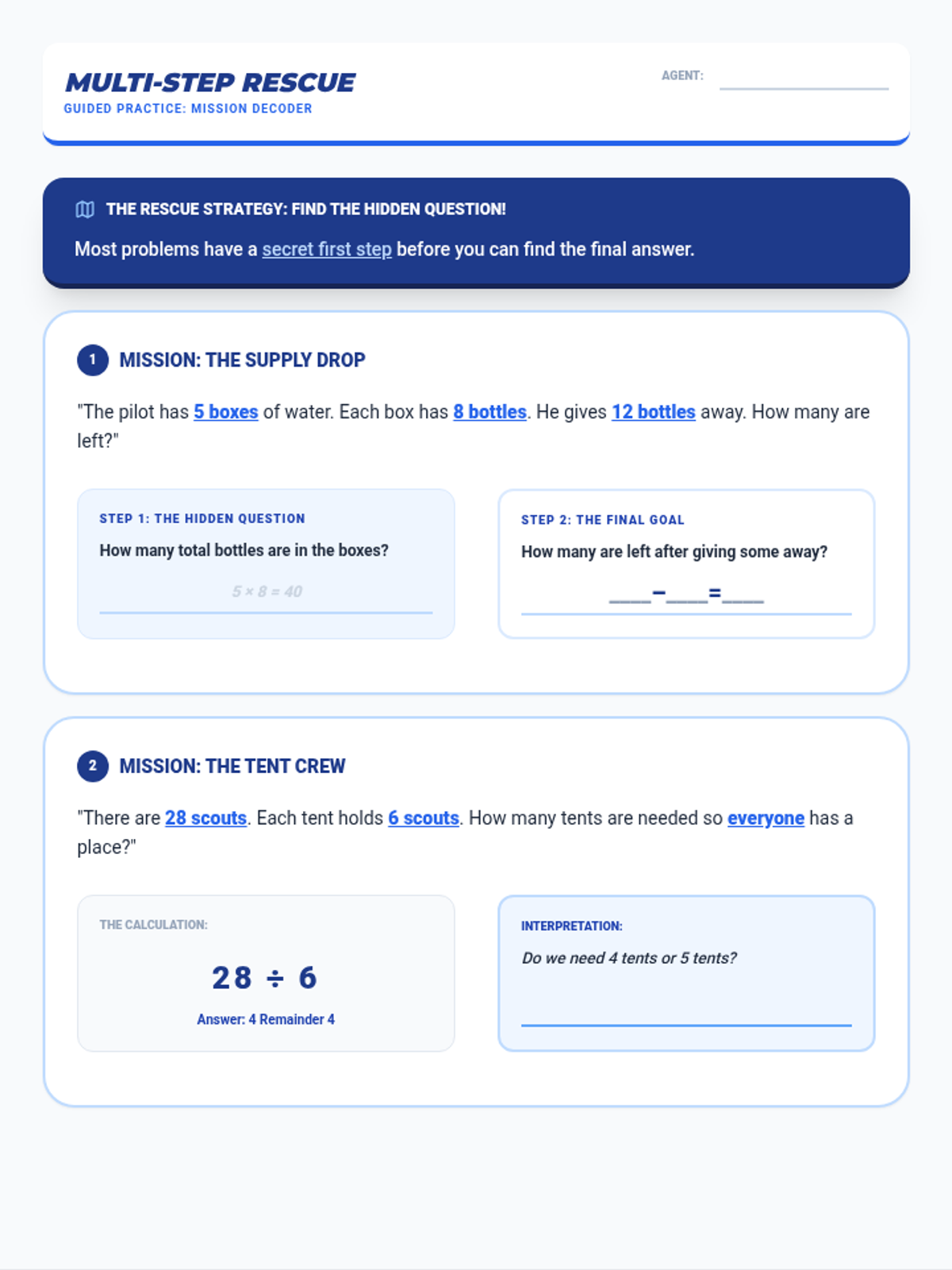
Tier 2 reteach for standard 4.OA.3: Solve multi-step word problems using the four operations, including problems where remainders must be interpreted.
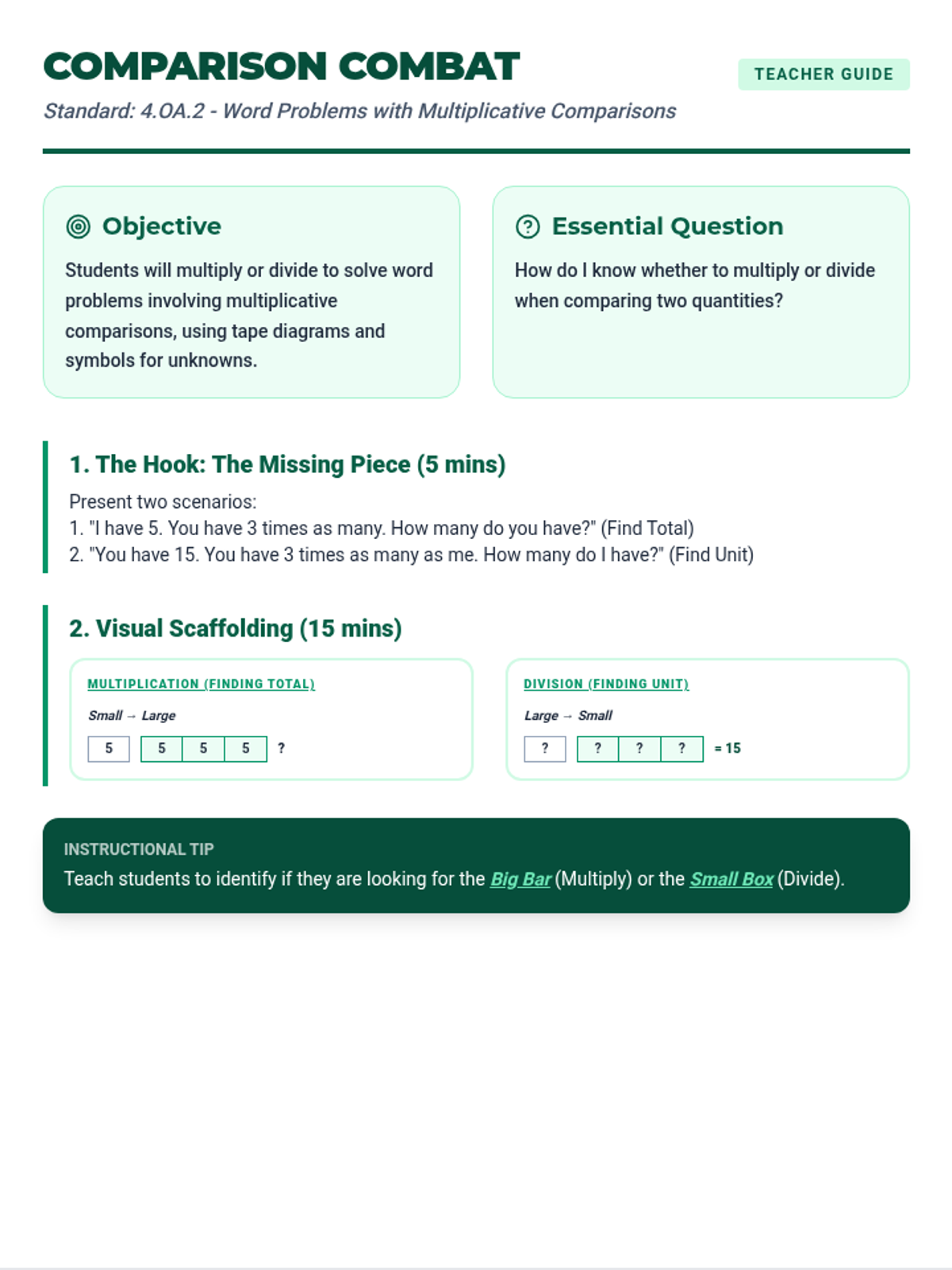
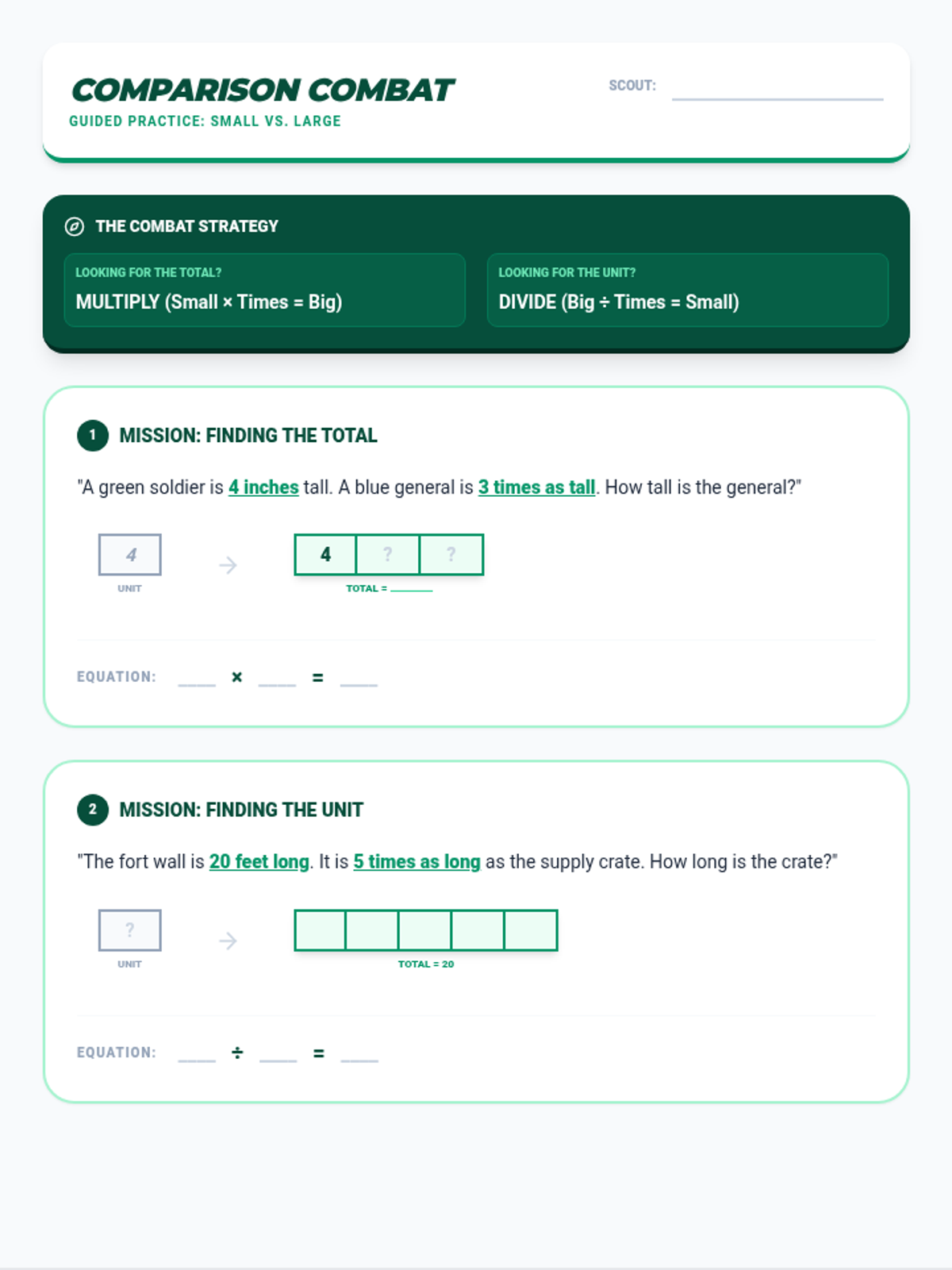
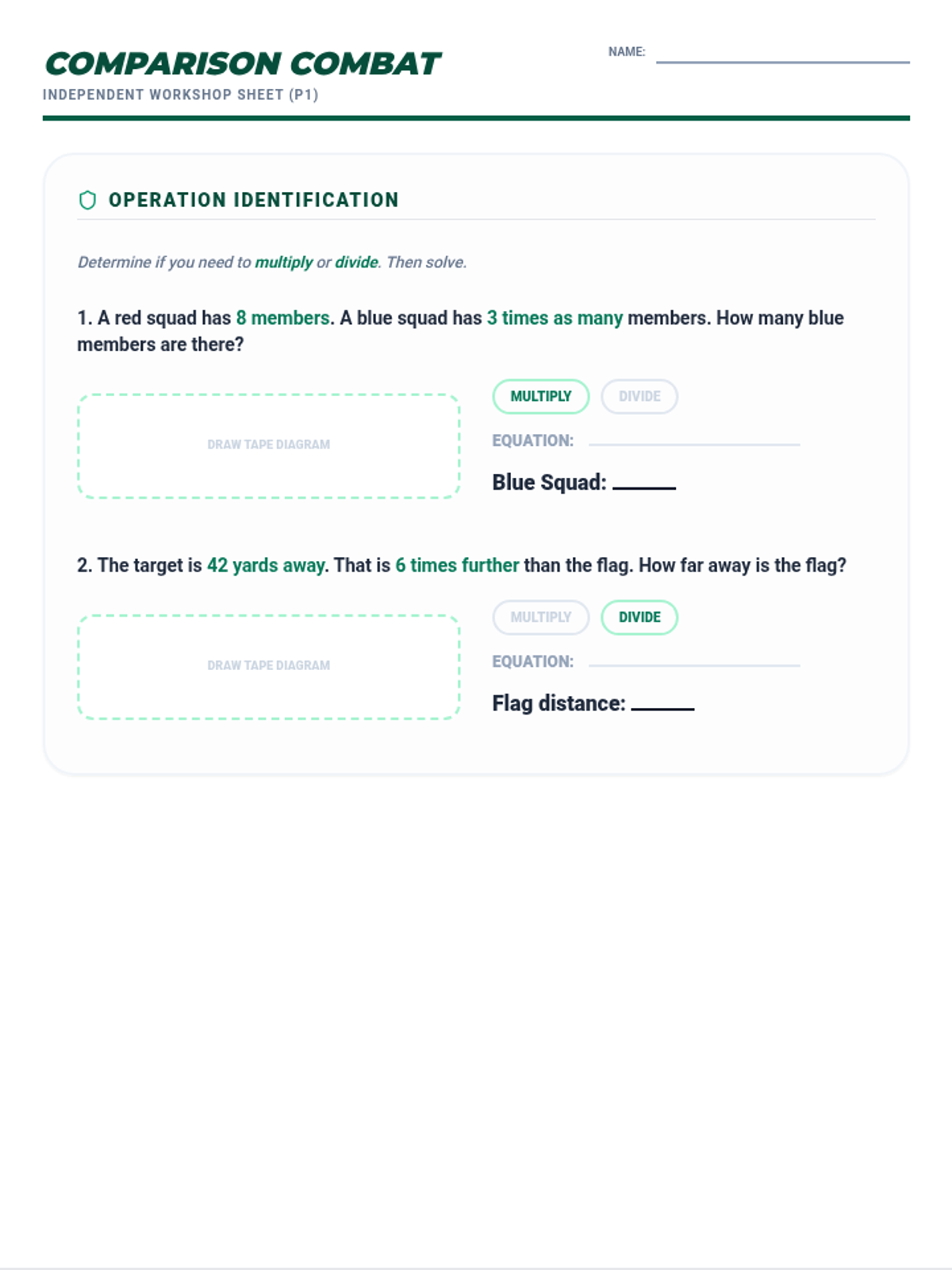
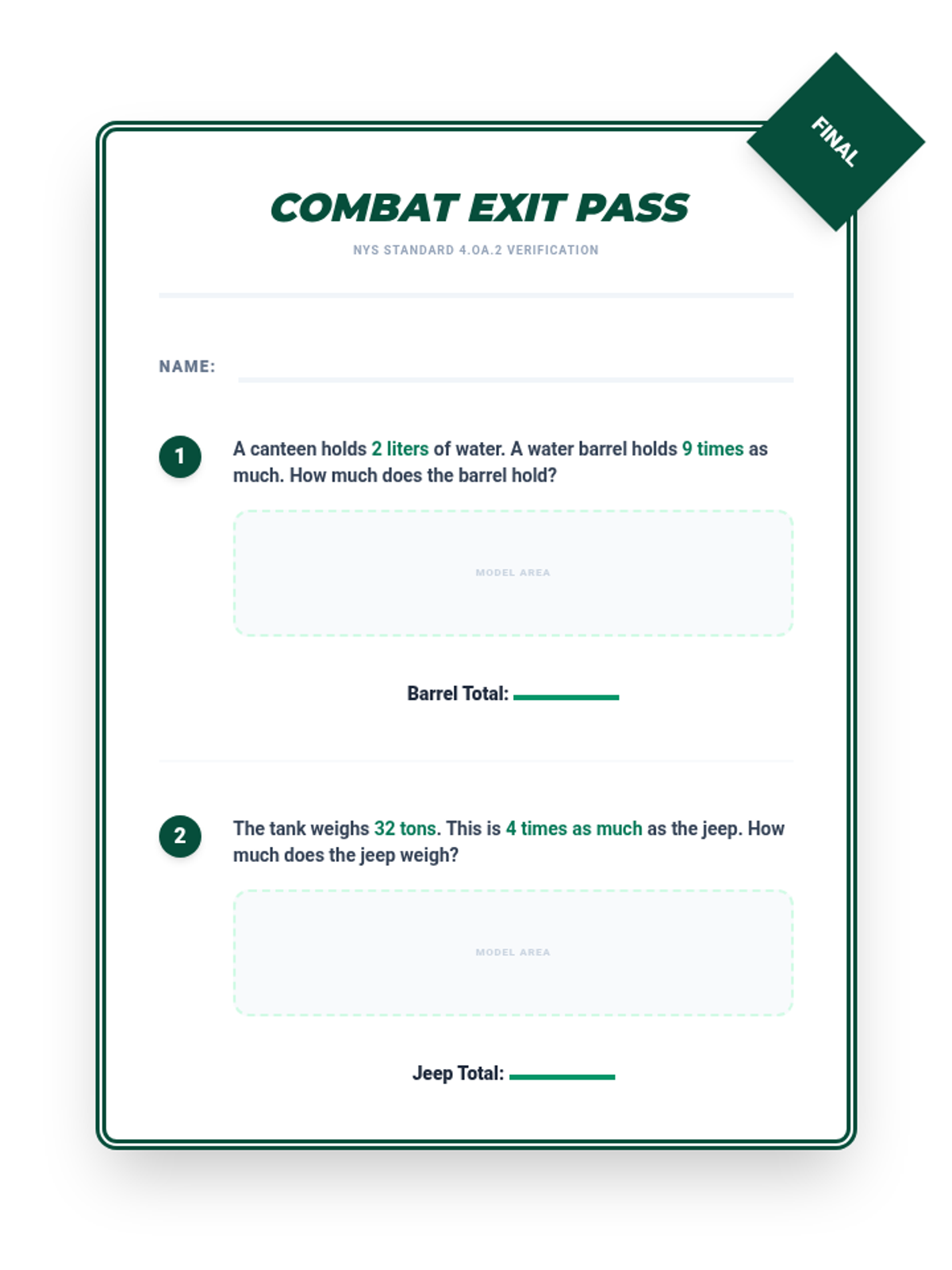
Tier 2 reteach for standard 4.OA.2: Solving word problems involving multiplicative comparisons using multiplication and division.
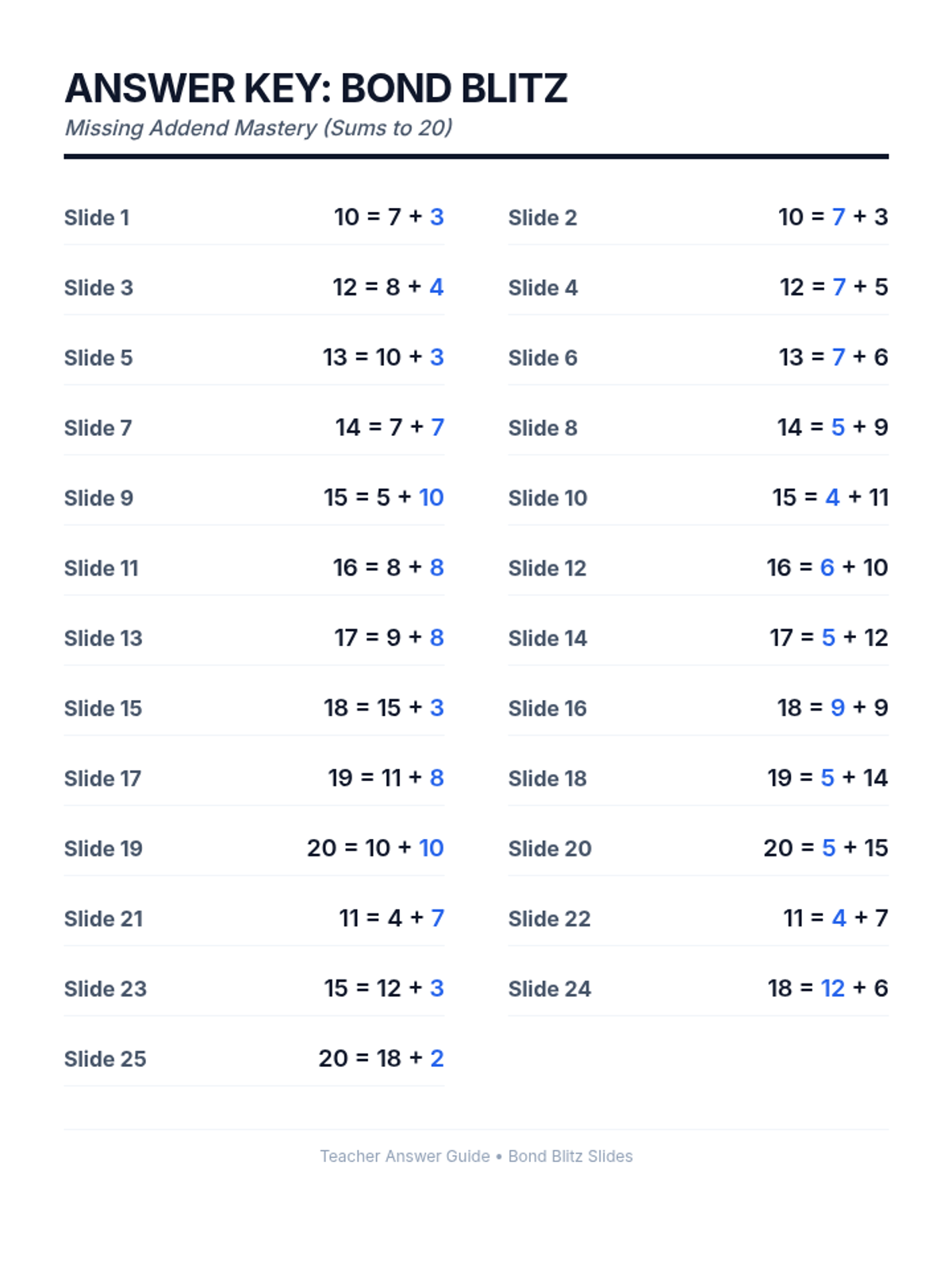
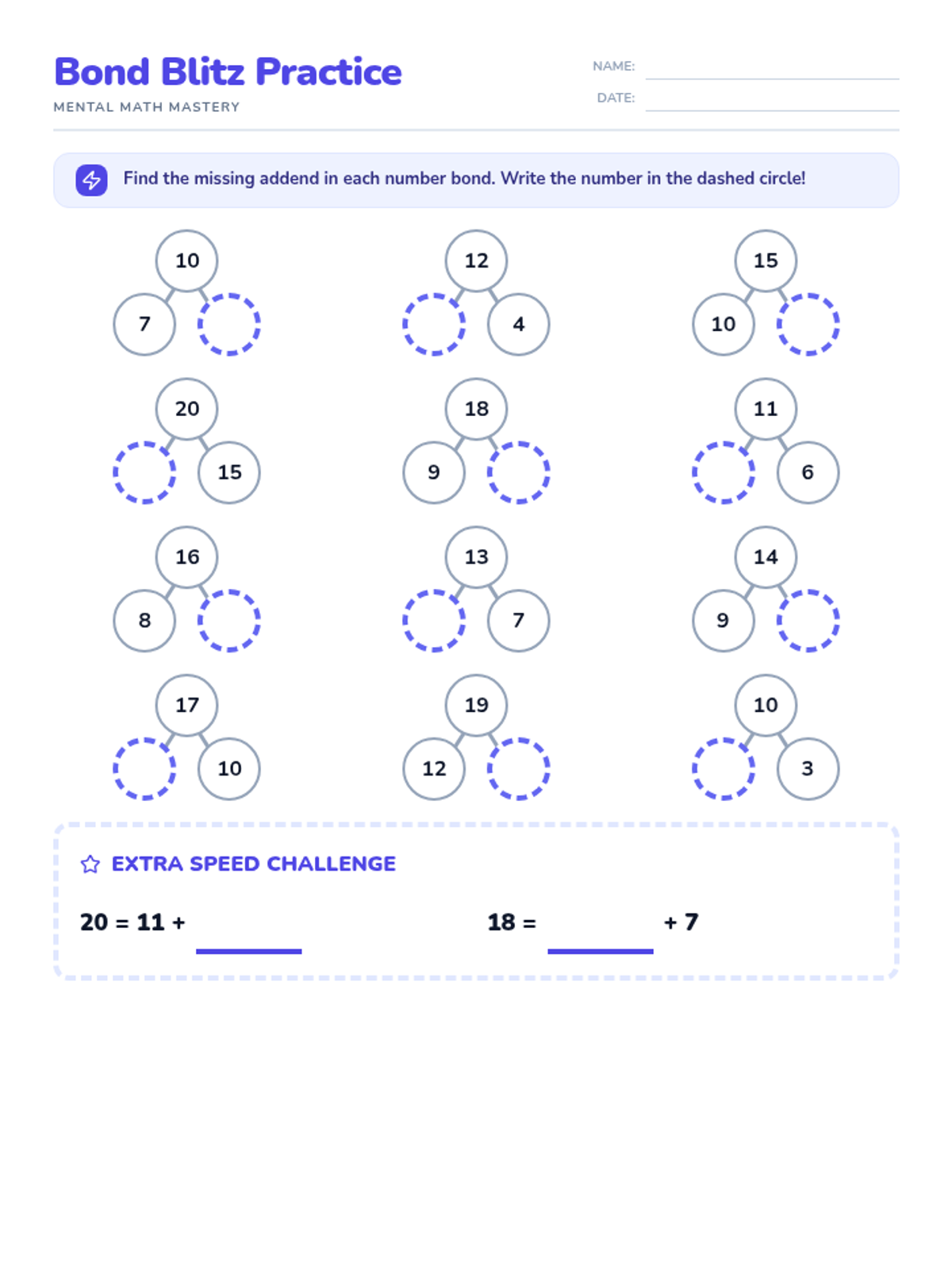
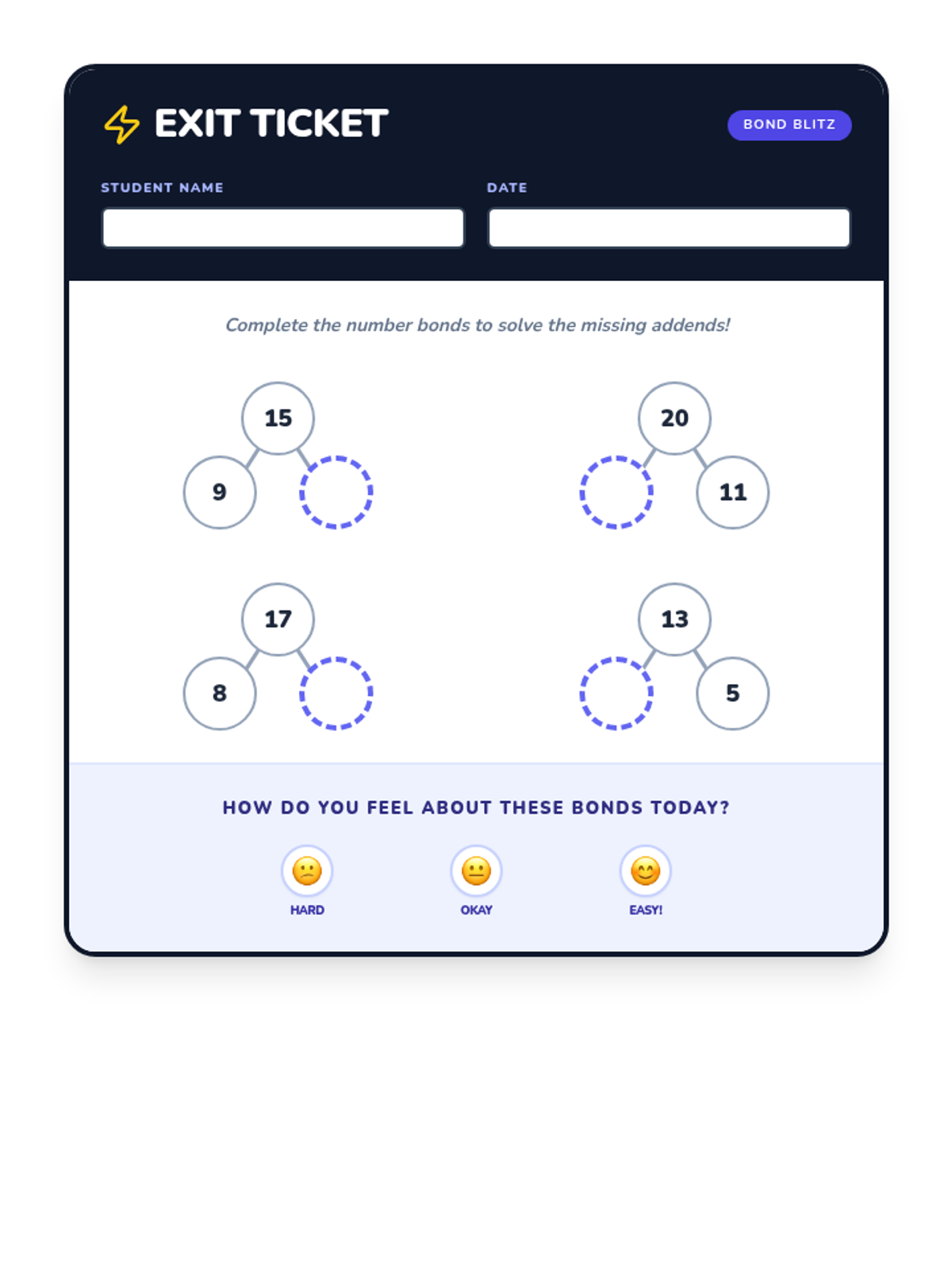
A fast-paced slide deck featuring number bonds with sums up to 20. Students must identify the missing addends in a variety of numerical bond configurations.
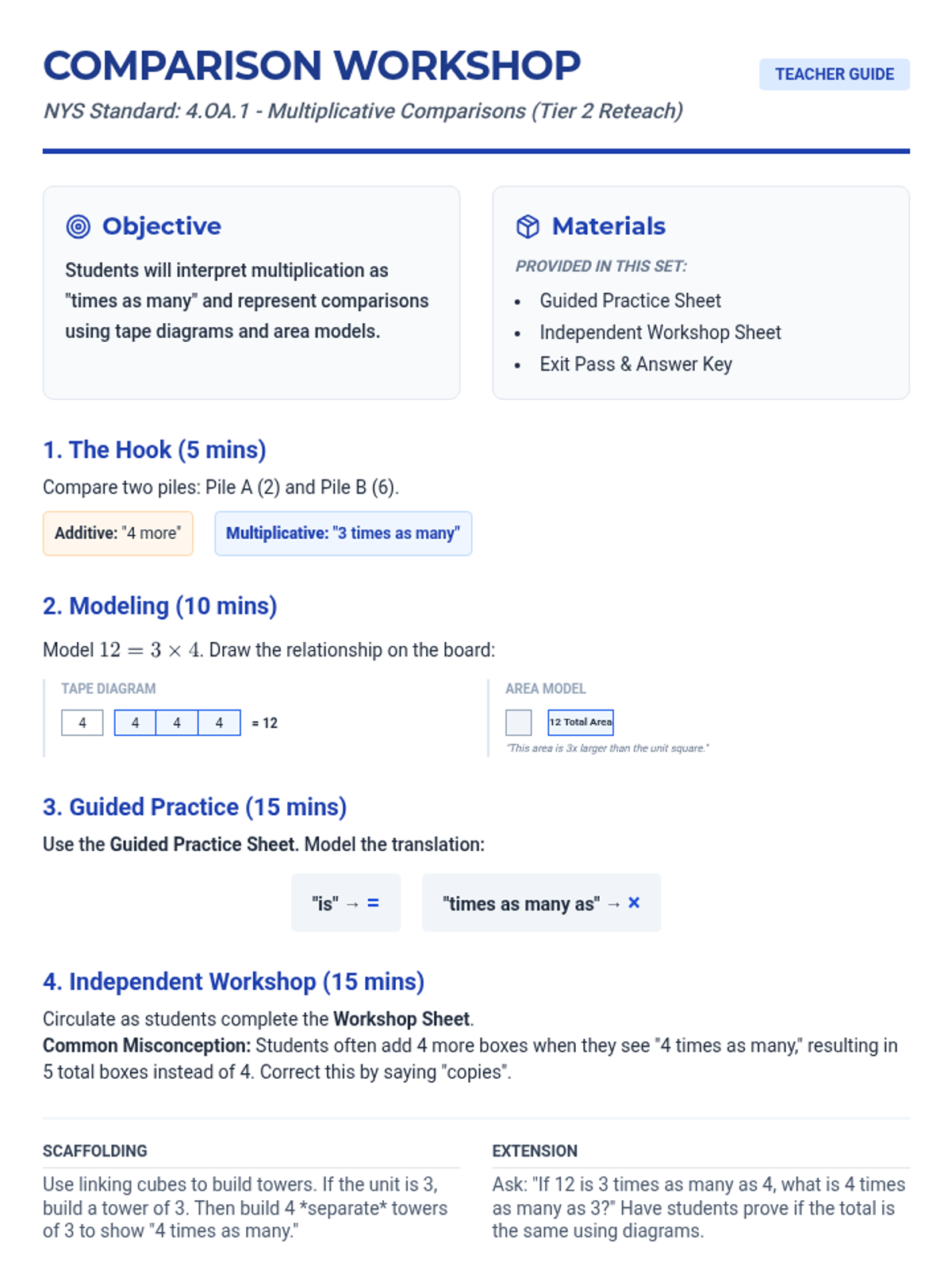
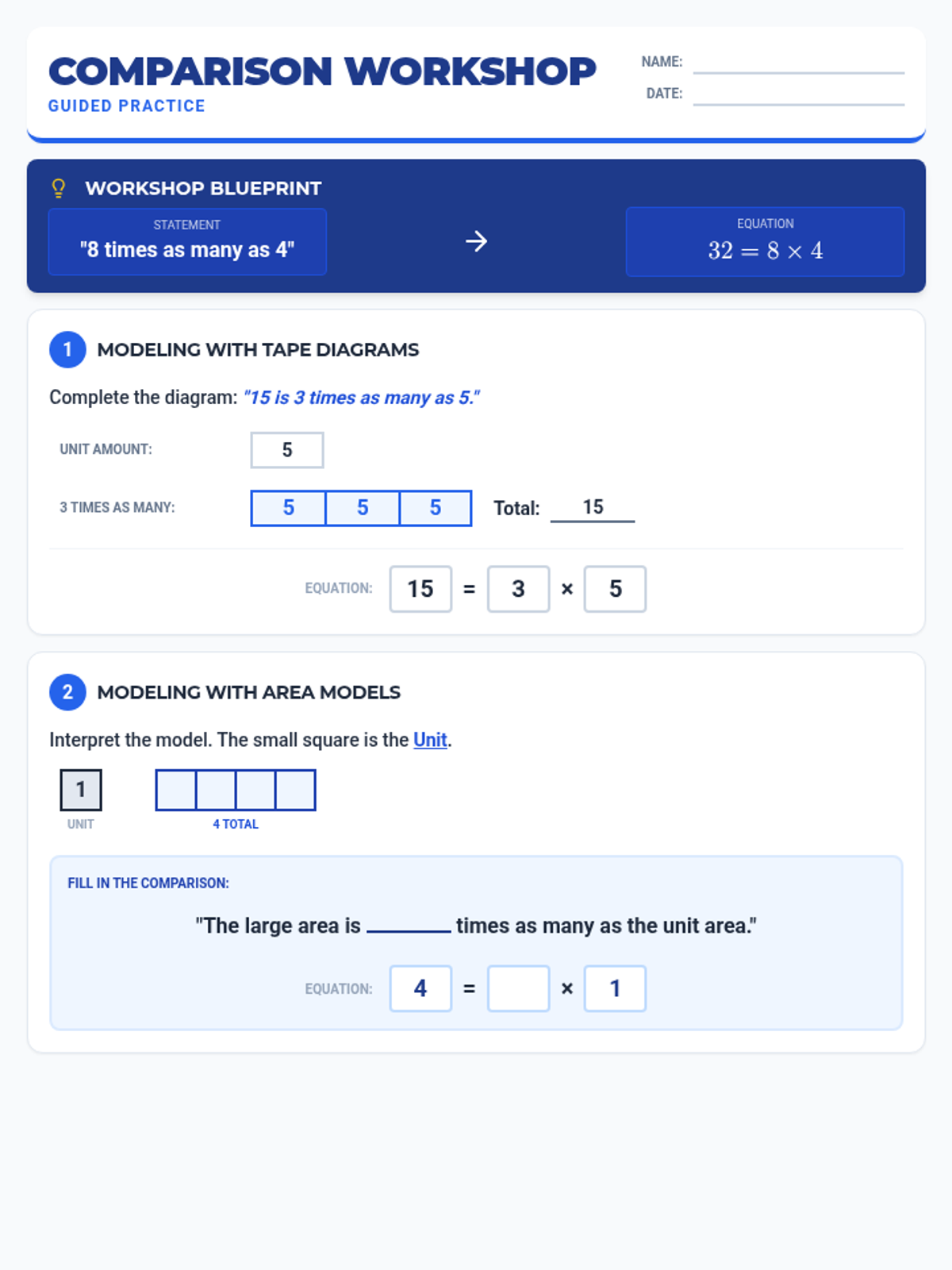
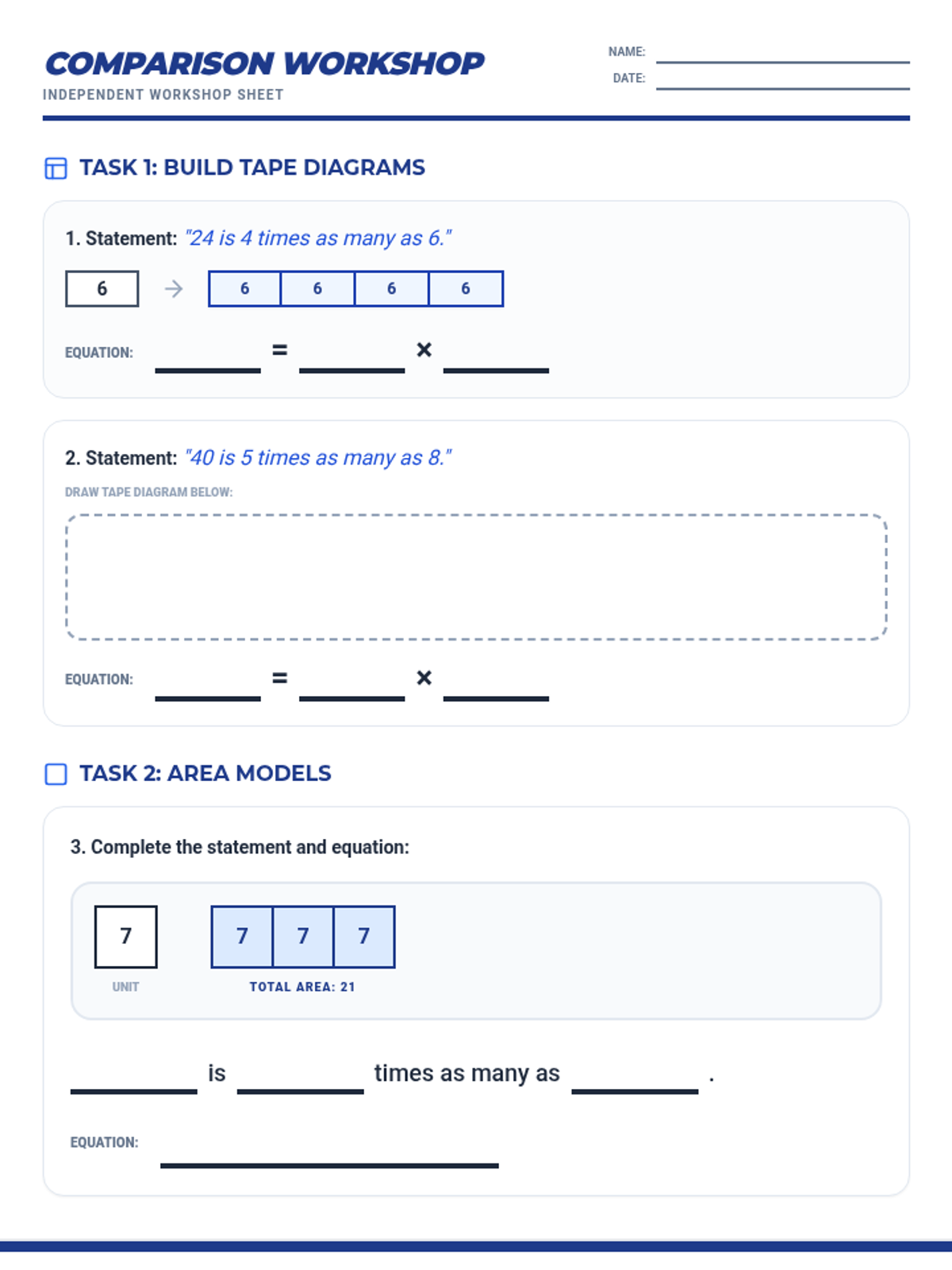
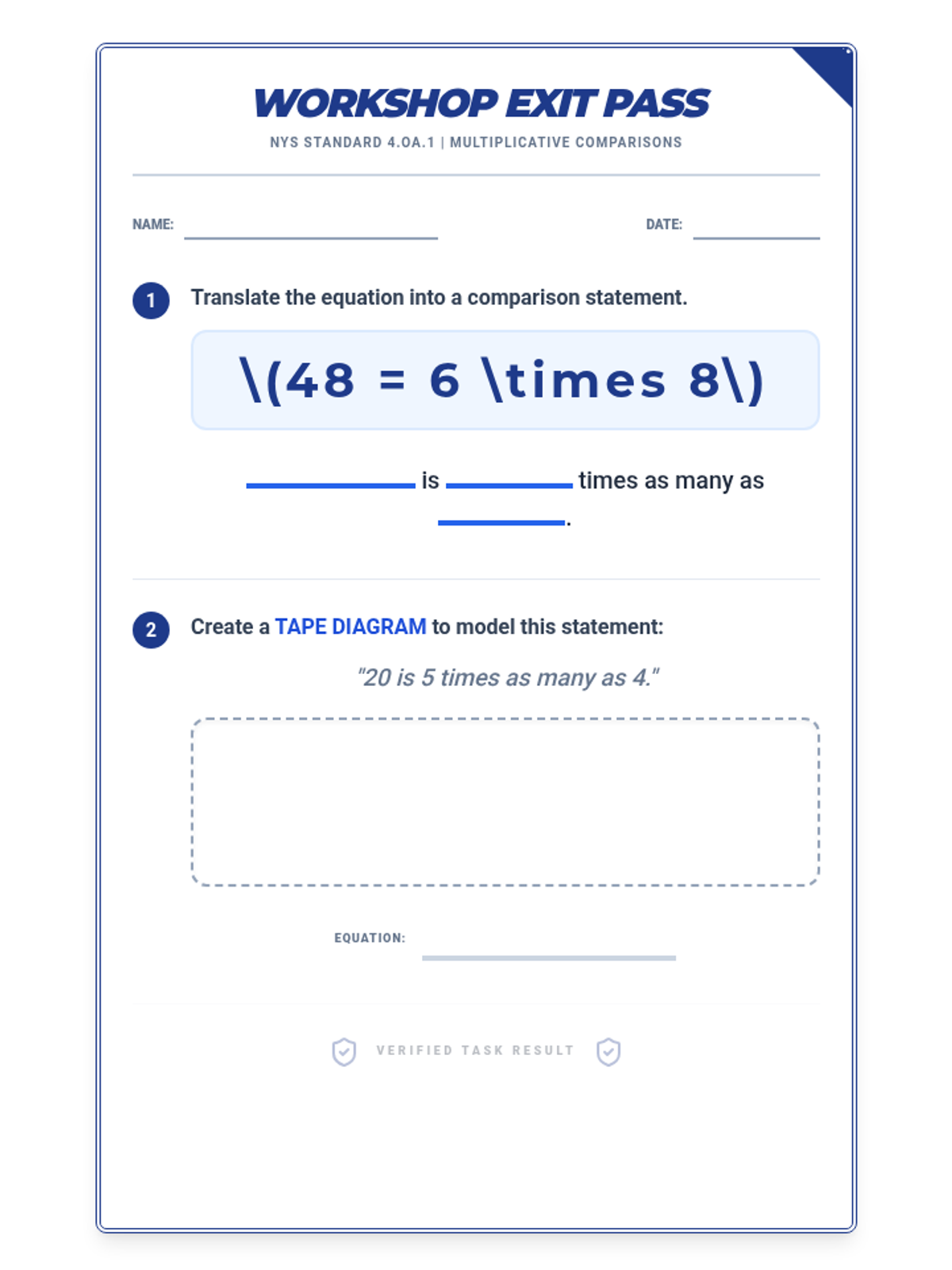
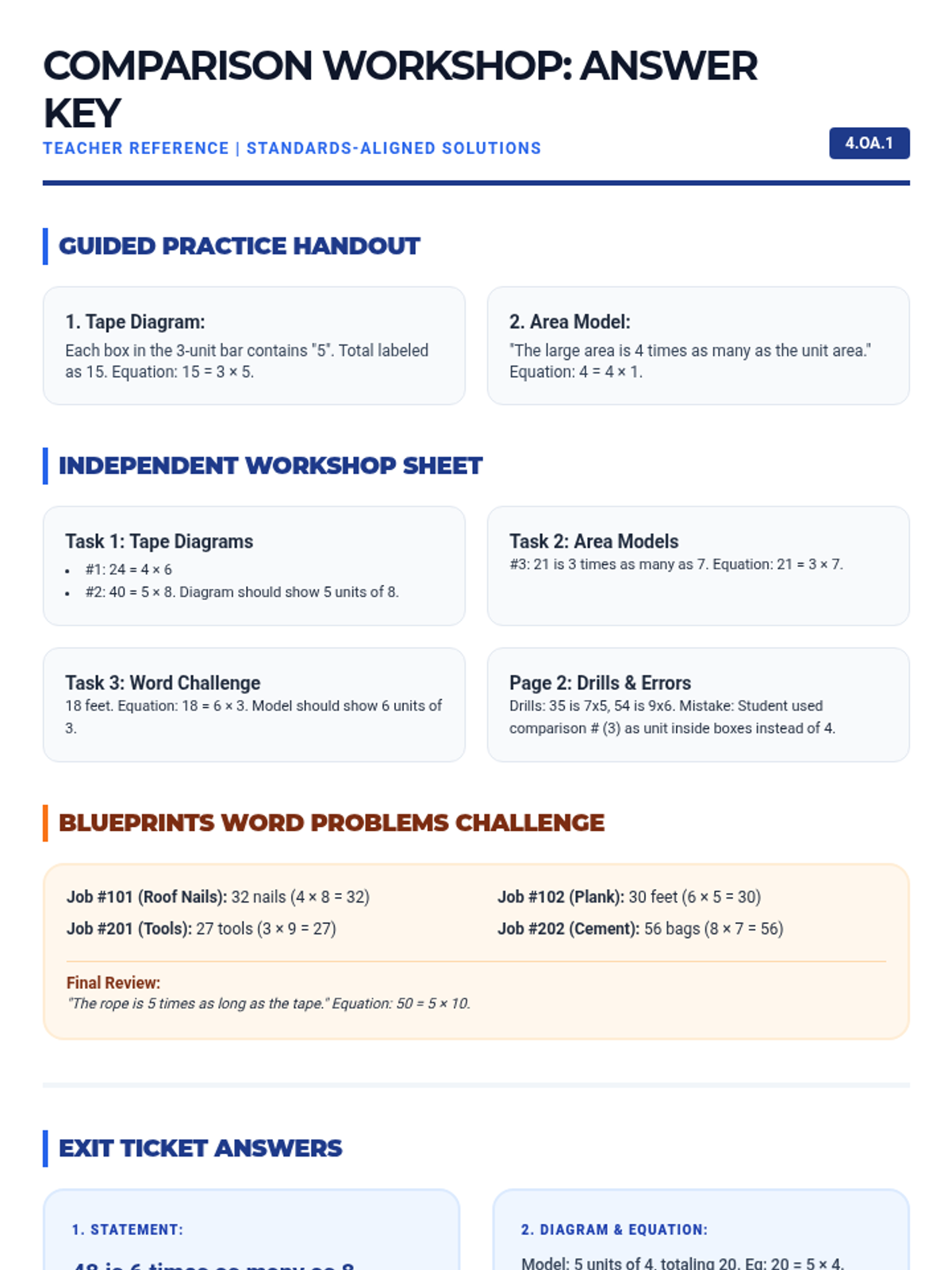
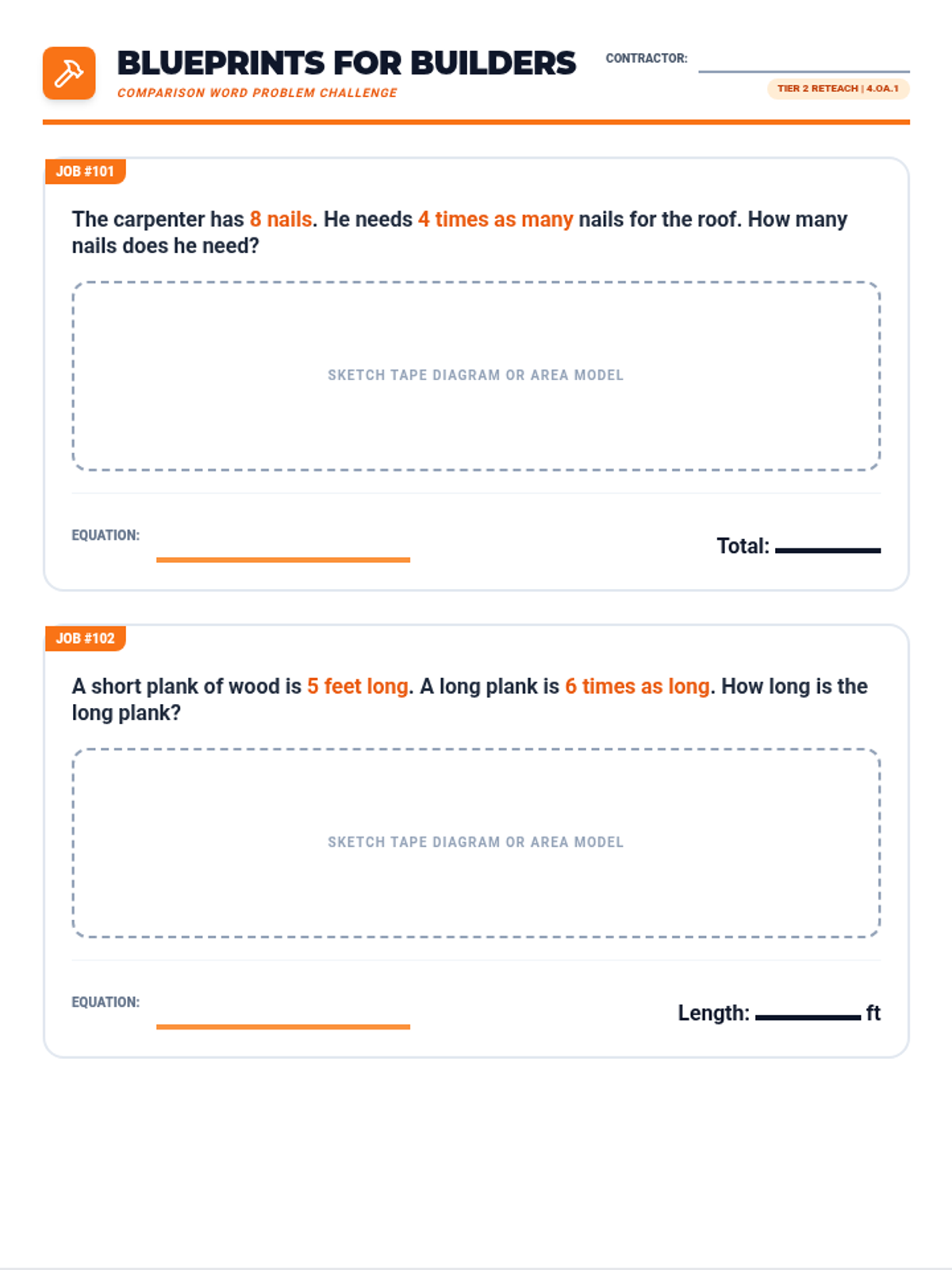
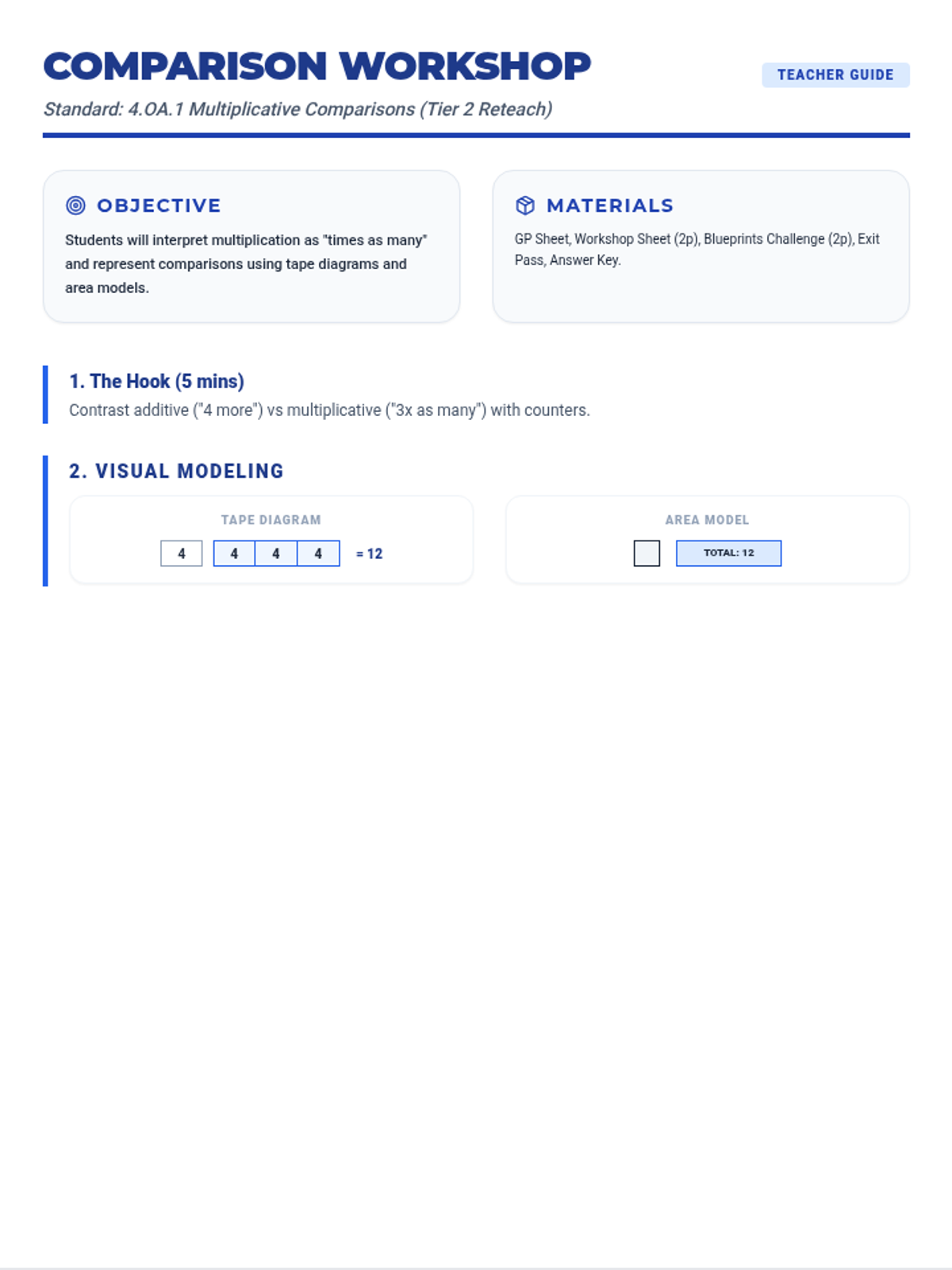
A Tier 2 reteach lesson focused on multiplicative comparisons using tape diagrams and area models to bridge the gap between additive and multiplicative thinking.
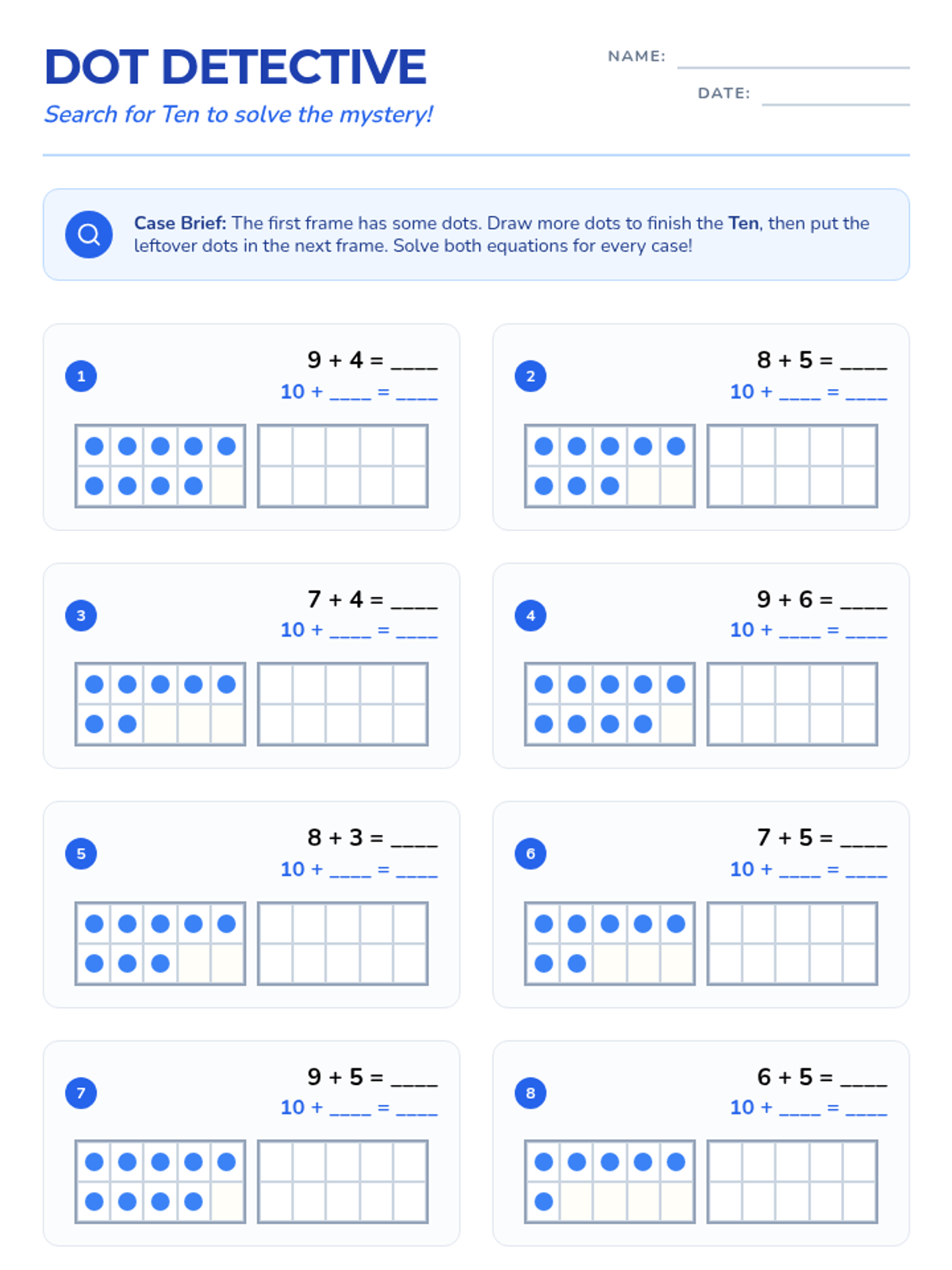
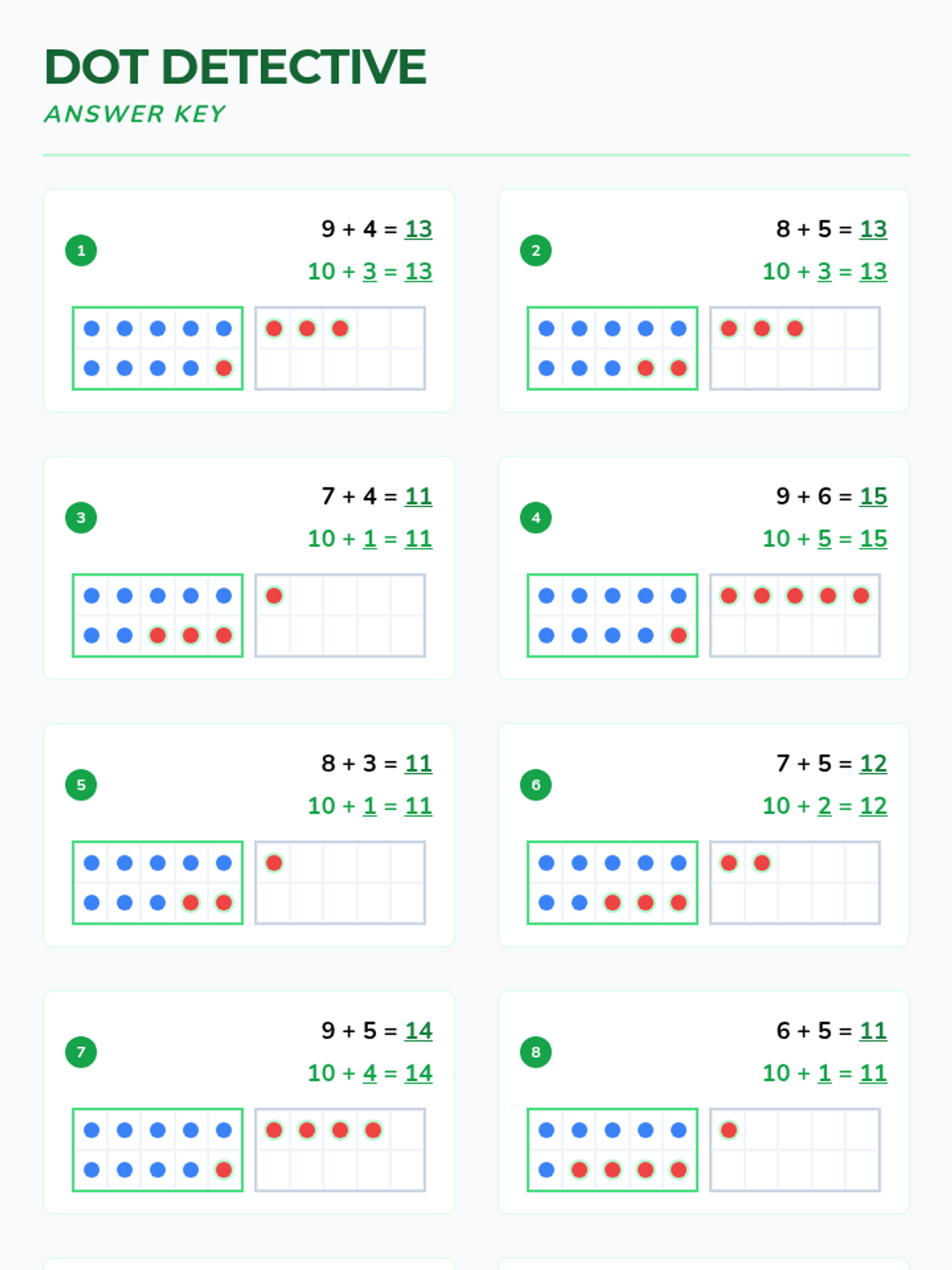
A foundational math lesson focusing on addition strategies using ten frames to help students visualize 'making ten' to solve addition problems beyond ten.
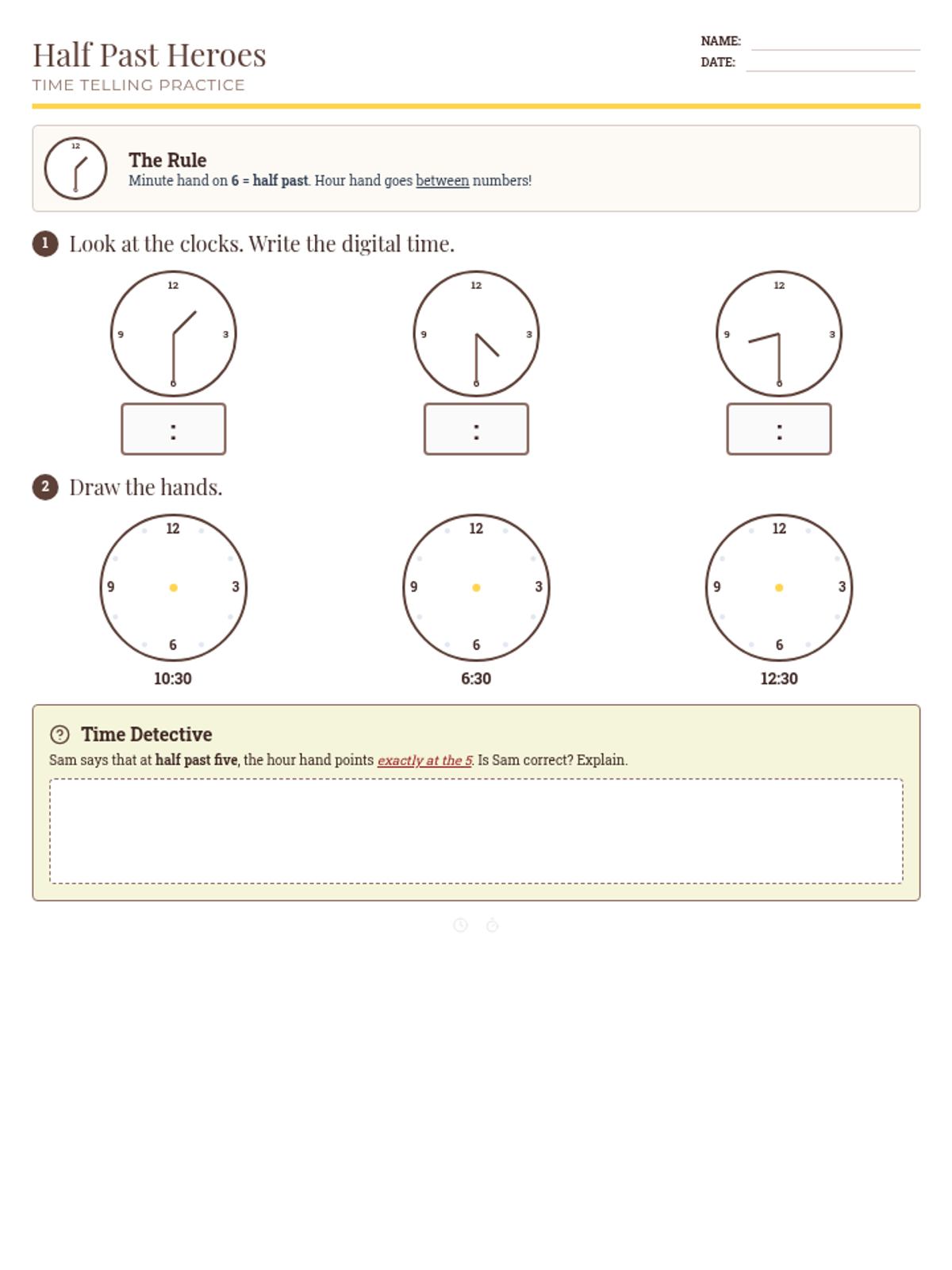
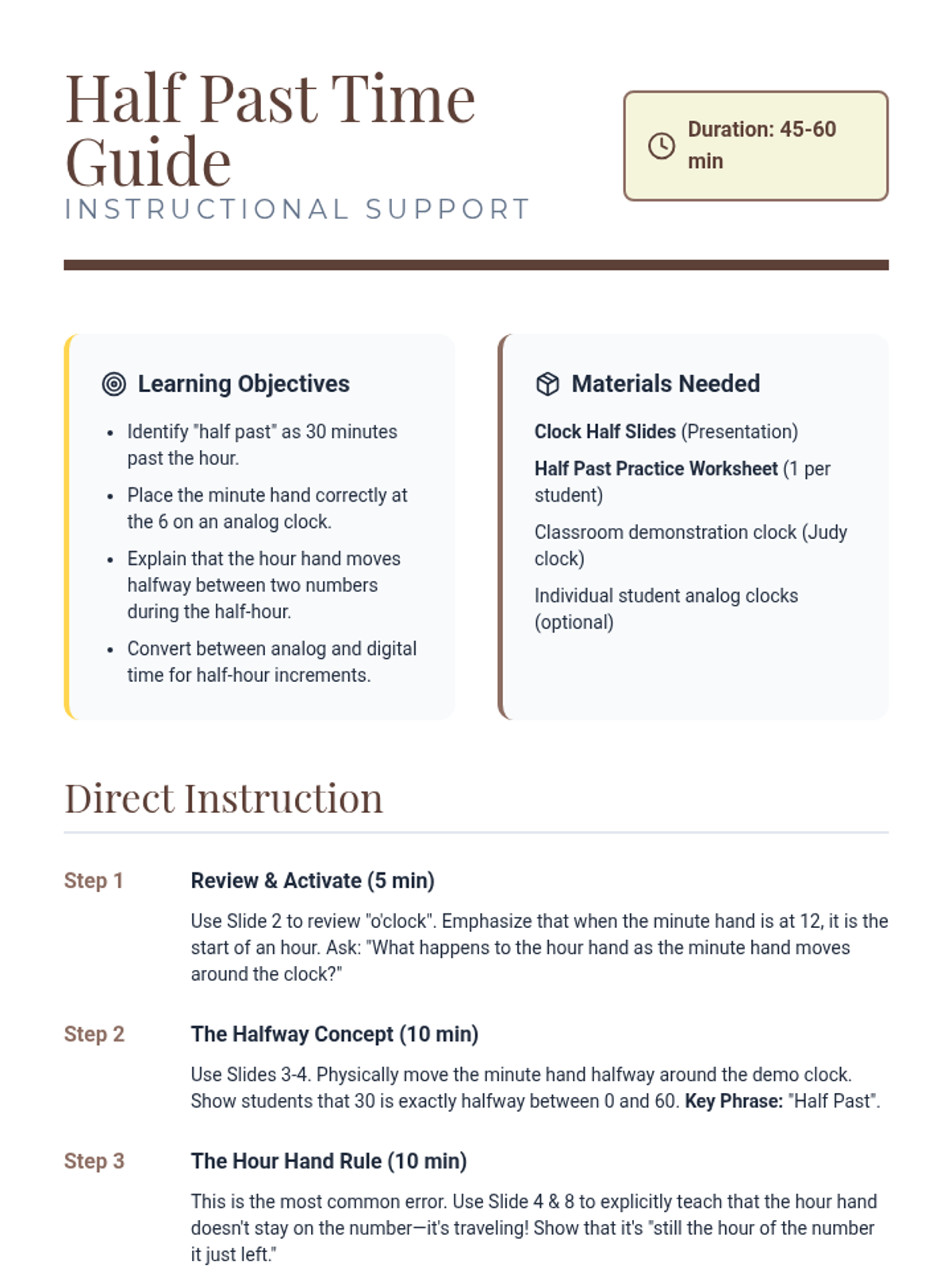
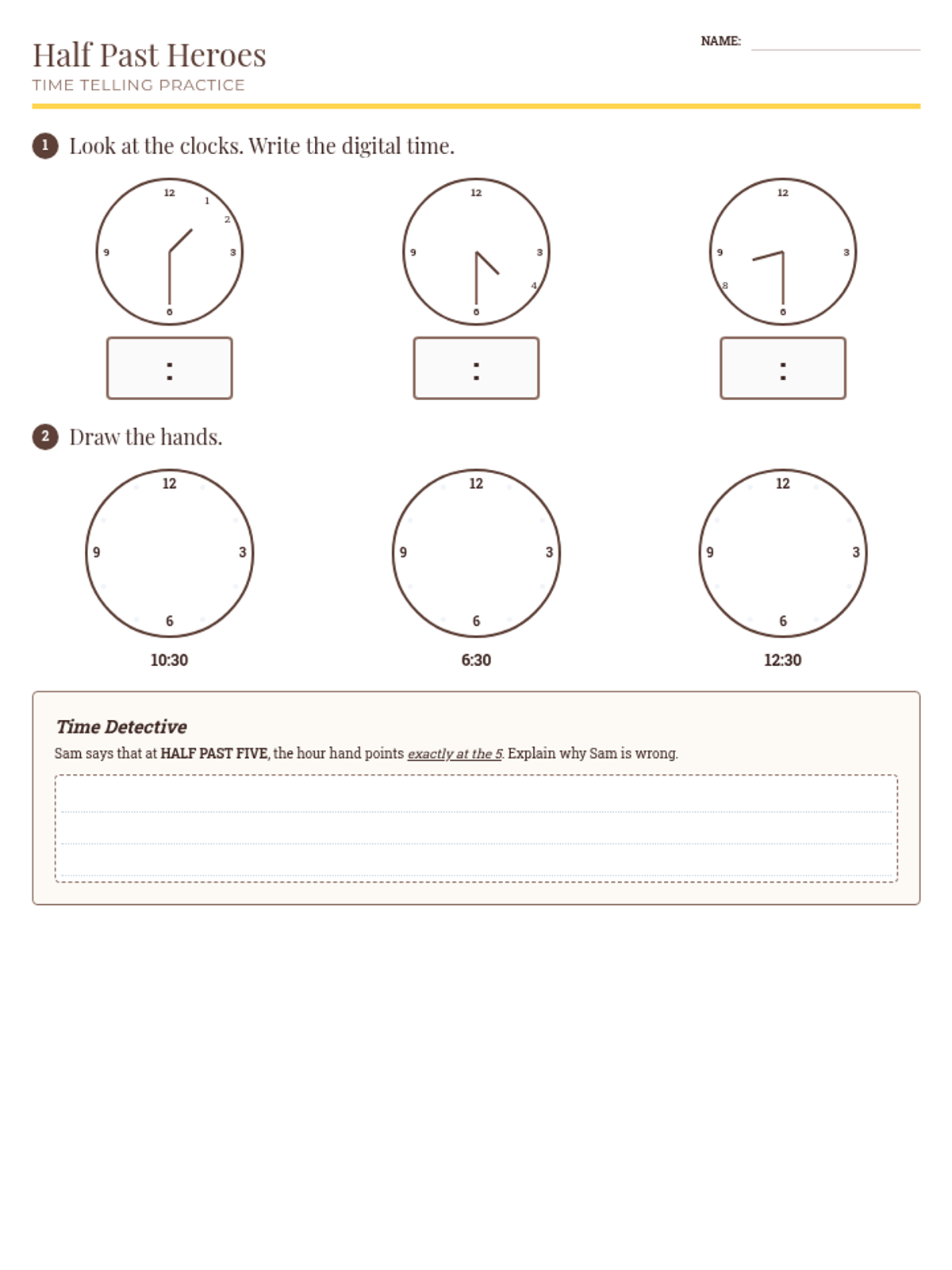
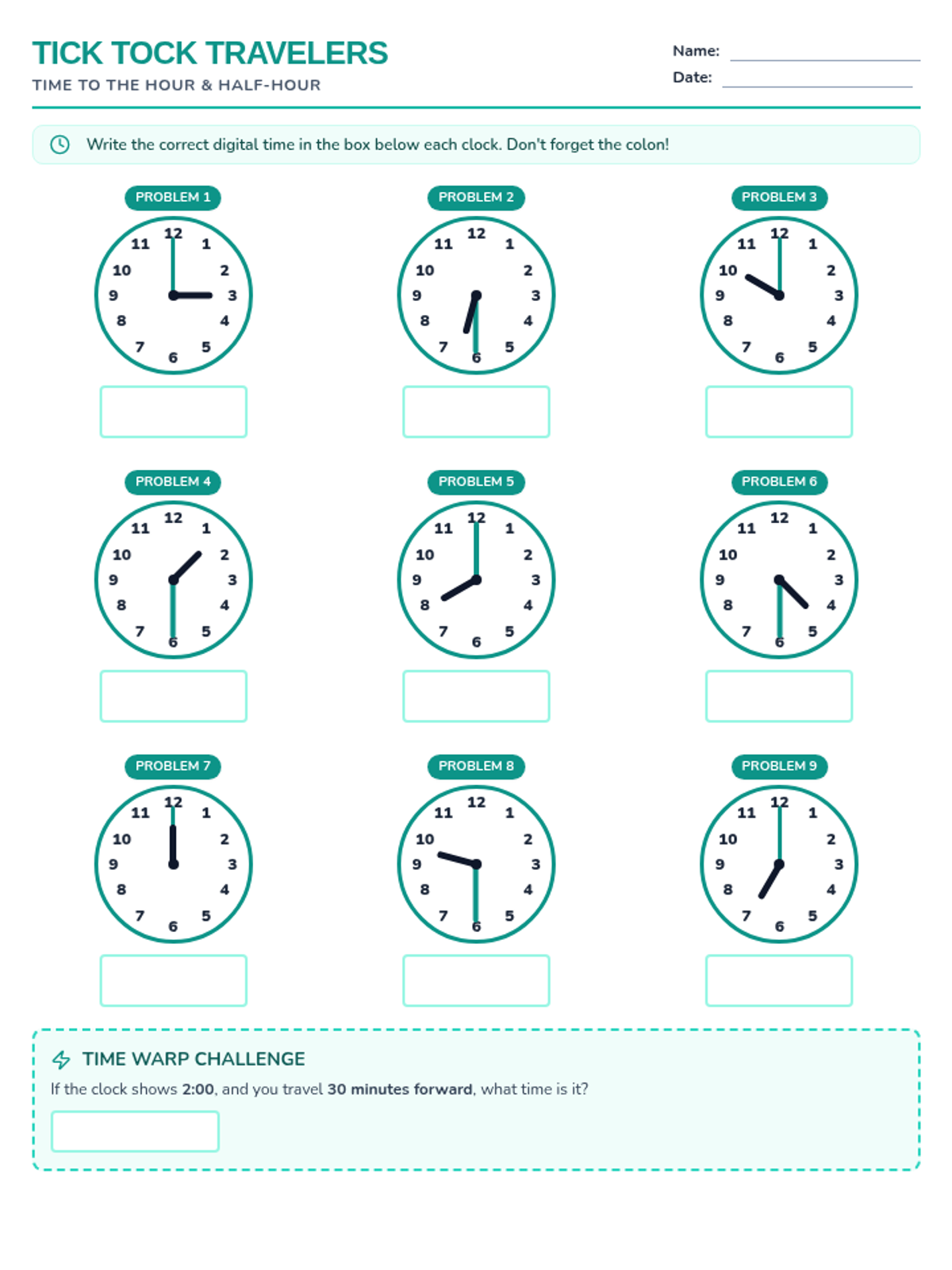
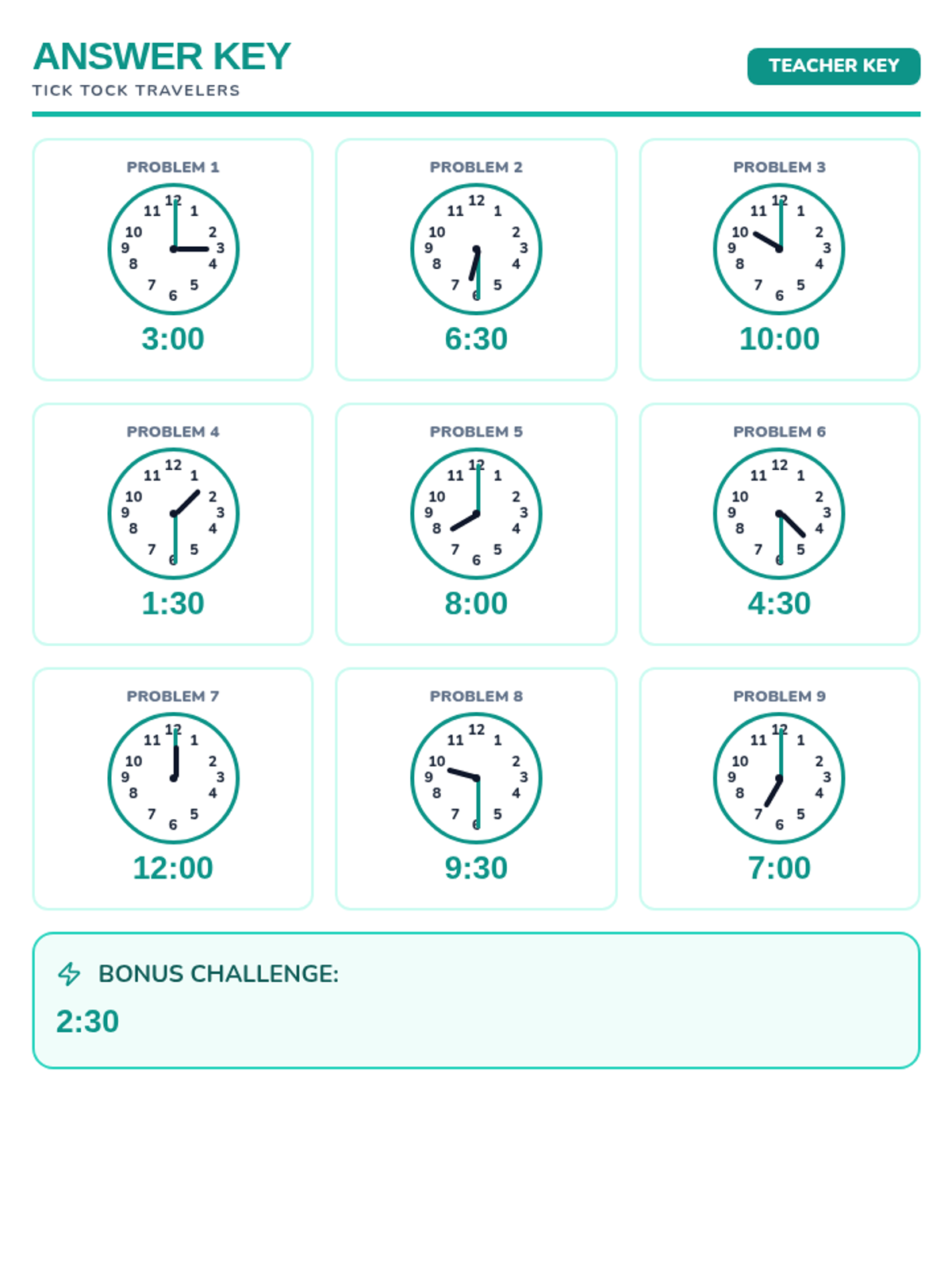
A lesson focused on introducing and practicing telling time to the half-hour, connecting analog and digital representations.
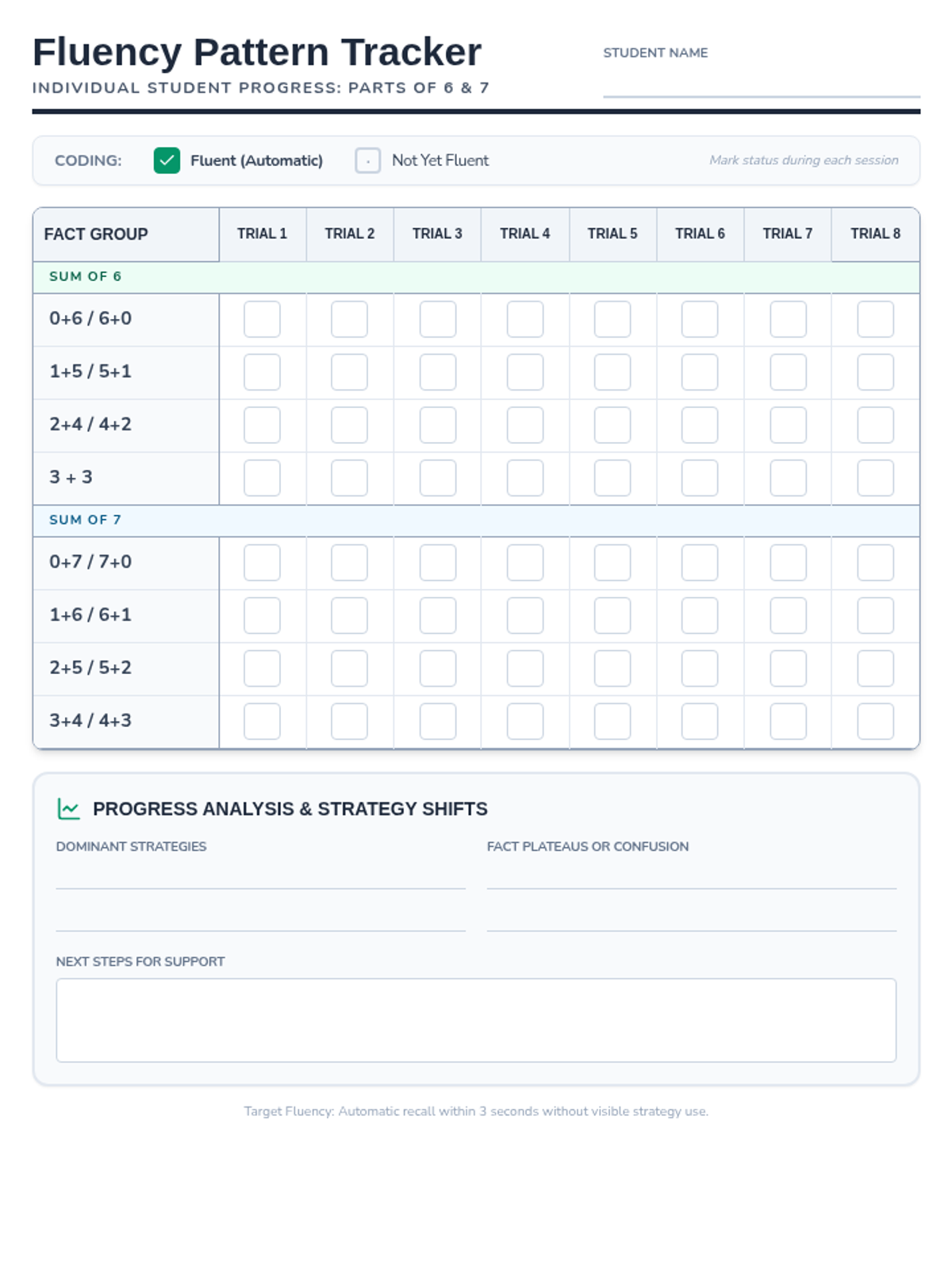
A collection of tools for tracking student progress in mastering number decompositions for 6 and 7.
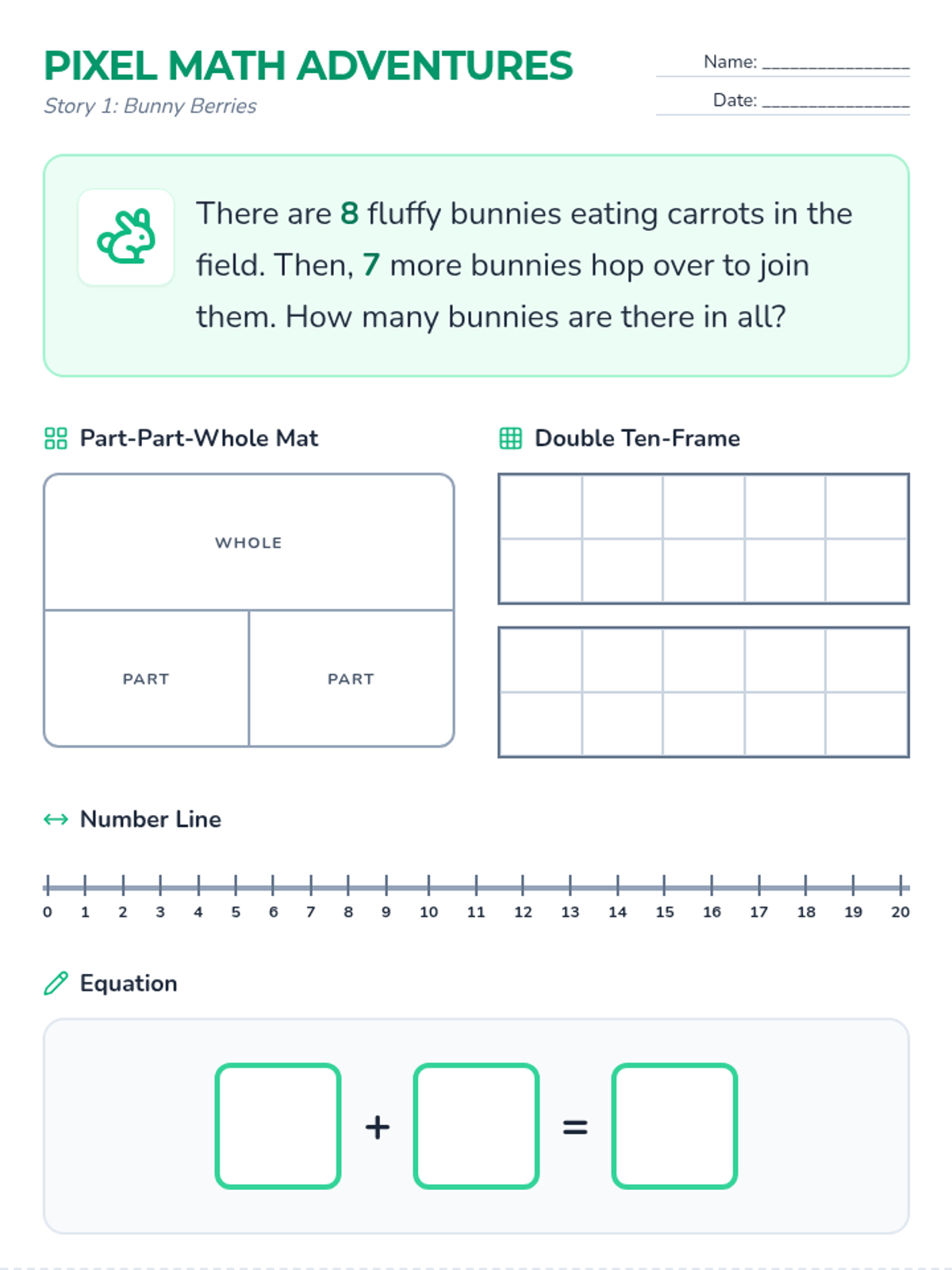
A series of interactive math story problems focused on addition and subtraction within 20, featuring themes of animals, snacks, and gaming.
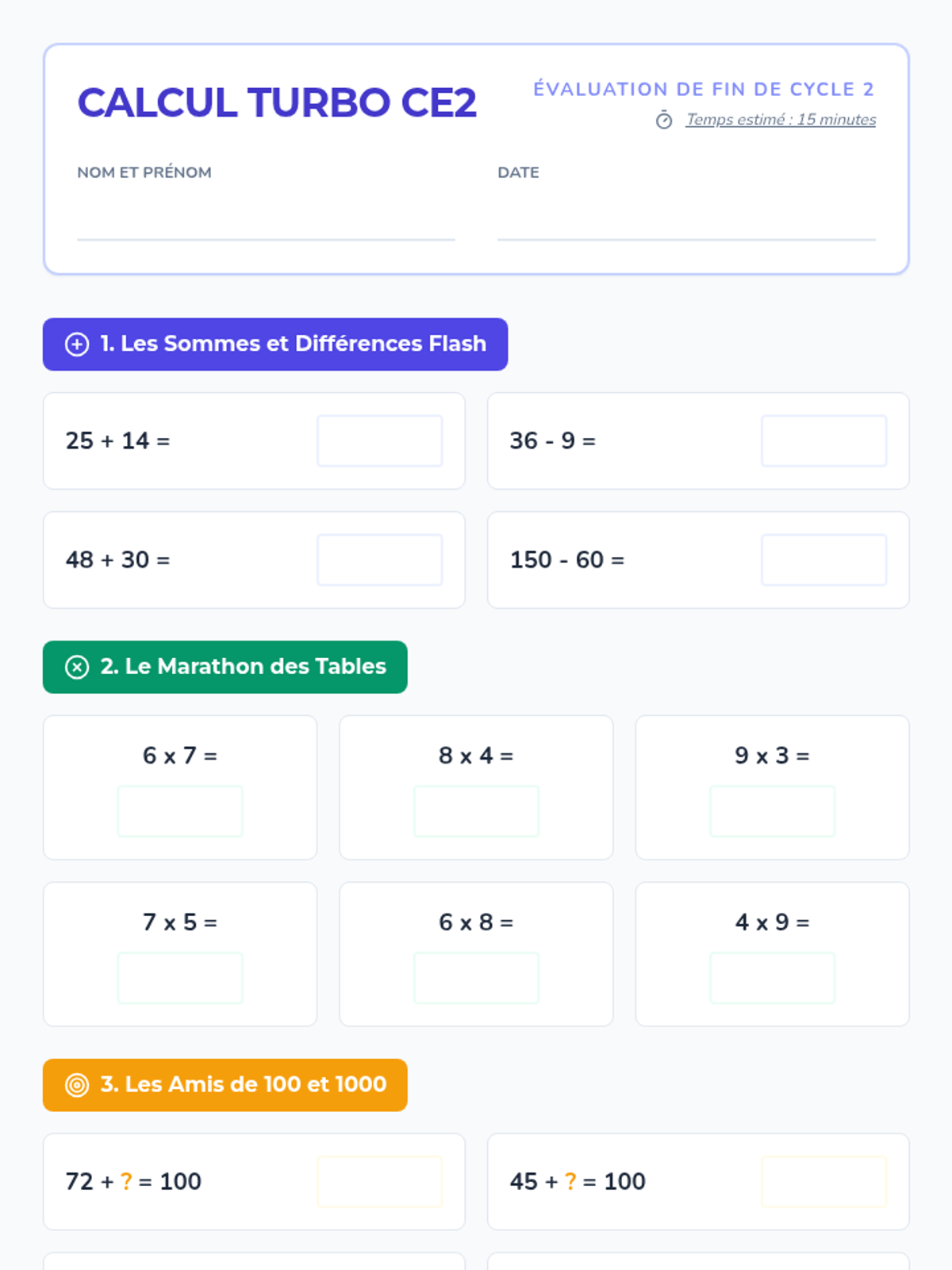
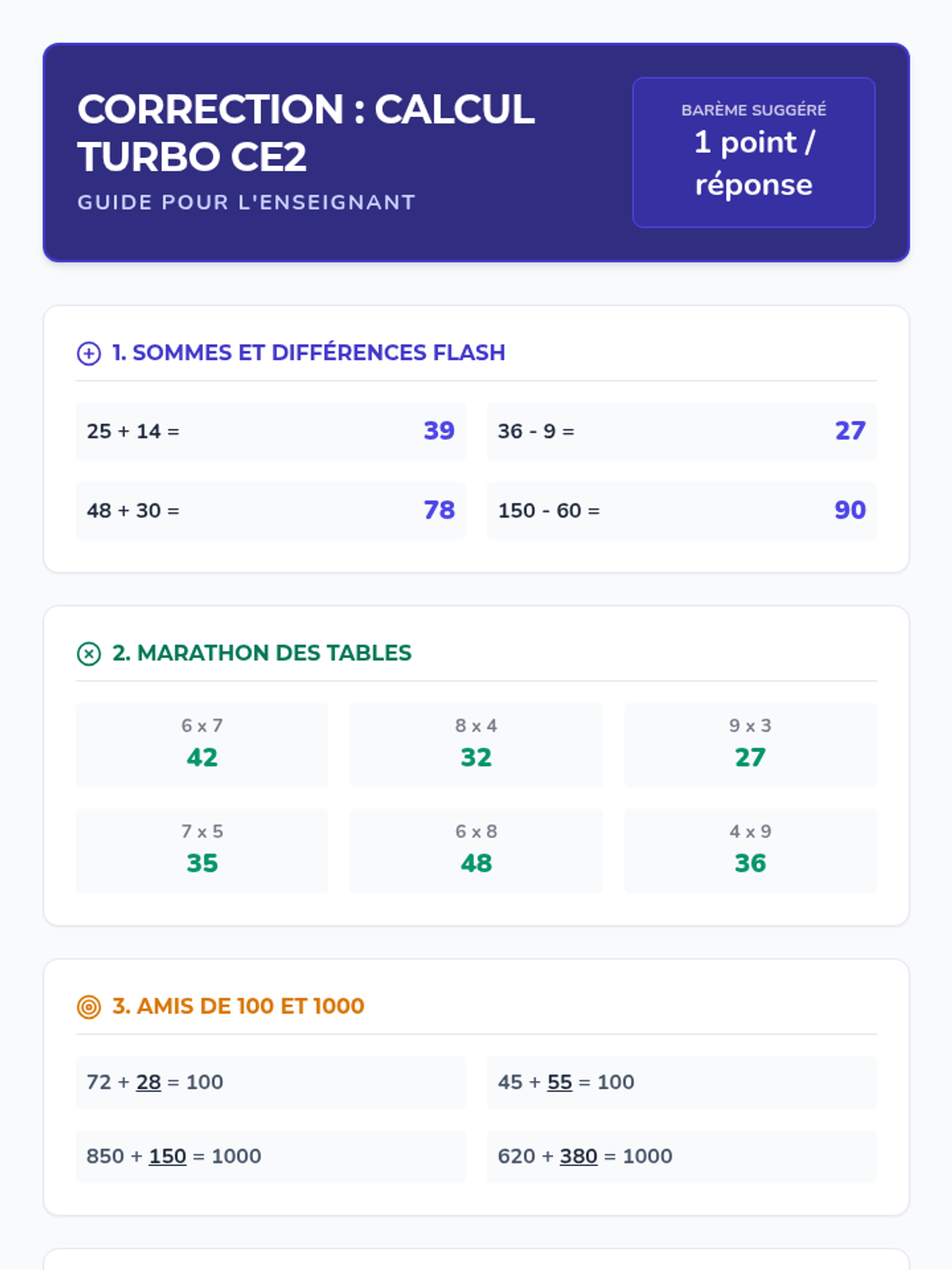
Une évaluation complète de calcul mental pour les élèves de CE2, conçue pour tester les compétences clés de fin de cycle 2. Comprend une fiche de test pour l'élève et un corrigé pour l'enseignant.
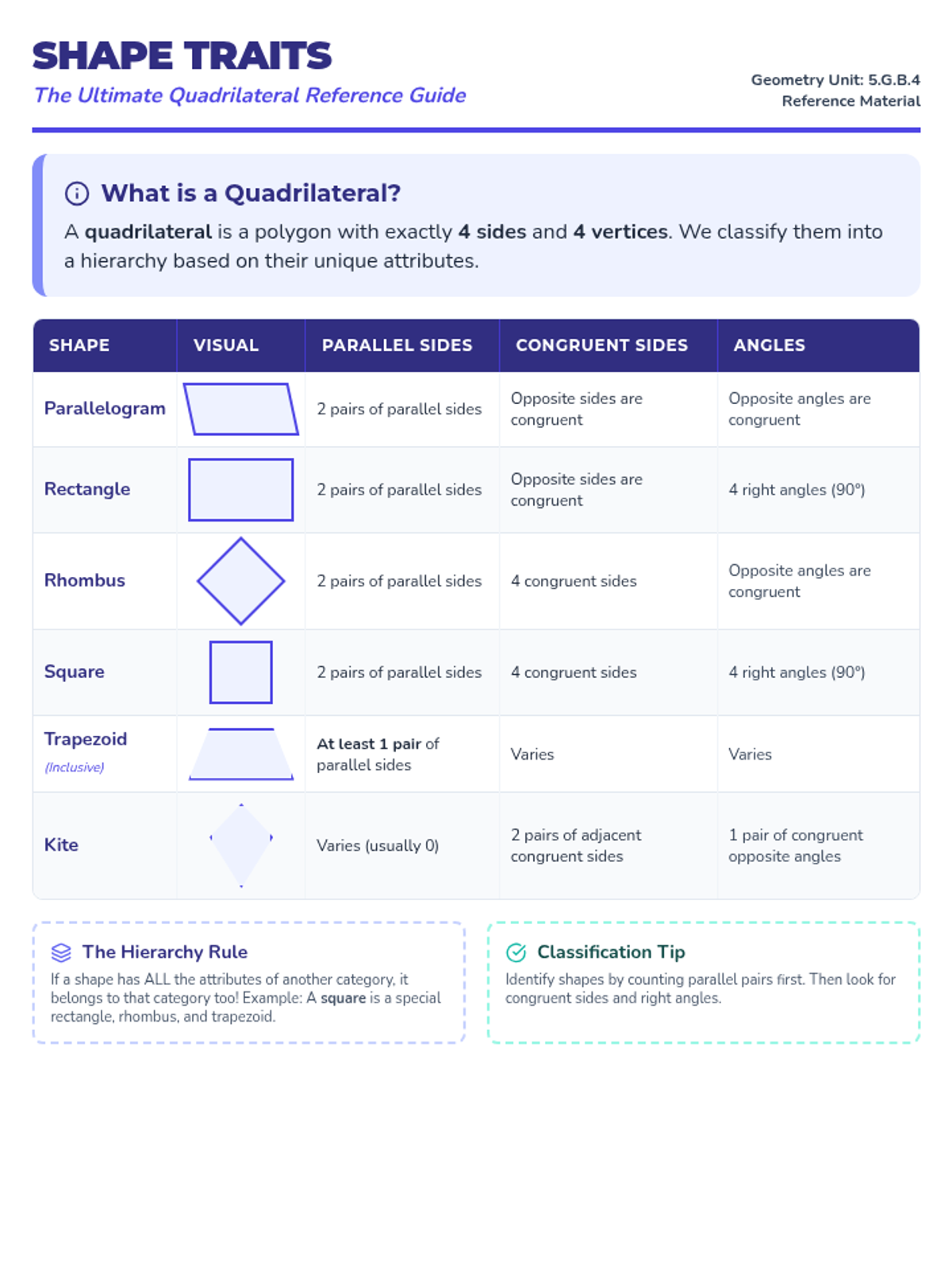
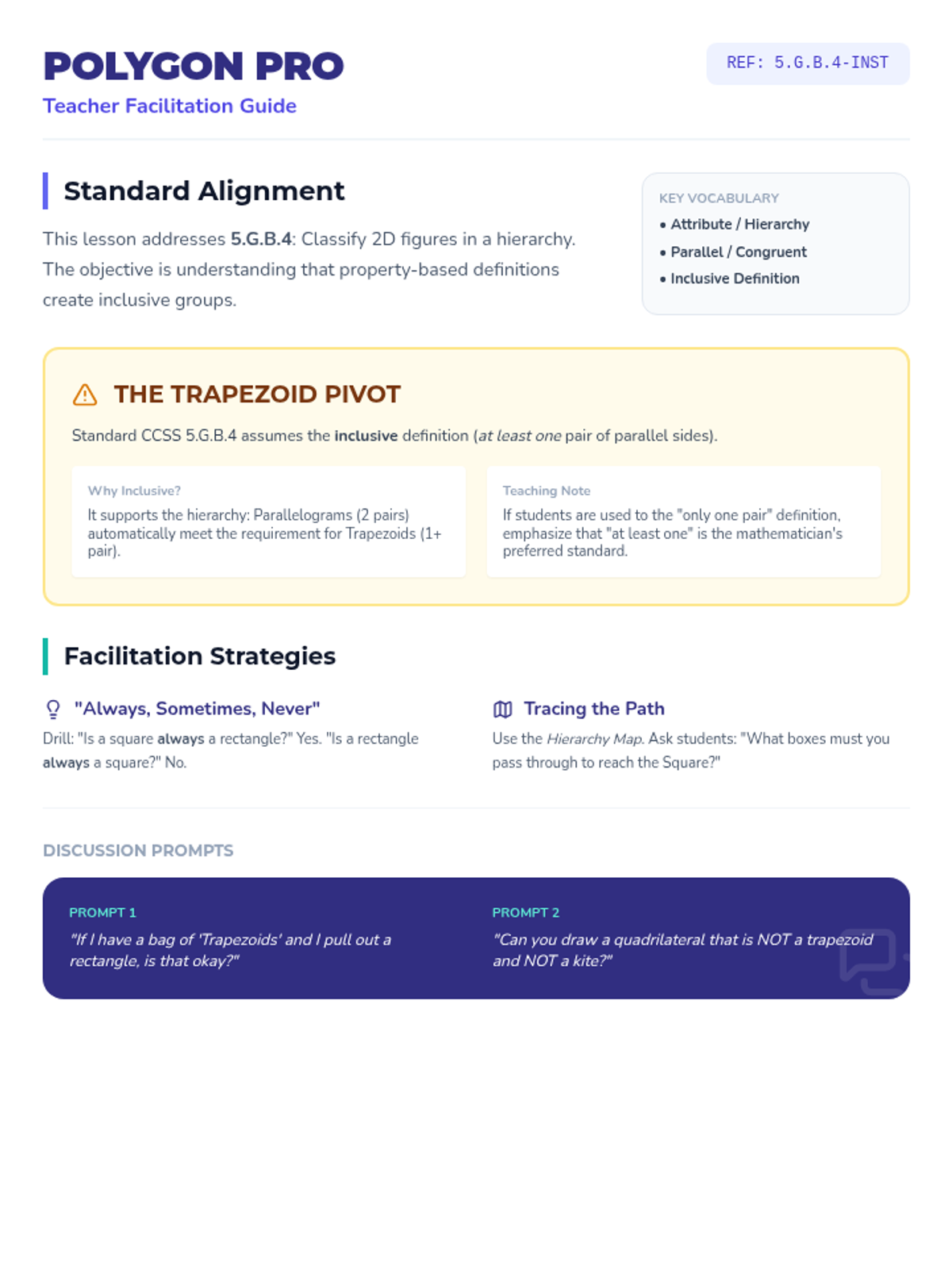
A comprehensive lesson on classifying quadrilaterals based on their properties, focusing on the hierarchy and inclusive definitions required for 5th-grade geometry.
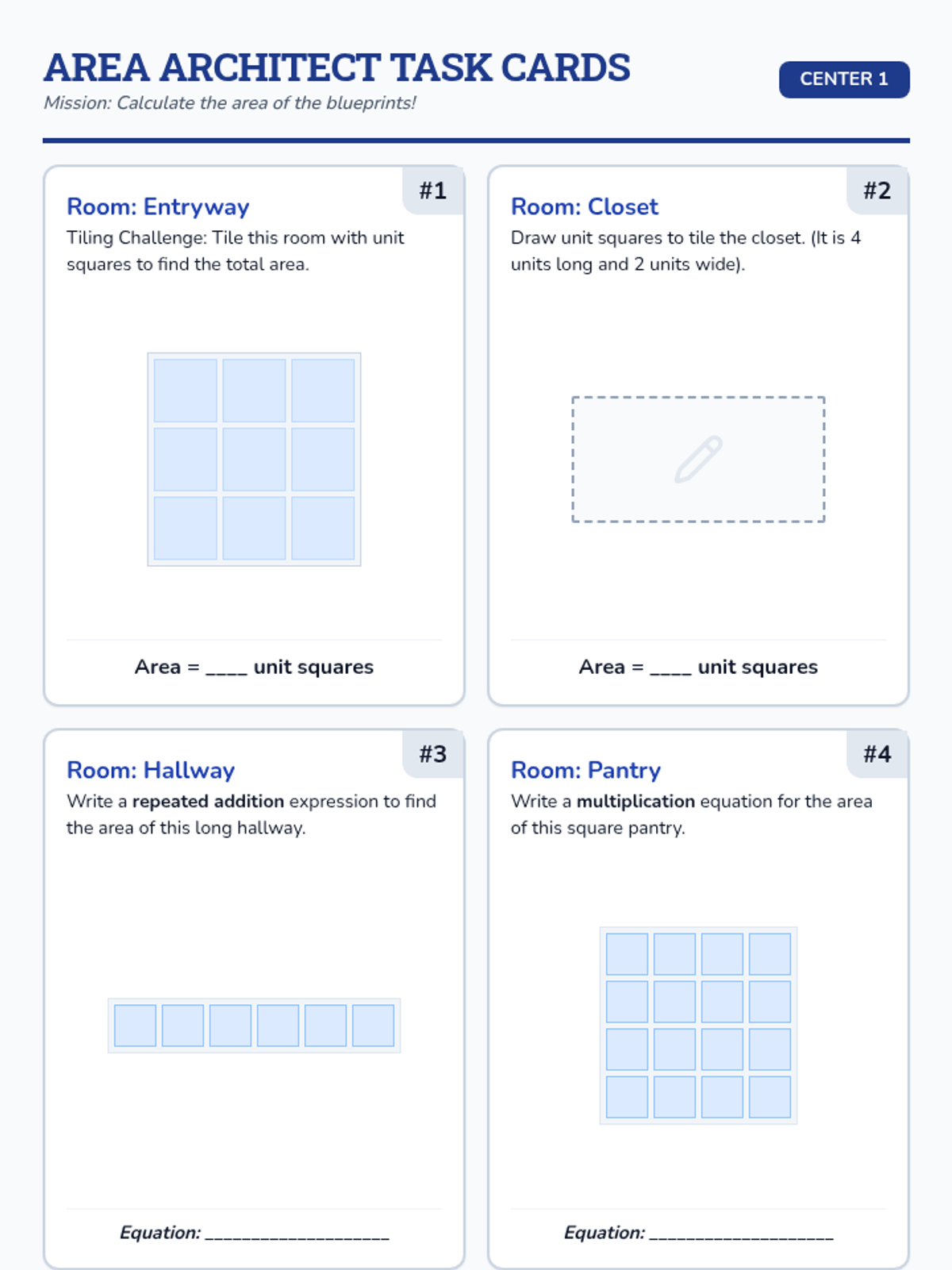
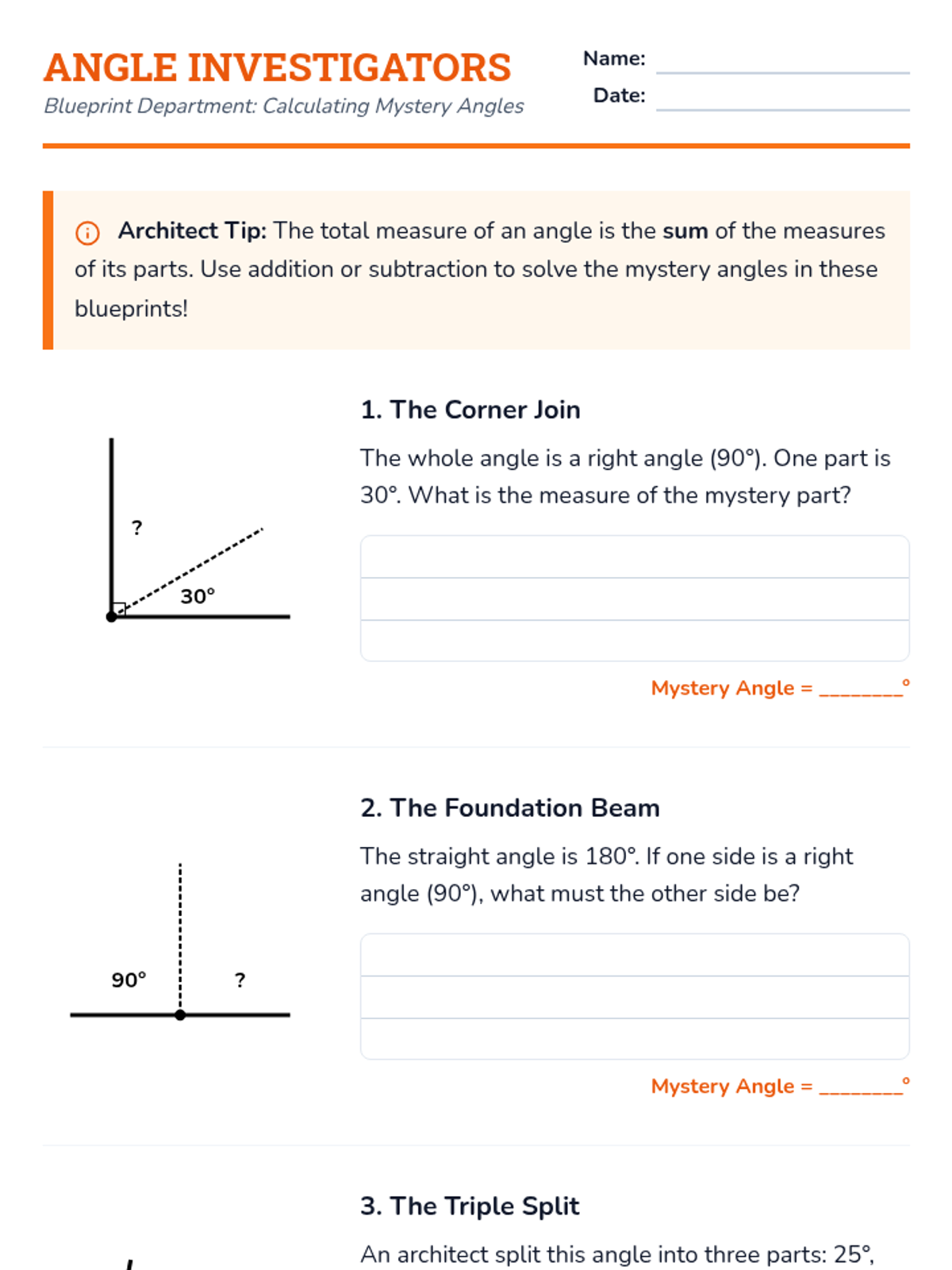
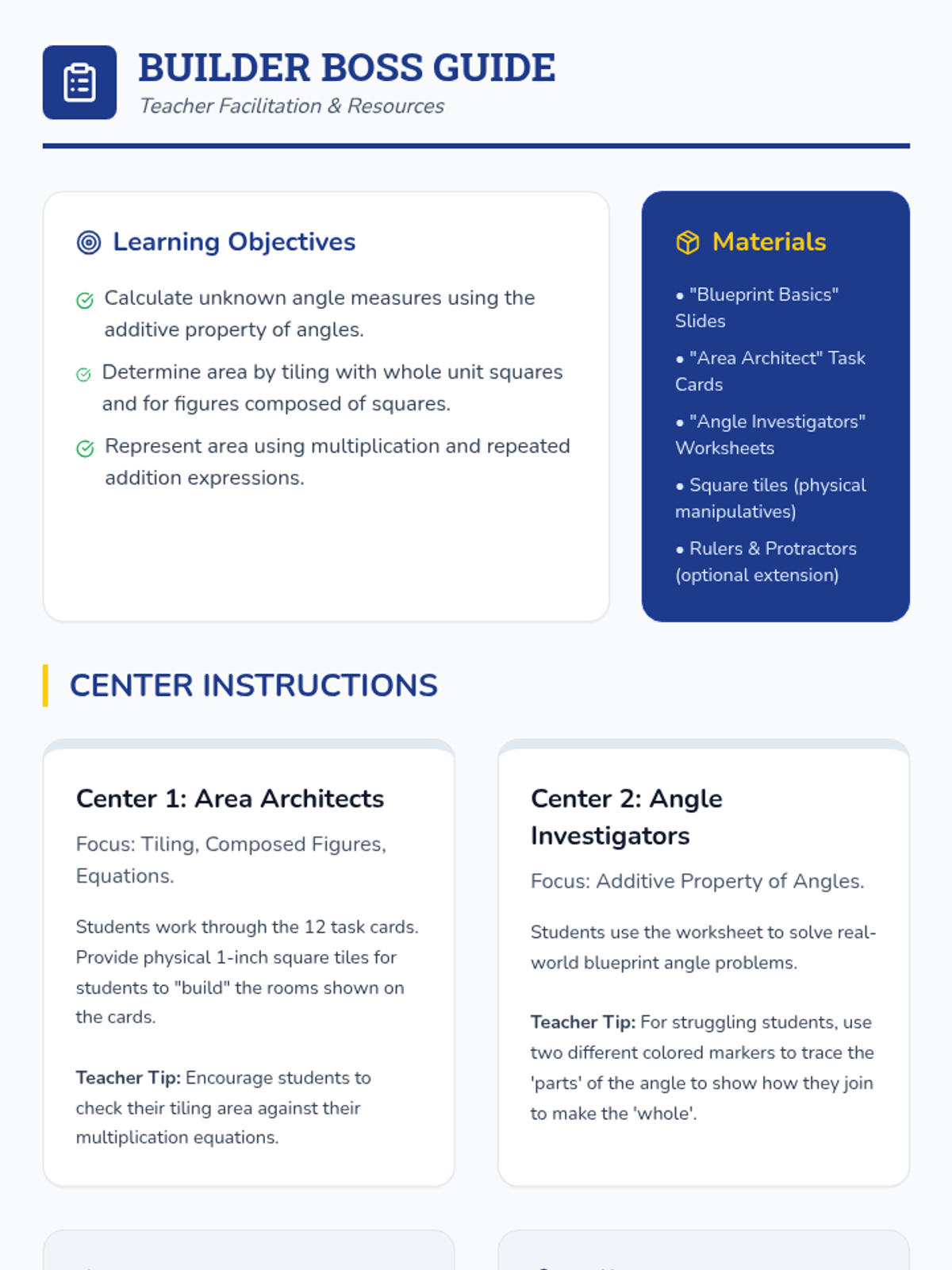
A comprehensive set of small group activities where students calculate unknown angles and determine the area of various figures using tiling and equations. The lesson uses a 'Blueprint Builders' theme to engage students in real-world mathematical applications.
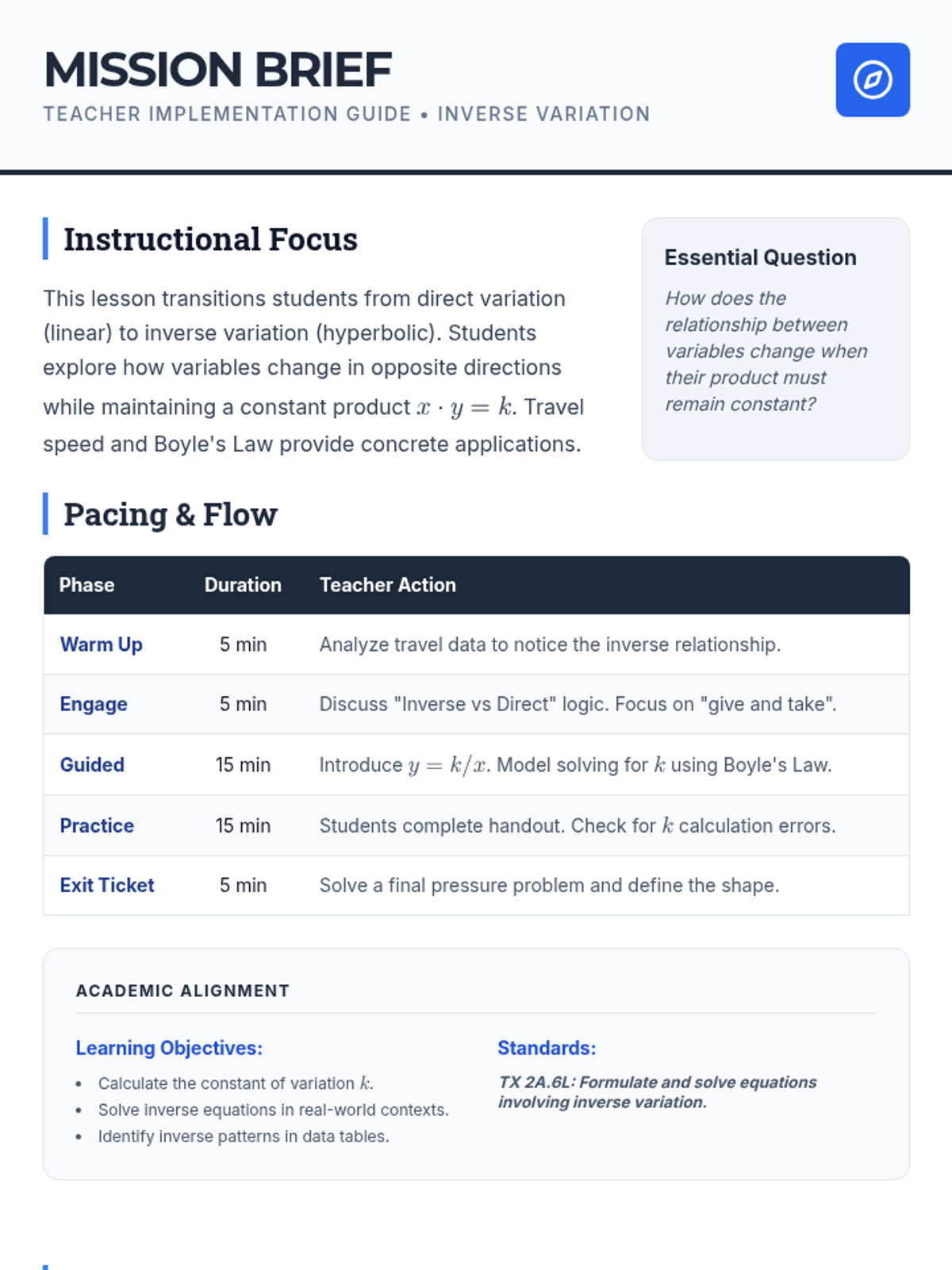
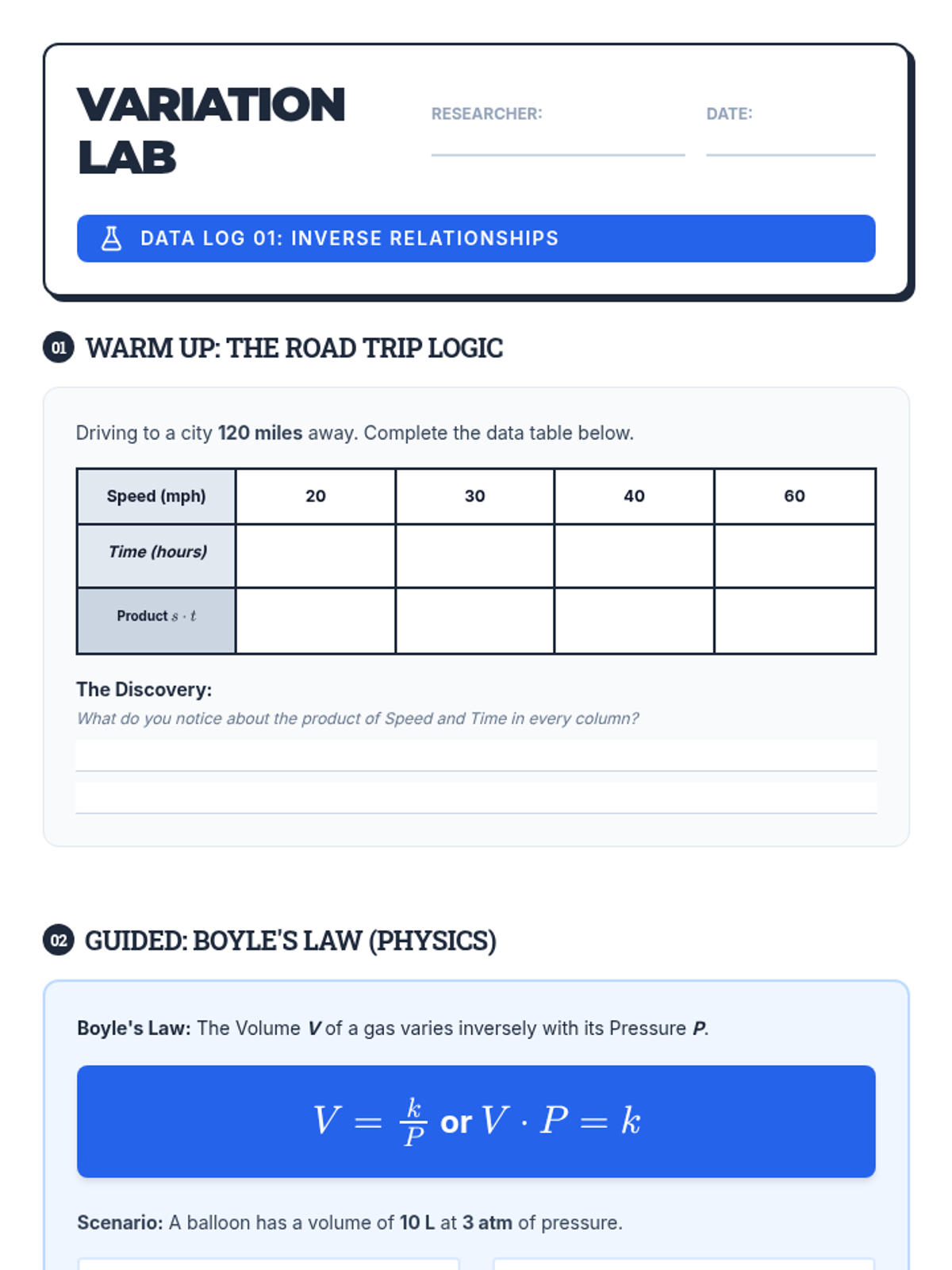
A 45-minute lesson exploring inverse variation through the lens of travel speed and Boyle's Law, focusing on formulating and solving equations for real-world scenarios.
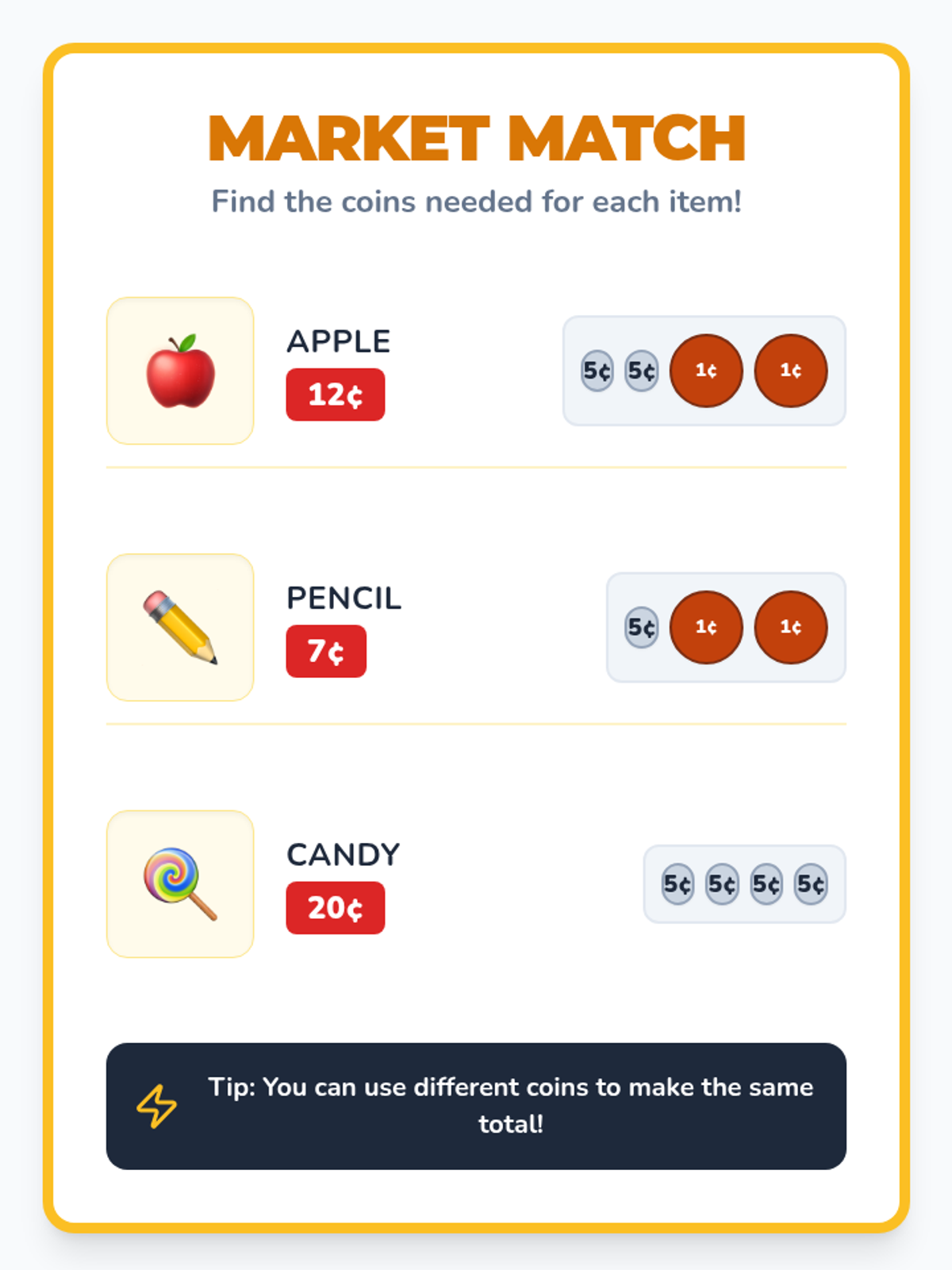
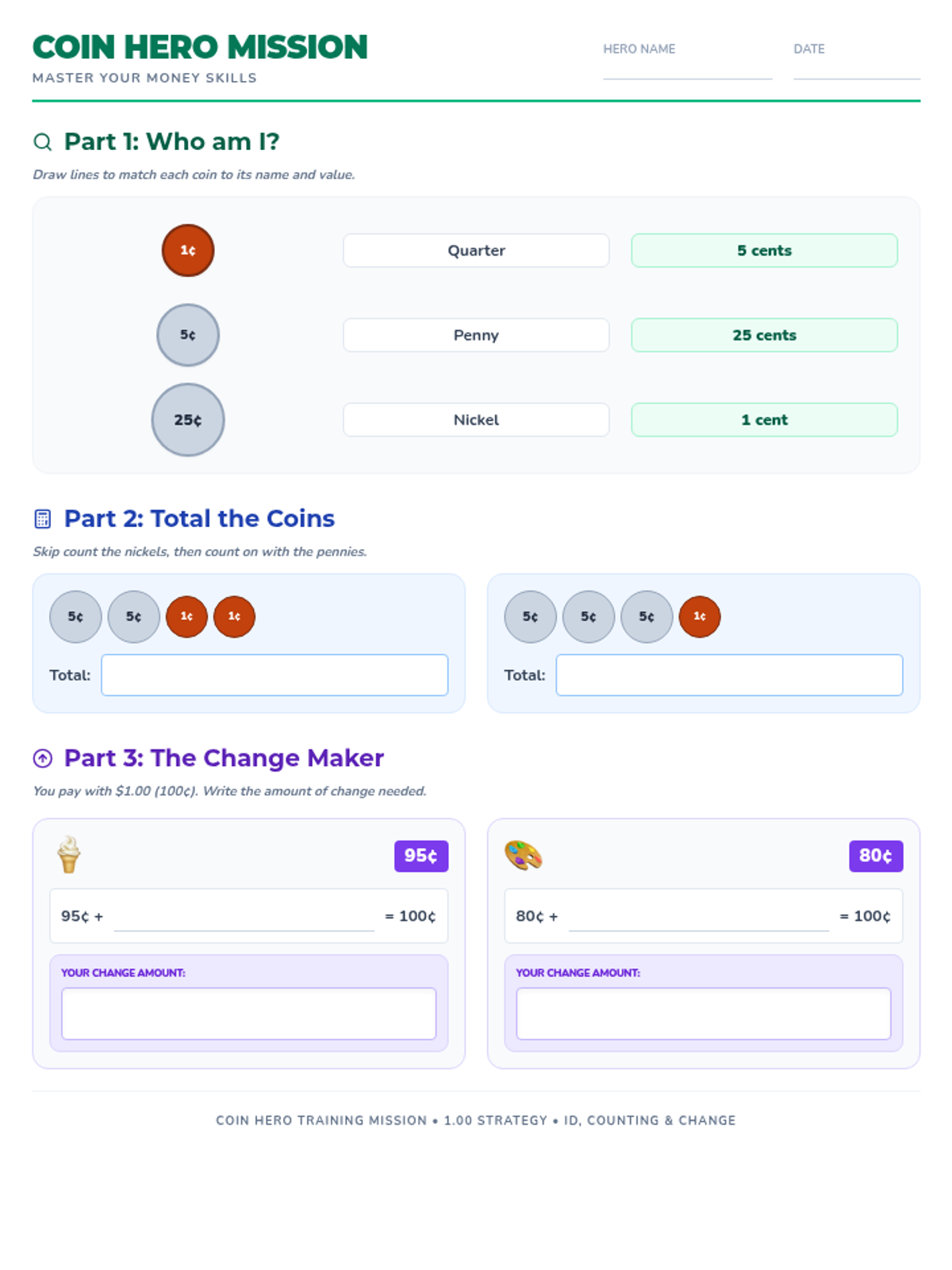
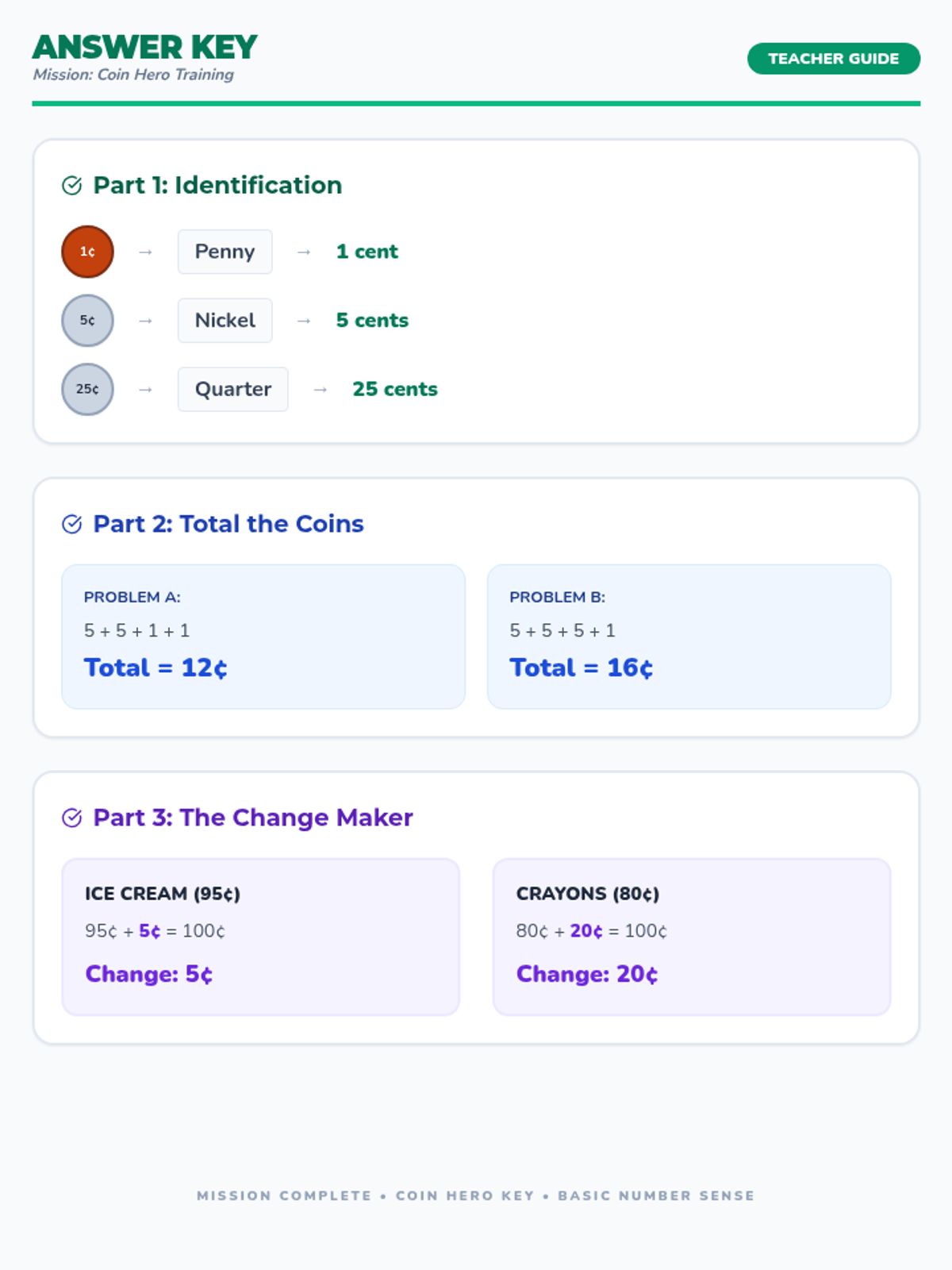
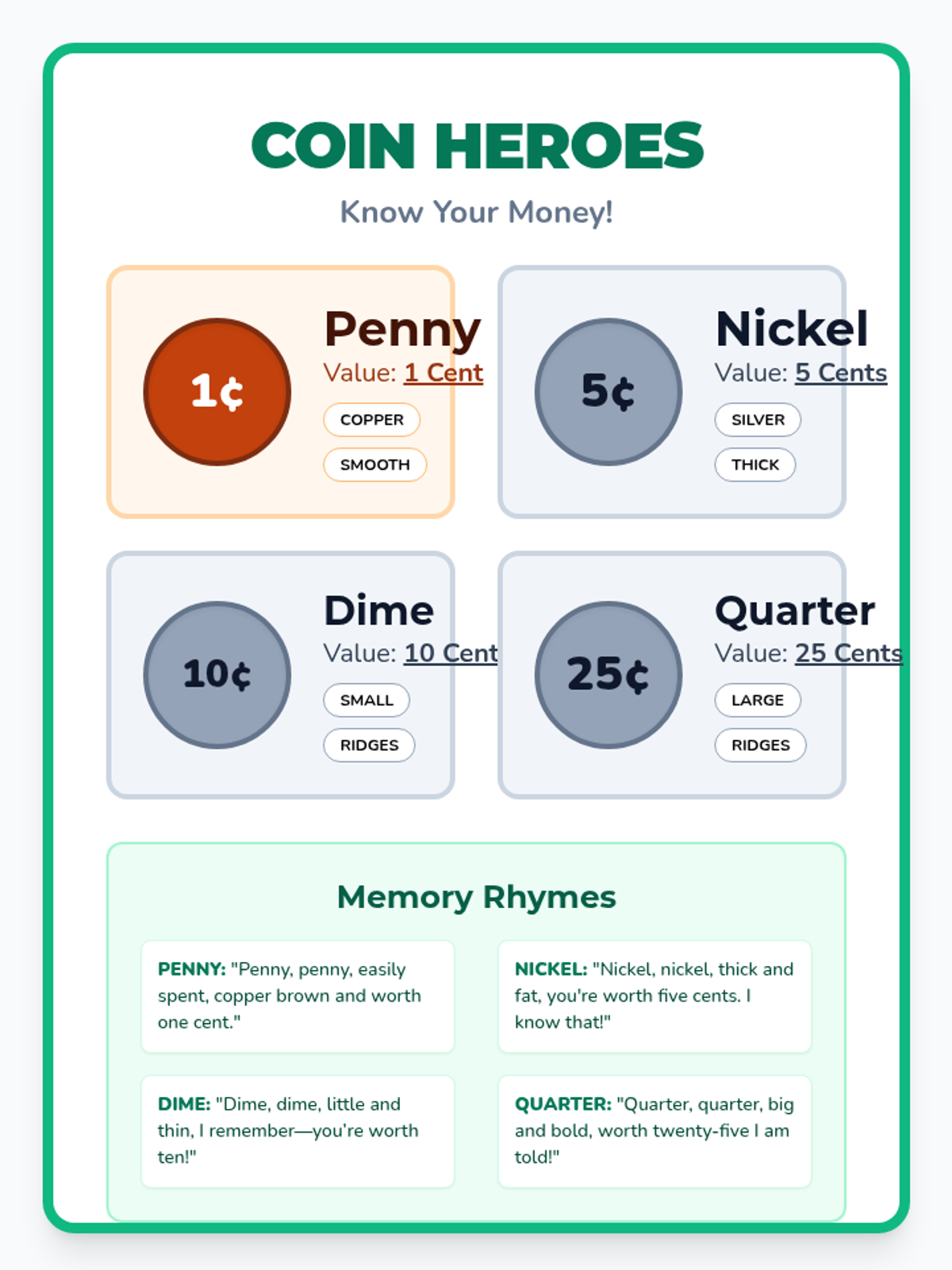
A collection of visual anchor charts and posters designed to teach basic coin identification, counting, and making change from a dollar. These materials use large visuals and clear strategies for early elementary students.
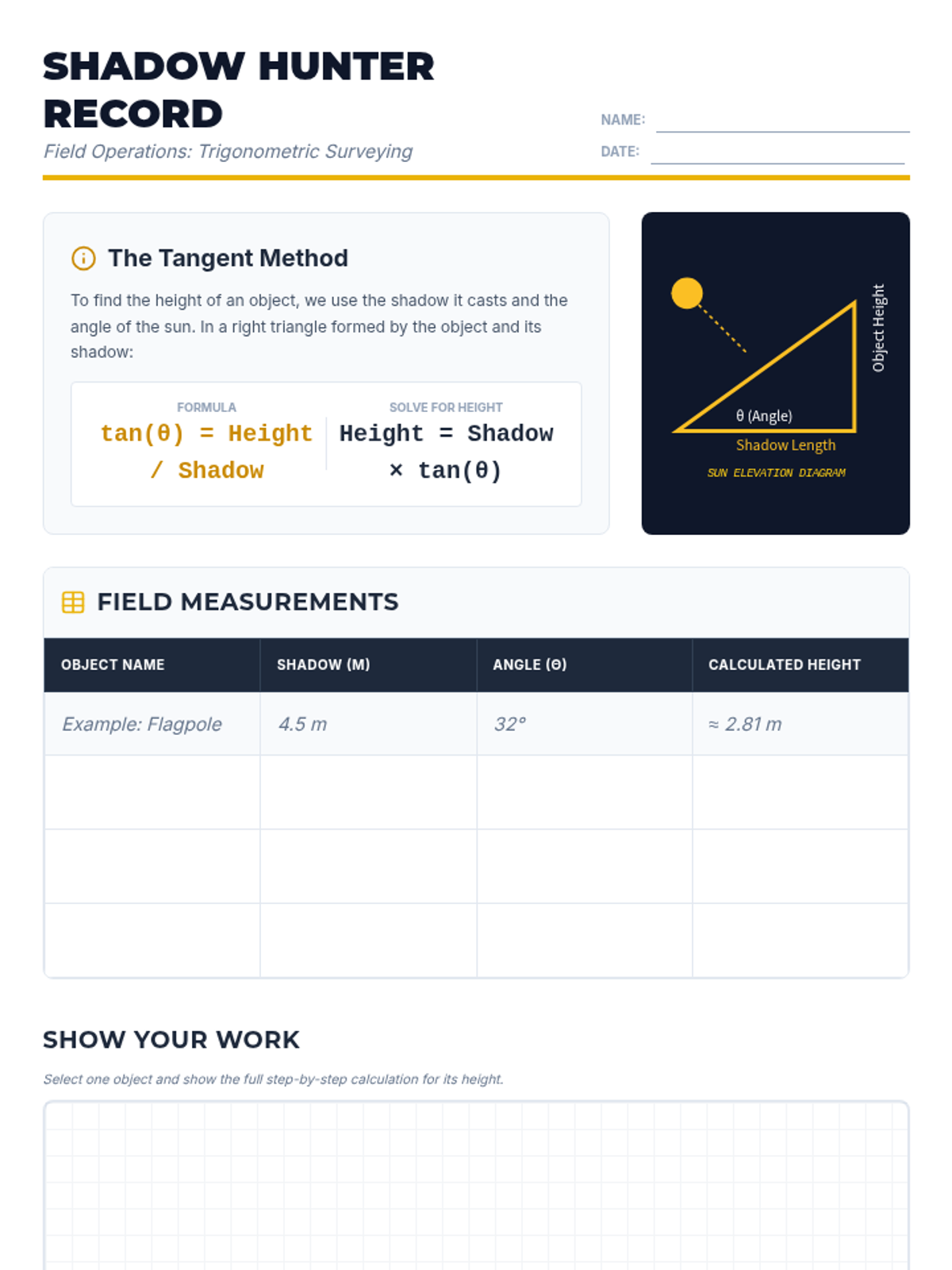
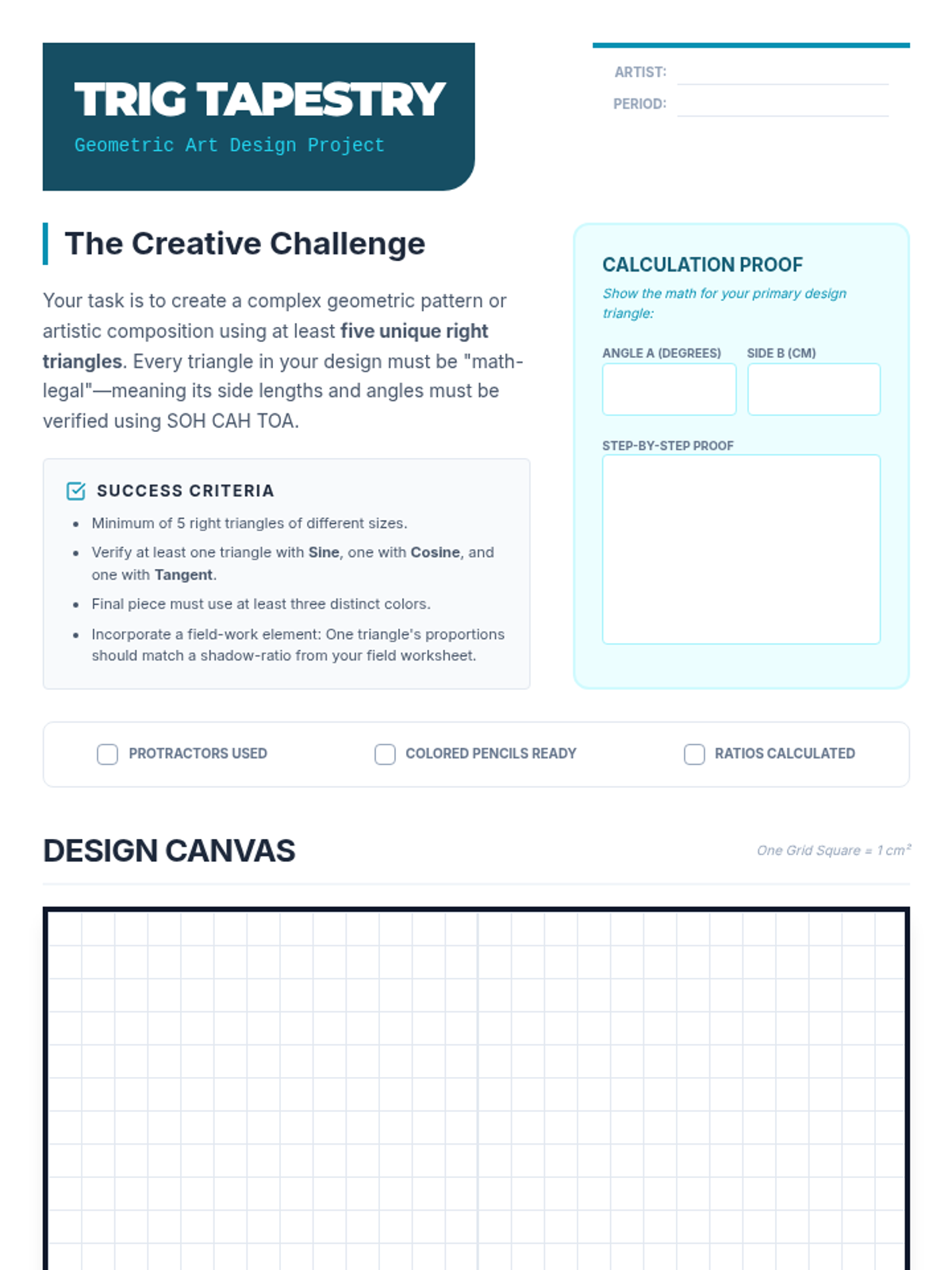
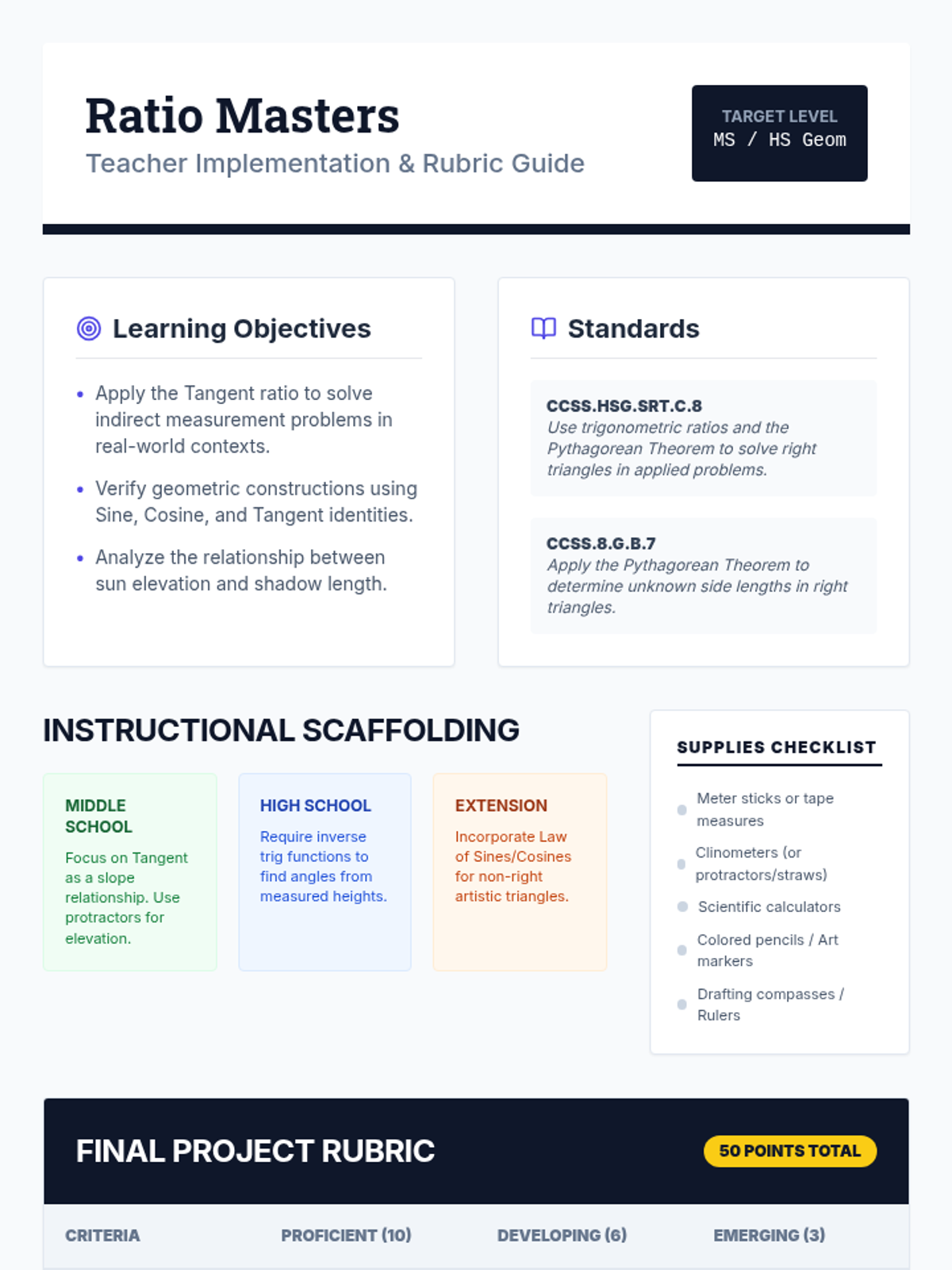
Students learn to apply Sine, Cosine, and Tangent to real-world measurements and abstract artistic design, culminating in a dual-phase project.
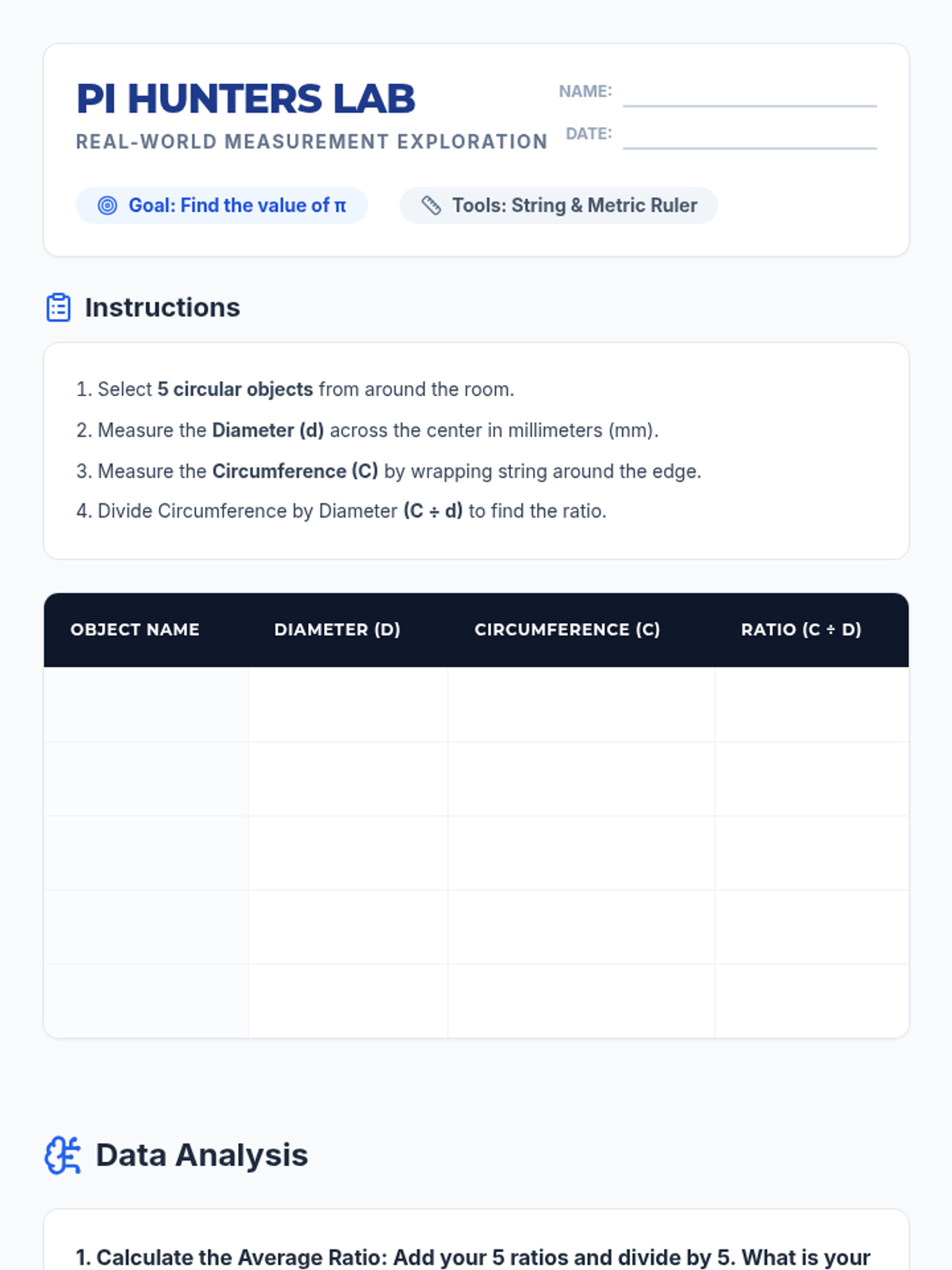
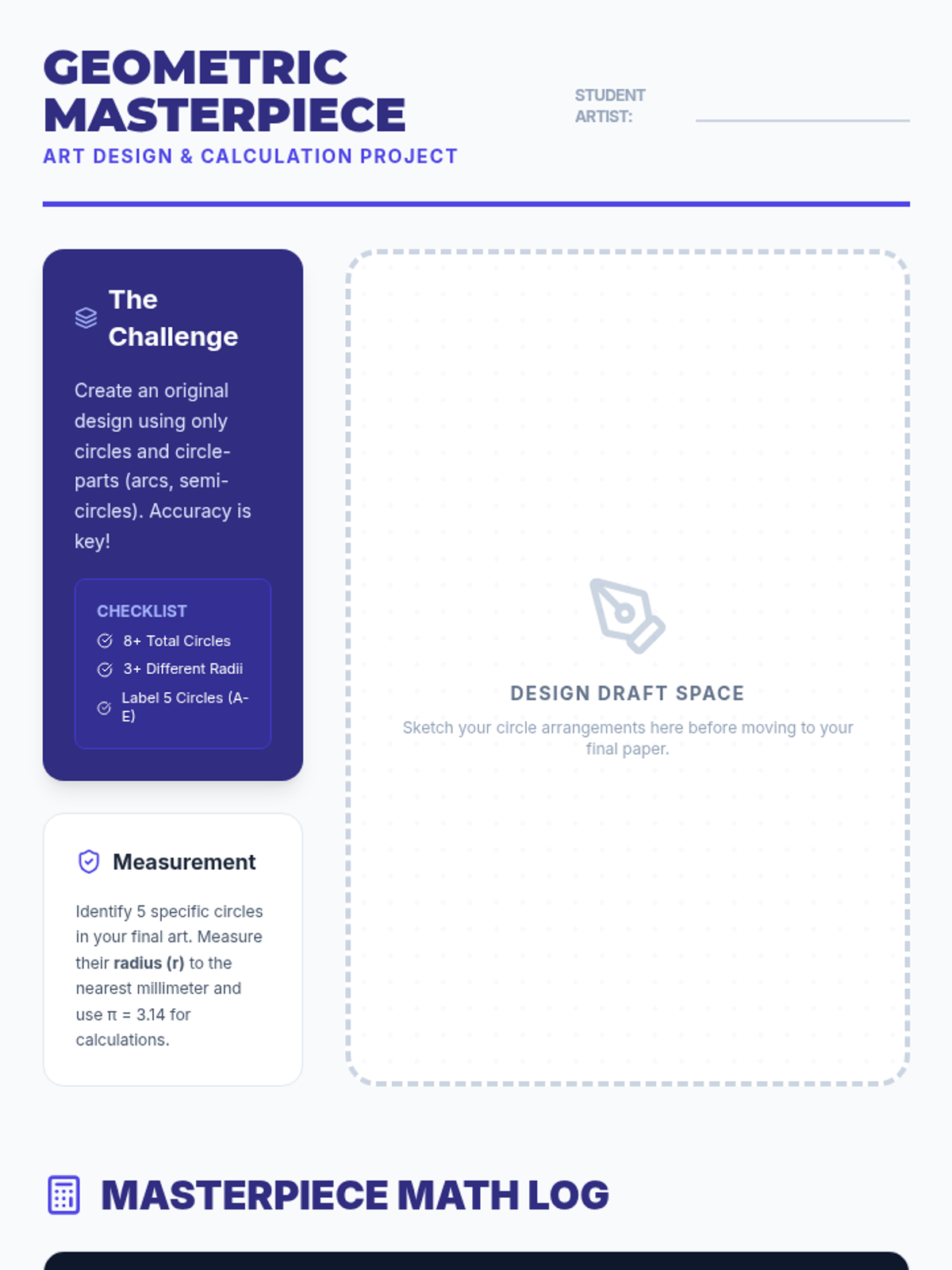
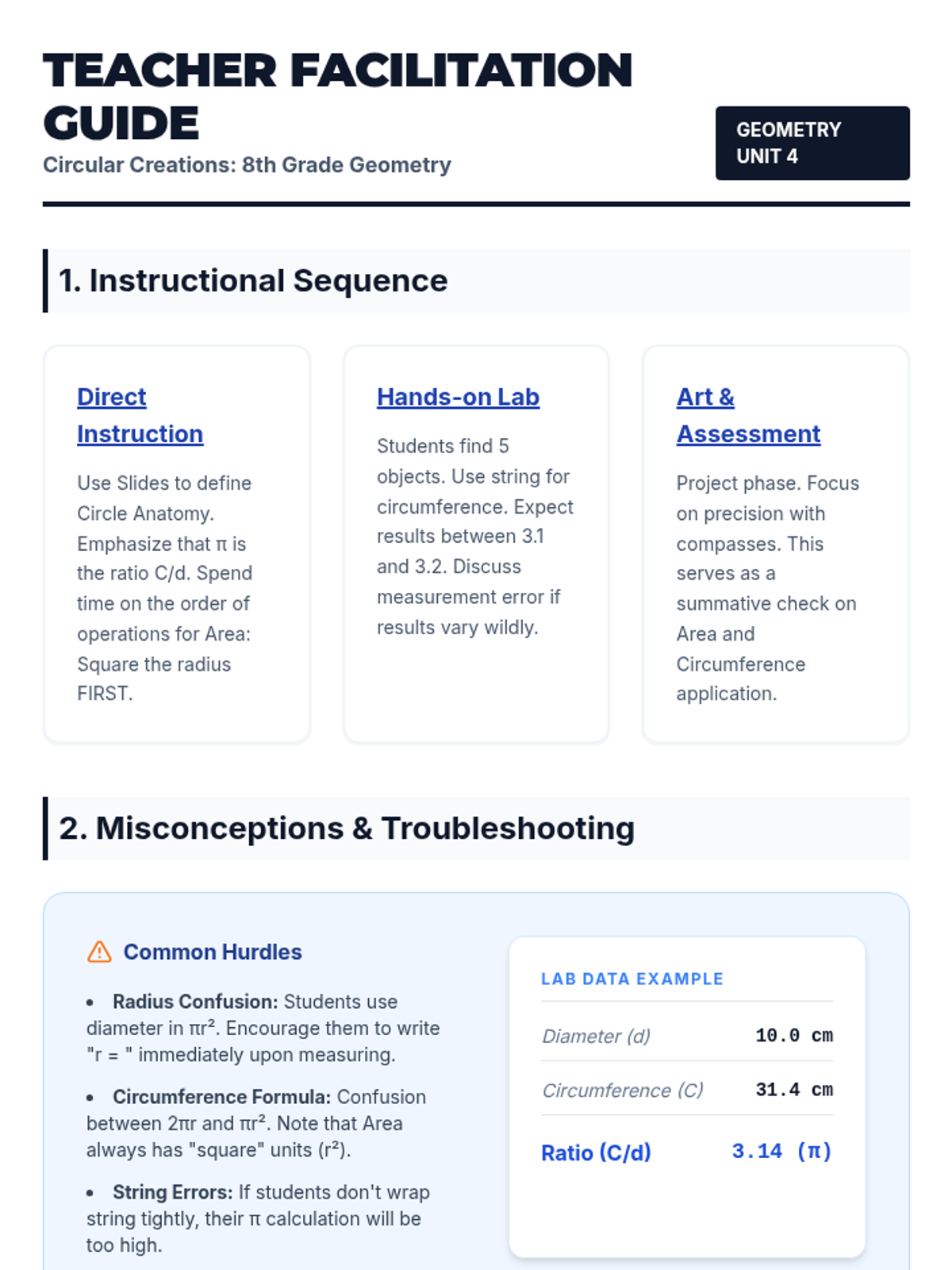
A hands-on geometry lesson where students explore the mathematical properties of circles through real-world measurement and creative geometric art design. Students discover the relationship between circumference and diameter while applying area formulas to their own masterpieces.
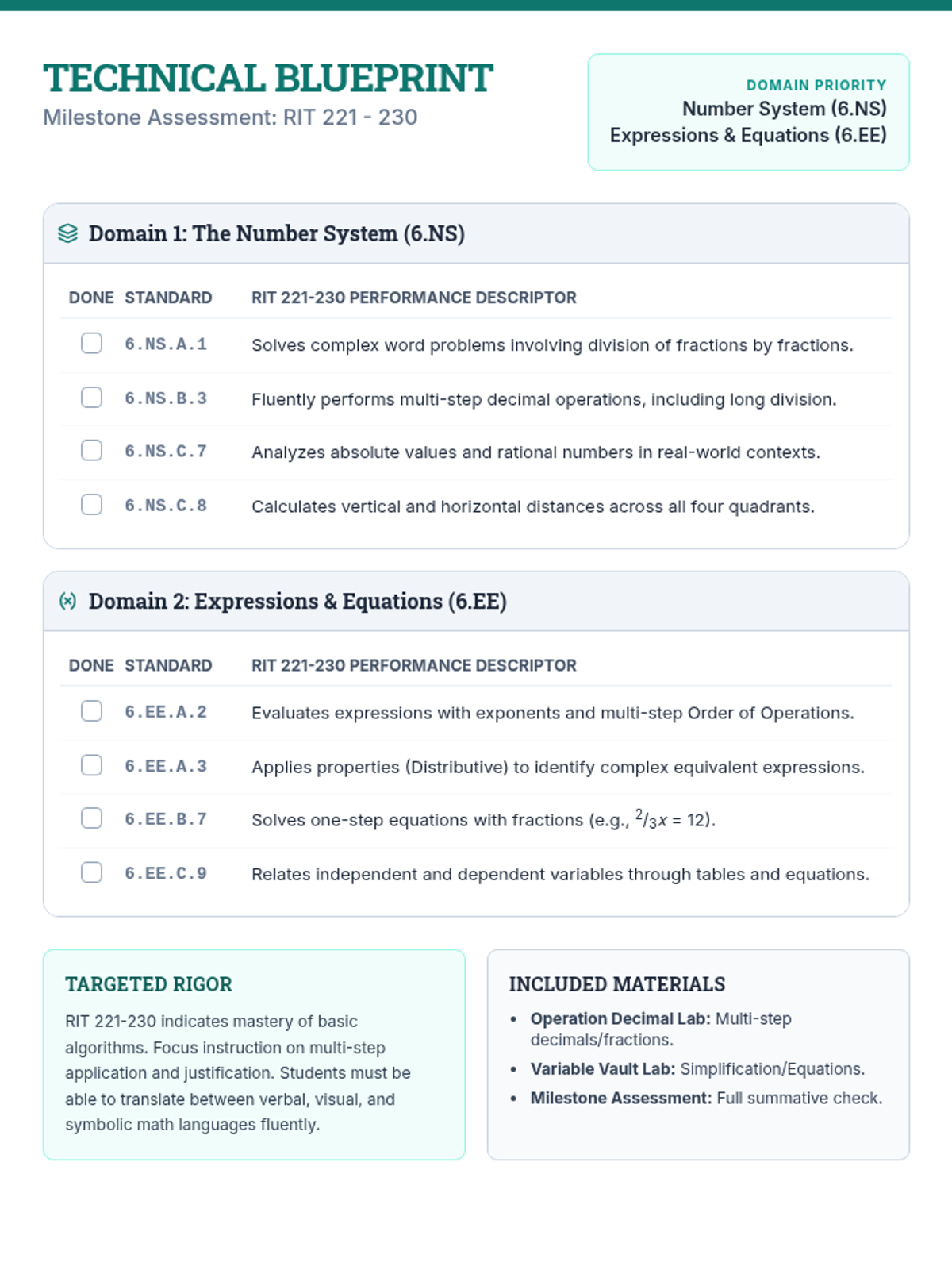
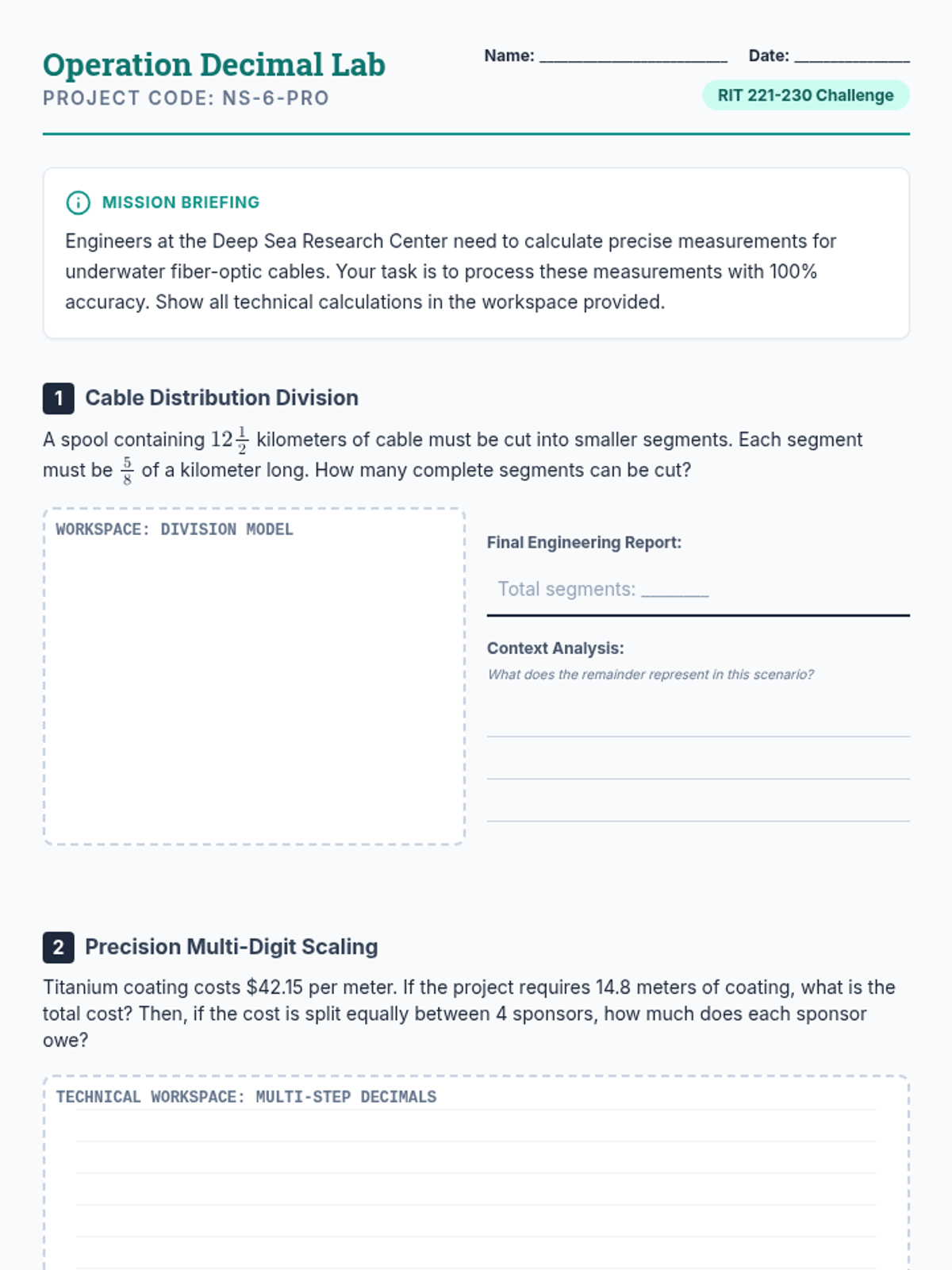
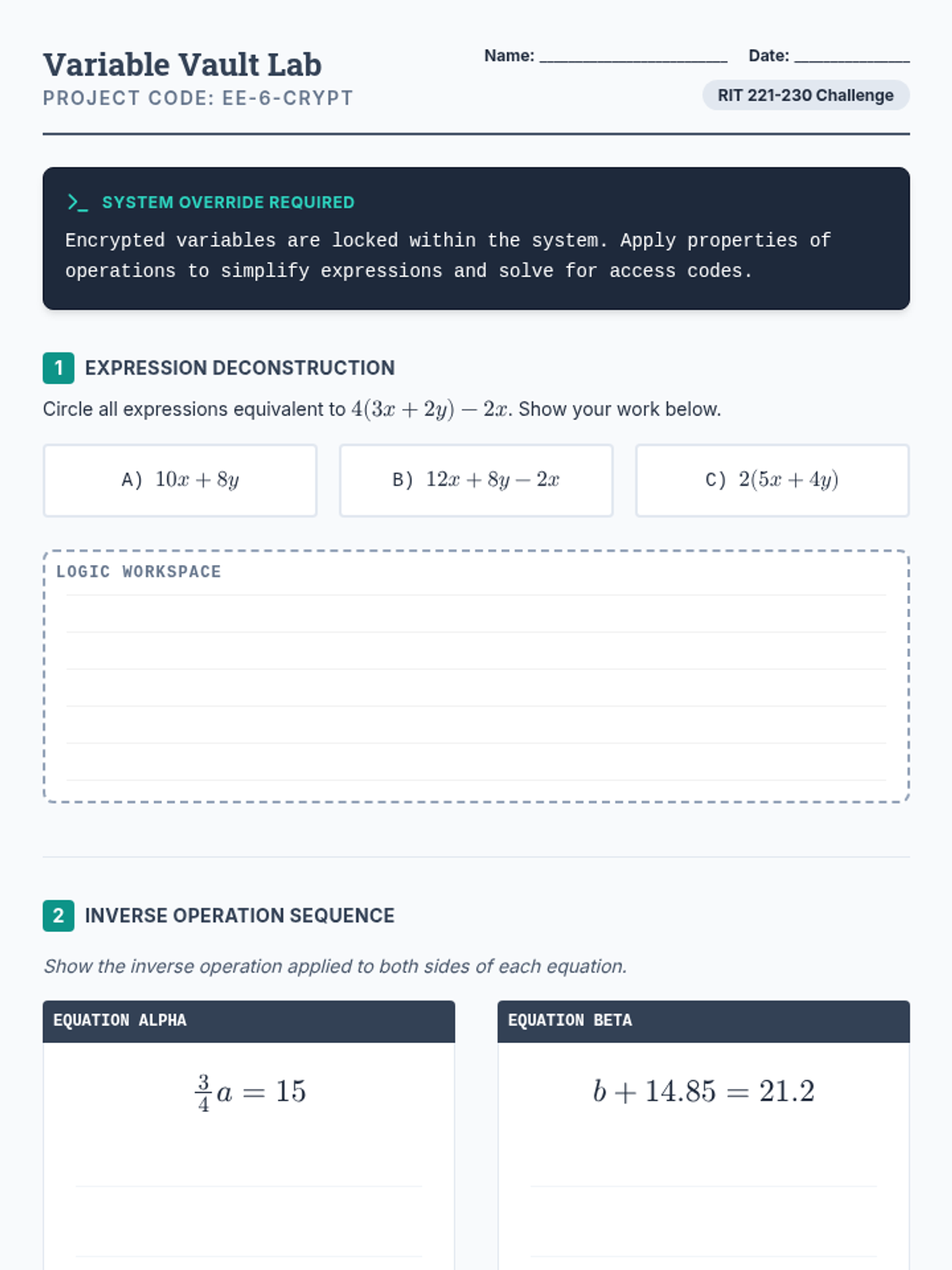
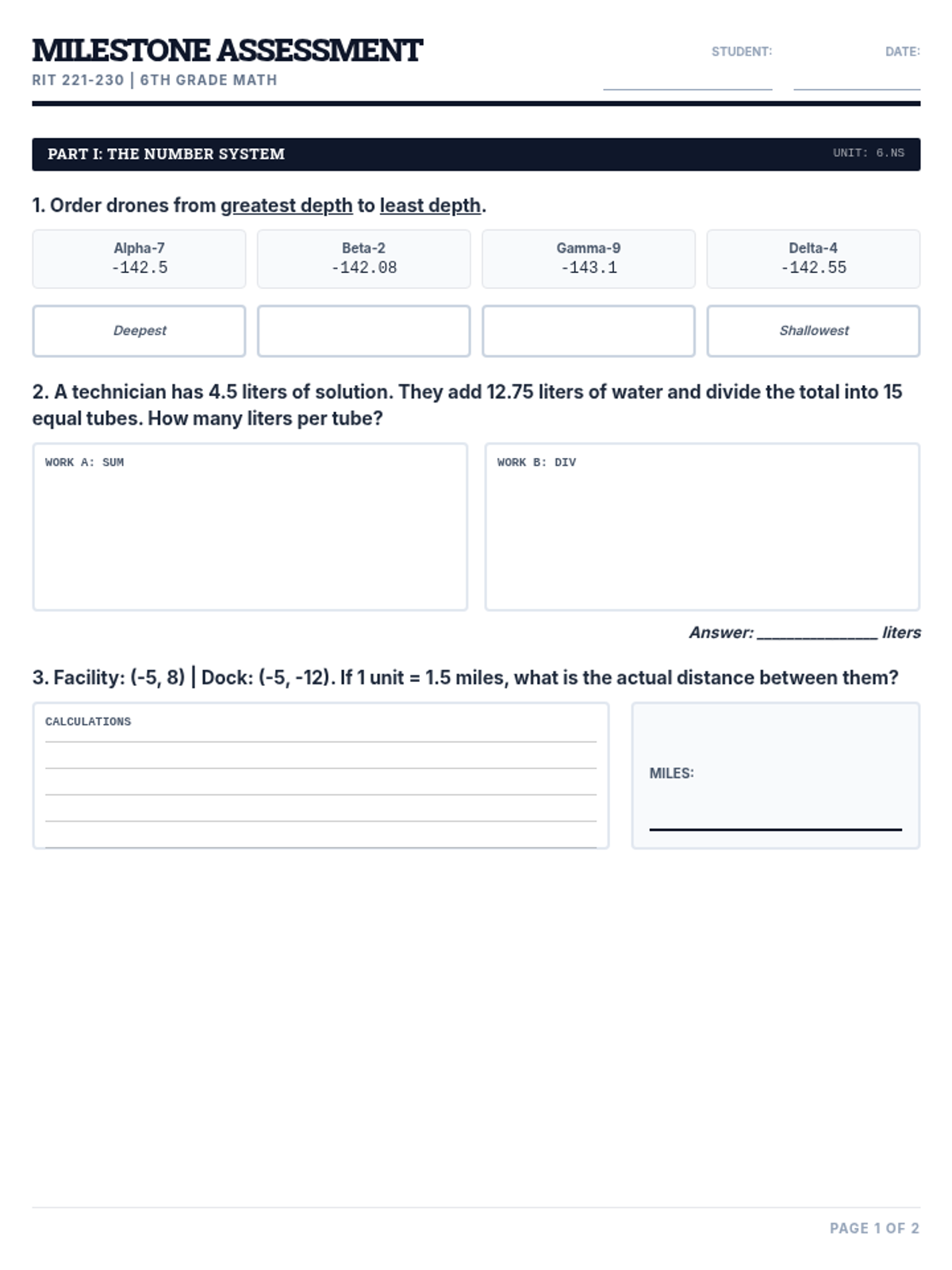
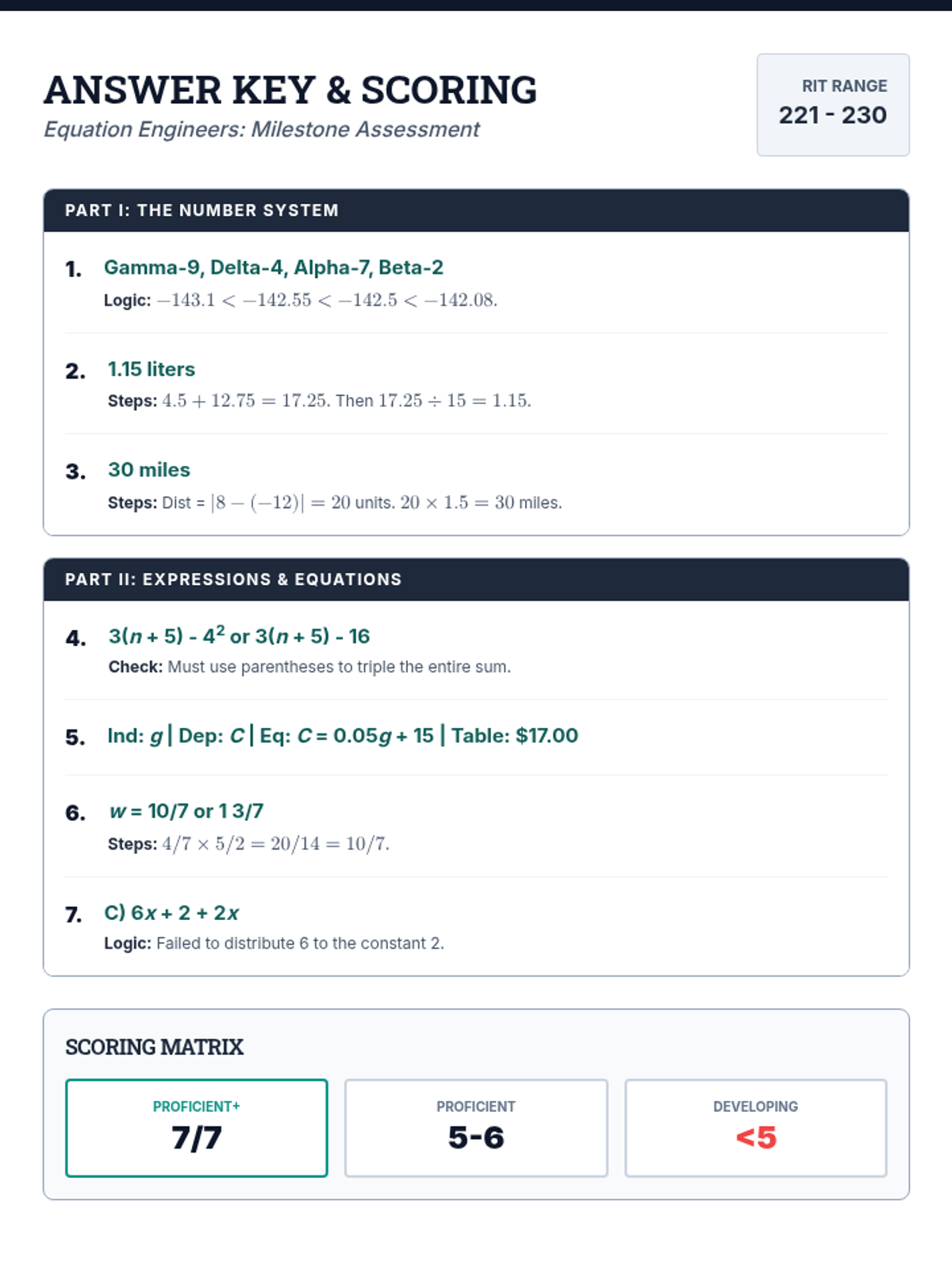
A comprehensive milestone assessment and review unit for 6th-grade students performing in the 221-230 RIT range, focusing on The Number System and Expressions & Equations. Includes a technical blueprint, skill-building lab activities, and a final proficiency assessment.
A lesson focused on reading analog clocks to the hour and half-hour, designed for 2nd grade students to practice converting analog time to digital format.
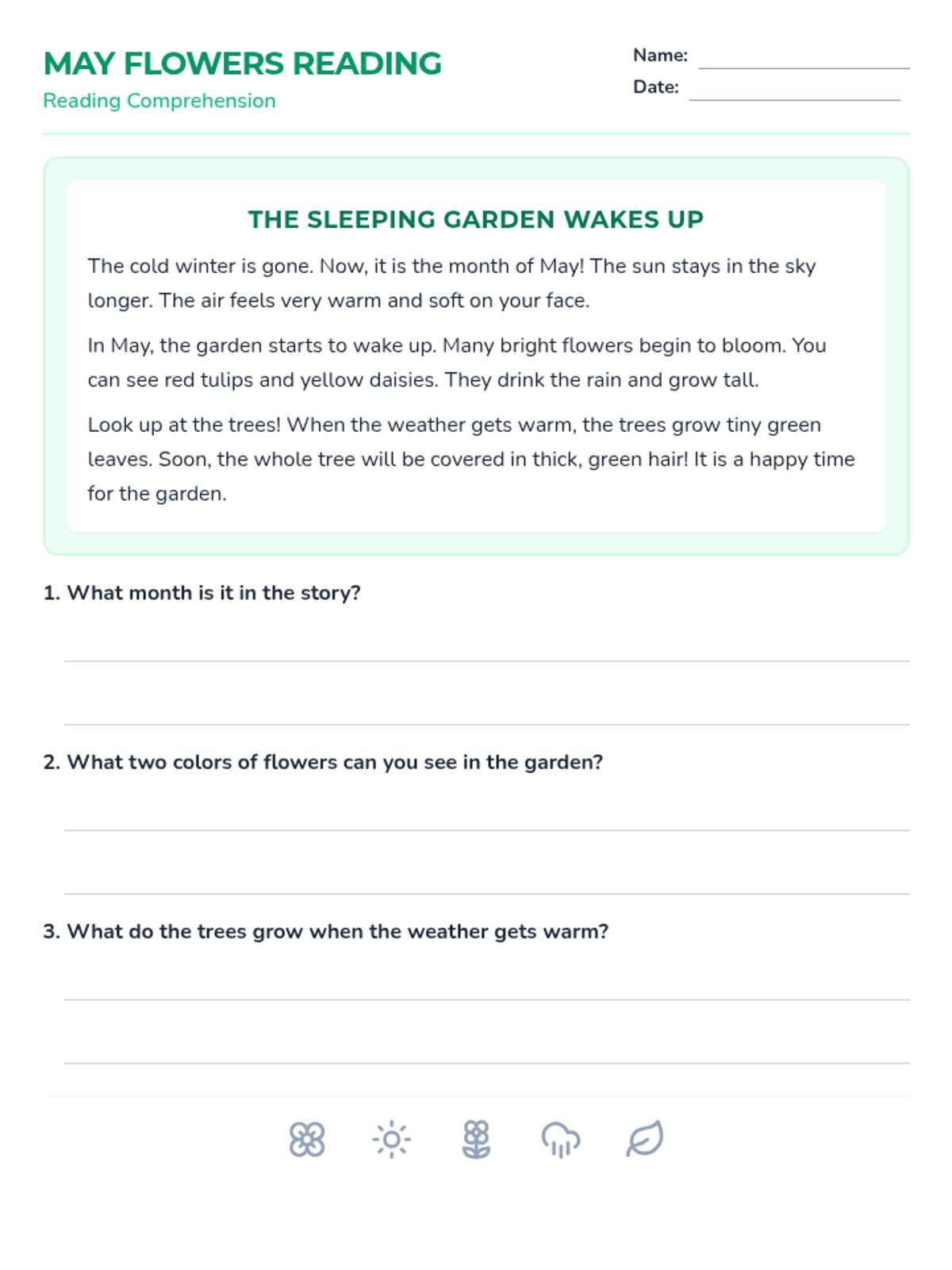
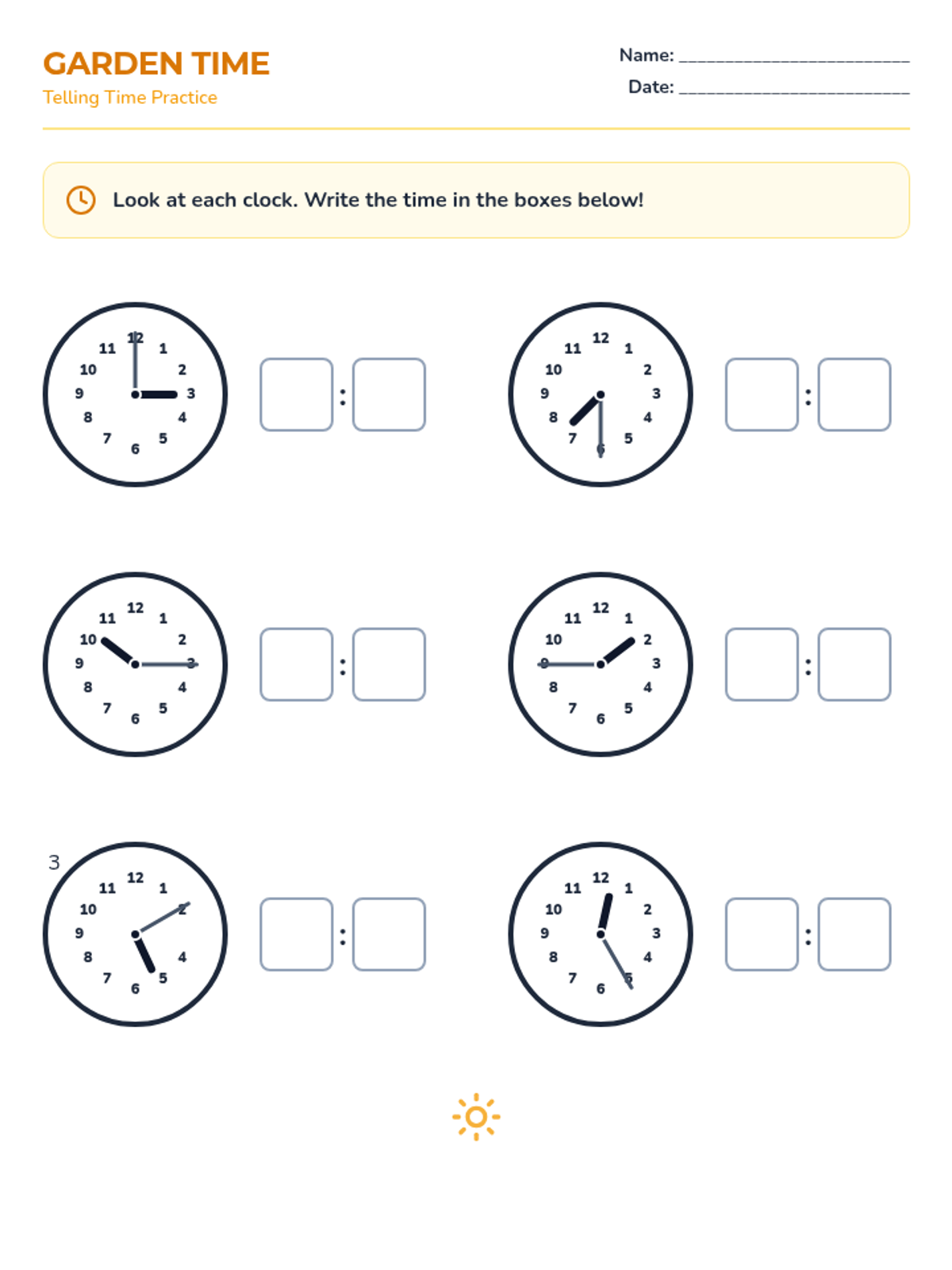
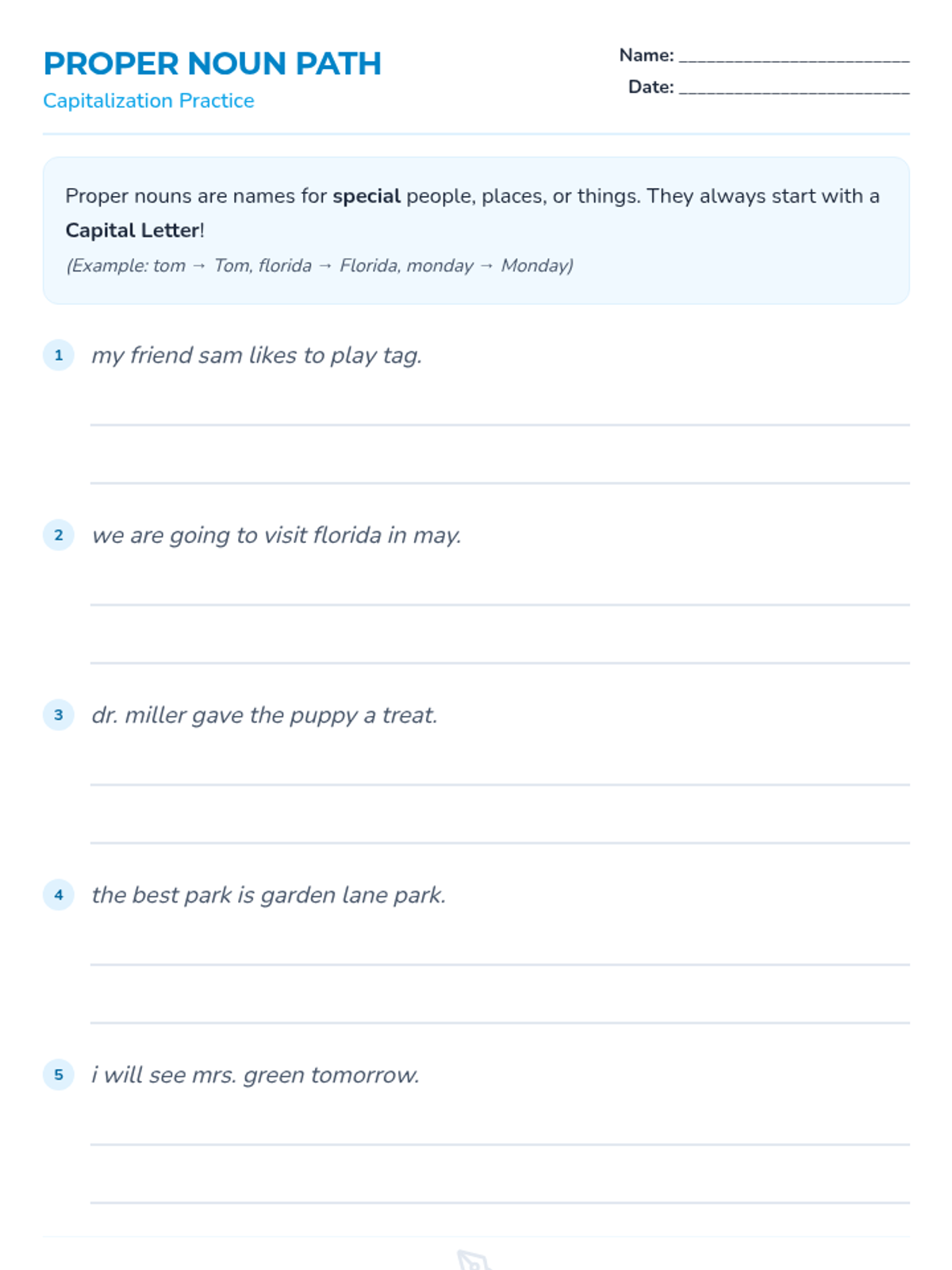
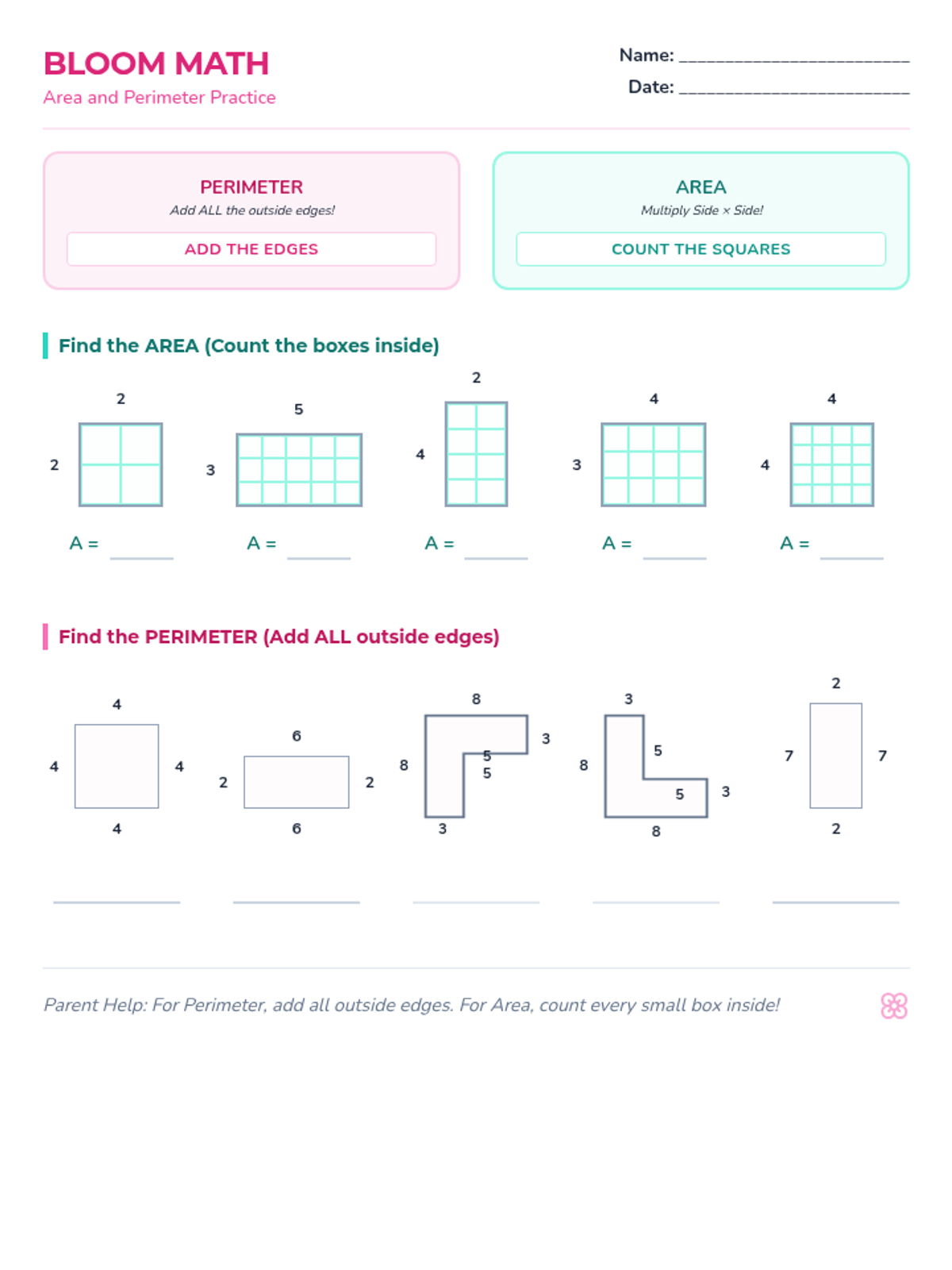
A set of four independent practice worksheets themed around springtime growth, focusing on reading comprehension, time-telling, grammar, and geometry.
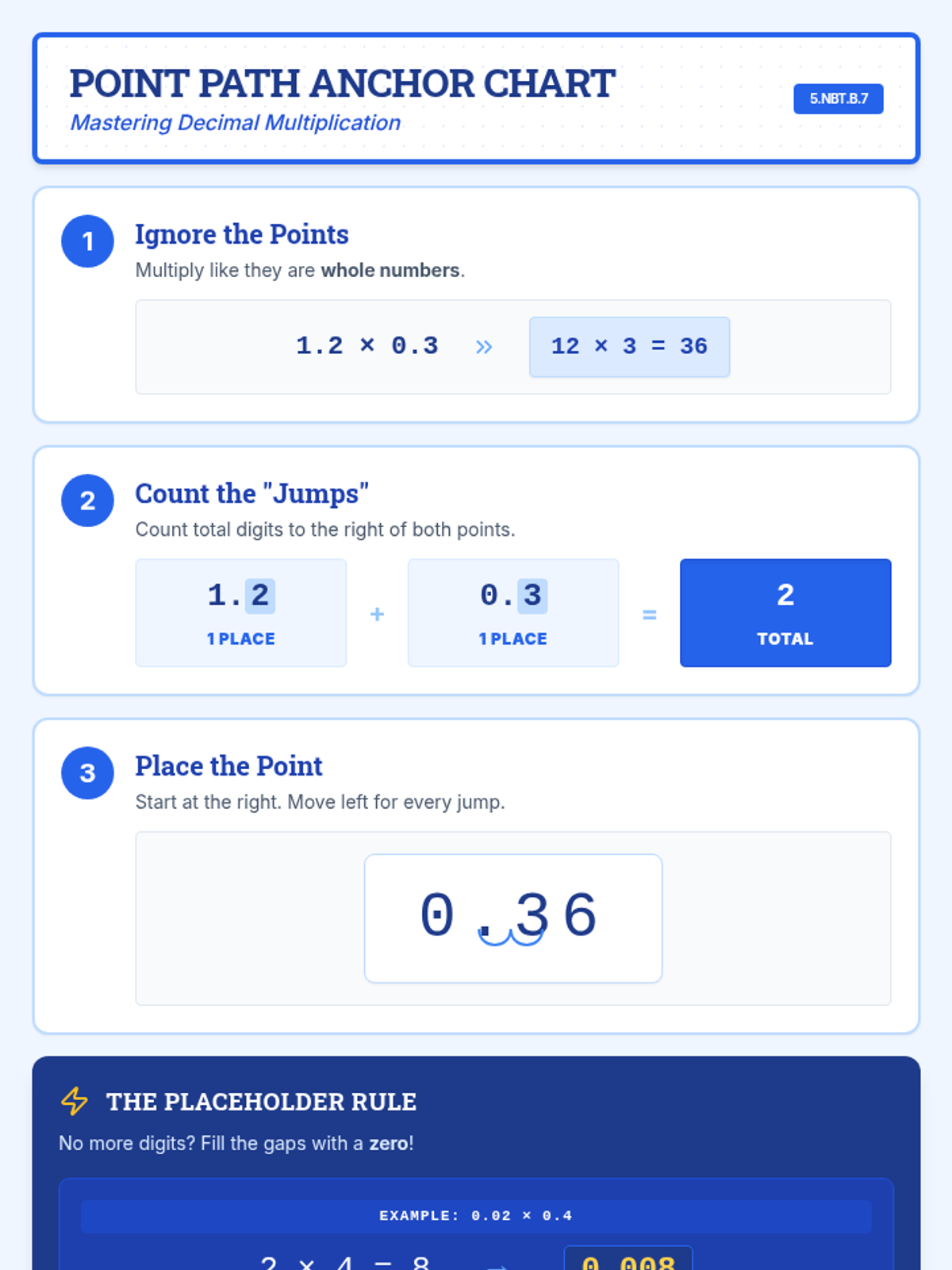
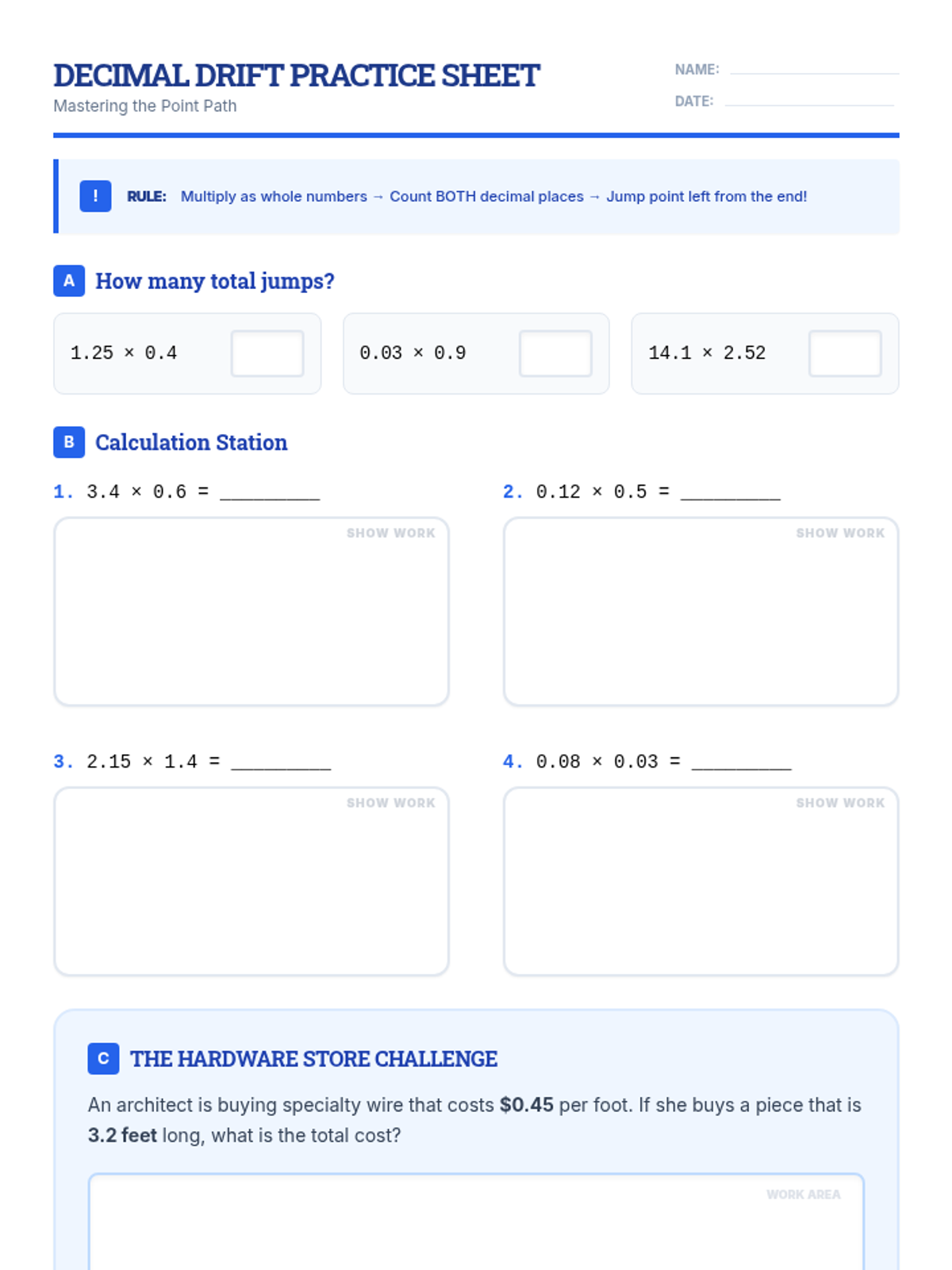
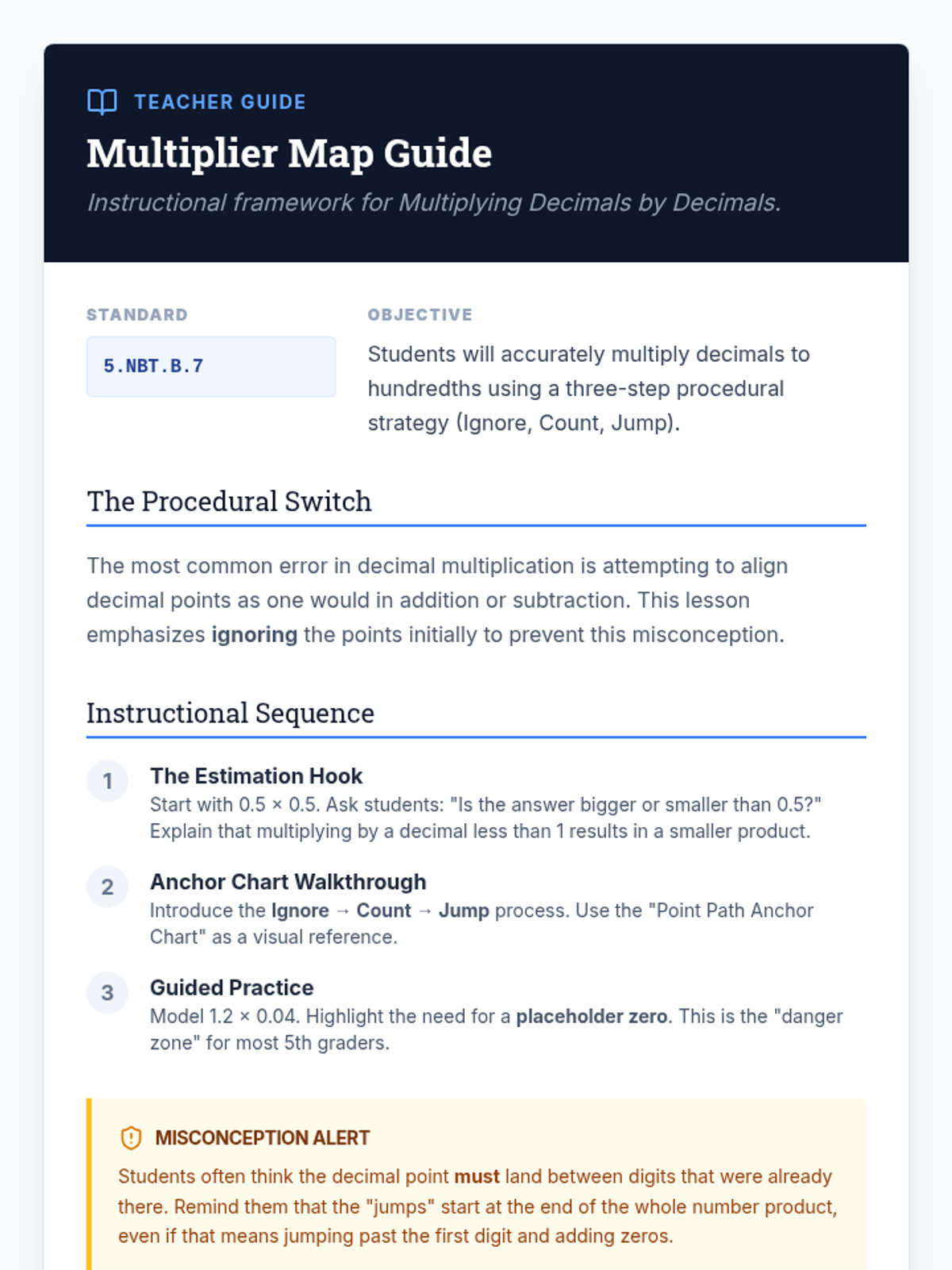
A comprehensive guide to multiplying decimals by decimals using a step-by-step procedural approach. This lesson includes a visual anchor chart for students, a practice worksheet to reinforce the skill, and a teacher guide for effective instruction.
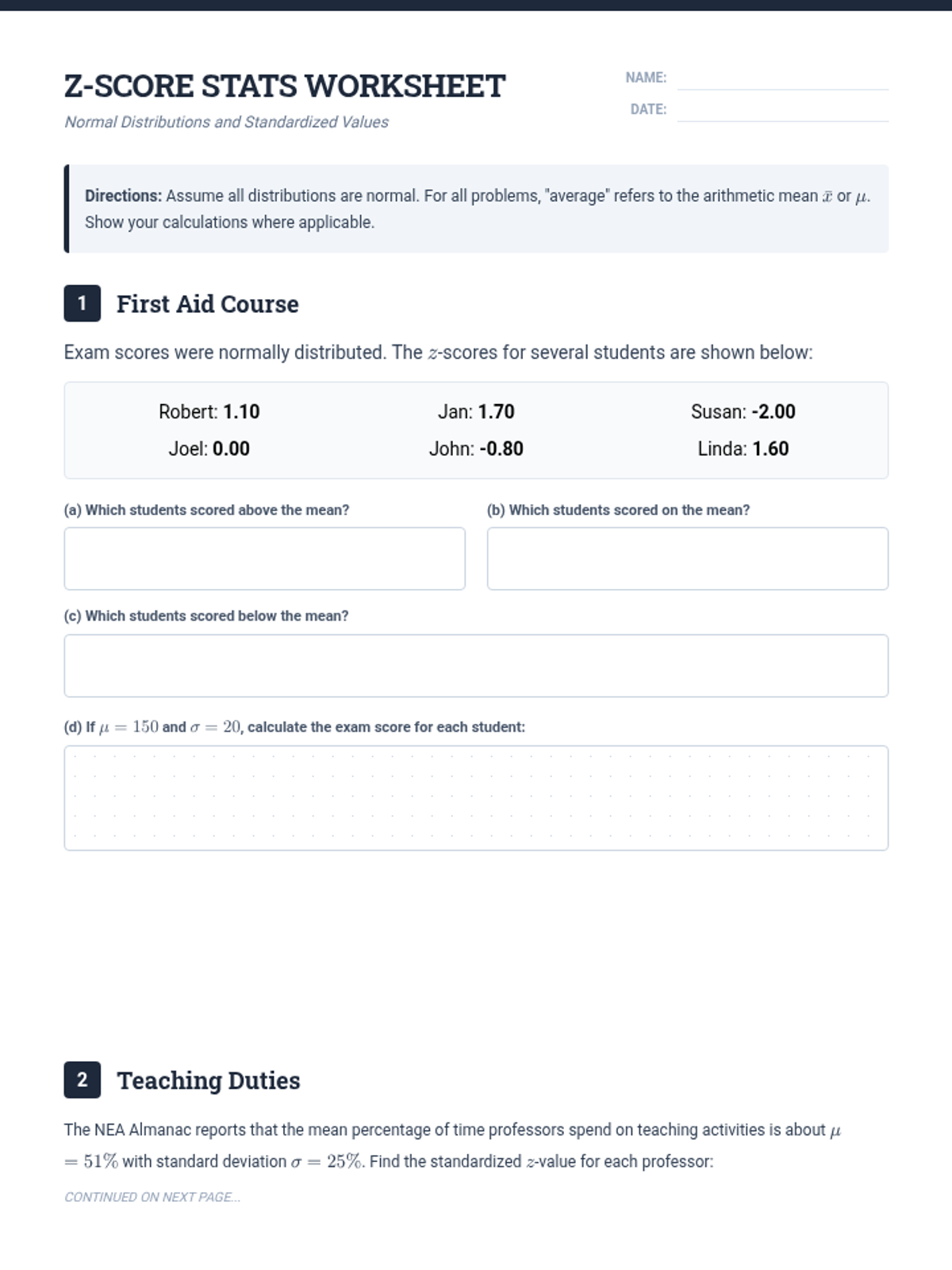
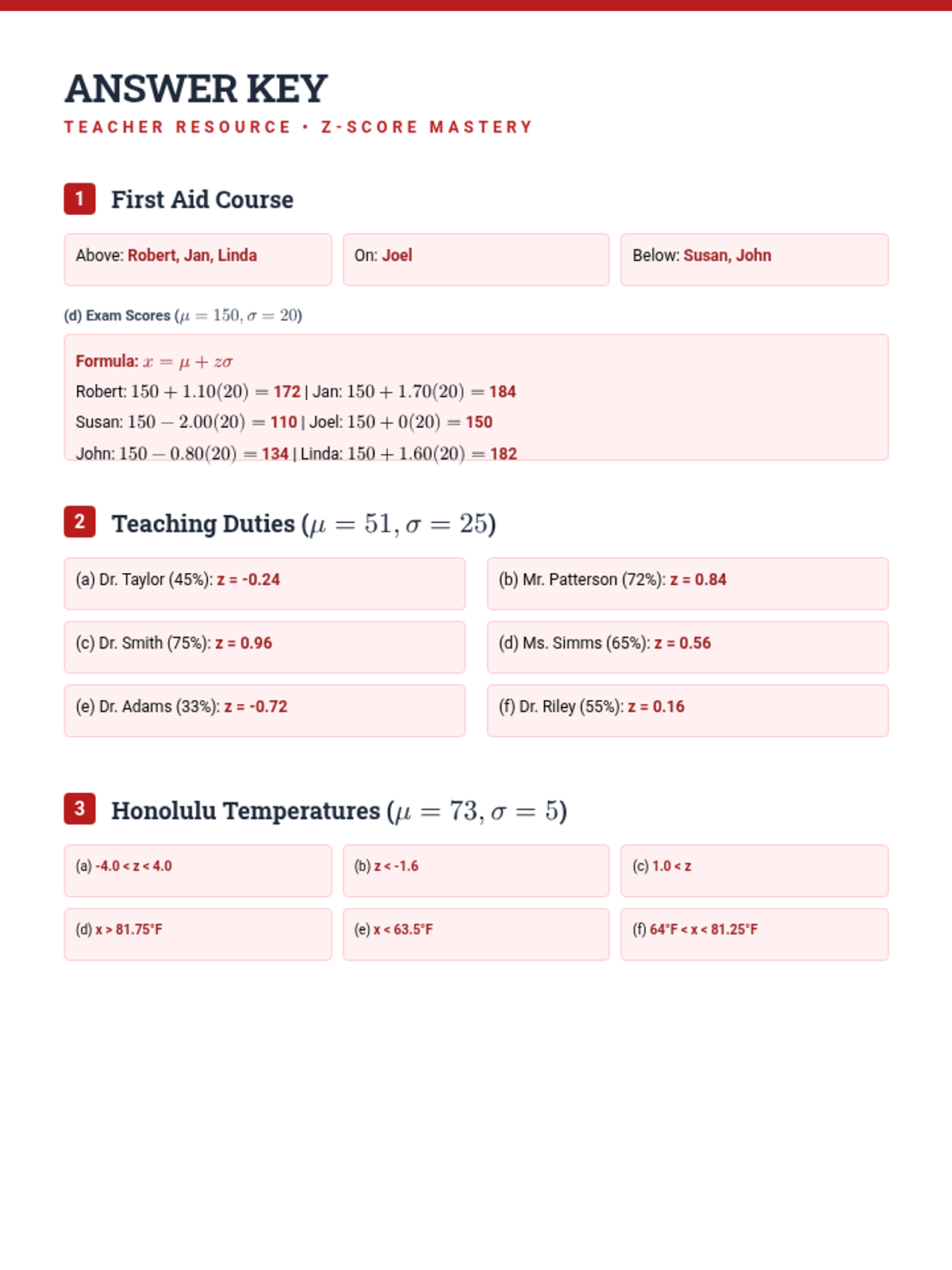
A lesson focused on calculating and interpreting z-scores within the context of normal distributions, featuring real-world data from ecology to education.
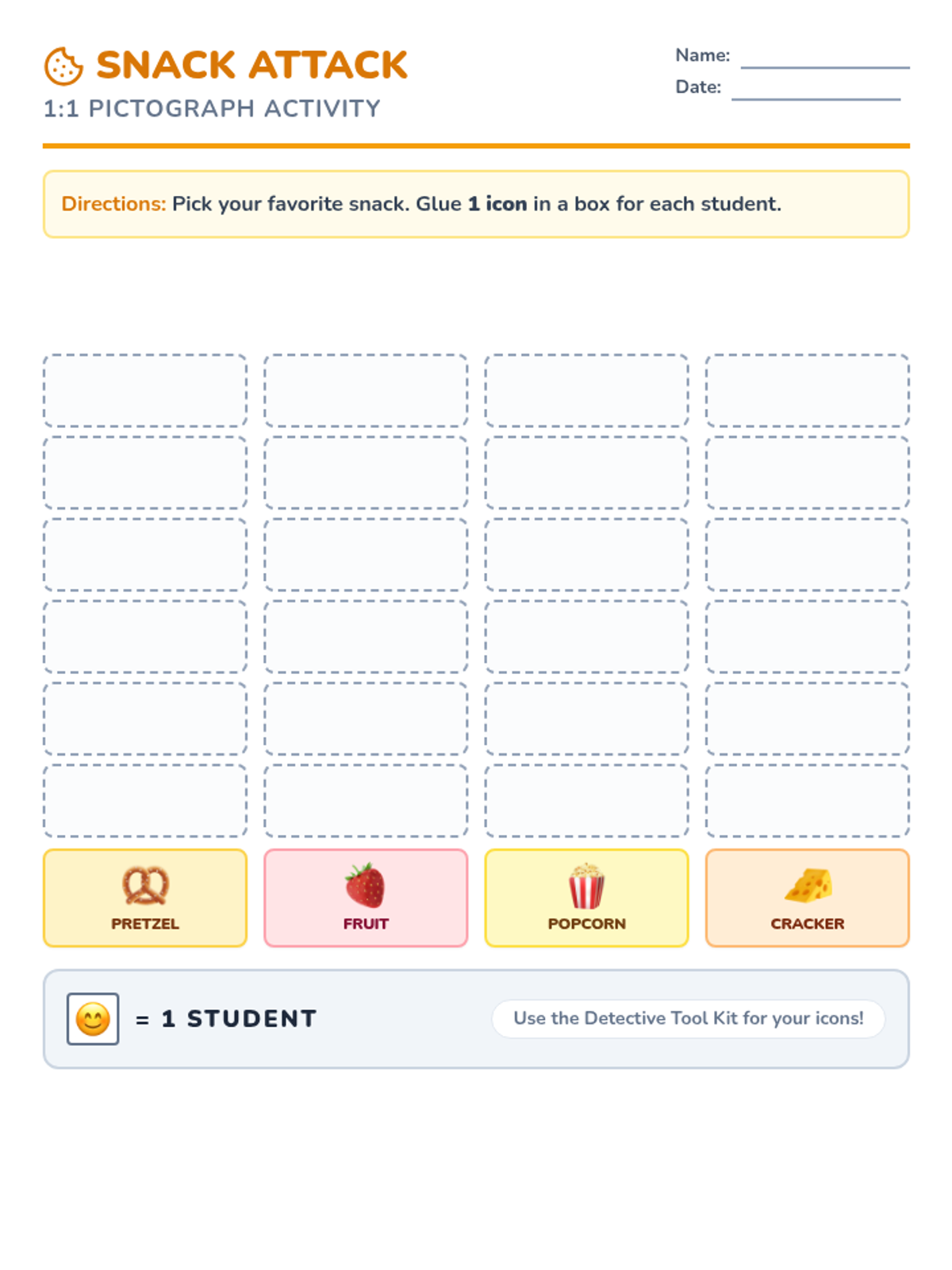
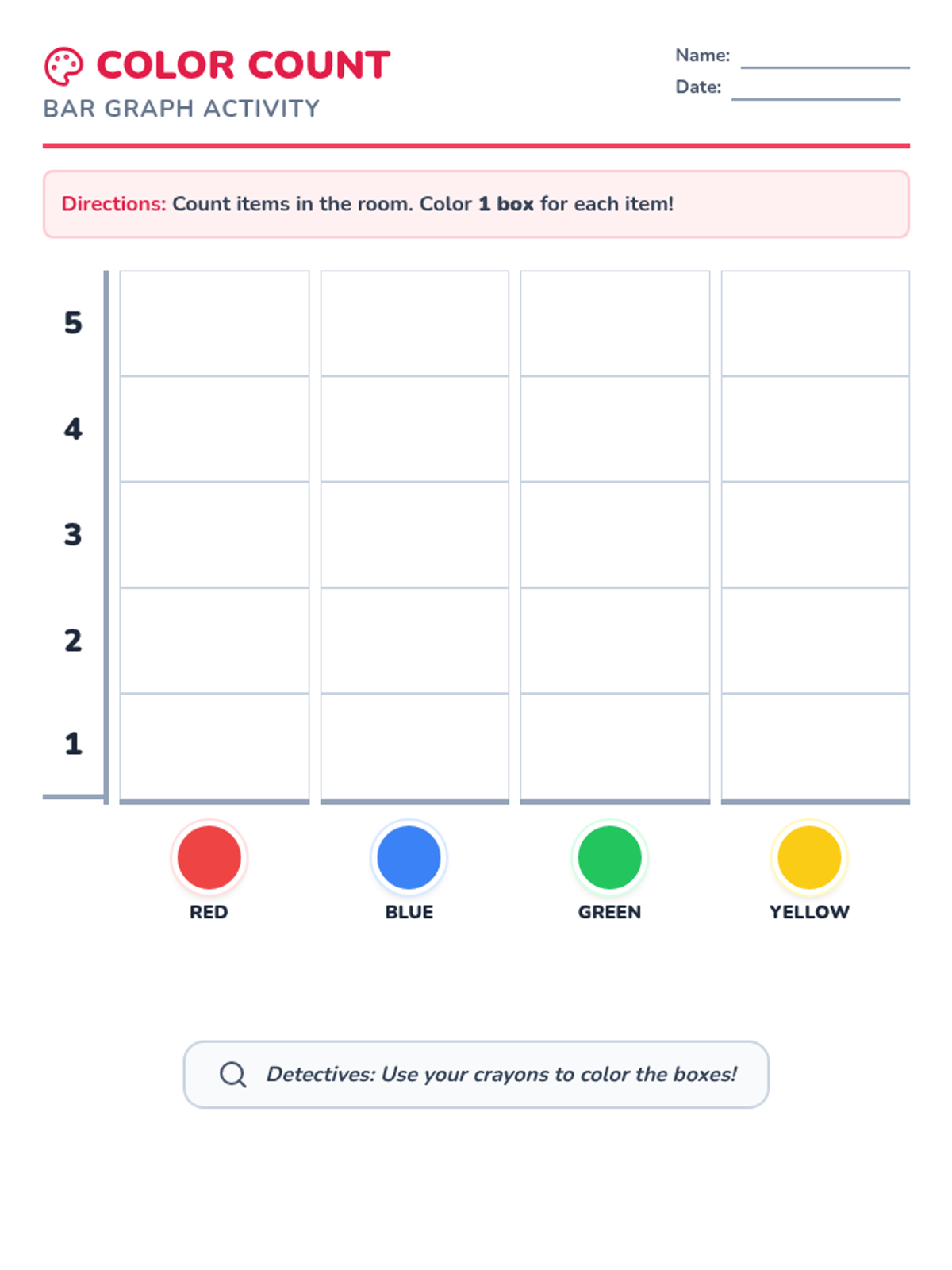
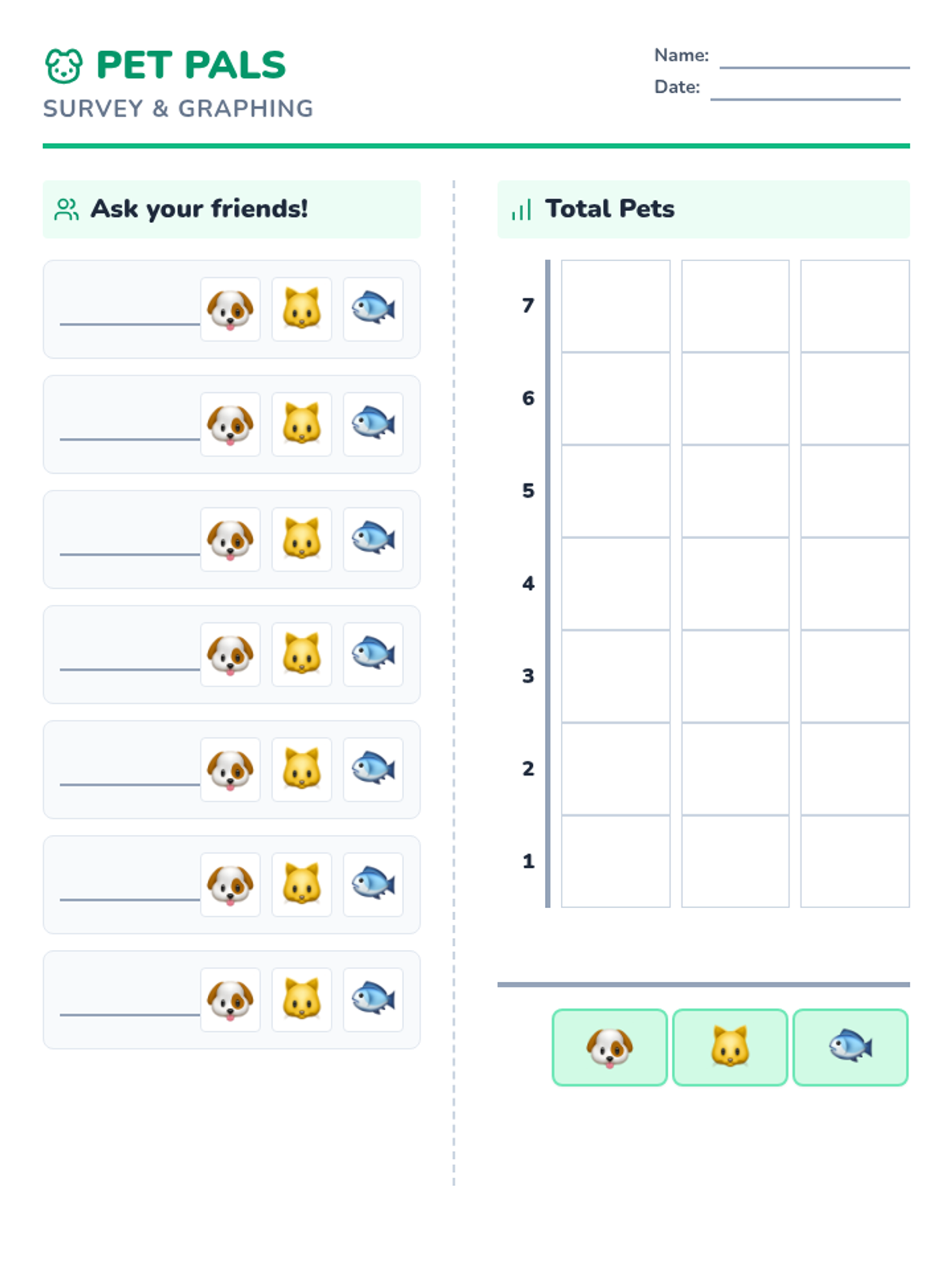
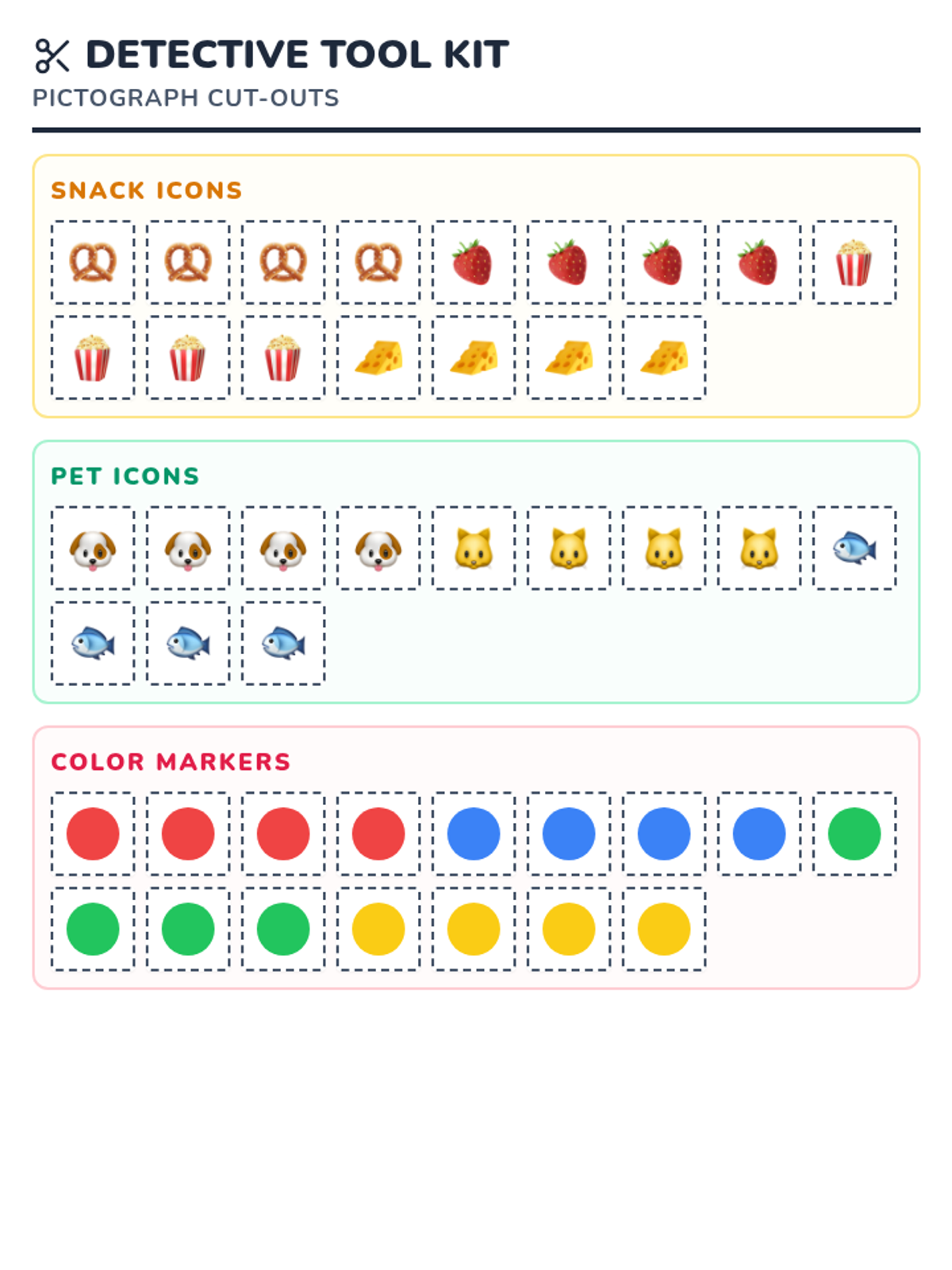
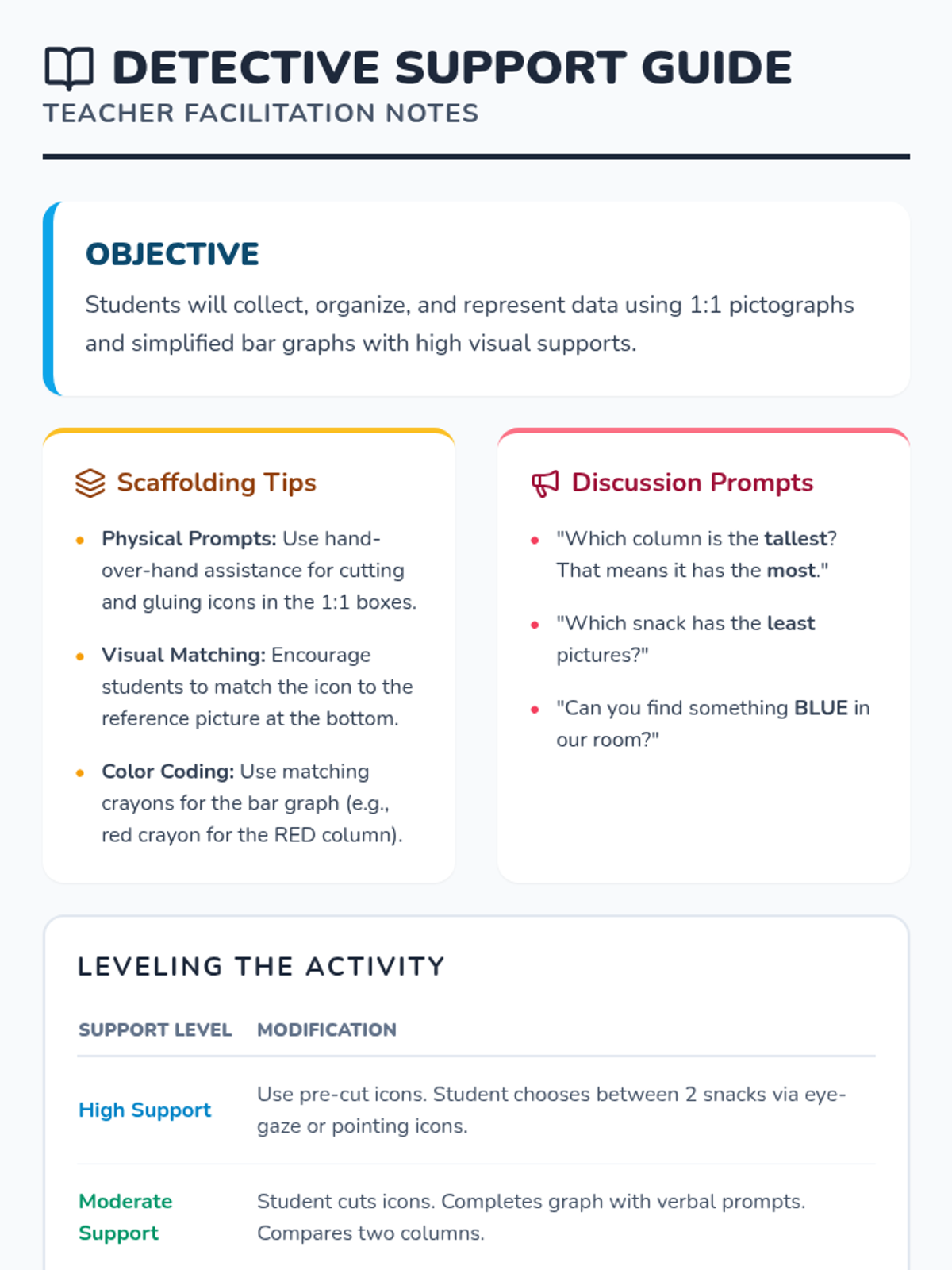
A hands-on graphing lesson designed for Essential Skills students, focusing on 1:1 pictographs and bar graphs using snack, color, and pet data with heavy visual supports.
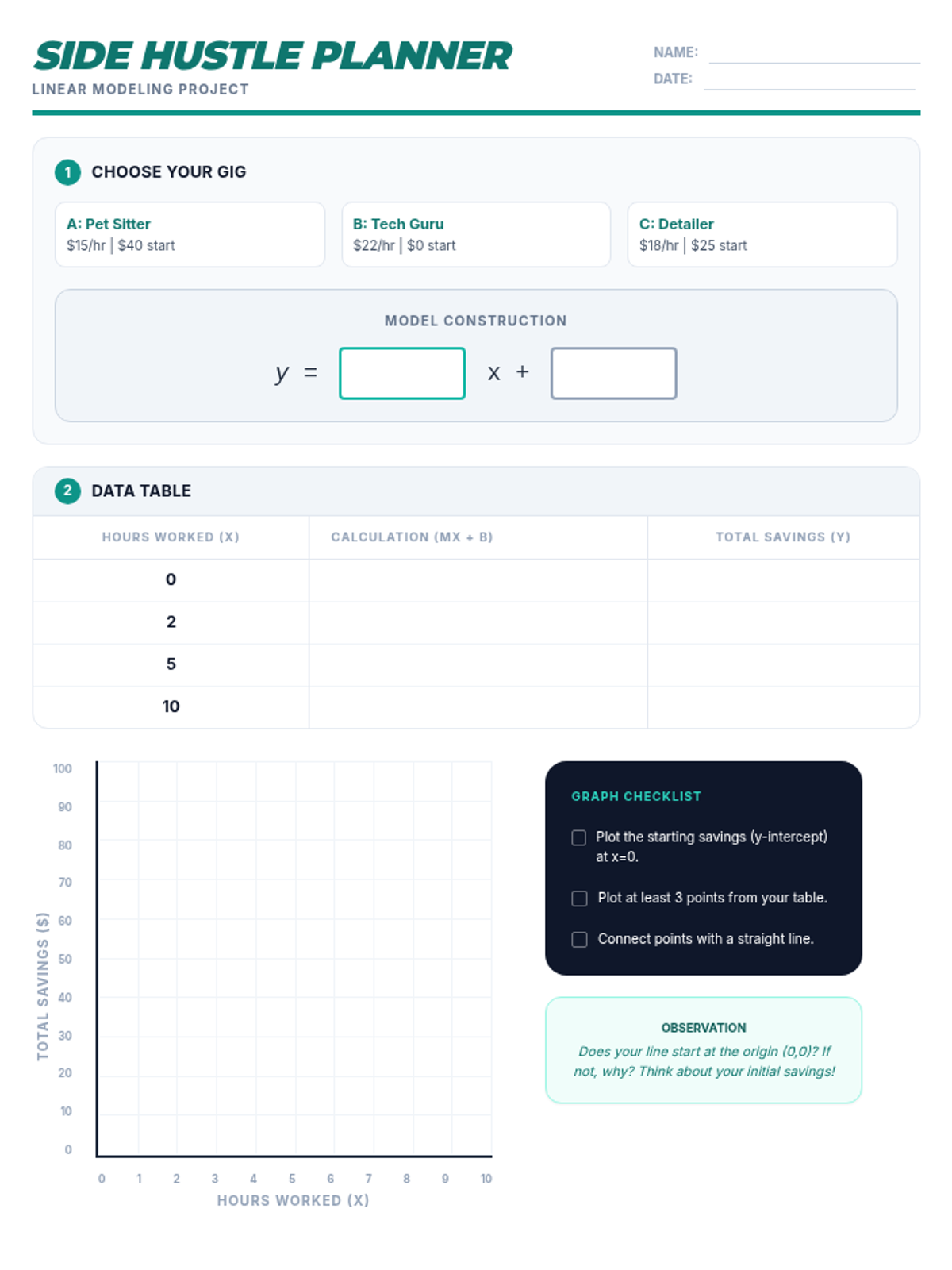
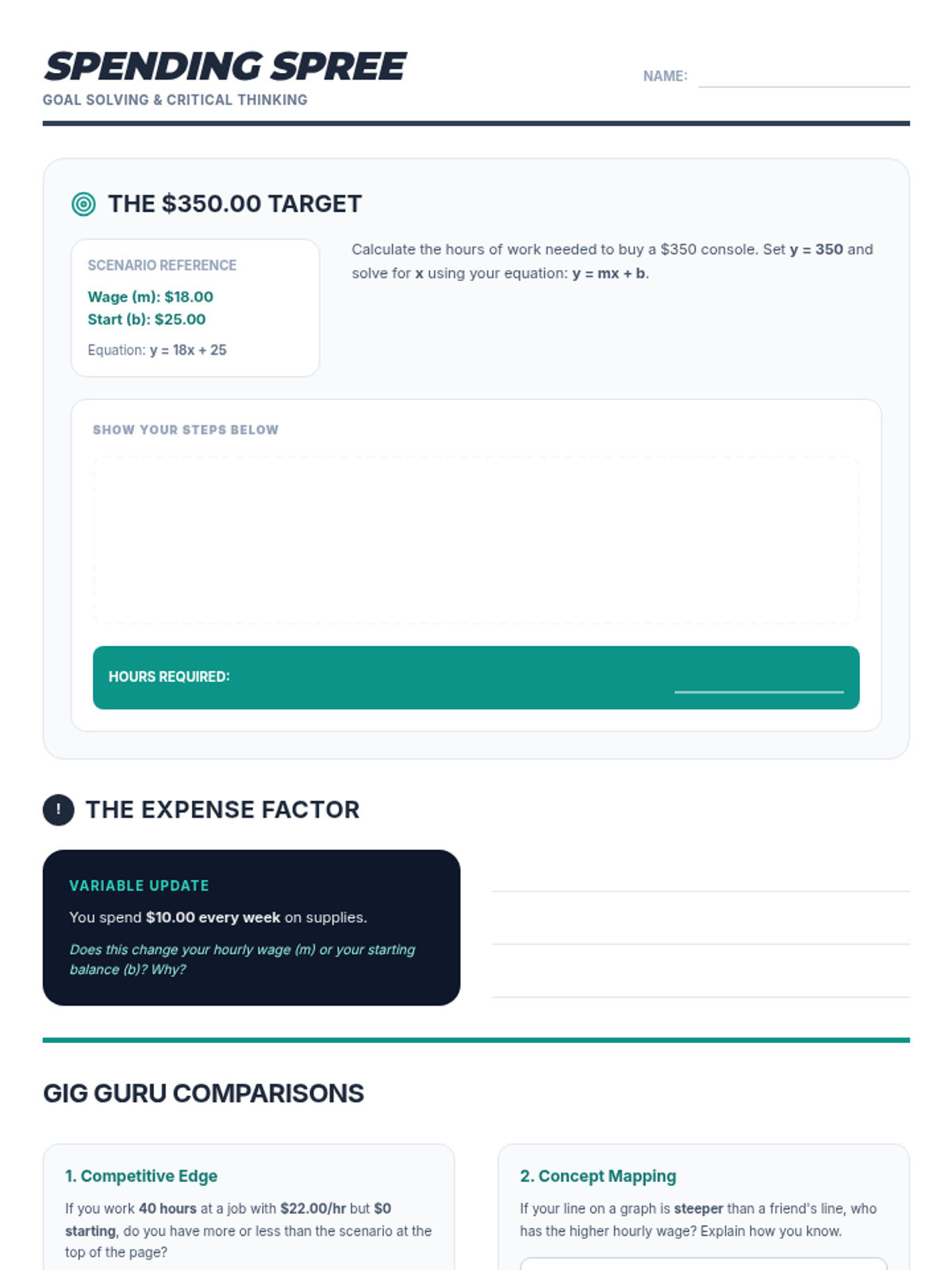
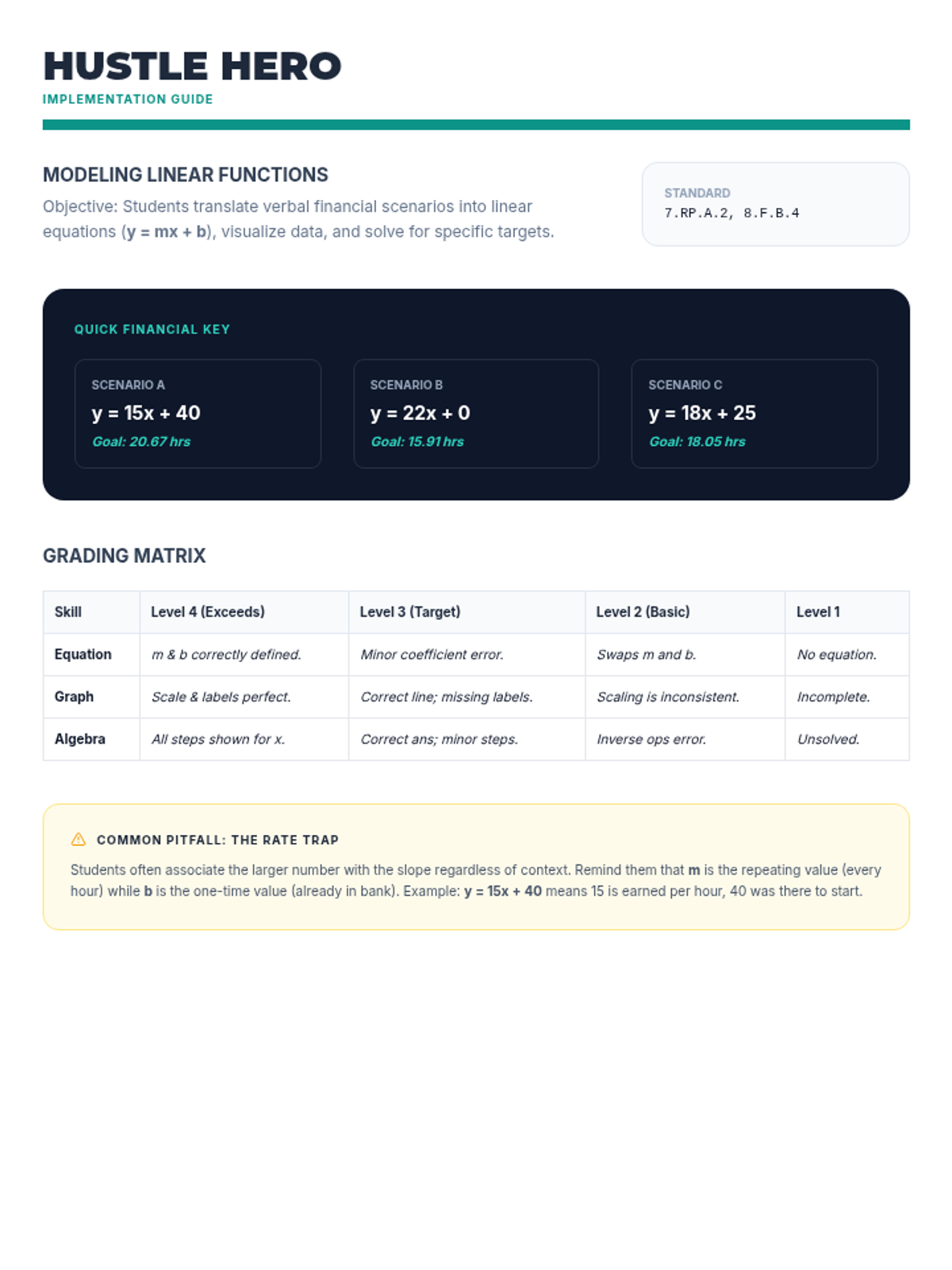
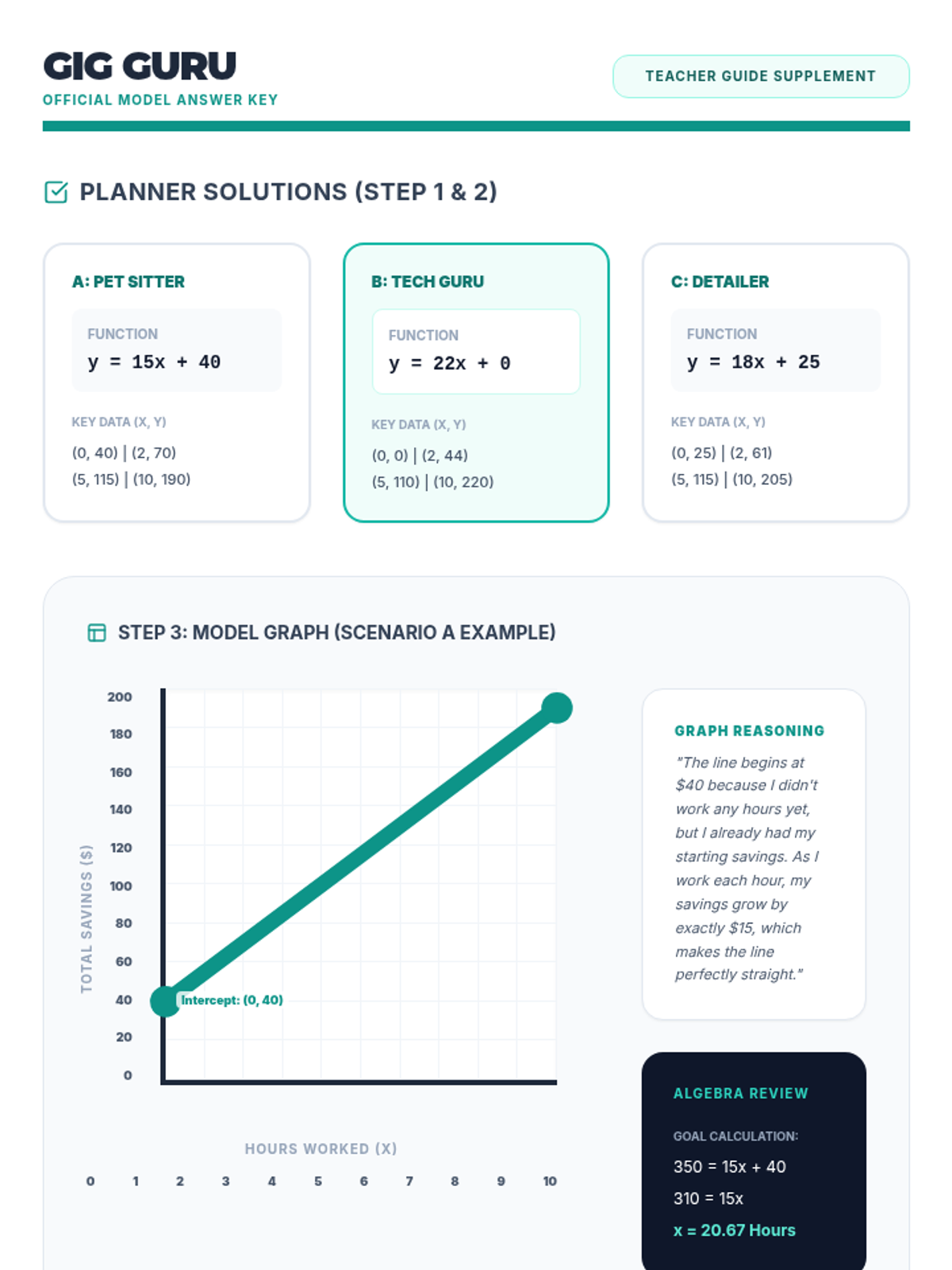
Students apply linear function concepts to model a real-world income and expense scenario. They will calculate rates of change, identify initial values, and visualize their budget through graphing.
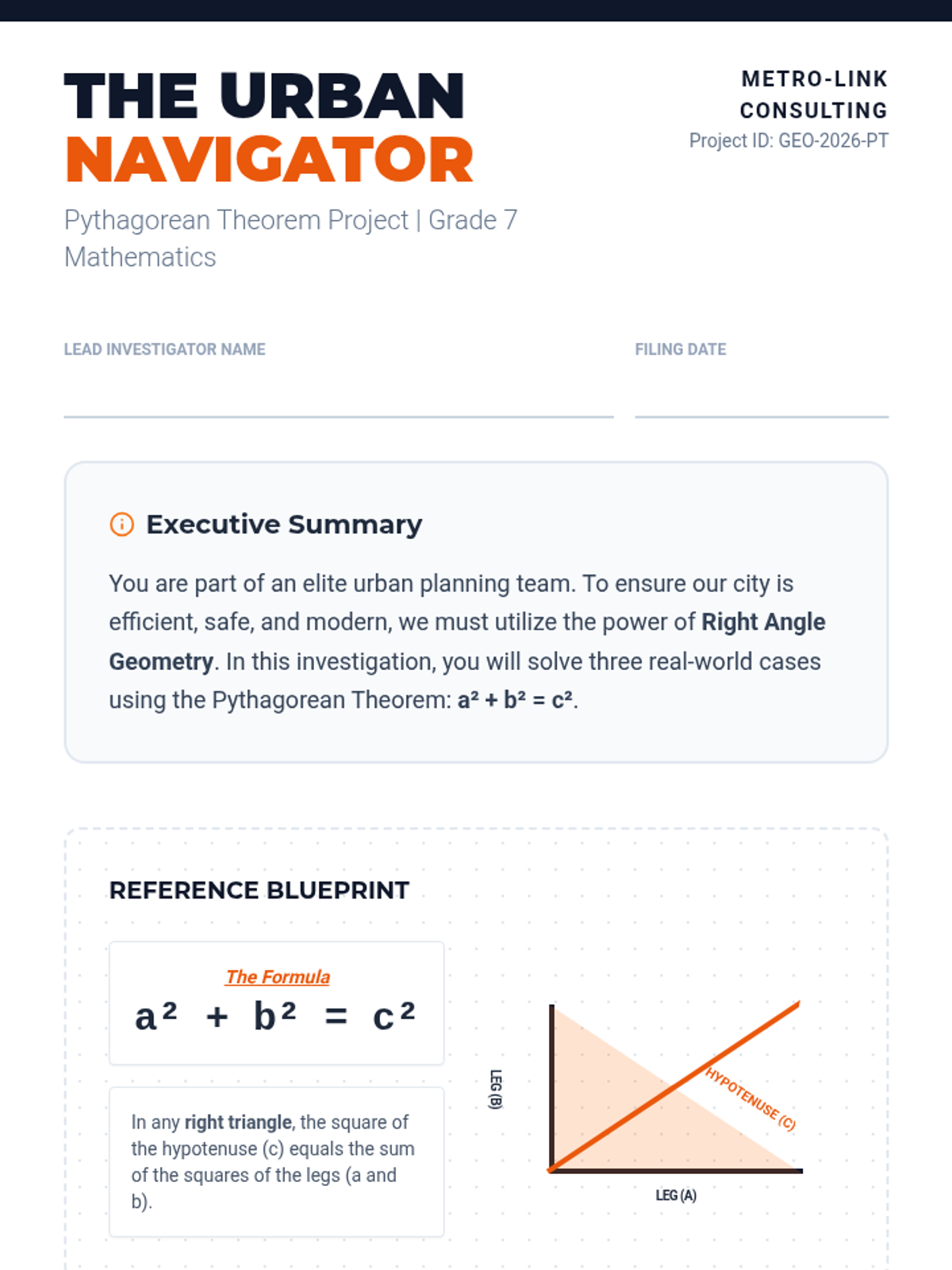
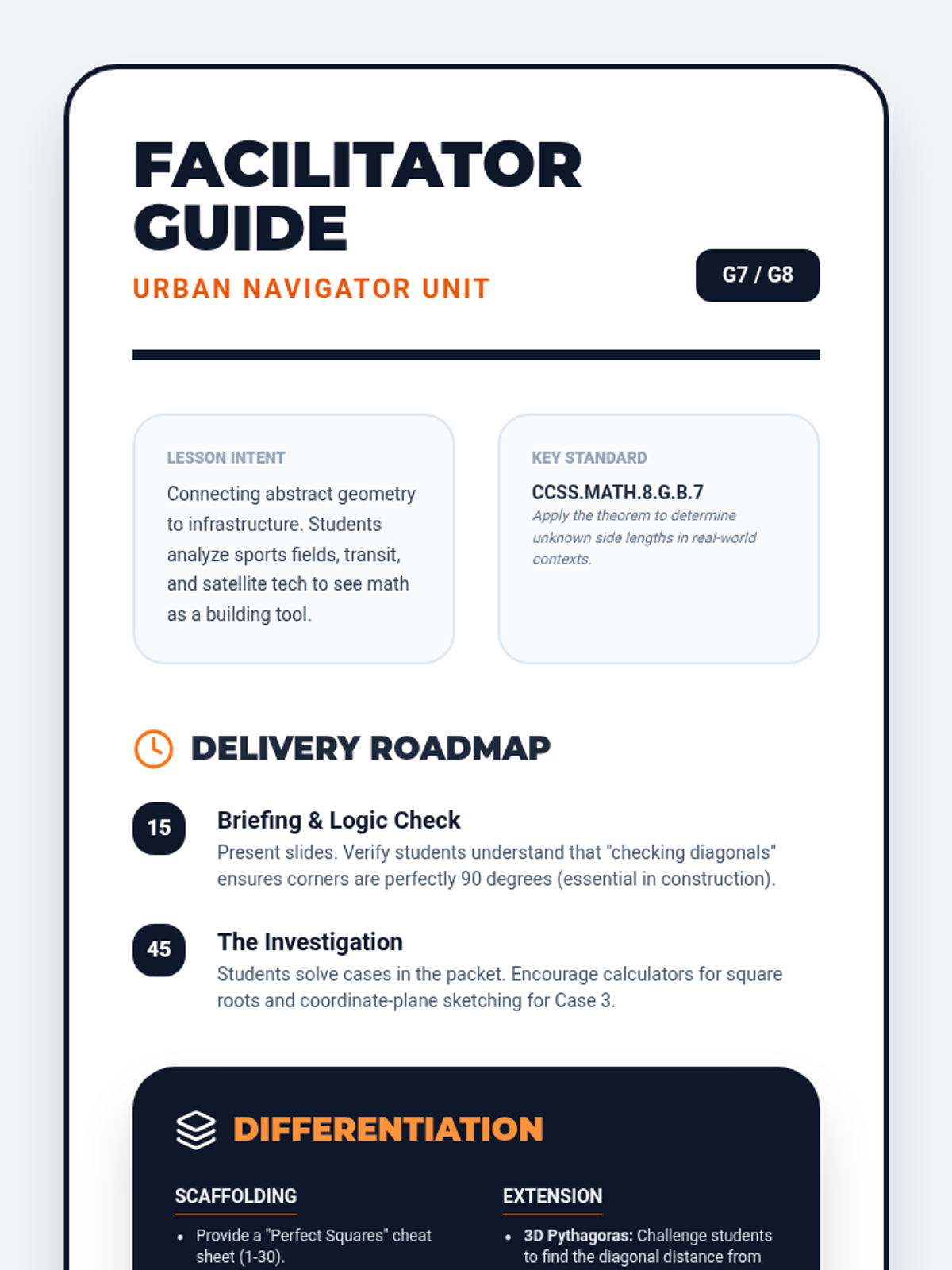
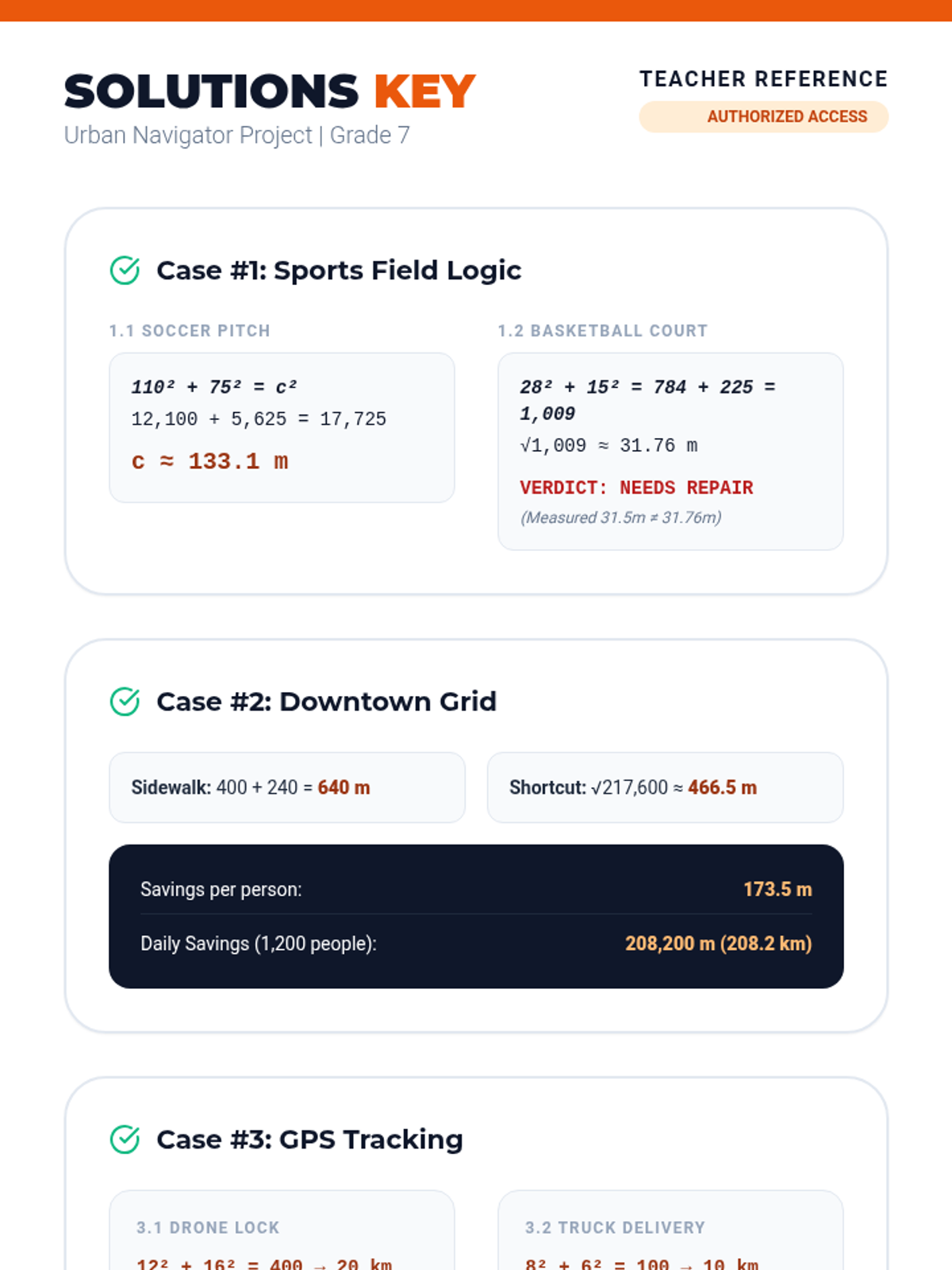
A real-world project-based learning unit where students apply the Pythagorean Theorem to urban planning, sports field design, and GPS navigation. Students act as urban developers and navigators to solve practical distance problems.