A lesson focusing on incomplete metamorphosis through the study of grasshoppers, using observation skills to differentiate between nymphs and adults. Students will compare life stages and imagine a world where humans undergo similar transformations.
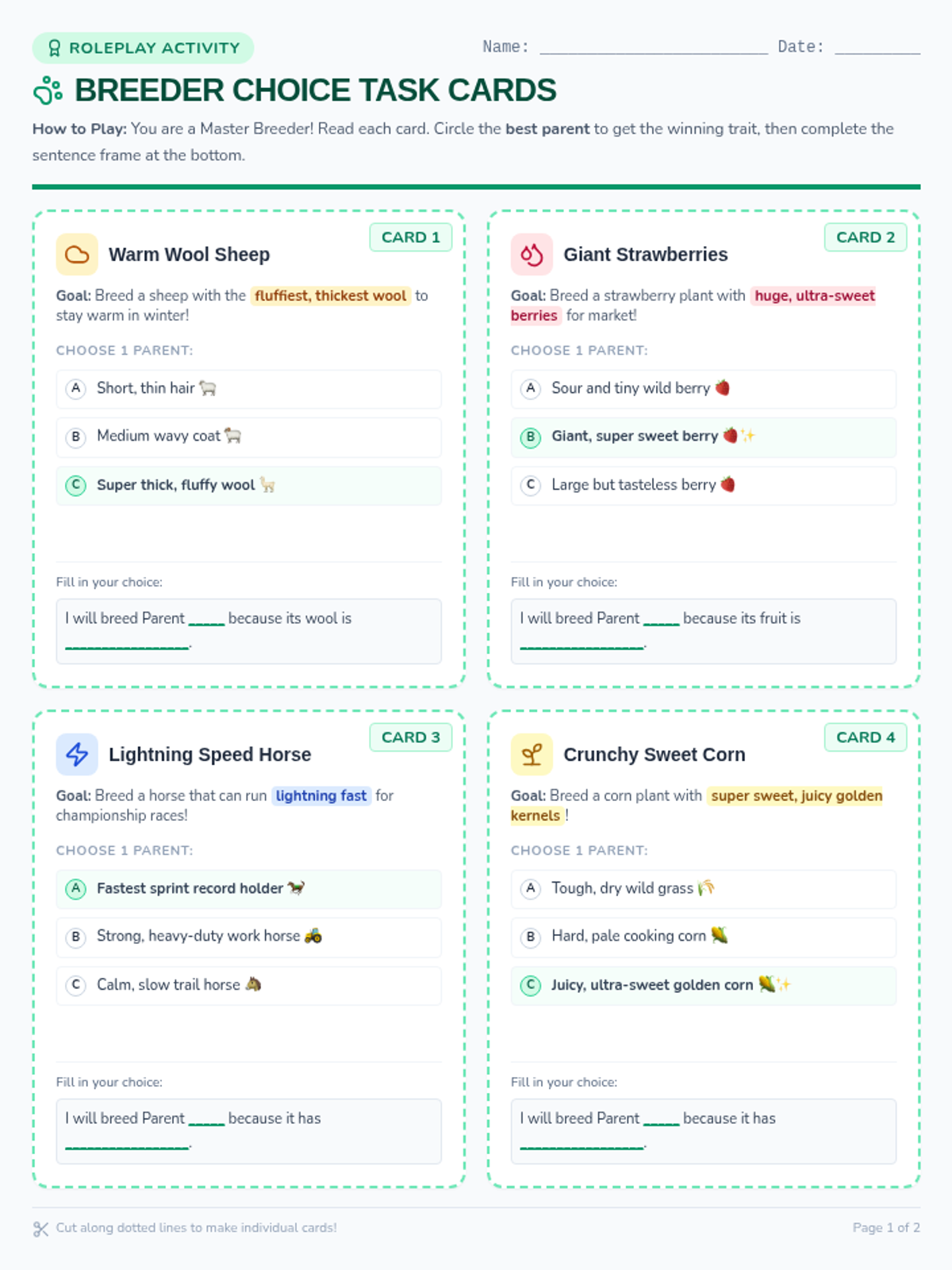
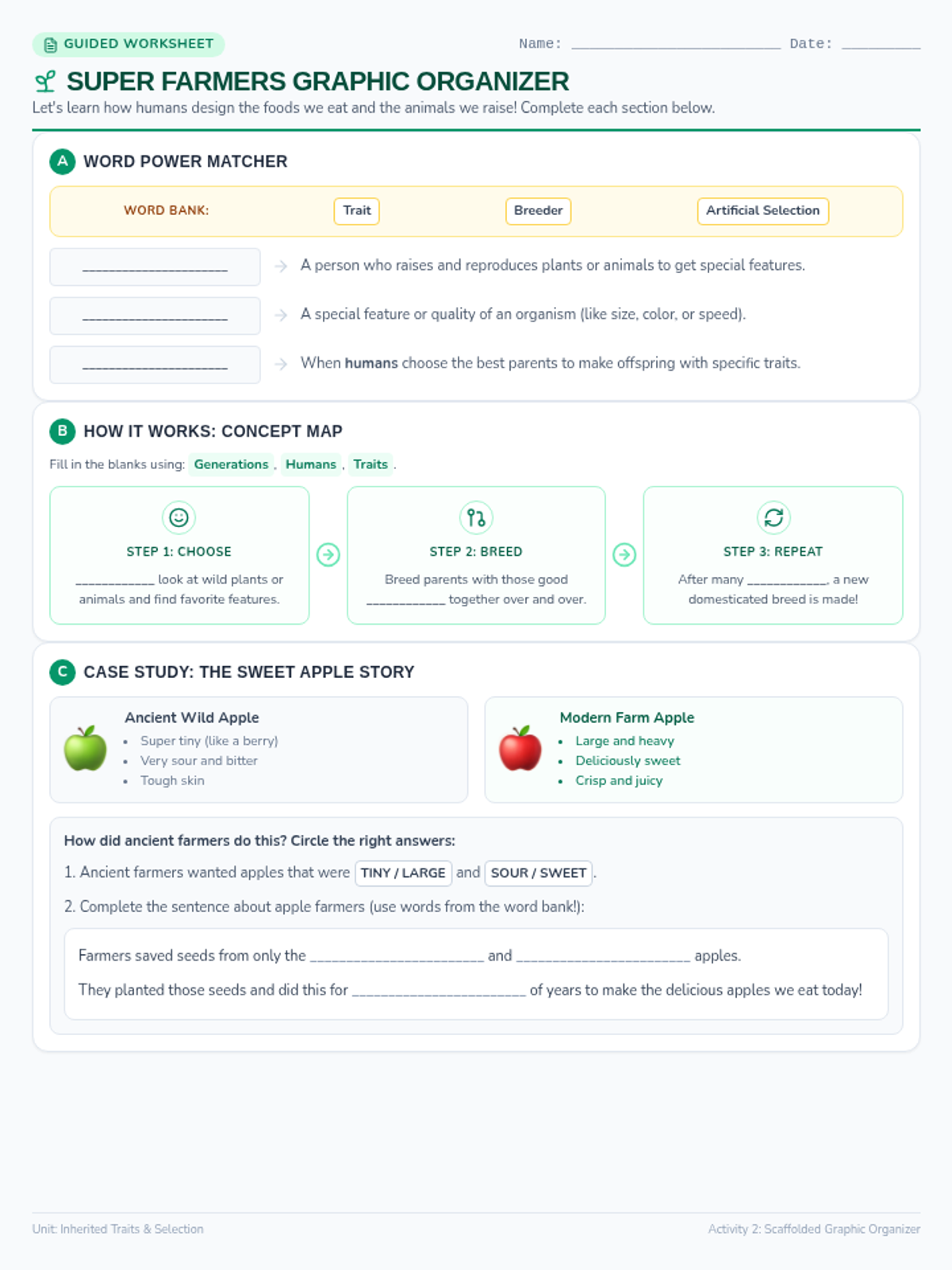
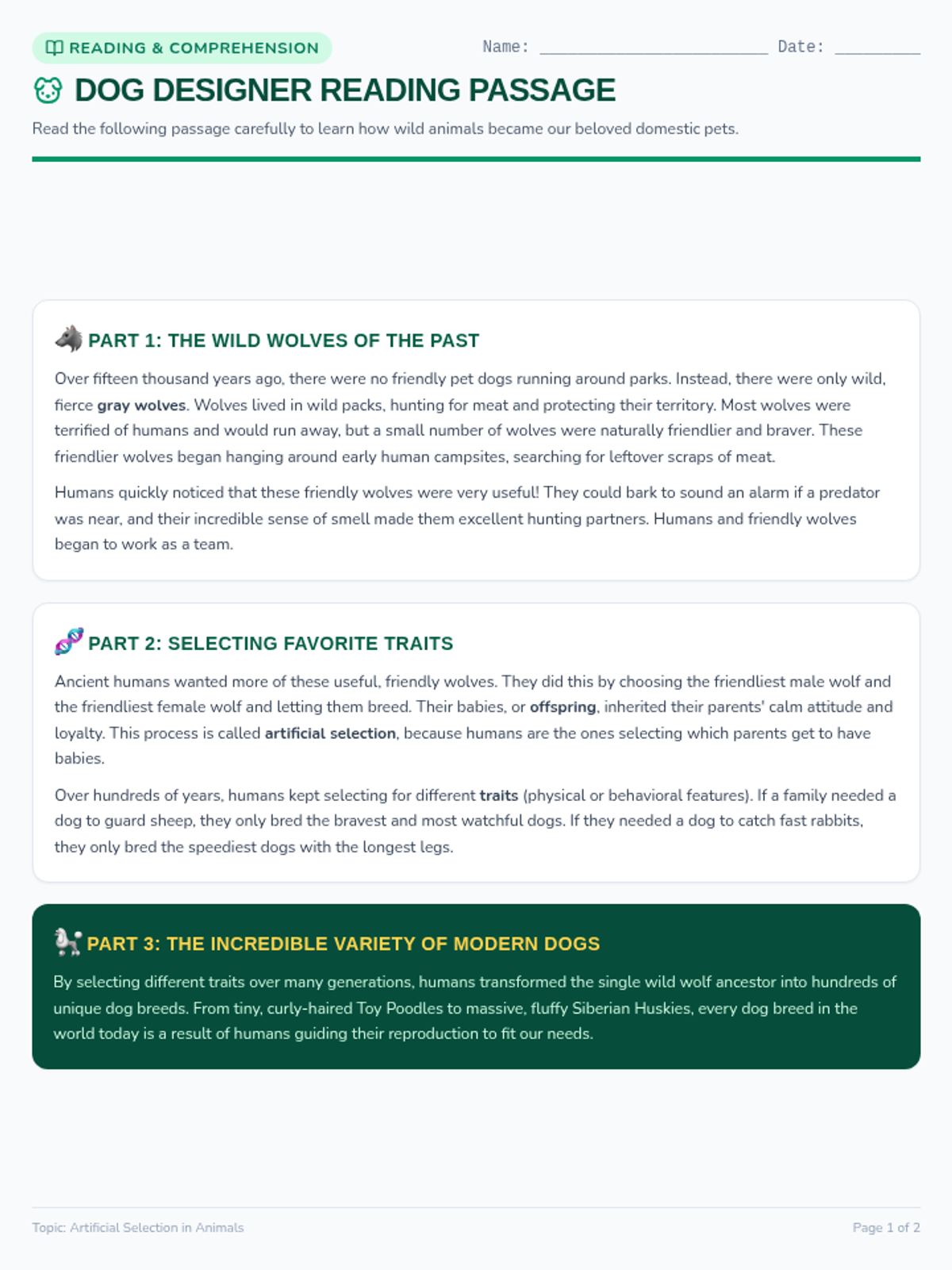
A hands-on, highly visual lesson where students explore artificial selection by roleplaying as breeders and farmers. Students analyze traits in dogs, crops, and livestock using scaffolded organizers, visual task cards, and matching tasks.
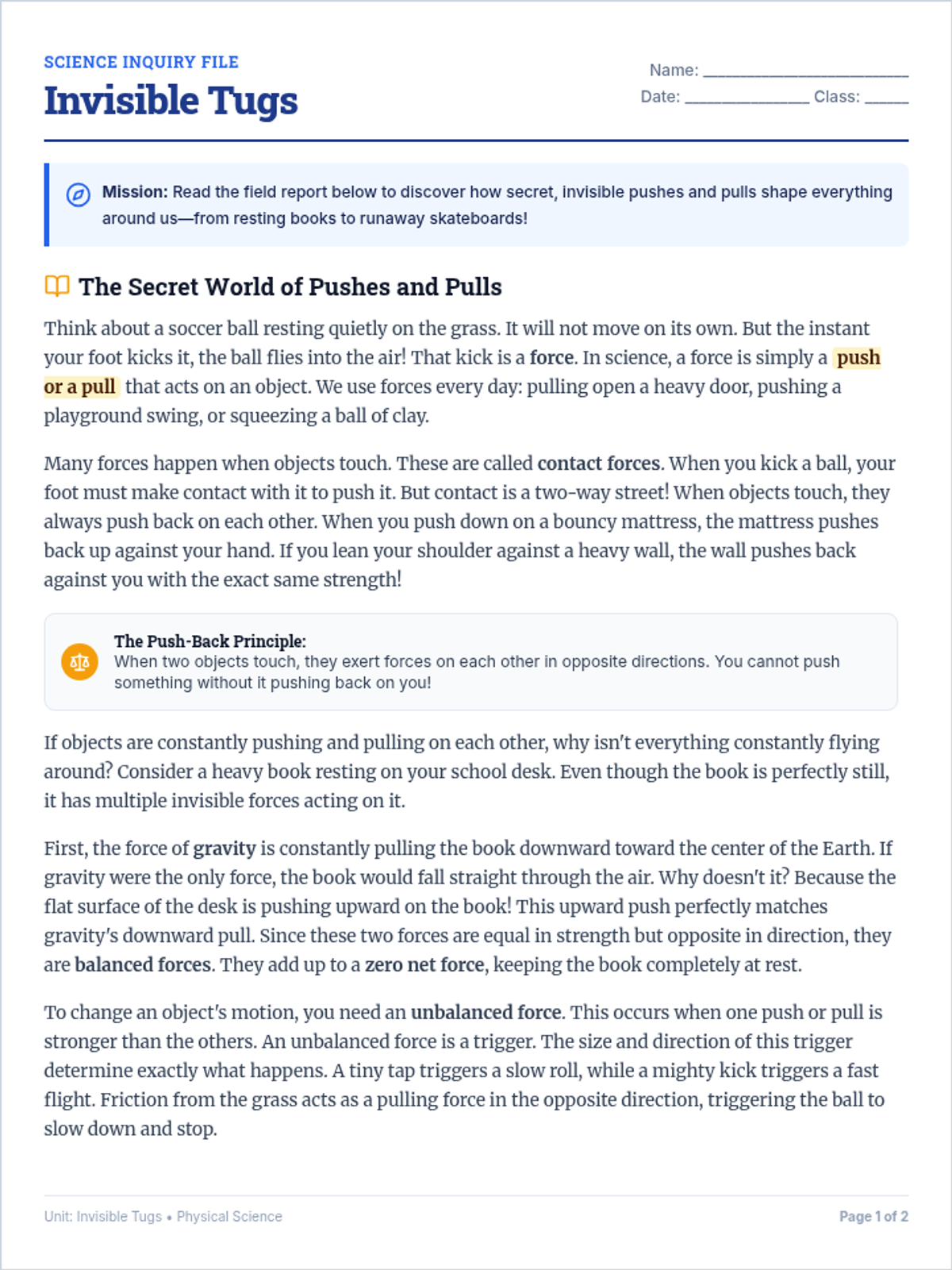
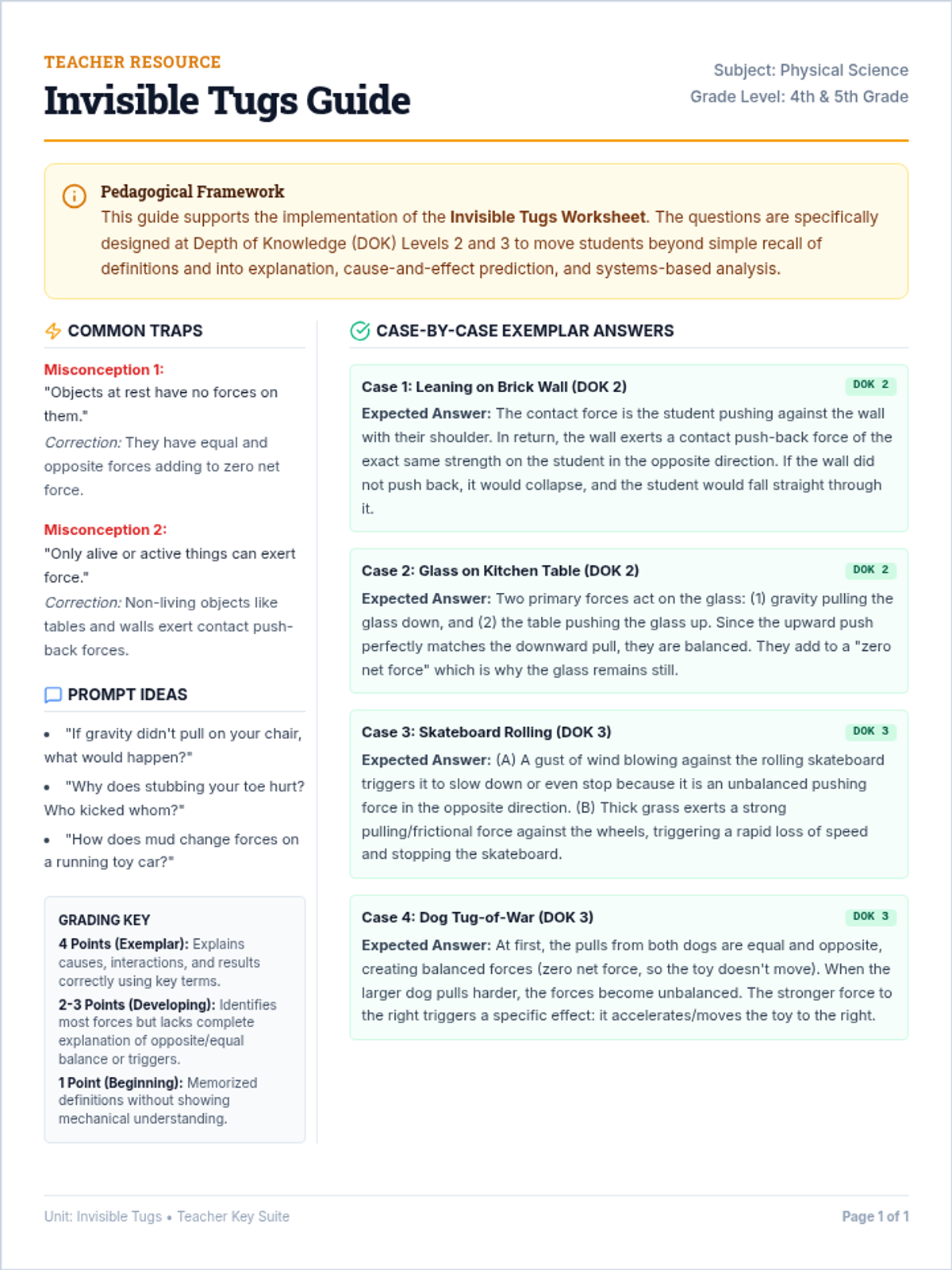
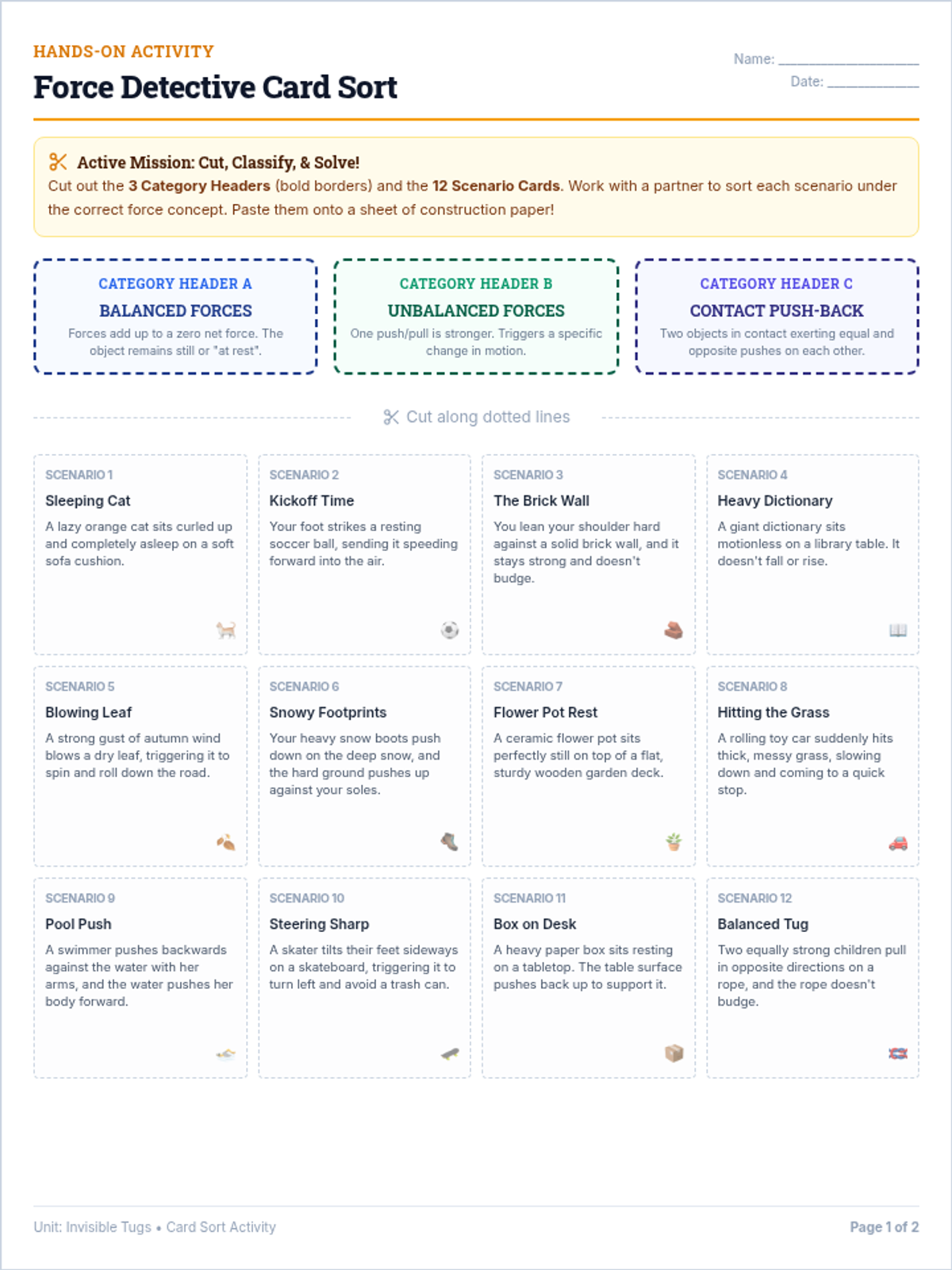
A guided inquiry lesson exploring pushes, pulls, contact forces, and balanced vs. unbalanced forces through everyday concrete examples and DOK 2-3 analysis questions.
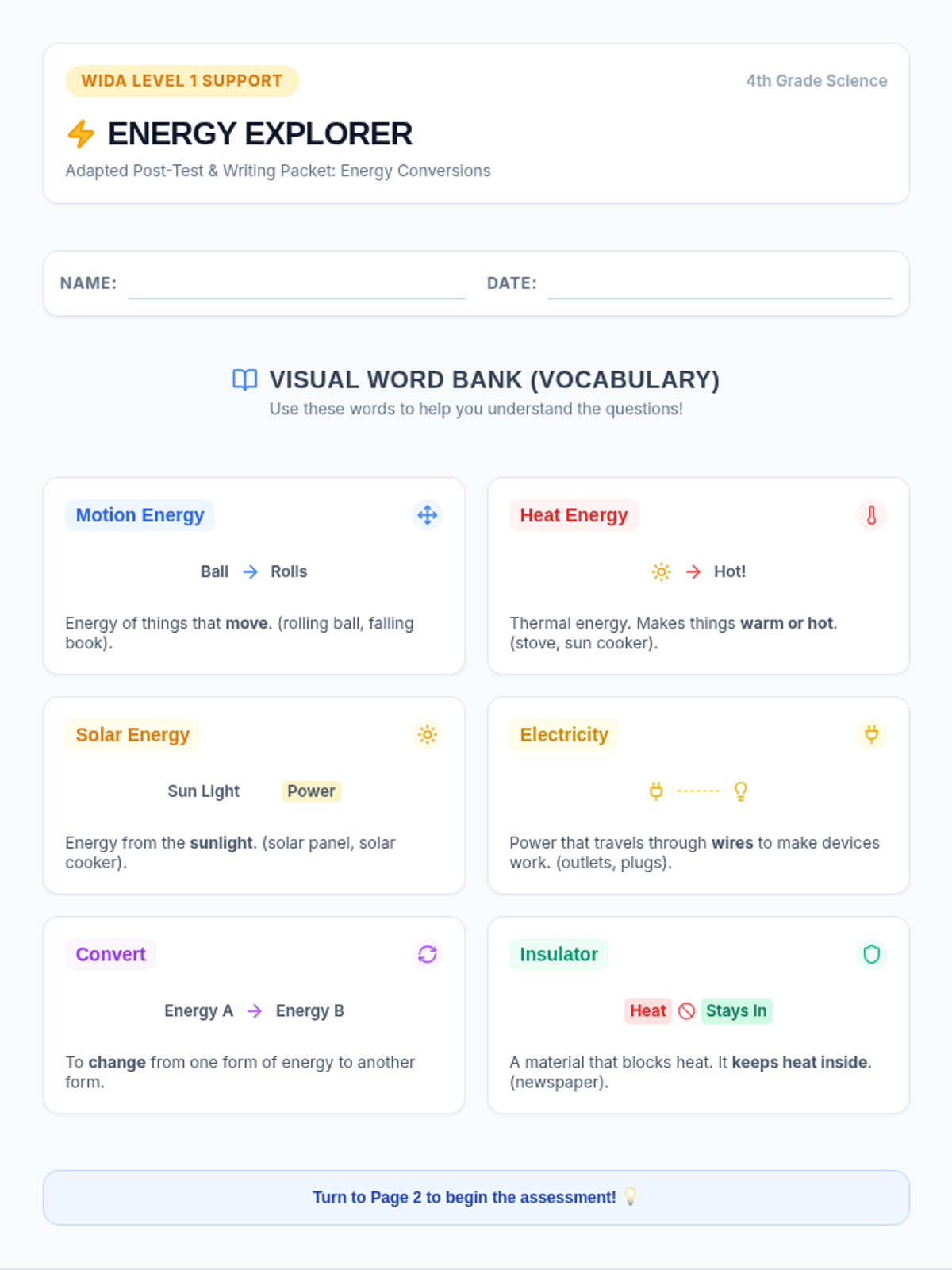
An adapted science lesson and assessment packet designed specifically for 4th-grade WIDA Level 1 (Entering) English Language Learners focusing on energy conversions. Includes visual vocab support, simplified questions, and structured sentence frame writing aids.
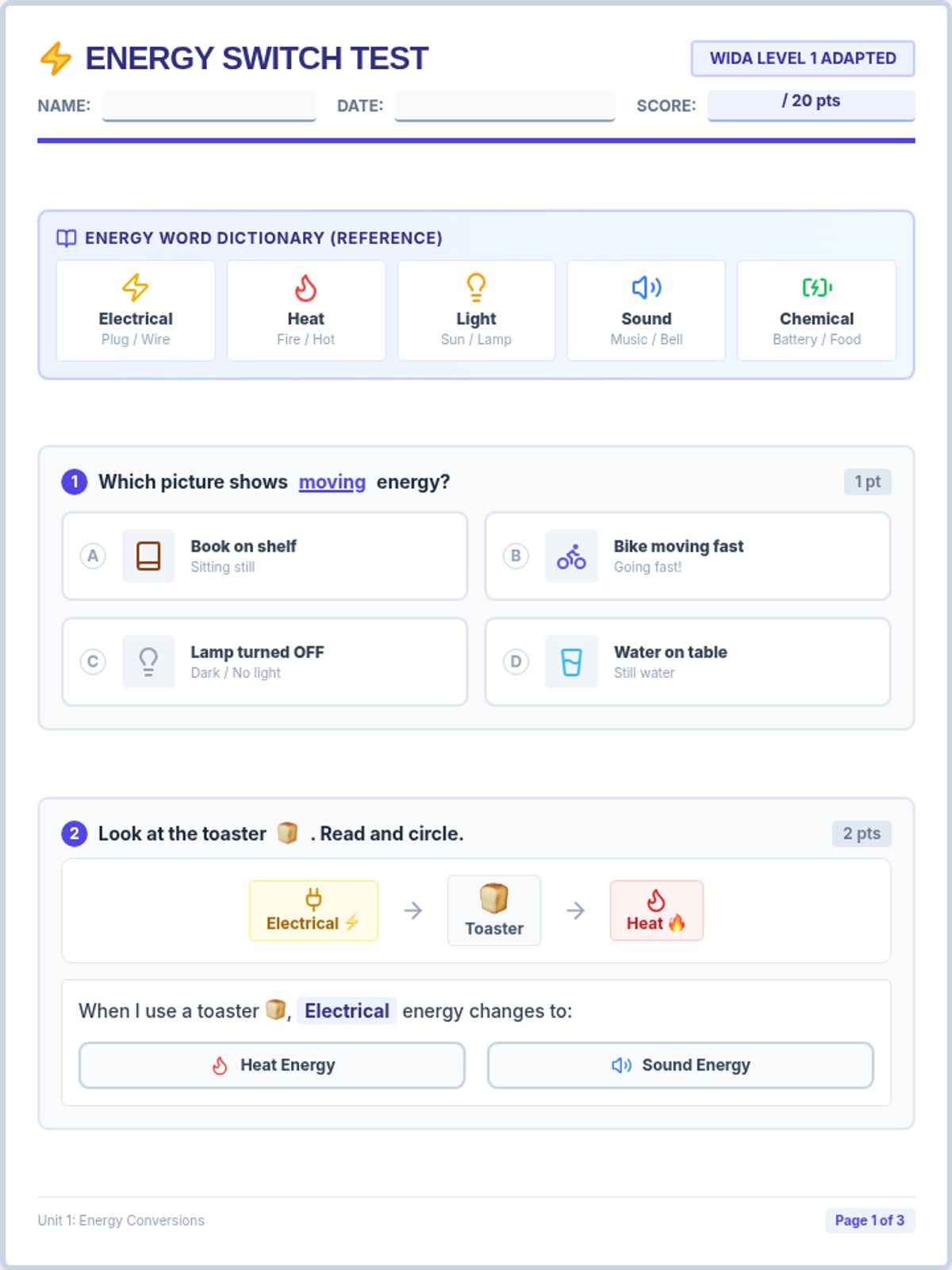
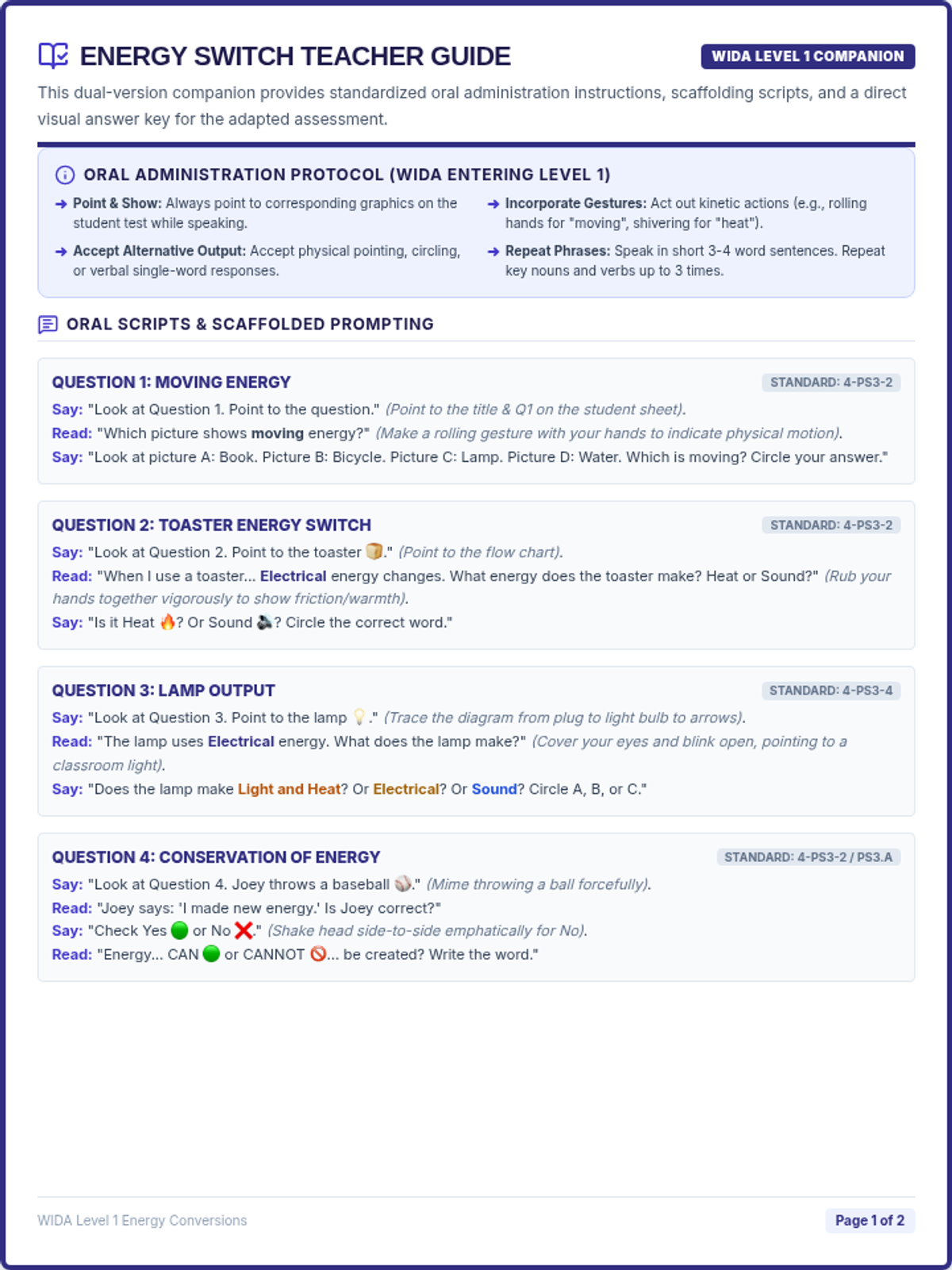
An adapted 4th-grade science assessment unit on energy conversions designed specifically for WIDA Level 1 (Entering) English Language Learners. It includes a highly visual student test and a companion teacher guide with oral scripts and scaffolded support.
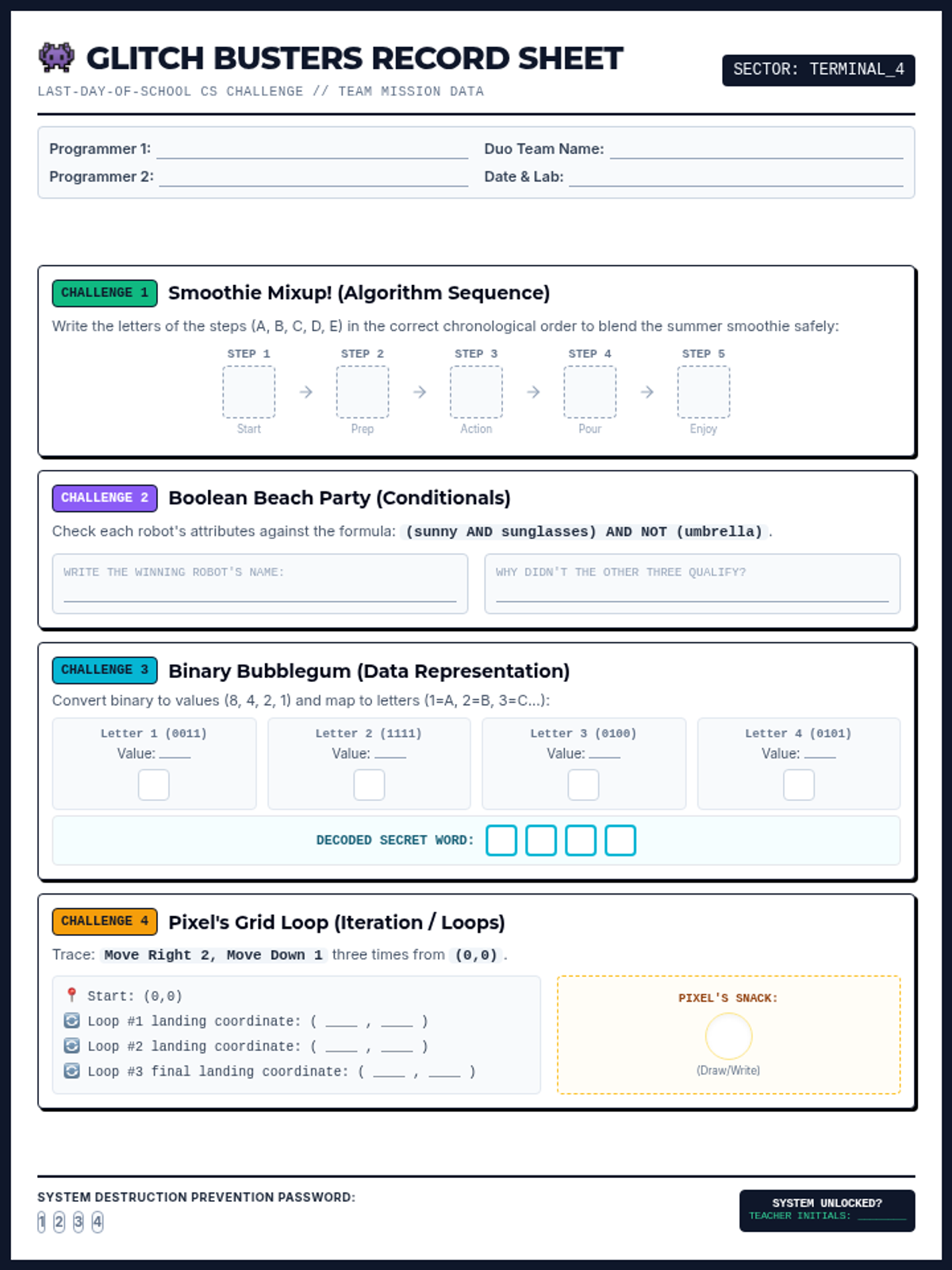
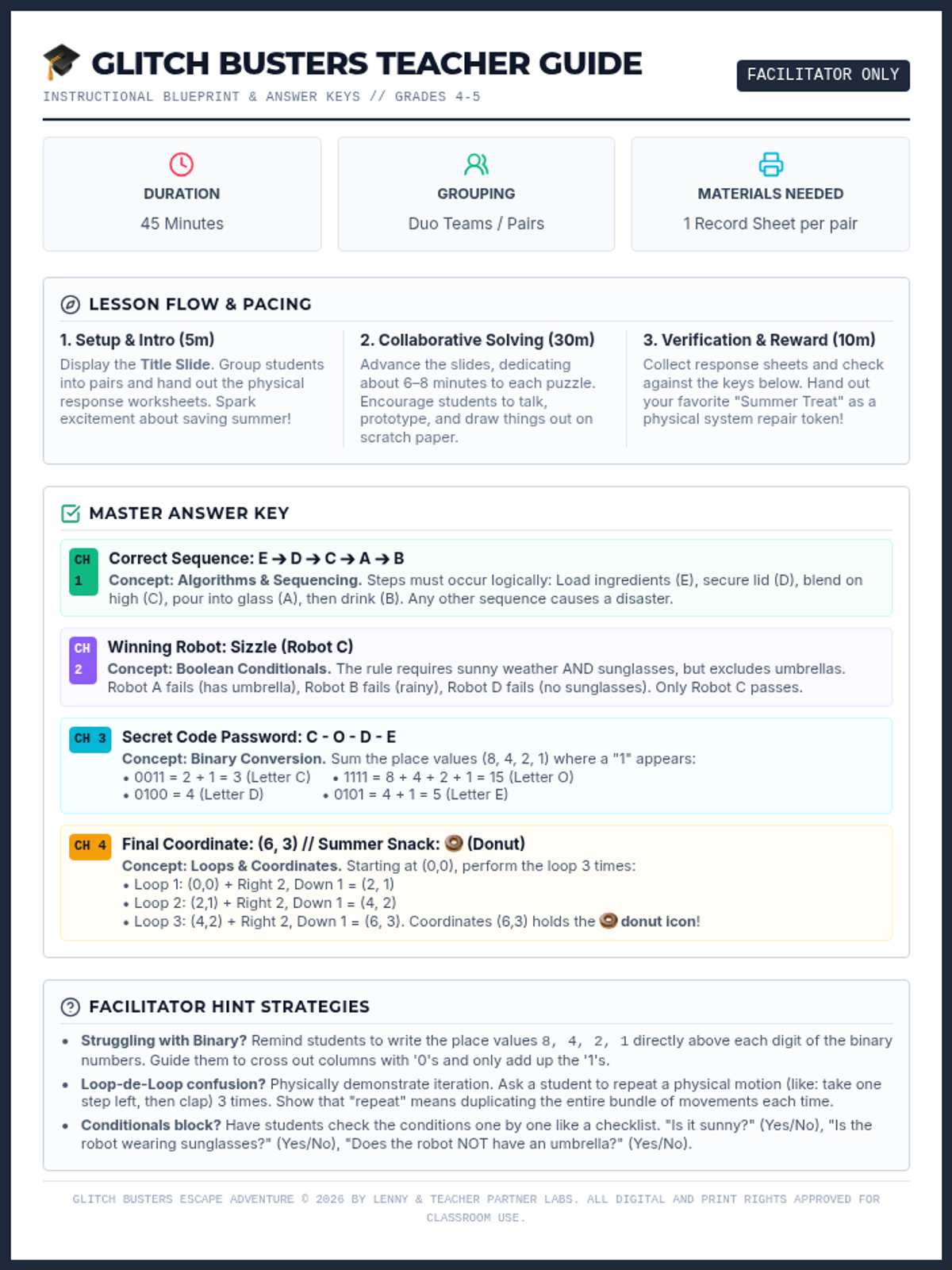
A high-energy, collaborative computer science escape challenge designed for the last day of school. Students work in pairs to solve funny, CS-themed logic and debugging puzzles to save the computer lab from a playful system glitch.
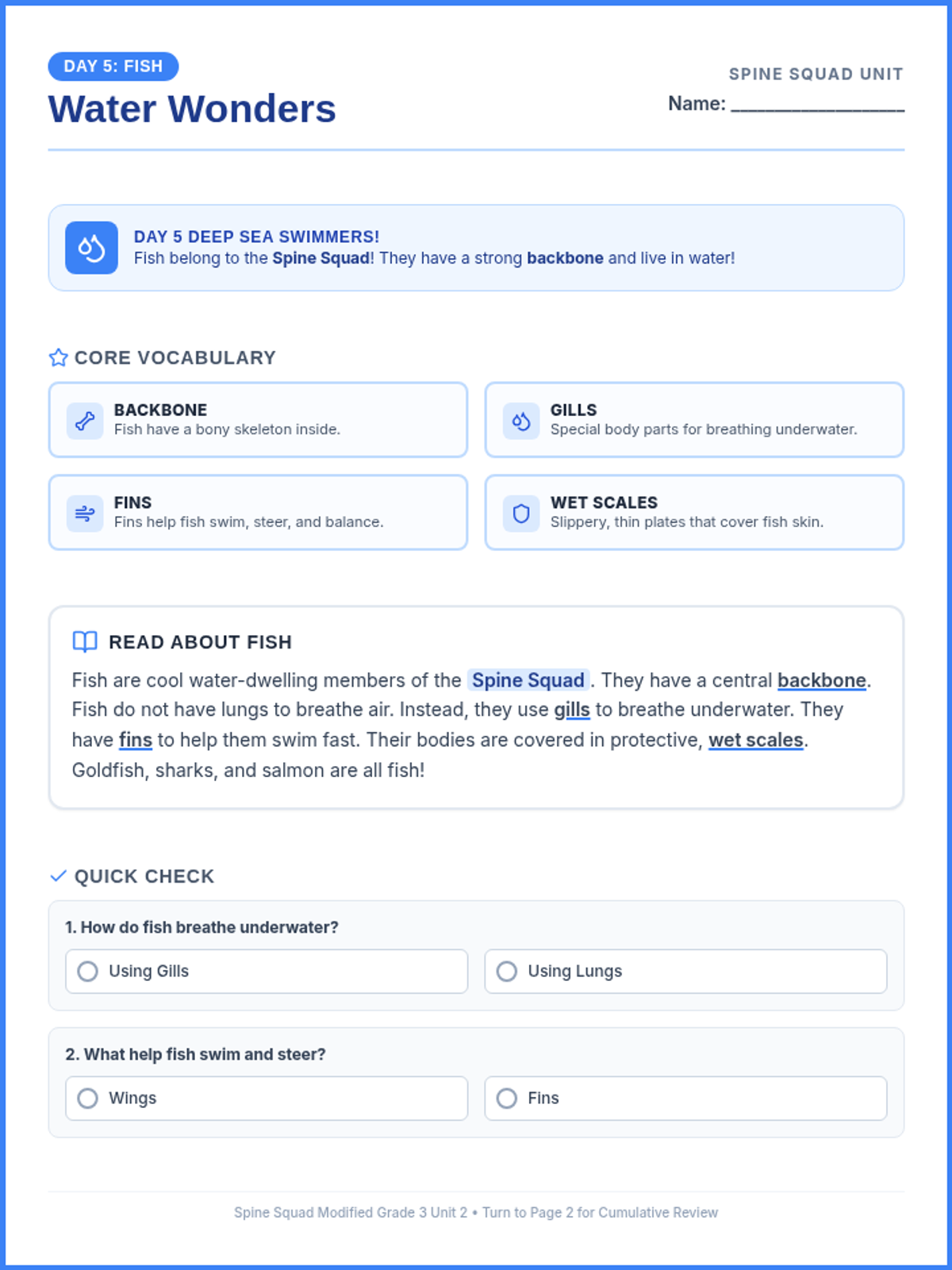
In this fifth and final lesson of the Spine Squad unit, students explore fish, focusing on gills, fins, scales, and underwater survival, with a final cumulative review of the five vertebrate groups.
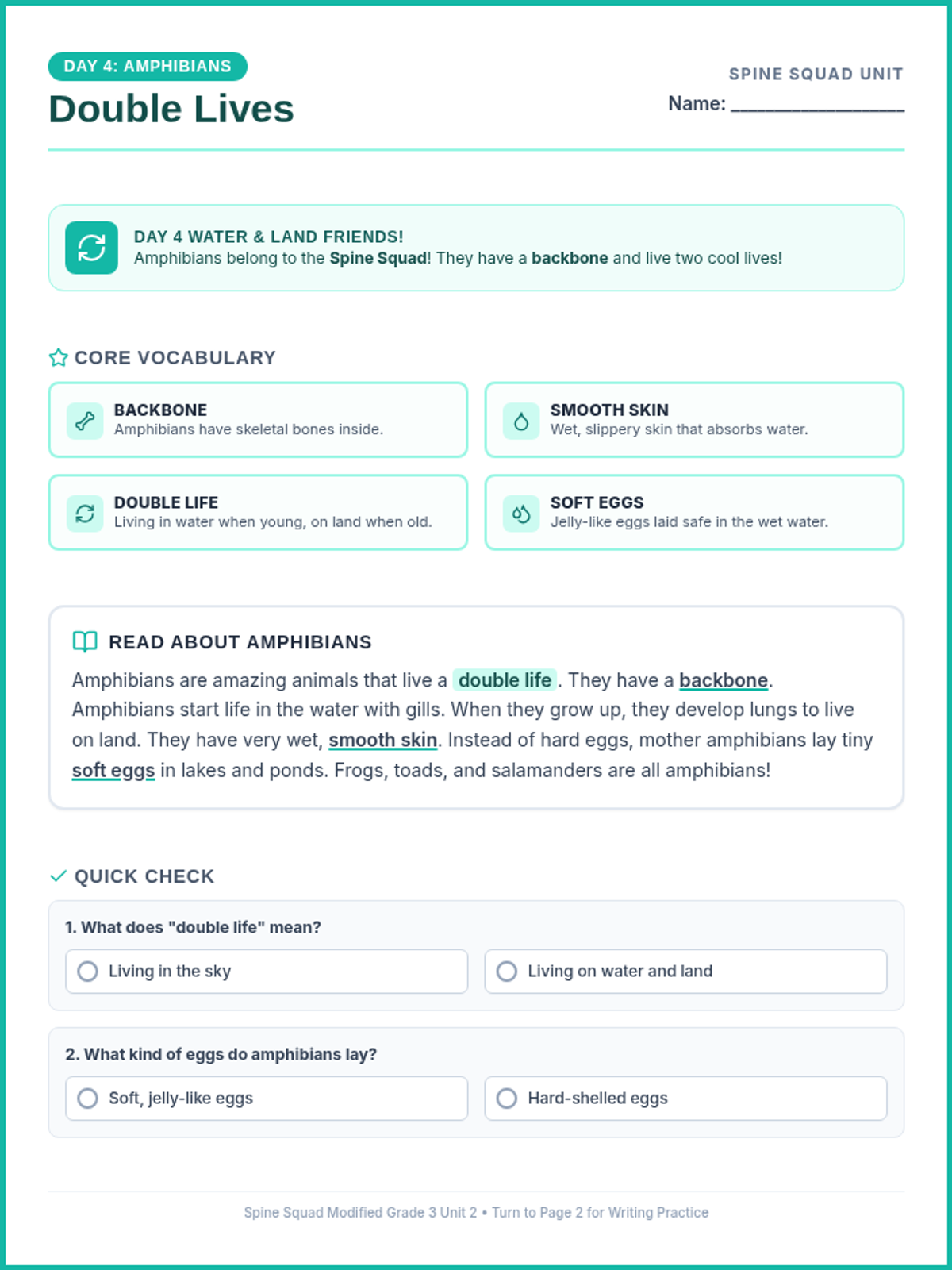
In this fourth lesson of the Spine Squad unit, students study amphibians, understanding how they live on water and land, lay soft eggs, and have smooth, wet skin, with scaffolded reading and tracing.
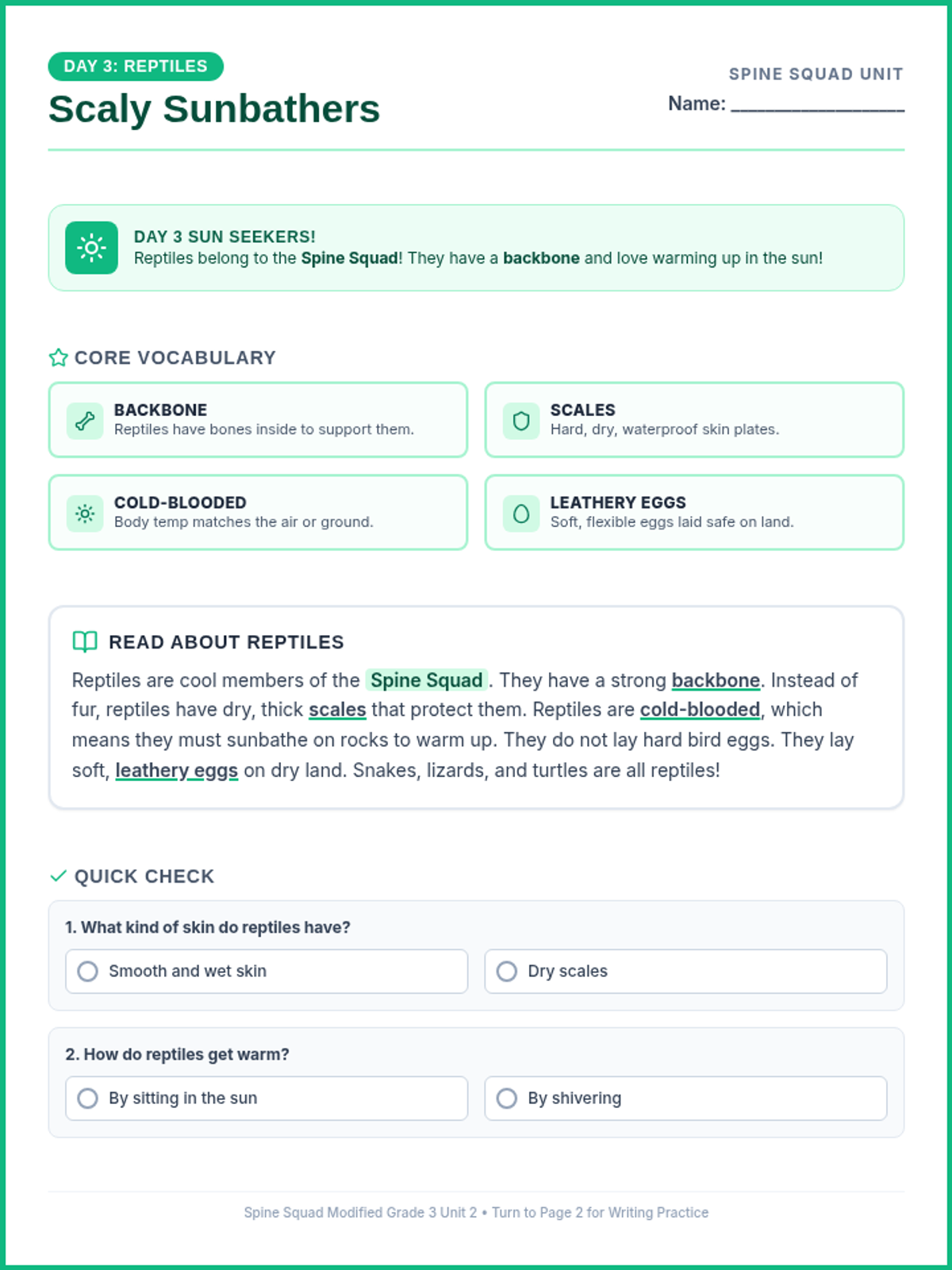
In this third lesson of the Spine Squad unit, students identify reptiles, exploring characteristics such as scales, cold-blooded regulation, and laying leathery eggs on land, supported by guided tracing.
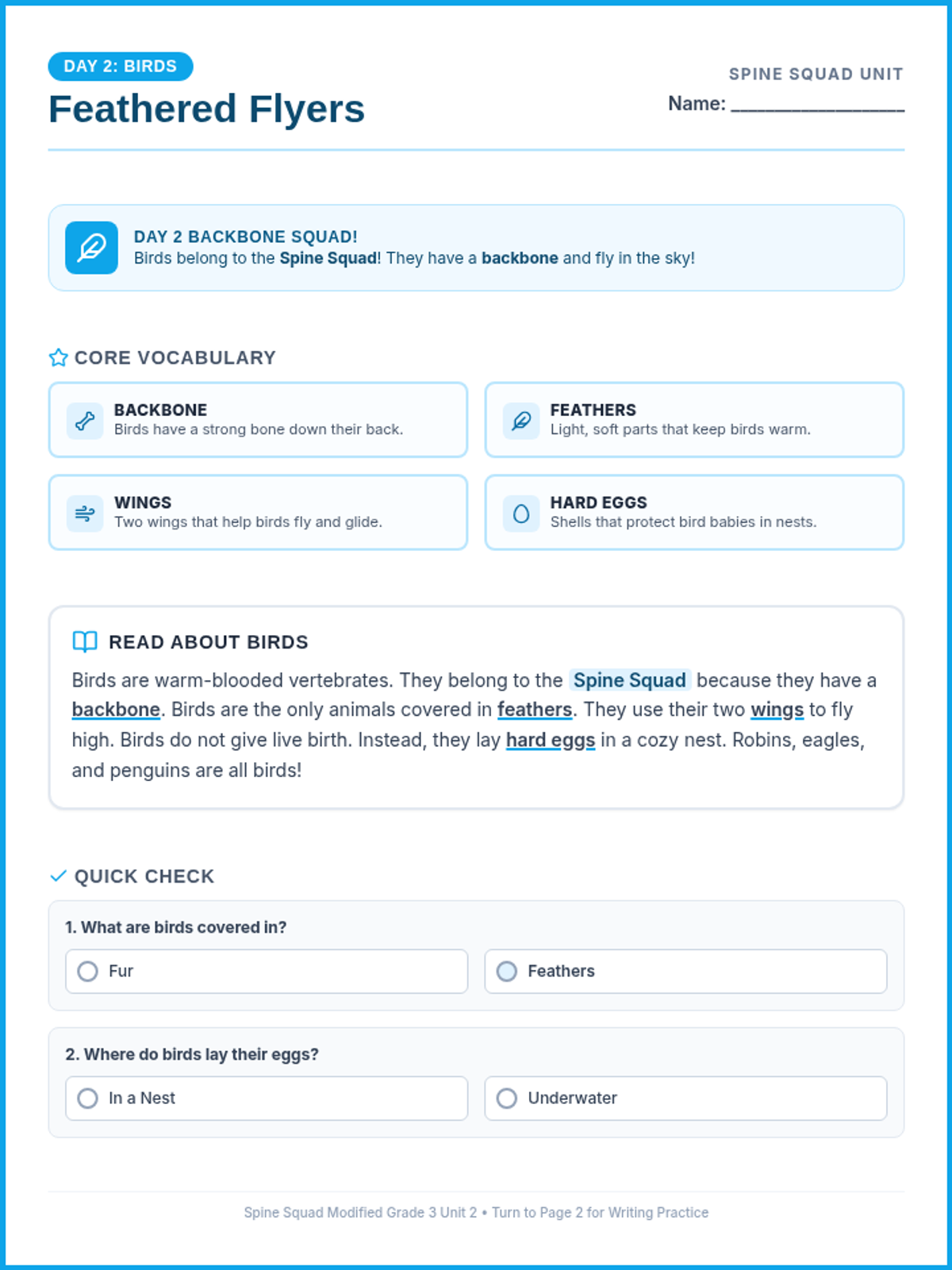
In this second lesson of the Spine Squad unit, students examine the key characteristics of birds, including feathers, wings, and laying hard-shelled eggs, using scaffolded comprehension prompts and tracing.
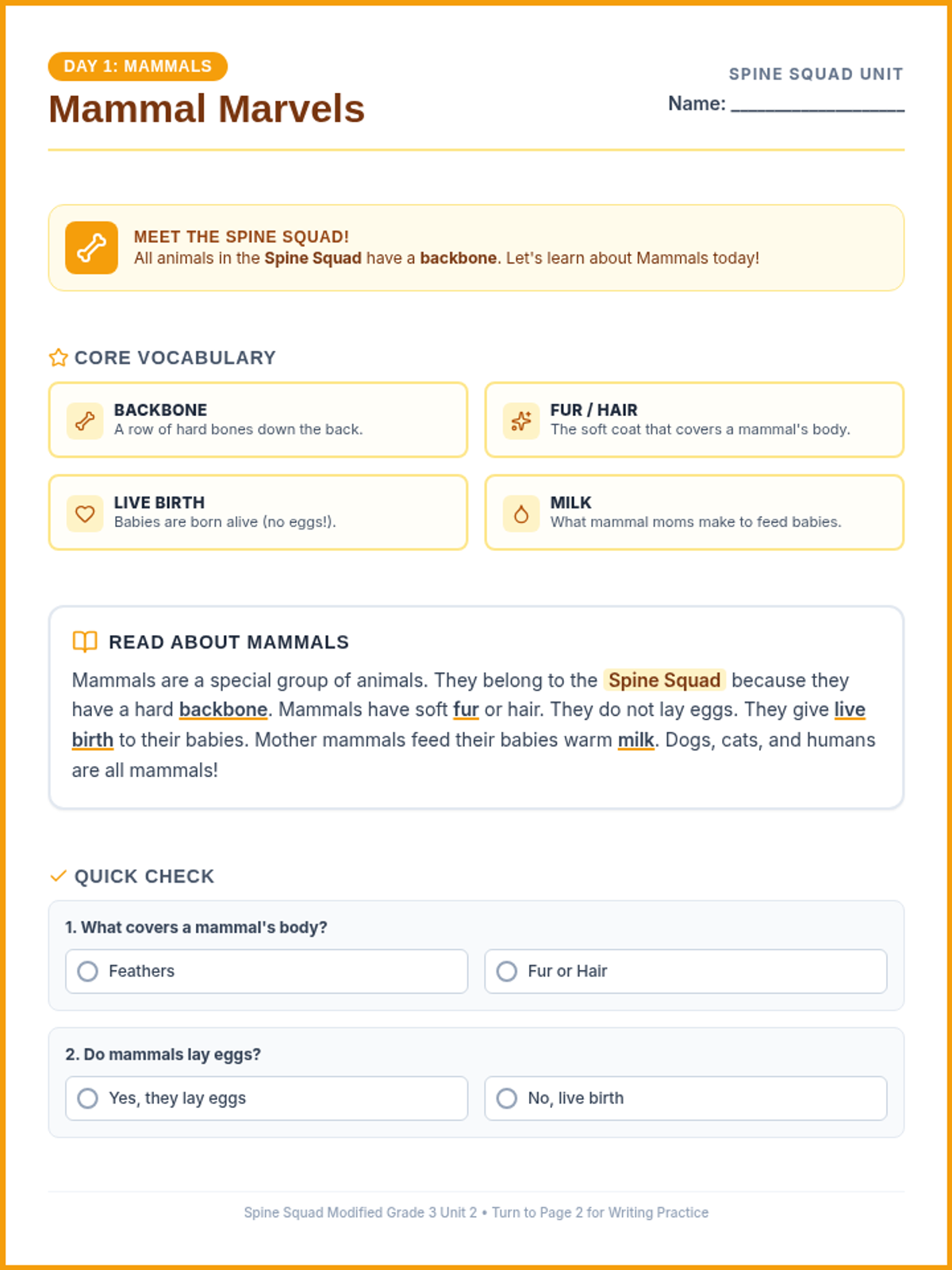
In this first lesson of the Spine Squad unit, students explore the unique traits of mammals, focusing on fur/hair, live birth, and milk production with heavy visual support and tracing activities.
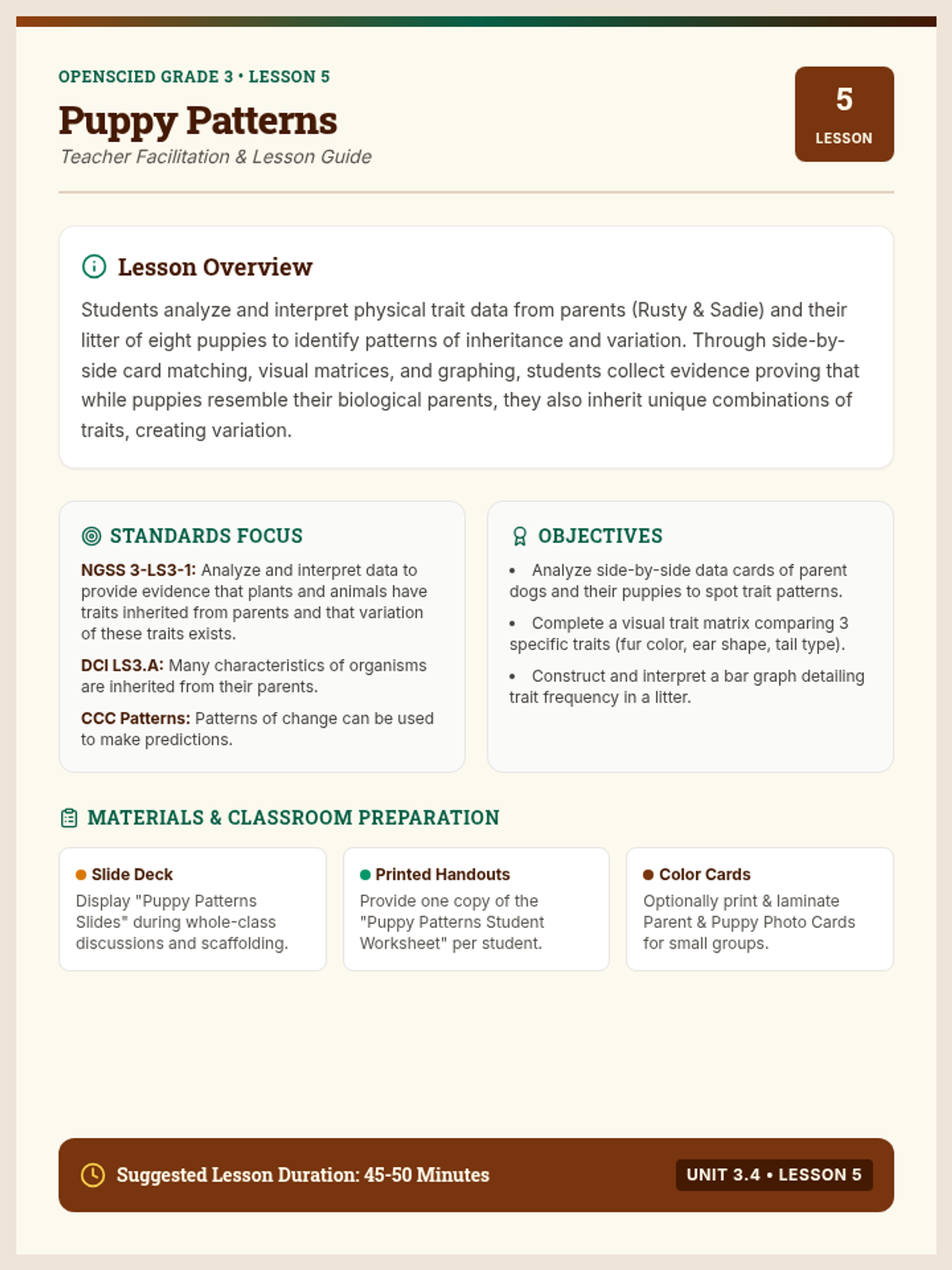
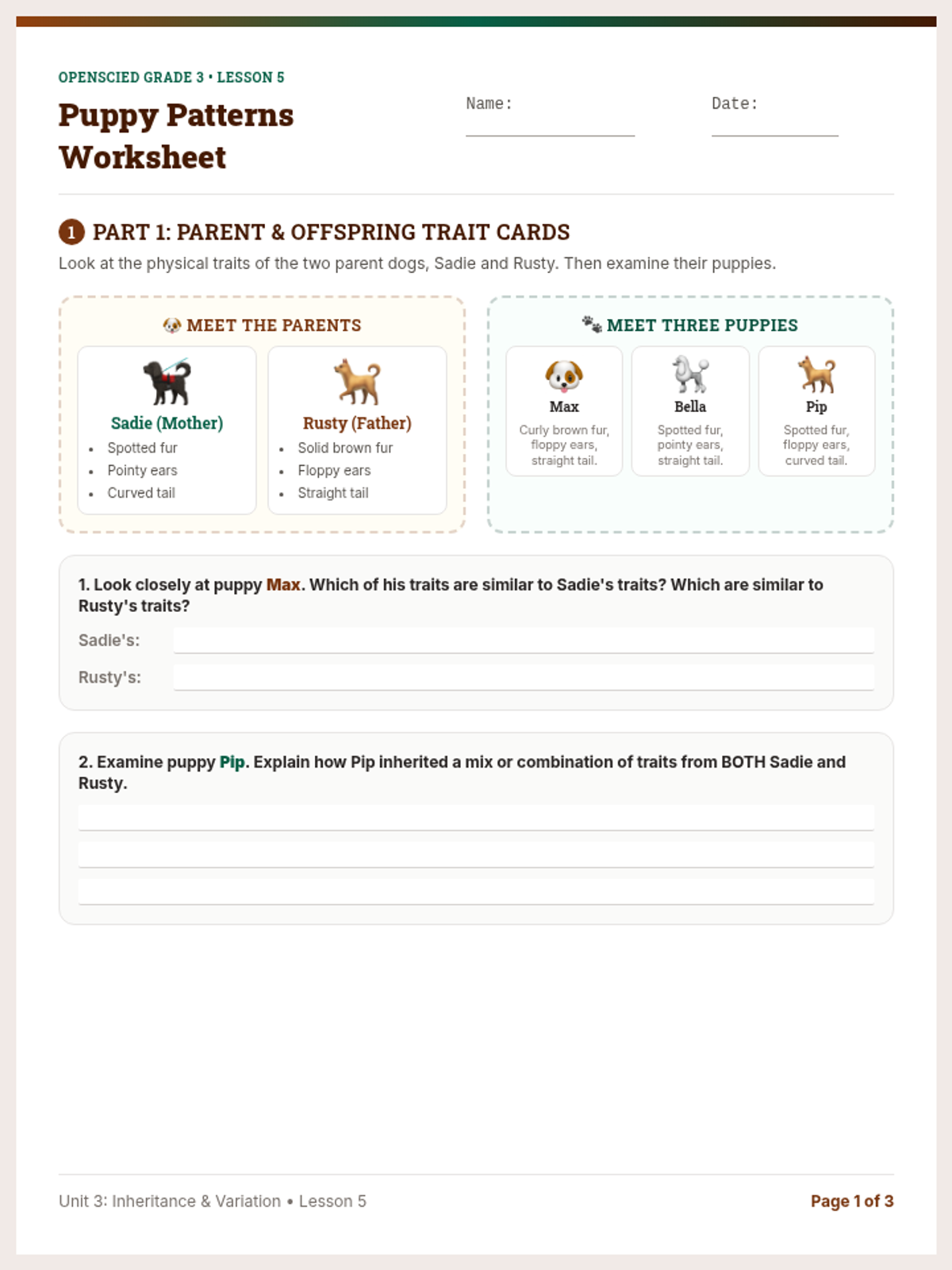
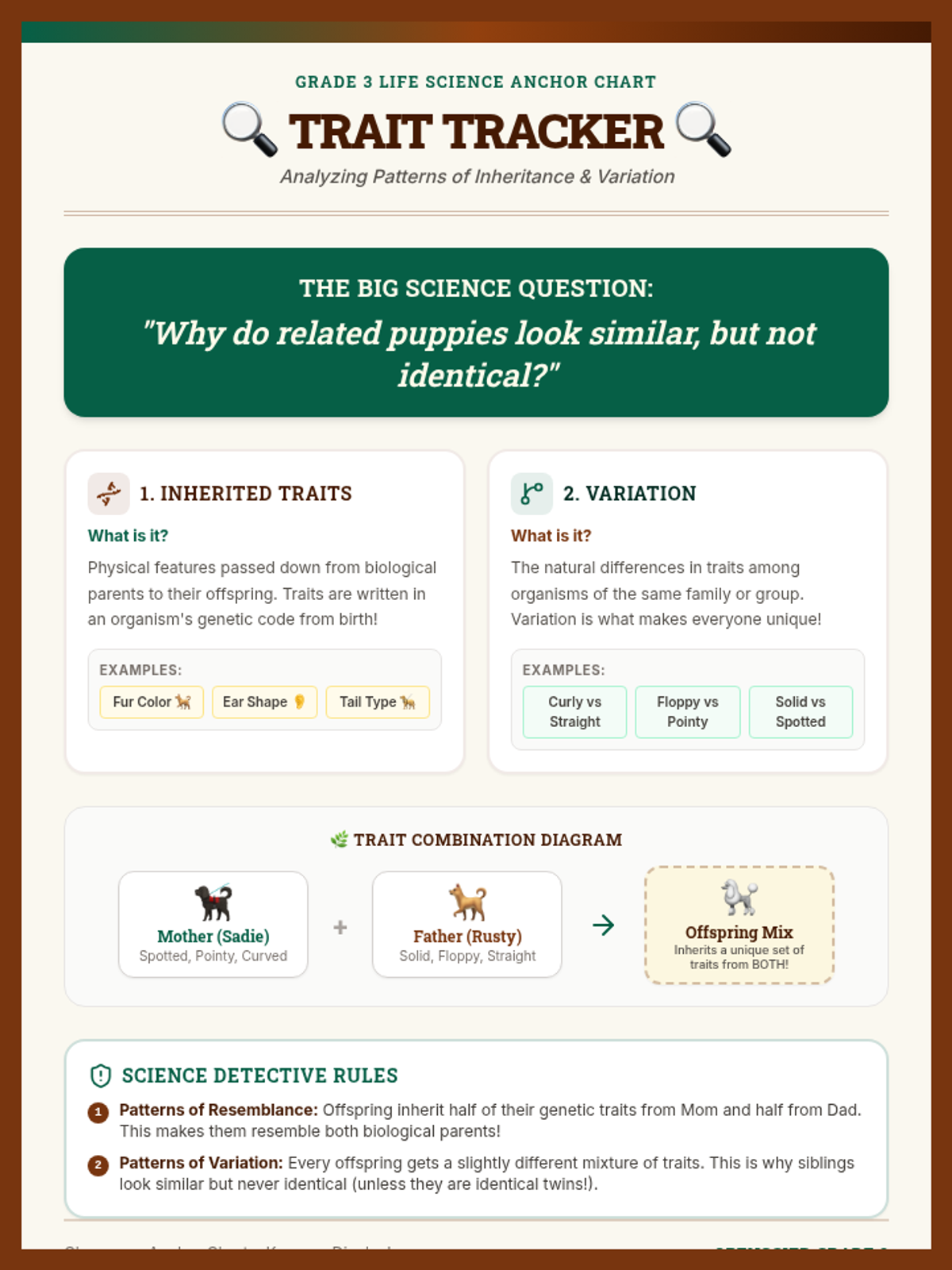
An OpenSciEd-aligned 3rd grade science lesson where students analyze and interpret data from parent dogs and their litters to discover patterns of inheritance and variation in physical traits.
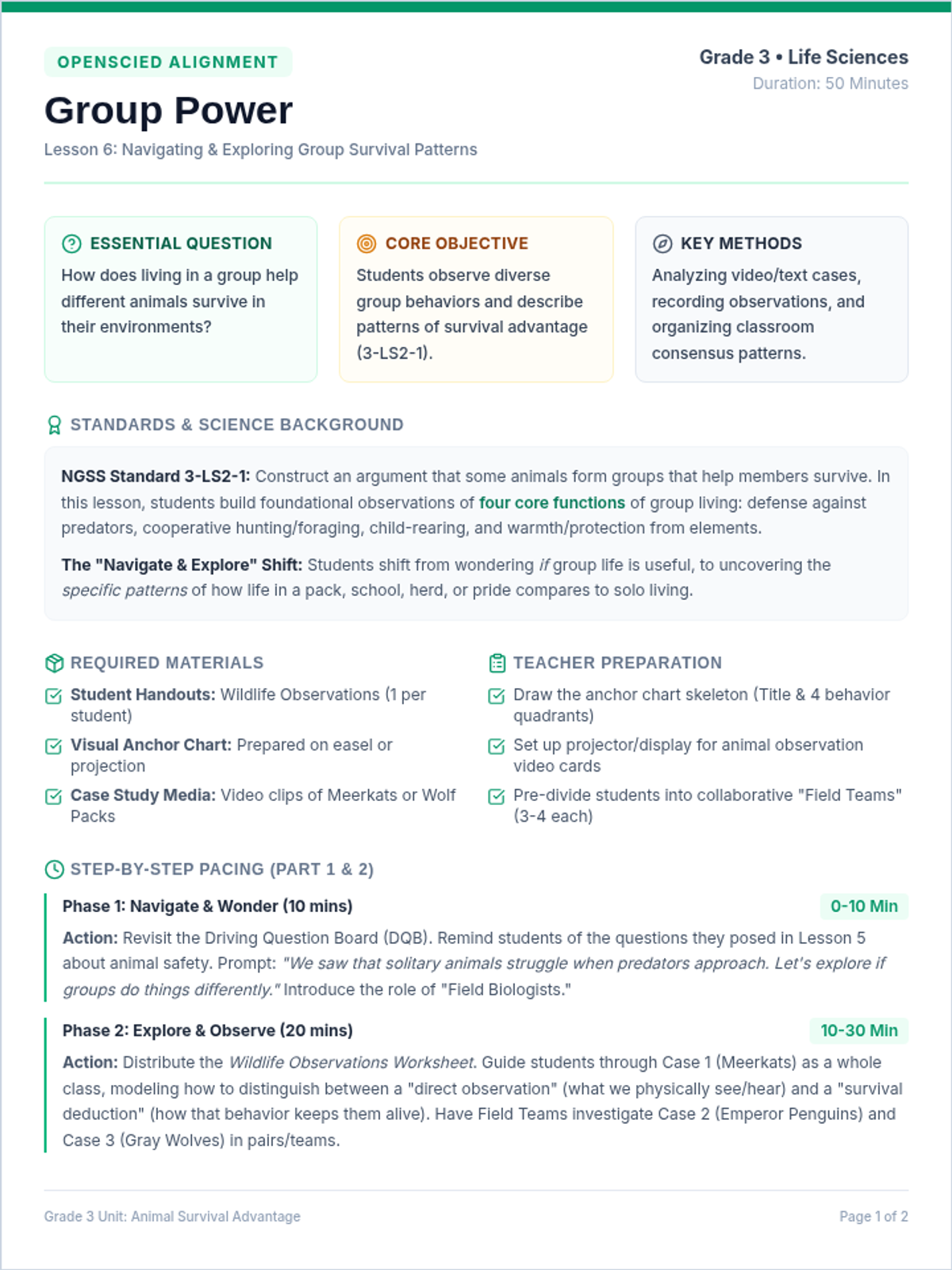
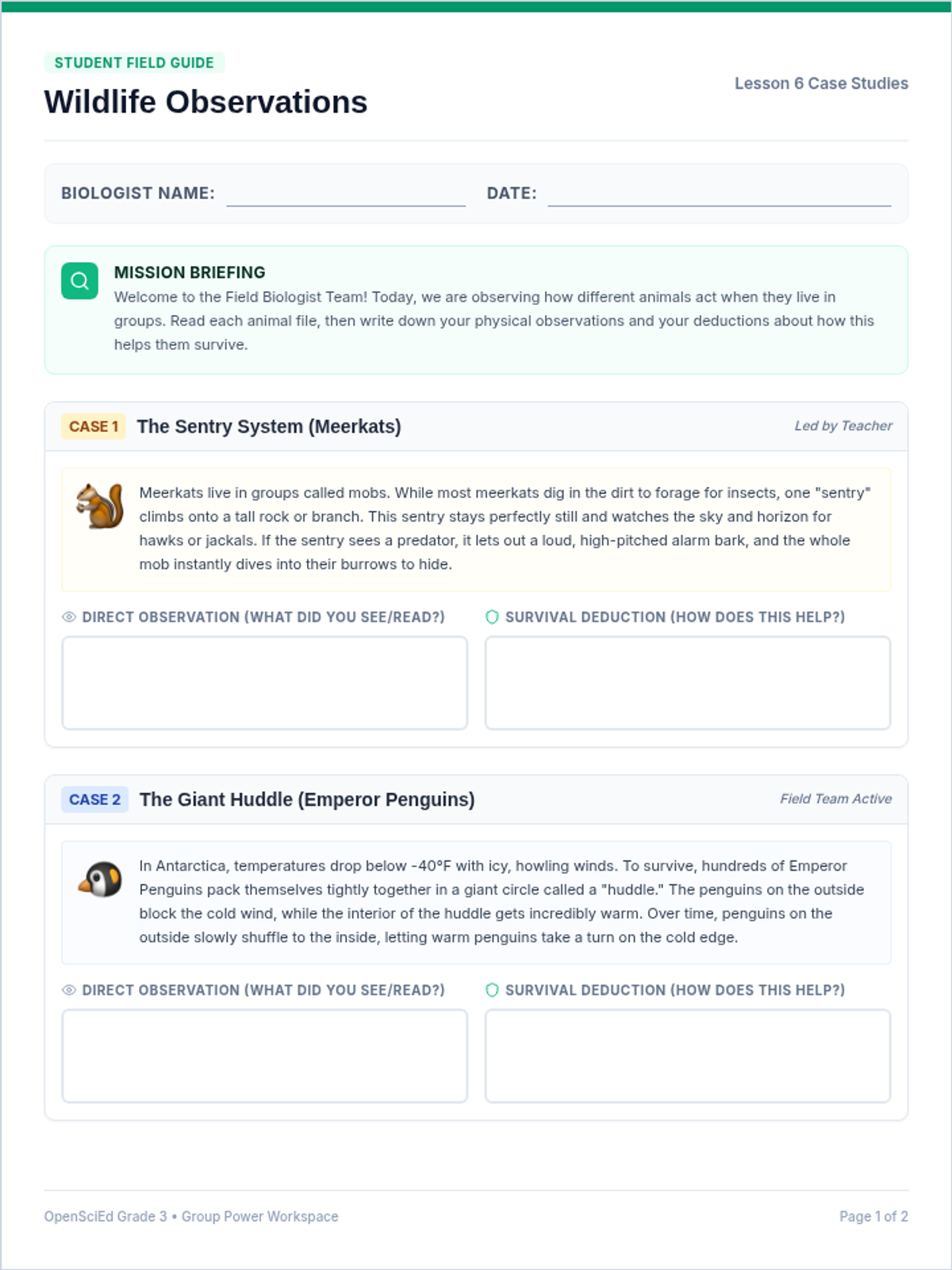
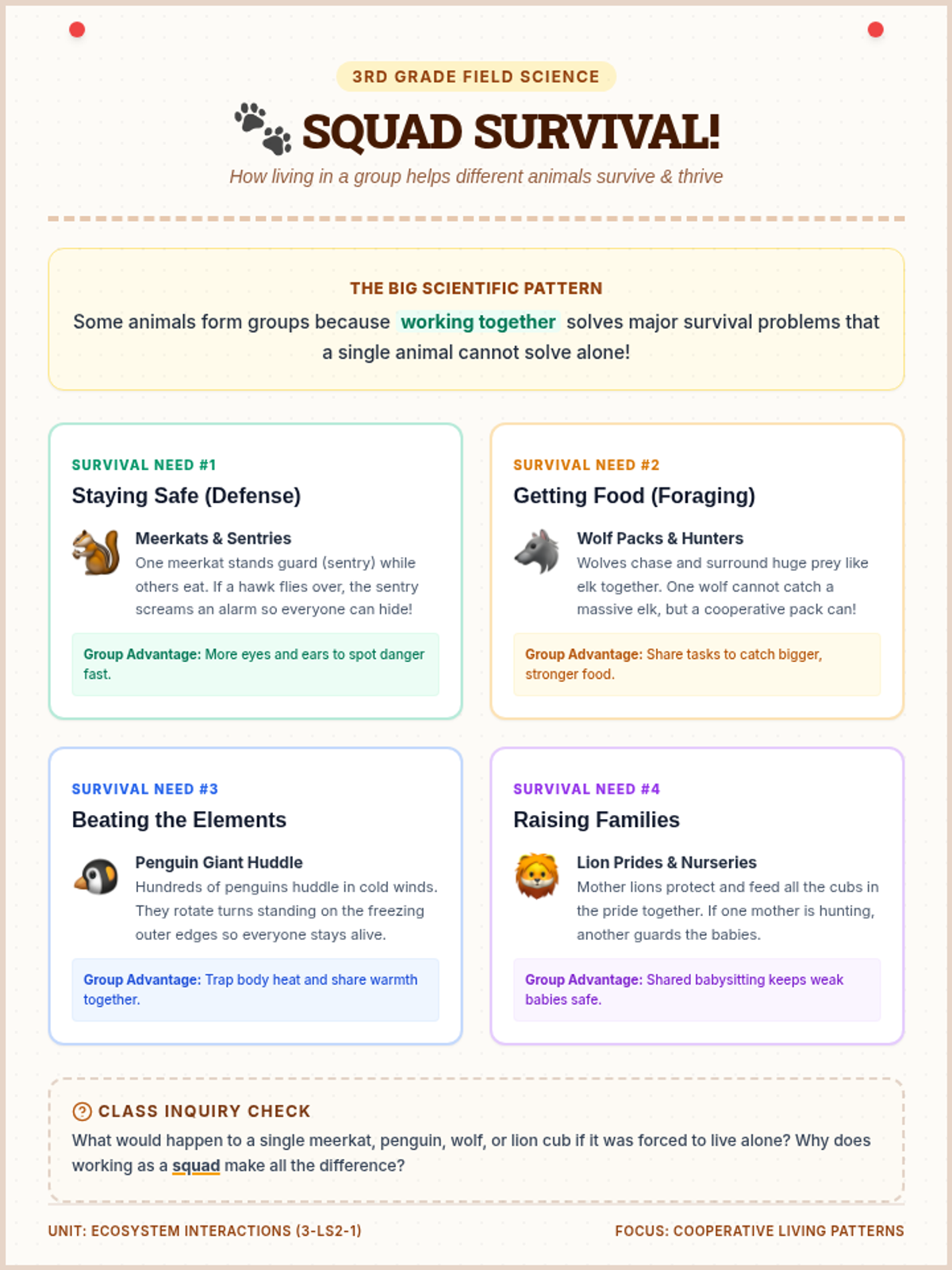
An OpenSciEd-aligned lesson where 3rd graders observe animal behaviors and describe patterns of how living in groups helps different species survive. Students analyze diverse wildlife examples to uncover the survival advantages of cooperative living.
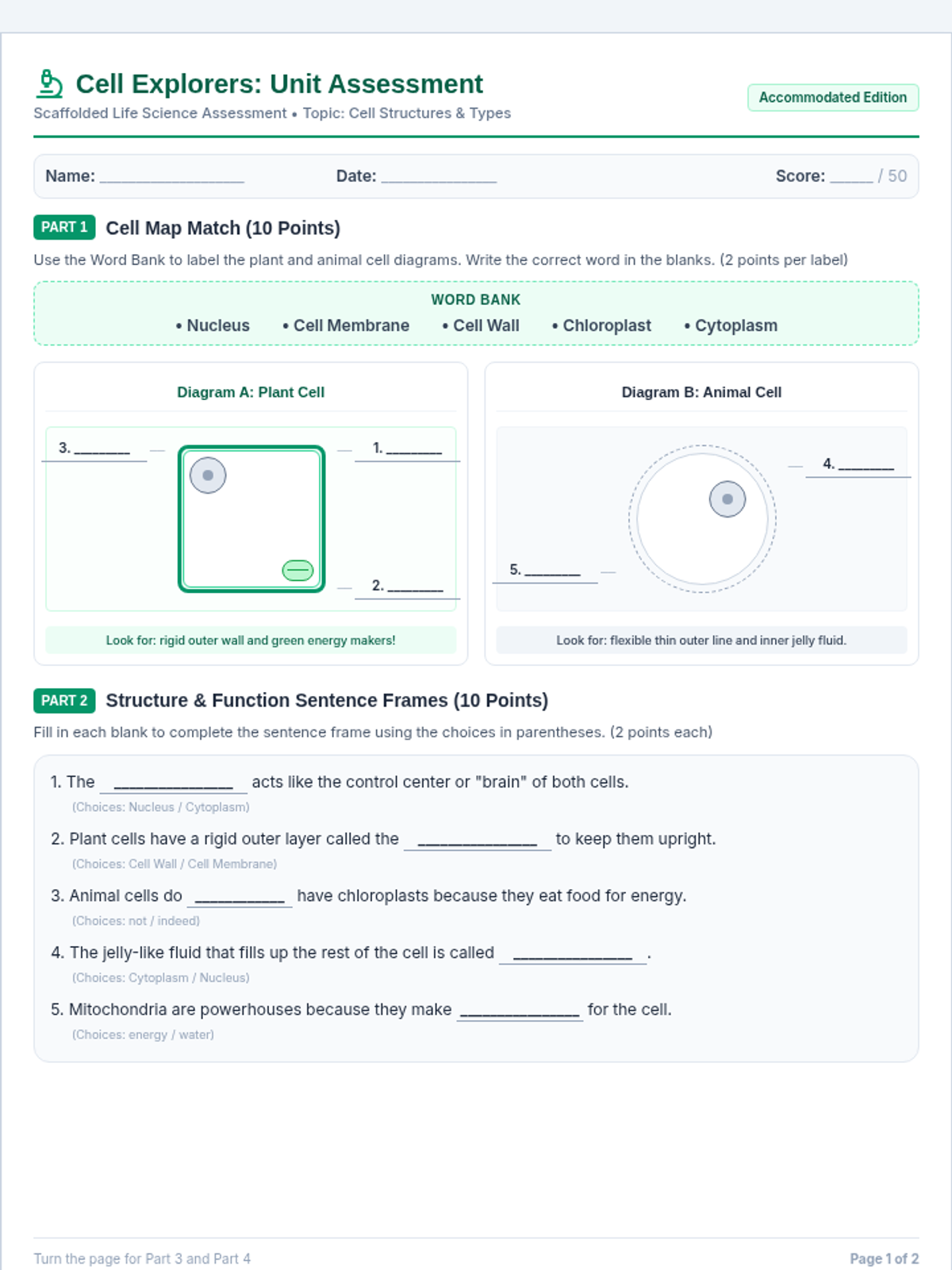
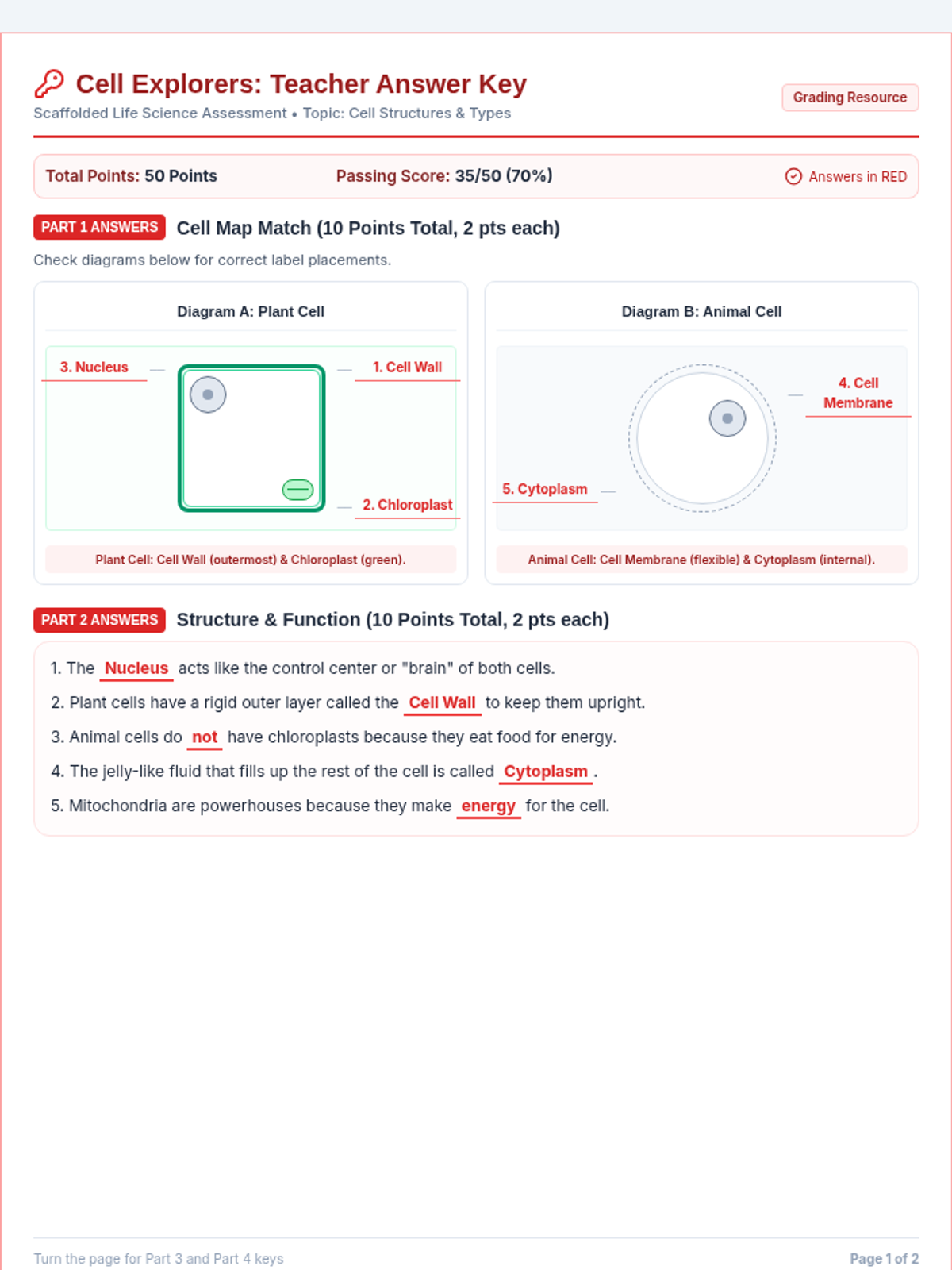
A scaffolded 2-page assessment and corresponding answer key covering prokaryotic and eukaryotic cells, including bacteria, plant, animal, and human cells. Features visual matching, labeling with word banks, sentence frames, and guided sentence starters, scaled to 50 points total.
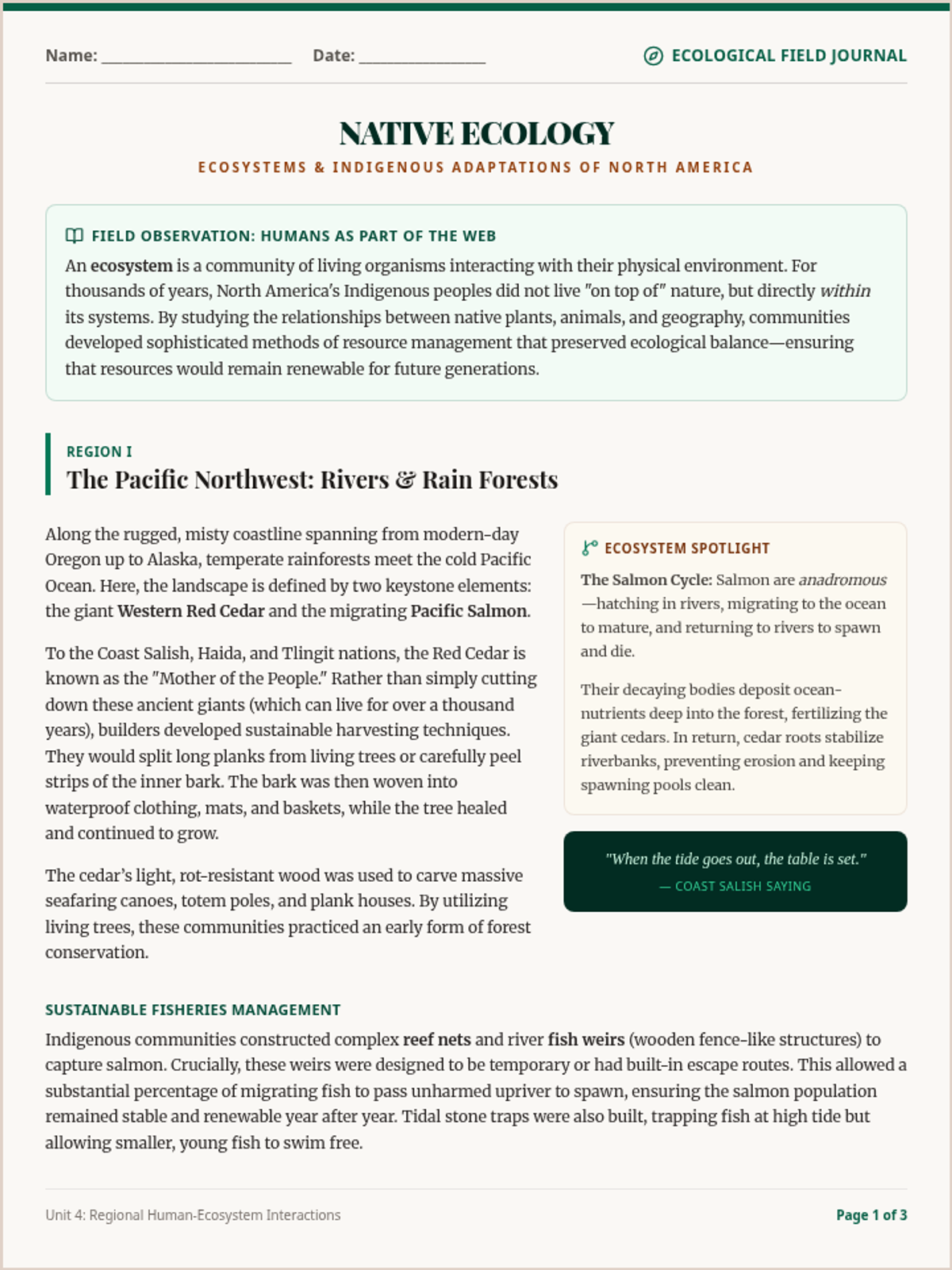
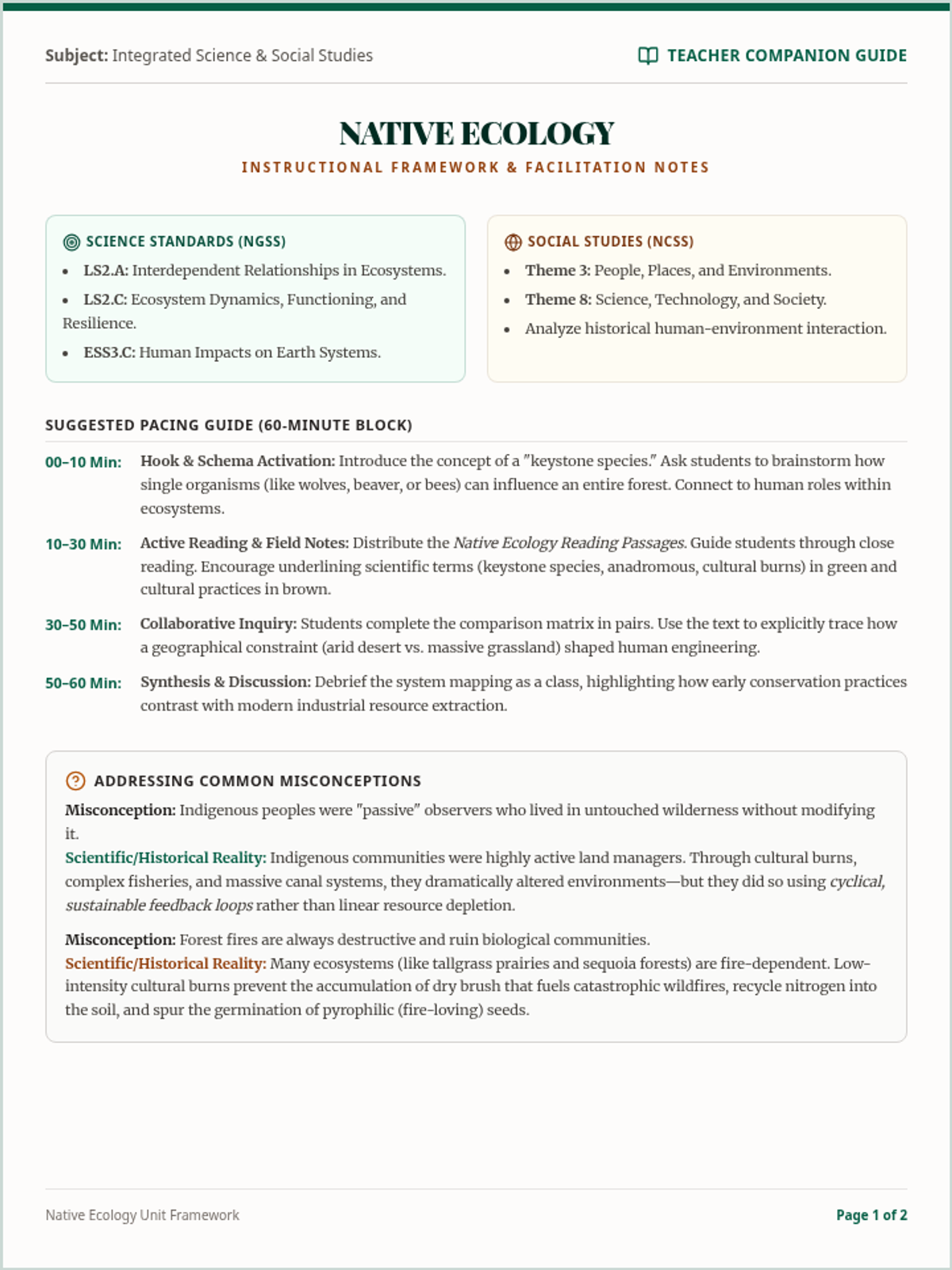
An integrated science and social studies lesson exploring how regional ecosystems and native species supported historical Indigenous communities across North America. Students analyze the ecological relationships and cultural adaptations of three distinct regions.