Students explore how language shapes thought using the Sapir-Whorf hypothesis and Indigenous grammatical examples, specifically the distinction between animate and inanimate objects in Potawatomi and Anishinaabemowin.
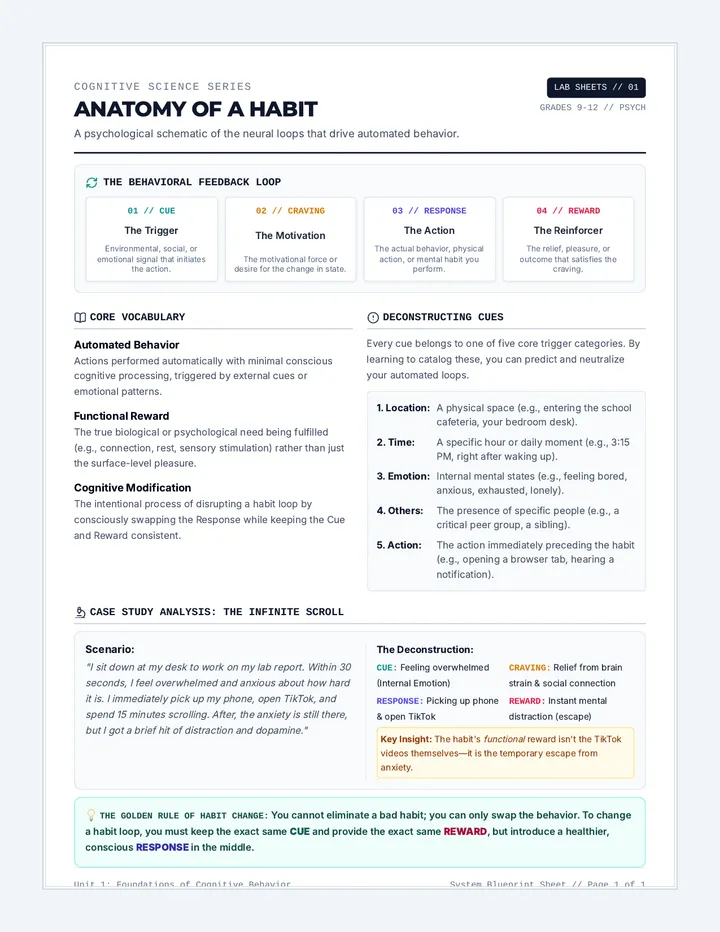
A three-part cognitive psychology series designed for Grades 9-12. Students learn the science of automation, explore how to isolate triggers and cravings, redesign unhelpful routines, and restructure their environments to make habit modification effortless.
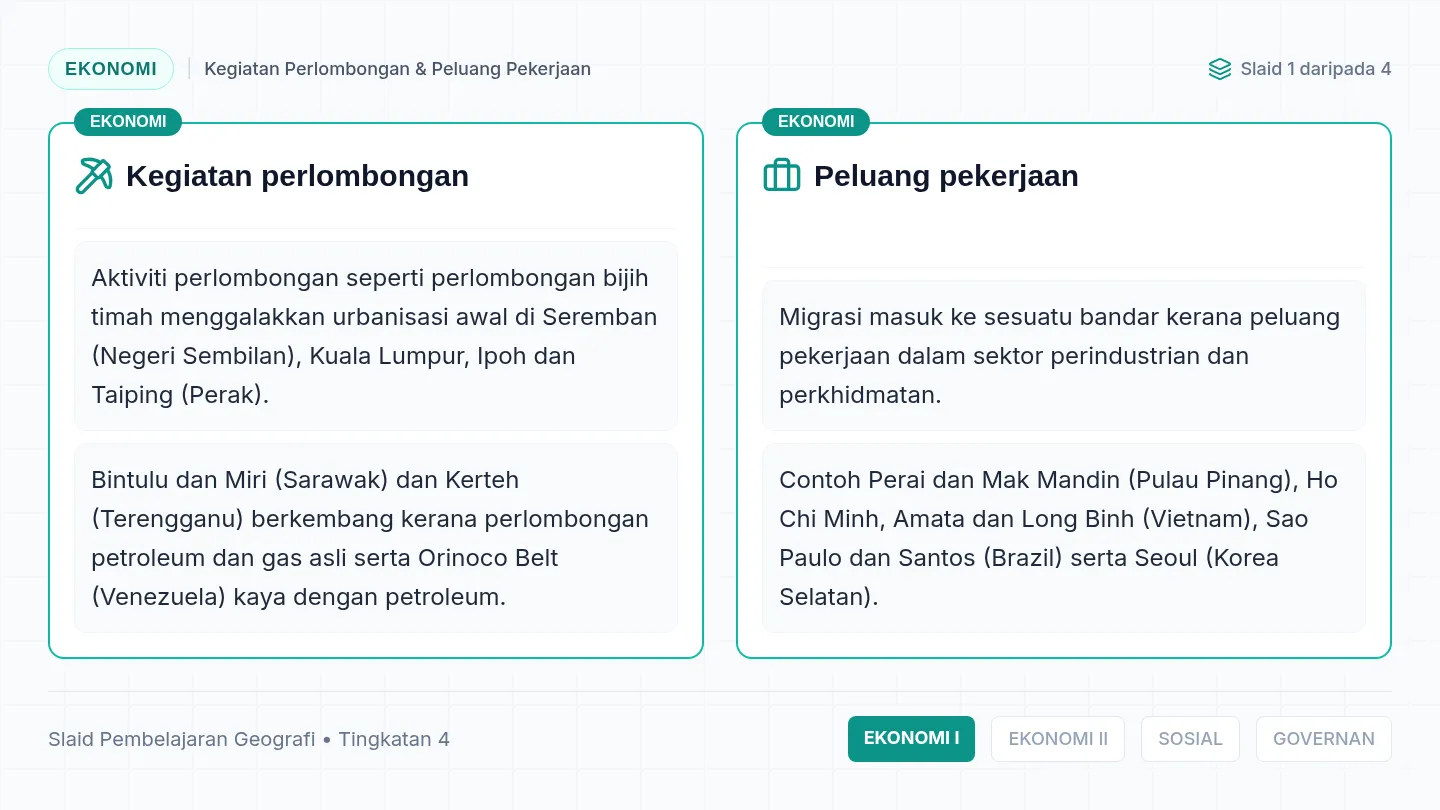
Lesson on the factors influencing the urbanization process, mapping out Economic, Social, and Governance branches with complete regional and global examples.
Interactive lecture slides mapping out the economic, social, and governance factors influencing the urbanization process, designed with a bright light theme and using only the exact text and examples provided.
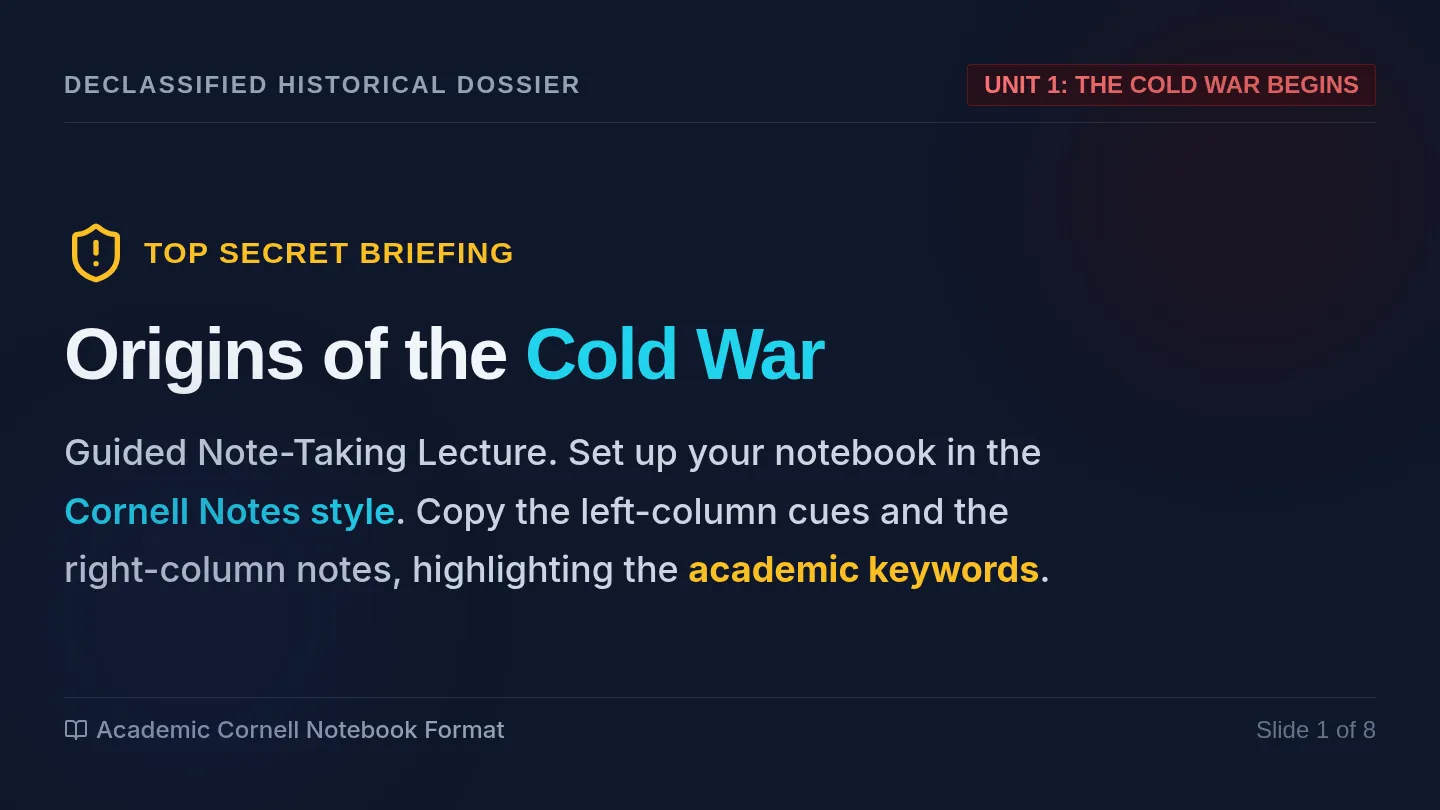
Create a multi-lesson sequence covering the Cold War, focusing on origins, global expansion, and domestic impacts.
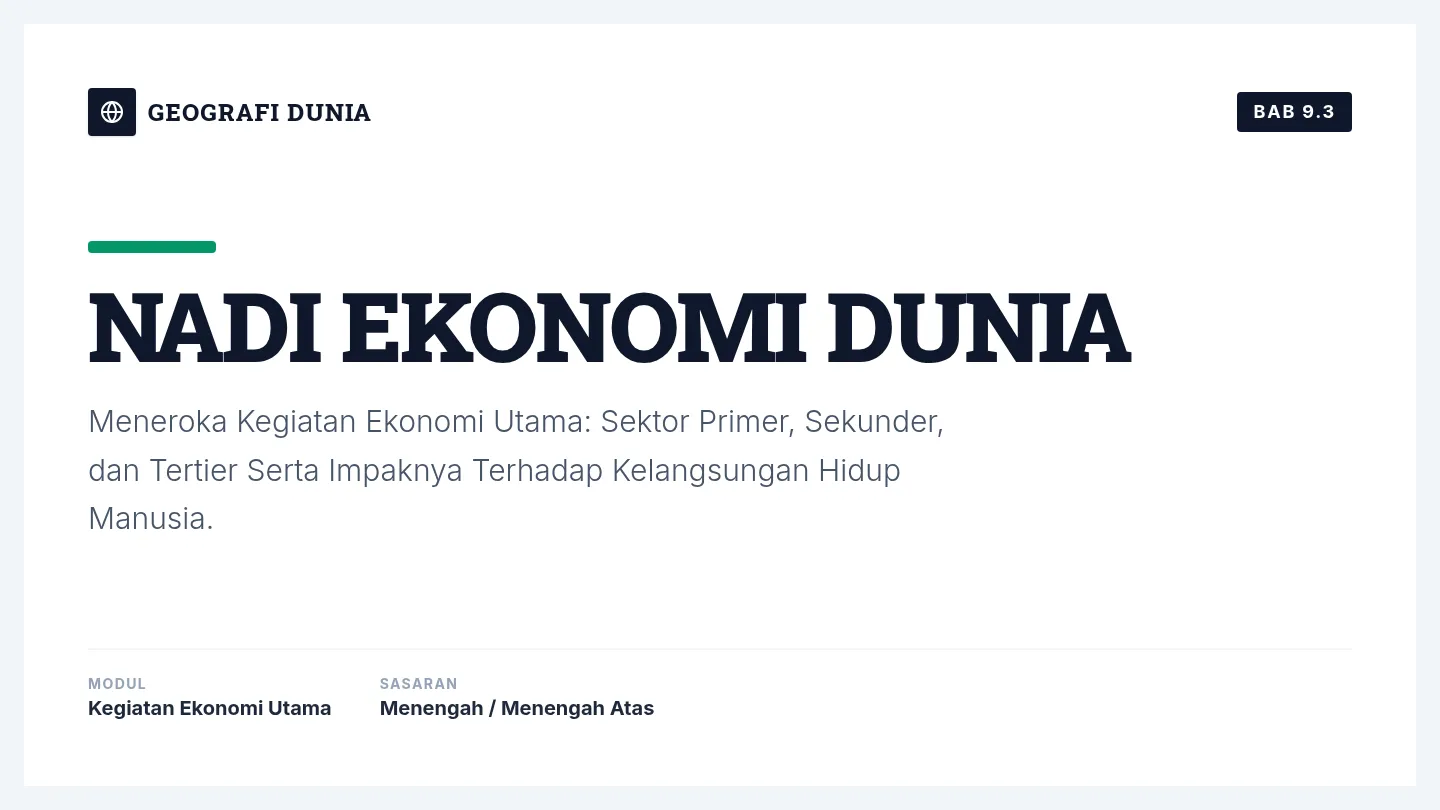
Satu slot pengajaran interaktif mengenai kegiatan ekonomi utama di dunia termasuk primer, sekunder, dan tertier. Slaid ini membimbing murid memahami impak sektor ekonomi kepada manusia dan negara melalui aktiviti perbincangan dan tiket keluar.
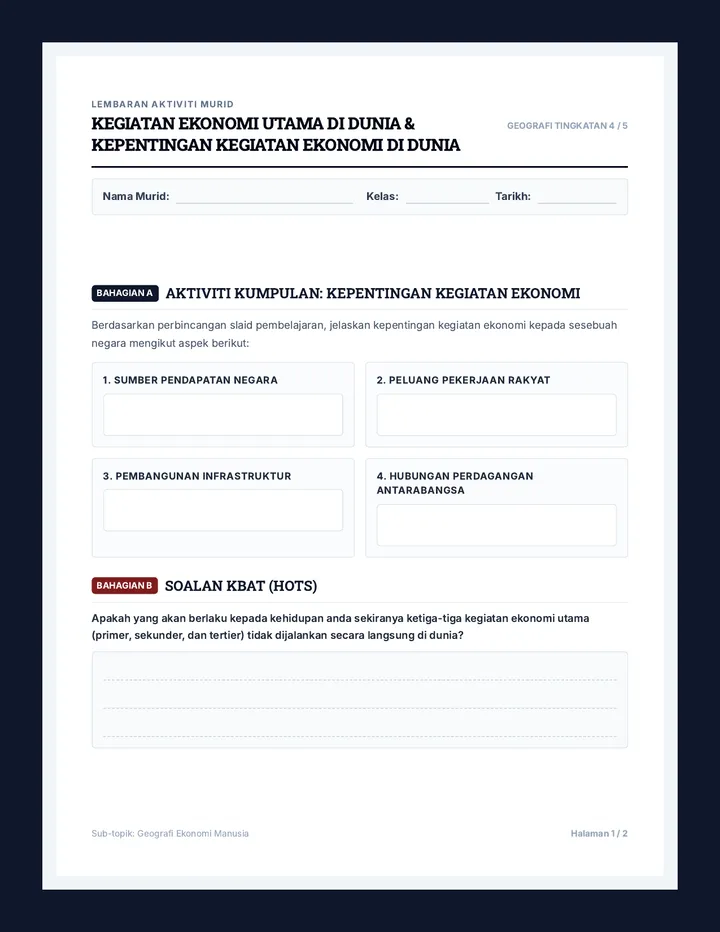
Lembaran kerja bercetak dua muka surat bertemakan Minimalist Academic. Mengandungi ruang catatan Aktiviti Kumpulan, soalan KBAT, dan templat Tiket Keluar (Exit Ticket) yang sepadan dengan slaid pengajaran.
A comprehensive unit on child development from birth through age 18, focusing on physical, cognitive, and social-emotional growth across early childhood, middle childhood, and adolescence.
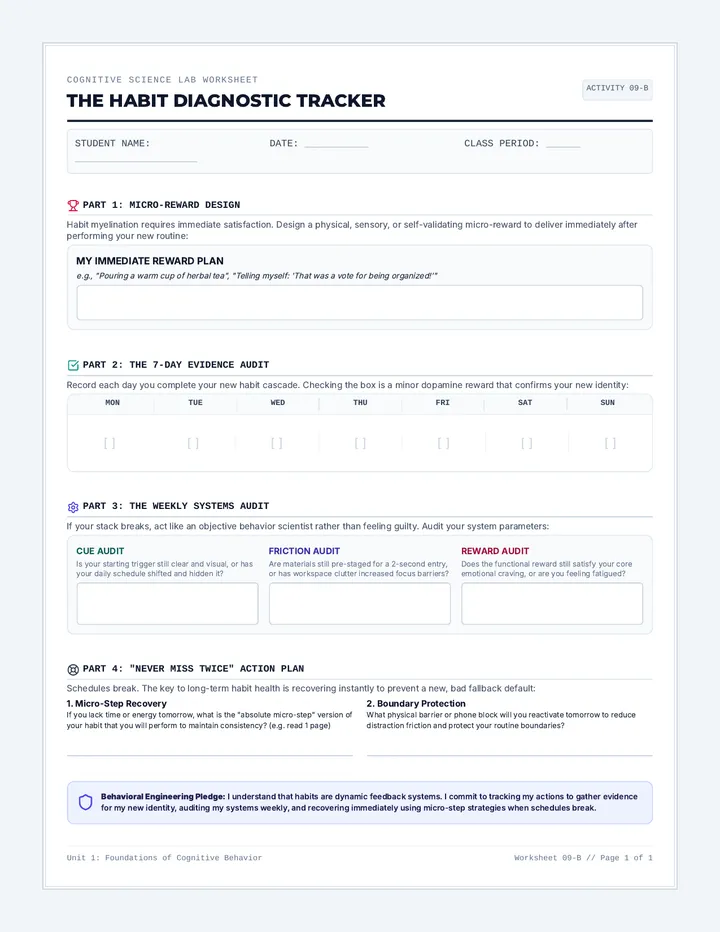
Lesson 8 of the Habit Architects unit. Students learn how to design personal reward structures and periodic tracking audits to maintain long-term habit health and recover quickly from routine disruptions.
Slaid pengajaran interaktif bertemakan Minimalist Academic mengenai kegiatan ekonomi utama di dunia serta kepentingan kegiatan ekonomi. Mengandungi maklumat sektor ekonomi primer, sekunder, dan tertier serta objektif pembelajaran dan aktiviti pengukuhan murid.
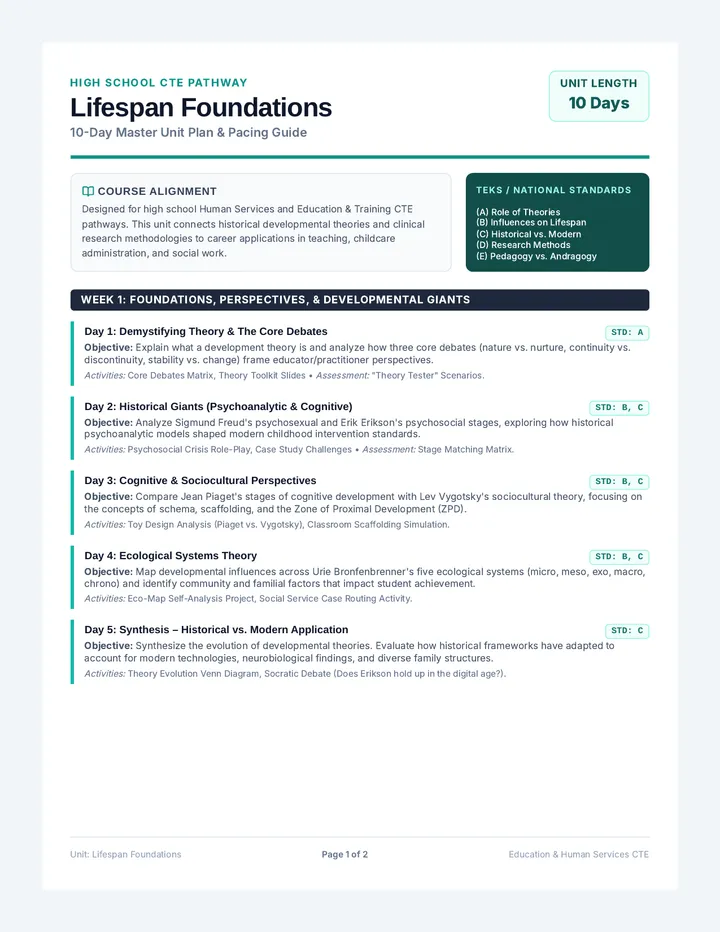
A comprehensive instructional sequence designed for high school CTE pathways in Education & Training and Human Services. The unit introduces students to the foundational theories, modern research methodologies, and instructional models (pedagogy vs. andragogy) that govern lifespan human development.
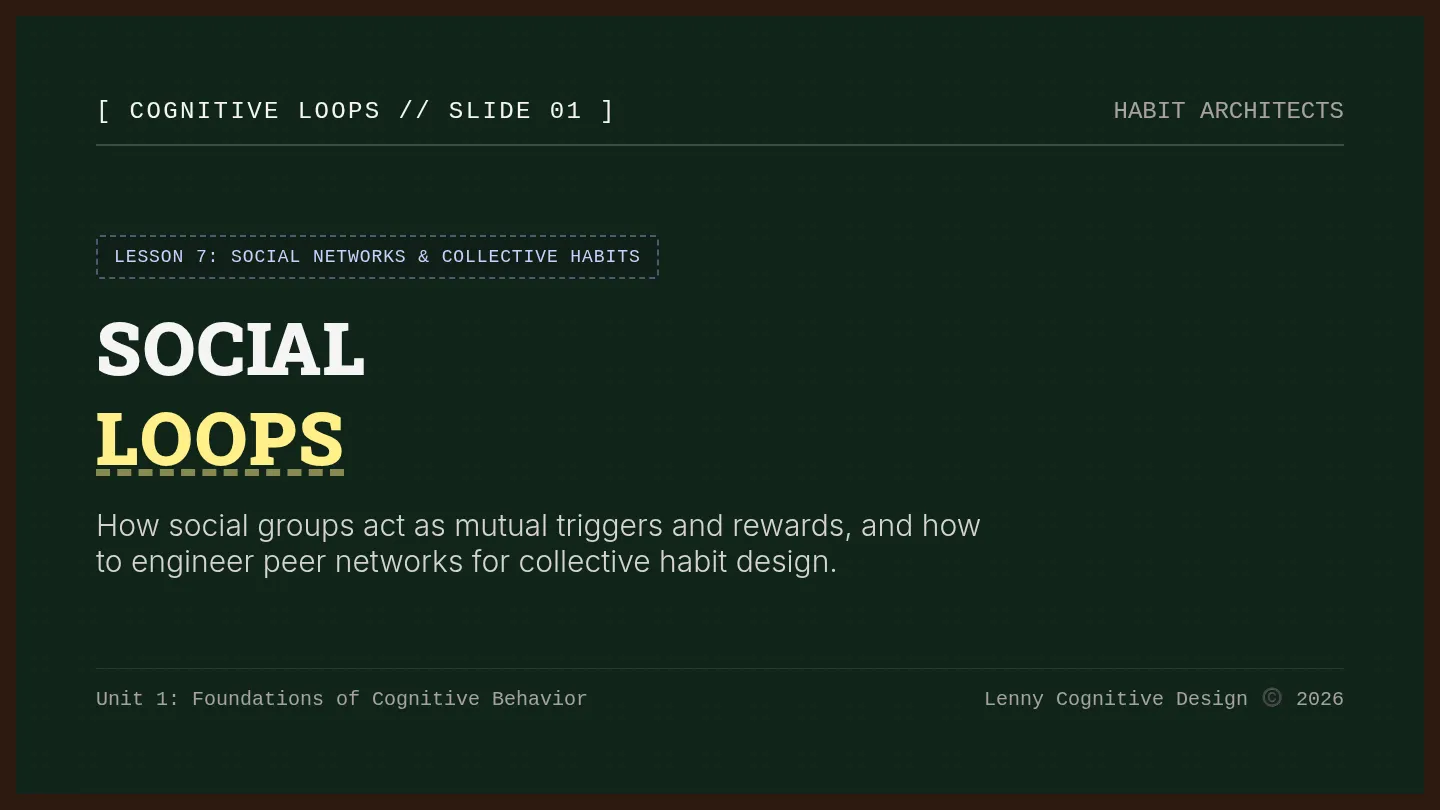
Lesson 7 of the Habit Architects unit. Students deconstruct how social groups influence habit cues and design supportive loops to engineer collective habits.
A hands-on student worksheet providing a 7-day tracking log, a micro-reward design space, and a system diagnostic checklist to identify, adjust, and recover disrupted habit routines.