A 5th-grade science lesson focused on the mechanics of hand hygiene and the spread of pathogens. Students engage in a hands-on simulation to visualize how germs move and learn the CDC-recommended 5-step handwashing technique.
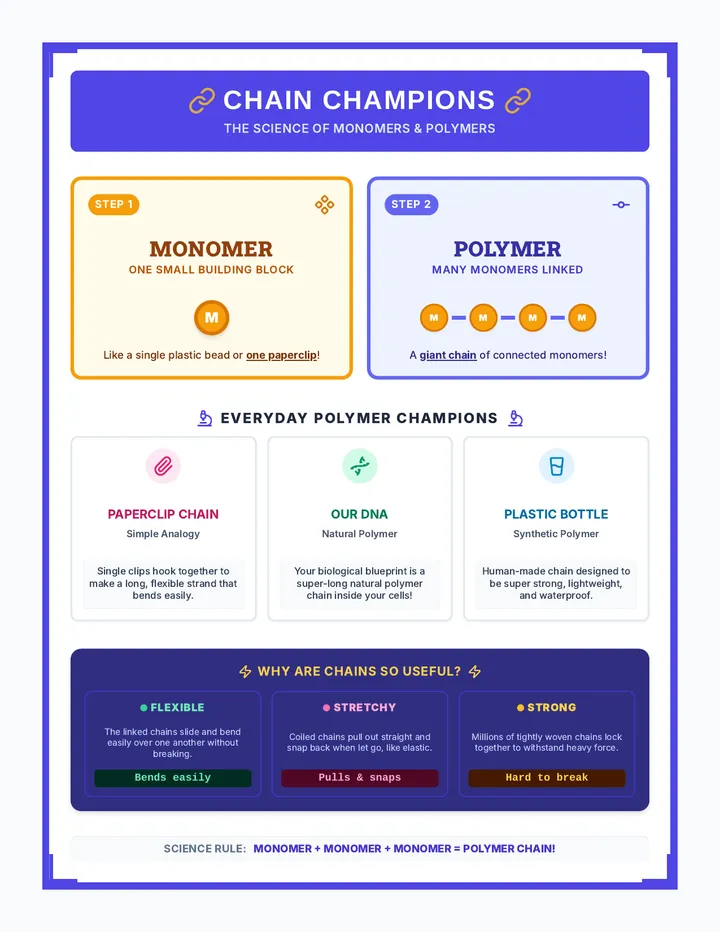
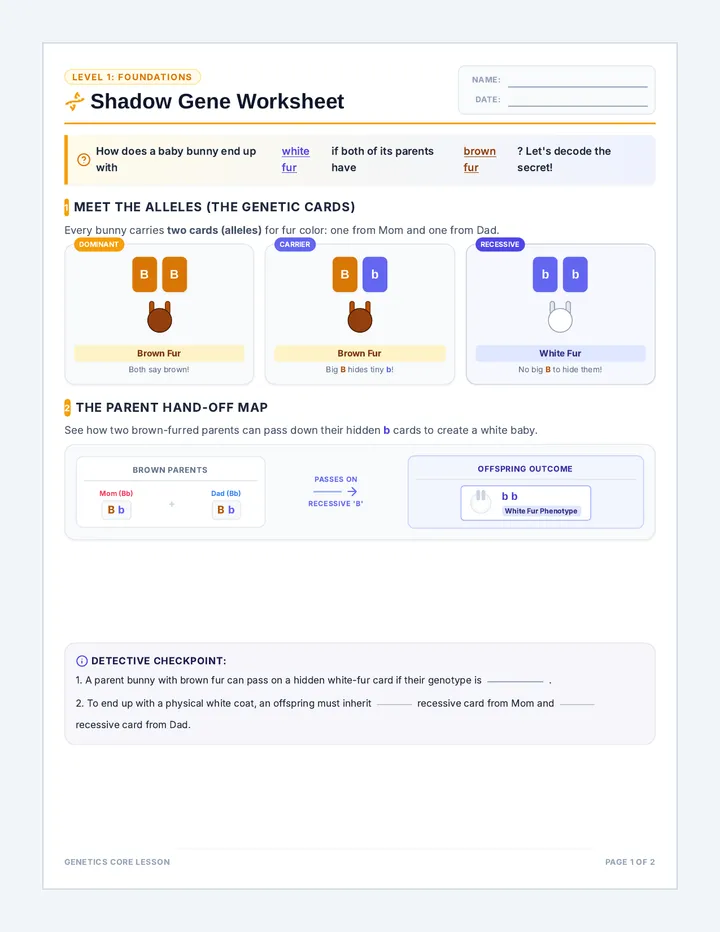
A collection of supplemental activities to reinforce foundational concepts of DNA, inheritance, and genetics. Students will practice vocabulary, sequencing biological structures, and verifying facts through interactive worksheets.
An exploration of the rock cycle's dynamic processes, from the fiery birth of igneous rocks to the transformative heat and pressure of metamorphism. Students will learn how Earth constantly recycles its crust through physical and chemical changes.
Students identify various landforms and apply their knowledge of geological processes to design their own island ecosystem in a culminating project.
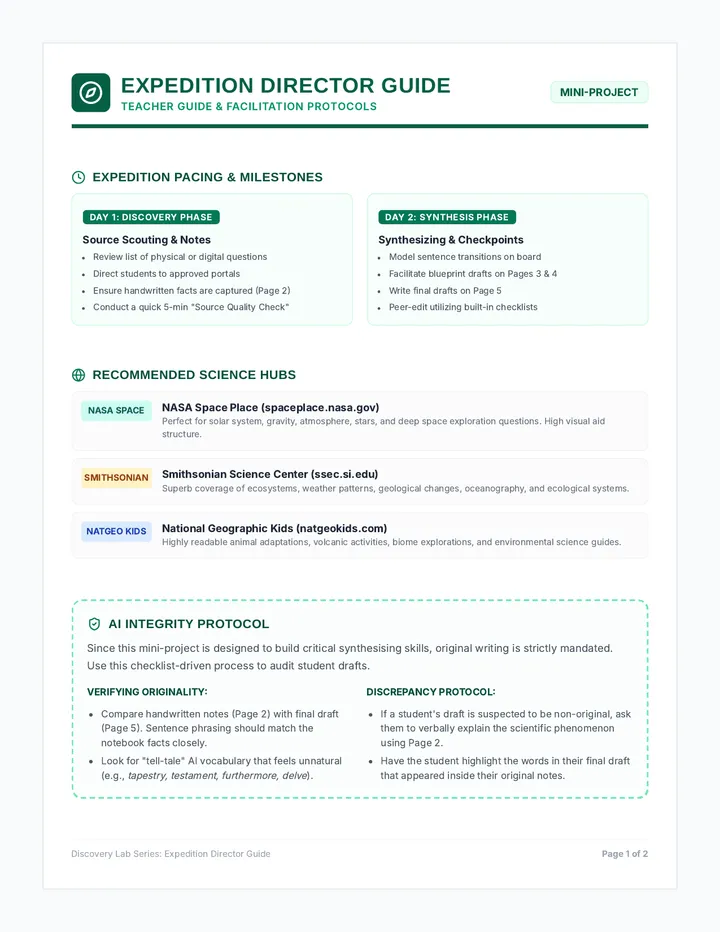
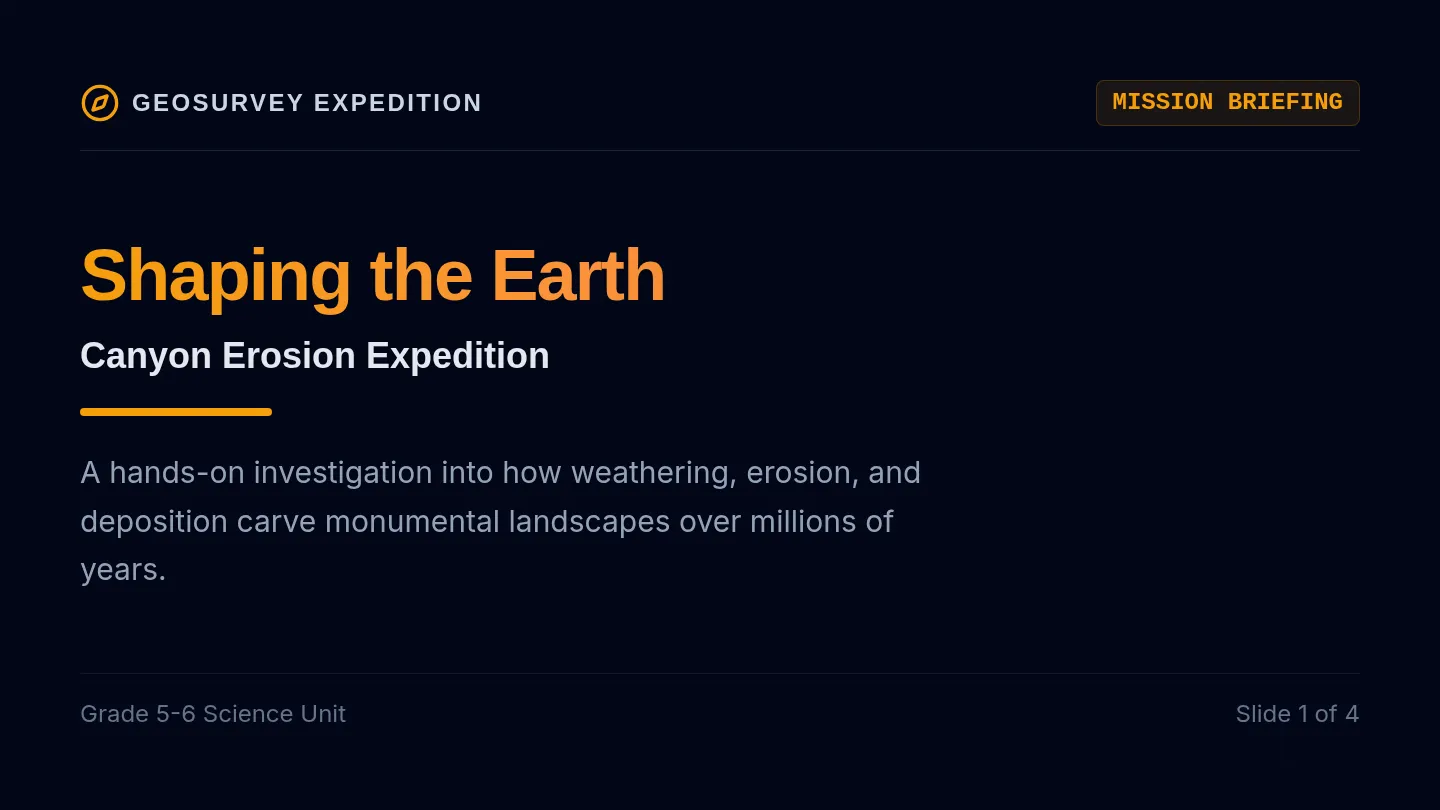
A deep dive into the forces of weathering and erosion using mechanical simulations to observe how rocks break down and move over time.
Students explore the three main types of rocks and the processes that transform them through a hands-on simulation using crayons to represent the rock cycle.
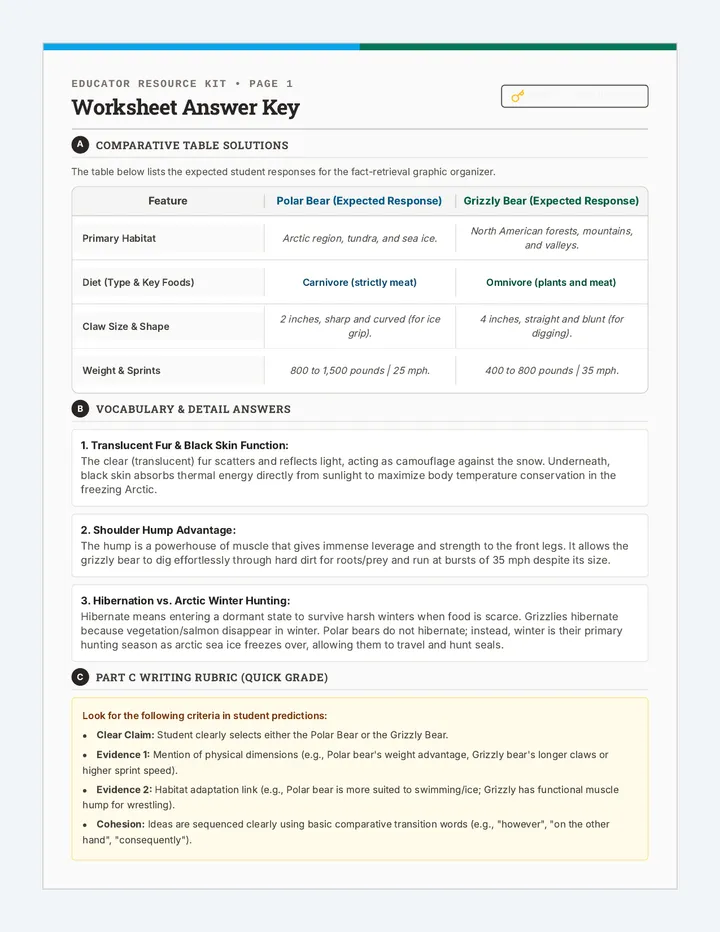
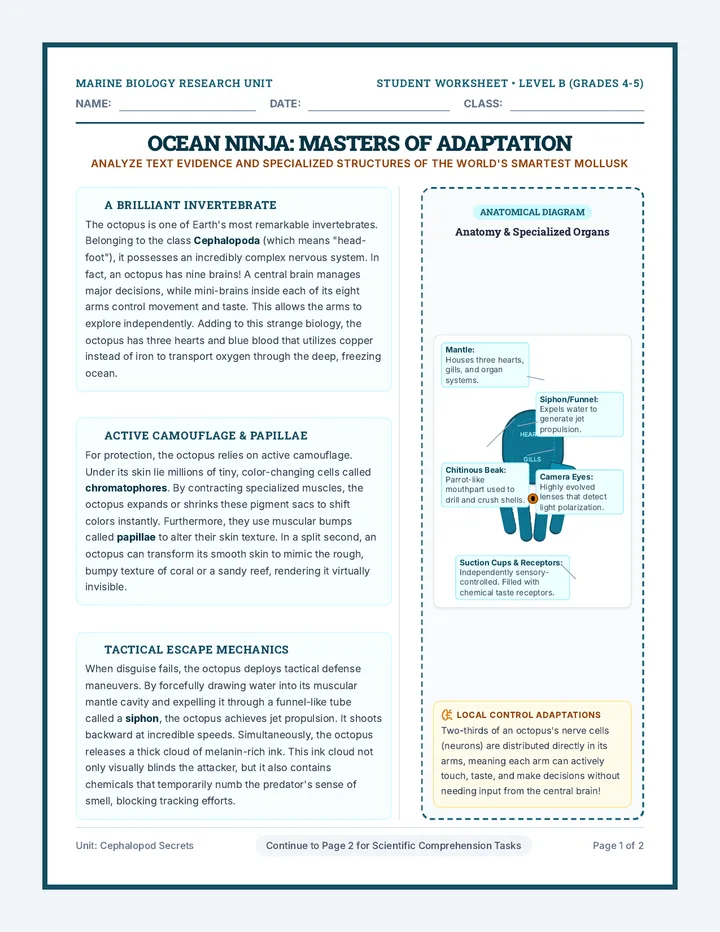
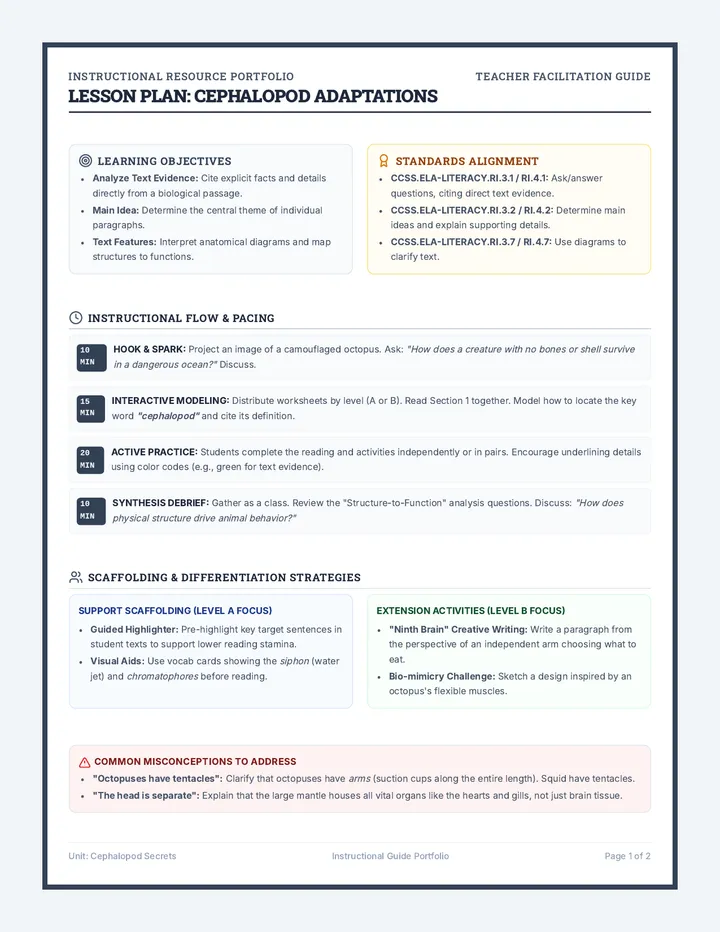
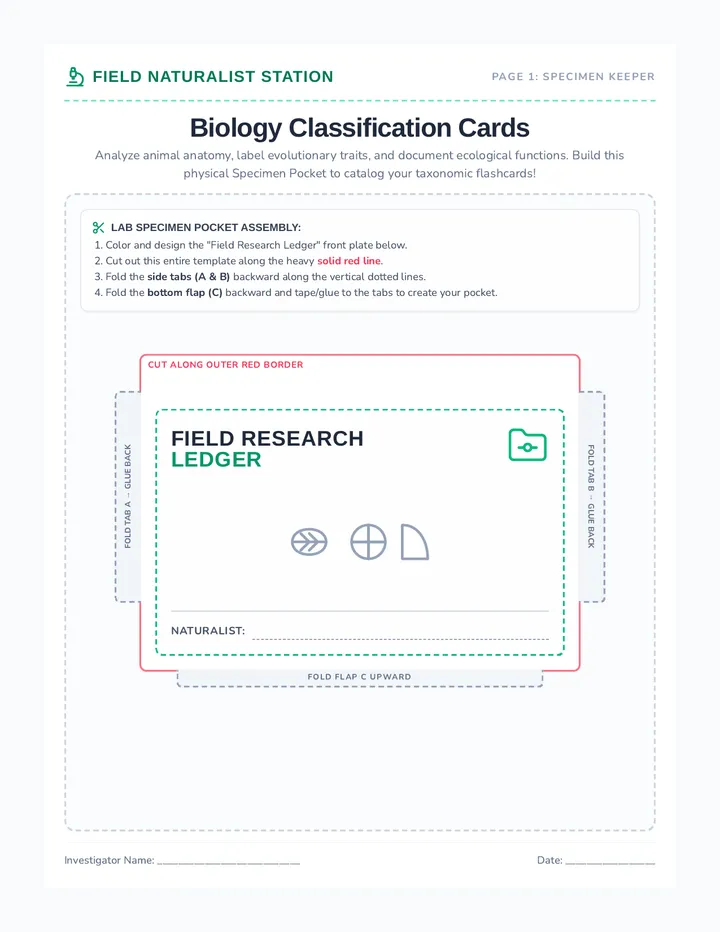
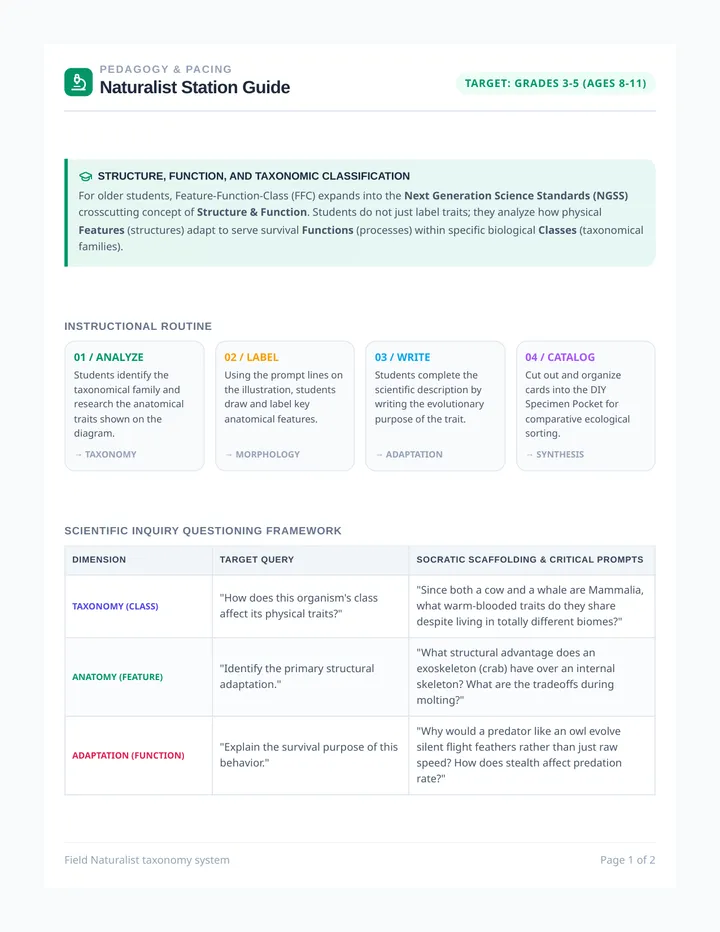
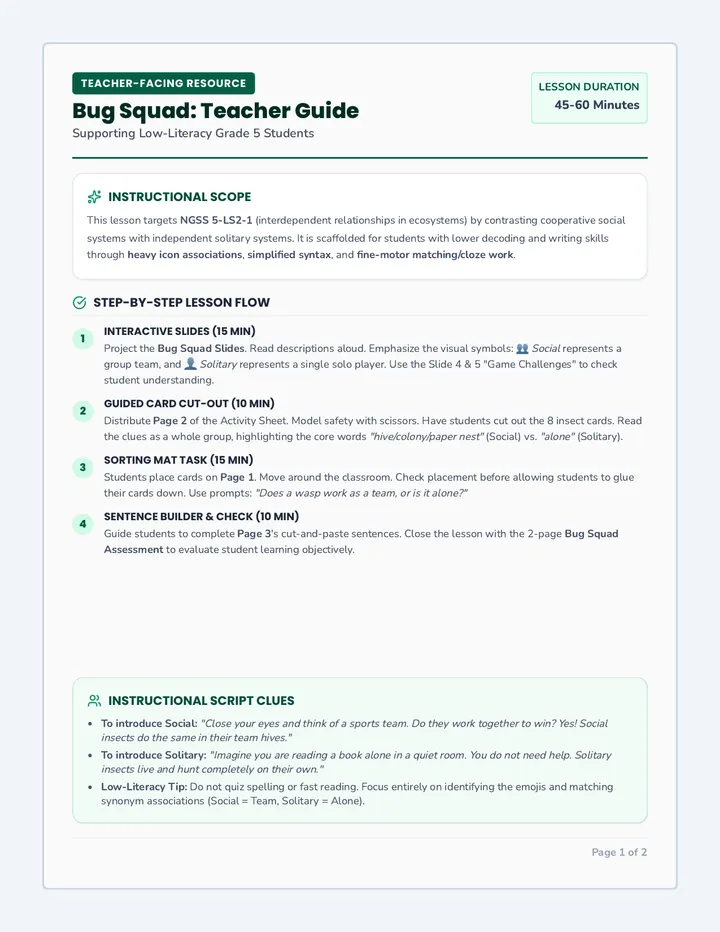
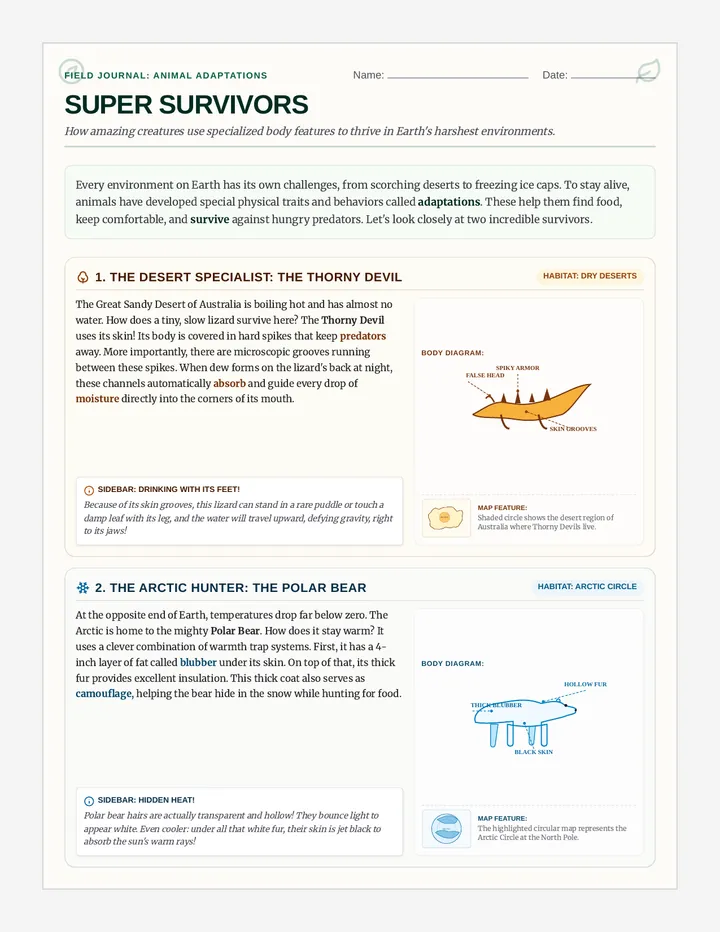
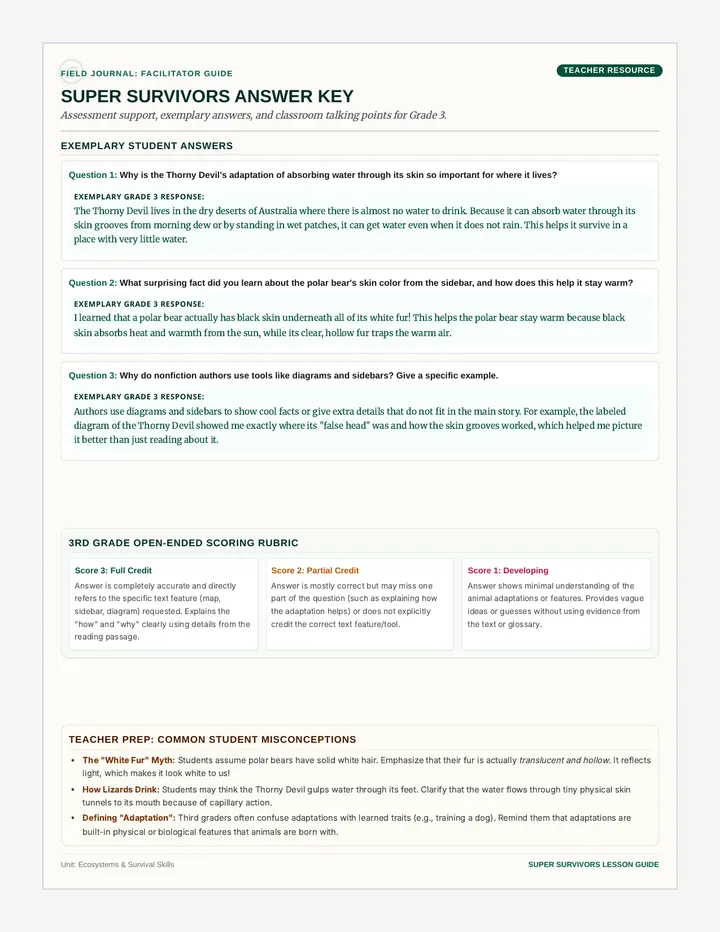
An engaging lesson on animal adaptations designed for 5th-grade students who struggle with reading. The lesson uses high-interest examples, simplified text, and visual supports to explain how physical and behavioral traits help animals survive in extreme environments.
Students act as 'Marine Bio-Engineers' to design and build artificial reef structures that support a healthy ecosystem on Mystery Island's coast, focusing on biotic and abiotic interactions.
Students design and build 'Food Web Restoration' models to visualize and explain the flow of energy from producers to multiple consumers on Mystery Island.
Students design and build 'Weather Shields' to protect a model plant from extreme temperature and precipitation changes on Mystery Island, exploring how environmental factors affect organisms.
Students act as 'Botanical Engineers' to design and build seed models that can travel through the air to reach new parts of Mystery Island, focusing on seed dispersal methods.
Students design external structures for a 'Mystery Organism' to help it meet its basic needs (food, water, shelter) on Mystery Island, focusing on the link between structure and function.
An introductory lesson on tiger-related vocabulary, focusing on conservation, biology, and habitat through kid-friendly definitions and syllable practice.
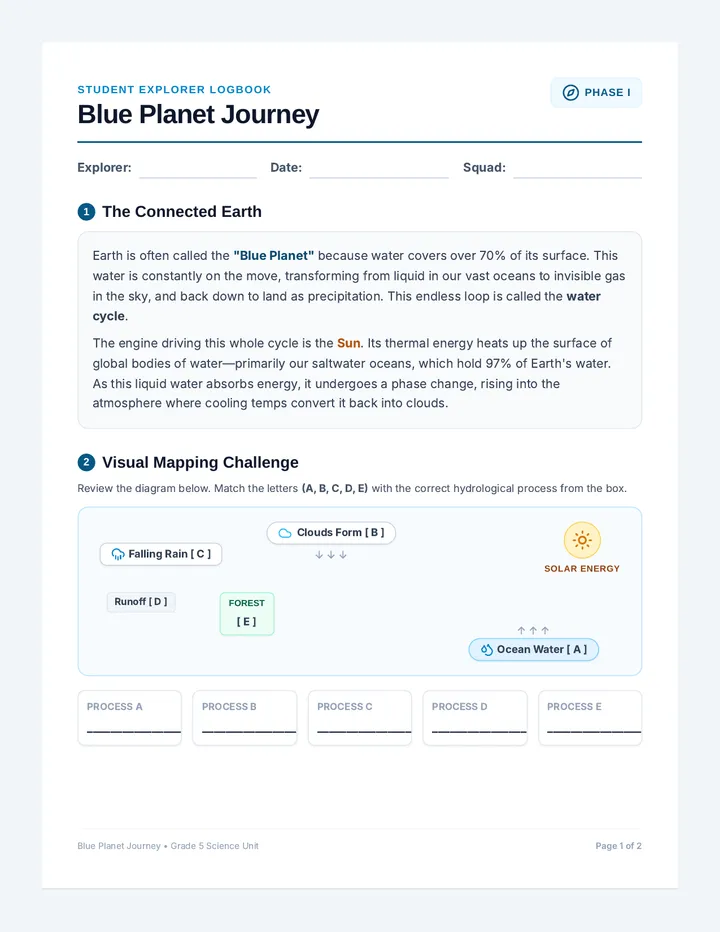
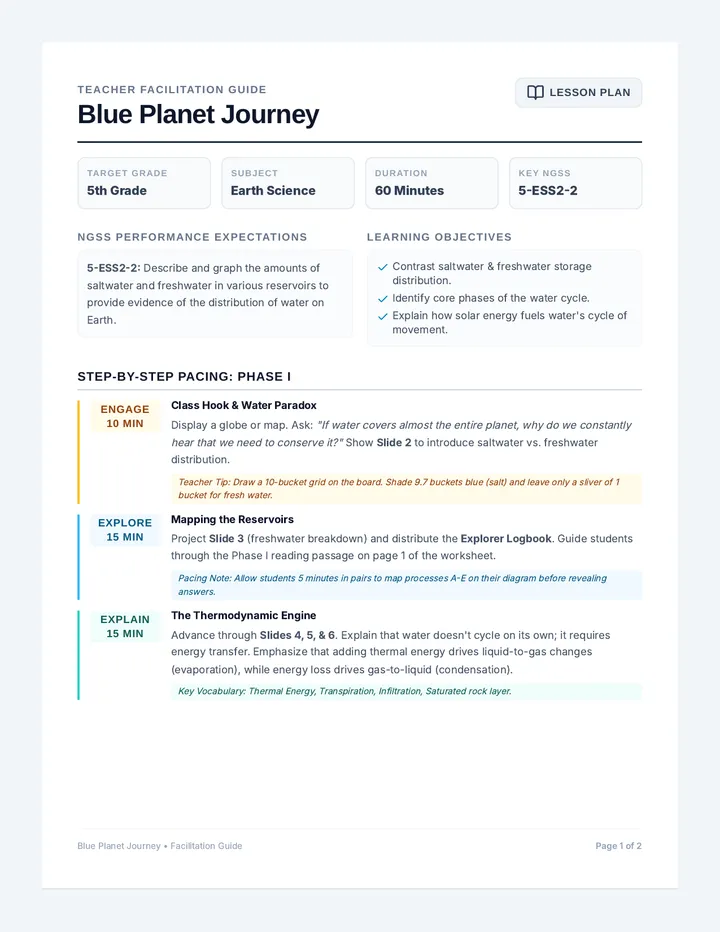
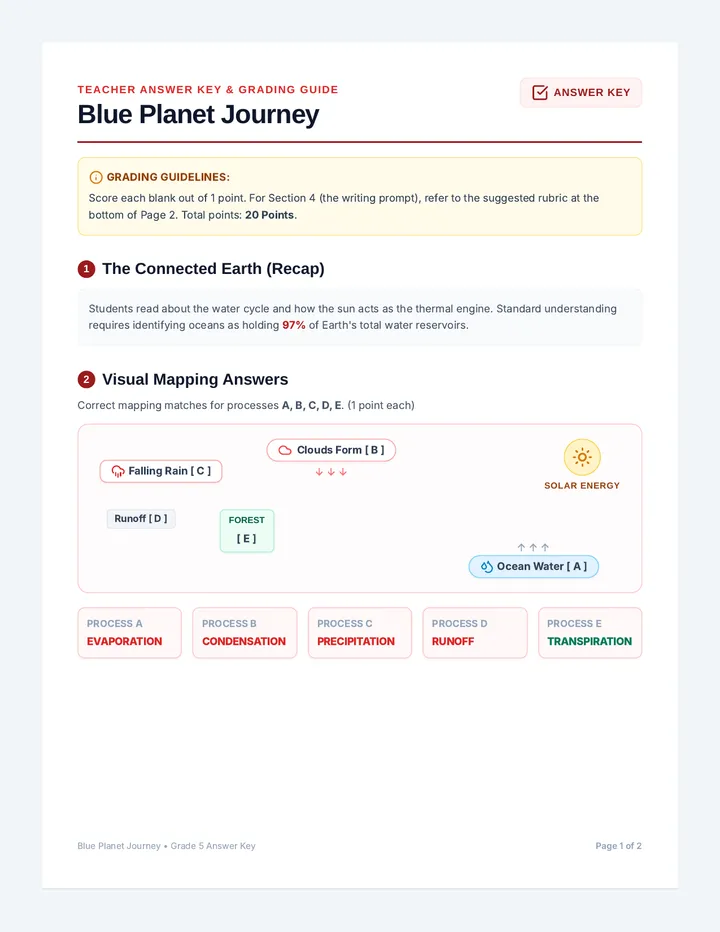
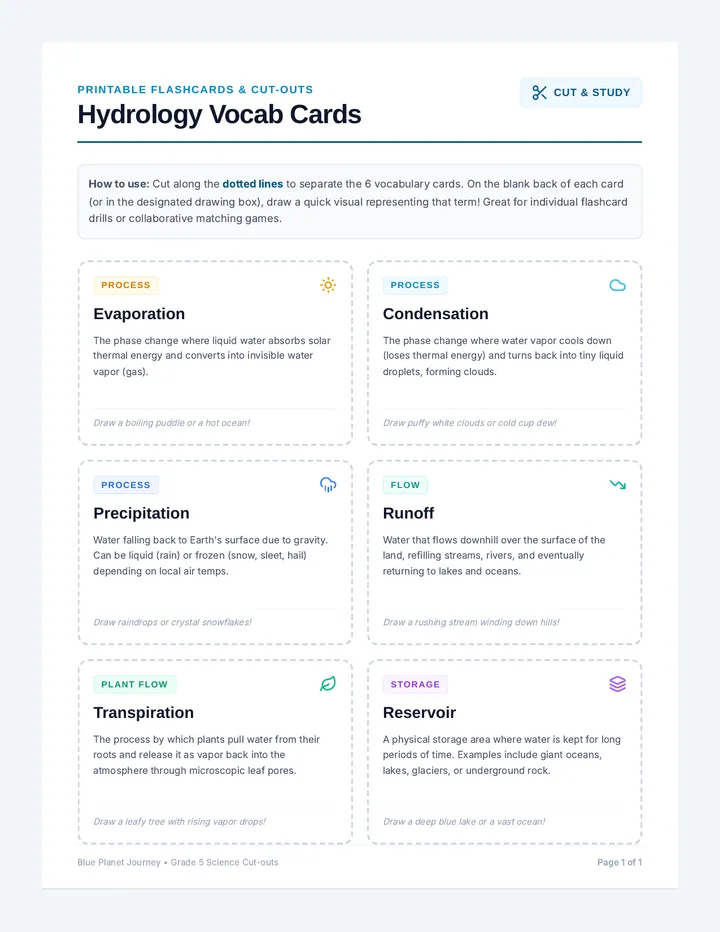
Reviewing Earth's four spheres, the water cycle, properties of stars, and the engineering design process with a full practice assessment.
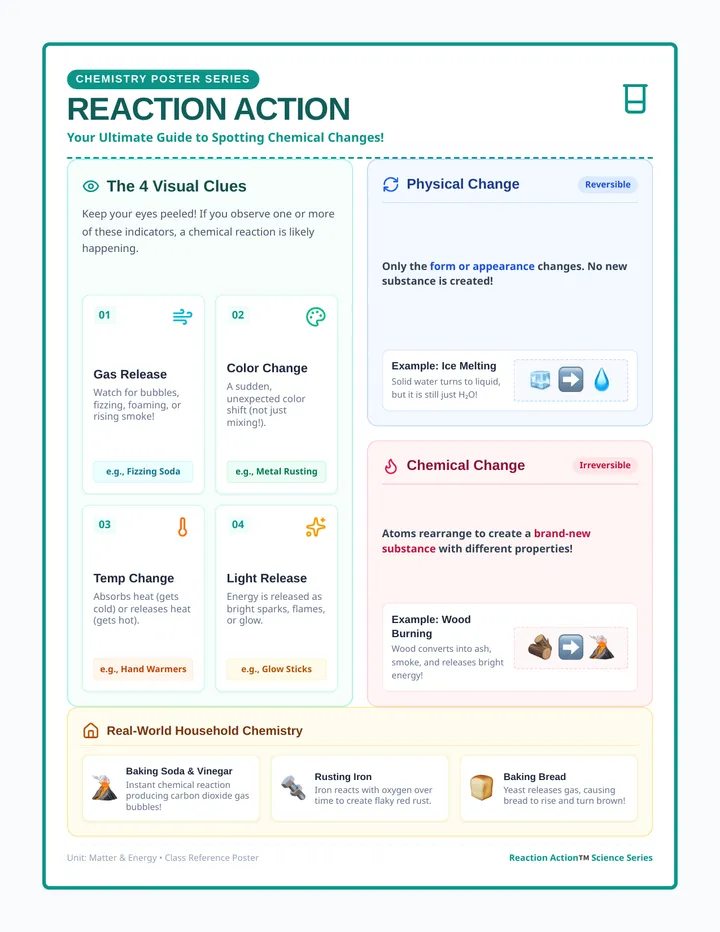
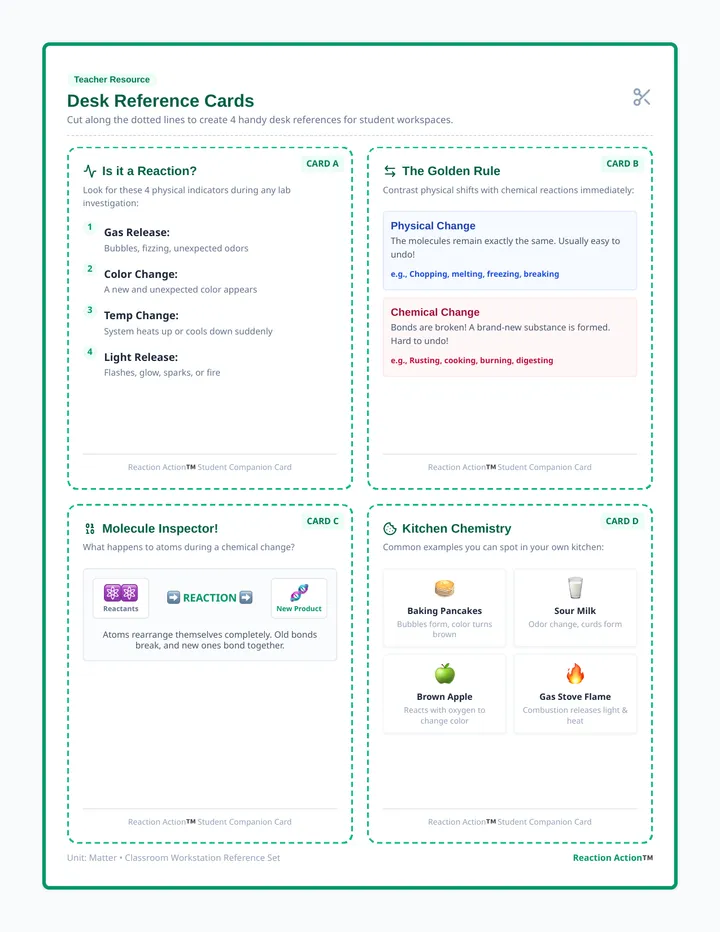
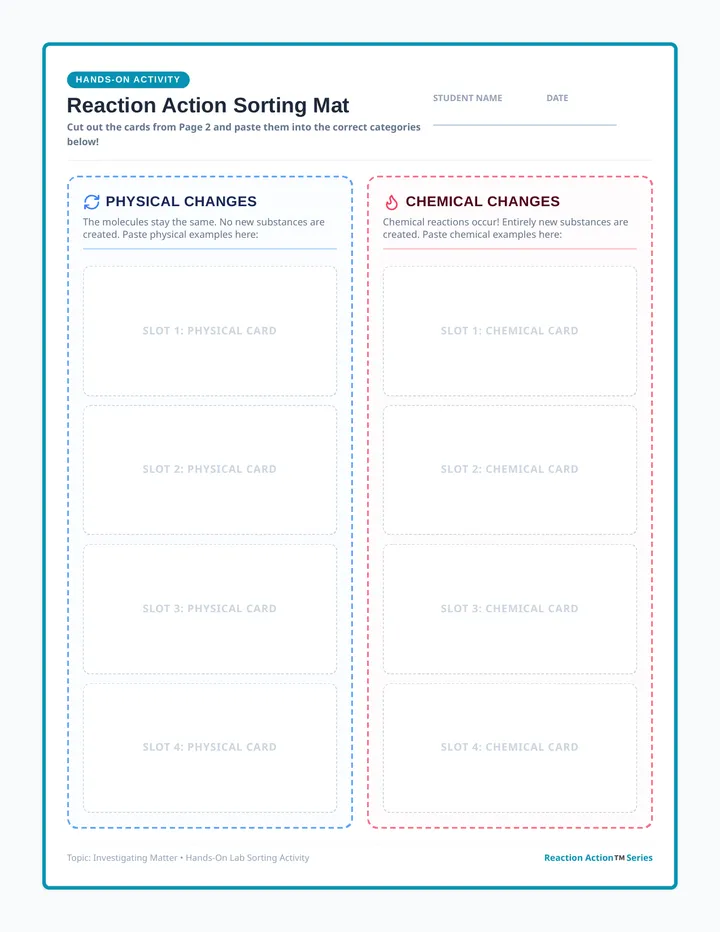
A deep dive into properties of matter, states of matter, conservation of mass, and the difference between physical and chemical changes.
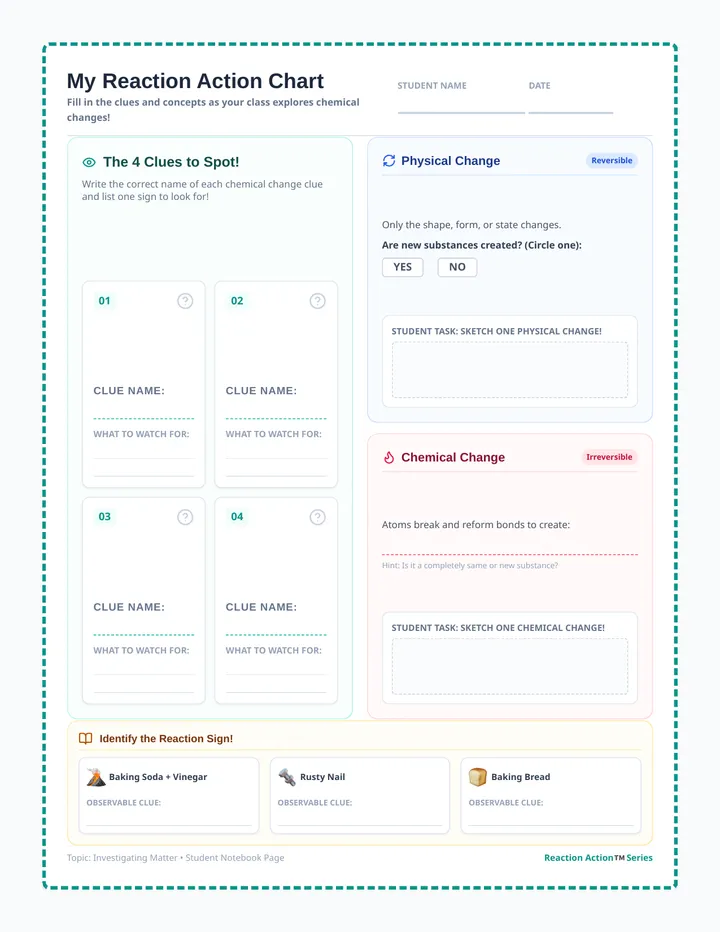
A detective-themed lesson where students become 'Change Detectives' to investigate physical and chemical changes through mystery scenarios and hands-on observations.
A comprehensive 40-minute lesson on distinguishing between physical and chemical changes in matter through everyday examples and property analysis.
A gamified review lesson focusing on Earth's four spheres and the water cycle. Students take on the role of agents to identify sphere interactions and track the movement of water through the Earth system.
Investigate the chemical nature of water through pH testing, exploring acidity, alkalinity, and how water's role as a solvent impacts life and the environment.
Explore the unique molecular properties of water, including cohesion, adhesion, and surface tension, through the 'Penny Power' lab and interactive demonstrations.
Discover the structure of watershed systems, the importance of the Chesapeake Bay, and how human activity impacts water quality.