A comprehensive geometry lesson exploring 2D and 3D shapes, properties, and angles through a space-themed mission. Students engage in classification, modeling, and spatial reasoning to master geometric concepts.
A secret agent-themed review session covering whole numbers, fractions, and measurement for 5th-grade math standards. Students solve 20 mission-critical math problems to complete their 'field report'.
A targeted 10-minute intervention lesson using visual models to help third-grade students grasp the concept of equivalent fractions.
A culminating challenge where students use all properties to solve a complex multi-step problem.
Building fact families to illustrate the inverse relationship between multiplication and division.
Connecting division to multiplication by finding missing factors in array models.
Using the associative property to find more efficient paths to solving multiplication problems.
Modeling three-factor multiplication using 3D block structures or stacked arrays.
Introduction to the associative property by exploring how grouping three factors differently results in the same product.
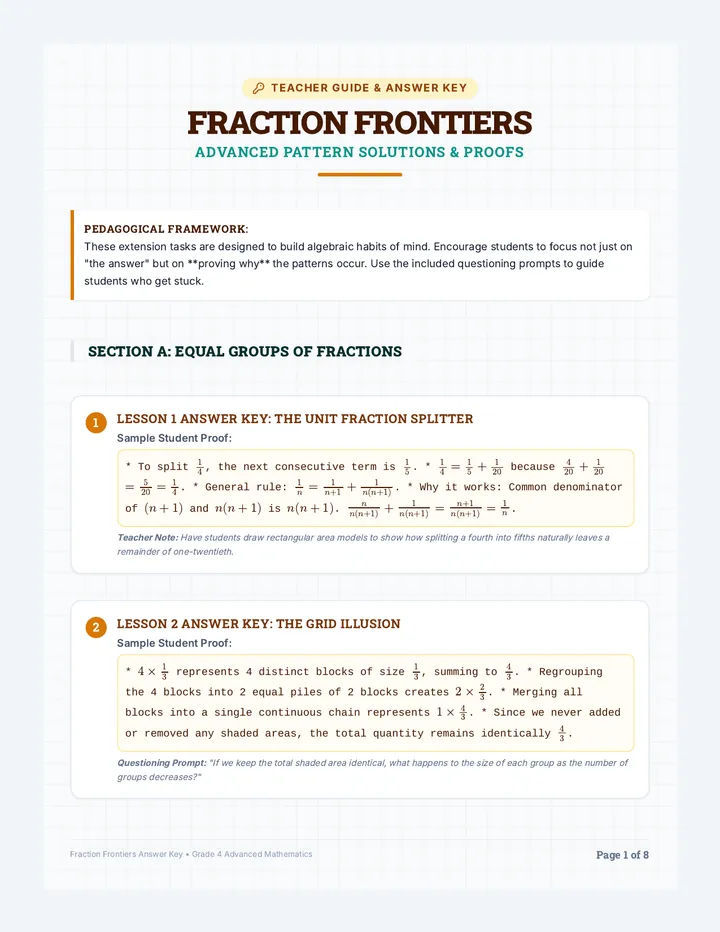
Connecting decomposing arrays to the formal notation of the distributive property using parentheses.
Using area models to visually break apart complex arrays into two smaller, easier-to-manage arrays.
Introduction to the distributive property by decomposing larger factors into 5 and 2.
Students apply the commutative property to solve context-based problems and match expressions to visual models.
Students reinforce the commutative property by translating equal groups into arrays and vice versa.
Students explore the commutative property of multiplication using arrays and physical tiles to understand that order does not change the total.
Students synthesize their learning across all 4.NBT standards through a series of mixed-review 'Case Files'. Focus on ALN HLCs 1-4.
Students investigate the meaning of remainders in division word problems. Focus on ALN HLC 4 and 4.NBT.B.6.
Students practice multi-digit ÷ 1-digit division using partial quotients, justified by place value understanding. Focus on ALN HLC 4 and 4.NBT.B.6.
Students practice multi-digit ÷ 1-digit division by sharing base-ten units into equal groups. Focus on ALN HLC 4 and 4.NBT.B.6.
Students practice 2-digit by 2-digit multiplication using area models and partial products. Focus on ALN HLC 4 and 4.NBT.B.5.
Students practice multi-digit by 1-digit multiplication using area models and partial products. Focus on ALN HLC 4 and 4.NBT.B.5.
Students practice multi-digit subtraction using the standard algorithm, with a focus on decomposing/unbundling. Focus on ALN HLC 4 and 4.NBT.B.4.
Students practice multi-digit addition using the standard algorithm, justified by place value understanding and base-ten models. Focus on ALN HLC 4 and 4.NBT.B.4.
Students use number lines to round multi-digit numbers to any place. Focus on ALN HLC 3 and 4.NBT.A.3.
Students compare multi-digit numbers using place value understanding and relational symbols (>, <, =). Focus on ALN HLC 2 and 4.NBT.A.2.
Students practice reading and writing multi-digit whole numbers in various forms (standard, expanded, word). Focus on ALN HLC 2 and 4.NBT.A.2.
Students explore the 10x relationship between adjacent place value positions using base-ten blocks and place value charts. Focus on ALN HLC 1 and 4.NBT.A.1.
Consolidating all 5.NBT skills through mixed practice and formative assessment tasks.
Dividing decimals by whole numbers and decimals using visual models and relationship to multiplication.
Representing decimal multiplication using area models and looking for patterns with powers of 10.
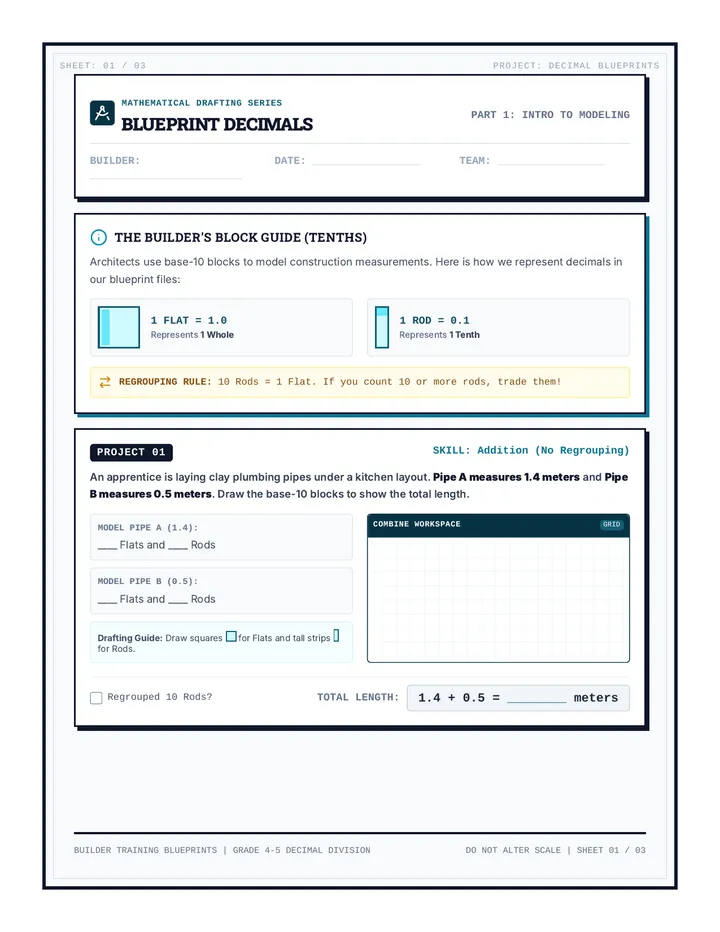
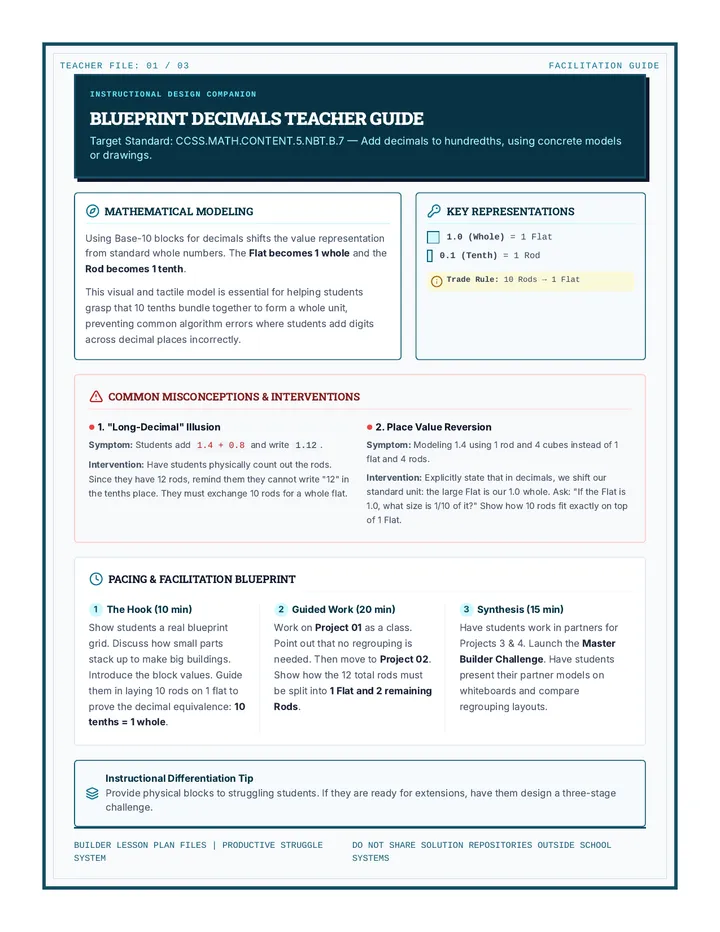
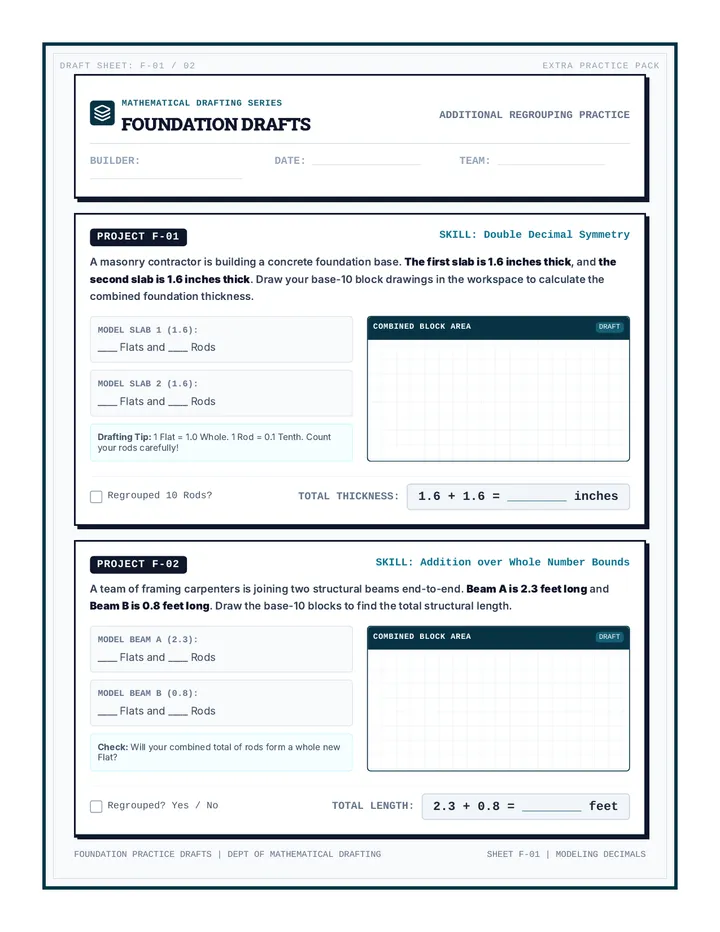
Using base-ten blocks and hundredths grids to add and subtract decimals conceptually.
Developing efficiency with partial quotients for division with two-digit divisors.
Using area models and partial quotients to solve multi-digit division problems.
Applying multiplication strategies to real-world multi-step problems.
Connecting partial products to the standard algorithm for multi-digit multiplication.
Transitioning from area models to partial products for multi-digit multiplication.
Using number lines to round decimals to any place, emphasizing proximity and benchmark numbers.
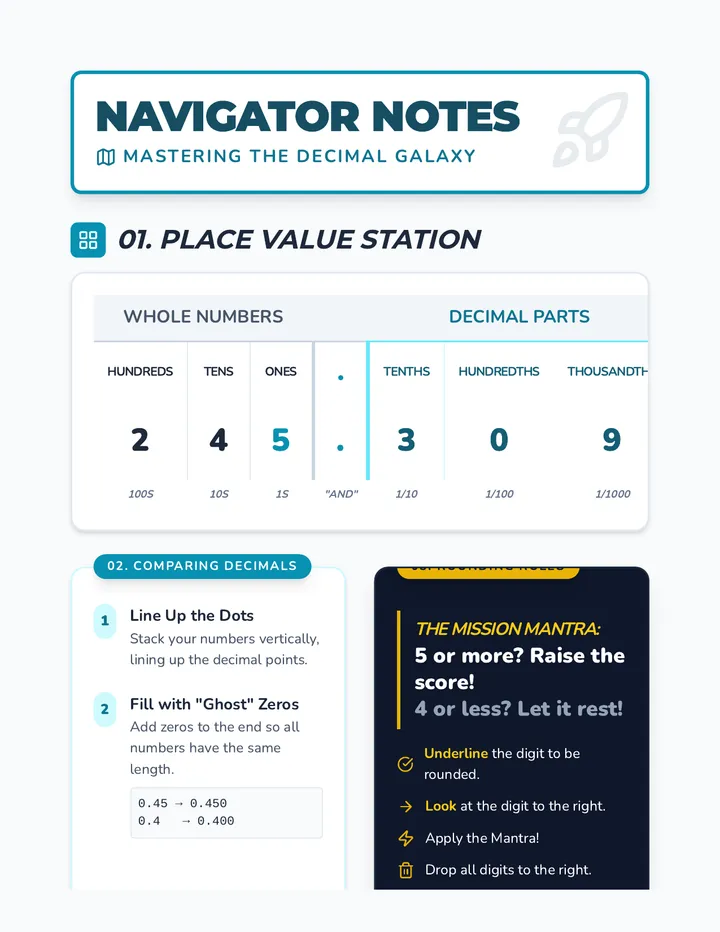
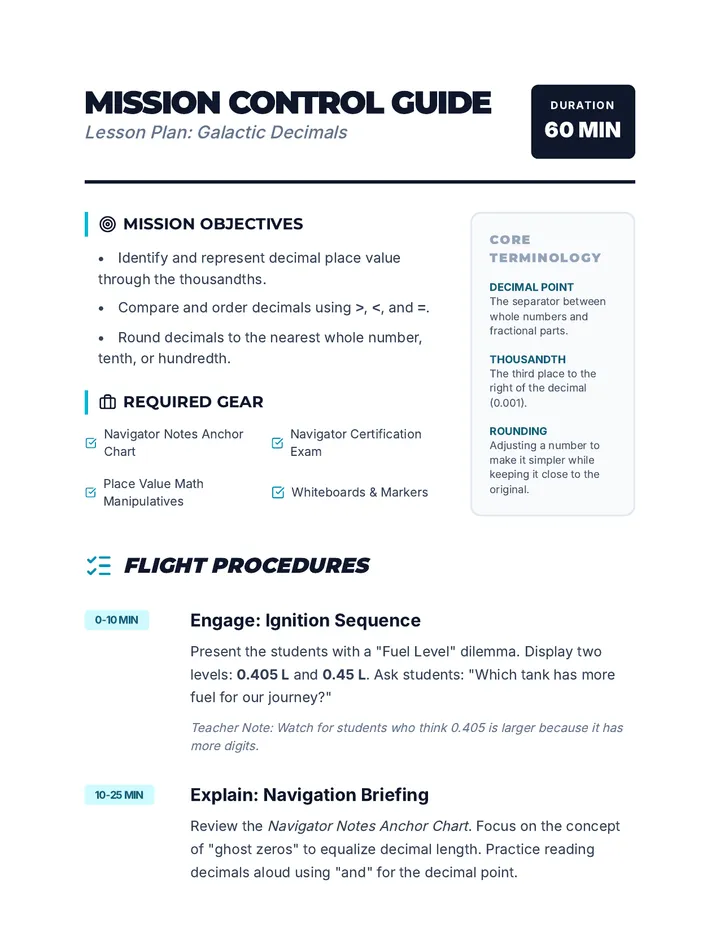
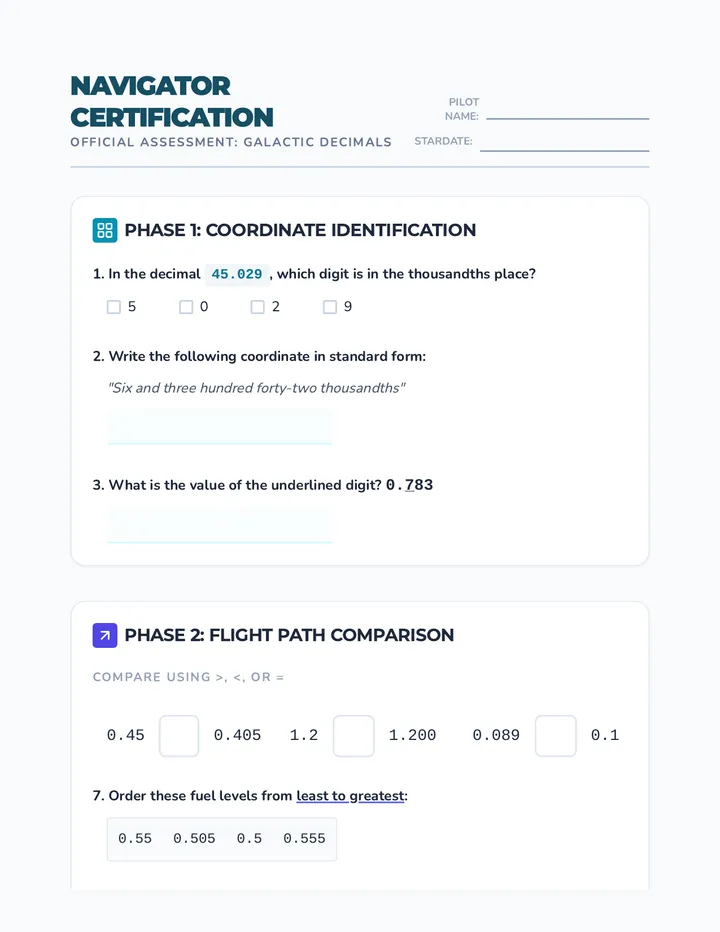
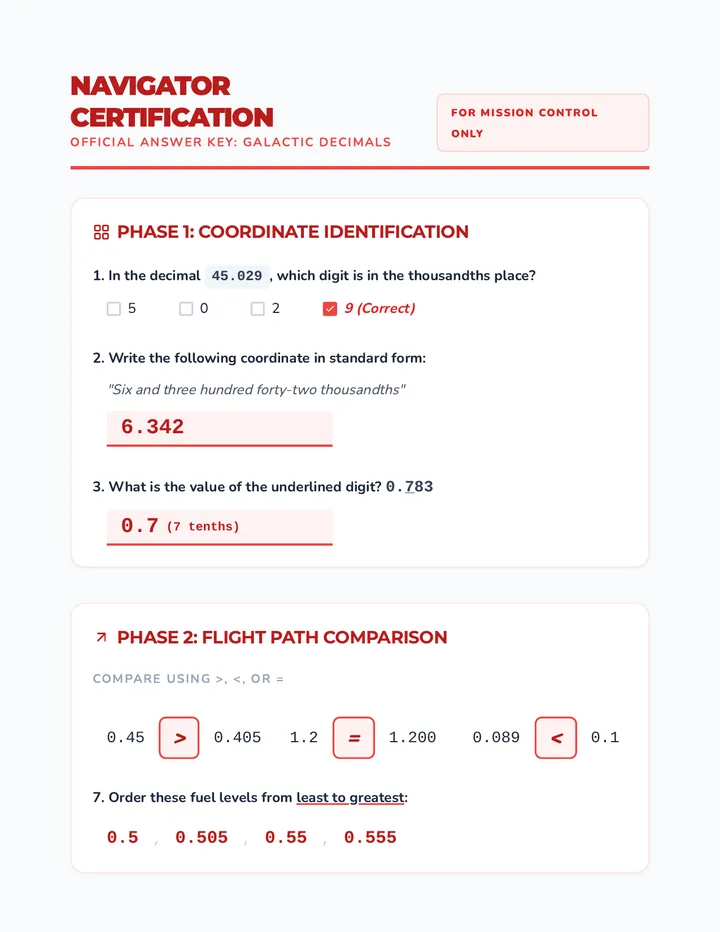
Building conceptual understanding of decimals to the thousandths place using base-ten models and expanded form.
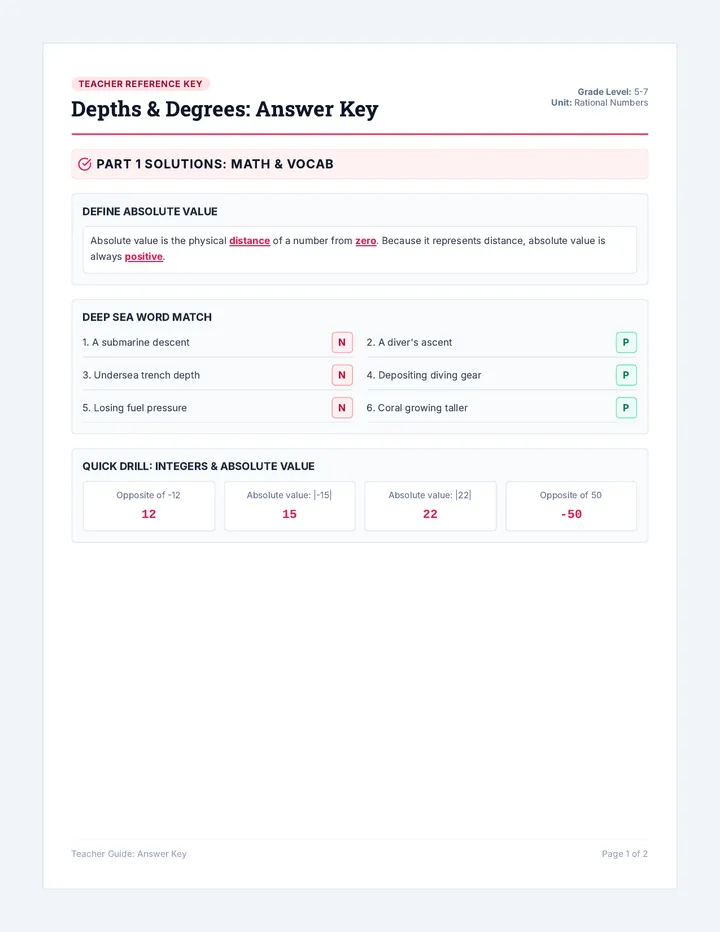
Focuses on the 10-to-1 relationship between place values and the effect of multiplying/dividing by powers of 10.
Students will learn to partition rectangles, circles, and hexagons into sixths and eighths, ensuring all parts are equal in area and labeled correctly as unit fractions.
Students learn the incrementing strategy to add numbers up to 100 by breaking the second addend into tens and ones and 'jumping' along a number line. This visual approach builds mental math fluency and place value understanding.
A lesson on addition within 100 using the incrementing algorithm. Students learn to break down the smaller part into its place values and add them step-by-step to the larger part using a "mountain jumping" visual theme.
A cumulative review and assessment day. Students complete a 'Final Inspection' quiz to demonstrate mastery and participate in a collaborative 'Lab Graduation' challenge.
Students apply their subtraction skills to solve complex, multi-step word problems. The lesson focuses on identifying keywords and creating 'evidence logs' to organize mathematical steps.
Addresses the specific challenge of regrouping when the minuend contains one or more zeros. Students learn the 'Middle Man' strategy to pass value from the hundreds place through the tens to the ones.
Advances to problems requiring students to regroup twice (from both the hundreds and tens places). Students practice identifying when multiple swaps are necessary to complete a calculation.
Focuses on the fundamentals of 3-digit subtraction with a single instance of regrouping (either tens or ones). Students learn the conceptual "Great Trade" strategy and apply it to basic lab blueprint problems.