Students compare multi-digit numbers using place value understanding and relational symbols (>, <, =). Focus on ALN HLC 2 and 4.NBT.A.2.
Introduces non-unit fractions by counting multiple shaded parts (e.g., 2 out of 3, 3 out of 4). Focuses on the verbal transition from "one part" to "many parts" while maintaining visual consistency.
Introduces the concept of a unit fraction by identifying 'one part' out of a whole. Focuses on visual recognition of one shaded part and introduces the verbal phrasing 'one out of x' in English and Portuguese.
Focuses on identifying the number of equal parts (2, 3, and 4) in a whole. Introduces the vocabulary for halves, thirds, and fourths through visual counting and symbols, maintaining a low-literacy approach.
A foundational introduction to fractions as equal parts of a whole, specifically designed for students with interrupted education and no literacy. This lesson uses high-visual, low-text materials to assess and build conceptual understanding of partitioning and fair shares.
A rigorous lesson for grade 4 on solving multi-step word problems using addition, subtraction, multiplication, and division. Students use 'Detective Toolkit' strategies to interpret complex scenarios and choose correct operations.
A collection of foundational homework worksheets covering reading comprehension, arithmetic, grammar, and basic fractions with a nature-inspired 'Meadow Scouts' theme.
Unit review and final comprehensive word problem assessment.
Mixed operations multi-step word problems involving all four operations.
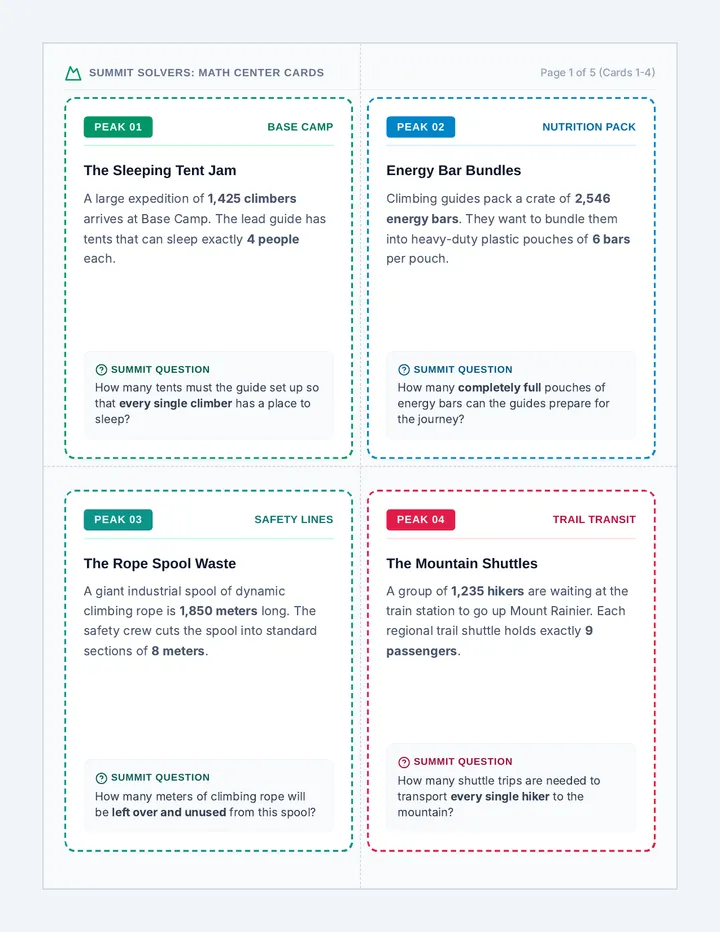
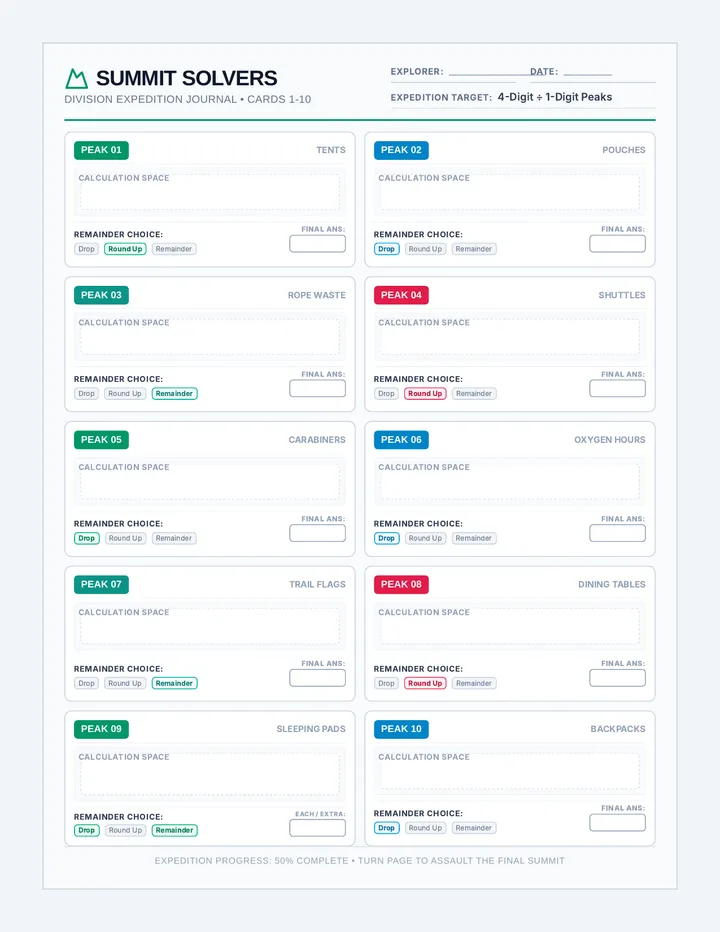
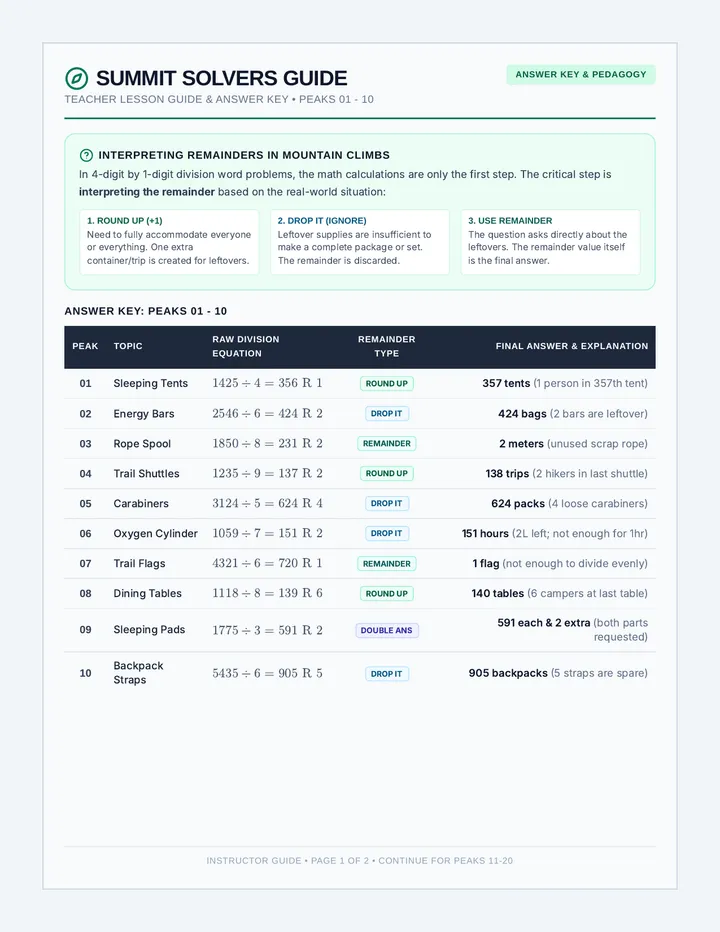
Interpreting remainders in context (Round up, discard, or fraction). Includes Bi-Weekly Check 2.
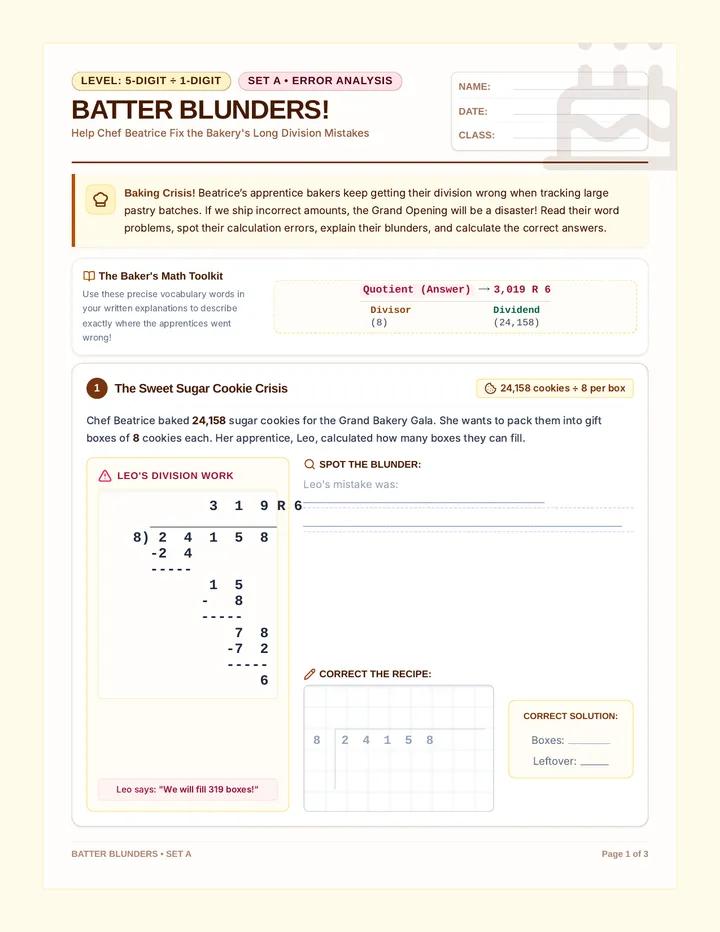
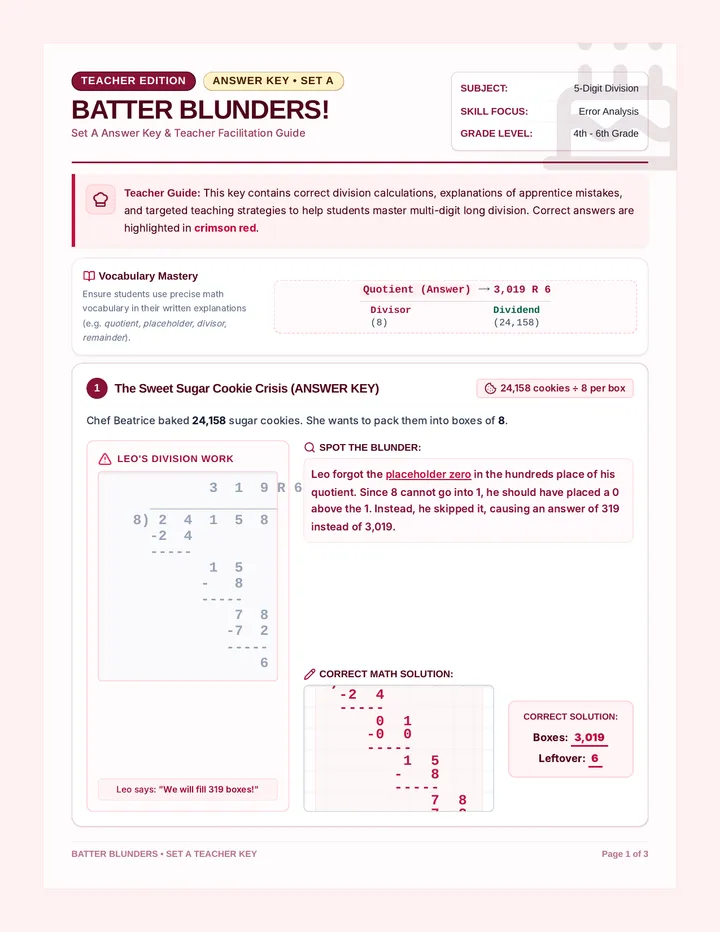
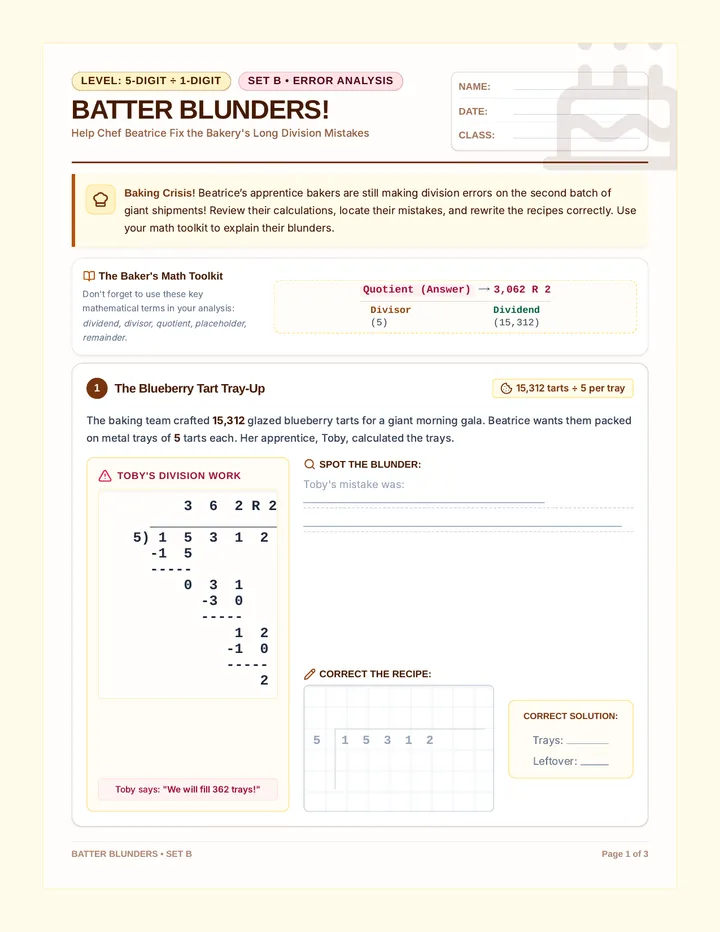
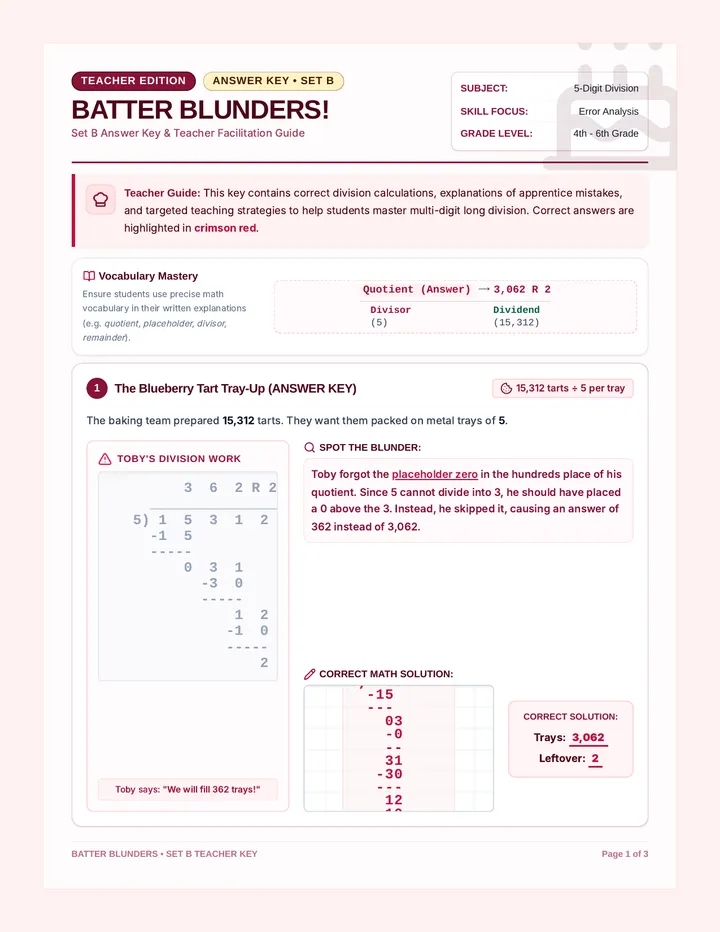
Division word problems using partitive and quotative models with 4-digit dividends.
Understanding multiplicative comparison and multi-step multiplication problems. Includes Bi-Weekly Check 1.
Multiplication word problems involving multi-digit numbers (4-digit by 1-digit) and area models.