Students create a mosaic or tile design using a specific set of required shapes. They analyze their final product by counting total vertices and sides, serving as a summative assessment of composition skills.
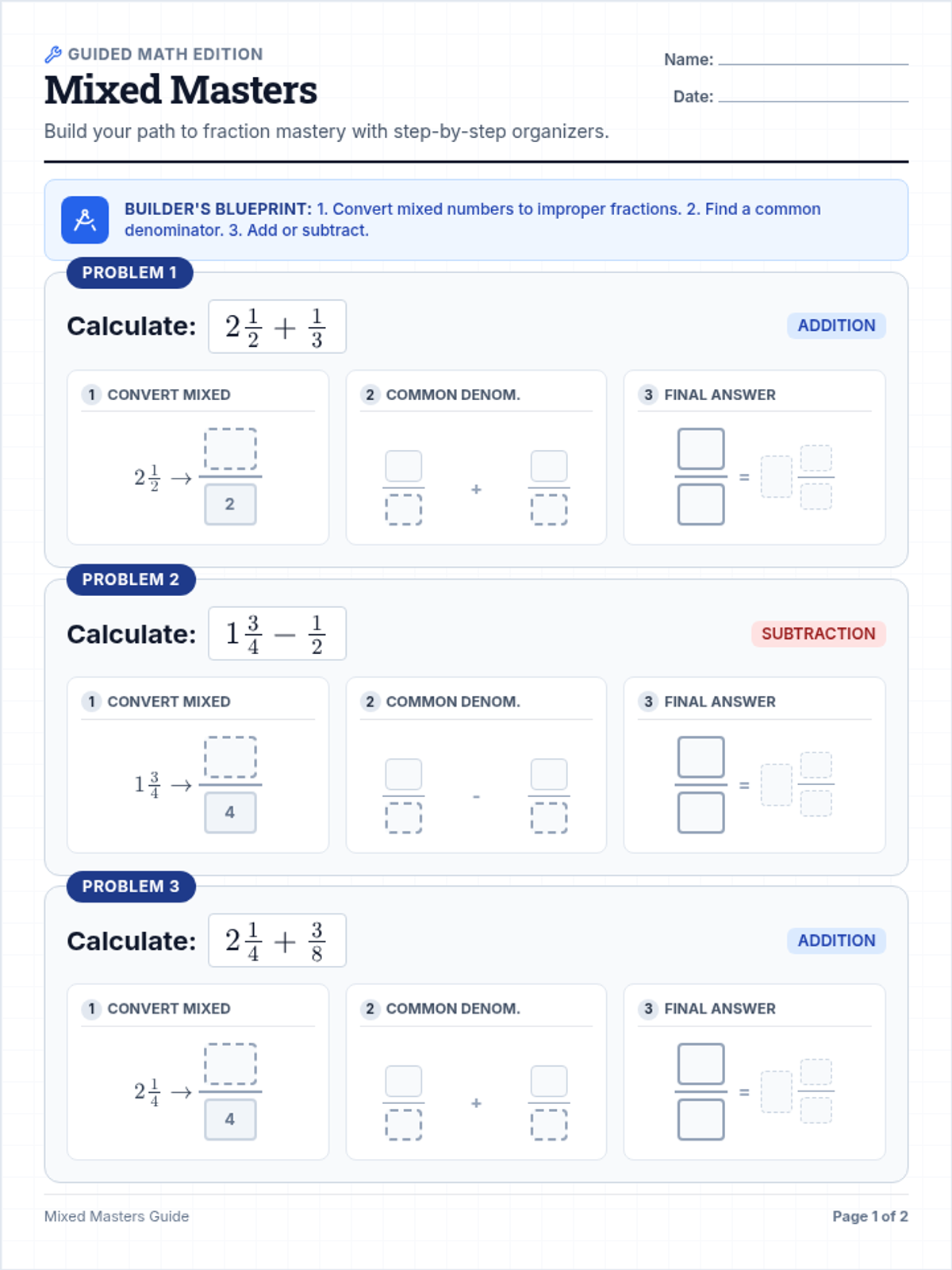
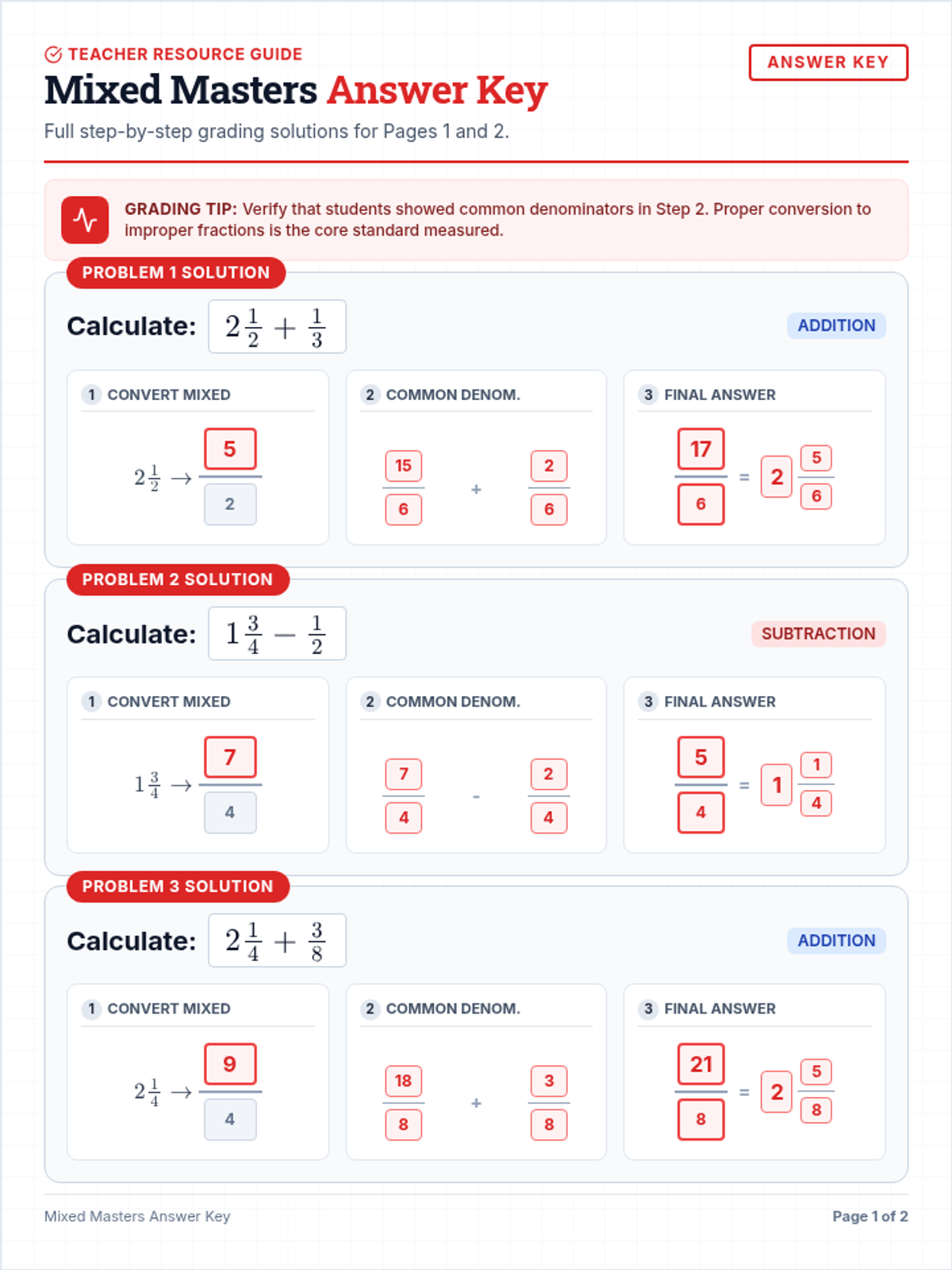
A structured math lesson guiding students through adding and subtracting mixed numbers and proper fractions. Includes visual graphic organizers for step-by-step conversion and computation.
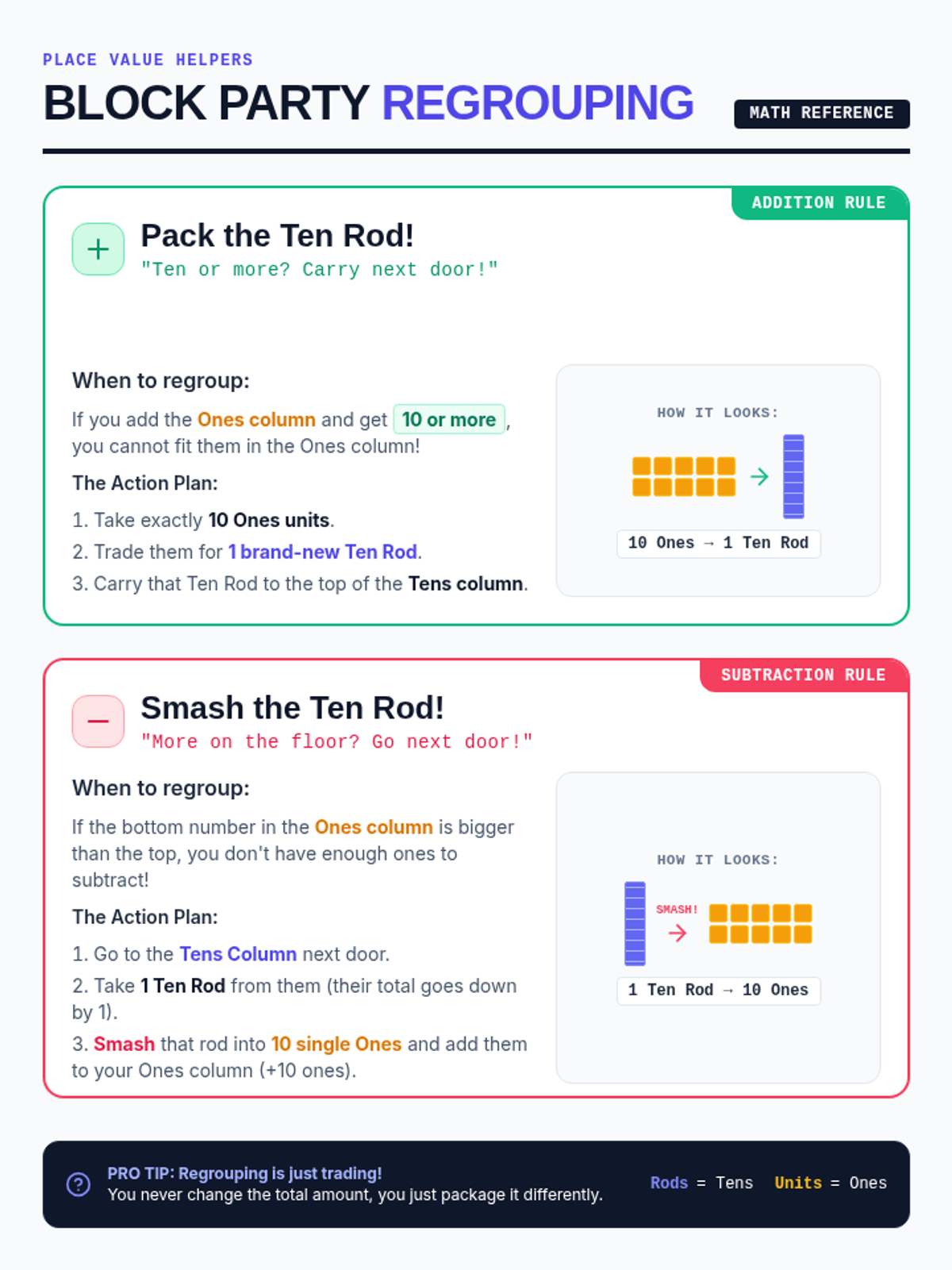
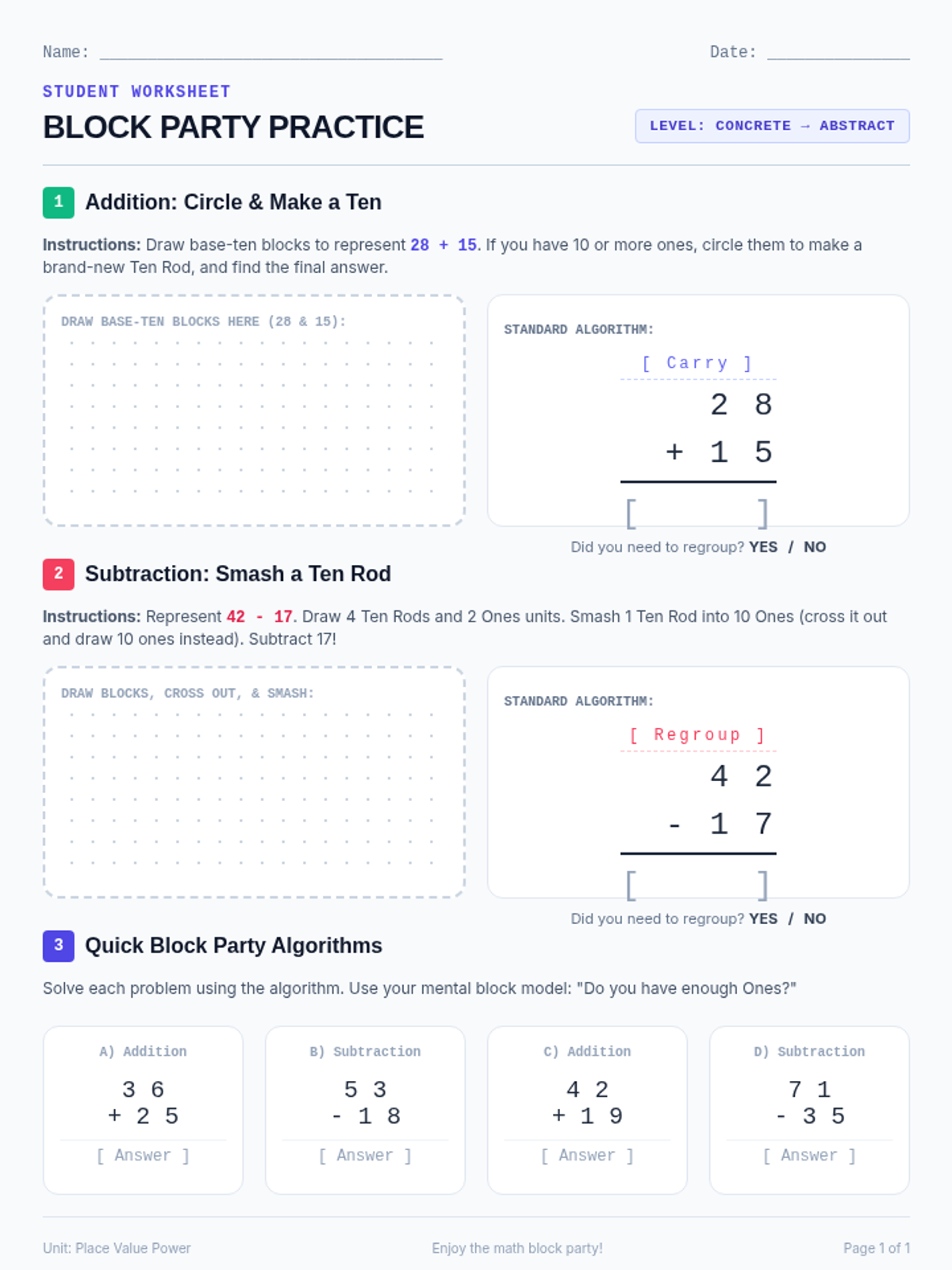
A conceptually focused lesson on addition and subtraction with regrouping, using base-ten block representations to physically build and break apart tens. Students learn exactly when and why regrouping is necessary through visual models.
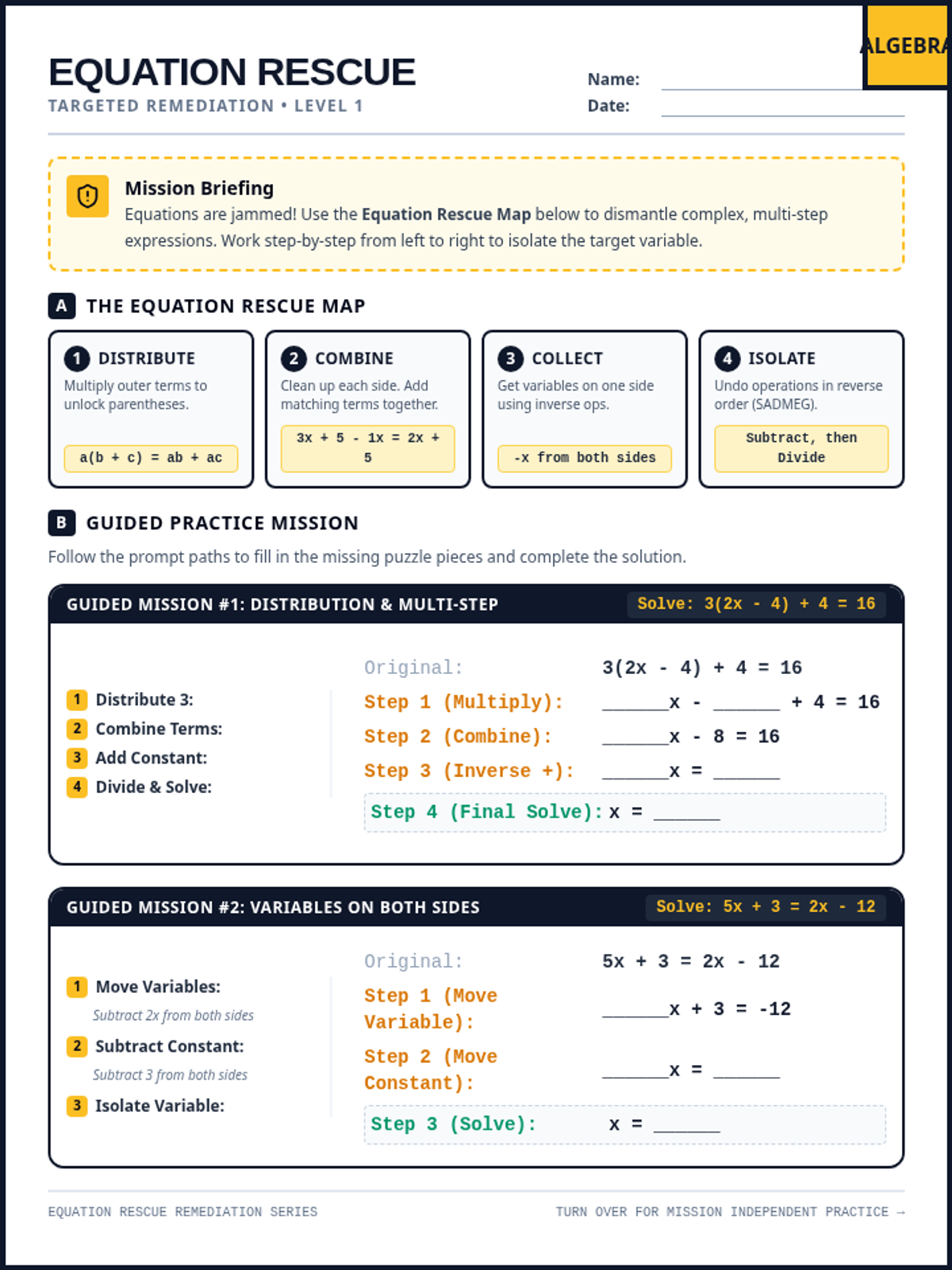
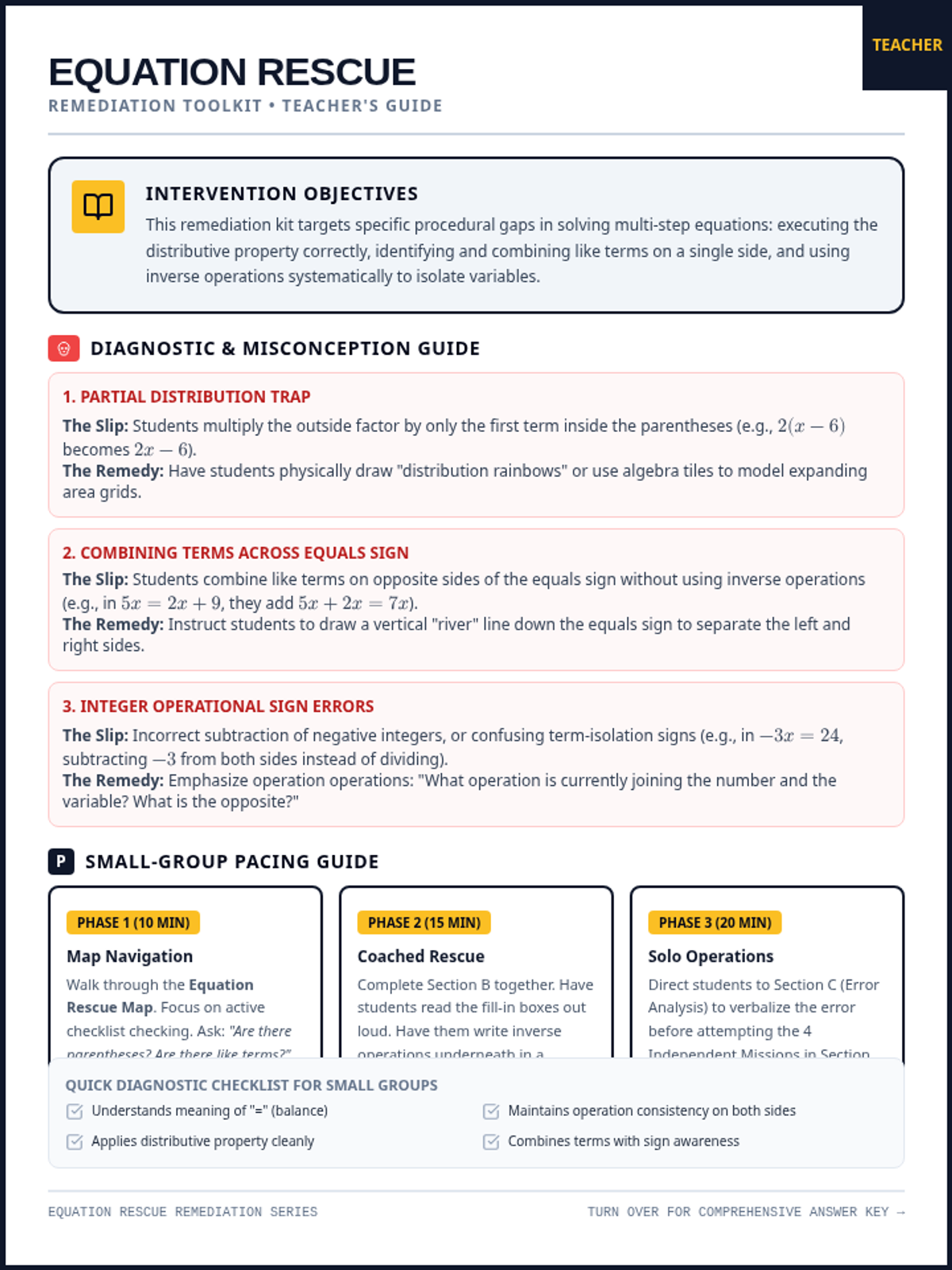
A targeted remediation lesson designed to help high school algebra students master multi-step linear equations involving distribution, combining like terms, and variables on both sides. Features a visual flowchart, scaffolded guided practice, error analysis, and targeted practice problems.
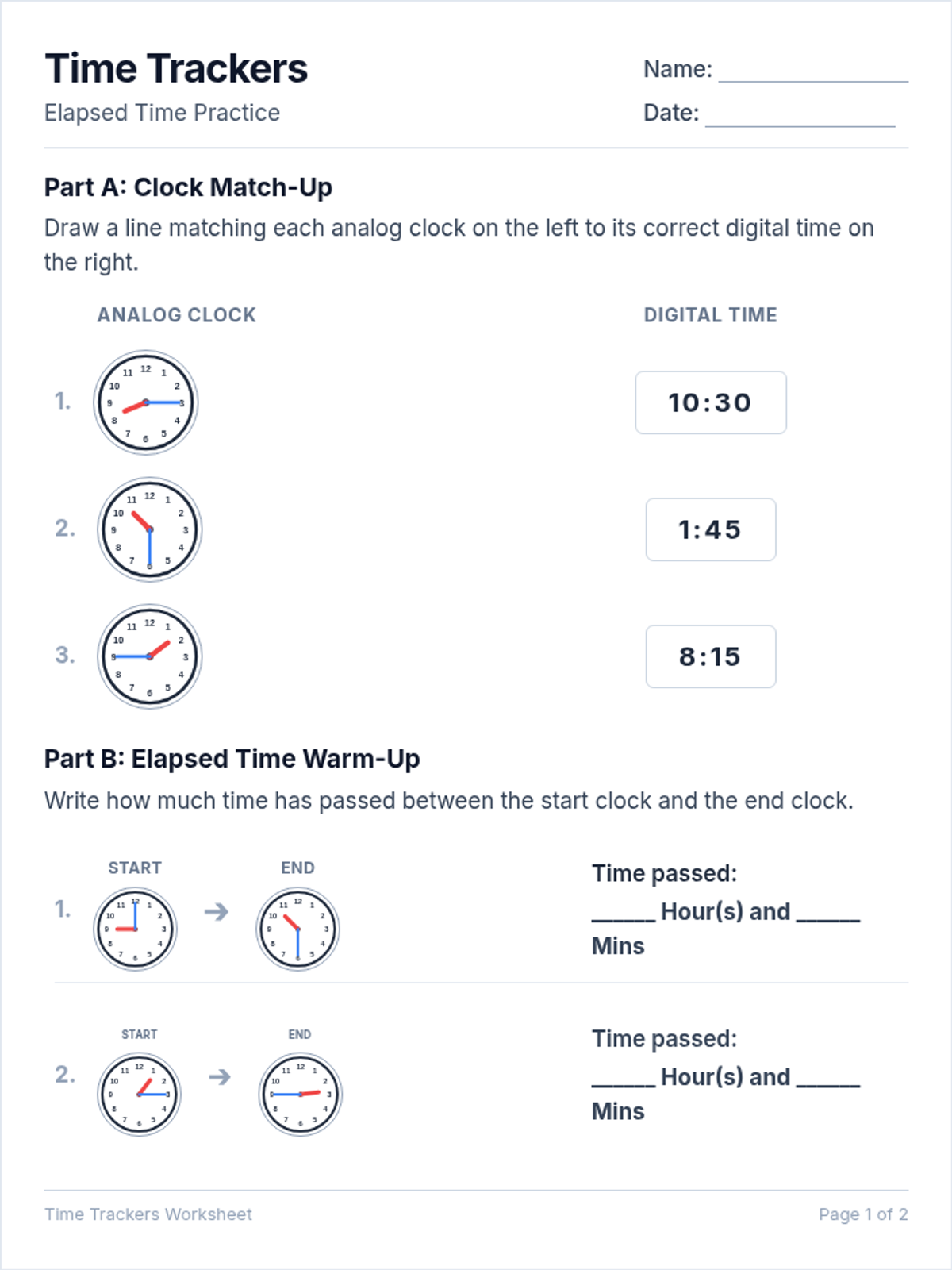
A lesson teaching student how to measure and calculate elapsed time using analog and digital clocks, progressing from hours and half hours to five-minute intervals.
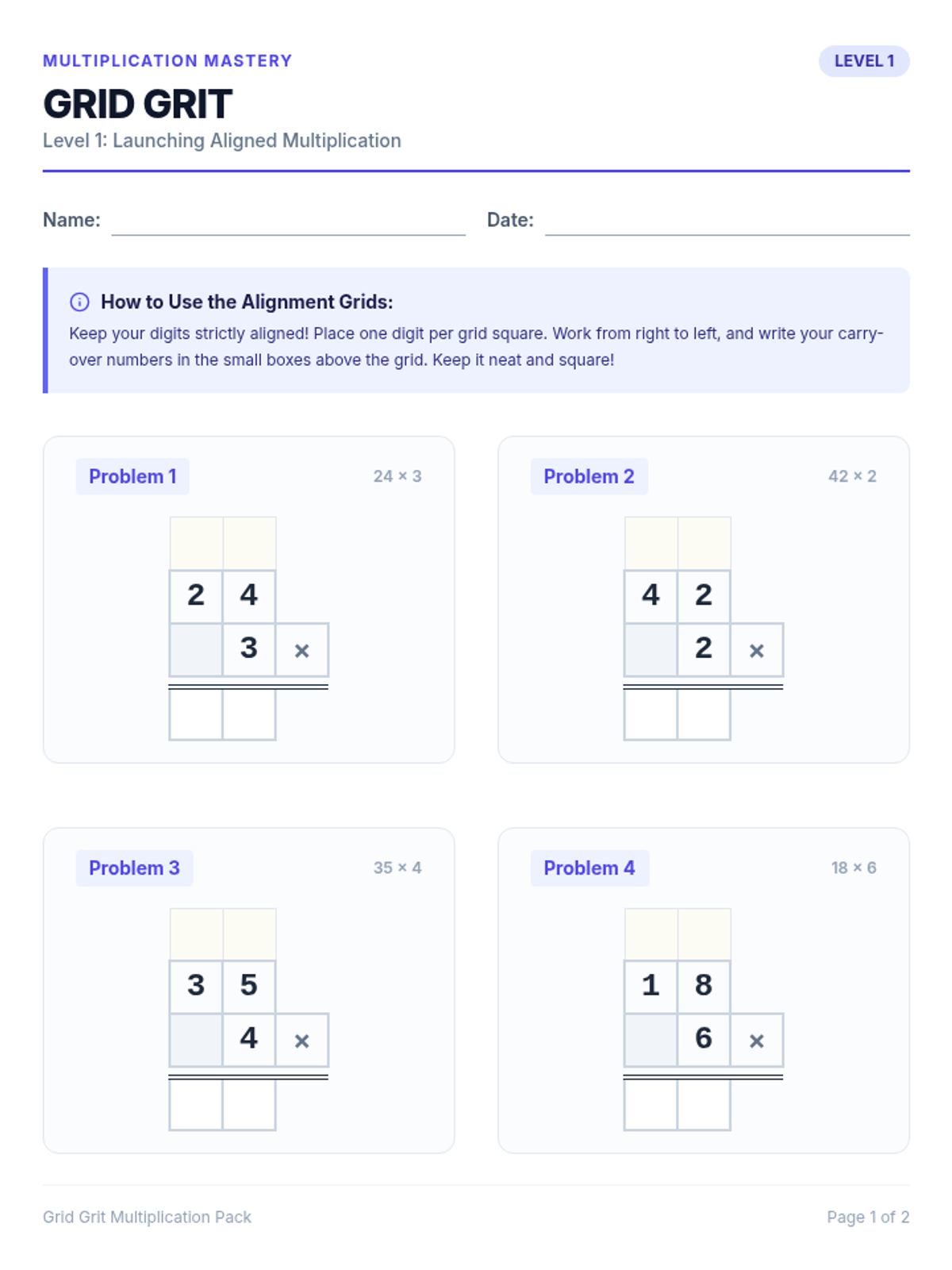
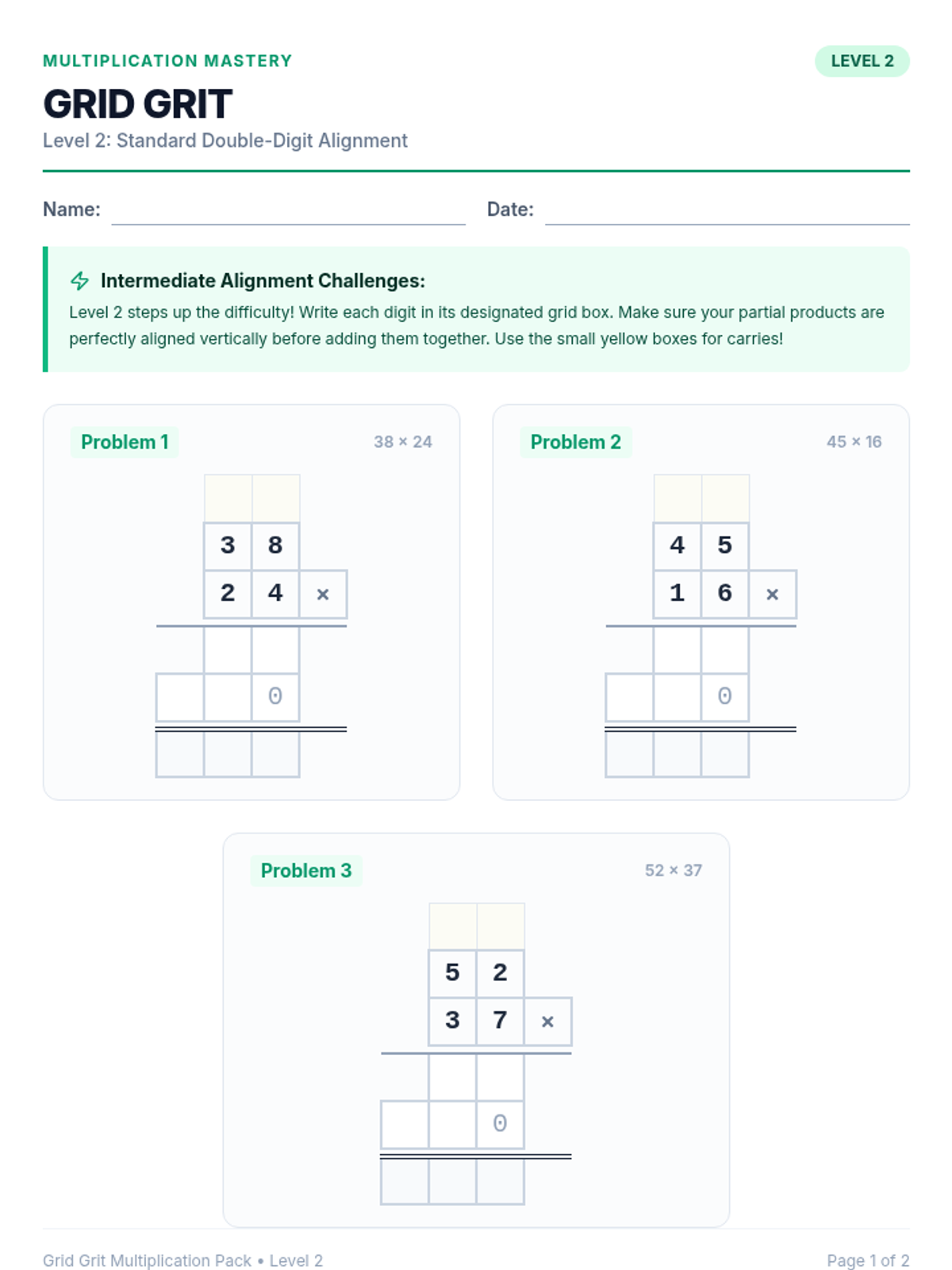
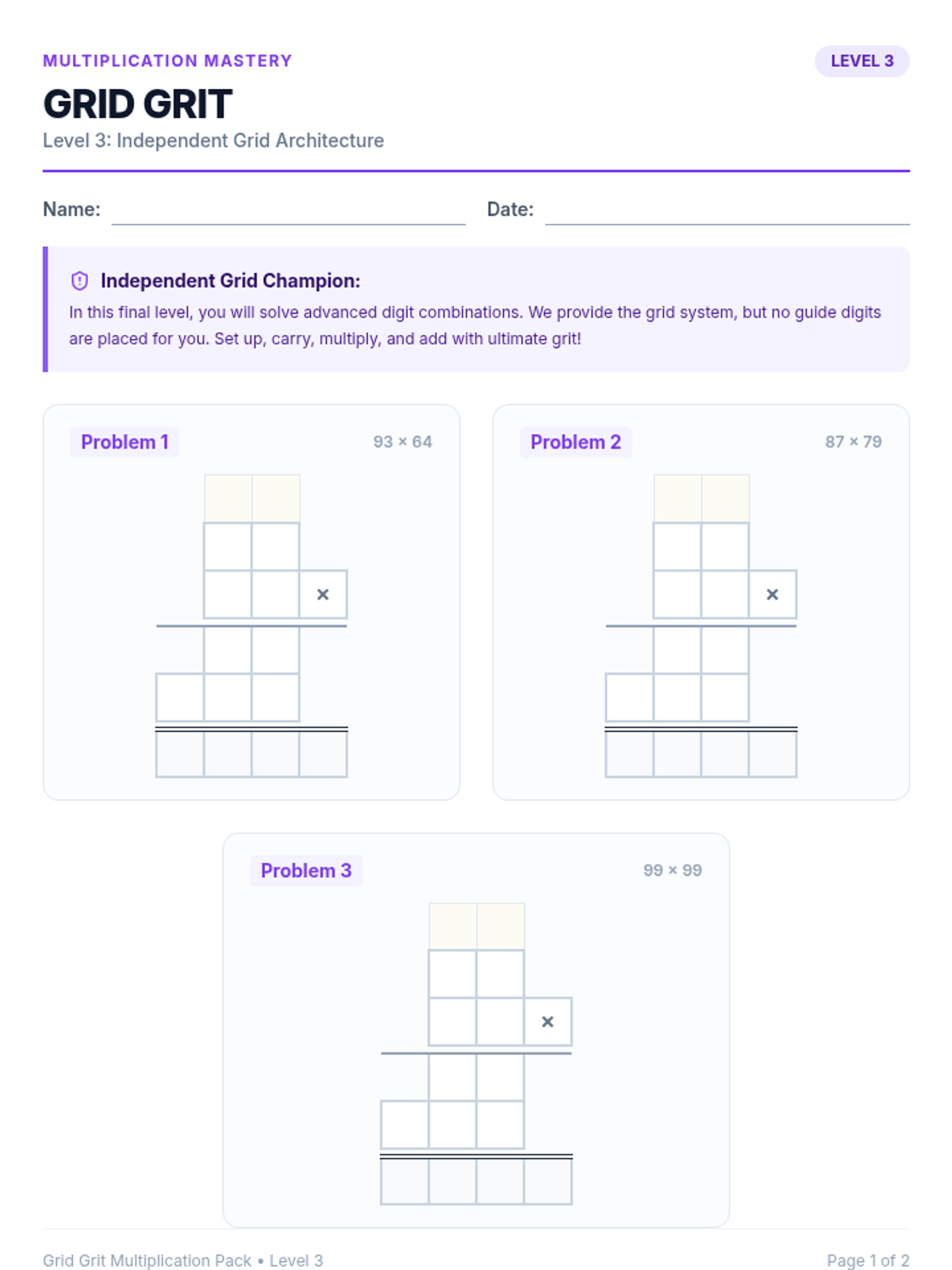
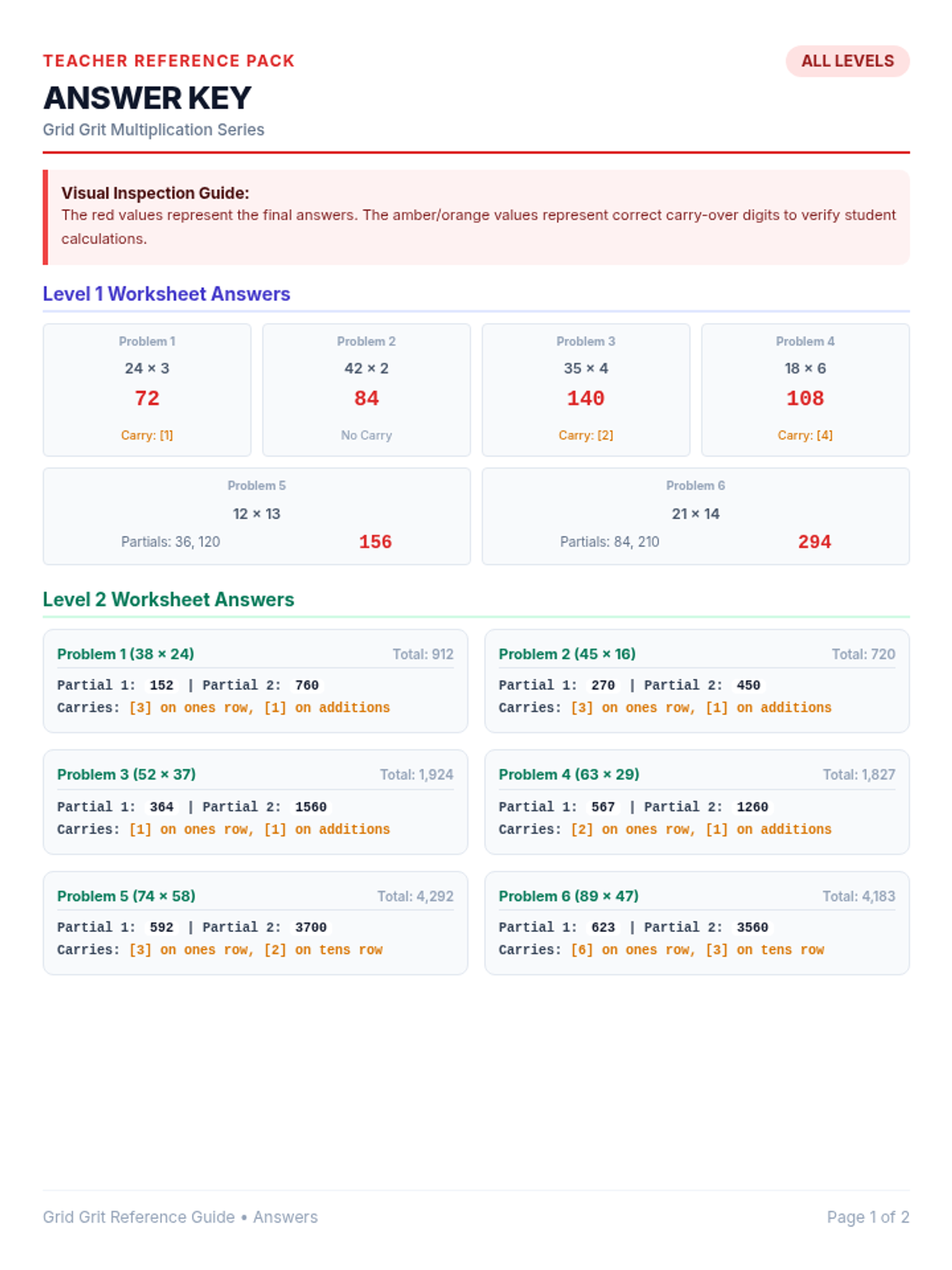
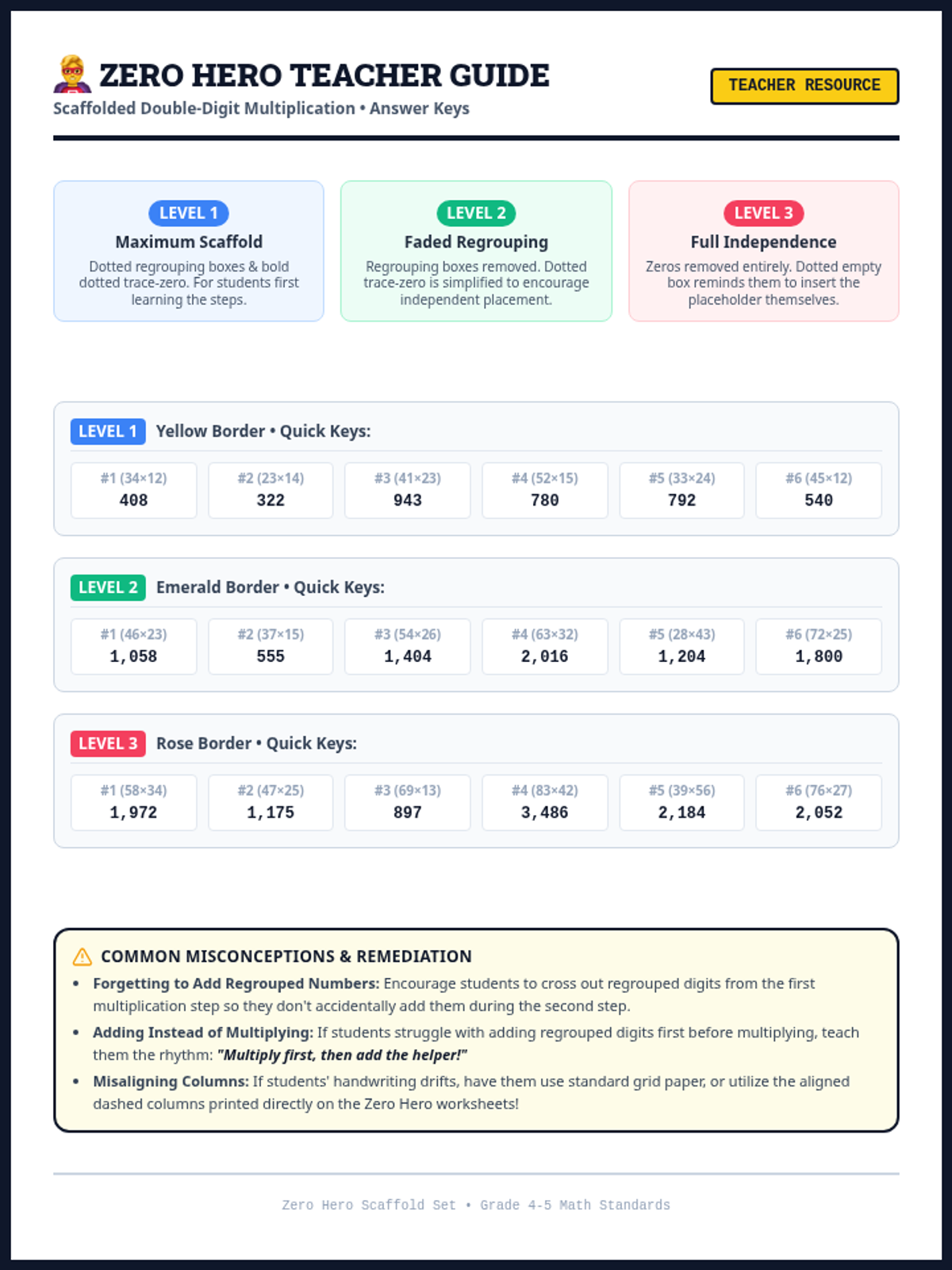
A progressive multi-level worksheet pack designed to master double-digit multiplication using custom, enlarged alignment grids to support spatial organization and focus.
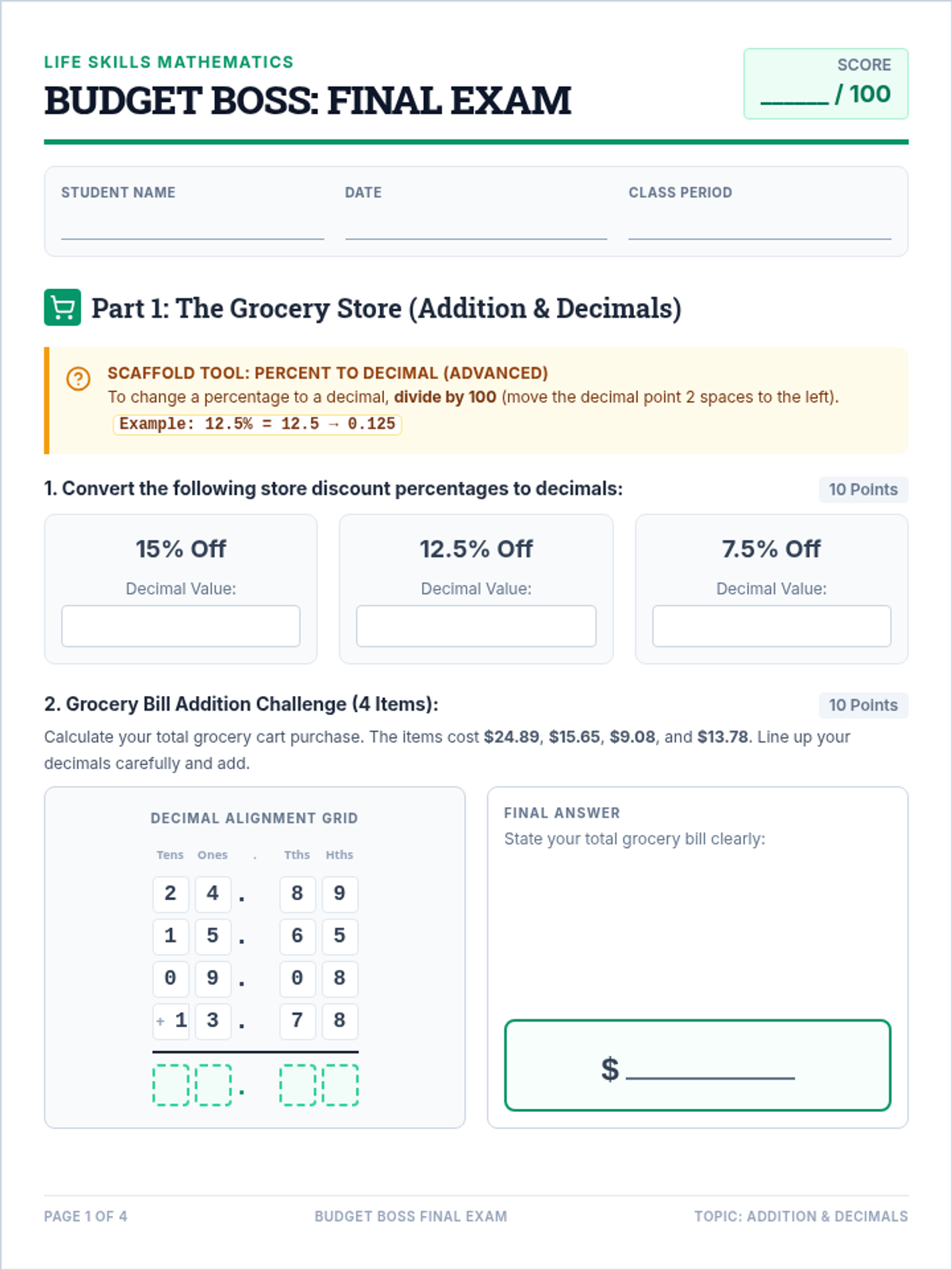
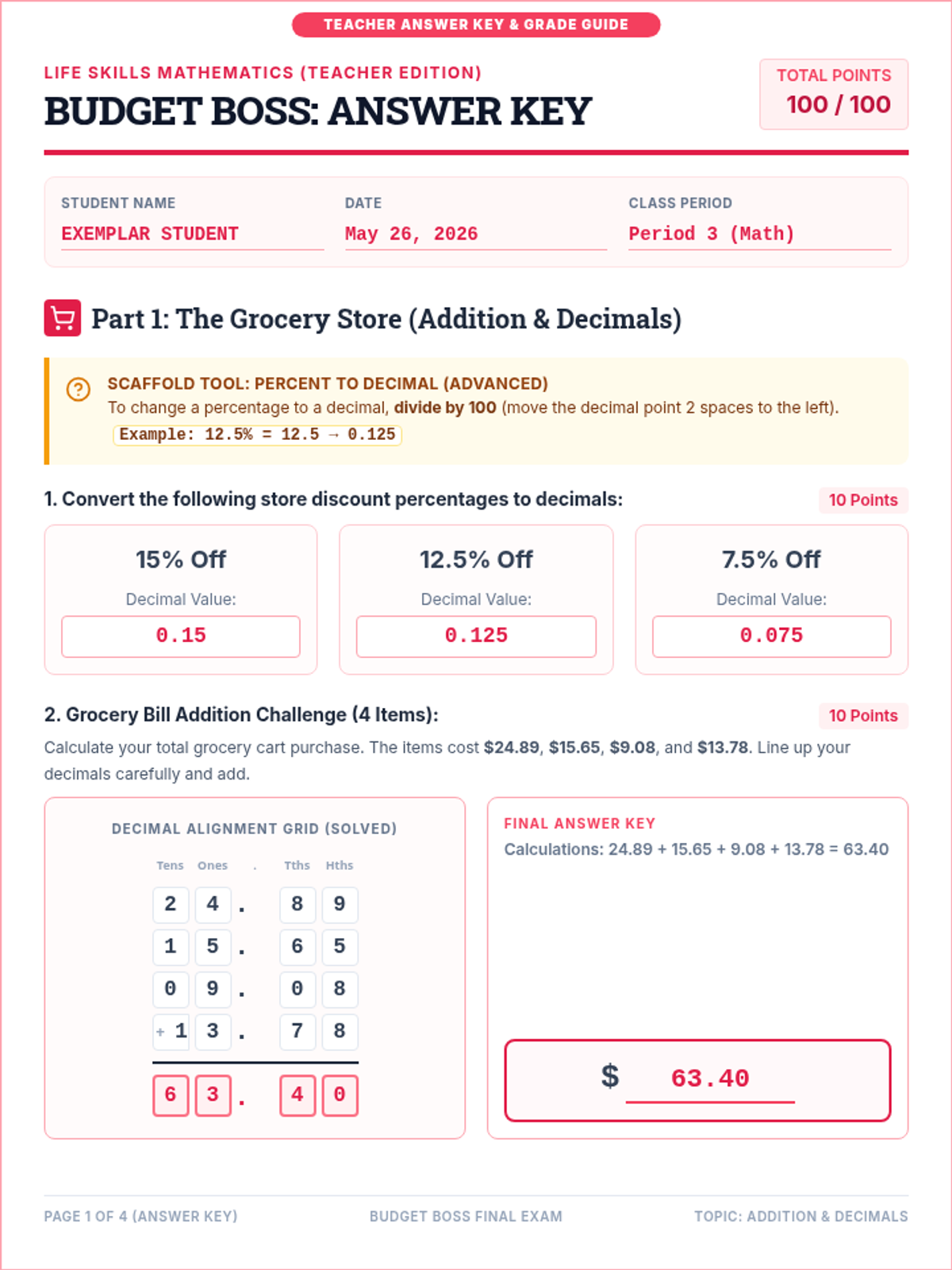
A comprehensive, real-world math exam and answer key assessing student mastery of addition, division, percentage-to-decimal conversions, and multi-step word problems through grocery shopping, vocational wages, and budgeting scenarios.
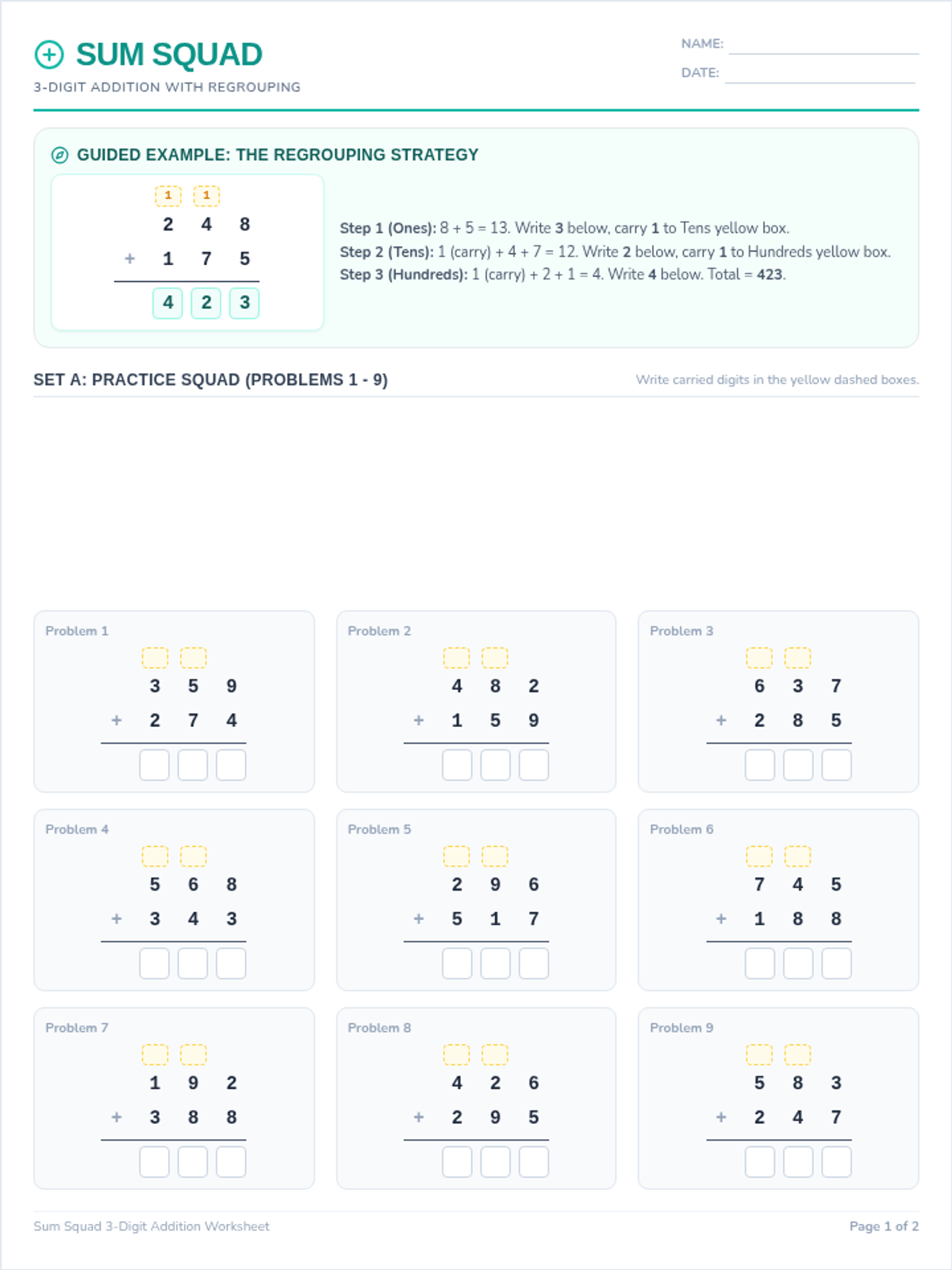
A lesson designed to master three-digit addition with regrouping using visual place value grids to guide students through carrying ten ones or ten tens.
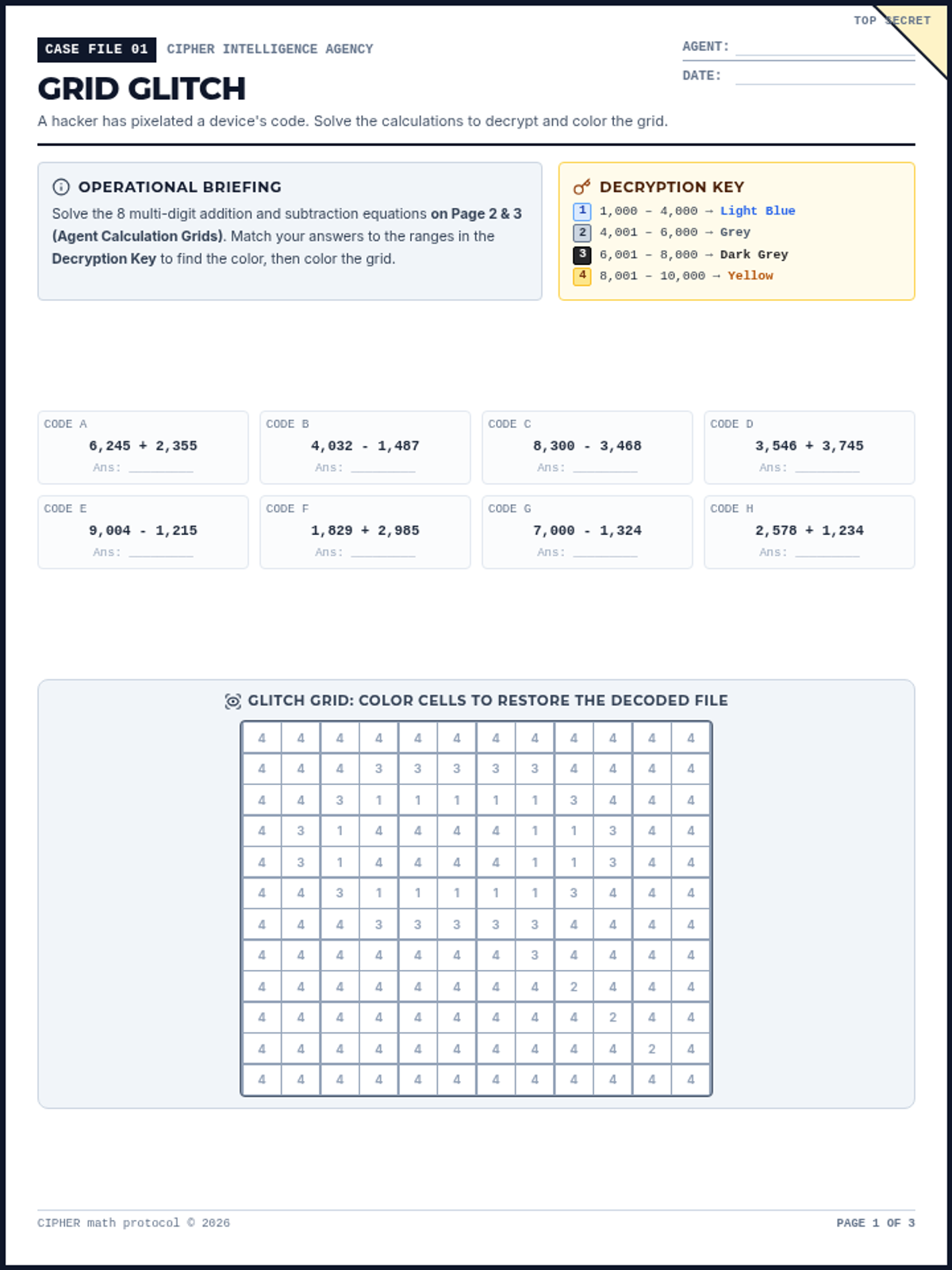
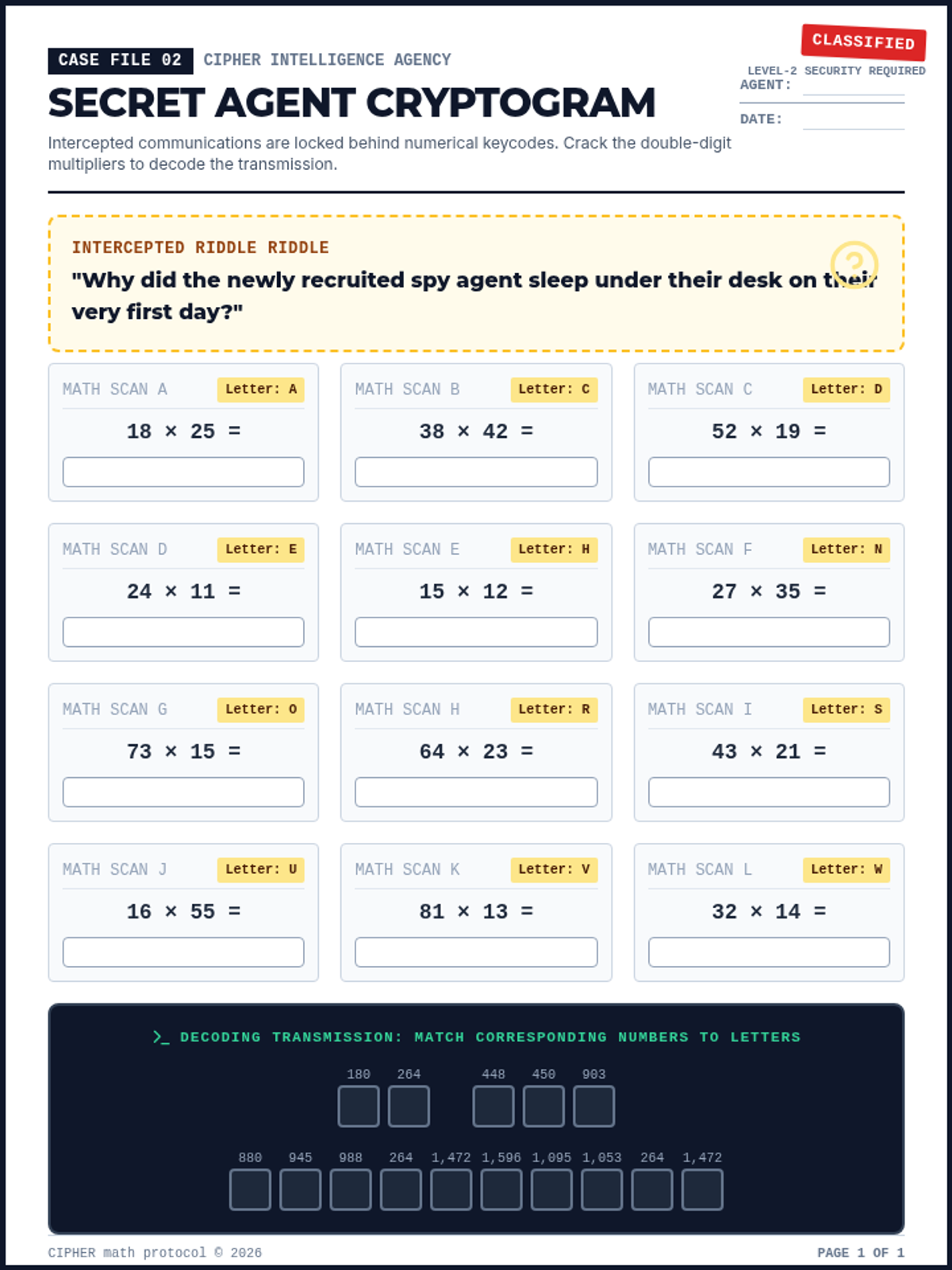
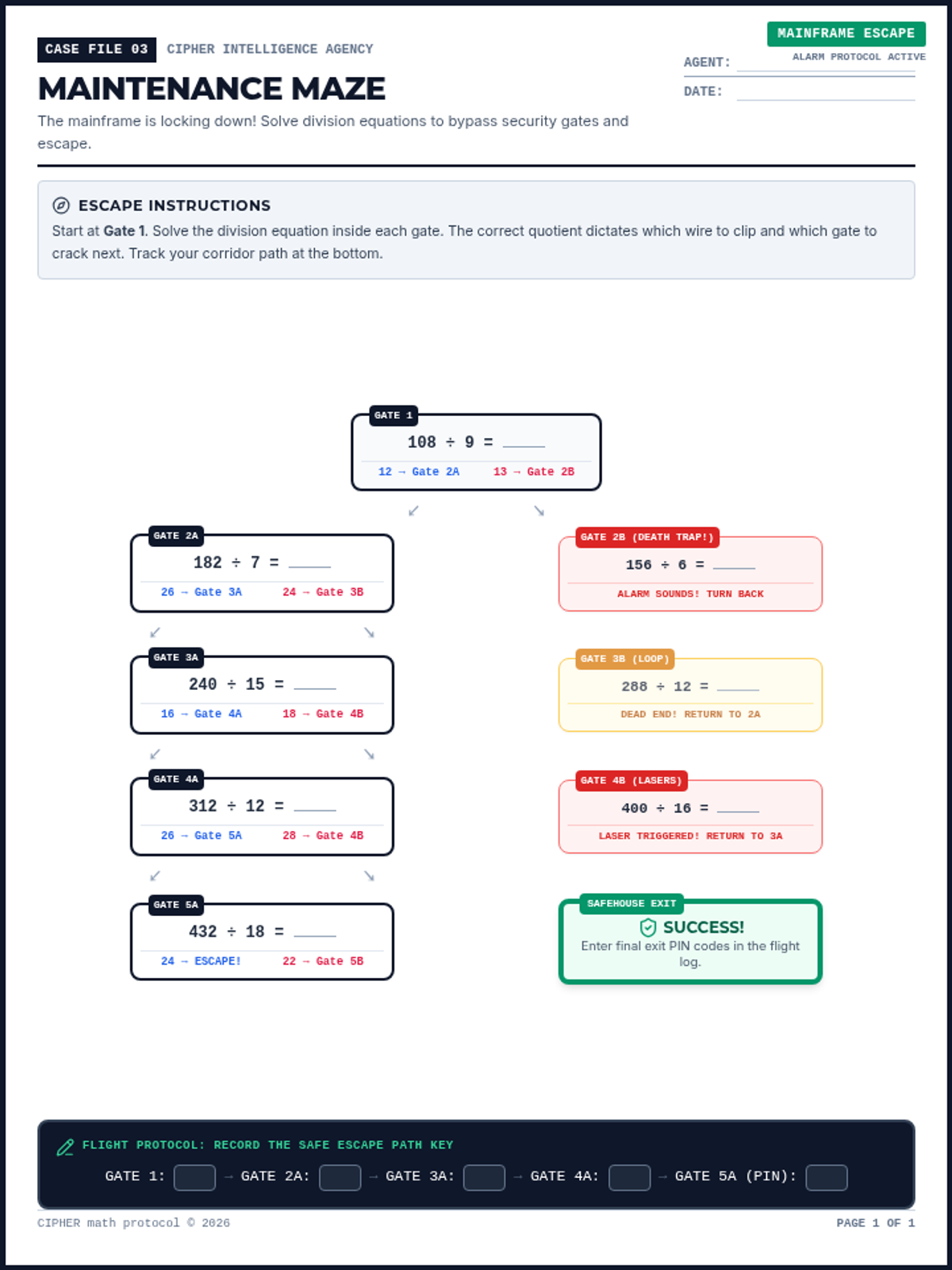
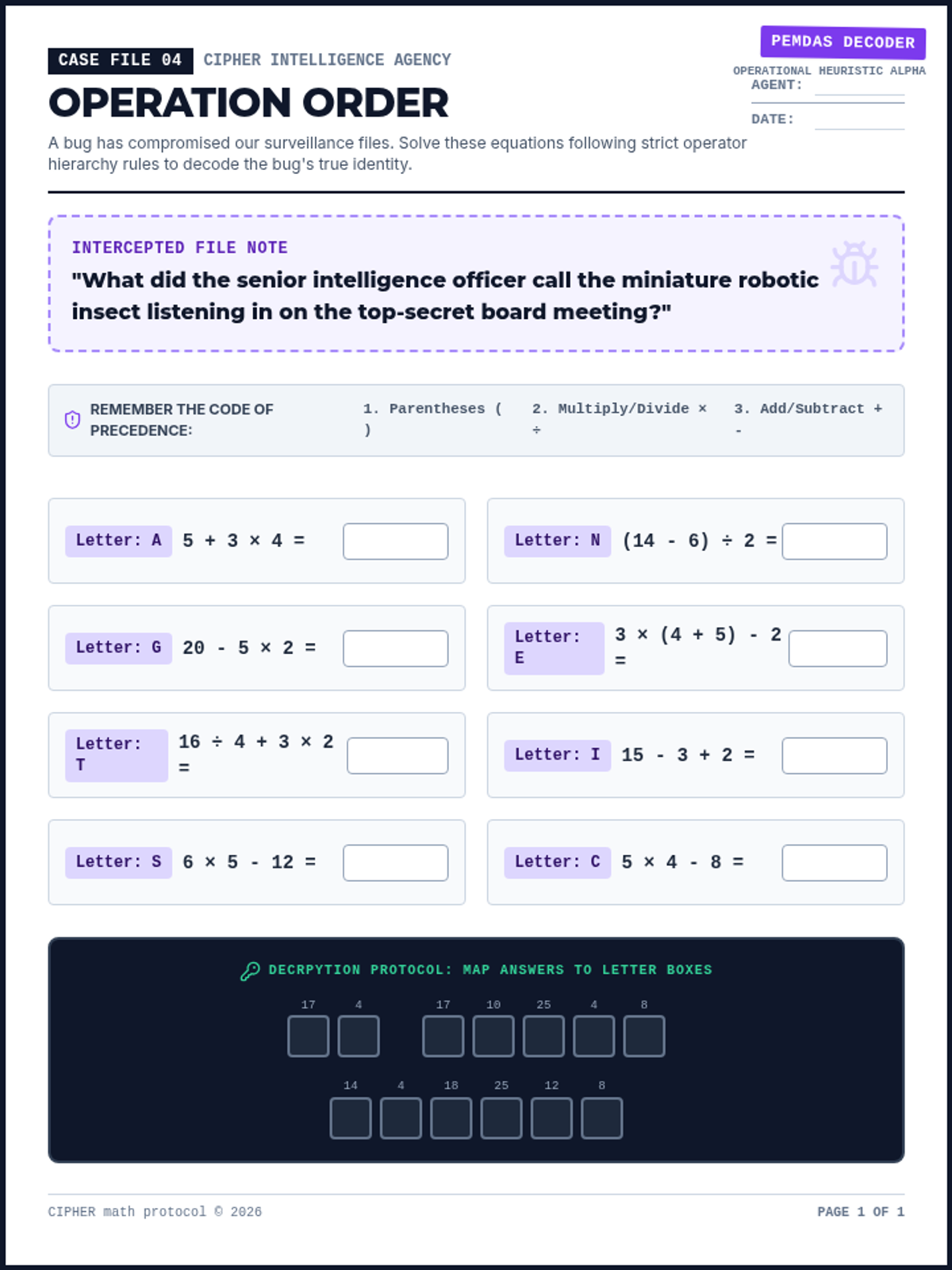
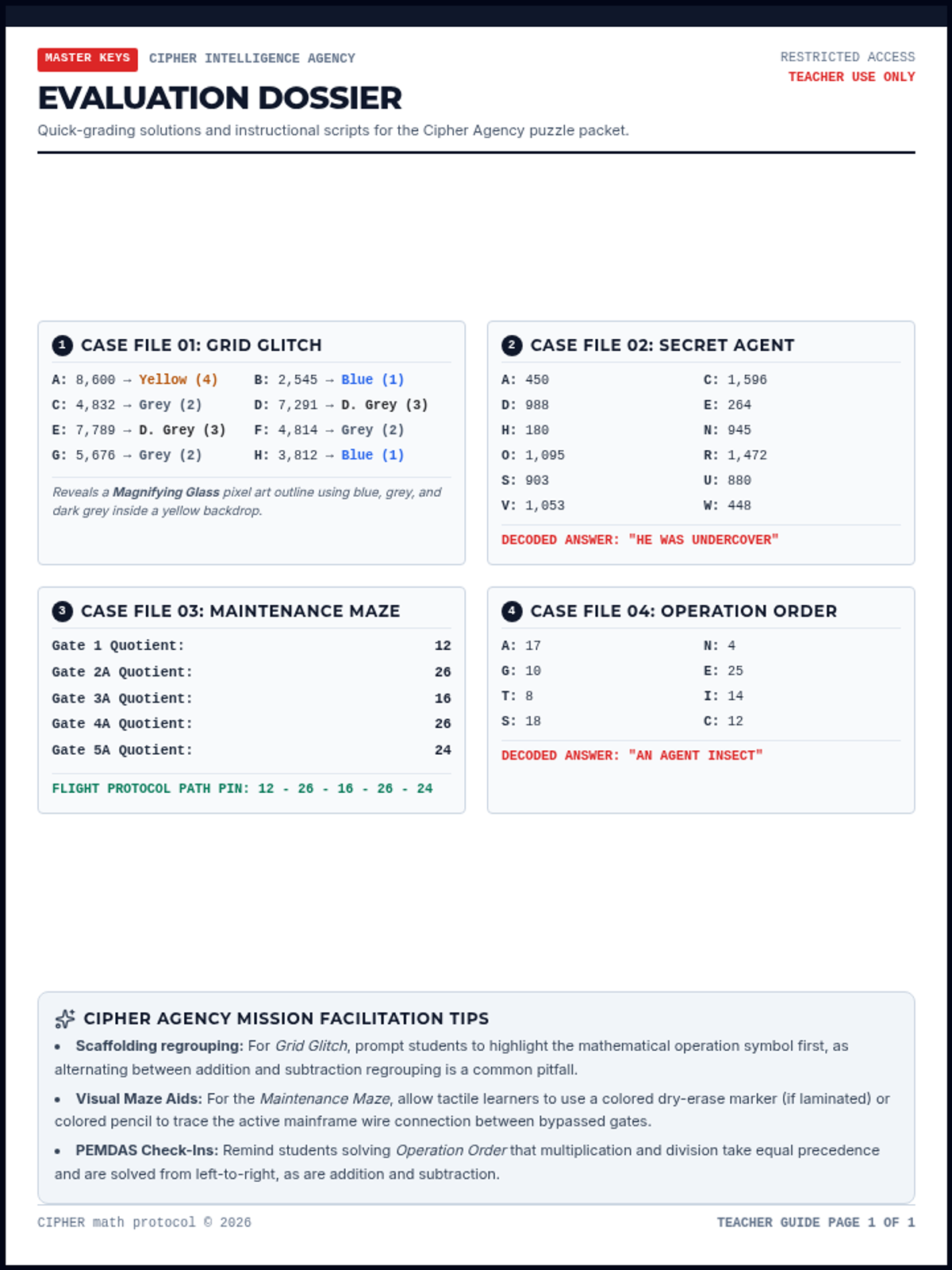
A collection of ready-to-print math puzzle worksheets and a teacher answer key designed to reinforce elementary arithmetic through engaging spy-themed cryptograms and pixel art.
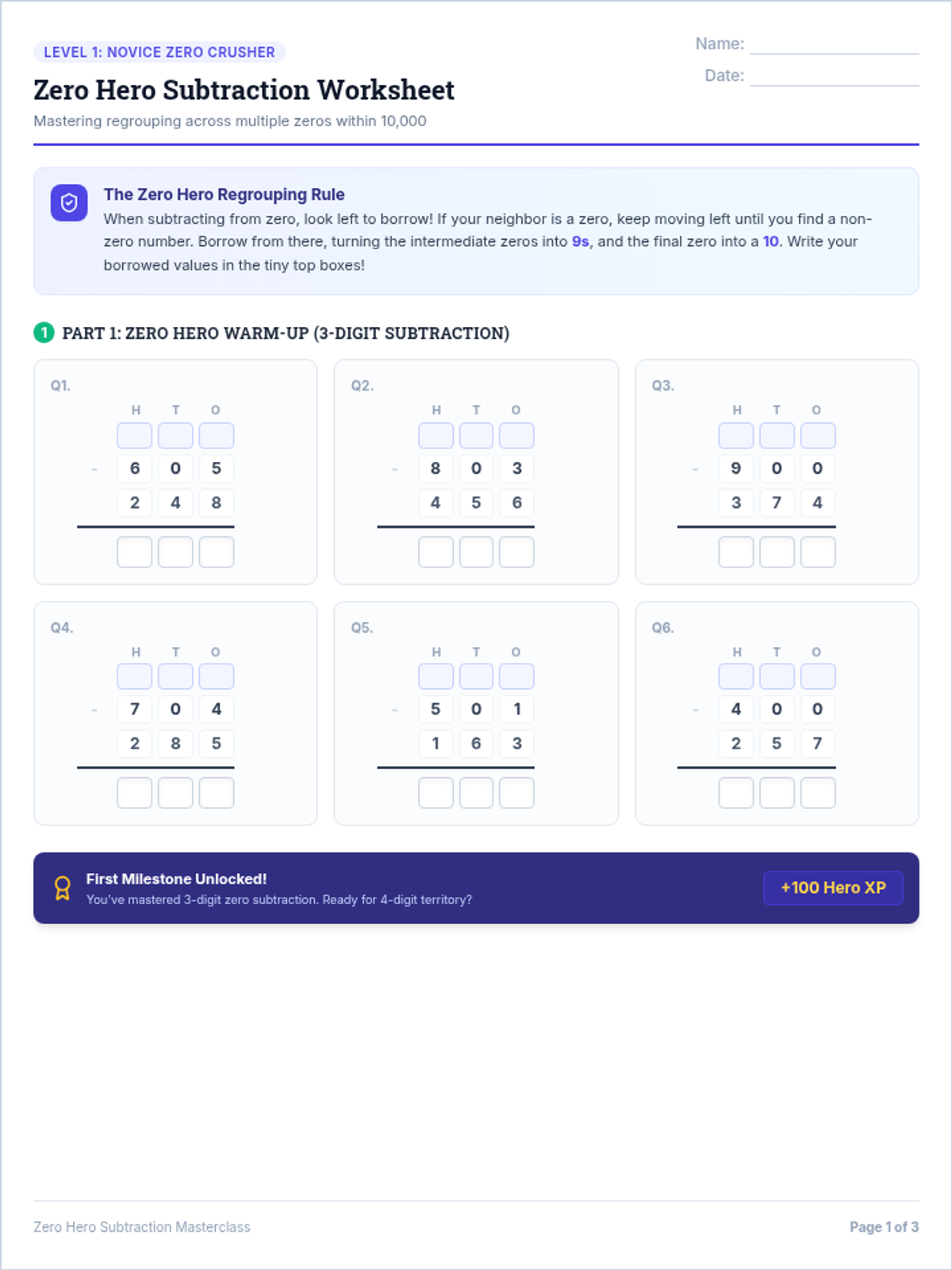
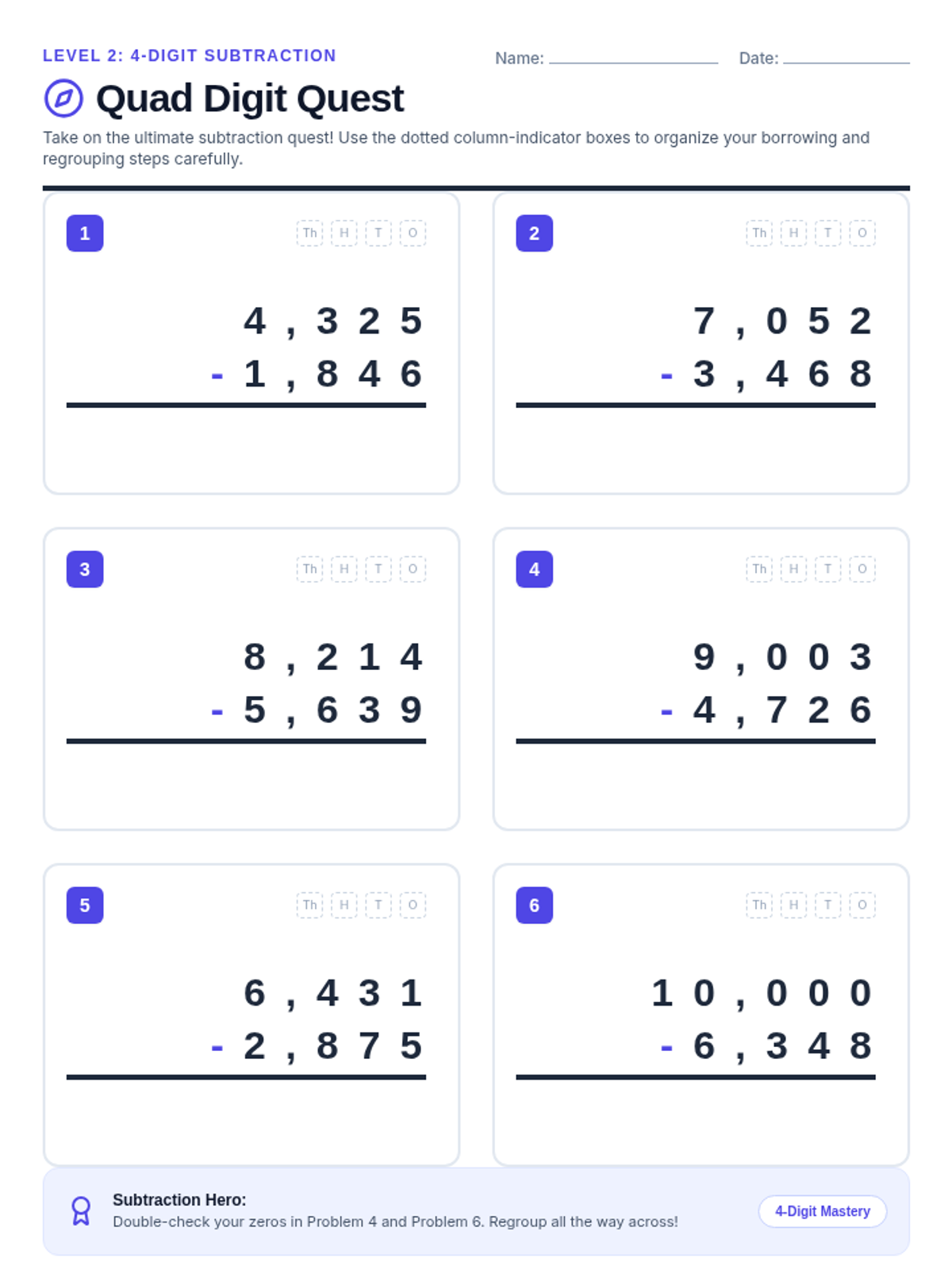
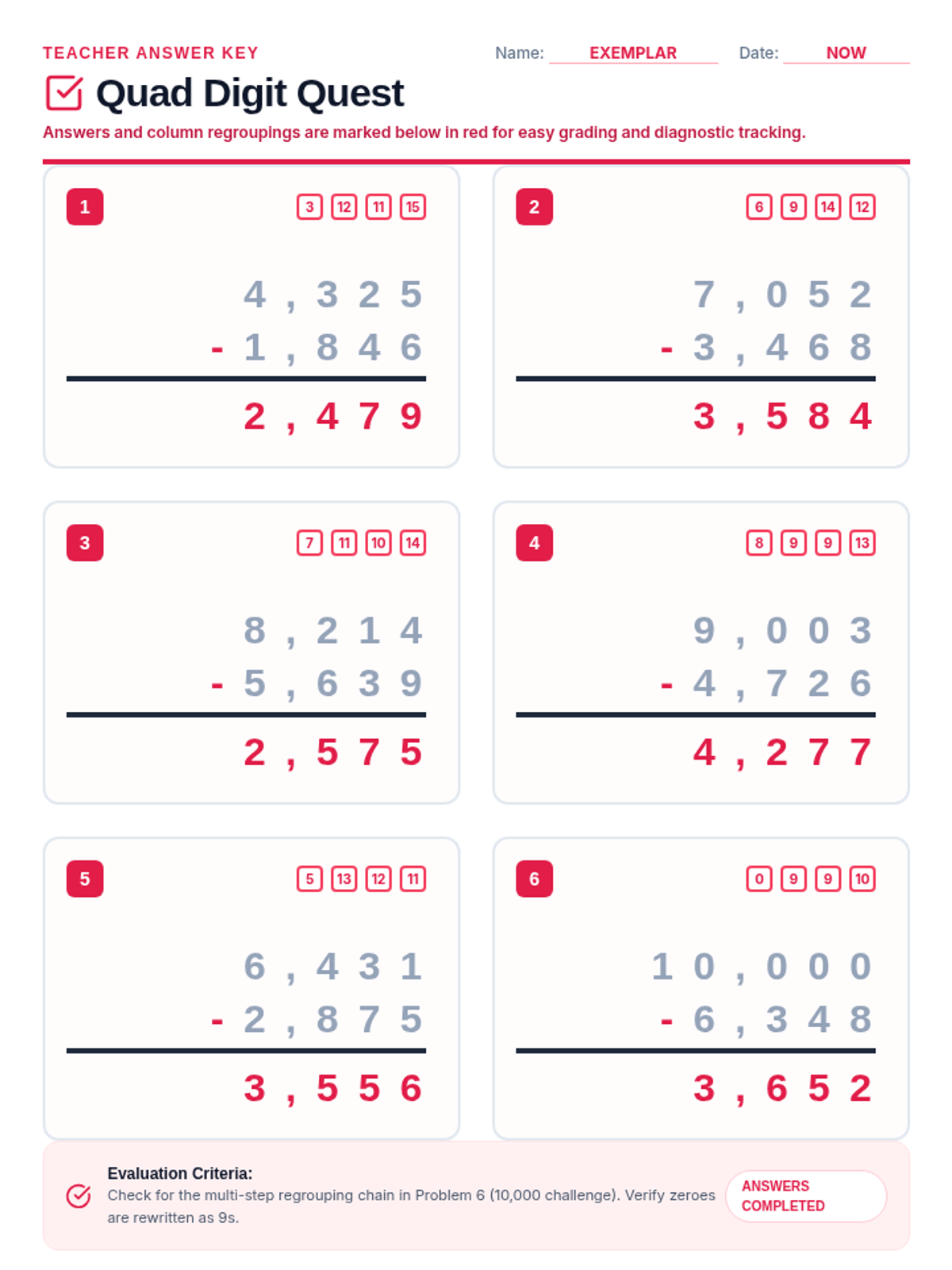
A targeted math lesson on subtracting within 10,000 across multiple zeros. It features structured place-value grid scaffolds to keep digits aligned and support the borrowing process step-by-step.
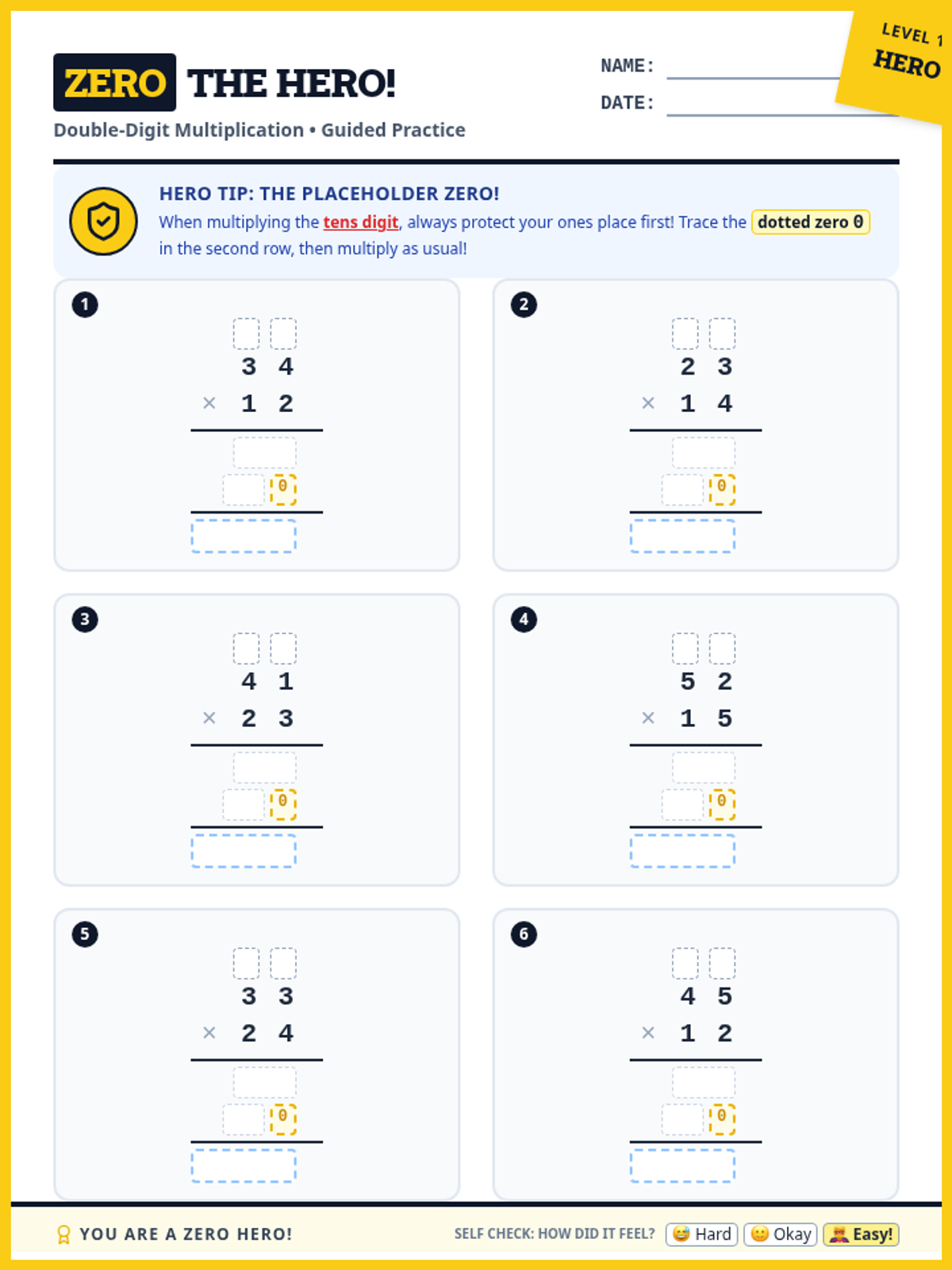
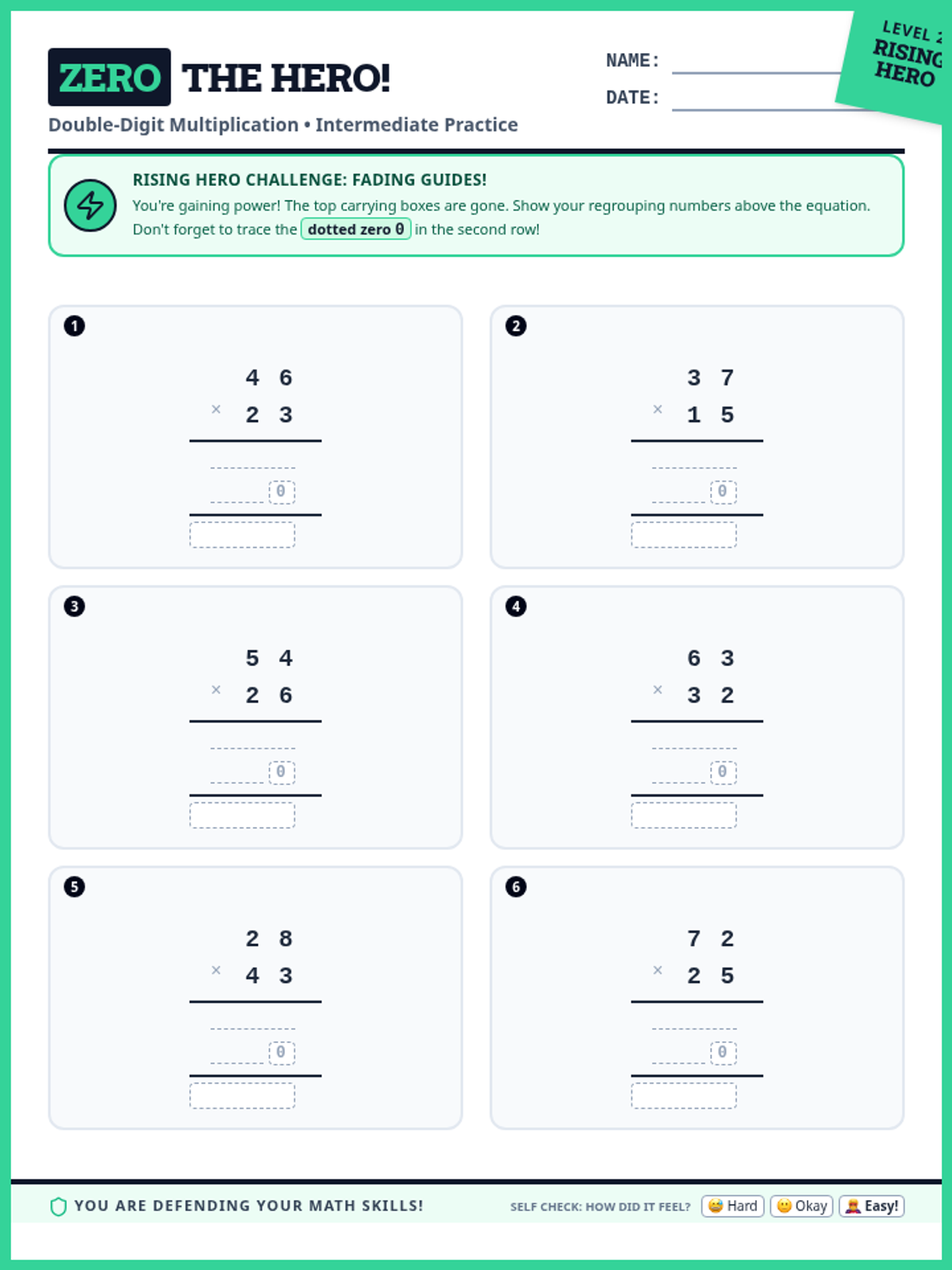
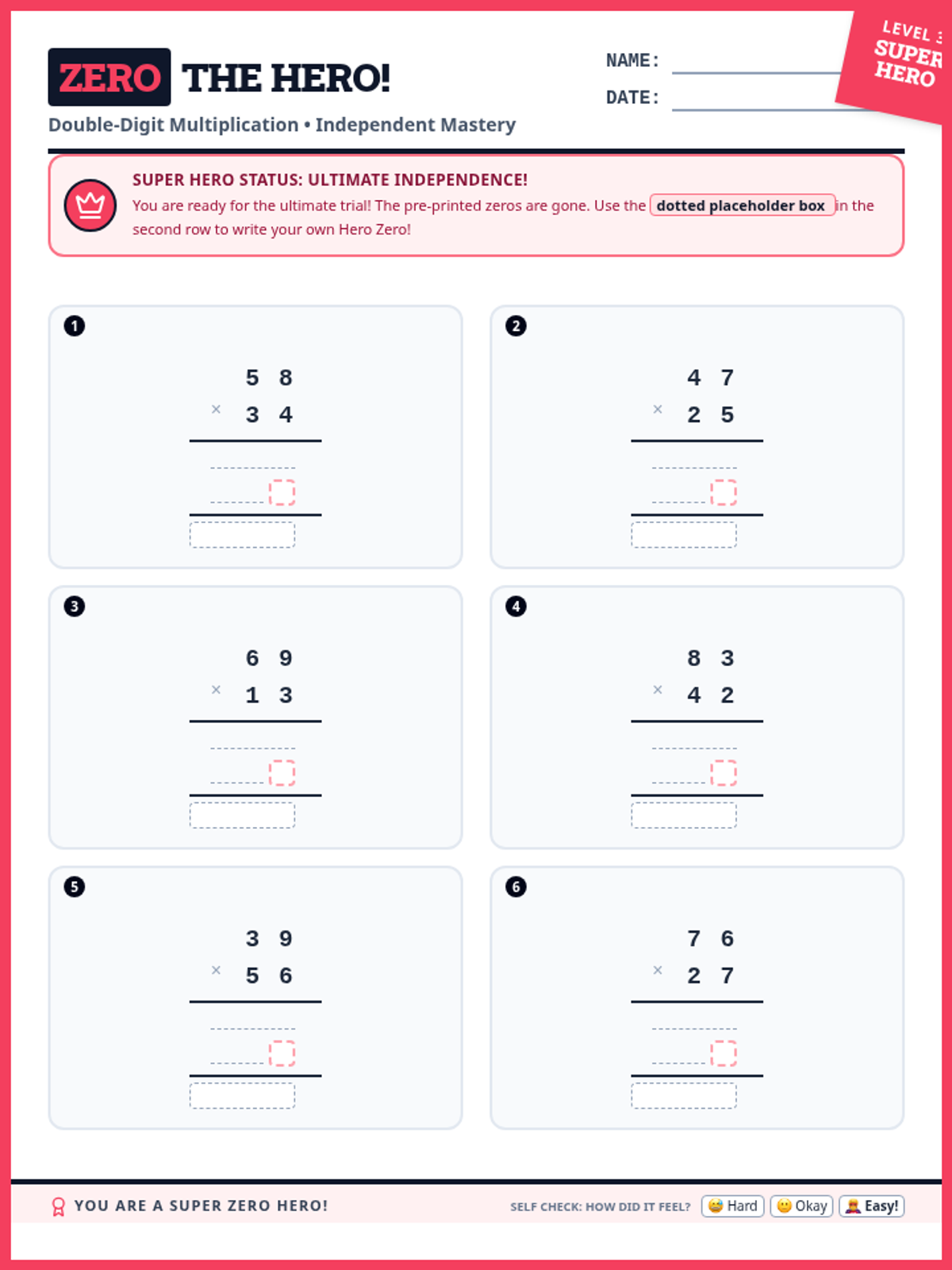
A three-level differentiated worksheet set teaching double-digit multiplication. Each worksheet utilizes a 'dotted placeholder zero' method with progressive prompt fading to support students as they master the multi-step algorithm.
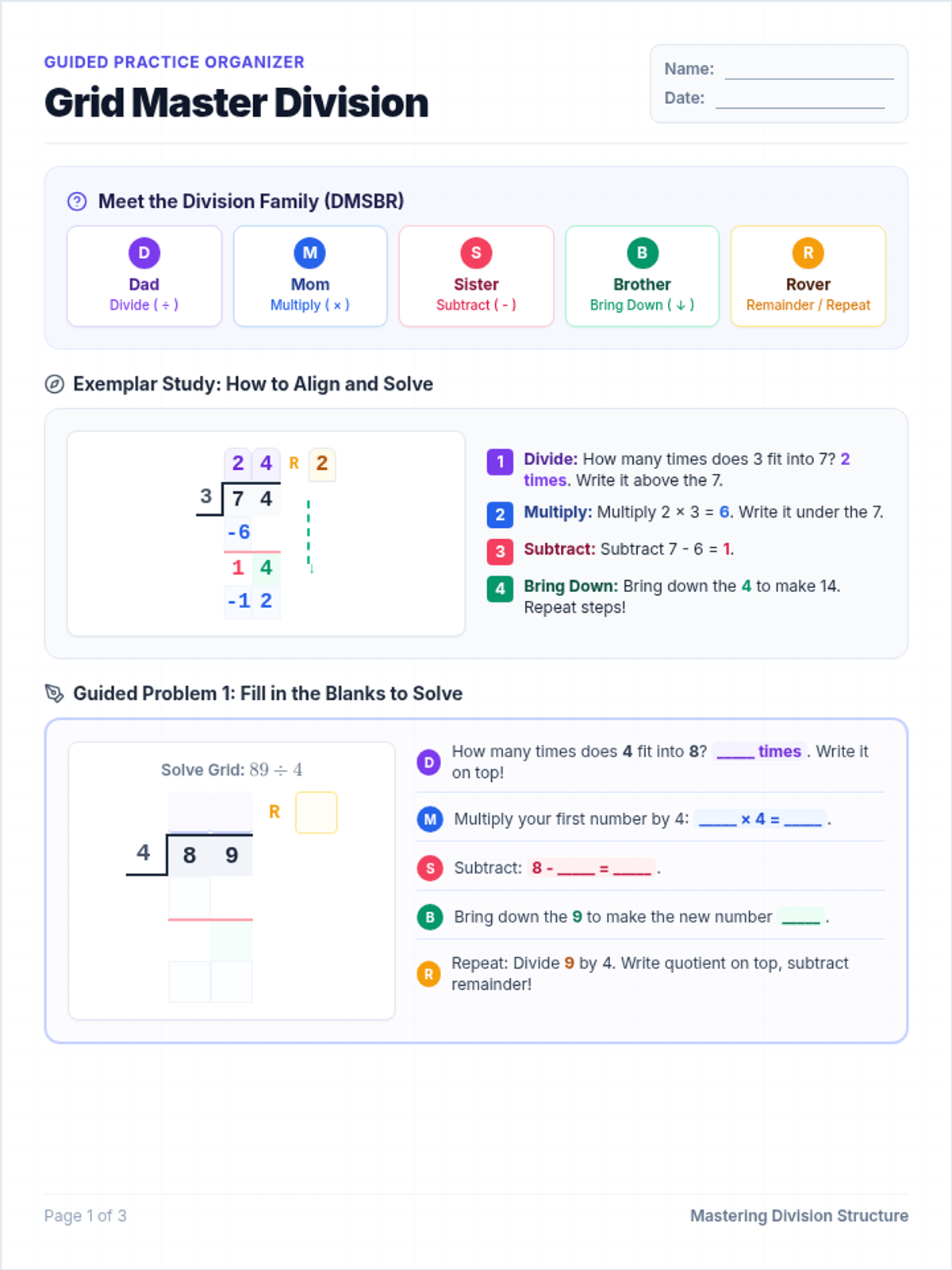
A guided math lesson focused on long division with remainders, employing strict alignment grids and color-coded step-by-step visual scaffolds to support learners with spatial organization.
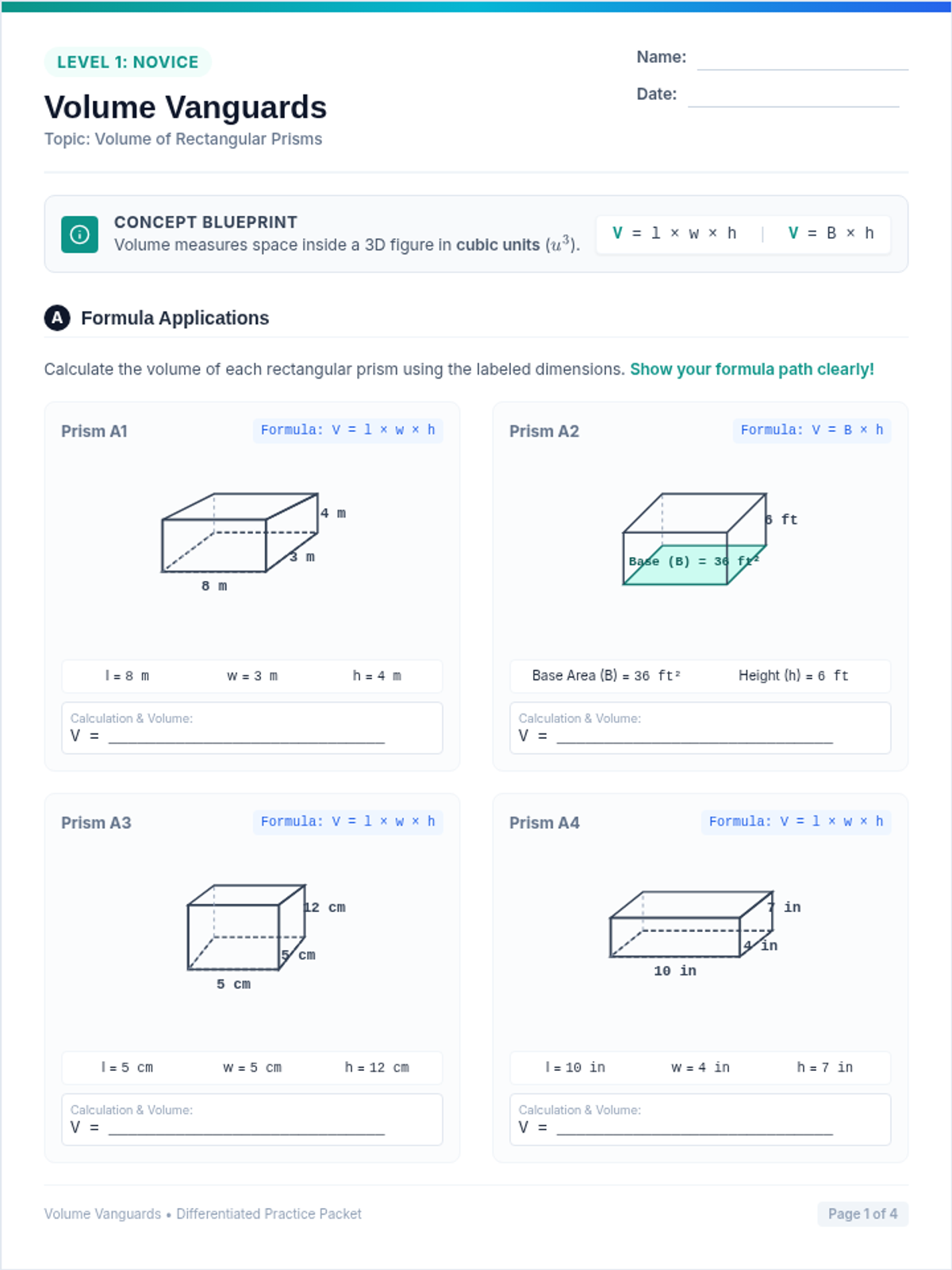
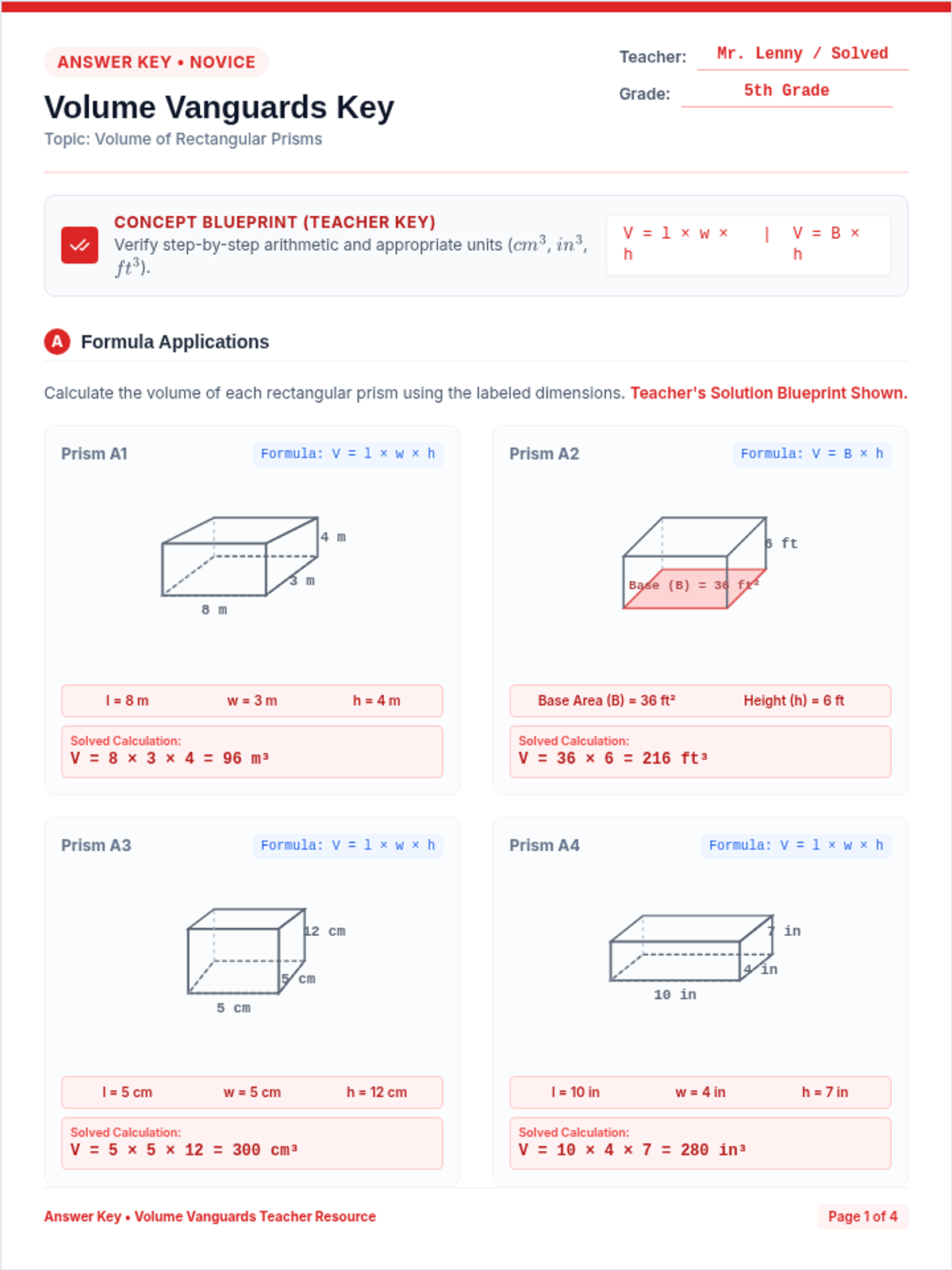
A comprehensive 5th-grade lesson on calculating the volume of rectangular prisms and composite/irregular 3D shapes. Students progress from counting unit cubes to applying formulas and decomposing irregular figures to find additive volume.
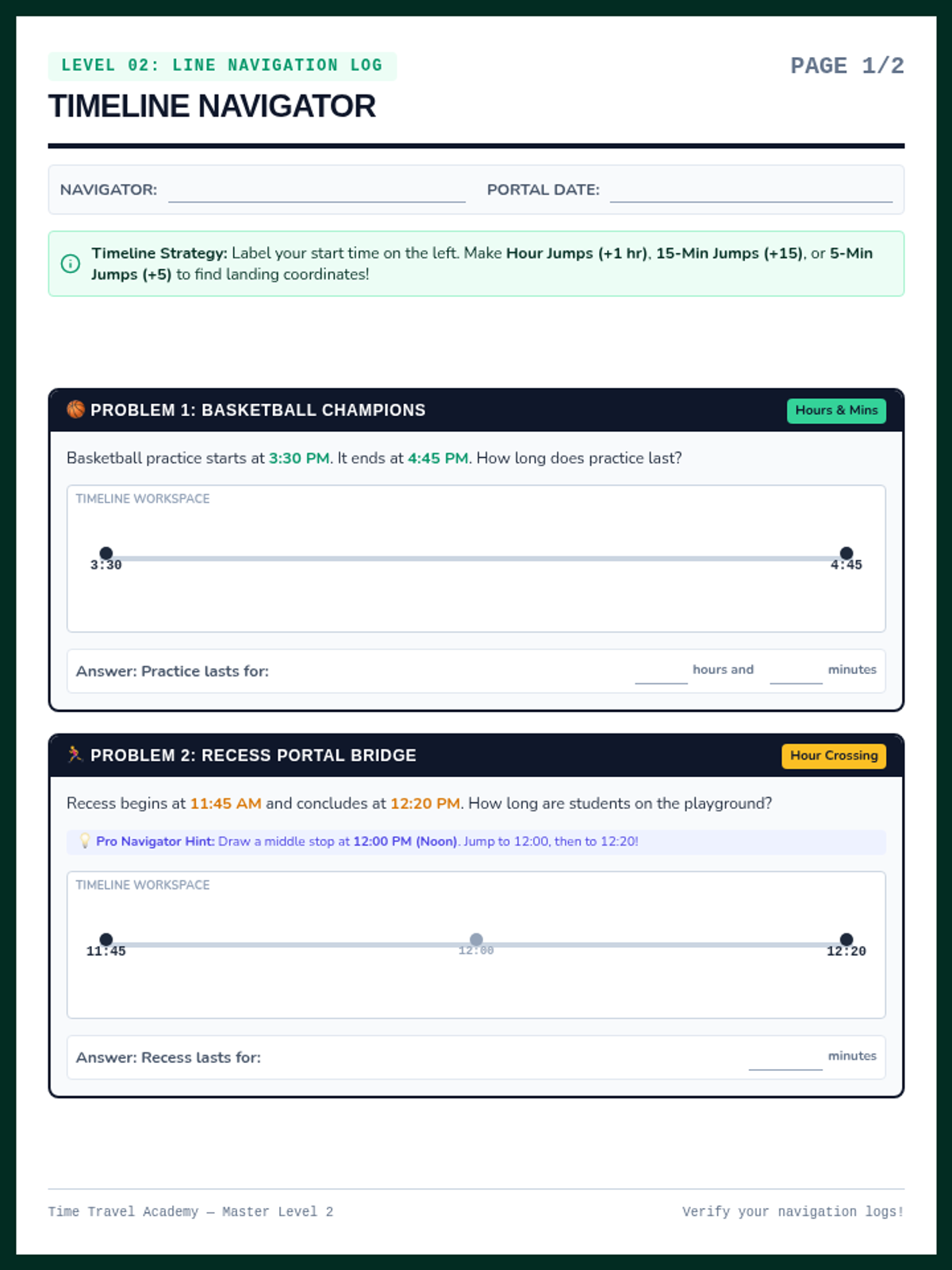
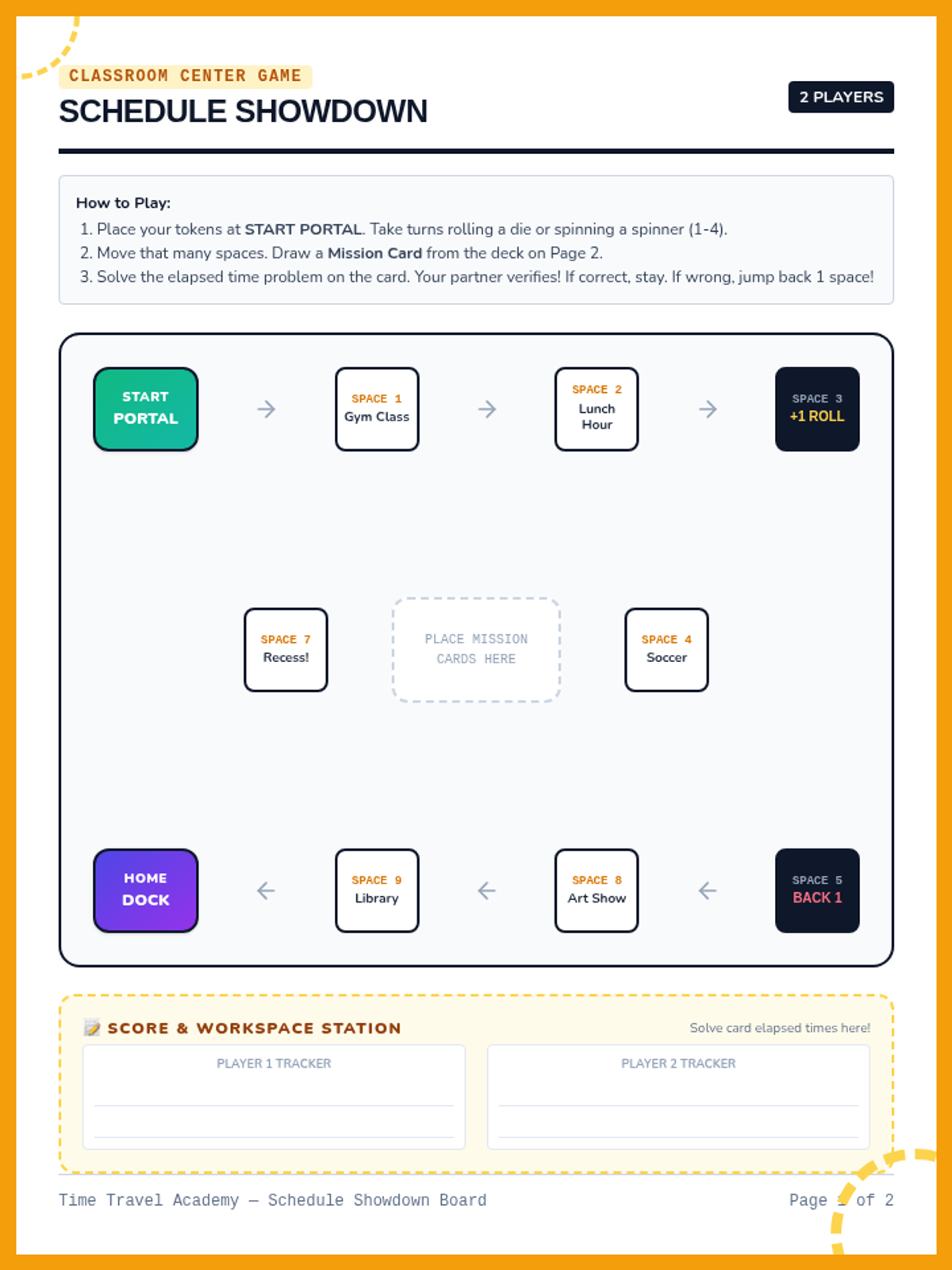
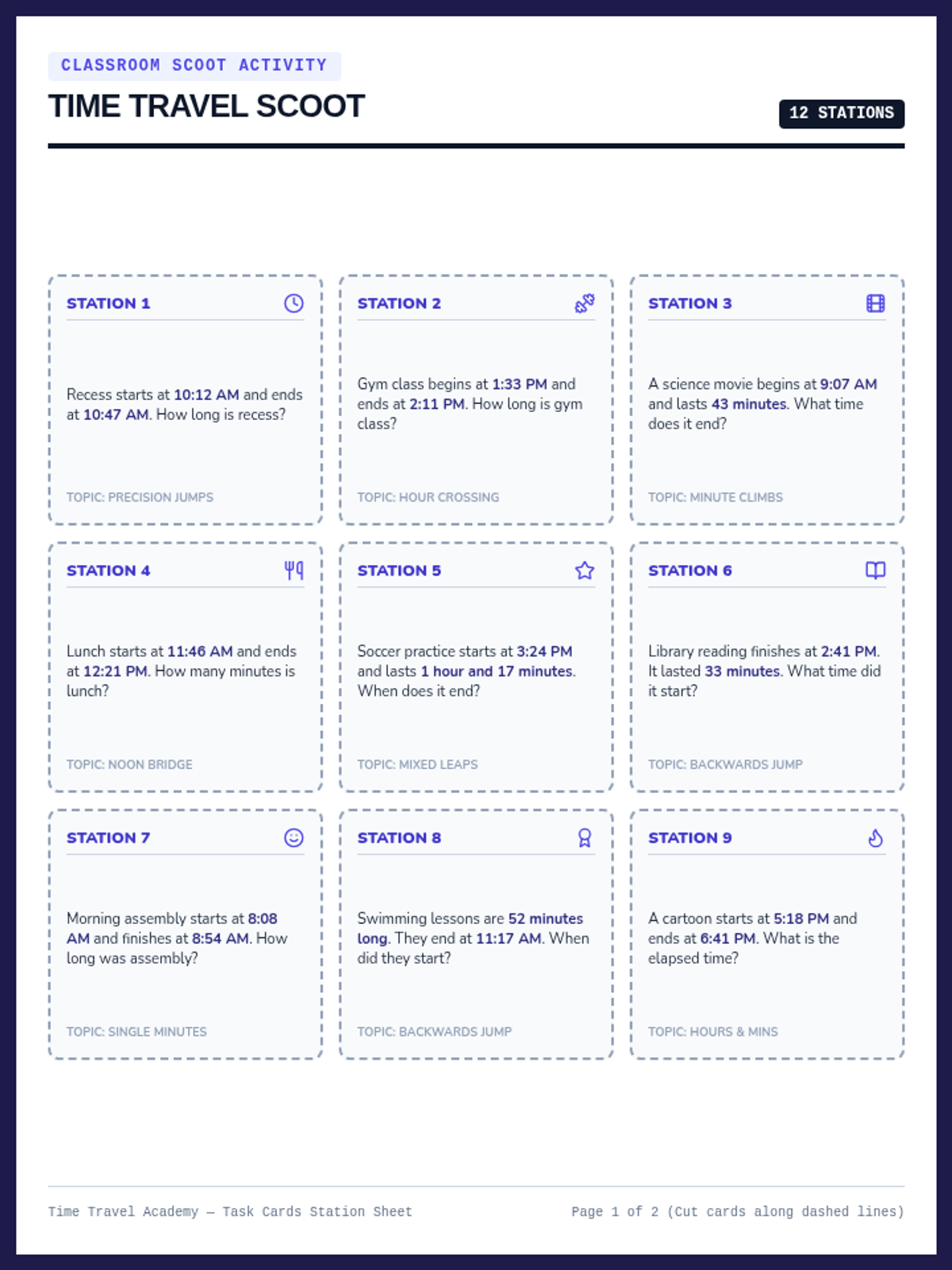
Students transition to open number lines to solve real-world scheduling problems, modeling 'jumps' of hours, 15-minute, and 5-minute intervals for sports, recess, and movies.
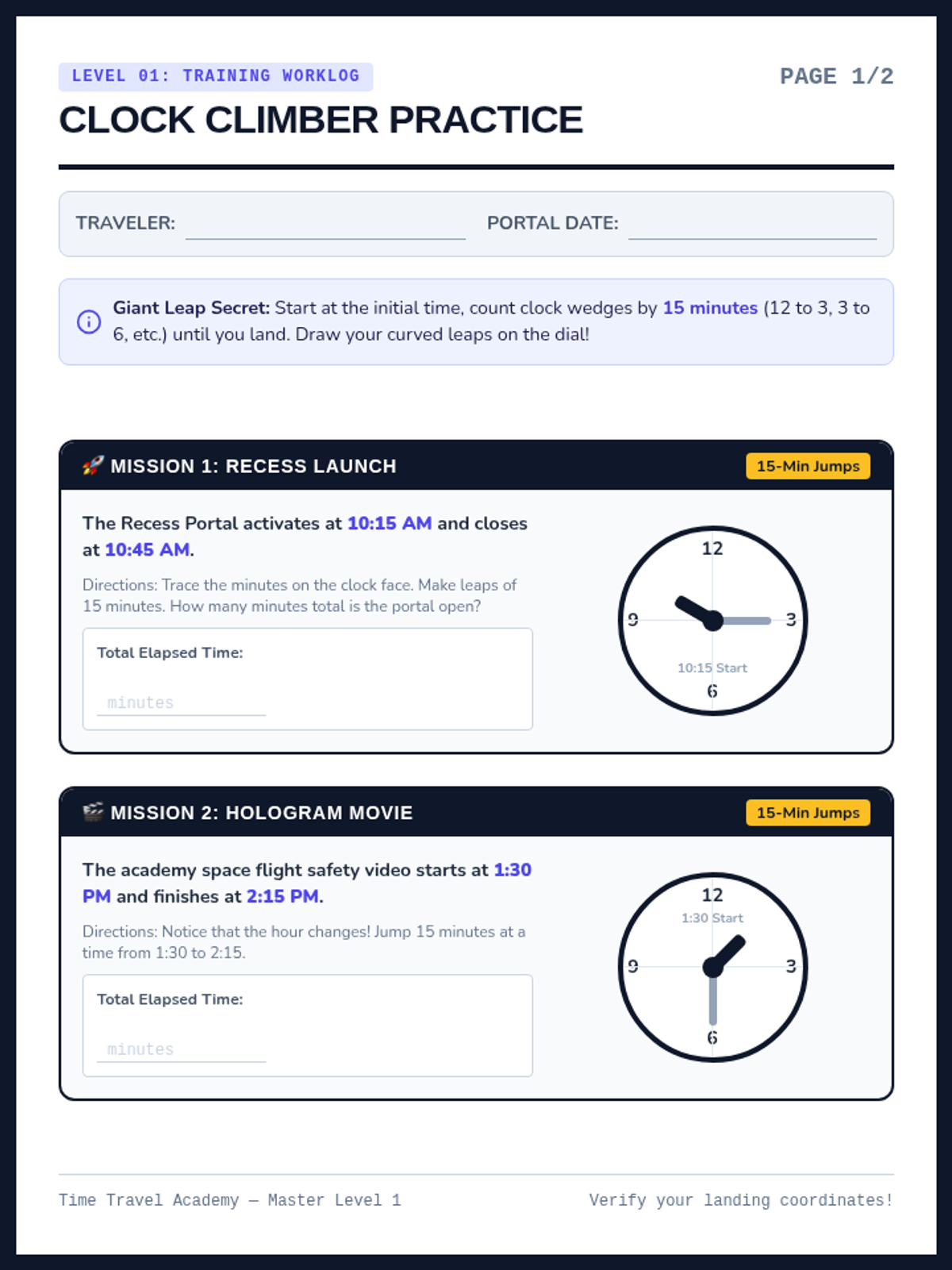
Students learn to count elapsed time on analog clock dials in intervals of 5 and 15 minutes, visualising the movement of the minute hand to solve duration problems.
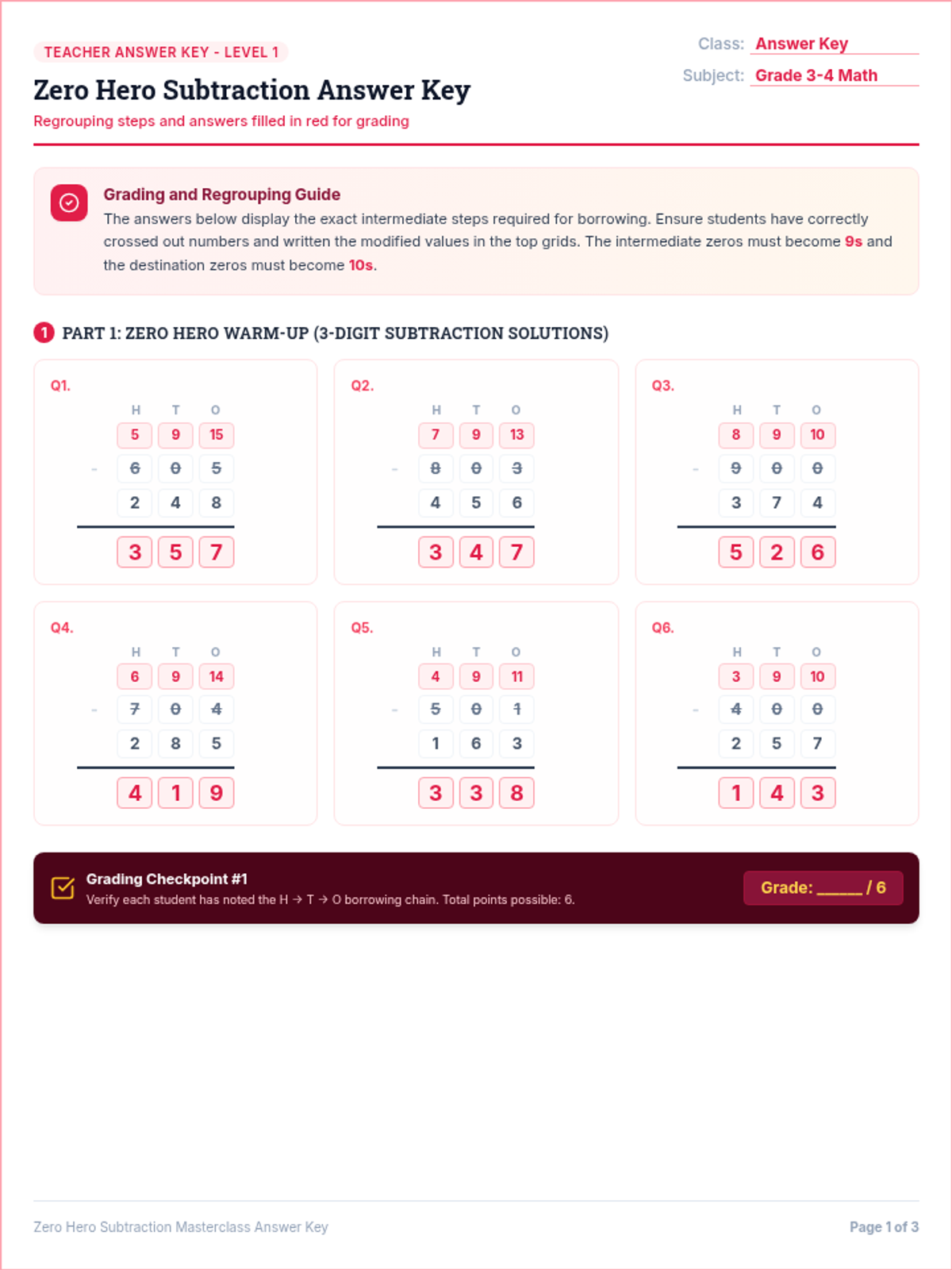
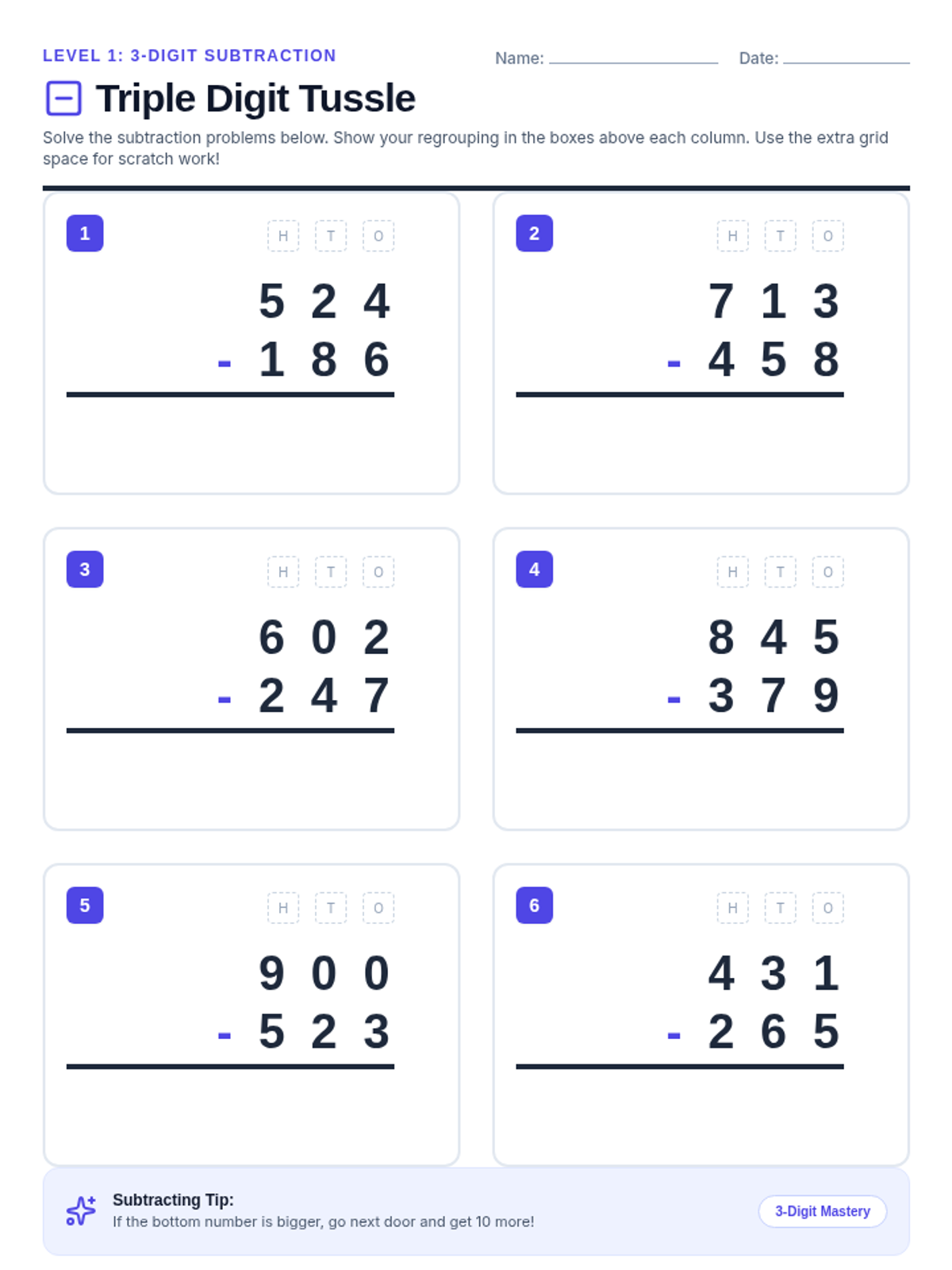
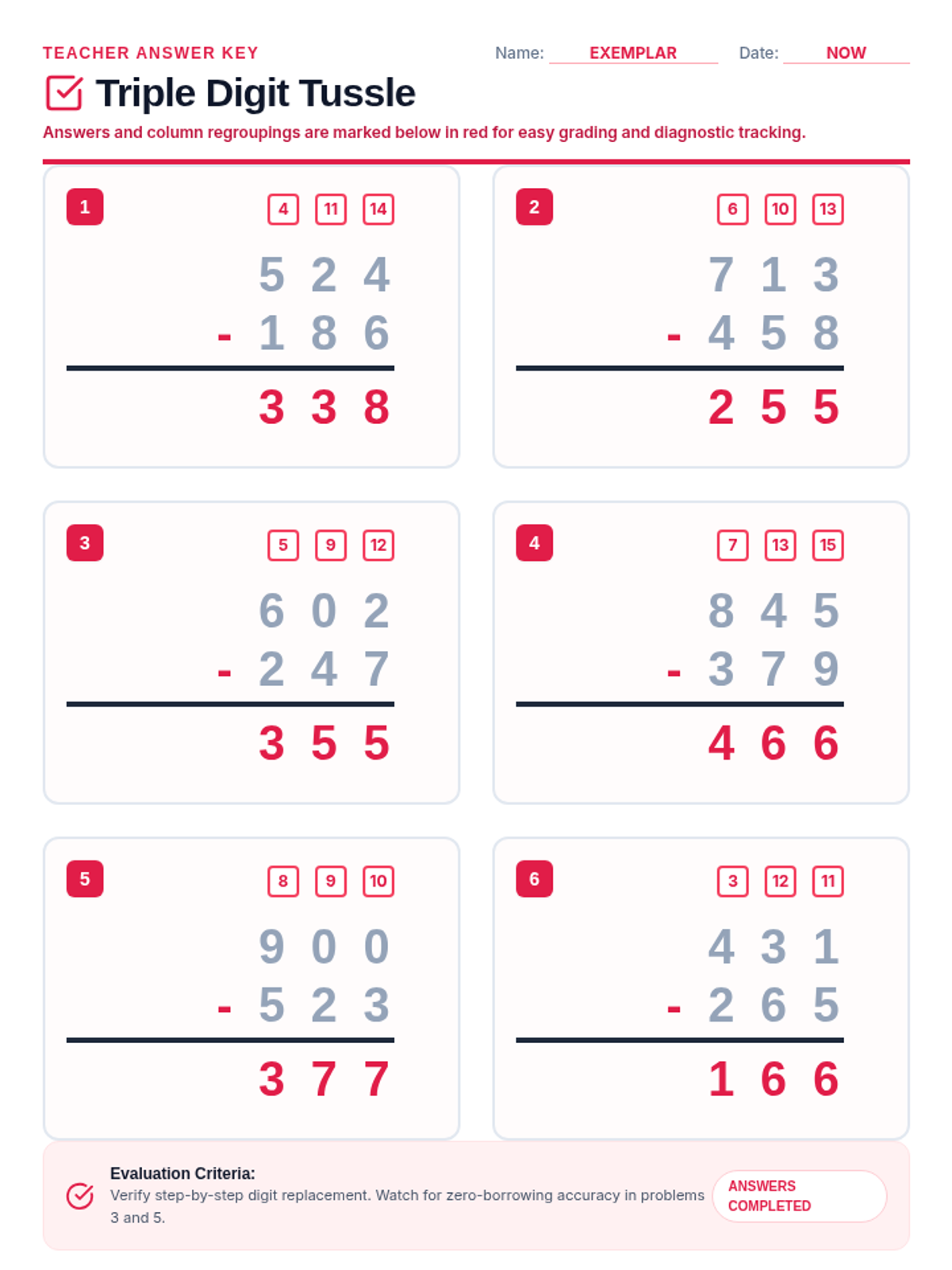
A structured math progression package targeting multi-digit subtraction with borrowing. Includes student worksheets and matching teacher answer keys with large, uncluttered fonts and extensive workspace for independent practice.
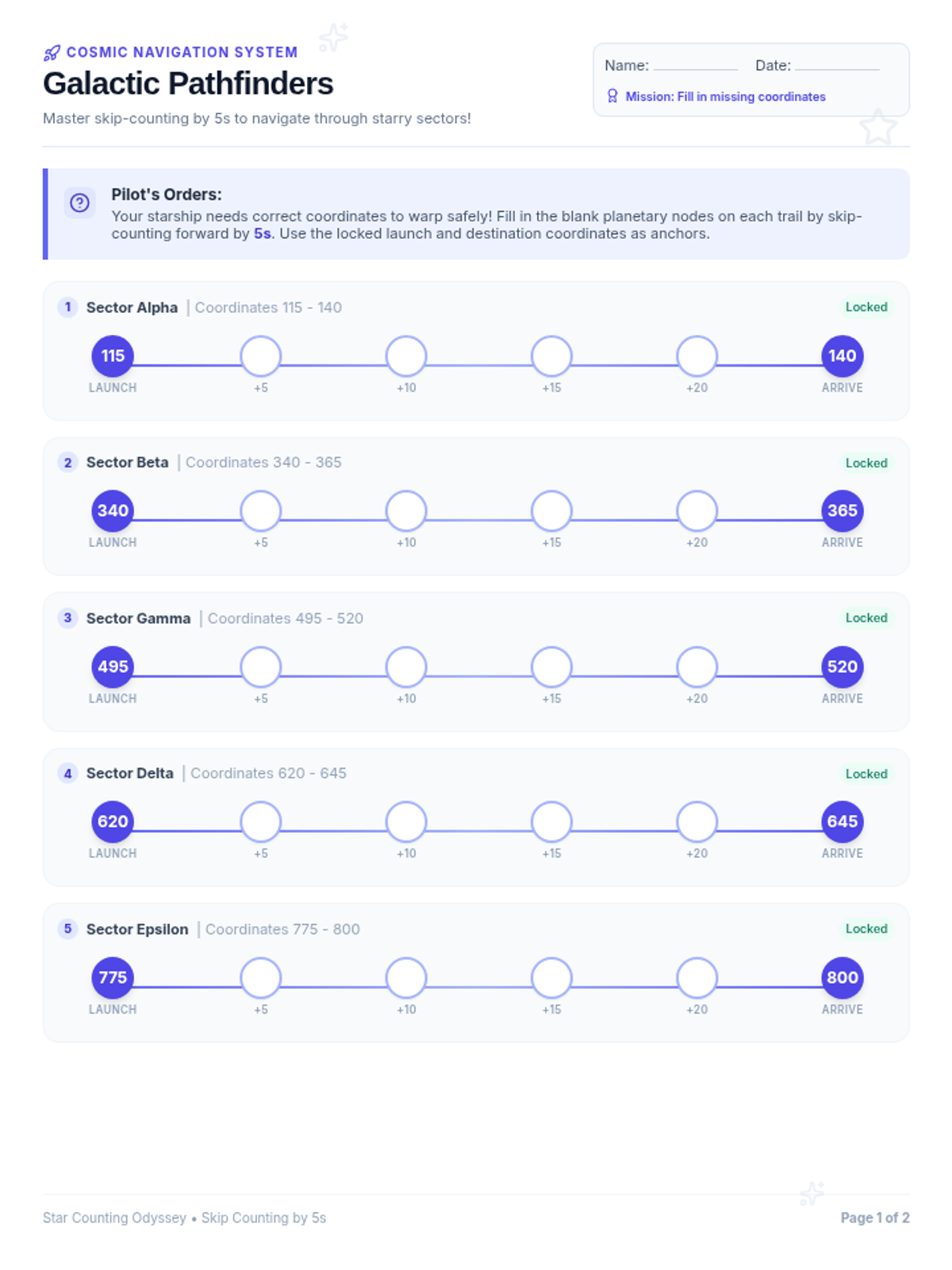
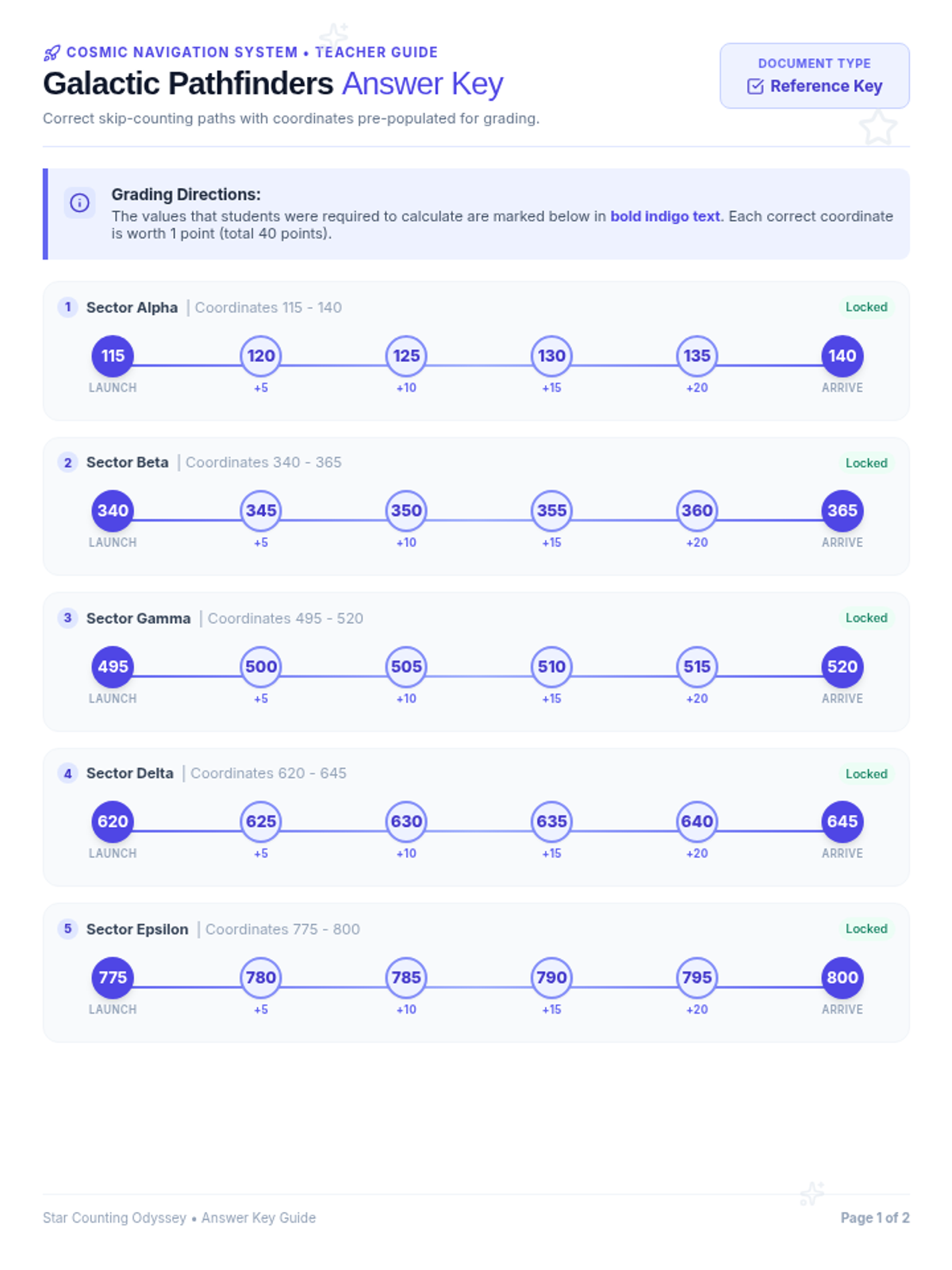
A space-themed skip counting lesson where students master counting by 5s to 1000. Using visual cosmic pathways (number lines), students apply moderate-support scaffolding to guide their spaceship through starry quadrants.
A hands-on, collaborative math project where students work in teams to design and budget for an ultimate classroom picnic, practicing multi-digit addition, subtraction, and critical decision-making.
An Algebra 1 lesson introducing projectile motion through the lens of launching rockets. Students learn to identify key features of quadratic graphs—specifically the vertex as maximum height and x-intercepts as landing times—and evaluate quadratic functions to find heights at specific seconds.
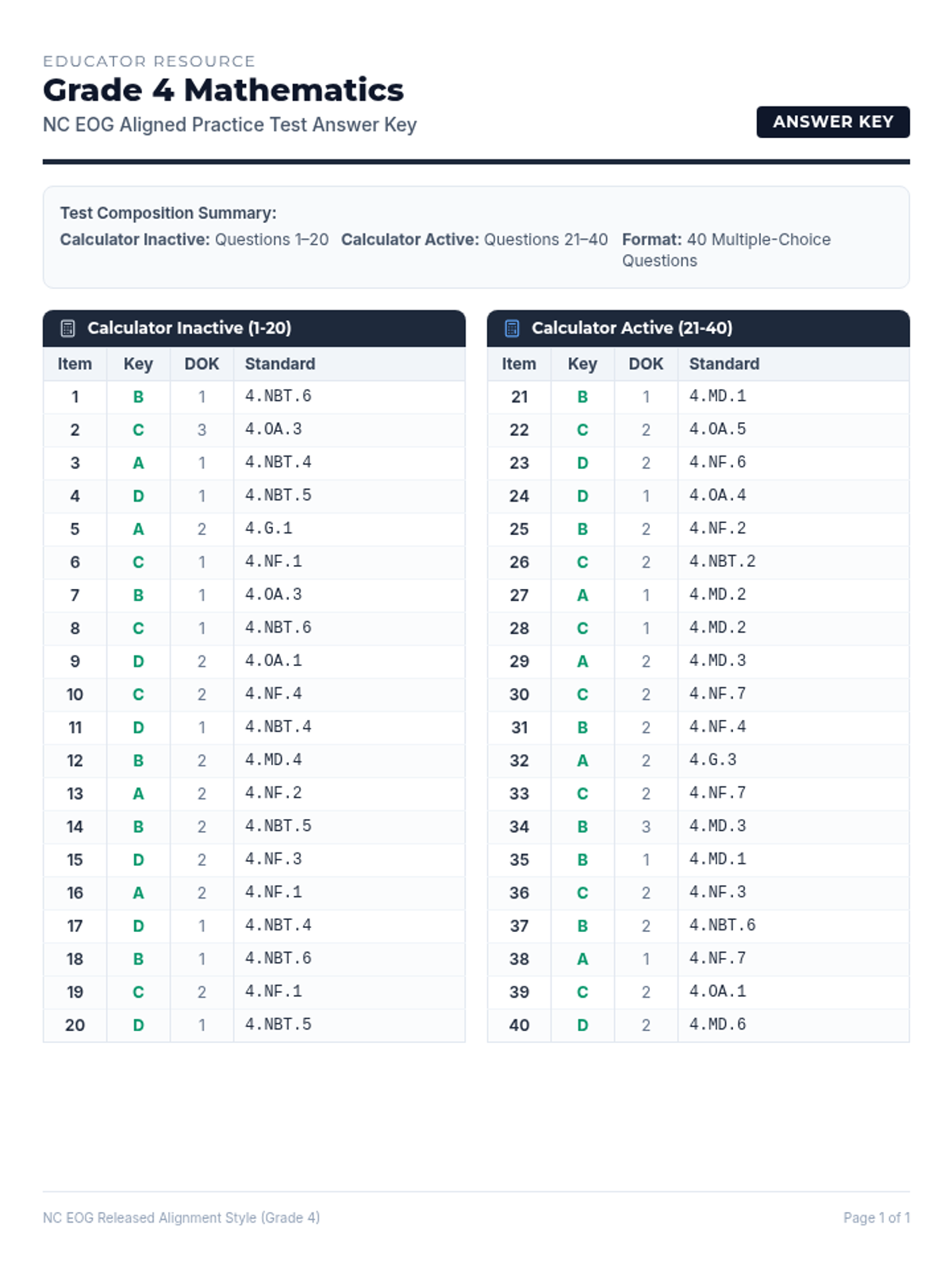
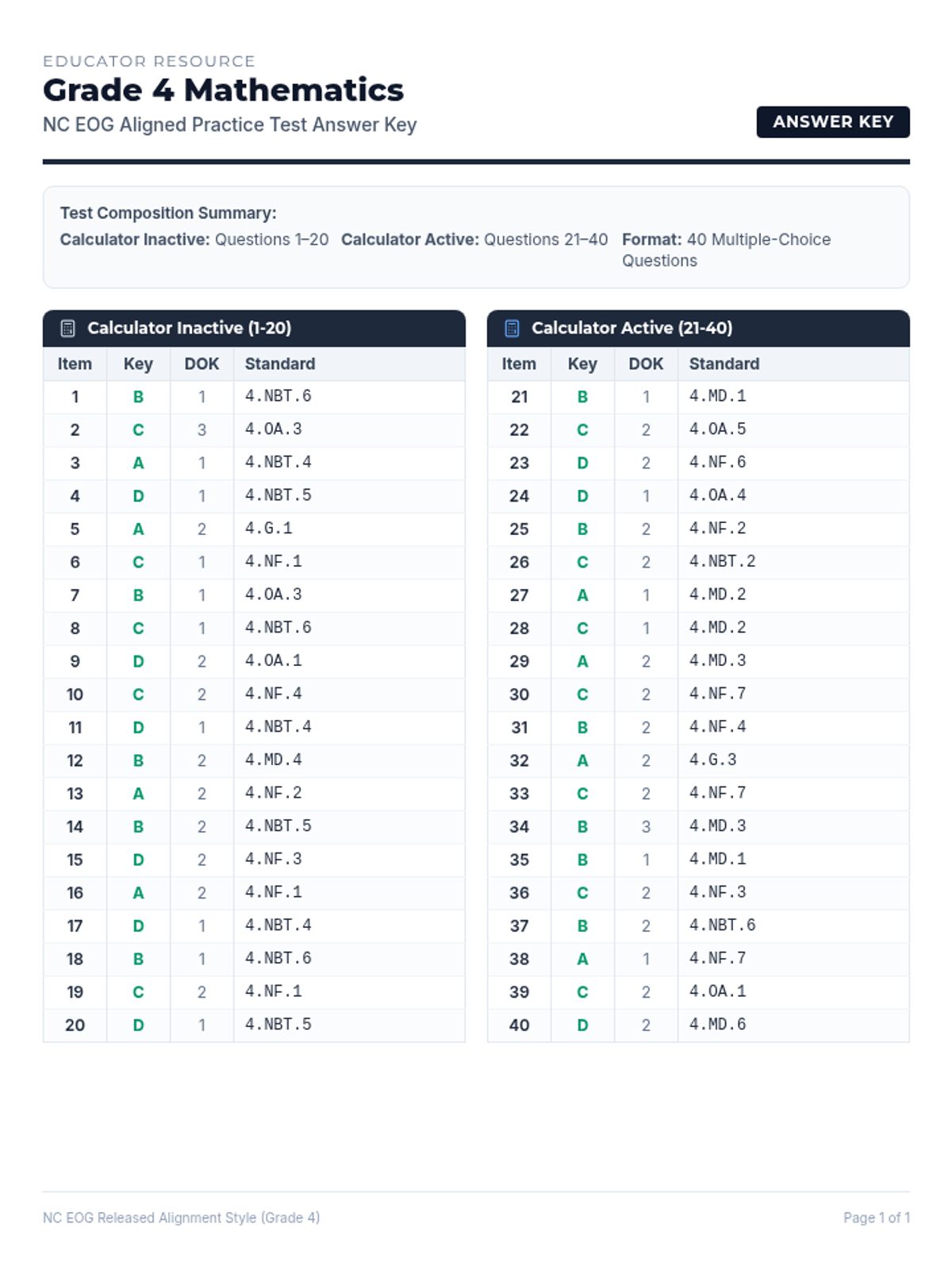
A comprehensive Grade 4 mathematics assessment modeled after the NC End-of-Grade released form, divided into Calculator Inactive and Calculator Active parts.
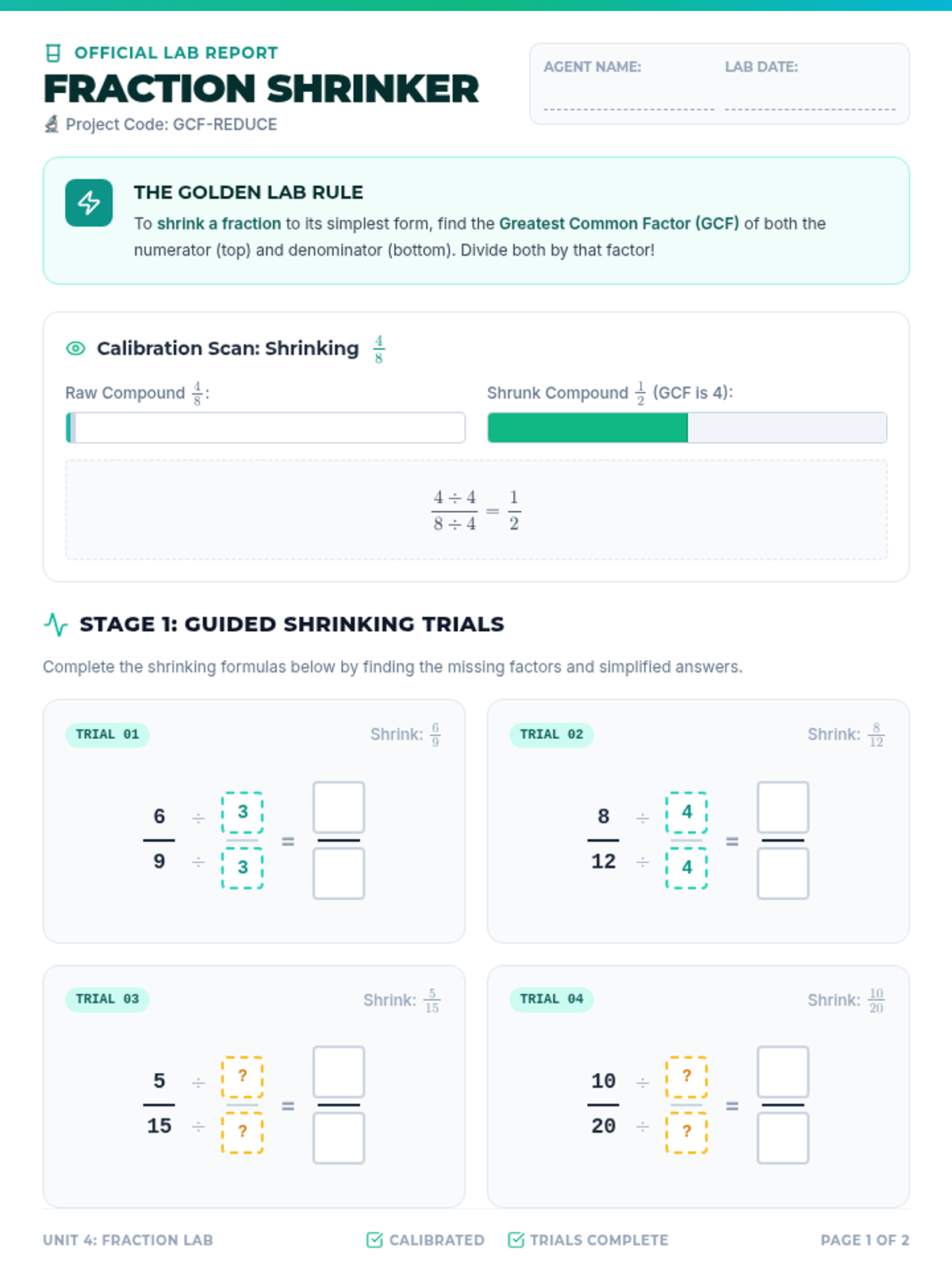
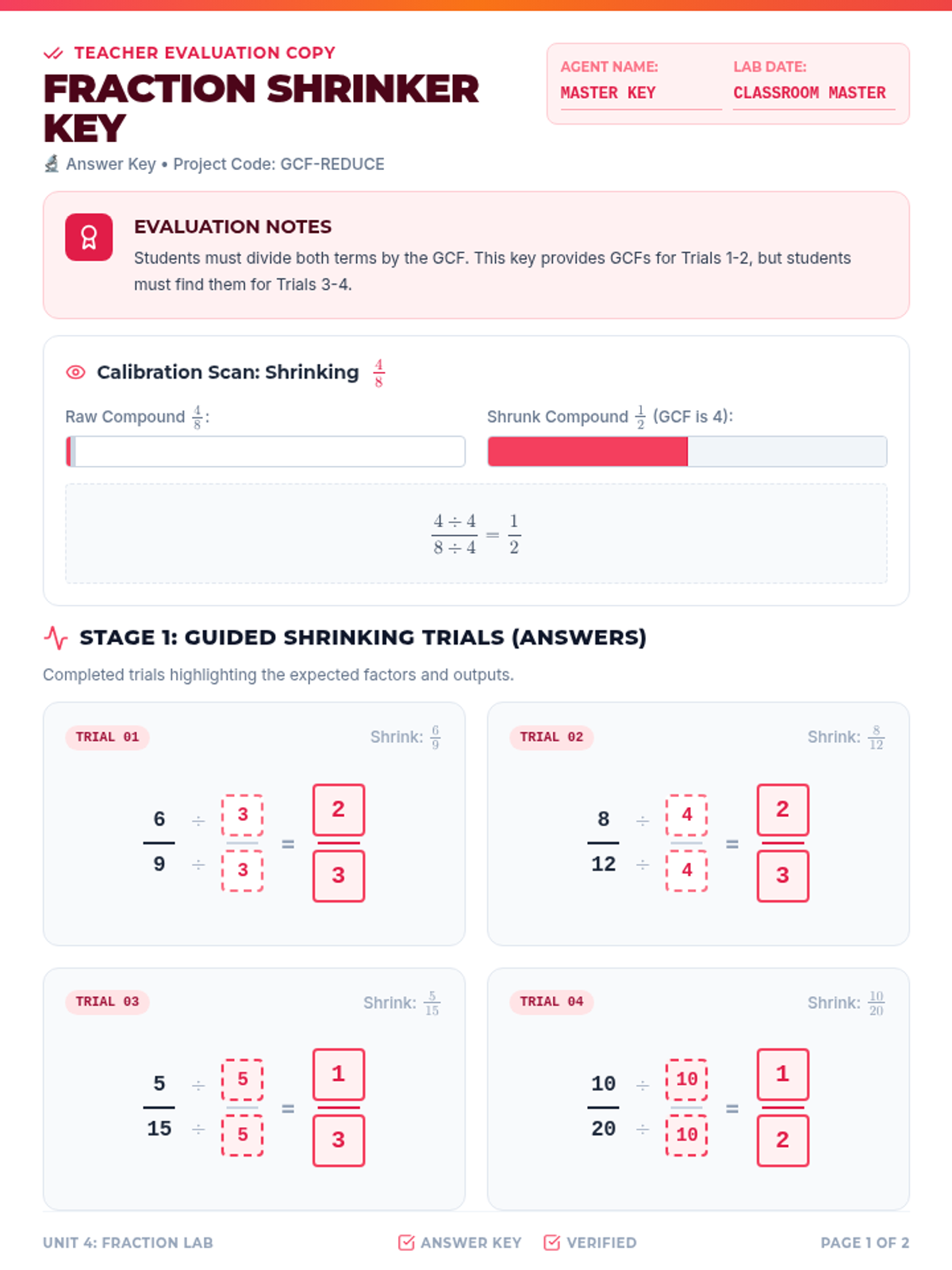
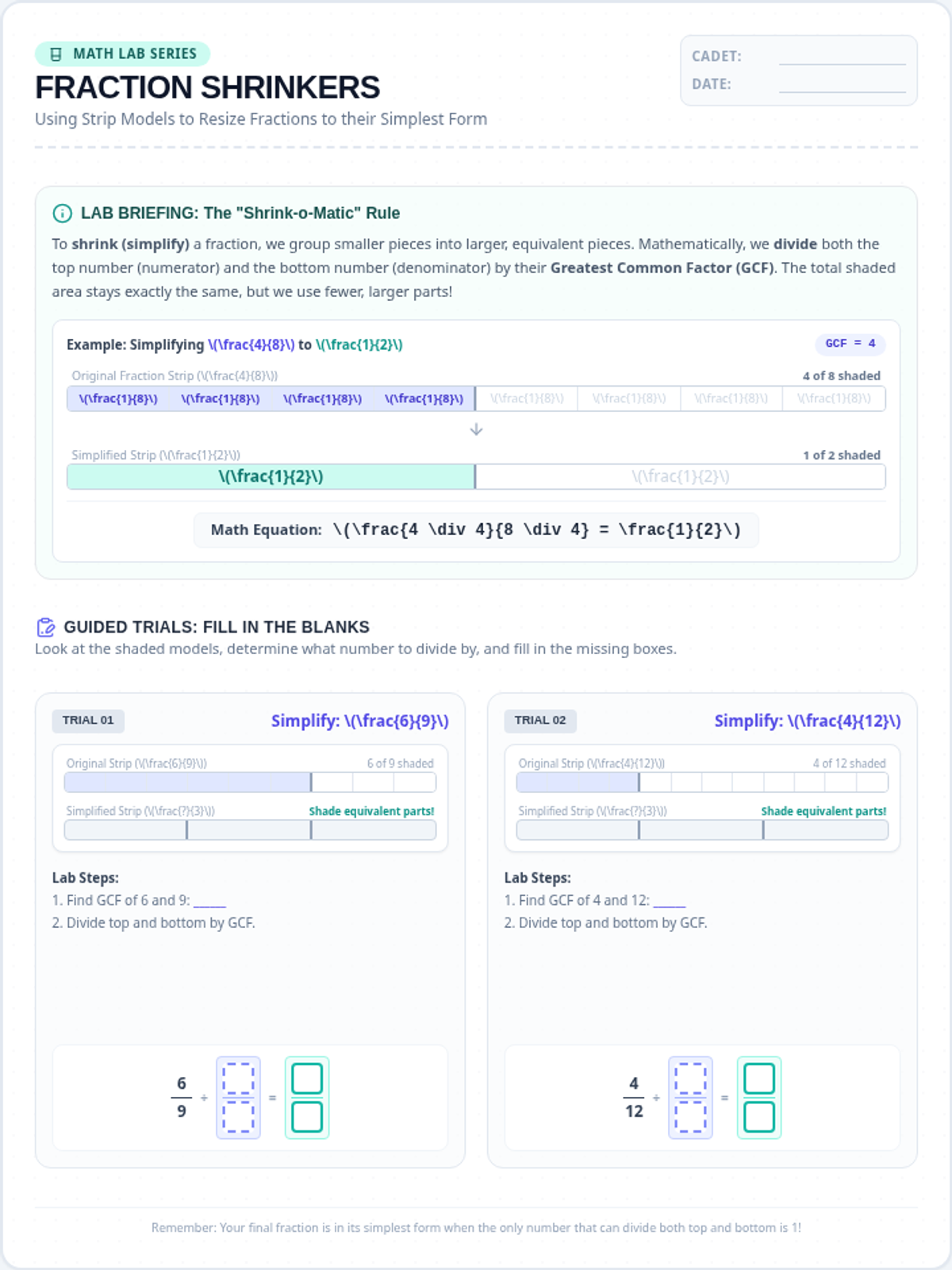
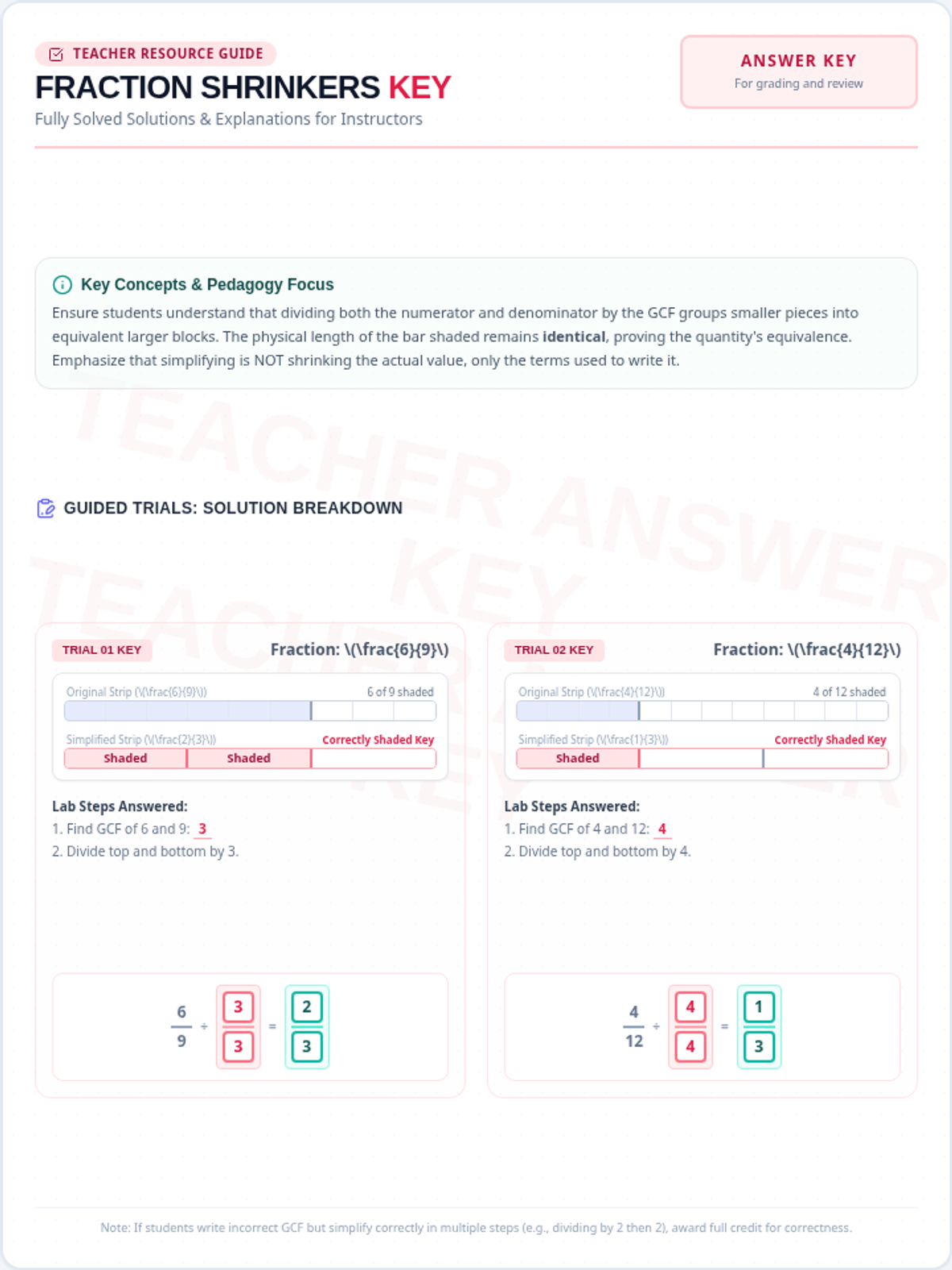
A focused lesson on simplifying fractions using visual models, greatest common factors, and guided practice. Students learn to 'shrink' fractions to their simplest form using a lab-themed framework.
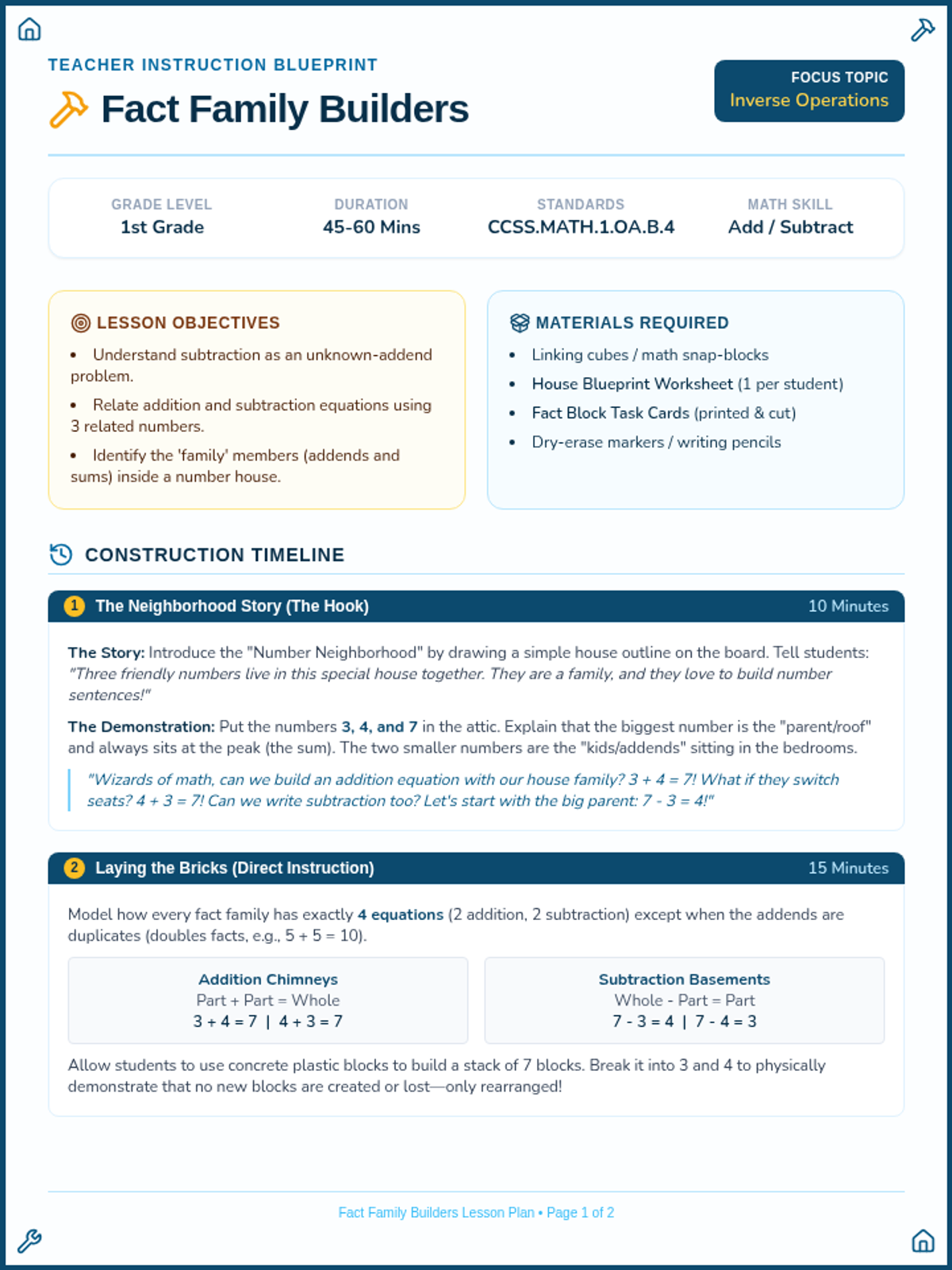
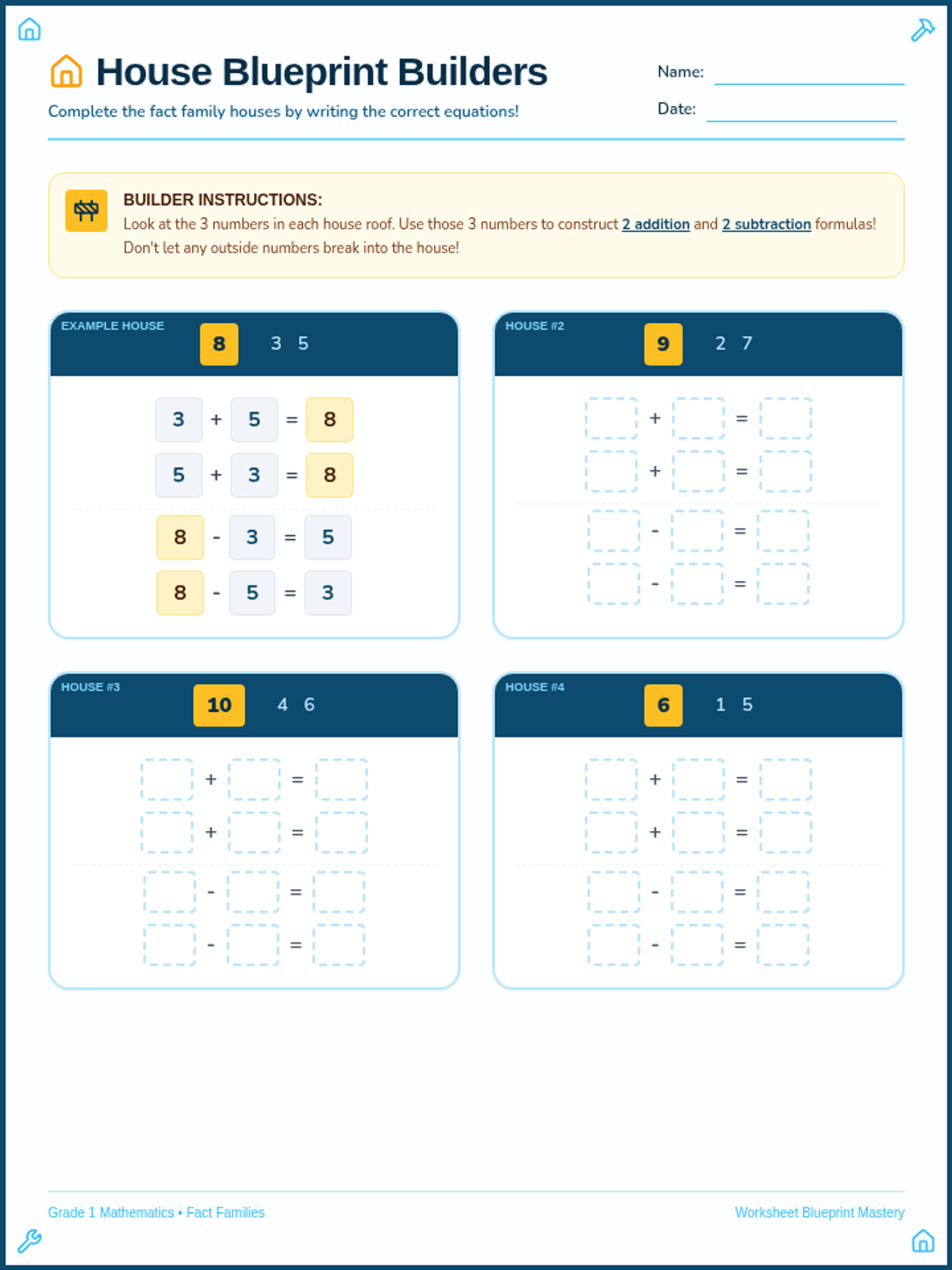
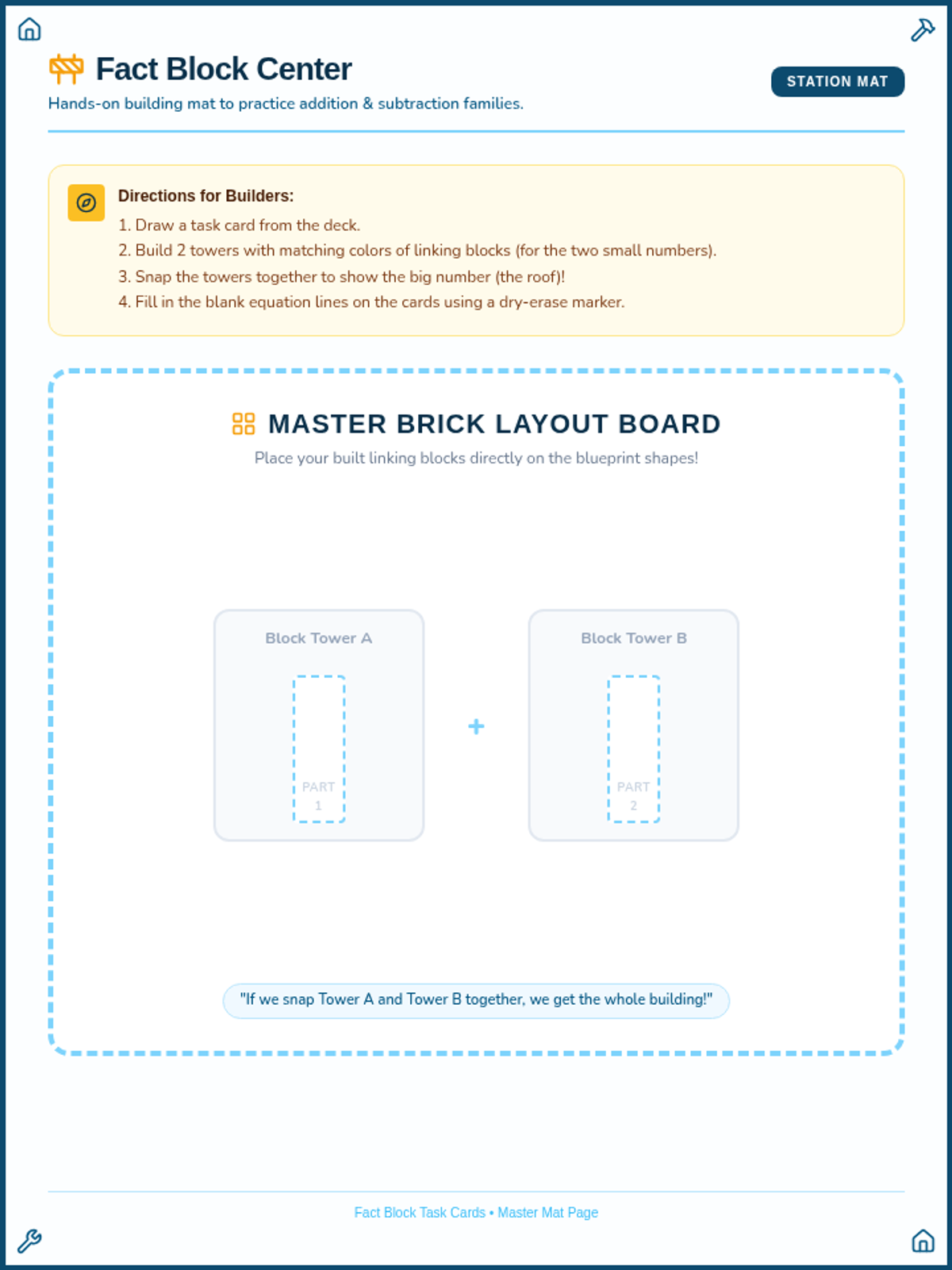
An engaging first-grade math lesson that teaches addition and subtraction relationships using cute, interactive fact family houses.
An engaging first-grade ELA reading comprehension lesson focused on identifying characters, settings, and main events using a fun detective theme.
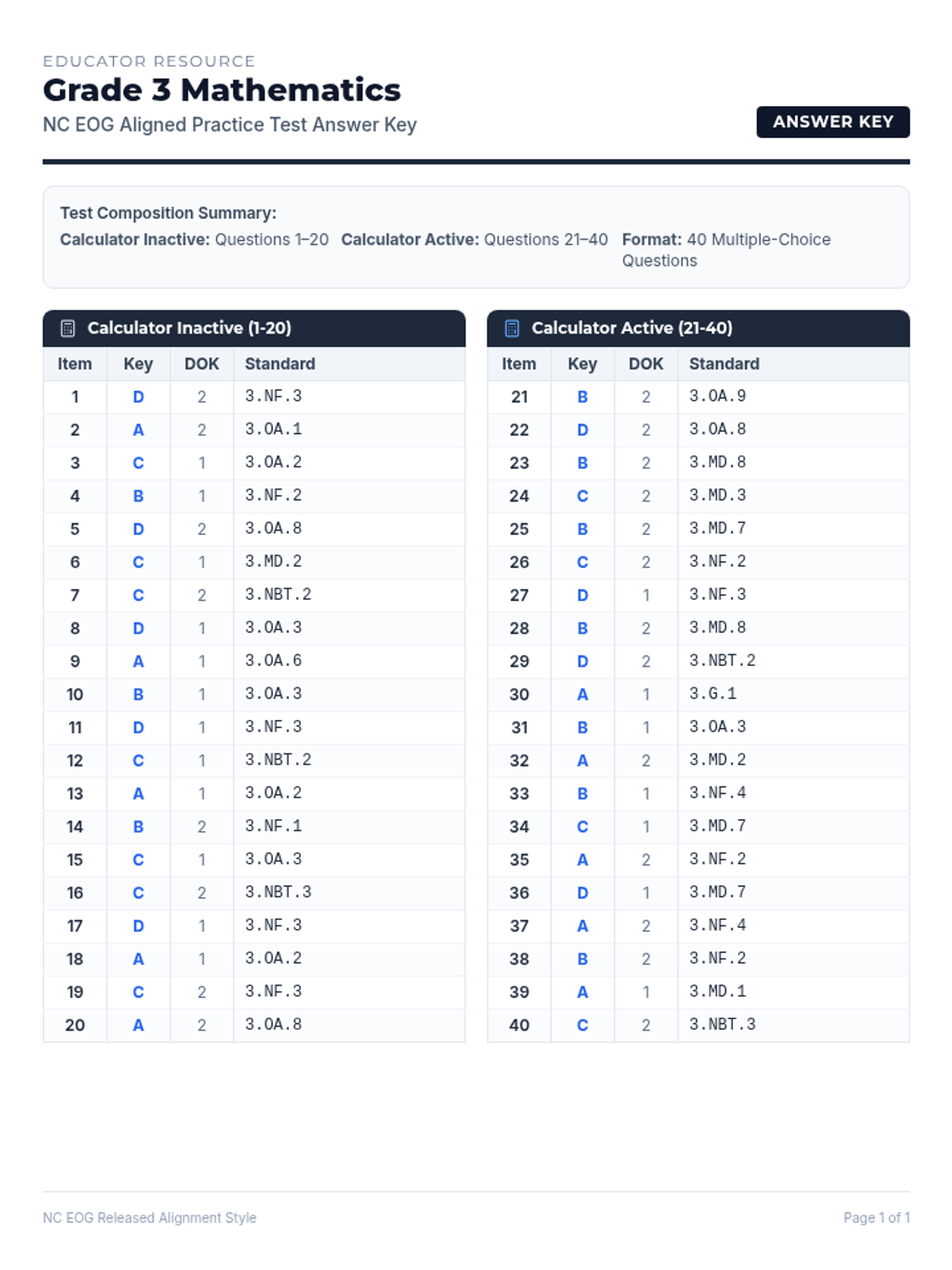
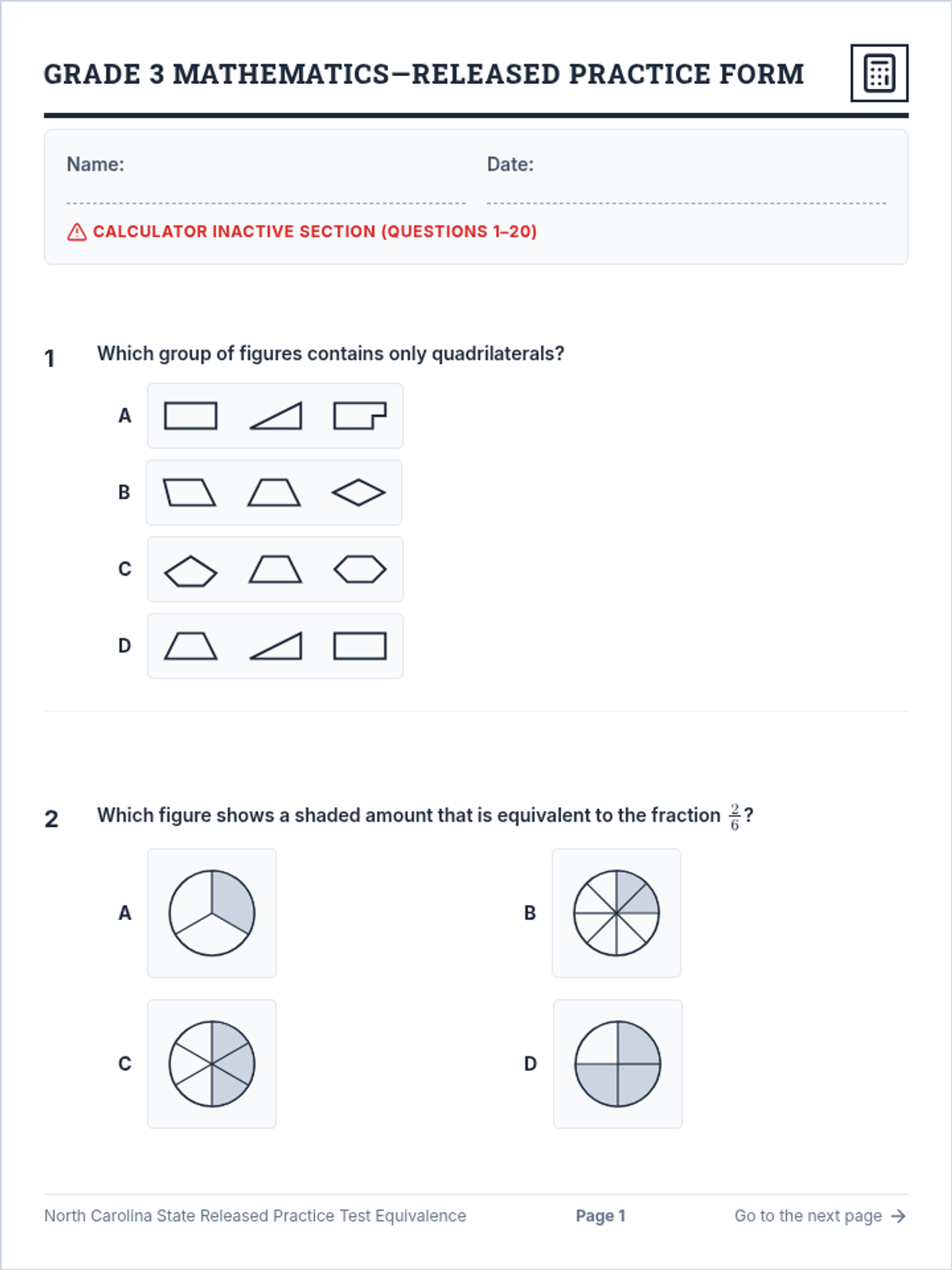
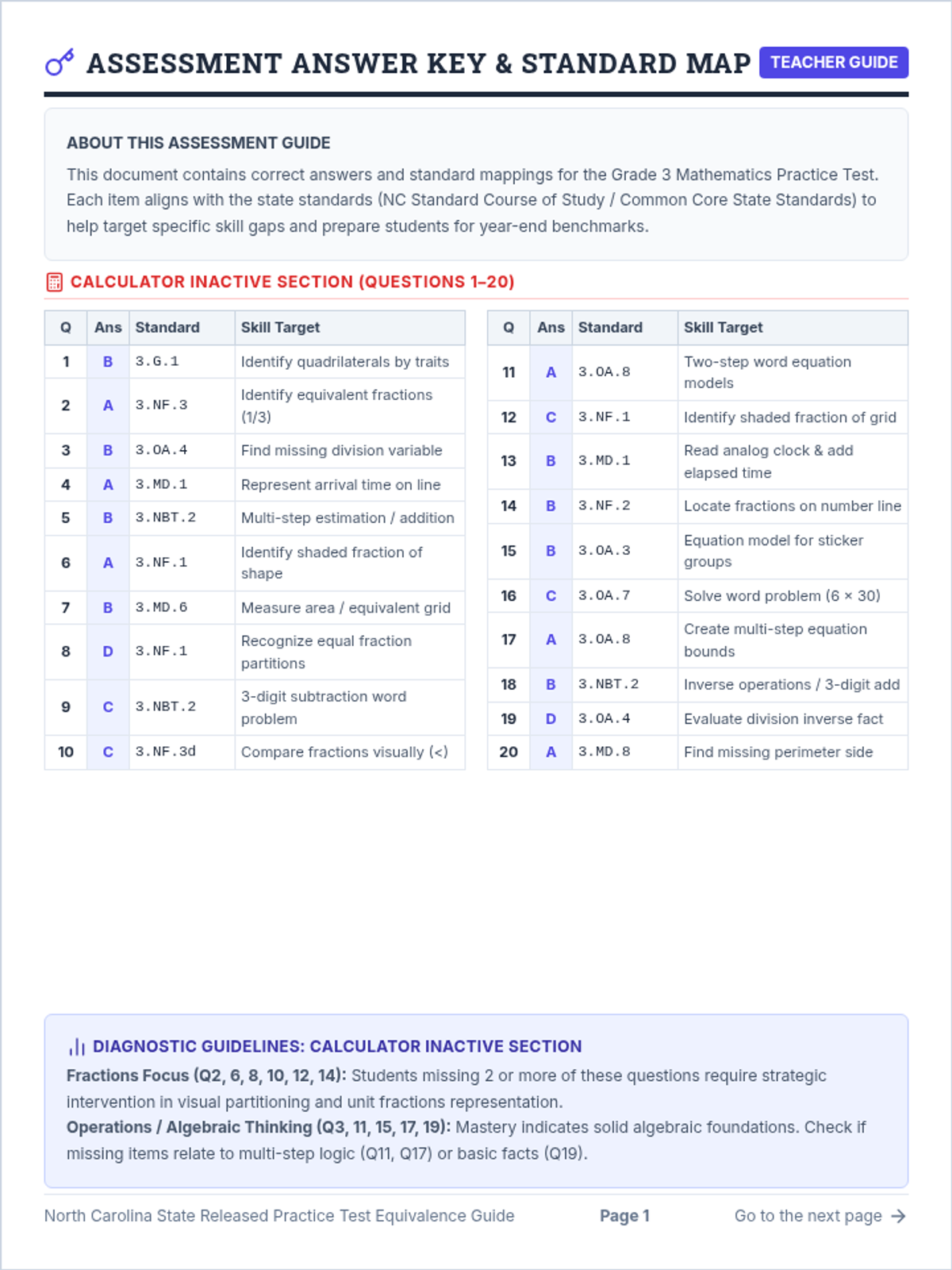
A comprehensive Grade 3 mathematics assessment modeled after the NC End-of-Grade released form, divided into Calculator Inactive and Calculator Active parts.
A comprehensive 3rd-grade mathematics practice exam modeled after the released state test, complete with exactly 40 standard-aligned questions divided into calculator-inactive and calculator-active sections, and an accompanying answer key and standards map.
A comprehensive lesson introducing fraction simplification using visual fraction strip models as key scaffolding, complete with guided worksheets, error analysis, and a teacher answer key.
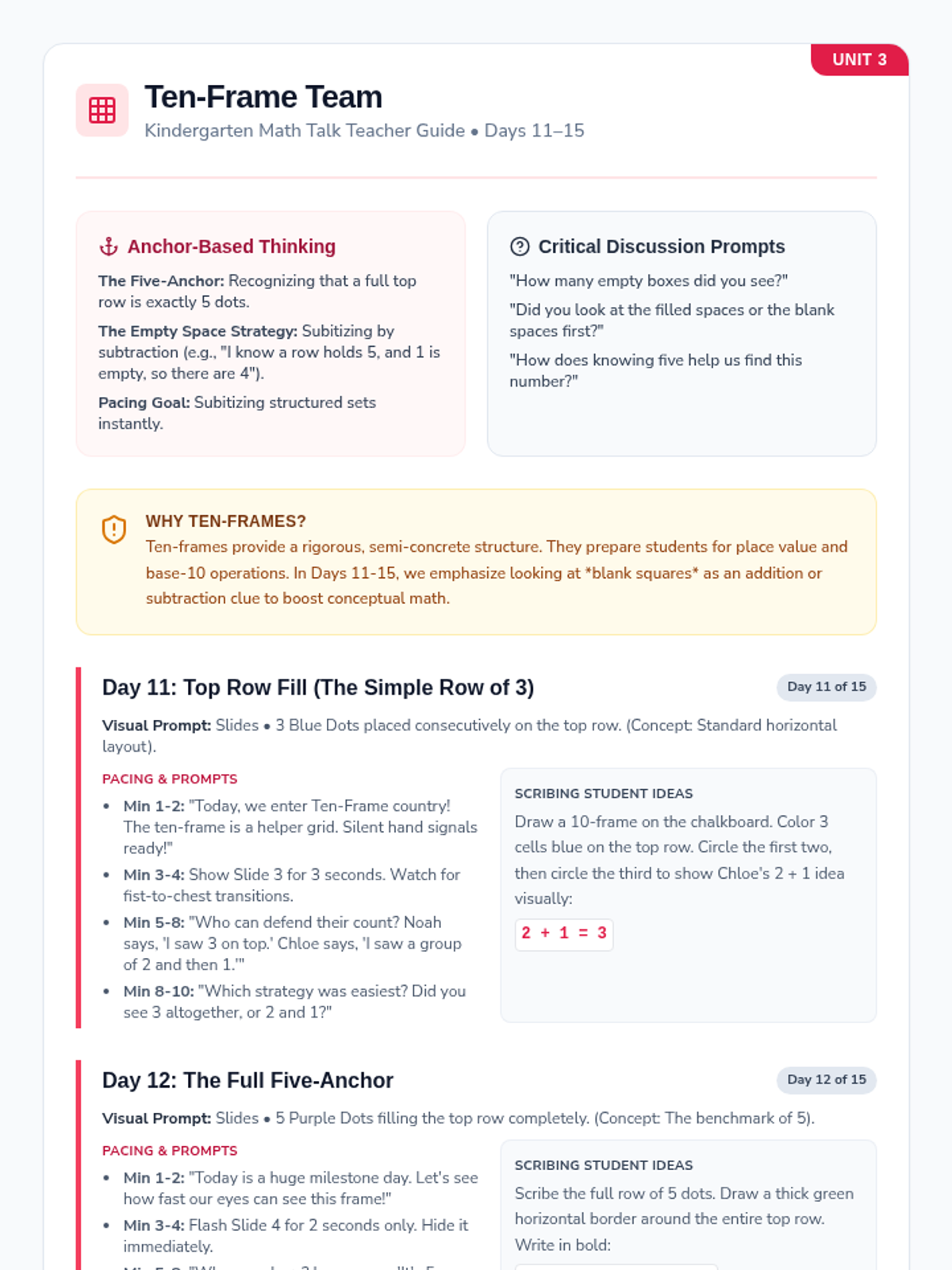
Explores subitizing numbers 1-5 within a ten-frame structure, helping students visualize numbers relative to five- and ten-anchors over Days 11-15.
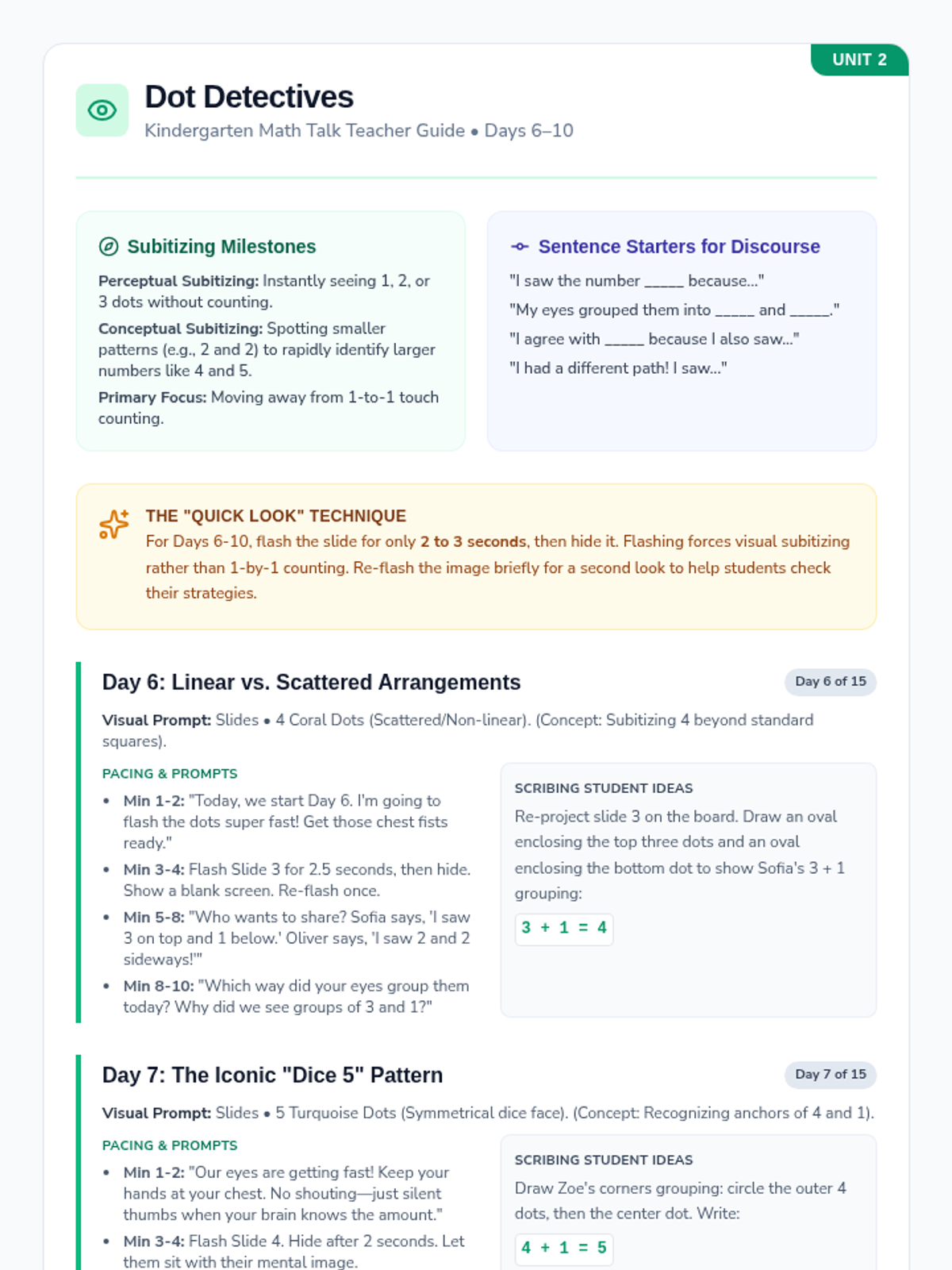
Develops rapid subitizing and spatial awareness for numbers 1 to 5 using varied dot configurations (dice, linear, and scattered) over Days 6-10.
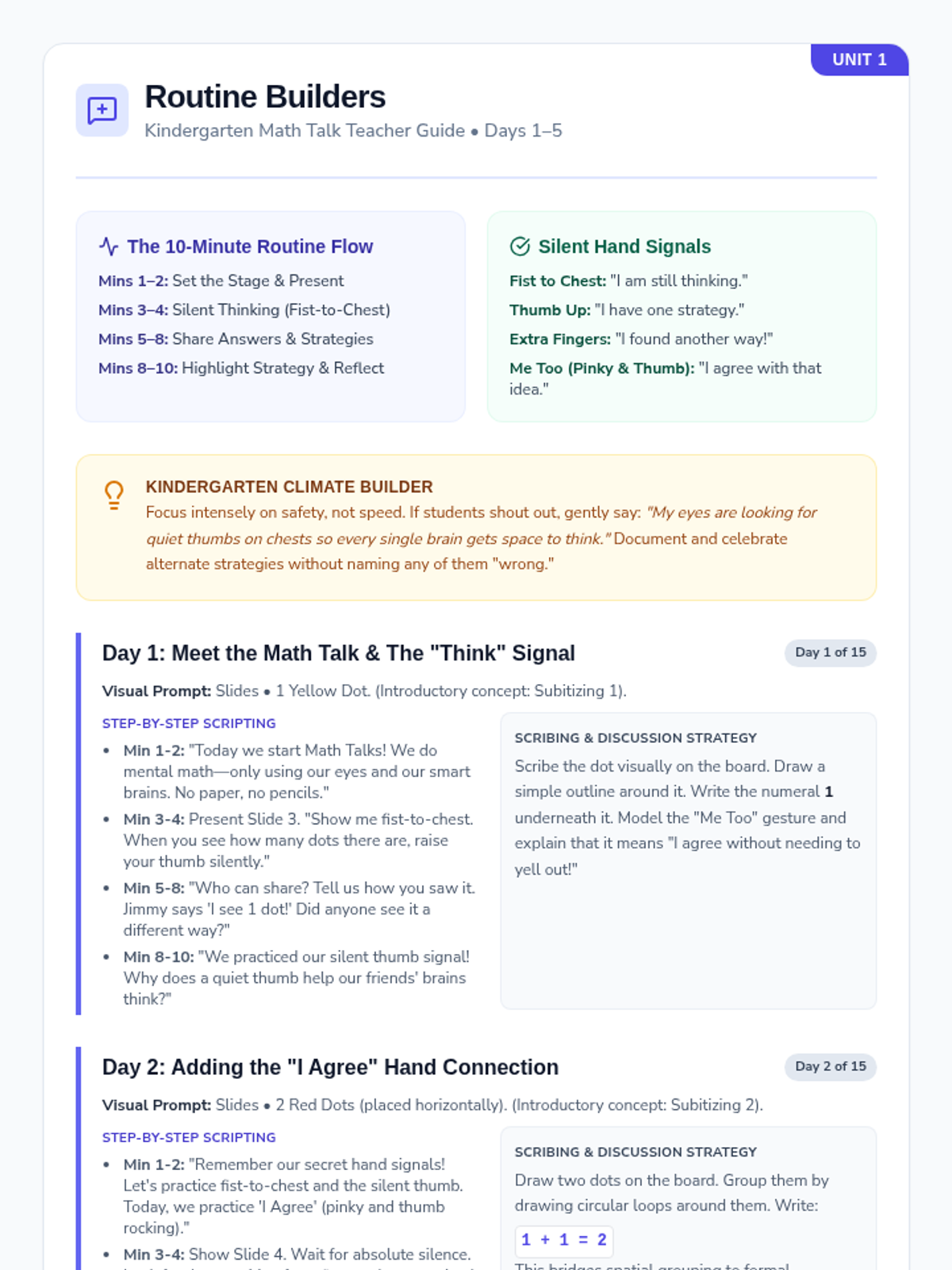
Introduces the foundational mental math protocols, silent hand signals, and first simple visual count talks (dots/fingers) over Days 1-5 to build classroom safety.
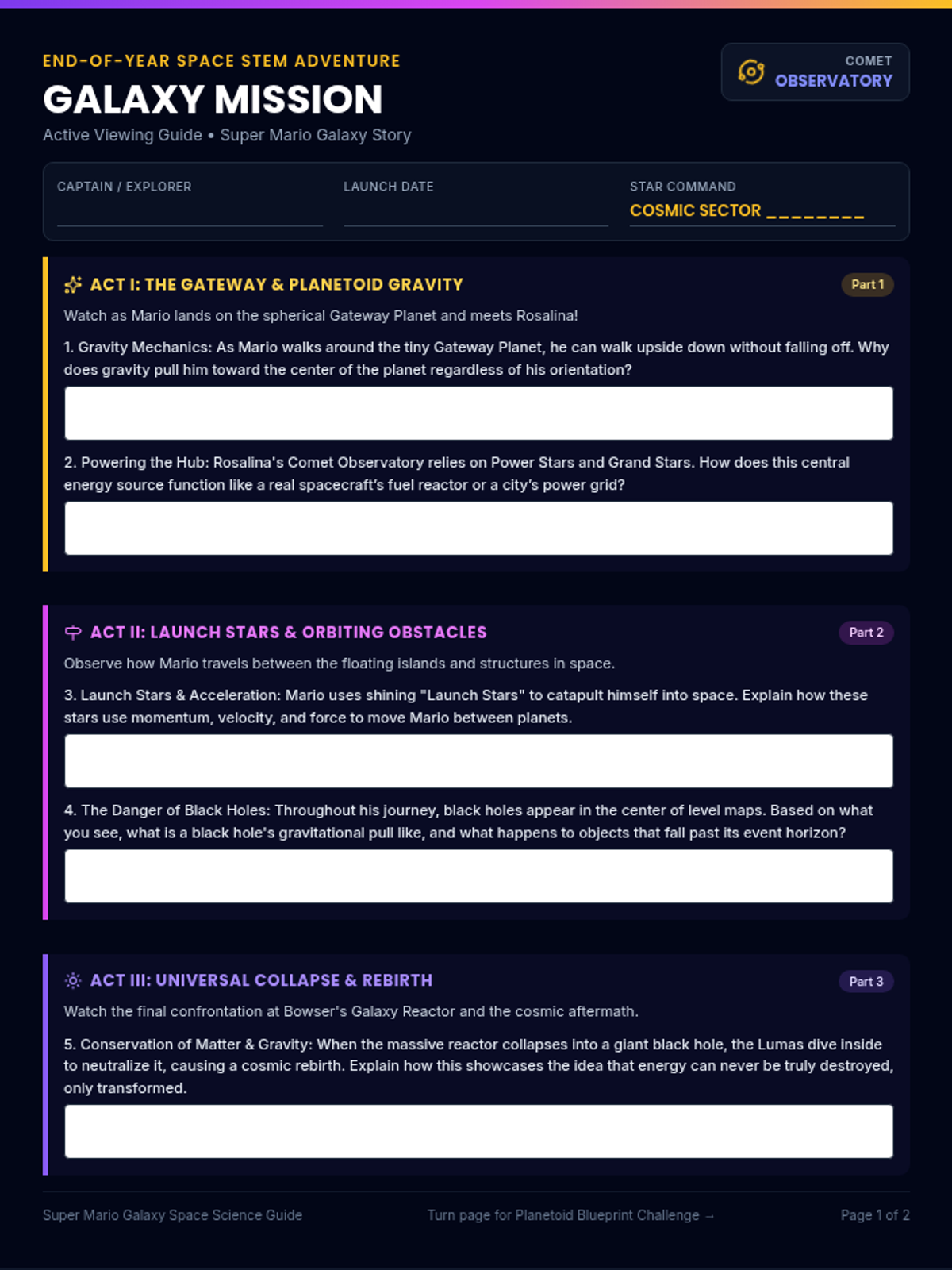
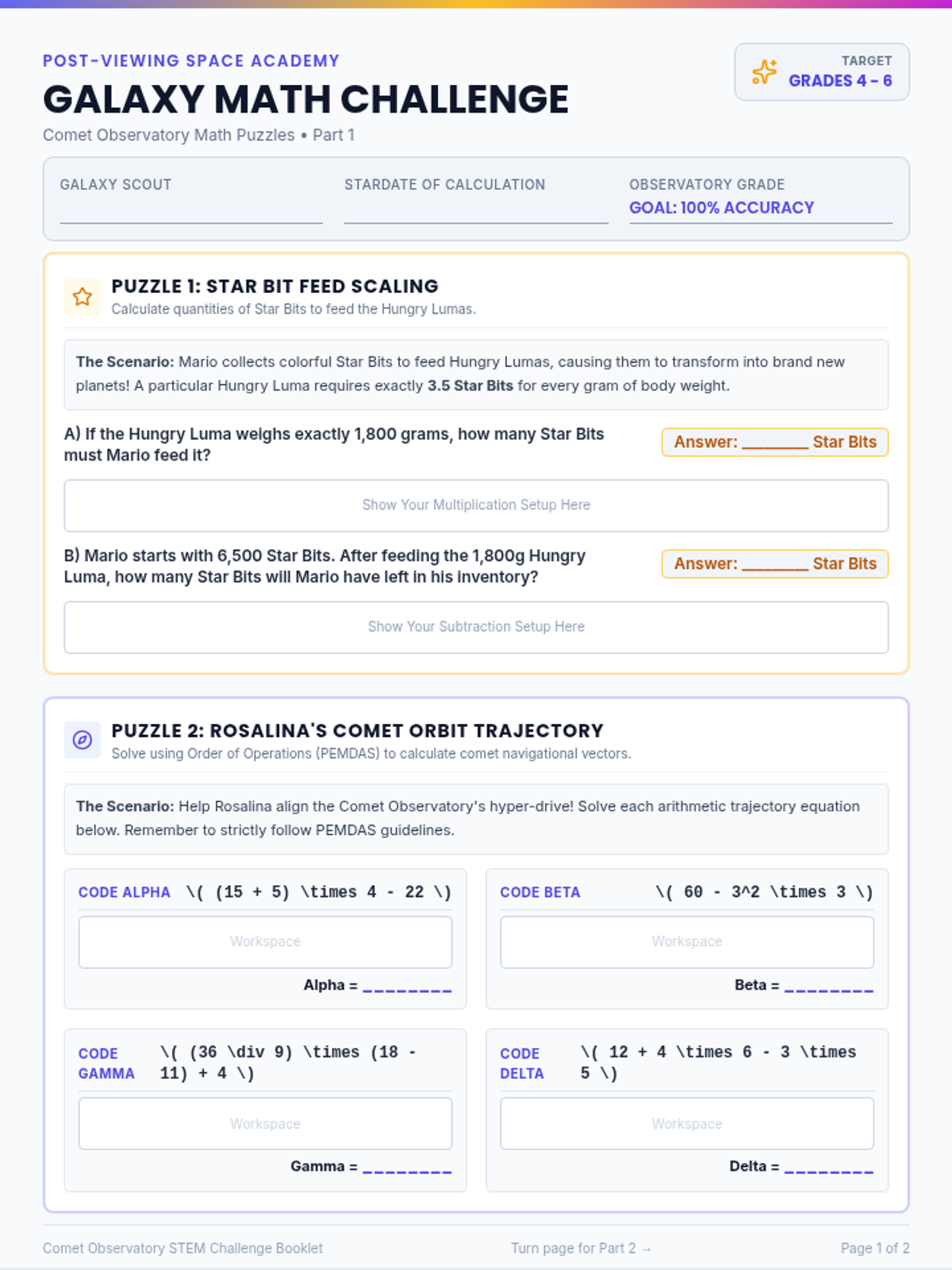
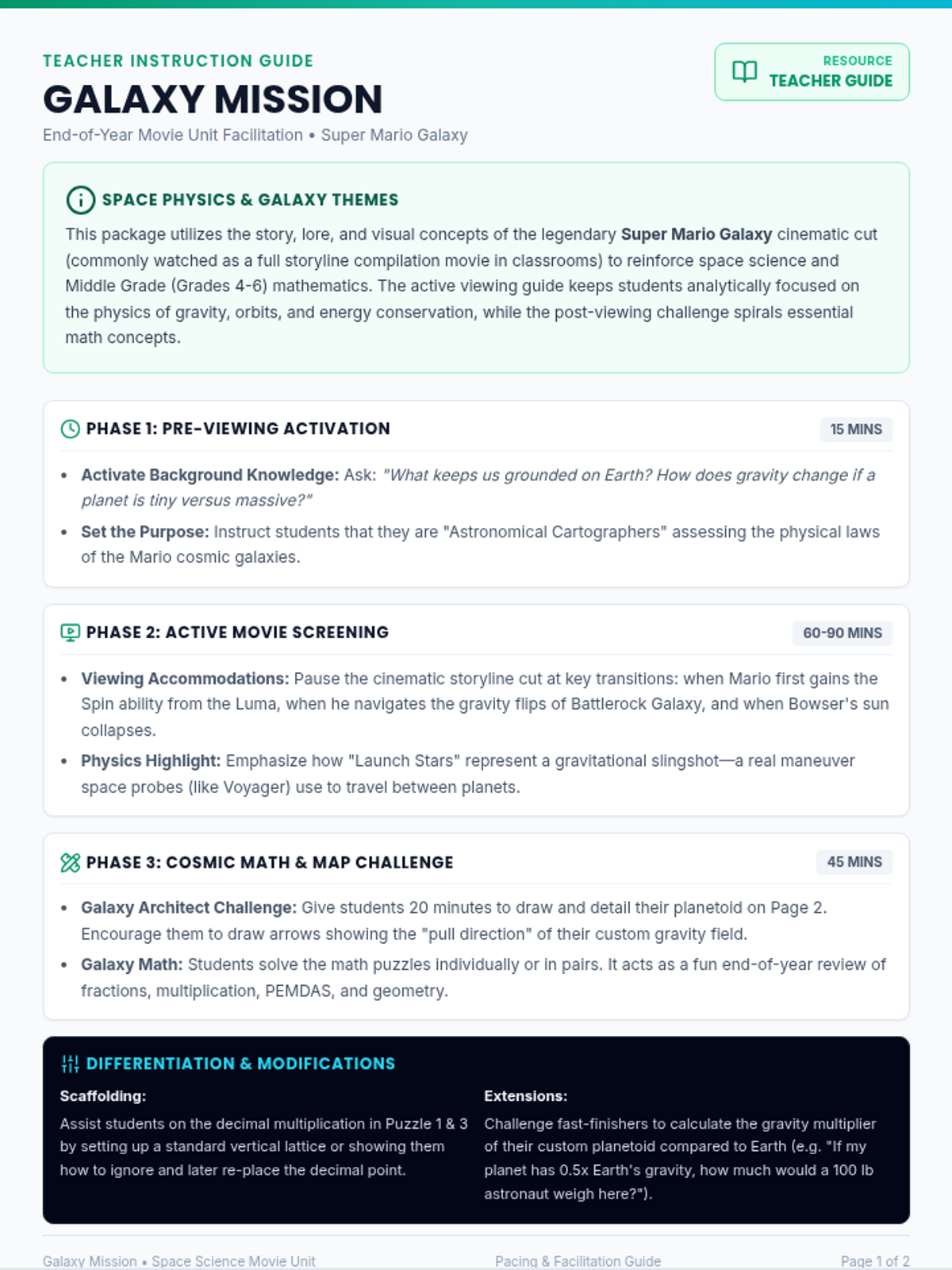
An end-of-year educational movie unit and math workbook based on the story of Super Mario Galaxy. Students explore gravity, orbits, and space physics through active viewing, followed by high-energy space-themed math puzzles.
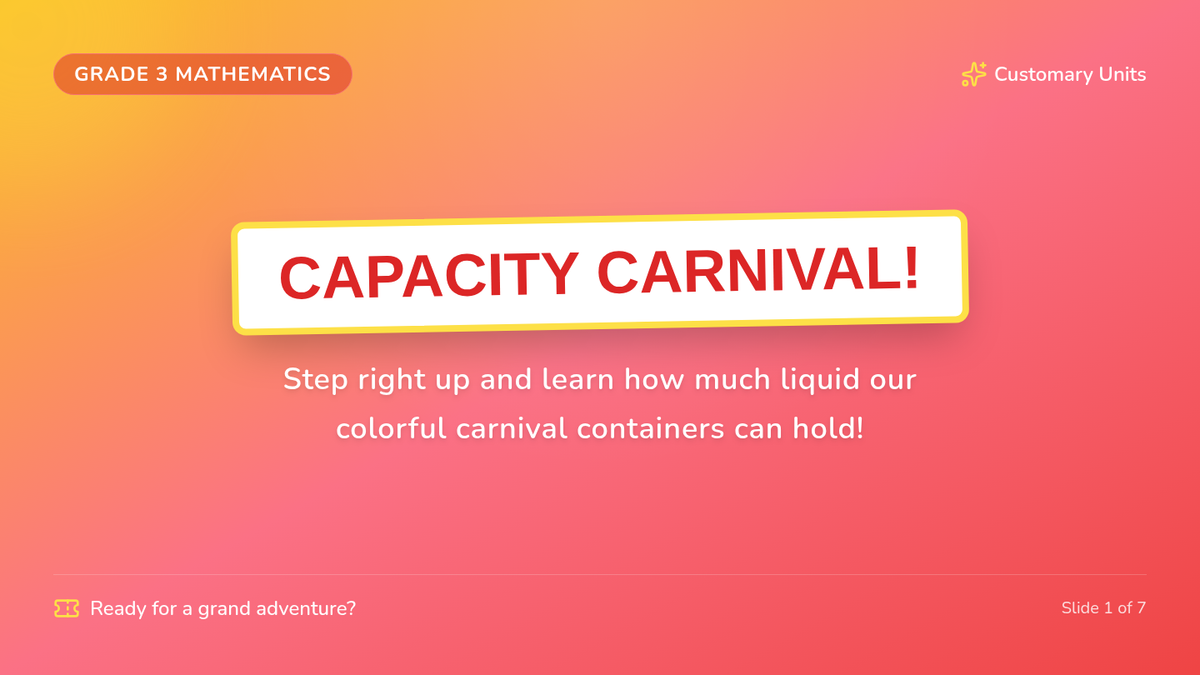
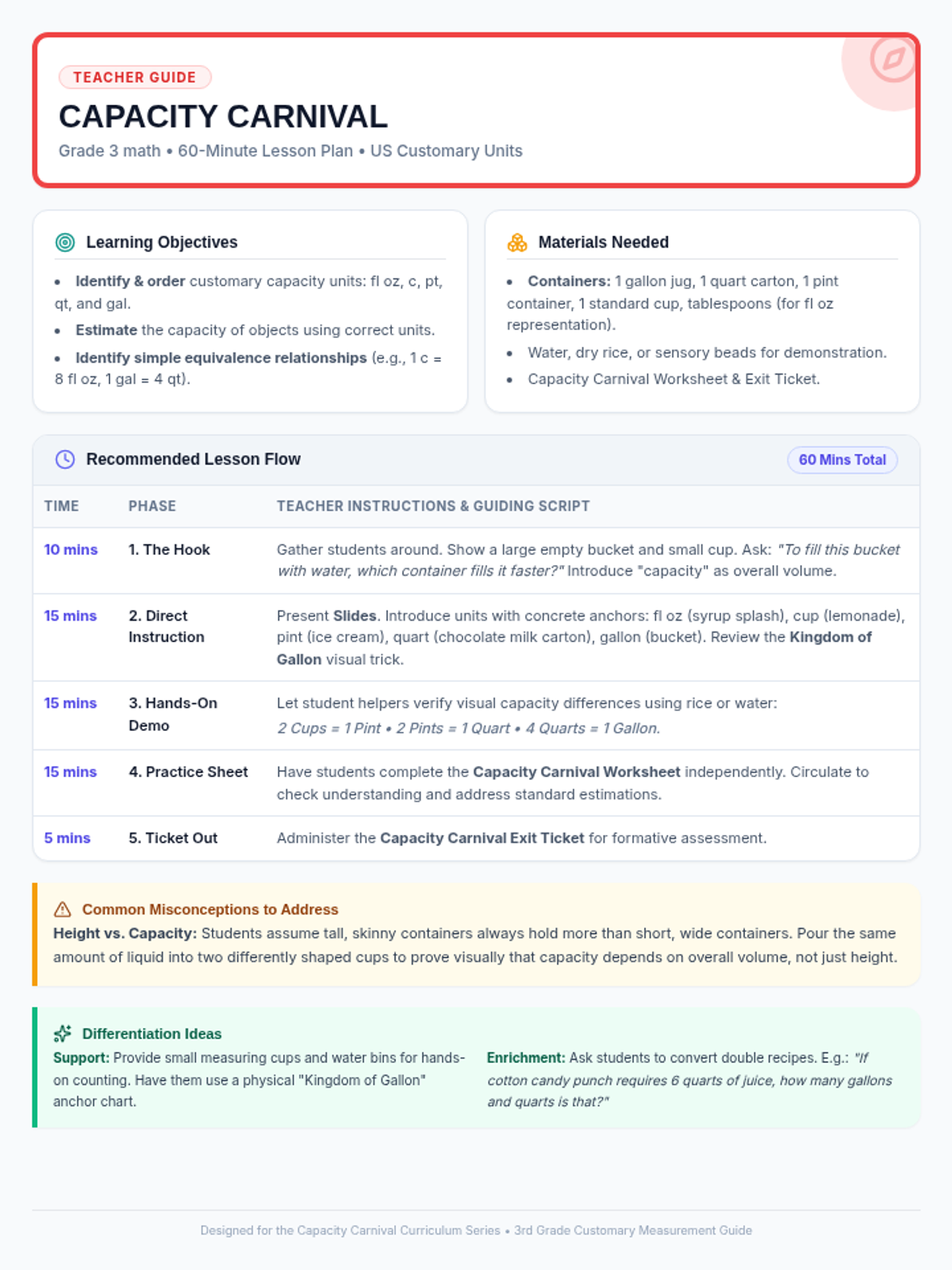
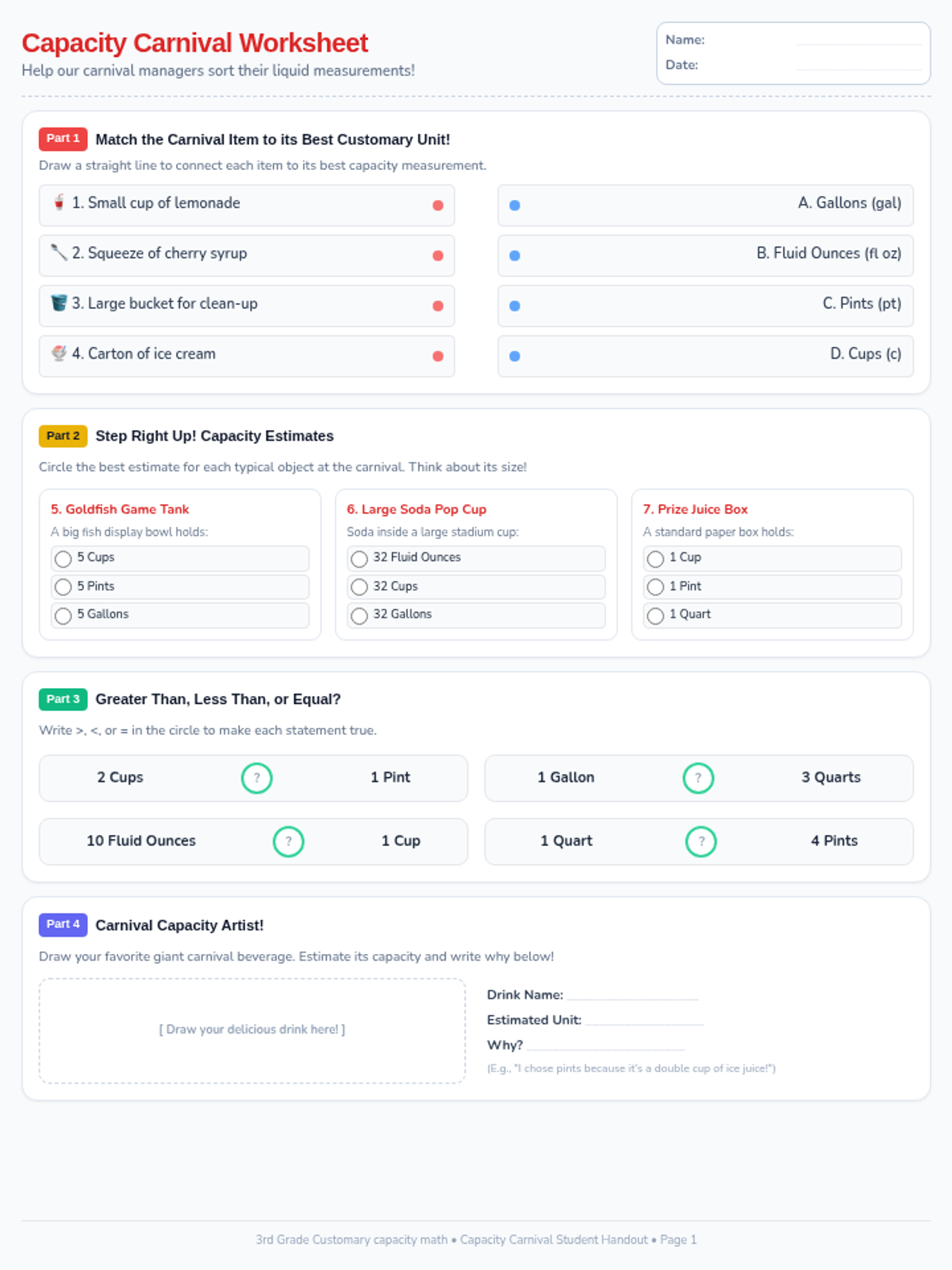
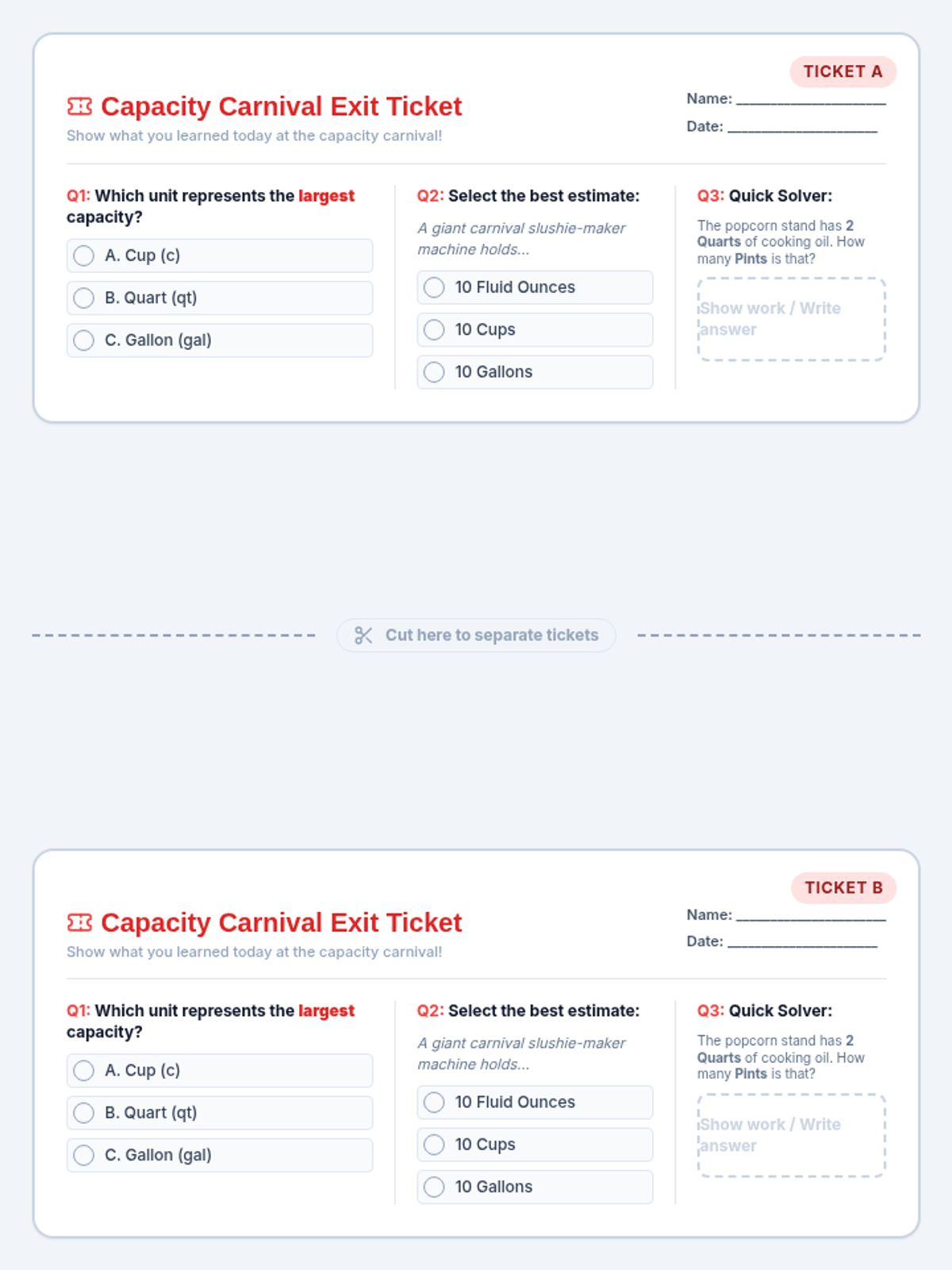
A whimsical, hands-on lesson introducing 3rd-grade students to US Customary capacity units (fluid ounces, cups, pints, quarts, and gallons) through an engaging carnival theme. Includes a comprehensive slide presentation, teacher guide, student worksheet, and a double-sided printable exit ticket.
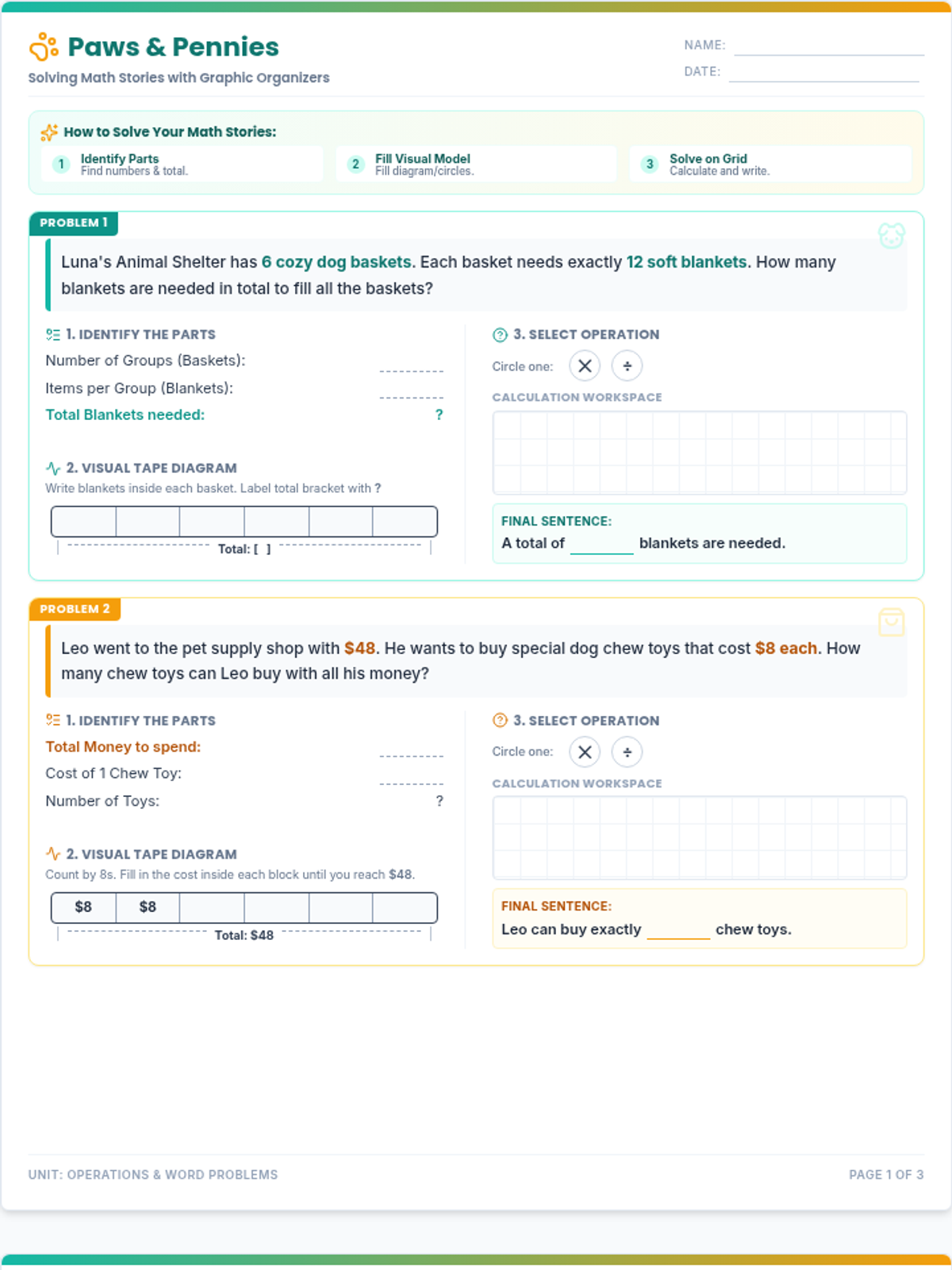
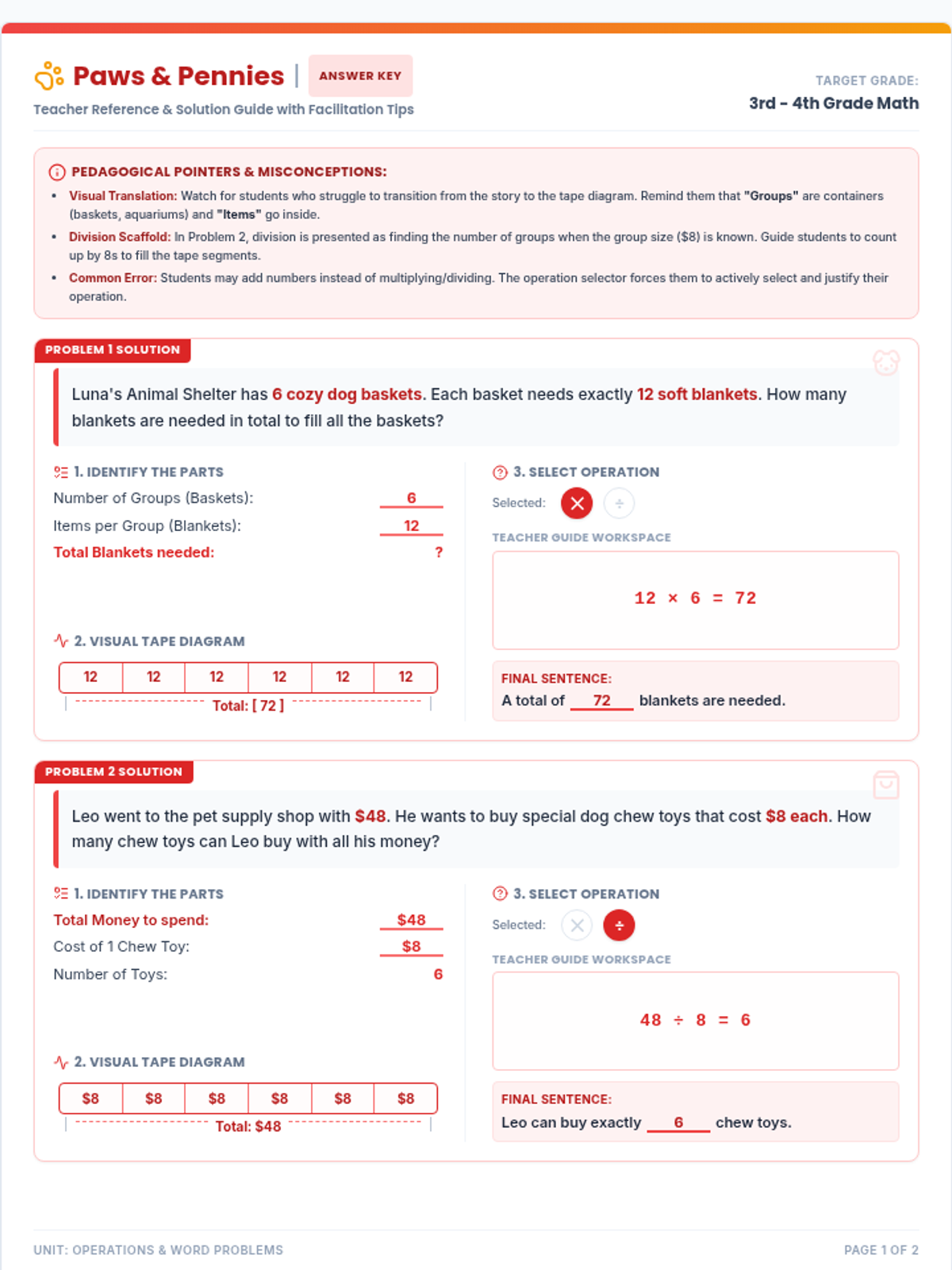
A lesson focusing on solving one-step multiplication and division word problems involving single and double-digit numbers, themed around animal care and shopping transactions. Students use structured visual graphic organizers to break down problems, identify operations, and calculate answers.
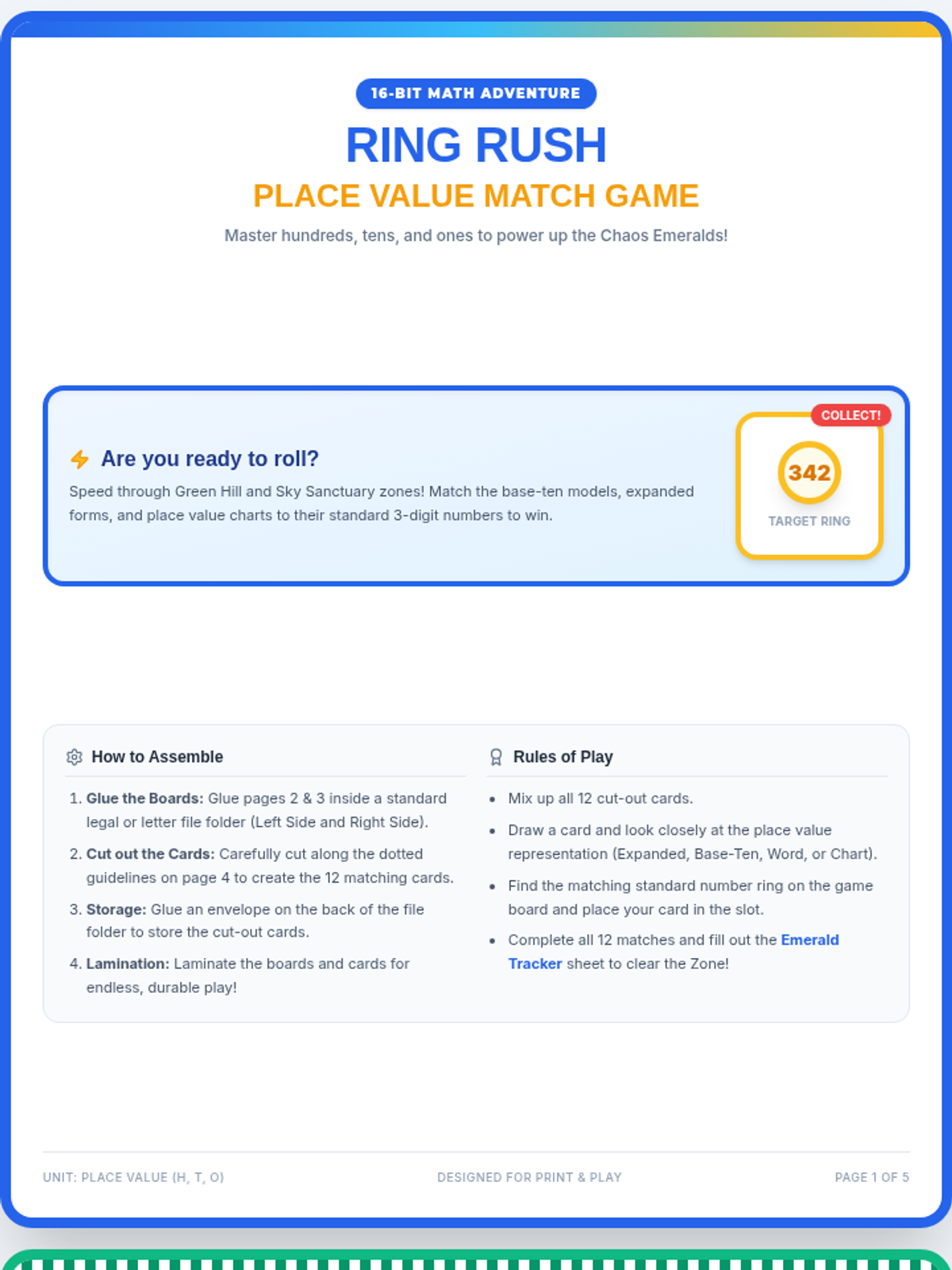
A high-energy, video-game-themed place value lesson focusing on hundreds, tens, and ones. Includes a file folder match game, a student record tracker, and practice sheets to master 3-digit numbers.
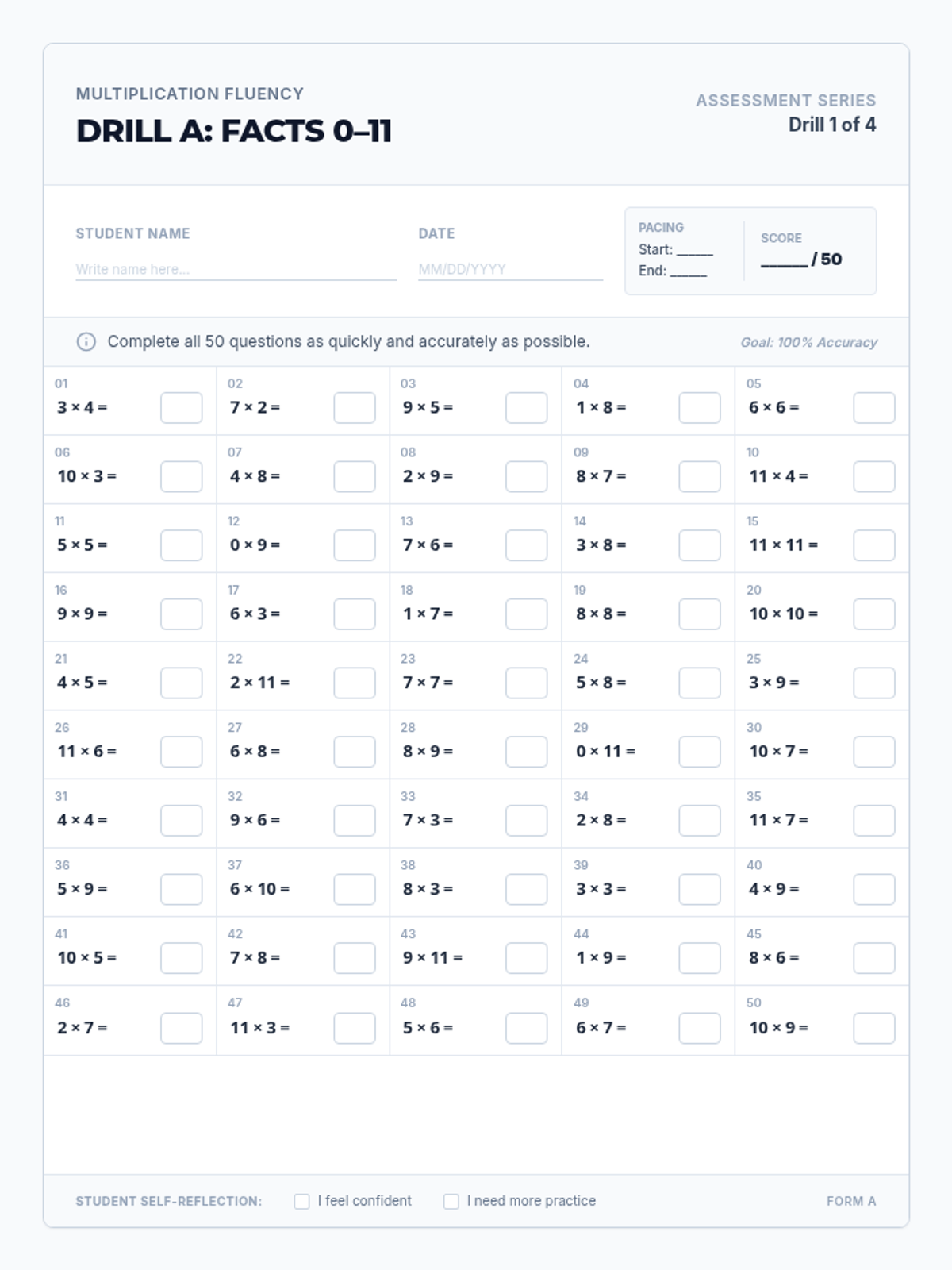
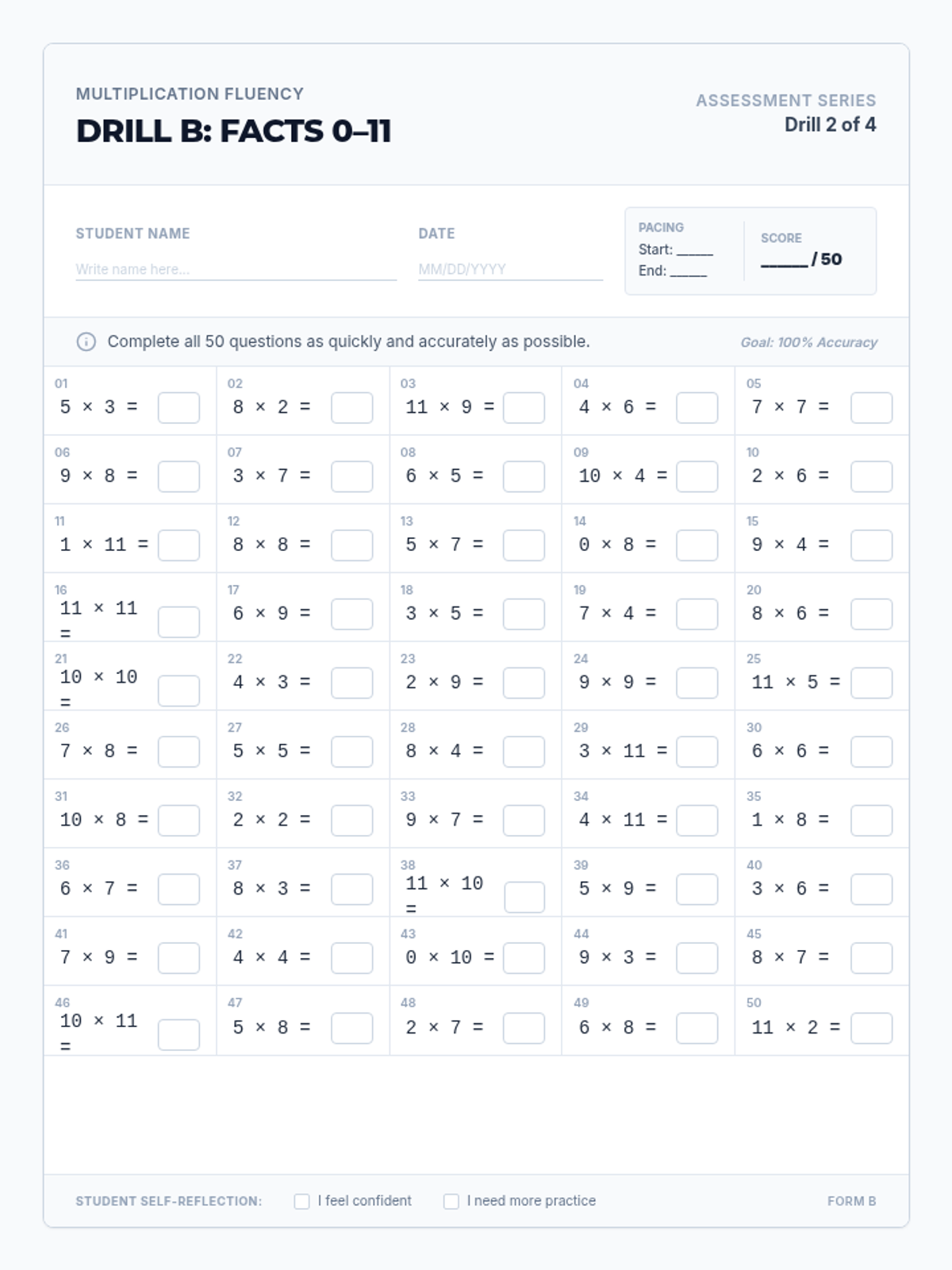
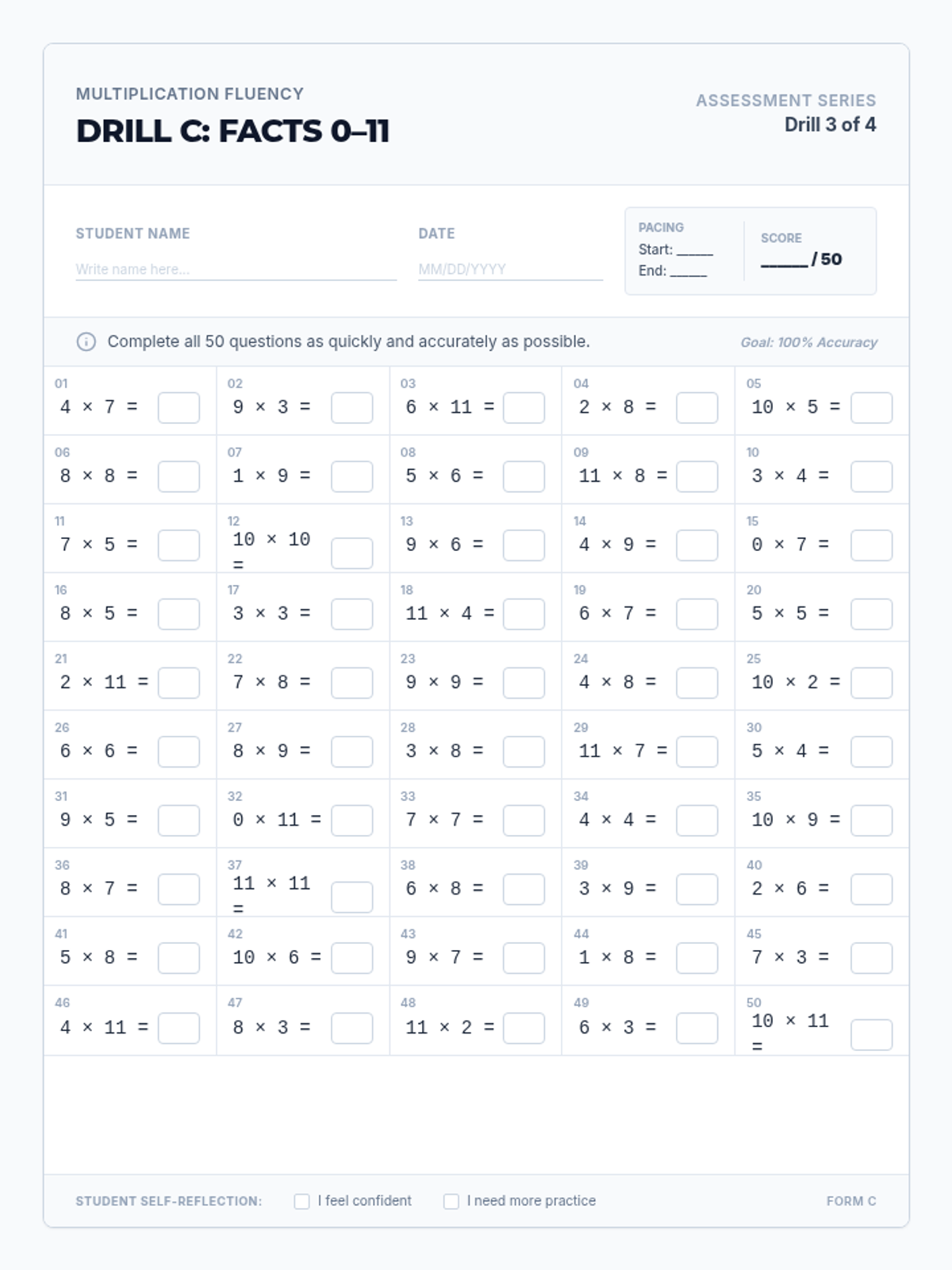
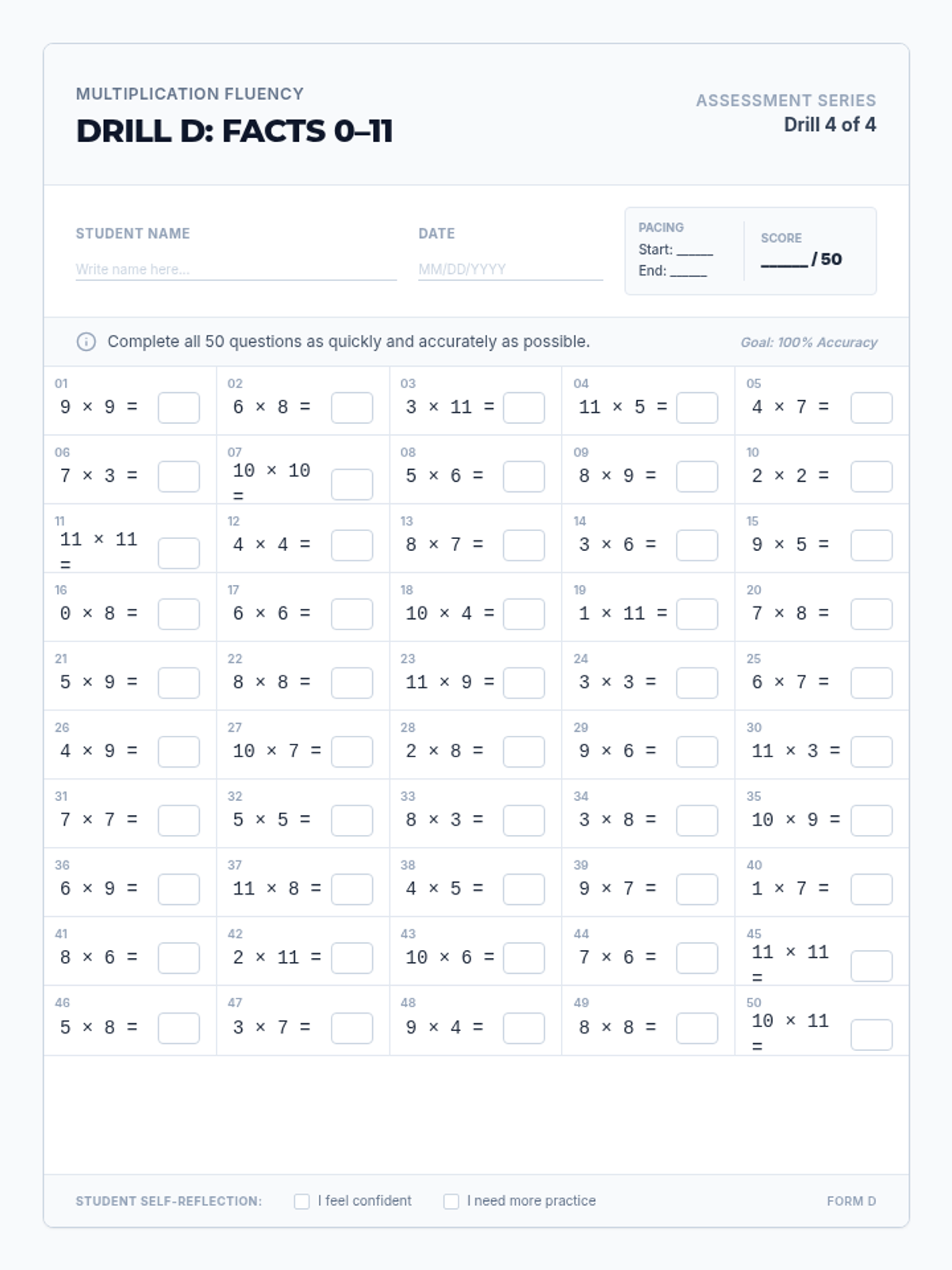
A comprehensive set of four randomized mixed-review multiplication drills covering facts 0-11. Designed for third-grade fact mastery and speed building, these minimalist worksheets include speed and accuracy tracking to build automaticity.
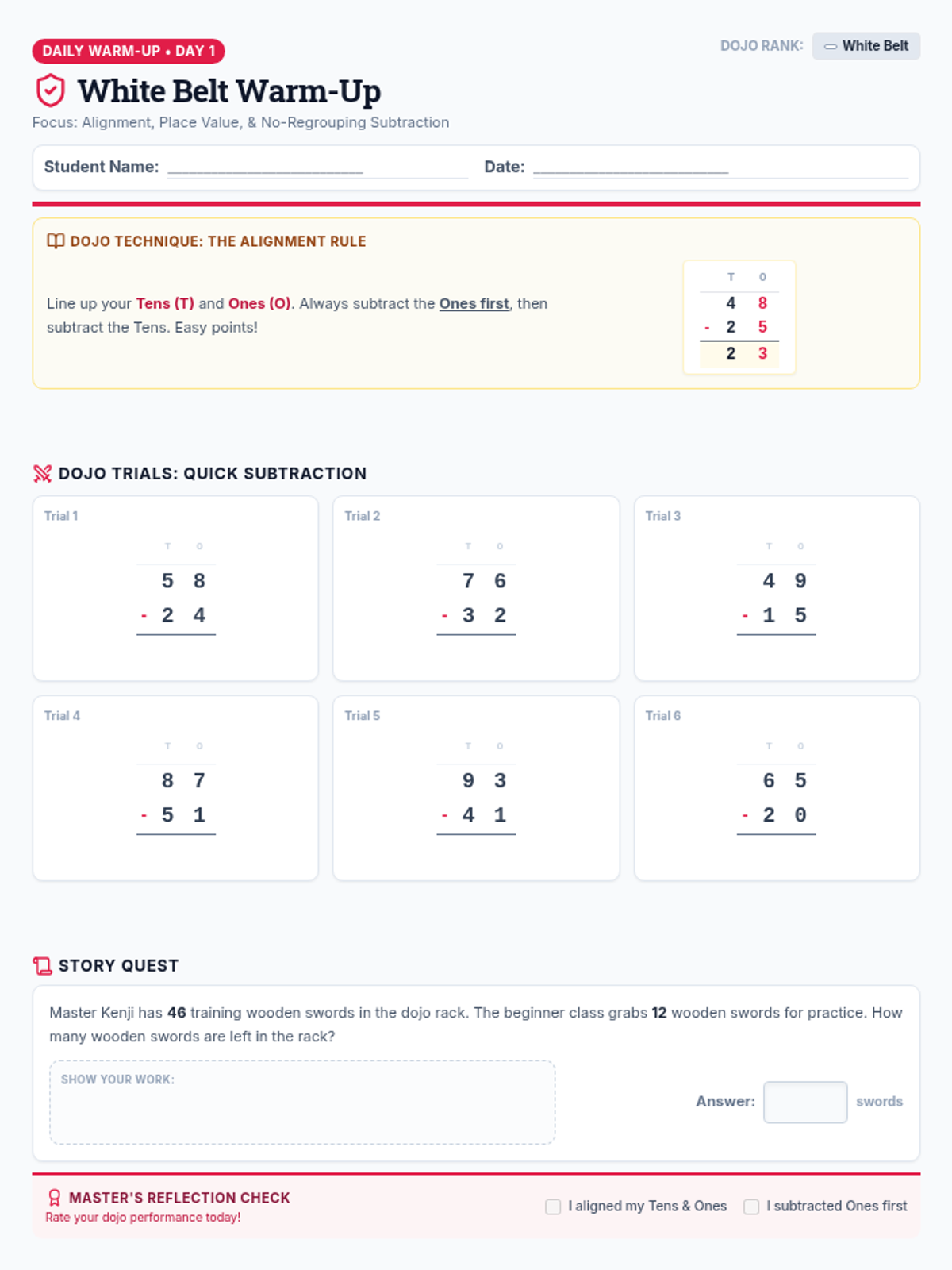
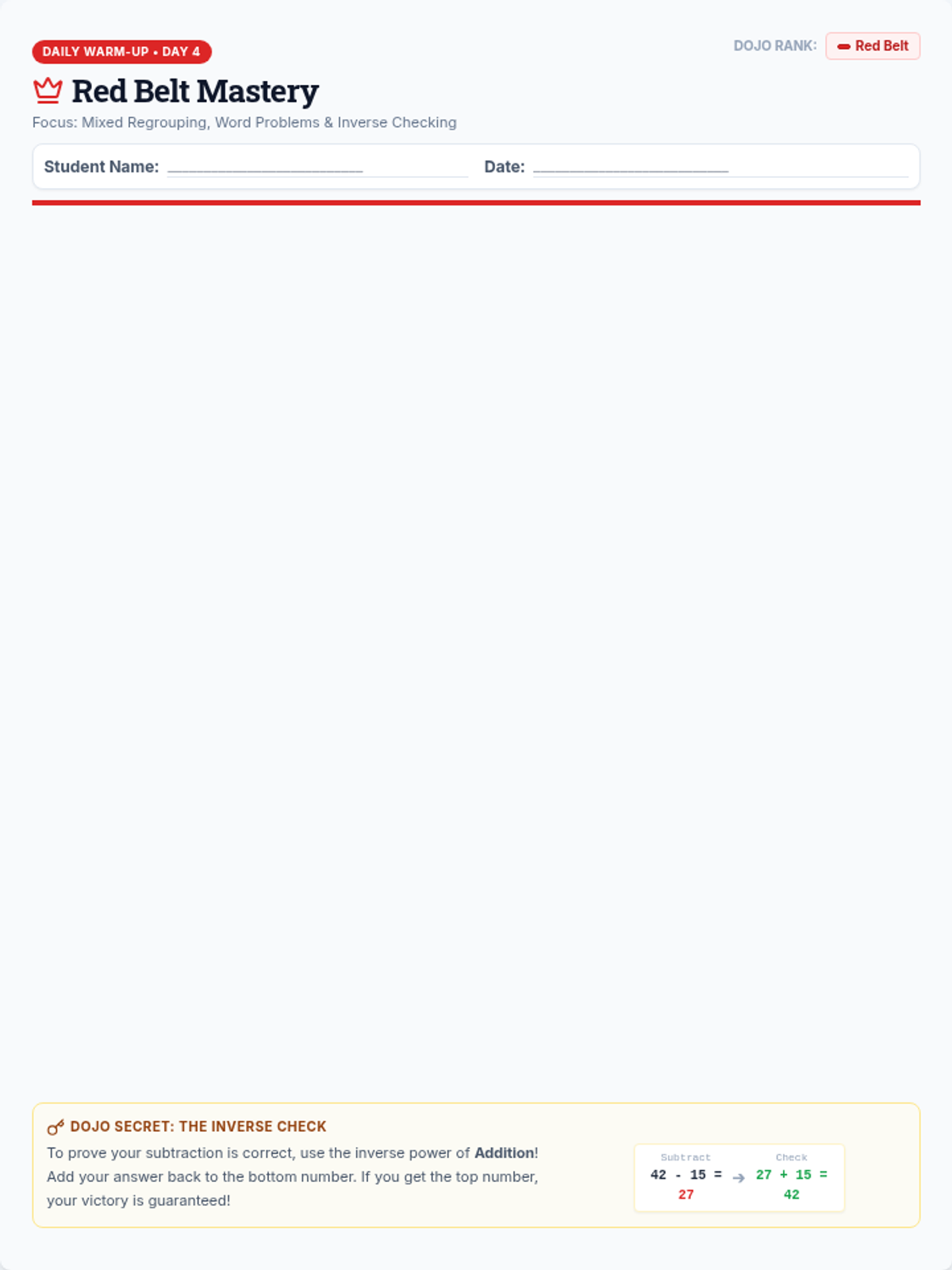
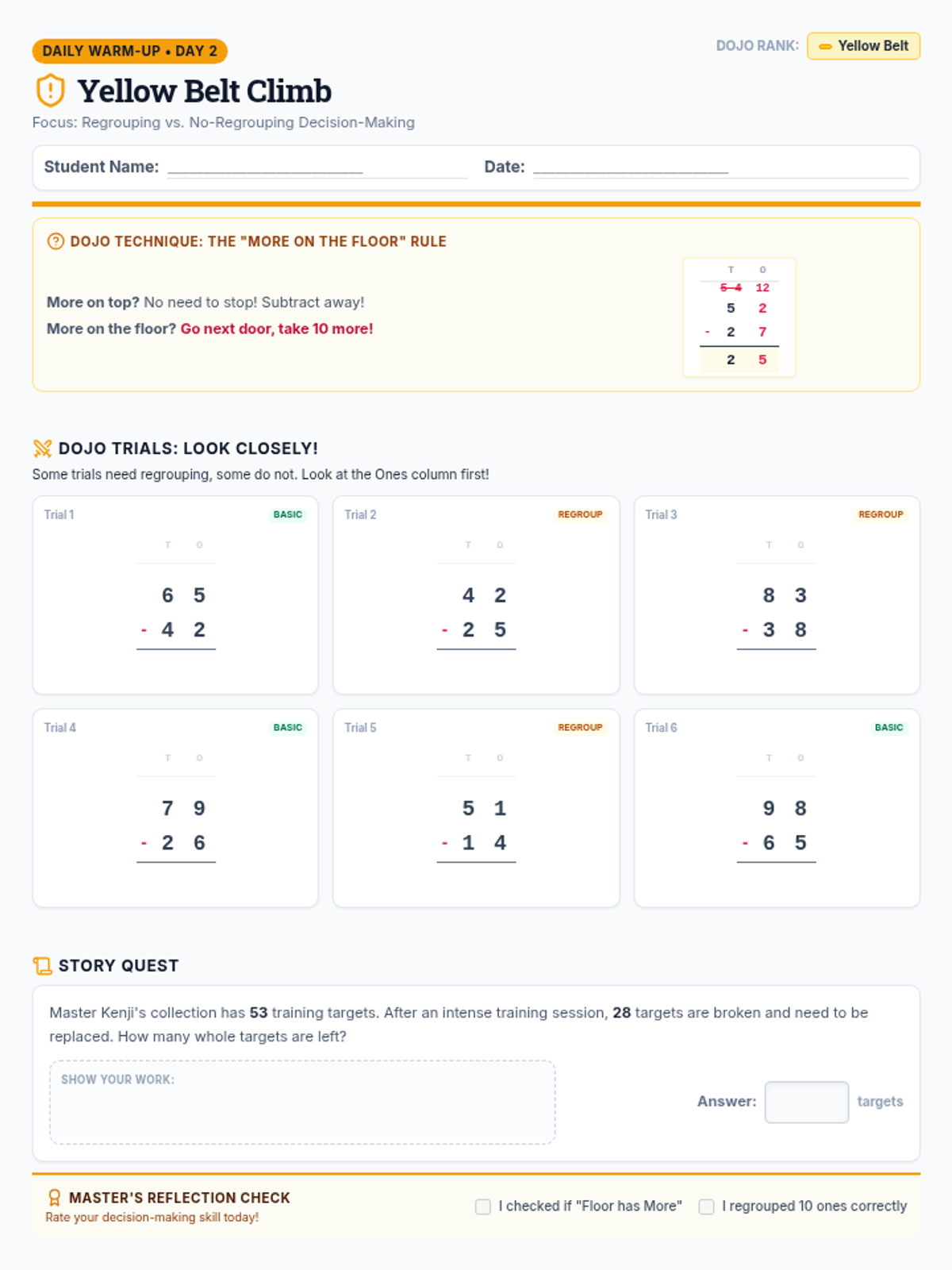
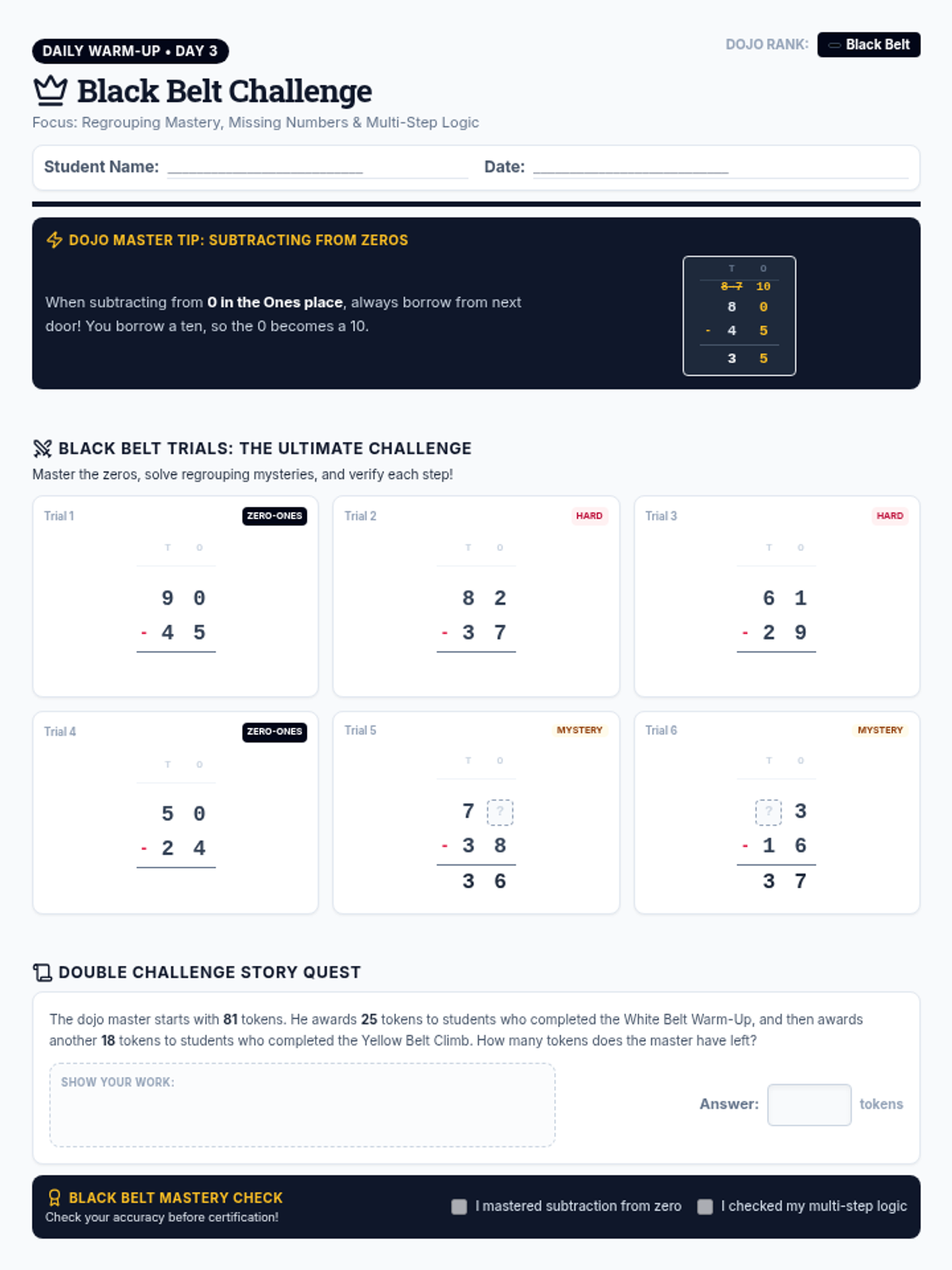
A four-part daily warm-up series designed to progressively build 2-digit subtraction mastery. Students level up from basic non-regrouping (White Belt) to mixed regrouping challenges (Yellow and Black Belts) and supreme mastery (Red Belt), adopting a martial arts dojo theme to track their progress.
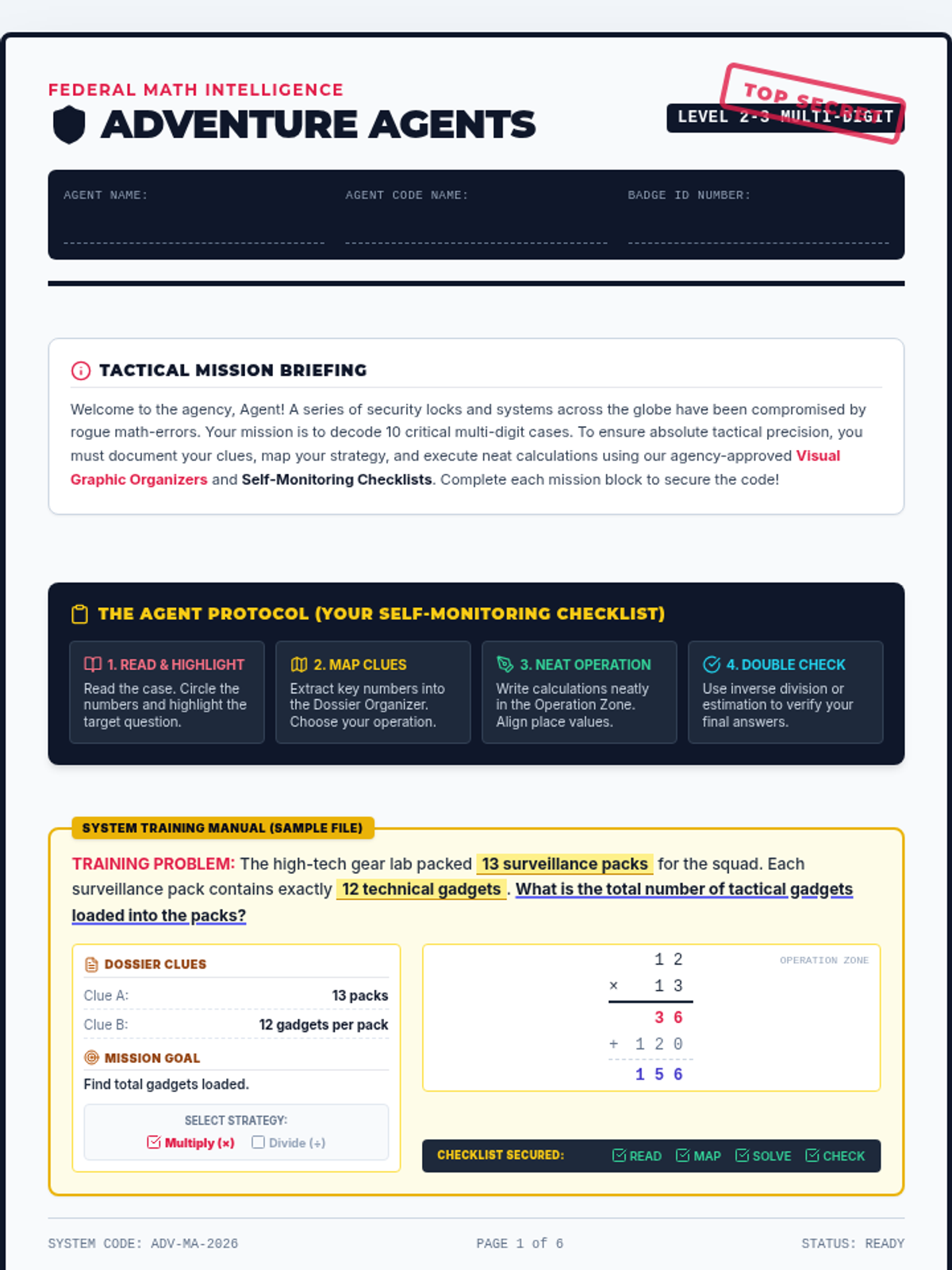
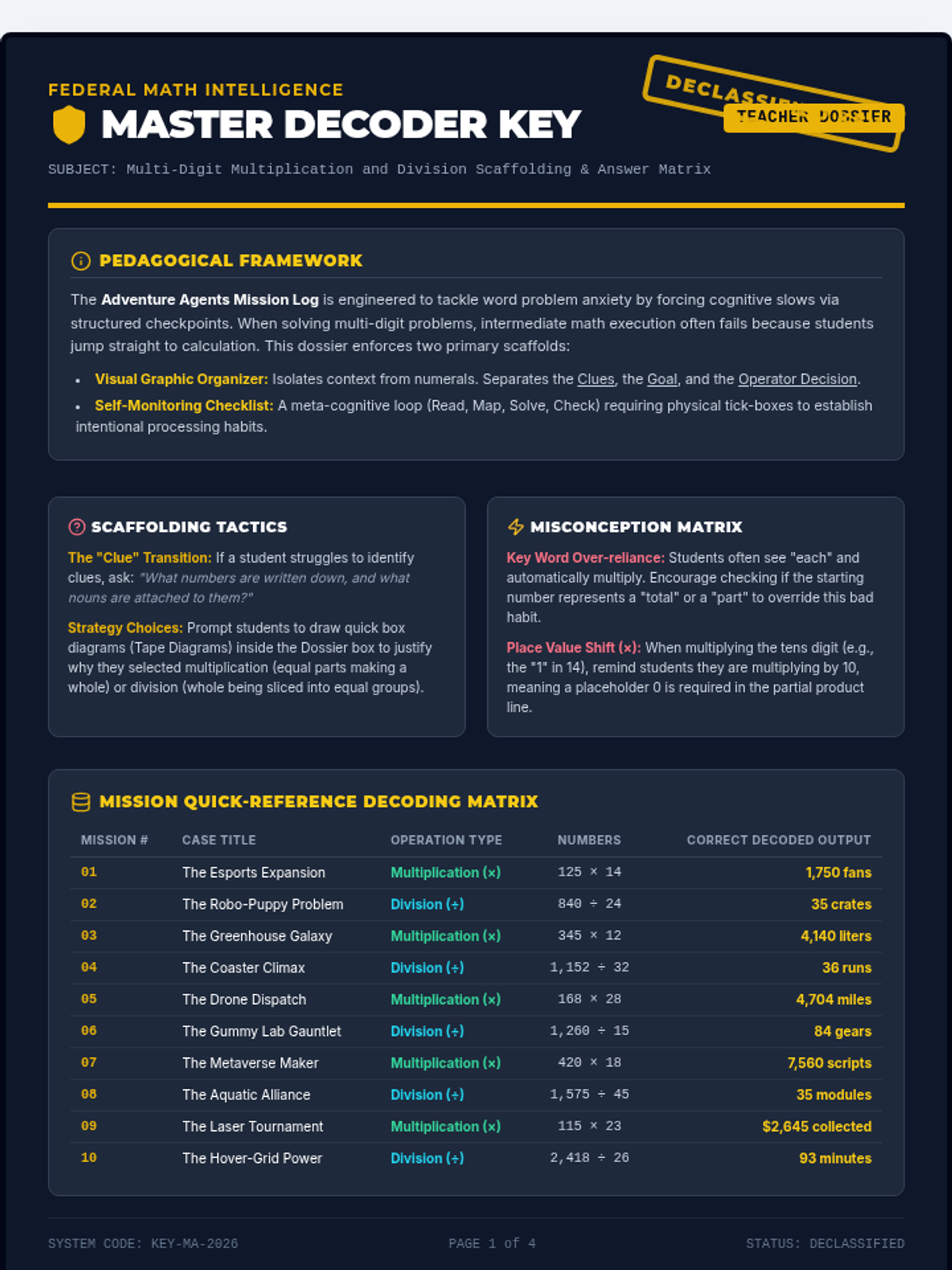
A high-interest word problem mission where students use visual graphic organizers and self-monitoring checklists to solve multi-digit multiplication and division challenges.
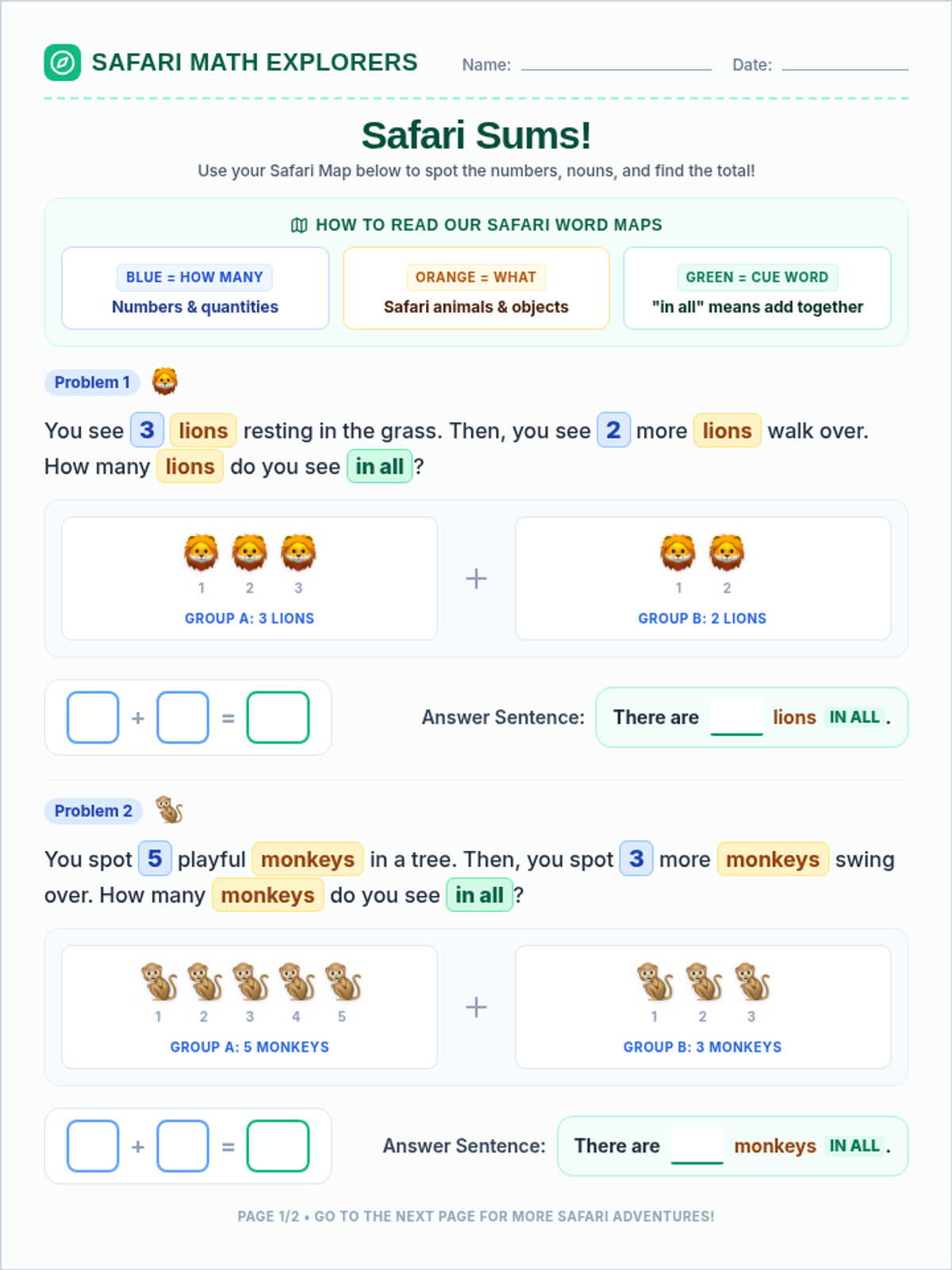
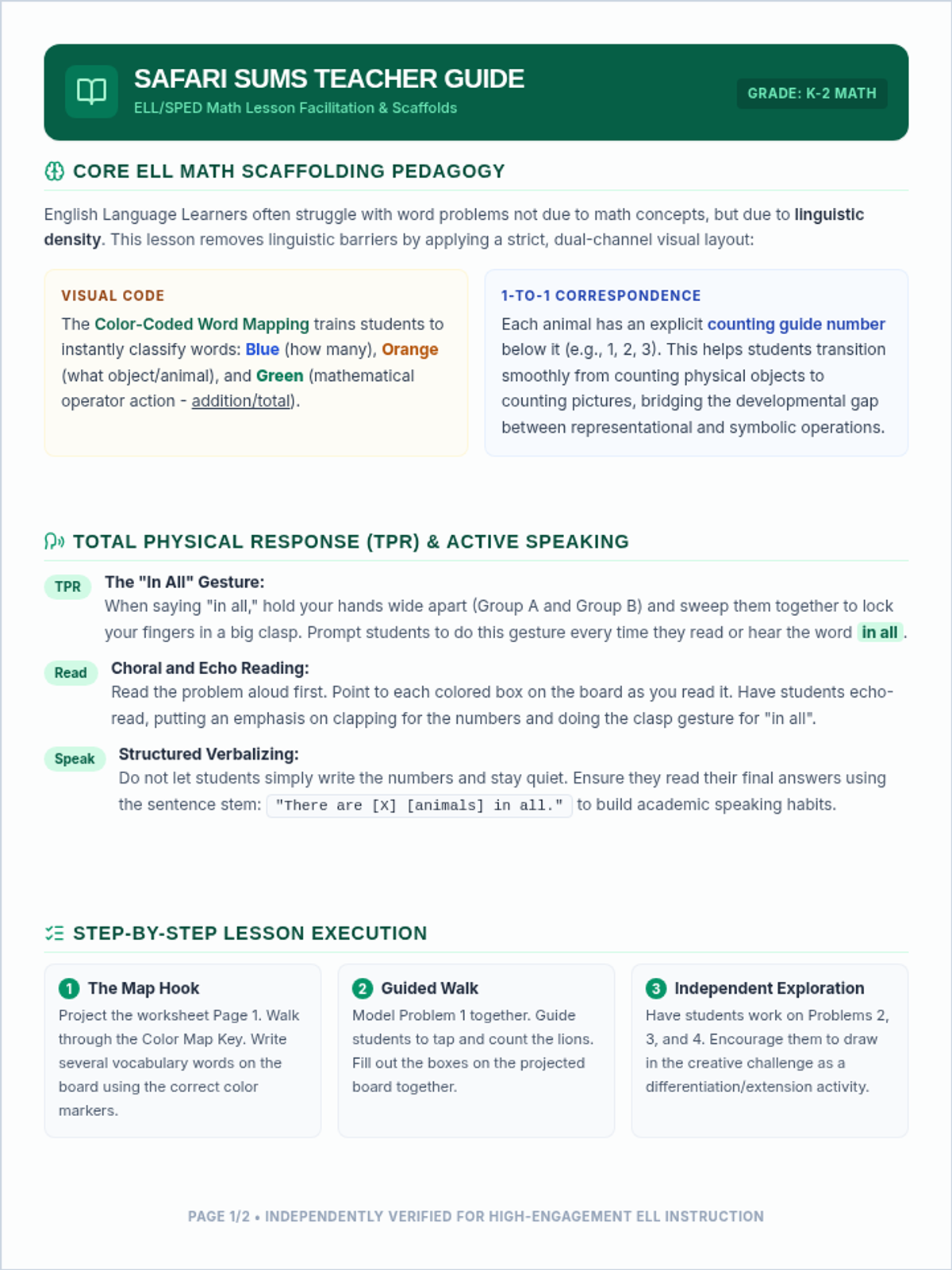
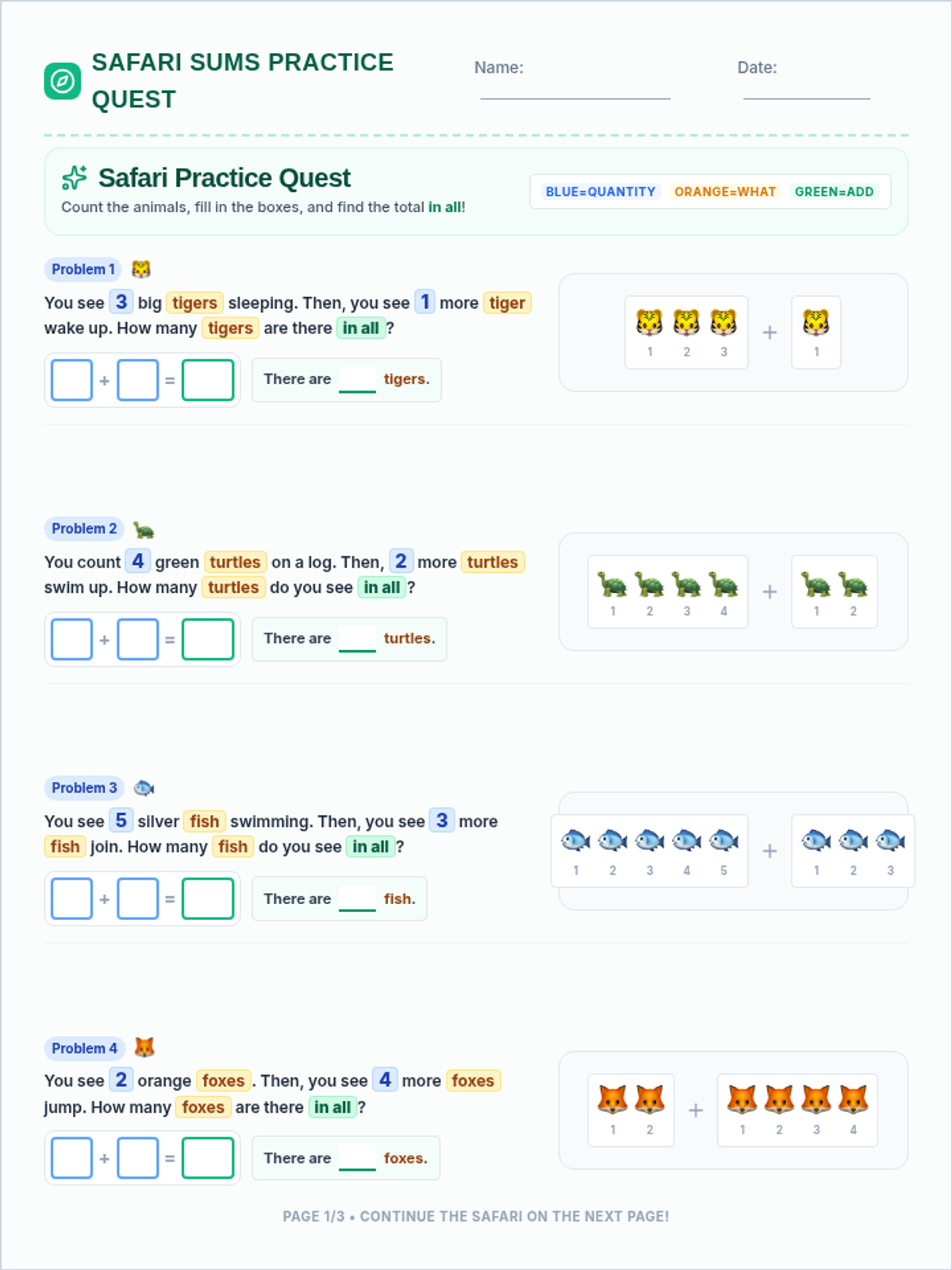
A visual addition lesson designed for English Language Learners (ELL) to master single-digit word problems. It utilizes a Safari theme, clear icon-based pictorial support, and color-coded text highlighting to build confidence in identifying quantities, key nouns, and the 'in all' action cue.
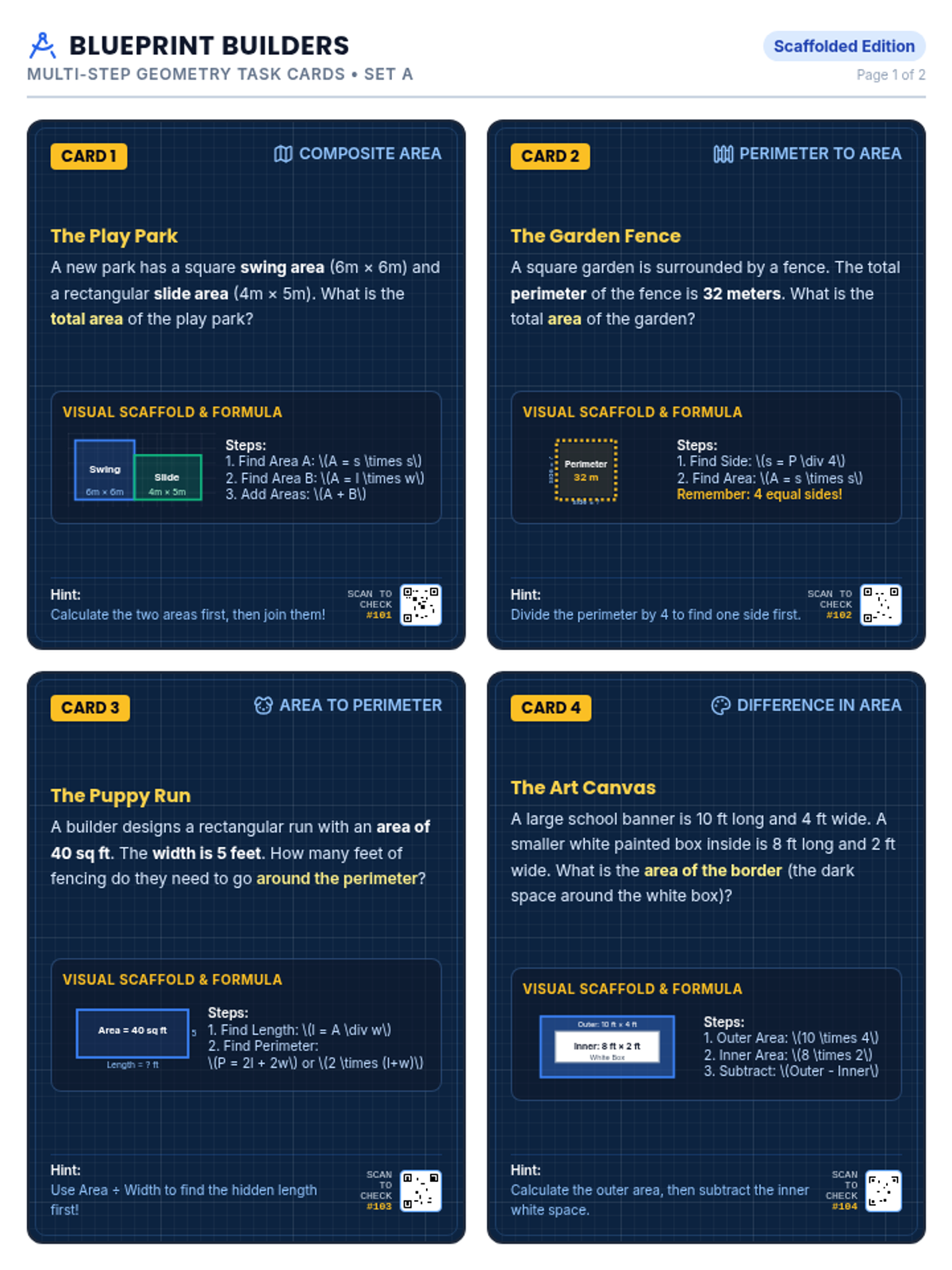
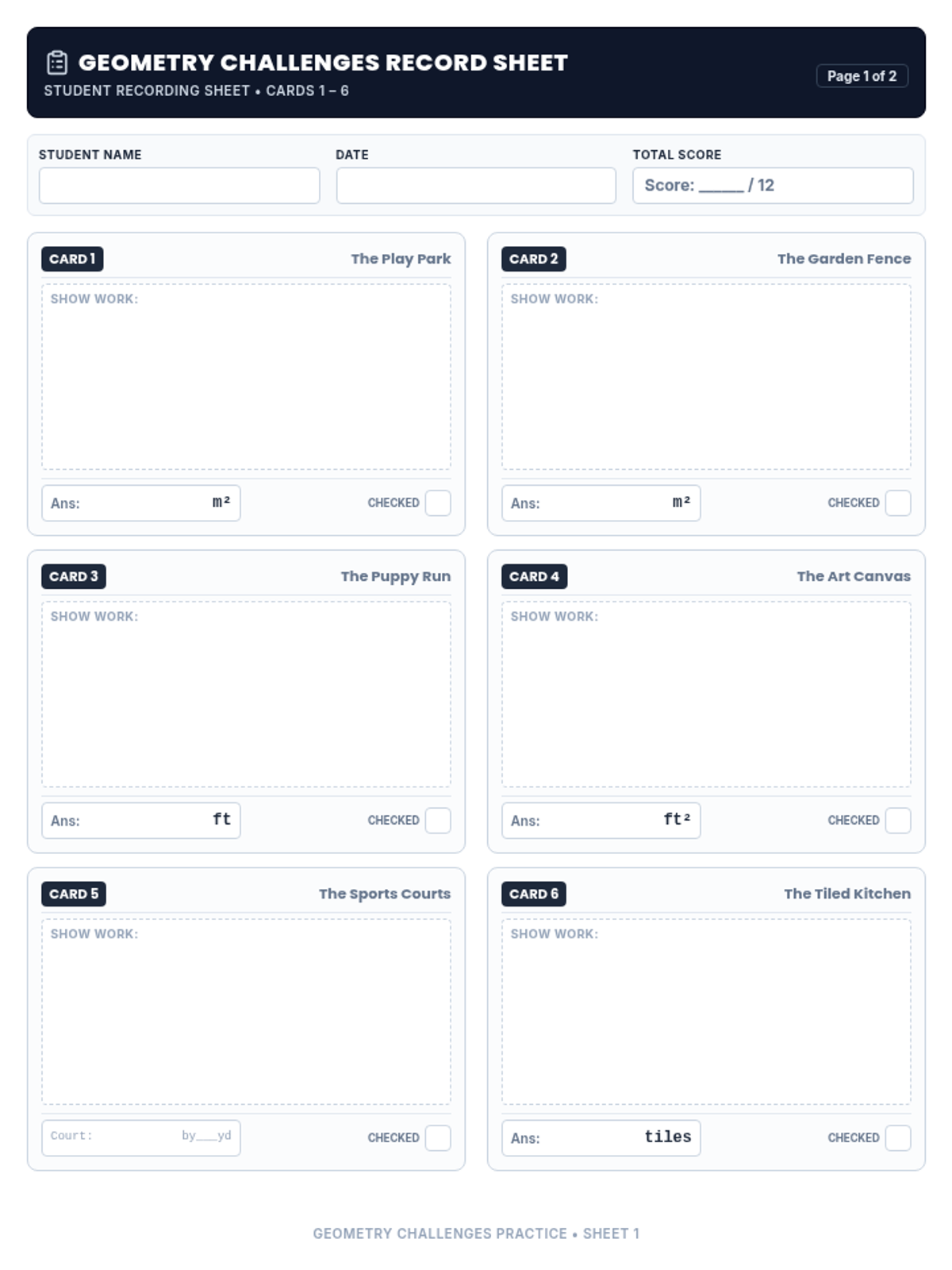
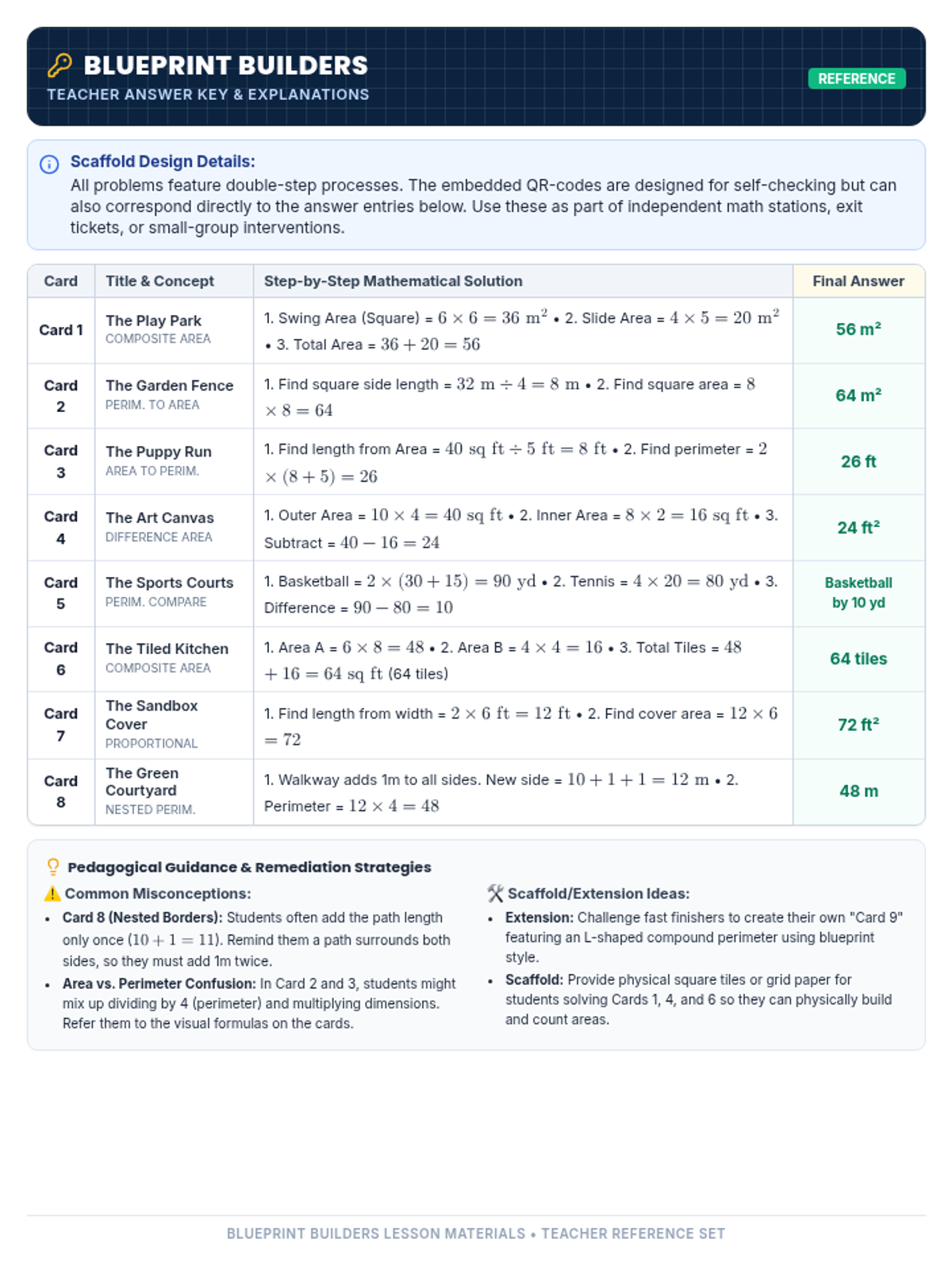
A minimalist, high-contrast geometry lesson where students solve multi-step area and perimeter problems. It features clean, print-friendly task cards with visual scaffolds and simplified language to support diverse learners.
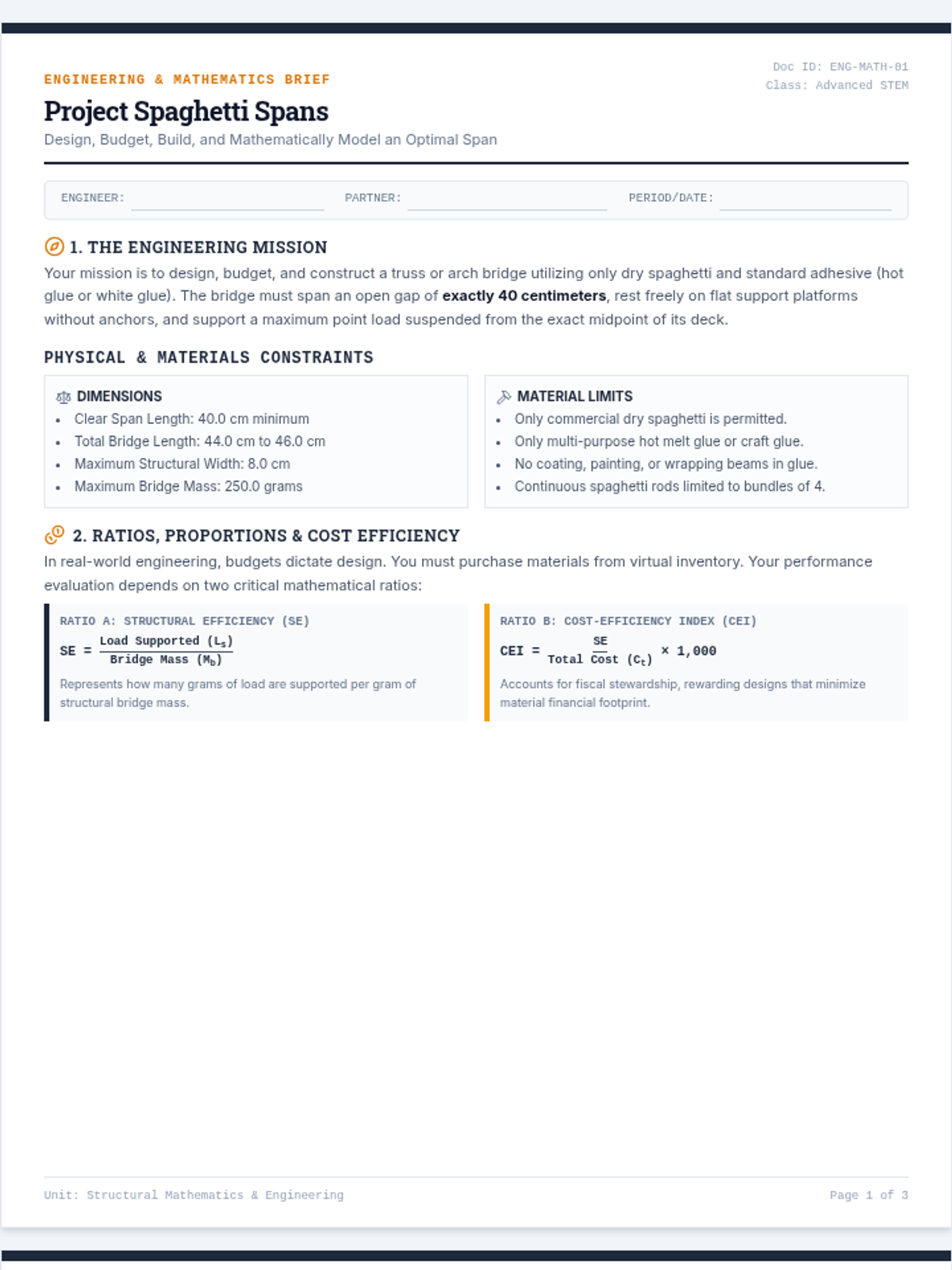
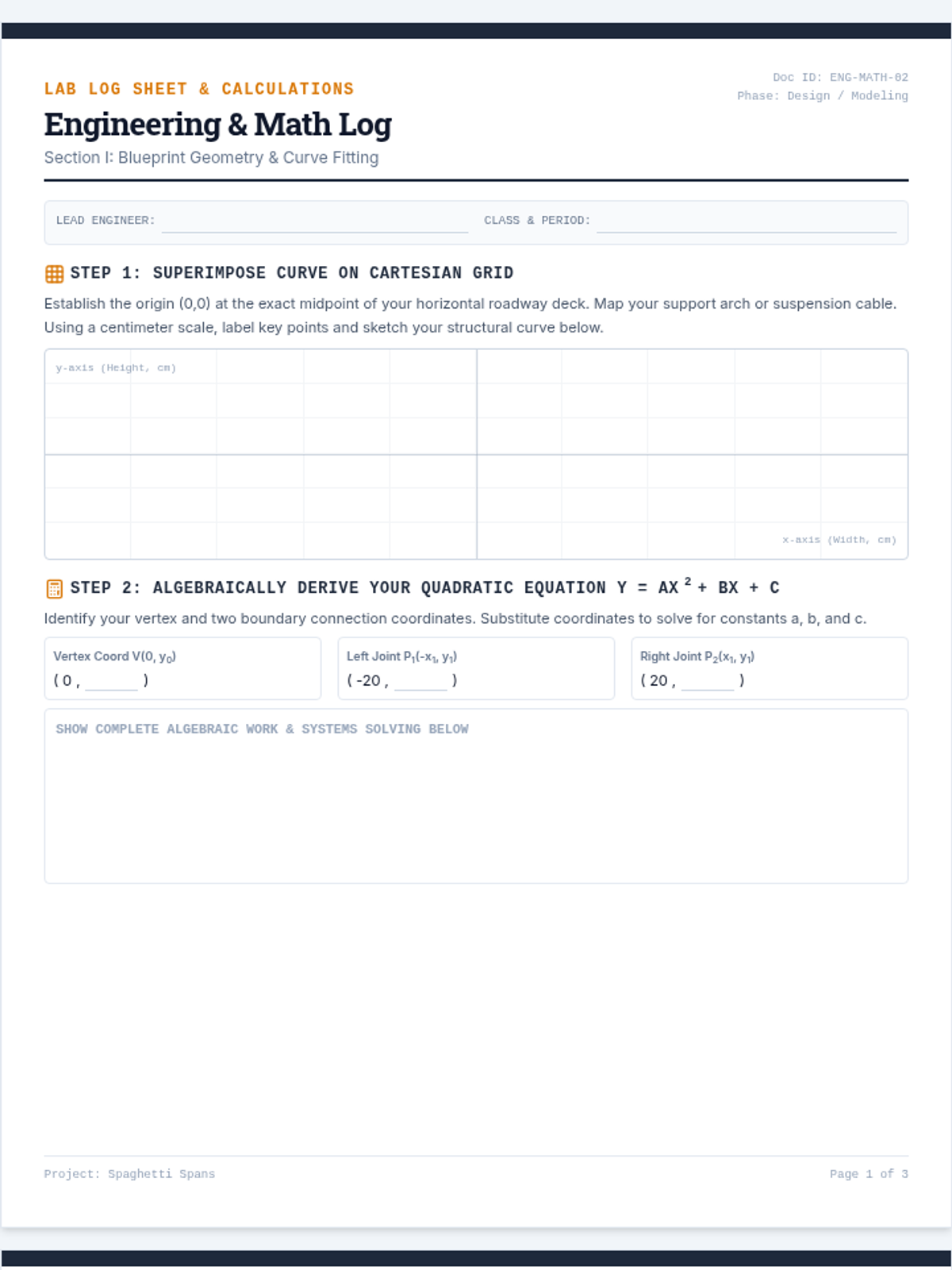
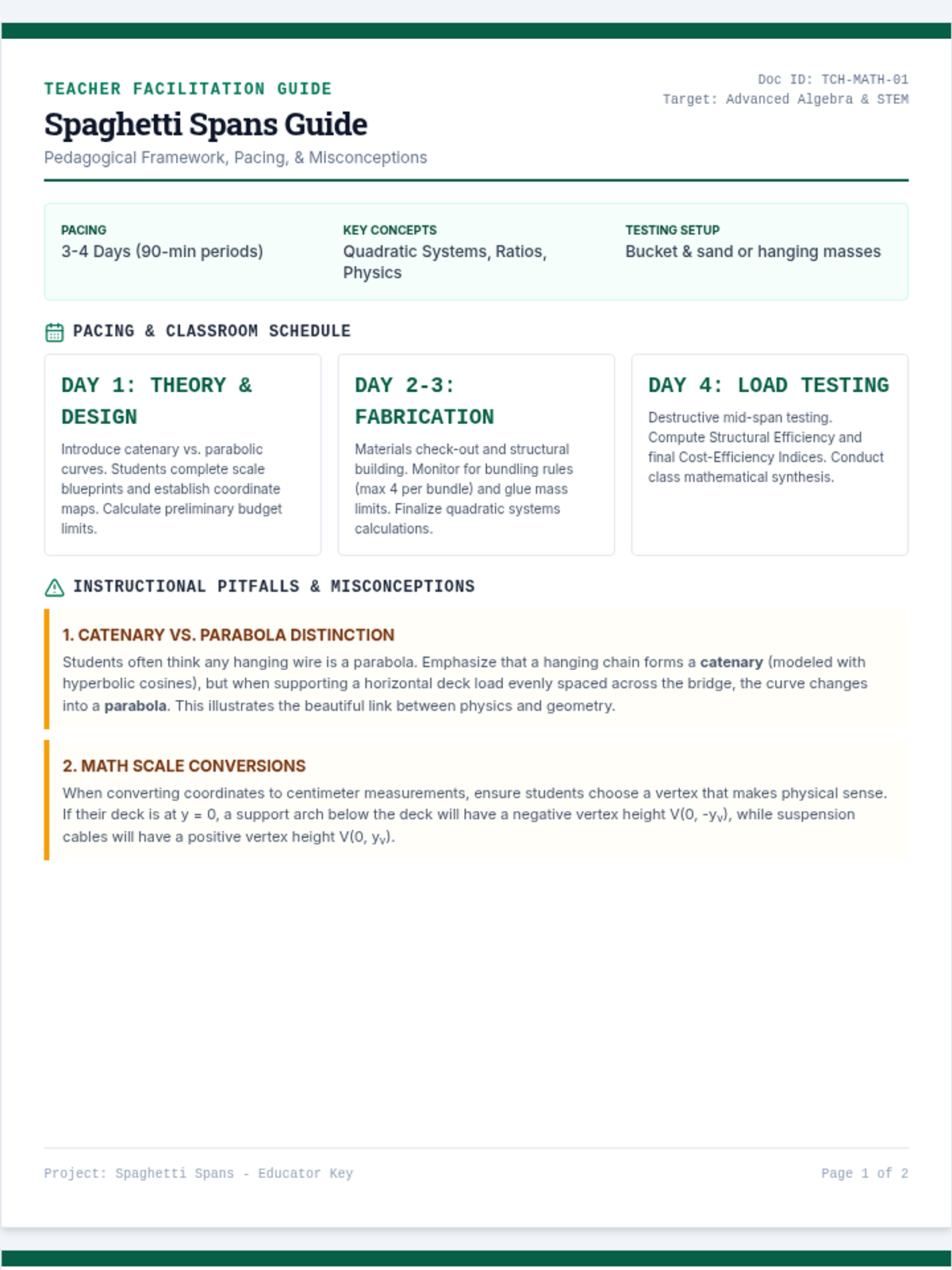
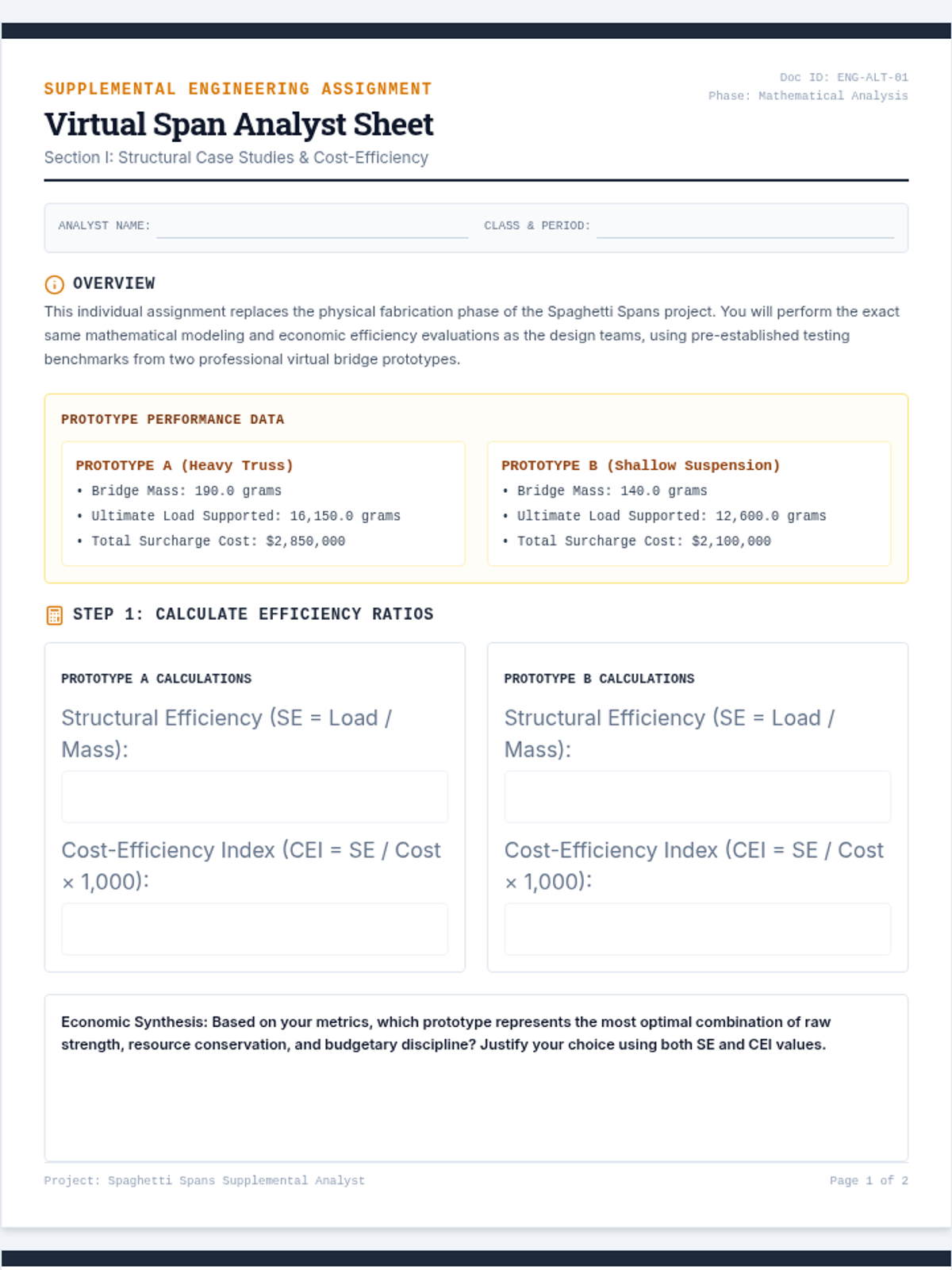
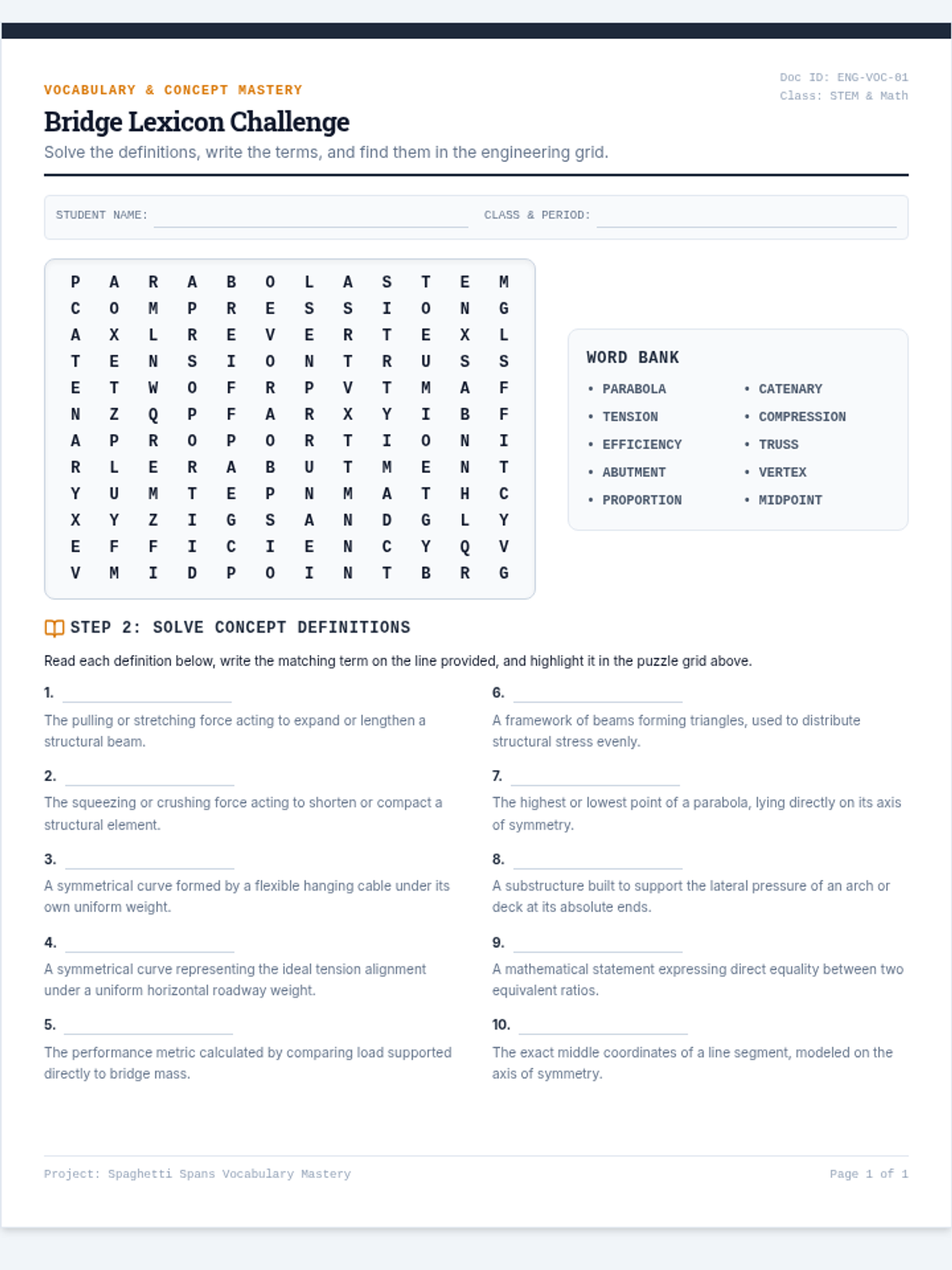
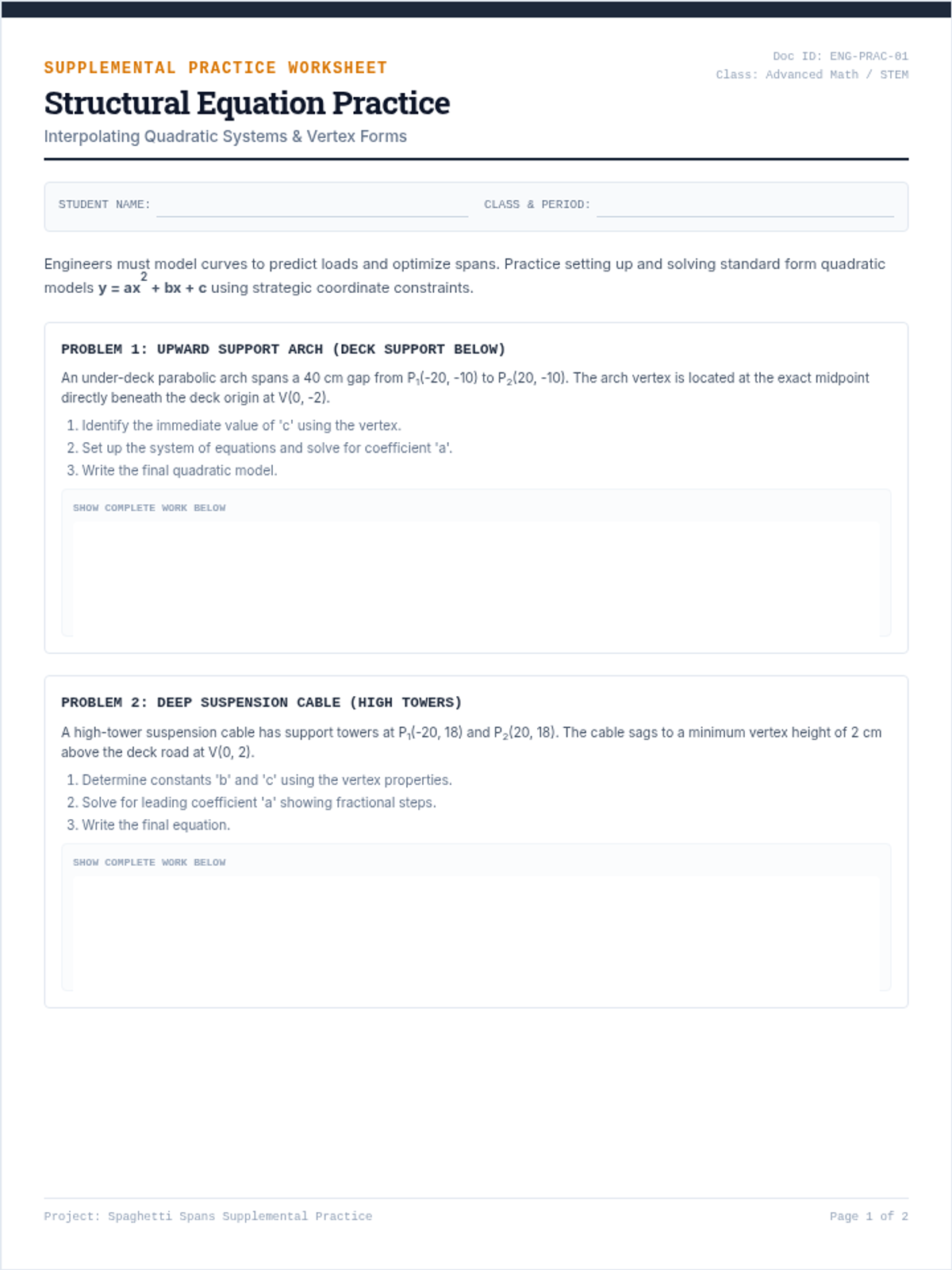
A rigorous STEM project combining structural engineering with advanced mathematics. Students design, budget, build, and test spaghetti bridges using ratios, proportions, cost-efficiency metrics, quadratic modeling, and catenary curves.
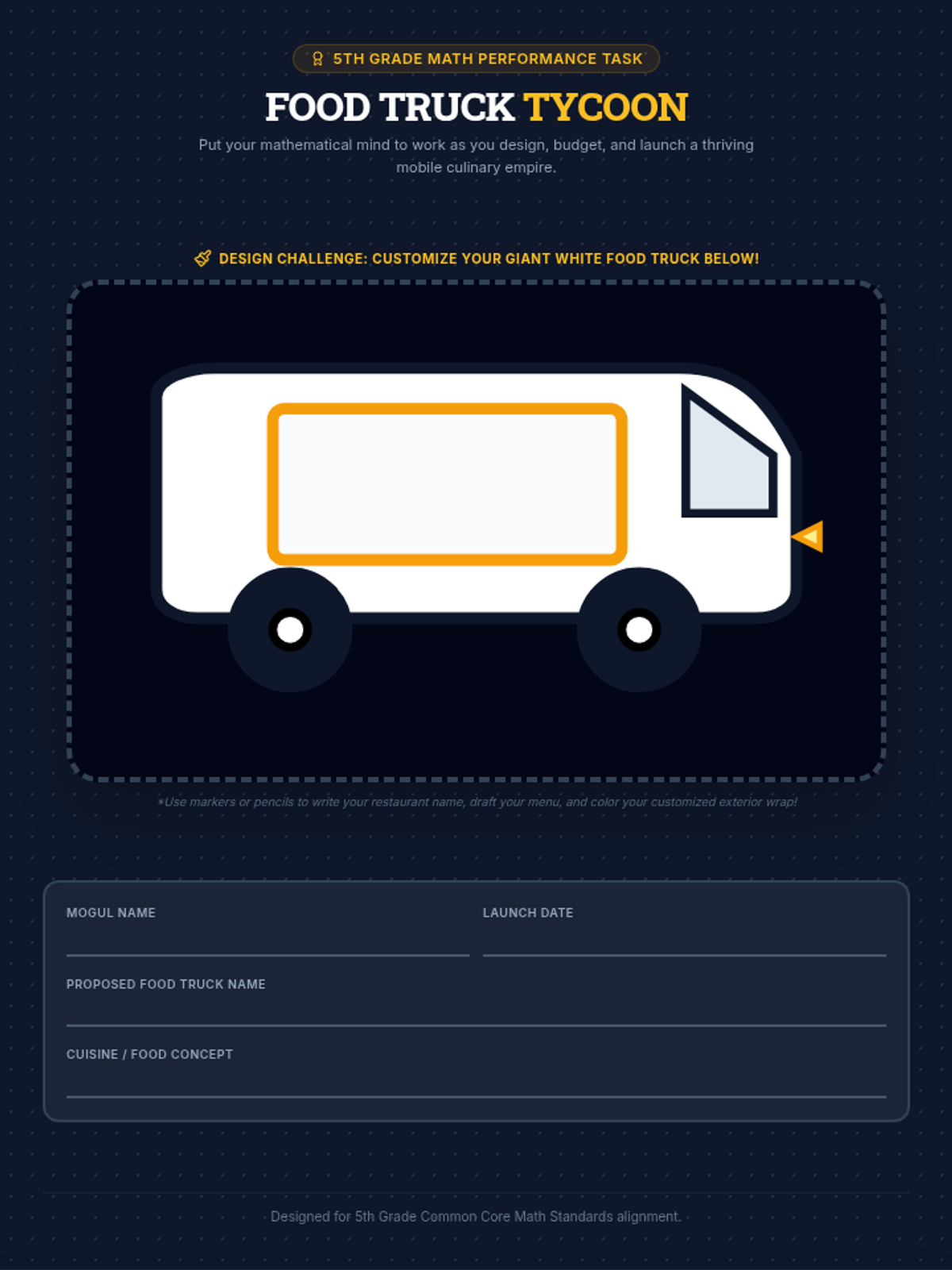
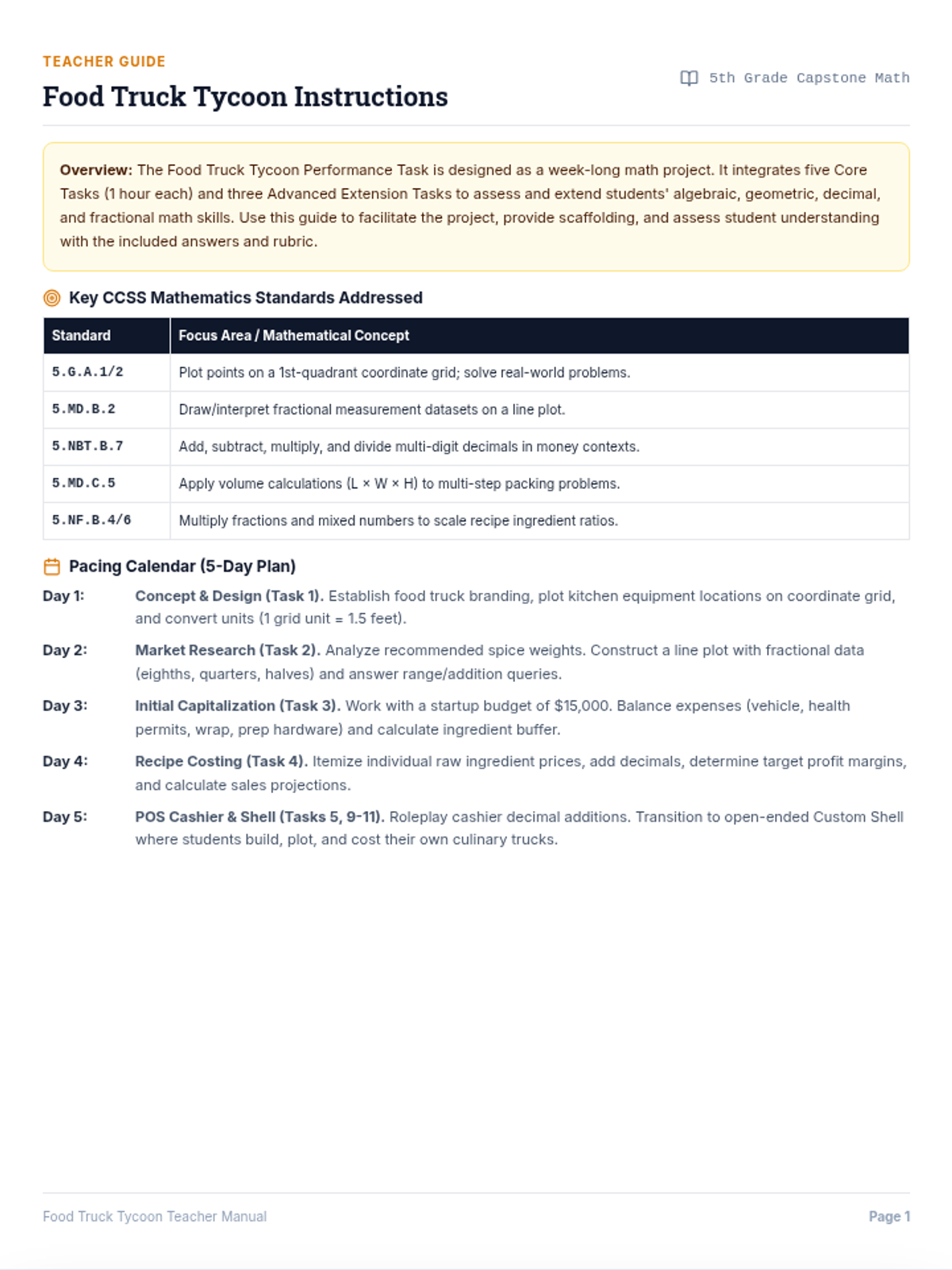
A comprehensive, 5th-grade math performance task where students plan, budget, and operate their own food truck business. Includes a student workbook covering coordinates, data plotting, decimal operations, and real-world budgeting, along with differentiated tasks for higher-level learners.