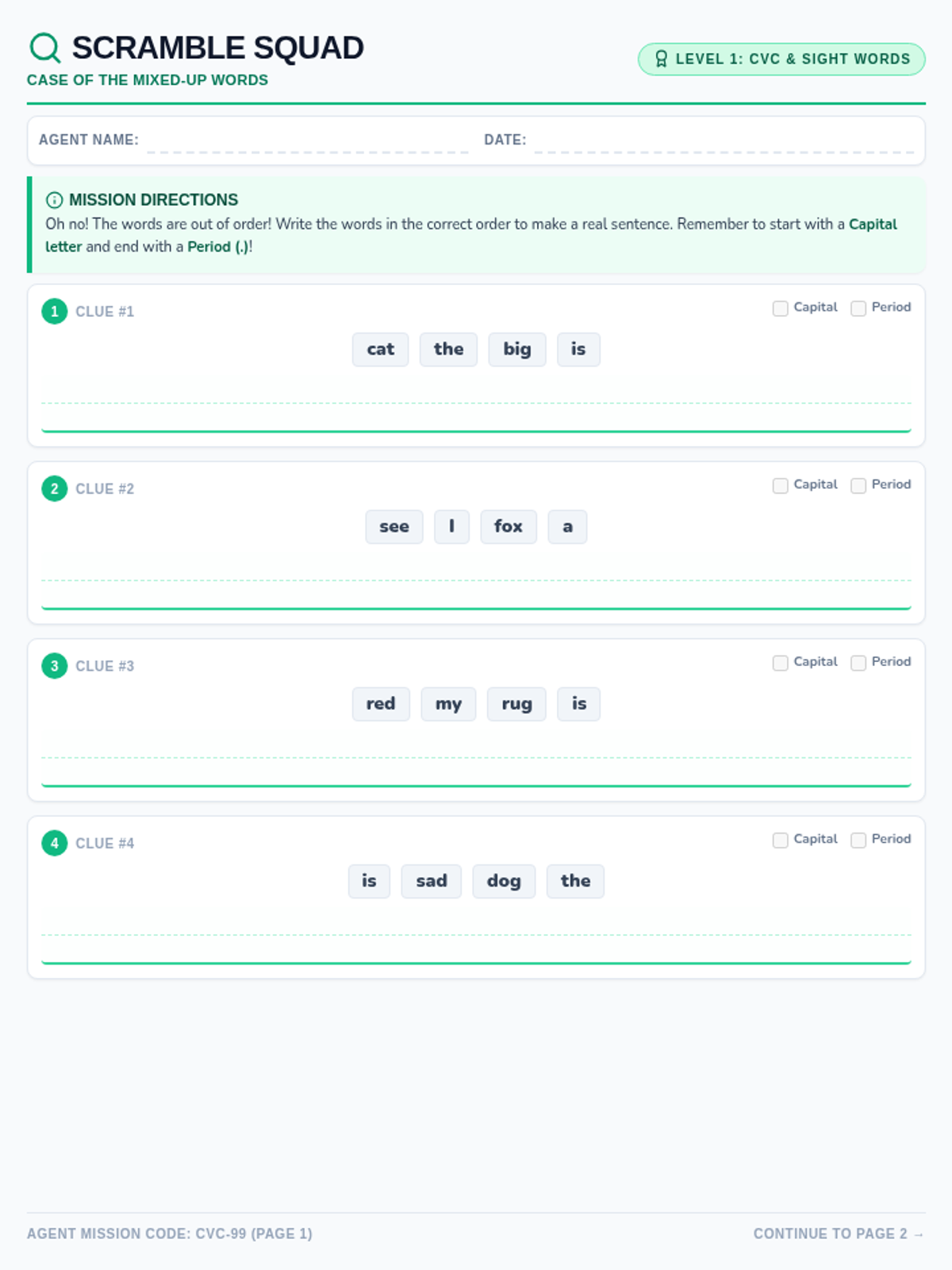
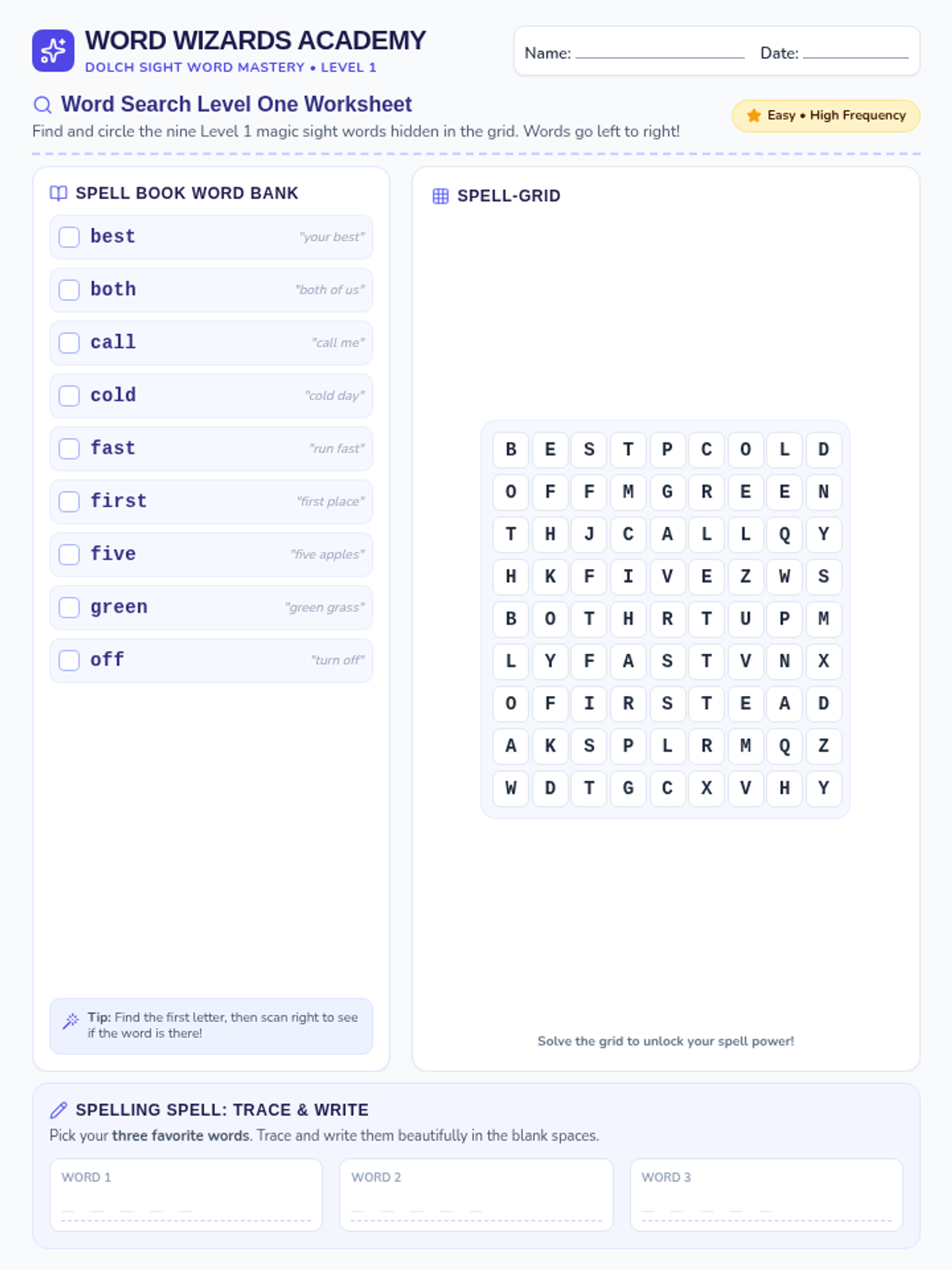
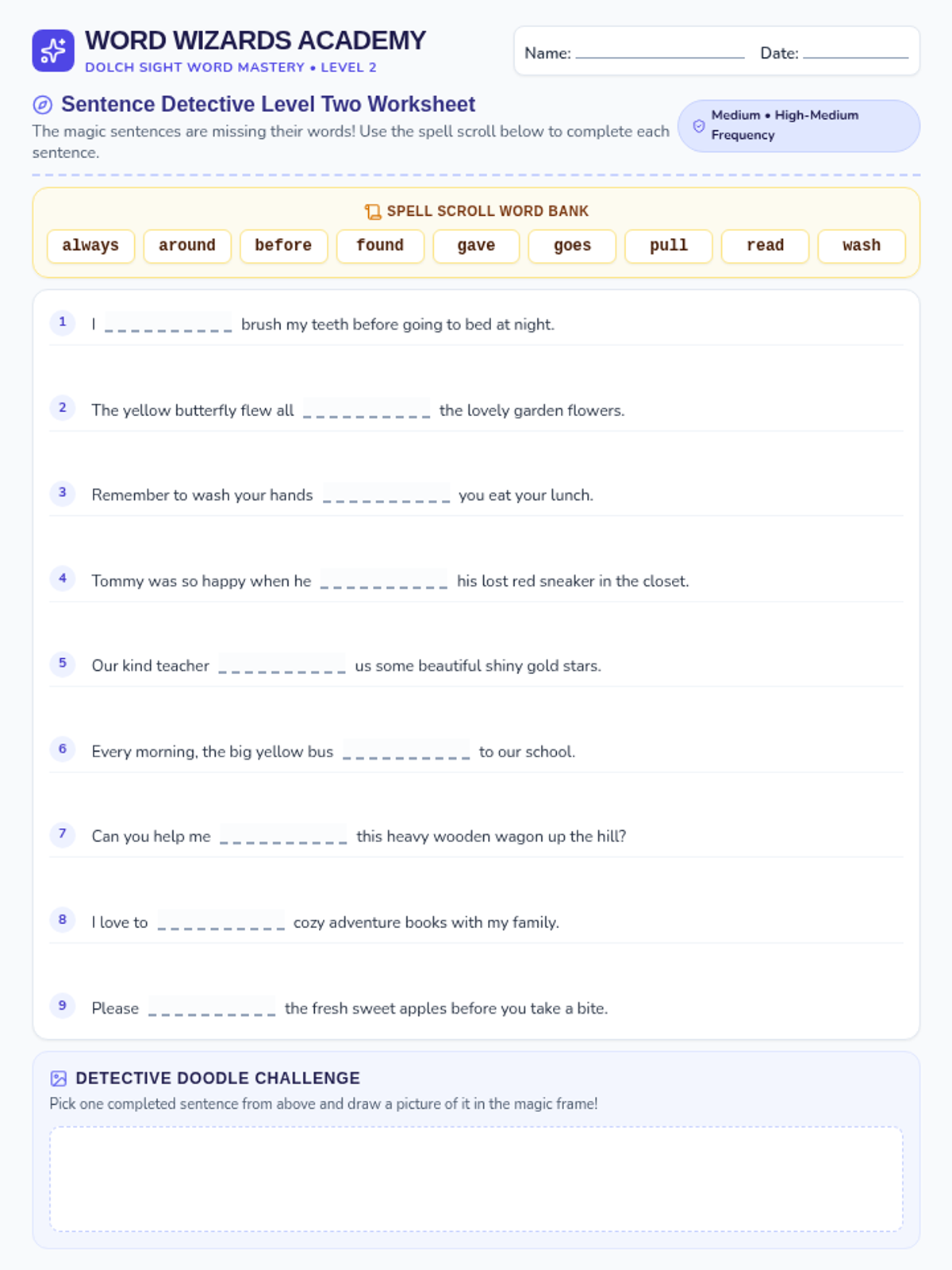
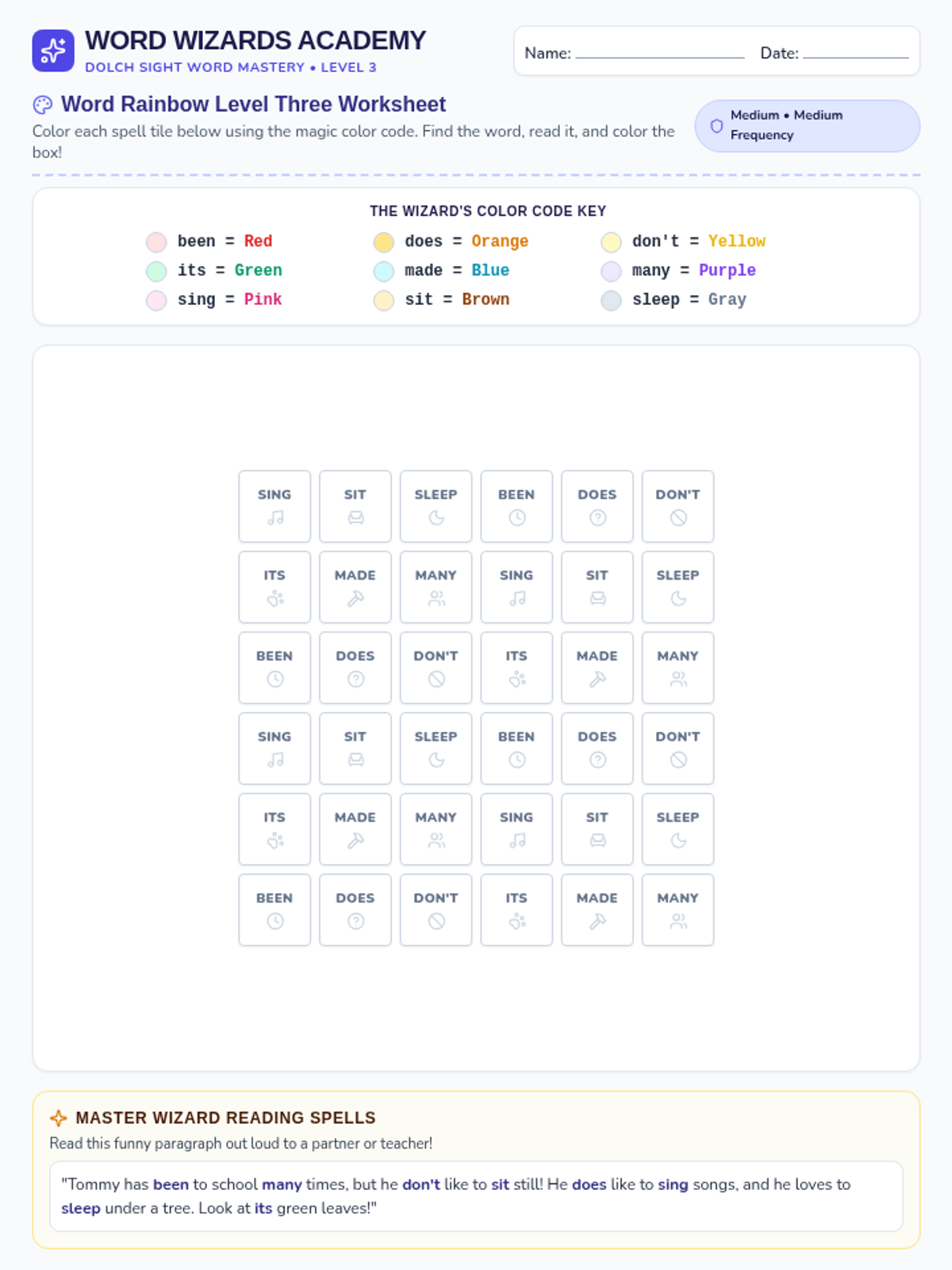
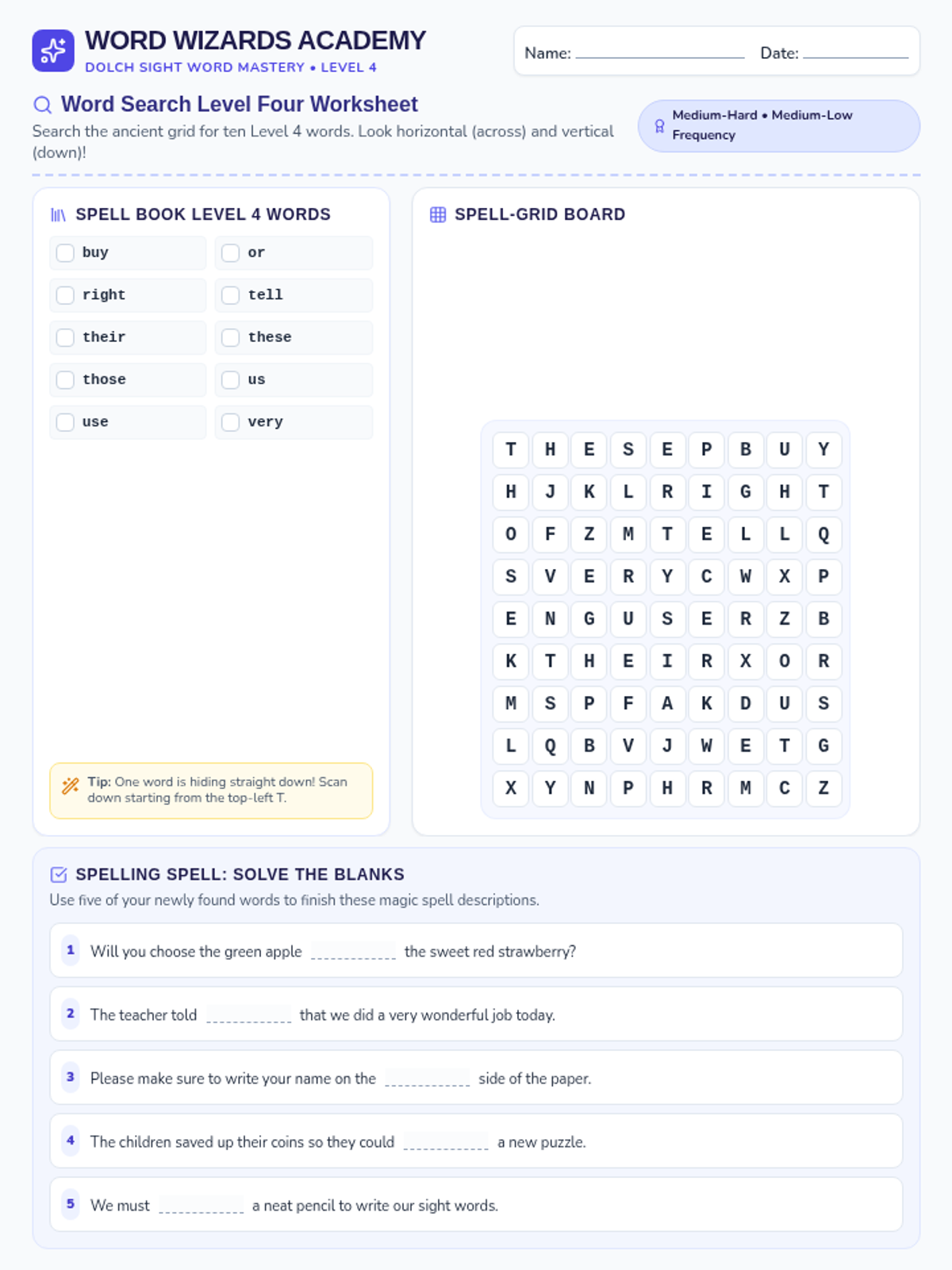
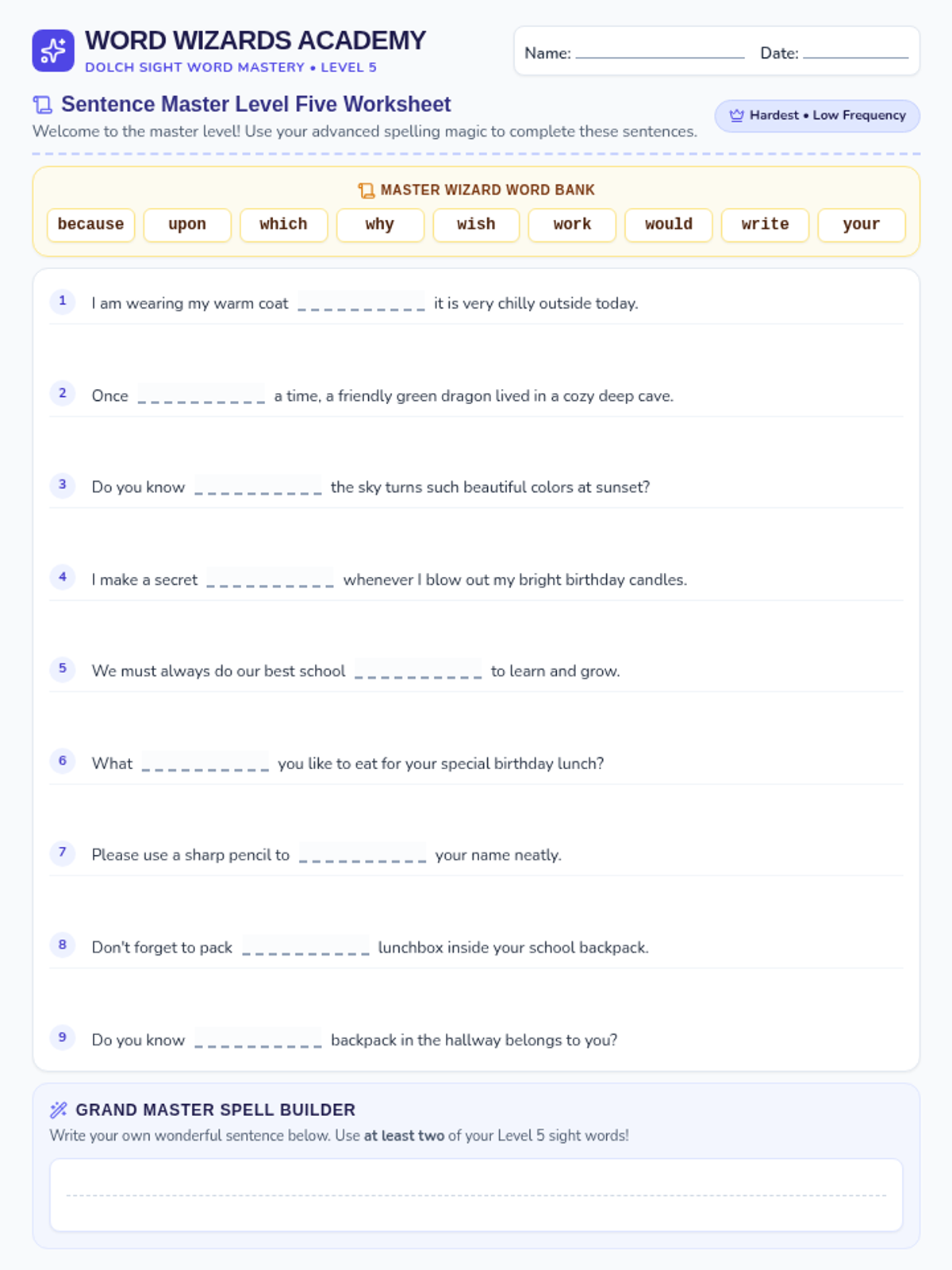
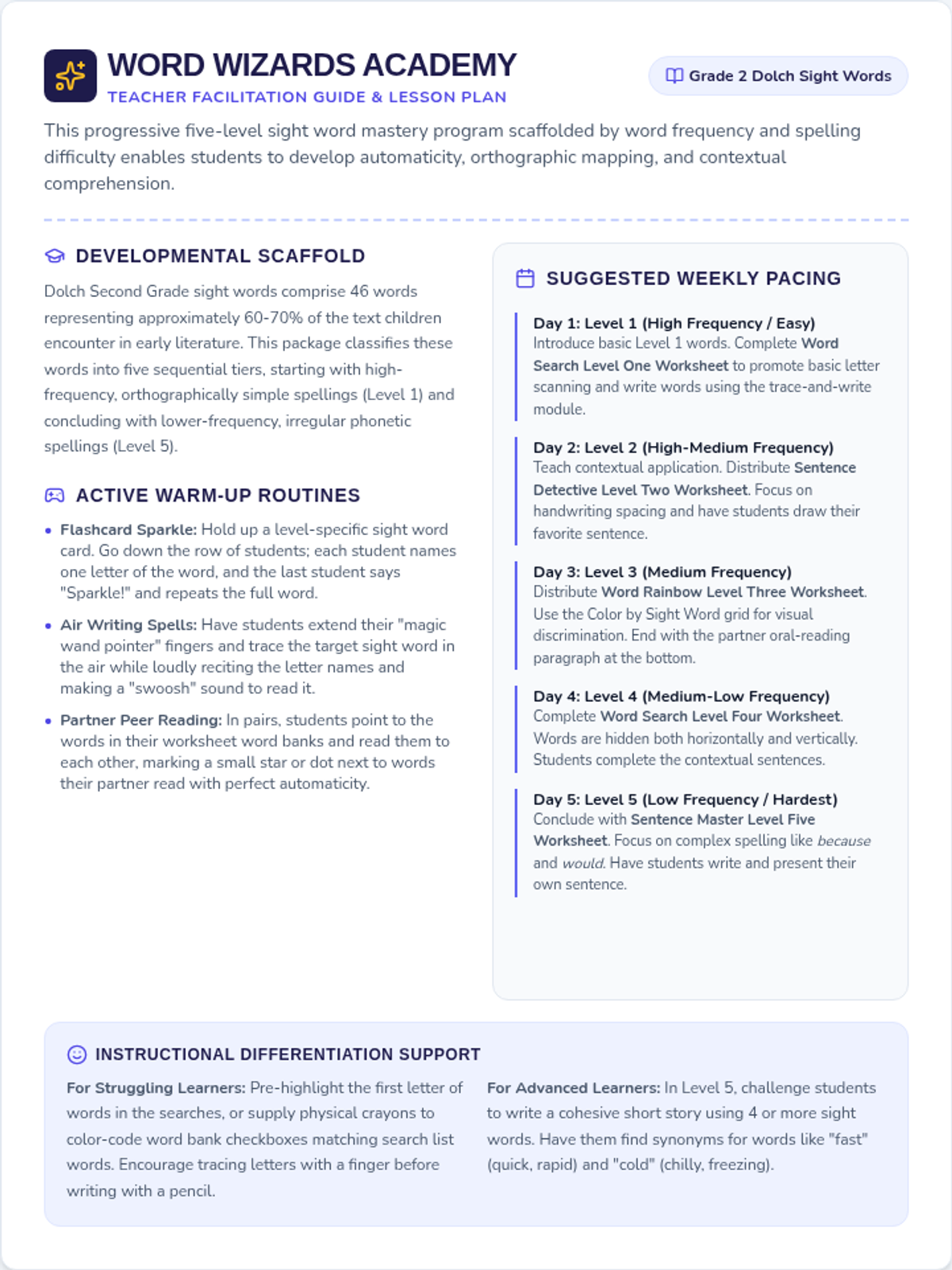
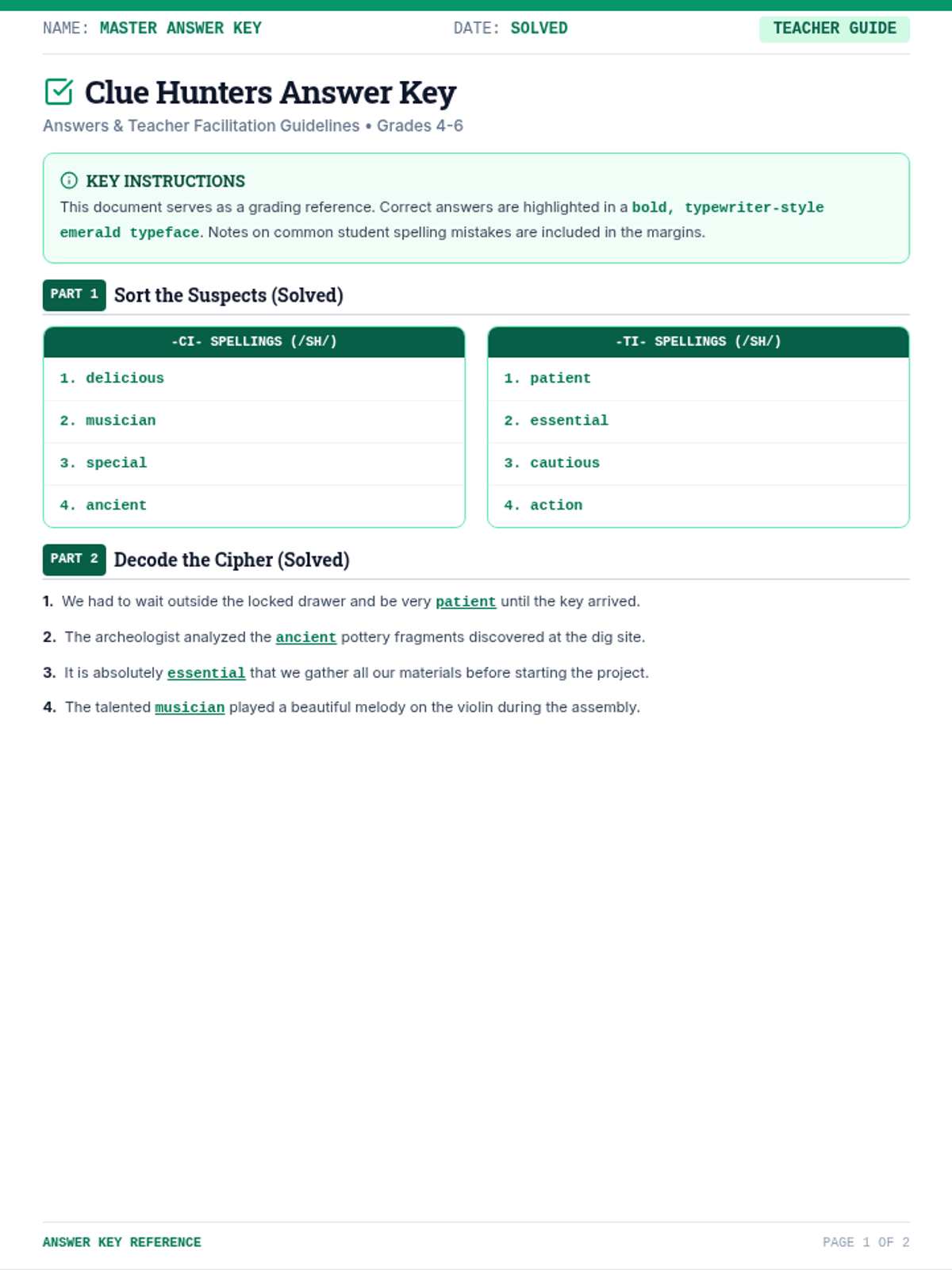
Mastering high-frequency Fry words through focused lists and spelling practice.
A creative writing and multimedia project where students curate a 5-track 'soundtrack' representing key moments in their lives, exploring the connection between memory, emotion, and music.
A comprehensive research project framework for middle and high school students to explore a topic of their choice through structured inquiry and outlining.
A comprehensive lesson on Latin roots (tract, spect, port, mal, dict) focusing on word dissection and color-coded spelling strategies to understand complex vocabulary.
A spelling unit focused on mastering high-frequency, commonly misspelled words for sixth graders through systematic study and practice.
A high-intensity, 10-minute micro-lesson on identifying and correcting inconsistent verb tense shifts within a narrative passage.
A comprehensive spelling lesson focusing on standard 6th-grade level academic and commonly misspelled words, themed around a vintage scholar's study.
A lesson focused on mastering comma usage through the lens of a detective agency investigation, covering multiple essential rules for clarity and structure.
Focuses on the highest level of thinking: synthesizing information and formulating new ideas.
Focuses on the components of systems and the roles they play.
Focuses on the evaluation of sources and the strategies used in academic work.
Focuses on the concepts of perspective, context, and functional relationships.
Focuses on the language of change, variables, and technical relationships.
Focuses on the systems, patterns, and mechanisms within academic topics.
Focuses on words related to the structure of arguments and texts.
Focuses on the vocabulary of effective communication and dialogue.
Focuses on the process of academic research and the evaluation of information.
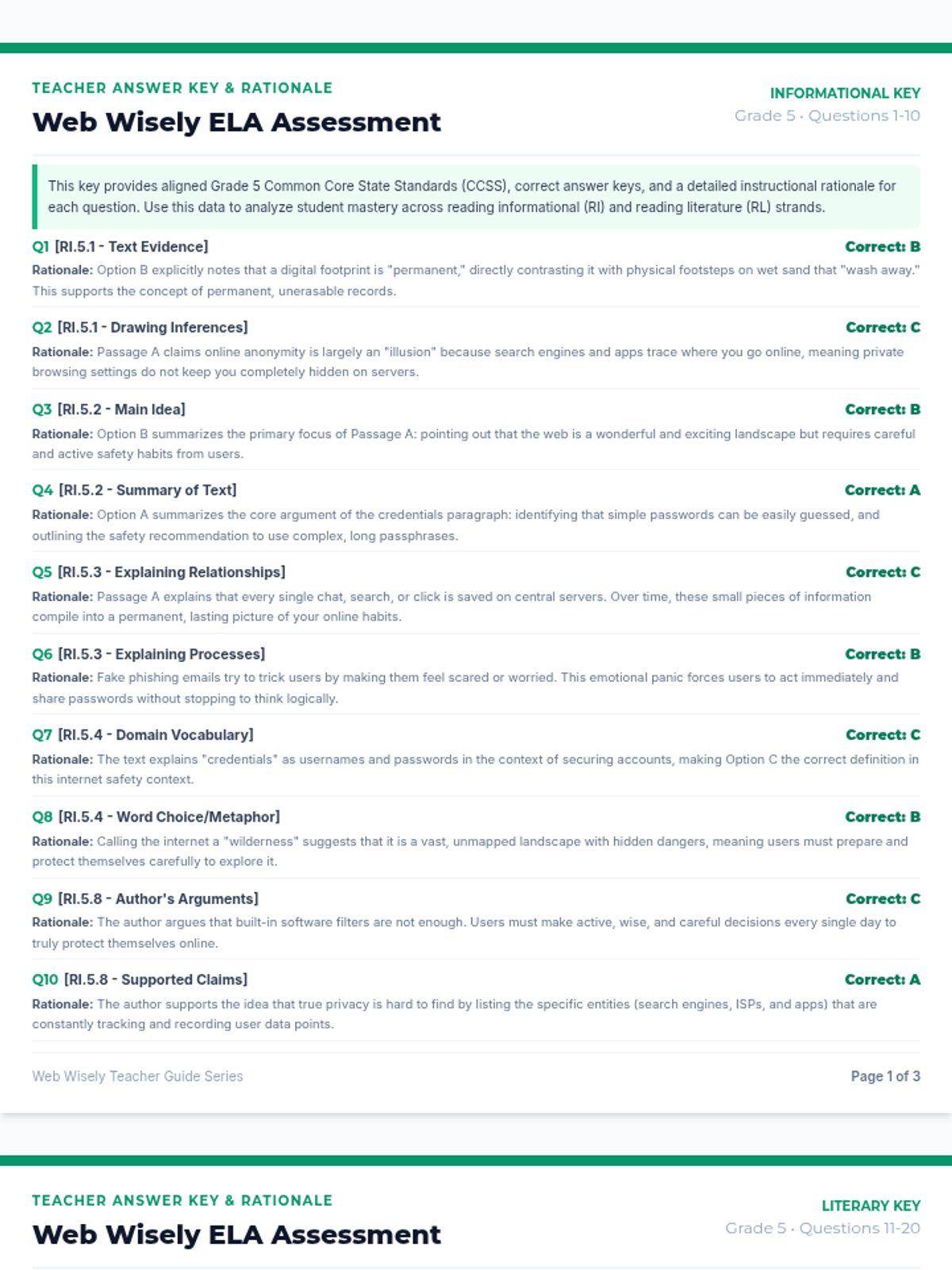
Focuses on the core skills of literary and informational analysis, featuring words like analyze, cite, and evidence.
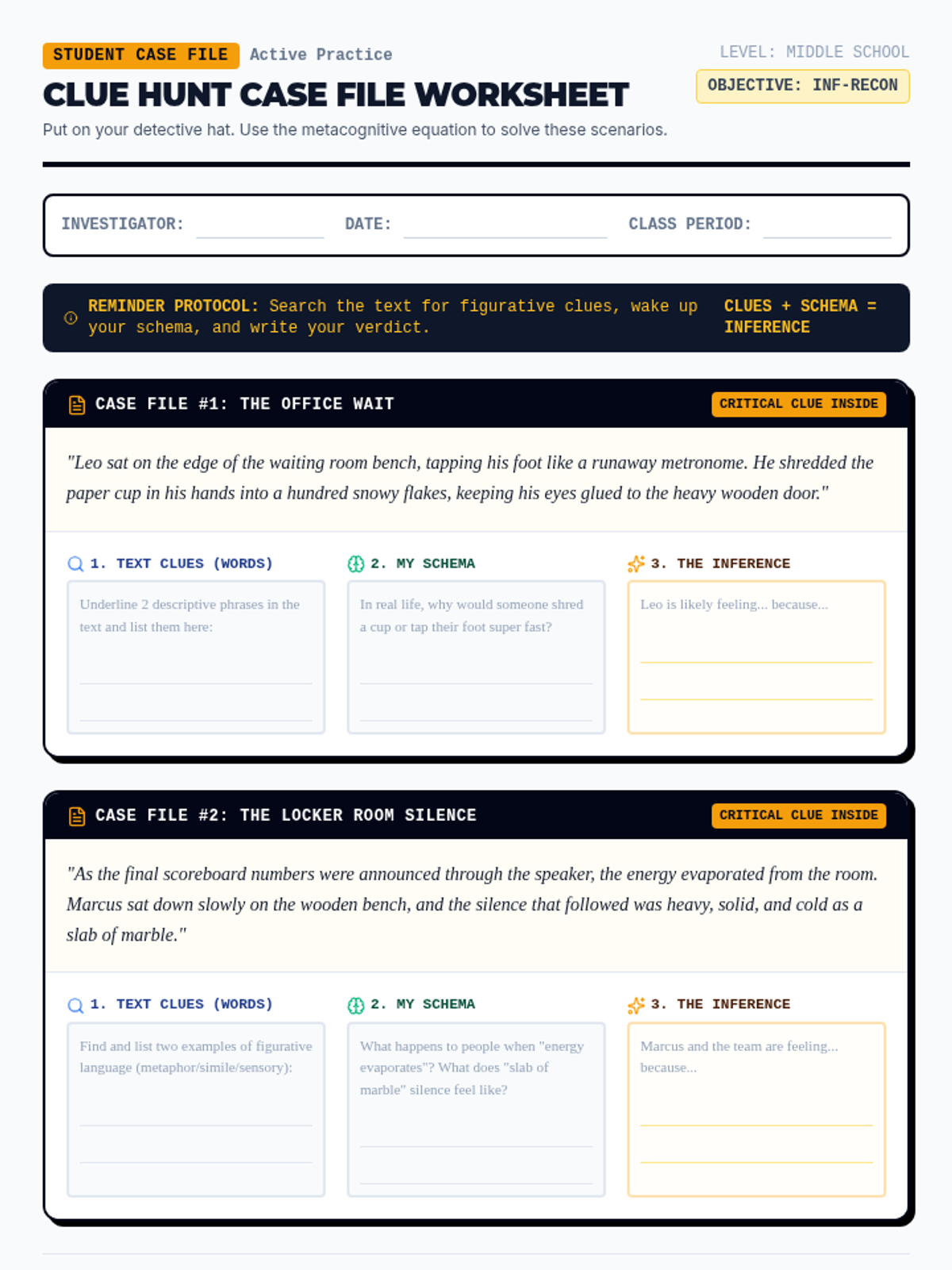
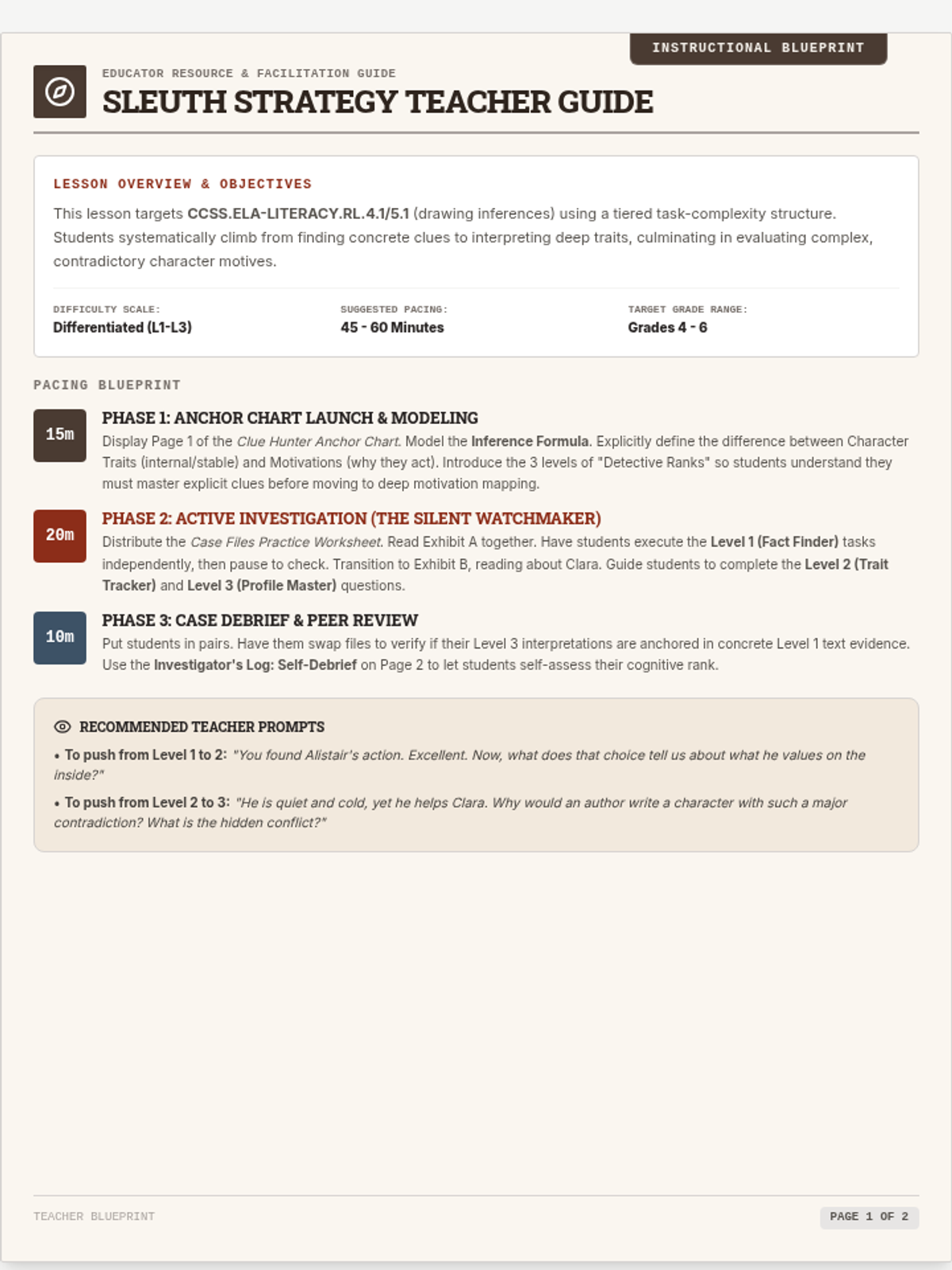
A lesson focused on using context clues and inferencing strategies to determine the meaning of complex 5th-grade vocabulary words. Students act as 'word detectives' to decode meaning from surrounding text evidence.
A sophisticated figurative language review for high school juniors featuring quotes from The Great Gatsby, The Crucible, and The Raven. Students identify literary devices to unlock a color-coded geometric mosaic.
This lesson covers Chapters 1-3 of Zora Neale Hurston's 'Their Eyes Were Watching God', focusing on Janie's early life, the symbolism of the pear tree, and her first marriage. Students will analyze the setting of Eatonville and Janie's internal character growth.
A guided exploration of the opening chapters of 'Their Eyes Were Watching God', focusing on Janie's return, the significance of the pear tree, and the vibrant setting of the Eatonville porch. This lesson adapts the complex themes and dialect for 6th-grade comprehension while maintaining the lyrical beauty of Hurston's prose.
A collection of accessible reading materials for Shakespeare's Macbeth, specifically tailored for students requiring large print and modern translations. This lesson ensures all students can navigate and comprehend the play during classroom instruction.
Focuses on drafting and finalizing the narrative using differentiated scaffolds and final writing paper.
Focuses on brainstorming and planning using a beginning-middle-end graphic organizer and introductory slides.
A vocabulary building lesson featuring a high-quality matching card game and a corresponding answer key to help students master academic roots and terms across various subjects.
A deep-dive Socratic Seminar centered on Dostoevsky's 'The Dream of a Ridiculous Man,' exploring themes of nihilism, the Fall of Man, and the power of individual empathy. Students prepare textual evidence and engage in peer-led discussion.
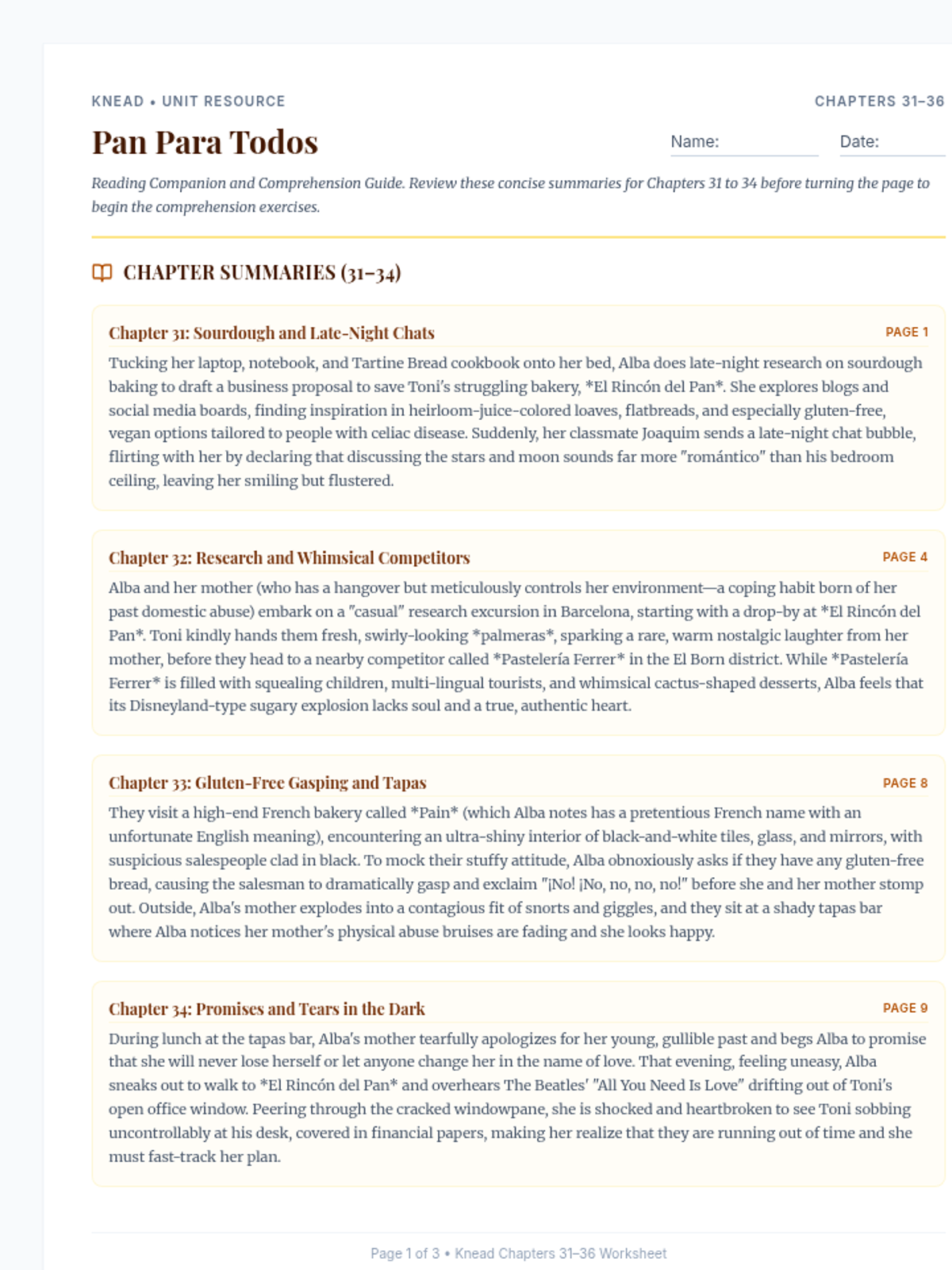
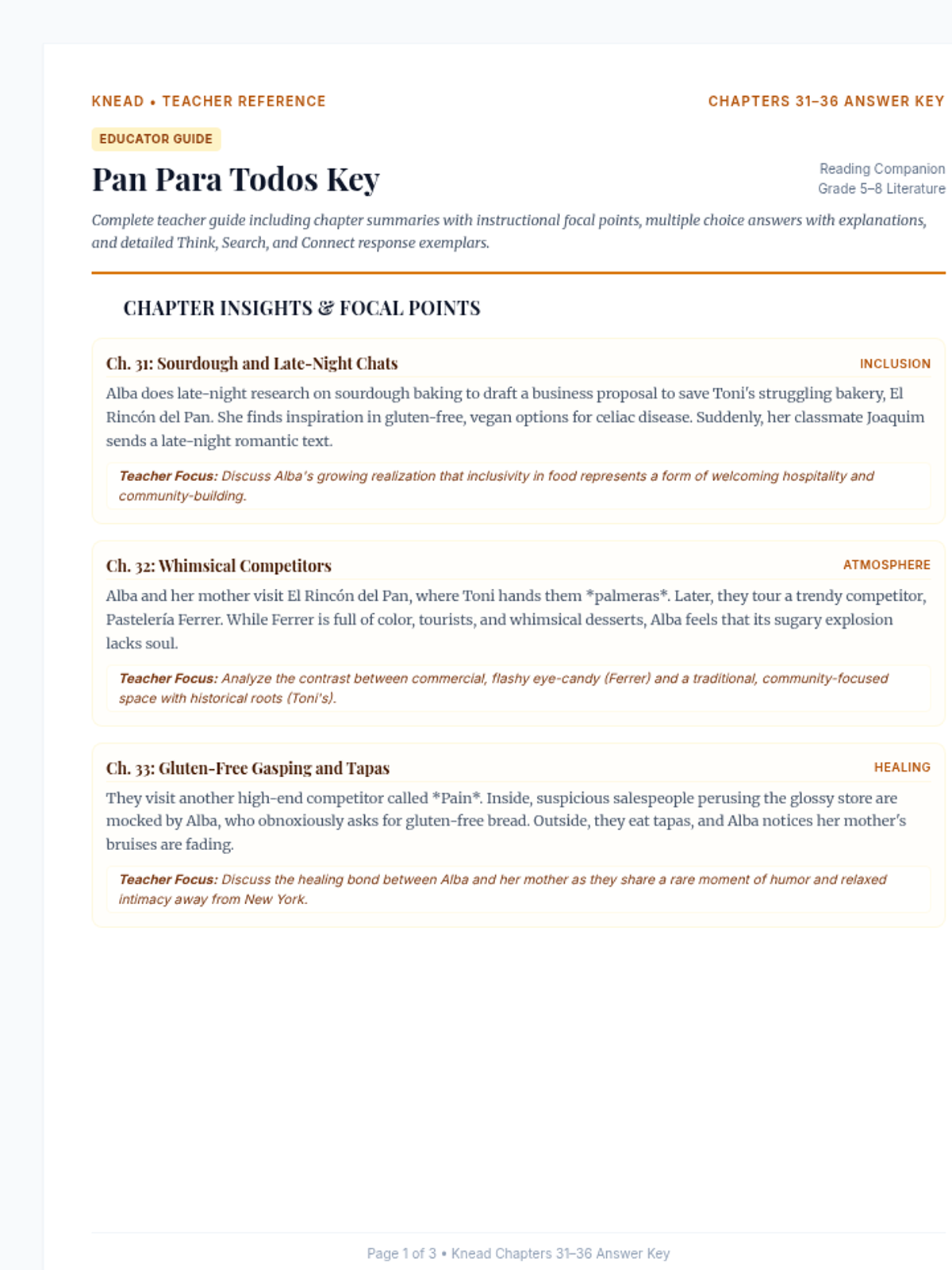
Covers the tornado, the retrieval of the survival pack, and Brian's eventual rescue. Focuses on the irony of the survival pack and Brian's lasting changes as a person.