A series of hands-on, small-group intervention activities for 3rd-grade students to master unit fractions, non-unit fractions, and fraction comparisons using real-world manipulatives.
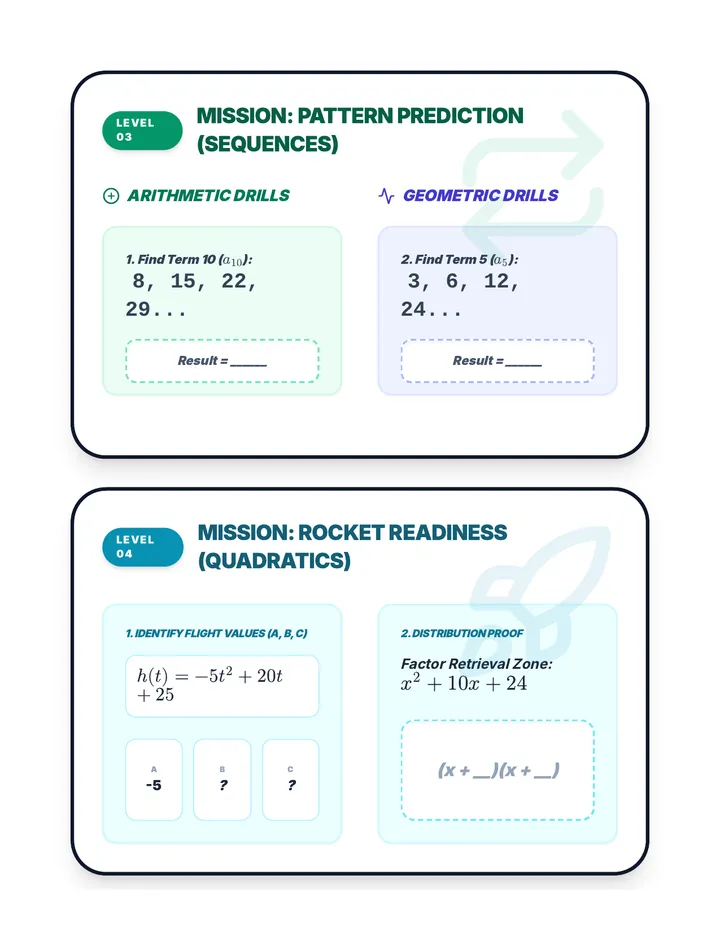
A comprehensive introduction to factoring quadratic expressions where the leading coefficient is one, using a step-by-step graphic organizer and visual slides.
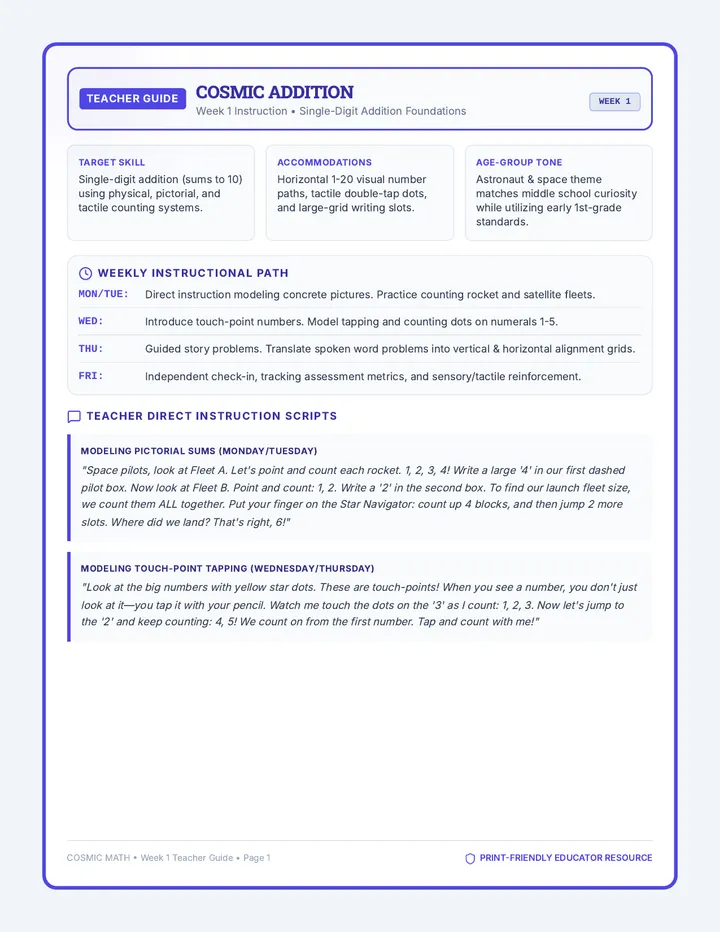
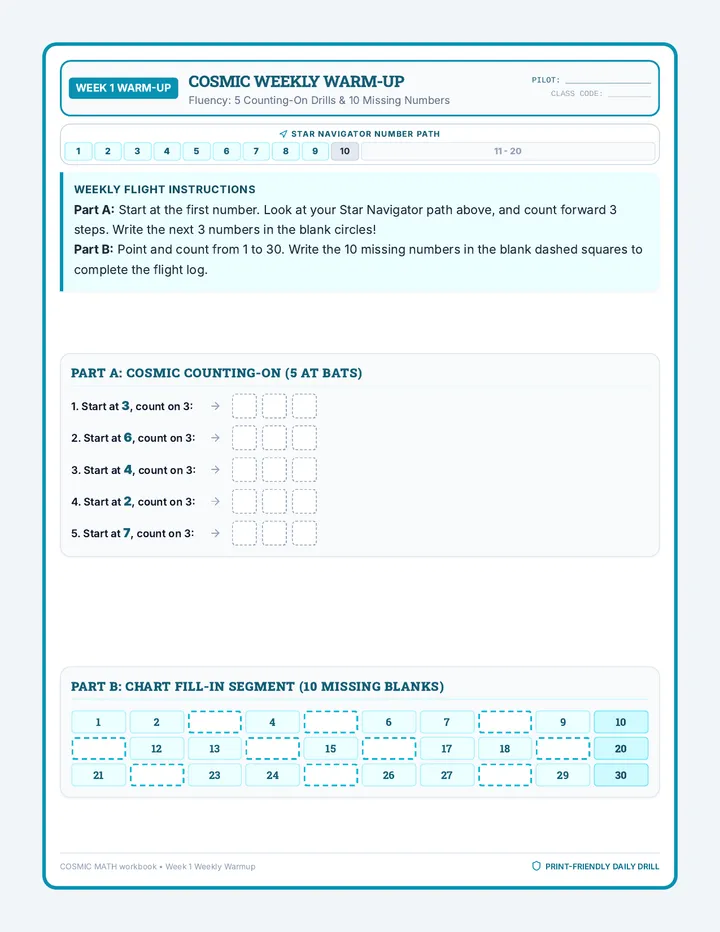
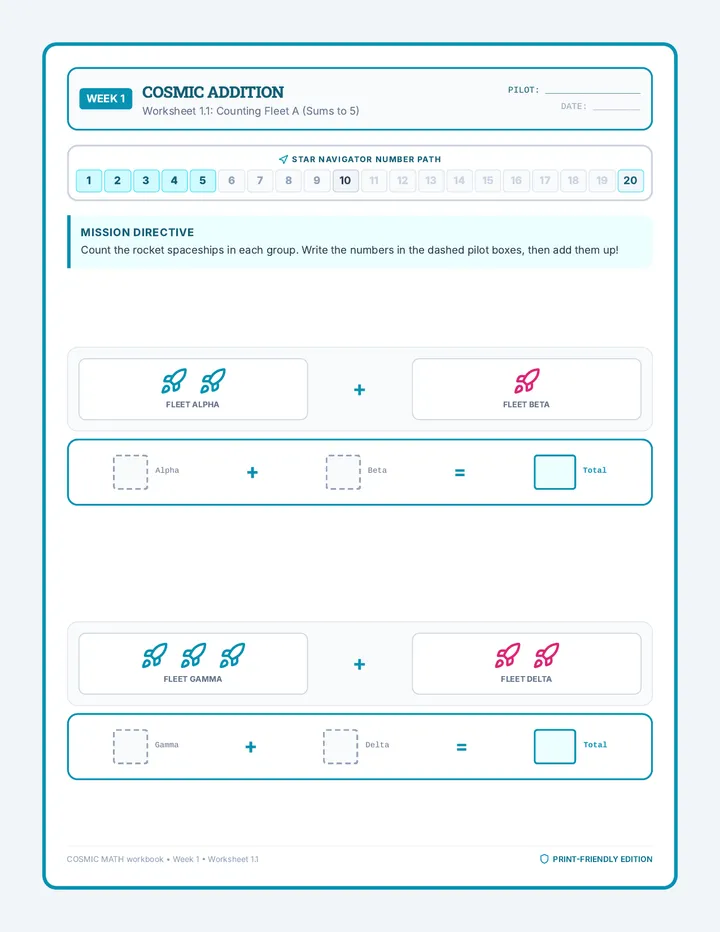
A visual, color-coded addition resource designed for non-readers to practice sums up to 10 using tactile manipulatives and clear visual cues.
A hands-on exploration of comparing fractions that share the same denominator, using visual models and physical manipulatives to understand size relationships.
A fast-paced remediation lesson focused on identifying US coins and mastering the skill of counting mixed change up to one dollar.
Students dive into equivalent fractions and solve interactive word problems that require creative drawing and visual representation of fractional concepts.
Students master multiplication facts up to 10 through artistic Color by Number challenges featuring butterflies, flowers, and spring scenes.

A comprehensive introduction to the distributive property using whole numbers, focusing on area models and decomposing factors to simplify multiplication. Students will learn to 'break apart' numbers to solve problems more efficiently.
A lesson focused on applying coordinate grid skills to navigate maps, plan city layouts, and solve distance-based problems in real-world contexts.
A comprehensive lesson on understanding and generating equivalent fractions using visual models, with a specific focus on fractions greater than one. Students explore the concept through the lens of architectural blueprints and precision building.

A beginner-friendly introduction to the distributive property using visual area models, themed around planning flower gardens. Includes a slide deck for instruction, a scaffolded worksheet for practice, and an answer key.
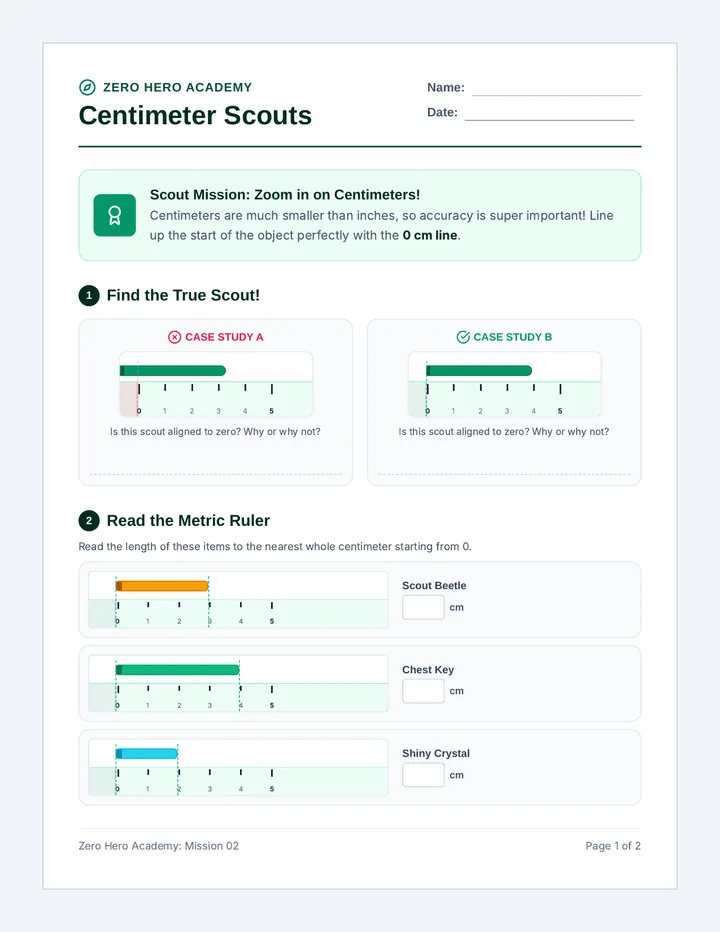
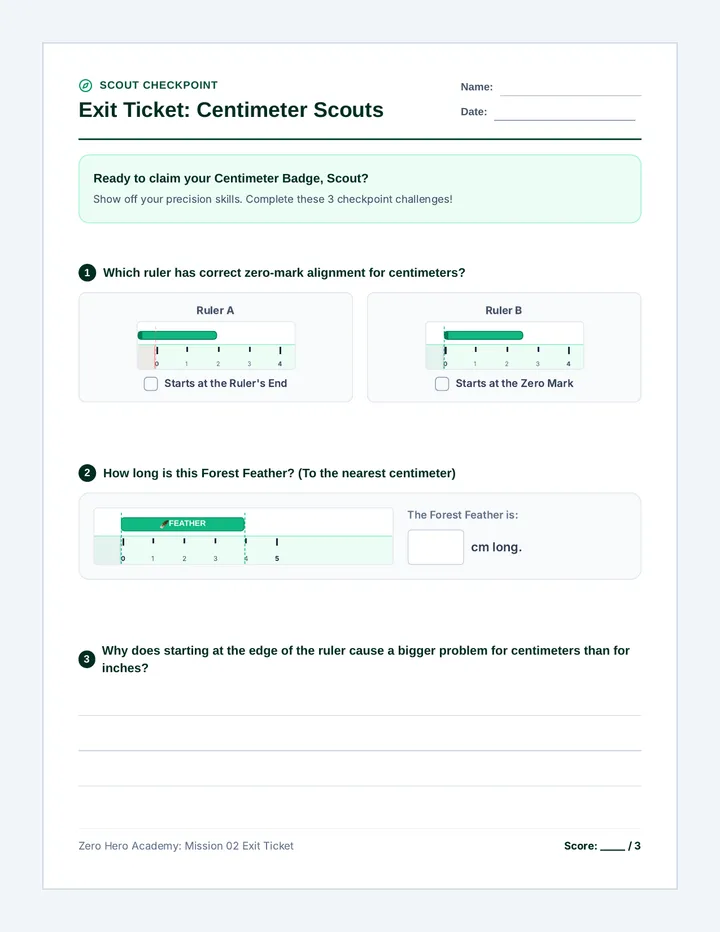
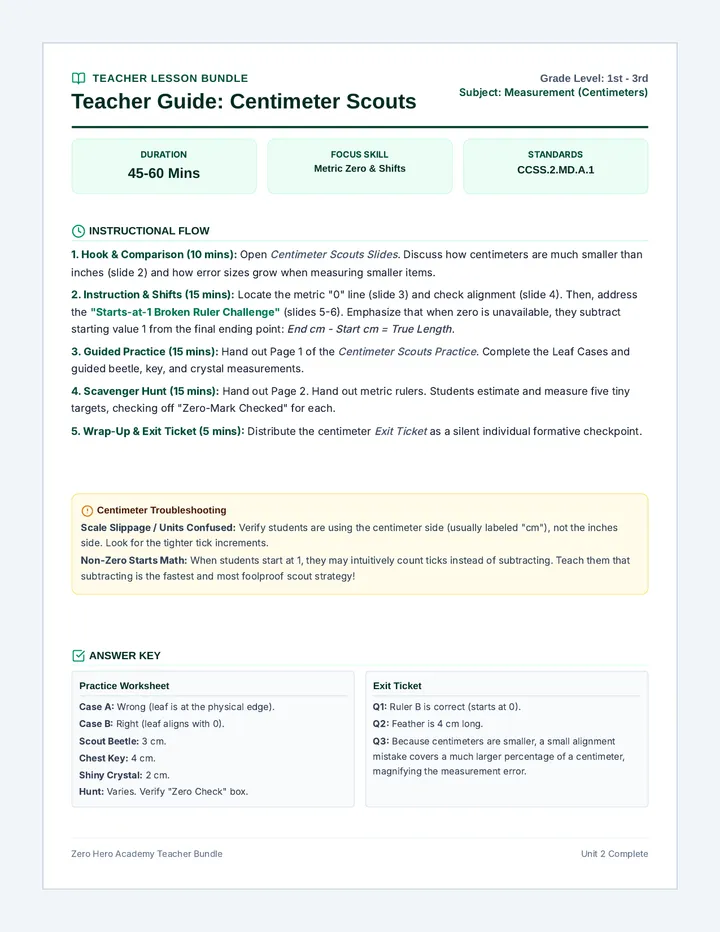
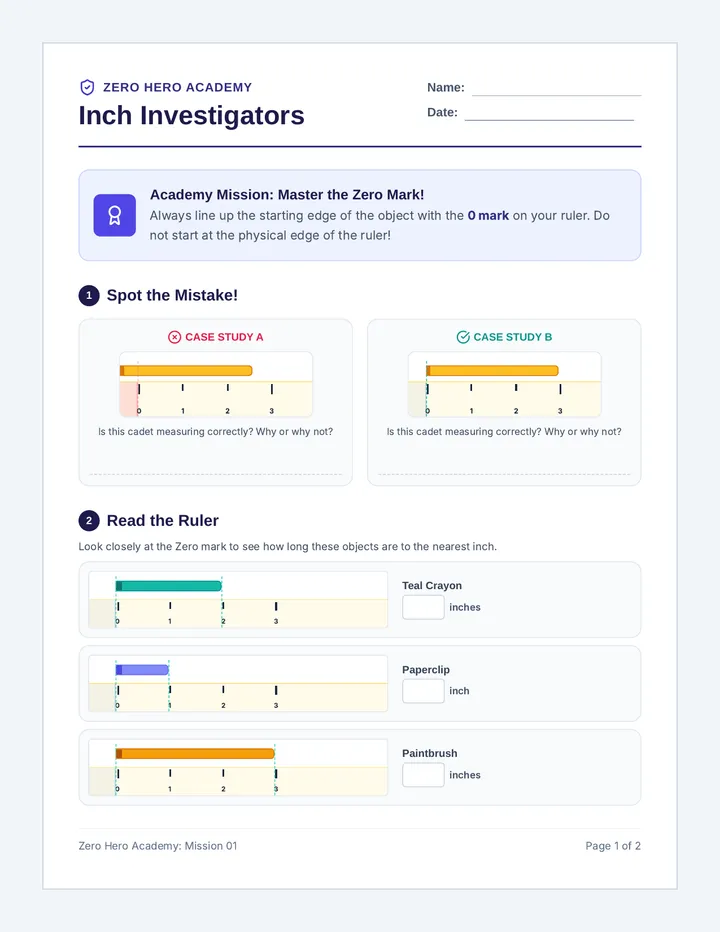
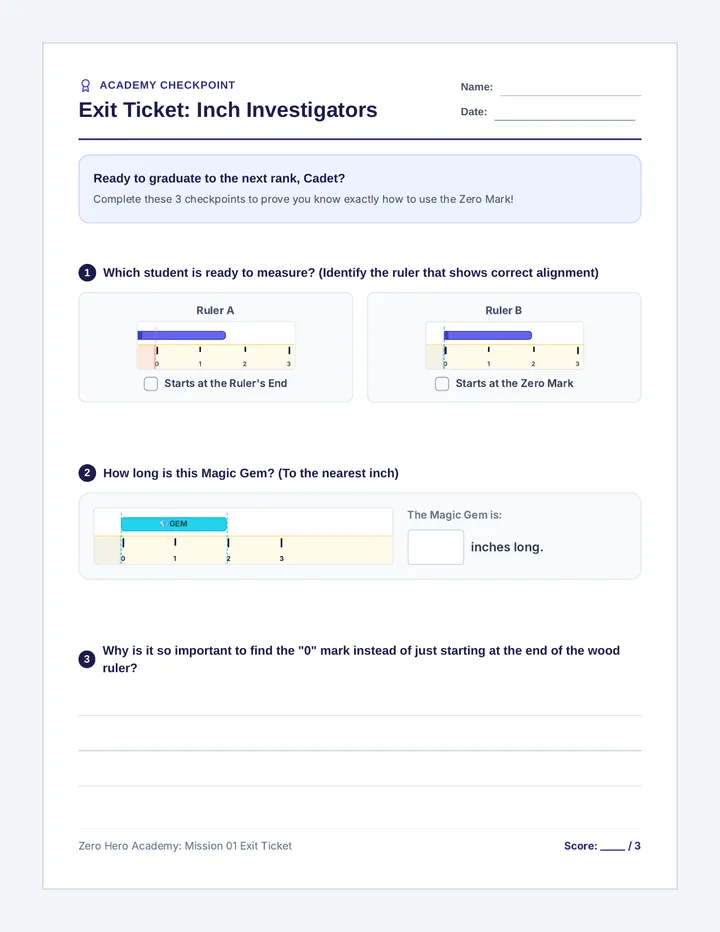
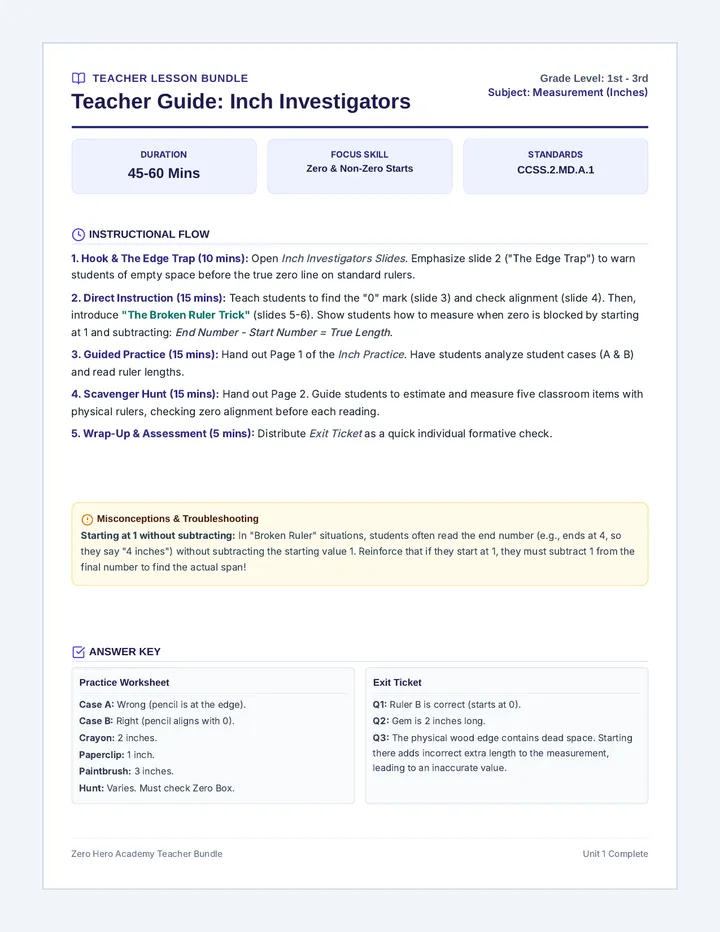
A foundational lesson on using a physical ruler to measure objects to the nearest whole inch, featuring hands-on practice and assessment.
This lesson helps 3rd-grade students master the area of rectilinear shapes by teaching them to decompose complex shapes into simpler rectangles using horizontal and vertical splits.
A foundational introduction to perimeter for 3rd graders, focusing on defining perimeter as the distance around a shape and calculating it by adding all side lengths.
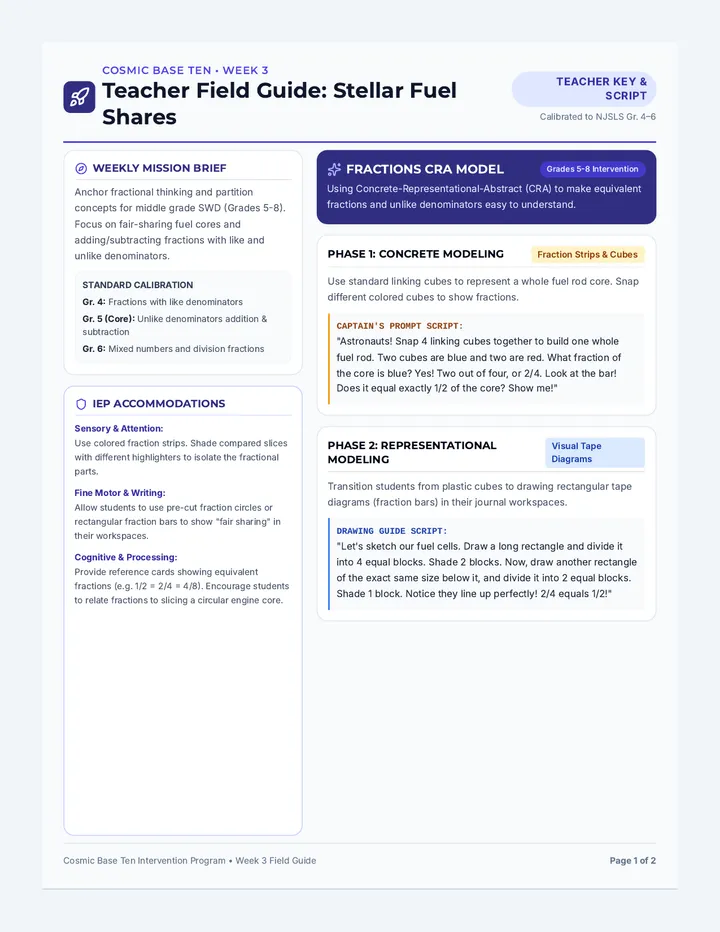
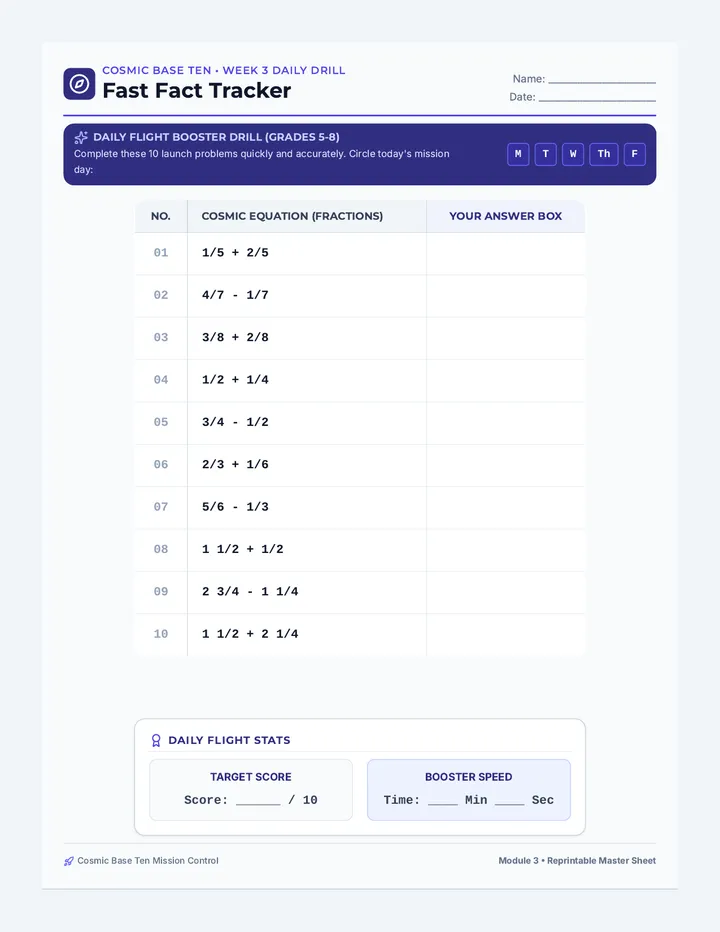
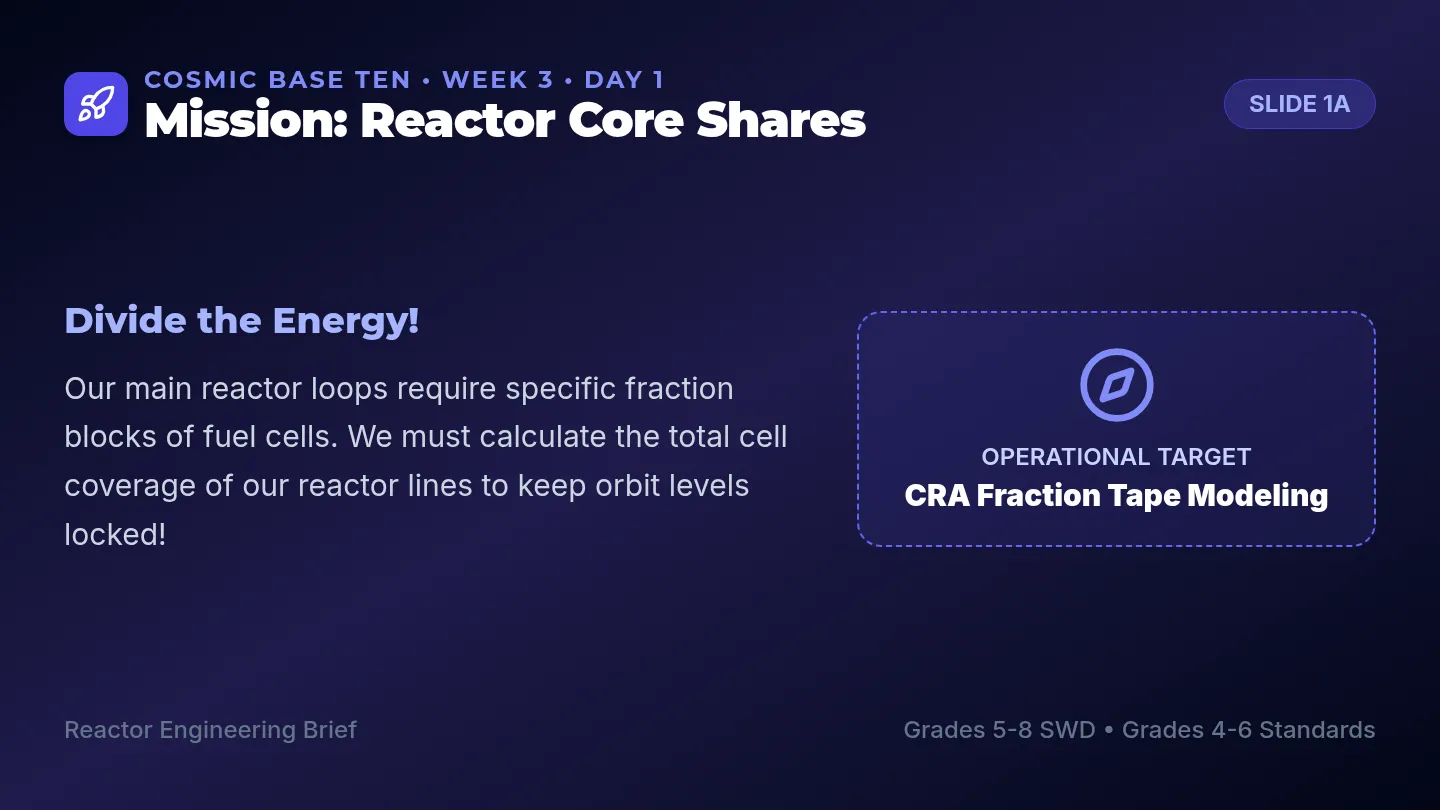
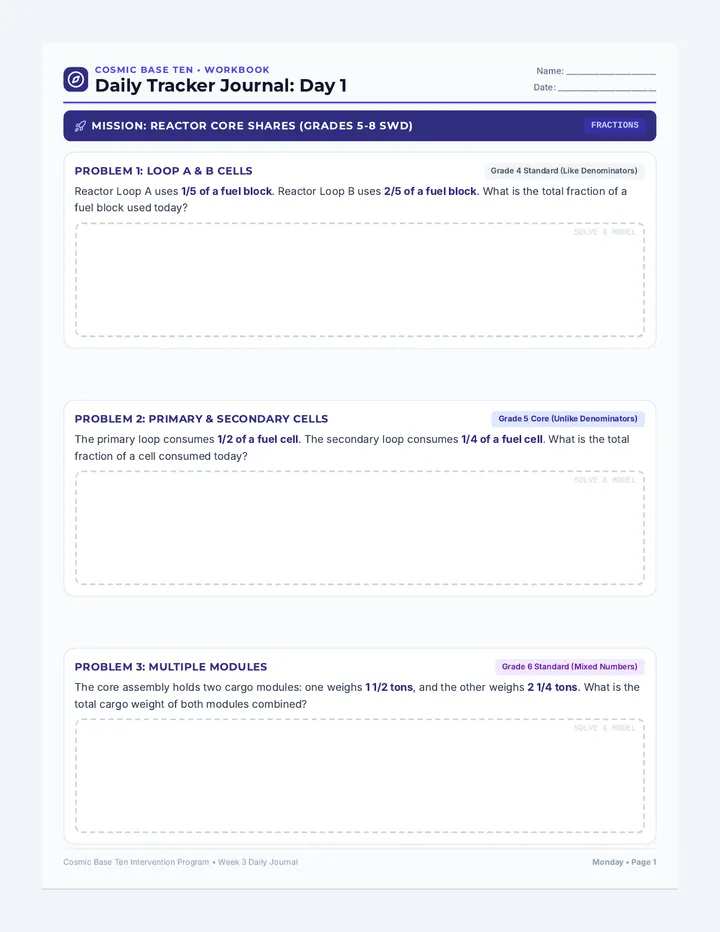
A project-based learning unit where students apply fraction and decimal operations to design, price, and manage a fictional food truck business. Students move from abstract calculations to real-world financial applications through menu design and budget management.
A comprehensive set of resources designed to help first graders master one-to-one correspondence for numbers 1-15 using garden-themed visuals, ten frames, and hands-on activities.
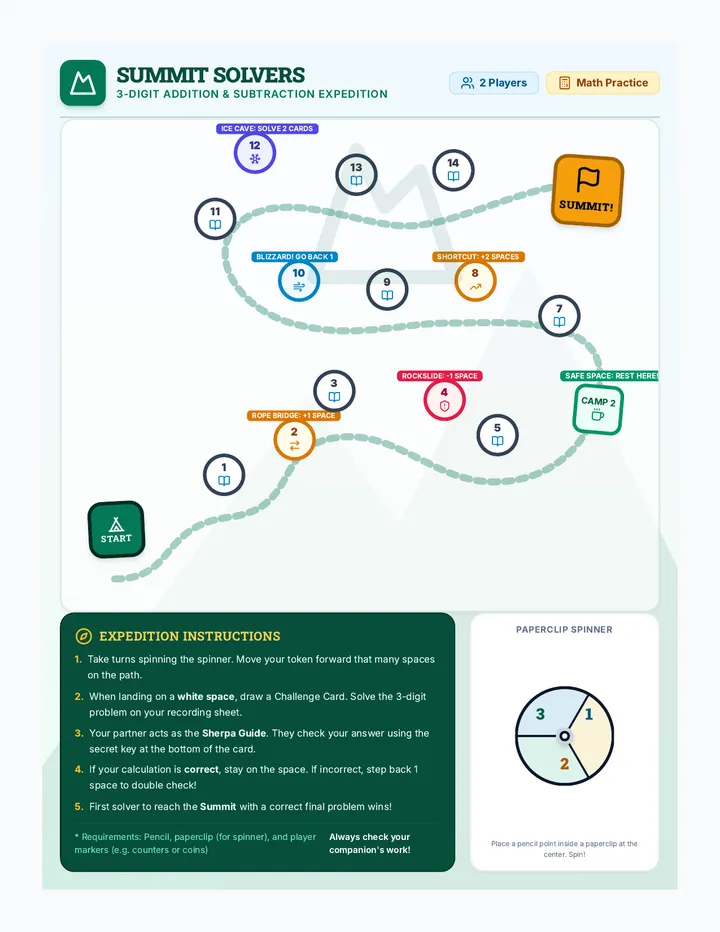
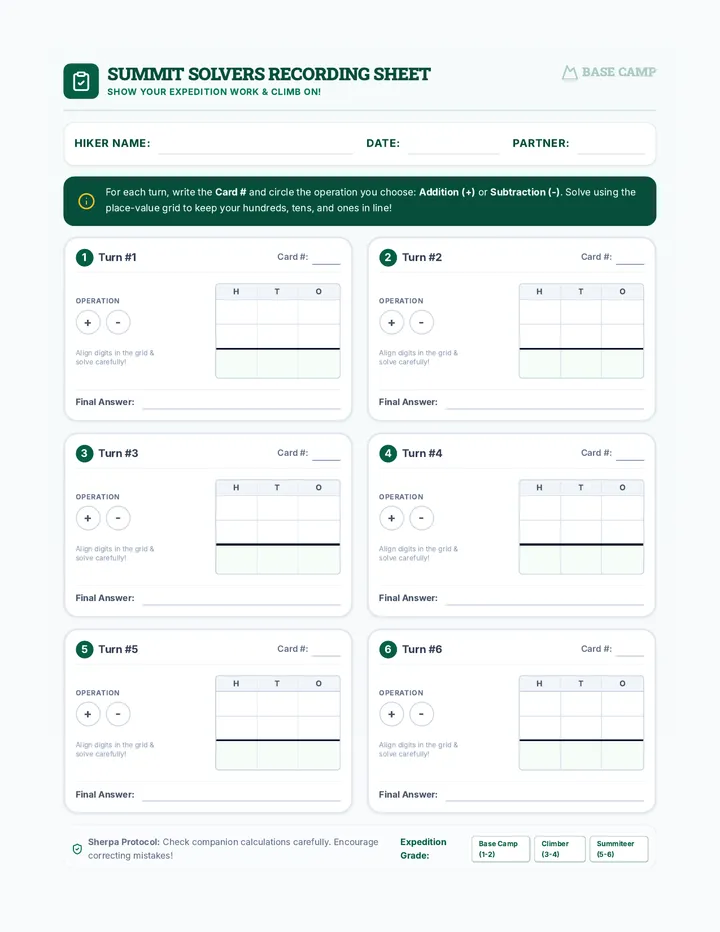
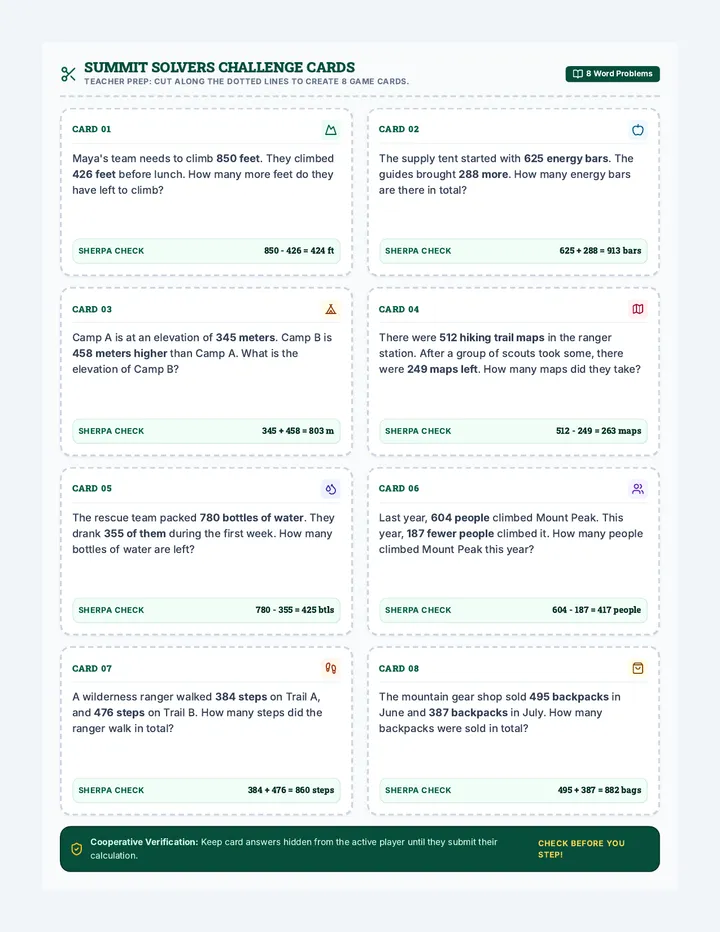
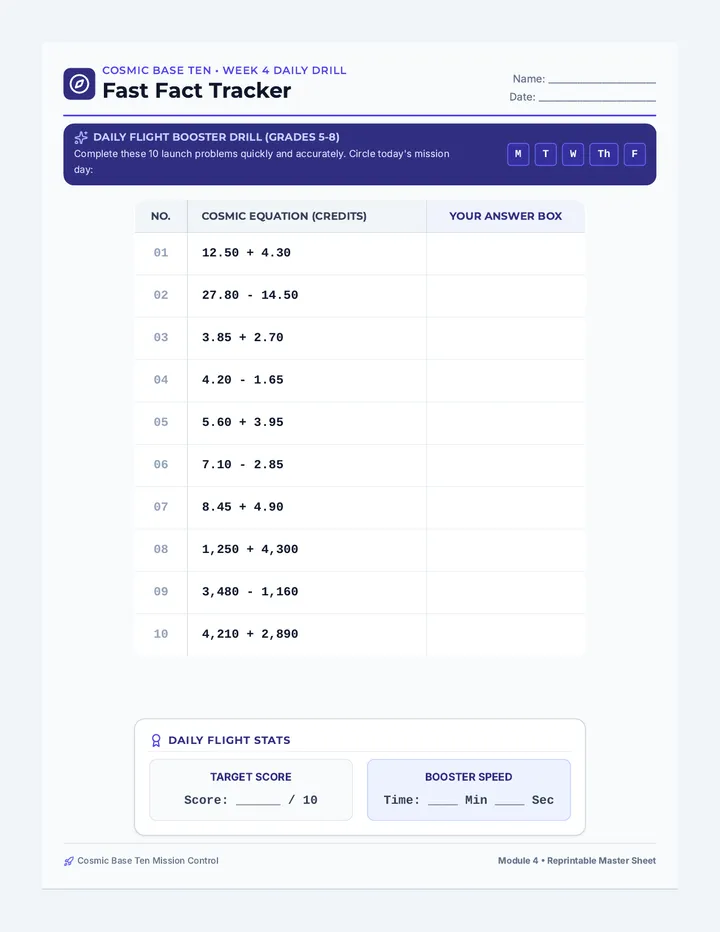
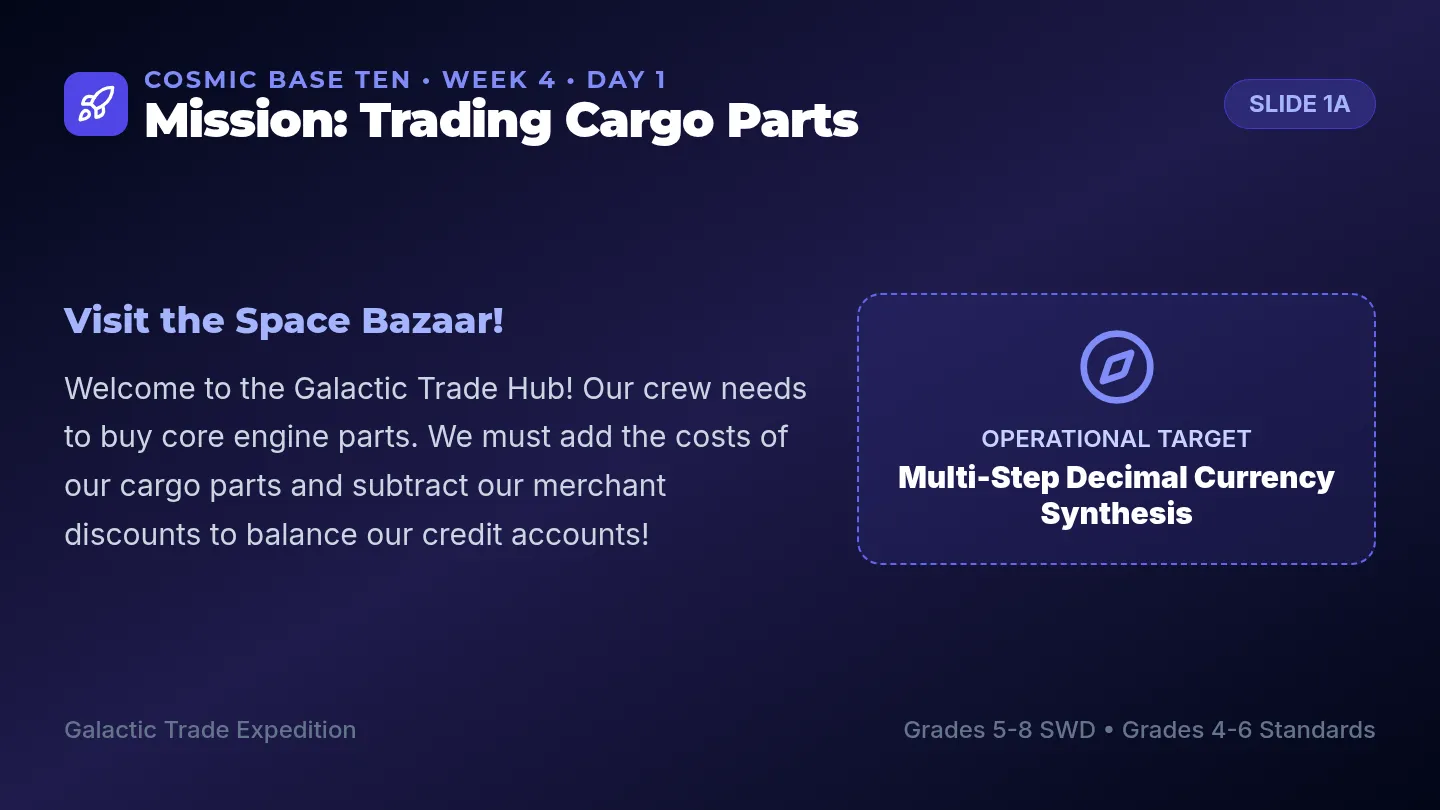
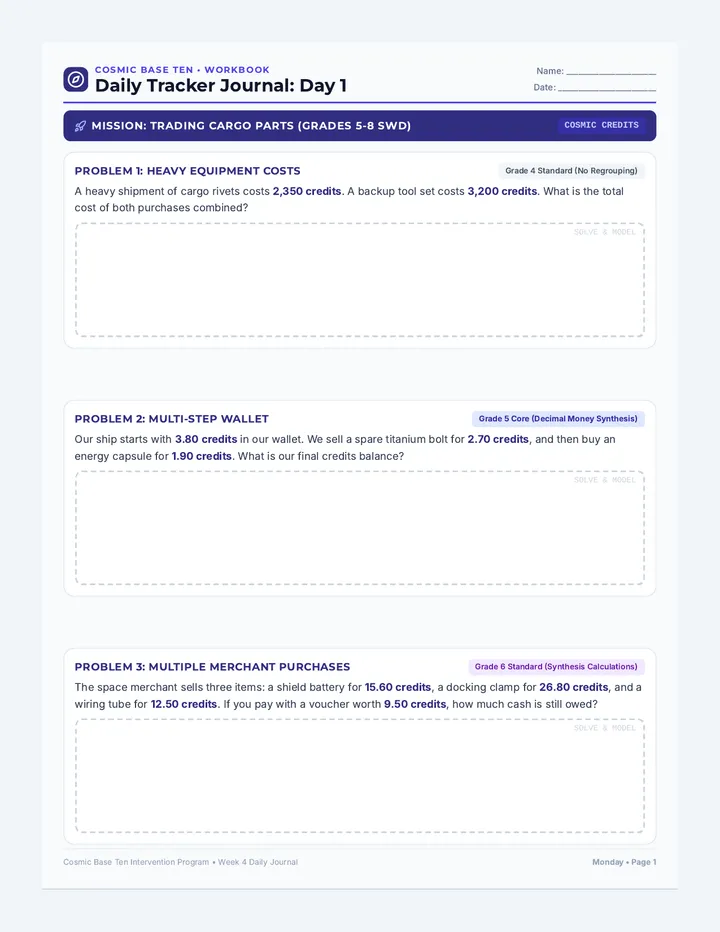
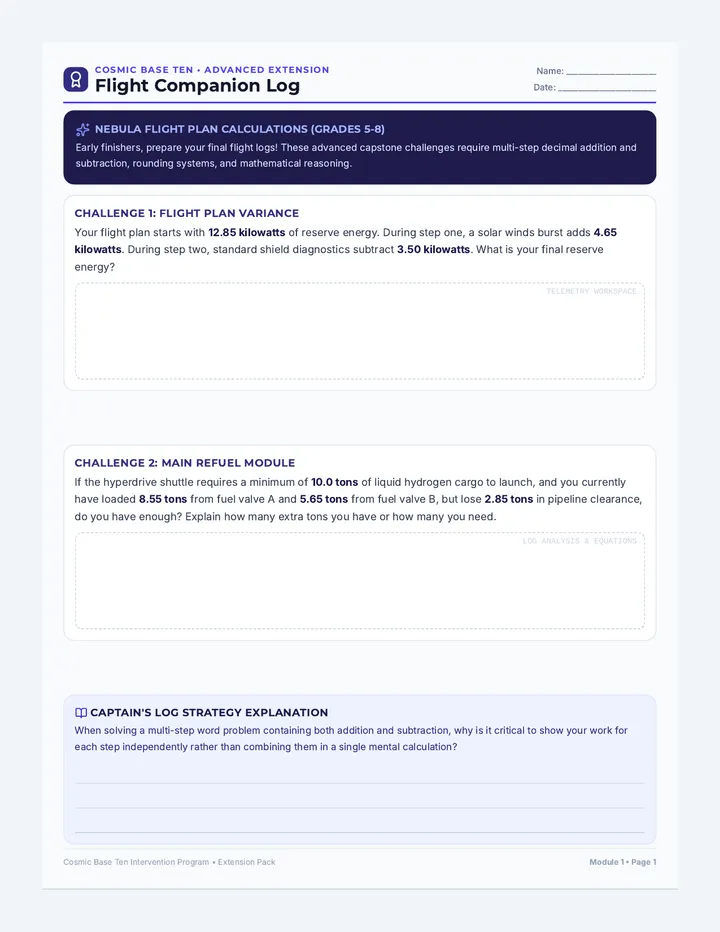
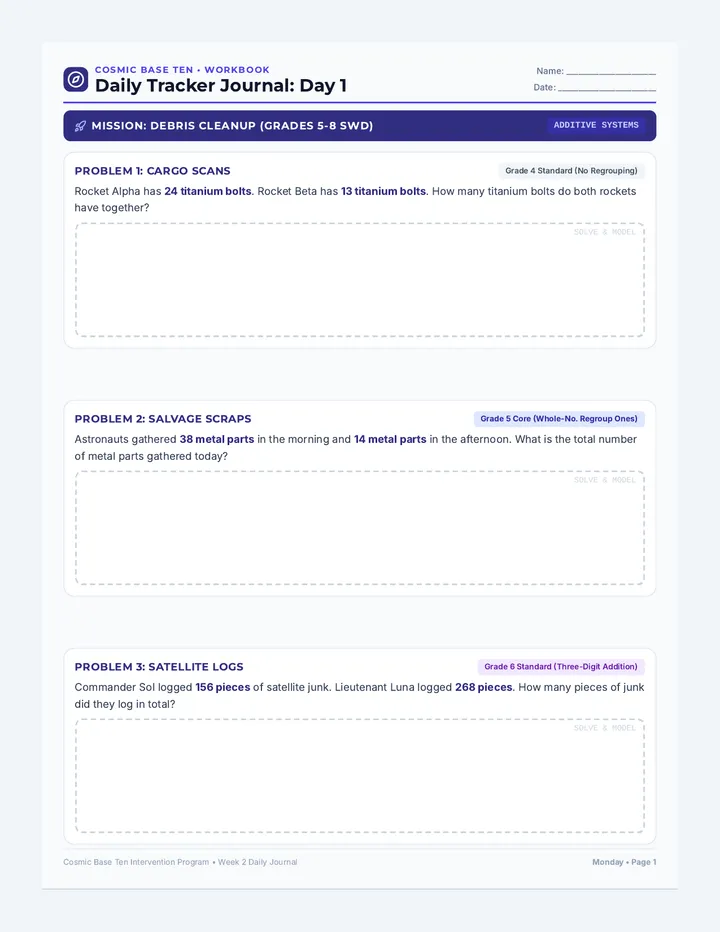
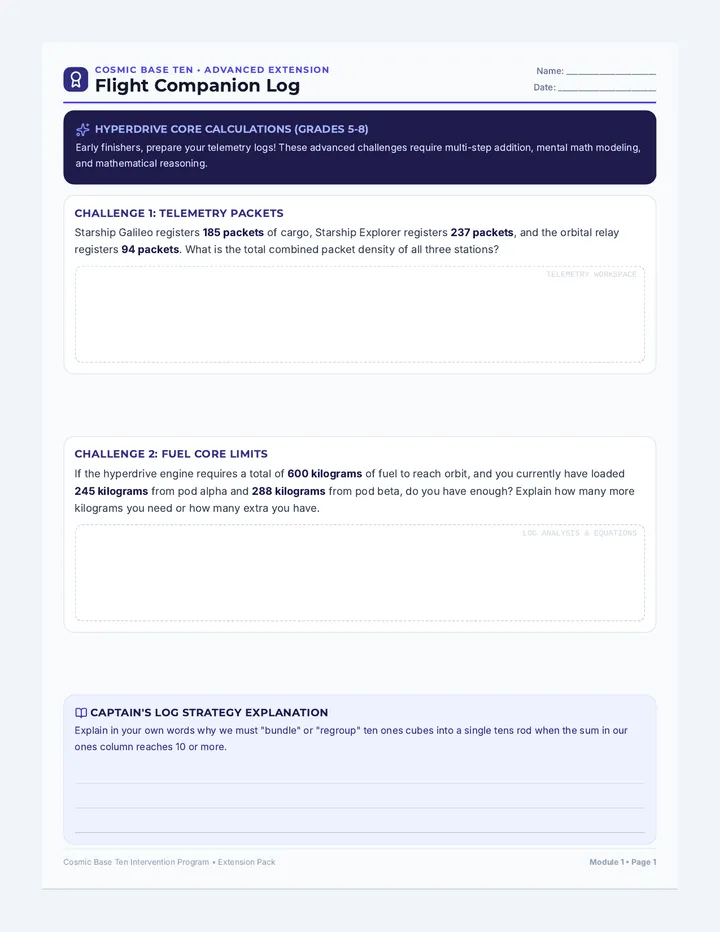
A 3rd-grade space-themed lesson where students solve 2-step addition and subtraction problems involving 3-digit numbers using the 5-step Mission Control protocol.
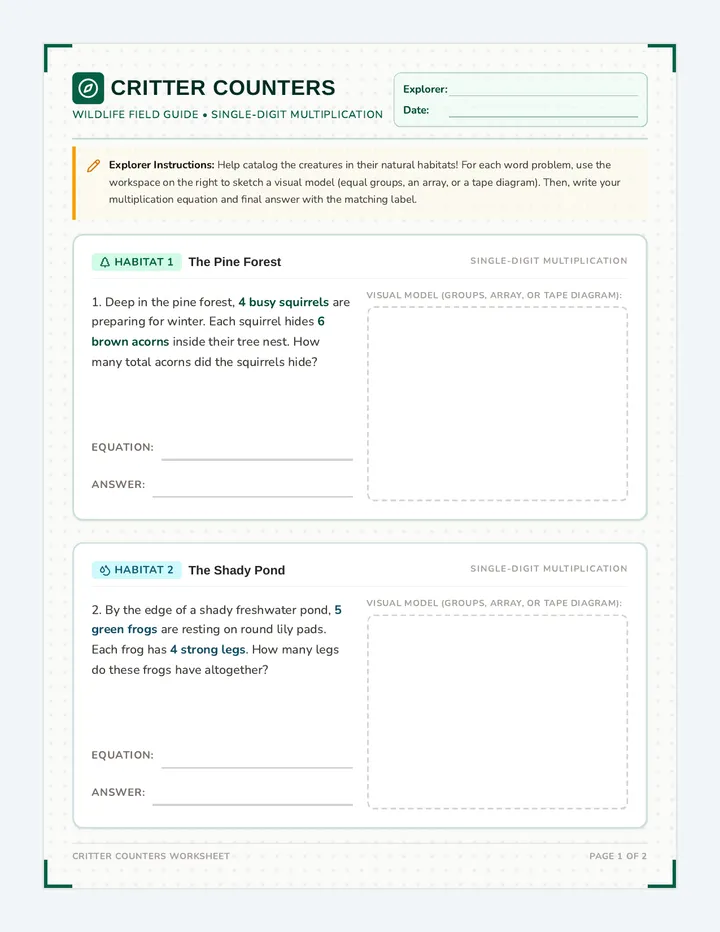
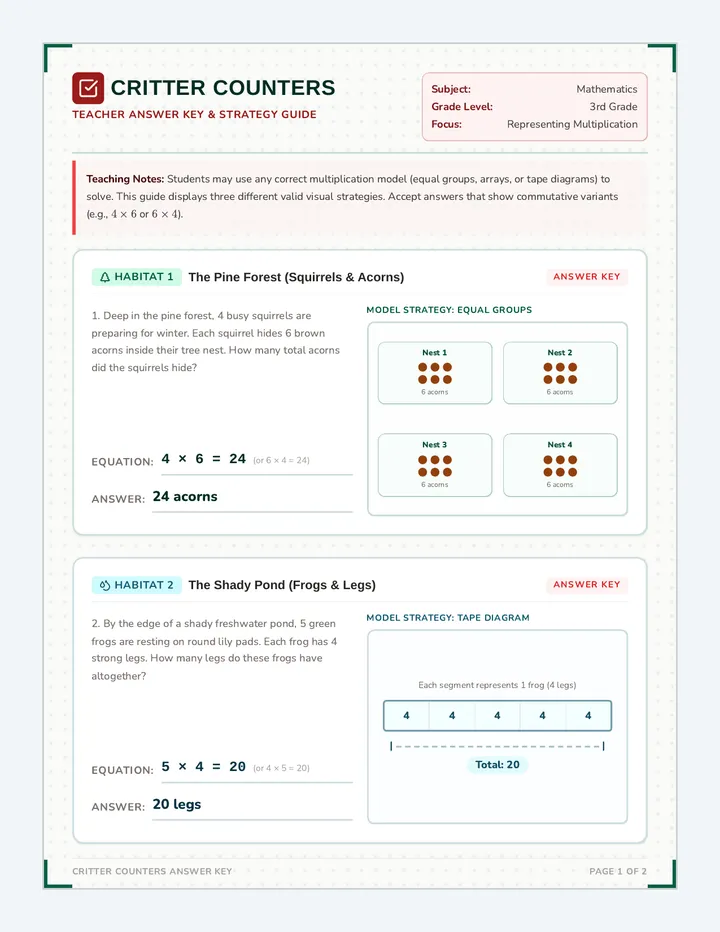
A practice-focused lesson designed to reinforce multiplication fluency for facts up to 12 through engaging, arcade-themed activities and drills.
A foundational lesson on the distributive property for 3rd-5th graders, using area models and the 'breaking apart' strategy to simplify complex multiplication.
A three-part introductory lesson on decimals that uses visual models and real-world scenarios to connect fractions with denominators of 10 and 100 to their decimal forms.
A focused lesson for 1st grade special education students to identify clues in word problems and decide whether to add or subtract within 20, themed around a safari animal adventure. Includes visual supports like number lines and animal keyword anchors.
A comprehensive lesson on solving multi-step word problems using all four operations, framed within a detective mystery theme to engage students in critical thinking and algebraic reasoning.
A comprehensive lesson on multiplication facts 1-12 using arrays and skip counting strategies, styled as architectural blueprints.
A comprehensive lesson focused on identifying, naming, and comparing fractions using visual models, number lines, and real-world applications. Students move from basic identification to complex comparisons of fractional parts.
A comprehensive introduction to simplifying fractions using a 'Shrink-O-Matic' lab theme. Students learn to identify common factors and divide to reach the simplest form through differentiated practice and visual models.
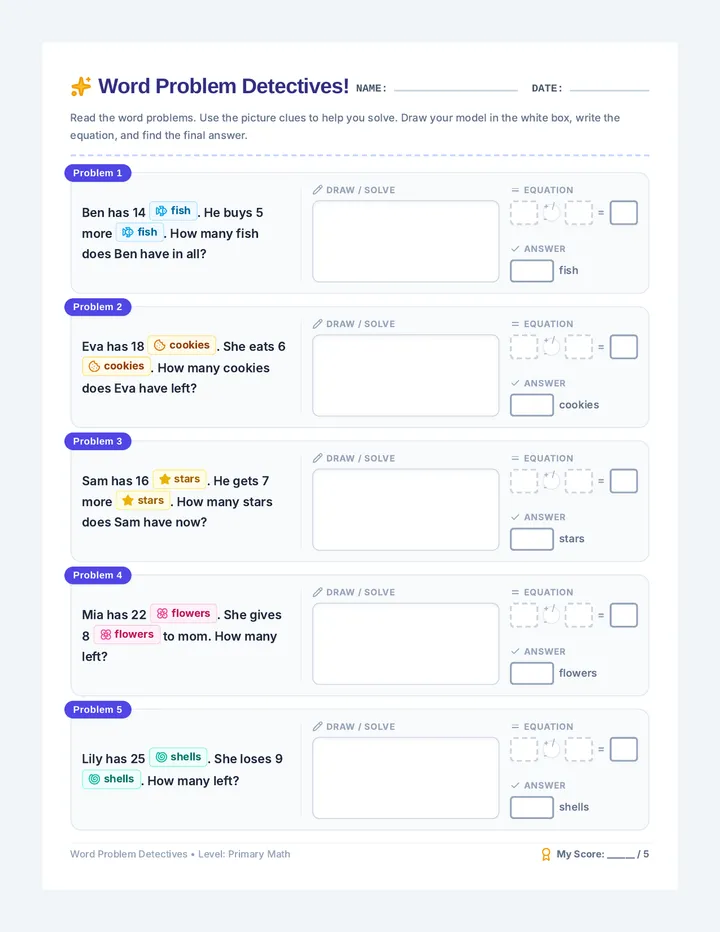
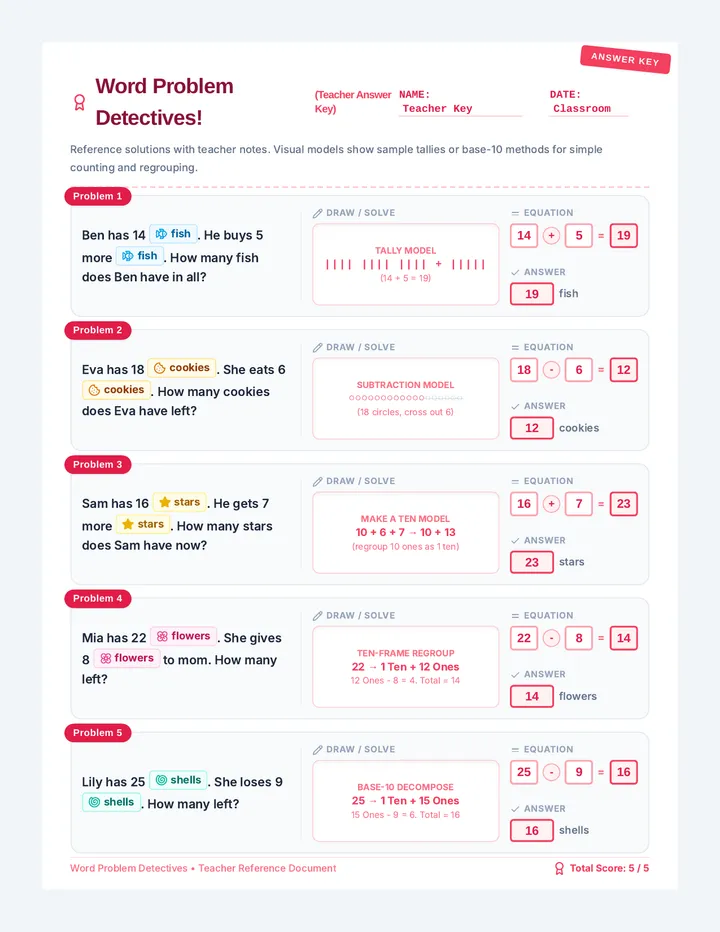
A lesson focused on decoding word problems using addition, subtraction, multiplication, and division facts through a detective-themed investigation. Students learn to identify key operations and solve tiered challenges of increasing complexity.