Explores the direct relationship between anatomical structures and survival strategies in diverse marine environments. Students analyze case studies of diving mammals, camouflaging invertebrates, deep-sea fish, and sensory-specialized sharks.
Focuses on identifying and interpreting biological patterns across the ocean. Students analyze biodiversity datasets and create visualizations to understand how environmental variables like temperature, depth, and latitude dictate where marine life thrives.
The capstone week where students synthesize their knowledge of solar energy, wind, and water to explain regional climate variations and master the MCAS Open Response CER strategy.
Students dive into the 'Great Ocean Conveyor Belt,' analyzing how surface winds and density differences (temperature and salinity) drive oceanic circulation and transport heat around the globe.
An exploration of atmospheric pressure and the Coriolis effect, focusing on how air moves from high to low pressure to create global wind belts and how these winds influence regional weather patterns.
Students investigate how differential heating of Earth's surface by the sun creates the initial energy imbalance that drives all weather and climate, practicing CER to explain the relationship between latitude and solar intensity.
A comprehensive lesson on the nature of magnetic fields, focusing on their vector properties, dipole sources, and the implications of Gauss's Law for magnetism. Students will explore how fields are represented and why magnetic monopoles do not exist.
A fundamental exploration of Kirchhoff's Circuit Laws through the lens of conservation principles. Students master the Junction and Loop Rules using clear conventions and visual mapping techniques based on the "Teach Me" physics series.
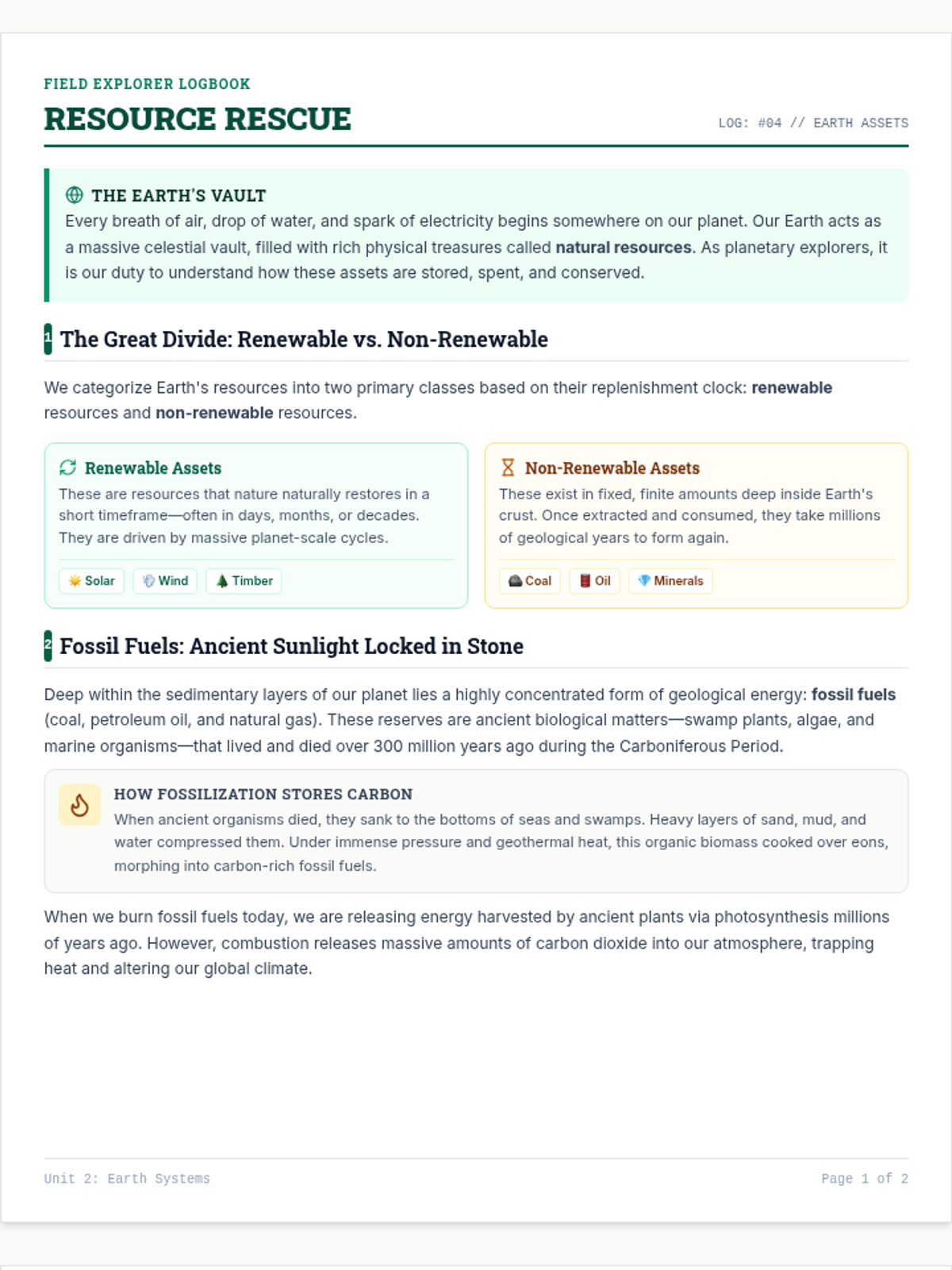
A lesson exploring the movement of carbon through Earth's systems, including photosynthesis, respiration, decomposition, and human impact.
In this lesson, students analyze the 'brain rot' phenomenon through a scientific lens, focusing on how short-form media impacts the brain's reward system. Students engage with new vocabulary, watch a targeted video, and participate in a mediated debate about their digital habits.
A hands-on exploration of thermal energy transfer through convection and freezing point depression experiments. Students observe how density and temperature interact in water and how salt affects the melting process of ice.
An introductory exploration of the physics of sound and light through vocabulary reinforcement and visual aids.
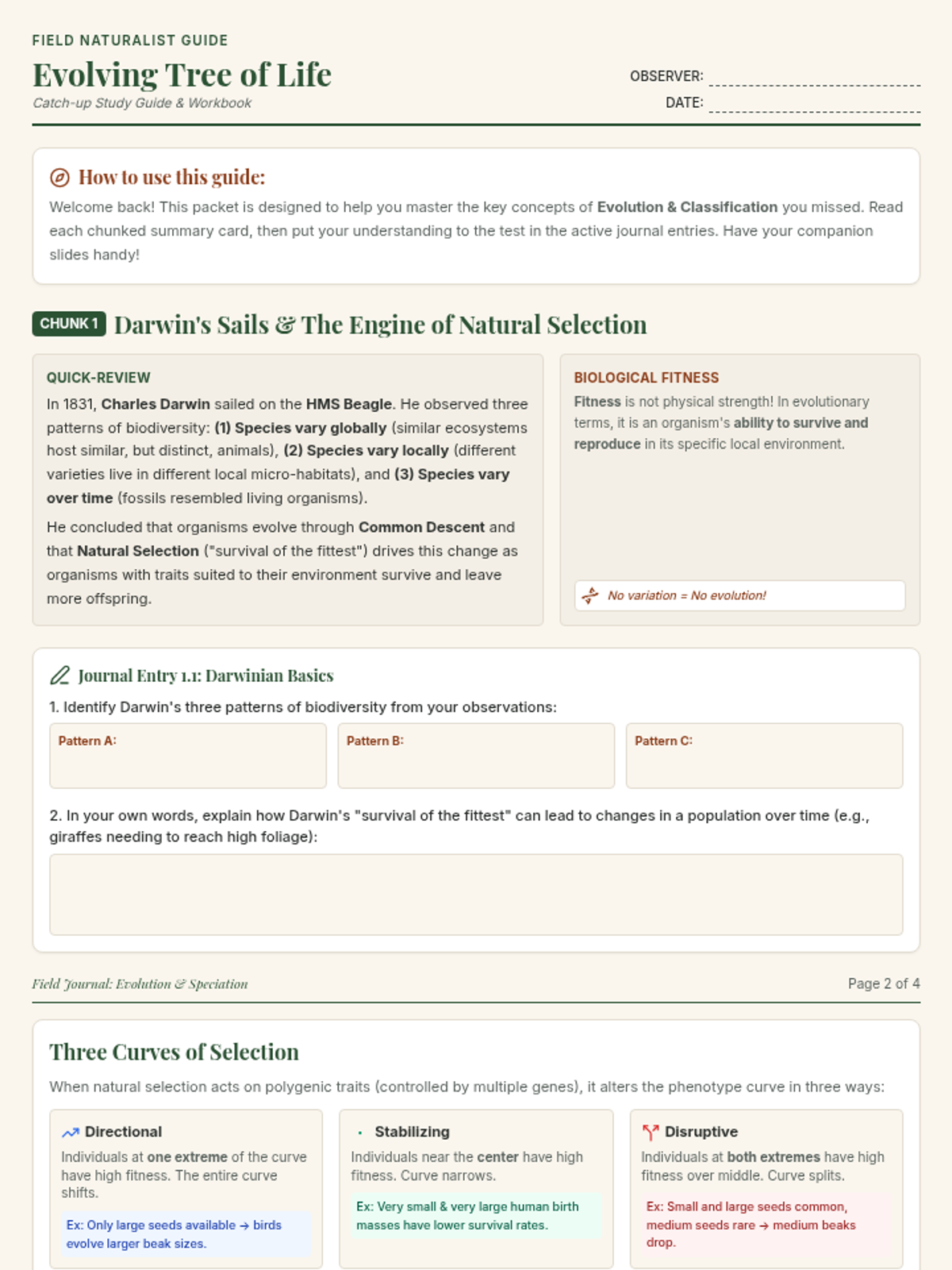
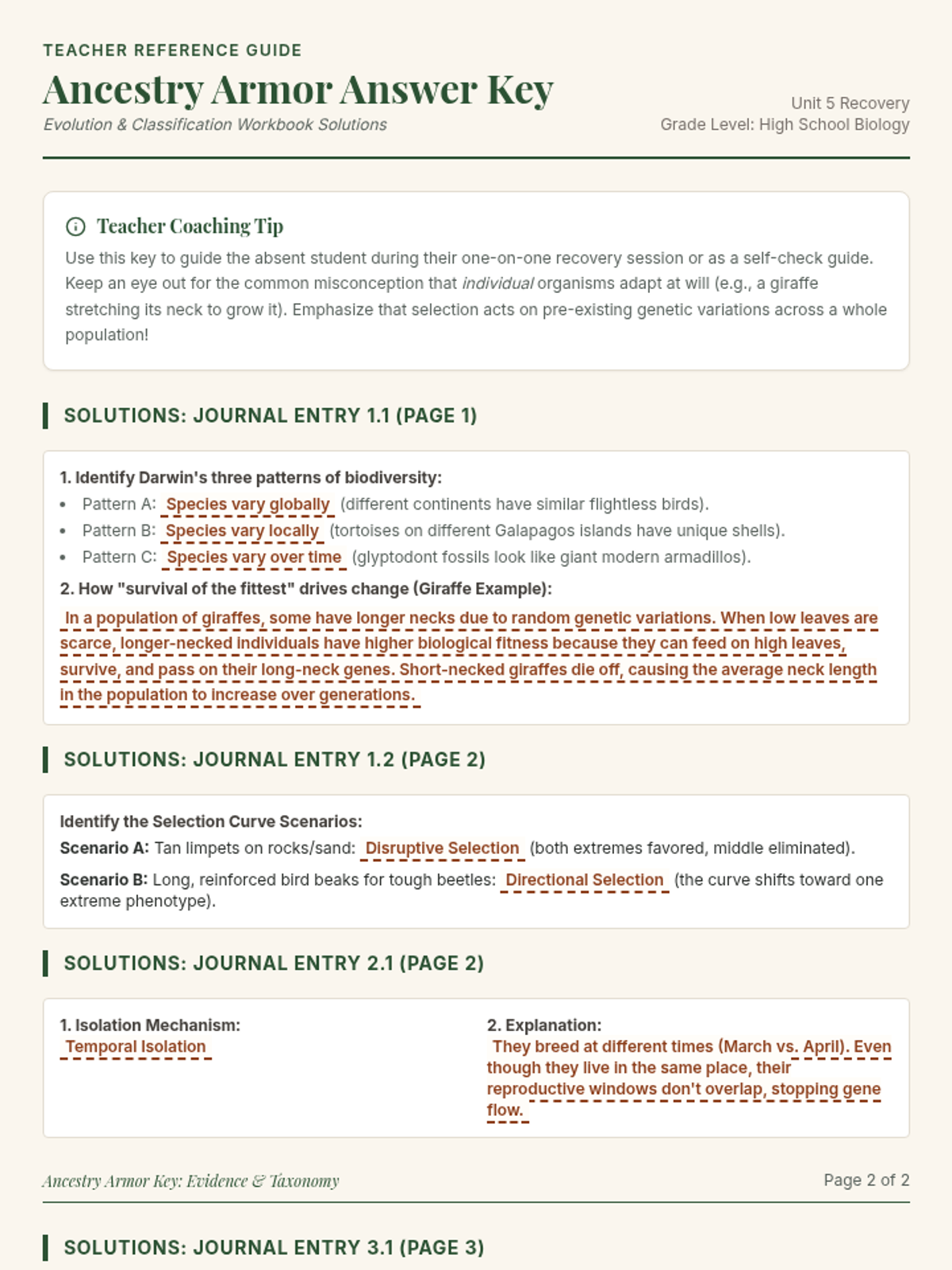
A lesson exploring how traits are passed down through different types of reproduction and how populations change over time through natural and artificial selection.