Students use paper cutouts of various polygons and 'fold' them to find lines of symmetry, physically verifying if the two halves match exactly.
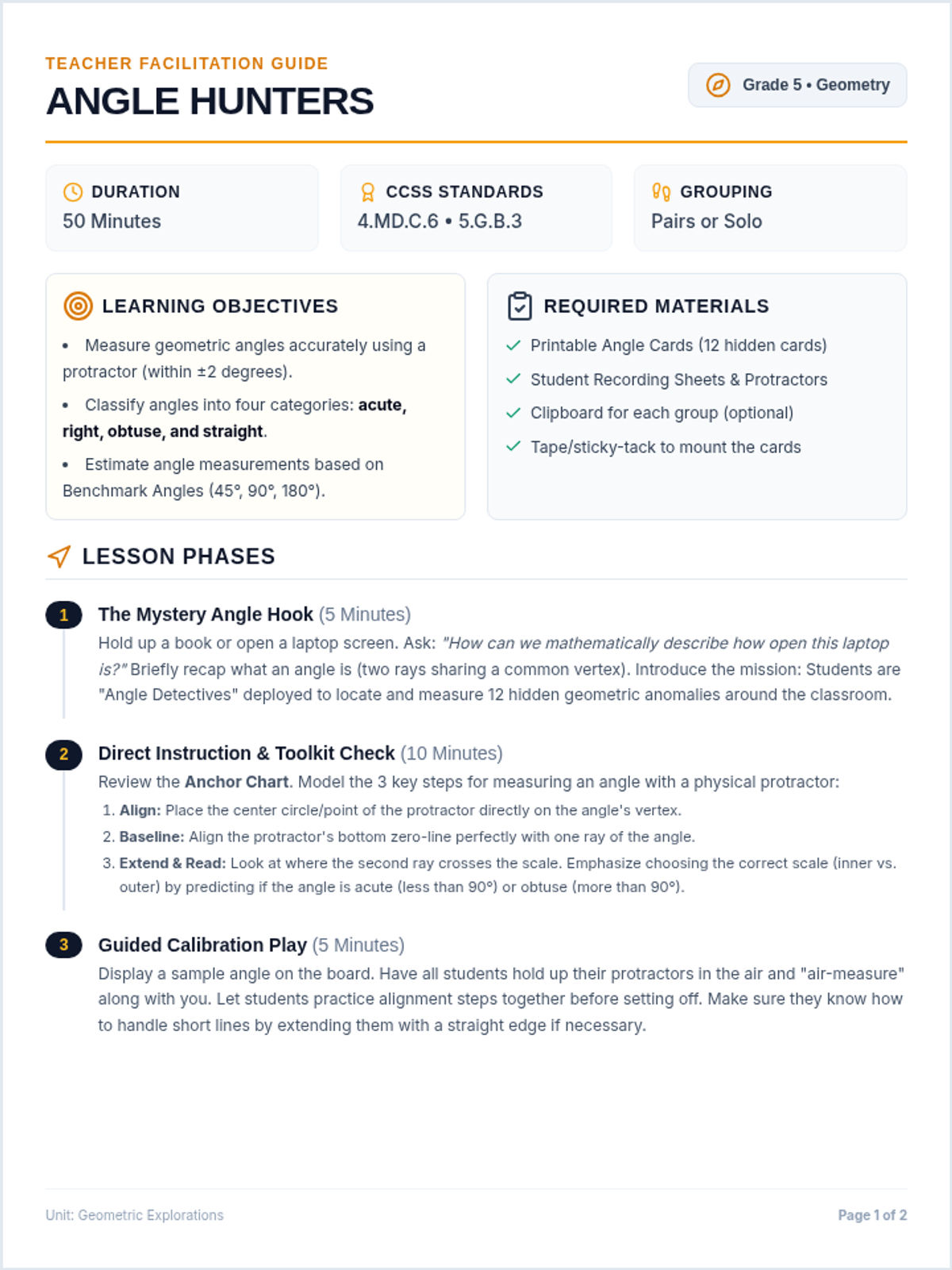
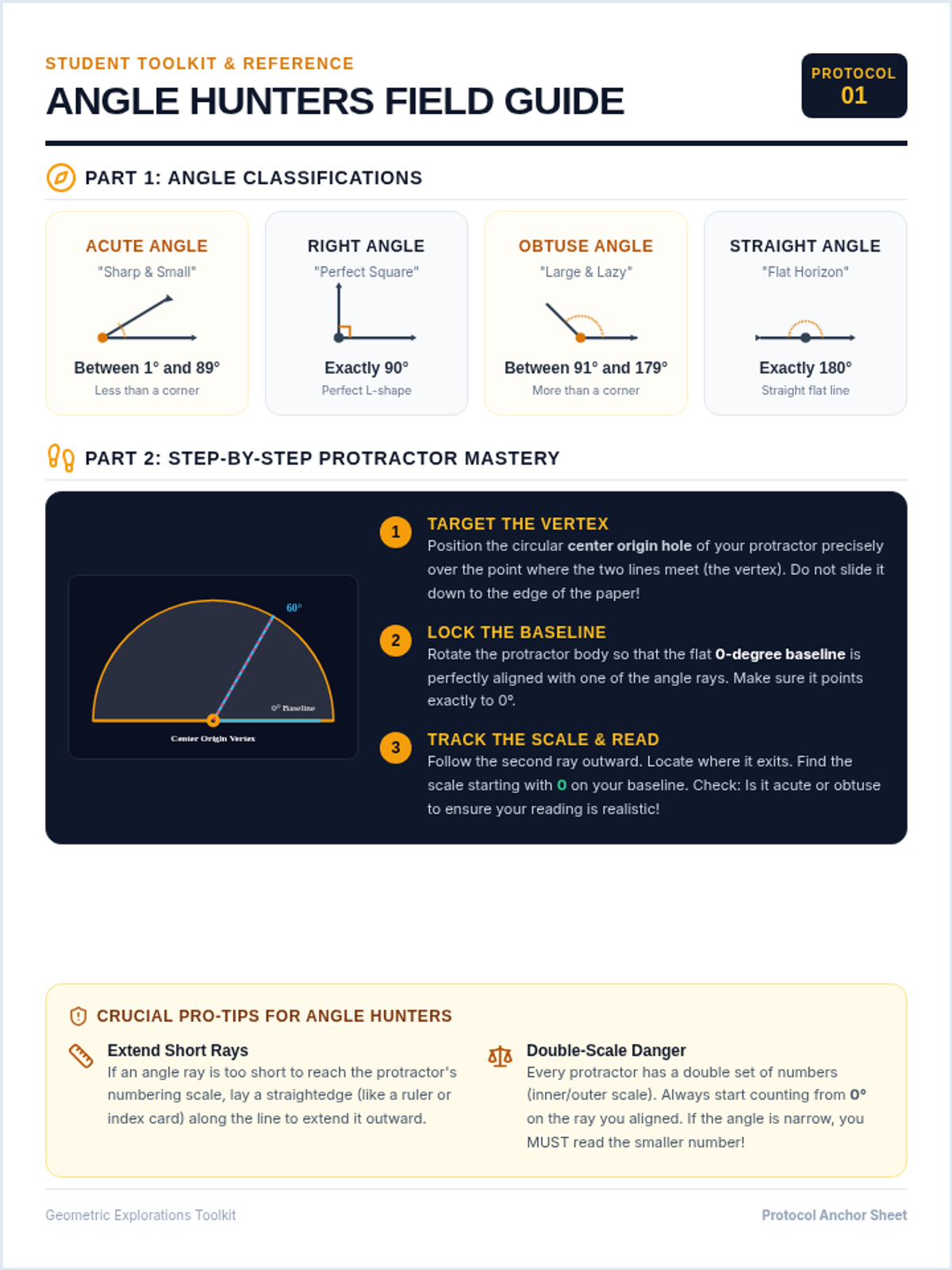
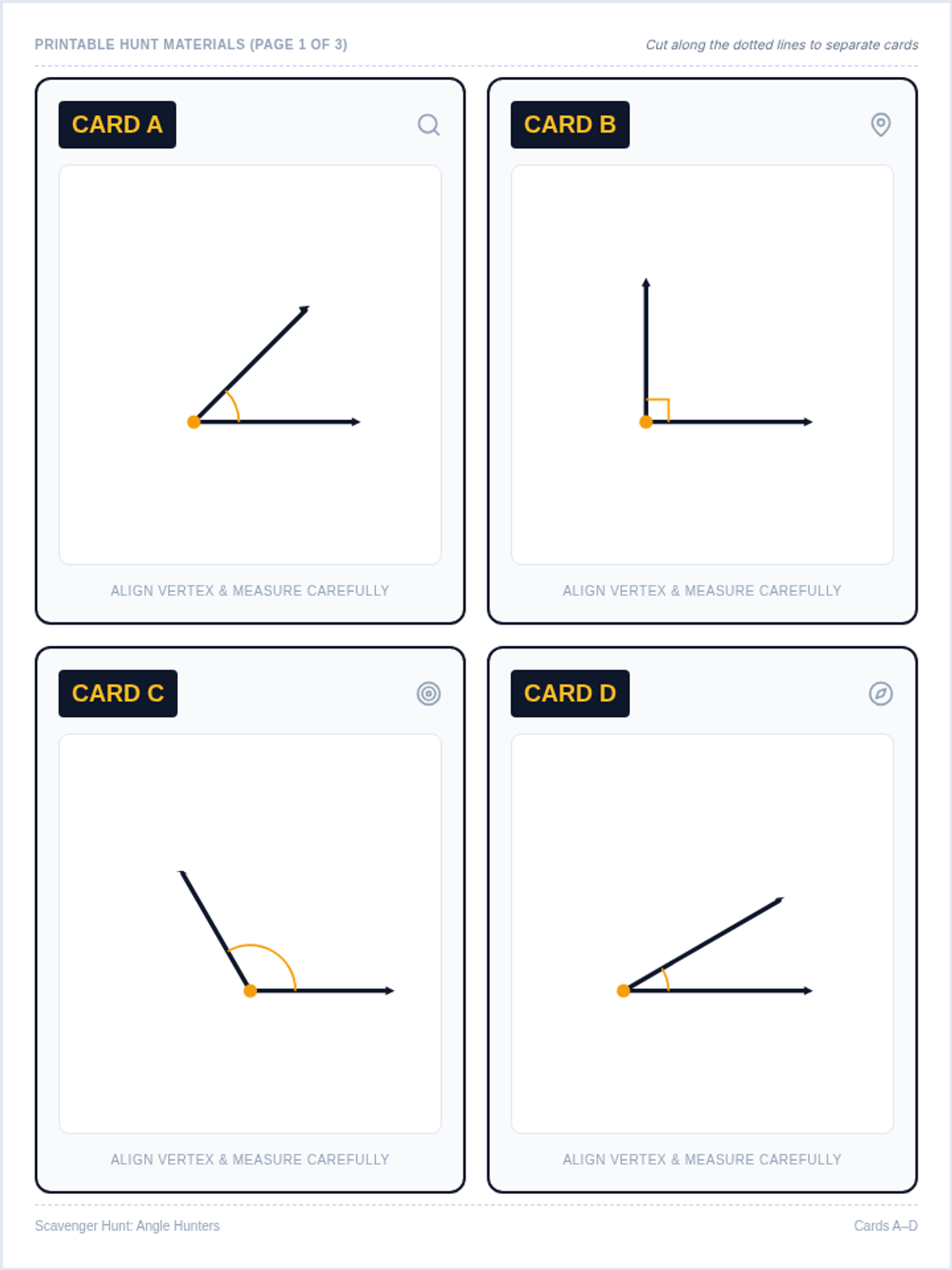
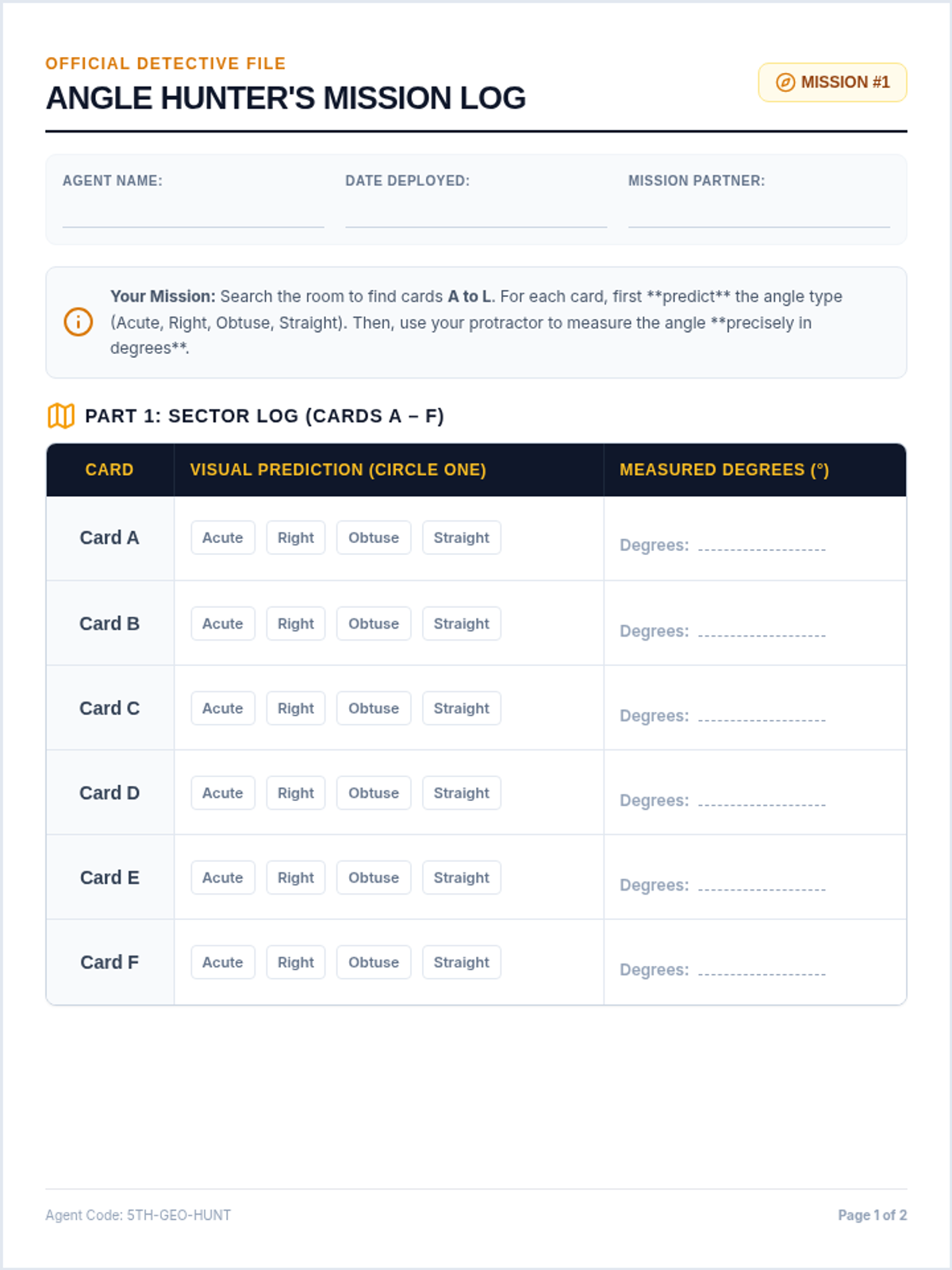
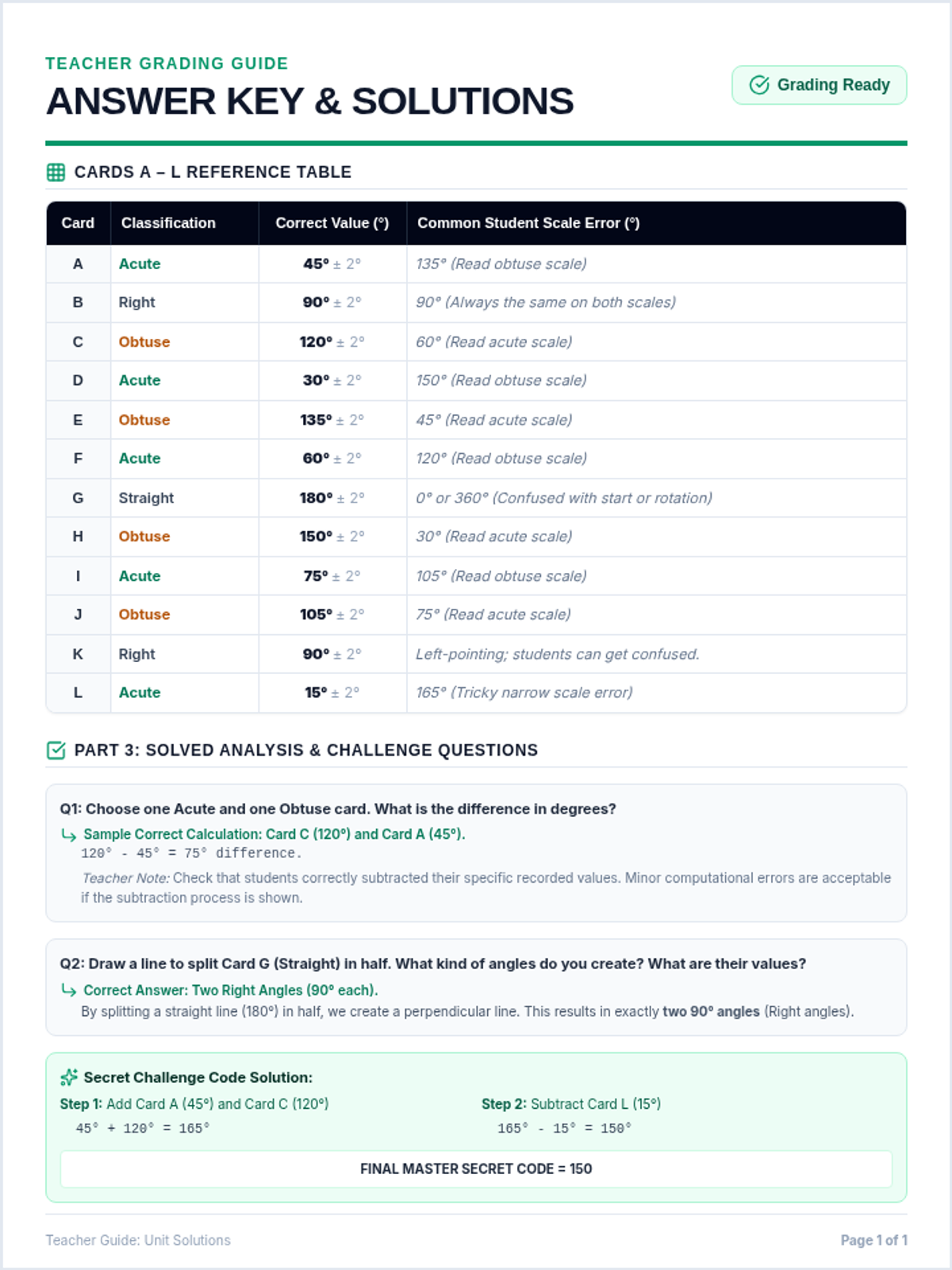
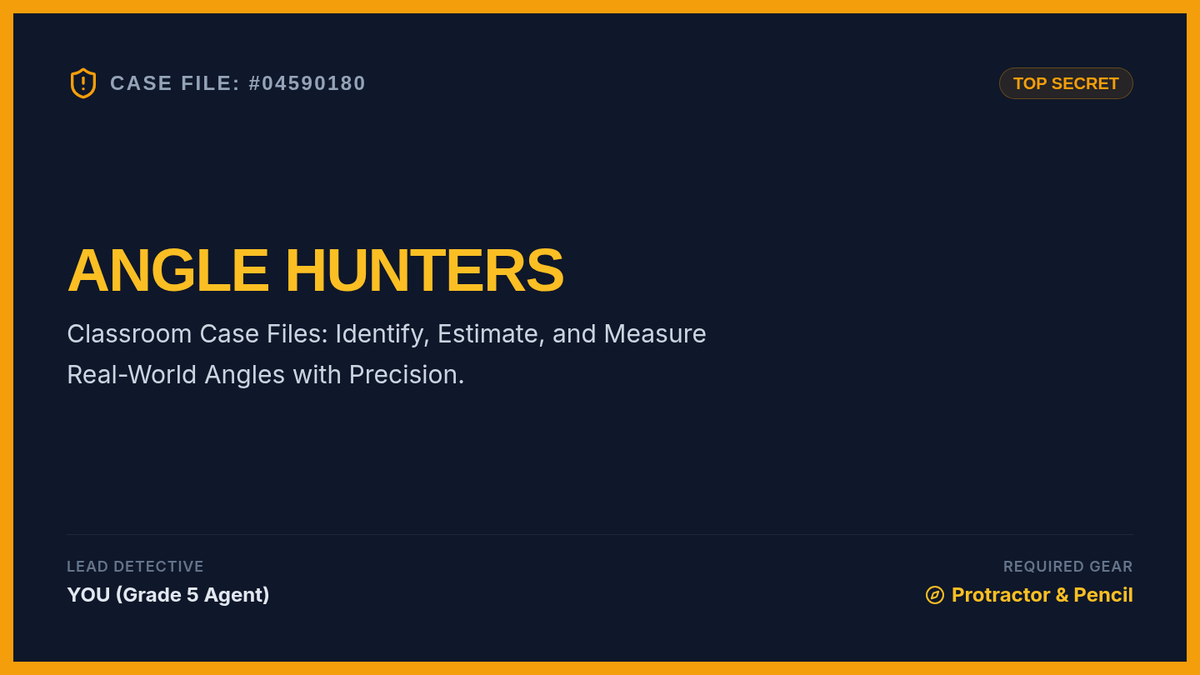
An active, hands-on classroom scavenger hunt where 5th-grade students search for hidden geometric angle cards and use protractors to measure and classify them. Includes a comprehensive lesson plan, anchor chart reference, printable hunt cards, a student recording sheet, and a teacher answer key.
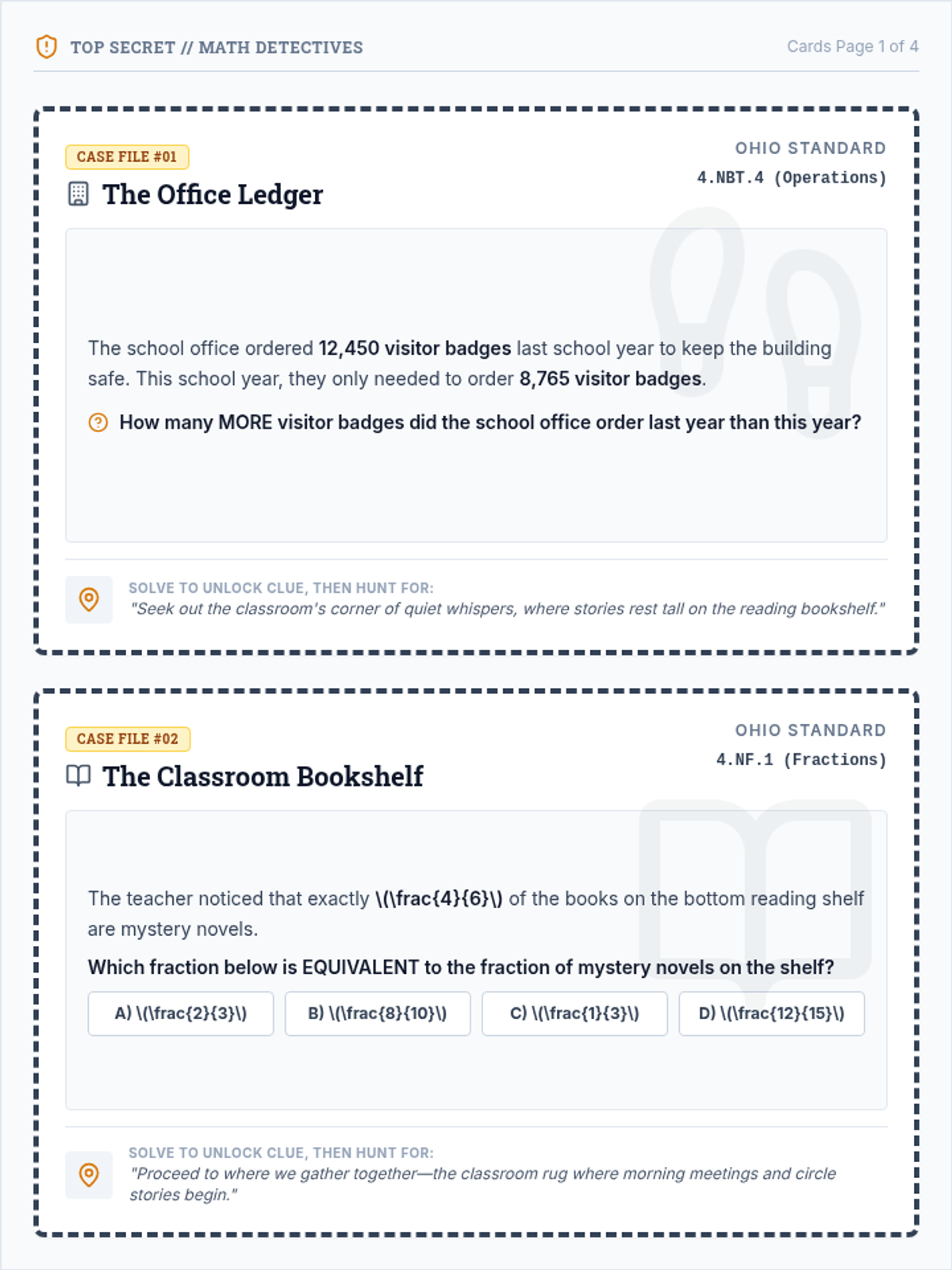
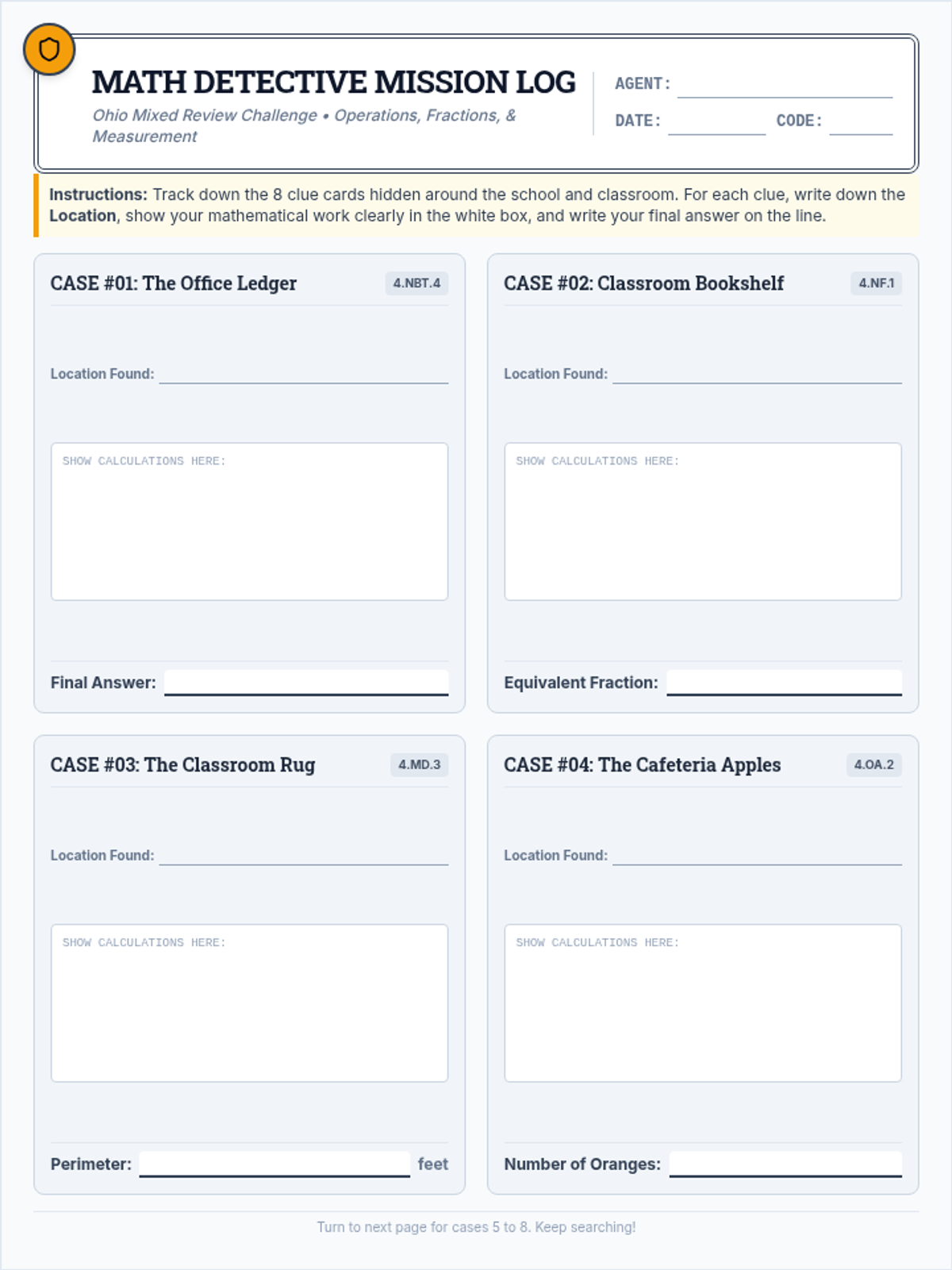
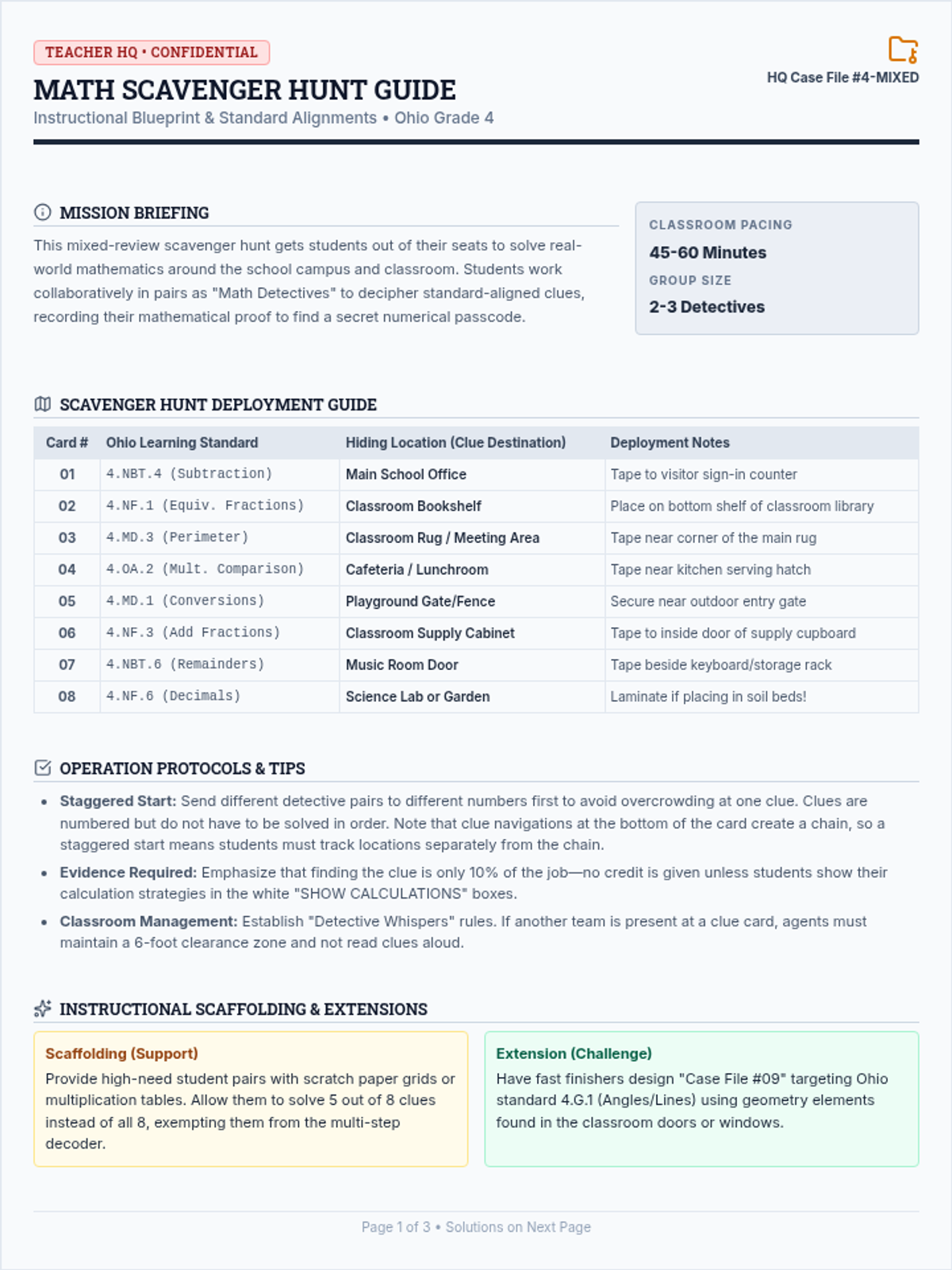
An engaging, active scavenger hunt that reviews critical 4th-grade Ohio math standards. Students solve real-world operations, fractions, and measurement problems hidden in key locations around the school.
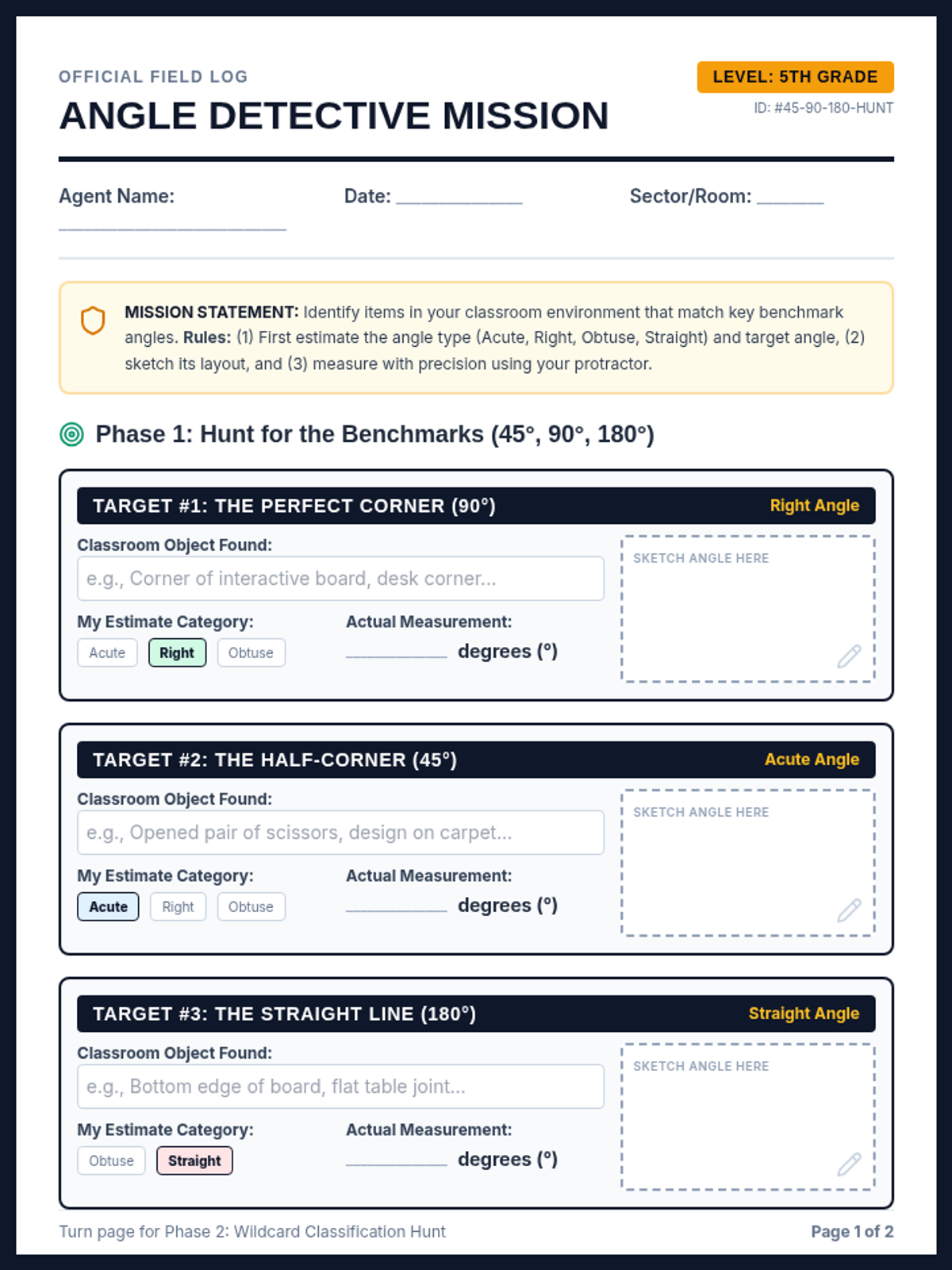
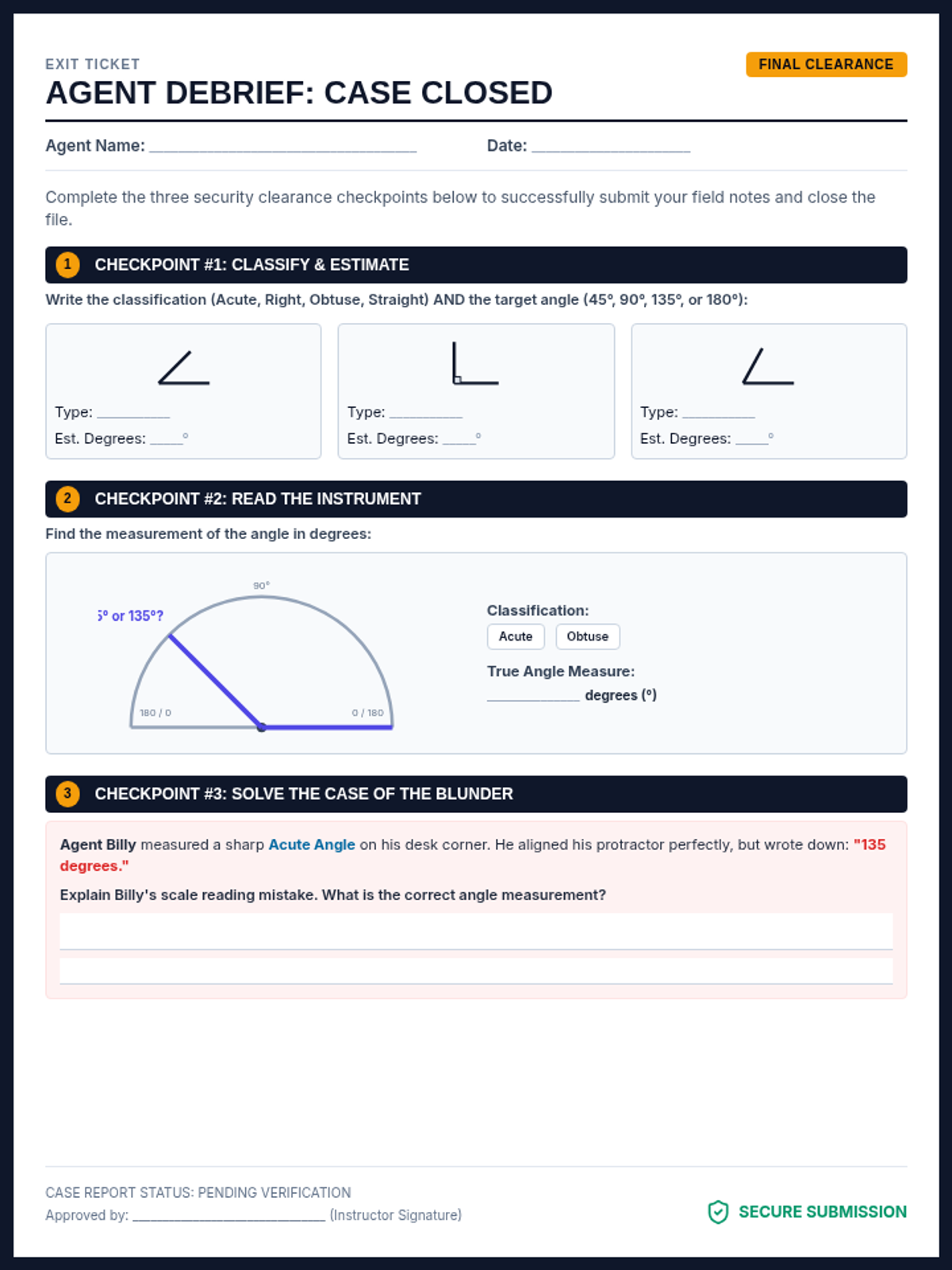
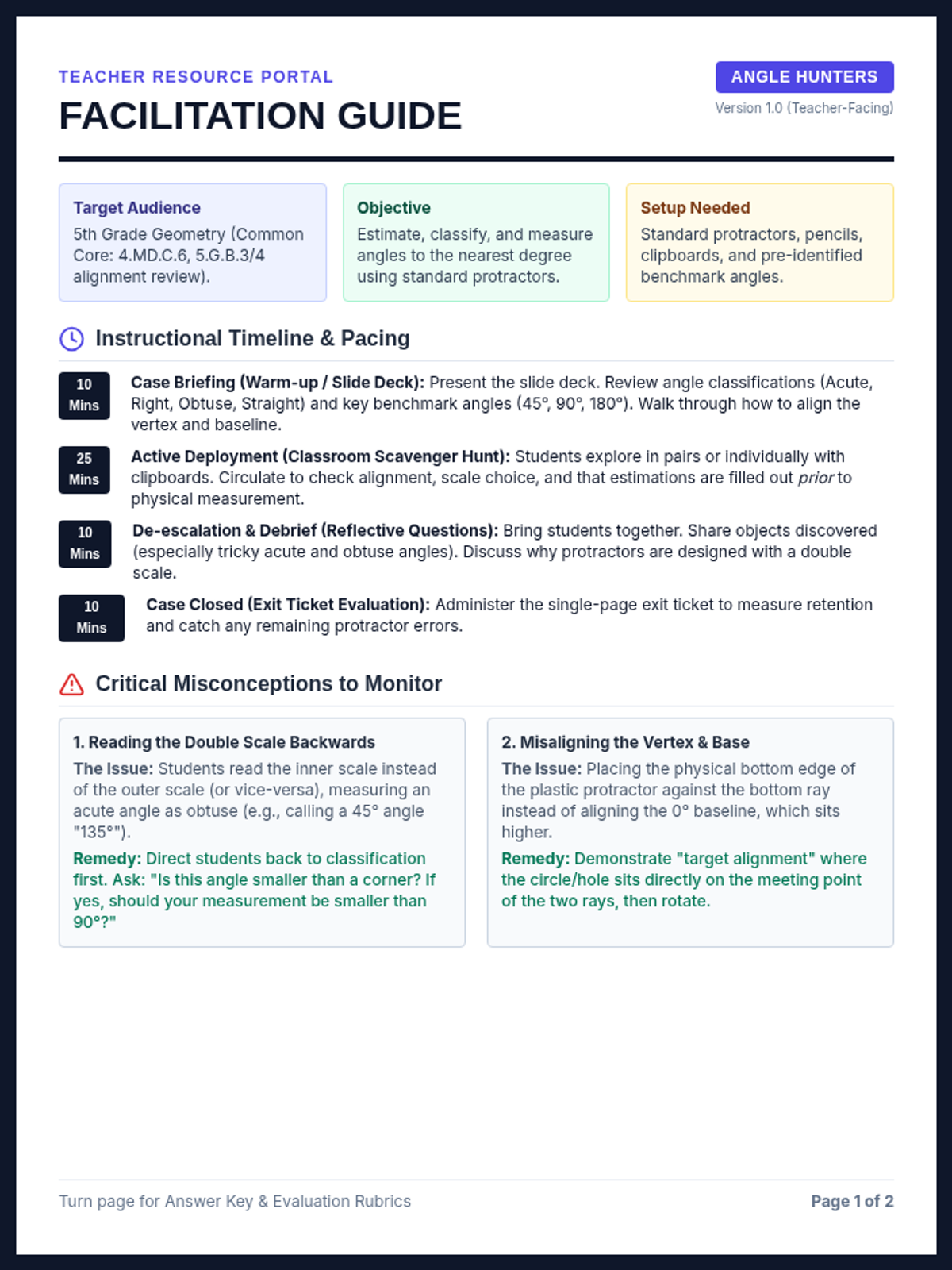
An active, hands-on geometry lesson where students become 'Angle Detectives,' exploring their classroom environment to identify, estimate, and measure real-world angles using protractors. This bundle contains interactive presentation slides, a hands-on scavenger hunt activity, and a quick exit ticket.
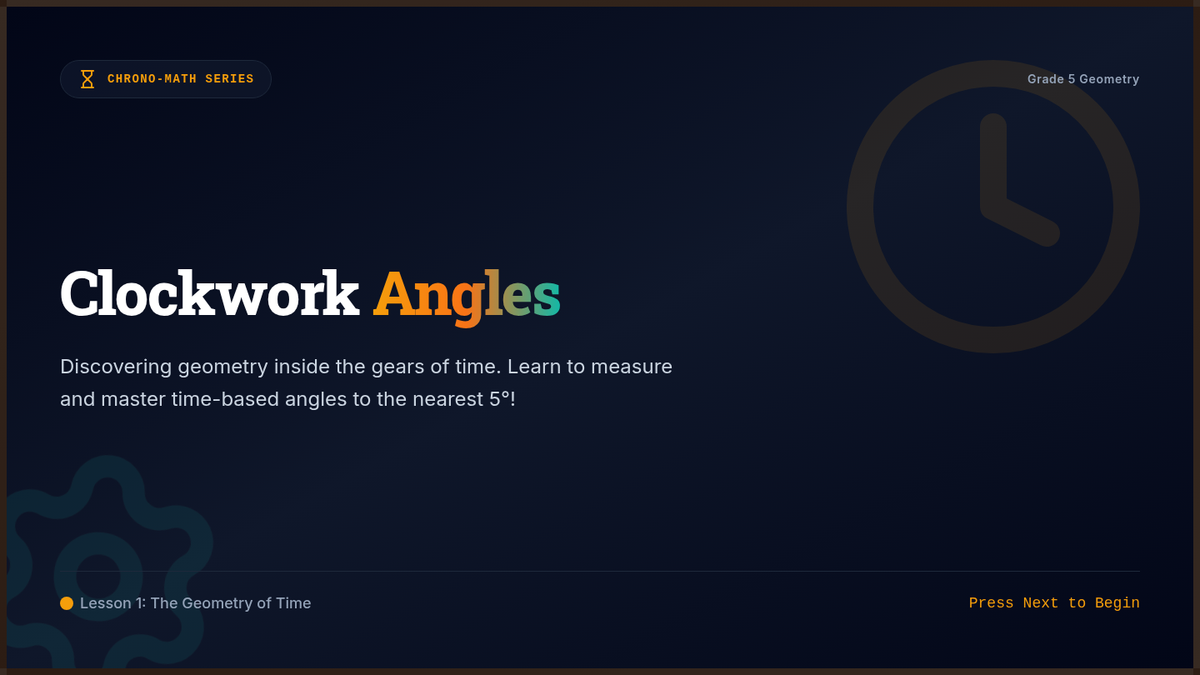
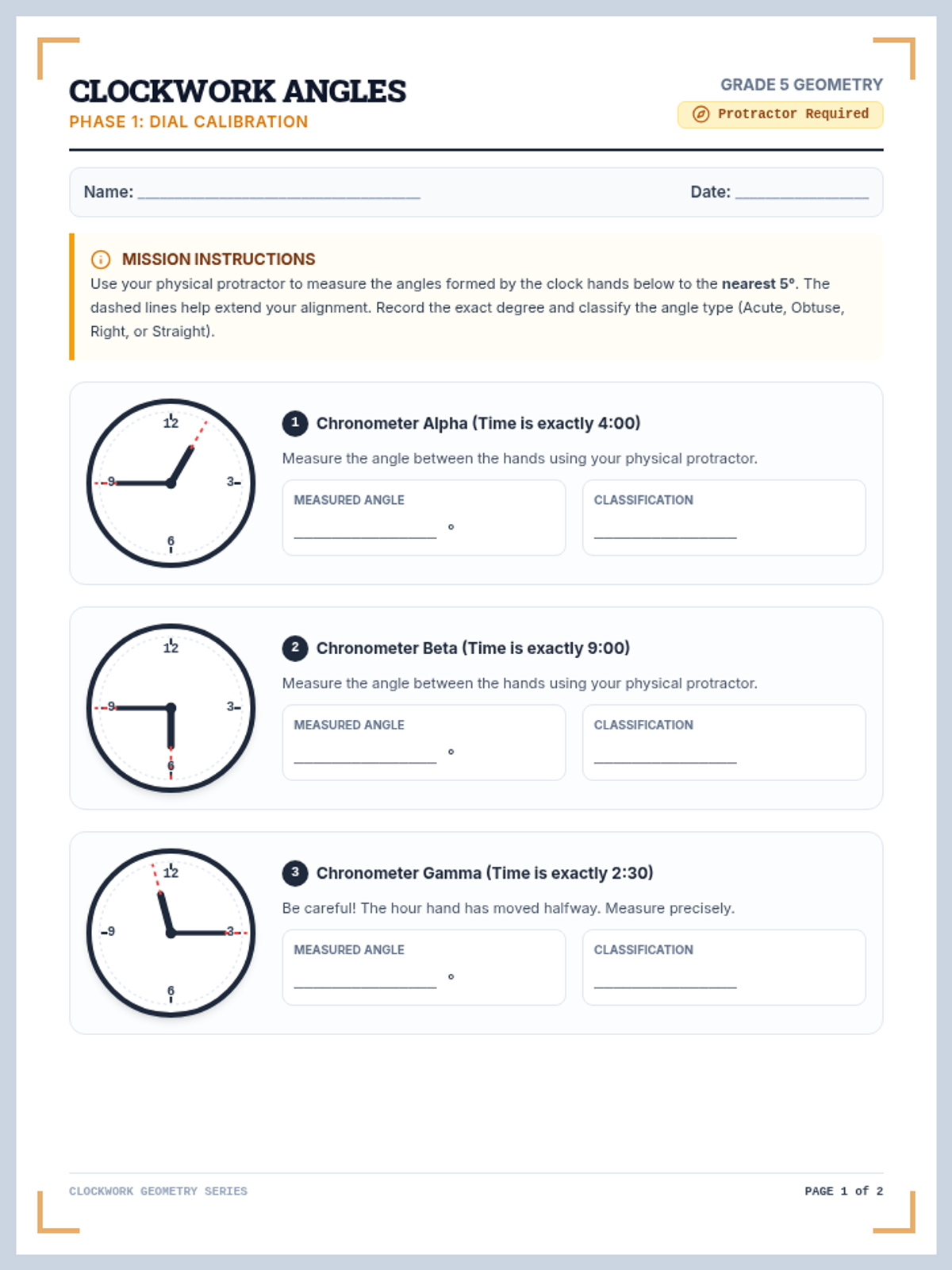
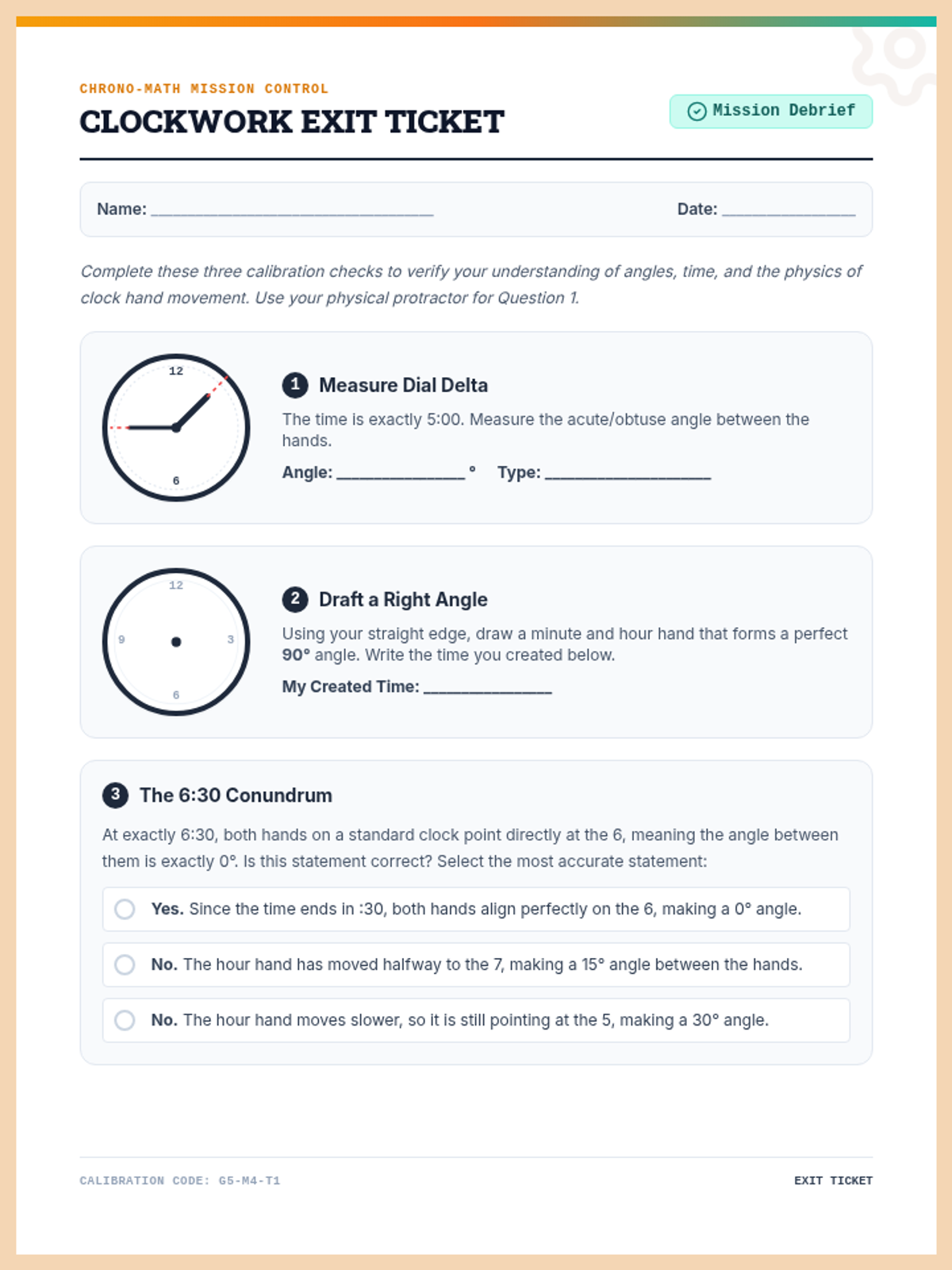
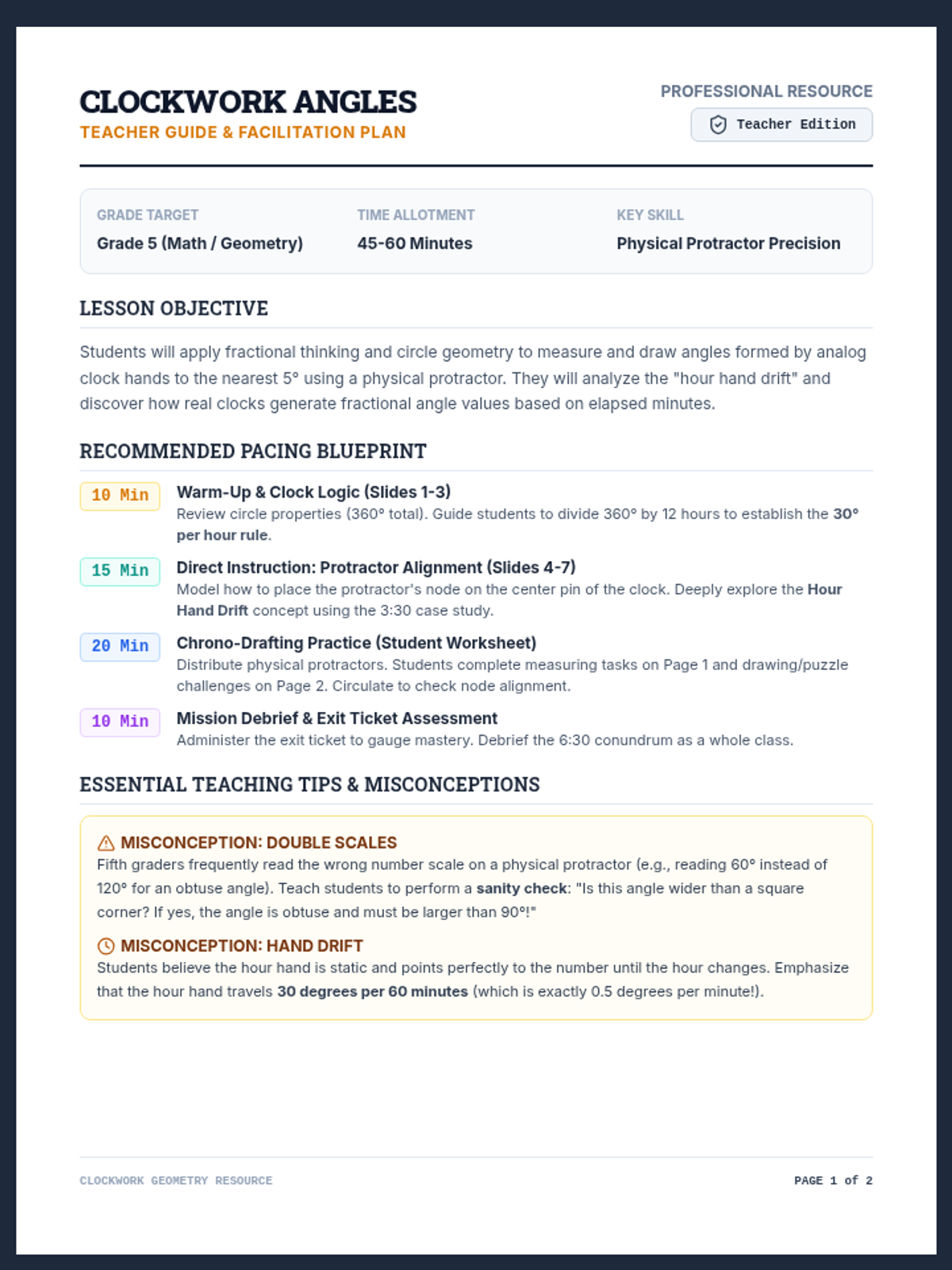
Students discover how the hands of an analog clock form angles, learn to measure these angles to the nearest 5° using a physical protractor, and investigate how time increments correspond to fractional angle degrees.
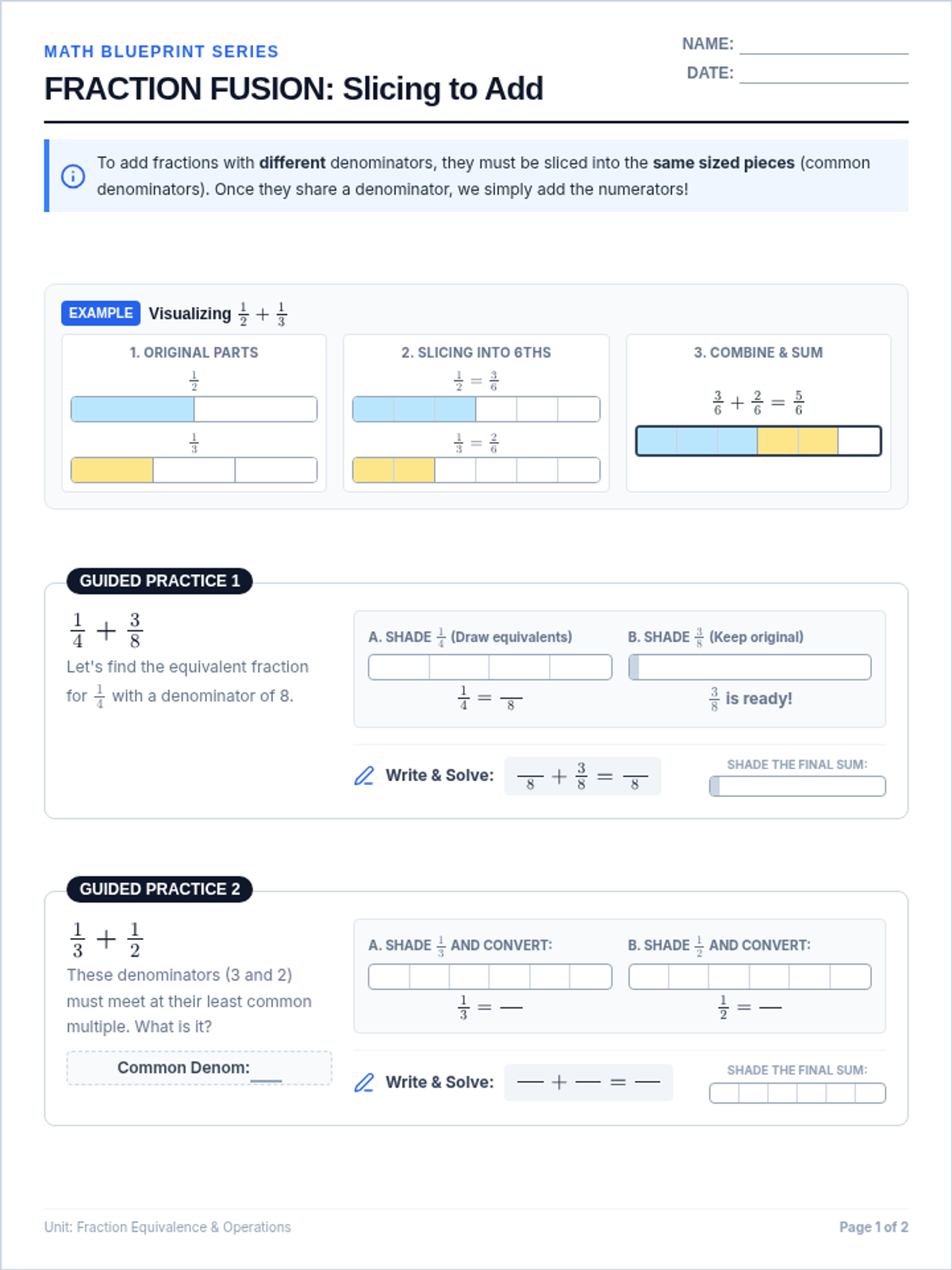
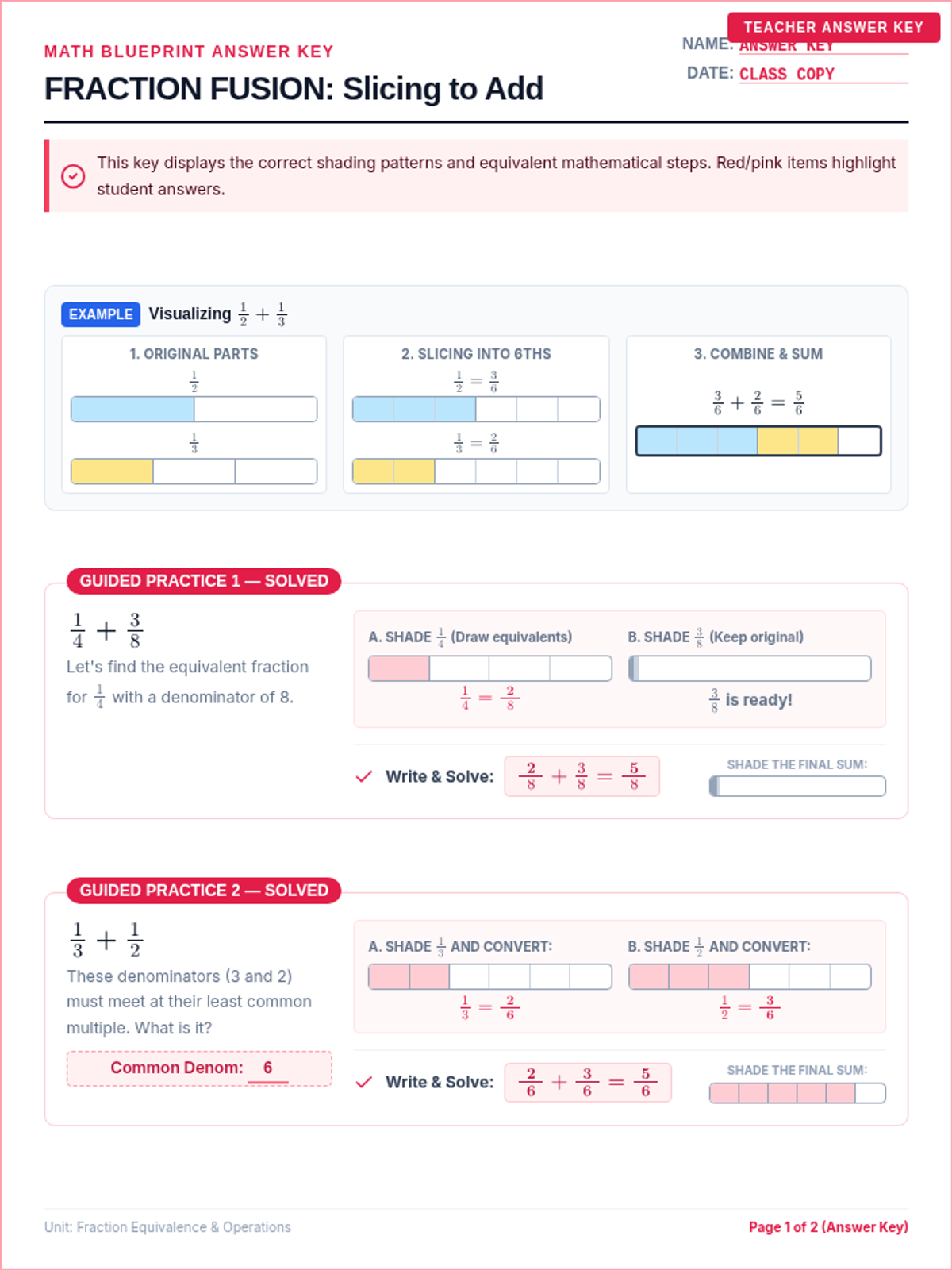
A comprehensive guided lesson on adding and subtracting fractions with unlike denominators, emphasizing physical and visual fraction bar models to build conceptual equivalence.
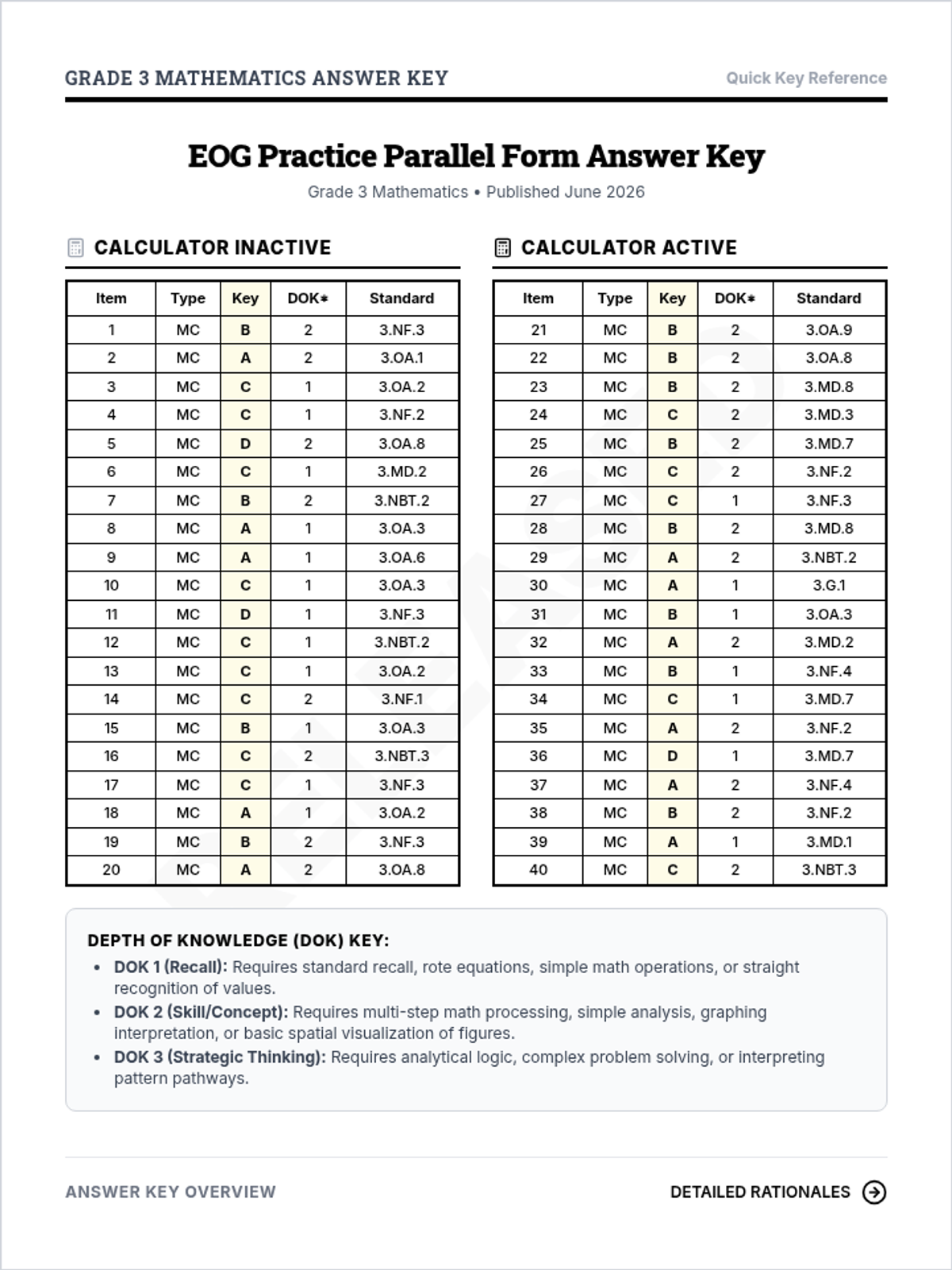
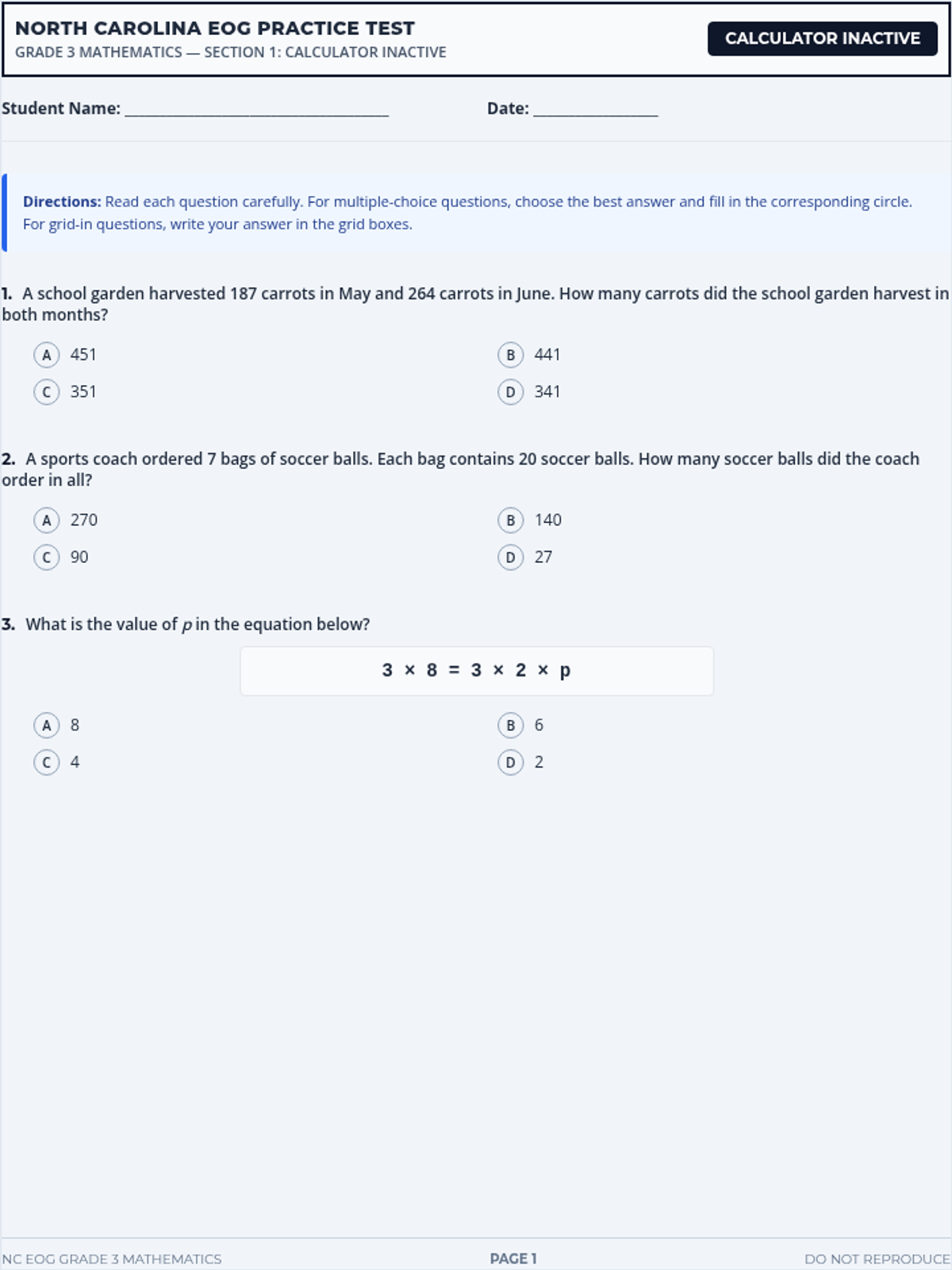
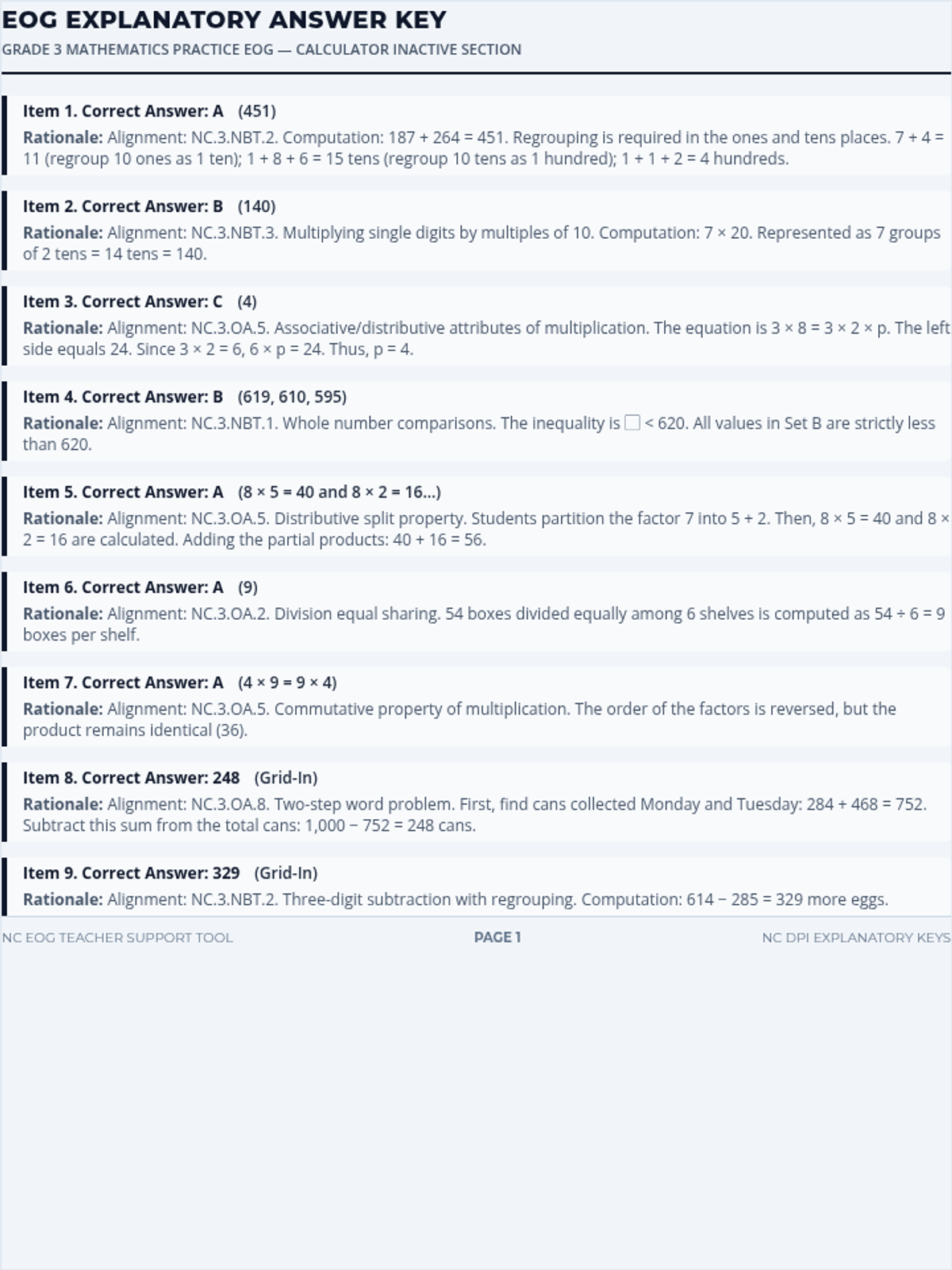
A comprehensive Grade 3 End-of-Grade practice test package featuring a 40-question parallel booklet and a detailed teacher answer key with standards alignment.
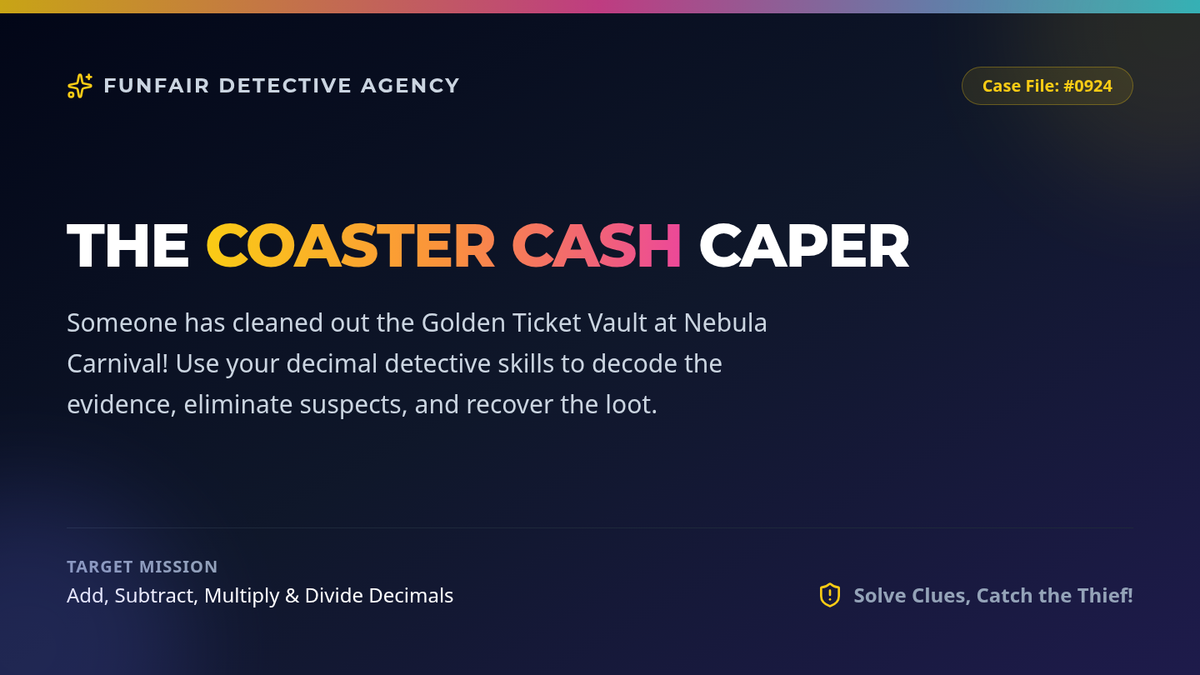
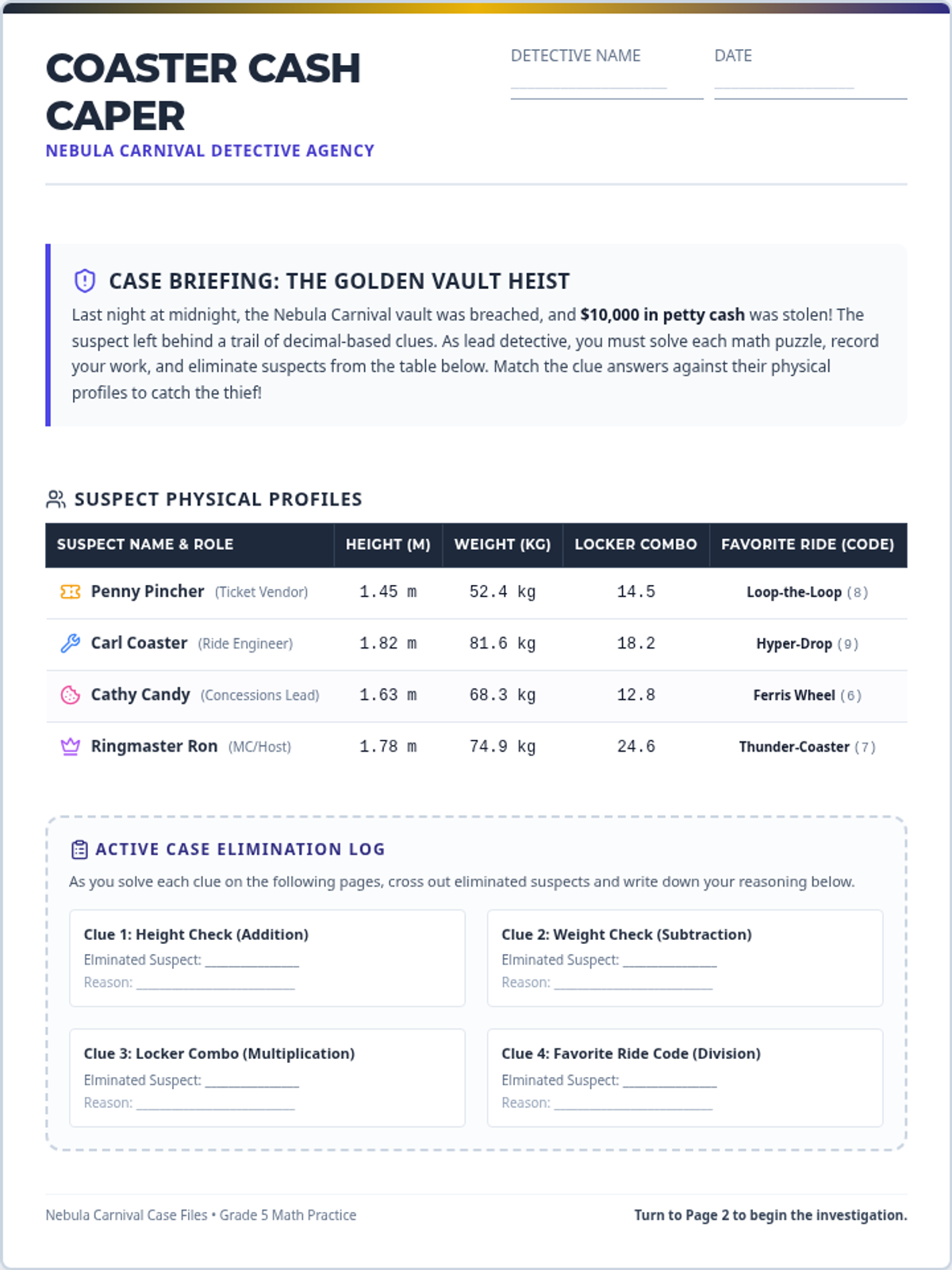
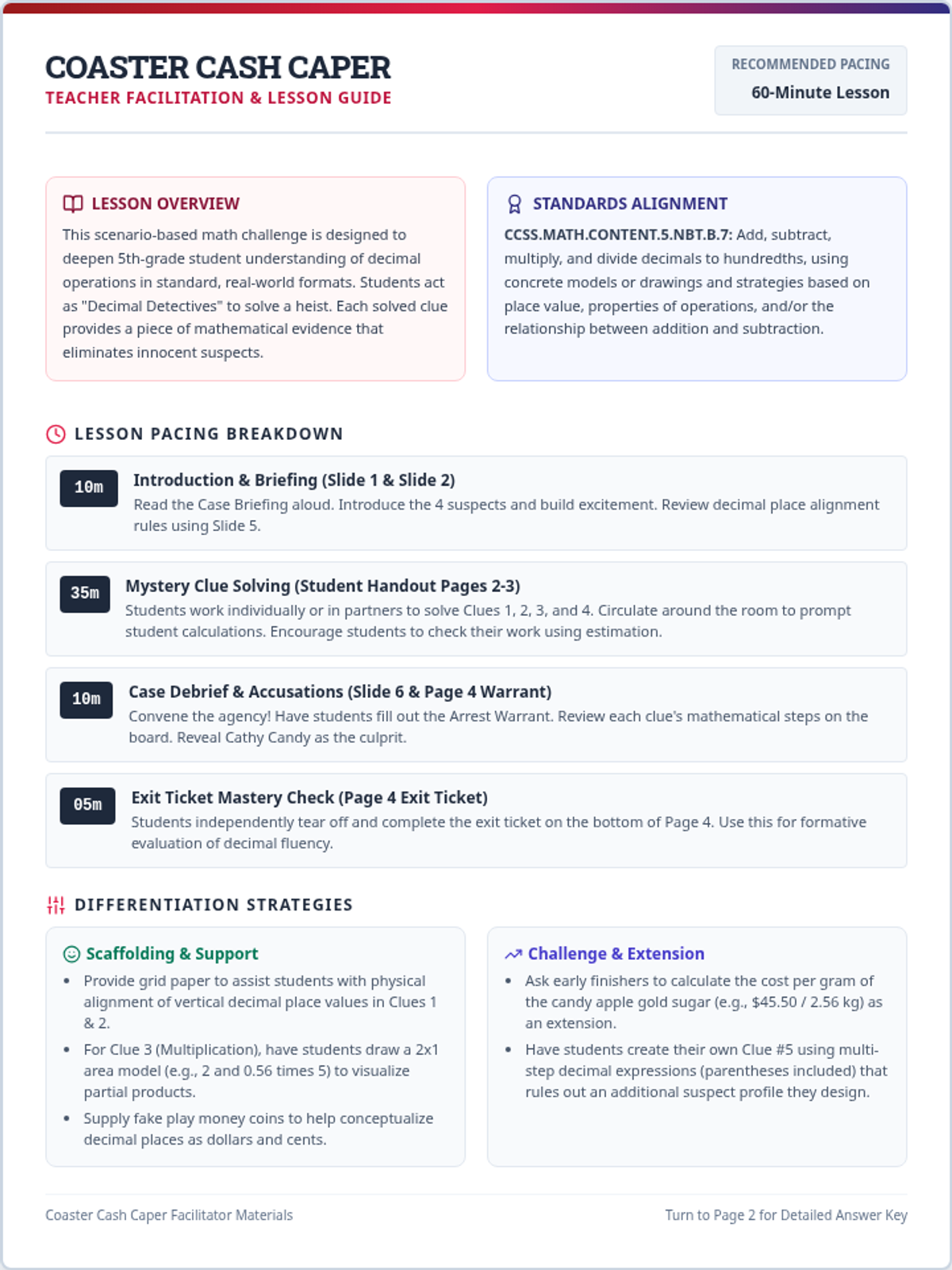
An engaging decimal operations mystery adventure where 5th graders apply addition, subtraction, multiplication, and division of decimals to solve a real-world carnival heist. Students act as detectives, cracking clues involving menu pricing, measurement conversions, and prize sharing.
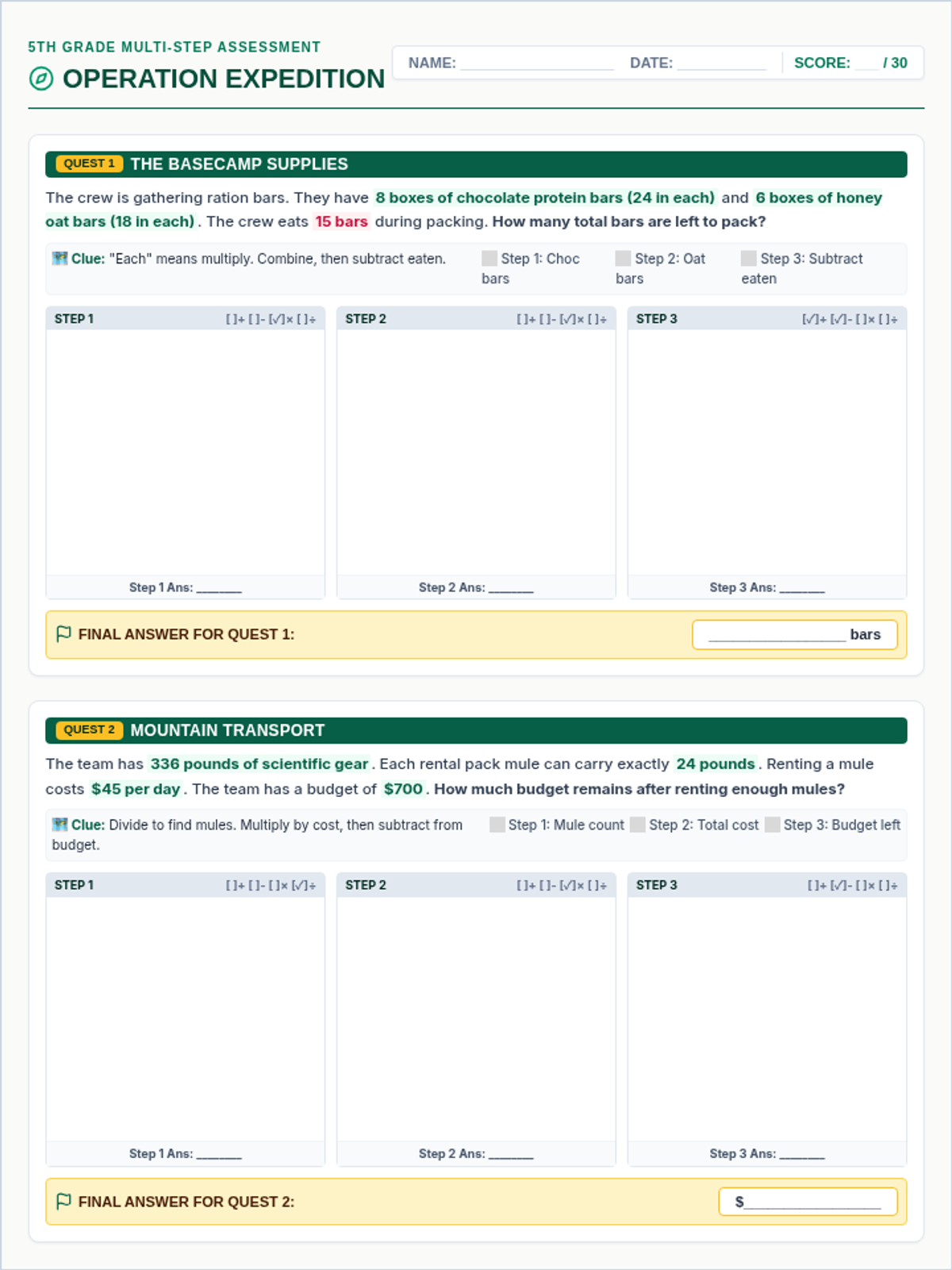
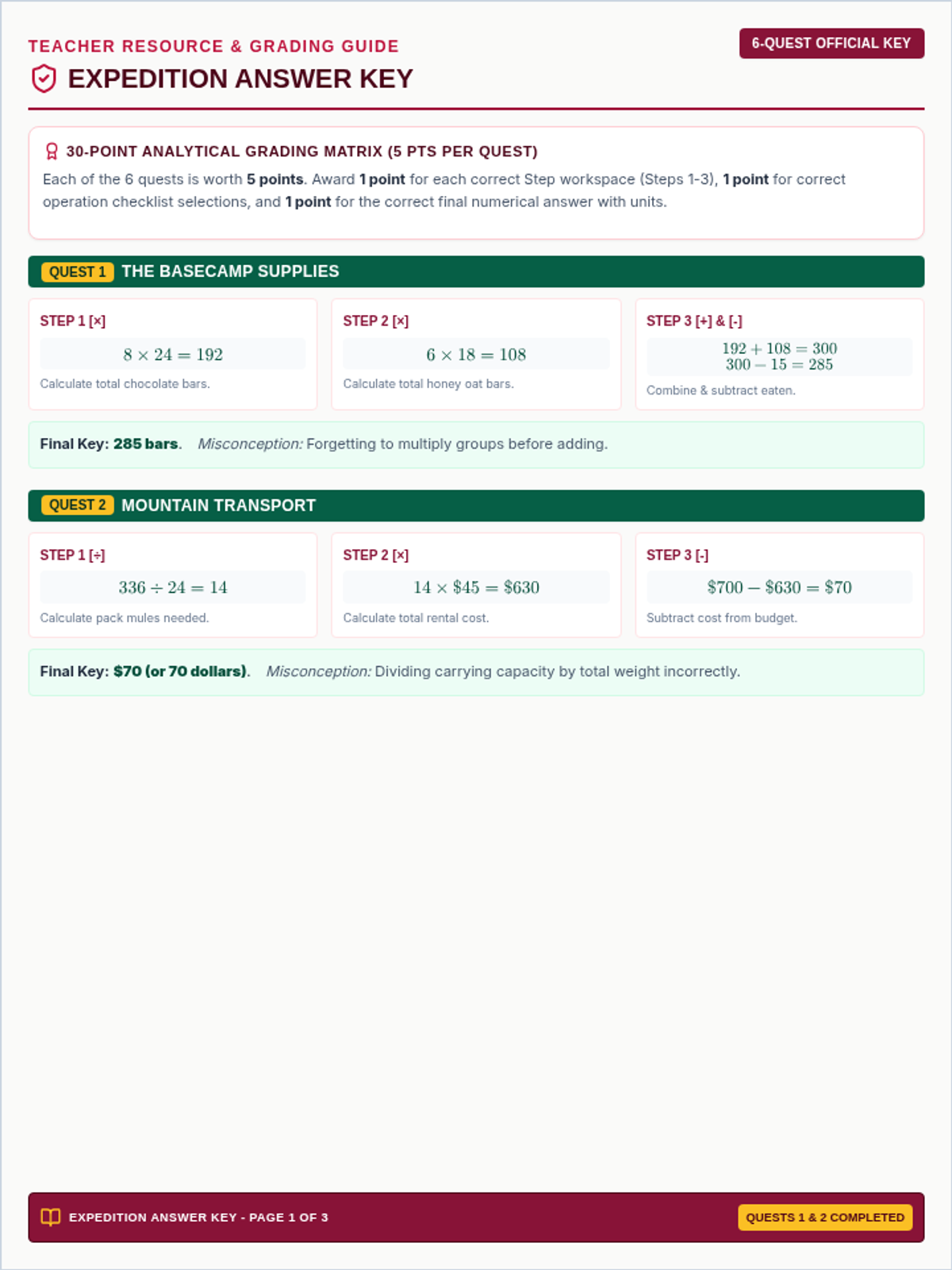
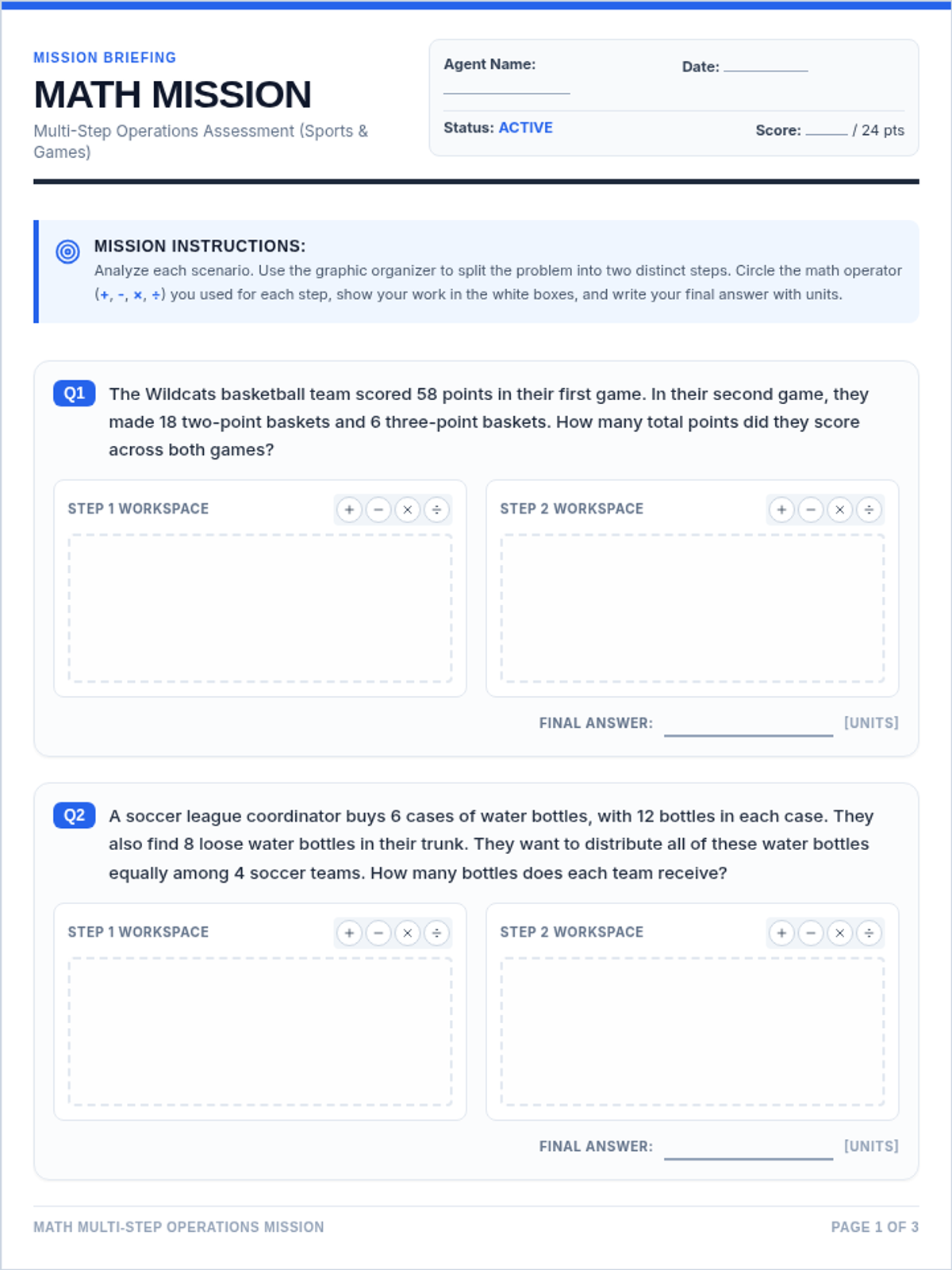
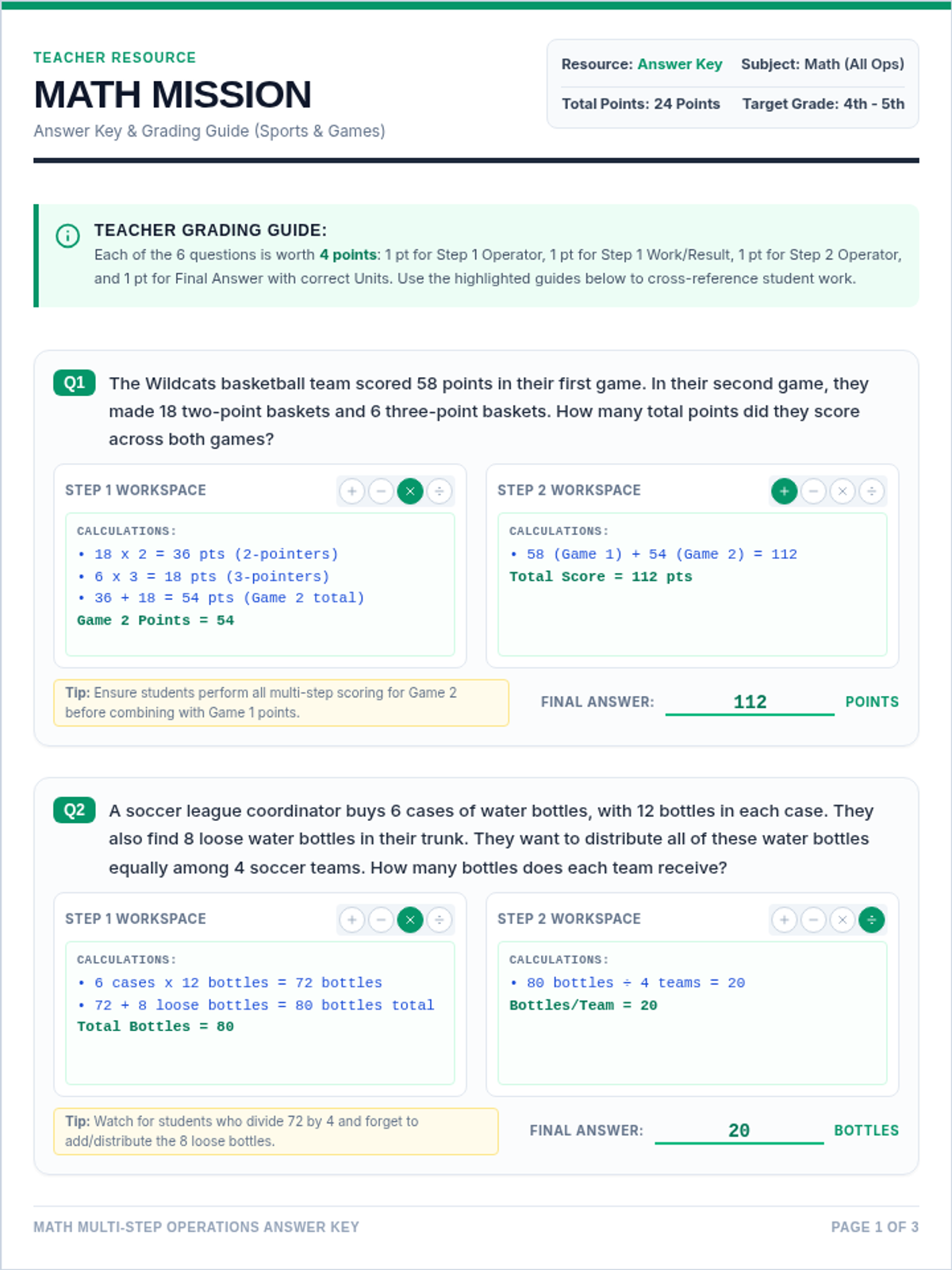
A math assessment package for 5th-grade multi-step word problems featuring built-in visual graphic organizers, operation checklists, and keyword guides. Includes a student printable test and a comprehensive teacher answer key with step-by-step rubrics.
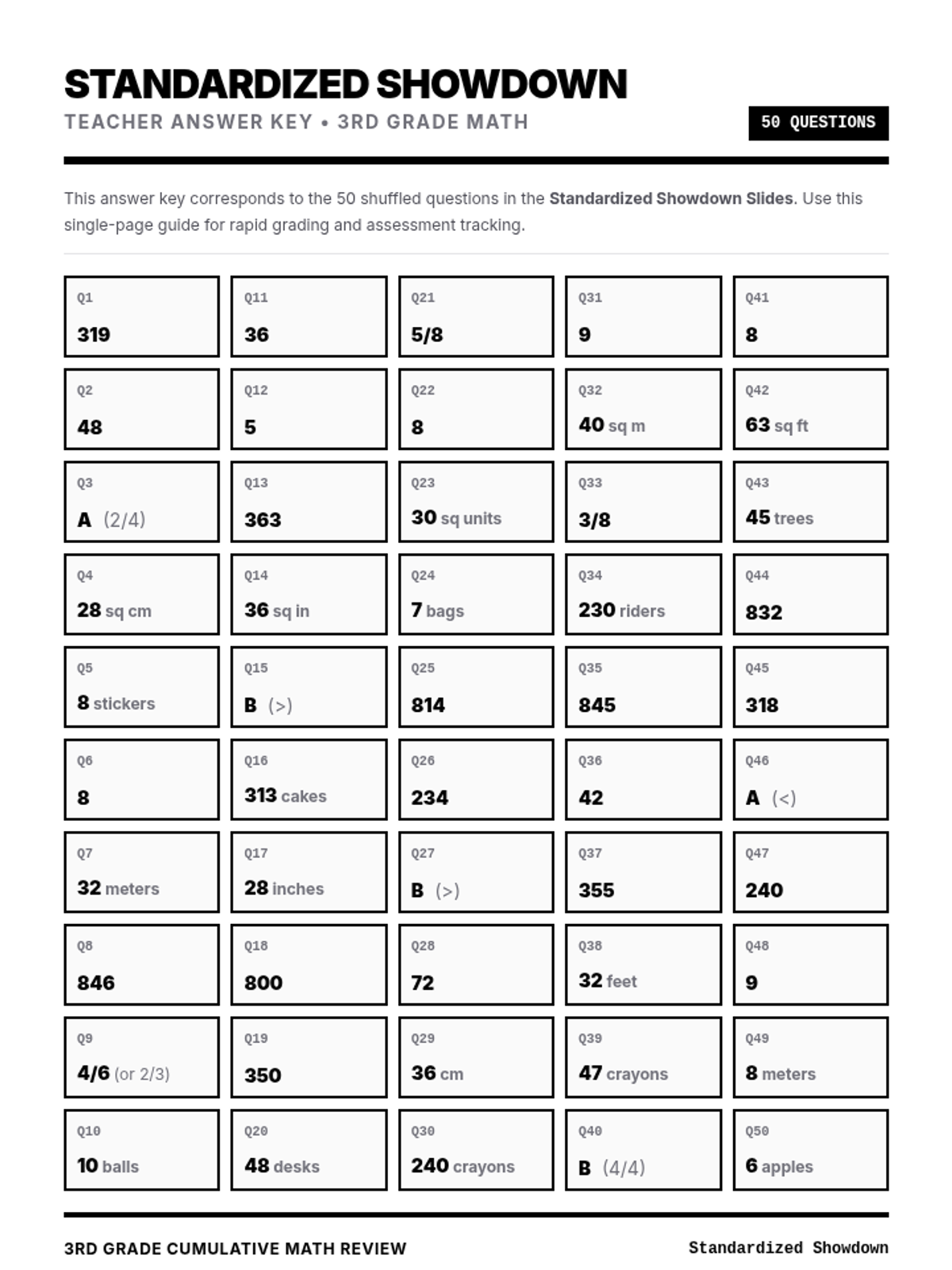
A comprehensive 3rd-grade math cumulative review lesson, featuring a distraction-free, high-contrast review slide deck of 50 randomized questions.
A comprehensive math review lesson designed as an interactive slideshow quest. Covers multiplication, division, fractions, multi-digit addition/subtraction, word problems, measurement, area, and perimeter.
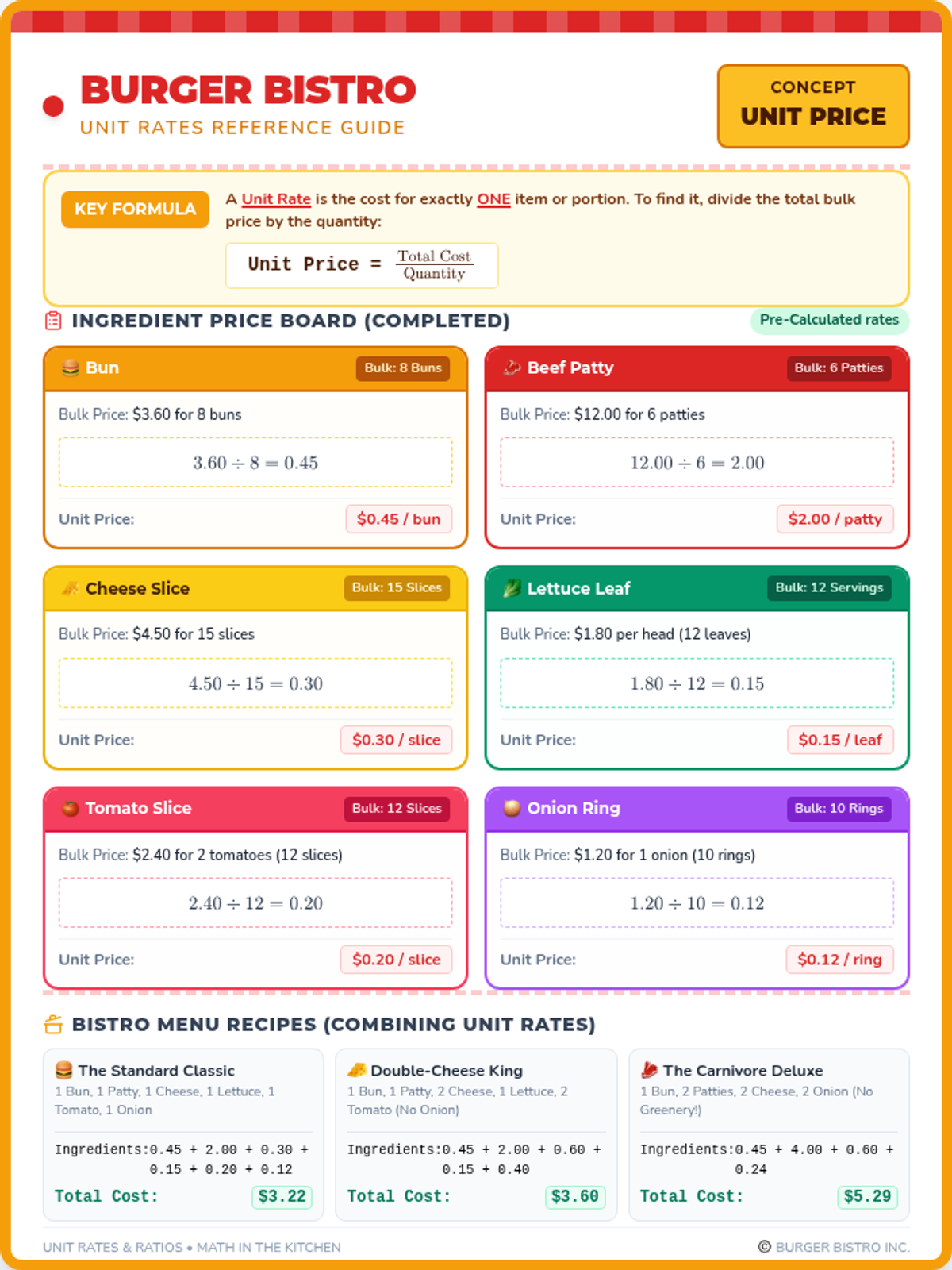
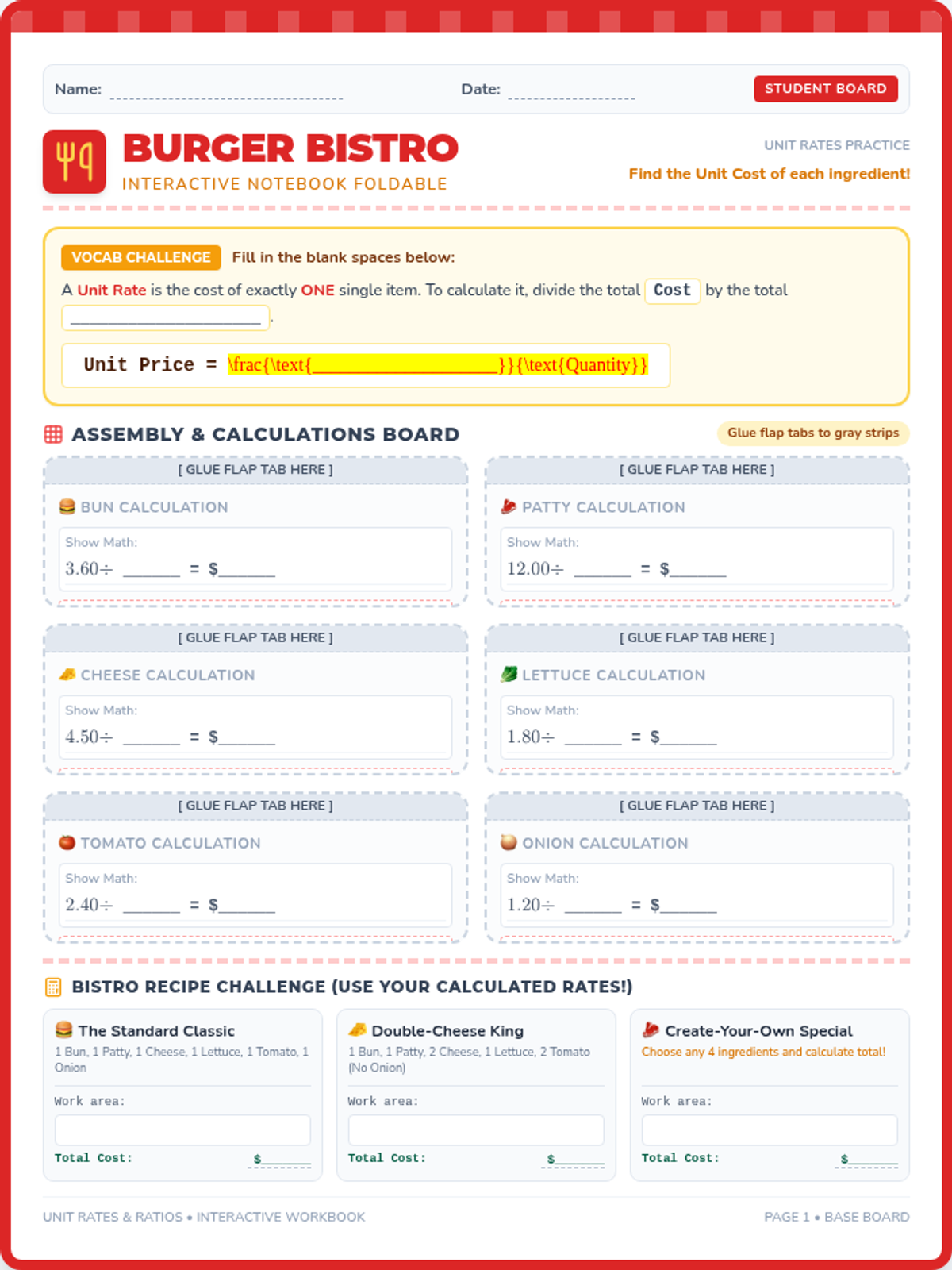
A fun, interactive diner-themed lesson where students learn to calculate unit prices from bulk quantities using burger ingredients. Students practice dividing money amounts by integers to find cost per slice, patty, or bun, and then apply these rates to calculate the total cost of building custom burgers.
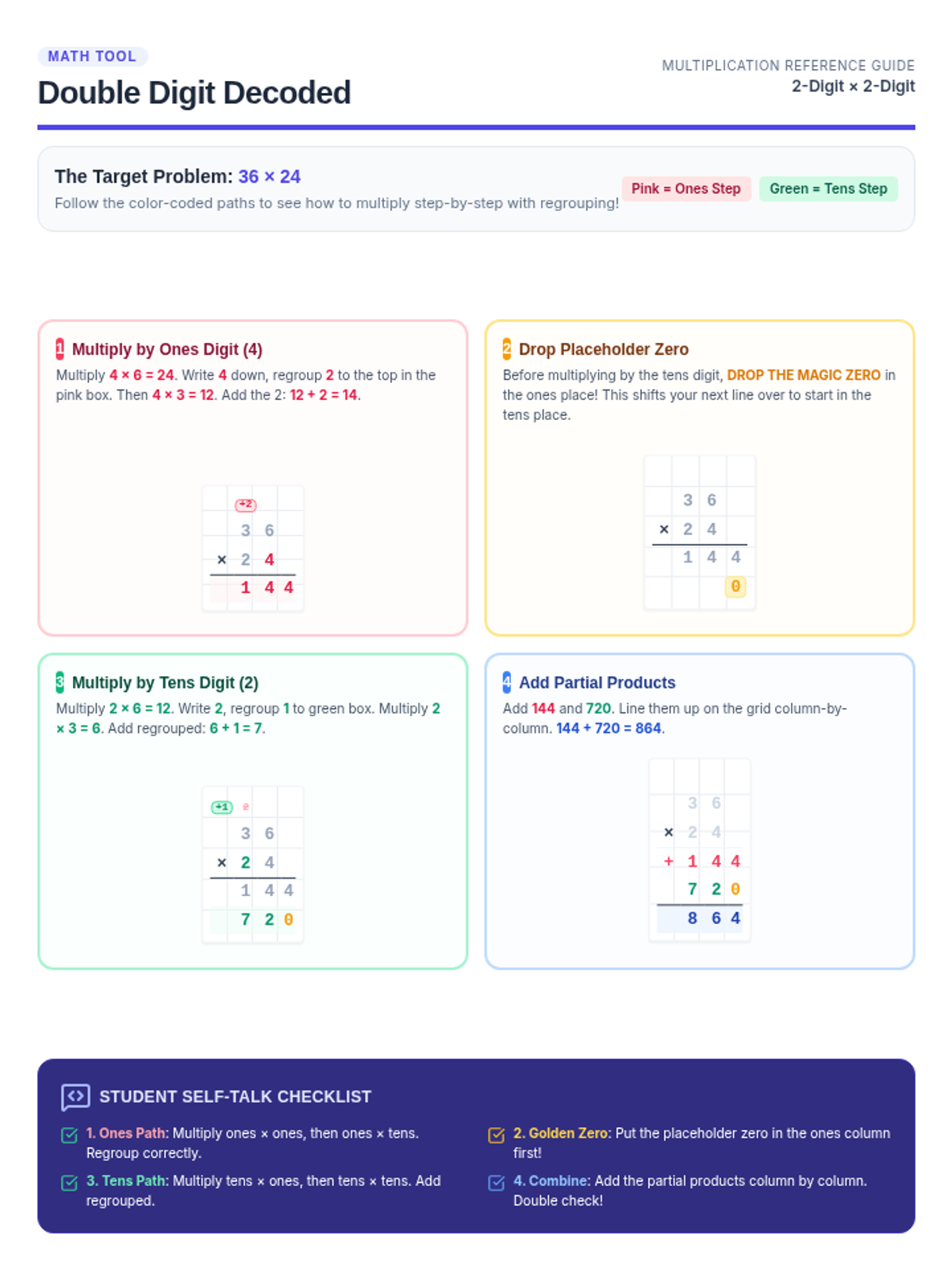
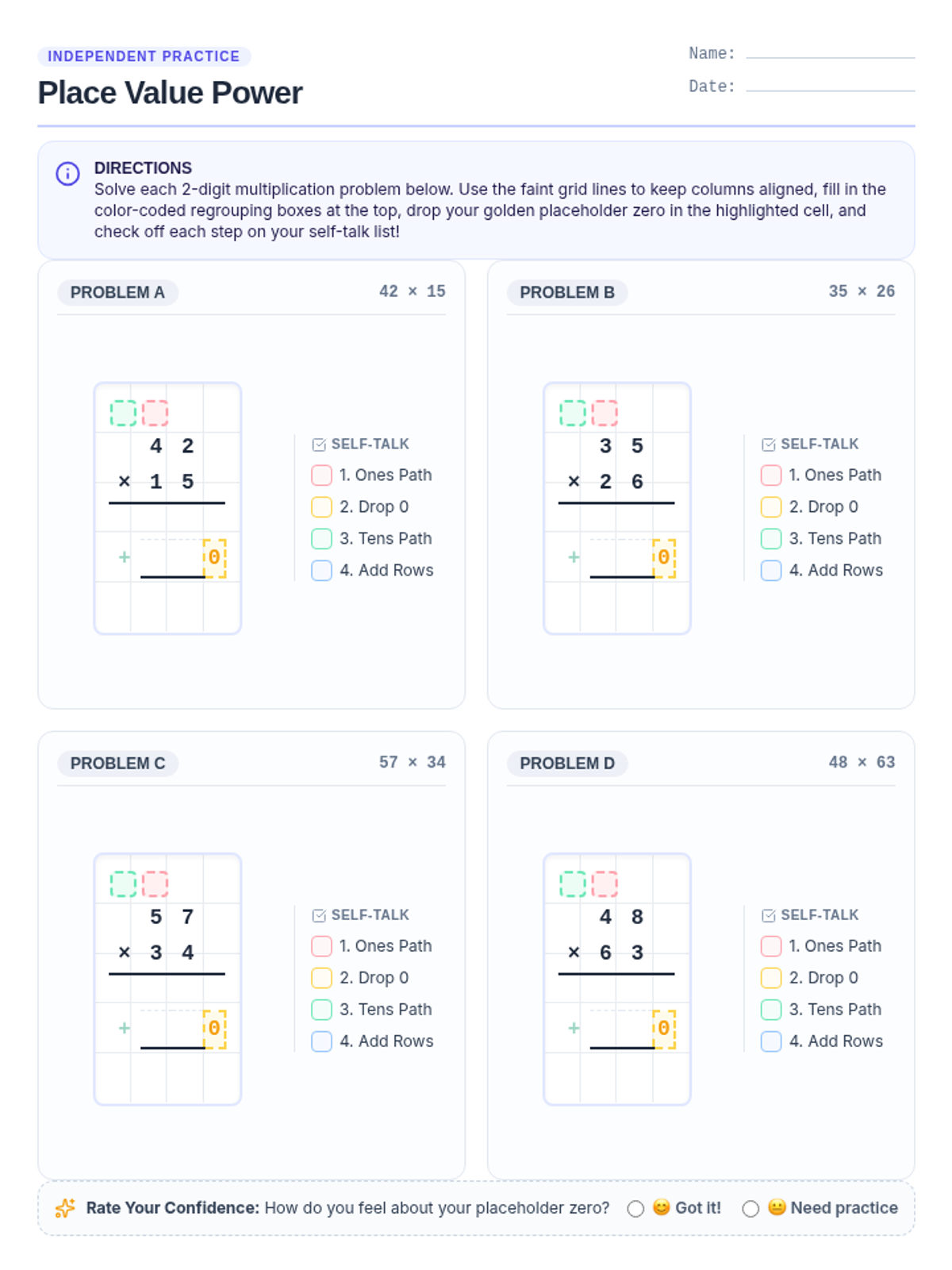
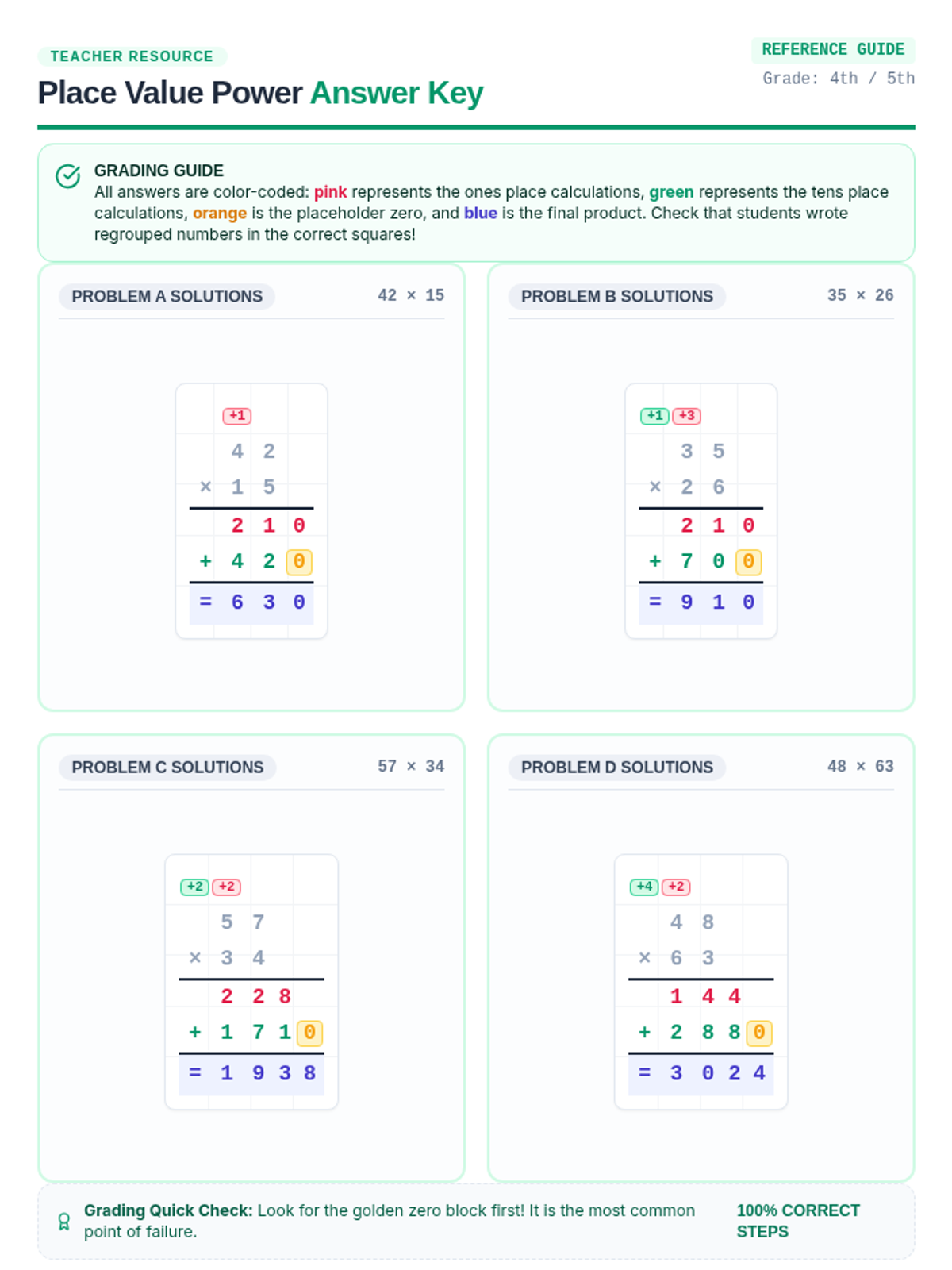
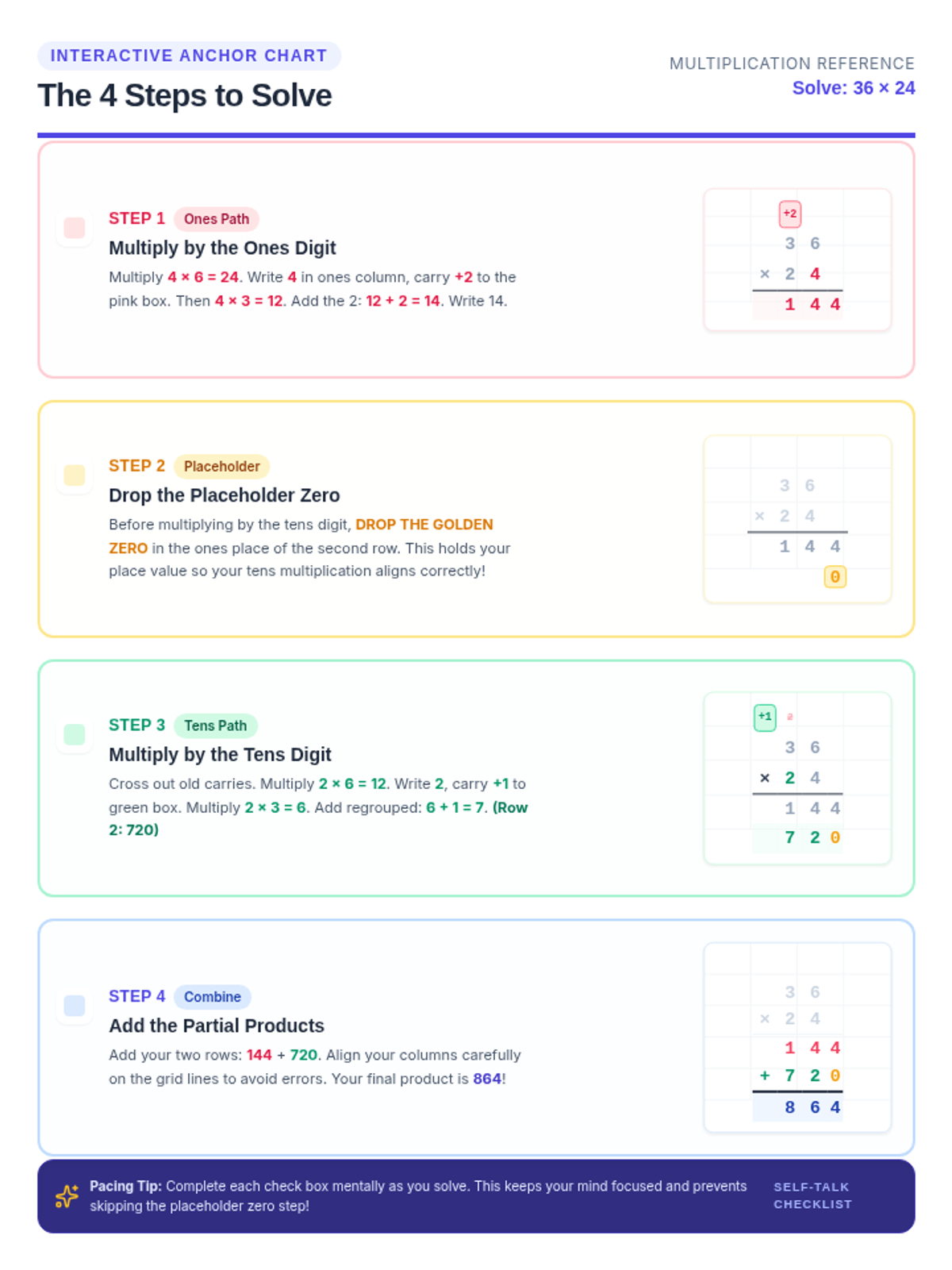
A targeted instructional lesson on 2-digit by 2-digit multiplication with regrouping. It uses consistent color-coding, grid alignment guides, regrouping boxes, and a self-talk checklist to scaffold student learning from guided presentation to independent practice.
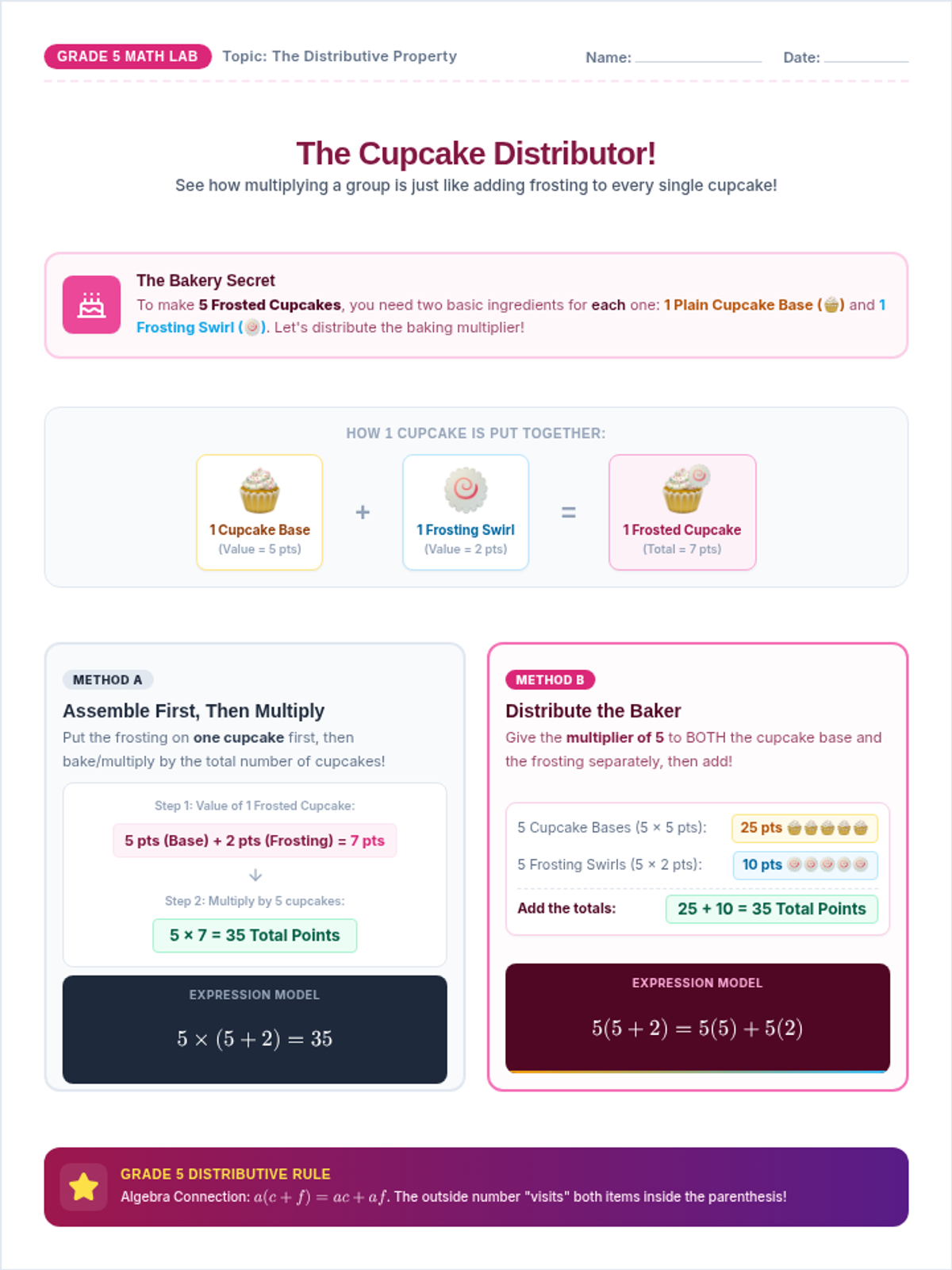
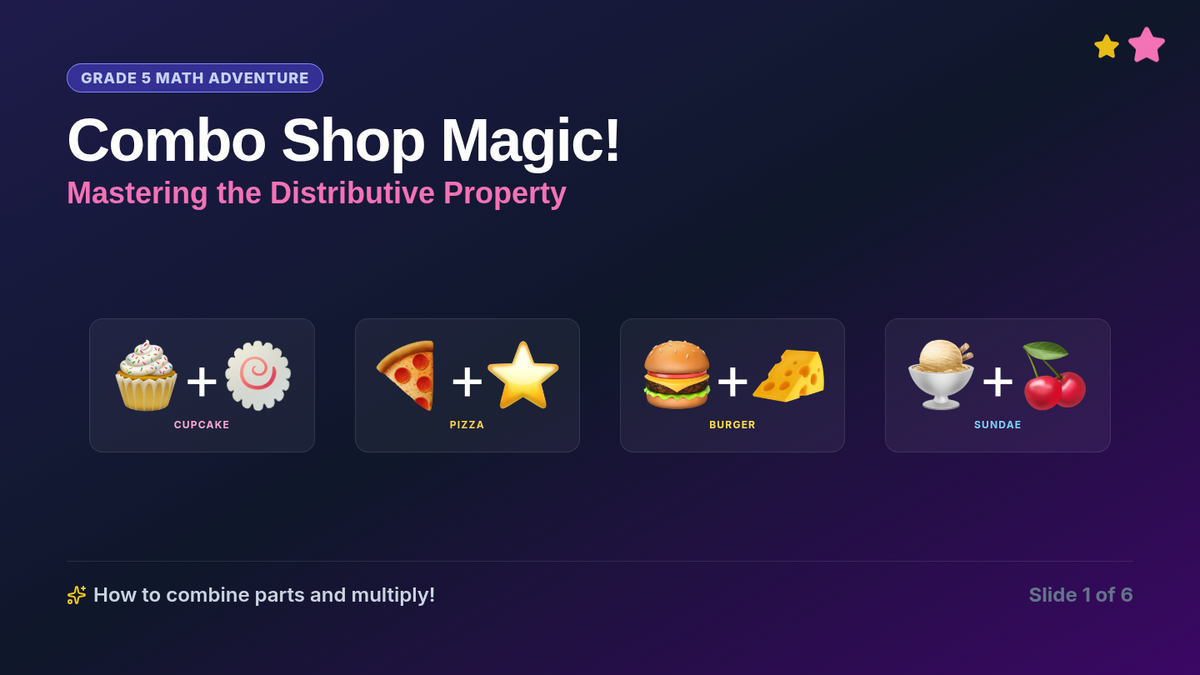
A fun, visual lesson introducing the distributive property using real-world party favors and snack boxes to help kids grasp algebraic concepts visually and practically.
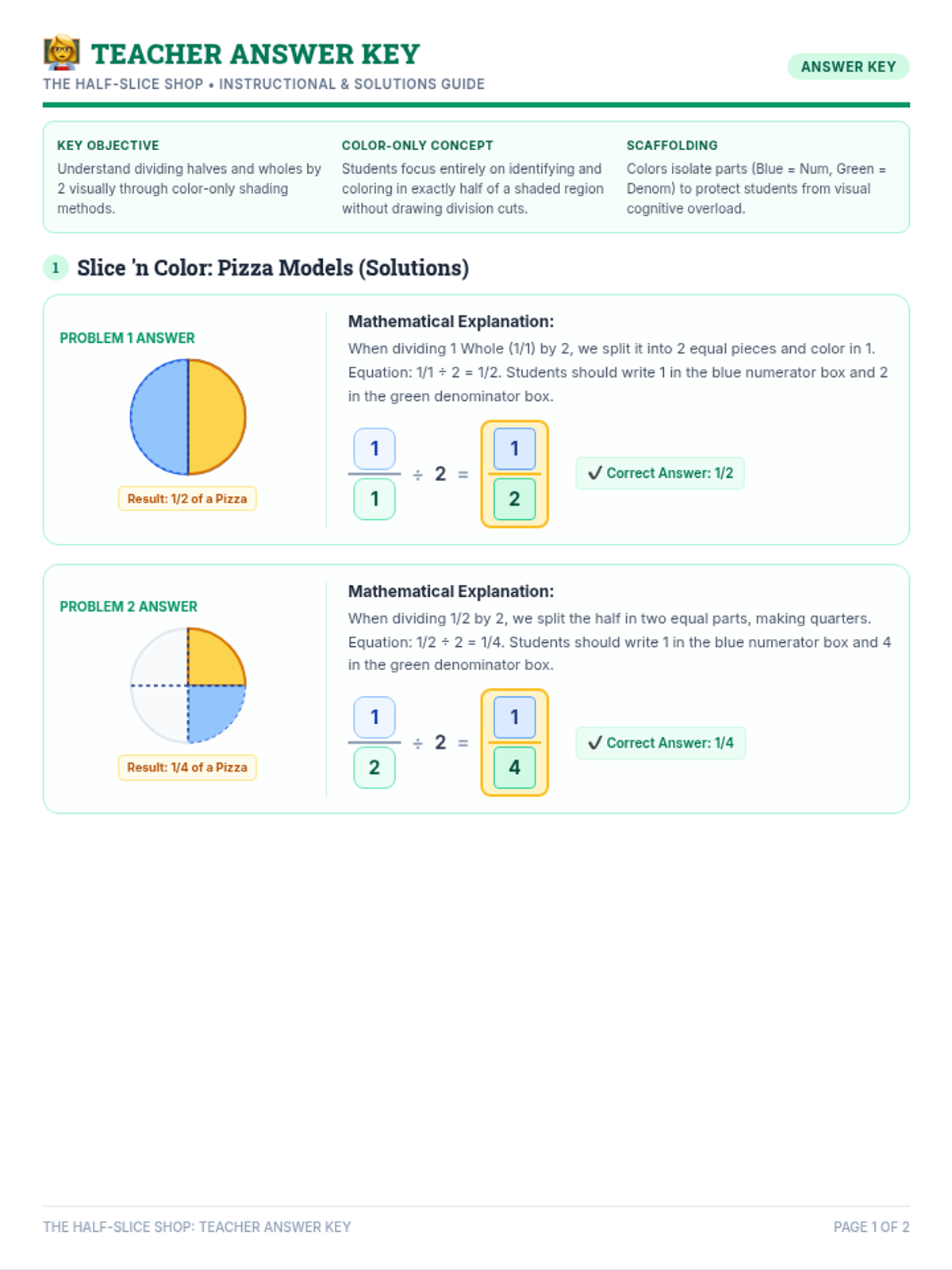
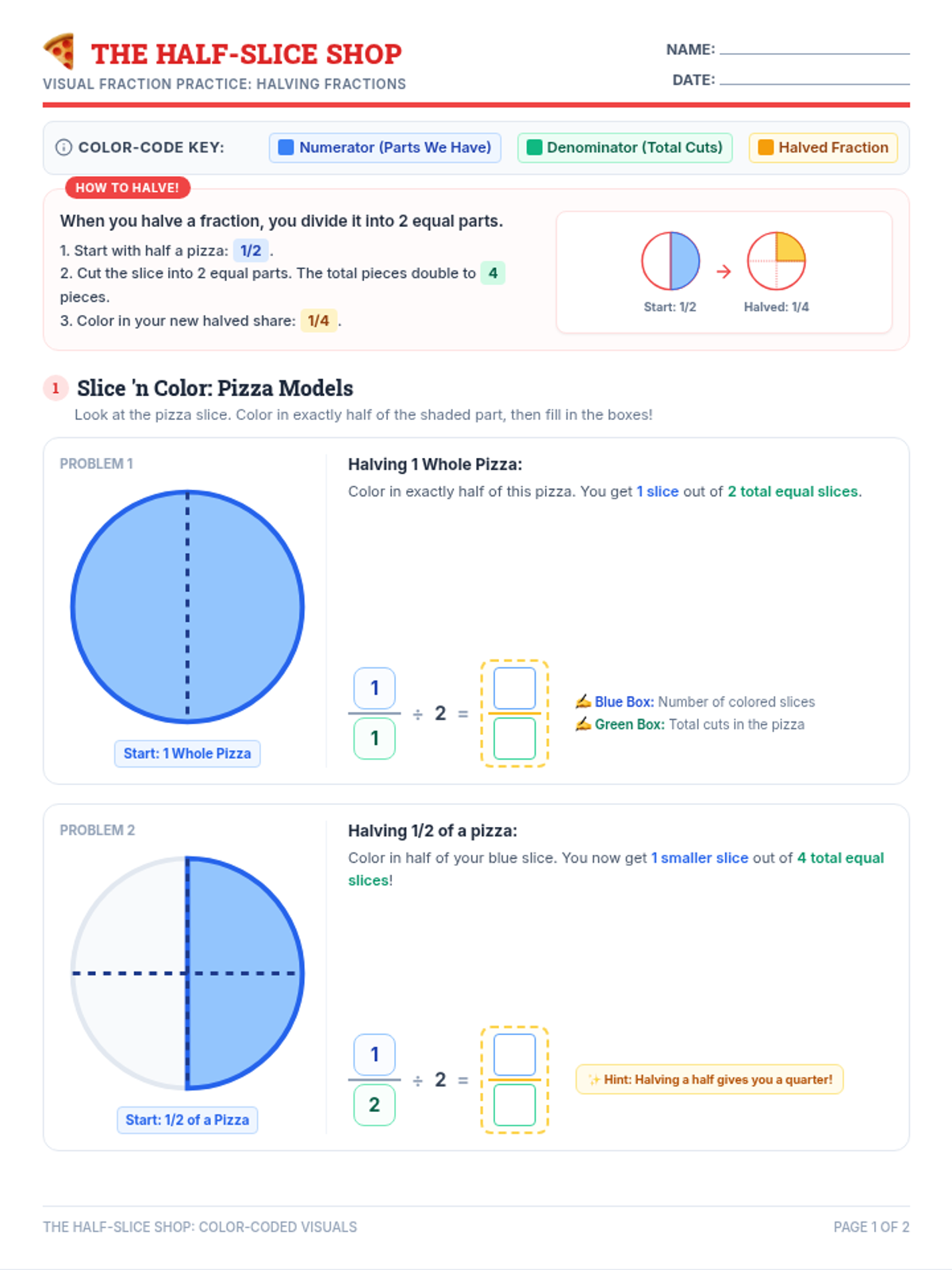
A lesson focused on halving fractions using visual pizza slice and tape models. Includes color-coded sections to scaffold students' understanding of dividing fractions in half.
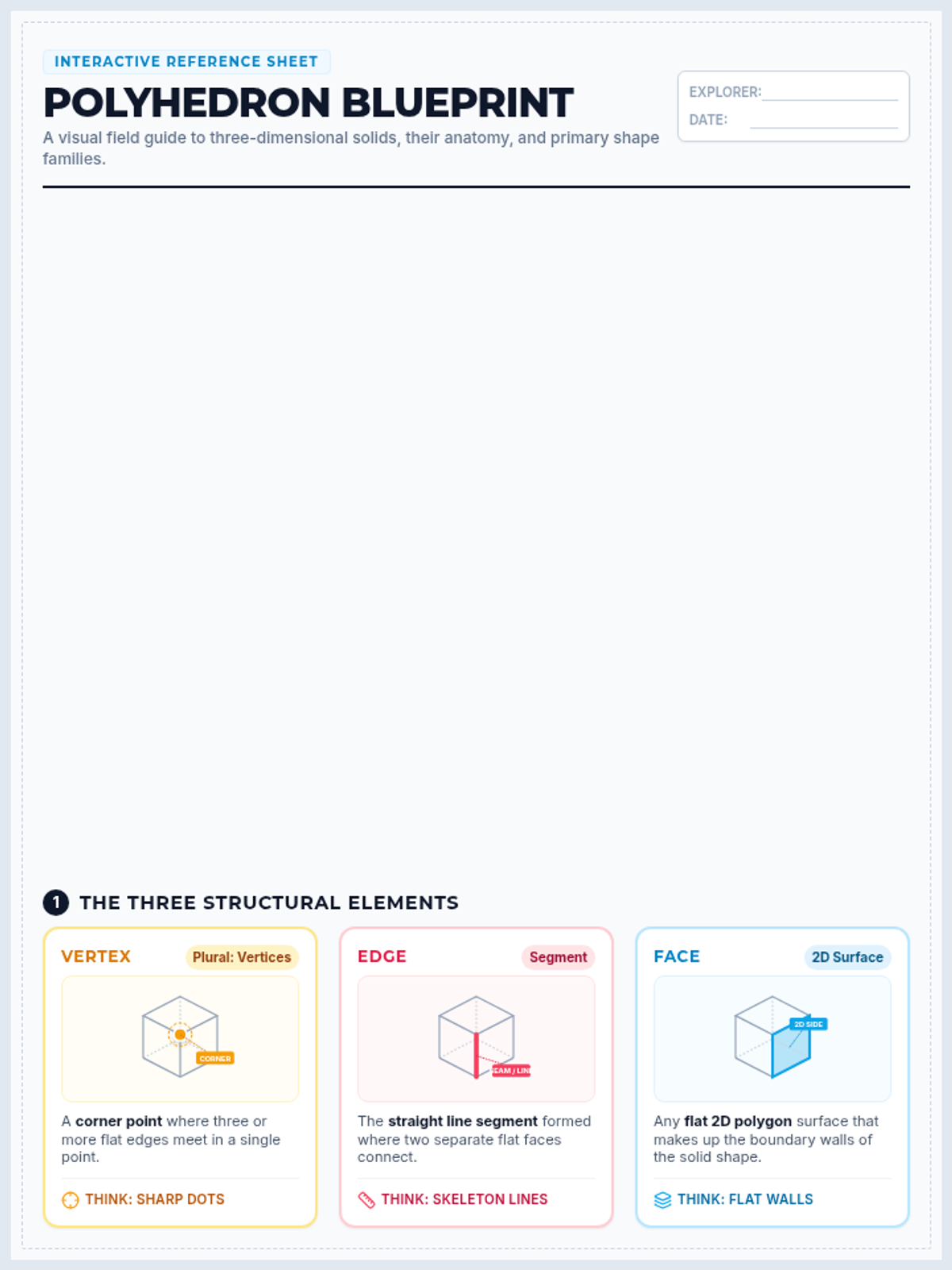
An introductory unit on three-dimensional geometry, focusing on polyhedrons, their components, and shape classification.
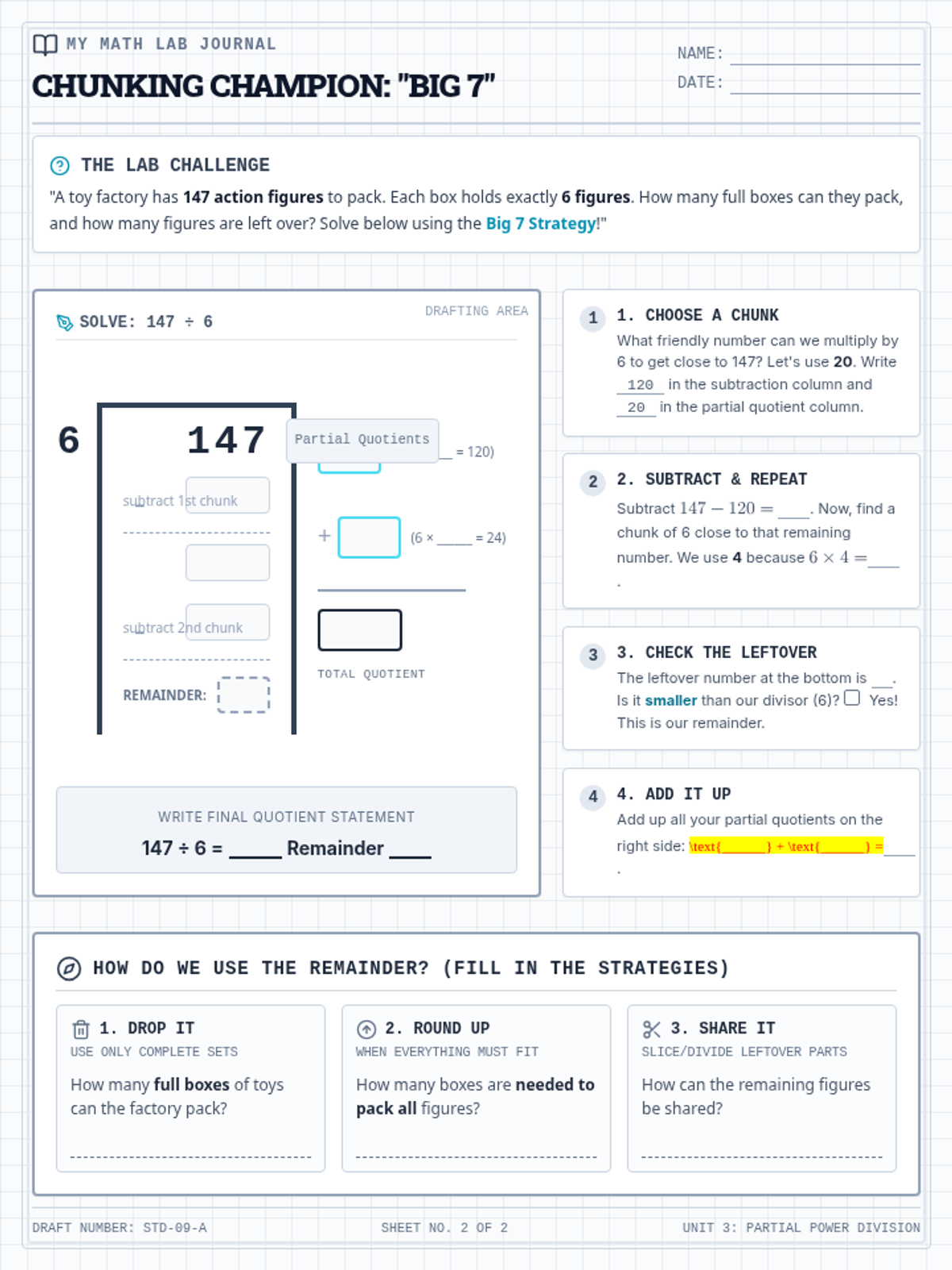
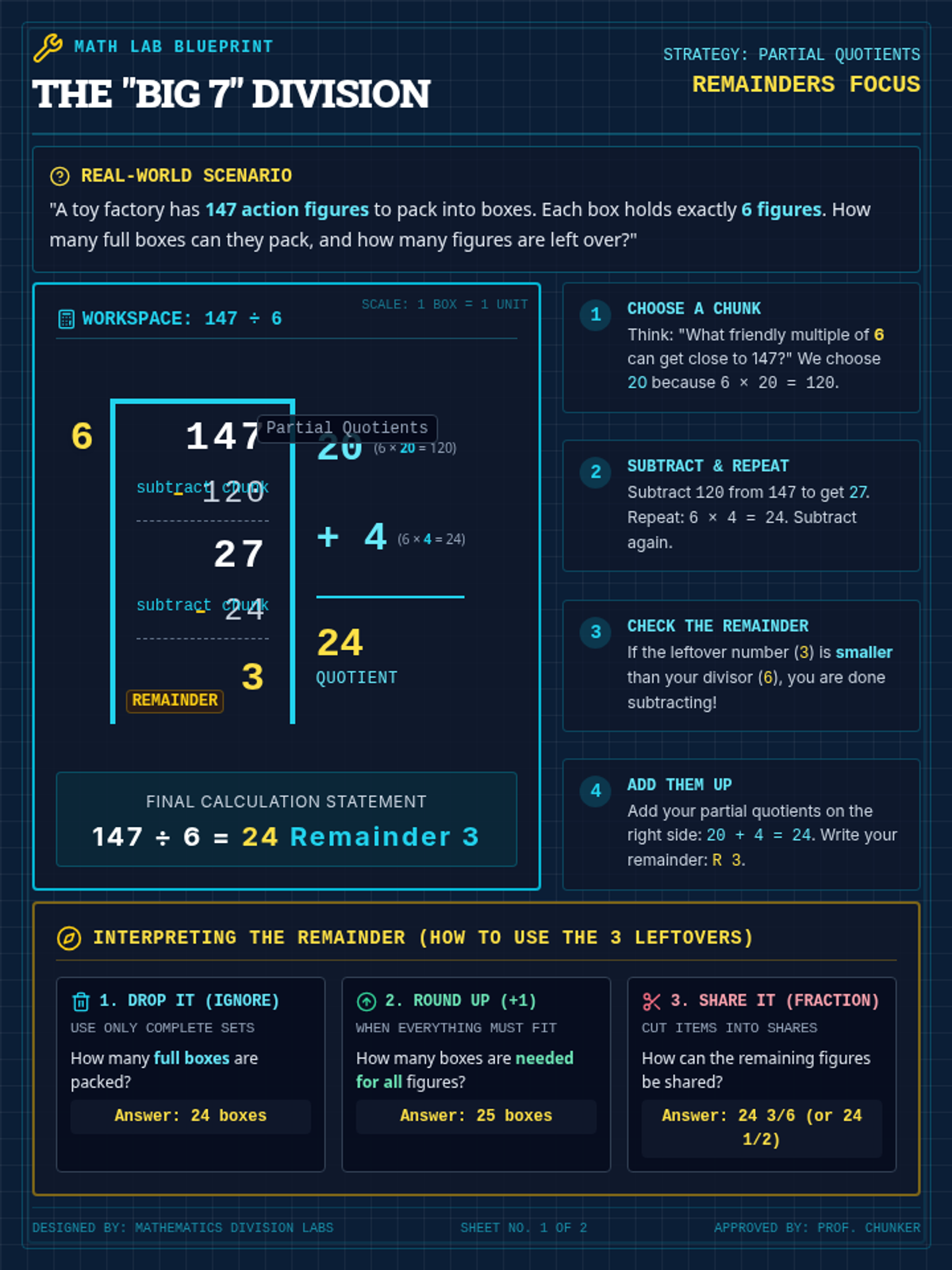
A lessons focused on mastering the 'Big 7' partial quotients division strategy. It highlights how to divide multi-digit numbers by chunking, keeping track of partial quotients, and understanding and interpreting remainders with real-world context.
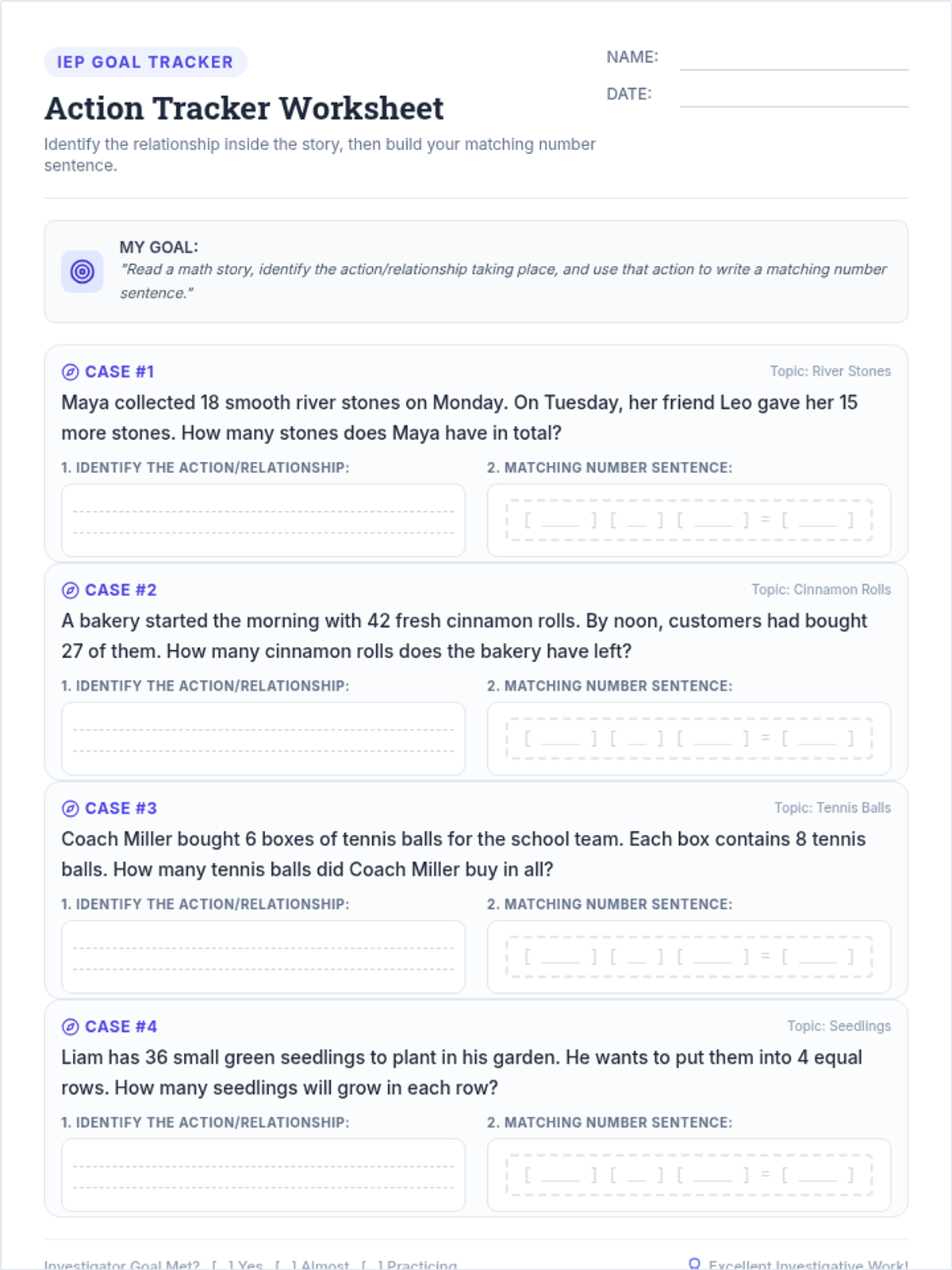
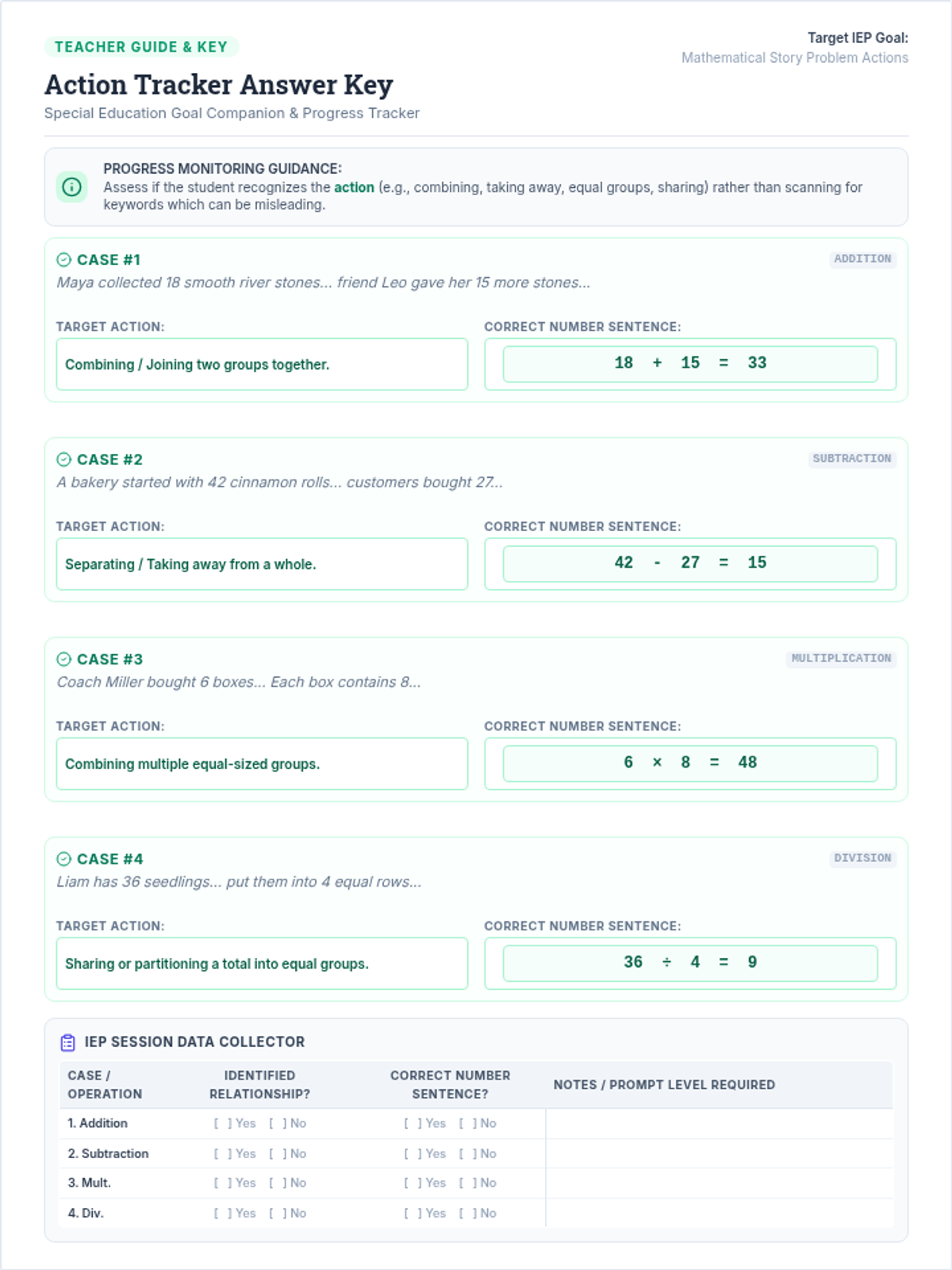
A targeted lesson designed to help students analyze word problems, identify the underlying action or relationship (joining, separating, grouping, or sharing), and translate them into correct number sentences across all four basic operations.
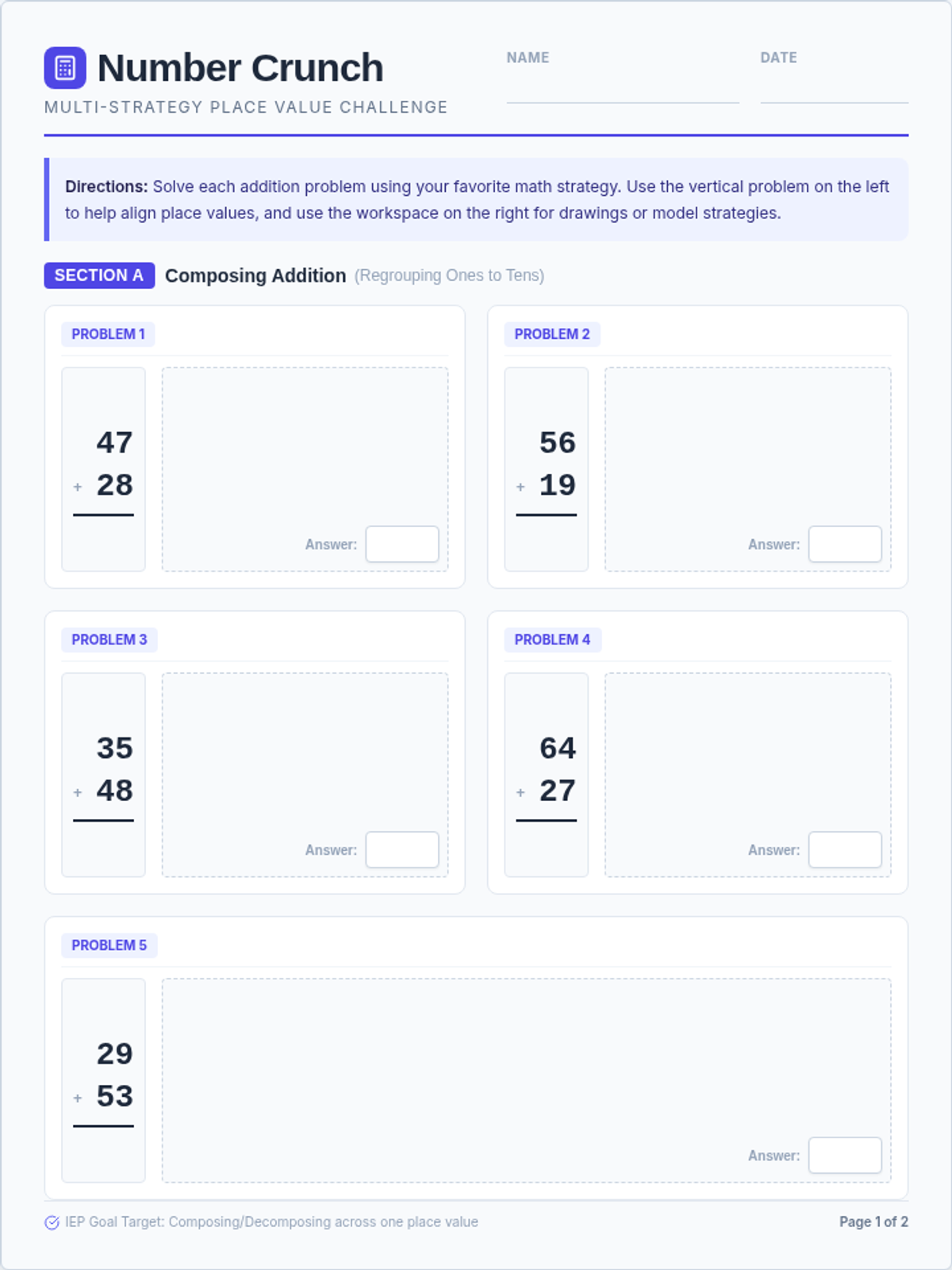
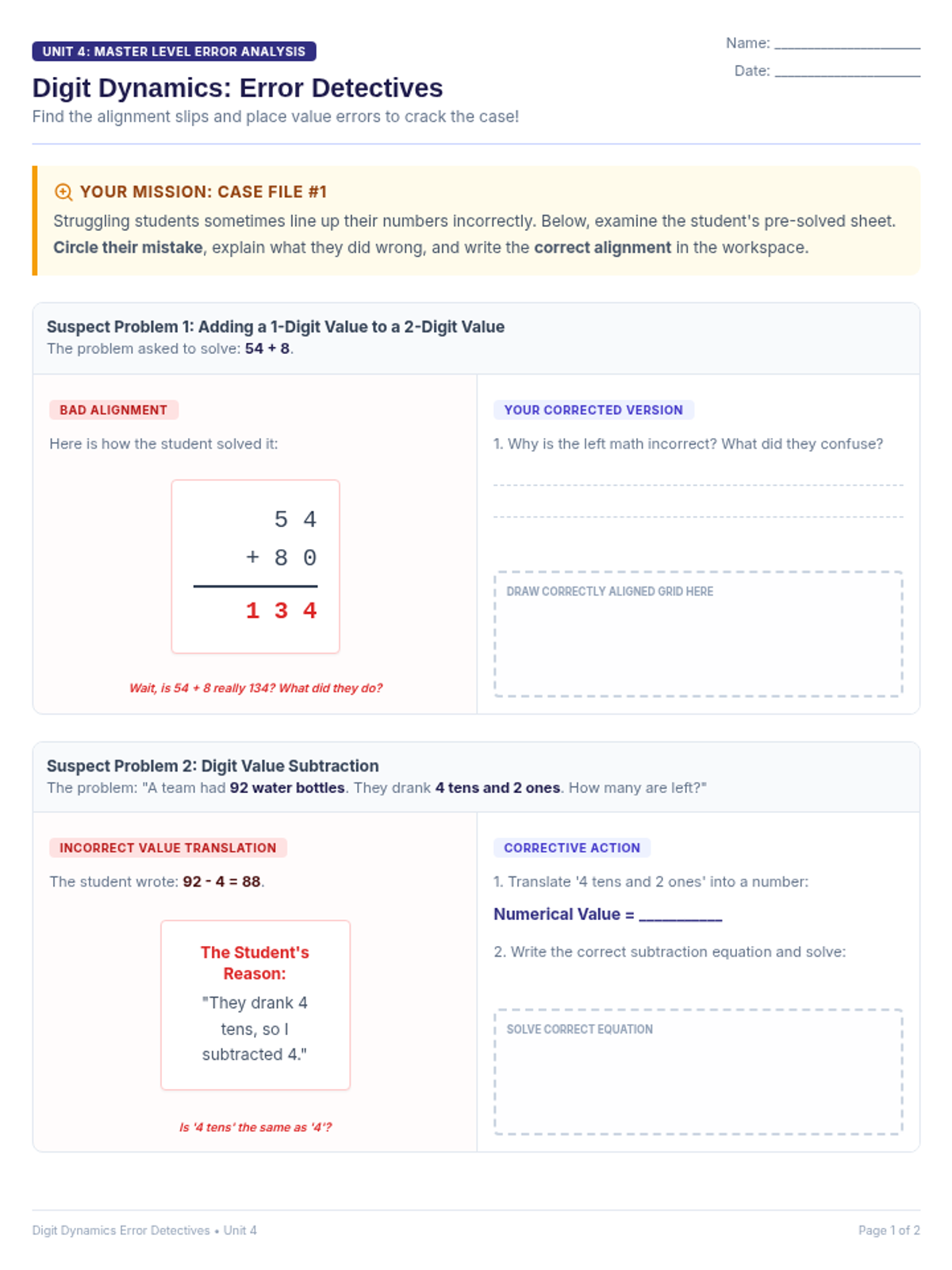
A targeted lesson focused on building student confidence and accuracy in composing and decomposing numbers across a single place value in addition and subtraction, utilizing their preferred problem-solving strategy.
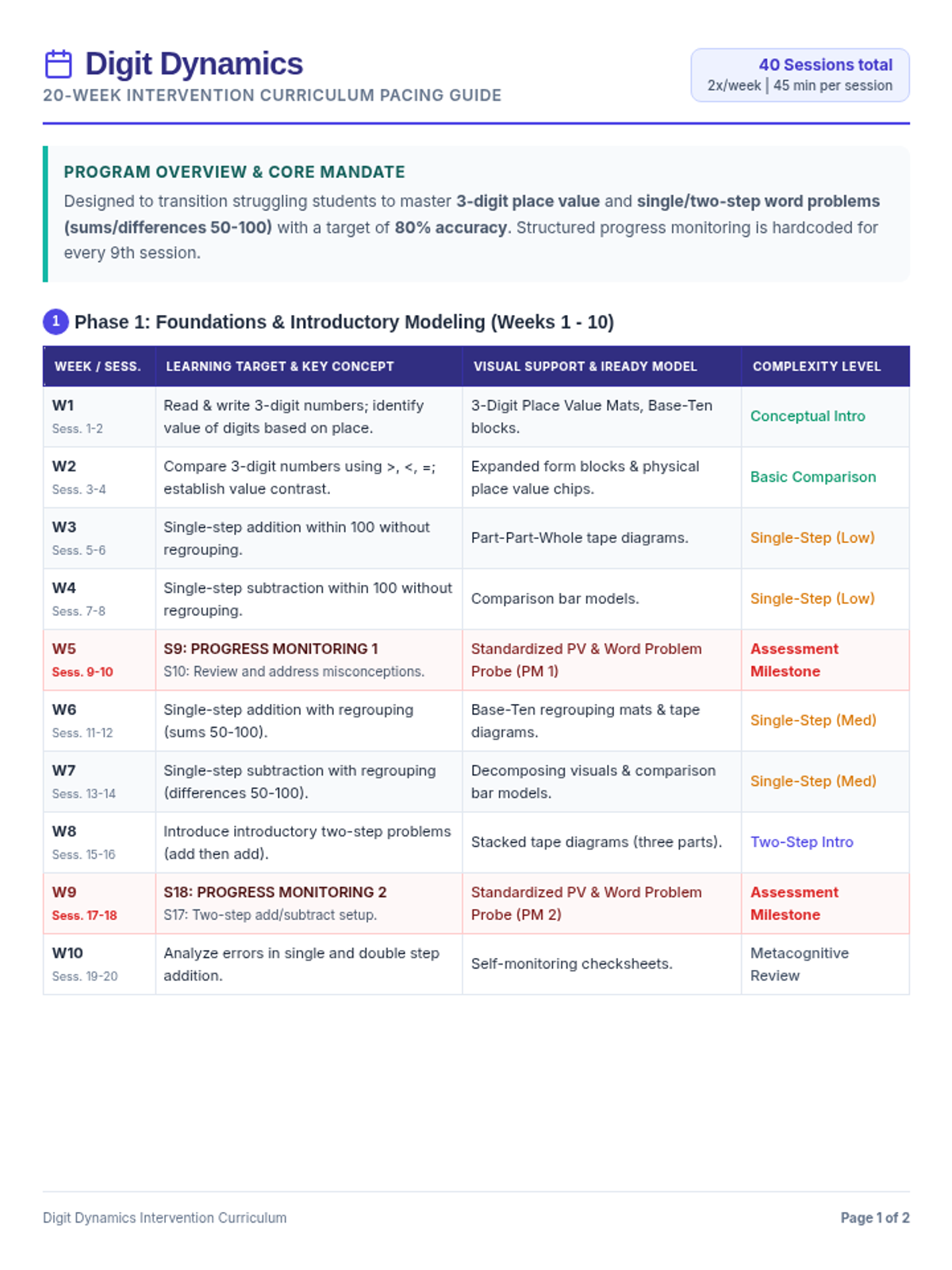
Weeks 16-20 (Sessions 31-40) focusing on advanced problem solving, error analysis, self-regulation checklists for 80% accuracy, and the Session 36 Progress Monitoring milestone.
Weeks 11-15 (Sessions 21-30) focusing on multi-step addition and subtraction word problems (sums/differences 50-100) using visual schemas and Session 27 Progress Monitoring.
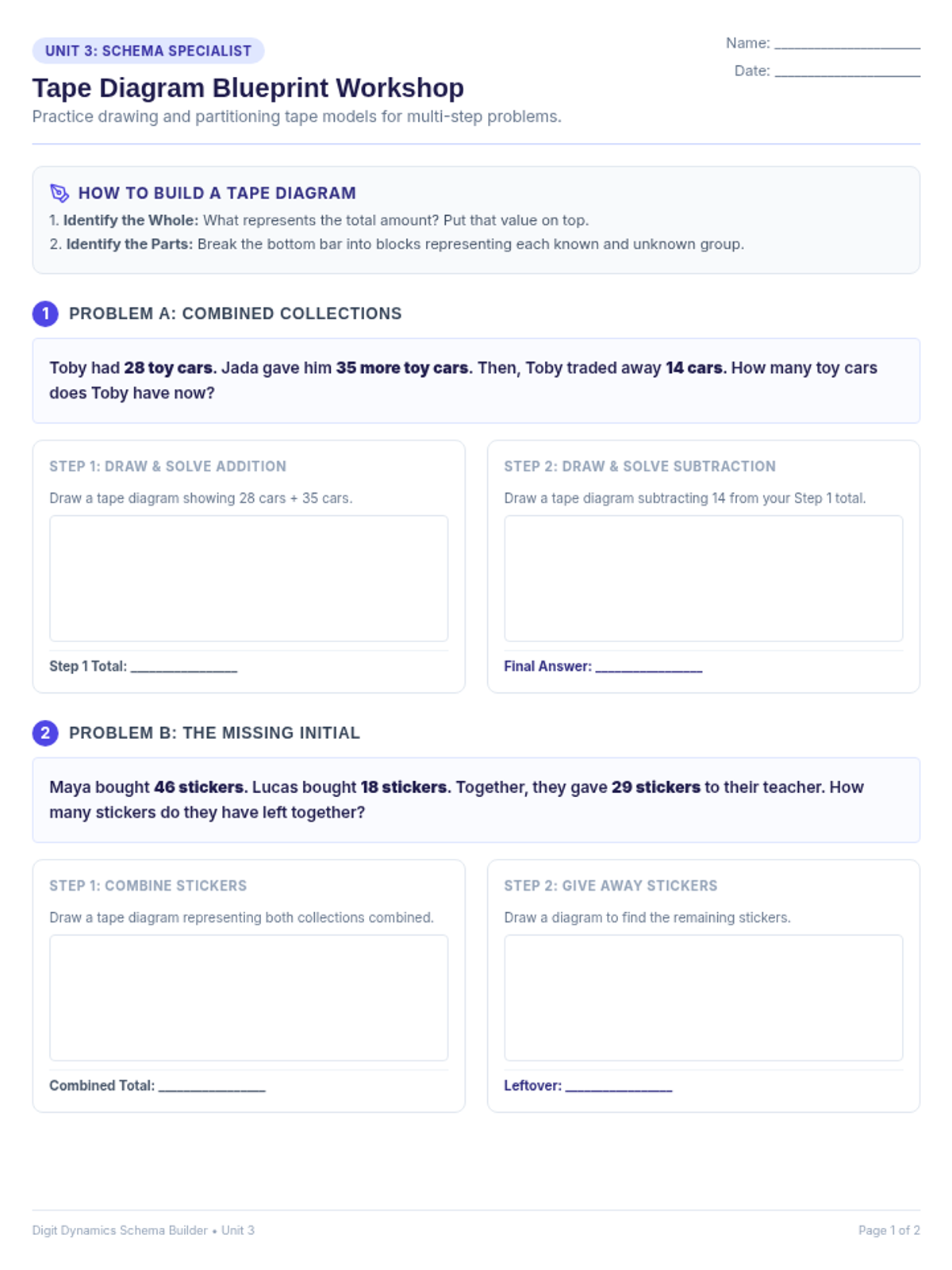
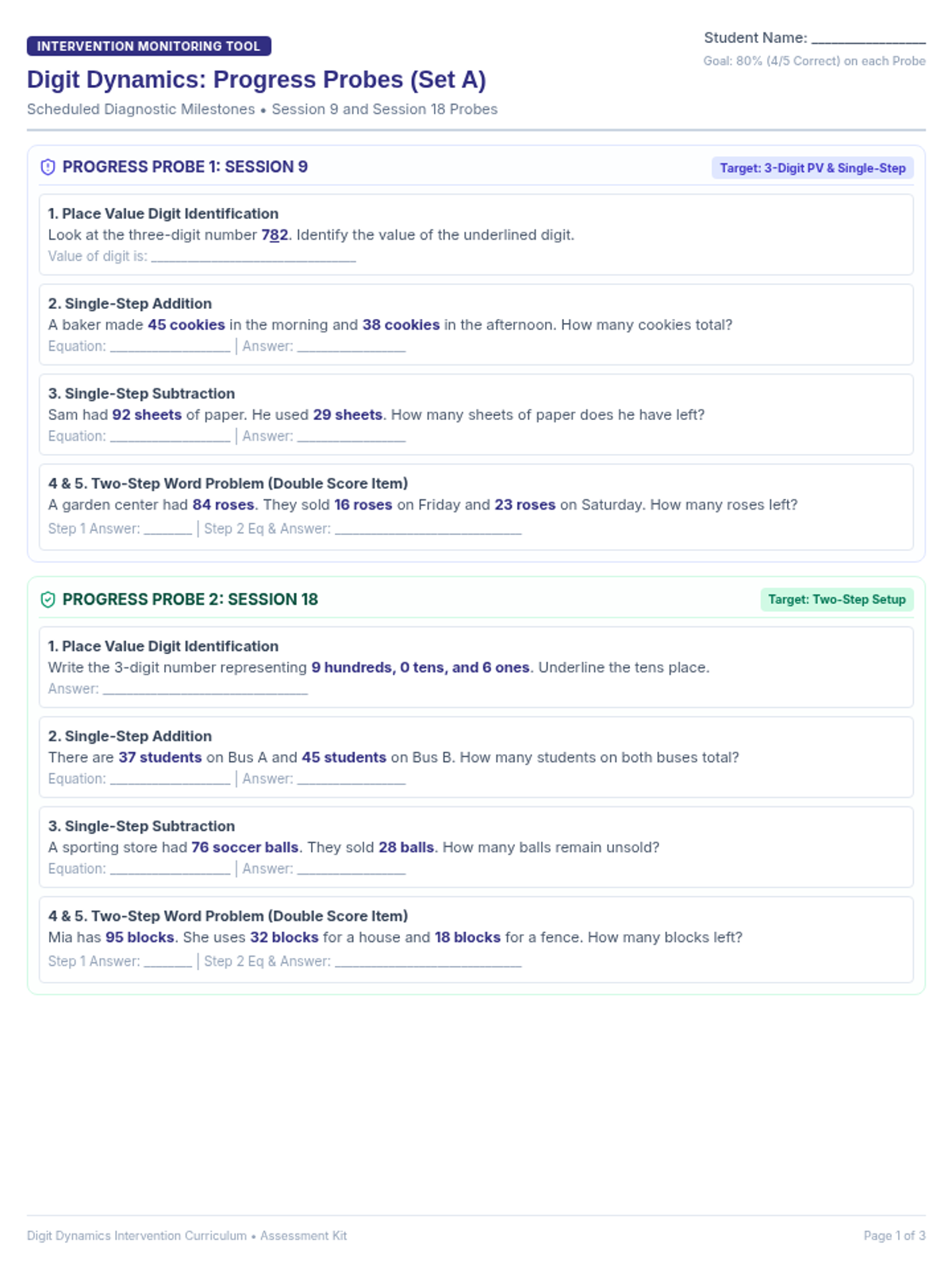
Weeks 6-10 (Sessions 11-20) focusing on introducing bar models and tape diagrams to represent addition and subtraction word problems within 100, plus Session 18 Progress Monitoring.
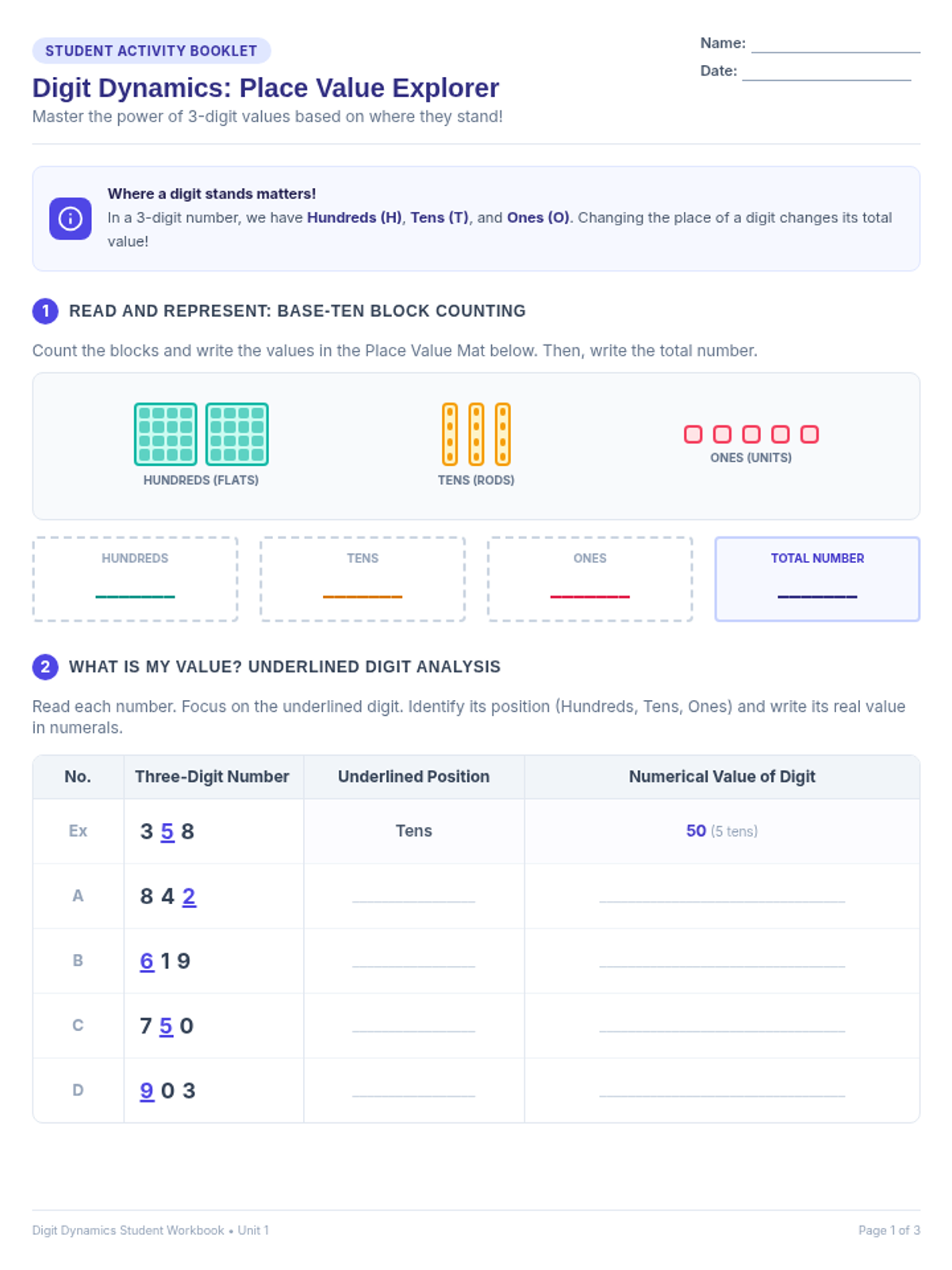
Weeks 1-5 (Sessions 1-10) focusing on 3-digit place value foundations, base-ten visual modeling, and single-step operations. Includes the Session 9 Progress Monitoring milestone.
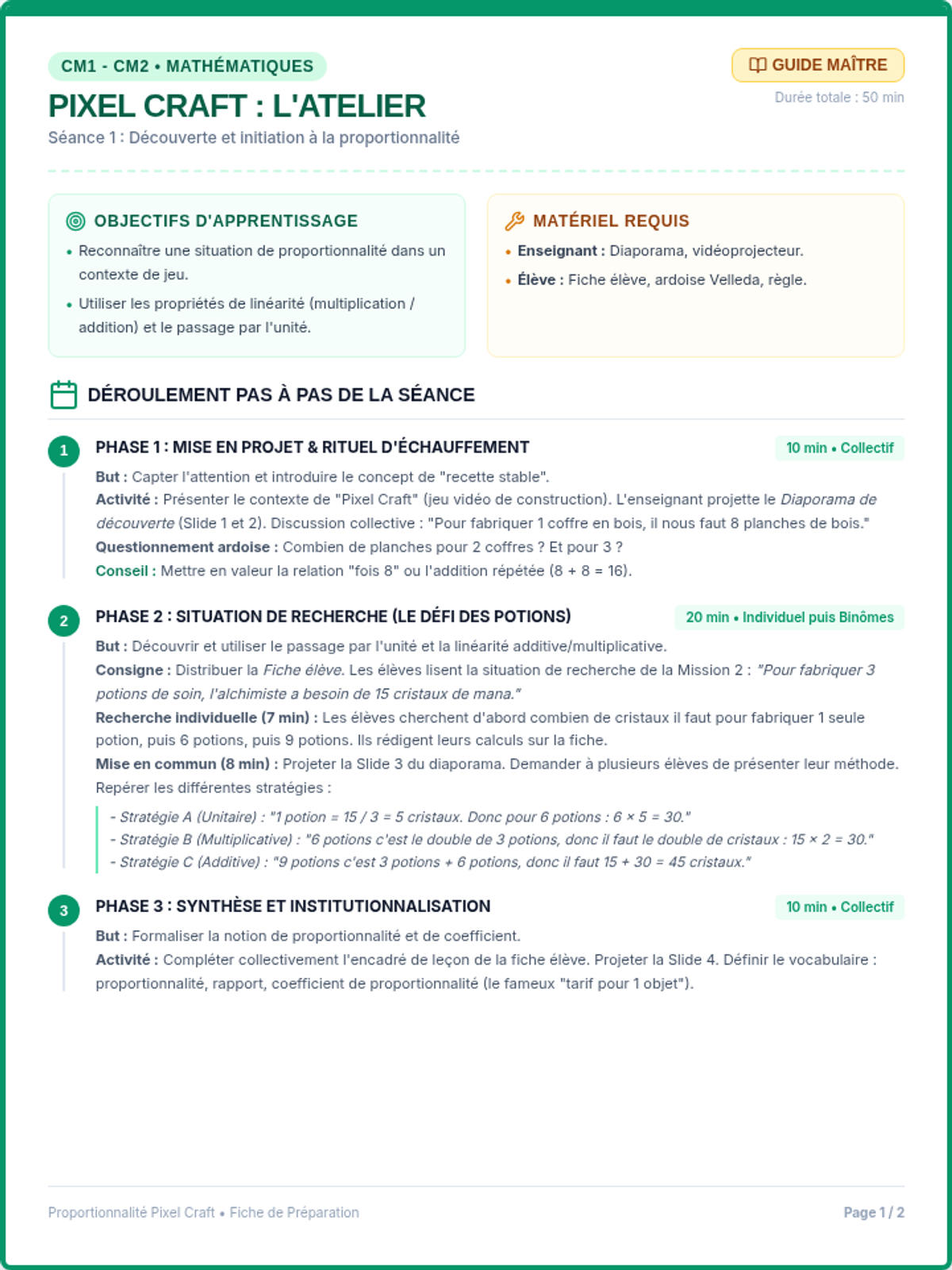
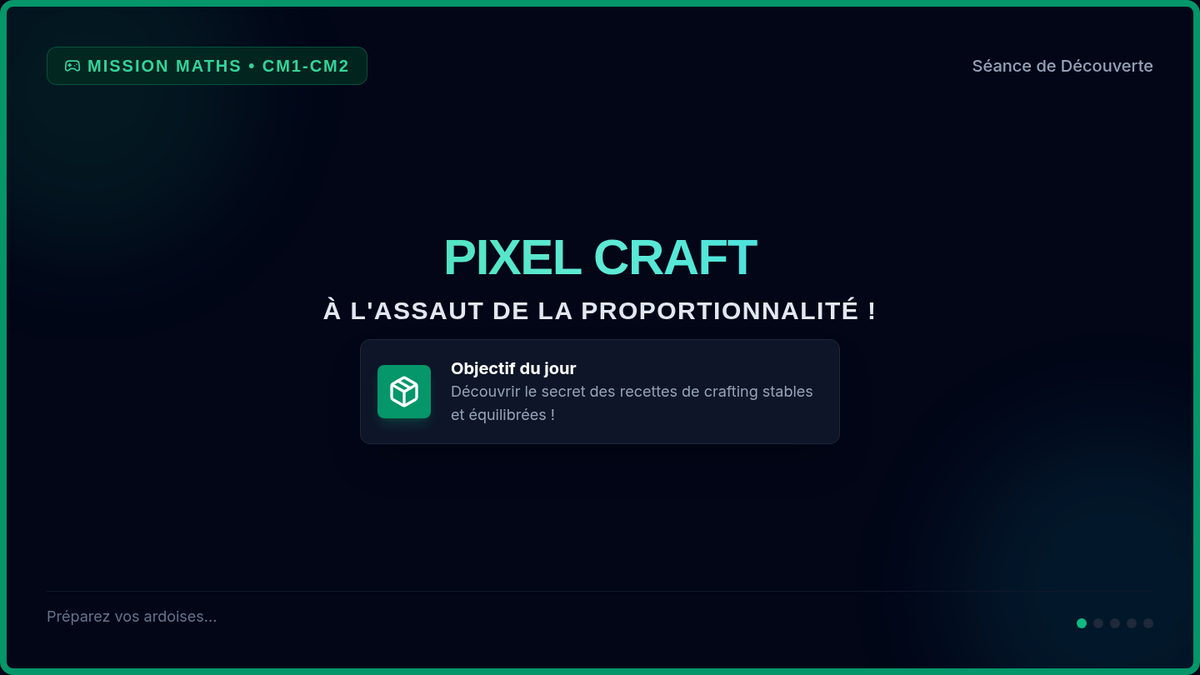
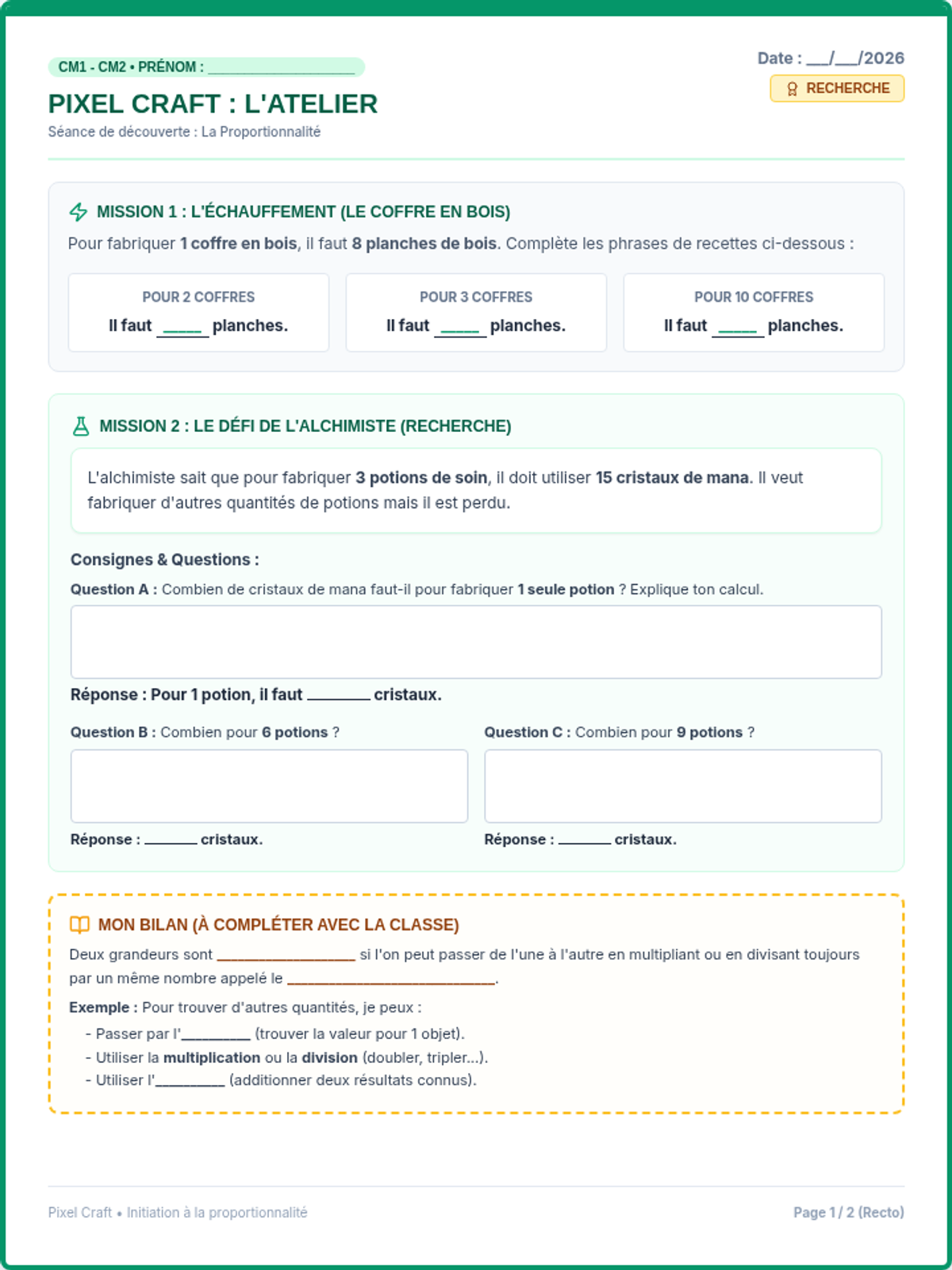
Première séance d'introduction à la proportionnalité. À travers des situations concrètes de fabrication d'objets dans un jeu vidéo, les élèves construisent le concept de proportionnalité, découvrent les notions de linéarité additive et multiplicative, ainsi que le passage par l'unité.
An assessment on solving multi-step word problems using all four operations. Includes a graphic-organizer-based student worksheet and a detailed teacher answer key with worked solutions.
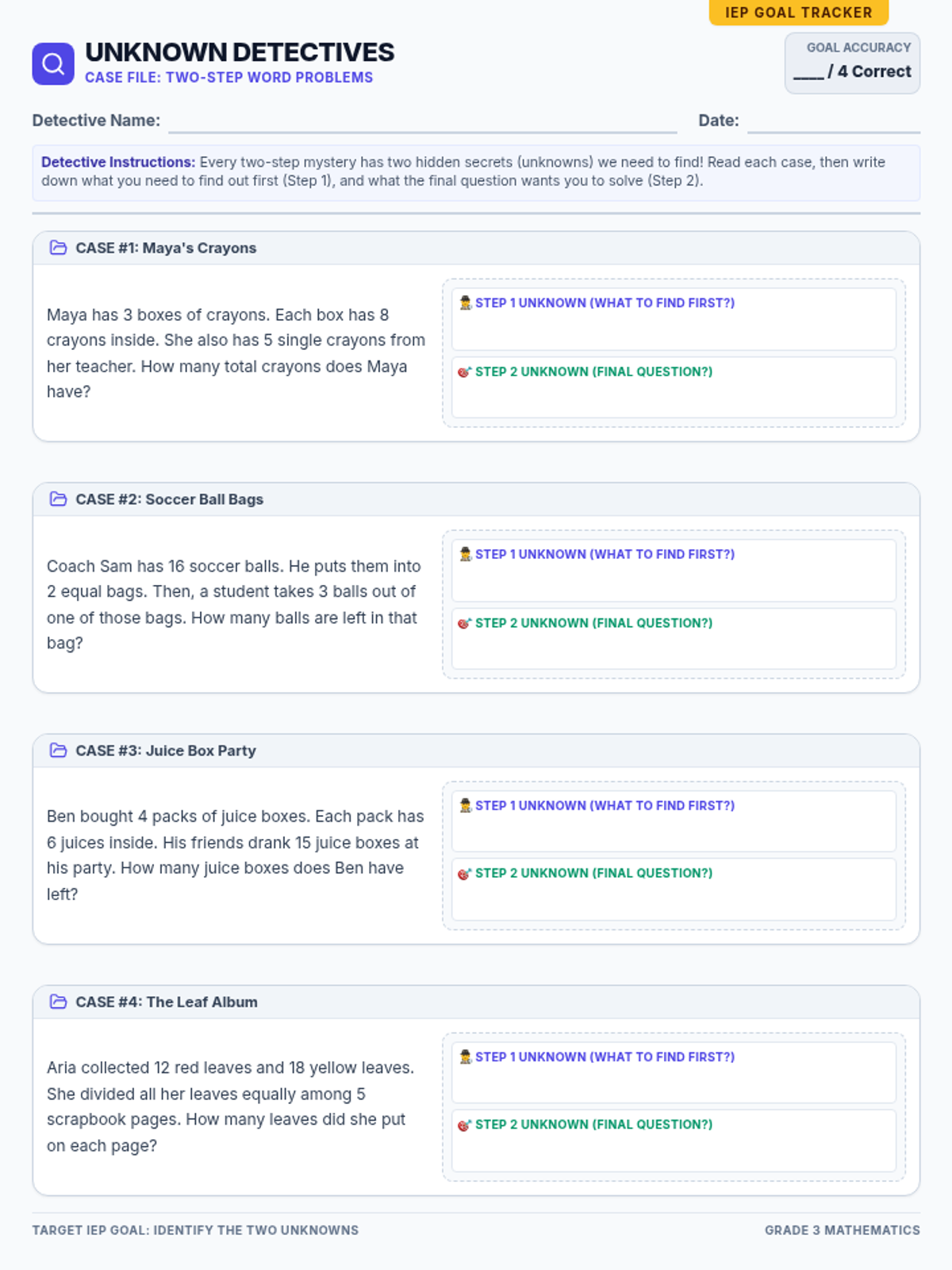
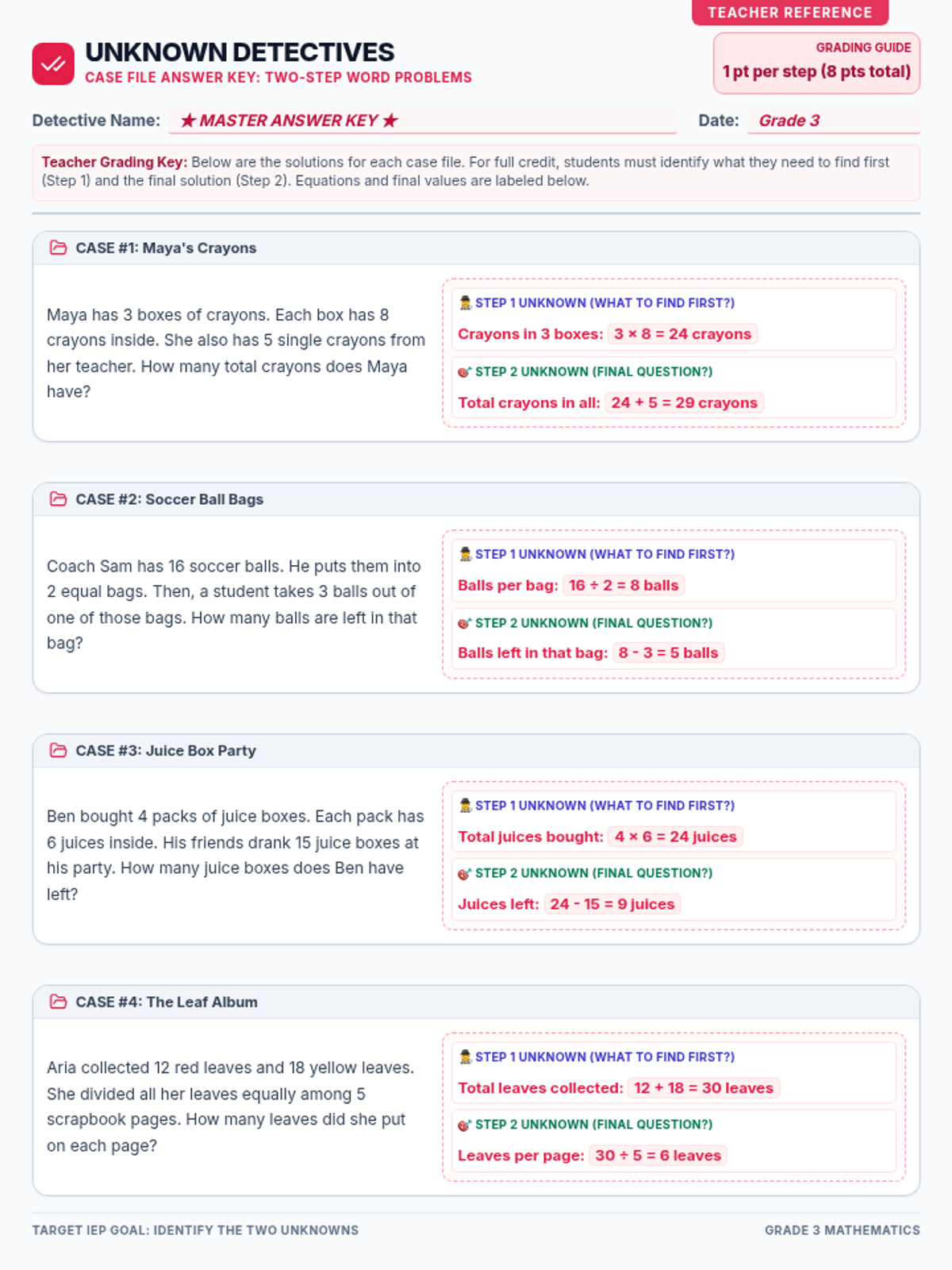
A math lesson for 3rd-grade students focused on solving two-step word problems by breaking them down into separate unknowns. Students act as 'detectives' to discover hidden values in structured case files.
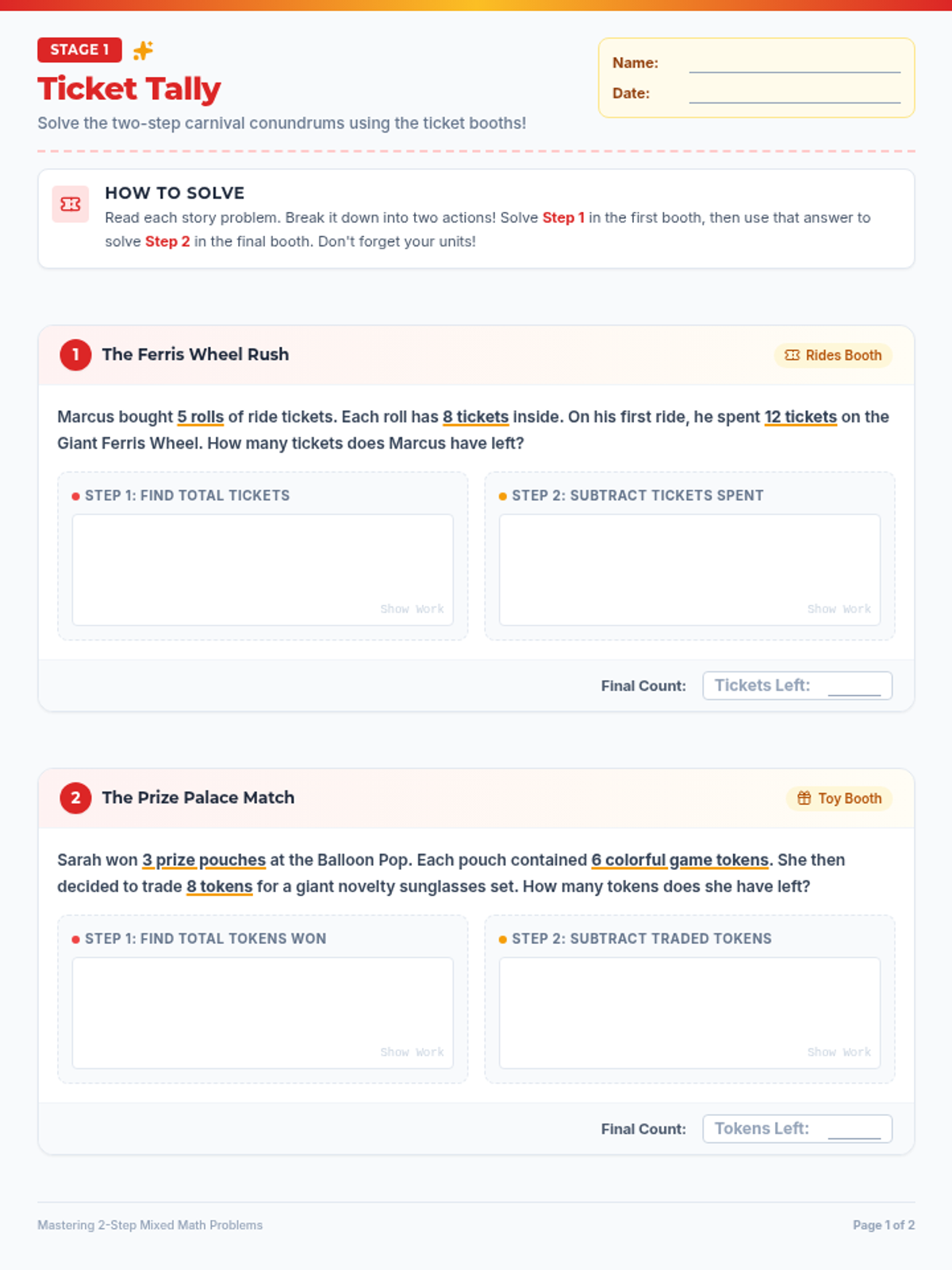
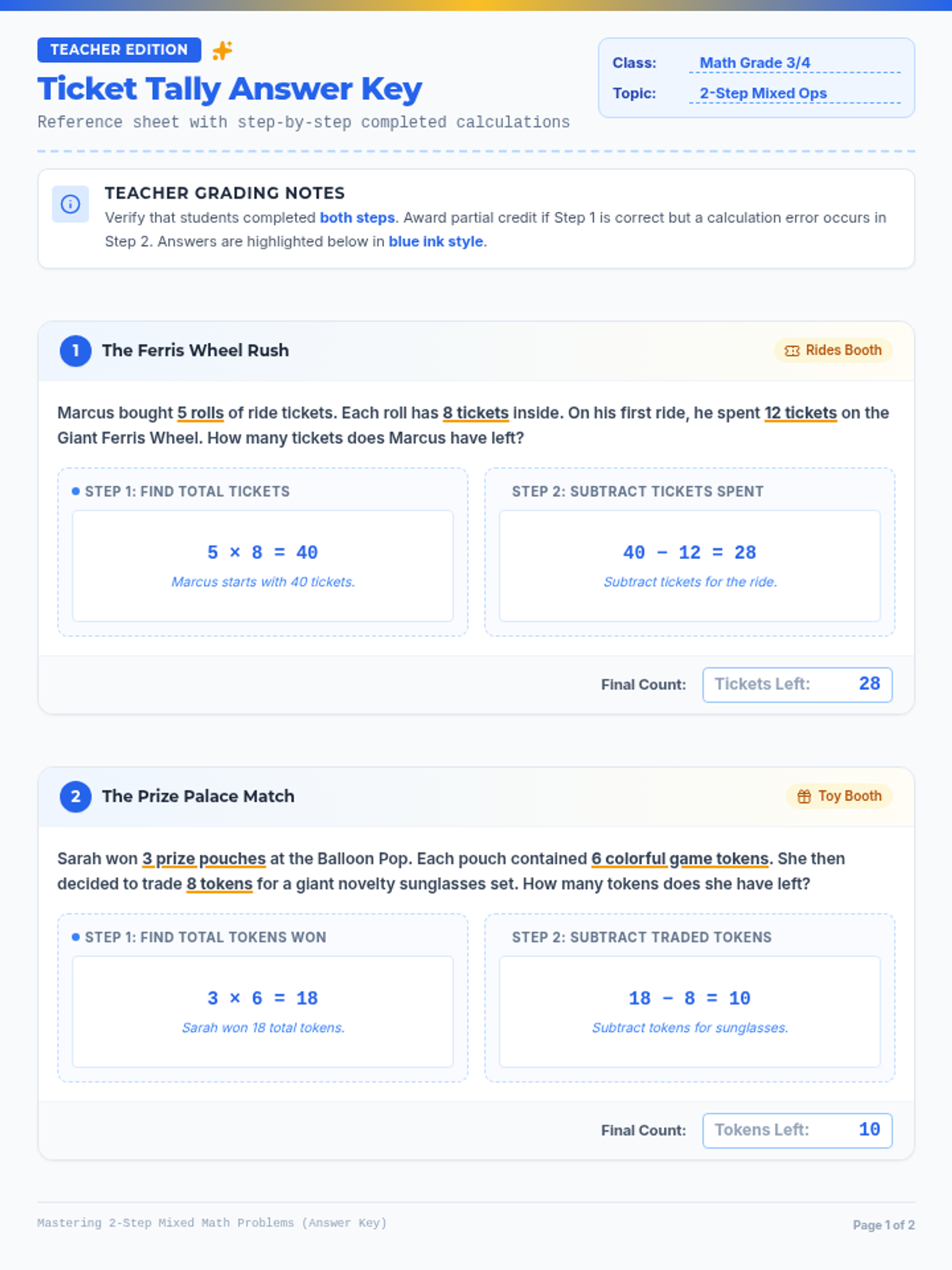
A mathematics lesson focused on breaking down and solving two-step mixed operation word problems. Students use structured graphic organizers themed around carnival ticket purchases, ride costs, and prize booths to master multi-step problem solving.
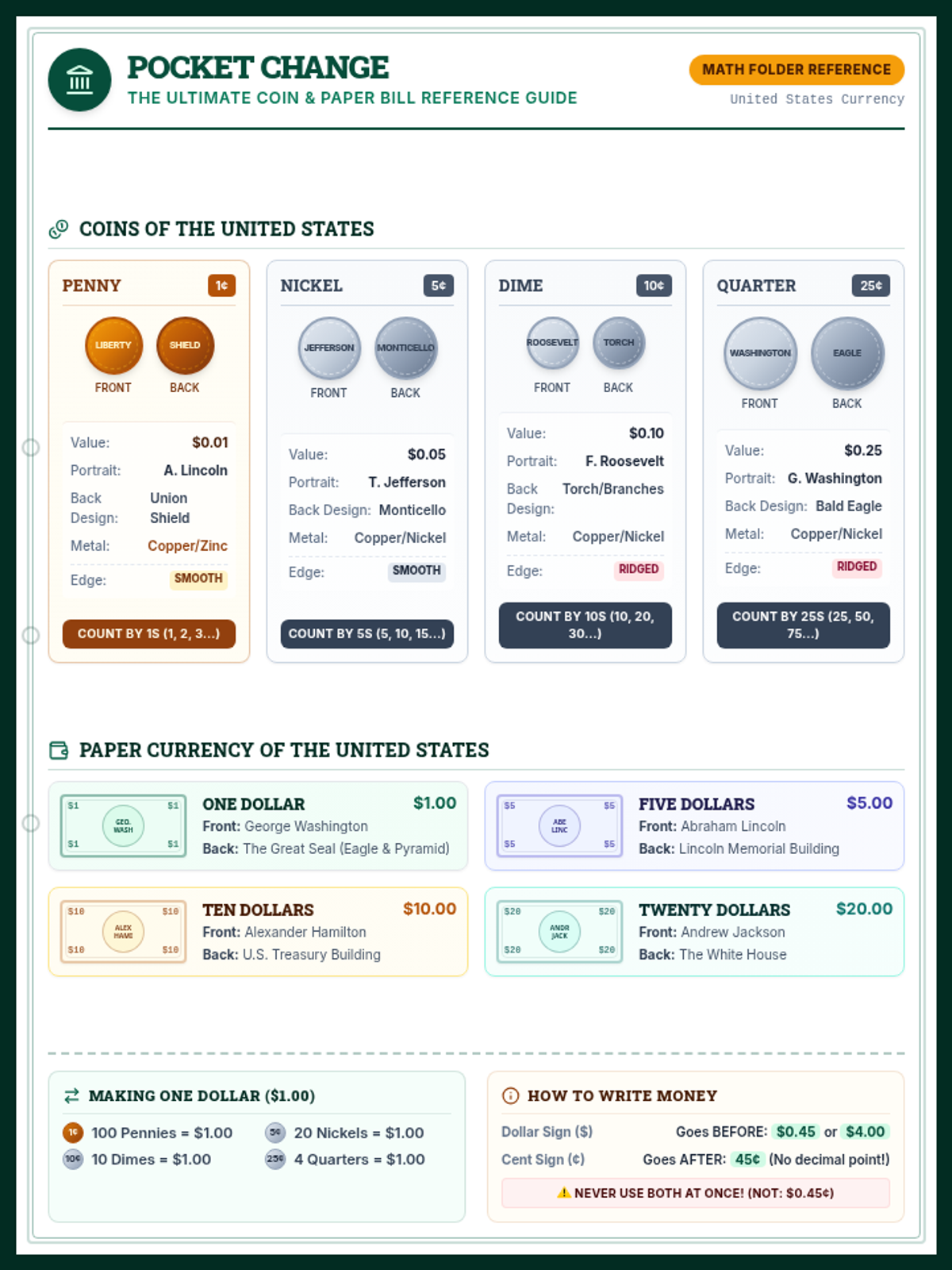
A comprehensive lesson on identifying and understanding US coins and bills, their values, and their key visual features.
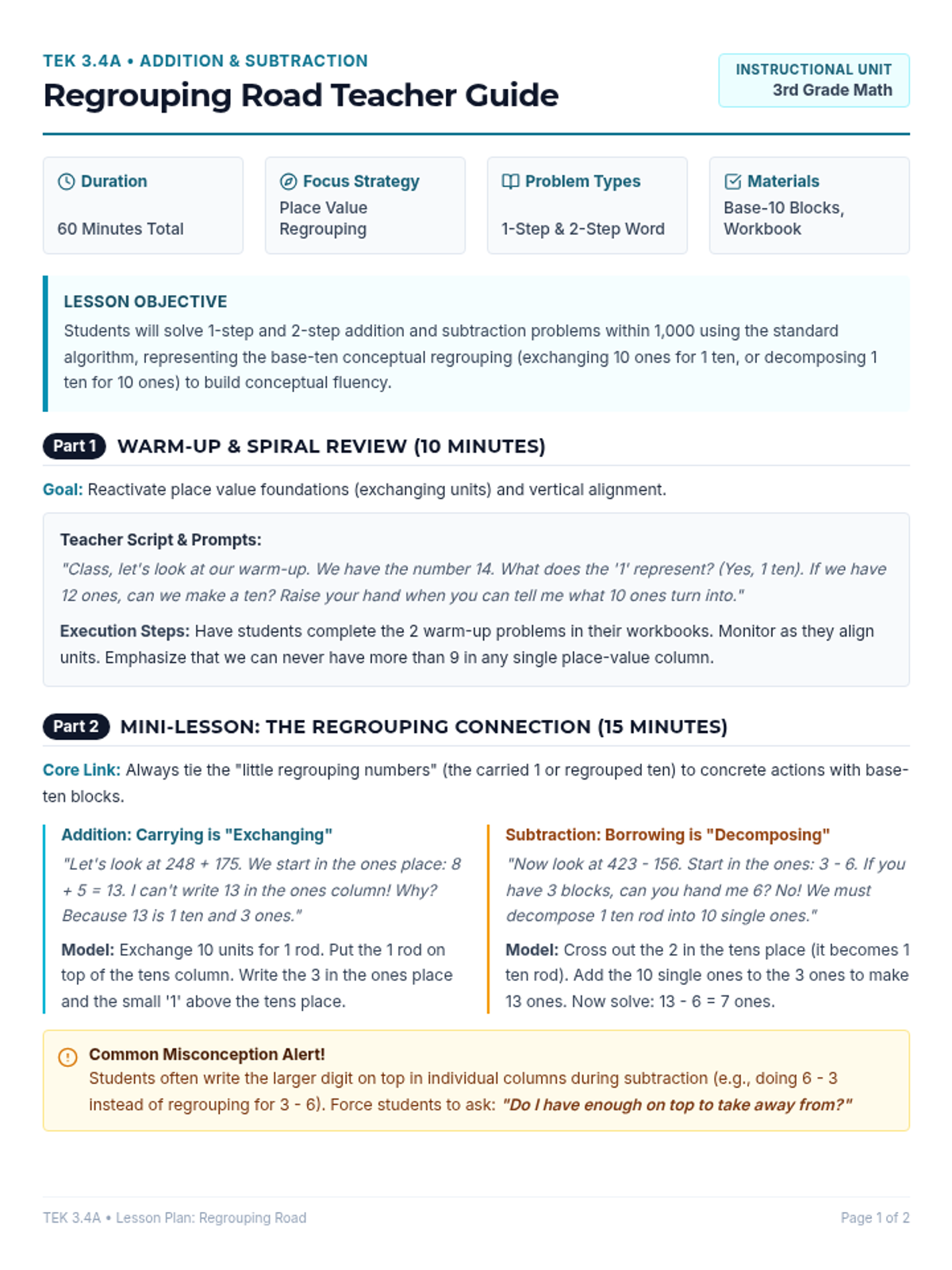
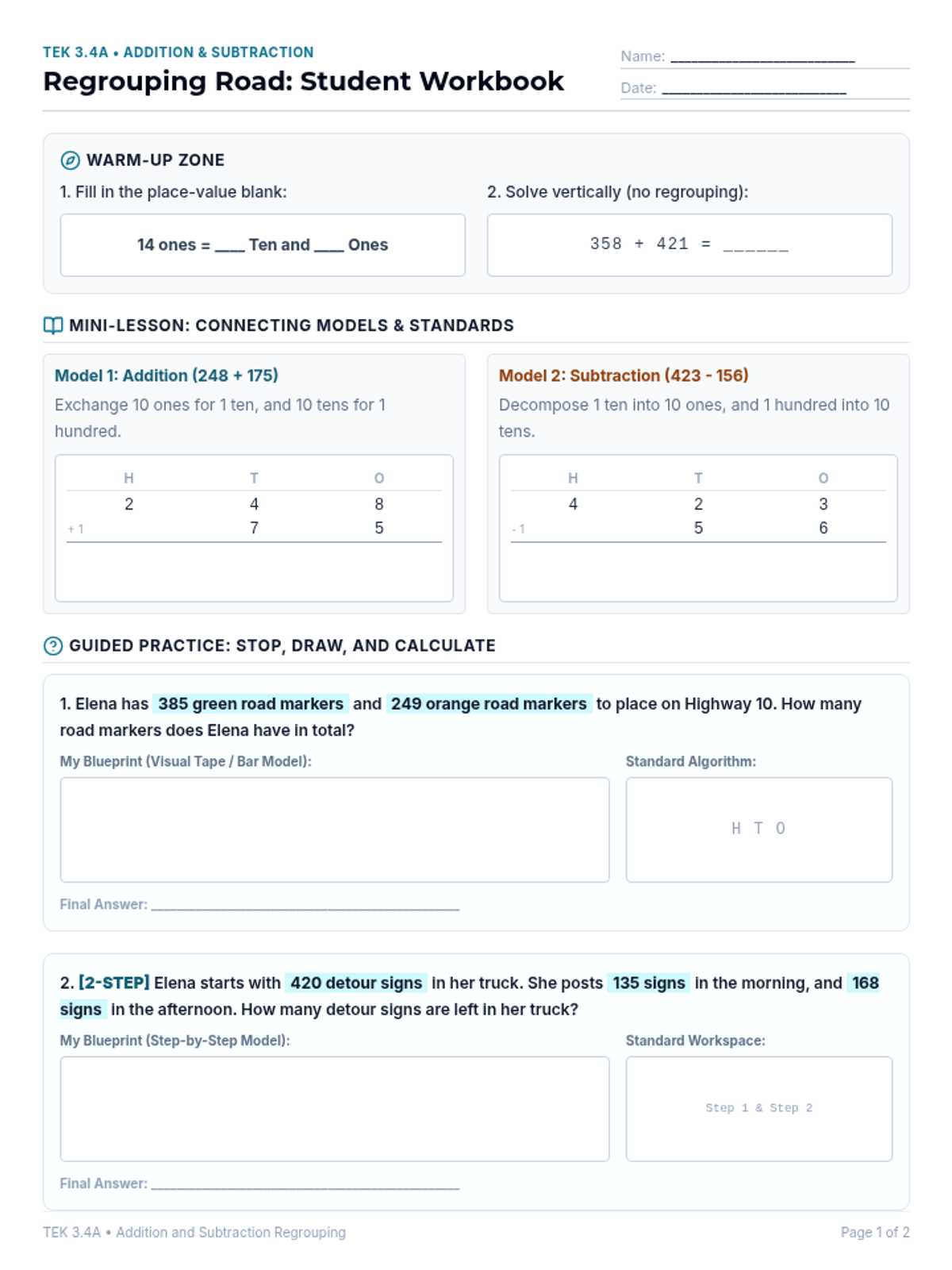
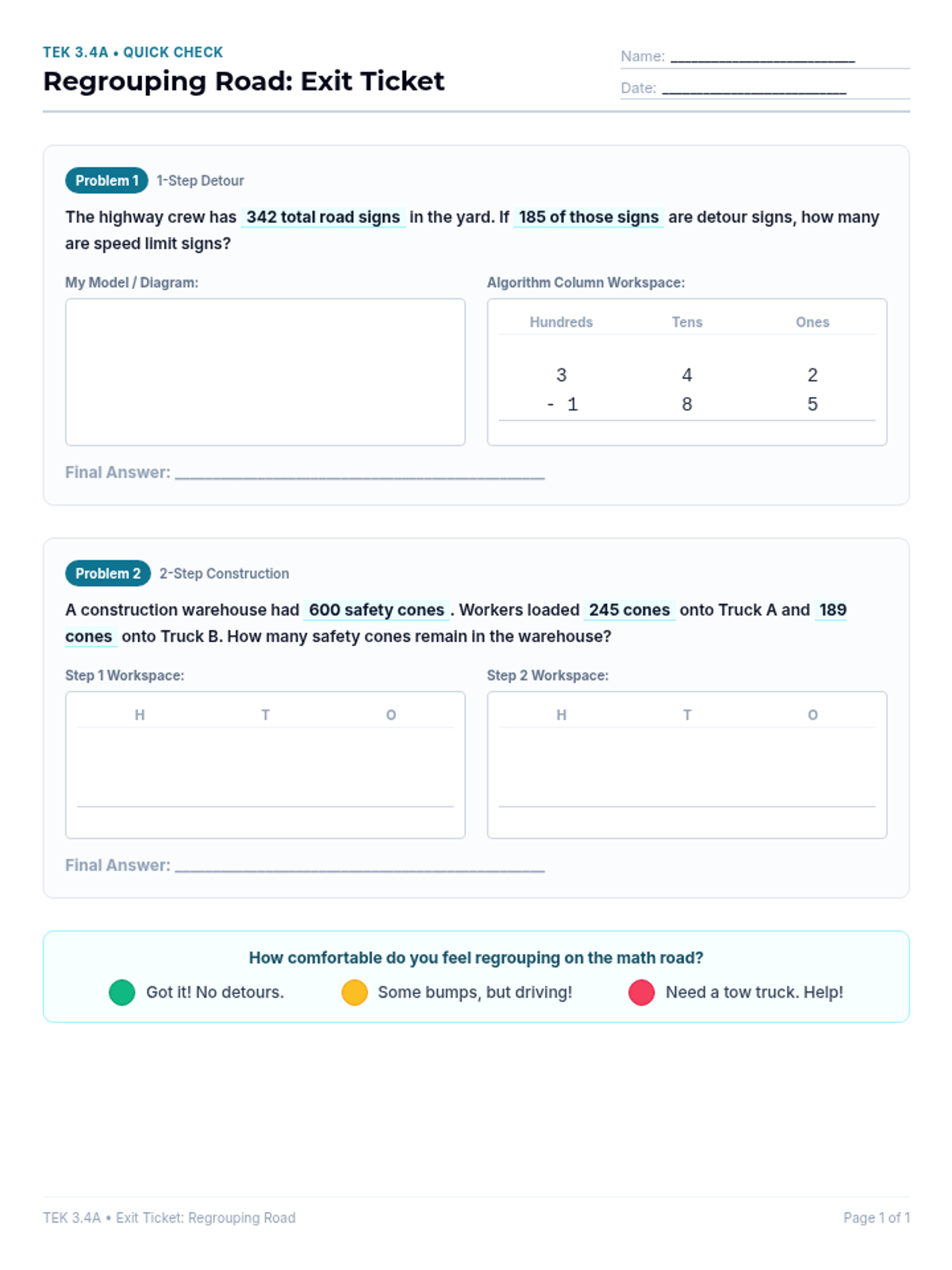
This lesson guides 3rd-grade students through the standard addition and subtraction algorithms with regrouping, grounded in place value understanding. It features a step-by-step teacher script, visual base-ten block links, and a progression from simple one-step to challenging two-step word problems aligned with TEK 3.4A.
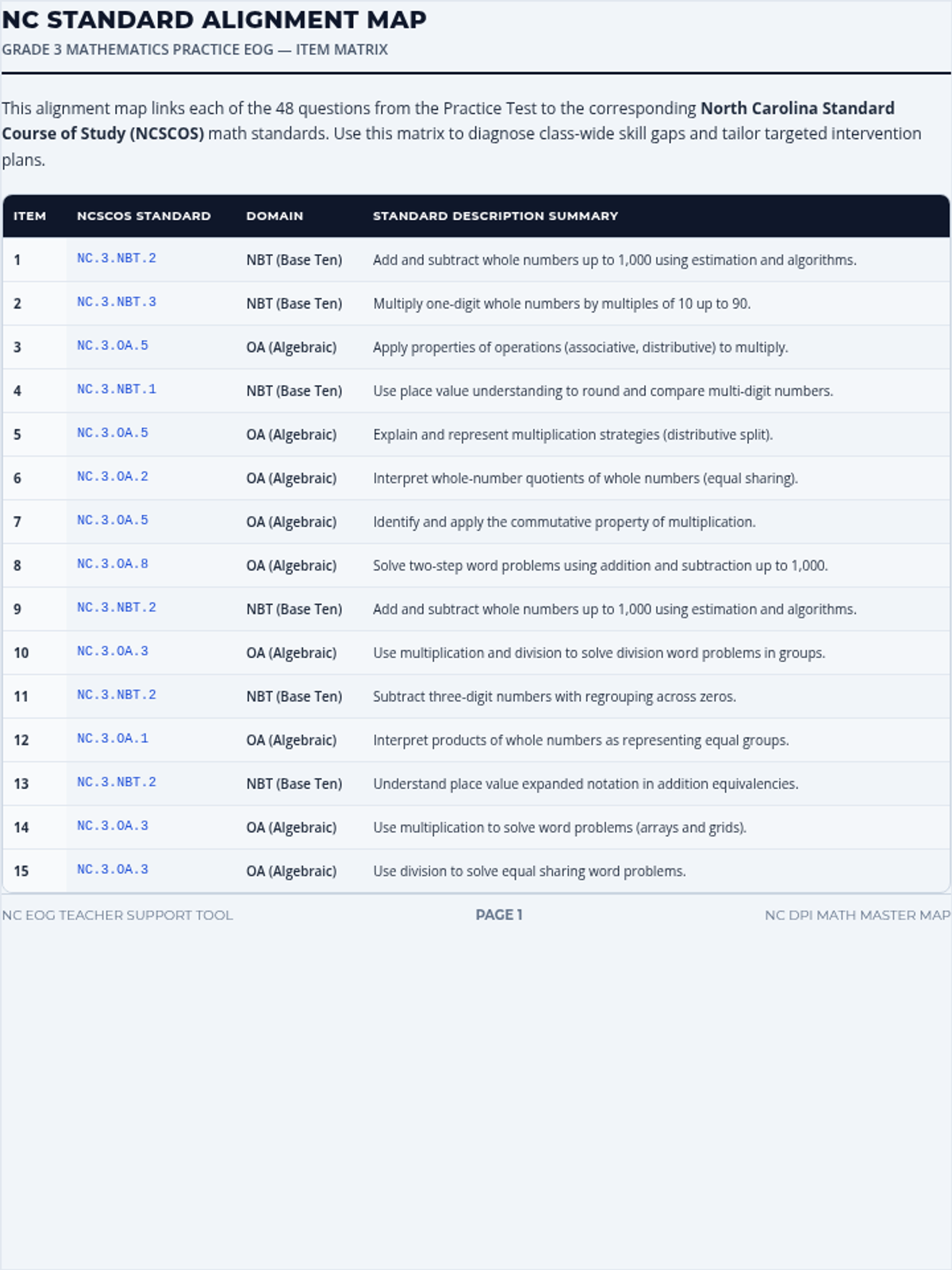
A comprehensive practice package designed for 3rd-grade students preparing for the North Carolina End-of-Grade (EOG) Mathematics assessment. It includes a complete 48-question exam covering all highly-tested standard course of study domains, an interactive student grid, an item-to-standard alignment map, and a full explanatory answer key.
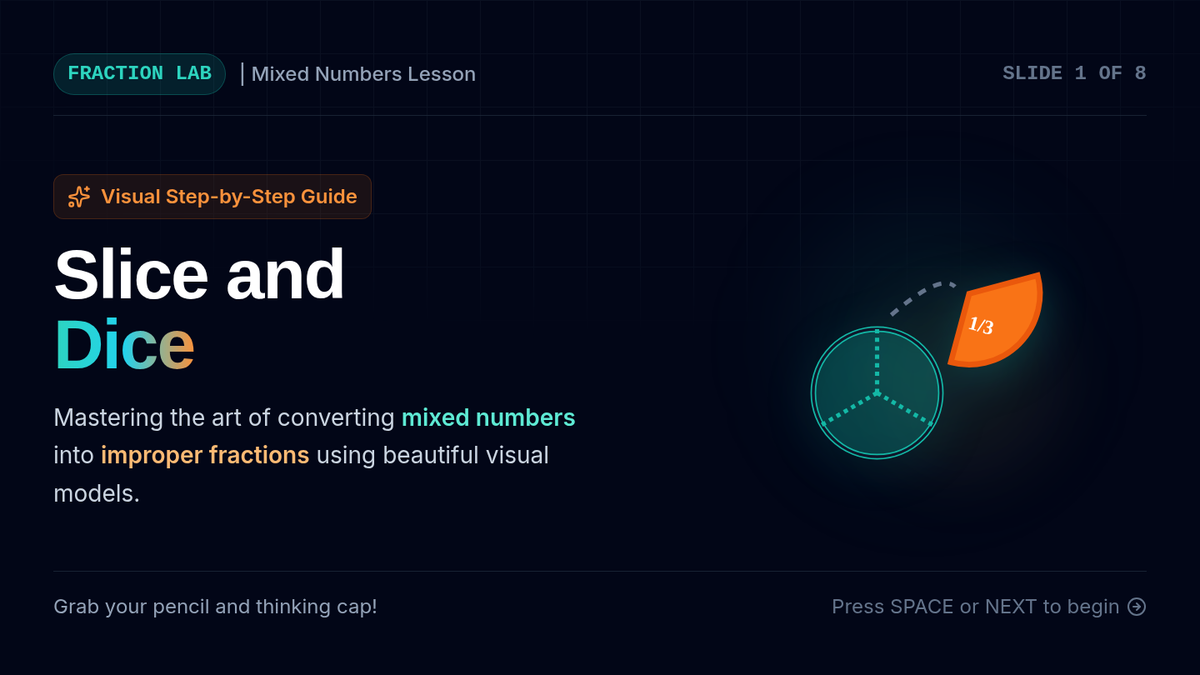
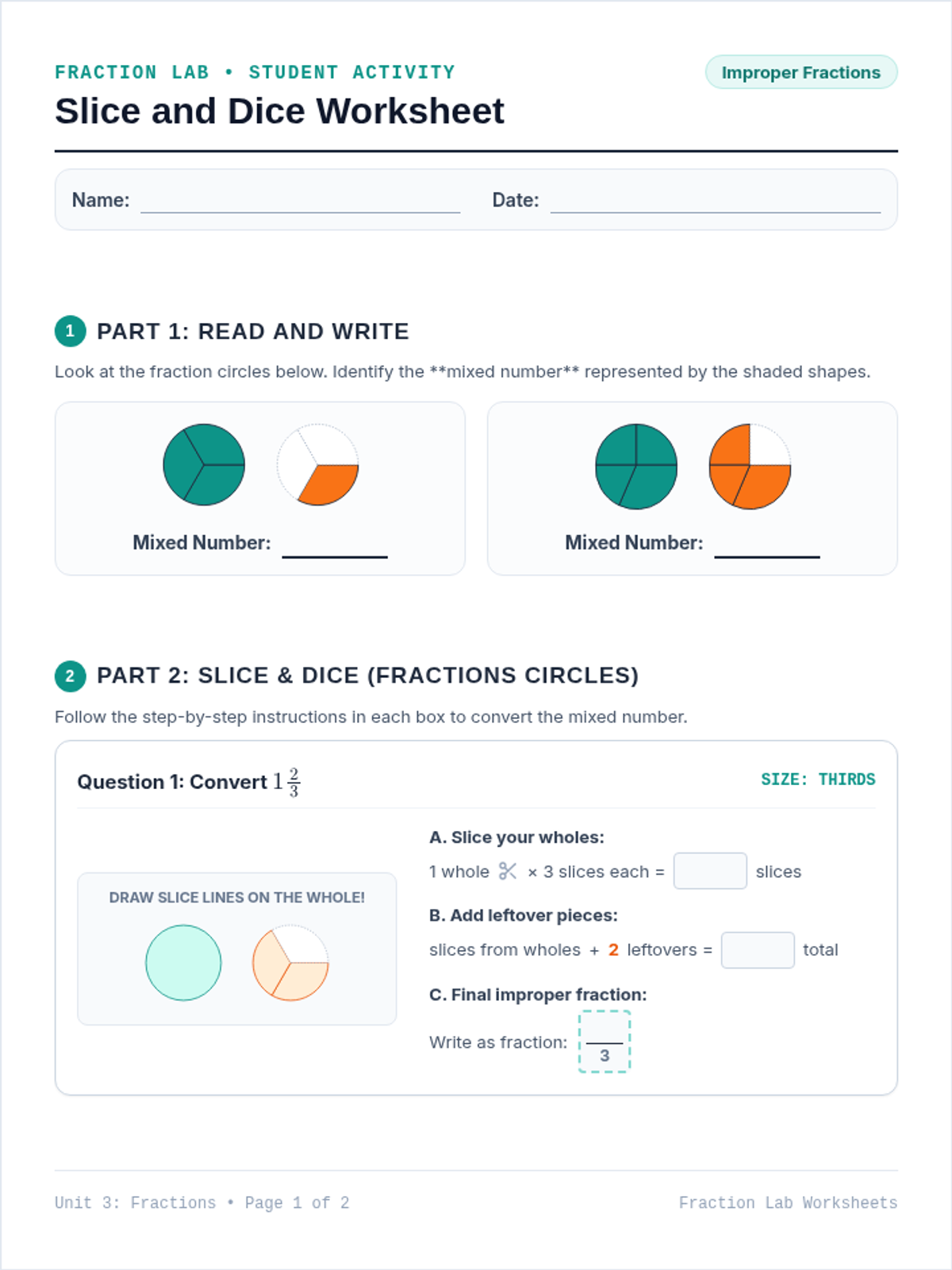
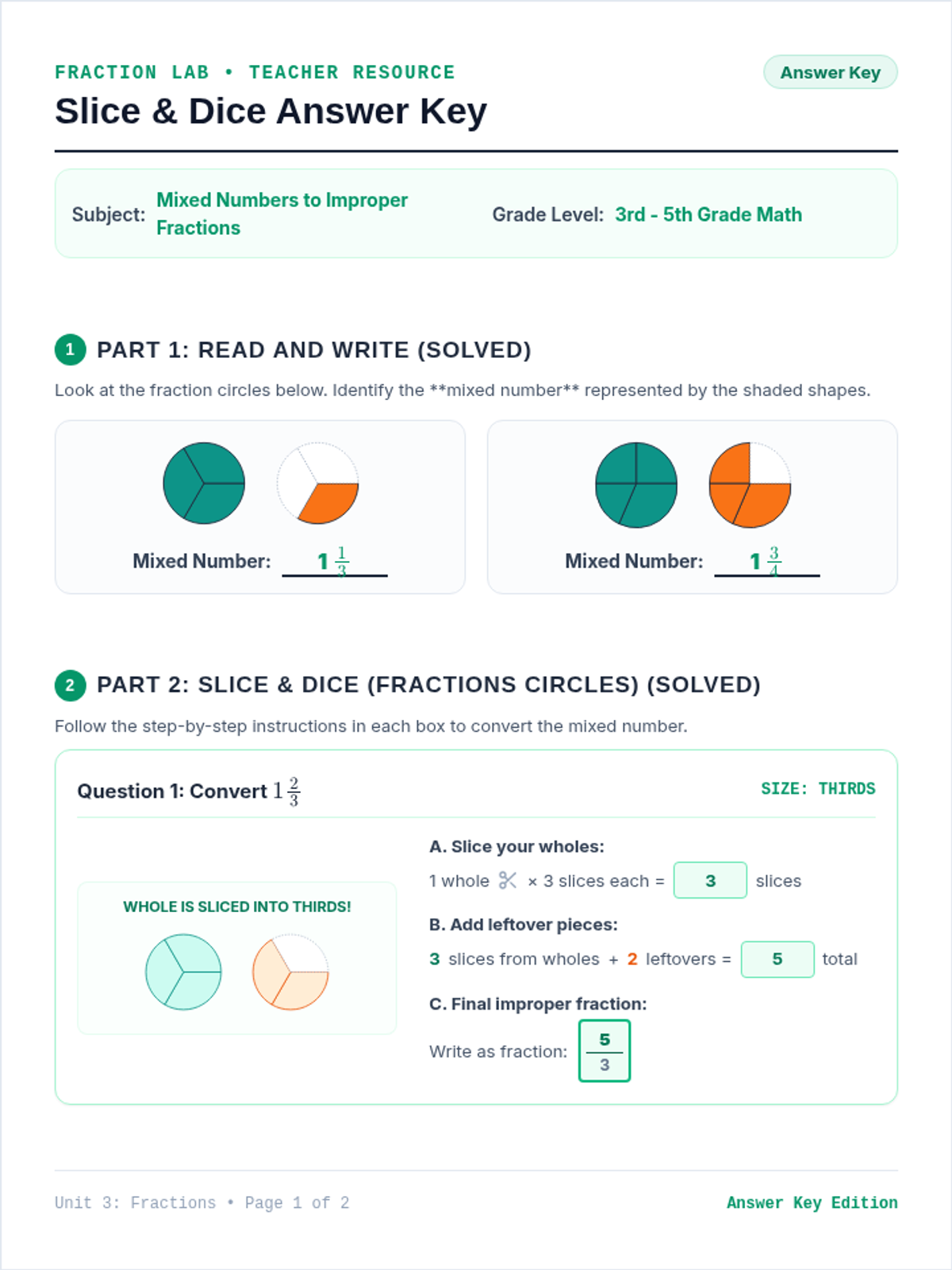
A visual, interactive math lesson focusing on converting mixed numbers to improper fractions. Students use concrete visual models including fraction circles and fraction tiles to understand how wholes are cut into fractional parts.
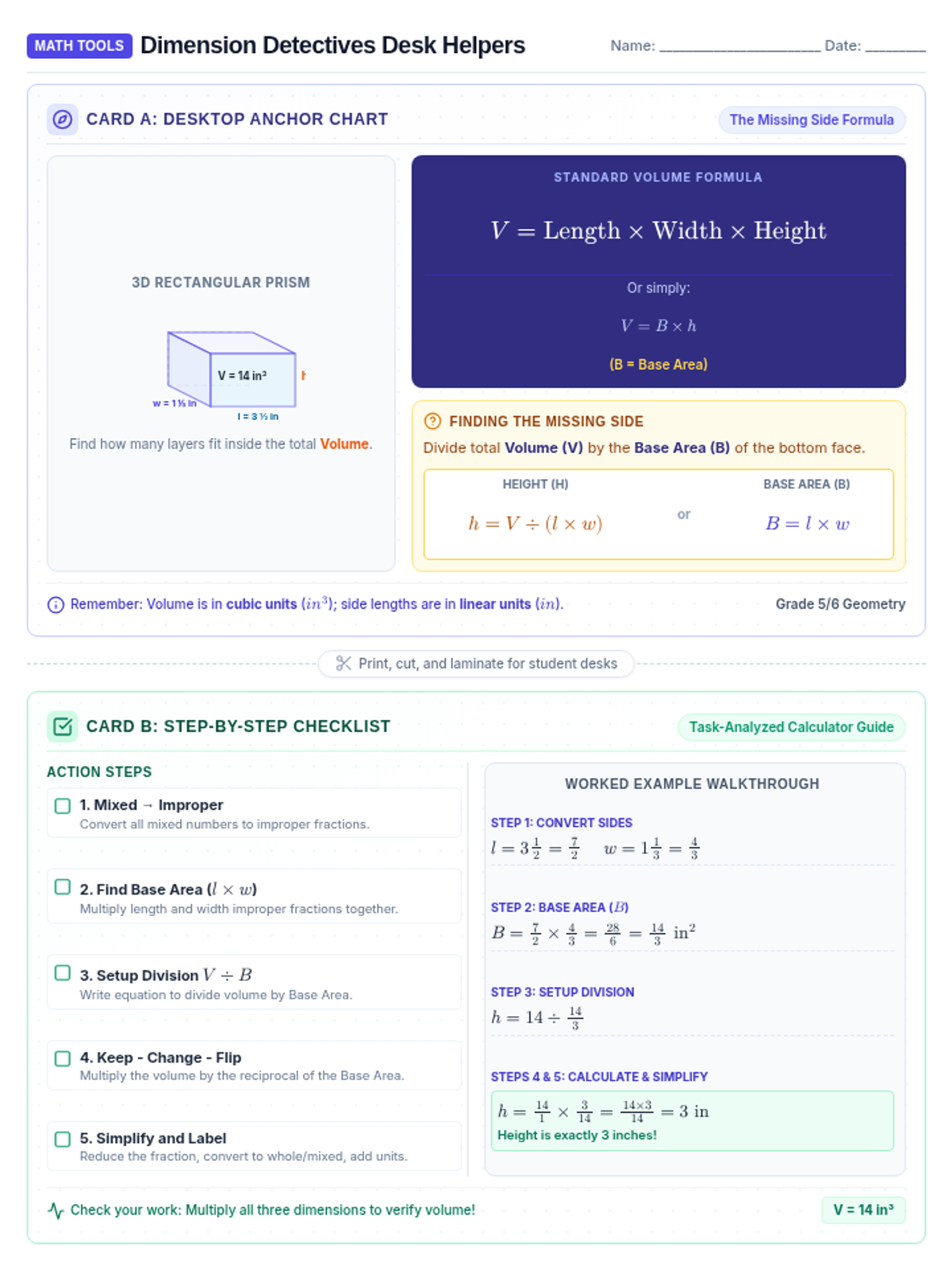
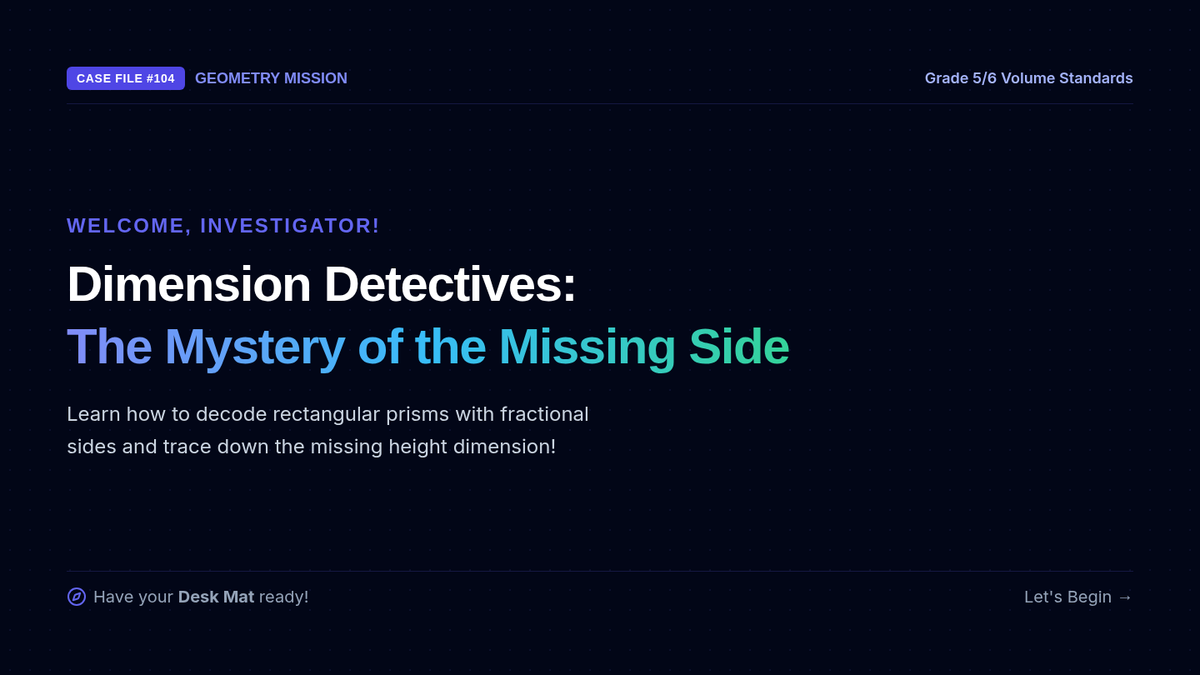
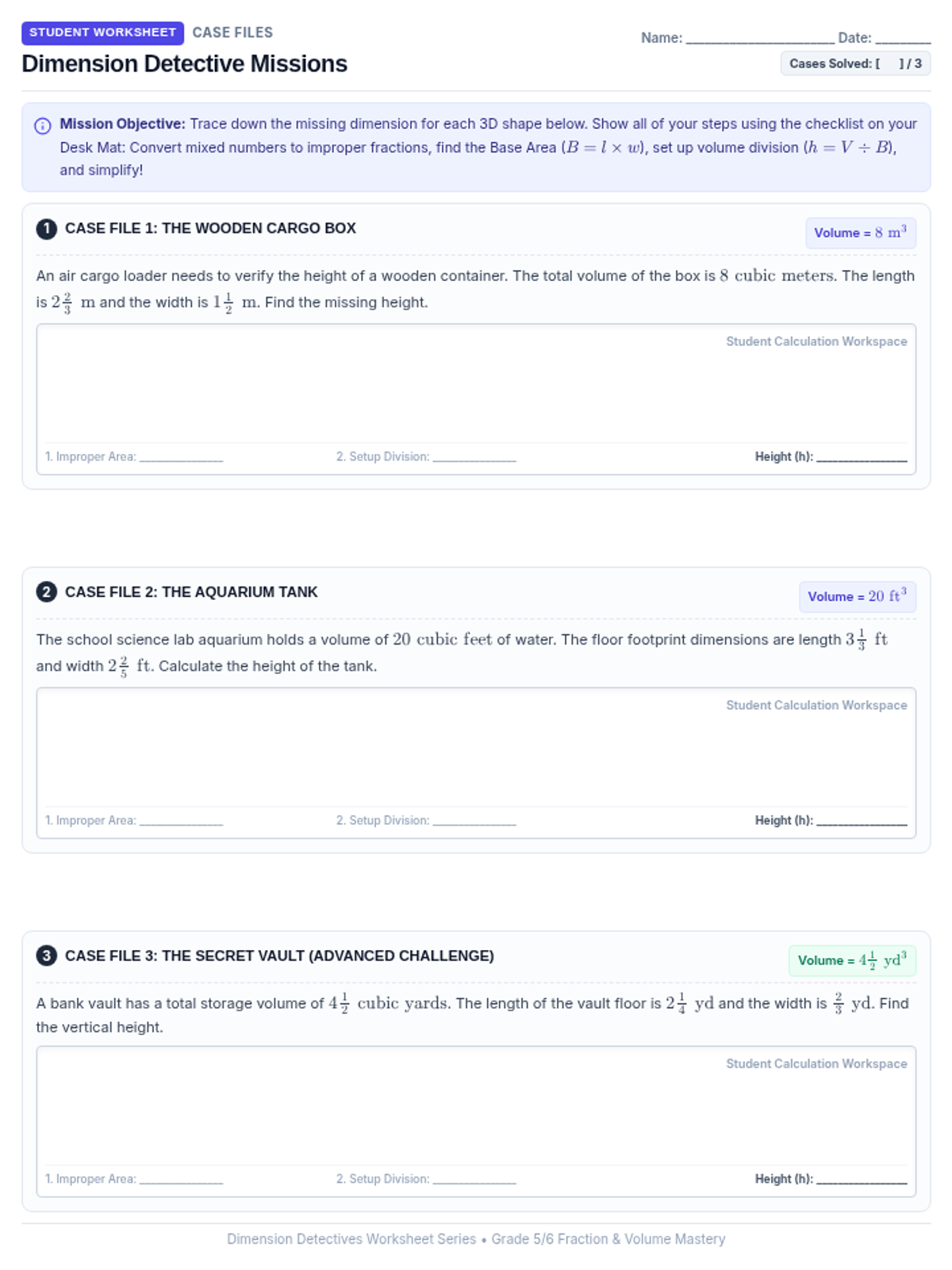
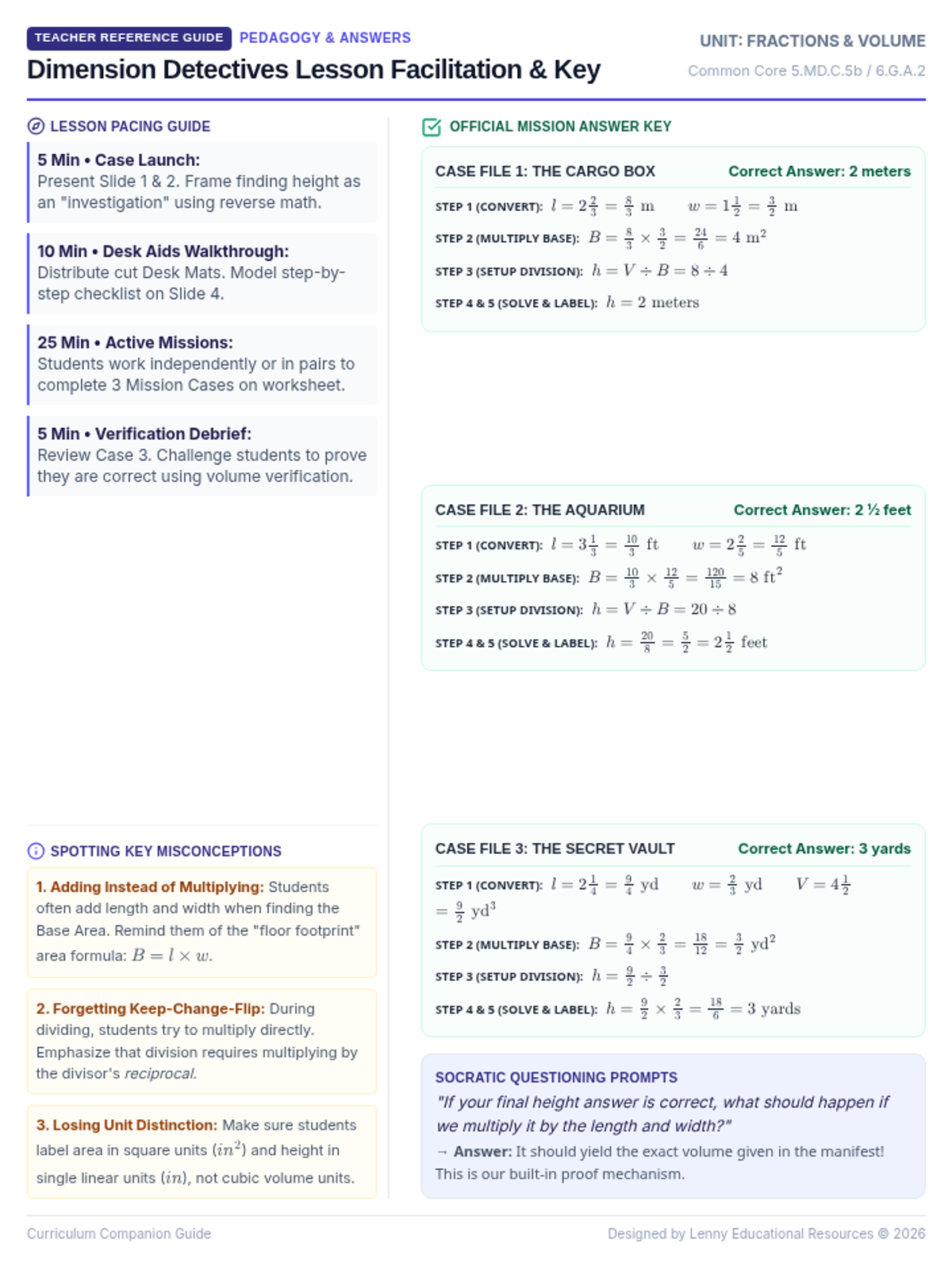
A lesson teaching students how to find the missing side length of a rectangular prism when given the volume and two fractional or mixed-number dimensions. The lesson includes high-impact desktop guides and task-analyzed checklists for scaffolding.
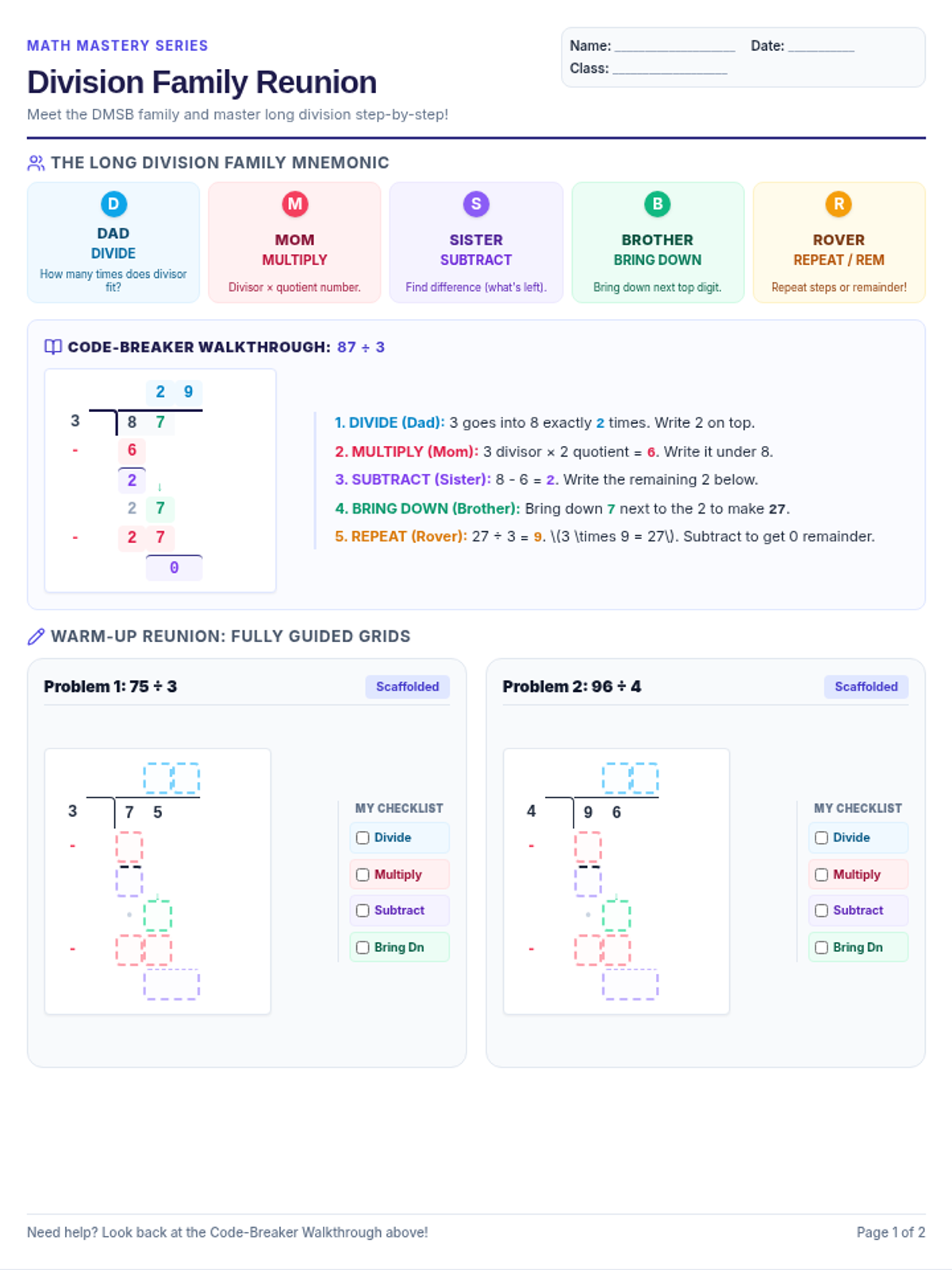
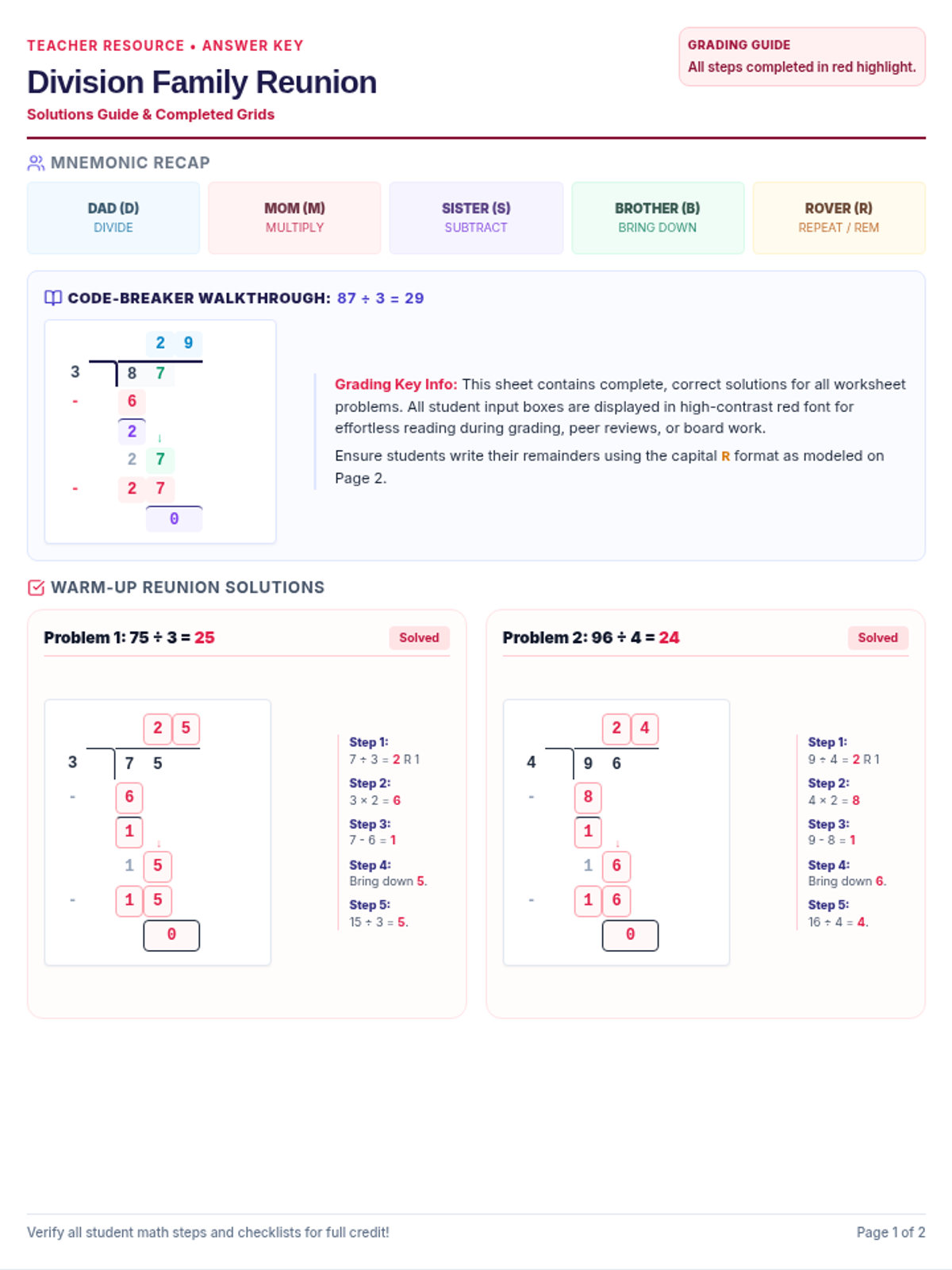
A scaffolded introduction to long division using the Dad, Mom, Sister, Brother mnemonic. Students utilize color-coded grid organizers to master the multi-step algorithm with step-by-step independence.
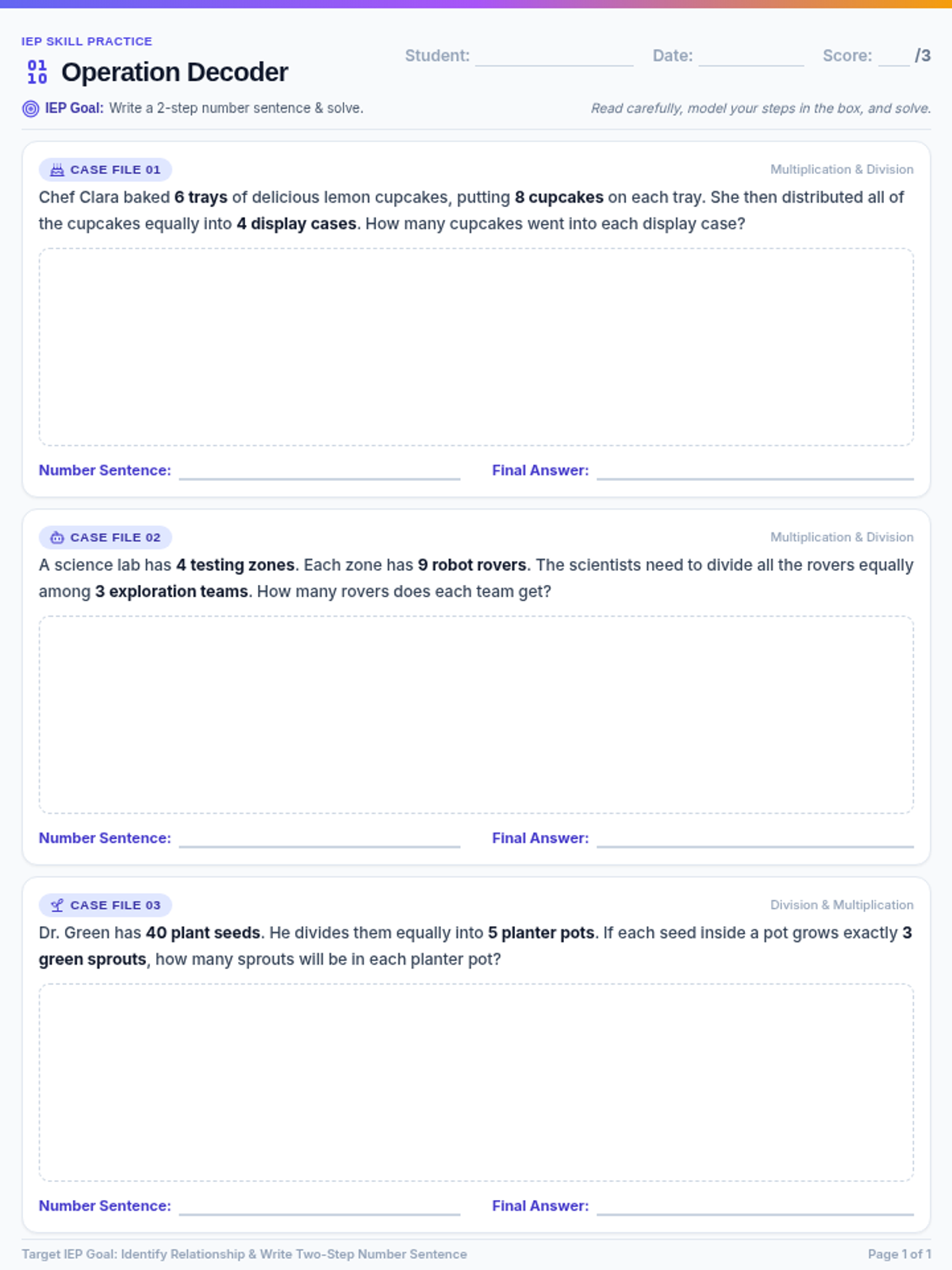
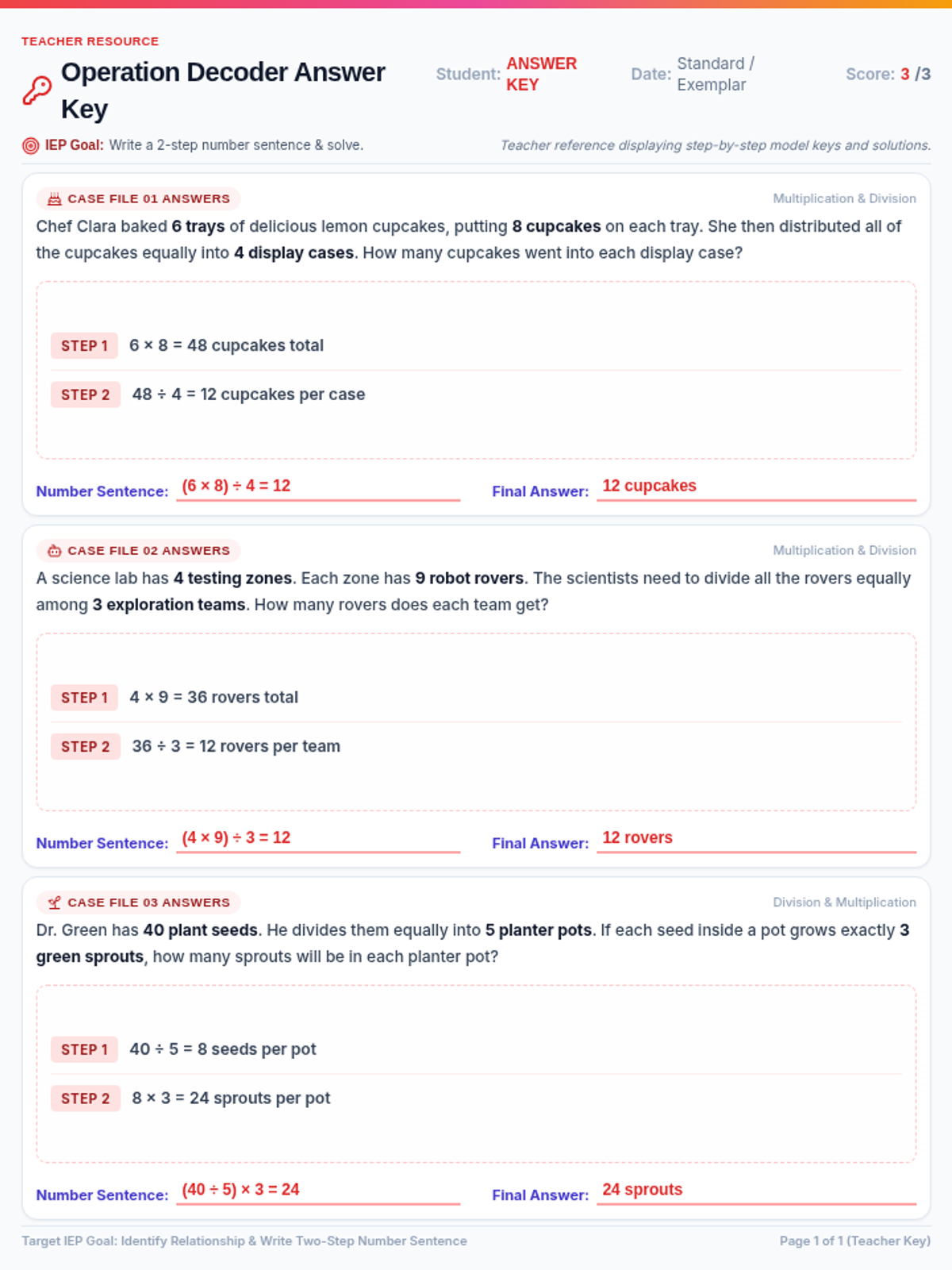
A math lesson focused on solving two-step story problems involving multiplication and division. Students practice translating complex word scenarios into clear mathematical relationships and algebraic number sentences.
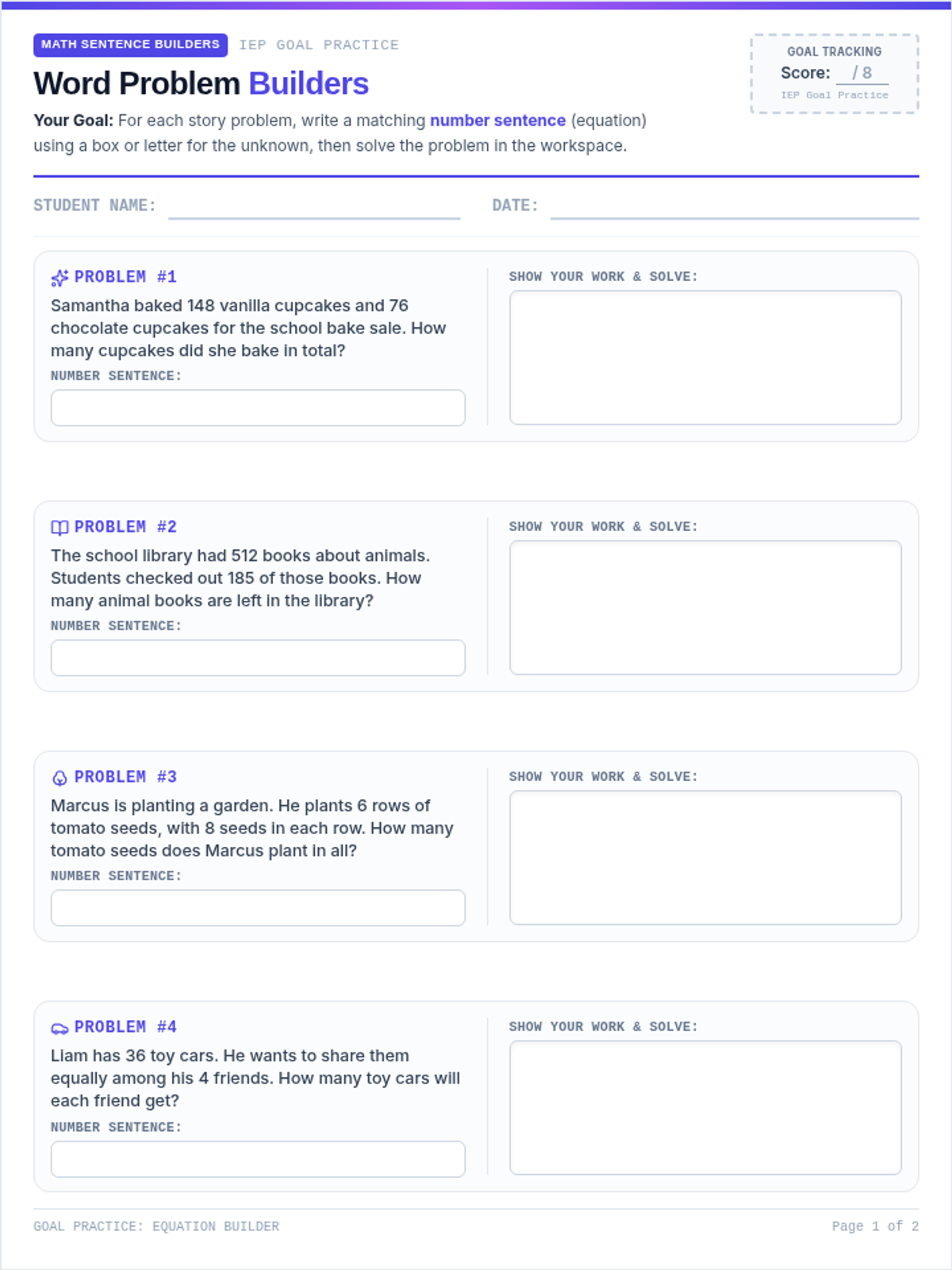
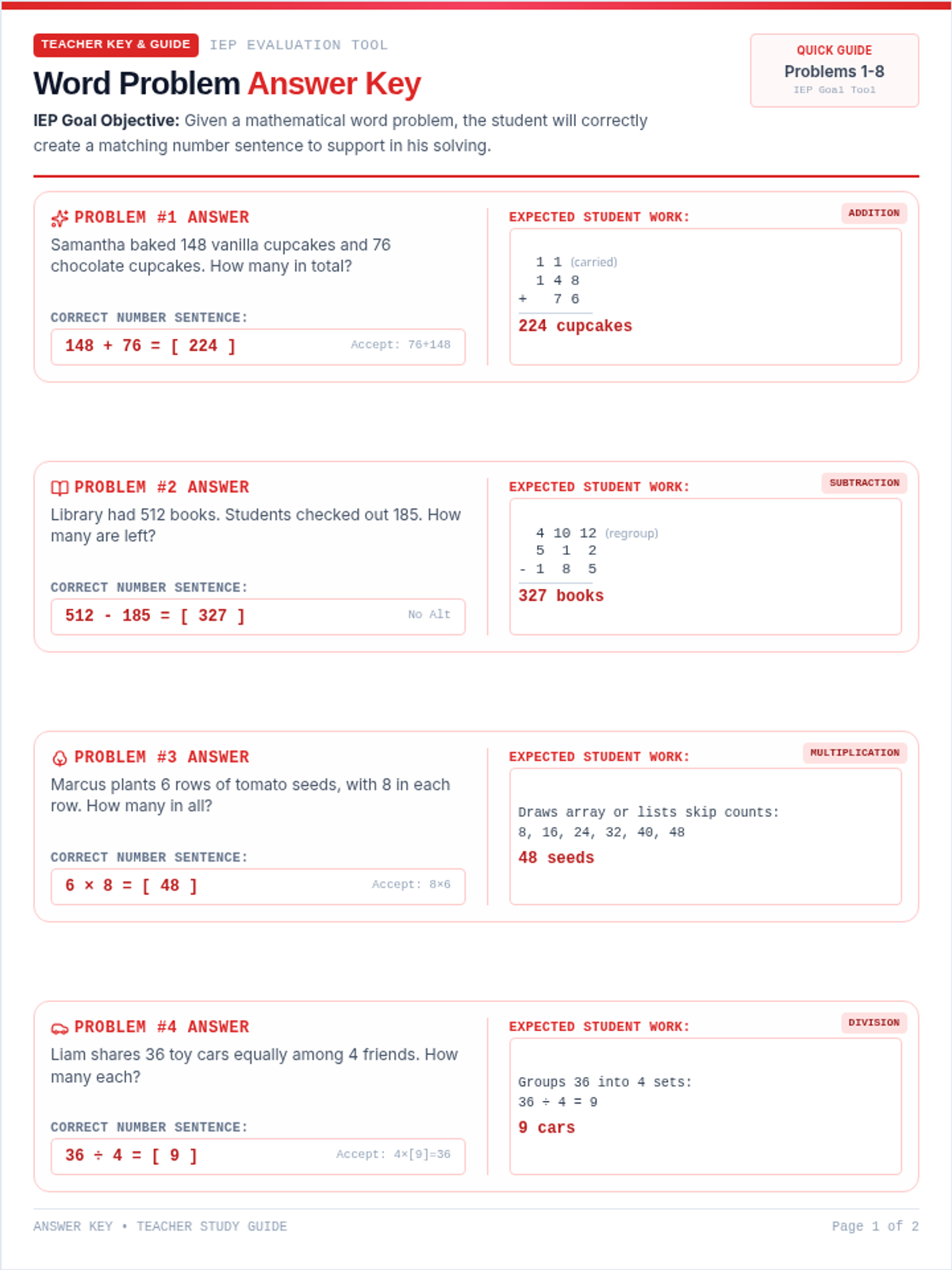
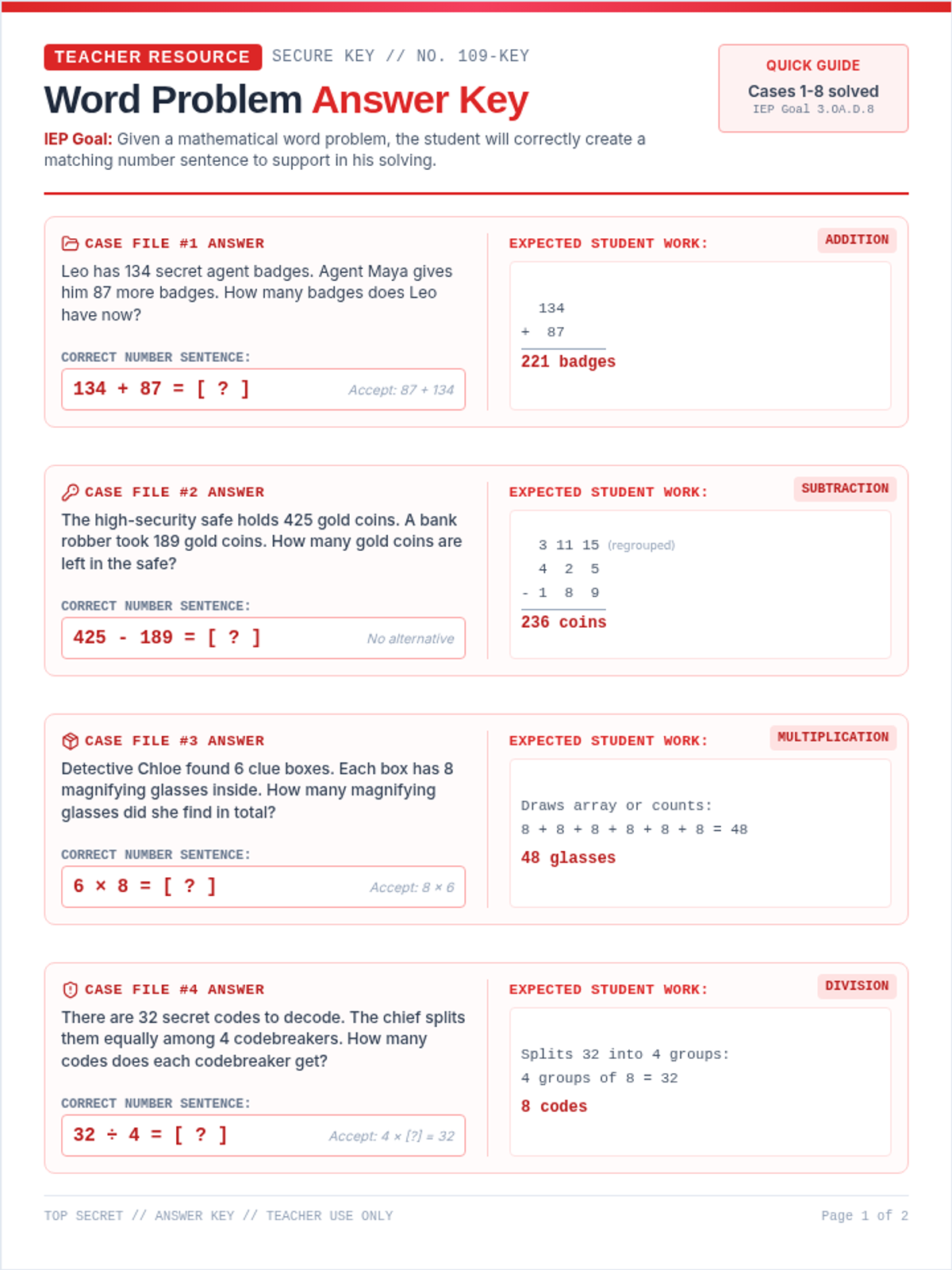
A targeted 3rd-grade lesson designed to help students decode word problems into mathematical equations. This lesson features a student-facing word problem worksheet and a matching teacher answer key with an IEP tracking rubric to measure progress toward writing number sentences across all four basic operations.