A lesson teaching students how to find the missing side length of a rectangular prism when given the volume and two fractional or mixed-number dimensions. The lesson includes high-impact desktop guides and task-analyzed checklists for scaffolding.
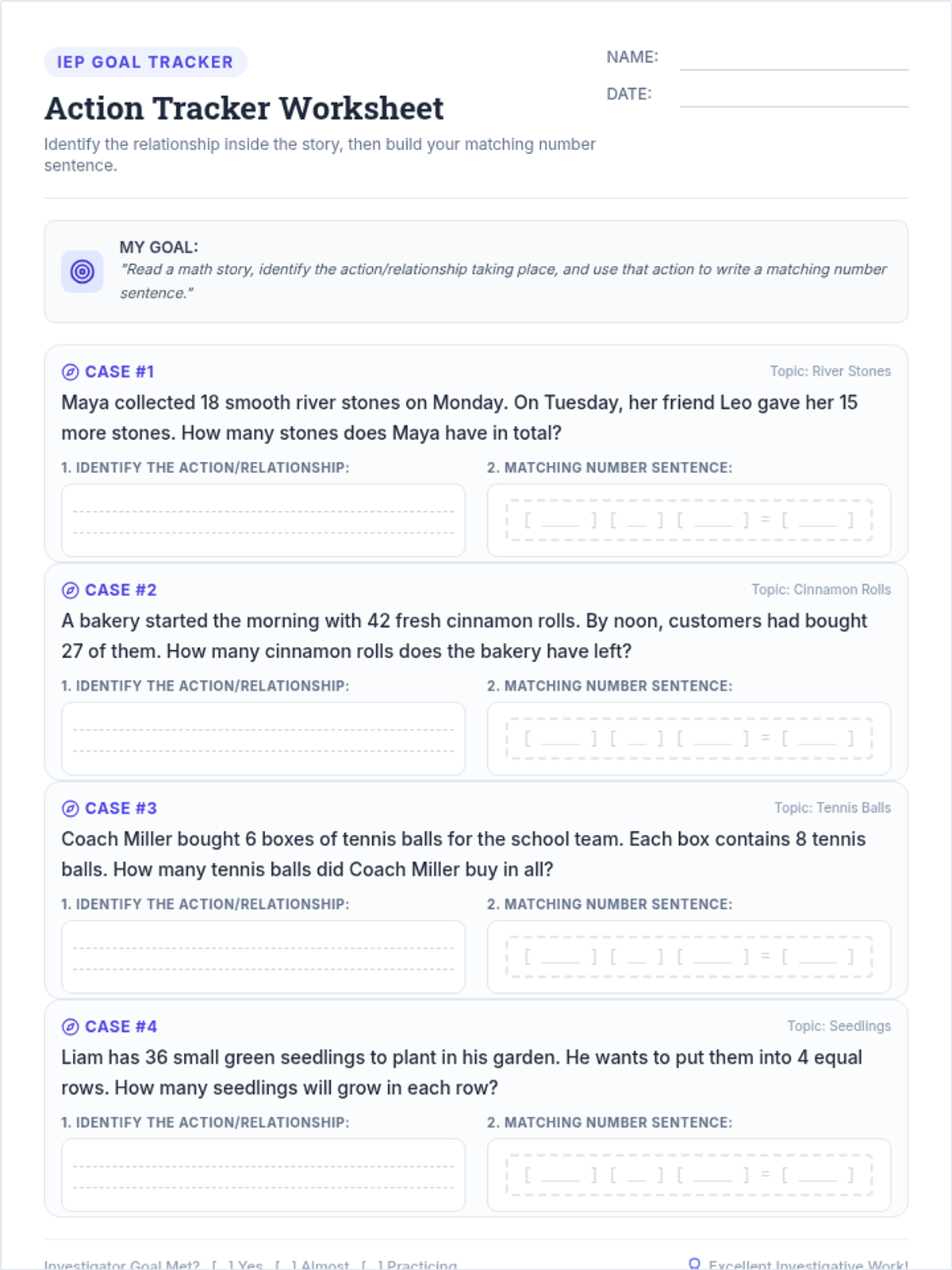
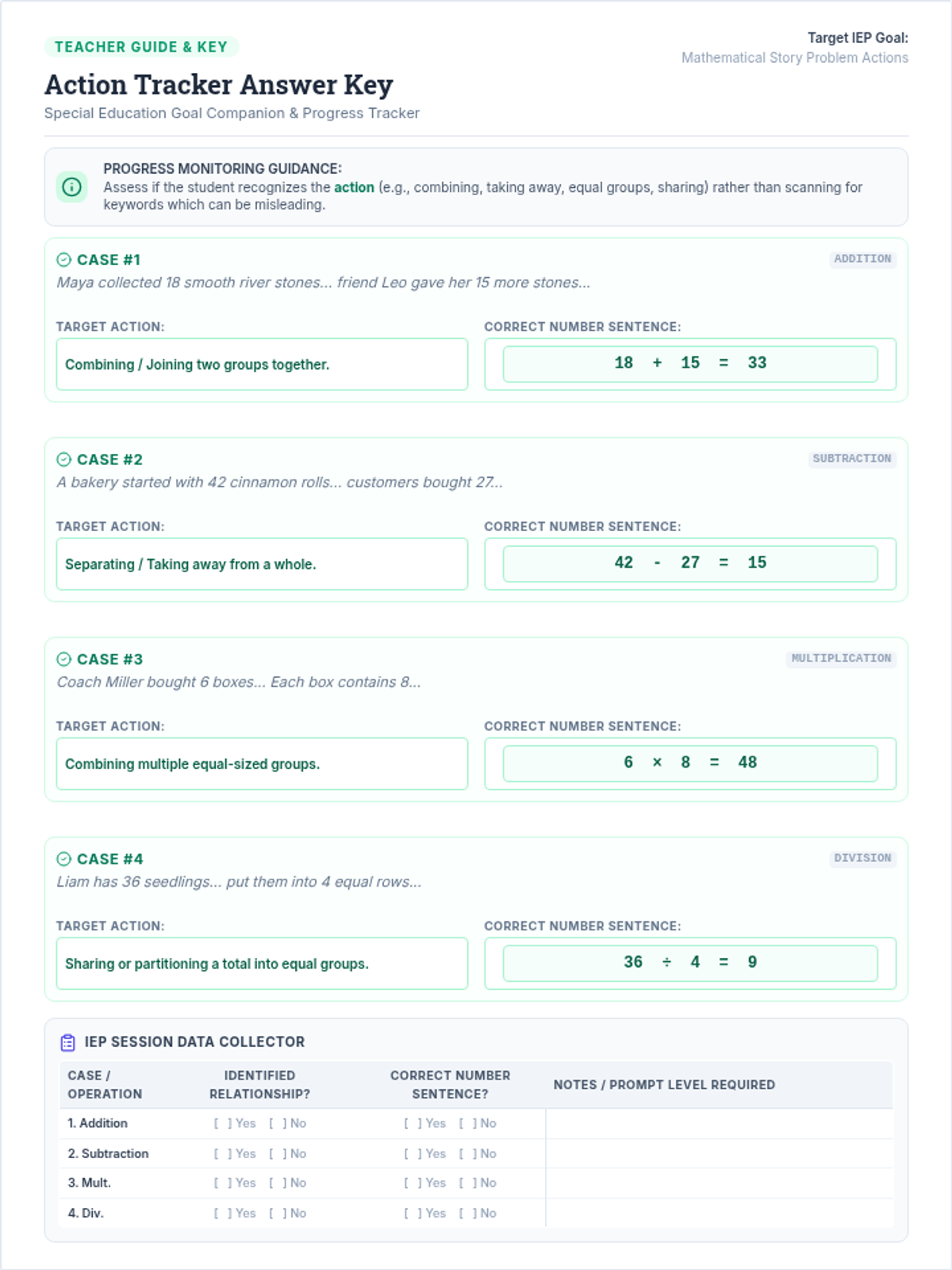
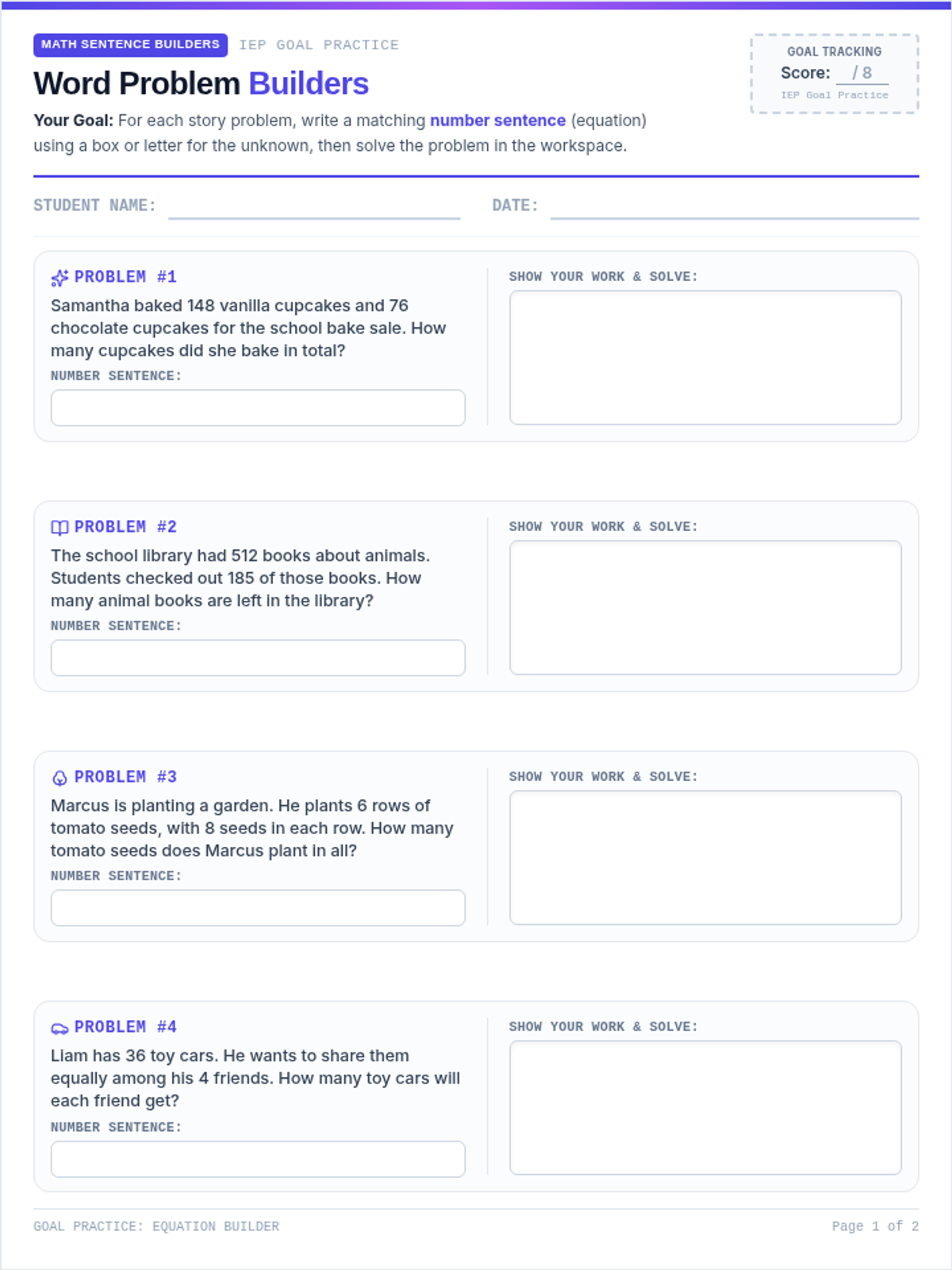
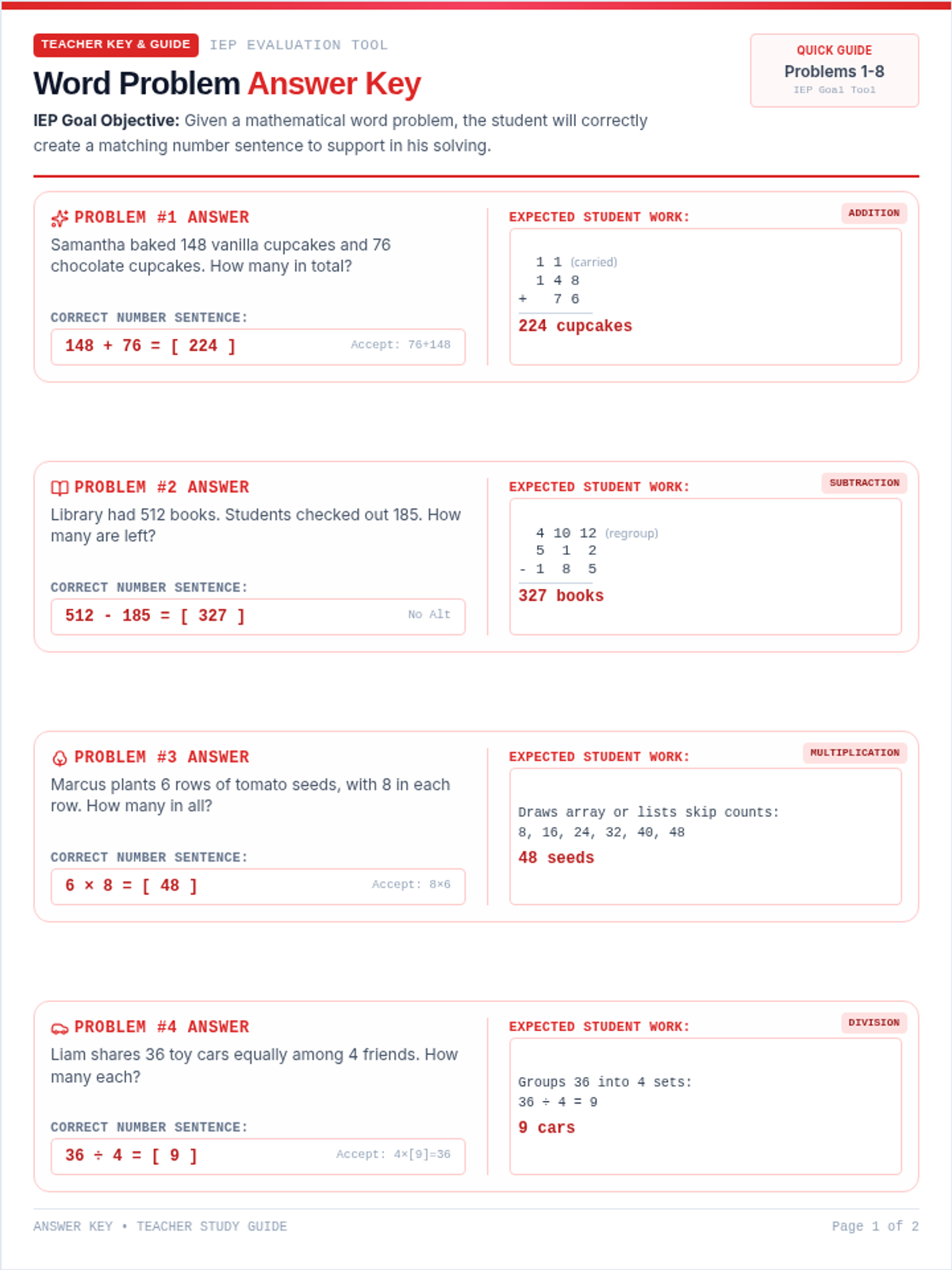
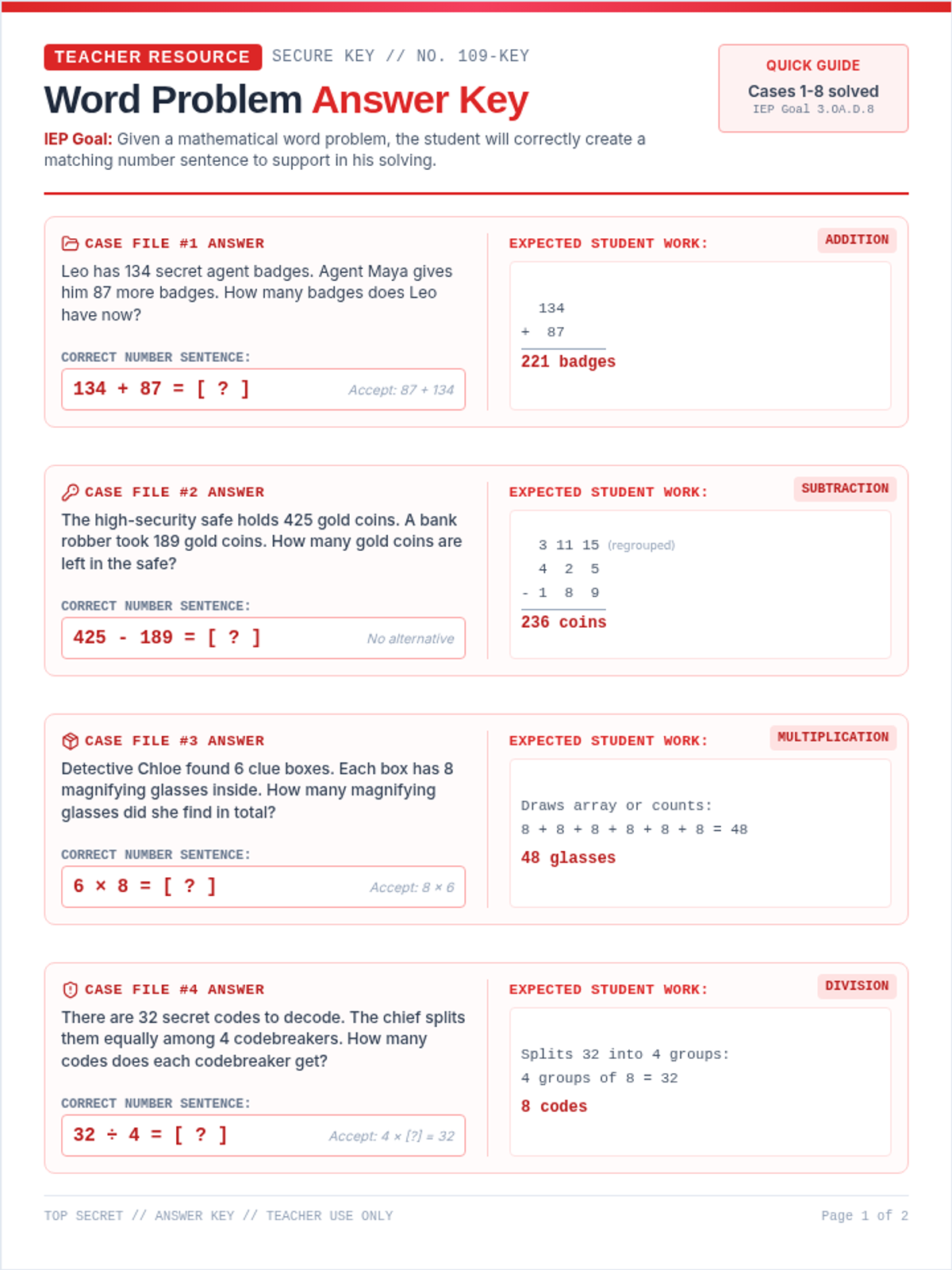
A targeted lesson designed to help students analyze word problems, identify the underlying action or relationship (joining, separating, grouping, or sharing), and translate them into correct number sentences across all four basic operations.
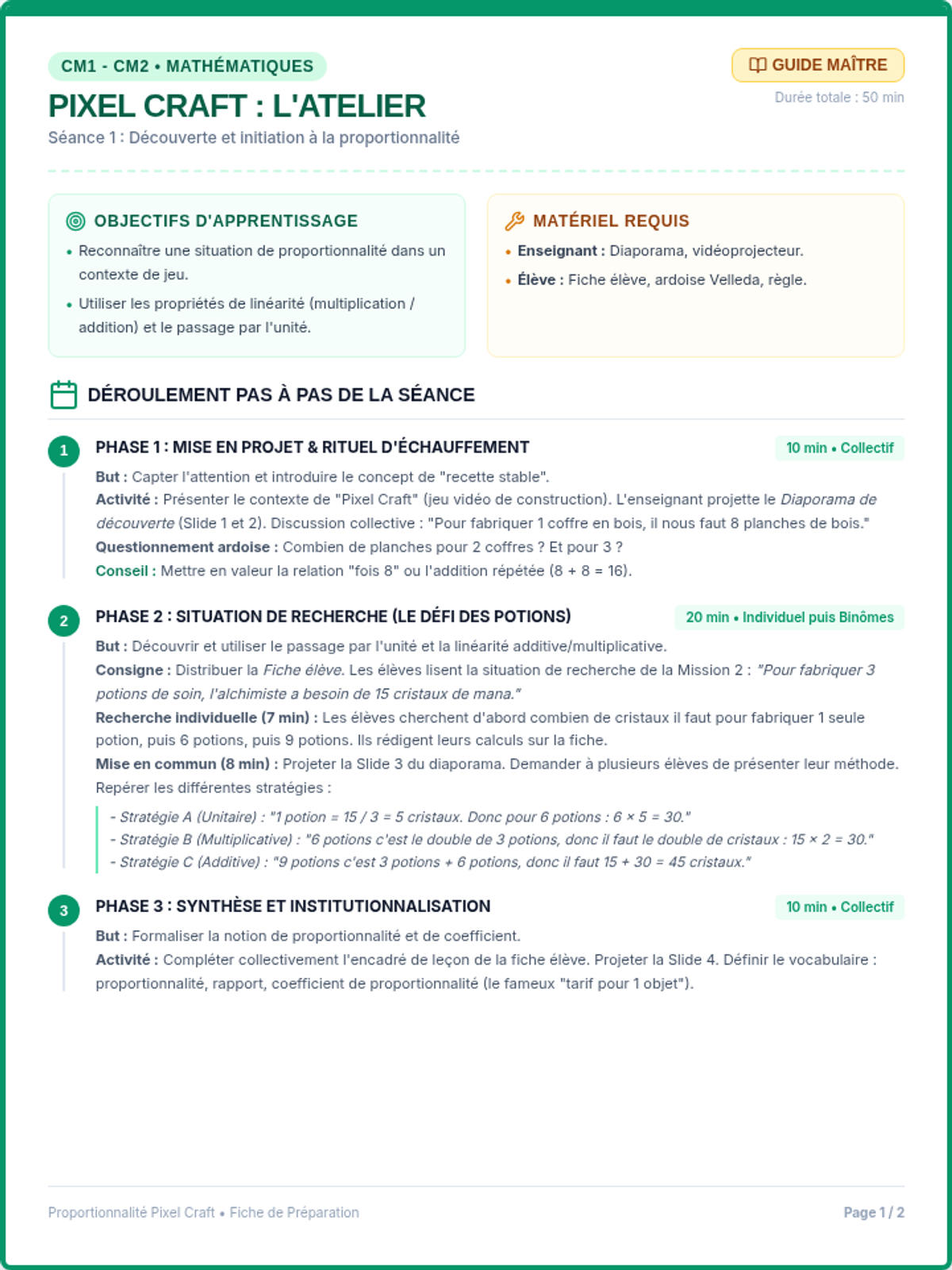
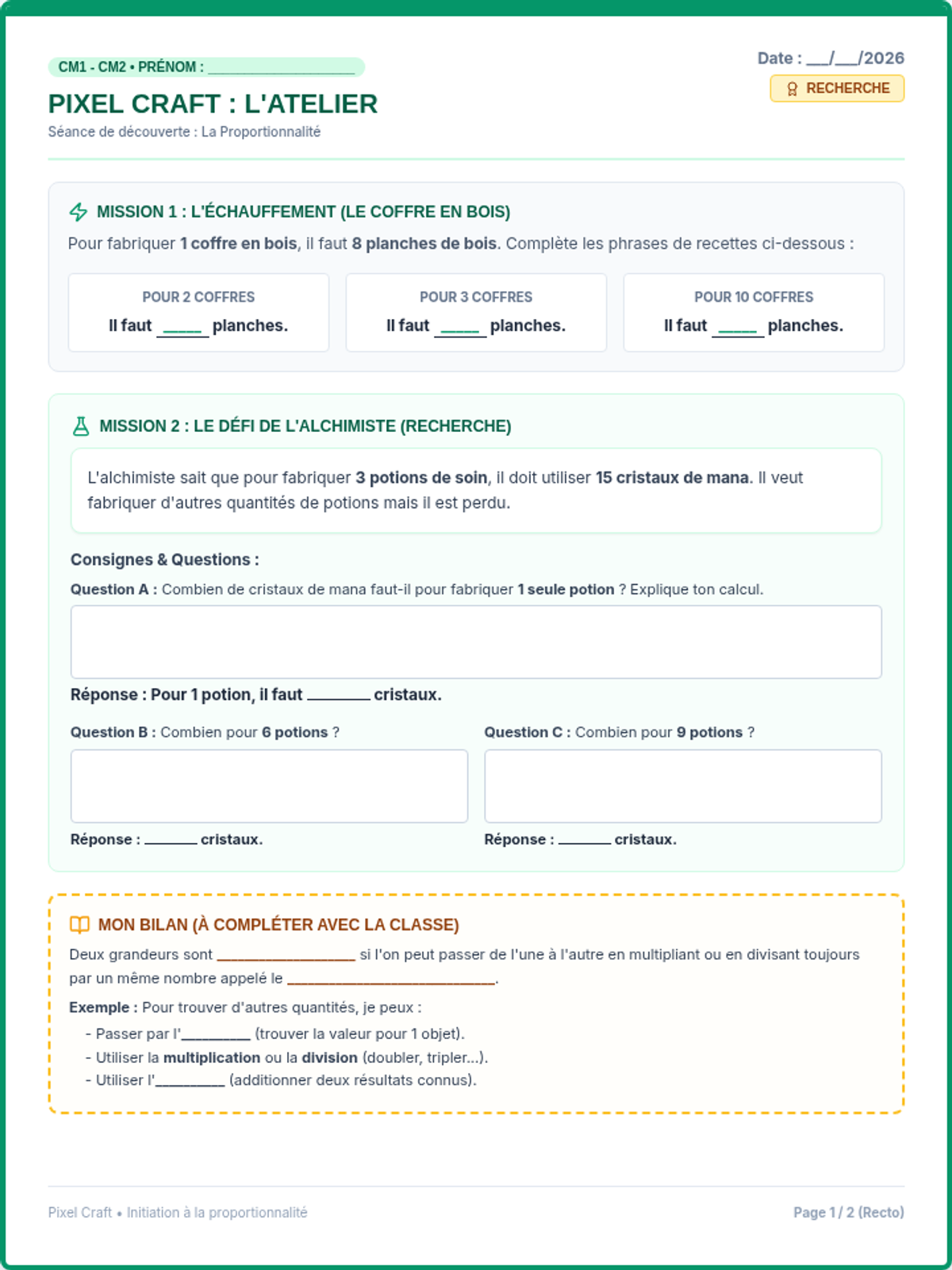
Première séance d'introduction à la proportionnalité. À travers des situations concrètes de fabrication d'objets dans un jeu vidéo, les élèves construisent le concept de proportionnalité, découvrent les notions de linéarité additive et multiplicative, ainsi que le passage par l'unité.
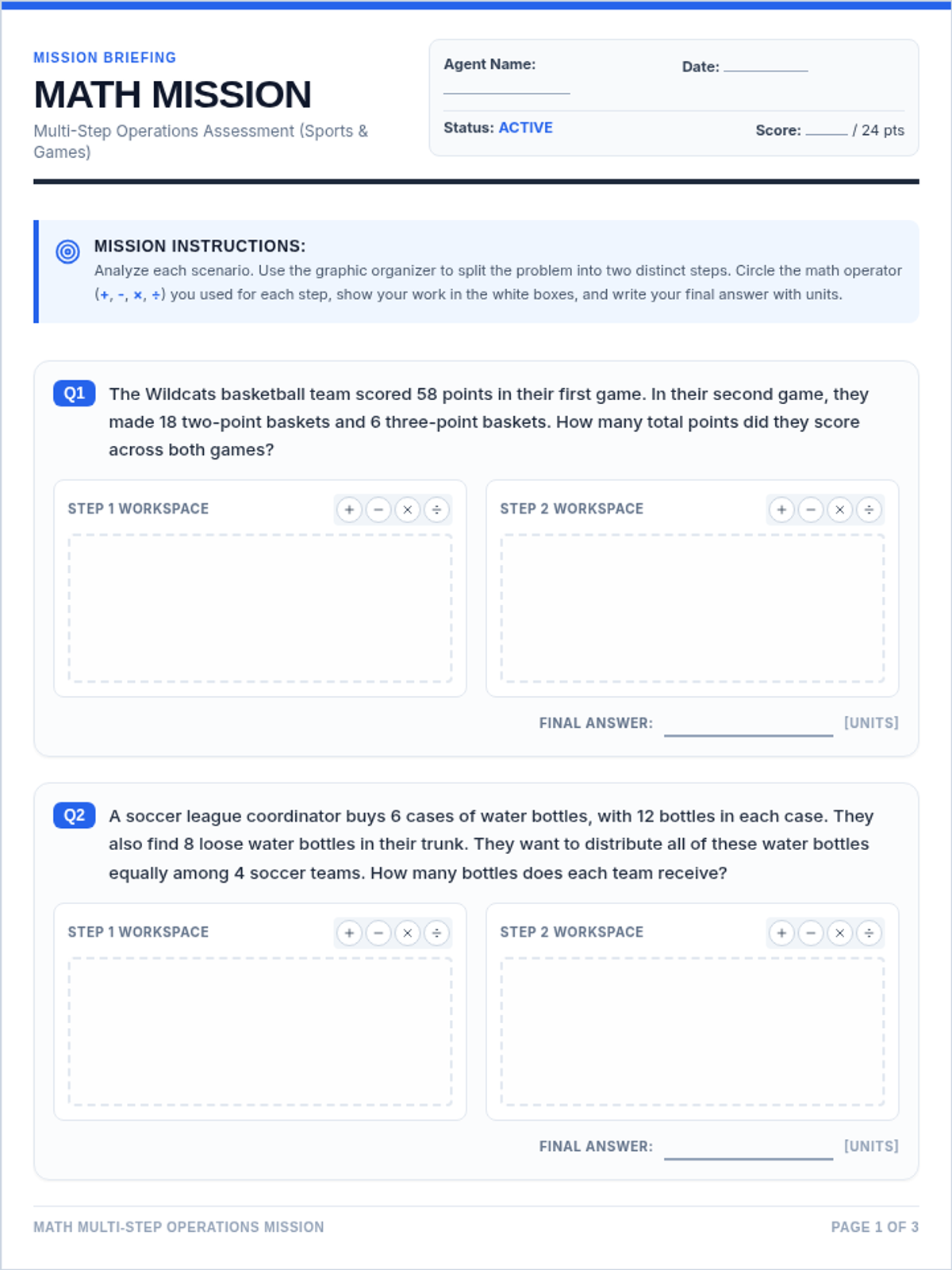
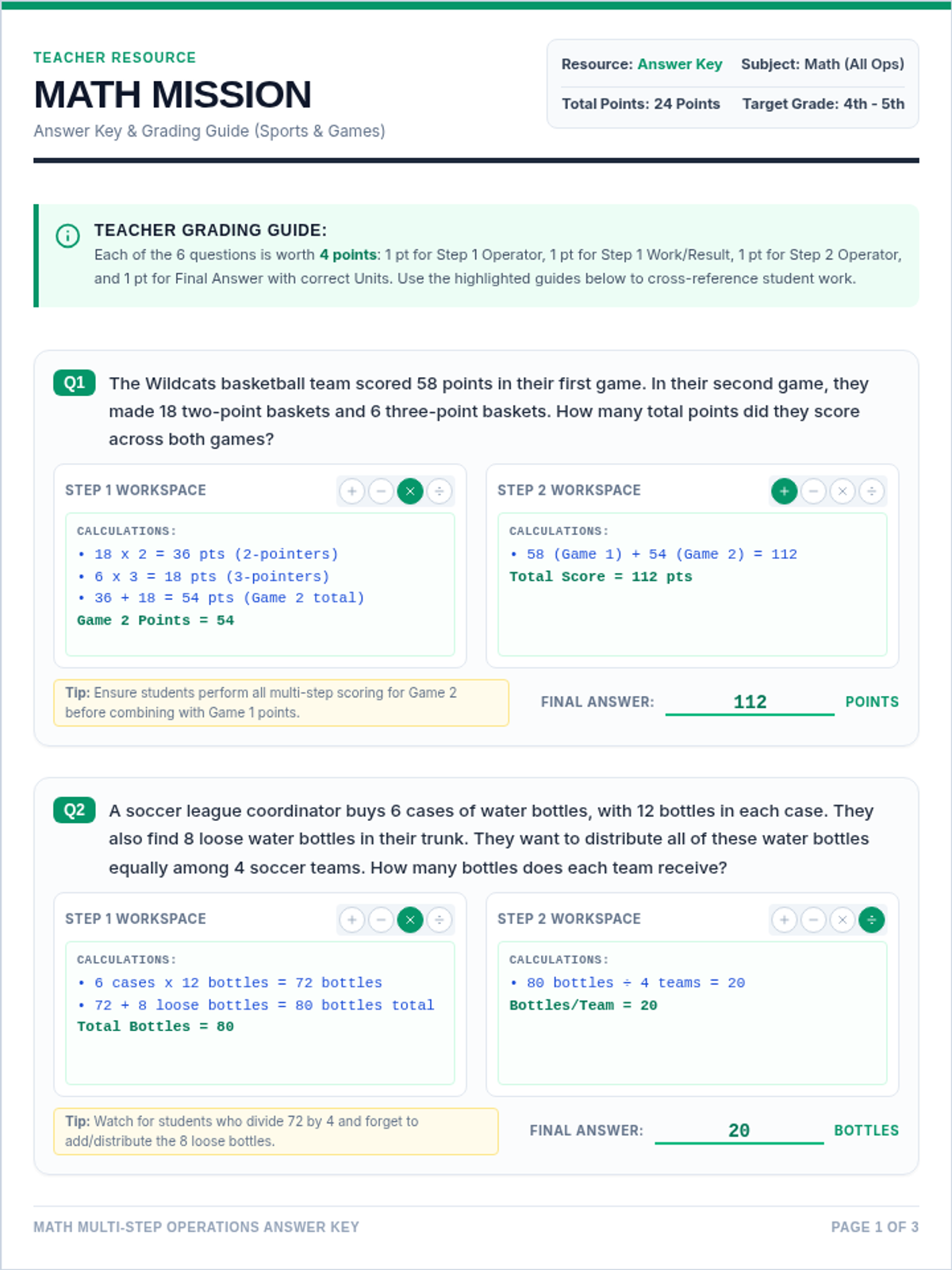
An assessment on solving multi-step word problems using all four operations. Includes a graphic-organizer-based student worksheet and a detailed teacher answer key with worked solutions.
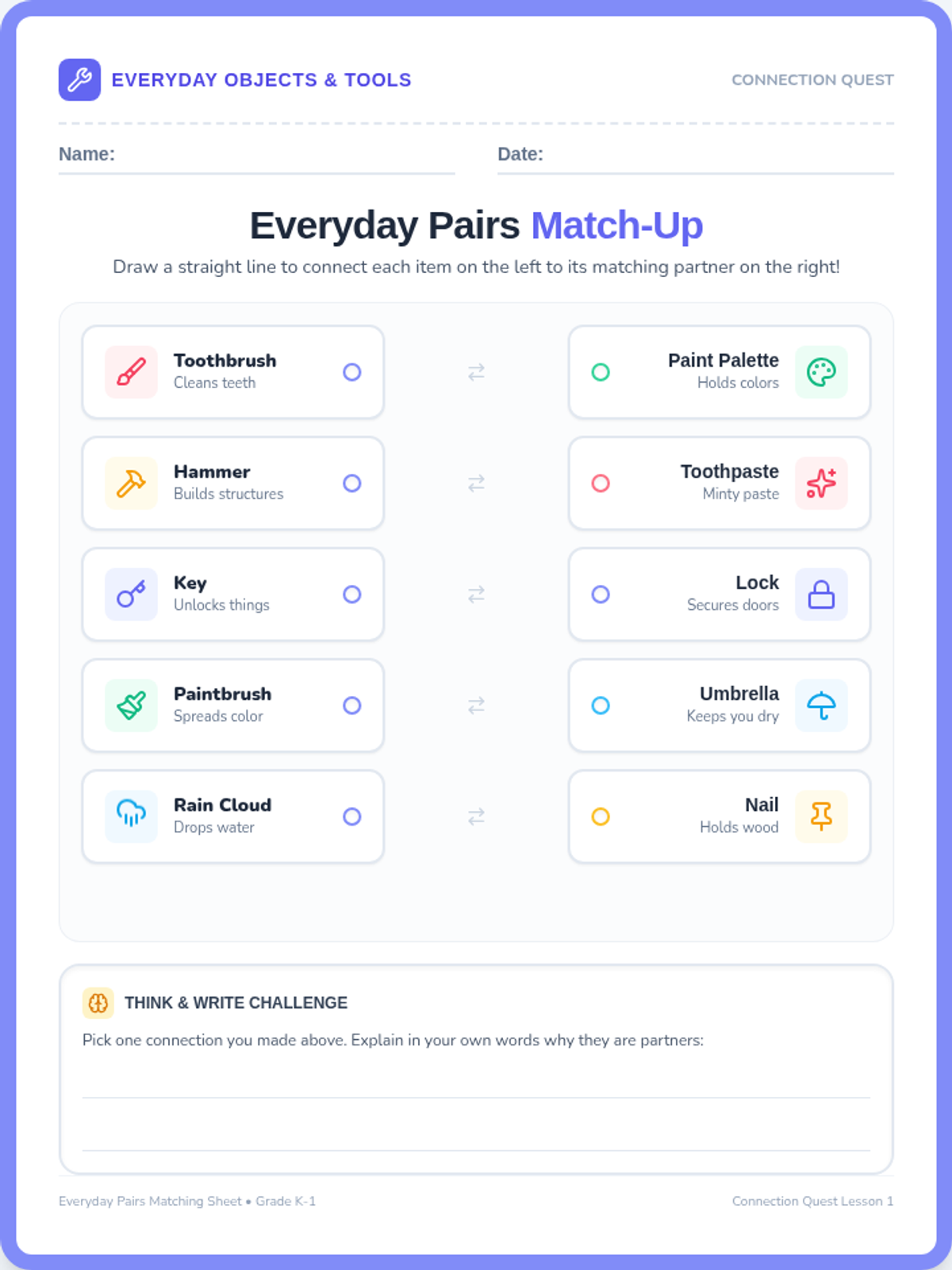
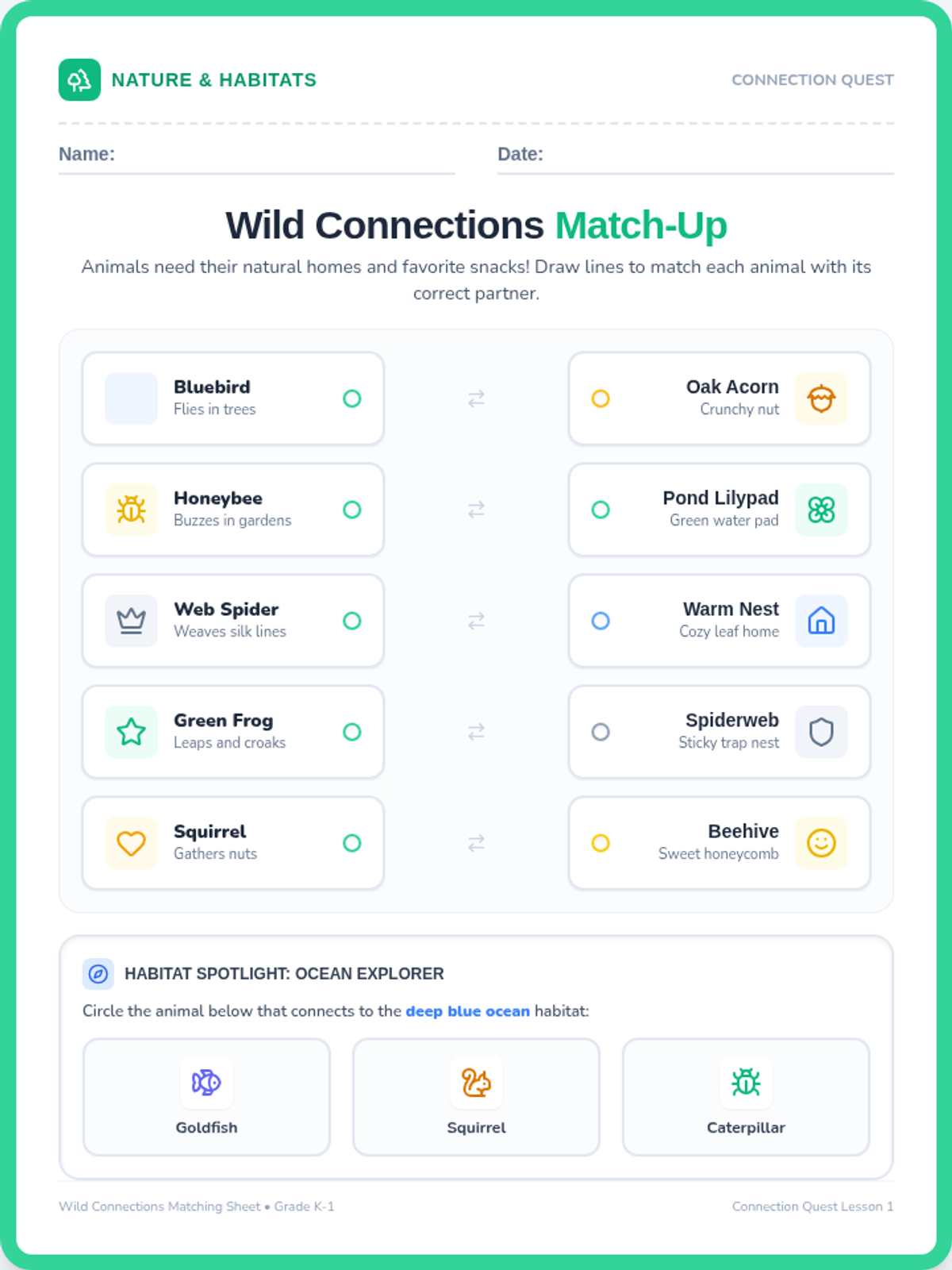
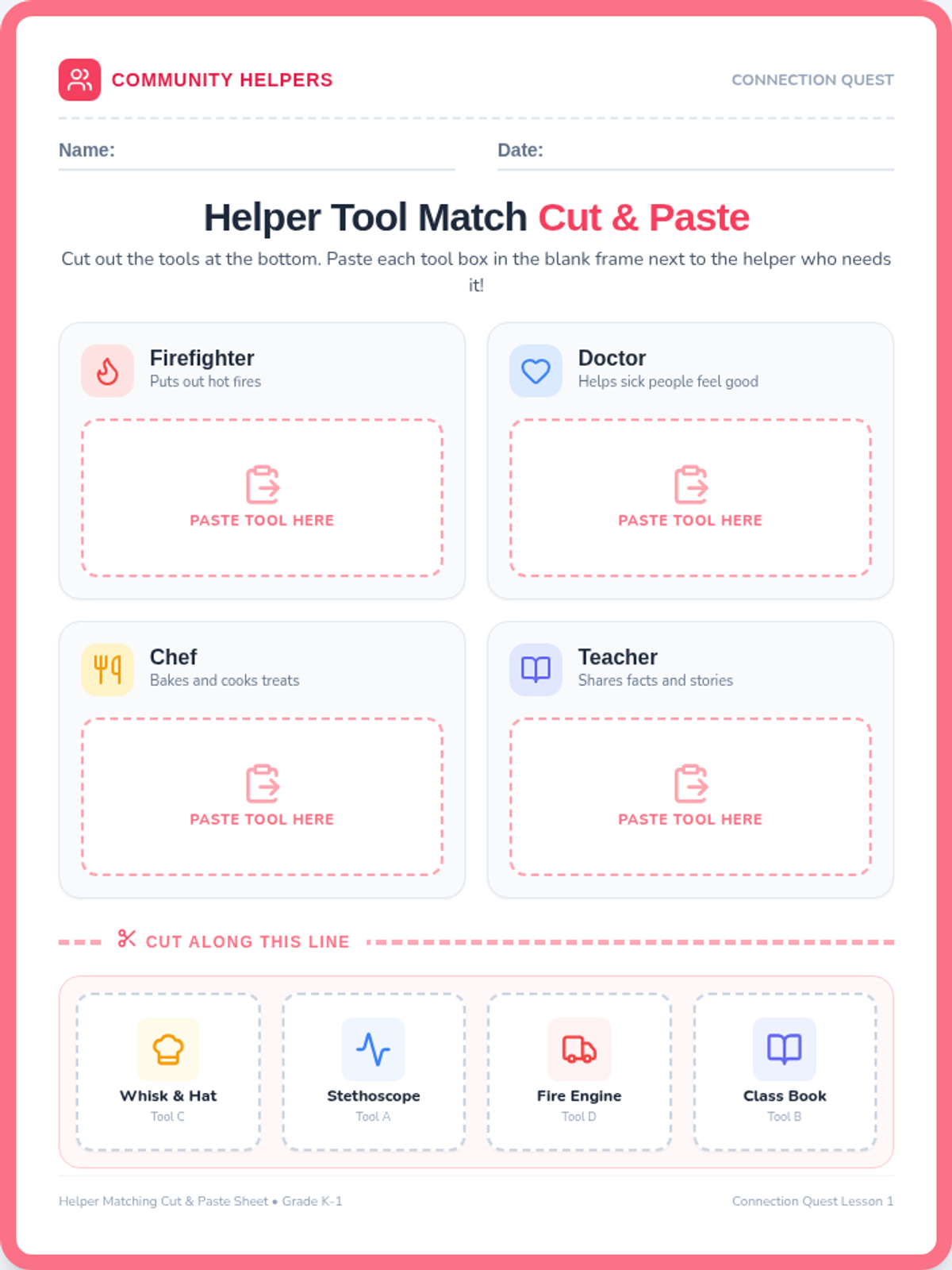
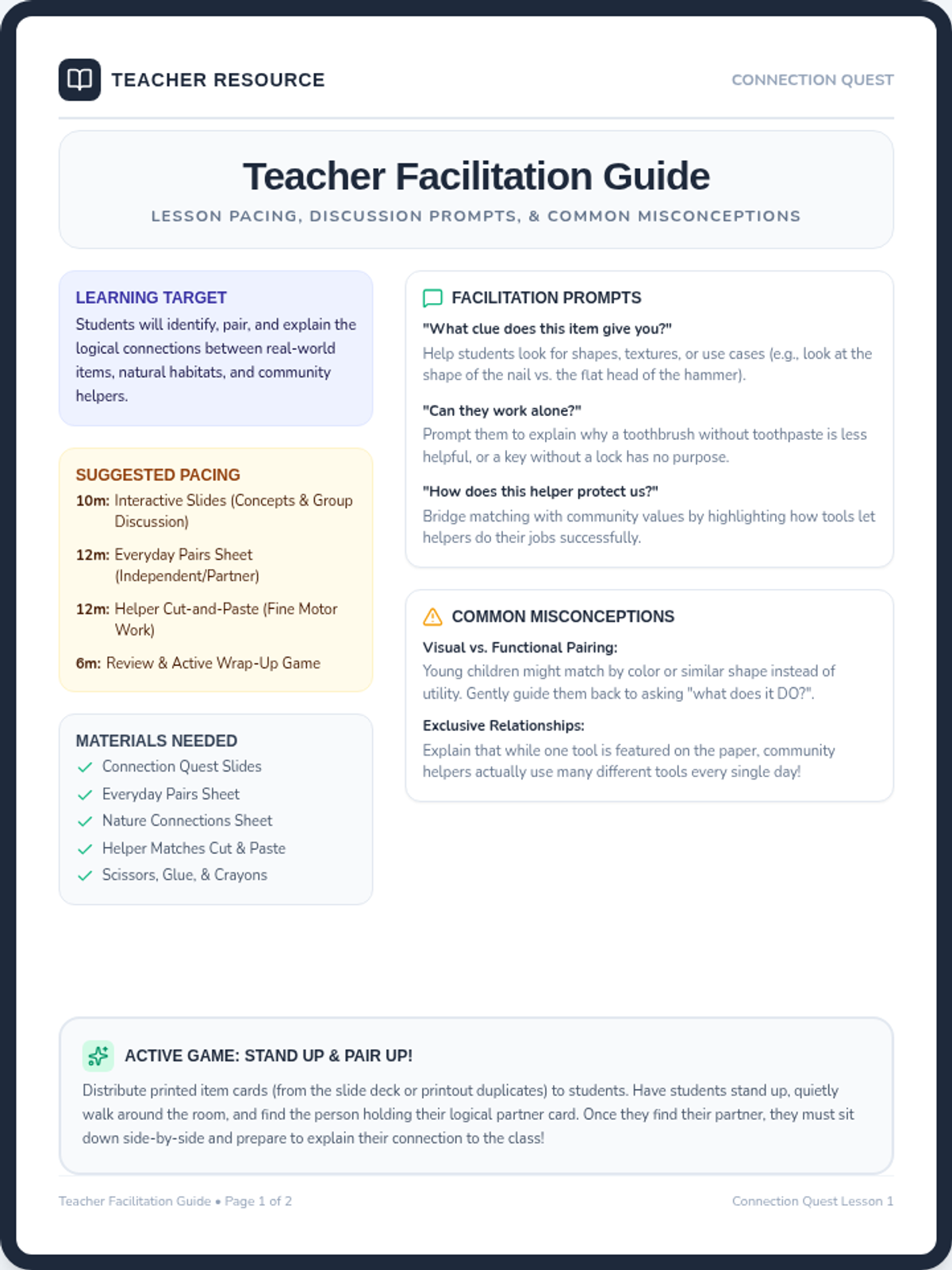
A foundational lesson exploring how objects, animals, and helpers in our world connect. Students learn to identify associations and explain the logical relationships between paired items through interactive slides, drawing lines, and cut-and-paste worksheets.
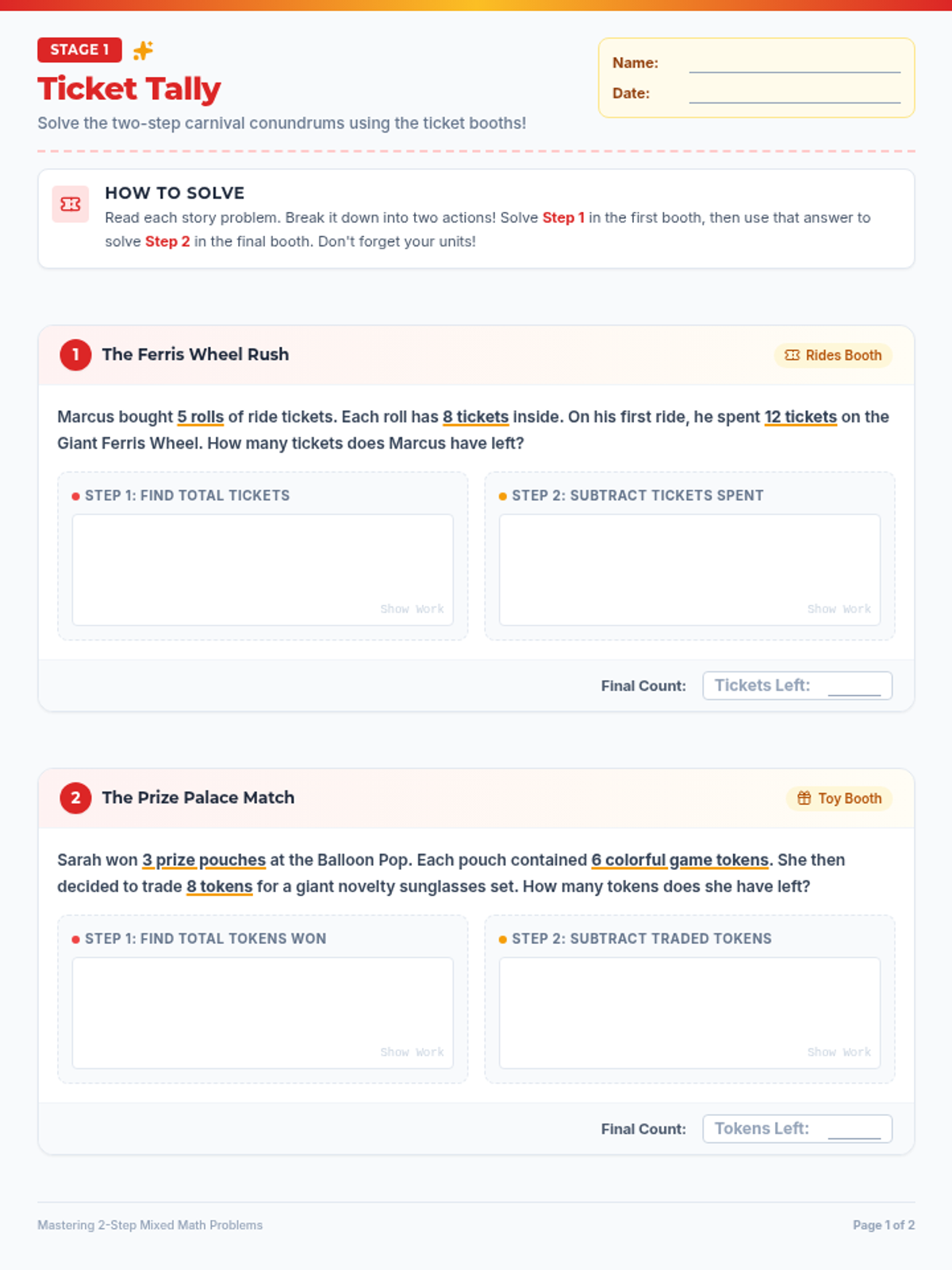
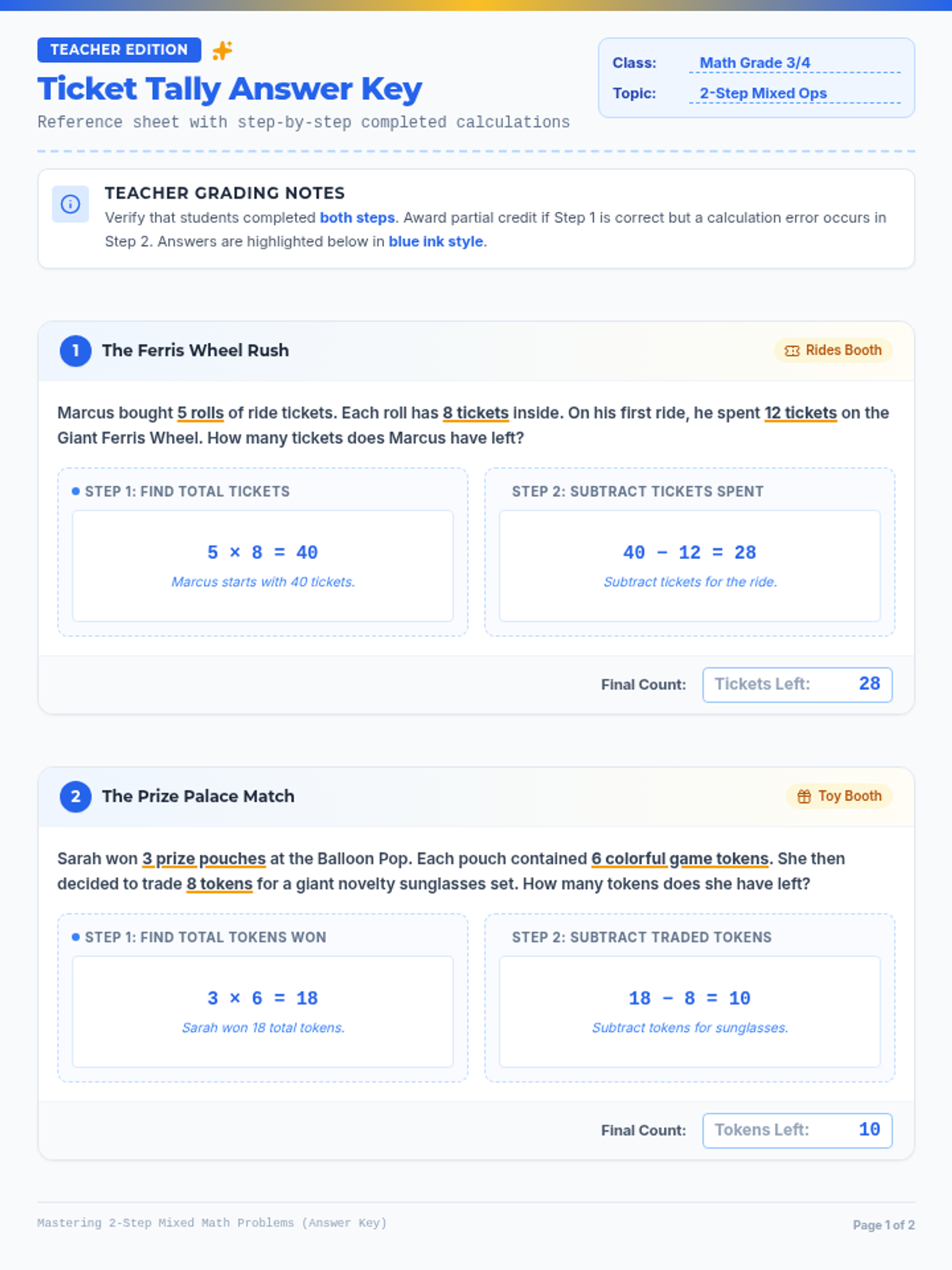
A mathematics lesson focused on breaking down and solving two-step mixed operation word problems. Students use structured graphic organizers themed around carnival ticket purchases, ride costs, and prize booths to master multi-step problem solving.
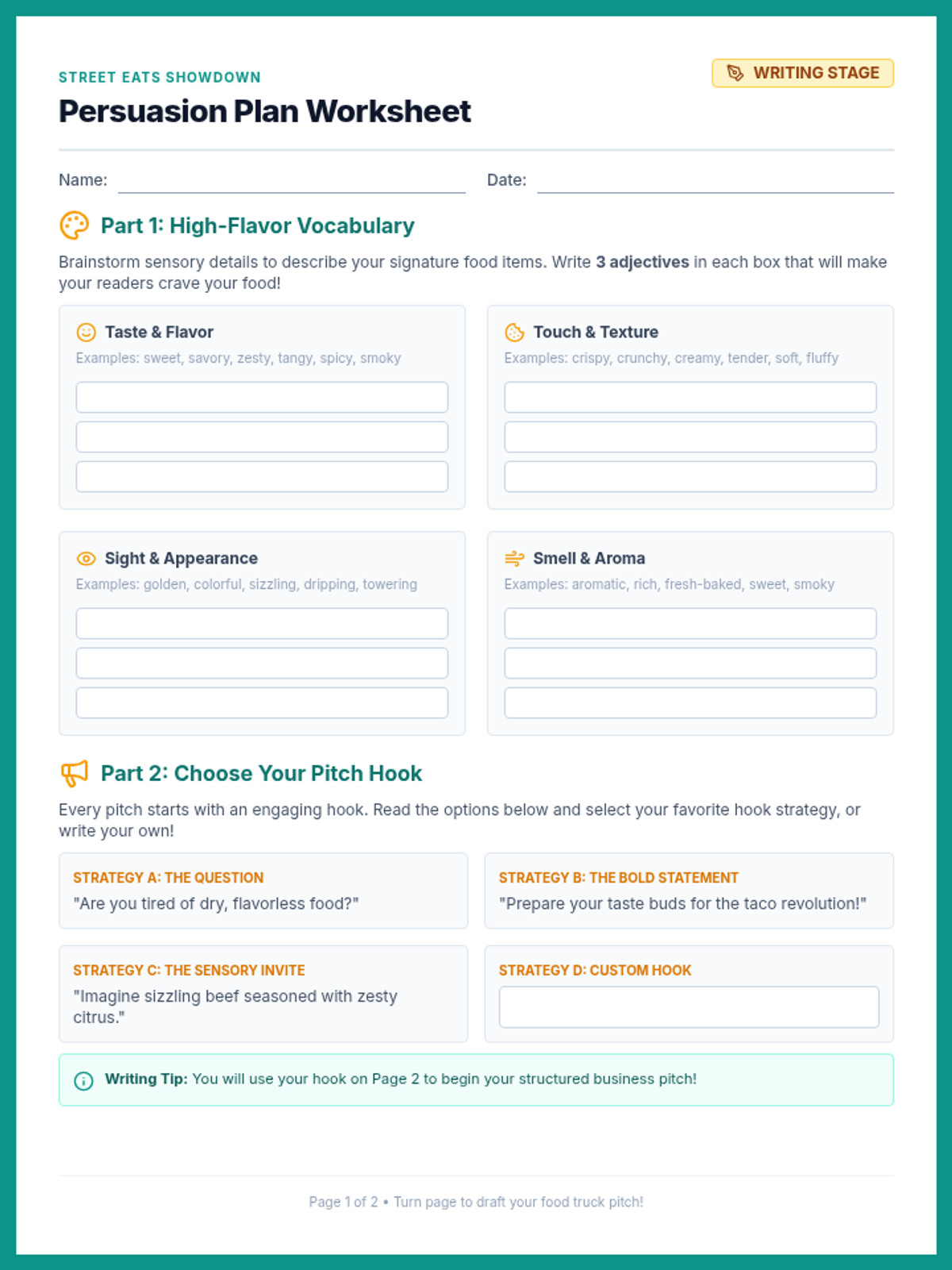
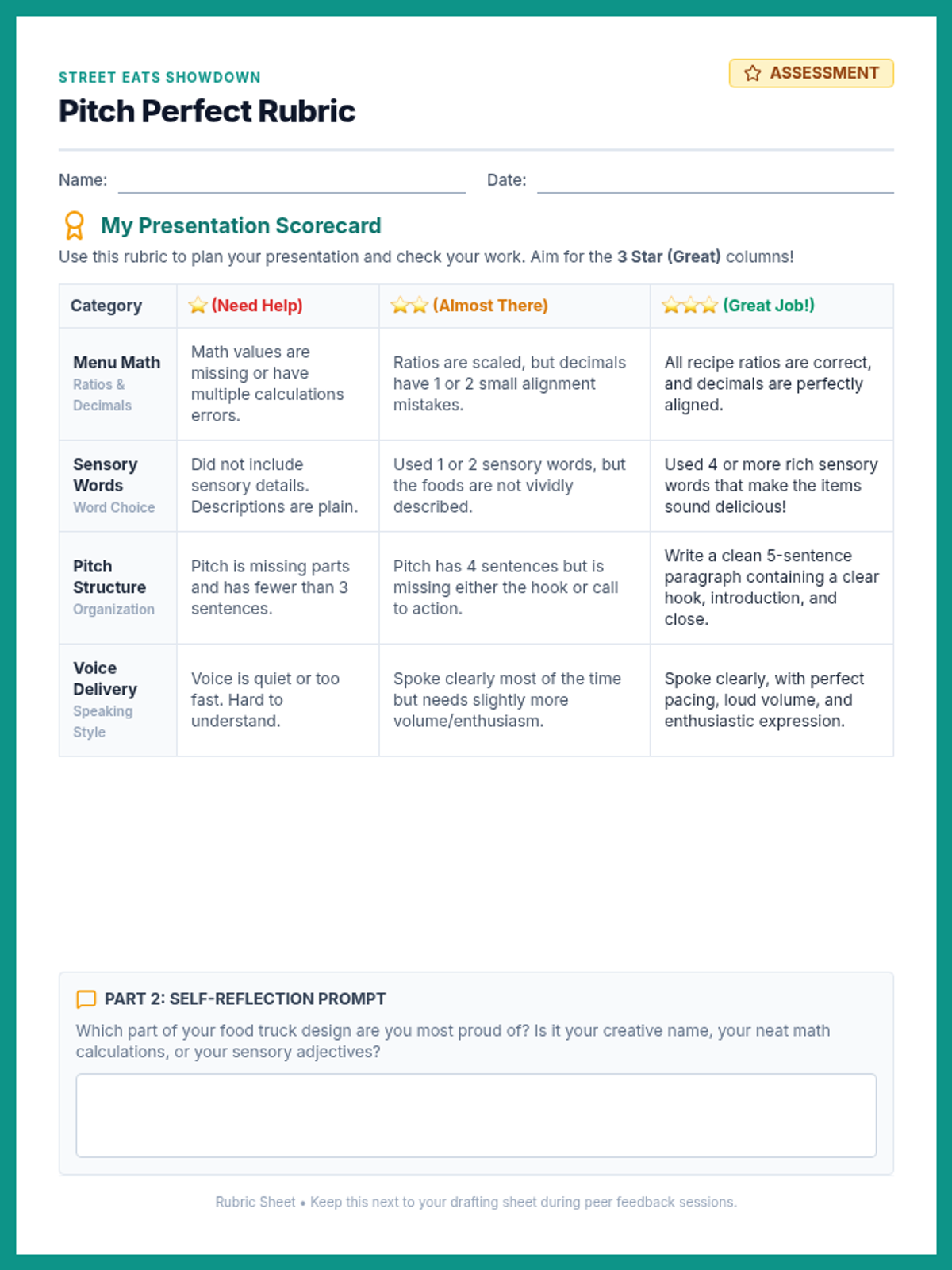
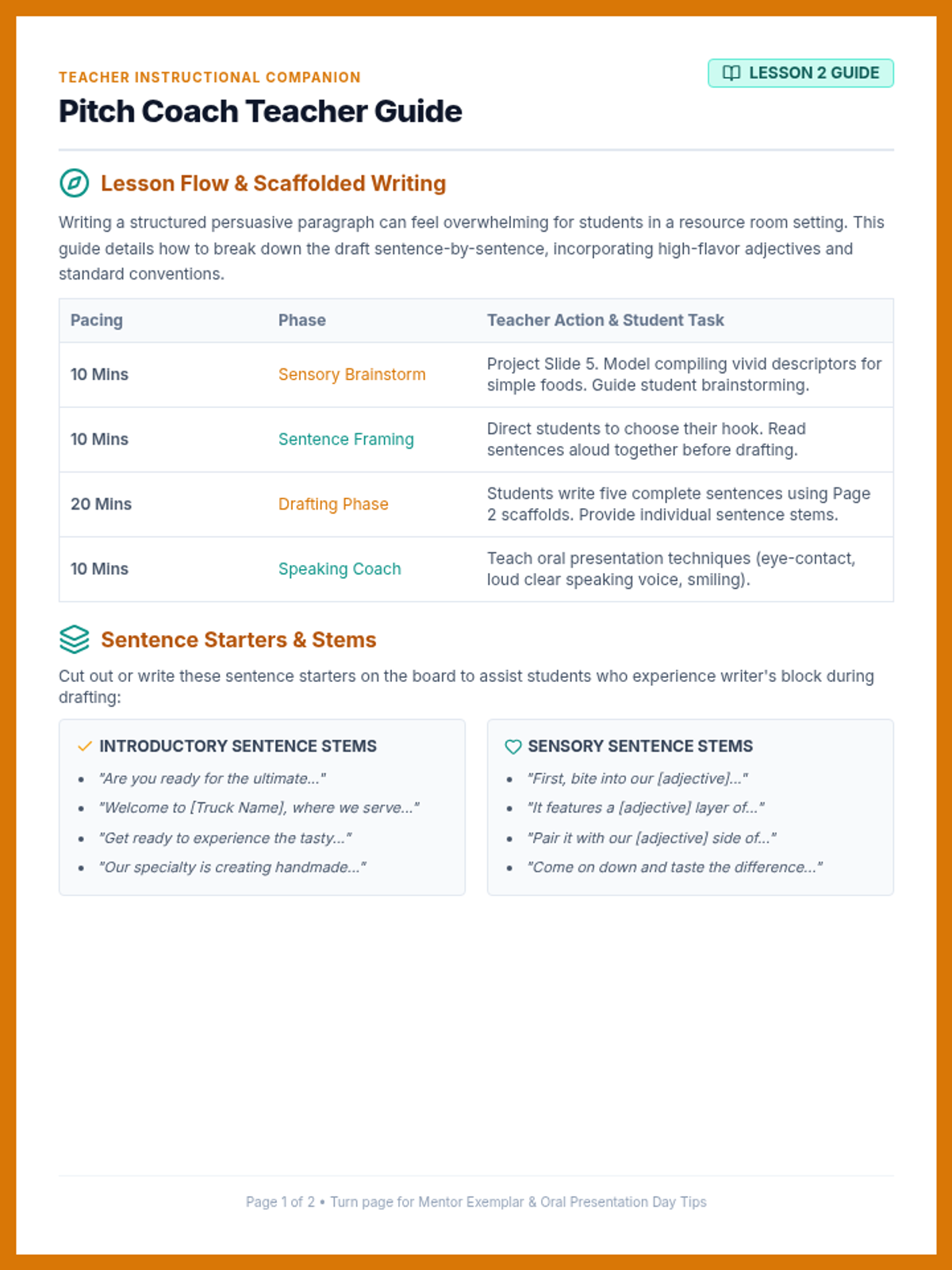
Students research ingredients, draft sensory-rich descriptions, and use structured persuasive paragraph scaffolds to write and present a compelling business pitch.
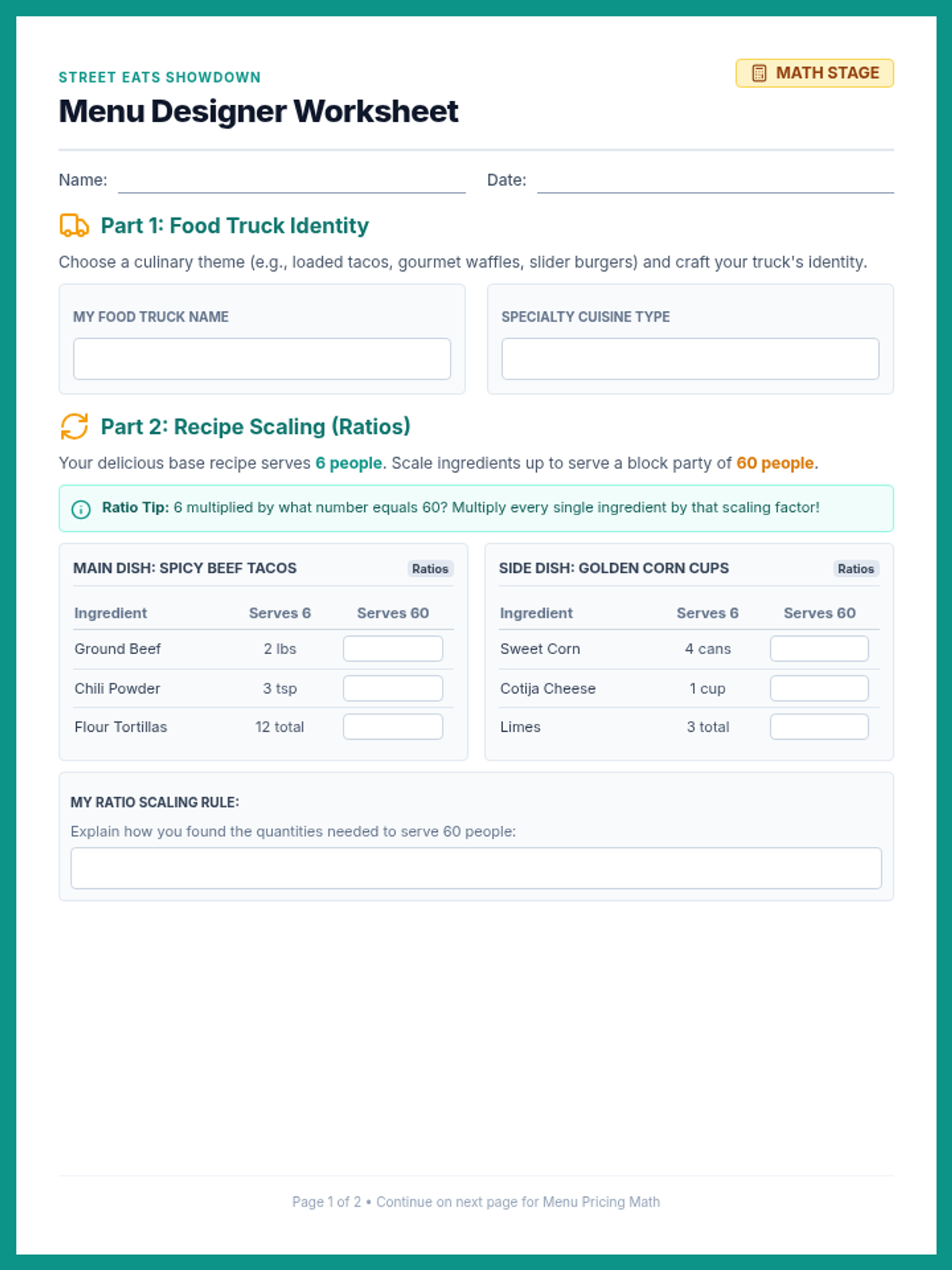
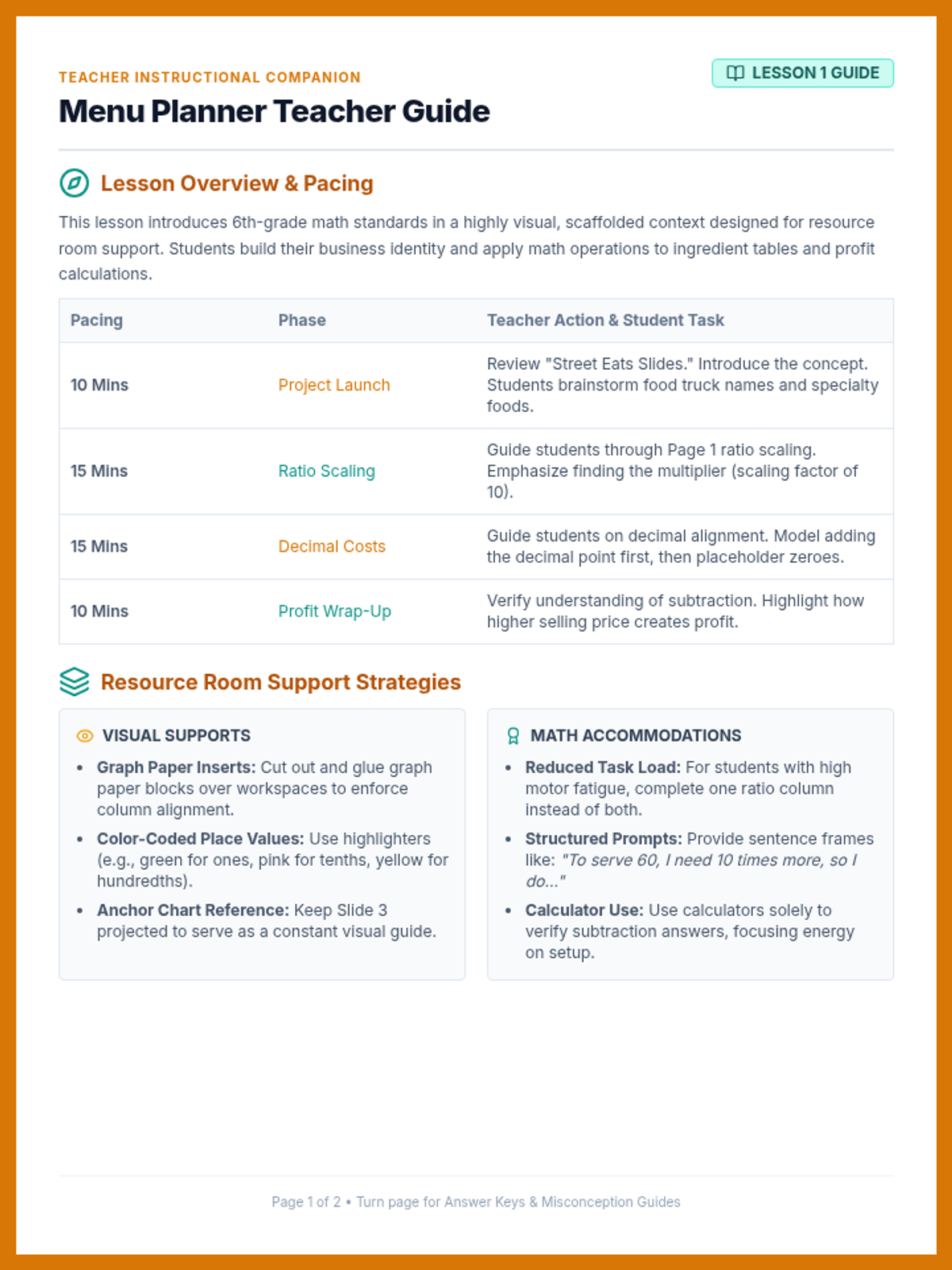
Students calculate ingredient costs, set item prices, and analyze profit margins using decimal operations, and apply ratios to adjust recipe sizes for their custom food truck menus.
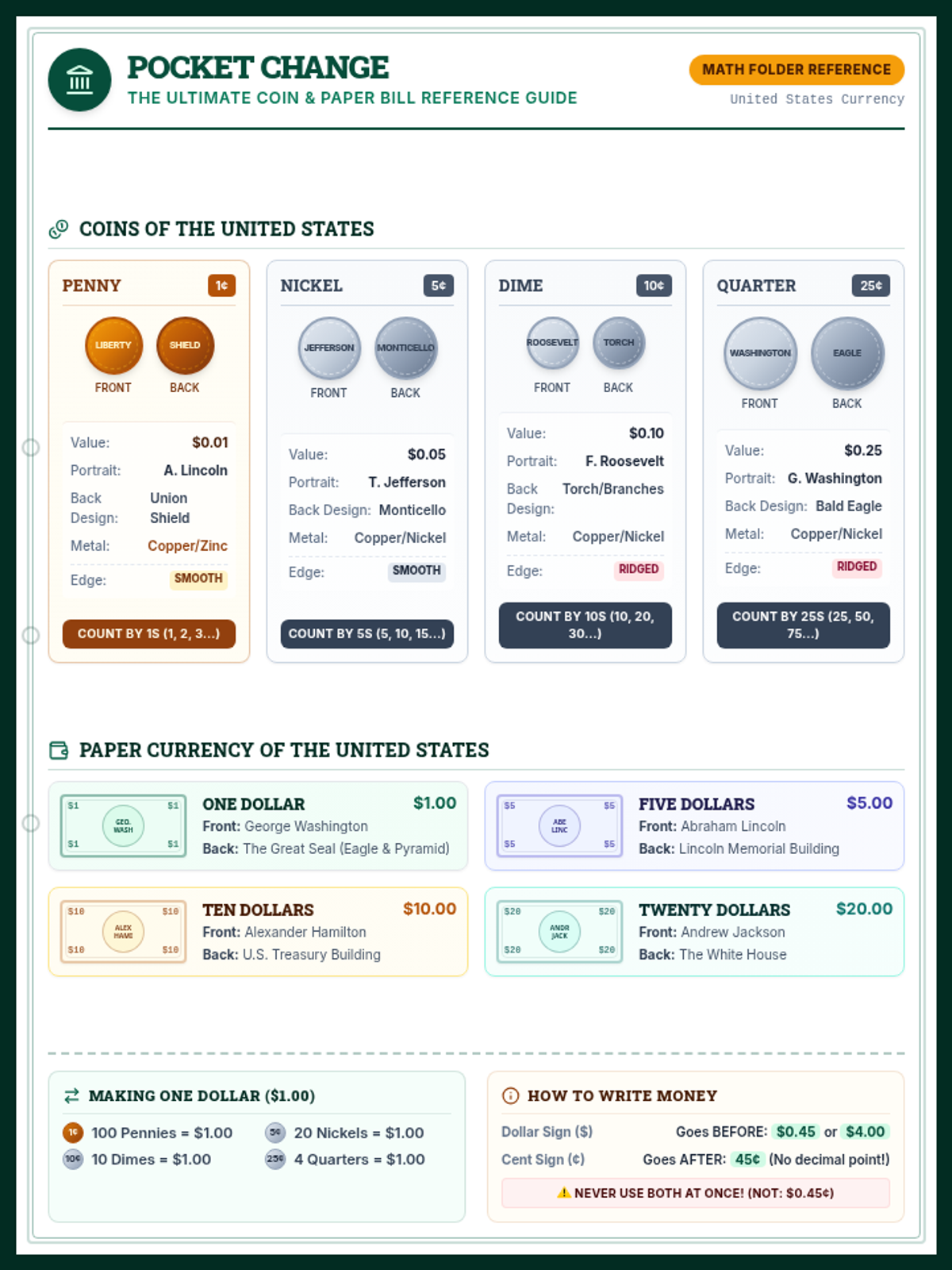
A comprehensive lesson on identifying and understanding US coins and bills, their values, and their key visual features.
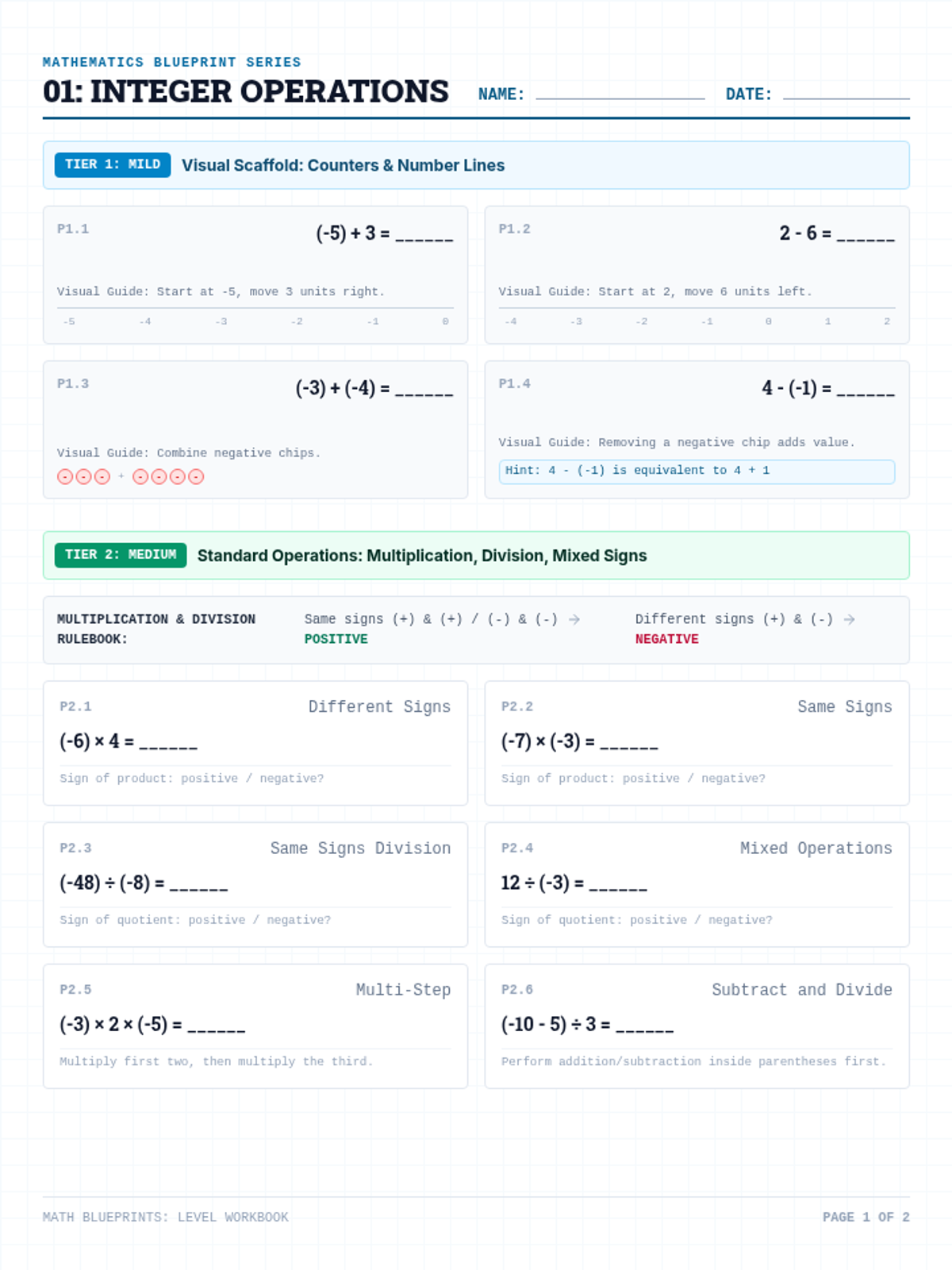
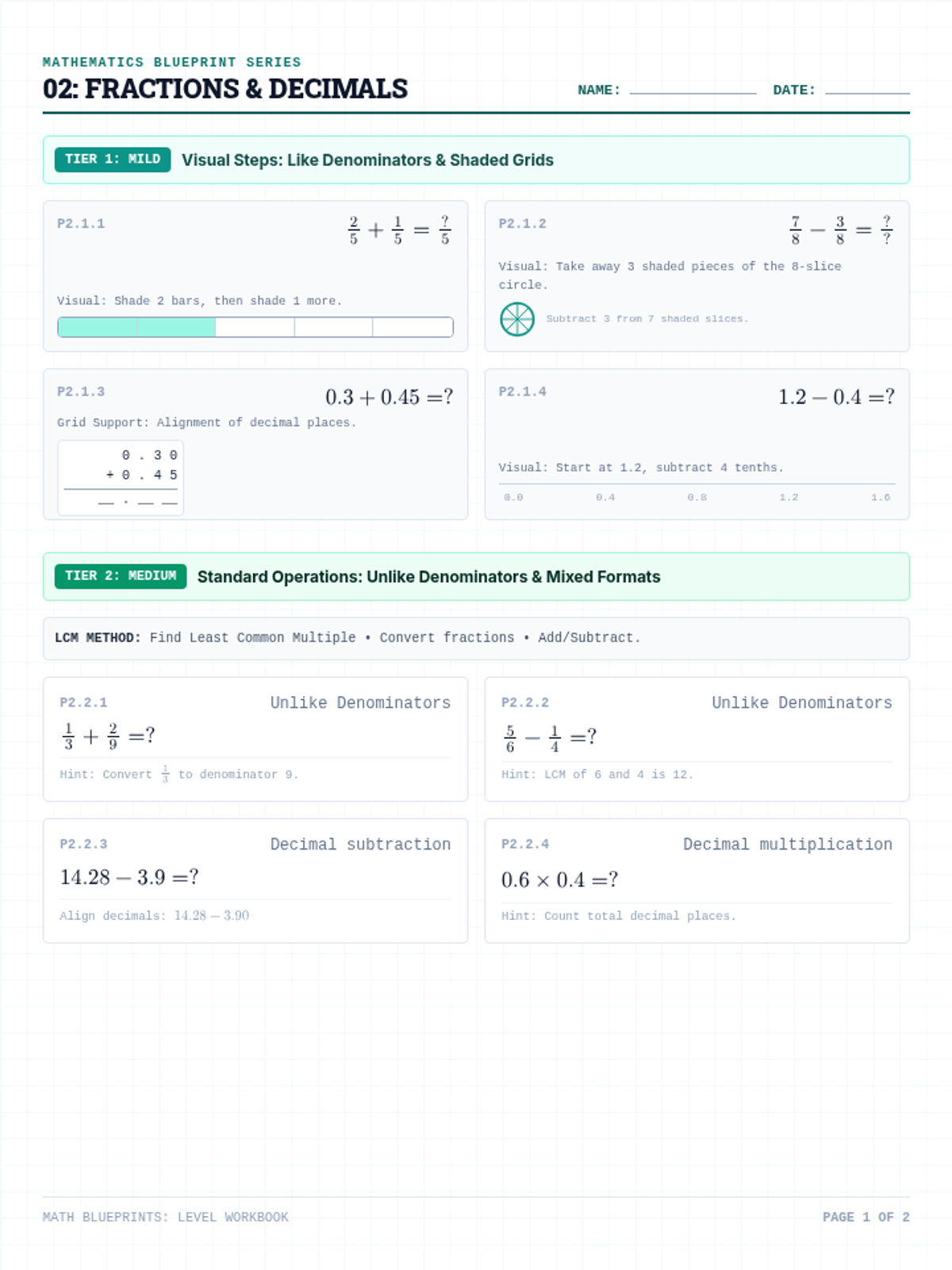
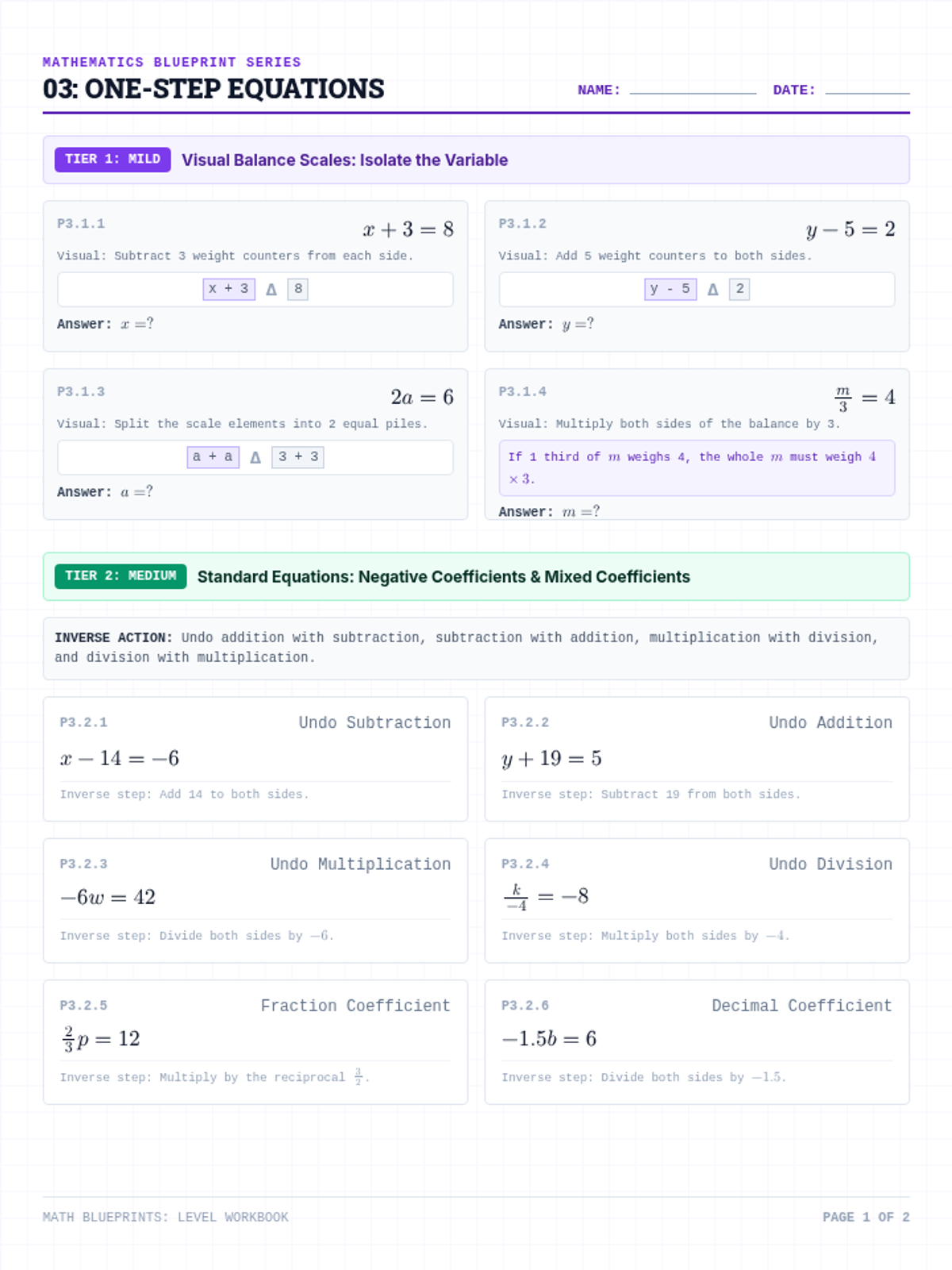
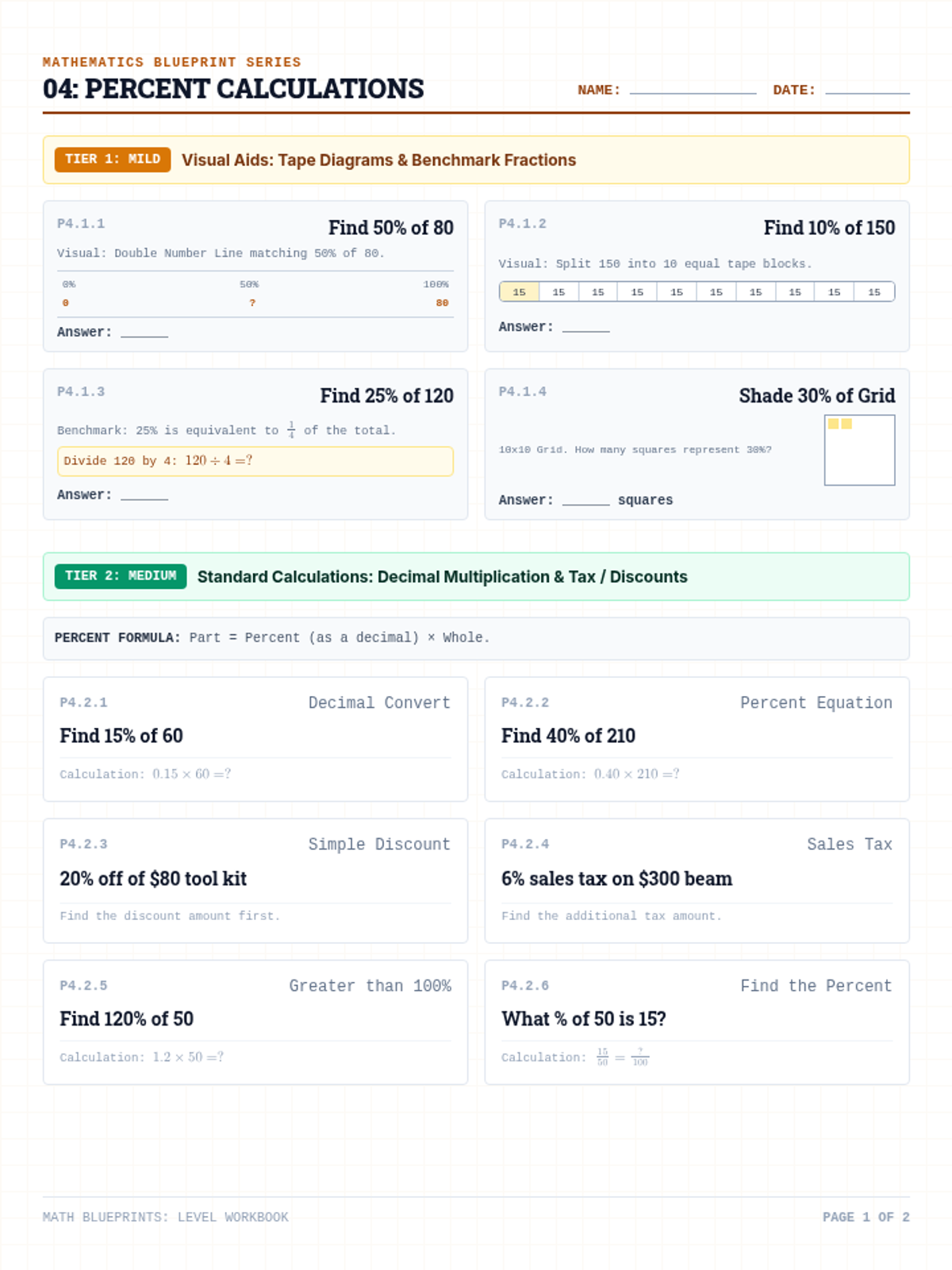
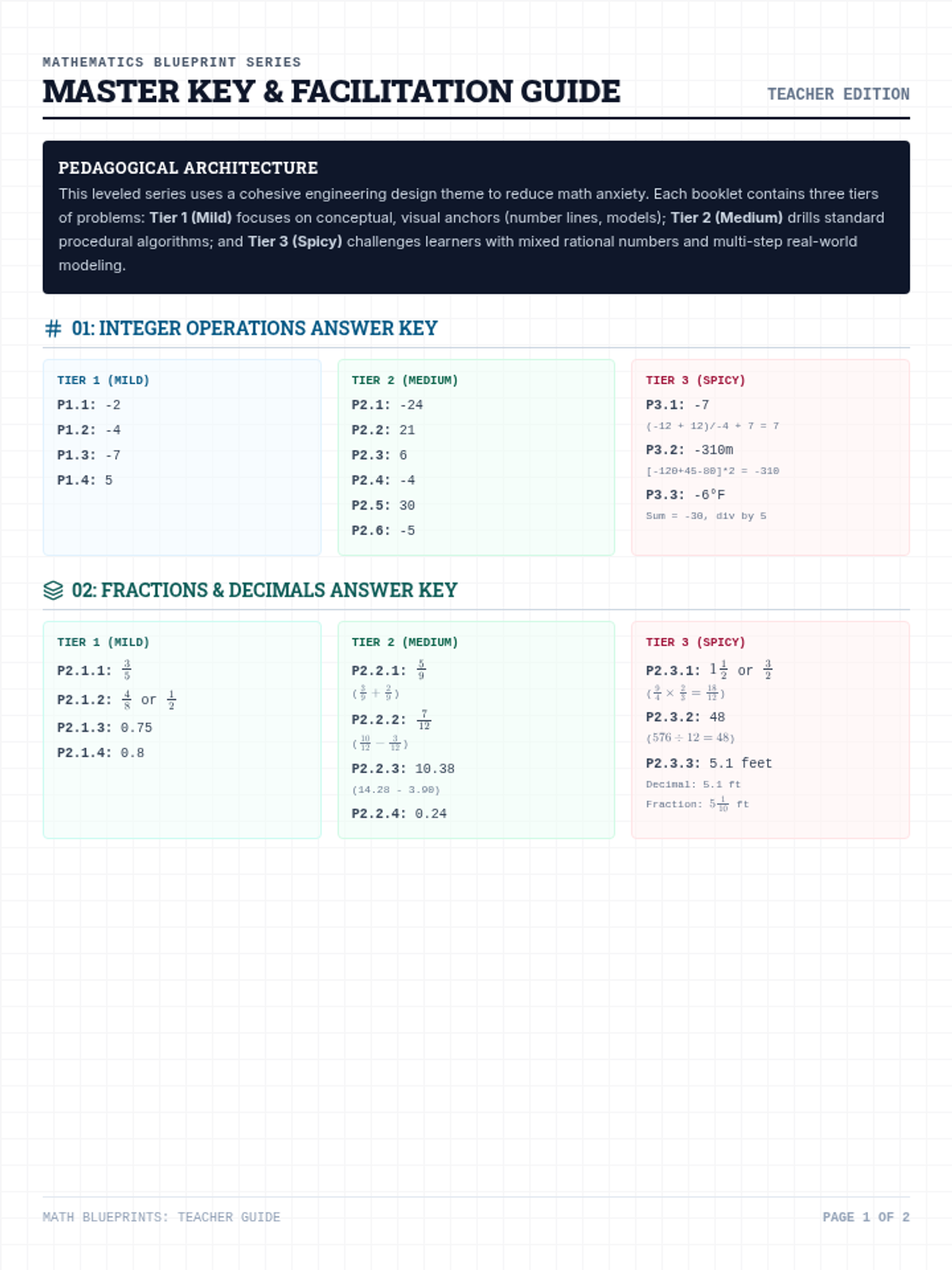
A targeted computational practice suite for 7th-grade math, covering integers, fractions/decimals, one-step equations, and percentages. Features tiered levels of scaffolding (Mild, Medium, Spicy) to support and challenge all learners.
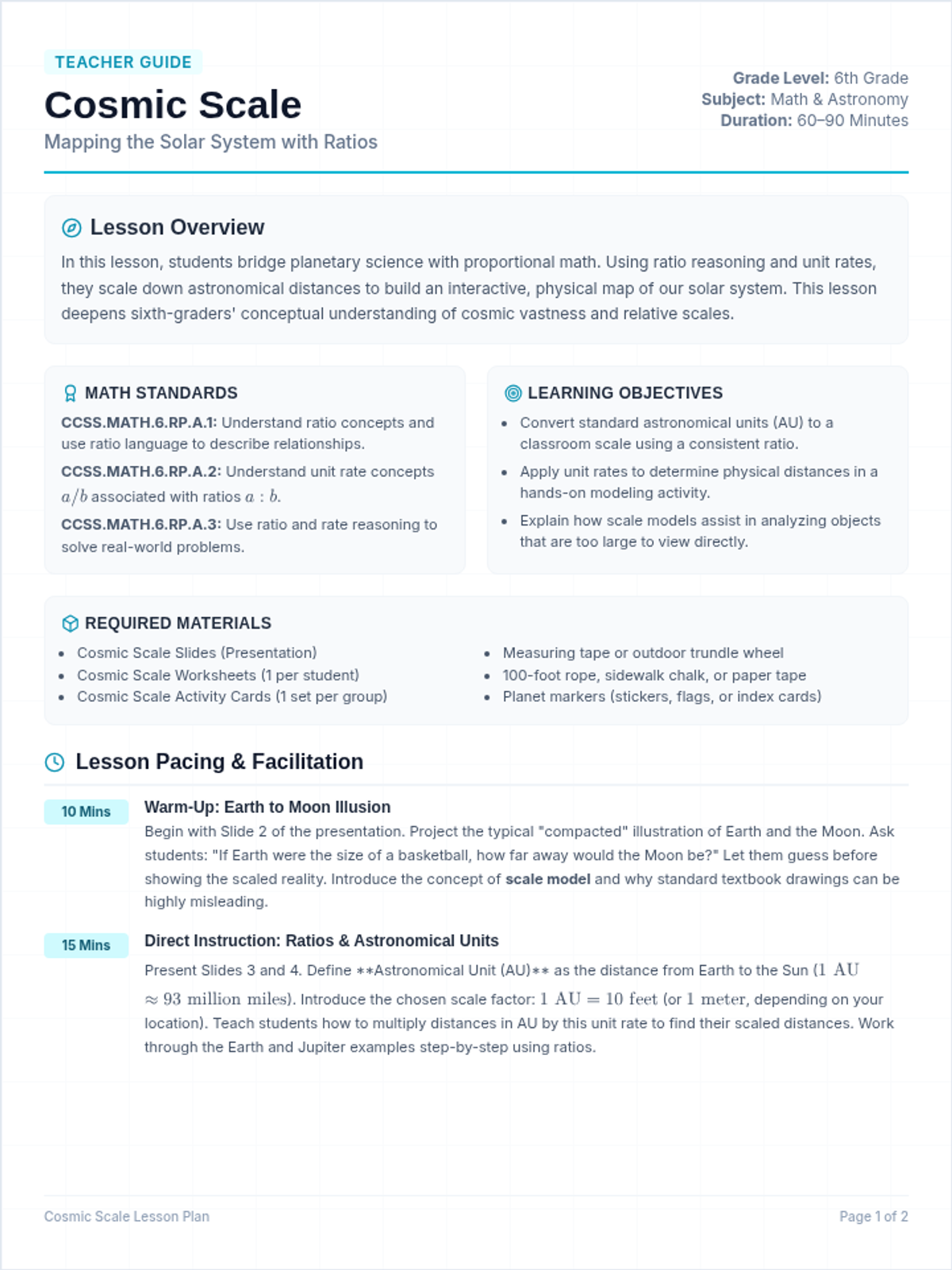
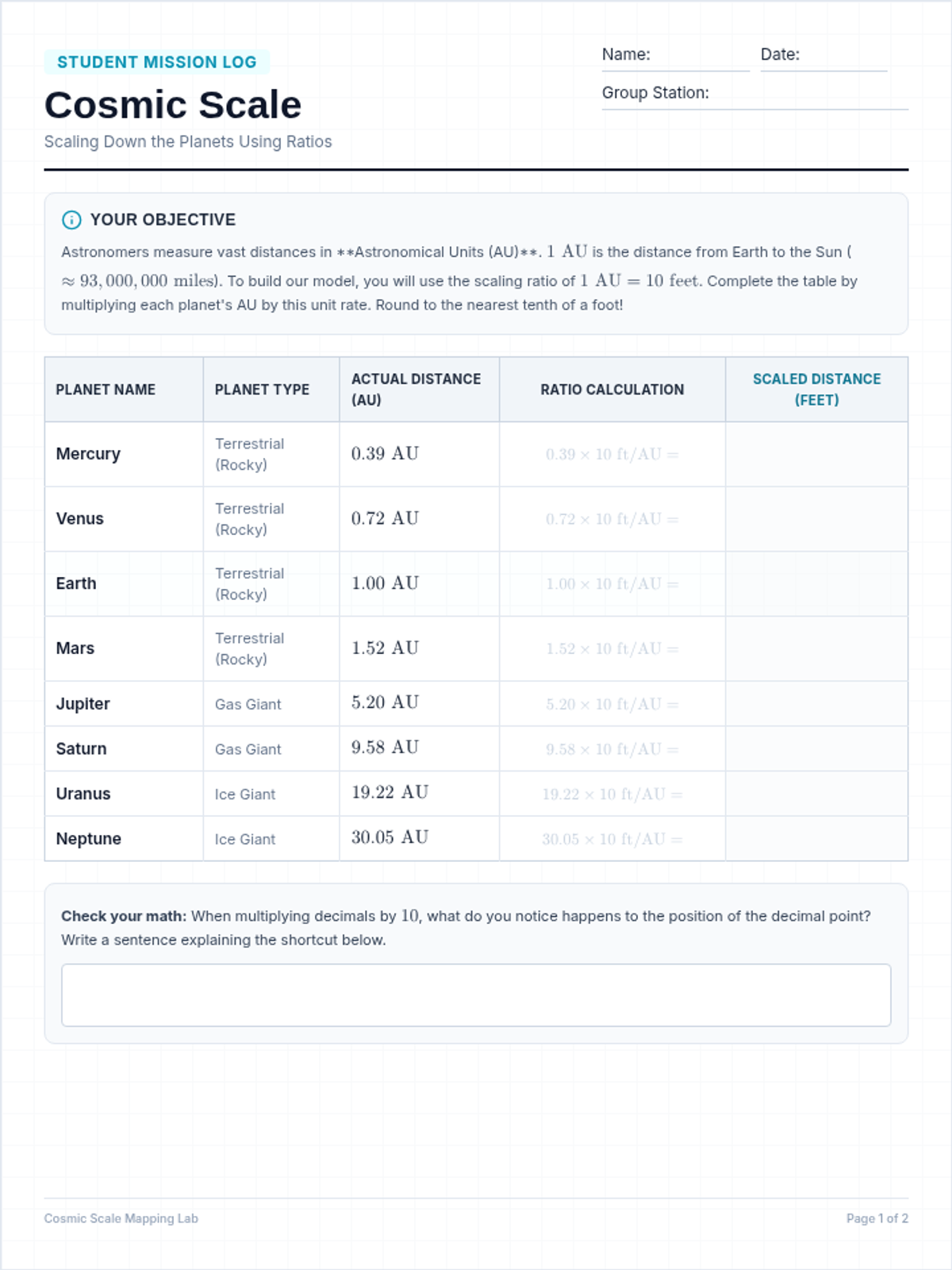
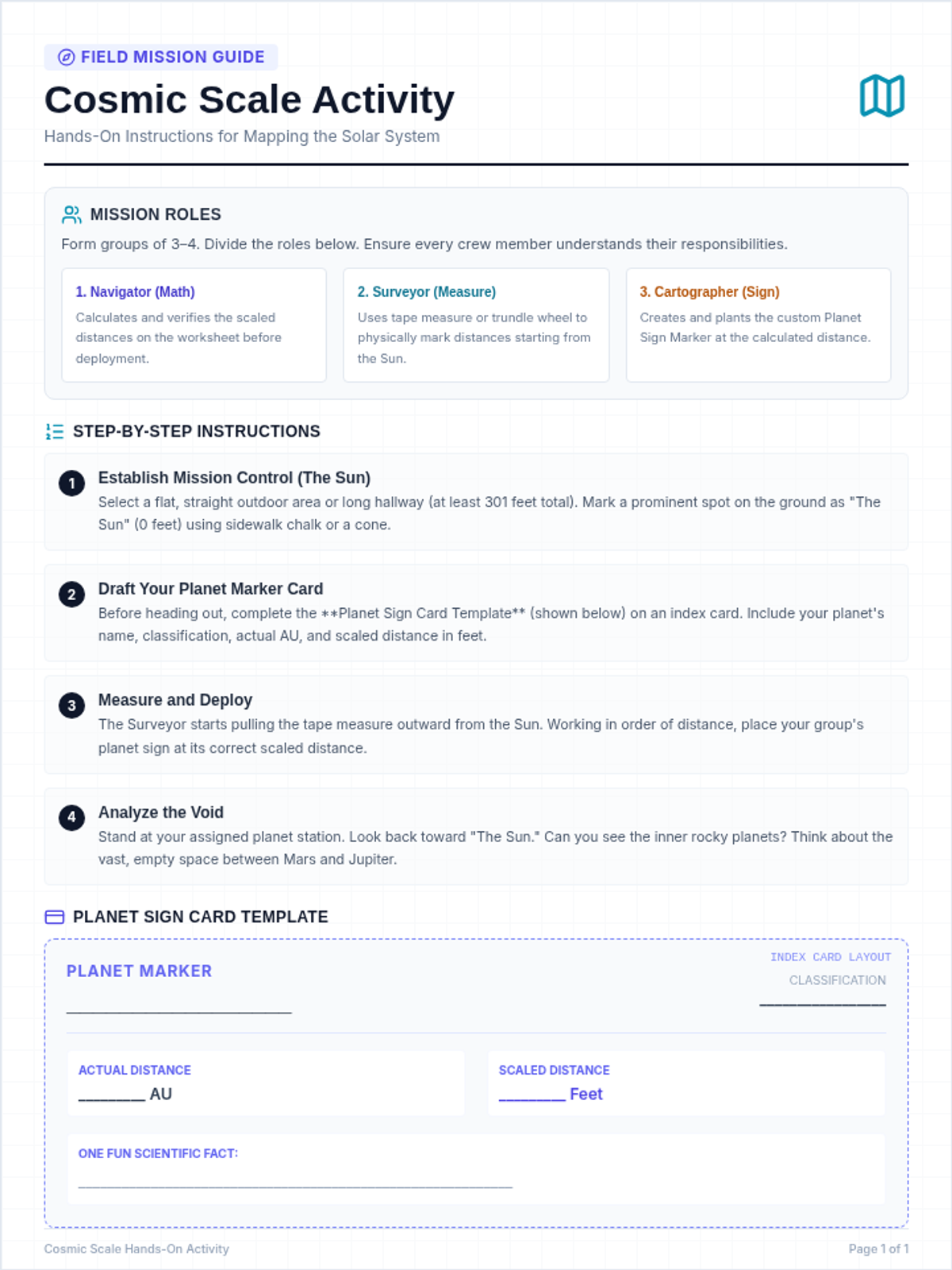
A comprehensive sixth-grade lesson bridging planetary science and proportional math. Students use ratio reasoning and unit rates to calculate scaled planetary distances and build a physical model of the solar system.
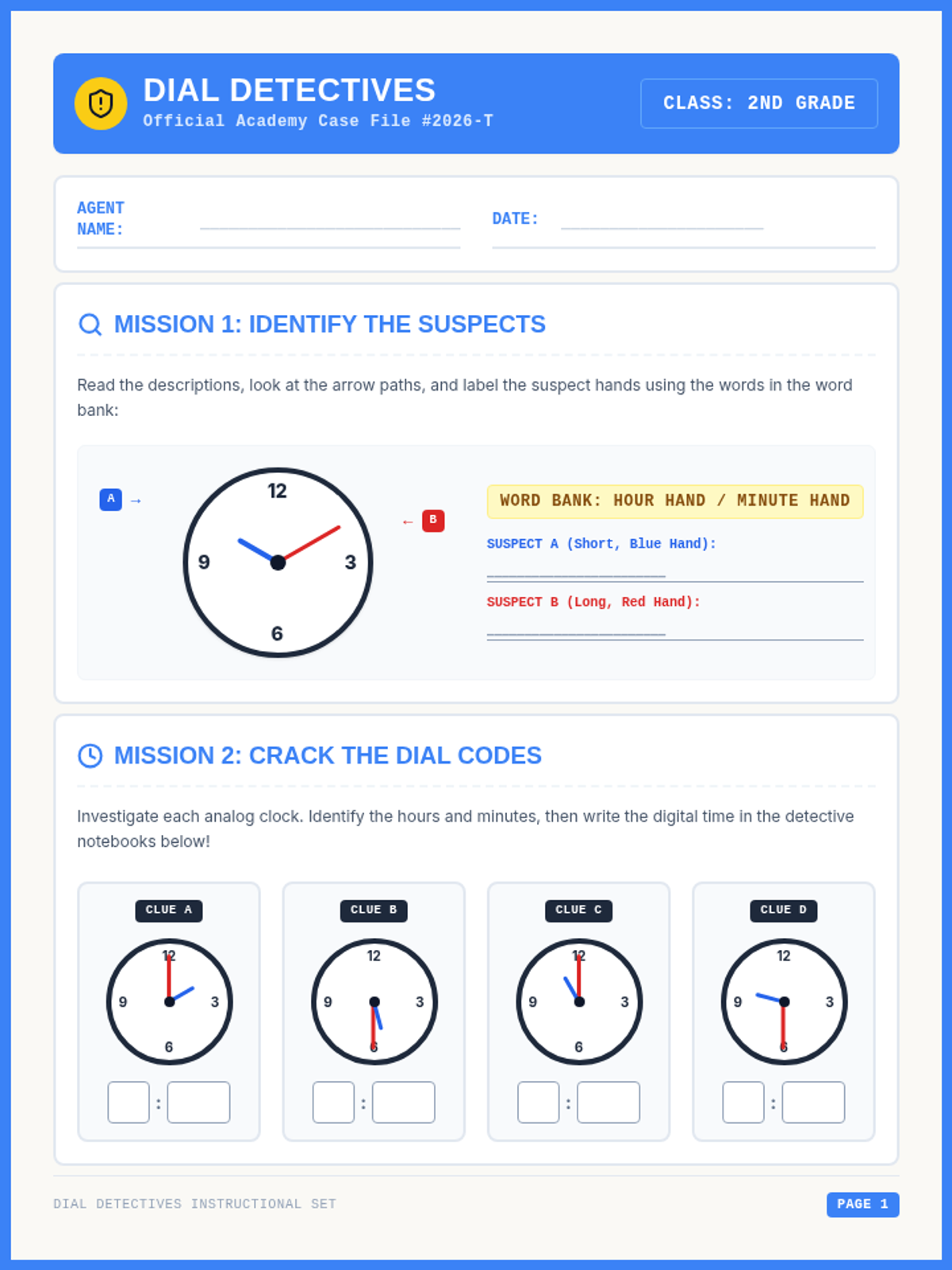
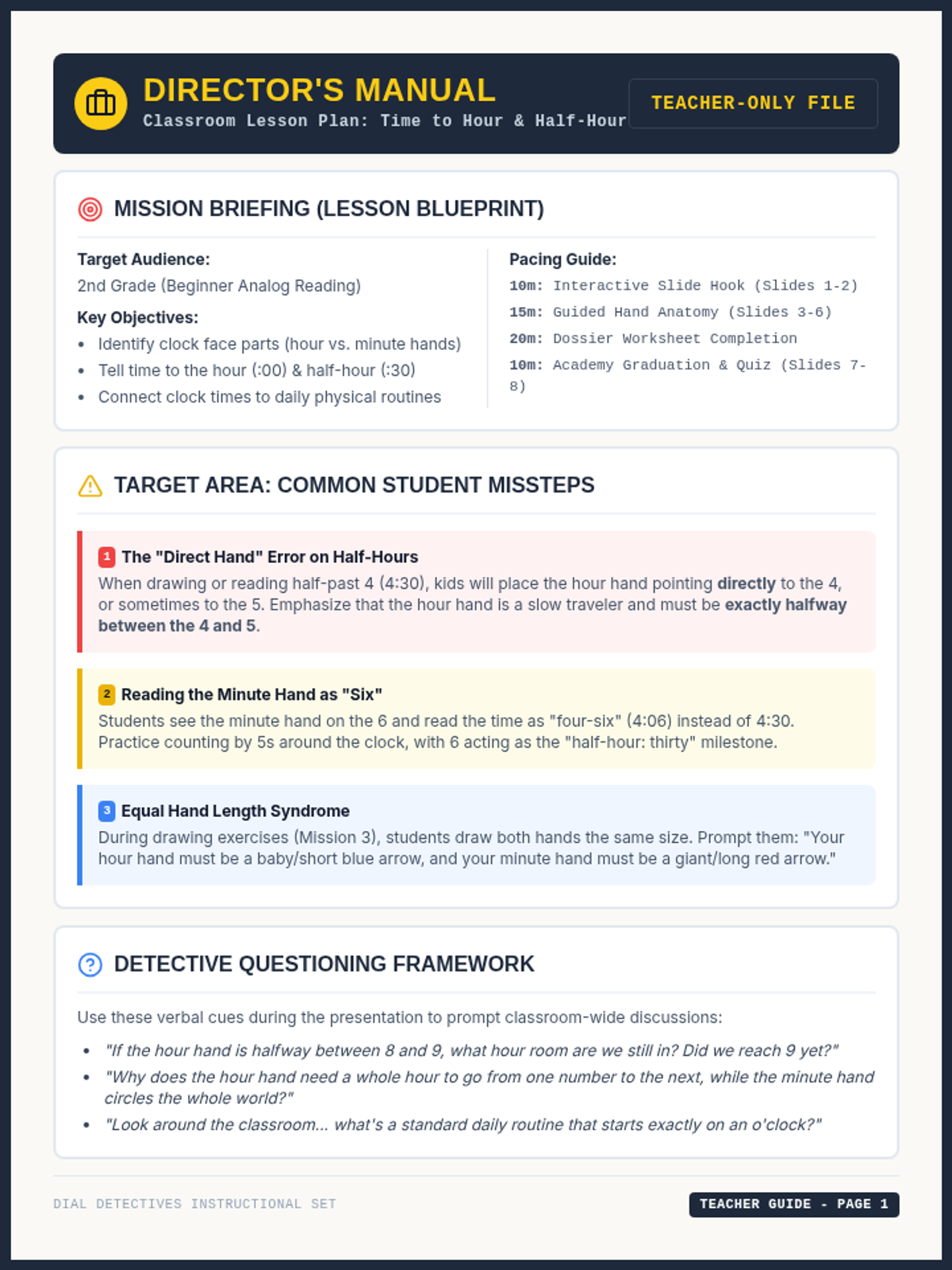
A second-grade beginner's lesson on reading analog clocks to the hour and half-hour, connecting time-telling to daily routines through a fun detective-themed investigation.
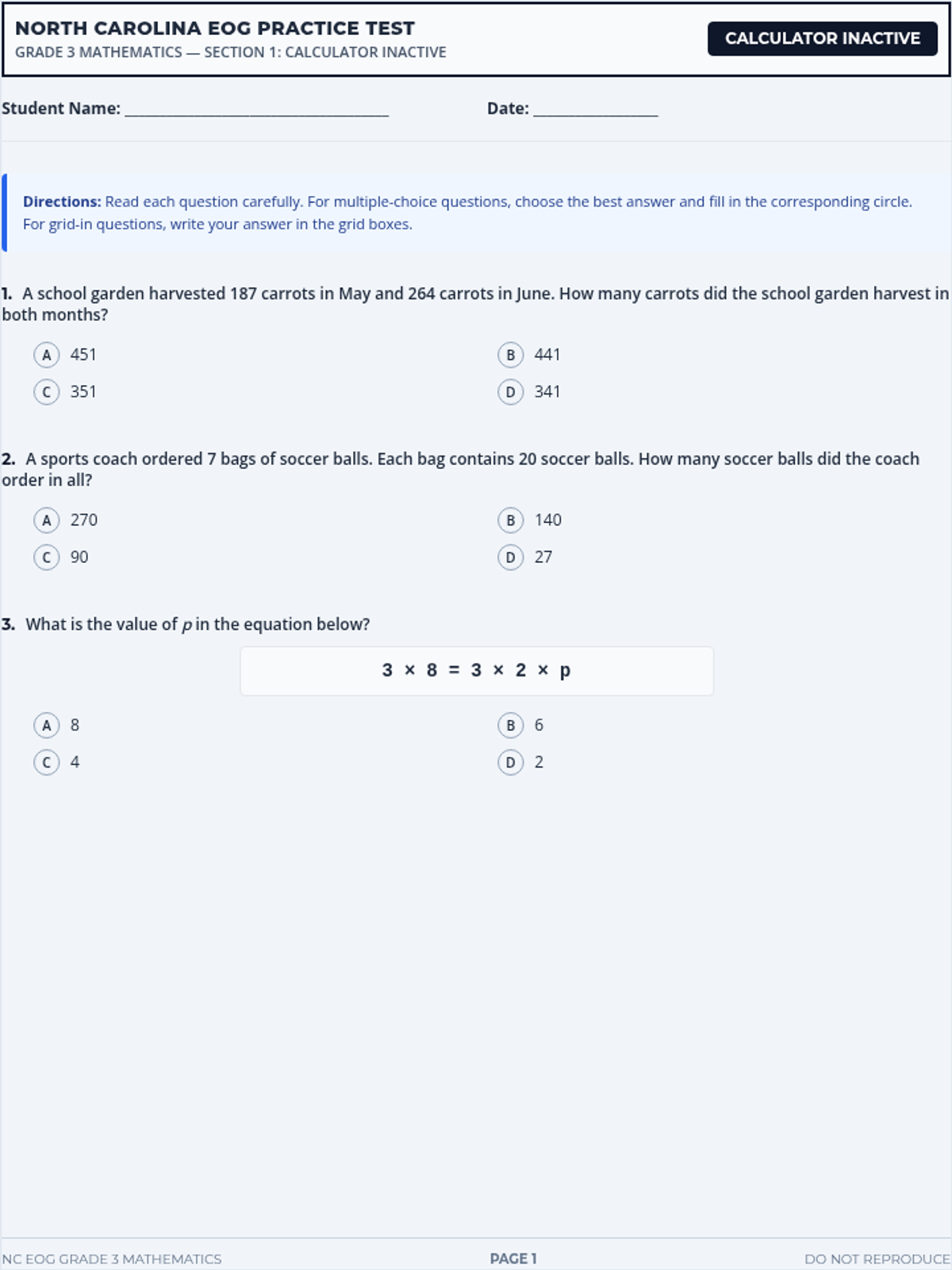
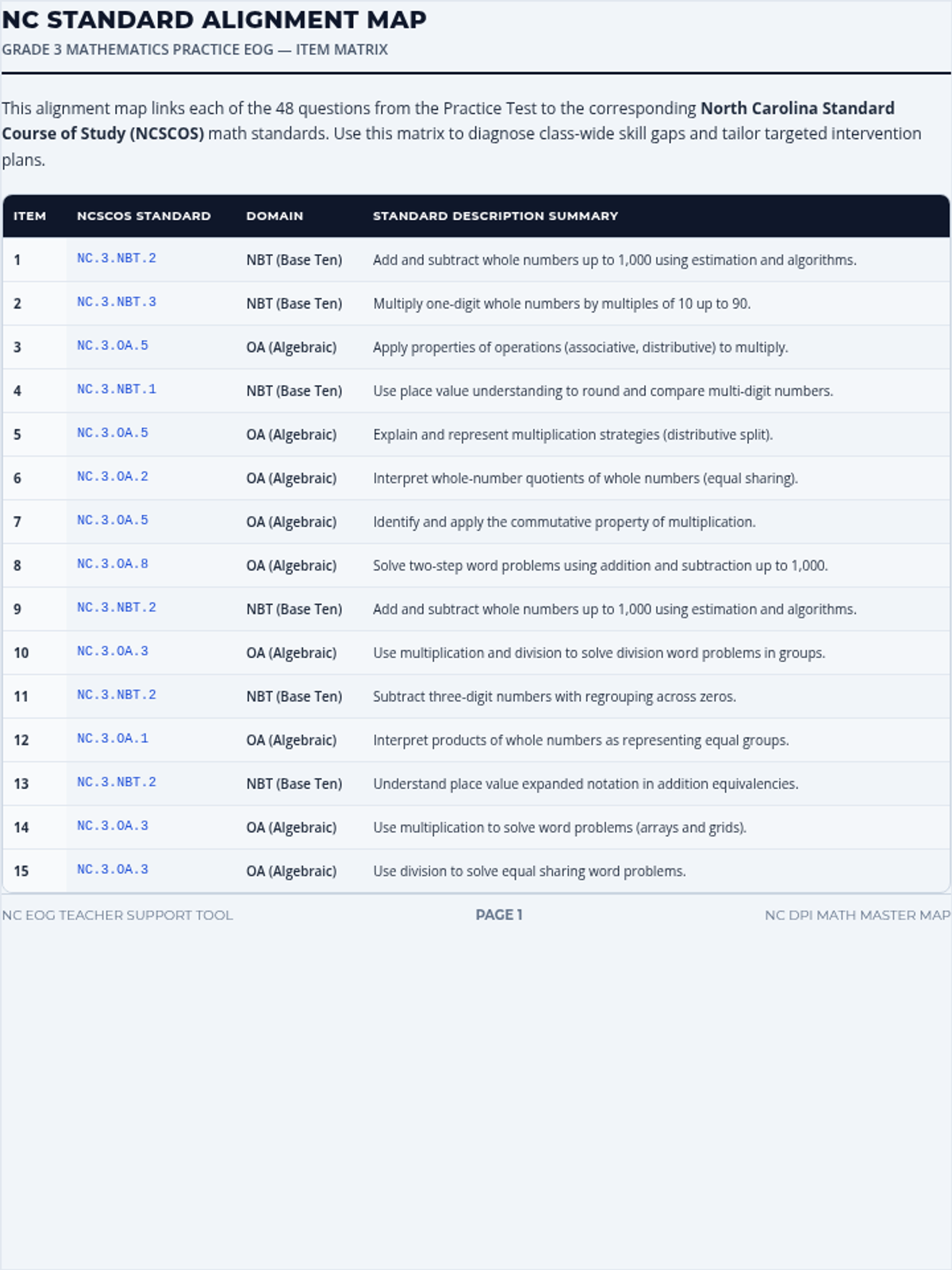
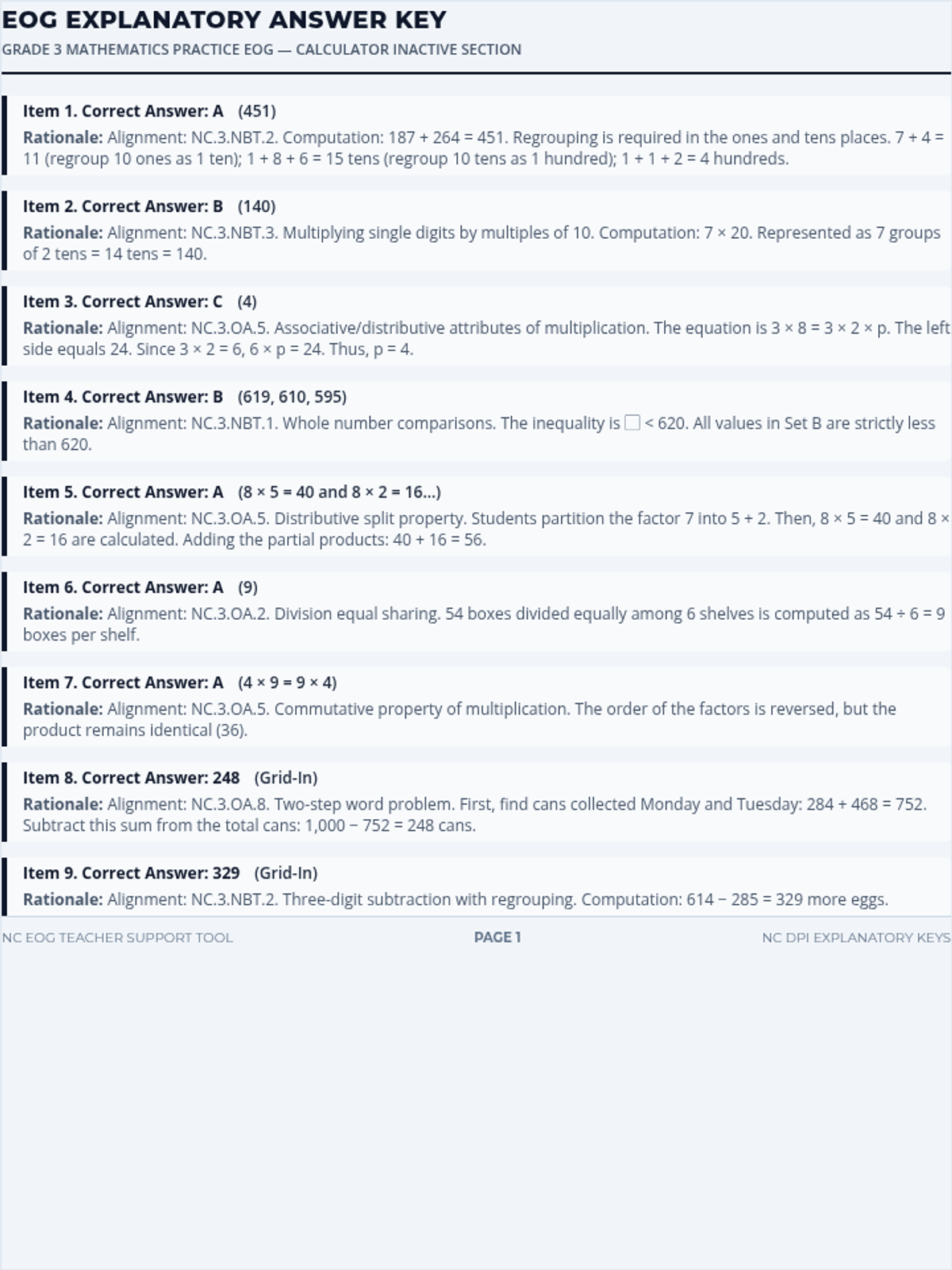
A comprehensive practice package designed for 3rd-grade students preparing for the North Carolina End-of-Grade (EOG) Mathematics assessment. It includes a complete 48-question exam covering all highly-tested standard course of study domains, an interactive student grid, an item-to-standard alignment map, and a full explanatory answer key.
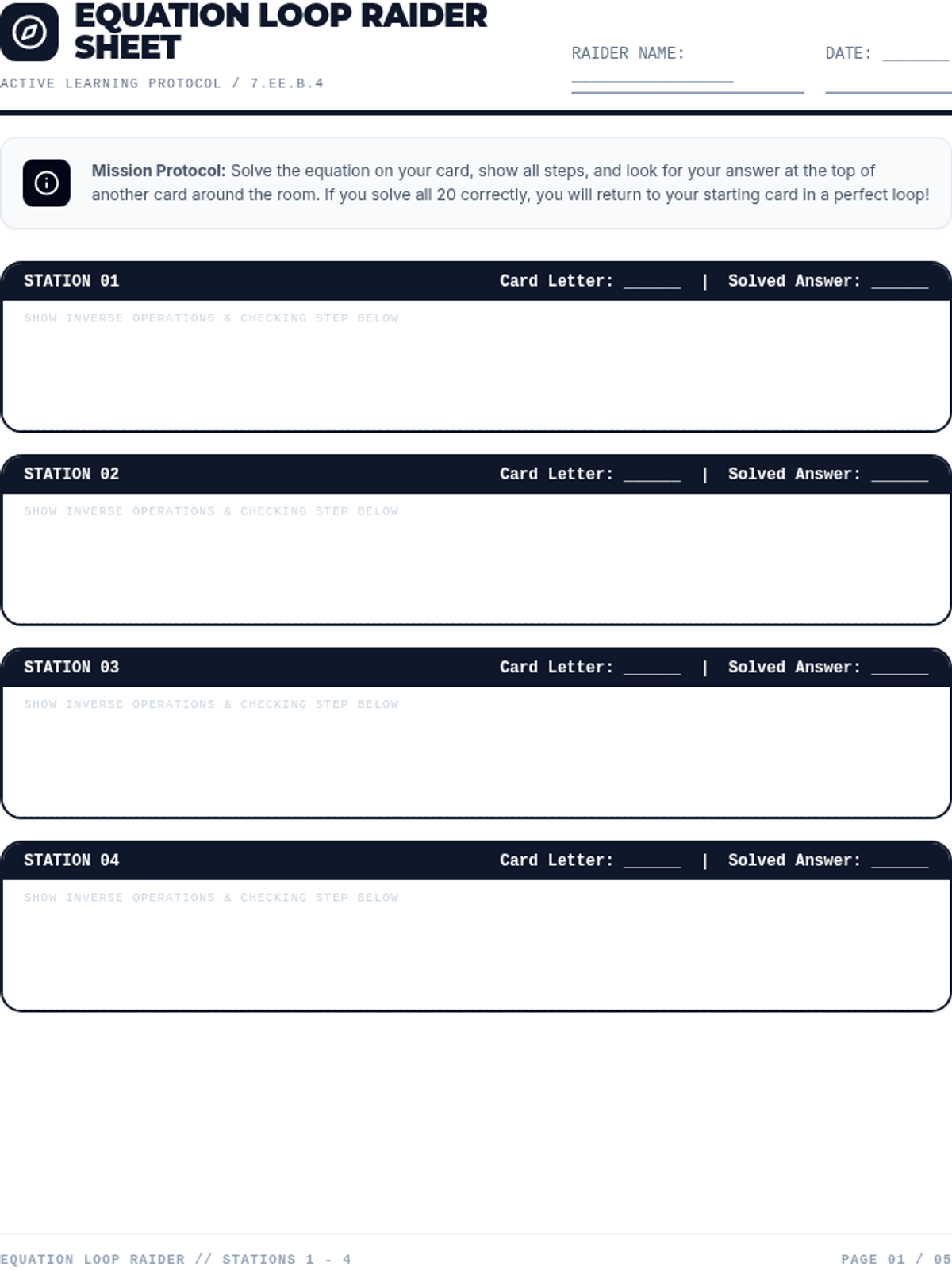
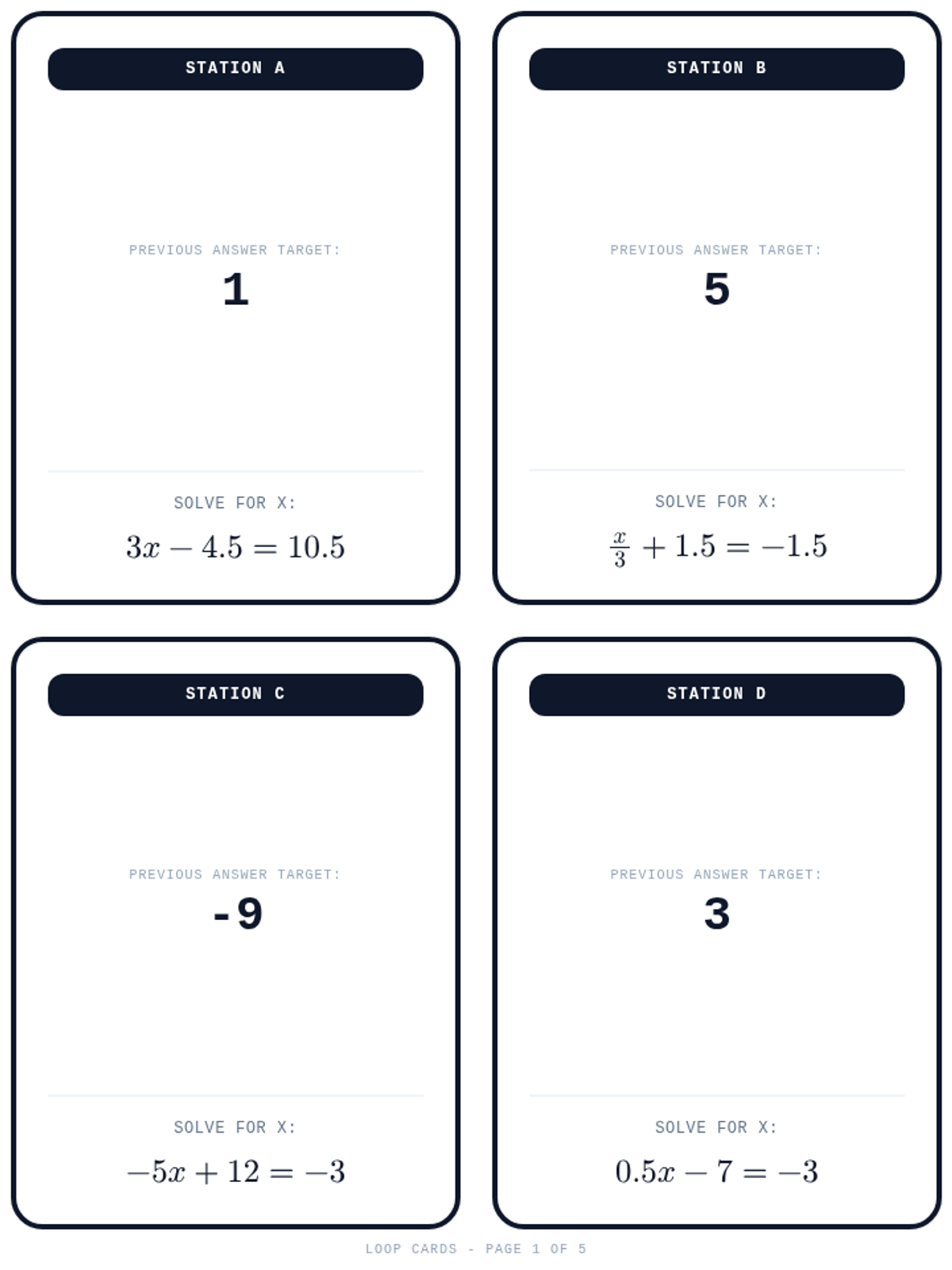
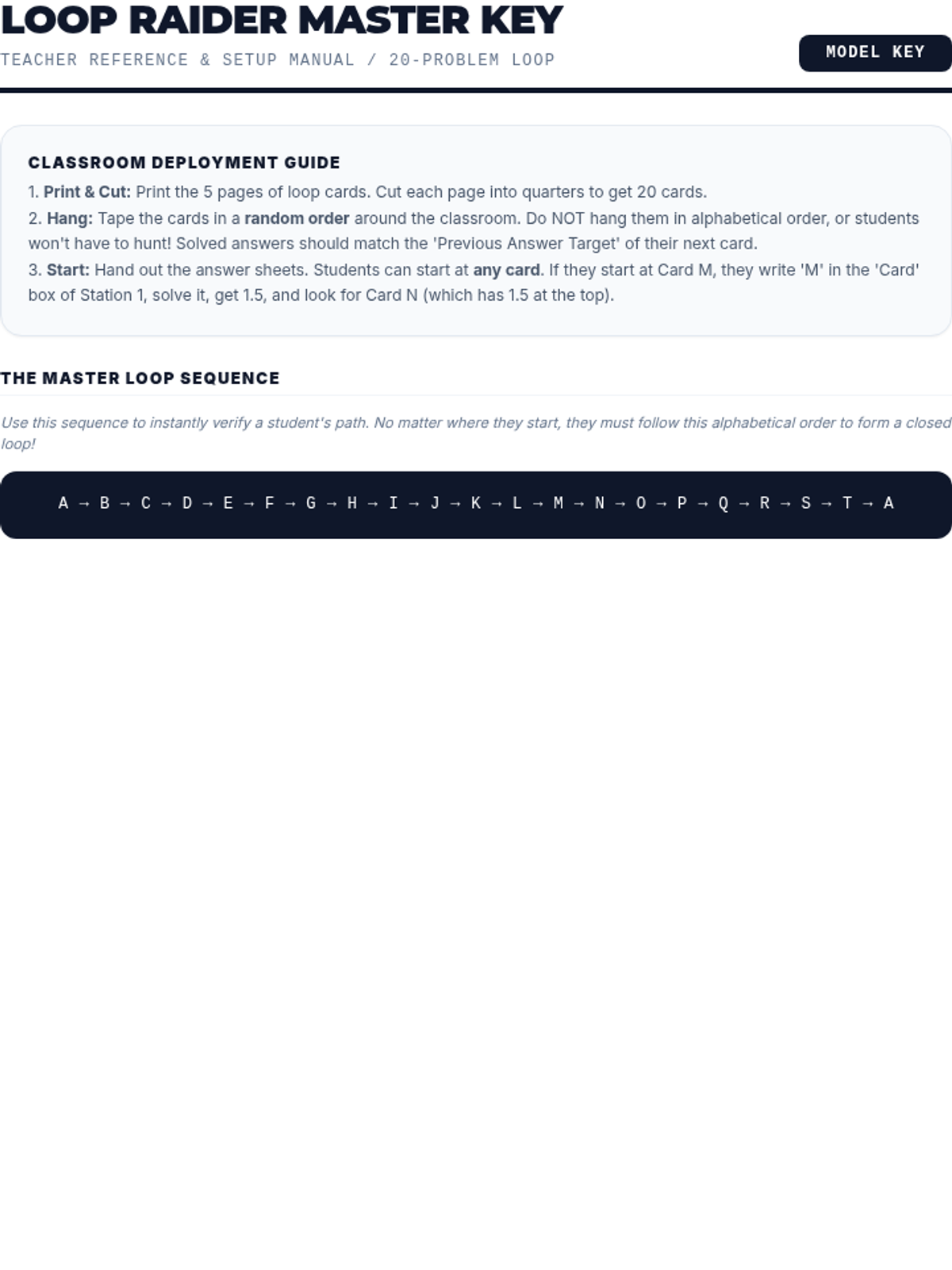
A high-energy, active learning gallery walk where students hunt for 20 card stations hidden around the room. Students solve 7th-grade two-step equations involving fractions, decimals, and negative numbers on a structured blueprint answer sheet, creating a self-correcting loop.
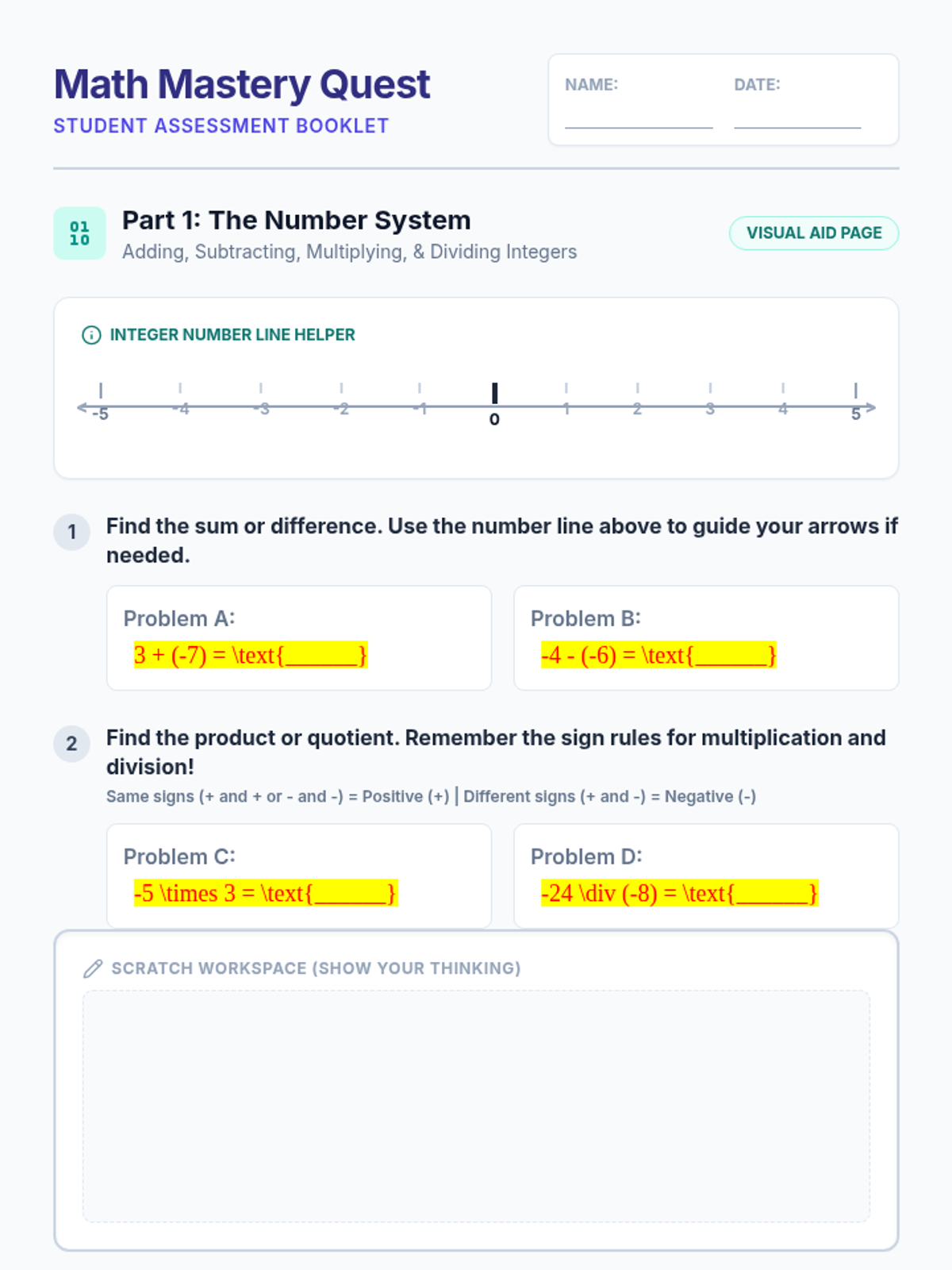
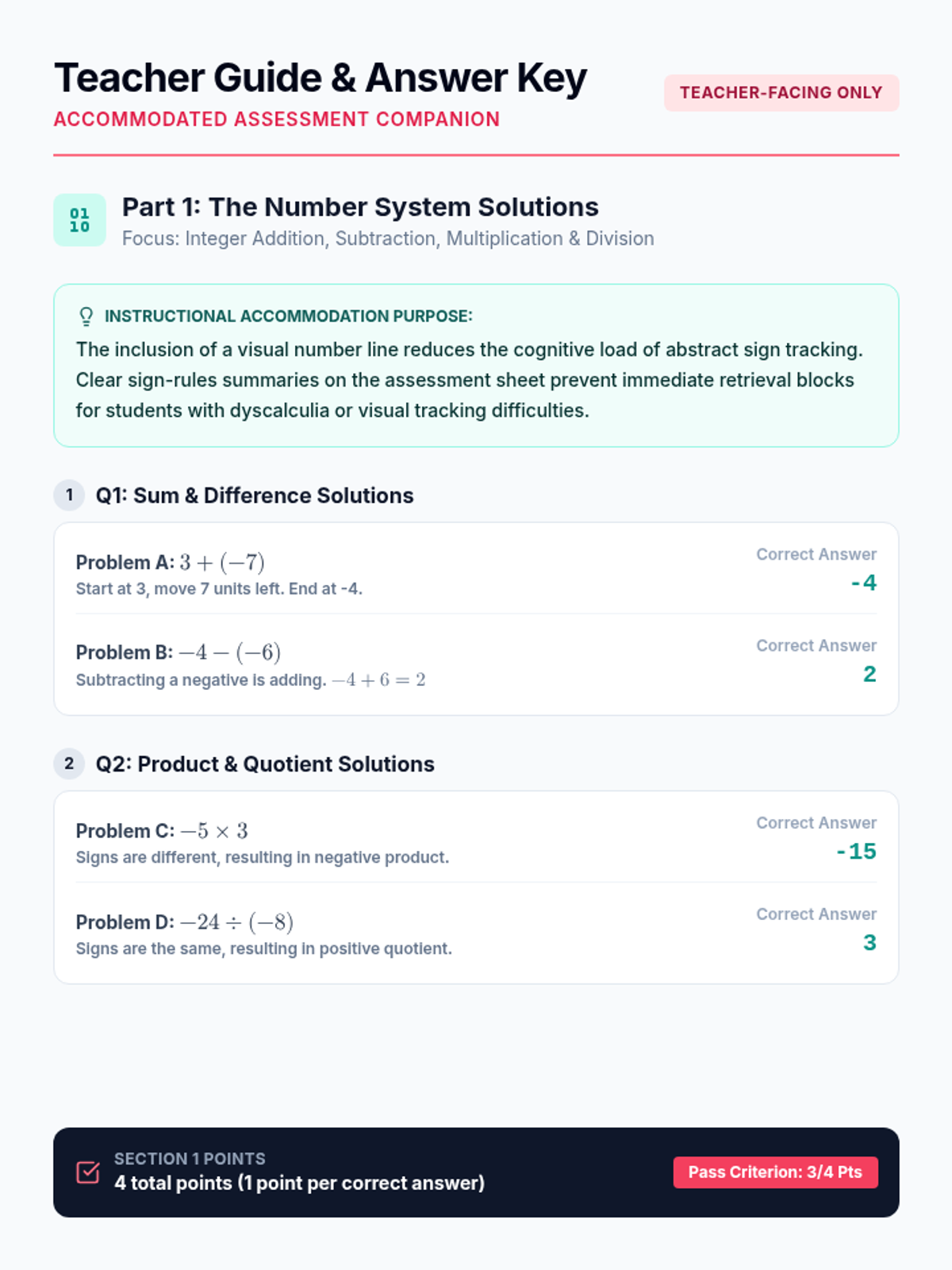
A comprehensive 7th-grade math assessment designed with academic accommodations, featuring large fonts, simplified layouts, visual aids, and dedicated workspaces. The assessment evaluates student mastery of Expressions and Equations, Geometry, the Number System, and Proportional Relationships.
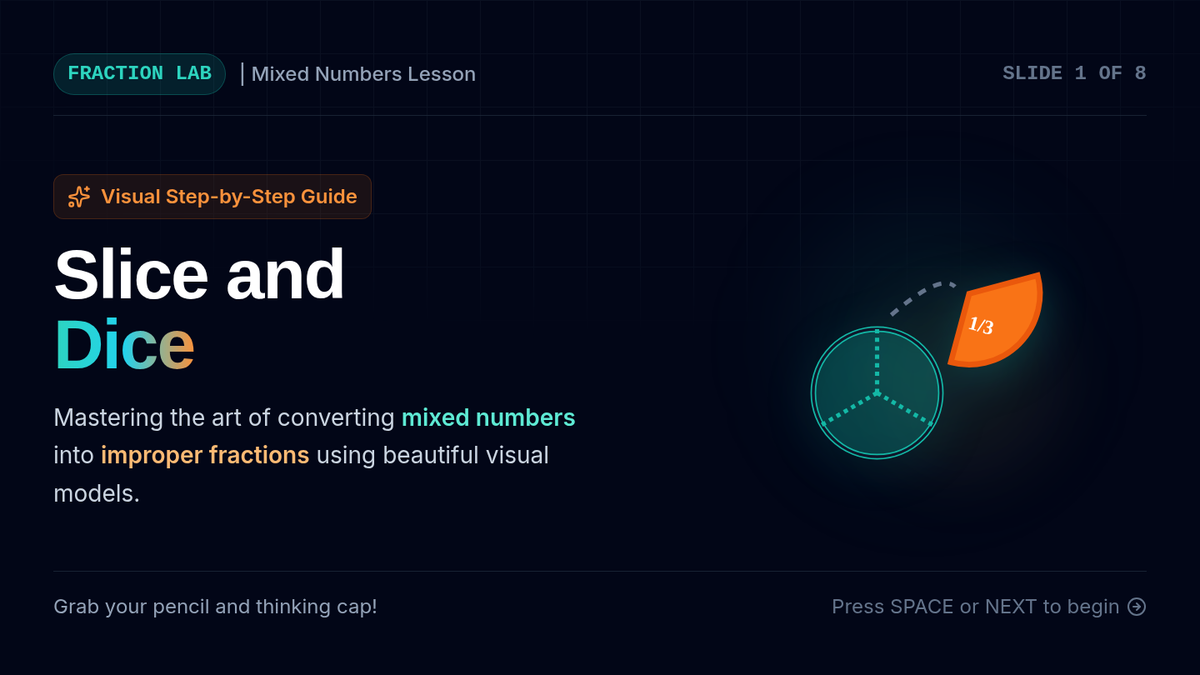
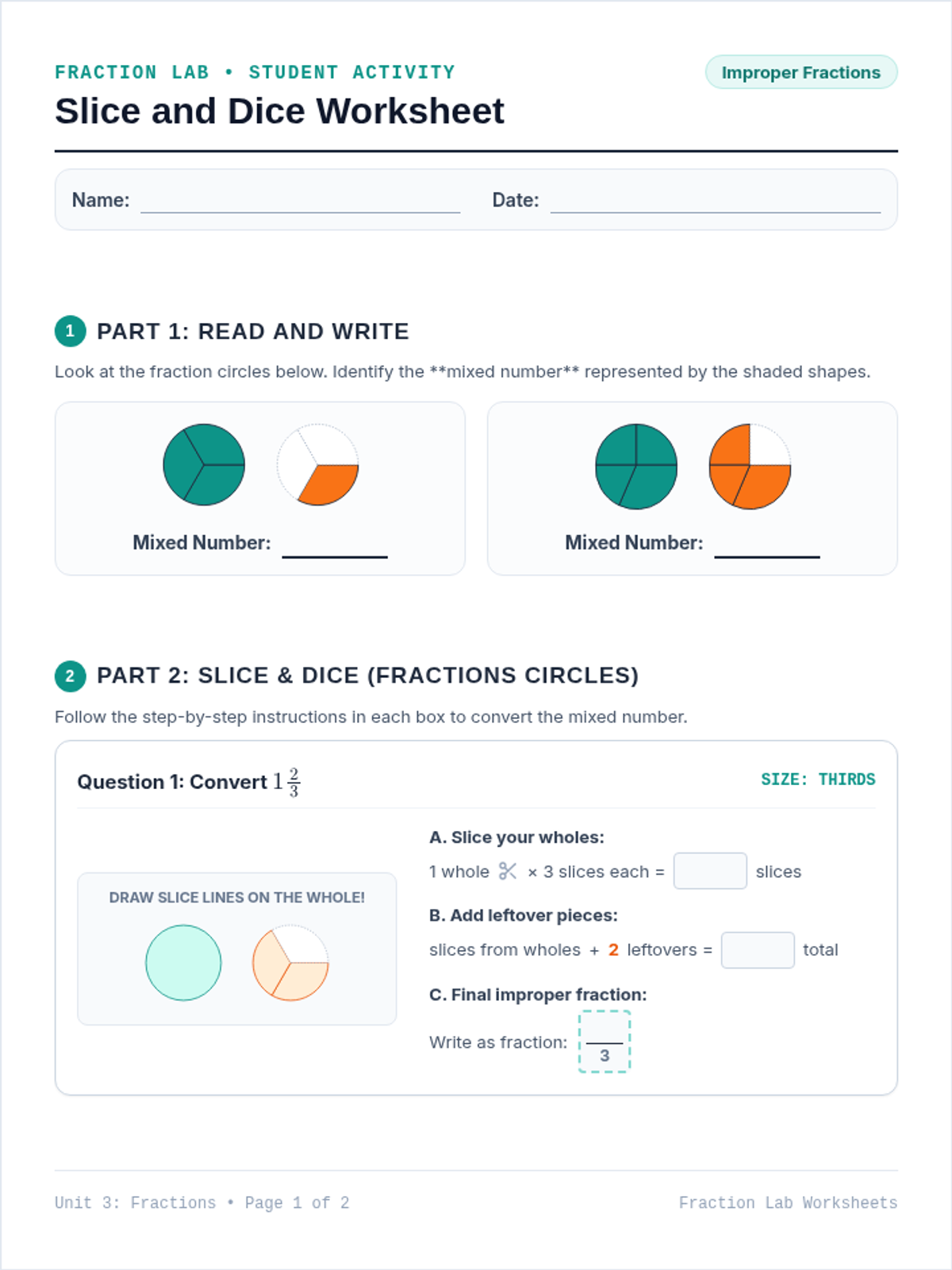
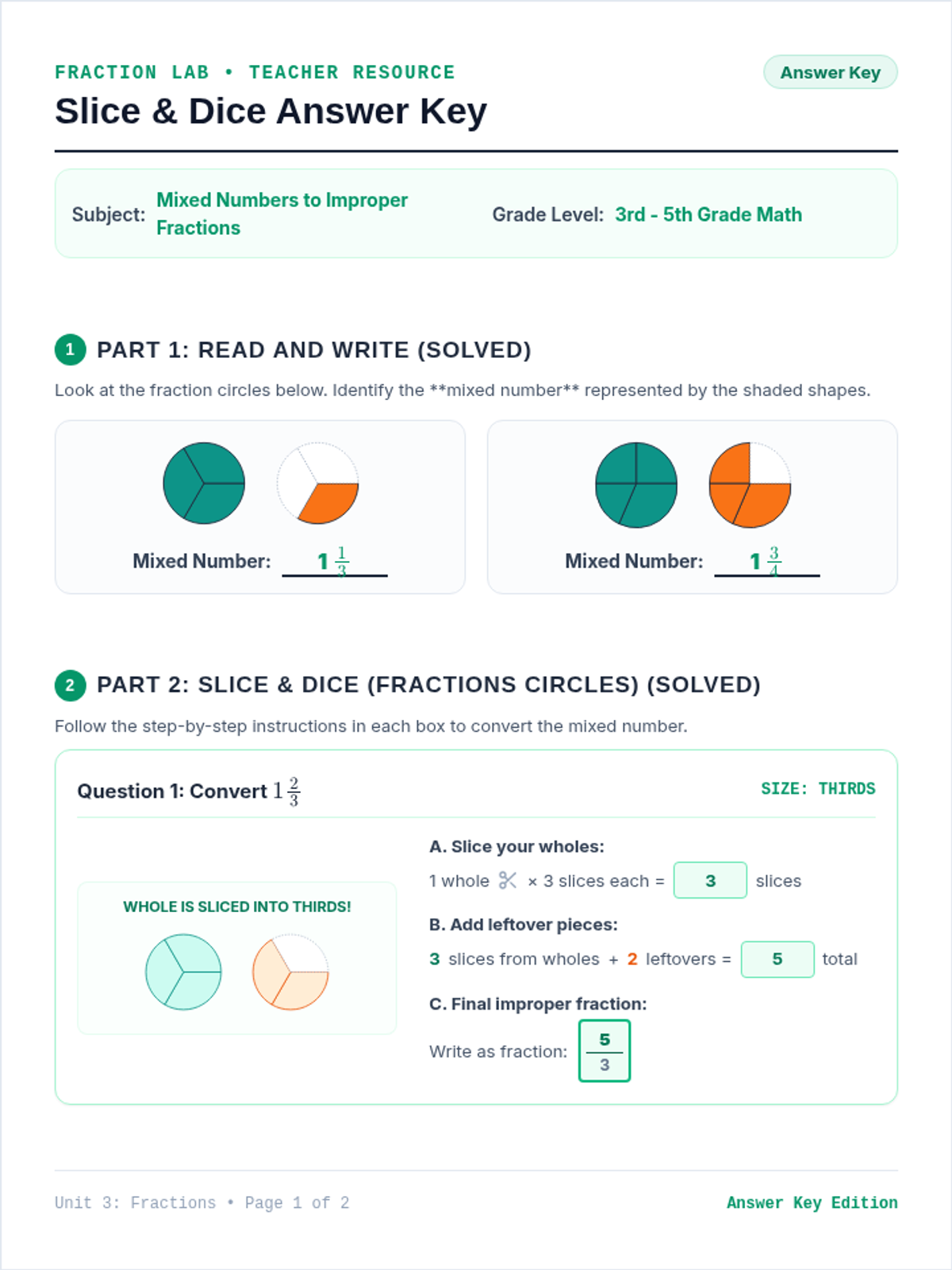
A visual, interactive math lesson focusing on converting mixed numbers to improper fractions. Students use concrete visual models including fraction circles and fraction tiles to understand how wholes are cut into fractional parts.
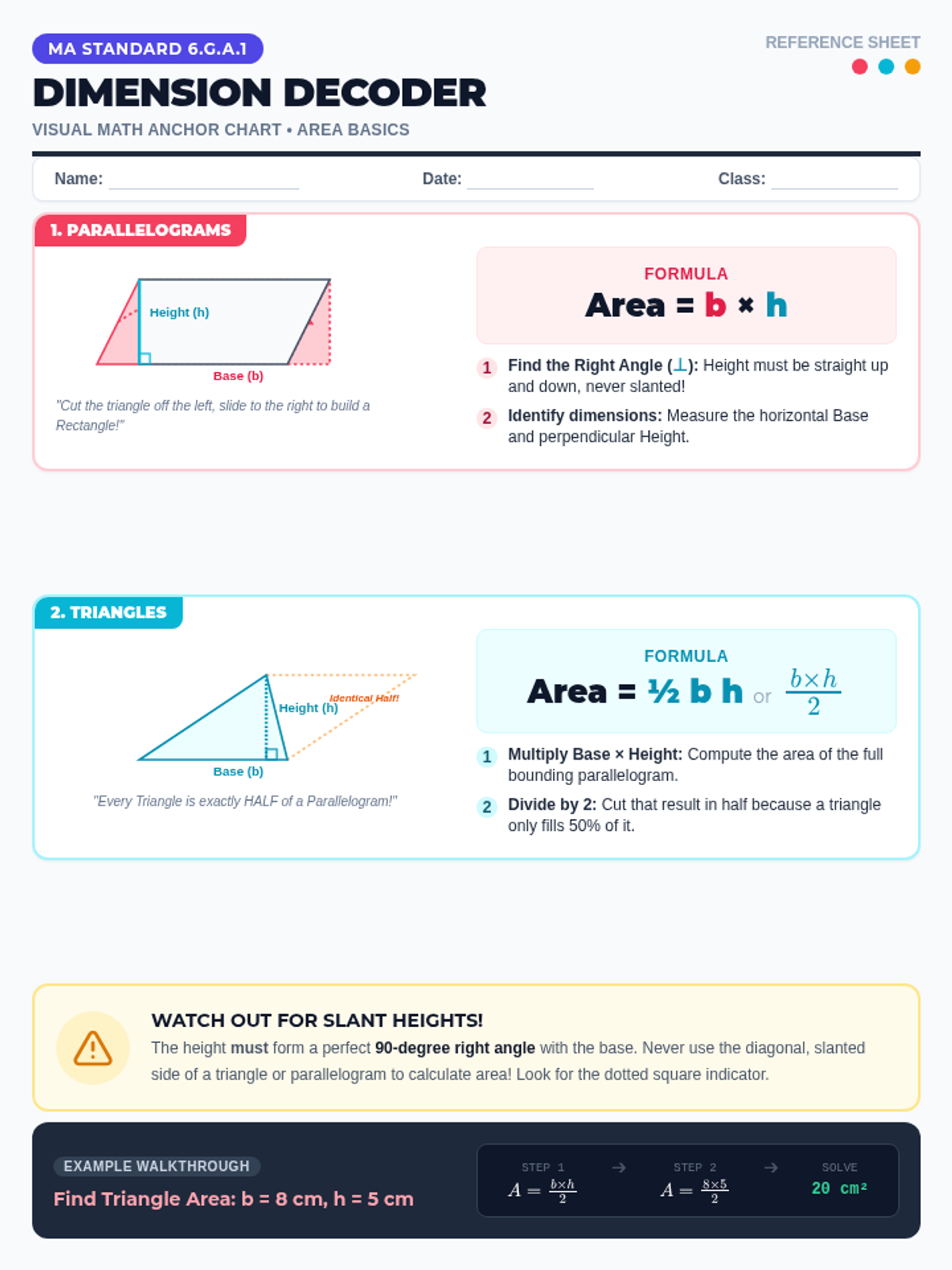
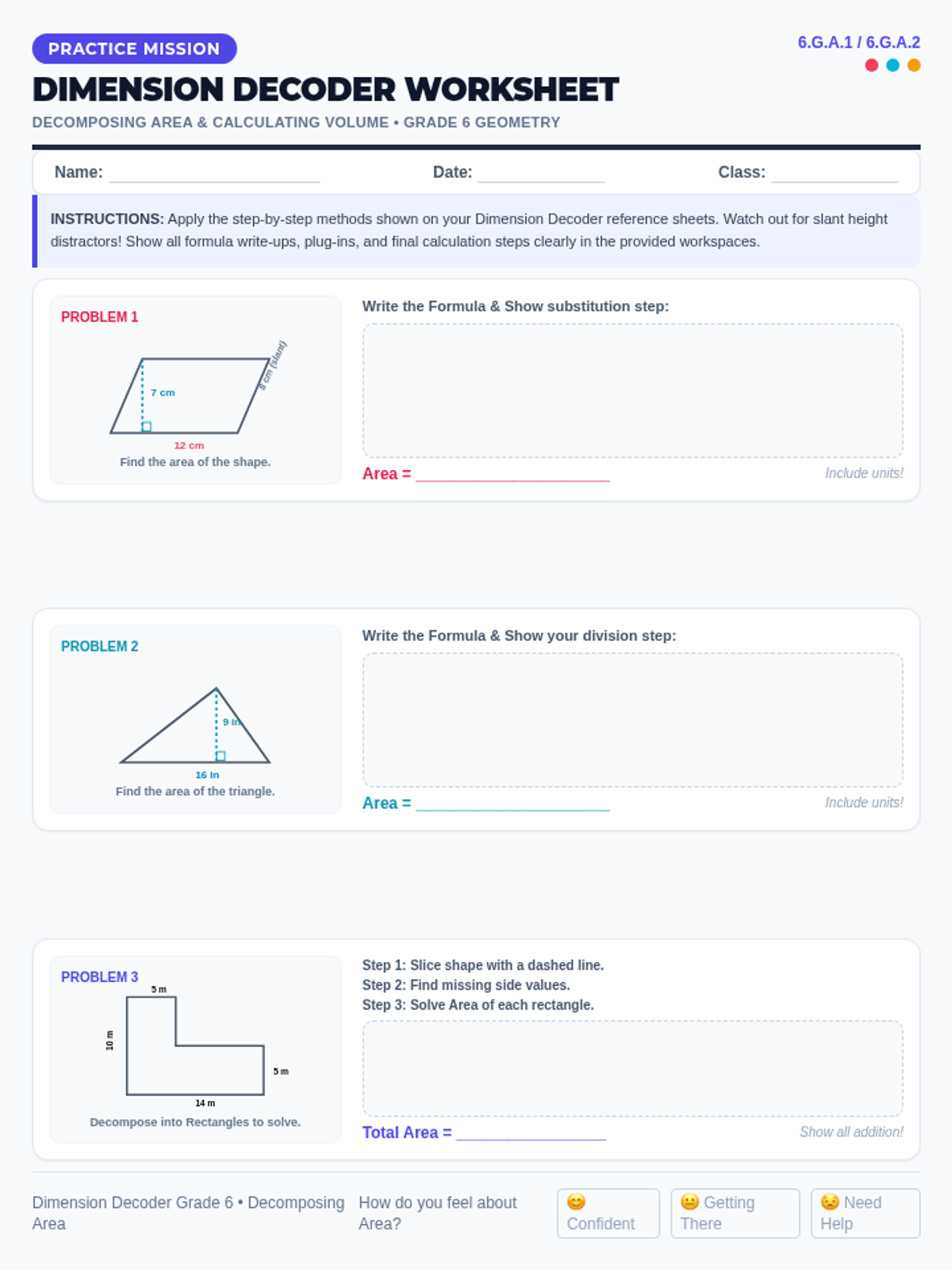
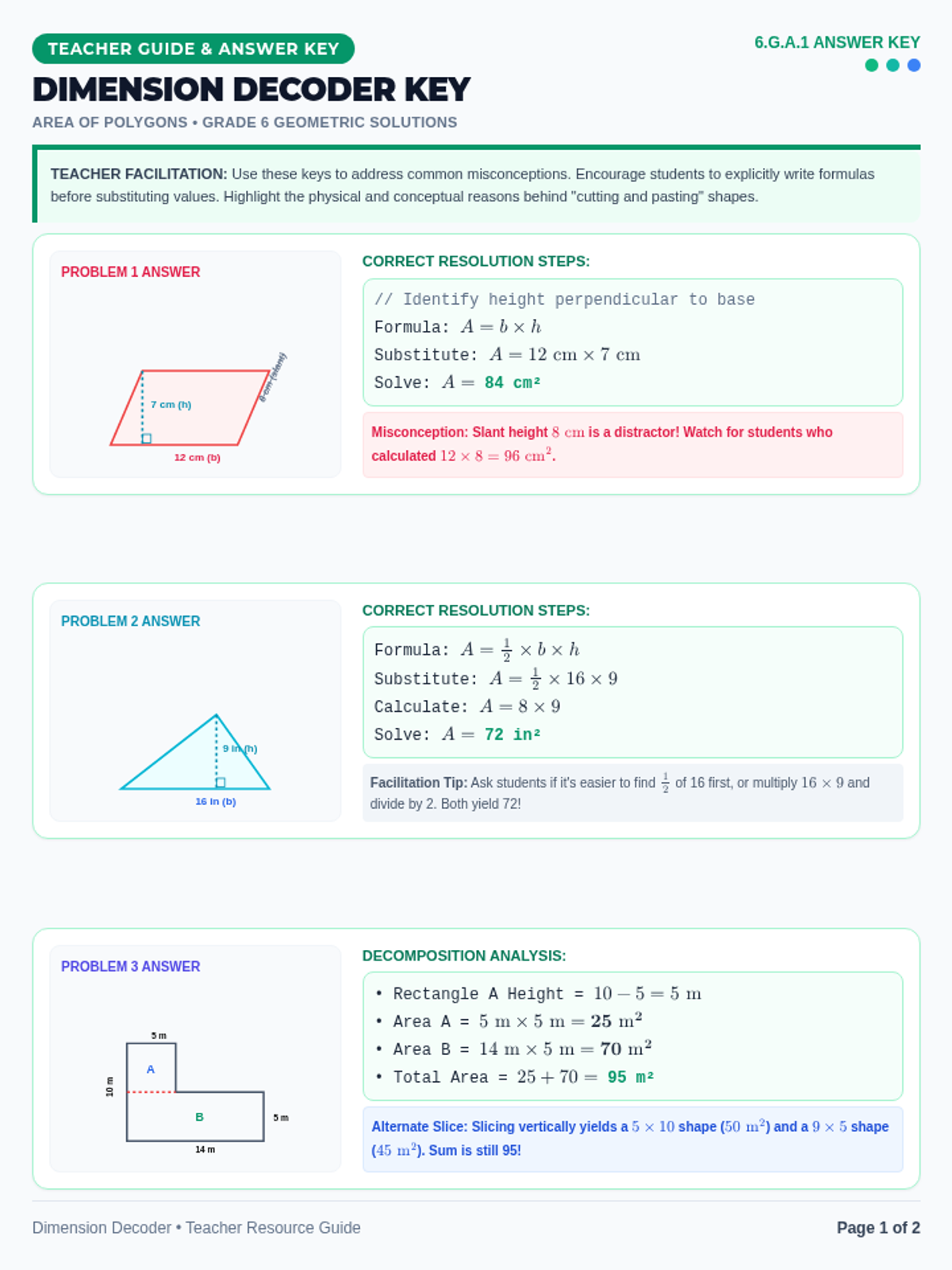
A comprehensive sixth-grade geometry lesson pack focused on visual methods for decomposing shapes to find area and packing rectangular prisms to find volume under MA standards.
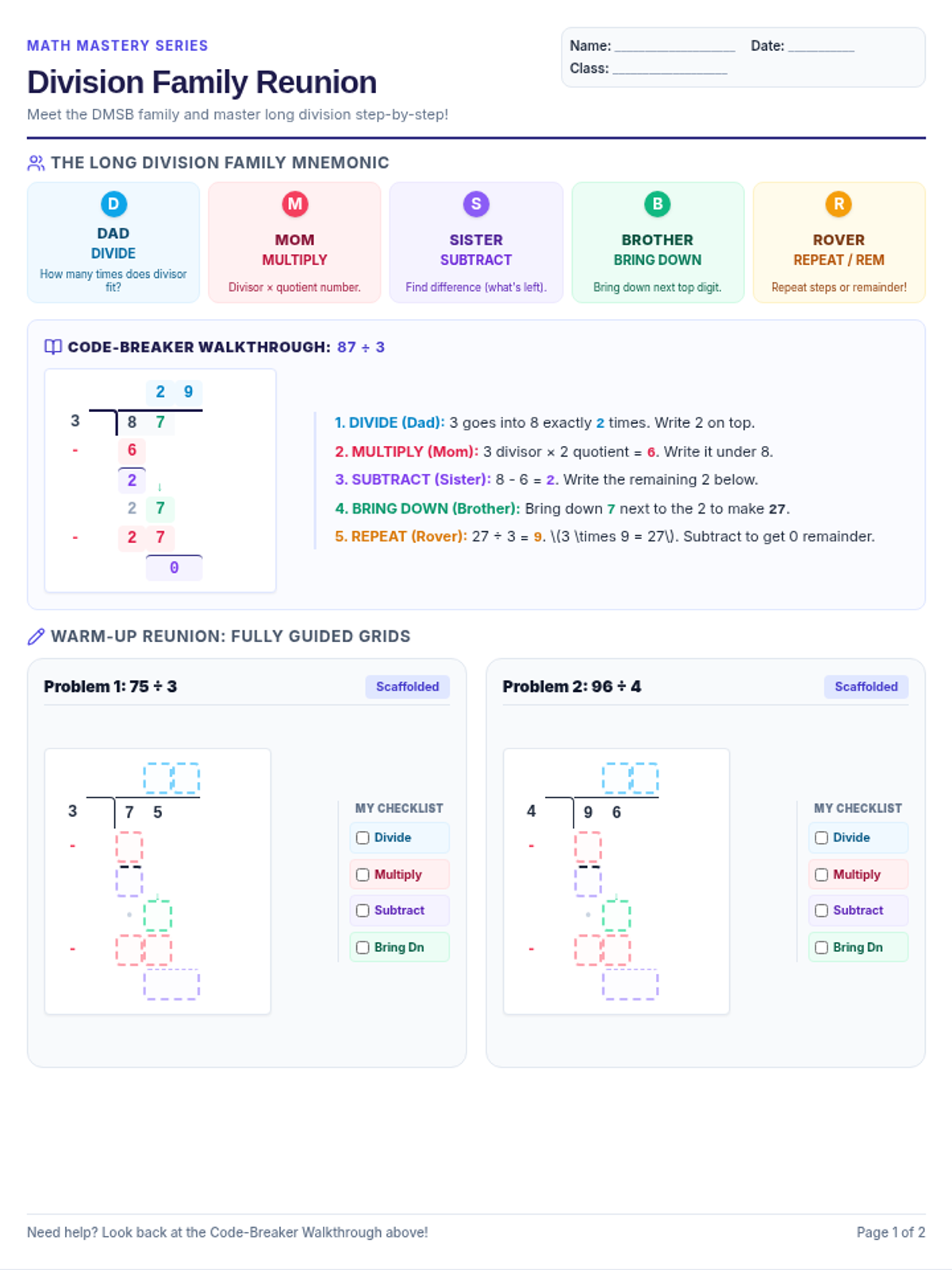
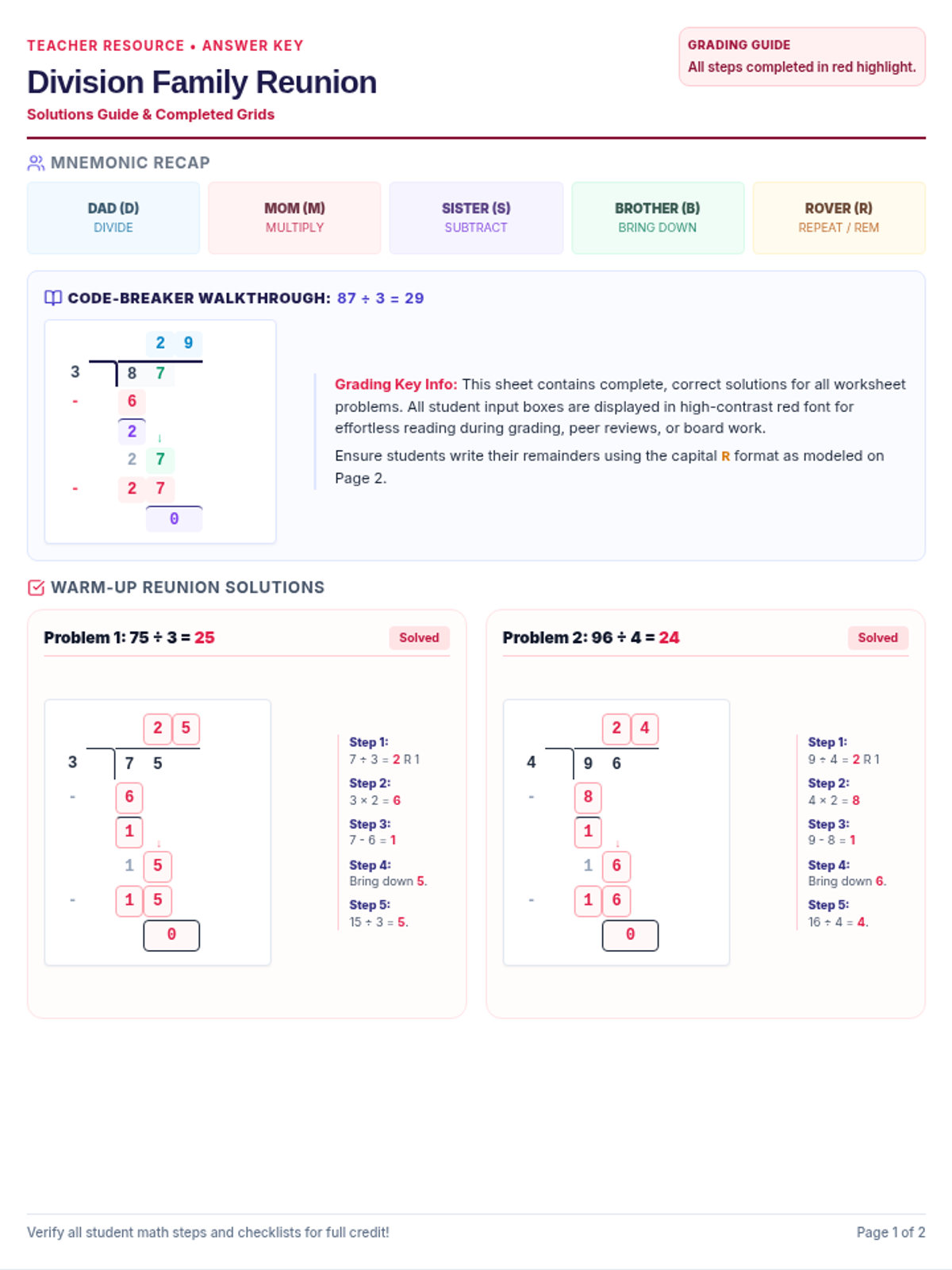
A scaffolded introduction to long division using the Dad, Mom, Sister, Brother mnemonic. Students utilize color-coded grid organizers to master the multi-step algorithm with step-by-step independence.
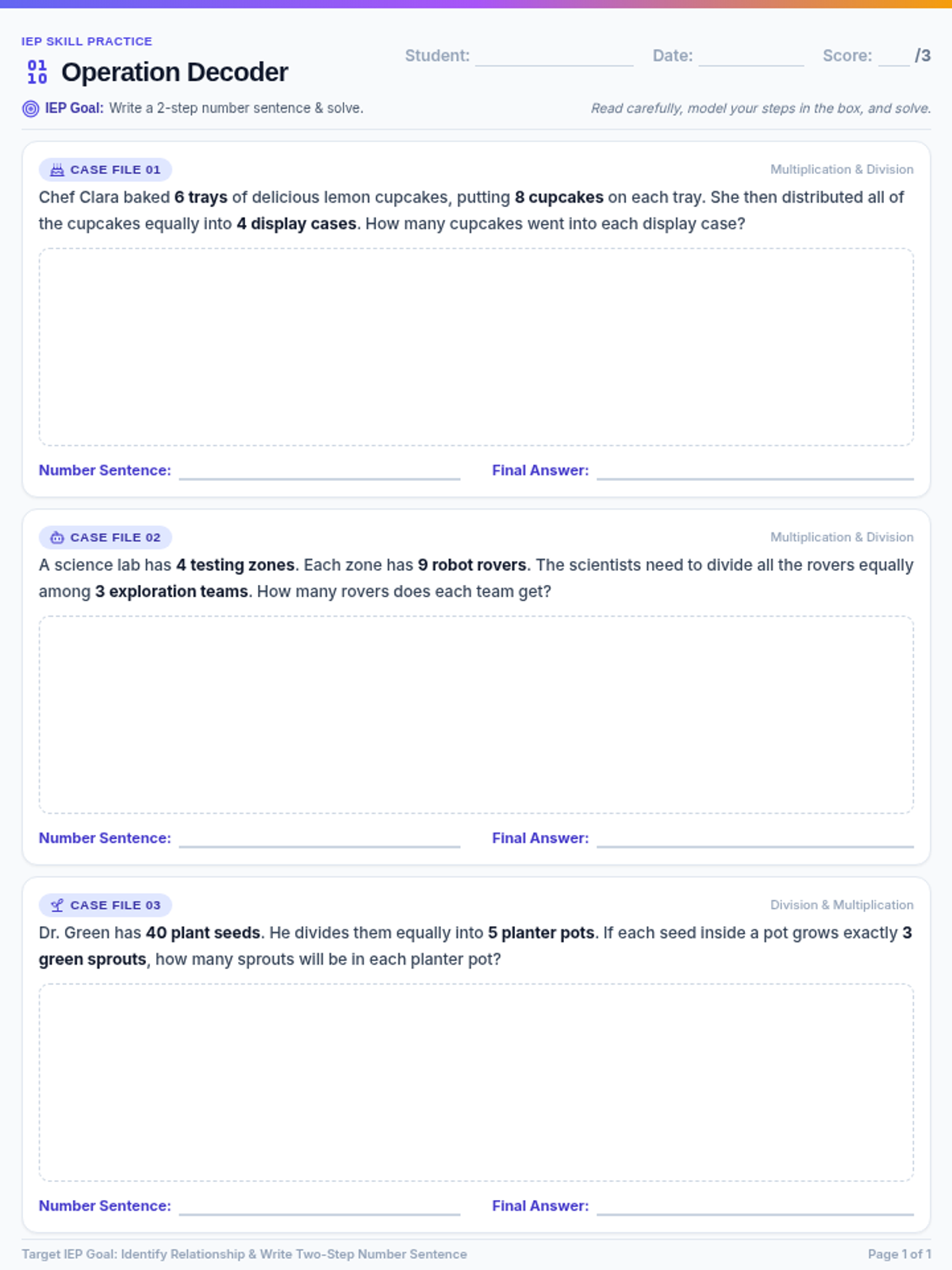
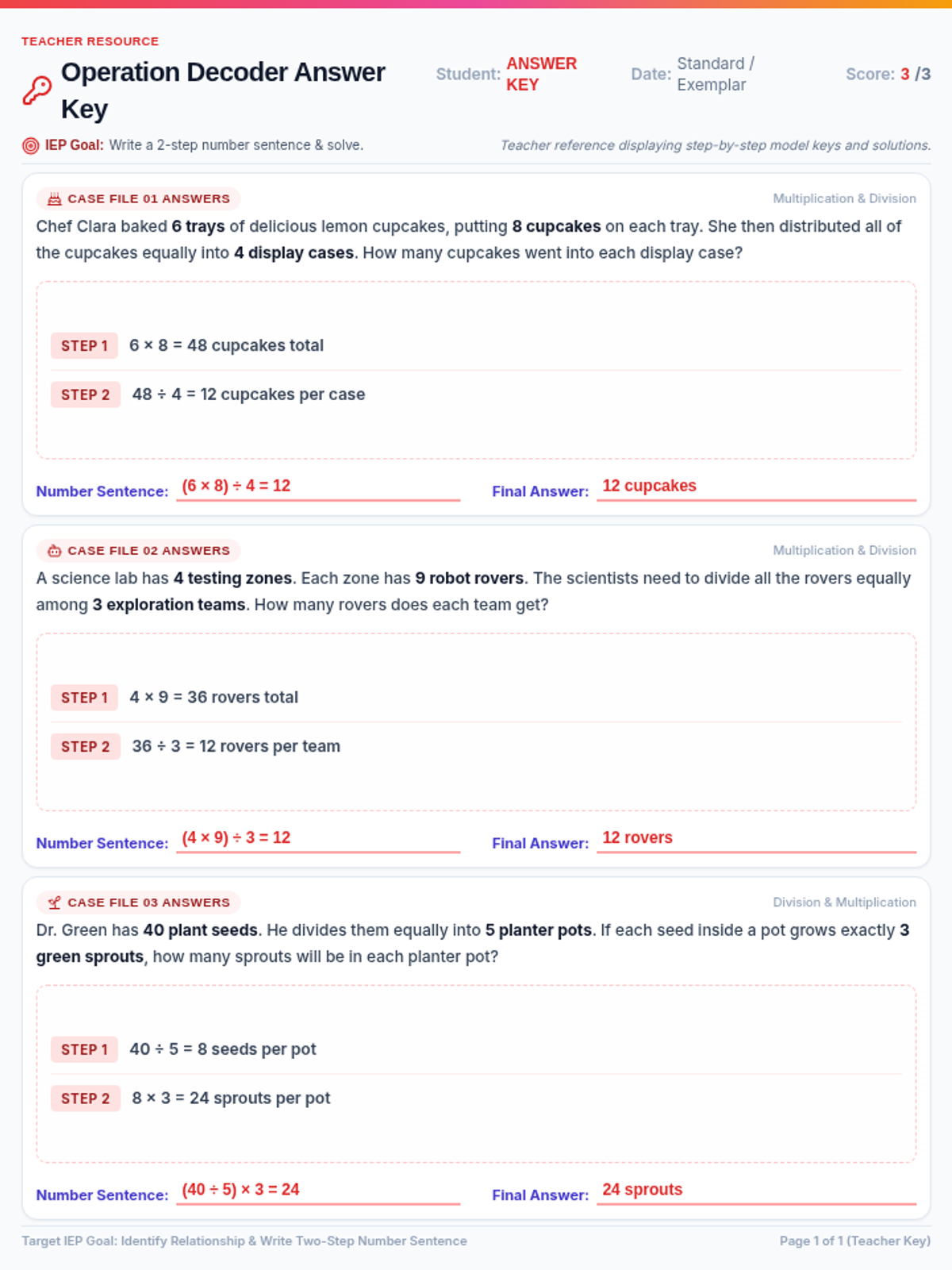
A math lesson focused on solving two-step story problems involving multiplication and division. Students practice translating complex word scenarios into clear mathematical relationships and algebraic number sentences.
A targeted 3rd-grade lesson designed to help students decode word problems into mathematical equations. This lesson features a student-facing word problem worksheet and a matching teacher answer key with an IEP tracking rubric to measure progress toward writing number sentences across all four basic operations.
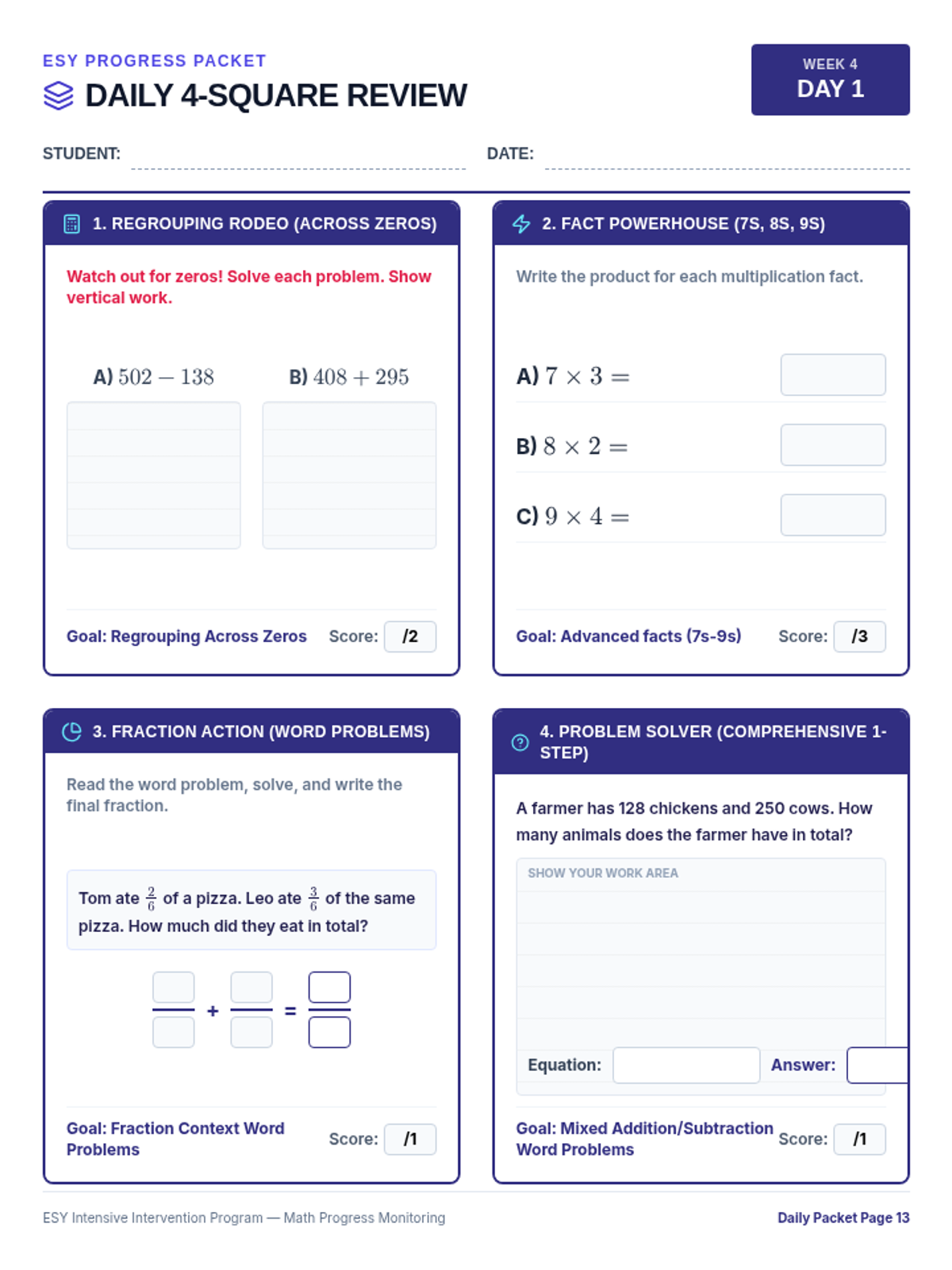
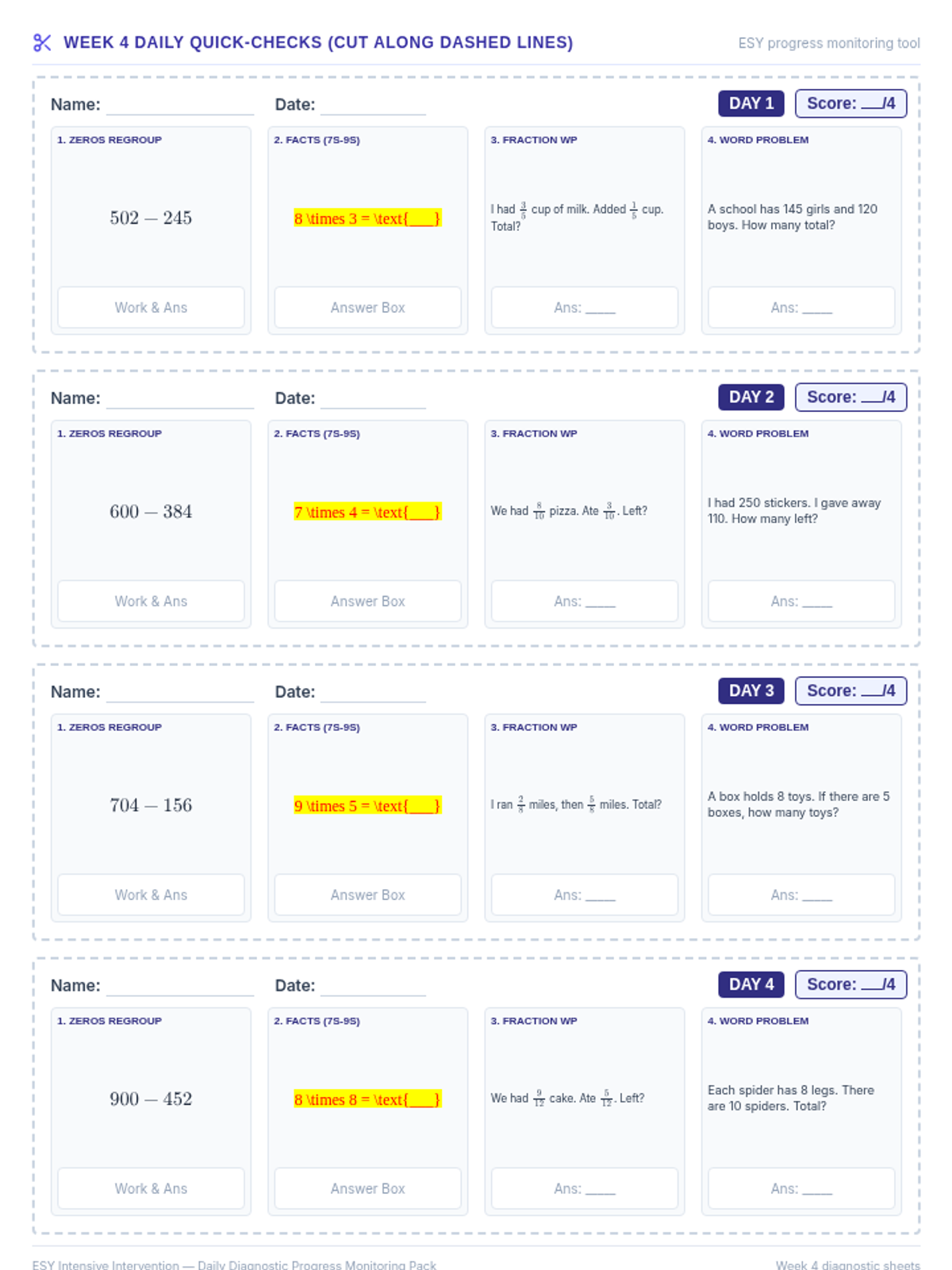
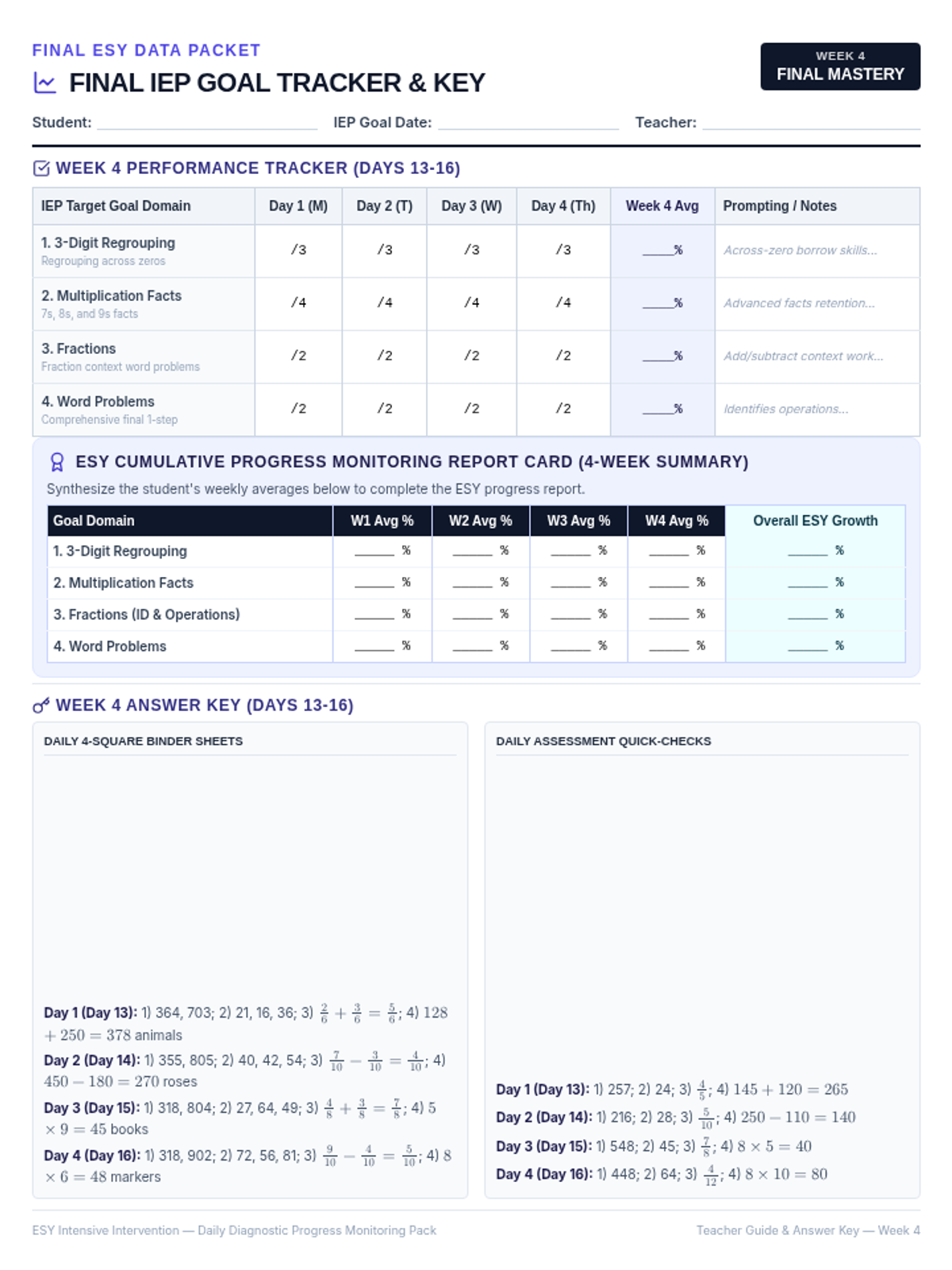
Week 4 of ESY focuses on mastery, mixed review, and final progress-monitoring data collection. Skills include complex 3-digit regrouping across zeros, multiplication facts for 7s, 8s, and 9s, adding/subtracting fractions plus simple word problems for all four domains, and generating progress summary reports.
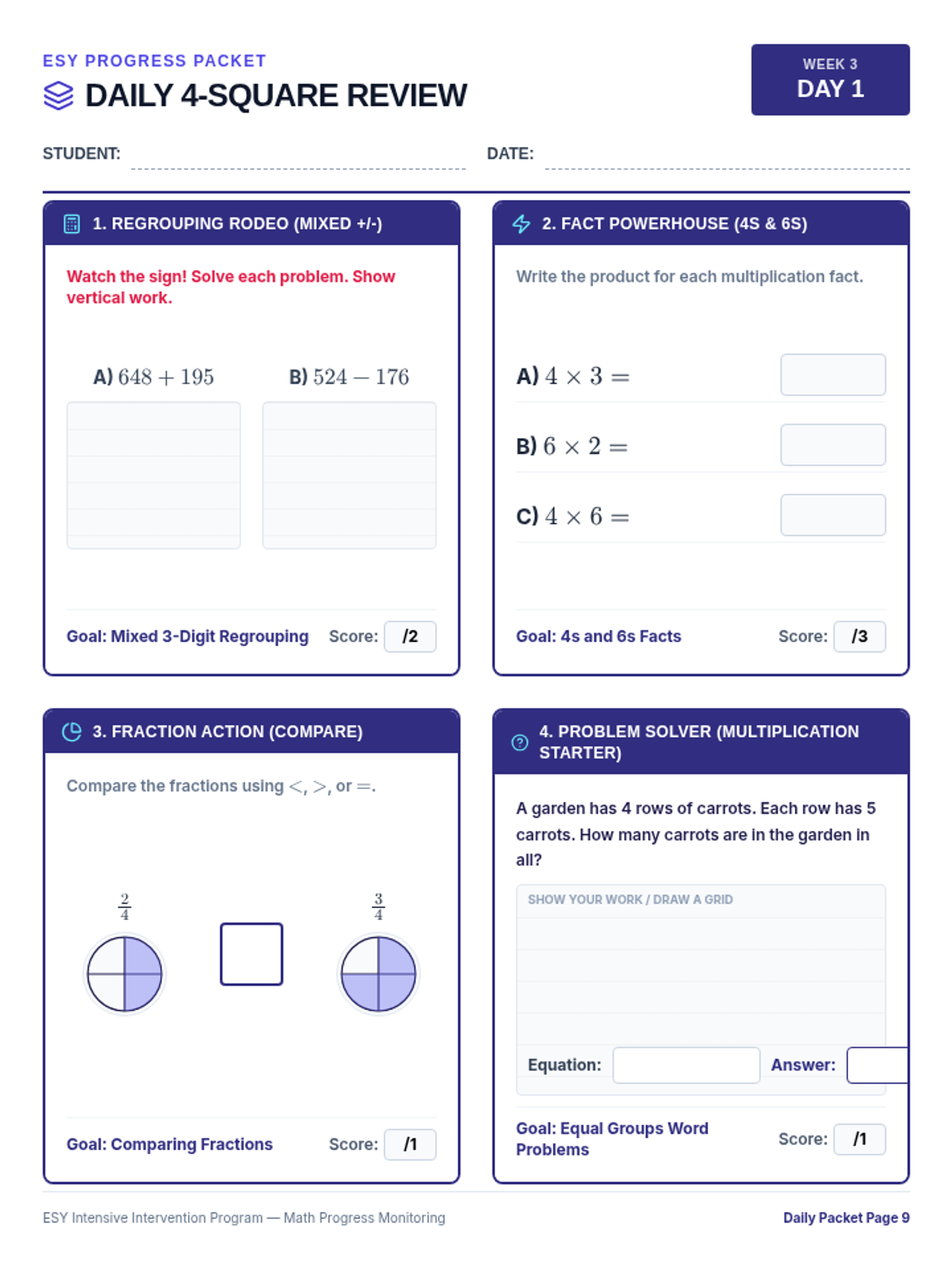
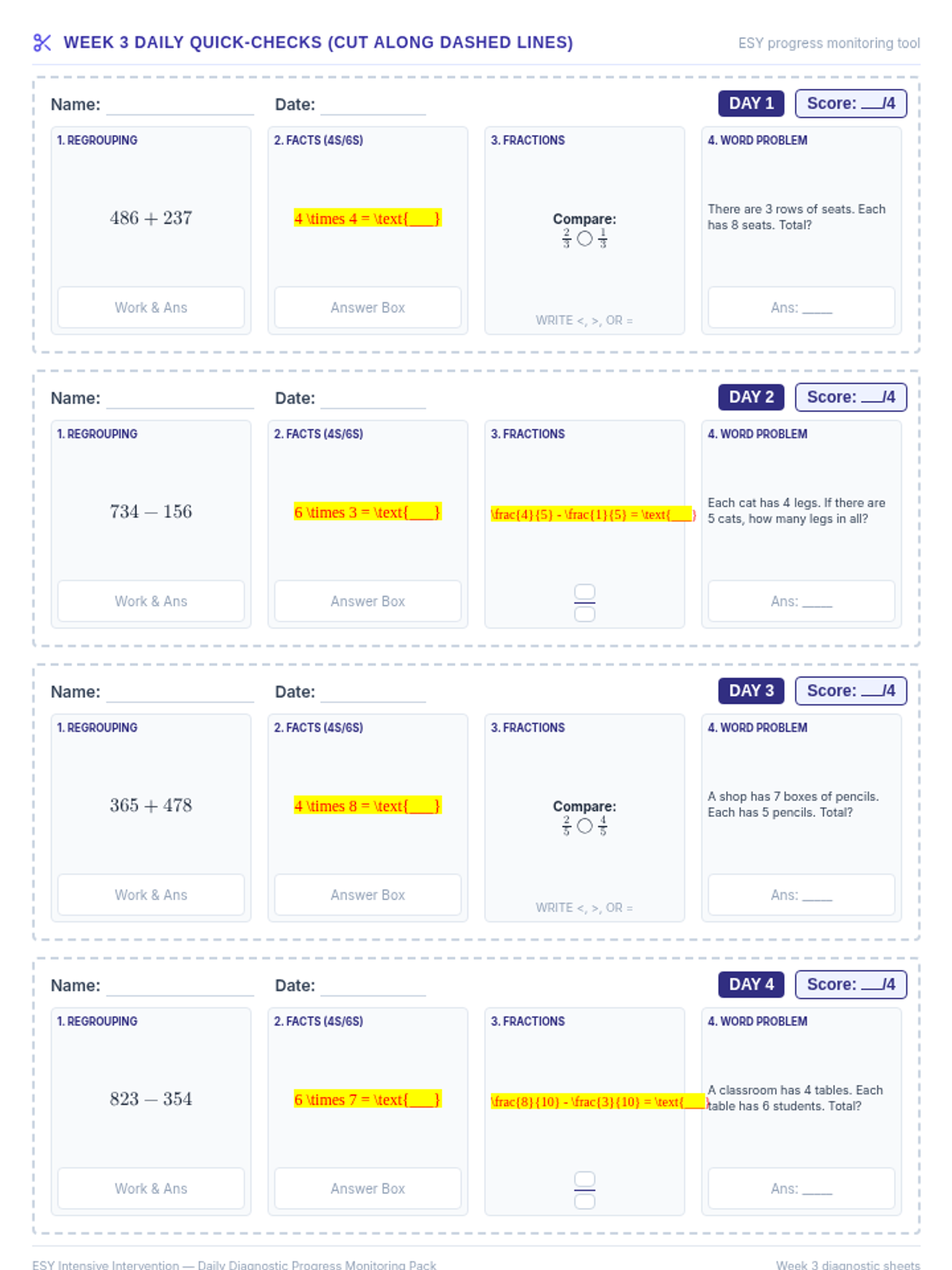
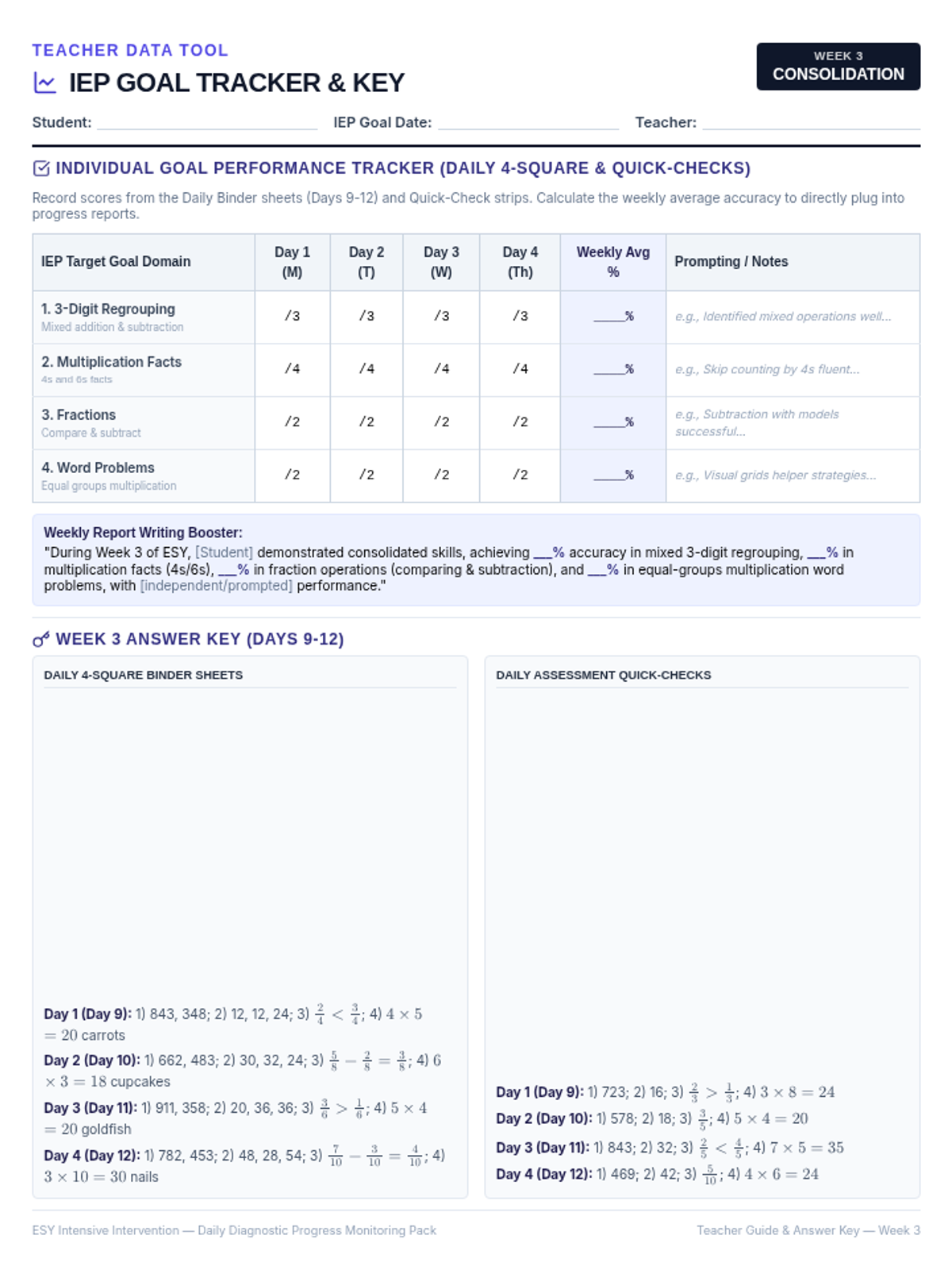
Week 3 of ESY shifts to mixed addition/subtraction regrouping, multiplication facts for 4s and 6s, comparing fractions and adding/subtracting fractions with common denominators, and mixed single-step word problems (multiplication/division starter).
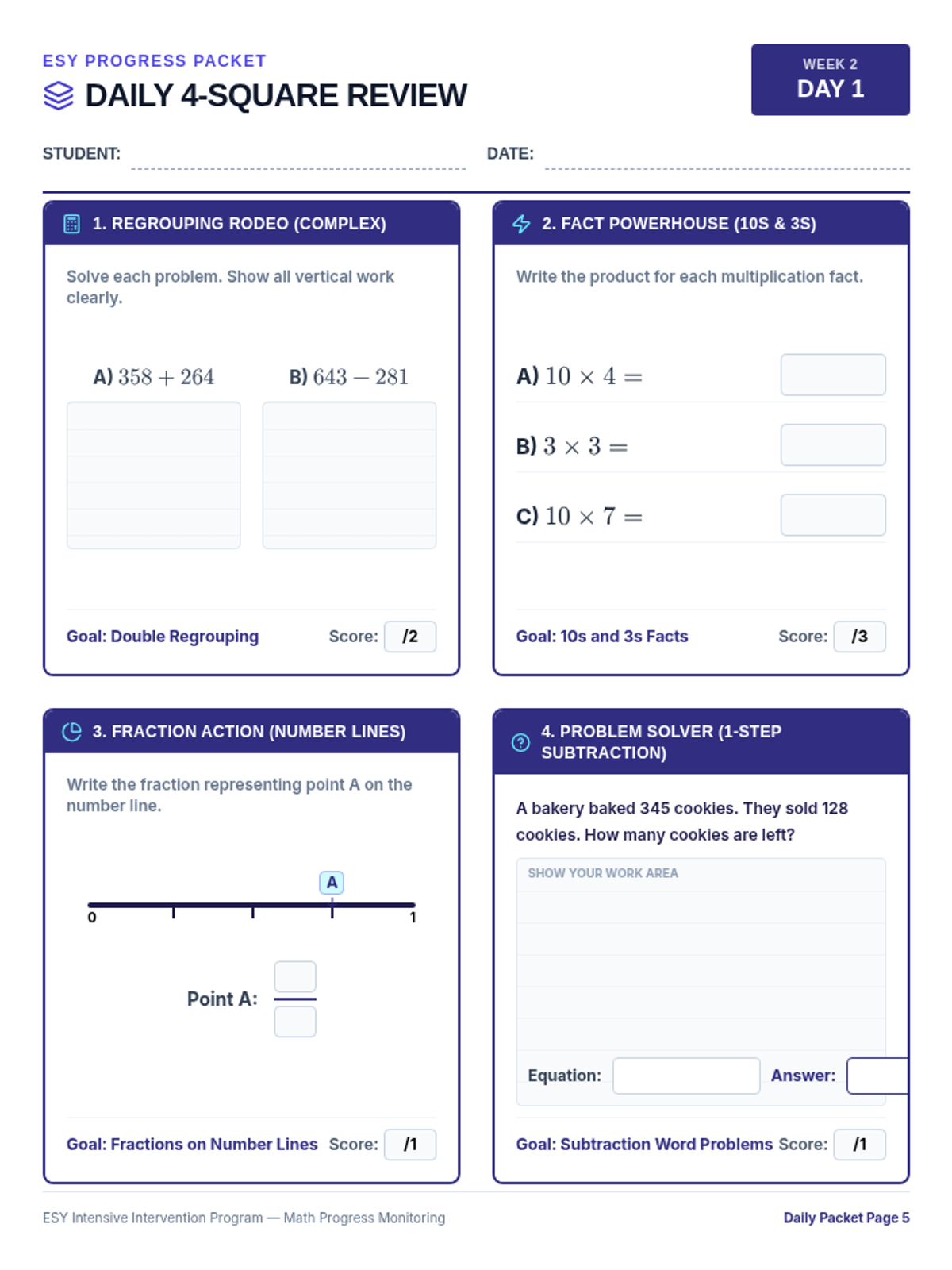
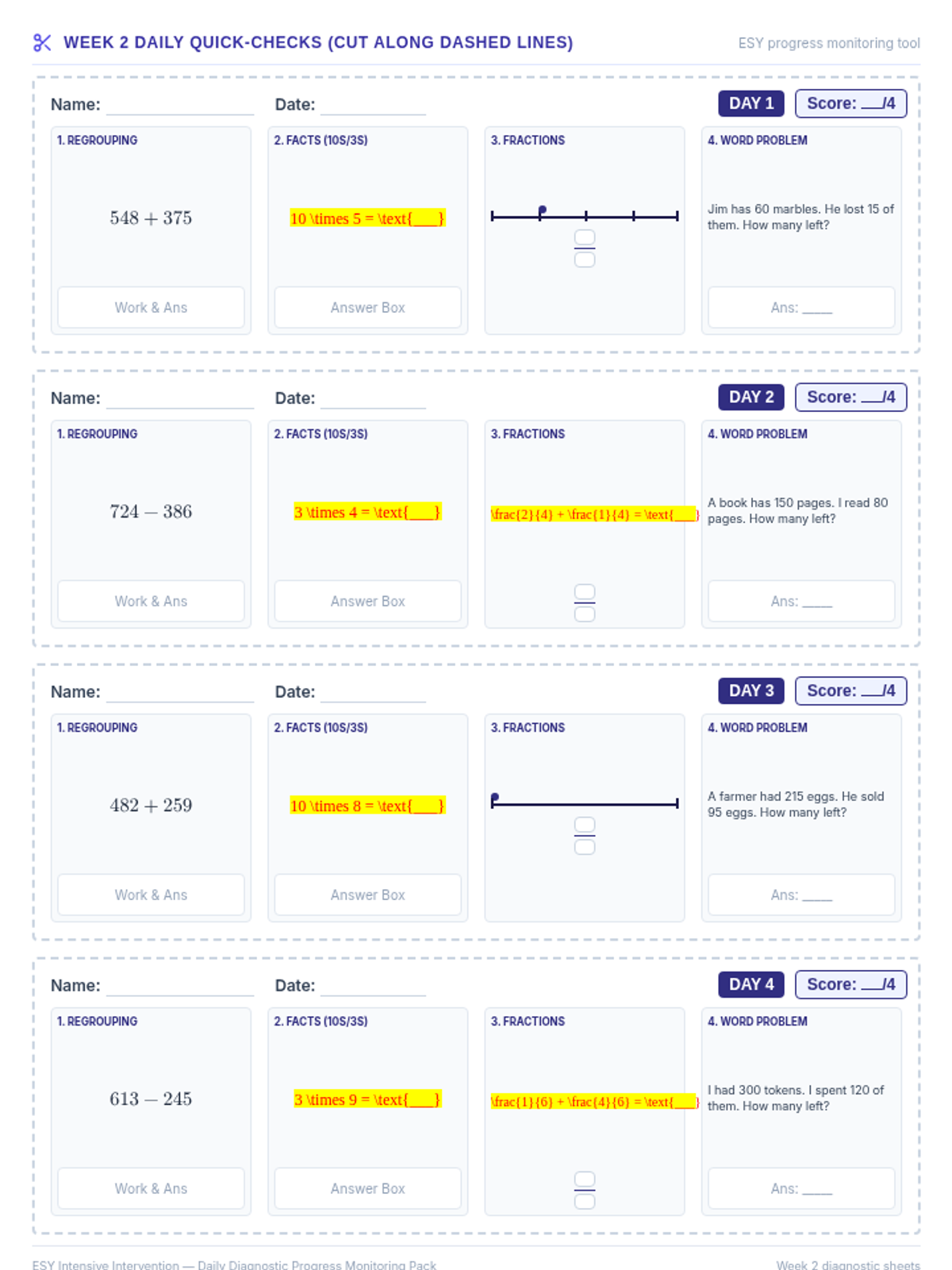
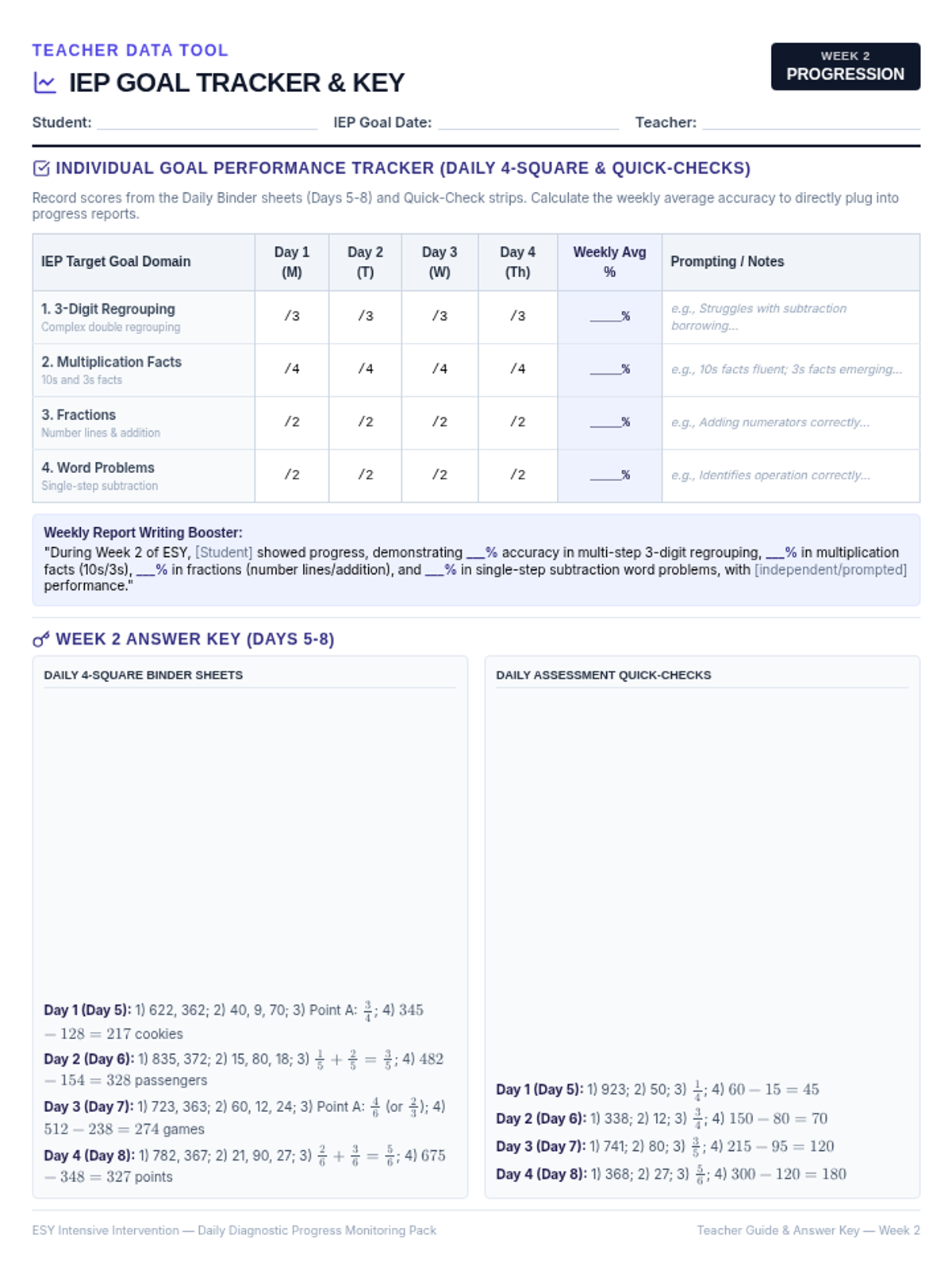
Week 2 of ESY introduces multi-step or more complex regrouping, multiplication facts for 10s and 3s, identifying fractions on number lines and simple fraction addition, and single-step subtraction word problems.
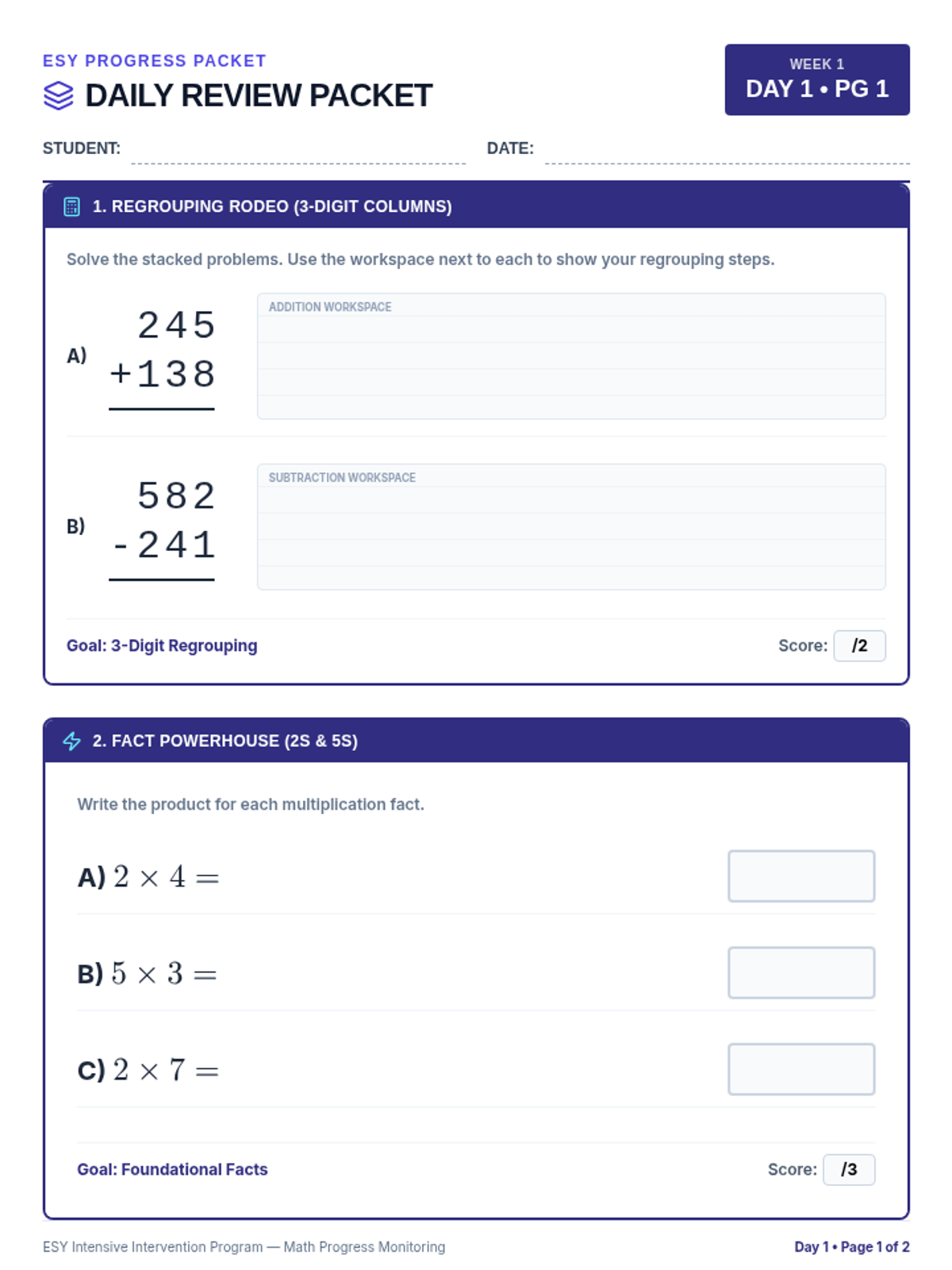
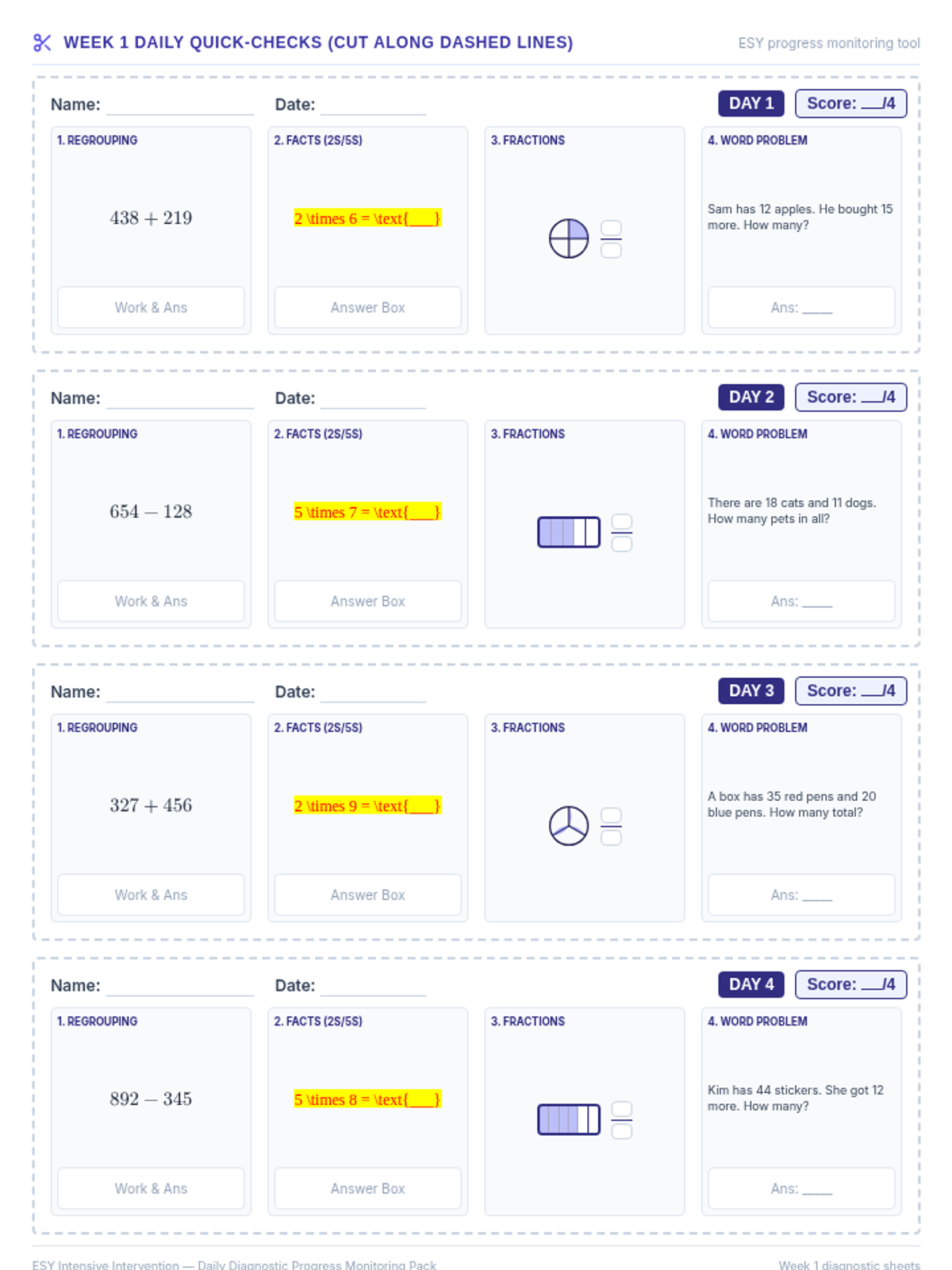
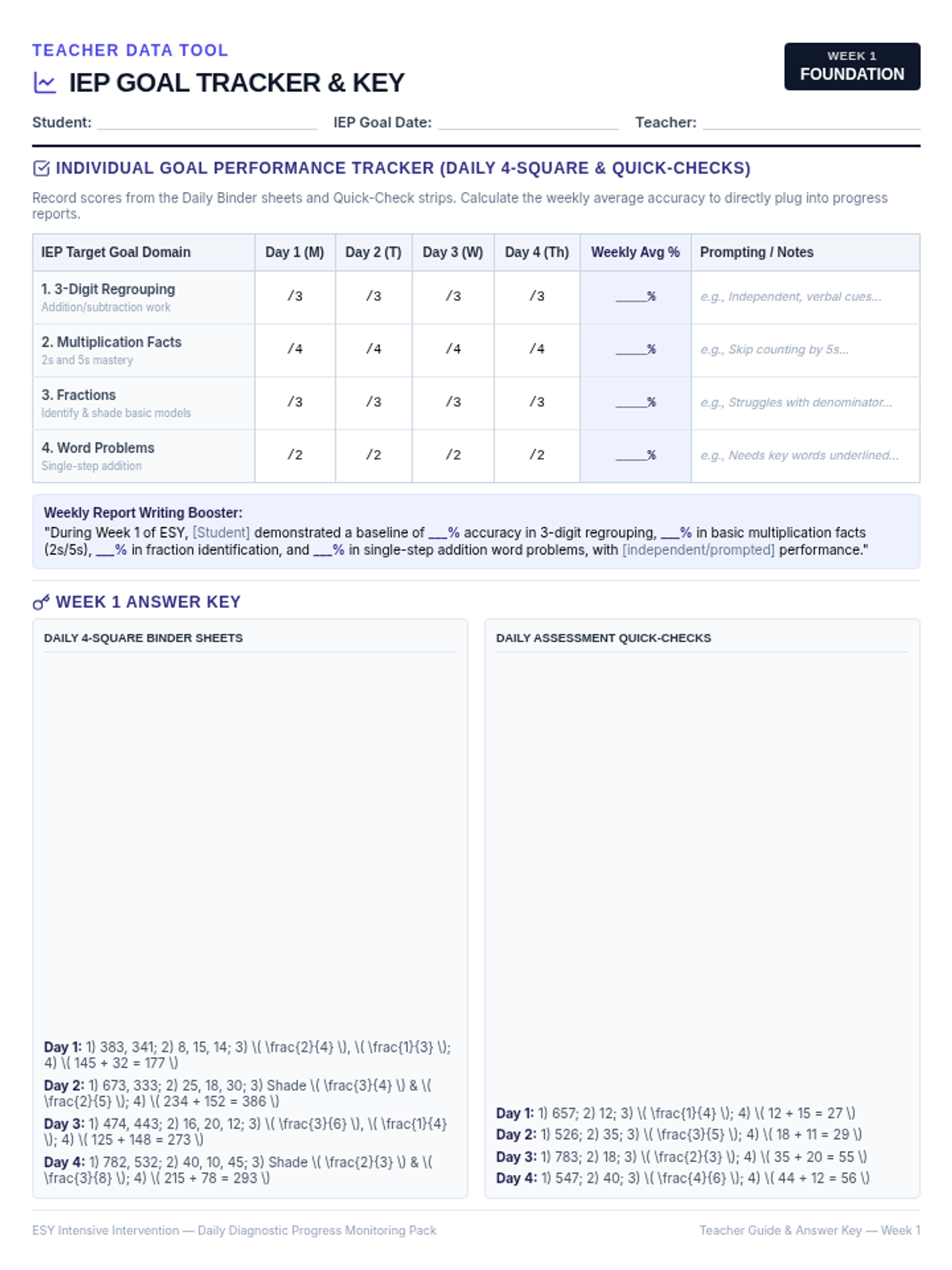
Week 1 of ESY focuses on establishing daily routines and gathering baseline/early progress data. Skills include 3-digit addition/subtraction without/with simple regrouping, multiplication facts for 2s and 5s, basic fraction identification, and single-step addition word problems.