A hands-on engineering lesson for Kindergarteners to explore buoyancy through prediction, video analysis, and water testing. Students will categorize objects as sinkers or floaters to help Juniper the worm design a raft.
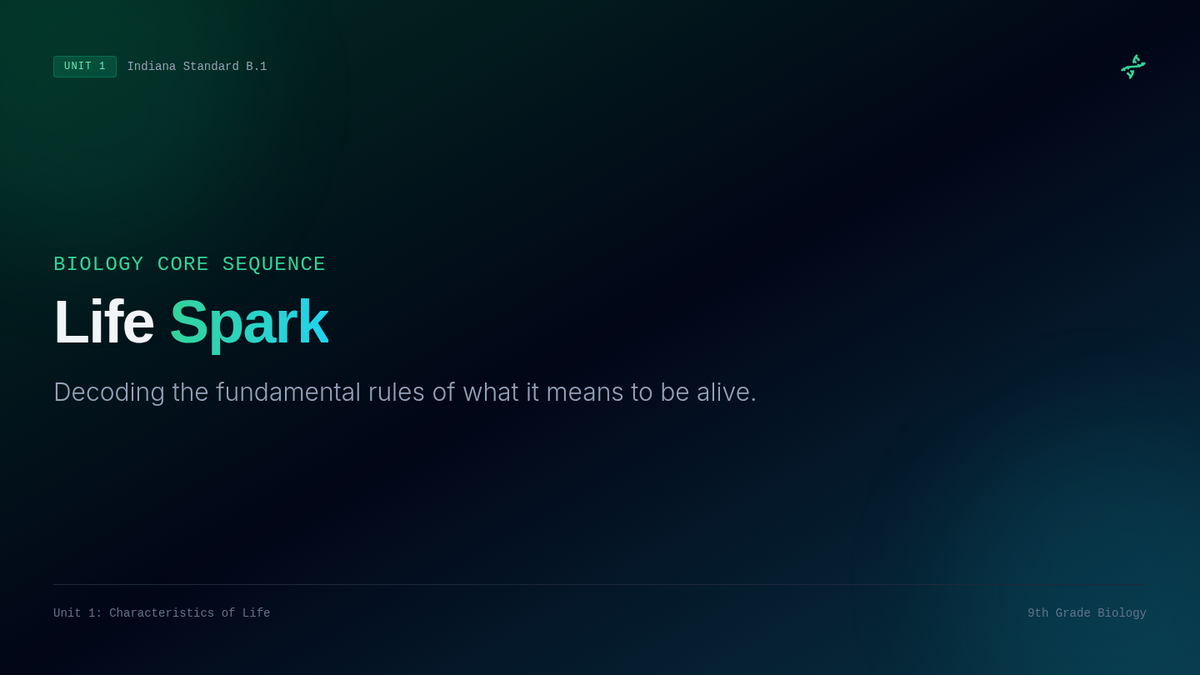
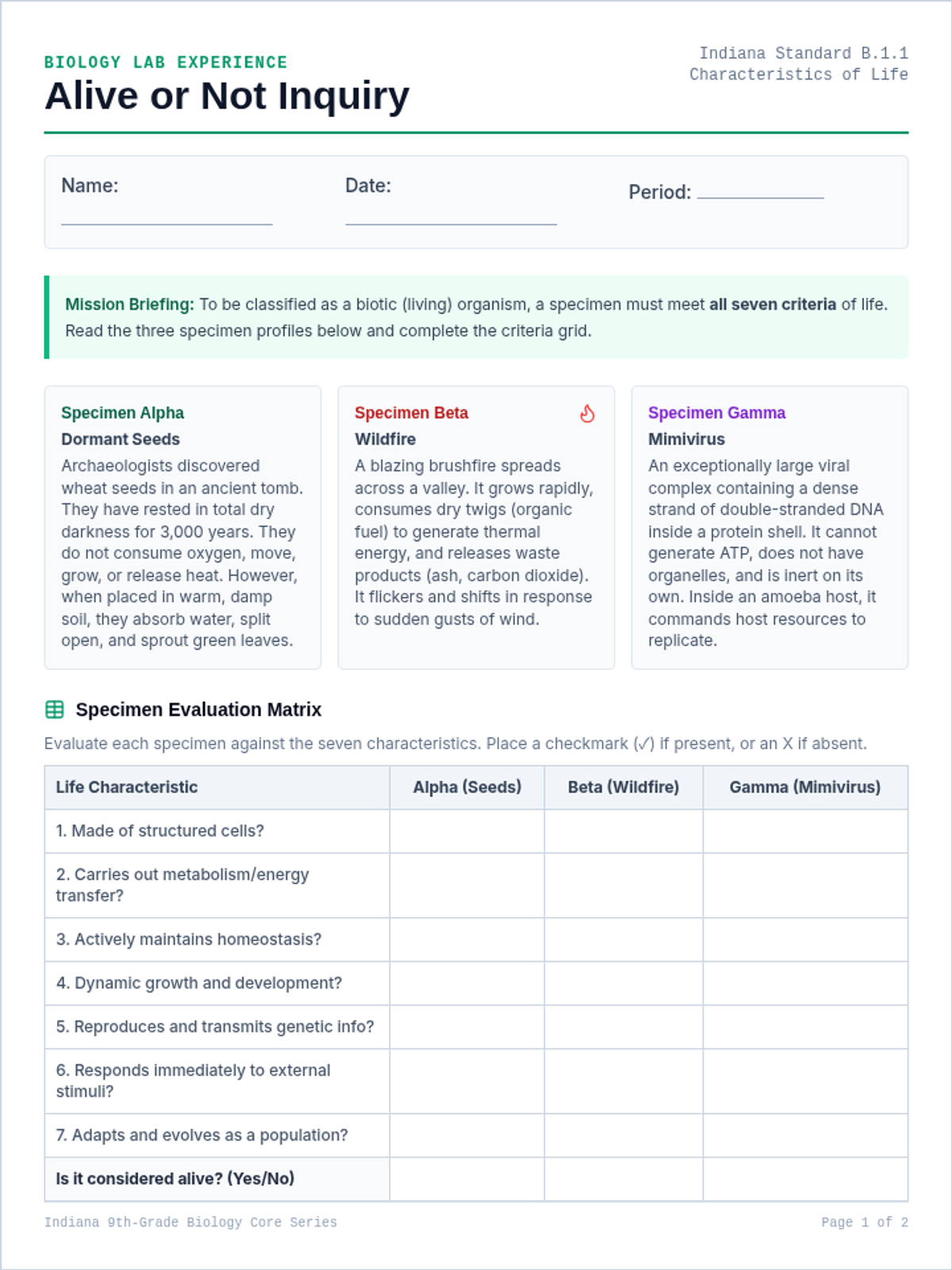
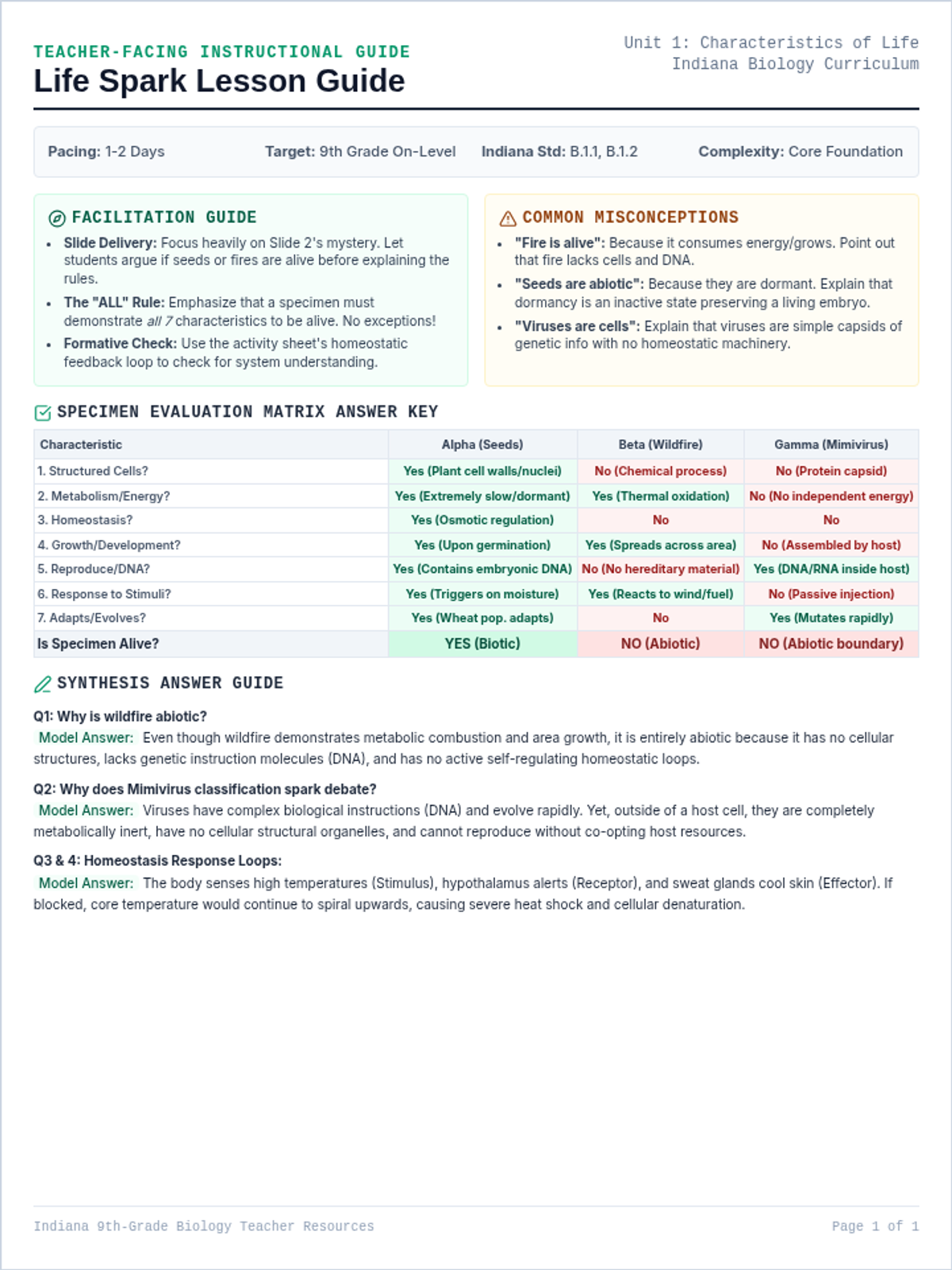
An introductory unit exploring the seven characteristics of living things, structural organization, and homeostatic balance in organisms, aligned with Indiana Academic Standards.
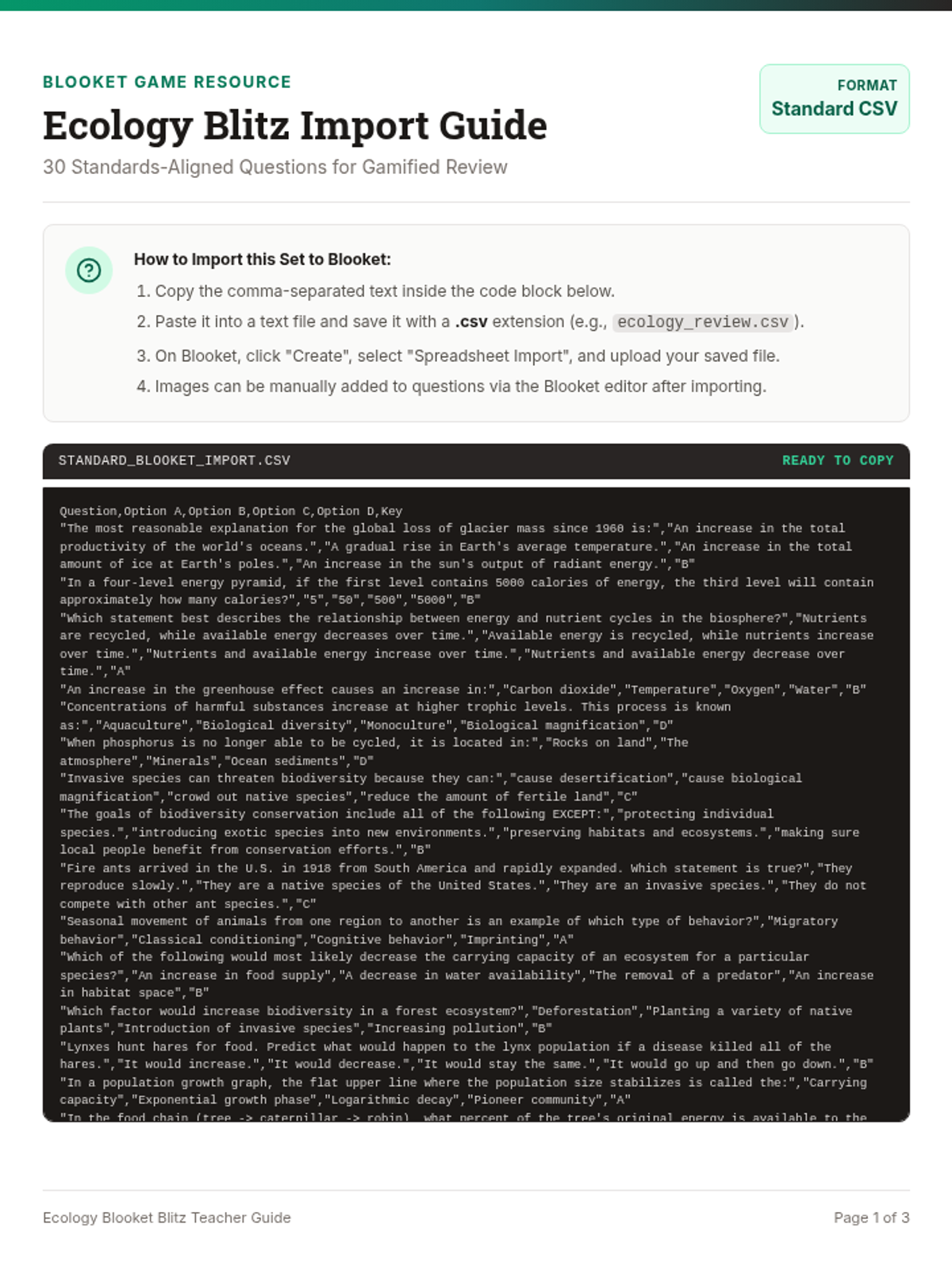
A high-energy ecology review lesson utilizing a gamified Blooket activity. It contains a complete Blooket-ready question bank and teacher guide featuring 30 standards-aligned ecology questions designed to evaluate understanding of ecosystems, energy pyramids, human impacts, and biochemical cycles.
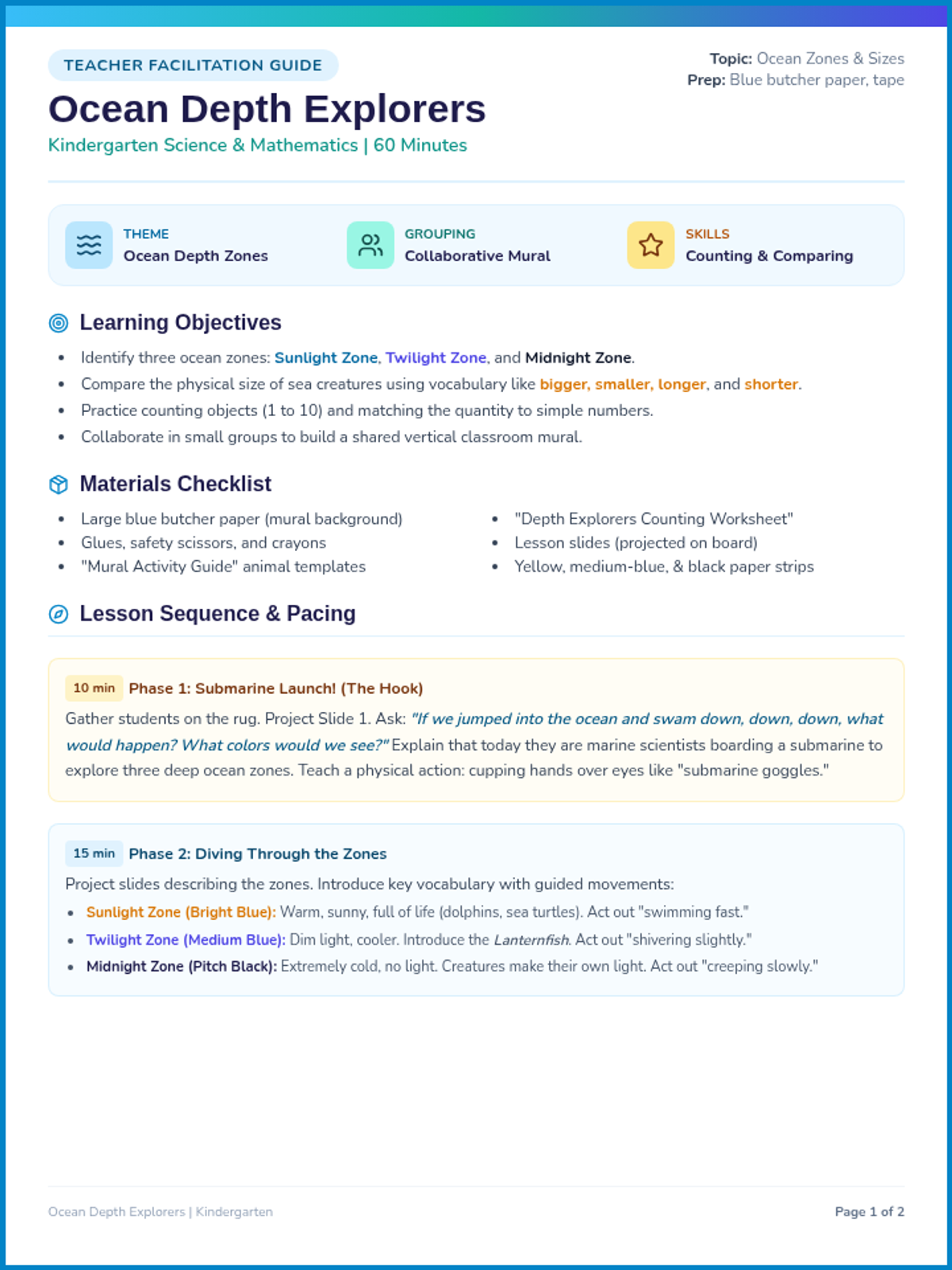
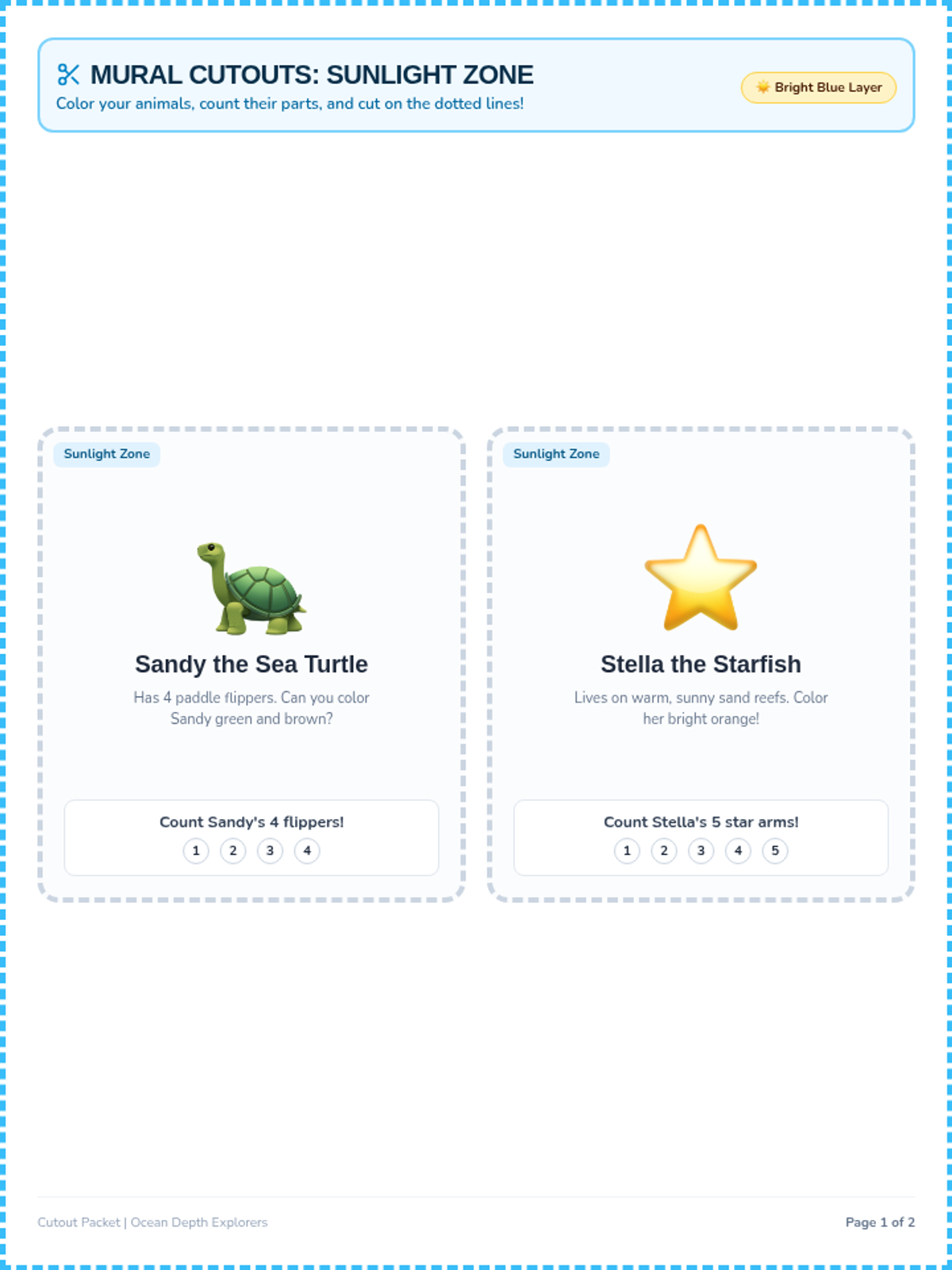
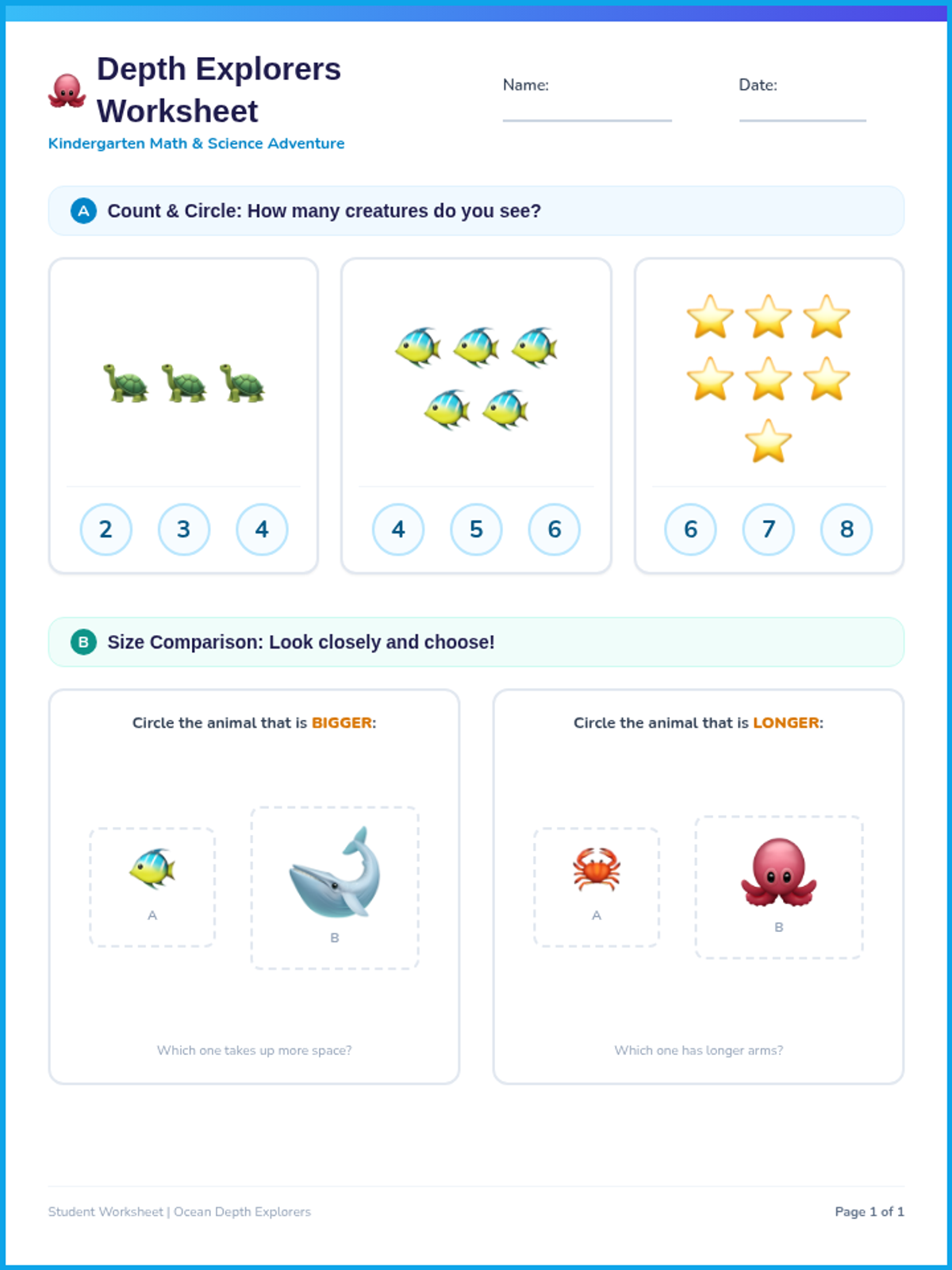
An interactive Kindergarten lesson where students explore ocean zones, compare marine animal sizes, and collaborate on a classroom ocean depth mural while practicing foundational counting and size comparison skills.
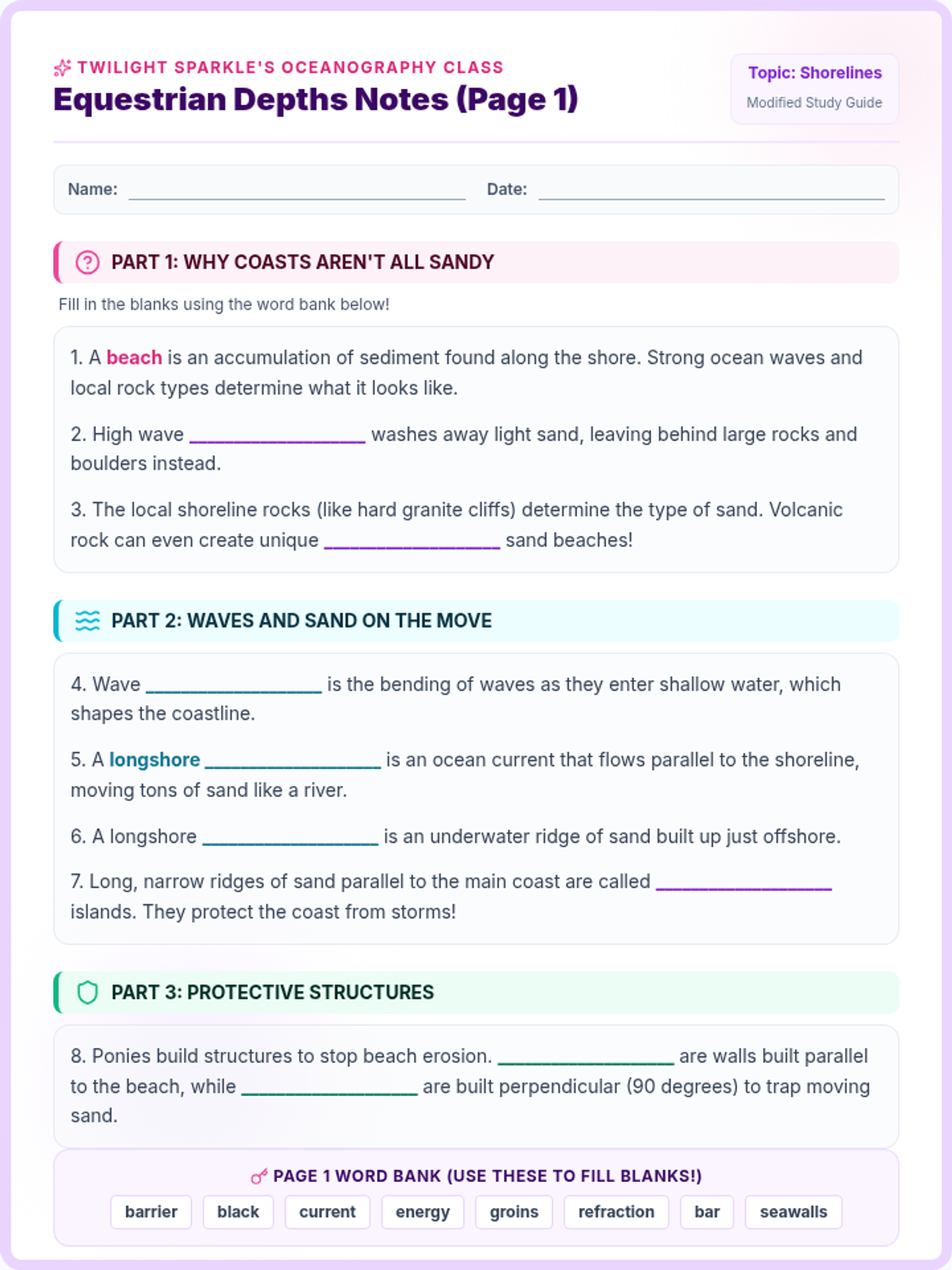
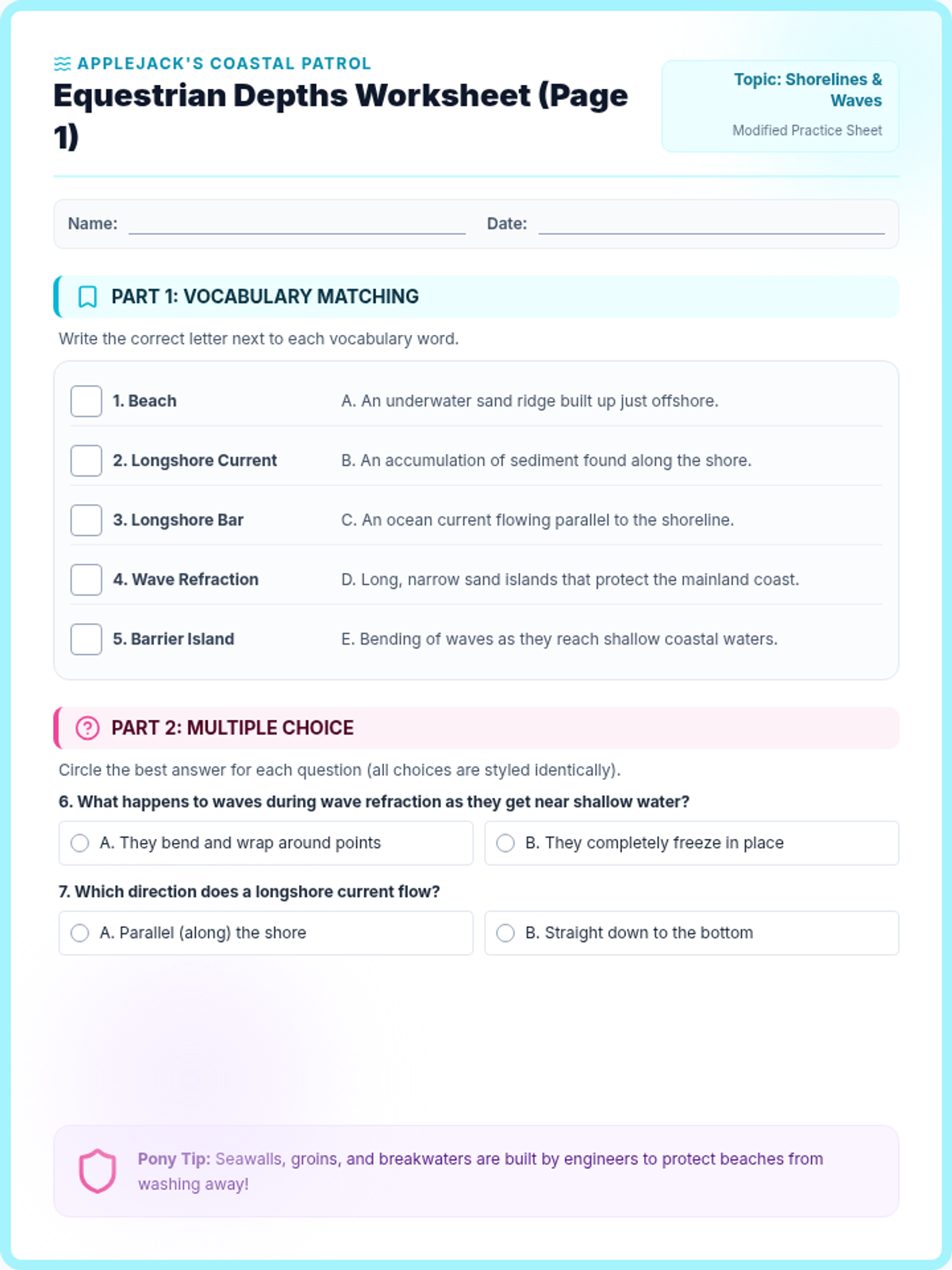
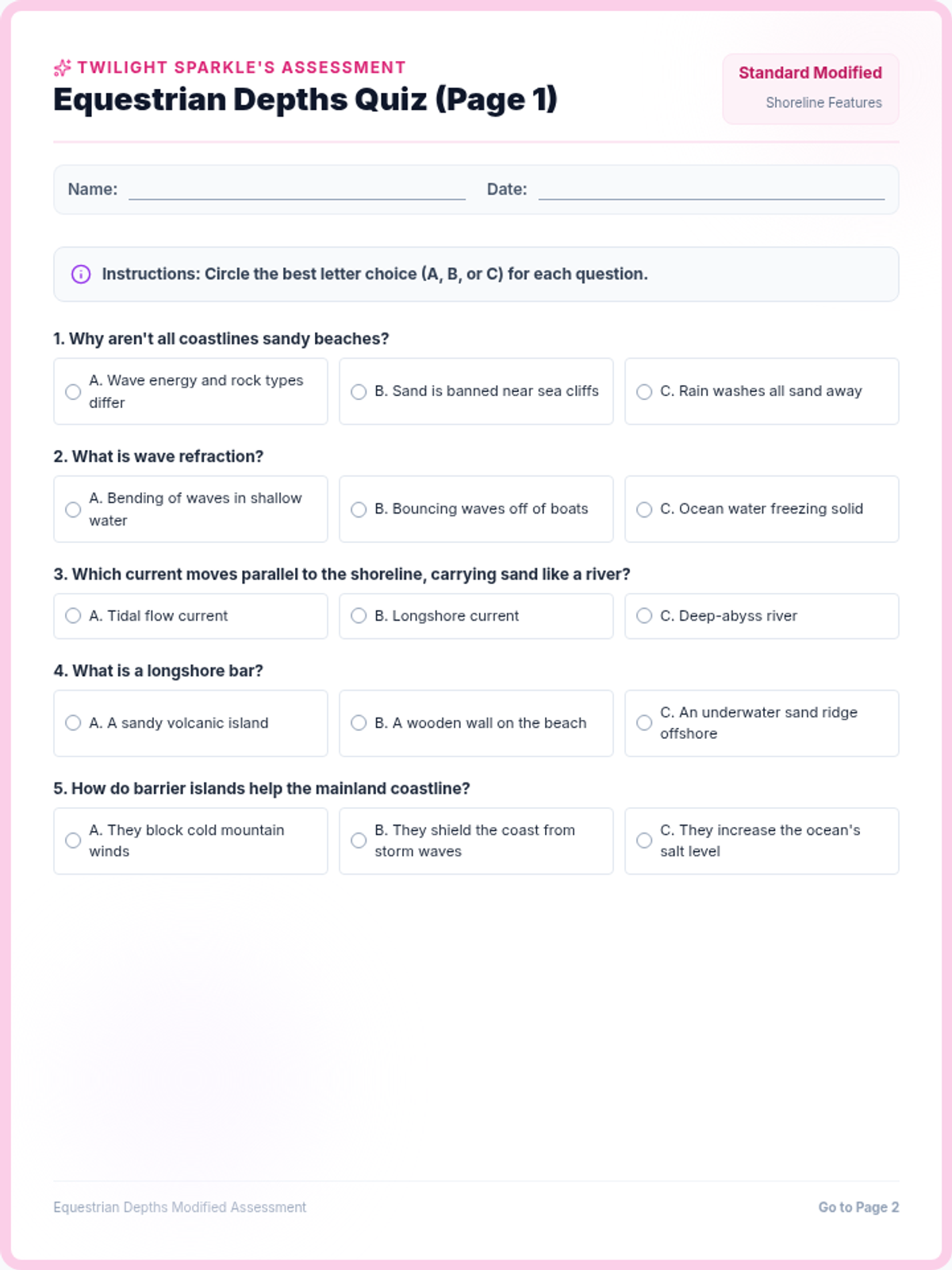
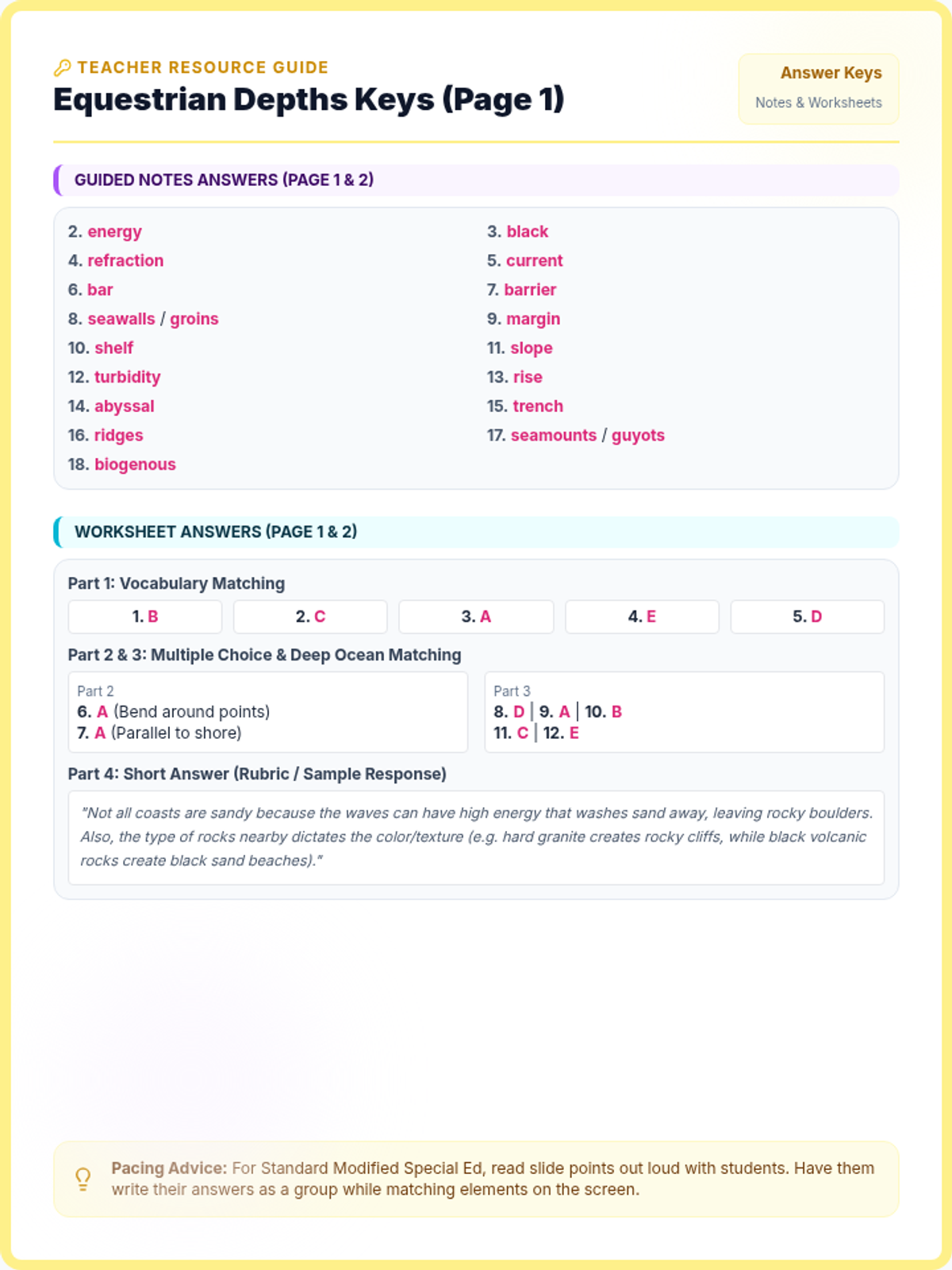
A lesson on oceanography covering shorelines, coastal features, and the deep seafloor, adapted with a friendly My Little Pony decorative theme and chunked, accessible text for Standard Modified Special Education students.
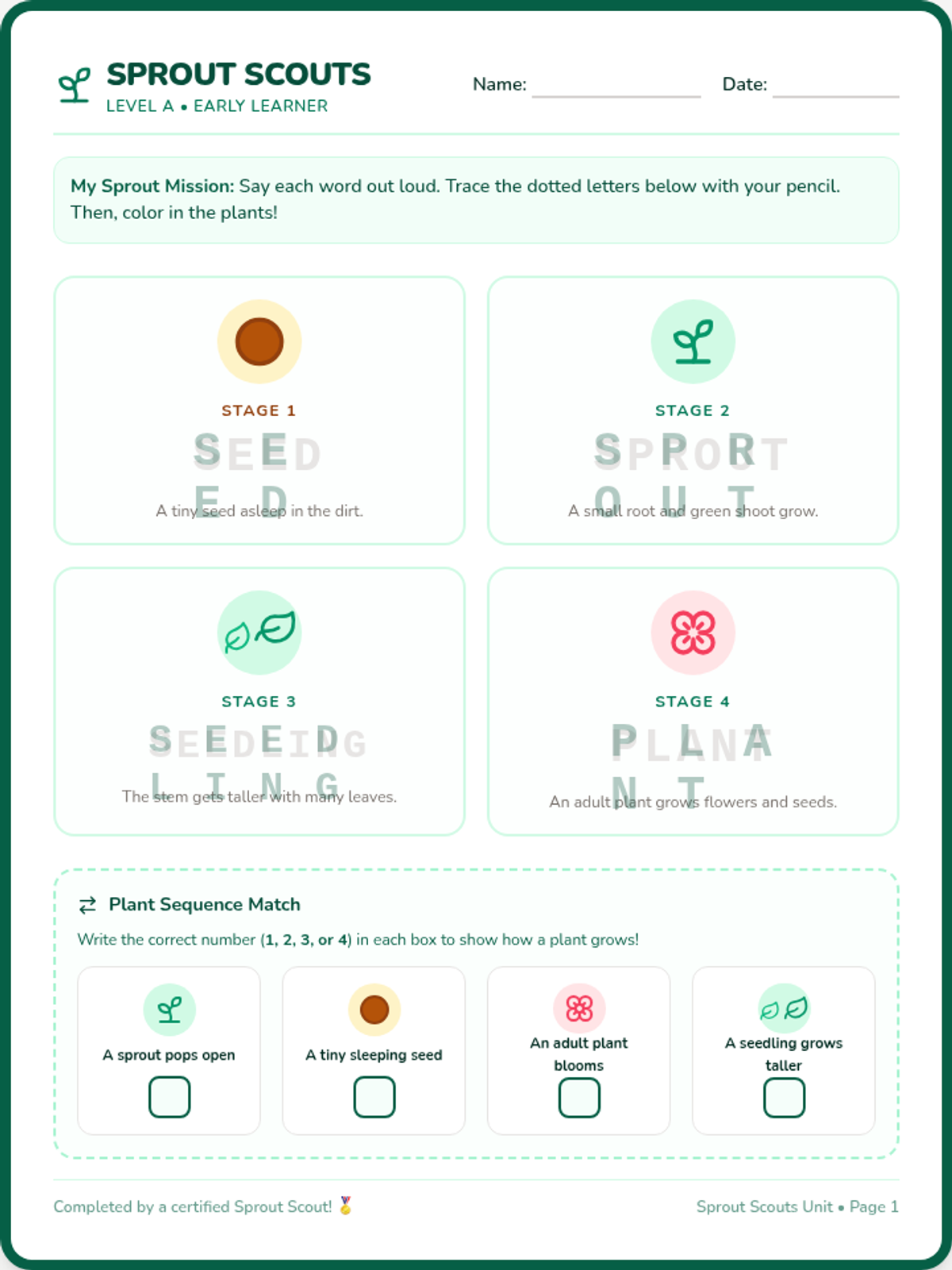
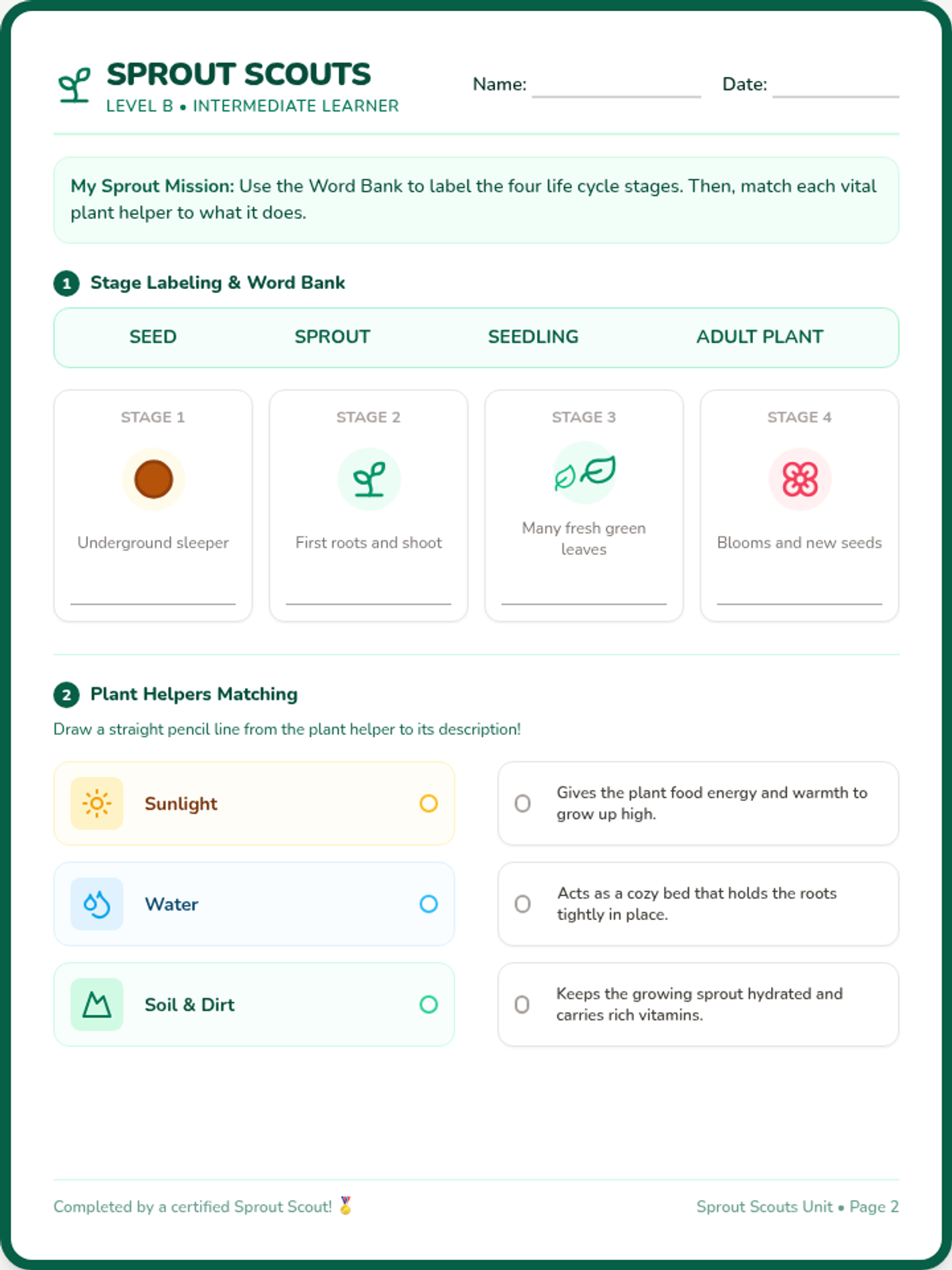
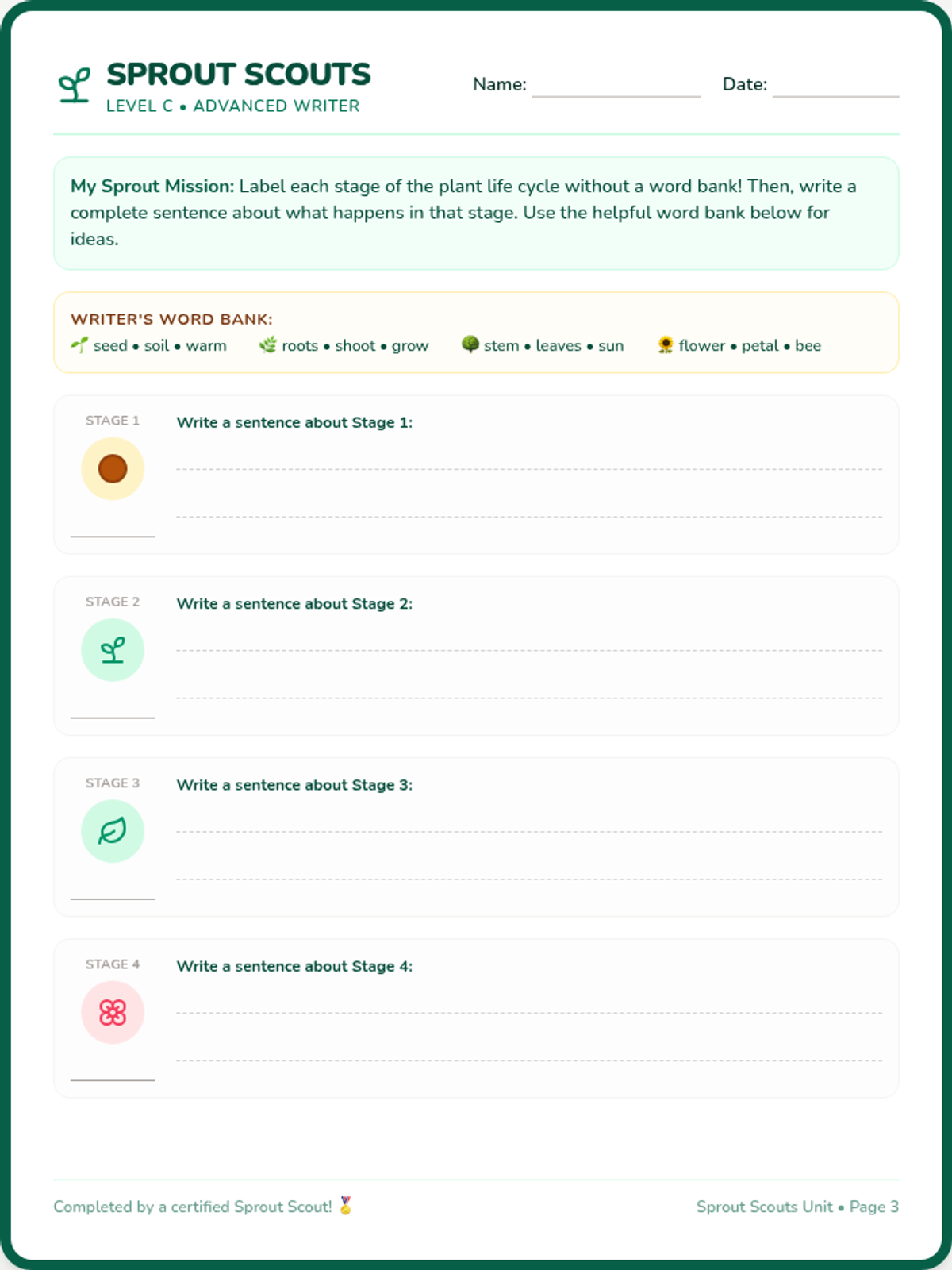
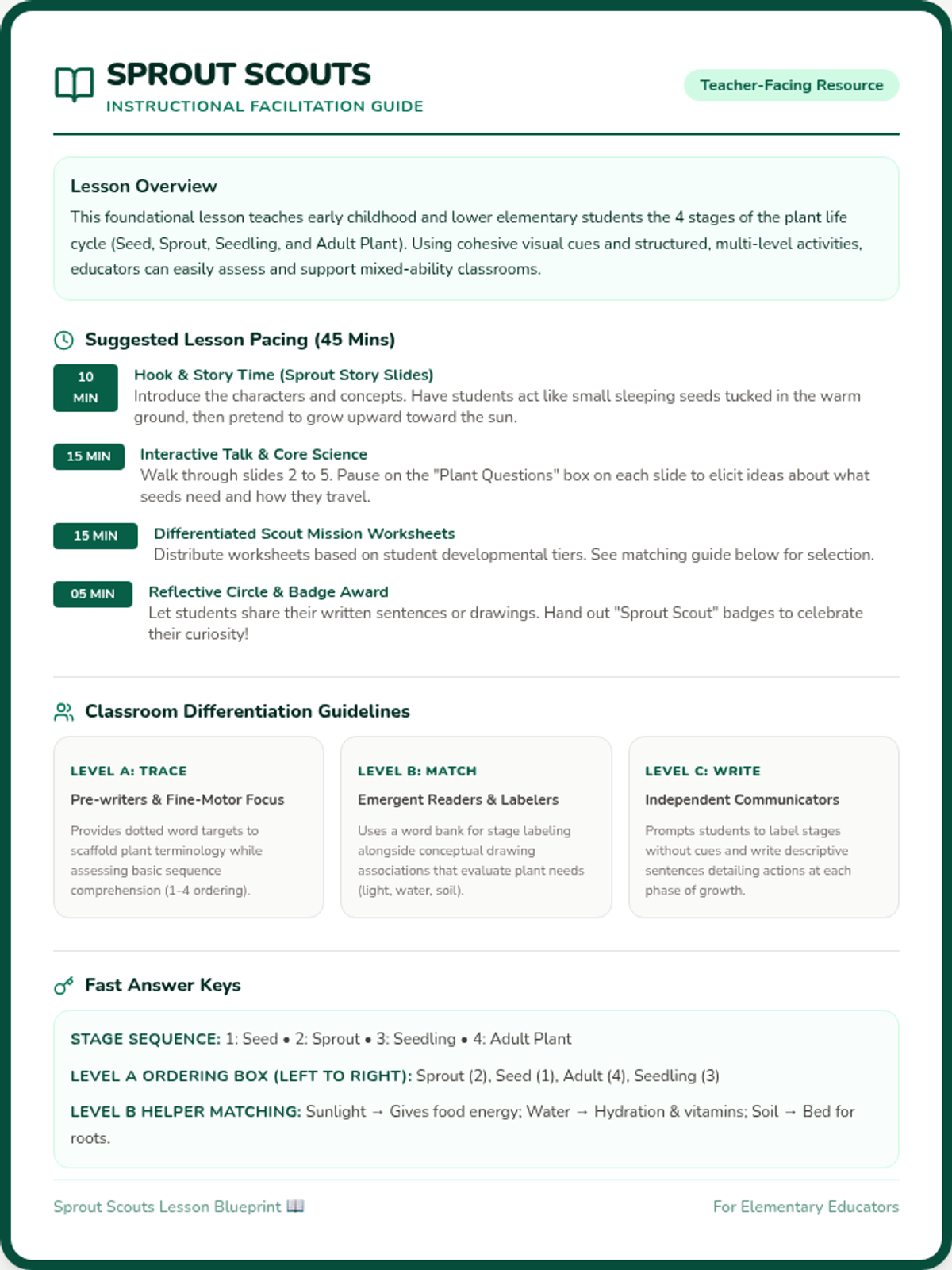
A foundational biology lesson exploring the simple life cycle of a plant from seed to sprout to adult. Includes interactive slides, a comprehensive teacher guide, and three tiers of differentiated worksheets to support early writers, matchers, and independent sentence-builders.
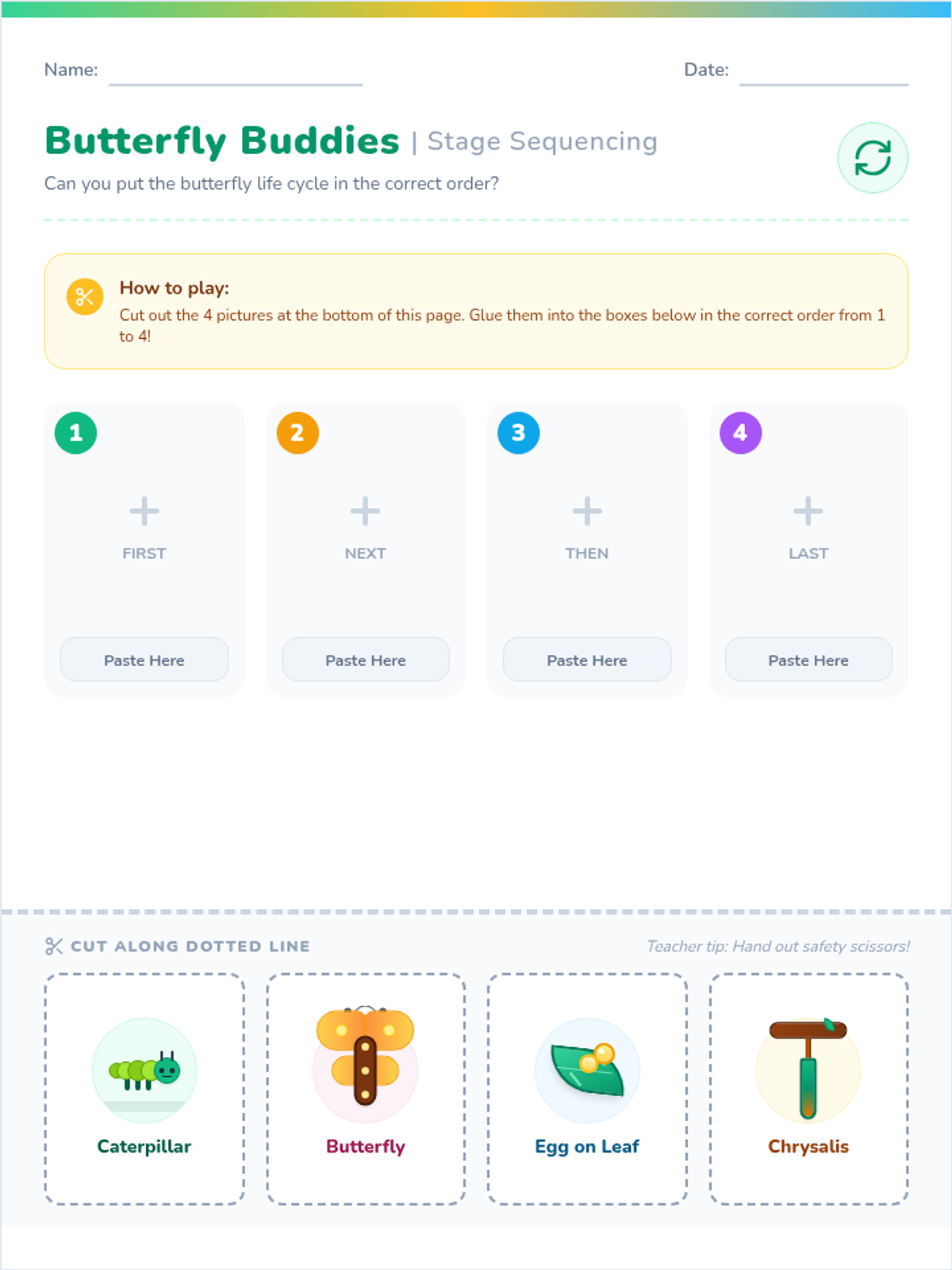
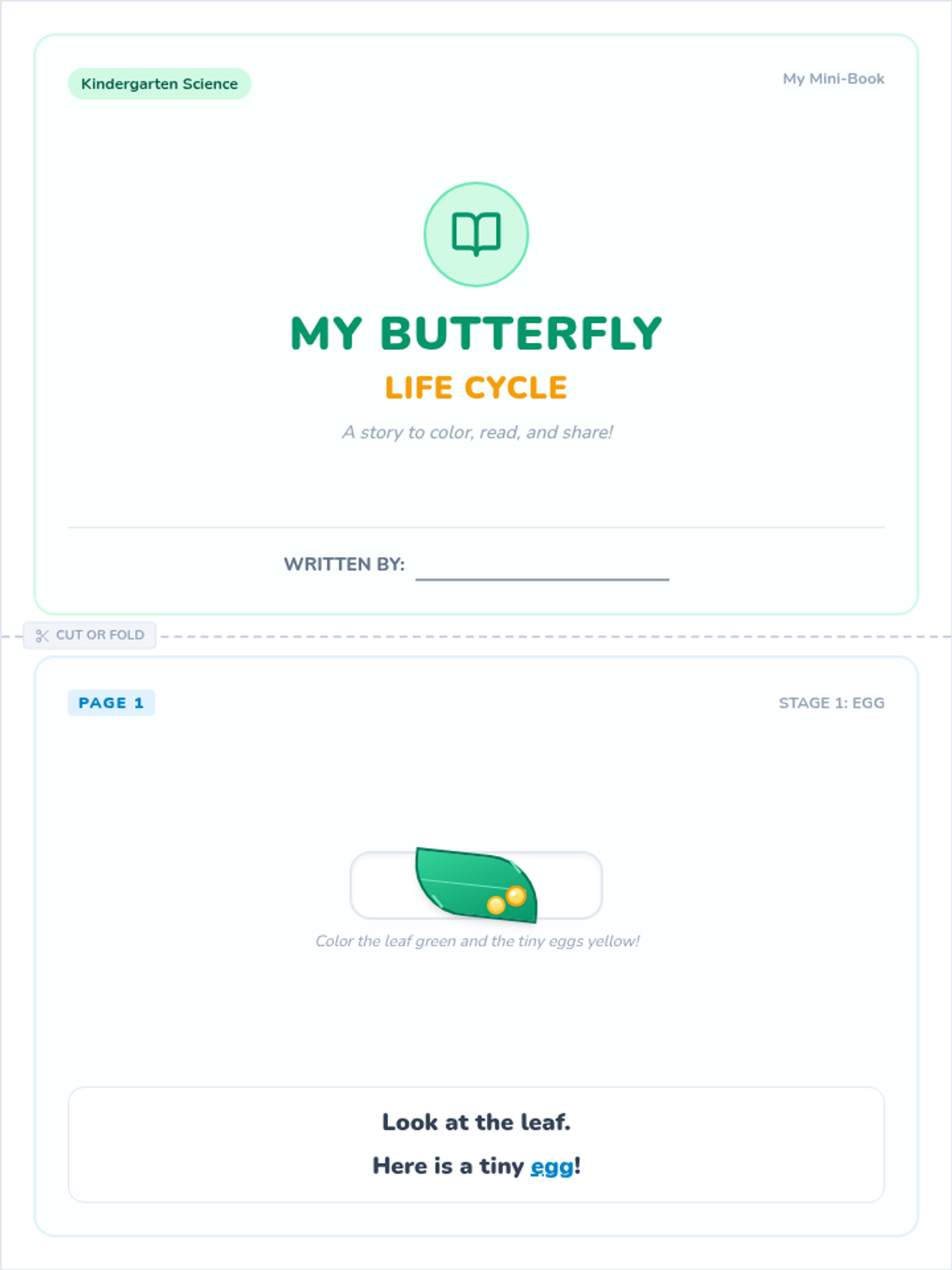
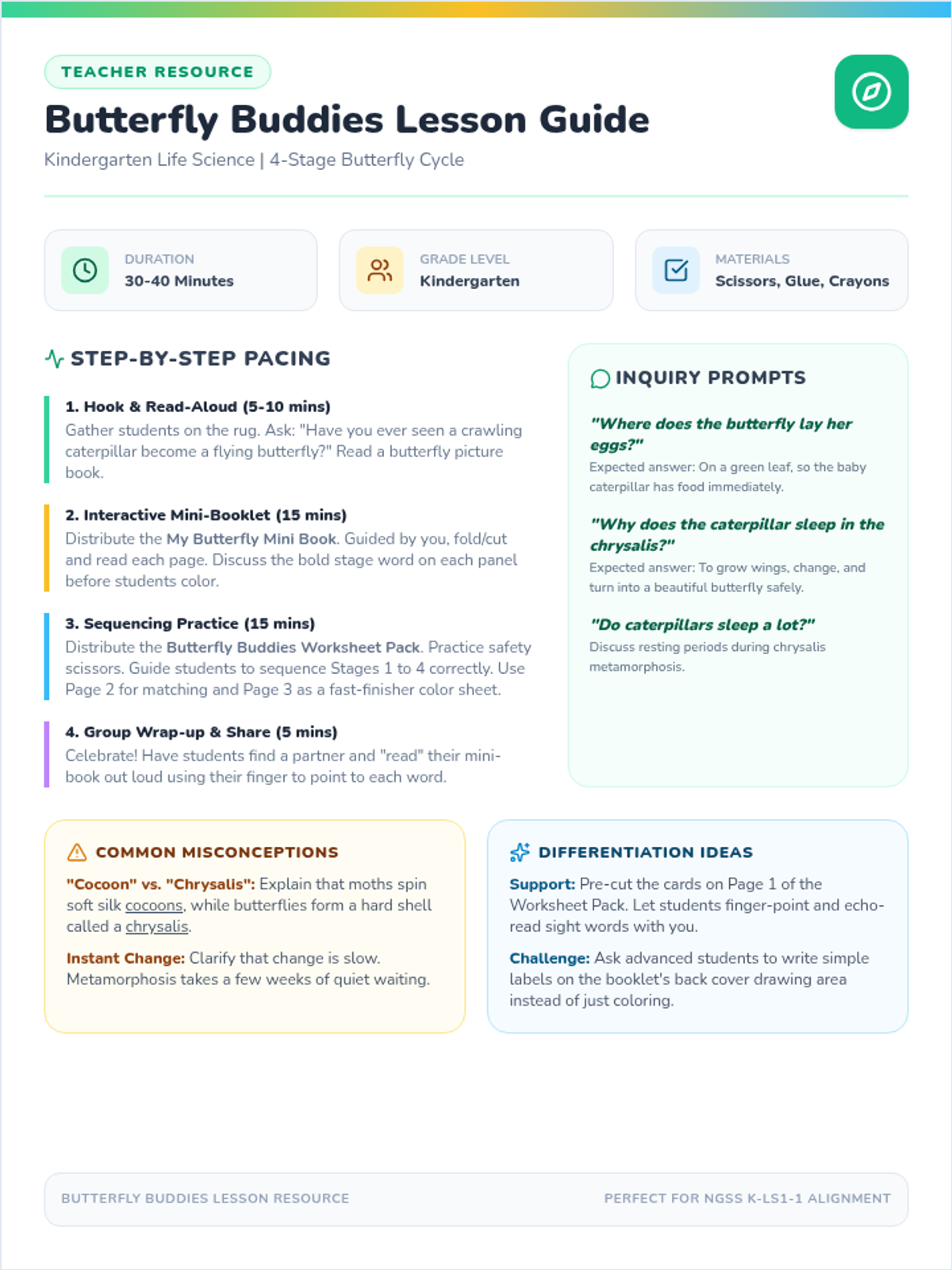
A friendly, hands-on kindergarten lesson exploring the four stages of a butterfly's life cycle: egg, caterpillar, chrysalis, and butterfly. Students learn through sequencing, labeling, coloring, and reading a foldable mini-booklet.
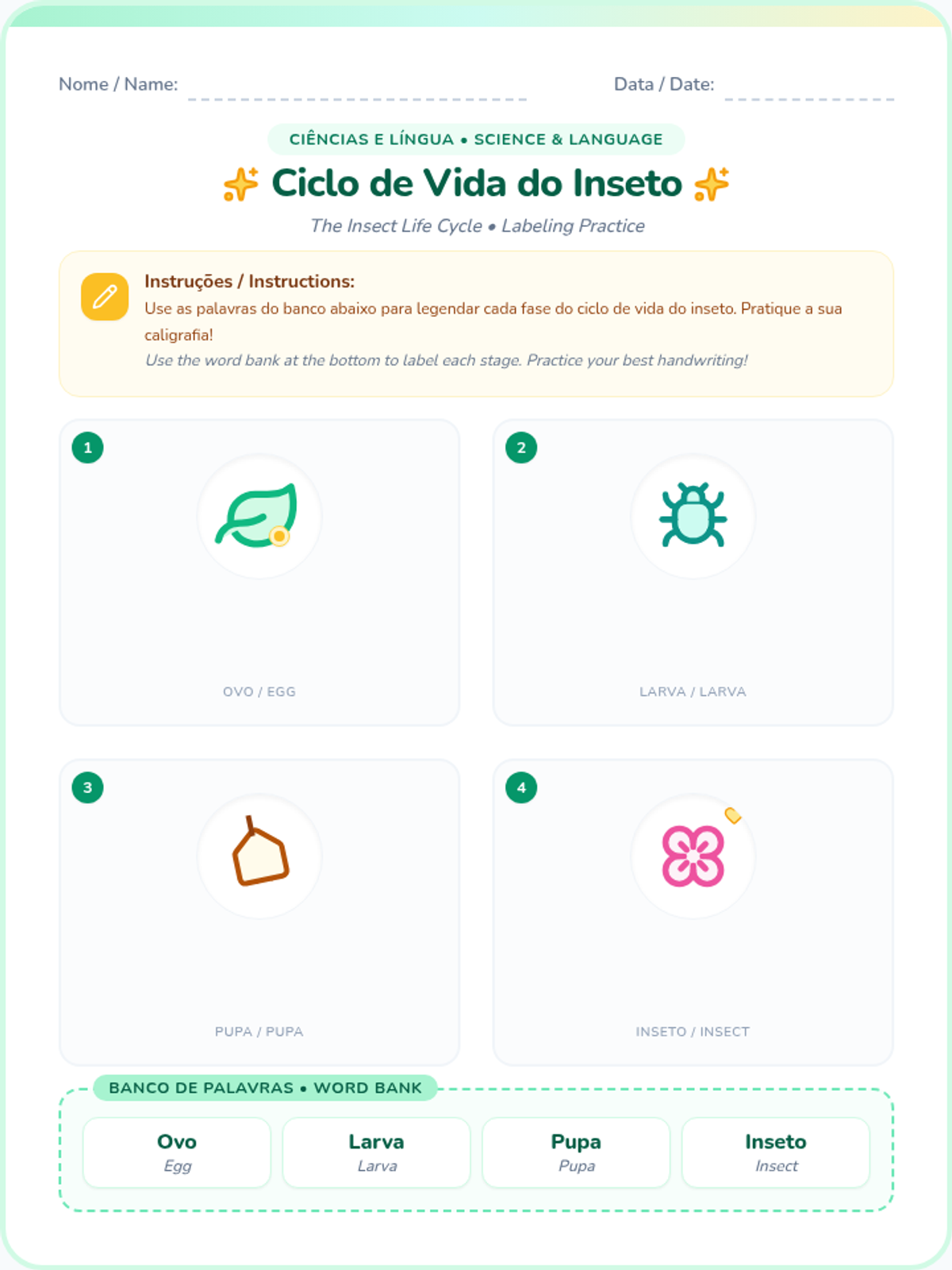
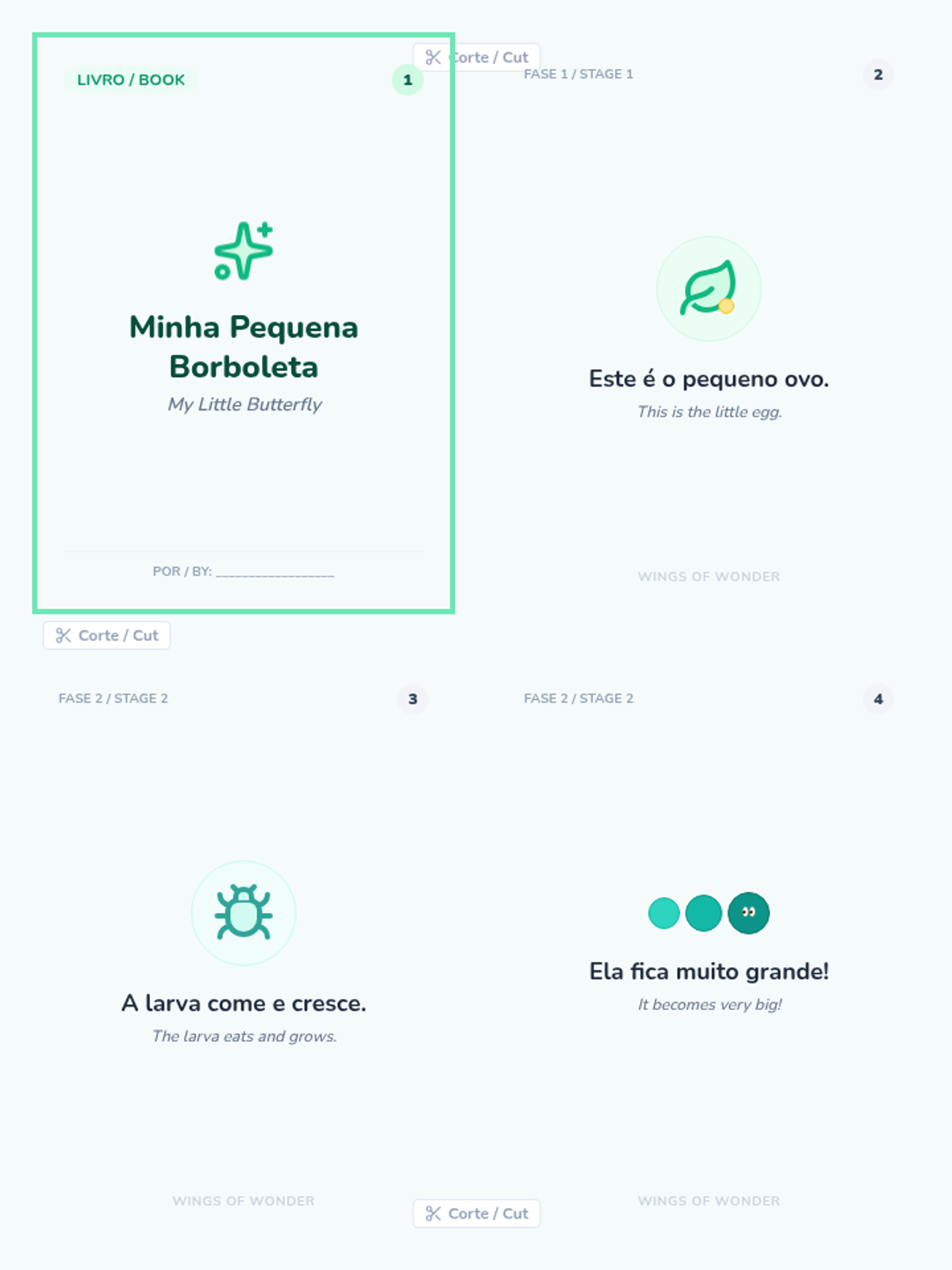
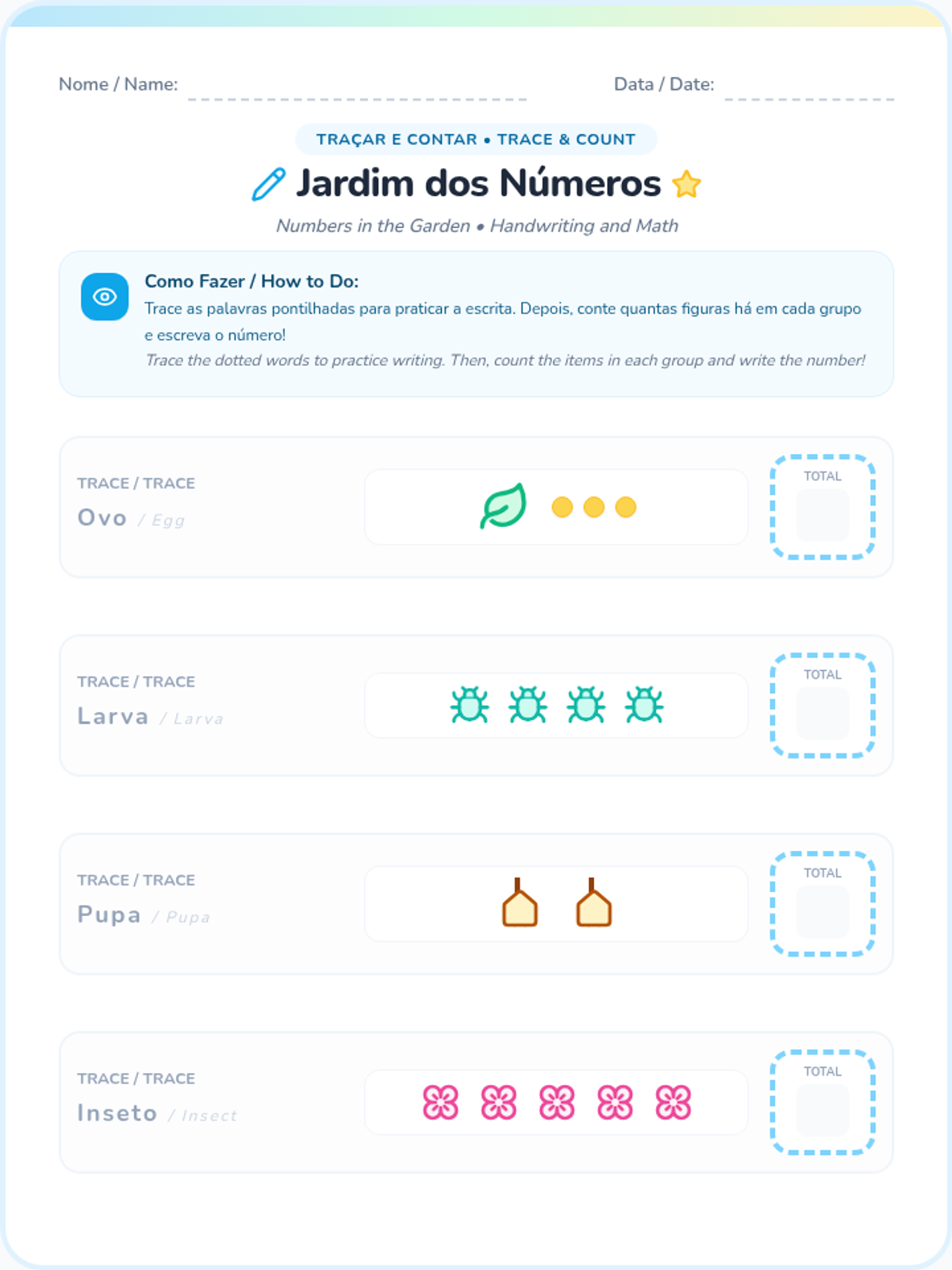
A bilingual kindergarten lesson exploring the magical life cycle of butterflies. Students practice sequencing, labeling, and reading simple bilingual English/Portuguese sentences.
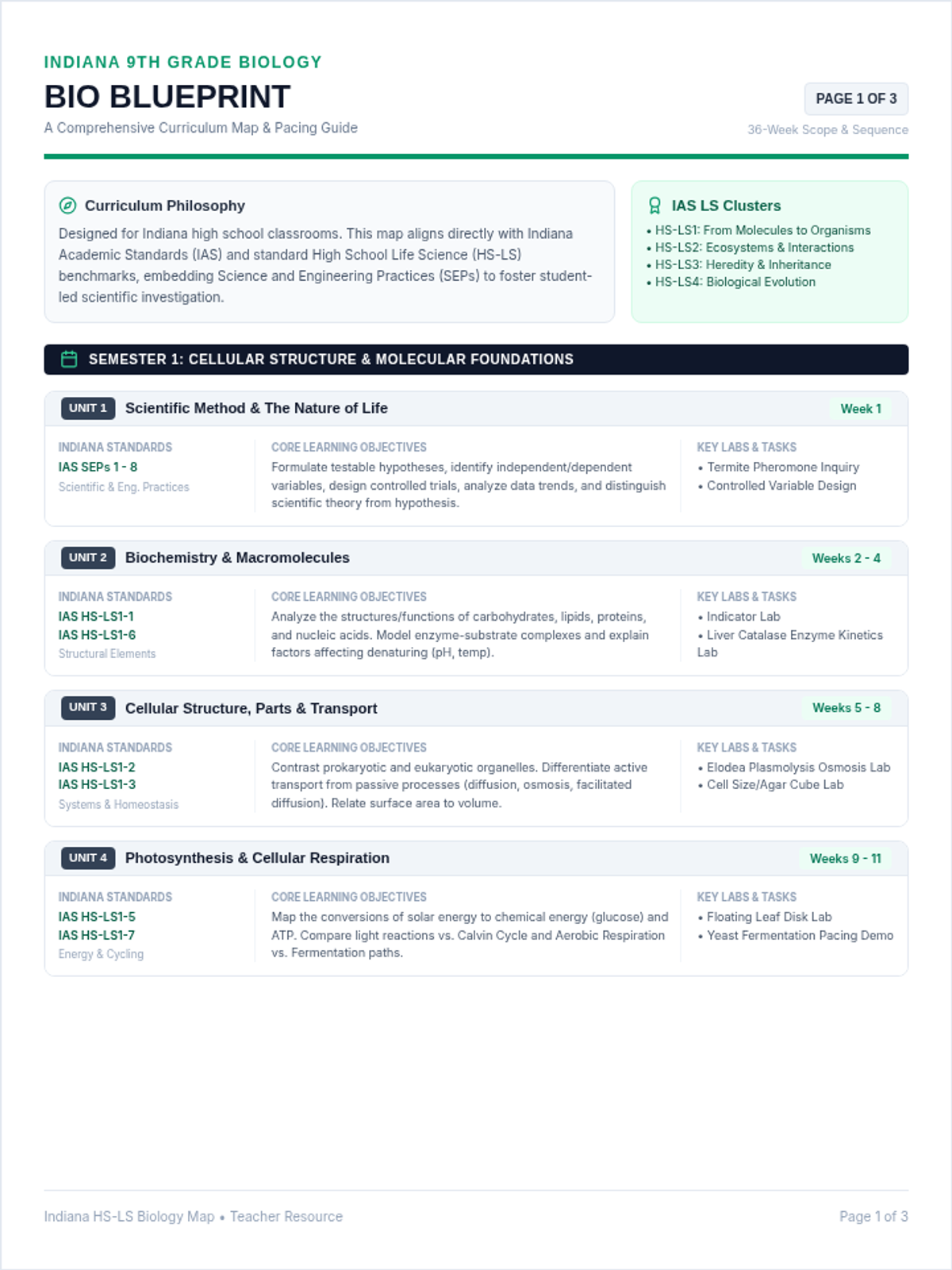
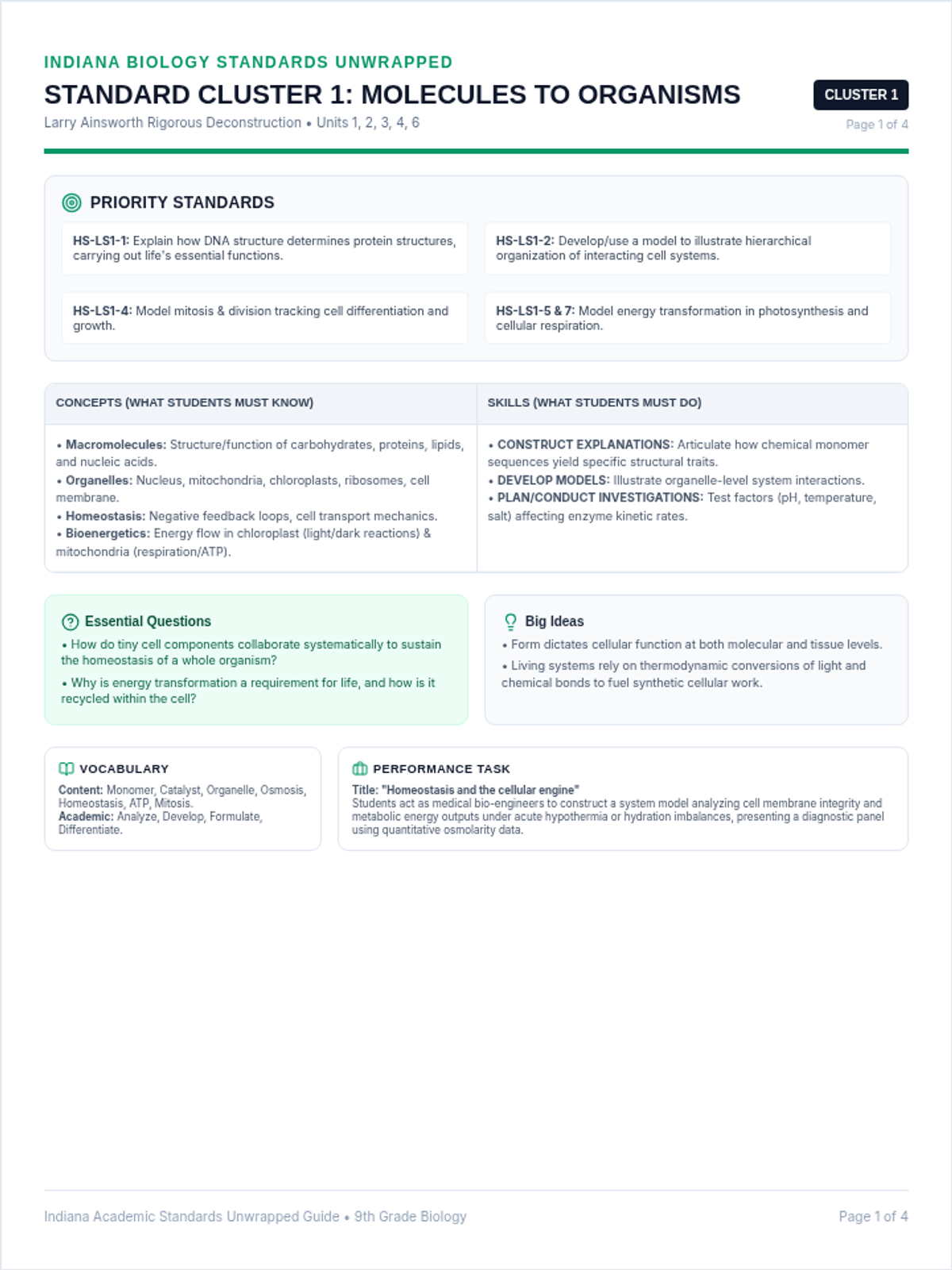
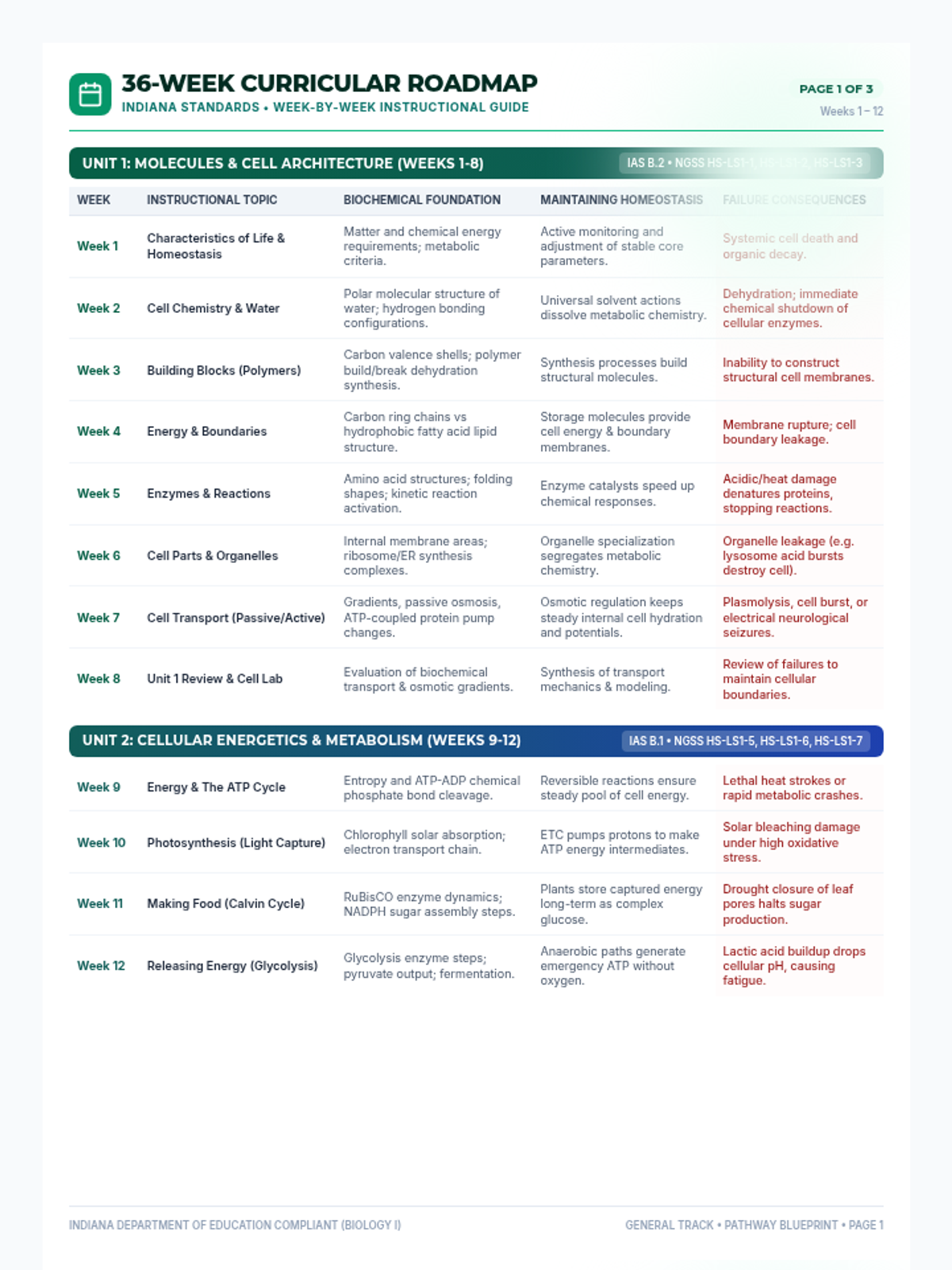
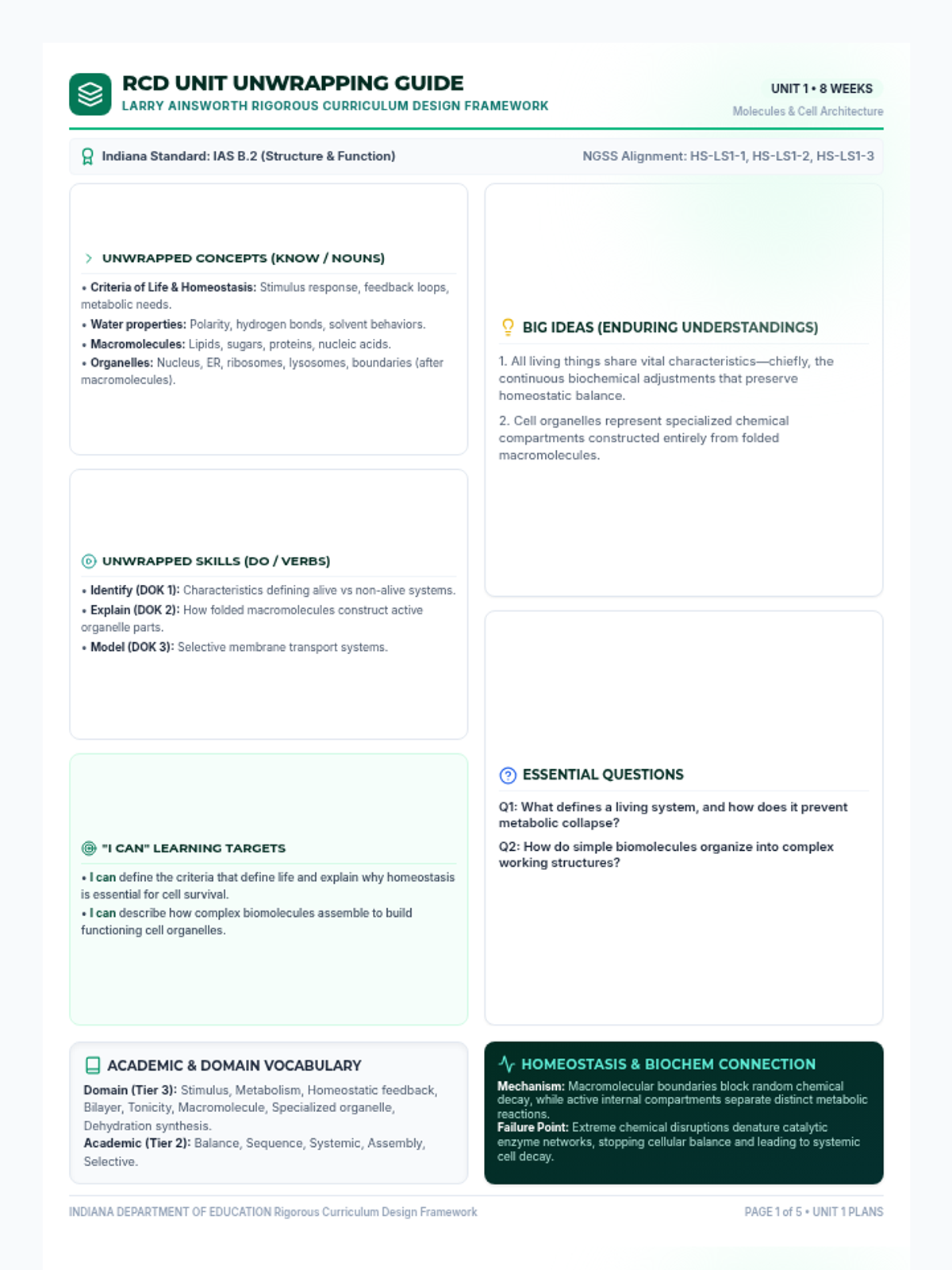
High-level curriculum planning resources, alignment maps, and pacing guides for teaching Indiana 9th-grade Biology.
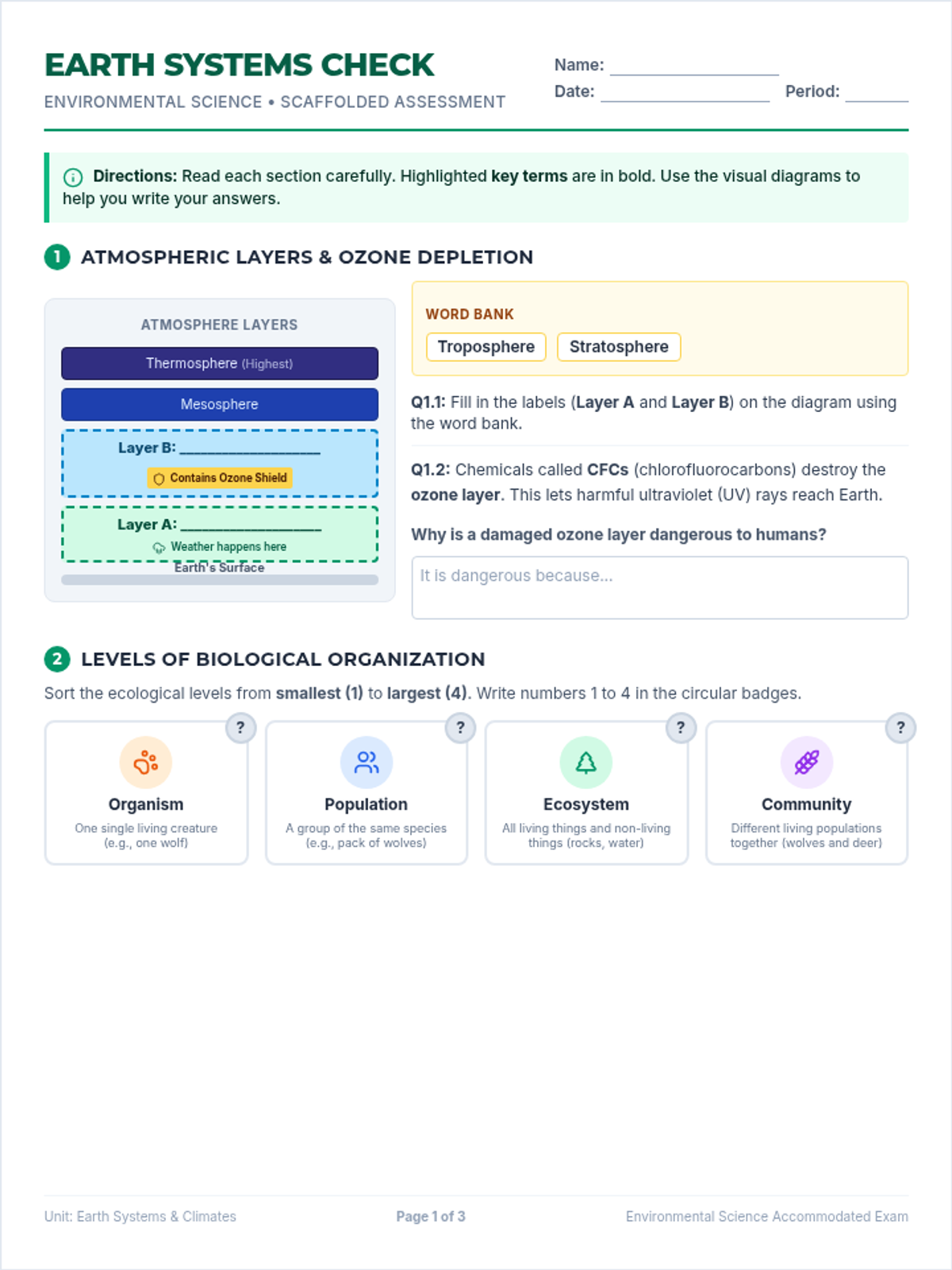
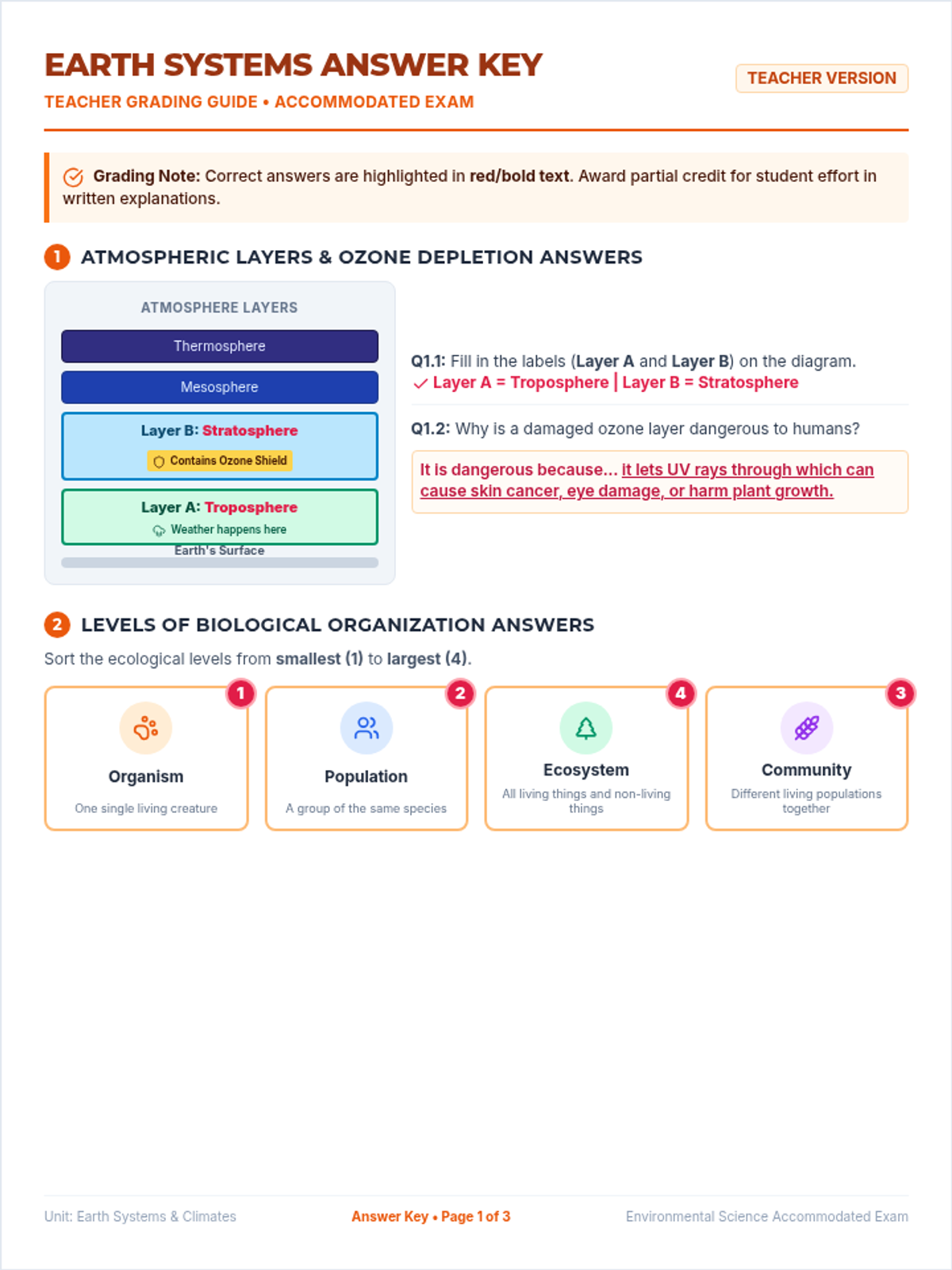
A highly visual, scaffolded assessment and corresponding answer key covering atmospheric layers, resource classification, carbon footprints, biological levels, trophic webs, ice proxies, and photosynthesis.
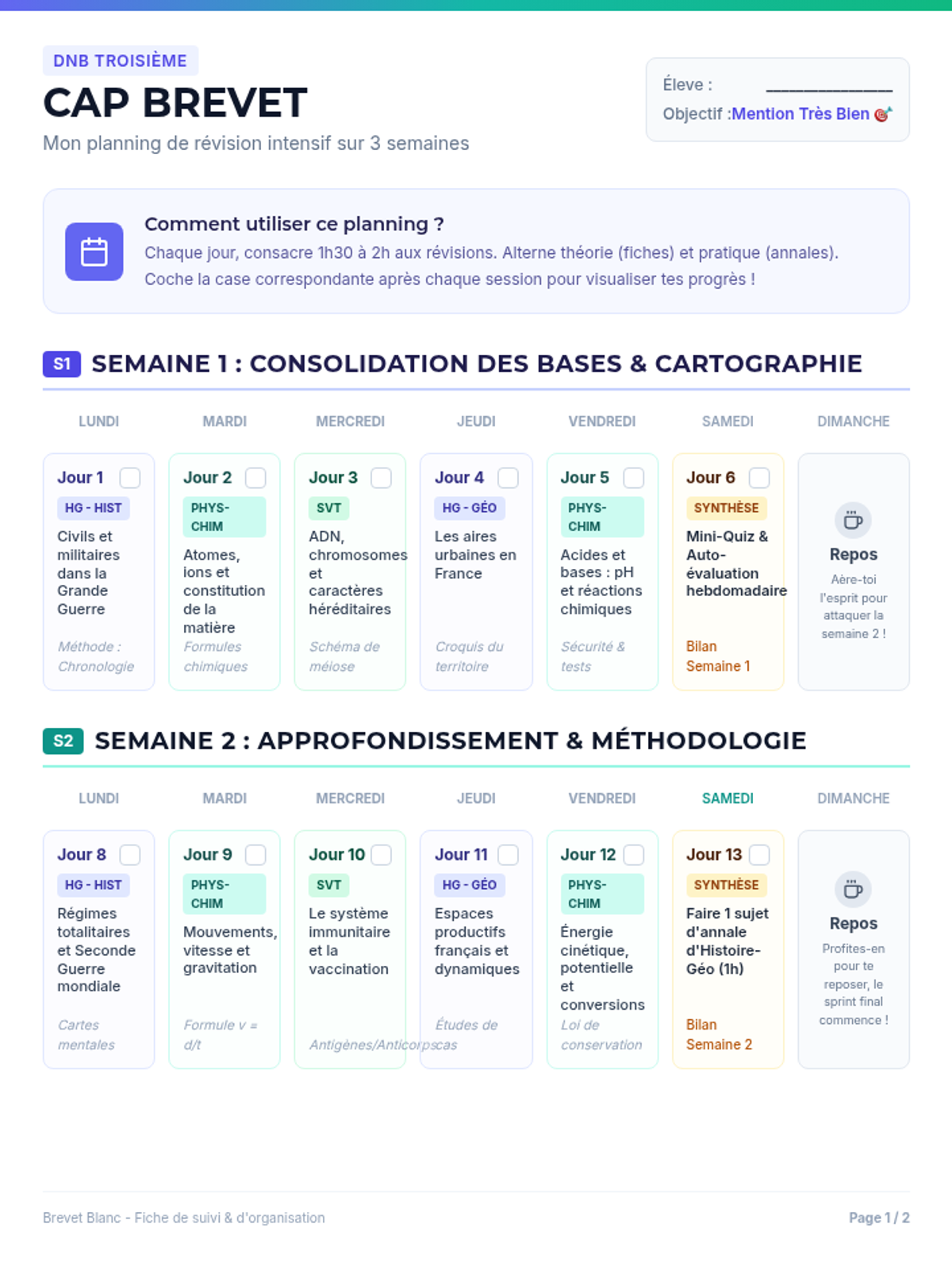
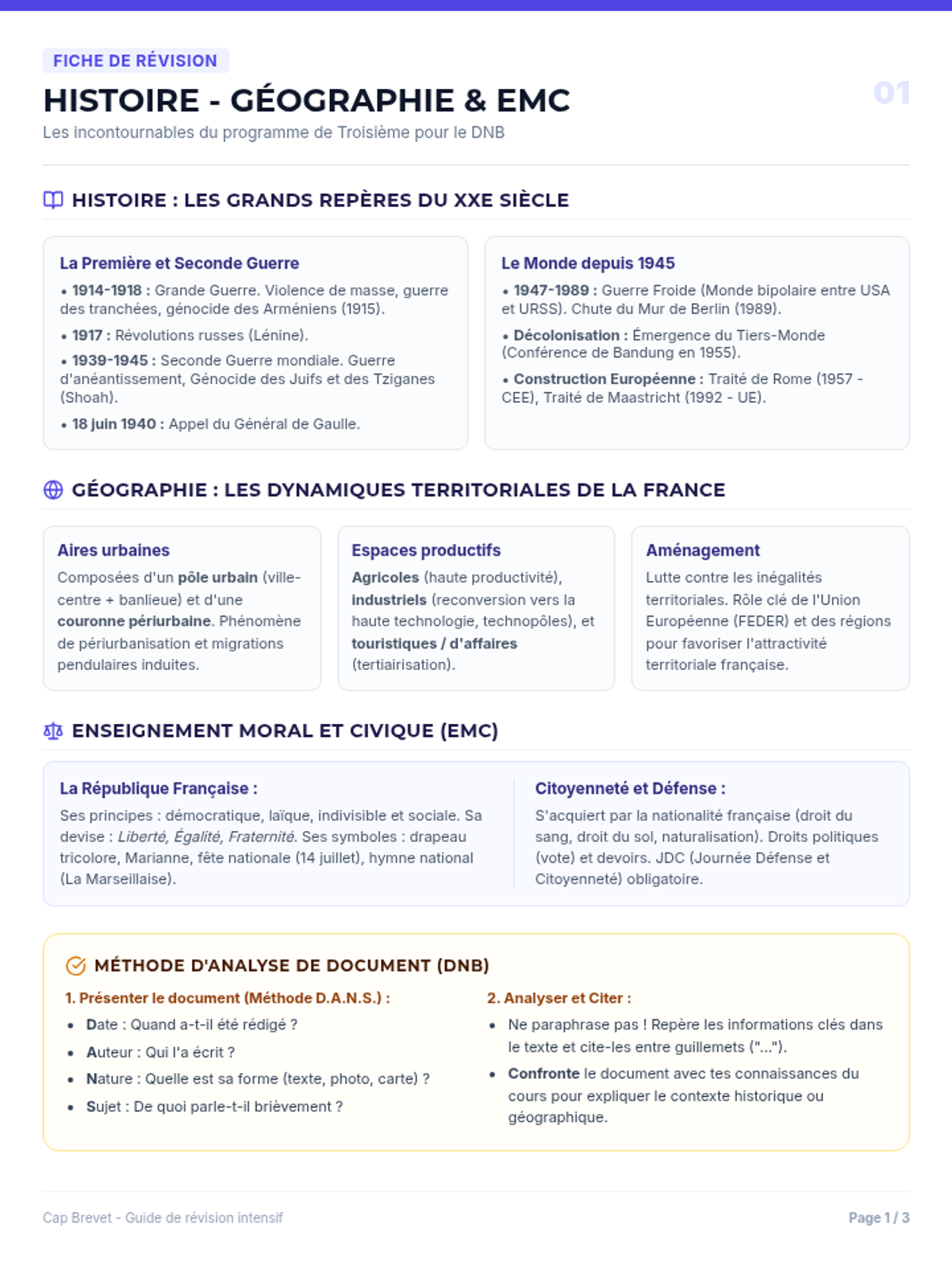
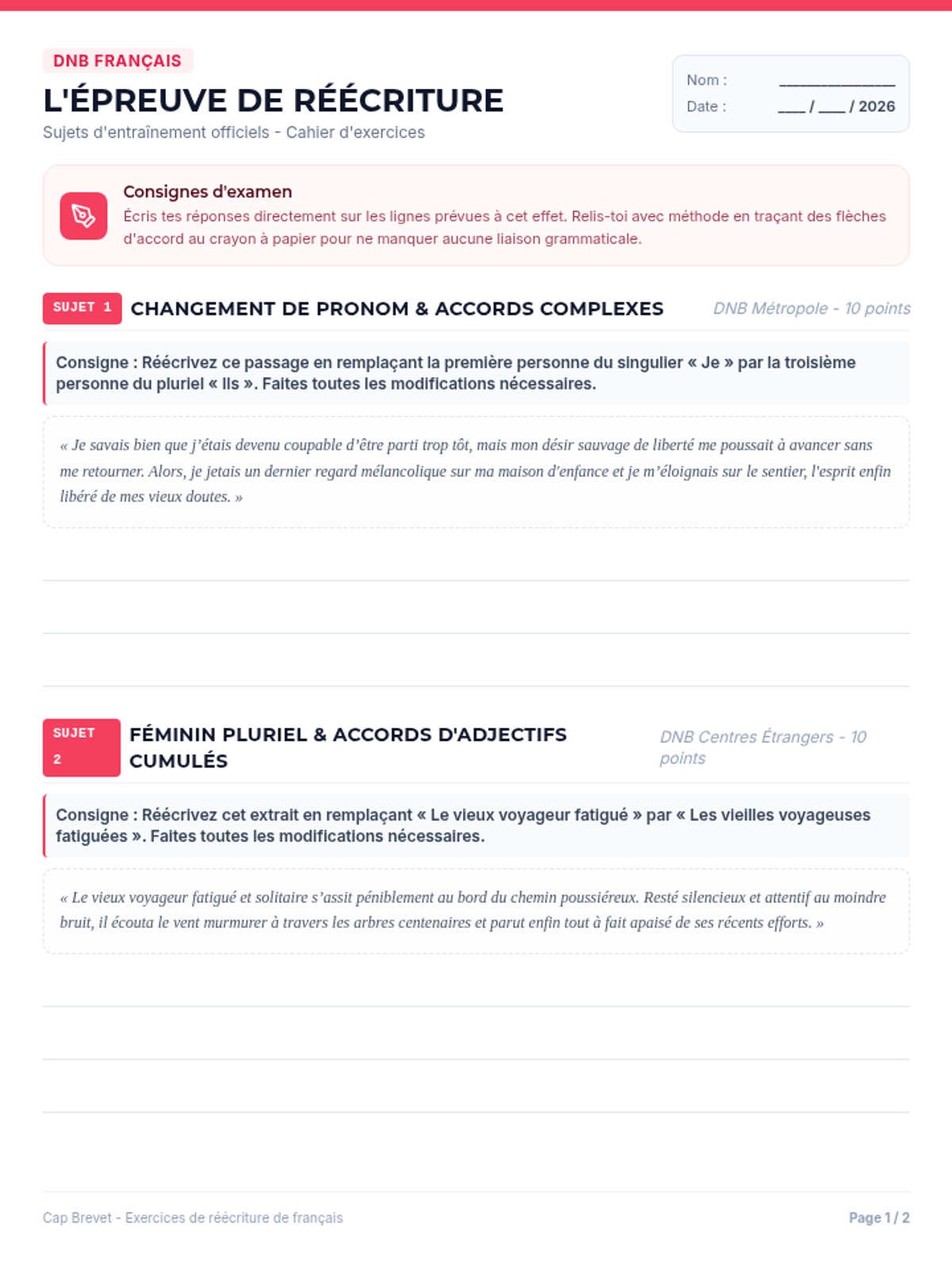
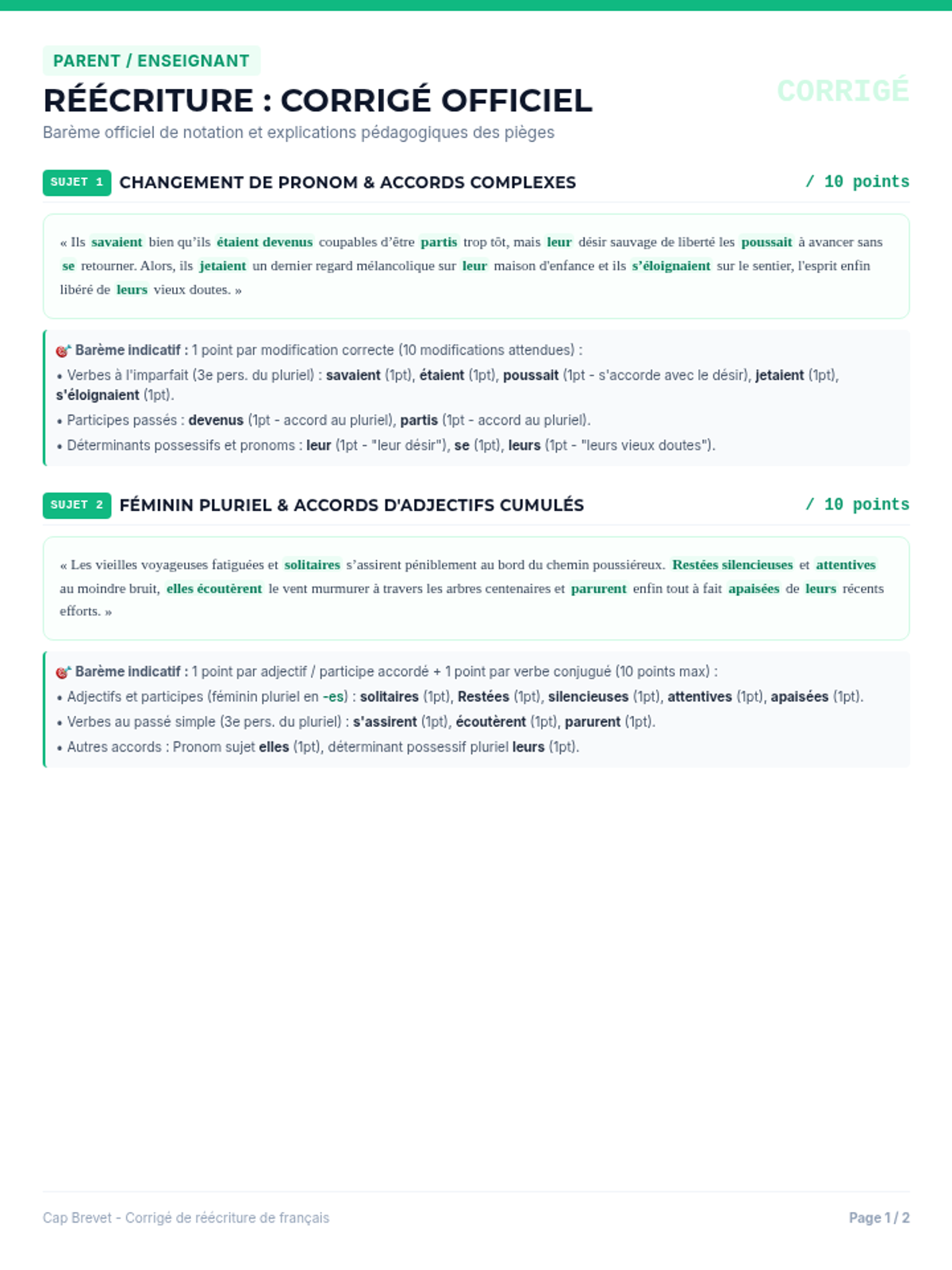
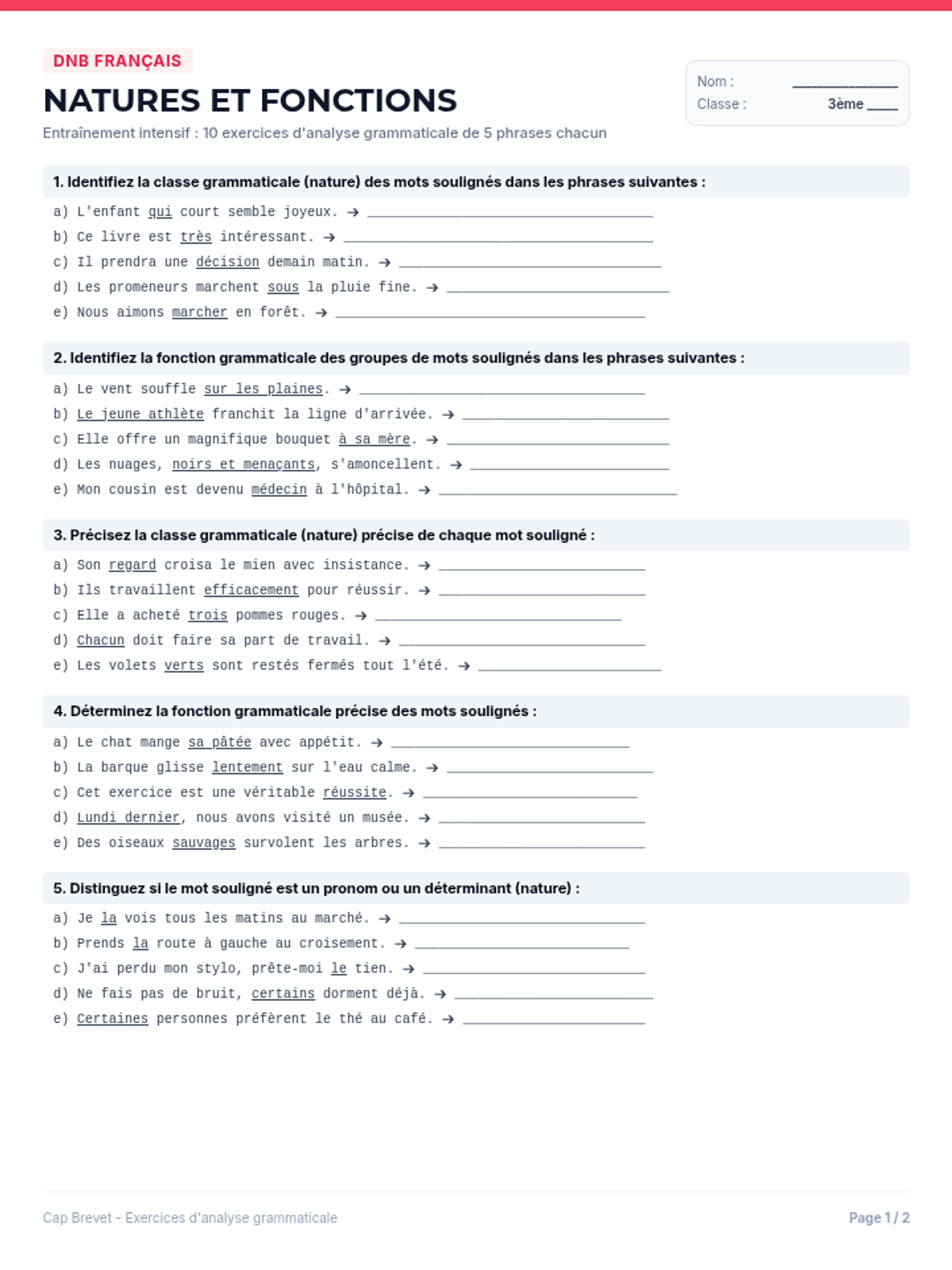
Un programme de révision intensif et structuré sur 3 semaines pour préparer sereinement les épreuves de SVT, Physique-Chimie et Histoire-Géographie du Diplôme National du Brevet.
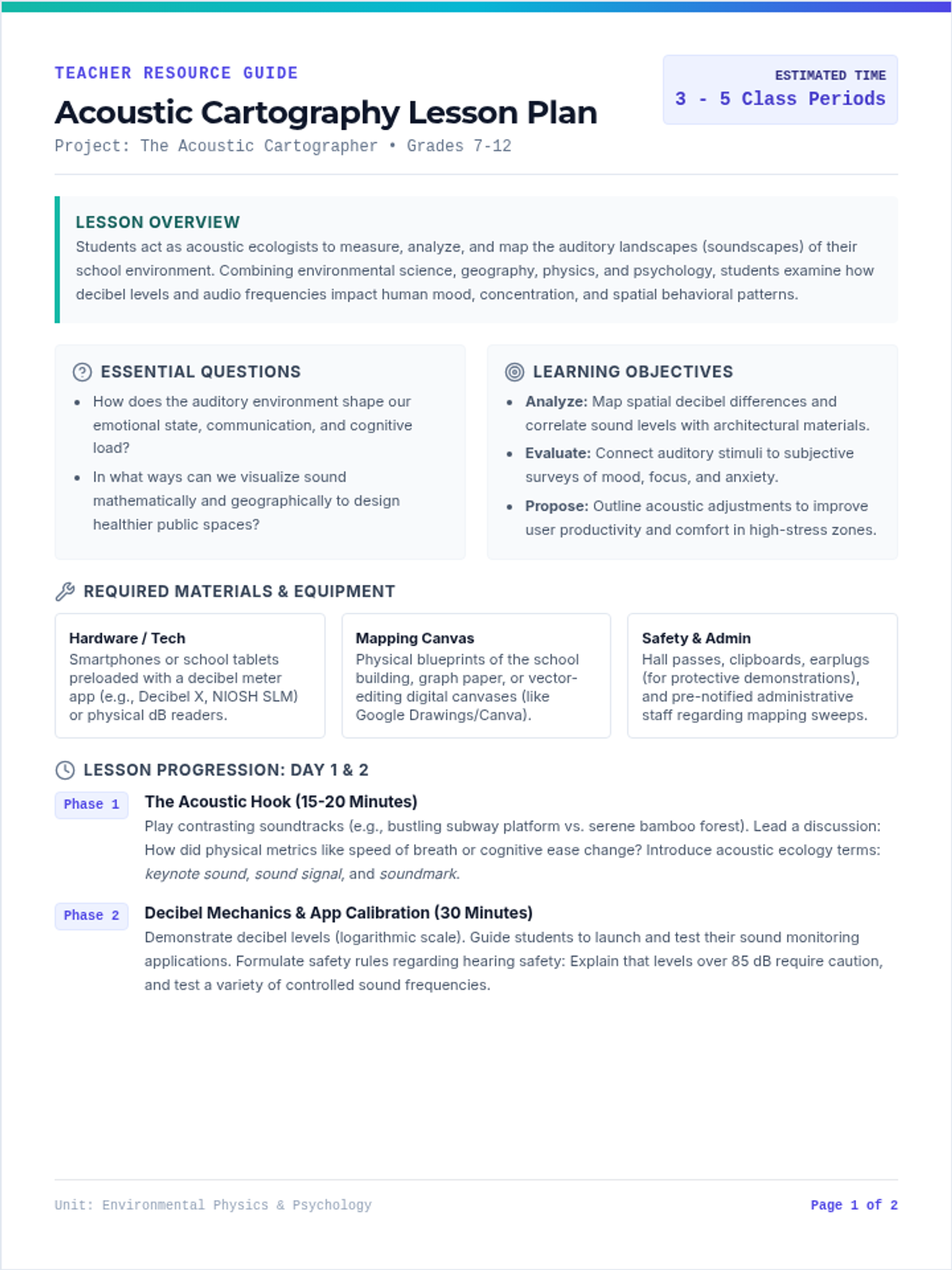
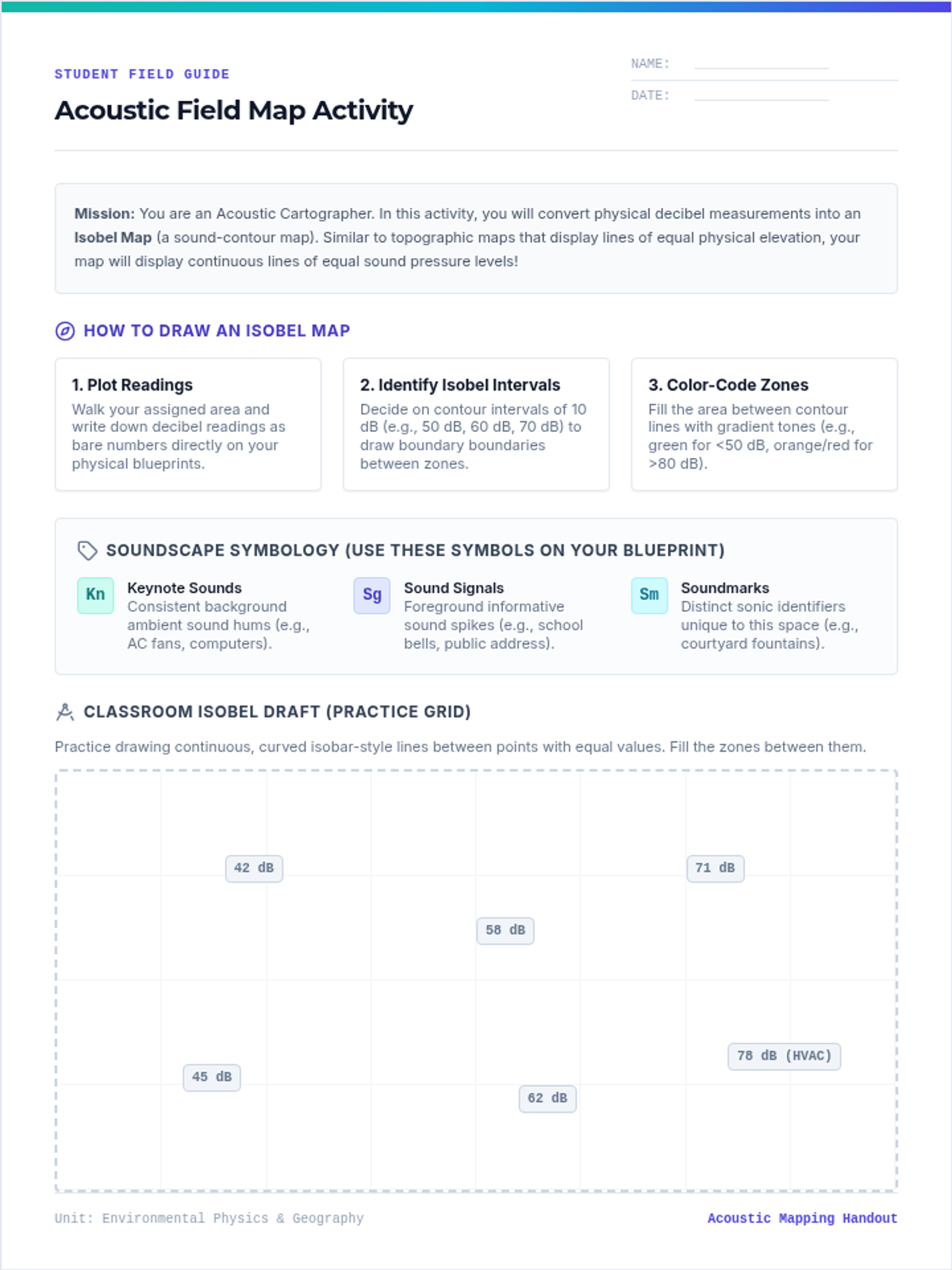
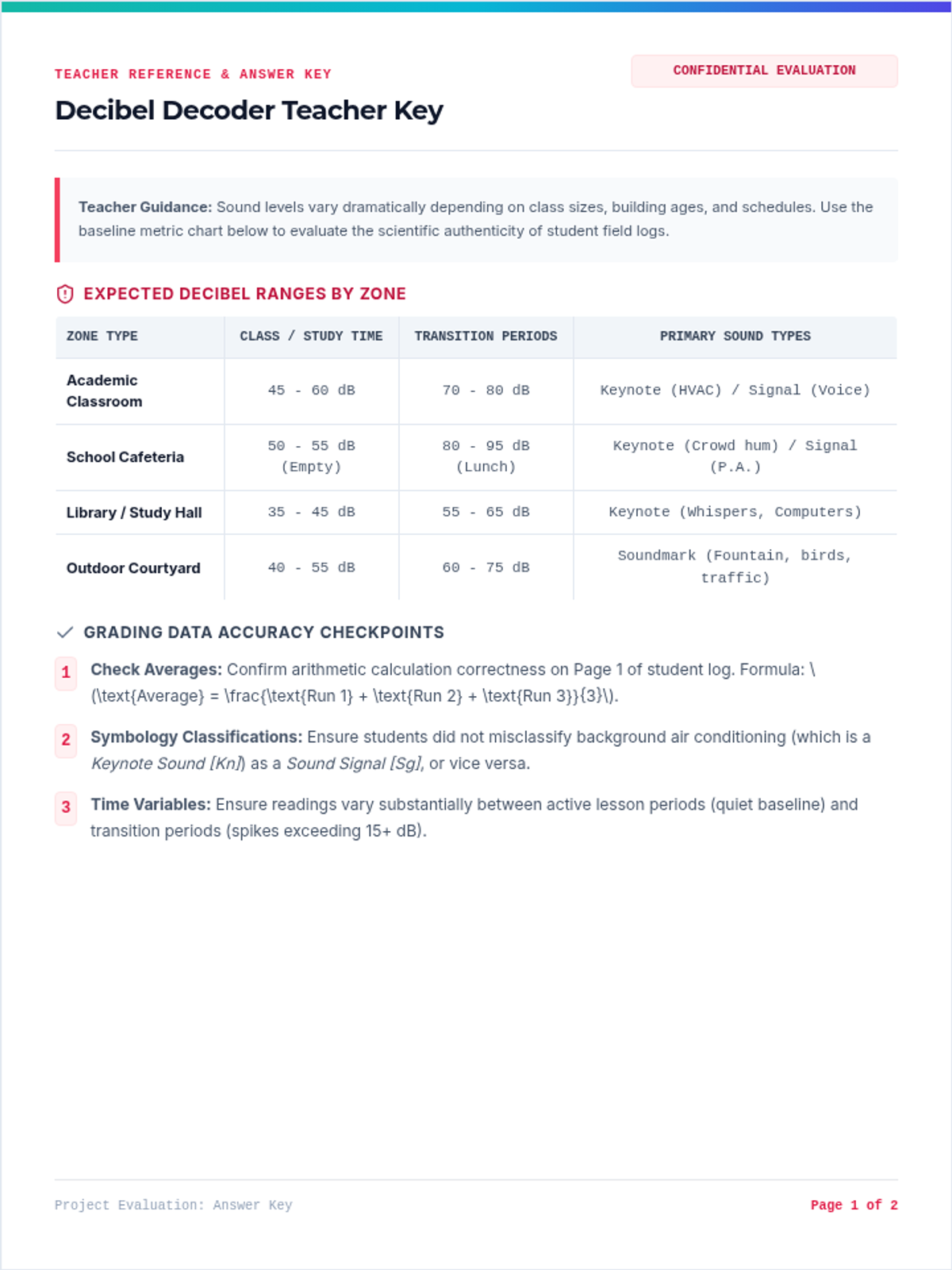
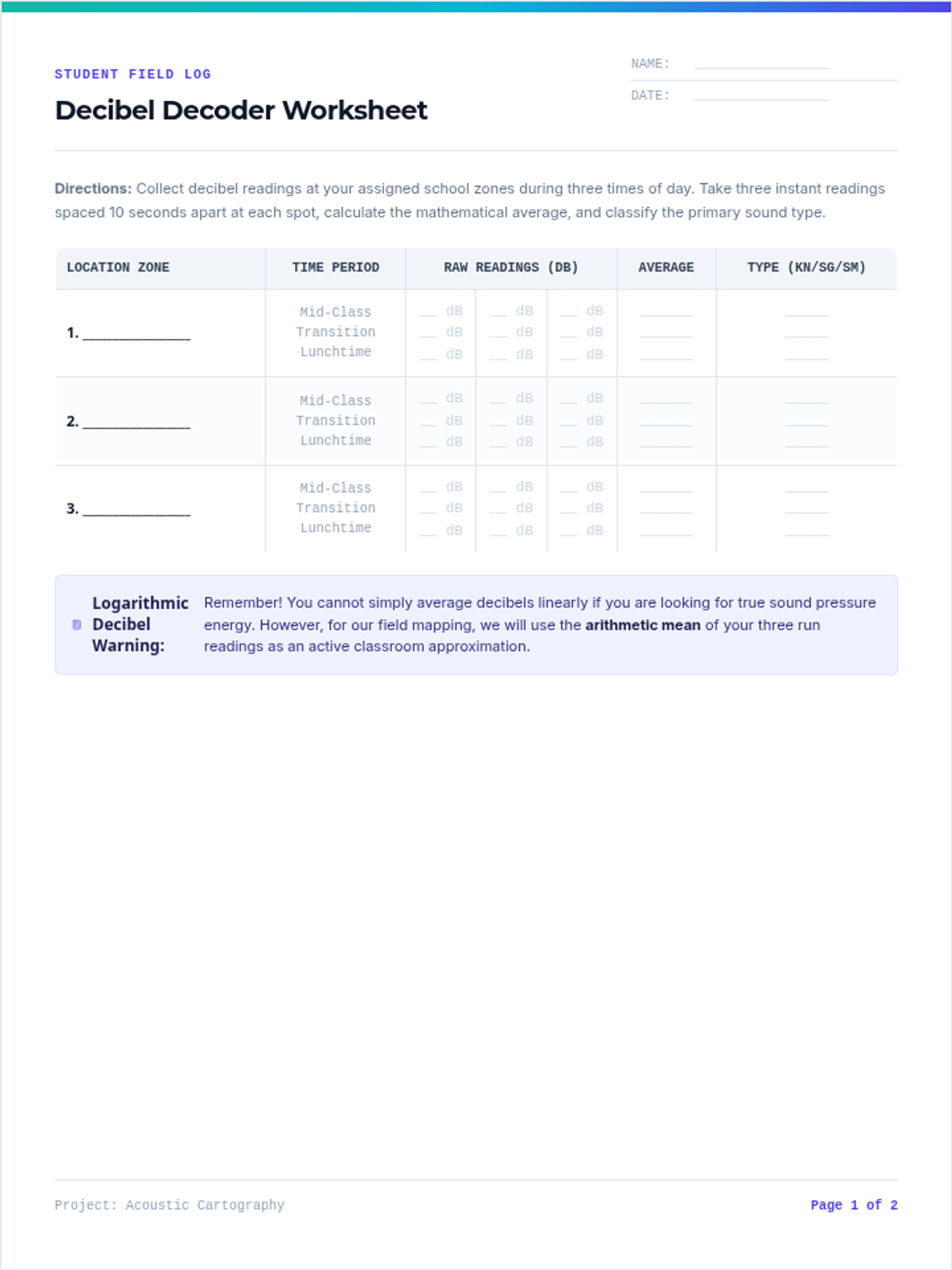
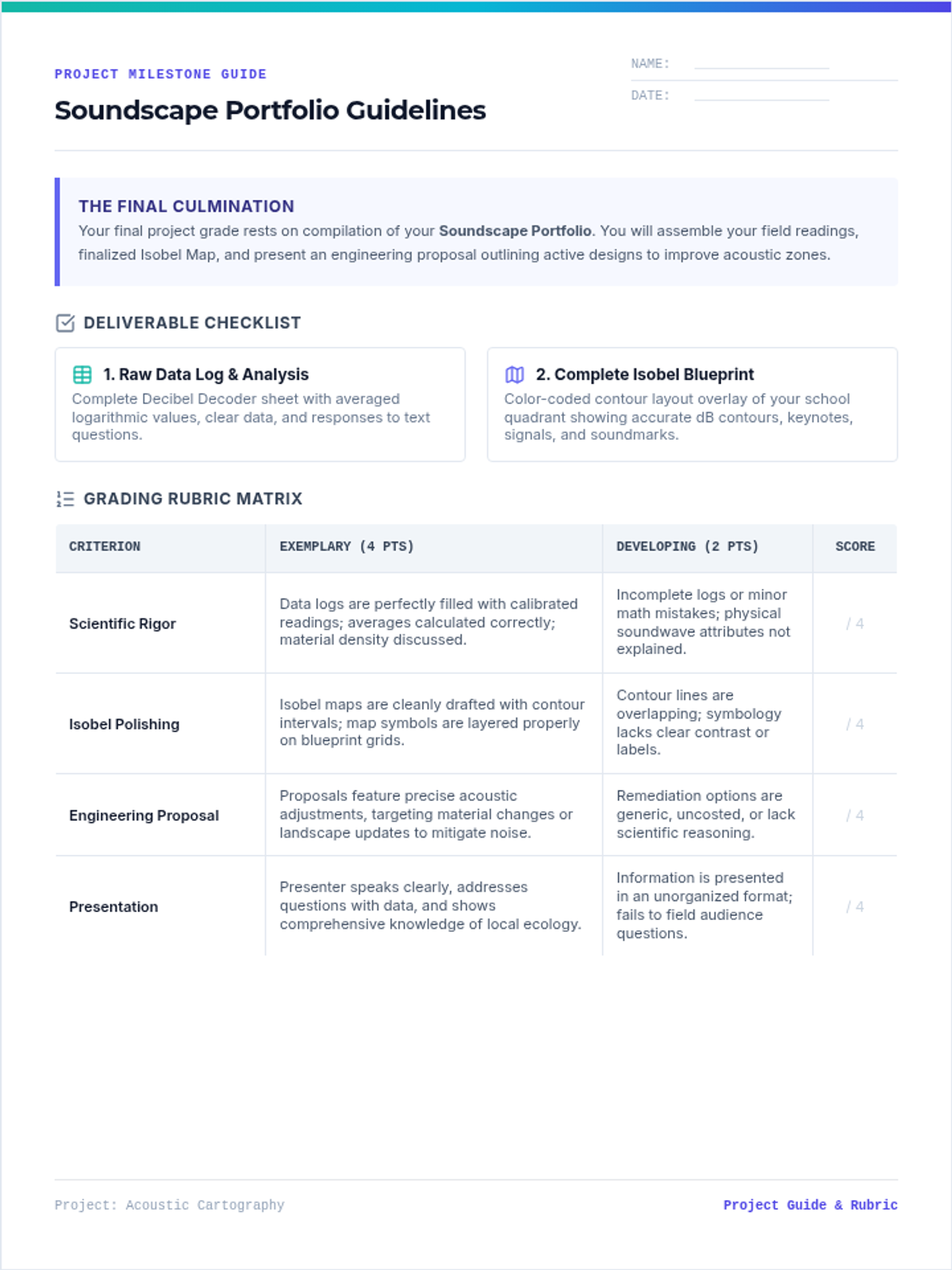
A comprehensive middle and high school project-based lesson where students explore acoustic ecology by recording, charting, and analyzing the decibel levels and sound frequencies of various school zones to map their auditory environment and understand its impact on human behavior.
An advanced course launch framework establishing rigorous academic policies, AP/IB preparatory standards, and the integrated biochemistry roadmap for Honors Biology.
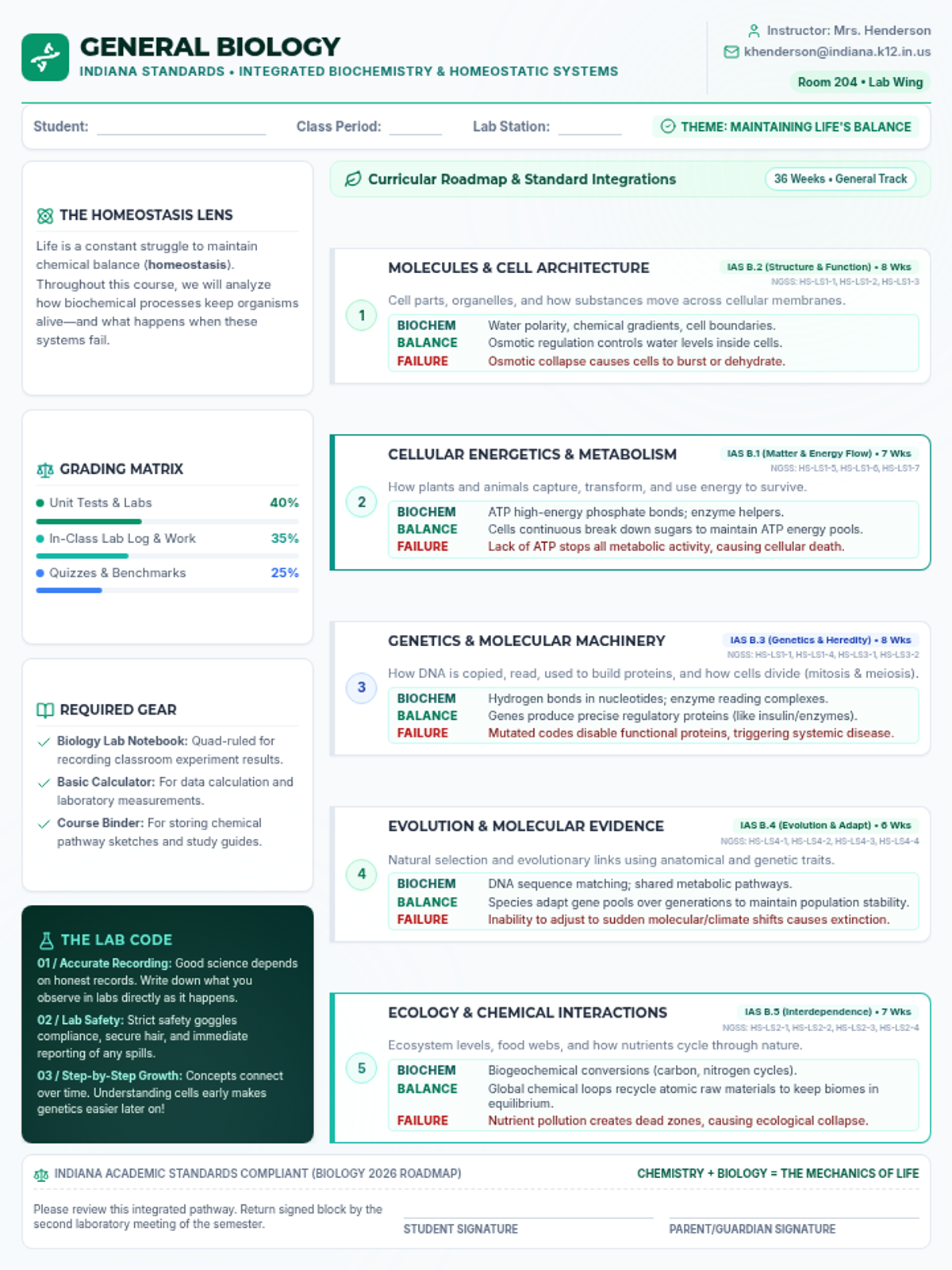
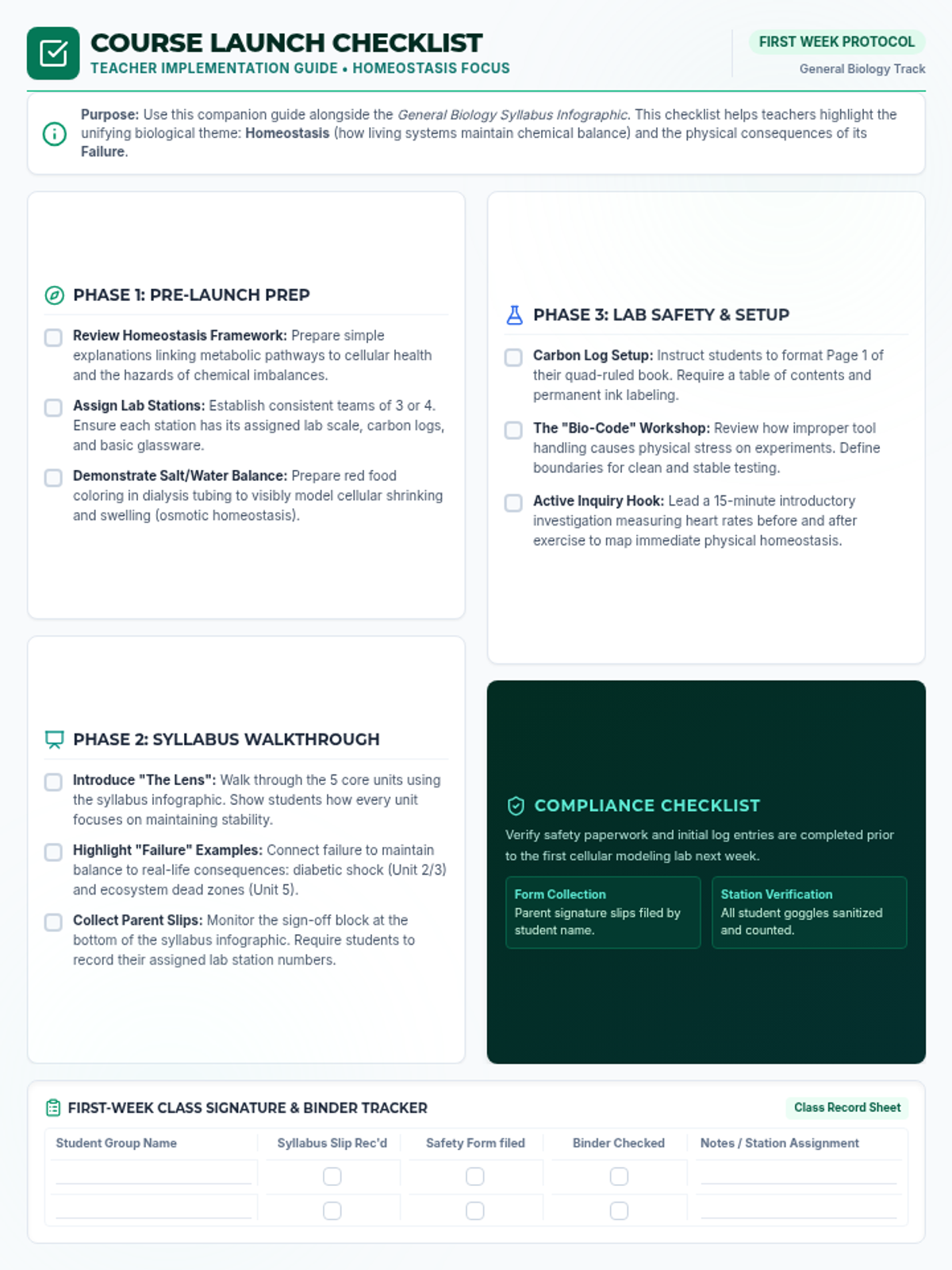
An introductory framework establishing course policies, Indiana state biology standards, and the integrated biochemistry roadmap for the academic year.
An engineering design challenge where students design, prototype, and test magnet mazes, exploring how different backing materials block or allow magnetic forces to pass through.
An upper elementary STEM lesson where students explore magnetic fields, poles, and non-contact forces by designing and building a physical magnet maze. Includes visual slides, a hands-on student design guide, and a comprehensive teacher lesson plan.
A highly engaging, hands-on lesson teaching the importance of precision, clarity, and chronological sequencing through the classic "Exact Instructions Challenge" using Marshmallow Fluff and Jelly. Students write step-by-step instructions, and the teacher follows them verbatim, humorously demonstrating how easily vague directions can go sticky.
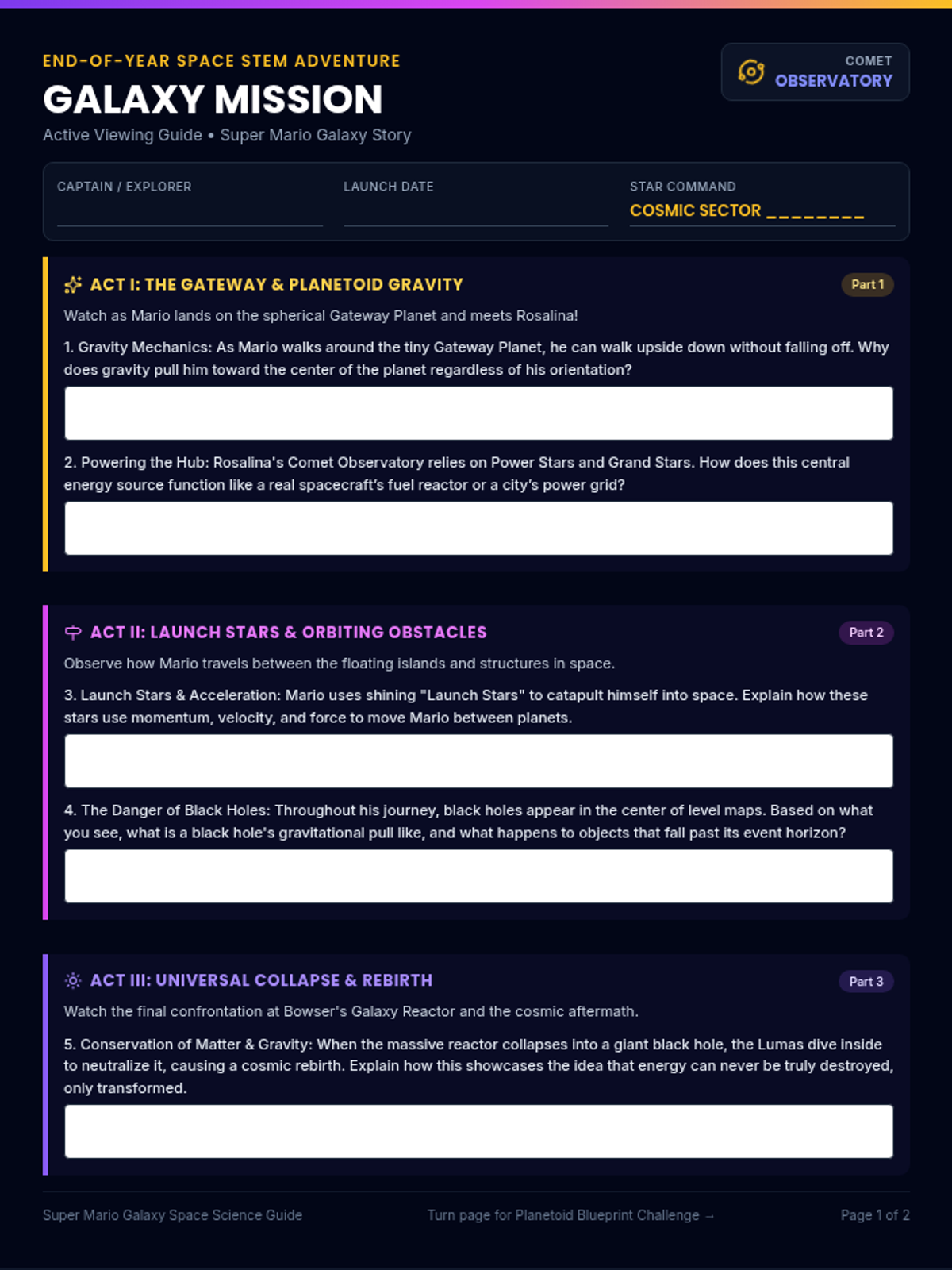
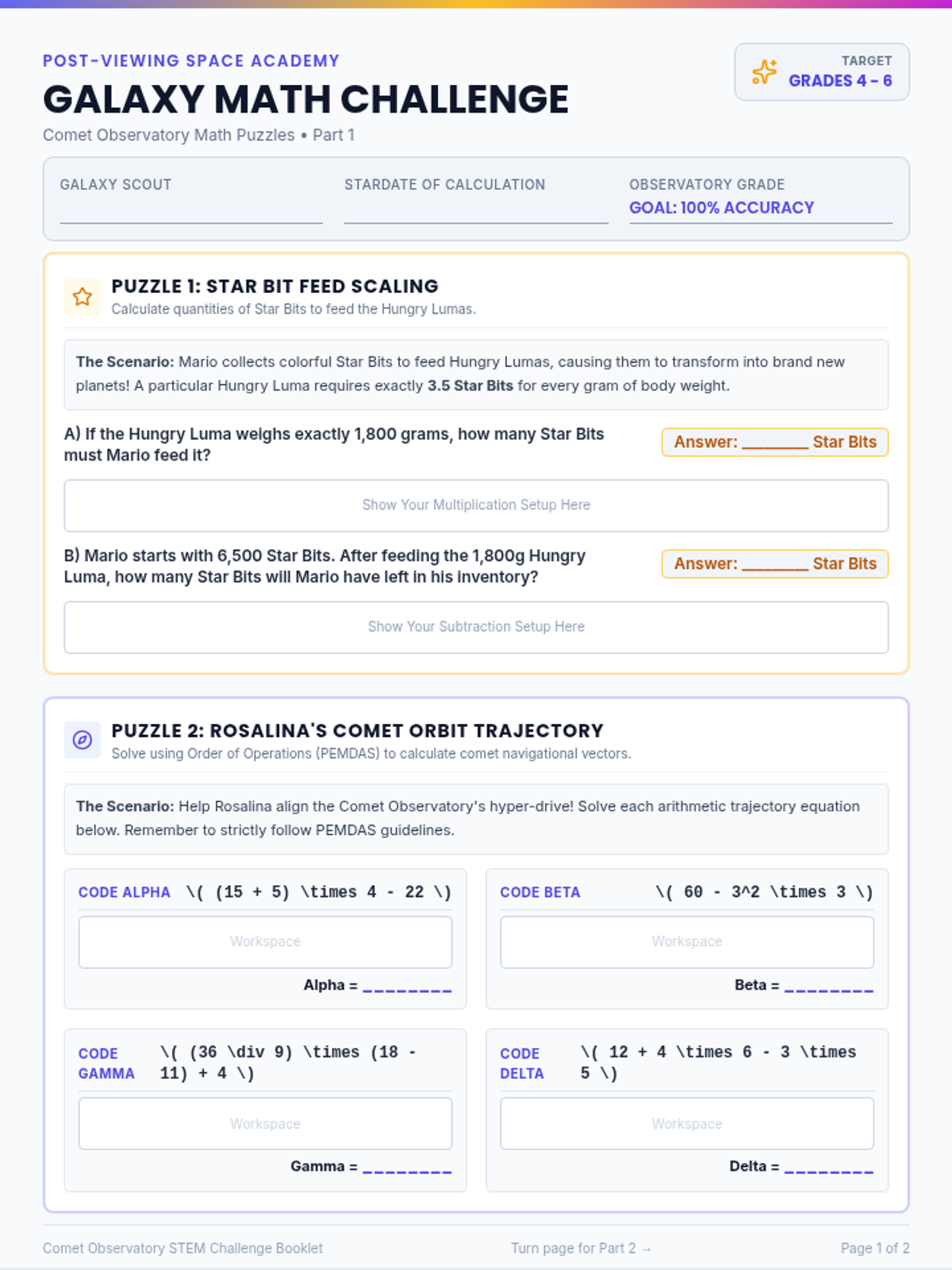
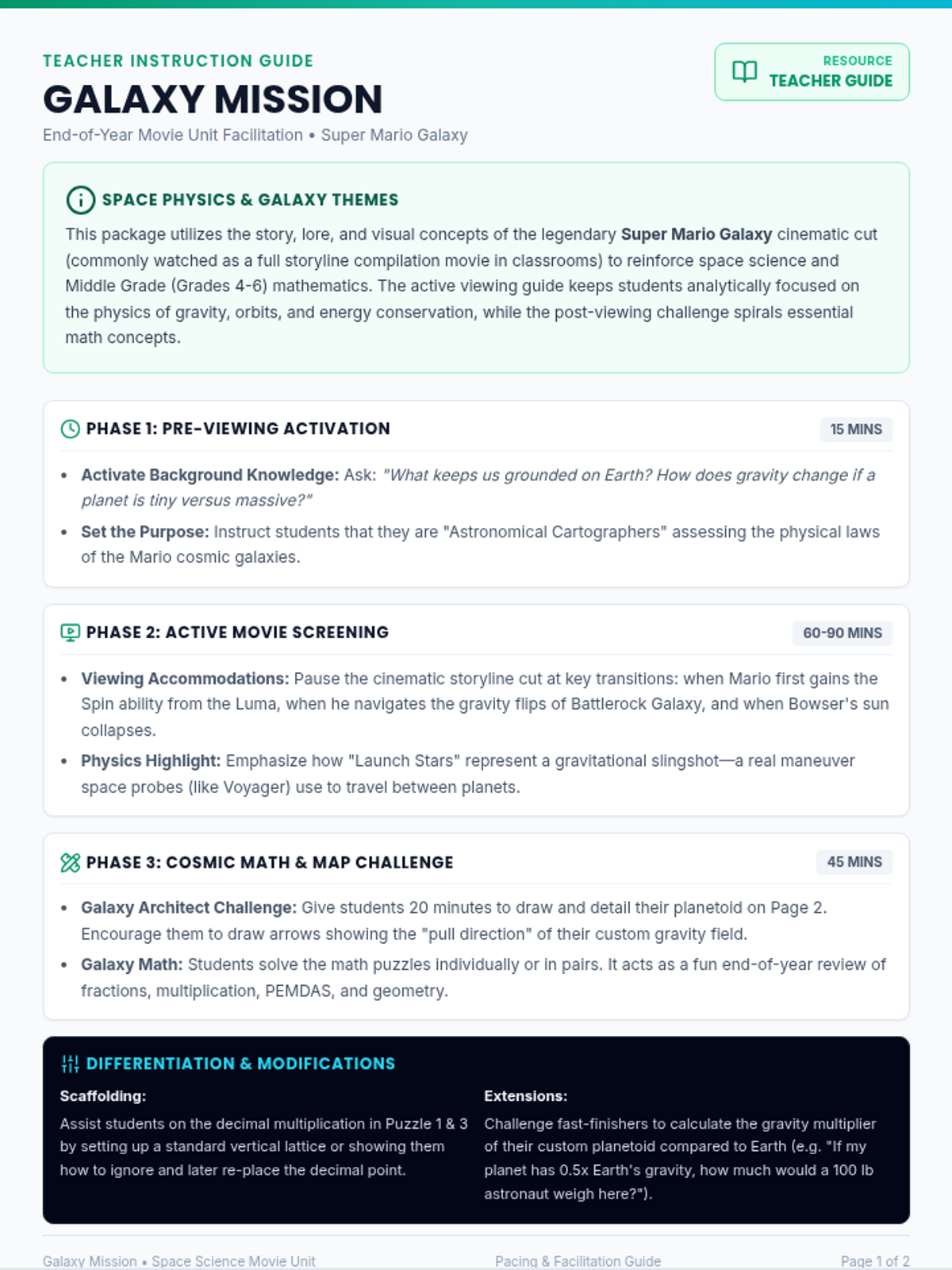
An end-of-year educational movie unit and math workbook based on the story of Super Mario Galaxy. Students explore gravity, orbits, and space physics through active viewing, followed by high-energy space-themed math puzzles.
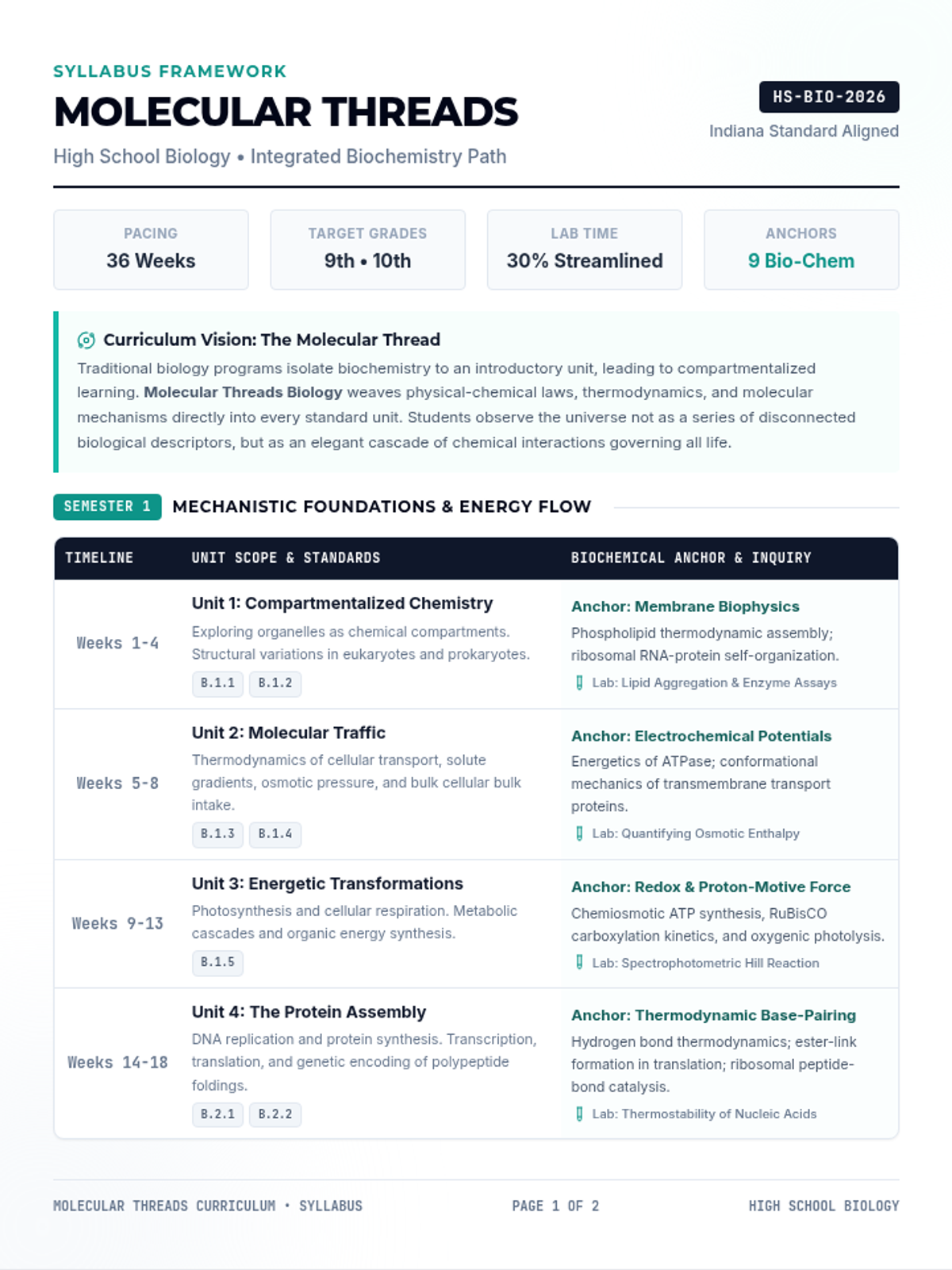
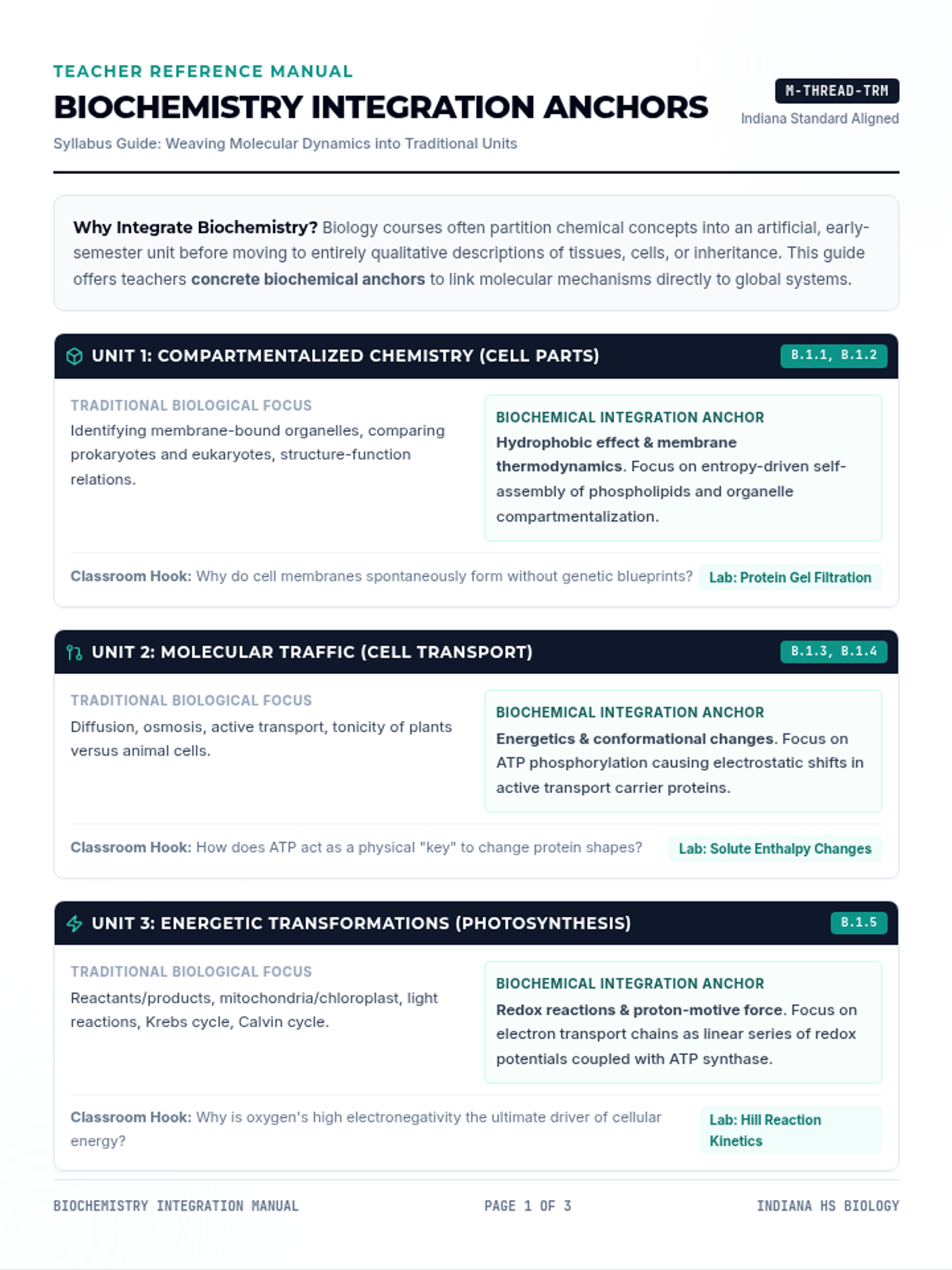
The master blueprint for the Molecular Threads Biology curriculum, featuring a comprehensive yearlong syllabus and a teacher reference guide for weaving biochemistry anchors into every unit.
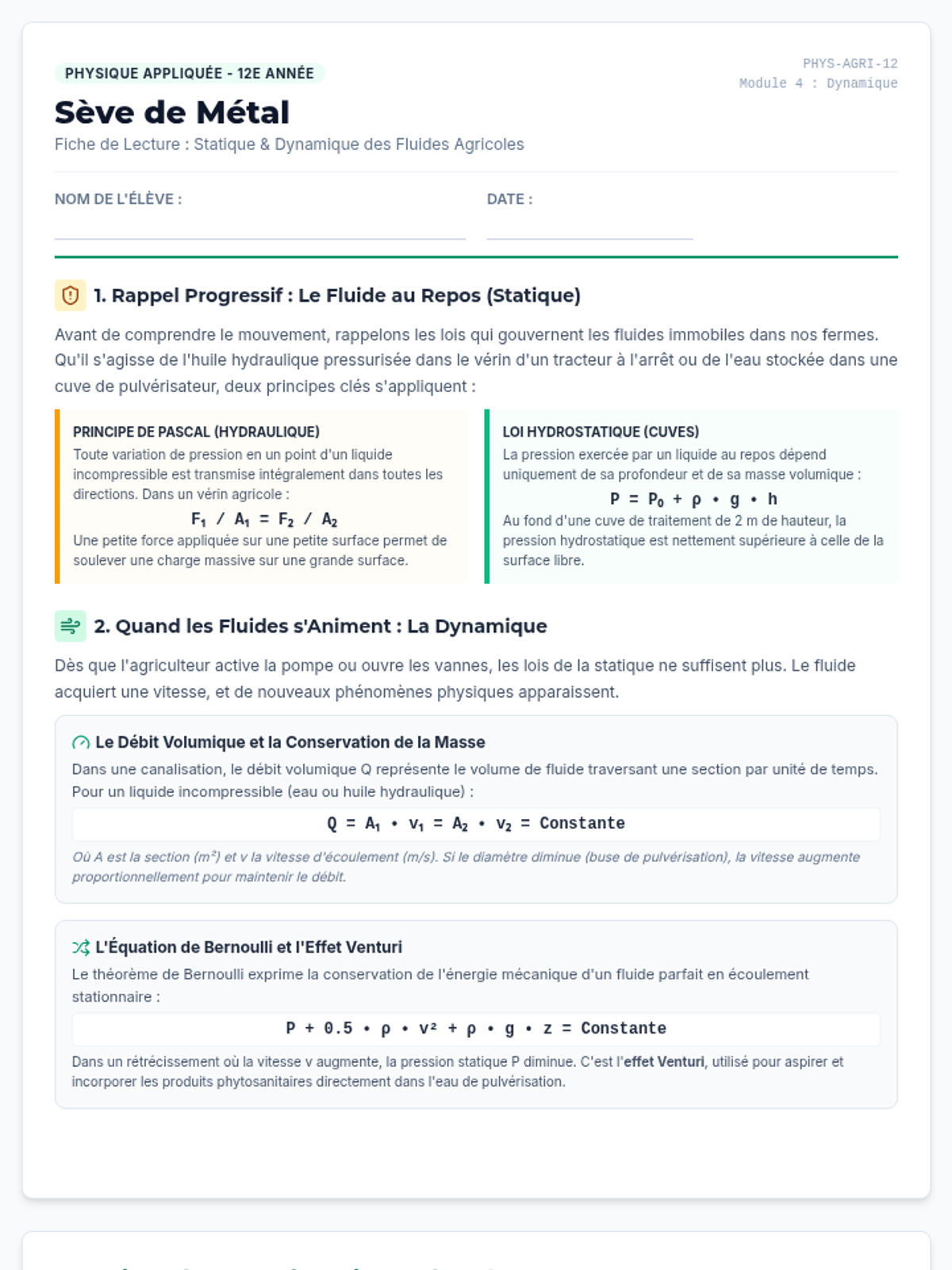
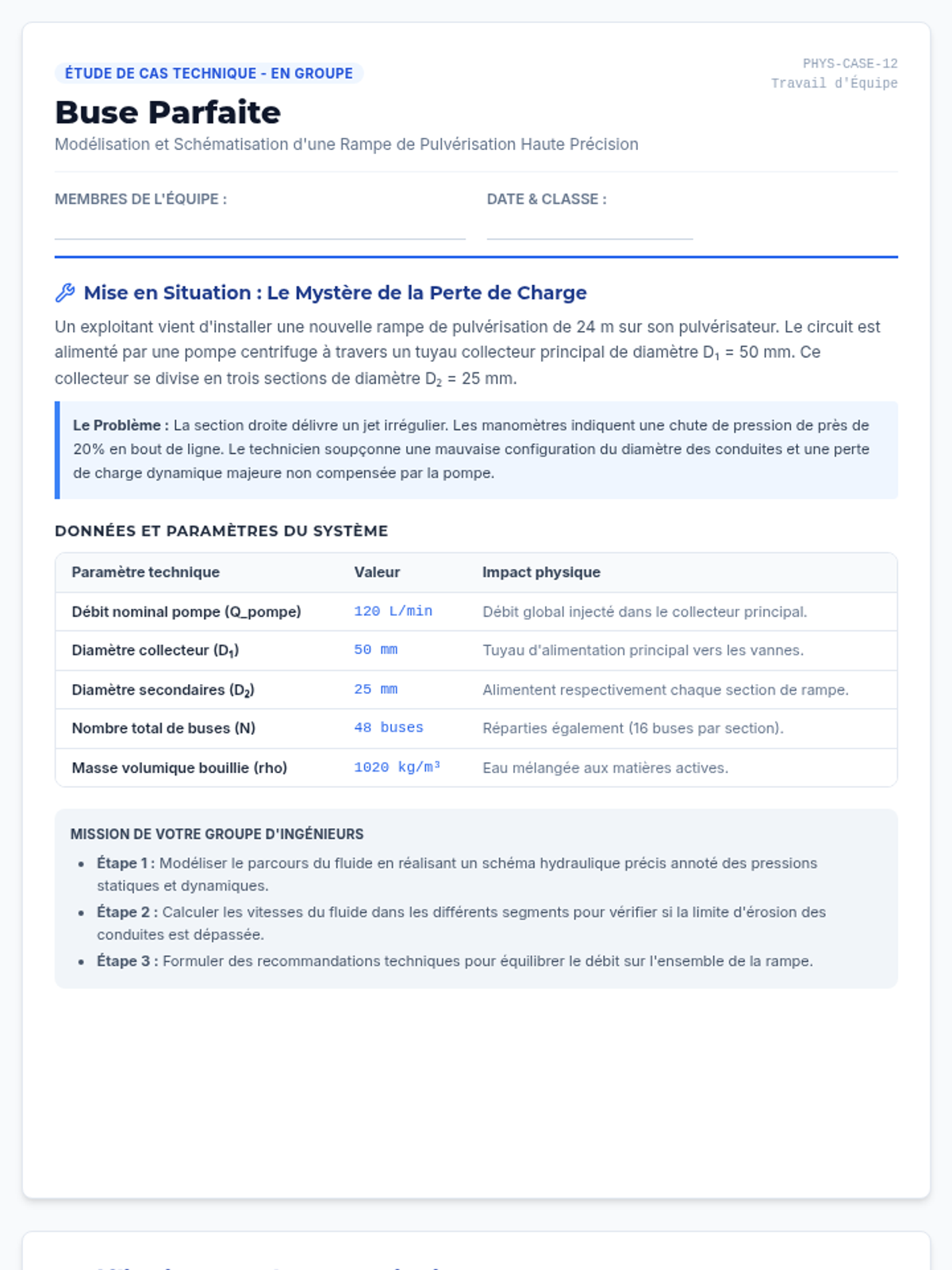
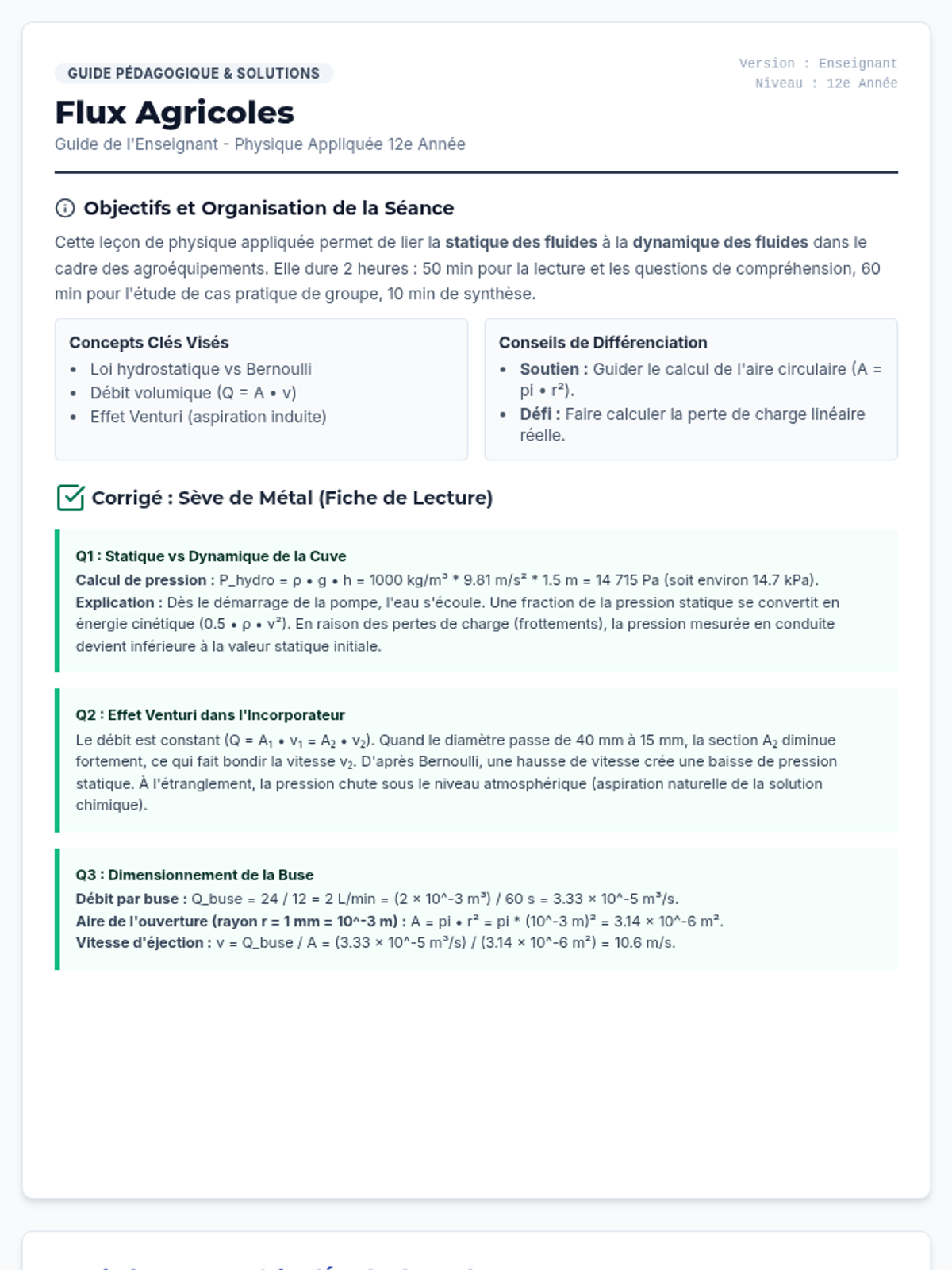
Une leçon complète de physique appliquée de niveau 12e année sur la dynamique des fluides en milieu agricole. Elle explore l'hydraulique des machines (tracteurs, vérins) et les équipements de pulvérisation à travers un rappel progressif de la statique des fluides, une fiche de lecture scientifique et une étude de cas technique de modélisation en groupe.
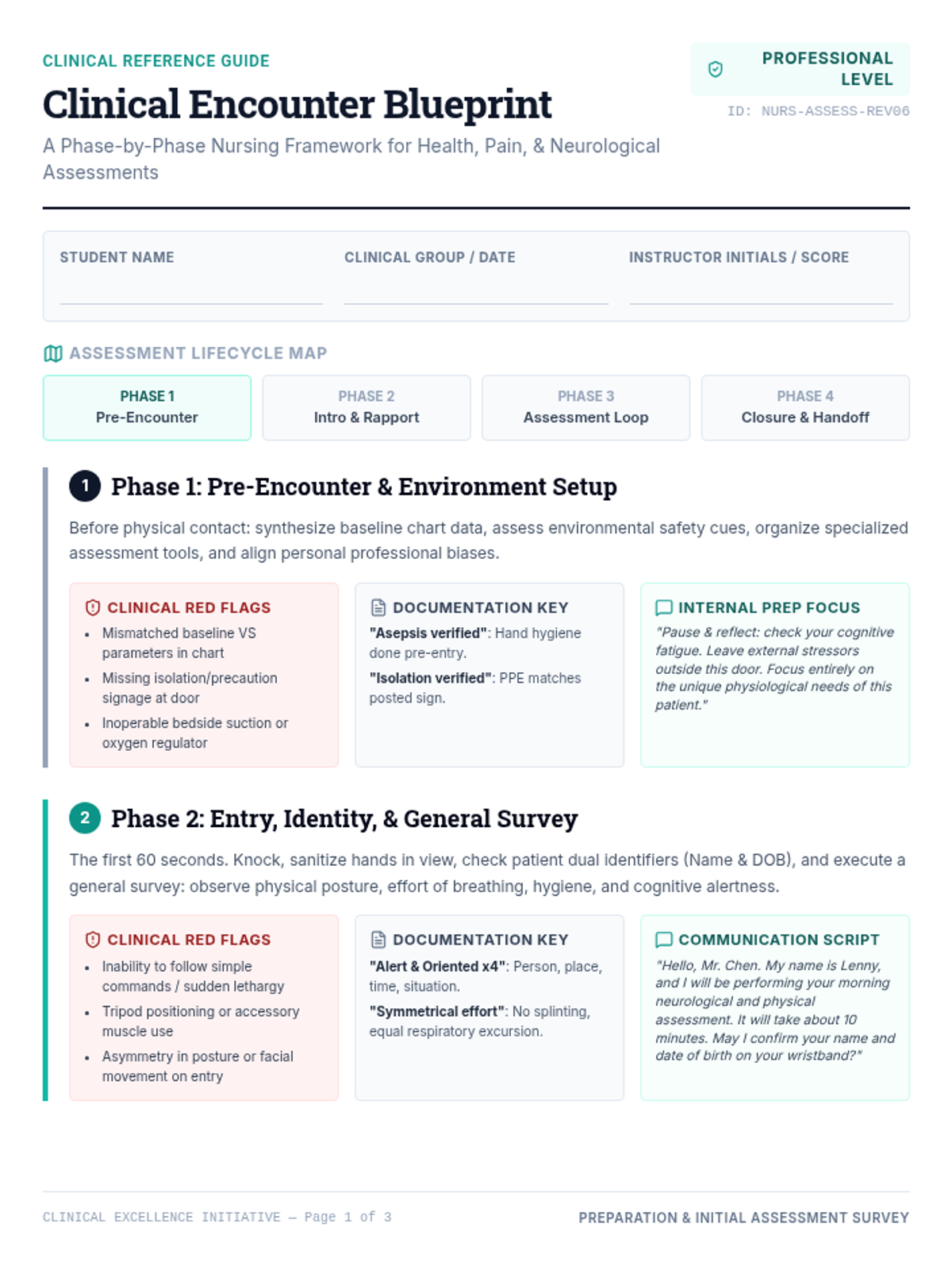
A foundational clinical nursing lesson focusing on structured health assessments, professional behaviors, therapeutic communication, pain scale selection, and neurological evaluation techniques.
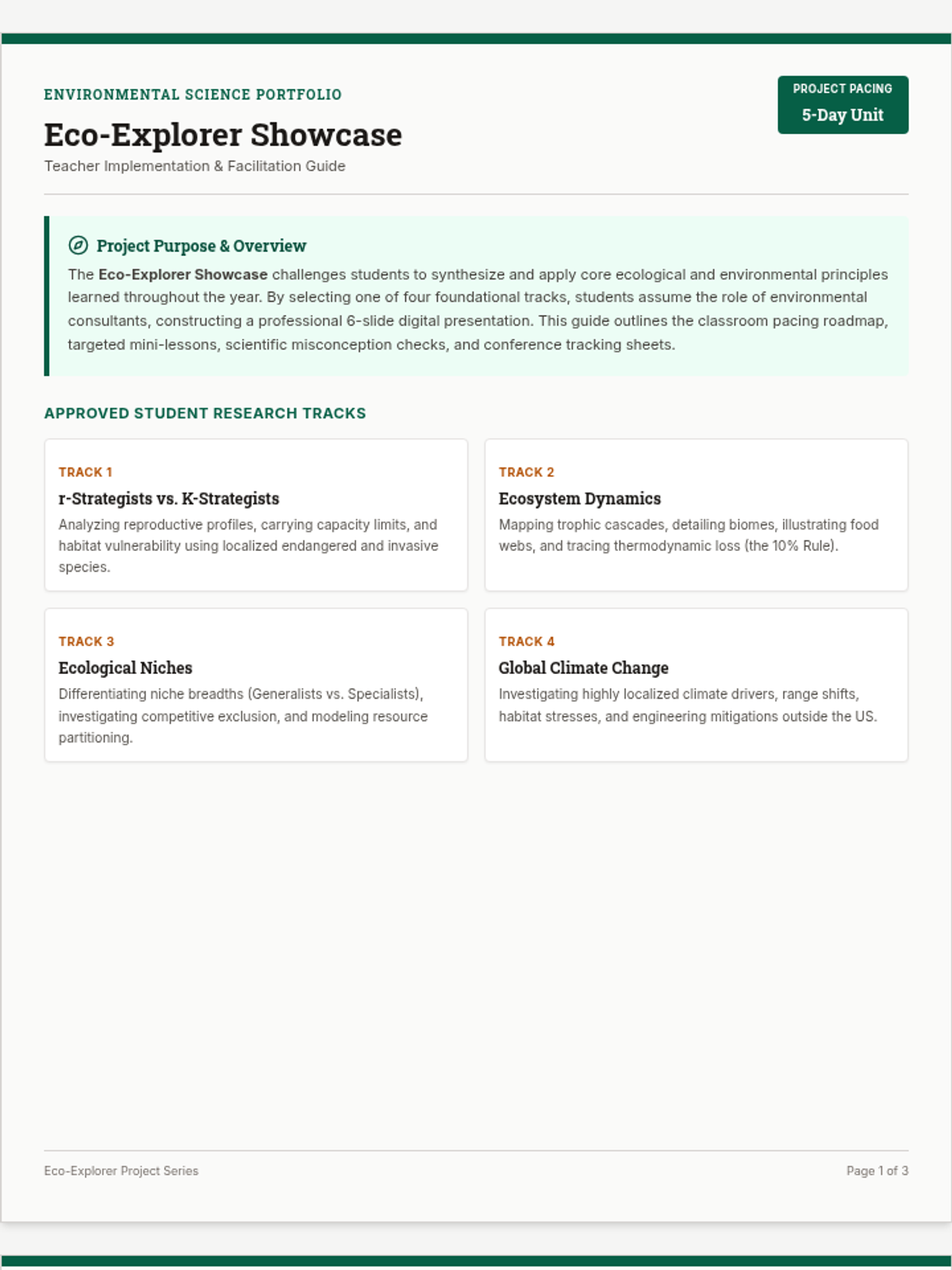
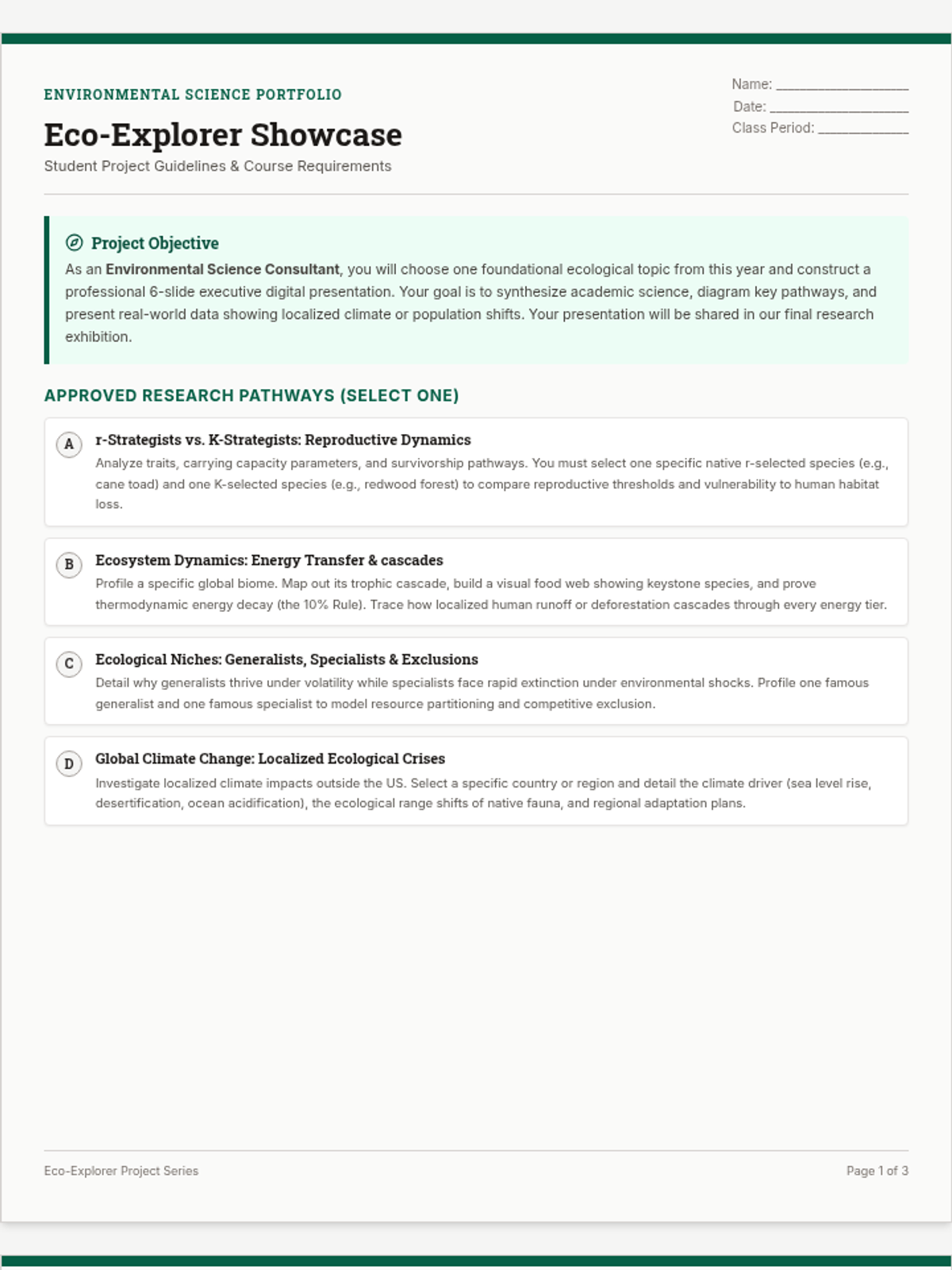
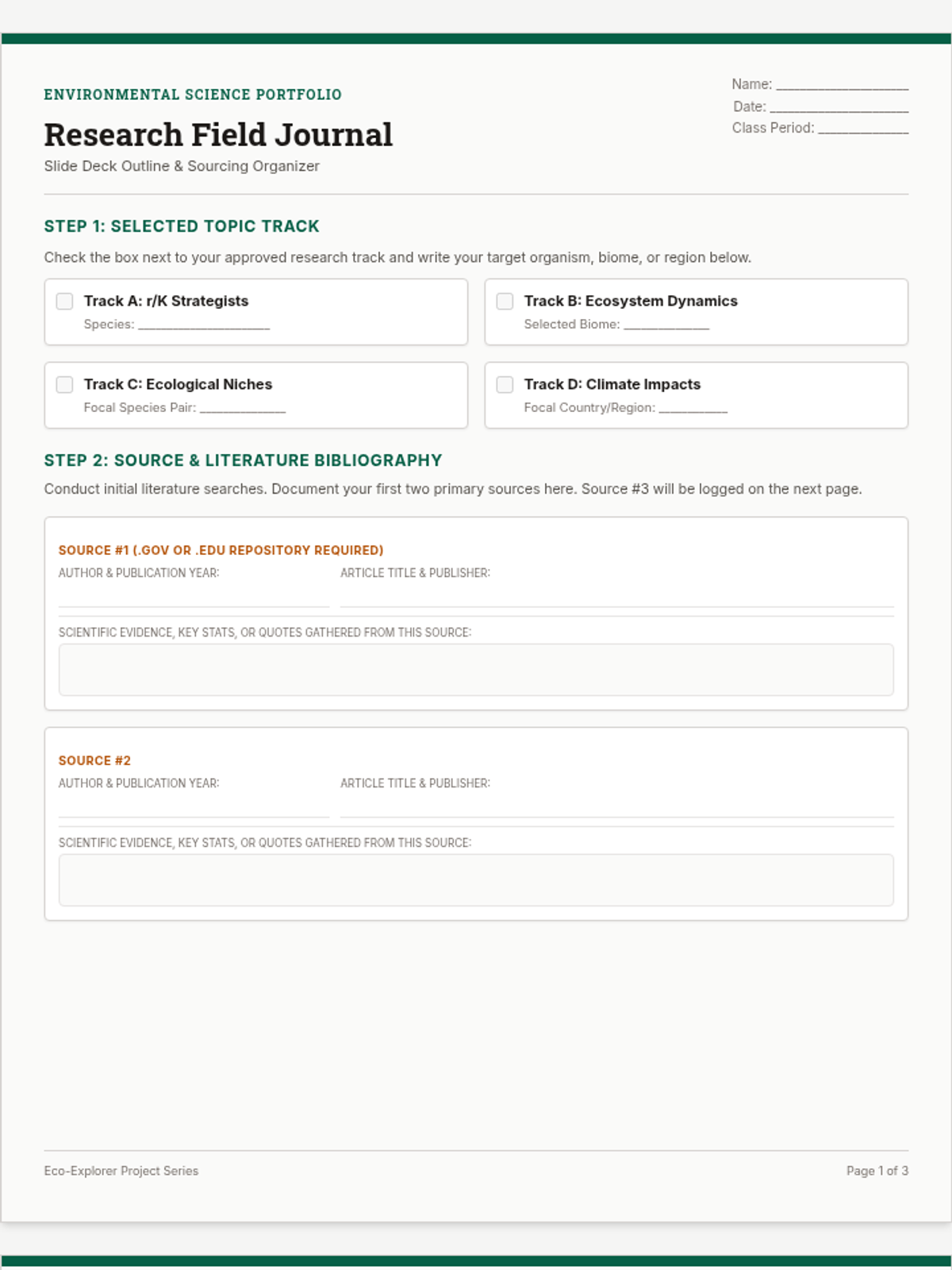
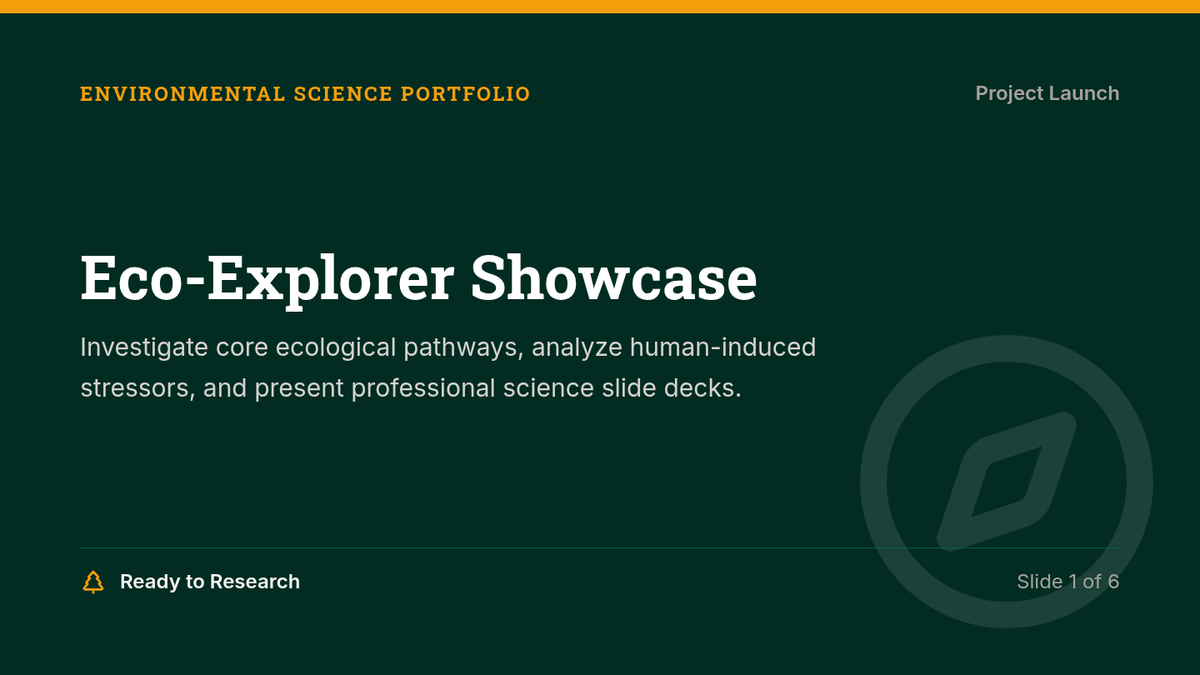
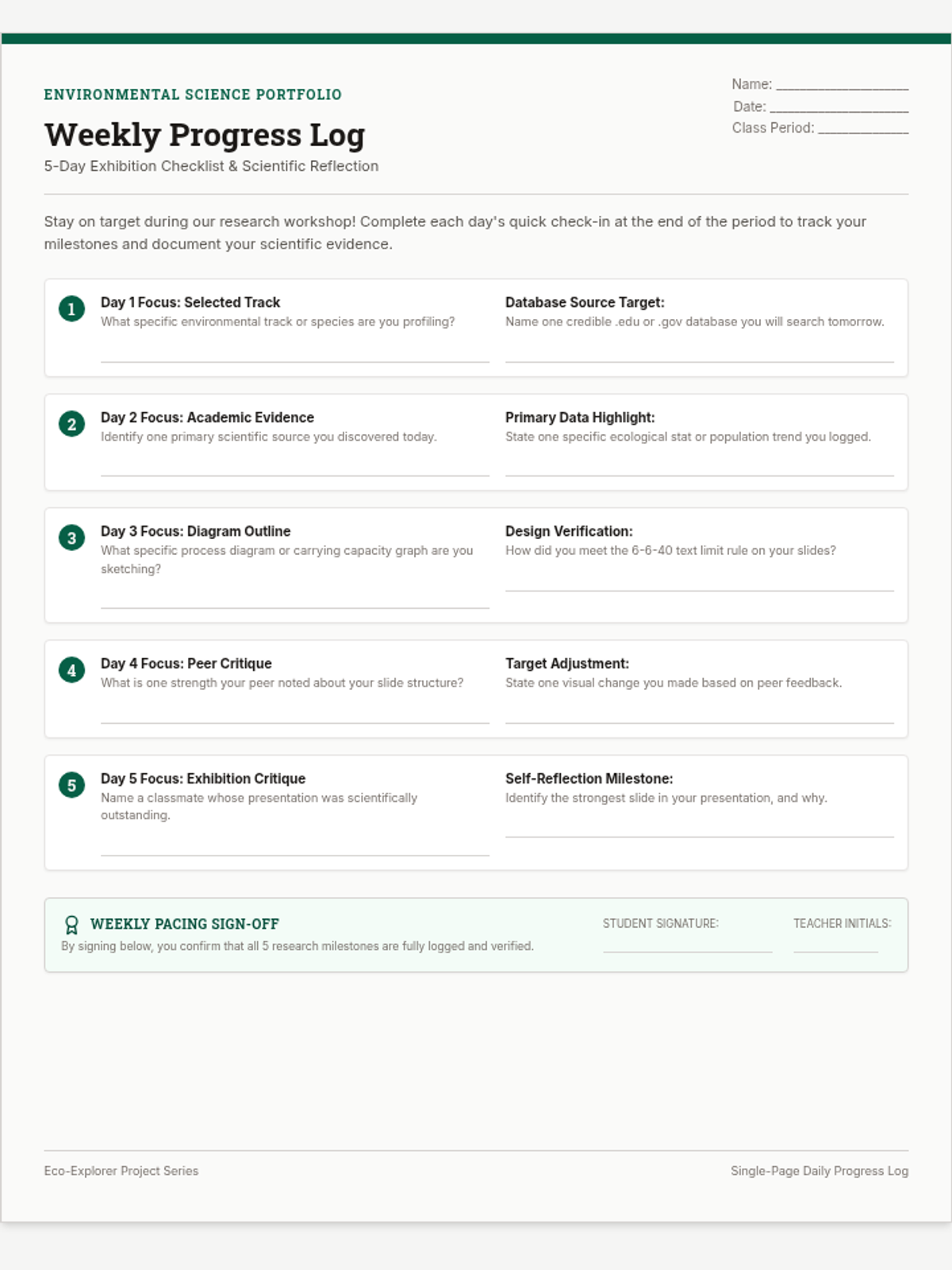
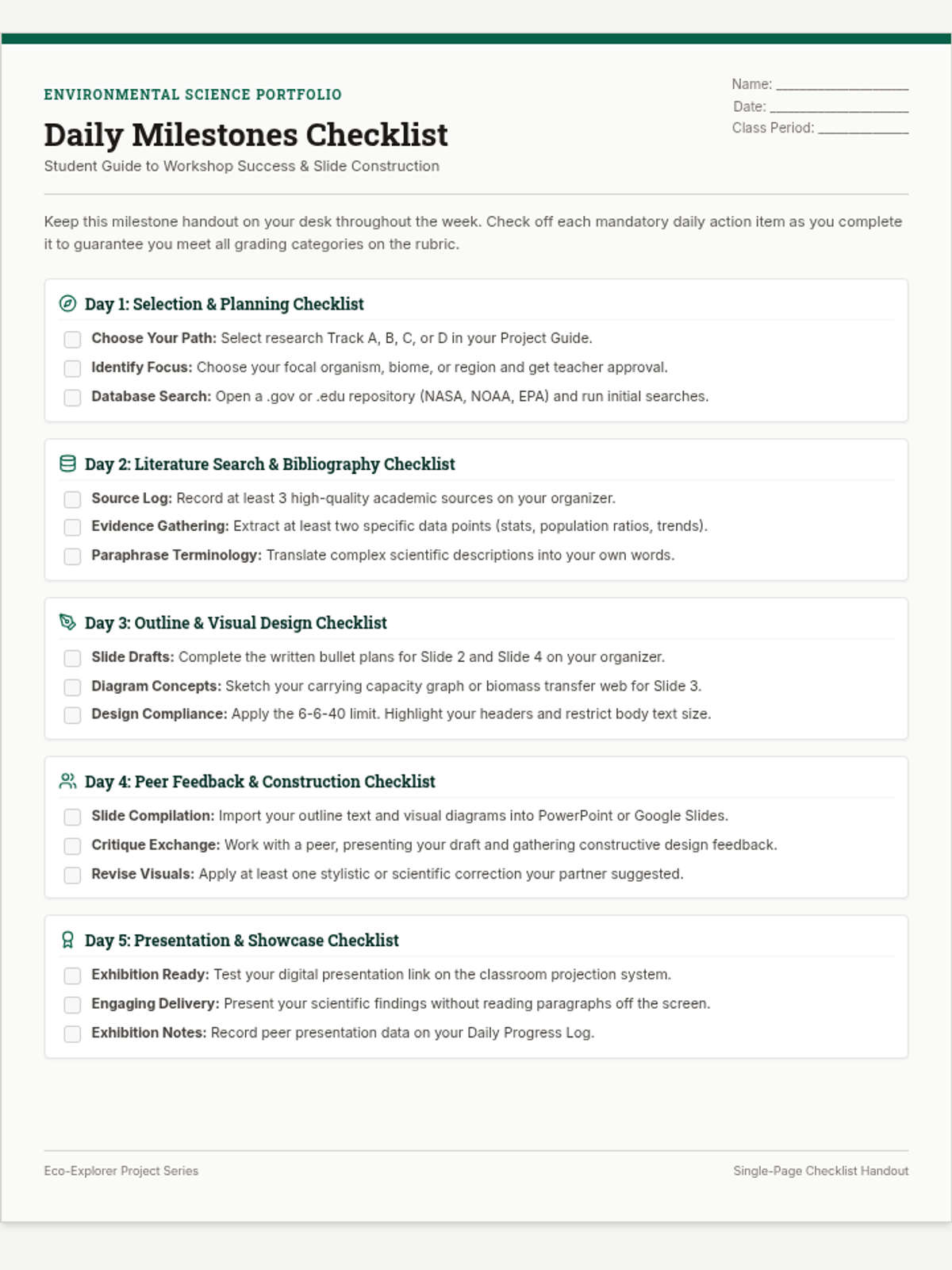
An environmental science research project where students choose a major topic from the year—such as life strategies, ecosystem dynamics, ecological niches, or global climate change—to research, synthesize, and present as a professional digital slide show.
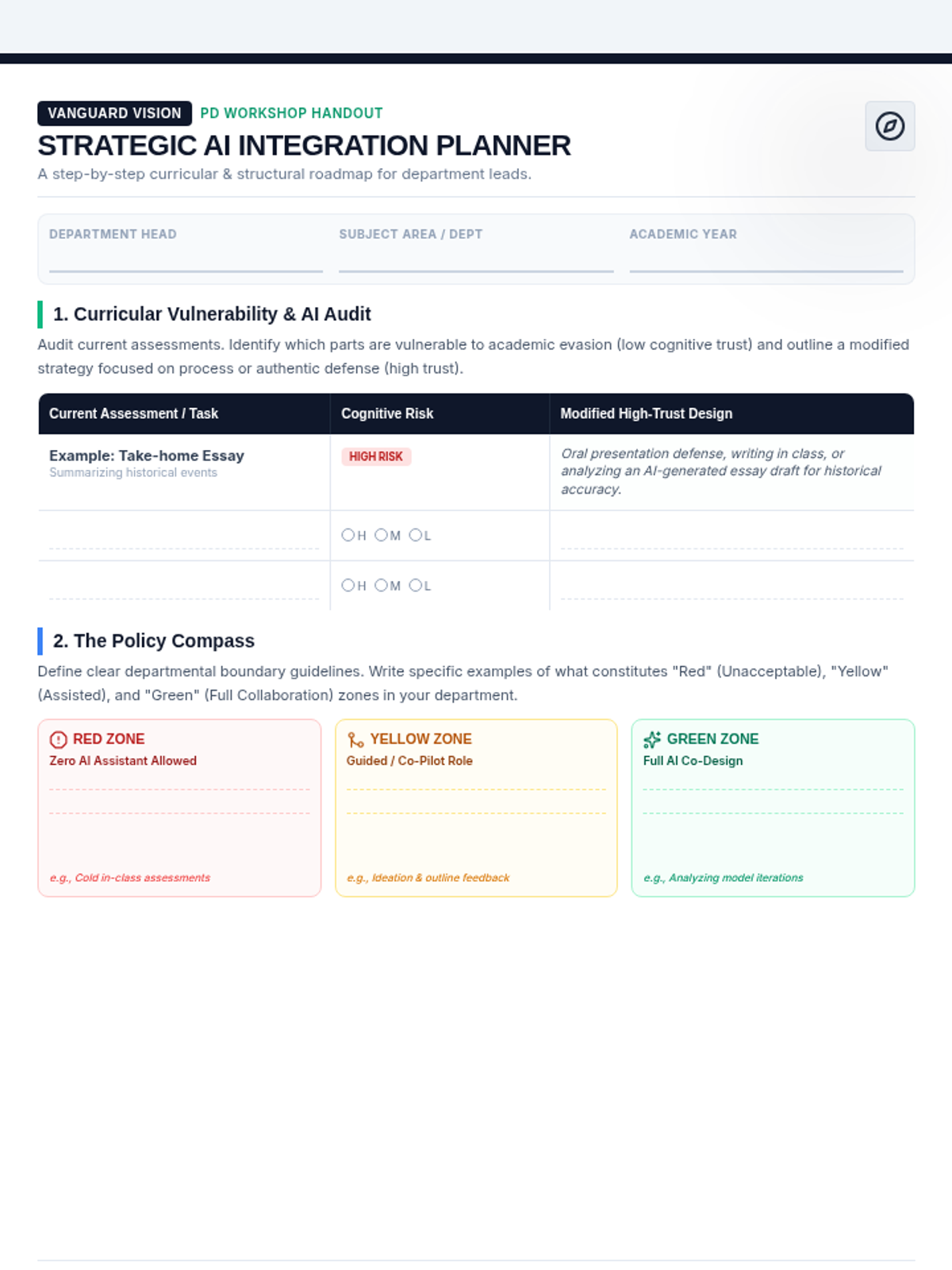
A professional development session designed for department heads and instructional leaders to strategically integrate AI and educational technology into their subject-specific curricula while managing academic integrity and teacher workload.
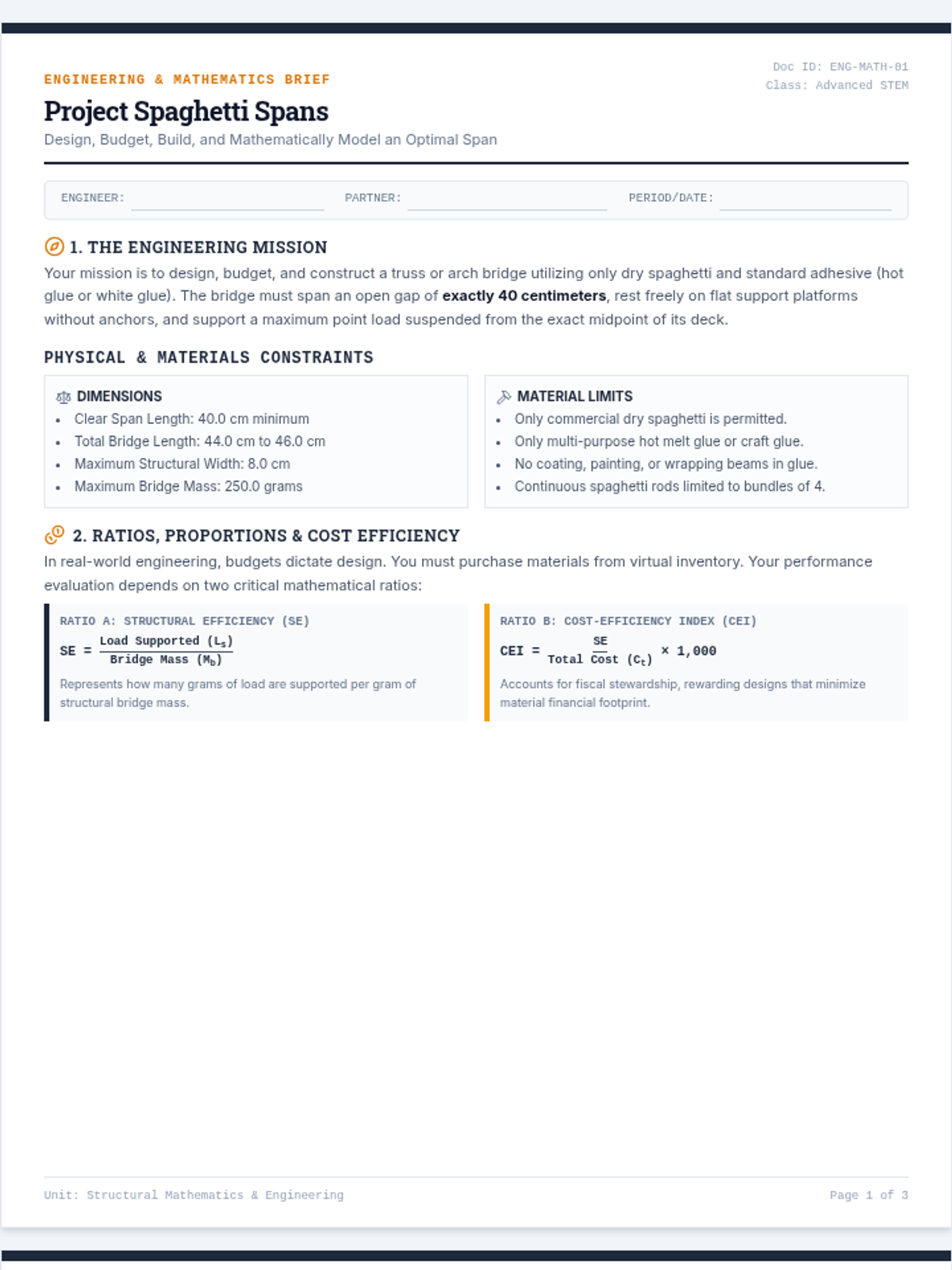
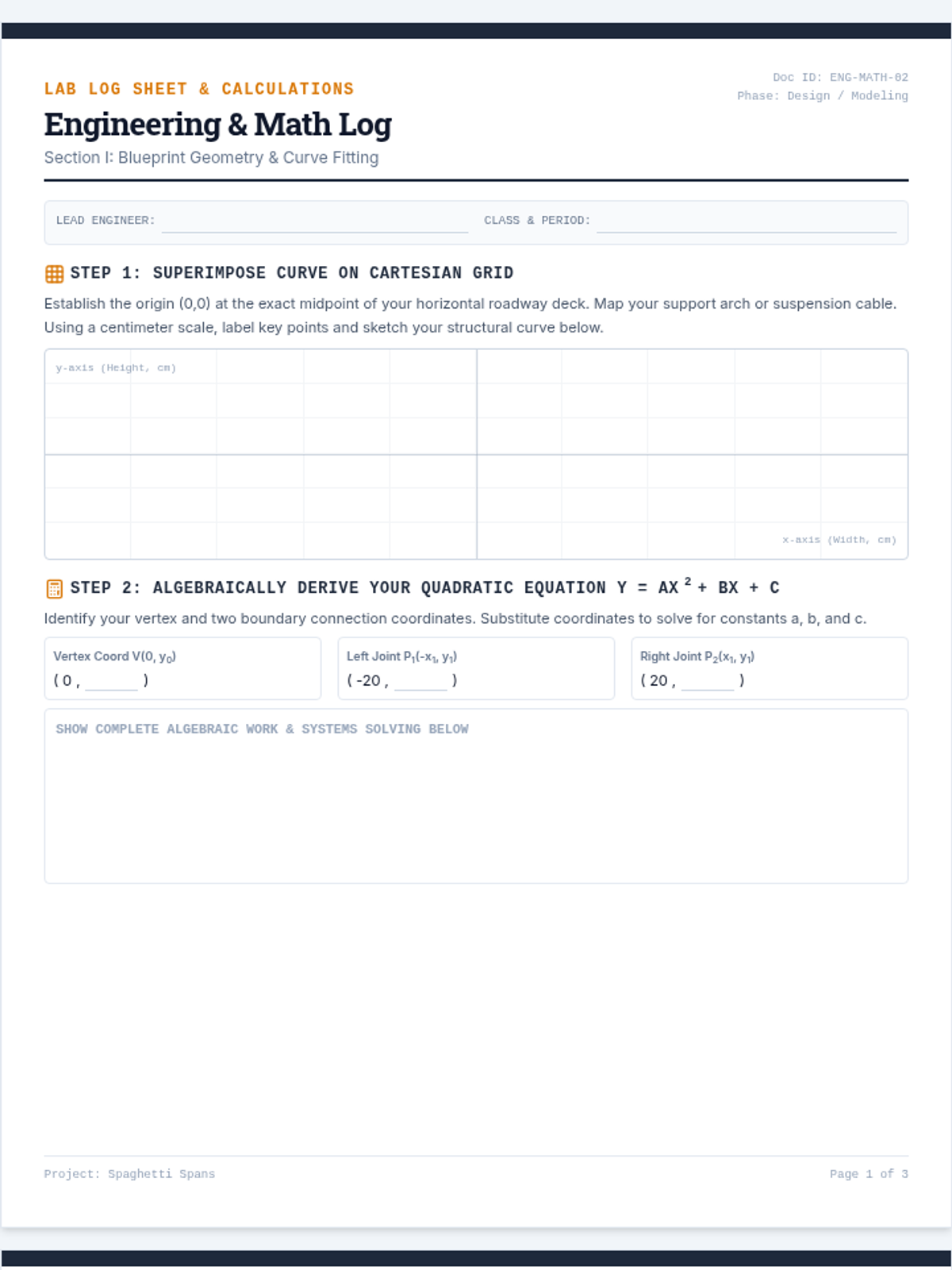
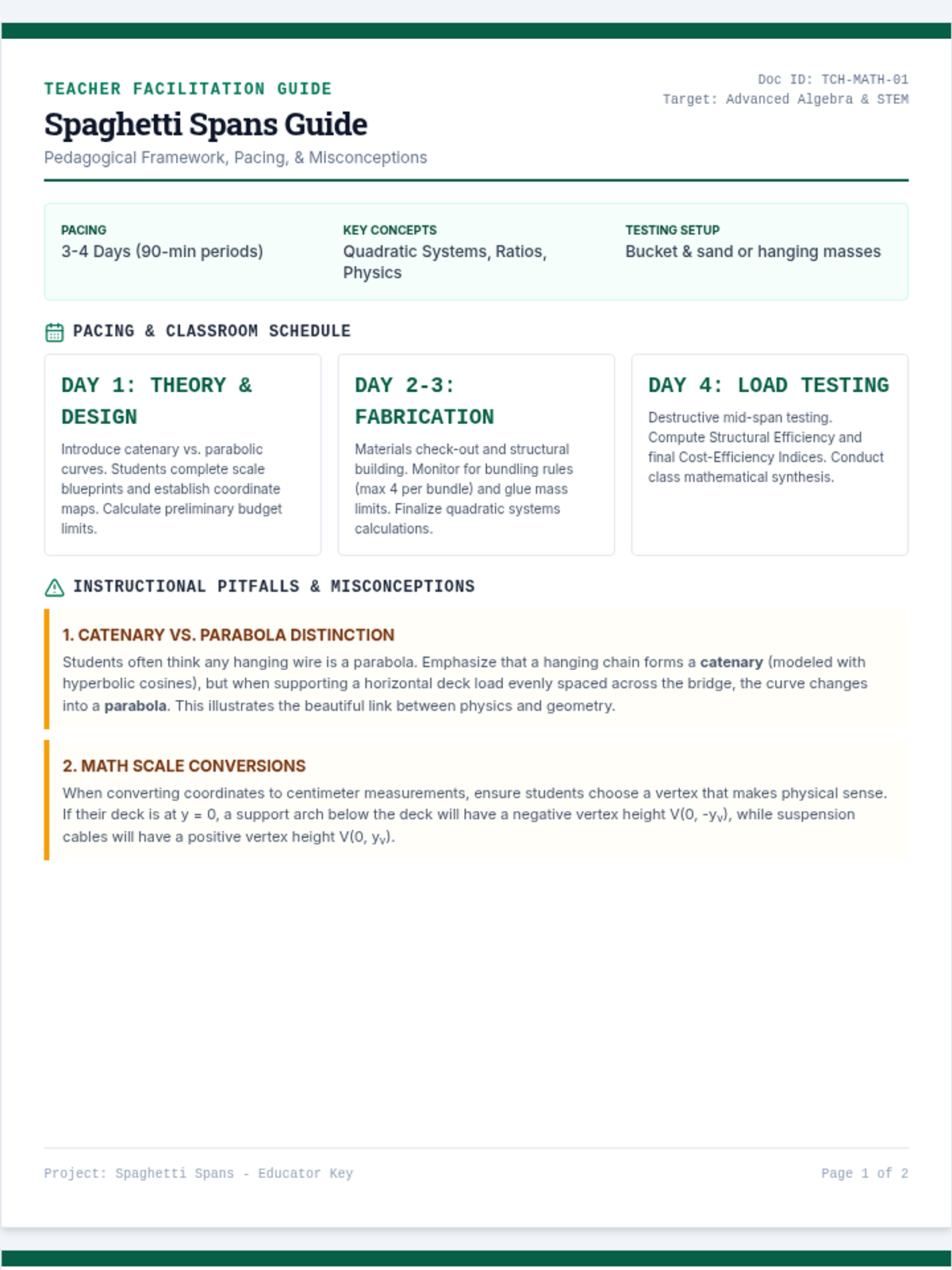
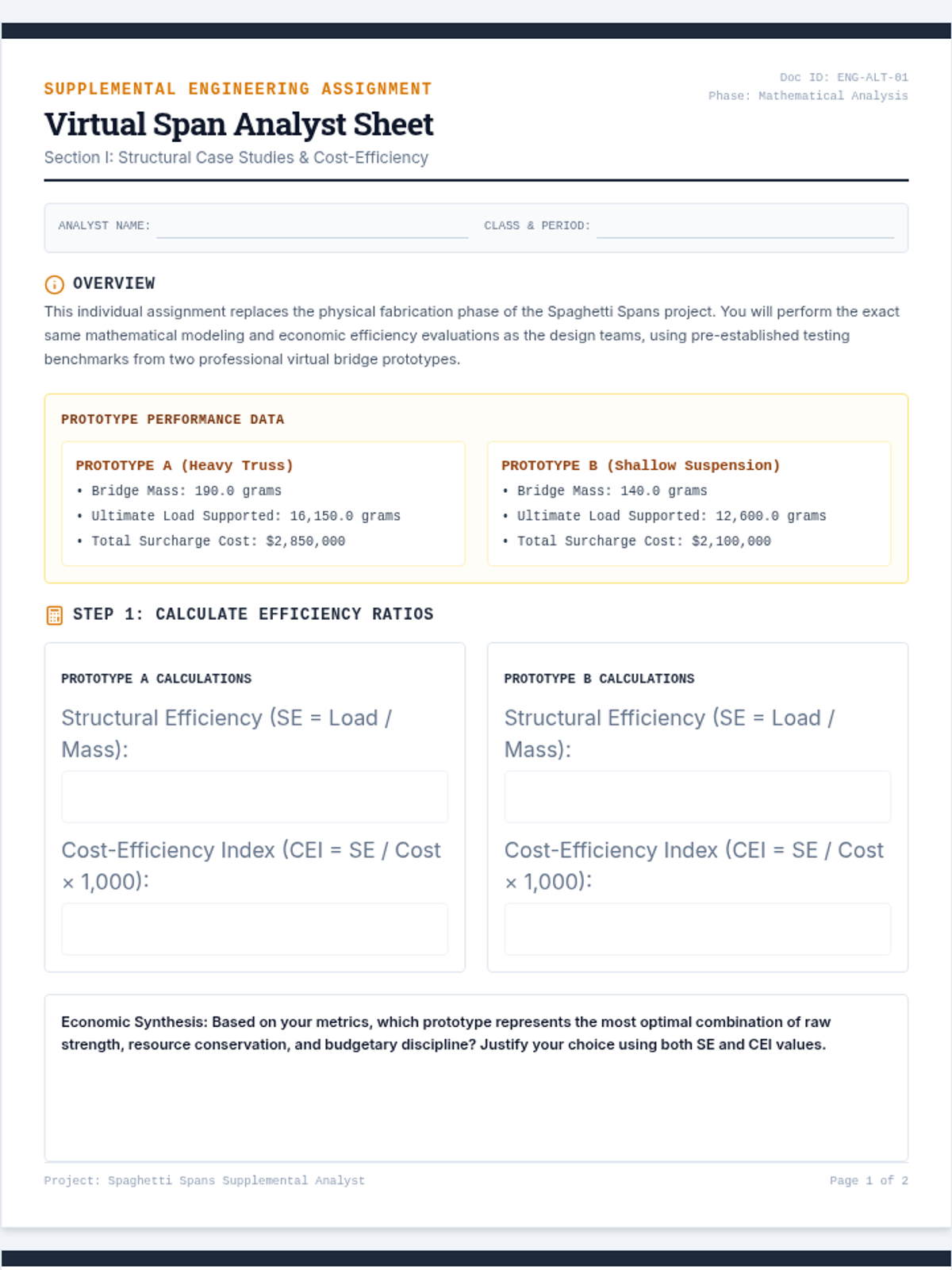
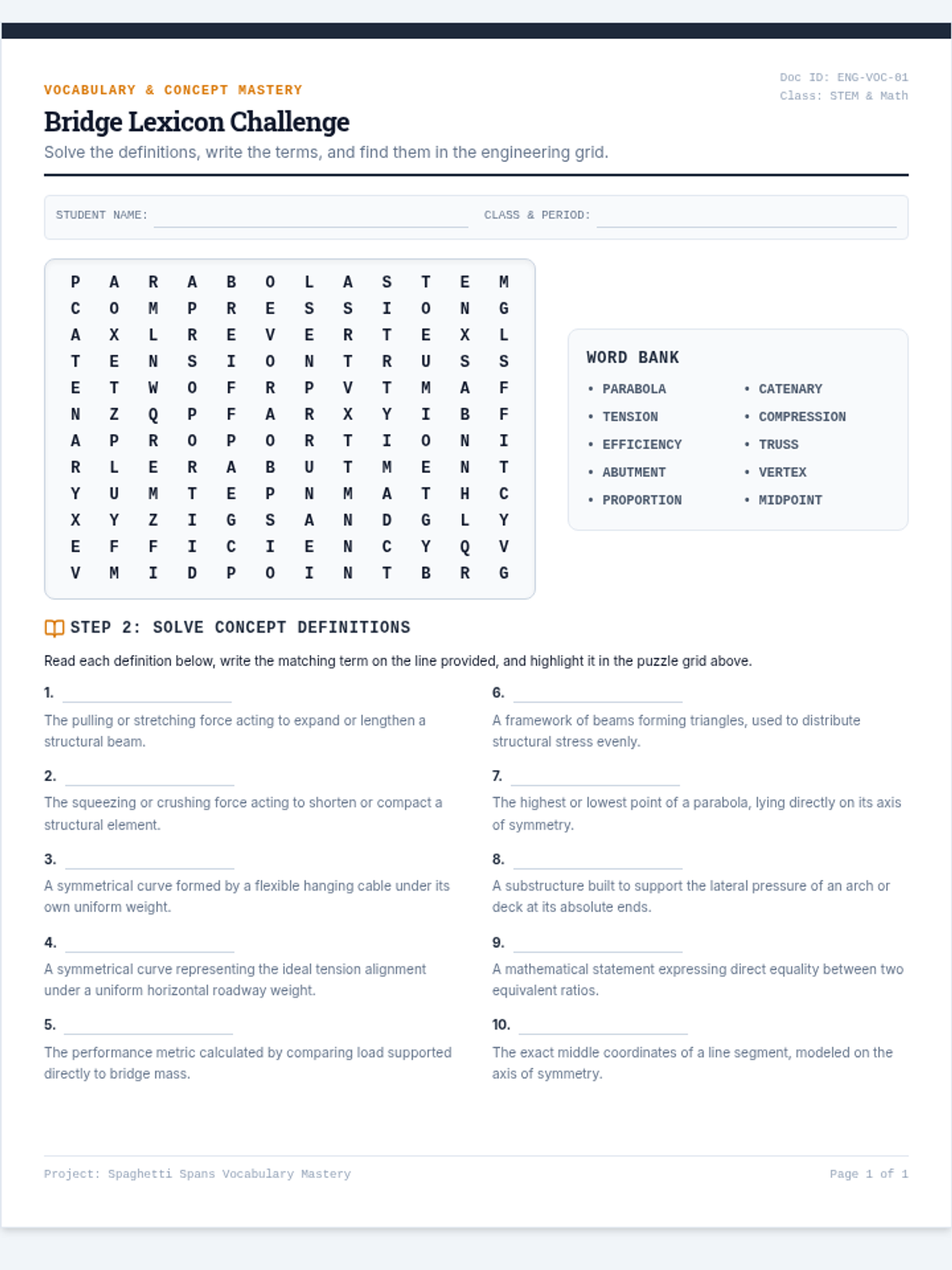
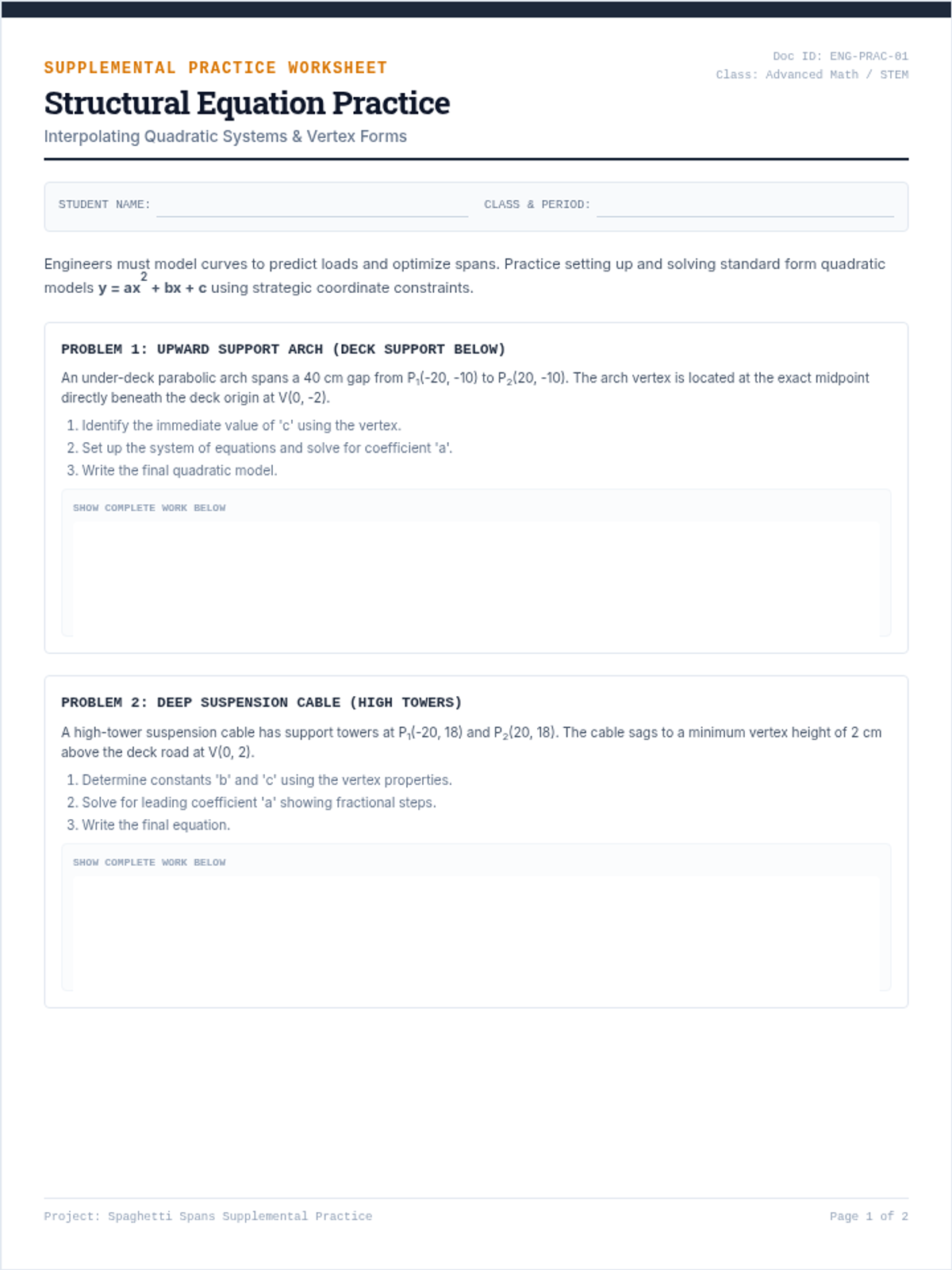
A rigorous STEM project combining structural engineering with advanced mathematics. Students design, budget, build, and test spaghetti bridges using ratios, proportions, cost-efficiency metrics, quadratic modeling, and catenary curves.
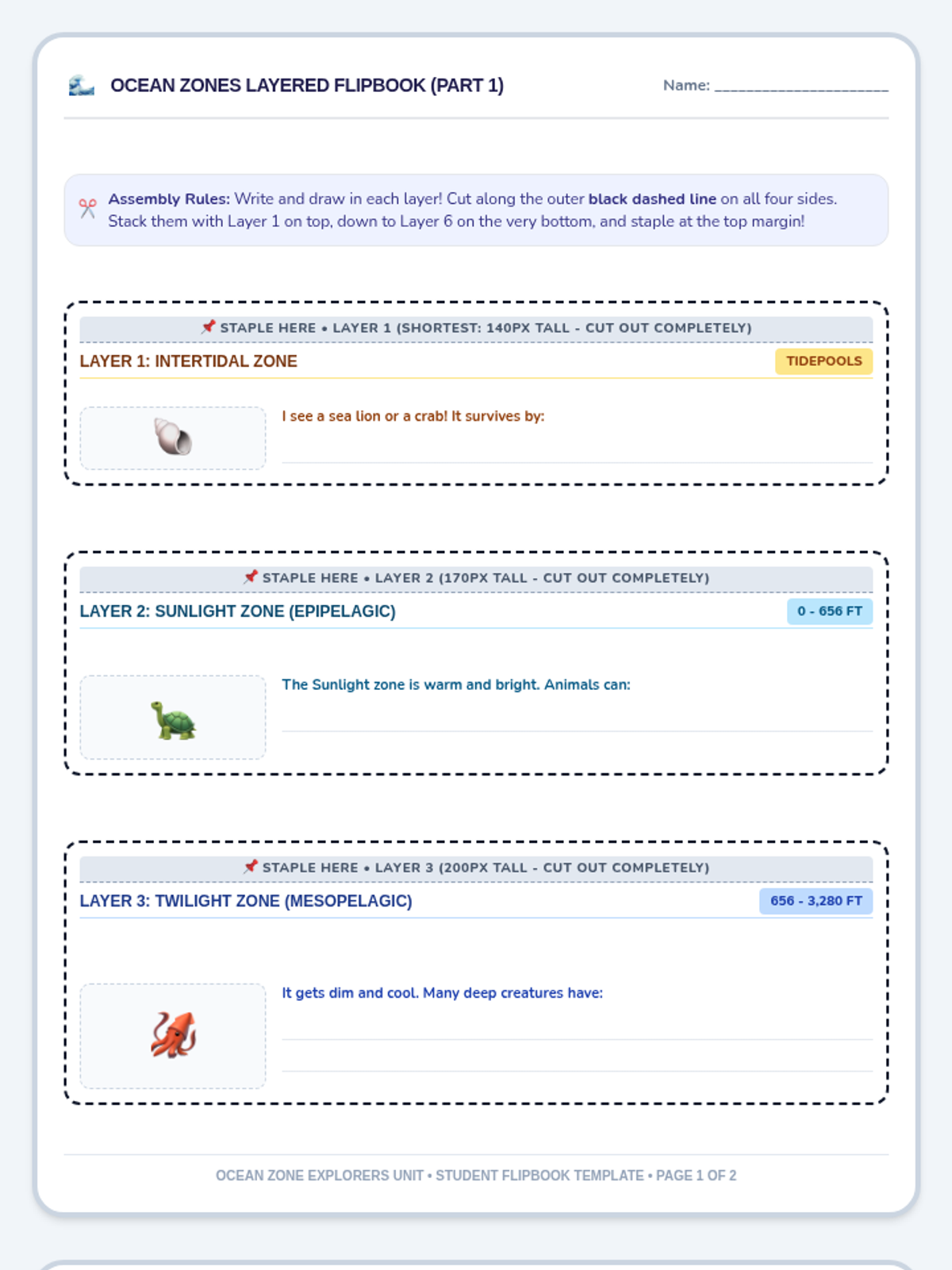
Express new expertise through a multi-page layered flipbook template and structured cooperative writing prompts.
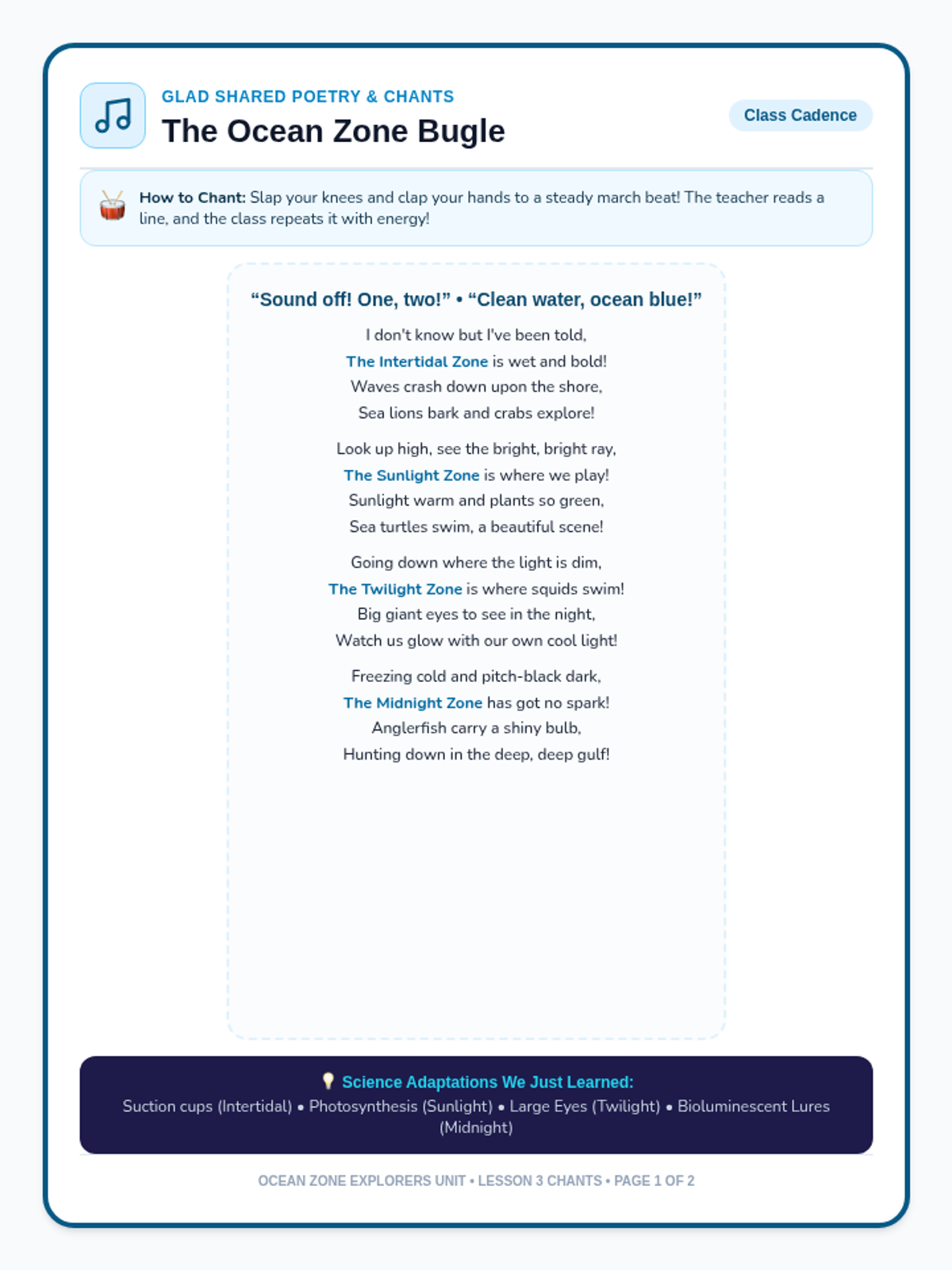
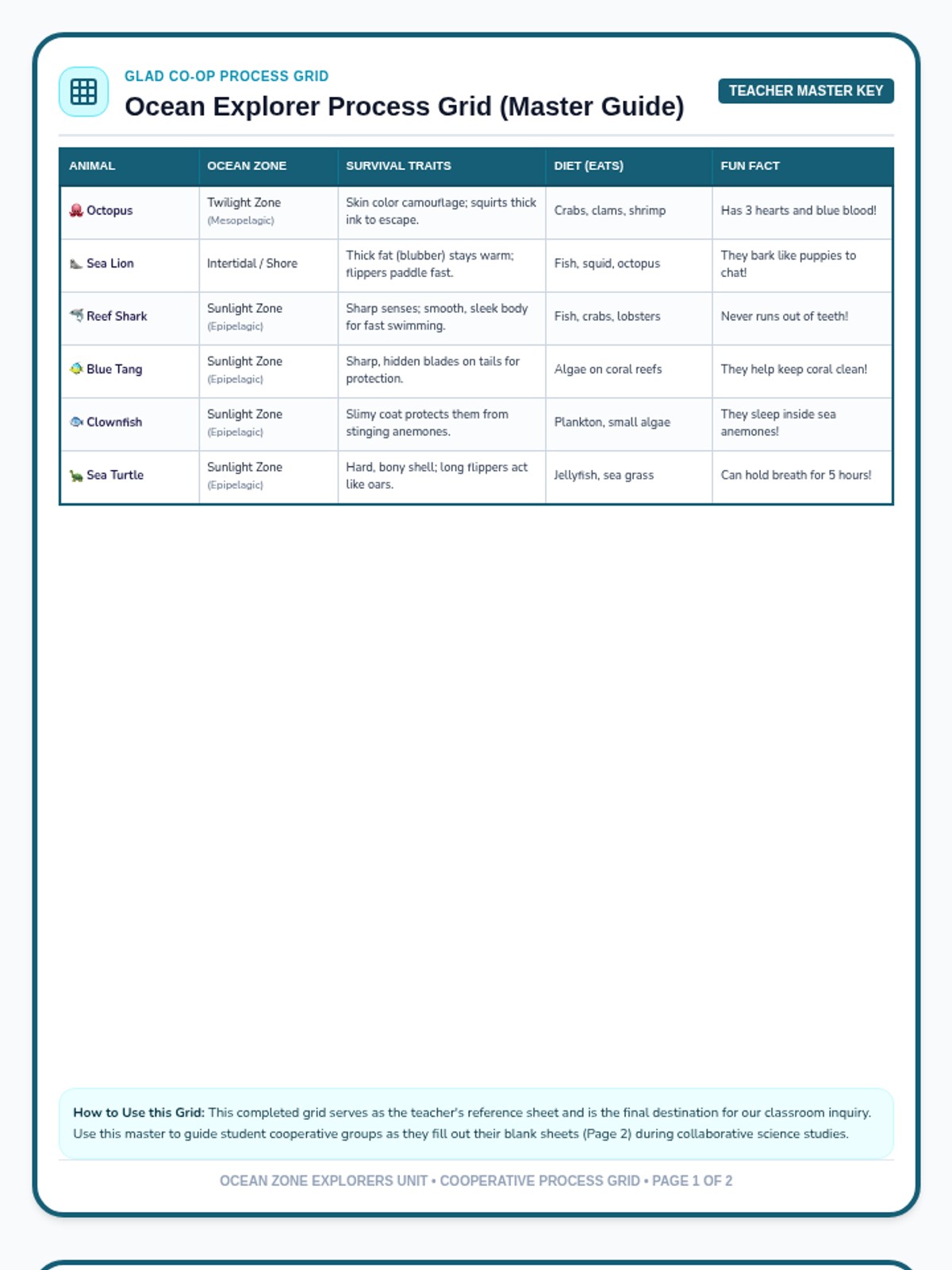
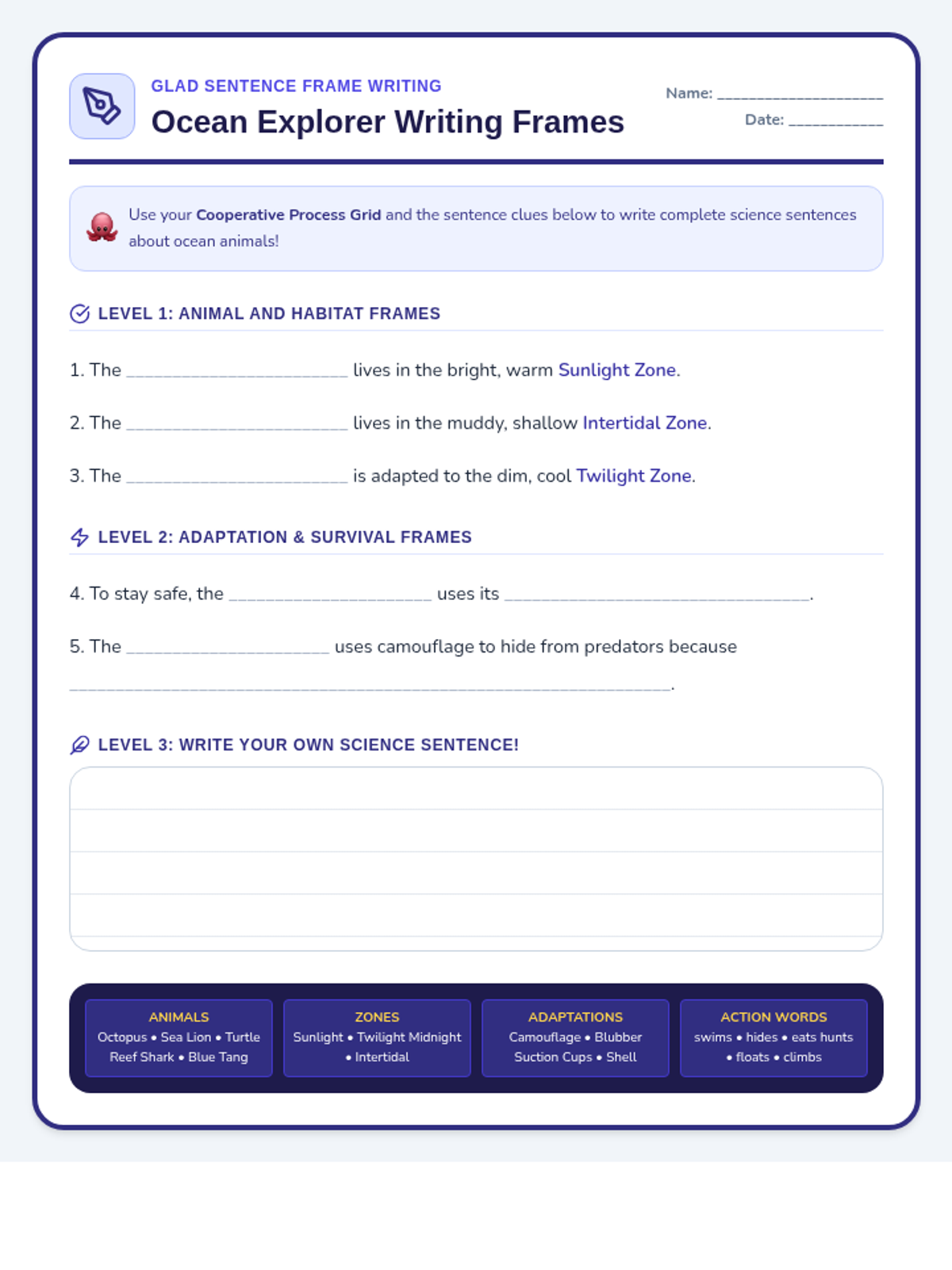
Sing and chant about ocean adaptations, fill out a collaborative Process Grid of focus animals, and use differentiated sentence frames for group writing.
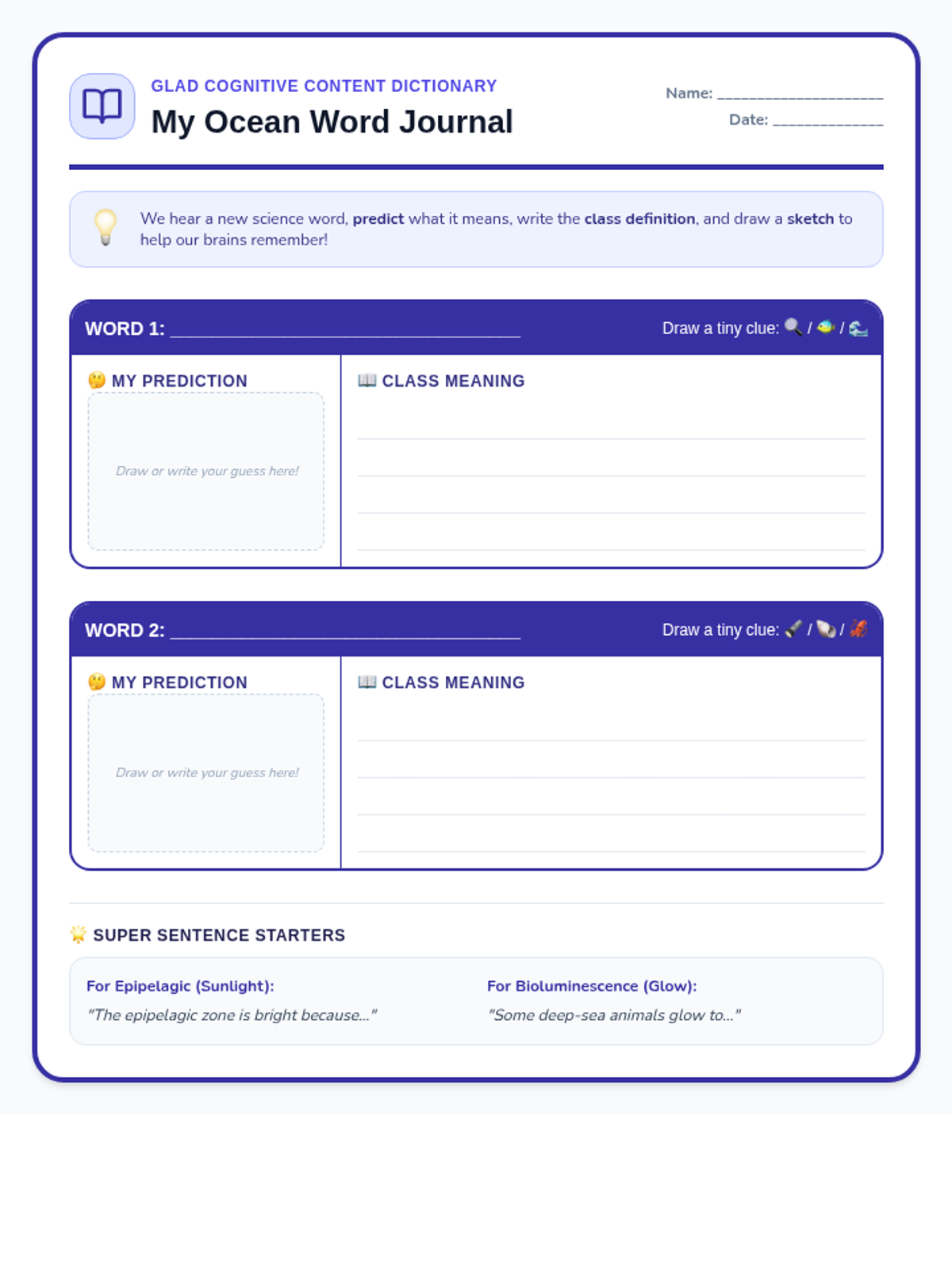
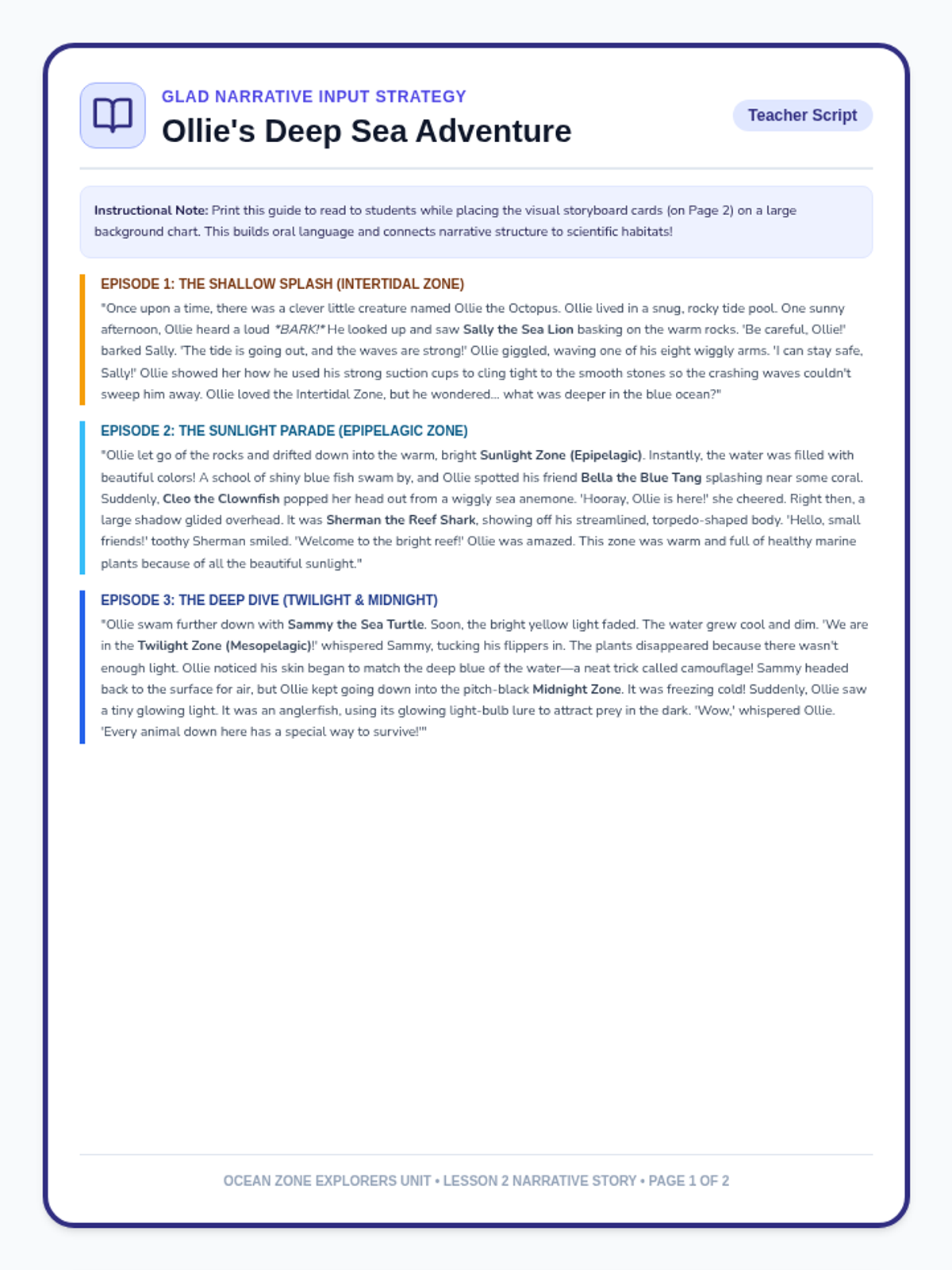
Build vocabulary and deep comprehension using a interactive Cognitive Content Dictionary (CCD) and the story of Ollie the Octopus's Deep Sea Adventure.
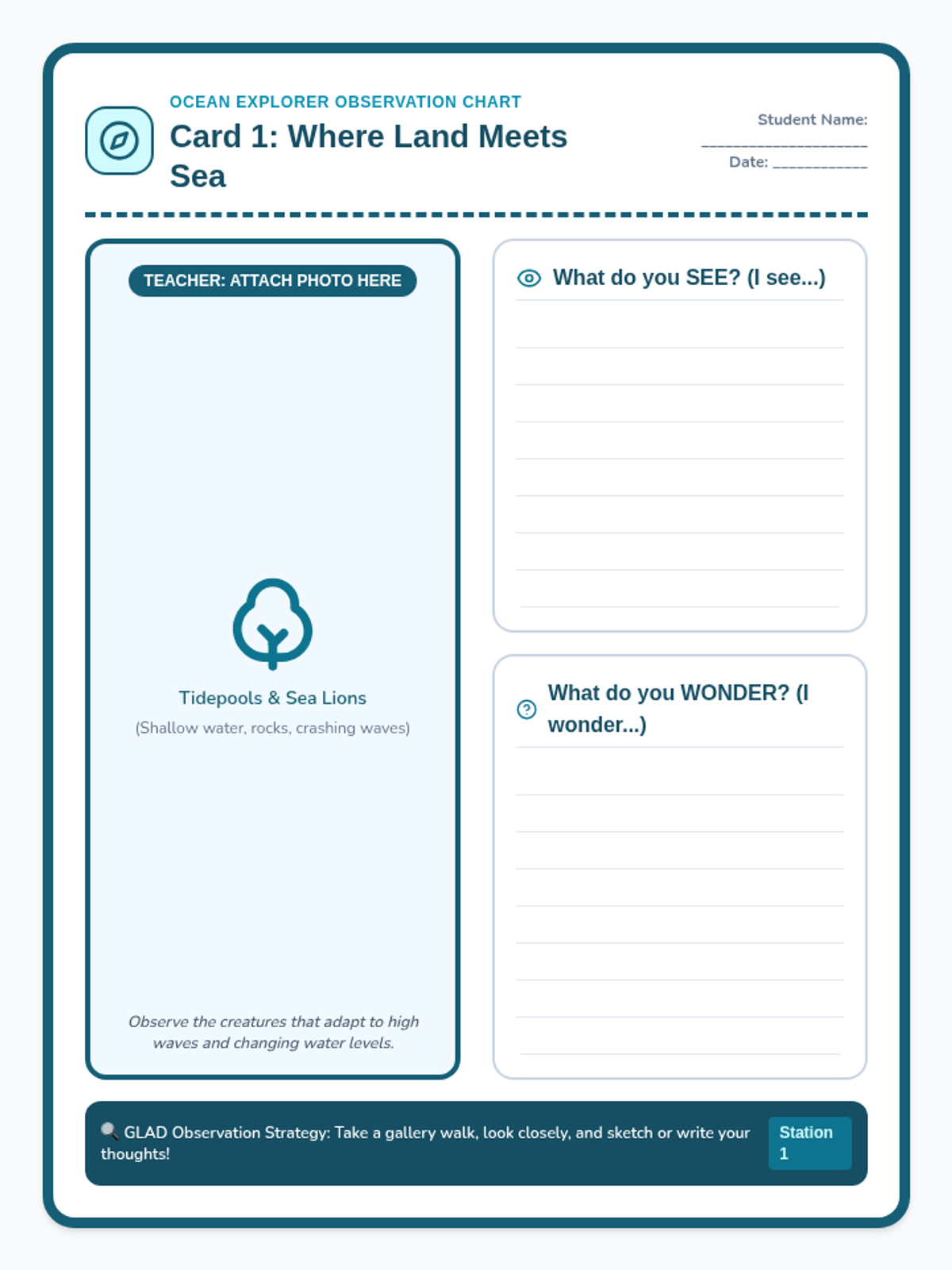
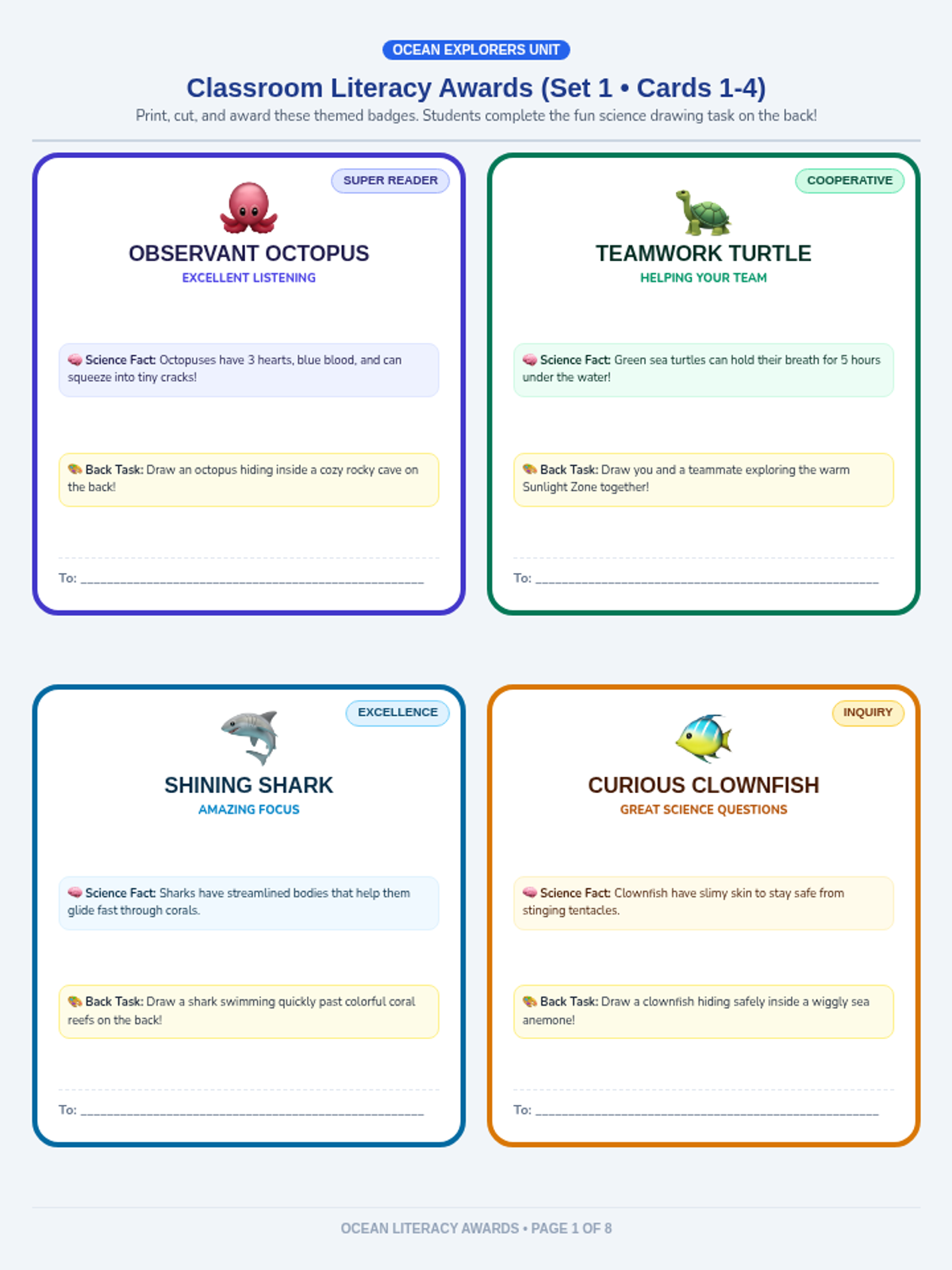
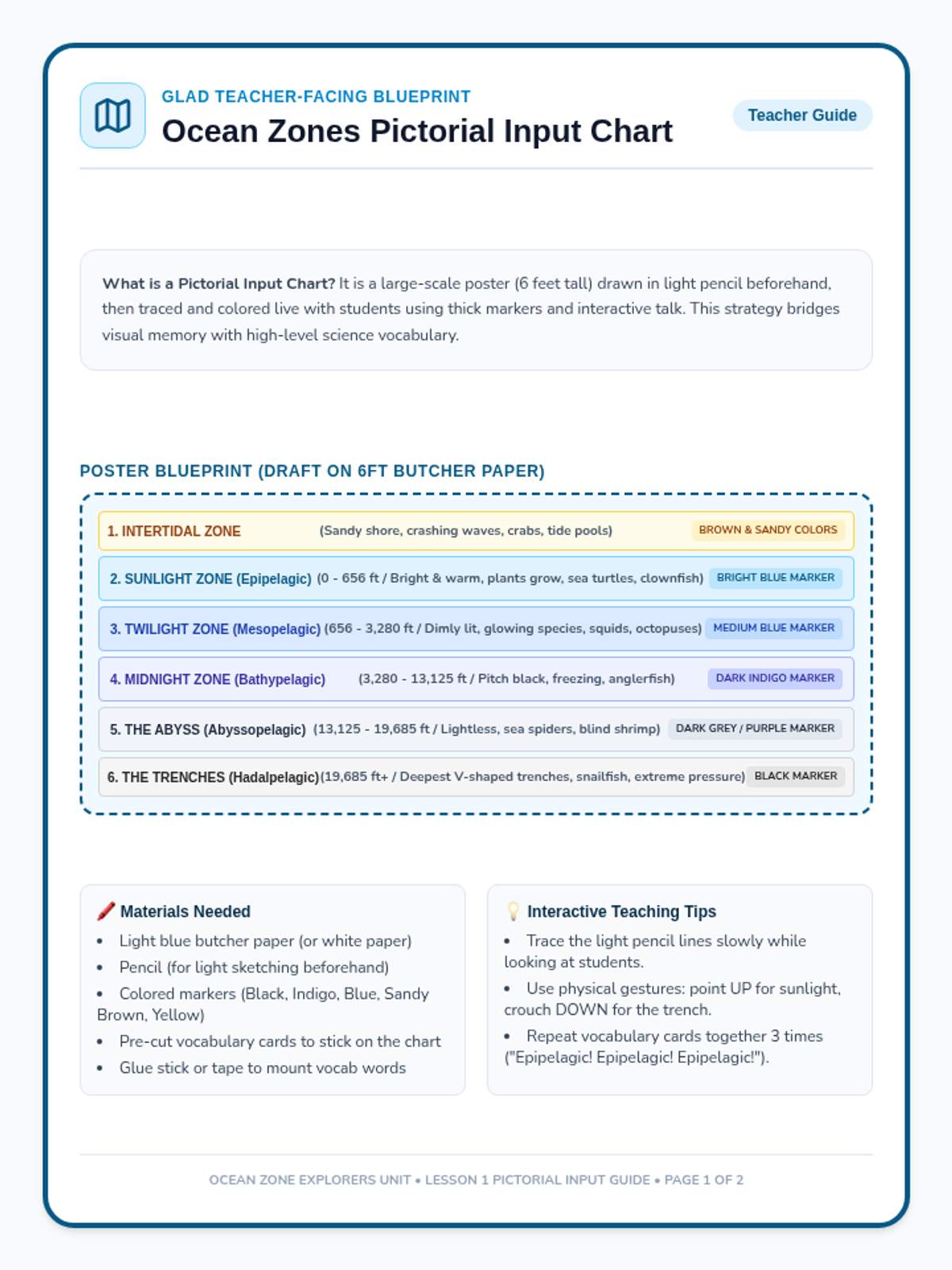
Spark curiosity with high-interest Observation Charts, positive-behavior Literacy Awards, and a large-scale visual blueprint for the multi-zone ocean chart.
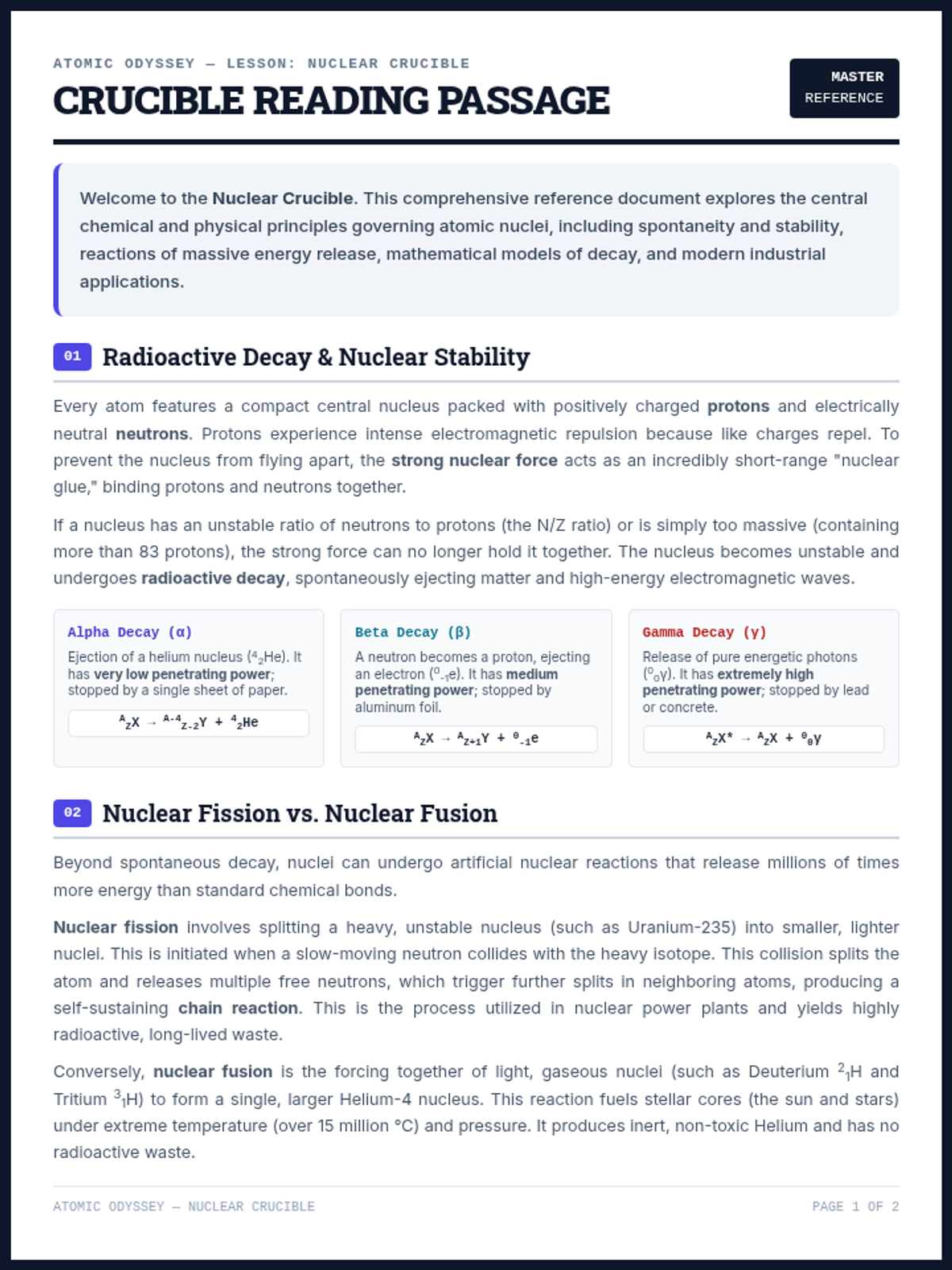
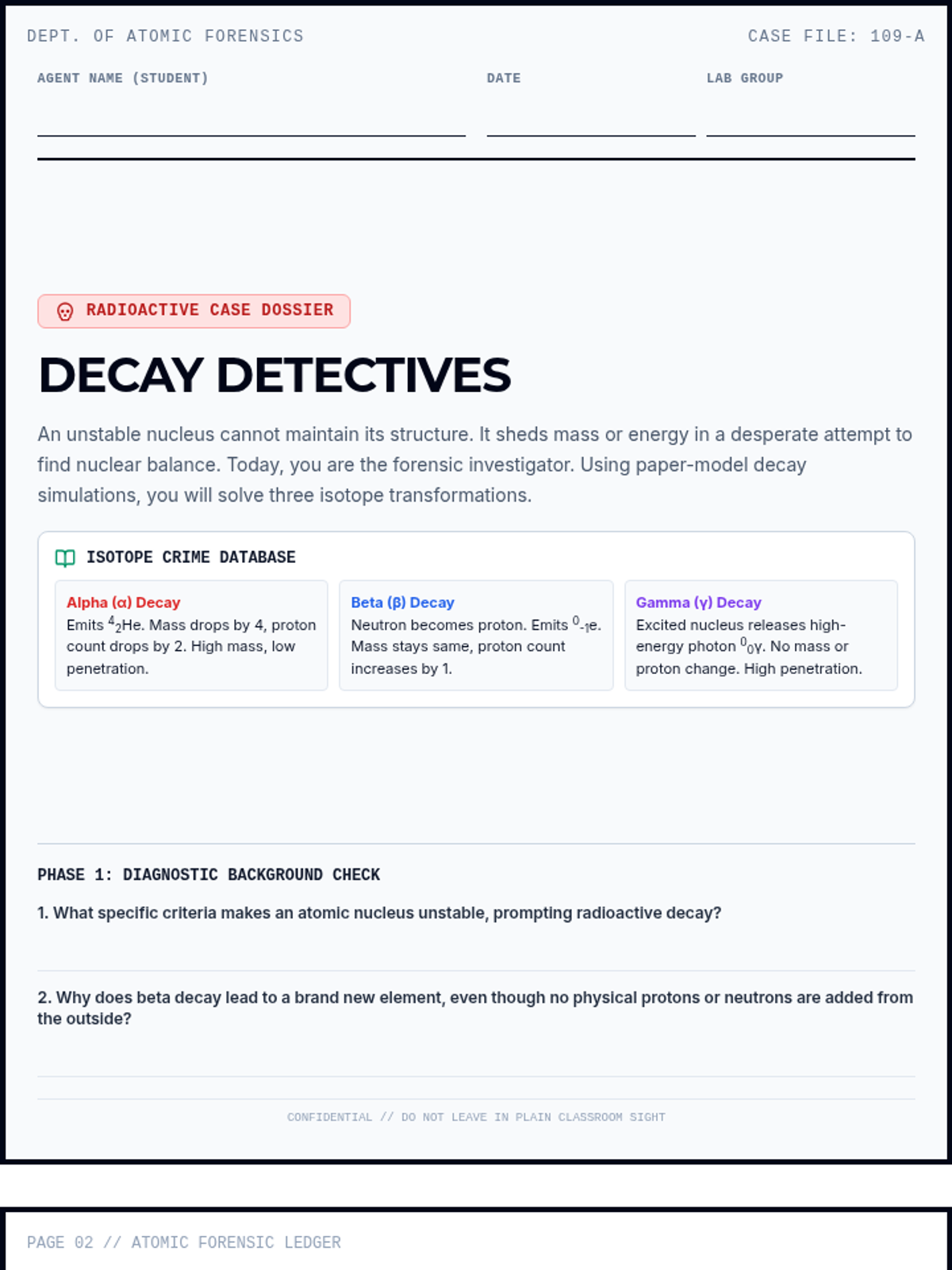
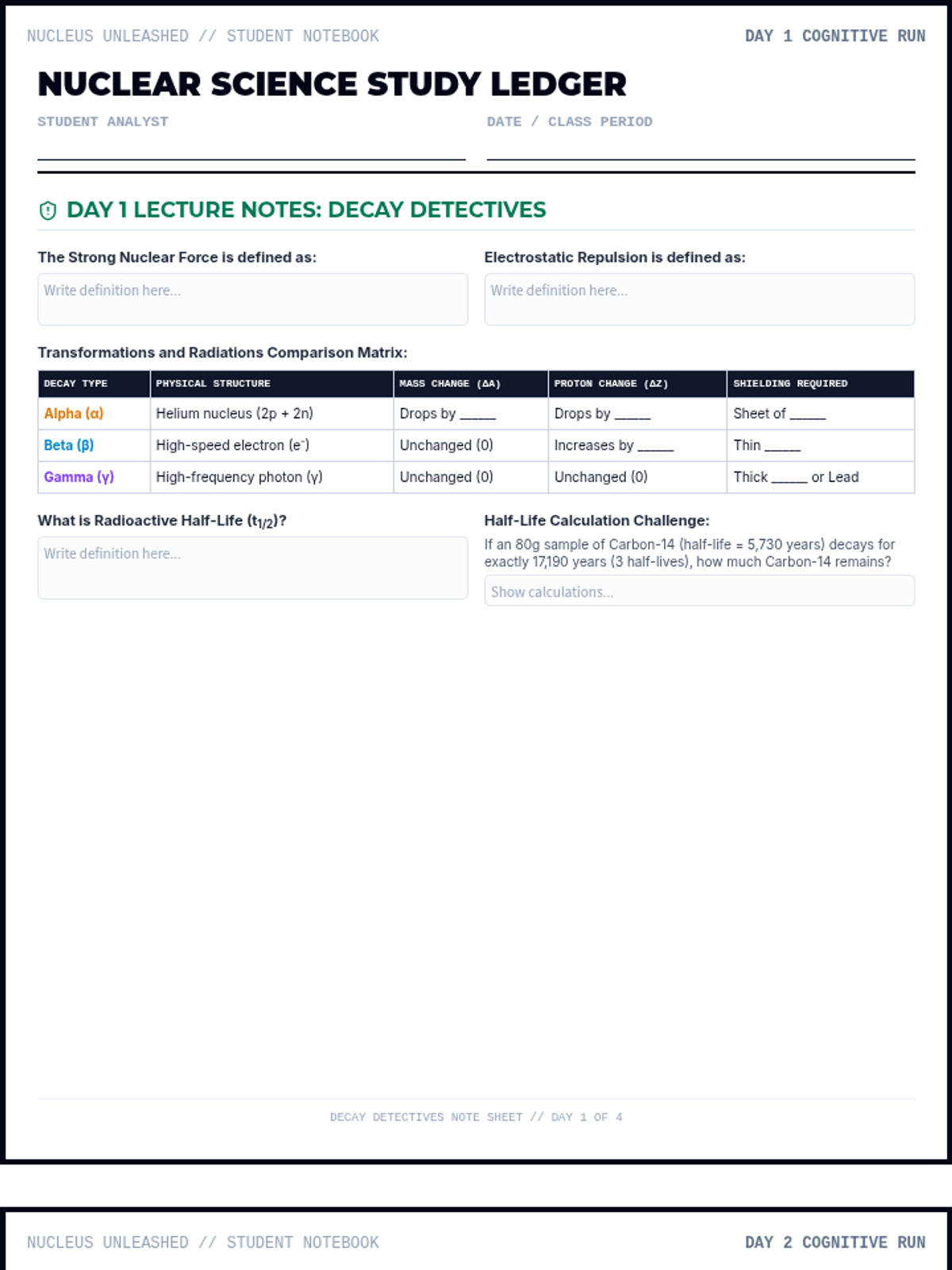
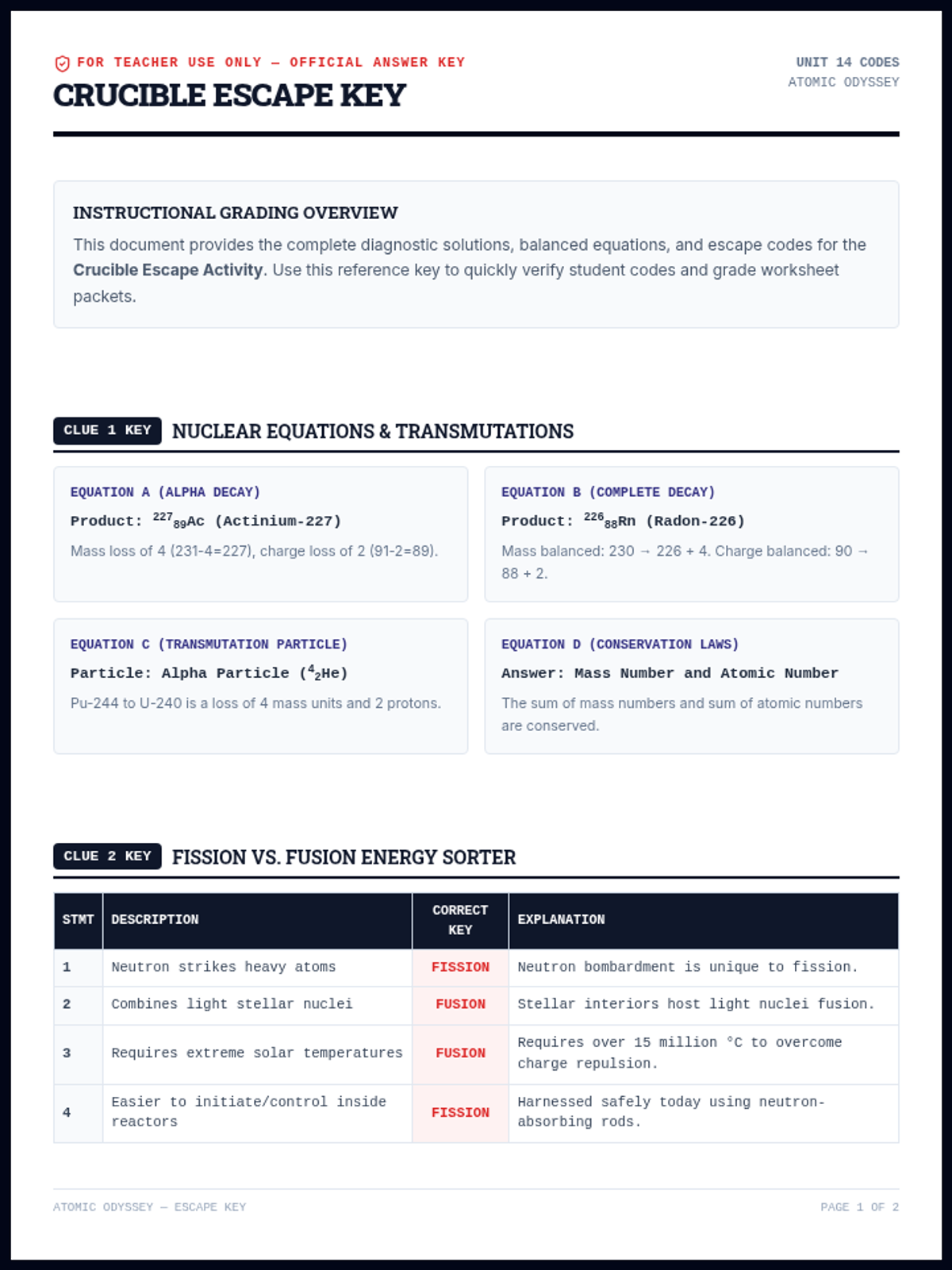
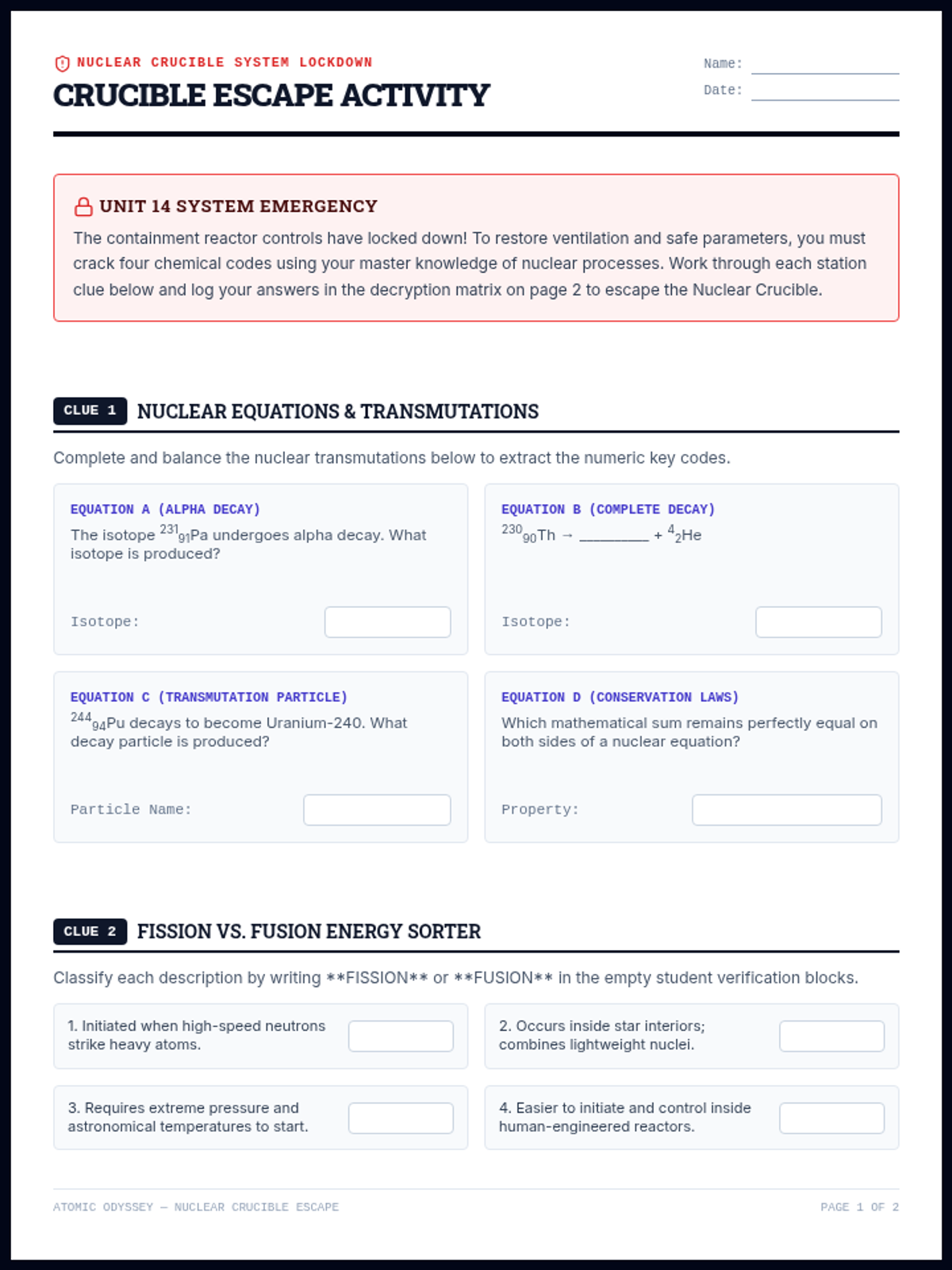
An interactive, station-based exploration of nuclear processes in chemistry. Students rotate through four distinct stations with comprehensive reading passages and analytical tasks covering radioactive decay and stability, fission versus fusion, half-life calculations for archaeological dating, and modern technological applications.
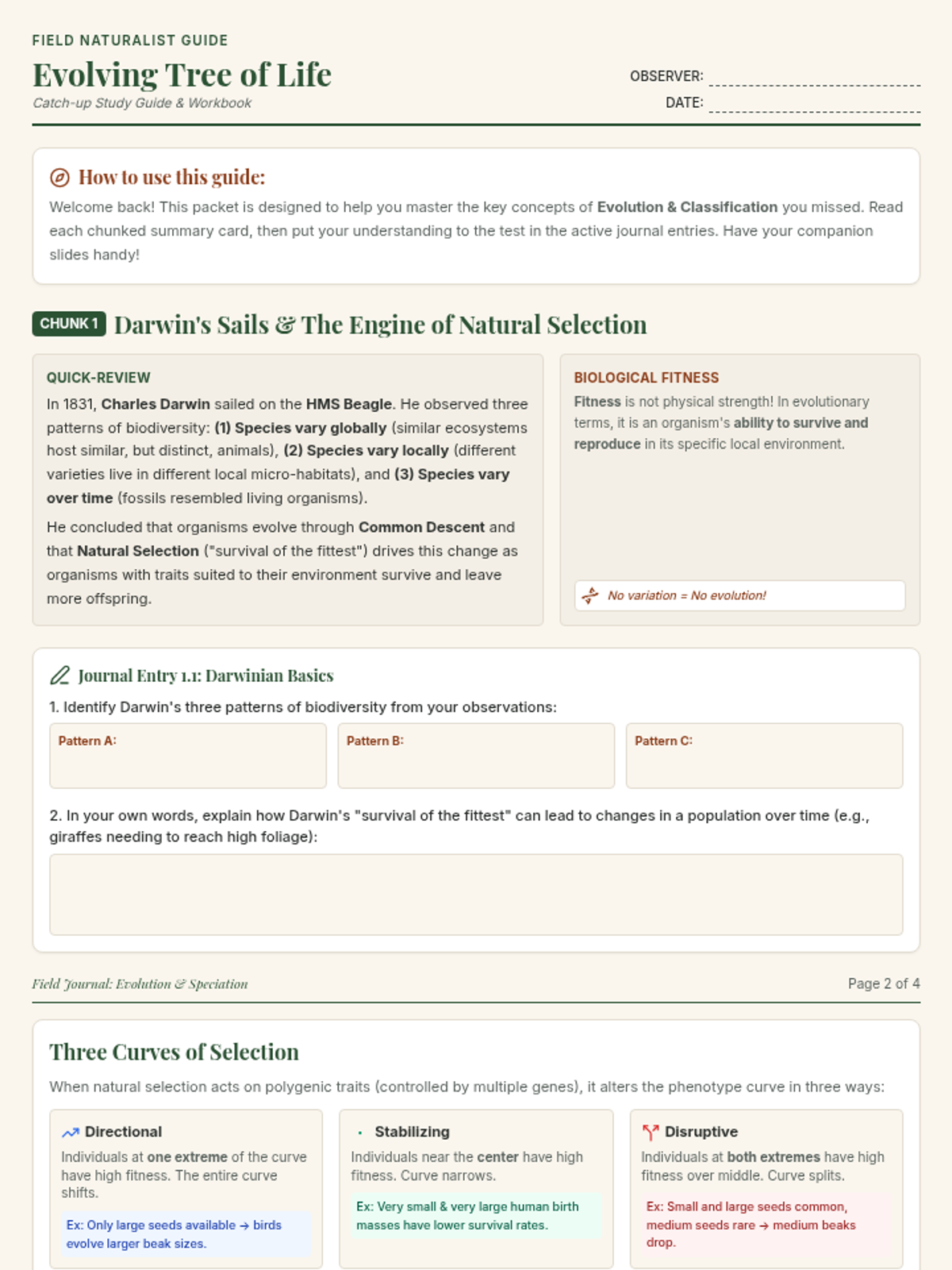
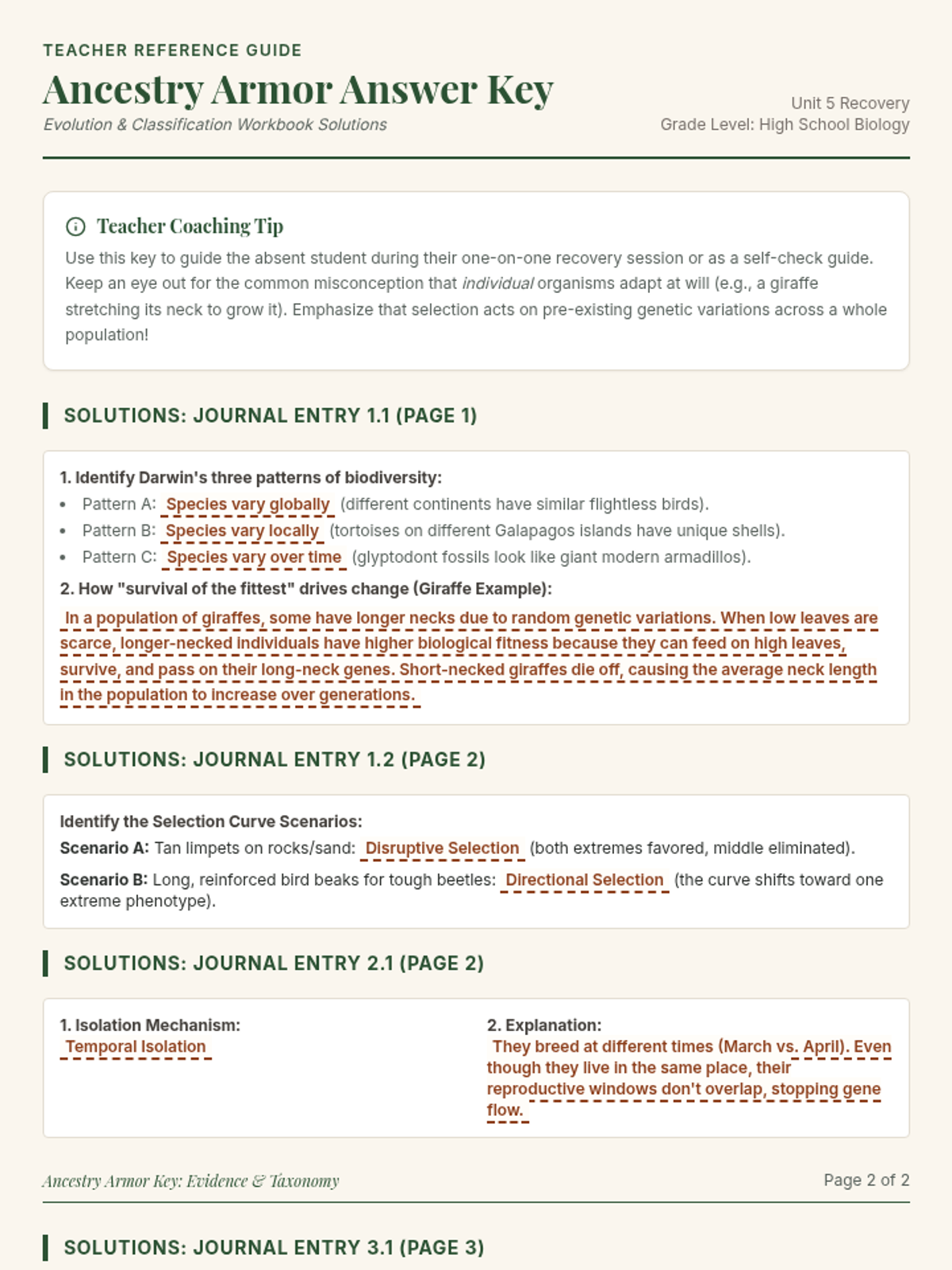
A self-paced study lesson designed for students catching up on Evolution and Classification. It chunk-packs Darwinian theory, speciation, lines of evolutionary evidence, Linnaean taxonomy, and cladograms into accessible, digestible visual summaries and active workbook exercises.
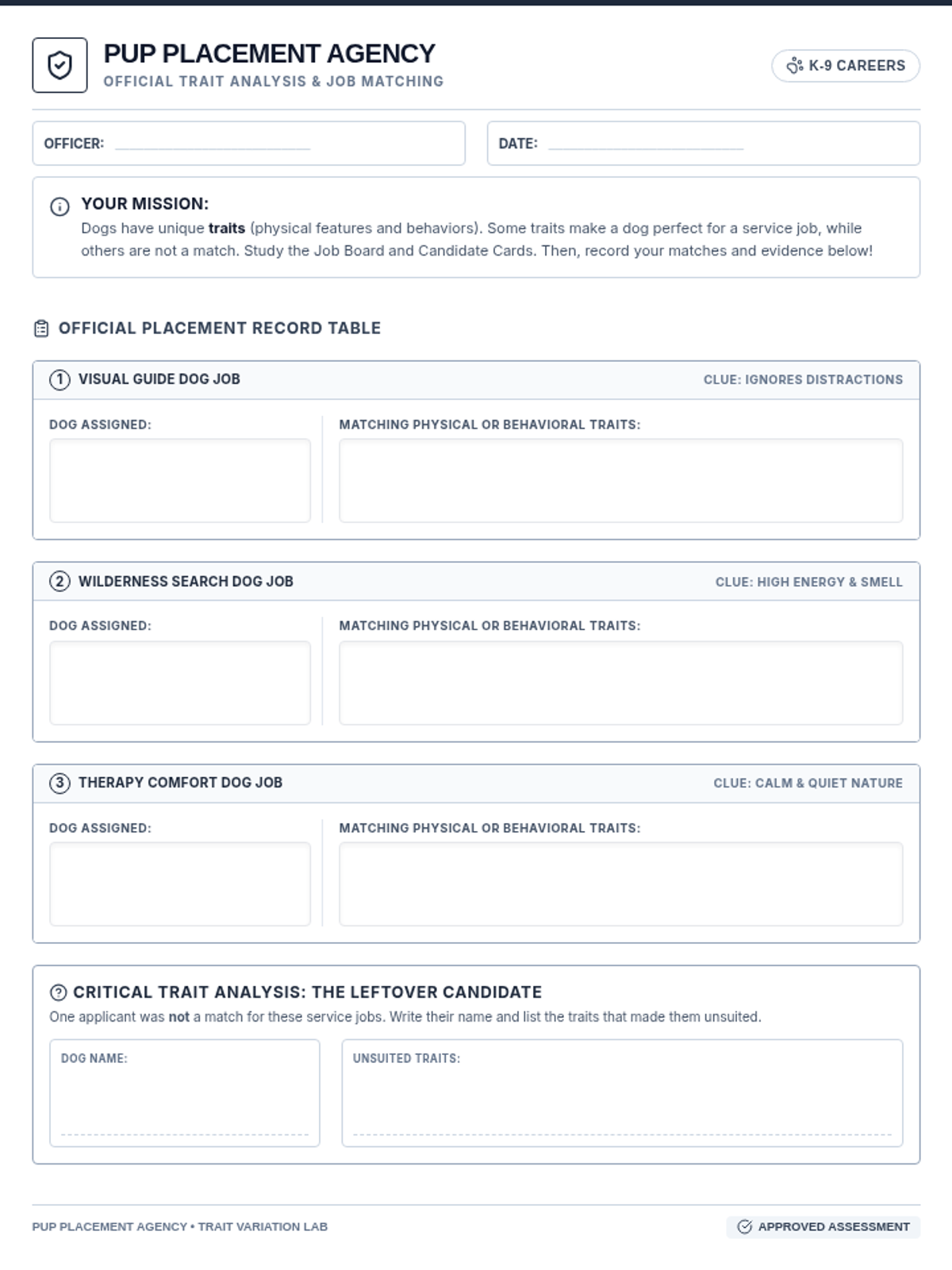
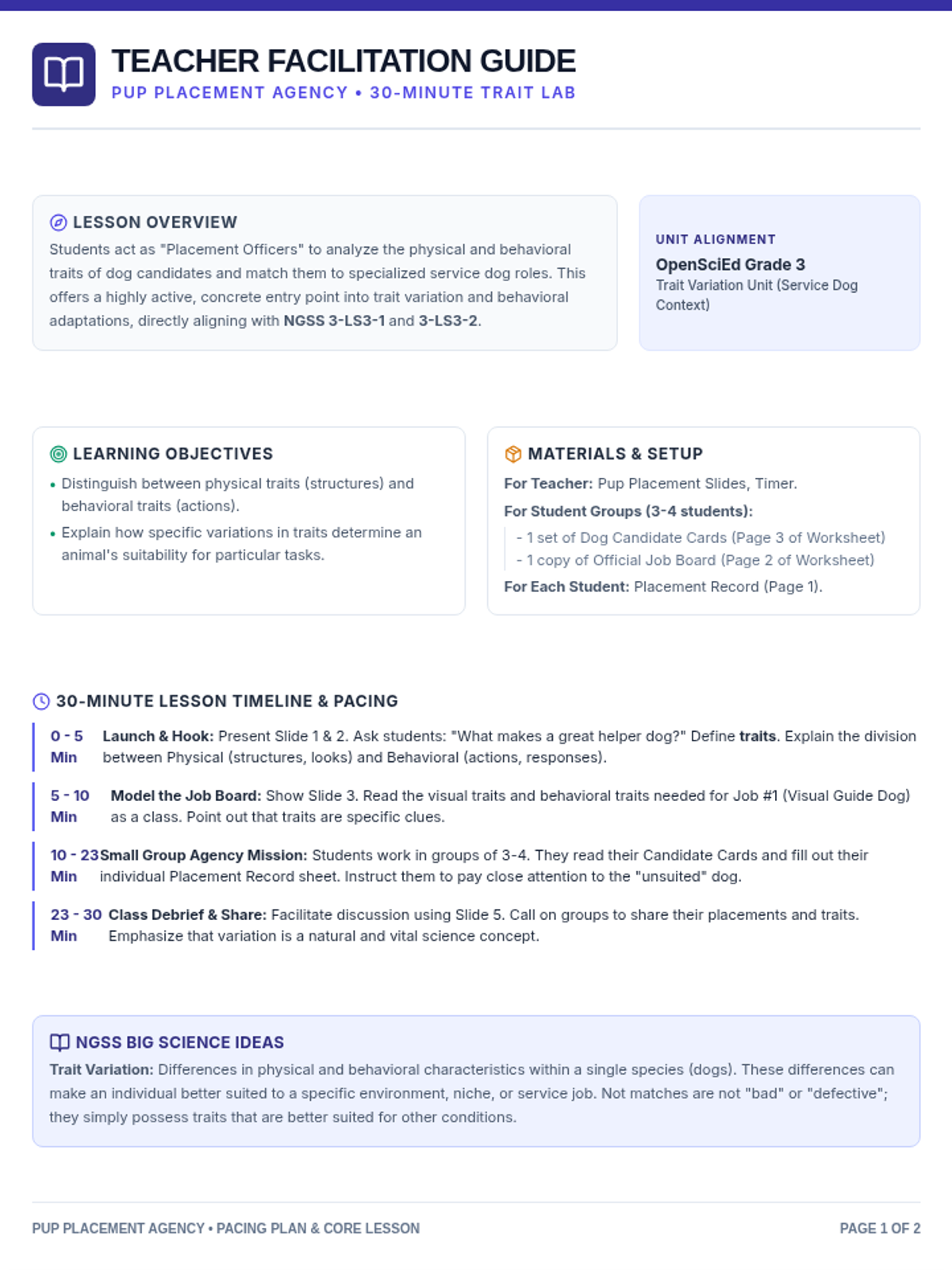
A highly differentiated 30-minute lesson where students act as 'Placement Officers' for the Pup Placement Agency. They analyze physical and behavioral traits of dog candidates and match them with appropriate service dog jobs, aligning with the OpenSciEd Grade 3 Trait Variation unit.
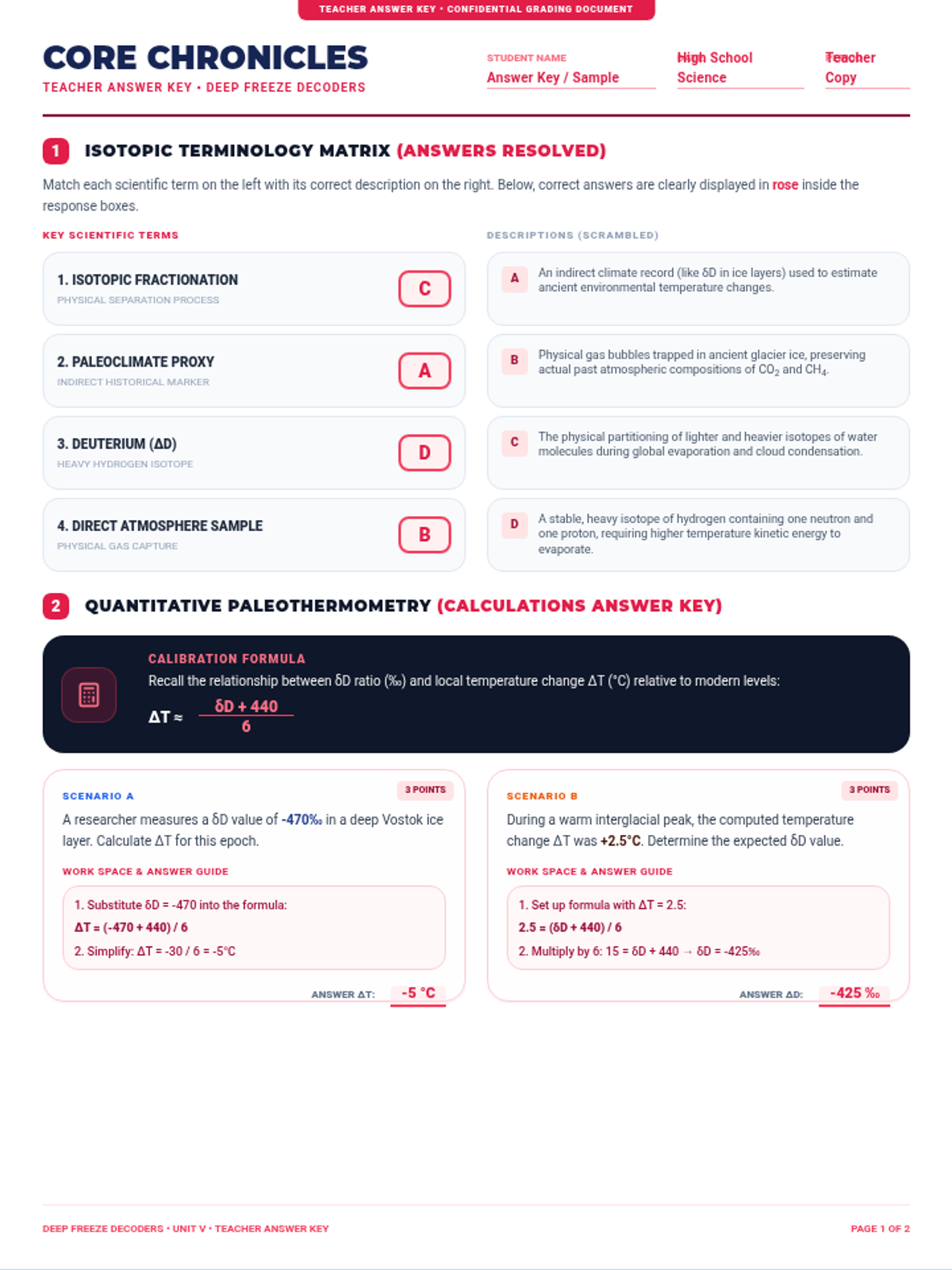
A comprehensive review lesson where students synthesize paleoclimate concepts, isotope calculations, and feedback loops. Students participate in interactive review challenges and complete a structured synthesis worksheet to demonstrate mastery.
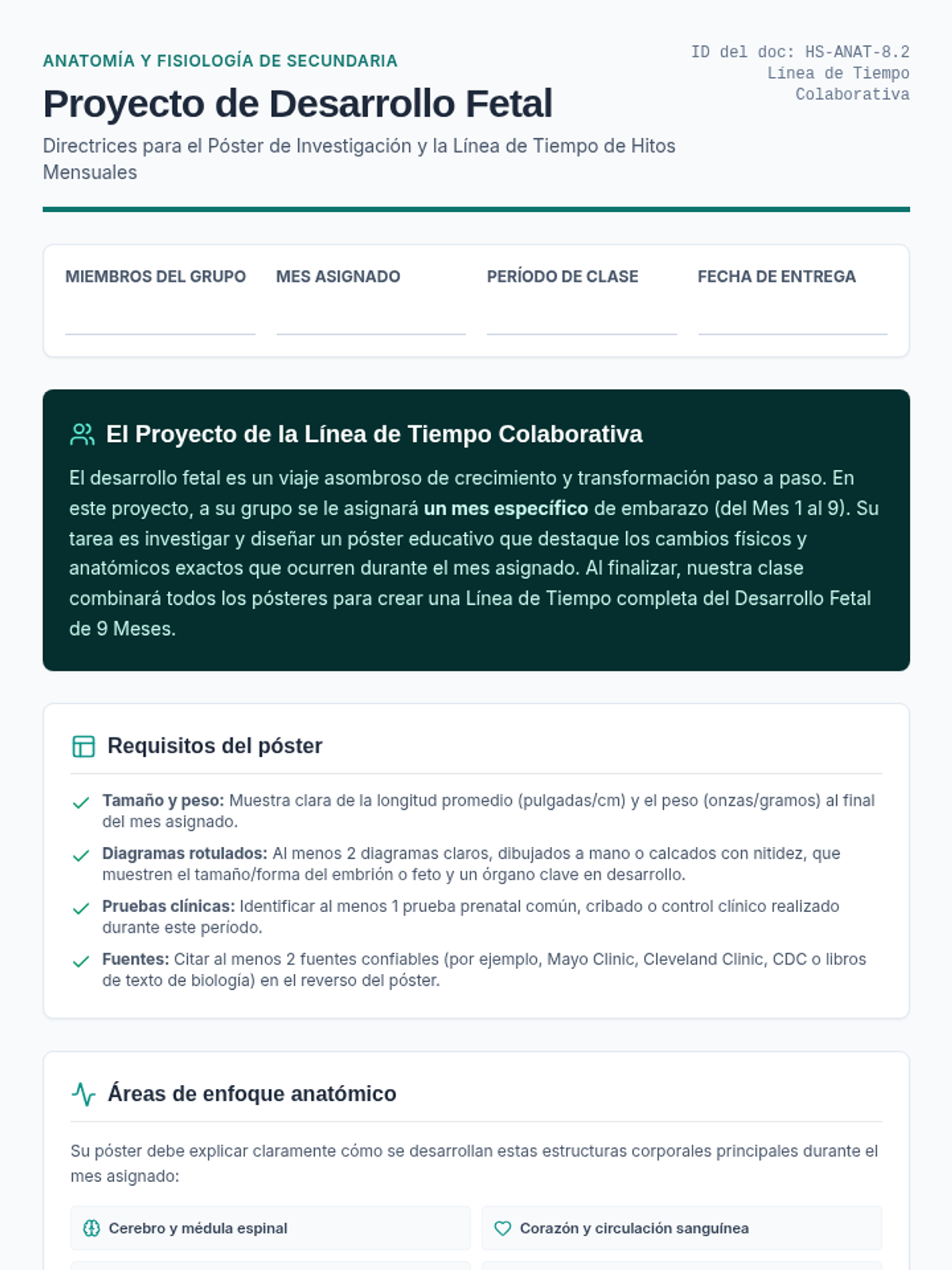
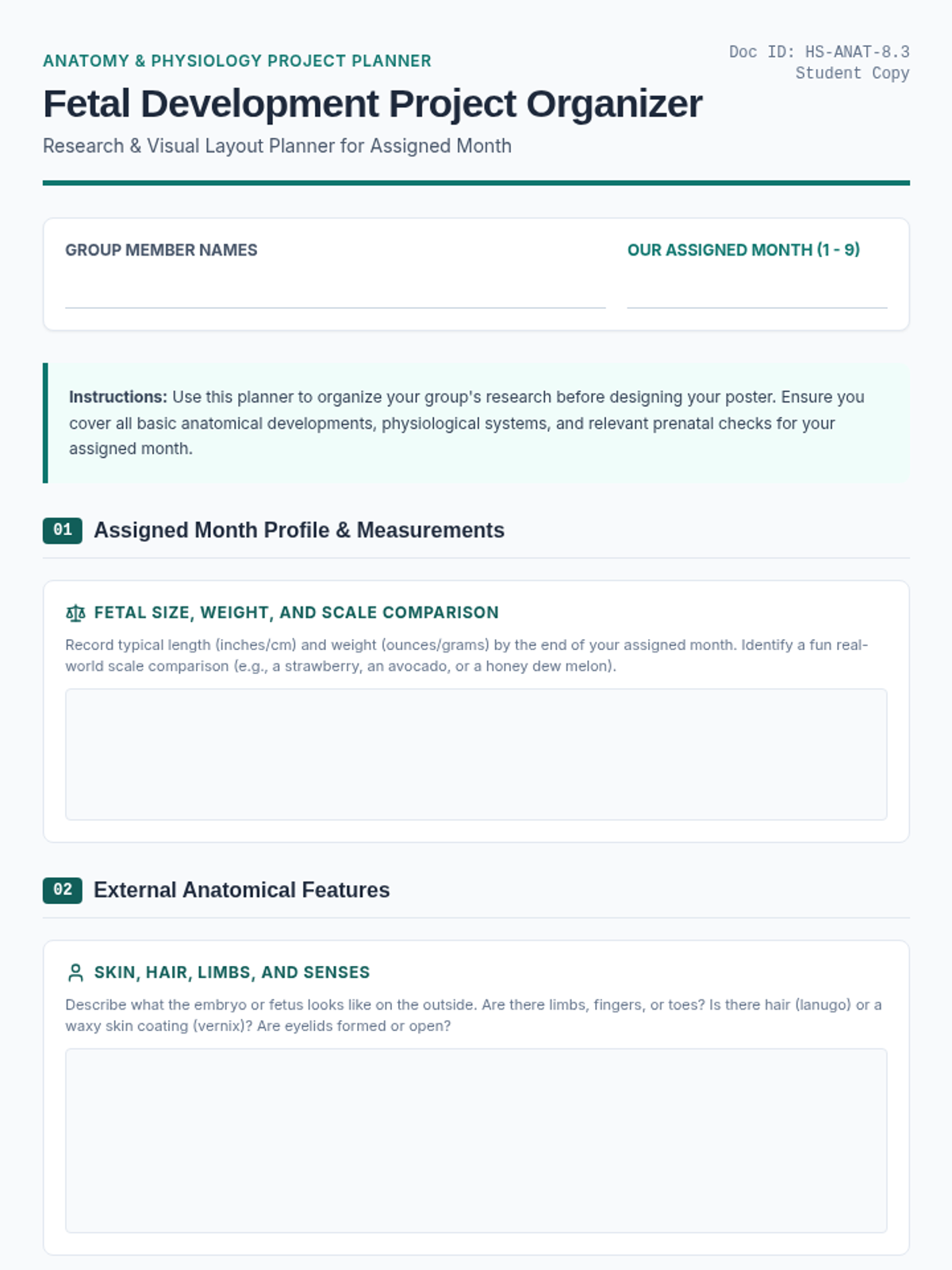
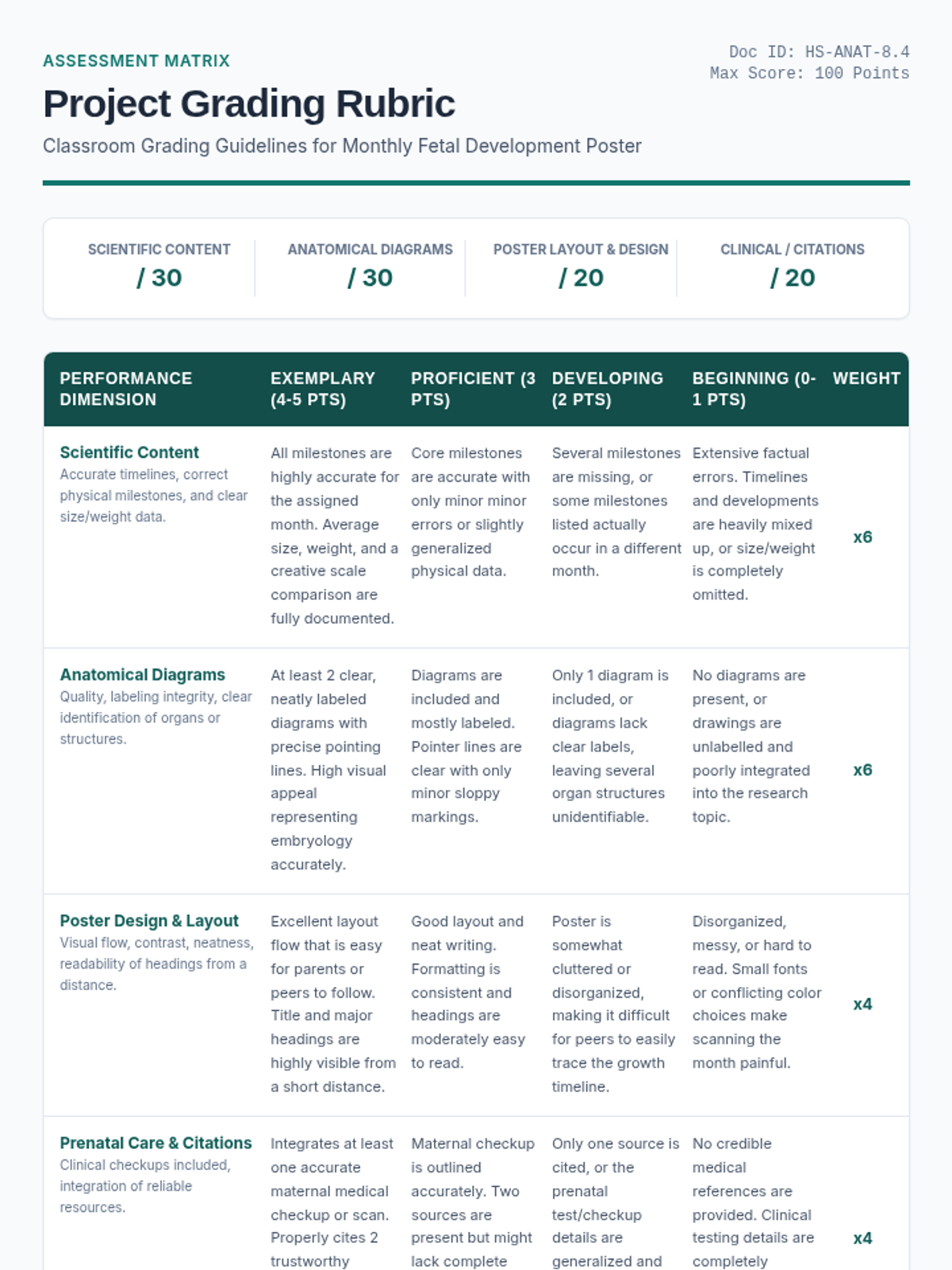
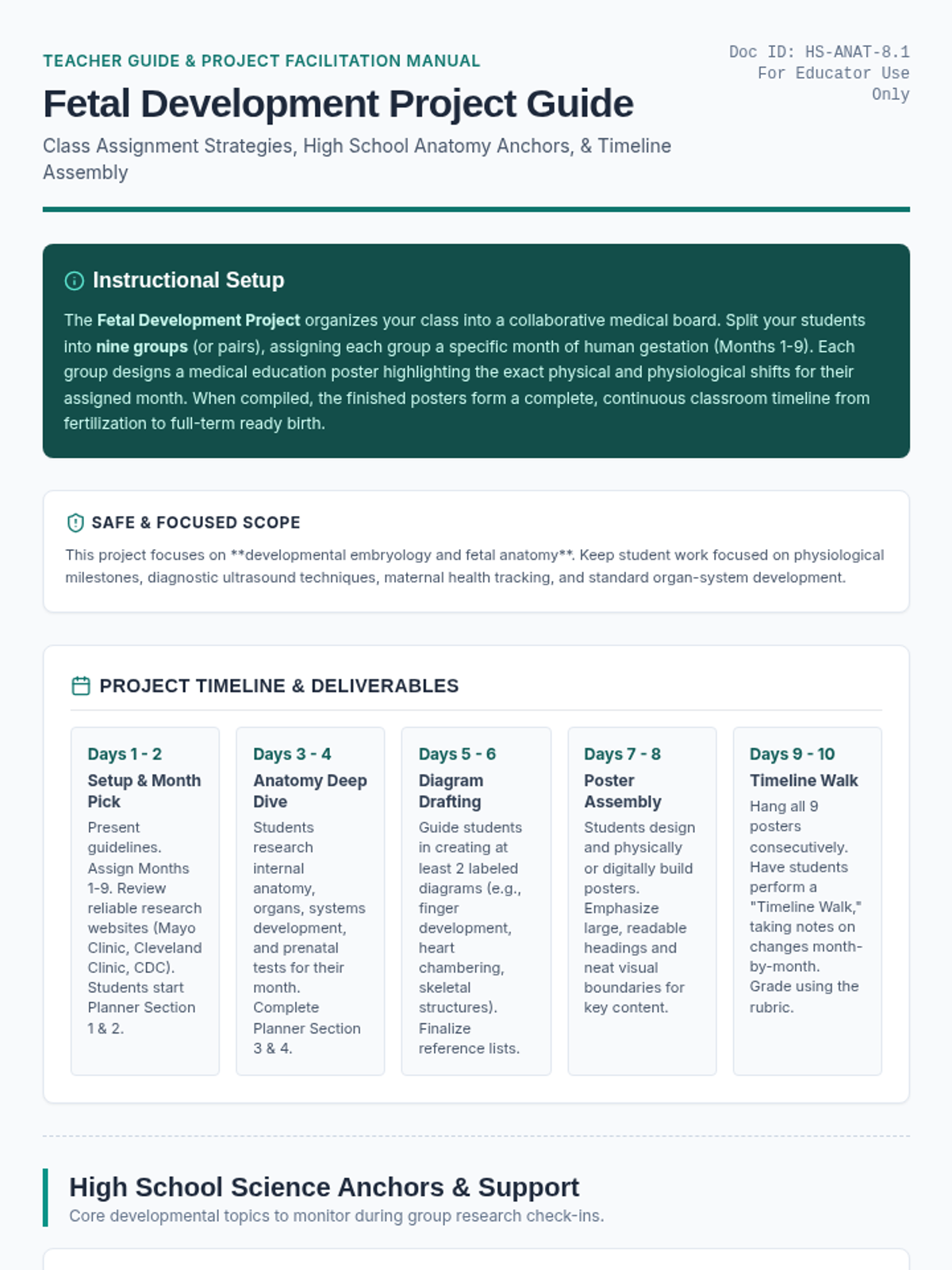
An engaging, collaborative high school anatomy project where students research and design educational communication posters tracking the monthly physical and physiological milestones of human fetal development across gestation.