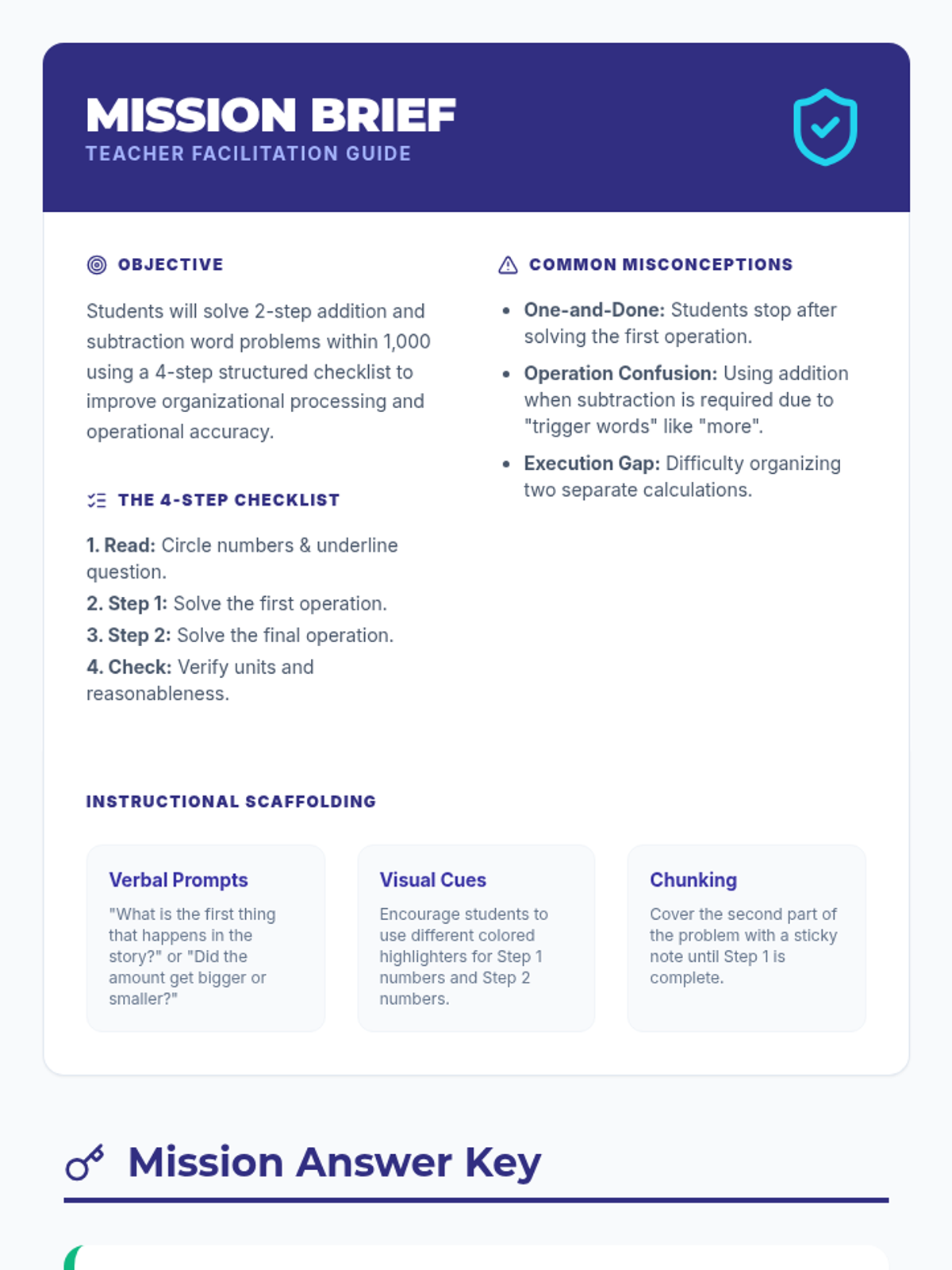
A Tier 2 intervention lesson focused on deconstructing algebraic expressions within real-world contexts, helping students identify and interpret terms, factors, and coefficients.
A 15-25 minute exploration into how ancient navigators used fixed points (the North Star) and the repeating patterns of the universe (microcosms, macrocosms, and symmetry) to navigate without modern technology.
A 15-30 minute exploration of how ancient Phoenicians used the macrocosm of the stars to navigate the microcosm of their ships, featuring the root words micro/macro/cosmos and the mathematics of rotational symmetry.
A high-energy, medical-themed 50-minute review of proportional relationships, equations, and geometry for middle school students, featuring error analysis and state-test style practice.
A middle school math lesson exploring proportional reasoning through real-world scaling, mapping, and budgeting scenarios. Students use visual models and multiple pathways to solve authentic problems.
An inquiry-based exploration of proportional reasoning through recipe scaling, map navigation, and smart shopping for grades 6-8, aligned to Massachusetts curriculum frameworks.
A high-energy lesson focused on mastering multiplication facts up to 12x12 through interactive arcade-themed games and collaborative challenges.
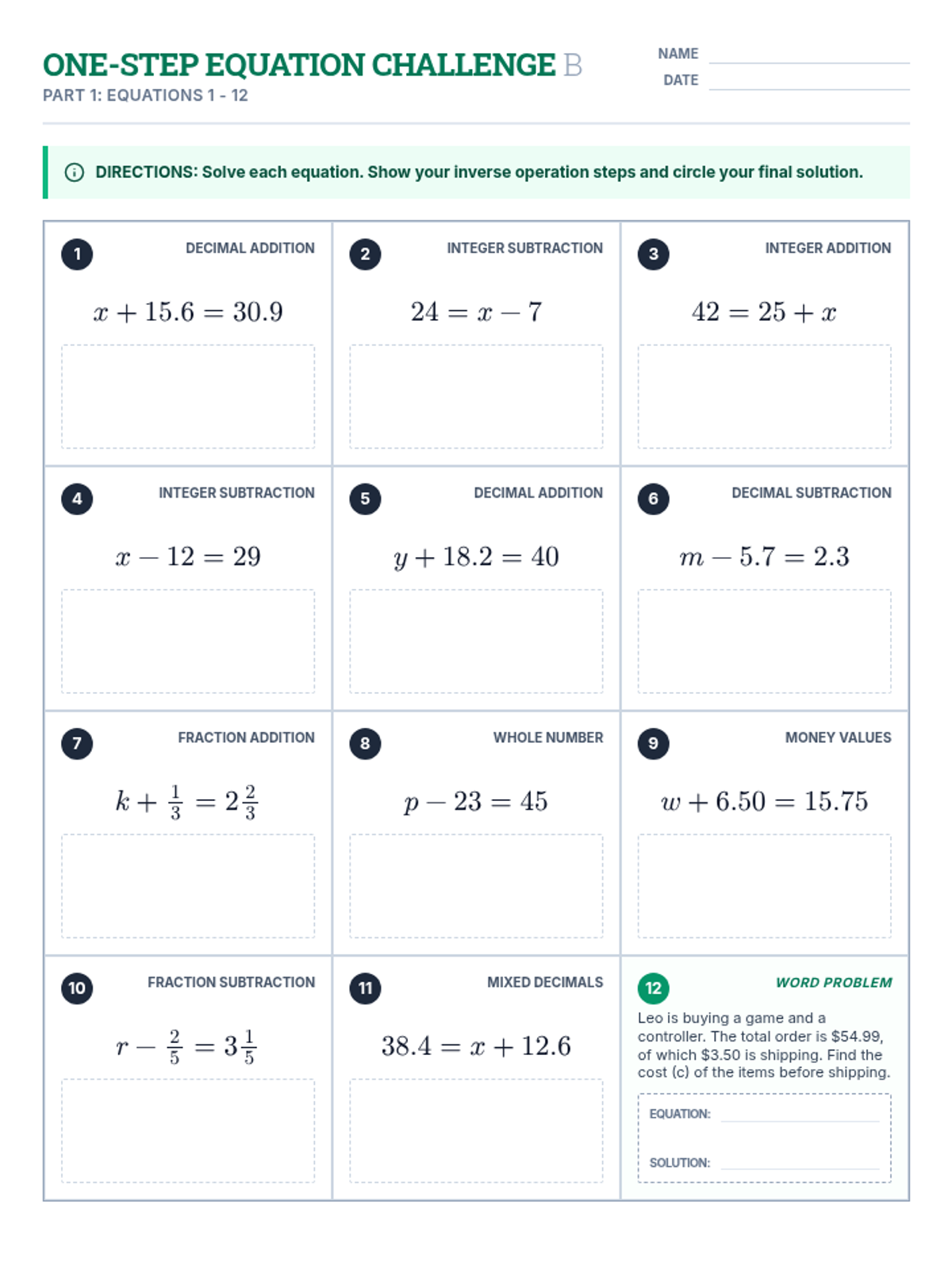
A comprehensive lesson on solving one-step inequalities using addition and subtraction, featuring a visual anchor chart, guided notes for instruction, and a practice worksheet with number line graphing.
Students will learn to translate verbal phrases into mathematical number sentences using the four operations and solve for unknown values in real-world contexts.
A collection of 4th-grade Illustrative Mathematics center planning resources, including a visual reference and a CSV data export.
In this lesson, students explore compound events by representing sample spaces through multiple lenses: tree diagrams, outcome tables, and organized lists. They move from simple single events to complex multi-stage experiments, learning to calculate total outcomes and specific probabilities.
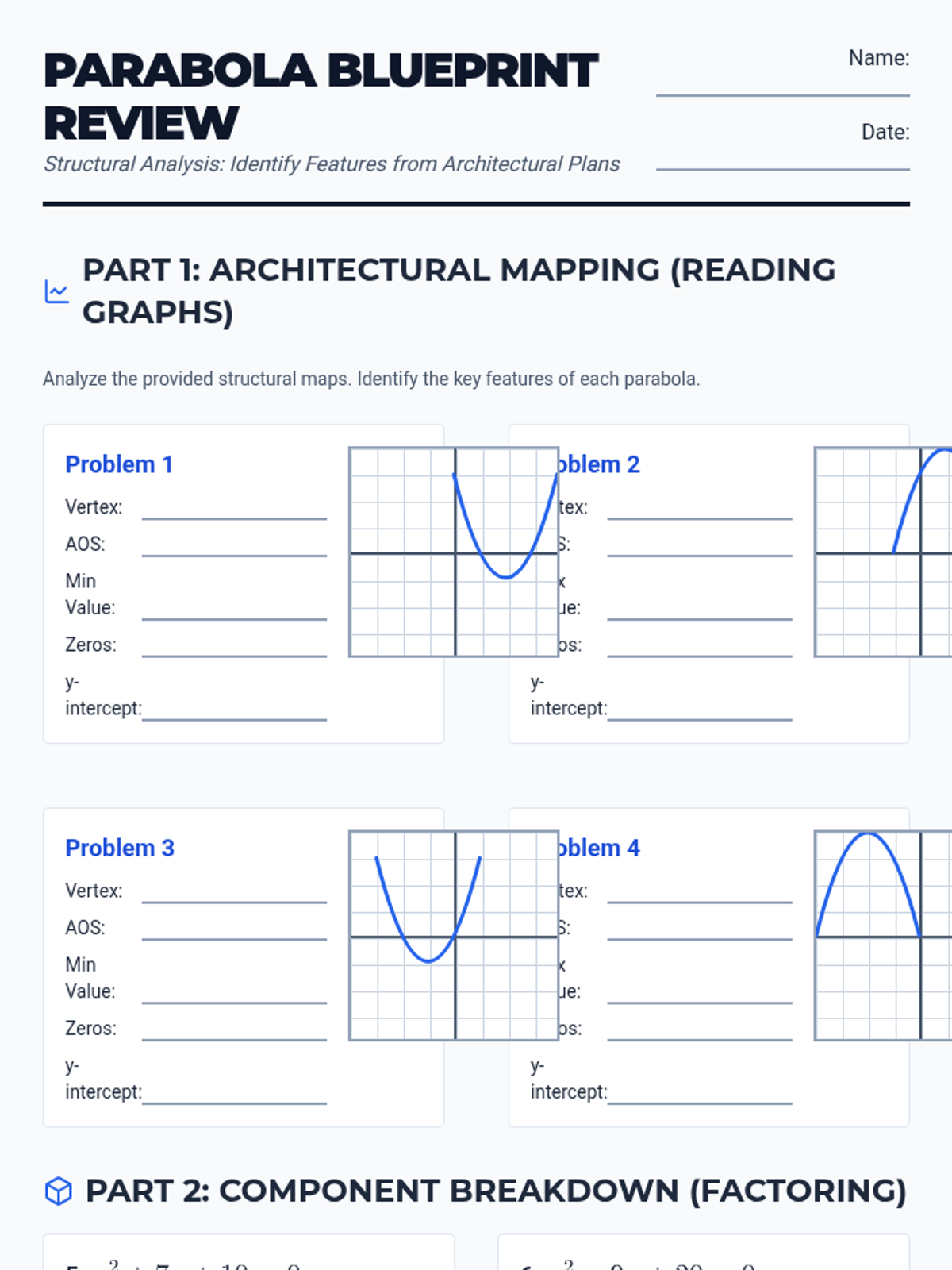
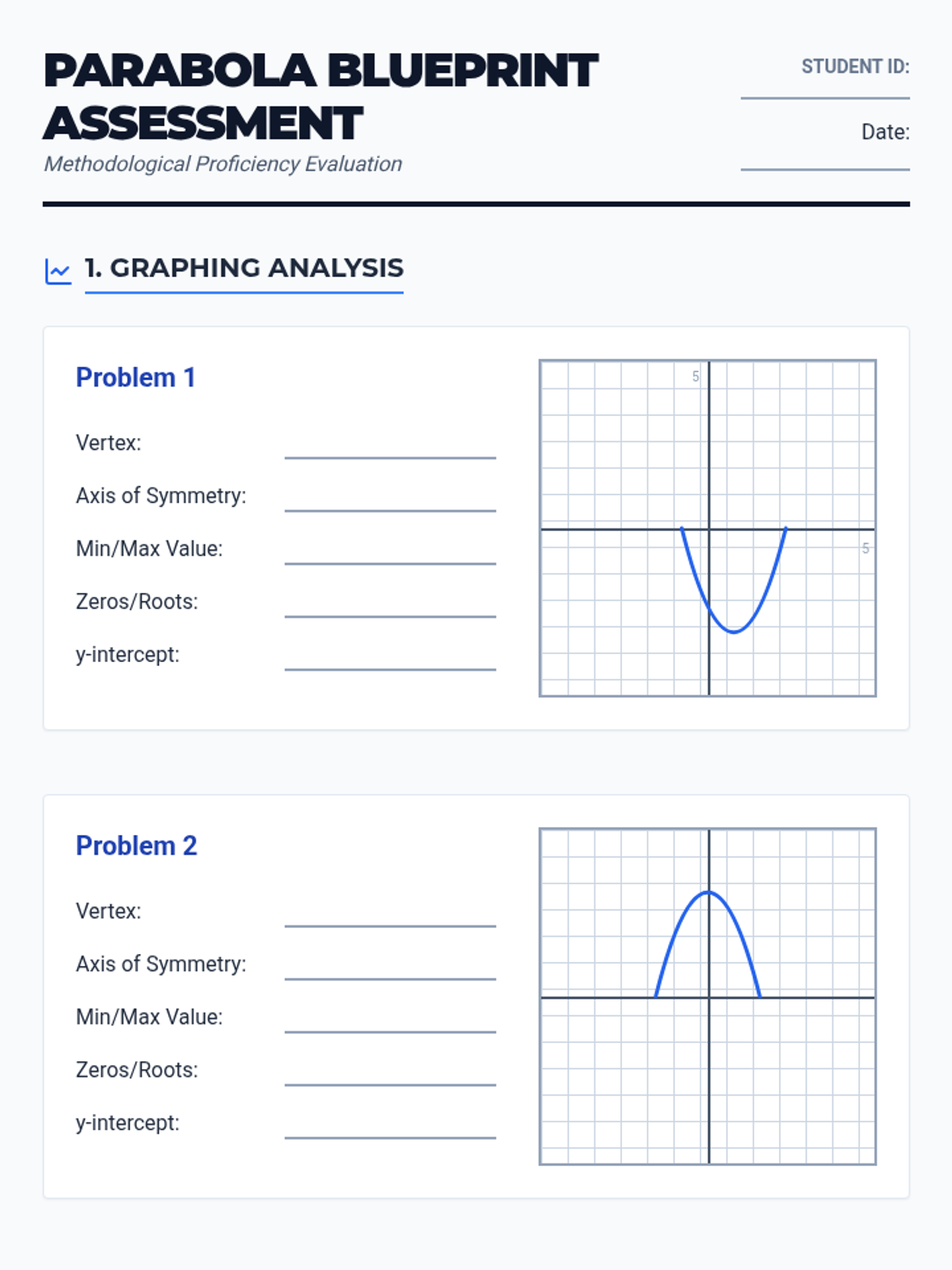
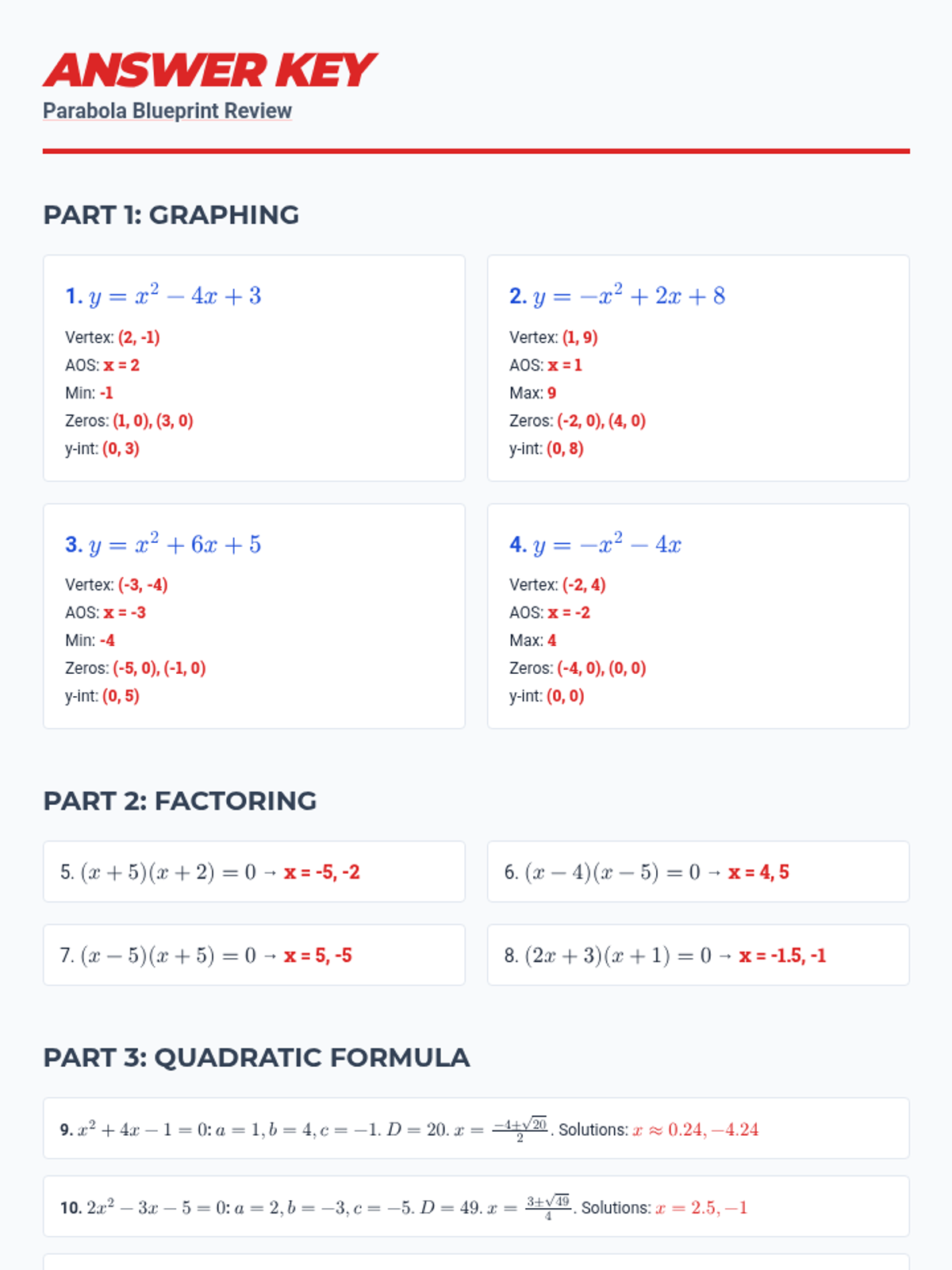
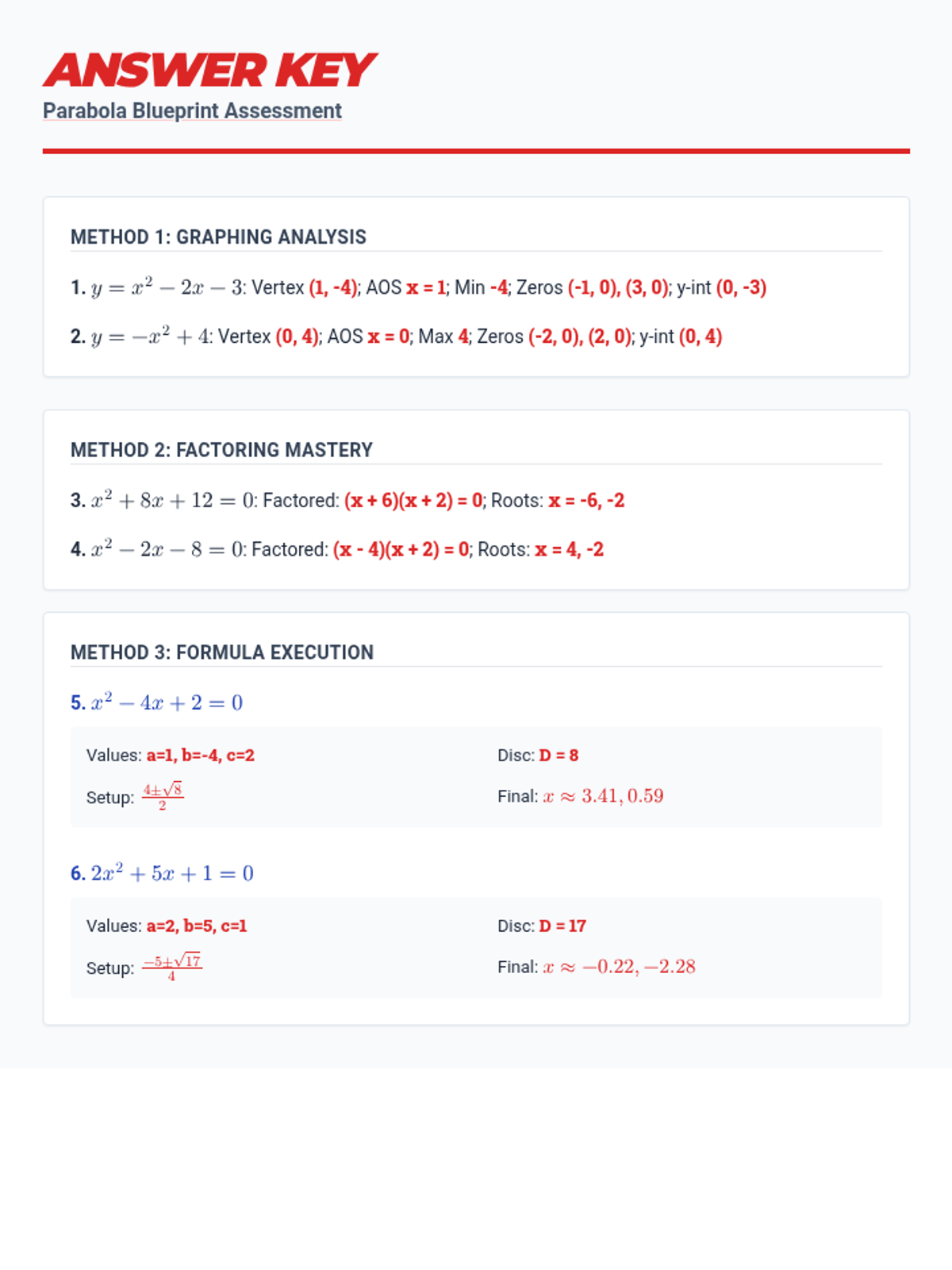
A comprehensive guide to solving quadratic equations using various factoring techniques, including GCF, difference of squares, and trinomials.
Une collection de problèmes courts et rapides pour s'échauffer et gagner des points faciles au concours Kangourou.
Focus sur les techniques d'élimination, de test de valeurs et de modélisation par le dessin pour résoudre des problèmes complexes rapidement.
A collection of ocean-themed math activities focused on counting, identifying numbers 1-20, and developing one-to-one correspondence through task cards and a matching game.
A comprehensive review lesson that synthesizes all the skills learned in the Real World Math series. Students will complete a final assessment covering multi-digit operations, decimals, fractions, and percentages through a variety of workplace and financial scenarios.
Understanding the power of percentages in finance and data. Students will solve for parts, wholes, and percentages in contexts like sales tax, interest rates, discounts, and performance statistics.
Developing a strong grasp of fractions in practical contexts such as construction, cooking, and time management. This lesson covers simplifying, adding/subtracting with unlike denominators, and multiplying/dividing fractions.
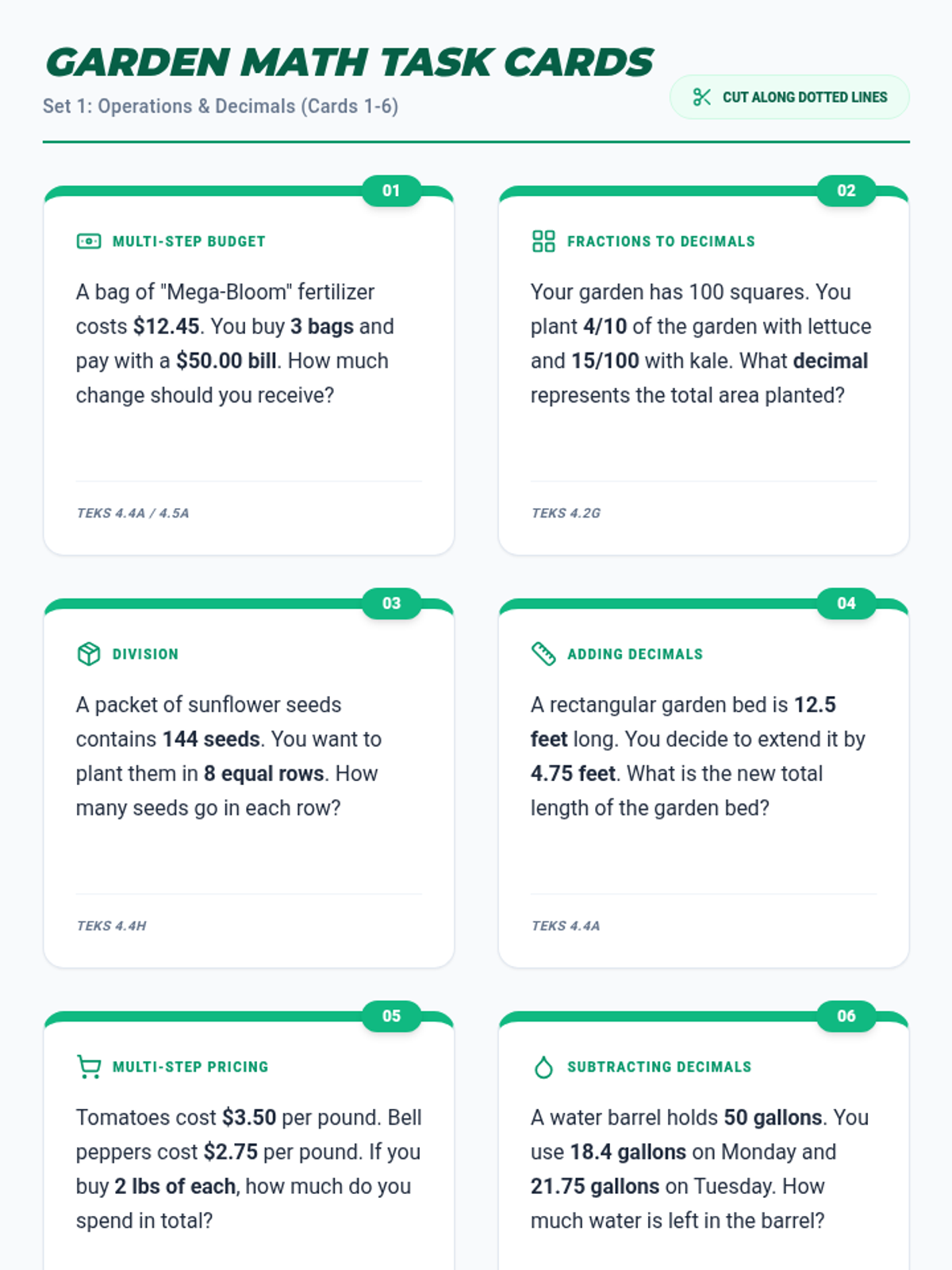
Mastering decimals through the lens of currency and precise measurements. Students learn to add, subtract, multiply, and divide decimals to calculate unit prices, handle cash transactions, and interpret technical specifications.
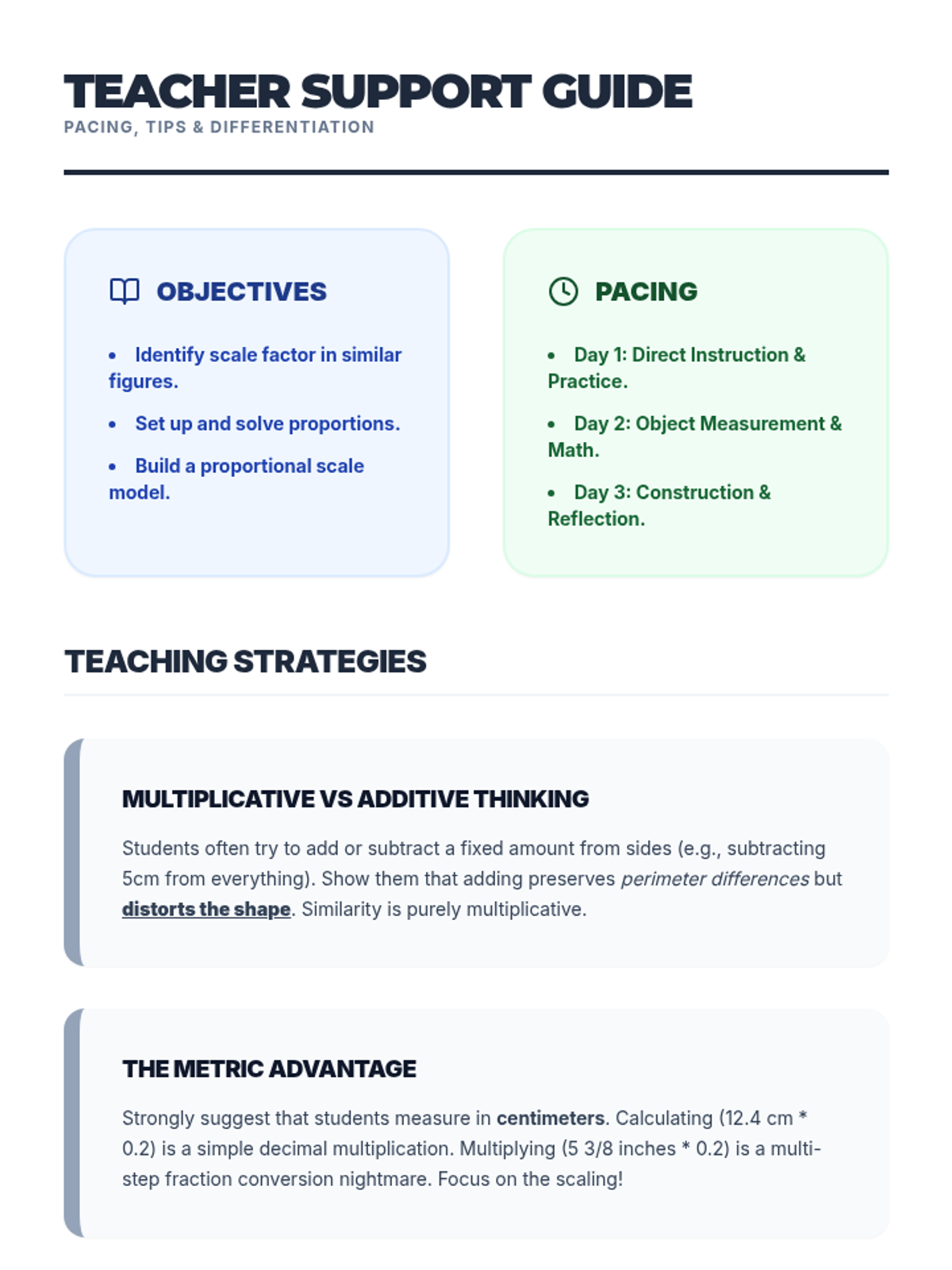
A foundational lesson on multi-digit multiplication and division focused on workplace budgeting and large-scale inventory management. Students will practice these operations through realistic scenarios like calculating monthly revenue and distributing supplies across departments.
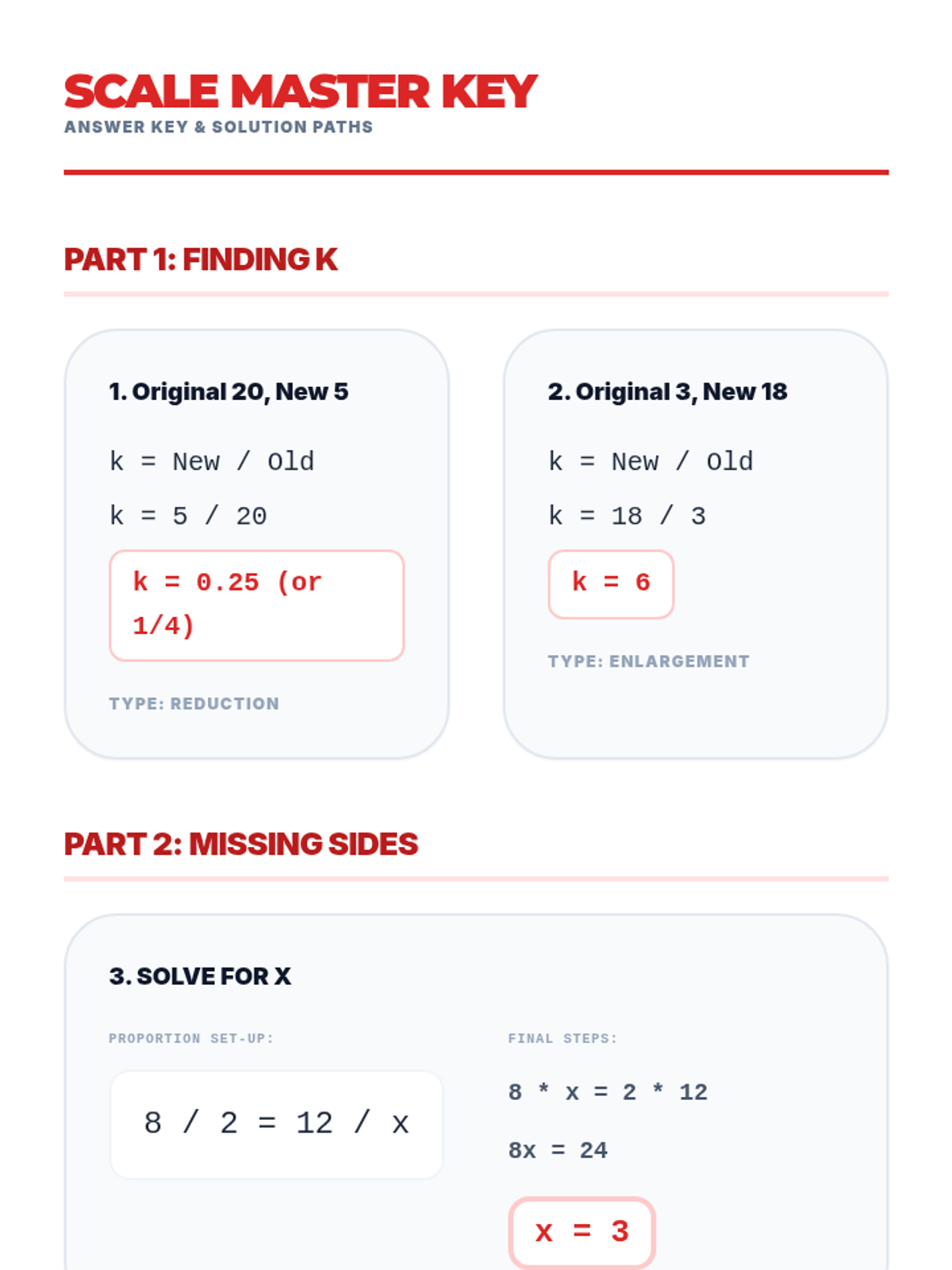
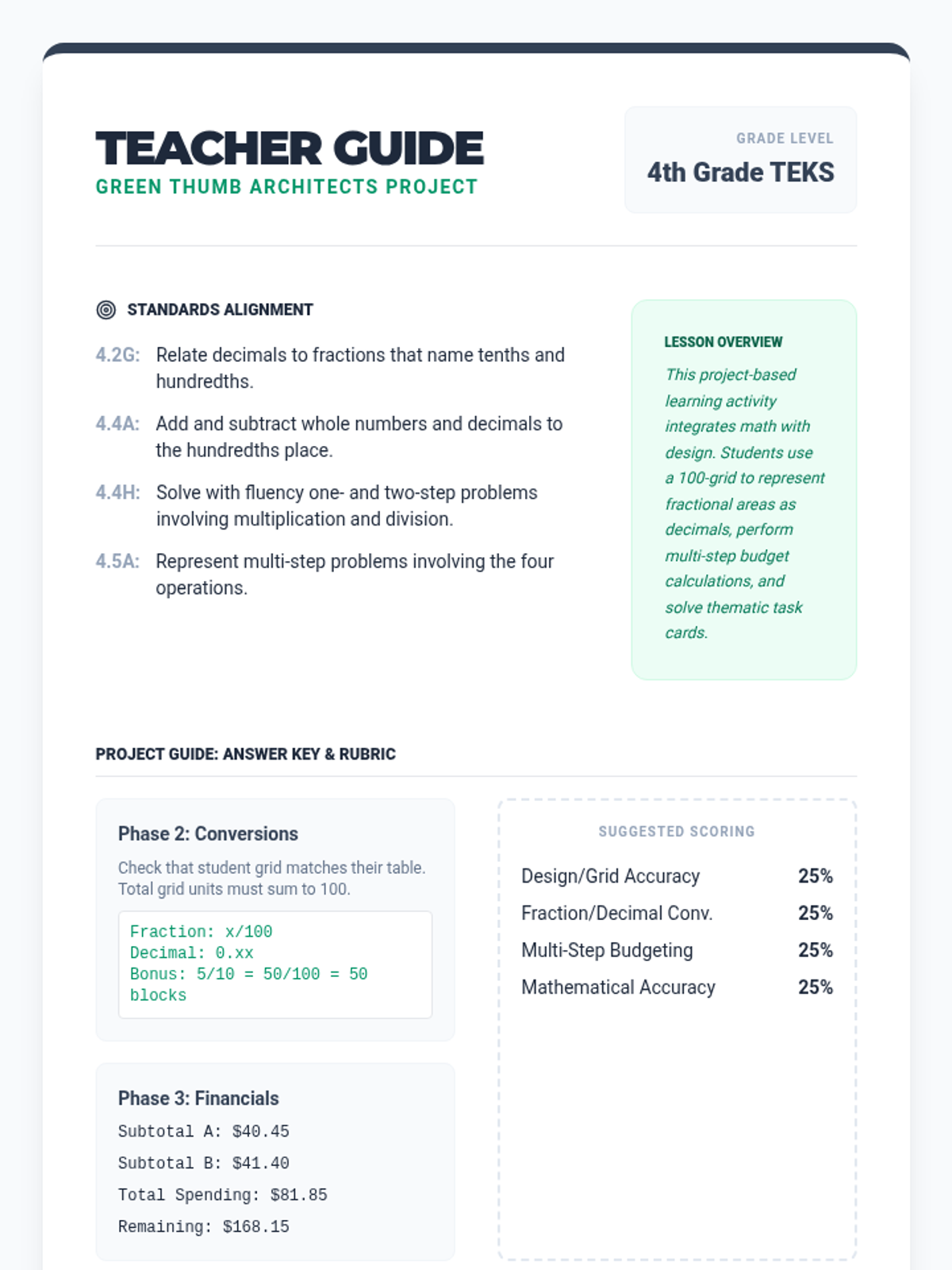
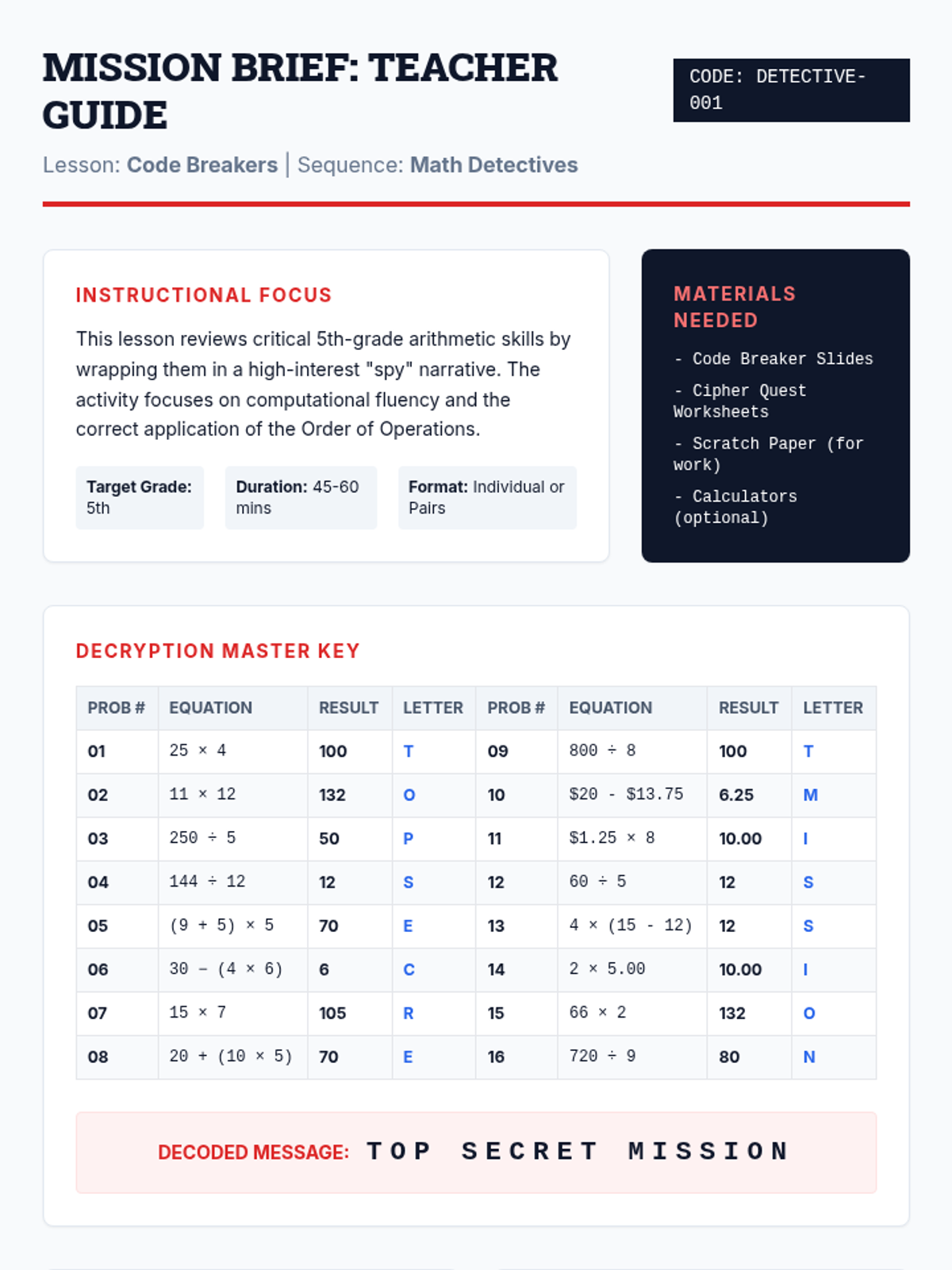
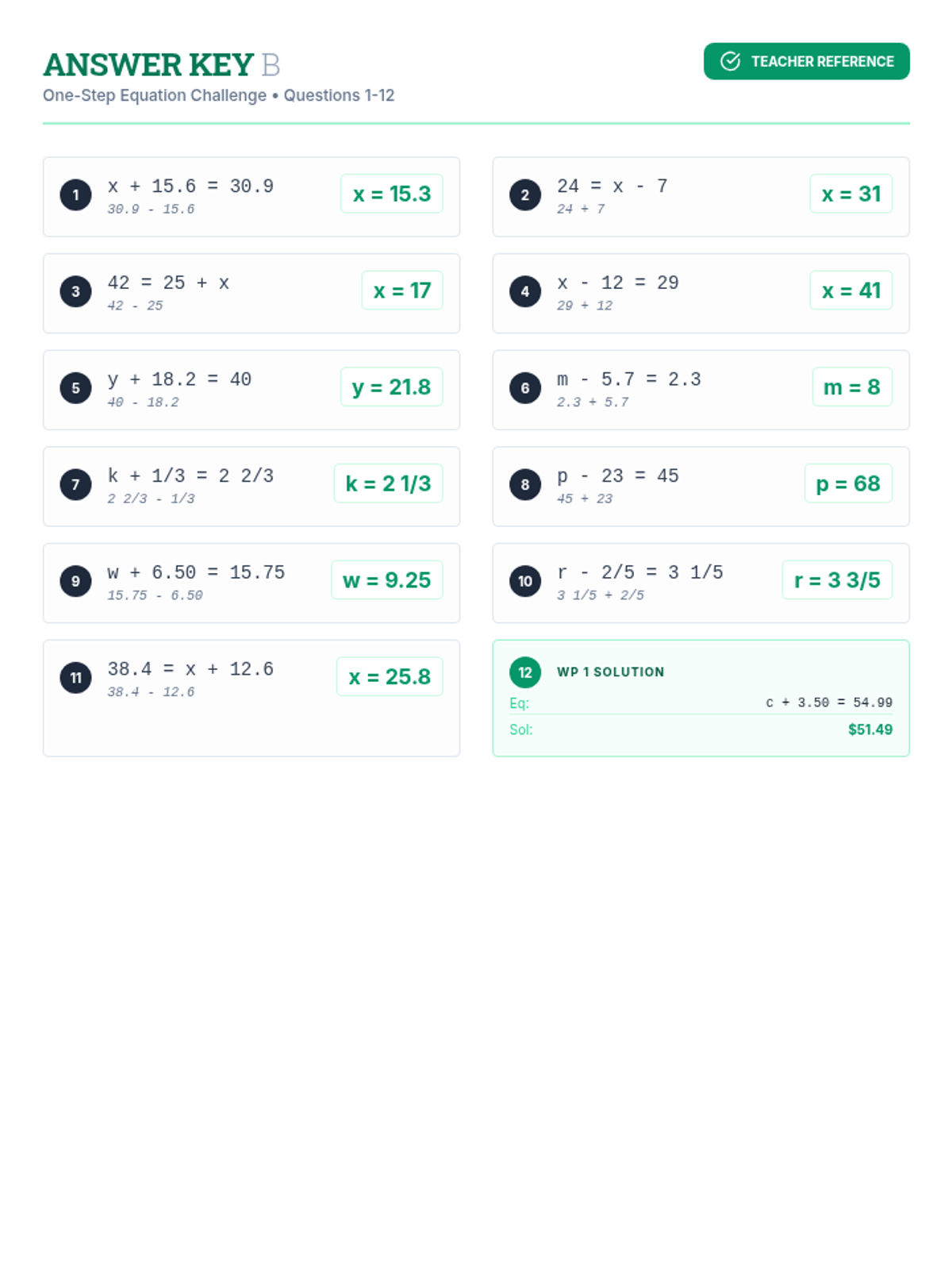
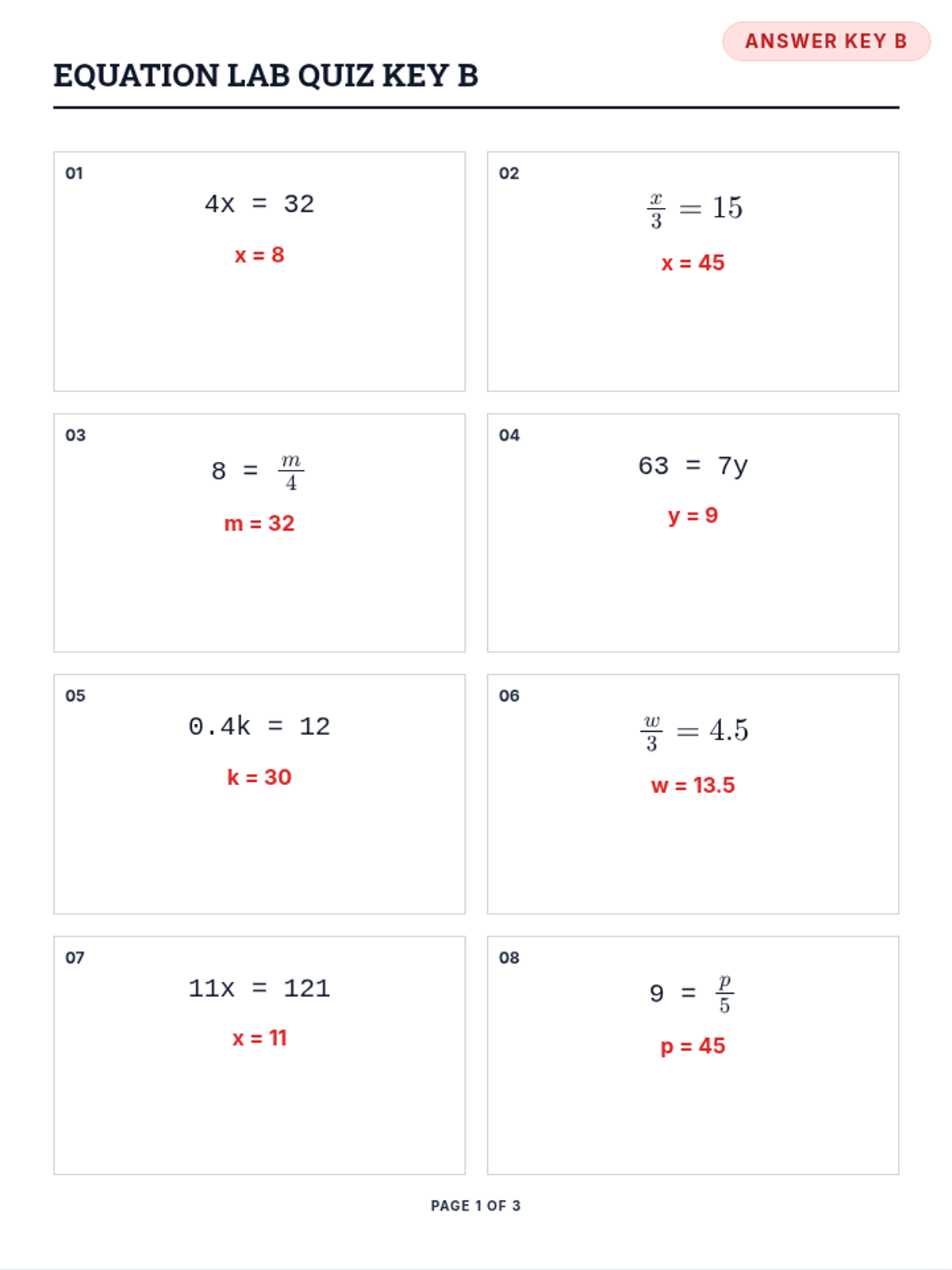
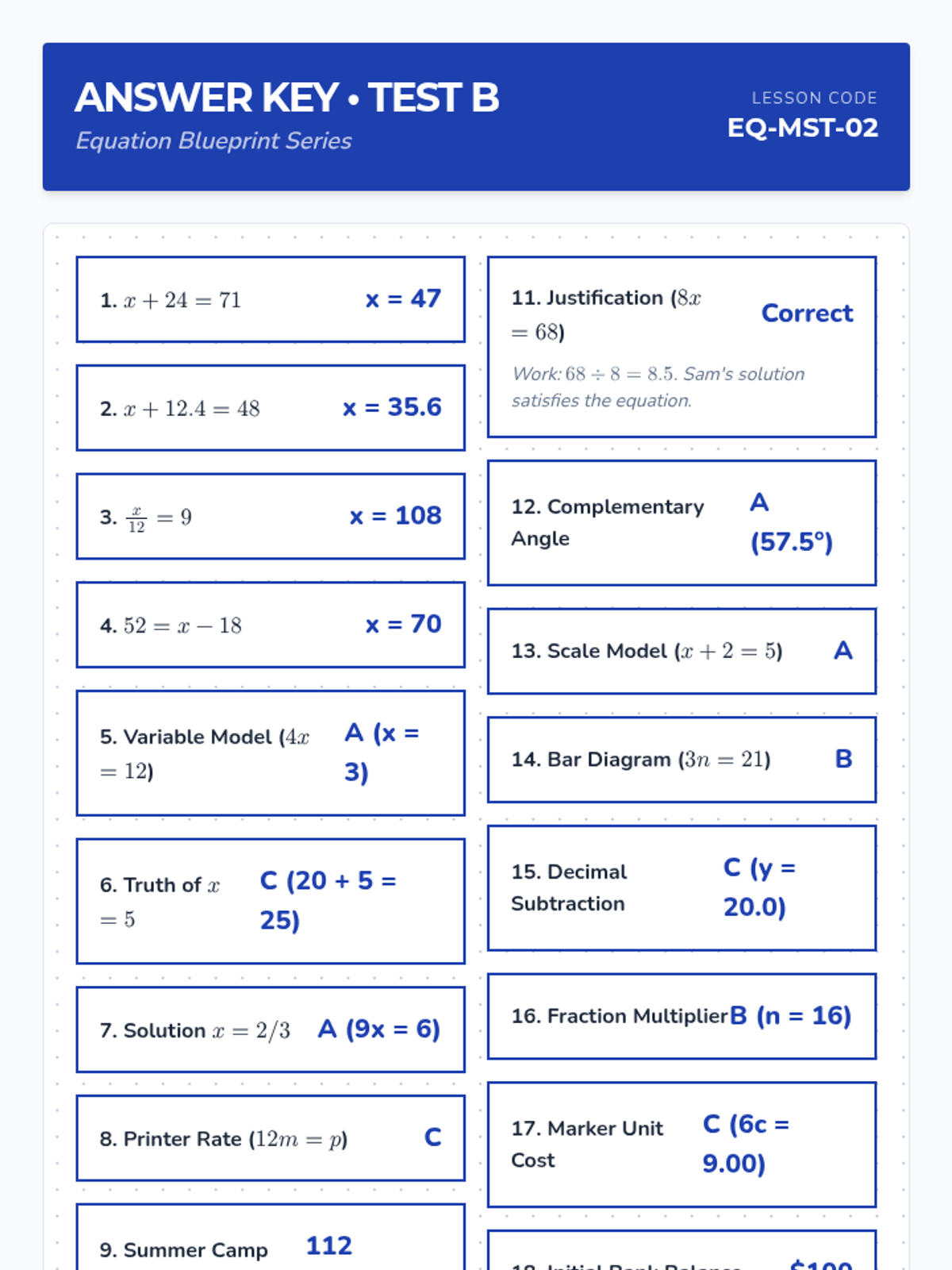
Teacher answer keys for the Real World Math series.
Instructional slides for the Real World Math series.
Une série d'exercices ciblés pour préparer le concours Kangourou des mathématiques, focalisée sur la visualisation spatiale et la géométrie de réflexion.
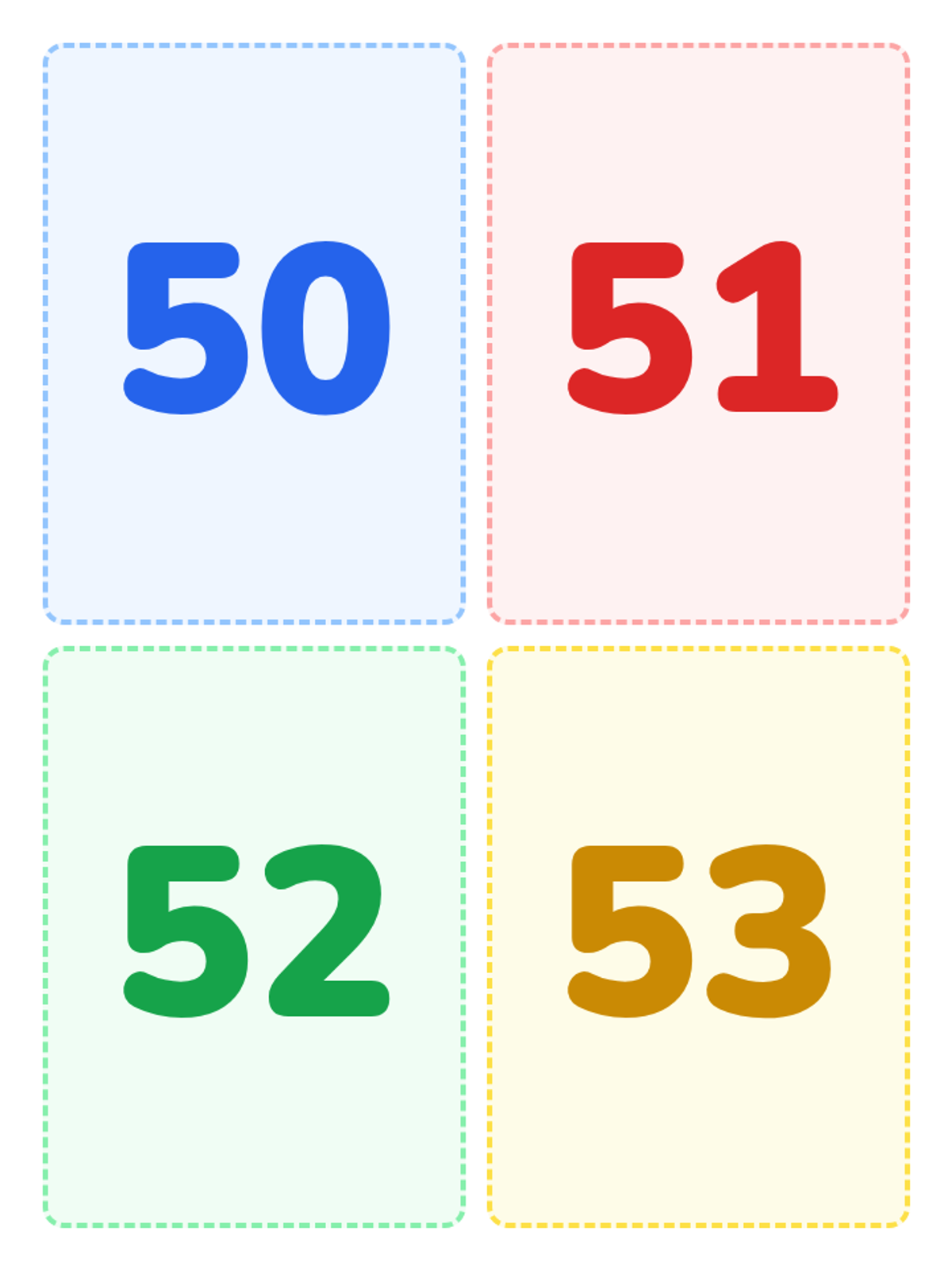
Extends number sense to 100, emphasizing place value (tens and ones), magnitude comparison, and identifying patterns in the 100-chart.
Develops the ability to compose and decompose numbers within 20, focusing on the power of 10 and building basic addition/subtraction fact fluency.
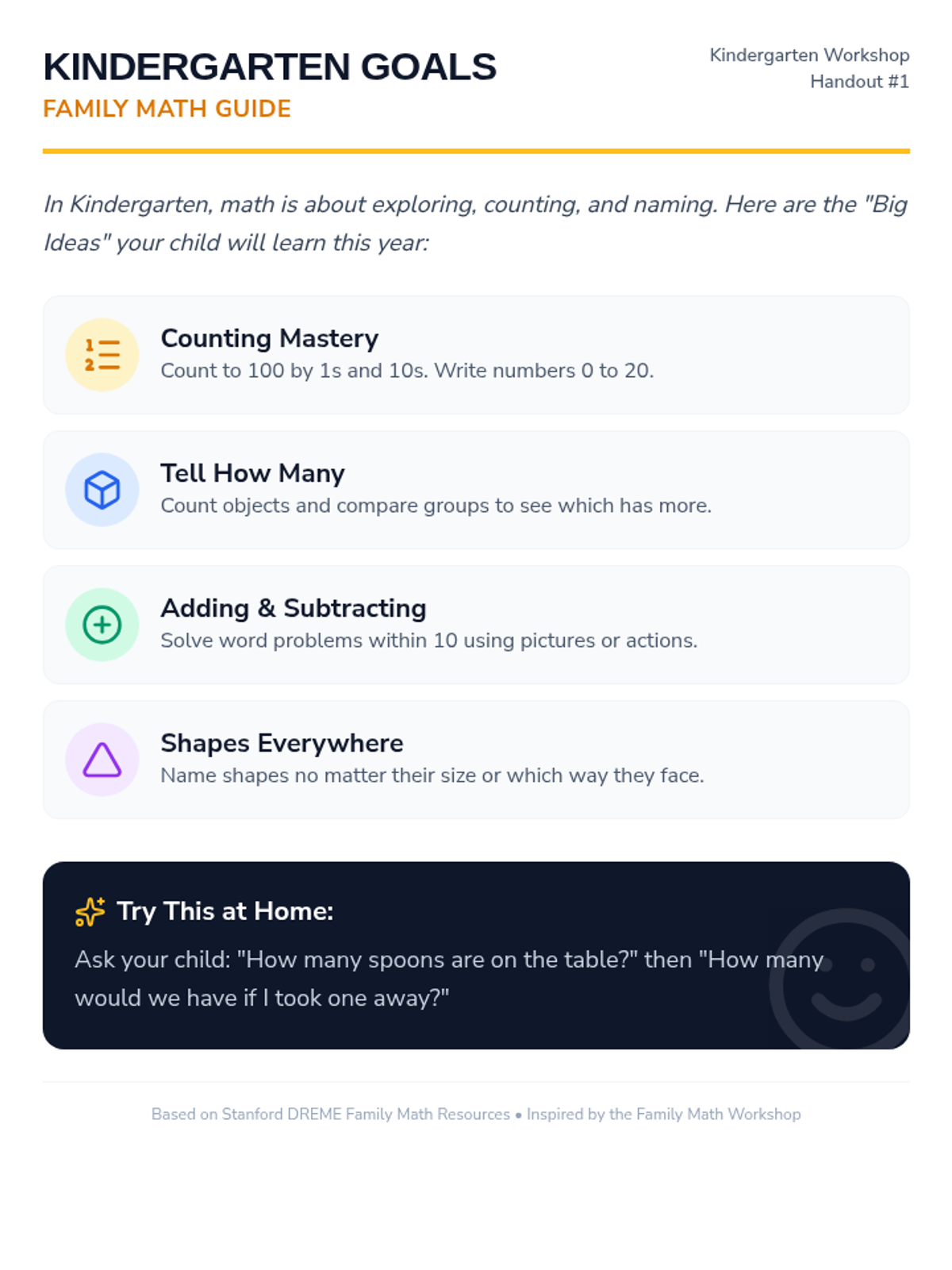
Focuses on identifying numbers to 20, mastering 1:1 correspondence through physical and visual counting, and developing perceptual subitizing skills.
A lesson focused on solving proportions that lead to linear and quadratic equations through cross-multiplication.
Une introduction interactive à la notion de fonction à travers l'analogie de la machine. Les élèves découvrent les termes d'image et d'antécédent par l'expérimentation en petits groupes.
Passage de l'expression algébrique à la courbe. Les élèves apprennent à lire et à construire la représentation graphique d'une fonction et à identifier images et antécédents sur un repère.
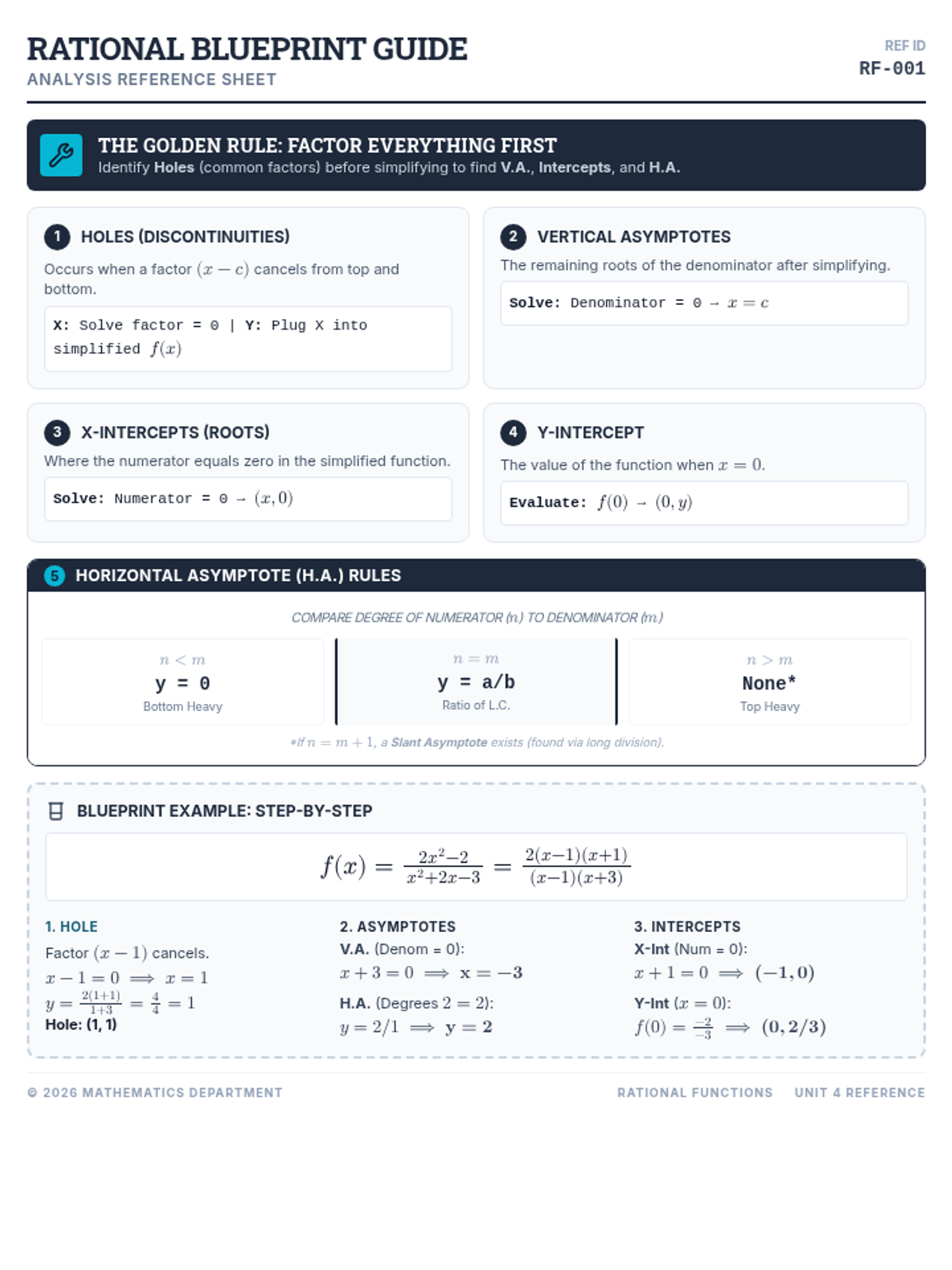
Students practice solving rational equations by applying cross-multiplication to proportions. The lesson focuses on setting up the equation, distributing correctly, and isolating the variable.
A comprehensive lesson on 3-digit by 1-digit division using the standard algorithm, themed around a detective investigation. includes a lesson plan, slides, anchor chart, and tiered worksheets.
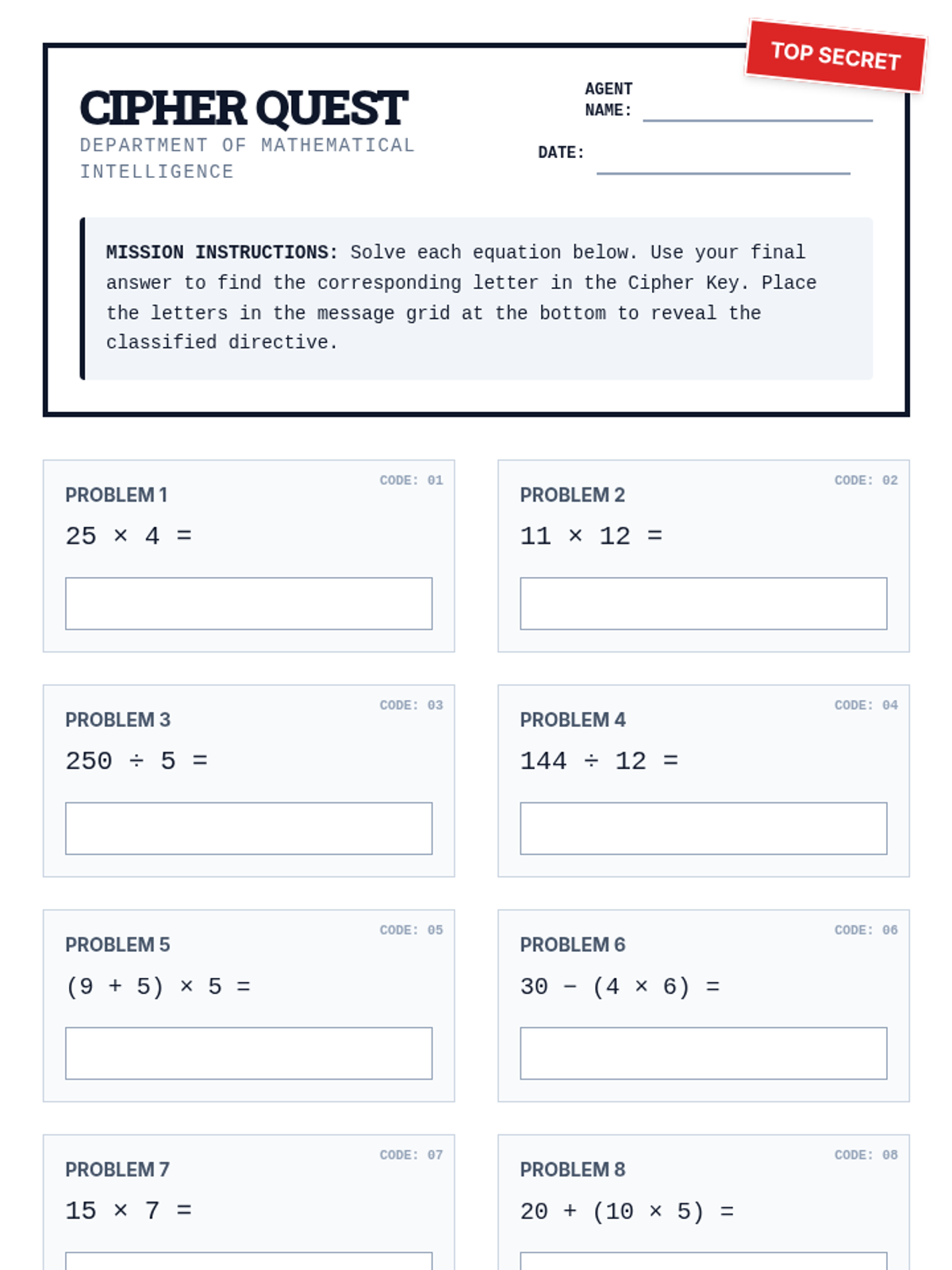
A spy-themed introduction to the Order of Operations (PEMDAS), covering foundational rules, real-world applications, and common pitfalls through an engaging 'Mission' narrative.
A comprehensive lesson on multiplying and dividing fractions, featuring a variety of problem types including proper fractions, mixed numbers, and whole numbers.
A comprehensive lesson on multiplying polynomials, focusing exclusively on the Box Method (Area Model) and utilizing Desmos Quadratic Regression as a robust verification and fallback strategy for high-stakes testing.